



Platinum on pale skin can look razor-clean or a little unnervingly blank, and the difference usually comes down to one thing: whether the cut gives the color somewhere to move. A short shape with texture, lift, or a crisp edge can make bleached hair look deliberate on an ivory face; the same blonde on the wrong cut can go flat fast.
That matters more than people think. Pale skin isn’t one note. Some faces lean pink, some peach, some cool and almost translucent, and bleach sits on top of all of that like a sheet of light. Get the tone wrong and the face looks drained. Get it right and the hair, brows, cheekbones, and jawline all start talking to each other instead of fighting for space.
The good news is that short hair gives you a lot of control. You can use a fringe to soften the forehead, a root shadow to keep the blonde from looking chalky, a taper to clean up the neckline, or a blunt line to make the whole look feel graphic. The first place to start is the shape, because on pale skin, shape is what keeps bleached hair from disappearing into the face.
Why These Cuts Work on Fair Skin
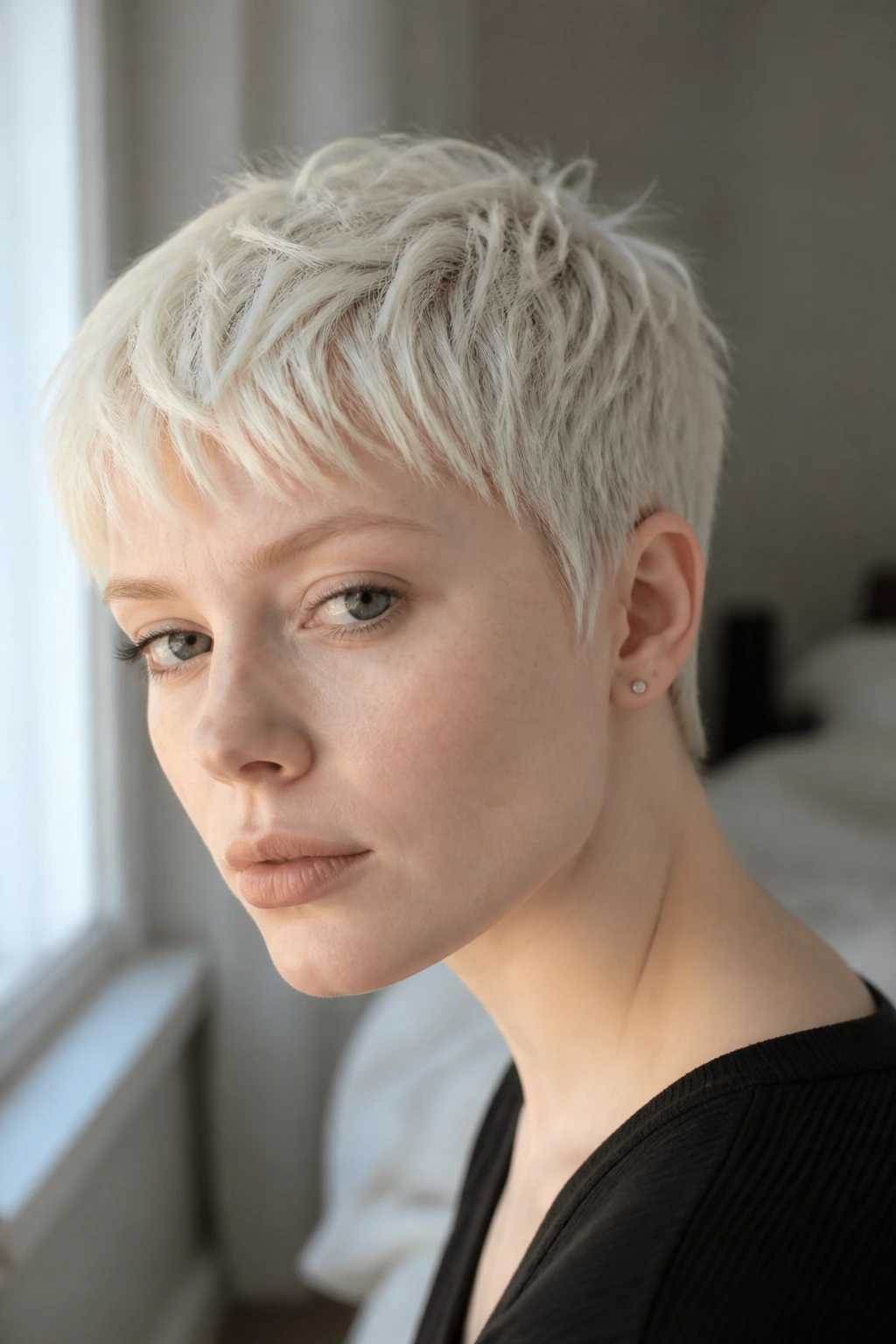
- Texture breaks the brightness: Choppy ends, feathered layers, and piecey tops keep platinum from turning into one solid block of light.
- Root shadow adds softness: A ½- to 1-inch shadow root gives pale skin a little breathing room and keeps regrowth from looking harsh.
- Short hair shows your features: When the sides are tight and the top is controlled, your eyes and cheekbones carry more of the look.
- Contrast does real work: Dark brows, a defined lash line, or a clean neckline stop very light blonde from going ghostly.
- Short lengths recover faster: Dry ends get cut off more often, which makes bleach easier to manage than it is on long hair.
Choosing the Right Blonde Tone Before the Cut
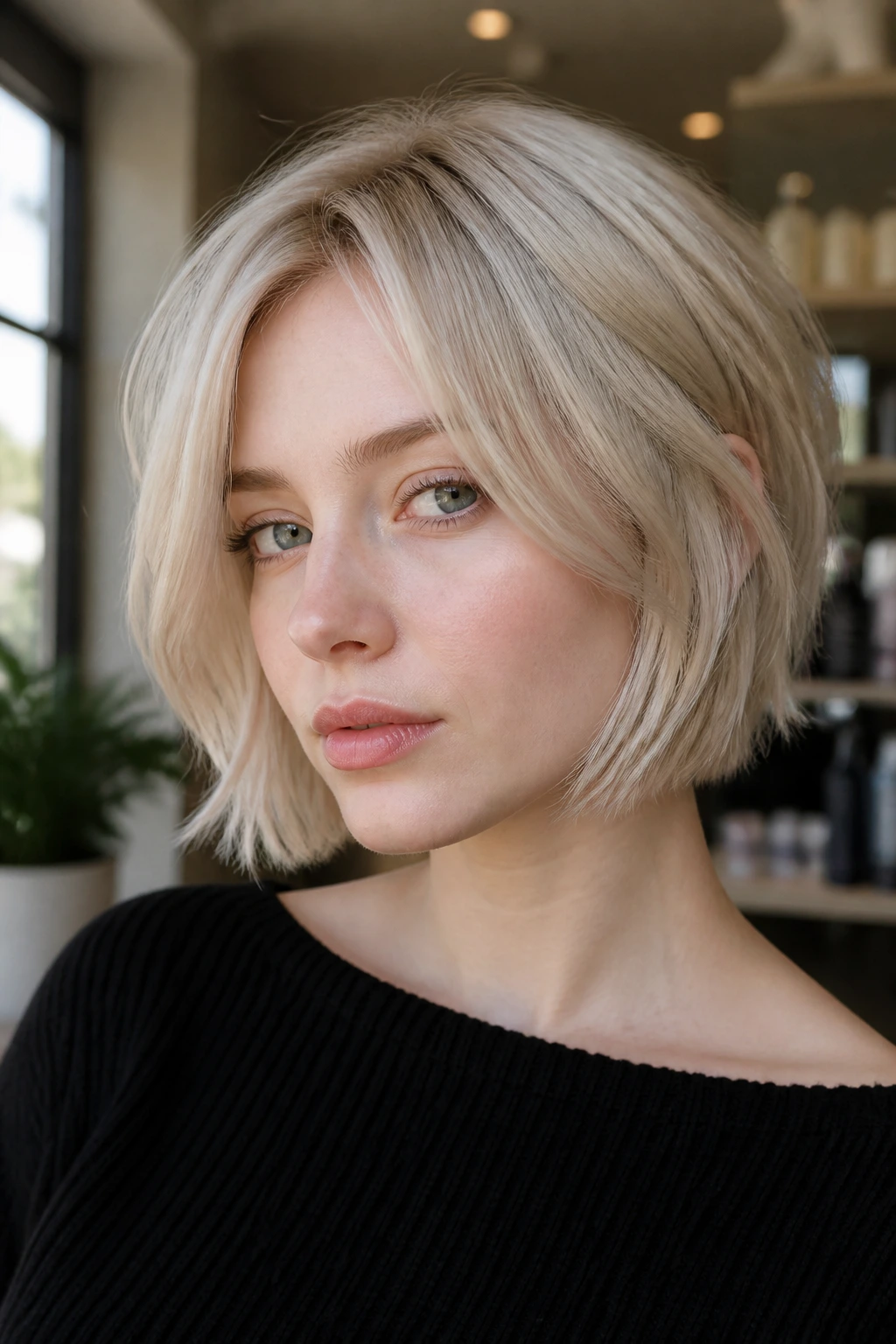
If your skin leans pink or rosy
Pearl, beige, and soft icy tones usually behave better than a hard white blonde. A pure silver toner can make redness look louder, especially around the nose and cheeks, while a whisper of beige keeps the finish from going flat. I prefer this route when someone already has a lot of natural flush in the face.
If your skin leans peach, ivory, or neutral
You can wear a brighter blonde than you might think, but I’d still keep a little warmth or smoke in the toner. Champagne blondes, buttery-platinum blends, and beige ice usually look more balanced than a flat banana-yellow blonde or a harsh blue-white tone. The point is not warmth for its own sake. The point is a tone that doesn’t compete with your skin.
If you want the look sharp and high-contrast
Go lighter, but leave a root shadow or keep one stronger feature in play — brows, eyeliner, or a darker sideburn line. That tiny bit of contrast keeps the haircut from floating away from your face. Bleach is strongest when it has a frame.
What to Tell Your Stylist at the Chair
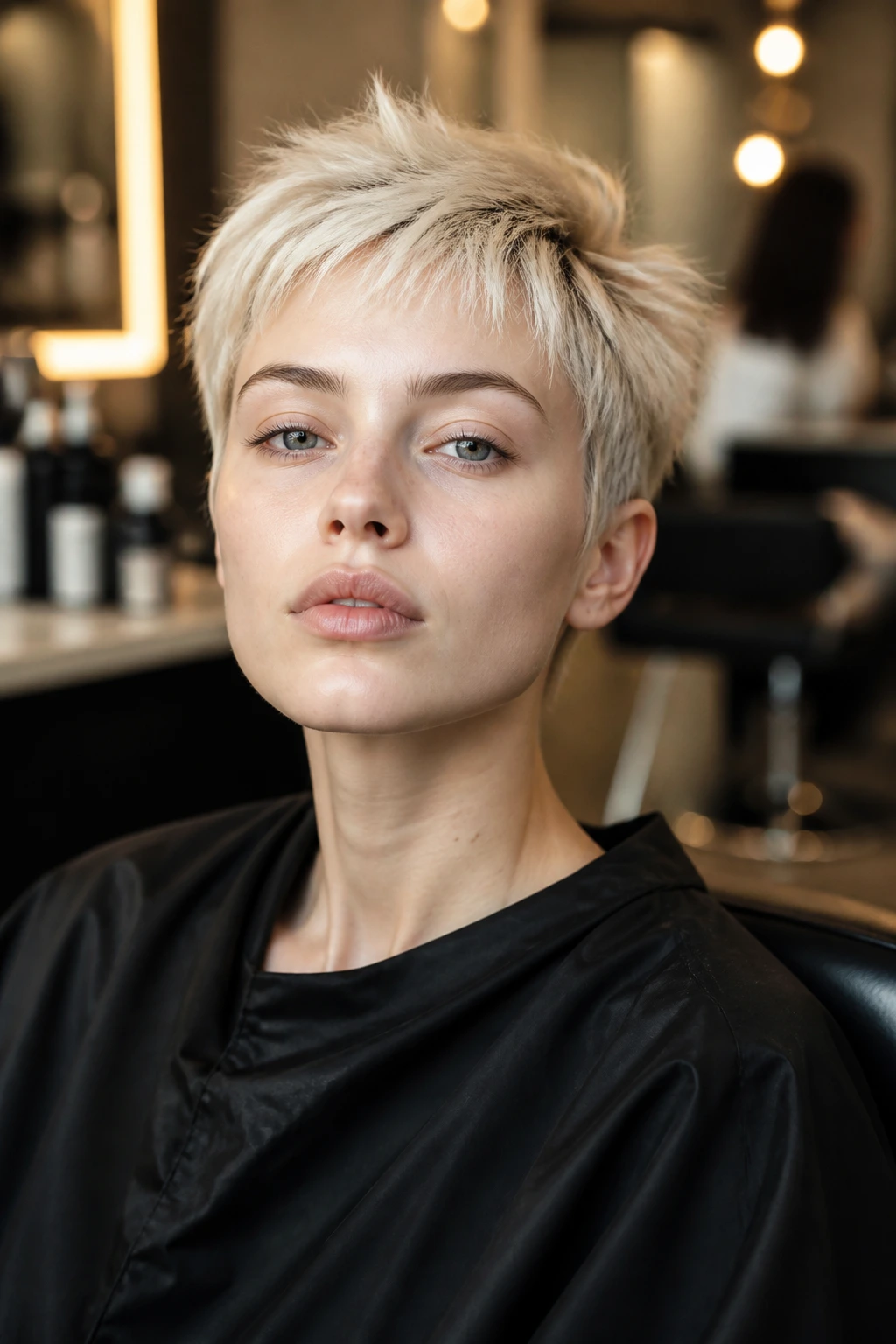
Bring at least two photos: one from the front and one from the side. A lot of short blond cuts look cute head-on and awkward from profile, and the side view is where the truth lives.
Ask for point-cut texture if you want movement, a shadow root if you want the grow-out to look cleaner, and a toner conversation before the bleach starts. Say whether you want a cool platinum, a pearl blonde, or a beige blonde. Those words matter more than “blonde,” which means almost nothing in a salon chair.
If you are nervous about upkeep, say that out loud. A good stylist can shift the cut toward a softer fringe, a more forgiving taper, or a little extra length around the crown so the bleach doesn’t feel like a full-time job.
1. Choppy Platinum Pixie
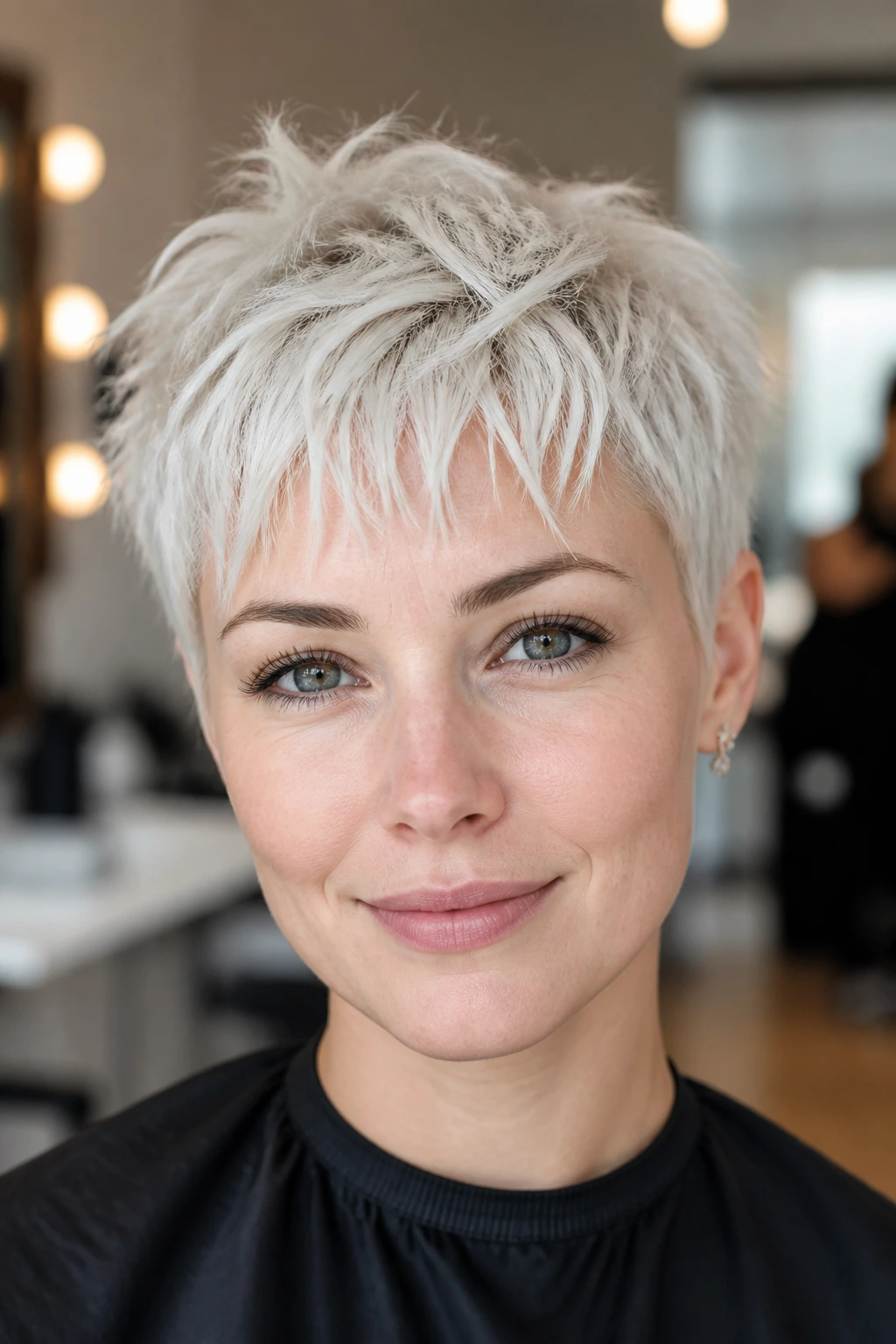
The choppy platinum pixie is the haircut that proves bleach doesn’t need length to feel alive. The broken fringe and jagged top keep the blonde from sitting like one bright slab, which matters a lot on pale skin because the face can vanish if the hair is too smooth and too light.
Ask for point-cut ends, a soft taper around the ears, and enough fringe to land just above the brows. That little gap between hair and face gives the eyes a frame. A pearl toner usually reads cleaner than a cold silver if your skin has any pink in it, and a matte paste works better than glossy cream here — shine makes this cut look helmet-like fast.
2. Icy Buzz Cut with Shadow Root
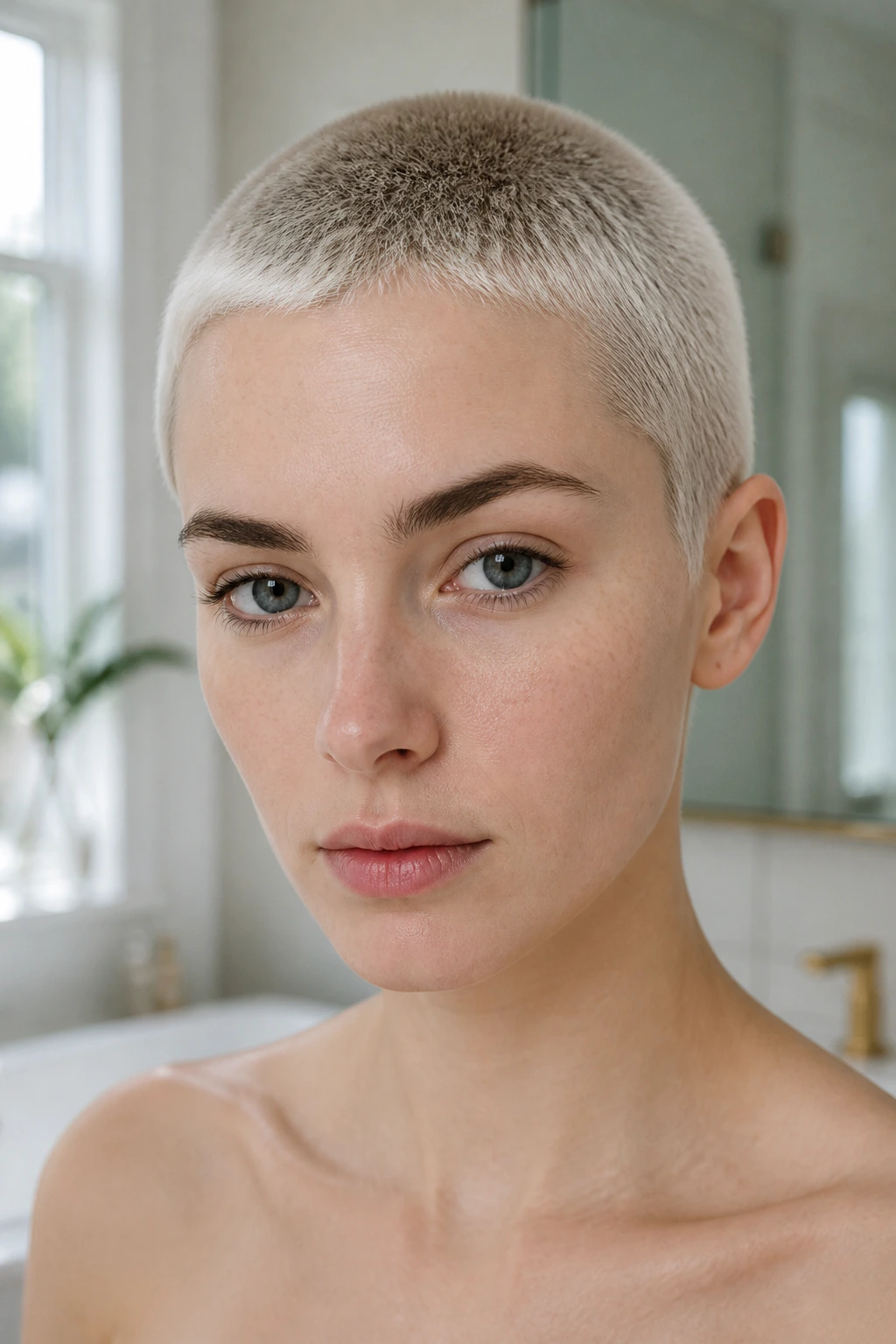
Shorter doesn’t get more direct than this. An icy buzz with a shadow root strips the look down to bone structure, scalp line, and color, which is exactly why it can be so striking on very pale skin. There’s nowhere for bad tone to hide, though, so the blonde needs to be clean.
Best for people who like almost no styling
- Guard length: Ask for a #2 or #3 if you want a little softness; go shorter if you want the scalp line to show more clearly.
- Color note: A soft shadow root keeps the grow-out from looking abrupt against fair skin.
- Maintenance: Plan on a shape refresh every 2 to 4 weeks, because buzz cuts show regrowth fast.
This is the cut I’d pick when someone wants low styling but is fine with high visibility. It looks best when the brows are intentional and the scalp is protected — pale skin plus close bleach means sunscreen on the hairline is not optional.
3. Bleached French Crop
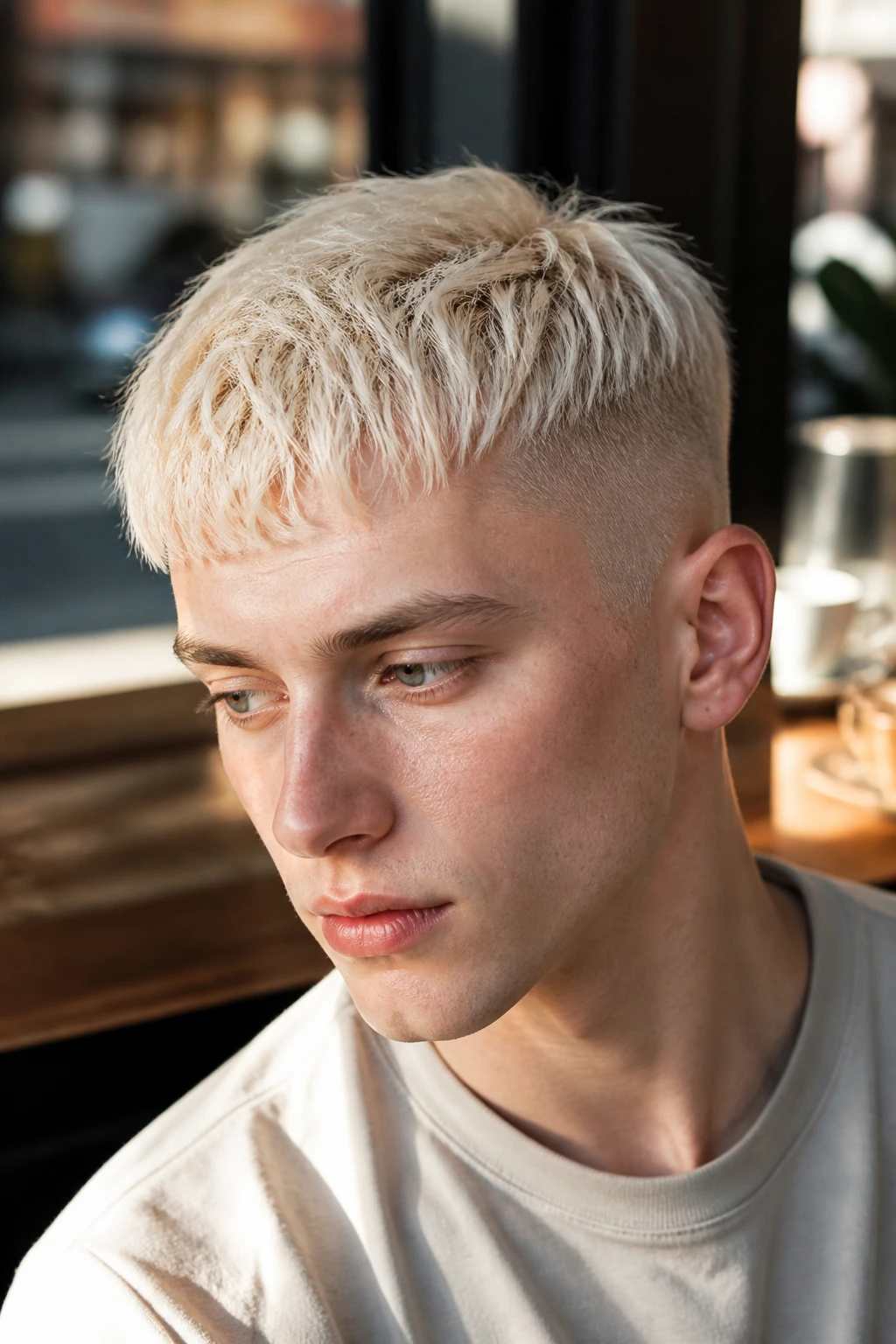
The bleached French crop gives you a short fringe with a little forward weight, and that forward weight is the whole trick. On pale skin, it keeps the face grounded instead of letting the blonde float away from the forehead. It also works beautifully if your forehead is a touch taller or your face shape leans round and you want a firmer line up top.
Keep the sides tight and the top textured, not smooth. If the fringe is cut blunt and then broken up with a little point-cutting, it reads cleaner than a heavy straight line. I like this with a beige-platinum toner because the tone stays bright without going icy-blue, which can look a bit severe against fair skin.
4. Rooted Micro Bob
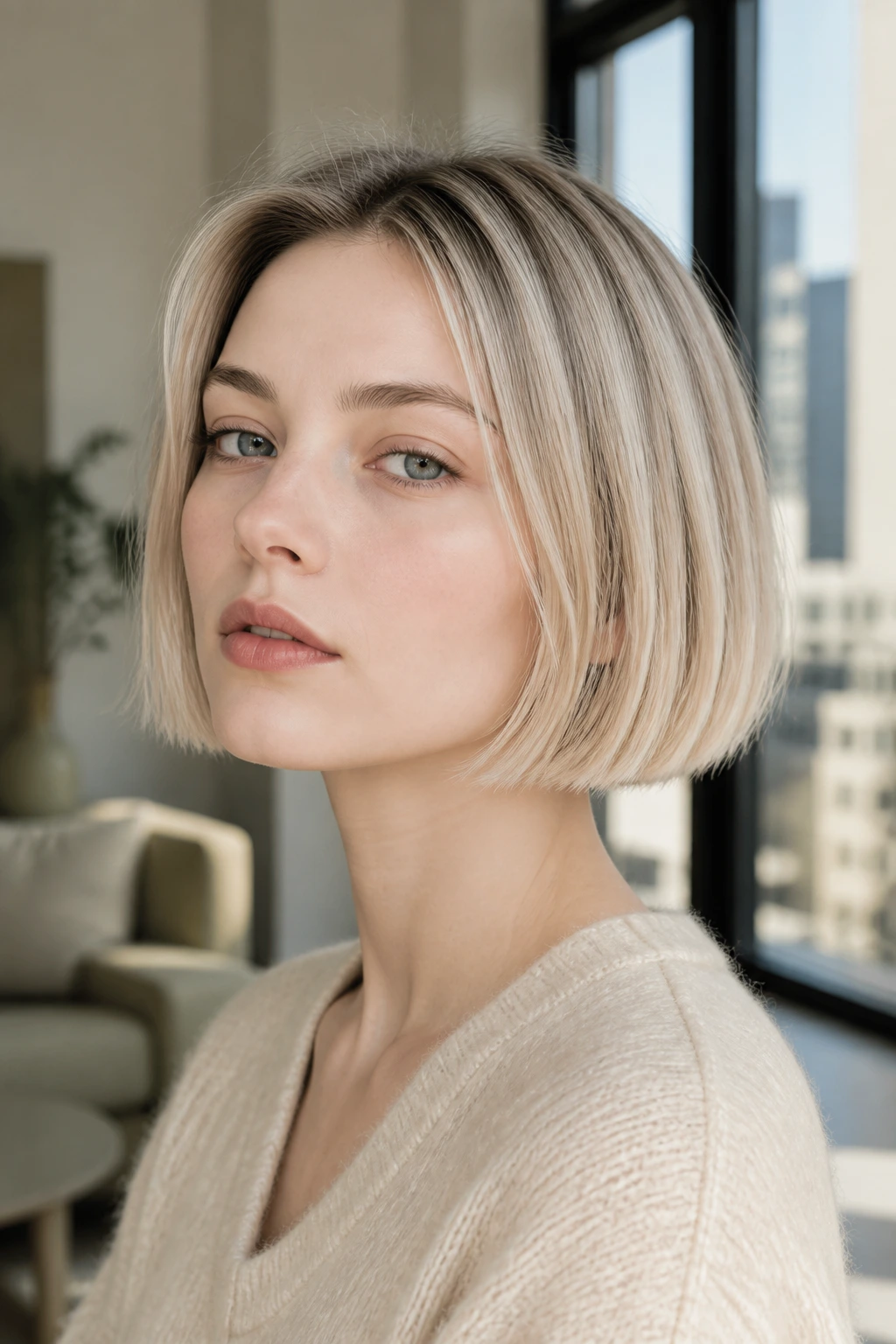
A micro bob with a soft root shadow is one of the easiest ways to wear bleach on pale skin without looking overexposed. The length sits around the jaw or just above it, so the hair has enough shape to frame the face but not so much length that the color overwhelms everything else.
This cut is at its best when the ends are beveled a little under instead of cut dead straight. That small curve keeps the bob from feeling blocky. If your skin is very light and your hair is naturally fine, this is one of the smartest choices on the list because it gives you polish without demanding a perfect blowout every single day.
5. Feathered Bixie Cut
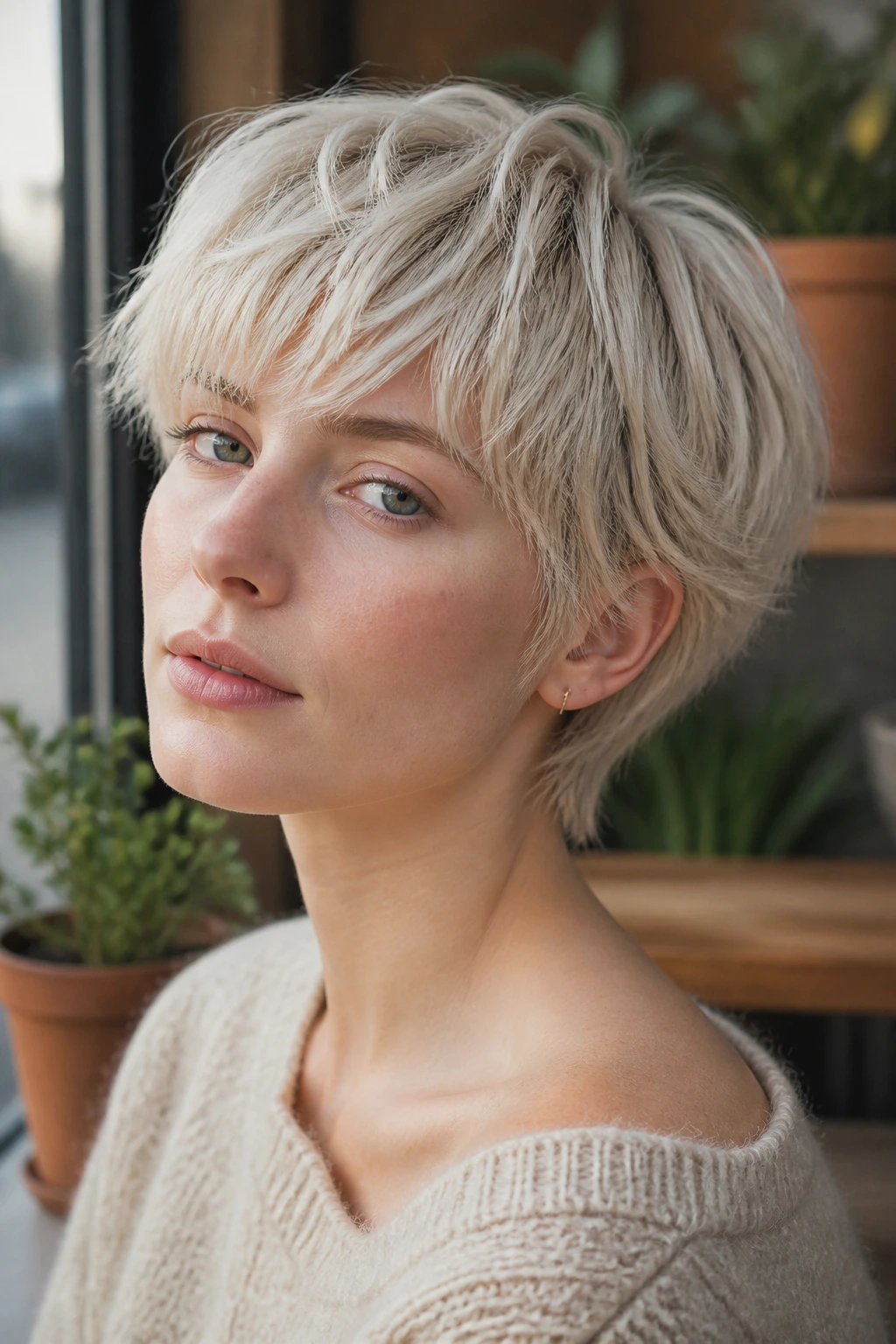
The bixie lives in the space between a bob and a pixie, and the feathered version is especially kind to pale skin because it softens every edge. You get enough length around the ears and nape to keep the cut from feeling severe, but the top still sits short enough to show the bleach clearly.
I like this cut for people whose hair wants to lie flat. Feathering through the crown and sides creates tiny pockets of shadow, which matter a lot when the blonde is very light. A pale face often needs that broken-up texture to keep the whole look from going washed out. If you hate spending time with a round brush, this is a safer bet than a classic bob.
6. Tapered Bleach Mullet
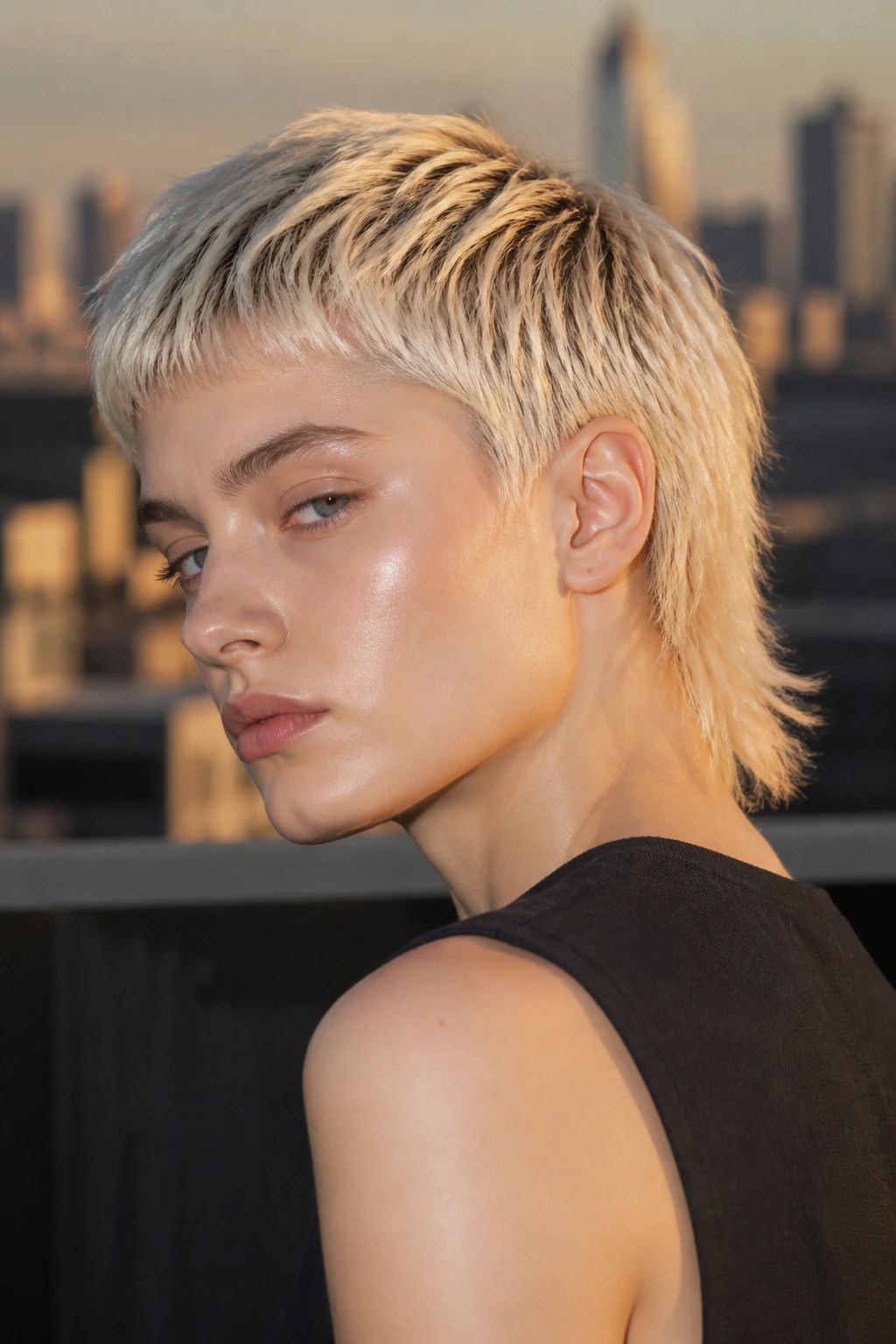
This one has bite. Short in front, longer in back, and tapered low at the nape, the bleached mullet keeps the neck open and the crown lifted, which makes platinum feel purposeful on pale skin instead of heavy. The shape does the work that dark roots used to do in older versions of the mullet.
It also gives the bleach somewhere to vary. The front can sit a little brighter, the back a little softer, and the line between the two keeps the cut from looking flat. If your hair is thick, this is one of the few short styles that removes bulk without losing attitude. If your hair is fine, ask for softer layers so the back doesn’t go stringy.
7. White-Blonde Caesar Crop
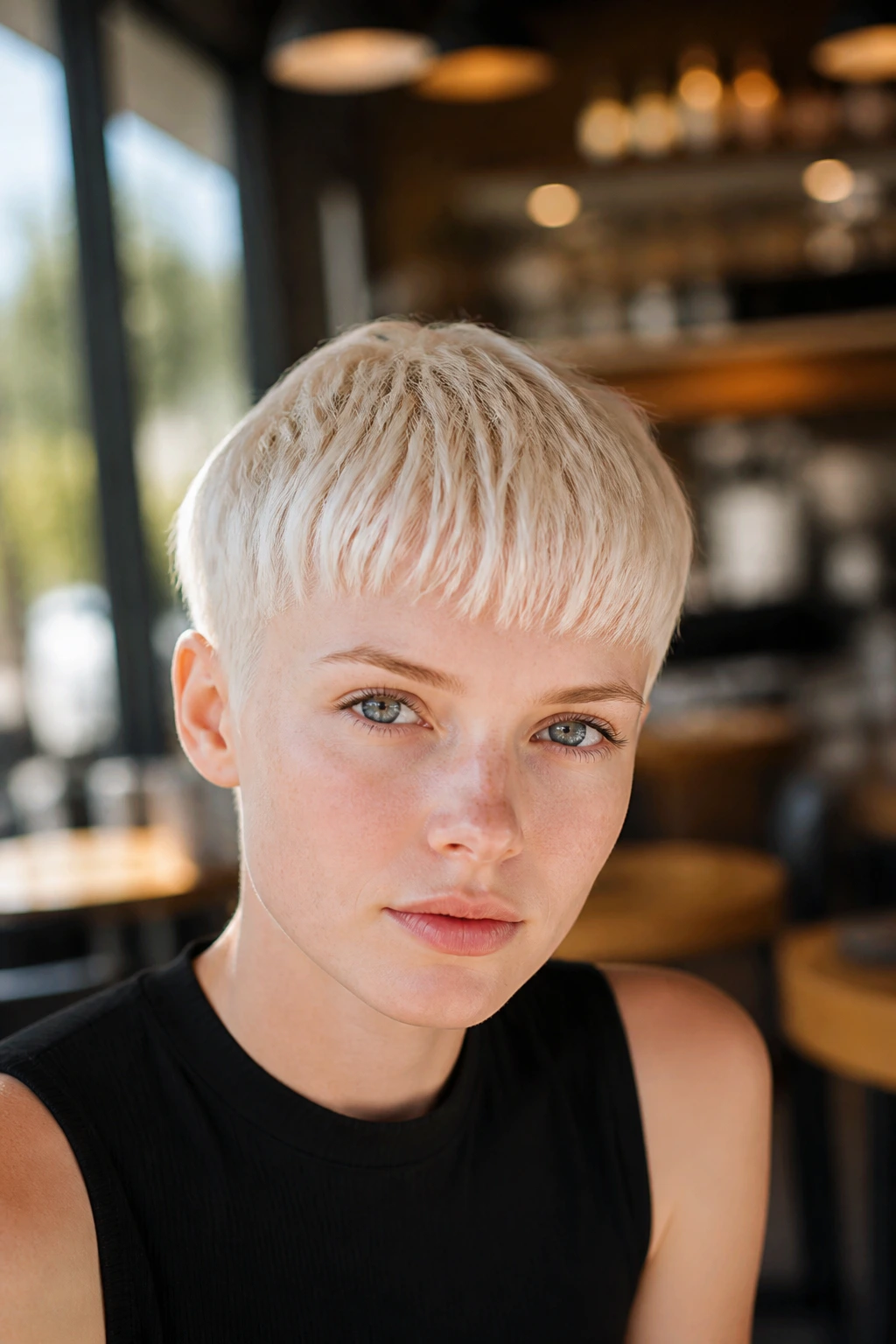
A Caesar crop with a straight fringe is a graphic little thing. On pale skin, that sharp horizontal line can look almost architectural, which is exactly why it works when the rest of the face is kept clean and simple. Strong brows help here. If the brows are too pale and the fringe is too soft, the whole look can blur.
The part people miss
The fringe should not be heavy. It should sit forward, yes, but it still needs movement at the edges so it doesn’t turn into a shelf. Ask for the corners to be softened a touch and the top to be textured enough that your fingers can break it apart. A white-blonde Caesar crop can look expensive. It can also look flat in a hurry if the toner is too cold and the fringe is cut too blunt.
8. Textured Bowl Cut
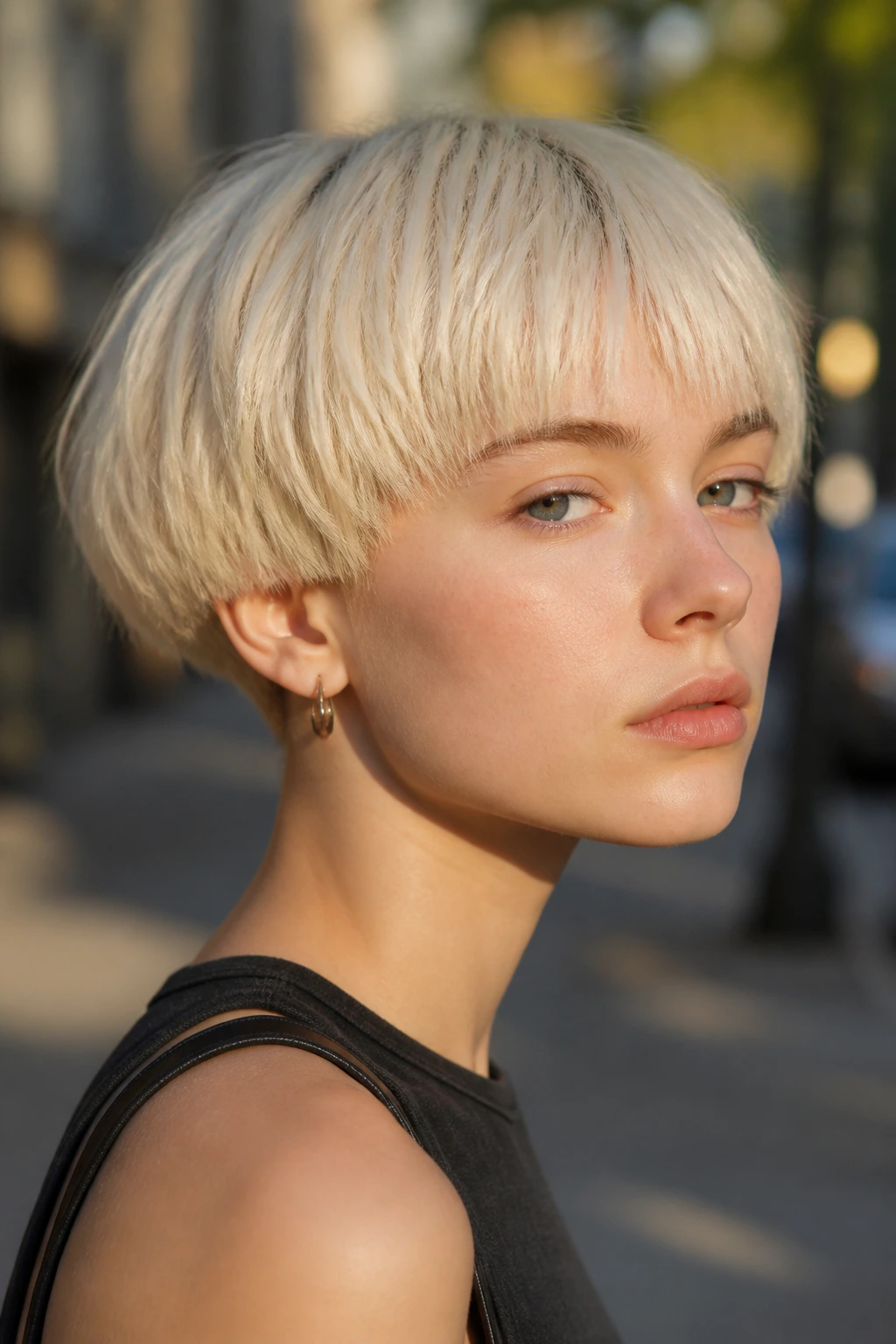
A bowl cut sounds severe until you see one with broken texture through the ends. Then it becomes a very different thing: sharp, modern, and surprisingly good on pale skin because the shape wraps the face in a clean silhouette. The brightness gets held inside that shape instead of spilling out everywhere.
This cut likes a precise outline but not a rigid one. Ask for the perimeter to be softened just enough that it doesn’t look like a helmet. It’s a strong choice for angular faces, but it can also work on softer faces if the crown is kept a little airy. I’d keep the toner beige rather than icy-white here; the structure is already doing enough.
9. Side-Parted Blonde Crop
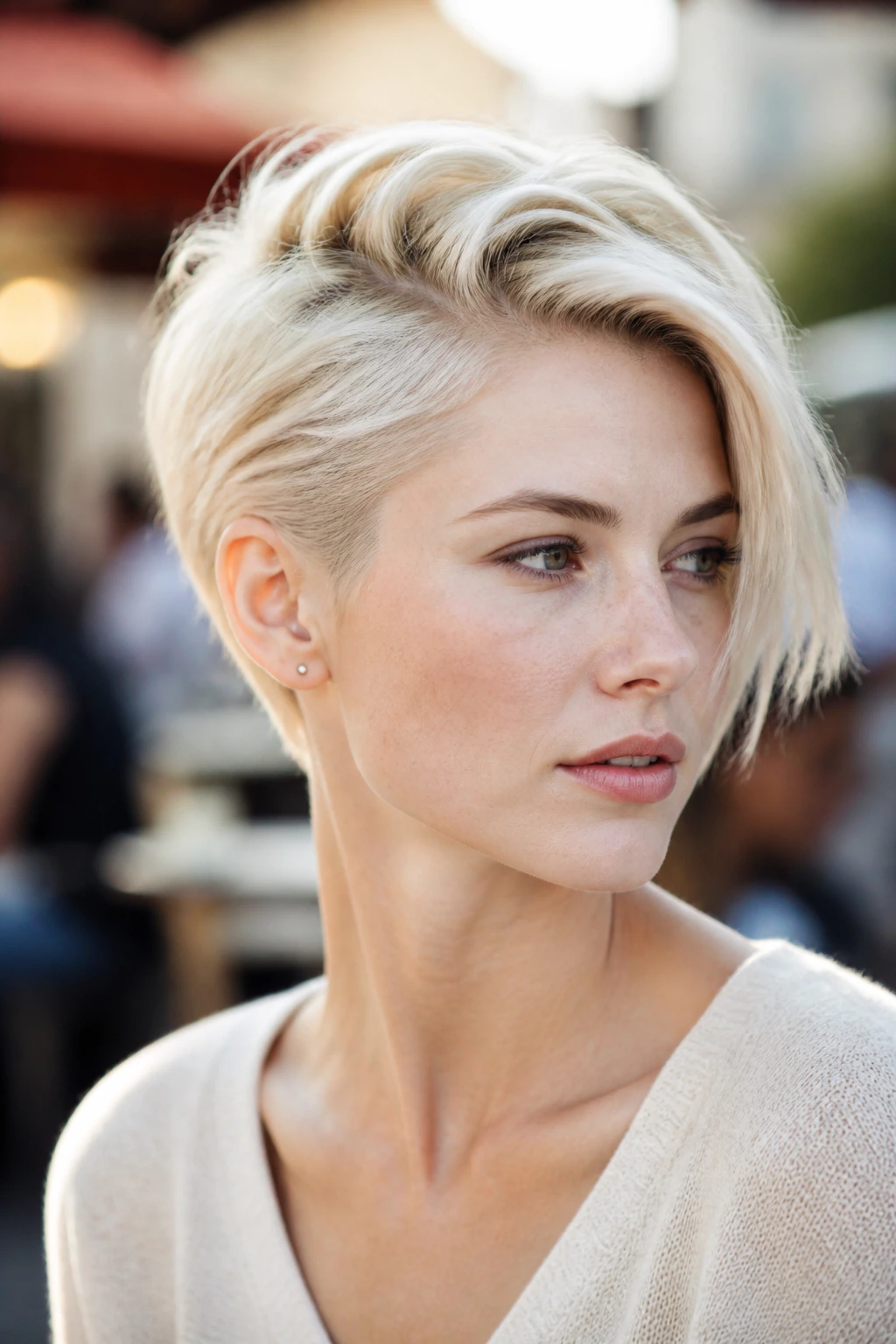
A deep side part changes everything. It throws a little asymmetry into the haircut, and asymmetry is useful when the blonde is bright and the skin is very light. Without it, the whole face can look a little too centered and a little too flat.
This crop works especially well if you wear glasses or have a narrow face that benefits from one side falling heavier than the other. The part gives you a built-in line, which means the cut doesn’t need aggressive layering to feel styled. A soft pearl tone keeps the blonde bright but not glaring, and a quick pass of texture spray at the roots helps the lift stay up instead of collapsing by lunch.
10. Airy Shag Pixie
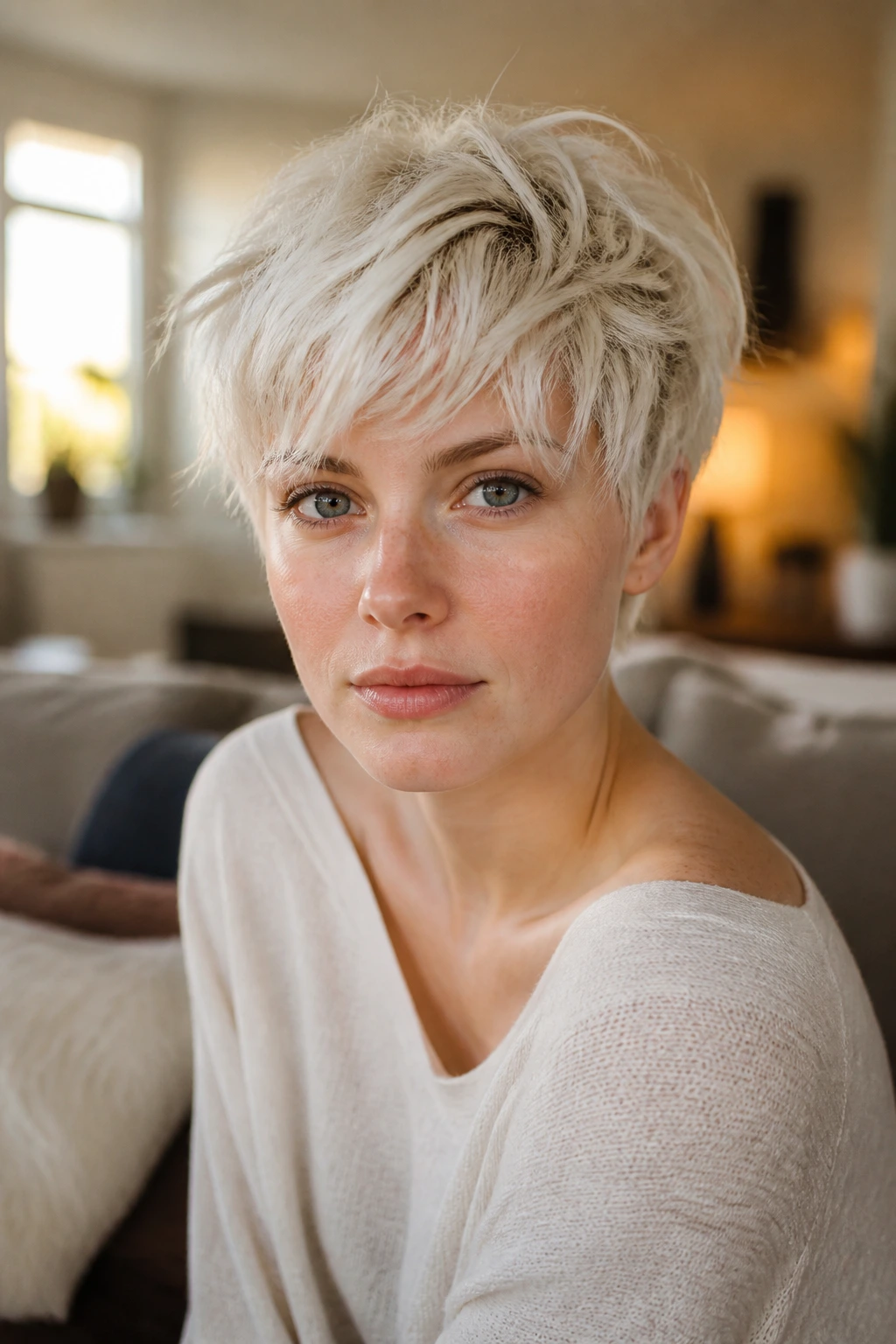
This is the piecey, messy answer for anyone who hates a perfect finish. The airy shag pixie uses lifted crown layers and wispy sides to keep the blonde moving, and movement is your friend when your skin already sits on the lighter end of the scale. A static, shiny platinum top on pale skin can look like a cap. This doesn’t.
The shape is especially good if your hair has a little natural bend. You can rough-dry it, pinch a few pieces forward, and let the crown stay a touch higher than the rest. That lift keeps the eyes from getting swallowed by the blonde. If you only remember one thing about this cut, remember this: it should look slightly lived-in, not overbrushed.
11. Undercut Frost Pixie
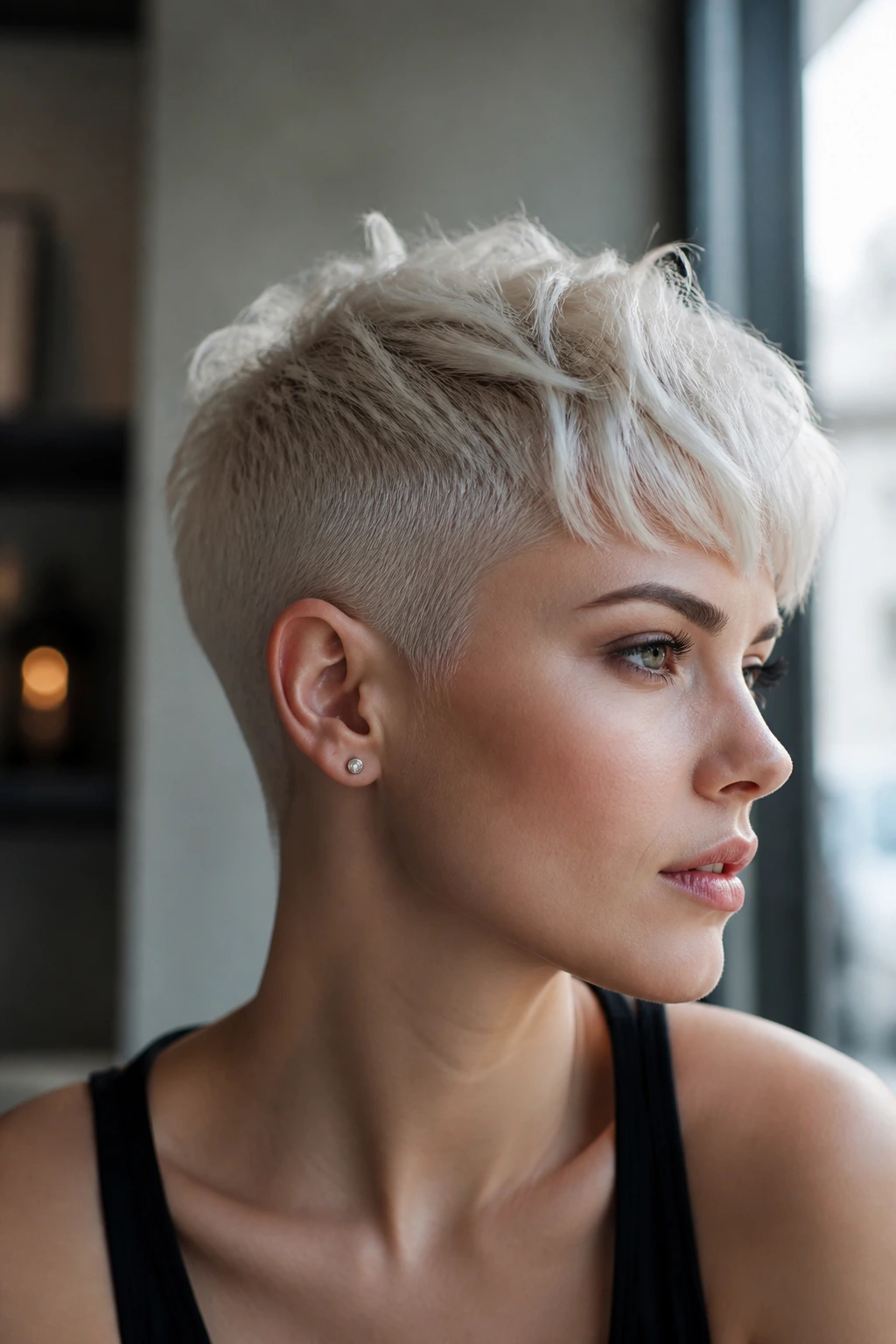
If your hair is thick, the undercut frost pixie is the haircut that stops the bleach from sitting like one dense sheet. The undercut removes bulk at the sides and back, so the frosted top looks lighter and cleaner. On pale skin, that matters because a thick block of pale blonde can make the face look blurry around the edges.
This cut also buys you a little movement in the crown without making the sides puff out. That’s useful if you have strong jawlines or a wider face shape and want the top to feel airy rather than boxy. Keep the top slightly longer than you think you need, because the contrast between the shaved section and the frosted layers is what gives this cut its shape.
12. Tapered Bleached Bob
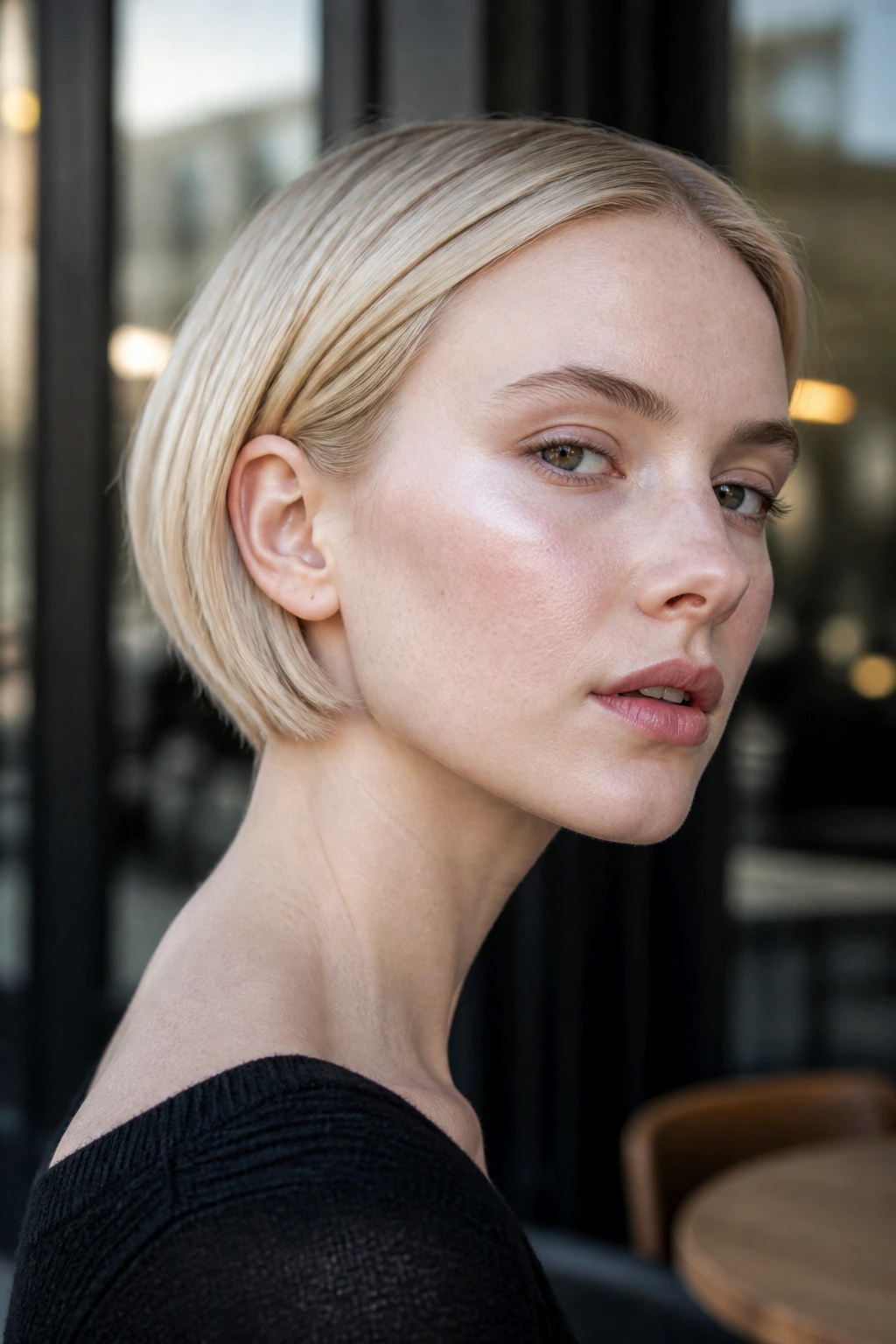
A classic bob gets sharper when the nape is tapered and the ends are beveled under. On pale skin, that clean line lets the blonde read polished rather than fragile. The cut sits close enough to the head to feel neat, but the taper keeps the back from puffing out and making the whole thing look dated.
This is one of the most forgiving short bleach looks if you want something grown-up and not too edgy. You can tuck it behind the ears, wear it with a side part, or let the front pieces fall forward. Beige-blonde or pearl-blonde tones work especially well here because the shape already has enough precision. It doesn’t need a hard blue-white finish to make a point.
13. Curtain-Bang Crop
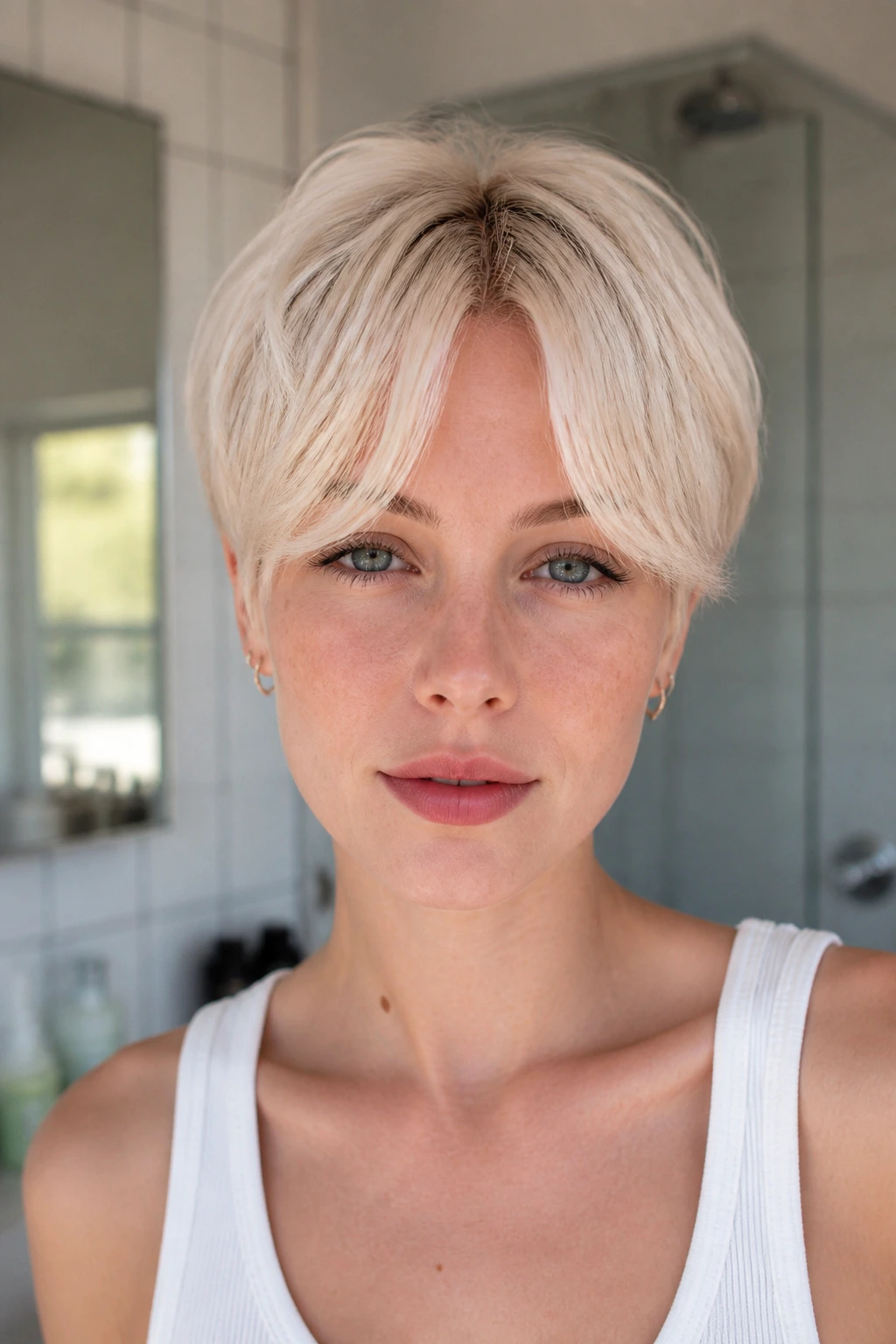
Curtain bangs on a short crop soften the forehead and leave enough cheekbone showing to keep the face open. That balance is why this cut is so useful on very fair skin: the fringe gives you a frame, but it doesn’t box the face in. The center split creates a little negative space, and that space helps the light blonde breathe.
It’s a good choice if you want brightness without the severe look of a blunt fringe. Ask for the bangs to graze the brows and taper toward the temples so they melt into the rest of the cut. The shorter the overall length, the more important that taper becomes. A too-wide curtain fringe on platinum can look like a curtain. A soft one looks expensive.
14. Asymmetrical Platinum Bob
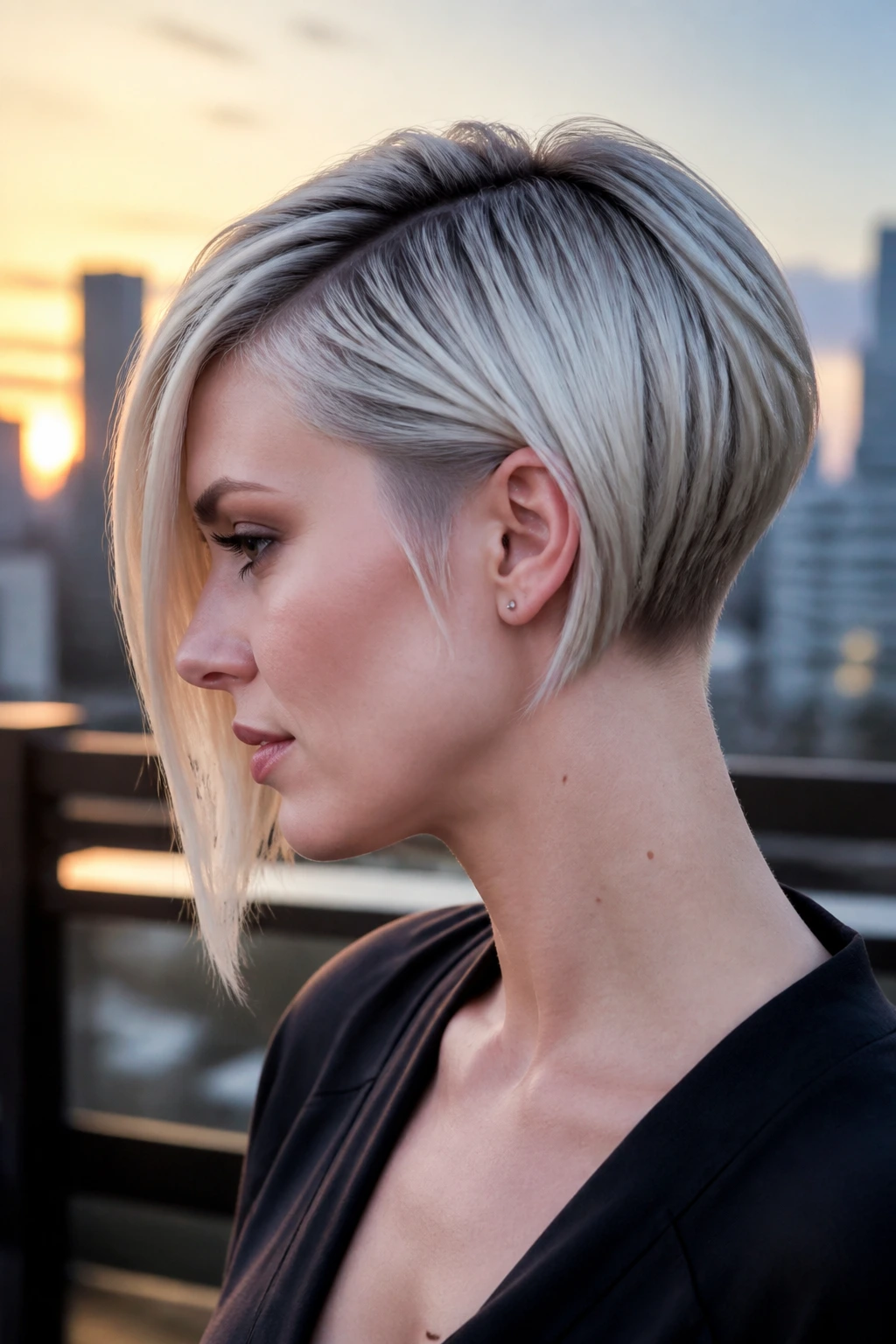
One side longer than the other sounds dramatic because it is. The asymmetry gives platinum somewhere to move, and that movement prevents fair skin from getting lost under the brightness. You don’t need wild length differences to make it work either — even a small shift can make the whole cut feel more alive.
This style is a good fit if your face is round or slightly square and you want a line that pulls the eye diagonally instead of straight across. The longer side can skim the jaw while the shorter side keeps the neck exposed. I like this best with a cooler platinum tone and a root shadow, because the cut already has enough visual tension. You don’t need the color to yell.
15. Wolf-Cut Lite
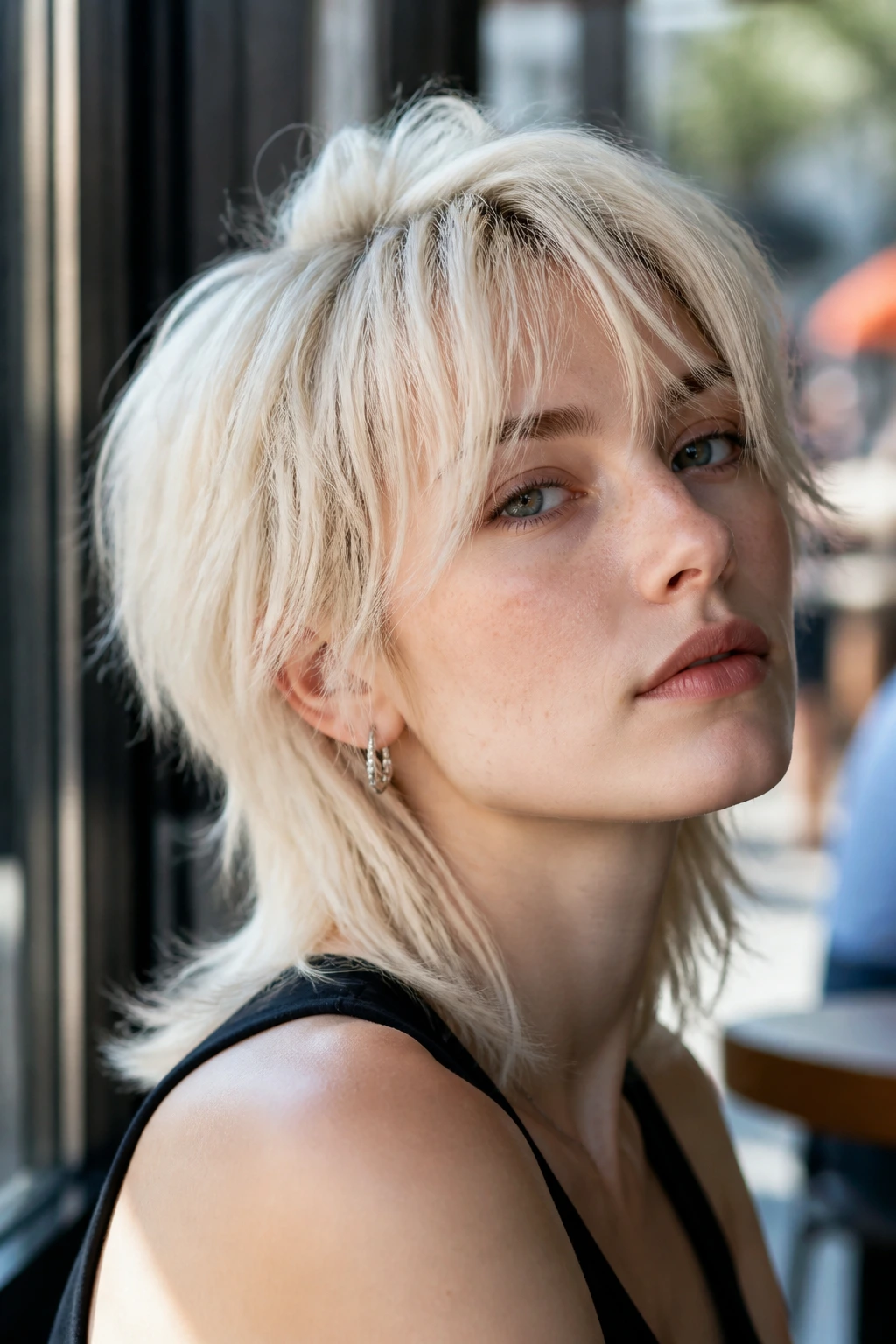
Think of this as the short shag’s wilder cousin, minus the full mullet drama. The wolf-cut lite uses a lifted crown, uneven layers, and soft ends to give pale skin some edge without burying the face in hair. If your complexion is very light, the layers matter more than the label. Layers are what stop the blonde from going flat.
Why it works
- Natural wave helps: Even a little bend makes the cut look fuller and less deliberate in a bad way.
- The crown stays alive: A bit of height on top keeps the blonde from sitting too close to the forehead.
- The nape stays softer: That gives the neck room and keeps the shape from becoming boxy.
If your hair is stick-straight, you’ll need some styling spray or a small round brush. If it already has movement, this cut is easy to wear and easier to keep from looking overly polished.
16. Slicked-Back Platinum Crop
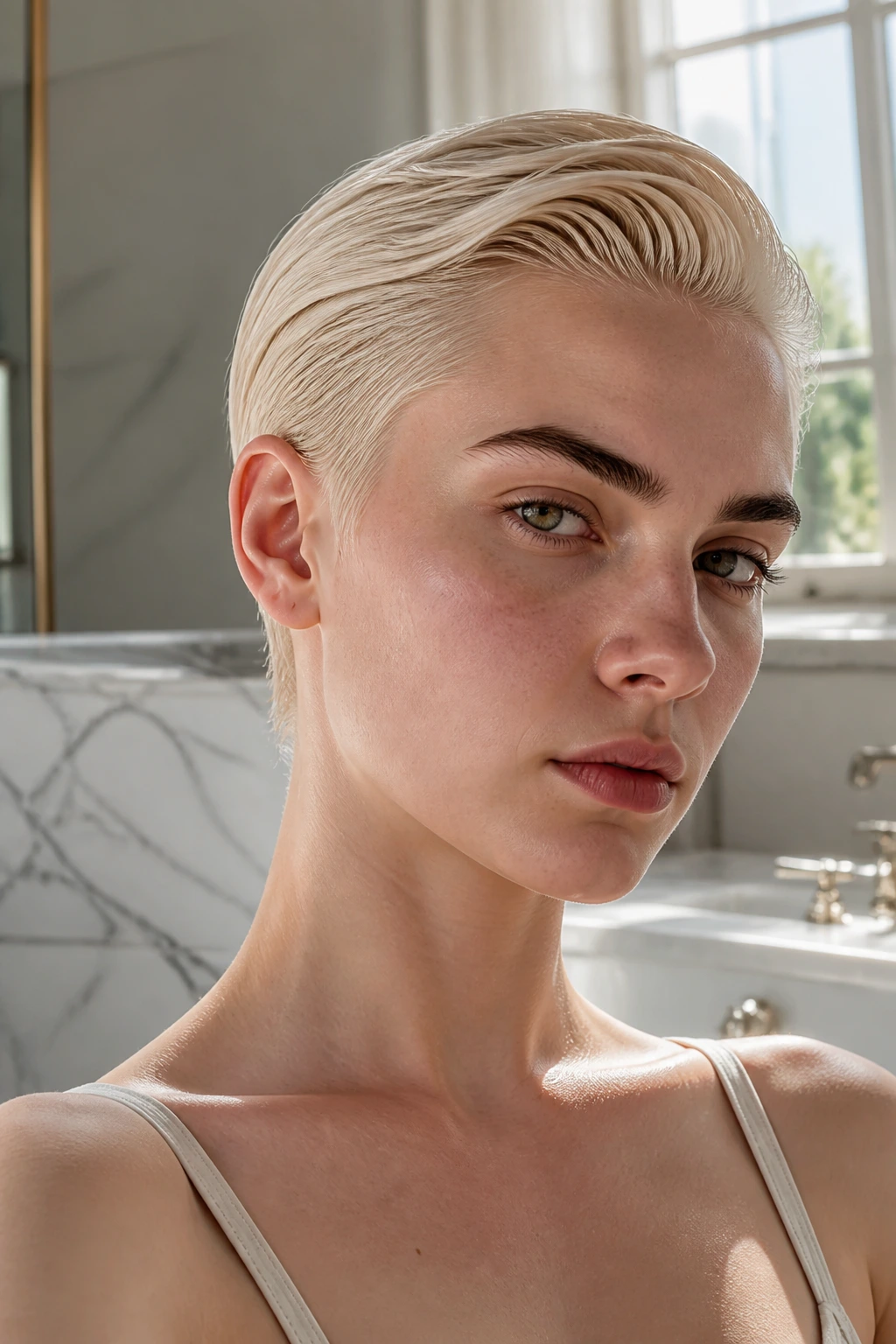
Wet, glossy, and a little severe — this one lives on strong brows and a clean face. The slicked-back platinum crop works because the hair becomes a shape, not just a color. On pale skin, that shape can look striking if the rest of the face has enough contrast to anchor it.
This is not the style for someone who wants zero effort every morning. It needs gel or cream, combed back from the hairline, and then left alone. But if you like sharp lines and you don’t mind a little product, it gives you a high-contrast look that feels deliberate even on the simplest cut. A tiny root shadow can make the whole thing sit a little easier against fair skin.
17. Pixie Mullet
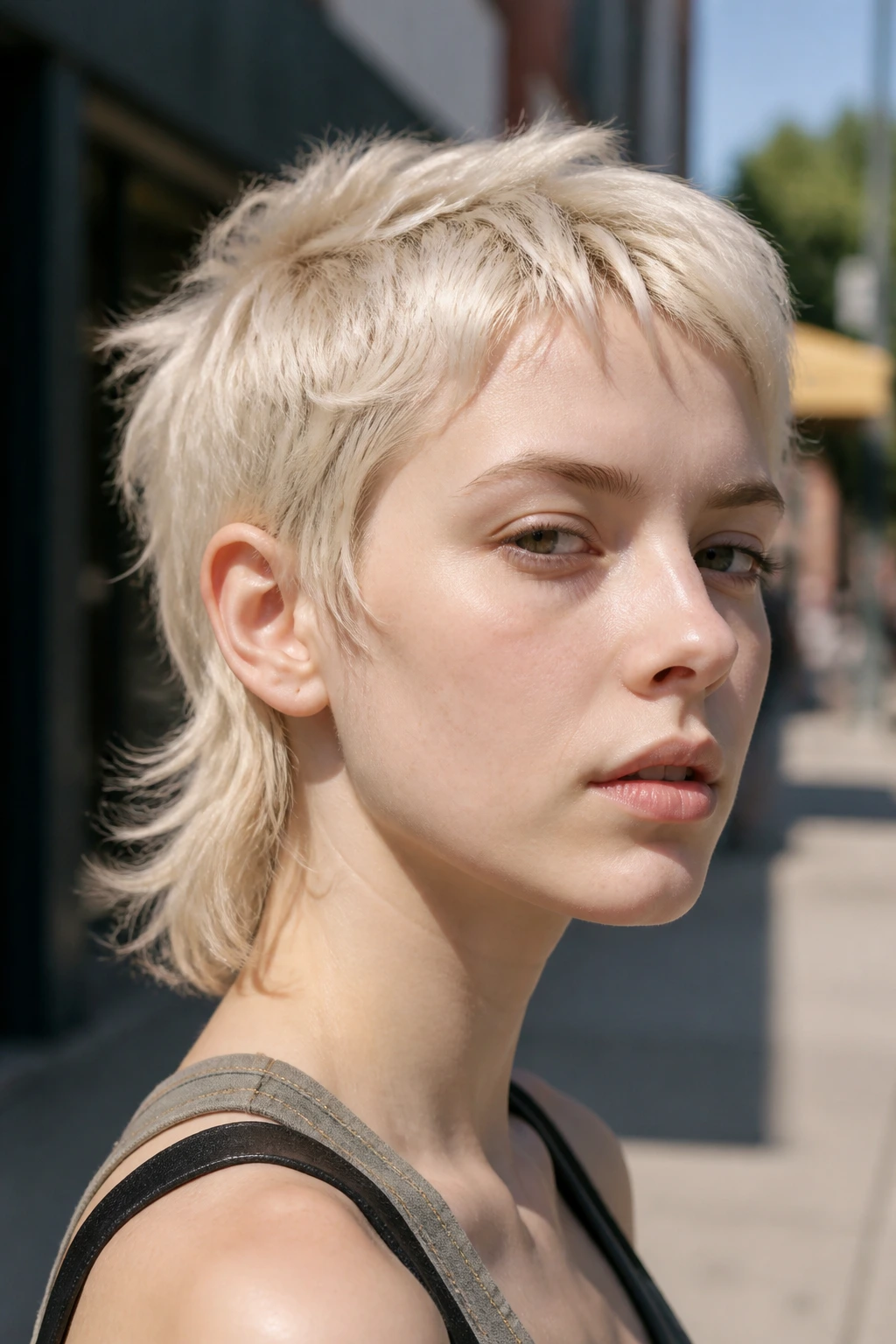
A pixie mullet keeps things short up front and slightly longer at the nape, which gives platinum a place to fall against instead of floating. That matters on pale skin, where too much lightness all at once can start to erase the shape of the head. The tail in back gives the cut a bit of tension.
I like this cut when someone wants something playful but not messy in the wrong way. The top can be choppy, the sides slightly shorn, and the back just long enough to flick. It looks best when the bleach is clean and the texture is controlled with a matte product or a light styling cream. If the ends get too fluffy, the whole thing loses its line.
18. Chin-Length Pageboy
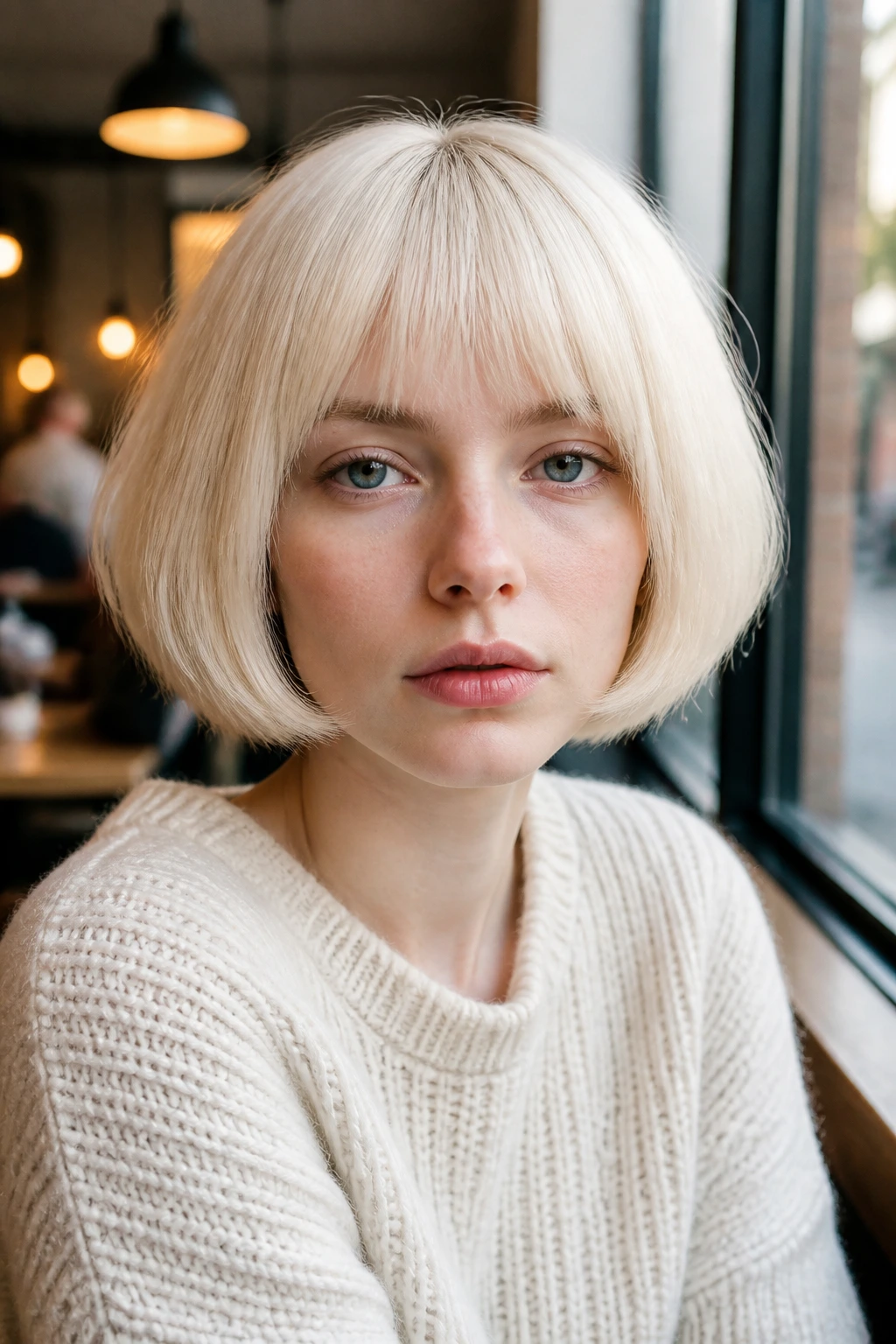
Curved under ends and a blunt outline make the pageboy feel retro in the best way. Beige or pearl blonde suits it especially well because the shape is already graphic; it doesn’t need an extra-bright tone to hold attention. On pale skin, that rounded line around the jaw can make the face look calm and deliberate.
This is a smart choice if you like clean lines but want a little softness compared with a blunt bob. The bend under the ends keeps the cut from standing out like a shelf. If you have fine hair, this can look richer than a pixie because it gathers the ends into one shape. If you have thick hair, ask for interior removal so it doesn’t turn too heavy under the chin.
19. Tucked Side Crop
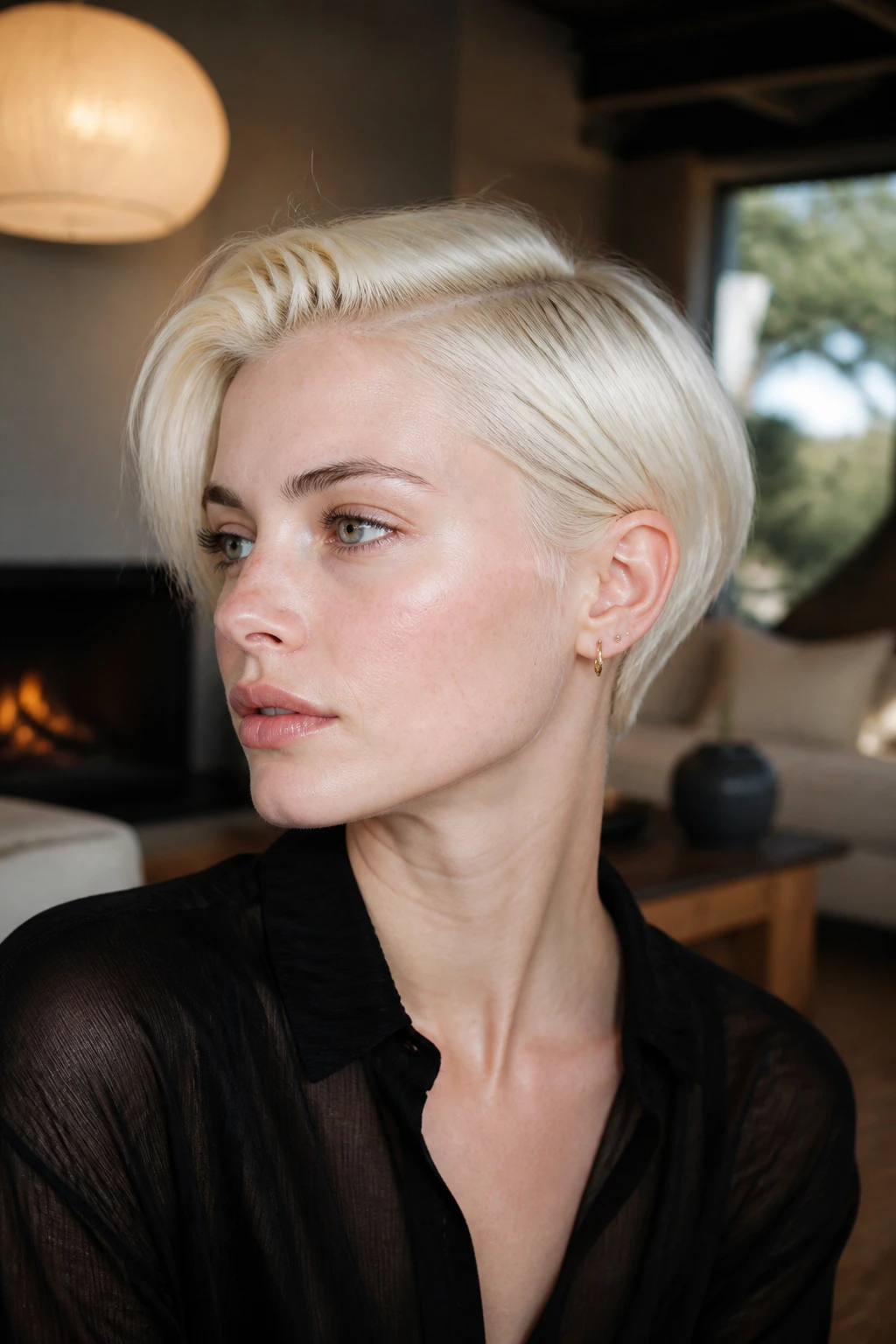
This cut is built for tucking behind the ears, and that small move opens the face fast. On pale skin, the tucked sides create a neat frame without forcing the blonde to do all the work. The shape feels casual until you look closer, which is part of its charm.
Ask for enough length around the sideburns to tuck cleanly without fighting the ear. A little softness at the temples keeps the look from getting too severe. I like this when the brows are a strong feature and the person wants a short cut that still looks relaxed. It’s one of those styles that improves the moment you stop fussing with it.
20. Spiky Micro Fringe Crop
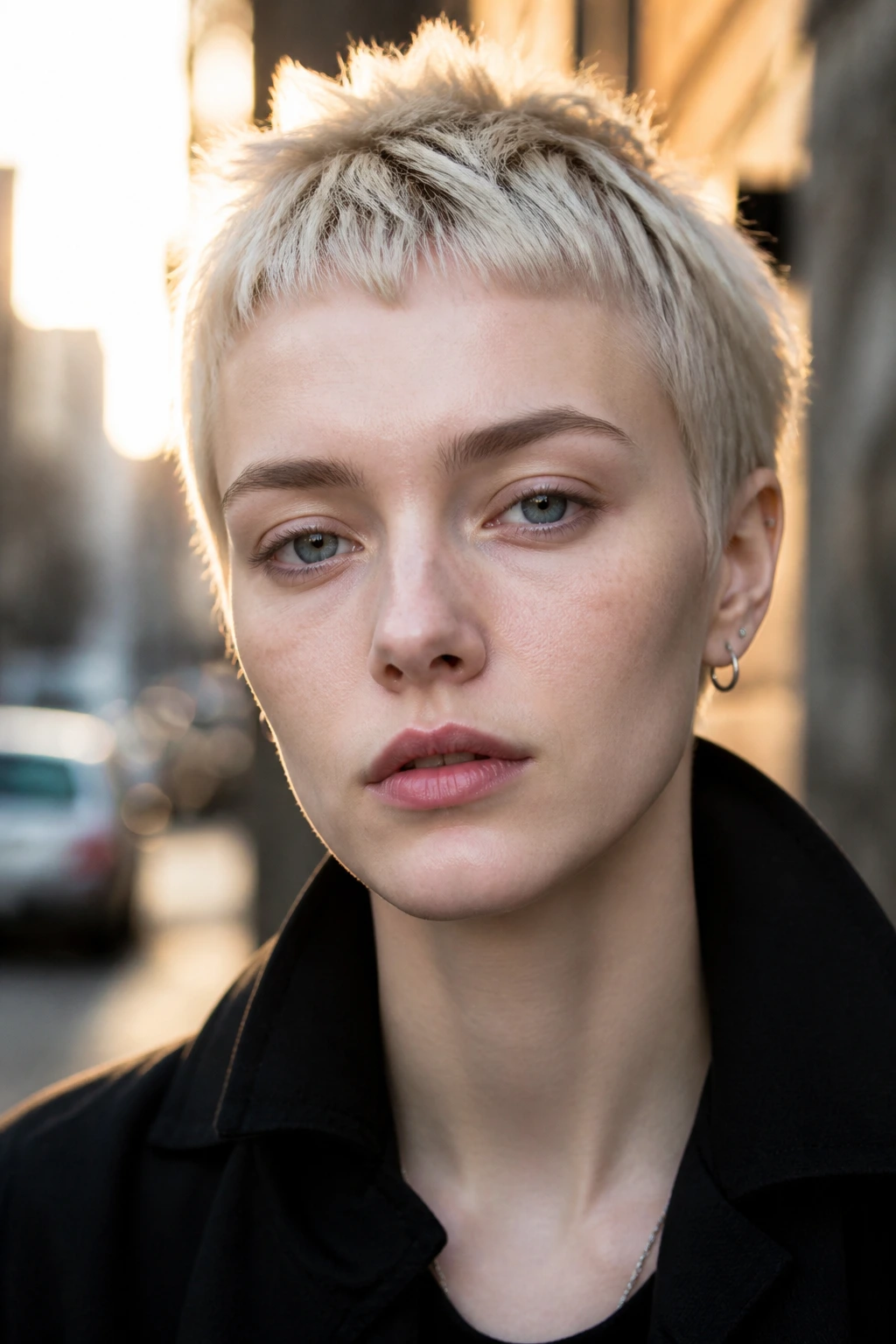
Tiny spikes on top, a micro fringe in front, and a lot of attitude. The short vertical texture keeps very light hair from falling flat, which is a common problem with bleach on fair skin. If the tone is cold and the cut is smooth, the look can go dead. Spikes fix that.
This one likes matte paste and finger styling. The goal is not punk chaos; it’s controlled separation. You want little peaks and broken lines that catch the eye without looking crunchy. If your hair is fine, this is one of the easiest ways to create the illusion of density. If your hair is thick, it can be a release valve for bulk. Either way, the micro fringe keeps the forehead in the picture.
21. Blunt Micro Bob
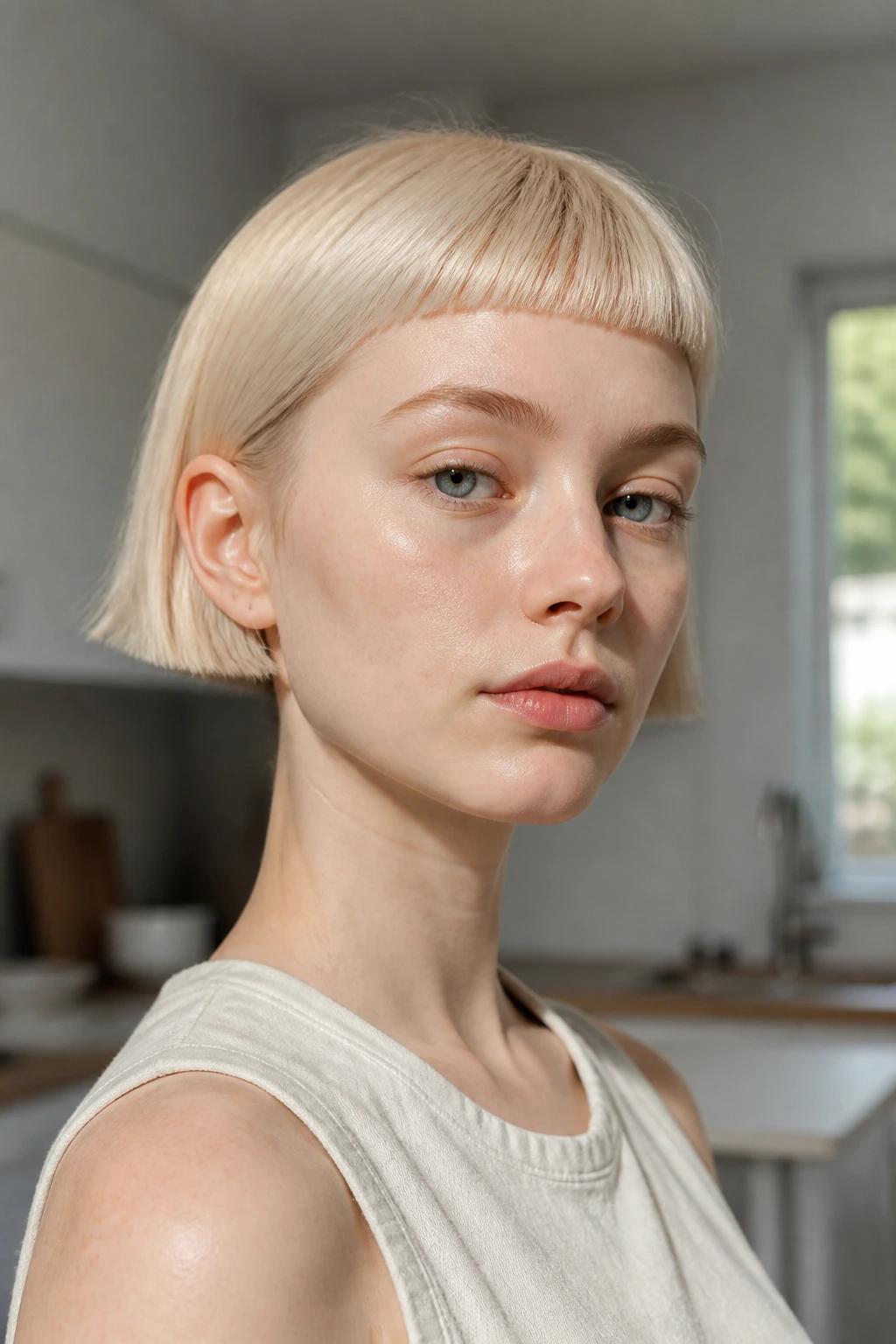
The blunt edge makes a statement, so the color can stay soft. If the blonde is a level 9 or 10 with a beige toner, this bob looks crisp instead of chalky. On pale skin, that clean line is the whole point. It gives the face a frame with almost no extra decoration.
The catch
A blunt micro bob shows damage fast. If the ends are dry or the bleach is uneven, you will see it in daylight. So this cut works best on hair that can handle a precise trim every few weeks and a decent amount of moisture. I’d skip this if you’re trying to grow out a lot of old color or if you never plan to use heat protectant. The line is unforgiving. That’s also why it looks so good when it’s done well.
22. Curly Platinum Crop
Curls change the whole conversation. A short curly bleach crop gets energy from shape, not straightness, and the lighter color can look almost luminous when you leave a few dimensional pieces less light than the rest. On pale skin, that variation keeps the face from blending into the hair.
The trick is not to bleach the curls into one flat tone. A colorist will often leave a little shadow inside the curl pattern so the shape still has depth. That matters because curls can puff up and look like one bright cloud if everything is lifted the same way. Keep the cut a touch longer than you would for straight hair, and use a leave-in that doesn’t collapse the curl.
23. Nape-Taper Platinum Crop
The nape taper keeps the back clean while the top stays soft and movable. It is one of the easiest short bleached cuts to wear on pale skin because it gives you brightness without a hard line everywhere. The neck looks longer, the head shape looks cleaner, and the blonde has a place to settle.
This is a strong final option if you want a short cut that feels finished from every angle. It works on straight hair, wavy hair, and even slightly coarse hair if the taper is done well. Ask for the neckline to be kept crisp but not shaved to the skin, and let the top stay just long enough to break apart with your fingers. That small bit of looseness keeps platinum from feeling too severe.
Styling Moves That Keep the Shape Sharp
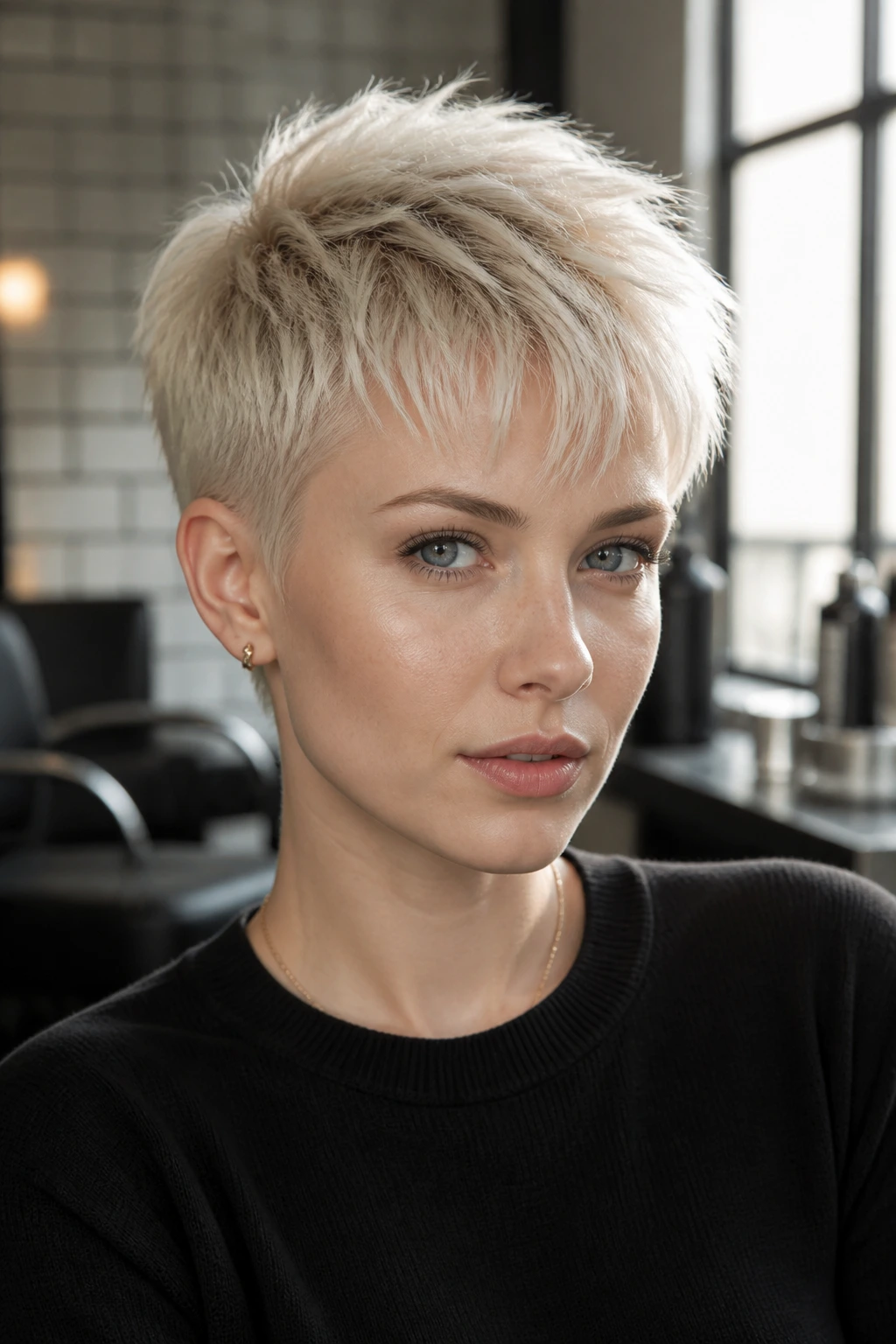
Dry in the direction the cut wants to go. Short bleached hair can puff up fast if you blast it from every angle. Aim the dryer forward for fringe, down for blunt pieces, and slightly up at the crown when you want lift. A nozzle helps more than people expect.
Use less product than you think. Pale blonde shows buildup quickly. A pea-size amount of matte paste, cream, or light wax is enough for most pixies and crops. If the hair starts looking greasy by mid-afternoon, you used too much at the roots.
Keep the ends separated. Texture spray, dry shampoo, or even a light dusting of powder can keep the cut from turning into one smooth mass. The goal is visible movement, not crunch. If the hair feels stiff, you’ve gone too far.
Match the brow strength to the hair. Very light hair on pale skin can wash the face out unless the brows carry some weight. That doesn’t mean blocky brows. It means tidy brows with shape, even if they’re only a shade deeper than your natural hair color.
Common Mistakes That Make Bleach Look Too Harsh on Pale Skin
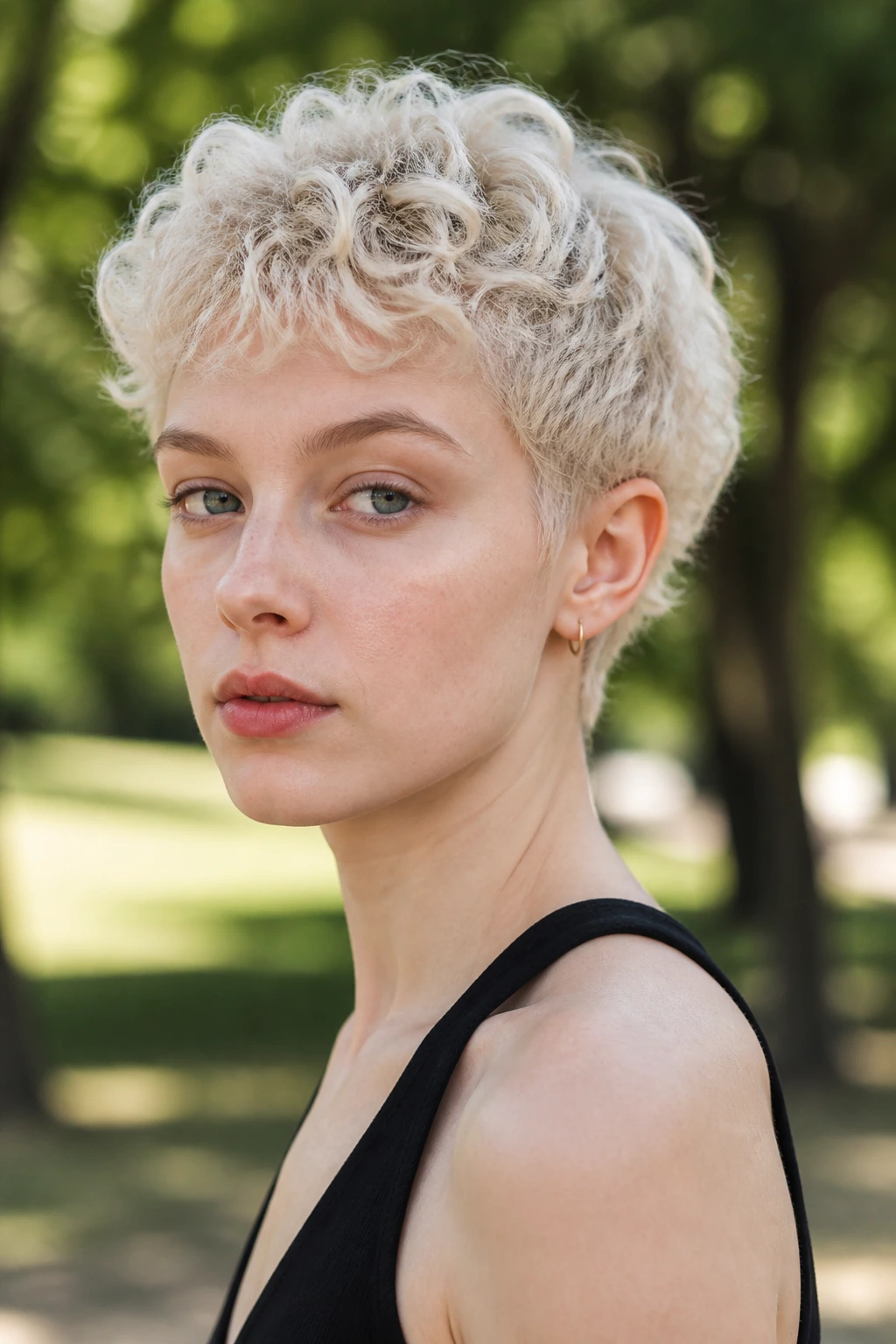
Going too white with no texture. A flat, icy blonde on a smooth cut can erase the face instead of framing it. The fix is simple: add movement, a root shadow, or a slightly softer toner.
Cutting the fringe too blunt and too heavy. Heavy bangs can swallow the forehead and make the pale skin around the eyes look even lighter. If the fringe is short, keep the edges broken up or split it slightly so air can move through it.
Overusing purple shampoo. A little purple product controls brass. A lot of it can make blonde look gray, violet, or dry. Use it only when warmth starts showing, not as a daily shampoo.
Ignoring brow and lash contrast. Pale skin plus very light hair plus very light brows can drift into one shade. Even a bit of pencil or tint helps the features stand up against the blonde.
Choosing a cut that needs perfect styling. If you are not going to smooth the fringe or define the top every morning, don’t choose a shape that depends on it. A softer pixie, bob, or cropped shag will forgive a rougher day.
Variations and Alternatives to Try
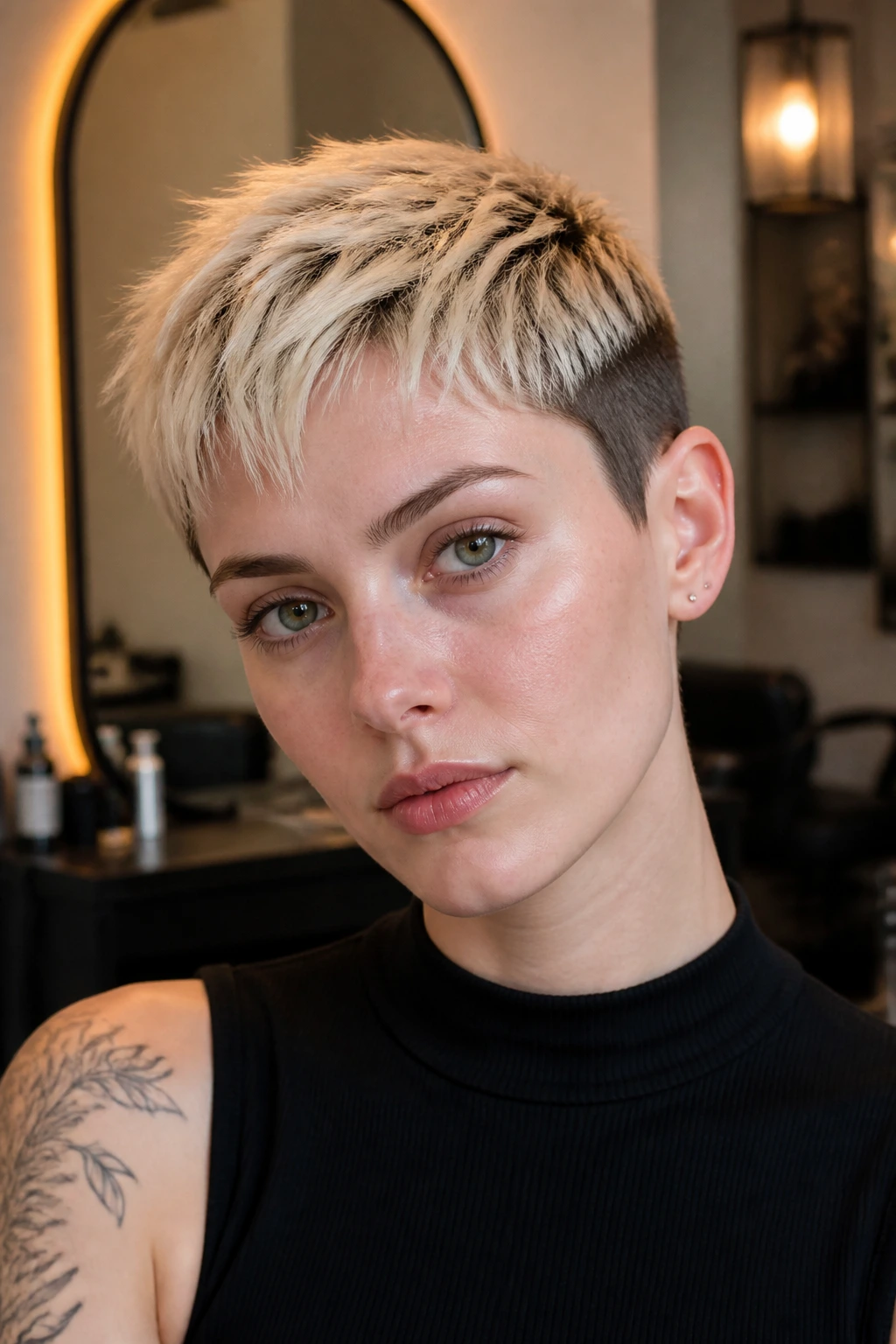
Smoky Root Blonde: Keep the roots a shade or two deeper and tone the lengths with a pearl-beige blonde. It gives pale skin a little edge without the hard line of full platinum.
Beige Ice Blend: Use a cooler lift at the ends and a beige toner through the mids. This is the one I’d choose for skin that leans pink or flushes easily.
Partial Bleach Crop: Lighten only the top, fringe, or face-framing pieces and leave the sides slightly darker. You still get the brightness, but the haircut keeps more contrast and tends to grow out easier.
Curly Bright Crop: If your hair bends or coils, let the shape stay soft and vary the lightness a little inside the curl pattern. That keeps the style from puffing into one bright shape.
Low-Maintenance Shadow Version: Ask for a stronger root shadow and a cut with softer edges. It’s not as stark, but it buys you time between salon visits and usually looks cleaner for longer.
Tools, Products, and Salon Notes
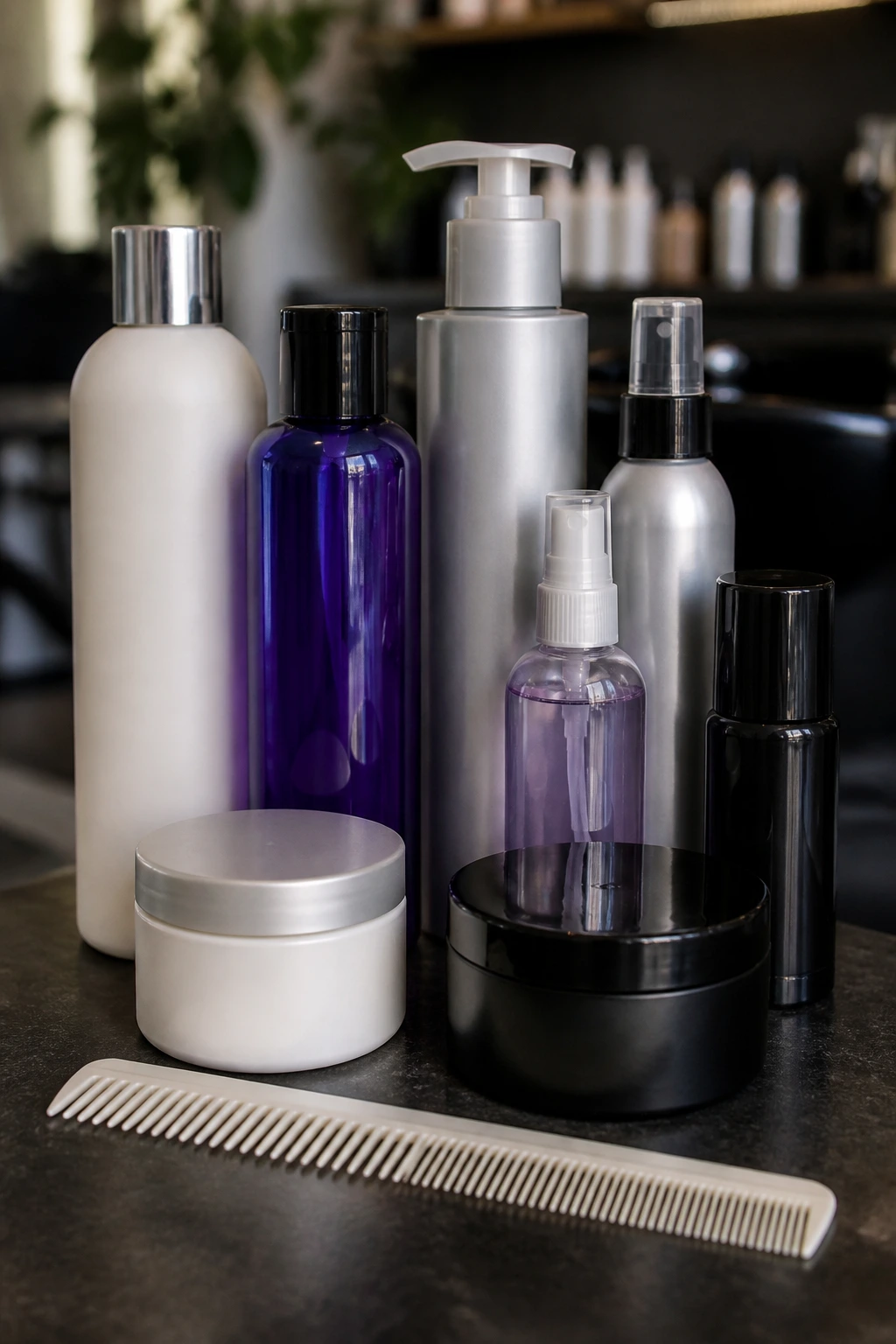
- Color reference photos: Bring front, side, and back shots so your stylist can see the silhouette, not just the color.
- Color-safe shampoo: A gentle shampoo keeps toner from fading as fast and helps bleached hair stay less brittle.
- Purple shampoo: Use it sparingly when the blonde starts leaning yellow, not as an every-wash habit.
- Bond-repair treatment: Bleach pulls on the hair structure, and a repair mask helps the cut feel smoother between trims.
- Leave-in conditioner: Short light hair still needs moisture, especially if the ends were lifted to level 9 or 10.
- Texture spray or dry shampoo: These help pixies, crops, and shags hold shape without heavy wax.
- Matte paste or light wax: Best for piecey finishes and micro-fringe styles.
- Small round brush: Useful for flipping the fringe, shaping the bob, or giving the crown a little lift.
- Heat protectant: A short cut is easy to scorch because the ends sit close to the tool.
- Fine comb and clips: Handy if you style a side part, slick-back, or curtain fringe.
- Satin pillowcase: Reduces friction so the cut doesn’t wake up fuzzy and crushed.
- Scalp sunscreen: Especially important for buzz cuts and close crops where the scalp shows.
Maintenance, Toning, and Regrowth
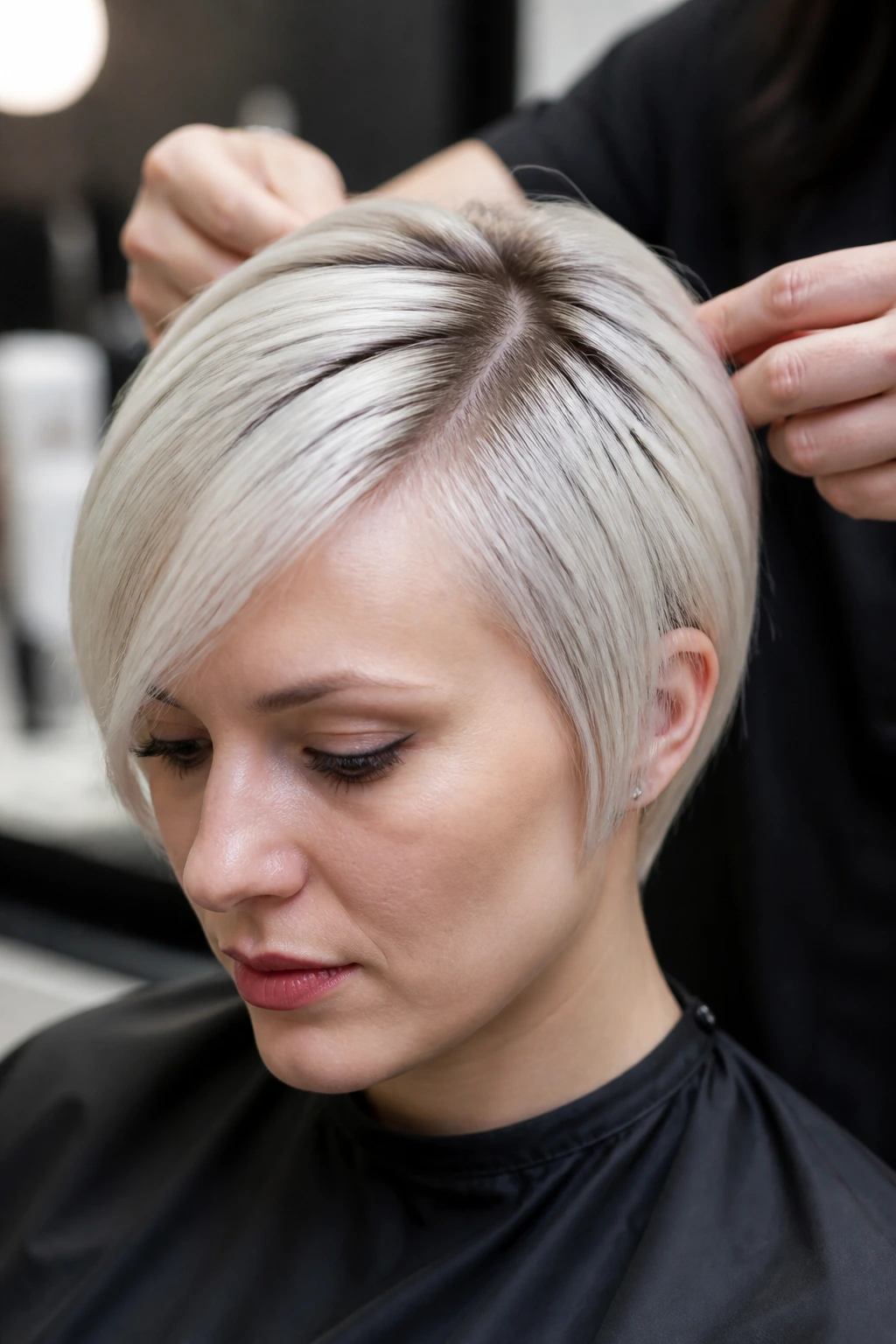
Short bleached hair rewards a little discipline. Pixies, crops, and buzz cuts usually want a trim every 3 to 5 weeks if you want the outline to stay clean. Bobs and pageboy shapes can stretch a little longer — 5 to 7 weeks is more realistic — but once the ends lose shape, the blonde starts looking less precise.
Toner depends on how fast warmth shows up in your hair, but a 4- to 6-week refresh is a good working range for most very light looks. If your hair is porous, it may need tonal refreshes sooner. Purple shampoo once every 7 to 10 days is usually enough for maintenance; if you use it more often, the blonde can go dull and the texture can feel dry.
Repair masks once a week are a good idea if the hair feels stretchy or rough. If the hair is buzzed or cropped close, keep an eye on the scalp too — close bleach exposes skin more than people expect, and that skin needs sunscreen when you’re outdoors. Pale skin plus close blonde is a high-visibility combination. Treat it that way.
Frequently Asked Questions
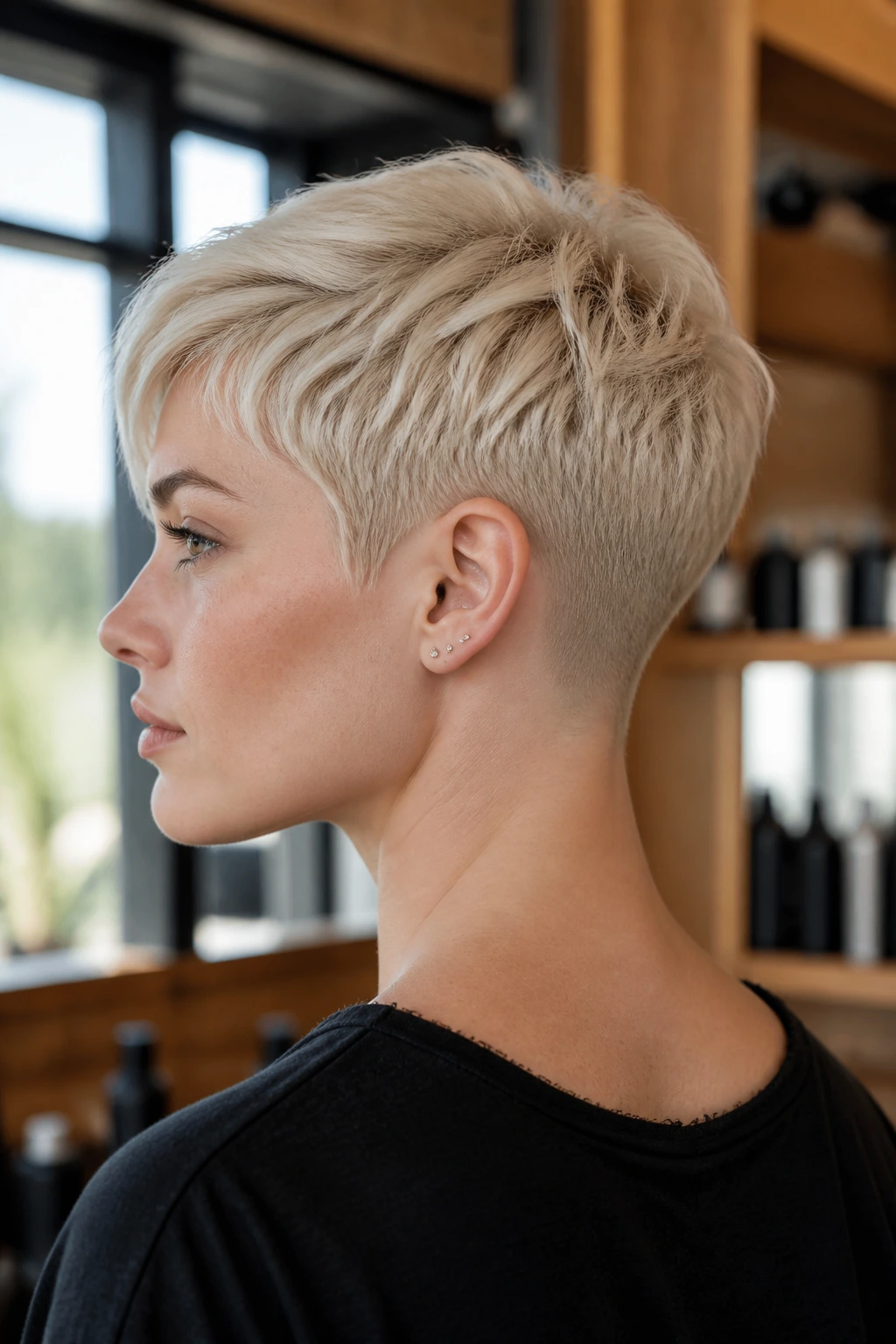
Will platinum blonde wash me out if I have very pale skin?
Not if the cut has structure. The problem is usually not the fact that the skin is pale; it’s the absence of contrast. A shadow root, darker brows, a fringe, or a strong nape line keeps the look from blending into one flat light surface.
Should pale skin go cool blonde or warm blonde?
Neither rule is universal. Pink or rosy skin usually likes pearl and beige tones, while peachy or neutral skin can wear brighter platinum with a little smoke in the toner. The best blonde is the one that doesn’t make redness louder or turn the face gray.
Which short bleached haircut is easiest to live with?
A rooted micro bob or a tapered bleached crop usually asks for less daily work than a slicked-back crop or a very blunt pixie. They can air-dry with a little shape and still look intentional. Buzz cuts are low styling, but they need more frequent cleanups.
Can I keep my brows dark with bleached hair?
Yes, and often you should. Dark brows give pale skin and light hair a frame, which keeps the face from disappearing. If the brows are very strong, just keep them tidy so they look deliberate instead of accidental.
How often will I need toner?
Most short bleached looks need a toner refresh every 4 to 6 weeks, sometimes sooner if the hair is porous or the water where you live is heavy in minerals. If the blonde starts sliding yellow or muddy, don’t wait for it to get bad. A gloss sooner is easier than trying to fix brass later.
Is a root shadow cheating if I want platinum?
No. A root shadow is one of the smartest ways to wear platinum on pale skin because it gives the eye a place to rest. Pure white from scalp to ends can look strong in photos and harsh in daylight; a tiny root blur keeps the shape cleaner.
Can I do any of these at home?
You can maintain some of them at home, but the initial bleach is where people get into trouble. Short hair exposes uneven lifting fast, and pale skin makes tonal mistakes easier to see. If you’re going for level 9 or 10 blonde, a salon hand is usually cheaper than a correction.
What if my hair is already fragile from previous color?
Choose a cut that lets you trim off the driest ends and keep the blonde a little softer, not whiter. A beige blonde bob, a feathered bixie, or a shadow-root crop is more forgiving than a super-flat platinum bowl cut. The hair has to survive the color before it can show off the shape.
The Cleanest Way to Wear the Light
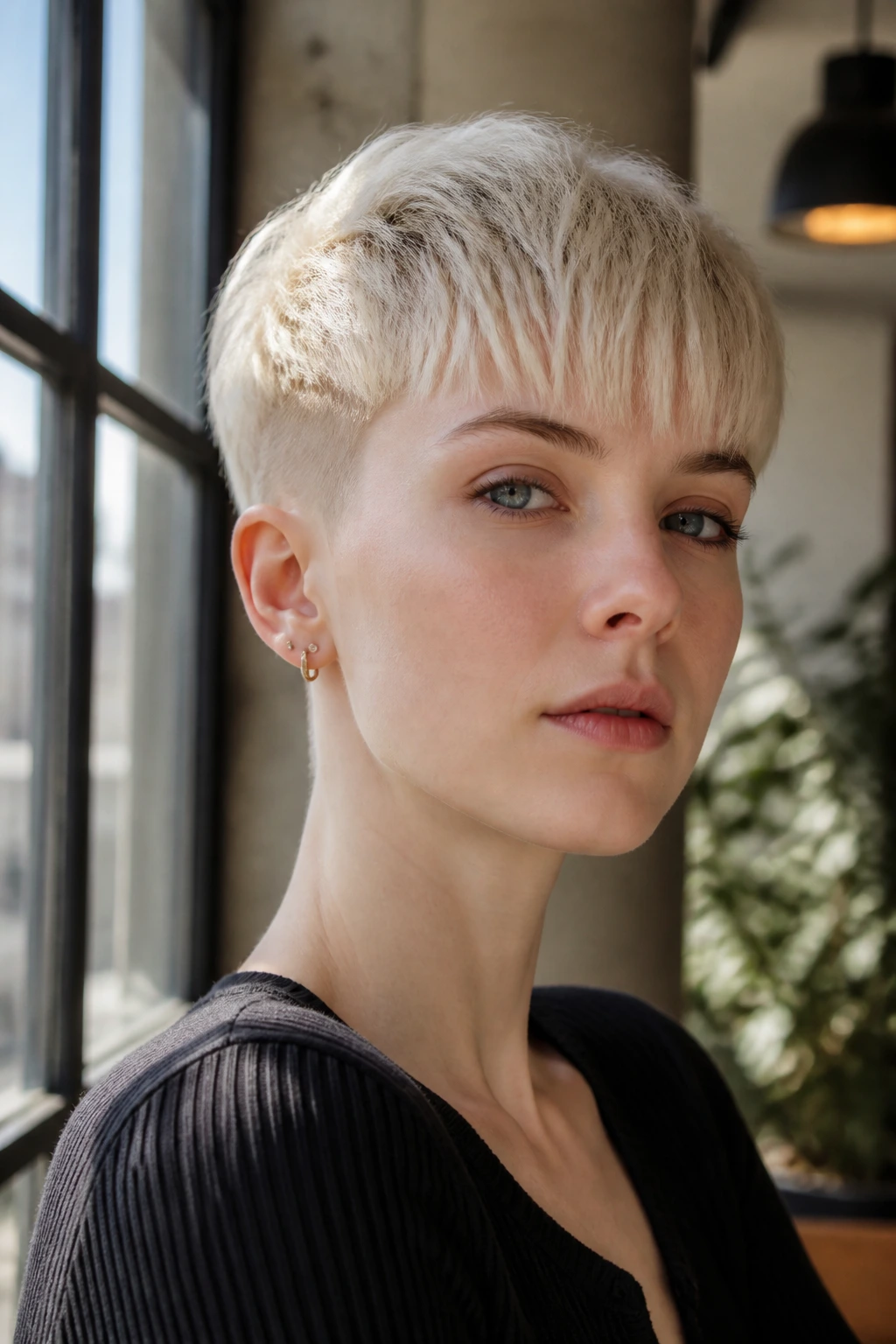
The best short bleached haircuts for pale skin do one thing well: they give the blonde a frame. That frame can be a fringe, a taper, a root shadow, a side part, or a sharp jaw-skimming line. Without it, bleach on fair skin can look a bit too open and a bit too pale. With it, the whole look snaps into focus.
I’d start with the cut that fits your maintenance habits first, then choose the tone second. That order saves a lot of regret. If you know you’ll never style a fringe, don’t choose a fringe-heavy pixie. If you know you can handle regular toner, go brighter. If not, let a shadow root do some of the heavy lifting.
The lightest looks are not the most forgiving, but they’re often the most memorable. Pick the shape that gives your face some edge, keep the tone clean, and let the cut do the framing.
