



A chin-length cut with a blunt line at the jaw can make silver hair look deliberate in a way a long, shapeless style never does. That’s the quiet power of edgy short haircuts for older women: they don’t try to hide thinning ends, cowlicks, or a strong neck; they work with them and make them part of the look.
I’ve always thought short hair looks most modern when there’s a little tension in it — a jagged fringe, an off-center part, a nape that’s been carved in, a crown that’s allowed to move. Too soft, and the cut can sink into “nice.” Too severe, and you get helmet territory. The sweet spot sits in the middle, where the shape feels intentional but still has some bite.
That balance matters even more once hair changes texture, density, or gray pattern. A good short cut can make fine hair look fuller at the root, thick hair lighter around the ears, and curls less triangular at the bottom. The trick is knowing which edge suits your face, your glasses, your neckline, and the amount of time you actually want to spend with a blow dryer.
The cuts below cover the whole range, from quietly sharp to fully rebellious.
Why These Cuts Work So Well in Real Life
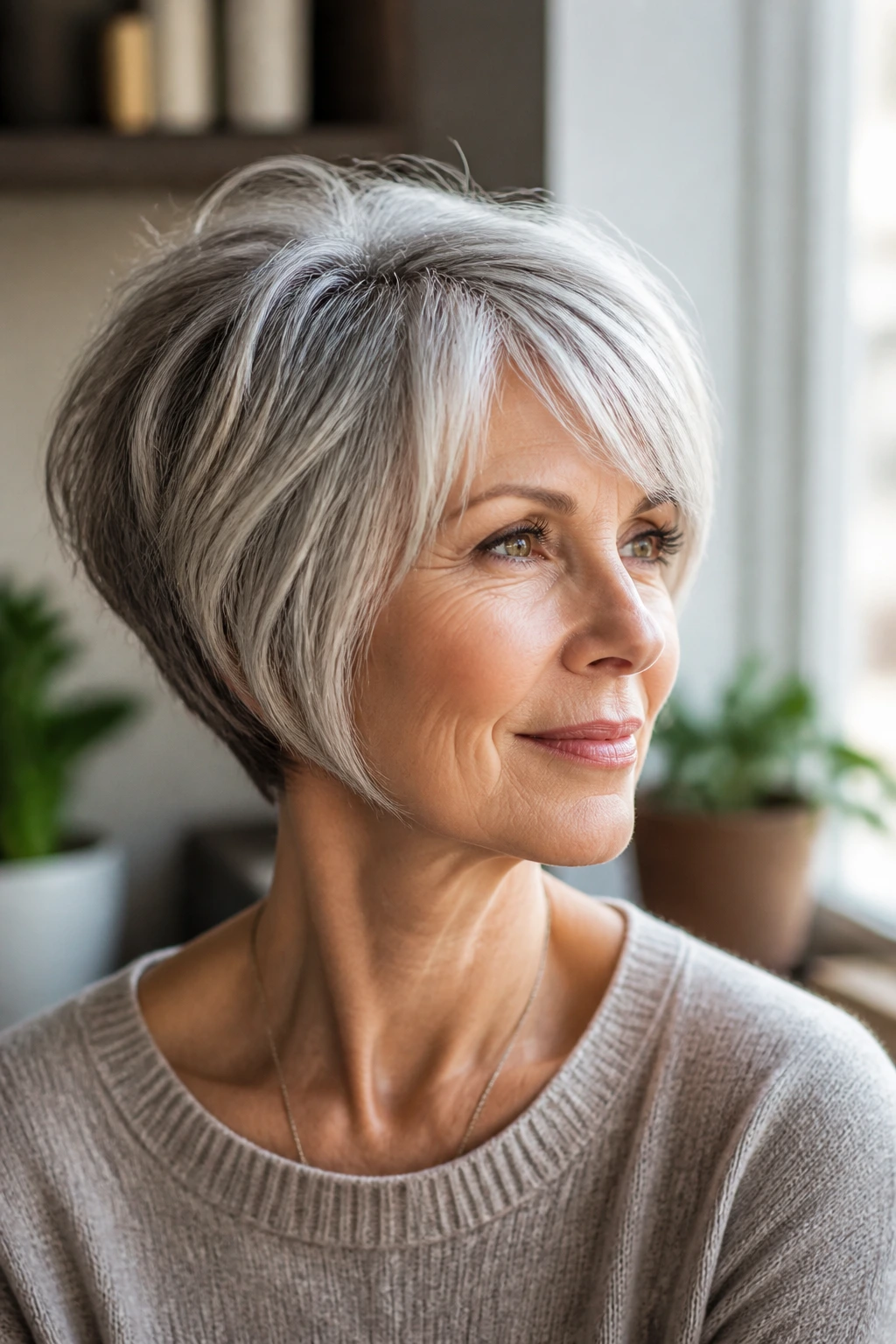
-
Less weight, more shape: Shorter lengths remove the droop that makes ends look see-through, which is a big deal if your hair has thinned at the temples or crown.
-
Gray and silver look intentional: A crisp crop gives salt-and-pepper strands a strong outline, so the color reads as a feature instead of a compromise.
-
Glasses and earrings finally get room: When the sides are cleaned up, frames and jewelry stop fighting the haircut.
-
Styling time drops fast: Most of these cuts want a quick blow-dry, a little root lift, and a bit of paste or spray — not a full salon routine.
-
There’s real room for personality: You can go soft-rebellious, razor-sharp, or somewhere in the middle without growing your hair out to do it.
-
They age with you better than you might think: A precise short cut can lift the whole face because the shape is doing work long before makeup ever enters the picture.
1. Choppy Pixie with Micro Fringe
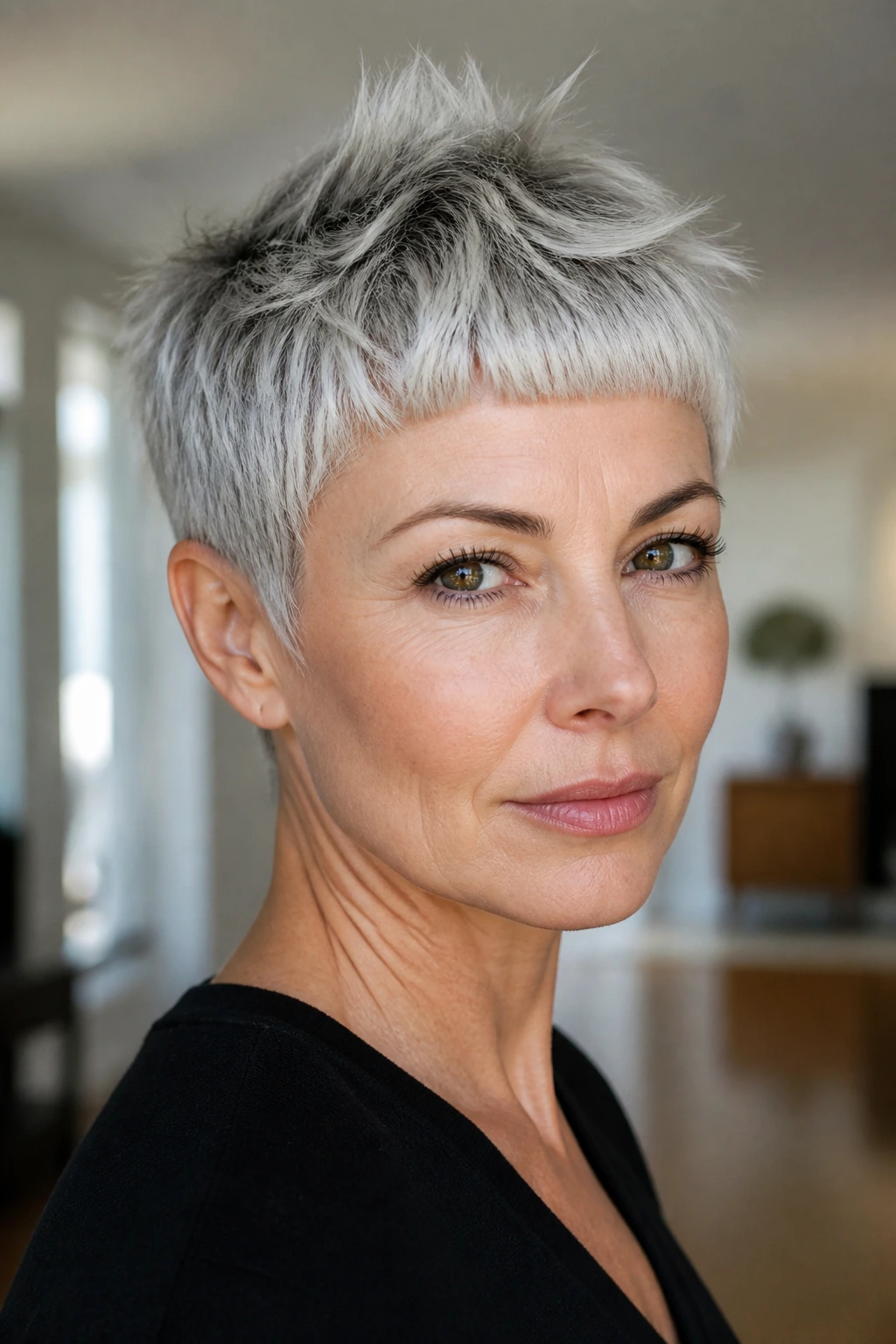
A choppy pixie with a micro fringe has a sharp little swagger to it. The fringe sits just above the brows, the top is broken into uneven pieces, and the sides stay close enough to the head to show off your cheekbones. It’s neat, but not sweet. That’s the point.
What keeps this cut from feeling flat is the contrast between the tight sides and the messy top. Ask for point-cut texture at the crown and a clean taper around the ears and nape. If the top is left too uniform, the cut loses its pulse; if everything is heavily razored, it can start to look wispy instead of piecey.
Best if your hair is fine or medium
The short length gives fine hair a lift it won’t find on its own, and the micro fringe draws attention upward. It also works well with gray or white hair, because the irregular texture stops the color from reading like a solid block.
Keep this in mind: if your forehead is very short, a micro fringe can make the face feel compressed. Leave a little softness at the temple so the cut still breathes.
2. Asymmetrical Bob with a Side Sweep
An asymmetrical bob is one of those cuts that looks expensive even when it isn’t. One side lands a little longer than the other, the part sits off-center, and the whole shape gets a subtle slant that wakes up the face. It’s especially good when you want edge without going full punk.
The real trick is the balance. The longer side should skim the jaw or just below it, not swing wildly into “I cut this myself” territory. A side sweep across the forehead softens the geometry, which matters if your features are already strong or you wear square frames.
This cut is sneaky in a good way. On straight hair, the line looks clean and architectural. On wavy hair, the asymmetry shows up in a looser, more casual way, which keeps it from looking too formal. If you like a haircut that changes a little depending on how you blow-dry it, this is a solid place to start.
3. Tapered Undercut Pixie
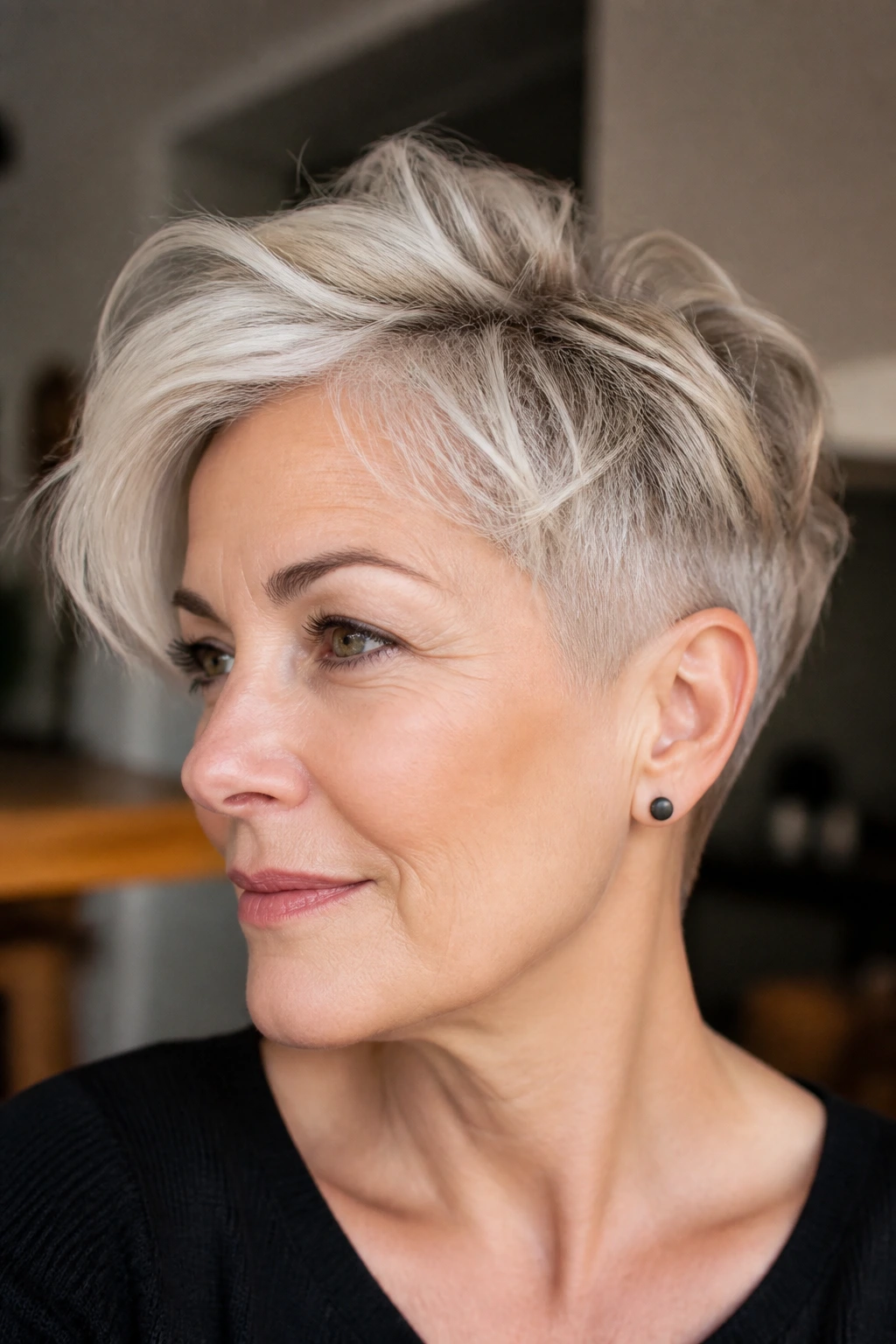
Why does an undercut pixie feel so modern? Because it clears out the bulk where short hair usually gets bulky — the sides, the nape, the space behind the ears. The top stays longer, so you get lift and movement on top of a very clean base.
This cut is one of my favorites for thick hair that grows outward instead of downward. The undercut removes that helmet-like triangle, and the longer top gives you room to play with direction. Push it forward for a softer, more textured look; sweep it back if you want something sharper.
What to ask for
- A tight taper at the nape so the neckline stays neat as it grows.
- Longer length on top, usually 2 to 4 inches, depending on how much styling you want.
- Soft blending around the temples so the cut doesn’t feel clipped into place.
If you’re nervous about going this short, ask for the undercut to be hidden at first. That gives you the structure without showing off the shortest part unless you tuck the hair up.
4. Textured French Bob with Broken Ends
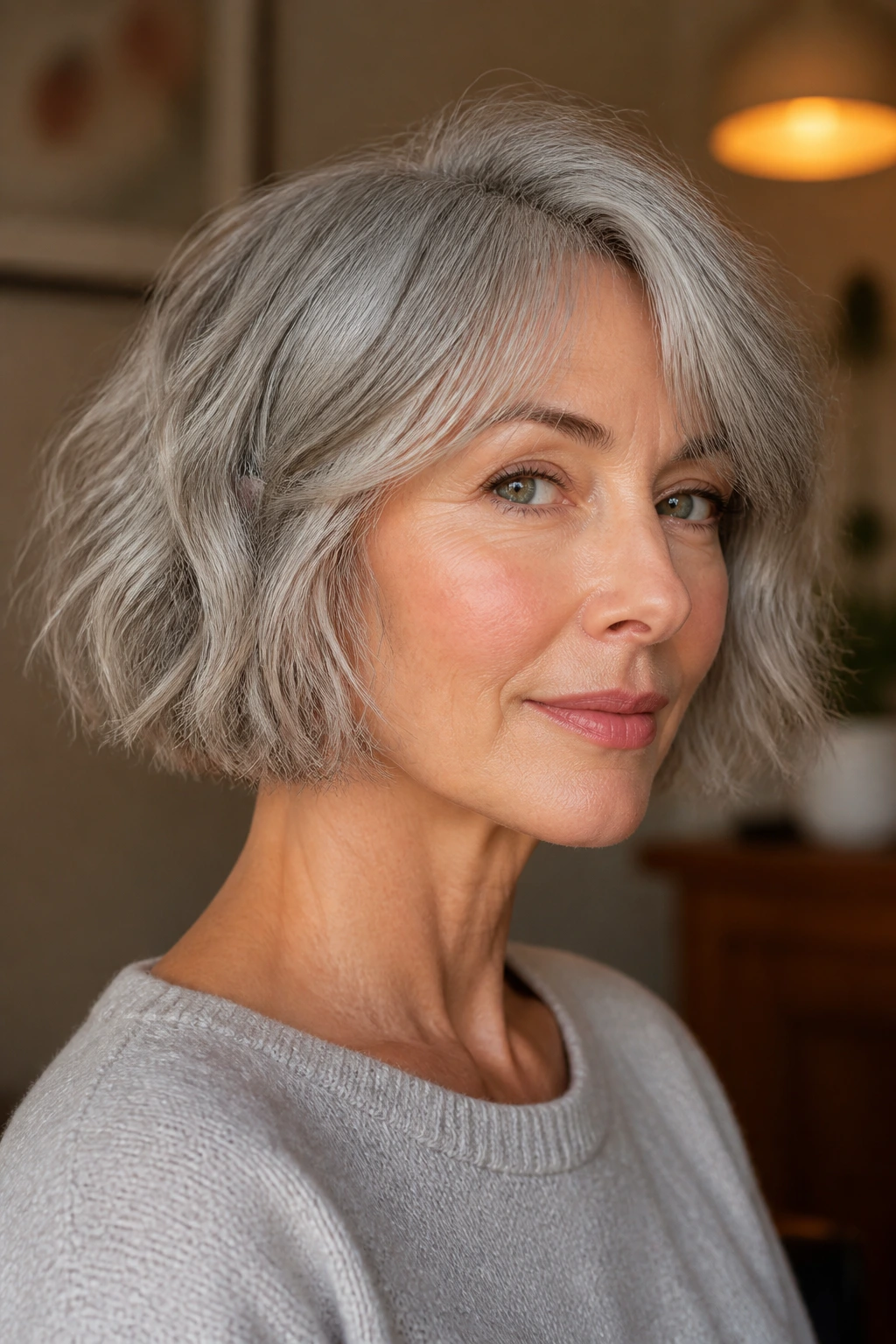
A French bob gets edgy the moment the ends stop behaving. Keep the line around chin length, then break up the perimeter so it doesn’t sit as one smooth shelf. The result is a bob that looks undone in a very controlled way.
This cut loves a little natural bend. If your hair has any wave at all, let it do the work. If your hair is straight, use a small round brush or a flat brush and give the ends a slight bend inward or outward. That tiny movement changes everything. Without it, the bob can slide into “nice salon bob” territory. With it, the whole thing feels sharper.
It also pairs well with a side part that isn’t too deep. A hard side part can make the cut look severe fast. Keep the weight around the jaw and cheekbones, where the shape can frame the face instead of hiding it.
5. Wolf Cut Crop
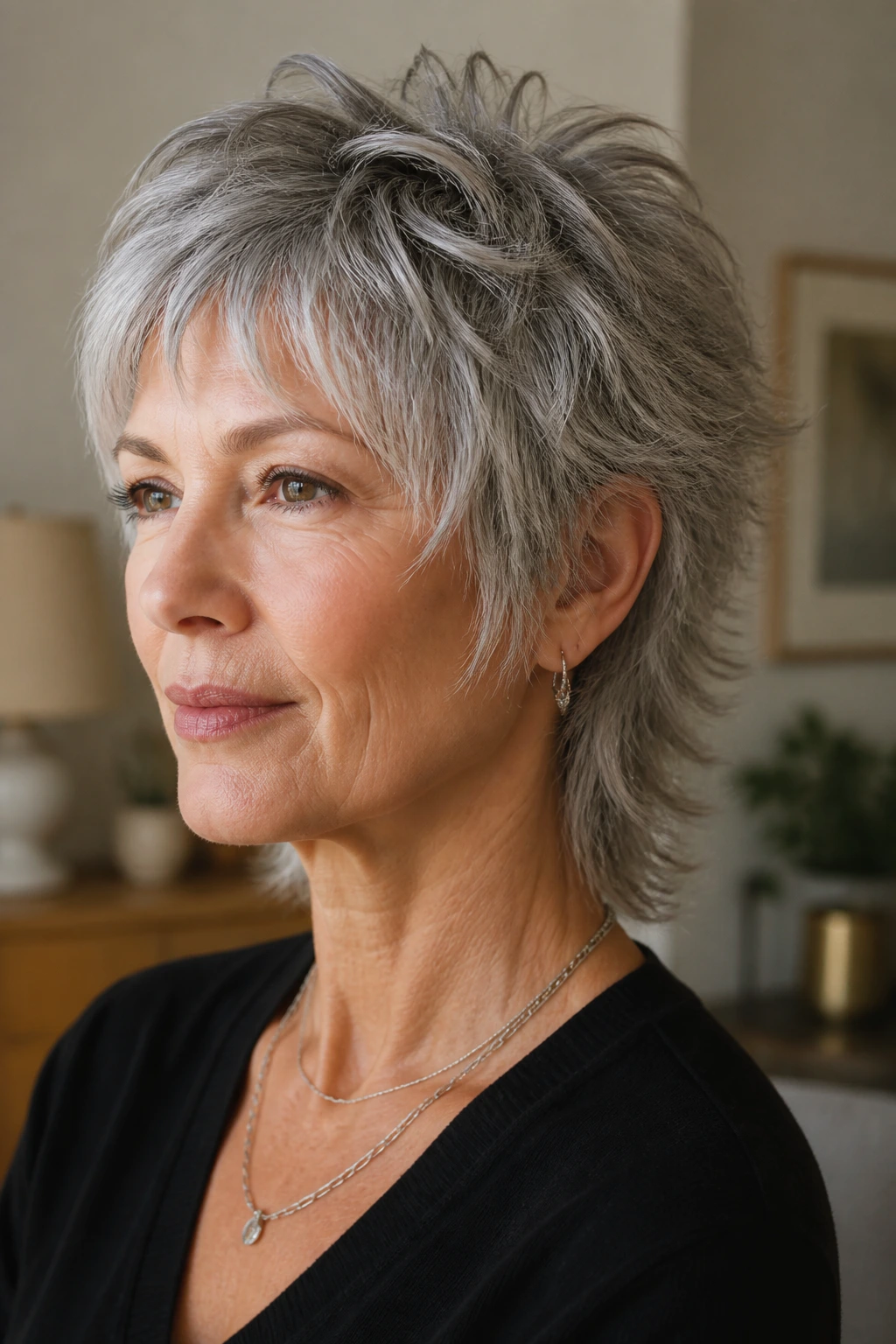
The wolf cut crop is the unruly cousin in the group. It borrows the shag’s layers and the mullet’s rough outline, then shrinks everything into a shorter, messier package. If you want hair that looks a little wild even after a proper blow-dry, this is the one.
What gives it that edge is the contrast between the short, choppy top and the longer bits around the crown and nape. You’re not chasing symmetry here. You’re chasing movement. The cut works best when it’s air-dried halfway, then rough-dried with a diffuser or fingers so the texture stays visible.
This is a strong choice for wavy and curly hair that tends to puff in the wrong places when it’s cut too round. The layers can remove bulk without collapsing the shape. On very fine hair, though, keep the layers modest. Too many short pieces and the ends start to disappear.
How to wear it
- Add mousse at the roots on damp hair.
- Scrunch the crown with your hands.
- Finish with a light texturizing spray, not heavy wax.
6. Shaggy Crop with Piecey Layers
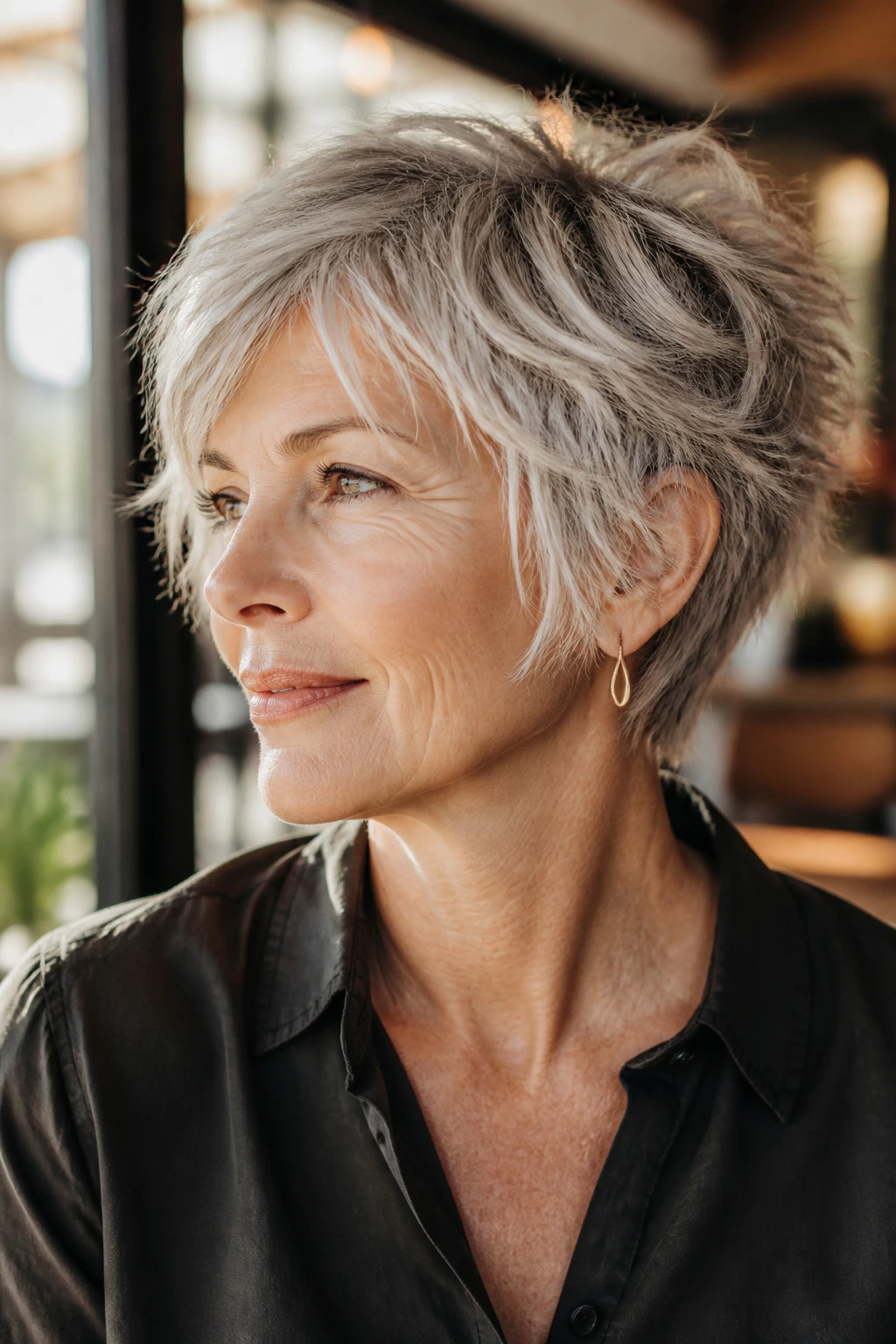
A shaggy crop is what happens when a short cut decides it doesn’t need to sit still. The layers are short enough to lift at the crown, but long enough to separate into little pieces around the face. It feels casual in the best possible way.
The edge in this cut comes from the movement, not a harsh line. That makes it a good fit if you want something modern but not severe. Ask for soft, broken layers through the top and sides, then keep the outline around the neck a little cleaner so the whole cut doesn’t blur into fuzz.
It’s especially useful for hair that falls flat by lunch. The layers create air between the strands, so a quick blast with the dryer brings the shape back. A dab of matte paste can turn the ends outward just enough to give the haircut some grit.
7. Blunt Bob with Jagged Fringe
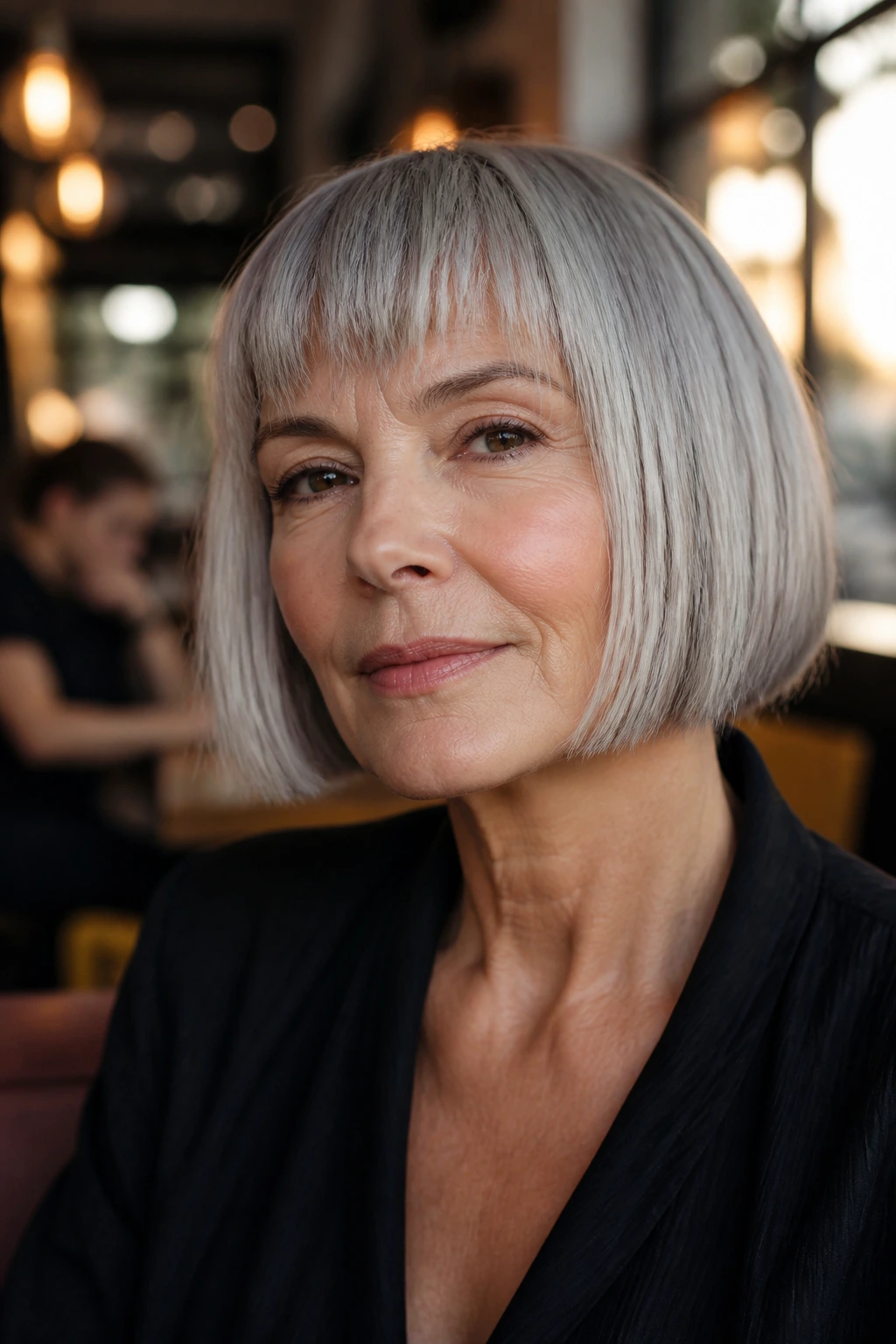
A blunt bob with a jagged fringe is a study in contrast. The bottom line is crisp and even, but the fringe is roughened up and slightly uneven, which keeps the cut from looking too polished. That balance matters. Too much polish on short hair can feel stiff.
This one suits straight or slightly wavy hair best, because the blunt edge shows clearly. If your hair is very thick, ask for subtle internal debulking so the bob doesn’t balloon at the bottom. If your hair is fine, keep the weight line strong; that’s what gives the cut its presence.
The jagged fringe is where the personality lives. It should skim the brows in uneven little pieces, not hang like a curtain. That unevenness pulls attention to the eyes and softens the jaw at the same time.
8. Curly Crop with Lifted Crown
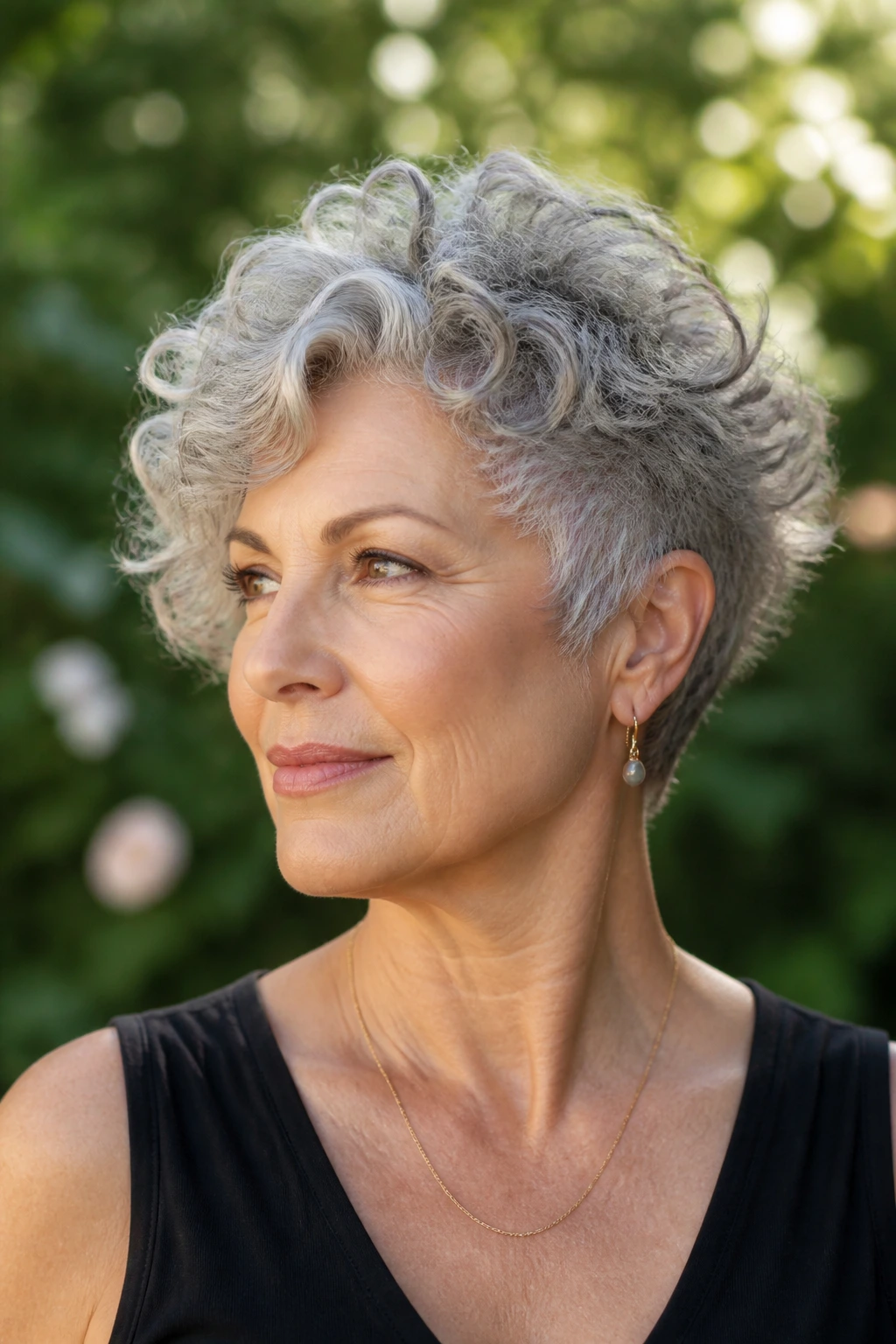
Curly hair in a short cut can turn either sculptural or puffy, and the difference usually comes down to where the shape is built. A curly crop with a lifted crown keeps the volume up top and lets the sides stay tighter, so the curls don’t widen the face too much.
Dry cutting helps here. Curly hair shrinks, bends, and swells, so the shape needs to be planned where the curls actually live, not where they look while wet. Ask your stylist to leave enough length at the crown to create lift and to avoid over-thinning the ends. That’s how you keep the curls from fraying into fluff.
This cut looks especially good when the front has a little asymmetry. A slight side part or longer front curl gives the eye somewhere to go. And if your hair tends to dry out, a cream styler with a touch of hold will keep the curl pattern defined without making it crunchy.
9. Nape-Undercut Crop
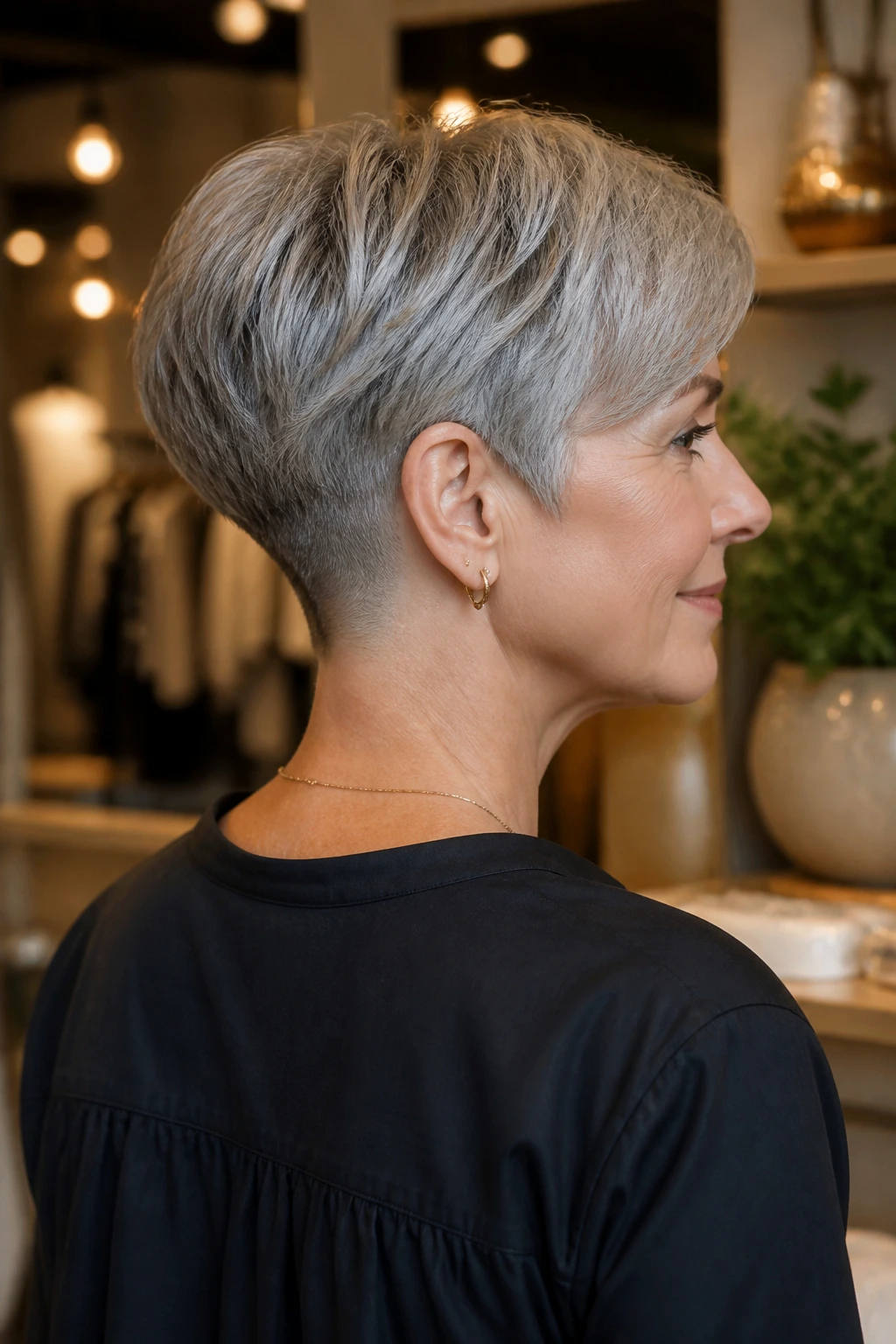
A nape-undercut crop has a hidden edge that I love. From the front, it can look almost soft. Turn your head, though, and the neckline is clean, tight, and shaped with purpose. That little reveal is what gives the cut its attitude.
This is an excellent choice if your nape gets hot, bulky, or sweaty under collars and scarves. The undercut removes that mass, which makes the haircut easier to live in and easier to keep looking fresh between salon visits. It also helps thick hair stop kicking out at the back.
What to watch for
- Don’t let the top get too short, or the cut loses contrast.
- Ask for the undercut to be blended just enough so it doesn’t create a hard shelf.
- If you have a prominent cowlick at the nape, tell your stylist before they cut. That one detail changes the whole shape.
It’s a quietly bold cut. You notice it most when the head turns.
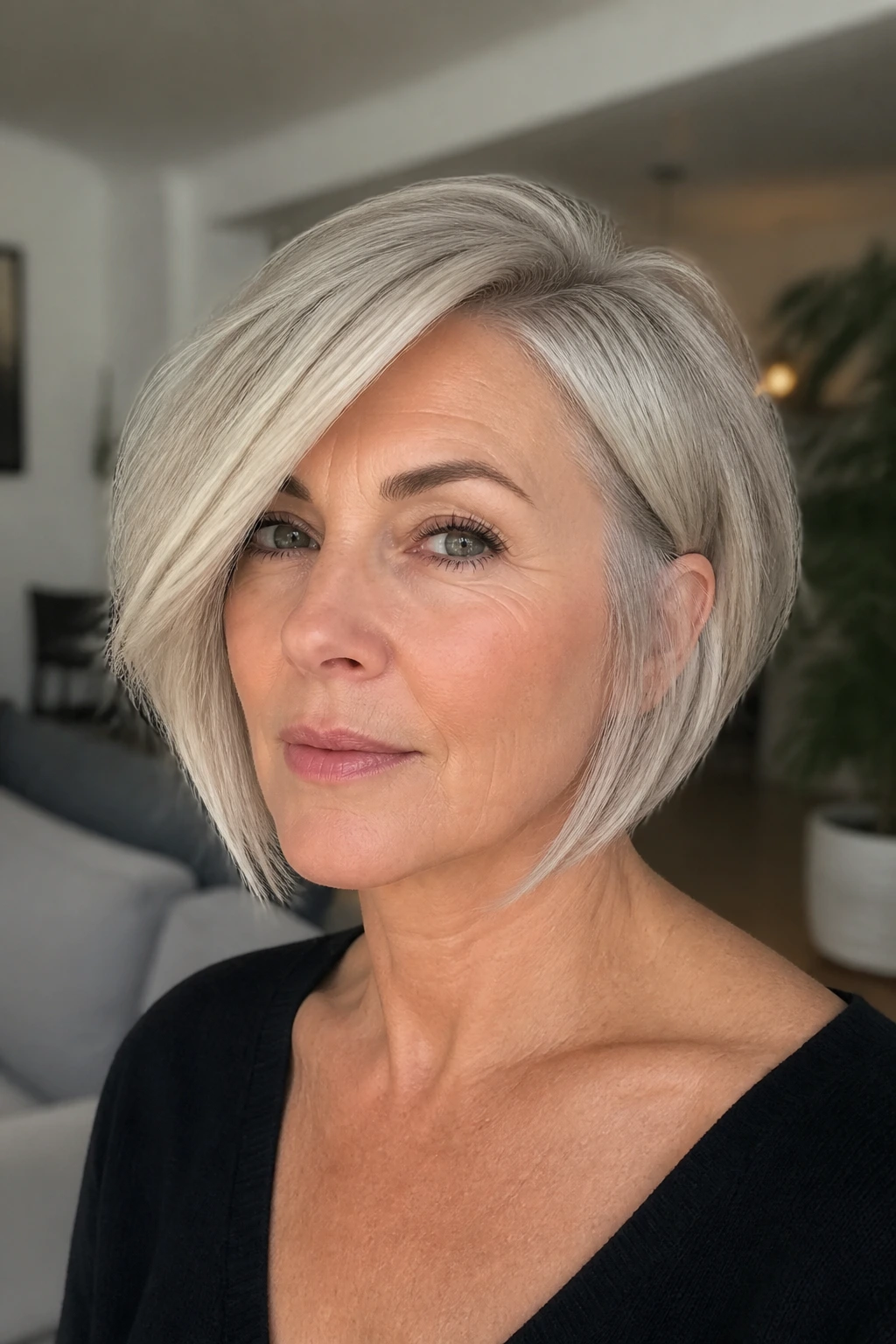
10. Angled Chin-Length Bob
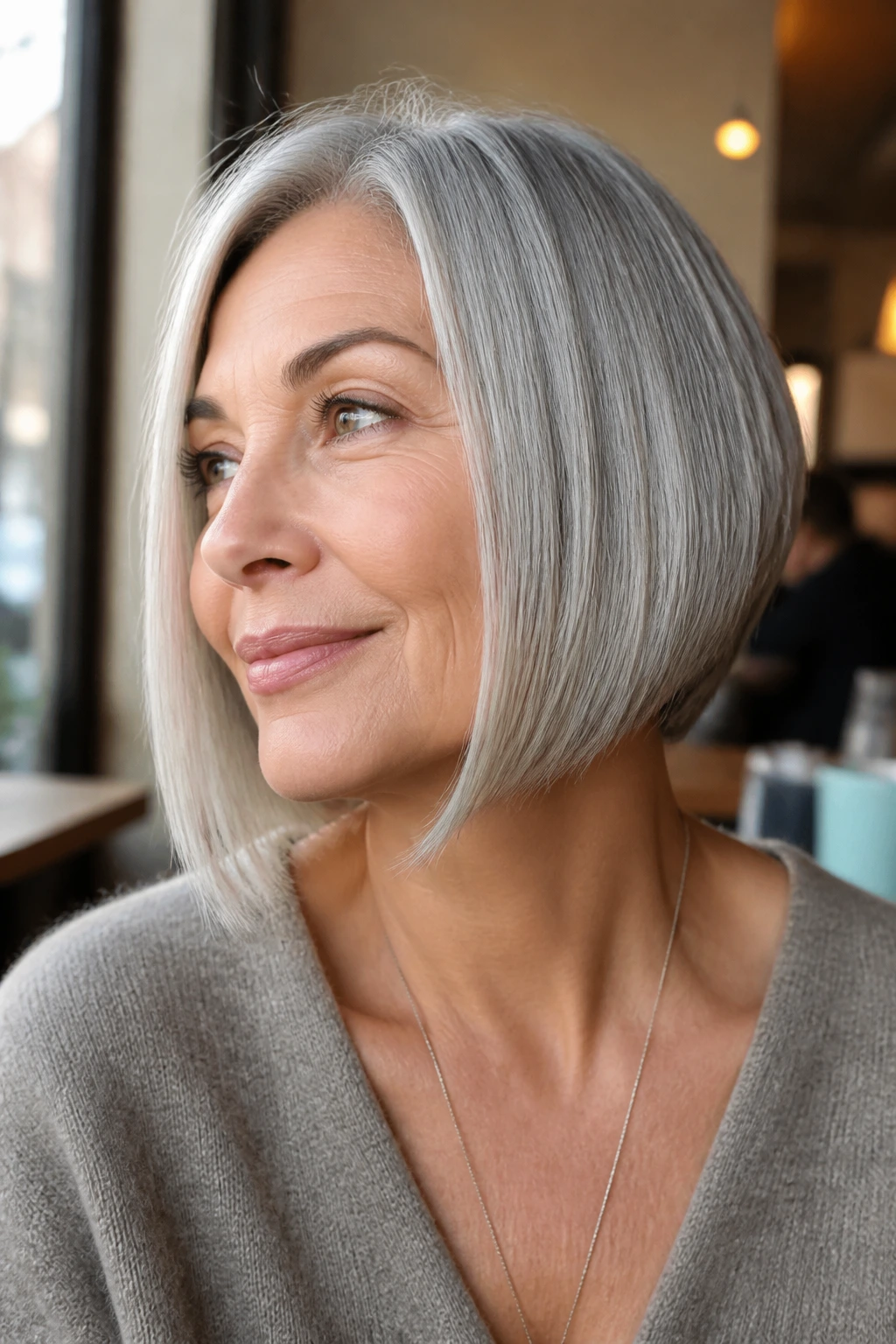
An angled bob is shorter in the back and longer in the front, which gives the face a clean line and a bit of forward motion. Around the chin, that angle can sharpen the jaw without making the whole haircut feel severe.
The front pieces matter more than people think. If they stop too abruptly, the cut can look boxy. If they’re too long, the angle disappears. The sweet spot is usually somewhere between the chin and the base of the neck, depending on your face shape and how much drama you want.
This haircut is a strong middle ground for women who want short hair but not a full crop. It gives you the neatness of a shorter cut and the swing of a bob. That means it tends to suit people who still like tucking hair behind one ear or letting one side fall forward with a little intention.
11. Spiky Silver Pixie
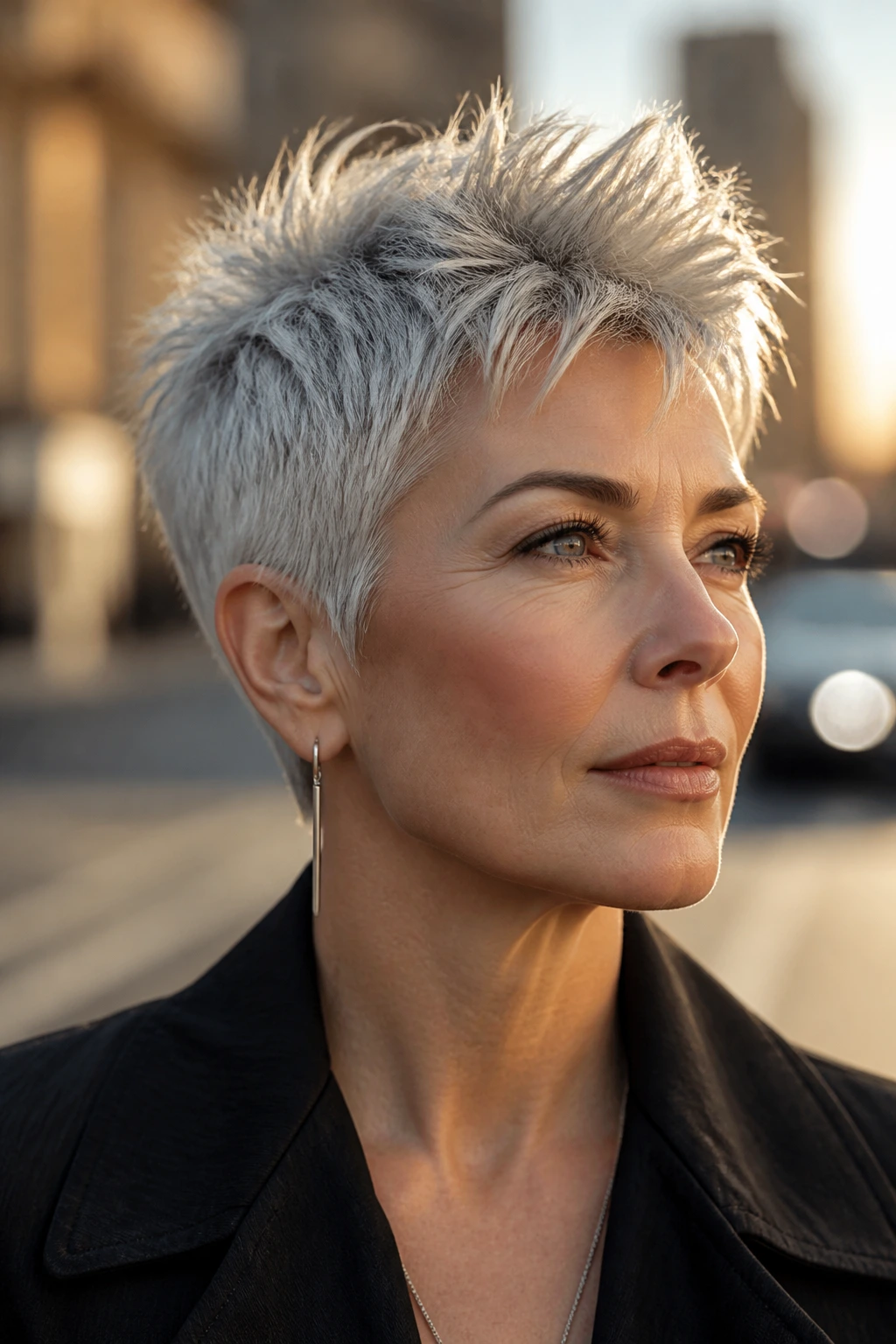
A spiky silver pixie can look fierce in the best sense of the word. The top is short enough to stand up with a small amount of product, the sides are kept neat, and the silver color makes every little point and ridge visible. There’s nowhere for the haircut to hide, which is exactly why it works.
This is one of the easiest cuts to keep alive in the morning. A bit of volumizing spray at the roots, a blast with the dryer, and a fingertip of paste through the top is usually enough. The trick is not to overload it. Too much product and the spikes clump; too little and the shape collapses by noon.
If you’ve got fine hair, this can be a gift. The short length and lifted texture create the illusion of density. If your hair is coarse, ask for the spikes to be softer and less rigid. You want lift, not little bristles.
12. Ear-Length Crop with Long Bangs
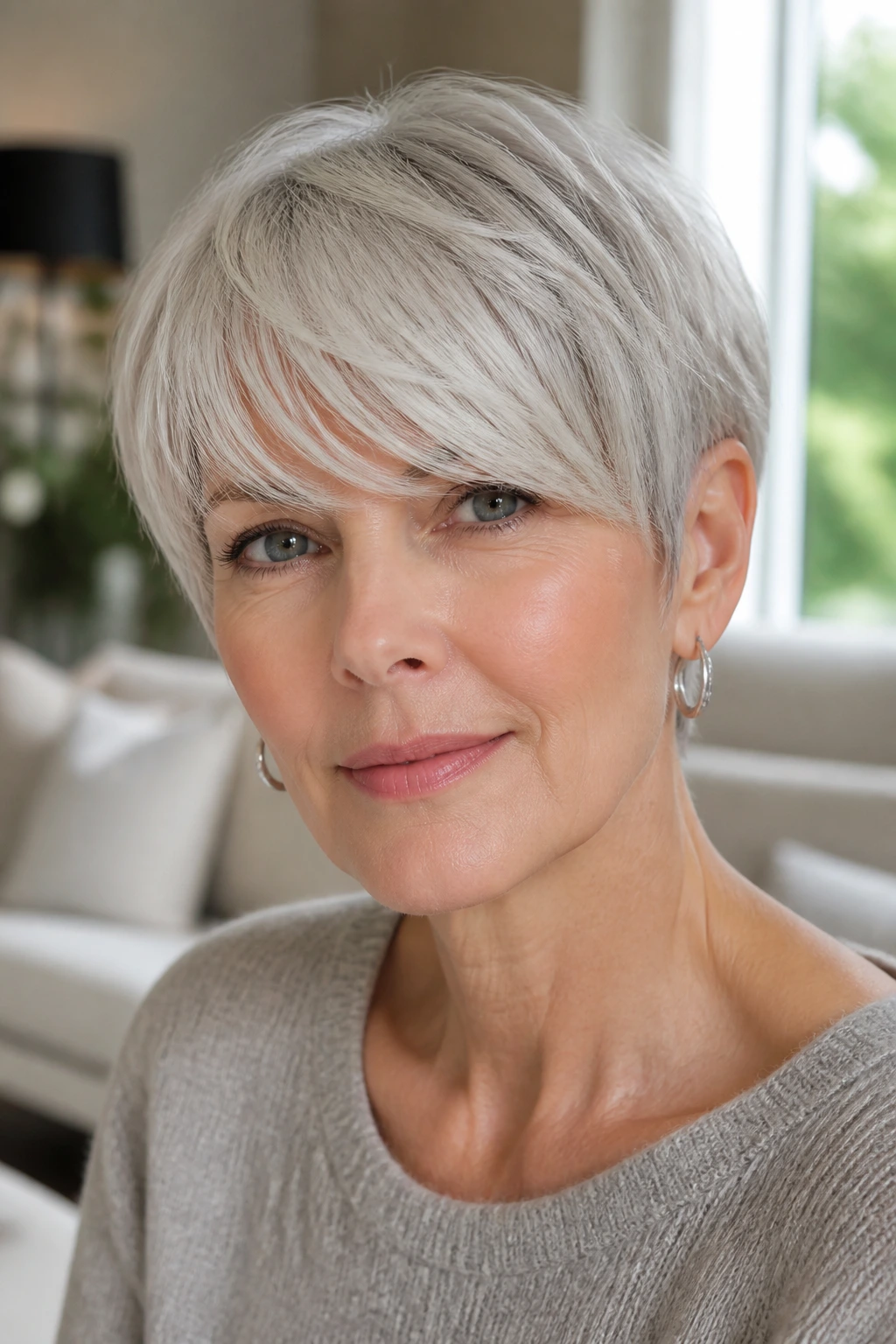
An ear-length crop with long bangs gives you a lot of face-framing power in a small package. The sides are short enough to expose the ears, while the bangs stay long enough to sweep across the forehead or blend into the cheekbone area. That contrast keeps the shape from feeling flat.
This cut is especially nice when you want edge without a harsh neckline. The short sides can make earrings pop, and the longer front keeps the face from feeling overexposed. If you wear glasses, the bangs need careful planning; they should sit just above or just below the frame line, not smack right into it.
The look changes depending on how you style the front. Blow it smooth for a clean finish. Rough-dry it and push it apart with your fingers for something more lived-in. Same cut, different mood.
13. Soft Mullet Bob

A soft mullet bob is the haircut people pretend not to notice, and then they keep staring at it. The front still behaves like a bob, but the back is left a bit longer and the layers move in a looser, more undone way. It’s a softer version of the mullet shape, which is why it works for women who want edge without going full retro-rock.
The cut is strongest when the back doesn’t get too heavy. A little length at the nape is fine; a sagging tail is not. Keep the crown airy and the sides gently tapered so the shape feels fashiony rather than accidental.
This one is for people who like hair with some personality. It isn’t the neatest option on the list, and that’s part of the appeal. It looks especially good with texture spray, lived-in waves, or a bit of natural bend from sleeping on it.
14. Feathered Crop with Lift at the Crown
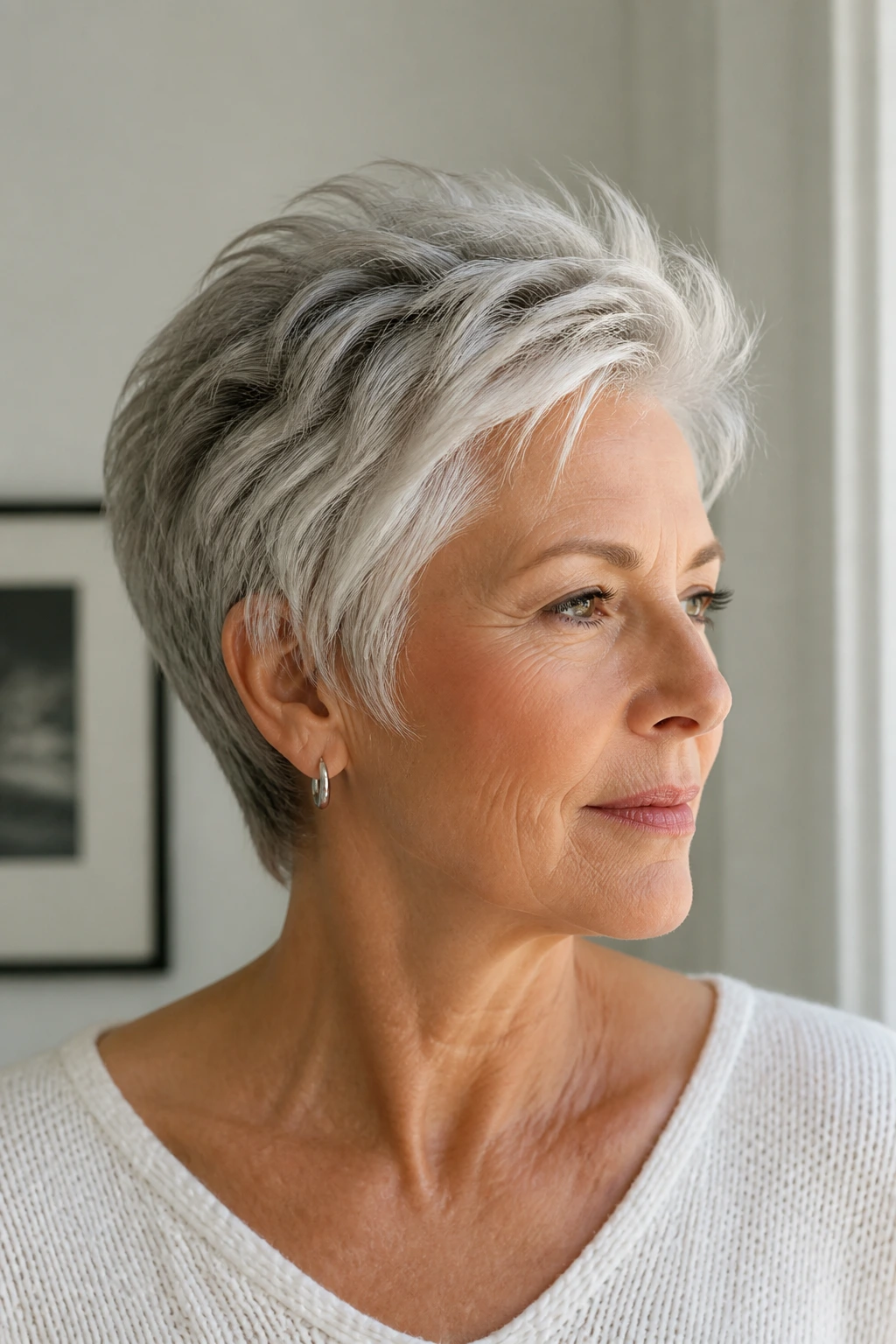
Feathering gets a bad name when it’s done too softly, but a feathered crop with lift at the crown can be sharp in a very wearable way. The layers are swept back and away from the face, which opens things up and creates height where short hair often sits too low.
This cut suits women who want a little polish without a hard edge. The feathering around the sides keeps the hair from clinging to the head, and the crown lift adds shape that’s easy to see even from across a room. It’s not punk. It’s not fussy. It sits in the middle and does its job.
If your hair tends to flatten at the top, a root-lift mousse and a round brush can make a big difference. Direct the dryer upward at the crown for the first minute, then smooth the sides down so the top keeps the energy. That little bit of lift is what saves the cut from feeling dated.
15. Slicked-Back Crop
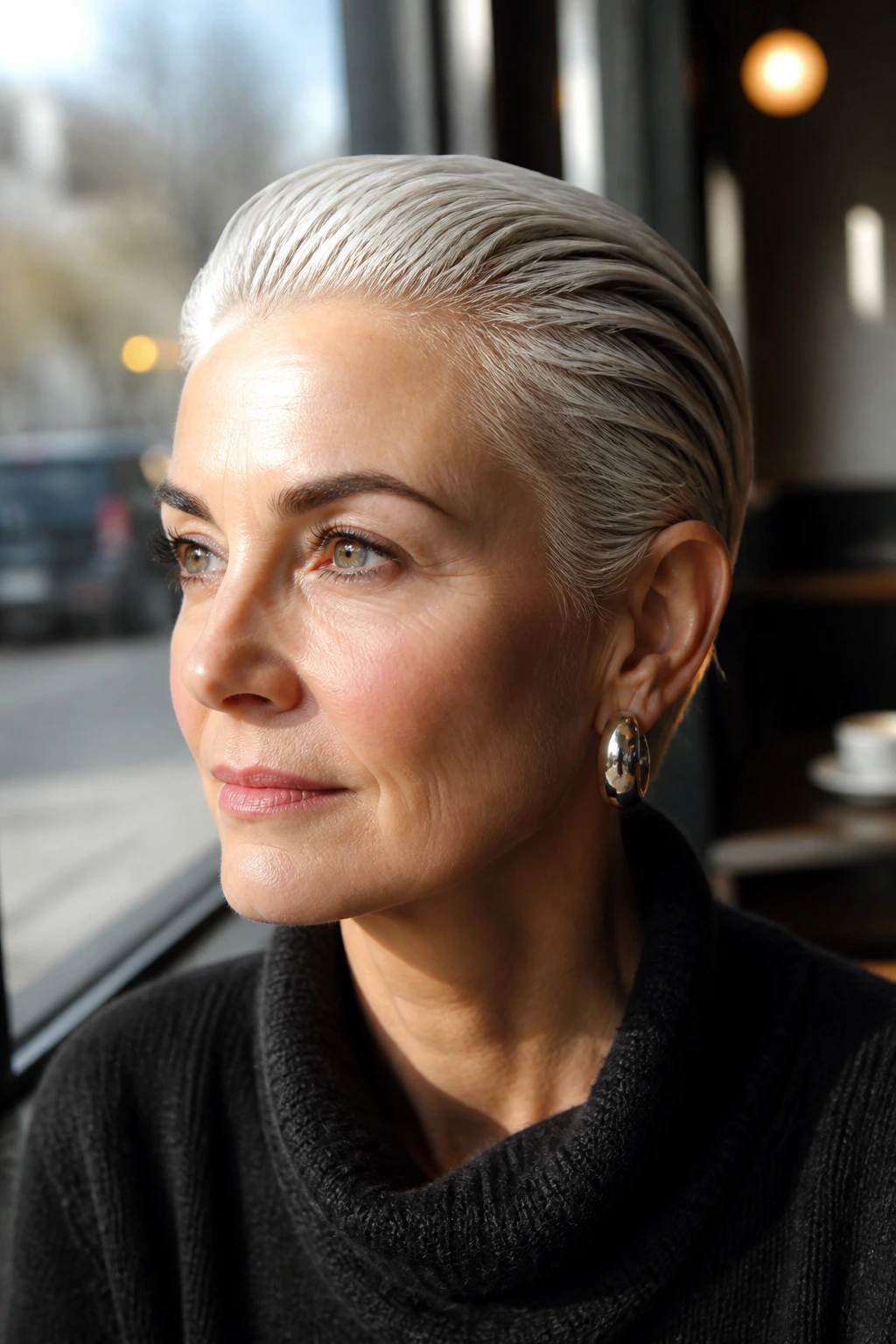
A slicked-back crop is for the days when you want the hair to look on purpose. The sides stay tight, the top is brushed back or slightly to the side, and the finish leans glossy rather than fluffy. It’s the kind of cut that can make a plain black sweater look like a full outfit.
You don’t need much hair for this. In fact, the shorter the better, because the shape relies on a clean outline and a deliberate direction. A little gel or cream on damp hair, combed back with the fingers or a tail comb, is enough for most versions. If you want a softer version, use a lightweight mousse first, then a touch of shine cream on the surface.
This is a strong choice if you like strong brows, bold glasses, or statement earrings. The face gets all the attention, which can be exactly the point. And if your hair has silver streaks, the slick finish makes the color variation look vivid rather than random.
16. Razor-Cut Bob
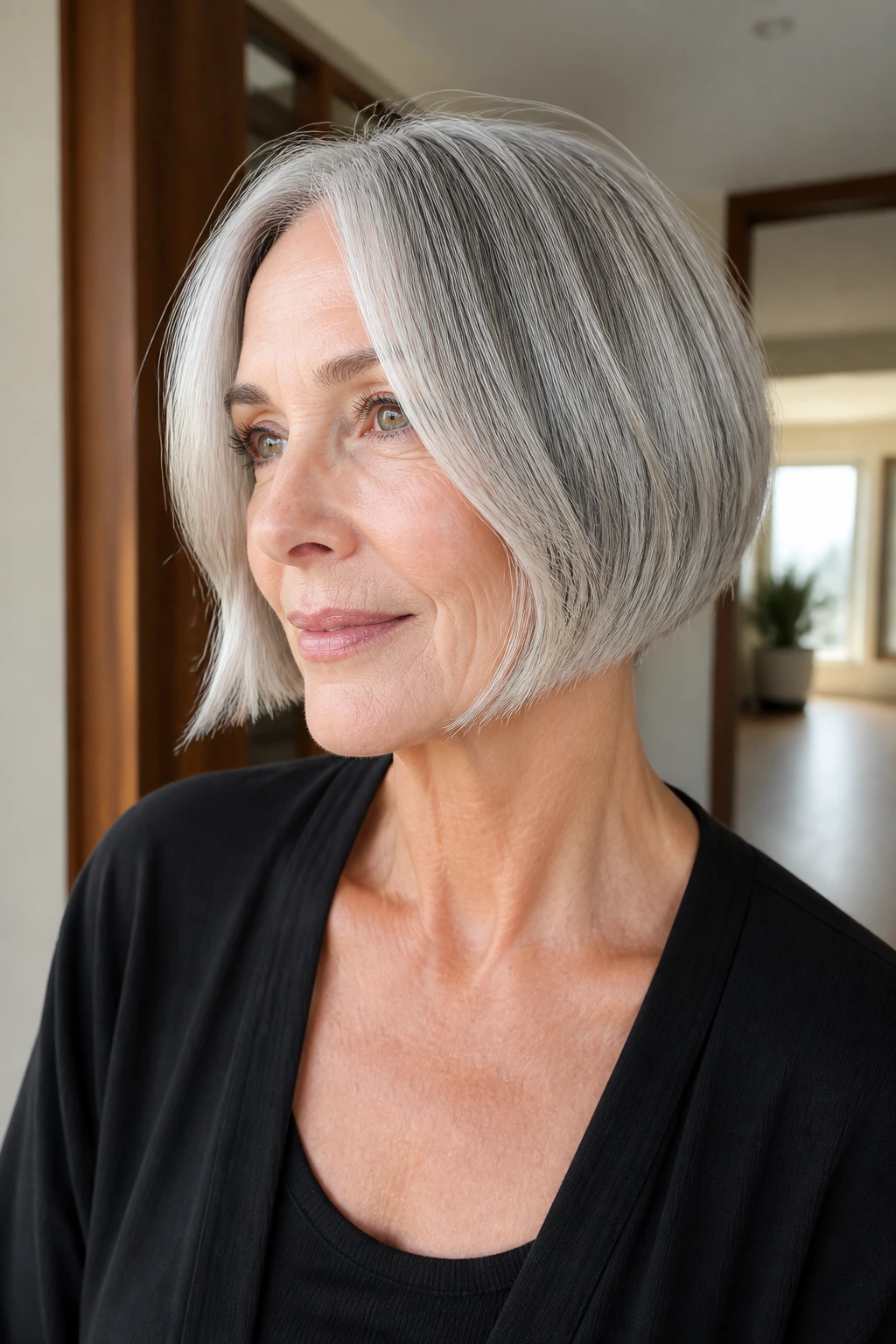
A razor-cut bob has movement baked into the edges. Instead of a solid, weighty line, the ends are softened and thinned just enough to swing a little. The result is a bob that feels lighter and less formal than a blunt cut.
This is the cut for people who hate hair that hangs like a block. The razor work breaks up the perimeter so the hair can bend and separate. On straight hair, that gives you airy movement. On wavy hair, it helps the cut sit without puffing up like a triangle.
It does need a careful hand. Too much razor on fine hair can leave the ends scraggly. Too much on very coarse curls can make the shape fray. Ask for controlled razor work, not a rough chop. That distinction matters more than most salon conversations.
17. Bowl Cut Remix
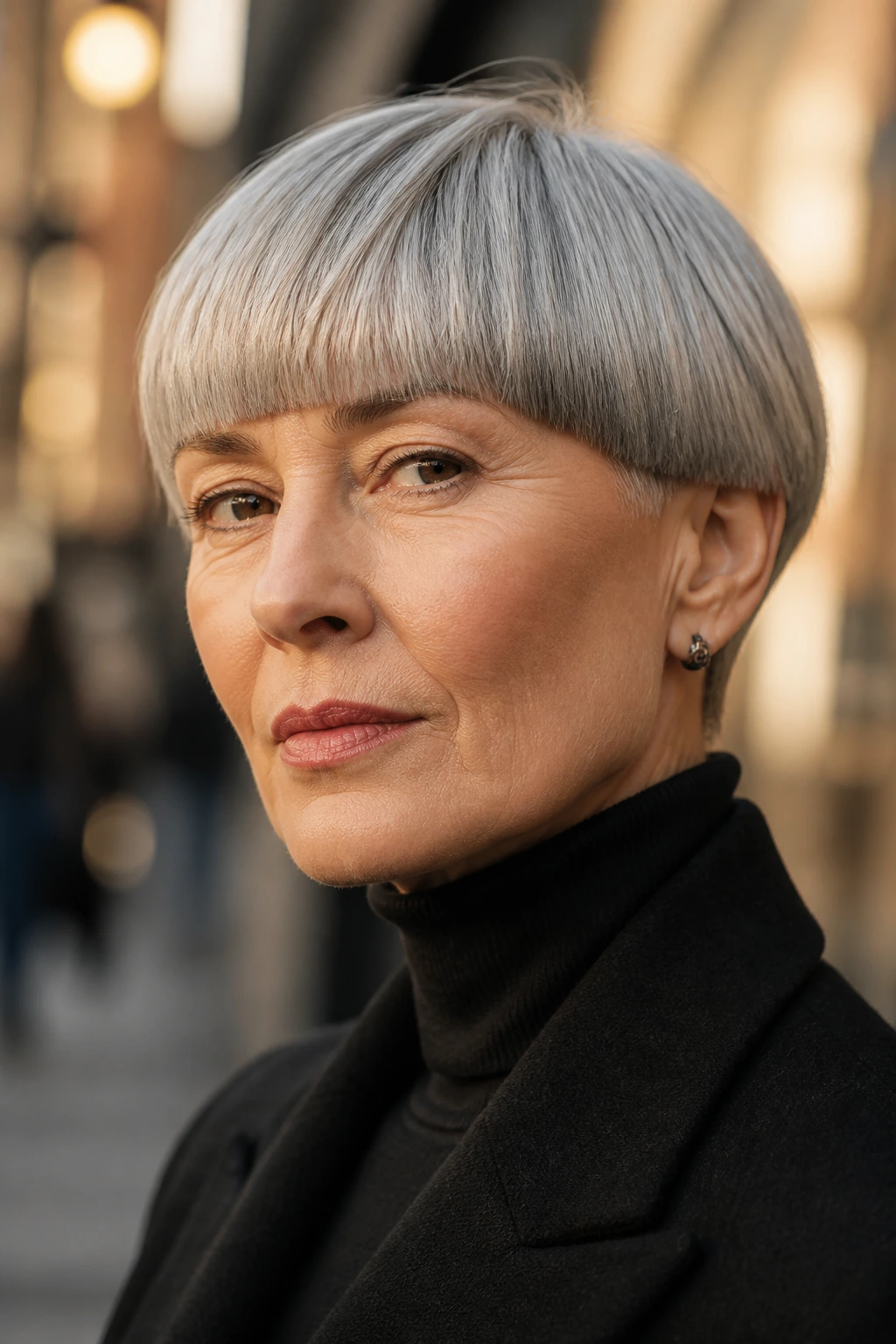
A bowl cut remix is not the bowl cut people remember from childhood. That old version sat too heavy and too round. This one is sharper, cleaner, and often broken up with texture at the perimeter so it feels architectural instead of childish.
The appeal is in the outline. The hair frames the head in a defined shape, often with a stronger fringe and a neat nape. If you have a good bone structure and don’t mind a look that gets attention, it can be striking in a way few short cuts are. The key is not to let it become a helmet. A little texture at the edges keeps the whole thing alive.
Best when you want a statement
- Works well with straight or softly wavy hair.
- Needs regular trimming to keep the line crisp.
- Looks strongest when the fringe and crown are balanced, not bulky.
It’s a cut with opinions. I like that.
18. Long-Top Short-Sides Crop
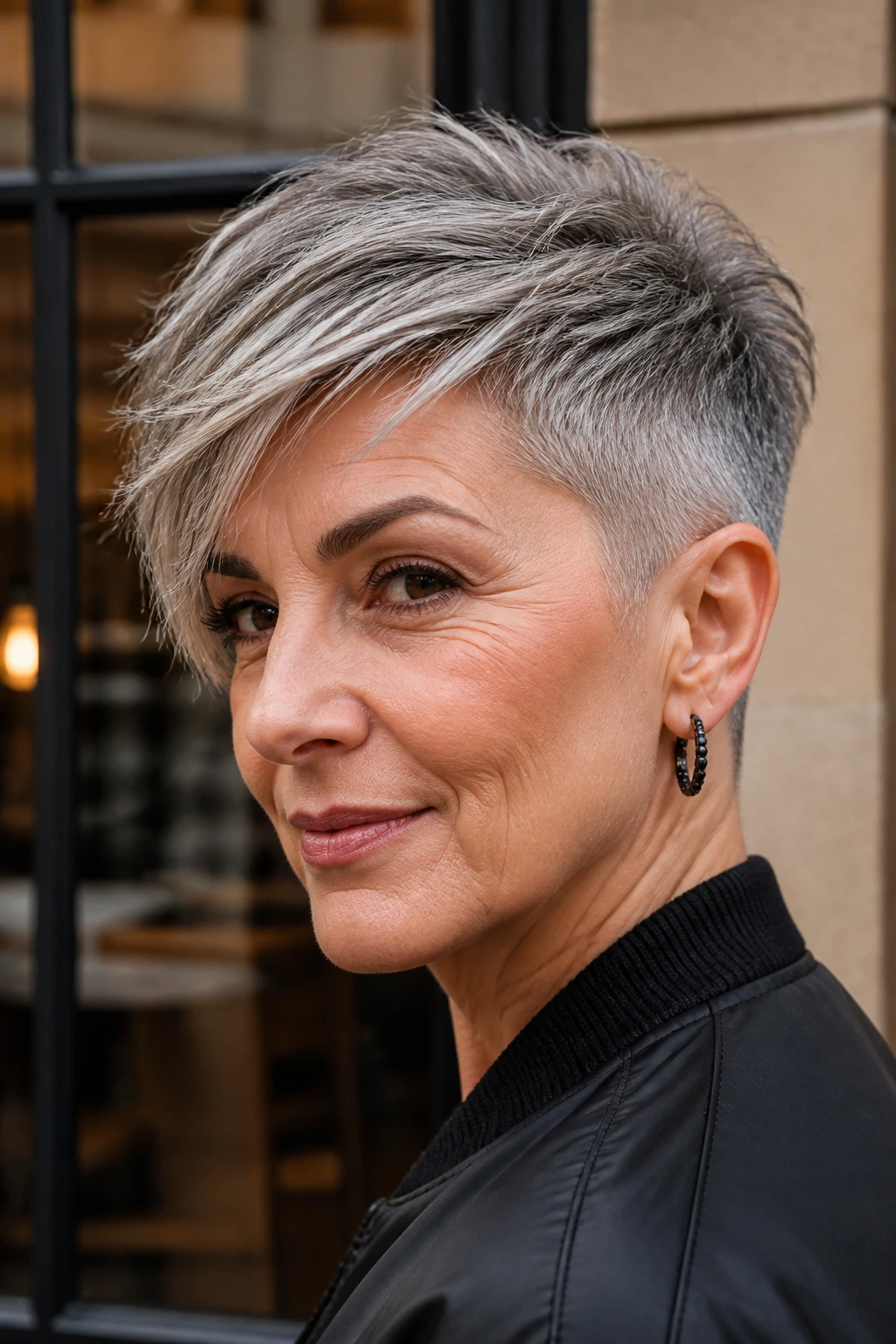
A long-top short-sides crop sits somewhere between a pixie and an undercut, with enough length on top to push forward, sideways, or back. The sides are close and neat, which gives the shape real contrast. It has a slightly androgynous feel that can look very sharp on women who want their hair to say something.
This is one of the most flexible cuts on the list. You can wear it polished, spiky, swept, or flattened. If you’re someone who gets bored quickly, that matters. The long top gives you options, while the short sides keep the maintenance relatively low.
It’s also forgiving with growth. Because the top already has some length, the cut can soften into a more classic short style instead of turning awkward immediately. That makes it a good bridge cut if you want something edgy now but don’t want to feel trapped by it later.
Why Short Hair Feels Sharper When the Shape Is Clean
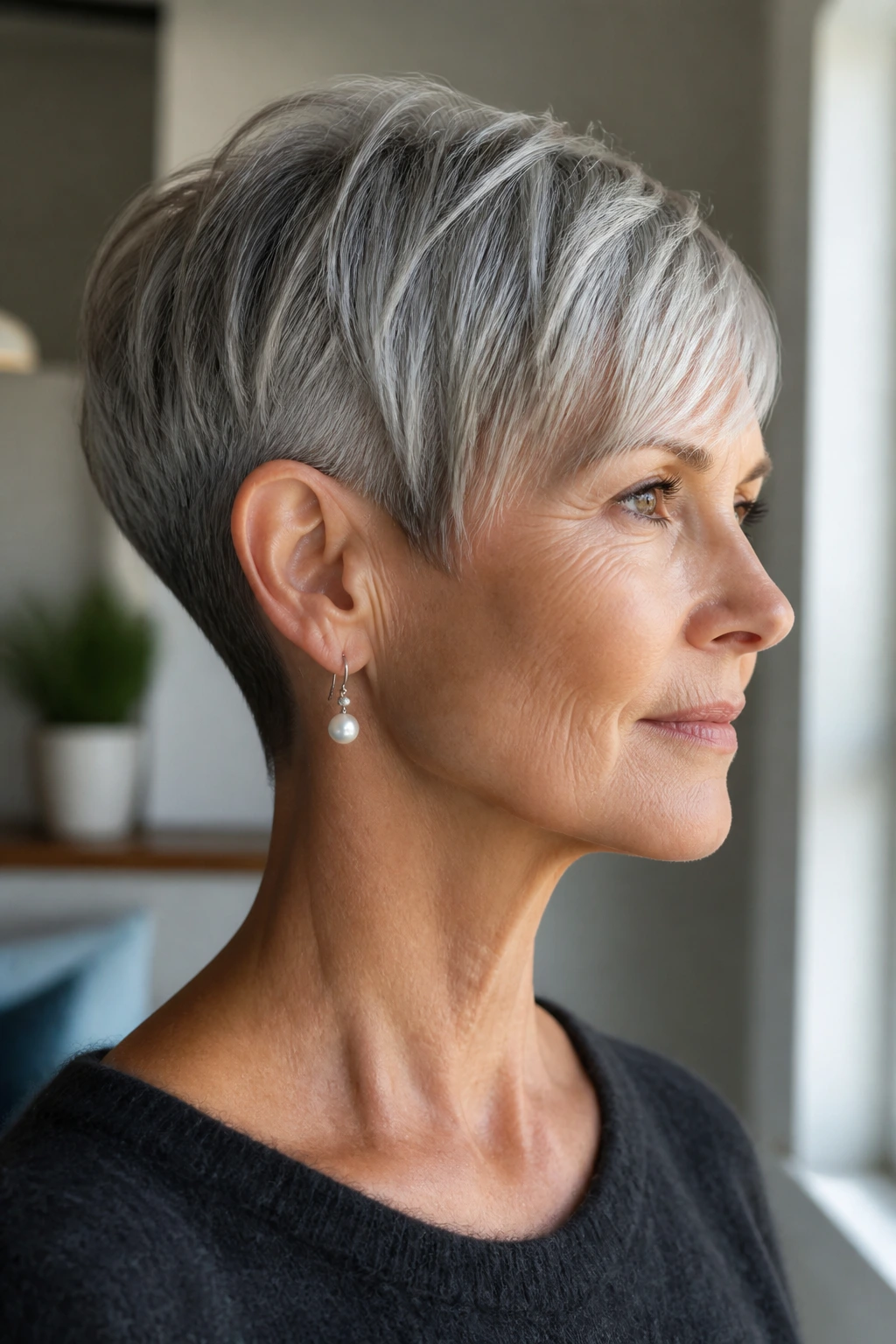
A short cut lives or dies by its outline. That sounds obvious, but people still ask for “something edgy” and then leave the salon with soft, cloudy layers that do nothing. Edge in short hair comes from structure first: a crisp nape, a visible part, a fringe that lands where it should, and enough contrast between top and sides to create shape.
Mature hair often changes at the temples, crown, and front hairline before it changes anywhere else. That’s why the best short cuts rarely chase one big, fluffy silhouette. They build in smaller wins. A tighter side. A lifted crown. A little asymmetry near the front. Those details matter because they keep the eye moving.
Color matters too. Silver streaks look brighter against a defined perimeter. Dark hair looks more glossy when the ends are clean. Even fine hair looks fuller when the shape is precise, because the cut gives the hair a boundary to live inside. Without that boundary, it just disappears into the air.
How to Talk to Your Stylist Without Getting a Helmet Head
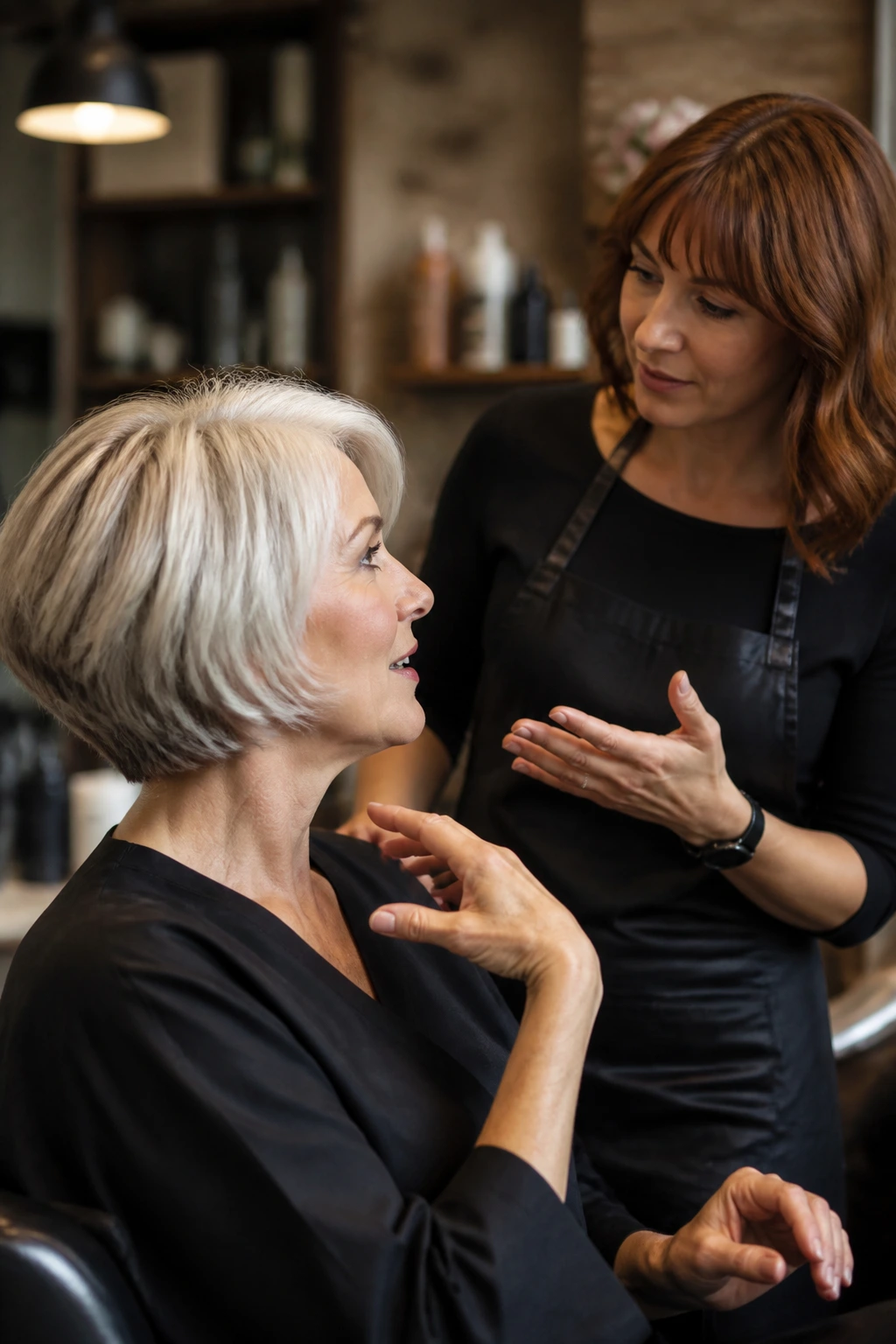
Bring photos, but bring the right ones. One front shot is not enough. A side view shows the neckline. A back view shows the nape. If you like the fringe but hate the volume, say so. If you want the ears more exposed, say that in plain language. Stylists can work with “I want the sideburn area shorter and the crown fuller” a lot better than “make it edgy.”
Use landmarks. That helps. Say “the fringe can sit just above the brows,” or “I want the front to hit at the cheekbone,” or “keep the back tight at the nape, but don’t shave it down to skin.” Those details tell the stylist how much shape you’re after without turning the conversation into guesswork.
And tell them what annoys you in daily life. Hair brushing your glasses? Cowlick at the crown? Puffiness around the ears? Those are not small details. They’re the whole haircut, at least in practice.
The Tools That Make Short Hair Behave
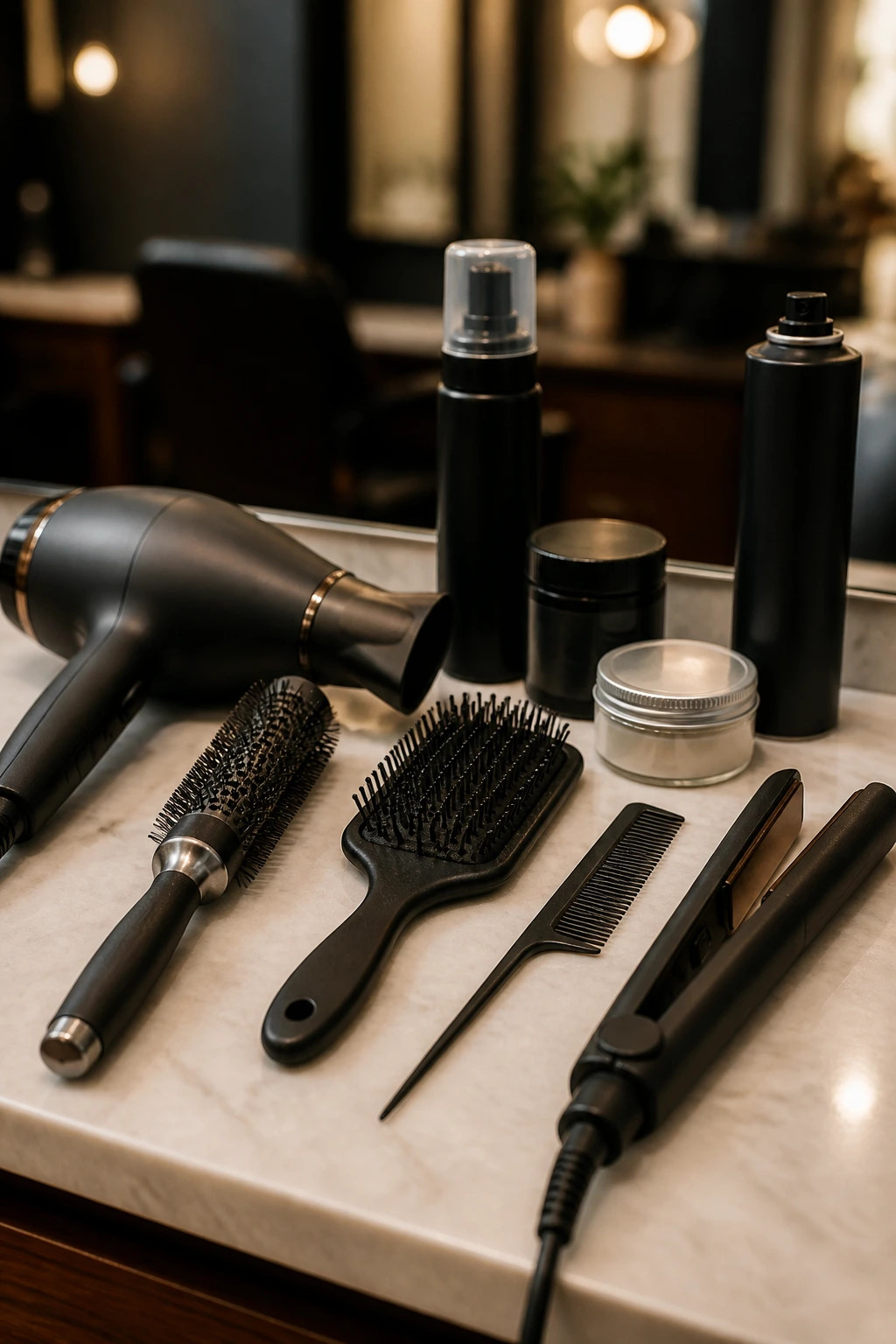
- Blow dryer with a narrow nozzle: Directs air where you want lift, especially at the crown and fringe.
- 1-inch round brush: Good for short bobs, lifted crowns, and soft bends at the front.
- Paddle brush: Handy for smoothing a bob without making it too round.
- Tail comb: Useful for clean parts, precise sectioning, and lifting the roots.
- Lightweight mousse: Gives short hair grip before drying without turning it sticky.
- Texturizing paste or matte pomade: Best for pixies, choppy crops, and piecey finishes.
- Flexible-hold hairspray: Keeps movement alive after styling instead of freezing everything in place.
- Small flat iron: Helps shape fringe, polish a bob, or flip the ends a bit.
- Dry shampoo: Not as a rescue only; it can add grip at the roots on freshly washed hair that feels too slippery.
Smart Salon Notes and Product Picks
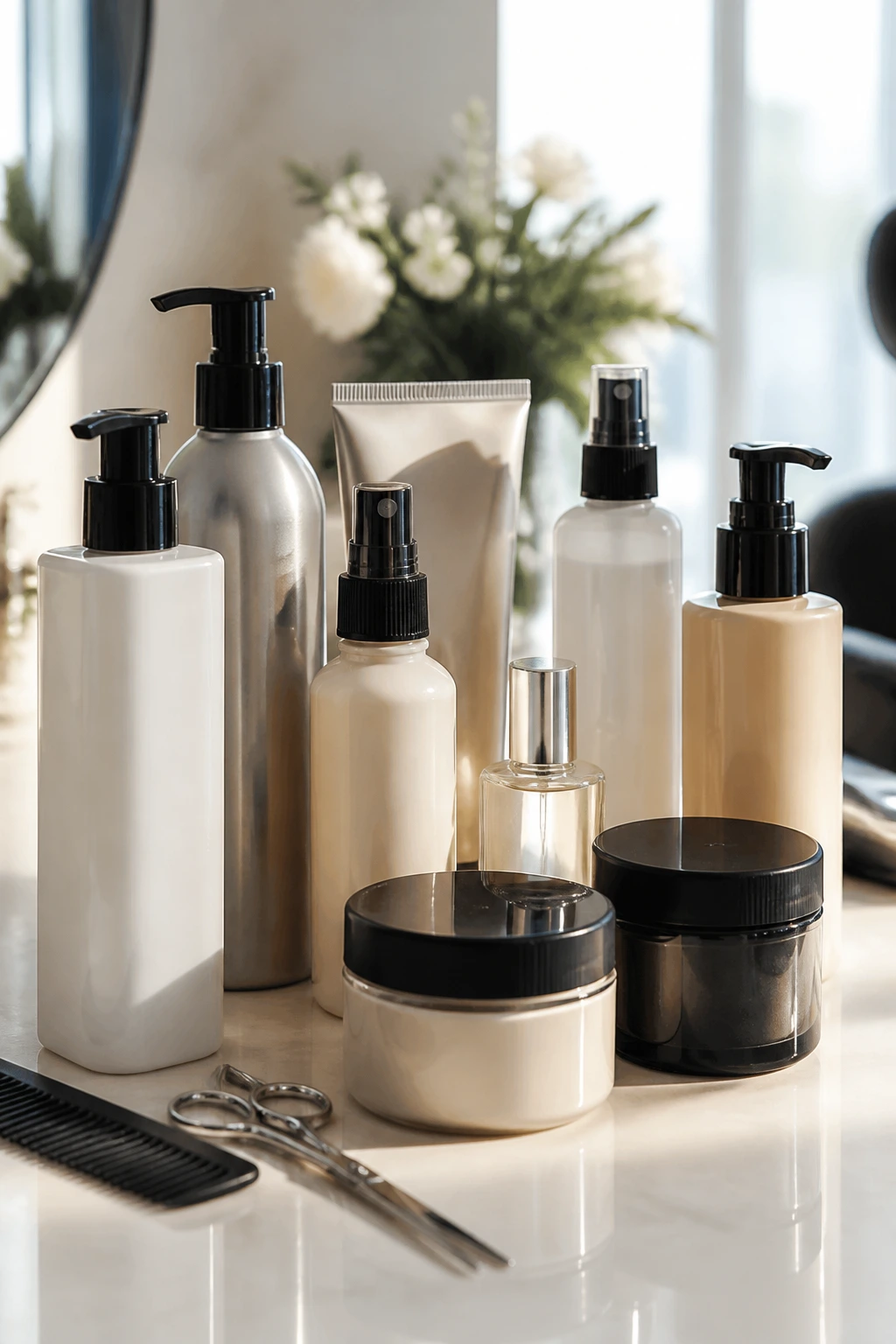
The best short haircut starts before the first snip. If your hair is fine, ask for shape, not just layers. Fine hair usually needs a stronger perimeter and lighter internal texture so the ends don’t go see-through. If your hair is thick, the conversation changes. You’ll want bulk removed where it gathers — usually around the sides, behind the ears, and at the nape — instead of just thinning the ends and hoping for the best.
Tell your stylist how you style hair on an ordinary morning. That sounds simple, but it changes the whole plan. If you air-dry, the cut has to work without a blow-dryer. If you use a round brush for three minutes and then stop, the cut should still look balanced when it settles. A stylist can shape around those habits, but only if they know them.
Product choice matters more on short hair than people expect. A heavy cream can bury a pixie. A too-dry paste can make a bob look dusty. Start with small amounts. You can always add more, and you should. The first pass is about control, not coating every strand. Also, if your hair is gray or white and can pick up yellow tones, ask about a clear or violet-leaning gloss from time to time. It keeps the silver looking clean instead of dull.
How to Style These Cuts on Ordinary Mornings

Shape: Start with damp hair and get the root direction right first. That means lifting at the crown, pushing side pieces where they belong, and deciding whether the fringe falls forward, sideways, or back. If the base shape is wrong, no amount of paste will save it.
Texture: Use mousse, spray, or a tiny bit of cream depending on the cut. Pixies and choppy crops usually want grip and separation. Bobs want bend and smoothness. Curls want definition without crunch. A pea-sized amount can go a long way on hair this short.
Finish: Matte, satin, or glossy each send a different message. Matte makes texture look tougher. Shine makes a crop feel sleeker and more polished. If you like a cut with edge, don’t overdo shine at the ends — it can make the hair look stringy instead of sharp.
Time budget: Most of these cuts can be ready in 5 to 12 minutes if you know what you’re doing. The trick is not to style every hair the same way. Dry the crown first, then the sides, then the fringe. Short hair hates indecision.
Common Mistakes That Make Short Hair Look Softer Than You Wanted
The first mistake is cutting everything too round. Rounded short hair can look sweet for a day, then it starts reading like a helmet. The fix is contrast: tighter sides, more lift at the crown, or a fringe that breaks the line.
Another one is over-thinning fine hair. A stylist can take out so much weight that the ends look frayed and the whole cut feels hollow. If your hair is already delicate, ask for controlled shaping instead of aggressive thinning.
People also ignore the glasses problem. Bangs that sit right on the frame line will annoy you every single morning. You’ll push them up, they’ll stick, and the cut will seem messier than it is. Ask for fringe length with your glasses on.
Too much product is a classic trap. A short cut needs a small amount of paste, spray, or cream. Too much, and the texture collapses into clumps or grease. Start with less than you think. Always.
And then there’s the grow-out issue. Some edgy cuts fall apart because the neckline and ears get left alone for too long. If the nape puffs out, the whole haircut loses its shape. Regular cleanups matter more here than they do with longer styles.
Variations for Fine, Thick, Curly, and Gray Hair
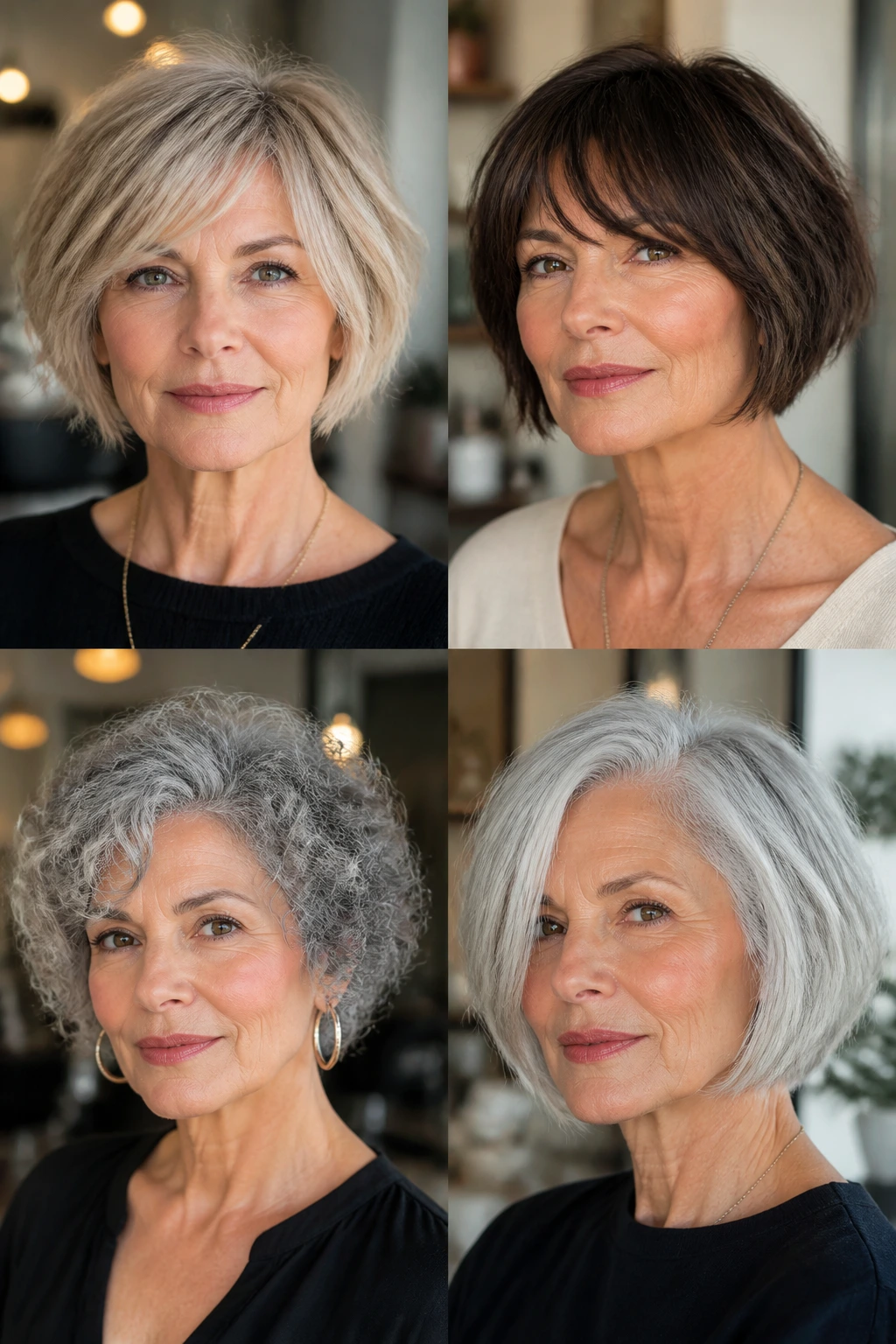
Fine-Hair Lift Version: Keep the perimeter blunt and the layers light. A micro fringe or short crown pieces can create fullness without eating the ends. This works best with mousse and a quick blow-dry at the roots.
Thick-Hair Tamer Version: Add an undercut, a strong taper at the nape, or internal shaping around the ears. Thick hair needs room to move, not just more cutting. If it’s removed in the wrong spots, it puffs; if it’s removed in the right spots, it falls into place.
Curly-Hair Edge Version: Leave the top longer and cut it where the curls naturally spring. A dry cut usually gives a better map than cutting curls wet and guessing. Diffuse on low heat and stop before the curls turn frizzy.
Silver-Gloss Version: If your natural gray is bright, lean into it with a clean shape and a shine finish. A clear gloss or a purple-toned gloss can keep the color crisp. Silver hair looks especially sharp against clean edges around the nape and fringe.
Soft Rebel Version: If you like edge but don’t want anything severe, keep the outline neat and let the texture do the work. Broken ends, side sweeps, and a little asymmetry can feel current without making the haircut loud.
Trim Timing and Grow-Out Without the Awkward Stage
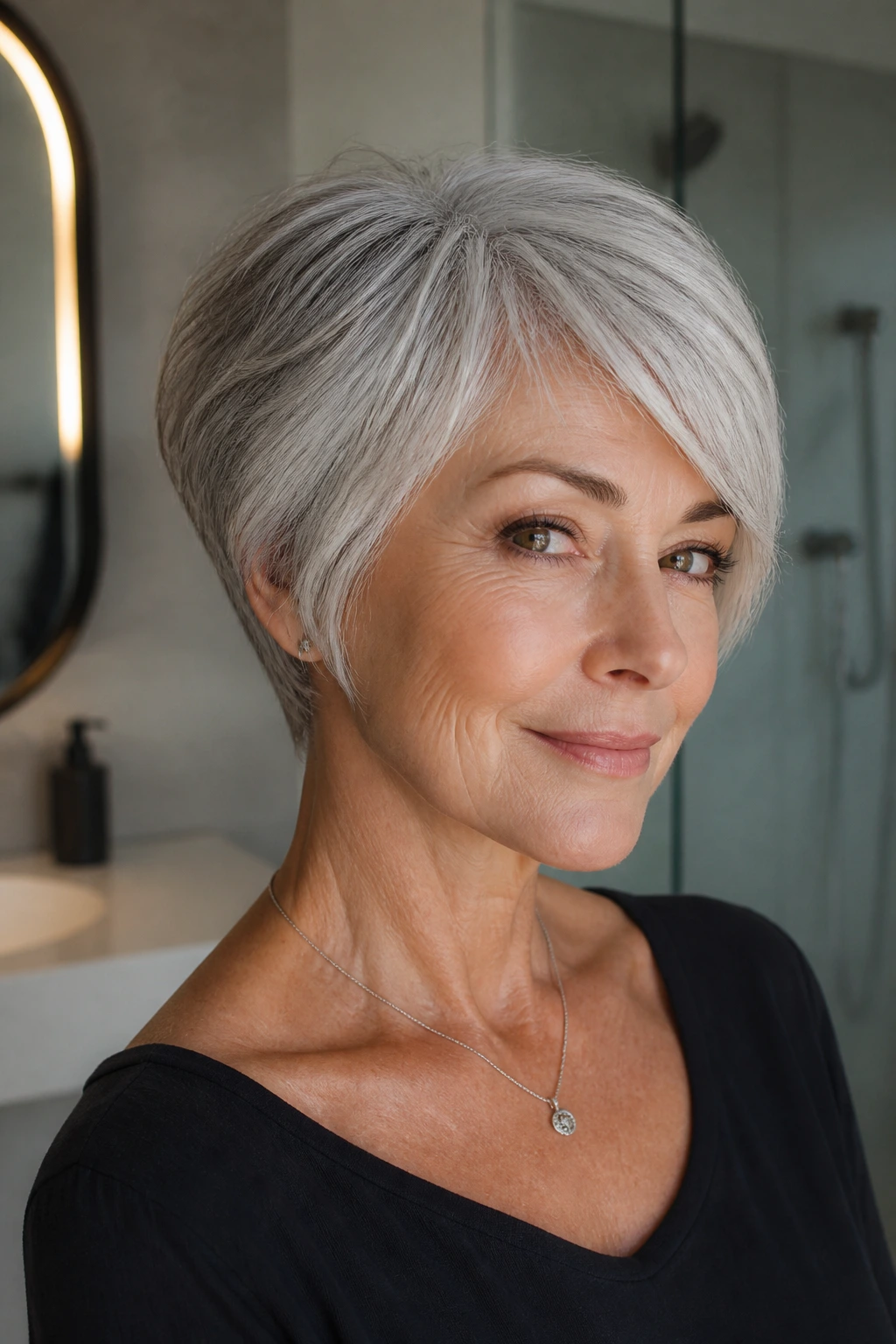
Short hair needs more maintenance than long hair, and it’s better to know that going in. Pixies usually want a tidy-up every 4 to 6 weeks if you want to keep the shape crisp. Bobs can often stretch to 6 to 8 weeks, depending on how fast your hair grows and how much the angles matter. If you have an undercut or a tight nape, that part may need cleanup sooner than the top.
The grow-out stage is easier if the cut was planned with a future in mind. A long-top crop softens into a neat short style. A strong bob can slide toward a lob without turning awkward. A shaved nape, though, needs a little more attention as it grows back because the shortest hairs show first.
Between cuts, a little dry shampoo at the root can buy you a day or two of shape. A flat iron can tame a fringe that’s kicked sideways. And if the back starts pouting out around the collar, do not wait until it’s driving you crazy — that’s how a sharp cut turns into a sloppy one.
Frequently Asked Questions
Which of these cuts works best for fine hair?
Choppy pixies, blunt bobs, and long-top short-sides crops usually give fine hair the most help. They keep a stronger outline at the ends, which makes the hair look fuller than it does in a long, stringy shape.
Will a short edgy cut make my face look wider?
It can, if the sides are too full or the fringe is too heavy. Ask for lift at the crown and a bit of taper around the ears; that keeps the eye moving upward instead of sideways.
Can curly hair handle an edgy short haircut?
Yes, but the cut has to follow the curl pattern instead of fighting it. A dry cut or curl-by-curl shaping usually works better than chopping curls wet and hoping they spring into place.
How often do I need trims for a pixie or undercut?
Most pixies want a cleanup every 4 to 6 weeks, while undercuts and tight napes can need attention on the earlier end of that window. Once the neckline loses its line, the whole cut starts to read softer and less intentional.
What if I wear glasses every day?
Bring your frames to the salon or at least wear them during the consultation. The fringe should clear the top of the frame or sweep away from it; if it lands right on the glasses, you’ll be pushing it aside all day.
Is razor cutting a good idea for older hair?
Sometimes, yes, but it depends on the texture. Razor work can create a lighter, more broken edge on straight or softly wavy hair, yet it can fray fine or very coarse hair if it’s overdone.
How do I grow out an edgy short cut without looking awkward?
Keep the neckline clean, get small trims on the sides, and let the top lead the grow-out. That way the haircut shifts toward a softer bob or crop instead of hanging in an in-between mess.
Do I need a lot of styling product?
No. Short hair usually needs less product than people expect. Start with a small amount, warm it between your fingers, and add only if the pieces won’t stay in place.
The Shape That Sticks
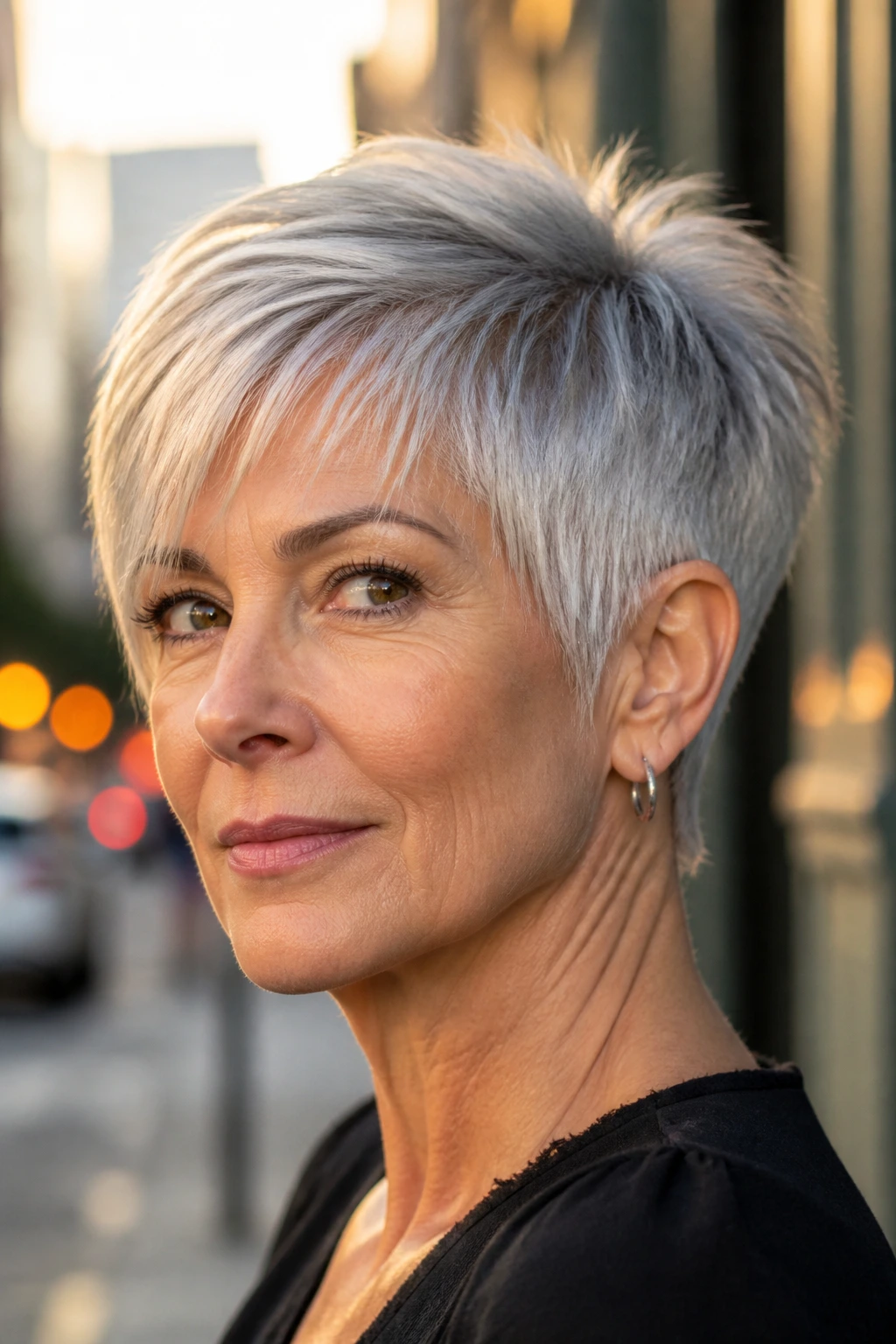
The best short haircut is not the one that looks daring in a photo and collapses by Tuesday. It’s the one that keeps its line when you’ve slept on it, worn it with glasses, and gone through a real day without fussing over it every five minutes.
That’s why edgy short haircuts for older women work so well when they’re cut with intention. The edge doesn’t come from being extreme. It comes from shape, clarity, and a little nerve in the details.
Pick the version that matches your texture and your daily habits, then let the haircut do the talking. A sharp nape, a broken fringe, or a lifted crown can change the whole read of the face — and once the shape is right, the rest gets easier.
