



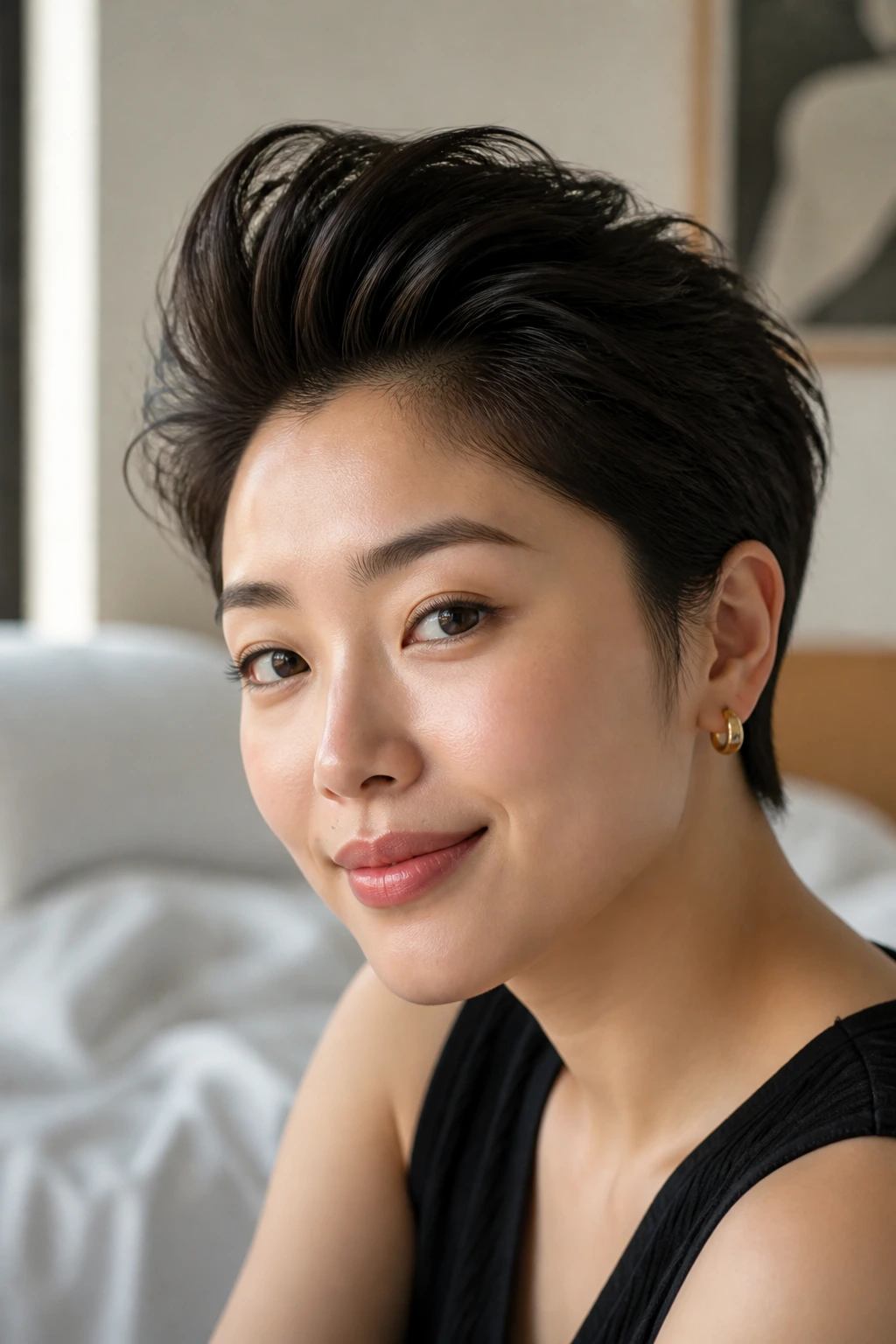
A good quiff can rescue short hair that sits too flat at the crown, and that is exactly why quiff styles for Asian women work so well. On straight, sleek strands, a little lift at the front changes the whole balance of the face: the forehead looks a touch shorter, the eyes get more focus, and the haircut stops reading as plain bob or plain pixie.
That lift does not have to be loud. In fact, the nicest quiffs on Asian hair often start with a small root bend, a clean taper at the sides, and just enough texture through the front to keep the shape from collapsing the moment you step outside. Thick hair can stand up too much. Fine hair can go limp. The sweet spot sits in the middle, and the best cuts know exactly how to get there.
A quiff is one of those styles that looks simple from a distance and turns out to be annoyingly particular up close. The angle of the fringe, the height at the crown, the length left around the temples, even where the blow-dryer points for those first 30 seconds — all of it matters. Get those pieces right and the style looks deliberate from breakfast to late afternoon. Get them wrong and the front falls flat, which is rude but true.
Why These Quiff Looks Earn Their Keep
-
They add lift where straight hair usually sits flat: A few centimeters of root height at the front changes the silhouette more than another inch of length ever will.
-
They work with sleek texture instead of fighting it: Asian hair often has a smooth cuticle and a straight fall, so a quiff uses that clean finish while redirecting the shape upward.
-
Short sides make the front look fuller: Tapered temples and slimmer napes keep the top from spreading out like a helmet.
-
They scale from soft to sharp: You can wear a quiff as a whisper of volume or push it into a sharper, more dramatic ridge.
-
They make salon communication easier: “Short top, lifted front, tapered sides” is far more useful than asking for something vague and hoping for the best.
-
Most of them style fast: Once the cut is right, a quick blow-dry, a dab of matte paste, and a cool-shot set is often enough.
1. Soft Crown-Lift Quiff
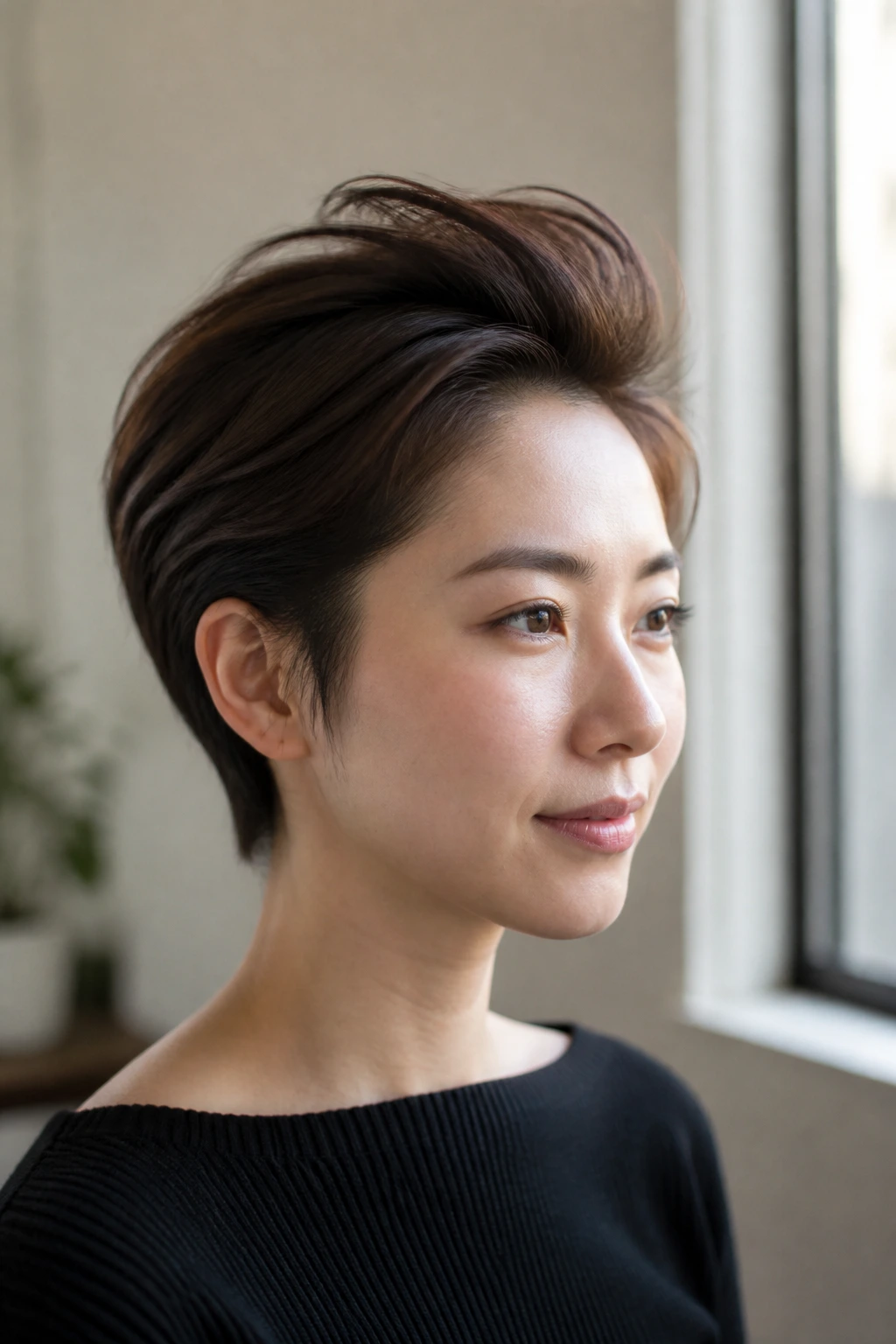
This is the quiff for anyone who wants height without looking like she raided a stage costume rack. The front rises gently from the hairline, and the crown stays rounded rather than sharply pointed, which makes the whole style feel softer on the face. It works especially well on straight hair that lies close to the scalp, because even a small lift reads clearly.
The cut usually starts with short sides, a slightly longer top, and a little internal layering around the crown so the hair doesn’t collapse into one flat sheet. Ask for the front to be left long enough to sweep back with your fingers, not so long that it hangs into your eyes. If your hairline is low or your forehead is narrow, this shape opens the face without making the top look tall and stiff.
Best when you want: a clean everyday quiff that can pass as polished, not precious.
Styling note: a pea-sized amount of root mousse and a 1-inch round brush is usually enough.
My opinion: this is the safest first quiff cut to try if you’ve never worn volume at the front before.
2. Side-Swept Quiff with a Tapered Nape
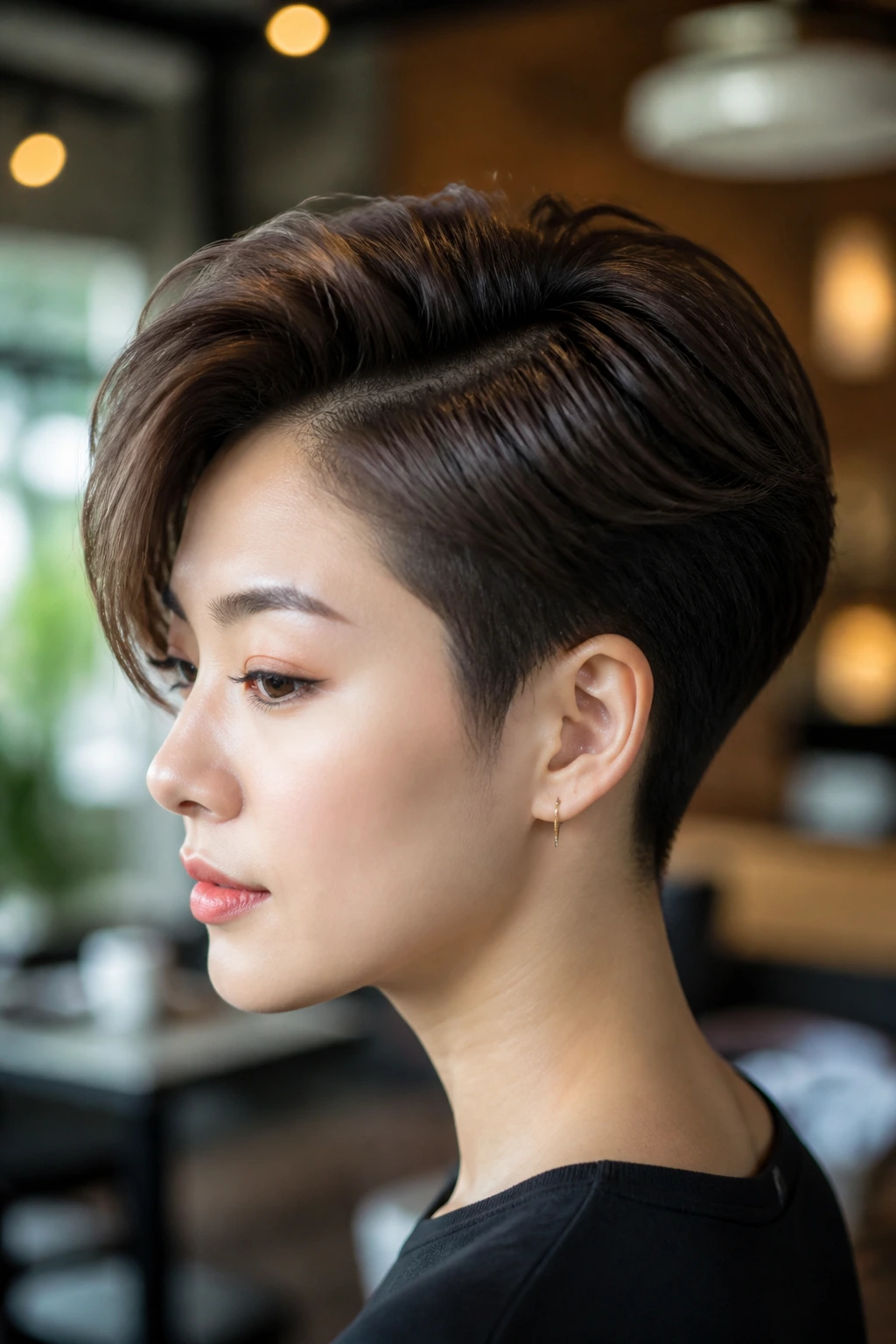
Want lift without the straight-up pompadour drama? This is the one. The hair rises at the front, then leans to one side in a diagonal sweep, which softens the forehead and gives the face a little movement. The tapered nape keeps the back neat, so the shape doesn’t feel bulky from behind.
A deep side part helps a lot here, especially on very straight hair. The trick is to direct the front upward first, then sweep it across before it cools. That diagonal line is what makes the style feel elegant rather than puffy. It’s especially useful for round or heart-shaped faces, because the side angle stretches the face without piling too much height dead center.
Ask your stylist for: short tapered sides, a longer top that can cross the forehead, and light texturizing through the front only.
Works best with: medium-density hair that takes a bend but doesn’t frizz easily.
I like this because: it looks intentional even when the rest of the hair is doing its own thing.
3. Pixie Quiff with Piecey Texture
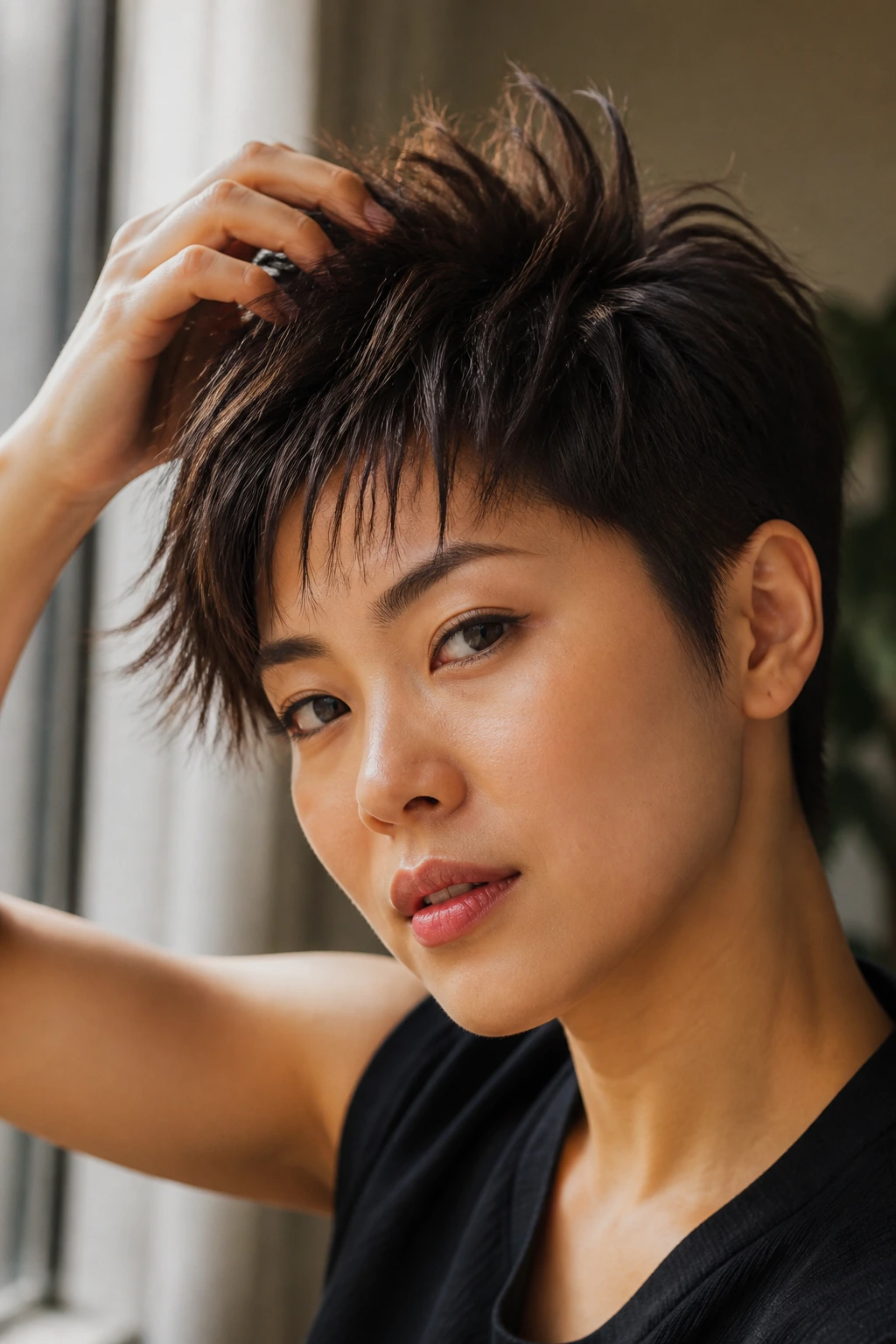
A pixie quiff has a little edge to it. The top stays cropped, but the front is left longer and chopped into separated pieces, so the lift looks jagged in a good way rather than rounded and fluffy. On thick Asian hair, that piecey front is a lifesaver; it stops the cut from turning into one solid block.
This style depends on smart texture, not a lot of length. You want enough hair at the front to pinch upward with your fingers, then press into place with a matte paste or clay. Too much shine here can make the pieces clump together, and that kills the whole point. A bit of bend around the hairline gives the quiff its shape; the rest can stay cropped tight and neat.
Styling tip: dry the front forward first, then lift it straight up at the roots before sweeping it back.
Best for: strong brows, defined cheekbones, and anyone who likes a short haircut with some grit.
Small warning: if the top is cut too blunt, the piecey effect disappears fast.
4. Korean-Inspired Airy Quiff
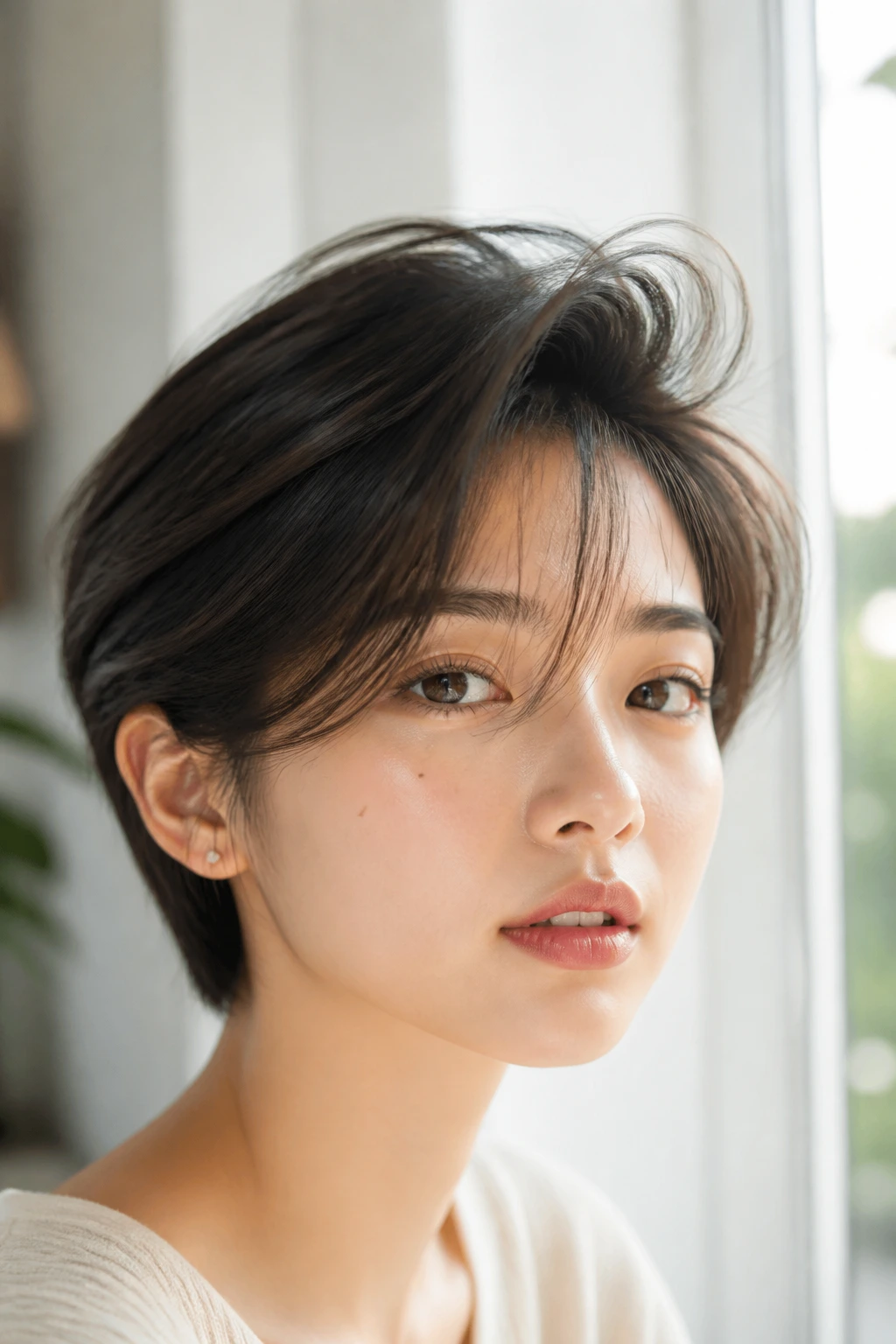
This is the softer cousin of the classic quiff. The lift is there, but it’s feather-light, almost floating above the forehead instead of standing away from it. Think clean lines, see-through fringe pieces, and a crown that looks touched by a breeze rather than lacquered into place.
The reason this version works so well on many Asian hair textures is simple: it respects the hair’s natural smoothness. Instead of forcing a big, heavy shape, the cut keeps the sides tidy and lets the front bend with a little rounded curve. A light root spray and a quick blast with the dryer usually do more good than a mountain of product.
This one suits petite features, soft jawlines, and anyone who wants a quiff that feels pretty rather than severe. It also grows out gracefully, which is a nice thing to say about a short cut because so many short cuts go awkward at week four and start acting rude.
5. Undercut Quiff with a Longer Top
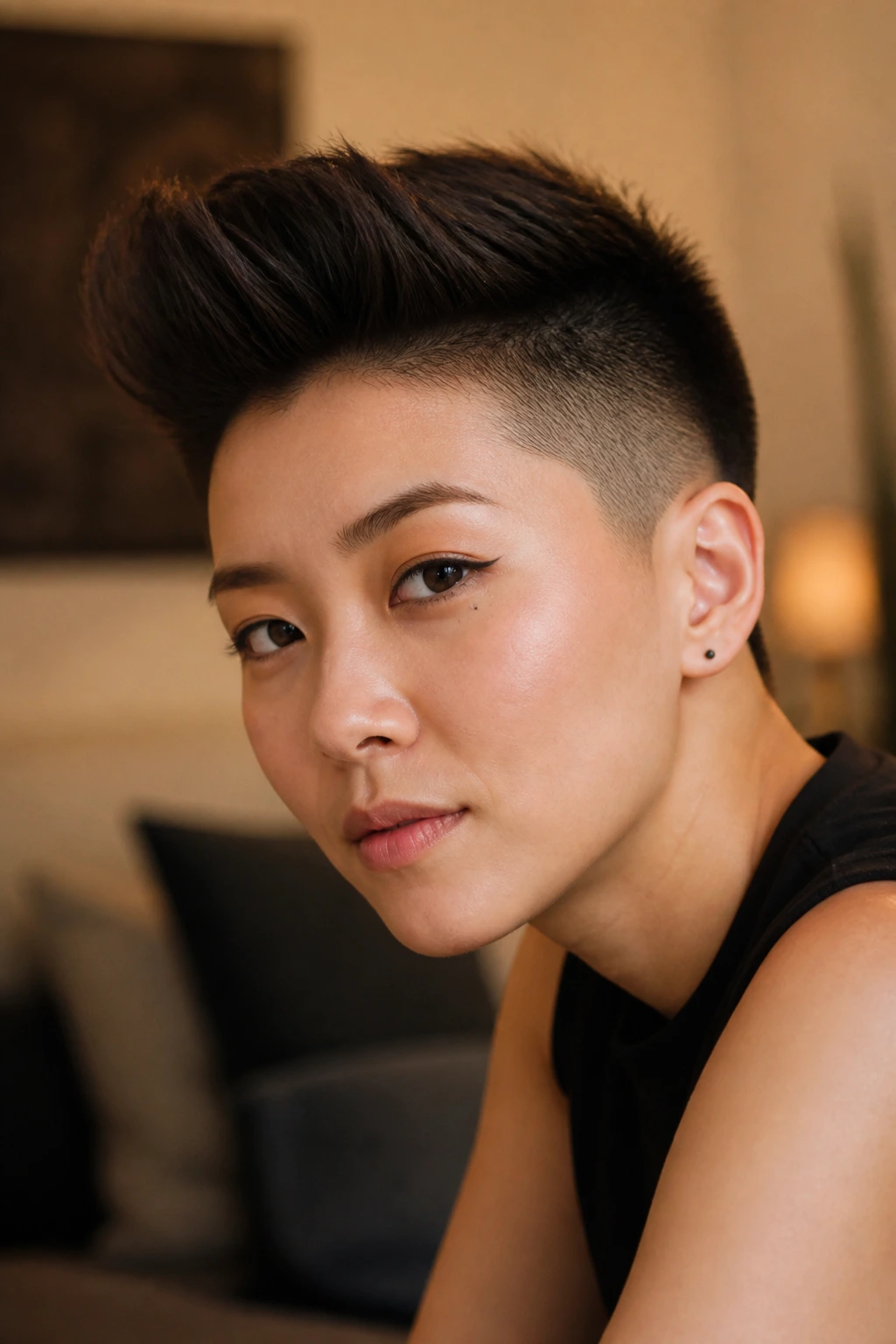
If you like contrast, this cut does not whisper. The sides are clipped very short — sometimes down to a guard length that leaves the scalp visibly clear around the ears — while the top stays long enough to build a ridge at the front. On dense hair, that contrast removes bulk in the exact places that usually puff out.
Unlike a soft bob quiff, this one needs a deliberate styling pass. Blow-dry the top upward and slightly back, then use a matte cream or light wax to separate the front into a strong arc. The undercut makes the shape look sharper, but the top should stay touchable, not glued into a hard shell. That line between sculpted and stiff is thin. Too thin, honestly.
Best for: thick, straight hair that likes to sit heavy at the temples.
Face-shape note: square and oval faces usually carry this well because the contrast frames the jaw cleanly.
Pro move: keep a little softness at the hairline so the cut doesn’t feel too severe.
6. Curved Fringe Quiff
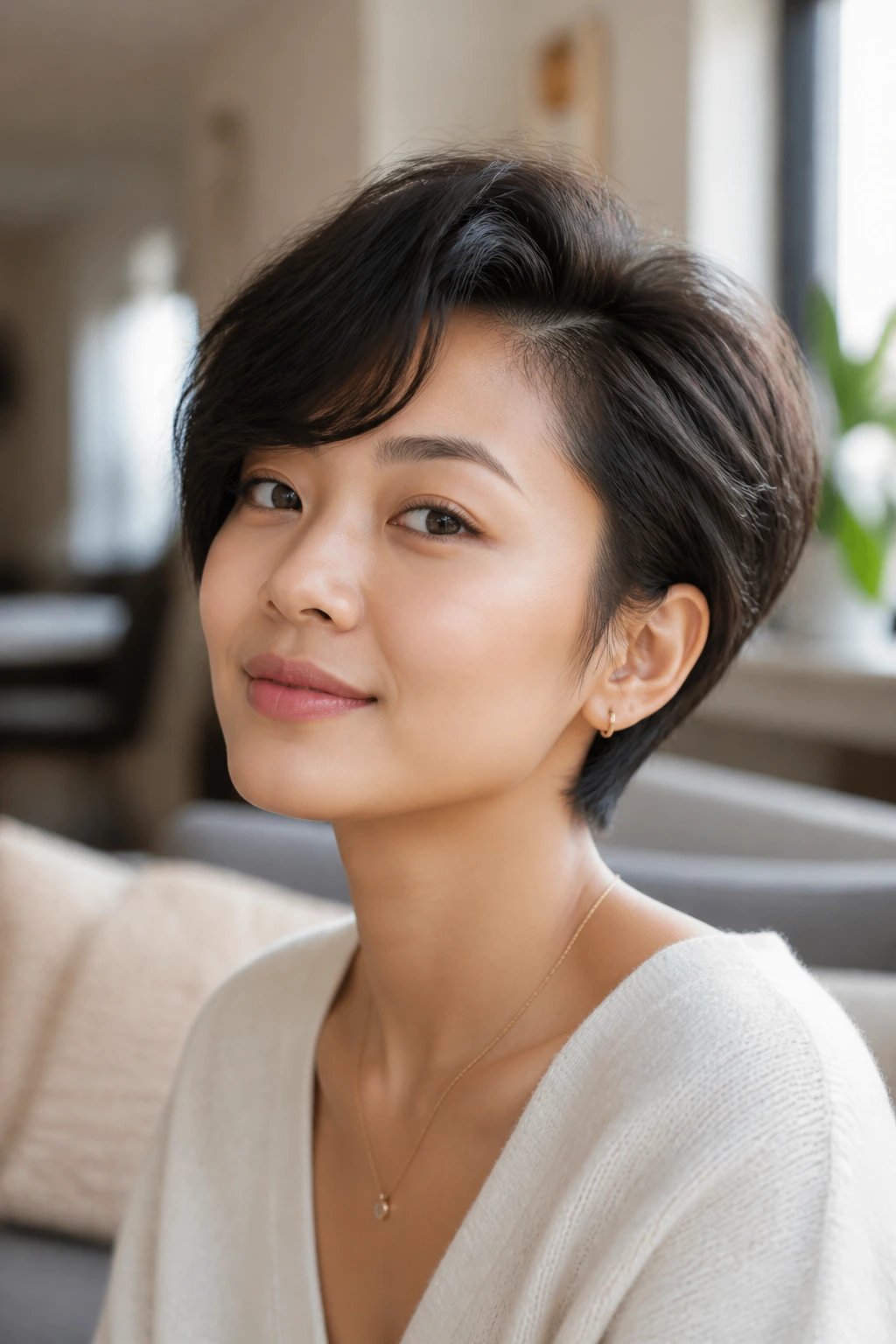
This style starts as a fringe and ends as a quiff, which is why it flatters so many faces. The front lifts from the roots, then curves gently over the forehead instead of shooting straight back. That curve is useful if your forehead is high or your hairline is uneven, because it breaks up the front edge without hiding it completely.
A curved fringe quiff also handles grow-out better than a hard-edged one. When the fringe length changes, the arc still reads as a shape. That’s a small thing, but small things are what make short hair wearable for more than two weeks. Ask for the fringe to be point-cut rather than cut in one blunt line; the ends should move a little, not sit like a ruler.
It’s a quiet style, which I like. Not every quiff needs to announce itself from across the room.
7. Volumized Pompadour Quiff
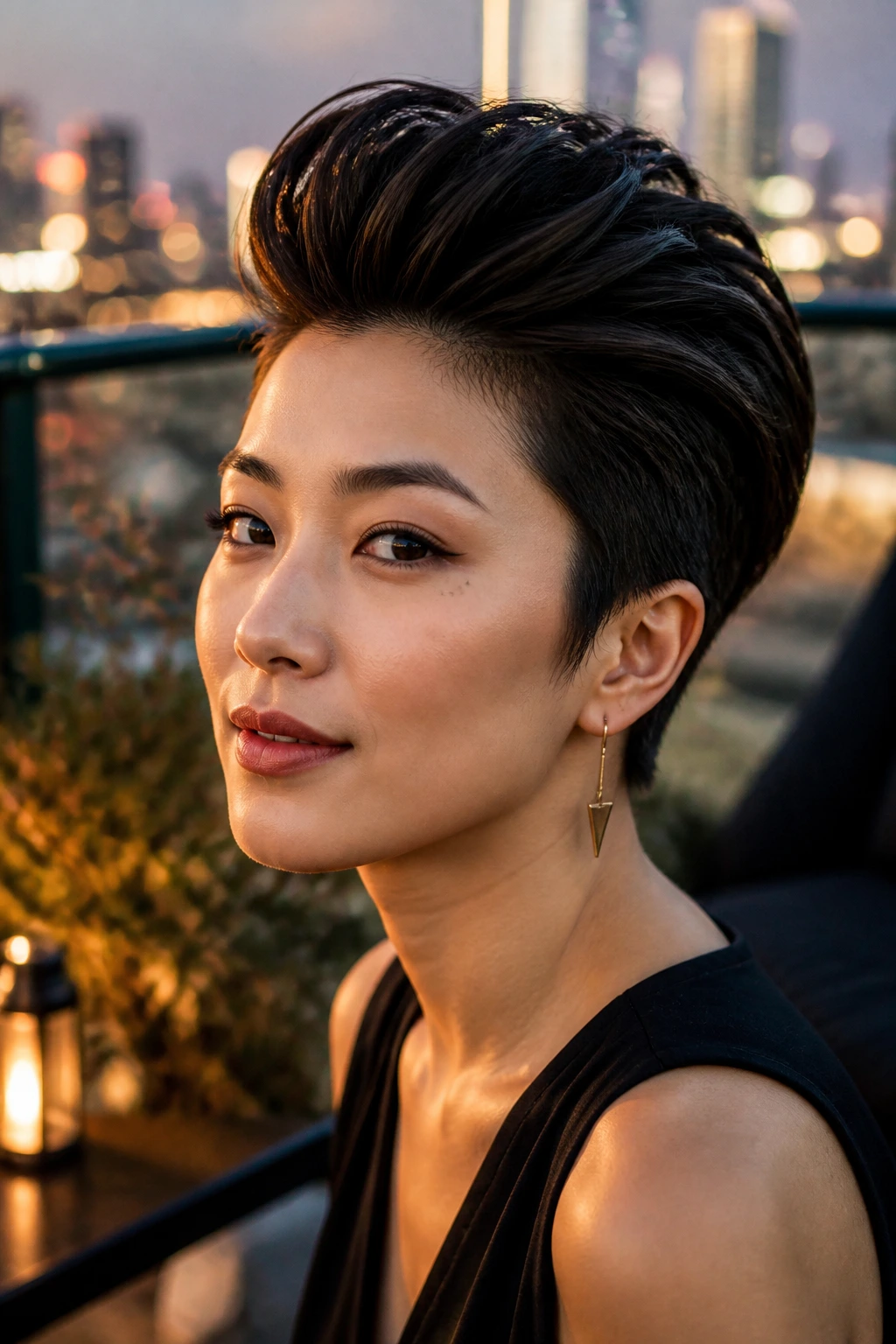
This is the bigger, more dramatic version, and it absolutely needs the right haircut to avoid sliding into costume territory. The front rises high, the top sweeps back, and the silhouette holds a clear ridge from forehead to crown. On thick Asian hair, that structure can look expensive in the best sense of the word — full, controlled, and clean around the edges.
The secret is not just height. It’s distribution. The sides should be tight enough to let the top breathe, and the crown needs enough internal layering so the volume lifts instead of ballooning. A round brush, a strong root-lift spray, and a cool shot at the end are not optional here. Skip the cool shot and the front will relax before lunch.
What to ask for: extra length on top, tapered sides, and weight removal through the crown only if your hair is dense.
Best for: nights out, photos, and anyone who likes a bold front profile.
Caveat: fine hair can wear this shape too, but only if the top is left long enough to support itself.
8. Asymmetric Quiff Bob
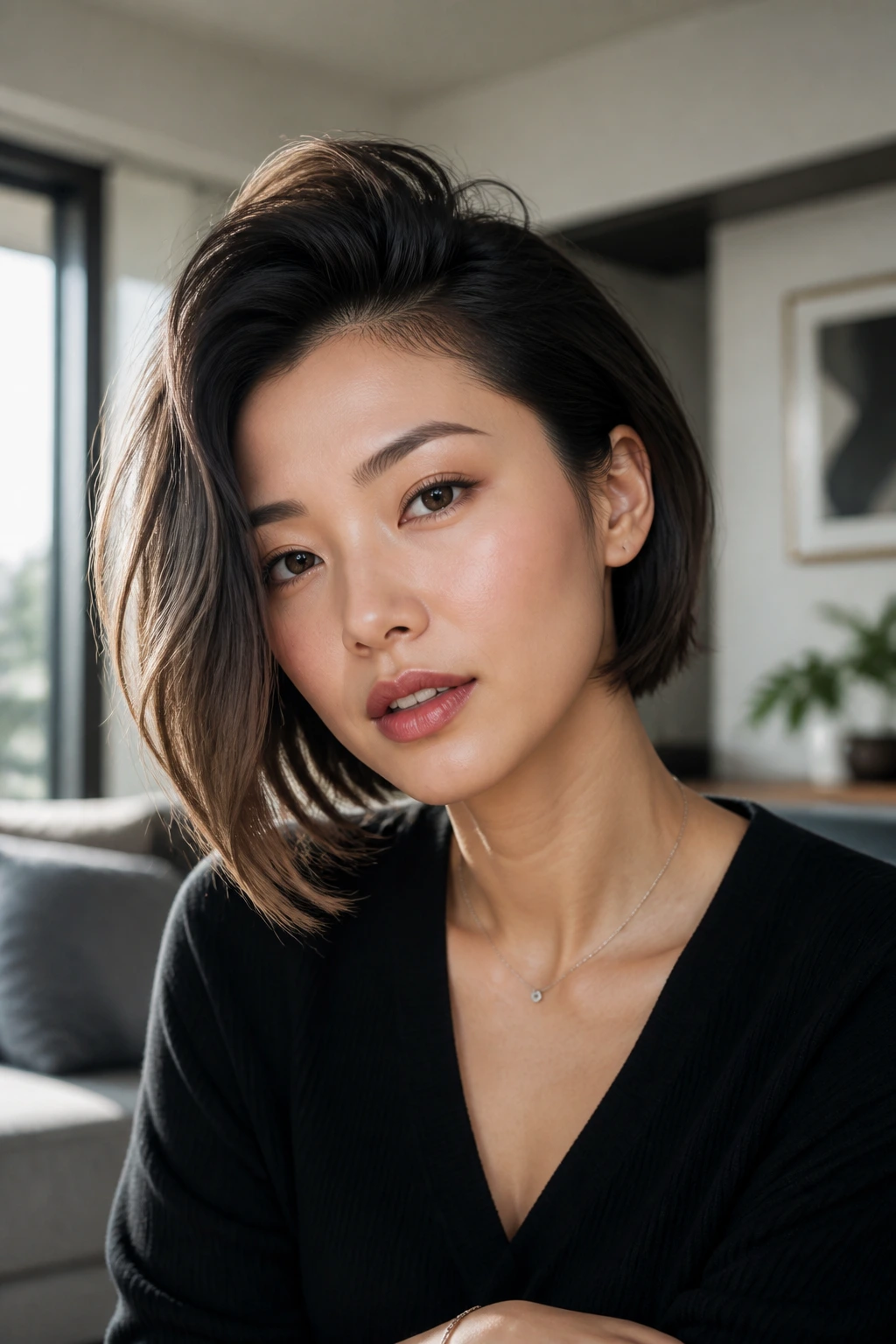
A bob doesn’t have to stay obedient and symmetrical. Tilt the front slightly to one side, leave one edge a little longer, and the whole haircut wakes up. This asymmetric quiff bob keeps the back neat while the top front section rises in a diagonal line, which gives the face movement without needing extreme height.
It’s especially good on straight hair because the line stays crisp. A blow-dry that nudges the roots in opposite directions at the part line creates the lift, and then the longer side can be tucked behind the ear or left loose. That tiny imbalance is the charm. Too much symmetry looks stiff. Too much asymmetry looks like you cut it yourself at midnight. There’s a middle lane, and this cut lives there.
9. Tousled Crop Quiff
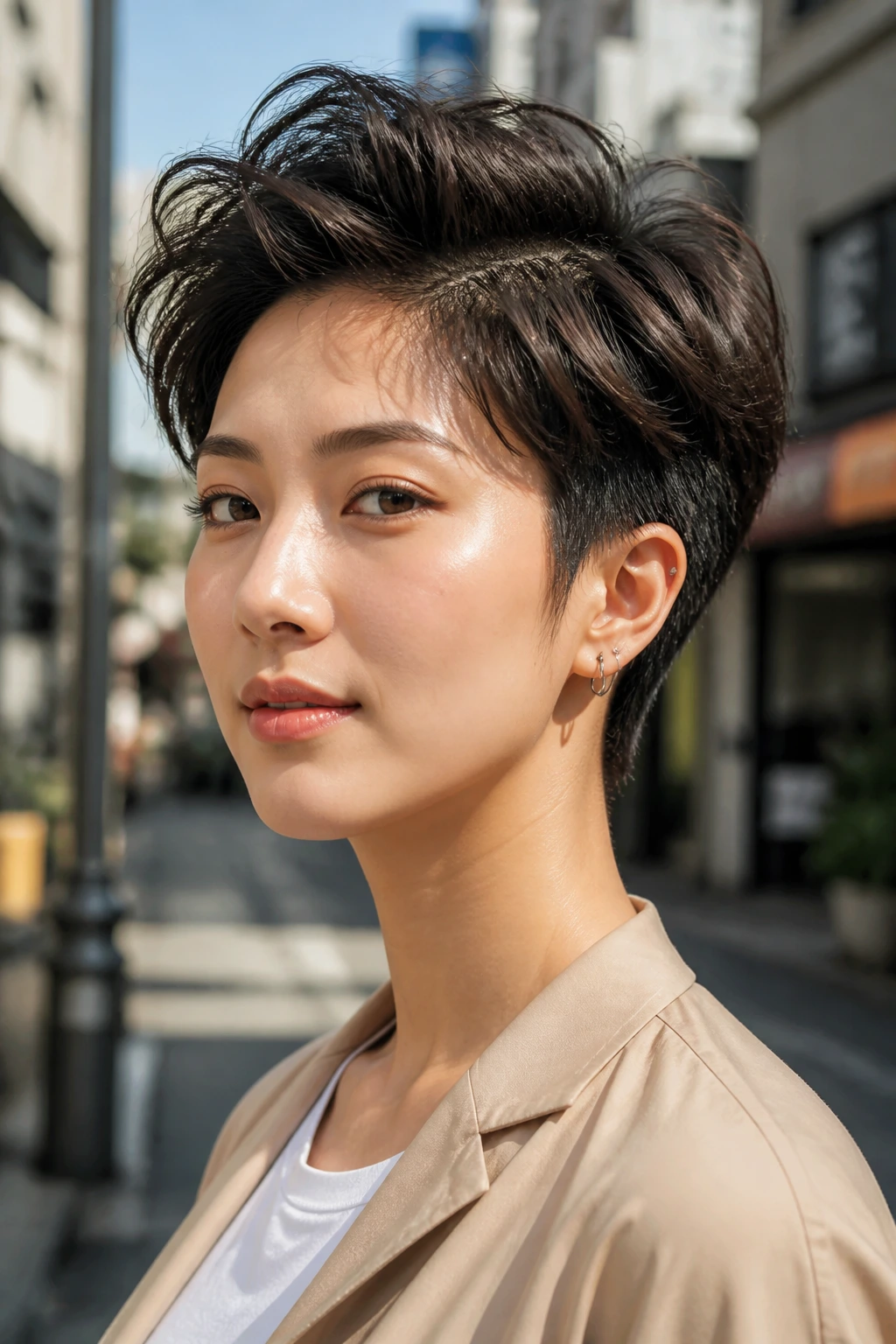
A tousled crop quiff feels easy on purpose. The top is short, the front is lifted, and the pieces are broken up enough that the shape looks like it has movement even when you haven’t spent half your morning on it. This is one of my favorite options for thick straight hair, because it keeps bulk under control while still giving the crown some height.
The styling should be loose, not crunchy. Work a texturizing paste through dry hair, pinch the front upward with your fingertips, then push a few strands forward again so the finish doesn’t look too perfect. That little bit of mess matters. A quiff that tries too hard starts looking like a helmet; a tousled crop feels lived-in and modern.
It suits sporty wardrobes, sharp earrings, and oversized shirts more than it suits polished formalwear. That’s fine. Not every cut needs to do everything.
10. Sleek Sculpted Quiff
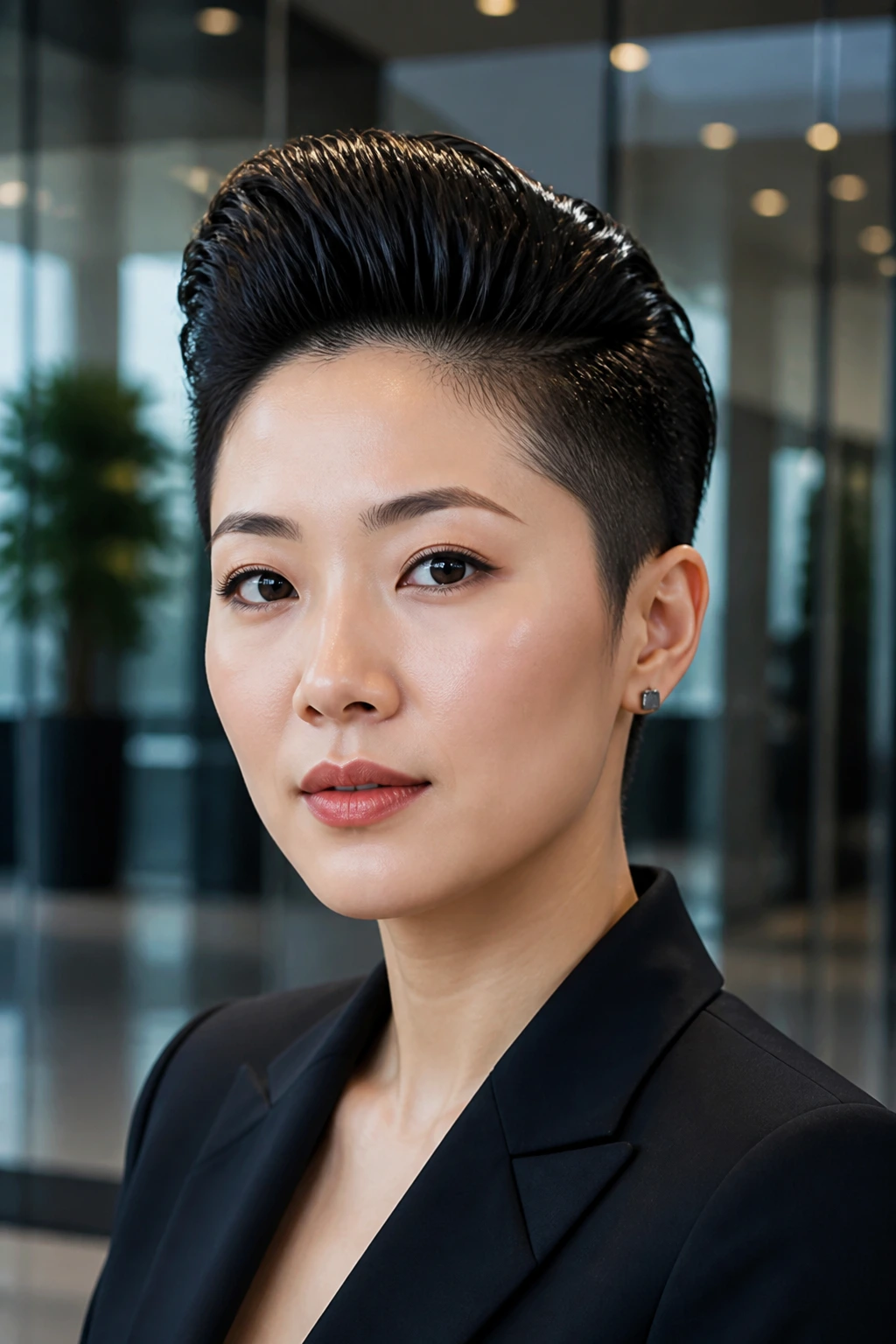
Can a quiff be polished without looking flat? Yes, if the cut is disciplined and the product use is restrained. A sleek sculpted quiff keeps the front lifted but smooths the surface so the hair reflects light in a clean, glossy sheet. The sides stay tidy, often with a taper or a soft fade, and the front curves back in one controlled motion.
This style loves straight, dense hair because the natural texture helps the surface stay smooth. Use a heat protectant, a small round brush, and a light wax or cream — not a heavy pomade that drags the hair down. The goal is polish with structure. If you can see the individual strands but the haircut still holds its line, you’re in the right place.
Good for: work settings, dressier events, and anyone who wants the quiff shape without a messy finish.
Ask for: a longer top with smooth graduation into the sides.
My take: this is the version people underestimate until they see how sharp it looks with a simple black blazer.
11. Feathered Layered Quiff
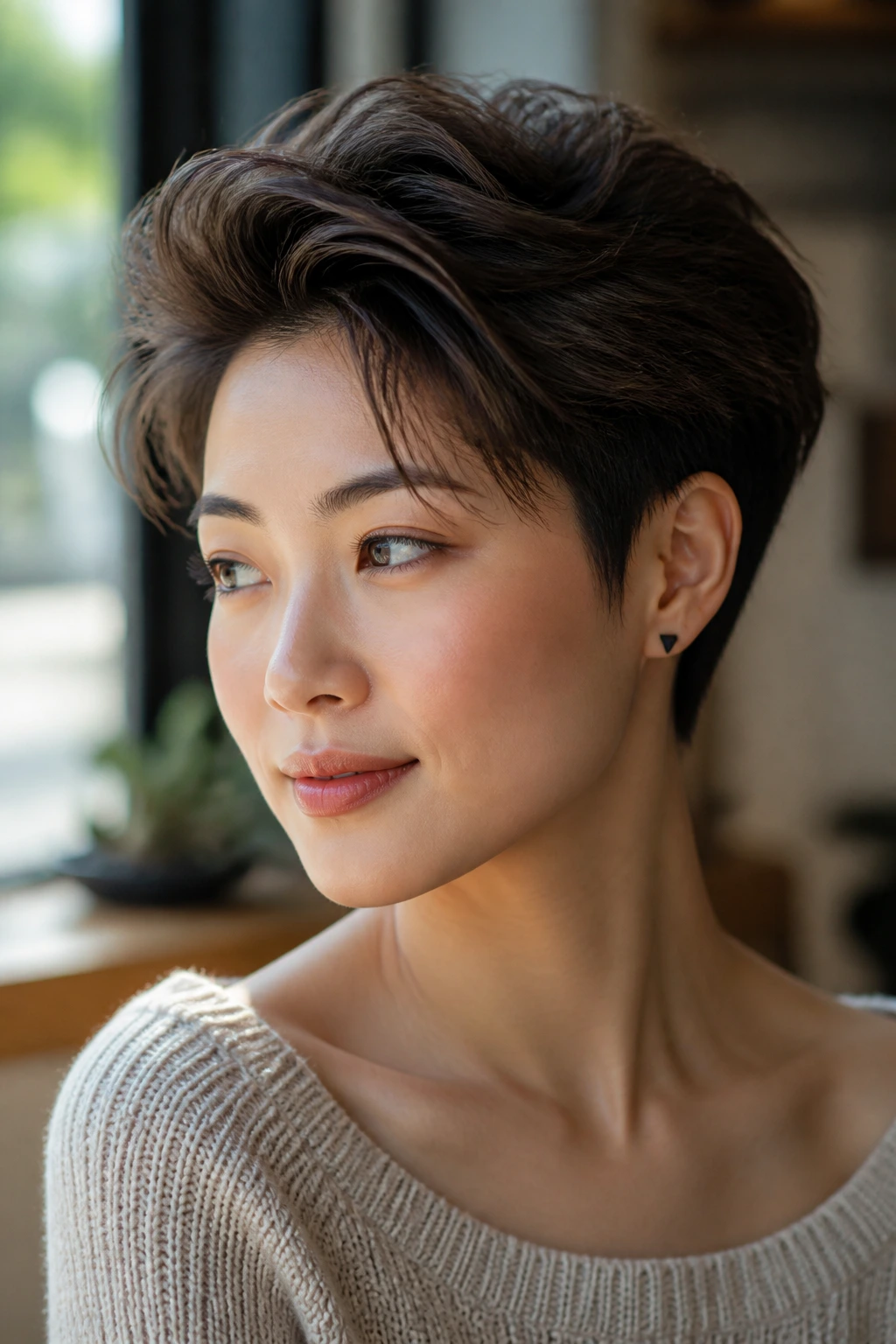
Layers matter more than most people think. A feathered layered quiff uses soft, sliced layers through the top so the hair rises and falls in light pieces instead of one heavy block. On thick Asian hair, that feathering keeps the front from buckling under its own weight. On finer hair, it keeps the top from looking shaved down to nothing.
The best thing about this shape is how it moves. It doesn’t sit there like a rigid front flap. It bends, shifts, and settles with a bit of air around it, which makes the haircut feel less severe than a hard-edged quiff. Ask the stylist to avoid over-thinning the crown, though. Too much razoring creates wispy ends that can fray fast and lose shape.
Why it works
The feathered ends create separate panels of hair that catch the blow-dryer differently, so the front rises without needing a huge amount of product. That matters on straight hair, where weight can sneak up on the cut fast.
12. Wet-Look Quiff
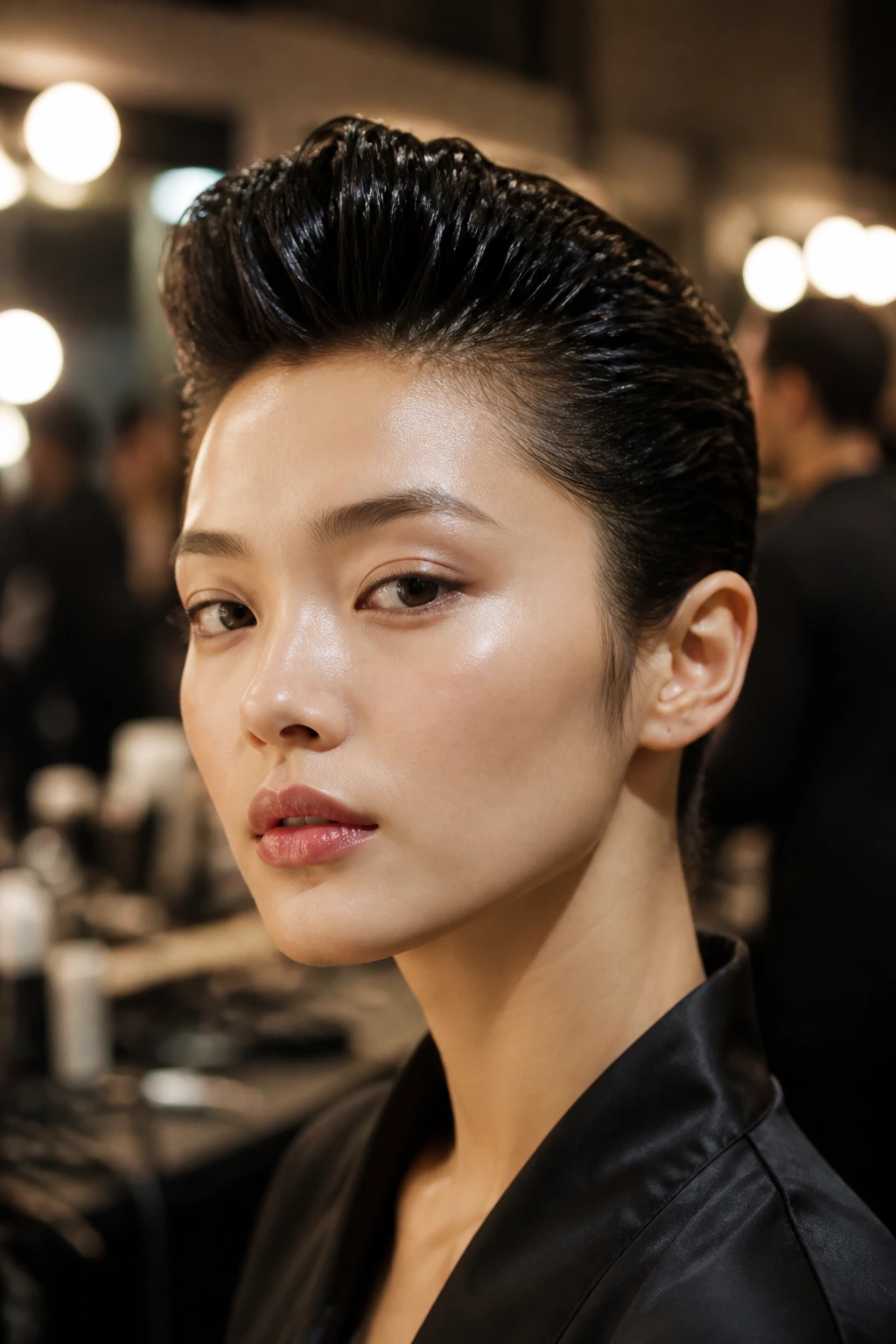
A wet-look quiff is all about shine and direction. The top is combed upward and back with a glossy finish, while the sides stay smooth and close. It’s a strong choice if you want the quiff to read fashion-forward rather than soft. It also happens to look excellent on dark hair, where the shine makes the shape easier to see.
There is a catch. Use too much gel and the style turns stiff, flaky, and cheap-looking. Use too little and the front loses definition. The sweet spot is a small amount of strong-hold gel worked through damp hair, followed by careful shaping with a comb and fingers. Let it dry fully before touching it again. That part matters more than people expect.
This is not the everyday version for everyone, and that’s fine. Some cuts are meant to be worn for a dinner, a stage, or a very sharp outfit.
13. Permed Texture Quiff
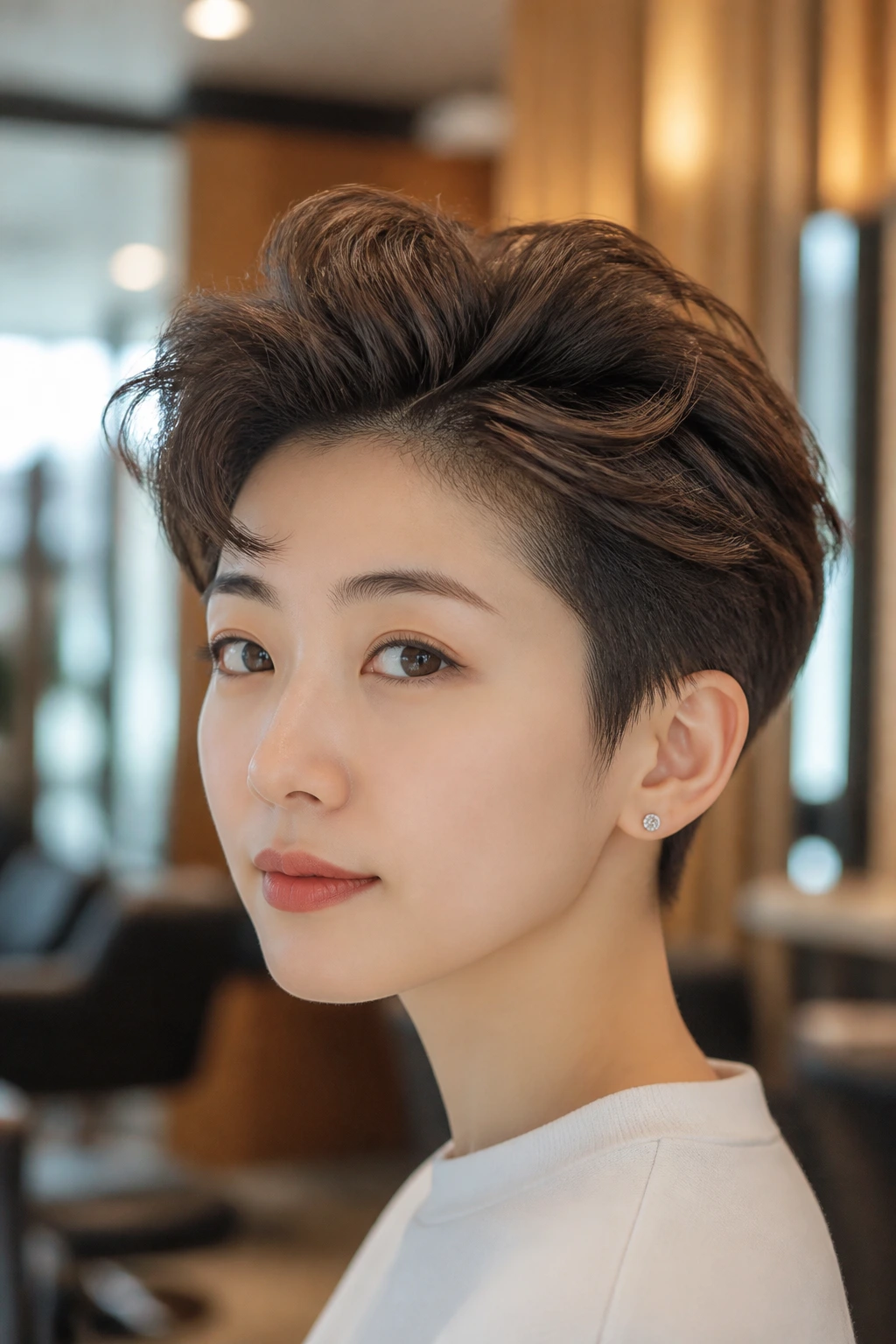
When straight hair refuses to hold a bend, a little texture change can solve half the problem. A perm-based quiff — usually a loose root perm or a body wave through the top section — gives the front more memory, which means the lift stays in place with less fighting. For many women with very straight strands, that alone changes the whole relationship with short hair.
The trick is to keep the curl soft, not springy. You want the front to lift and support itself, not coil into obvious ringlets. Done well, the style still looks like a quiff, just one with a memory built in. That can be a smart move if you hate using hot tools every morning.
Best for: hair that falls flat again ten minutes after blow-drying.
Maintenance note: this needs thoughtful salon upkeep, because the texture change grows out and the root area will behave differently from the ends.
My opinion: it’s one of the most practical options on this list if volume is your real problem.
14. Mini Quiff for Fine Hair
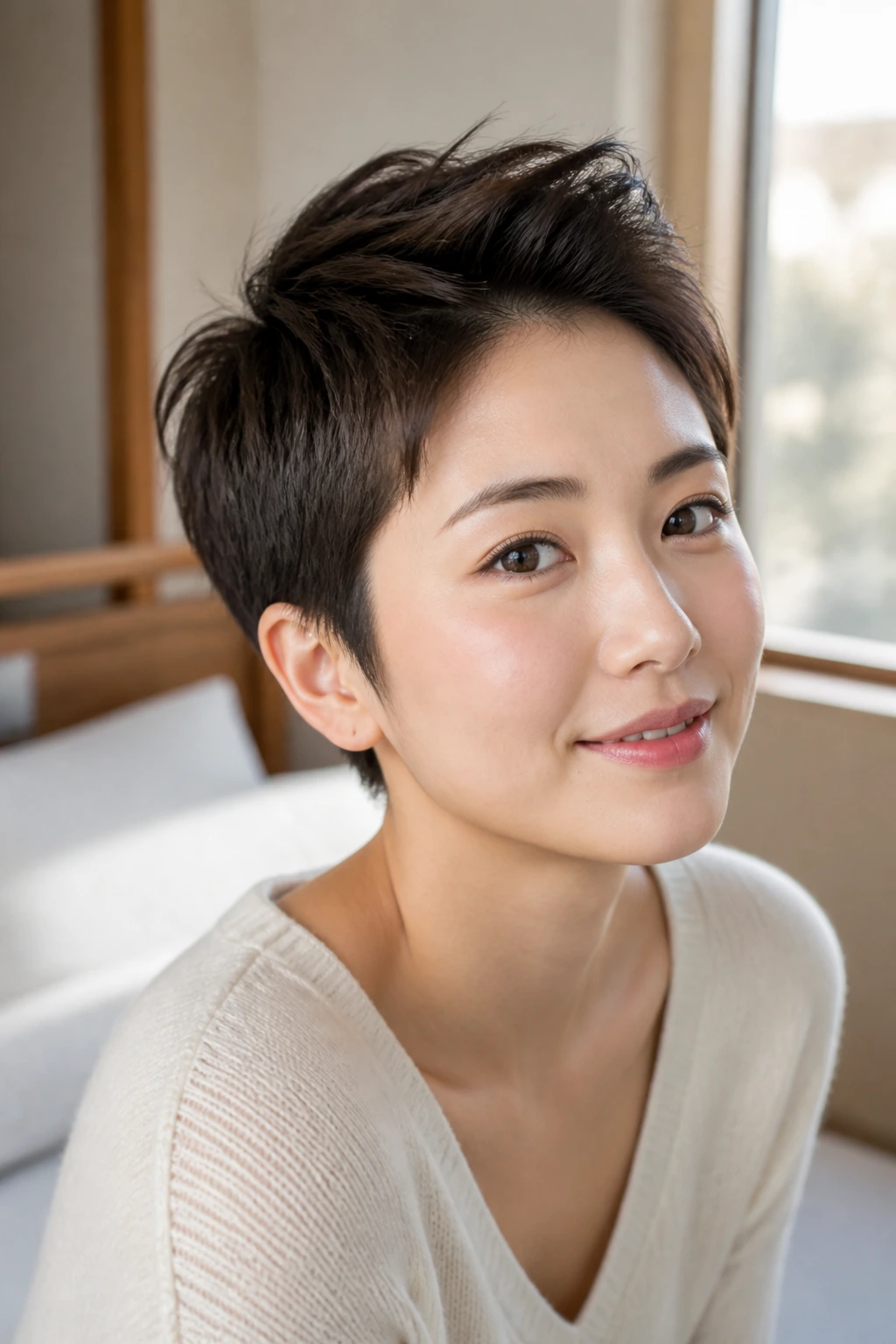
Fine hair doesn’t need to be bullied into a giant front. A mini quiff keeps the lift low and neat, with enough height to change the face but not so much that the hair looks like it’s been teased against its will. The top stays short, the sides stay clean, and the crown gets a modest bump rather than a full wave.
This is one of those cuts that looks better when it’s restrained. If fine hair gets over-layered, it can start to fray and separate in odd places. So ask for soft internal shaping, not aggressive thinning. A little root spray, a vent brush, and a few seconds of upward blow-drying at the front usually do the job.
There’s no shame in a small quiff. Small often means wearable.
15. Face-Framing Quiff with Long Sideburns
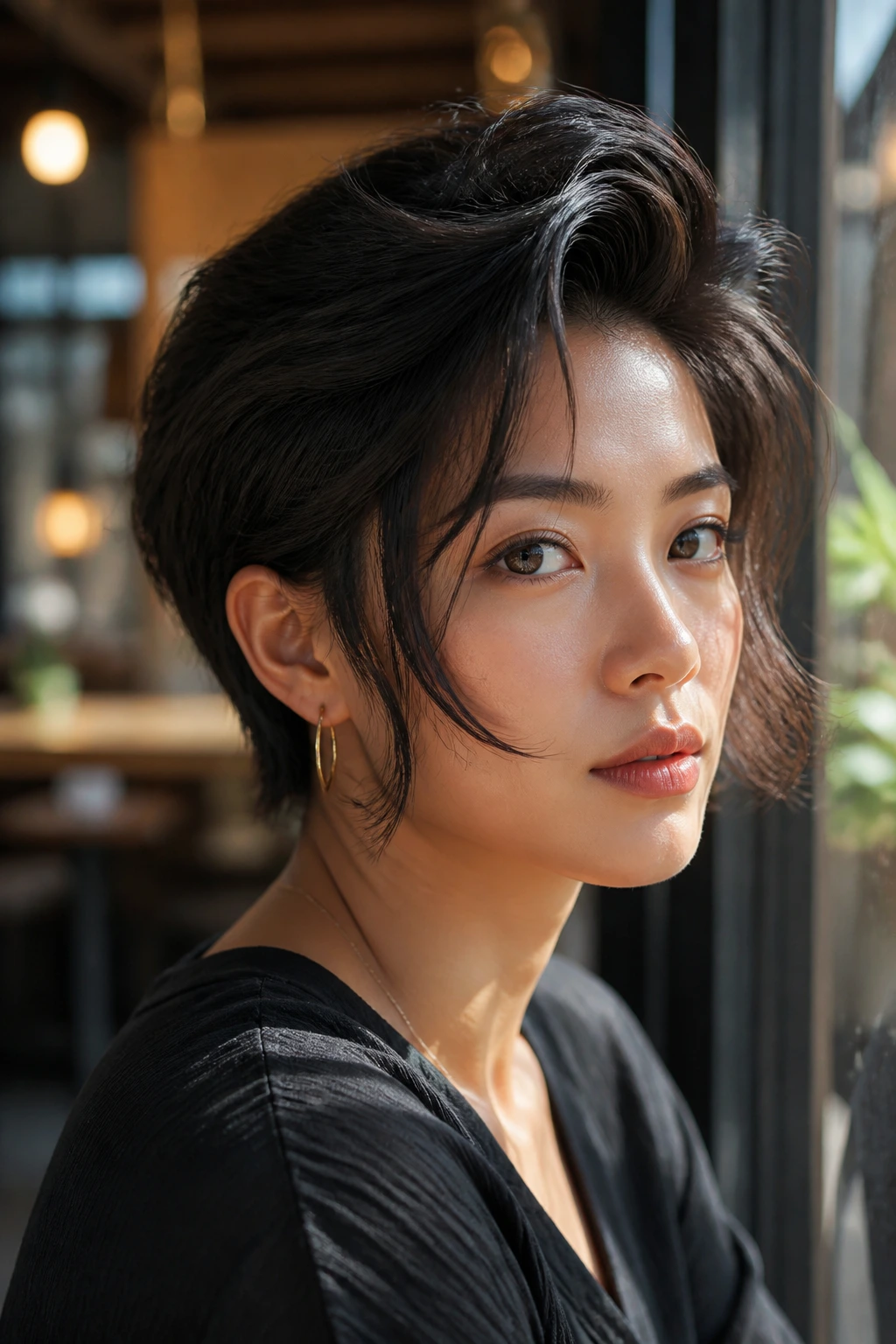
This cut uses side pieces as part of the shape, which is a smart move if you want the quiff to feel softer. The front lifts, but the longer sideburns and cheek-level pieces frame the face and keep the style from looking too cropped. That balance works especially well on square or longer faces, where a little width at the cheeks can be useful.
It’s also a very good option if you wear glasses. The side pieces soften the line where the frame hits the face, and the quiff keeps the top from feeling weighed down. The cut should still stay short around the nape, or the whole thing can lose its clean edge. I like this one because it gives you a shape around the face without demanding a big dramatic top.
16. Short Shag Quiff
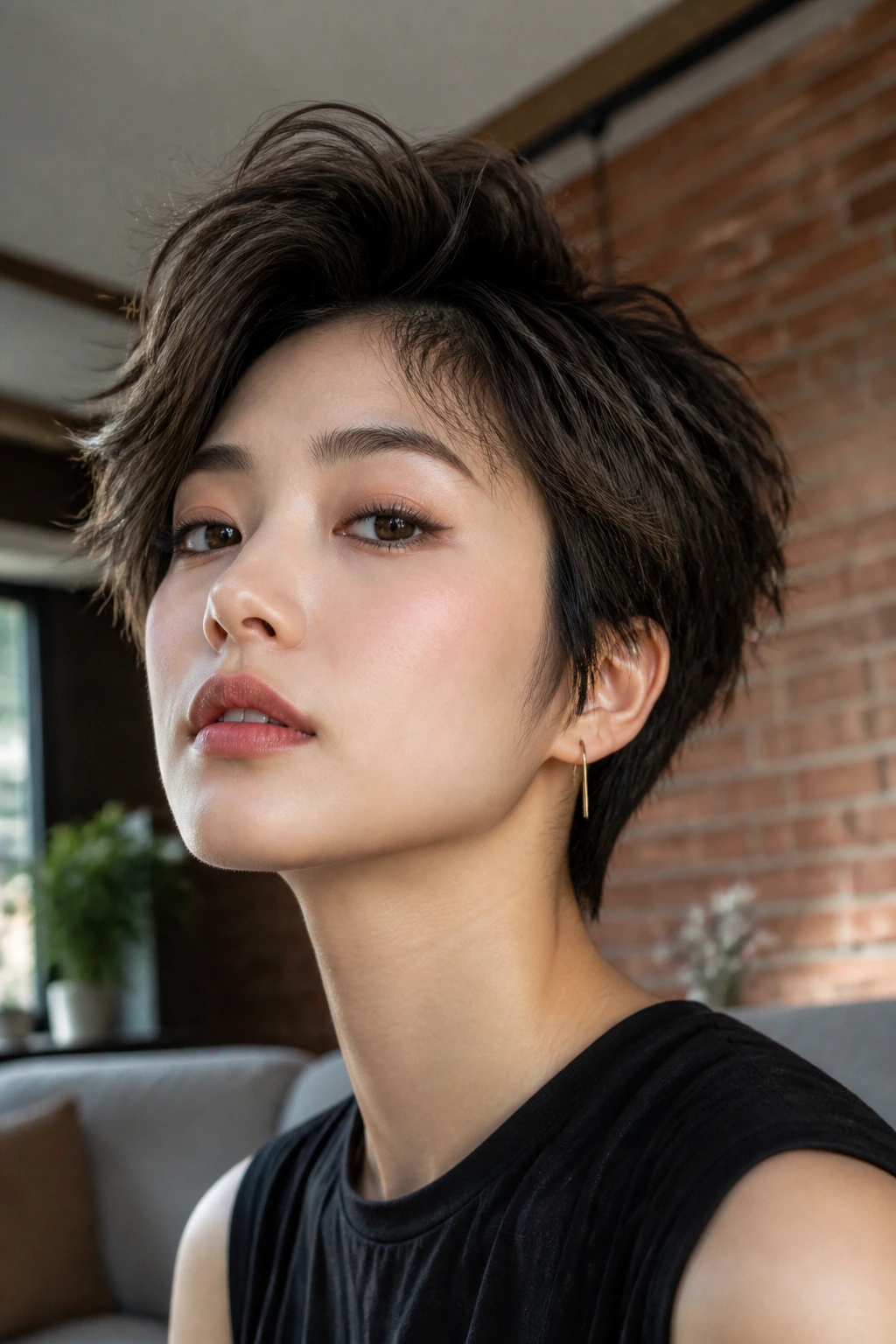
A short shag quiff has more attitude than polish, and that’s its charm. Choppy layers through the top and crown create a slightly broken texture, while the front still lifts into a loose quiff shape. On thick hair, the shag layers remove bulk in a way that feels casual instead of chiseled.
This style is for people who don’t want to spend time smoothing every strand into place. A bit of matte paste, a scrunched blow-dry, and some finger lifting at the front are usually enough. The haircut should move on its own. If it needs to be perfectly arranged to look right, it’s too fussy.
Best for: thicker hair, undone outfits, and anyone who likes a little grit in a short haircut.
Watch for: over-layering at the top, which can make the crown go wispy faster than you’d like.
17. Bowl-Quiff Hybrid
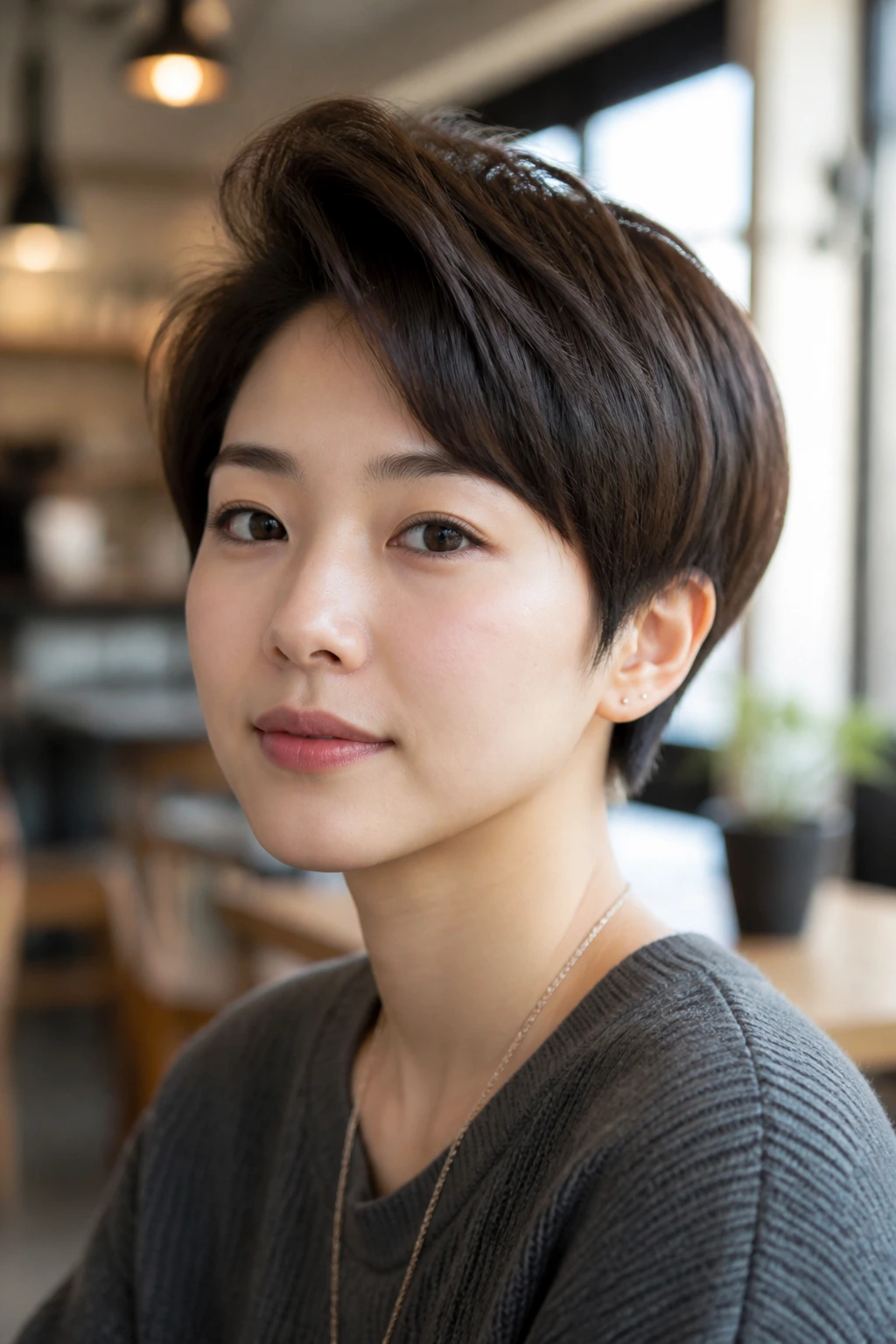
A softened bowl cut with a quiff front sounds strange until you see it done well. The perimeter stays rounded around the head, but the front section is lifted and broken up so the shape doesn’t sit like a cap. This works beautifully on straight hair because the clean line of the bowl gives structure, while the quiff front keeps it from feeling too strict.
The cut relies on contrast. The top needs enough weight to hold the curve, but the front has to be point-cut and lightly layered so it can rise. The result is a neat silhouette with a little surprise at the hairline. If you like fashion cuts that aren’t trying to look conventional, this one has a lot going for it.
It is not the most forgiving grow-out, though. Once the front starts to lose its lift, the whole shape needs a trim.
18. High-Contrast Fade Quiff
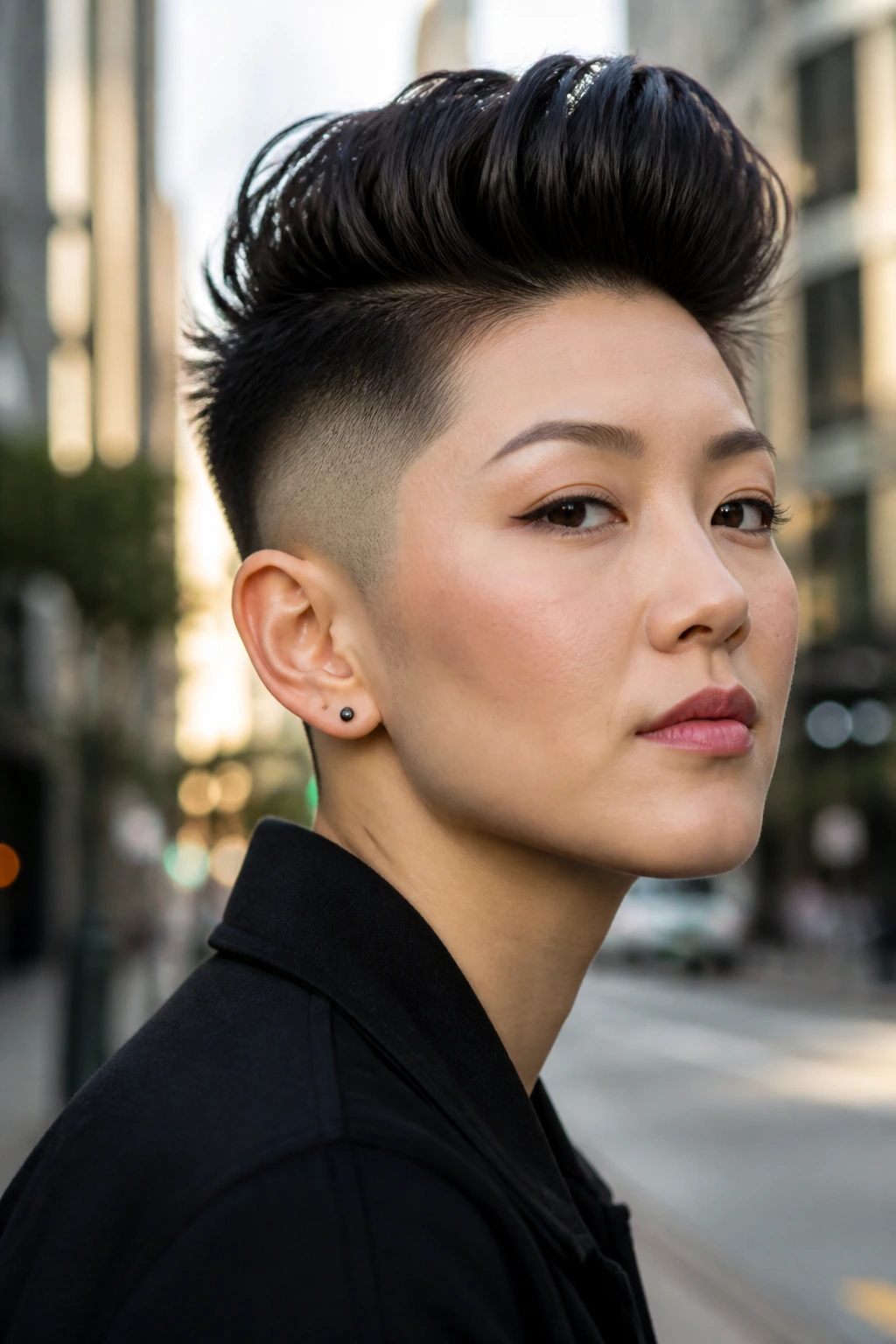
A high-contrast fade makes the top look taller by shrinking the sides almost to nothing near the ears and neck. The quiff gets all the visual attention, and the haircut takes on a sharper outline. On dense hair, this is a strong choice because it removes bulk where it tends to puff out first.
The fade also changes the way the top sits. There’s less side weight pulling the front down, so the lift tends to hold a little better. Still, the top shouldn’t be left too short. You need enough length to push upward and back; otherwise the cut becomes a flat crop with ambition and no follow-through.
Best for: strong jawlines, bold earrings, and people who like a very crisp finish.
If you’re nervous: ask for a low fade first. You can always go shorter at the next trim.
19. Soft Fauxhawk Quiff
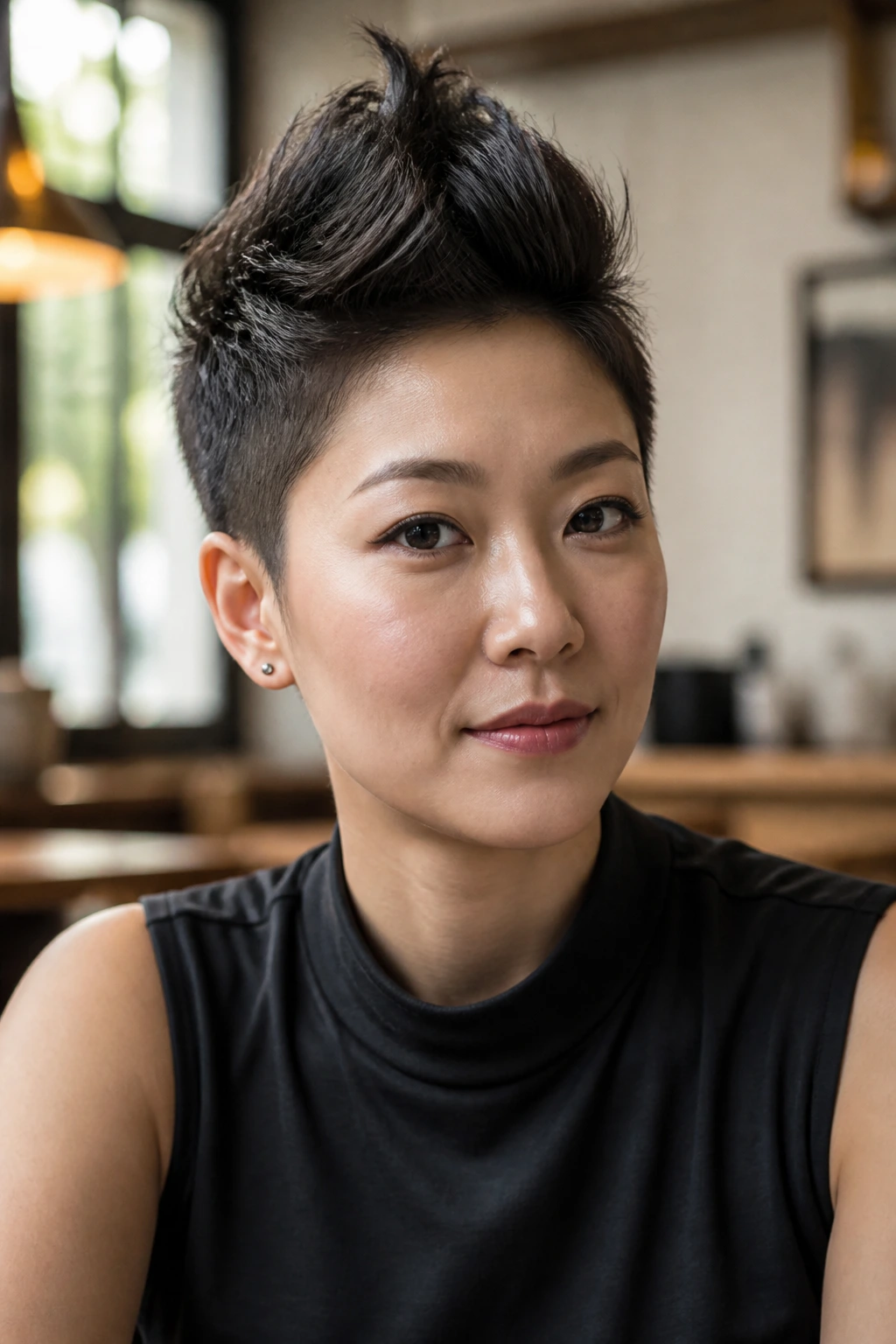
A soft fauxhawk quiff is the rebellious cousin in the family, but the soft version is far more wearable than the name suggests. The sides are shorter, the middle ridge rises through the center, and the front lifts with a narrow, pointed shape rather than spreading wide. That narrow line can be very flattering on straight Asian hair, because it creates length down the center of the face.
The beauty of this cut is that it can look edgy without looking hard. Keep the sides tapered rather than shaved bare, and use fingers instead of a comb when styling the top. That keeps the ridge from becoming too rigid. A tiny bit of matte paste at the roots is enough; more product just makes the hair look wet in the wrong spots.
It’s one of the easiest ways to wear a quiff if you want your haircut to feel a little braver than a standard pixie but not so extreme that it starts a conversation before coffee.
How to Choose the Quiff Height That Flatters Your Face
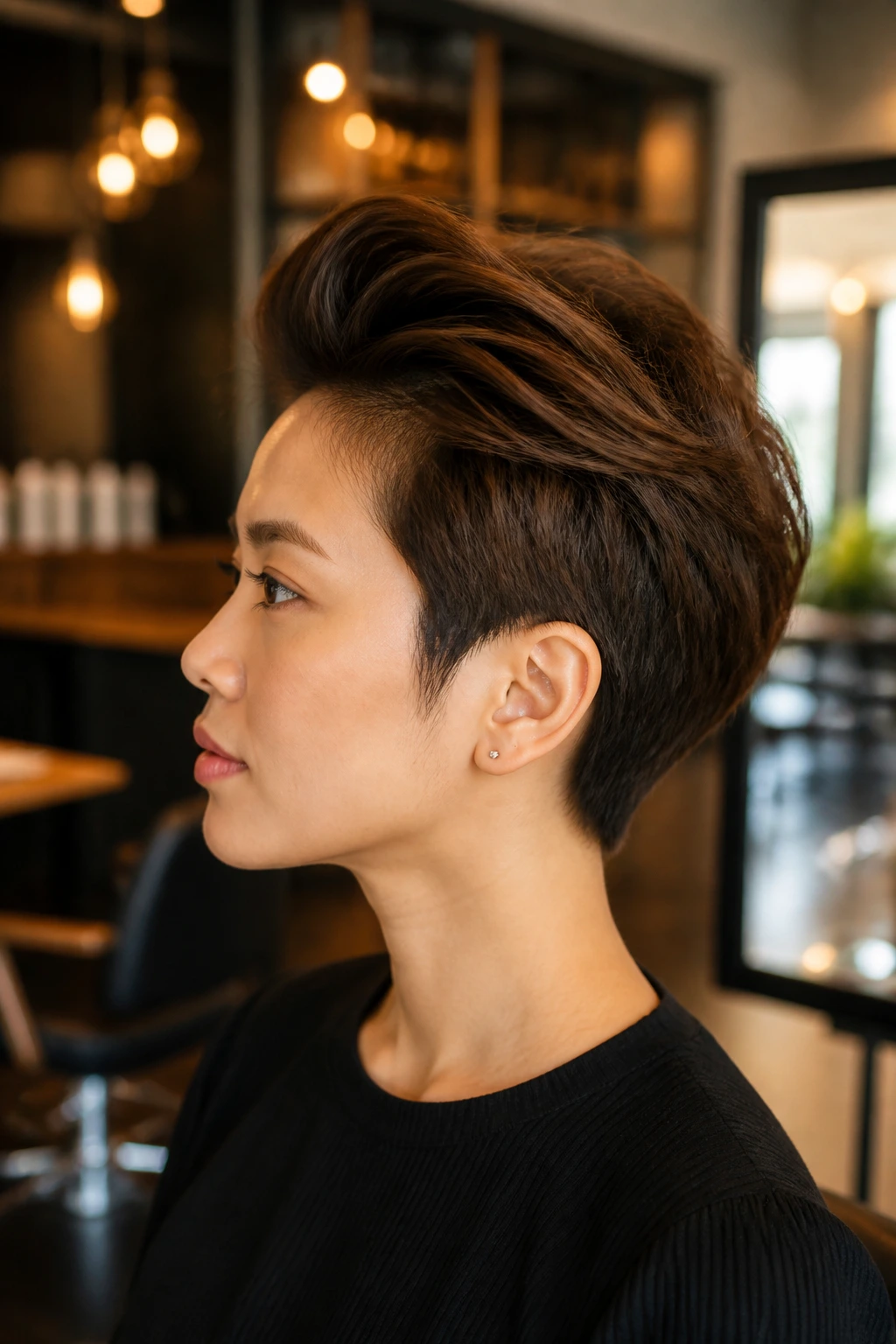
The wrong quiff height can make a face look longer, heavier, or oddly top-heavy. The right one changes the balance in a clean, obvious way. Round faces usually do well with a bit more lift at the front because that vertical line creates length, while square faces often look softer when the quiff leans to one side instead of standing straight up.
Heart-shaped faces tend to like a little width around the temples, so a side-swept quiff or a curved fringe quiff usually behaves better than a narrow fauxhawk ridge. Long faces usually need restraint. Too much height up top can make the face look stretched, so a lower, broader quiff works better there. Oval faces get away with almost anything, which is unfair but true.
Hairline matters too. A high forehead can handle a taller front, but a low forehead usually looks better with a shorter, feathered lift. If you have strong cowlicks at the front, your stylist should cut with that growth pattern in mind instead of fighting it. Fighting a cowlick is how people end up with a haircut that refuses to sit still.
Styling Products That Give Short Hair Lift Without Crunch
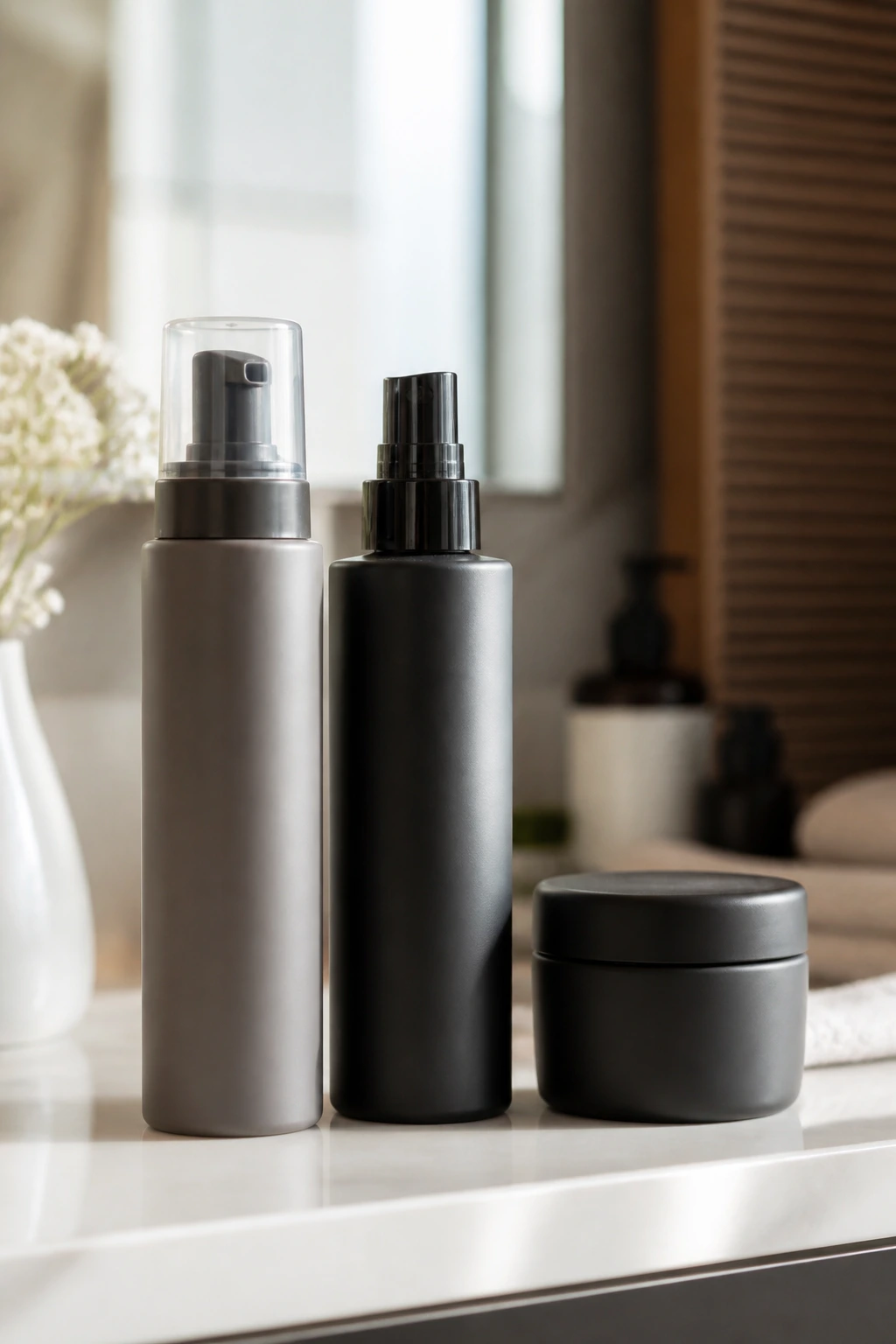
The product drawer can get silly fast. You do not need seven bottles to wear a quiff. You need the right three or four, and you need to use them in the right order.
Root mousse or root spray gives the front a base to stand on. It belongs on damp hair, close to the scalp, before blow-drying.
Heat protectant matters if you’re using a dryer or flat iron — and if you aren’t using one, your quiff will usually hold less shape.
Matte paste or clay works well for piecey, modern cuts because it gives grip without shine.
Flexible-hold hairspray is the finish, not the main event. Use it to lock the front, not to freeze every strand in place.
Thick hair usually likes a creamier matte product with a little control. Fine hair usually does better with lightweight spray and a small amount of paste, because heavy products drag it down within an hour. And if your hair gets oily fast, skip rich creams near the roots. They flatten the lift before the day gets going.
The Blow-Dry Routine That Makes the Front Stay Up
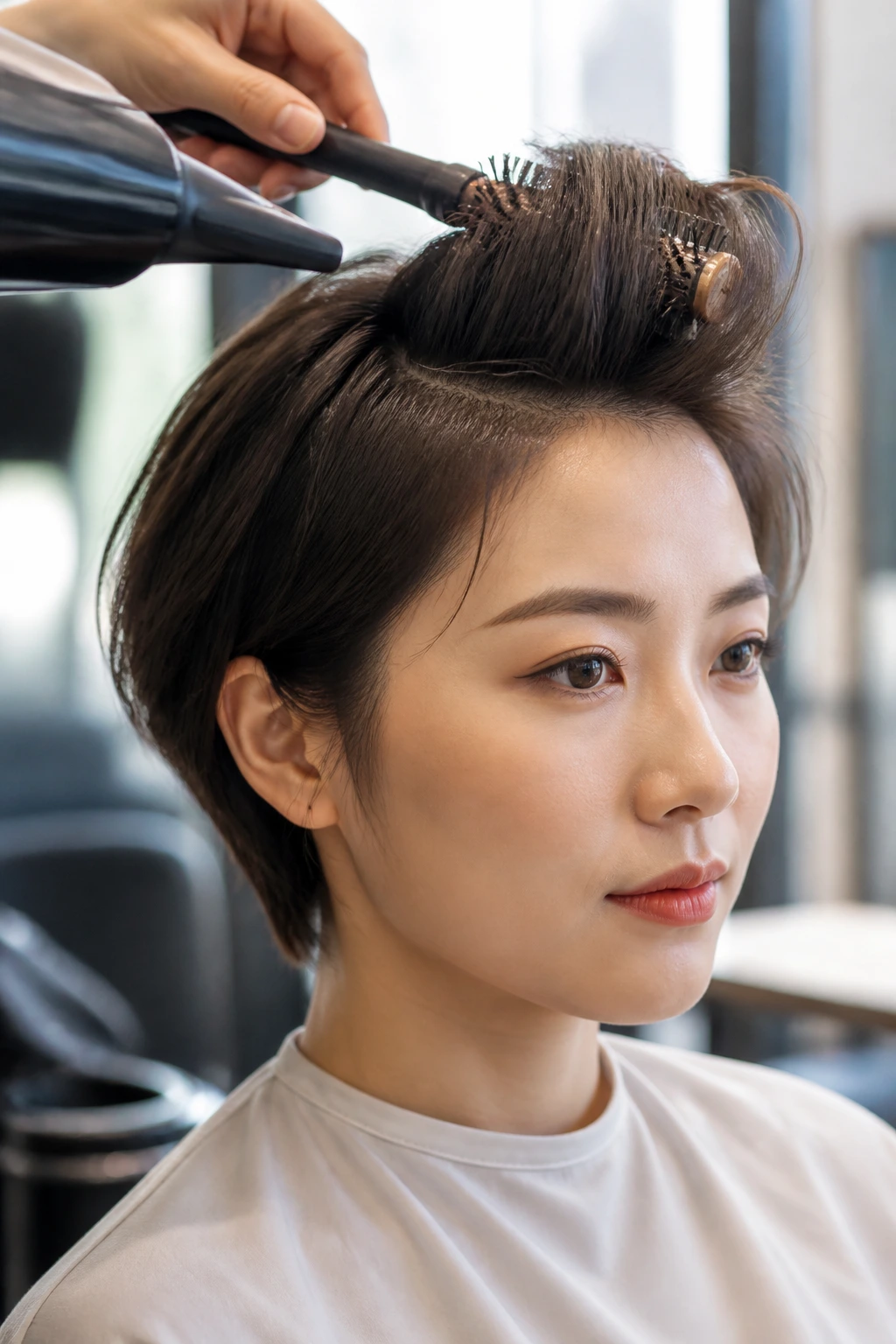
The front of a quiff starts before the brush ever touches the hair. Towel-dry until the hair is about 70 percent dry, work in your root product, then direct the dryer against the natural fall of the hair for the first pass. That part is not optional. If you dry it straight down first, you spend the next ten minutes trying to undo that choice.
Use a small round brush for a sculpted front or your fingers for a looser one. Lift the roots up and slightly back, then hit the section with cool air to set the bend. The cool shot sounds fussy, but it really does help the shape hold. If the style looks perfect while the hair is hot and floppy, it probably won’t stay that way.
A good quiff routine is fast once you know it. Five to eight minutes is realistic for most short cuts. Anything much longer usually means the haircut needs more support or the product is working against the texture.
Common Mistakes That Flatten a Quiff
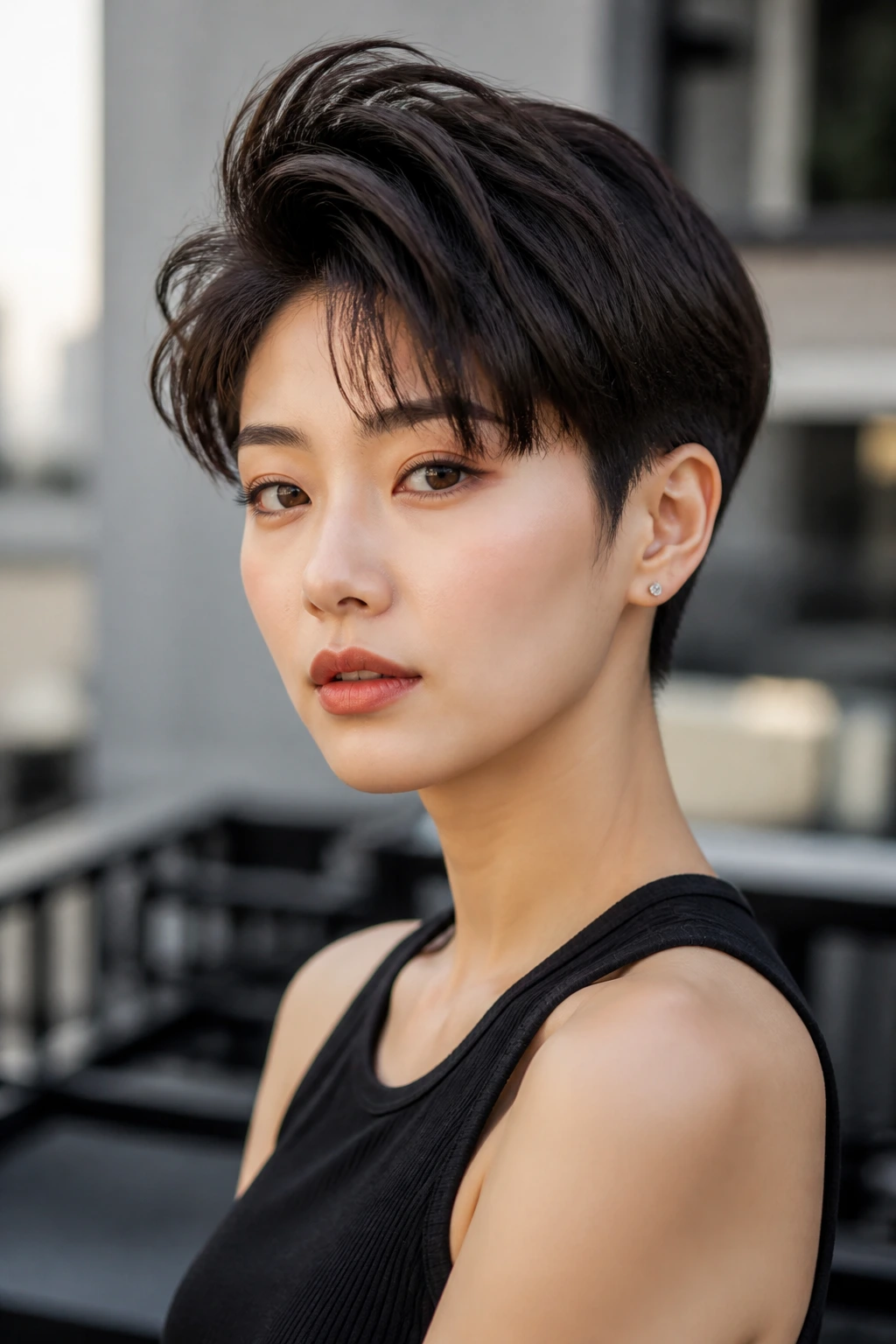
The first mistake is too much product at the roots. The hair looks slick for twenty minutes, then droops into a heavy sheet. Fix it with lighter products and less of them, especially near the crown.
The second mistake is blowing the hair only in the direction you want it to land. Straight hair has memory, and it remembers the wrong thing if you never lift it off the scalp first. Dry against the grain at the start. Always.
The third mistake is cutting the top too short. A quiff needs enough length at the front to bend into shape. If the hair is cropped too close, it can puff a little but cannot really rise.
The fourth mistake is keeping the sides too wide. When the sides bulk out, the top looks smaller by comparison. A taper or fade can fix that fast. So can a cleaner trim around the temples.
The fifth mistake is choosing shine when you need grip. Glossy products look nice in photos, but for many Asian hair textures they make the front slide. Matte or flexible finish usually behaves better.
Ways to Change the Look Without Cutting More Hair
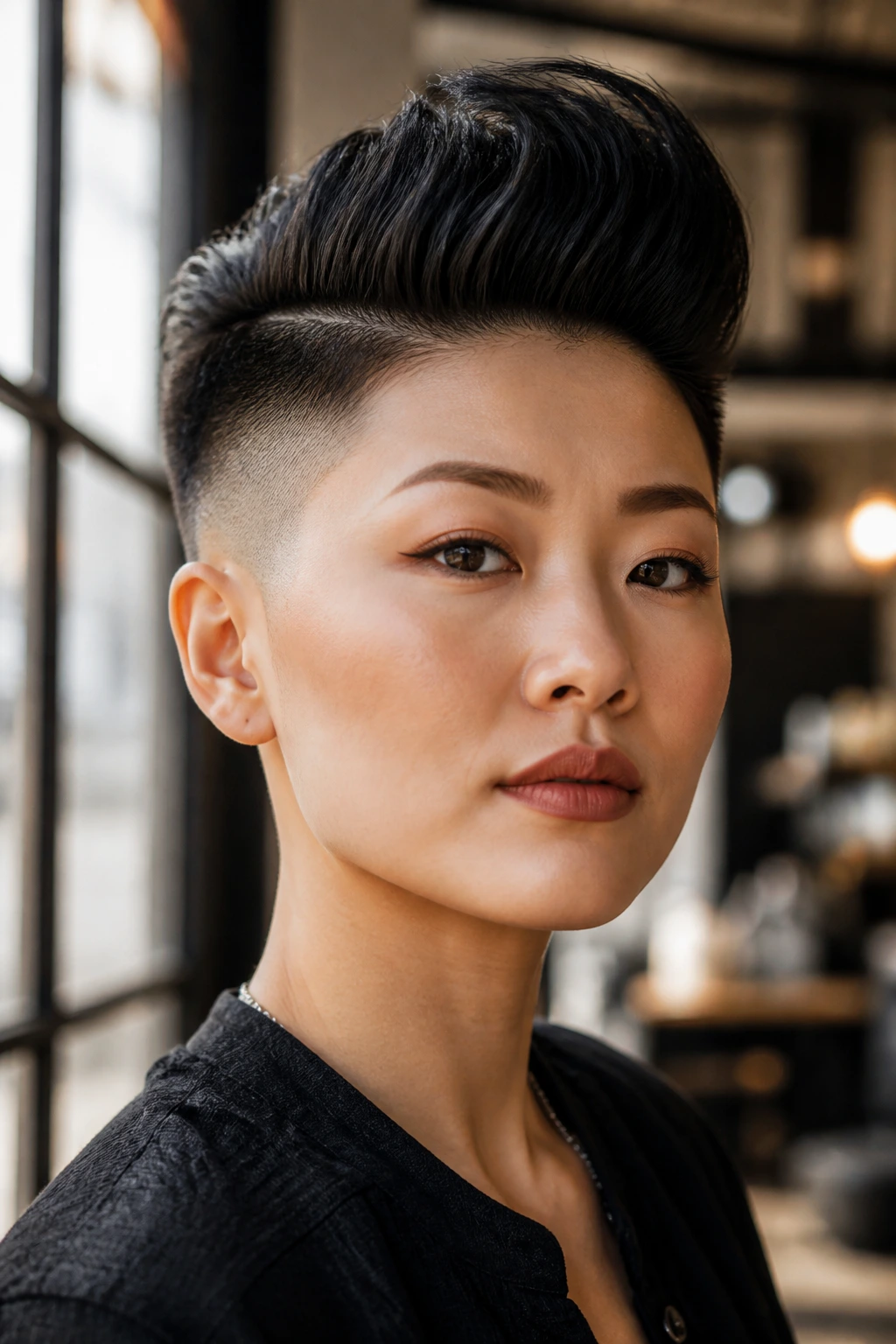
A quiff is flexible in ways people forget. You can change the mood of the cut without changing the length.
Make it softer: switch to a side sweep, let a few front pieces fall loose, and use a lighter product.
Make it sharper: clip the sides closer, raise the front ridge higher, and choose a matte finish.
Make it dressier: smooth the surface, add shine only to the top, and pin the side back behind one ear.
Make it low-key: lower the height at the front and keep the crown rounded rather than pointy.
Make it bold: add an undercut or fade and push the front into a more vertical line.
Color can change the read too. Dimensional highlights, even subtle ones, make the lifted pieces easier to see. On very dark hair, that contrast can be enough to show the structure without changing the cut at all.
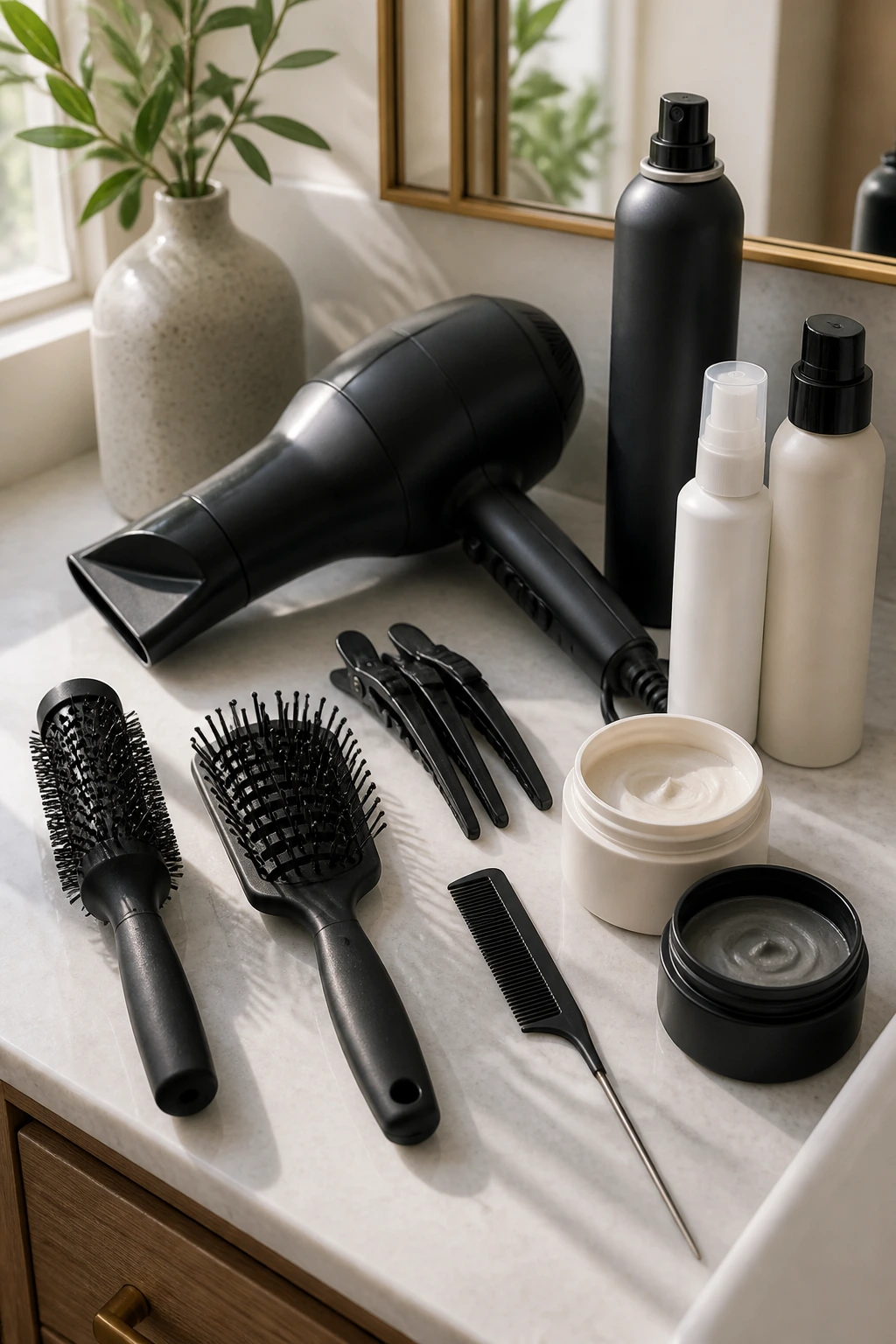
Essential Tools for Styling a Quiff
-
Blow dryer with a nozzle attachment: The nozzle helps direct air at the roots instead of blasting the whole section apart.
-
Small round brush, 1 to 1.5 inches: Small enough to lift short hair cleanly without dragging the front flat.
-
Vent brush or paddle brush: Useful for rough-drying the base before you shape the quiff.
-
Sectioning clips: Handy if your top layer is longer and you want to dry the front separately.
-
Tail comb: Good for creating a clean part or separating the front ridge.
-
Matte paste, clay, or root mousse: Pick one based on your hair thickness and the amount of hold you need.
-
Flexible-hold hairspray: A light finishing mist keeps the shape without turning it crunchy.
-
Heat protectant: Useful any time the dryer or a flat iron touches the hair.
Keeping the Shape Between Salon Visits
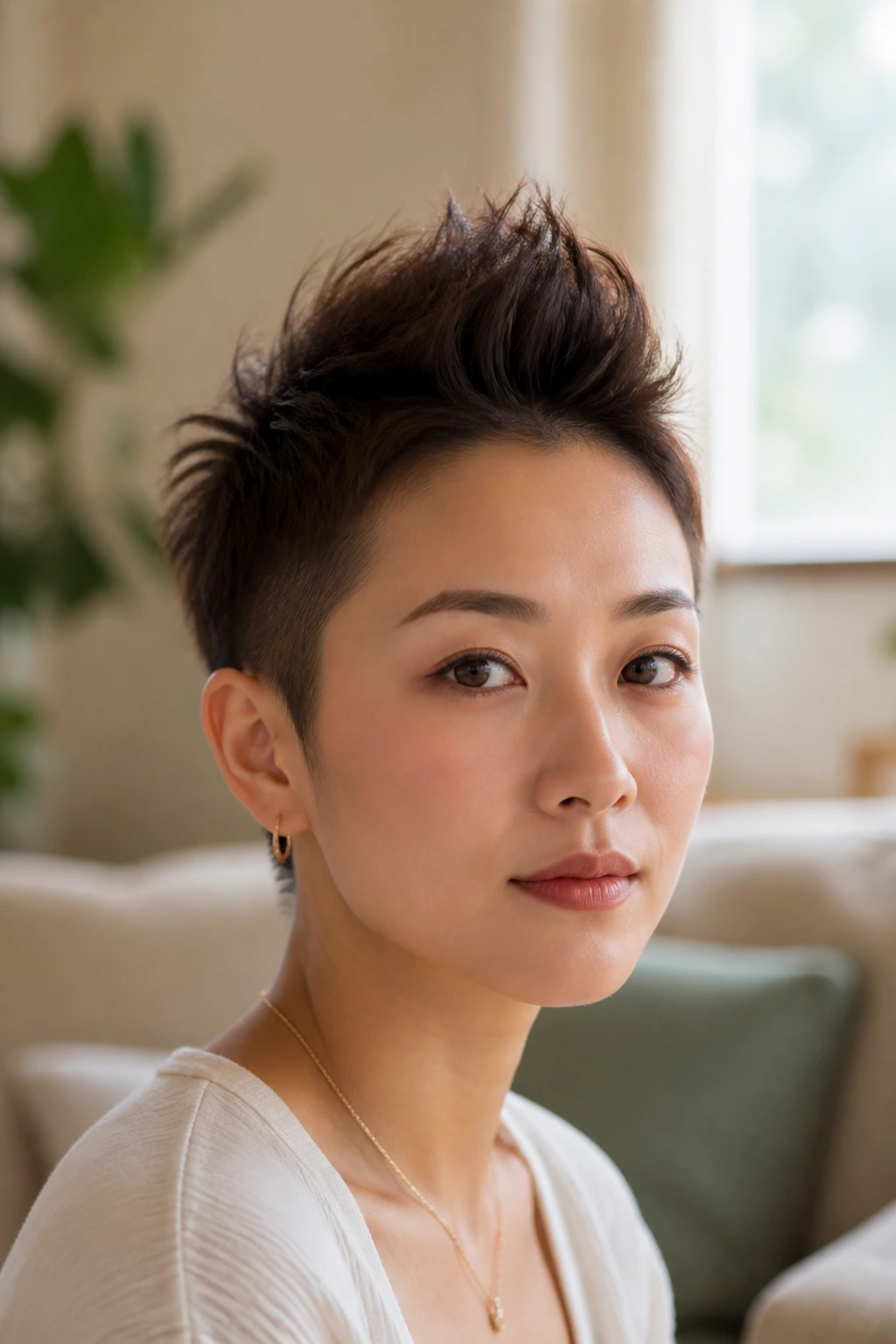
Short quiff cuts lose their line faster than longer styles, so trims matter. Most pixie-length and cropped quiff styles need a cleanup every 4 to 6 weeks to keep the front balanced and the sides from puffing out. Bob-length quiffs can often stretch to 6 to 8 weeks, but the crown will start to fall if the layers grow too much.
At home, a dry shampoo at the roots can buy you an extra day or two when the front starts to collapse from oil. Don’t dust it only on the hairline; lift the top layers and spray under them near the crown, then massage it in. That gives the quiff more lift than spraying the surface alone.
Night care helps more than people think. If your front bends in a bad direction while you sleep, clip it lightly upward or wrap it loosely with a satin scarf so the roots don’t get crushed. Morning refreshes are simple: a quick mist of water, a few seconds with the dryer, and a pinch of paste at the front if needed. That’s usually enough.
Frequently Asked Questions
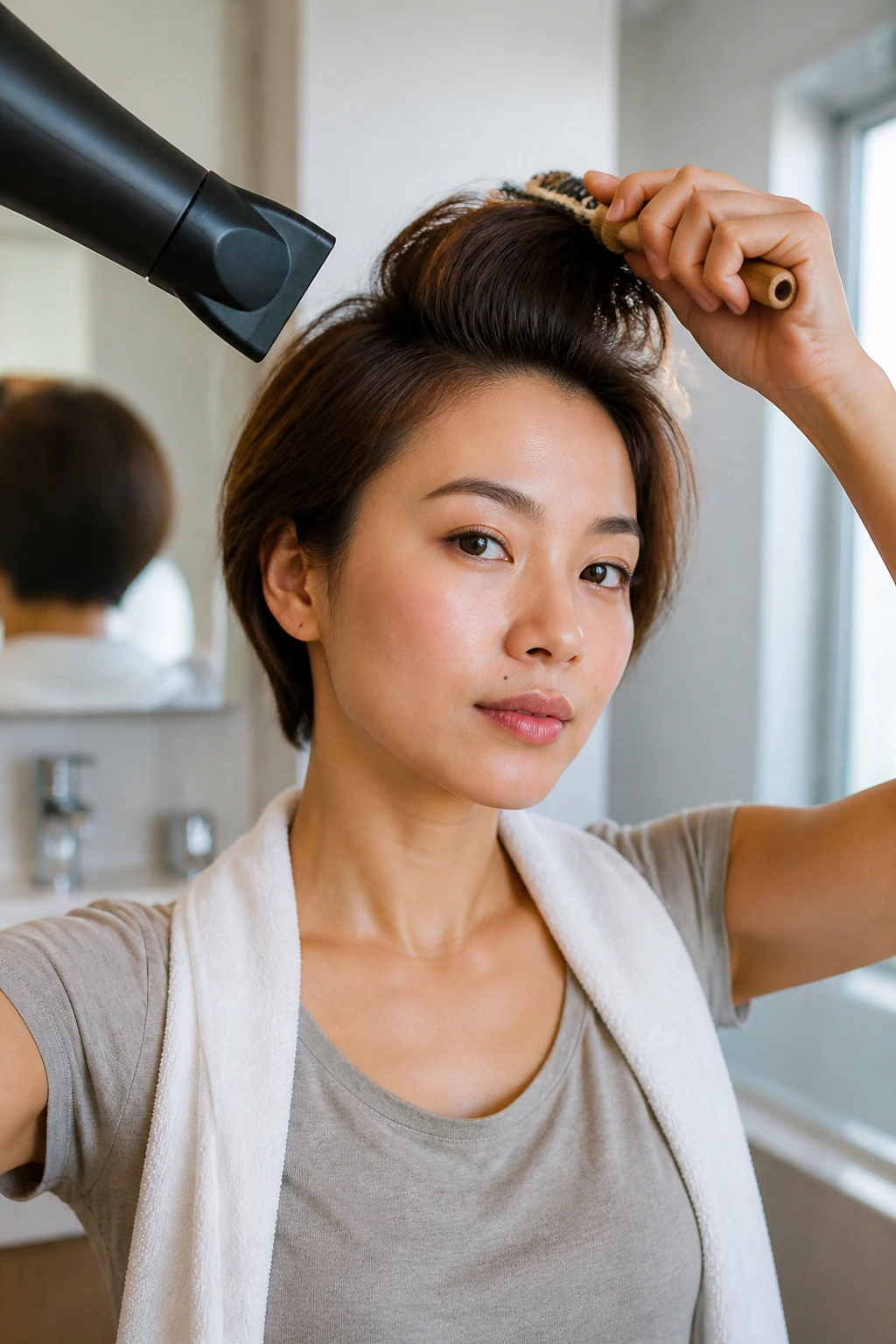
Do quiff styles work on very straight Asian hair?
Yes, and that straightness is part of why they look so clean. The main job is giving the roots enough direction with blow-drying and using a cut that removes bulk where the hair would otherwise lie flat.
Can fine hair wear a quiff without looking sparse?
It can, as long as the cut stays modest and the layers aren’t thinned too aggressively. Fine hair usually does better with a mini quiff, a soft crown lift, or a side-swept front rather than a tall sculpted ridge.
What should I tell my stylist if I want this look?
Ask for short sides, length left on top for lift, and some shaping at the crown so the front can stand up. If you have a photo, show one where the side profile is visible too; that tells the stylist how much height you actually want.
How do I stop the front from falling flat by lunchtime?
Start with product at the roots, not the ends, and blow-dry against the natural growth direction before shaping the front. If the front still collapses, the cut may need more internal layering or a shorter, lighter side section.
Is a quiff hard to maintain?
Not once the haircut is set up correctly. The styling takes a few minutes, but the real maintenance is regular trims and not letting the sides grow wide enough to swamp the top.
Will a quiff suit a round face?
Usually, yes, if the front has some height and the sides stay neat. A side-swept quiff or a soft crown lift tends to work better than a wide, puffy shape that adds more roundness.
What if I hate a lot of product in my hair?
Use a root spray or mousse at the base, then keep the finish light with a small amount of matte paste. You can also ask for a cut that carries more shape on its own, which means less product every day.
Can I wear a quiff with glasses?
Absolutely. A face-framing quiff or a soft side-swept version usually plays nicely with frames because it leaves room around the temples and doesn’t crowd the face.
A Shape That Stays Put
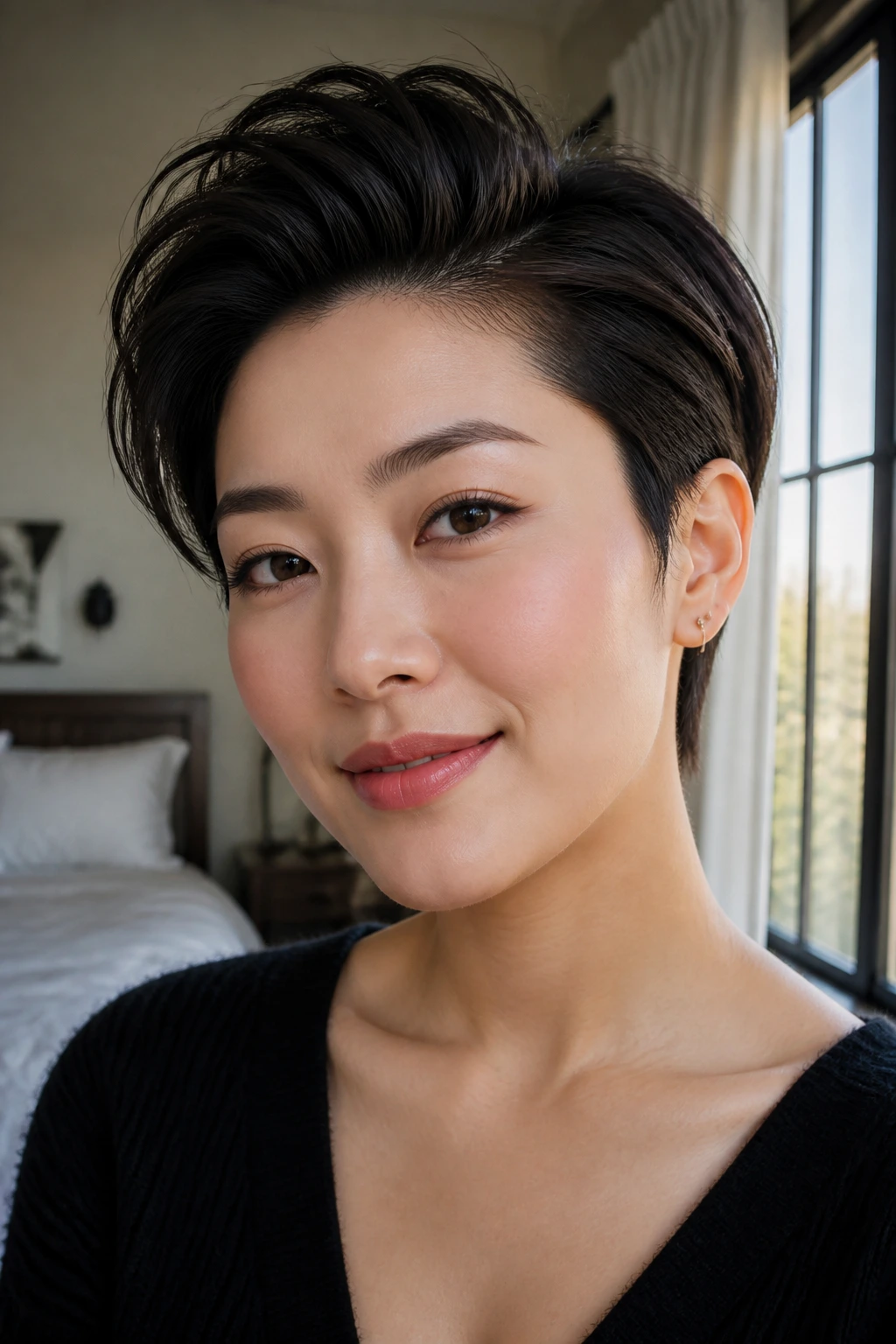
The best quiff is not the tallest one. It is the one that holds its line, flatters your face, and still looks like your hair when you’re standing in bad light on a random weekday morning. That is the quiet test most short haircuts fail, and quiffs pass it better than they get credit for.
For many Asian women, that balance comes from a smart cut more than brute-force styling. Clean sides, enough length at the front, and a little lift at the roots can do a lot more than a drawer full of products. Pick the shape that matches your hair’s natural fall, then let the style work with it instead of arguing all day.
If you get the cut right once, the daily routine gets much easier. And that is the part worth chasing.
