



The best wavy hairstyles for Black women with long hair do one thing better than almost any other style: they use length instead of fighting it. A wave on waist-length hair falls differently than the same wave on shoulder-length hair. The bend stretches out, the movement reads farther down the strand, and the whole style gets this soft, draped look that shorter hair can’t quite copy.
Long Black hair also has a little attitude of its own. It can swallow a loose wave if you don’t set it well. It can turn a carefully brushed bend into a puff if the roots are too dry. And it can make the wrong curl pattern look heavy, which is why the details matter so much here: section size, cooling time, where the part lands, how much product sits near the root, and whether the ends are left crisp or loosened into ribbons.
That’s the part people miss. A good wave on long hair is not just “curl it and go.” It’s shape. It’s balance. It’s knowing when to keep the crown sleek and when to let the lengths move. Get those pieces right, and long hair starts doing the thing it does best—showing off texture, shine, and motion all at once.
Why These 24 Waves Suit Long Black Hair So Well
-
Long hair gives the wave room to fall: A bend that looks tight near the root can loosen into a soft S-shape by the time it reaches the ends, which is exactly why long hair makes wave patterns look smoother and more relaxed.
-
You can steer the mood fast: The same base can read glam, low-key, or polished depending on where you place the part, how much you brush it out, and whether you pin one side back.
-
Heat is optional in a lot of cases: Braid sets, flexi-rods, twists, and plaits can all create wave patterns that hold shape without a flatiron tracing every strand.
-
Sleek roots make the whole look cleaner: When the roots are controlled and the length is left soft, the style looks intentional instead of puffy or unfinished.
-
Long waves work with accessories instead of fighting them: A claw clip, a silk scarf, a gold pin, or a pair of hoops can change the whole outline in seconds.
-
The right set lasts longer than you’d expect: Waves hold better on long hair when the sections are fully cool or fully dry before you touch them, and that one habit saves a lot of collapses.
1. Soft Side-Part Waves with Polished Ends
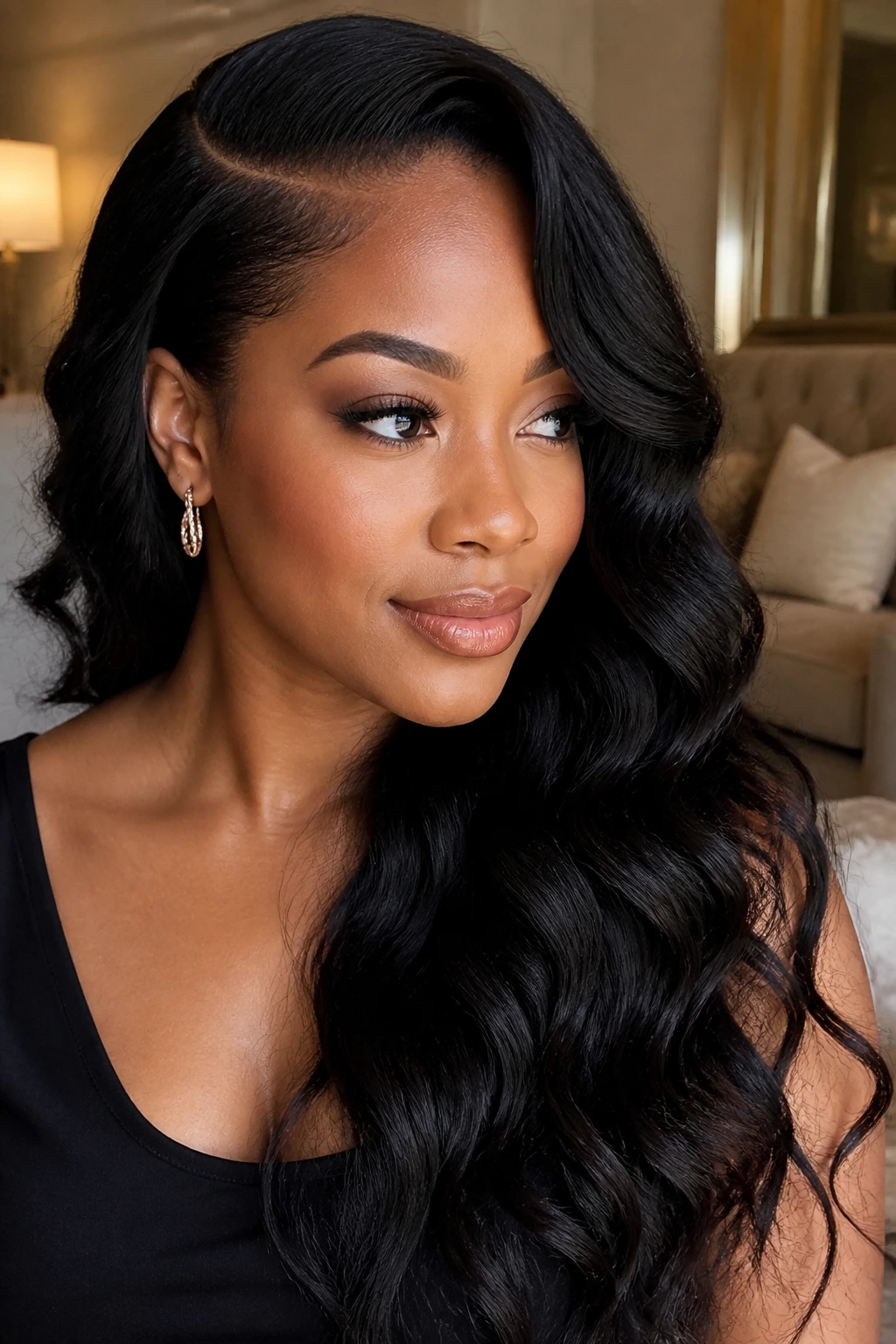
A deep side part changes everything here. It gives long hair a clear direction, and once the wave starts moving away from the face, the length falls in long, clean curves instead of hanging like one flat curtain.
Why It Works
This style is at its best on stretched hair—blow-dried, silk-pressed, or gently straightened enough to take a wand cleanly. A 1-inch curling wand or a large iron gives you a bend that can be brushed into soft waves without turning the ends into corkscrews.
The side part also gives you a built-in lift at the crown. That matters on long hair, because weight pulls the top down faster than people expect. If the part is sharp and the first 2 inches near the root stay smooth, the whole style looks more expensive.
- Best tool: 1-inch wand or iron
- Best section size: 1 to 1.5 inches
- Best finish: Light serum on the ends only
Tip: Pin the heavier side behind one ear for 20 minutes after styling. It helps the wave “learn” its direction.
2. Brushed-Out Wand Waves on a Blowout Base
The strongest glam wave on long hair is usually the one that starts tight and ends soft. That sounds backwards until you’ve brushed it out and watched the whole head loosen into a clean, flowing pattern.
You wrap small vertical sections around a wand, let them cool completely, then use a paddle brush or a soft boar-bristle brush to smooth the curl into one long wave. Don’t rush that cooling stage. Warm hair lies to you.
On long Black hair, this works because the shape comes from the set, not from a pile of product. If you overdo mousse or cream here, the brush will drag and the ends will go frizzy instead of airy.
Use it when: you want an event style that still moves when you turn your head.
Best for: medium to thick density, especially if you like a polished finish instead of a fluffy one.
3. Braid-Out Waves That Fall in Loose Ribbons
Want wave without heat? This is the one people reach for when their hair has already had enough of hot tools for the week.
A braid-out gives long hair that stretched, rope-like texture that opens into long ribbons once you take the braids down. The trick is not making the braids too tiny. Tiny braids give you crimp. Medium braids give you the softer bend most people actually want.
How to Make It Sit Right
Start on dry or nearly dry stretched hair with a light foam or setting lotion. Make 6 to 10 braids depending on density, then let the hair dry all the way through. That last part is not optional. Damp roots will puff the moment you separate them.
A braid-out looks especially good with a center part and a little edge control at the temples. Keep the separation gentle, and stop before the hair turns into a cloud. The wave pattern should still look like it has a shape.
4. Flexi-Rod Waves from Mid-Length to Ends
Flexi-rods are the quiet overachiever of this whole group. They give long hair a smooth, springy bend that looks neat at the ends and soft through the middle, which is a nice change from the giant curl you get from some wands.
If your hair is very long, rod-setting only from mid-length down can make the style easier to wear. The root stays flatter. The ends get the wave. And the whole shape looks lighter on the shoulders.
Use smaller rods near the face if you want more definition, then move up to slightly larger rods through the back so the pattern doesn’t look too uniform. That unevenness helps long hair look lived-in instead of stiff.
- Best for: longer lengths that need definition at the bottom
- Best finish: a small amount of lightweight oil on the very ends
- Best parting: center or slightly off-center
5. Half-Up Half-Down Waves with Face-Framing Pieces
Half-up styles solve one of the most annoying problems with long wavy hair: the mass of it can swallow your face if every strand is left down. Pulling the top section up gives the eyes a place to land, and the length still does its long-hair thing in the back.
The face-framing pieces matter more than people realize. Leave them too short and they flick out awkwardly. Leave them long enough to graze the cheekbones or jawline, and they soften the whole look. I like this version best when the top section is sleek and the lower section has a looser wave with a little brush-through.
It works on natural hair, stretched hair, or even a silk-pressed base if you want the cleanest outline. Add a clip, a small scrunchie wrapped with hair, or a metal cuff if the mood leans dressy.
6. Deep Side-Swept Glam Waves
A deep side sweep gives long hair movement before the hair even starts waving. The whole shape shifts off-center, which creates instant drama without needing a lot of extra styling.
This look is different from a regular side part. The hair is directed almost like a sweep across the forehead, then pinned or tucked to keep it in place. The wave itself can be brushed out, set with rods, or created with a wand, but the direction is what makes it feel special.
It’s especially good if you wear earrings. Big hoops, drops, or anything with a little swing underneath the hairline all work here because the style opens up one side of the face and leaves the other side wrapped in movement.
7. High Ponytail Waves with a Slick Base
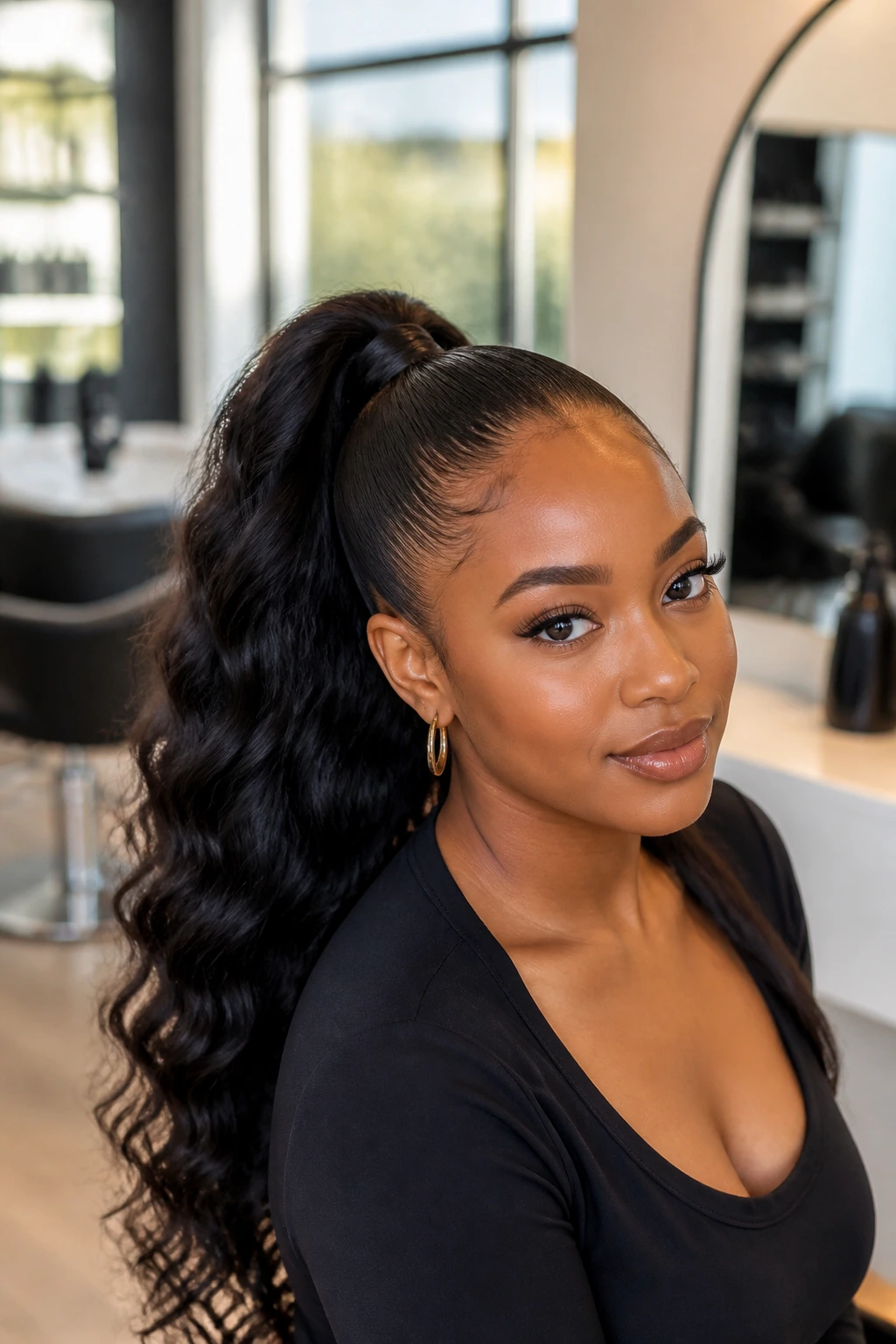
High ponytail waves on long hair have one job: show off the length without letting the weight drag the shape down. The pony sits high, the base stays smooth, and the tail gets all the movement.
That contrast is what makes it work. A slick crown keeps the edges tidy, while the lengths can wave freely without puffing around the face. If your hair is thick, this is one of the easiest ways to avoid the “too much hair everywhere” problem.
Best Setup
Use a strong but not crunchy gel at the root, then secure the ponytail high enough that it lifts the whole silhouette. Wrap a small piece of hair around the base if you want the elastic hidden. From there, set the tail with a wand or large rods so the wave falls in one direction.
Best on: long, dense hair that needs a controlled shape.
Best finish: a little shine spray on the tail, never the root.
8. Low Ponytail Waves with a Clean Center Part
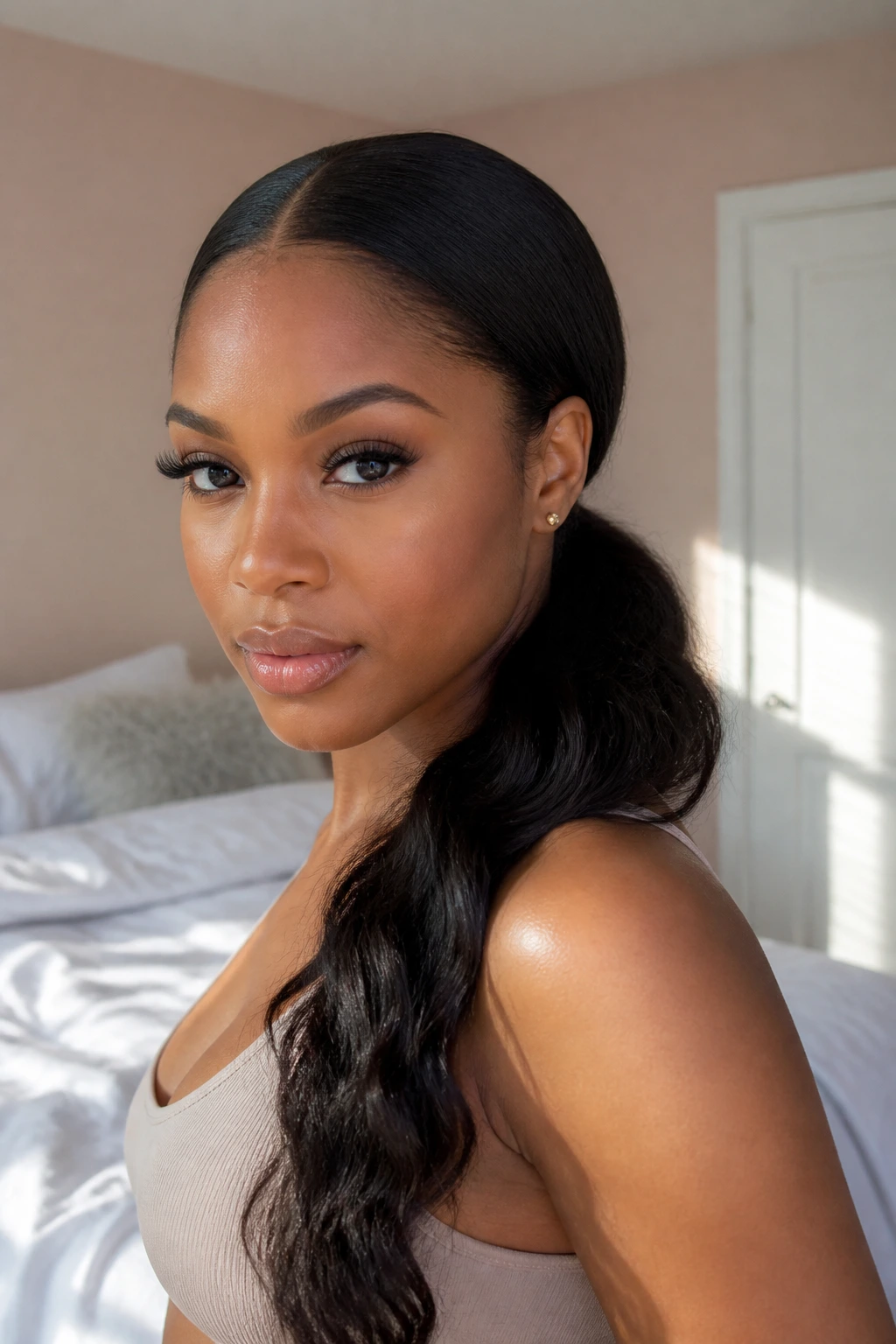
A low ponytail can look almost severe in a good way. The center part keeps it balanced, and the tail hangs with enough length to show texture without competing with the face.
This is one of the easiest styles to wear when you want long wavy hair to feel neat instead of theatrical. The pony sits at the nape, which means the base isn’t fighting gravity as hard as a high ponytail does. That makes it easier on the edges, too.
The best version has a smooth top and a tail that’s been waved from mid-length down. If the ends are too straight, the style can look unfinished. If they’re too curled, the whole thing loses that clean line.
9. Old Hollywood Waves on Pressed Hair
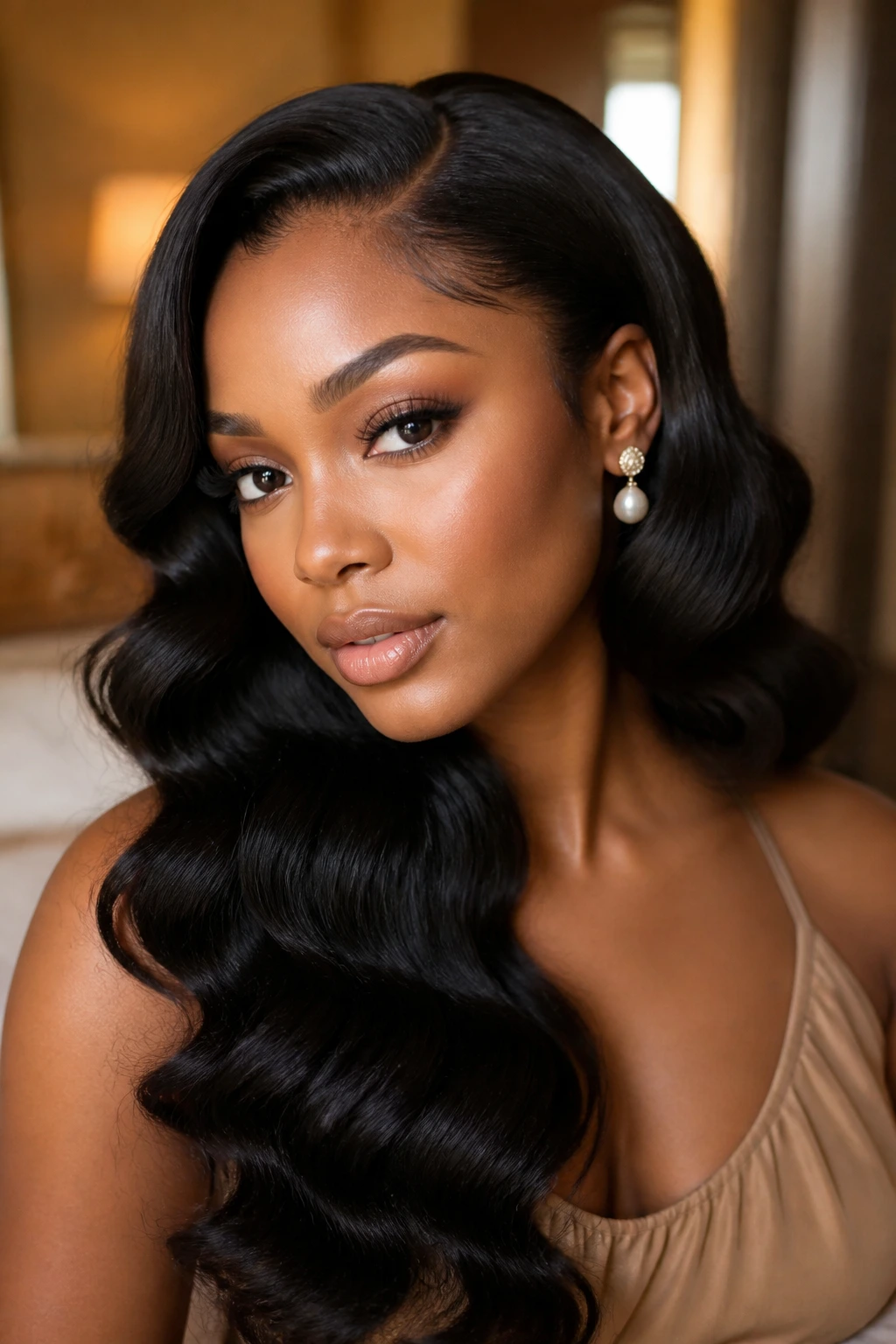
Old Hollywood waves are sculpted, not fluffy. The hair moves in one direction, the bends are deliberate, and the finish looks smoother than almost any other wave style in this list.
The reason this style stands out on long Black hair is the weight. Long hair helps the wave hang in a clean line, so the shape reads richer and deeper than it does on shorter lengths. A paddle brush and a strong set are both part of the job.
How to Build the Bend
Set the hair in uniform sections, let each bend cool completely, then brush each wave into the next one so the ridges line up. If the brush gets too aggressive, the wave disappears. If you barely touch it, the style stays too curly.
The sweet spot is somewhere in the middle. Soft, polished, and just a little theatrical.
10. Crown Braid with Loose Wavy Length
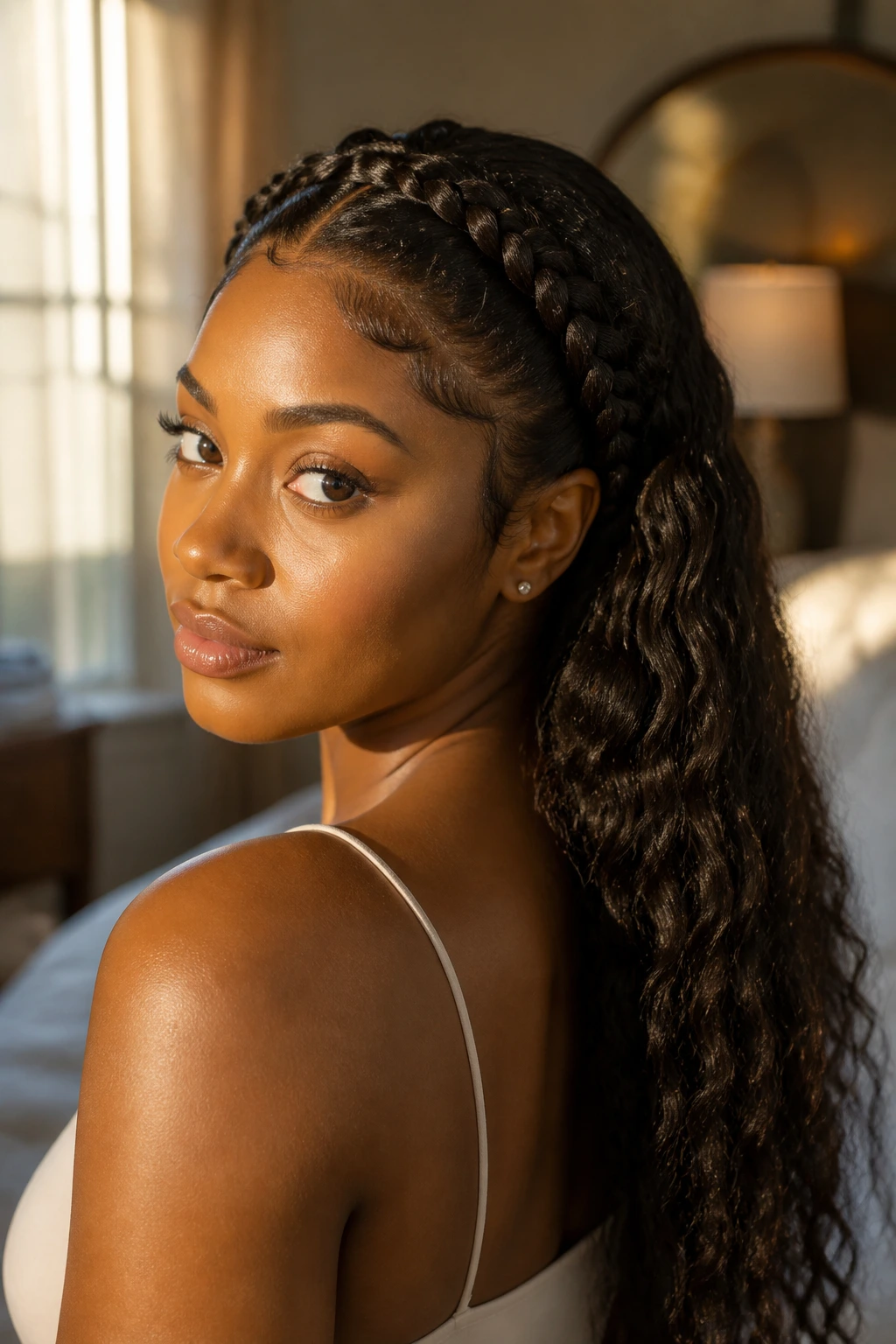
A braid along the hairline changes the whole temperature of the style. It pulls the eye upward, keeps the front controlled, and leaves the rest of the hair to move in soft waves.
This works well when you want the face open but still want the length to show. The braid can be thin and neat, or a little fuller if you want more texture around the crown. Either way, the loose lengths behind it keep the style from feeling too tight.
It’s a nice choice for long hair that’s already been waved or rod-set. The braid acts like a frame, not the main event.
11. Face-Framing Layered Waves
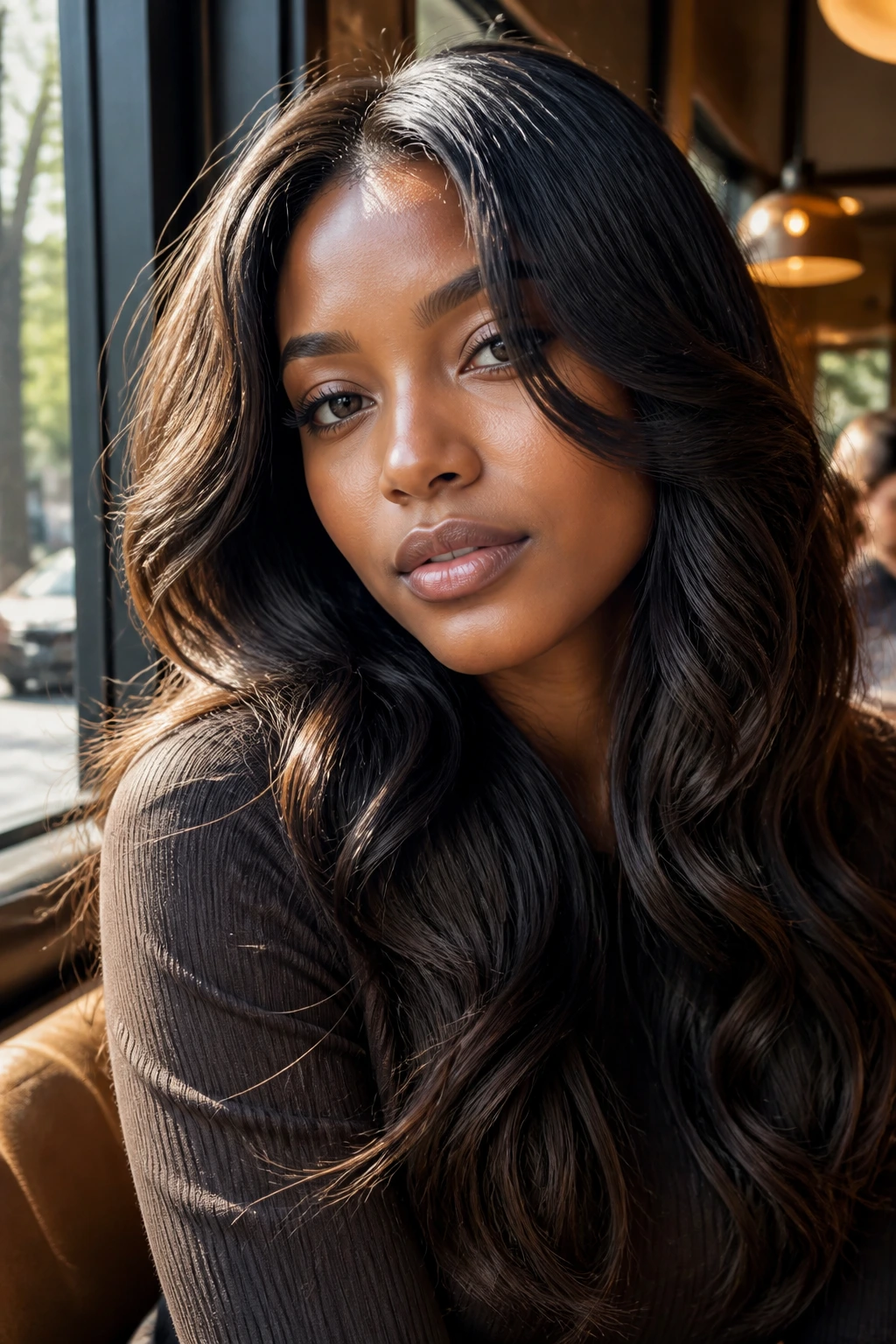
If your long hair has started to feel heavy, layers are the thing that brings the wave back to life. One-length hair can look glossy, but it can also behave like a sheet. Layers break that up.
Face-framing pieces make the wave show up earlier, right where people look first. That keeps the style from being all length and no shape. The best versions have a few soft bends around the front and slightly more movement through the lower half.
This is a good everyday style if you want long hair that still feels light around the jaw and cheekbones. It doesn’t ask for much beyond a good set and a brush-through that stops before the ends get ragged.
12. Wet-Look Waves with Sleek Roots
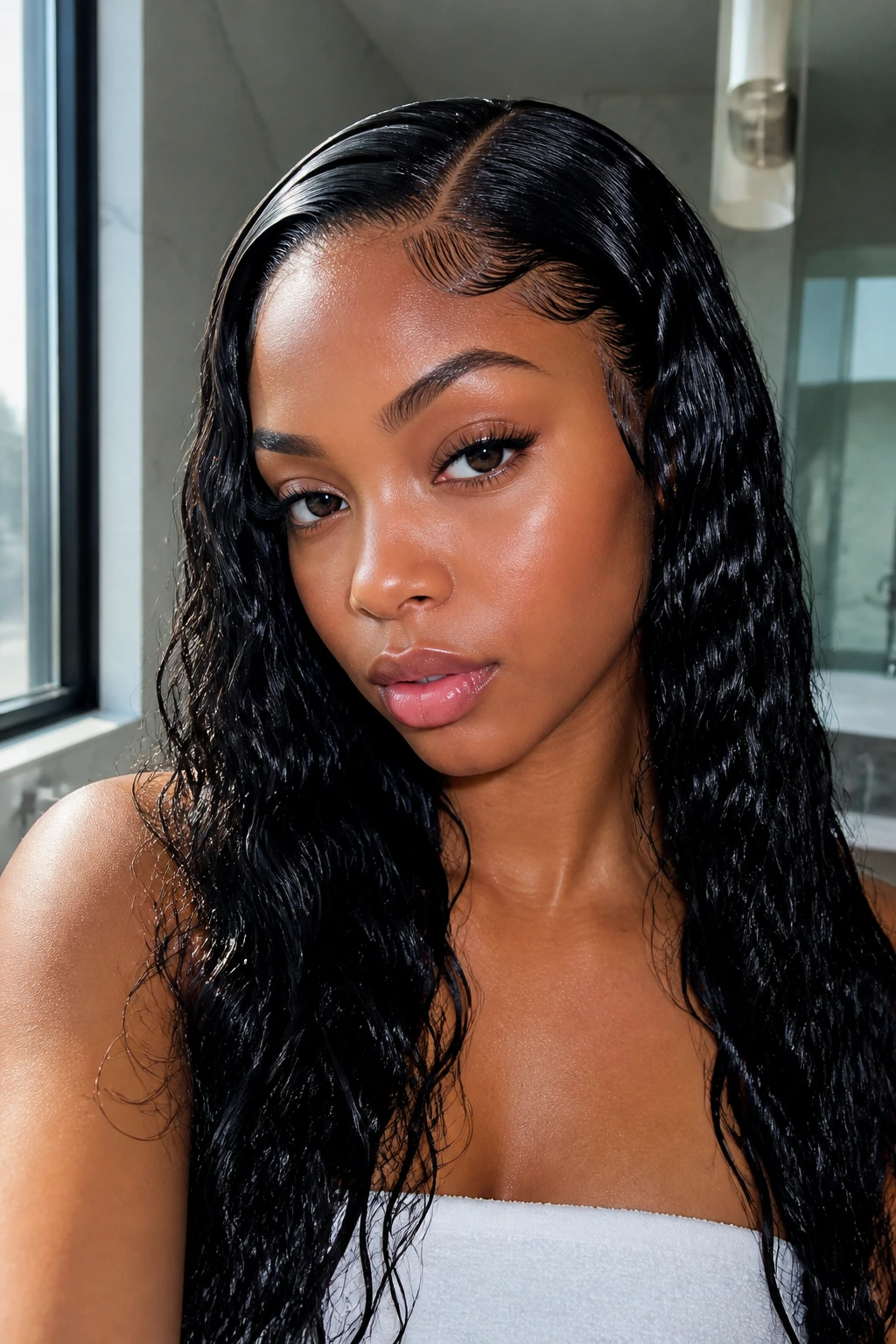
Wet-look waves are all about contrast. The roots stay sleek and slightly glossy, while the lengths hold a strong, defined bend that looks fresher than a brushed-out wave.
Long hair can handle this look because the shine travels farther down the strand. You see the line of the wave more clearly, especially if the part is sharp and the front is laid clean. That said, this style needs restraint. Too much gel and it flakes. Too little and it frizzes.
The best approach is a foam or mousse through the lengths, a small amount of gel at the roots, and careful shaping with your fingers while the hair is still damp. Once it dries, don’t keep touching it. That’s how the shine turns cloudy.
13. Flipped-End Waves with a Soft Middle Part
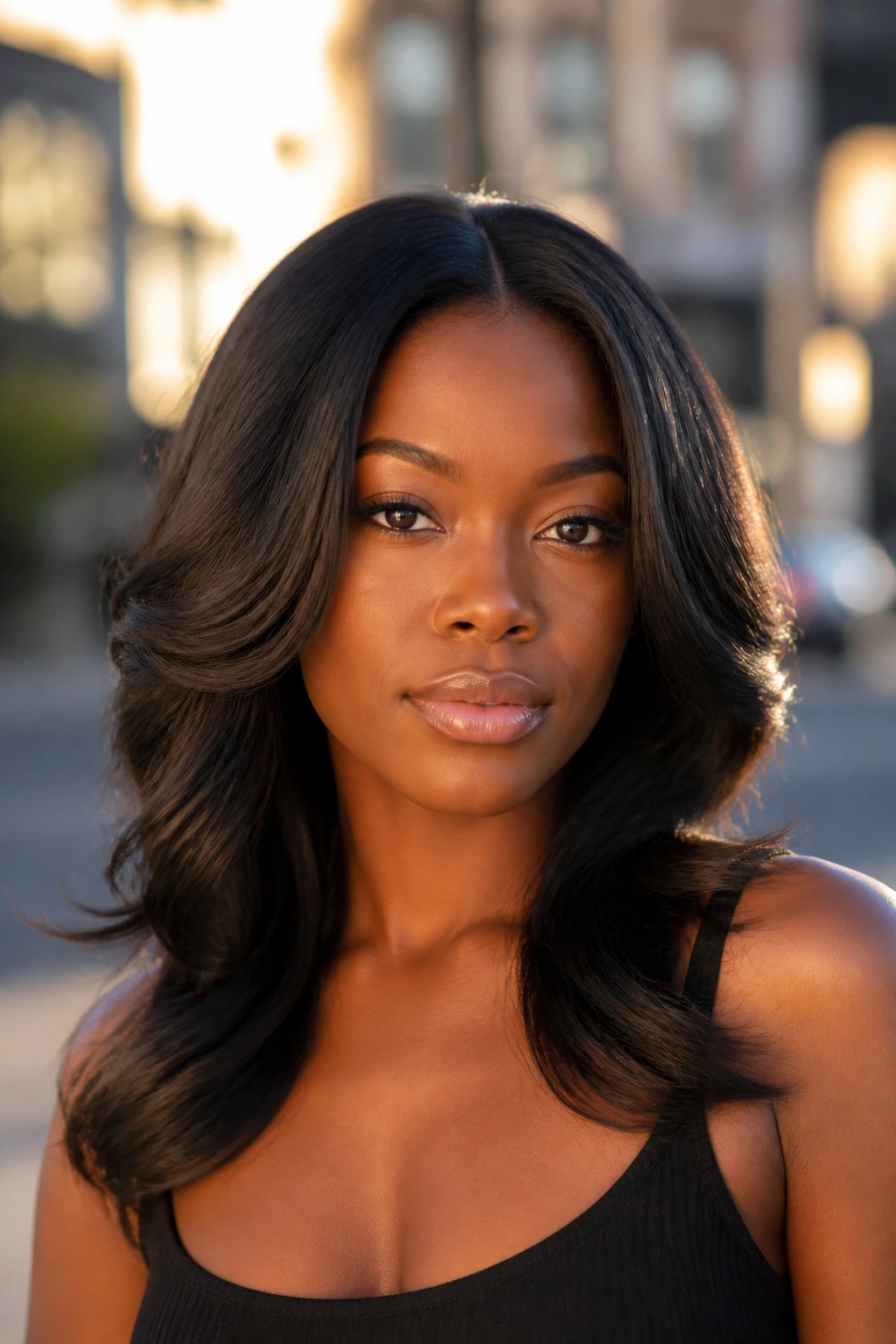
Flip the ends out, and the whole mood changes. Instead of hair that curves under your shoulders, you get a little lift at the bottom edge, which keeps very long hair from feeling too heavy.
A soft middle part gives the style a neat center line, while the flipped ends stop it from becoming stiff. This is one of those looks that feels polished without acting like it’s going to a formal event. The shape is relaxed, but there’s enough structure to make it look deliberate.
Use a flat iron or large roller set to create the bend at the ends only if you want the rest of the hair to stay loose. That trick saves time and keeps the wave from looking overworked.
14. Mermaid Waves with Clip-Ins or Long Bundled Hair
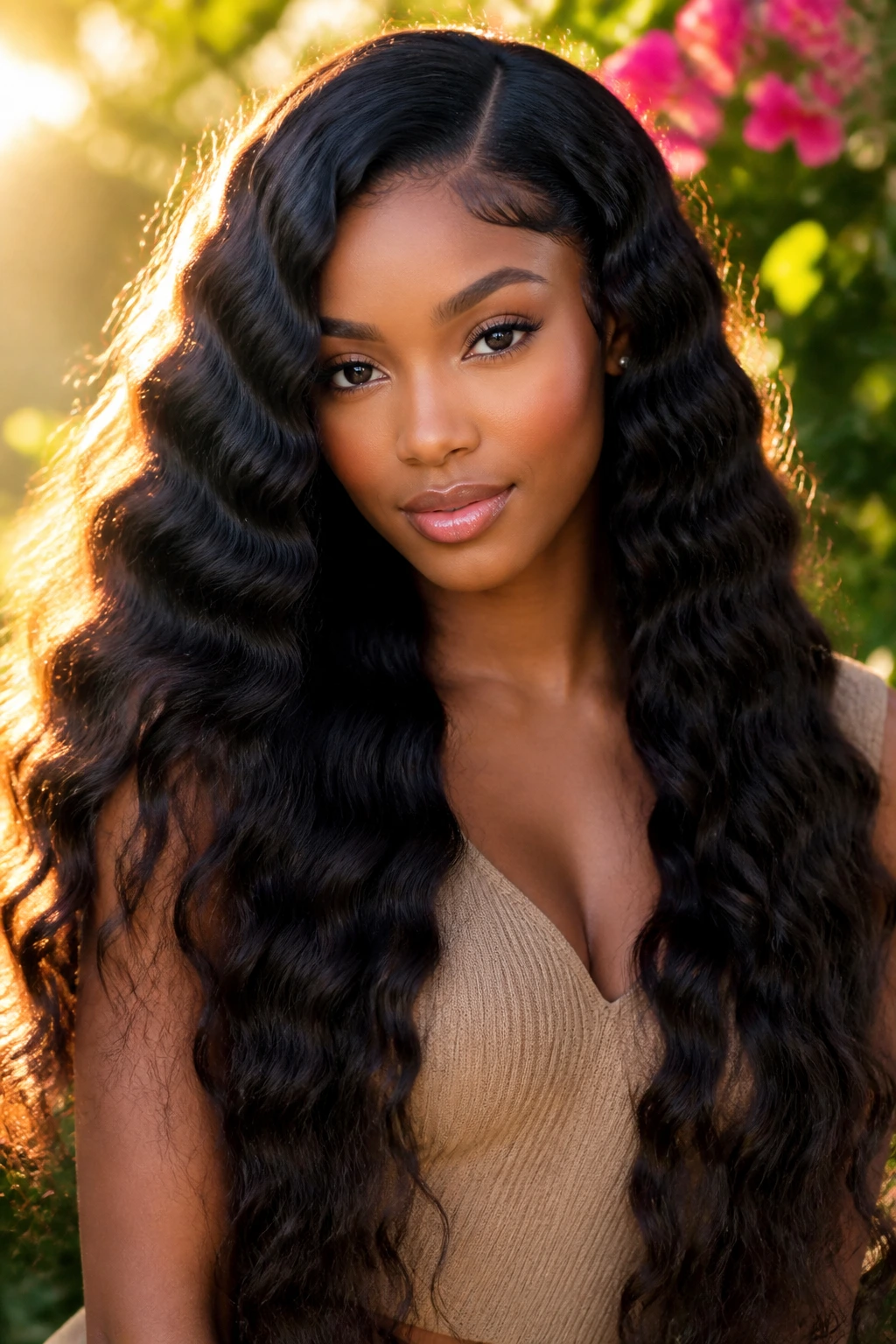
If your goal is sheer length and thick movement, mermaid waves are the loudest option here. The pattern runs long and soft, and when clip-ins or bundled hair are blended well, the whole style has a dense, flowing look that feels almost cinematic.
The important part is blending. The base needs to stay smooth, and the added hair has to match the wave direction or the style gets choppy. A large-barrel wand or soft rollers usually creates the right bend.
This one is for days when you want the hair to be the main event. Keep the makeup simple, or the whole look can start to feel crowded.
15. Twisted Halo Waves
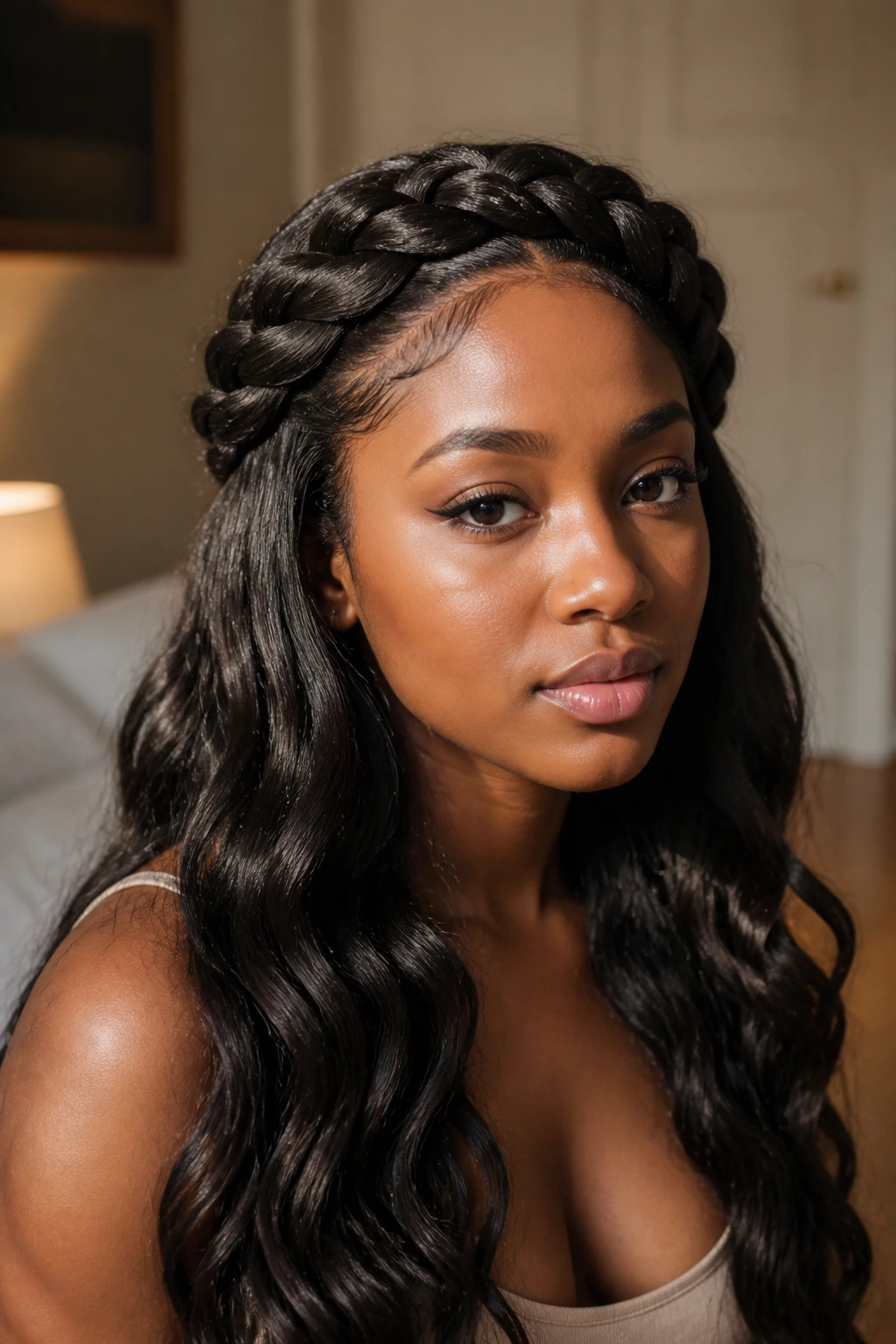
Need the front off your face without pinning the whole head back? A twisted halo gives you that middle ground. The twists travel around the head like a band, and the lengths fall into loose waves underneath.
It works best when the hair is stretched first, because the twist line sits cleaner on a smoother base. The wave through the lengths can come from braid-outs, wand set pieces, or a soft roller set. The halo controls the top. The length handles the movement.
There’s a softness to this style that makes it easy to wear with no fuss. It doesn’t ask for much. A few pins, a part, and a little patience while the twists cool or dry.
16. Side Braid into Flowing Waves
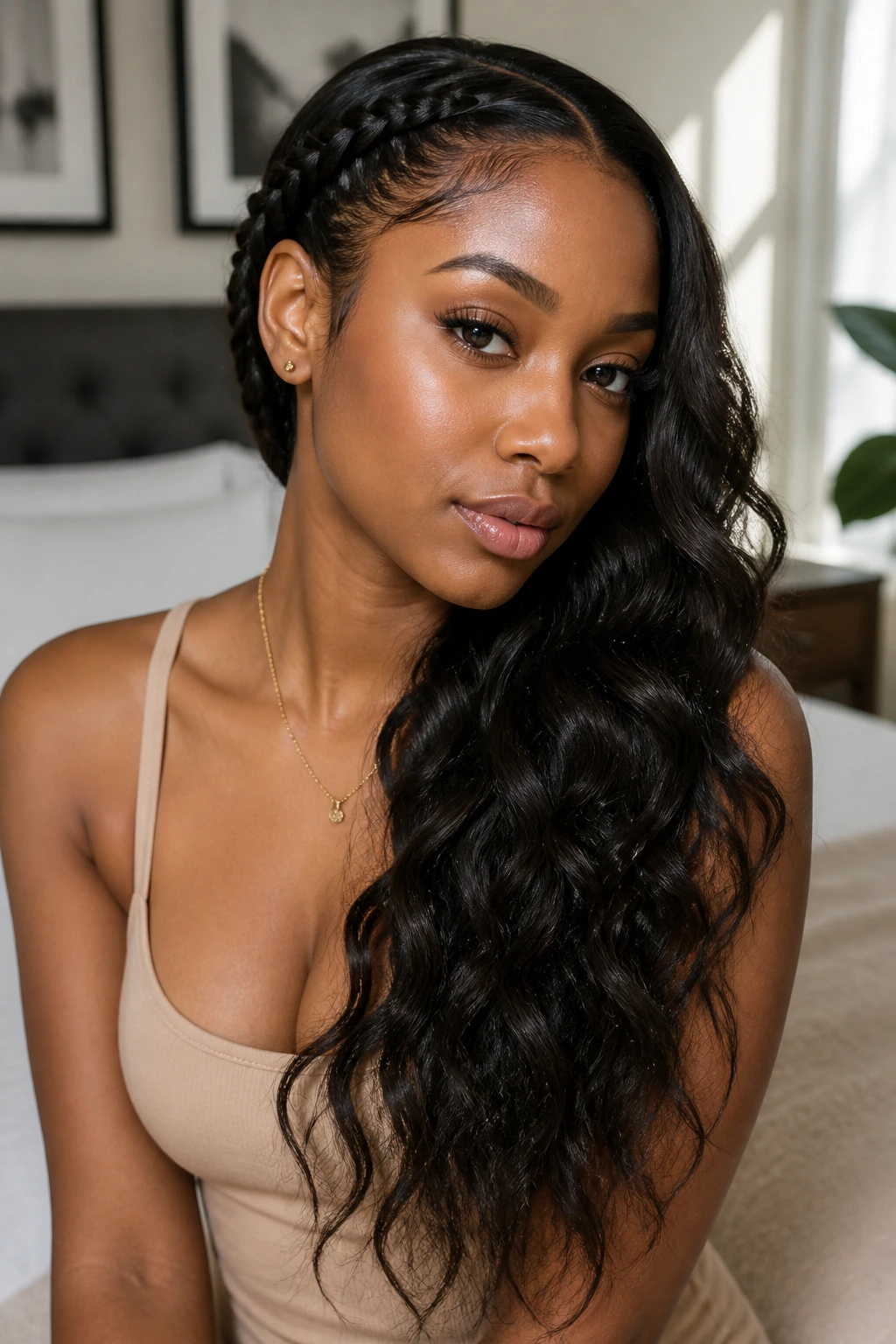
A single side braid can anchor a whole wave style. It gives the front one point of structure, then lets the rest of the hair spill over the shoulder in long bends.
This look is especially good when long hair has too much volume at the roots. The braid pulls that volume away from the face and keeps the top from puffing out. After that, the wave can stay loose and relaxed through the rest of the length.
Key Details
- Best braid size: one medium braid, not a tight cornrow
- Best wave pattern: loose wand waves or heatless plaits
- Best finish: a small clip or cuff at the braid end
The braid should feel like part of the style, not a separate add-on.
17. S-Waves from a Flat Iron
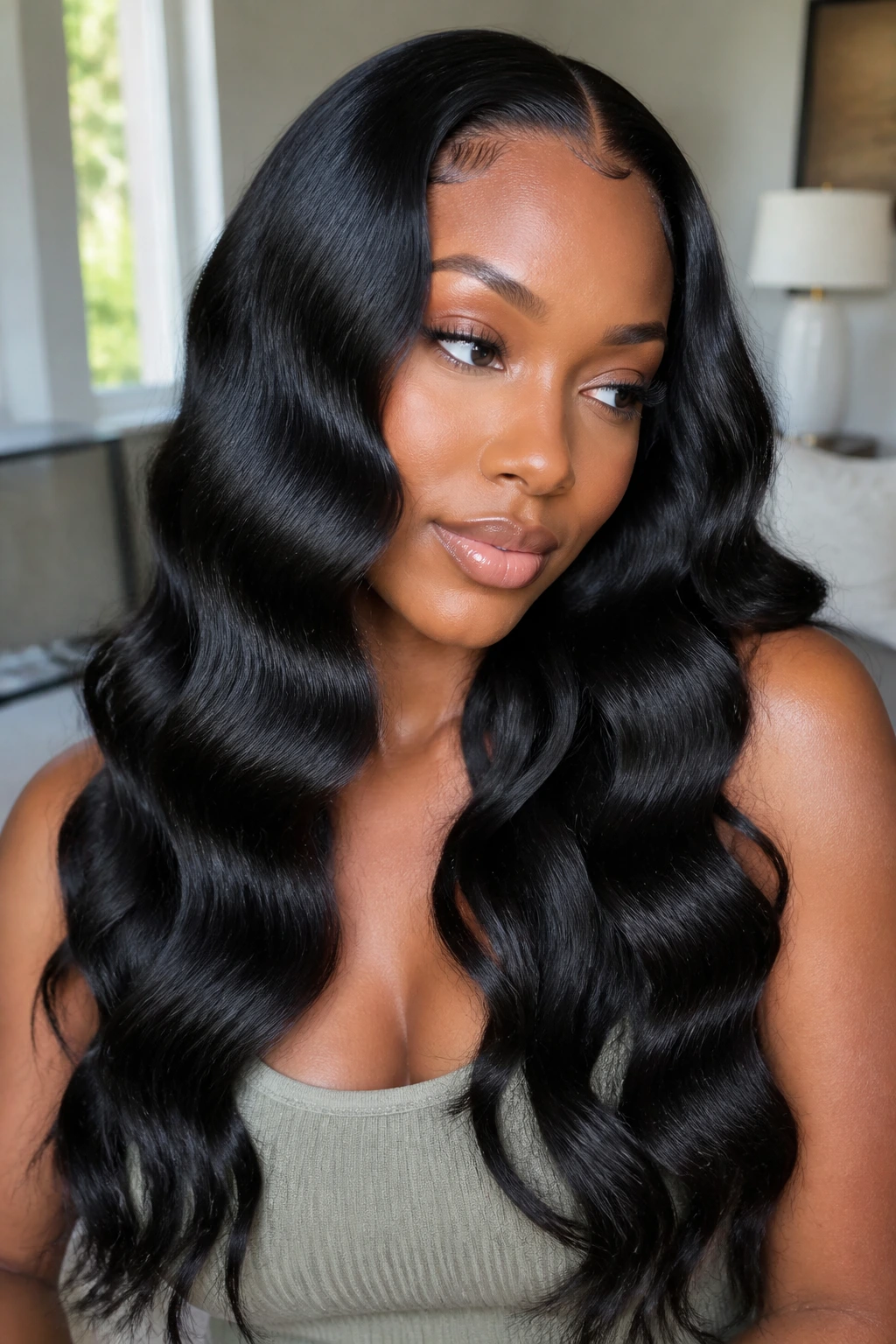
S-waves are for people who like a polished bend with some edge. The hair doesn’t curl around the iron the way it does with a wand; instead, the iron helps form a side-to-side “S” that looks controlled and sleek.
On long Black hair, this creates a very clean line. It’s a little more technical than a rod set, but the payoff is a wave pattern that looks sharp and lasts well if the sections are clean and the iron temperature is appropriate for the hair’s condition.
Use heat protectant, keep the sections small, and move slowly enough to shape the bend without flattening it. If the iron is too hot, the hair will look fried before the wave even sets.
18. Heatless Plait Waves for Overnight Setting
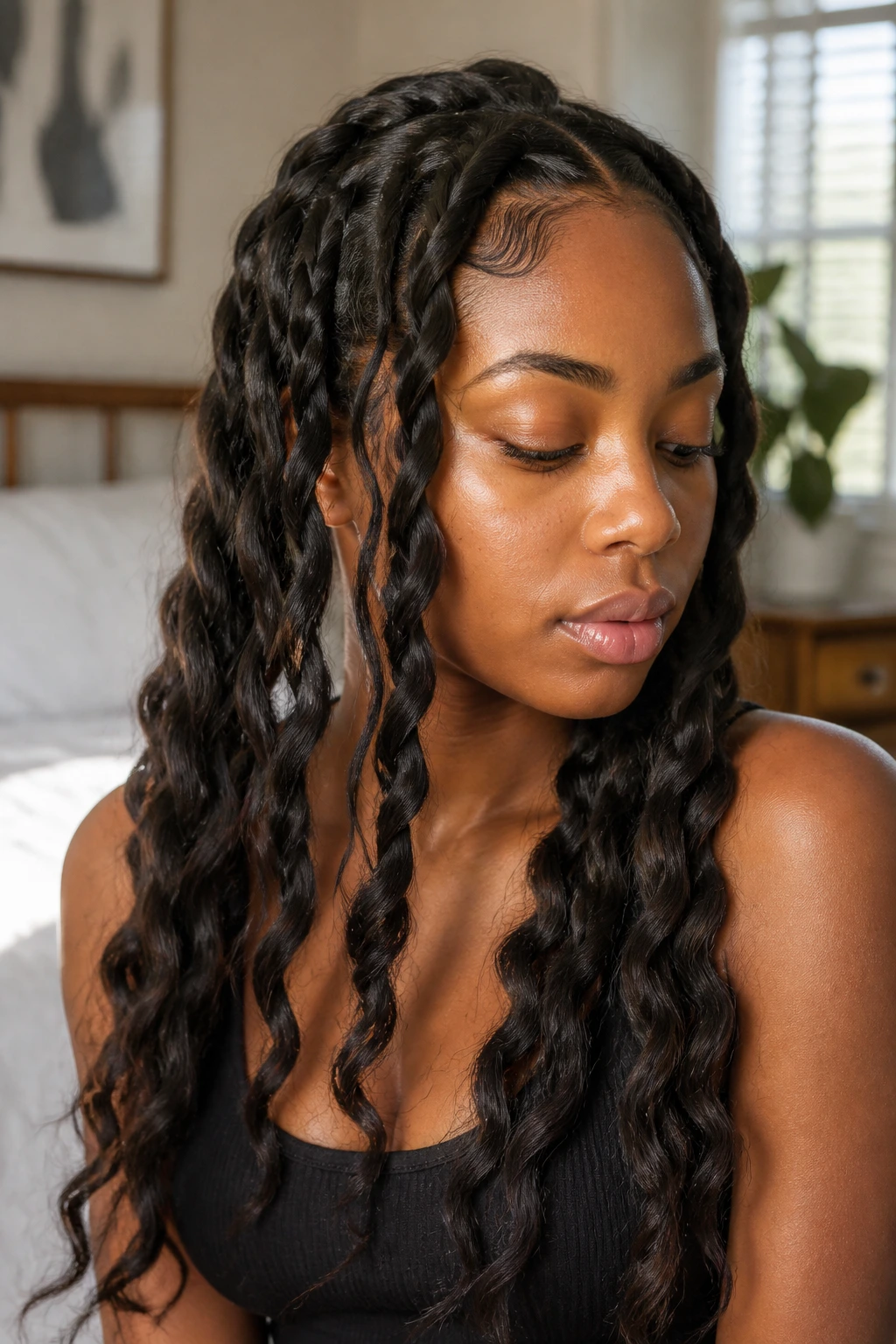
Heatless plait waves are the easy answer when the hair needs a break. You section the hair into plaits, let it dry fully, take it down carefully, and end up with soft waves that don’t need a hot tool.
They work especially well on stretched hair or hair that’s already been lightly blown out. The plaits make a clean line in the strand, and once the hair opens back up, the wave lands in a softer place than a tight braid-out.
Best Use Case
This style is ideal if you want to protect your ends and keep the routine calm. It’s not the fastest option, but it rewards patience. The waves usually look better on day two anyway, after the pattern settles.
19. Layered Waist-Length Waves with Extra Movement
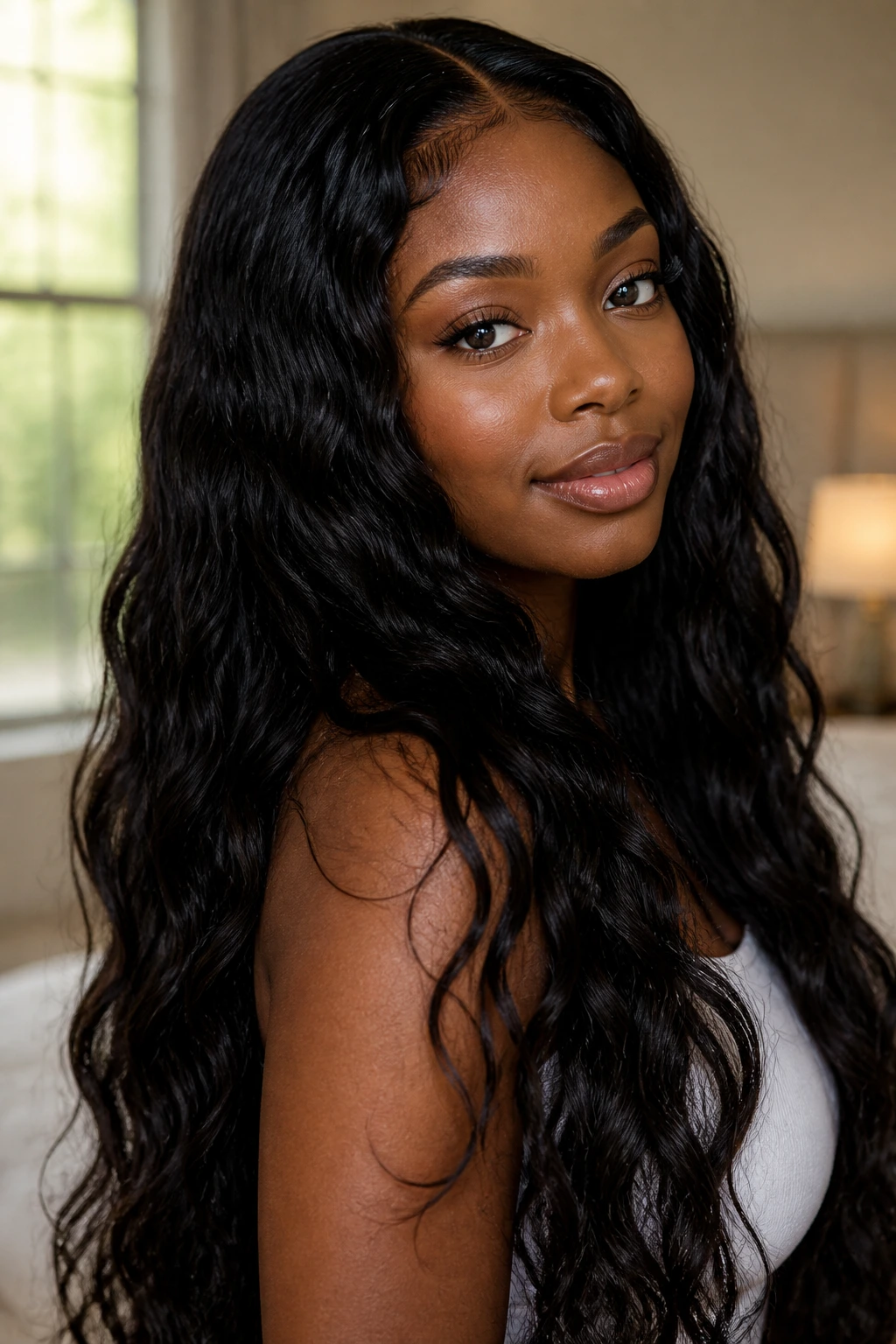
Very long hair can start to look heavy when the wave pattern sits too low and too uniform. Layers fix that by cutting some of the weight out of the bottom and giving the bend room to show up.
Waist-length waves with layers have more swing, more air, and less drag. The shape still reads long, but the ends don’t all hit the same point, which makes the whole style move better when you walk.
If your hair is dense, this might be the most practical choice on the list. It makes all the other wave styles easier to wear because the hair stops behaving like one huge block.
20. Scarf-Tied Pin-Up Waves
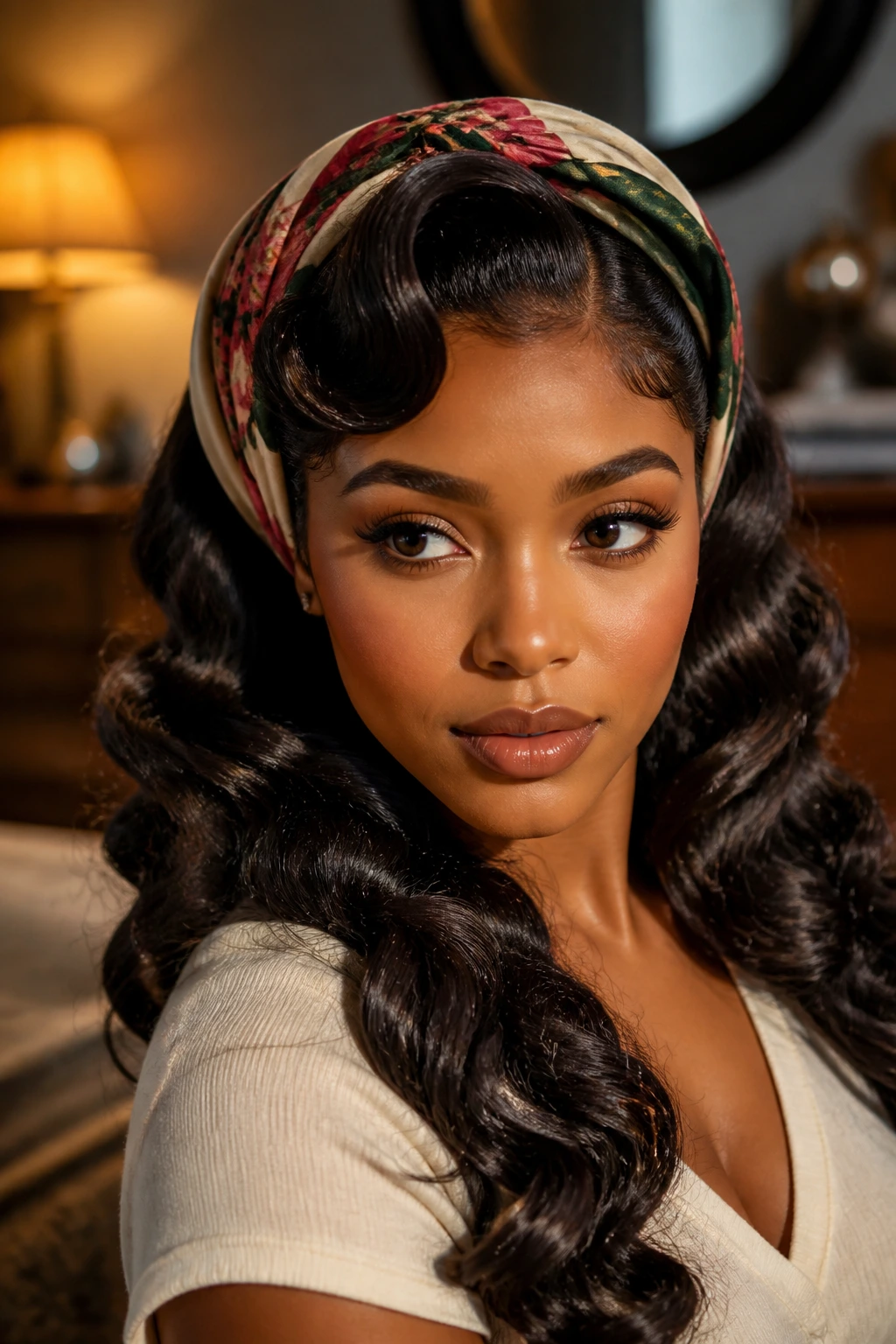
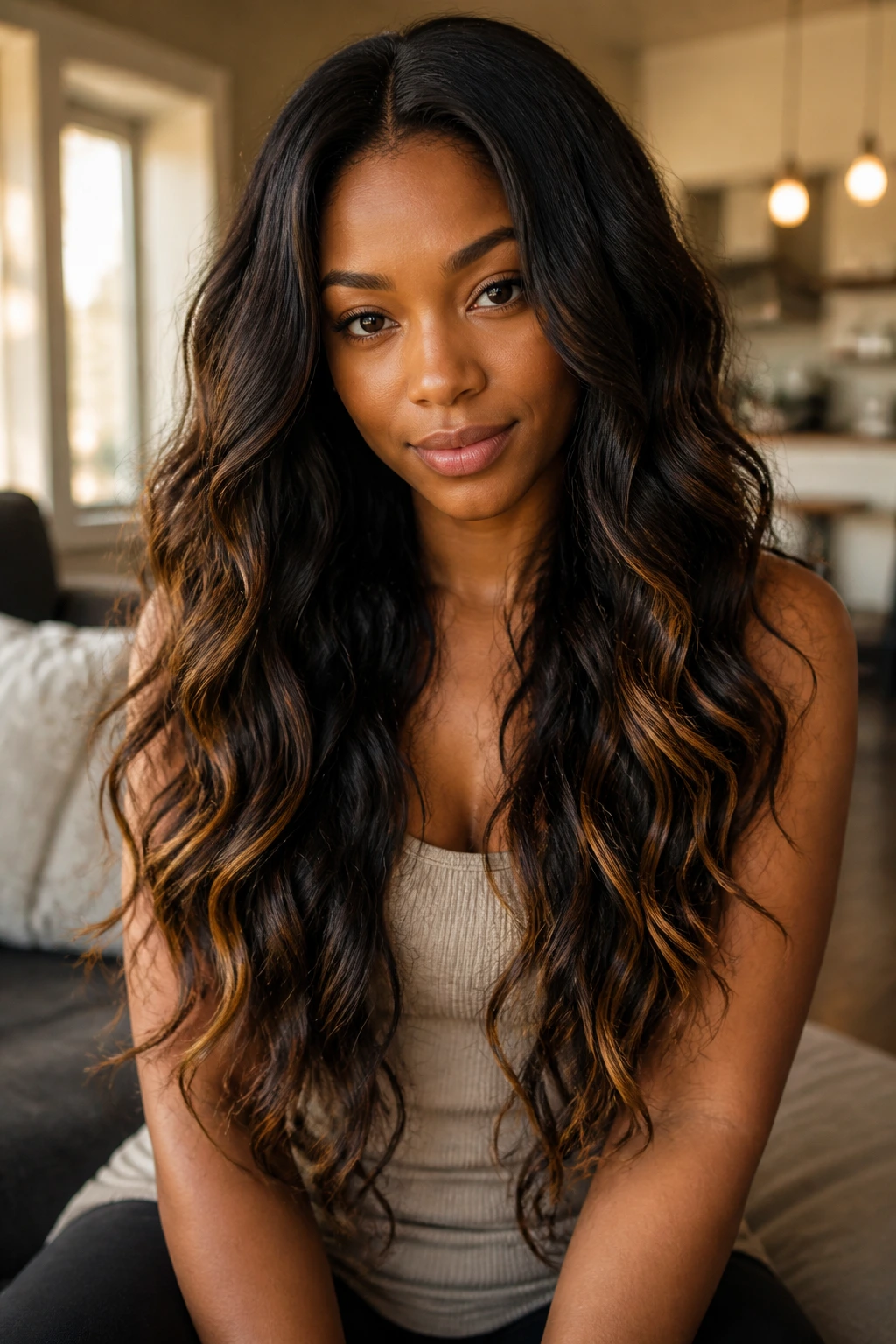
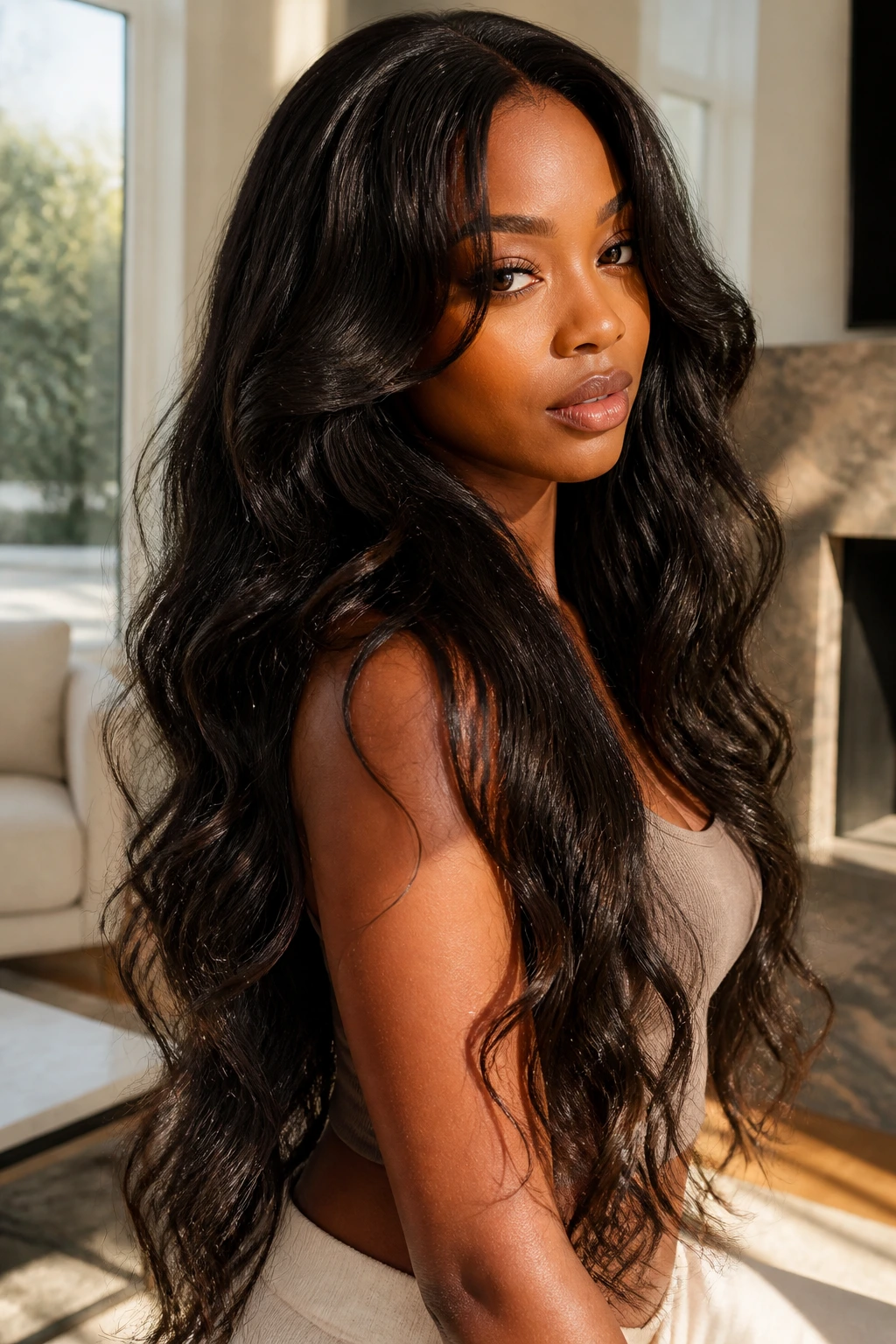
A scarf can do more than sit on top of a hairstyle. When it’s tied around a wave set or a pin-up shape, it changes the outline and gives the style a little vintage structure.
Long hair works well here because there’s enough length to tuck, roll, or loop into the scarf shape without losing the waves at the ends. It also gives you a fix for day-two hair when the roots need help but the lengths still look good.
This style is especially handy when you want the hair contained around the temples and forehead. A satin scarf or a printed one with some structure both work. Just don’t pull it so tight that the wave line flattens out.
21. Curly-Wavy Stretch Set
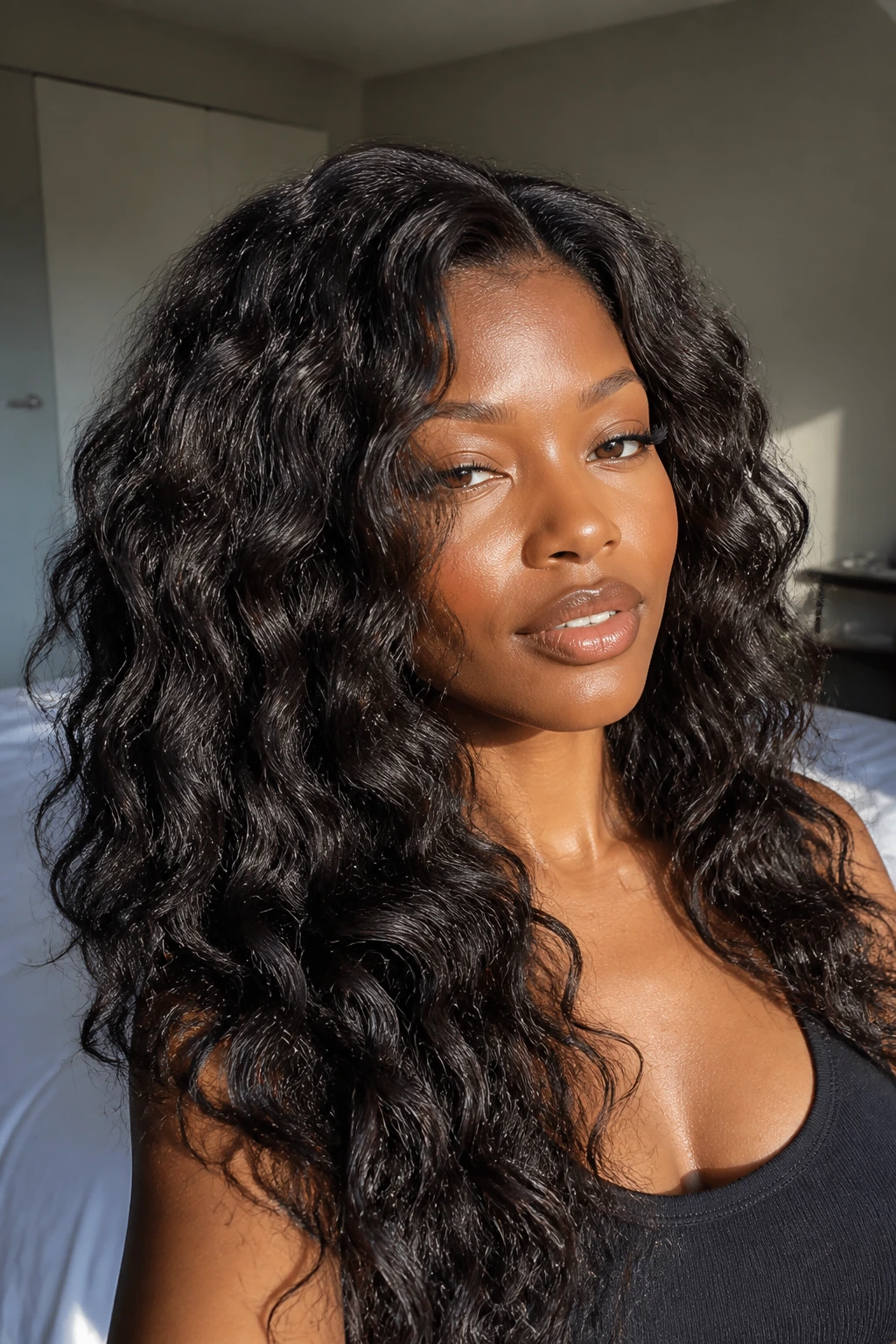
A stretch set sits between a twist-out and a wave set. The hair gets stretched, the pattern loosens up, and the final result lands in that soft middle zone where you still see texture but not a hard curl ring.
This works well on dense hair that needs a bit more control before styling. If the hair is left too free, the style can balloon. If it’s stretched first, the waves fall with more shape and less puff.
Best on
- Thicker textures that need a little tension before setting
- Long hair with shrinkage that loses visible length too fast
- People who want texture, not a crisp curl
Keep the separation gentle. Pull too hard and the bend disappears.
22. Deep Middle-Part Glam Waves with Volume at the Crown
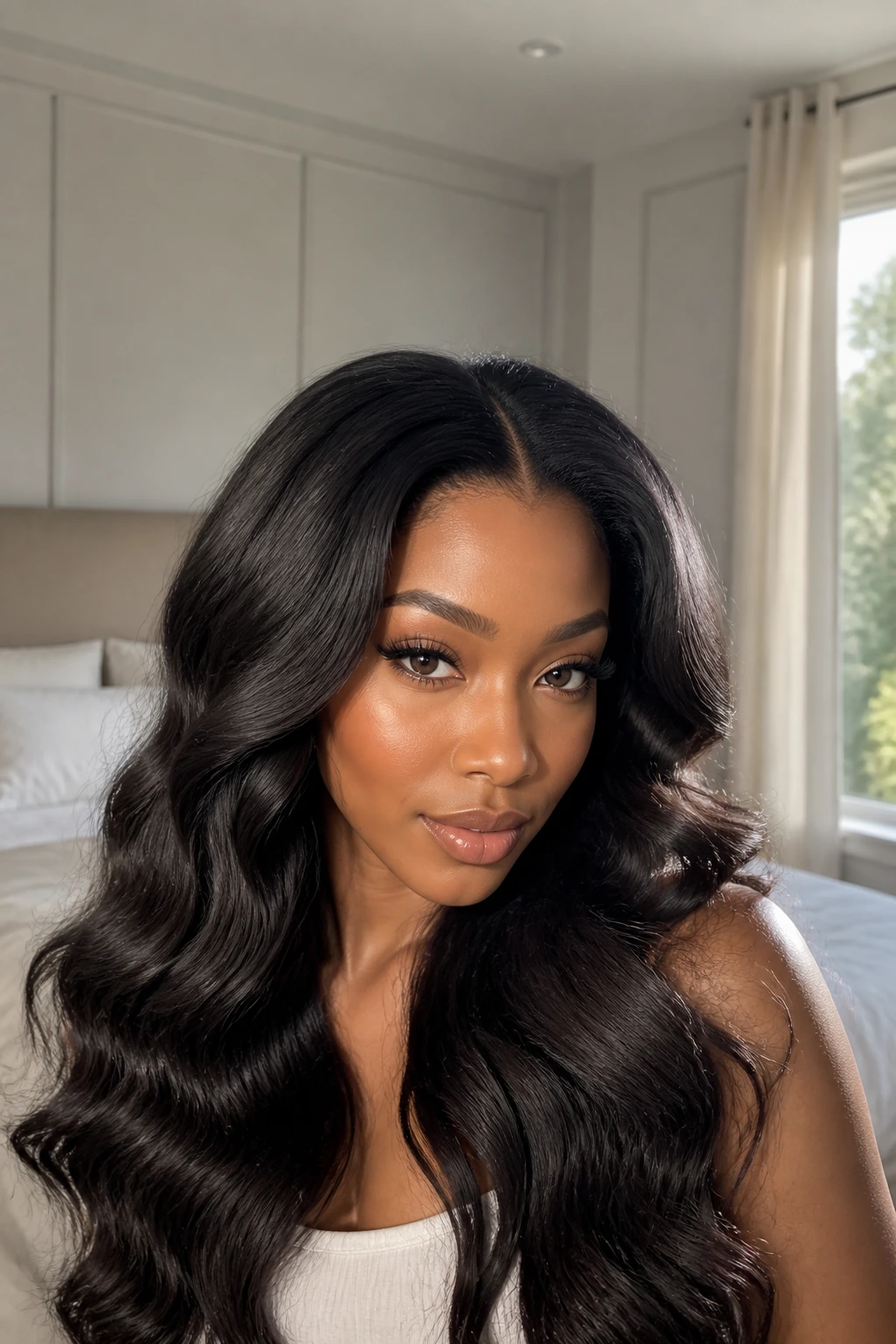
A center part can look flat if the crown has no lift. Give it a little volume, though, and the whole style opens up.
This version is all about balance. The middle part makes the face feel symmetrical, while the crown height keeps the roots from sitting too close to the scalp. Long hair then falls in soft waves on both sides, which gives the style a calm, polished shape.
It’s a strong choice if you like your waves with structure. Not stiff. Structured. There’s a difference. The ends still move, but the top stays clean enough to keep the style from looking heavy.
23. Braided Ponytail with Wavy Lengths
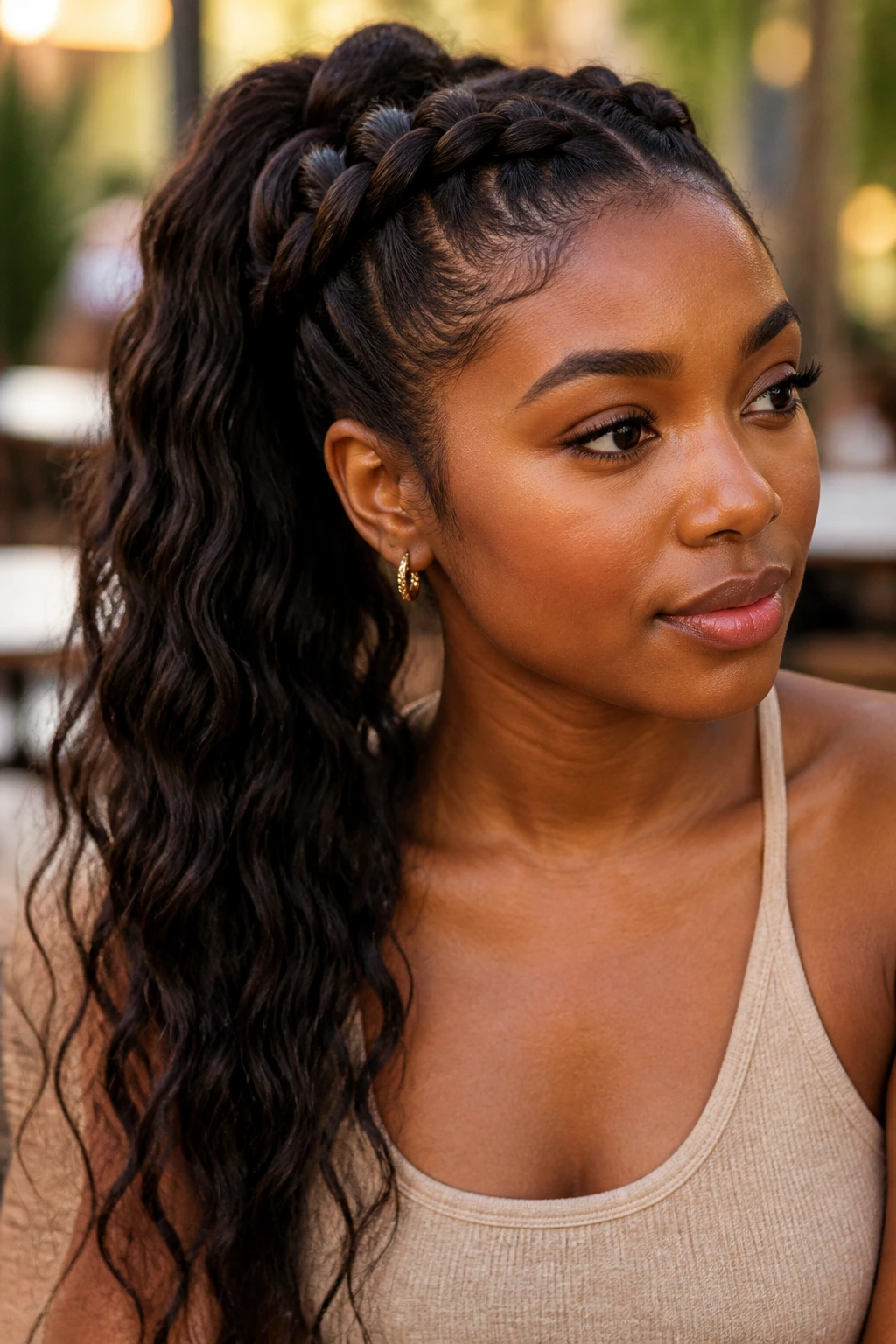
A braided ponytail gives the base grip and control, then lets the tail hold the wave shape without collapsing into frizz. That makes it a smart move for long days, busy schedules, or anything that asks for the hair to stay put.
The braid at the crown or along the first few inches near the scalp keeps the edges calmer than a fully loose ponytail would. From there, the length can be waved, bent, or softly curled. The finished look is tidy at the top and fluid at the bottom.
This is one of the easiest ways to keep long hair out of the way without losing the style.
24. Loose Feathered Waves for Heavy-Length Hair
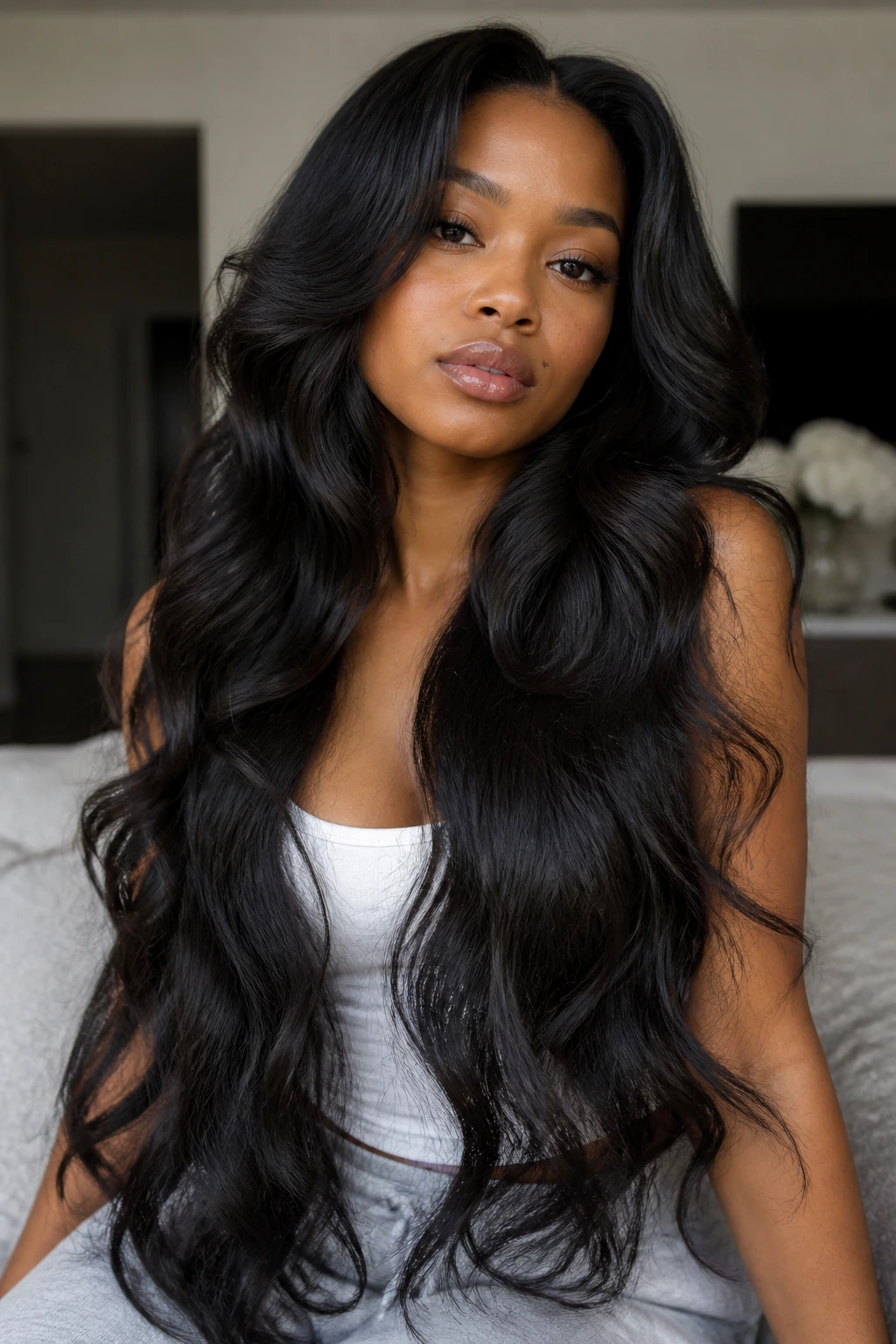
This is the least fussy wave in the whole group, and that’s part of the appeal. The bends are soft, the sections are larger, and the ends stay airy instead of tightly curled.
Feathered waves work best when the hair is long enough to carry the shape on its own. You don’t need a dramatic barrel or a heavy set. You need movement. A little bend at the root, a larger curve through the middle, and ends that don’t all land in one blunt line.
It’s the style I’d point to for everyday wear. It doesn’t fight the hair’s length. It lets the hair be long and still look awake.
Why Long Black Hair Changes the Wave Game
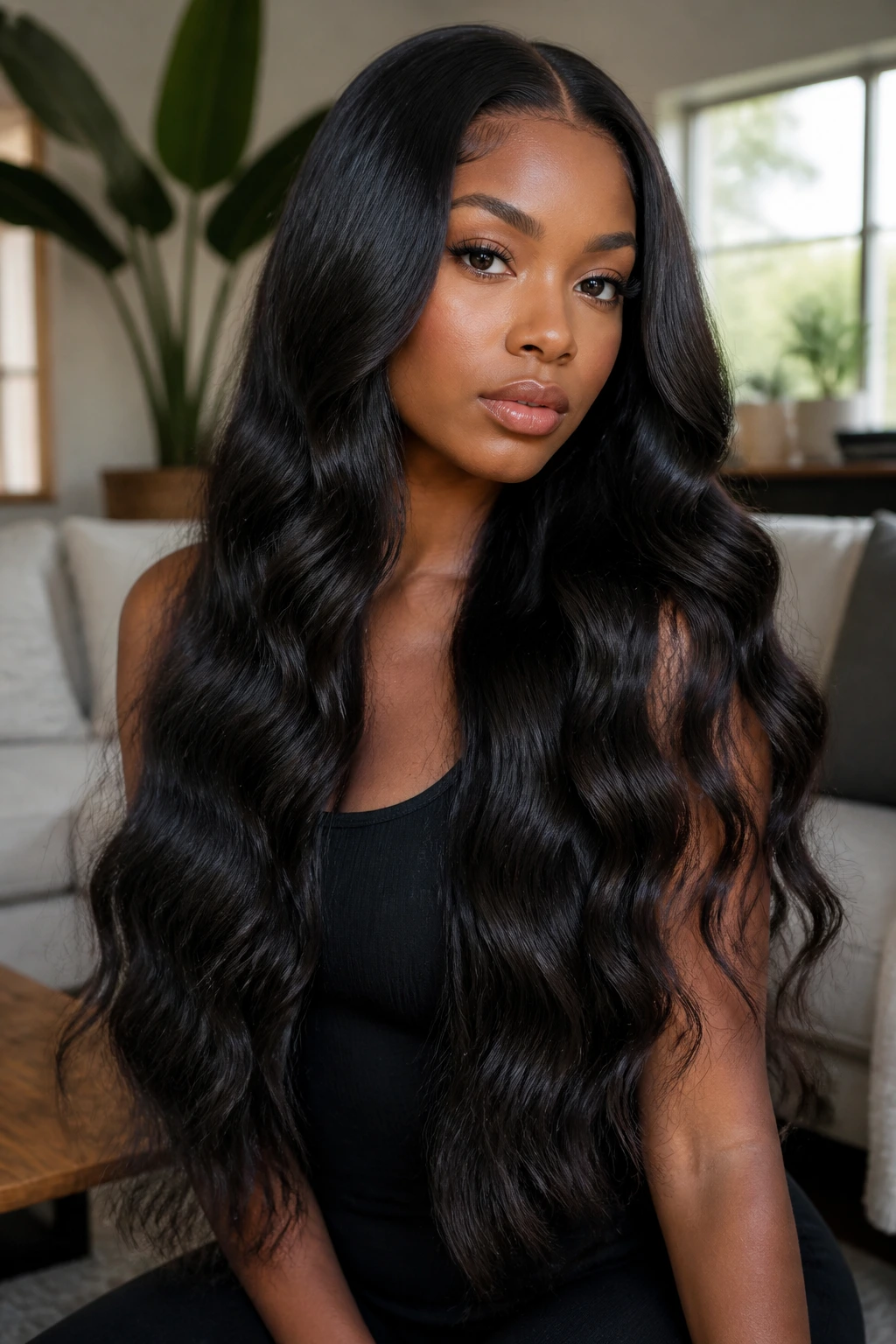
Long Black hair makes waves look more dramatic, but it also asks for more discipline. The extra length adds weight, and that weight pulls the wave pattern down as the day goes on. That can be a good thing when you want a softer bend. It can be annoying when you wanted a curl and got a memory of one.
Weight Changes the Bend
A wave that looks tight when it leaves the roller or wand often loosens by the time it settles. That isn’t a mistake. It’s gravity. Long hair stretches the curve, which is why a set needs to be a little firmer than your final goal if you want the style to last past the first few hours.
Shrinkage and Stretch Matter
Natural texture can hide the real length of the hair, then spring right back the minute it’s separated. If you want visible waves, start from a stretched base. Blow-drying on low heat, banding, braiding, or gently pressing the roots all help the pattern show up instead of disappearing into shrinkage.
Density Changes Everything
Dense hair needs smaller sections. Fine long hair needs lighter product. One size does not fit all here, and that’s the part a lot of generic hair advice gets wrong. The same wand and same product load can give two completely different results depending on how much hair is in each section.
Tools That Make These Styles Easier to Shape
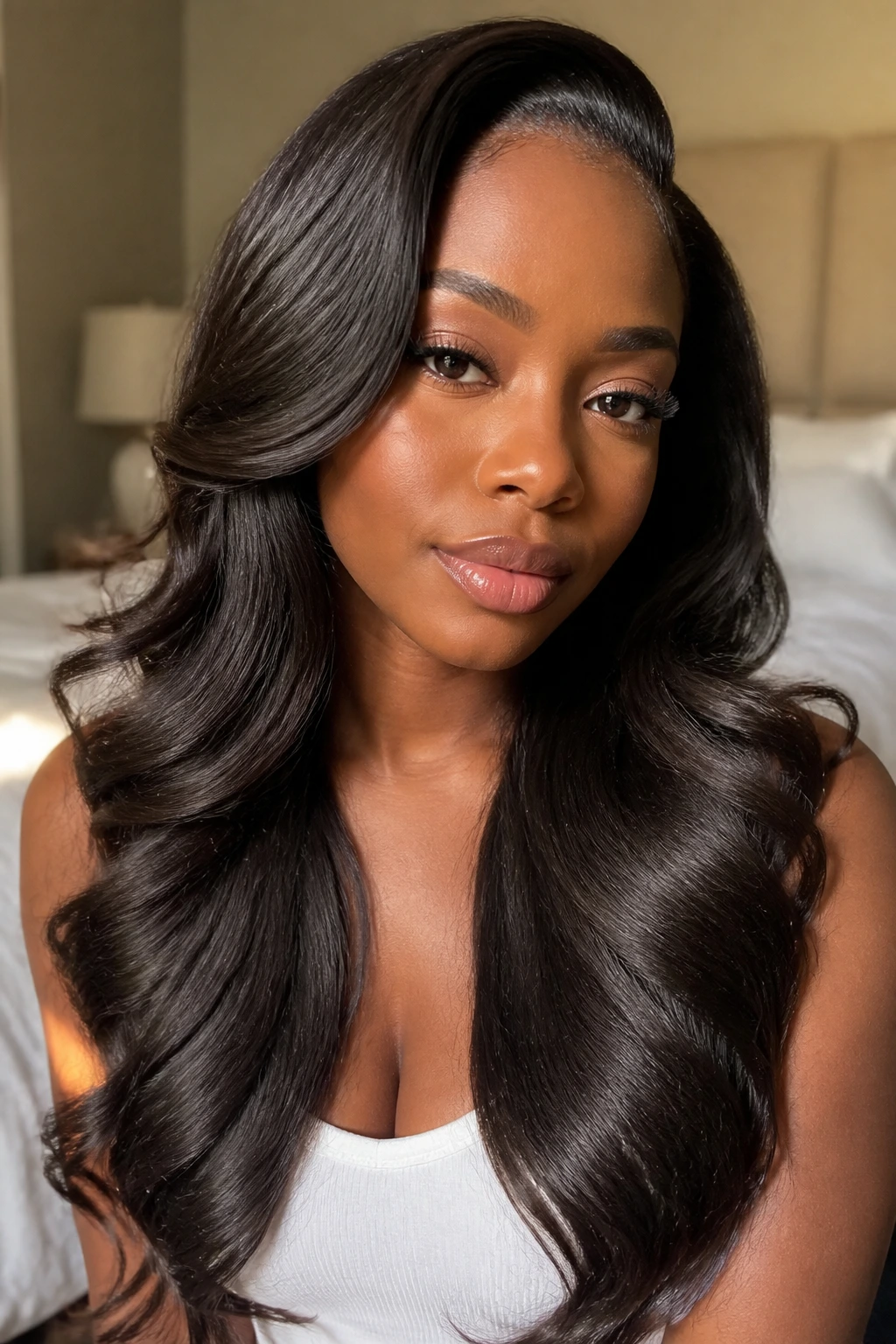
A good tool kit saves time, but more than that, it saves the shape. Long hair is unforgiving when the tools are clumsy.
- 1-inch curling wand or iron: Best for soft waves that brush out cleanly without looking too curly.
- Flat iron with rounded edges: Useful for S-waves, flipped ends, and polished bends.
- Flexi-rods in mixed sizes: Smaller rods near the face, larger ones through the back keep the wave from looking too uniform.
- Tail comb: Clean parts matter more on long hair because crooked sections show up fast.
- Duckbill or alligator clips: Hold sections out of the way while you set the next piece.
- Mousse or setting foam: Gives wave sets memory without heavy buildup.
- Light heat protectant: Needed any time hot tools touch the hair, especially on silk-pressed or blown-out bases.
- Satin bonnet or scarf: Keeps the wave from rubbing out overnight.
- Paddle brush and soft bristle brush: Use these to loosen a set gently, not aggressively.
Smart Product Picks for Hold, Slip, and Shine
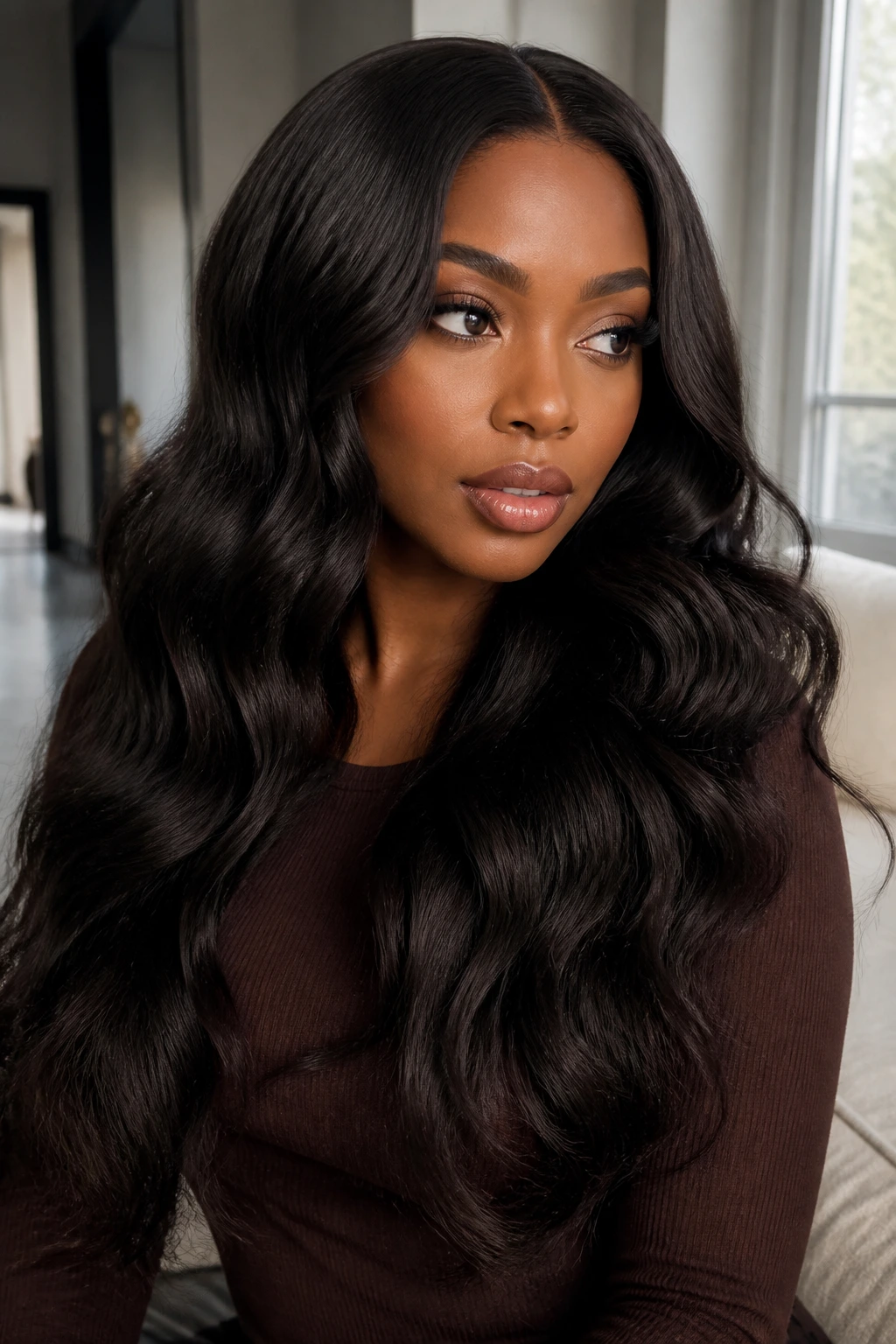
The product aisle gets messy fast, so keep the goal simple: hold where you need it, slip where you need it, and shine only where it belongs.
For Heat Styling
Use a heat protectant that leaves a thin, even film, not a greasy coat. If the hair is weighed down before you start, the waves won’t hold their shape. A lightweight mousse or foam on each section can help the bend stay visible after brushing.
For Heatless Sets
Setting lotion, wrap foam, and a little water mist can help braid-outs and plait waves dry into shape. The big mistake is soaking the hair. Damp is enough. Wet hair takes forever to dry in long lengths, and anything left wet at the core tends to puff later.
For Finish and Refresh
A pea-sized amount of serum on the ends can smooth fray, but heavy oils near the root will flatten the crown. If the style needs a reset, use a mist bottle with water and a little foam, then smooth the sections back into place with your hands. That works better than piling on more cream.
How to Wear These Waves With Outfits, Accessories, and Face Shapes
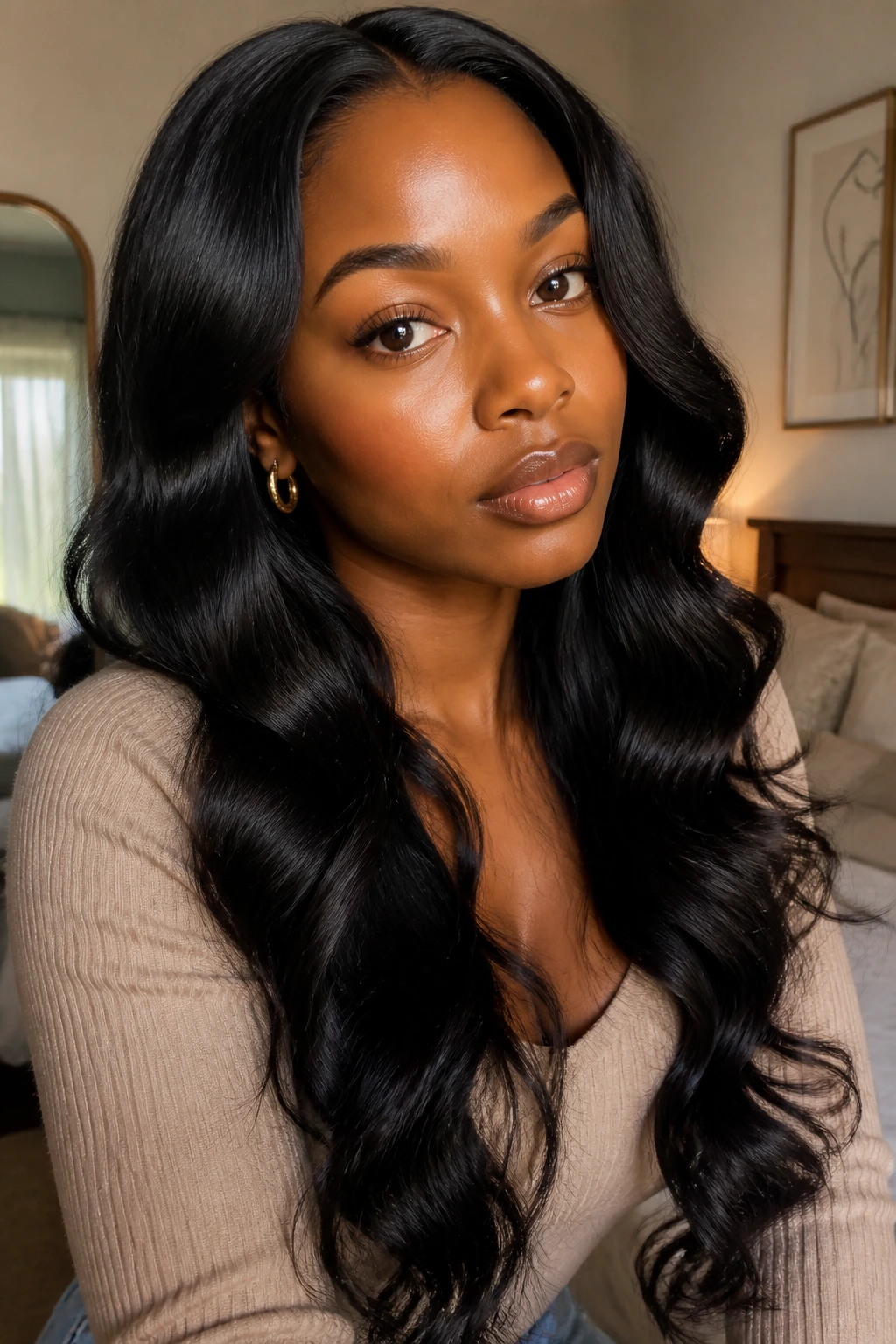
Everyday wear: Soft side parts, low ponytail waves, and feathered waves are the easiest styles to pair with tees, blazers, or a simple knit because they don’t demand attention from the rest of the outfit. They sit close enough to the head to stay neat, but they still move when you turn.
Dress-up move: Deep side-swept waves, Old Hollywood waves, and mermaid waves do their best work with open necklines, shoulders showing, or a neckline that leaves room for the hair to fall. If you’re wearing a dramatic wave, keep the earrings or neckline doing one clear job, not three.
Accessories: Hoops, cuffs, slim clips, and scarves all make sense here. The trick is not piling them all on at once. One strong accessory is usually enough. Two if the hair is being worn up.
Face balance: If you like some room around the cheekbones, pick half-up styles or face-framing layers. If you want more length on display, keep the front sleek and let the lengths sit forward. The hair should support your face, not hide all of it.
Extra Styling Tips for Longer-Lasting Waves
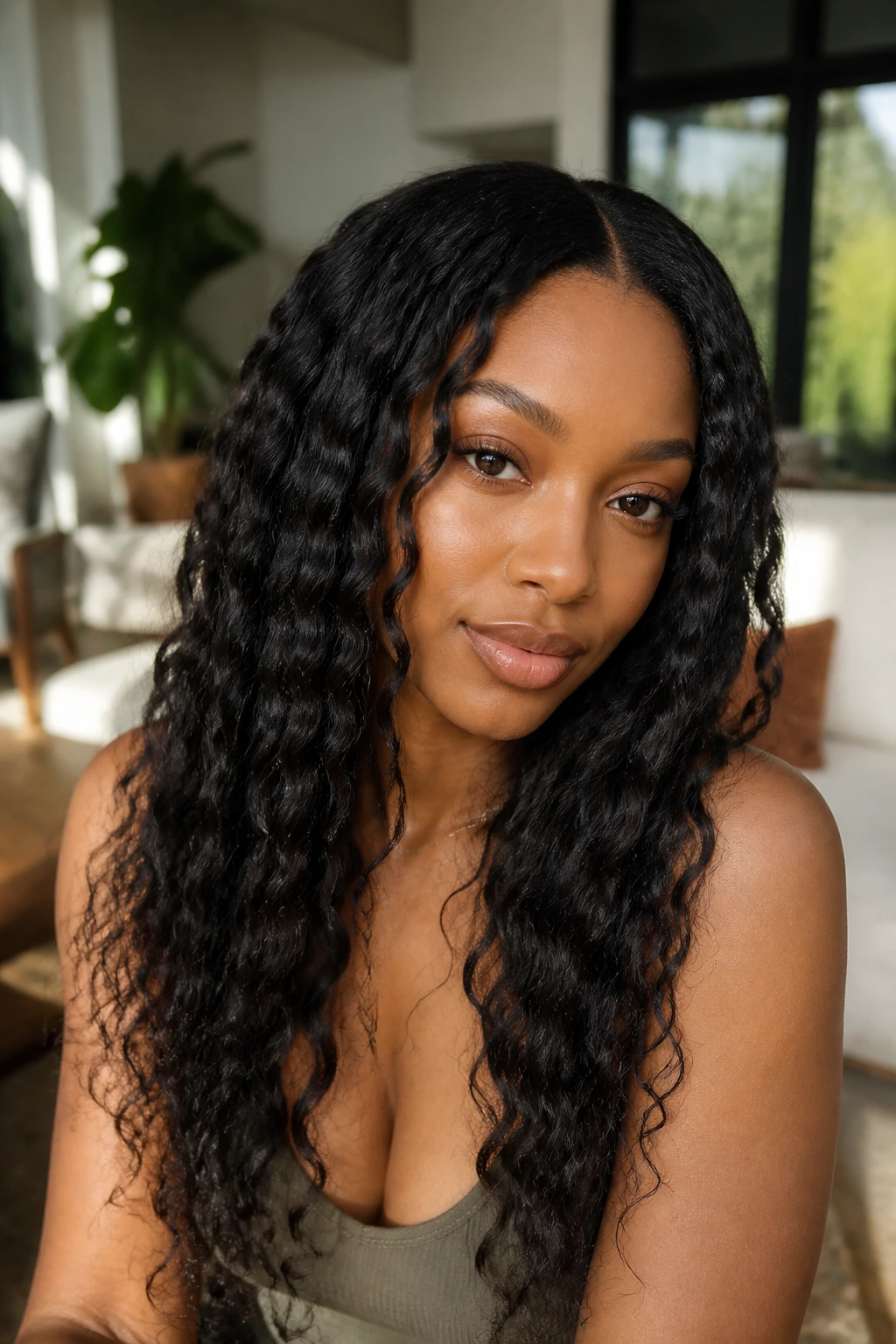
Wave Booster: Set the hair a little tighter than you want the final result to be, then let it cool or dry completely before brushing or separating. Long hair drops as it sits, and that extra set helps the shape survive the first few hours.
Time-Saver: If you’re short on time, spend your effort on the front and top layer first. That’s the part people see straight away. The back can be looser or softer, and no one standing in front of you will know.
Pro Move: Alternate the direction of the wand or iron as you work down the head. That stops one giant uniform curl from forming and gives the wave a more natural fall.
Make-It-Yours: If your hair is very dense, add smaller sections at the crown and larger sections through the back. If it’s fine, use lighter product and fewer passes. Long hair makes both mistakes obvious.
Common Mistakes That Flatten the Pattern
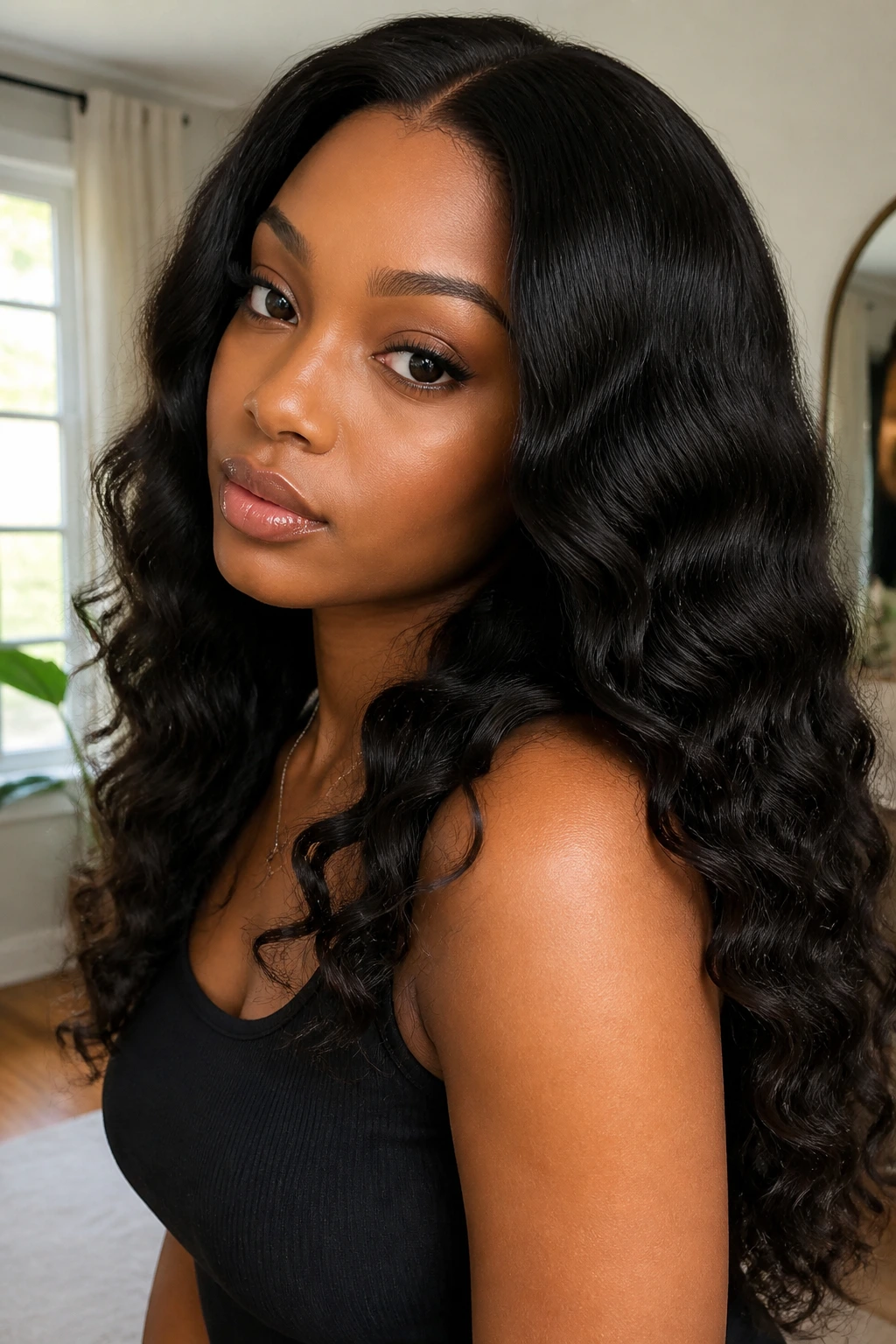
Using sections that are too big: The wave looks fine when it’s hot, then falls apart by the time you’re done. On long hair, bigger sections can pull the bend out before it sets. Use smaller sections than you think you need.
Touching the hair before it cools: Warm hair has no business being brushed or separated. It will frizz, lose shape, and leave you fixing the same piece twice. Pin the curl, rod, or bend in place and leave it alone.
Loading on heavy cream at the root: That’s how the crown goes flat and the wave gets greasy near the top. Keep rich products off the root area unless the hair is extremely dry and you’re applying a tiny amount.
Skipping the stretch stage: If the hair is too shrunken before styling, the wave pattern gets hidden instead of shown. A stretched base gives the style a cleaner line and better length.
Sleeping on it loose: One rough night can wreck a set that took an hour to build. Wrap it. Pineapple it. Put it under satin. Anything is better than rubbing it on cotton.
Variations and Adaptations to Try
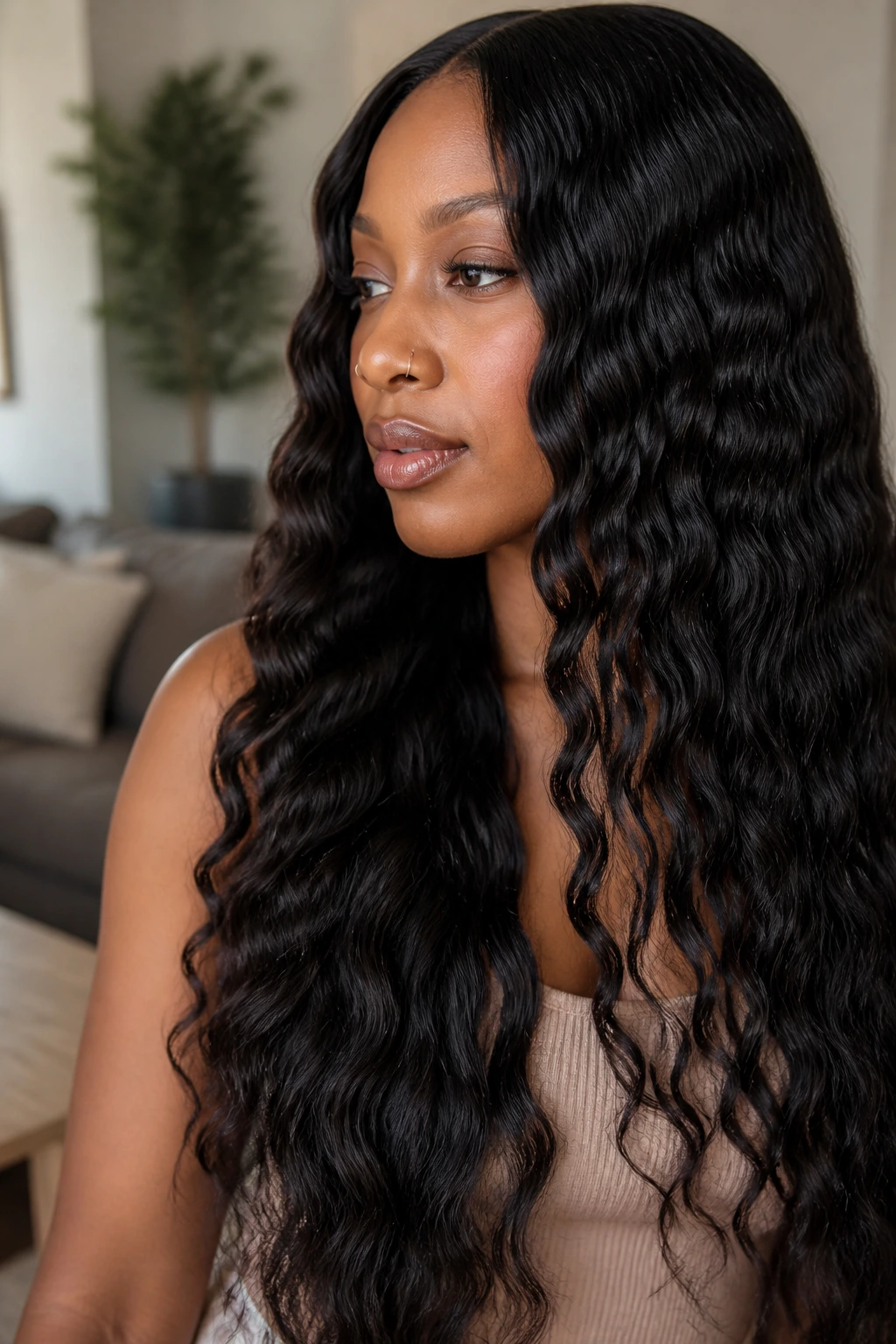
Heatless Weekend Waves: Use braids, plaits, or twists on stretched hair and let the style dry fully under a satin wrap. The finish is softer than a hot-tool set and usually easier on the ends.
Red-Carpet Sweep: Take the deep side-swept wave, add a clean tuck behind one ear, and finish with a pin or clip. That little detail gives the look a stronger shape without changing the whole style.
Low-Tension Workday Pony Waves: Pull the hair into a low ponytail, wave the tail only, and keep the base smooth but not tight. It’s a good choice when you want the hair controlled without tugging the edges all day.
Humidity-Friendly Wet Set: Choose a mousse-based rod or roller set and keep the root product light. The style holds shape better when the hair isn’t overloaded with cream that can swell in damp air.
Big-Length Clip-In Waves: If you’re using clip-ins or bundled hair, match the wave direction from top to bottom and blend the front layers first. That keeps the added hair from sitting like a separate piece.
Keeping the Waves Fresh Between Wash Days
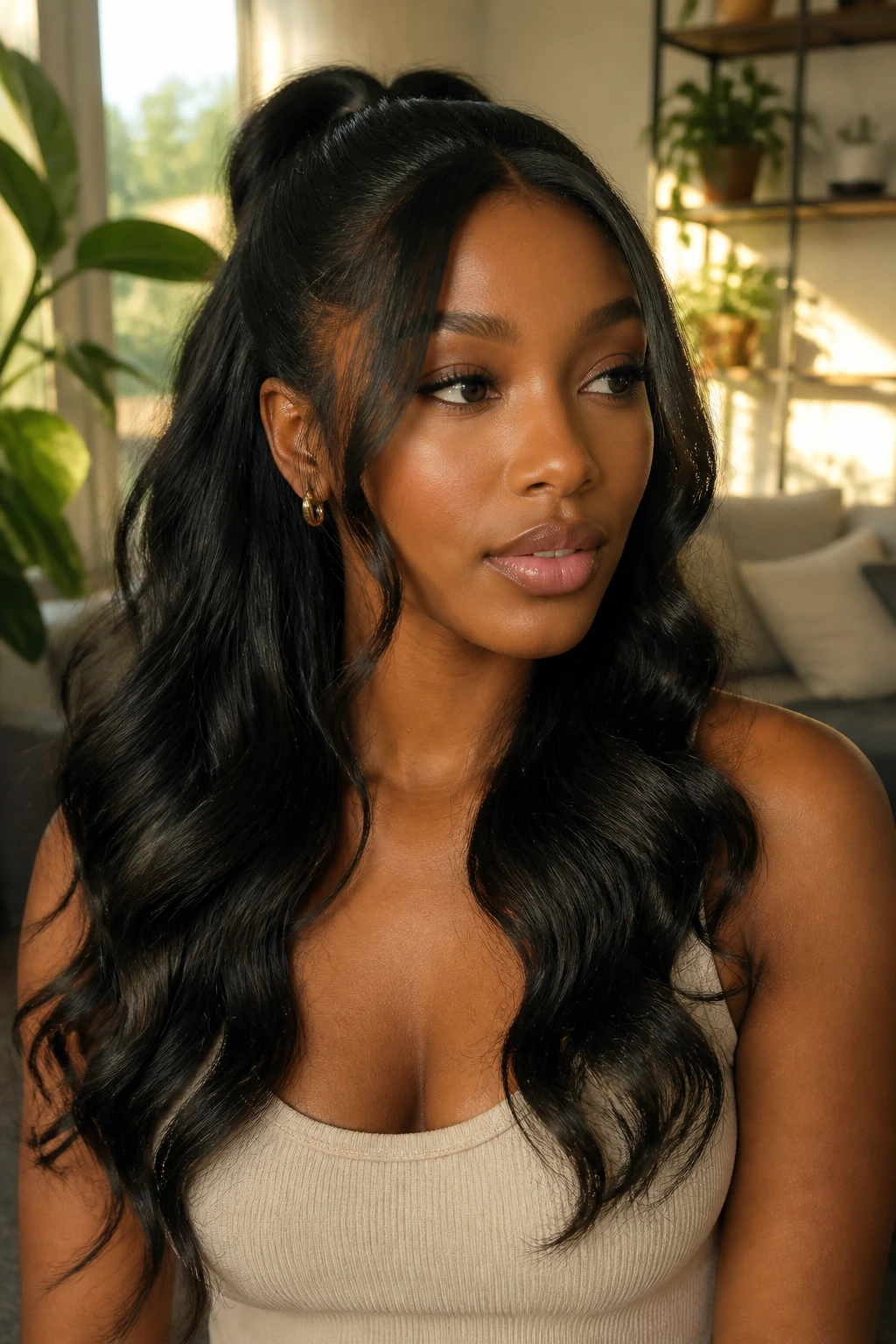
A good wave set can last longer than most people think, but only if the night routine is disciplined. Long hair rubs against shoulders, collars, pillows, and jackets, and that friction is what breaks the bend down first.
Wrap the hair in a satin scarf or bonnet every night. If the style is loose, pineapple it lightly or tuck the lengths into a loose wrap so the ends don’t get bent in odd places. For ponytails, secure the base gently and lay the tail over one shoulder or in a satin wrap.
On day two or three, refresh with a light mist of water and a small amount of foam or setting spray. Smooth the front pieces with your hands, then let the hair dry before you touch it again. If the roots need help, use a little dry shampoo or a quick root blot with a microfiber towel, but don’t go straight to heavy oils. That usually makes the buildup worse.
Heated styles often stay polished for 3 to 5 days if the hair was fully cooled before styling and protected at night. Braid-outs and plait waves can go 5 to 7 days when the hair starts stretched and the pieces are separated gently. If the ends start to look tired before the roots do, spot-refresh only the lower half instead of redoing the whole head.
Frequently Asked Questions About Wavy Hairstyles for Black Women With Long Hair
Can I get waves on 4C hair without a flat iron?
Yes. Braid-outs, plait sets, flexi-rods, and twist-based sets all work on 4C hair, especially when the hair is stretched first. The result will usually be softer and more textured than a pressed wave, which is part of the appeal.
What size curling wand works best for long hair?
A 1-inch wand is the safest starting point because it gives enough bend for a wave that can be brushed out later. If your hair is very dense or very long, a slightly larger barrel can work for looser glam waves, but the section size still needs to stay small.
Why do my waves fall flat at the roots?
The root is usually getting too much product, too much tension, or not enough lift when the style is set. Keep heavy creams away from the scalp, make your part clean, and let the roots cool or dry in the shape you want.
How do I stop waves from turning frizzy by day two?
Protect the hair at night and don’t over-separate it on day one. Cotton pillowcases and constant touching are the main culprits. Satin, light refresh mist, and a clean hands-off first day make a real difference.
Are braid-out waves better than wand waves for long Black hair?
They’re better for different reasons. Braid-outs are gentler and heat-free, while wand waves usually look smoother and more polished. If your hair needs a break from heat, pick the braid set. If you want a tighter glam line, the wand wins.
Can I wear clip-ins with these styles?
Yes, and long hair often blends better with clip-ins than shorter hair does because there’s more length to hide the joins. Match the texture first, then set both the natural hair and the added hair in the same direction so the wave pattern doesn’t split apart.
How often can I restyle the same waves before washing?
Most styles can be refreshed once or twice before they start looking tired. After that, the buildup at the root and the friction at the ends usually make a full reset easier than trying to save every piece.
What if the waves look puffy instead of soft?
Usually the hair wasn’t stretched enough before styling, or the product was too heavy and got disturbed before it dried. Use smaller sections, stretch the base first, and separate the waves only when the set is fully cool or dry.
Soft Ends, Strong Shape
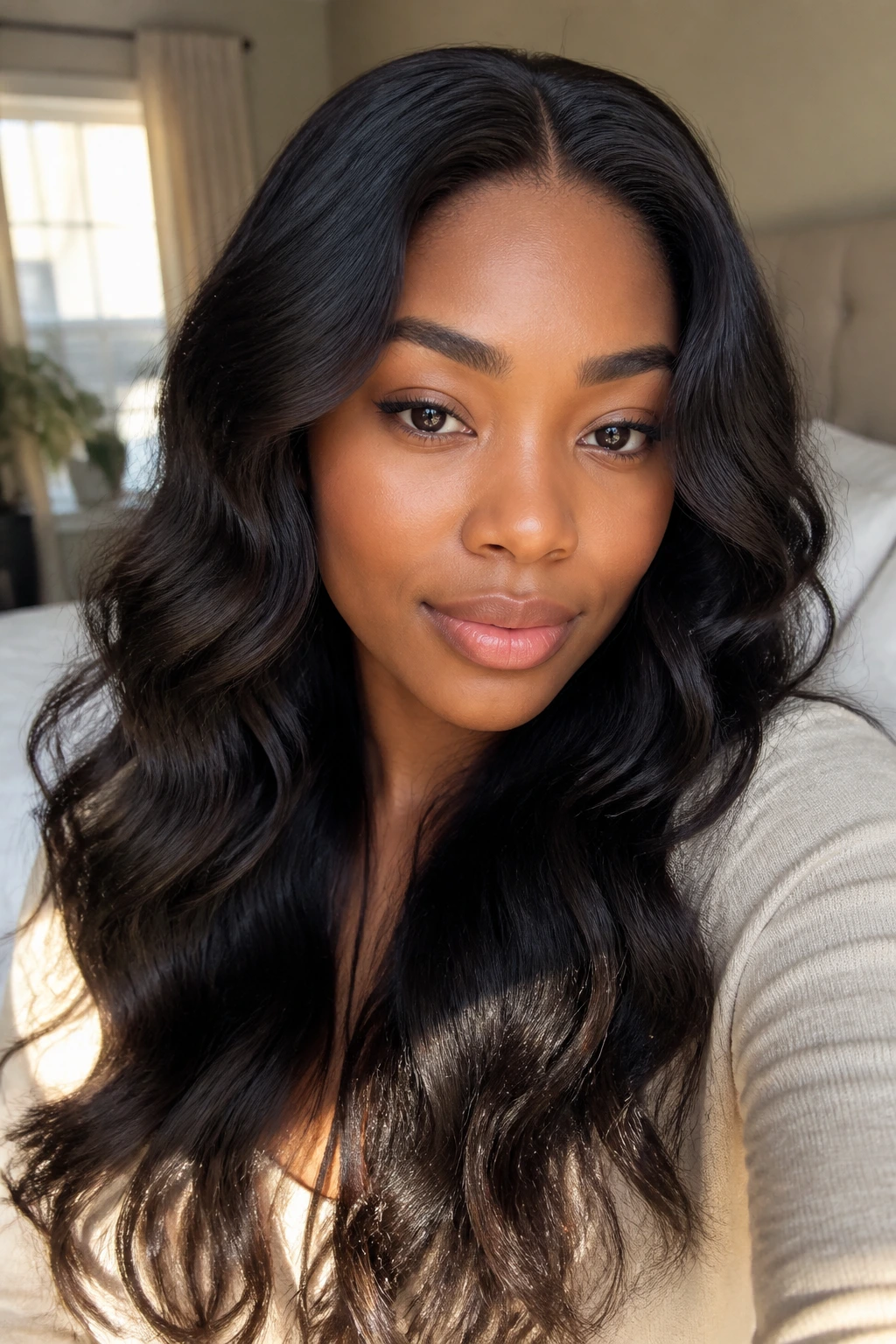
Long hair gives waves a kind of range that shorter styles can’t quite match. The bend can start sleek, stretch soft through the middle, and open at the ends into something airy and easy. That’s the real draw here: movement with structure, not fluff for the sake of fluff.
If you pick the right set for your texture, the style stops fighting your hair and starts working with it. Some days that means a brushed-out wand wave. Some days it means a braid-out, a ponytail, or a low-key feathered bend that takes ten minutes to refresh. The good ones all share the same idea: let the length do part of the work, and don’t crowd the hair with too much product or too much force.
One well-set wave can carry a whole week of good hair days if you treat it right.
