



Short curly cuts for type 3B curls and round faces live or die on geometry. Get the line wrong, and the curls puff out exactly where your face is already fullest. Get it right, and the whole shape looks cleaner, taller, and more intentional without losing the softness that makes 3B curls so good in the first place.
Type 3B curls do not sit politely and wait for instructions. They spring. They shrink. They take a chin-length wet cut and, once dry, decide they’d rather sit at cheek level instead. That is why so many short cuts fail on round faces: the stylist plans for length, but the curls show up with width.
The cuts that work here usually do one or more of three things: they build height at the crown, they break the circle with a side part or diagonal line, or they remove bulk where the face is widest while leaving enough curl for movement. Some are polished. Some are a little messy. All of them rely on shape, not luck, and that is the part worth paying attention to.
Why These Cuts Work on 3B Curls and Round Faces
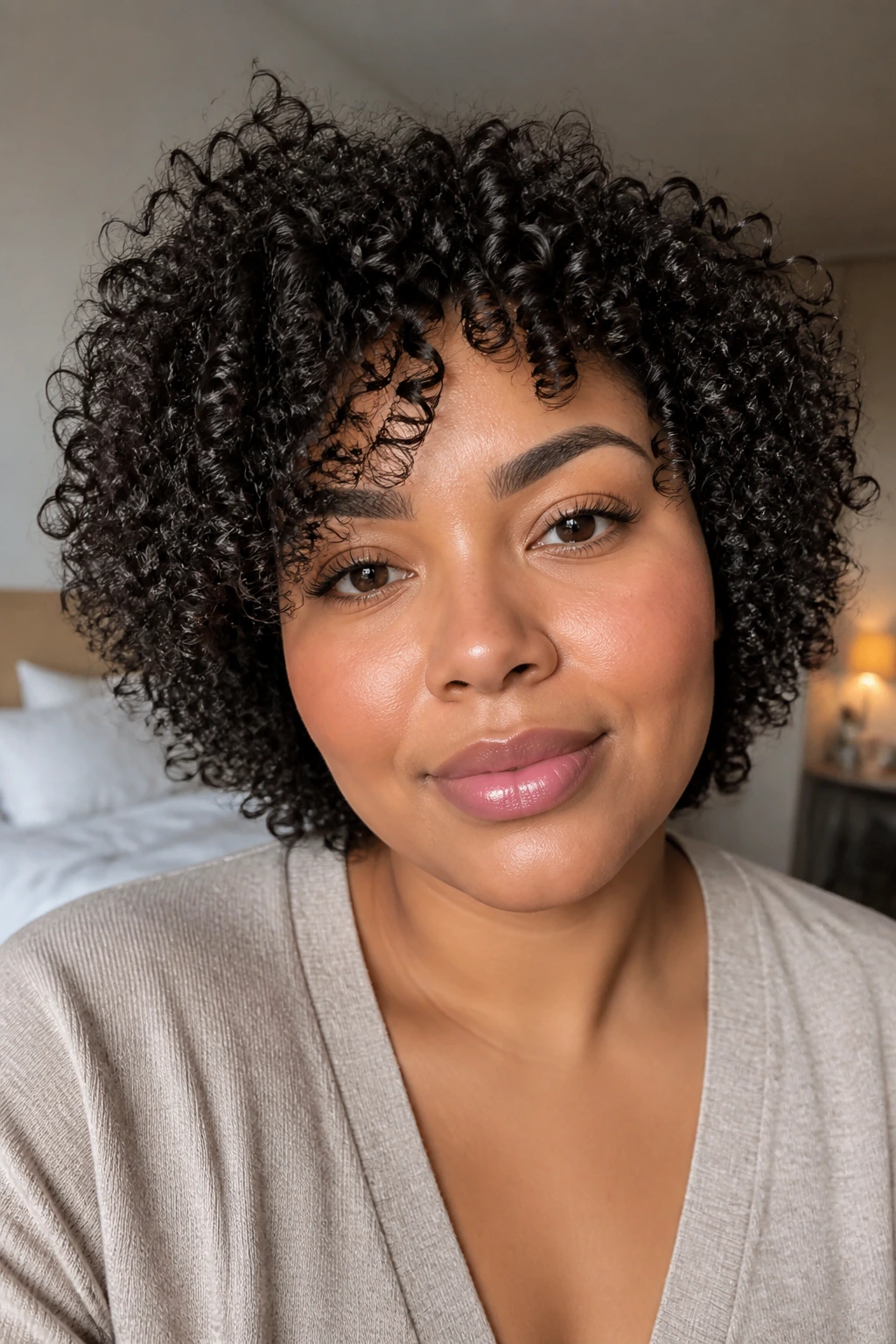
-
Crown height changes the whole read: A little lift at the top pulls the eye upward, which matters more than people think when the cheeks are already the widest point.
-
Asymmetry breaks the circle: A side part, angled front, or one longer corner stops the cut from echoing the face shape too closely.
-
Interior layers keep the sides from swelling: On dense 3B hair, removing bulk from inside the shape keeps the outline from turning into a wide cloud.
-
Shrinkage has to be part of the math: A curl that lands at chin length when wet may sit much higher once it dries, so the final line needs room to bounce.
-
The jawline is the danger zone: Cuts that stop exactly at the widest part of the face can make the cheeks look fuller; a little length past that point usually softens the effect.
-
Clean napes make short cuts feel deliberate: A tapered back or carved neckline keeps the silhouette from spreading as the style grows out.
1. Tapered Curly Pixie with a Lifted Crown
A tapered curly pixie is one of the few short cuts that can make 3B curls look lighter instead of bigger. The sides stay close to the head, the nape gets cleaned up, and the crown keeps enough length—usually around 2½ to 4 inches—to rise instead of ballooning sideways.
For a round face, that crown lift is the whole point. It creates vertical space, which changes how the face reads in a mirror and in profile. Ask for the temple corners to stay a little forward and soft; if they’re cut too tight, the face can look even rounder.
What to ask for
- Keep the crown longest.
- Taper the sides and nape.
- Do a dry check before the final trim.
That last step matters. 3B curls shrink with attitude, and a pixie that looks neat in the chair can turn too short if the stylist ignores how your curls actually sit once they spring up.
2. Chin-Length Layered Bob
A blunt chin bob is risky on a round face. A chin-length layered bob is a different animal. It keeps the clean outline people want, but the internal layers stop the curls from forming a hard shelf at the cheeks.
The best version lands just below the chin when dry, with face-framing pieces that start below the cheekbone. That placement keeps the widest part of the cut from sitting right on the widest part of the face. A side part helps, too. Not because it is trendy. Because it breaks symmetry fast.
I like this cut on medium-density 3B curls that need shape without a lot of fuss. It gives you enough length to tuck one side behind the ear, which is a tiny move that can change the whole silhouette.
3. Asymmetrical Curly Bob
One longer side changes the whole story. An asymmetrical curly bob creates a diagonal line across the face, and diagonal lines are the friend of a round shape. They pull the eye down and forward instead of letting it sit on the cheeks.
Keep the difference subtle. One side an inch or two longer is enough; you do not need a dramatic slant unless that’s your thing. On 3B curls, too much angle can look fussy once the curls dry and separate.
This works especially well if one side naturally behaves better than the other. Let the more cooperative side carry the longer length. It feels small in the chair. It reads much bigger in the mirror.
4. Curly Bixie with Soft Sideburns
The bixie sits between a pixie and a bob, which is exactly why it works so well on round faces. It gives you the openness of short hair without the helmet effect that some full pixies can create.
The part people forget is the sideburn area. Leave those curls soft and a little longer so they skim the cheek rather than stop high on the face. That tiny strip of length acts like a frame, not a wall.
If your 3B curls are dense, ask for a tapered back and airy top layers. You want the cut to feel lifted at the crown and neat at the nape, not puffy across the temples. This one grows out better than it sounds, which I always appreciate.
5. Side-Parted French Bob
A side-parted French bob is short, neat, and a little charming in a practical way. On 3B curls, it works when the perimeter is soft and the front pieces are left long enough to move.
The side part does half the work. It breaks the round outline before the curls even start doing their thing. Add point-cut ends instead of a blunt chop, and you keep the shape from turning too boxy around the jaw.
This cut is a nice pick if you want polish without looking stiff. It does ask for decent styling on wash day, though. If you let the curls dry all over the place, the bob can widen. If you guide the front forward and the crown up, it looks sharp.
6. Curly Shag with Curtain Bangs
A shag can either slim the face or make it wider, and the fringe placement decides which one you get. Curtain bangs on 3B curls should open from the nose bridge and fall somewhere between the cheekbone and jaw, not sit right on the cheekbone where they can add width.
Why the fringe placement matters
The shortest layers need enough height at the crown to stretch the face visually. If the layers start too low, the cut gets heavy where the face is already full. If they start too high and get too thinned out, the curls can frizz up and lose the shape.
I like this cut on people who enjoy movement and do not mind a little mess. It is not a tidy, one-line haircut. That’s the point. The broken layers keep 3B curls from piling up into a solid shape.
7. Rounded Bob with Interior Layers
Round does not have to mean wide. A rounded bob with interior layers keeps the perimeter soft and curved, but the inside of the cut is thinned out enough to stop the sides from puffing out.
This is a smart choice for dense 3B curls. The outside line can sit just below the jaw, while the hidden layers take weight away from the middle of the shape. That lets the curls bounce without forming a shelf at the cheeks.
If you want a cut that looks tidy on day one and still holds up on day five, this is one of my favorites. It’s calm. Not boring. Just calm.
8. Micro Bob with Long Front Corners
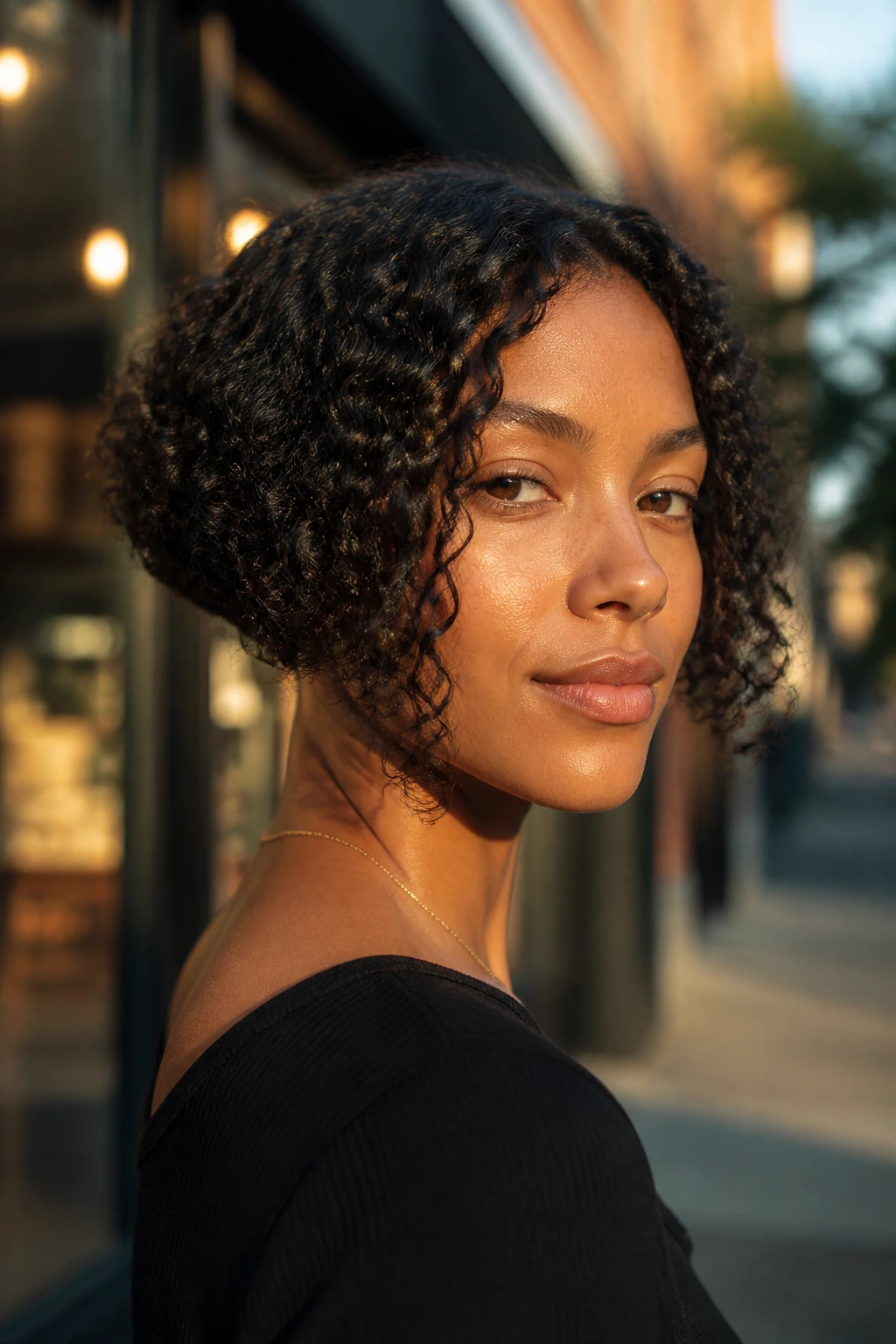
A micro bob is short from the back and front-heavy at the corners, which sounds simple until you see what it does to a round face. The longer front corners pull the eye downward, while the short back keeps the neck area open.
This cut works best when the back sits close to the nape and the front corners land near the mouth or just below the jaw. That keeps the shape from expanding straight out at cheek level. The corners matter more than the total length.
If your curls are springy and need room, ask for soft layering inside the front pieces so they do not stick out like little hooks. The cut should look crisp, not stiff.
9. Soft Curly Mullet
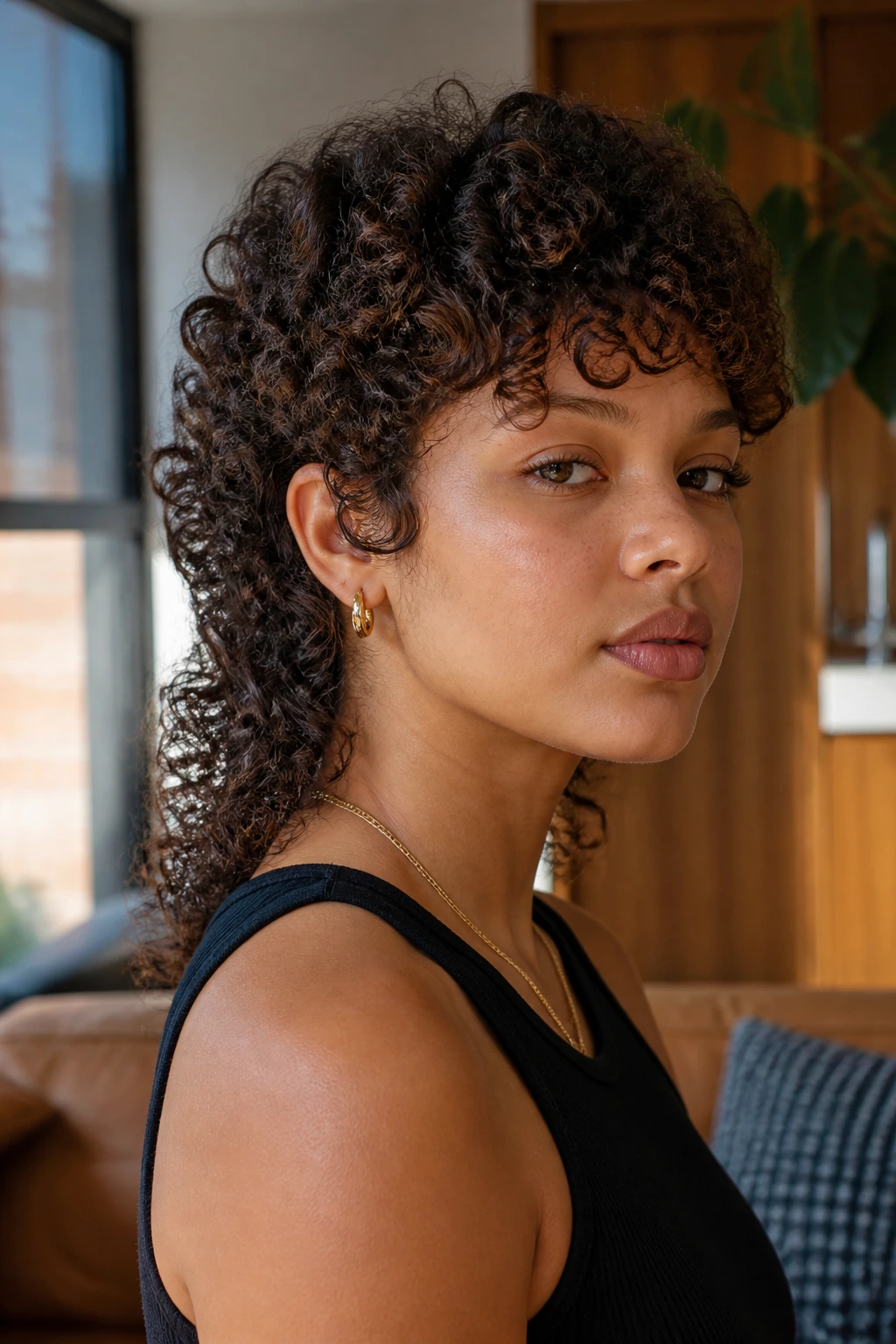
The curly mullet gets a bad reputation from harsh versions that ignore texture. The soft version is different. It keeps more length at the nape, shorter volume at the crown, and gentle transitions between the two.
On a round face, that vertical line from crown to nape helps more than people expect. It gives the eye somewhere to travel besides straight across the cheeks. The front stays light and layered, which keeps the face from feeling crowded.
I would not call this a timid cut. It has personality. If you want a shape that feels current without losing practicality, this one brings texture and a little edge without turning into costume hair.
10. Stacked Nape Bob
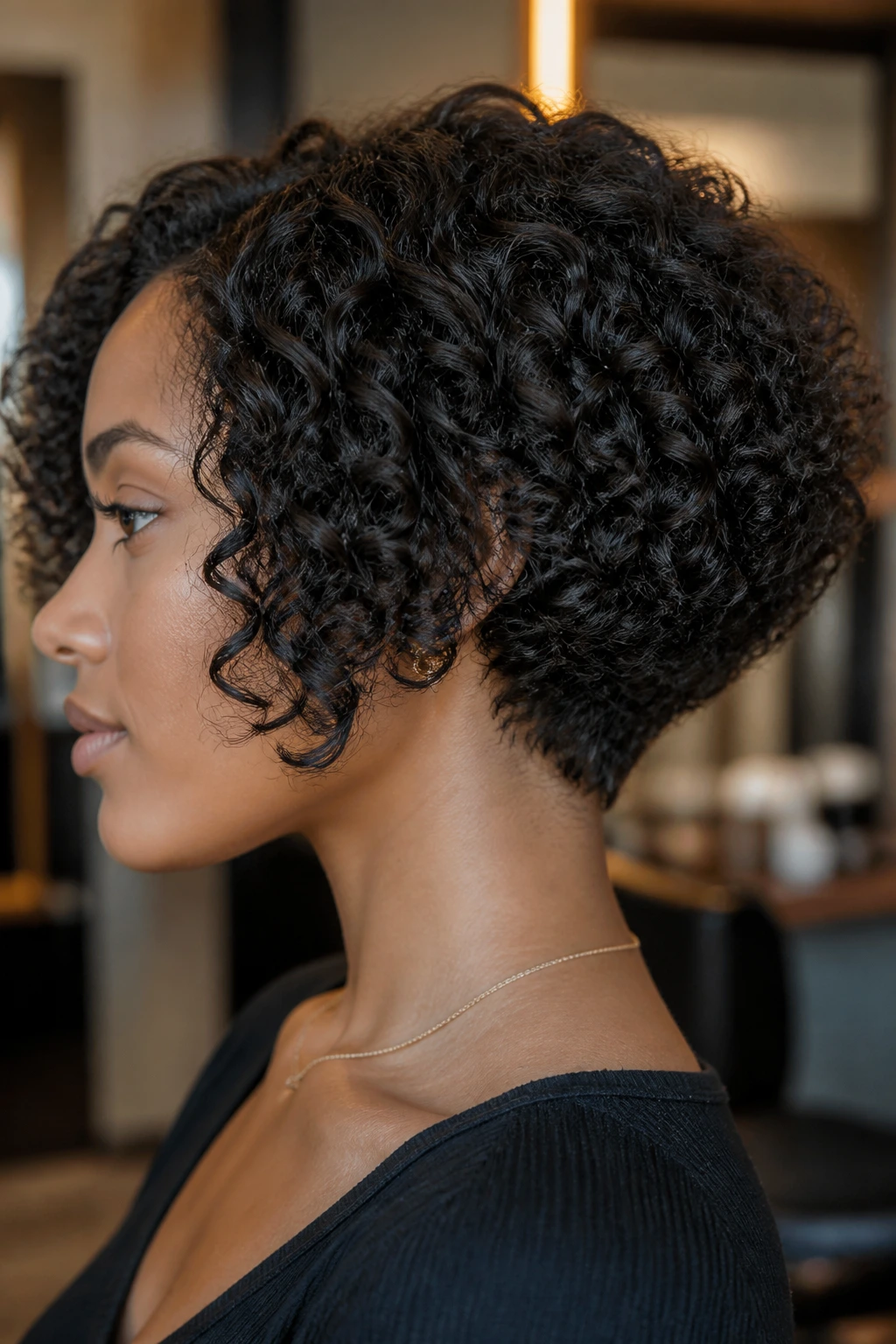
Stacking the back is useful when the sides want to spread. A stacked nape bob builds lift through short graduated layers at the back of the head, then lets the front stay a touch longer so the face keeps some length.
The trick is not to over-stack. Too much lift can turn the back into a shelf, and that’s the last thing a round face needs. You want soft graduation, not a hard ridge.
Best details to request
- Shorter layers at the nape.
- Front pieces that skim below the jaw.
- Interior weight removal, not aggressive thinning.
This is a solid cut for people who like structure. It feels controlled, which can be nice when your curls are lively enough on their own.
11. Jaw-Skimming Wedge Cut
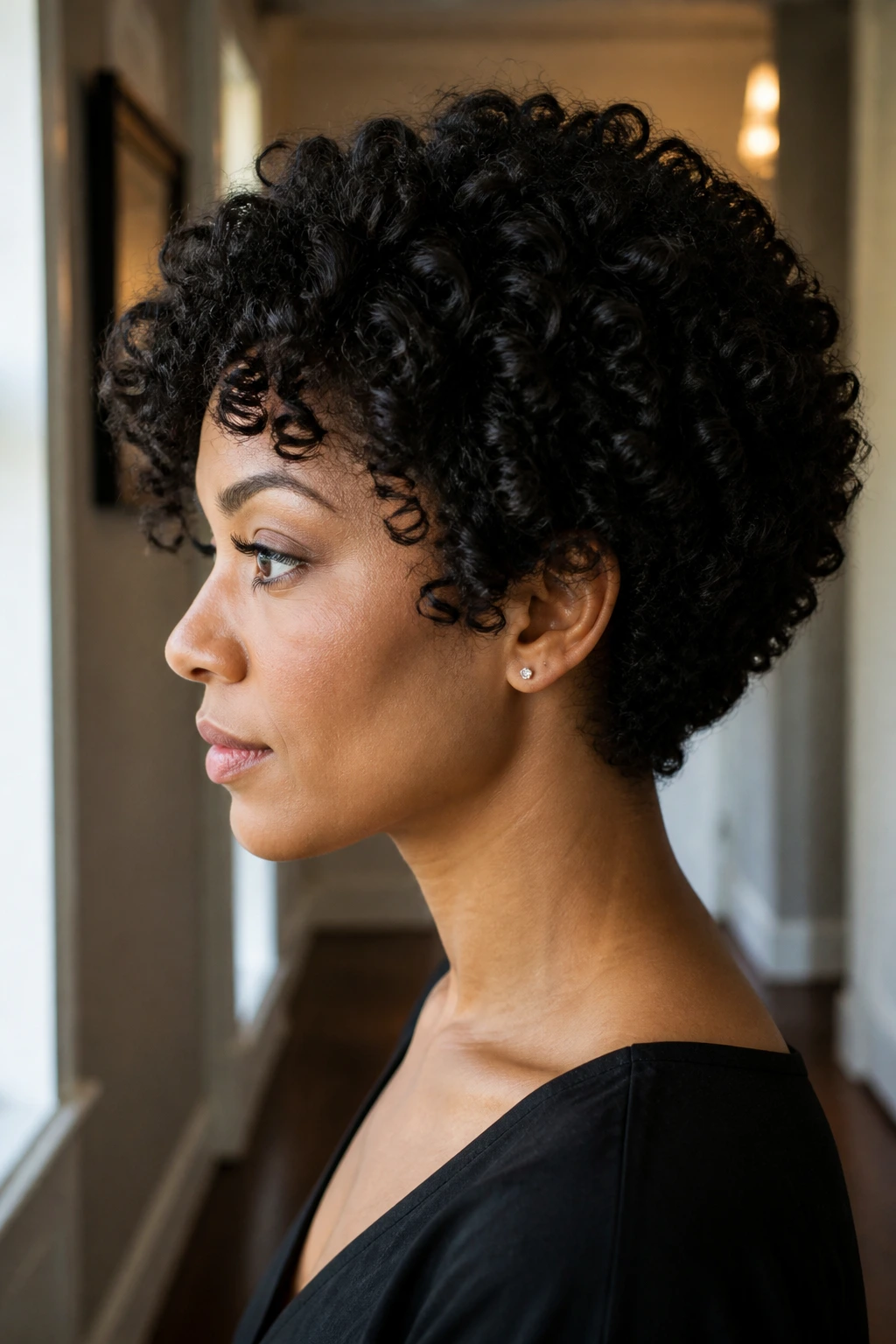
Unlike a flat bob, the wedge tilts down and back. That angle matters. The front pieces skim the jaw, while the back stays tucked in close, so the cut works with the face instead of sitting beside it.
This shape is especially good for thick 3B curls because the angled structure keeps the lower half from swelling. The top still gets curl and lift, but the sides are directed rather than left to do whatever they want.
You do need a stylist who understands graduation. A sloppy wedge can turn into a triangle fast. A clean one gives you a neat outline, a lifted crown, and enough curve to keep it from feeling severe.
12. Deep Side-Part Crop
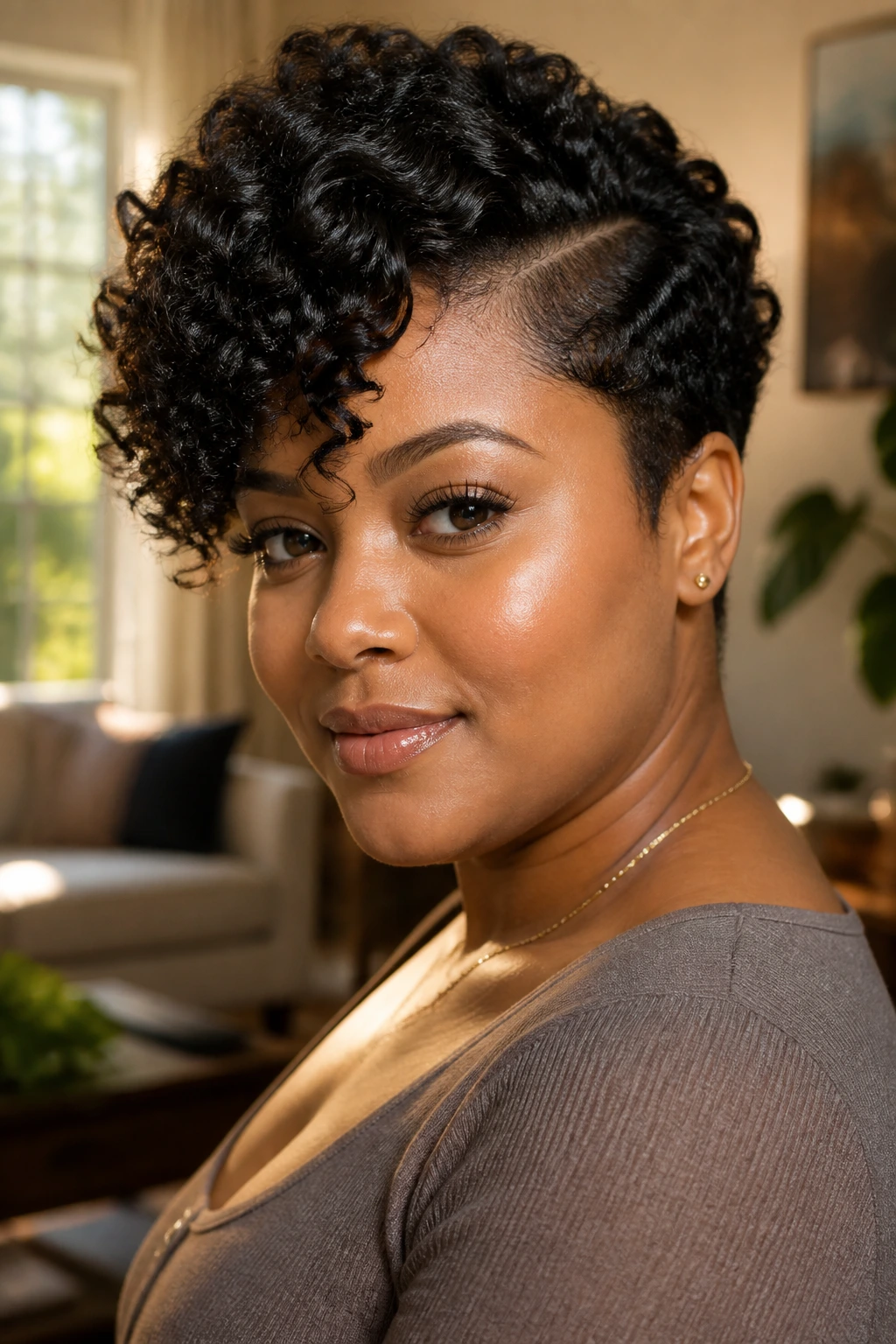
A deep side part changes the whole head shape in five seconds. It throws one side forward, lifts the crown on the other, and gives a round face a diagonal line to work with.
This cut is short, but it should never feel flat. Keep the top long enough for the curls to rise, then let the front sweep across the forehead and down one side. That sweep softens the cheeks without hiding them.
Why it helps
The asymmetry stops the style from reading as one big circle. If your curls are very springy, ask for a dry check on the front so the longest piece lands where you expect after the curl shrinks.
13. Neck-Length Curly Crop with Face Framing
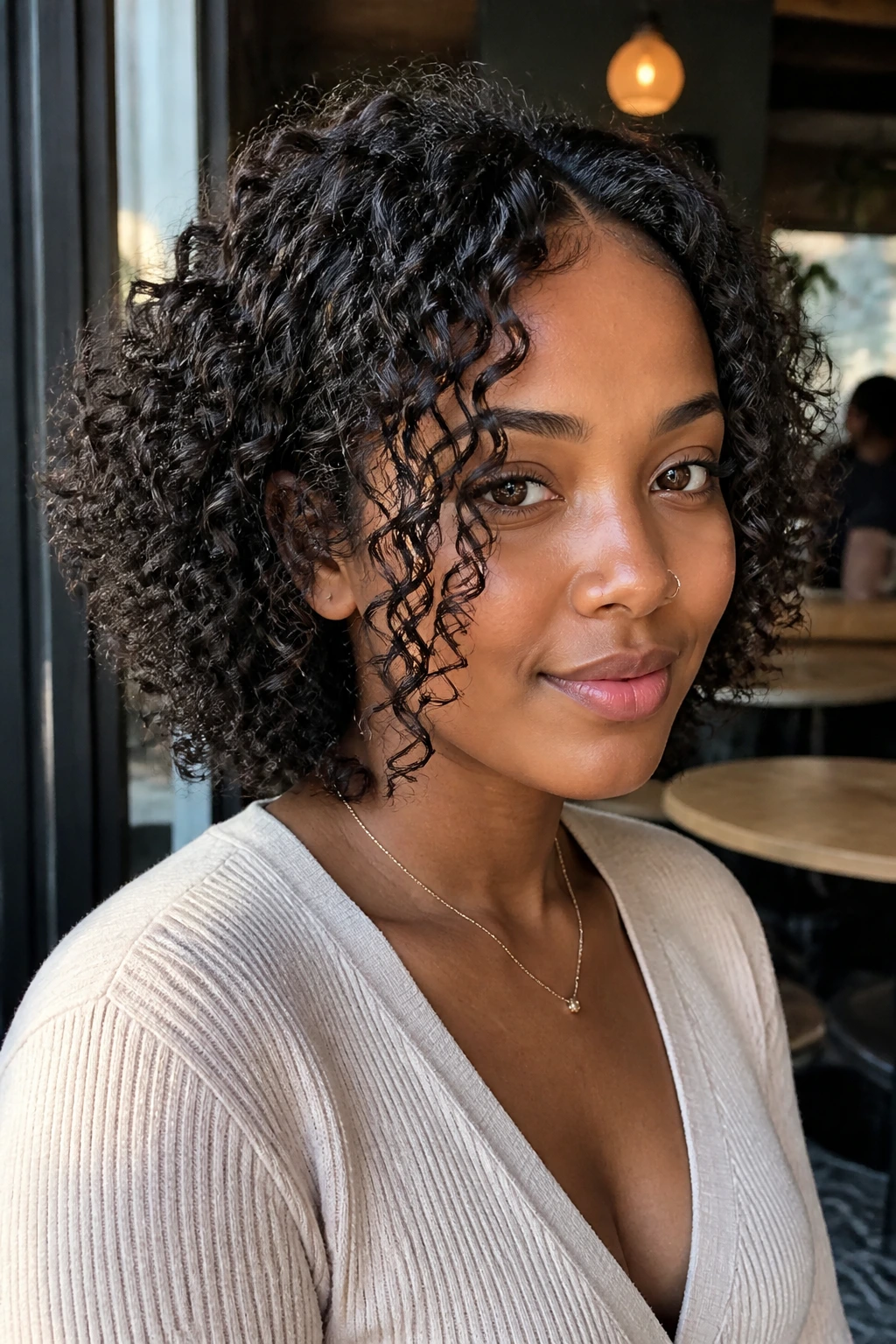
This is the easy one to grow into. The body of the cut sits at the neck, while the front pieces are left longer and carved to fall around the cheeks and jaw.
That combination keeps the back neat and the face open. The face-framing pieces should start below the cheekbone; if they begin too high, they can widen the middle of the face instead of slimming it.
It’s a good cut if you want short hair that still gives you some tuck-behind-the-ear options. And if you hate frequent salon visits, this one usually buys you a little more time before the shape falls apart.
14. Baby-Bang Curl Crop
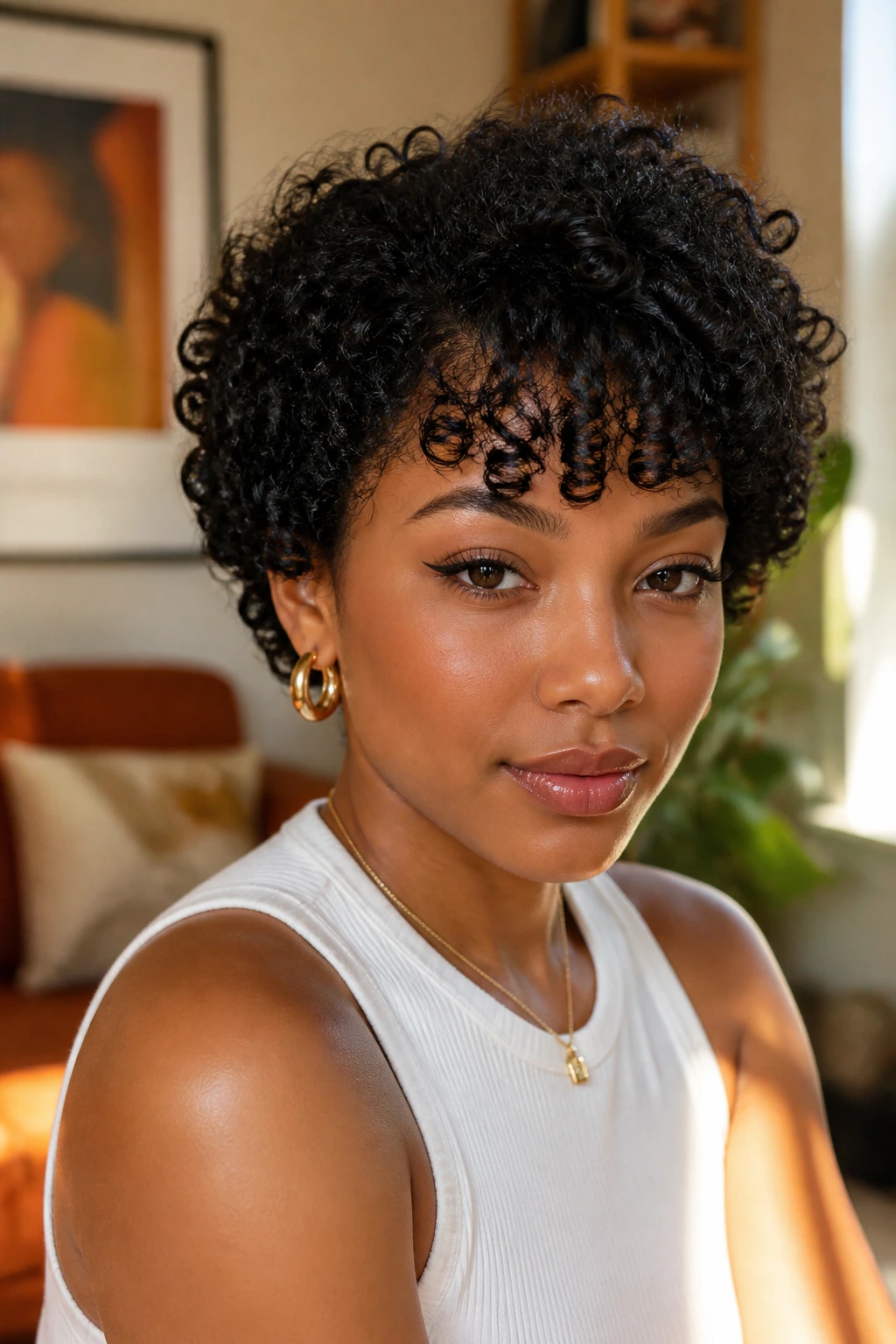
Baby bangs are a gamble, but on the right 3B curl pattern they can look deliberate and fresh. The trick is to keep the fringe airy and piecey, not heavy and straight across.
On a round face, the bangs need balance. That means height at the crown and enough length through the sides so the forehead isn’t doing all the work. If the fringe gets too dense, it shortens the face. If it’s too sparse, it looks like an afterthought. Hard balance. Worth it when it works.
This cut is best for someone who likes contrast and does not mind a little drama up front. The rest of the shape should stay clean.
15. Tapered Fro with Shape at the Temples
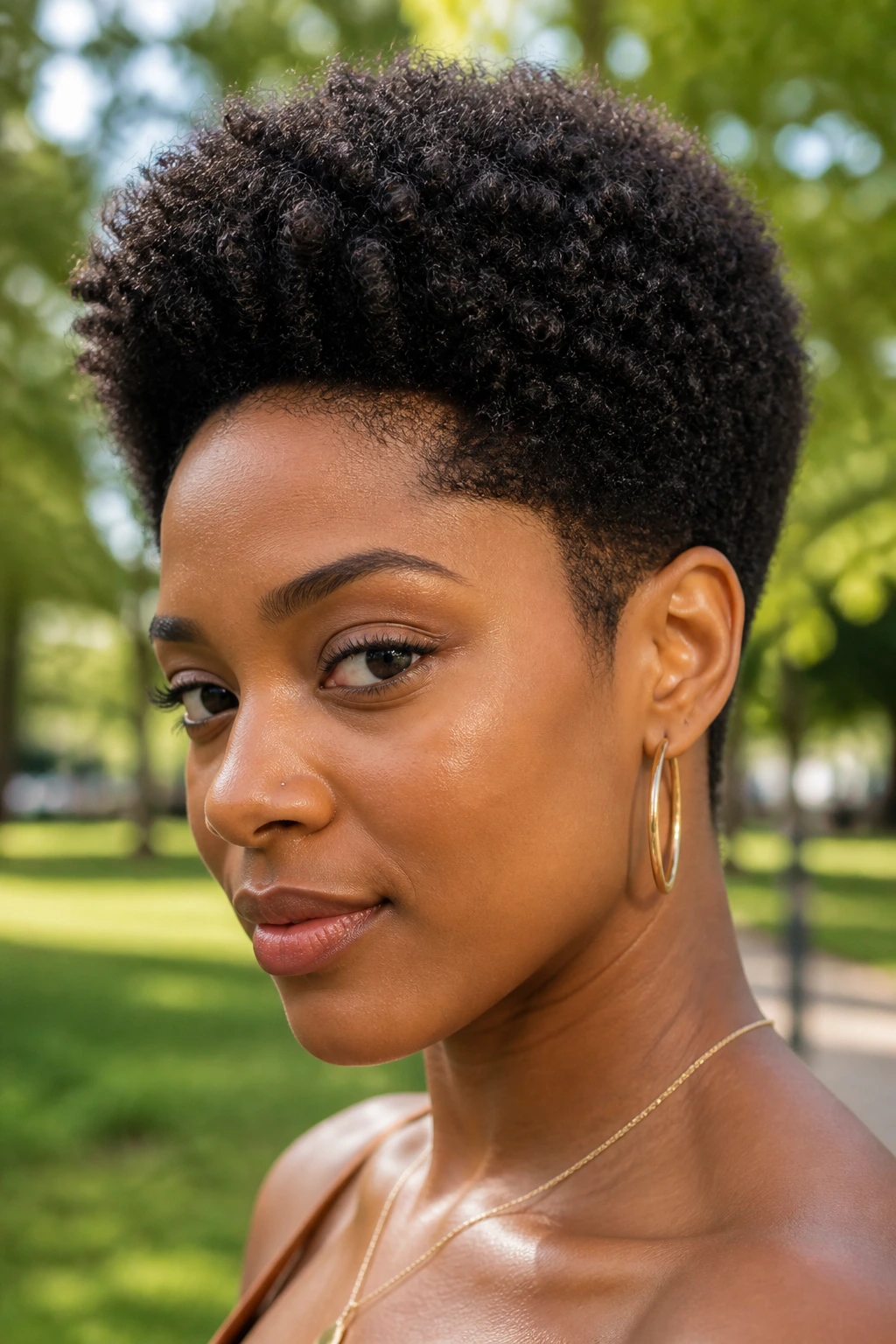
This is the cut I point to when someone wants fullness up top and cleaner edges everywhere else. A tapered fro keeps the sides and nape close, then leaves the crown and upper shape rounded and lifted.
What to tell the stylist
- Keep the temples carved in softly.
- Leave the top rounded, not wide.
- Clean up the nape so the shape stays tight.
The temple area matters more than people realize on a round face. If it puffs out too much, the face reads wider. If it’s shaped in gently, the eye goes upward instead.
16. Angled Inverted Bob
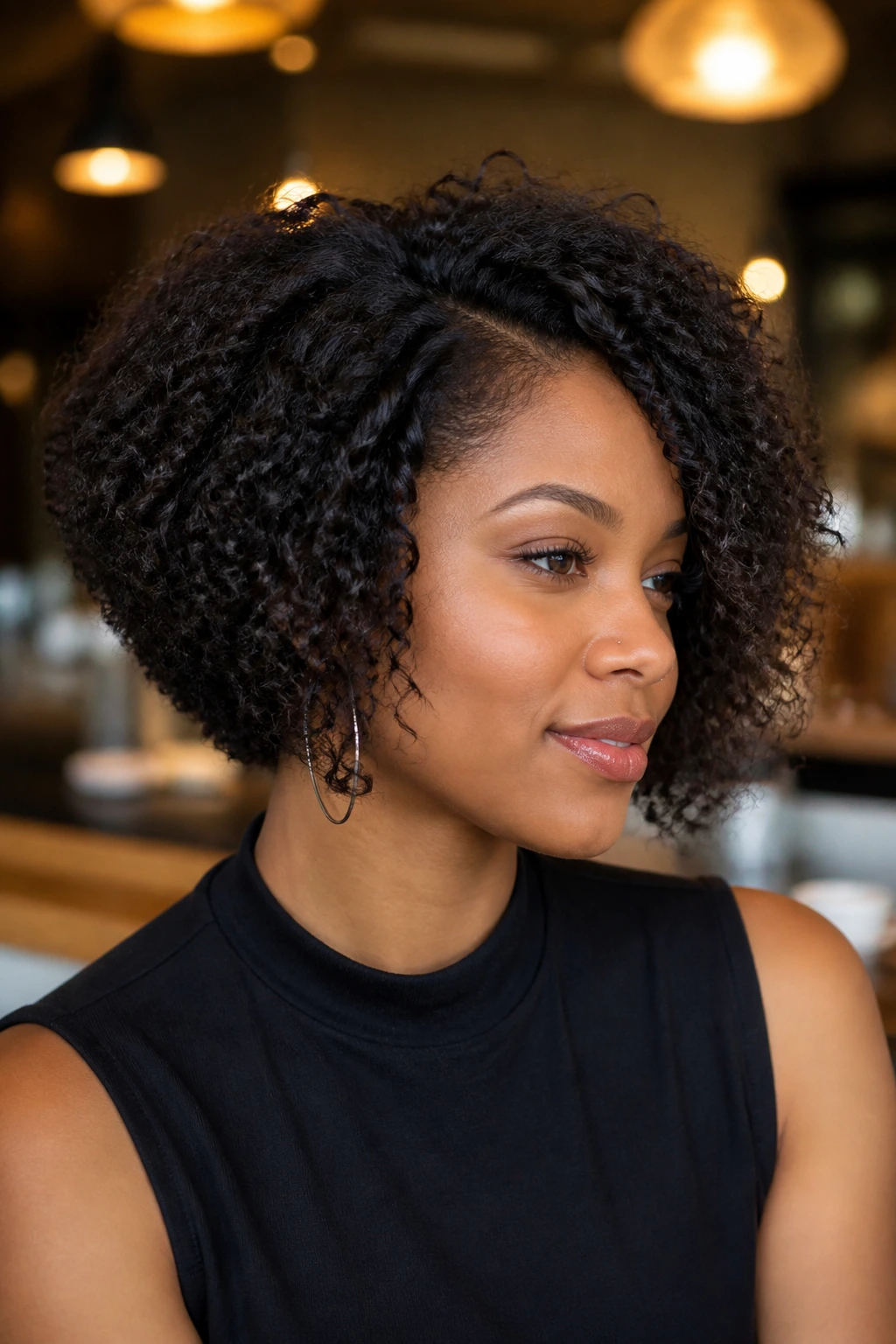
The angled inverted bob is more polished than a shag and less severe than a blunt bob. The back sits shorter near the nape, and the front length angles toward the chin.
That forward tilt gives a round face a strong line to follow. It also keeps 3B curls from building bulk right at the sides. If your hair is dense, this cut can feel like a little relief because the shape is built into the cut instead of being forced later with product.
It does need regular trimming. The angle loses its clean line when it grows out too far. Still, for someone who wants structure and bounce in the same haircut, it’s a good place to be.
17. Collarbone-Grazing Lob with Short Layers
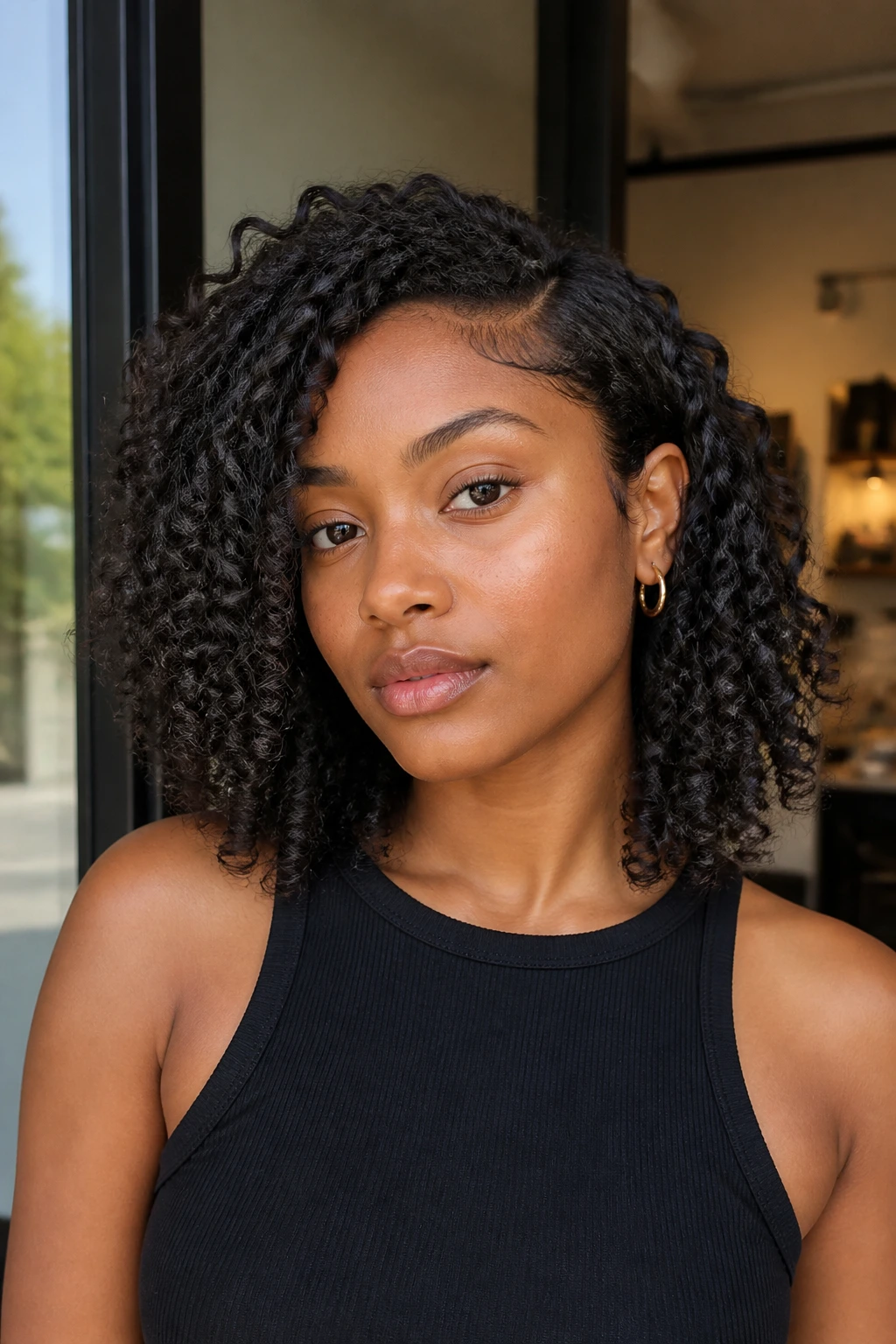
This is the longest cut on the list, and it earns its place because short-to-medium length can still count when the shape is right. The collarbone gives the face room, while short internal layers keep the curls from hanging like one heavy block.
A round face benefits from that longer front line. It draws the eye down, especially if one side is tucked behind the ear and the other is allowed to fall forward. The cut does not need a lot of drama to work.
If you’re nervous about going shorter, start here. It gives you a short-curly feel without committing to a pixie or cropped bob. Some people need that bridge before they’ll trust the scissors.
18. Curly Wolf Cut
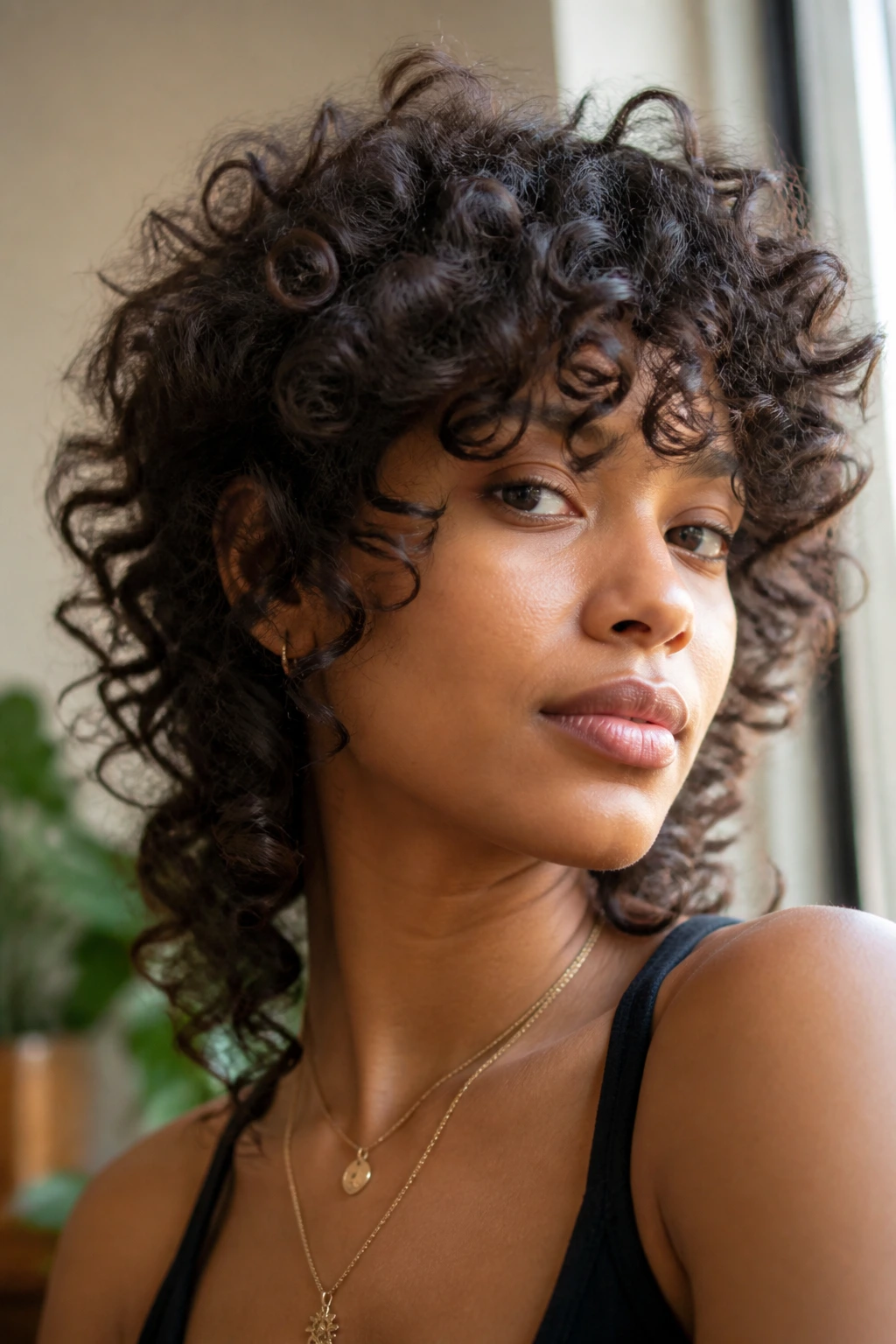
The wolf cut makes sense when you want motion more than neatness. It blends shaggy layers with a soft mullet shape, which gives 3B curls places to spring without piling up on the cheeks.
The key is restraint. The shortest layers should stay above the cheekbone, and the front should keep enough length to frame the face instead of fanning out at it. If the texture is thin, this cut can go scraggly. If the hair is dense, it can look fantastic.
I like this one for people who wear their curls loosely and do not want the haircut to feel precious. It has energy. A little edge. And it forgives a less-than-perfect styling day.
19. Ear-Length Sculpted Pixie
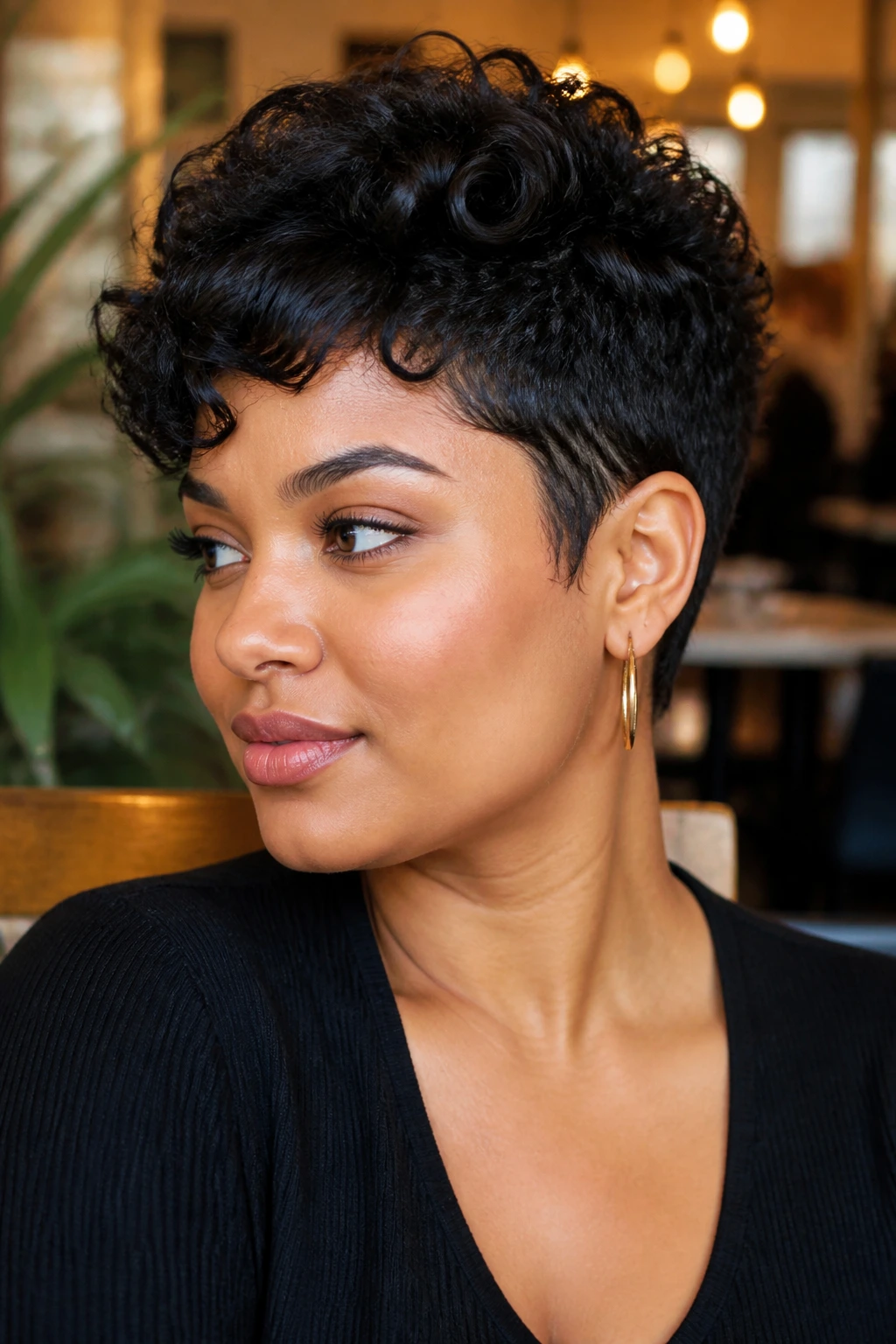
Ear-length is not a compromise here; it is the whole point. An ear-length pixie with sculpted top layers puts the visual weight where you want it—up high—and keeps the sides disciplined.
On a round face, this can be striking because it opens up the cheekbones and jaw. The crown needs enough length to lift, and the nape has to be cut cleanly so the silhouette doesn’t spread as it grows.
This cut is not the most forgiving one on the list. It asks for maintenance and a hand that knows where to remove bulk. But when it is right, it looks crisp in a way that reads as very deliberate.
20. Rounded Halo Cut
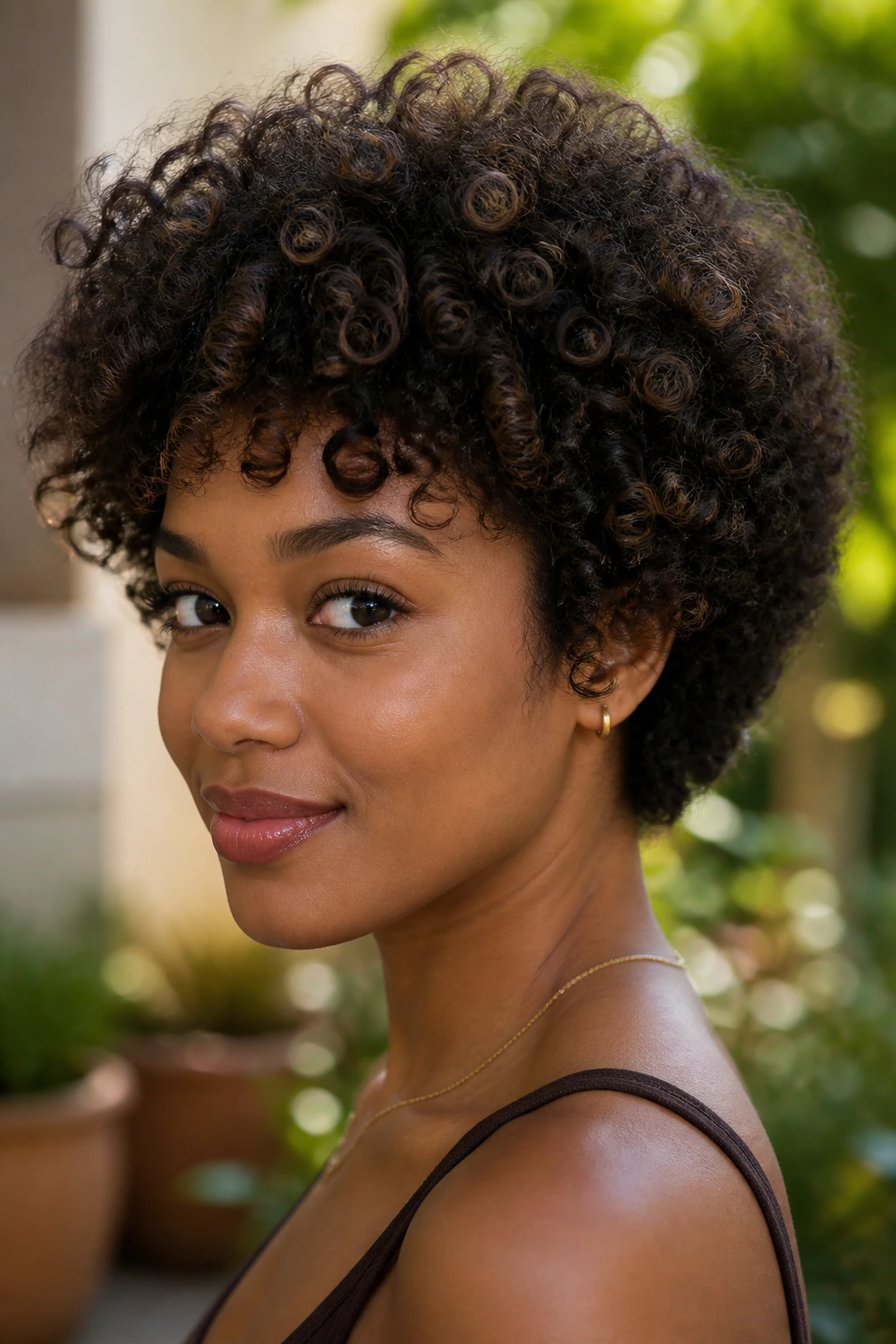
A halo cut works when the roundness sits high instead of wide. That means the crown carries the curve, while the sides stay closer and the nape stays tidy.
You do not want a mushroom. That’s the trap. The perimeter should be just a little longer than the top, not equal all the way around. That small difference keeps the cut soft and keeps the face from disappearing inside the shape.
This is a beautiful option for thicker 3B curls because it respects the volume instead of trying to flatten it. The shape feels clean, but not sharp. That’s a hard line to walk, and this cut does it well.
21. Undercut Bob with Volume on Top
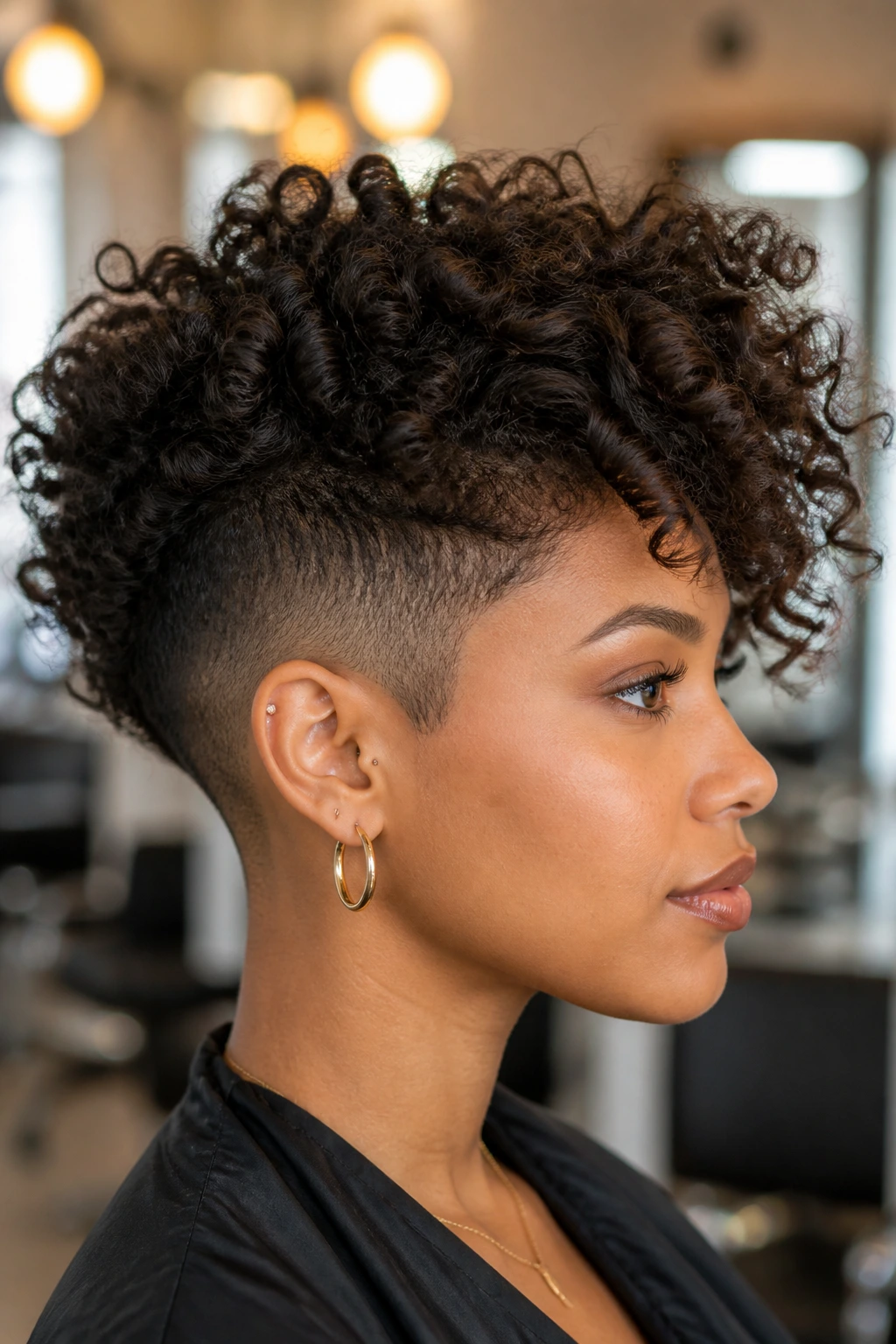
If your hair turns into a triangle by day three, a hidden undercut can fix a lot of that from underneath. The top layers stay full and curly, while the underside is removed where no one sees it.
Why this is smart
The lower bulk disappears, which keeps the sides from swelling around the cheeks. The top still has room to live, so you do not lose the bounce that makes 3B curls worth wearing short.
This is a good salon conversation cut. Say you want the volume on top, not on the sides, and that you’d rather use structure than product to force the shape. That sentence saves a lot of confusion.
22. Curly Bowl-Inspired Shape
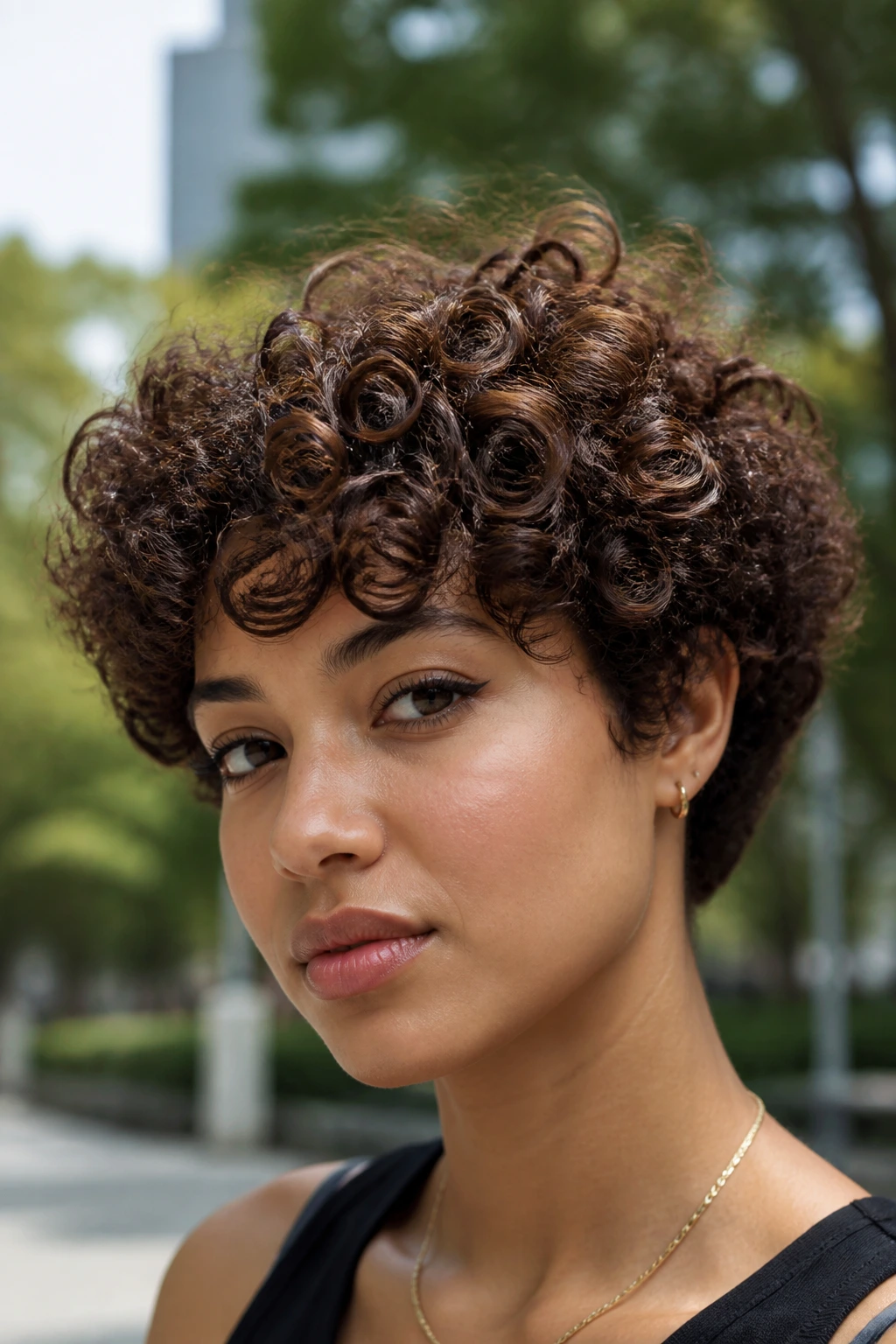
No, not the stiff old bowl cut. This version keeps the curved outline but softens the edges, lengthens the temples a little, and lets the curls break the line so it doesn’t feel blunt.
The reason it can flatter a round face is simple: the shape is controlled at the sides and lifted at the top. If the perimeter is too uniform, it goes wrong fast. If the stylist leaves softness around the front corners, it can look surprisingly modern.
This is one of those cuts people either understand right away or ignore completely. I think it deserves more attention than it gets, especially on textured hair that likes to puff in a clean curve.
23. Side-Swept Layered Crop
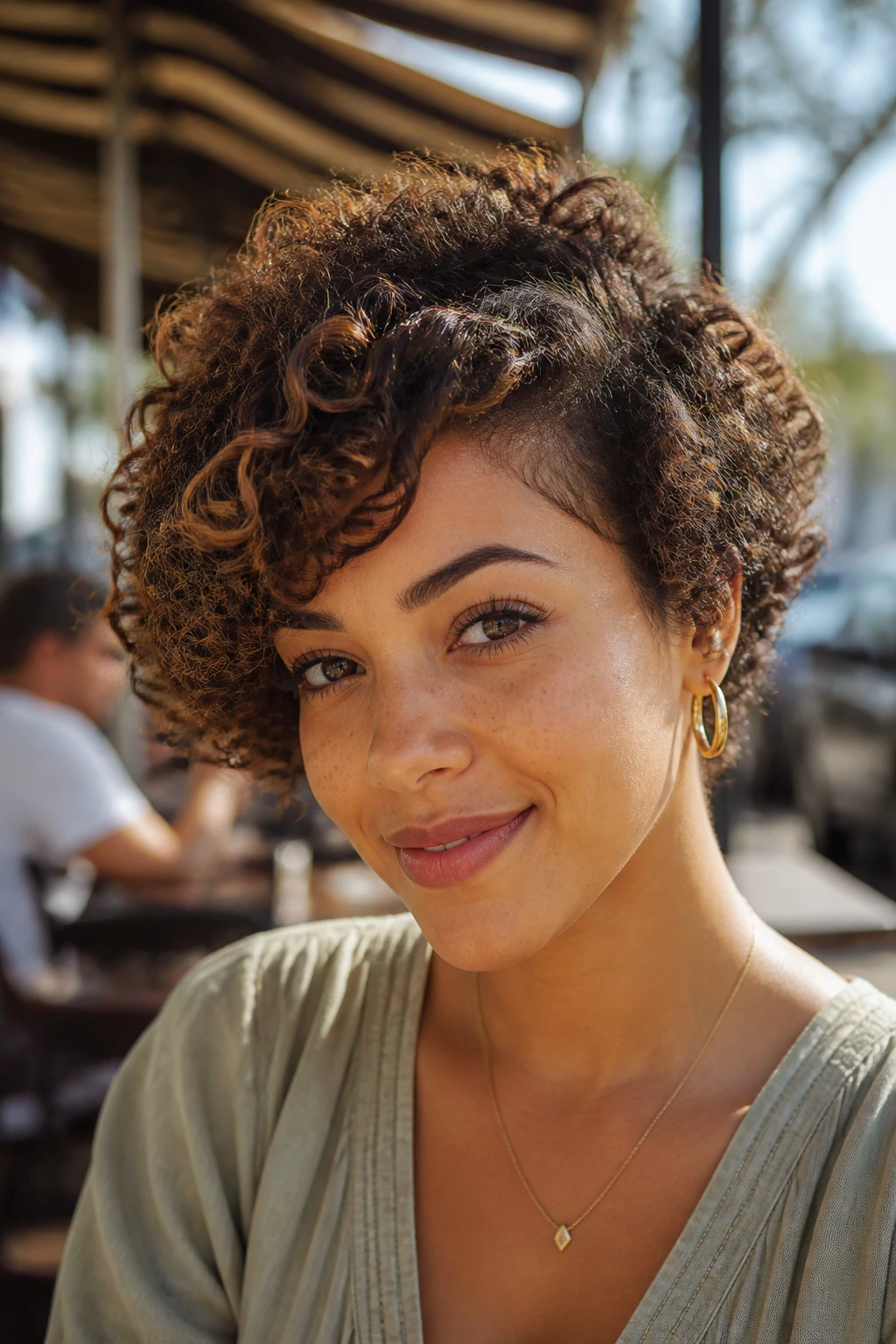
If bangs make you nervous, start with a side sweep. A side-swept layered crop gives you a soft line across the forehead without committing to a blunt fringe.
That sweep is doing a lot of work on a round face. It interrupts symmetry, gives the crown a little height, and keeps the front from landing straight across the cheeks. The layers around the head should stay light enough to move, not so chopped that they stick up.
This one is easy to live with. It grows out in a fairly forgiving way, and that matters when you want a cut that does not turn awkward in three weeks.
24. Tapered Afro with Curled Fringe
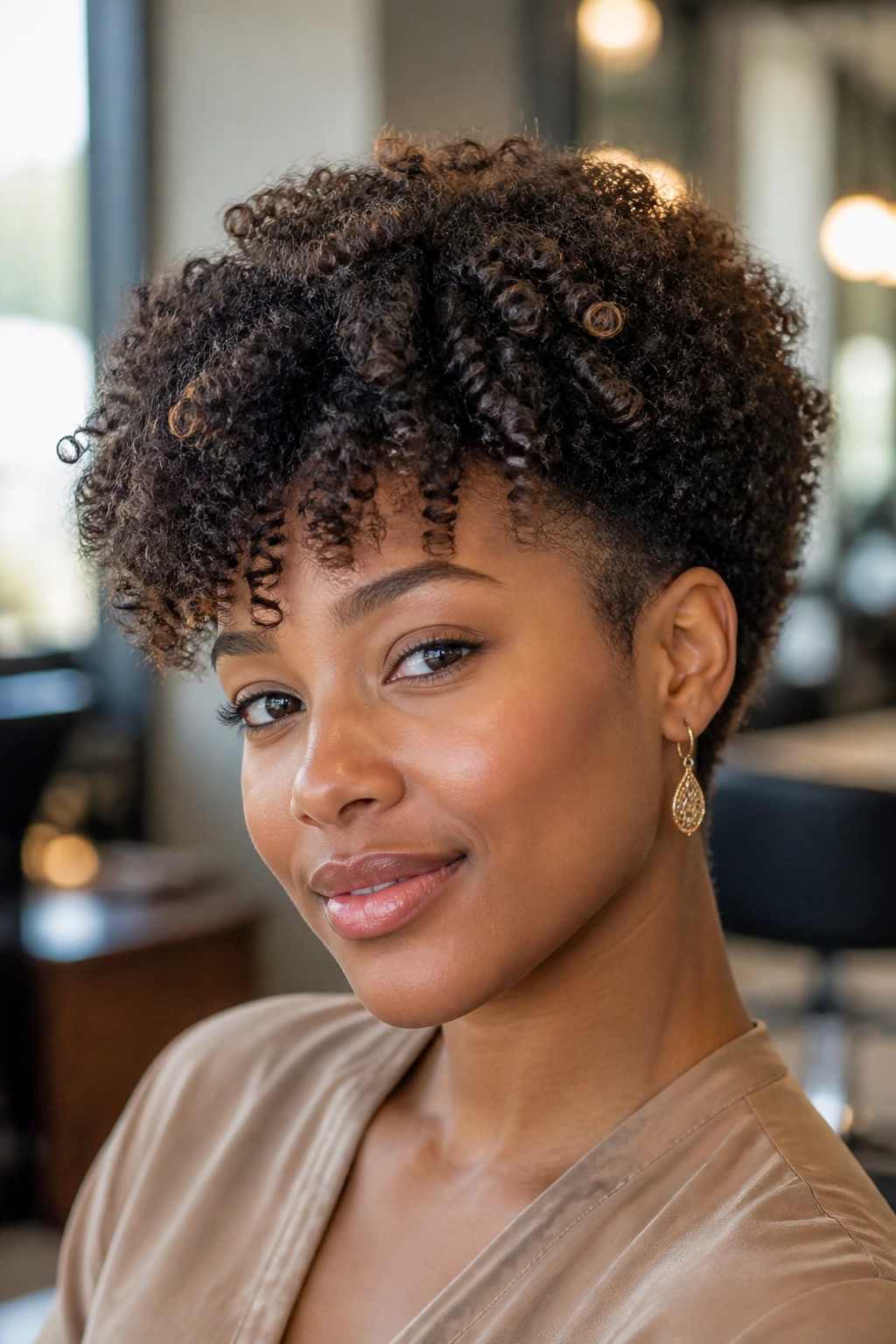
A tapered afro on 3B curls is about silhouette, not size. The sides and nape are cleaned up, the top keeps its round shape, and the fringe stays soft enough to frame the forehead instead of boxing it in.
For a round face, the goal is height and lift. Keep the widest part of the shape above the cheekbones, not beside them. If the front curls want to fall forward, let them, but keep them light.
This is a strong cut for people who like natural texture and want the hairline to look tidy. It is not a low-maintenance cut in the “no effort” sense. It is a low-maintenance cut in the “the shape already makes sense” sense.
25. Flipped-Out Short Bob

Most curly bobs want to curl under. This one is trained the other way. A flipped-out short bob pushes the ends away from the cheeks, which opens the face and keeps the sides from feeling boxed in.
That outward movement is the whole game. If the curls tuck inward too much, the jaw can look heavier. If the ends flip out just enough, the outline feels lighter and a little more playful.
It works best on 3B curls that have enough spring to hold a direction. The cut should still be layered softly underneath so the flip doesn’t turn into a weird shelf. Fun cut. Not silly, if done well.
26. Short Cut with Long Curtain Bangs
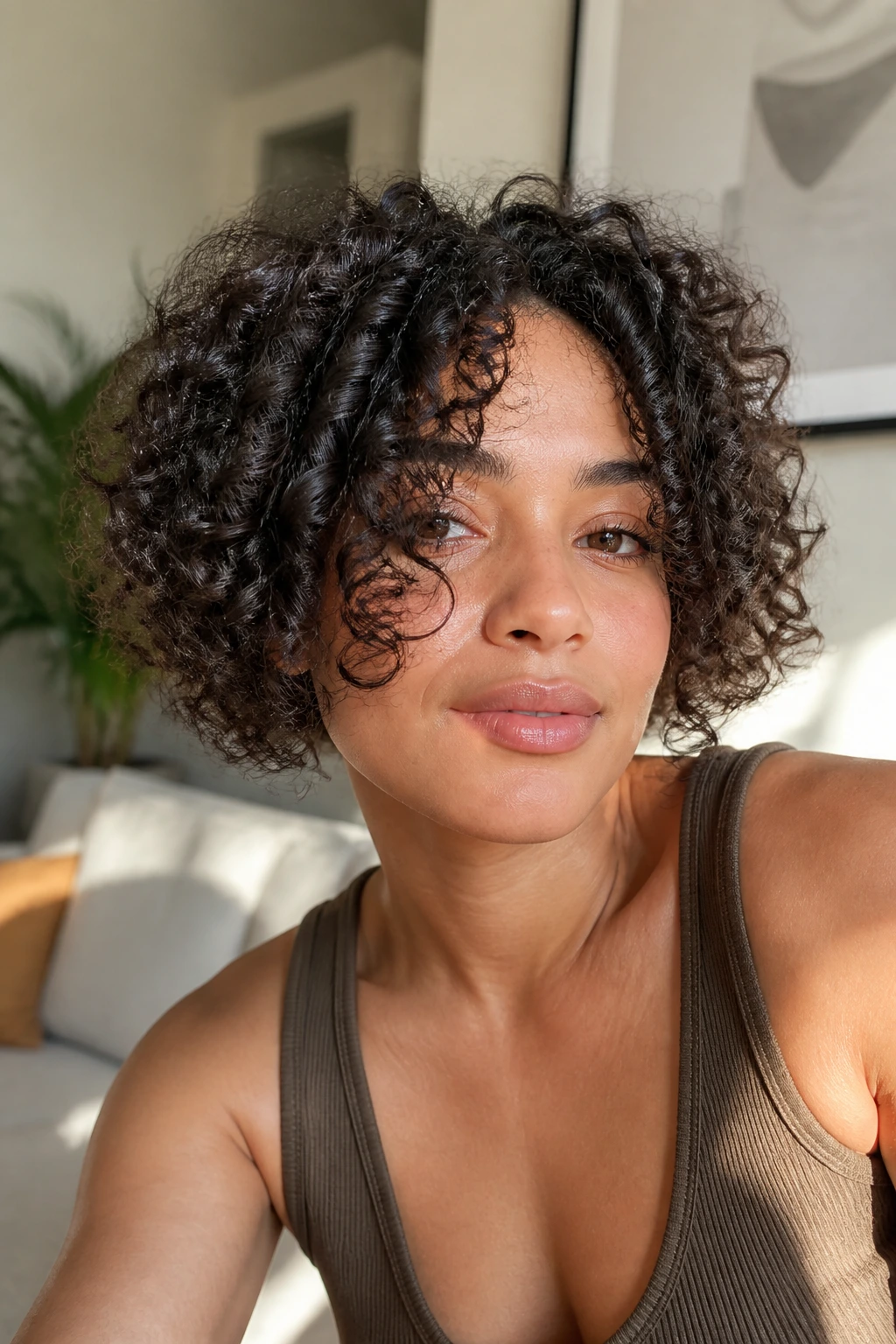
The long bang is the point here. Shorter through the body, longer through the front, this cut lets the bangs graze the cheekbones and pull the eye down in a flattering way.
How the front should fall
The center can stay a little shorter, then open into longer sides that blend into the rest of the cut. That shape softens a round face without hiding it. If the bangs are cut too short, they can make the face feel boxed in; too long, and they lose the effect.
This cut looks especially good when the hair is styled with a soft side lean or a loose center part. It gives you the face-framing effect people want from bangs without the full commitment of a heavy fringe.
27. Chin-Length Cut with Hidden Undercut
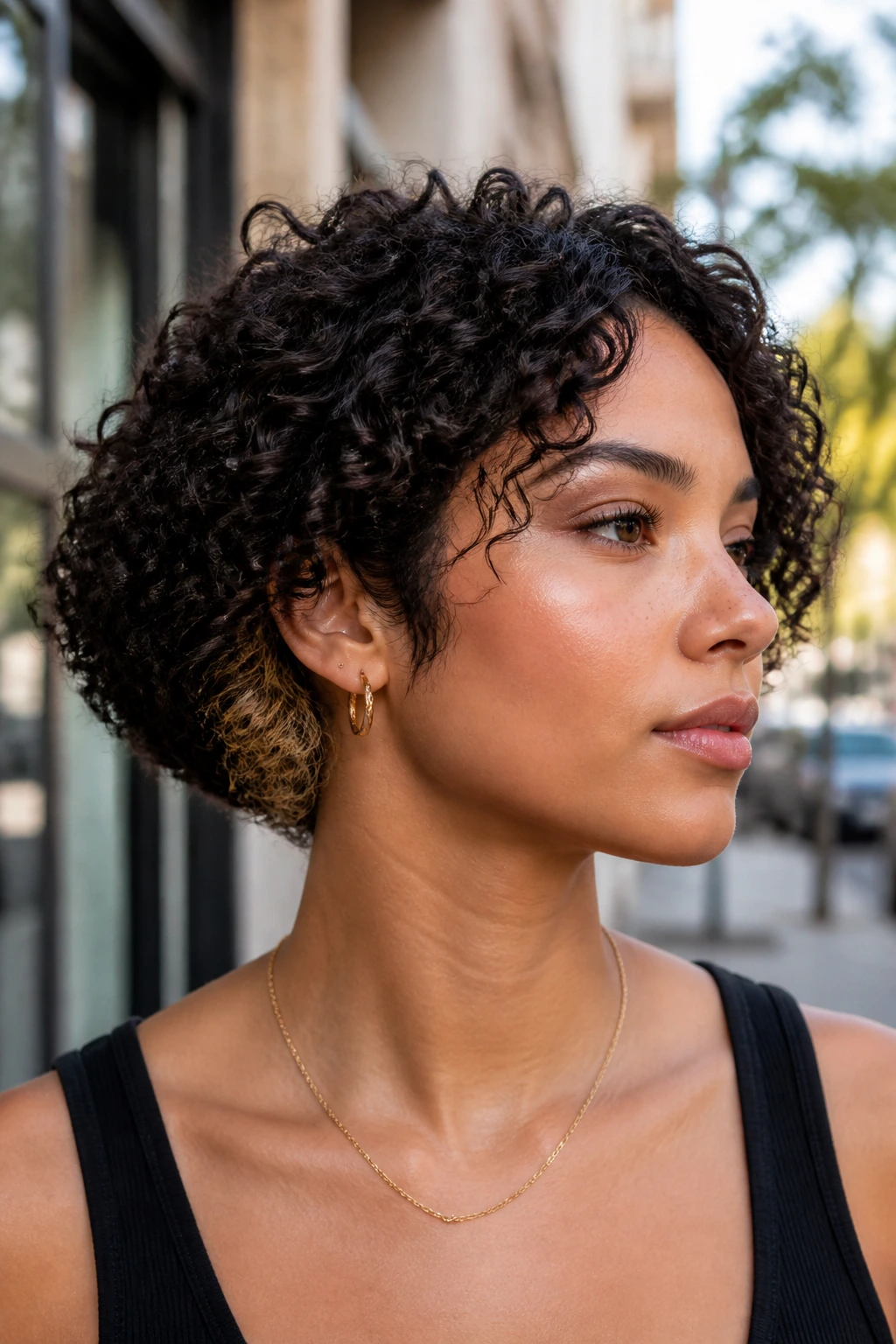
If your 3B curls are thick, a hidden undercut can save the whole shape. The outer perimeter still sits around the chin, but some of the interior weight underneath is removed so the cut doesn’t expand like a triangle.
That matters on a round face because triangle bulk at the jaw can make the lower half feel wider. By keeping the outline clean and the underneath lighter, you get shape without that extra spread.
This is one of those cuts you do not always see from the front, which is part of the appeal. It behaves better in real life than many prettier-looking styles on paper.
28. Soft Stack with Carved Sides
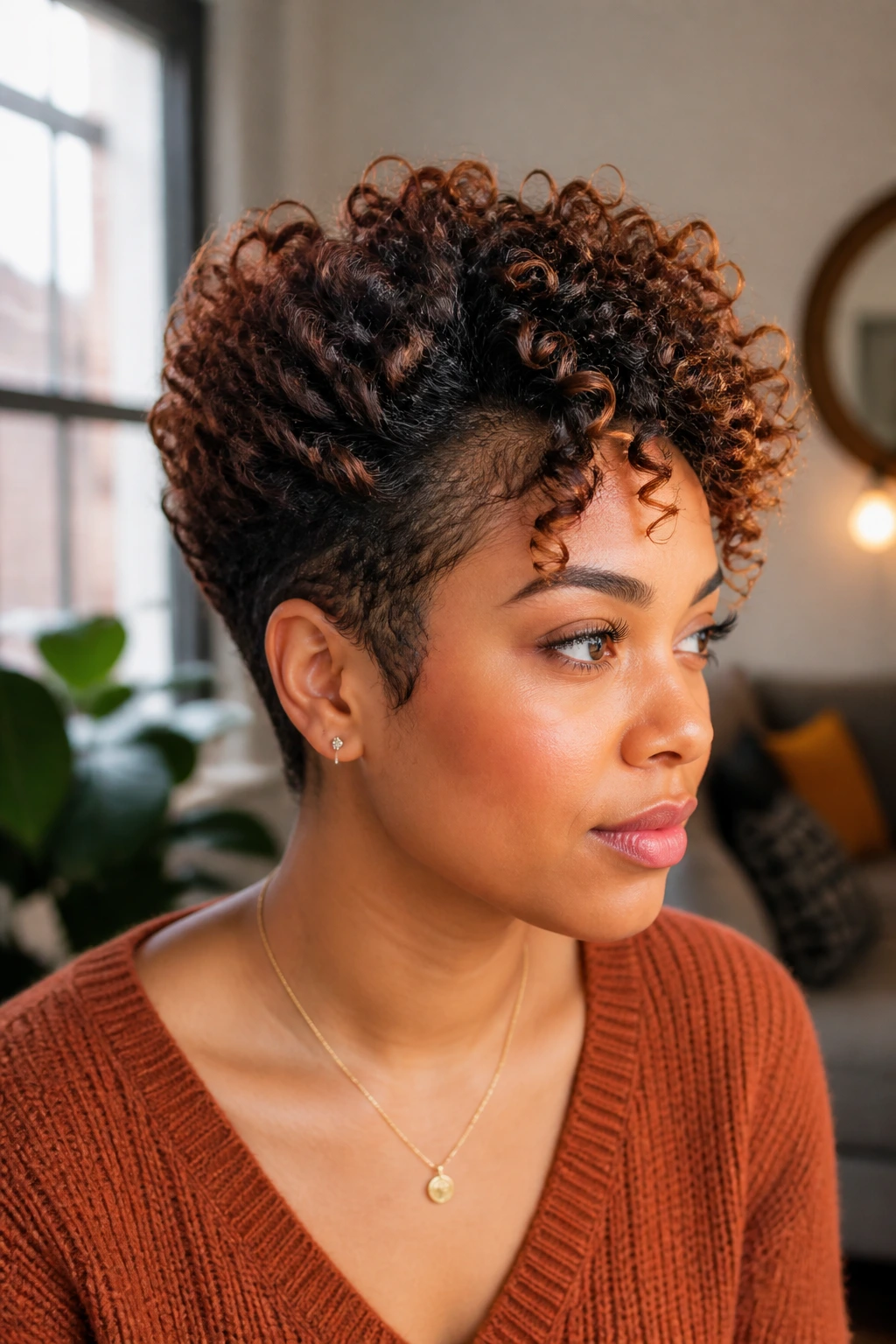
This is the tidy cousin of the stacked bob. It builds a little lift in the back, then carves the sides in so the whole shape stays narrow where the face is widest.
A soft stack works especially well when you want some structure but not a harsh line. The back should rise gently, not abruptly, and the sides should move inward close to the head. That balance keeps the face from feeling surrounded by hair.
It is one of the smarter short curly cuts if you like your hair to look shaped even on a lazy day. The architecture is doing the work for you.
29. Textured Pageboy
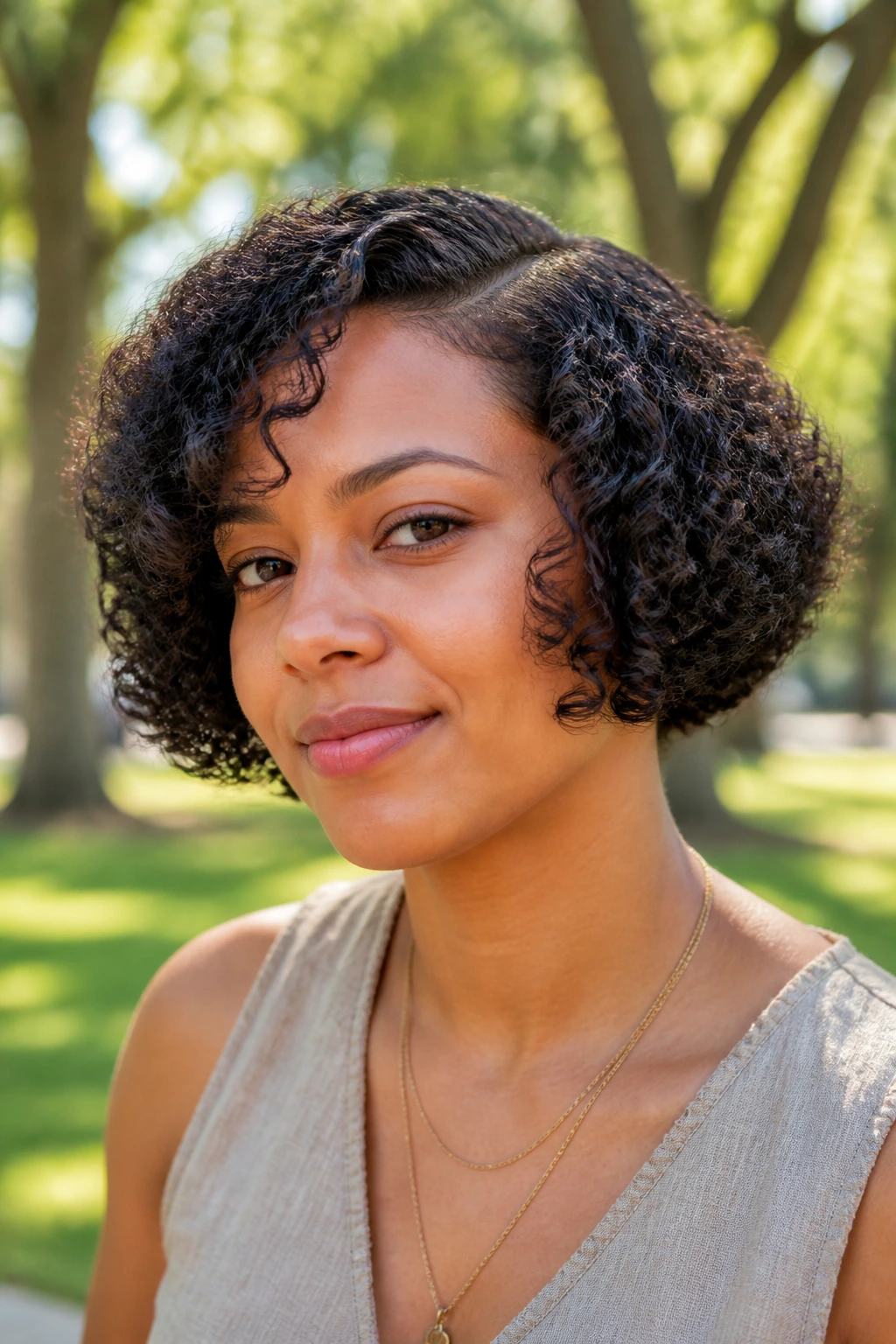
A pageboy is only stiff if you let it be. The modern version keeps the nape neat, curves the front around the face, and uses texture at the ends so the curls don’t sit like one hard ring.
That curve can be helpful on a round face if the front stays a touch longer and the sides are not too full. A side part makes it better. So does leaving the ends soft rather than blunt.
I would reach for this cut when someone wants something structured, but not severe. It has a bit of retro energy, though the curl texture keeps it from feeling costume-like.
30. Oval-Frame Curly Crop
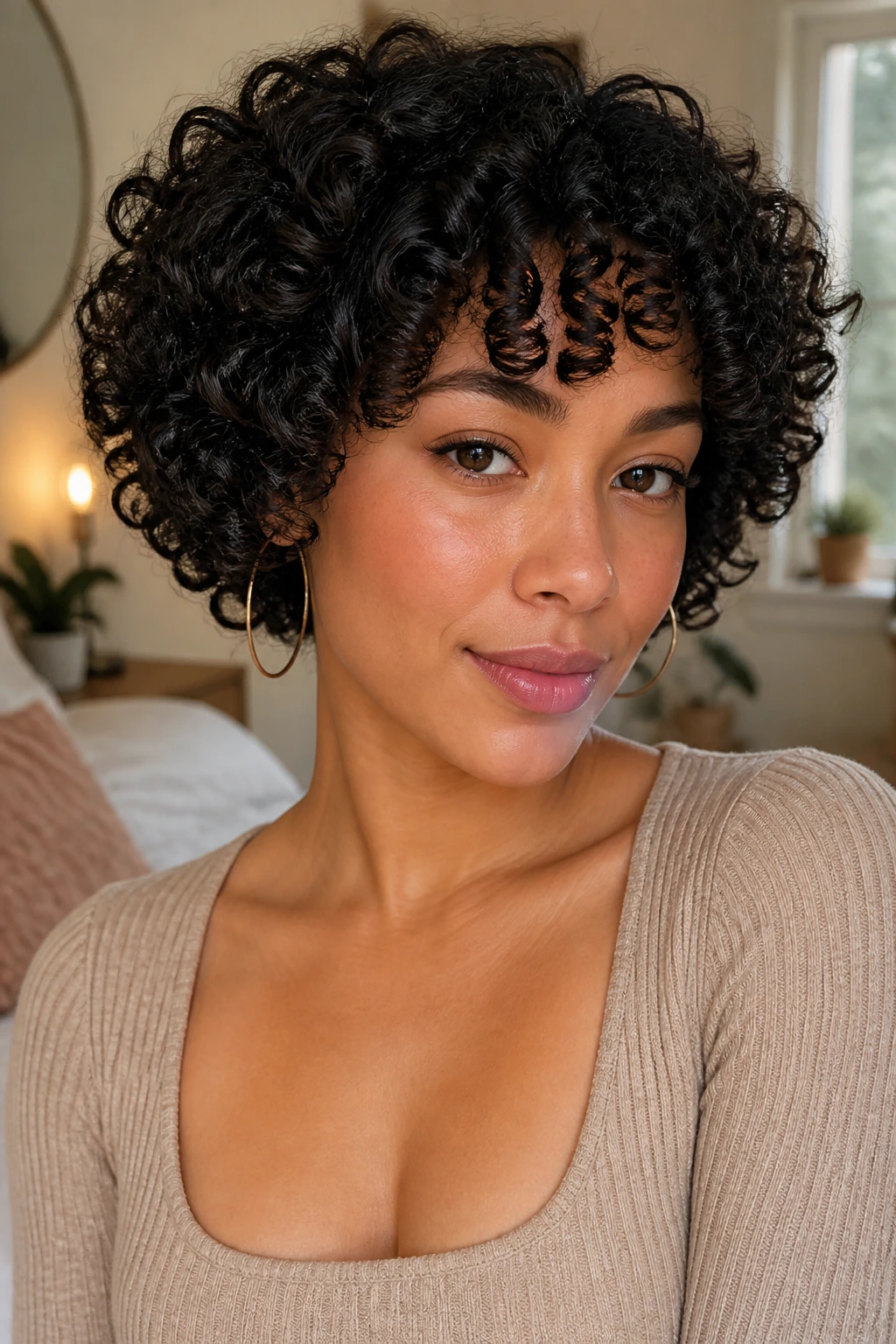
If you only remember one shape from this list, make it this one. The oval-frame crop keeps the widest part of the style above the jaw, not beside it, which is why it flatters round faces so well.
The sides stay close enough to keep the outline narrow, while the top and front pieces are left with enough length to create lift and movement. On 3B curls, that means the shape looks soft, not puffy. There’s a difference, and it’s a big one.
This is the cut I reach for when someone wants short hair but does not want to fight the mirror every morning. It behaves. Not because it is boring, but because the geometry makes sense.
How These Cuts Keep Volume in the Right Places
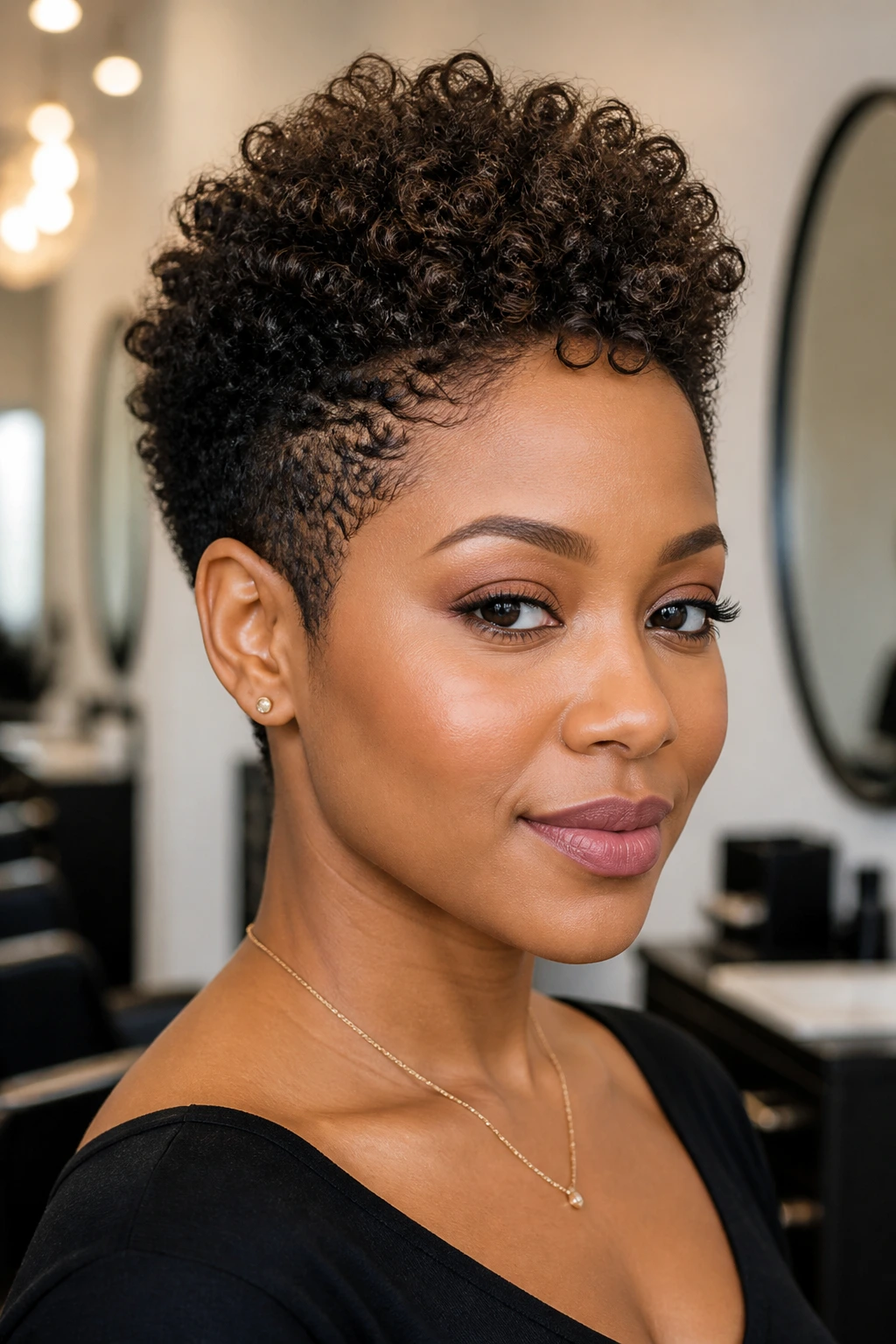
Short curly hair on a round face is a balancing act. The goal is not to hide fullness. It is to move the eye up and down instead of straight across. A cut that widens at the cheeks can make the face feel broader; a cut that rises at the crown or angles forward creates more shape with less effort.
Crown height beats side width
A little lift at the top goes a long way. With 3B curls, that height often comes from leaving the crown longer than the sides and not overloading it with heavy creams that pull the curl down. If the crown has room, the face looks longer. If the crown collapses, the whole cut spreads.
Shrinkage changes the finish line
A curl cut cannot be planned from wet length alone. Some 3B curls bounce up a full inch or two, sometimes more, once they dry and set. That is why a chin-length look in the chair can become a cheek-length look by dinner if no one checks the final dry shape.
Where the ends land matters
The cheekbone zone is the tricky one. Ends that stop right on the widest part of the face can look heavy. Ends that fall just below the jaw, or angle forward past it, usually feel lighter. That small difference changes the read of the whole haircut.
One more thing. Interior layers are usually smarter than over-thinning the surface. Take bulk from inside the shape, and you keep the curl pattern intact. Slice away too much from the top, and you get frizz instead of movement.
The Tools That Keep Short Curls Cooperative
-
Wide-tooth comb: Use it only when the hair is coated with conditioner or leave-in; dry combing can break up the curl clumps fast.
-
Spray bottle: A light mist reactivates product on day two or three without soaking the whole head.
-
Microfiber towel or cotton T-shirt: Both cut down on rough friction; a regular bath towel can rough up the cut and puff the sides.
-
Duckbill clips: Handy for pinning the crown up while you diffuse or for holding a deep side part in place.
-
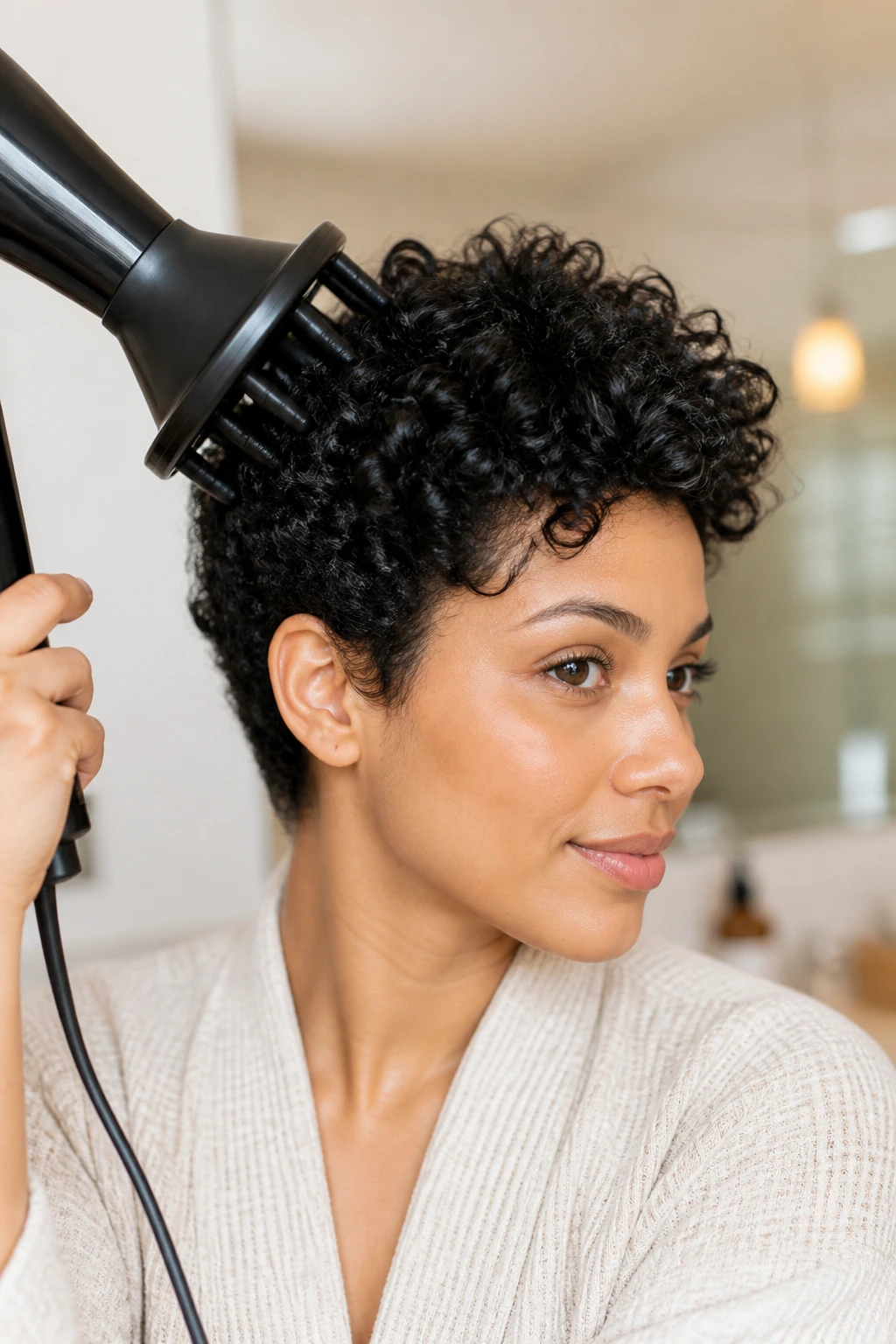
Diffuser attachment: This is the easiest way to keep 3B curls lifted at the root instead of flattened by air-drying weight.
-
Light leave-in conditioner: Short cuts do not need a heavy cream wall; a thin layer keeps the curls soft without collapsing the shape.
-
Foam or mousse: Especially useful if you want the crown to stay up and the front to stay defined.
-
Edge brush or small styling brush: Good for shaping the hairline, temple area, or a side part without over-brushing the curl pattern.
-
Silk or satin bonnet: Keeps the top from getting crushed and stops the nape from rubbing into fuzzy half-curls.
-
Hand mirror: Sounds basic. It is not. A back view matters when you’re trimming the nape or checking how the angle sits behind the ear.
What to Ask for at the Salon Chair
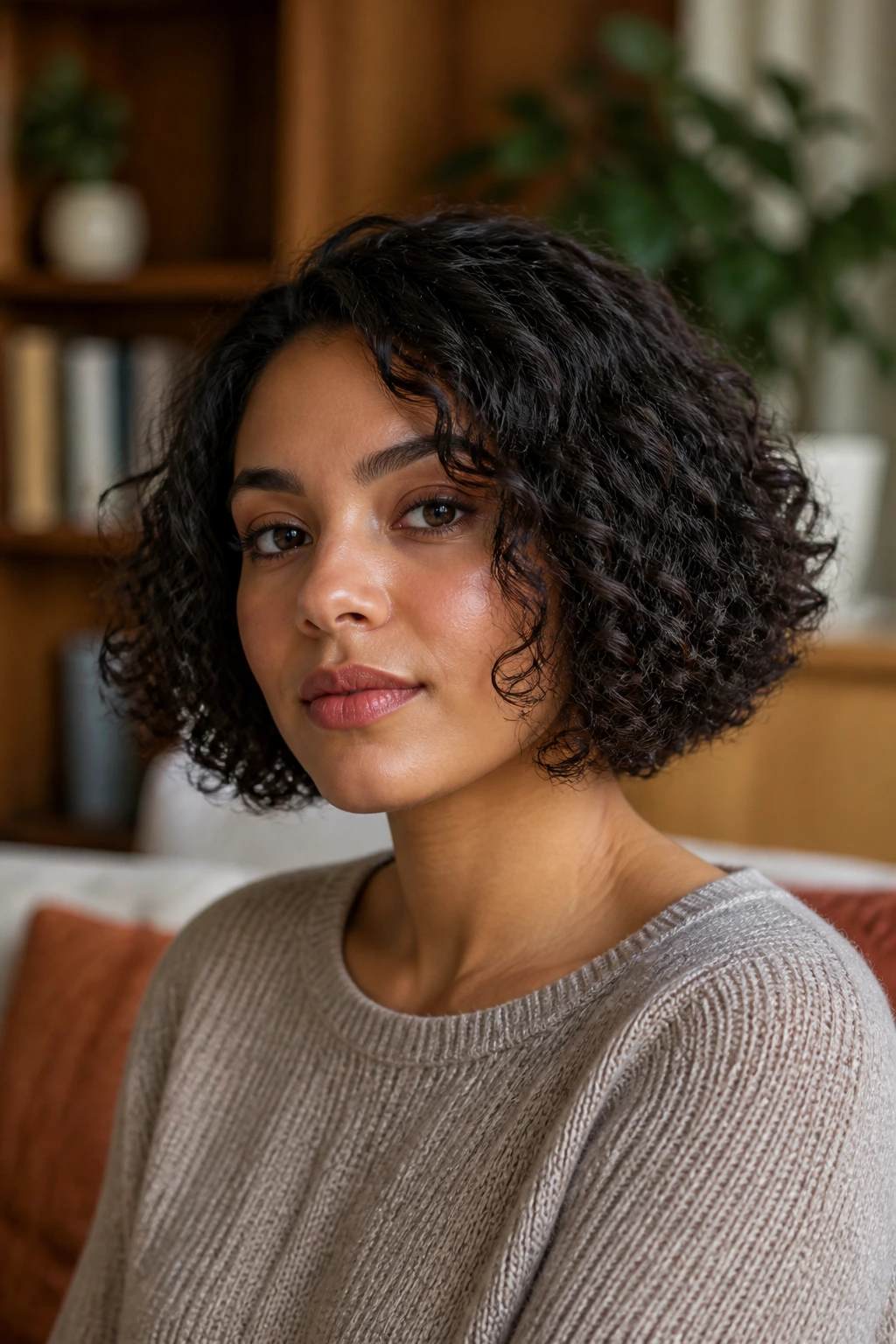
The best haircut conversations are specific. Bring photos, yes, but bring the right ones: one front view, one profile, and one back view if you can find it. A single filtered selfie with loose curls and different lighting won’t tell the stylist what the shape actually does.
Bring the right language
Say where you want the weight. Say whether you want the sides close, the crown tall, or the front longer than the back. Those three details matter more than saying you want a “cute short cut,” which could mean almost anything.
Ask for a dry check
If your curls shrink a lot, ask the stylist to check the shape dry before the final decision. Wet hair lies. It lies with confidence. A dry check shows where the curl will sit once it wakes up.
Mention your real routine
If you air-dry, say so. If you diffuse, say so. If you only style once a week and refresh with a spray bottle, that should shape the cut. A haircut that depends on daily heat styling will not behave if your life does not.
Product-wise, keep it light unless your hair is very dense. Fine 3B curls often do better with a leave-in and foam, while thicker hair can handle a cream plus a stronger hold product. Heavy butters on a short cut can drag the crown down and make the sides expand. That is one of those mistakes people make once, then never again.
How to Style and Wear Them Day to Day
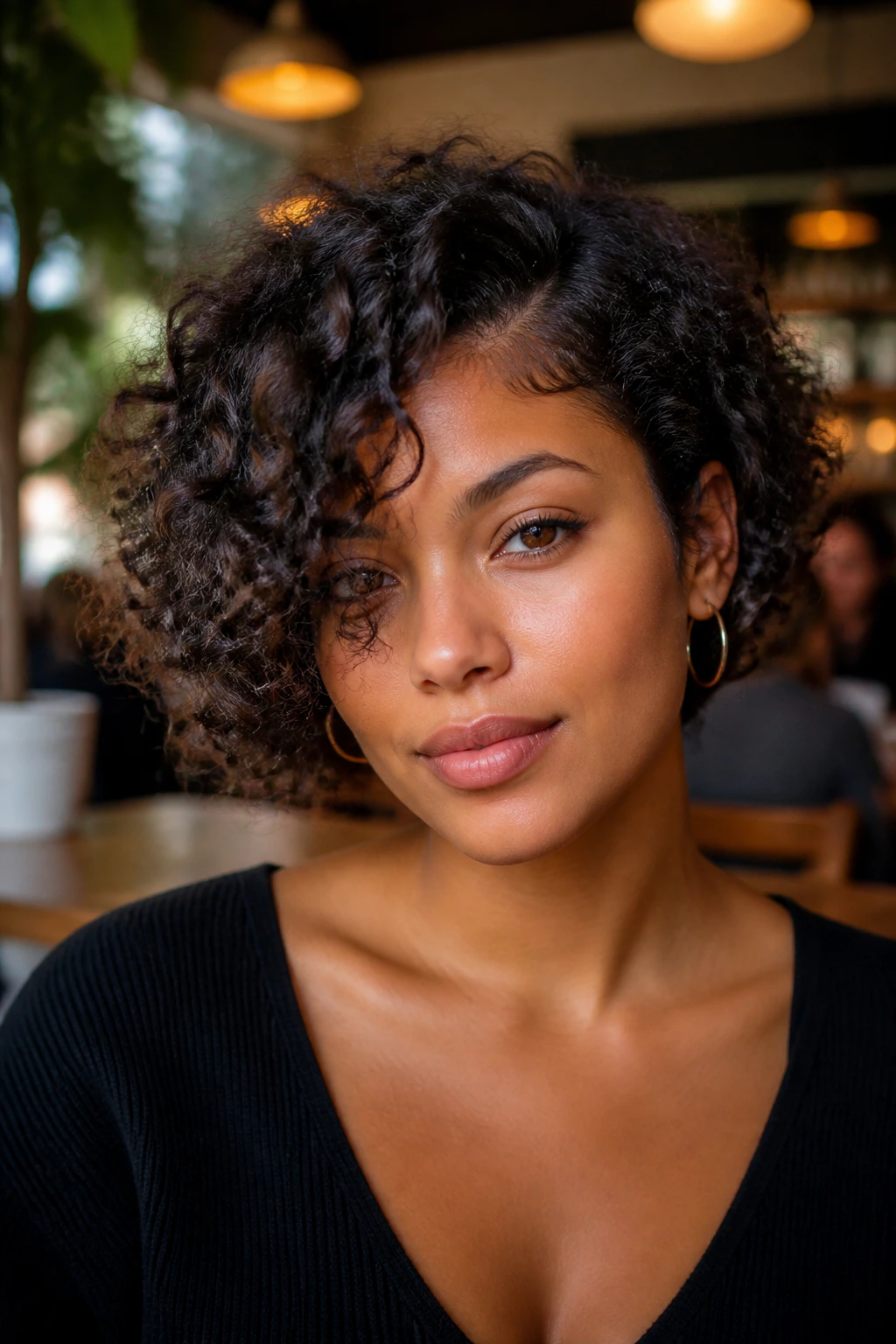
Dry-Cut First: If the cut was finished wet, give it a dry check the first time you style it at home. That tells you where the shape naturally sits and whether the front needs more encouragement or less.
Refresh Only the Parts That Need It: Short curly cuts do not usually need a full re-wash to come back to life. Mist the crown and front pieces, add a little foam to the roots, then leave the ends alone unless they are flat. Too much water on the whole head can make the silhouette swell.
Protect the Shape at Night: A loose pineapple or a satin scarf works well, but do not crush the crown flat. Short cuts need height up top, and sleeping directly on that area can flatten the very thing that makes the cut flattering.
Steer the Front, Don’t Fight It: If one side wants to fall into your cheek, tuck it behind the ear or clip it for ten minutes while it dries. That slight bend can train the front into a better line. It feels tiny. It is not.
Diffuse with Direction: Point the diffuser upward at the crown, then sideways at the front so the curls dry away from the cheeks instead of sticking straight out. A little root lift is better than a lot of product.
The Mistakes That Flatten the Shape
-
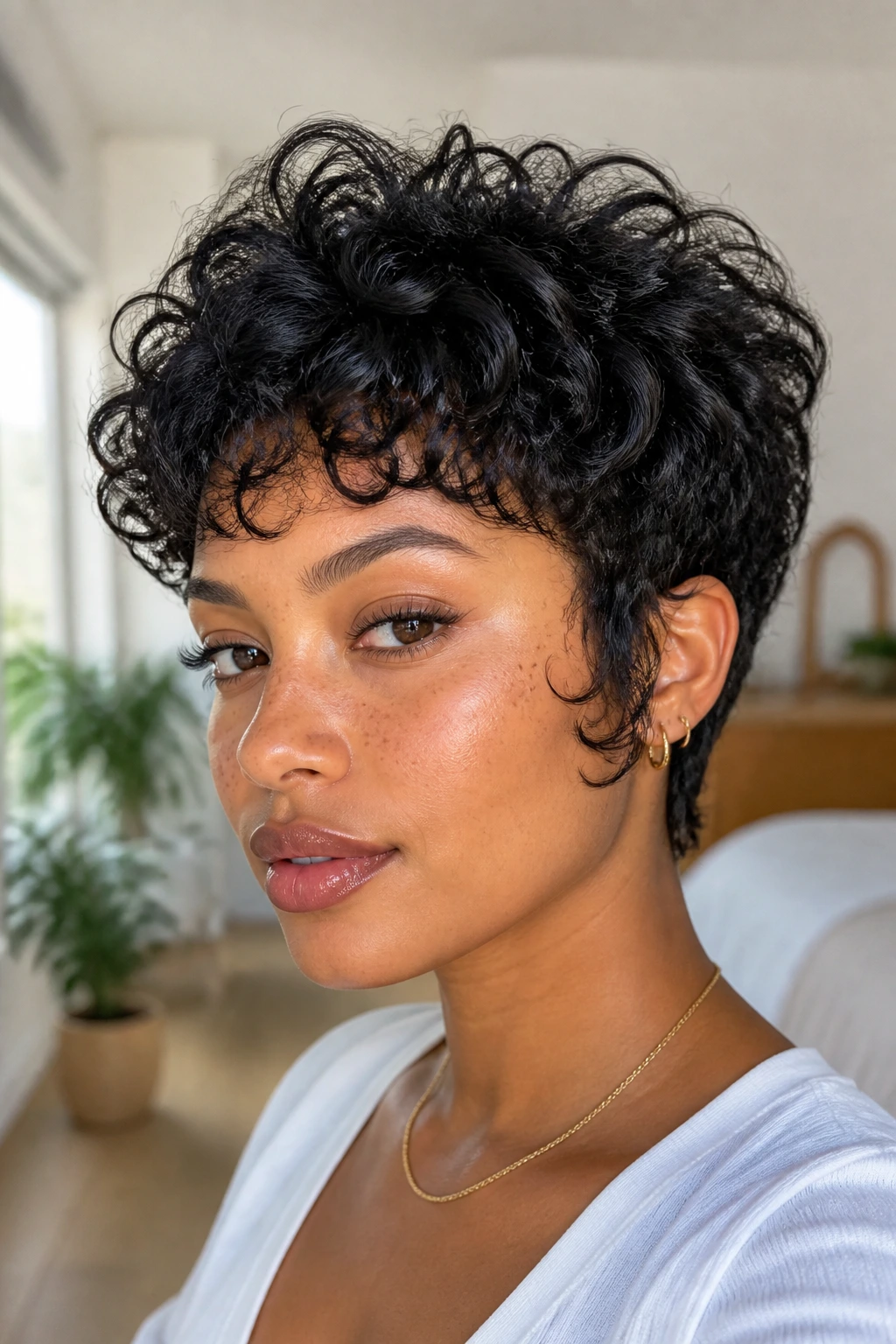
Cutting to the wet curl and calling it done: Wet 3B curls can lie by a mile. If the final shape is not checked dry, the cut may land much shorter than planned and sit right on the cheeks.
-
Making the perimeter too blunt at jaw level: A hard line at the widest part of the face can make the lower half look heavier. Soft layers or a diagonal front usually fix it.
-
Over-thinning the top layer: If the crown is thinned too hard, you lose lift and gain frizz. The shape should be carved from underneath, not stripped from the surface.
-
Using too much heavy cream or butter: Short curls need definition, not a coating that drags them down. If the roots look greasy by midday, the product is too rich for the cut.
-
Skipping nape cleanup: A short cut grows out in the neck first. If the nape gets fuzzy, the whole shape stops looking intentional.
-
Cutting bangs too heavy: A dense fringe can shorten the face and make the forehead feel boxed in. Airy bangs or longer side pieces usually work better.
Variations and Adaptations to Try
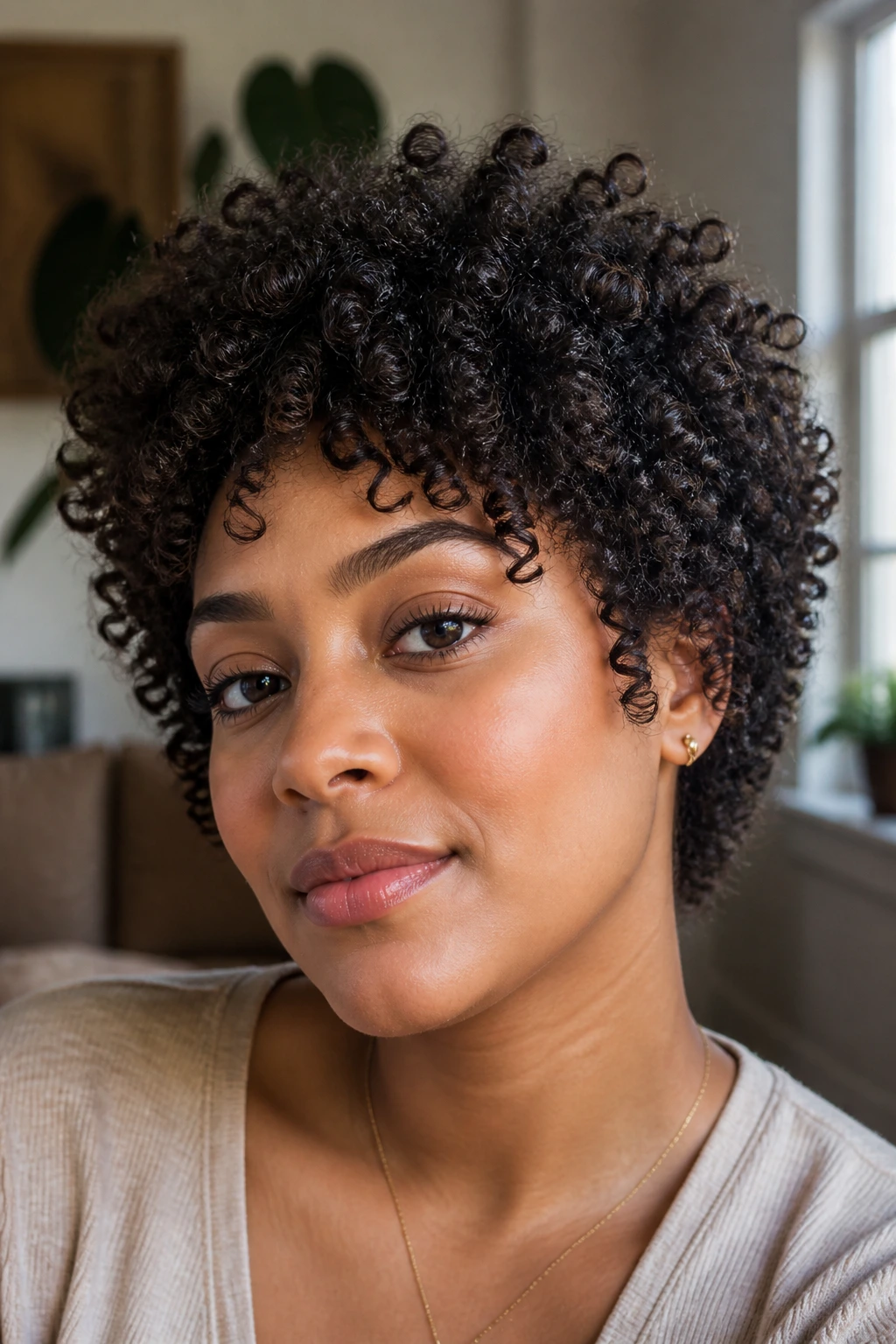
Fine-Strand Lift: If your 3B curls are fine, keep the layers longer and the products lighter. A mousse or foam usually gives enough hold without making the cut collapse.
Dense-Curl Carve-Out: If your hair is thick, ask for hidden bulk removal under the surface and around the nape. That keeps the shape from ballooning at the sides and gives the curls room to move.
No-Heat Shape: Prefer air-drying? Choose cuts with a slightly longer perimeter and a softer front line. They hold their form better when you are not using a diffuser to push the roots up.
Soft-Bang Swap: If you want the face-framing effect without committing to bangs, keep the front pieces long and side-swept. That gives you the same diagonal break across the face with less maintenance.
Longer Grow-Out Window: If you hate frequent trims, skip the ultra-short pixies and go with a stacked bob, a chin-length cut, or a lob with short layers. They keep their shape longer as they grow.
Keeping the Shape Between Trims
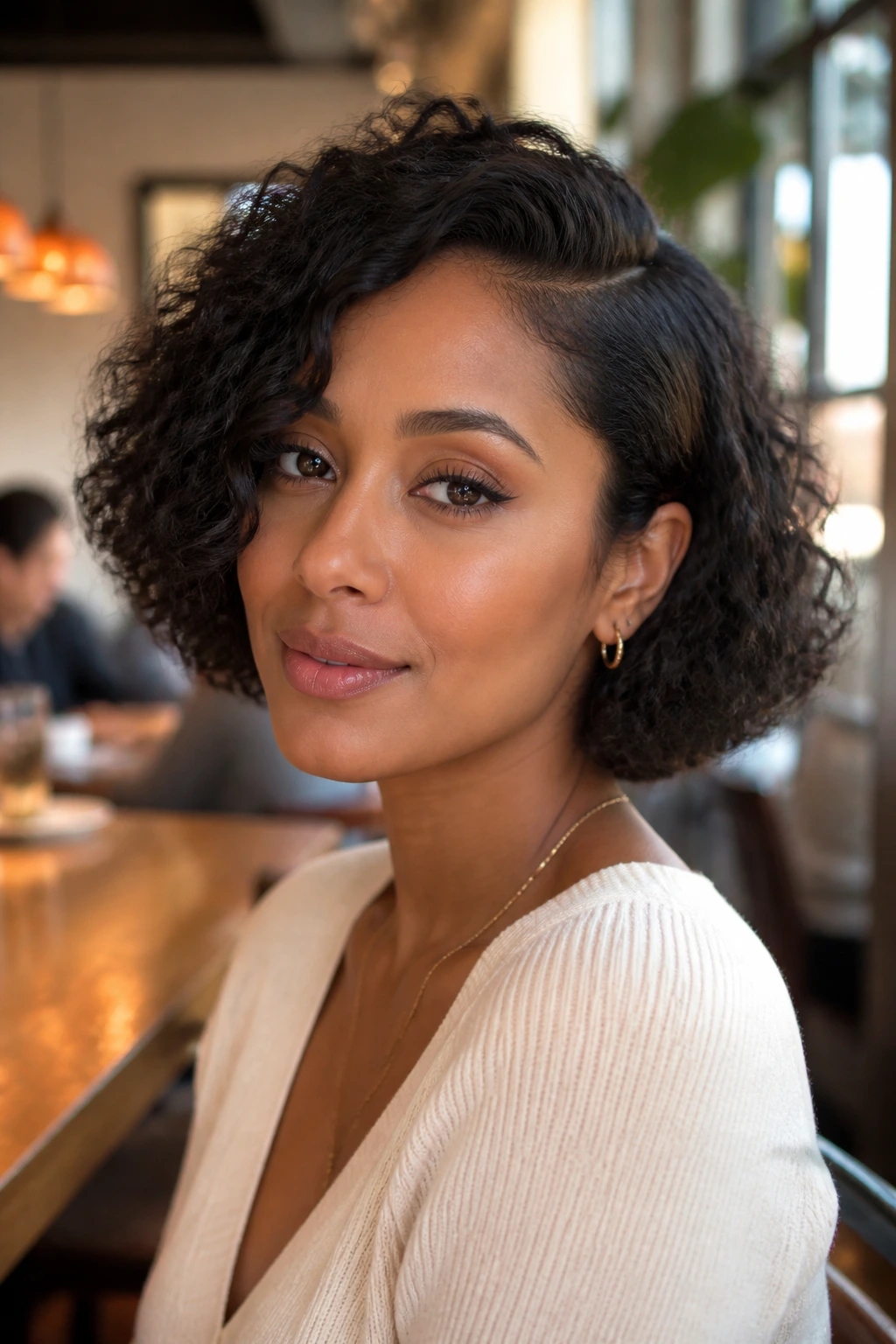
A short curly cut changes shape faster than a longer one. Not in length. In silhouette. The nape grows first, the sides puff next, and the crown can lose its lift if you keep sleeping on it the wrong way.
Pixies and tapered crops usually need a cleanup every 3 to 5 weeks if you want the outline to stay crisp. Bobs and layered shags can stretch to 6 to 8 weeks, sometimes a bit longer if the shape has soft edges. Bangs are their own beast. If you wear a short fringe, a tiny trim every 2 to 3 weeks keeps it from sitting in your eyes and distorting the face line.
Night care matters more than people admit
A satin bonnet or pillowcase helps, but the real trick is preserving the crown. If you flatten the top every night, the cut loses the very height that flatters a round face. A loose pineapple, a satin scarf, or even clipping the crown up for sleep can help.
Refresh the structure, not the whole head
In the morning, mist the roots lightly, add a little foam near the crown, and finger-shape the front pieces away from the cheeks. Don’t soak the hair unless you plan to restyle it fully. A short cut comes back faster when you work with the existing shape.
If your cut includes an undercut or a tight nape taper, a quick cleanup with clippers between appointments can keep it neat. Some people do that at home. Some would rather hand it off to a barber every few weeks. Either way is fine. The point is not to let the outline disappear.
Frequently Asked Questions
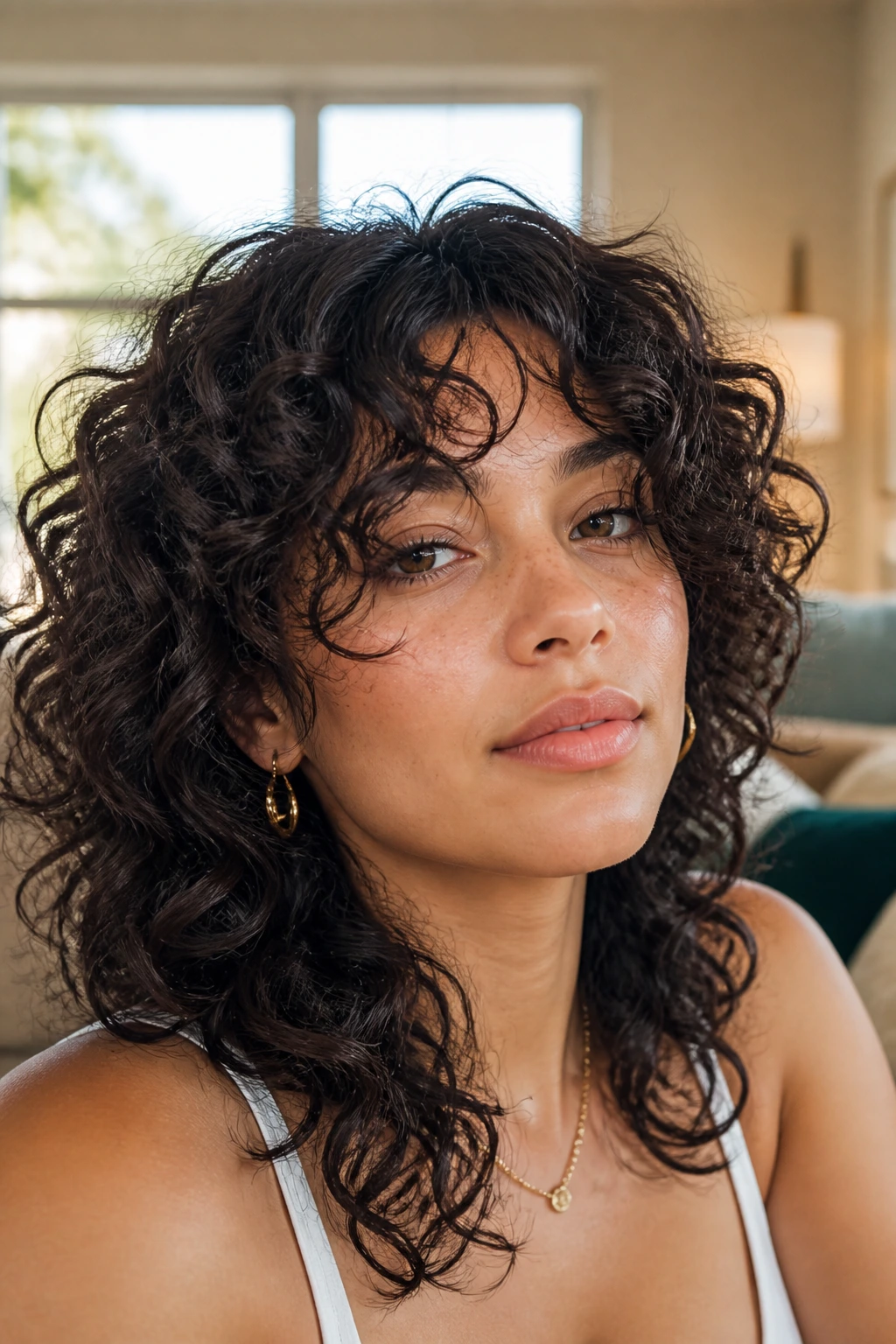
Should 3B curls be cut dry or wet?
Dry or at least dry-checked is usually better for short styles, because 3B curls can shrink hard and unevenly. A wet cut can work for rough shaping, but the final line should be checked once the curls are fully dry so the face-framing pieces land where you expect.
Will a short curly cut make my round face look wider?
It can, if the widest part of the cut lands right at the cheeks and the crown stays flat. The fix is simple: keep some height on top, soften the front corners, and avoid a blunt perimeter at jaw level.
Do bangs work on a round face with 3B curls?
Yes, but the style of bang matters. Airy curtain bangs or a soft side-swept fringe usually work better than a dense, straight-across fringe, which can shorten the face and crowd the forehead.
What if my curls shrink a lot more on one side than the other?
That happens all the time. Ask the stylist to cut for the tighter side first, then balance the looser side with a little more length rather than forcing both sides to match on wet hair.
Which short cut is easiest to grow out?
A chin-length layered bob, a stacked bob with soft corners, or a lob with short layers usually grows out more cleanly than a pixie or a micro bob. They keep some shape even after a few weeks.
Can I wear these cuts without heat styling?
Yes. Most of them were chosen because they work with natural curl patterns, not against them. A good leave-in, a lightweight foam, and careful air-drying or diffusing are enough for many 3B curl routines.
What should I do if the cut turns into a triangle?
That usually means too much bulk is sitting at the sides or underneath. A stylist can remove weight from the interior, add a little more length in the front, or tighten the nape so the outline narrows again.
Which cut works best for fine 3B curls?
A layered bob, side-parted crop, or soft bixie tends to do well because those shapes keep movement without demanding too much density. Very short pixies can work too, but only if the hair has enough spring to hold the top up.
The Shape That Holds Up Best
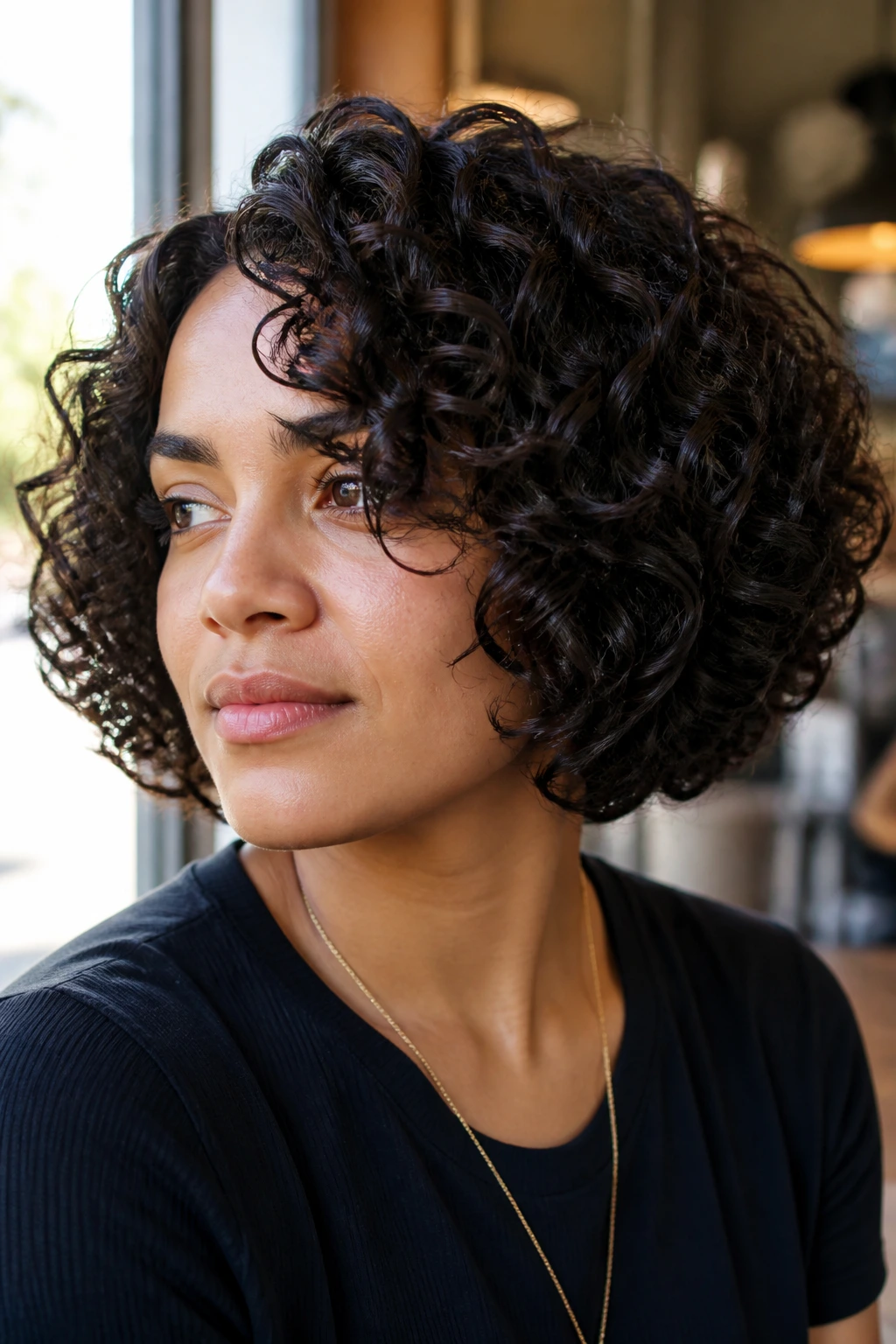
The prettiest short curly cut is not the one with the most layers or the sharpest salon photo. It is the one that gives your curls a place to sit. On type 3B hair, that usually means a little height, a little angle, and a lot of respect for shrinkage.
Round faces do not need to be hidden. They need lines. A lifted crown, a diagonal front, a clean nape, a soft side part—those are the small moves that change the whole read of the haircut. Pick the shape that gives your curls room to spring without widening the sides, and the rest tends to fall into place.
