



Geometry matters more than length when 2C curls meet a round face. Put the wrong line in the wrong place, and the hair spreads outward across the cheeks like it has nowhere else to go. Put the line in the right place, and the same curls suddenly read taller, cleaner, and lighter around the face.
That’s the part people miss. 2C texture has enough bend to show shape, but not always enough spring to rescue a bad cut. On Black hair, that usually means the silhouette has to be planned with a little more care than a blunt chop and a prayer. A short style can look sharp, soft, or a bit puffy depending on where the weight sits, how much the crown is lifted, and whether the sides are allowed to widen the face.
The cuts below are built for that exact problem. Some lean on a side part. Some pull volume upward. Some keep the perimeter off the cheeks altogether. A few are bold enough to make a round face look intentional instead of simply “short,” which is a very different thing.
Why These Cuts Earn Their Keep
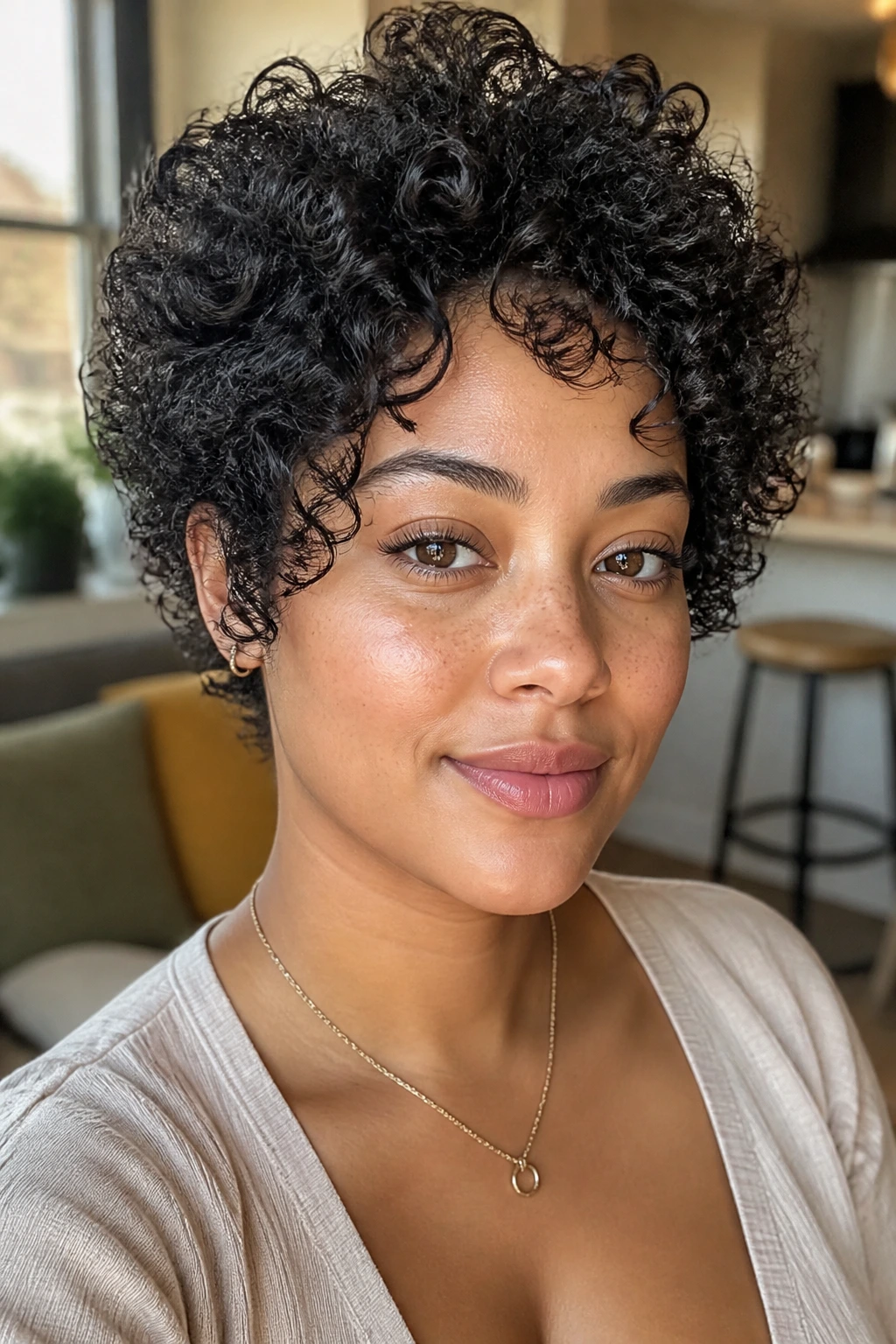
- Crown height does the heavy lifting: A little lift at the top stretches a round face more effectively than extra length hanging at the sides.
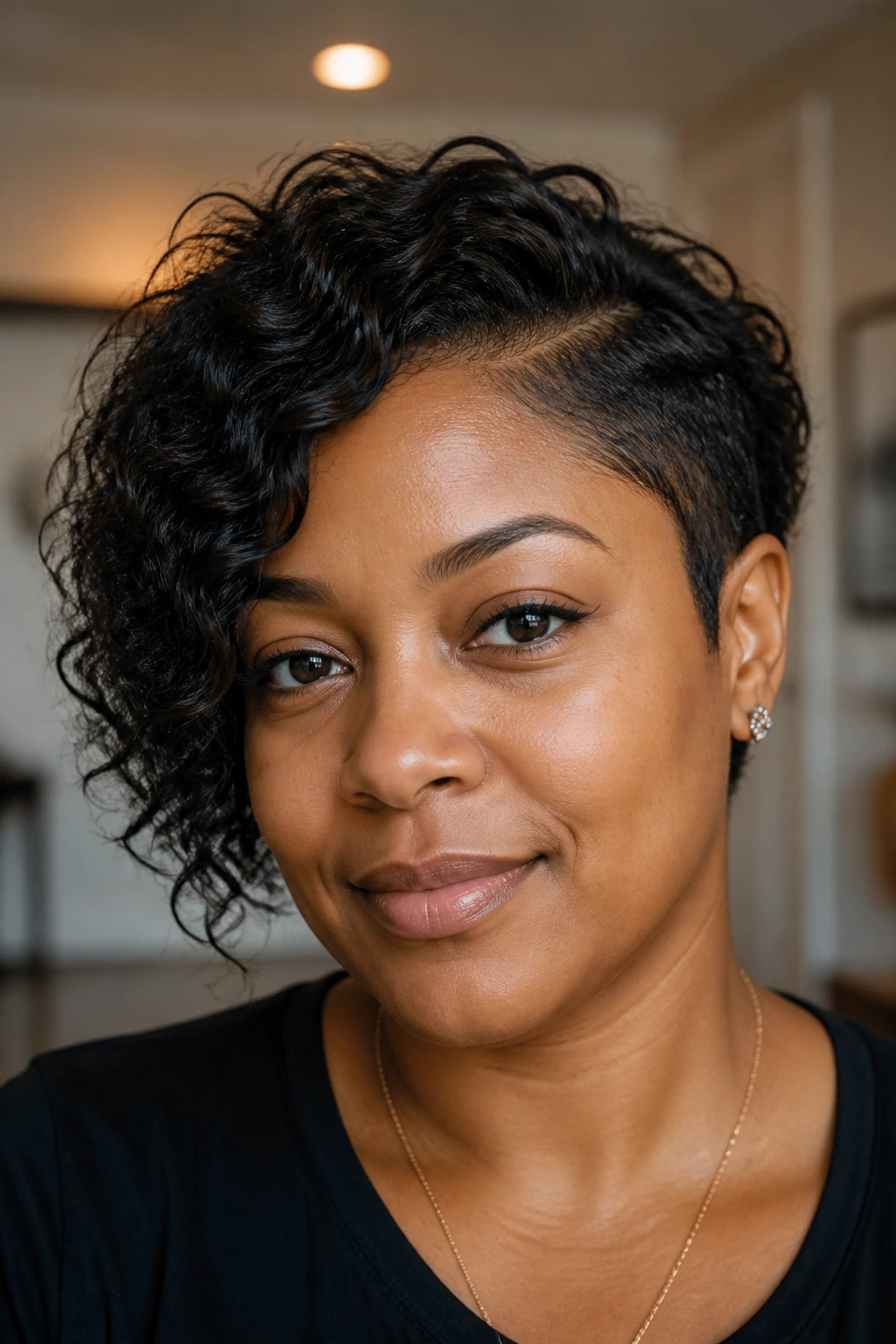
- 2C curls need room to bend: Loose curls puff fast when they’re cut blunt at cheek level, so the better cuts keep the widest point away from the face’s widest point.
- Short hair can still look soft: These shapes keep movement in the top and front, which matters when you don’t want a helmet.
- Grow-out stays manageable: Good short curly cuts don’t fall apart after a week of sleeping on them; they keep some shape as the curls settle.
- They work with Black hair texture, not against it: If your hair has density at the root and looser bend through the ends, these cuts avoid the over-thinned, see-through look that can happen fast.
1. Tapered Curly Pixie With a Side Part
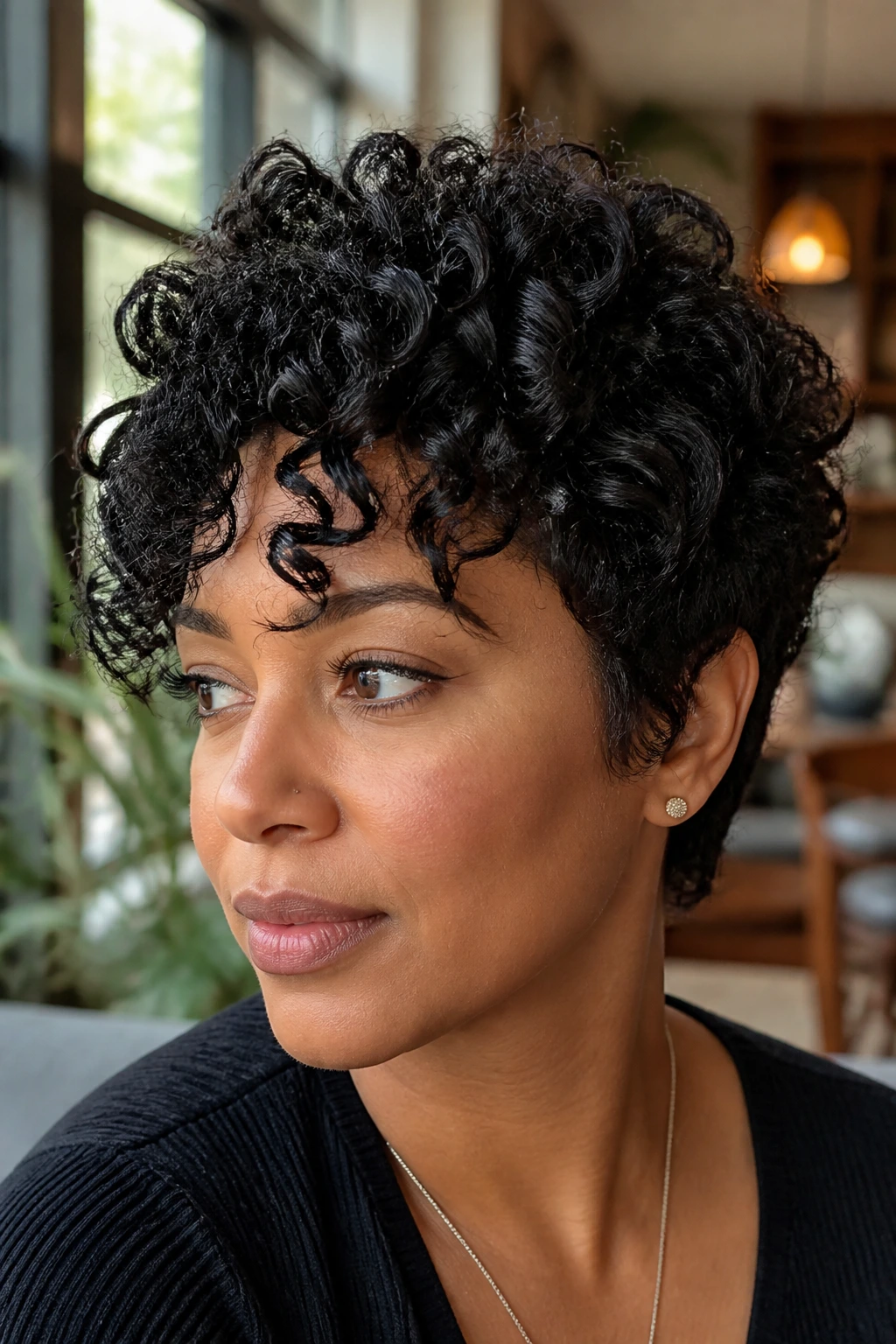
A tapered pixie earns its spot when the sides stay close enough to clear the cheeks and the top carries enough length to bend instead of puff. On 2C curls, that difference matters. Too short on top and the shape turns fuzzy; too wide at the sides and the face reads fuller than it is.
Ask for a soft taper at the nape and temples, not a hard buzz, with the longest curls left around 3 to 4 inches on top. A deep side part shifts the eye away from the center of the face, and one longer front piece can skim the temple like a built-in contour. Keep the ends point-cut, not shredded.
Best for: dense hair, quick styling, and anyone who wants a cut that still looks deliberate on day three.
2. Curly Bixie With a Soft Fringe
Is there a more forgiving short cut than the bixie? Probably not for this face shape. It sits between a bob and a pixie, which means you get enough length around the jaw to soften the roundness without dragging the shape downward.
The soft fringe is the part that saves it. Keep it airy and a little irregular—nothing blunt across the forehead—so the eye gets interrupted before it reaches the widest part of the cheeks. I like this cut when 2C curls want to expand sideways; the bixie keeps that expansion under control without looking severe.
A mousse and diffuser are usually enough here. Heavy cream will make the fringe slump, and that is the fastest way to lose the line.
3. Chin-Length Layered Bob
This one does a simple job, which is why it works. A chin-length bob gives the face a clear edge, and on round faces, that edge can make the whole silhouette look longer without resorting to drama.
The trick is placement. Ask for layers that start below the cheekbone, not at it, so the curl movement opens under the face instead of beside it. If the layers begin too high, the hair balloons right where you don’t want width. Keep the perimeter grazing the chin or just under it, and let the front pieces bend forward a little.
Ask for this shape:
- Chin-length perimeter
- Soft layers below the cheekbone
- Point-cut ends, not razor-thin edges
- A part that can swing left or right
That combination gives 2C curls enough motion to feel airy while keeping the face line tidy.
4. Angled Curly Bob
A clean angle is one of the oldest tricks in the book, and it still earns its place. Shorter in the back, longer in the front—that diagonal line quietly pulls the eye down and forward, which is exactly the opposite of what a round face needs from a flat bob.
The best version keeps the front just long enough to slide past the cheek, not sit on it. If the longest piece lands directly on the cheekbone, the cut can make the face look wider. A better landing spot is just below the jaw, where the curl can swing instead of perch.
This shape also behaves well on looser curls because the front pieces hold their line even when the texture gets a little fuzzy. The angle still reads. That’s the part I like most.
5. Side-Swept Asymmetrical Crop
One side longer. One side tighter. That’s the whole game here, and the asymmetry is doing more work than people think. A short curly crop can look boxy on a round face if it grows evenly on both sides; break that symmetry and the whole shape relaxes.
The longer side should fall somewhere between the cheekbone and jaw, while the shorter side stays snug enough to expose the ear or temple. That little reveal makes the face look less circular because the eye gets a break in the outline. If you wear earrings, this cut gives them room to show up without competing with a wide hair silhouette.
Use a lightweight gel on the longer side and scrunch the top with your fingers. Don’t overwork it. The asymmetry needs some mess to feel natural.
6. Shaggy Curly Crop With Wispy Bangs
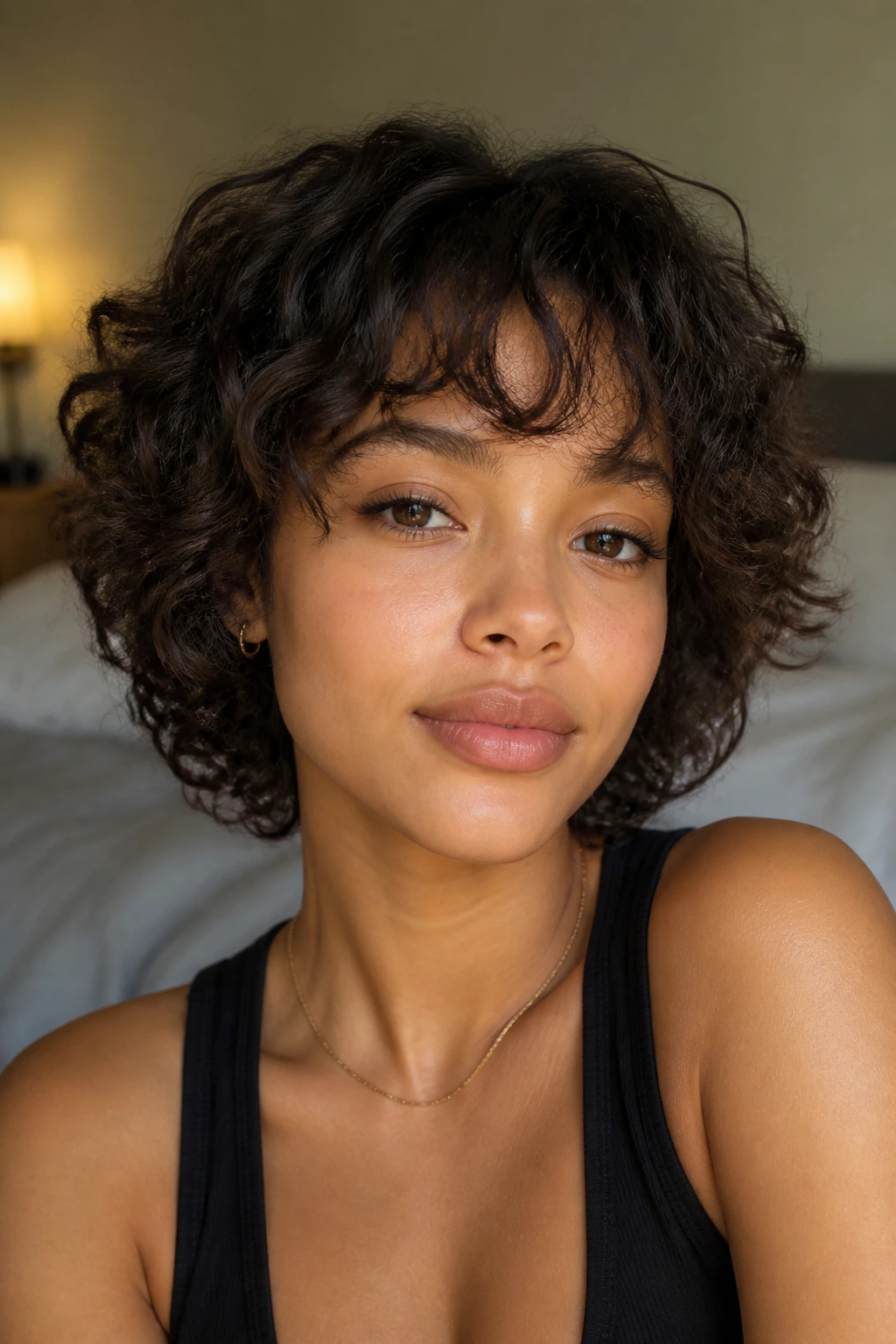
A shag can go wrong fast on 2C curls. Too many short layers, and it turns into frizz with a haircut. The version worth keeping uses soft internal layers and a wispy fringe that breaks the forehead line without laying a thick band across it.
The fringe matters more than people expect. On a round face, a light bang can stop the eye before it runs straight across the width of the face. That interruption adds shape. Keep the bangs long enough to move—ideally just to the brow or slightly below—and let them separate a little instead of forcing a uniform curtain.
This cut is for people who like movement more than polish. It has a little attitude. It also grows out in a useful way, which is a nice bonus when you don’t want to visit the salon every time the outline softens.
7. Mini Curly Frohawk
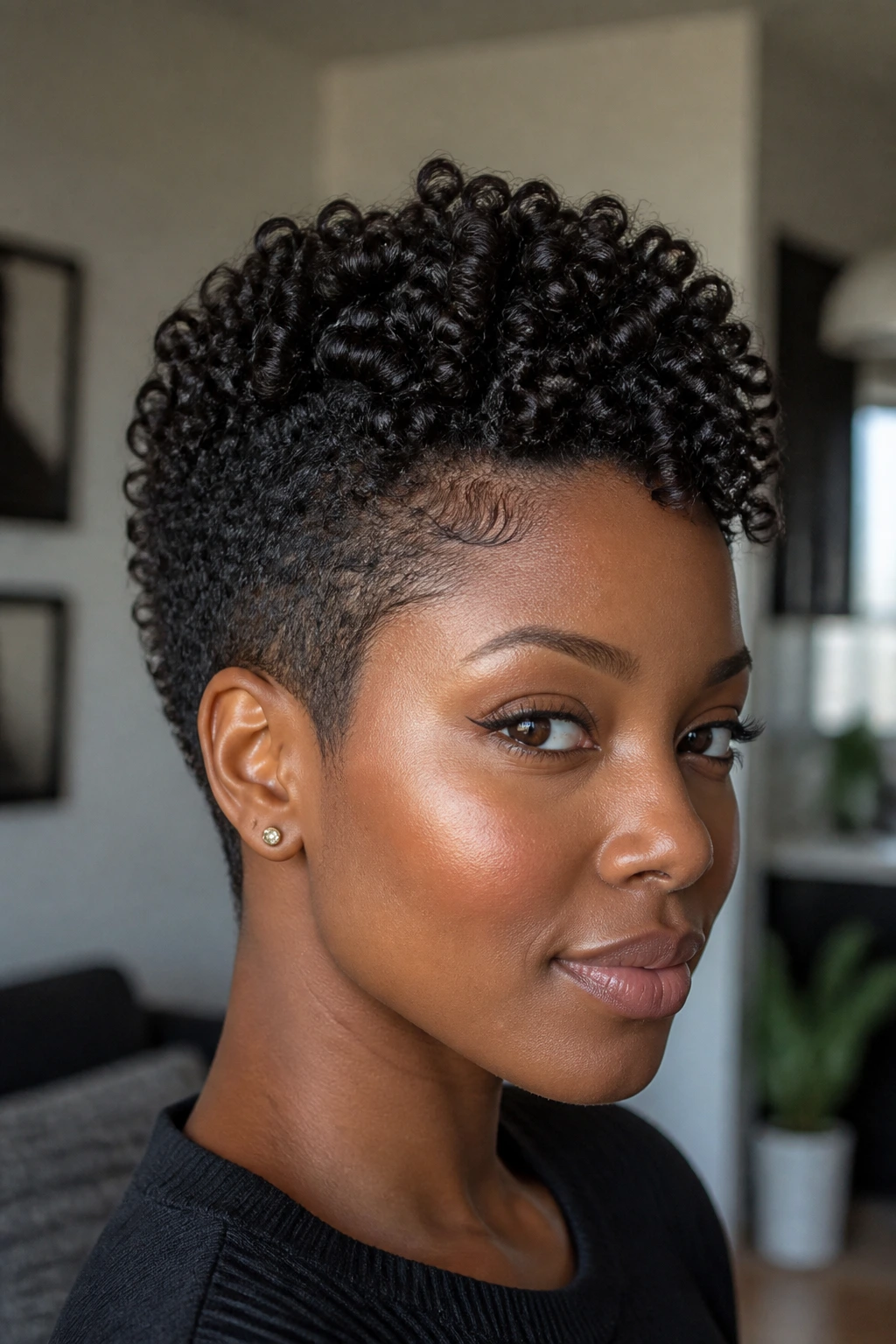
If you want height without extra side width, the mini frohawk is hard to beat. The sides stay tight, the center ridge carries the volume, and the whole shape pulls the eye straight up. On a round face, that vertical line is the point.
Keep the sides tapered close around the temples and nape, but leave enough length through the center strip for the curls to stack naturally. The front can be a little longer than the crown if you want the silhouette to feel less harsh. Edge control at the hairline helps the shape stay neat, but don’t slick it back so tightly that the style loses its lift.
This cut looks especially good if your 2C curls clump well when diffused. You want a defined ridge, not a fluffy cloud sitting on top of the head.
8. Stacked Curly Bob With Lifted Crown
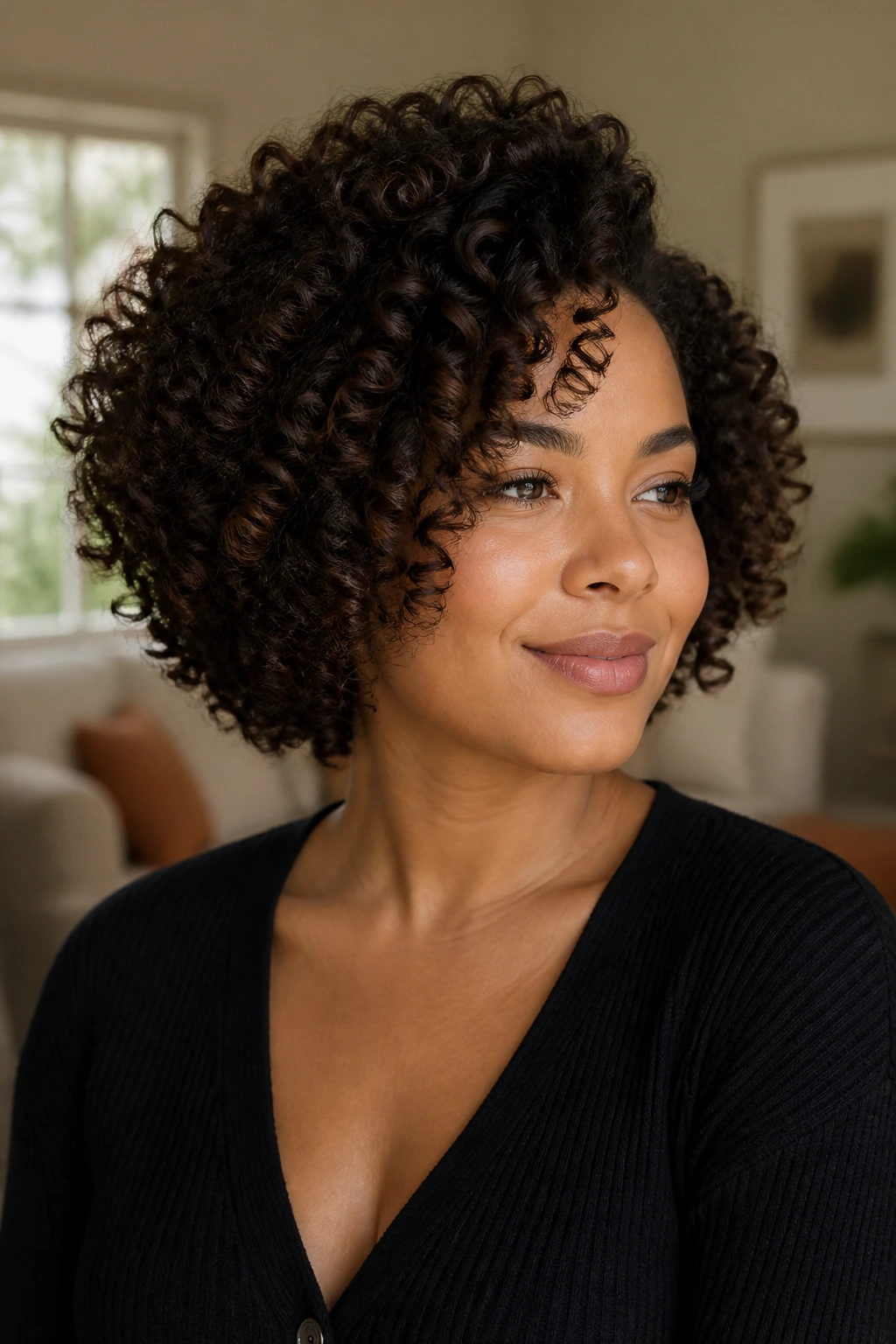
A stacked bob can be a gift or a headache. The difference is the degree of stacking. Too much and the back turns bulky; too little and the shape falls flat. On a round face, a gentle stack at the back gives lift where you need it most without adding width to the cheeks.
Ask for the shortest point to sit at the nape, then let the length rise gradually toward the crown and front. The top should feel elevated, not puffed. If the stylist knows curls, they’ll remove bulk inside the shape instead of thinning the perimeter. That matters. A hollow-looking bob is not the goal.
This one suits 2C curls that have density underneath and looser movement on top. It keeps the silhouette neat even when the weather tries to do its own thing.
9. Neck-Length Lob With Internal Layers
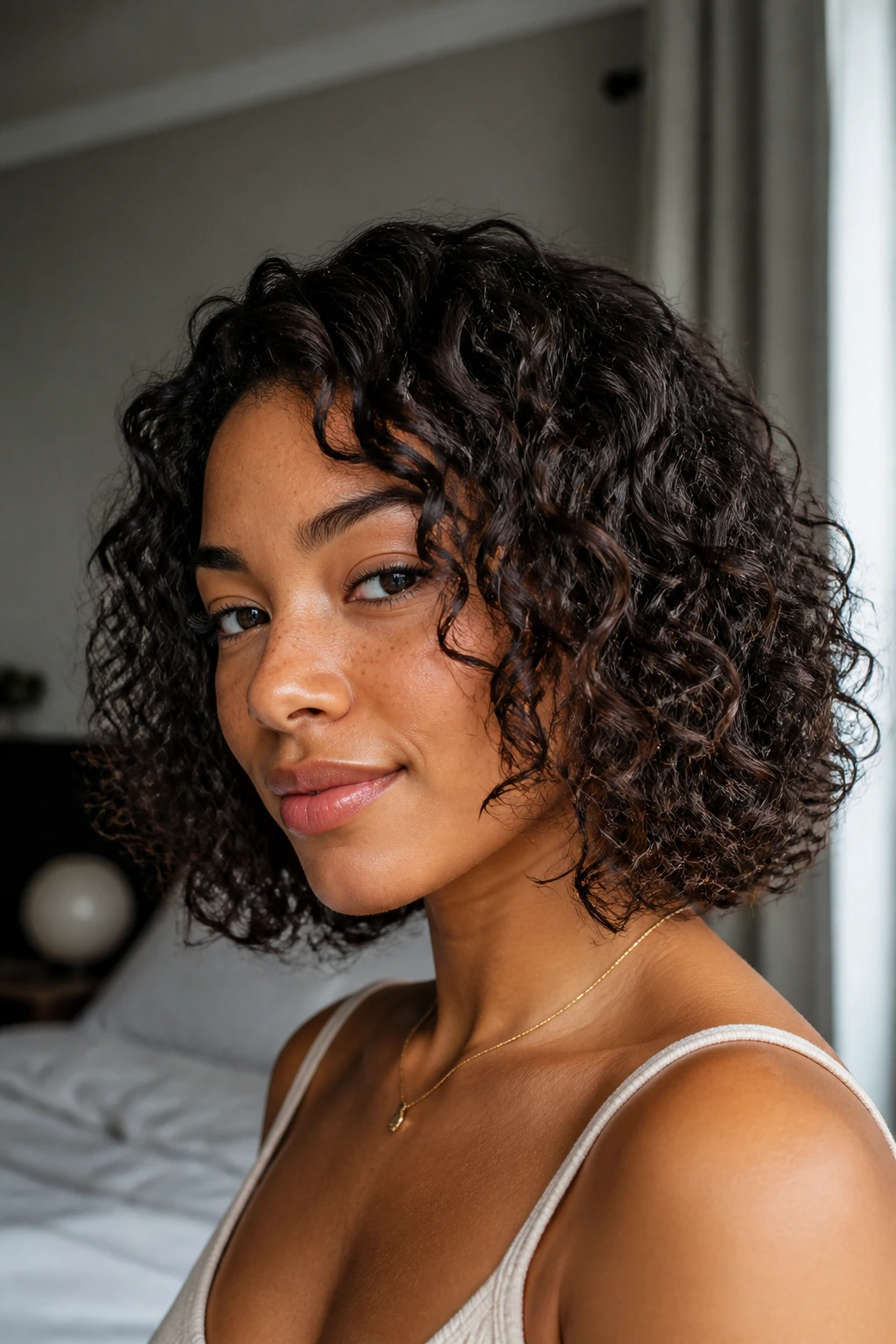
A neck-length lob is the calm option here. It gives you more room than a chin bob, but it still keeps the ends above the shoulders, where the shape can stay light. On round faces, that extra inch or two often makes the cut look more balanced than something that stops right at the jaw.
Internal layers are the whole point. They take some bulk out of the middle without breaking the outer line, so the curls can move without turning the sides into a helmet. If your hair is dense, this is where a dry cut helps a lot. Wet curls lie. They always do.
This cut also plays nicely with deep side parts and low-effort diffusing. It’s not the most dramatic style on the list, but it might be the one you end up wearing most.
10. Rounded Halo Cut With Tapered Sides
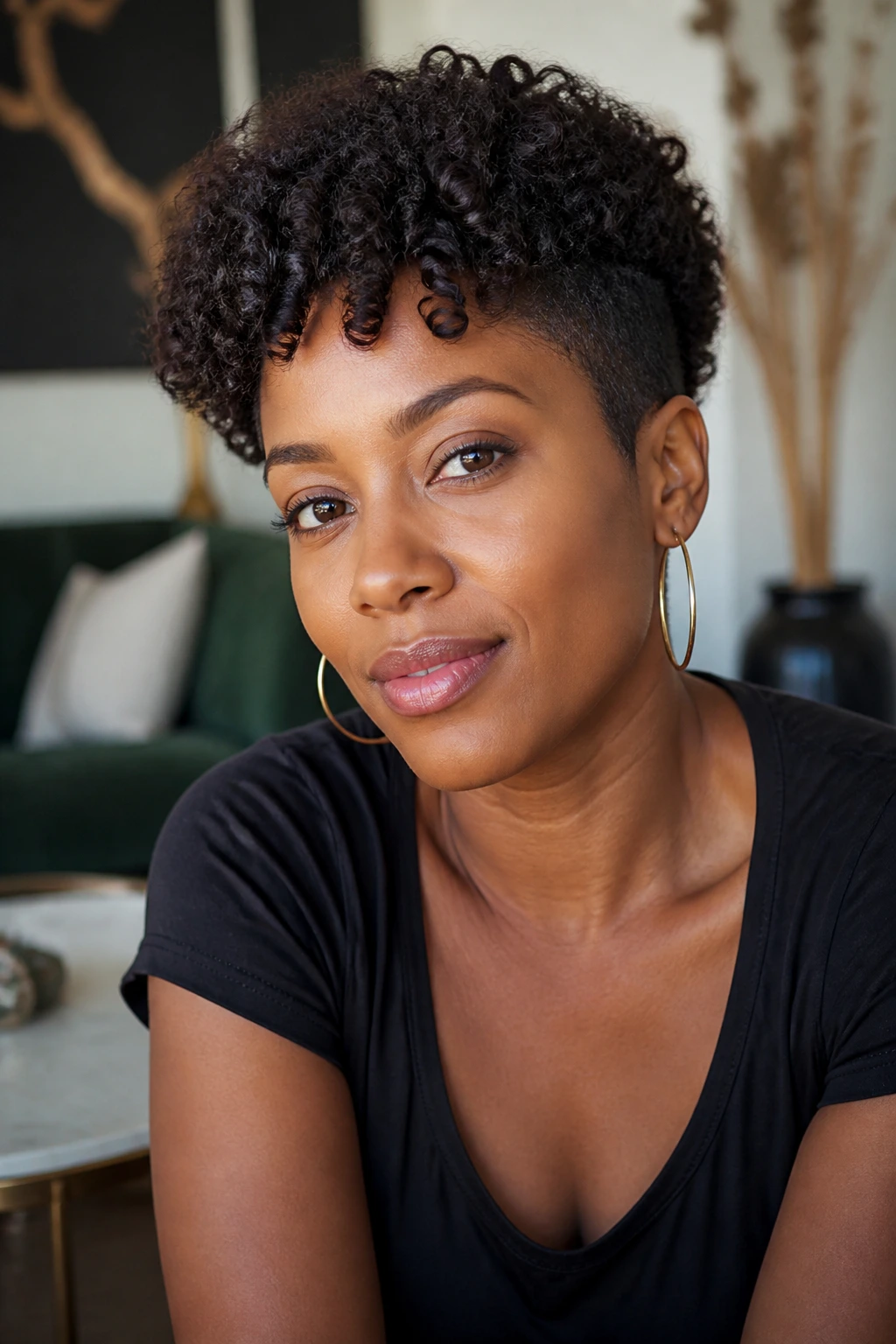
A halo cut sounds risky on a round face, and honestly, if it’s done wrong, it is. The key is not the roundness itself. It’s where the roundness sits. Keep the sides tapered close enough to avoid width at the cheeks, then let the top and crown hold the softer curve.
That gives you a lifted, airy shape instead of a puffball. Think of it as a controlled cloud, not a sphere. The curls on top should have room to bend upward and outward, while the hair near the temples stays quieter. I’d only choose this cut if your curls have enough spring to keep the outline from collapsing.
It works best with a light mousse and a diffuse-from-the-roots routine. If you air-dry it flat, the shape loses the whole point.
11. Short Curly Wolf Cut
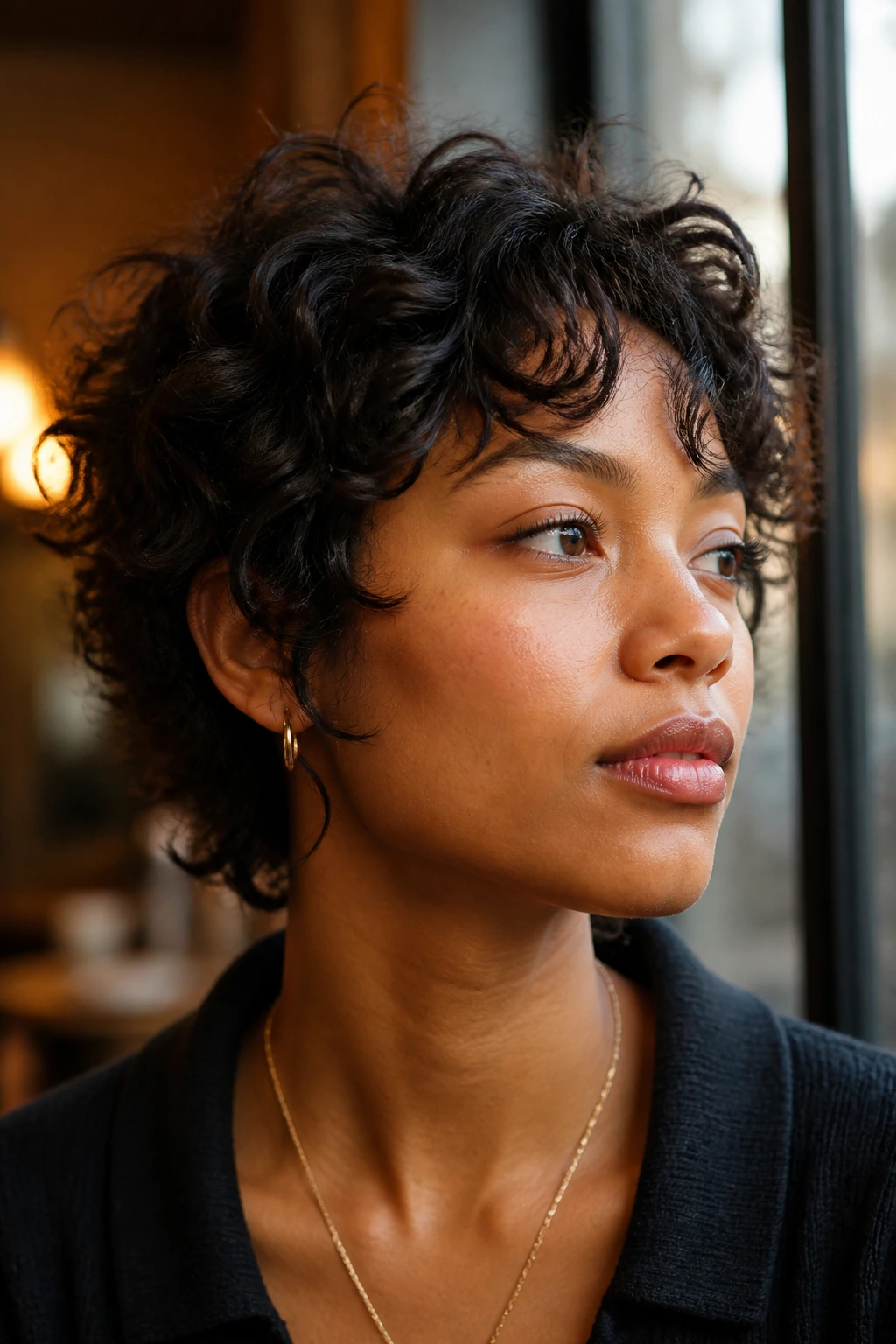
The short wolf cut is the one for people who want movement and don’t mind a little edge. The shape is choppy by design, but the better versions keep the transitions soft so the hair doesn’t flare out at the sides. That matters for round faces. You want lift at the crown, not width beside the cheeks.
Ask for shorter layers through the top and crown, with the front pieces left long enough to skim past the cheekbone. The nape can stay a little longer to pull the silhouette downward. It’s a good cut if your curls like to clump unevenly; the layers give the hair somewhere to go.
A little frizz works here. Too much polish can make the cut feel stiff, and that’s not the point.
12. Flipped-Under Curly Bob
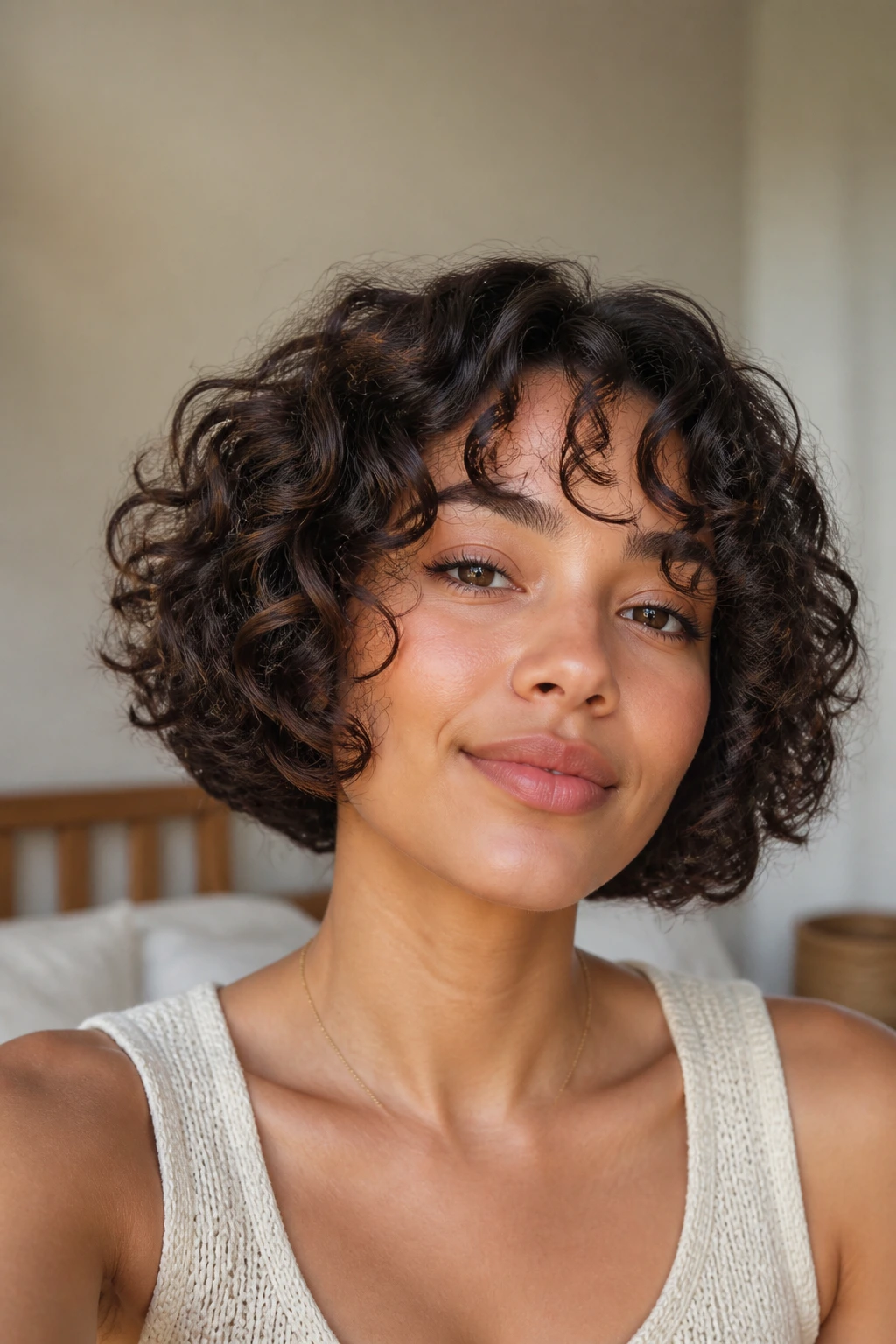
There’s something satisfying about a bob that curves in at the ends. It gives the face a framed edge instead of a puffed outline. On 2C curls, this works when the perimeter is cut to encourage the ends to tuck inward, not kick out at the cheeks.
You can style it with a diffuser, a brush, or even just a careful scrunching motion while it dries. The key is keeping the front just long enough to land below the jawline. If the ends sit right at cheek height and flip outward, the face looks wider. If they turn in under the jaw, the whole shape reads cleaner.
This is a good choice when you want something neat without looking stiff. It’s one of the more wearable cuts on the list.
13. Wedge Cut With a Soft Nape
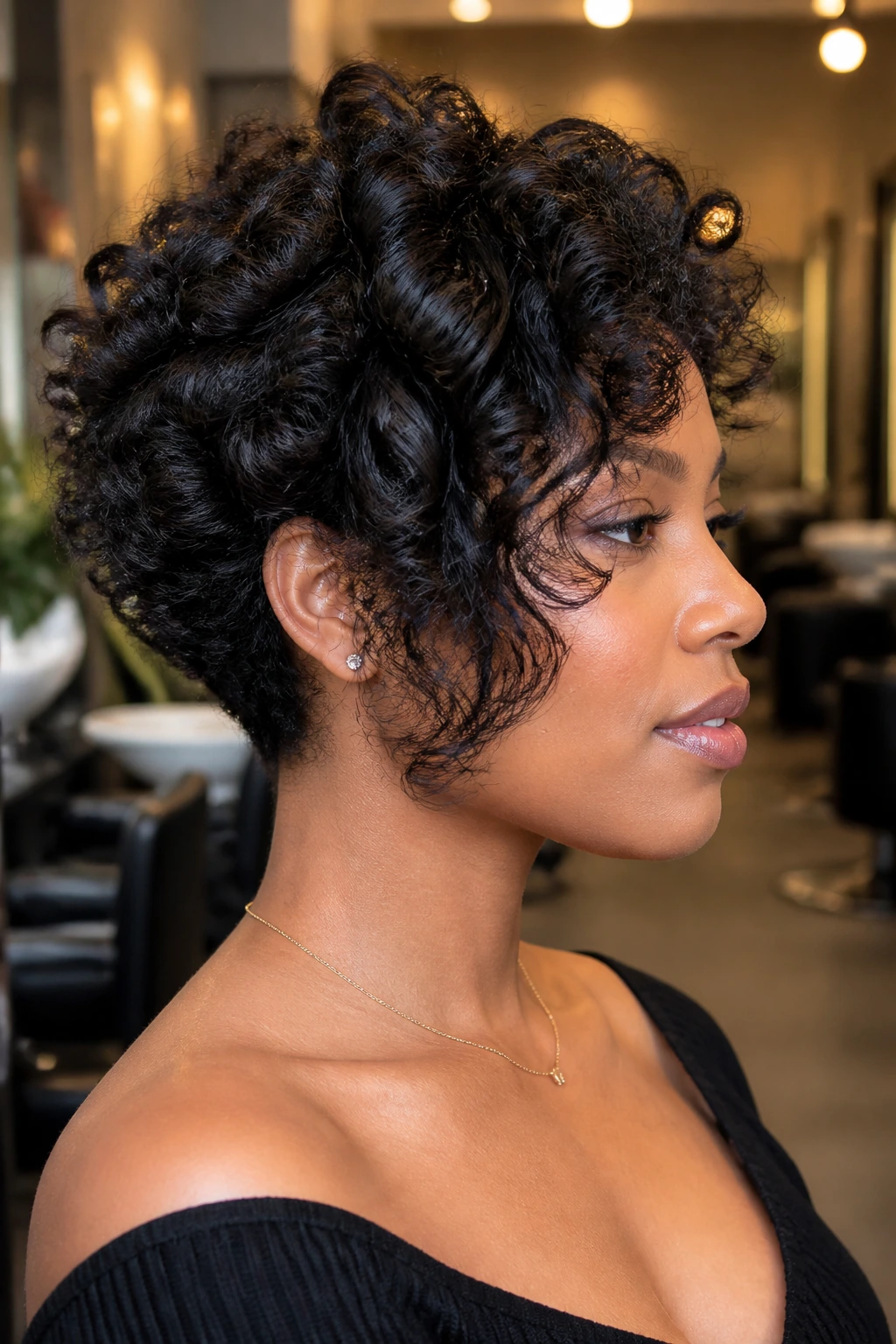
A wedge cut narrows toward the neck, which is exactly why it can flatter a round face. It creates a visual triangle that points down, not out. The soft version is the one to ask for. Hard, severe wedges can feel dated fast.
Let the back stack gently and keep the front pieces long enough to brush the jaw. On dense 2C hair, the wedge removes weight where it tends to build up, especially at the nape. That gives the top more lift without making the whole style look overworked.
What to ask for:
- A gradual wedge, not a sharp shelf
- Volume at the crown
- Soft edges around the temples
- Length that falls below cheek level in front
If your hair expands fast in humidity, this shape can keep the outline more controlled than a fluffy bob.
14. Long Fringe Pixie
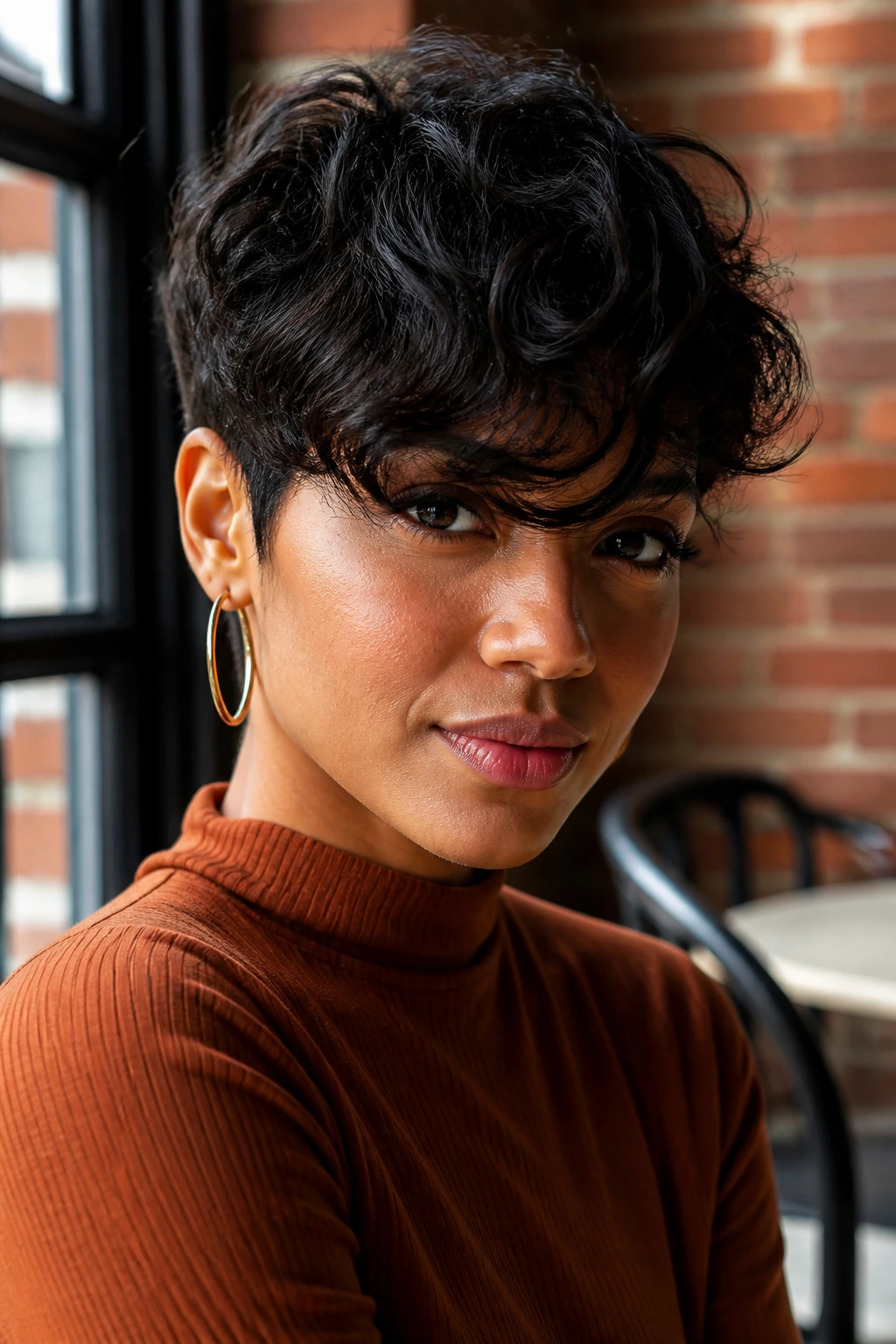
A long fringe changes everything. It gives a pixie direction, and direction is useful when you’re working with a round face. Instead of opening the forehead fully, the fringe cuts across it at a slight angle and draws the eye toward the cheekbones.
Keep the sides neat and the top a little longer so the fringe can bend instead of sticking up. The line should be soft enough to move but long enough to create contrast. If you have glasses, this cut can look especially good because the fringe sits above or beside the frames rather than fighting them.
I’d avoid a fringe that stops too short. Too much forehead exposure can make the face feel wider, and that defeats the whole point.
15. Undercut Pixie With Crown Volume
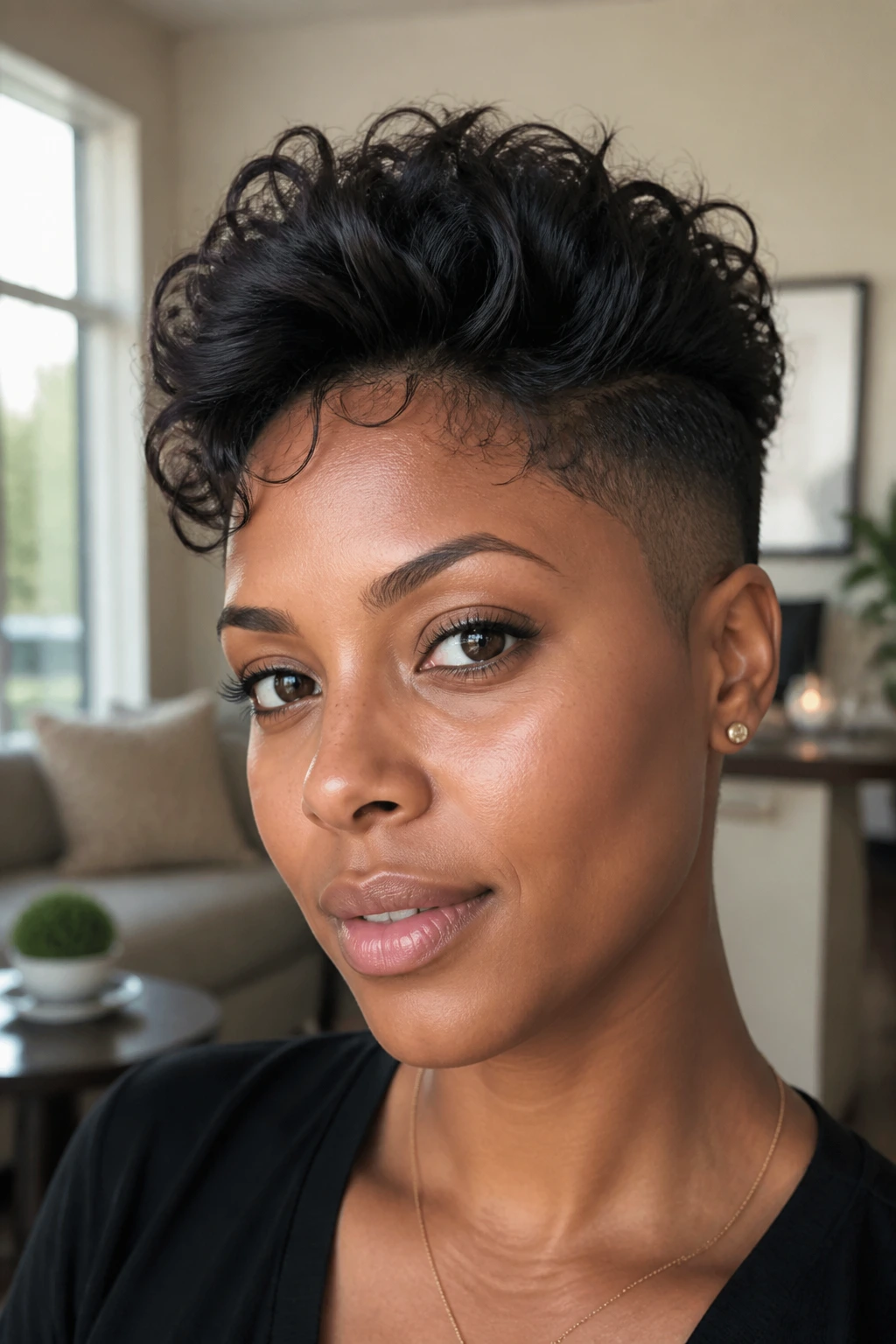
This is the cut for thick hair that refuses to stay small. The undercut removes bulk from underneath, especially around the nape and behind the ears, while the top stays long enough to hold shape and lift. On round faces, that combination is almost unfair.
The crown needs the length. If it’s too short, the style loses its vertical line and starts spreading outward. Leave enough on top to create a visible ridge or sweep, then keep the perimeter closer to the head. The result is cleaner around the cheeks and lighter overall.
This is not a cut you should ask for if you want to avoid maintenance. You’ll need trims to keep the undercut from growing into the rest of the shape. But if you like crisp edges, it pays off.
16. Soft Curly Mullet
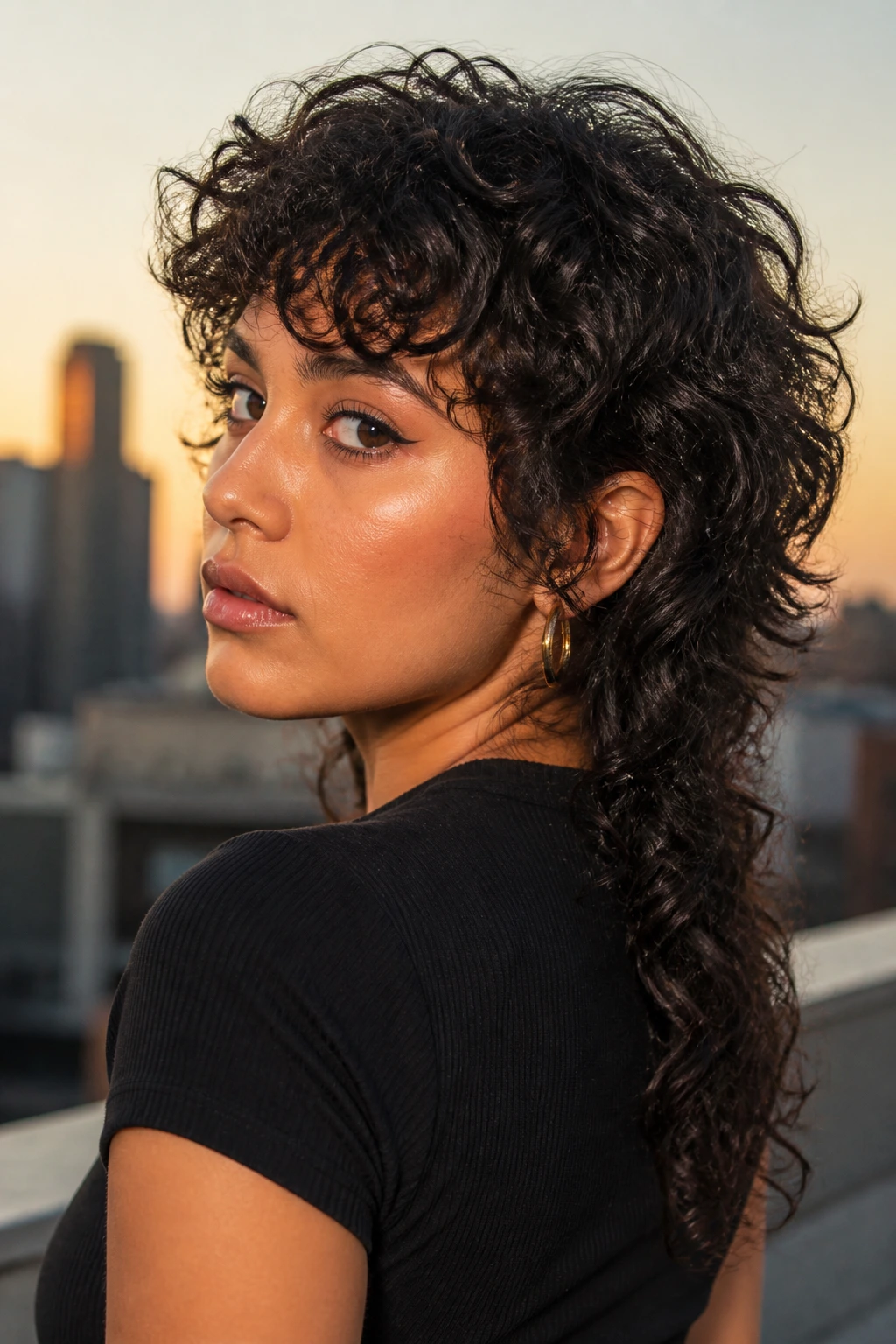
A mullet can be a mess or it can be sharp. The soft version works because it leaves length at the back, which draws the eye downward, while keeping the top lifted and the sides controlled. On a round face, that downward pull helps break the circular outline.
The trick is softness. You want a gradual shift, not a sudden jump from short front layers to a long back. The top should still have enough body to keep the style from collapsing, and the front pieces should skim the cheek without stopping on it. That little detail matters more than the label.
If you like a shape that feels a little rebellious but still wearable with curls, this is a good place to land. It grows out in a way that often looks intentional, which is rare and useful.
17. Center-Part Curly Crop With Face Framing
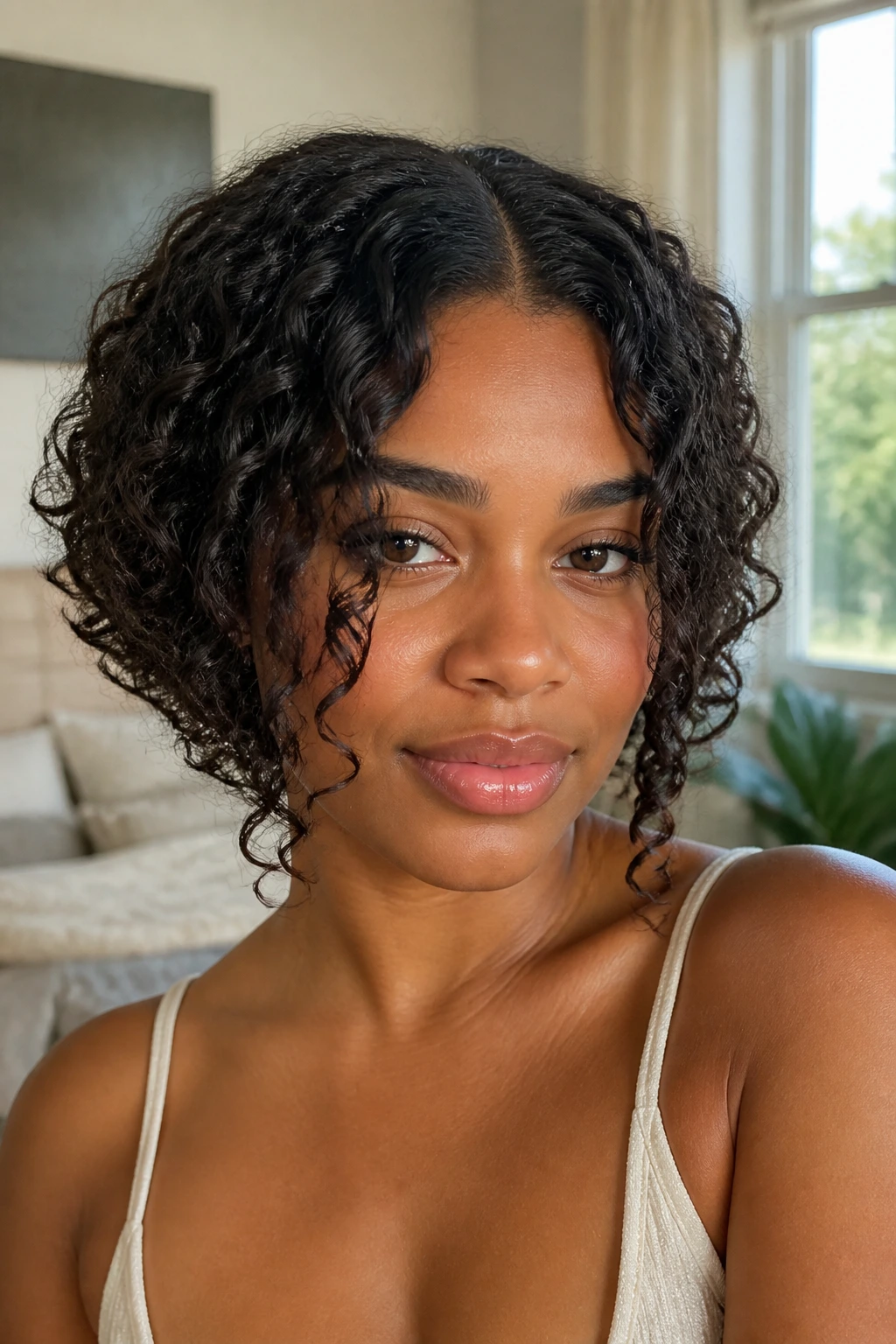
Can a center part work on a round face? Yes, but only if the front pieces earn their keep. If the curls stop at cheek level, the center part can widen the face. If they fall below the jaw and split softly around the cheeks, it can look calm and balanced.
This cut depends on face-framing layers that start high enough to open the eyes but low enough to keep the cheeks from ballooning. Think of two curved paths running down either side of the face. That vertical movement is what saves the shape. It’s especially nice on 2C curls that separate naturally into soft clumps.
A little root lift at the crown keeps the center part from laying flat. Flat roots and a center part can be a bad mix here.
18. Jaw-Skimming Bob With a Deep Side Part
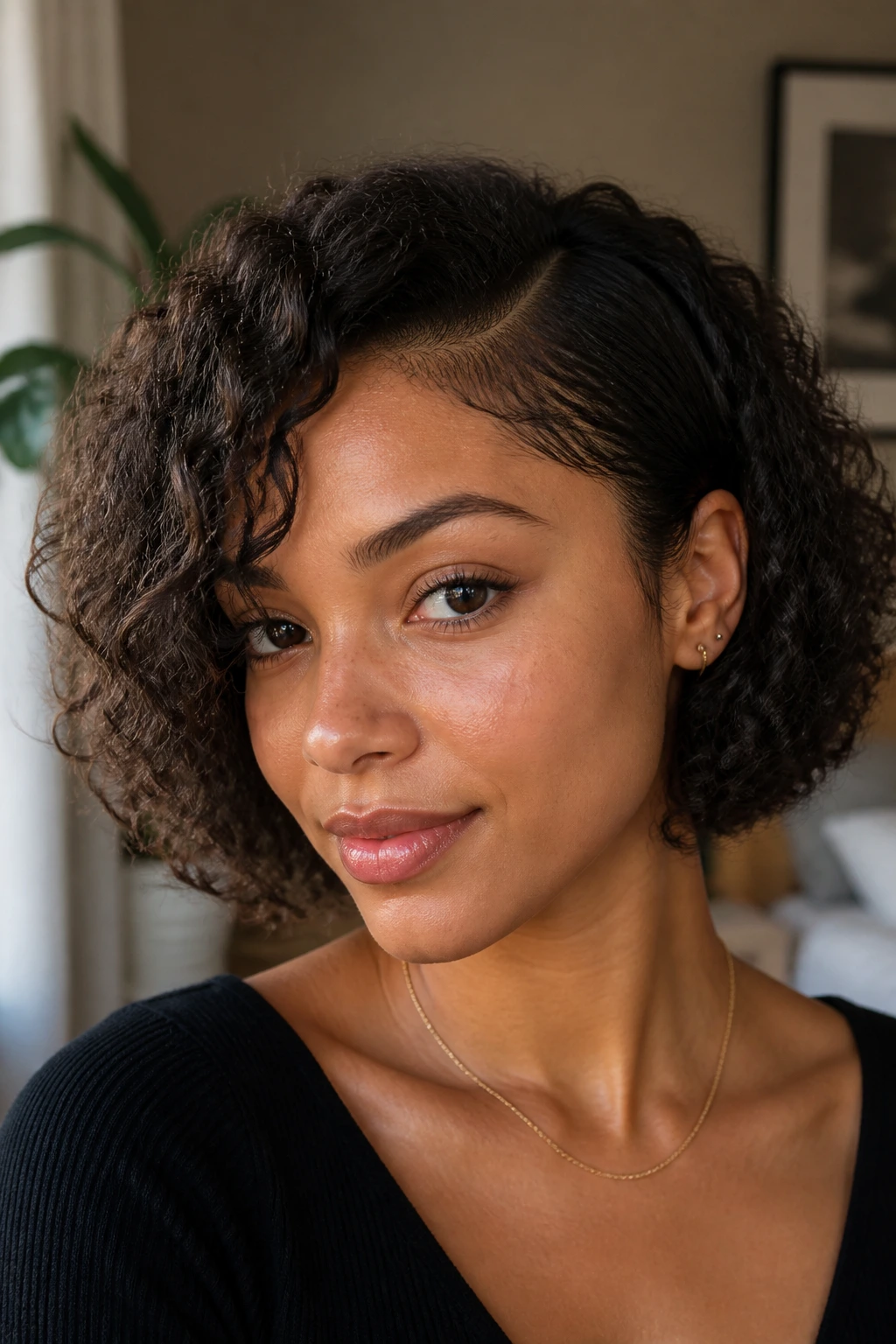
This is one of my favorite options for round faces because it makes the line of the cut do the work. The deep side part shifts the visual weight to one side, and the ends skimming the jaw create a cleaner boundary than a bob that sits directly on the cheeks.
If your hair is dense, ask for the interior to be lightened a bit so the bob doesn’t balloon at the sides. If it’s finer, keep the layers minimal and rely on the part and shape. Either way, the perimeter should feel deliberate. Not soft in a vague way. Deliberate.
This cut looks especially good when one side tucks behind the ear and the other side falls forward. That tiny asymmetry keeps the style from reading too round.
19. Tapered TWA With Sculpted Front
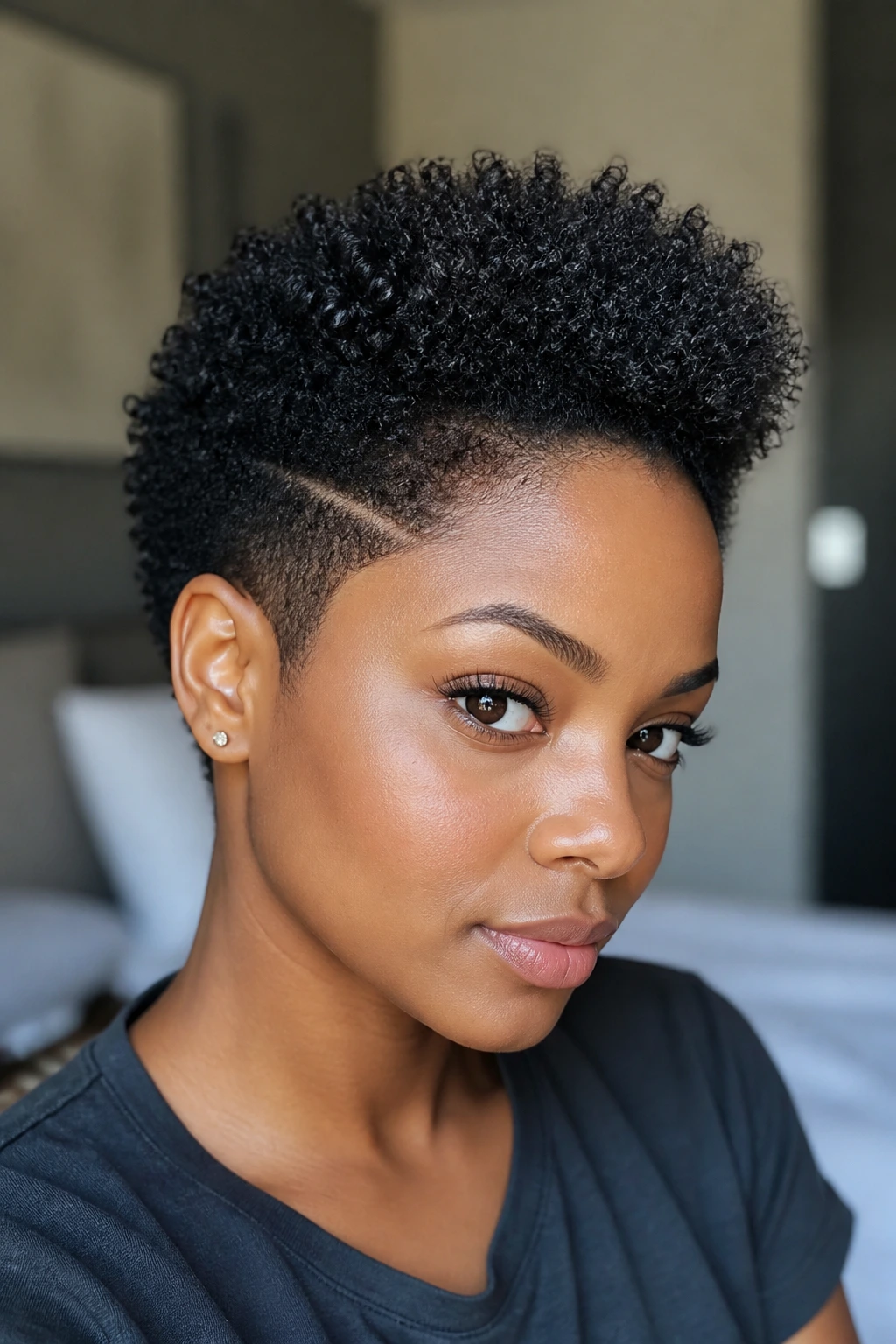
A TWA can be beautifully simple, but on a round face the front line has to be handled with care. The tapered version keeps the sides and back tight while leaving a little more length at the front so the shape points upward and slightly forward.
That sculpted front is the whole story. Even an extra half-inch at the hairline can change how the face reads. Ask for the shape to follow your natural curl pattern instead of being cut into a flat dome. If your curls are looser at the front, let them sit forward a bit. If they’re denser, let the stylist carve out space around the temples.
This is a strong choice if you want low maintenance and a clean outline. It does not hide much. That’s the appeal.
20. Airy Curly Crop With Hidden Layers
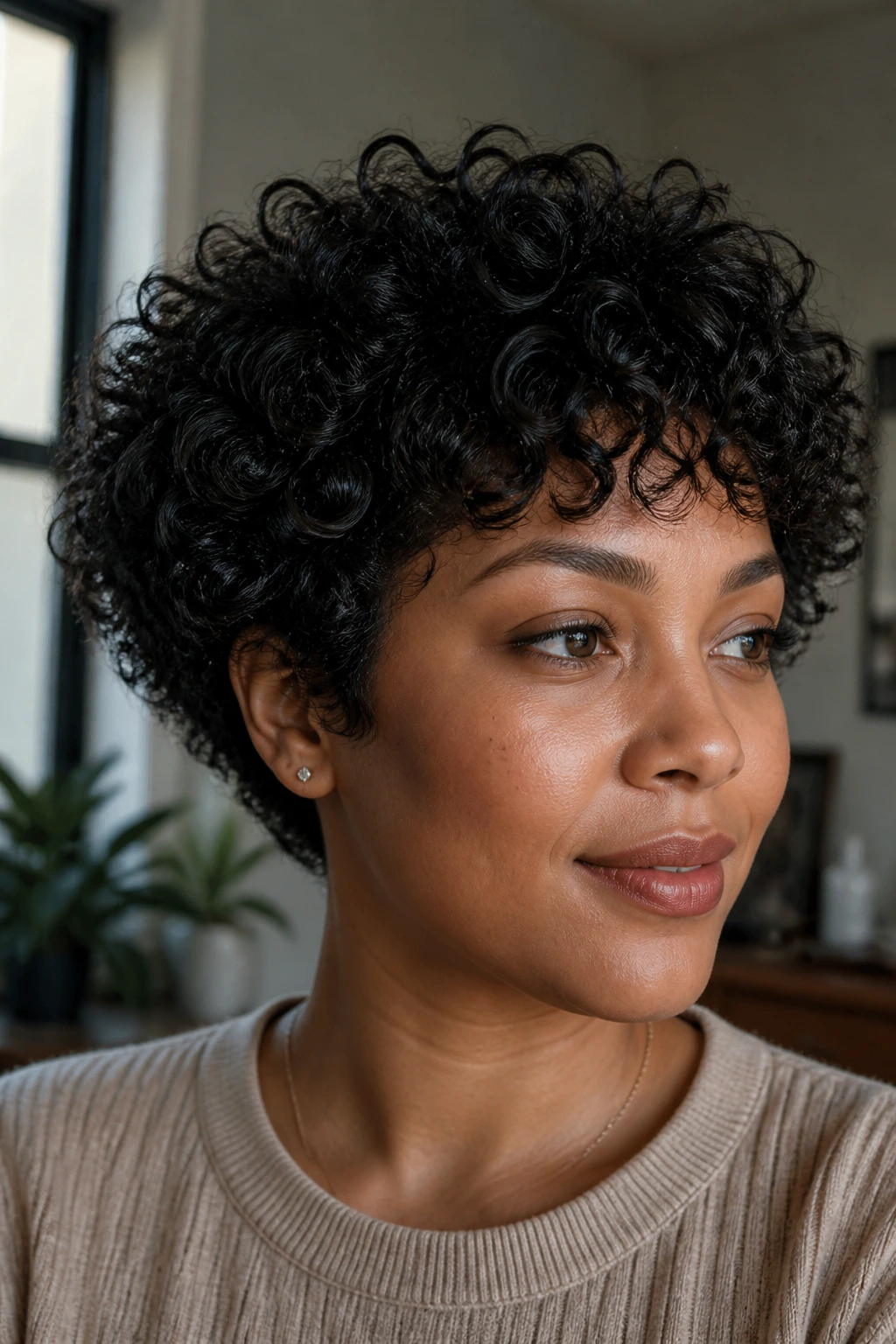
Hidden layers are the quiet fix for curls that puff in the wrong places. Instead of cutting obvious steps into the surface, the stylist removes bulk inside the shape so the outside still looks smooth and full. On a round face, that means less width at the sides and more lift where it counts.
This cut is especially helpful if your 2C hair has a denser underlayer. The surface can stay airy while the inside loses weight. That keeps the crop from feeling heavy or triangular. It also helps the cut dry into a more natural curve instead of a box.
I like this option for people who want something short but not obviously “layered.” The shape feels clean from the outside, which is harder to get than it sounds.
21. Side-Swept Lob That Dips Below the Jaw
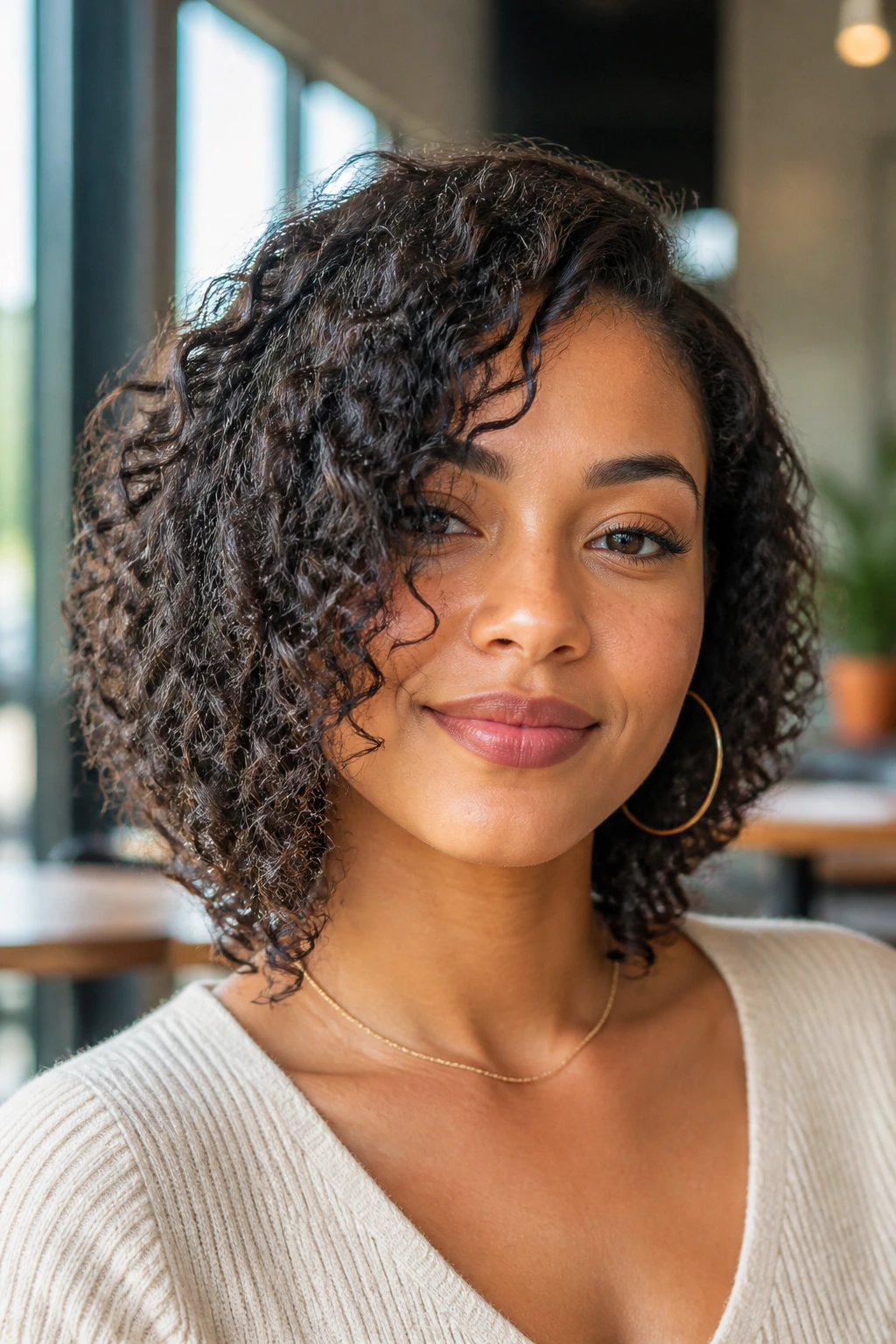
This is the longer end of short, and that’s why it works so well on some round faces. The length drops below the jaw, which helps elongate the lower half of the face, while the side sweep adds a diagonal line that keeps the cut from feeling square.
The front should dip lower than the cheeks. That’s the non-negotiable part. If it stops at cheek height, the bob can widen the face instead of balancing it. Keep the part off-center and let the curls swing in one direction. The movement should feel loose, not forced.
This cut is a smart middle ground if you’re not ready for a pixie or a jaw-length bob. It gives you room to live with your curls while still cleaning up the outline.
22. Curly Bowl Cut, Reworked
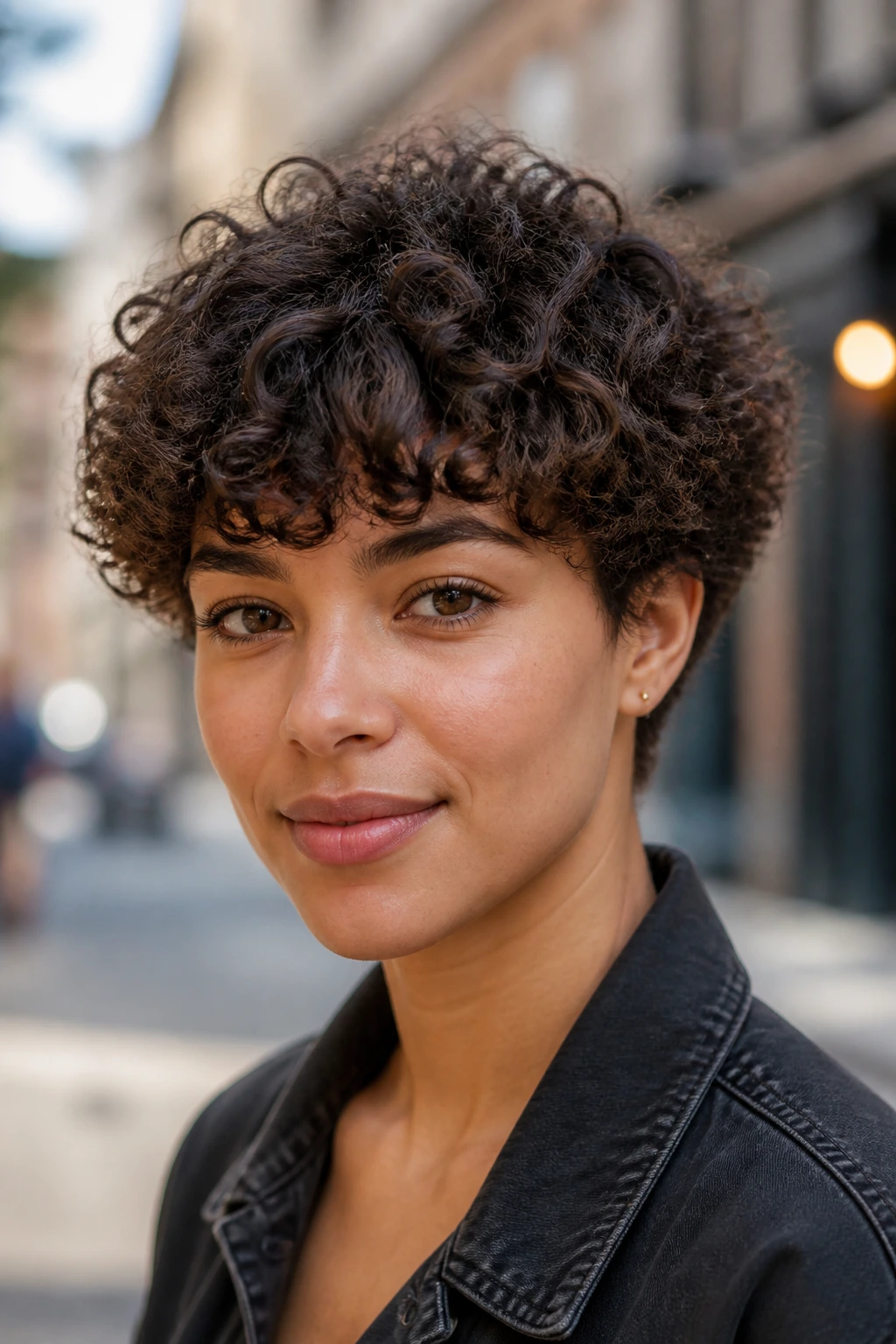
A bowl cut can go from bad idea to strong style when the edges are softened and the shape is broken up a little. The round face connection here is obvious, so the cut has to earn its place by adding height at the crown and keeping the sides lighter than a true bowl would allow.
The fringe should not be a heavy line. It needs movement, gaps, maybe even a little unevenness, so the face doesn’t get boxed in. On 2C curls, that softness is easier to pull off than you might think. The curl pattern already wants to move. The cut just has to guide it.
This one is for people who like a fashion cut with some personality. If you want safe, skip it. If you want shape, it can be excellent.
23. Curtain Bang Bob With a Lifted Crown
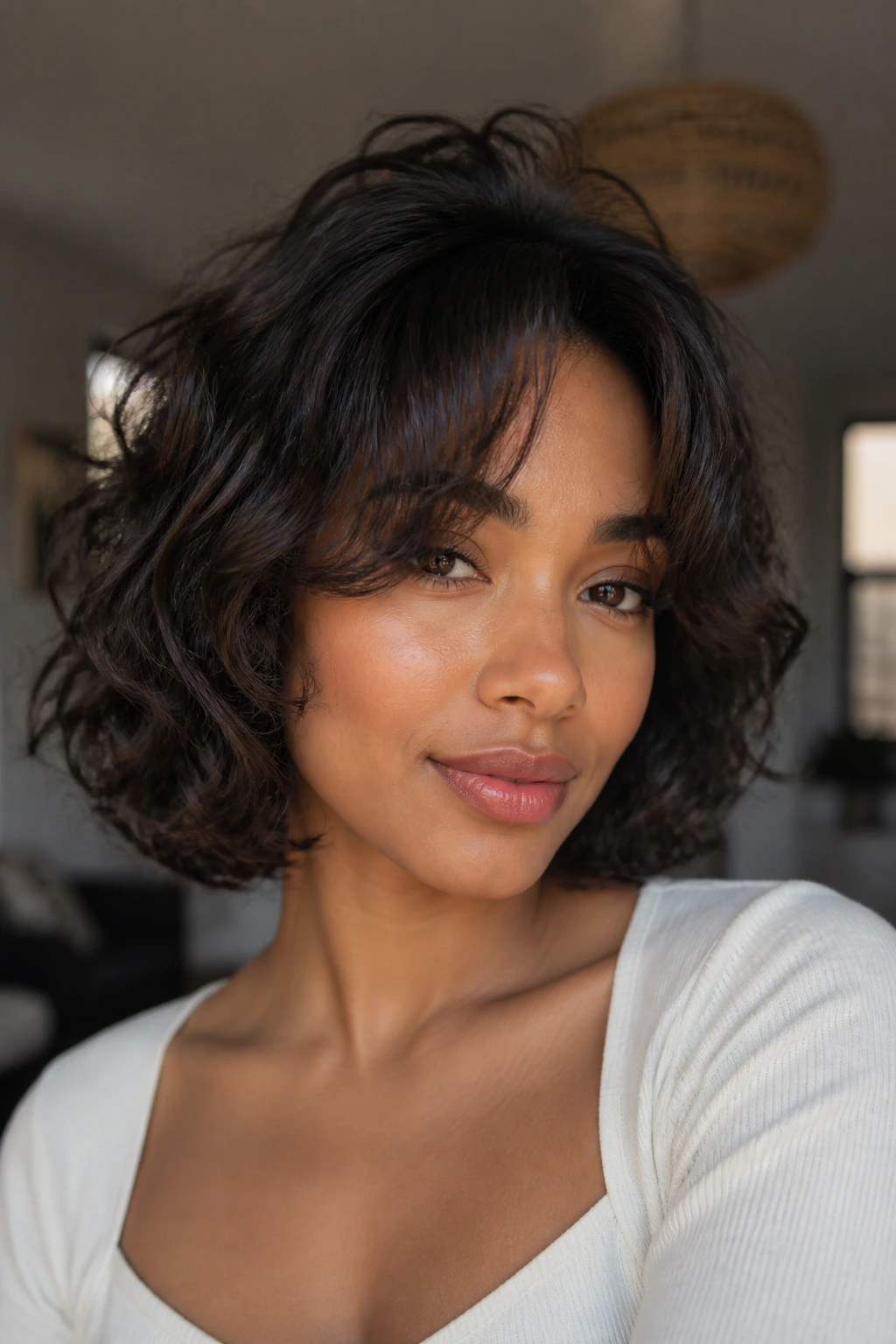
Curtain bangs do a useful job on round faces because they split the forehead space and guide the eye downward along the sides of the face. Pair that with a bob that sits at or just below the jaw, and the whole shape feels open without getting wide.
The crown needs a little lift, though. Curtain bangs alone won’t save a flat bob. Ask for the top to keep enough length for root height, then let the bangs start a bit higher than the cheeks so they fall in a soft arc. They should skim, not sit heavy.
This is the kind of cut that reads polished on a good wash day and still holds up when the curls loosen. That makes it a strong final option for 2C texture.
Why Short Curly Shapes Behave Better Than You’d Expect
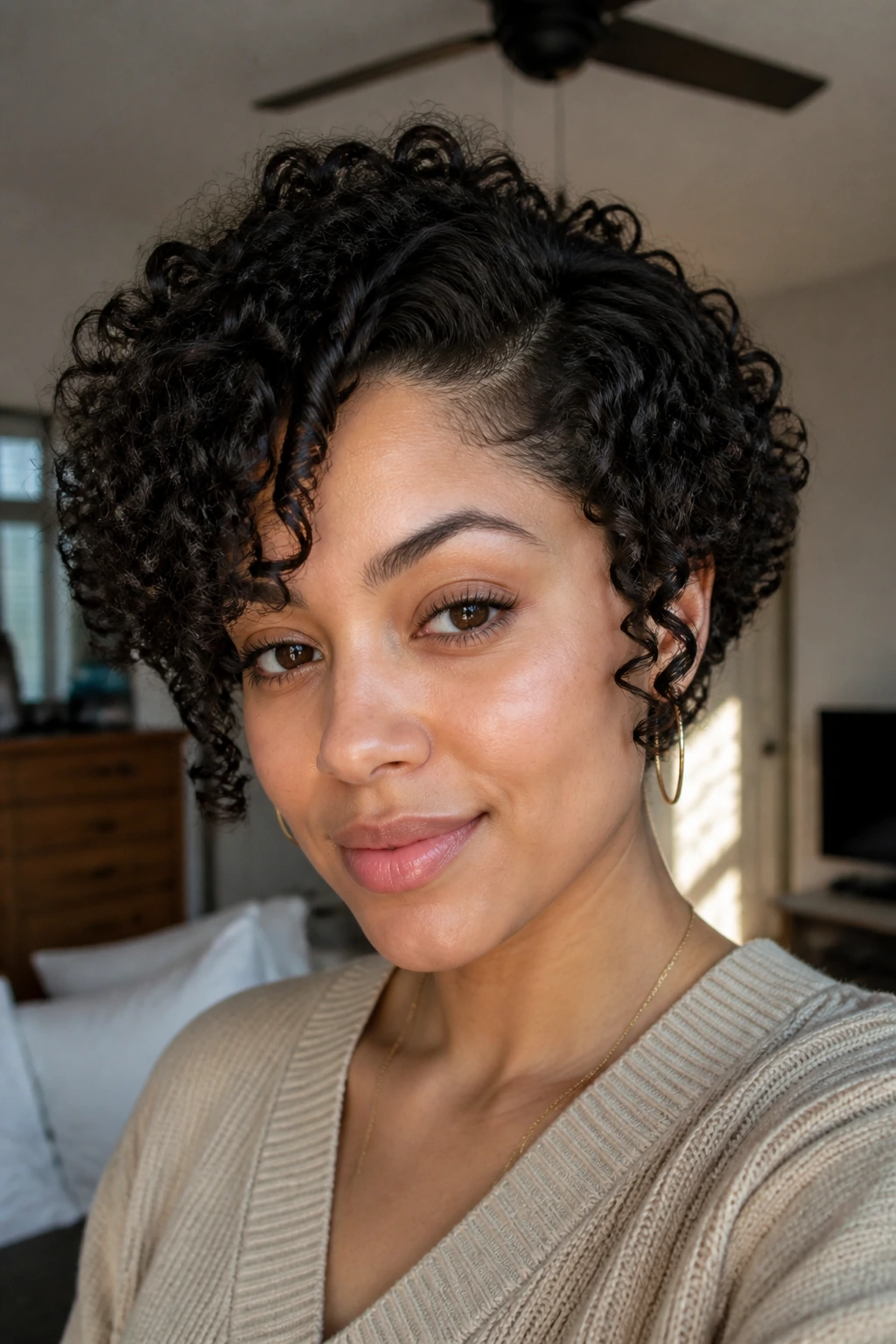
2C curls don’t ask for the same haircut logic as tighter coils or straight hair. They sit in that awkward middle ground where the surface can frizz before the curl clumps fully show up. That’s why a short cut can either look expensive or look like it happened by accident after a humid walk to the car.
On round faces, the goal is to change the outline before the eye gets stuck on the cheeks. Height at the crown helps. So does a side part, a diagonal front section, or a perimeter that lands below the widest part of the face. What does not help is a heavy line that stops exactly at cheek level and balloons outward. That shape is a trap.
The best short cuts on this list work because they don’t treat curl and face shape as separate problems. They solve both at once. That’s the whole trick.
What to Tell a Stylist Before the First Snip
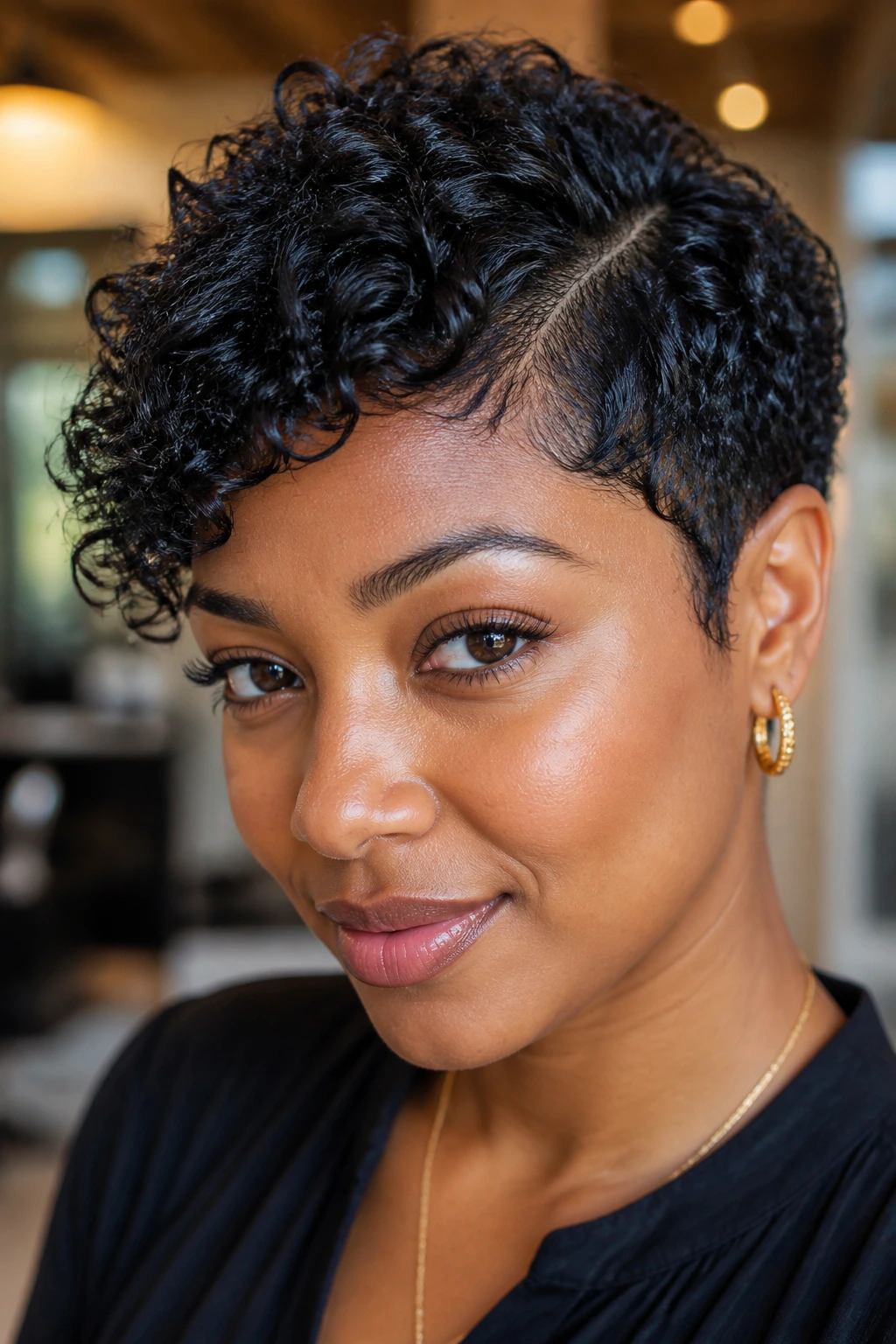
Bring photos. Real ones. One from the front, one from the side, one from the back if you can get it. A photo of someone with a cute cut and a totally different curl density is still a bad reference, so try to match texture first and face shape second.
Say where the length should land
Use landmarks the stylist can actually cut to: above the cheekbone, at the jaw, below the chin, or at the nape. “Short” is too vague. If you have a round face, tell them whether you want the shortest point to sit above the cheeks or below them. That tiny difference changes the whole outcome.
Talk about density, not just curl pattern
2C curls can look light on top and dense underneath, or the other way around. Mention whether your hair puffs at the sides, collapses at the crown, or gets flat at the roots after a few hours. That tells the stylist where to remove bulk and where to leave weight alone.
Ask about dry cutting
Wet curls lie about their length. They always do. A stylist who understands texture can shape the cut with shrinkage in mind, which is the difference between a bob that lands at the jaw and one that sneaks up to the cheek after it dries.
Tools That Make These Cuts Easier to Live With
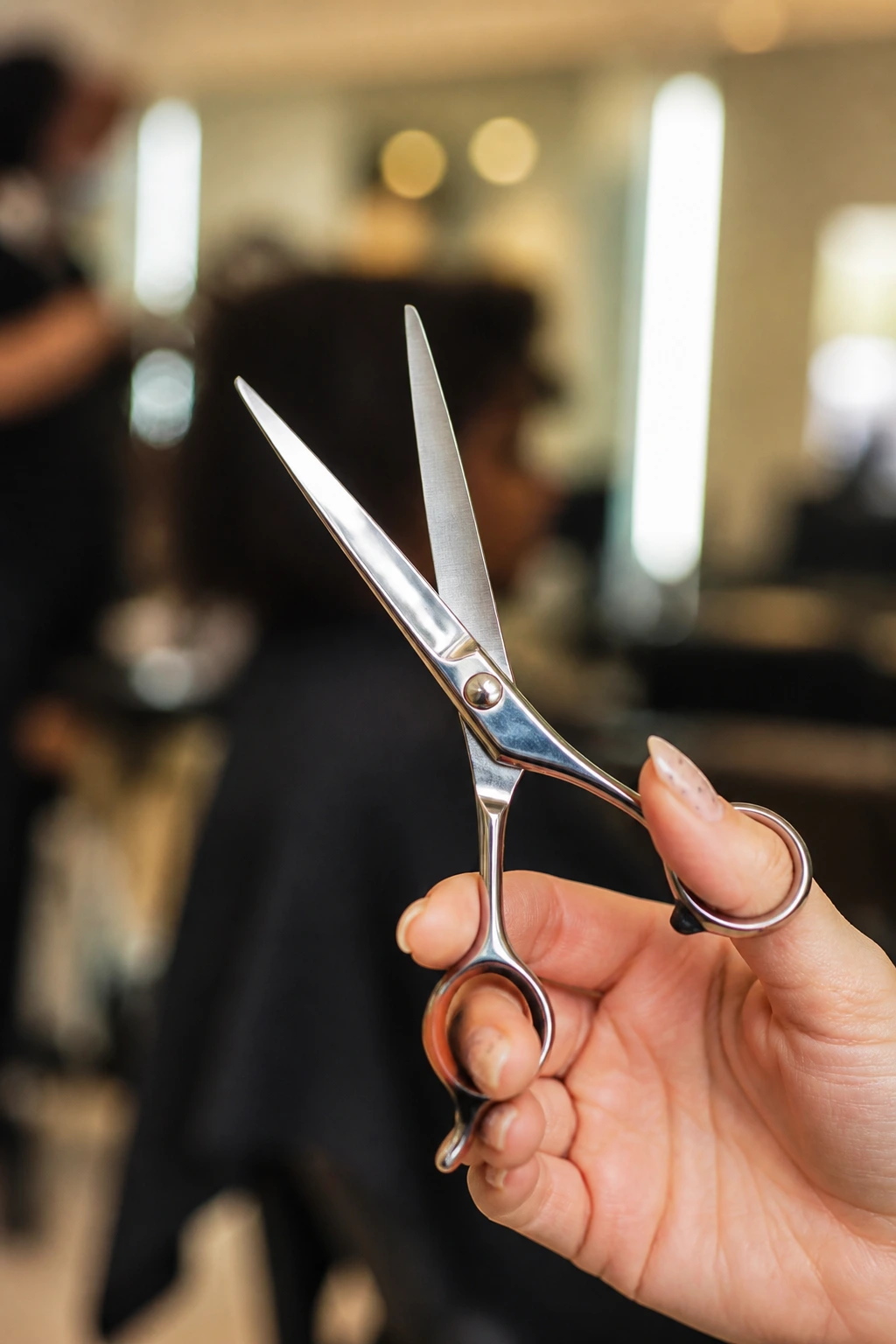
- Sharp haircutting shears: Blunt blades chew at the ends and make 2C curls frizz sooner.
- Wide-tooth comb: Good for detangling without pulling apart curl clumps.
- Duckbill or sectioning clips: These help at the crown when you’re setting root lift.
- Microfiber towel or cotton T-shirt: Much gentler than a rough bath towel on loose curls.
- Diffuser attachment: Useful if you want the top to keep height instead of drying flat.
- Light mousse or foam: Gives hold without dragging short curls down.
- Small amount of gel: Helpful for defining the outer layer and keeping the outline clean.
- Hand mirror: Worth it for checking the nape and side balance.
- Satin bonnet or pillowcase: Keeps the shape from getting crushed overnight.
How to Wear These Cuts Without Fighting the Curl Pattern
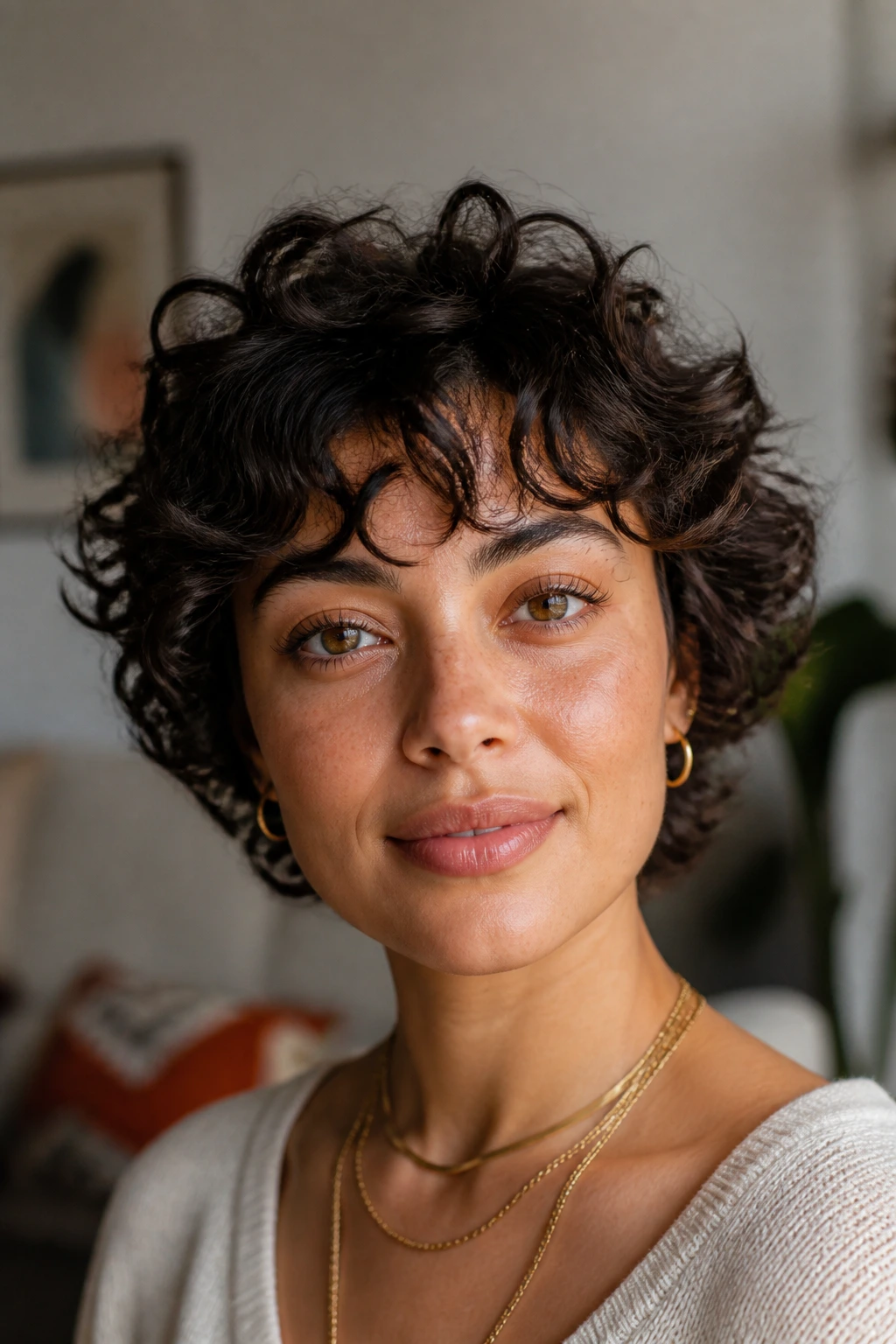
Parting: A deep side part is the quickest way to stretch a round face. A middle part can work, but only when the front pieces fall below the cheek and the crown has enough lift to keep the shape from going flat.
Finish: If your curls separate into soft clumps, let them. Don’t chase every frizz halo into submission. A thin gel cast on the outer layer can keep the outline cleaner, but once it’s dry, scrunch it out so the hair still moves.
Accessories: Small clips, slim headbands, and delicate barrettes sit better with these cuts than wide bands that cut the forehead in half. Big accessories can crowd the face when the haircut already has a strong shape.
Jewelry and glasses: If you wear frames or earrings, let one of them do more of the visual work. A cut with a lot of front movement plus oversized hoops can get busy fast. Cleaner silhouettes usually read better.
Styling Boosts That Change the Outline
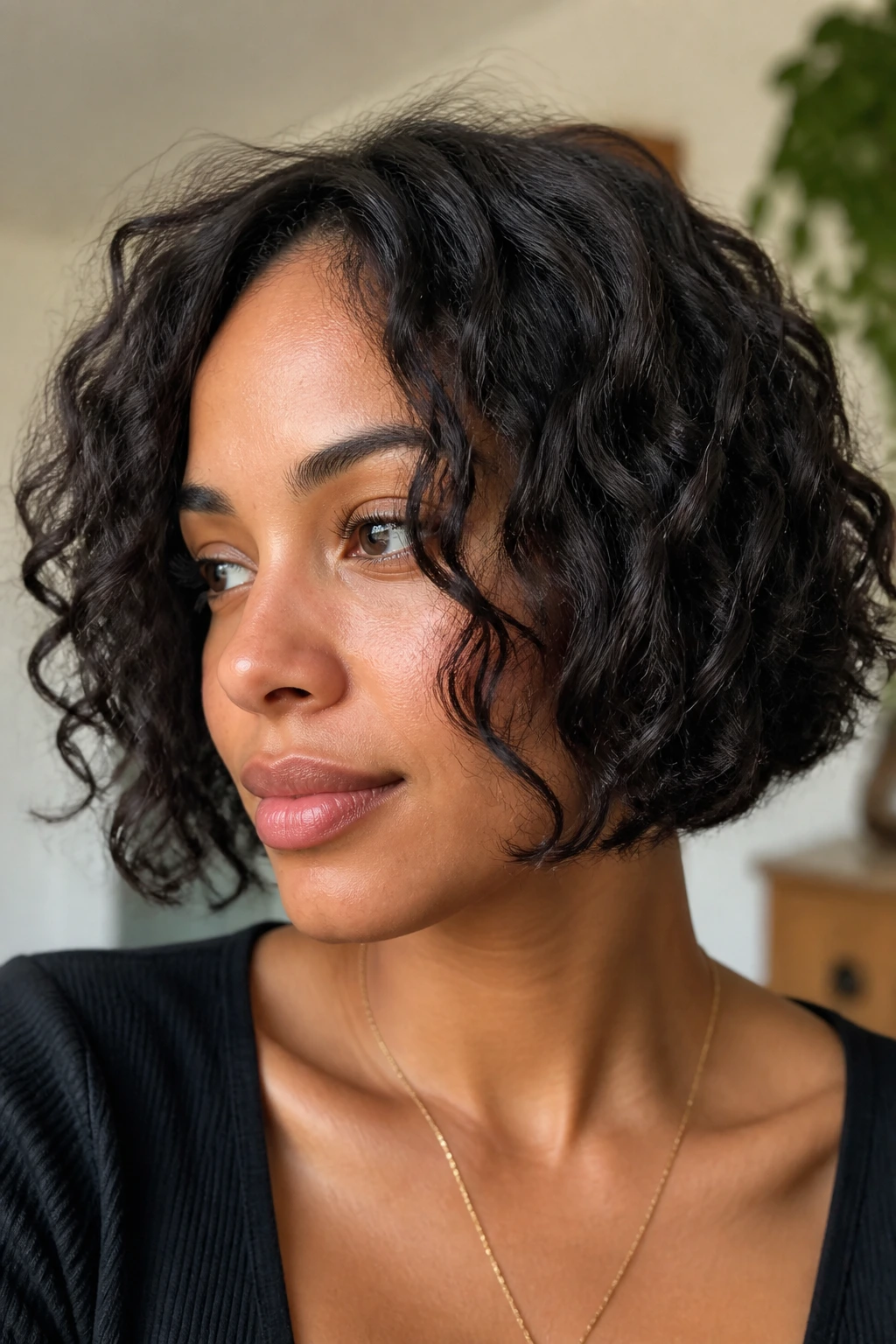
Root Lift: Clip the top roots up for 10 to 15 minutes while the hair dries, or diffuse with your head tipped slightly forward. That tiny lift changes how the whole cut sits.
Fringe Control: If your bangs or front pieces want to shrink too high, stretch them gently with your fingers while they’re damp. Don’t yank them straight. Just encourage the bend to sit lower.
Side Balance: If one side of the cut feels puffier, mist it lightly with water and smooth only the outer layer. Don’t soak the whole head. You’ll erase the work you already did.
Humidity Shield: A pea-sized amount of gel over the surface can keep 2C curls from blooming outward in damp weather. Too much product makes the hair stiff, so go light and stop early.
Shape Refresh: The next morning, revive the top with a spray bottle, a little foam, and a quick diffuse for 3 to 5 minutes. That usually does more than a full restyling session.
Wash-Day, Sleep, and Grow-Out Care
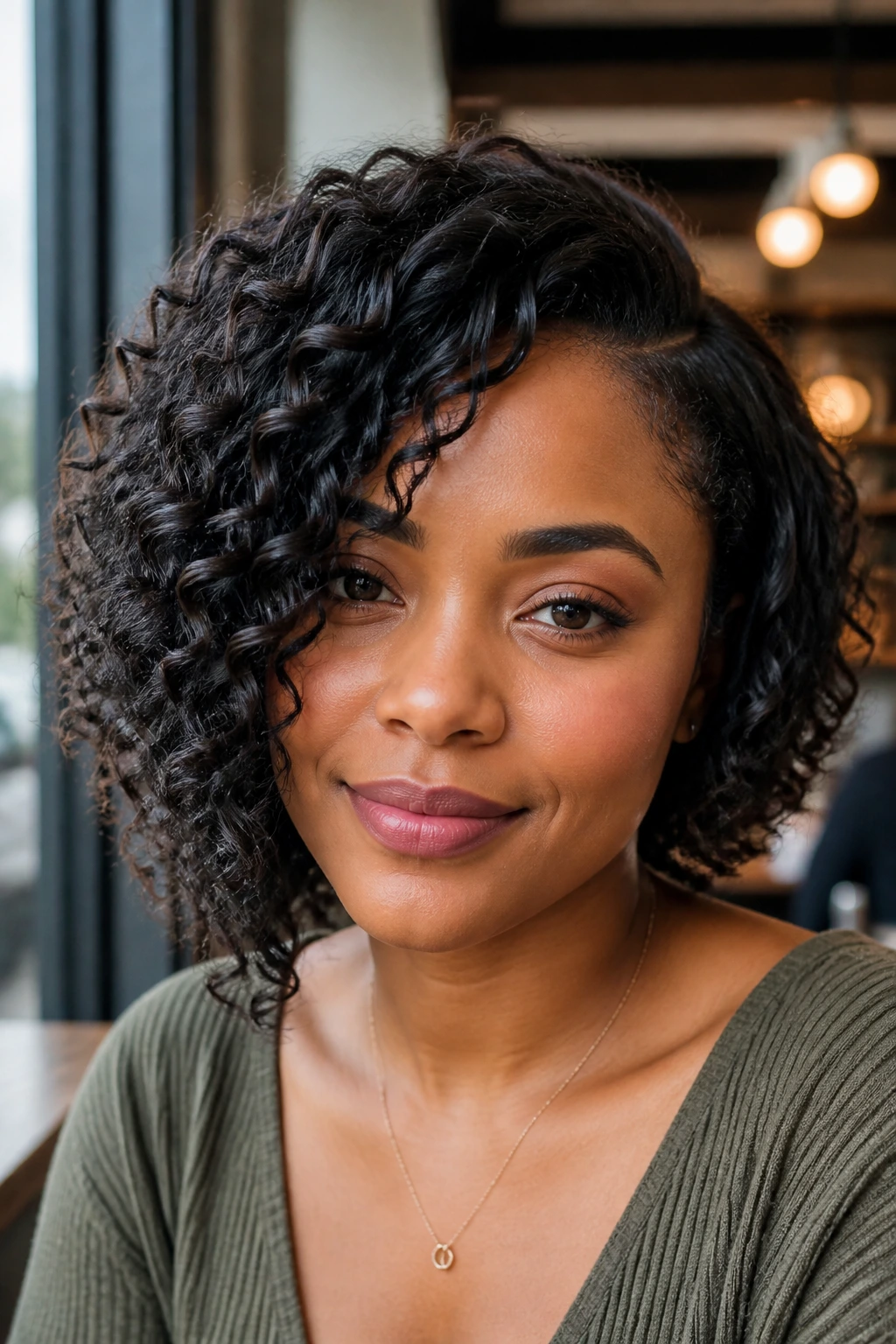
Short curly cuts need a little more attention than people expect because every small change in the outline shows up fast. For most 2C textures, washing every 4 to 7 days keeps the scalp fresh without stripping the curl pattern. If your hair gets oily quickly, aim closer to 4 days. If it stays dry and fluffy, you can stretch longer.
Trim schedules depend on the shape. Crisp pixies and angled bobs usually need a clean-up every 6 to 8 weeks to keep the lines from blurring. Softer crops and lobs can go 8 to 12 weeks between trims. Letting the nape grow too long is what turns a neat cut into a triangle.
At night, use a satin bonnet or pillowcase. A loose pineapple can help longer pieces, but on very short cuts it can leave dents and odd bends. Morning refreshes are usually simple: mist, a little mousse, maybe a quick diffuser pass. If the sides puff first, smooth only those sections and leave the crown alone.
Variations and Adaptations to Try
The Soft-Volume Edit: Keep the layers longer, skip the undercut, and use mousse instead of cream. This is the friendliest version for finer 2C curls that collapse when they get too much product.
The Sharp-Line Edit: Ask for a cleaner bob or pixie line with a side part and less perimeter fluff. It works when you want the haircut to look deliberate and crisp, especially on dense hair.
The Humidity-Ready Edit: Choose a shape with a tighter nape and more hold at the crown. That keeps the style from spreading sideways when the air gets damp and the curls loosen.
The Glasses-Friendly Edit: Leave enough length around the temples and fringe so your frames don’t disappear into the cut. This matters more than people think.
The Grow-Out Edit: Pick a shape that turns into a bob or lob after 6 to 8 weeks, instead of one that loses its whole idea as it softens. That makes maintenance easier and buys you a little flexibility.
Common Mistakes That Make the Face Look Wider
- Cutting the widest point at cheek level: That’s the fastest way to make a round face look fuller. Move the shortest part above or below the cheeks.
- Over-thinning the ends with a razor: 2C curls can go wispy fast, and wispy ends frizz faster. Point cutting is usually safer.
- Using too much heavy cream: The curls clump at first, then collapse by midday. Light mousse or foam usually gives better lift.
- Ignoring shrinkage: A fringe that looks long enough wet may jump too high once it dries. Leave room.
- Keeping the center part too flat: A center part can widen the face if the front pieces don’t fall low enough. Add crown lift or switch the part.
Questions People Ask Before Cutting Their Curls
What short curly cut is best for a round face?
The safest starting point is usually a chin-length layered bob or a tapered pixie with a side part. Both keep the sides from expanding too much while giving the face a clearer line.
Can 2C curls pull off a pixie cut?
Yes, if the top stays long enough to show curl pattern and the sides are tapered cleanly. If everything is cut too short, 2C curls can lose their shape and turn fluffy.
Should I ask for layers or a blunt cut?
For most round faces, soft layers are easier to live with because they keep the hair from widening at the cheeks. A blunt line can work if it sits below the jaw and the hair isn’t too bulky.
Is a middle part a bad idea?
Not always. It works when the front pieces fall below the cheek and the crown has enough lift to keep the silhouette from flattening. If not, a side part is the safer move.
How often should a short curly cut be trimmed?
Pixies and tight bobs usually need shaping every 6 to 8 weeks. Softer lobs and crops can stretch to 8 to 12 weeks if the outline still looks clean.
What if my curls get fluffy instead of defined?
Try a lighter styling combo: leave-in conditioner in a small amount, then mousse or foam, then a touch of gel only on the outer layer. Heavy creams often make fluffy 2C curls spread more.
Can I air-dry these cuts, or do I need a diffuser?
Air-drying works if you don’t mind a softer finish, but a diffuser gives you more control over crown height and side volume. On a round face, that lift can be worth the extra few minutes.
What should I show the stylist?
Show one photo of the front, one from the side, and one that matches your curl density. Tell them where you want the shortest point to land—above the cheek, at the jaw, or below it.
The Shape That Holds Its Own
A good short curly cut doesn’t fight 2C texture. It gives it a better path. That’s the real difference between a style that feels fussy and one that feels like it belongs on your head the moment you leave the chair.
For round faces, the smartest shapes are the ones that bring a little height, a little diagonal movement, and a little control around the cheeks. Some are neat. Some are playful. A few lean bold. All of them depend on the same idea: the haircut should guide the curl, not trap it.
Pick the version that matches how you actually wear your hair, not the one that only looks good in one polished photo. The best short curly cut is the one that still looks like itself when you’ve slept on it, misted it, and gone on with your day.
