



Short natural hair has a way of exposing every decision. That’s the part I like. A clean side part, a tight coil, a brushed crown, a puff that sits exactly where it should — all of it shows up plainly on Black hair that’s cropped close, and the result can be sharper than anything with extra length hanging around.
The best short styles don’t fight shrinkage. They use it. A TWA with tiny coils, a frohawk with brushed sides, or a rod set that lands right at the jawline turns texture into shape, and shape is what makes short hair look finished instead of merely “in progress.” That little distinction matters more than people think.
These 38 natural hairstyles for short hair cover the whole spread: quick wash-and-go looks, twist sets, puff styles, pinned updos, accessory-heavy options, and a few styles that lean formal when the calendar calls for it. Some take ten minutes. Some ask for patience and a good mirror. All of them work best when you know what your coils are doing, where your parts sit, and how much hold your hair actually wants.
Why These Styles Earn Their Keep
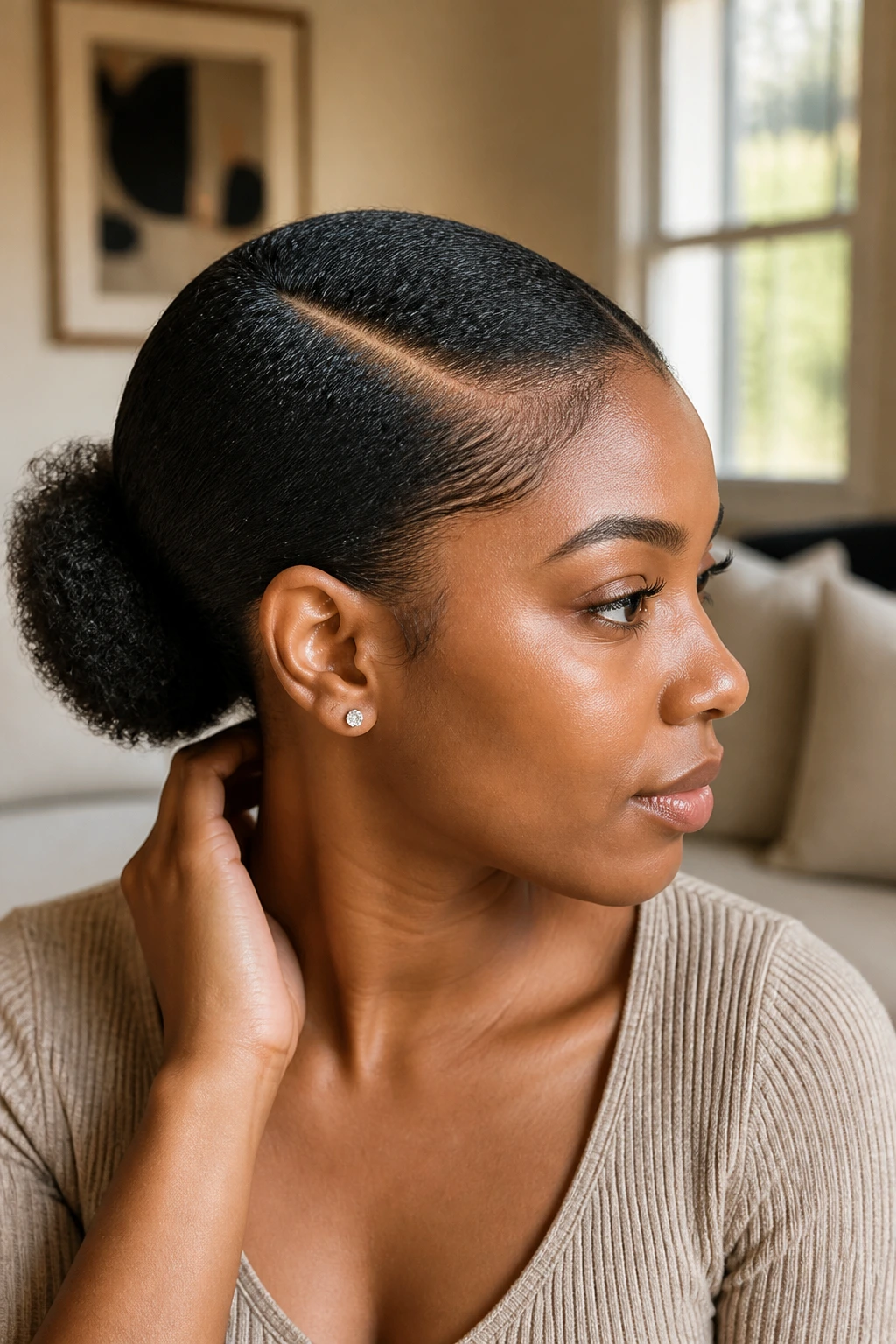
- Short hair dries faster: A wet set on a TWA or cropped frohawk usually needs far less time than a long twist-out, which means less waiting around with damp roots.
- Shape matters more than length: On short coils, one clean part or a neat crown twist changes the whole silhouette, even if the style itself is simple.
- Less product does the job: You do not need a heavy handful of cream to make these looks work; on short hair, that usually weighs the shape down before it sets.
- Protective styles still exist here: Mini twists, flat twists, tucked rolls, and pinned updos can keep ends calmer without making the style look bulky.
- Easy to reset: If a side puffs up, if a curl loses definition, or if the front frizzes first, you can usually smooth and pin just that section.
- Real-life friendly: These styles handle errands, meetings, date night, and gym days without asking for a full restyle every morning.
1. Defined TWA Coils
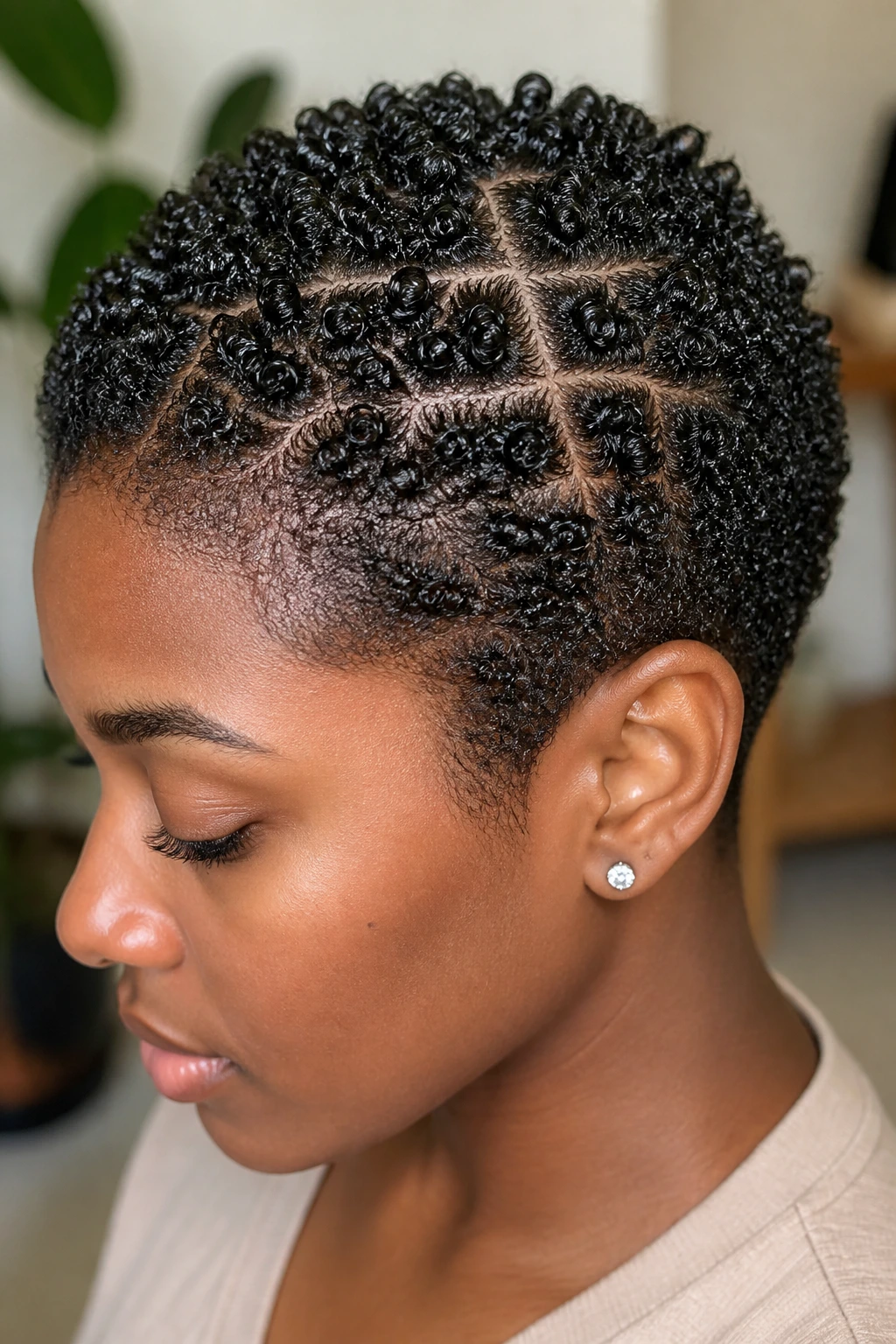
Tiny coils give a short cut a deliberate, tailored look that feels crisp from the first day they dry. They also make a TWA look fuller without pretending the hair is longer than it is, which is exactly why I keep coming back to them.
A good coil set starts with damp, not soaking, hair. Work in a leave-in with slip, then add a small amount of curl cream or gel. Use a rattail comb or your finger to twist each section from root to tip, and keep the sections small enough that the coils dry in place instead of collapsing into fuzzy little blobs.
The clean parting is half the style. If you want the coils to read as neat, keep the grid obvious. If you want a softer finish, break the grid with a loose side part and let the front pieces fall a little differently.
2. Wash-and-Go Crop With a Gel Cast
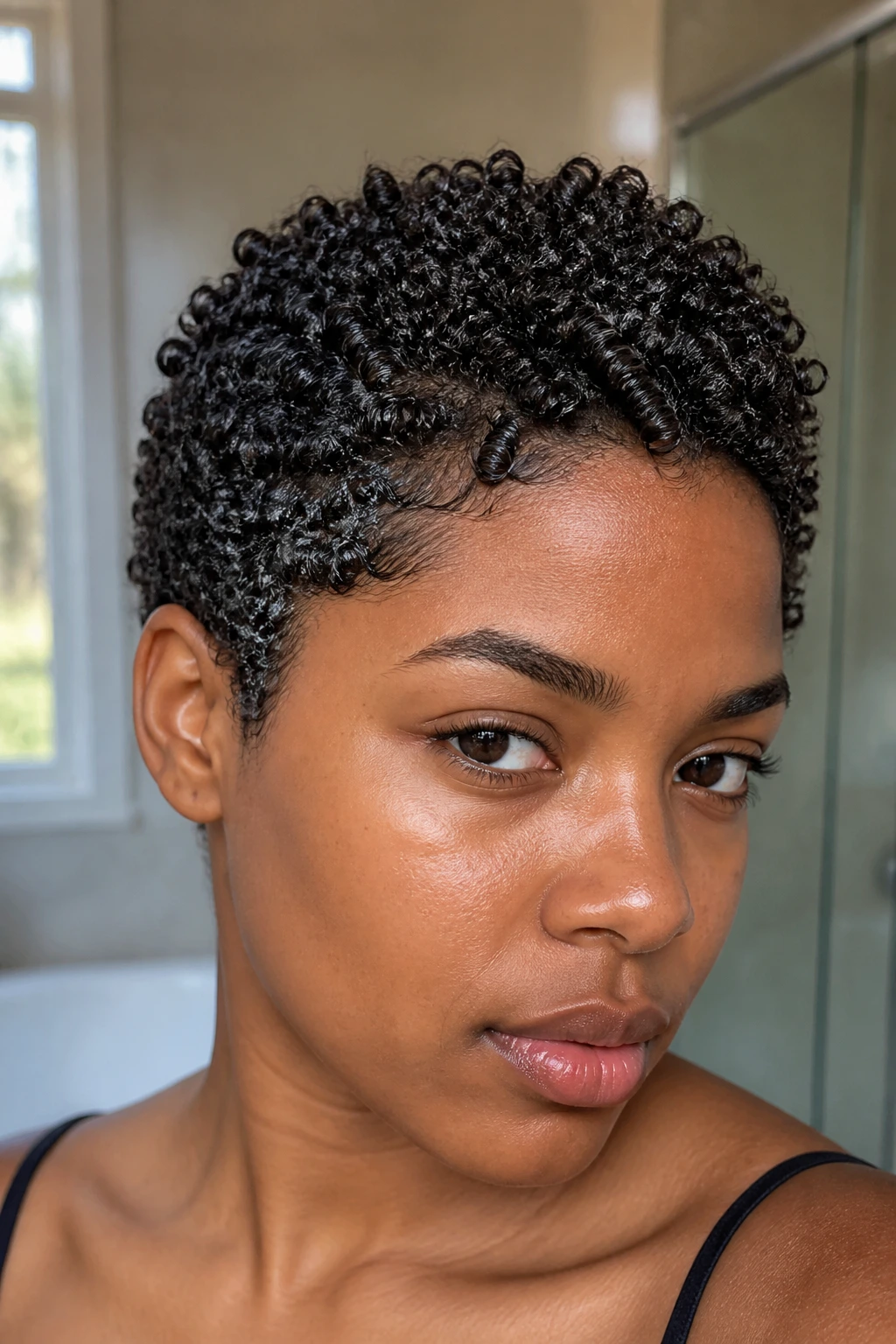
Can short natural hair pull off a wash-and-go without looking undefined by noon? Yes, if you let the gel do its job. Short coils often look better in a wash-and-go than long curls because the weight is lower and the shape stays close to the head.
Start on freshly washed, soaking-damp hair and apply leave-in first. Then layer a strong-hold gel through small sections, smoothing with your fingers or a brush until the curls clump together. If your hair likes to frizz, do not keep touching it while it dries. That’s the part people sabotage. The cast can feel a little stiff at first, but once it’s dry you can scrunch it out with clean hands and a drop of lightweight oil.
A diffuser helps if your schedule is impatient. Low heat, low airflow. You want the cast to set, not get blown into a halo before it’s ready.
3. Finger Coils With a Deep Side Part
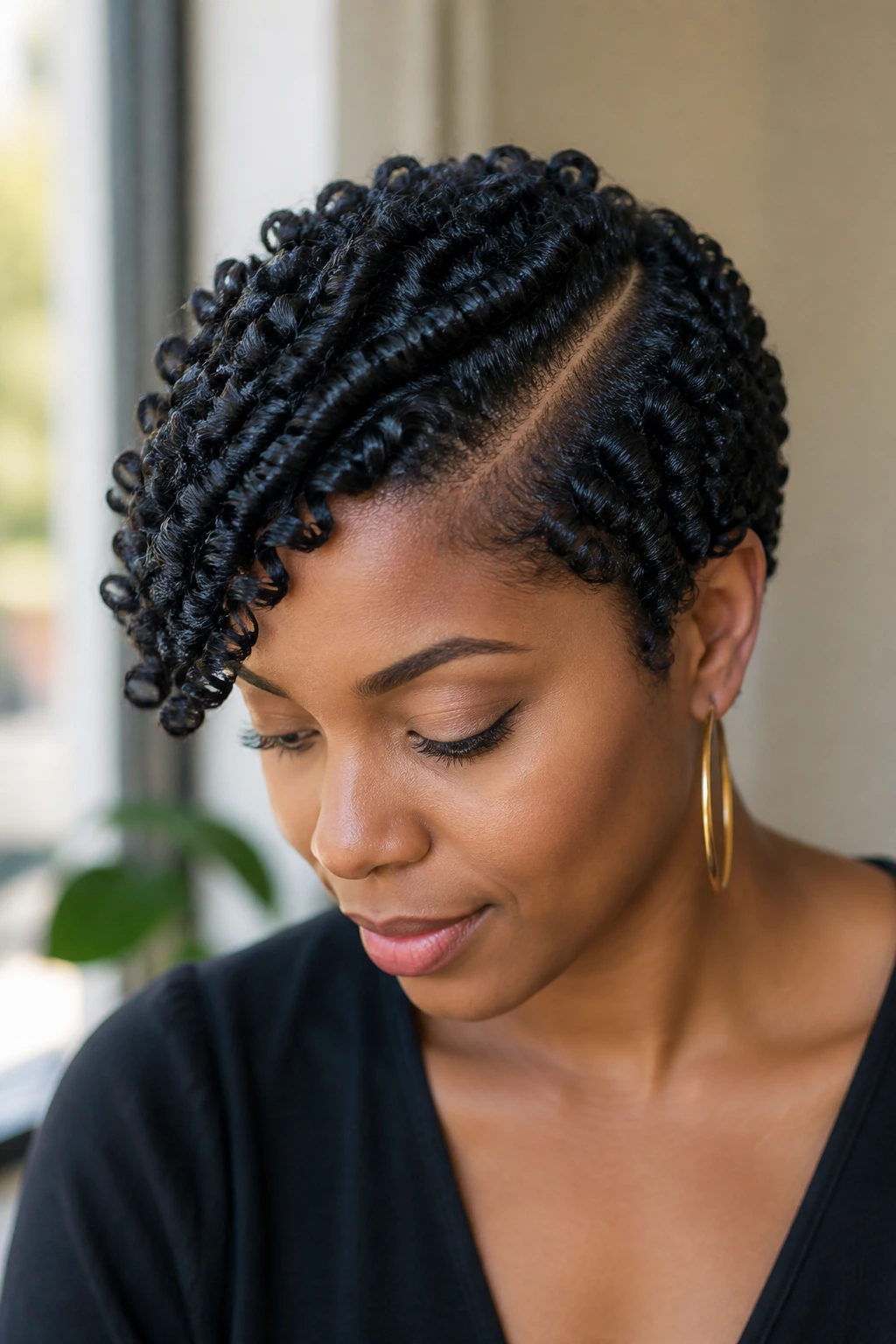
Finger coils with a deep side part always look more polished than they should for the amount of work they require. That asymmetry gives short hair a little drama, and drama is useful when the hair itself is only a few inches long.
This style works especially well when the front is a bit longer than the back. Create the part while the hair is damp, then coil one side tighter and let the other side fall a little looser. The difference in direction makes the style feel intentional instead of evenly spaced and static.
I like this one for events, interviews, and days when the hair needs to look neat without becoming flat. The coils hold their shape better if you use a firm gel at the roots and a softer cream on the ends, so the base stays tidy while the curl still has movement.
4. Curl Sponge Fro
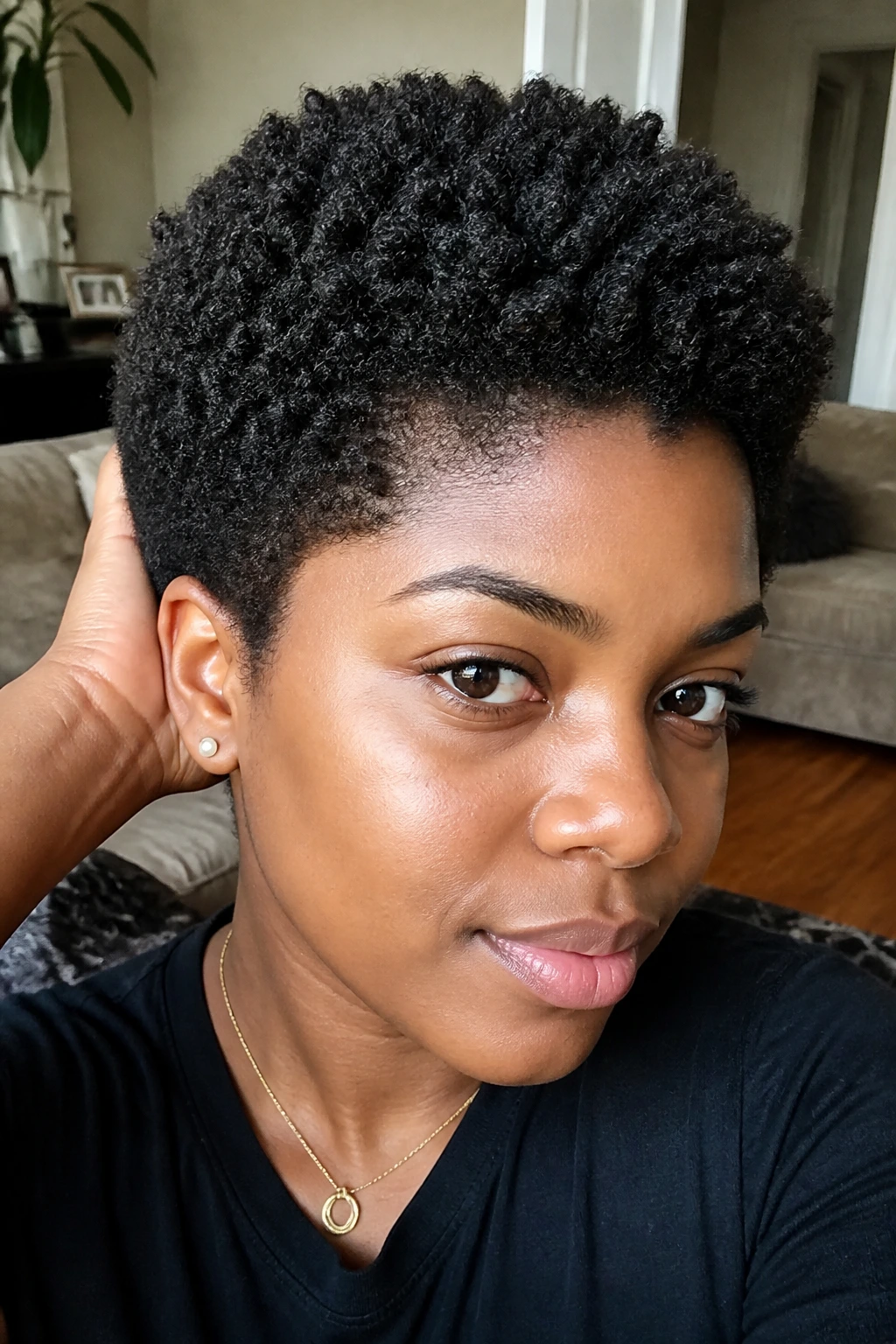
A curl sponge can make short 4c hair go from raw texture to shaped texture in minutes. That’s the appeal. Not magic. Just friction, moisture, and the right amount of restraint.
Mist the hair lightly first. If it’s too dry, the sponge will drag; if it’s too wet, the hair will clump unevenly and take forever to dry. Use the sponge in one direction only, with short circular strokes, and stop once the coils start to form. Keep pressing hard and you’ll rough up the outer layer instead of defining it.
This style shines when the cut is very short and the goal is shape, not length. I’d rather see a neat sponge set with clean edges than a tortured style full of product and overworking. A little leave-in underneath and a light oil after it dries is enough.
5. Mini Twist-Out With Stretched Roots
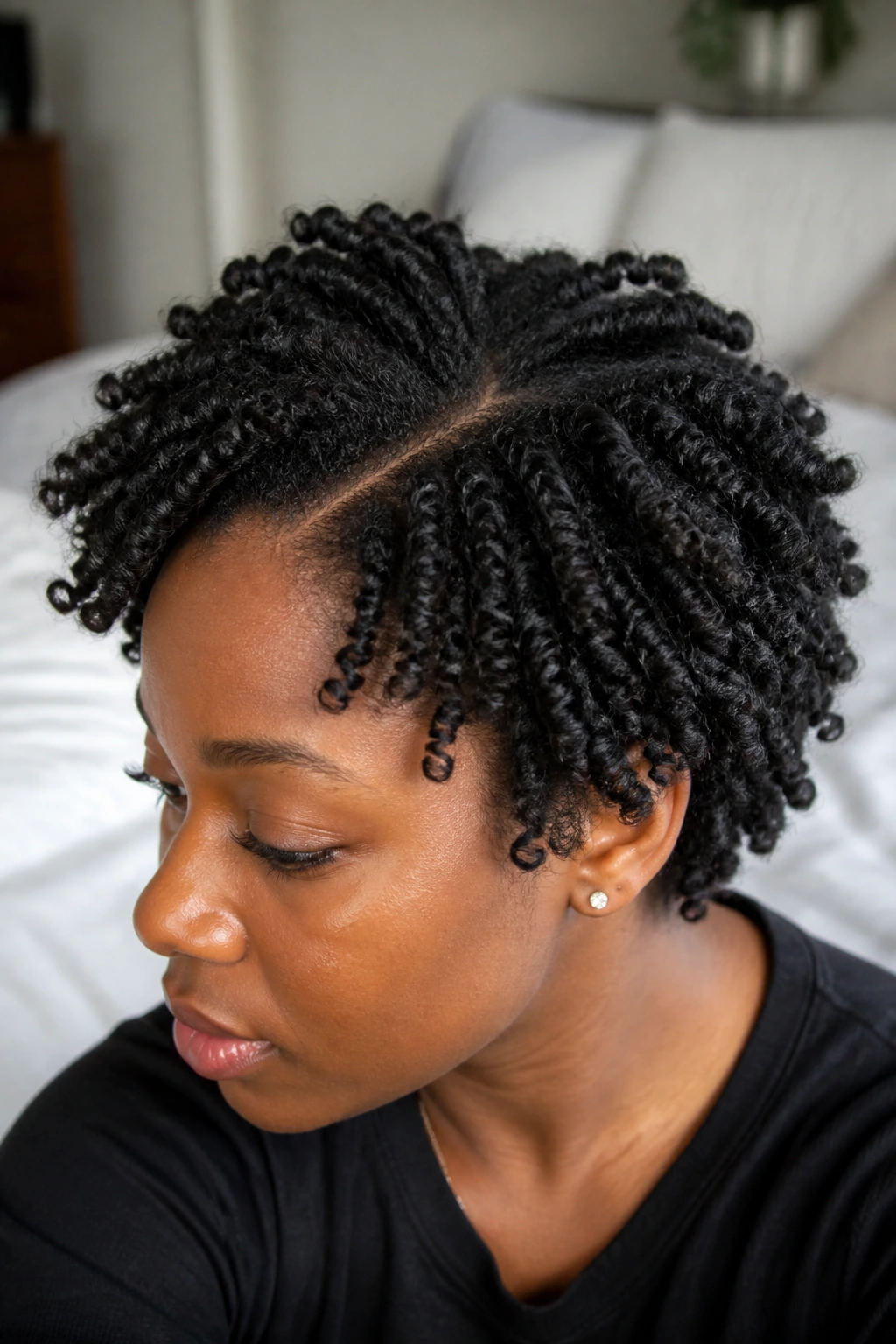
Mini twist-outs give short hair a soft, plush shape that sits between fluffy and defined. They’re a good choice when you want a bit more height than finger coils and a bit more structure than a freeform fro.
Start with hair that’s damp and lightly stretched, not bone straight and not dripping wet. Two-strand twist in small sections, keeping the roots smooth so the style doesn’t puff out in odd places. Let the twists dry completely. Completely means overnight or under a hood dryer, not “they felt mostly dry when I went to bed.”
When you unravel, use a small amount of oil on your fingertips and separate only once. Separate too much and the ends frizz first, which is the part everyone notices. The finished shape has a nice spring to it, and on short hair it reads as fuller than it really is.
6. Mini Braid-Out With Zigzag Texture
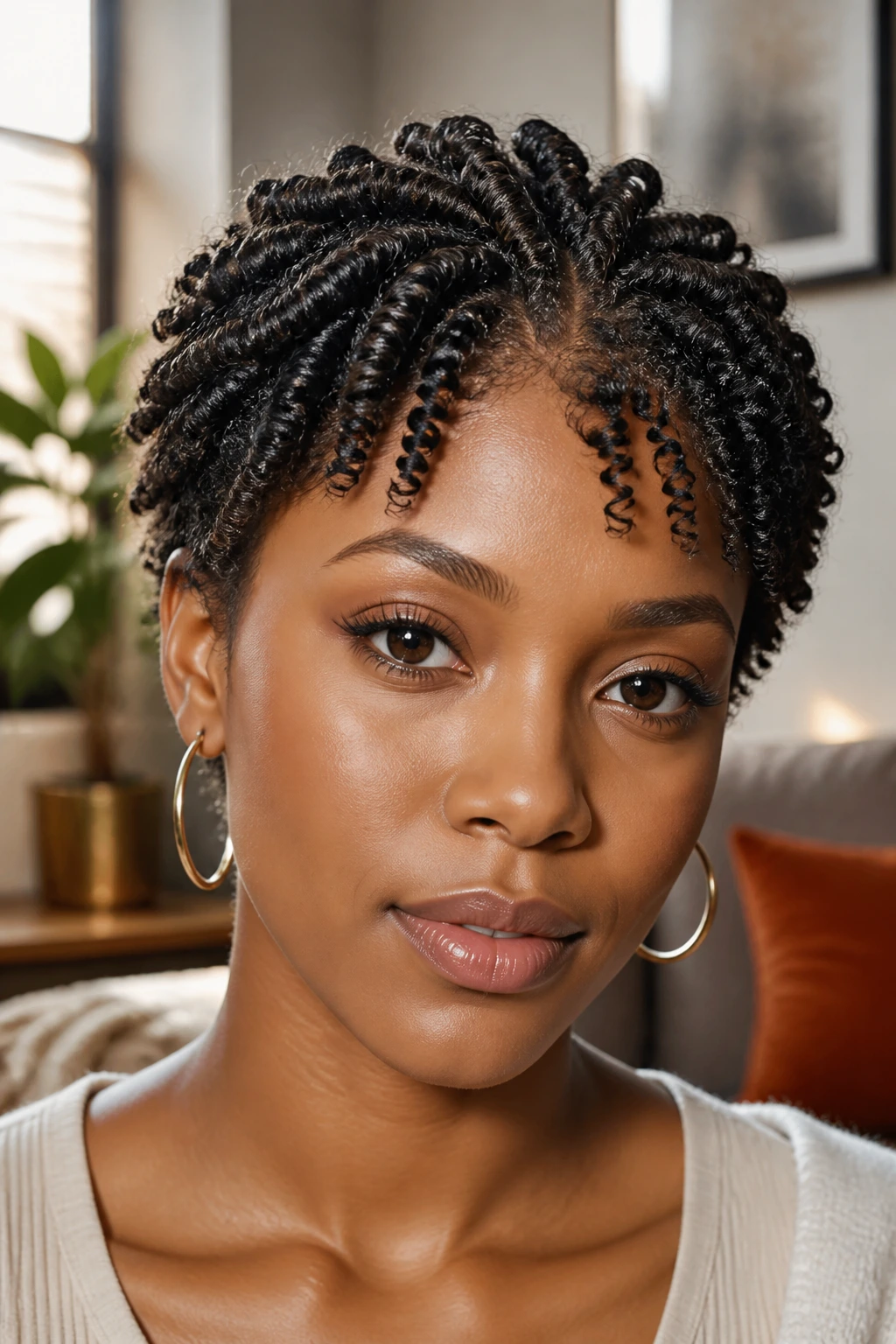
If you want a little more stretch and a little less fluff, the braid-out usually wins. The braid pattern gives short natural hair a tighter wave, and that wave can look sharper than a twist-out when the hair is very dense.
I prefer braid-outs when the hair is prone to shrinkage or when the ends need more control. The braids hold the roots flatter, so the shape sits close to the scalp before it blooms out at the ends. Use a setting cream or a light mousse, braid in even sections, and keep the tension steady from top to bottom.
The texture that comes out is less round than a twist-out and a little more zigzag. That detail is what makes it useful. It frames the face well, especially on short haircuts that are cut close at the sides.
7. Bantu Knot-Out With Soft Volume
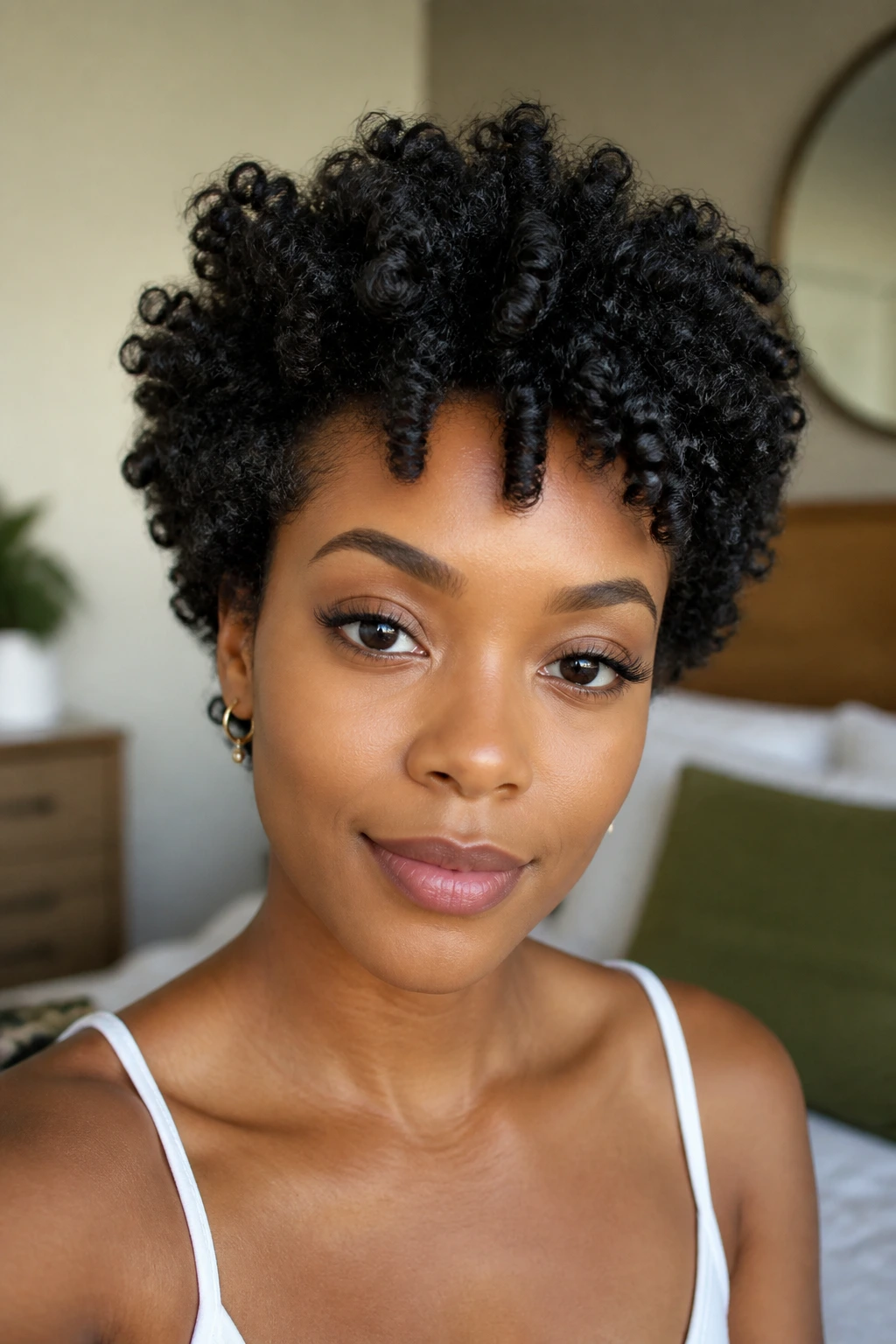
Bantu knot-outs have that mix of spring and lift that short hair wears well. The knots create a curl pattern that looks almost sculpted, but the final result still has enough softness to keep it from feeling stiff.
Section the hair into small parts, twist each one until it starts to coil on itself, then wrap the coil into a little knot and pin it flat. Dry time matters here. If the knots are still cool to the touch, wait longer. Taking them down too soon is how people end up with limp roots and frizzy ends.
What I like most is the volume at the crown. Short hair can sometimes sit too close to the head after a set, and bantu knots give it enough lift to change that. Pair the style with a clean part or a few gold clips and it stops looking casual in the best way.
8. Flat Twist Crown
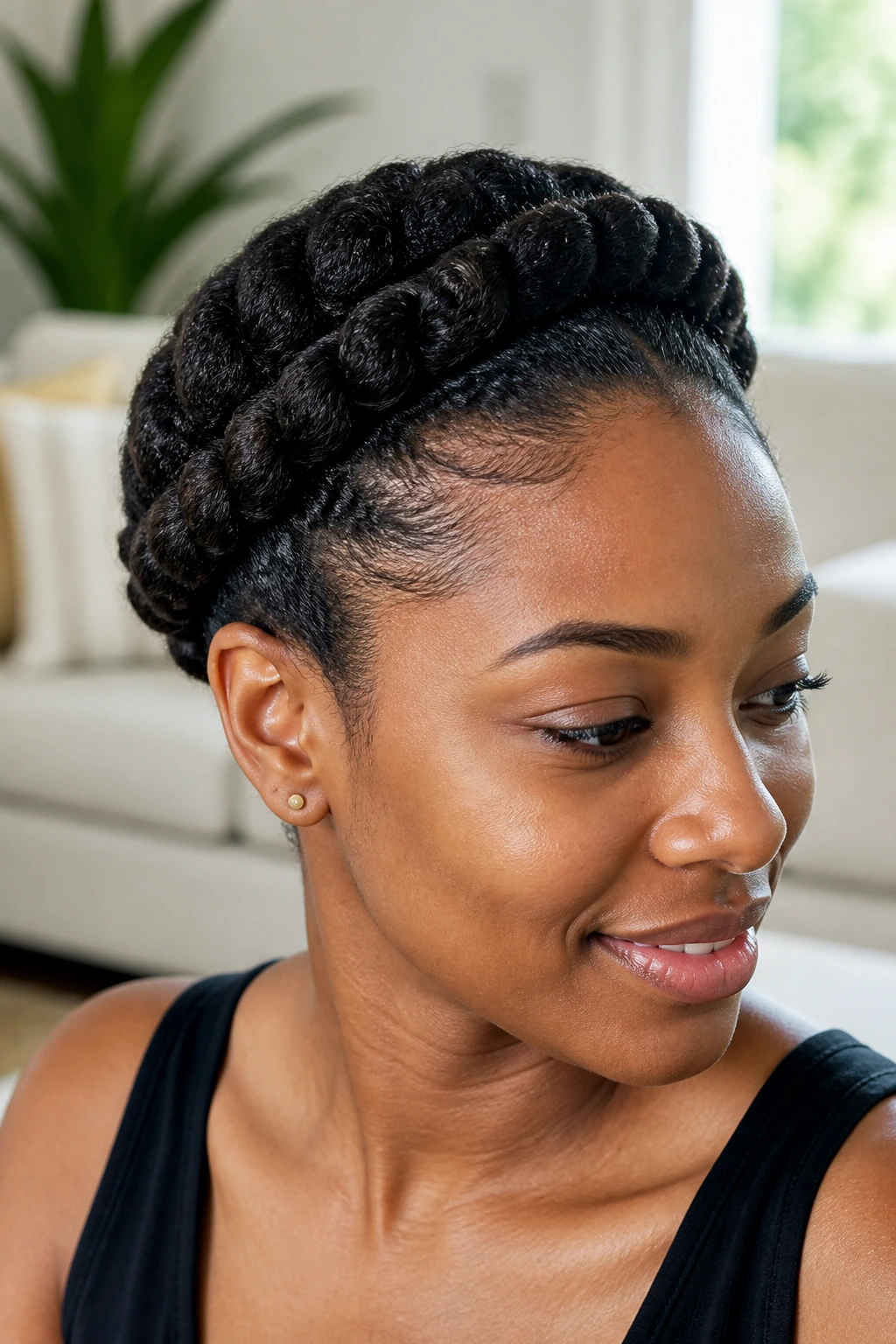
A flat twist crown sits beautifully on short hair because it frames the face without asking for much length at all. It also keeps the perimeter neat, which matters when the front or temples need a little control.
Make two or three flat twists that travel around the head like a halo, then tuck the ends with pins where the twists meet. Short hair does not need a full, perfect circle to make this work. A partial crown that leaves a few curls free in back often looks better than a forced, overpacked braid.
This is one of those styles that reads tidy in daylight and elegant at night. If your hair is too short for a full wrap, use bobby pins that match your hair color and keep the pin ends hidden under the twist. A little patience here pays off fast.
9. Flat Twist Side Sweep
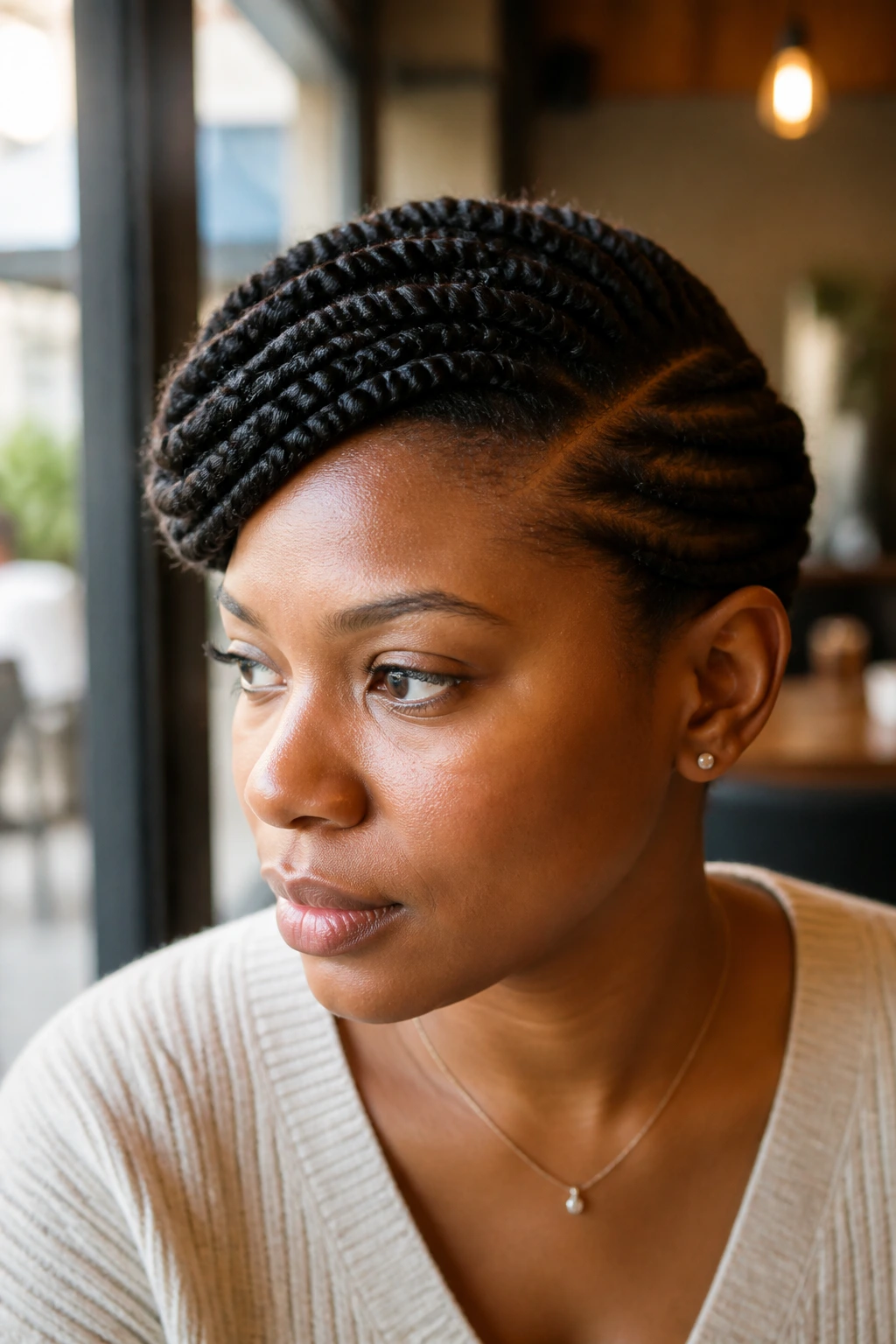
A side-swept flat twist changes the whole mood of short hair. The twist line acts like a strong visual line, so the style feels more styled than a standard part-and-go look.
Sweep one side back in flat twists and leave the opposite side textured or softly defined. That contrast gives the style movement. It works especially well on asymmetrical cuts, but even a plain cropped shape can handle it if you keep the part deep and the twists close to the scalp.
I like this style when the hair needs to look intentional without looking overbuilt. It takes less time than a full updo, and it gives you room to play with earrings, lip color, or a bold neckline. That matters more than people admit.
10. Tapered Frohawk
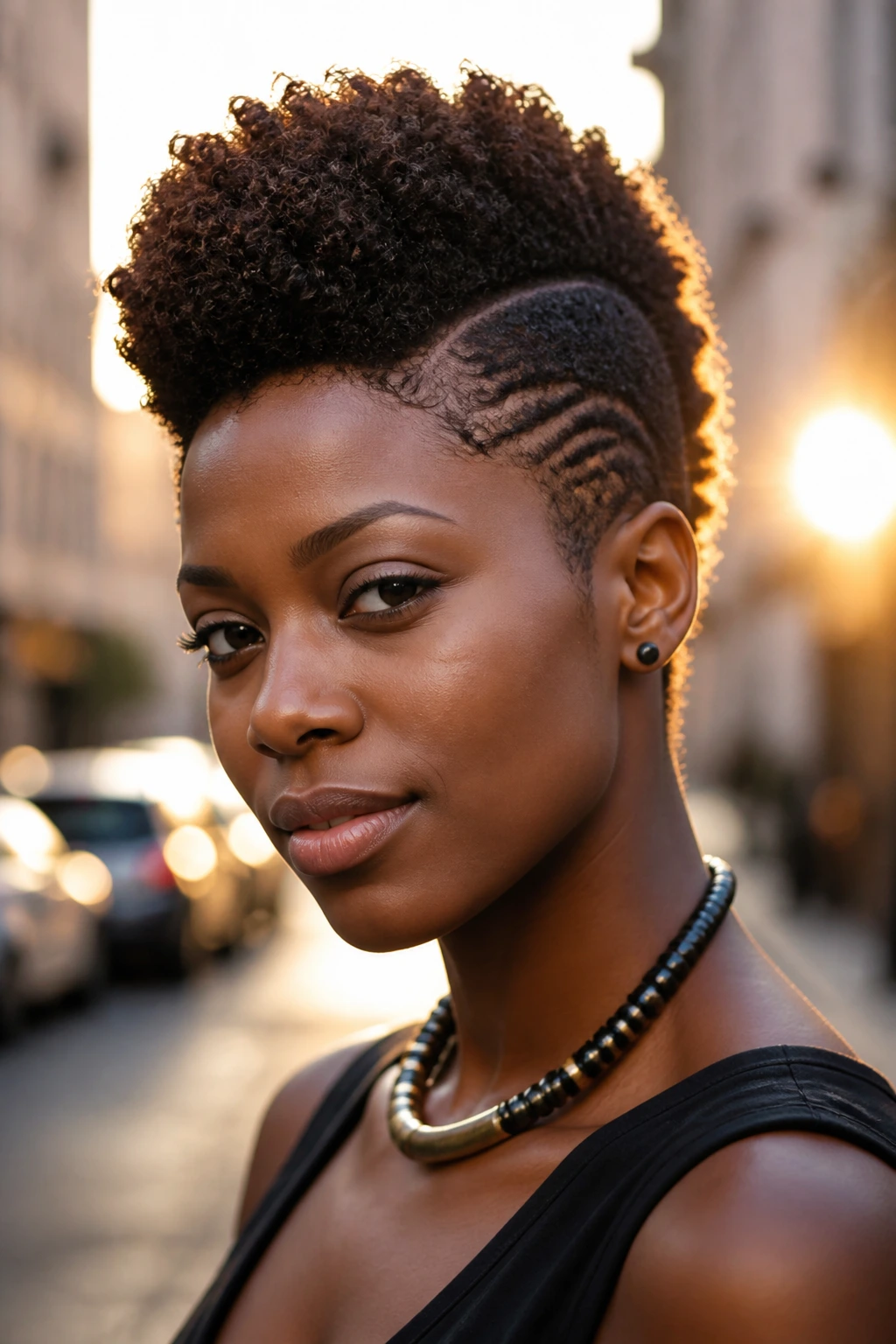
A tapered frohawk has attitude without needing extra length. The shape itself does the heavy lifting: sides brushed down or pinned close, top left full and textured. On a tapered cut, the silhouette looks almost effortless. On a non-tapered cut, you can fake the same idea with pins and gel.
The key is not to flatten the top. Let the center stay airy, then smooth the sides enough that the contrast is obvious. If you add too much gel to the top, the style loses the lift that makes it work.
This is one of my favorite short natural styles for nights out because it frames the face and keeps the neckline clean. A small pick at the roots after drying can make the center stand a little taller. That tiny move changes everything.
11. Puff With Laid Edges
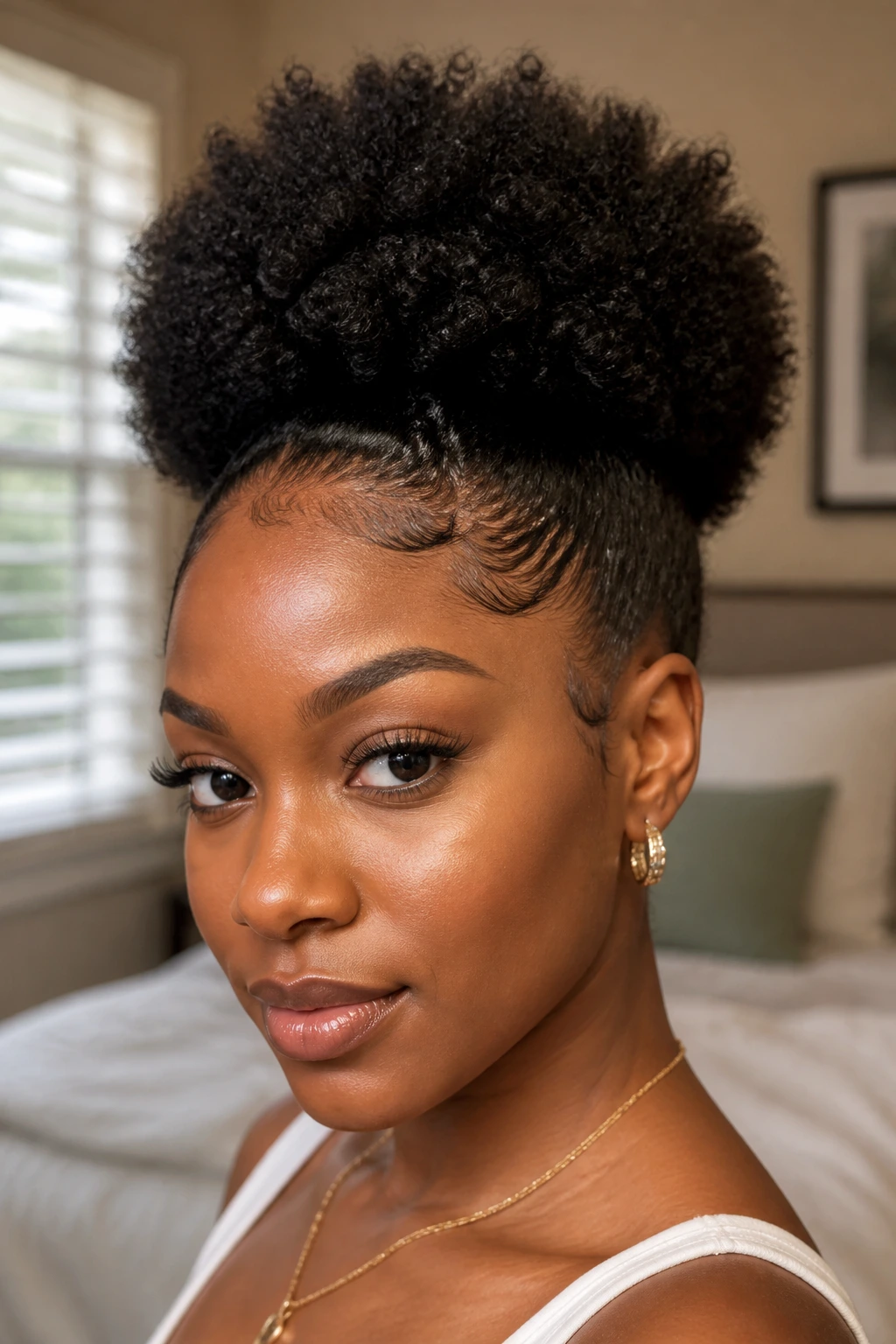
The puff is a classic for a reason. It gives short natural hair a bigger shape fast, and it works even when the front is shorter than the back. If the hair is too short for a true full puff, a drawstring puff extension can bridge the gap without looking out of place.
Gather the hair toward the crown or middle back, secure it with a stretchy band, then smooth the perimeter with a brush and a little gel. I am picky about edges here. Lay them down lightly, not hard. Over-slicked edges can make the style look stiff and pull on the hairline.
What you get is a clean front and a rounded back with a lot of personality. It’s simple, but simple in the useful way, not the lazy way.
12. Side Puff
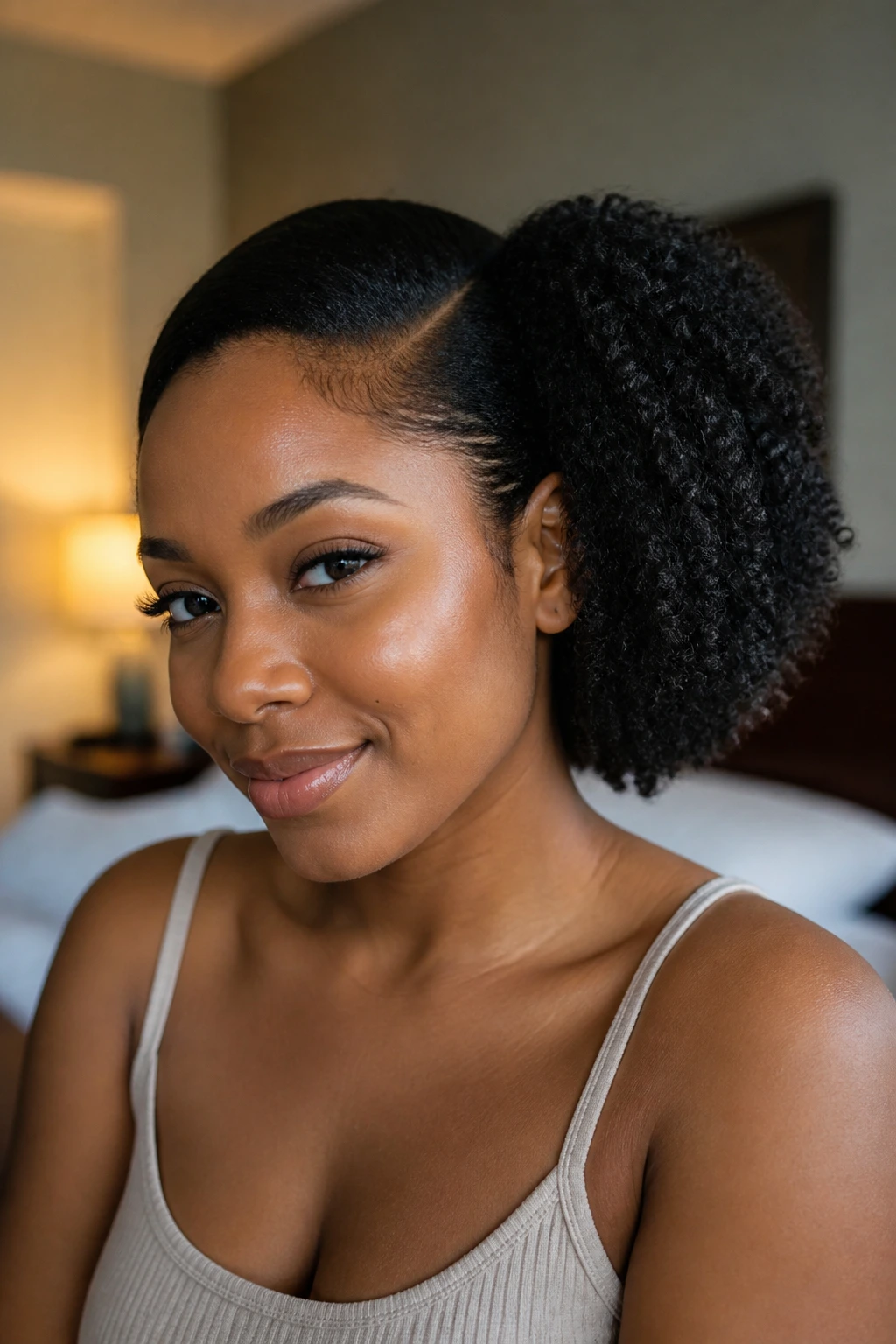
A side puff is a small tweak that makes short hair feel less predictable. The lower placement brings the shape down near the jawline, which is handy if the top is too short for a high puff or if the hair grows unevenly.
Part the hair deeply, gather it to one side, and secure it just above the ear or lower toward the nape, depending on length. The trick is to keep the opposite side smooth enough that the puff looks like a shape choice, not a rushed fix. A tiny twist or two at the front can help the part read cleaner.
This style is easy to wear with hoops, a high neckline, or a blazer. It also survives second-day hair better than people expect, especially if you refresh the roots with a little water before you smooth them again.
13. Half-Up Mini Puffs
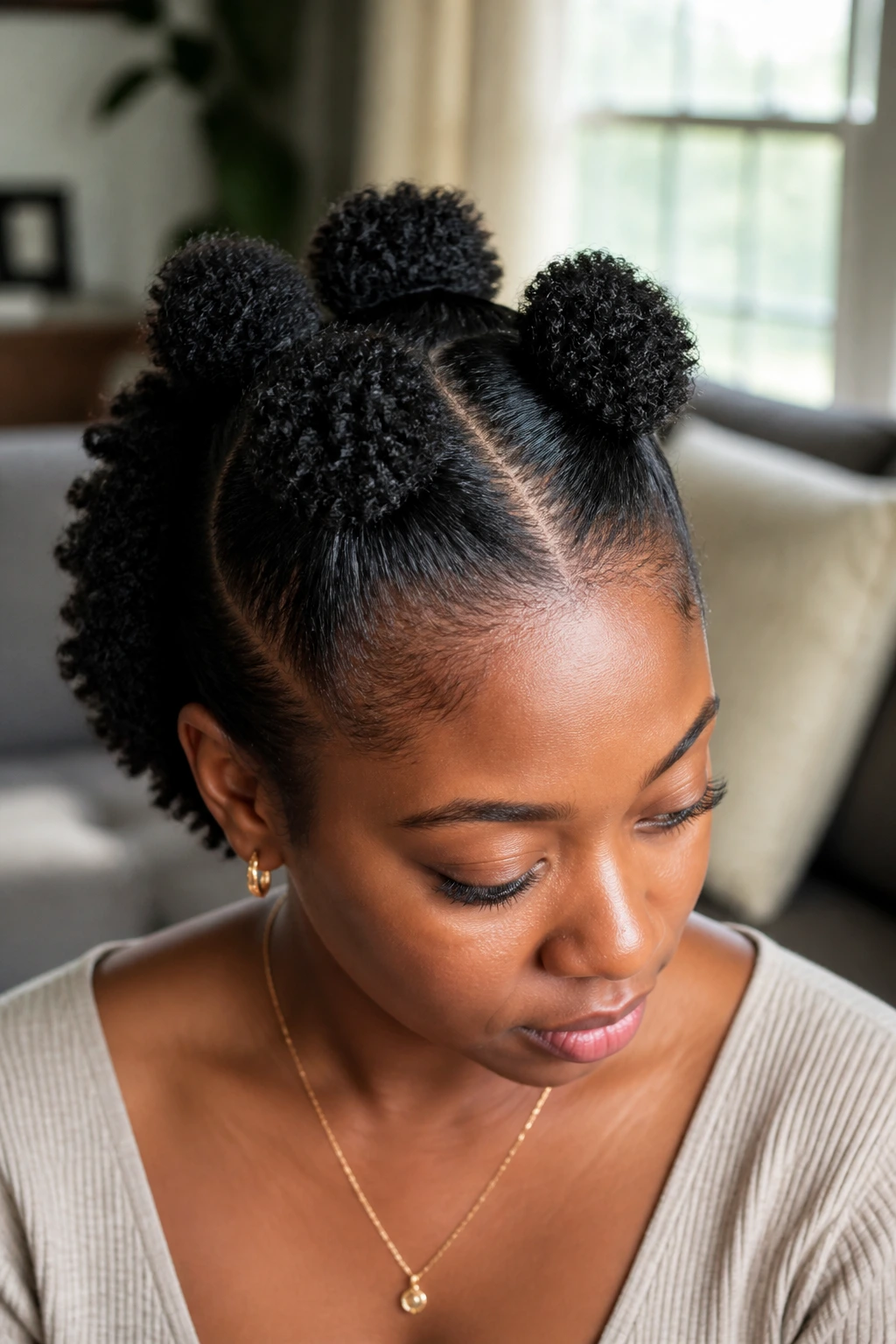
Half-up mini puffs are playful without turning into a costume. They work best when the top section can be separated cleanly from the bottom, and they’re a nice answer when the hair is long enough for tiny puffs but not long enough for full buns.
Split the crown into two or three small sections and secure each one with a band, leaving the lower hair free. You can keep the bottom defined, twist it, or let it stay fluffy. The style has more energy when the puffs are small and neatly placed, not oversized and floating around.
A satin scarf at night keeps the top sections from flattening. If the puffs start to sag, tighten the bands a little the next morning and fluff the bottom with your fingers. That usually brings it back.
14. Double Puff Space Buns
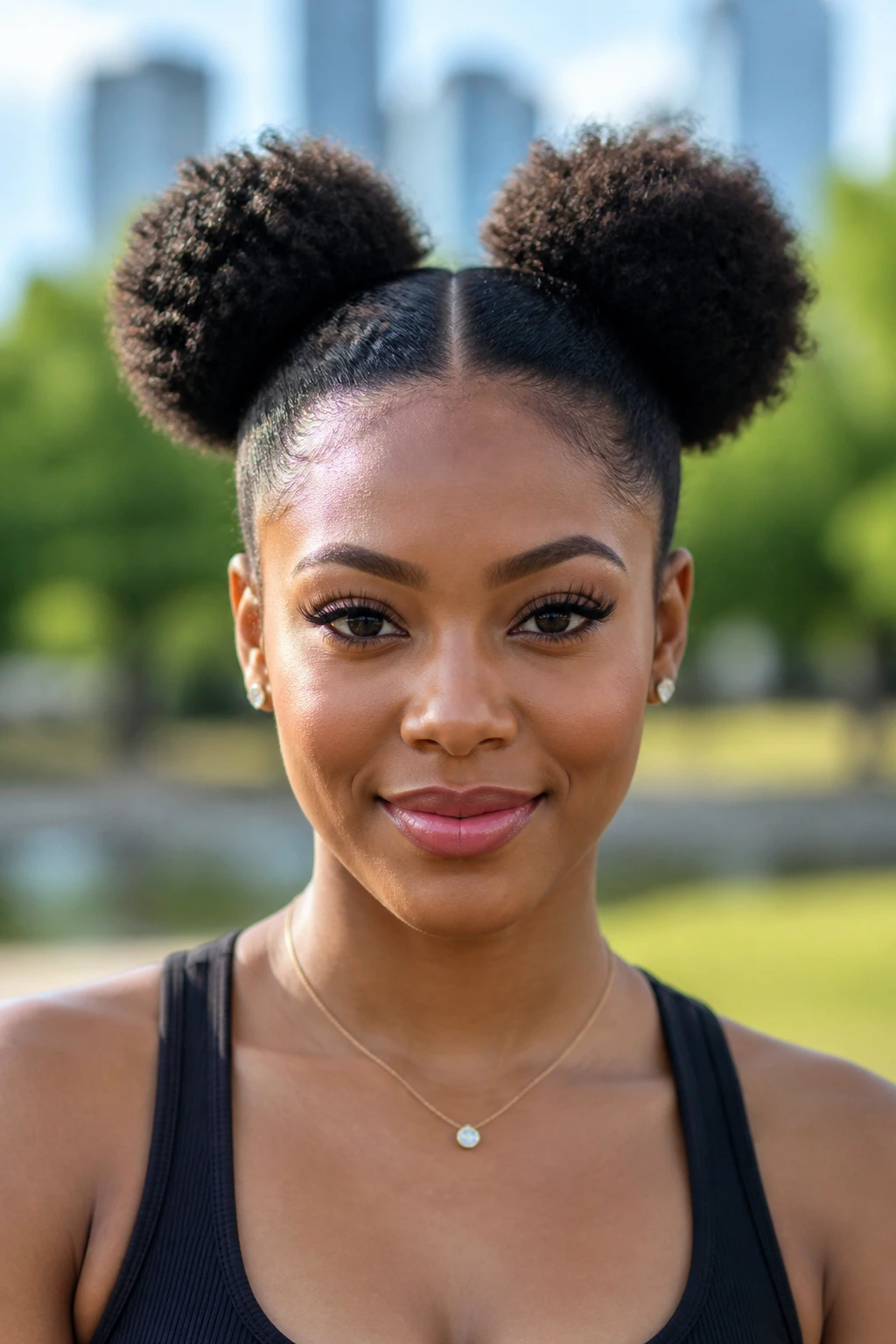
Two puffs on short natural hair can look cute, sharp, or a little bit cheeky depending on how high you place them. I like them best when the buns sit just above the ears and the part is clean enough to make the style look balanced.
Short hair often needs a little help here. Use small elastic bands, then pin the ends underneath each puff if the hair doesn’t fully loop around. If your curls are too short to hold their own weight, a few bobby pins tucked into the base will stabilize everything without making the buns look bulky.
The style works because the symmetry is doing most of the visual work. Keep the sides smooth, let the puffs stay soft, and the whole look reads as intentional. A pair of small earrings helps, too.
15. Rolled and Tucked Updo
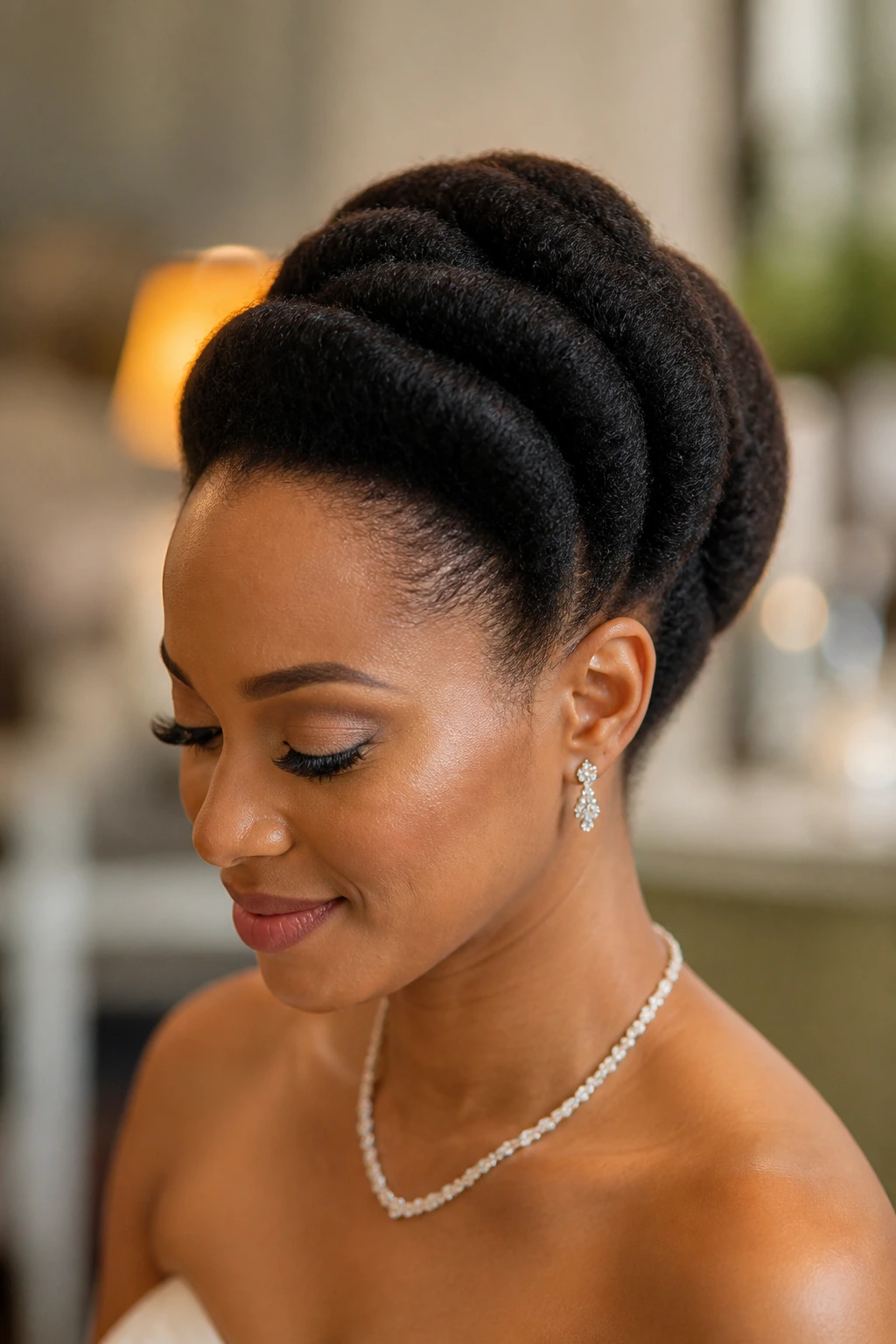
Rolled and tucked styles are the secret weapon for short hair that needs to look polished fast. They rely on pinning sections inward, which means the style can work on shorter lengths than a bun ever could.
Start by dividing the hair into front and back sections. Roll each piece inward toward the scalp, pinning as you go so the ends disappear under the roll. If the hair is too short to hold a full roll, make smaller ones. That’s usually the better answer anyway.
The finished look feels neat around the edges and soft at the center. It’s good for weddings, work events, or any day when you want the hair out of the way but still shaped on purpose.
16. Headband Tuck Style
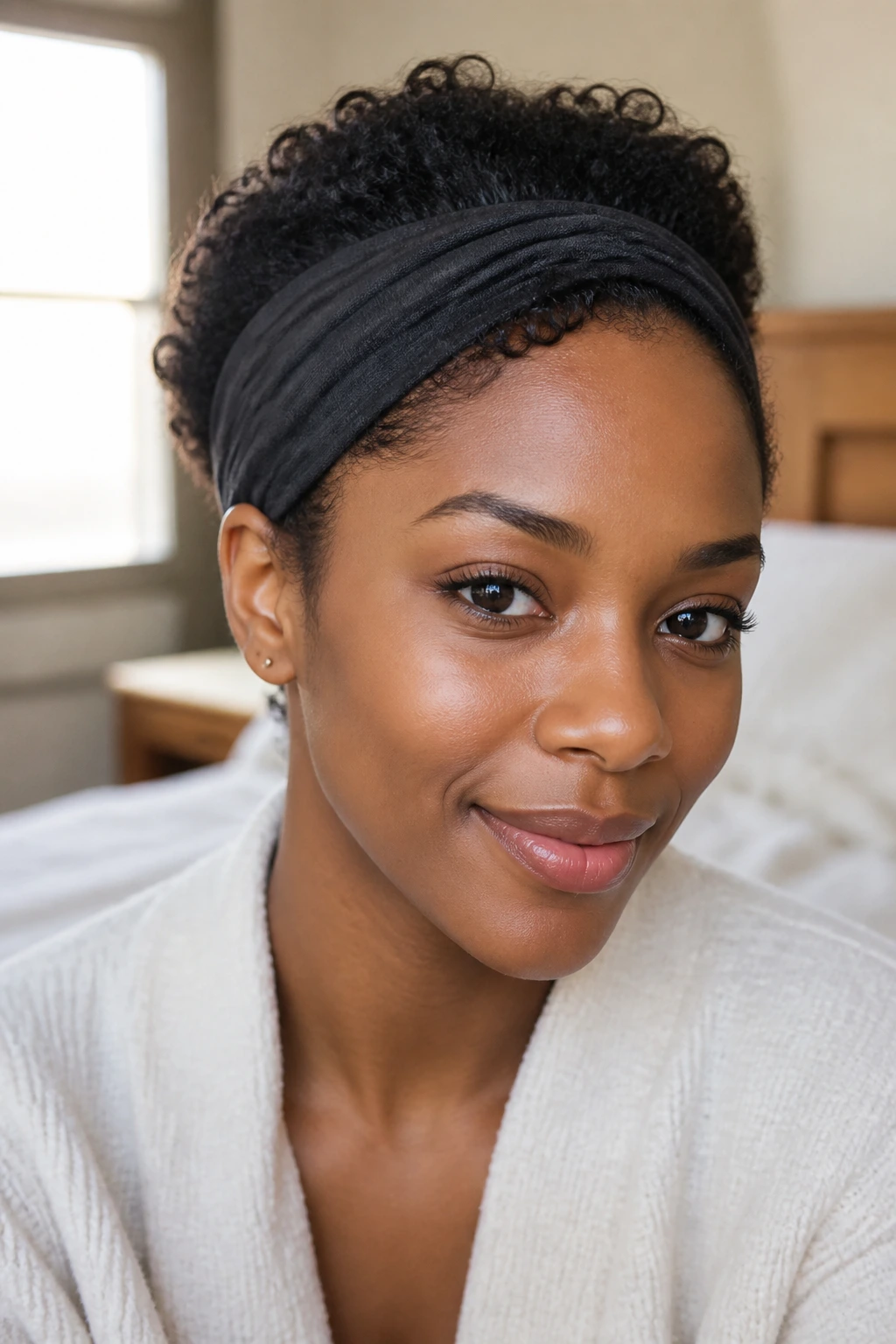
A headband tuck is what I reach for when the hair is cooperating just enough to be worn up, but not enough to be fussed over. It’s fast, forgiving, and better-looking than it sounds.
Slip a stretchy headband over the hair, then tuck small sections into the band until the ends disappear. Shorter hair can be rolled upward in small pieces; longer pieces can be folded under once or twice before they’re pinned. The style works best when the crown stays a little loose and the tuck stays neat around the back.
This one saves second-day hair in a hurry. It also pairs well with scarves, patterned bands, or a bright lip. You do not need much else.
17. Scarf-Wrapped TWA
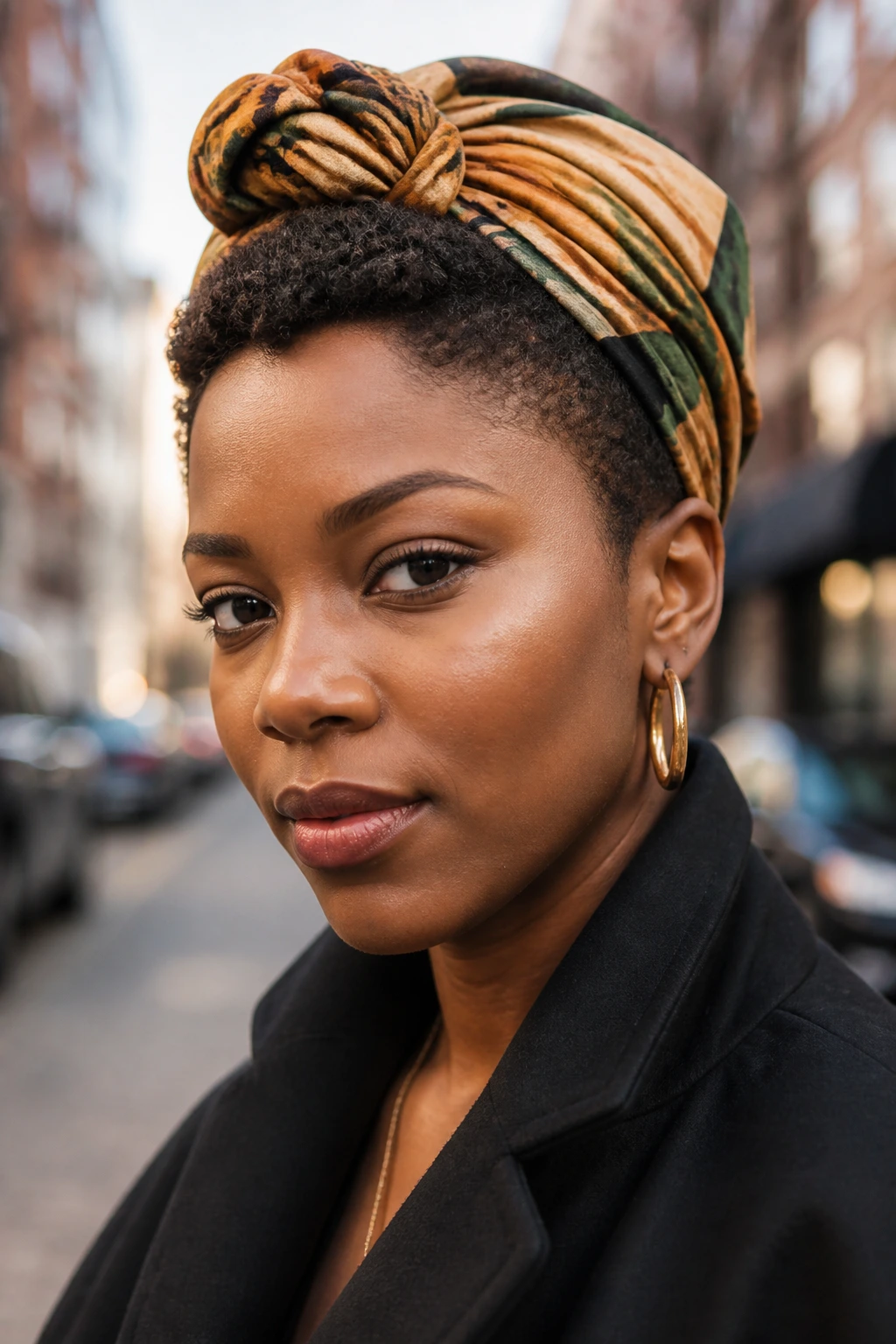
A scarf-wrapped TWA can be as simple or as styled as you want it to be. The scarf handles the shape while the hair peeks through at the front, sides, or crown.
I like this for days when the texture is a little unruly but not bad enough to hide completely. Smooth the hair with a little cream, place the scarf low or high depending on how much hair you want exposed, and tie it securely so it doesn’t slide. Leave a coil fringe out if you want softness around the face.
The best part is that the scarf does not have to match anything. A good print can turn a basic short style into the whole outfit.
18. Picked-Out Rounded Afro
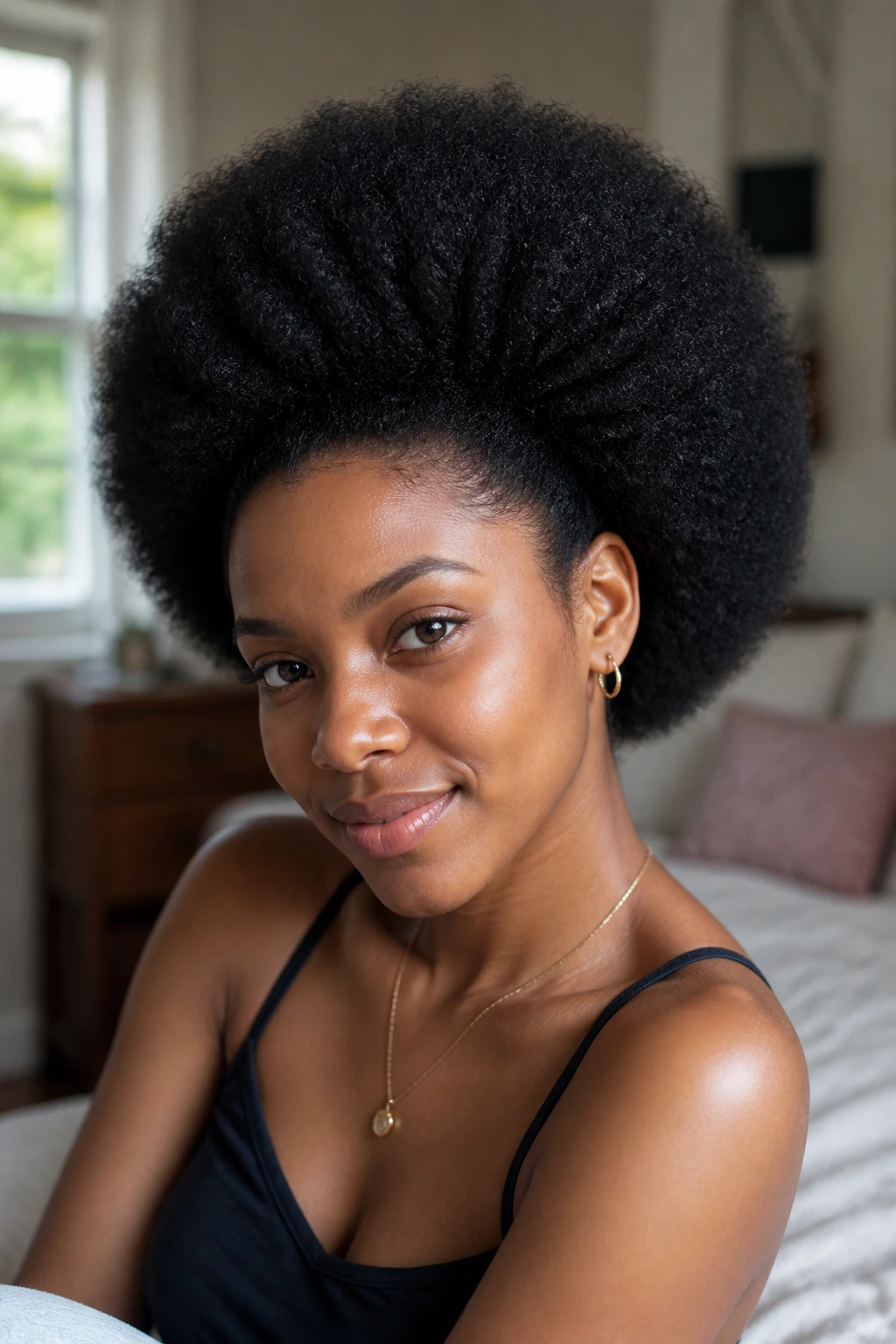
A picked-out afro on short hair feels almost stubborn in the best way. It says you are not trying to flatten the texture into something it isn’t. You’re shaping it.
Let the hair dry fully first. Then use an afro pick at the roots only, lifting upward instead of dragging through the ends. That keeps the curl pattern intact while making the silhouette rounder and bigger. The outline matters more than the exact shape of each strand.
I like this when the cut is even and the texture is strong enough to hold a rounded form. A little moisturizer and a light oil beforehand help keep the finish from looking dry. The result has presence without a lot of moving parts.
19. Slicked-Back Short Fro
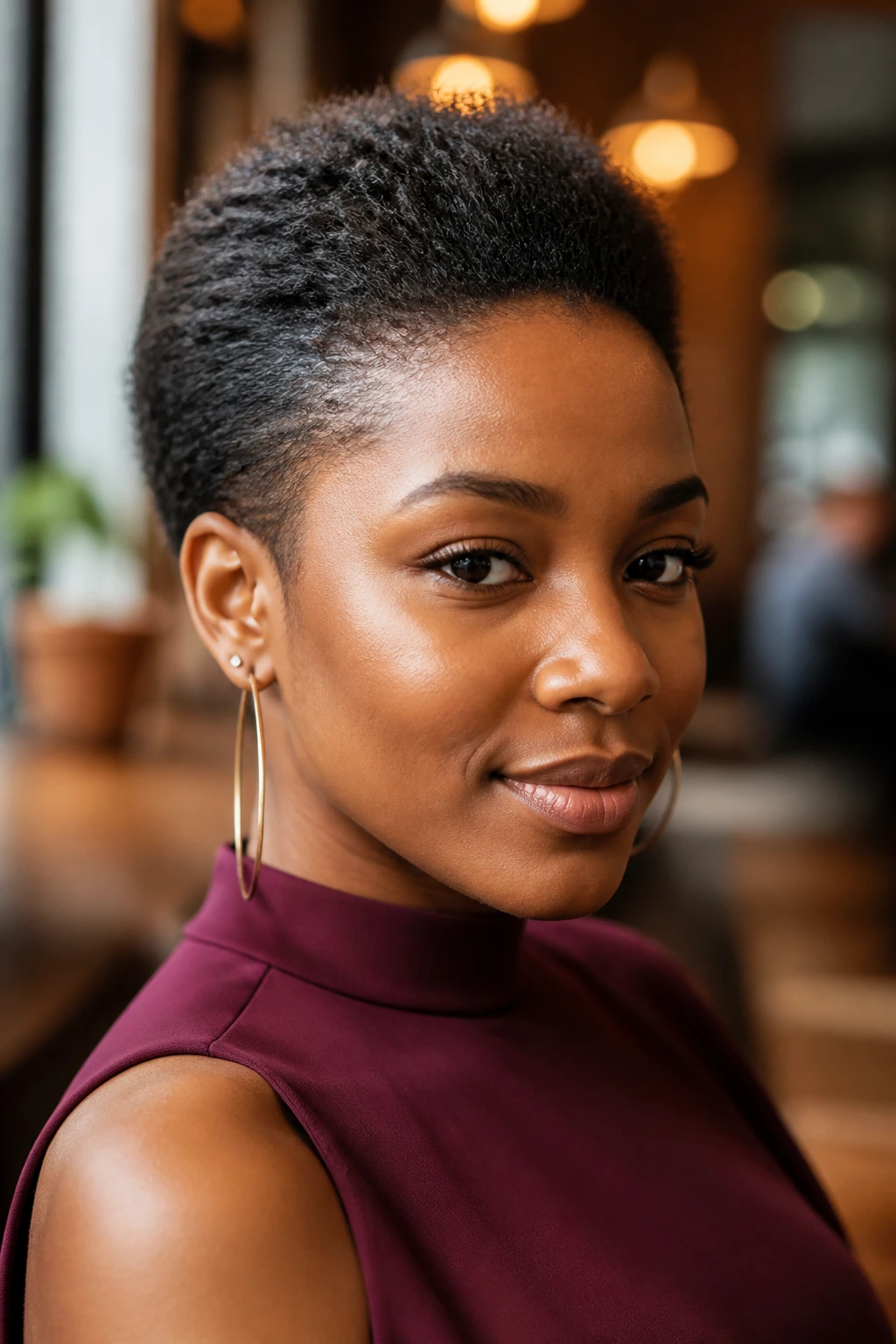
A slicked-back short fro gives you contrast, which is a big advantage on cropped hair. The top stays textured, but the sides and front are smoothed down enough that the shape reads clean.
Use a firm gel or styling custard at the perimeter, then brush the hair back and up toward the crown. Do not drown the hair in product. That leads to flakes or a greasy finish that never really sets. A clean brush stroke and a scarf for ten to fifteen minutes usually do more than another scoop of gel.
This style looks especially good with statement earrings or a sharp collar. It has a little edge, but it still feels natural, not forced.
20. Side-Swept Coil Set
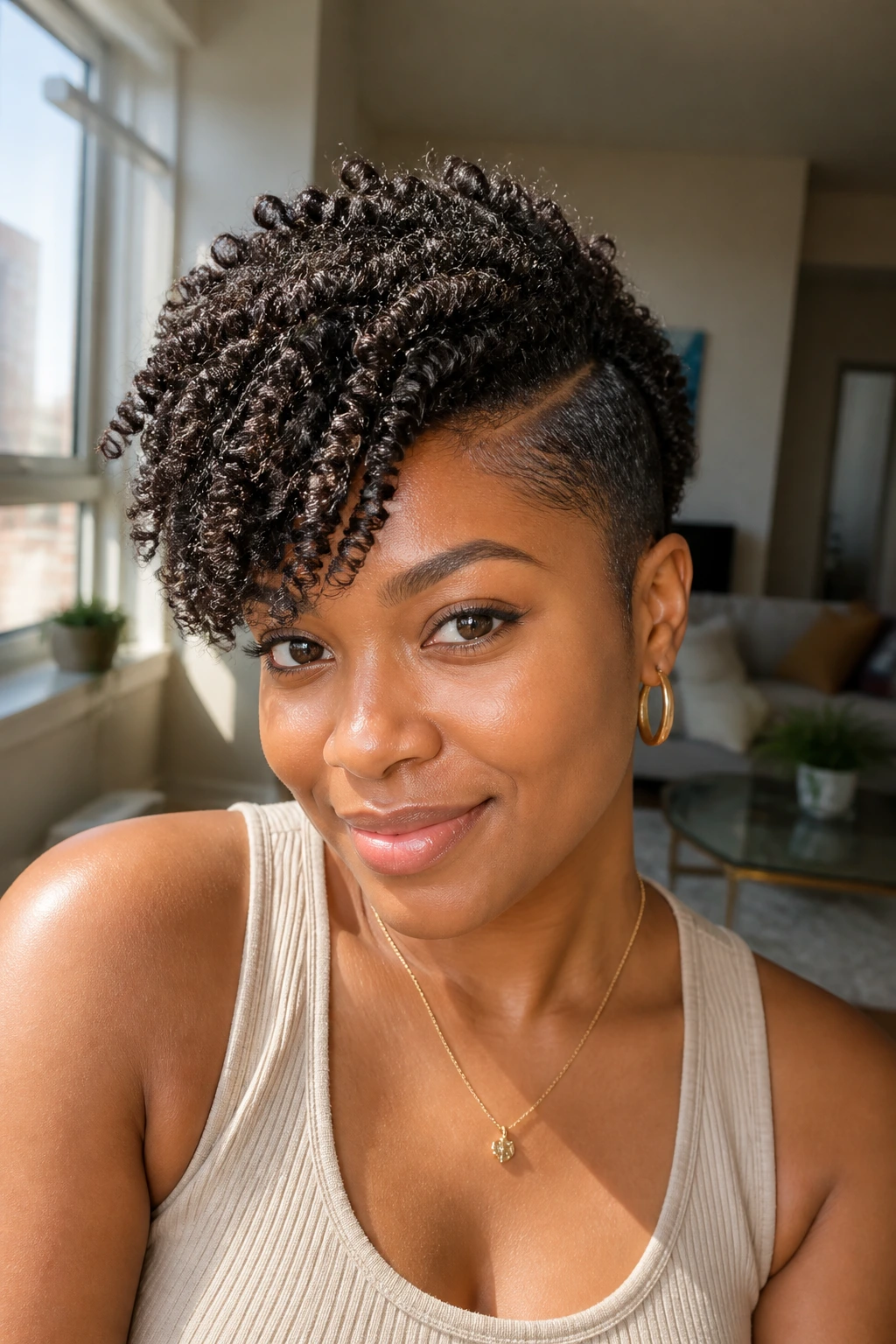
A side-swept coil set has a softer line than a center-parted one, and that makes it useful when you want the face framed in a particular way. The coils can be finger coils, comb coils, or a twist set that you direct toward one side as it dries.
The point is direction. Instead of letting the hair settle wherever it wants, guide the sections into a deeper side part and set the front pieces a little larger so they fall across the forehead or temple. That asymmetry adds movement and works beautifully on short haircuts that need a little shape around the eyes.
If your coils separate too much, pin one side back for a few hours while they finish drying. That’s often enough to teach the shape where to go.
21. Rod-Set Bob
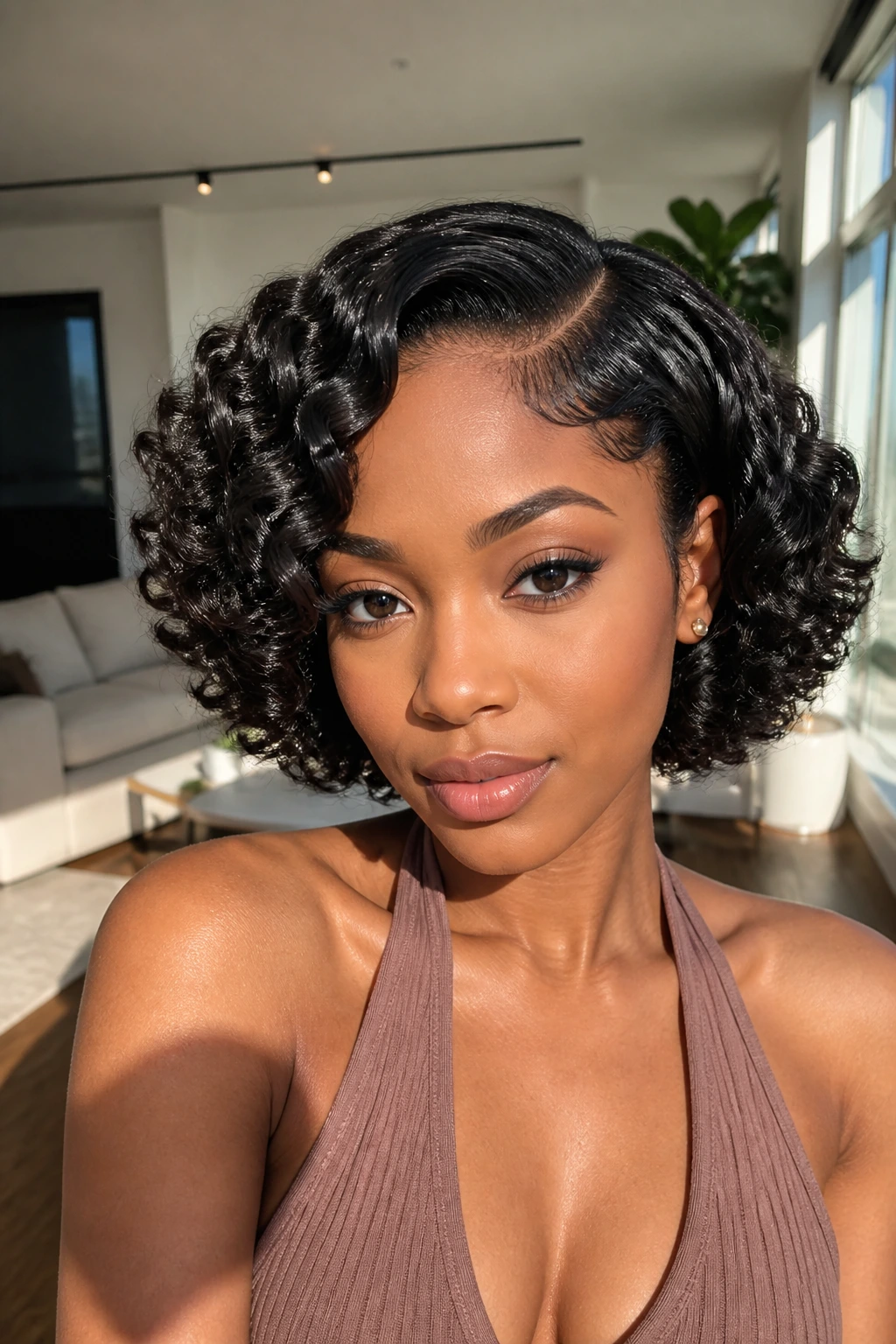
Rod sets on short hair can mimic a tiny bob that lands right at the jawline or above it. The bounce is the whole reason to wear this style. It gives you a crisp curl pattern without the heaviness of a long set.
Use perm rods on damp hair with mousse or setting lotion, then make sure every section is wound smoothly from end to root. If the ends are not tucked neatly, they’ll frizz first. Let the rods dry completely before removing them, or you’ll lose the clean spiral shape fast.
The result is neat, springy, and easy to dress up. A side part makes the bob feel a little more grown, while a center part reads more symmetrical and fresh.
22. Flexi-Rod Spiral Set
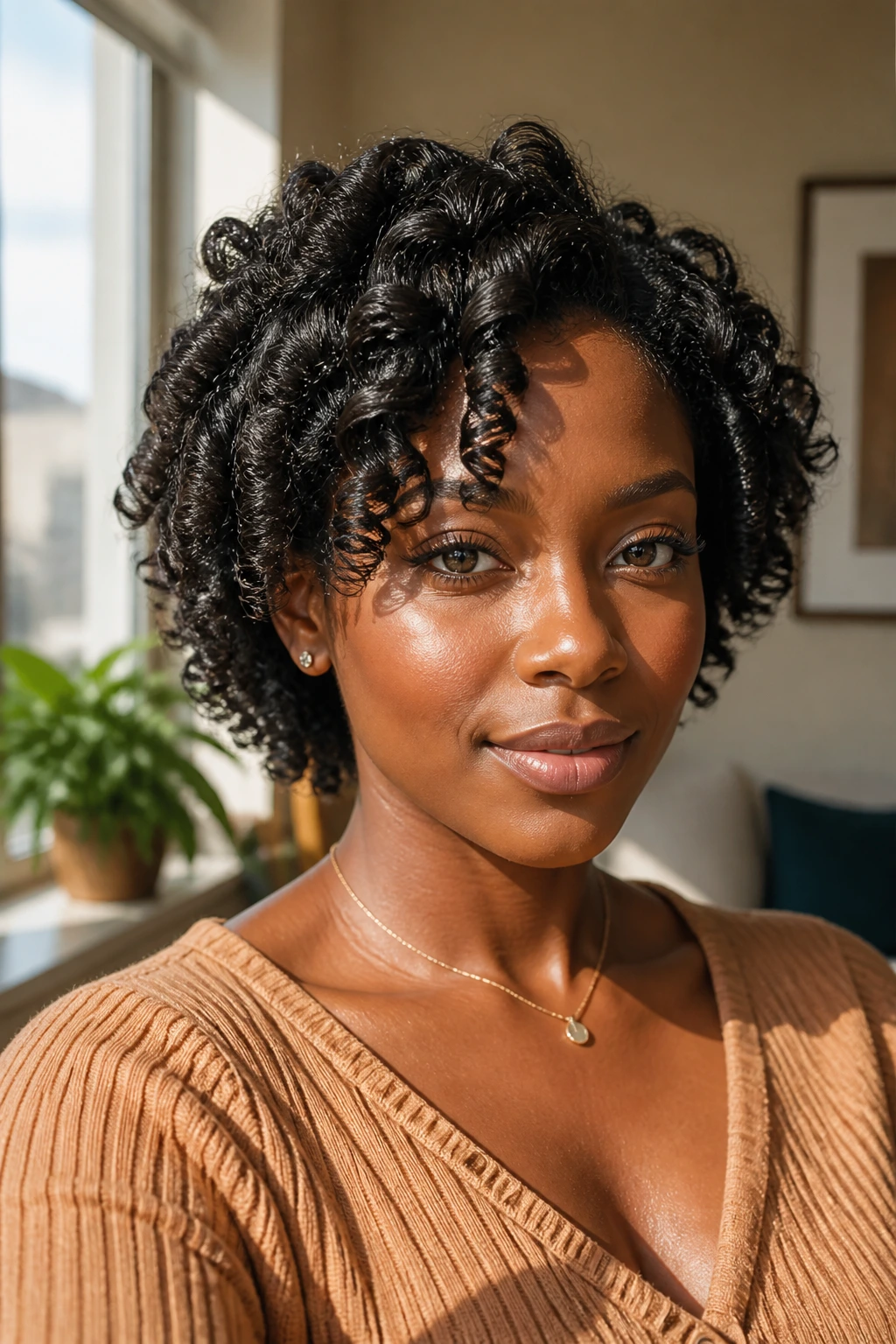
Flexi rods create a softer spiral than perm rods, and short hair wears that softness well. The curls end up rounder, with a little less structure and a little more swing.
I like flexi rods when the hair is already lightly stretched and the goal is shine over volume. Use a light mousse, not a thick cream, or the curls can dry dull and lose their shape. Roll the hair smoothly and let it dry all the way through before taking the rods out. Half-dry is how people get limp roots and stretched ends that don’t bounce back.
This style feels especially nice for events where you want the hair to look set but still touchable. The spirals frame the face and pick up light in a way that flat styles do not.
23. Mini Twists
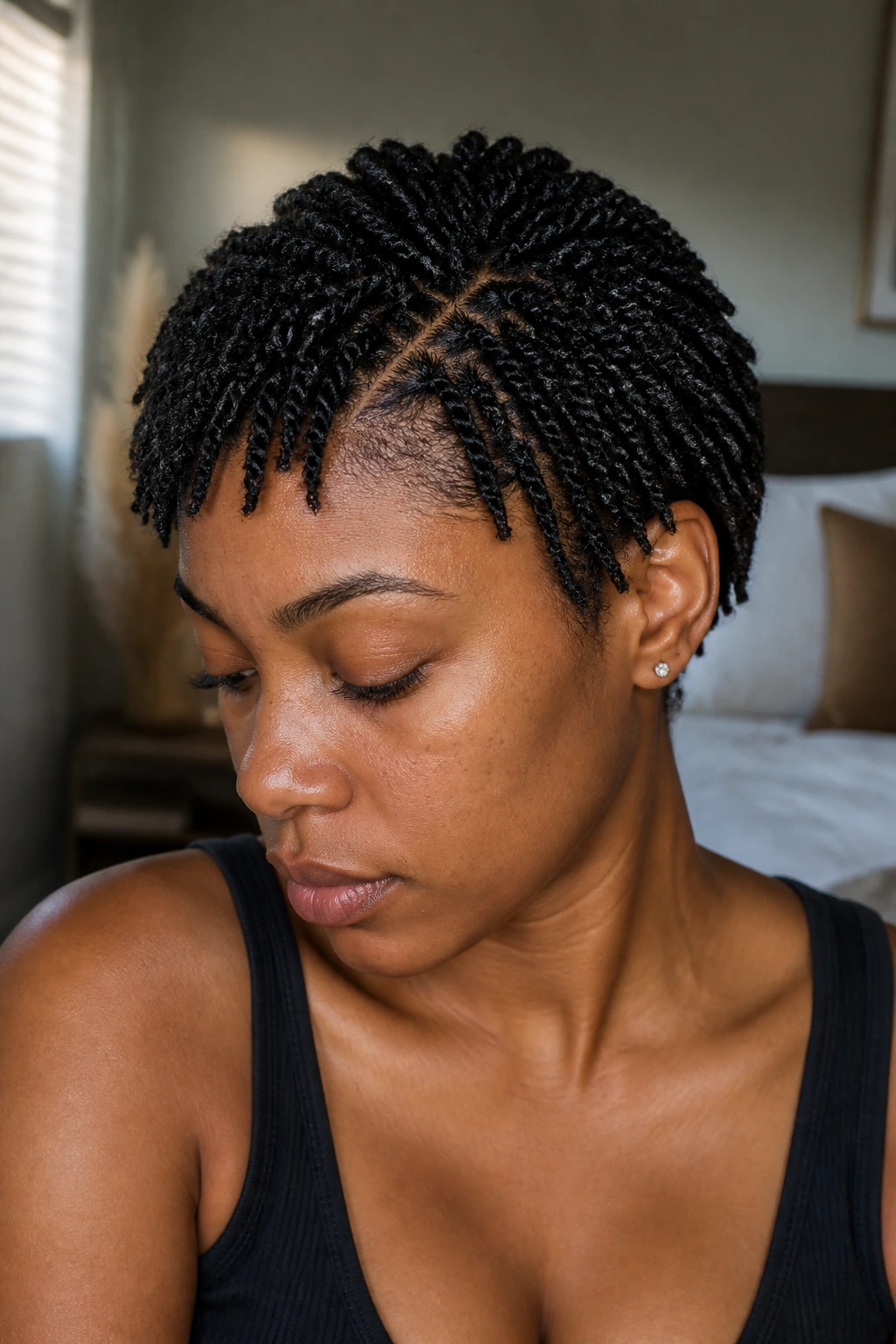
Mini twists are one of the easiest ways to keep short natural hair protected without making it look hidden. They can be worn down, pinned back, tucked under a scarf, or turned into several other styles later, which is a nice bonus.
The size of the twists matters. Tiny twists last longer and look neater, but they take more time. Slightly larger twists are faster and give the hair a fuller look. I usually lean a little smaller on short hair because the style stays cleaner around the edges.
If you want them to last more than a few days, keep the roots neat and sleep in a satin bonnet. A quick refresh with a little water and a drop of leave-in can bring the shape back without redoing the whole set.
24. Barrel Twist Mohawk
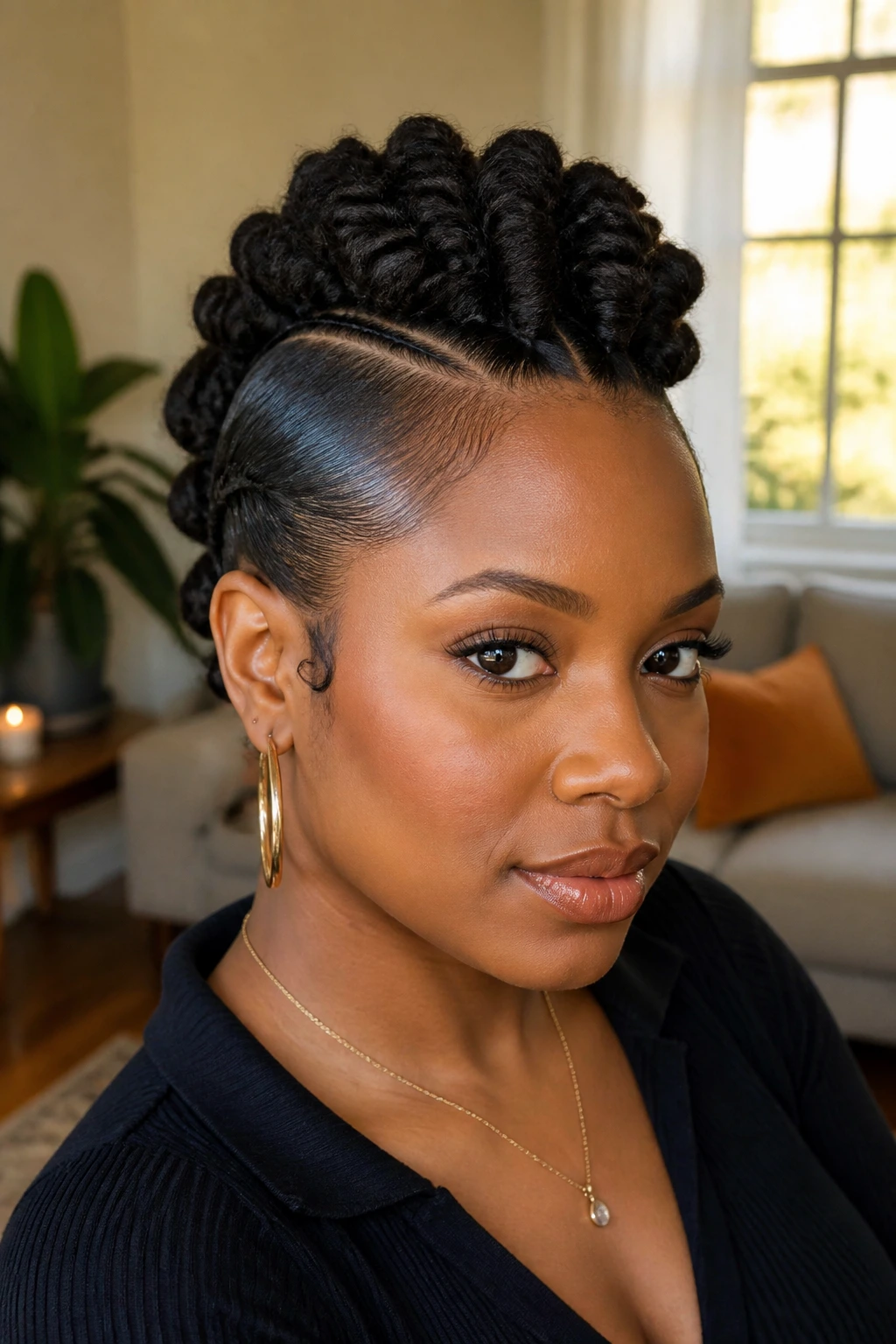
Barrel twists running down the center of the head create a mohawk effect without needing shaved sides or extensions. On short hair, that center ridge gives instant shape.
Create a few chunky flat twists or barrel twists in the middle, then smooth or braid the sides close to the head. The bigger the center twist, the stronger the silhouette. If the hair is too short to twist tightly on the sides, pin them down with small bobby pins and a little gel.
This one reads bold from across the room. It also gives you room to keep the top textured instead of slicked completely flat, which makes the style feel more alive.
25. Halo Flat Twist
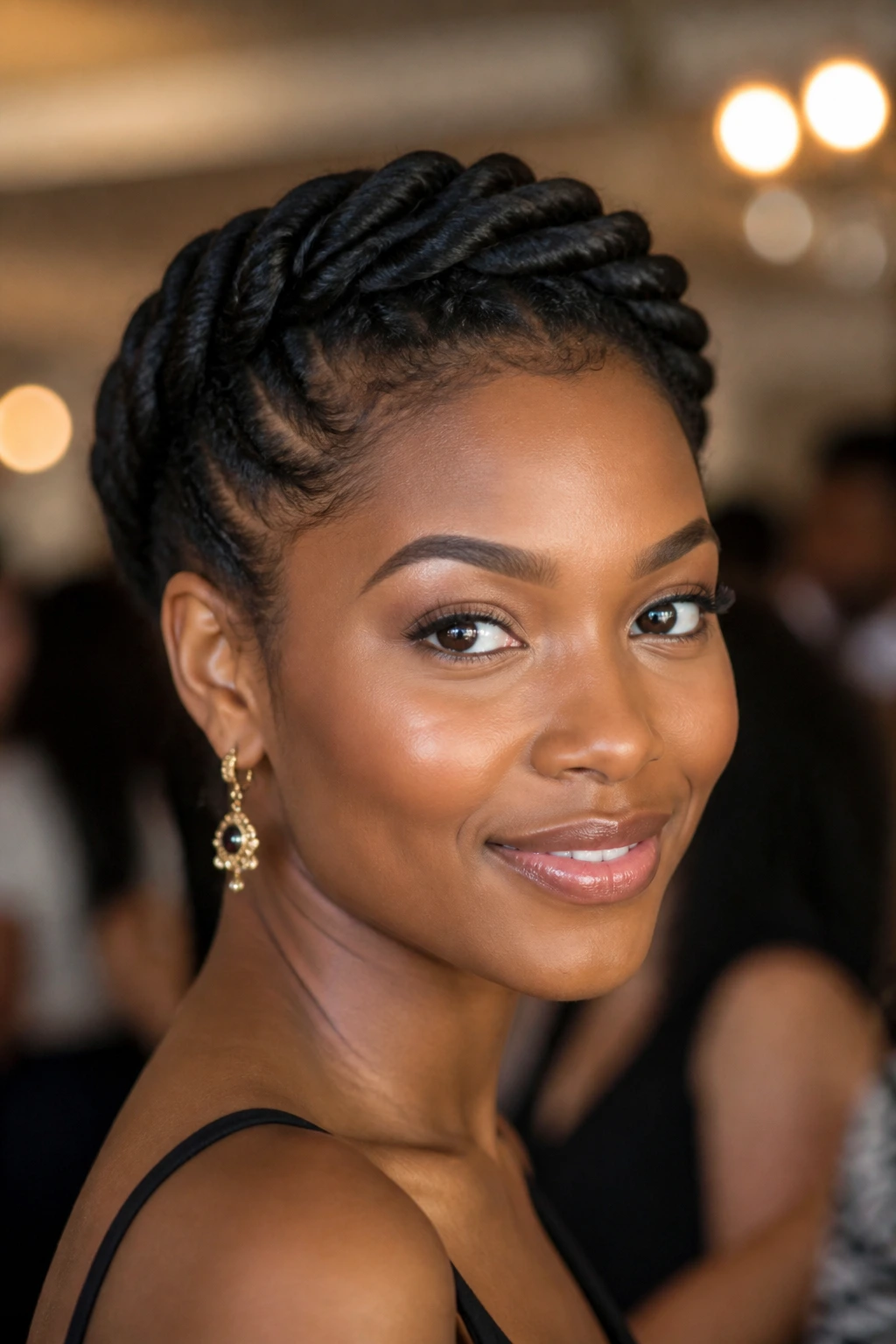
A halo flat twist wraps the perimeter of the head like a crown and leaves the middle calm. It’s one of the best short protective styles when you want the ends tucked and the face open.
Keep the twist close to the scalp and work steadily around the head. If the hair gets too short to continue the wrap, pin the last section flat and hide the end under the twist line. Short hair does not need a perfect circle here. A partial halo still looks polished if the line is clean.
I like this style for events because it looks more complex than it is. The crown shape pulls the eye upward, which is handy on shorter cuts.
26. Cornrow Accent Fro
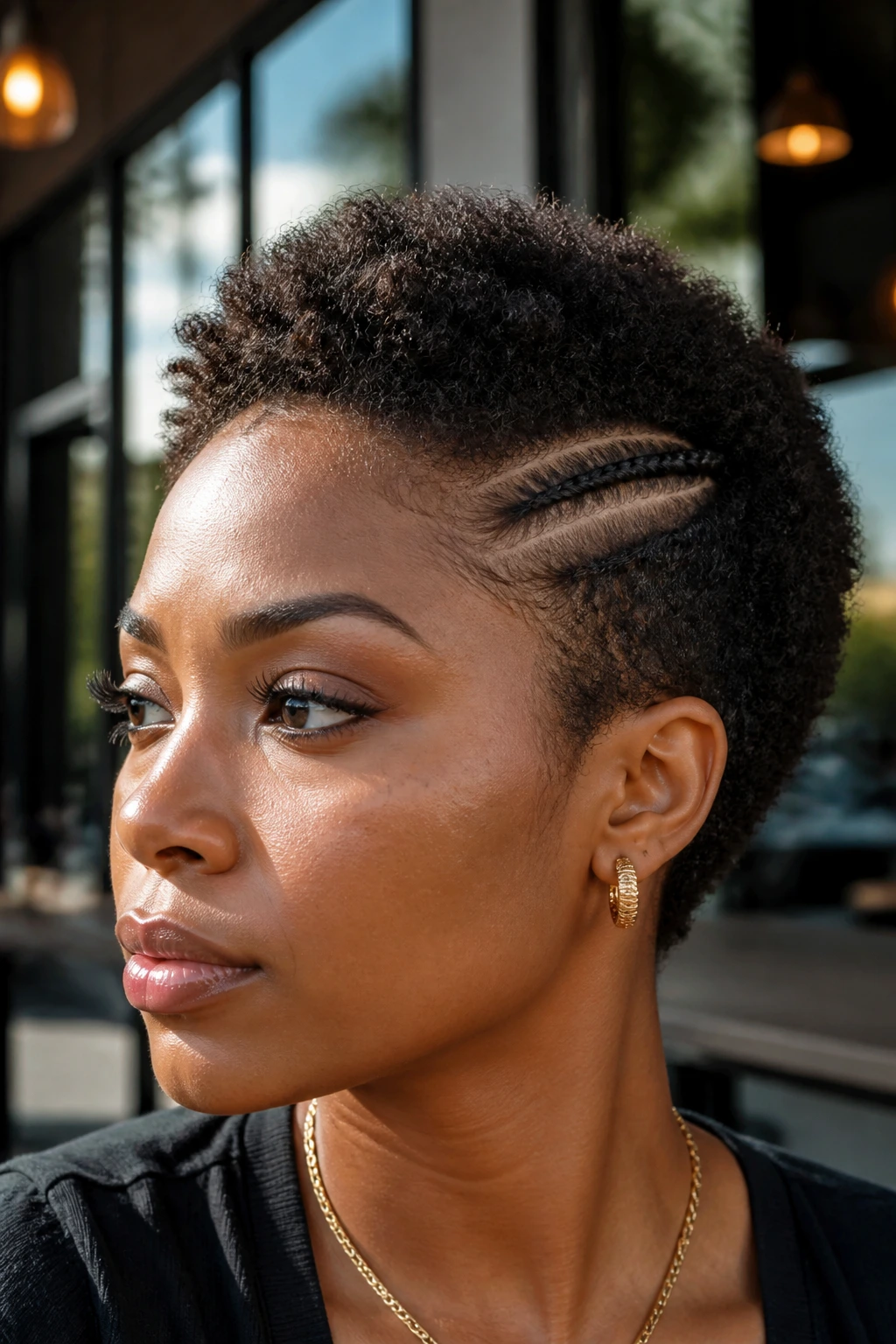
A couple of cornrows can change the tone of a short fro in a hurry. They add structure, but they don’t take over the whole head.
Use one or two thin braids along the hairline or on one side, then leave the rest of the hair free, picked out, or softly defined. The contrast between the braided sections and the loose texture gives the style some edge. It also helps with managing shorter front pieces that refuse to stay put.
This works especially well when the hair needs a small design element but not a full braided look. A little cuff or bead near the end of the braid is enough. No need to crowd it.
27. Faux Side Shave
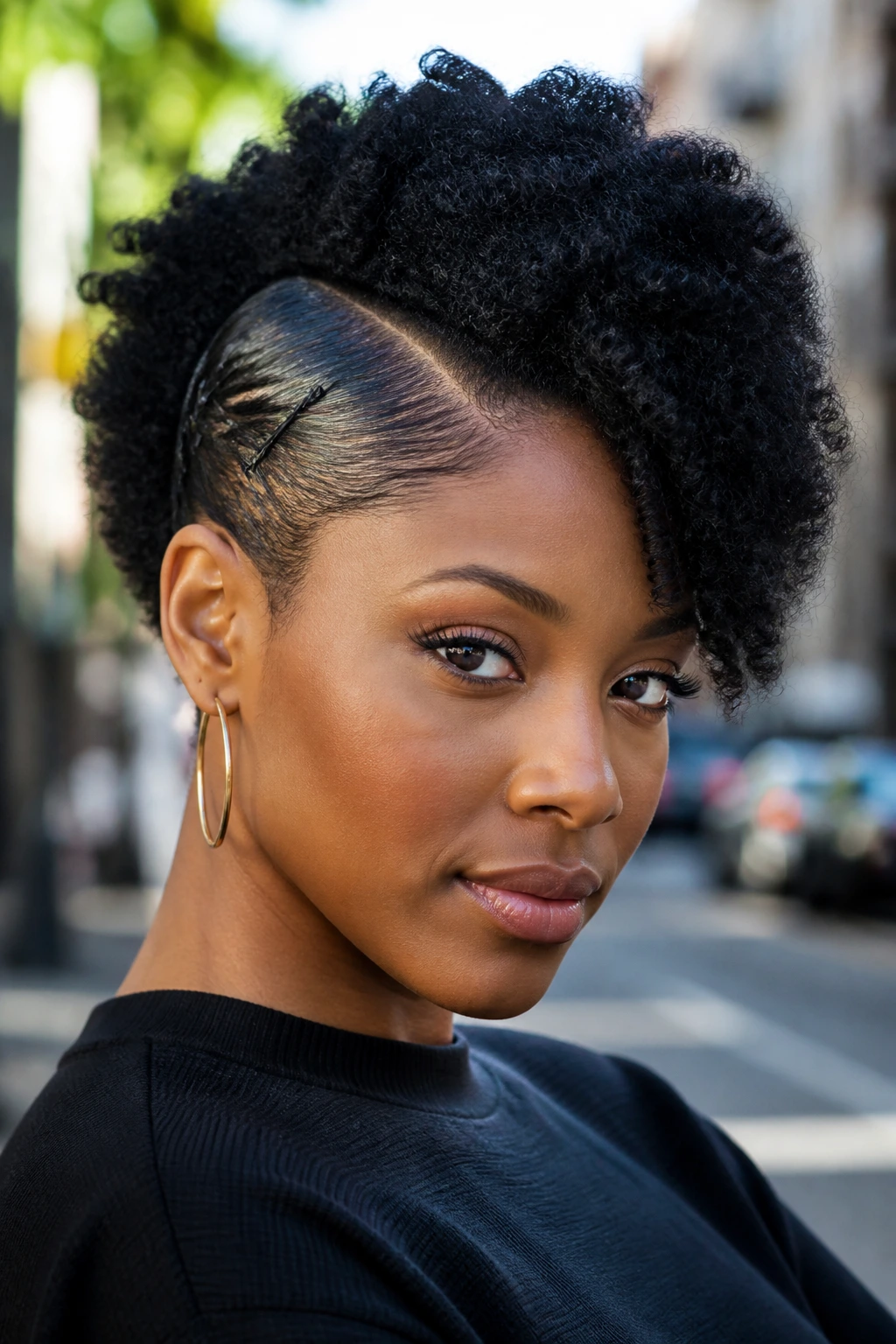
The faux side shave is pure visual trickery, and that’s why it’s fun. One side is slicked down or pinned close, while the other stays full and textured. The contrast makes the hair look more dramatic than its actual length.
A strong hold gel helps on the smooth side, but use only enough to flatten the section, not enough to coat it. If the hair is stubborn, tuck the side under with bobby pins rather than fighting it with more product. The top or opposite side should stay soft and visible, or the style loses the whole point.
This is a good option when you want short hair to feel a little sharper without actually cutting it. It works with coils, twist-outs, or a fluffy fro.
28. Twisted Bangs With a Curly Back
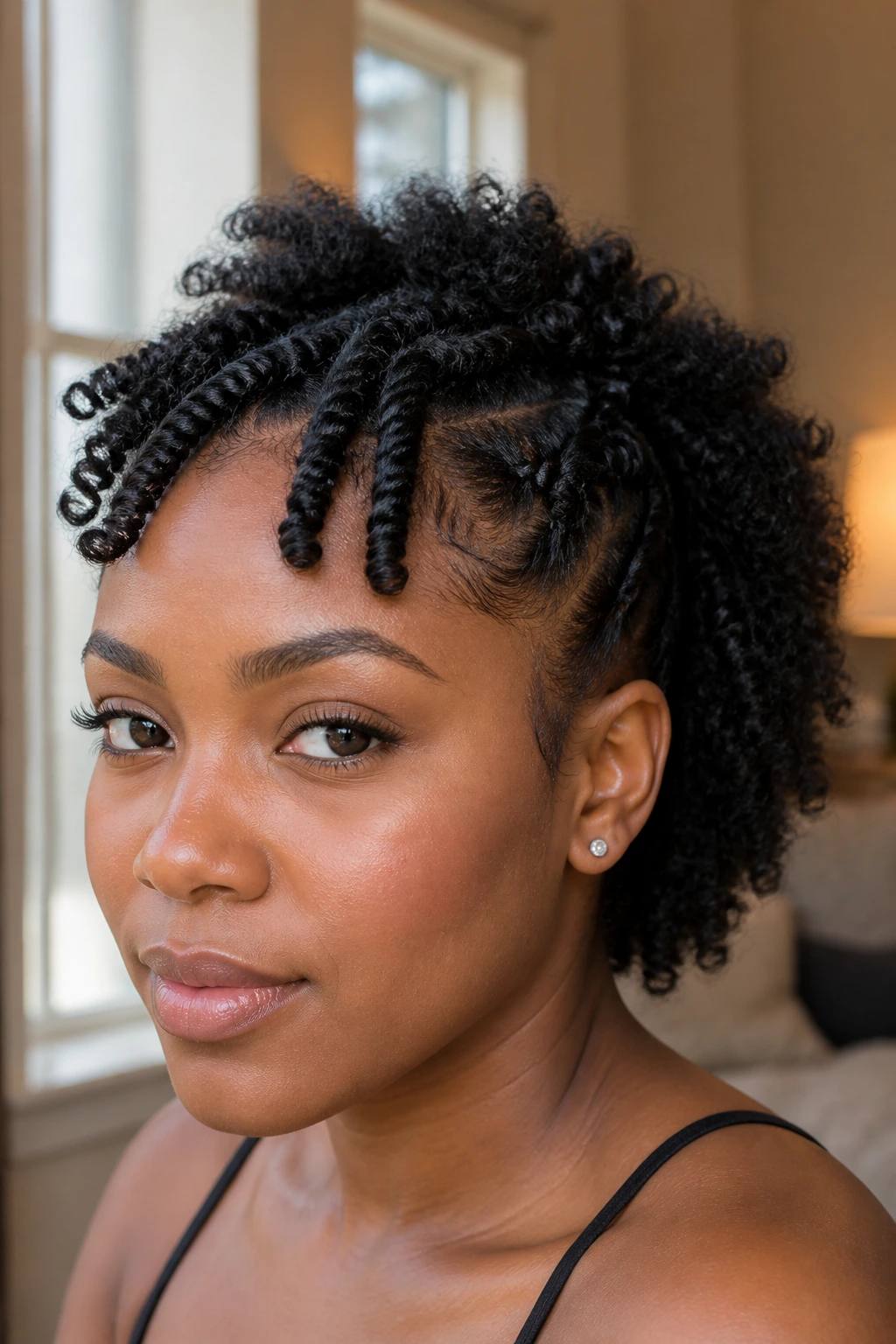
Twisted bangs are a clever way to make short hair feel styled up front while leaving the rest easy. The front pieces frame the face, and the back can stay loose, coiled, or picked out.
Create two or three small twists at the hairline and pin them back so they sit like fringe. Then leave the back textured instead of forcing it into the same treatment. That mismatch is the charm. It gives shape near the eyes without flattening the whole head.
I like this when the front is shorter than the crown. The twists control the shortest pieces and let the rest do something softer. It’s one of those styles that looks more planned than it feels to wear.
29. Crown Braid With Short Ends
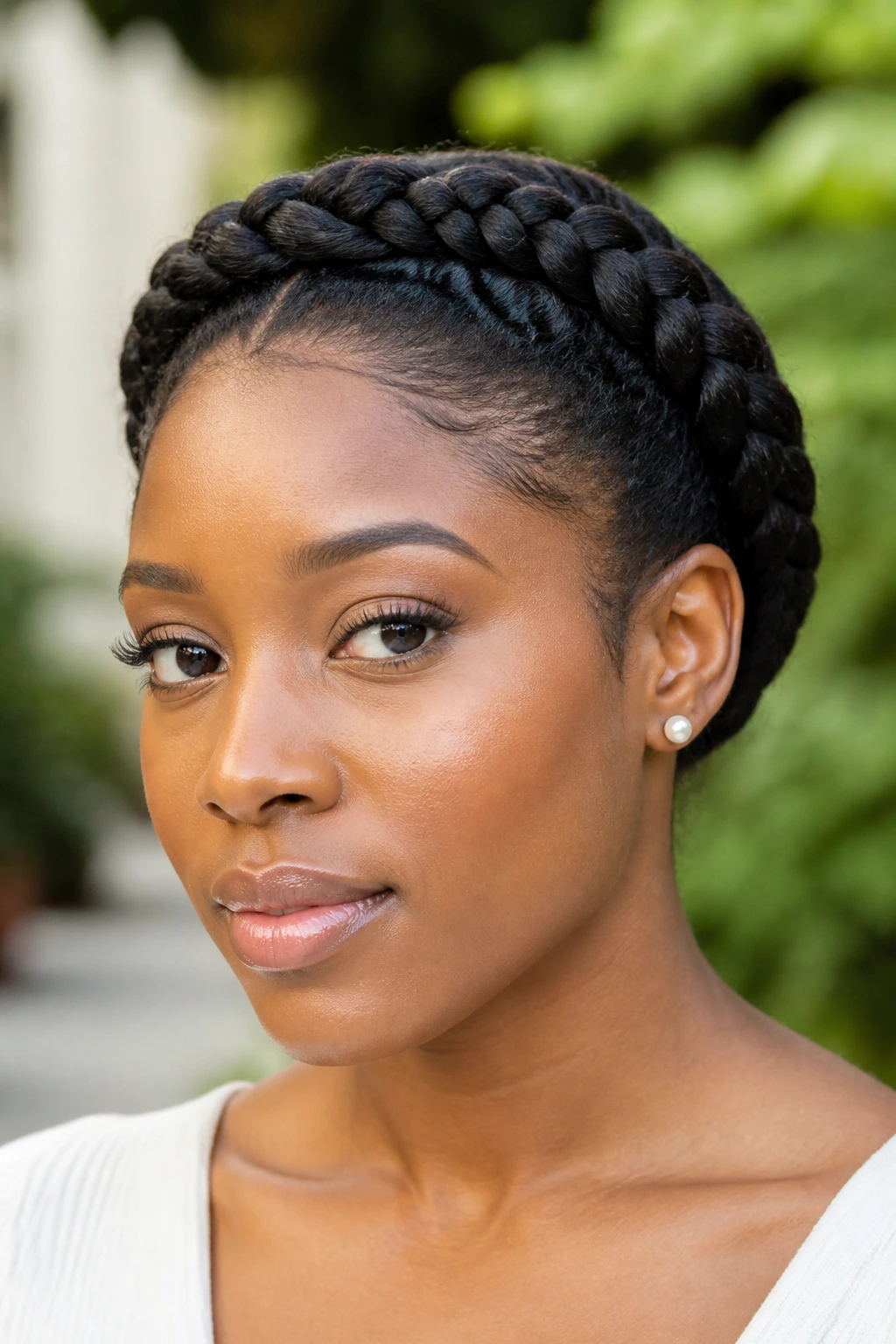
A crown braid on short hair works because the braid line does the visual work while the ends can stay hidden. You do not need a long tail to make this style read well.
Braid around the head, following the hairline, and secure the end under the braid with pins once you run out of length. If the hair is too short to braid all the way around, braid in sections and join them under the crown where no one can see the transition.
This style is neat, but not stiff. It’s especially useful for dressier occasions when you want the hair off the face and the neckline clear. The braid itself becomes the frame.
30. Short Starter Loc Style
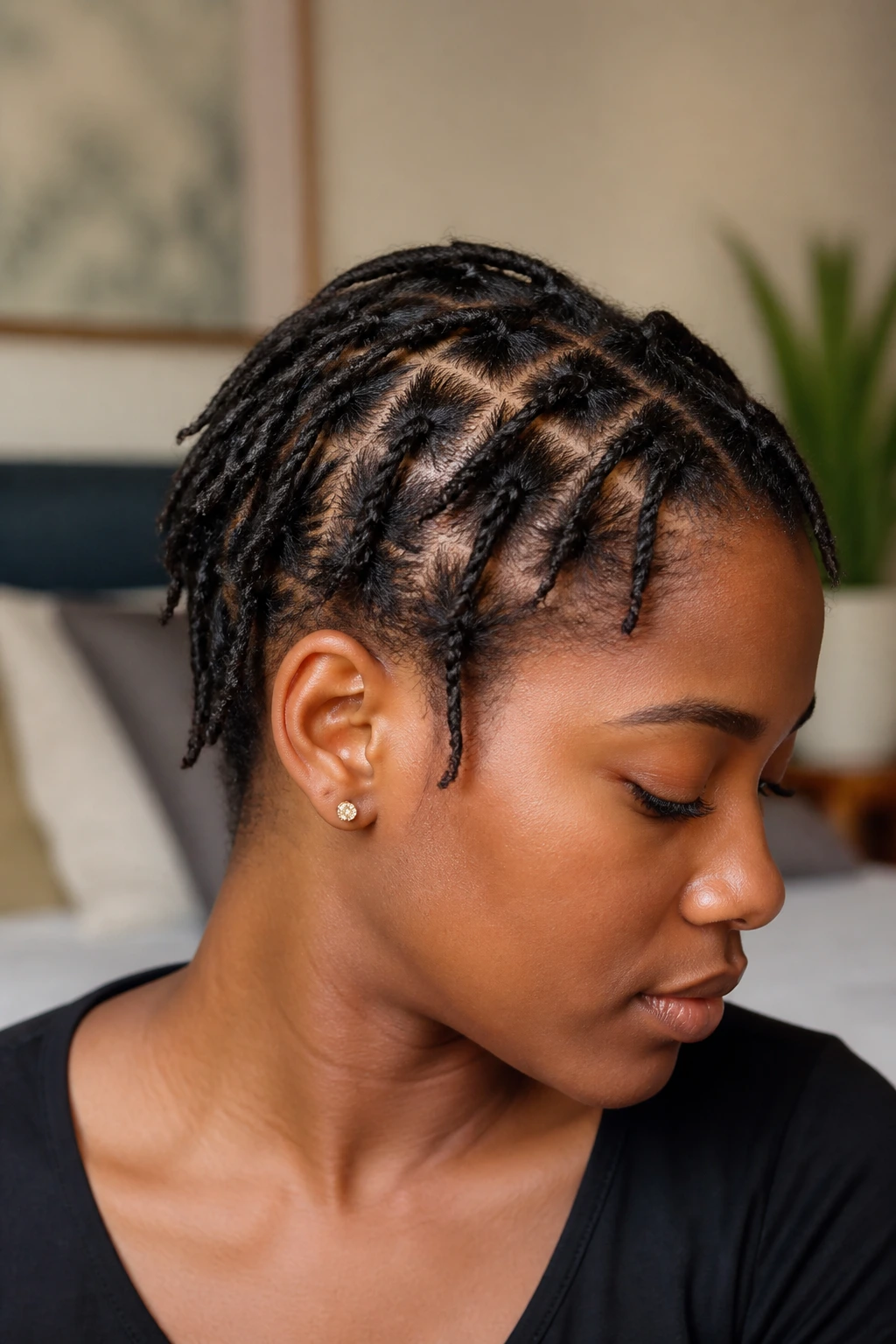
Starter locs on short hair have their own kind of beauty. The clean parts, the fresh coils, the slow settling of each loc — it’s all part of the look.
You can wear starter locs loose and simple or dress them with small cuffs, a side part, or a few flat twists at the front. At short length, the shape matters more than ornament, so keep the parting tidy and the scalp clean. If the roots are fuzzy, a little retwist or palm roll around the perimeter can sharpen the look without overdoing it.
This style feels calm, direct, and rooted in the texture itself. That is probably why people who wear locs often keep the first stages simple. The hair is already saying enough.
31. Short Faux Loc Bob
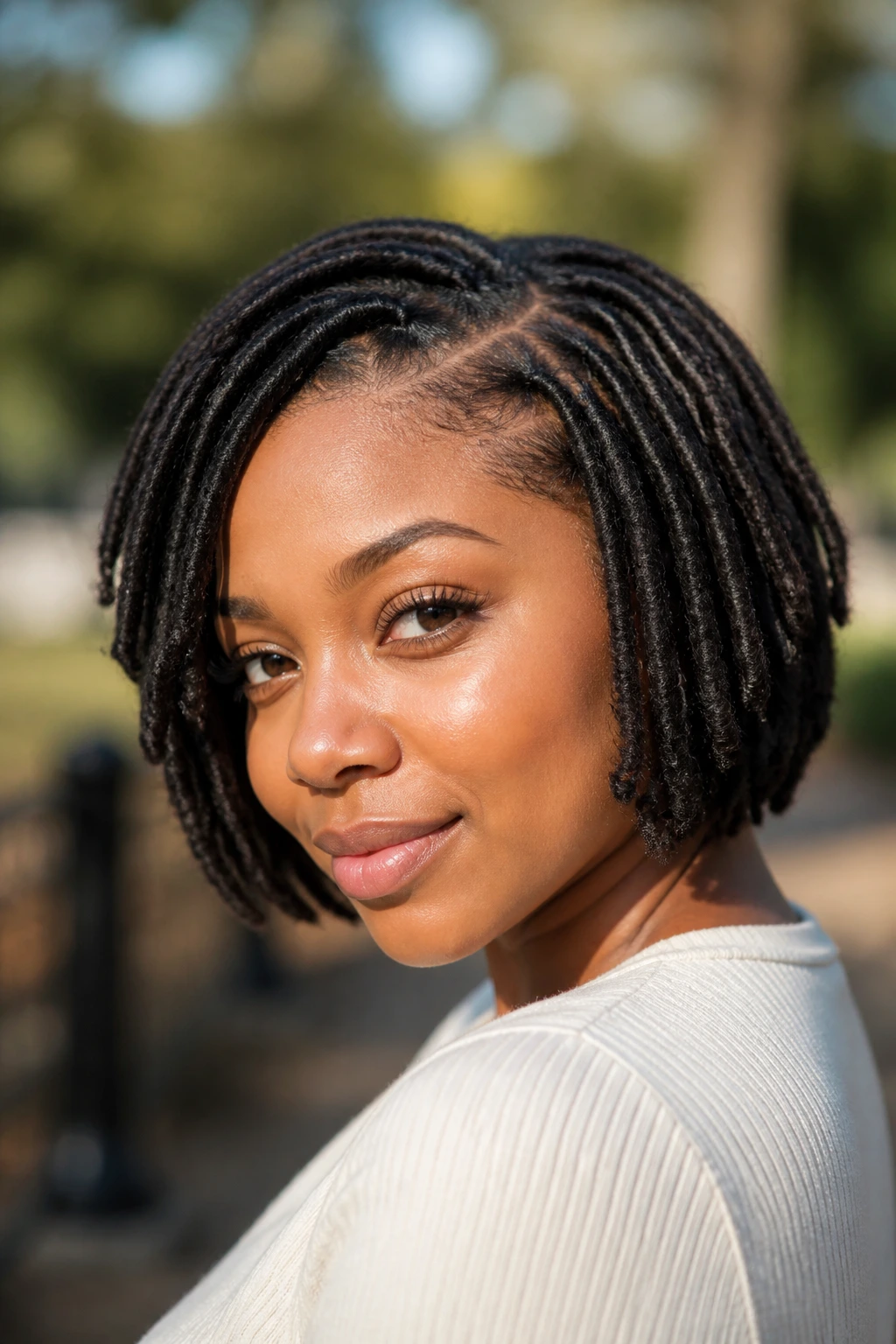
Short faux locs give you the look of a bob without waiting for your own hair to grow there. That alone explains why the style stays popular with people who want a finished shape right away.
The bob length keeps the weight manageable, which matters on short natural hair because too much added hair can pull the roots and feel heavy. Ask for a length that lands around the chin or just below it, and keep the parts neat so the style sits flat at the scalp. A little wrap at the roots helps blend the base with your natural hair.
I like this option when you want a protective style that still feels styled for outside-the-house life. It frames the face, holds up well, and gives you a break from daily styling.
32. Molded Finger Waves
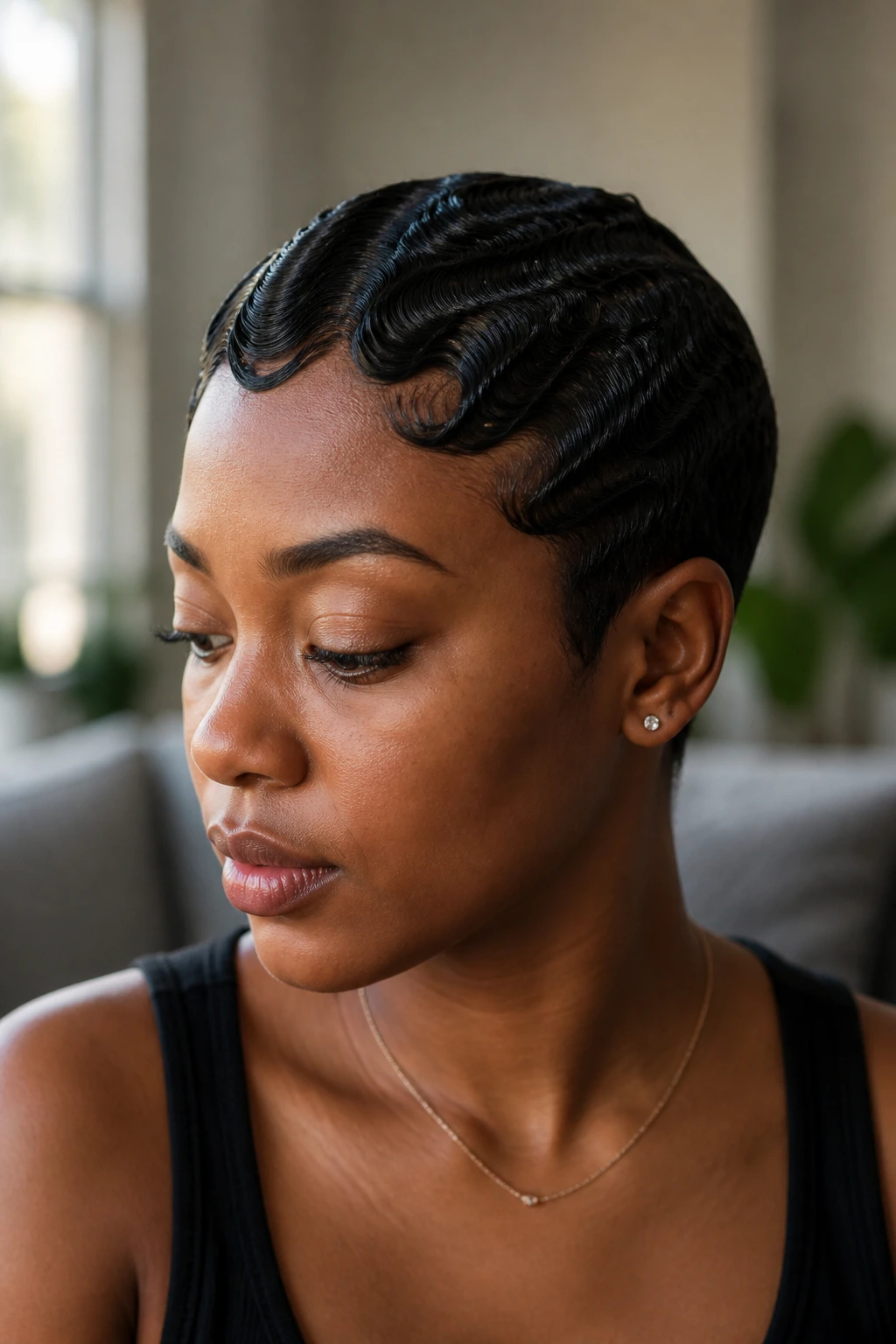
Finger waves on short natural hair are old-school in the best way. They create a smooth, sculpted pattern that looks deliberate from every angle.
This works best on stretched or very short hair with a strong styling gel or wave-setting product. Use a comb and your fingers to shape the hair into soft S-curves, then set it with a scarf so the lines dry in place. If the hair is too loose or too dry, the waves will collapse into random bends, which is not the same thing at all.
I like this style when I want something sleek that still has texture underneath. It feels formal without becoming stiff, and it pairs well with short earrings and a clean neckline.
33. Clip-In Puff Pony
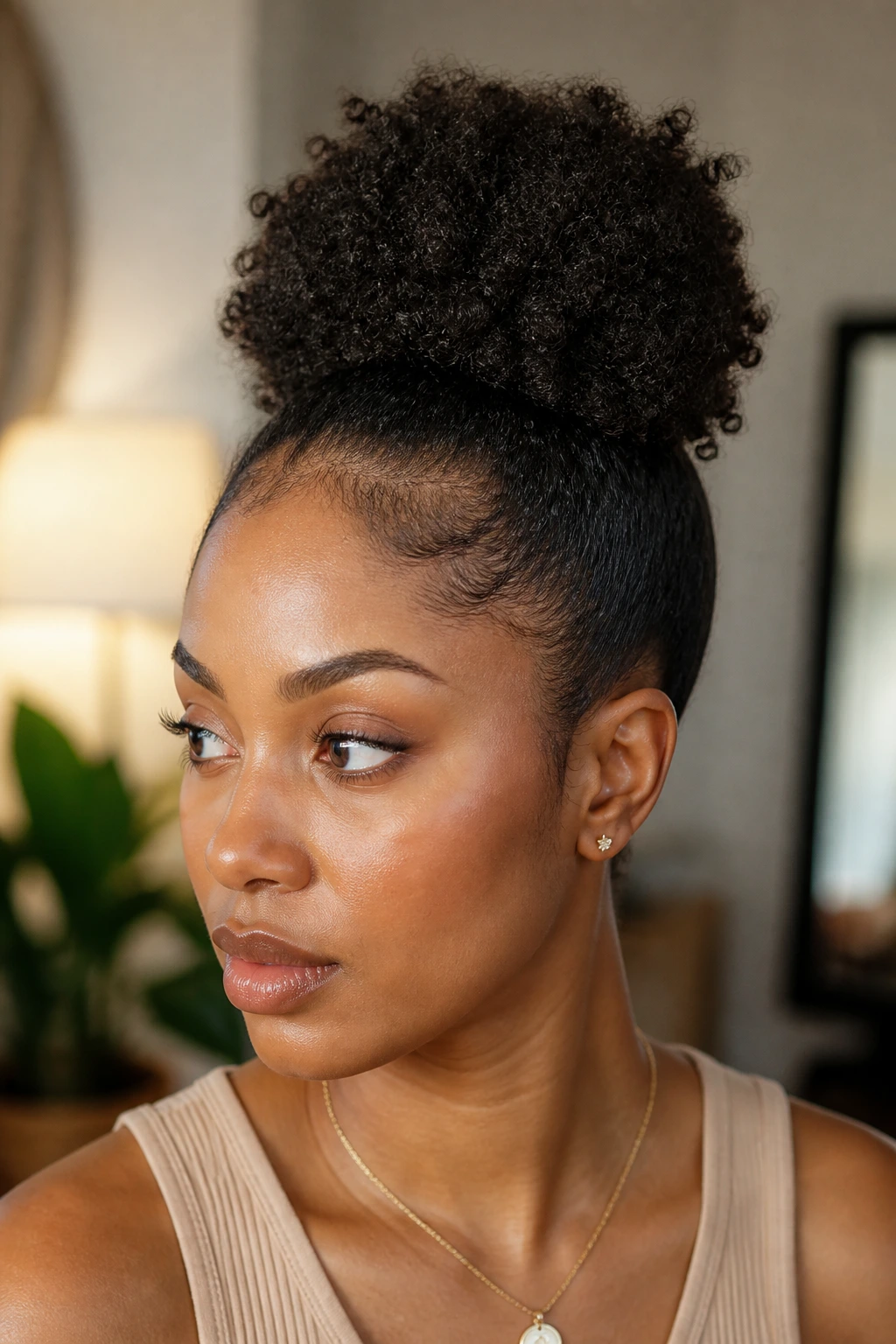
A clip-in puff pony is a smart move when your own hair is too short for the puff you want. It gives the impression of fullness without asking your natural hair to carry all the weight.
Start by making a small, neat base with your own hair, then clip or draw the puff piece over it. Match the texture as closely as you can. A coily puff over a coily base reads better than a silky piece trying to pretend. Smooth the front and leave the rest soft so the blend looks natural.
This style saves time on busy mornings and can rescue hair that is in an awkward length stage. No shame in that. The whole point is to make the hair work for you.
34. Mini Barrel Twist Bob
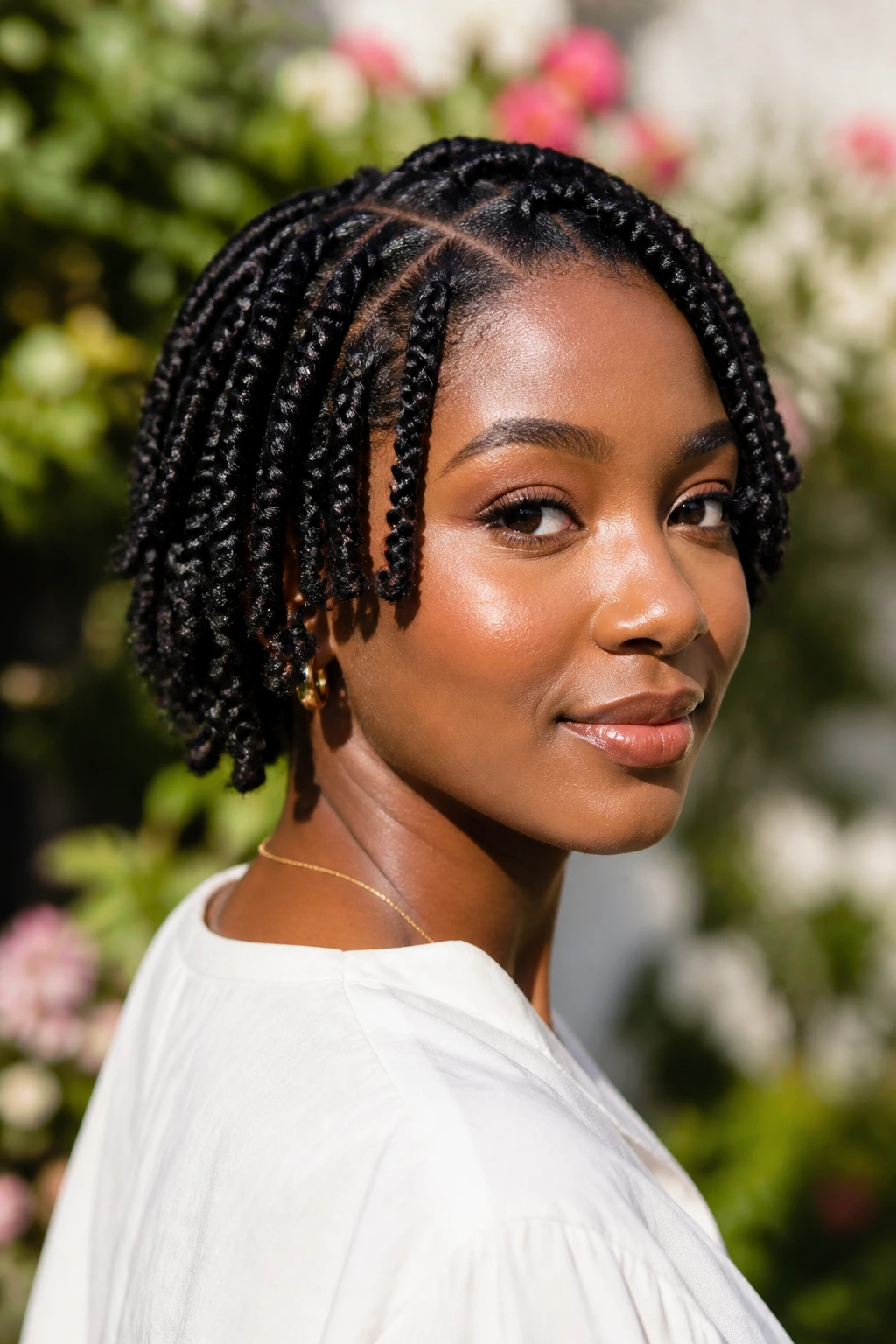
Mini barrel twists give short hair a chunkier, more sculpted look than tiny twists do. Arranged to skim the jawline, they create a little bob shape with texture instead of blunt ends.
The size of the twists makes a difference here. Bigger sections read fuller, but they also take a steadier hand to keep them neat at the roots. If the hair is dense, this is a strong choice because the weight of the twists stays manageable and the outline stays clear.
I like the mini barrel twist bob when I want a style that sits between protective and styled. It has enough structure to look finished, but it still feels like natural hair doing what it does.
35. Pin-Up Twist and Pin Style
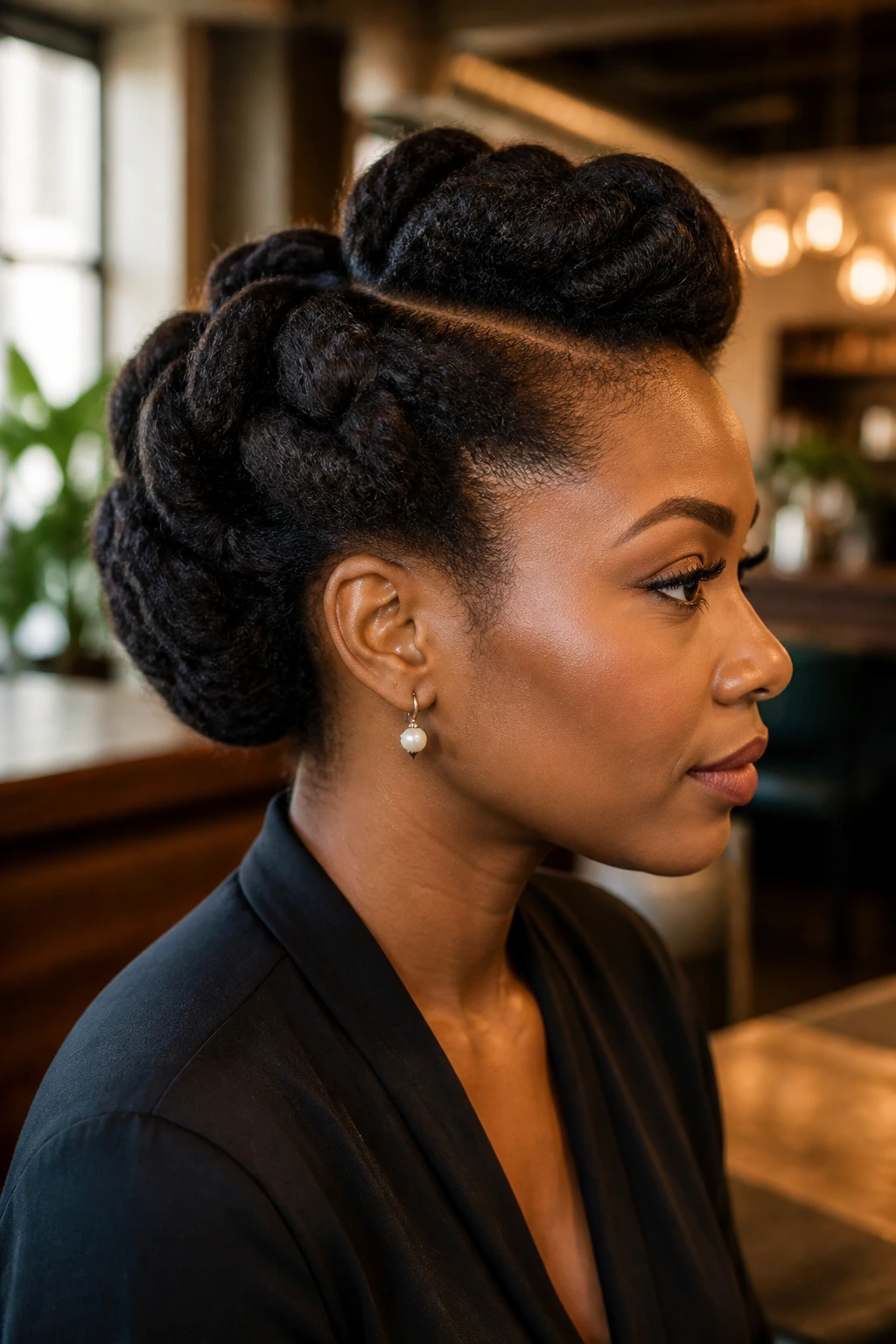
A pin-up style on short natural hair relies on placement more than length. Small twists, rolls, and tucked sections get pinned into a shape that looks softer than a full updo but more polished than loose hair.
The best versions keep the front open and let the back do the pinning work. If a section wants to spring free, that usually means the pin is in the wrong spot. Move it closer to the scalp, cross the pins if needed, and hide the ends under the roll instead of fighting them into a fake bun.
This is the style I’d choose when the hair needs to look intentional for a formal setting, but the length is too short for a traditional updo. It holds better than people expect if the foundation is secure.
36. Accessorized TWA With Clips and Cuffs
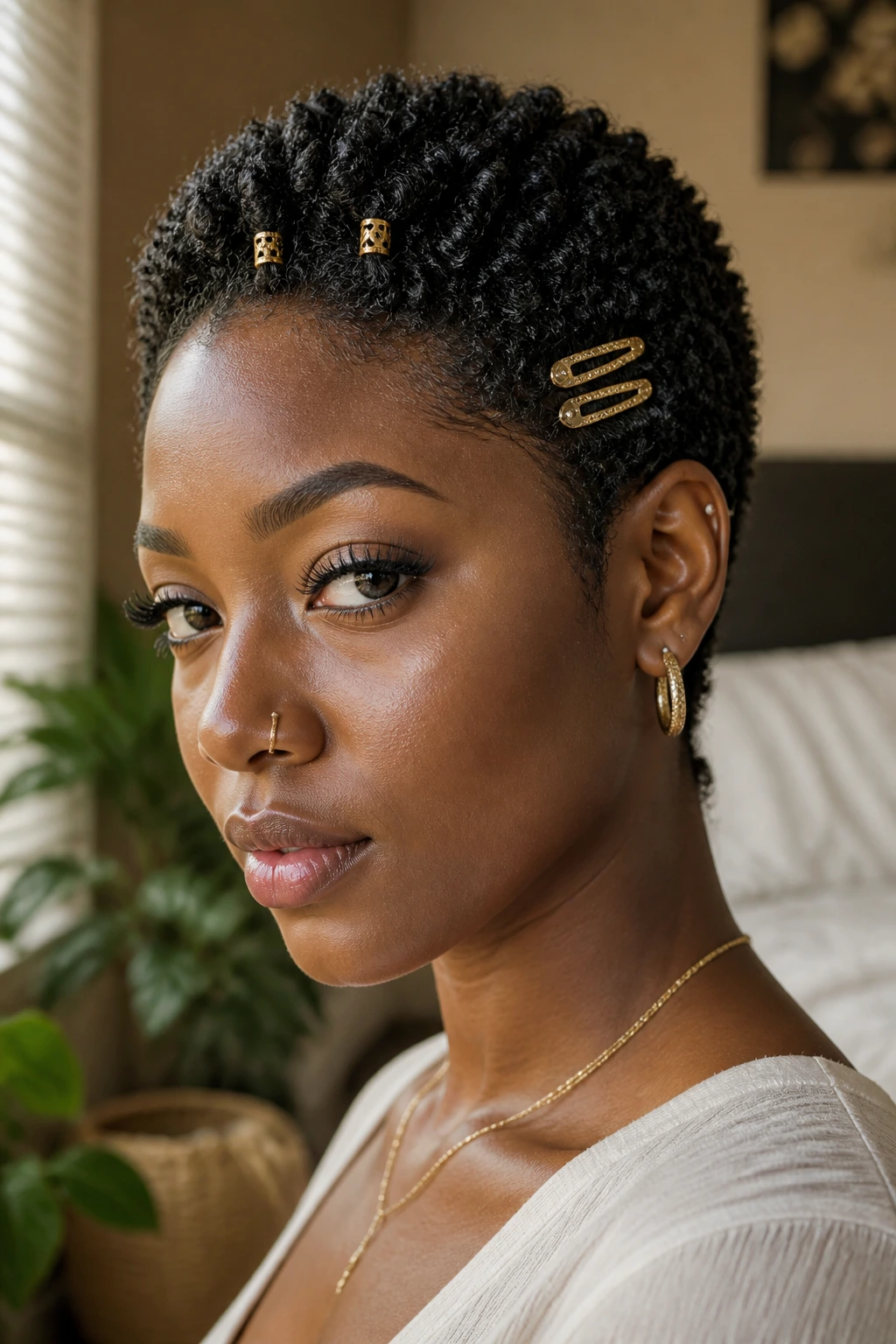
Short hair does not need a lot of accessories to feel finished. It needs the right ones in the right spots. A TWA with a few clips, cuffs, or beads can look sharp fast, especially when the hair itself is very short and cleanly shaped.
Place the accessories where they make the outline clearer, not busier. One side part with two clips near the temple can be enough. Gold cuffs on a few front coils will read better than a dozen random pieces scattered all over the head.
I like this style when the hair is short enough that the texture itself is the main event. The accessories act like punctuation. Small. Specific. Enough.
37. Low Puff With a Deep Part
A low puff sits close to the nape or lower crown, which makes the hair look a little longer than a high puff does. The deep part gives it shape and keeps the front from looking too flat.
Secure the puff low enough that the ends can blend into the band without straining the roots. If the hair is short at the front, smooth that area lightly and let the part carry the style. A low puff is one of the easiest ways to keep the look soft while still controlling the silhouette.
This is a good everyday style. It works with casual clothes, office clothes, and the kind of day that starts with errands and ends at dinner.
38. Twisted Halo With Tucked Nape
A twisted halo with a tucked nape is a polished ending point for short natural hair because it keeps the perimeter calm and the center clean. The twist line frames the face, and the tucked back keeps the style from fraying out at the neckline.
Make the halo along the front and sides, then gather the remaining hair at the nape and tuck it under the twist line with pins. If the hair is too short to tuck cleanly, use a few discreet pins and a bit of gel on the ends. The goal is a smooth finish, not a perfect illusion.
This style is the one I’d choose when I want the hair to look like it was styled on purpose by someone with patience. It holds shape, it respects short length, and it never feels like it’s trying too hard.
Why Short Natural Hair Holds Shape So Well
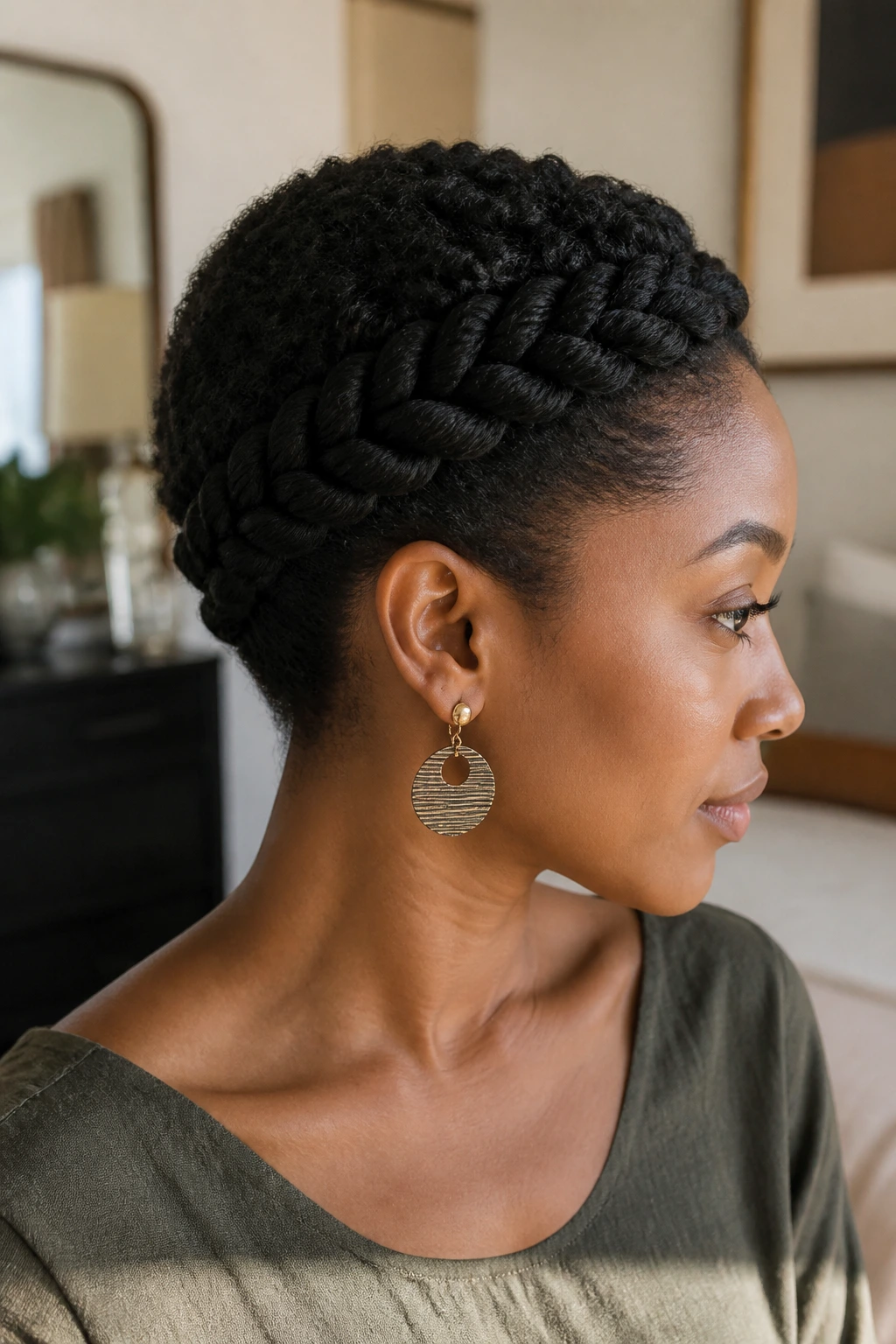
Short curls are easier to shape than people admit. There’s less weight pulling the roots down, less end damage to manage, and less hair overall for product to sit on top of instead of inside. That means a clean part or a good set can change the whole look in one pass.
Shrinkage helps more than it hurts here. On longer hair, shrinkage can hide length you spent time growing. On short hair, it can create fullness and lift that make the style feel intentional. A TWA can look rounder. A puff can look taller. A twist-out can look denser.
The other advantage is drying time. Short styles set faster, which is a blessing if you know how to use it and a curse if you keep touching the hair before it has finished setting. Give the style time to dry, and short natural hair tends to reward you.
Essential Tools for These Styles
- Rat-tail comb: Useful for clean parts, sectioning, and the crisp lines that make short styles look finished.
- Wide-tooth comb: Best for detangling damp hair without scraping up the curl pattern.
- Denman-style brush or firm styling brush: Helps clump curls, smooth product, and guide wash-and-gos or rod sets.
- Spray bottle: Keeps hair damp in controlled bursts, which matters more than soaking the whole head.
- Leave-in conditioner: Gives slip and moisture before gels, creams, or setting products go on.
- Curl cream or setting lotion: Good for twist-outs, braid-outs, bantu knots, and rod sets.
- Strong-hold gel or custard: Useful for wash-and-gos, slicked styles, and edge smoothing.
- Edge brush or soft toothbrush: Better than fingers when you want the perimeter neat.
- Bobby pins: The quiet hero for flat twists, rolls, tucks, and faux shapes.
- Small elastics: Handy for puffs and mini buns; look for snag-free bands with no metal.
- Perm rods and flexi rods: Needed for coil sets, rod sets, and spiral curls.
- Satin bonnet or scarf: Keeps styles from rubbing out overnight.
- Afro pick: Ideal for lifting roots on rounded fro styles.
- Diffuser attachment: Optional, but useful when you need a set to dry faster without blowing it apart.
Smart Product Shopping and Ingredient Tips
Short natural hair is unforgiving about product weight. That is not a flaw. It’s a filter. Heavy butters and thick creams can sit on top of short coils and make them look dull or packed down before the style has a chance to settle.
For defined styles, look for products that give slip without too much grease. Aloe, panthenol, flaxseed, and lightweight film-forming ingredients can help with hold and shine. If the style needs real structure — wash-and-go, slicked-back fro, sculpted waves — a gel with decent hold usually beats a soft cream every time.
Humidity matters, too. If the air is damp and your hair puffs fast, a stronger gel or mousse can help the style keep its line longer. If your hair feels dry no matter what, add moisture under the hold product instead of trying to solve dryness with more oil. Oil seals. It does not hydrate.
Accessories count as shopping decisions as well. A good satin scarf, a few strong pins, and a brush that does not rip the hair are worth more than a drawer full of random extras. If the tool slips, snags, or stretches the hairline, it is not helping.
How to Wear These Styles for Work, Weekends, and Events
Workday: Flat twists, low puffs, finger coils, and slicked-back short fro styles tend to read the most polished. Clean parts and calm edges matter more than size. If you want the style to look neat in fluorescent office light, keep the silhouette simple.
Weekend: This is where the frohawk, double puffs, scarf wraps, and picked-out afros get to breathe. You can let the shape be bigger, fluffier, or more playful because the rest of the outfit usually carries less weight. Add hoops, sunglasses, or a bright lip and the whole look wakes up.
Formal events: Rod sets, twist crowns, molded waves, and pin-up styles sit in the dressier lane because they keep the hair sculpted. The key is dry time and clean finishing. A style that is half-dry will never look formal, no matter how many pins you use.
Gym or travel: Mini twists, headband tucks, scarf wraps, and tucked rolls make life easier because they do not unravel the second you sweat or sit in a car for three hours. If the style has ends tucked away, it usually survives longer.
Additional Tips and Style Boosters
Parting: A clean part makes short hair look more expensive than any product ever will. Use the rattail comb on damp hair, and keep the line straight or deliberately deep instead of vague.
Stretching: If shrinkage is eating your length, banding or a low-heat stretch before styling can change the whole outcome. Even a little stretch gives you more room for puffs, twist-outs, and rolls.
Finish: A tiny amount of lightweight oil on dry styles can soften the sheen and break up any crunchy spots. Tiny amount. Not a teaspoon. Short hair does not need much to look finished.
Accessories: Clips, cuffs, scarves, and headbands are not afterthoughts here. They can rescue a simple style, especially when the haircut is very short and the shape needs a clear focal point.
Make-It-Yours: If your hair is dense, use fewer but larger sections so the style does not become crowded. If your hair is finer, smaller sections usually help the look hold its shape longer.
Night Care, Refreshes, and Make-Ahead Timing
Styles with coils, twist-outs, braid-outs, and rod sets usually hold best for three to five days if you protect them at night. A satin bonnet or scarf matters more than most people think. If you toss and turn, use both: scarf at the edges, bonnet over the whole head.
Mini twists and flat twists can last longer, often a week or more, because the ends are tucked and the shape is less exposed. Freshen the roots with a light mist of water and a little leave-in only when they start feeling dry. Over-misting can make the roots swell and the style lose its line.
Wash-and-gos and soft fro styles usually need the most frequent refreshes. A little water, a touch of mousse, and a quick dry with a diffuser can bring the curl back without starting over. If a style is supposed to stay sleek — slicked fro, faux side shave, finger waves — avoid heavy oils before bed or the next day’s smoothness disappears.
For puffs and tucked styles, secure the hair loosely at night so the base does not get crushed. If the puff is high, pineapple it gently. If it’s low, wrap the perimeter and let the pony section rest over the crown.
Common Mistakes That Flatten Short Styles
The first mistake is starting with the wrong amount of dampness. Too dry, and twists drag and frizz. Too wet, and rod sets or coils never finish drying cleanly. Damp is not a vibe here; it’s a measurement.
The second is using too much heavy product. Short hair does not have much surface area, so a thick cream or a puddle of oil can sit on top and make the style limp. If the hair feels coated before it’s even set, pull back.
People also unravel sets too early. A twist-out that comes down before it’s dry will look fuzzy at the ends and flat at the roots. A rod set that still feels cool in the center needs more time. More time, not more separating.
Another common problem is tension. Tight edges might hold for an hour, but they also leave the hairline tired and irritated. Keep puffs, bands, and slicked styles secure, not painful. If it hurts, it’s too tight.
The last one is trying to force a style that needs more length than you have. Short hair is not a failed version of longer hair. It wants its own shape. Let it have that.
Variations and Adaptations to Try
Soft-Finish Version: Skip the hard gel cast and use mousse or a light cream instead. The style will have a looser, cloudier finish that works well when you want movement more than shine.
Maximum-Hold Version: Swap the soft cream for a stronger gel or setting lotion, especially on wash-and-go looks, slicked styles, and molded waves. This version lasts longer, but it needs cleaner sectioning and more dry time.
Protective-Week Version: Lean on mini twists, flat twists, tucked rolls, and scarf wraps. These styles keep the ends tucked and reduce daily handling, which is useful when the scalp needs a break from constant styling.
Event-Night Version: Use rod sets, finger coils, finger waves, or a polished halo twist. These take longer, but the finish reads neater under indoor light and handles earrings, collars, and makeup better.
Tiny-Length Version: Choose curl sponge sets, finger coils, side parts, and accessorized TWAs. These work when the hair is too short for puffs or buns and need shape more than stretch.
Added-Length Version: If you want more volume than your own hair can give, clip-in puffs, faux loc bobs, and drawstring pieces can fill the gap without changing your own texture.
Frequently Asked Questions
How short is “short” for these styles?
Usually anywhere from a close crop to about four inches, though some styles — like puffs, rods, and mini twists — become easier as the hair gets a little longer. The shorter the hair, the more the style depends on parts, product, and shape.
Can 4c hair do these styles without heat?
Yes. In fact, 4c hair often holds sponge sets, finger coils, mini twists, and flat twist styles very well without heat. A small amount of stretching can help, but it is not required for most of the looks here.
What style lasts the longest on short natural hair?
Mini twists, flat twists, tucked updos, and scarf-based styles usually hold up the longest because the ends stay protected. Wash-and-gos and fluffy afros need more refreshing because the shape is looser from the start.
How do I make a puff work if my hair feels too short?
Use a drawstring puff, a clip-in puff, or gather the hair lower so it has more length to work with. A low puff often succeeds where a high puff fails because the tension is gentler and the hair has less distance to travel.
Why do my twist-outs frizz up so fast?
Most of the time, the twists came down before they were fully dry or too much product was used at the roots. Dry the hair completely, separate only once, and keep your hands out of it for the first few hours after styling.
Can I sleep in finger coils or rod sets?
Finger coils can usually sleep under a satin bonnet or scarf if the hair is not overly compressed. Rod sets need more care; once the rods are removed, protect the finished curls with a bonnet and avoid flattening the sides at night.
What if my edges keep getting frizzy?
Use less product, not more, and stop smoothing the same section over and over. A light gel, a soft brush, and a satin scarf for ten minutes usually help more than repeated touching.
Are these styles good for work or formal events?
Yes, especially the rod sets, finger coils, flat twists, molded waves, and polished puffs. The cleaner the parting and the neater the finish, the more formal the style reads.
Short Hair, Big Range
Short natural hair does not run out of options. It runs out of patience with bad styling choices, which is a different thing. Once you stop treating shrinkage like a problem and start treating shape like the point, the range opens up fast.
A good short style is not about pretending the hair is longer. It is about giving the texture a clear outline, a little support, and enough room to behave like itself. That’s where the real confidence comes from — not from forcing volume where it does not belong, but from picking the shape that already fits the hair you have.
The next time your coils feel too short to do much, pick one of these looks, clean up the part, and let the texture carry the rest.
