



Flat blonde hair can look oddly heavy, even when the tone is right and the color is expensive enough to make people ask who did it. The shape is usually the problem. Blonde layered haircuts fix that by breaking one flat sheet of color into moving pieces that catch light at the cheekbones, along the collarbone, and on the ends that flick when you turn your head.
When the layers are cut with a plan, balayage and babylights stop reading like paint sitting on top of hair. They start looking sunlit. A few inches of difference in where the shortest pieces land can change the whole mood: cheekbone layers soften strong features, collarbone layers make shoulder-length hair bounce, and long internal layers keep thickness at the bottom so the blonde still has weight.
The best versions do not shred the ends to pieces. That’s the mistake that makes some layered blondes look tired after one blow-dry. The smart cuts keep enough density for a ponytail, a messy bun, and that half-up clip everyone reaches for on a rushed morning.
Why This Collection Feels Different
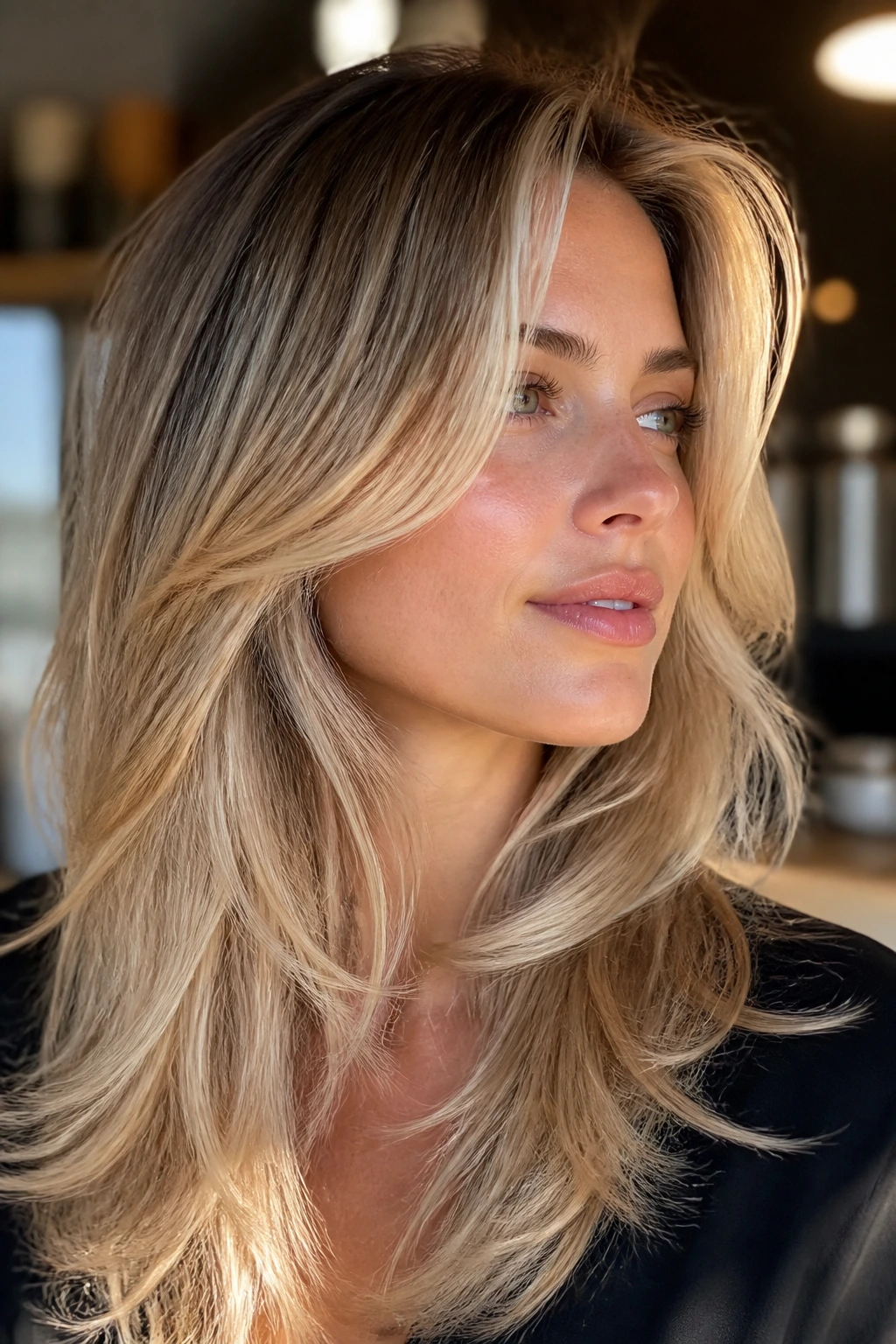
- Light lands in more places: Layers break up a single blonde surface, so highlights show as flashes instead of one bright block.
- The face gets a softer frame: Pieces that start near the cheekbone or lip level can change the whole shape without losing much length.
- Grow-out looks cleaner: A blended cut hides regrowth better than a blunt line, which matters when you’re stretching time between salon visits.
- Texture gets a job to do: Fine hair gains lift, thick hair loses bulk where it needs to, and wavy hair keeps its bend instead of puffing out.
- Balayage looks more expensive when the cut moves: The color has somewhere to fall, which is why the same blonde can look dull in one cut and bright in another.
- You can go polished or undone: These cuts survive a round-brush blowout, a rough dry, or a one-pass bend with a curling iron.
1. Long Layers That Sweep Off the Cheekbones
This is the cut I reach for when blonde hair needs movement without giving up length. The shortest pieces land around the cheekbone, so the face gets a little lift, but the bottom stays heavy enough to keep the hair from looking stringy.
Why It Works
- The cheekbone pieces brighten the eyes and pull attention upward.
- Long internal layers keep the perimeter from collapsing after a few washes.
- Beige or honey balayage shows up clearly when the front sections are bent away from the face.
- A 1.25-inch curling iron or a large round brush gives the soft S-curve this shape likes.
If you want this look, ask your stylist to keep the shortest pieces just below the cheekbone and blend everything else down toward the collarbone. That small detail matters. Too high, and the cut starts to feel choppy. Too low, and the lift disappears.
2. Butterfly Layers With Curtain Bangs
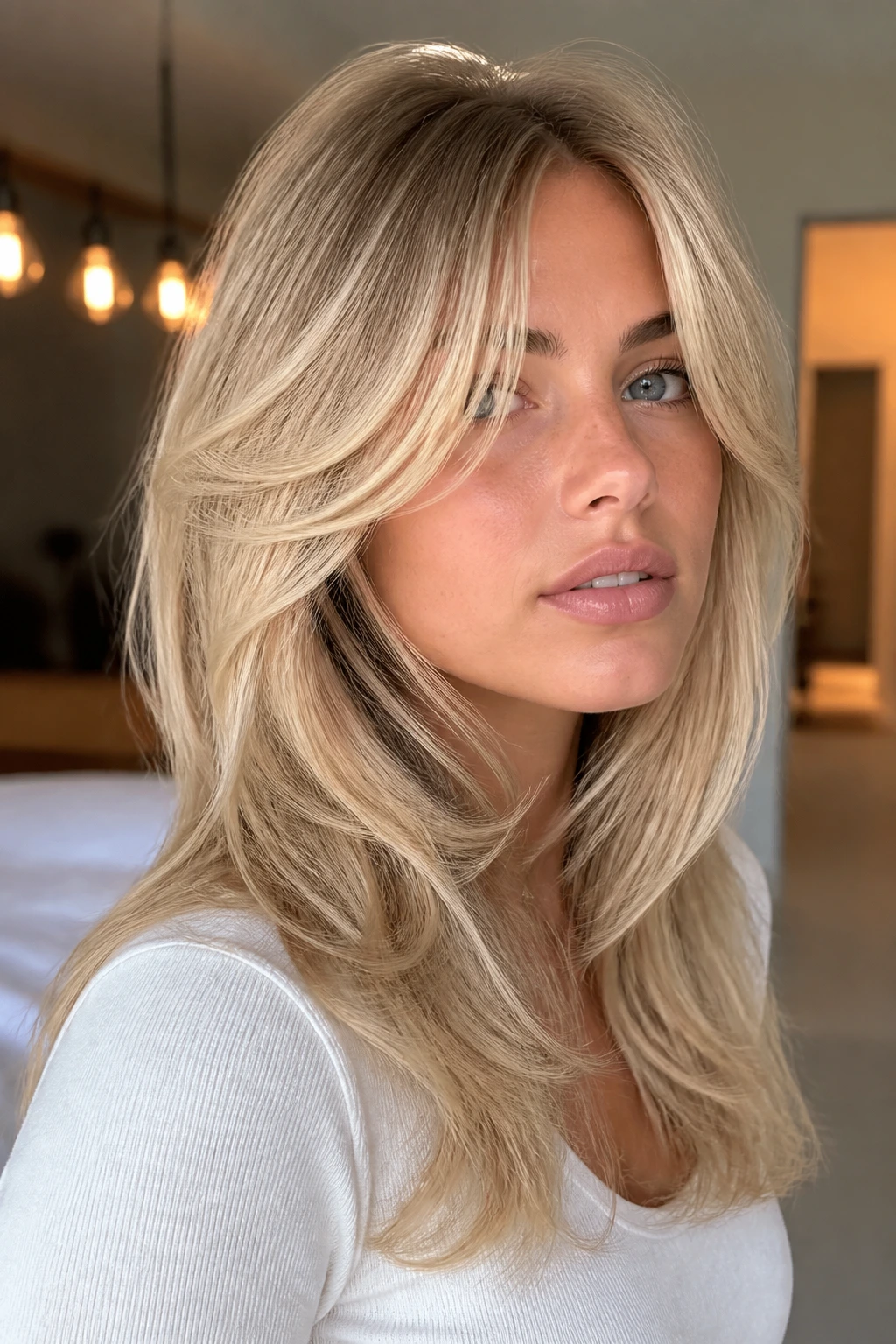
Butterfly layers are the closest thing to a built-in blowout. The front gets that soft swoop around the cheekbones, while the longer layers keep the length intact, which is why this cut works so well with bright blonde ribbons painted through the face frame.
The curtain bangs make the whole thing read airy instead of heavy. They open at the center, graze the brows or cheekbones, and blend into the side layers without a hard line. On blonde hair, that little opening at the front lets the light hit the hair from multiple angles. It looks expensive in daylight and less rigid under indoor lighting, which is a nice trick.
Ask for the shortest front pieces to land around the cheekbone, not the jaw. If you wear your hair blow-dried, this shape gives you that lifted, airy movement without needing three hot tools and half a can of spray.
3. Collarbone Blonde Lob With Soft Interior Layers
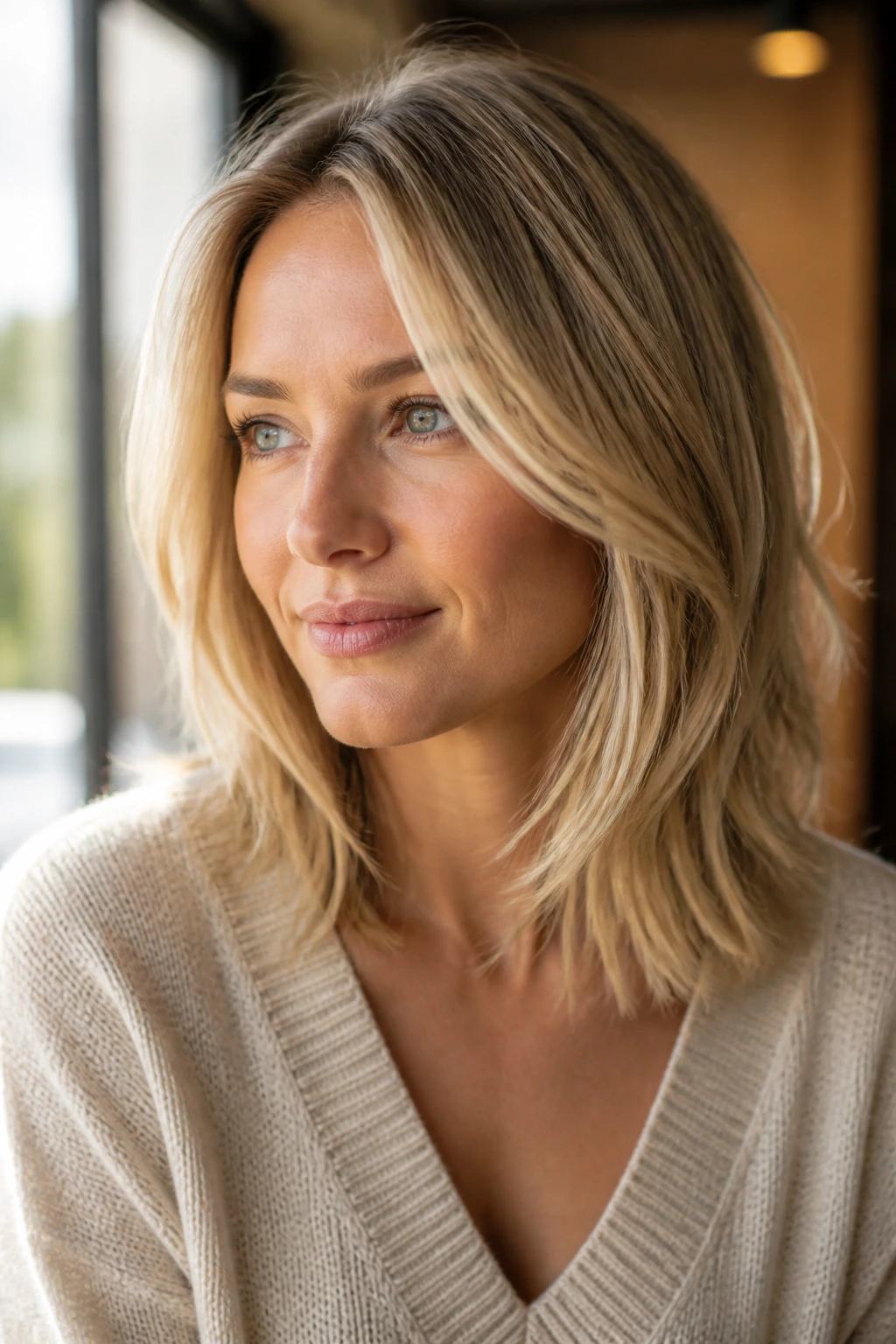
Can a lob still feel light? Absolutely—if the layers live inside the shape instead of slicing up the outline. The collarbone length keeps the blonde feeling fresh, and the hidden interior layers stop the ends from hanging like one heavy line.
This is one of the smartest blonde layered haircuts for people who want brightness without long-hair maintenance. The length is easy to tuck behind the ears, clip half up, or smooth into a low knot. And because the shortest pieces sit near the collarbone, the whole cut bounces when you walk.
How to Style It
- Blow-dry with a 1.5-inch round brush for a slight bend at the ends.
- Keep the roots smooth and the mid-lengths soft.
- Use a light serum, not a heavy oil.
- Finish with a whisper of texture spray if you want the blonde to look piecey rather than glossy.
4. Choppy Shag With Broken Ends
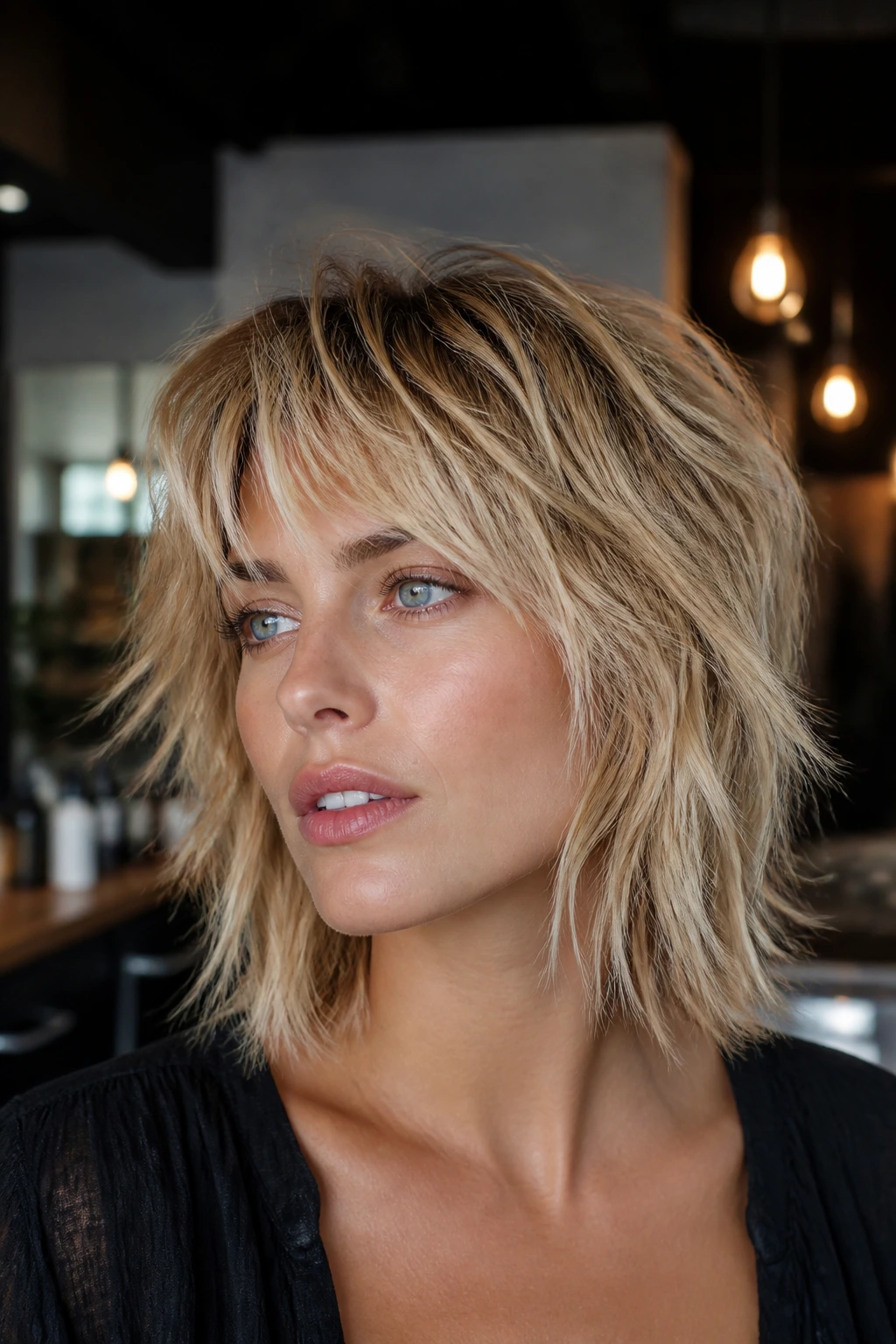
If you want blonde that looks a little lived-in, this is the move. The shag depends on shorter layers through the crown and sides, which keeps the shape from collapsing, and the broken ends make balayage look like it was painted in motion.
This cut is not subtle. That’s the point. The texture shows, the ends are uneven on purpose, and the front pieces can sit just above the cheekbones or skim the jaw, depending on how much drama you want. On wavy hair, it can air-dry with a natural bend and still look styled. On straighter hair, it needs a rough blow-dry and a little grit.
I like this most on people who hate spending twenty minutes trying to make hair look “done.” A shag gives you permission to stop early.
5. Feathered Layers With a Round-Brush Finish
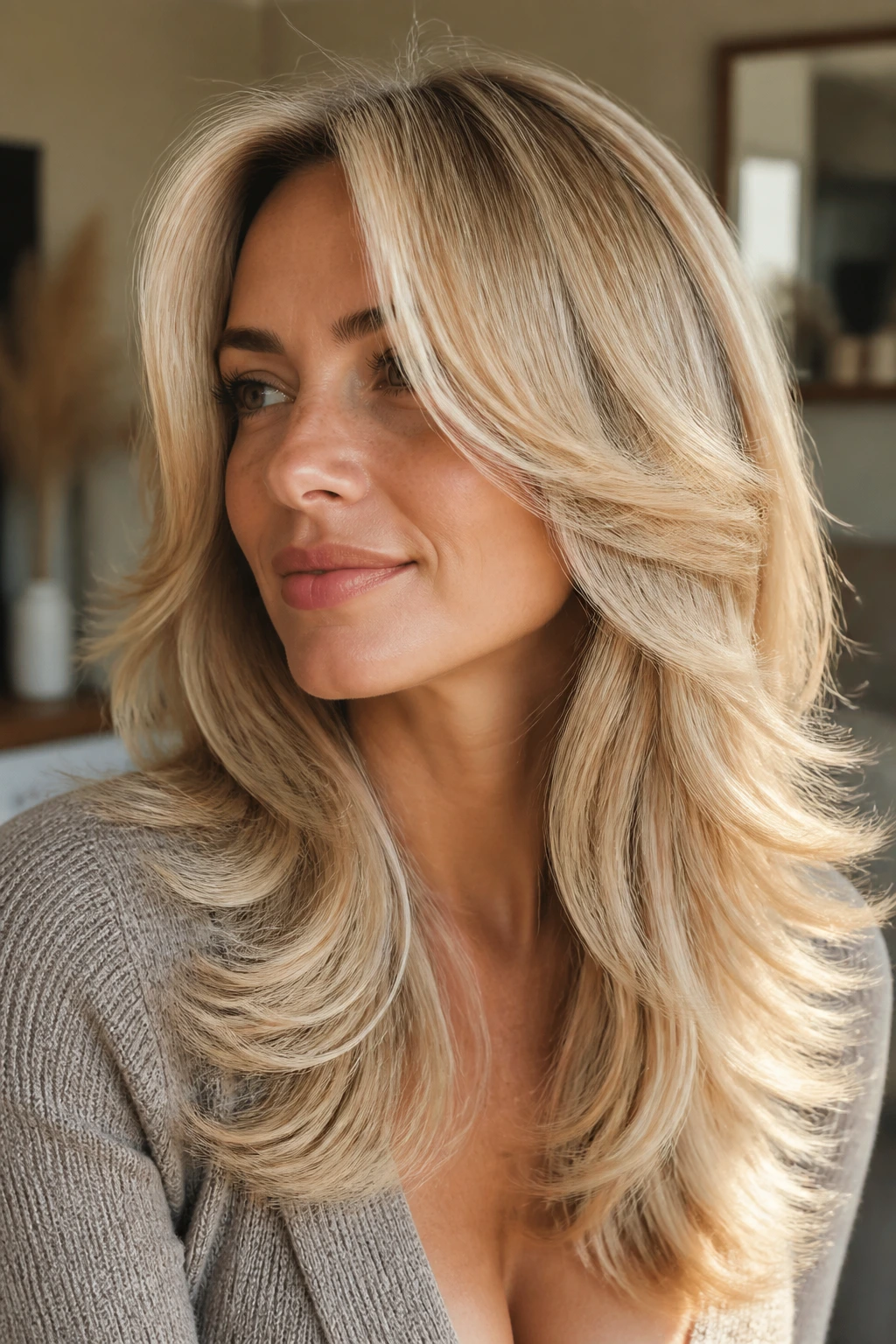
Feathering makes blonde look soft instead of sliced up. The layers are cut so they curve away from the face, which gives the hair that lifted, 70s-style movement without the stiff helmet shape that old blowouts sometimes had.
The real magic here is the way light skims across the top layer and the flipped ends at the same time. Honey blonde, champagne blonde, and buttery beige all look richer when the ends are feathered. If the hair is medium to thick, the feathering removes enough bulk to let the shape move. If it’s fine, keep the layers long and ask for texture only at the front.
Use a round brush and dry the hair outward from the face. That’s the move. The cut does not need much else.
6. Beige-Blonde Bob With Light Balayage
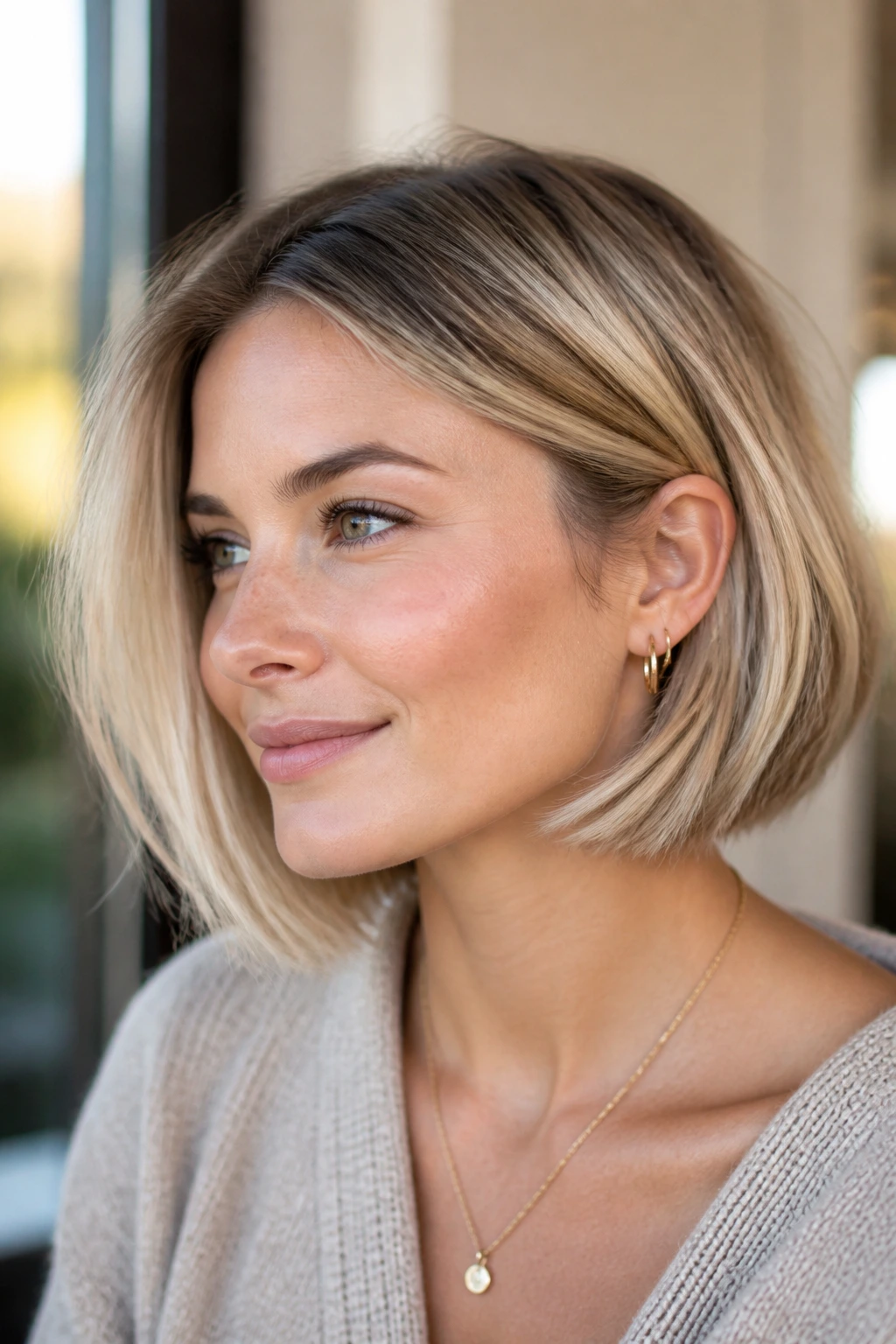
A blunt bob can look sharp, but a beige-blonde bob with light balayage has a softer, more expensive feel. The difference is the layers—very slight, usually tucked inside the shape—plus a little length variation at the front so the cut doesn’t sit like a box.
This version works well when you want a shorter blonde but do not want the ends to feel too solid. The balayage should stay low-contrast: maybe a shade or two lighter than the base, not stripey. If the highlights are too bright on a short bob, every line shows. A beige tone keeps it calm and lets the movement carry the look.
Compared with a blunt one-length bob, this cut is easier to air-dry. It falls a little softer around the jaw and still looks neat when tucked behind one ear.
7. Bright Money Piece Layers
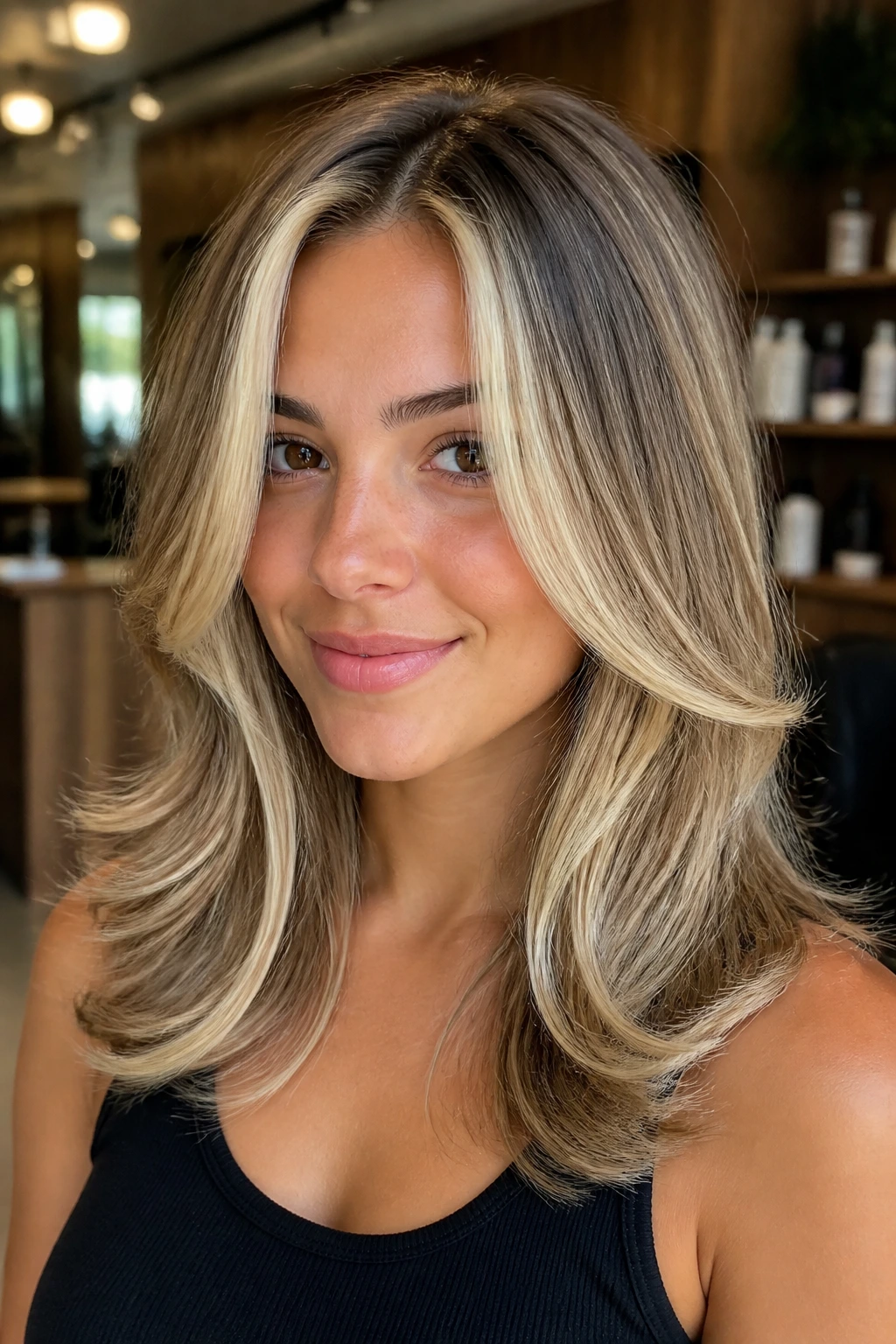
This is the cut for someone who wants the front to do the talking. The money piece sits around the hairline—usually no wider than a couple of fingers on each side—and the surrounding layers are cut to open around it, which makes the brightness read even stronger.
The key is contrast with restraint. A money piece that’s too wide starts looking like a stripe. A money piece that’s too pale against a dark root can feel disconnected. The nicest version uses a brighter blonde at the front, with softer ribbons through the mids and ends so the whole head still feels connected.
What to ask for:
- Brightest pieces at the hairline, starting near the temple
- Softer balayage through the mid-lengths
- Layers that bend away from the face
- A root tone that’s one level deeper than the ends
8. U-Shaped Cut With Long Cascading Layers
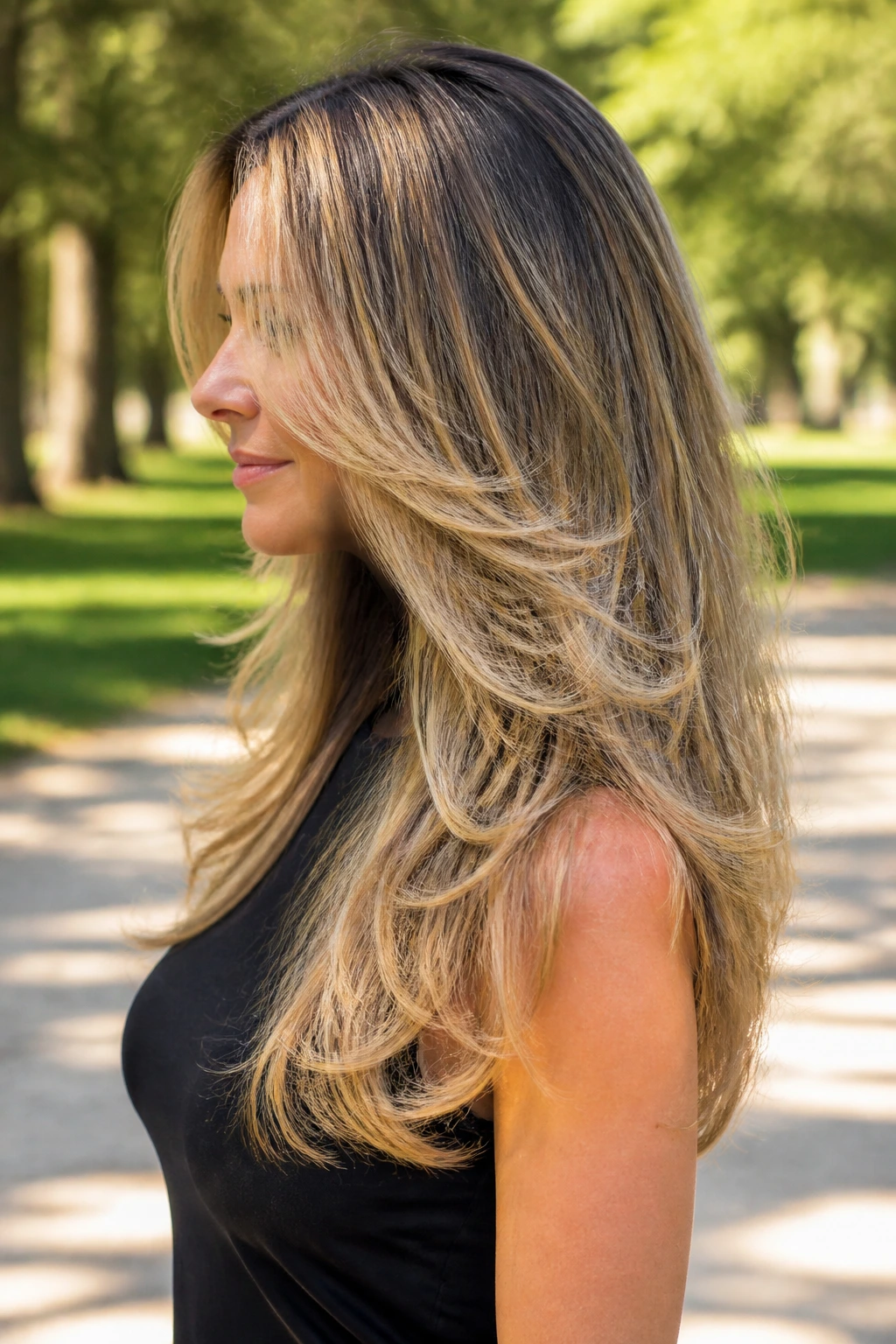
A U-shape keeps the perimeter rounded, which makes long blonde hair feel fuller at the ends. That matters more than people think. Blonde often looks thinner than brunette at the same length because the lighter color shows spacing faster, so the shape has to carry some of the work.
The long layers in this cut cascade down the back without leaving a hard line. You get movement, but the hair still looks thick when it’s down. I especially like it on long balayage because the darker root and lighter ends follow the curve of the U, so the color feels like it’s flowing instead of sitting still.
If you like braids, half-ups, or clipped-back front sections, this one is easy to live with. The shape holds up even when the hair is mostly off the face.
9. V-Cut Layers for Thick Blonde Hair
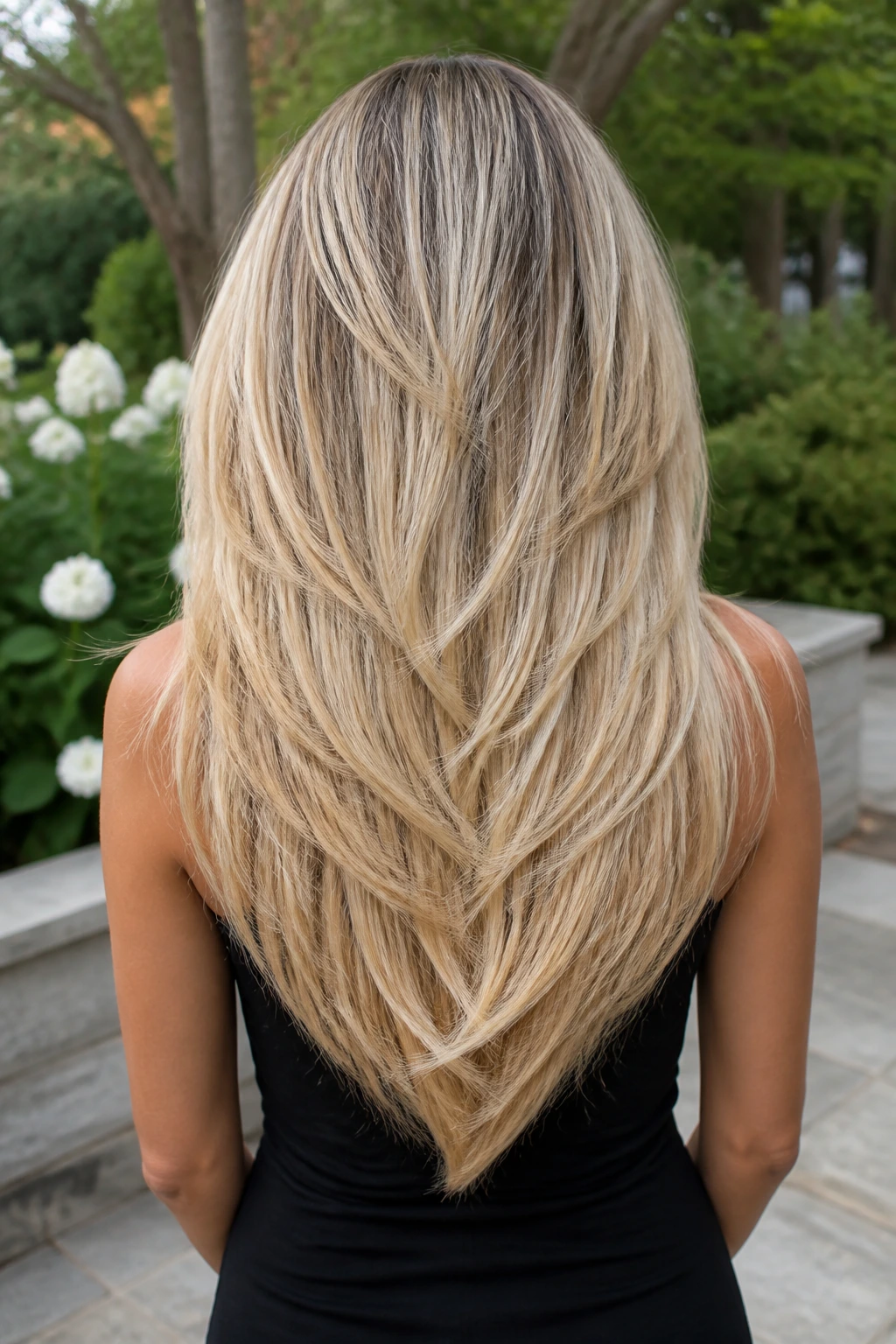
Thick blonde hair can swallow a shape if the cut is too blunt. A V-cut solves that by tapering the back into a point while the sides fall longer, which removes some bulk and makes the ends look lighter.
What Makes It Bright
The V shape gives blonde color more room to show at different lengths. Instead of one heavy curtain, you get layers that open like steps when the hair swings. That movement helps highlights sit in the cut instead of getting buried.
This works especially well if your hair is dense from crown to ends. Ask for internal debulking, not a lot of short top layers. The goal is to keep the length dramatic and the silhouette clean.
For styling, think smooth at the root, loose through the mids, and a slight bend at the tips. That tiny curve at the ends keeps the cut from looking too severe.
10. Deep Side-Part Layers With a Sweeping Fringe
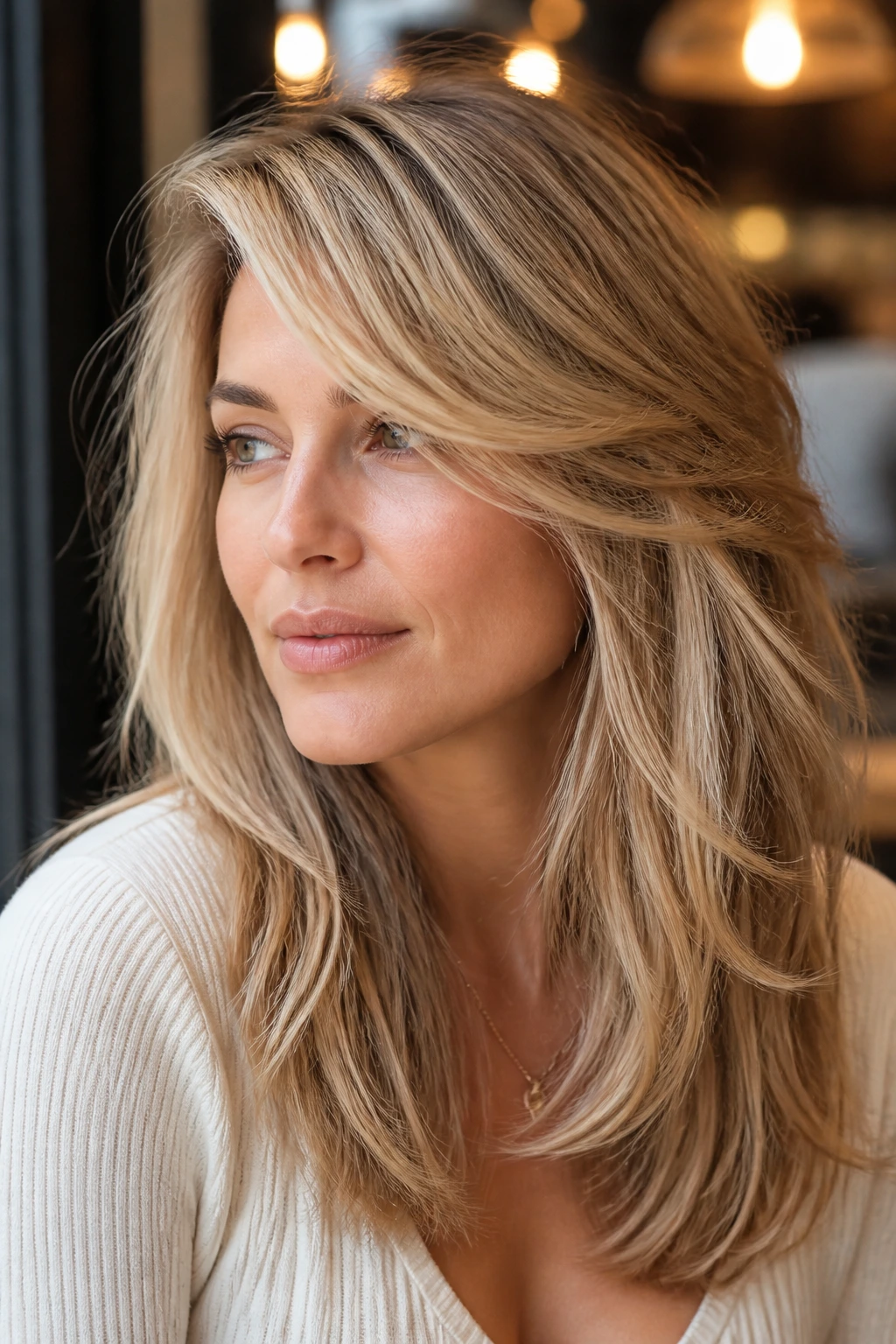
A deep side part can change a blonde cut faster than almost anything else. It lifts the root on one side, drops a soft fringe across the forehead on the other, and creates a diagonal line that makes the hair look fuller in a second.
This shape is especially useful if your blonde is shoulder-length or longer. The sweep of hair across the face gives the layers somewhere to land, and the part adds volume without forcing a big haircut. If you’ve got a center part that feels flat, this is an easy switch with a real payoff.
The fringe should not be chopped too short. Let it skim the brow or the top of the cheekbone, then blend into the rest of the layers. That keeps the whole look soft, not dated.
11. Soft Wolf Cut in Creamy Blonde
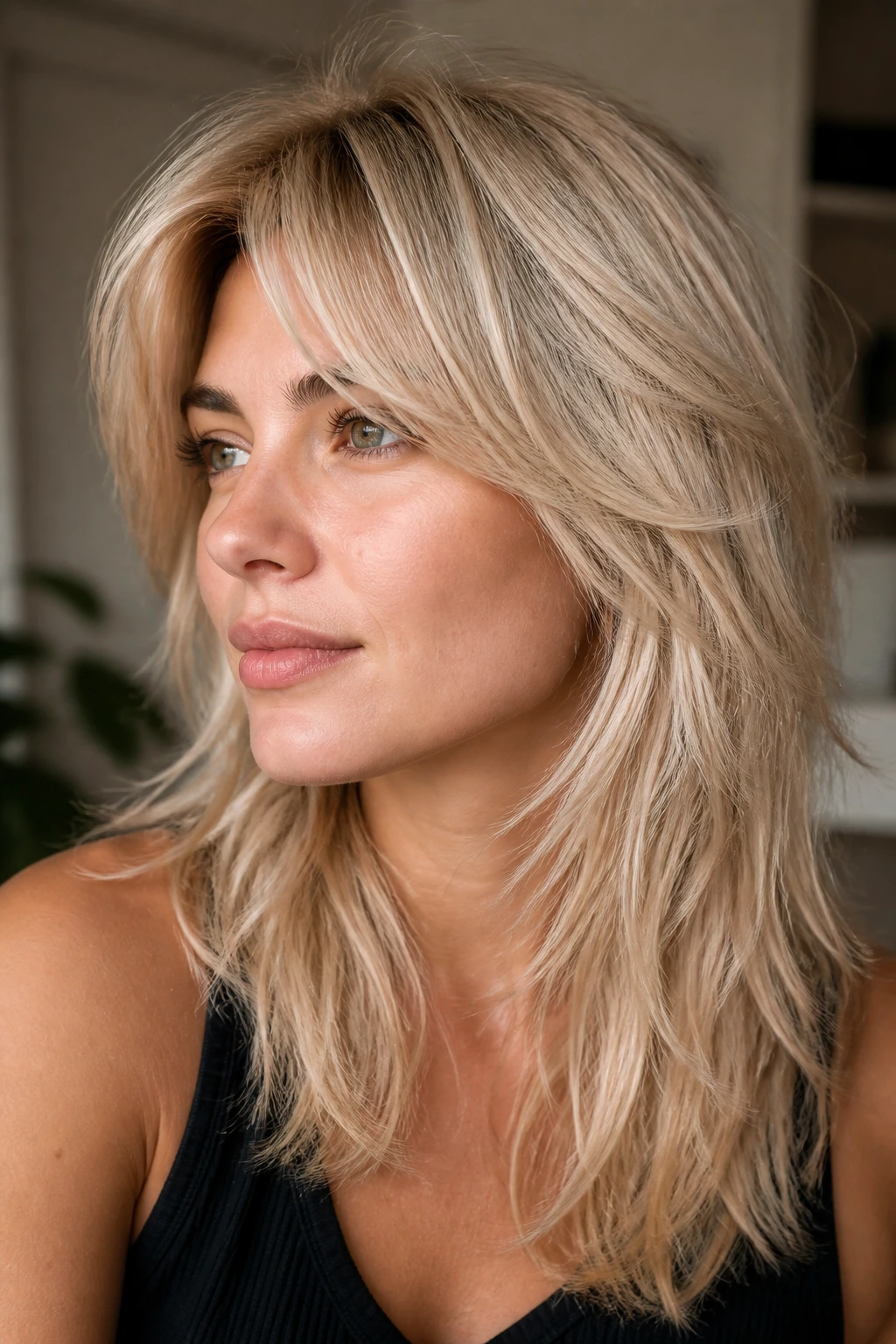
The wolf cut only looks messy when it’s cut badly. A softer version keeps the shaggy shape and the lifted crown, but the ends stay more blended, which makes creamy blonde tones look brighter instead of frayed.
I like this cut for people who want edge without losing the ability to wear their hair down at work. The front pieces can skim the cheekbones, the crown gets a little lift, and the ends stay light and playful. A cool beige blonde or a creamy neutral blonde works well here because the haircut already has texture; the color doesn’t need to do all the heavy lifting.
If your hair is naturally wavy, this is one of the easiest ways to make that texture look intentional. If it’s straight, use a little mousse at the roots and bend only the mid-lengths. Don’t overthink it.
12. Bottleneck Bangs on Midlength Layers
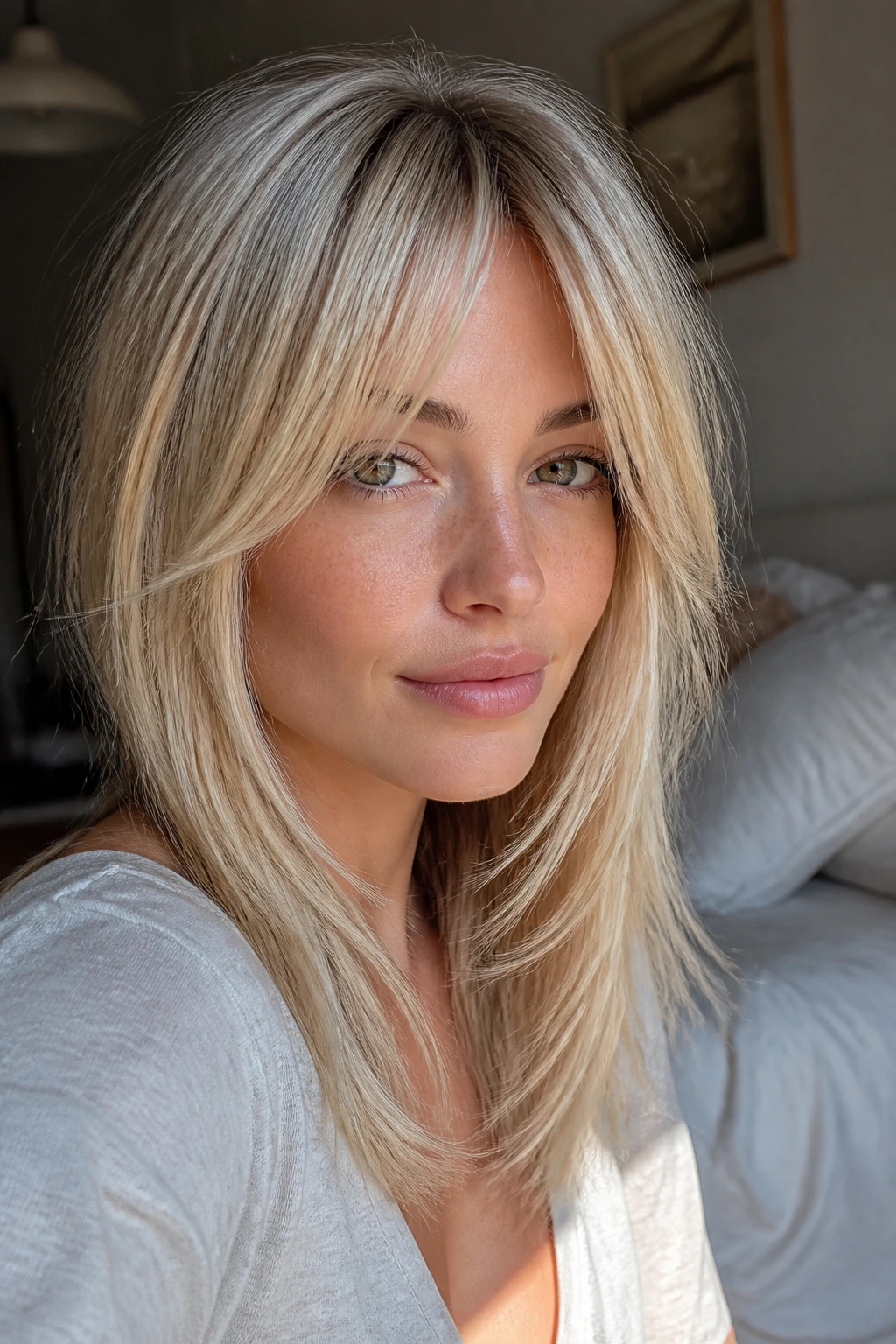
Are bangs worth it if you want a bright sun-kissed look? When they’re bottleneck bangs, yes. The middle is a little shorter, the sides are longer, and the whole thing slides into midlength layers without leaving a hard line across the forehead.
The shape is good for blonde because it puts brightness right where the eye lands first. The shortest point can sit around the center of the forehead, then lengthen toward the cheekbones. That little taper helps the face frame feel soft rather than chopped.
How to Style It
- Blow-dry the bangs side to side at the root.
- Use a small round brush or your fingers for the ends.
- Keep the layers below the chin soft and loose.
- Finish with a light mist of texture spray, not stiff hairspray.
13. Razored Midi Cut With Airy Ends
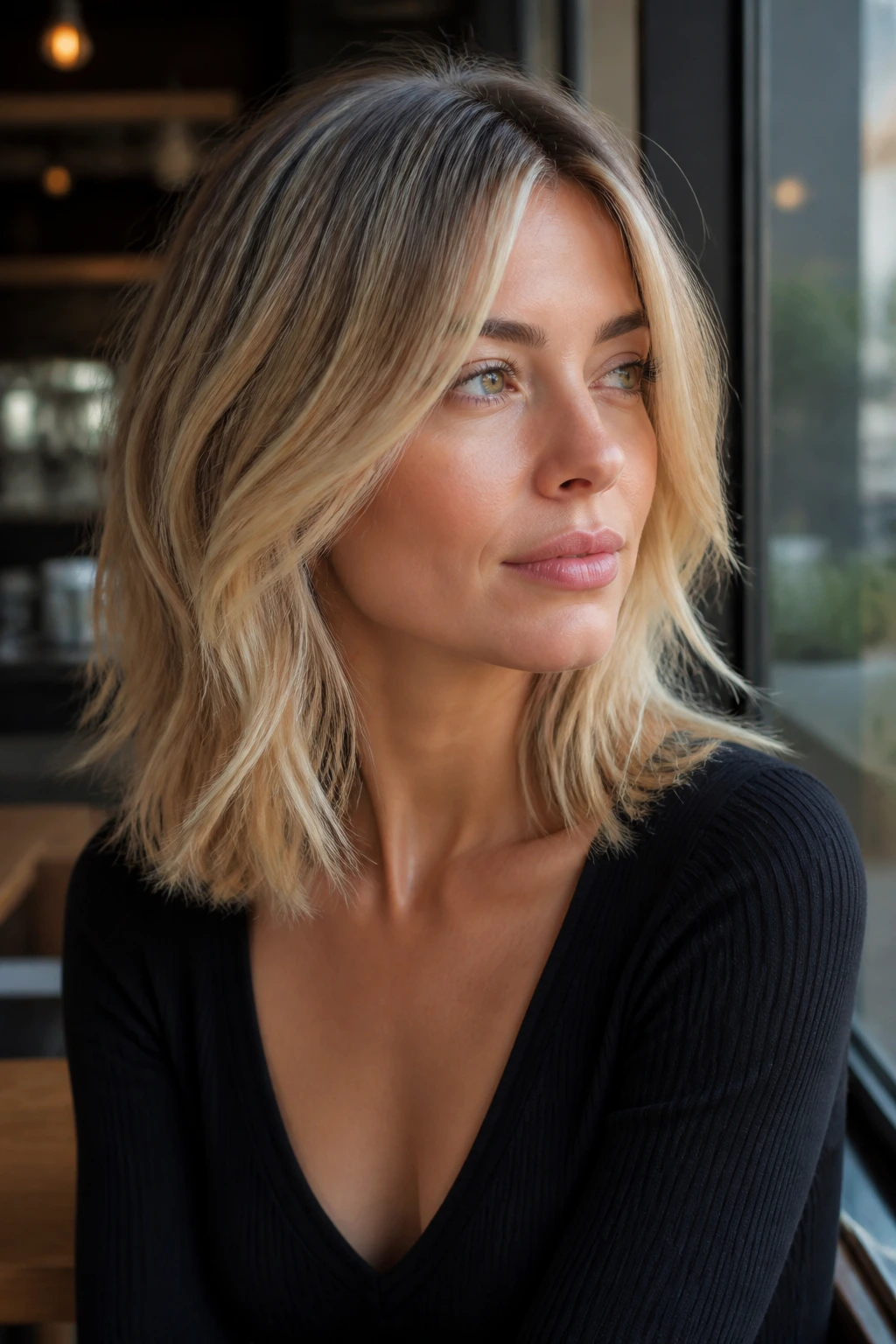
A razored midi cut gives blonde a lighter finish without taking the length all the way off. The razor softens the ends, which can look great on straight to slightly wavy hair that needs movement but not a big volume boost.
The trick is moderation. Razor-cut blondes can look beautiful when the ends are wispy and controlled, but too much razor work can make the hair look thin, especially if the color is pale. I prefer this on medium-density hair where the ends can take a little airiness.
Use this cut when you want a shoulder-grazing length that doesn’t feel heavy under sweaters, scarves, or a winter coat collar. The shape stays neat, but the blonde still moves.
14. Rounded Layers That Lift Fine Hair
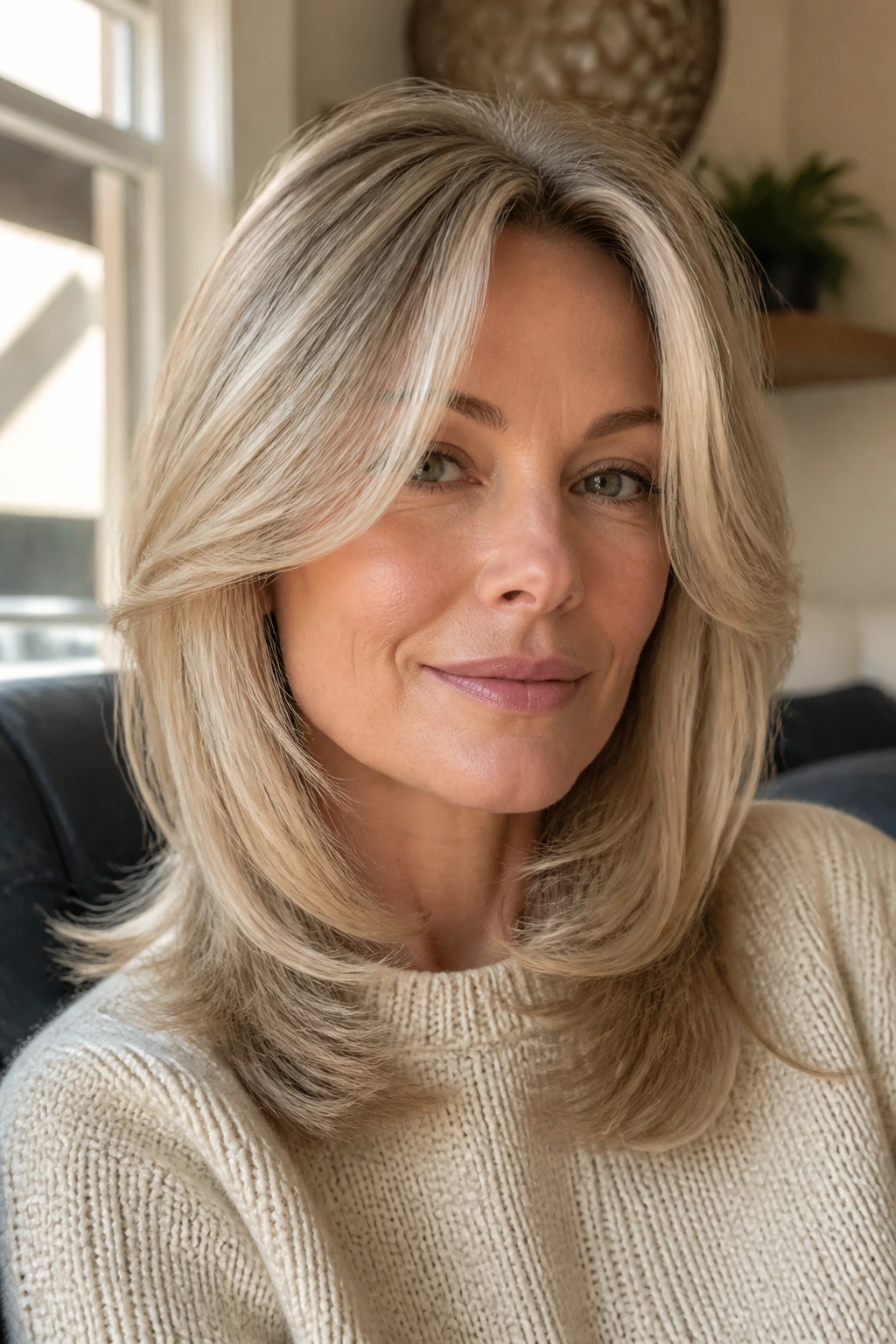
Fine hair needs a different kind of layer. Not shorter. Smarter. Rounded layers keep the perimeter fuller while creating lift at the crown and a soft curve around the face, which makes blonde hair look thicker than it is.
Where the Volume Lives
The lift should come from the top and side sections, not from slicing the bottom to pieces. If the layers start too high, the ends can look see-through in a week. If they start too low, the cut falls flat.
Ask for the shortest pieces to stay below the chin and the crown to be lightly textured. That gives you movement without a wispy tail. A soft beige blonde or pearl blonde looks especially good here because the color reflects light off the rounded shape instead of exposing every thin gap.
15. Sleek Straight Layers With a Glossy Finish
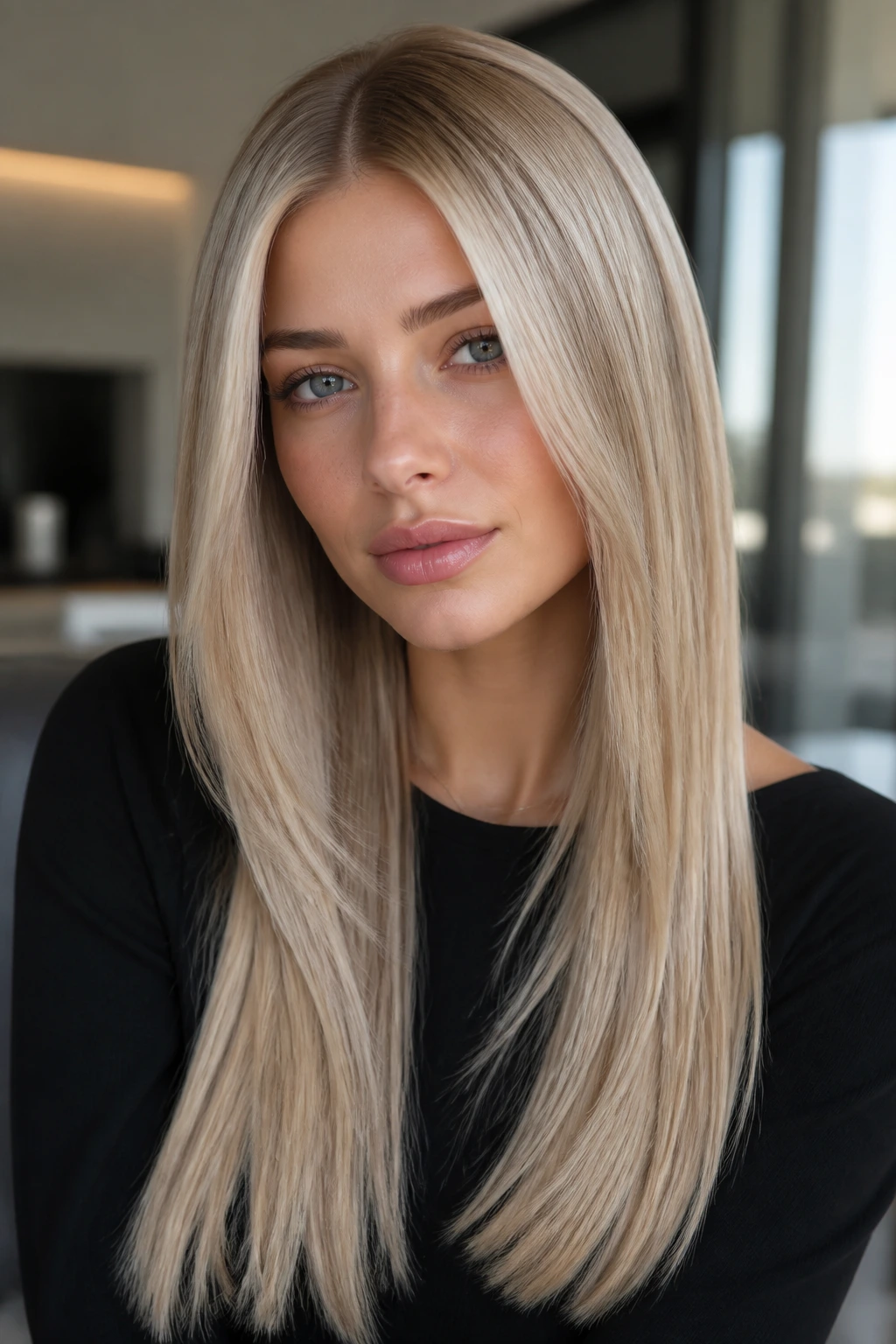
Not every layered blonde needs beach waves. A sleek straight cut with long internal layers can look sharper, cleaner, and brighter because the light bounces off the smooth surface. The trick is to keep the layers invisible until the hair moves.
This is the cut for someone who likes a center part, a flat iron, and a polished finish. The blonde should be cool, beige, or champagne—not too ash, not too yellow—so the gloss reads intentional. Long face-framing pieces can start at the lips or collarbone, then disappear into the rest of the length.
Compared with a waved style, this one feels more modern and less fussy. It’s also easier to see whether the cut is balanced, which is one reason stylists use it as a test for good layering.
16. Layered Pixie Bob With a Bright Crown
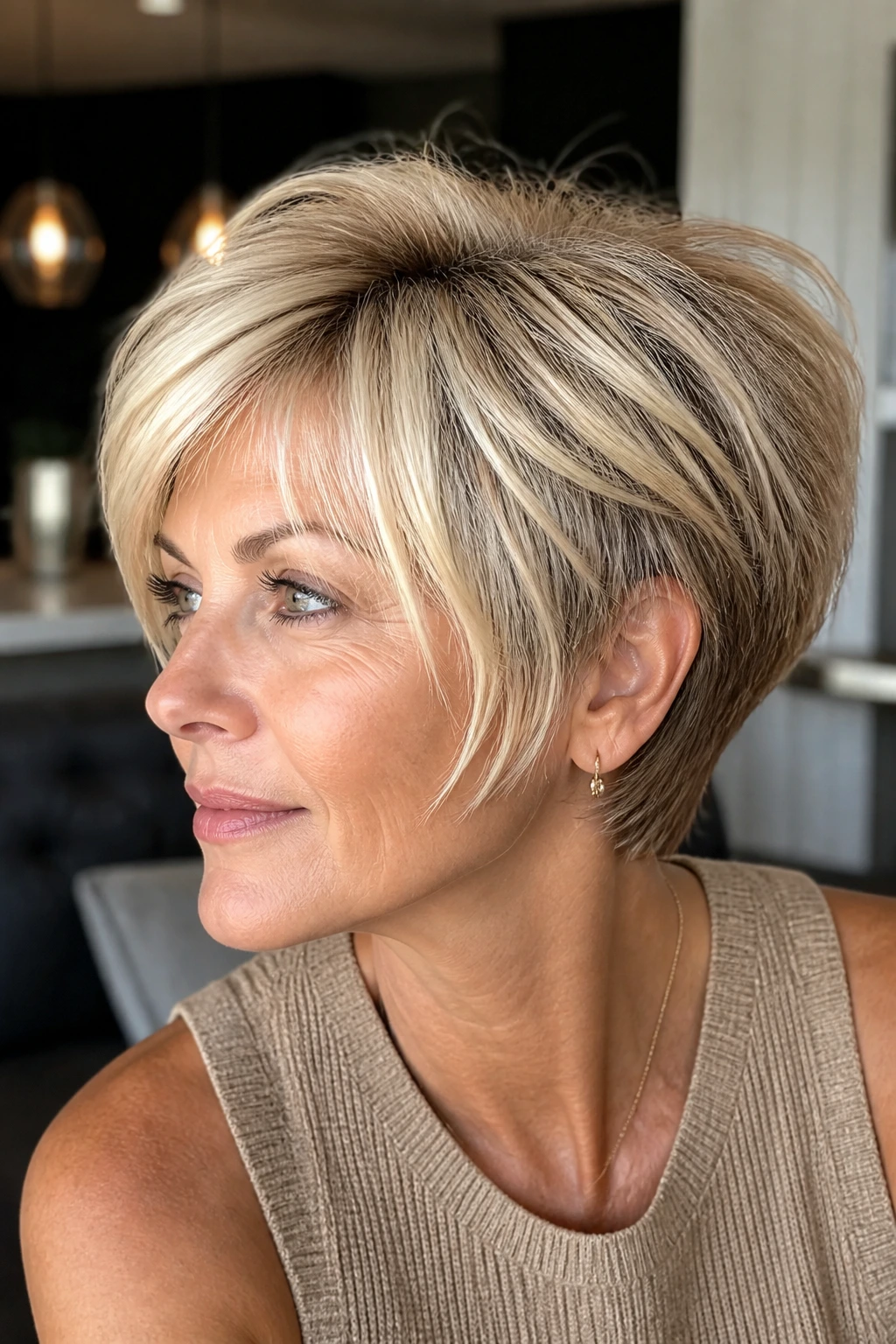
Short blonde hair can go flat fast, which is why a layered pixie bob needs careful shape. The crown stays airy, the nape stays neat, and the front pieces can land just below the cheekbone for a little softness.
This cut gets its brightness from contrast: a lighter crown, a slightly deeper root, and textured pieces around the face. It doesn’t need much length to look sunlit. In fact, too much length can hide the point. A bright blonde pixie bob should look like it has a little lift every time you shake your head.
Use a small round brush or your fingers to dry the crown upward. That’s where the shape lives. The rest can stay piecey and close to the head.
17. Curly Blonde Layers That Keep the Curl Pattern
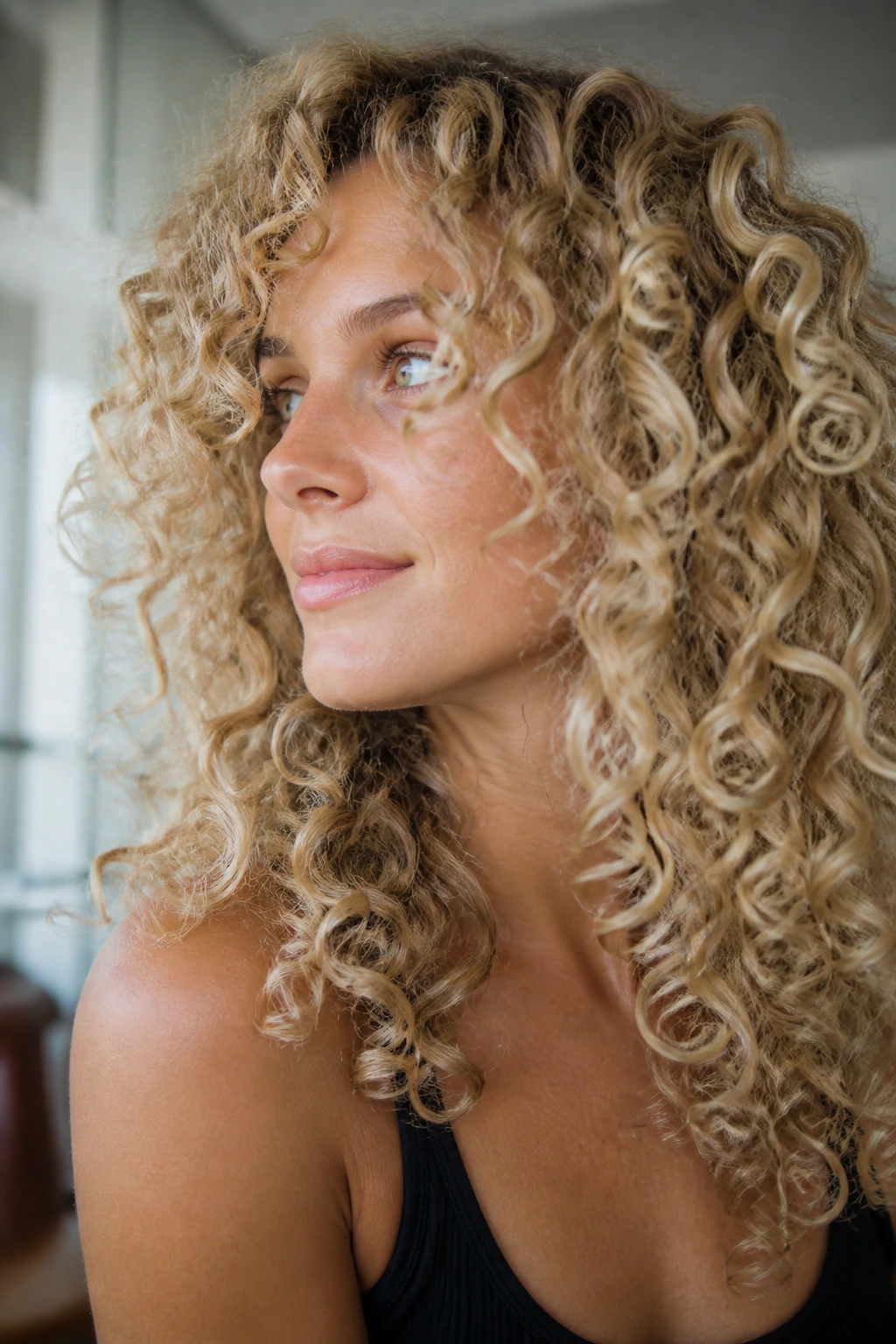
Can curly hair handle blonde layers? Absolutely, but the layers need to respect the curl pattern. The best cuts are done dry or near-dry, with the stylist cutting where each curl actually sits instead of guessing from a stretched section.
The shortest layers should not be chopped high on the head unless you want a halo of volume. For a softer sun-kissed look, keep the front pieces below the cheekbone and let the color fall through the bends of the curls. Balayage on curly hair can look especially bright because every coil catches light on a different side.
Use a leave-in conditioner, a curl cream, and a diffuser if you want the shape to stay defined. The blonde will look brighter when the curls are hydrated and clumped, not frizzy.
18. Hidden Underlayers for Extra Swing
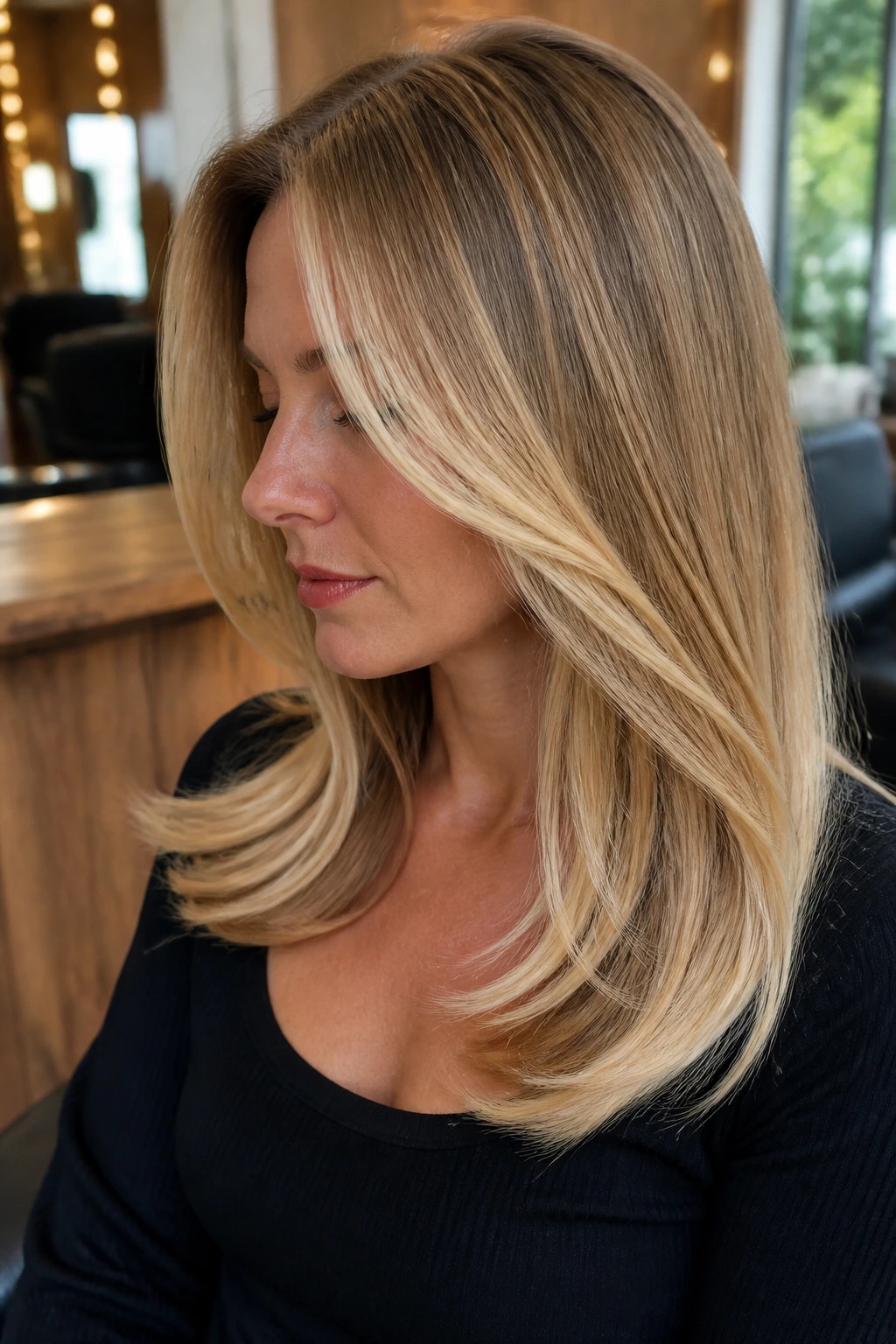
This is one of the smartest tricks in layered blondes: the top looks smooth, but the inside has shorter pieces that give the hair swing. It’s the haircut version of carrying a sharp blazer over a soft tee. The outside stays polished. The inside does the work.
Hidden underlayers are great if you want movement without obvious choppiness. The color can be bright at the ends, then slightly deeper underneath, which adds depth without screaming “highlights.” If your hair is thick, this technique removes weight where it matters. If it’s fine, the layers need to stay longer so the ends don’t go sparse.
Best details to ask for:
- Interior layers only, not heavy surface layering
- Face frame that starts around the chin or collarbone
- Ends kept blunt enough to look full
- A soft balayage that follows the swing of the hair
19. Flipped-Out Lob With Retro Ends
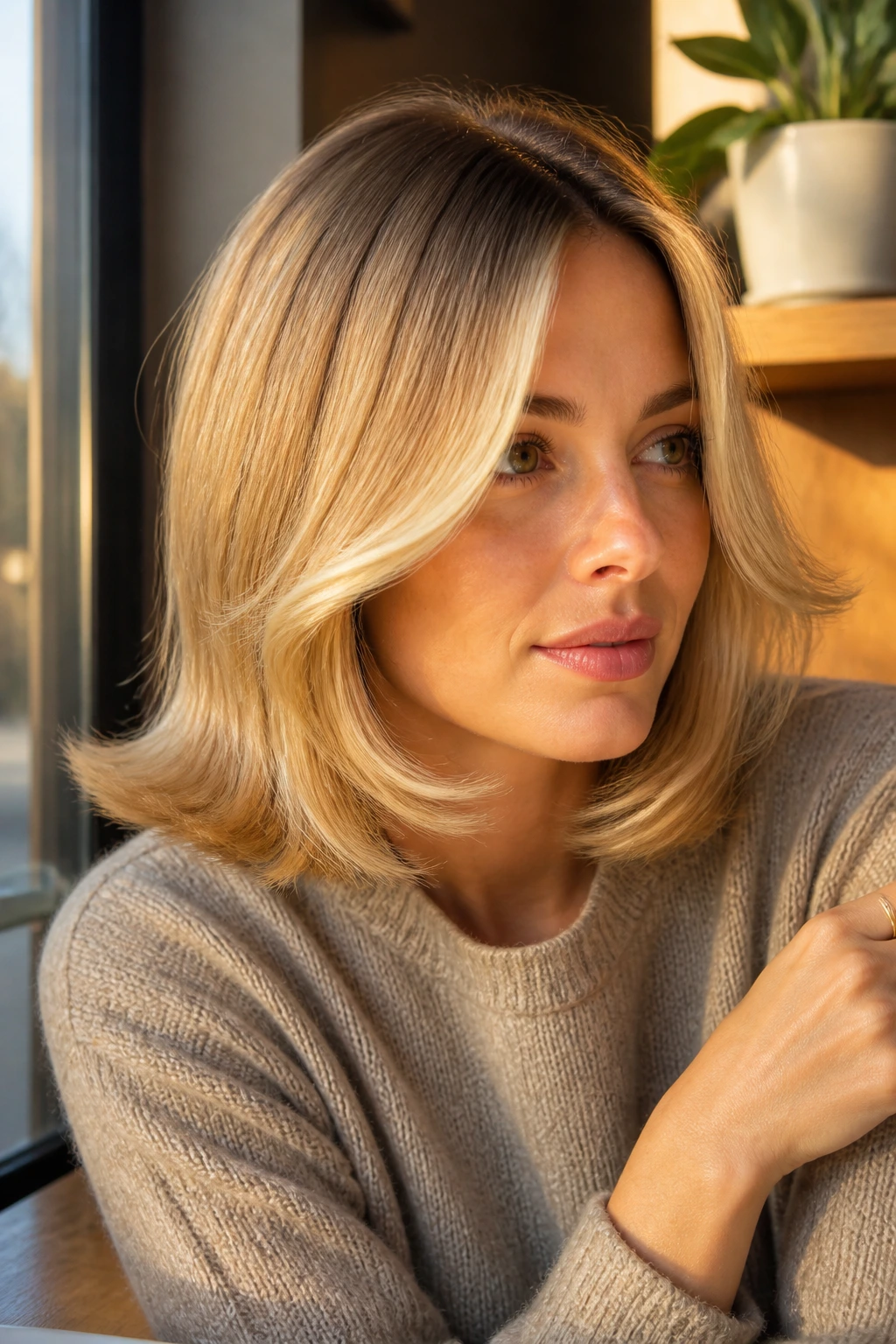
A flipped-out lob has a little attitude, and I mean that in a good way. The ends turn away from the neck instead of hugging it, which makes the blonde look lively even when the rest of the hair is smooth.
This cut works because the bend at the bottom creates a visible line of movement. The layers are subtle, mostly there to help the flip hold shape and keep the lob from sitting like a rectangle. A warm blonde with a soft root melt makes the whole thing feel retro without crossing into costume.
A round brush and a medium hot setting are enough. You’re not trying to curl the whole head. You’re just giving the last inch and a half of hair a controlled kick outward.
20. Sun-Kissed Balayage With Invisible Layers
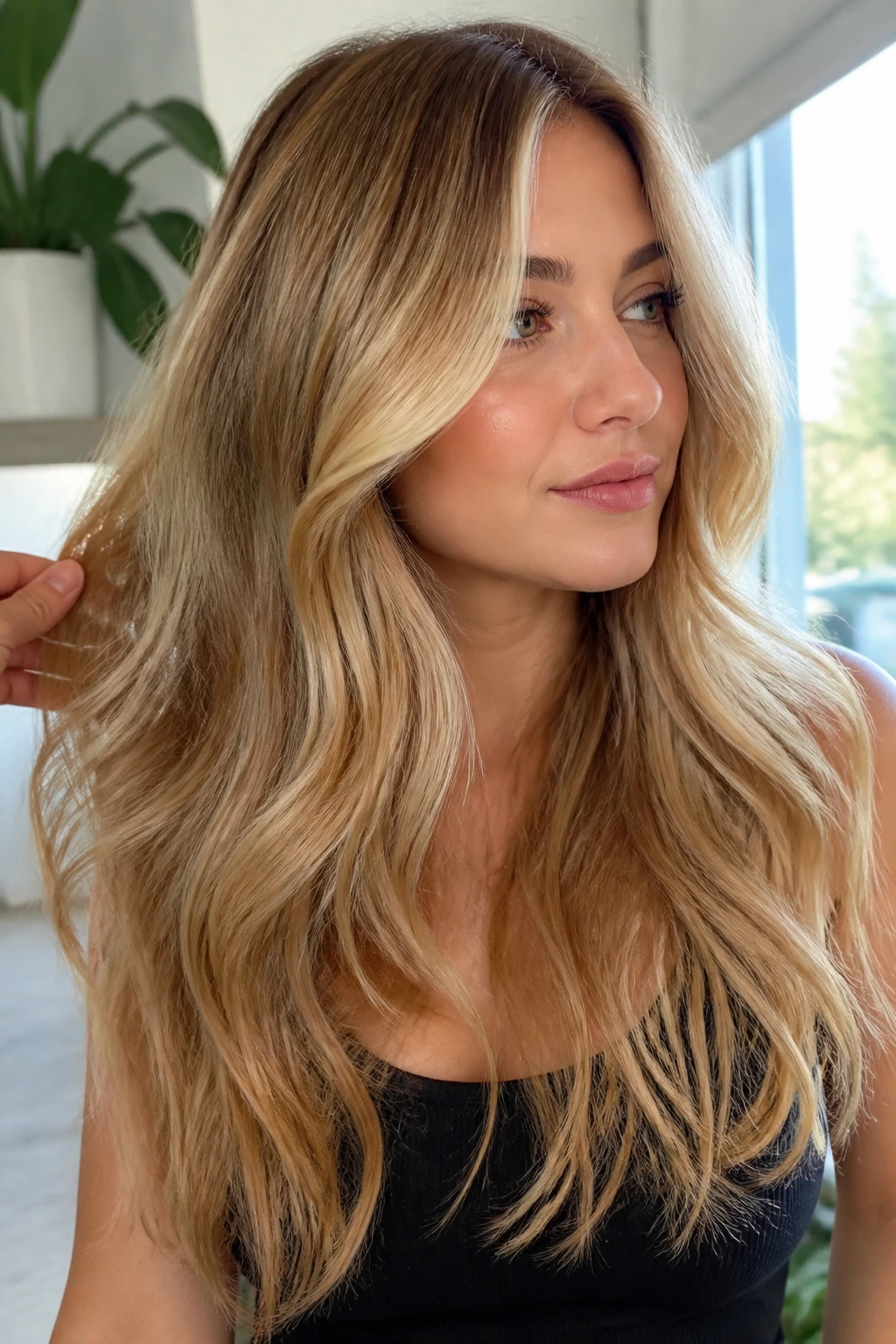
Not every layered cut should announce itself. Some of the prettiest blonde looks use invisible layers—small internal shifts that let balayage spread across the hair without visible chops.
This is the cut for someone who wants the color to do most of the visual work. The layers support the brightness by keeping the hair from falling flat, but they stay hidden enough that the silhouette still feels soft and smooth. On long hair, that means the light hits the top pieces, then breaks again through the lower layers when the hair moves.
If you want a calm, natural result, ask for soft balayage through the mids, brighter ends, and interior shaping that preserves fullness at the bottom. It’s understated in the best sense. The hair looks like it has a breeze in it, even when it doesn’t.
21. Razor-Cut Blonde With Wispy Ends
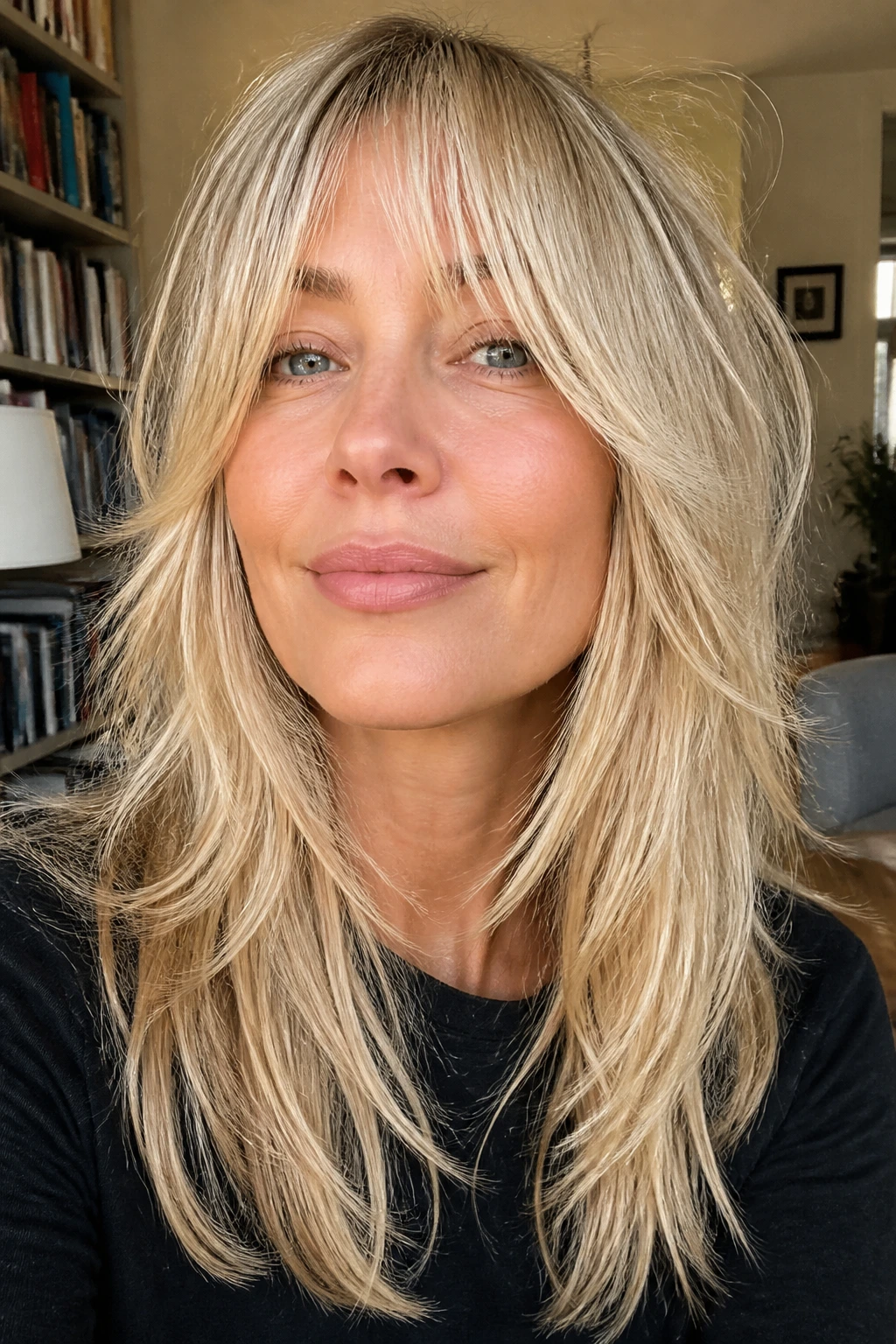
A razor cut can be risky on blonde hair, which is why I like it only when the hair can handle airiness. The ends get wispy, the movement is soft, and the whole cut reads light instead of chunky.
This shape is useful when you want texture without a shag. The razor takes the edge off blunt ends, which helps highlighted pieces separate a little more naturally. On straight or slightly wavy hair, it gives that piecey finish people keep trying to fake with sea salt spray.
What to Watch For
- Keep the razor work off the most fragile ends.
- Ask for longer layers if your hair is already fine.
- Use a smoothing cream if the wisps start to puff in humidity.
- Don’t pair this with a very pale toner unless you want a fragile-looking finish.
22. Long Layers With a Deep Side Fringe
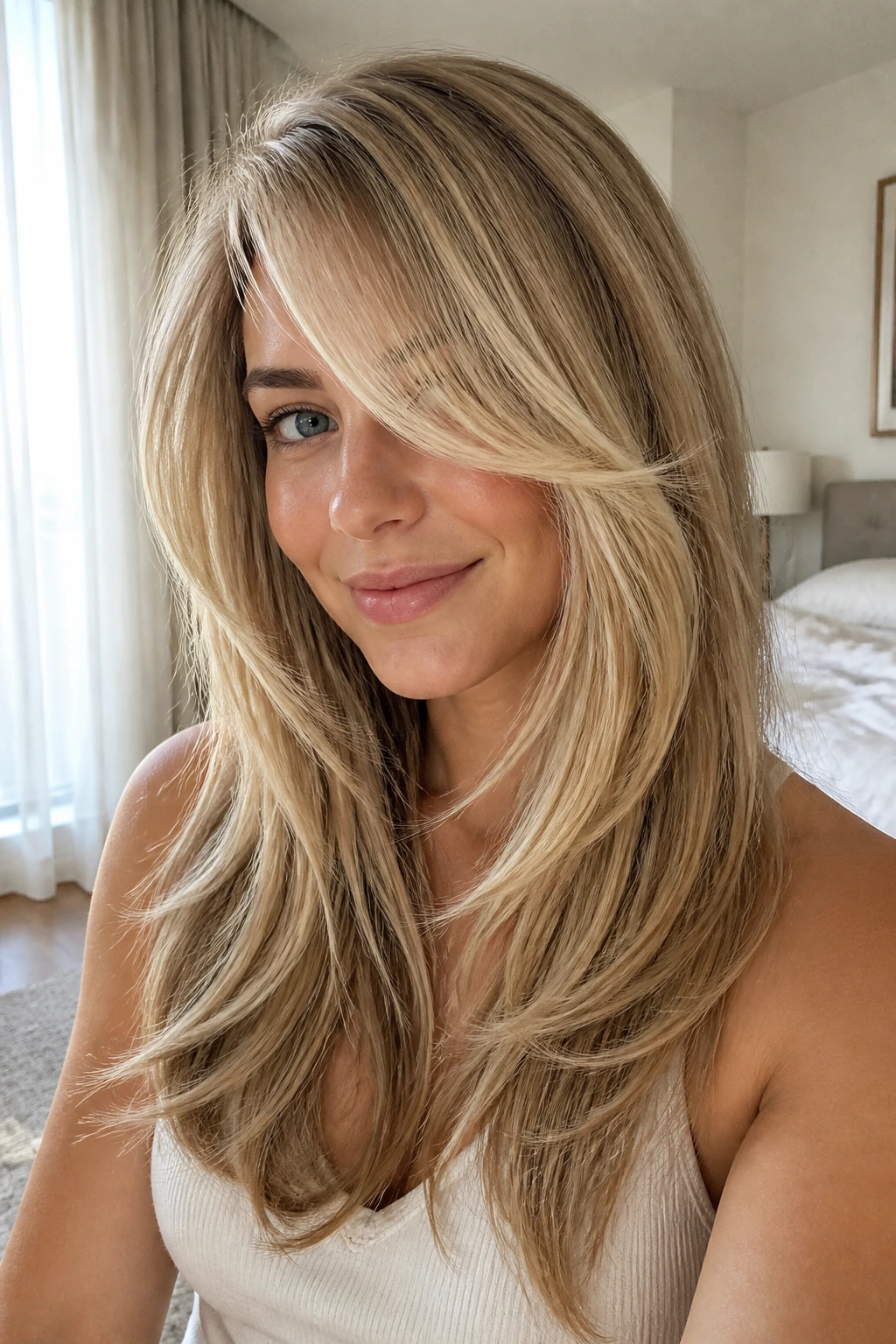
A deep side fringe gives long blonde hair some shape without forcing a full bang commitment. It sweeps across the forehead, lands near the cheekbone, and blends into long layers that keep the rest of the length moving.
This style is good for people who want softness around the face but still like to tuck hair behind the ears or wear it up. The side fringe can hide a high forehead, soften angular features, or just give blonde hair a more styled feel. On balayage, it creates a bright diagonal line that looks especially nice when the hair is curled away from the face.
Best for:
- Medium to thick hair
- Oval, heart, and square face shapes
- People who style the front more than the back
- Warm blonde tones that need a little framing
23. U-Shape Cut With Curtain Fringe
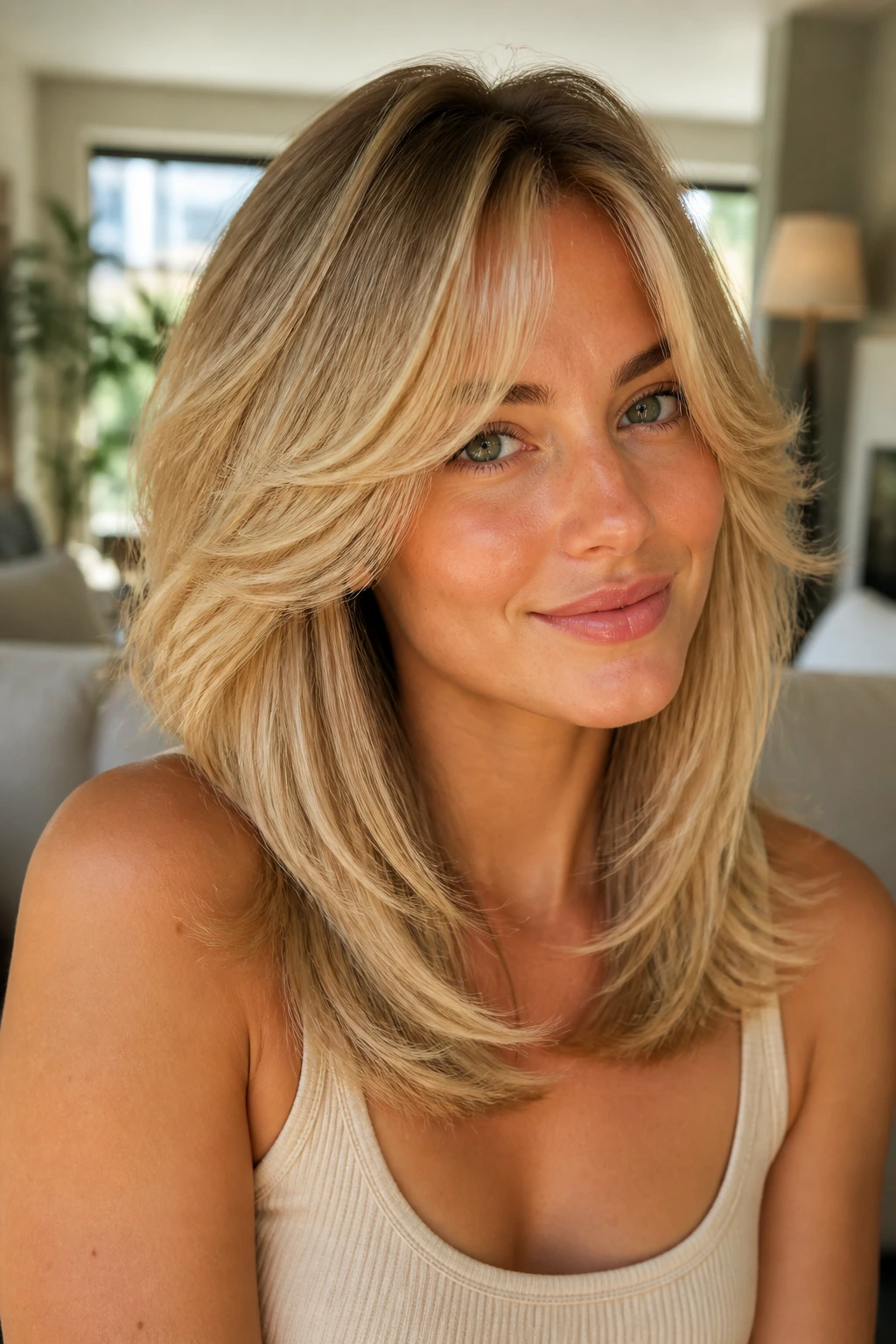
The U-shape keeps the edge of the hair soft and rounded, which is exactly why it flatters long blonde layers. The curtain fringe gives the front movement, and the long side pieces tie the whole cut together without leaving a blunt line at the shoulders.
I like this shape for hair that needs fullness at the bottom. The rounded perimeter helps the blonde ends look thick, while the curtain fringe opens the face just enough to keep the style from feeling heavy. It’s polished without being stiff, and that matters if you wear your hair down most days.
A middle part keeps the fringe balanced. A slight bend at the ends keeps the U visible. That’s all it needs.
24. Piecey Rooty Blonde With Textured Ends
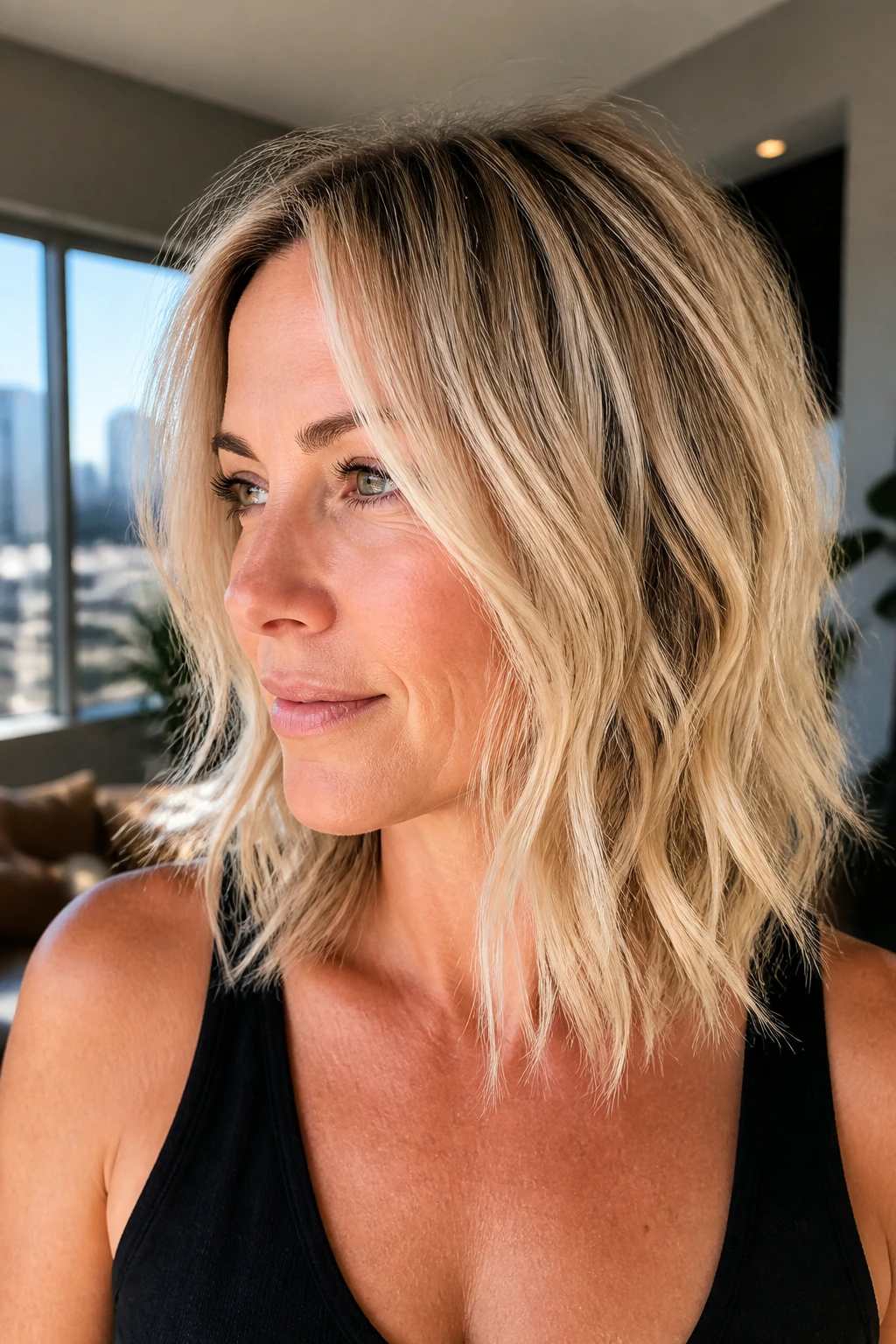
If you like blonde that looks low-key and lived-in, this one has the right amount of edge. The root stays a shade deeper, the mids and ends are brighter, and the layers are cut so the hair separates into little pieces instead of one smooth sheet.
This is a strong choice for people who want less salon maintenance and more natural grow-out. The rooty color helps the cut last longer between appointments, and the textured ends keep the blonde from looking overworked. If you wear dry shampoo half the week, you’ll probably like this shape.
Ask for This
- A soft root shadow
- Layering that starts below the cheekbone
- Texture through the ends, not the crown
- Brightest pieces around the face and lower lengths
25. Face-Framing Layers for Fine Blonde Hair
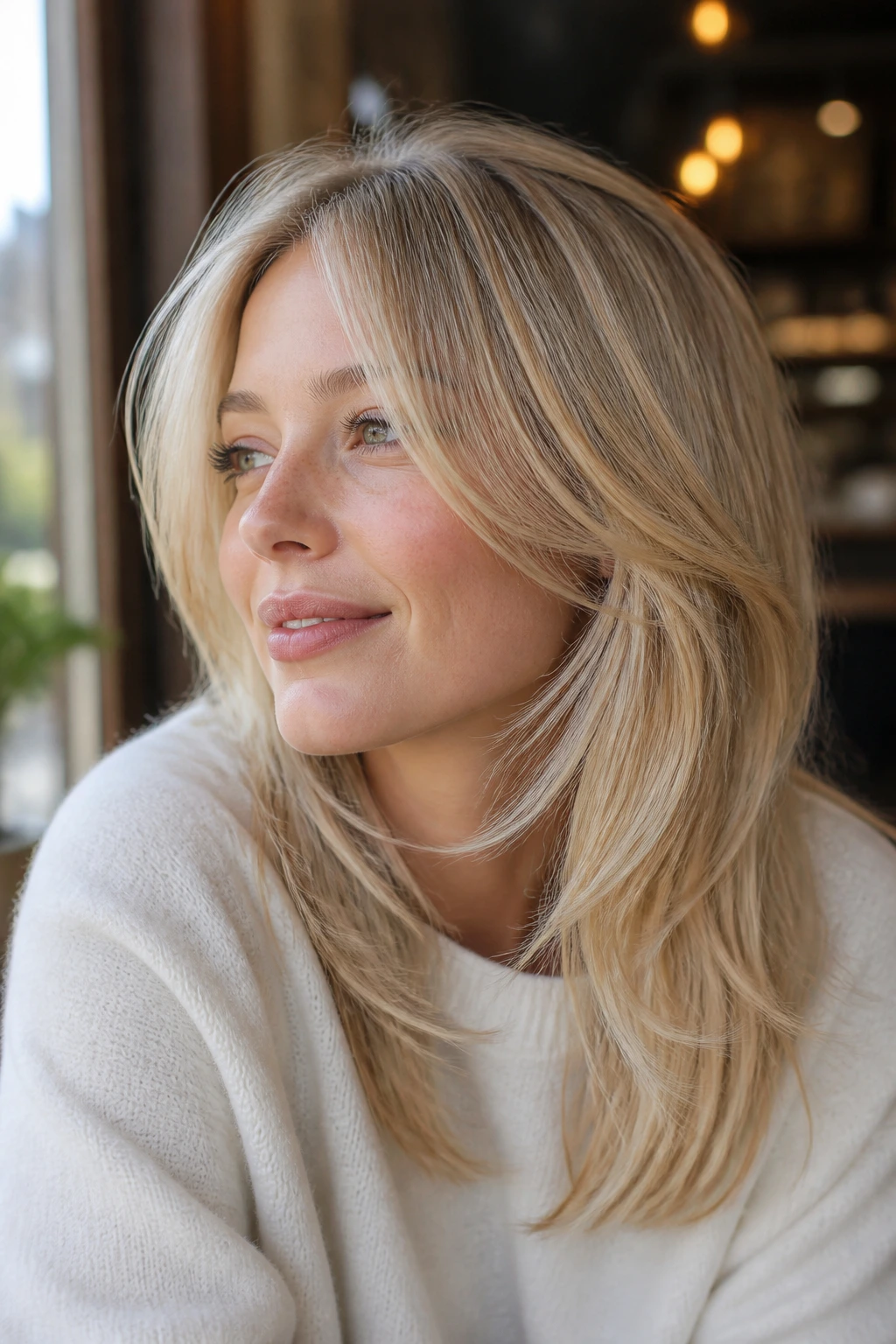
Fine hair needs restraint, not a lot of tiny layers. The smartest version of this cut keeps the ends full and adds movement only where the hair benefits most: around the face, just below the chin, and through the outer lengths.
This is the cut I’d choose if I wanted blonde to look brighter without losing density. The face frame opens the eyes and cheekbones, while the bottom stays thick enough to look intentional. If your hair gets flat by afternoon, this shape holds better than a heavily layered style that thins out after one shampoo.
Ask for the shortest pieces to begin at the lip or chin, not the temple. That keeps the front soft and the rest of the hair strong. A beige or champagne blonde reads especially nice here because the cut gives the color enough movement to show off.
Why Layering Makes Blonde Look Brighter
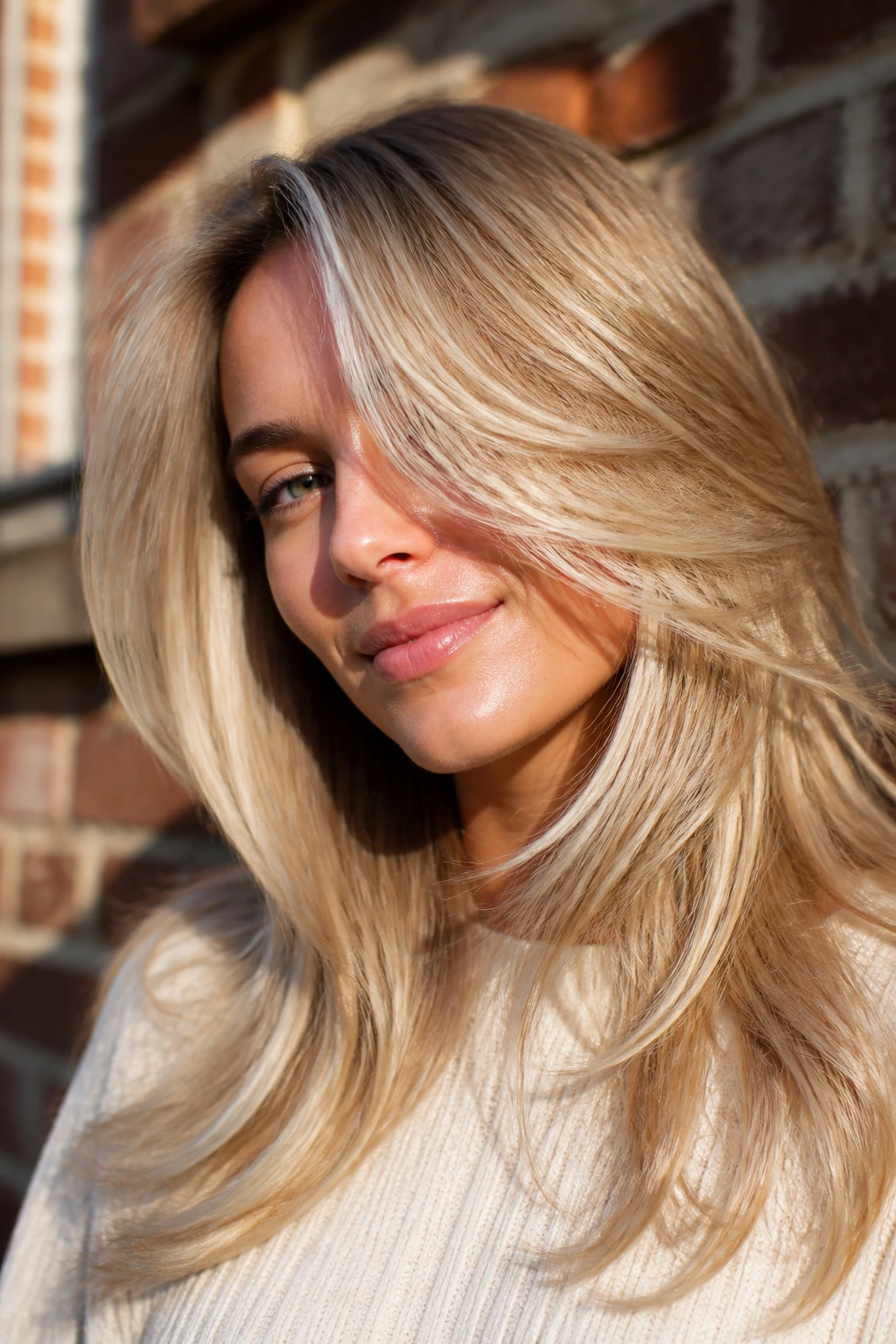
Blonde color changes when the shape changes. A blunt line creates one big reflective surface, which can look flat if the tone is pale or the hair is fine. Layers break that surface into smaller planes, and those planes catch light differently as you move.
That’s why balayage often looks better on layered hair than on a one-length cut. The color is not just sitting there. It’s riding along the bend of a curtain bang, sitting on a cheekbone piece, and dropping into the ends where the light hits last. Even subtle babylights look more alive when the haircut gives them some motion.
There’s a catch, though. Too many short layers can thin out the ends and make the blonde look fragile, especially if the hair is already fine or porous. The sweet spot is enough movement to show the color, but not so much texture that the bottom loses shape. Good blondes look expensive when the hair still has weight.
Essential Tools for Styling These Cuts
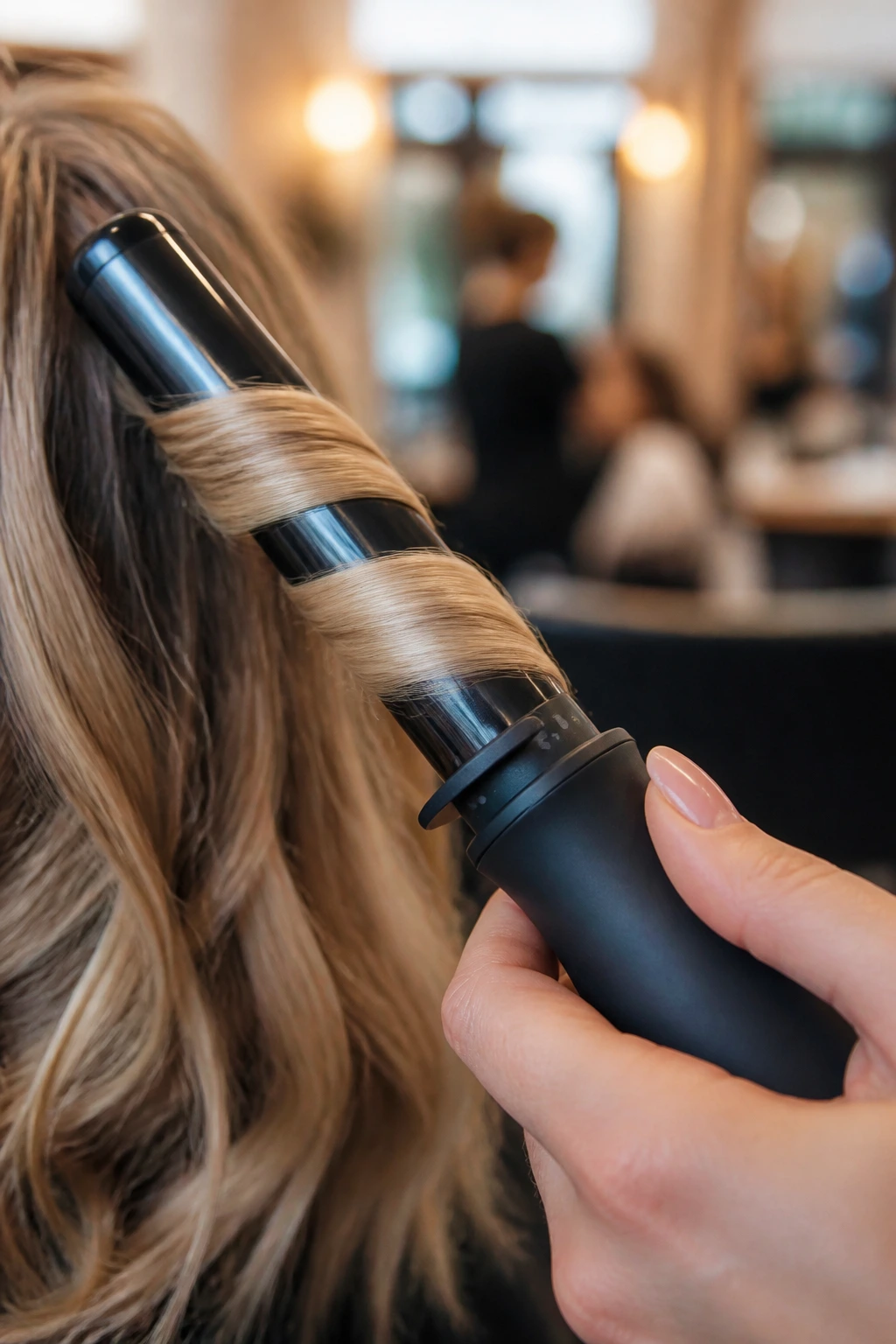
- Blow dryer with a concentrator nozzle: Helps smooth the root and direct the bend where you want it.
- 1.25- to 1.5-inch curling iron or wand: Best for loose bends, face-framing flips, and soft waves on layered lengths.
- Round brush, 1.5 to 2.25 inches: Use this for feathered ends, curtain bangs, and rounded volume at the crown.
- Vent brush: Useful for quick root lift on shorter bobs and pixie bobs.
- Tail comb: Makes sectioning clean, which matters when you want even layers or a tidy blow-dry.
- Sectioning clips: Keep longer layers out of the way while you dry the crown or front sections.
- Heat protectant spray: Blonde hair shows damage fast, so this is not optional if you use hot tools.
- Lightweight mousse or root lift spray: Better than a heavy cream when you need shape without collapse.
- Texture spray or dry shampoo: Gives layered cuts that piecey separation at the ends.
- Purple shampoo: Helps cool brassy tones, especially on very pale blonde or highlighted hair.
- Color-safe conditioner: Keeps the mids and ends from feeling rough after lifting or toning.
- Microfiber towel or cotton T-shirt: Reduces frizz before styling, especially on wavy and curly cuts.
Salon Notes and Product Picks That Save You Trouble
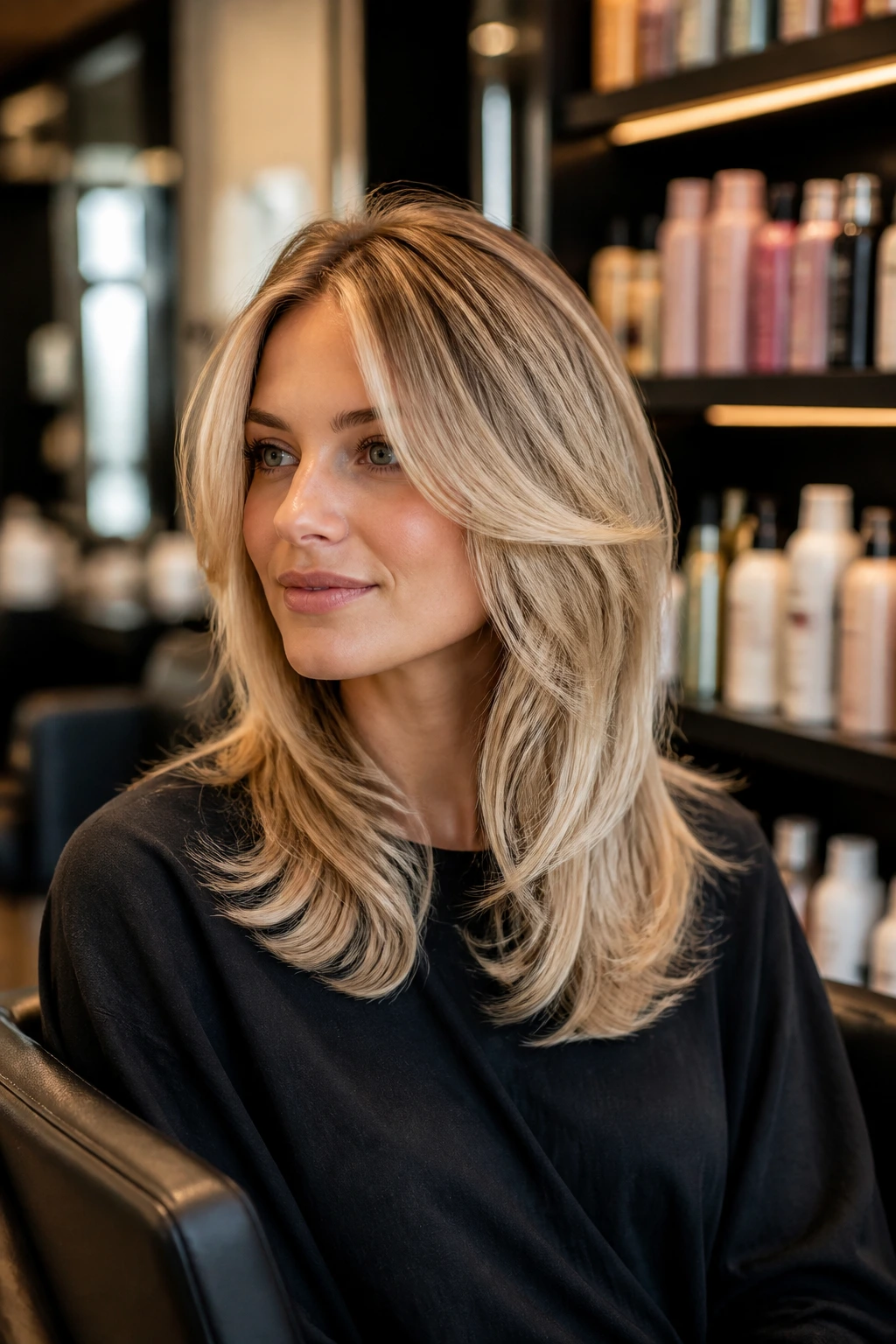
The smartest salon consults start with three photos, not thirty. Bring one that shows the length you want, one that shows the front shape, and one that shows the color tone. That makes it much easier to separate haircut from color, which is where people usually get tangled up. You may love a photo because of the blonde, but the cut is what changes the silhouette.
At the chair, say where you want the shortest layer to begin. Cheekbone, lip, chin, or collarbone are useful landmarks. If you want brightness around the face, ask for lighter pieces at the hairline and softer ribbons through the mids rather than a wide money piece that runs too far back.
At home, choose products that respect the shape of the cut. Fine hair usually needs a lightweight foam, not a buttery cream. Thick hair often does better with a smoothing blow-dry lotion plus a separate texture spray at the ends. If your blonde is cool-toned, purple shampoo once a week is usually enough; if it’s honey or beige, use it less often so the warmth doesn’t disappear.
How to Wear These Blonde Layered Haircuts
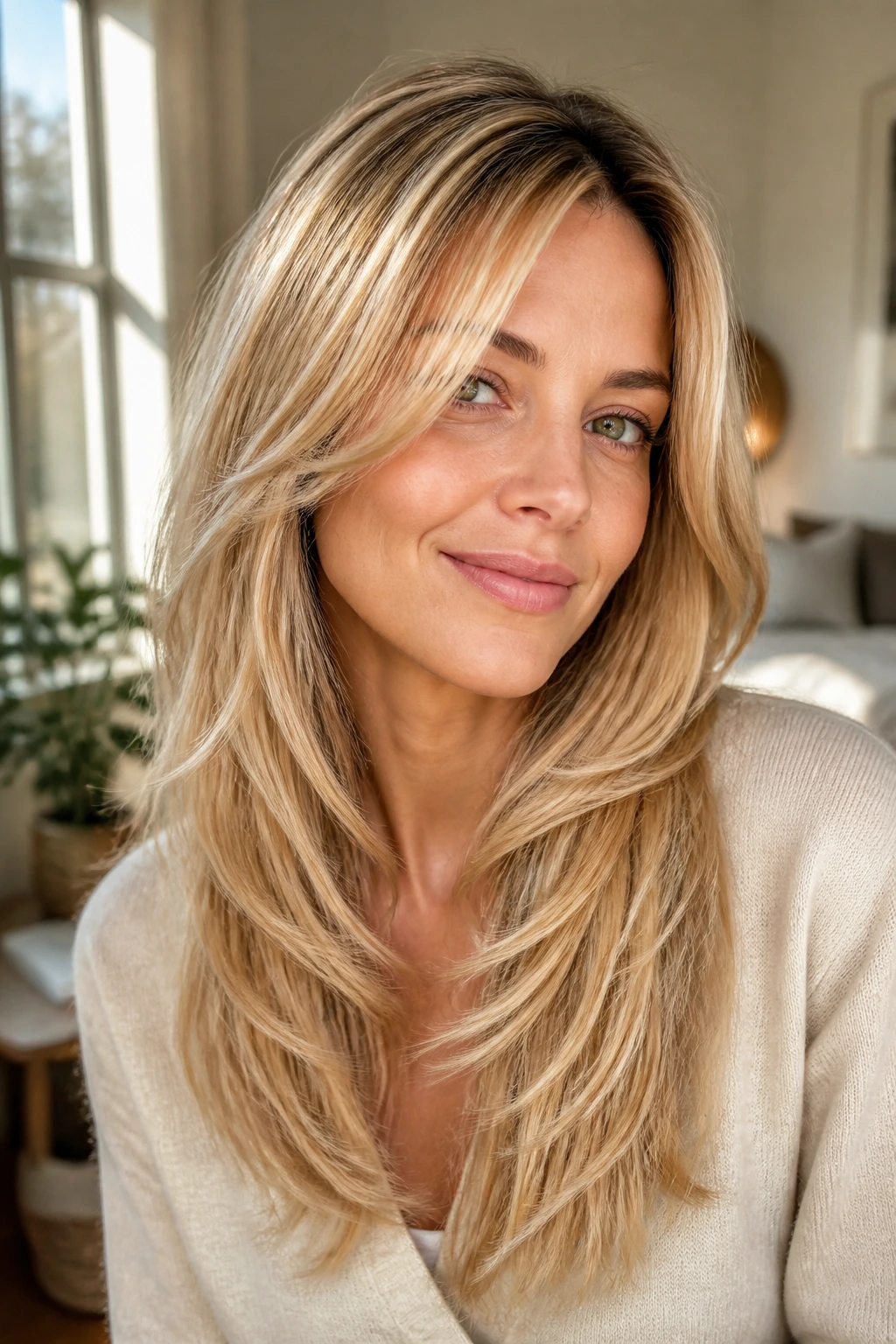
Finish: Wear these cuts smooth, waved, or air-dried, but keep the front sections deliberate. A soft bend away from the face usually shows the layers better than tight curls.
Best Match: Fine hair looks best with fewer, longer layers. Thick hair can take more interior shaping. Wavy and curly hair usually need the layers cut to the natural bend, not against it.
Color Pairing: Beige blonde gives the softest look, honey blonde reads warmer, and champagne blonde shows the most shine. If you want the haircut to do the work, keep the tonal contrast low and let the movement carry the brightness.
Maintenance: Shorter cuts need trims about every 6 to 8 weeks. Lob lengths can stretch to 8 to 10 weeks. Long layered hair can usually go 10 to 12 weeks before the shape starts to sag.
Extra Styling Moves That Keep the Blonde Bright
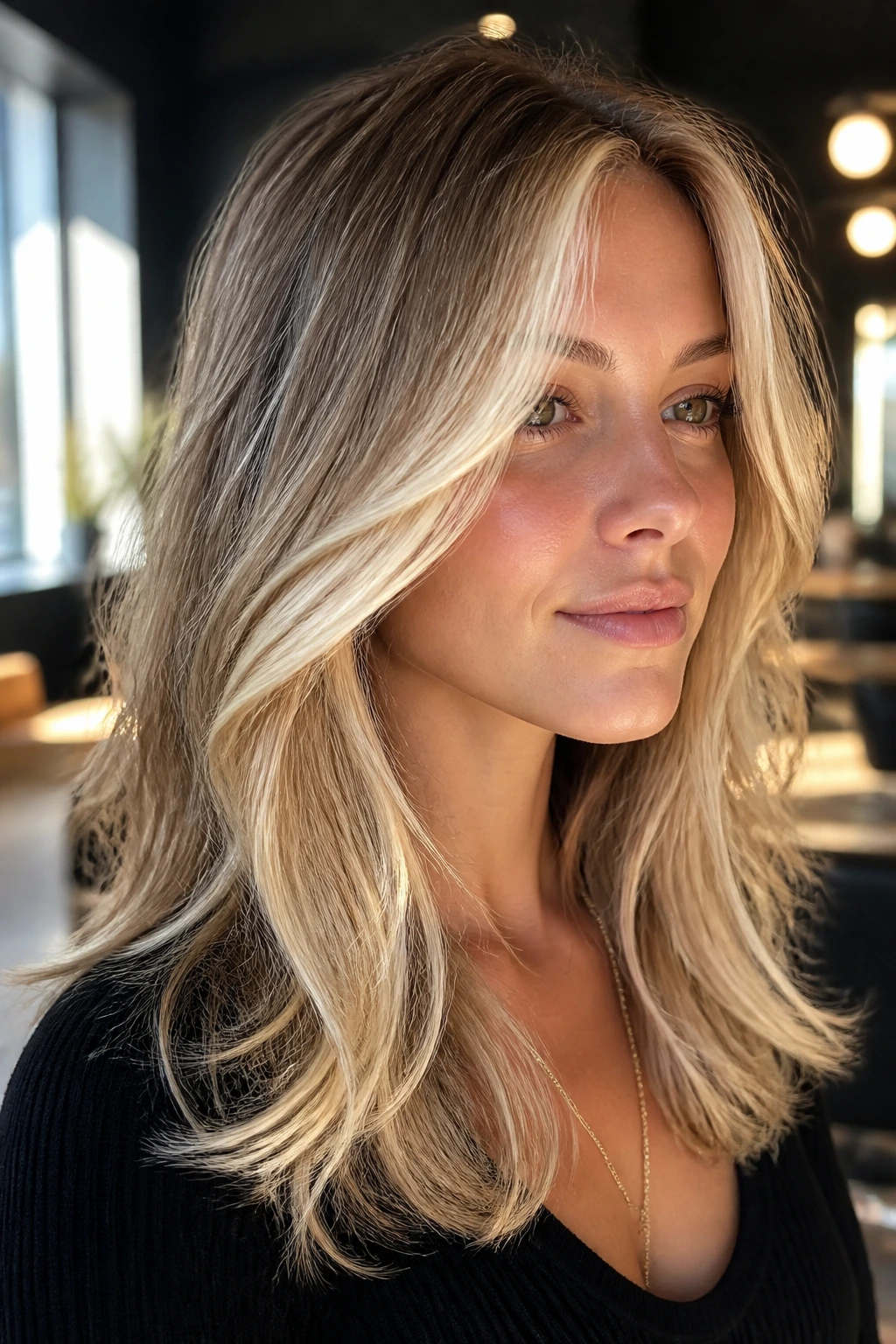
Brightness Boost: Ask for the lightest blonde pieces around the face and the ends that move the most. Those are the spots people notice first, and they keep the cut from looking dull under indoor light.
Volume Boost: Blow-dry the roots first, then work only the mids and ends with your brush or iron. If you curl the root too much, the shape can puff out in the wrong place and hide the layer pattern.
Customization: If you hate short bangs, keep the face frame below the cheekbone. If you like more edge, ask for a deeper side part or a few choppier pieces around the jaw. The same blonde can look soft or sharp depending on where the front pieces fall.
Make-It-Yours: Fine hair needs longer layers and a fuller perimeter. Thick hair can handle more removal inside the shape. Curly hair usually looks best when the shortest pieces still leave room for each curl to spring.
Common Mistakes That Flatten the Shape
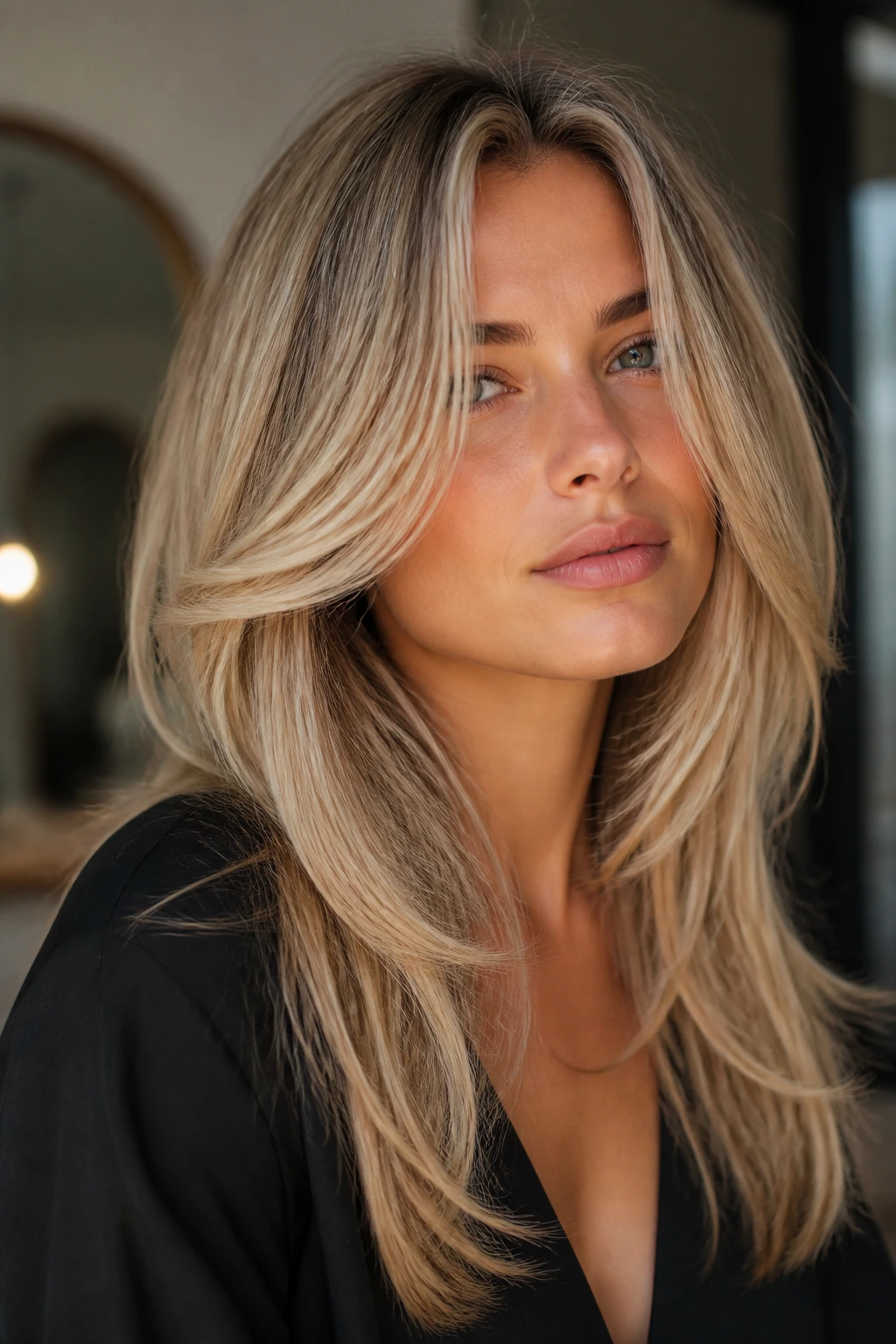
- Starting the shortest layers too high: Hair around the crown can look sparse, and the ends lose weight fast. Keep the shortest pieces lower if you want the blonde to look full.
- Over-toning the blonde to an icy shade: The color can go flat and chalky, especially on layered hair that needs some warmth to show movement. A beige or soft honey gloss usually reads richer.
- Adding too much texture to fine hair: The ends start to look wispy instead of airy. Ask for internal shaping, not aggressive thinning.
- Ignoring the face frame: A flat front can make the whole haircut seem unfinished, even when the back is good. The front pieces should be cut with the same care as the length.
- Using tiny curls on long layers: Tight curls hide the layer work and can make the hair look over-styled. Use larger bends if you want the shape to show.
Variations Worth Saving to Your Camera Roll
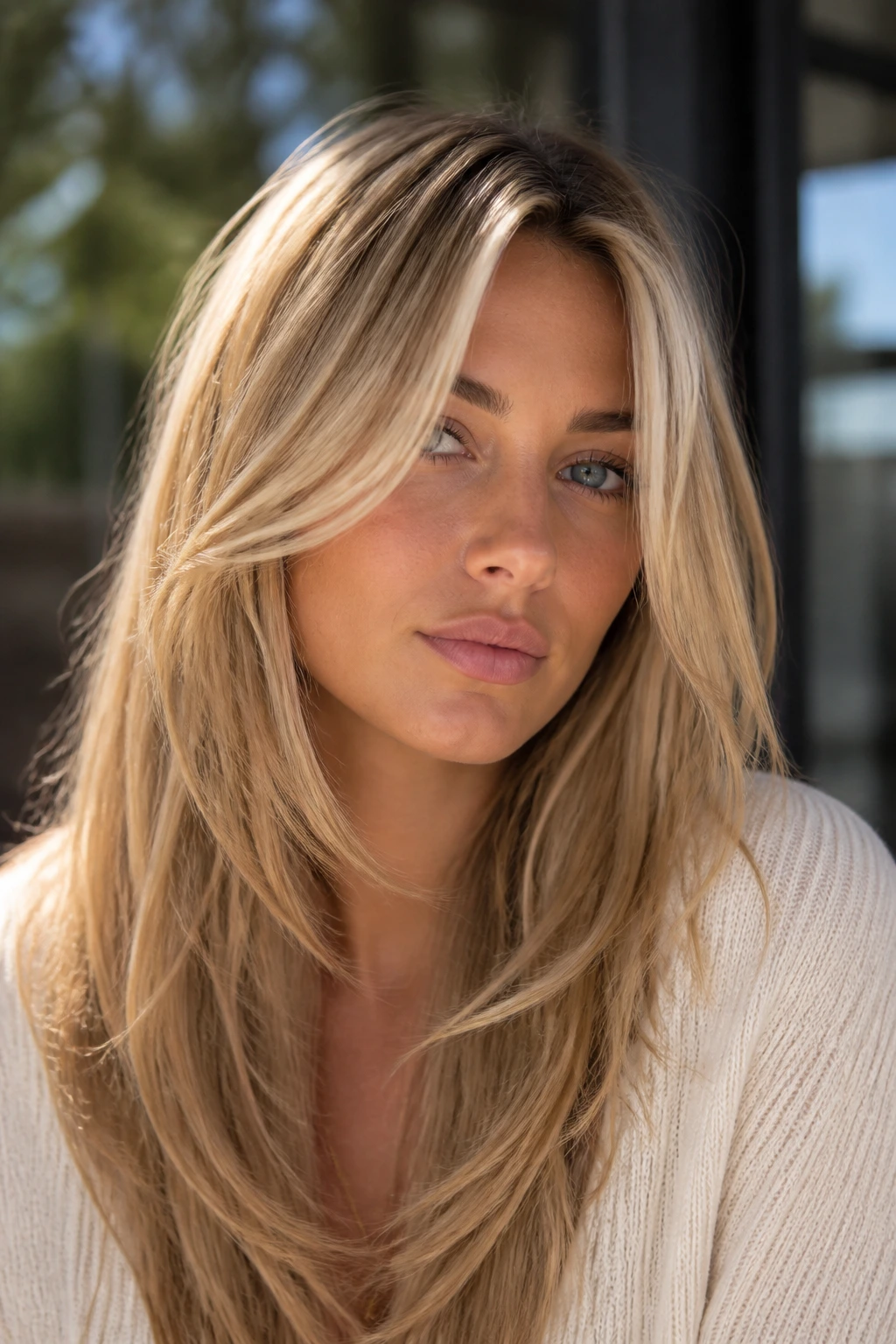
The Low-Maintenance Grow-Out: Keep the layers long, the root slightly deeper, and the front pieces below the chin. This is the version to choose if you want the shape to last longer between appointments and still look tidy when the blonde grows out.
The Bright Front Panel: Put the lightest blonde pieces at the hairline and keep the mids one shade softer. It’s a strong move if you want the face to pop in photos without painting the whole head pale.
The Air-Dry Wave: Ask for longer layers cut to your natural bend and skip the heavy crown texture. This works best if you want the hair to look good with mousse, scrunching, and a diffuser rather than a full blowout.
The Cool Beige Edit: Choose a neutral or ash-beige toner and keep the color soft at the root. The haircut carries the brightness, while the color stays calm and wearable.
The Big Blowout Blonde: Go for feathered layers, curtain bangs, and a round-brush finish. It’s a more polished look, and it gives the blonde a little old-school drama without making it stiff.
Keeping the Cut Sharp as It Grows Out
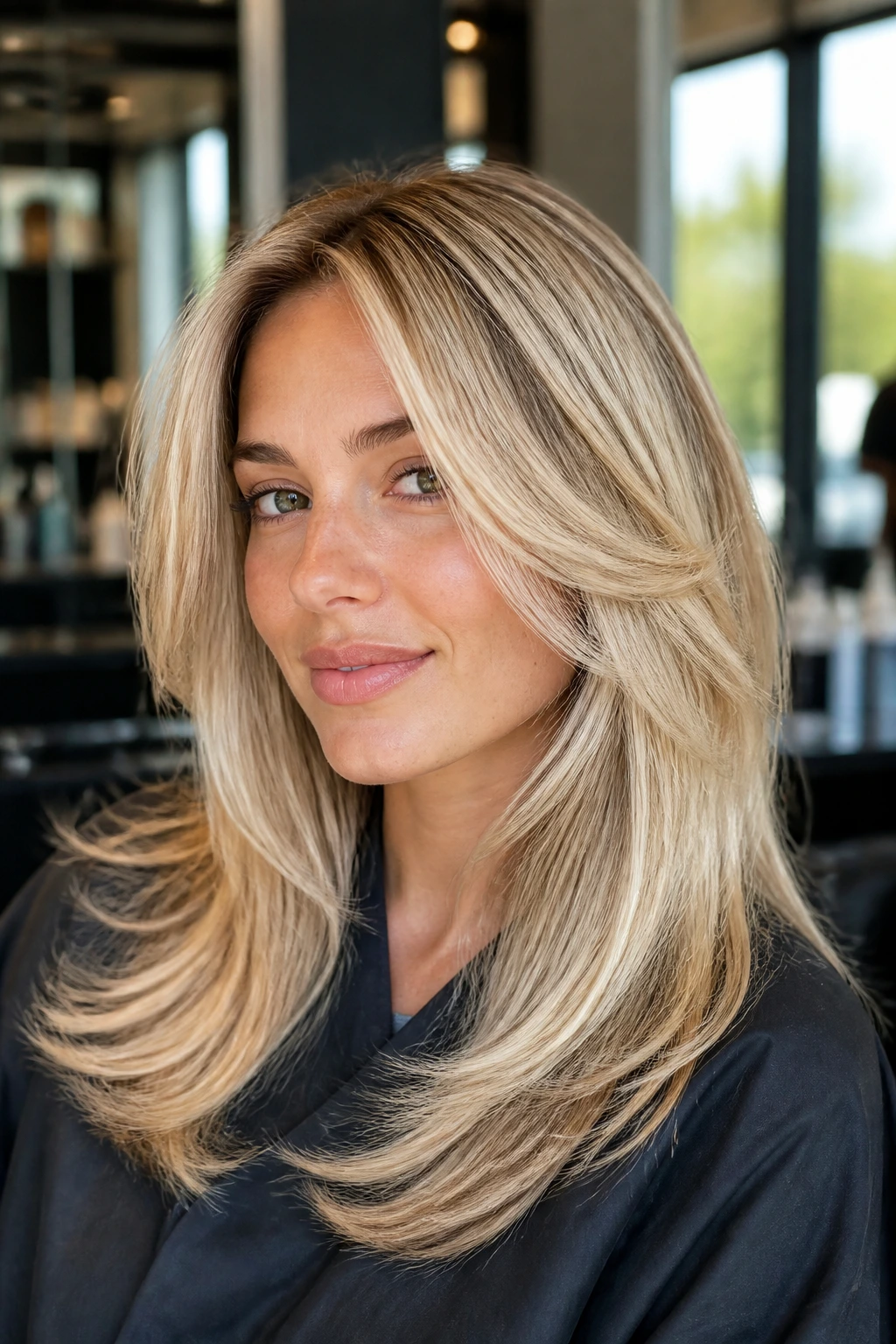
The first thing that goes on a layered blonde cut is usually the shape, not the color. After about six to eight weeks, the front pieces lose their snap, the crown gets flatter, and the ends start feeling heavier. That does not mean the haircut failed. It means the cut is ready for a trim or a quick re-shape.
For blonde color, glossing matters almost as much as cutting. A toner or gloss every 6 to 10 weeks keeps the brightness from slipping into brass or looking dusty. If your blonde is warm, use purple shampoo sparingly—too much of it can steal the glow that makes the cut look sun-kissed in the first place.
At home, wash with cool or lukewarm water, not hot. Hot water roughs up the cuticle and makes the ends frizz faster, which is a pain on layered hair because the wispy bits show first. A small amount of leave-in on the ends and a silk pillowcase or loose braid at night can buy you an extra day or two of shape. That sounds small. It isn’t.
Questions People Ask Before They Book
Which blonde layered haircut is best for fine hair?
Long layers with a fuller perimeter usually win. Rounded layers, a collarbone lob, or face-framing pieces below the chin keep the ends looking thicker than a heavily shredded cut.
Do layers make blonde hair look thinner?
They can, if they’re too short or too aggressive. The fix is to keep the layers longer and ask for internal shaping so the ends still hold weight.
What kind of highlights look best with layered cuts?
Balayage, babylights, and soft money-piece highlights usually work best because they move with the cut instead of sitting in stripes. The more texture the haircut has, the more natural the highlights tend to look.
Can I air-dry a layered blonde cut?
Yes, if the layers are cut with your texture in mind. Wavy hair often air-dries beautifully with mousse or curl cream, while straighter hair may need a little root lift or a quick bend at the front pieces.
How often should I trim blonde layers?
Short bobs and pixie bobs usually need trims every 6 to 8 weeks. Midlength and long layered cuts can usually wait 8 to 12 weeks, depending on how fast your hair grows and how exact you like the shape.
Will curtain bangs work with blonde layers?
They can work very well, especially with butterfly layers or collarbone lengths. The trick is keeping the bangs long enough to blend into the rest of the cut instead of sitting as a separate block.
What if my hair is curly or very wavy?
Ask for the layers to be cut around the curl pattern, not against it. Dry cutting or cutting at a stretched-but-not-flat state usually gives a cleaner result than cutting wet and hoping for the best.
How do I keep blonde from looking brassy between visits?
Use a color-safe shampoo, limit purple shampoo to once a week or less if the tone is warm, and avoid scalding water. A clear gloss or salon toner can also help keep beige and champagne blondes looking fresh without turning them icy.
The Brightest Kind of Movement
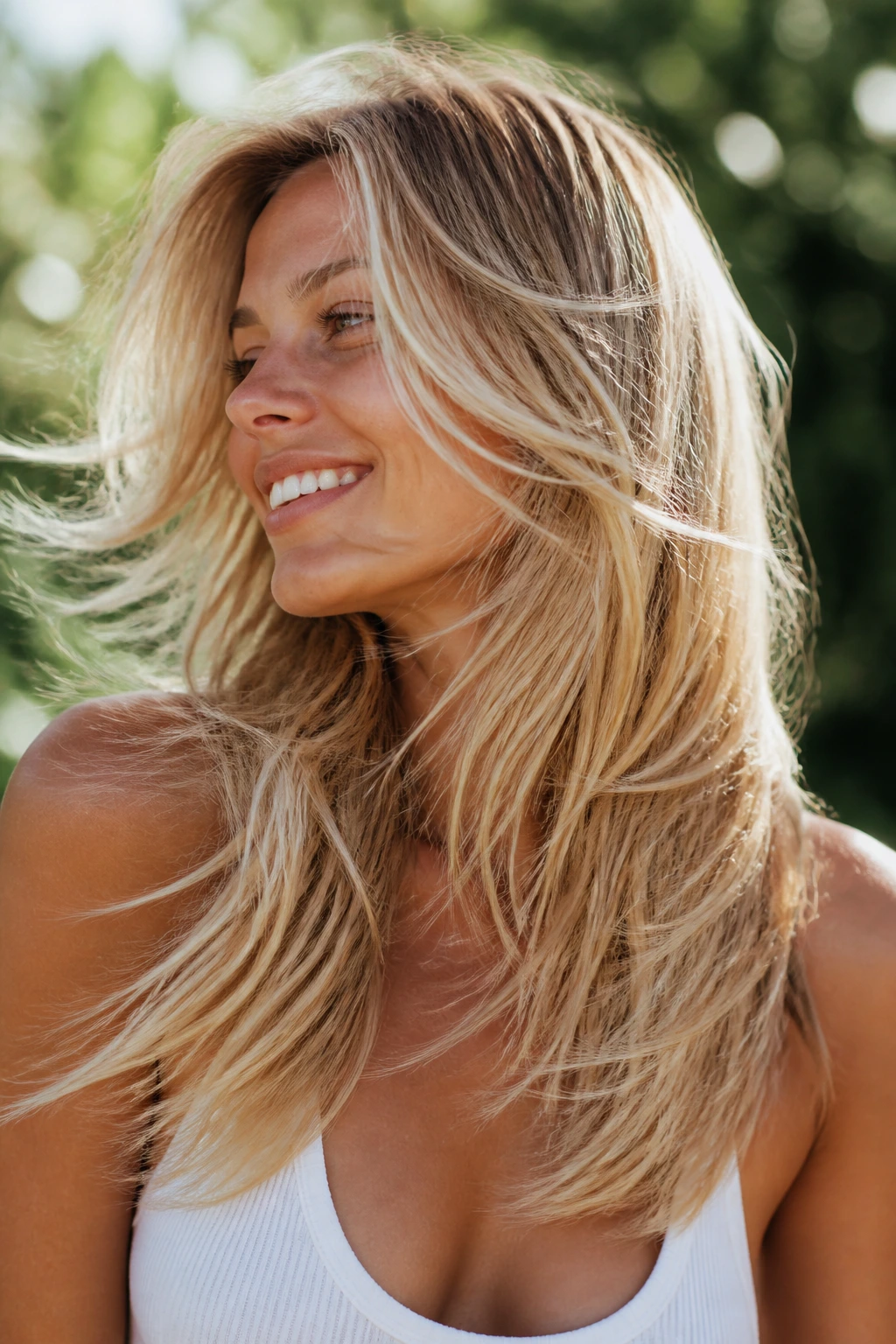
The best blonde layered haircuts do one thing exceptionally well: they give light somewhere to go. A cheekbone frame, a soft interior layer, a curved perimeter, a bright ribbon at the hairline—those little choices are what keep blonde from looking flat or stripped down.
The right cut also makes the color easier to live with. It grows out better, it moves better, and it holds its shape whether you spend ten minutes or forty on your hair. That’s the part people usually feel before they can name it. The blonde just looks more alive.
If your current cut is making the color work too hard, the fix is usually shape, not more bleach. Pick the version that matches your texture and upkeep, and the sun-kissed part starts taking care of itself.
