



Straight hair does not hide anything. A blonde ribbon that looks soft and blended on waves can turn sharp, almost graphic, the minute it lands on a flat, smooth cut. That is exactly why blonde hair looks for straight hair need a little more thought than the usual “go lighter, add some highlights” advice.
The upside is huge. Straight strands show shine cleanly, they hold blunt lines like a ruler, and they make color placement read with almost no visual noise. The downside is equally obvious. Every stripe, every brassy band, every too-dark root shows up fast. If the tone is off by half a step, you’ll see it in the mirror before you’ve finished your coffee.
So the good looks for straight hair are the ones that know how to behave on a smooth surface: creamy, icy, beige, pearl, honey, champagne, rooty, dimensional, or sharply framed. The best ones don’t fight the straight texture. They use it.
Why This Collection Feels Different on Straight Hair
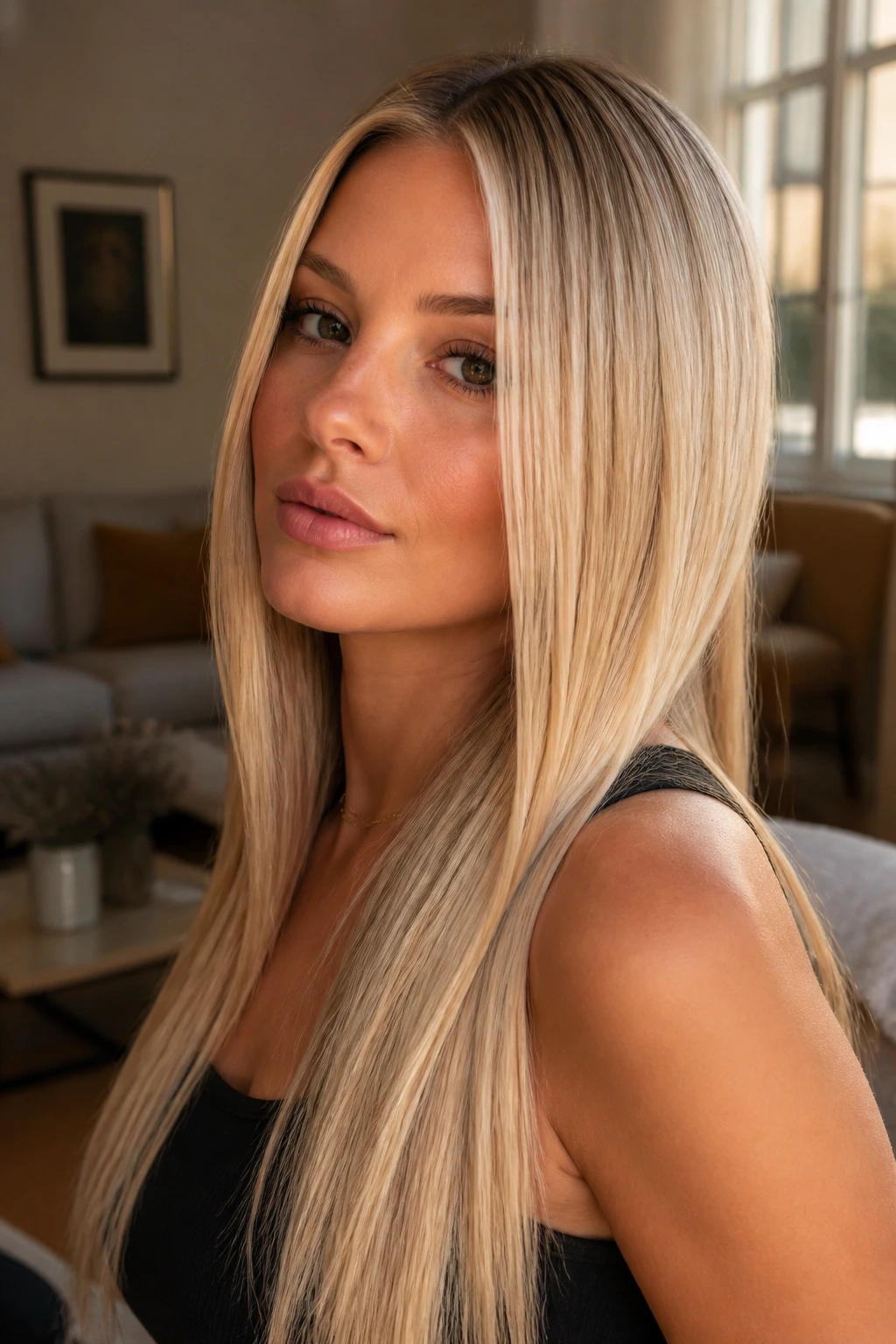
- The cut matters as much as the color: Straight hair turns a blunt line into a statement, so a blonde bob or lob can look polished with barely any styling if the ends are clean.
- Tone changes faster on straight strands: Cool ash, warm honey, and beige blonde all read more clearly when there isn’t a wave pattern breaking up the light.
- Root work shows immediately: A soft shadow root, smudge, or melt keeps straight hair from looking like it was colored in hard stripes.
- Fine hair gets a boost from brightness placement: Tiny babylights or face-framing foils can make straight hair look thicker without adding bulk.
- Maintenance should match the shade, not the fantasy: Platinum wants different care than champagne, and beige blonde behaves differently than a high-lift icy tone.
- These looks scale from bob to waist length: Straight hair can wear a blunt micro-bob or long sleek layers; the blonde just needs to match the cut’s geometry.
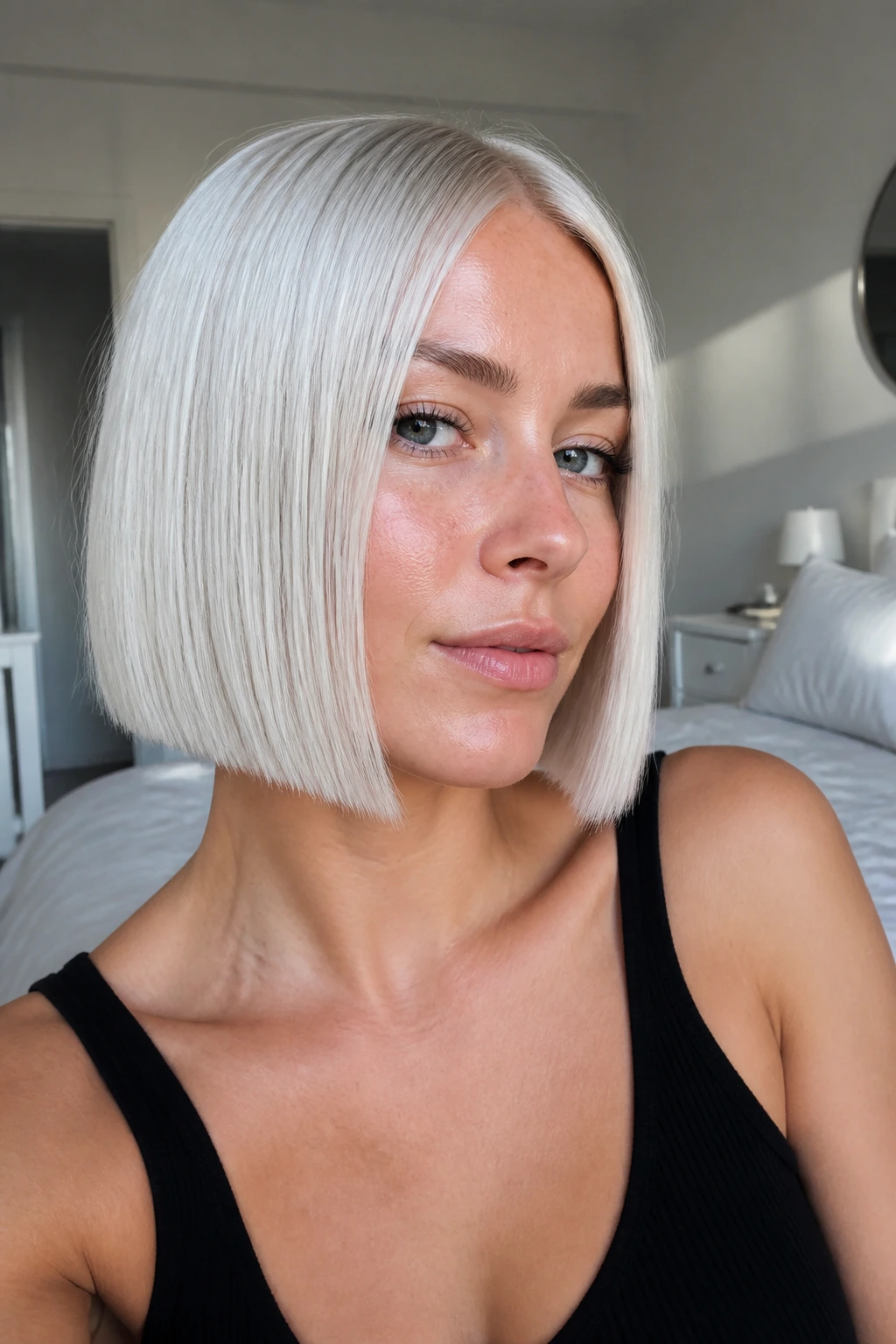
1. Ice-Platinum Blunt Bob
This is the one that looks like it was cut with a steel edge. On straight hair, an ice-platinum bob turns into a sheet of brightness, and the blunt line at the jaw makes the whole thing feel deliberate instead of fragile. It works best when the ends are clipped clean and the toner is kept cool, not violet-heavy to the point of chalkiness.
Ask for a level 10 or 10-plus blonde, a precise blunt perimeter, and a pale pearl or icy toner that still lets the hair reflect light. If your skin has pink or cool undertones, this can be stunning. If your hair is fine, even better. The solid shape gives the color a little backbone.
2. Butter Blonde Lob
Butter blonde is the opposite of icy, and that is why it looks so good on straight hair. The warmth softens the clean line of a lob, so the result feels creamy instead of severe. It has that lightly toasted, custard-colored finish that catches light at the mid-lengths and stays gentle near the root.
This shade is a smart choice if you want blonde hair looks for straight hair that don’t scream for weekly purple shampoo. Ask for a beige-gold toner with soft highlights through the surface, not heavy all-over lightening. The best version has movement without obvious streaks. It reads expensive because it doesn’t try too hard.
3. Champagne Glass Hair
Champagne blonde on straight hair is all about shine. The color sits somewhere between beige and pale gold, with enough softness that it never tips into yellow, and enough clarity that it looks clean under bright light. Pair it with a glassy blowout and the whole head starts reflecting in a way that almost looks polished.
This one flatters medium-density hair because the smooth finish can make strands feel fuller without needing big volume. Keep the root a touch deeper than the mids so the color doesn’t float away from the scalp. The effect is sleek, expensive-looking, and a little bit cool without being icy.
4. Beige Balayage on a Straight Lob
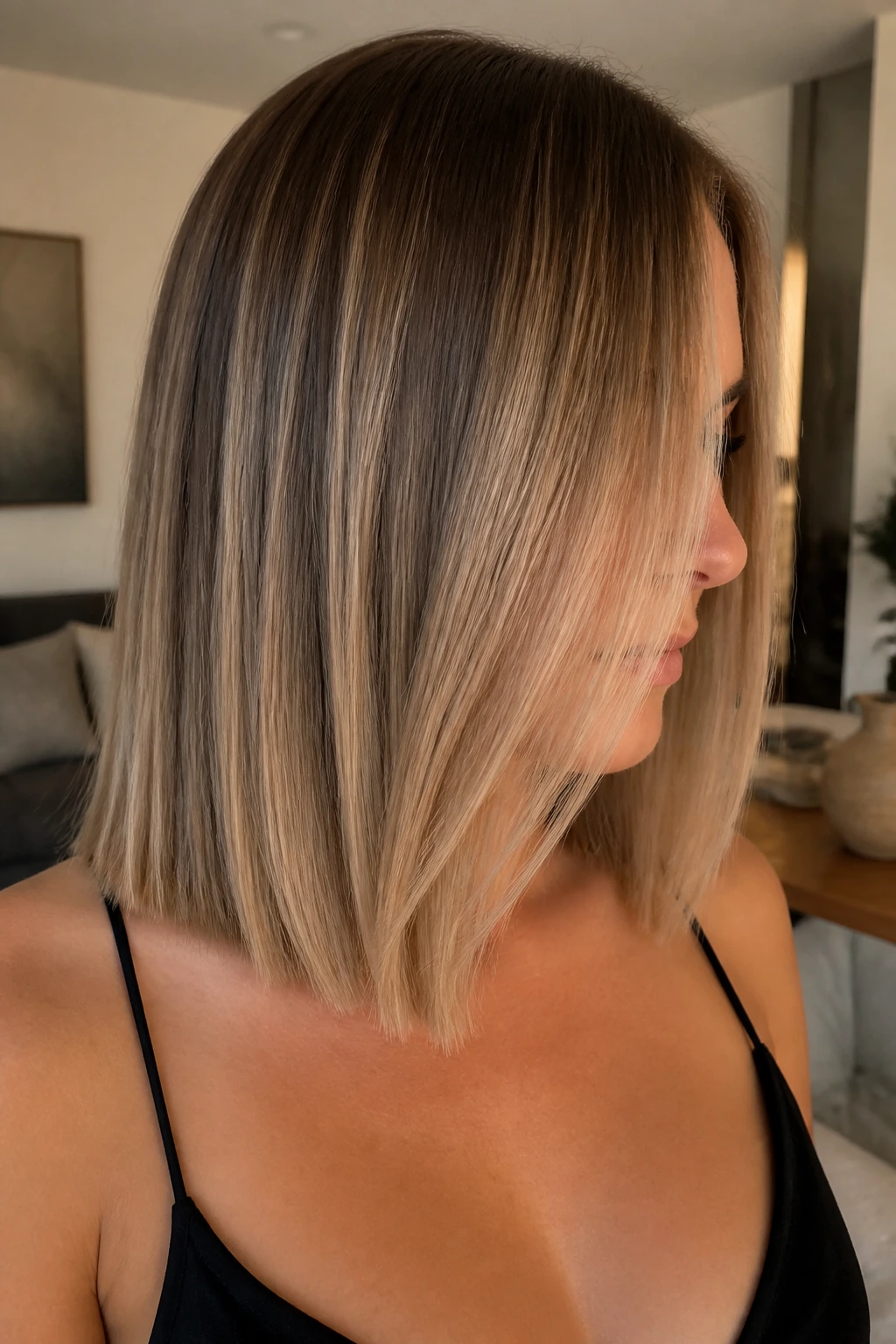
Beige balayage is for anyone who wants dimension without obvious contrast. On a straight lob, the lighter pieces fall in long, quiet ribbons that don’t get swallowed by bends or curls. That means the color has to do the work the texture usually does.
It’s one of the easiest ways to make straight hair look more expensive without making it louder. Ask for hand-painted beige pieces through the mid-lengths and ends, with a soft shadow at the root. Keep the front pieces a half-step lighter than the rest. That tiny detail makes the whole cut look sharper near the face.
5. Money Piece with a Soft Root Shadow
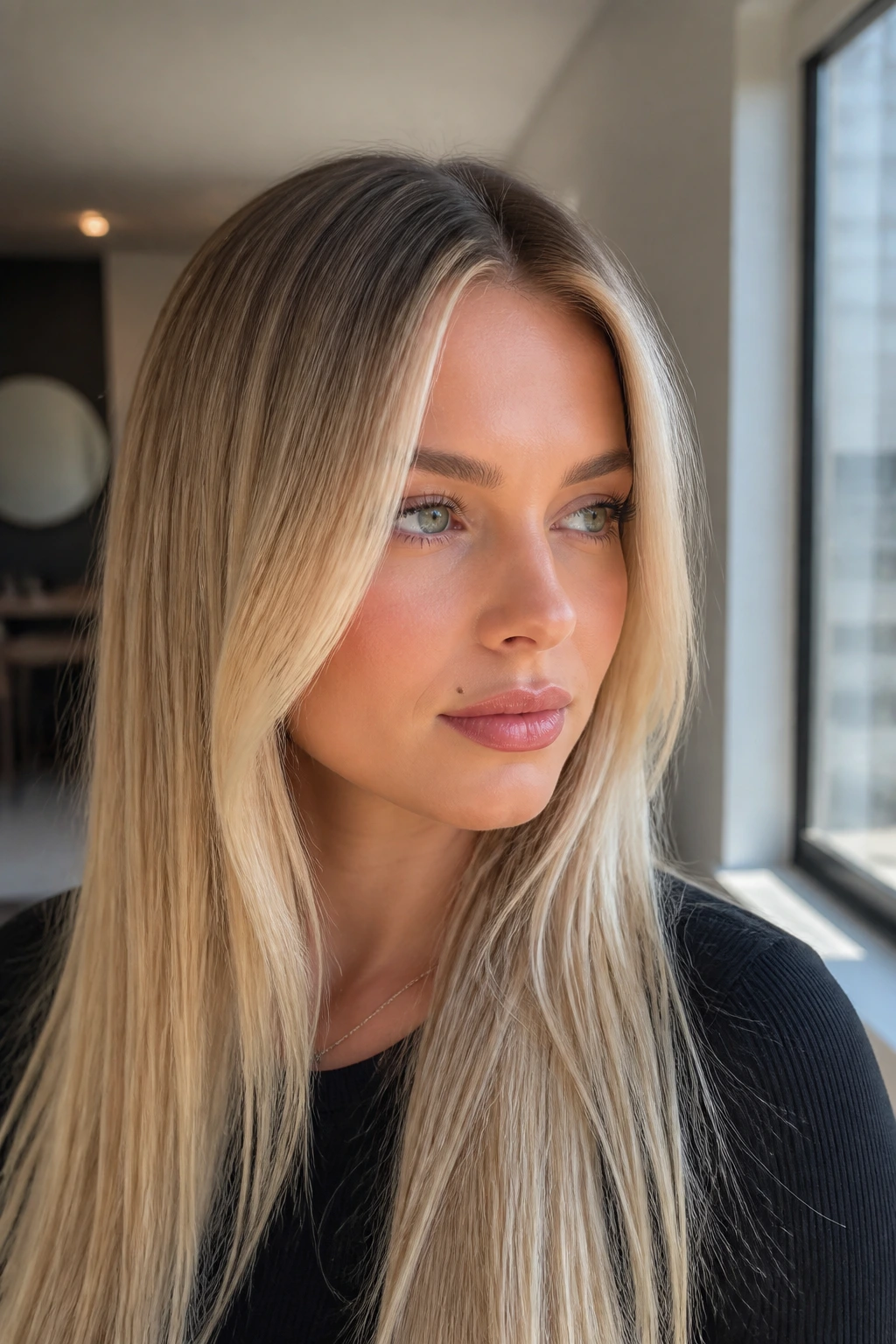
A money piece can go wrong fast on straight hair if the front sections are too thick or too white. Keep it fine. Keep it bright, yes, but fine enough that it frames rather than overwhelms. A soft root shadow behind it keeps the contrast from turning harsh.
This look is especially good if you want to brighten your face without committing to an all-over blonde refresh every few weeks. The key is placement: lift the face-framing foils one shade lighter than the rest of the head, then blur the root so the grow-out stays gentle. Straight hair shows the edge of the foils, and that is the whole point.
6. Mushroom Blonde with a Satin Finish
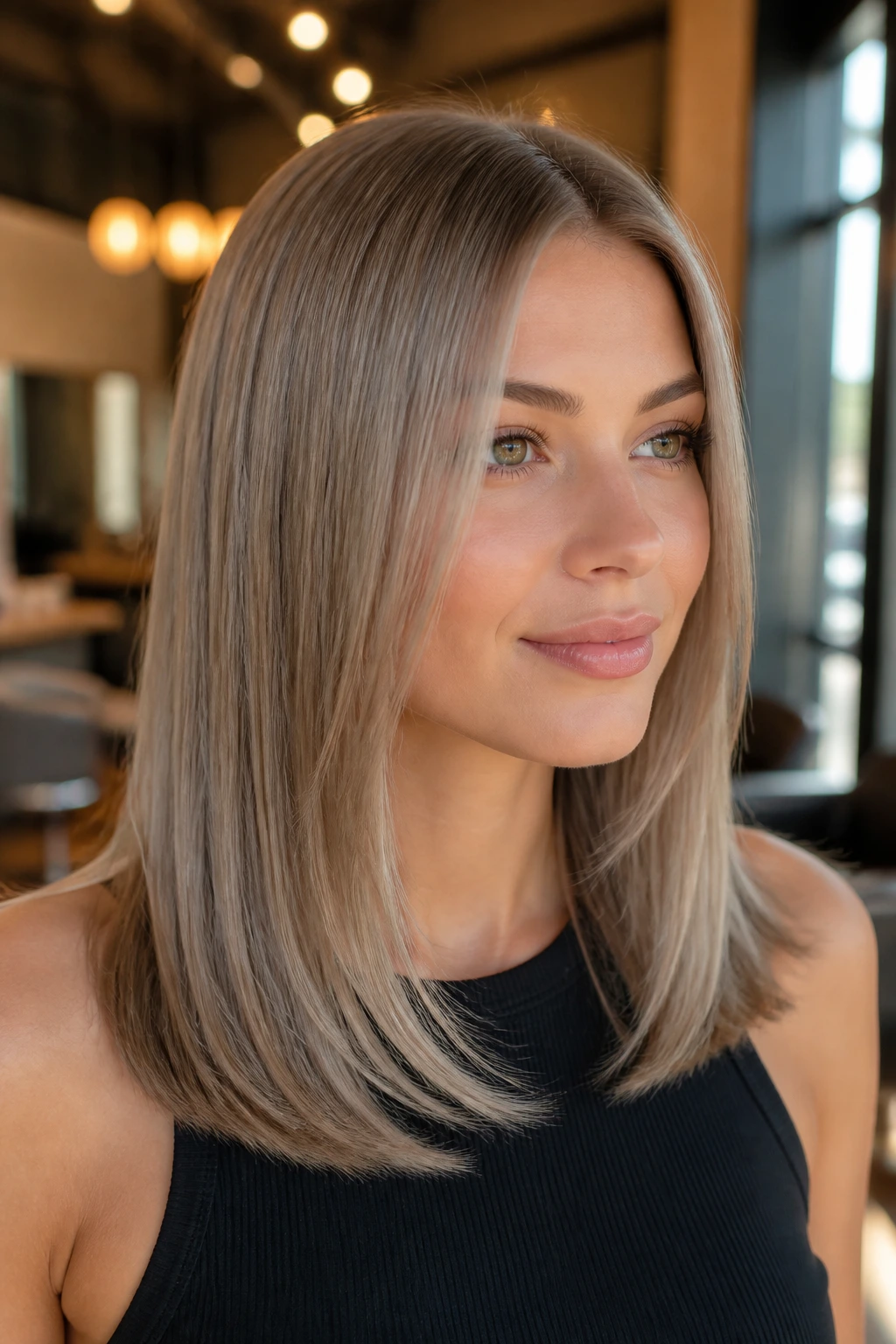
Mushroom blonde lives in the cool-beige zone, with a faint taupe cast that works beautifully on straight hair because it looks intentional, not accidental. There’s no stripy blonde drama here. Just a soft, muted tone that feels calm and modern without being flat.
This color loves a satin finish rather than a high-gloss, mirror-shiny blowout. Ask for a beige ash base with fine lowlights woven in so the head doesn’t look washed out. On straight strands, the contrast stays subtle, which is exactly why it works. It’s the blonde for someone who likes polish but doesn’t want to look overdone.
7. Vanilla Blonde with Long Clean Layers
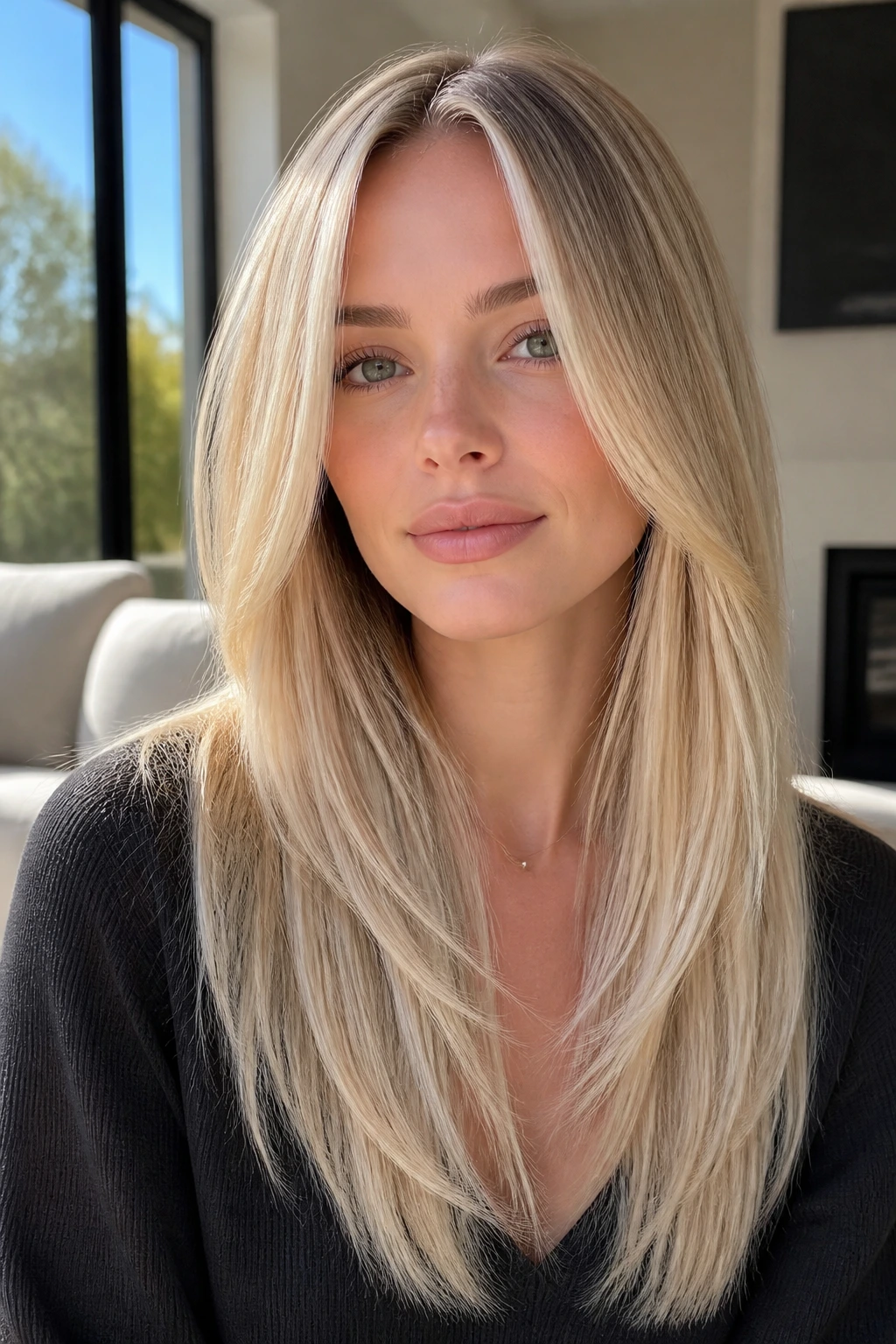
Vanilla blonde has more cream than gold, more softness than platinum. On straight hair with long, clean layers, it gives you lightness around the face and through the ends without making the whole length look thin. The layers stop the color from reading like one single sheet.
This is a good choice if you want brightness but not a stark icy finish. Ask for a creamy blonde toner and delicate highlighting through the crown so the top doesn’t go flat. The beauty here is in restraint. Straight hair makes the layers visible, and vanilla blonde keeps them soft enough to feel wearable every day.
8. Pearl Blonde Midi Cut
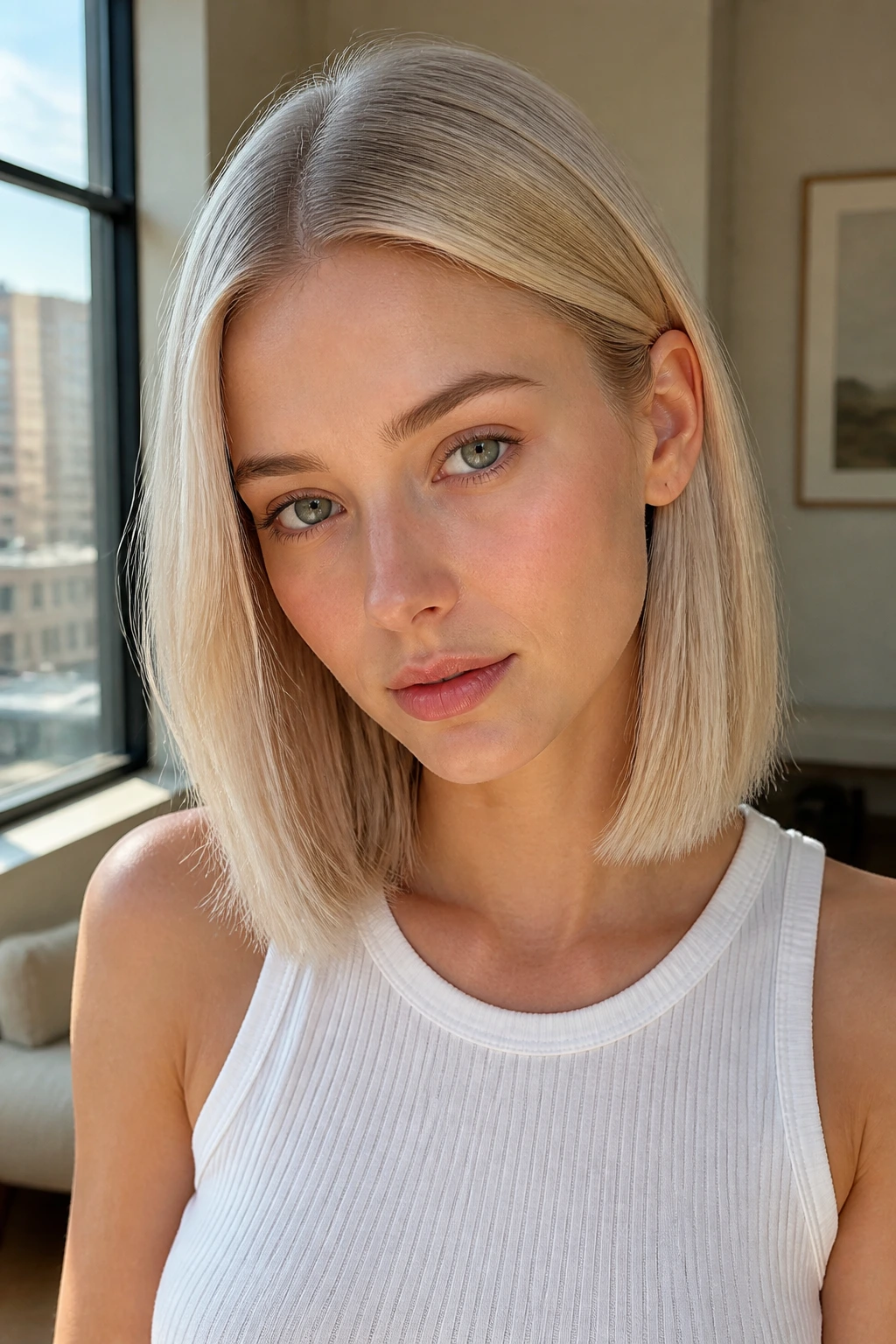
Pearl blonde has that faint iridescent sheen that catches cool and warm light at the same time. On a straight midi cut, it reads almost luminous, especially when the hair is tucked behind the ears or worn with a center part. It’s one of those shades that looks quiet in the salon chair and expensive in daylight.
The trick is not letting it drift too yellow. Ask for a pale beige toner with just enough coolness to keep the finish pearl-like, not gray. A midi cut gives the color room to breathe, and straight hair helps every tone shift show up clearly. Clean, soft, and a little slippery in the best way.
9. Scandinavian Blonde with a Center Part
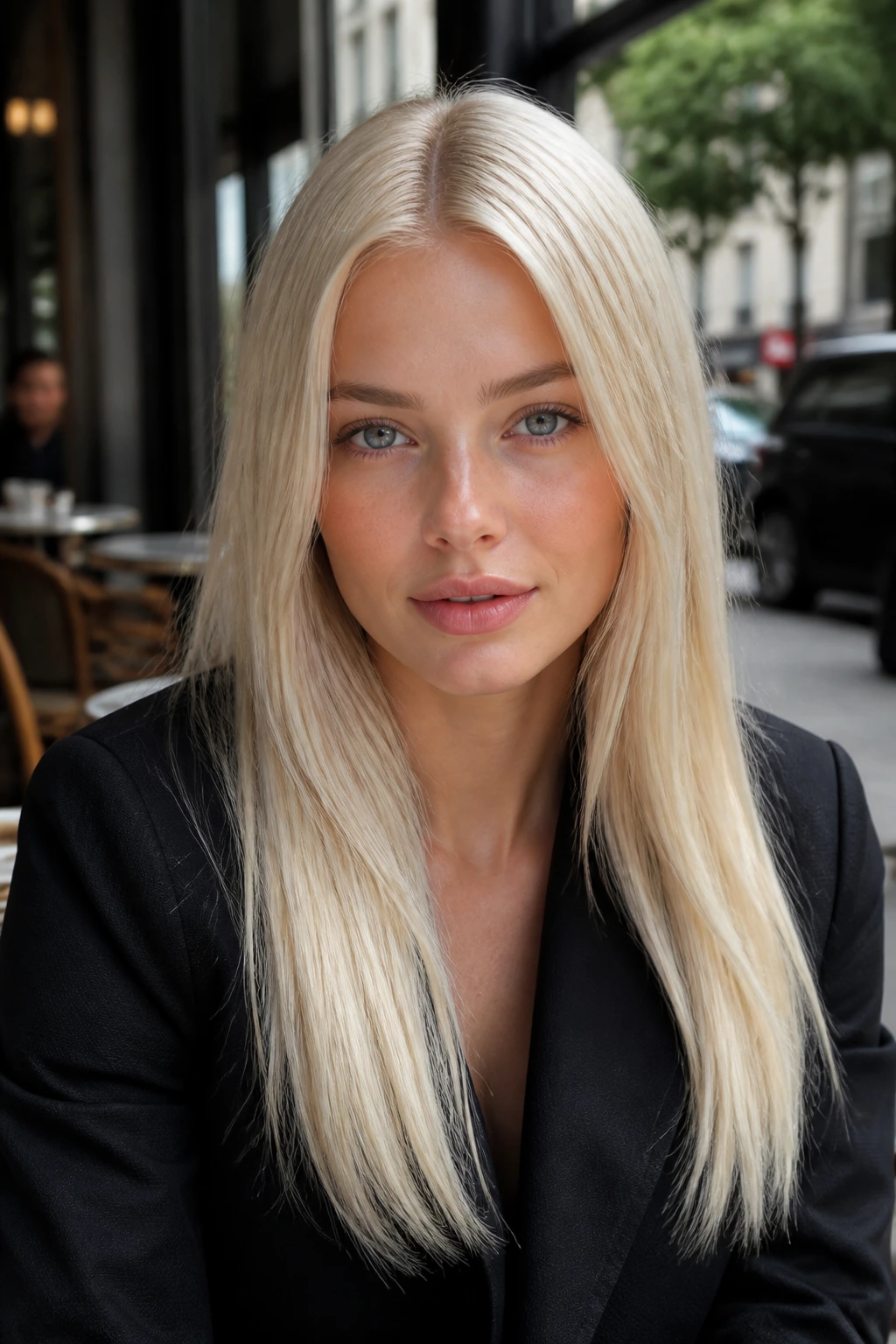
This is the crispest version of blonde hair looks for straight hair. Scandinavian blonde tends to sit high on the lift scale, so the finish is pale, cool, and very close to root-to-tip brightness. On straight hair with a center part, it has a hard, graphic neatness that feels almost architectural.
It suits people who like a high-contrast, minimal look and don’t mind the upkeep. You’ll want regular glossing and careful toner maintenance so the shade doesn’t yellow. The center part matters here more than you’d think; it makes the pale blonde feel balanced instead of floating. Clean lines. No fuss. Very little room for sloppiness.
10. Honey Blonde with Long Straight Layers
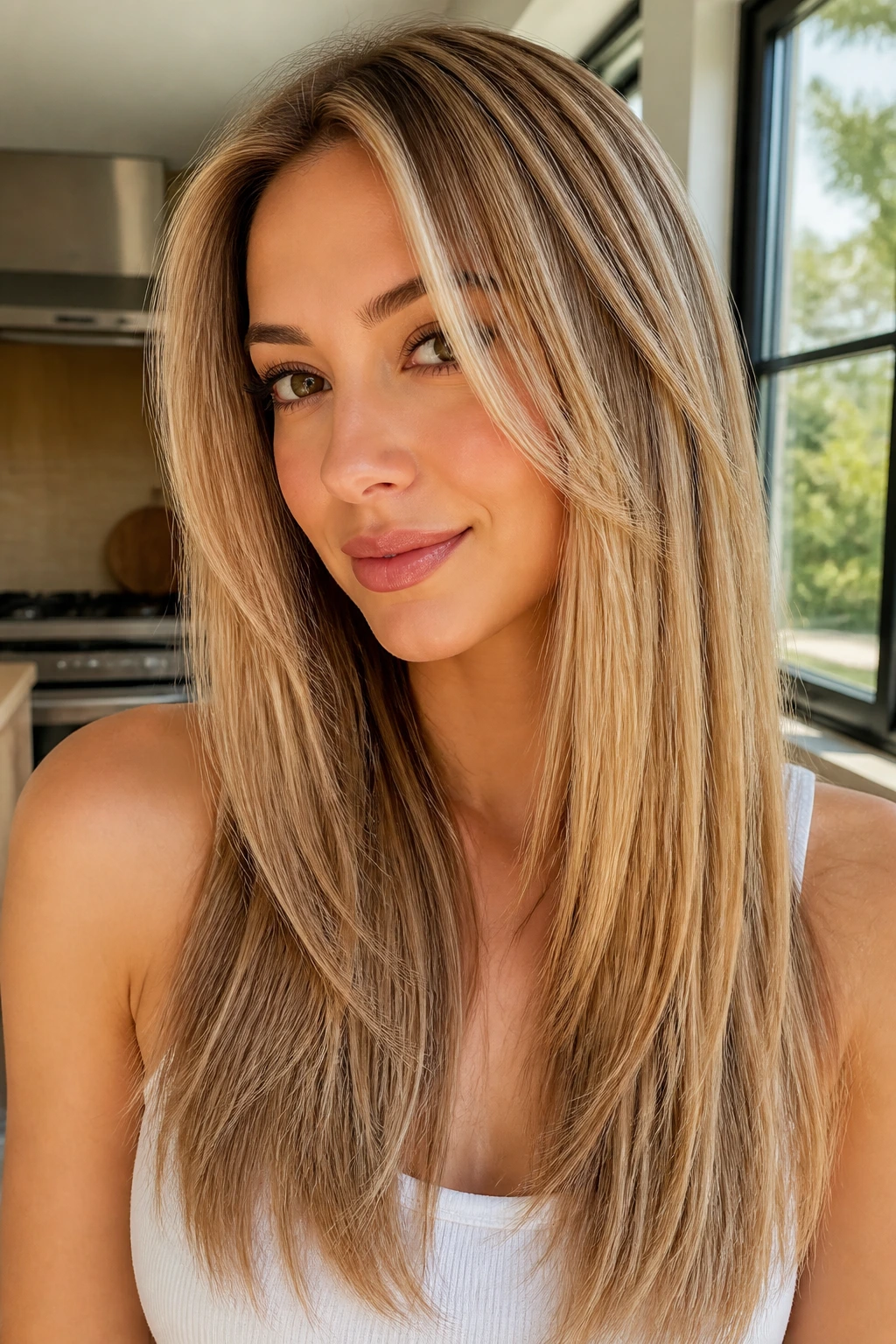
Honey blonde brings warmth back into the picture. On straight hair, it can keep long layers from looking stringy because the golden tone adds depth between the strands. It’s softer than bright gold and easier to wear than a full platinum, especially if your skin likes warmth.
The best honey blonde on straight hair has deeper lowlights underneath and brighter pieces near the surface. That keeps the length from going one-note. If you want a blonde that looks healthy rather than icy, this is a strong option. It feels sunlit, but not beachy in a cliché way.
11. Ash Ribbon Highlights
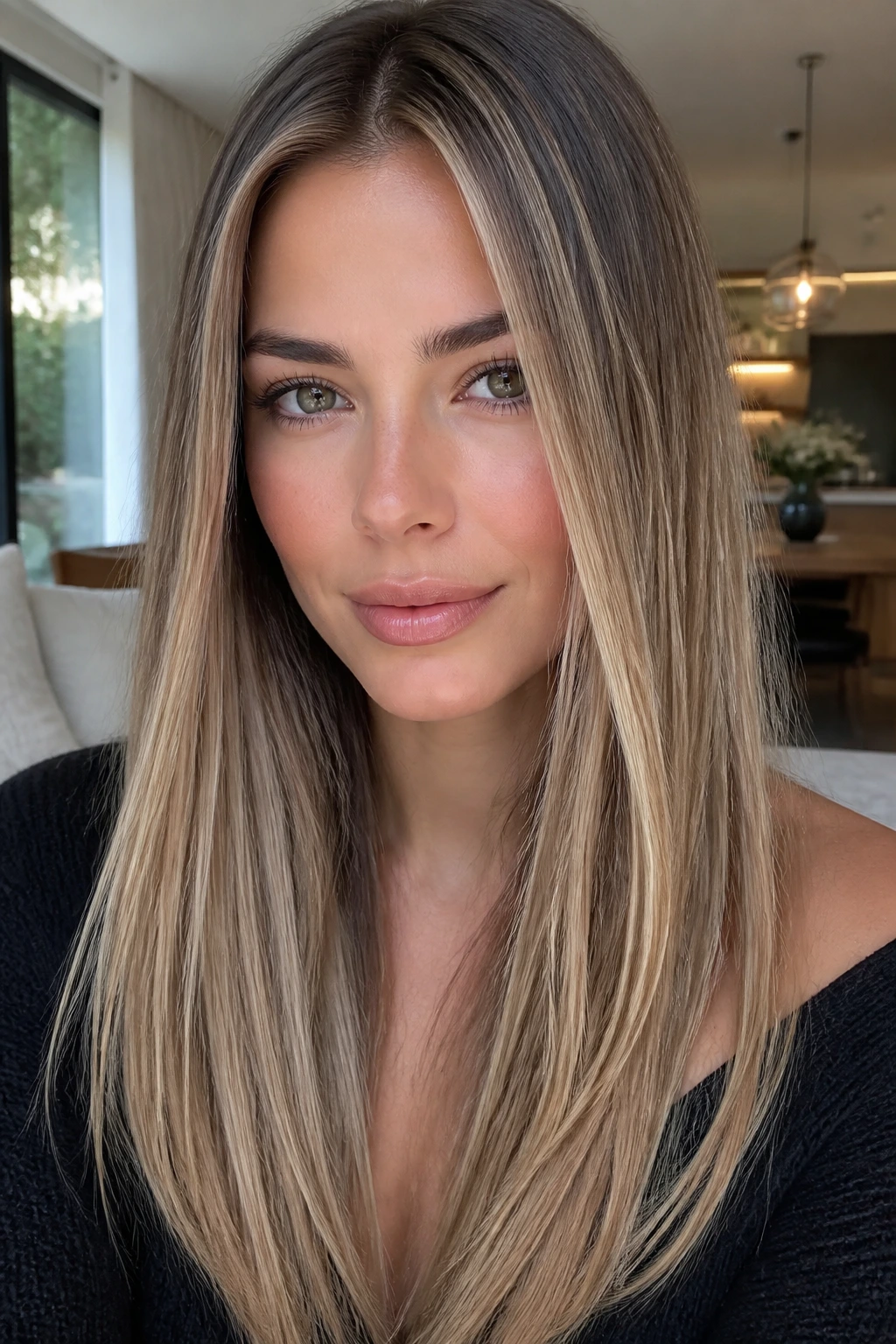
Ash ribbon highlights are a nice antidote to the “too blonde, too fast” problem. Instead of flooding the whole head with light, you thread cool, slender highlights through a darker blonde or light brown base. Straight hair shows every ribbon clearly, which makes this style read expensive instead of accidental.
This look works especially well on medium to thick hair, where a few cool ribbons can break up density without making the ends look thin. Ask for highlights that vary in width—some narrow, some a touch wider—so the straight finish doesn’t look repetitive. The ash tone should be soft, not muddy. There’s a difference, and you can spot it fast.
12. Cream Soda Blonde Melt
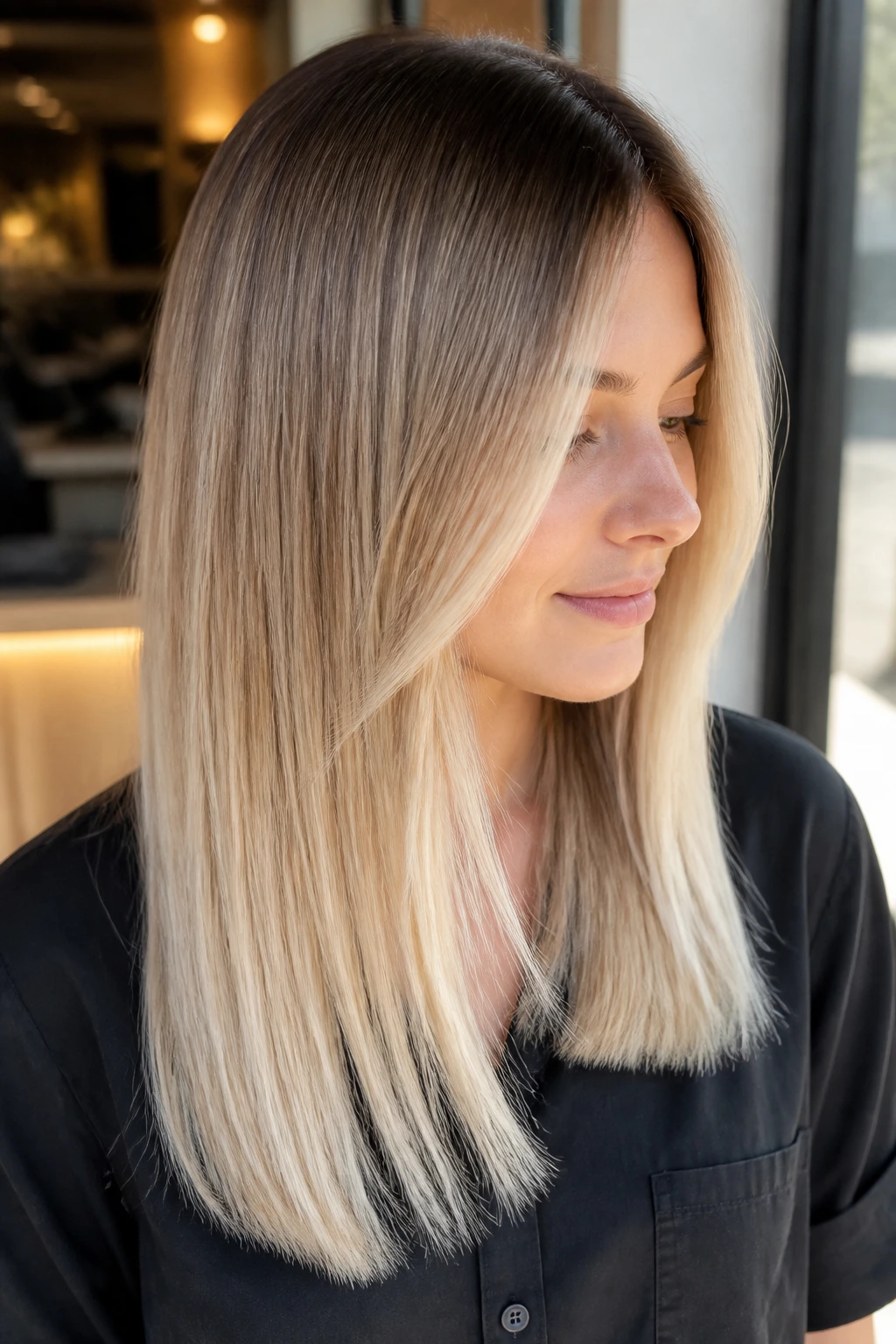
Cream soda blonde mixes beige, pale gold, and a little brown at the root, then melts them together so the transition feels smooth. On straight hair, the melt is the whole story. There’s nowhere for the color to hide, so the blend has to be clean.
That makes this a very good choice if you want blonde with lower maintenance. Ask for a root shadow that is only one or two levels deeper than the mids, then let the stylist blur the transition until it looks like the color grew that way. Straight hair loves this because the finish stays calm even when it’s polished.
13. Old Money Blonde with Blunt Ends
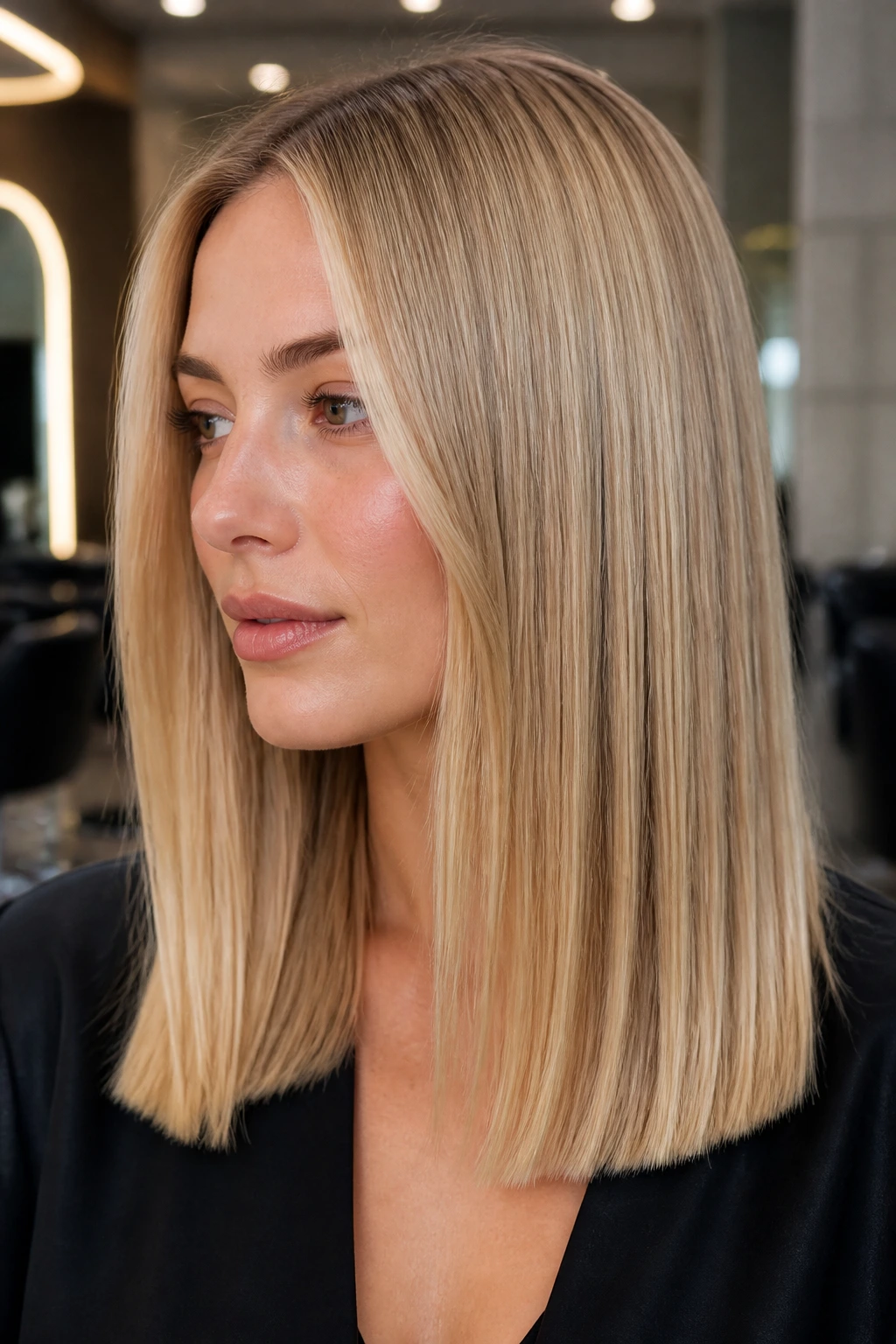
People throw around “old money” a lot, but on straight hair the phrase makes more sense than usual. The look is about soft, controlled blonde—beige, neutral, and a little muted—with blunt ends that feel expensive because they’re tidy. Nothing wispy. Nothing over-lightened.
This works well on shoulder-length or longer cuts where the perimeter stays full. Ask for a neutral blonde gloss, not a bright white toner, and keep the finish sleek. Straight hair lets the blunt edge do most of the visual work, which is why this style can look more refined than louder blondes with twice the effort.
14. Babylight Blonde on Poker-Straight Lengths
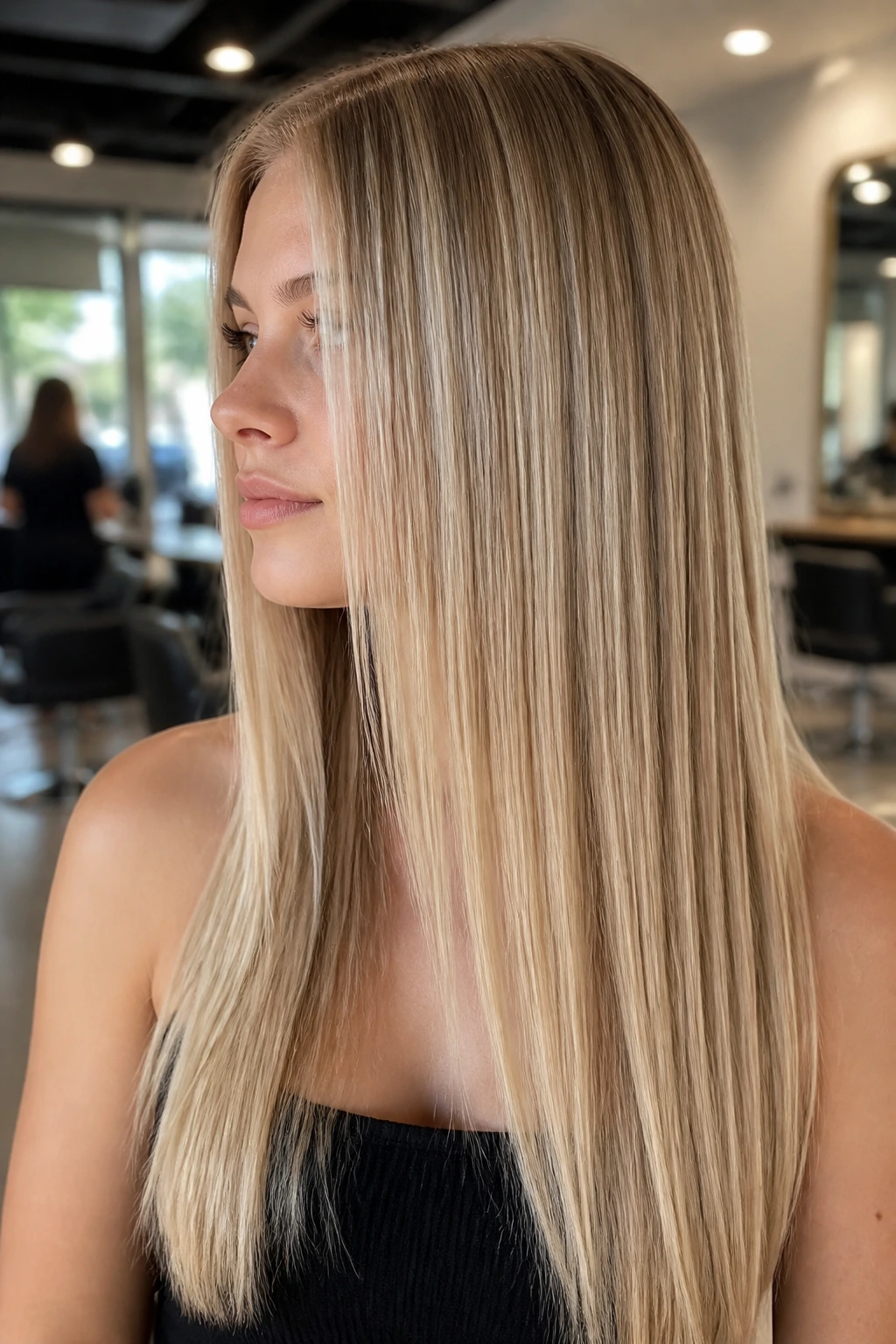
Babylights are tiny. That’s the entire point. On poker-straight hair, a dense network of micro-fine blonde highlights can look like natural brightness rather than obviously colored streaks. It’s one of the cleanest options if you want the hair to move between shades without dramatic contrast.
This is especially good for fine hair, because babylights can create the feeling of more texture without actually making the hair bulky. Ask for fine foils placed close together, then toned to a beige or pale champagne. The result is subtle, and subtle is often the smarter choice on very straight hair.
15. Toasted Almond Blonde with Smudged Roots
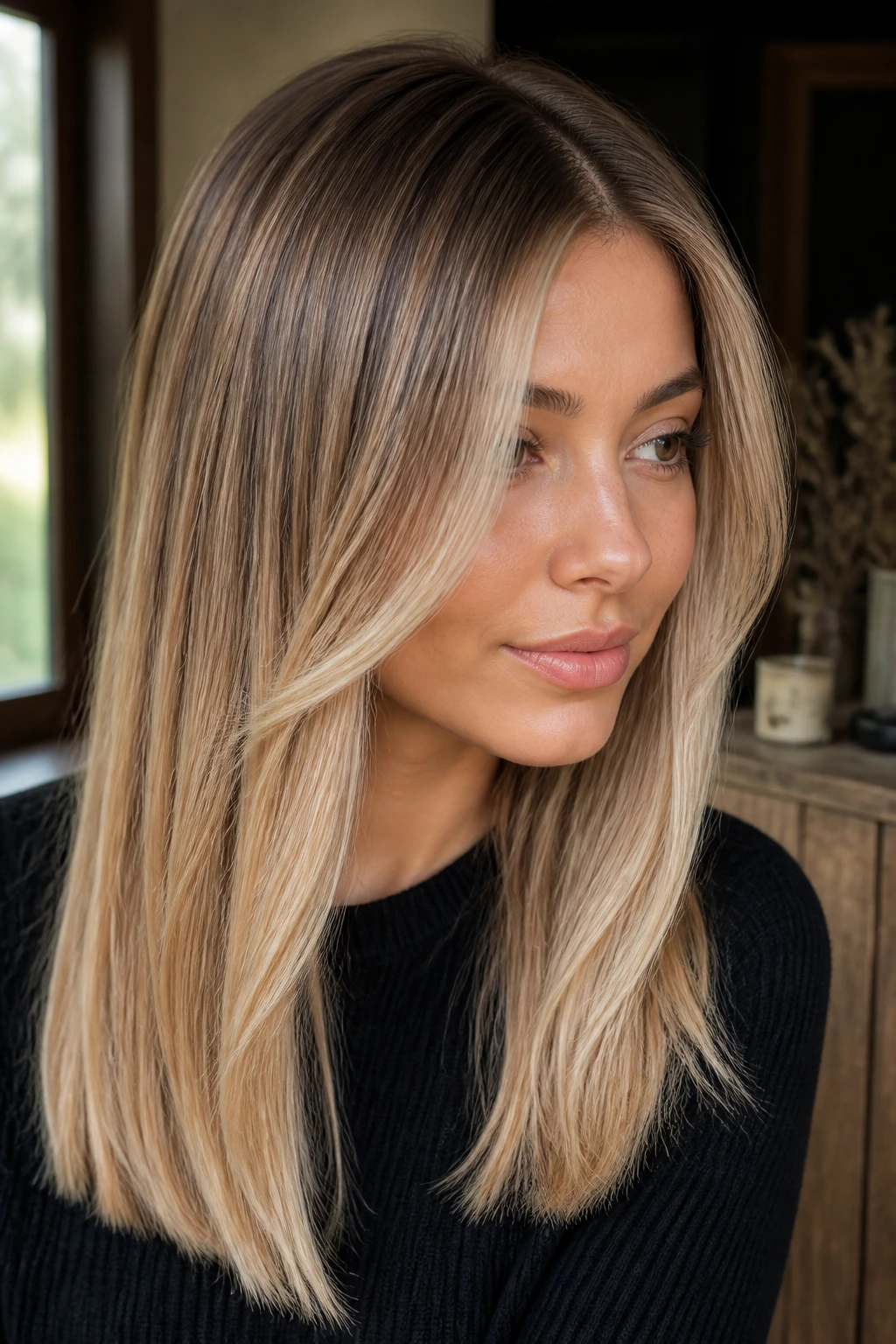
Toasted almond blonde lives in that warm-neutral range that flatters a lot of people. On straight hair, the smudged root keeps the color from looking like a hard cap sitting on top of the head. The ends stay brighter, but the root blend gives the whole style some breathing room.
This is one of the best options if you want a blonde that doesn’t punish you for going a few extra weeks between appointments. Ask for a root smudge that fades into almond-beige mids, then a slightly brighter end piece near the face. The warmth helps straight hair look soft instead of severe.
16. Rose Champagne Blonde
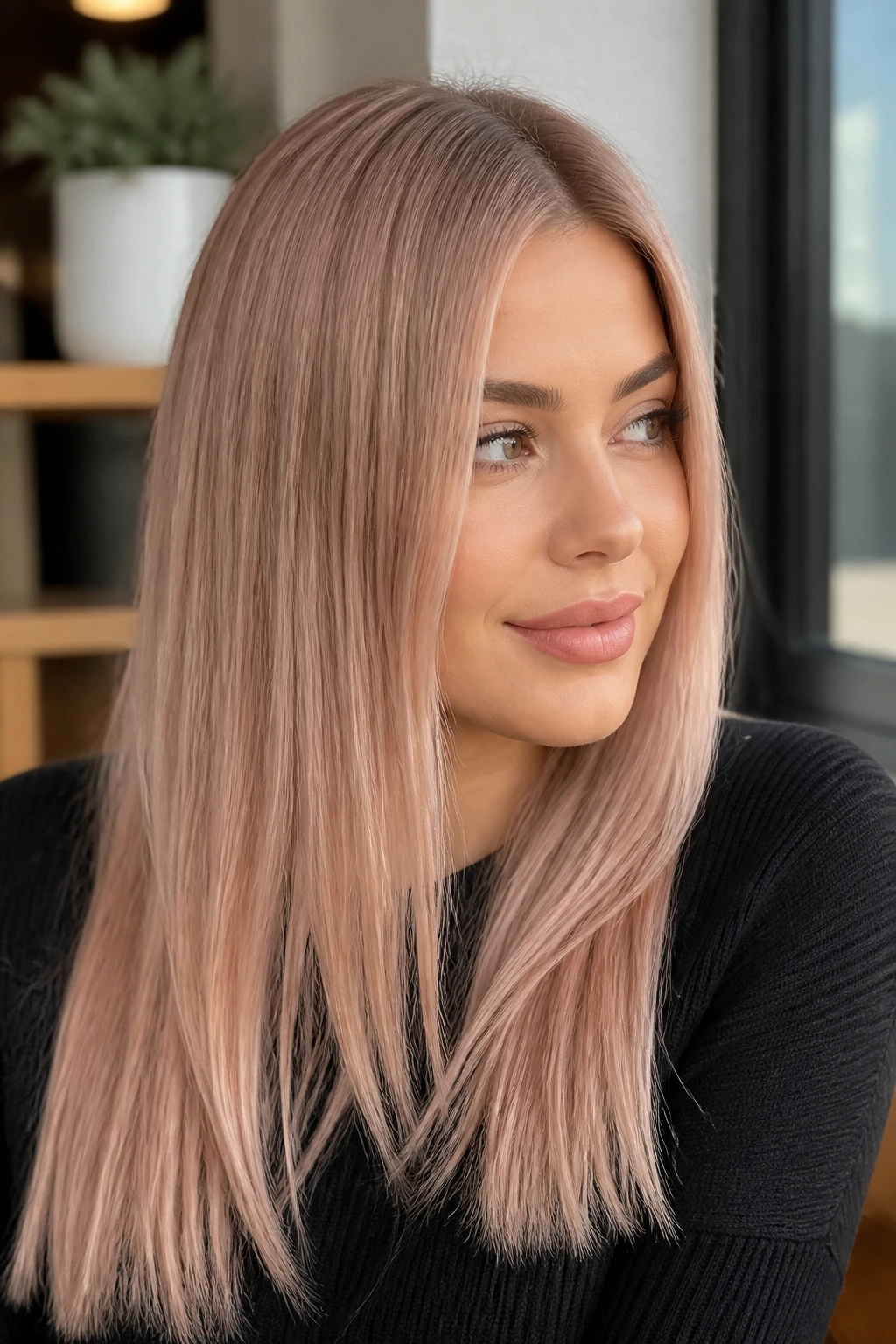
Rose champagne blonde is for anyone who likes a little blush in their hair color without going full pastel. On straight strands, the soft pink-beige tone reads like a filter, not a costume. It’s delicate, glossy, and a little cheeky in the best way.
Because the shade is subtle, the cut matters even more. A clean lob, a center part, or a tucked-behind-the-ear finish all help the color show up. Ask for a champagne base with a whisper of rose in the toner, not a full pink overlay. The effect is fleeting enough to feel interesting and polished enough to wear outside a photo shoot.
17. Creamy Balayage on a Collarbone Lob
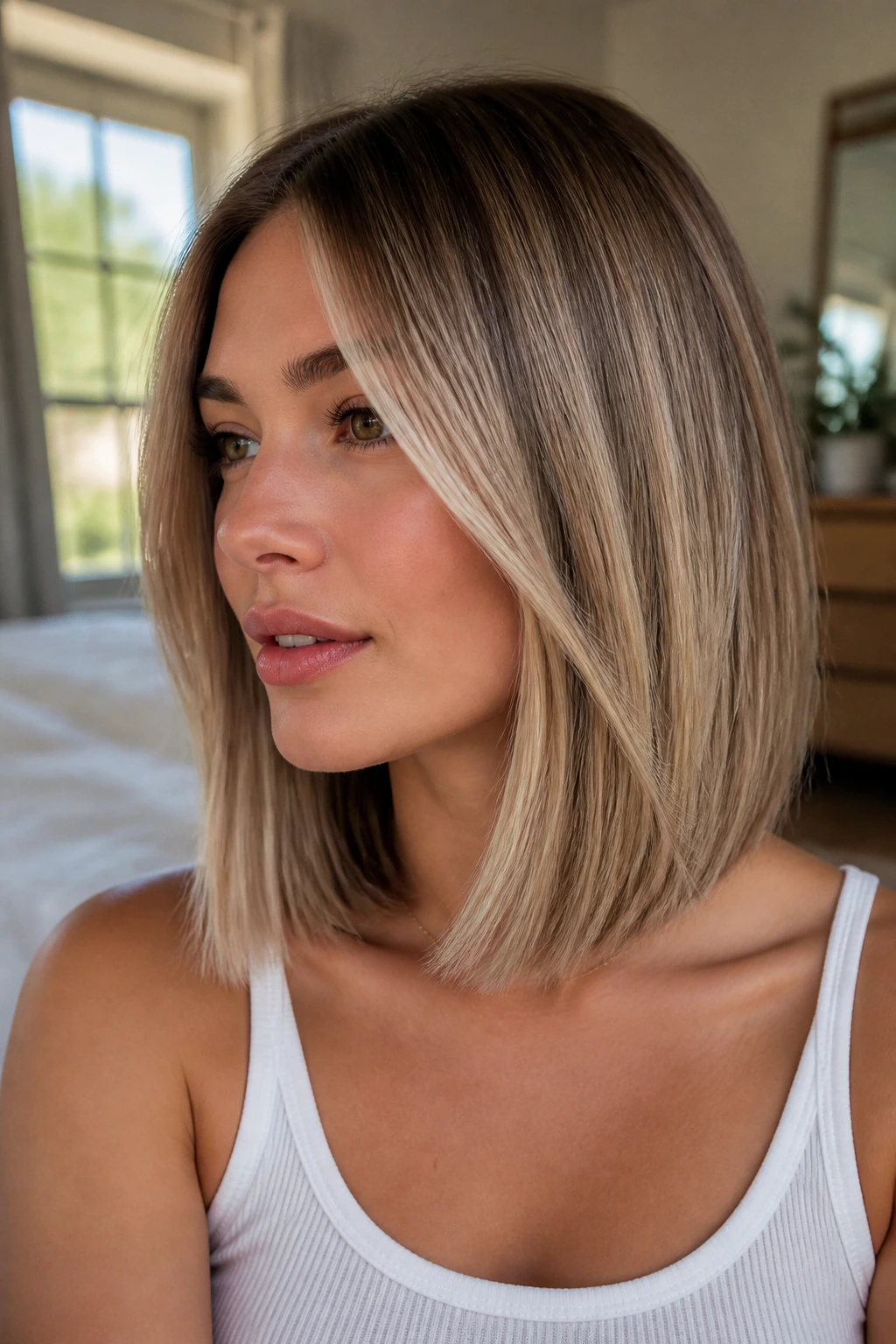
A collarbone lob is already one of the easiest lengths to wear straight, and creamy balayage makes it even better. The lighter pieces should be broad enough to show movement, but soft enough that they don’t look like stripes when the hair lies flat. Straight hair is unforgiving that way.
This look is a sweet spot for people who want dimension without a lot of obvious root work. Ask for creamy beige ribbons through the mid-lengths and ends, plus a little extra brightness around the front. Keep the ends full. The length sits right where the collarbone bends, which gives the whole style a neat little finish.
18. Platinum Panels on a Darker Base
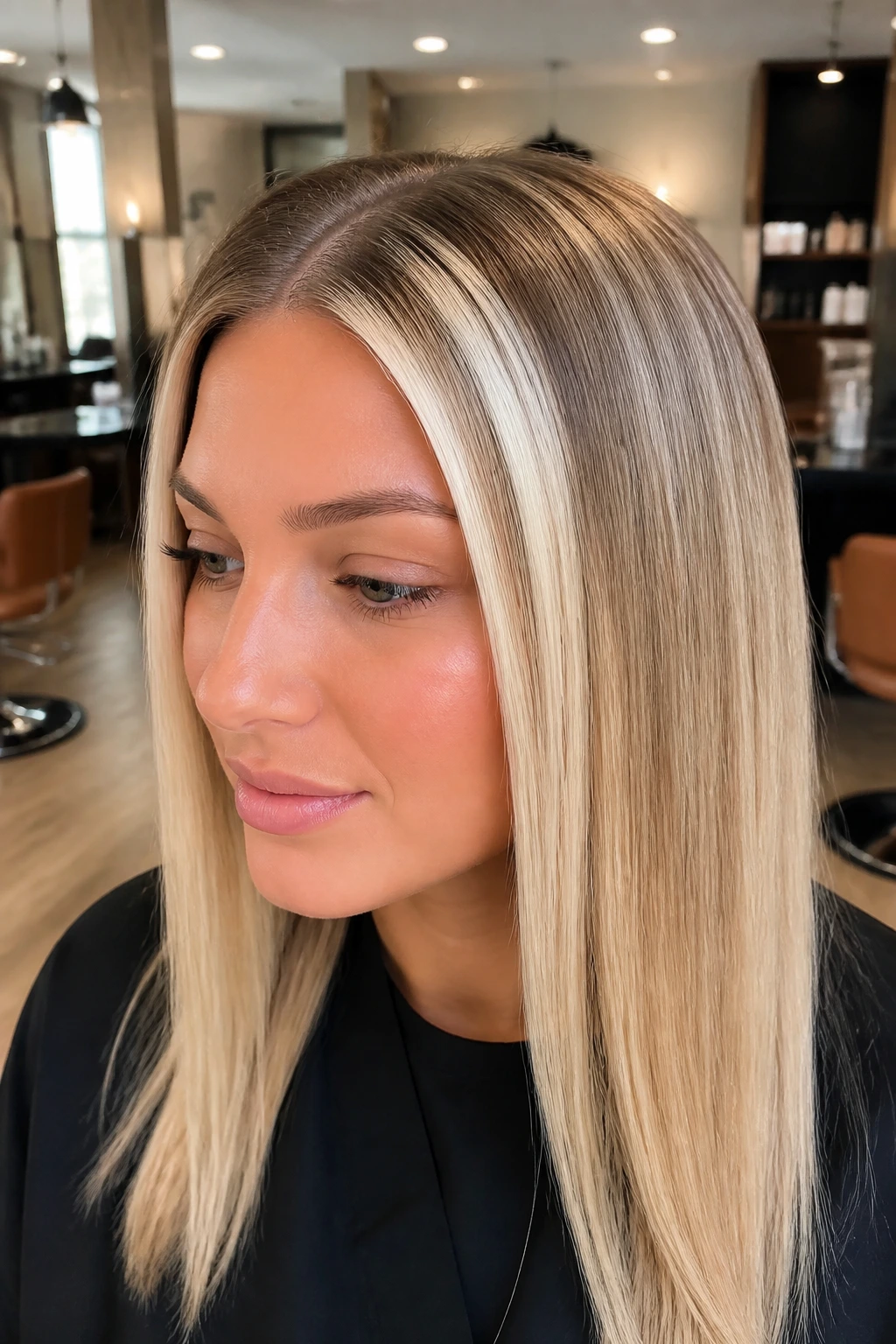
If you want contrast, go all the way. Platinum panels against a darker blonde or light brown base can look striking on straight hair because the lines stay clean and uninterrupted. There’s a little bit of drama here, and straight texture gives it a crisp edge instead of softening it away.
This works best when the panels are placed with purpose: one near the part, one around the temples, maybe a wider piece through the crown. Too many panels, and the head starts looking busy. Too few, and the effect disappears. Keep the rest of the base glossy and rich so the platinum has something to bounce off.
19. Curtain Bangs and Neutral Blonde
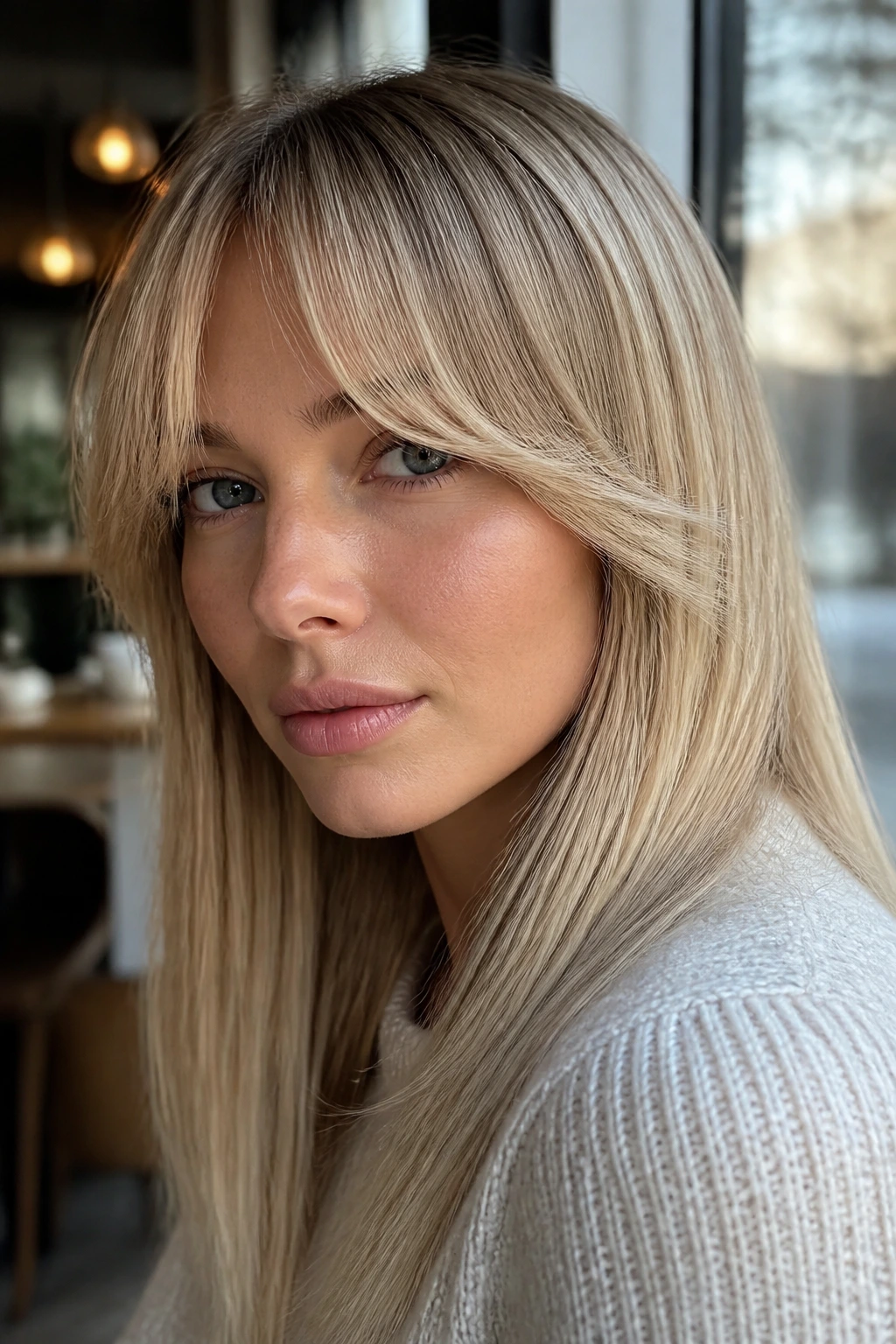
Curtain bangs change the whole mood of straight blonde hair. They break up the front line, soften the forehead, and make a neutral blonde feel a little more relaxed. The blonde itself should stay in that beige-to-soft-gold zone so the bangs don’t look disconnected from the rest of the cut.
This is a smart option if your face shape likes movement around the eyes and cheekbones. Ask for a neutral gloss and lighter feathering through the fringe so the bangs don’t look blocky. Straight hair can make curtain bangs sit very neatly, almost too neatly, so a bit of softness around the face helps.
20. Golden Beige Ombré
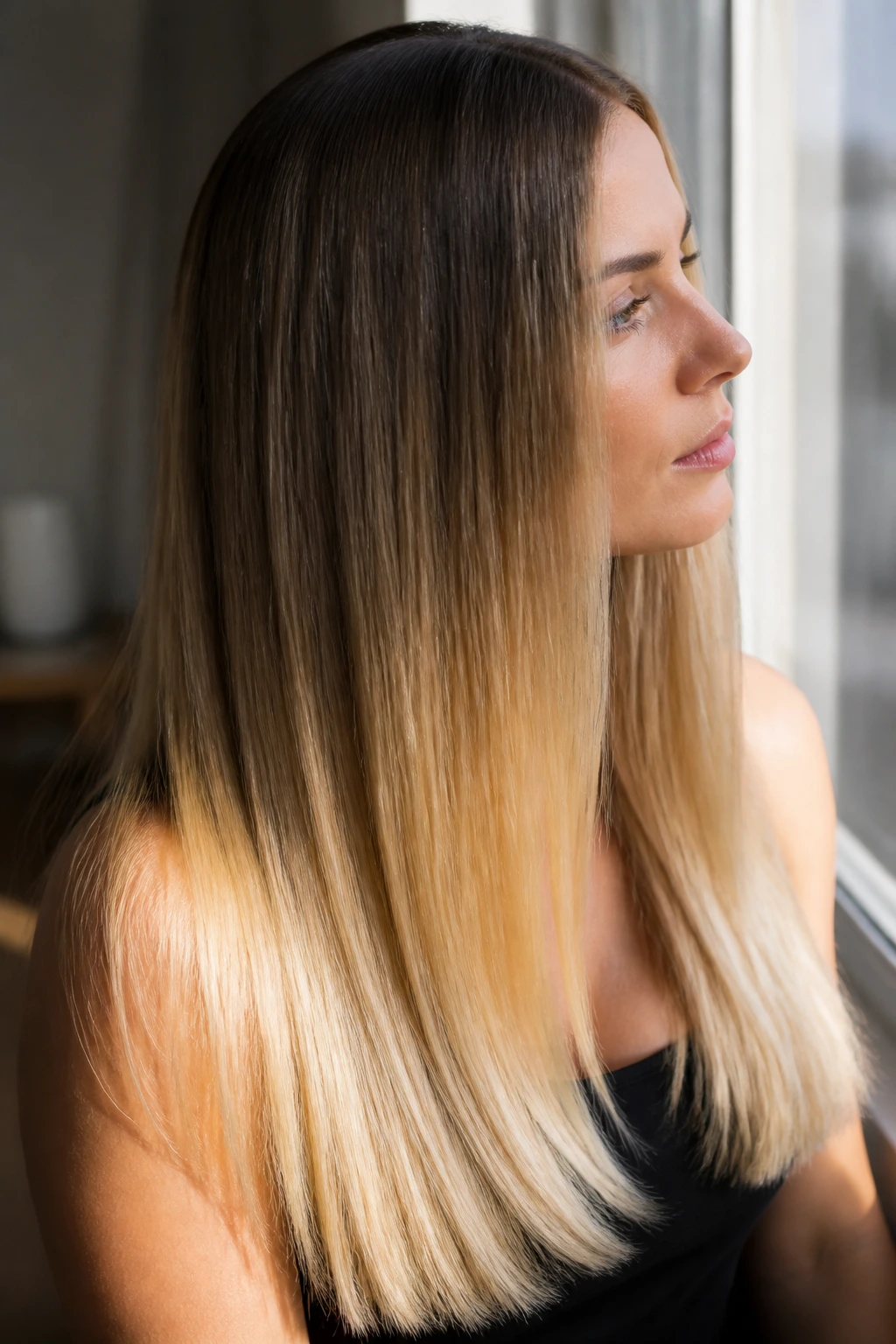
Golden beige ombré is one of the least fussy blonde hair looks for straight hair, which is probably why people keep coming back to it. The root stays deeper, the mids soften, and the ends brighten just enough to show a smooth fade. On straight hair, that gradient reads very cleanly.
The thing to watch is contrast. Too much and it looks stripy; too little and it disappears. Ask for a fade that starts at the cheekbone or lower, then slowly opens toward a golden beige end. This is especially good on longer lengths, where the ombré has space to stretch out and look deliberate.
21. Snowy Money Piece with a Deep Root
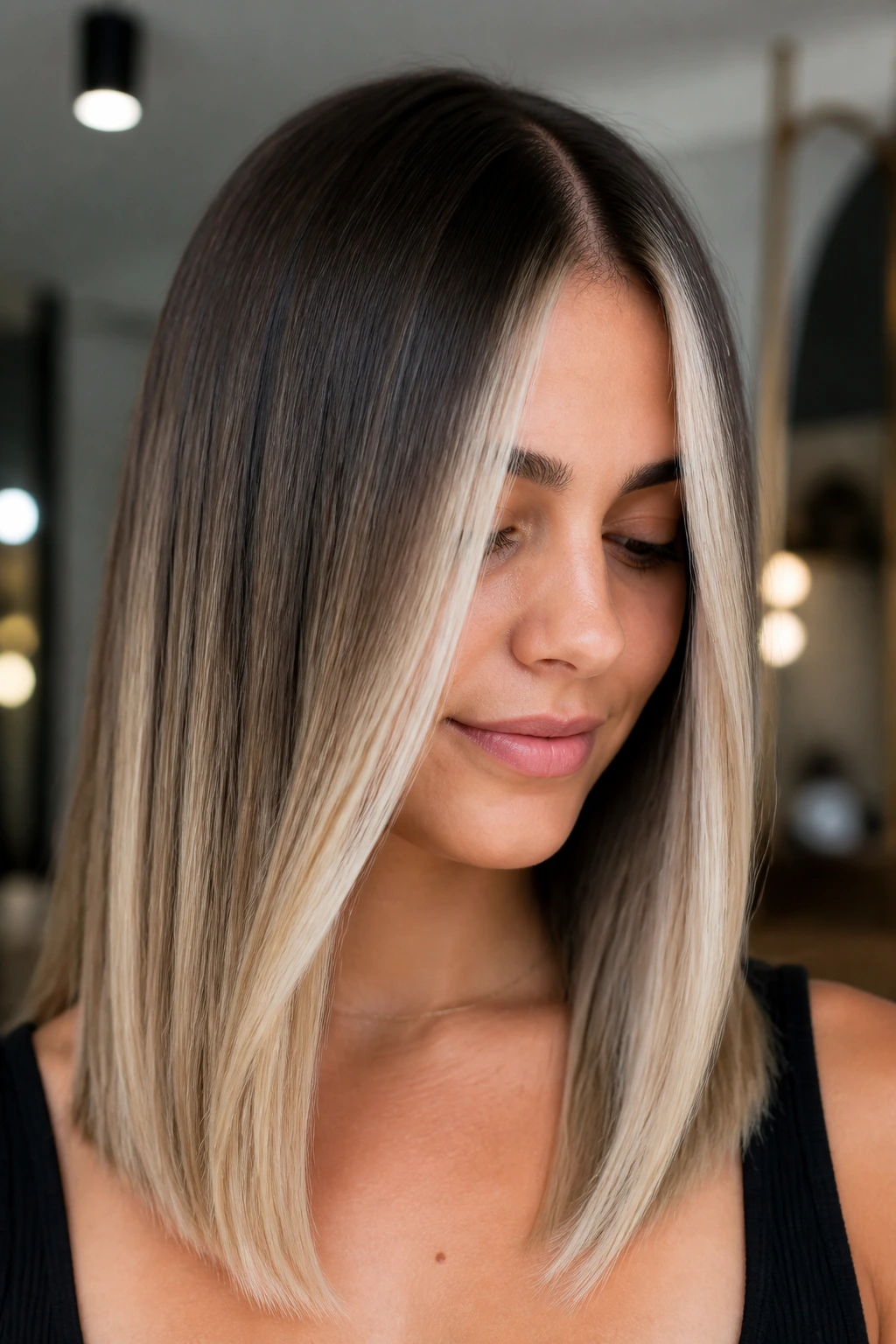
A snowy money piece is the flashy cousin of the softer face-frame. You keep the root deep, sometimes nearly brunette, and then drop in very pale pieces right where the hair falls around the face. On straight hair, that contrast hits hard in a good way.
It’s a strong look if you like your color to say something before you do. The deep root also makes maintenance easier than full platinum, which is why this can be practical as well as eye-catching. Keep the money piece narrow enough to look refined. If it gets too thick, the whole effect turns costume-y fast.
22. Mushroom Blonde Pixie
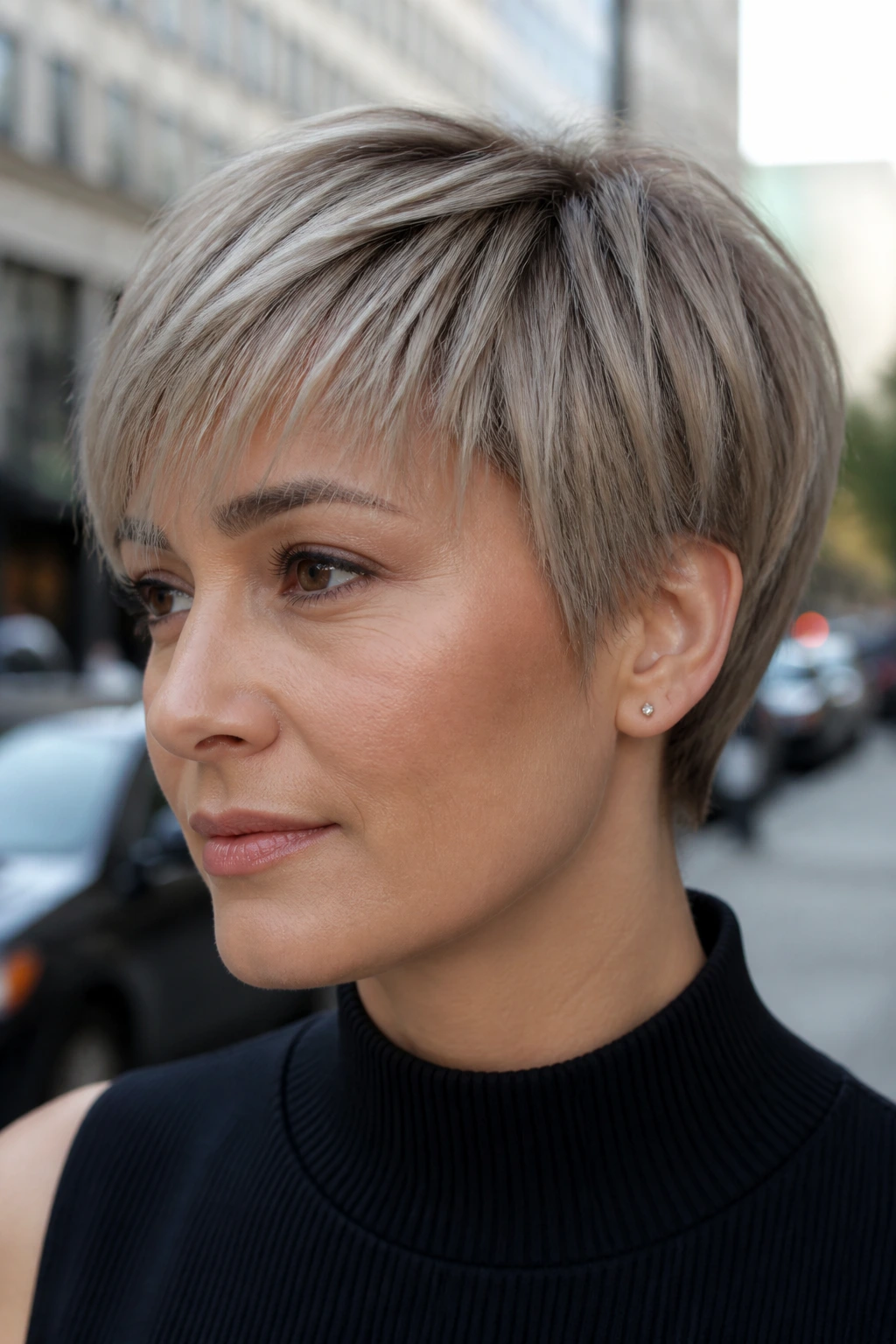
Short hair and cool blonde can be a fantastic pair, and a mushroom blonde pixie proves it. Straight texture keeps the short layers neat, while the muted taupe-blonde tone stops the cut from looking spiky or severe. It’s cool, dense, and a little urban.
This shade is especially forgiving on a pixie because it doesn’t need huge length to show dimension. Ask for a soft root depth with cooler beige toning through the top. The finish should look velvety, not frosted. Straight short hair can go flat if it’s too pale, so a bit of tonal depth matters.
23. Sandy Blonde with Invisible Layers
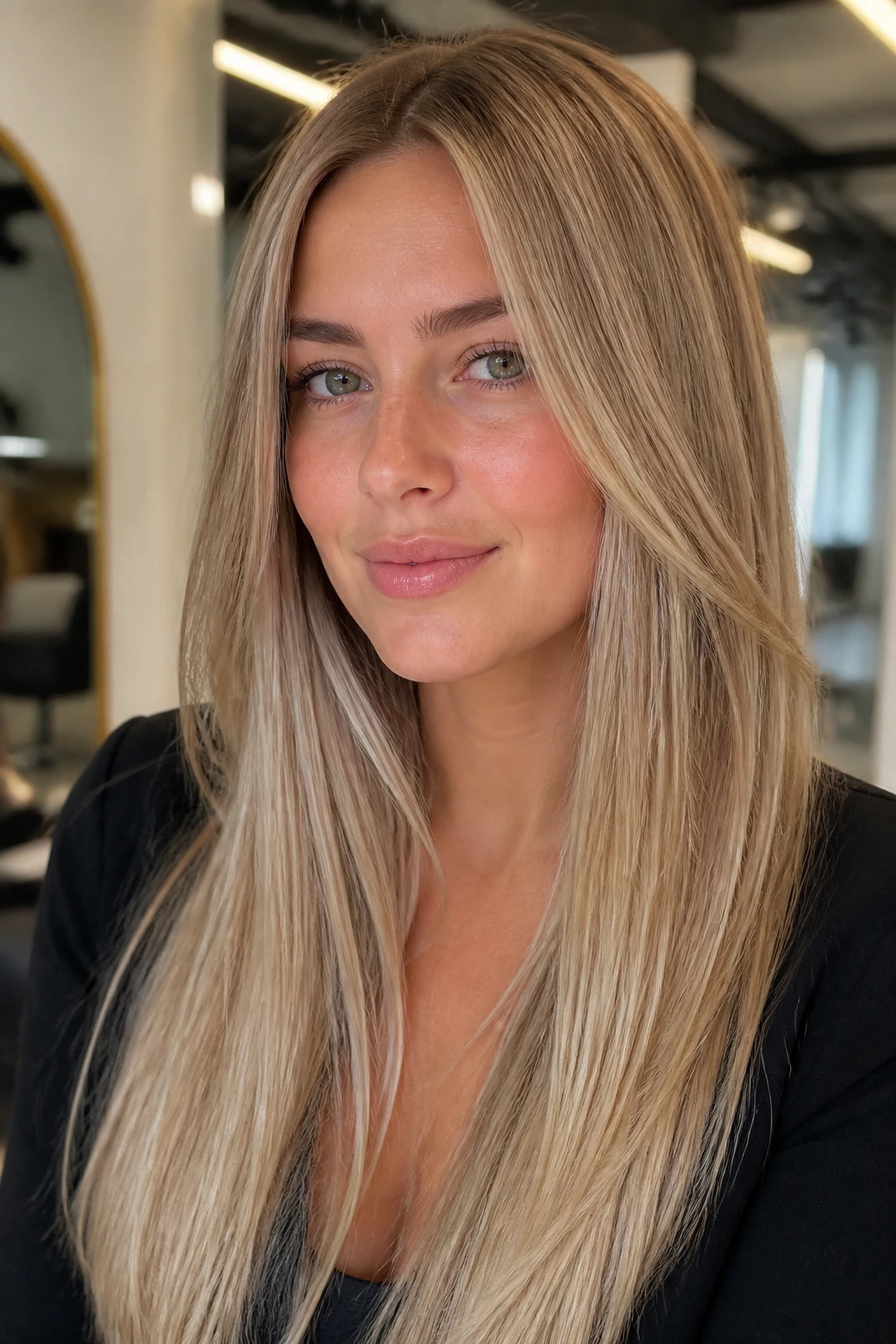
Sandy blonde sits in the soft middle ground between warm and cool. On straight hair, invisible layers help the color move without creating obvious steps. The effect is low-key, but not boring. That’s the useful part.
This is a strong everyday blonde if you want something that behaves well in a ponytail, a tuck, or a sharp blow-dry. Ask for subtle internal layering and a sandy beige tone with a few brighter strands at the top. Straight hair makes the layers read through the color rather than the shape, which is a neat trick when you want softness without frizz.
24. Caramel-to-Blonde Sombre
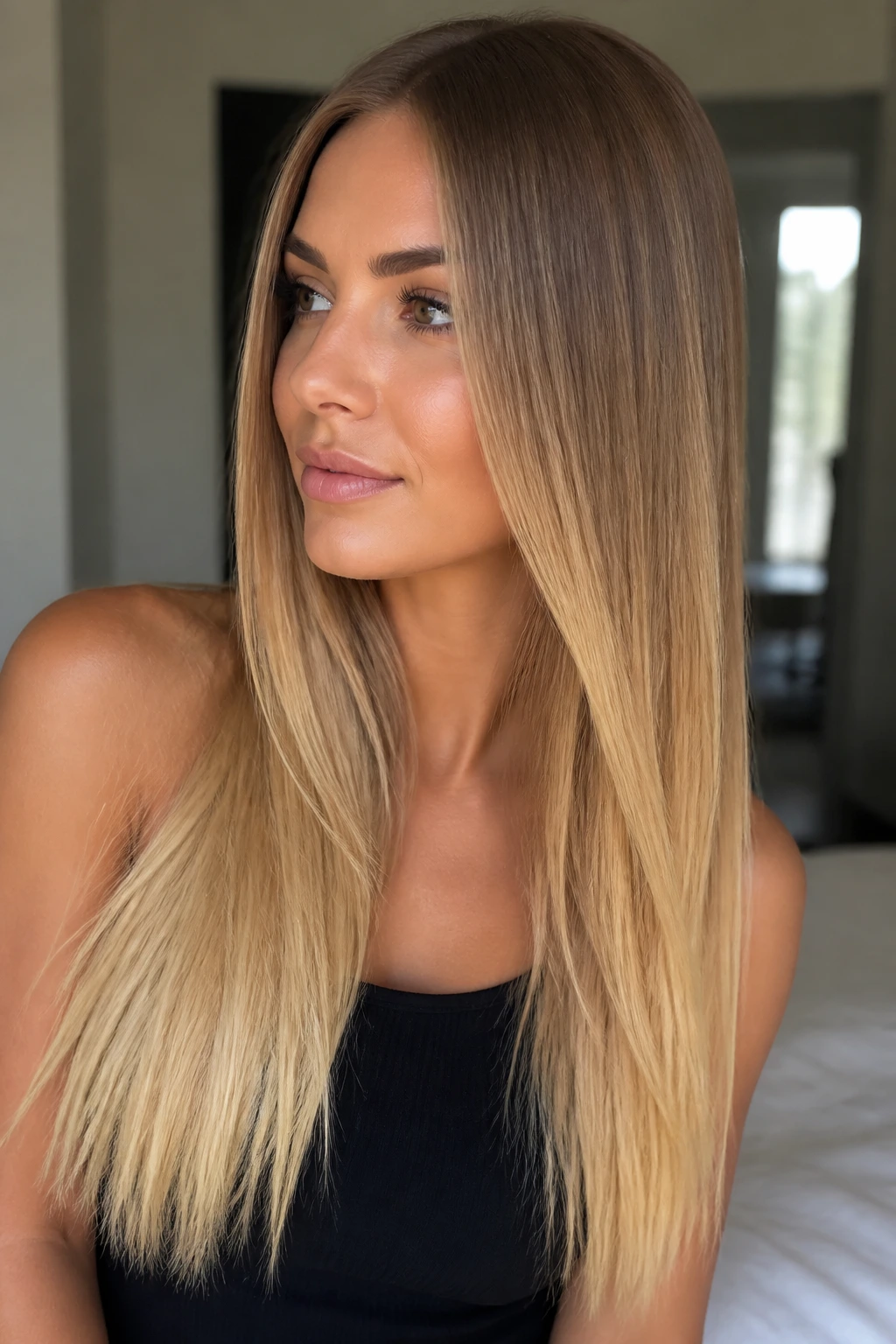
Sombre—soft ombré—works well when you want blonde without a sudden jump from dark to light. Caramel at the root or upper mids sliding into blonde ends feels smooth on straight hair because the eye can trace the fade clearly. No curls needed to explain the transition.
The best version keeps the caramel rich and the blonde creamy, not icy. That color shift is easier on the eyes and easier on upkeep. If your natural base is medium brown, this can be one of the least stressful blonde routes. The straight finish makes the fade look long and elegant rather than choppy.
25. Cream Blonde Razor Cut
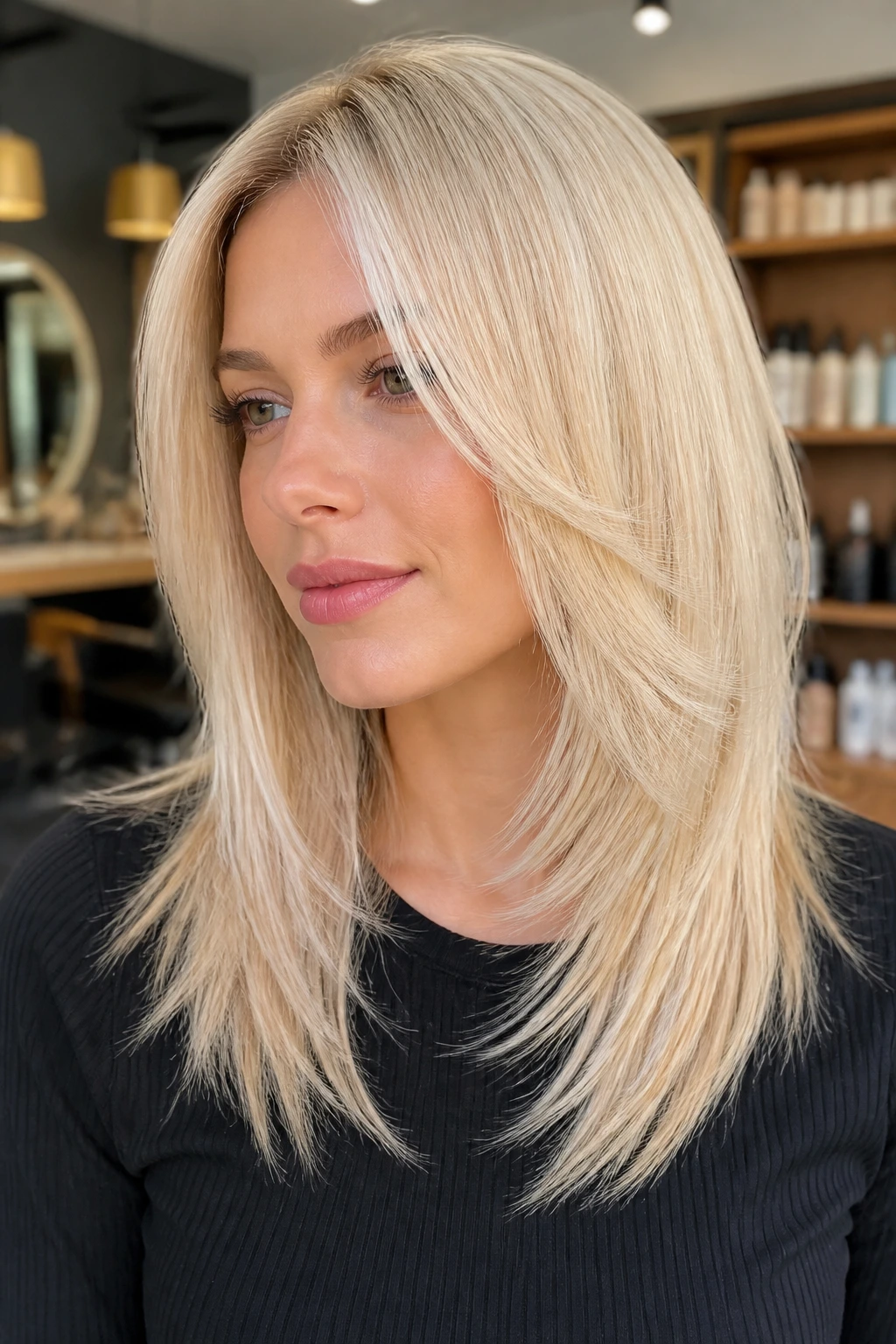
A razor cut can be tricky, but when it works, it gives straight hair a softer edge than a blunt line. Pair it with cream blonde and the result is airy instead of heavy. The ends look feathered but still controlled, which is a fine balance to strike.
This look suits people who want movement but don’t want waves forced into straight hair. Ask for a cream-toned blonde with layered ends that are textured, not shredded. The cream shade keeps the cut from looking harsh. Straight hair can get stringy if the layers are too aggressive, so this one works best when the razor is used with restraint.
26. Beige Blonde Micro-Highlights
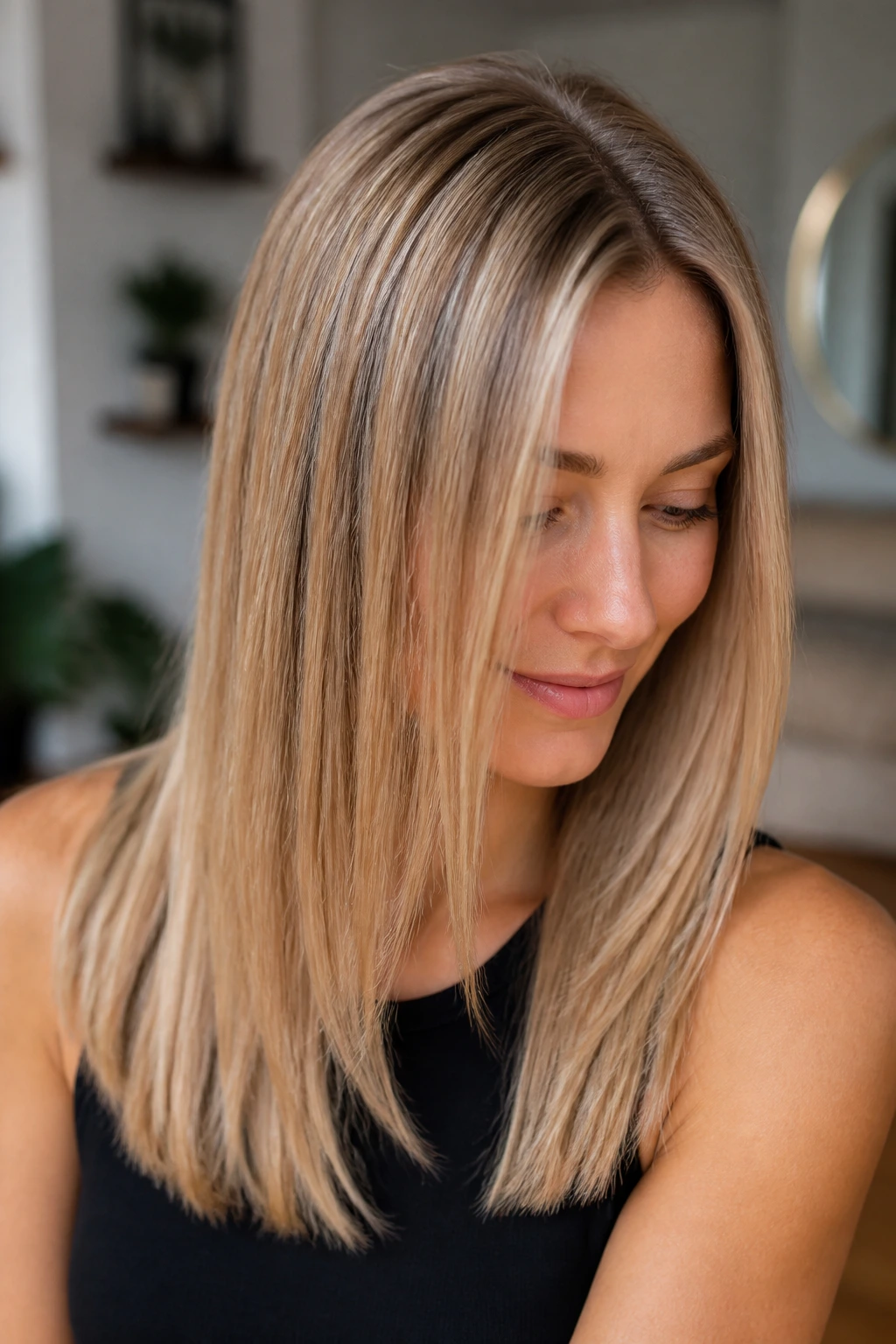
Micro-highlights are one of those things that sound tiny until you see the result. On straight hair, a mass of tiny beige highlights can give the entire head a soft shimmer without obvious lines. It looks almost like the blonde is coming from inside the hair rather than sitting on top of it.
This is ideal if you hate chunky streaks and want a more seamless finish. The placement should be dense near the part and crown, with enough variation that it doesn’t turn into a solid block of color. Beige toning keeps the whole thing calm. Fine-hair people usually love this one.
27. Bright Face-Framing Foils on Long Hair
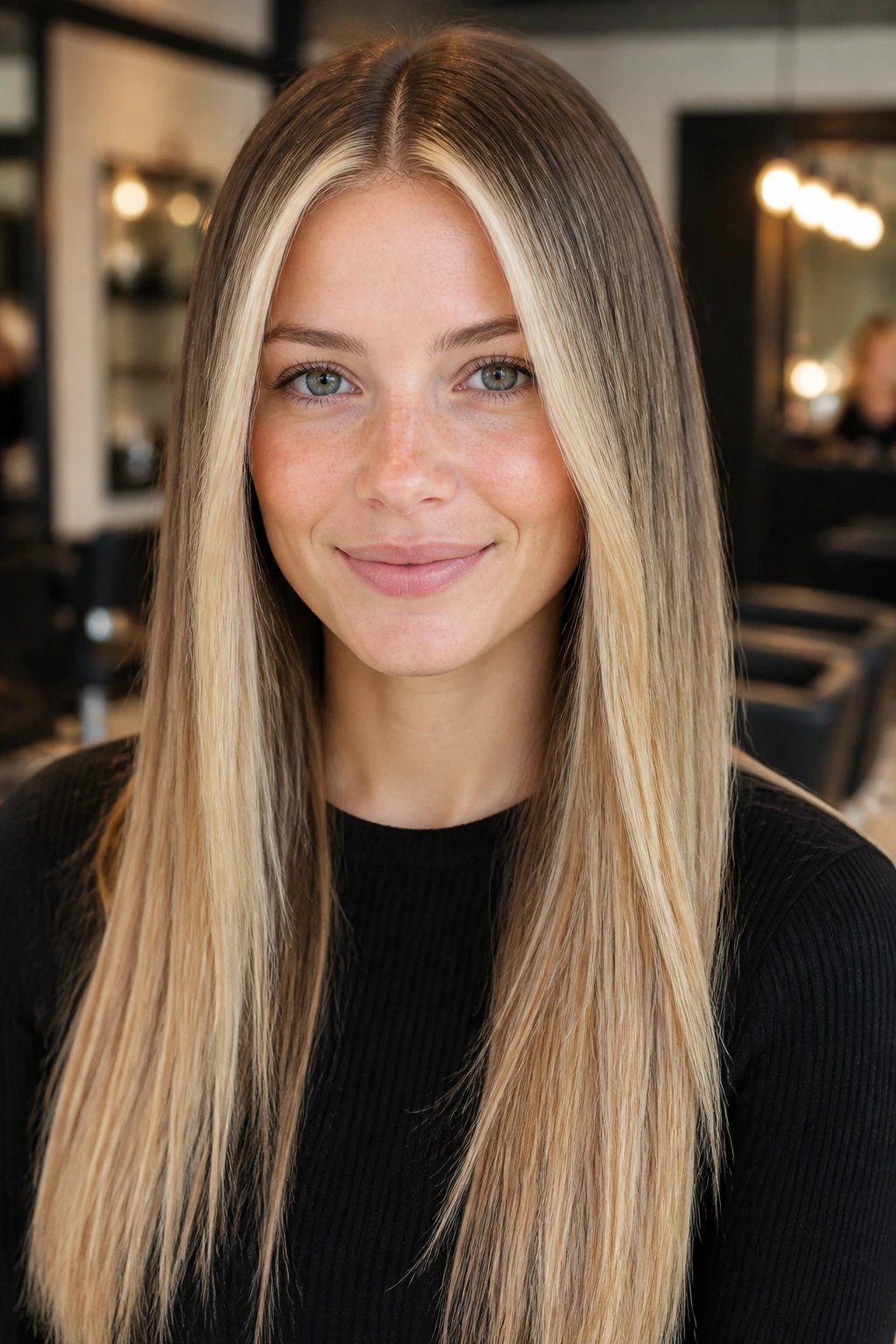
Long straight hair can handle brightness around the face if the rest of the length stays slightly deeper. Bright face-framing foils do exactly that. The color pulls attention upward, lifts the complexion, and gives the length a reason to exist beyond “it’s long.”
Ask for foils that start just behind the hairline and taper softly into the front layers. The key is to keep the back less intense so the front does the visual work. On straight hair, those foils lie flat and clean, which makes the face frame look polished instead of chunky. It’s a smart move if you wear your hair down often.
28. Silver-Inflected Blonde
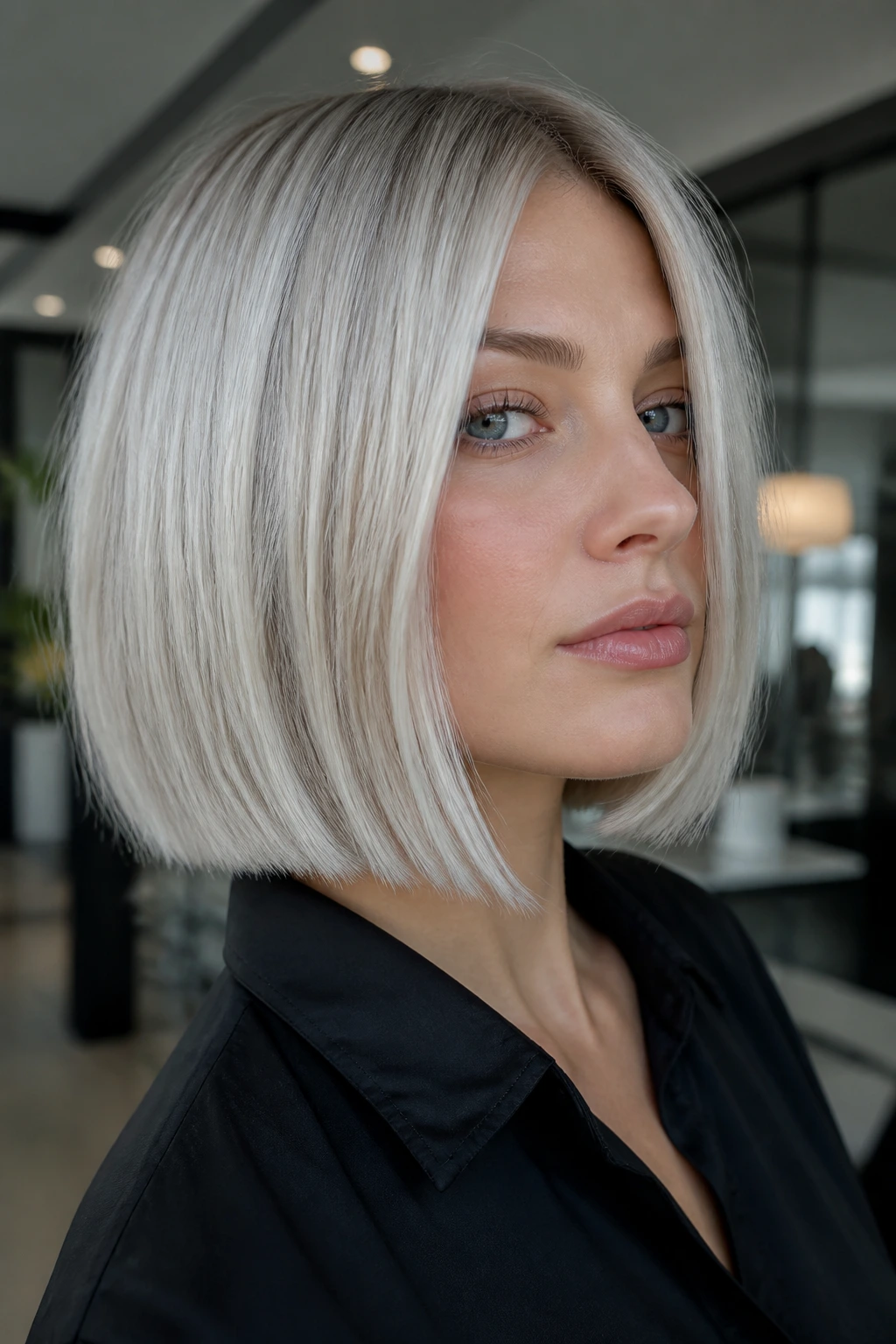
Silver-inflected blonde has a cooler, metallic edge than pearl or beige. On straight hair, the finish can look almost frosted, but with more sheen than a flat ash tone. It’s not the easiest shade to keep clean, yet when it is maintained, the effect is sharp and modern.
This blonde works best when the cut is simple. A blunt bob or long straight lengths with tidy ends will keep the color from feeling busy. Ask for a toner with cool silver notes rather than a heavy gray cast. The goal is reflective, not dull. Straight hair shows the metallic finish more clearly than curls ever could.
29. Buttercream Blonde Blowout
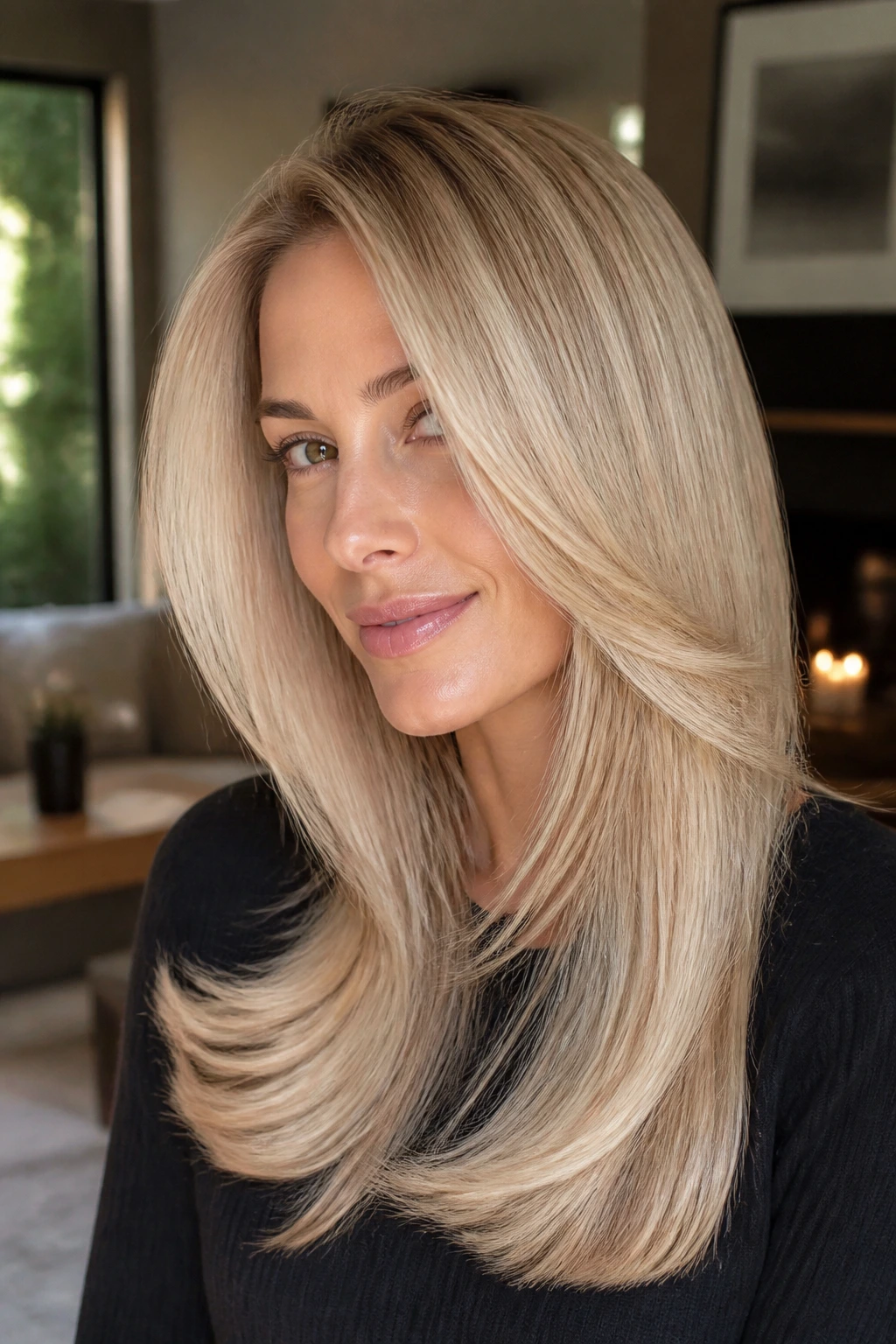
Buttercream blonde is rich, soft, and a little glossy, which makes it especially good for a round-brush blowout on straight hair. The shade sits in the creamy warm zone, and when the hair is smoothed out, it looks plush rather than flat. That matters.
It’s a forgiving color for people who prefer warmth but don’t want yellow. Ask for buttery beige highlights and a glaze that keeps the finish soft. A good blowout makes the ends curve slightly under or away from the face, which gives the blonde shape. Without that styling, it can go a bit plain. With it, the color suddenly has life.
30. Dimensional Blonde Blunt Cut with Lowlights
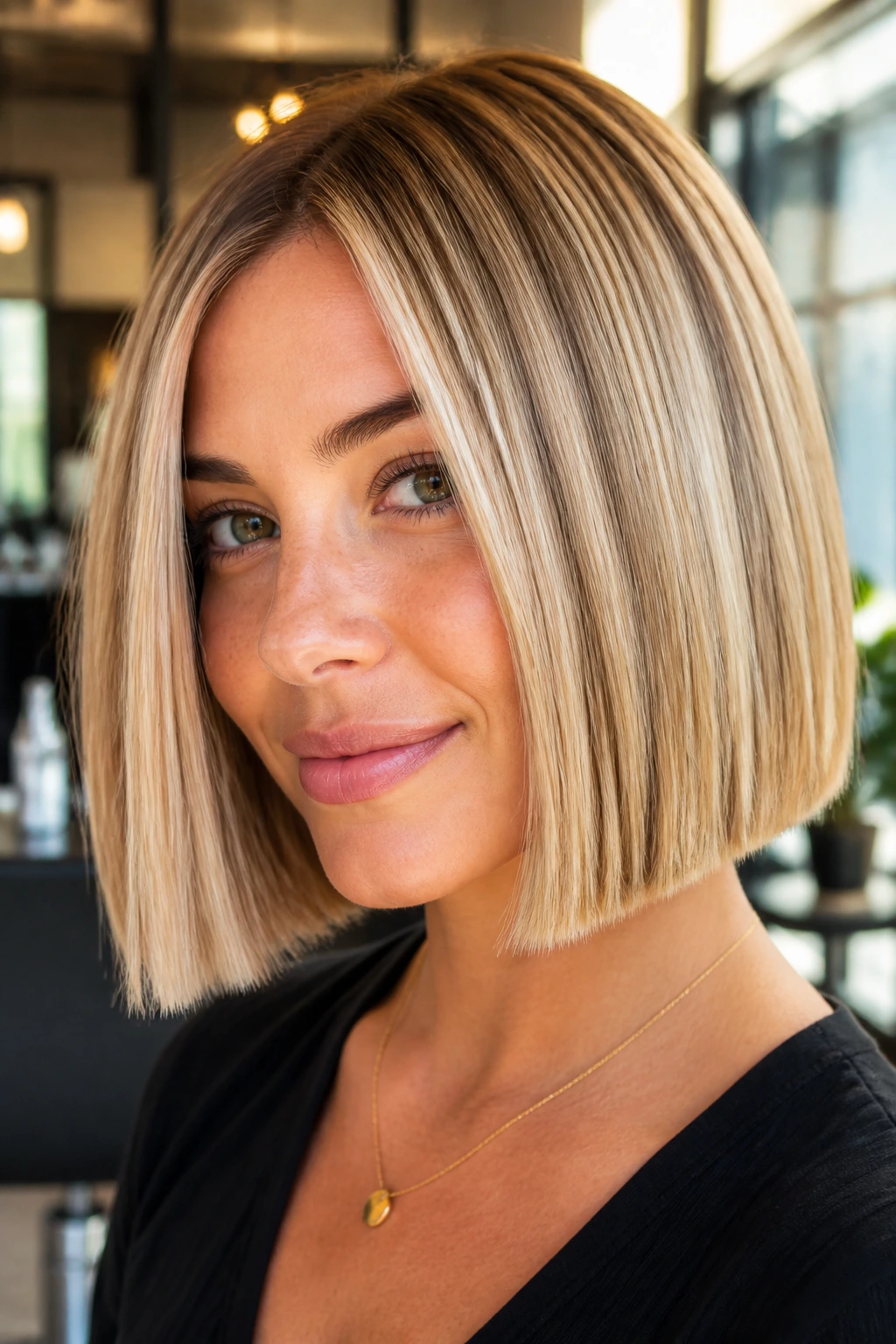
A blunt cut can look heavy if the color is too uniform. That is where lowlights save the day. Dimensional blonde with carefully placed lowlights gives straight hair depth through the mids, so the ends don’t look like one flat sheet of light.
This is a strong choice for thick hair, especially if it tends to puff out at the ends or look bulky when all one tone. Ask for beige and soft caramel lowlights woven under brighter blonde pieces. The blunt perimeter keeps the shape crisp, and the lowlights keep it from feeling wide. It’s practical, and I mean that in the best way.
31. Sunlit Blonde with U-Shaped Ends
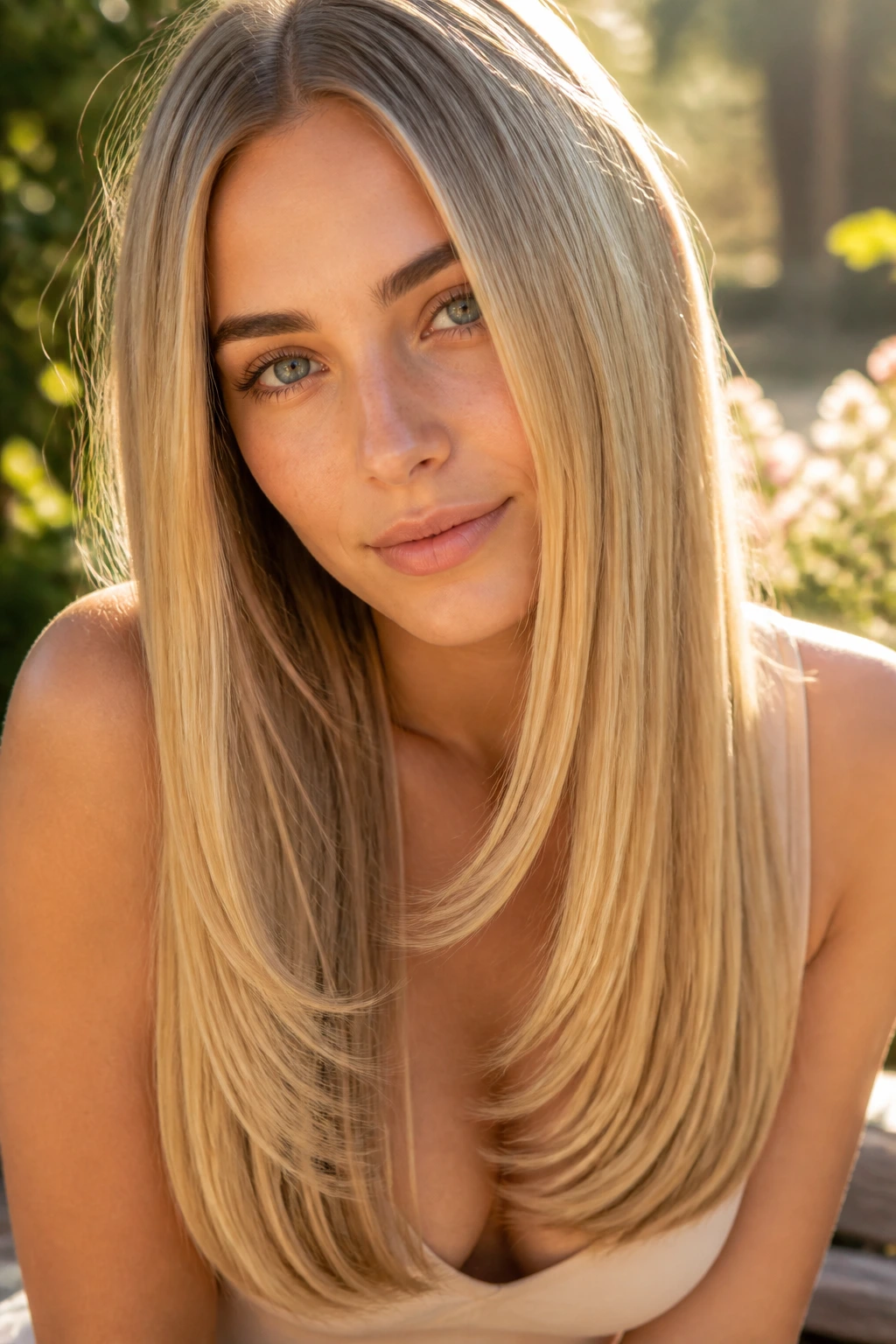
U-shaped ends are a quiet little trick for long straight hair. Instead of a dead-straight hemline, the cut curves gently shorter in front and longer in back, which makes the blonde move a bit more when you wear it down. Sunlit blonde, with its warm golden-beige balance, suits that shape nicely.
This look is for people who want their hair to feel soft without losing the clean straight finish. Ask for longer face-framing pieces and a sunlit tone that isn’t too bright at the ends. The U-shape helps the length sit better over the shoulders, and the blonde catches light along the curve. It’s subtle, but the shape is doing more work than people notice.
32. Iced Tea Blonde on Straight Hair
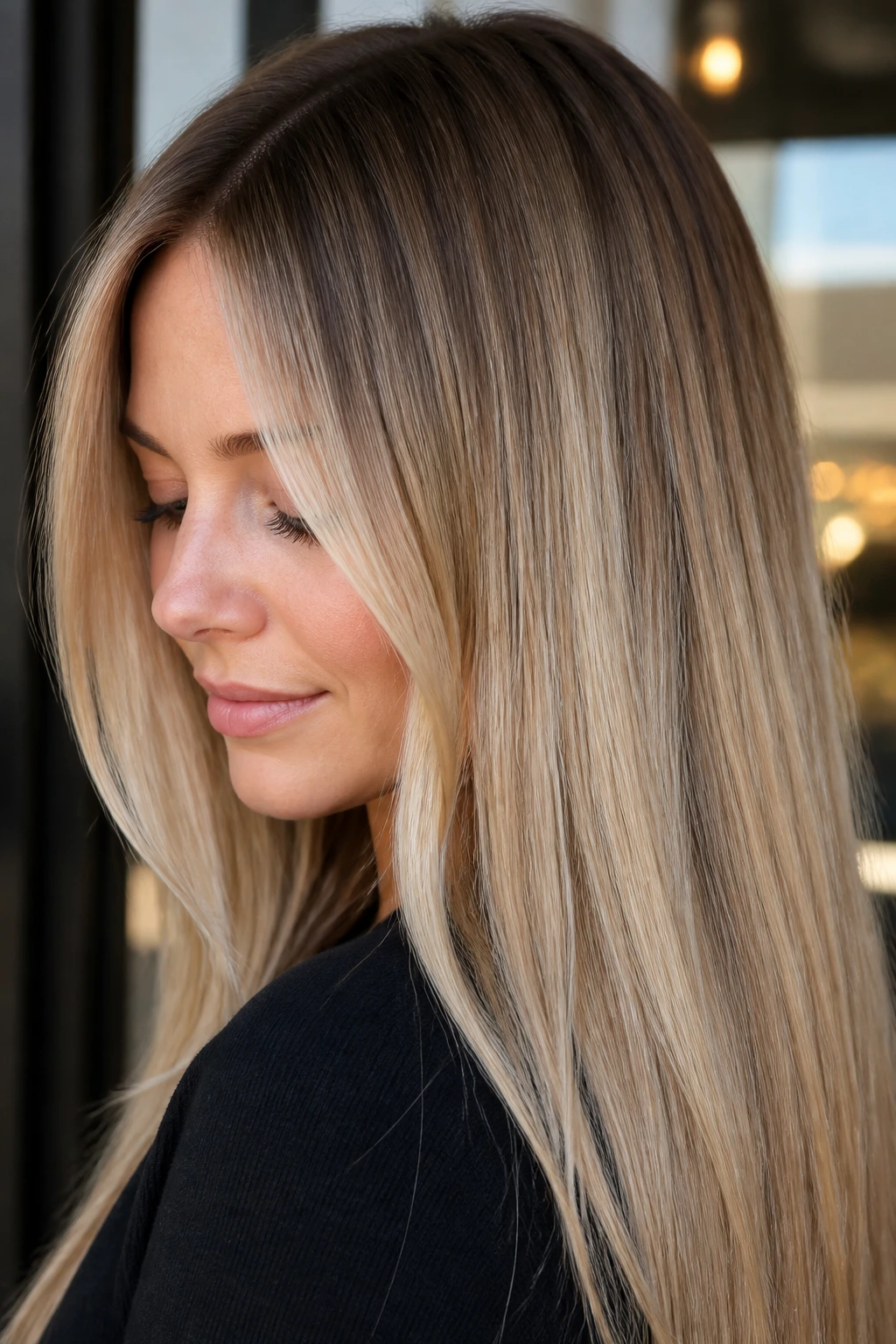
Iced tea blonde is one of my favorite in-between shades because it borrows from brunette and blonde at the same time. On straight hair, the darker tea-colored root or lowlight and the lighter beige-blonde mids create a calm, lived-in finish that doesn’t demand constant touch-ups. That is a relief.
It works especially well if you are growing out darker color or you want blonde that doesn’t shout from across the room. Ask for a cool-beige mix with deeper tea tones near the crown. Straight hair keeps the transition visible enough to matter, but soft enough to feel natural. It’s grown-up blonde, without the stale part.
33. Vanilla Cream Blonde with a Side Part
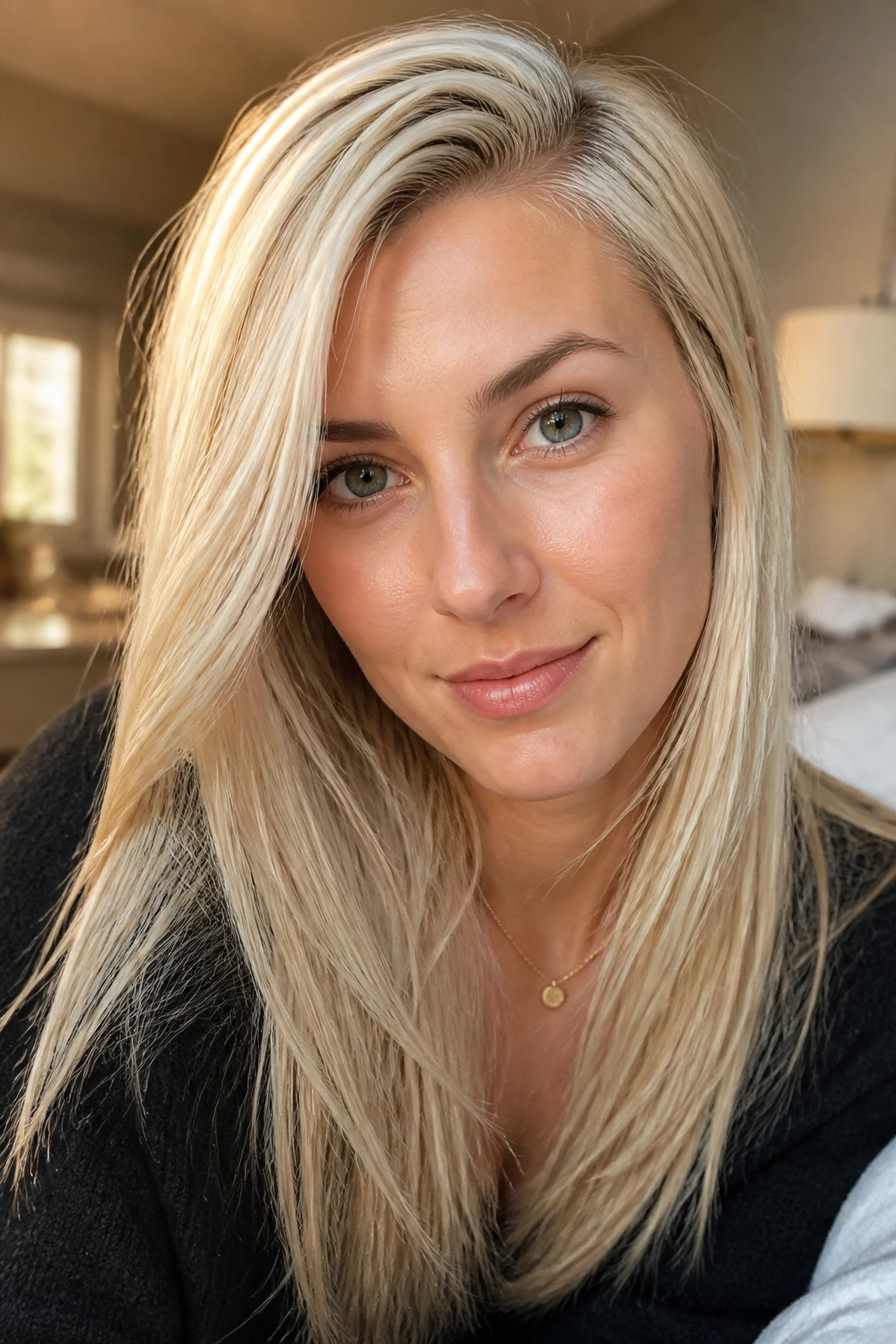
A side part can change a lot. On straight blonde hair, it introduces a little asymmetry, which keeps creamy vanilla color from feeling too tidy or too evenly split. The side part gives the hair a bit of attitude, and the vanilla tone keeps it soft.
This is a good move if your face likes a little lift at the front or you want more volume at the crown without teasing. Ask for a creamy blonde glaze and brighter pieces on the heavier side of the part. The balance makes straight hair look styled, not stiff. It’s a small change, but it shifts the whole mood.
34. Bronze-Root Blonde Melt
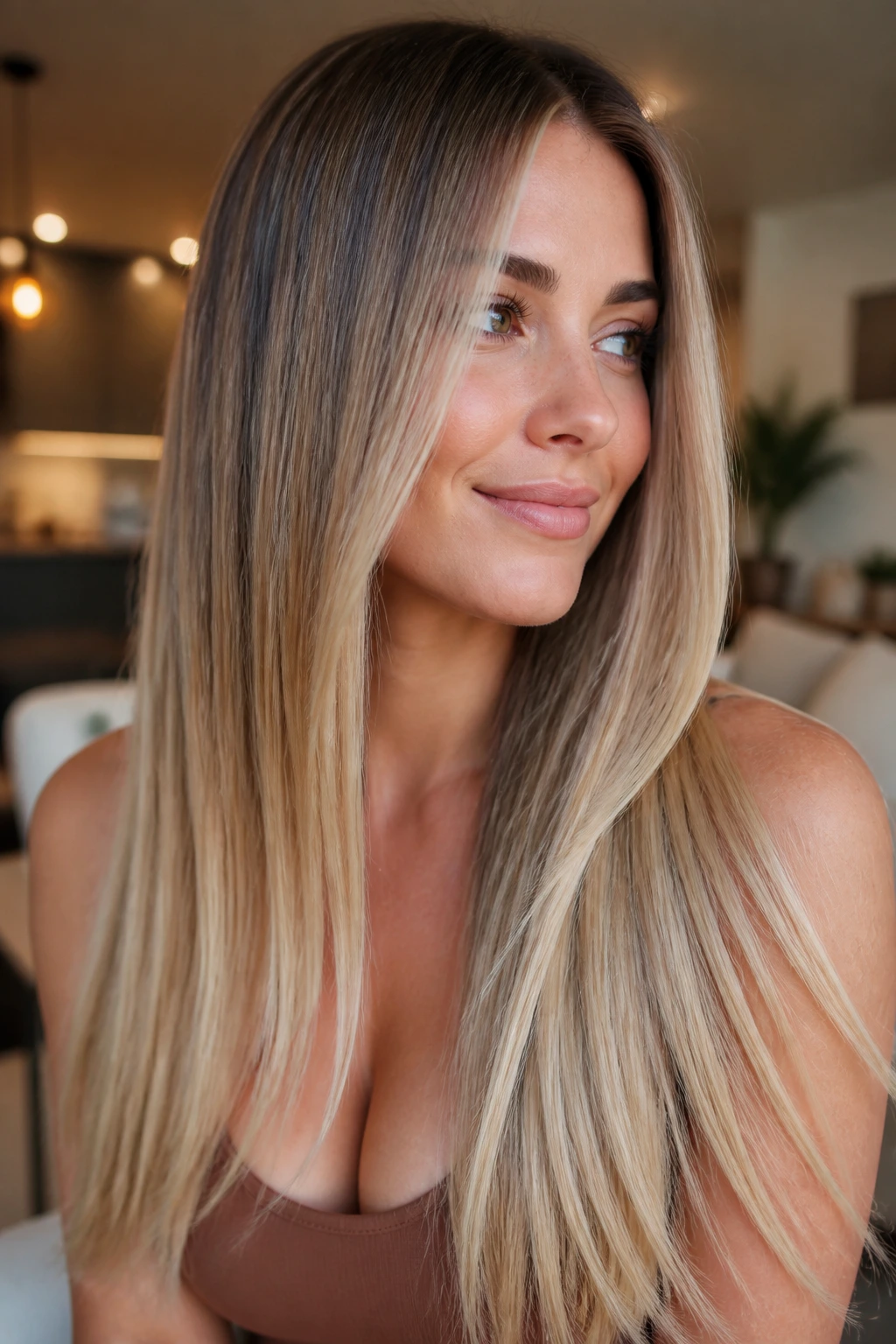
Bronze-root blonde is warmer and deeper at the top, then gradually opens into lighter blonde through the ends. On straight hair, that melt looks smooth because there’s no texture interrupting the gradient. The bronze root adds richness and keeps the grow-out from being obvious.
This is a smart option for people who want warmth without going orange. Ask for a bronze-brown root that melts into beige-gold mids, then finishes in soft blonde at the ends. It looks especially good on medium-length hair where the transition has room to unfold. Straight hair makes the fade feel sleek instead of beachy.
35. Ultra-Blonde Midi Cut with Tucked Ends
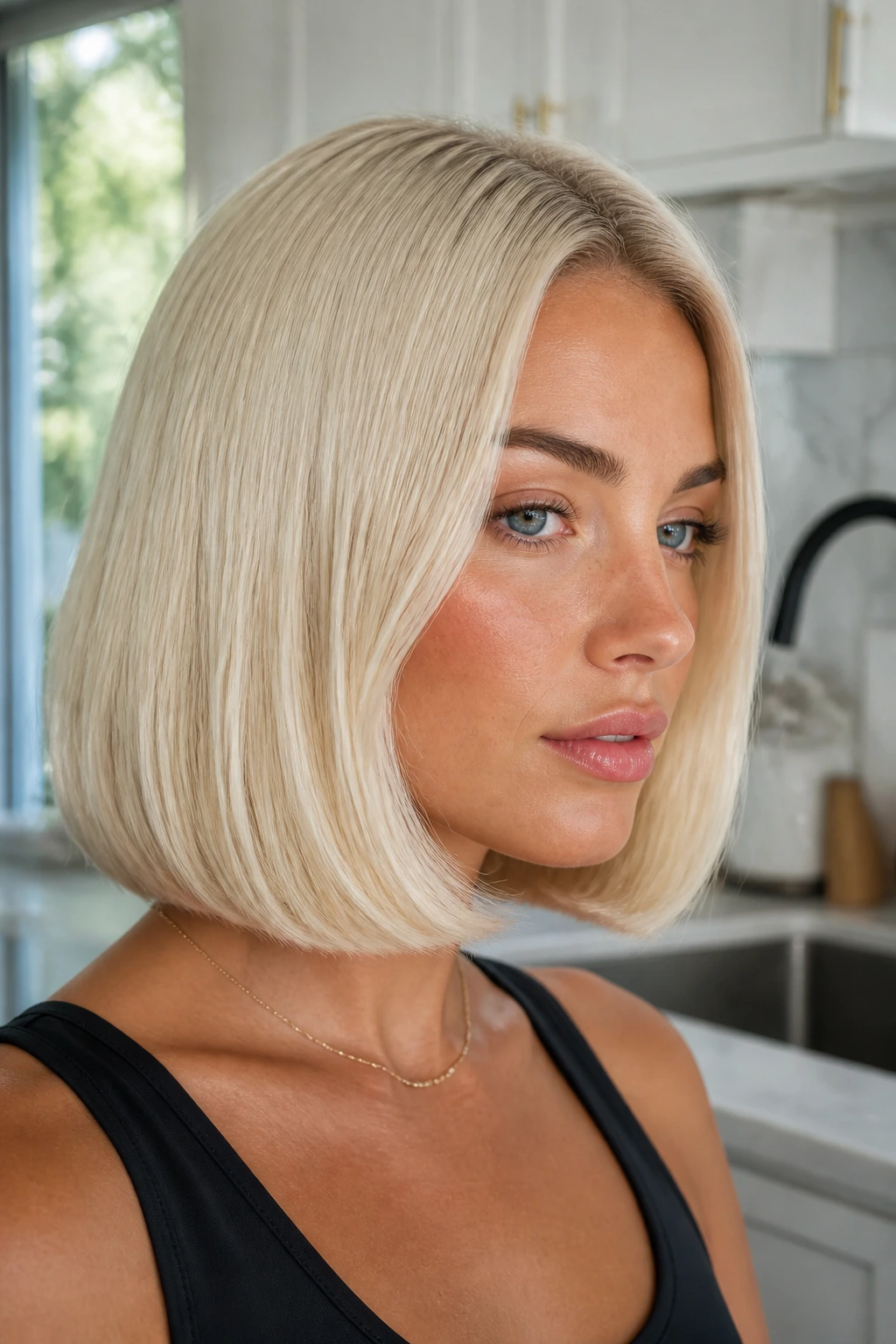
The tucked-end midi cut has a kind of clean discipline that straight hair wears well. Make the blonde ultra-bright but not flat, keep the ends rounded under just enough to show shape, and the whole cut reads intentional. It’s polished without feeling formal.
This look is for someone who likes a bright blonde but doesn’t want a tiny bob or a long curtain of hair. Ask for a pale blonde with soft root blur, then maintain the shape with regular trims so the ends stay neat. Straight hair can go limp here if the cut gets too long between trims, so the line matters more than usual.
36. Soft Gold Balayage on a Sleek Shag
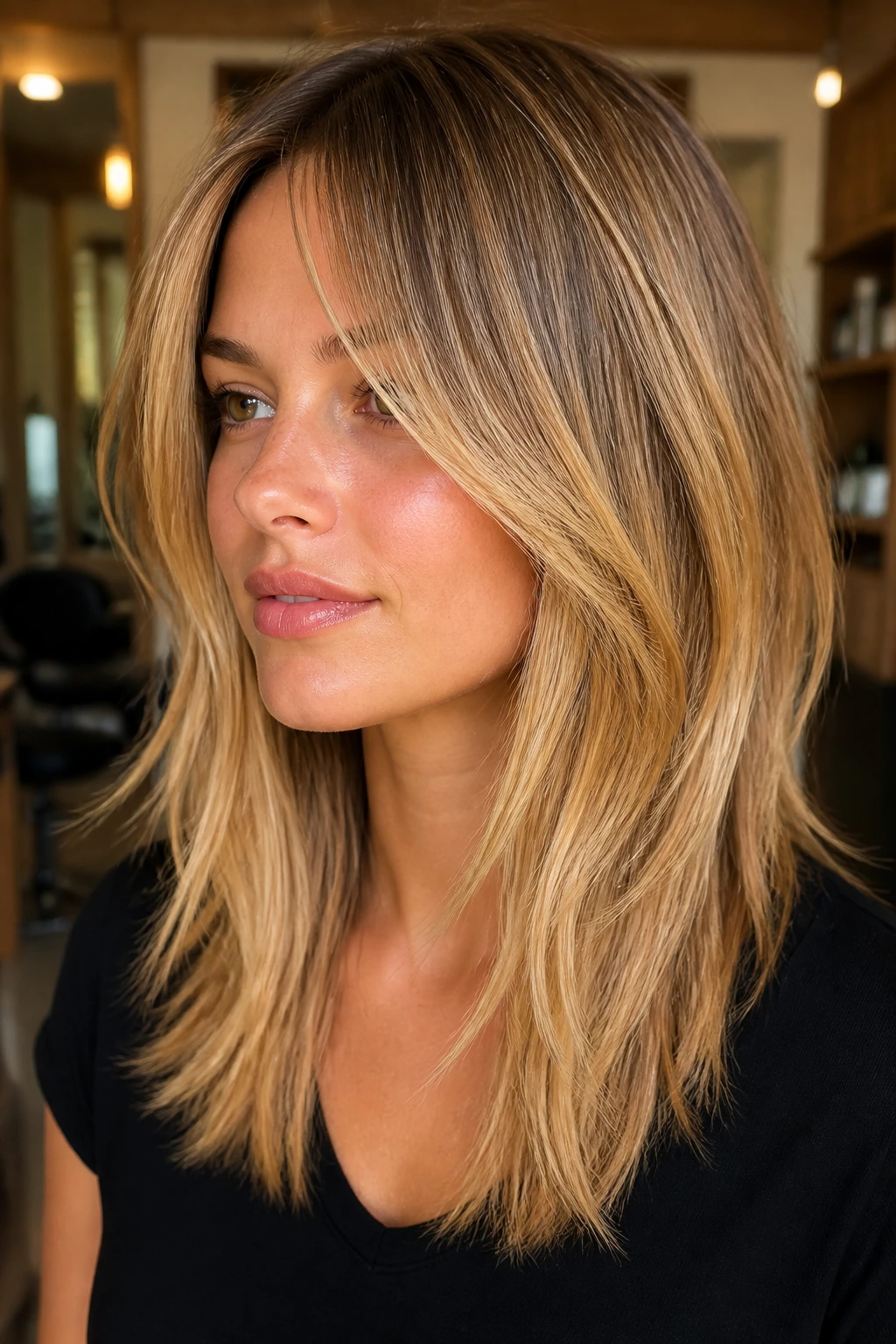
A shag on straight hair sounds odd until you see a good one. The layers create movement, and soft gold balayage keeps the whole thing from turning harsh. The result is textured but not messy, which is a fine line. Straight styling makes the layers visible without making them frizzy.
This is a better choice for people who want body at the crown and around the face. Ask for long, wispy layers with gold-beige balayage placed where the hair naturally falls. It’s less about uniform brightness and more about a lived-in glow. If your straight hair tends to hang heavy, this cuts some of that weight visually.
37. Beige Blonde with a Ponytail-Friendly Cut
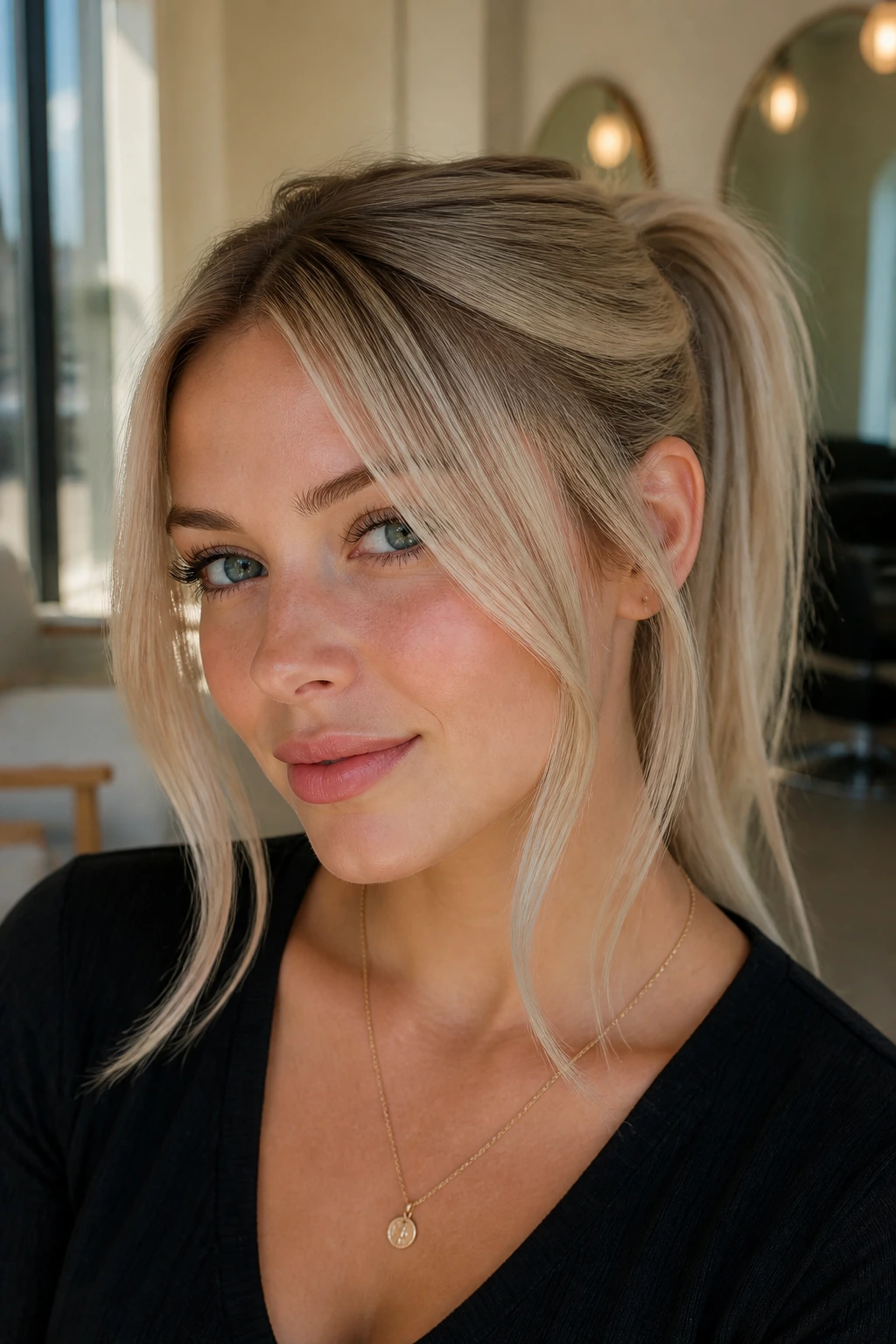
Not every blonde look needs to live down around your shoulders. A ponytail-friendly cut with beige blonde gives you enough length to pull the hair back, but the face-framing pieces still look intentional when the hair is down. Straight hair helps the blonde stay smooth in either direction.
This is ideal if you actually wear your hair up more than once a week and want the color to look good both ways. Ask for beige tones through the bulk of the hair and lighter framing pieces that don’t disappear into a ponytail. The cut should keep a little fullness at the ends so the length doesn’t vanish when gathered back. Practical. Still pretty.
38. Nordic Cream Micro-Bob
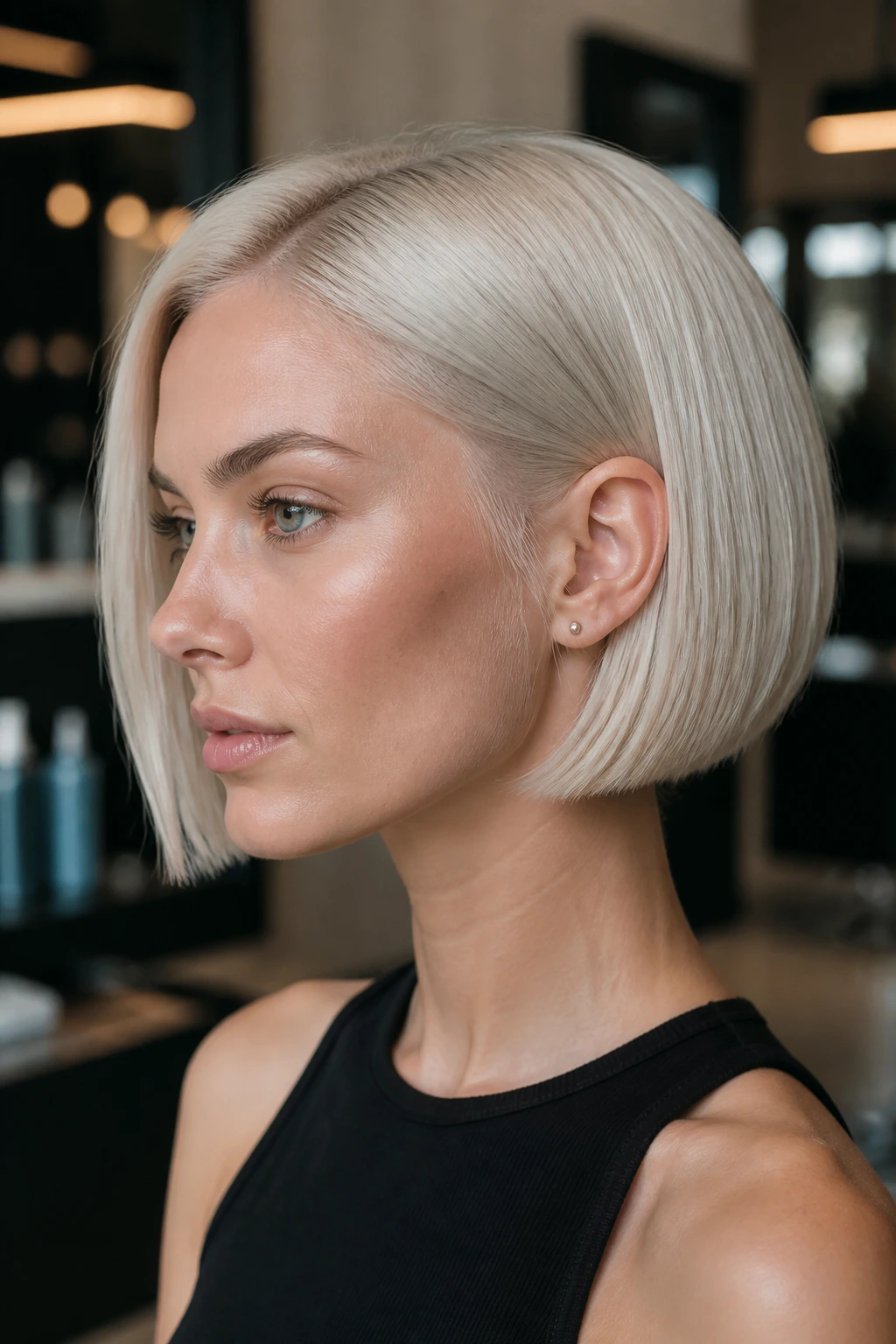
The micro-bob is tiny, crisp, and oddly elegant when it’s done well. Pair it with Nordic cream blonde and straight hair turns almost graphic. The shade sits between pale beige and cool cream, which keeps the cut from looking severe. It feels neat, almost severe for a second, then the creaminess softens it.
This is not the shade for someone who wants fuss-free grow-out. It’s a sharper look, and it needs trims to keep the line clean. But if you like short hair that lands with intention, it’s hard to beat. Straight strands make the edge look immaculate, and that’s the whole appeal.
Why Blonde Reads So Clean on Straight Hair
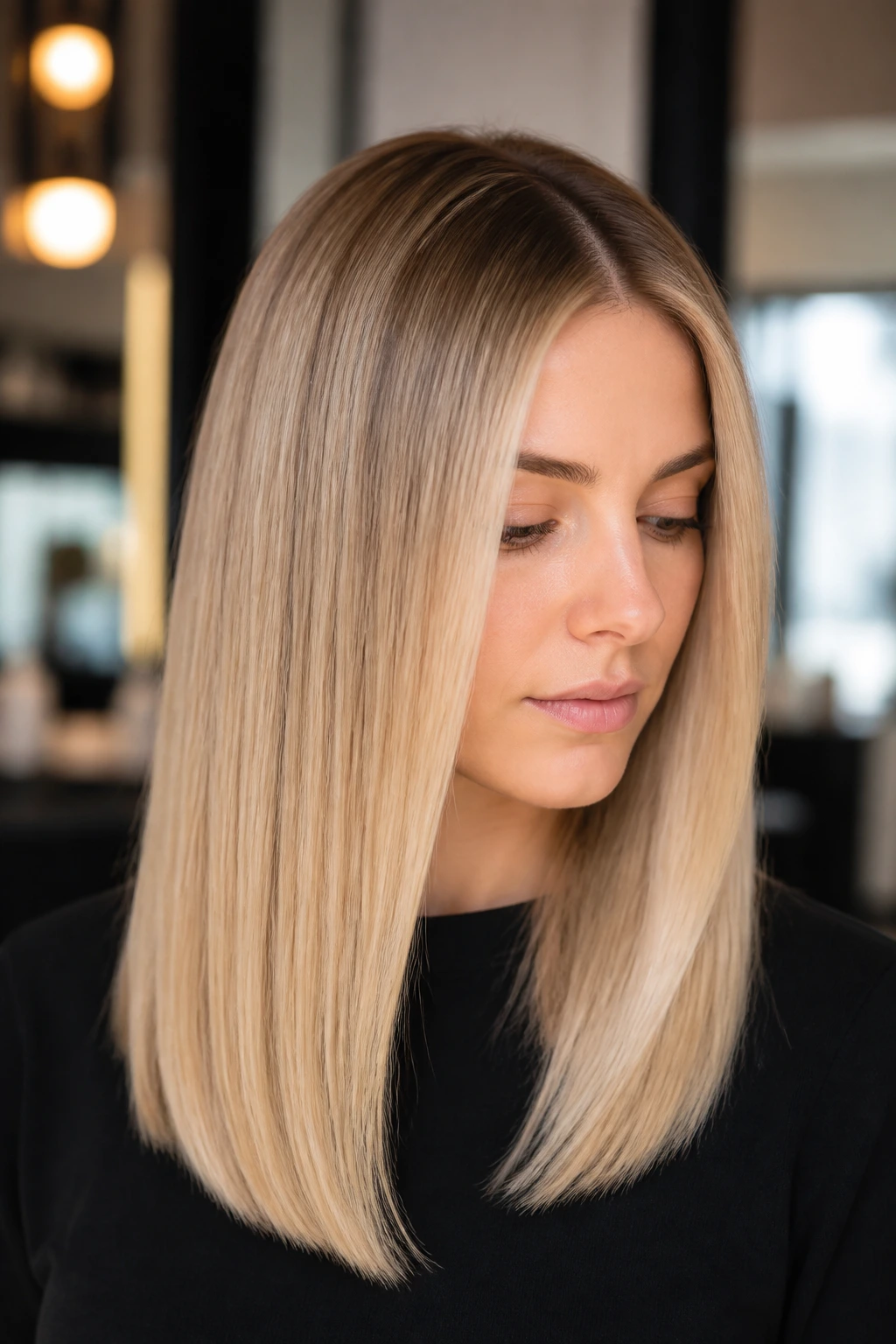
Straight hair is brutally honest. Good color placement looks sharper because the eye can follow every highlight from root to end without distraction. Bad placement also stands out fast. That is the trade.
The upside is that straight hair gives blonde a kind of precision you don’t always get on curls or waves. A thin ribbon of babylights can look expensive. A sloppy stripe can look like a mistake from the parking lot. The line of the cut, the toner, and the depth at the root all matter more because there is no bend in the hair to soften them.
One thing people miss: straight hair often needs less brightness than they think. A small amount of contrast near the face, or a subtle melt through the mids, can do more than an all-over blast of lightener. The clean finish is the point.
Placement Tricks That Keep the Color From Going Stripey
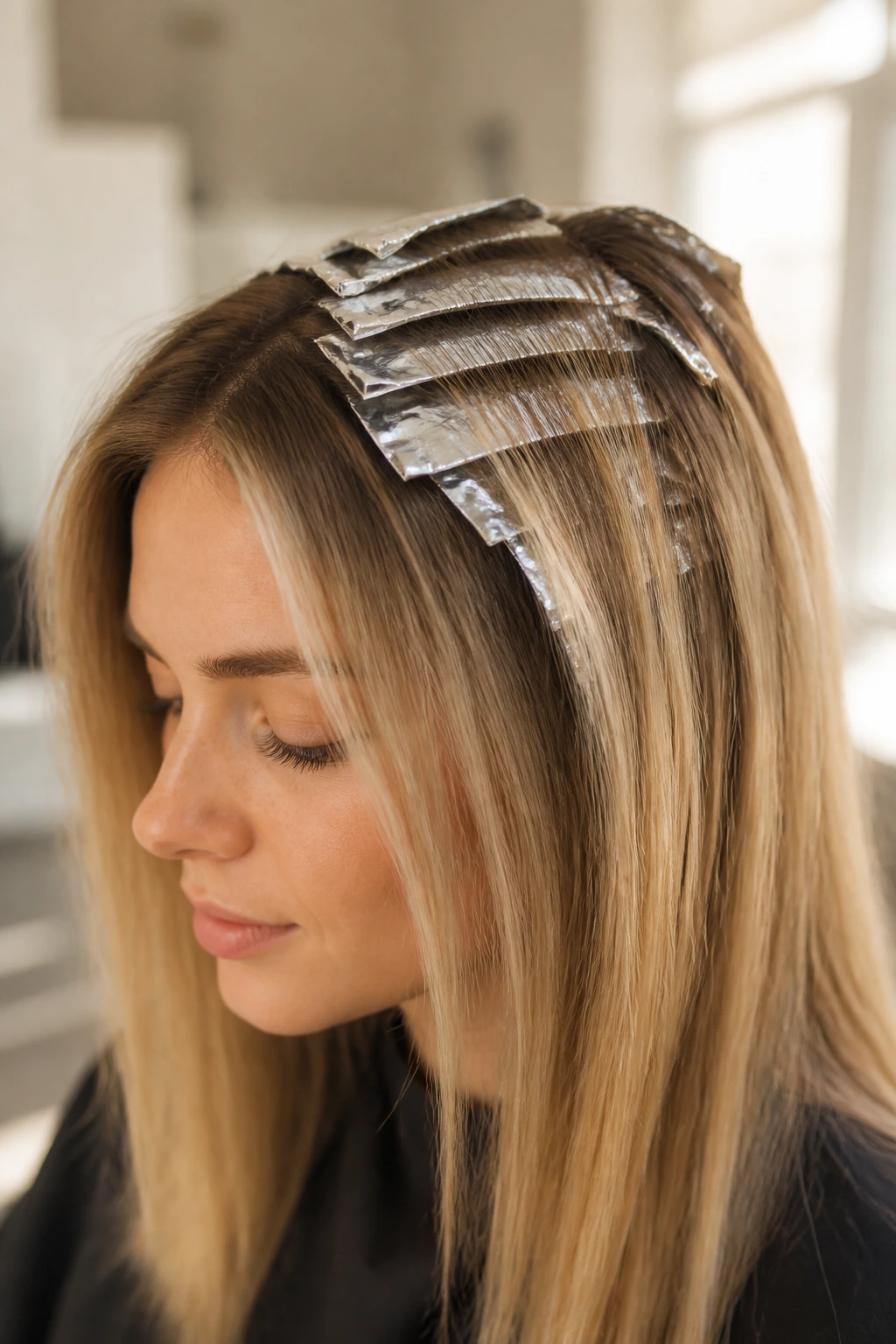
The biggest difference between a flat blonde and a good one on straight hair is placement. A heavy foil at the temple, a blunt band of bright color under the part, or a root that stops too abruptly can all make the whole head look choppy. Straight hair doesn’t blur for you.
Go finer at the part. Tiny foils near the crown look softer once the hair is blown straight, and they keep the top from looking like a row of zebra stripes.
Keep the front pieces intentional. Face-framing blonde should be brighter, yes, but also slimmer. Big chunks can overtake the whole cut.
Mix widths. A few baby-fine highlights with a couple of slightly wider ribbons usually looks better than one repeated foil size from hairline to nape. Real hair is not a spreadsheet.
Respect the root. A shadow root, smudge, or melt keeps straight blonde from looking pasted on. If the root is too blunt, the entire style loses depth.
Tone for shine, not only for color. Straight hair reflects light hard. A soft beige, pearl, or champagne toner often looks better than an aggressive ash that turns the hair dull.
Tools, Products, and Salon Terms Worth Knowing
- Purple shampoo: Use it sparingly on cool blondes; once a week is enough for most hair, and leaving it on too long can make pale hair look matte.
- Color-safe sulfate-free shampoo: Helps keep toner from slipping out too fast, especially on lighter blondes that fade with every wash.
- Leave-in heat protectant: Straight blonde hair gets styled with heat a lot, and a light spray protects shine before blow-drying or flat ironing.
- Gloss or glaze: A salon gloss refreshes tone and shine without another full lightening session.
- Bond-building treatment: Useful after lightening, especially if your hair has been lifted several levels and feels dry at the ends.
- Root smudge / shadow root: Ask for this if you want softer grow-out and less contrast at the scalp.
- Babylights: Tiny, fine highlights that work well on straight hair because they look blended instead of chunky.
- Lowlights: These add depth back into very light blonde so the cut doesn’t go flat.
- Round brush and nozzle attachment: If you blow-dry at home, these help the cut sit cleanly and make the blonde reflect light better.
- Microfiber towel: Cuts down on friction and helps straight blonde stay smooth after washing.
How to Keep Straight Blonde Hair Bright Between Appointments
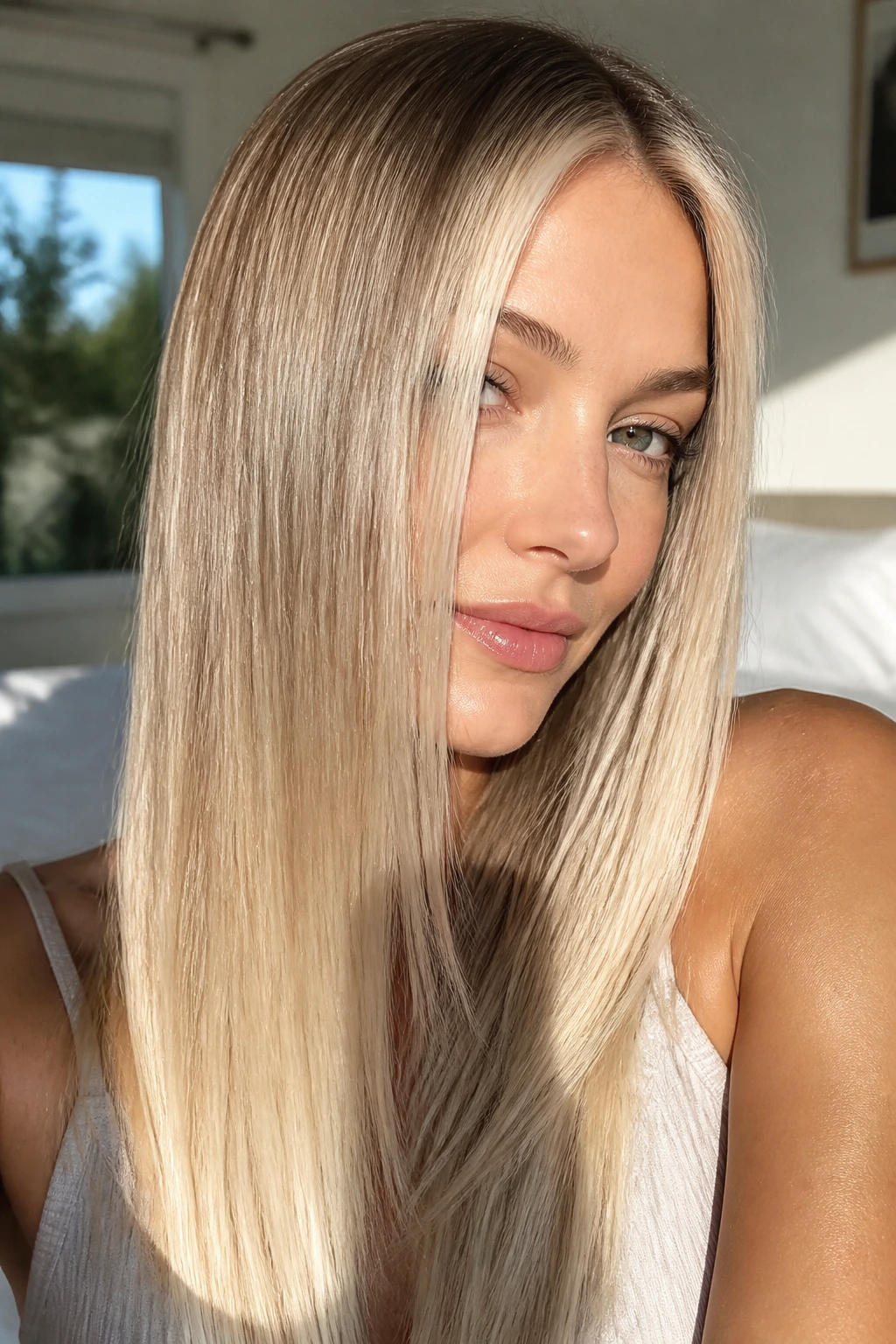
Straight blonde hair usually looks best when the tone is nudged often, not blasted back into shape all at once. A gloss every 4 to 6 weeks keeps beige, champagne, pearl, or icy tones looking deliberate. If the blonde is very cool, purple shampoo once a week is usually enough; overusing it can dry the hair and make the color go flat.
Heat is the other thing to watch. Straight hair often gets blow-dried and then touched with a flat iron, which is a lot of heat for hair that’s already been lightened. A heat protectant every time is not optional. Use it from mid-lengths to ends, then keep the iron moving instead of clamping one section too long.
Trim the ends every 8 to 10 weeks if you want blunt or polished blondes to stay neat. A blunt bob or micro-bob looks expensive when the edge is crisp. When the edge starts fraying, the whole style loses its shape before the color even fades.
Common Mistakes That Flatten Straight Blonde Hair
The first mistake is going too light all over. On straight hair, one flat level of blonde can look colorless and a little dry, especially if the cut is long. A shadow root or a few lowlights fix that fast by giving the eye something to follow.
The second mistake is choosing a toner that fights your base tone. Cool ash on warm hair can look dull or muddy, while overly golden blonde on cool skin can look brassy. Beige, champagne, pearl, and neutral glosses are often safer bets because they sit in the middle and keep straight hair from looking harsh.
Third, people overload straight blonde hair with oil or serum. A little shine is good. A greasy end section is not. Start with a pea-sized amount, warm it in your hands, and keep it off the roots.
Another common problem: chunky face-framing pieces that are too wide for the cut. On straight hair, those pieces sit in plain view, so broad streaks can dominate the whole look. Narrower foils usually age better and look cleaner as they grow.
Finally, don’t forget the haircut. Blonde does not save a bad shape. If the ends are too thin, the color can look stringy. If the perimeter is too blunt for your density, the blonde can look like a helmet. The cut and color have to cooperate.
Variations for Different Bases and Budgets
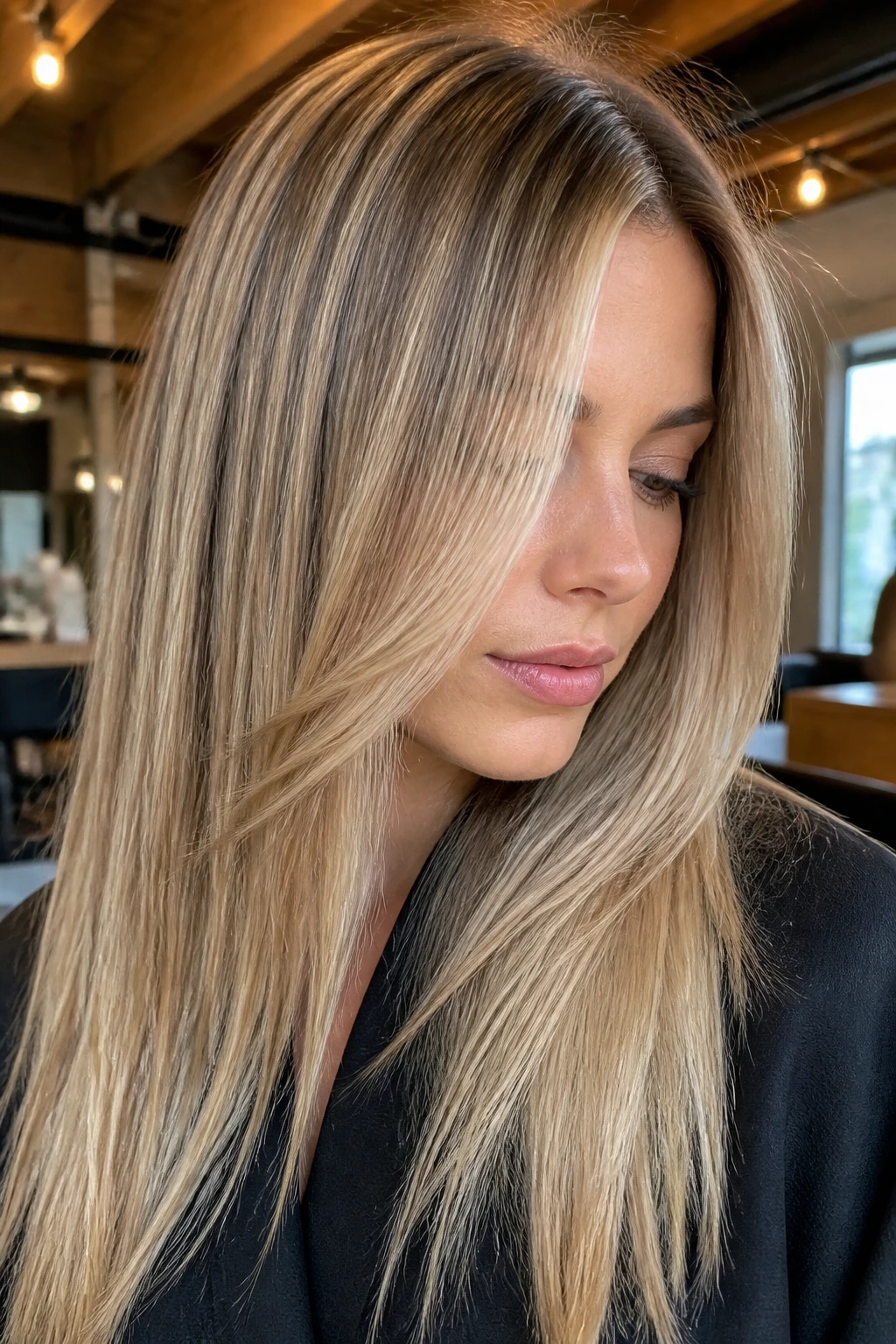
Low-Maintenance Root Melt: If you want blonde without constant salon visits, keep the root deeper and let the blonde fade softly from mid-lengths down. Straight hair shows the melt beautifully, and grow-out looks intentional instead of overdue.
Cool Frost Finish: Best for people who like icy, silver, or pearl tones. Ask for a pale beige base with a cool toner, then keep purple shampoo use light so the hair doesn’t turn chalky.
Warm Honey Wash: If your skin looks better with warmth, shift toward honey, butter, or toasted almond tones. Straight hair can handle warmth really well because the finish still looks sleek, not soft and fuzzy.
Fine-Hair Booster Blonde: For thinner hair, choose babylights, micro-highlights, or a bright face frame. The goal is to create the feeling of density without packing in too much contrast.
Thick-Hair Ribbon Blonde: On thicker straight hair, wider ribbons and lowlights keep the style from looking like one solid color block. That depth matters more than extra brightness.
Short-Cut Bright Blonde: Pixies, micro-bobs, and blunt bobs can all wear brighter blonde than you’d expect. The shape carries the look, so the color can stay pale without making the hair look thin.
Straight-Hair Blonde Questions, Answered
Which blonde shade is easiest to maintain on straight hair?
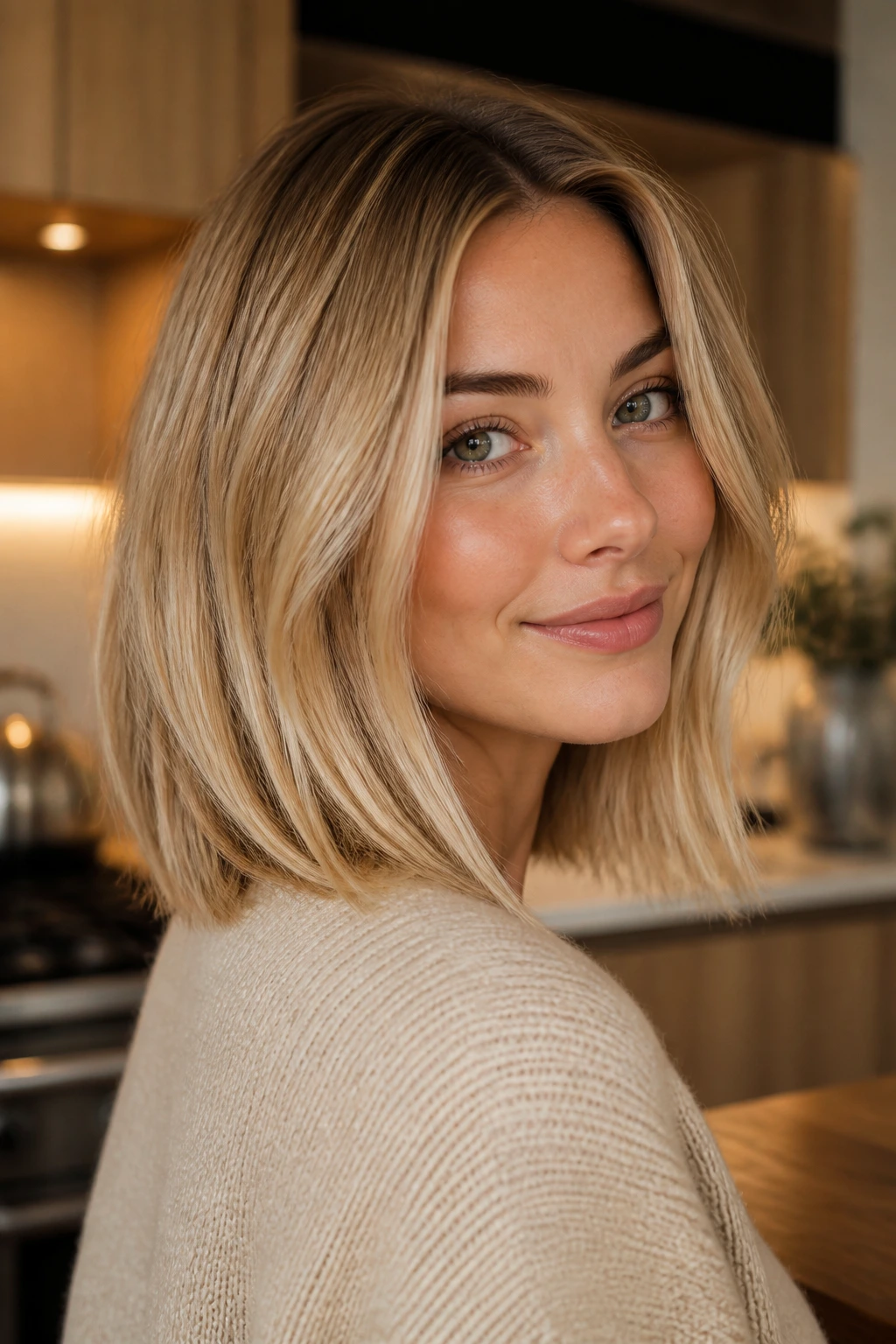
Beige, champagne, and rooty honey blondes usually give you the softest grow-out. They keep enough depth at the root to avoid obvious lines, and straight hair shows the blend cleanly.
Does balayage or babylights work better on straight hair?
Babylights work better if you want a seamless, soft finish. Balayage works better if you want visible dimension and a lower-maintenance grow-out. On very straight hair, babylights tend to look more blended.
Can straight hair pull off platinum blonde without looking thin?
Yes, but the cut matters. A blunt bob, strong lob, or dense midi cut gives platinum something solid to sit on. Long, thin ends with platinum can look wispy fast.
What if my blonde turns brassy after a few washes?
A gloss or toner refresh usually fixes that faster than piling on purple shampoo. If the warmth keeps coming back quickly, your hair may need a slightly cooler toner or a better sulfate-free wash routine.
Should I choose ash or beige blonde if I have straight hair?
Beige is safer for most people. Ash can look beautiful, but straight hair shows flatness and dullness faster, so a soft beige or neutral blonde often gives a better finish.
How often should I trim straight blonde hair?
Every 8 to 10 weeks is a good range for keeping the shape clean. If you wear a blunt bob or micro-bob, you may want trims a little sooner to keep the edge sharp.
Can I get blonde without damaging fine straight hair too much?
You can reduce the damage, yes. Ask for fine foils, avoid overprocessing, use bond-building treatments, and keep the blonde a level or two deeper if your hair is already fragile. Fine hair does better with smart placement than with maximum lift.
What’s the fastest way to make straight blonde hair look polished?
Clean the root, smooth the ends, and refresh the tone. A glossy blow-dry with a round brush or a quick pass of the flat iron can make beige or champagne blonde look finished in about ten minutes.
The Clean Lines Matter Most
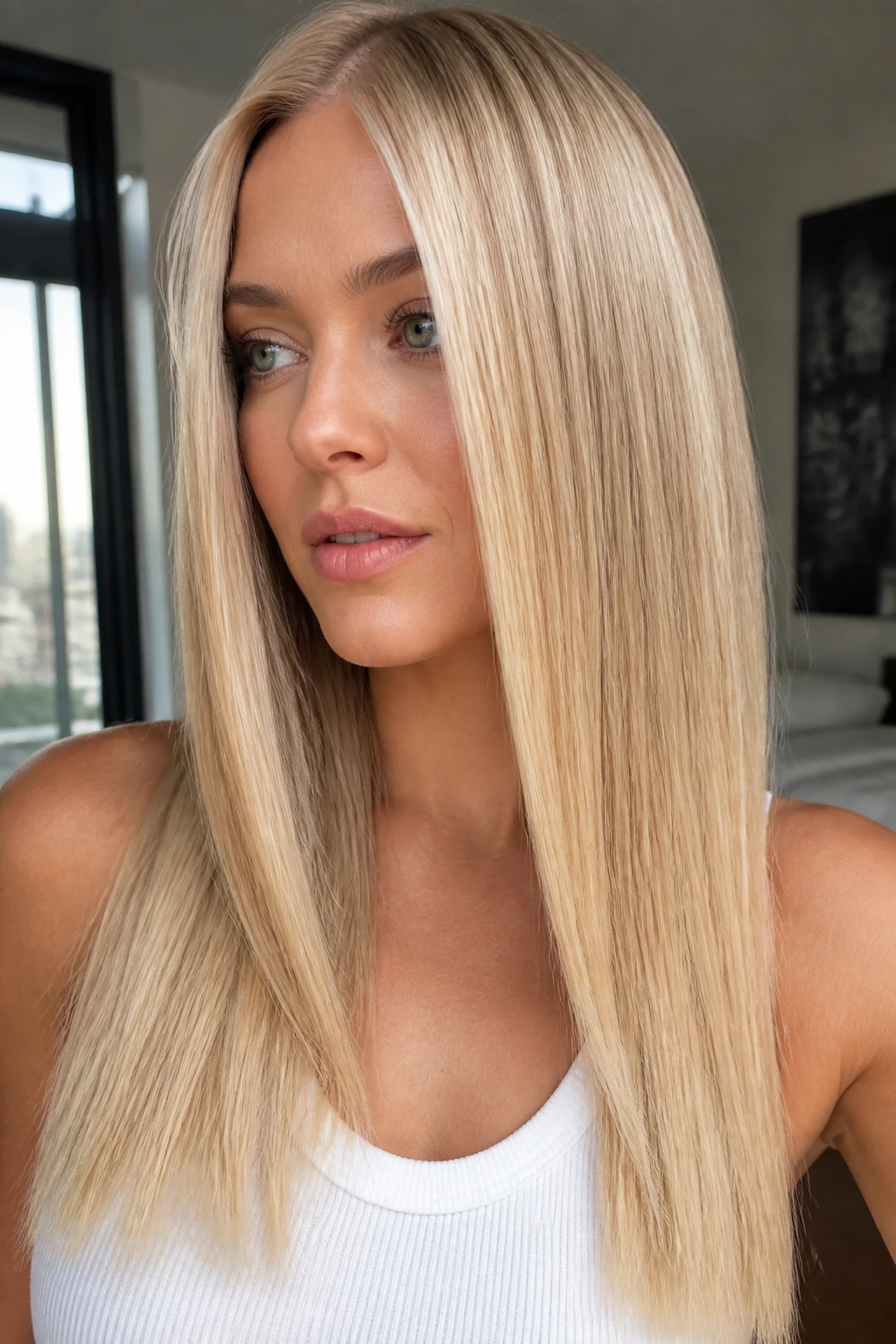
Straight blonde hair has a funny way of rewarding discipline. A good cut, a tone that suits the base, and a little restraint around the root can make the whole style look more expensive than a louder, brighter blonde ever could.
That’s the part I keep coming back to: straight hair doesn’t need to be rescued. It needs clean decisions. If the shape is right and the blonde is placed with care, the result lands with a sharpness that curls and waves can only hint at.
And that is why these 38 blonde hair looks for straight hair keep working. They know where the line should be.
