



Brown hair doesn’t need a dramatic dye job to look lit from within. The prettiest sun-kissed highlights for brown hair usually do something much smarter: they leave the base rich and quiet, then place lighter pieces exactly where daylight would land anyway — around the face, through the ends, over the crown, and in the bends of the hair.
That balance matters. Pull the color too light and you get stripey, salon-bright streaks that shout before they flatter. Keep it one to three levels lighter than the base, and suddenly the hair moves differently. Caramel reads creamy, honey warms up chestnut, beige softens a red-brown base, and copper gives dark brunette hair a little flicker without turning it orange. Texture changes the result too. Waves catch ribbons. Curls hide and reveal them. Straight hair shows every placement choice.
Some brunette highlight ideas look expensive because they’re loud. These don’t work that way. They work because the contrast is controlled, the tone is chosen on purpose, and the grow-out doesn’t collapse into a harsh root line after three weeks. That’s the sweet spot, and it’s where the best looks in this collection live.
Why Sun-Kissed Highlights Work So Well on Brown Hair
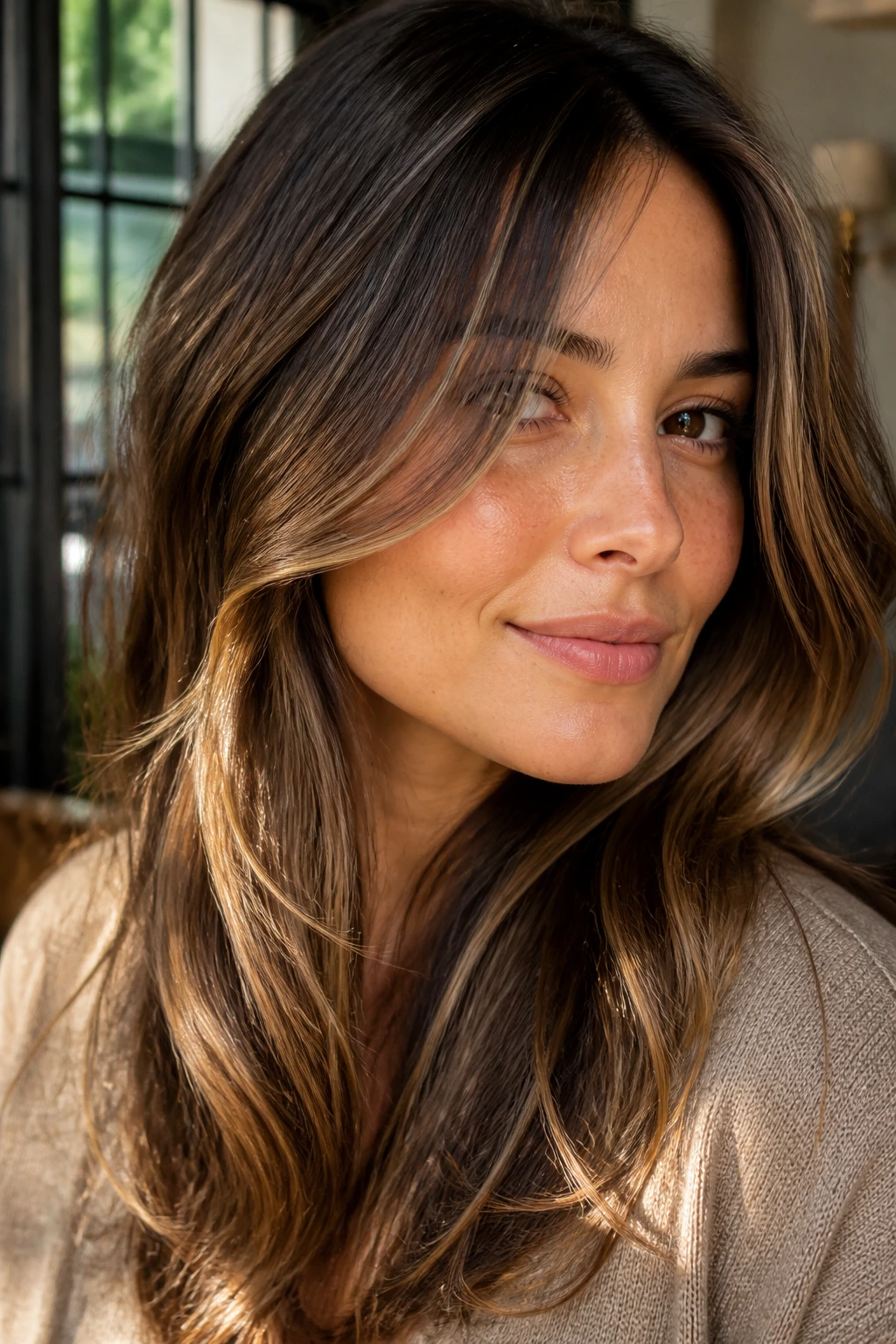
-
The root stays believable: Leaving depth at the scalp keeps the color from looking like a full bleach-out, and the grow-out line stays soft instead of obvious.
-
The bright pieces do the heavy lifting: A few well-placed ribbons around the face and ends make brown hair look brighter without flooding the whole head with blonde.
-
Warm and cool tones both fit: Honey, caramel, beige, copper, bronze, and mushroom each solve a different problem on brunette hair, depending on the base and undertone.
-
Texture changes the payoff: Waves and curls show off dimension faster than pin-straight hair, but fine, straight hair can still look fuller when the pieces are micro-woven instead of chunky.
-
Maintenance stays sane: Soft lightening usually needs toning and glossing before it needs a full redo, which is why this family of looks tends to age better than heavy stripes.
1. Caramel Face-Framing Money Piece
A caramel money piece is the fastest way to wake up brown hair without touching the whole head. The front panels get lifted just enough to sit one or two levels above the base, so the face gets a warm halo instead of a harsh block of blonde.
Why It Works
The placement is the point. A 1-inch section on each side of the part, painted a touch brighter than the rest, pulls light toward the eyes and cheekbones. On medium and dark brunettes, caramel usually reads softer than gold and less red than copper, which keeps the look wearable.
Quick Notes
- Best on shoulder-length cuts and long layers.
- Works well when the ends stay deeper than the face frame.
- Ask for a soft root melt so the bright front pieces don’t look pasted on.
Pro tip: If your hairline is fine, keep the brightest part right at the cheekbone level and avoid starting it too high at the root. That tiny change makes the grow-out cleaner.
2. Honey Balayage on Chestnut Hair
Honey balayage on chestnut hair has a soft glow that looks like a late afternoon sunbeam hit the ends and wandered off. The honey tone gives chestnut a warmer edge without tipping into orange, which is where a lot of warm brunettes go wrong.
The best version uses painted ribbons through the mid-lengths, then a few lighter strokes at the front for lift. You want visible movement when the hair bends, not a flat sheet of color. This is one of those looks that gets better with a loose wave and a little shine spray.
3. Toffee Babylights Through Long Layers
Why do babylights work so well on long brunette hair? Because the tiny weave keeps the lift quiet. Instead of obvious streaks, you get a shimmer effect that shows up when the hair swings.
What Makes It Different
Toffee babylights are narrow enough to blur into the base, but warm enough to keep brown hair from looking muddy. On long layers, they spread the brightness out from top to bottom, so the color doesn’t all sit at the surface.
A good colorist will place them a little heavier around the crown and mid-lengths, then leave the deepest brown at the interior. That contrast keeps the hair from turning flat in photos or under indoor light.
4. Beige Bronde Ribbons for Straight Hair
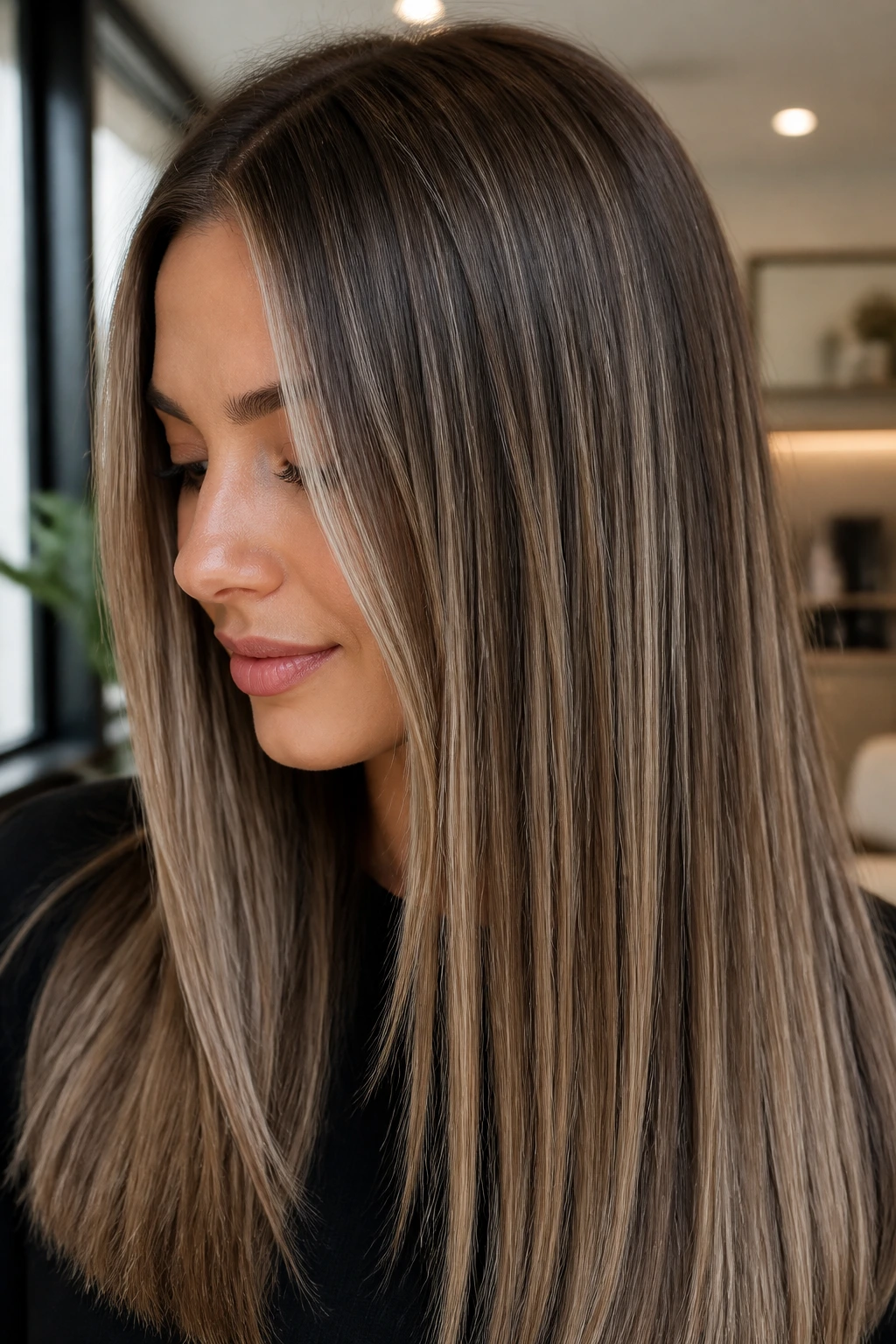
Straight brown hair can look heavy if the highlight pattern is too broad. Beige bronde ribbons solve that by breaking up the surface with cool-neutral light pieces that still feel soft.
The trick is width. Thin, woven panels look cleaner than large painted swaths, especially on hair that hangs smooth and glossy. Beige is the part that keeps the result from going too golden. If your skin tone already runs warm, that neutral bend helps the color sit back instead of shouting.
5. Cinnamon Gloss on Wavy Brown Hair
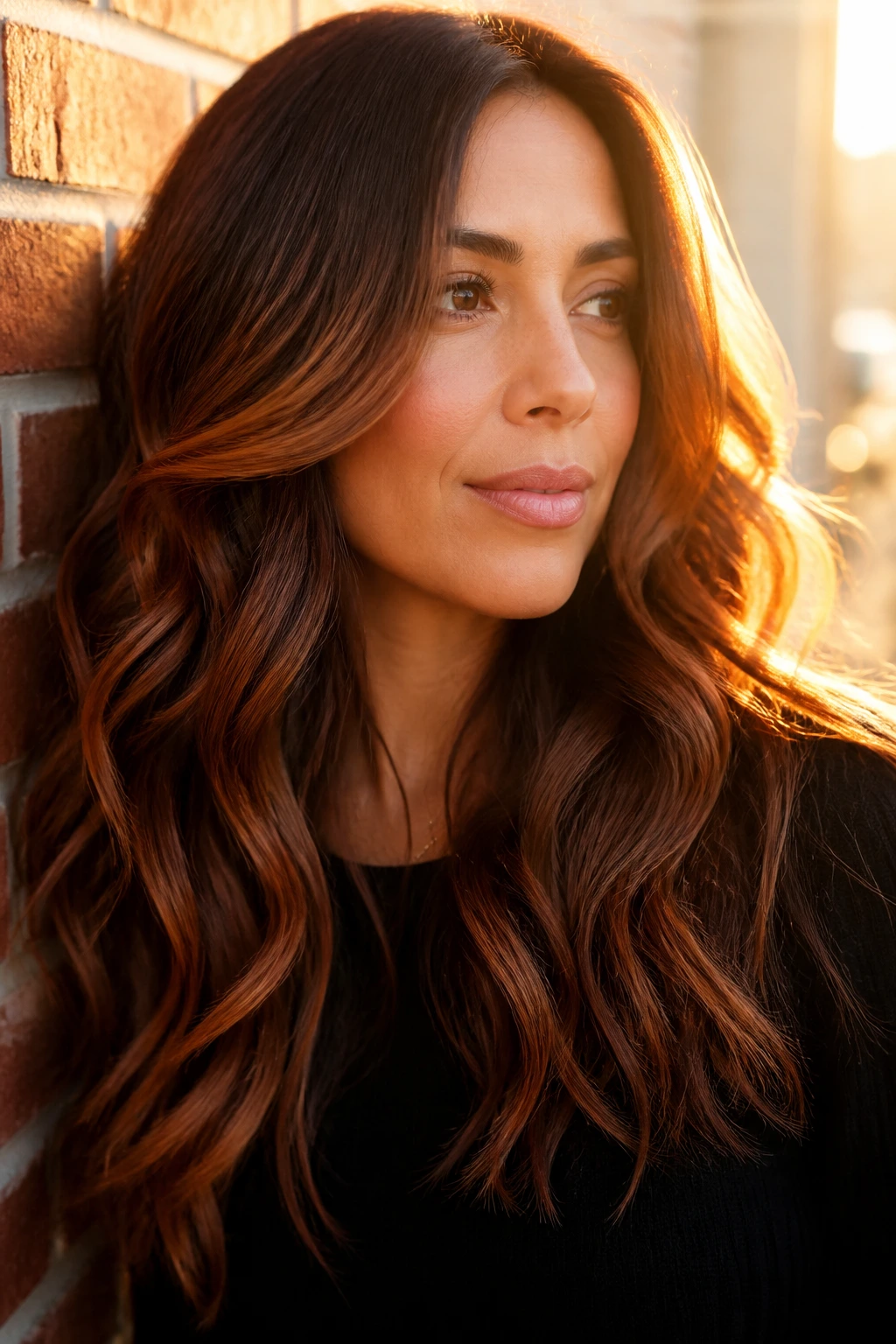
Cinnamon gloss is for the brunette who wants movement more than brightness. It leans red-brown, so the hair gets a warm sheen that shows up most clearly in waves and bends, where the light catches the tone shift.
This version is smart if you don’t want heavy lightening. A gloss can deepen the base, soften brass, and add that faint spicy warmth that makes brown hair look rich instead of flat. It’s subtle, but not boring. There’s a difference.
6. Golden Ombre Ends on Midlength Hair
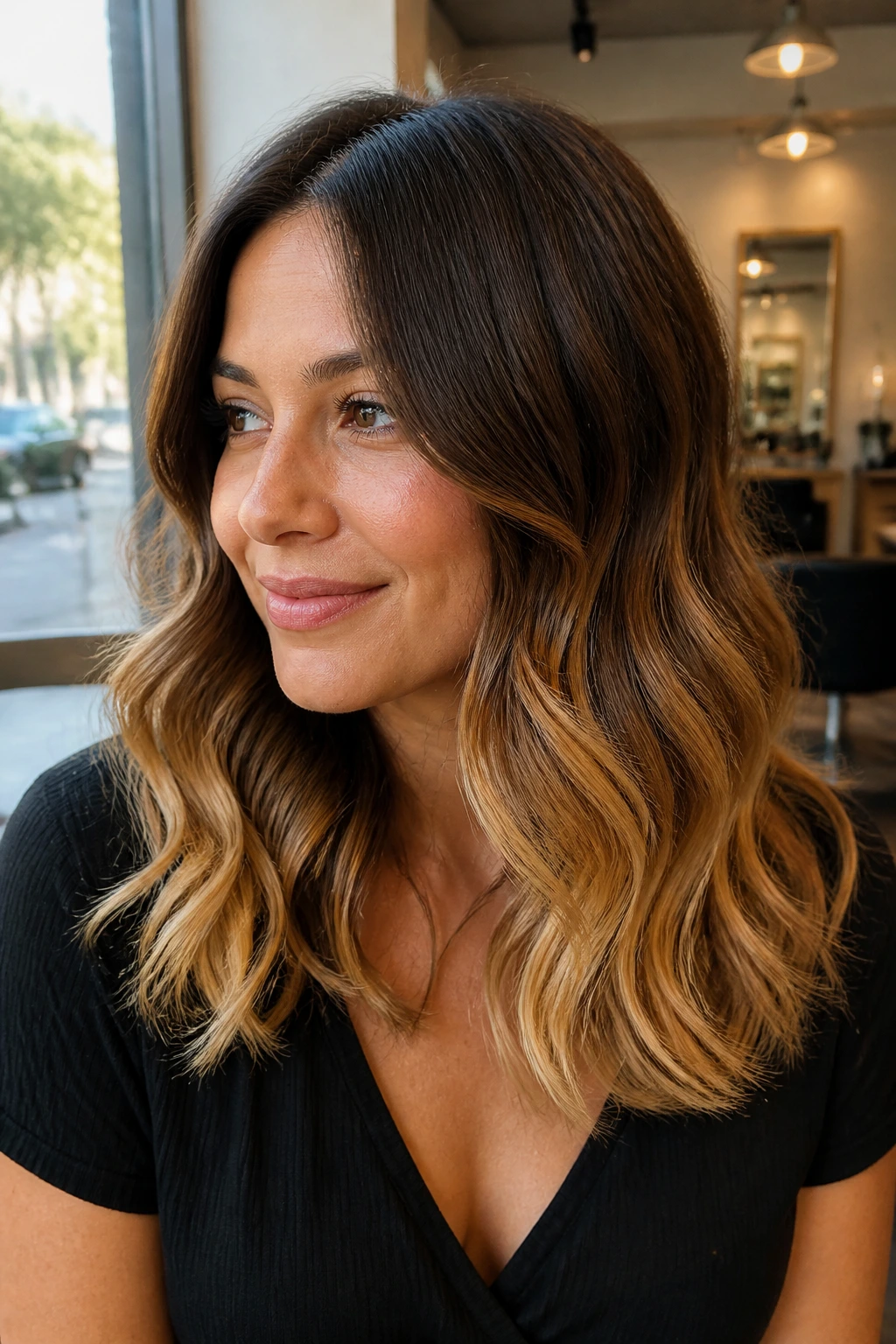
Golden ombre works when you keep the top half rooted and let the ends carry the brightness. On midlength hair, that means the transition has enough space to blur, which is where the color starts looking natural instead of dipped.
A good ombre on brown hair should feel like the sun spent a little more time on the lower six inches. The top stays chestnut or mocha; the ends move into honey, gold, or soft amber. If you curl the hair, the lighter ends catch every bend. Easy payoff.
7. Maple Swirl Highlights for Warm Brunettes
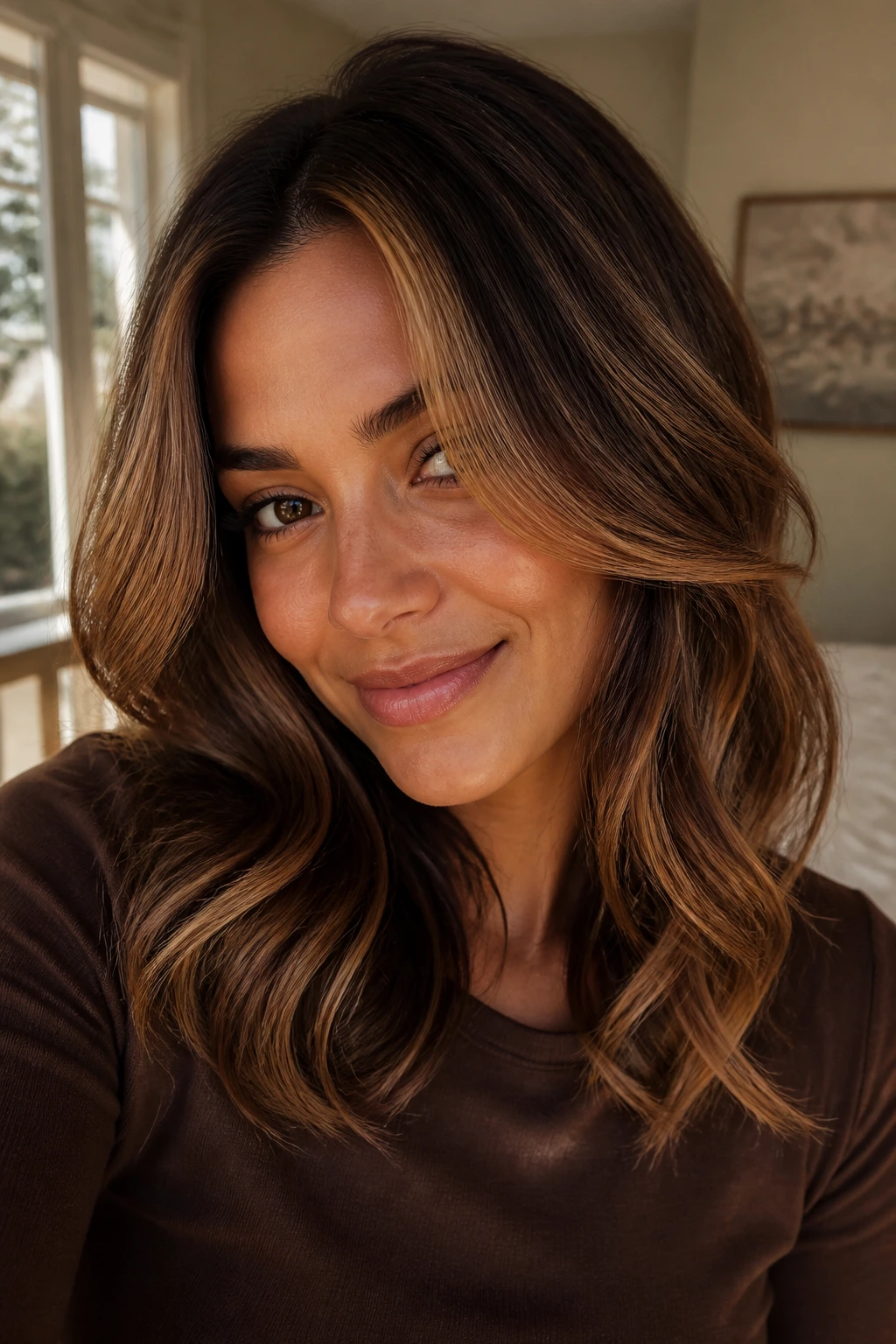
Warm brunettes look especially good in maple tones because the color sits between caramel and auburn. It’s a flattering middle ground. Not too red. Not too blonde.
H3: Where It Shows Best
Maple swirl highlights need movement to make sense, so layers help. Painted through the front pieces and around the face, they echo the natural warmth already in the brown base and make the whole head look more dimensional.
A few thin pieces under the top layer stop the look from becoming one-note. That hidden depth is what keeps the color from flattening out once the hair is pulled into a ponytail.
8. Auburn-Kissed Dimension for Dark Brown Hair
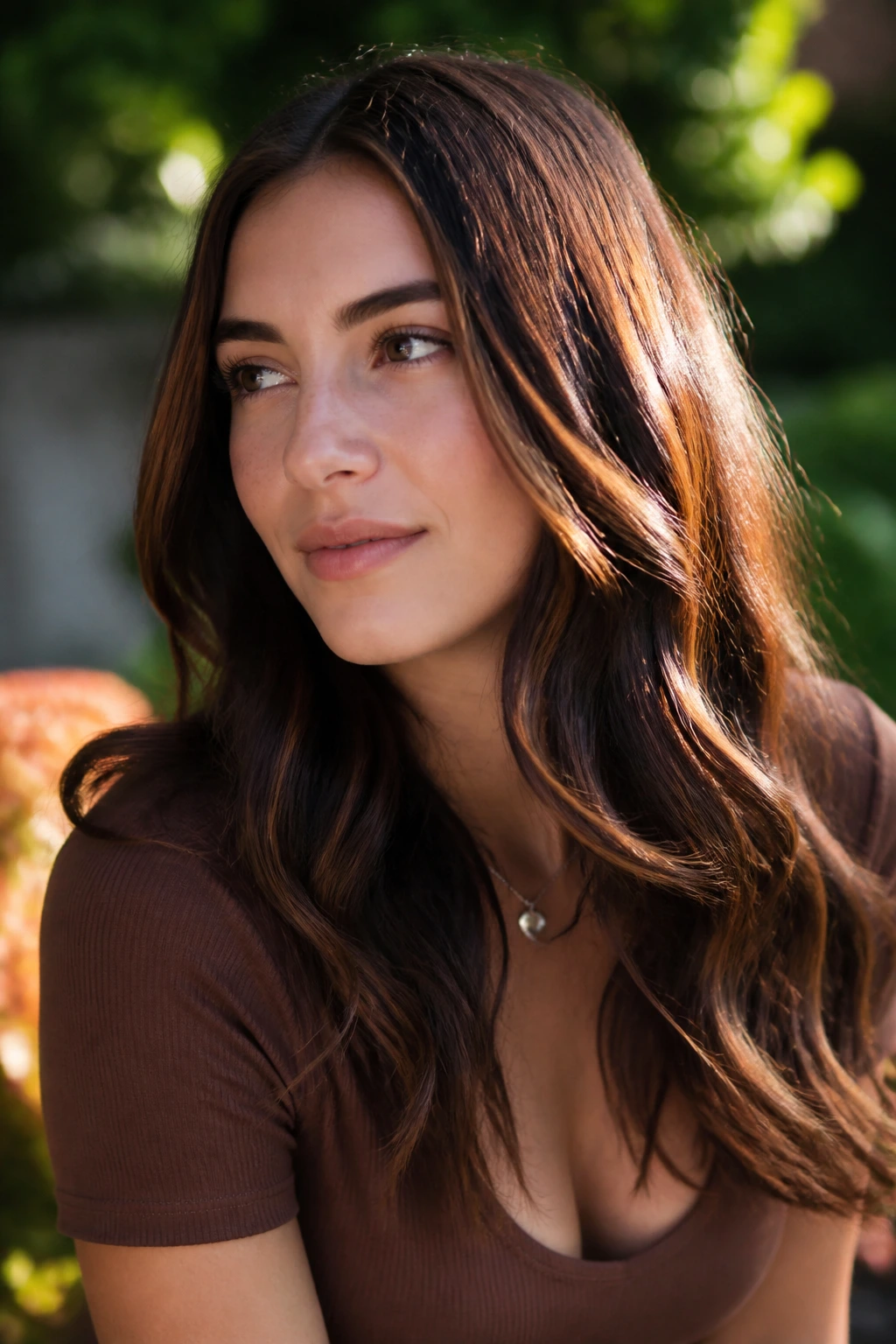
Dark brown hair can hold auburn beautifully when the red lives inside the brown instead of sitting on top of it. The effect is warmer in sunlight, richer indoors, and a lot more forgiving than full copper.
This is one of the few lightening choices that makes sense if you want depth first and brightness second. The pieces should be fine, scattered, and never all the same width. That unevenness keeps the hair from turning into one solid red-brown block.
9. Walnut and Champagne Contrast
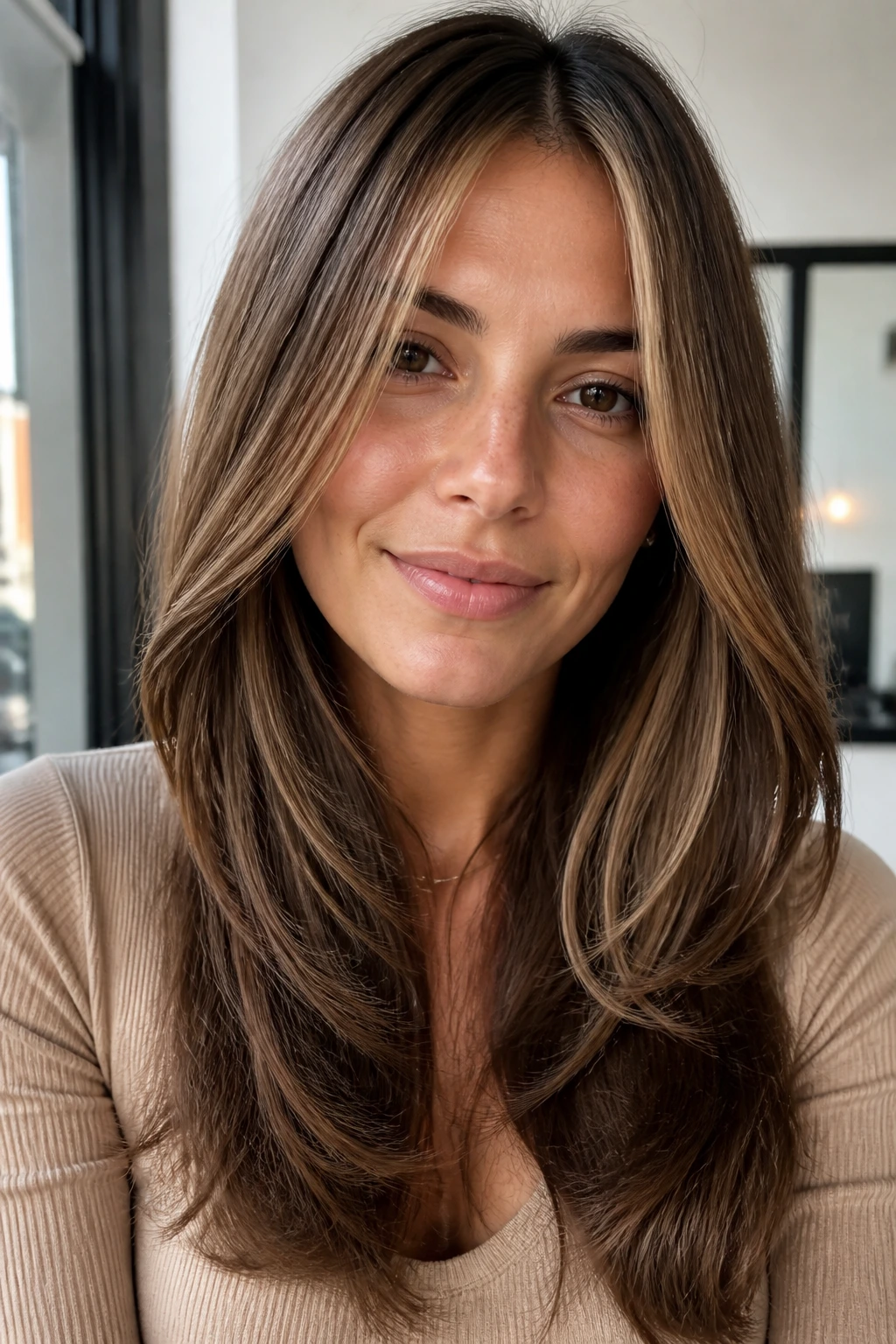
What happens when a brown base gets just enough champagne to sparkle? The answer is cleaner contrast than warm highlights alone can give. Walnut keeps the foundation grounded; champagne lifts the top layer without making the hair look brassy.
How to Wear It
- Best for medium brown hair that already leans neutral.
- Strong on blunt cuts and sleek blowouts.
- A soft bend shows the contrast better than pin-straight styling.
The palette feels polished because it mixes cool and warm. That matters more than people think. When both tones are in the same head of hair, the color reads expensive rather than one-dimensional.
10. Soft Copper Ribbons Around the Hairline
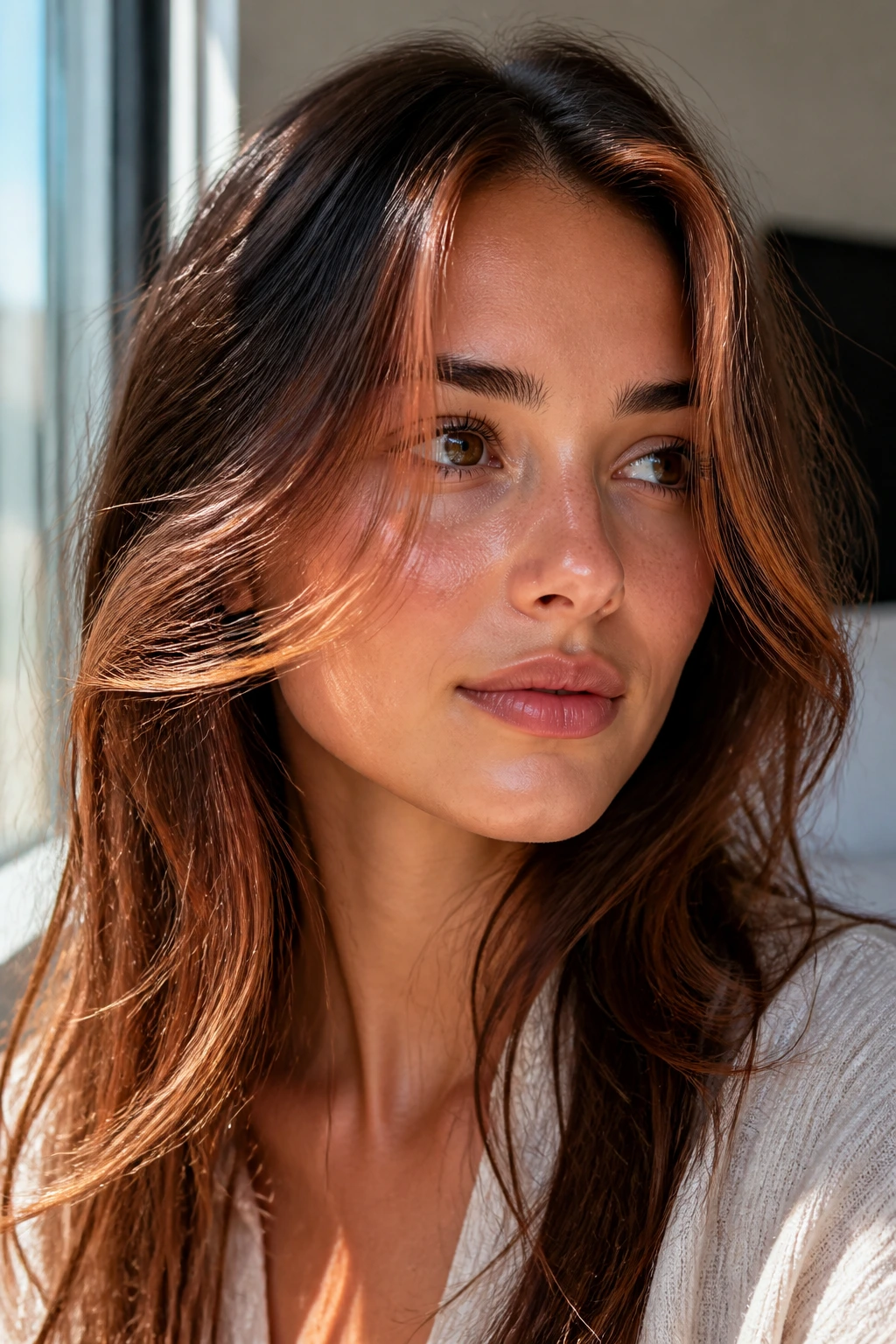
Copper near the hairline is a bold move only if you overdo it. Keep the ribbons thin, and the look turns into a warm flicker that brightens brown hair without shouting.
This placement works especially well on layered cuts, where the front pieces swing across the cheeks. The copper shows first, then fades back into the brunette base. That little flash is the whole point. It’s the difference between a full red transformation and a brunette with real life in it.
11. Sand Beige Highlights on Cool Brown Hair
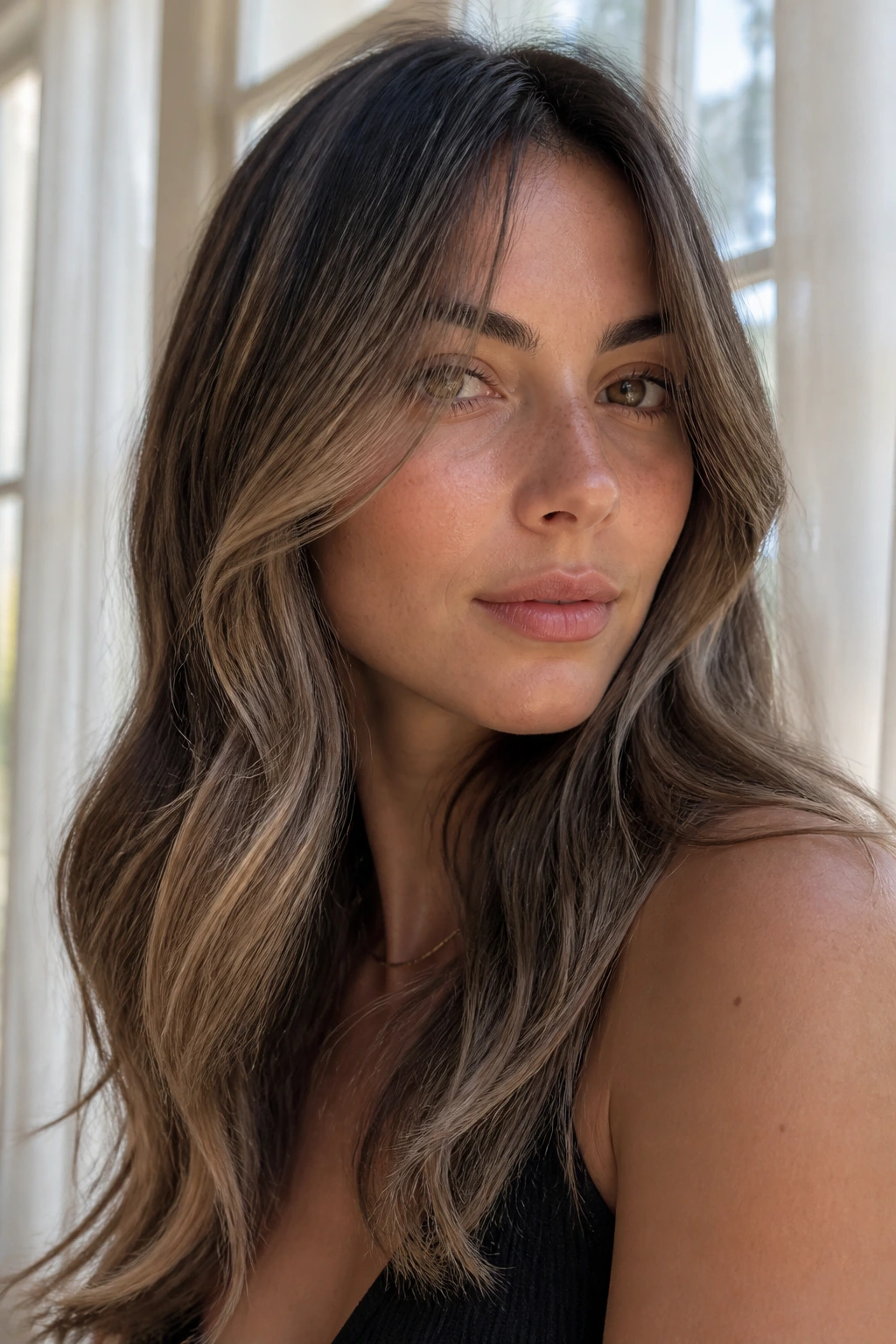
Cool brown bases can go flat if you push too much gold into them. Sand beige keeps things soft and slightly muted, which is why it works so well on espresso, ash-brown, and mushroomy brunettes.
The color should look like sunlight through a linen curtain — bright, but not yellow. Ask for thin pieces through the outer layer and a few lighter ends, not chunky panels at the top. On straight hair, this creates a soft veil. On waves, it turns into a gentle ribbon effect.
12. Espresso-to-Caramel Contour Balayage
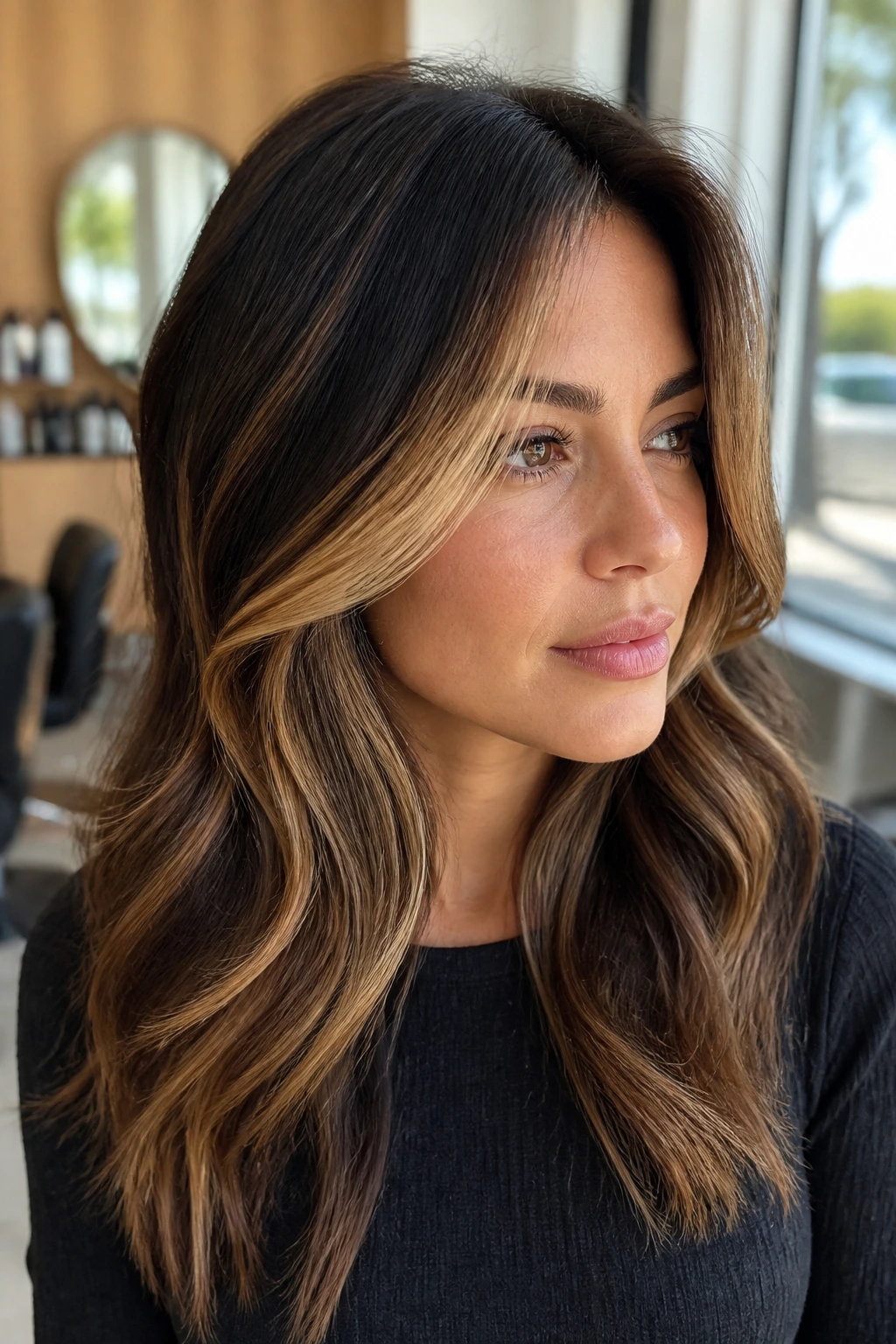
This is the brunette version of contouring, and yes, it’s exactly as useful as it sounds. Dark espresso pieces around the crown and underneath make the caramel highlights on top stand out more.
The contrast is deliberate. A deeper root zone sharpens the face frame, while the caramel sits where the hair bends and opens up. If your cut has layers, the whole shape reads cleaner. It’s a smart choice when you want dimension without losing the depth that makes brown hair look shiny.
13. Mushroom Brown with Sun-Faded Ends
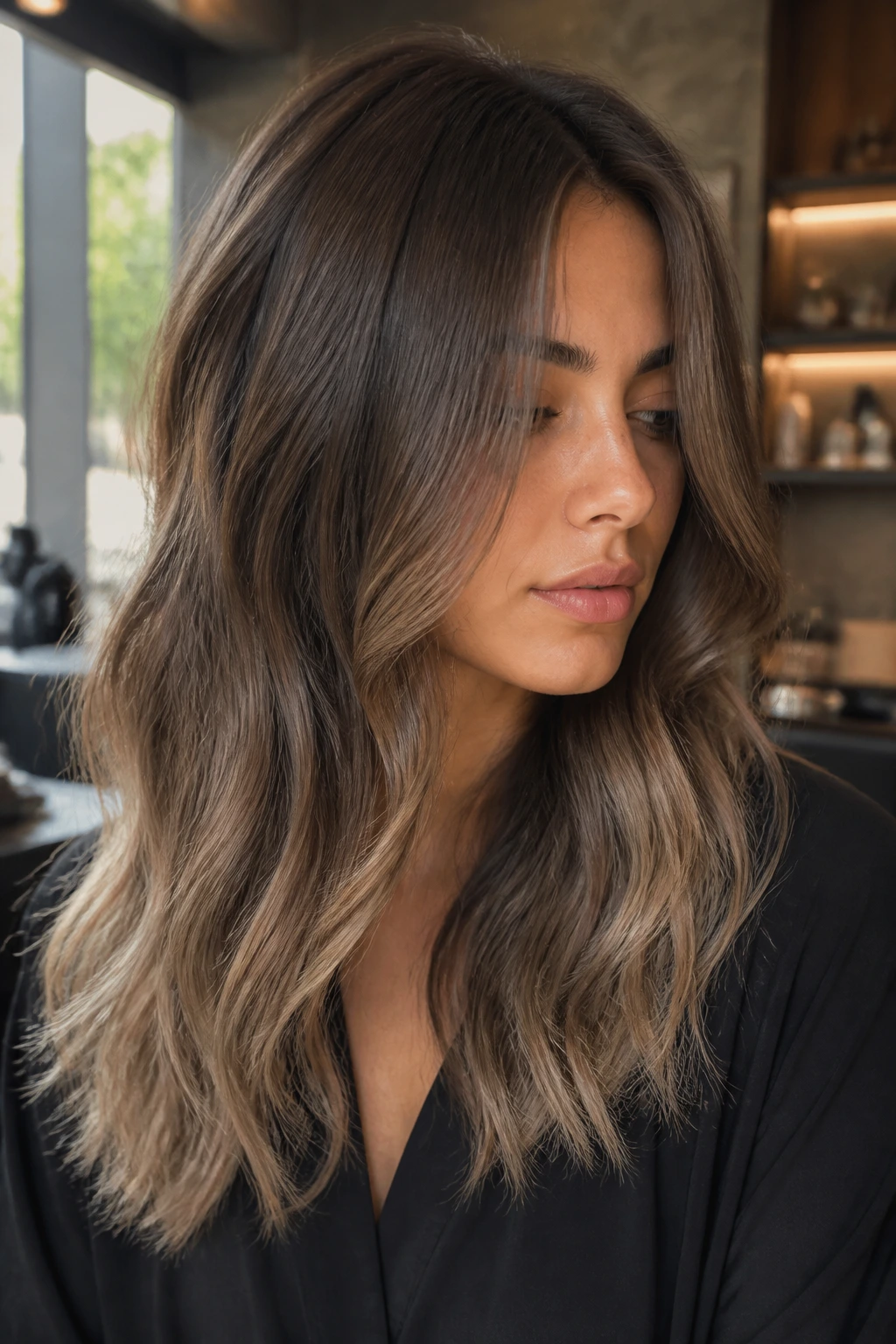
Mushroom brown can look chic when the faded ends are handled well. The base stays cool and earthy; the tips get a dusting of beige and taupe that looks like slow natural light, not bleach.
A Small Detail That Matters
The transition should be blurred, not obvious. If the line between root and end is too neat, the whole effect feels staged. Smudge the midpoint with a soft glaze so the cool tone and the lighter ends melt together.
This is one of the best choices if you prefer low contrast and hate obvious streaks.
14. Amber Foilayage for Thick Hair
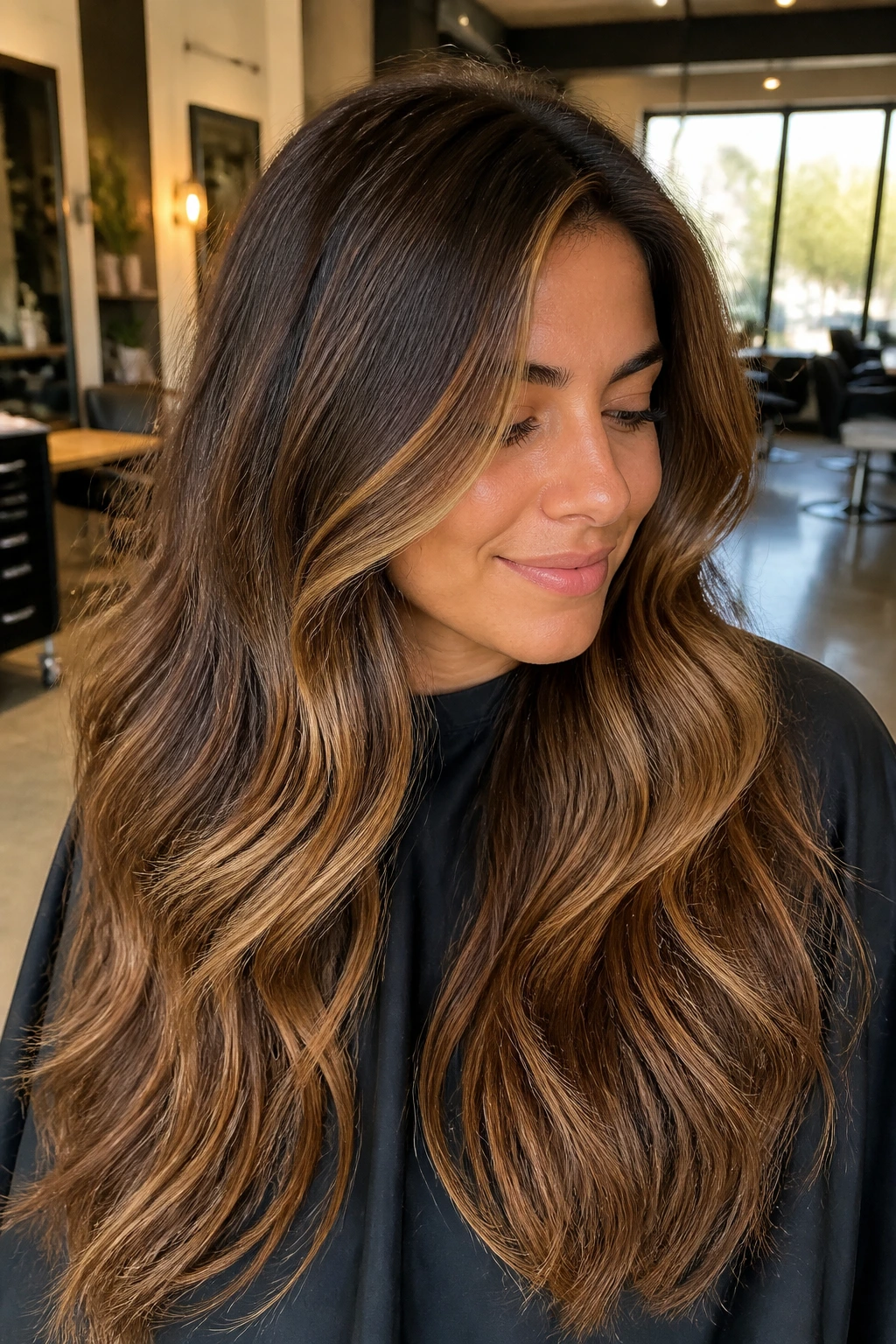
Why use foilayage on thick brown hair? Because thick hair often needs extra lift to show the tone, and open-air balayage can get lost in all that density. Foils give amber more power, which keeps the highlight visible through the body of the hair.
The color should land in the warm gold-amber range, not orange. A few larger panels can work here because thick hair can carry them without looking blocky. If the cut has movement, the amber pieces break up the bulk and make the hair look lighter on the ends.
15. Latte Lights on Shoulder-Length Cuts
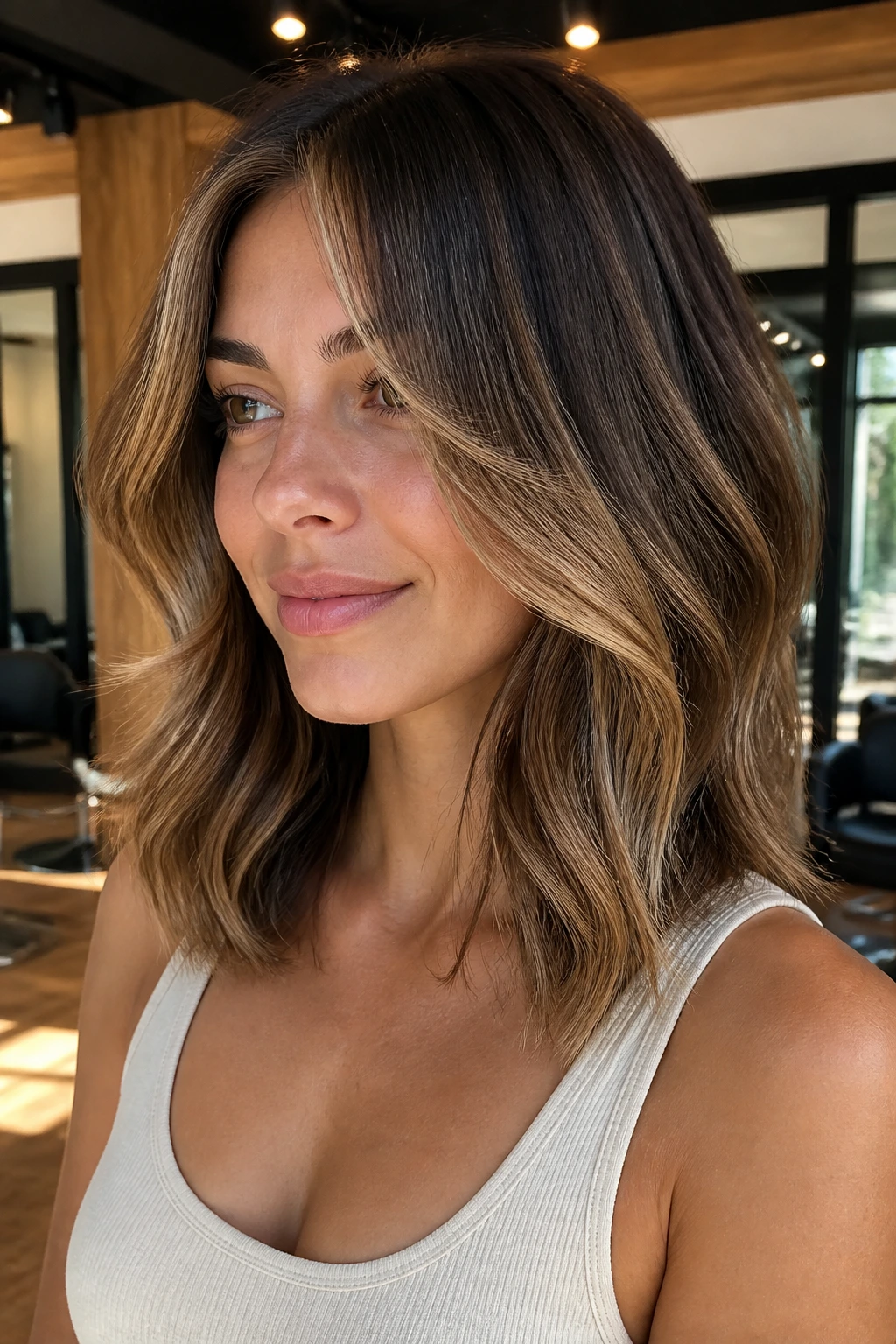
Latte lights sit in that sweet zone between beige and caramel. On shoulder-length hair, they keep the cut from looking too compact, which is a common problem with one-length brunettes.
The best placement follows the bend of the hair rather than the part line alone. A few lighter strokes near the front, some through the surface, and just enough brightness at the ends create a soft, foamy finish. It’s subtle. That’s the point.
16. Toasted Almond Streaks for Sleek Bobs
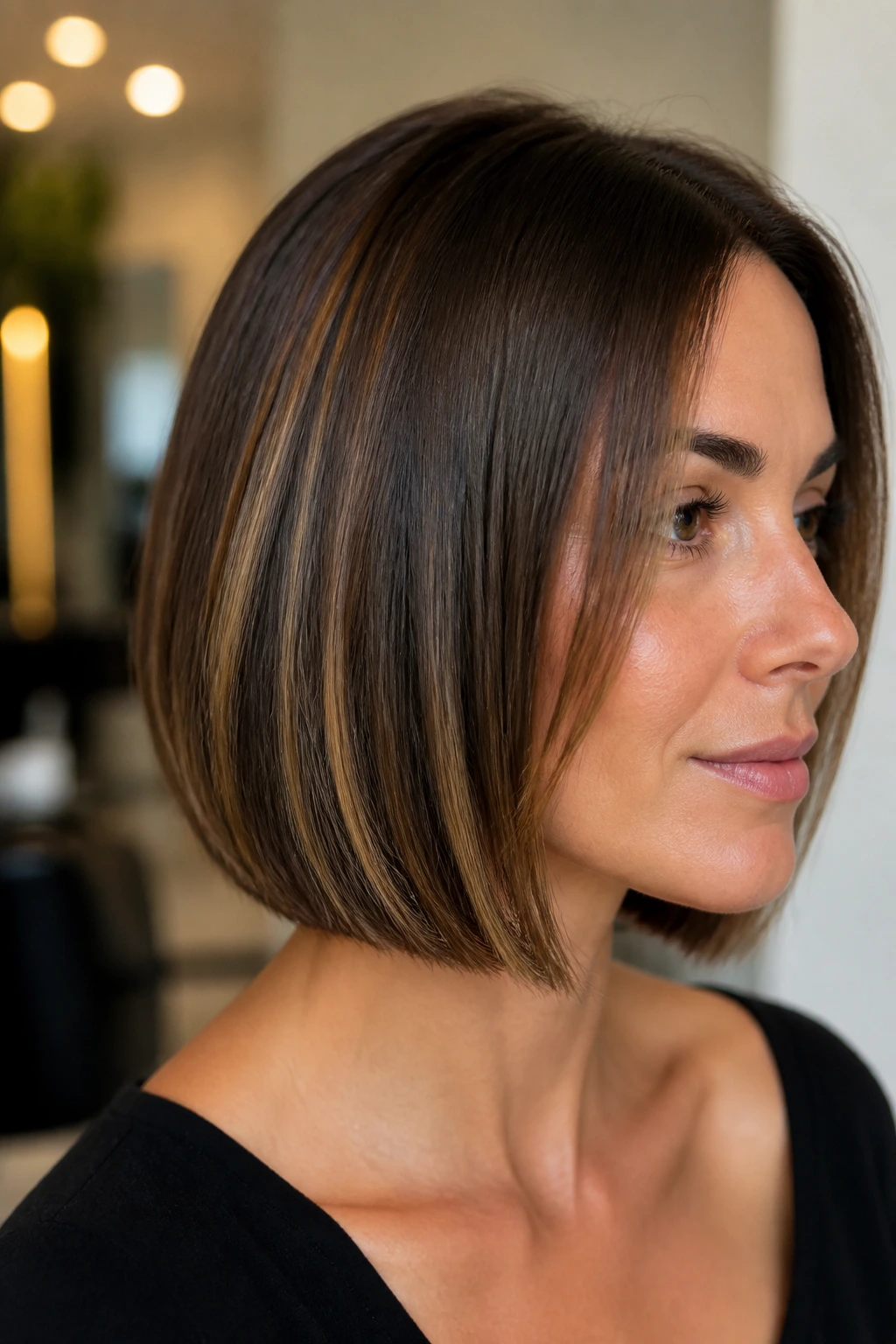
A sleek bob needs highlight placement that respects the shape. Toasted almond streaks do that by running narrow, clean pieces through the outer layer instead of flooding the whole cut with light.
What to Watch For
- Keep the pieces slim so the bob still looks sharp.
- Let the nape stay a touch deeper for contrast.
- Use a beige-leaning toner if the lift pulls too gold.
On a straight bob, the clean lines of the cut make each ribbon visible. That’s useful if you want the highlight pattern to read as intentional rather than random.
17. Bronze Glaze Pieces on Natural Brunette
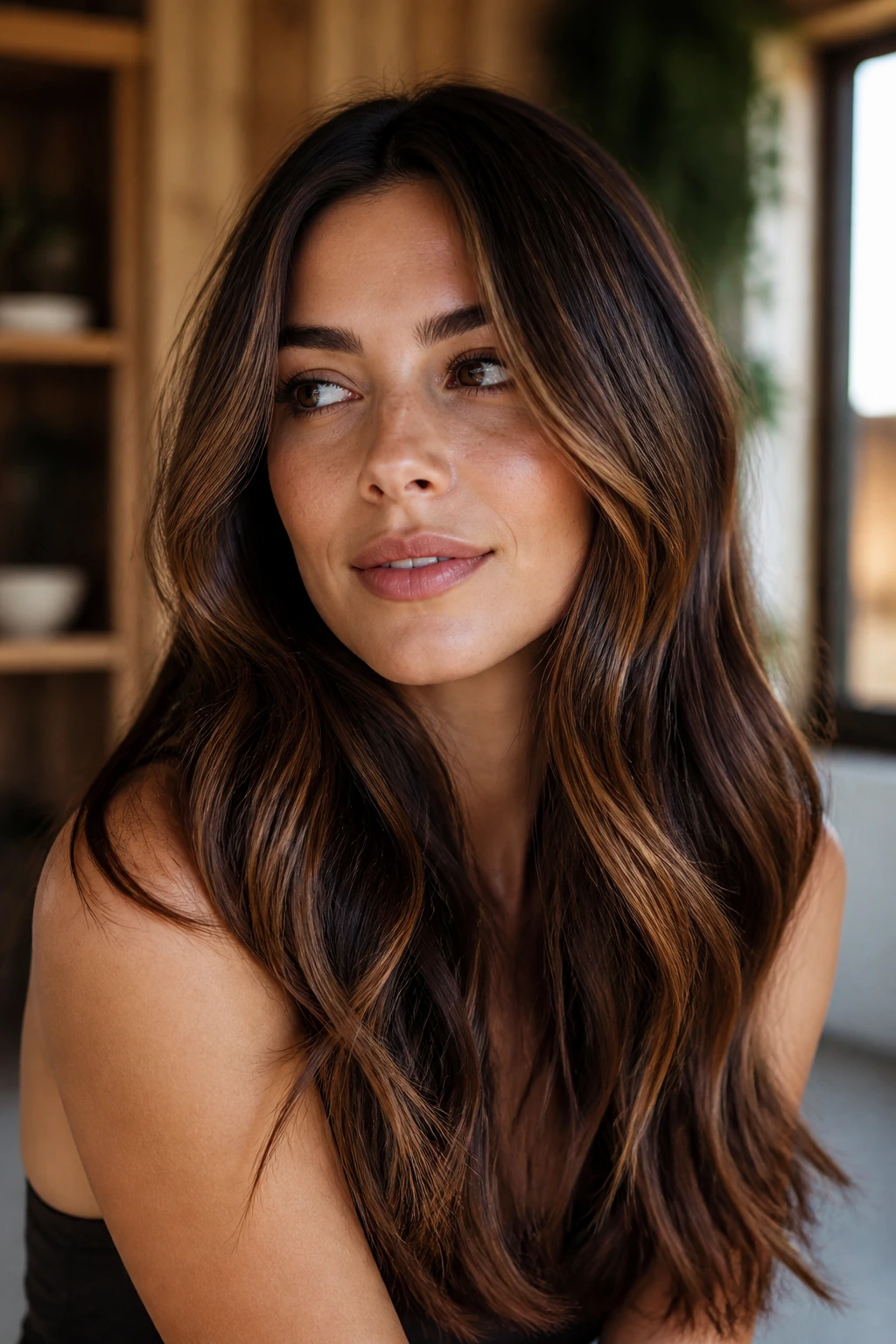
Bronze is one of those tones that can look loud in a swatch and gorgeous in hair. On natural brunette bases, it gives a metallic warmth that catches light without turning the whole head blonde.
This works especially well if your brown hair already has a warm undertone. A bronze glaze over a few lighter pieces can unify the color and make the strands look thicker. The shine is doing half the work here, so a dull finish will ruin the effect fast.
18. Honeyed Peekaboo Layers Under the Top Section
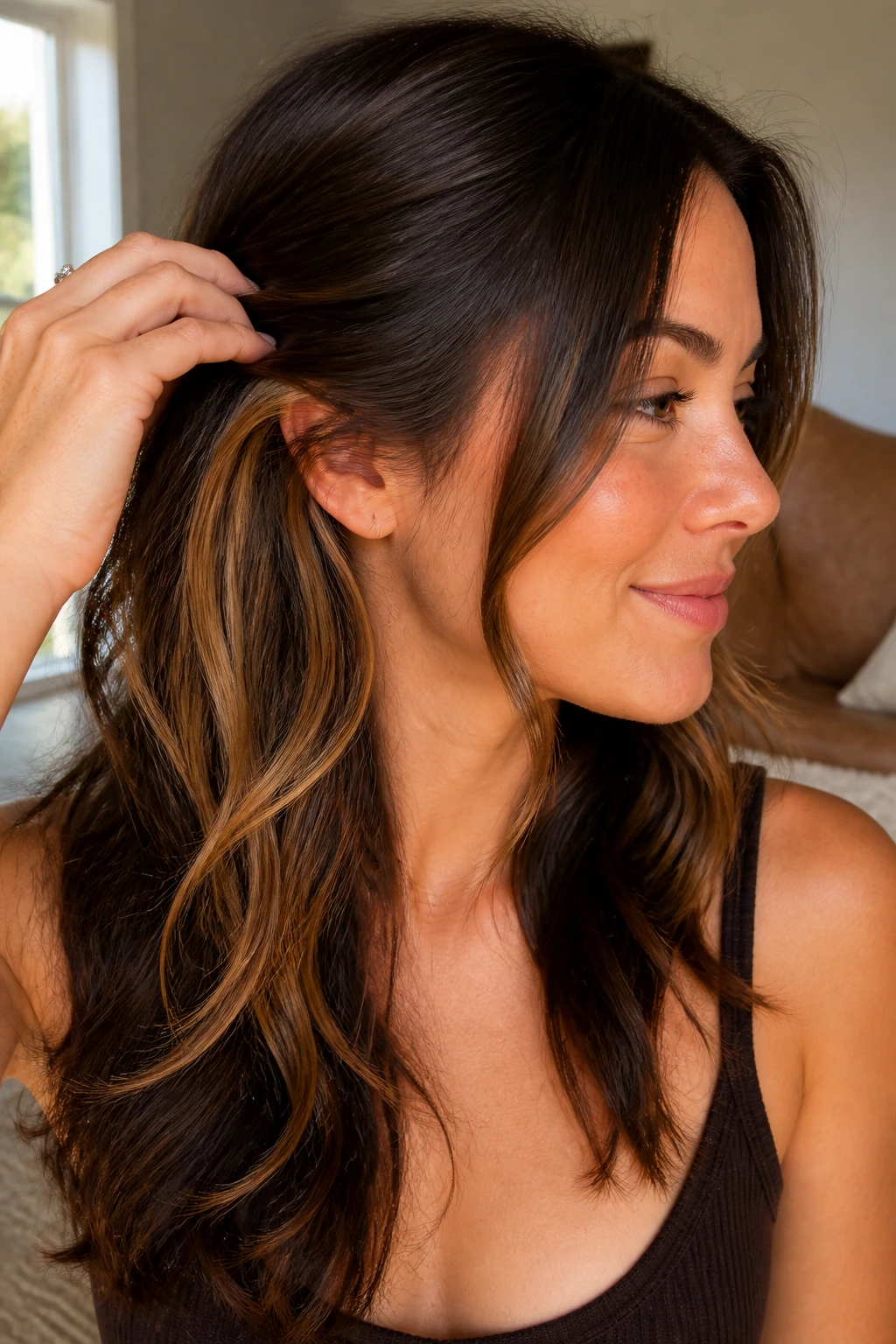
Peekaboo highlights are the quiet troublemakers of brunette color. They hide under the top layer, then flash honey when the hair moves or gets tucked behind the ear.
The appeal is that the top still looks like a deep brown haircut. The brightness lives underneath, which is perfect if you want dimension without obvious surface streaks. On layered hair, this placement also keeps the interior from feeling dark and heavy. It’s a small change with a surprisingly big payoff.
19. Sunlit Curtain Bangs With Soft Ends
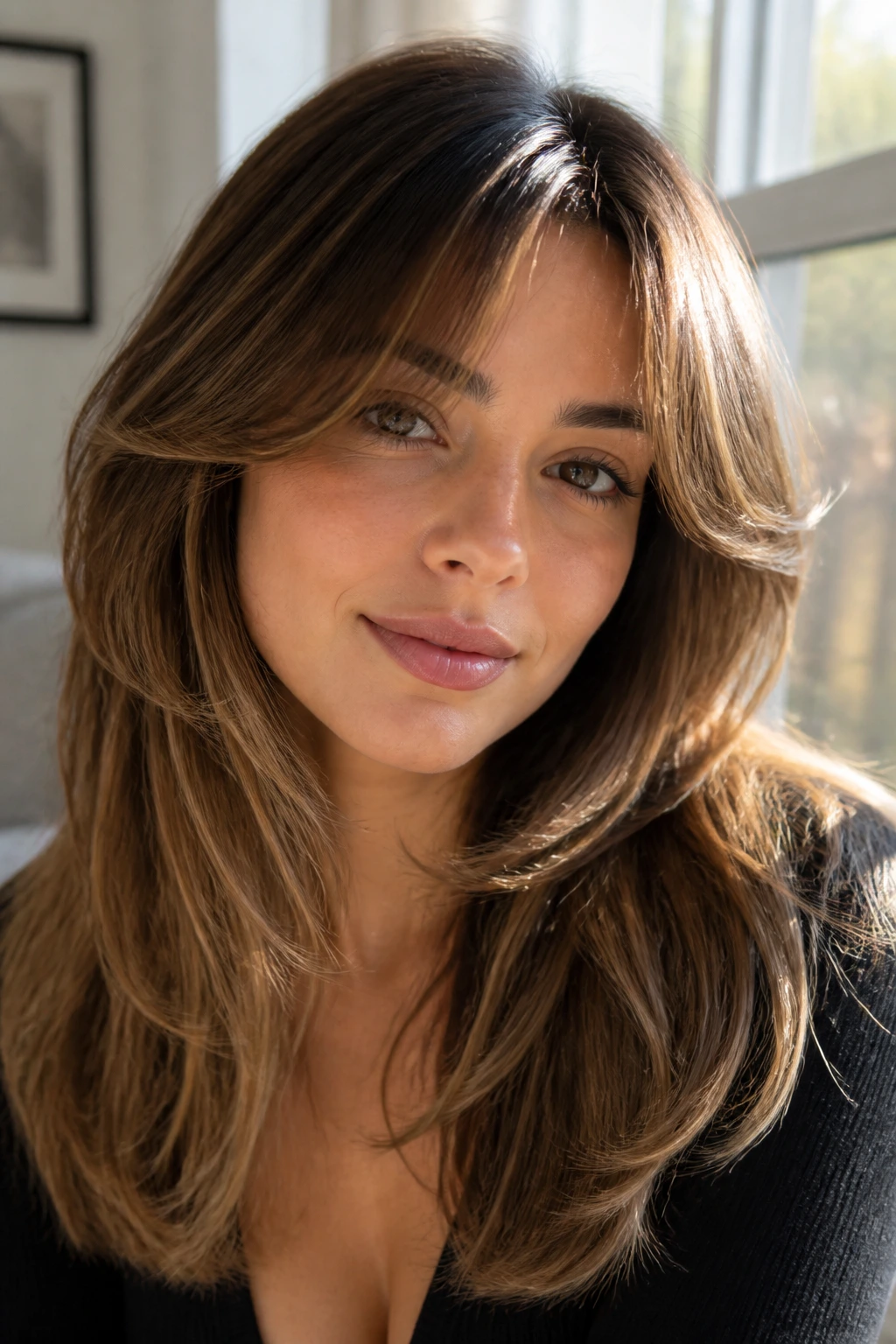
Curtain bangs love light because they sit right in the area people notice first. A few sunlit pieces through the fringe and face frame make the entire style look fresher.
H3: Why This Placement Works
The bangs brighten the center of the face, while the softer ends keep the rest of the cut from going heavy. If you wear your hair with a middle part, the lighter curtains also make the opening at the front look cleaner and more balanced.
Keep the brightness soft. Curtain bangs are close to the face, so harsh contrast can read a little too loud. You want movement, not a stripe.
20. Warm Mocha Melt for Long Waves
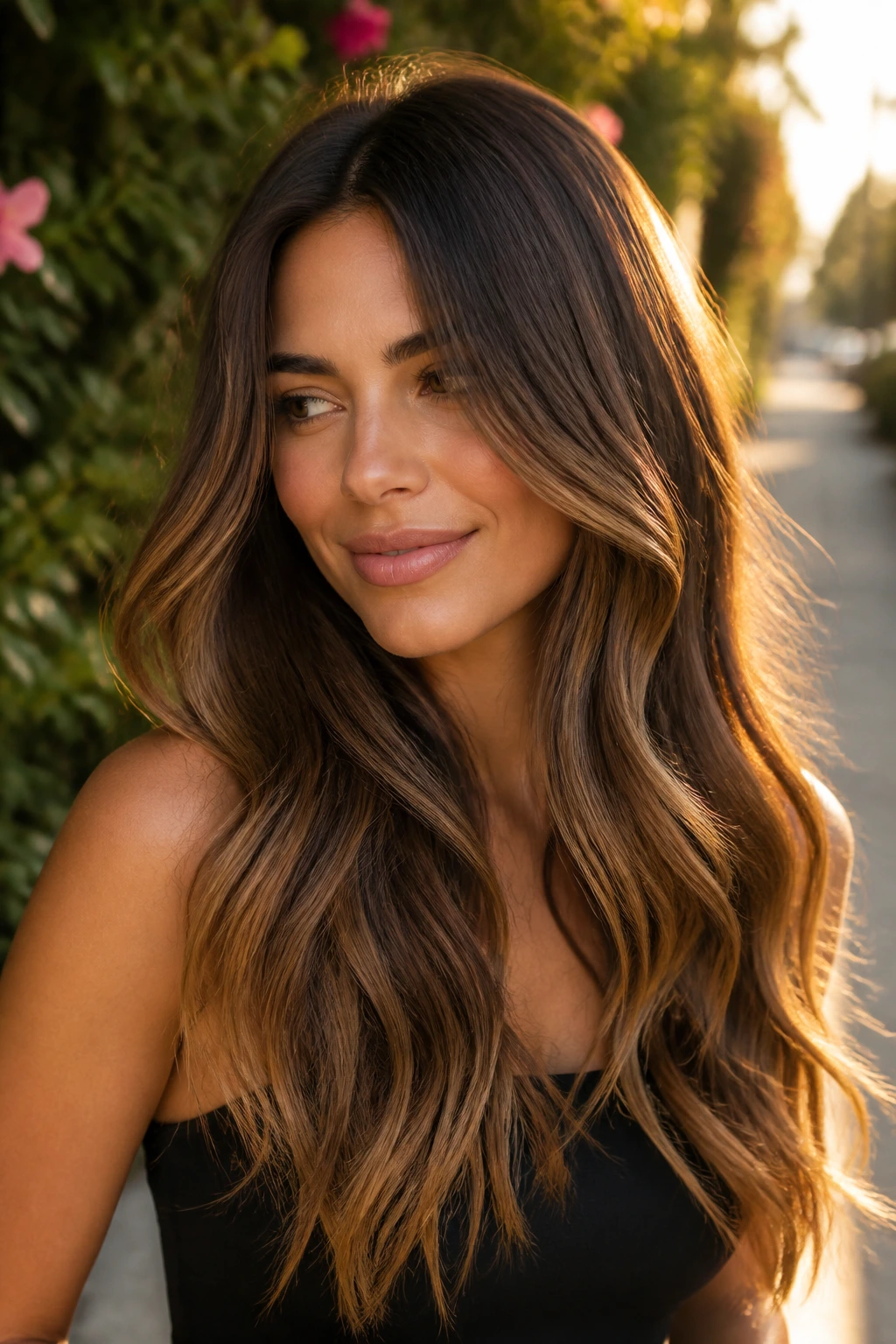
Long waves can carry a mocha melt beautifully because there’s enough length for the color to blur. The root stays deep mocha, the mids turn into warm brown, and the ends finish with a soft caramel glow.
This is one of the easiest ways to make long hair look expensive without making it look overworked. The melt matters more than the brightness. If the transition is smooth, the waves will do the rest.
21. Butterscotch Strands on Medium Brown Hair
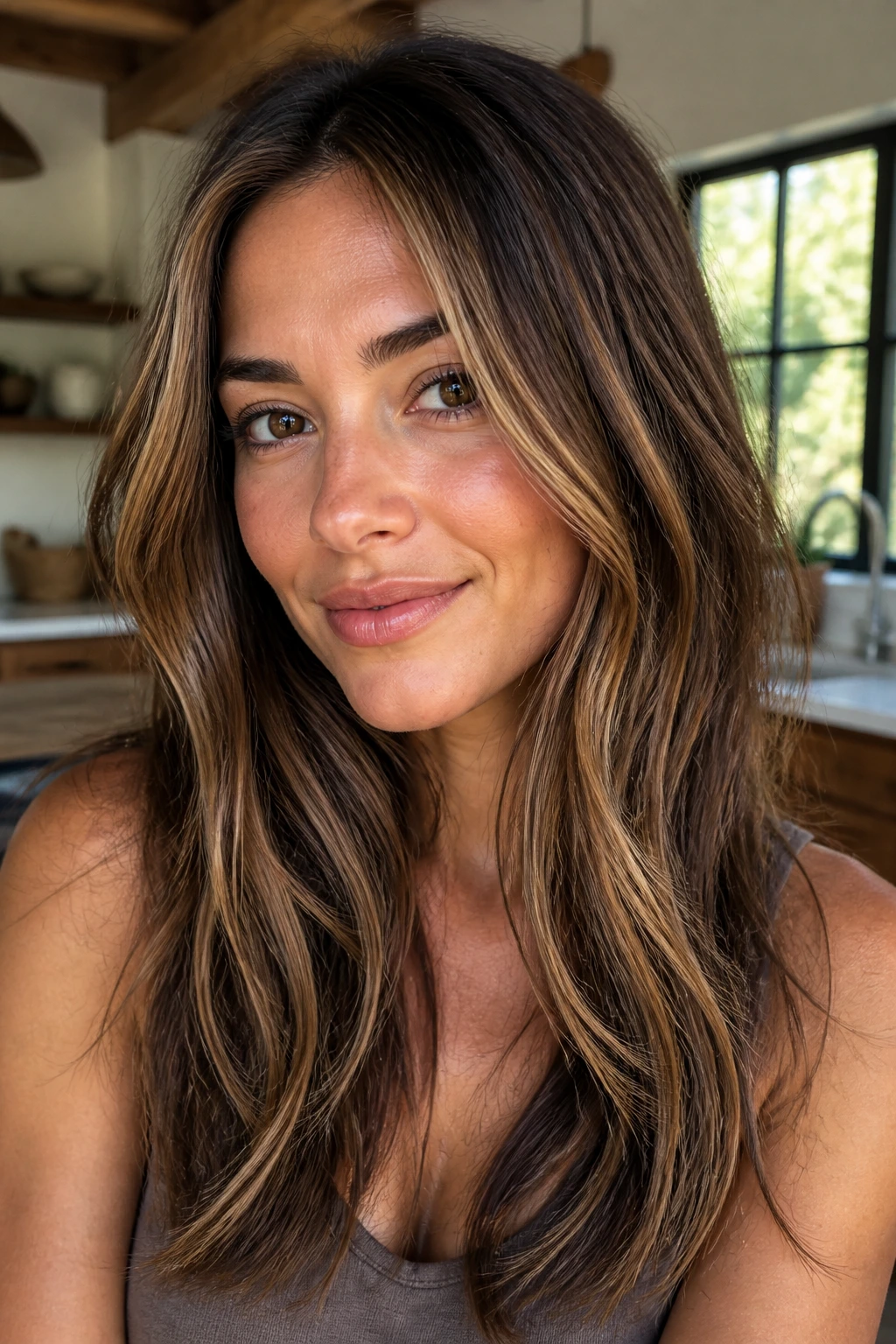
Why does butterscotch work so well on medium brown hair? Because the tone sits high enough to show, but not so high that it fights the base. It’s a warm, creamy highlight that feels softer than gold and friendlier than copper.
How to Use It
Butterscotch looks best in scattered ribbons rather than a full-head lift. Ask for a little more brightness around the face and a few pieces through the top layer. That keeps the look lively without making the roots feel heavy.
It’s a nice pick if your brown hair already leans warm and you want the color to read sunny, not icy.
22. Sandy Bronde Lob with Soft Lift
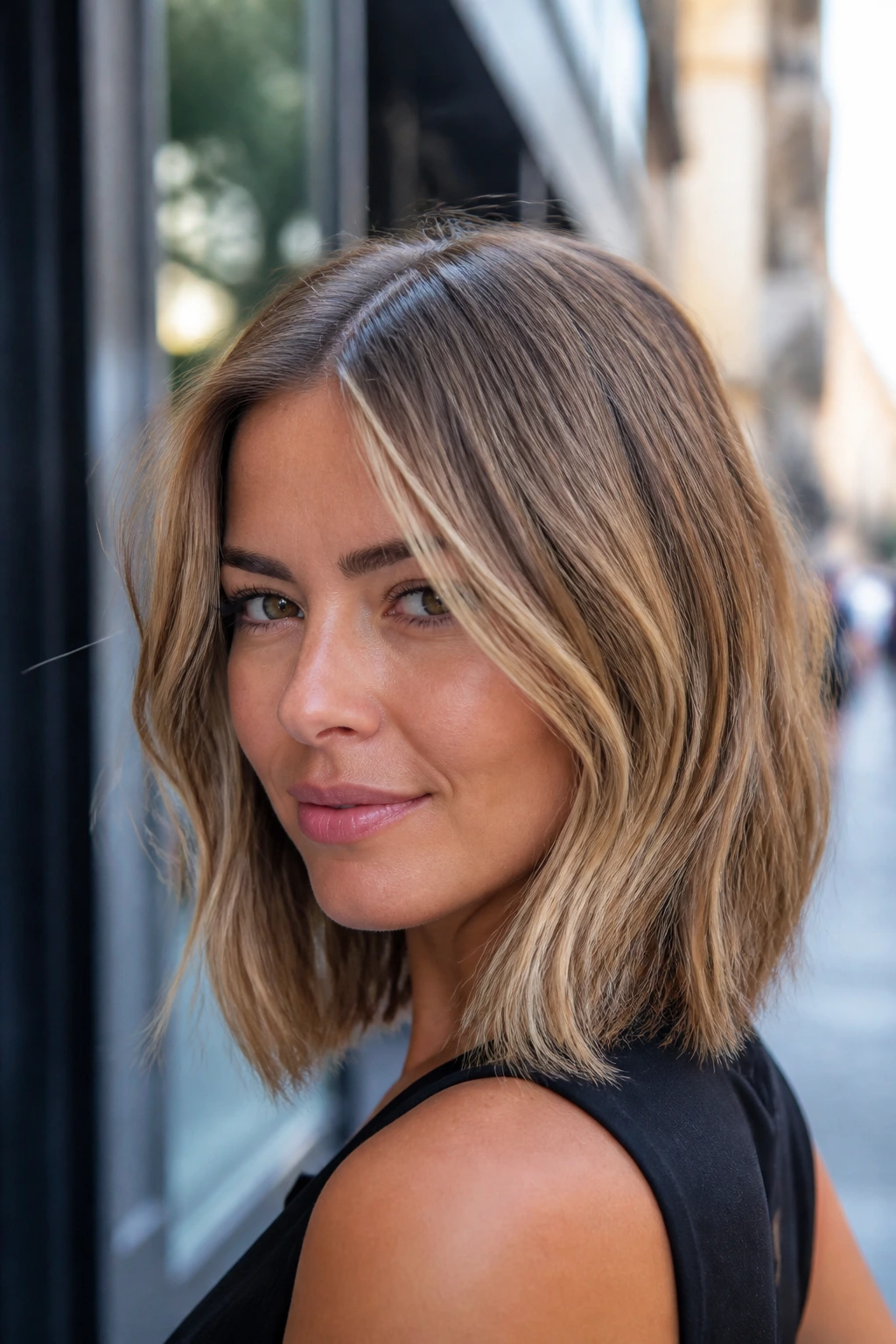
A lob gives bronde color a neat, modern shape. Sandy bronde keeps the contrast low, which is useful when you want the haircut to stay clean and the color to do the soft work.
The highlight pieces should hover around the perimeter and through the surface, not just at the ends. That way the cut doesn’t look flat when it’s tucked behind the ear or worn straight. Sandy tones are especially useful if your base sits between level 5 and 6 and you want lift without obvious blonding.
23. Cinnamon-Sugar Curls with Ribbon Highlights
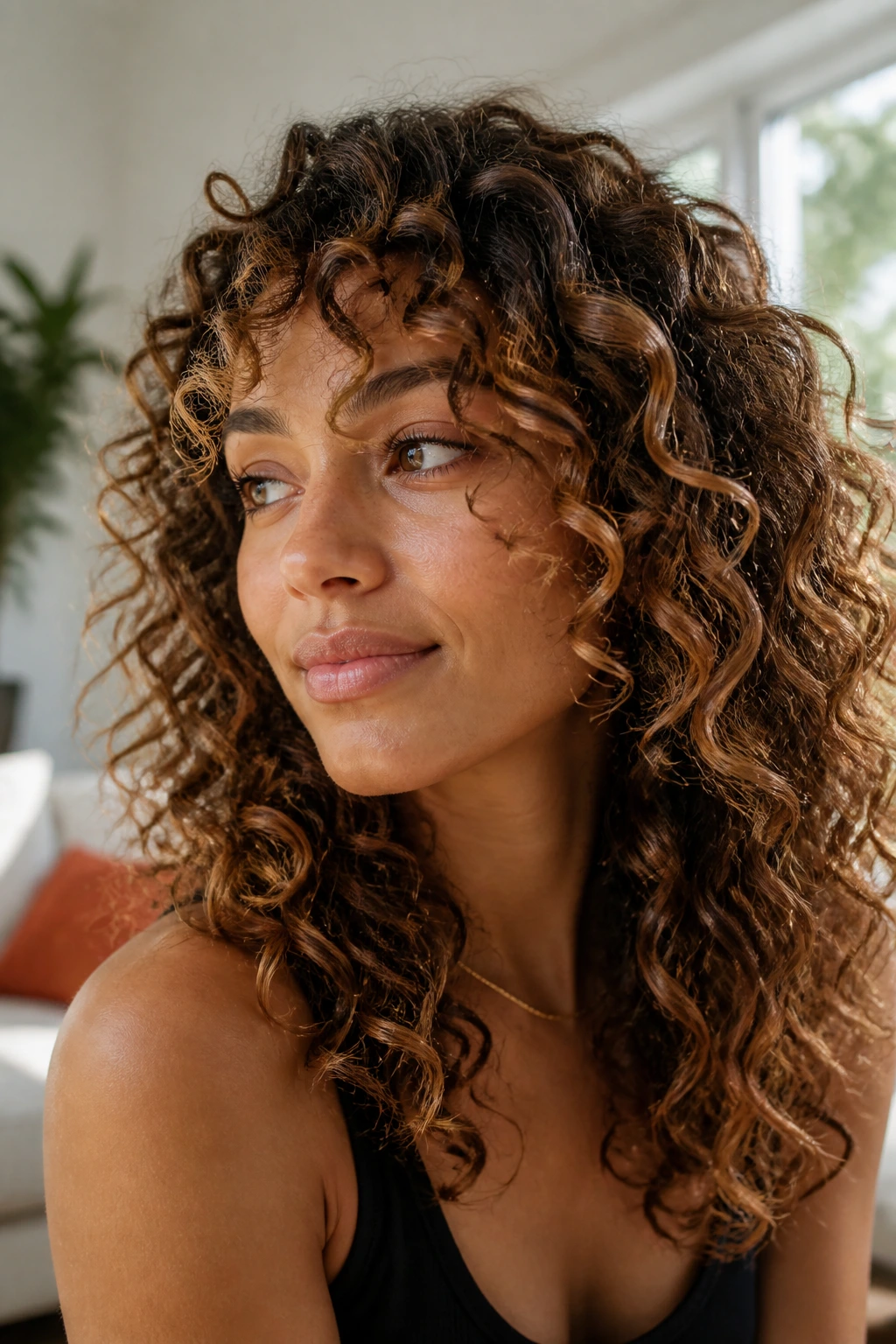
Curly brown hair loves ribbon highlights because curls naturally separate the strands. Cinnamon-sugar tones add warmth, while the ribbons give each curl a little edge and keep the pattern from disappearing in the bulk.
The highlight pieces should be thin enough to weave through the curl pattern, not slice through it. If the stripes are too wide, the curls lose shape. If they’re too fine, the color vanishes. The middle ground is where this look gets good.
24. Chestnut Halo Lights for Round Faces
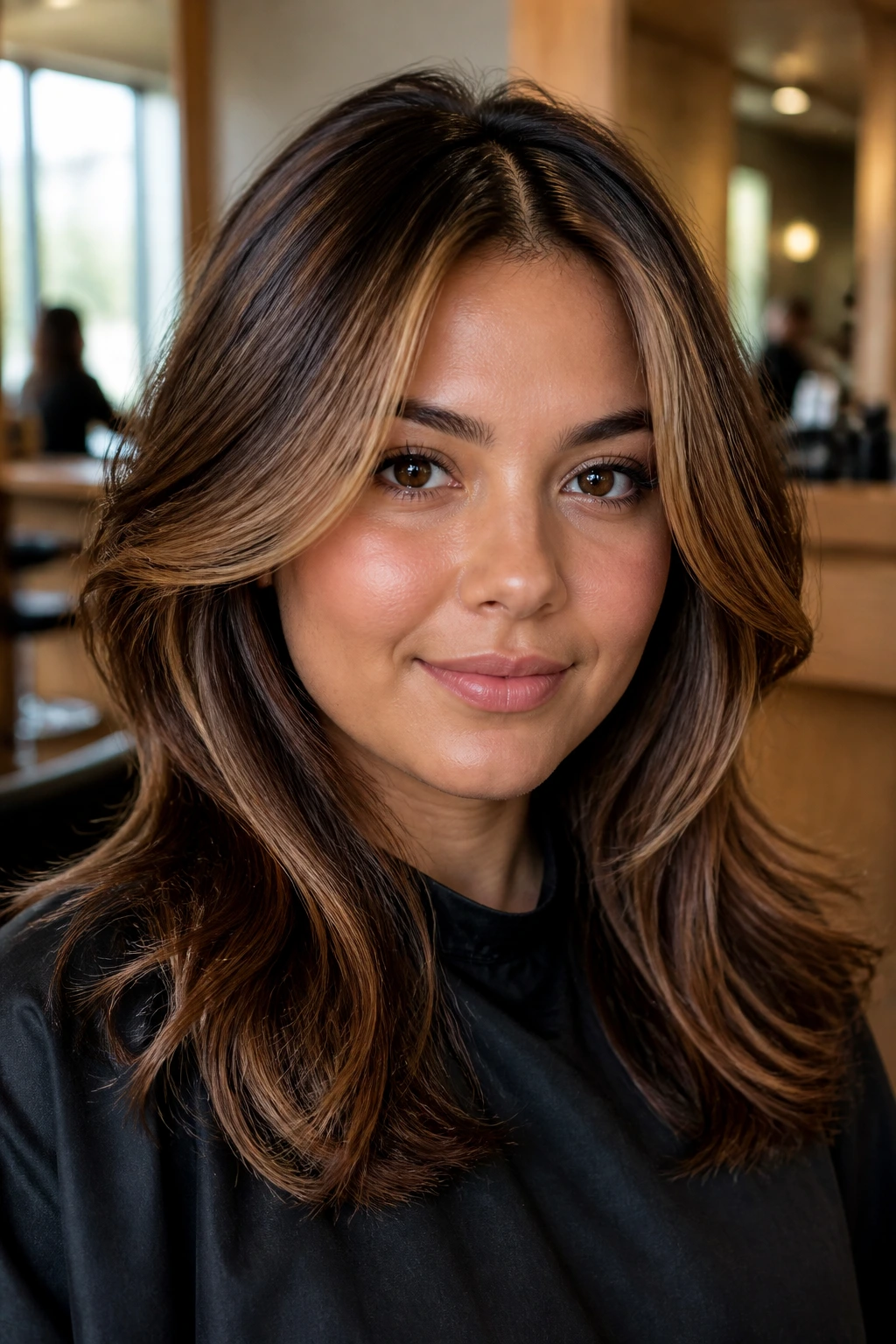
A halo placement can change how a haircut frames the face. Chestnut halo lights sit around the upper perimeter, near the temples and crown, so the light travels in a soft arc instead of landing only in the front.
That shape helps round faces because it lifts the eye upward and keeps the focus moving. Chestnut keeps the brightness warm and wearable, so the result stays flattering even if you want only a modest amount of contrast. It’s a smart, face-shaping version of brown highlights.
25. Rose Gold Brown Blend for Fashion-Forward Brunettes
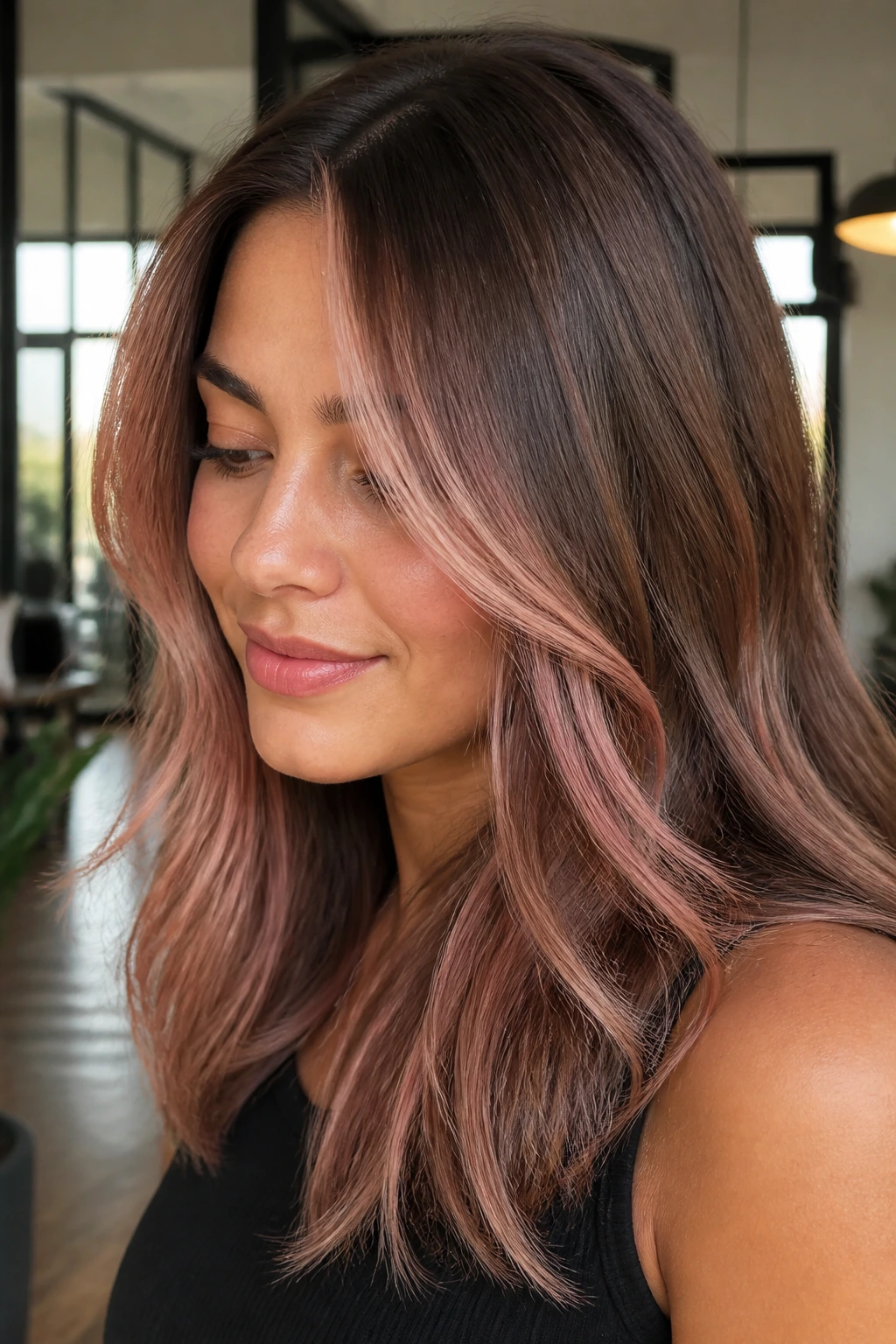
Rose gold on brown hair sounds risky until you see how soft it can be when the pink stays muted. The base brown keeps the color from drifting too pastel, while the rosy tone gives the highlights a faint blush.
The Sweet Spot
- Works best on medium brunettes, not very dark bases.
- Keep the pink soft and dusty, not candy-bright.
- Add just a few pieces near the face so the color feels intentional.
This is a good pick if you want something that reads creative but still grown-up. The brown base keeps it grounded.
26. Cocoa with Golden Tips on Layered Hair
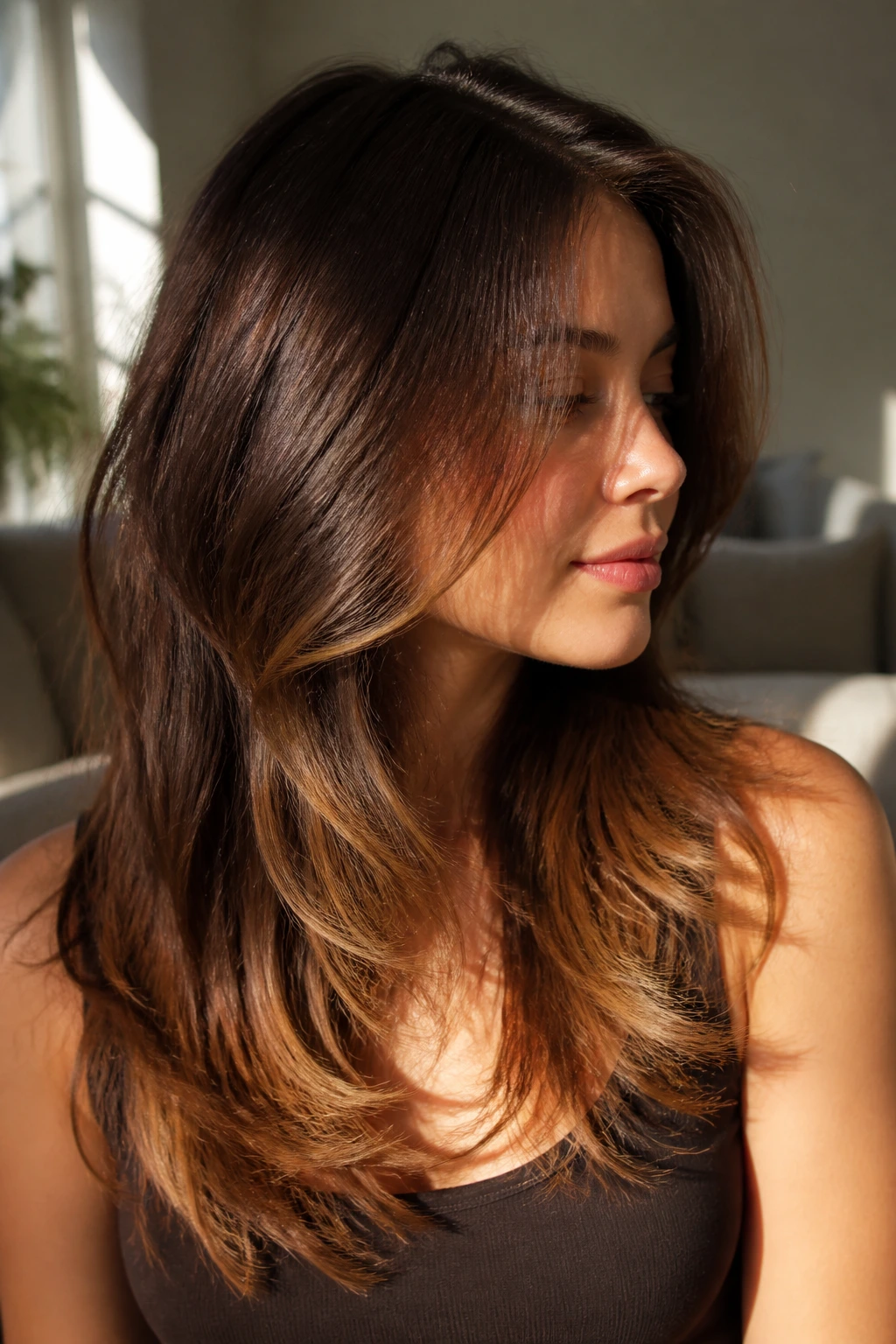
Layered hair already has movement, so cocoa with golden tips uses that shape instead of fighting it. The base stays rich and dark; the ends carry the light.
That contrast makes each layer visible, especially on feathered cuts and soft shags. The golden tips should not look dipped. They should feel brushed by sunlight, like the last two inches of hair got the afternoon treatment and nothing more.
27. Reverse Balayage with Warm Pieces
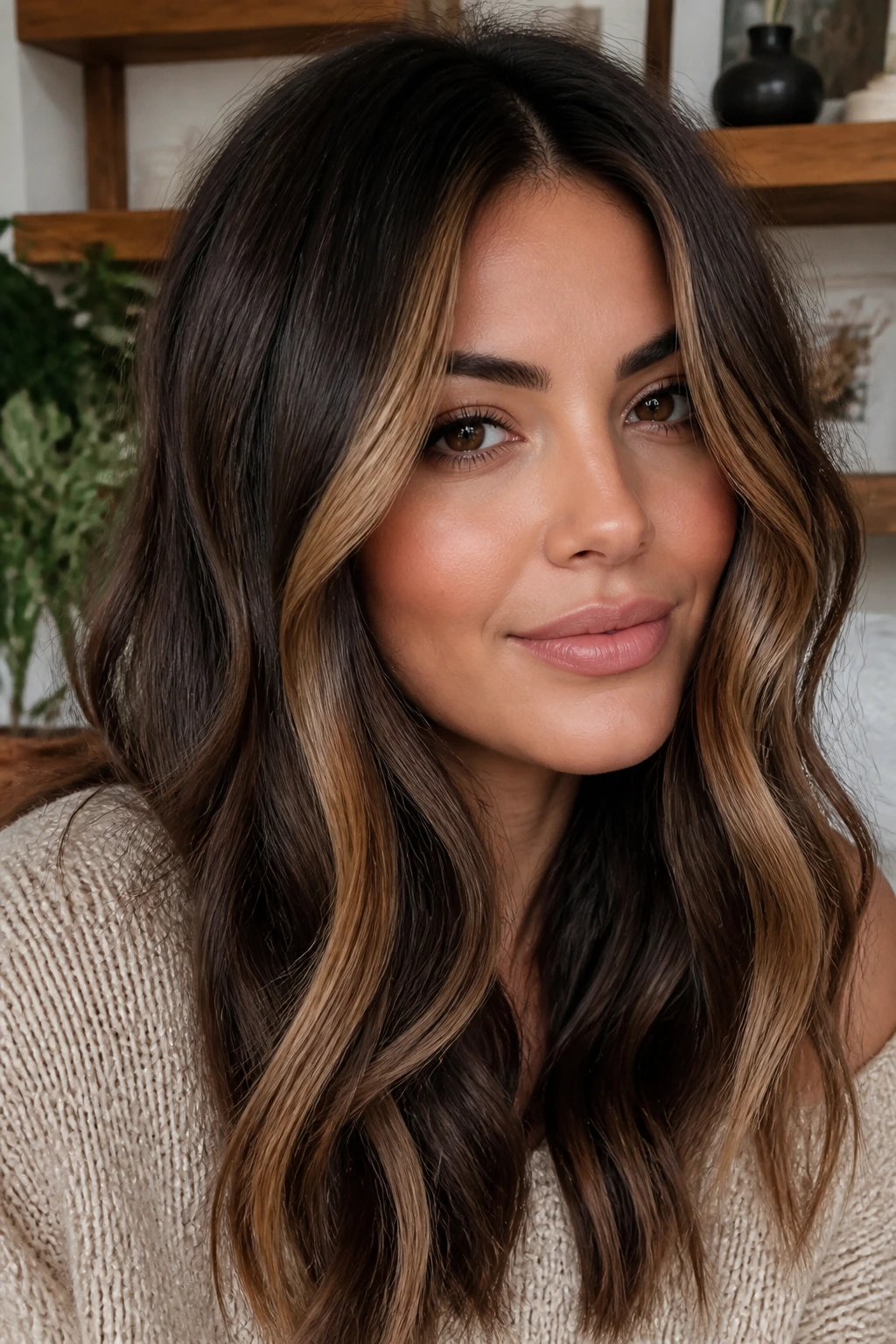
Reverse balayage is for brunettes who went a little too light and want the depth back. Instead of adding brightness everywhere, this approach paints in darker ribbons and leaves a few warm pieces in place so the color gains dimension again.
The result is much softer than a hard correction. Warm pieces near the face keep the hair from looking flat, while the deeper lowlights restore shape and shine. It’s one of the smartest ways to rescue over-lightened brown hair without starting over.
28. Dimensional Brunette with Micro-Highlights
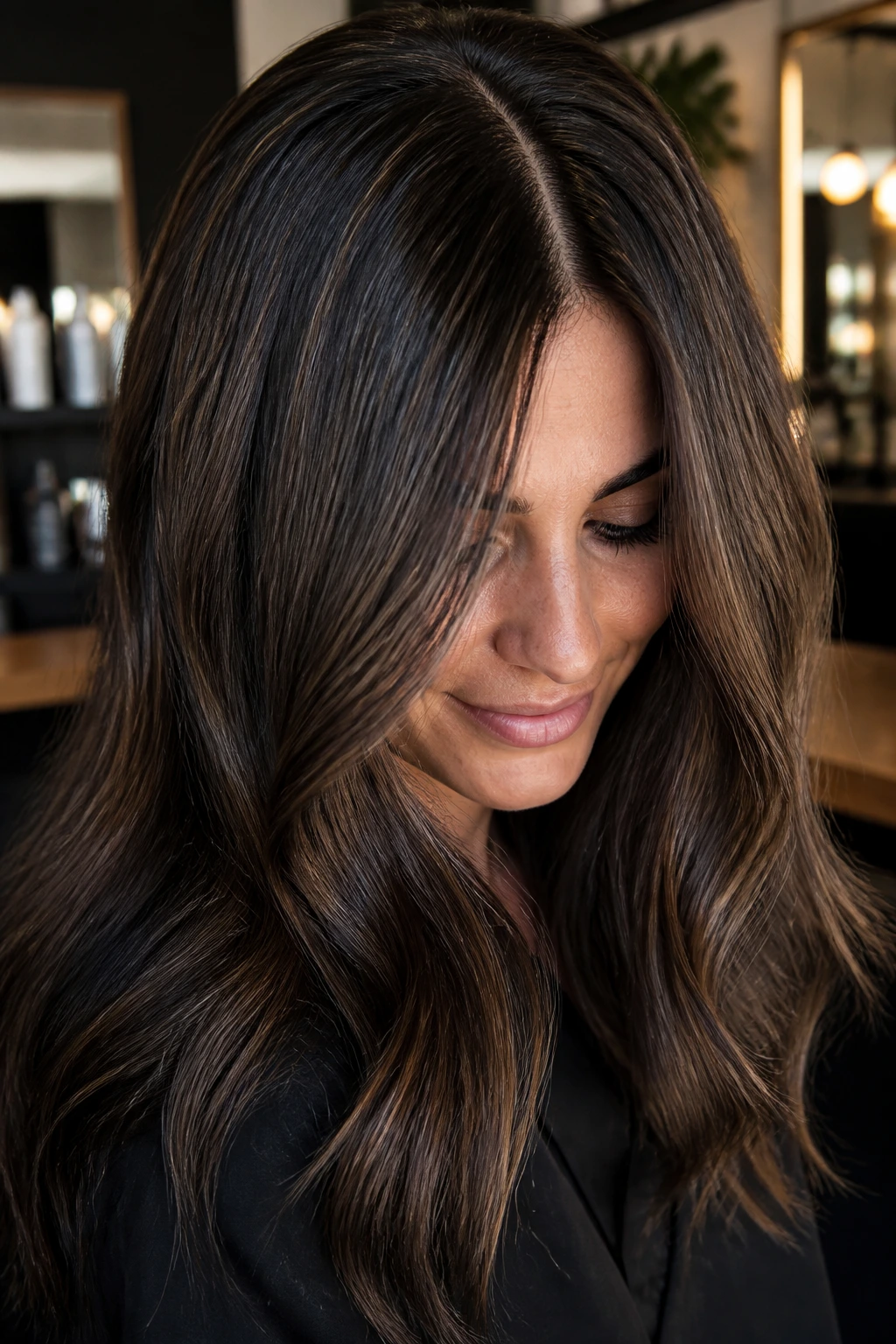
What does dimension really look like on brown hair? Often it looks like micro-highlights, not giant streaks. Tiny, scattered pieces give the surface a shimmer effect that feels expensive in daylight.
H3: Why Micro-Highlights Matter
They break up heavy areas without making the color obvious. That matters on dark brunette hair, where large highlights can look stark fast. A careful weave around the crown and part line gives the whole style a lighter feel without sacrificing depth.
If you’ve ever liked the idea of highlights but hated the stripe effect, this is the version to keep in mind.
29. Glossy Chestnut and Gold Waves
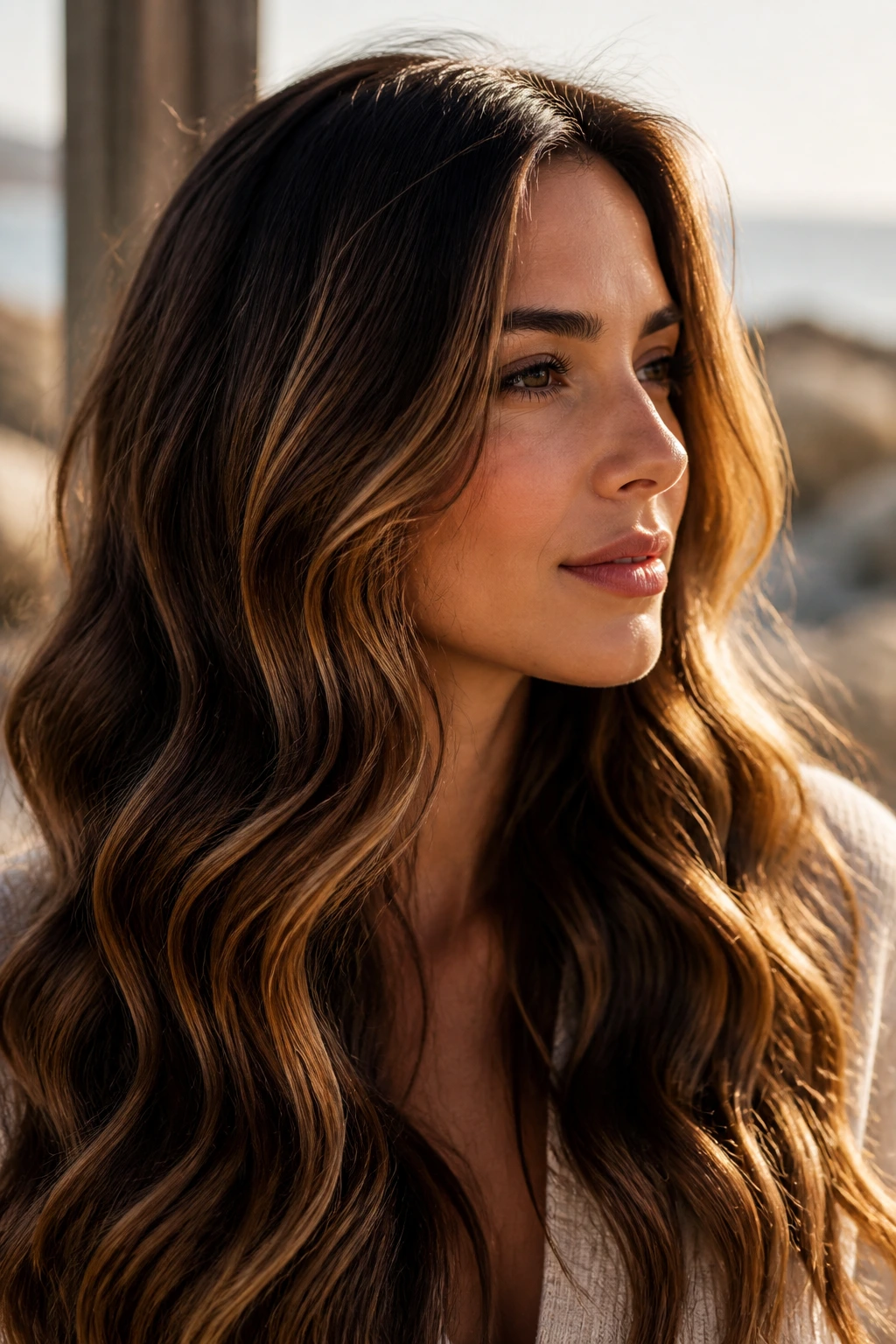
This combo leans into shine. Chestnut gives the foundation a deep, rich base; gold sits on top in thin ribbons and catches the wave pattern whenever the hair bends.
The key is gloss. Without it, gold on chestnut can look dry. With a glossy finish, the color reads smooth and reflective, which is exactly what makes the wave pattern look fuller. This is a nice choice for medium-long hair that’s styled with a large barrel iron or a round brush.
30. Sun-Faded Balayage for Dark Brunettes
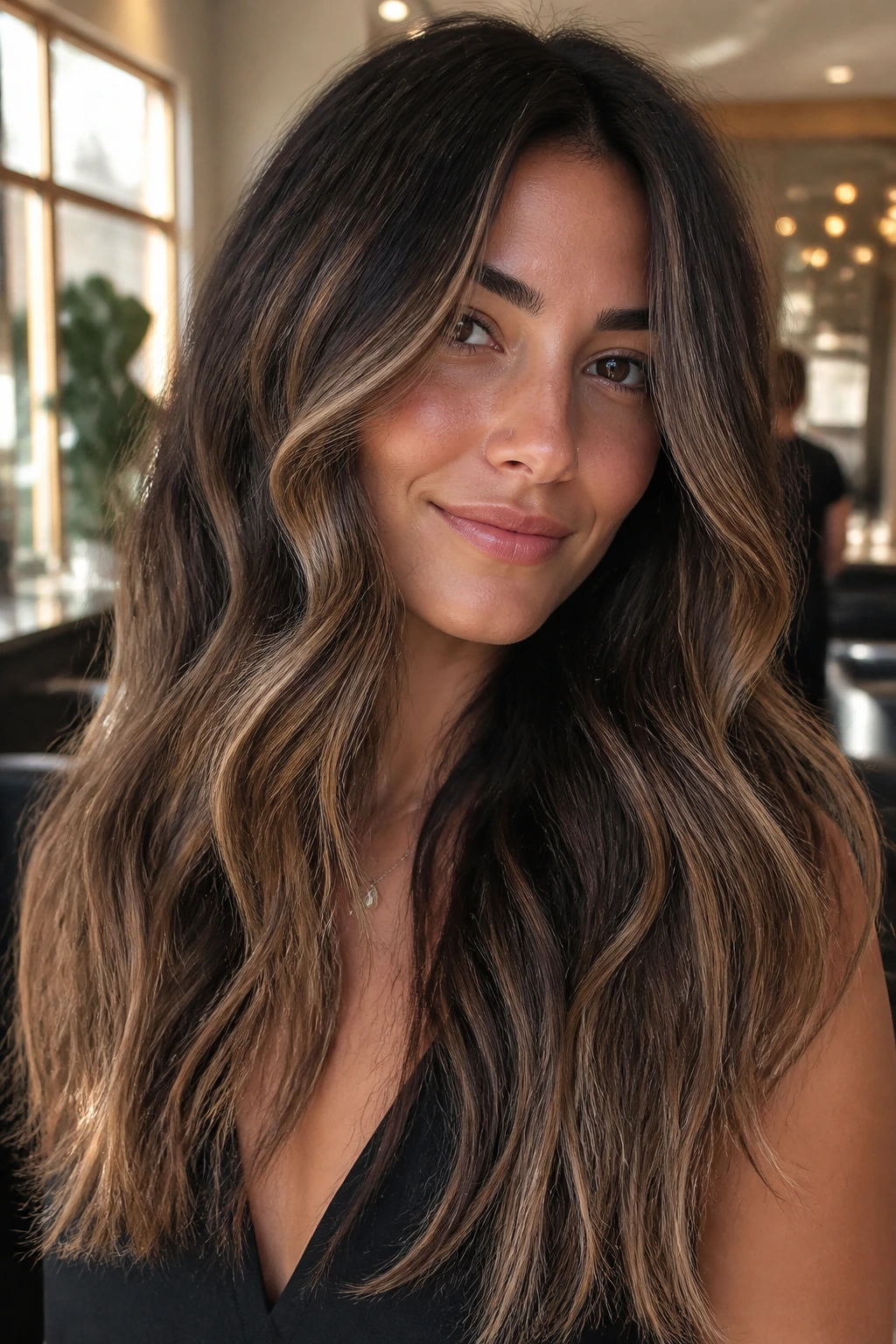
Dark brunettes often want brightness without losing their depth, and sun-faded balayage does that by keeping the lift low and the placement soft. The goal is not blonde. It’s a gentle fade that makes the ends look a little touched by the sun.
Quick Shape Notes
- Keep most of the lift below the cheekbone line.
- Use thin surface pieces near the front.
- Let the roots remain deep enough to anchor the whole look.
The result feels lived-in from day one, which is useful if you don’t want frequent touch-ups.
31. Honey Glaze on a Shag Cut
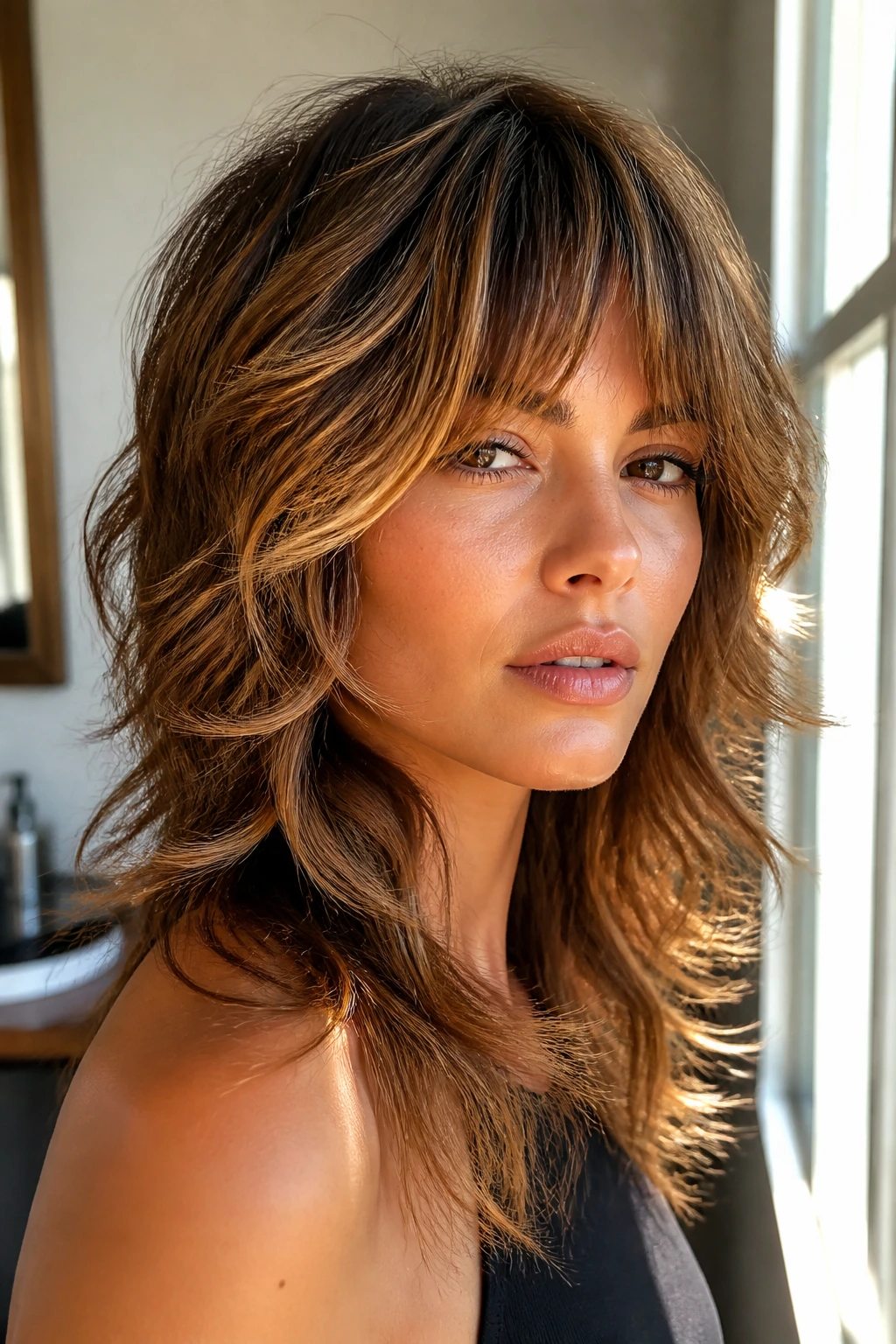
A shag cut needs color that moves with it. Honey glaze is ideal because the warmth gives the layers definition without drawing hard lines across the haircut.
The best part is how the color shifts as the shag falls apart a little — and it should. That piecey movement is half the charm. A glaze around the face and through the outer layers is usually enough; a full heavy highlight pattern can make the cut look busier than it needs to be.
32. Bronze and Auburn Dimension for Textured Hair
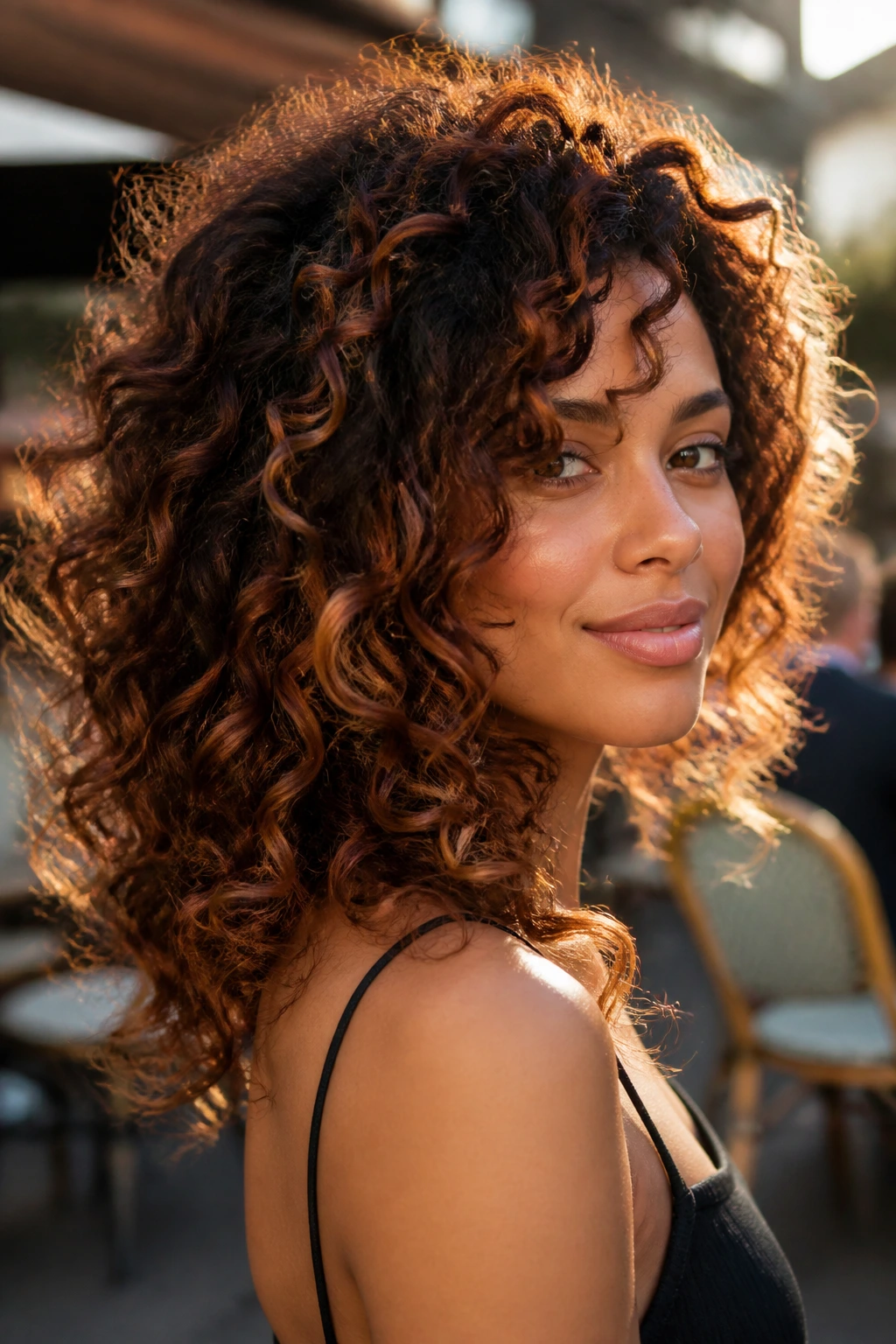
Textured hair carries color in folds and shadows, so bronze and auburn can feel especially rich when they’re placed well. Bronze brings the shine, auburn brings the warmth, and the two together make curls or coils look full without needing a dramatic lightening job.
What to Ask For
- Fine, painted sections rather than broad stripes.
- Warmth concentrated on the outer layers and ends.
- A toner that keeps the bronze from going too orange.
This is a strong choice for hair that needs definition, not just brightness.
33. Soft Sunbeam Highlights for Fine Brown Hair
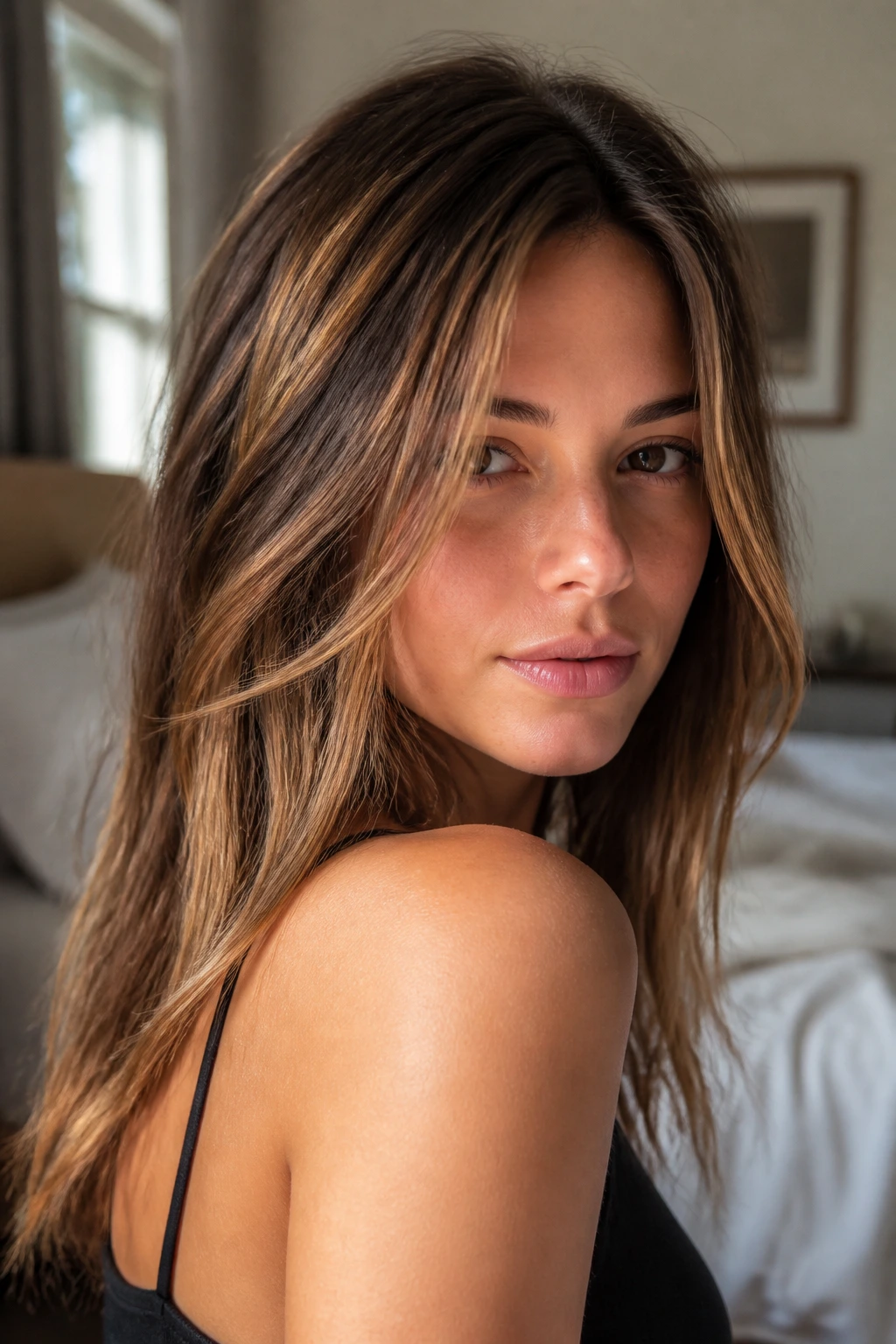
Fine brown hair can be tricky. Too much contrast and the strands look thinner; too little and the color disappears. Soft sunbeam highlights solve both problems by using narrow, scattered lifts that read as light, not streaks.
H3: The Fine-Hair Rule
Keep the pieces translucent. If you can see the highlight from across the room as a single block, it’s too much. The best version looks like a soft shimmer when the hair moves, especially around the crown and face frame.
A bit of backcombing or careful weaving helps the placement look airy instead of bulky.
34. Warm Ash-Brown Correction With Beige Lights
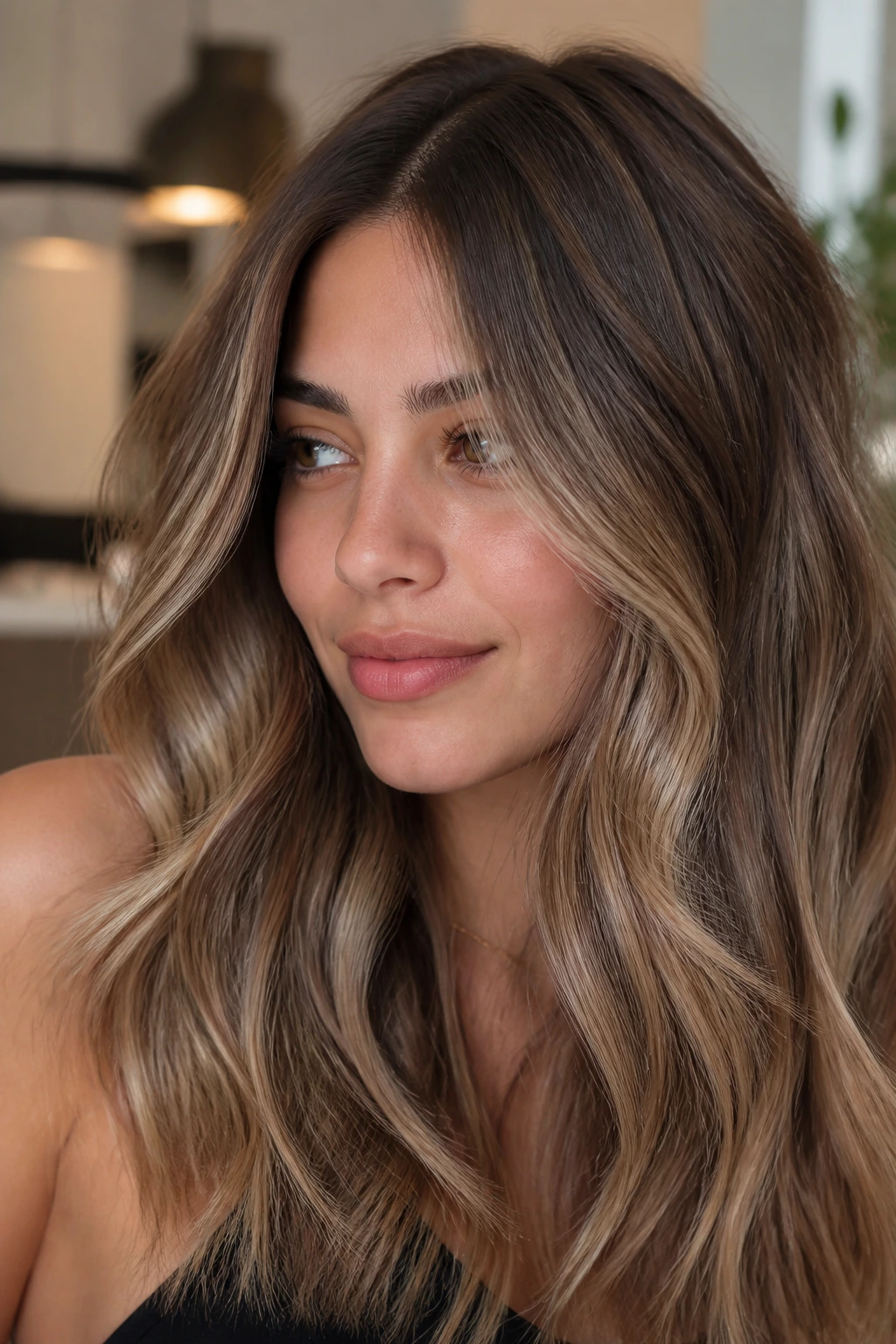
Sometimes the issue isn’t that brown hair is too dark. It’s that the tone feels muddy, flat, or over-ashy. Beige lights can fix that by adding warmth back without turning the whole head golden.
The correction should stay subtle and strategic. Brighten the face frame, soften the mids, and let a few beige ribbons sit where the hair catches indoor light. This is a cleaner move than trying to force the base into a different color family all at once.
35. Copper Penny Streaks for Short Hair
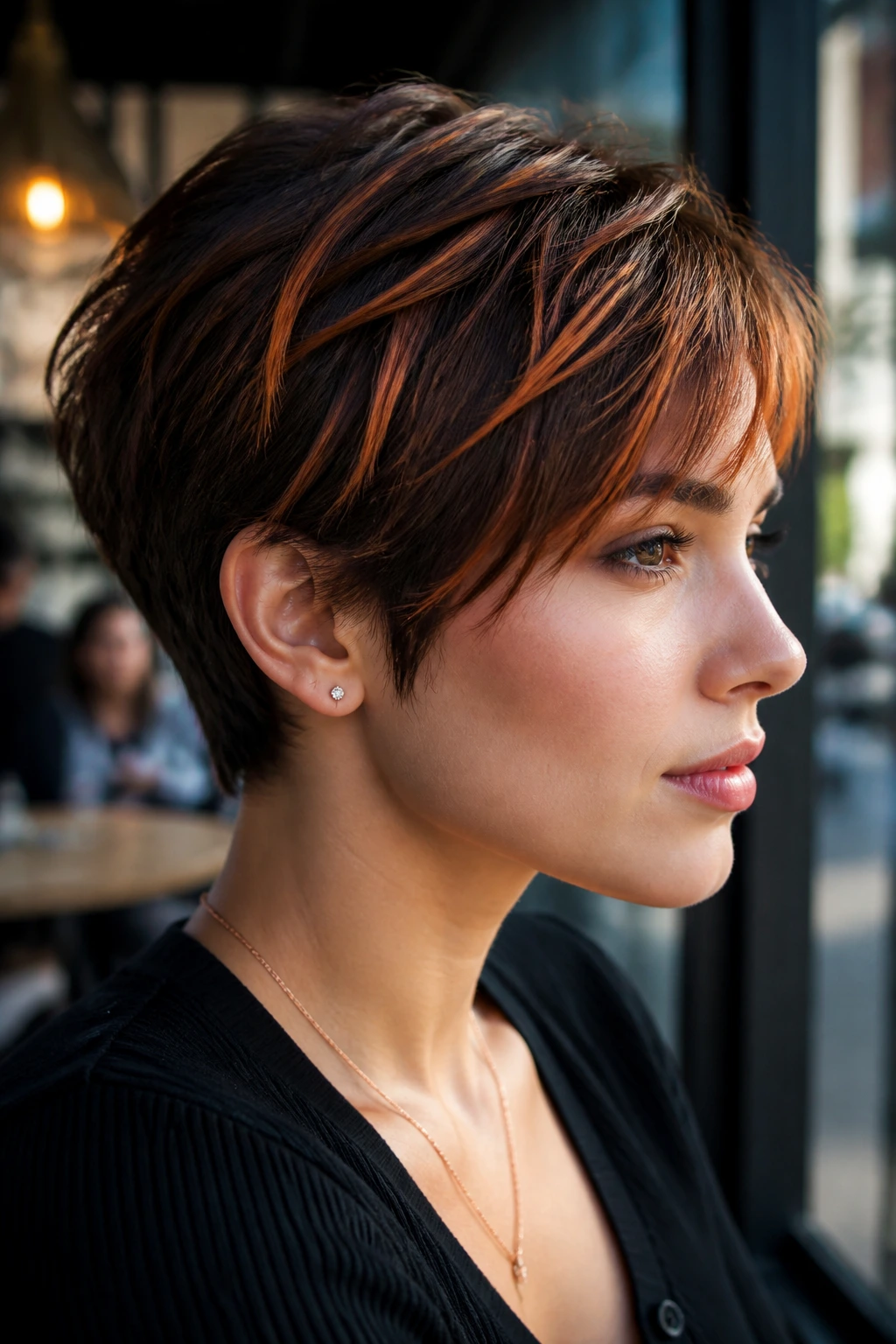
Short hair can handle bolder placement because there’s less length for the color to drift. Copper penny streaks give a cropped brunette cut a sharp, bright edge that looks intentional rather than busy.
The Short-Hair Advantage
The lighter pieces sit close together, so the copper shows more clearly. That’s useful on pixies, crops, and short bobs, where the shape itself is already doing a lot of work.
Keep the streaks narrow and place them where the hair bends near the temple and crown. That way the copper catches movement instead of sitting in one flat band.
36. Salted Caramel Bob With Lived-In Roots
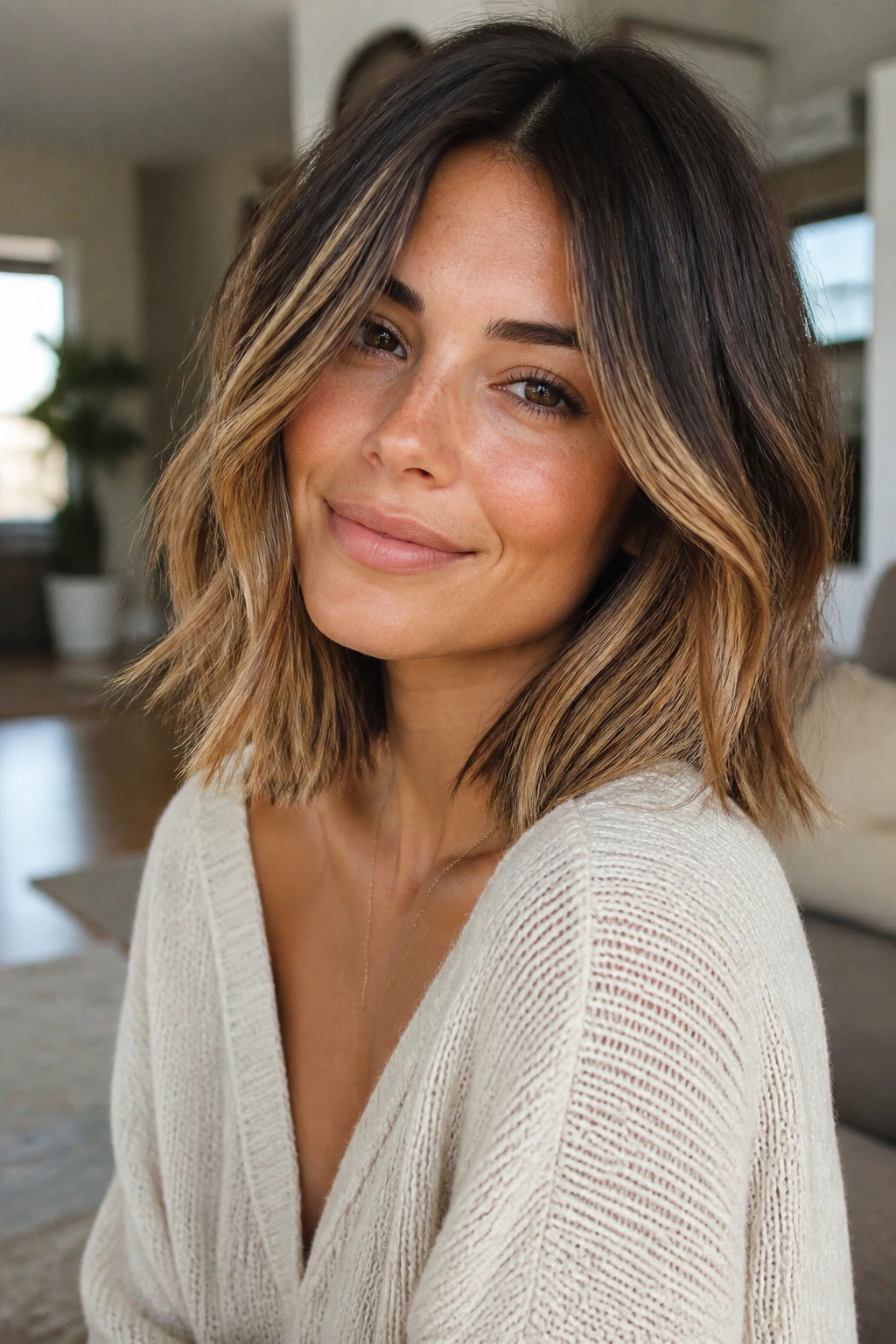
A bob with lived-in roots is one of the easiest highlight looks to wear. Salted caramel gives the ends enough lift to move, while the root shadow keeps the haircut grounded and low maintenance.
The color should not start sharply at the scalp. Let the transition blur over an inch or two, so the grow-out feels built in. On a bob, that softness matters because the shape is already crisp. The color should ease into it, not fight it.
37. Subtle Face-Frame and Crown Brightening
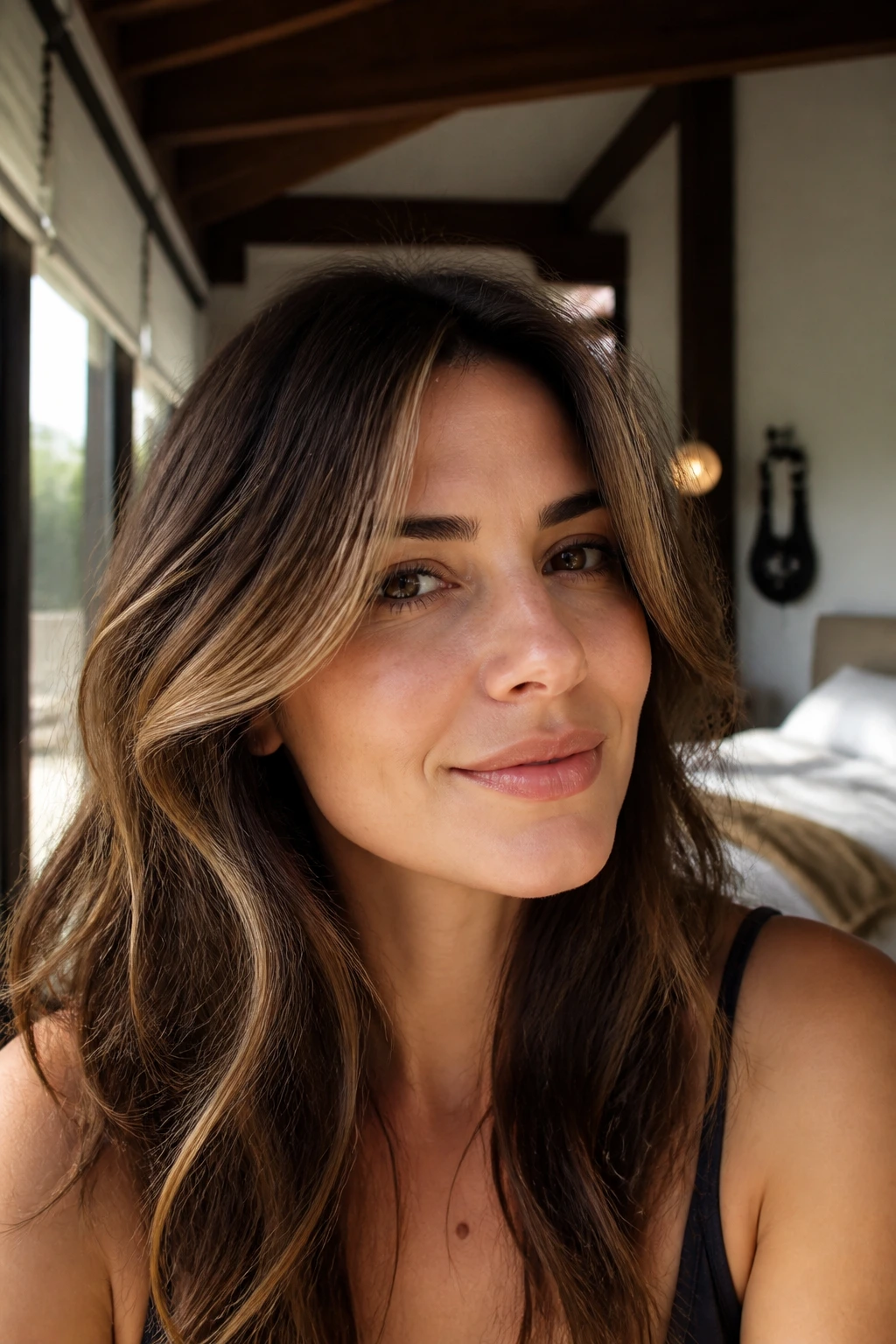
Not every brunette wants all-over ribbons. Sometimes the smartest move is to brighten the face and crown, then leave the rest alone. That gives the illusion of lighter hair without the upkeep of a full highlight session.
What This Does Well
- Brightens the top where light naturally lands.
- Keeps the interior brown and glossy.
- Makes the cut look fresher between trims.
This is a nice option if you wear your hair up a lot. The crown pieces show even in a ponytail, which is a useful detail people often miss when choosing placement.
38. Full-Head Sun-Kissed Melt for Low-Maintenance Growth
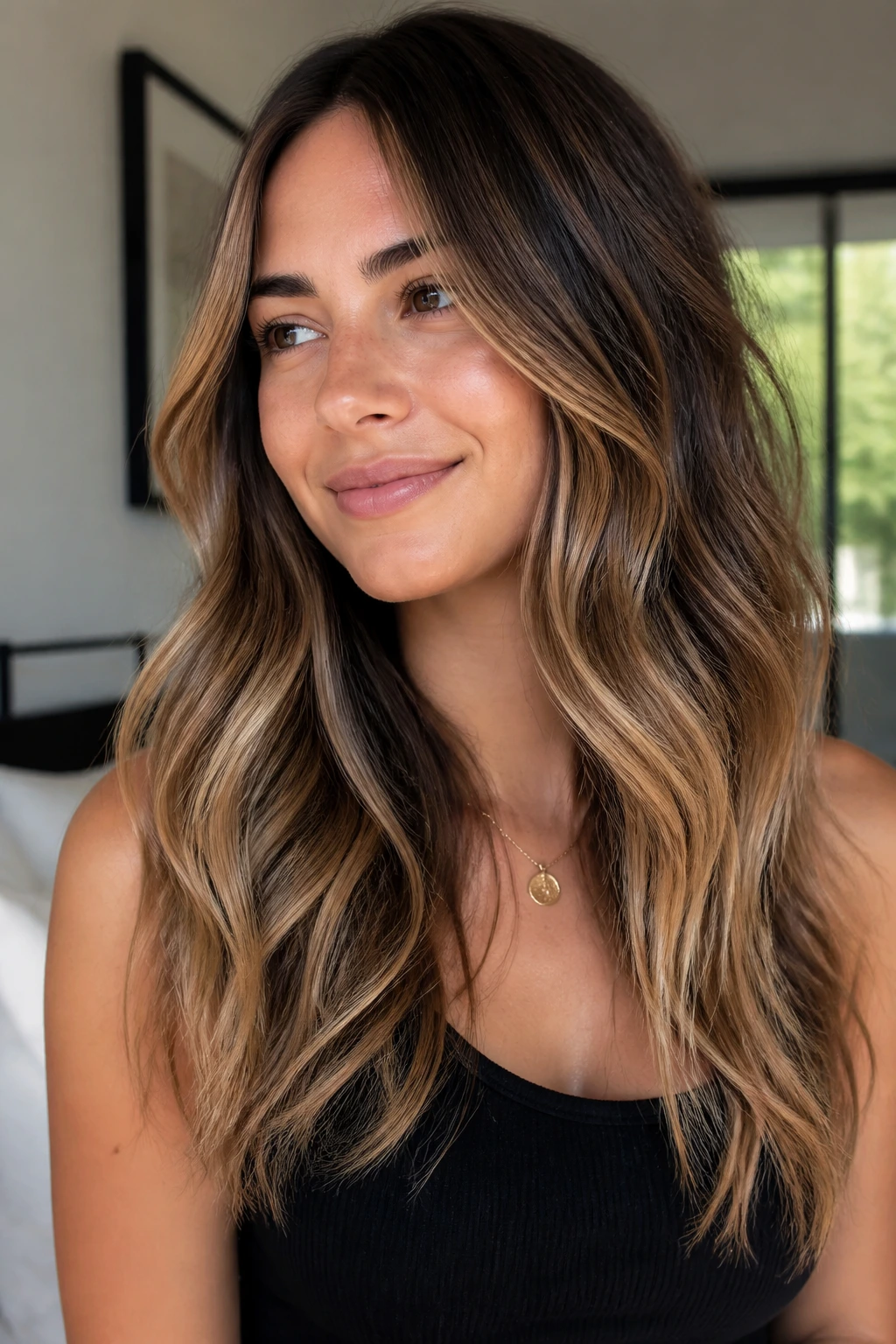
If you want the whole head to feel lighter but still hate obvious regrowth, a full-head sun-kissed melt is the most balanced answer. The root stays deeper, the mids carry the color shift, and the ends finish light enough to look touched by sunlight.
The important part is blur. Nothing should look line-by-line. The transition from brown to caramel to honey needs to be soft enough that a month of grow-out still looks on purpose. That’s the whole game here. Clean grow-out. Real shine. No hard stripe at the root.
Why the Softest Brunette Highlights Usually Win
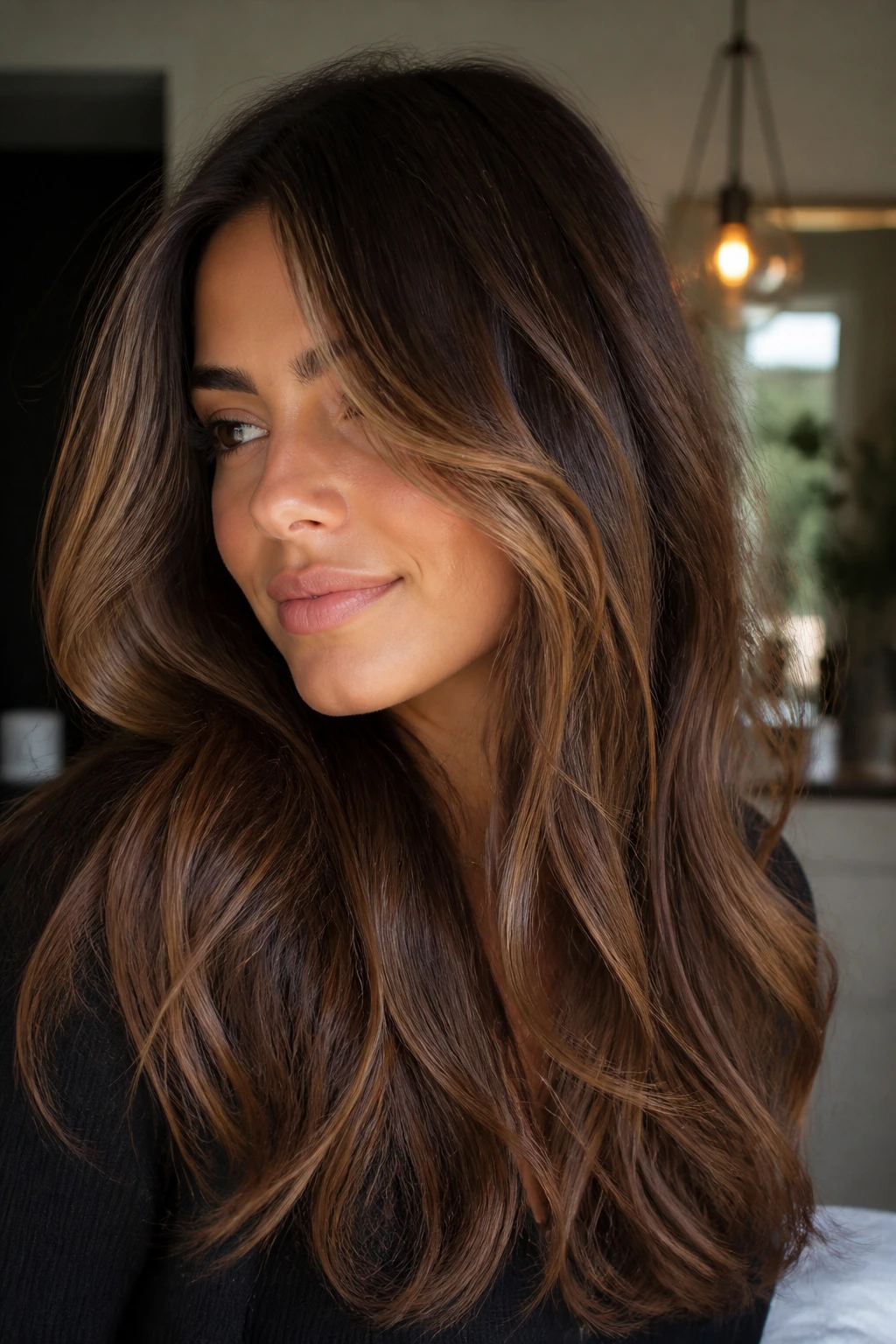
Brown hair gives you something blonde hair doesn’t always have: a rich base to build against. That base is what makes caramel, honey, bronze, and beige look dimensional instead of pale. When the placement is thoughtful, the hair doesn’t just look lighter. It looks shaped.
The easiest mistake is chasing brightness for its own sake. Don’t. The prettiest versions in this collection all keep some darkness in reserve. That little bit of shadow is what lets the light pieces actually matter.
How Brown Hair Lifts Without Turning Orange
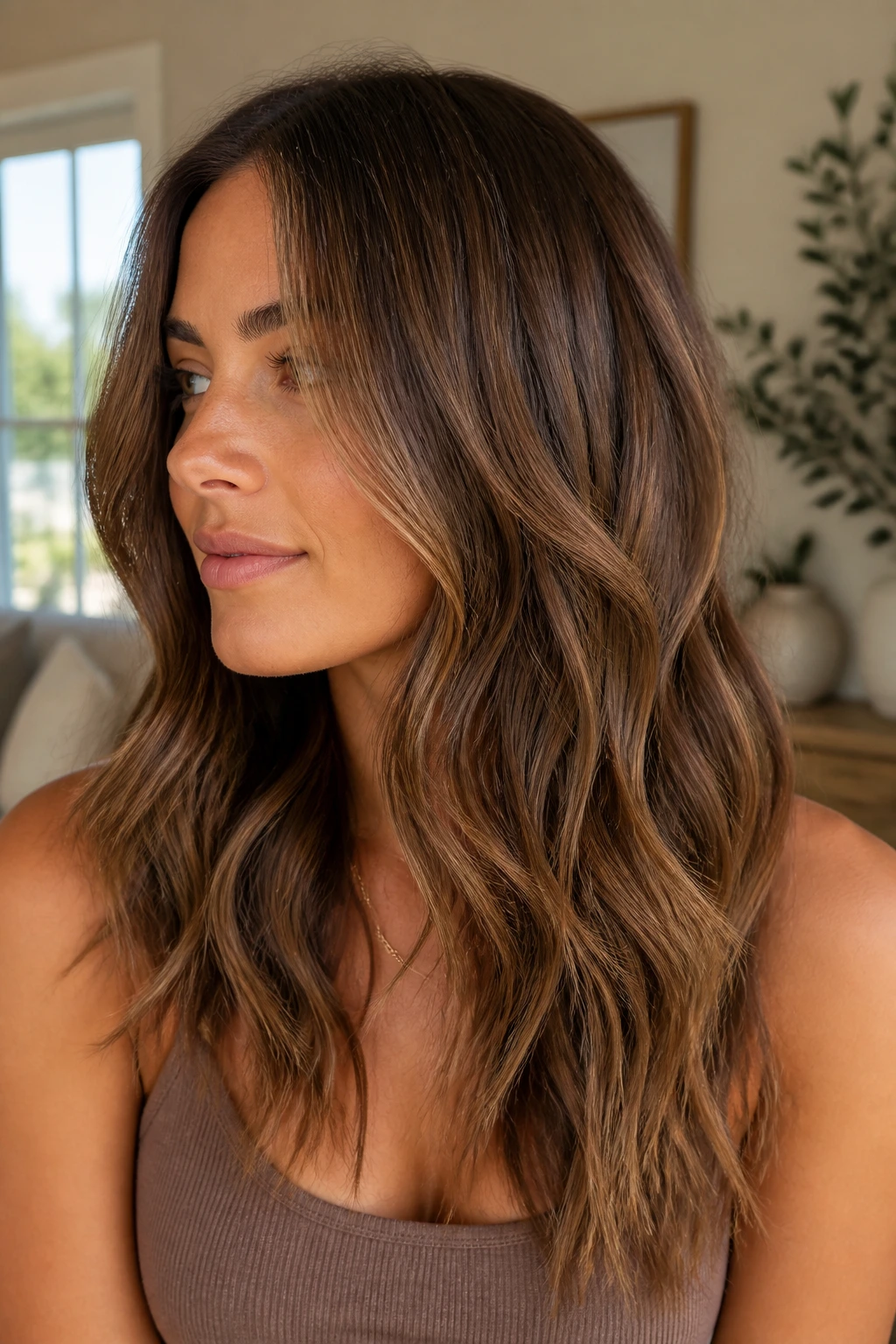
Brown hair tends to expose warm undertones fast. If the lift is pushed without enough control, the result goes copper in a way that feels accidental, not chic. That’s why level and toner matter so much here.
A brunette usually looks best when the lightening stops one step sooner than the instinct says. Beige and caramel can calm brass. Honey and gold can keep warmth alive. Copper and auburn need even tighter timing so the red doesn’t run wild. Straight hair usually shows tone more brutally, while waves and curls soften the whole thing a bit.
What to Tell Your Colorist Before the Foils Come Out
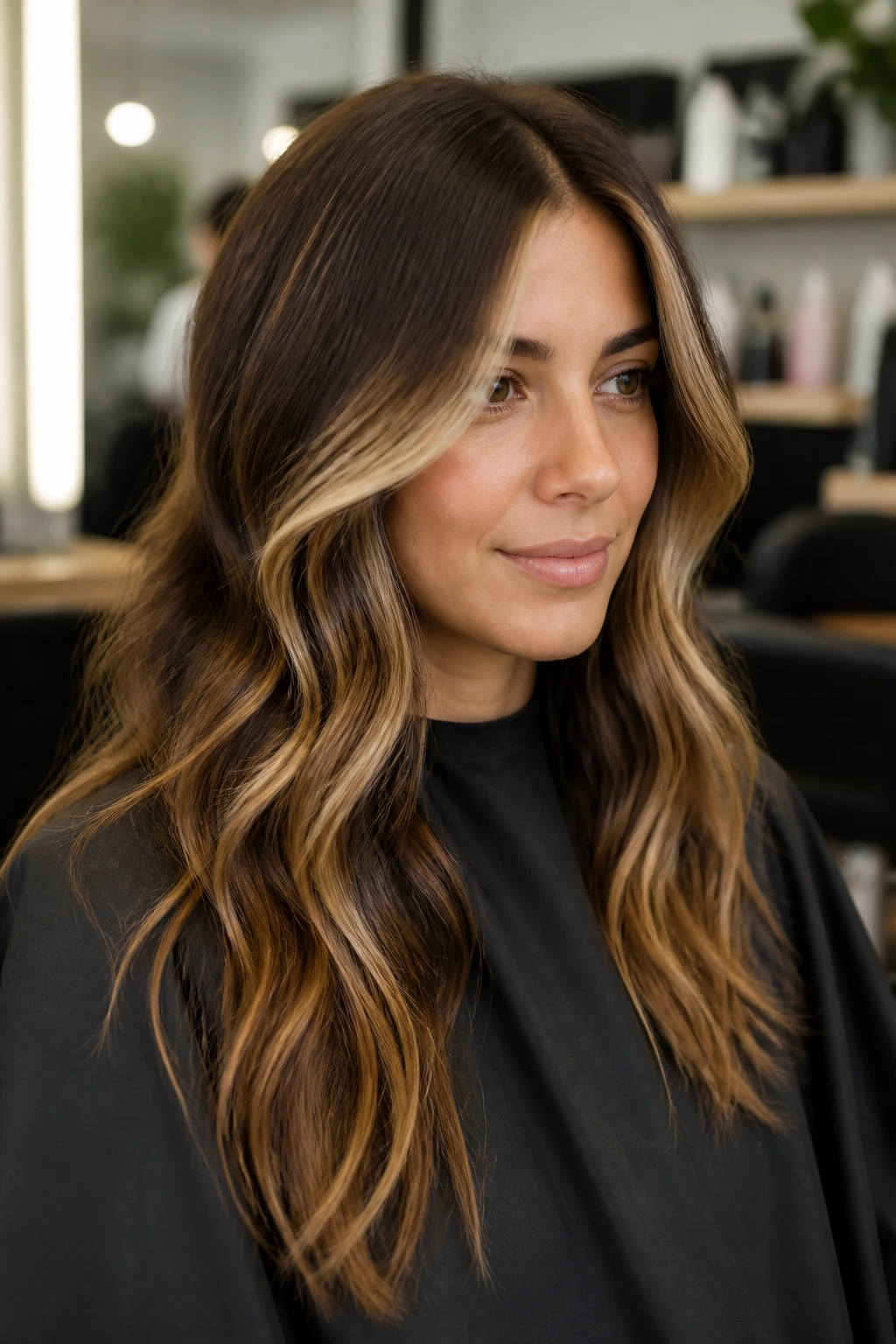
Bring photos, yes, but say something useful with them. Tell the colorist how much contrast you want, whether you like warm or cool tones, and how often you’re willing to come back for maintenance. That’s better than asking for “just some highlights,” which can mean six different things in one chair.
A few practical phrases help:
- “Keep the root depth visible.”
- “I want the brightest pieces near the face.”
- “Please stay away from chunky stripey placement.”
- “I like caramel, beige, or honey more than icy blonde.”
Those sentences save time and usually save the haircut too.
Tools, Products, and References That Keep the Color Calm
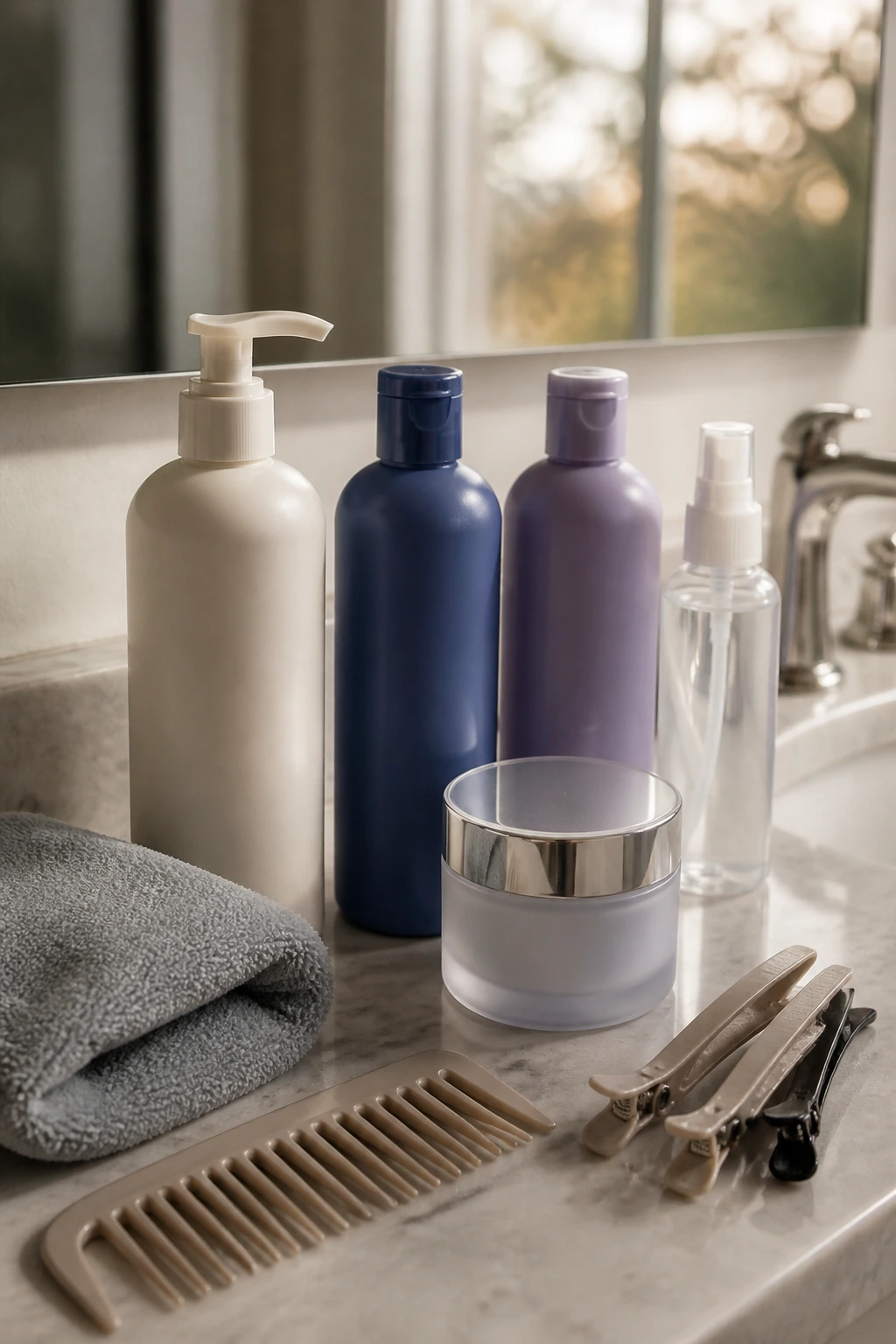
- Reference photos in daylight: Indoor lighting lies, and brown hair can look a lot warmer under yellow bulbs than it really is.
- Color-safe shampoo: A sulfate-free formula helps the toner last longer and keeps the hair from drying out.
- Blue shampoo for orange brass: Use it only when the hair pulls orange, not yellow, or the tone can go flat.
- Purple shampoo for yellow brass: Best on lighter caramel and beige pieces that start to look too sunny.
- Gloss or glaze: A salon gloss every few weeks keeps the highlights shiny and reins in rough tone shifts.
- Heat protectant spray: Any styling with a flat iron or curling wand needs this, period.
- Wide-tooth comb or detangling brush: Less breakage, less frizz, better shine on highlighted hair.
- Microfiber towel: Regular terry cloth roughs up lightened hair fast.
- Sectioning clips: Handy if you’re clipping hair up to air-dry or apply a mask at home.
How to Style These Highlights So the Dimension Shows
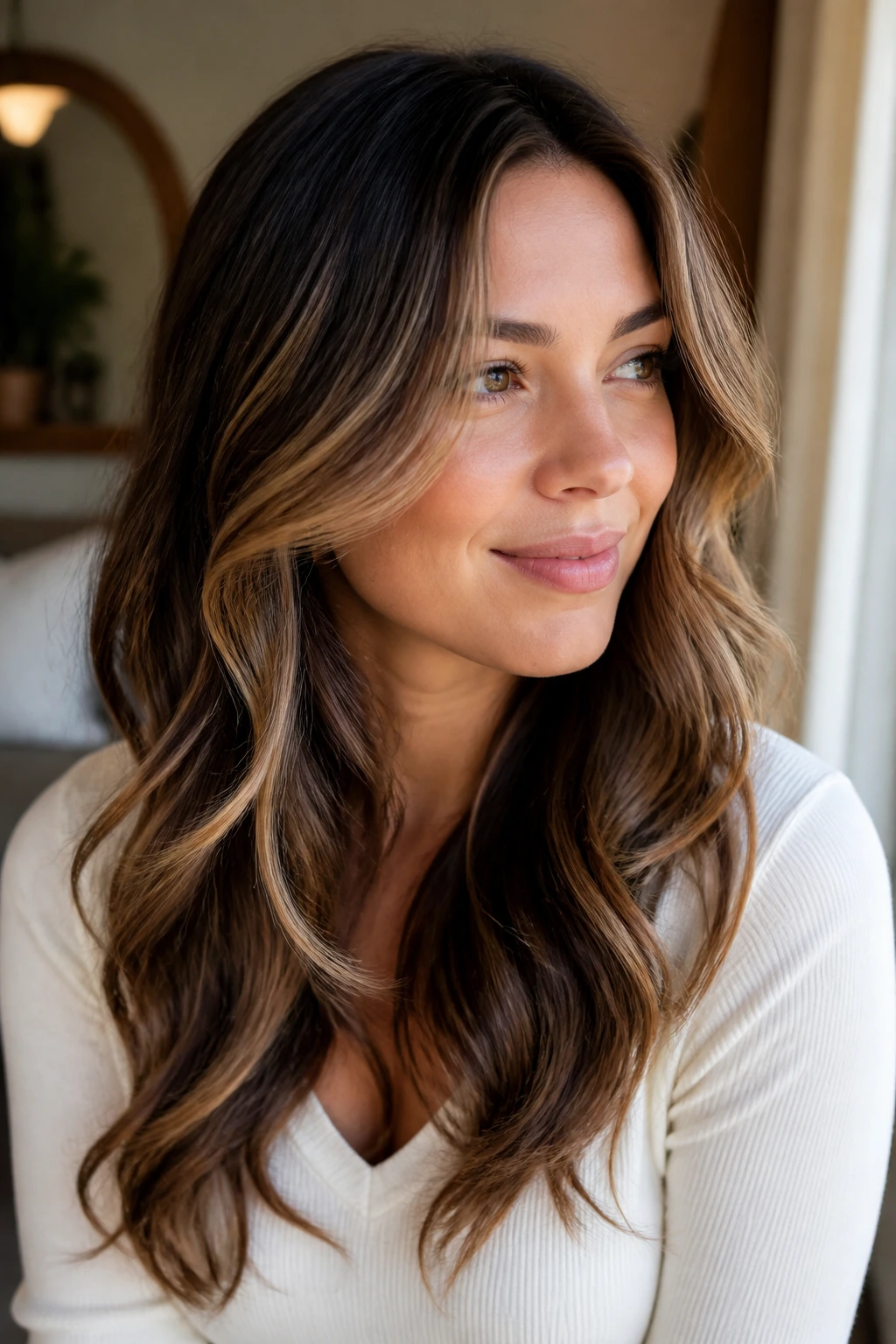
Placement: Wear the brightest pieces where they can move — face frame, ends, and the first inch or two of the surface layer. If the color is buried too deep, nobody sees the work.
Texture: Loose waves almost always show brunette highlights better than pin-straight hair. A bend from a 1-inch iron or a big round brush gives the ribbons somewhere to land.
Parting: A middle part emphasizes symmetry and face-framing brightness. A side part can make the top layer look fuller, especially if the crown has a few lighter pieces.
Finish: Use a lightweight shine spray or a few drops of smoothing oil on the mids and ends. Heavy product dulls the contrast and makes the lighter strands disappear.
Extra Tips for Softer Shine and Cleaner Tone
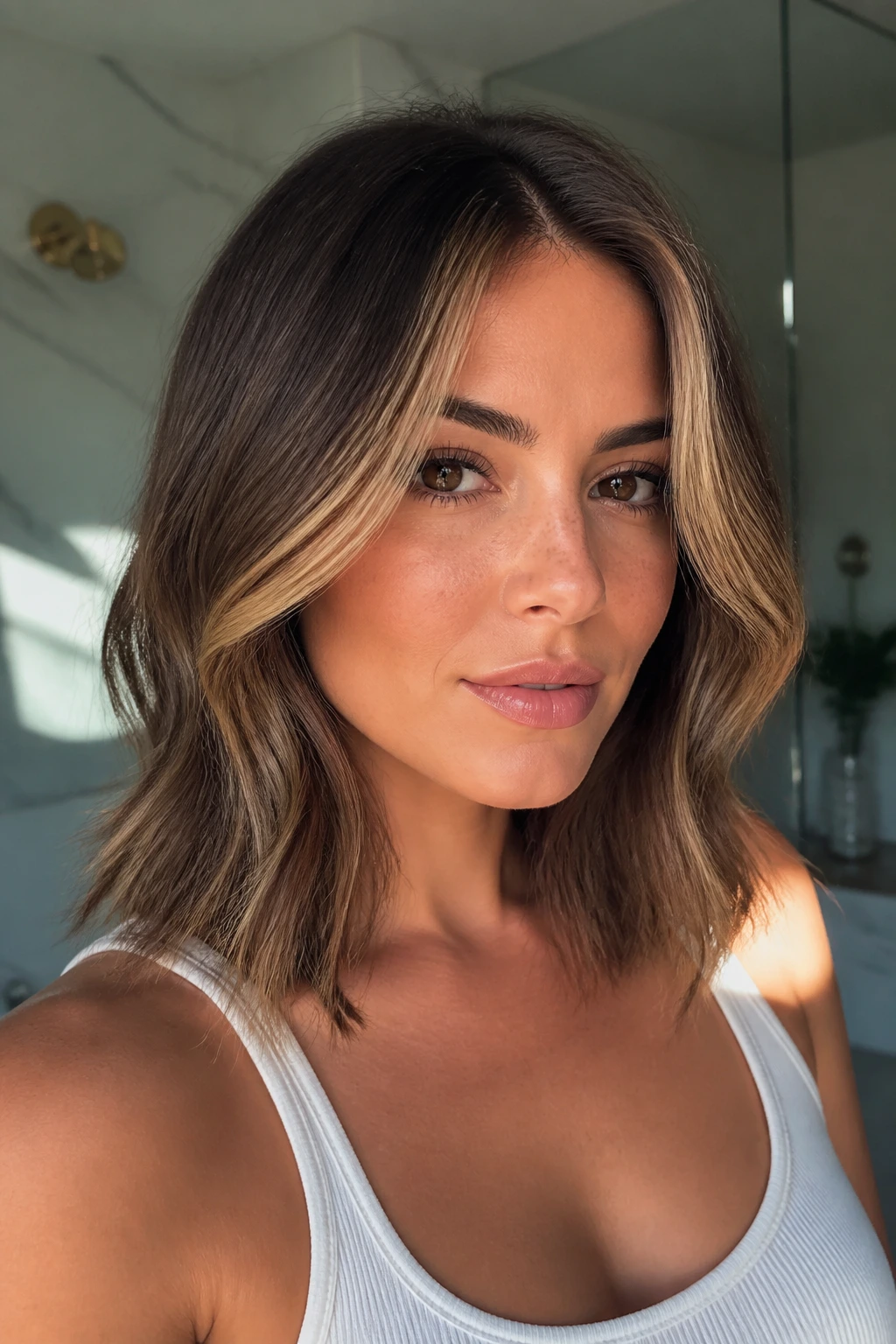
Glossing: If your highlights look a little rough after a few washes, a clear or tinted gloss can bring the shine back without repainting the whole head. That’s usually faster and cheaper than chasing extra lightening.
Brass Control: Brown hair often turns warm first at the ends. Use blue shampoo only when the pieces start reading orange. If they look yellow, purple is the better choice. Wrong shampoo, wrong problem, flat result.
Styling Trick: Flip the part from time to time. It changes which pieces sit on top and keeps the color from wearing the same path every day. Tiny thing. Big visual payoff.
Make-It-Yours: If you want the color softer, ask for more lowlights and fewer bright ends. If you want it brighter, push the face frame and crown only. That keeps the result wearable without turning the whole head into a full highlight session.
Common Mistakes That Make Brown Highlights Look Stripey
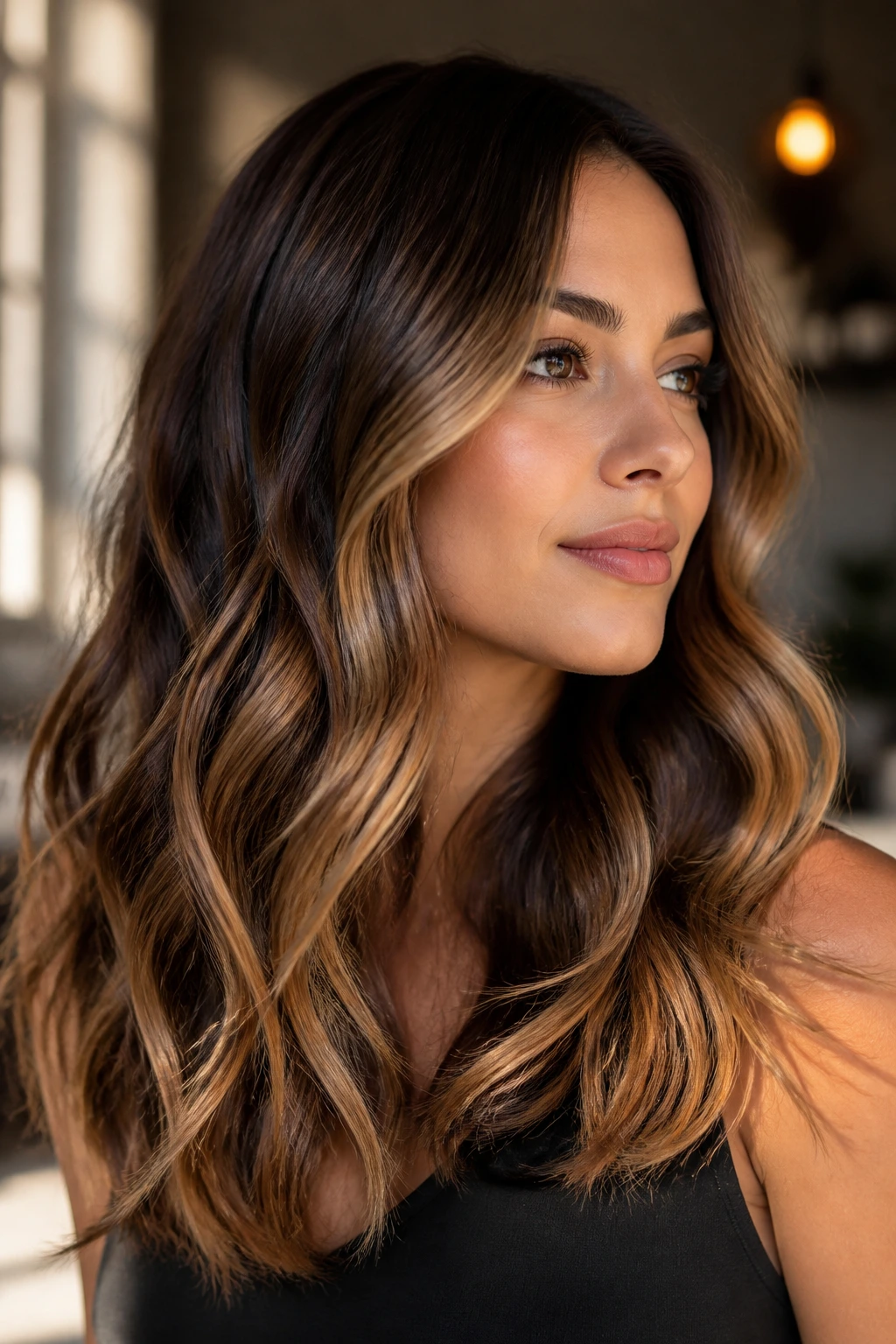
The first mistake is making the light pieces too wide. Chunky panels can work on some haircuts, but most brunettes look better when the weave is thinner and the contrast is softer. If you can point to the highlight from across the room, it’s probably too broad.
Another problem is choosing the wrong tone. Golden highlights on an already warm brown base can turn orange fast. Ash on a red-brown base can look muddy. Beige and caramel are safer middle grounds if you’re not sure.
People also over-wash highlighted hair. That strips the gloss out fast and leaves the ends looking tired. Two or three washes a week is usually plenty for colored brown hair, and dry shampoo is easier than scrubbing the color away.
Variations and Adaptations to Try
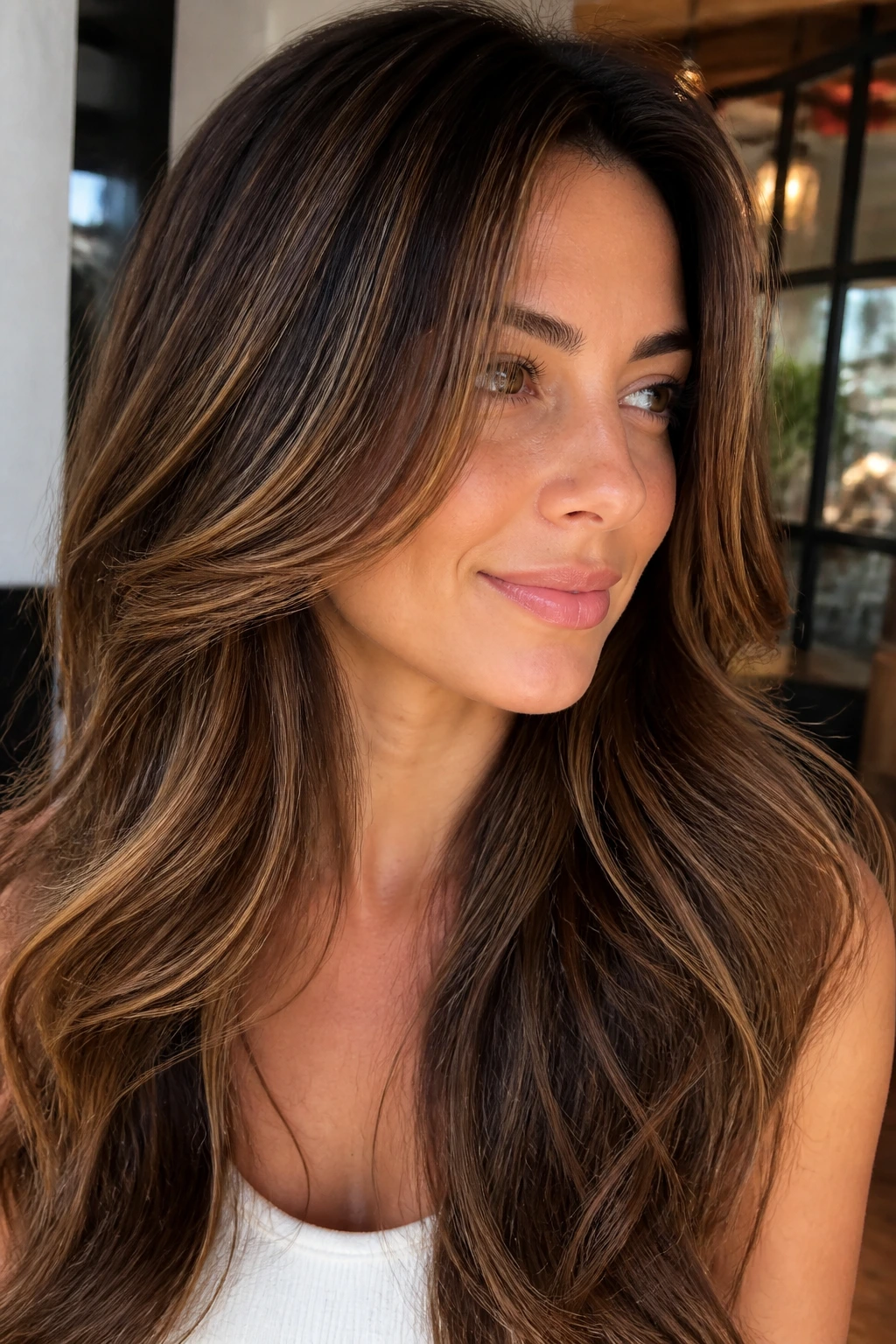
Cool Caramel Drift: If your brown base leans ash or neutral, swap honey for a cooler caramel-beige mix. The effect stays soft but feels less golden.
Copper Whisper: For clients who want more warmth, add a few copper ribbons only around the face and nape. It gives movement without turning the whole head red.
Curly Halo Lights: On curls, keep the brightest pieces around the outer halo and leave the interior deeper. The shape pops without losing density.
Low-Contrast Brunette Melt: If you hate obvious highlights, ask for a root shadow, very fine weaving, and a gloss a half-step lighter than your base. It reads polished from far away and quiet up close.
Bright Front, Dark Body: This is the one I like when someone wants change but not maintenance. The front gets the lift; the back stays rich. That contrast looks intentional every time.
Maintenance, Refreshes, and Grow-Out Care
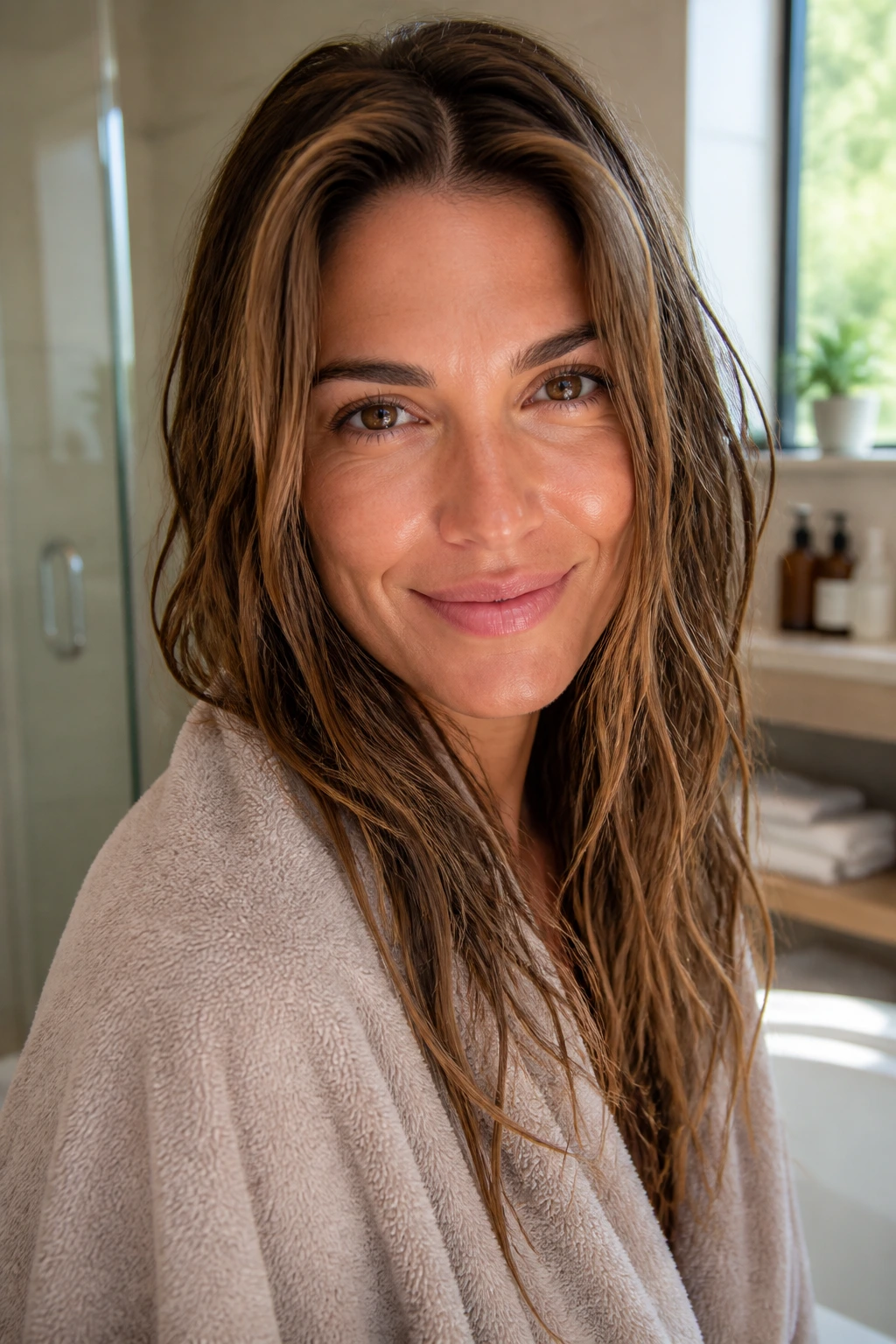
Highlighted brown hair behaves best when you treat it like a color that needs small check-ins, not constant rescue. A gloss every 4 to 6 weeks keeps caramel, honey, and beige from drifting brassy. Root touch-ups can usually wait 8 to 12 weeks if the placement is soft and the shadow is left alone at the scalp.
Use color-safe shampoo 2 to 3 times a week, and keep the water lukewarm rather than scorching hot. Hot water opens the cuticle more than people think, and that’s one of the fastest ways to rinse tone out of lightened strands. A deep conditioner once a week helps the highlighted pieces stay smooth, especially if the ends were lifted more than the top.
Heat matters too. If you style with a wand or flat iron, keep the heat protectant on every time and stay in the 300°F to 350°F range unless your hair is very coarse. Fine highlighted hair does not need that much heat. It just burns faster.
Frequently Asked Questions About Sun-Kissed Highlights for Brown Hair
How light should sun-kissed highlights be on brown hair?
Usually one to three levels lighter than the base is enough. That keeps the contrast soft and avoids the stripe effect that can happen when brunettes go too pale too fast.
Do these highlights work on dark brown hair?
Yes, but the best version usually stays warm and subtle. Think caramel, amber, bronze, or soft auburn rather than pale blonde, unless you’re ready for more upkeep.
Are balayage and highlights the same thing?
Not quite. Traditional highlights are often foiled in a more structured pattern, while balayage is painted for a softer grow-out. A lot of the looks here use both ideas together.
Can curly hair wear sun-kissed highlights without looking patchy?
Absolutely. The key is weaving the color through the curl pattern instead of slicing through it in thick panels. Curls need ribbons that move with the shape.
What if my hair pulls orange?
Then the toner and shampoo choice matter more than the lift itself. A blue shampoo can help with orange brass, but if the color is too warm right after coloring, the salon toner should handle most of the correction.
Will highlights make fine brown hair look thinner?
They can if the pieces are too wide or too light. Fine hair usually looks fuller when the highlights are narrow, scattered, and close enough to blur together.
How often should I refresh the tone?
Many brunettes need a gloss every 4 to 6 weeks and a bigger refresh every 8 to 12 weeks. If the pieces start looking dull before that, it usually means the tone, not the placement, needs attention.
Can I keep the grow-out soft if I wear my hair up a lot?
Yes. Ask for brighter pieces around the face and crown so the color still shows in a ponytail or bun. That placement does more work than people expect.
Keeping the Glow Soft
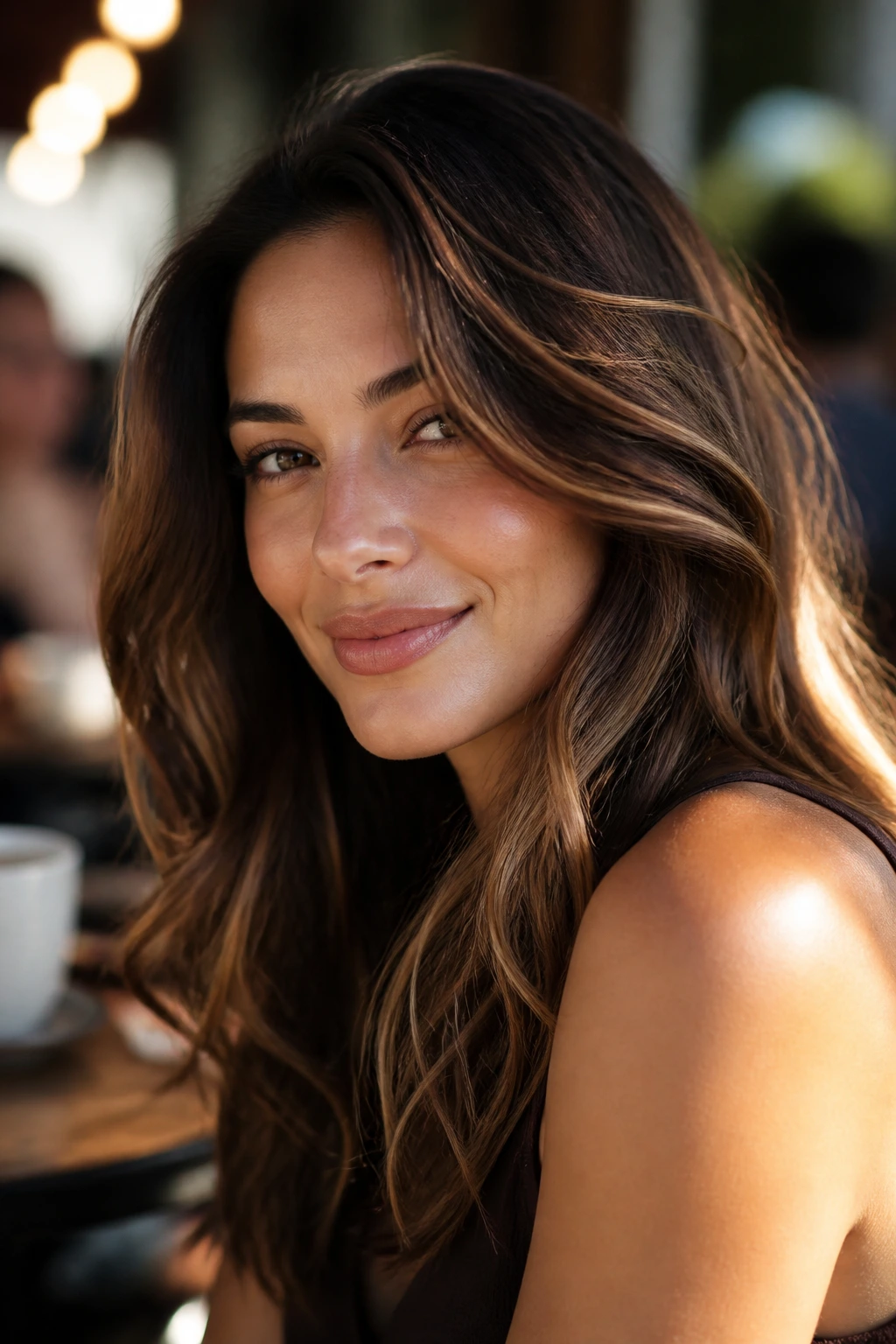
The best brunette highlights don’t try to turn brown hair into something it isn’t. They work with the depth already there, then place light where it matters most. That’s why caramel, honey, beige, copper, bronze, and auburn all keep showing up in smart versions of this look — they respect the base.
If you’re choosing between going brighter or staying subtle, I’d take subtle with better placement almost every time. Hair that grows out gracefully is easier to live with, easier to style, and frankly easier to love in the mirror on a random Tuesday.
