



Red color on waves has a habit of changing every time the light shifts. Copper flashes at the bend, mahogany drops into the shadow, and a single bend of hair can look warmer than the section next to it. That’s why red hair looks for wavy hair can be so satisfying when it’s done well — the texture does half the visual work for you.
The trouble starts when the red is treated like a flat paint job. Wavy hair rarely likes that. Too much one-note color can make the movement disappear, while overly chunky highlights can make the shape puff out in the wrong places. The best versions use placement, depth, and finish together: ribboned copper, root shadows, glazed ends, and cuts that let the bends breathe.
These 19 red hair looks lean into that idea from different angles. Some are soft and wearable. Some are louder and a little more dramatic. A few sit right on the line between brunette and red, which is where waves often look richest anyway. The details matter here — a half-inch root melt, a few face-framing ribbons, or a loose S-wave can change the whole read of the color.
Why Red and Waves Keep Each Other Interesting
-
Movement: Wavy hair breaks one red tone into several, so copper at the crest and auburn in the dip reads as dimension instead of a single block of color.
-
Placement: Balayage ribbons and face-framing pieces keep red from turning helmet-like, which is the fastest way to flatten a wave pattern.
-
Maintenance: Root shadows and glosses soften grow-out, so you’re not staring at a hard line at the scalp two weeks after the appointment.
-
Styling: A loose bend usually shows red better than a tight curl or a straight iron pass. One 1¼-inch wand pass often beats ten minutes of overstyling.
-
Shade range: Wavy hair can carry soft strawberry copper, deep cranberry, smoked mahogany, and everything between — but the base level needs to match the depth of the shade.
-
Texture bonus: Frizz can be the enemy in plenty of hairstyles. Here, a little airy texture can actually help the red catch light in more than one place.
1. Copper Ribbon Balayage
Copper ribbon balayage is the safest way to get red without looking like you painted the whole head one flat shade. On wavy hair, those narrow copper pieces fold in and out of the bends, so the color reads warmer in some spots and deeper in others. It feels lived-in, not loud.
Why It Flatters Waves
The trick is in the placement. Ask for fine hand-painted ribbons through the mids and ends, with the brightest pieces starting around the cheekbone instead of right at the root. That keeps the wave pattern from looking striped when the hair moves.
- Best base: Level 6 to 7 light brown or dark blonde.
- Ask for: Copper ribbons about ¼ to ½ inch wide.
- Maintenance: A copper glaze every 4 to 6 weeks keeps the warmth from fading into peach.
- Styling note: A loose bend with a 1¼-inch iron shows the ribbons better than tight curls.
Pro tip: Leave the last inch of the ends a little softer in tone. If every piece goes bright copper all the way down, the shape can start to look busy instead of dimensional.
2. Cowboy Copper Lob
Cowboy copper is the shade I reach for when someone wants red but does not want a high-drama salon life. It sits in that sweet spot between copper, brown, and rust, which makes it especially useful on a collarbone lob with a few soft bends. The cut keeps it modern; the color keeps it interesting.
The reason it works so well on waves is that the lob shape gives the color room to move. A blunt end with a little texture at the bottom makes the copper look denser near the face and softer through the lengths. It’s low maintenance, but not boring. Big difference.
If your natural hair is already medium brown, ask for a demi-permanent copper-brown gloss with a shadow root about half an inch deep. If your hair is lighter, the shade can go a little brighter and still stay wearable. This one is best when the wave pattern is not too tight — think loose S-shapes, not corkscrews.
3. Cherry Cola Waves
Why does cherry cola look richer on waves than on straight hair? Because the color has more places to hide and return. The brunette base keeps it moody, the cherry notes pop on the bends, and the whole thing picks up a deep wine reflection without turning purple.
What Makes It Work
This look is built on contrast, but not the harsh kind. You want a dark brown or espresso base with burgundy and cherry glaze layered through the mids and ends. On wavy hair, that split between shadow and shine gives the red a deeper reading than a flat all-over dye ever could.
How to Wear It
Use a center part if you want the color to feel sleek and expensive-looking, or push it to one side if you want the cherry tones to flash more around the face. A gloss every 4 to 5 weeks matters here because the color is strongest when it stays shiny, not matte.
A 2B or 2C wave pattern is ideal. The bends open the color just enough to show the red without making it look streaky. Keep the styling loose and you’ll get that dark, glassy finish people keep trying to copy.
4. Cinnamon Toast Layers
Picture warm brown hair with cinnamon running through the middle of every wave. That’s the appeal here. It’s softer than copper, gentler than ruby, and much easier to live with if you want red tones that don’t shout from the other side of the room.
This look loves layered cuts, especially on medium-length hair. The shorter top layers lift the face, while the longer pieces hold the warm red lowlights where the waves bend. You get movement at the crown and a richer tone through the ends, which is exactly where wavy hair tends to look best anyway.
Ask your colorist for cinnamon lowlights one to two shades warmer than your base, not a full bright copper change. A few face-framing strands can be lighter, but the main body should stay grounded. That keeps the whole thing from tipping orange.
5. Auburn Shag
An auburn shag is what happens when a cut and a color stop arguing with each other. The shag brings the texture, the auburn brings the warmth, and the waves do the rest. It’s a little undone, a little shaggy, and much better than a neat one-length cut if you want red to move.
The layers matter more than the exact shade here. Shorter crown pieces stop the top from lying flat, which helps auburn read as rich rather than heavy. Curtain bangs or a fringe make the color sit around the face instead of dropping straight down the sides.
Air-drying works beautifully on this one if you scrunch in mousse and let the ends dry with some separation. A diffuser helps, but don’t overdo the shaping. The charm is in the looseness. Too much polish kills the whole thing.
6. Ruby Money Piece
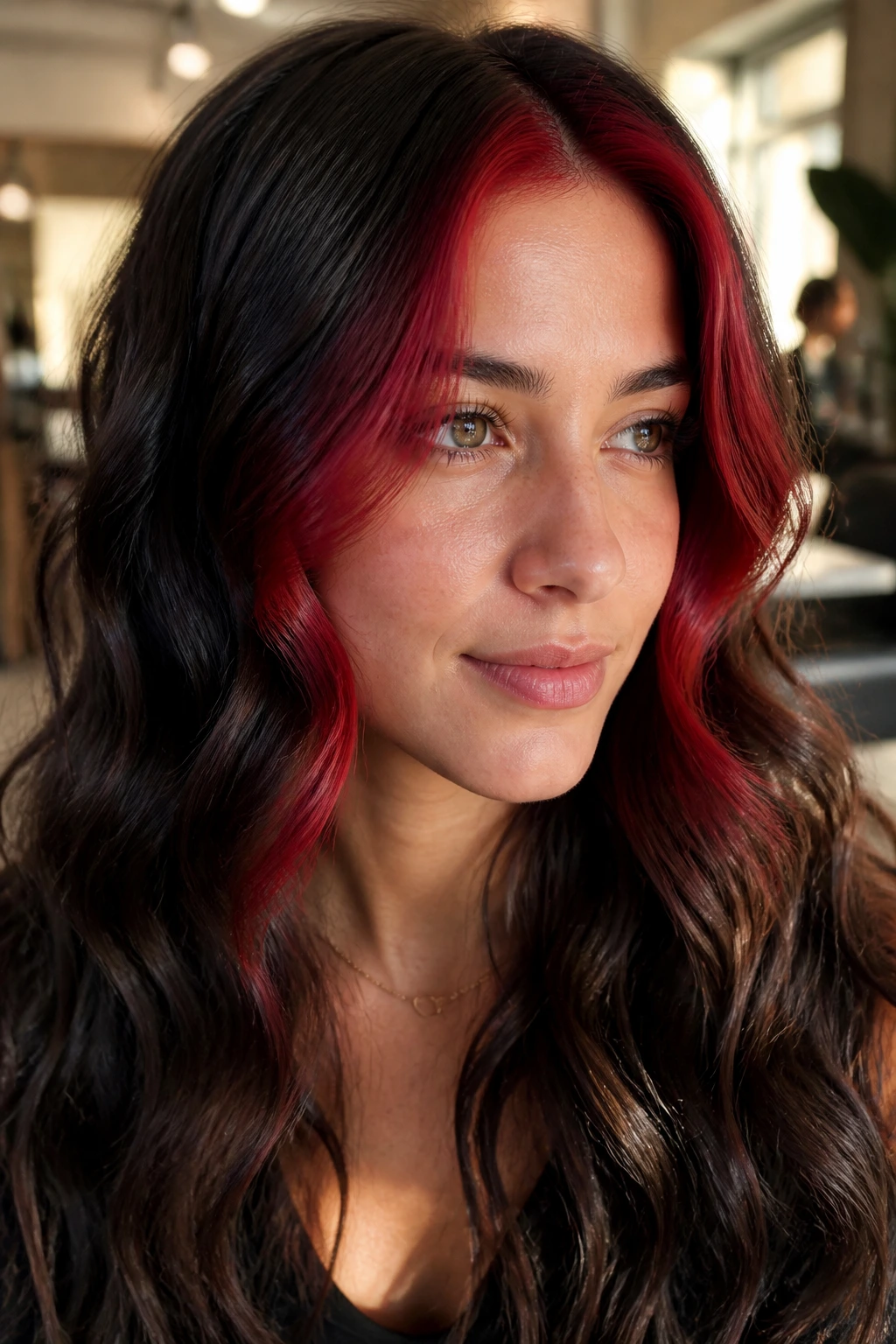
Unlike all-over red, a ruby money piece gives you a sharp hit of color without changing the whole head. That’s why it’s such a strong move for wavy hair. The front pieces frame the face, and every time the hair bends, the red shows up like a little flash of light.
Keep the rest of the hair deep brunette, espresso, or smoked chestnut. Then place ruby or garnet panels around the hairline, usually from temple to temple. If the money piece is too wide, it starts to dominate the cut; keep it clean and narrow so the wave pattern can still do its job.
This look is especially good if you wear your hair up a lot. Even a half ponytail leaves enough of the ruby streaks visible to make the style feel deliberate.
7. Rose Gold Melt
Rose gold melt looks best when the color has room to fade a little. On waves, it starts with a soft pinky-gold tone near the top and slips into peachier ends, so the bends never read as one flat pastel band. It’s lighter, airier, and easier to soften than a full copper or crimson.
Best on Lighter Hair
This one usually needs a pre-lightened base or naturally light blonde hair. Ask for a root shadow at level 7 or so, then melt into rose gold through the mids and a warmer peach at the ends. The transition should feel like a gradient, not a stripe.
How to Keep It Pretty
Use a cool rinse, not hot water. Rose and peach tones fade faster than deep copper, so a color-depositing mask once every week or two helps keep the tone from going washed out. Soft waves are better than tight curls here because the shade is delicate and can get noisy if the texture is overdone.
8. Mahogany Gloss
Mahogany gloss is the red look for people who want depth, not drama. It sits in that deep brown-red family that looks almost black in dim light and turns wine-toned when the sun hits it. On wavy hair, the effect is subtle but not invisible. That’s the balance.
This works especially well on medium-dark brunettes. A demi-permanent mahogany glaze can deepen the natural base without forcing a big shift in maintenance. The waves show the red when they move, which means the color does not need to scream to be noticed.
I like this on hair that already has some density or thickness, because the richness of mahogany can hold up against volume. If your hair is fine, keep the ends a touch lighter so the cut doesn’t look heavy. A side part helps here too. It breaks the color just enough.
9. Strawberry Copper Curls
Strawberry copper walks the line between copper and strawberry blonde, which is exactly why it looks lively on wavy hair. The shade has enough red to feel warm, but enough brightness to keep the texture from looking dark or muddy. On softer bends, it almost sparkles.
This one is a good fit for medium-length waves with a little bounce. Ask for fine copper and strawberry highlights mixed through a warm blonde base, not a solid block of orange-red. The blend should look stitched together, not painted on in wide stripes.
A lightweight mousse works better than a heavy cream here. Strawberry copper can look too sweet if the finish is greasy. Keep the roots lifted and the ends soft, and it lands in that fresh, sunlit zone that people keep trying to describe with overly cute words.
10. Ginger Bronde
Ginger bronde is what happens when brown and blonde stop fighting and the red thread runs through the middle. It’s a smart choice for longer waves because the contrast stays low enough to feel wearable, but the ginger ribbons still move across the hair in an obvious way.
The best version keeps the base somewhere around level 6 with soft blonde or light caramel pieces warmed up with ginger tones. You do not want chunky, obvious streaks. Think fine ribbons, a little root shadow, and ends that are a shade brighter than the mids.
Why It Works on Long Waves
The length gives the color more room to shift. Every bend creates a new angle, so the ginger looks lighter at the top of the wave and deeper at the fold. That kind of variation is exactly why this shade reads better on hair with movement than on pin-straight lengths.
11. Burgundy Peekaboo Panels
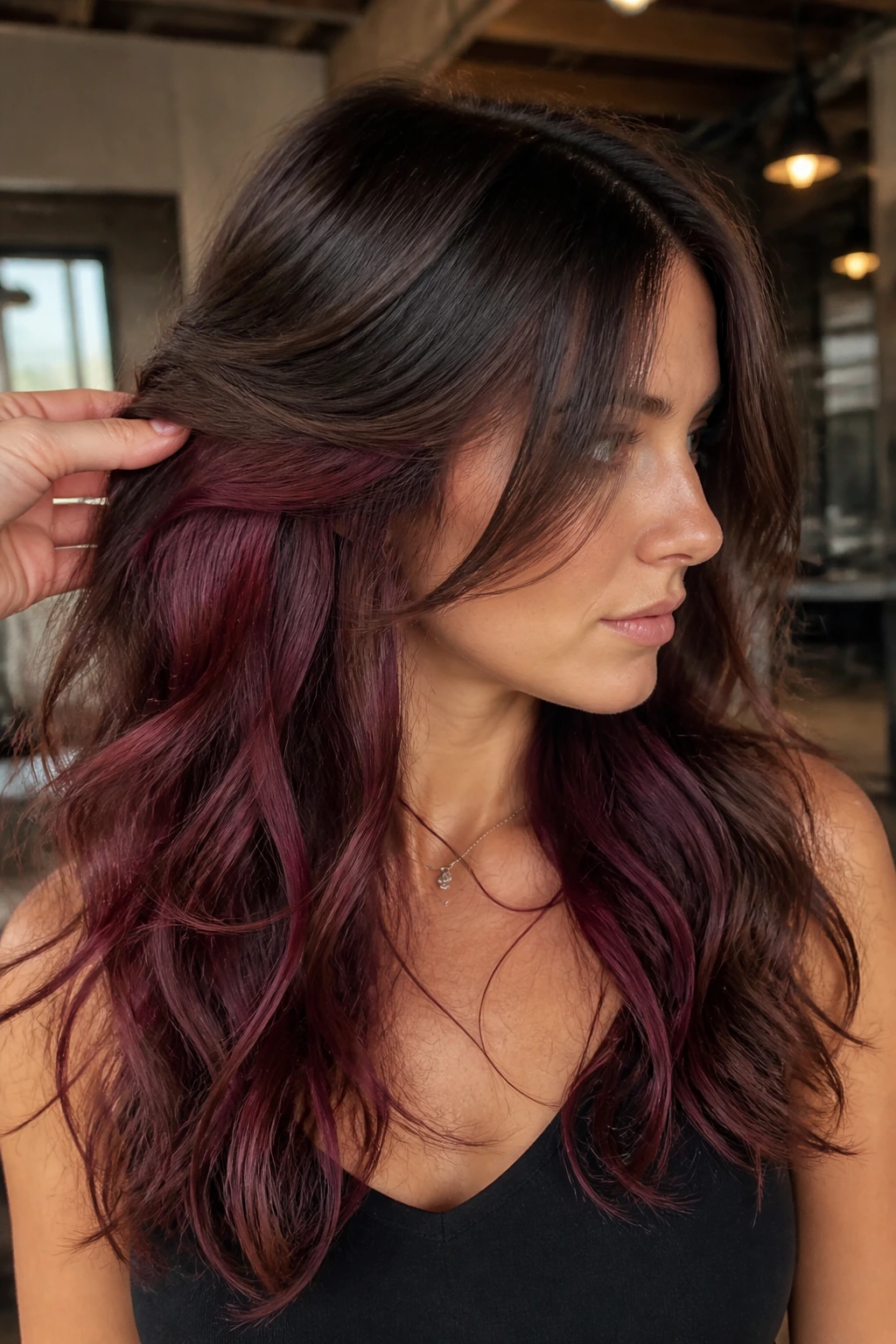
Burgundy peekaboo panels are for the person who wants red to show up with a little attitude. The top layer stays calm and wearable, while the red hides underneath and flashes out when the hair moves or gets tucked behind the ear. On waves, it’s especially good because the texture reveals the color in pieces.
You’ll usually place these panels under the crown and around the lower interior sections, from ear level down. That means the red is visible when the hair swings, but not the first thing people see in a mirror. If your job or life leans conservative, that matters.
Use a deep burgundy or black-cherry tone so the color still reads rich when the light is low. Bright red peekaboo can look too disconnected from the rest of the hair. Burgundy has more staying power in this setup.
12. Spiced Chestnut Curls
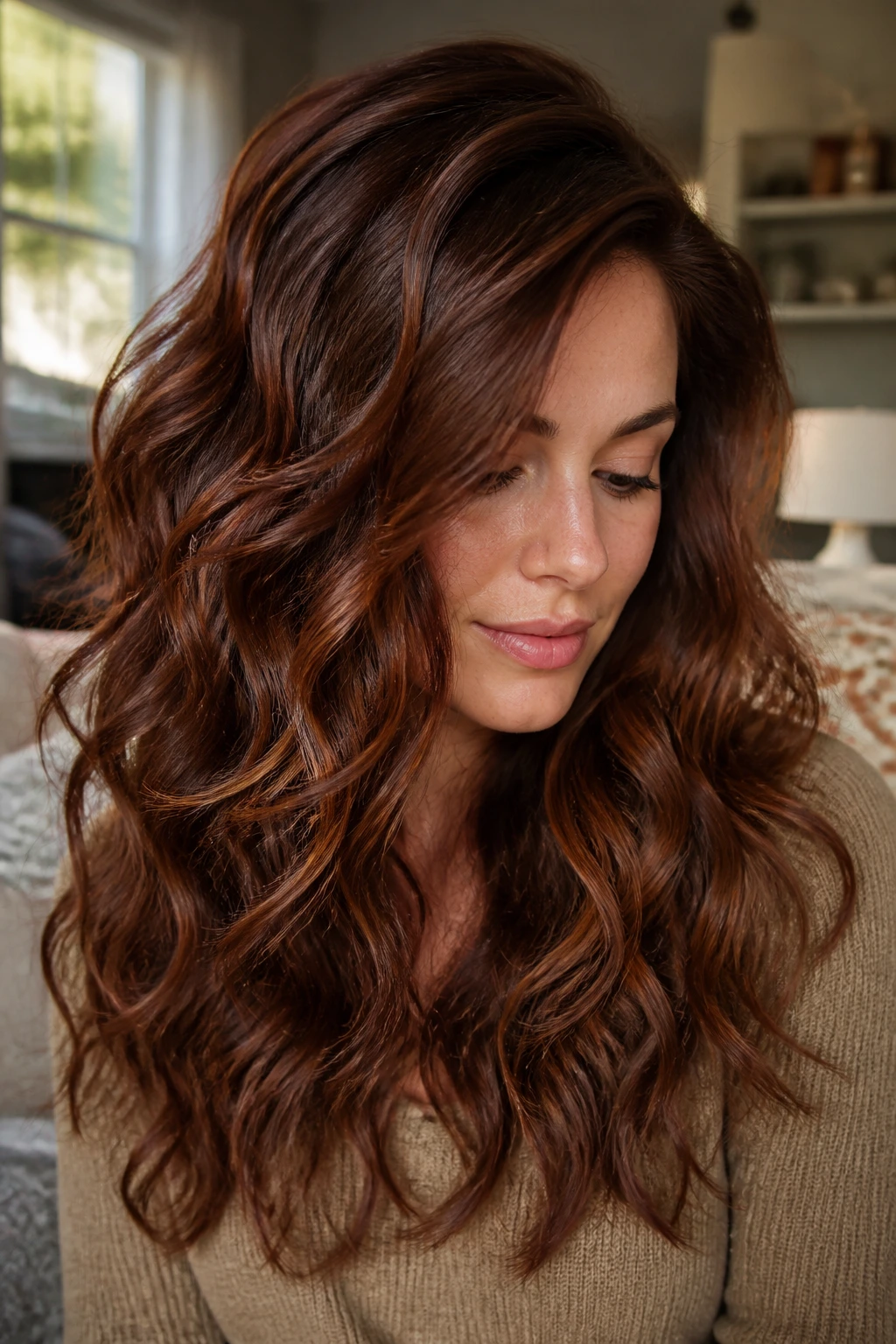
Spiced chestnut is for people who want warmth without obvious red. The base stays chestnut, but the lowlights bend toward clove, nutmeg, and soft copper-brown. It sounds subtle because it is subtle. That’s the point.
On thick wavy hair, this shade stops the lengths from looking dense and flat. The warm lowlights sit under the surface, which gives the wave pattern extra depth when the hair swings. If the cut is too blunt, the effect can disappear, so layers help.
This one looks best with a blow-dry that leaves a little air in the shape. Not fluffy. Just loose enough to let the tones separate. A serum from mid-lengths down will bring out the warm pieces without making the chestnut feel slick.
13. Velvet Red Ombré
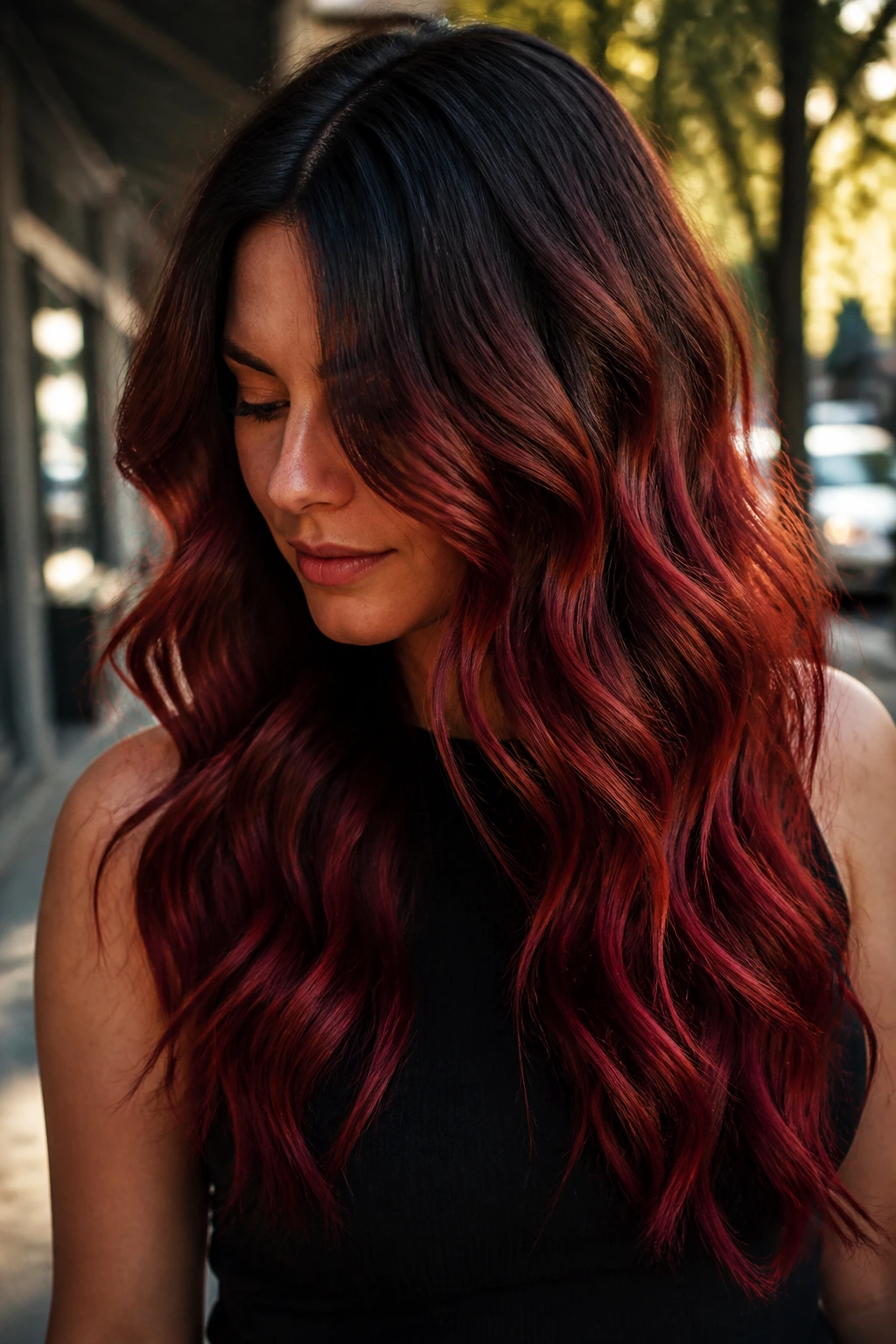
Velvet red ombré gives you a dark root, a red middle, and a richer crimson finish. It’s one of the few red looks that can feel dramatic without demanding perfect upkeep, because the root stays darker and the color deepens as it moves downward. Wavy hair makes that fade feel intentional.
The gradient matters more than the exact shade name. Keep the top close to your natural base, then shift into wine or velvet red at the mids, and finish with a slightly deeper crimson at the ends. If the transition is too abrupt, it starts looking like two separate colors fighting each other.
This is one of my favorite options for long waves, especially when the ends are a little layered and not blunt. The movement lets the ombré blend in instead of sitting as a hard band.
14. Apricot Peach Ends
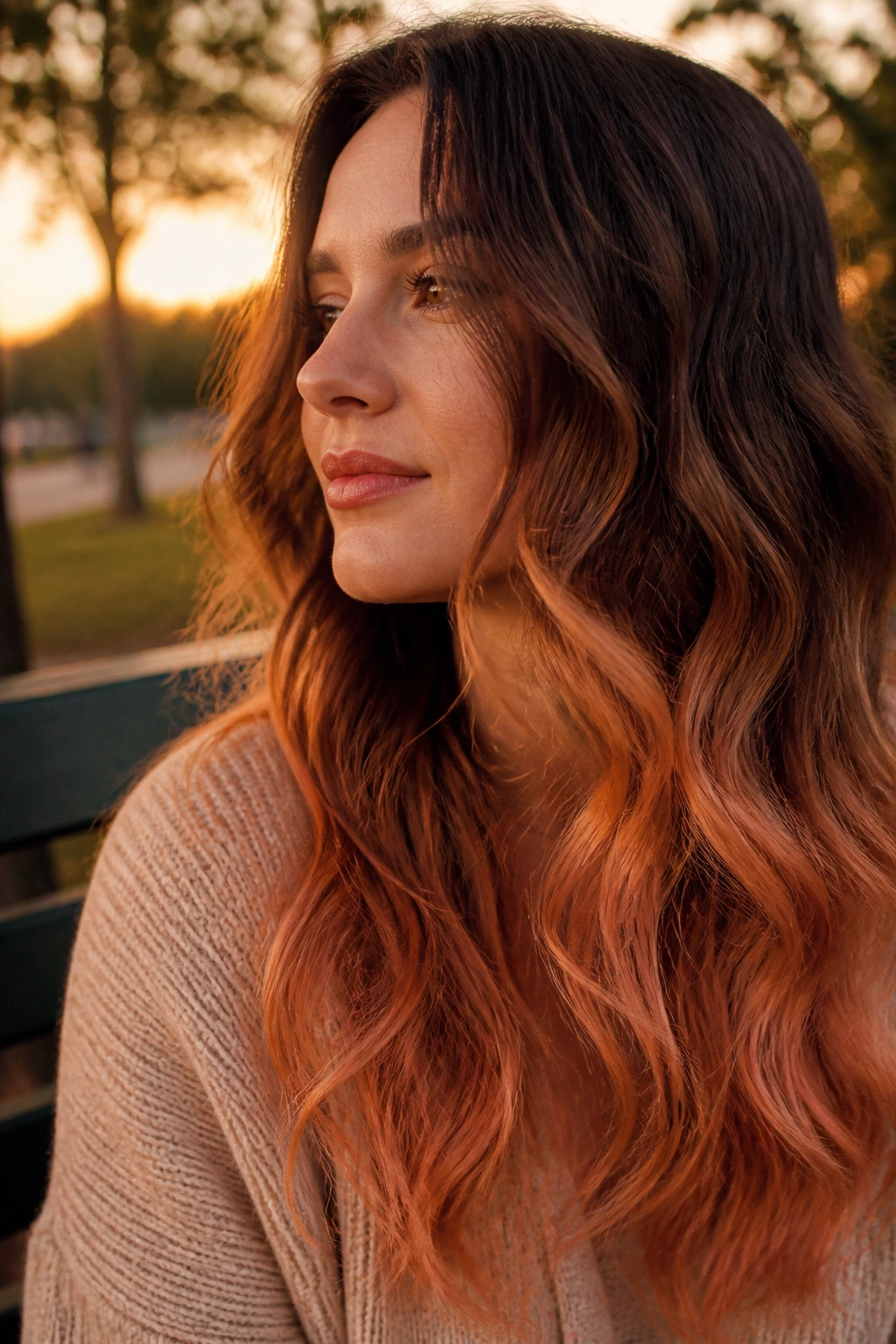
Apricot peach ends are playful, but they still need structure. On wavy hair, the ends can look like a little sunset if the base stays more neutral and the lighter pieces are concentrated on the bottom third. That keeps the look from drifting into costume territory.
This shade usually works best on pre-lightened hair or on hair that naturally lifts well. Ask for apricot and peach tones layered into the ends, with a soft root shadow so the top doesn’t compete. The face frame can carry a touch of warmth, but the real action belongs at the bottom.
If your waves are loose and airy, the peach catches the eye as the hair moves. If the hair is very dense, keep the pastel tones a little deeper so they do not disappear.
15. Auburn Face-Framing Fringe

Auburn face-framing fringe is one of the easiest ways to test red without committing to a full head change. The bangs, curtain pieces, and front layers take on the auburn tone, while the rest of the hair stays closer to your natural shade. On wavy hair, that contrast around the face does a lot of work.
Why It’s Smart
The front pieces are where people notice the color first. That means even a modest auburn shift can change the whole mood of the cut. Ask for a soft auburn gloss two shades warmer than your base, then keep the fringe and the front bends the richest.
Best Pairing
Curtain bangs are especially good here because they separate into two soft pieces when waved. That gives the auburn more movement and keeps the front from looking too heavy. If you already like a side part, this look slides right into it.
16. Smoked Copper Bob
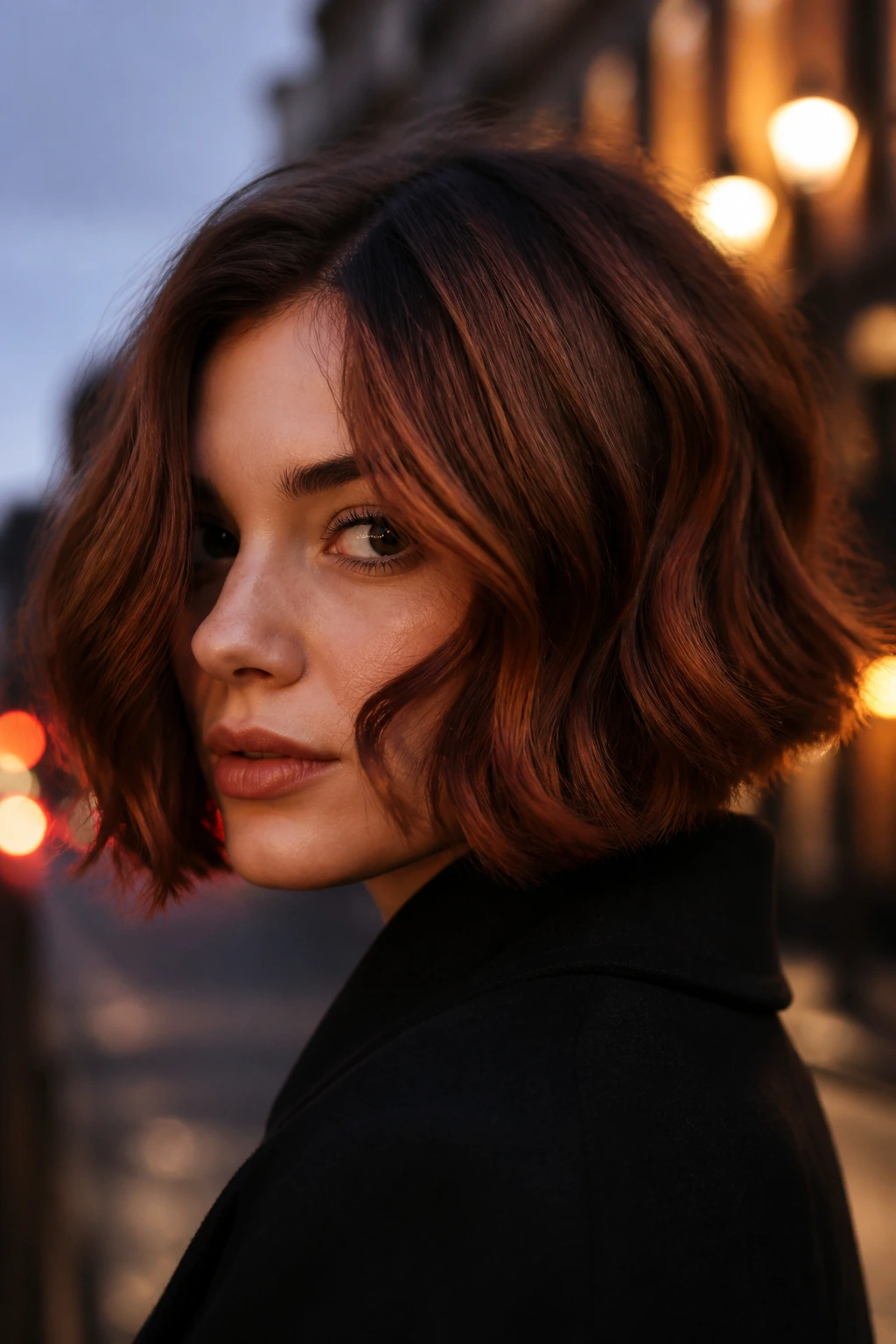
A smoked copper bob has a little edge, but it stays wearable because the copper is muted with a smoky brown base. On a bob, that matters. Shorter cuts show color faster, so the shade needs enough depth to keep from looking loud.
The bluntness of a bob can make red feel sharper, which is why the wave pattern should stay soft and controlled. A 1-inch or 1¼-inch wand gives just enough bend to break up the line without turning it into curls. Keep the roots close to natural and the mids warm. That’s where the shape starts to read.
If your hair is fine, this look can be a real win. The shorter length makes the color feel denser, and the smoked copper dimension keeps it from looking thin at the ends.
17. Mulled Wine Waves
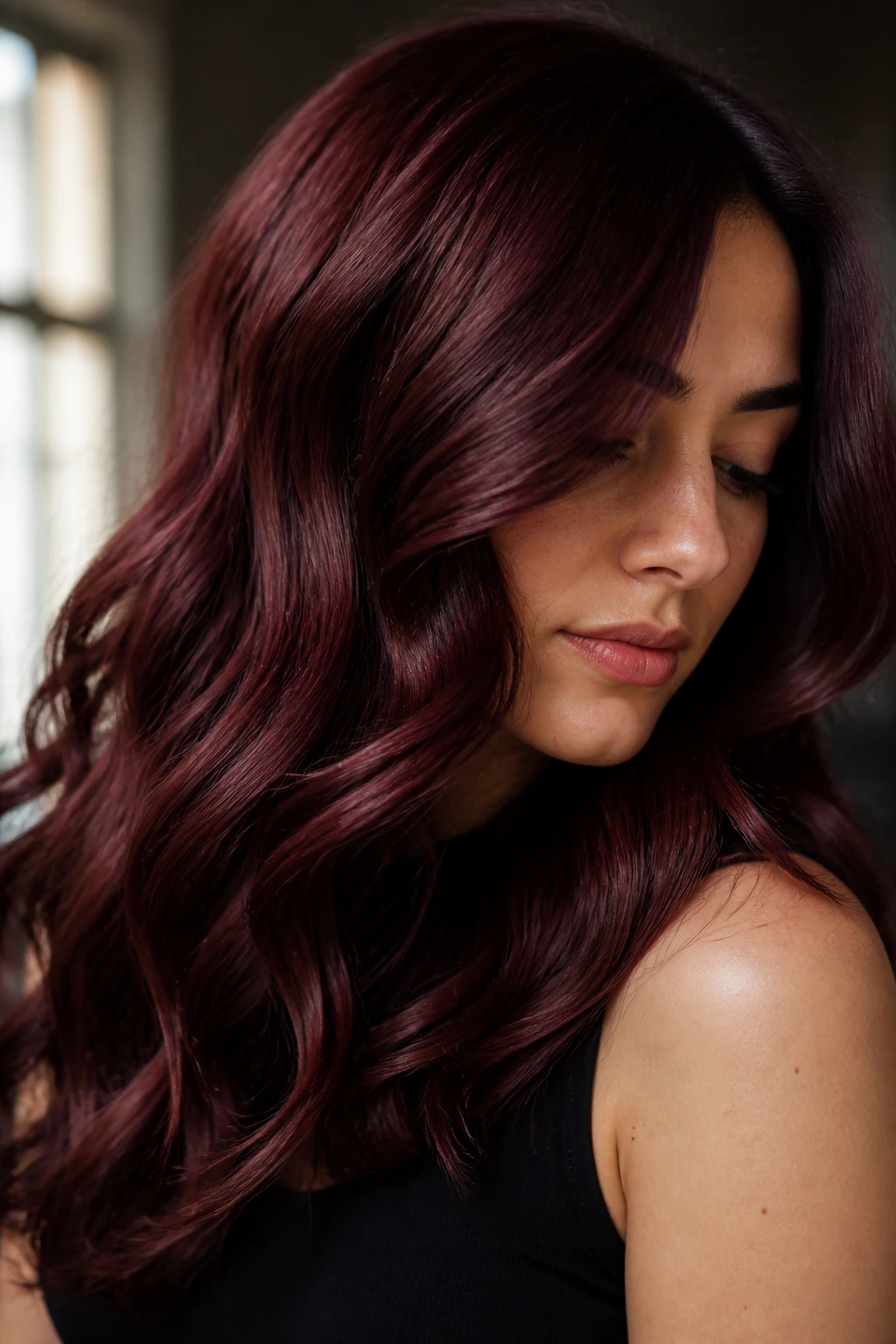
Mulled wine waves are deep, glossy, and a little moody in the best way. The shade sits between burgundy, plum, and black cherry, so the color shifts depending on the light. On wavy hair, that shift is the whole point. Every fold catches a different note.
This look needs shine. Matte mulled wine can look flat fast, while a glossed finish gives it that dark, liquid feel. Ask for a rich wine-red glaze over a dark brunette base, then keep the wave pattern broad and loose. Tight curls can make the shade look busy. Soft bends let it breathe.
It’s a strong choice for shoulder-length to long hair, especially if you wear darker clothes and want the hair to do the talking. There’s no need to overstyle it. The color carries enough weight on its own.
18. Toffee Copper Balayage
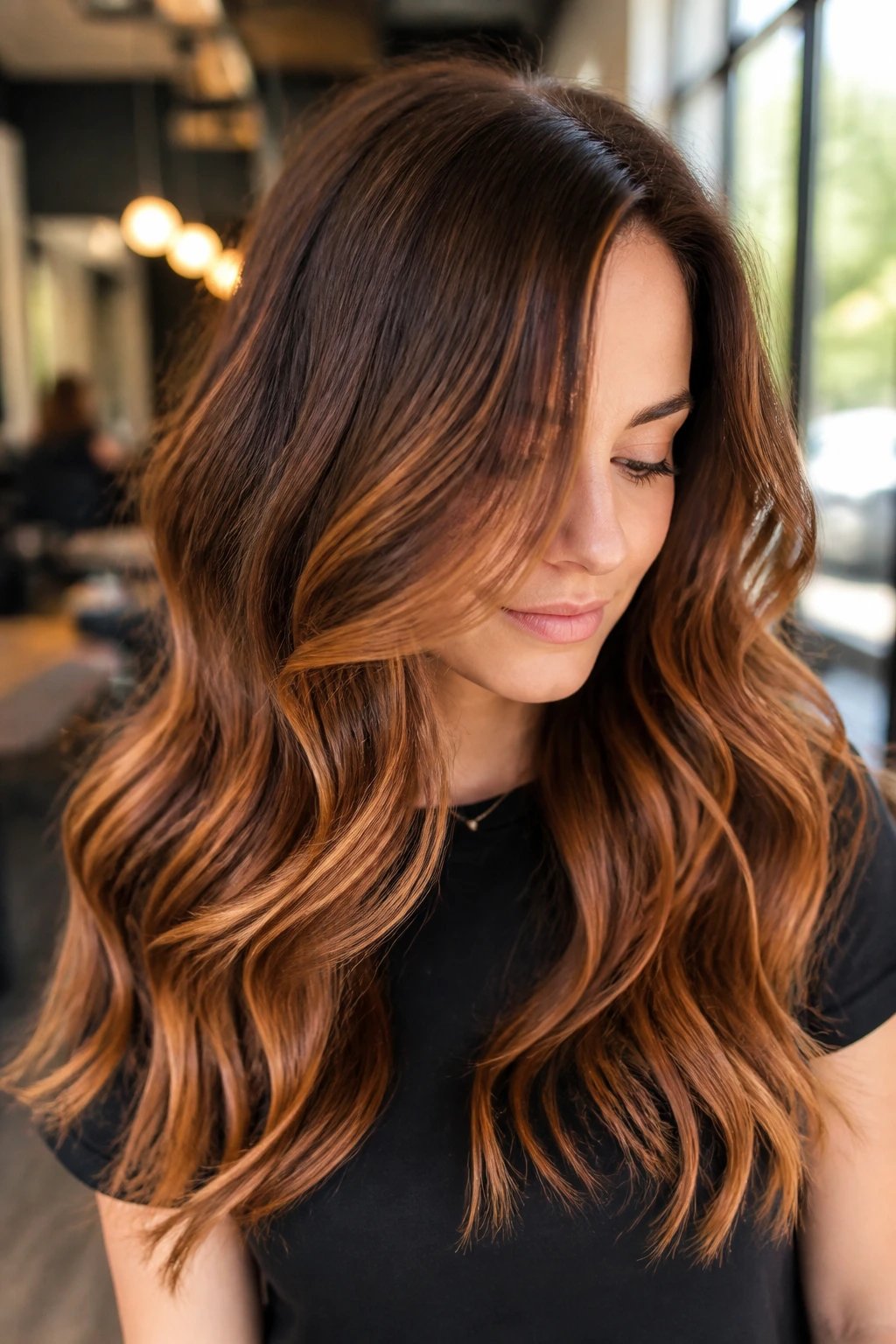
Toffee copper balayage is one of those shades that looks more expensive than it sounds. The toffee root melt keeps the base grounded, while the copper ribbons through the mids and ends add warmth and movement. On waves, the result is cozy but polished.
What Makes It Different
Unlike a louder copper, this version stays closer to brunette at the root and only brightens where the light would naturally hit. That makes the grow-out line soft. It also keeps the wave pattern from looking dry or frizzy, which can happen when the red is too bright everywhere.
Best for Daily Wear
If you want a red look that can go from office light to dinner light without changing personality, this is a strong pick. A side part makes the ribbons show more. A center part makes the toffee root melt feel calmer. Either way, the color stays readable.
19. Deep Cranberry S-Curves
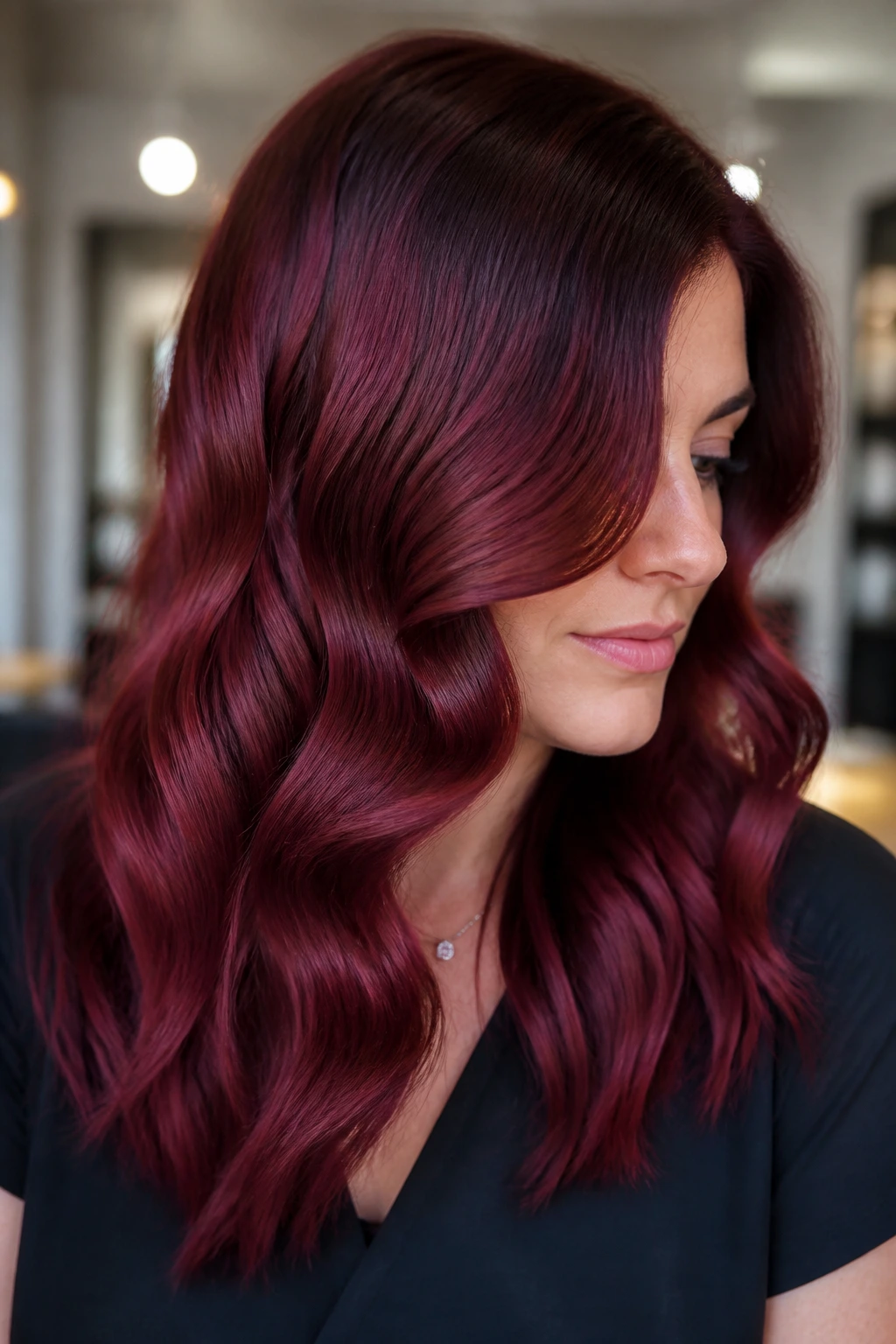
Deep cranberry S-curves are for people who want the red to feel polished and deliberate. The color itself is richer than cherry, deeper than copper, and slightly cooler than auburn. On larger S-shaped waves, the cranberry glides across the hair instead of sitting in sharp stripes.
This look works best when the styling is controlled. Use a 1½-inch iron, curl away from the face, then brush the bend into a soft S rather than a full curl. The color shows up in those wider curves much better than it does in tight ringlets.
If your base is medium to deep brown, a cranberry glaze with a smoky root shadow can be gorgeous. If the hair is lighter, keep the red a little deeper so it doesn’t drift pink. It’s the kind of shade that looks most convincing when the finish is clean and the waves are broad.
How Red Shades Earn Their Keep on Wavy Hair
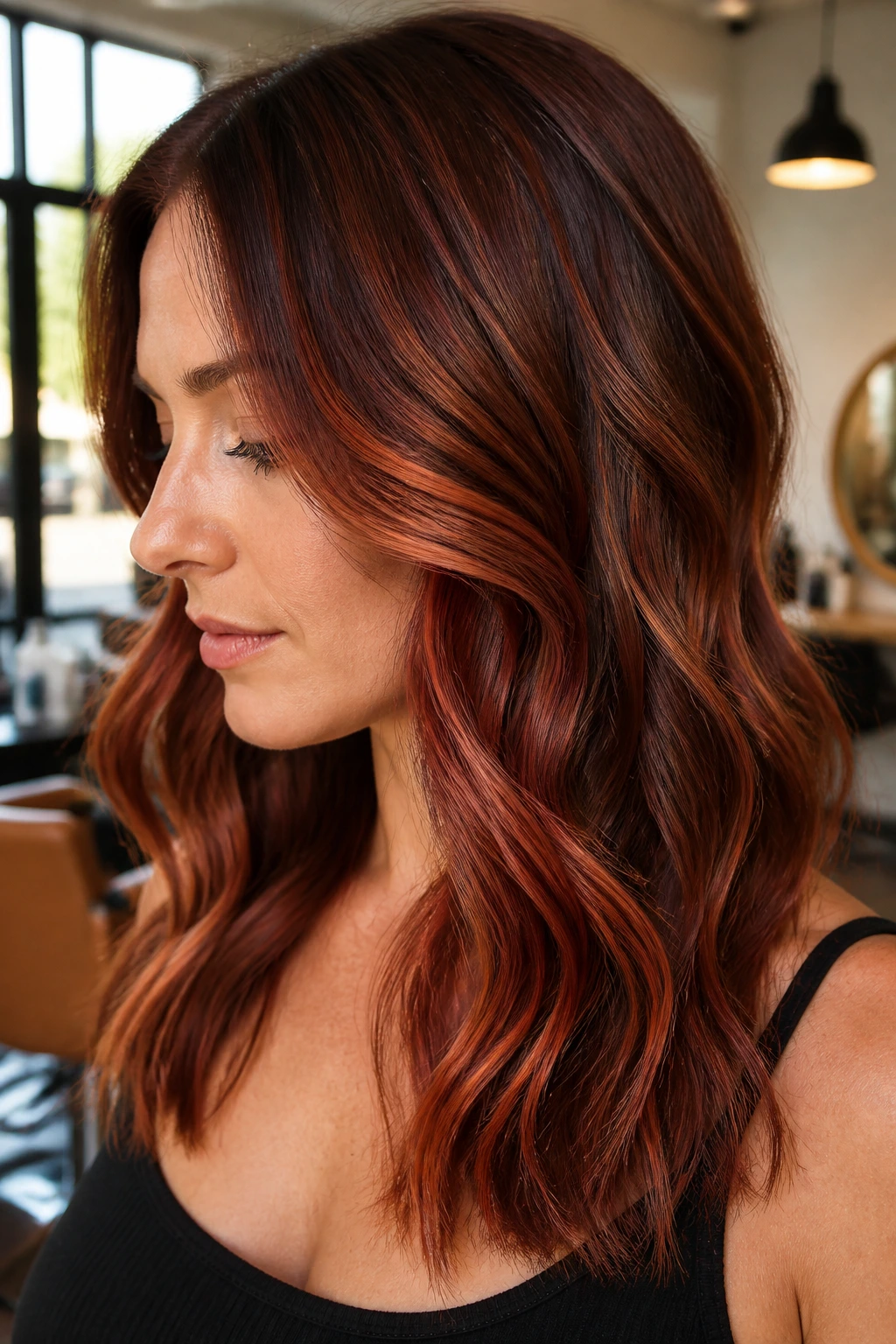
Red on waves works because the cut, the placement, and the finish all have jobs to do. If one of them drops the ball, the color starts looking louder than it should, or worse, dull. The nice part is that you do not need all three pieces to be extreme. A soft wave with a smart root melt can do more for a copper balayage than a whole head of heavy highlights ever will.
The other reason these looks last in real life is that they do not depend on one exact styling habit. Air-dried, diffused, brushed out, or revived with a wand — the right red still shows up. That freedom matters when you do not want your hair color to boss you around every morning.
Choosing the Right Red for Your Starting Color
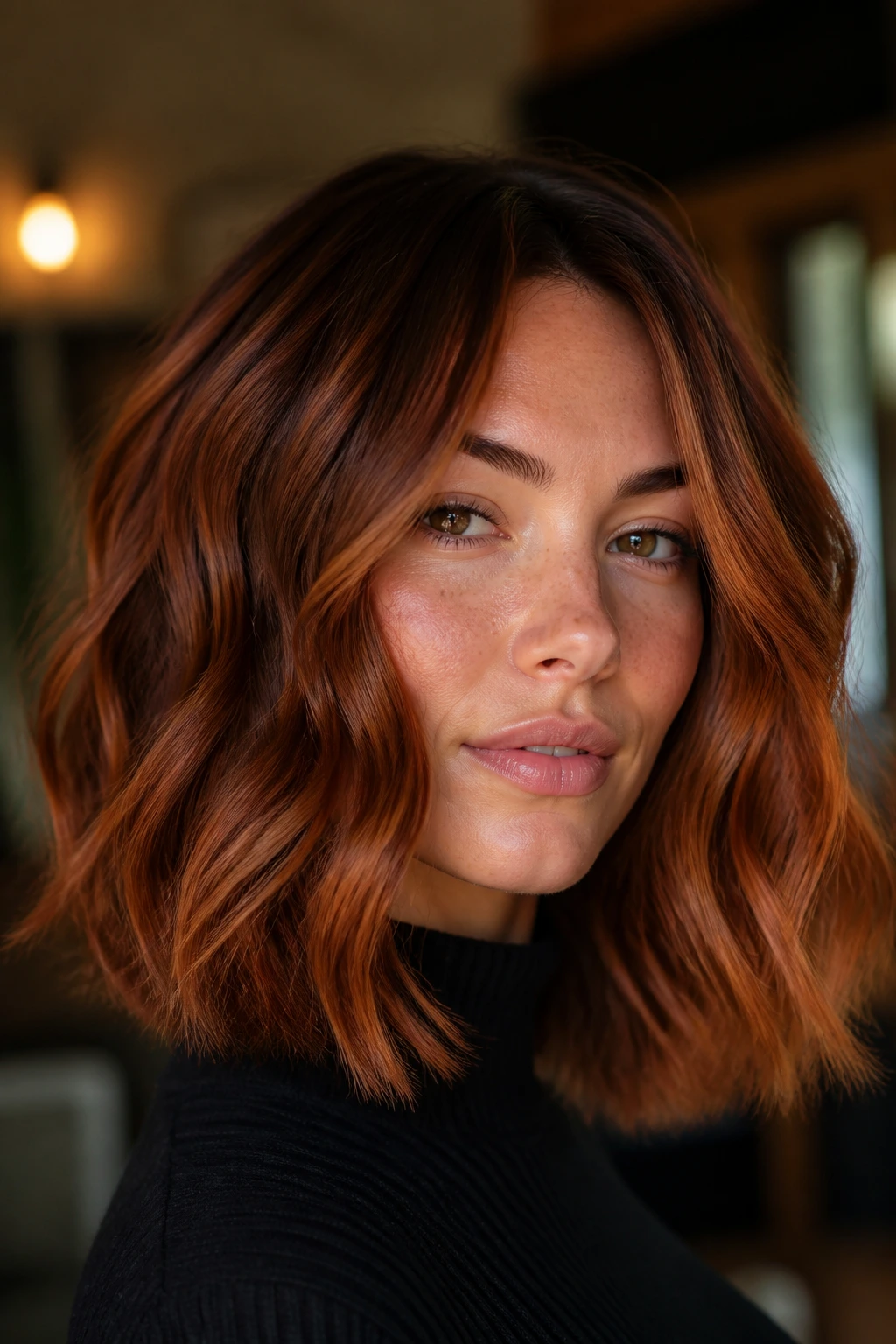
Not every red needs bleach, and not every wavy head needs the same level of contrast. A deep brunette can wear mahogany, burgundy, or smoke-tinged copper without a huge lift. A medium brown base usually opens the door to copper ribbons, cinnamon, and ginger-bronde tones. Light blondes and pre-lightened hair can handle rose gold, apricot, and brighter strawberry shades with less resistance.
Dark Brunette Bases
If your natural color sits around level 4 or 5, lean into deeper red families. Mahogany gloss, cherry cola, mulled wine, and burgundy panels usually look richer than a bright copper that has to fight the base.
Medium Brown and Dark Blonde Bases
This is the easiest starting point for copper balayage, toffee copper, cinnamon layers, and cowboy copper. The warm undertone of the base already helps the red stay visible.
Blonde or Pre-Lightened Hair
Rose gold melt, apricot peach ends, and strawberry copper can look especially good here, but only if the hair is healthy enough to take the lightening. If the ends are tired, the color can go patchy fast.
What to Tell Your Colorist Before the Foil Comes Out
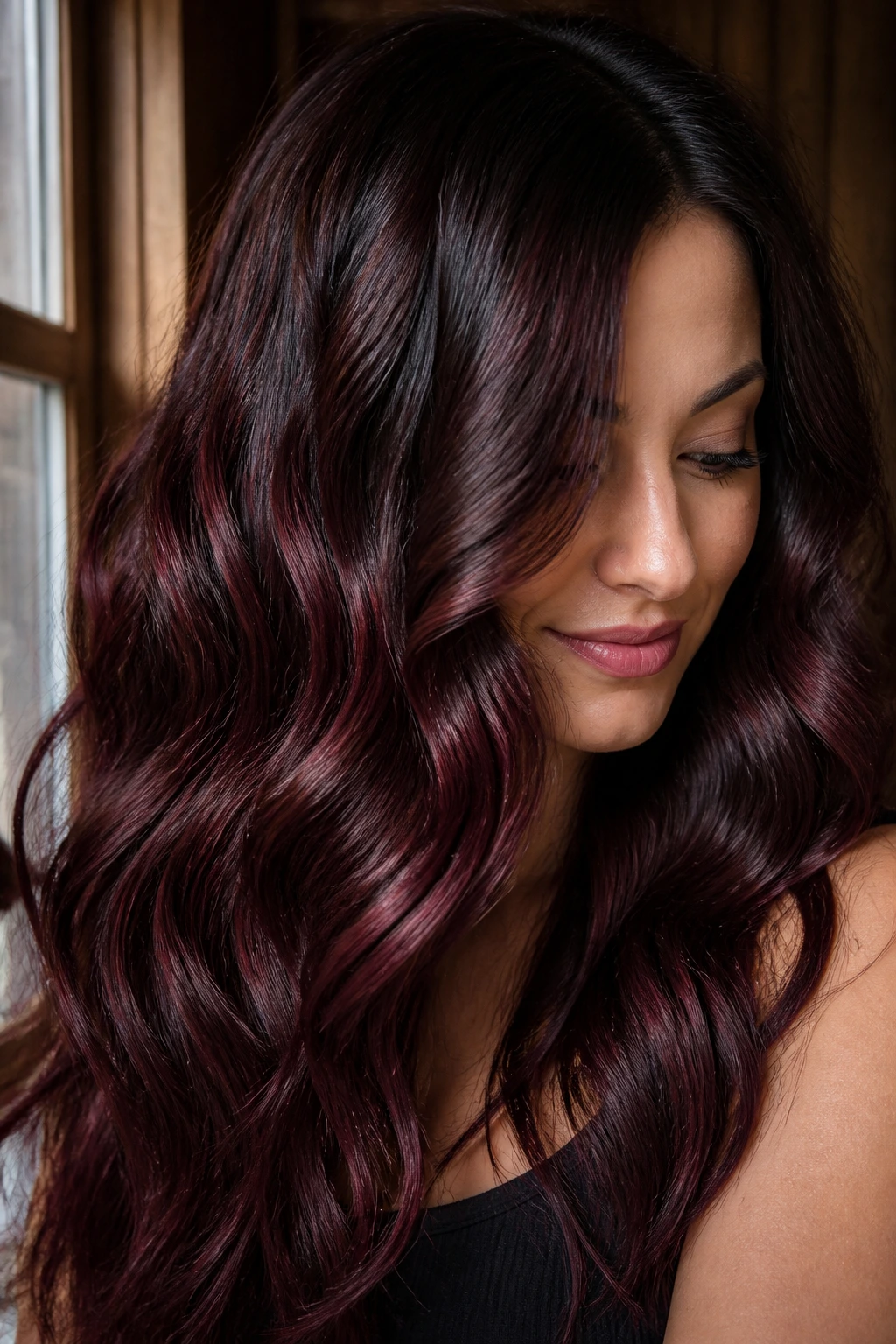
The quickest way to get the wrong red is to say “just make it red.” Too vague. You need to tell the colorist where you want the brightness, how much root you’re willing to keep, and whether you want the red to read copper, cherry, auburn, or wine.
A few useful phrases:
- “Keep the brightest red around my face and through the bends of my waves.”
- “I want a shadow root so the grow-out stays soft.”
- “Please keep the ribbons fine, not chunky.”
- “I’d rather have a glossed, dimensional red than a flat all-over color.”
- “My ends are porous, so I need the tone to stay even.”
If you can, show one photo for shade and one for placement. Those are not the same thing. One picture might have the exact copper you want, while another has the wave pattern or face frame that makes it wearable.
Tools and Products That Make the Color Easier to Wear
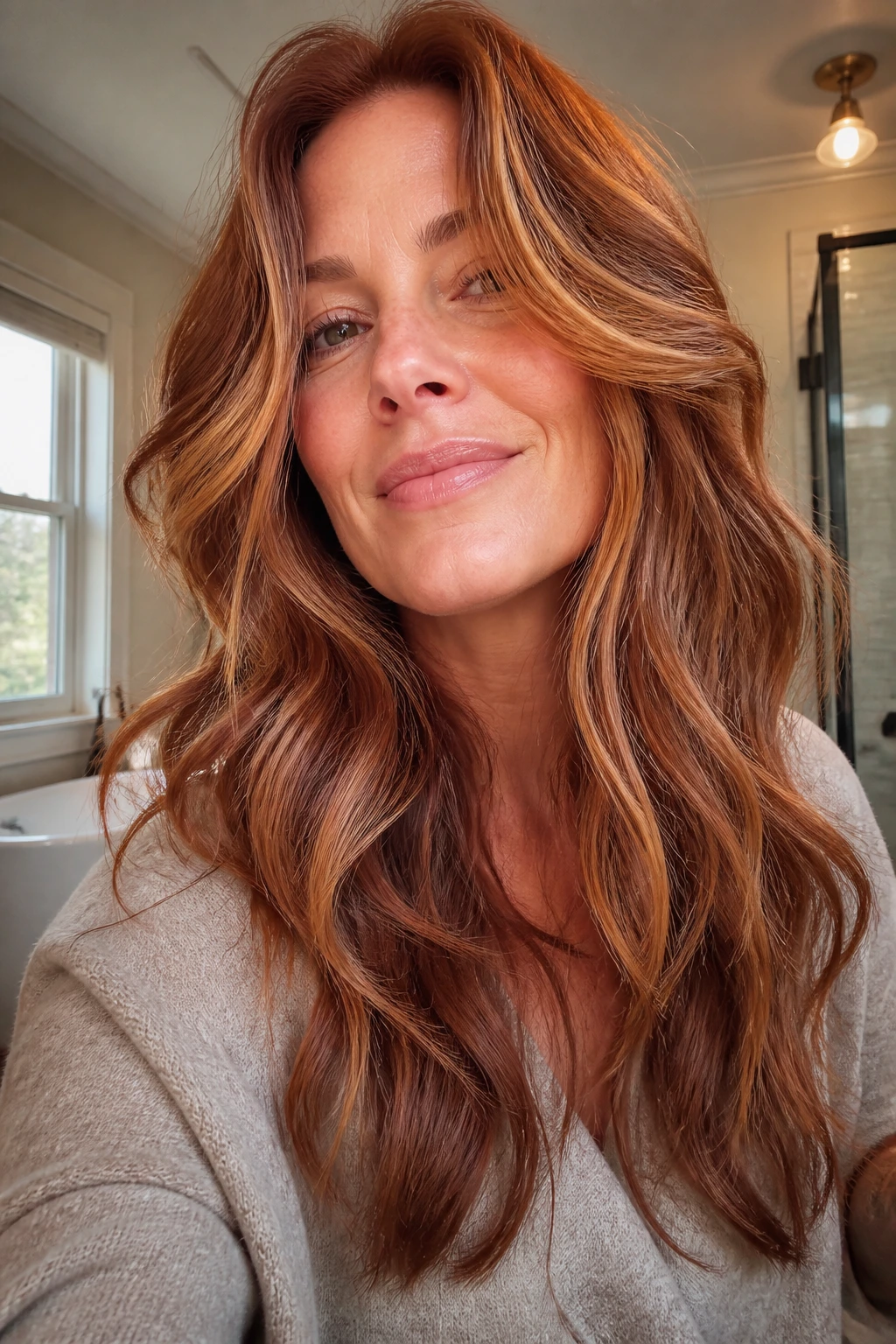
You do not need a drawer full of gadgets, but a few pieces make red hair on waves easier to live with.
- 1¼-inch curling iron or wand: Best for soft bends that show the color without turning it into ringlets.
- Diffuser attachment: Helps keep wave definition while drying the roots and mids.
- Heat protectant spray: Keeps the red from fading faster under hot tools.
- Color-safe shampoo: Gentler washing means less pigment sliding down the drain.
- Microfiber towel or cotton T-shirt: Cuts down on rough frizz after washing.
- Wide-tooth comb: Better for detangling wet waves without stretching the shape.
- Demi-permanent gloss or toning mask: Useful for refreshing copper, cherry, or burgundy between appointments.
- Lightweight serum or shine mist: Adds polish at the ends without flattening the wave pattern.
How to Style Red Waves So the Shade Reads Clearly
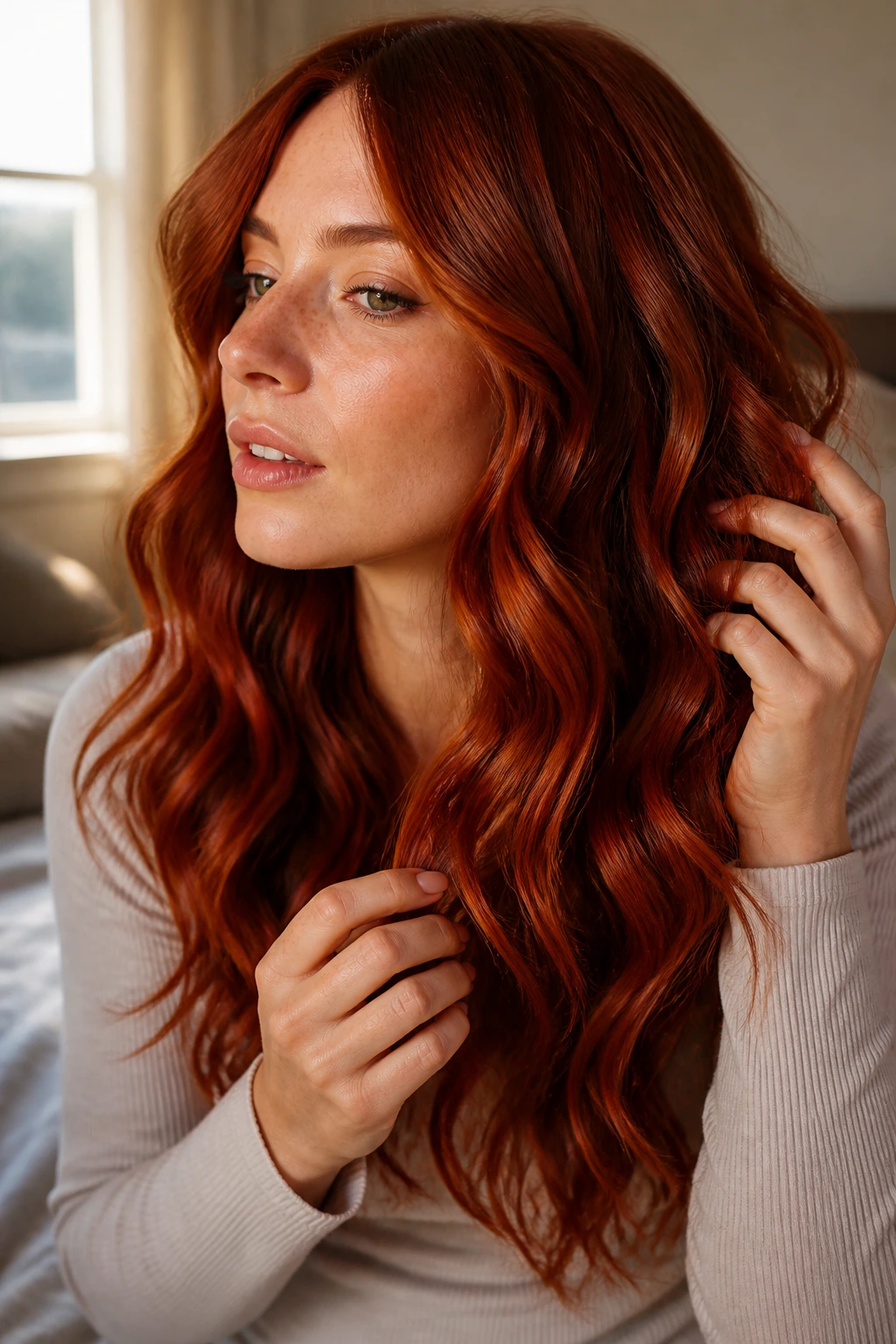
Air-Dry Base: Work a light mousse or curl cream through damp hair, then scrunch with your hands and let the wave pattern form before you touch it again. That little bit of structure at the start helps the red look intentional instead of fuzzy.
Diffuse With Control: Dry on low heat and low speed. Keep the diffuser moving and stop before the hair is bone-dry if your ends frizz easily. The last little bit can air-dry while you finish getting ready.
Revive on Day Two: A 1¼-inch wand is enough to refresh the mid-length bends in under 10 minutes. Alternate directions and leave the final inch out so the ends stay soft, not curled under.
Finish Lightly: Use a pea-sized amount of serum from the ears down. Too much oil can mute red, especially copper and rose gold. A shine mist from arm’s length usually gives a cleaner result.
Care, Glosses, and Grow-Out Timing
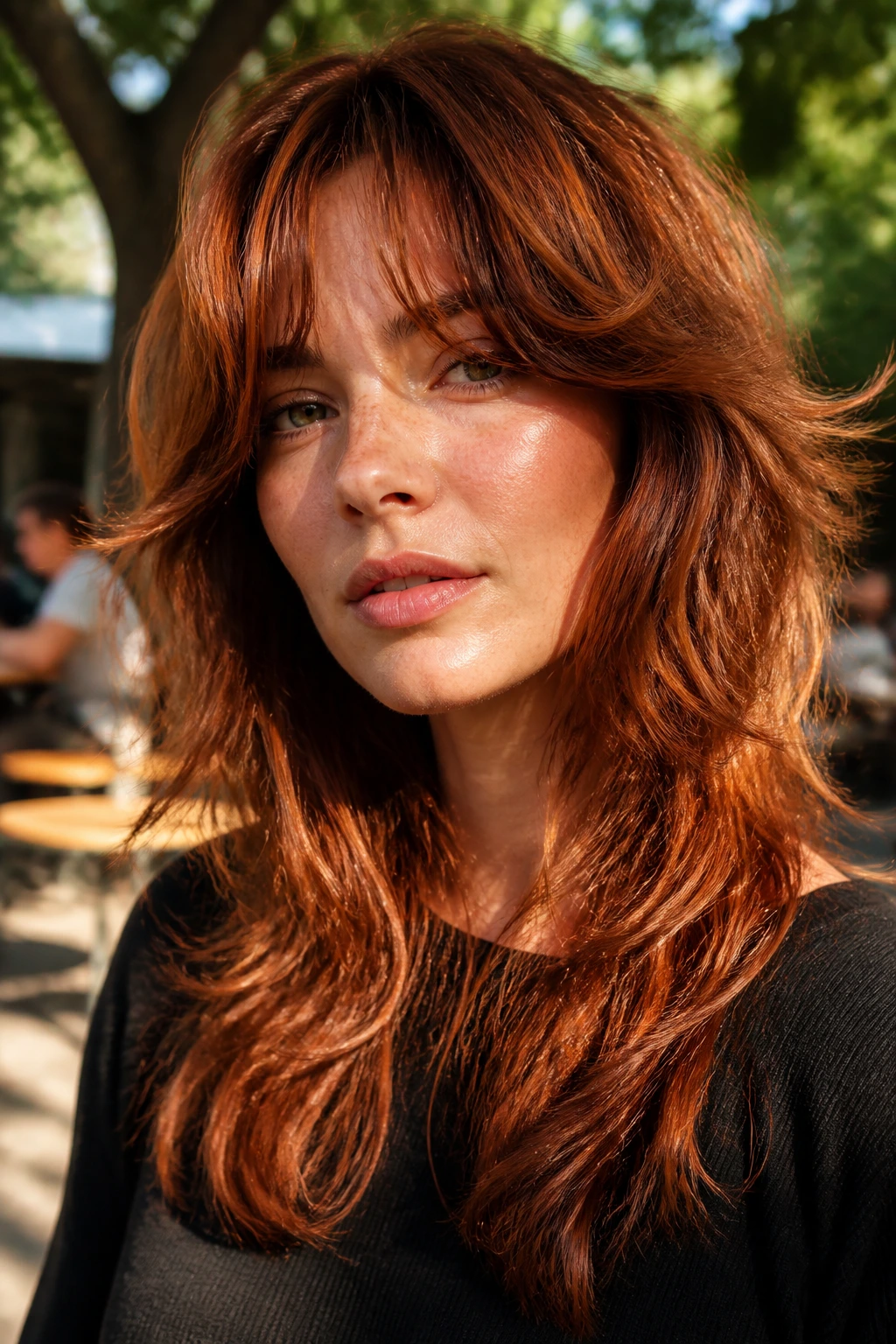
Red pigment fades faster than most brunette shades, and wavy hair can make that fade more obvious because the bend shows both the old tone and the fresh one at the same time. That is why a steady care routine matters more here than with most colors.
Wash 2 to 3 times a week if you can. Hot water and aggressive shampoo pull color faster than you’d expect, especially from porous ends. Use a color-safe shampoo, keep most of it on the scalp, and let the suds run through the lengths instead of scrubbing the mids and ends.
Glosses or toners usually help every 4 to 8 weeks, depending on the shade. Copper, rose gold, and cherry tones usually need more frequent refreshes than mahogany or smoked copper. If your hair is highlighted, a bond-building mask every week or two can keep the ends from turning crunchy, which red shades hate.
Extra Tips and Color Boosters
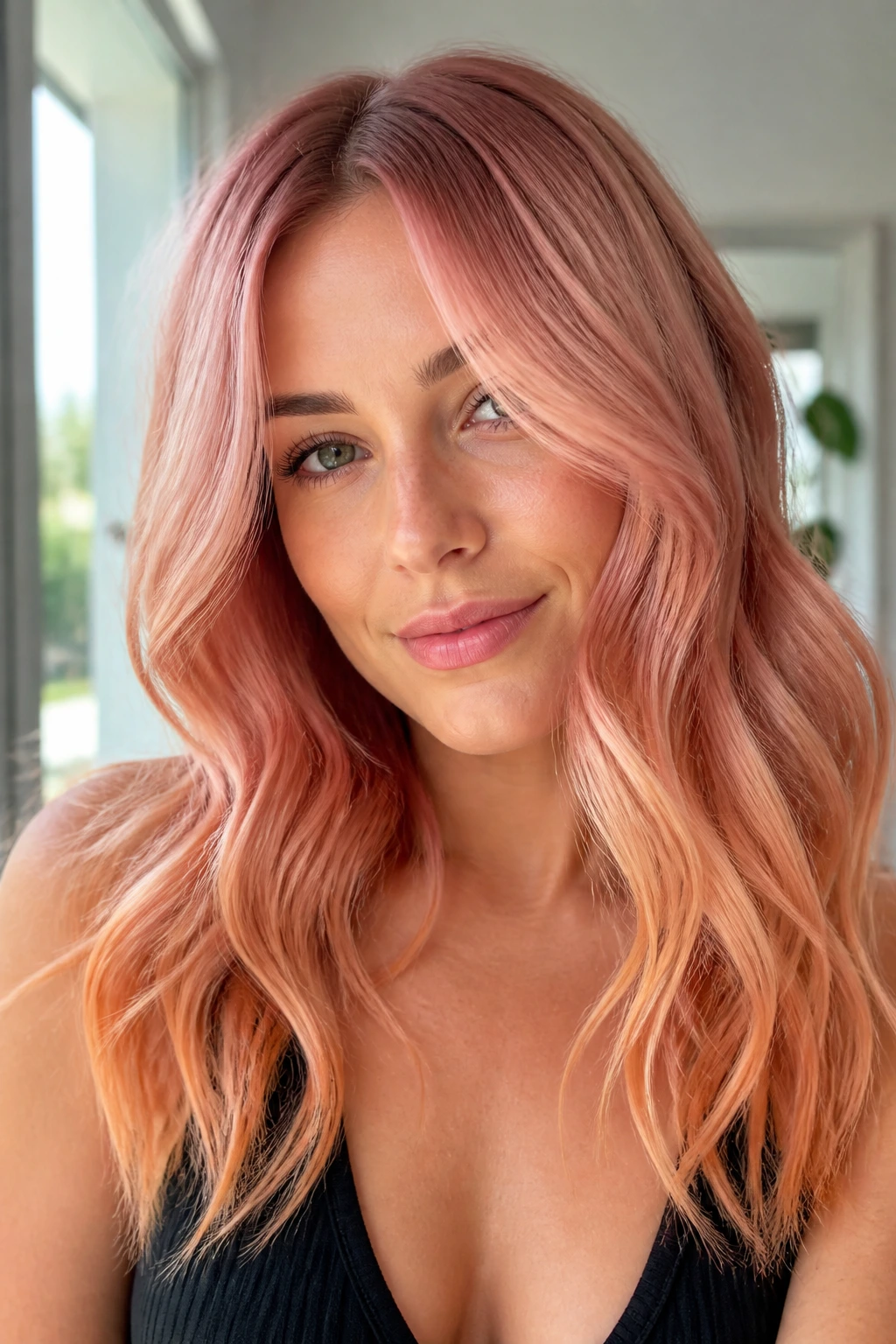
Shine Boost: Ask for a clear or tinted gloss after the color service. Red shades look far richer when the cuticle lies smooth and the surface reflects light.
Tone Control: If the red starts leaning too orange, a cooler red-brown gloss can pull it back without making it dark and muddy. If it starts looking flat, a warmer gloss adds life again.
Customization: Fine hair usually looks best with narrow ribbons and fewer chunky sections. Thick hair can hold broader panels and deeper lowlights without losing movement.
Make-It-Yours: If you wear your hair up often, keep the strongest red around the hairline and crown. If you wear it down most days, spend more color on the mids and ends where the waves move.
Budget Move: A gloss-only refresh between full color appointments usually goes farther than people think. It keeps the shade alive without forcing a full redo every time the roots grow.
Common Mistakes That Make Red Look Flat or Patchy
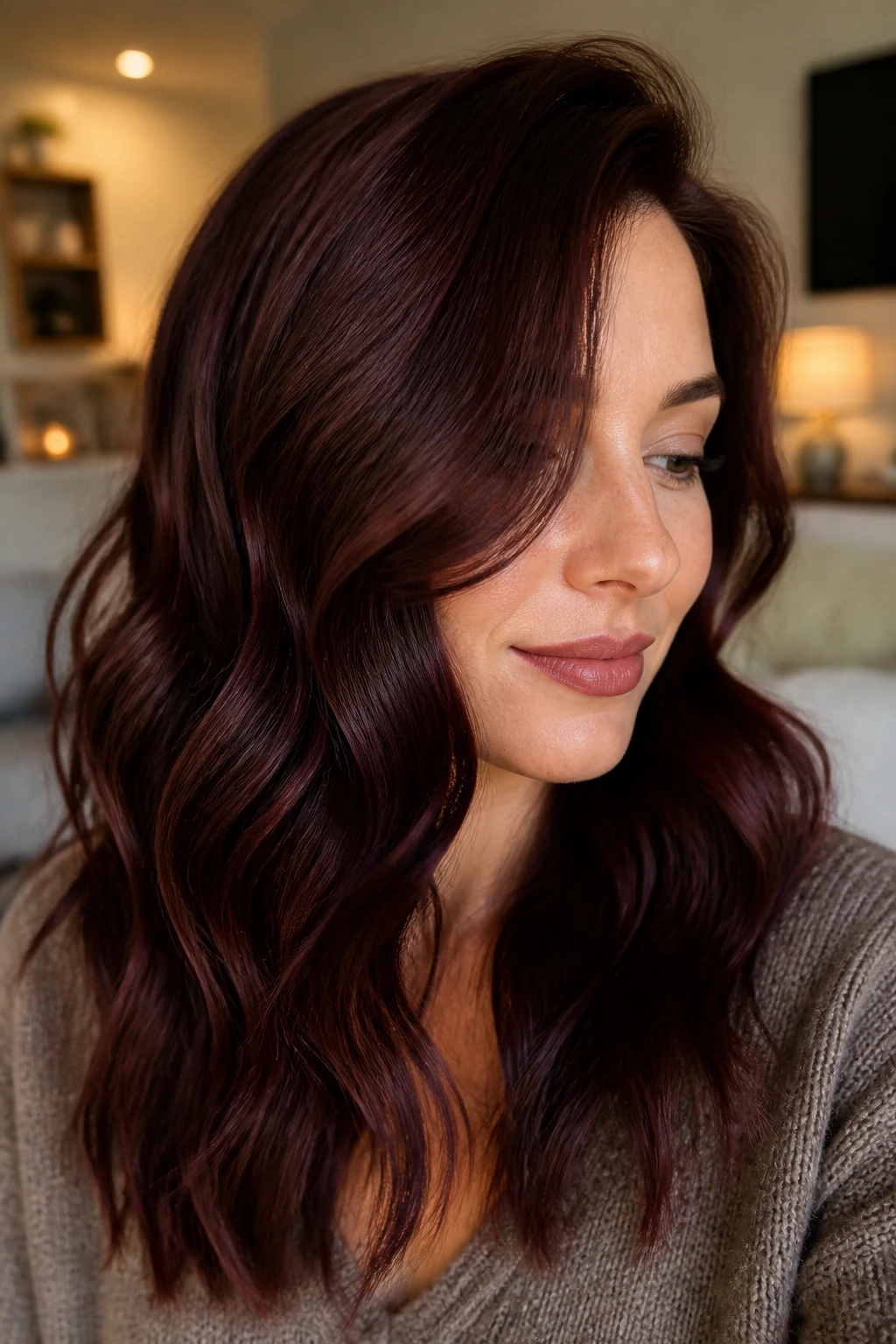
Choosing one flat red from root to tip: On wavy hair, a single block of red can look heavy and wig-like. Ask for depth at the root or a mix of shades so the bends have something to work with.
Lightening too far, too fast: If the hair is pushed several levels lighter in one visit, the ends can swell, frizz, and grab color unevenly. Safer lift usually gives a better red result than chasing brightness.
Ignoring porosity: Porous ends drink up red faster and can look darker or blotchier than the rest of the hair. A filler, bond builder, or slightly softer formula on the ends can save you from that patchy look.
Styling the waves too tight: Tight curls can make color placement look striped instead of blended. Soft bends are easier on the eye and easier on the hair.
Washing with harsh shampoo and hot water: The sink-water-pink situation is real. If every wash strips color, the fix is not more dye every week; it’s gentler washing and cooler rinsing.
Variations and Adaptations to Try
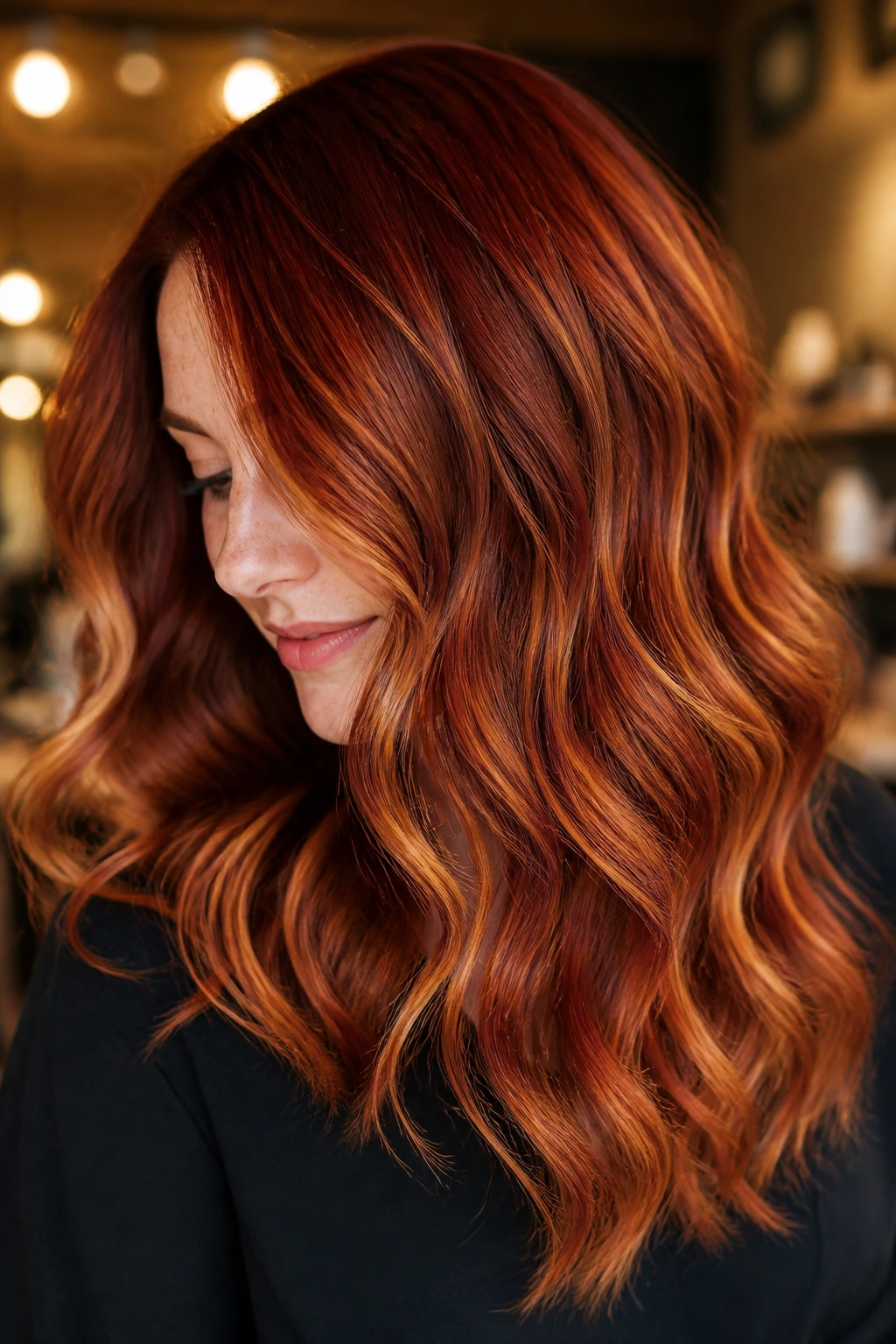
Soft Copper for Dark Brunettes: Keep the base close to natural and add copper only in fine ribbons and face-framing pieces. This is the easiest way to test red without making your maintenance life complicated.
High-Contrast Cherry: Go deeper at the roots and brighter through the mids if you want a stronger, moodier red. This version looks best when the waves are broad and glossy, not over-textured.
Low-Maintenance Root Shadow: Ask for a root that stays one to two levels deeper than the mids. The grow-out line stays soft, and the red reads more expensive because it has a built-in shadow.
Pastel Rose on Light Hair: On pre-lightened waves, rose gold and apricot tones can work if the ends are healthy and the styling stays loose. Use a tinted mask to keep the pastel from washing out.
Ribboned Dimension for Fine Hair: Fine waves usually look better with narrow, scattered ribbons than with heavy panels. The hair keeps its movement, and the red does not overwhelm the shape.
Questions People Ask Before They Go Red
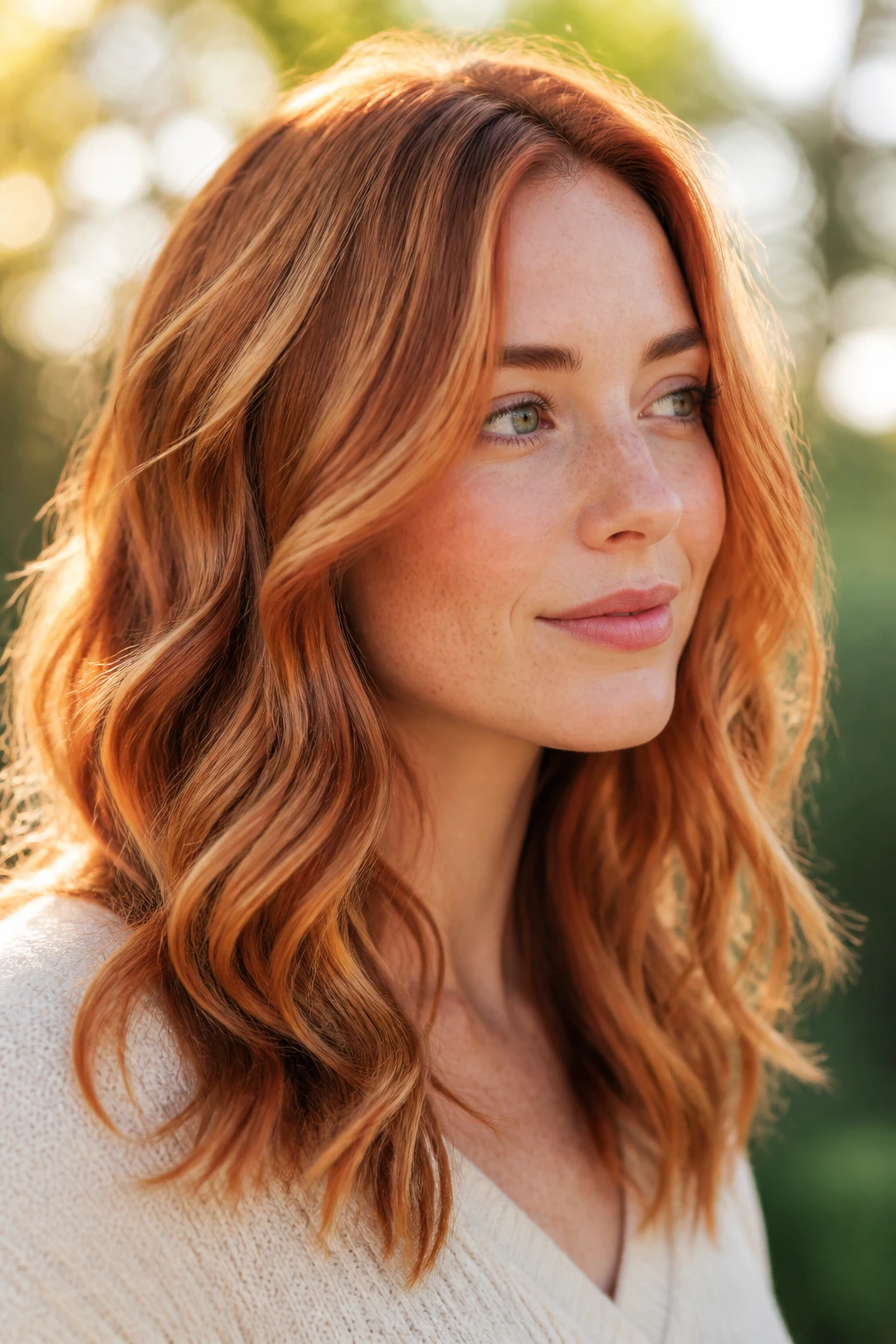
Will red fade faster on wavy hair?
Usually, yes, because the bends expose more surface area to washing, heat, and sun. A good gloss schedule and gentle shampoo make a bigger difference than people expect.
Can I get red hair without bleach?
If your hair is already light brown or blonde, yes, a gloss or demi-permanent red can take beautifully. On very dark hair, you may still need some lift if you want copper or strawberry tones to show up clearly.
What red shade works best on dark brown waves?
Mahogany, cherry cola, smoked copper, and burgundy panels tend to look richest. They sit close enough to brunette that the red reads dimensional instead of fighting the base.
How often should I refresh a copper balayage?
Many copper looks need a gloss every 4 to 6 weeks to keep the warmth alive. If the copper is deep and muted, you can often stretch a little longer.
What if my red turns orange?
That usually means the shade drifted too warm or the gloss faded. A colorist can cool it back with a deeper red-brown toner, or you can use a tinted color mask between appointments.
Should I straighten my waves to show red better?
No. Straightening removes the bends that help red look dimensional. A loose wave or soft bend usually shows the color in a more interesting way.
Is a shag or layered cut better for red hair?
For most wavy heads, yes. Layers give the color more surfaces to land on, so the red does not sit like one flat sheet.
Can I keep my natural root and still go red?
Absolutely. Root shadows, melts, and peekaboo panels are built for that. A darker root often makes the red look richer, not less dramatic.
The Red That Moves With You
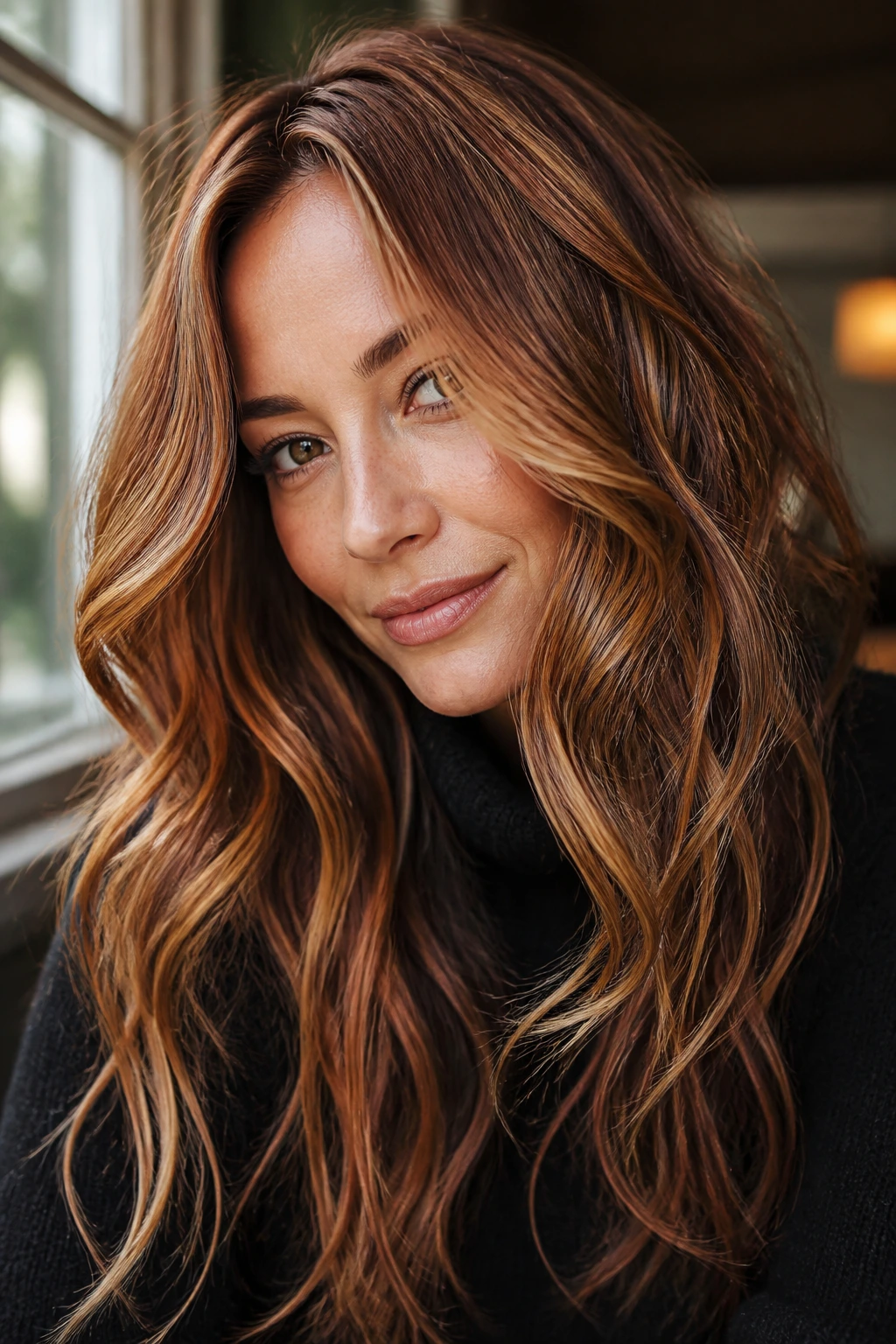
The best red hair on waves does not sit there politely. It shifts. It bends. It changes the minute your head turns, which is exactly why these shades work so well on textured hair in the first place.
If you’re torn between two options, start with the softer one and make the placement count. A good copper ribbon, a well-placed cherry panel, or a clean mahogany gloss can do more for wavy hair than an overworked all-over color ever will. And if you keep the finish glossy and the wave pattern loose, the color will keep showing up in the ways that matter most.
