



Brunette hair looks for curly hair do something straight hair color rarely manages: they let the curl pattern do half the work. A bend in a spiral catches light on the ridge, drops shadow in the trough, and suddenly a brown that looked ordinary on a swatch book has depth, warmth, and movement once it’s on a head full of curls.
That’s the part people miss. Curly hair is not one flat surface, so a brunette shade doesn’t read one-note unless you force it to. Porosity, shrinkage, density, and curl diameter all change the way brown shows up. A chestnut glaze on loose spirals looks romantic and soft. The same formula on tight coils can look richer, deeper, almost velvety. Same color. Different story.
The sweet spot is choosing a brown that works with the curl map instead of fighting it. Too much lift and the ends start looking thirsty. Too little contrast and the whole head disappears into one heavy block. The looks below cover the full range — glossy espresso, warm caramel ribbons, smoky mushroom brown, soft chestnut ombré, and a few sharper face-frame ideas for curls that need a little more edge.
Why These Brunette Looks Read So Well on Curls
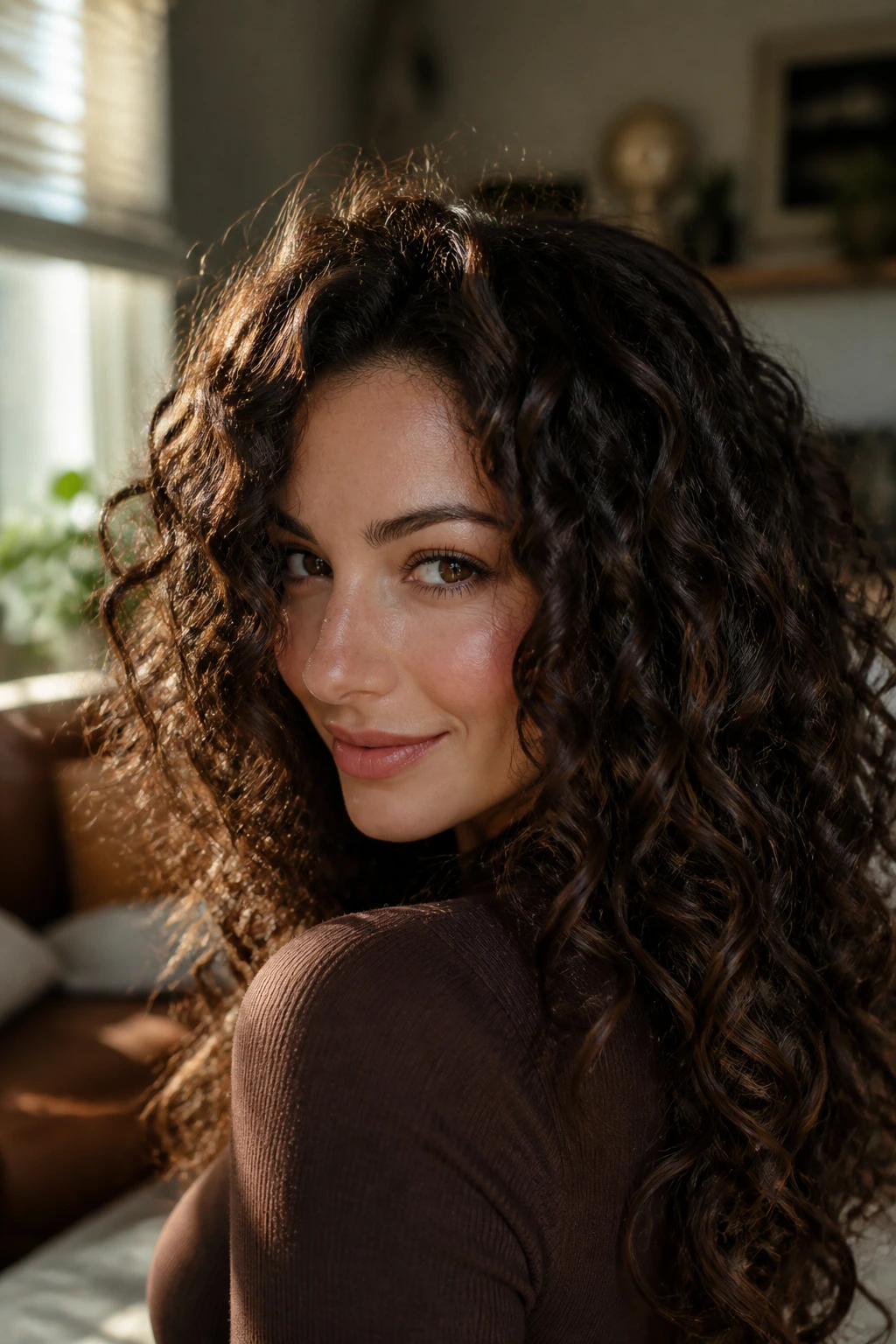
- Curl movement does the blending: Brown balayage and lowlights blur naturally across bends, so the color looks softer than it would on straight hair.
- Grow-out is easier to live with: Dark roots and rooted brunettes stretch longer between salon visits, which matters when your curl pattern hides some of the transition anyway.
- Warmth and coolness can be controlled: A brunette formula can lean caramel, chestnut, mocha, ash, or mushroom without pushing the hair into blonde territory.
- Highlights can stay strategic: On curls, you don’t need brightness everywhere. A few face-framing ribbons or end-focused pieces often do more work than a full head of lightness.
- The cut changes everything: Layers, shags, lobs, and rounded shapes all make brunette dimension show up differently, sometimes in ways a flat cut never would.
1. Espresso Ringlets With a High-Shine Gloss
Deep brown curls don’t need blonde to move. A level 3 or level 4 espresso gloss on ringlets can look almost black indoors and turn glossy at the windows, which is exactly why this look works so well. The color is dark enough to feel rich, but the shine keeps the curl pattern from disappearing.
Why It Works
Espresso is strongest when the curls are healthy and springy. On coiled or ringlet-heavy hair, the bends create their own dimension, so the job of the color is mostly to add shine and keep the depth even from root to tip. A demi-permanent gloss is the smart move here; it deposits tone without the rougher feel of a harsher lift.
What to ask for: a level 3 or 4 espresso base with a neutral or slightly warm gloss.
- Best for curls that already have strong shape and don’t need lighter pieces to feel dimensional.
- A gloss refresh every 6 to 8 weeks keeps the tone from looking dull.
- This look pairs well with high-porosity ends because the darker pigment helps the hair read fuller.
Pro tip: ask for a transparent glaze rather than an opaque brown if you want the curl texture to stay visible.
2. Mocha Balayage on Long Spiral Curls
Mocha balayage is the easy answer when long spiral curls start looking like one heavy sheet of brown. The lighter mocha ribbons sit a shade or two above the base, so they show movement without turning the whole head into a highlight show. On long hair, that restraint matters.
Why this one keeps working is simple: spirals already twist the color for you. When the light pieces are painted in soft bands from mid-length to end, each curl grabs a different slice of brightness. The result feels airy, not striped. If your hair is thick, this is one of the few brunette looks that keeps the length from reading flat all the way down.
Ask your colorist to keep the lightest mocha pieces away from the root line and concentrate them where the curl opens up at the cheekbone and below. That placement makes the ends feel lighter without sacrificing the base shadow that gives the whole style depth.
3. Chestnut Curly Lob With Lighter Ends
If your lob sits right at the collarbone, chestnut is the shade that makes the cut look deliberate instead of simply grown out. The warmth softens the line of the haircut, and the slightly lighter ends keep the curl shape from collapsing into one dark mass.
What I like about this version is the way it behaves when curls shrink. The chestnut base stays rich near the root, then the ends catch enough light to show where the curl finishes. That little shift matters more on shorter hair than people expect. A lob can turn blocky fast; this keeps it moving.
How to Ask for It
Tell your stylist you want a level 5 chestnut base with soft, hand-painted ends that lift only one to two levels lighter. That keeps the look brown, not brassy. It also means the grow-out won’t punch you in the face every time you part your hair a little differently.
4. Caramel Ribbon Highlights Around the Face
A few caramel ribbons at the cheekbone can change the whole mood of curly hair. You don’t need a full highlight map. Just enough brightness around the face to catch the eye, especially when the curls spring outward and the front pieces frame the skin.
This works best on medium-brown bases because the caramel has enough contrast to show, but not so much that it looks blond. The face frame should be the brightest zone, with the rest of the hair staying in a softer brunette range. That contrast draws attention up and forward, which is a nice trick when curls have a lot of volume on the sides.
- Keep the lightest pieces one to two inches from the part so the grow-out stays soft.
- Ask for a caramel tone, not golden yellow.
- Works especially well on layered cuts where the front curl clumps sit apart from the rest of the hair.
Tiny detail, big payoff: place the brightest ribbons where the hair naturally opens near the eyes and cheekbones, not all the way across the front.
5. Mushroom Brown Curls With Cool Undertones
Mushroom brown is the brunette answer for people who hate warmth showing up where they didn’t ask for it. It’s smoky, muted, and a little gray-brown in the best way. On curls, that coolness can look expensive because the bends still create movement, even when the tone itself stays restrained.
The trick is not to overdo the ash. Too much and the hair can go flat or muddy, especially if the curls are porous. A good mushroom brown has beige in it, not just gray. That keeps the hair from looking dusty. I’d choose this shade for someone who wants softness, not sparkle.
It works beautifully on medium-density curls and on people whose skin reads cooler or more neutral. If your ends pull orange easily, this is a strong option because the cooler tone helps cancel that warmth between appointments.
6. Toasted Almond Brunette on Loose Waves
Unlike ash brown, toasted almond keeps a little beige warmth in the mix, which is why loose waves tend to wear it so well. The shade sits in that middle lane between brunette and light brown, and it doesn’t fight the softness of a looser curl pattern. Instead, it follows it.
What makes this look different is the lack of harsh contrast. The base stays brown, but the almond notes lift the overall mood just enough that the hair feels lighter without becoming blondish. On shoulder-length waves, that can be the difference between “nice brown” and “I actually notice the texture.”
Best choice if your hair likes to dry with big, soft bends rather than tight spirals. The color shows best when the wave pattern is loose enough for the lighter tones to peek through the top layer.
7. Cinnamon Swirl Balayage on Defined Coils
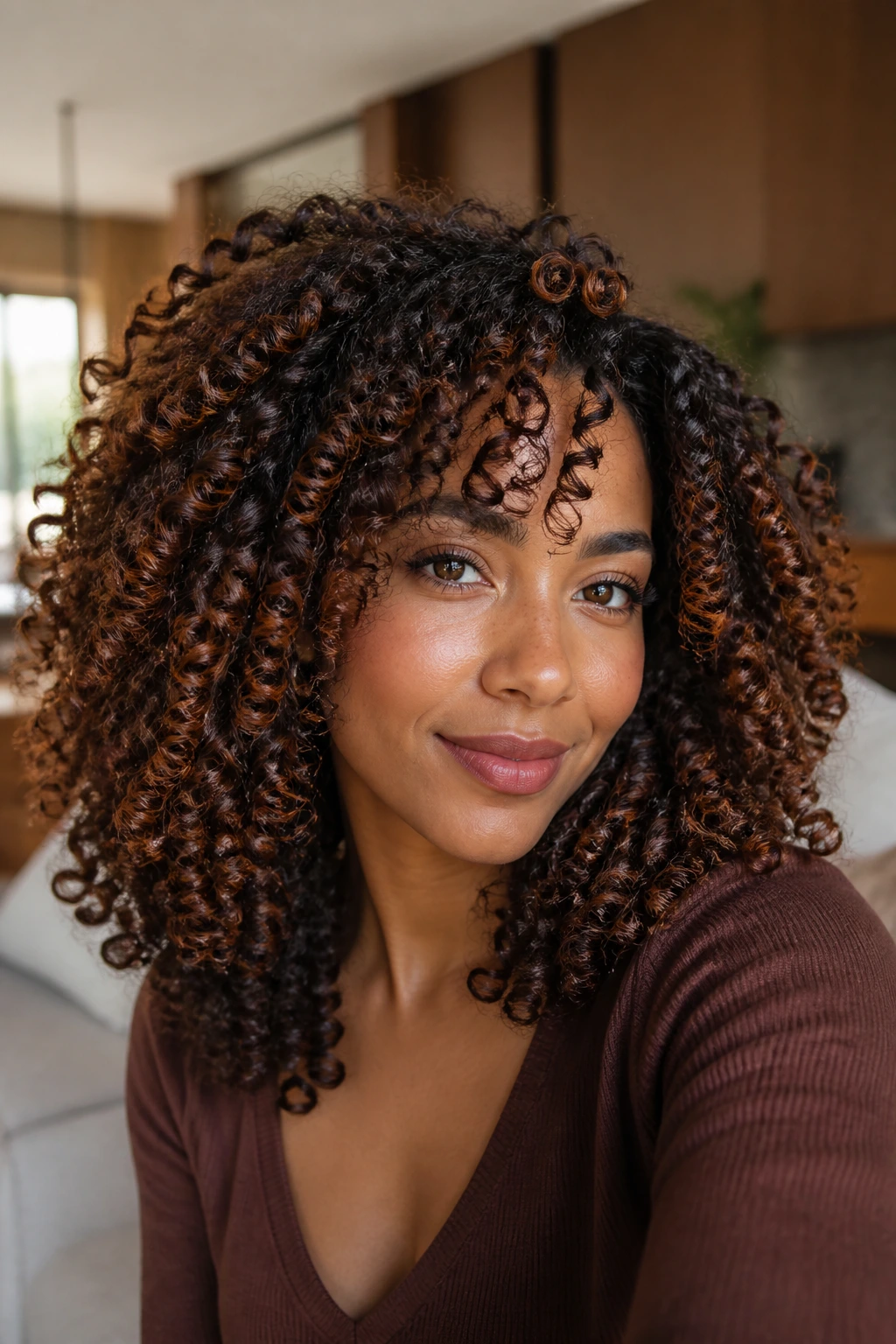
Cinnamon swirl balayage is one of those looks that feels warm before you even see the full head. The red-brown ribboning gives defined coils a little extra spice, and because coils fold light so many times, the color ends up reading layered rather than loud. That’s the good part.
Why It Works
Defined coils can handle warmth better than people think, especially when the placement is strategic. Instead of painting every curl, a good cinnamon balayage drops the brighter tone in bands through the surface and the outer arc of the coil. The darker base underneath keeps the color grounded.
Best for: medium to deep brunette bases that need a little more life.
- Ask for cinnamon, not copper, if you want red-brown rather than red-orange.
- Keep the lightest pieces off the very tips if the ends are dry.
- A gloss every 6 weeks helps the cinnamon tone stay clean.
My take: this is one of the prettiest brunette looks for curls that need warmth without drifting into full auburn.
8. Cocoa Brown Bob With Micro-Highlights
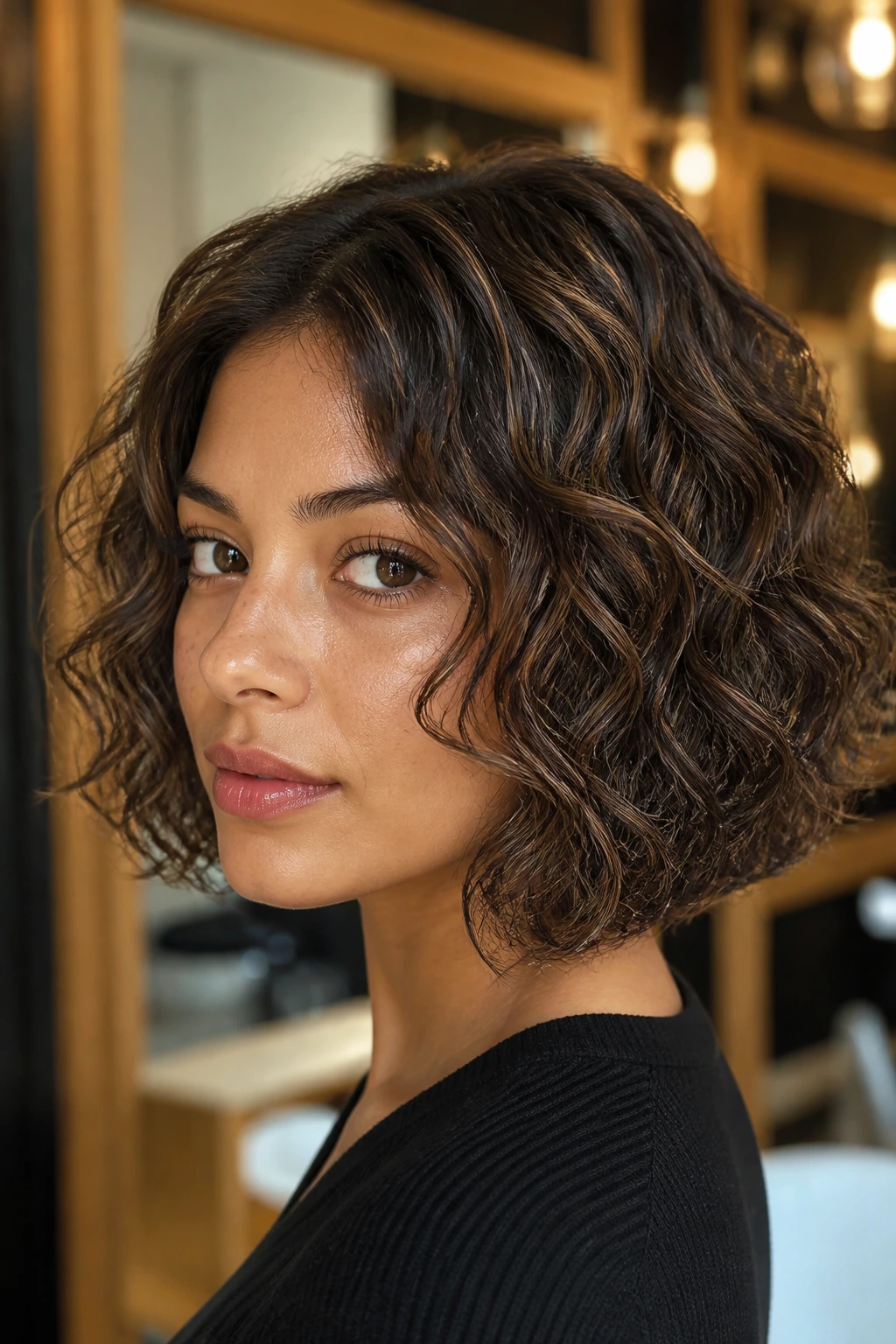
A bob with micro-highlights can do more for curly hair than bigger, chunkier light pieces ever will. Cocoa brown keeps the base dark and rich, while the micro-highlights are thin enough to show movement inside the curl clumps instead of sitting on top of them. Short hair needs that kind of control.
The important thing is restraint. If the highlights get too chunky on a bob, the cut starts looking striped, and curly texture only makes that more obvious. Tiny painted threads, especially around the crown and temples, give the shape lift without stealing the clean line of the haircut.
This is a strong option for anyone who wants a polished brunette look that still feels playful. It also grows out neatly, which matters when a bob needs frequent shape-ups anyway.
9. Hazelnut Face-Framing Pieces on Layered Curls
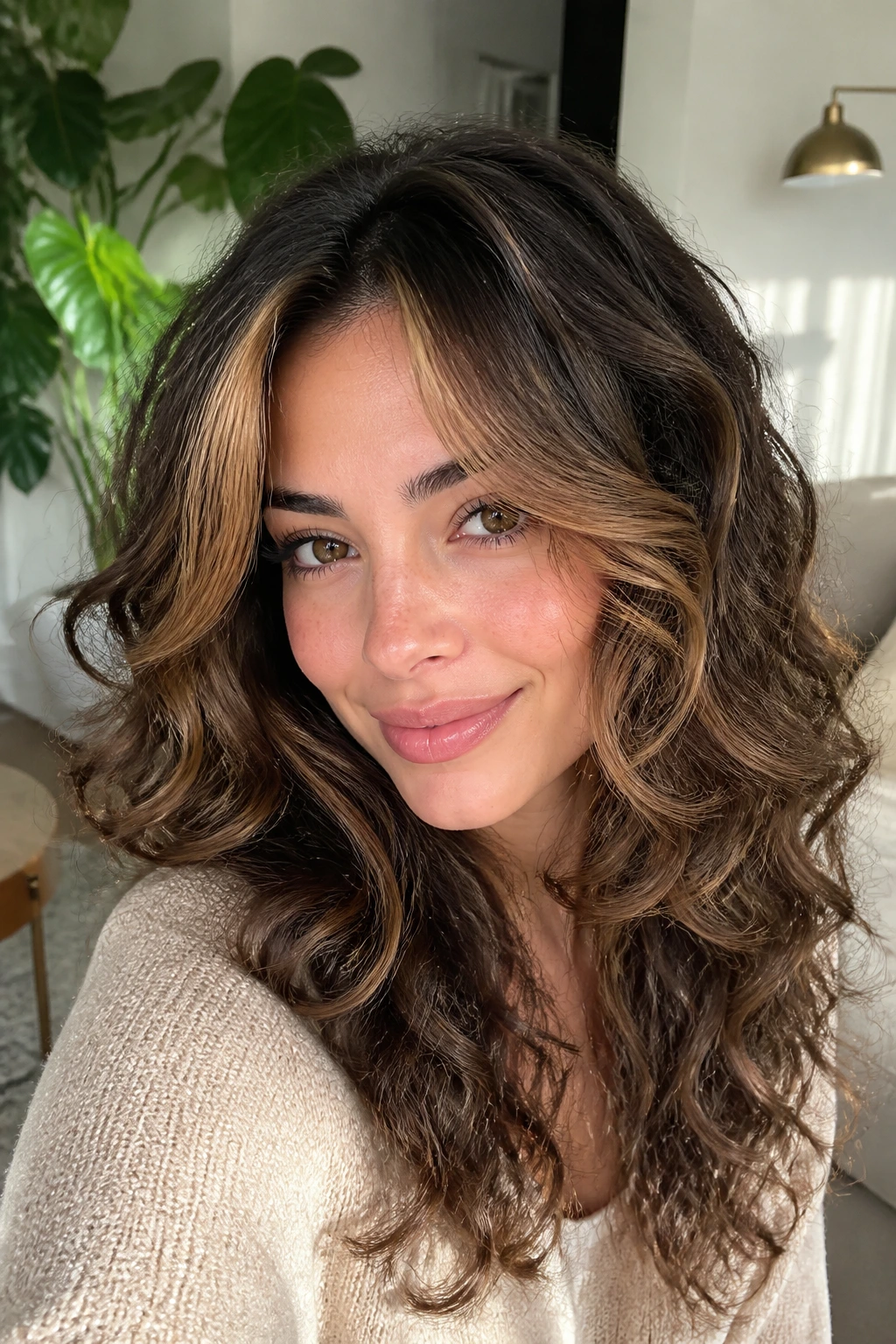
Why do hazelnut pieces work so well on layered curls? Because the layers already separate the curl clumps, and hazelnut gives those front pieces just enough lift to stand out without shouting. The color is warm, soft, and a little golden-brown, which suits layers that fall around the jaw and collarbone.
The effect is especially good when the front pieces are a half-step lighter than the rest of the hair. That tiny shift makes the face-frame read on sight, even when the hair is pulled half back. It’s not about making the front blond. It’s about making the curl pattern visible where people actually look first.
How to Wear It
Scrunch the front with a small amount of curl cream and let those pieces dry with a diffuser on low. If you tuck one side behind the ear or clip it back, the hazelnut brightness shows off the cut without needing much styling.
10. Walnut Brown With a Soft Root Shadow
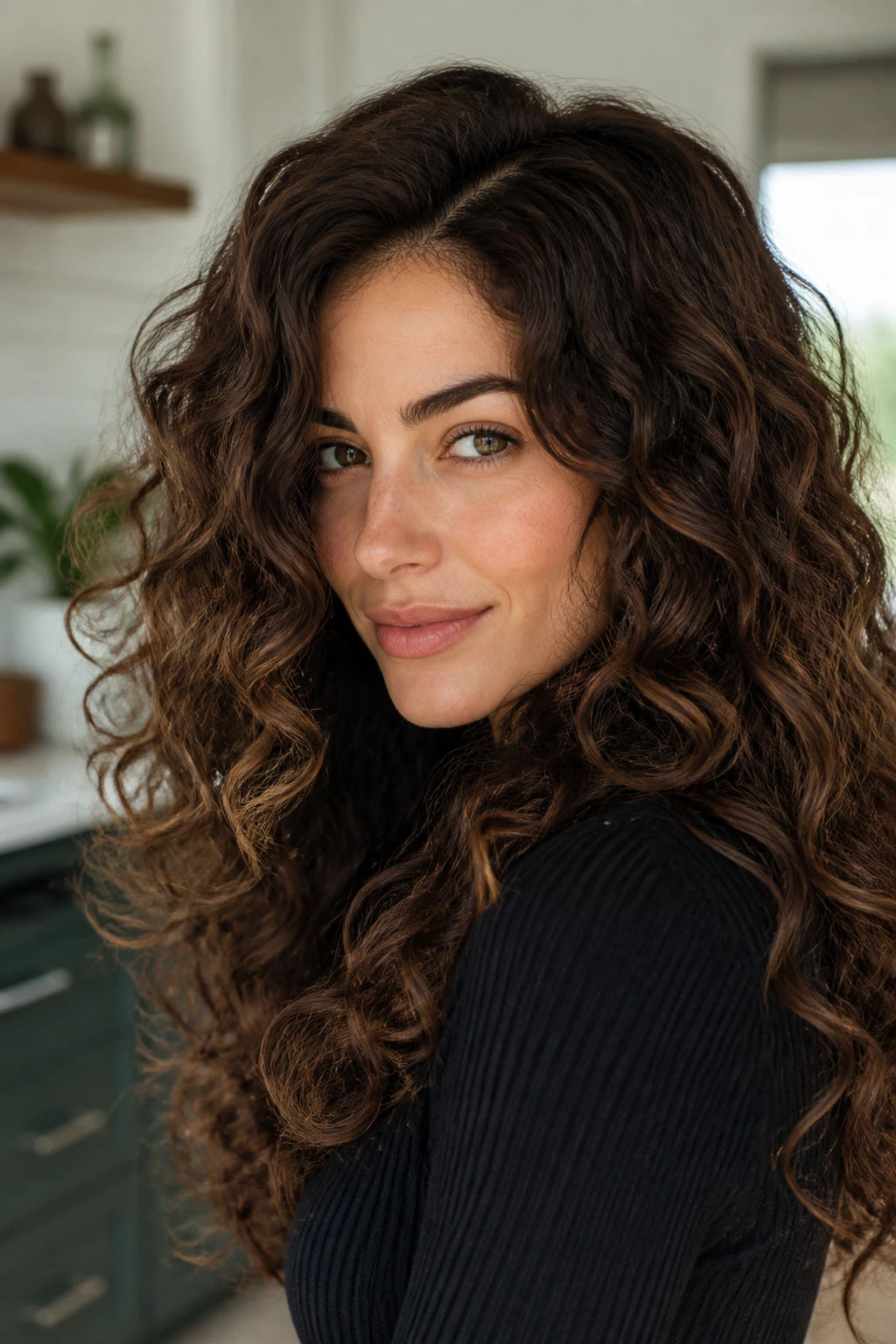
Walnut brown has a grounded, earthy feel that keeps curly hair from looking overworked. Add a soft root shadow, and the whole style gets a little more depth at the top, which is helpful if your curls puff up and hide the scalp line after drying.
This is the kind of brunette look that makes sense for busy lives. The root shadow gives you a more forgiving grow-out, and the walnut tone keeps the mids and ends from going too warm. It’s a calm color. Not boring. Calm.
- Great for people who want dimension without obvious highlight stripes.
- Works especially well on curly cuts with a rounded silhouette.
- Ask for a root that is half a shade deeper than the mids, not a hard contrast.
Worth saying: if your hair tends to frizz at the crown, this color hides that area better than lighter brunettes do.
11. Honey-Toffee Money Piece on Tight Curls
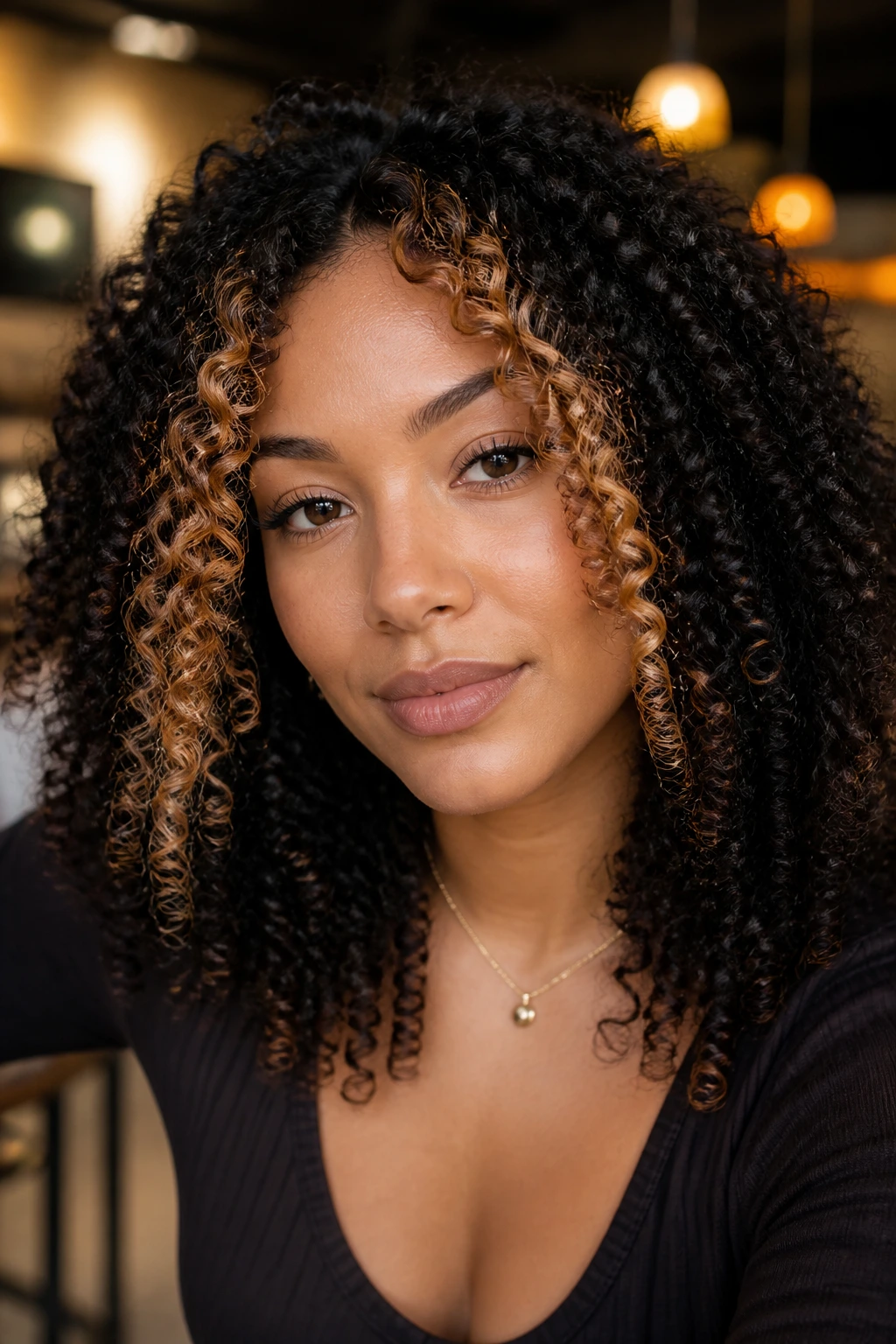
Honey-toffee around the face gives tight curls a lifted, fresh look without asking for a full head of lightener. The money piece is the brightest part, and on dense curls that makes sense because the front needs help standing out once the hair expands.
I like this look when the rest of the hair stays a deep brunette. The contrast keeps the face frame visible, but the overall head still reads brown. Tight curls can sometimes swallow lighter pieces if they’re too thin, so the front ribbons here should be a little wider than you’d use on loose waves.
Choose this if you want a noticeable change with a smaller footprint. It’s bolder than a gloss, but it still feels controlled.
12. Dark Chocolate Curly Shag
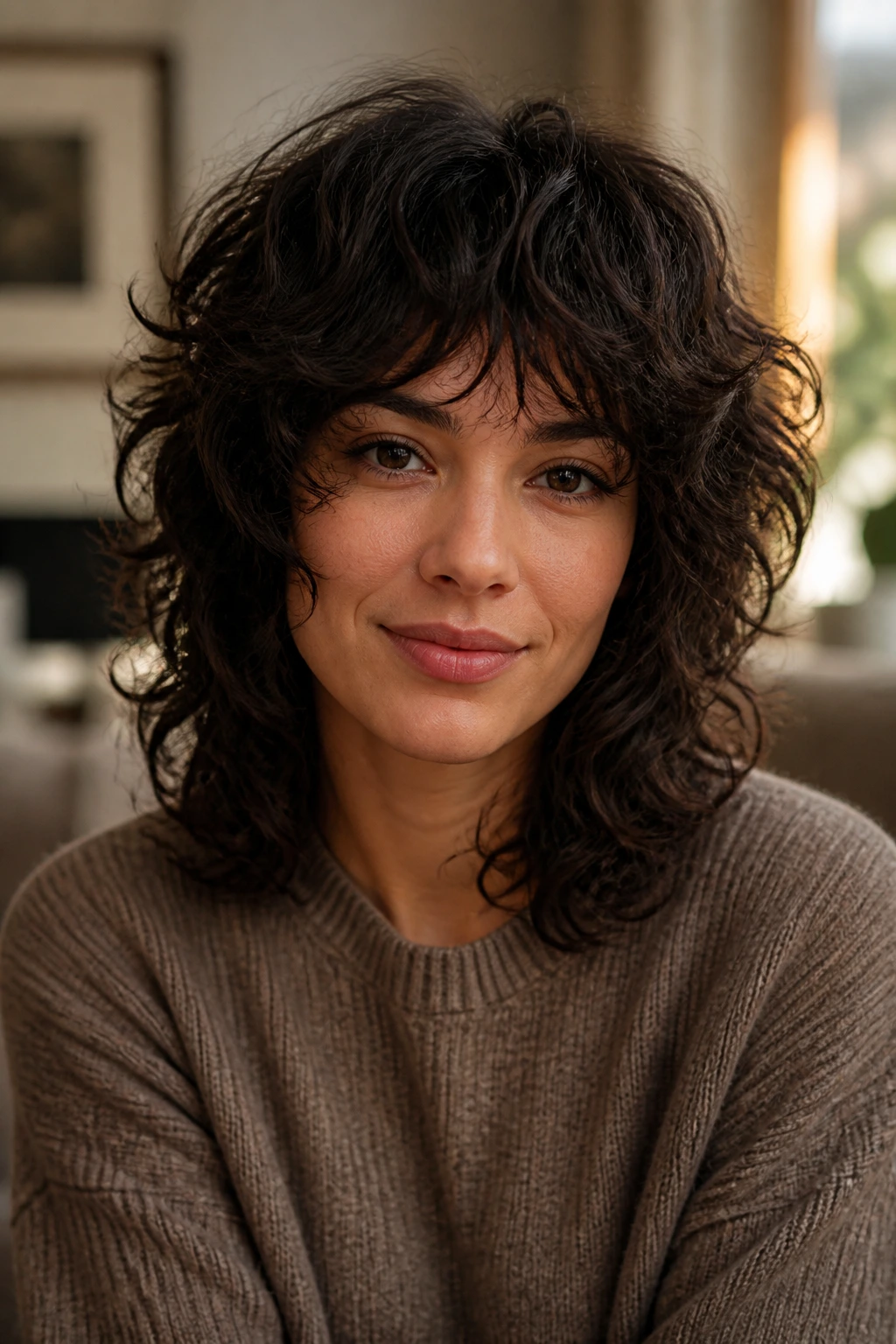
A curly shag in dark chocolate brown is all about shape first, color second, and that’s why it works. The layers break up the mass of curls, and the deep brown keeps the whole thing from looking too busy. There’s a reason this haircut has lasted: it gives curls room to breathe.
Compared with a one-length cut, the shag lets the color move. Each layer catches a different amount of light, so even a solid dark chocolate shade ends up looking dimensional. If you want a brunette look with edge but not a lot of salon maintenance, this is a good place to start.
Best on medium to thick hair. Fine curls can use the same idea, but the layers need to be softer so the crown doesn’t get too sparse.
13. Bronzed Brunette With Sunlit Ends
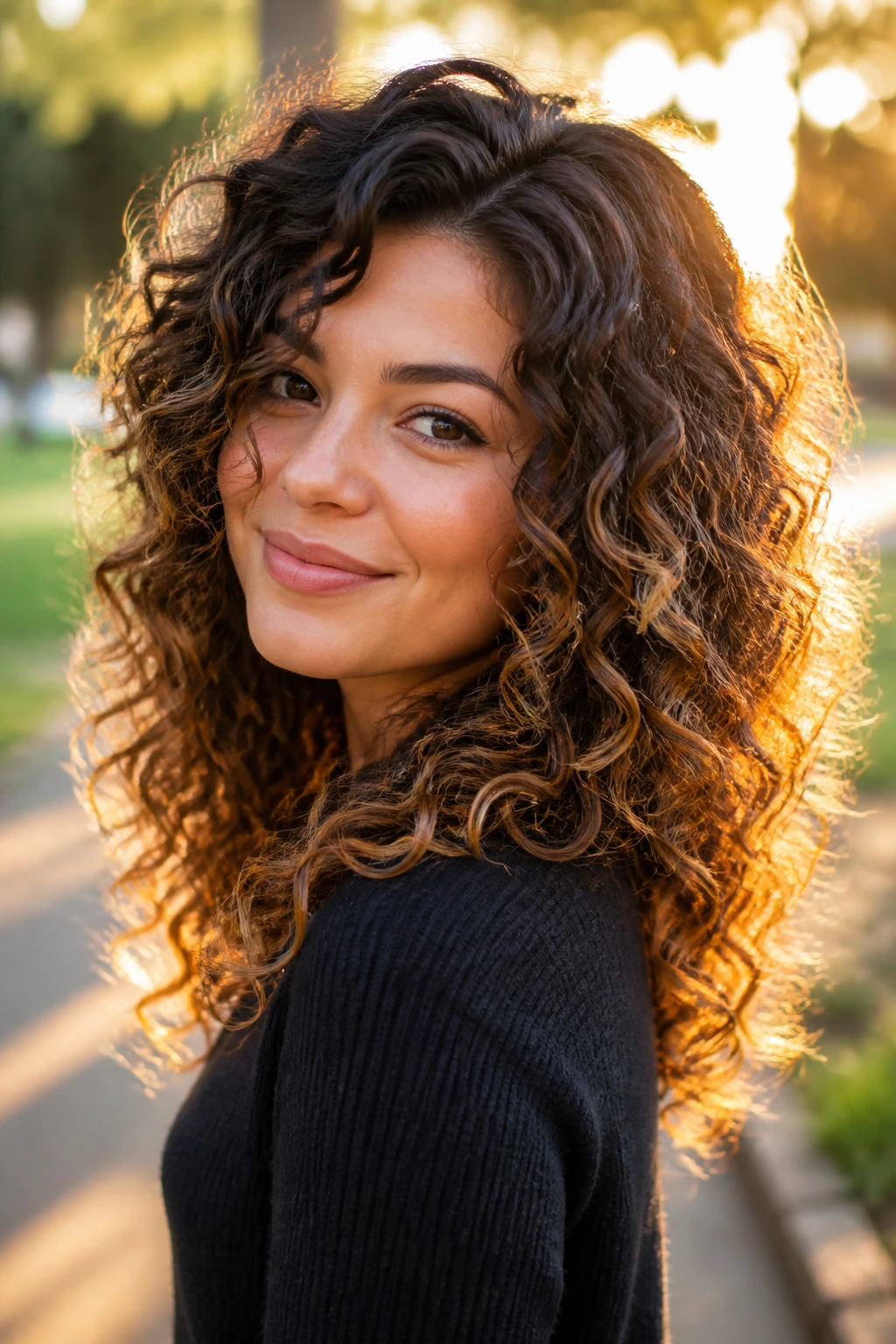
Bronzed brunette works when you want warmth without tipping into obvious blonde. The ends get a soft sunlit shift, while the root and mid-lengths stay brown enough to keep the look rooted. On curls, that end-lighting can feel like the hair naturally picked up the sun over time.
The nice part is how forgiving it is. Because the brightness lives mostly below the eye line, the grow-out stays easy to live with. The bronzed tone also flatters curly hair that’s been trimmed often; healthy ends make the lightening look smoother and less patchy.
This is a good fit for anyone who wants the feel of summer light but doesn’t want the upkeep that usually comes with it.
14. Coffee Bean Brown With Curtain Bangs
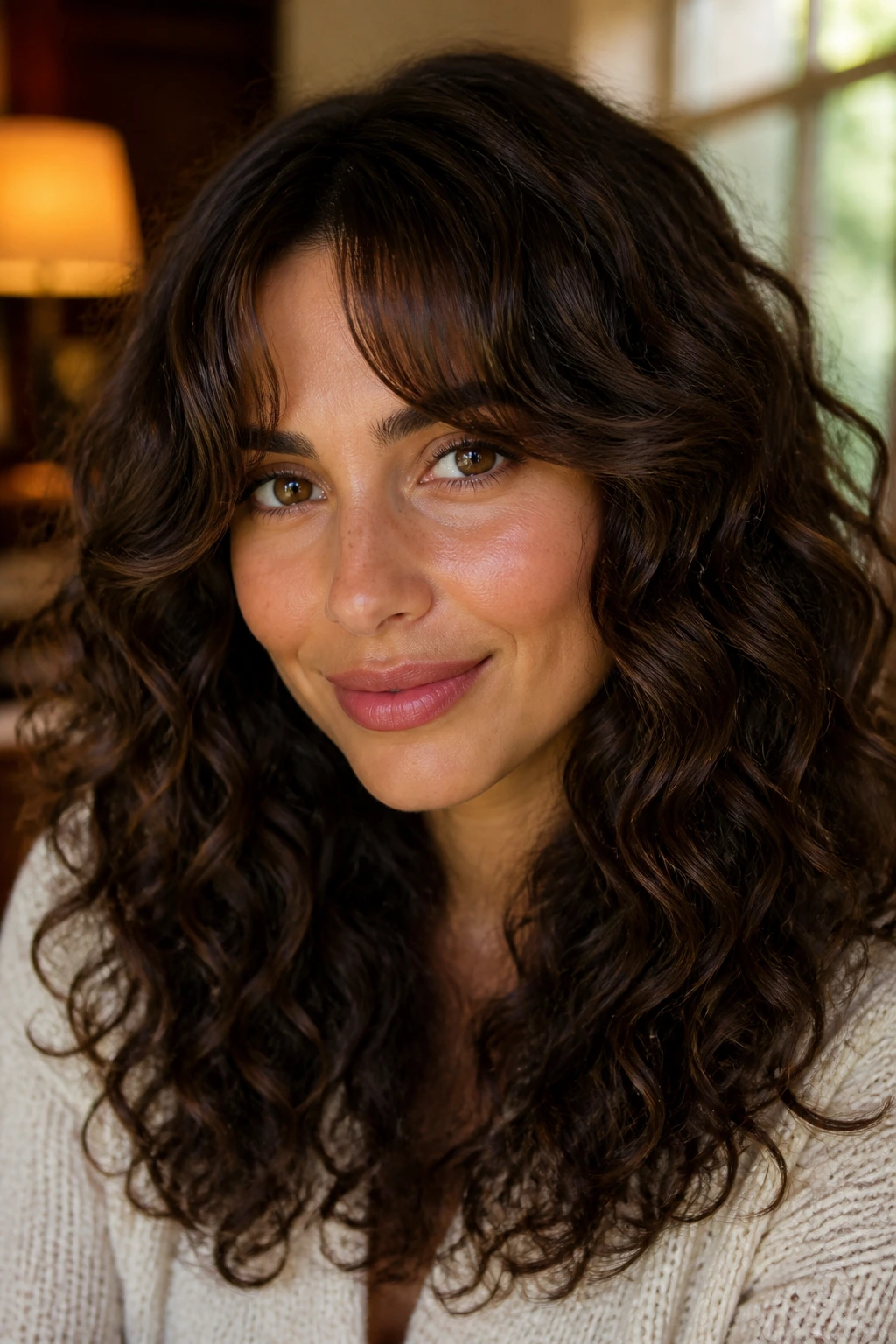
Coffee bean brown and curtain bangs make a strong pair. The bangs soften the face, and the deep brown keeps the whole front from looking washed out. On curly hair, curtain bangs can be tricky, but when they’re cut to fall with the curl pattern, they frame the eyes without fighting the rest of the shape.
The key is keeping the brown dense enough near the root so the fringe doesn’t disappear. A slightly warmer coffee tone can also keep the bangs from reading too severe, especially if the rest of the hair is big and full. The contrast is what makes the cut interesting.
I’d ask for face-framing pieces that start near the brow and blend into the first layer. That way the bangs feel connected to the rest of the color, not pasted on as an afterthought.
15. Maple Brunette With Copper Flickers
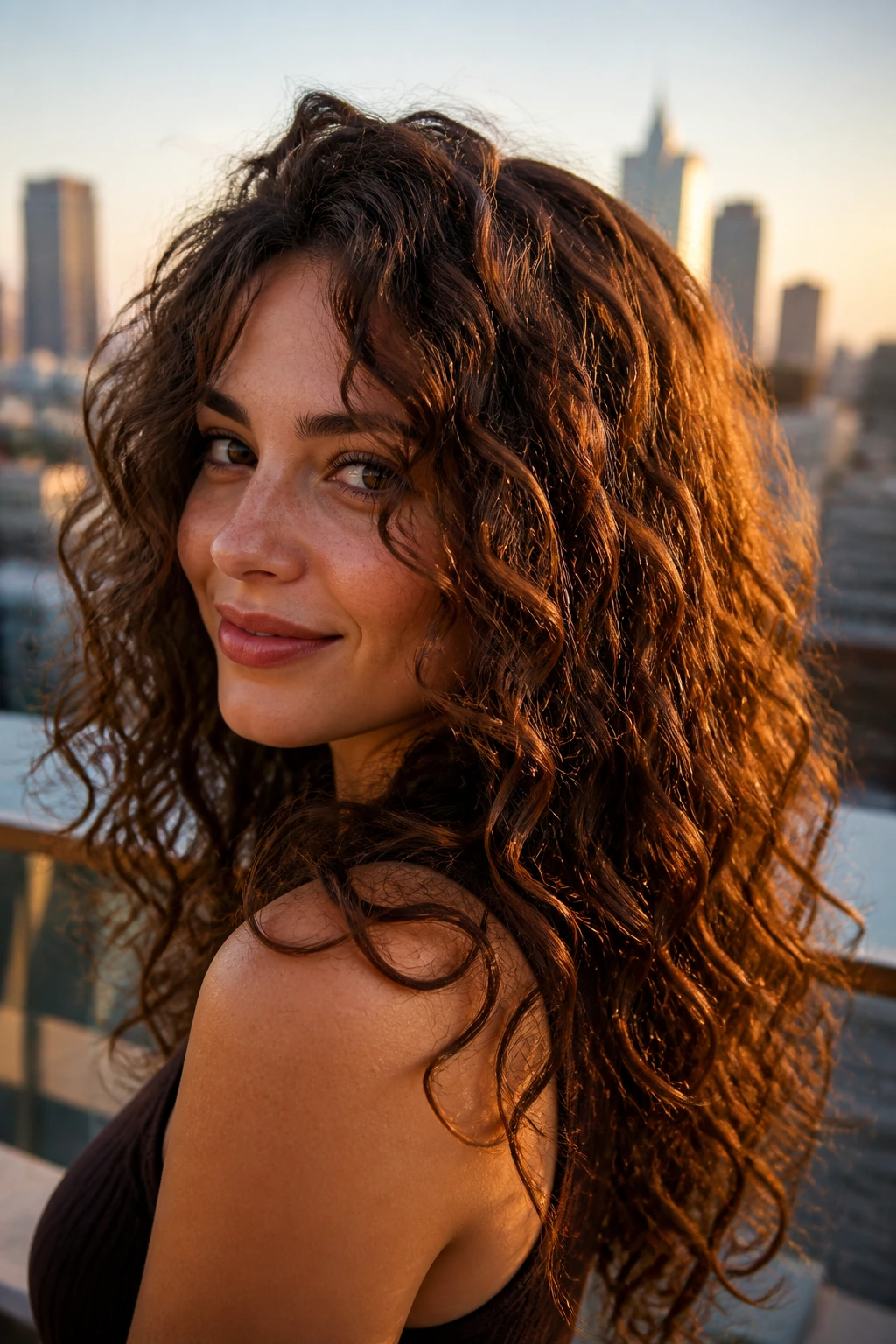
Maple brunette is for people who want brown with a little spark. The copper flickers are small, not full-on red, and that’s what keeps the look wearable on curly hair. When the light catches those tiny warm notes, the curls seem almost animated.
This works best on medium brunettes that already lean warm. If you start with a cooler base, the copper can look louder than intended. But on a chestnut or mocha foundation, maple gives the style a richer, almost syrupy feel. It’s warm without being sugary.
A gloss with a copper-brown tint can keep this look looking fresh between color services. Without that maintenance, the flickers fade faster than the base, and then the whole thing loses its point.
16. Bronde-Leaning Brunette on Curl Clumps
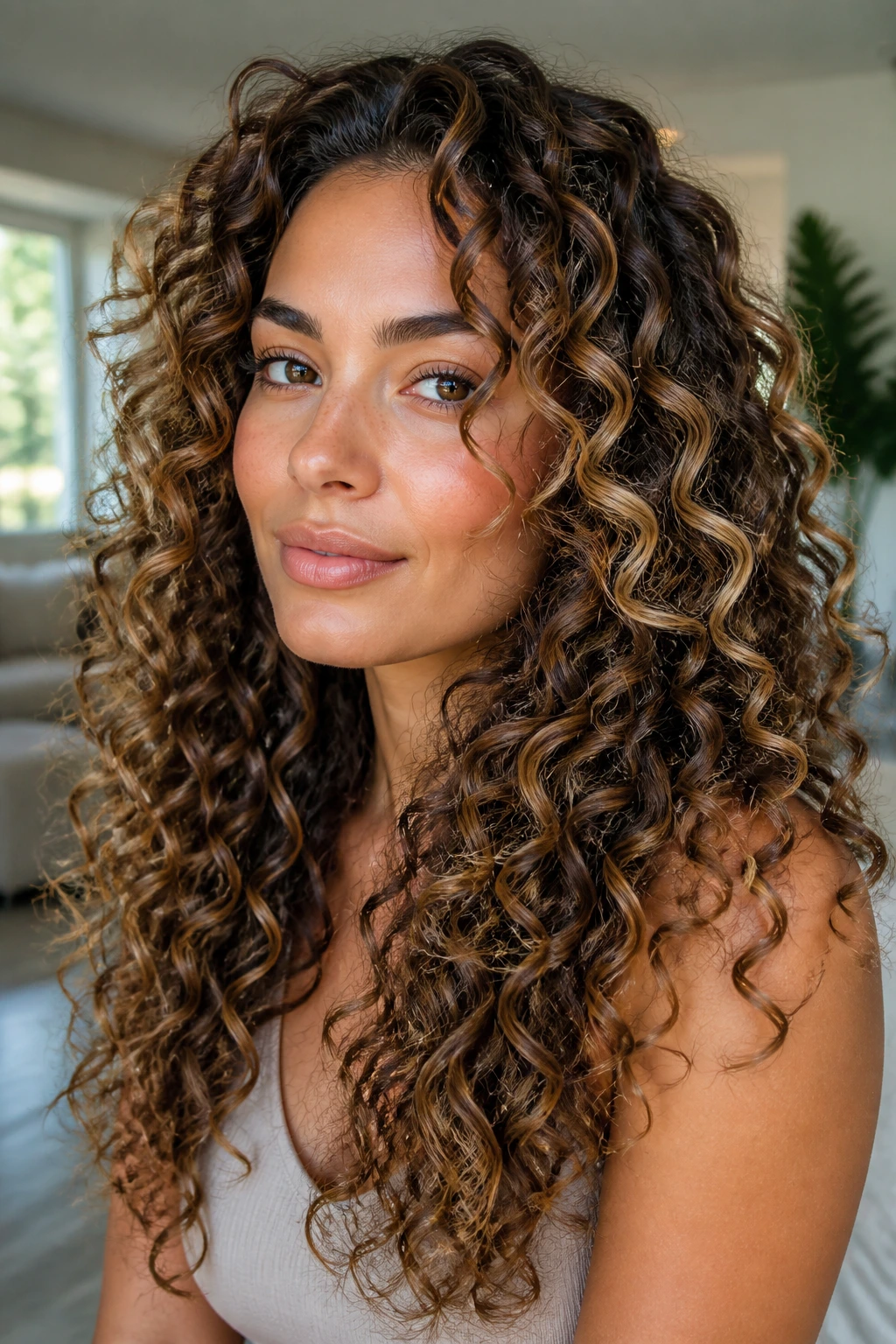
Bronde on curly hair is a balancing act. Too much blonde and the curl pattern can get visually chopped up; too little and the effect disappears. The version I like keeps the brunette base intact and lets a few lighter pieces live on the outer curl clumps, where they’re actually visible.
This is not a blonde look pretending to be brown. It’s a brunette look with just enough lift to keep thick curls from feeling heavy. On curly hair, that restraint matters because brightening every section can make the shape look busy instead of dimensional.
Who does this suit? People who want a lighter mood but don’t want the upkeep or dryness that comes with bigger blonding sessions. If that sounds familiar, bronde is a better compromise than chasing full highlight saturation.
17. Amber-Glazed Brunette Pixie Curls
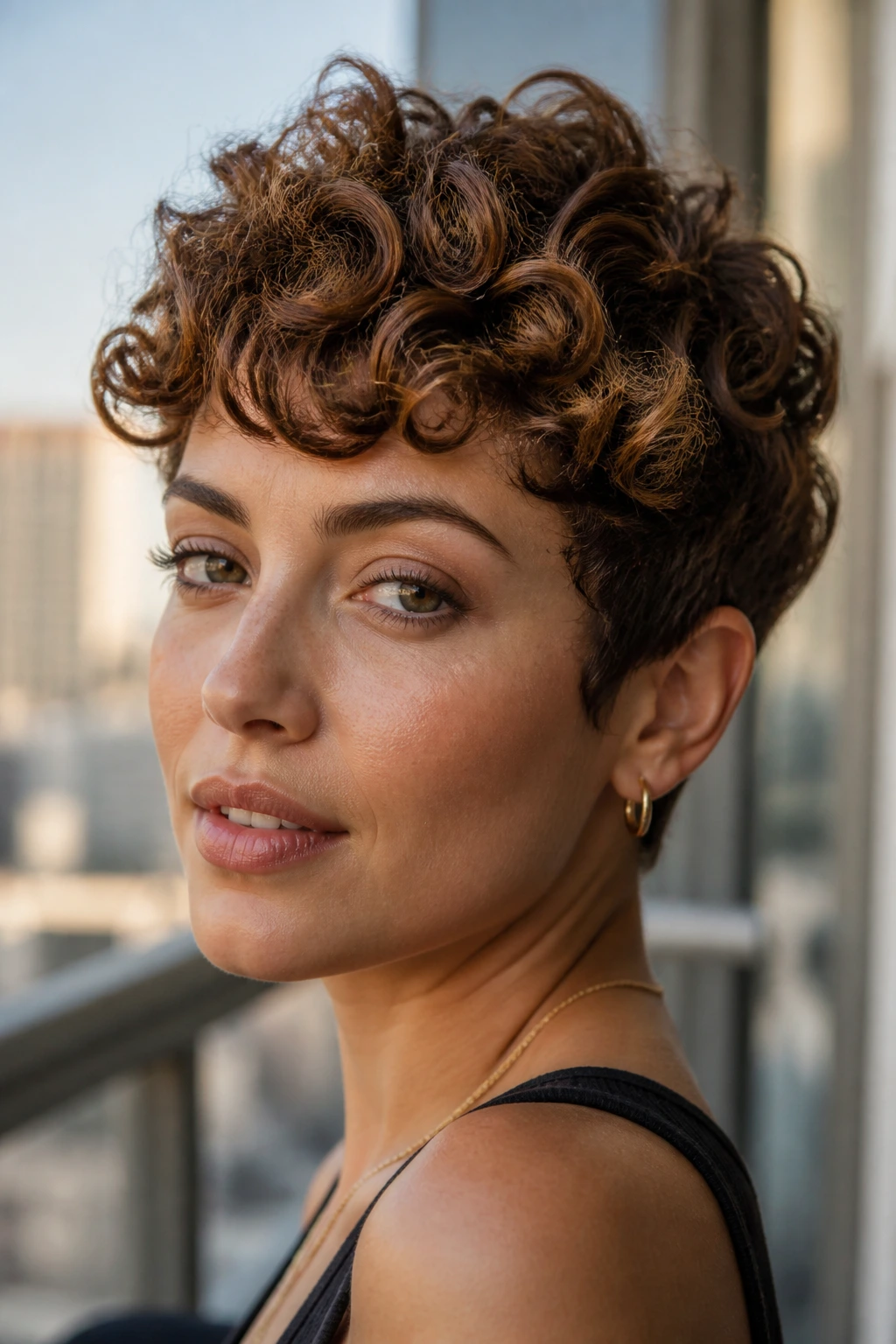
A pixie with curls can look sharp or soft depending on the color. Amber glaze takes the edge off a short cut without making it sweet. The warmth is strongest on the surface, which is exactly where a pixie needs help because there isn’t much length to carry the color.
This look is all about surface shine and clean shape. The amber should sit on top of a brunette base, not replace it. That keeps the haircut from turning orange and gives the curls enough definition to look intentional instead of fluffy.
Short curls like this are not forgiving if the toner goes too heavy. Ask for a light amber glaze, not a saturated copper, and keep the finish glossy rather than matte.
18. Smoky Ash Brown With Dimensional Lowlights
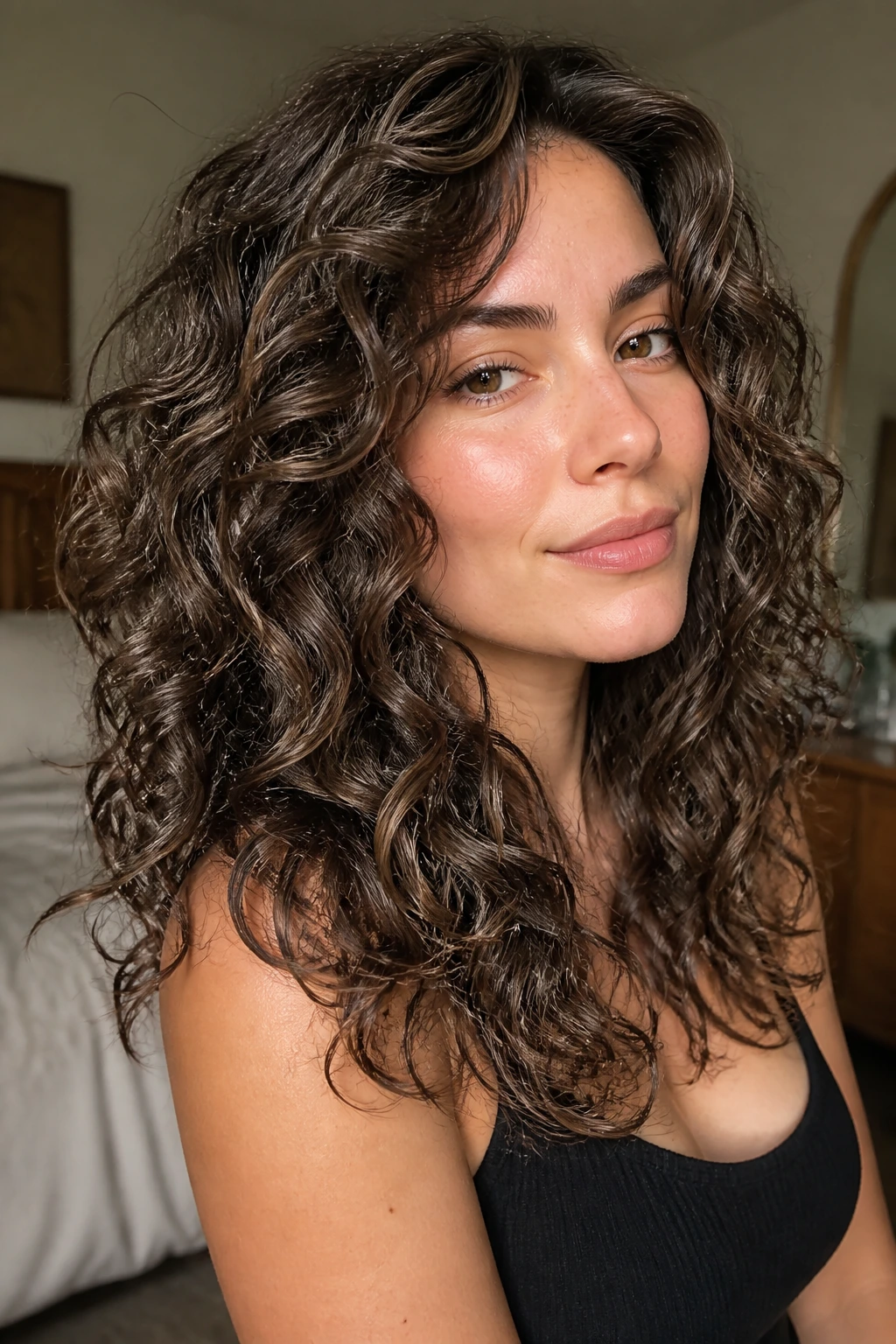
Smoky ash brown is the brunette for anyone who likes depth without warmth. Add lowlights, and suddenly the curls have shadows inside the shape instead of just a flat cool tone. That’s what keeps ash brown from feeling lifeless on textured hair.
The lowlights matter because cool brunettes can go chalky if they’re handled as one note. A few deeper strands — two or three shades below the base — give the curls a stronger outline. I’d especially recommend this on looser curls and waves, where ash tones can otherwise wash out in bright light.
It’s a good fit if you wear silver jewelry, cooler makeup, or just prefer a brown that doesn’t wander into caramel territory.
19. Rich Truffle Brown Afro
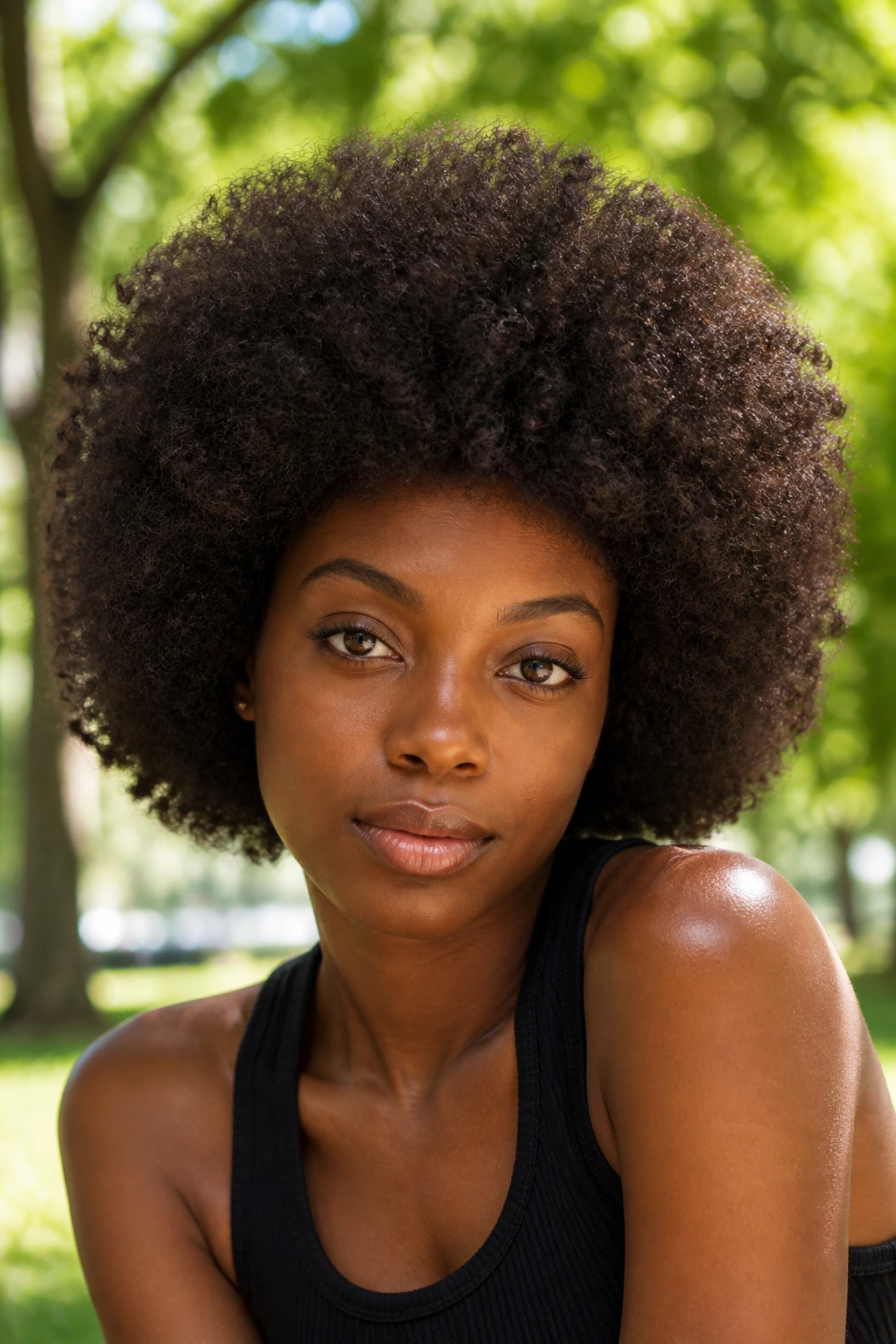
A rich truffle brown afro reads beautifully when the color is deep and consistent but not ink-black. The curl pattern carries the shape; the brunette shade adds plushness. It’s a color that makes dense texture feel deliberate, not heavy.
The reason this works so well is that the curl cloud creates enough natural shadow on its own. You don’t need much highlight action. What you do need is tone that stays even and a finish that looks healthy, because dry curls can make even the richest brown look tired.
Ask for a deep truffle base with a soft sheen gloss. If the hair has been lightened before, keep the color deposit gentle and repeatable rather than trying to force one big correction.
20. Chestnut Ombré on Shoulder-Length Spirals
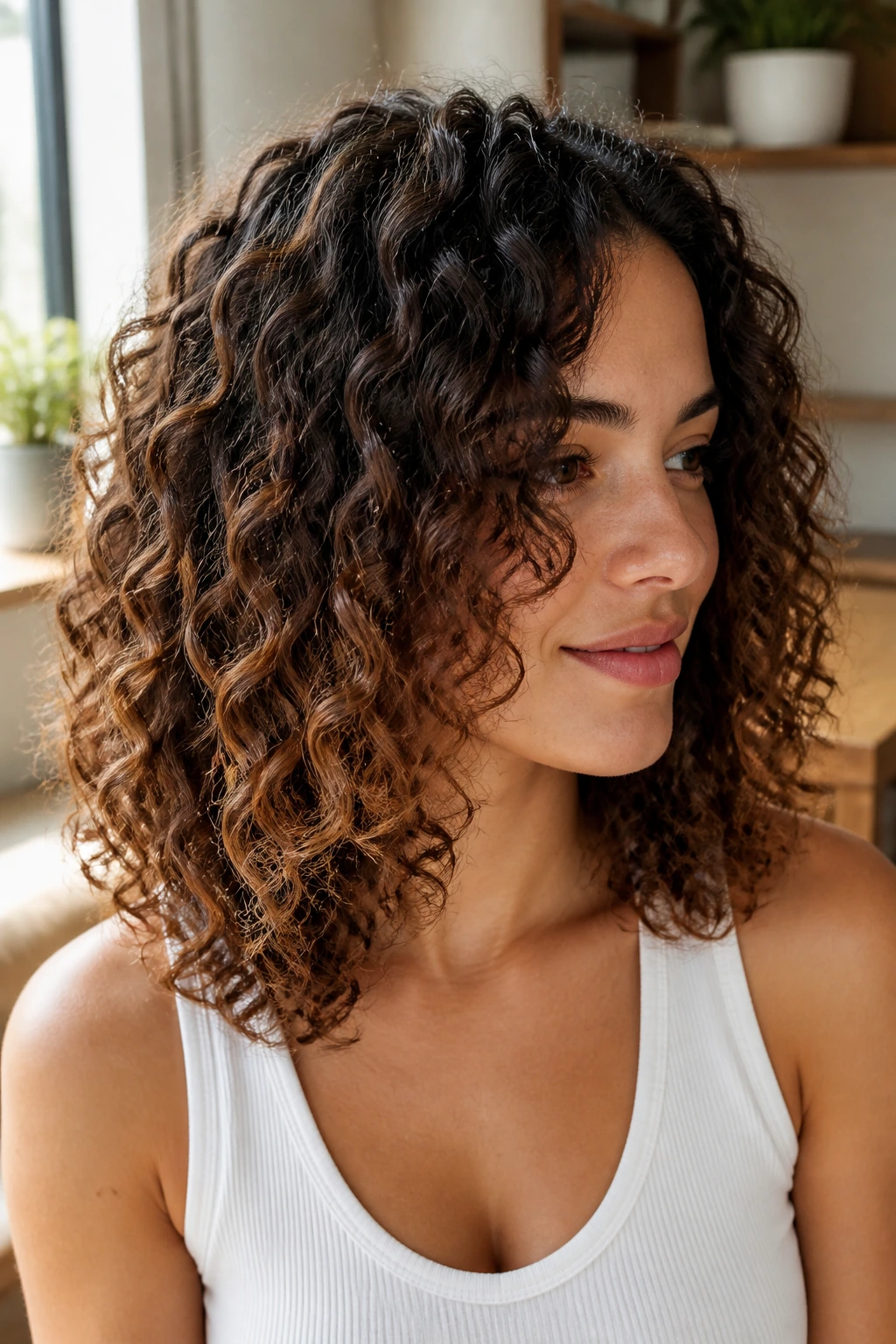
Chestnut ombré is one of the easiest ways to make shoulder-length spirals feel longer and lighter at the same time. The color stays grounded at the roots, then slowly opens into brighter chestnut through the mids and ends. On spirals, that gradient has a lovely, almost natural drift to it.
The thing to watch is the transition line. On curly hair, a sharp ombré can look blocky once the hair dries and contracts. A soft fade is better. The brown should shift gradually enough that each curl group picks up the next tone without a visible stripe.
This is a smart choice for people who want movement at the ends but don’t want face-framing highlights competing with the cut.
21. Nutmeg Brunette With a Deep Side Part
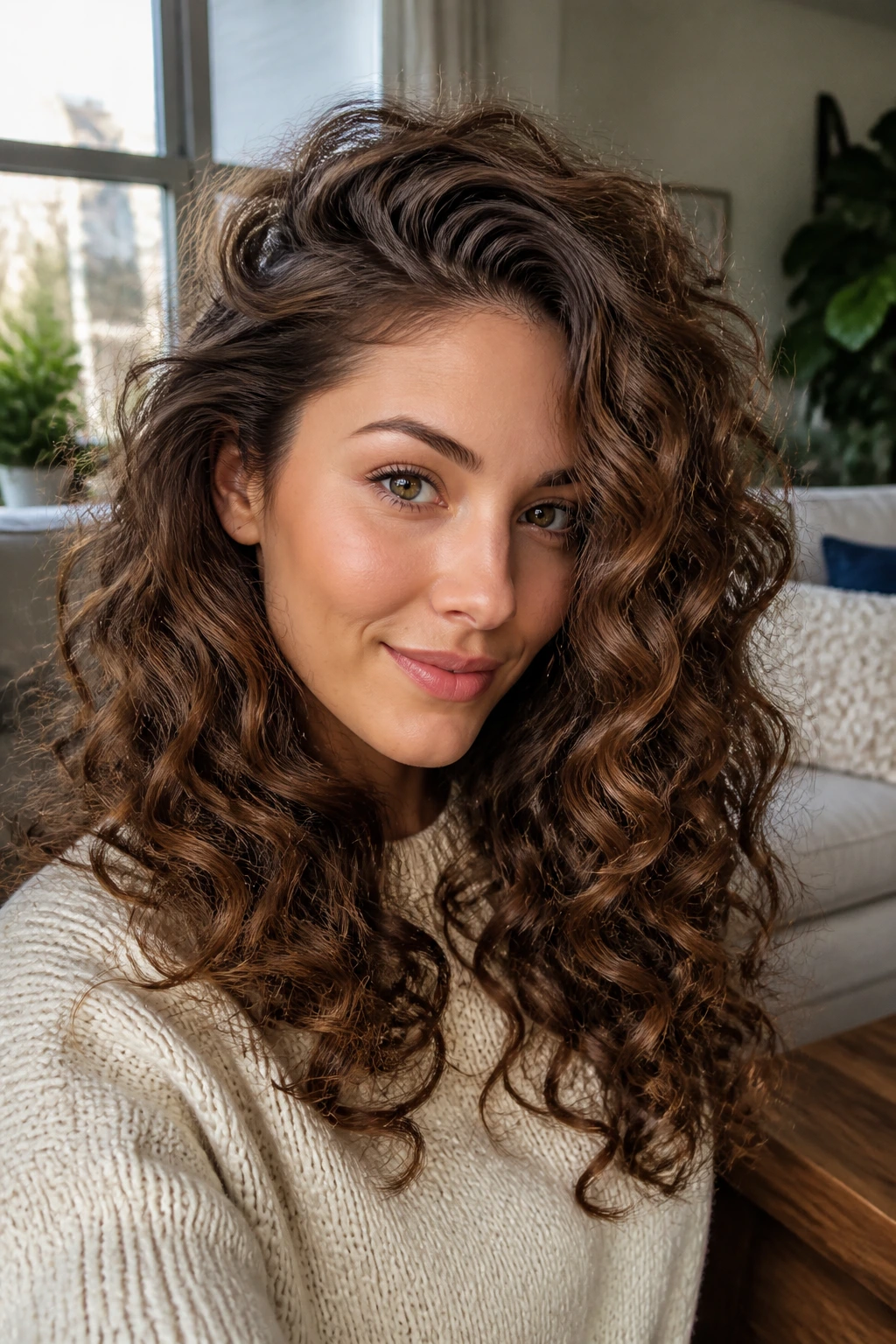
Nutmeg brunette gets a lift when you pair it with a deep side part. The side part changes where the curls fall, which changes how the color reads. One side feels heavier and richer; the other opens up and shows the lighter browns inside the shape.
That shape shift is the real trick here. A lot of brunette looks depend on color alone, but this one uses placement and parting to create the effect. The warm spice tone keeps the look from feeling flat, especially on medium-density curls that can otherwise sit close to the head.
If you’re bored of your usual middle part, this is an easy way to make the same color feel new without changing anything permanent.
22. Molten Mocha Balayage on a Rounded Cut
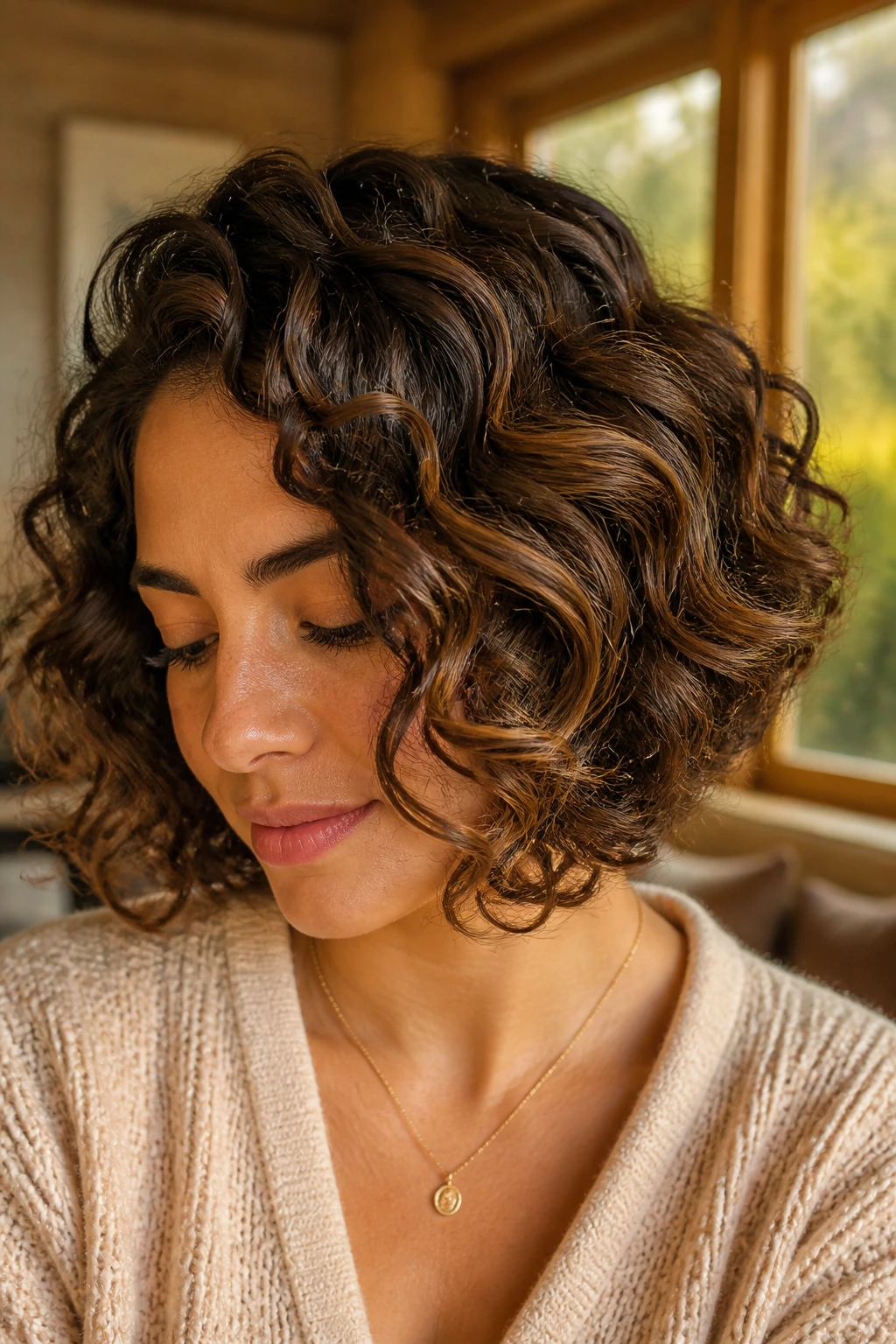
Why does mocha balayage work so well on a rounded cut? Because the shape already guides the eye around the head, and the balayage follows that curve instead of fighting it. The lighter mocha sits on the outer shell of the hair, so when the curls fall into a rounded silhouette, the color reads almost like light moving around the head.
The cut matters here as much as the color. If the silhouette is too flat at the sides, the balayage loses impact. But on a rounded shape, the highlights look woven into the hair instead of floating on top.
How to Wear It
Diffuse on low heat and let the curls dry until they’re about 80 percent set before touching them. That preserves the roundness and keeps the mocha ribbons visible. A drop of gloss serum on the mids is enough; too much oil will turn the lighter pieces greasy.
23. Tawny Brunette With Peekaboo Pieces
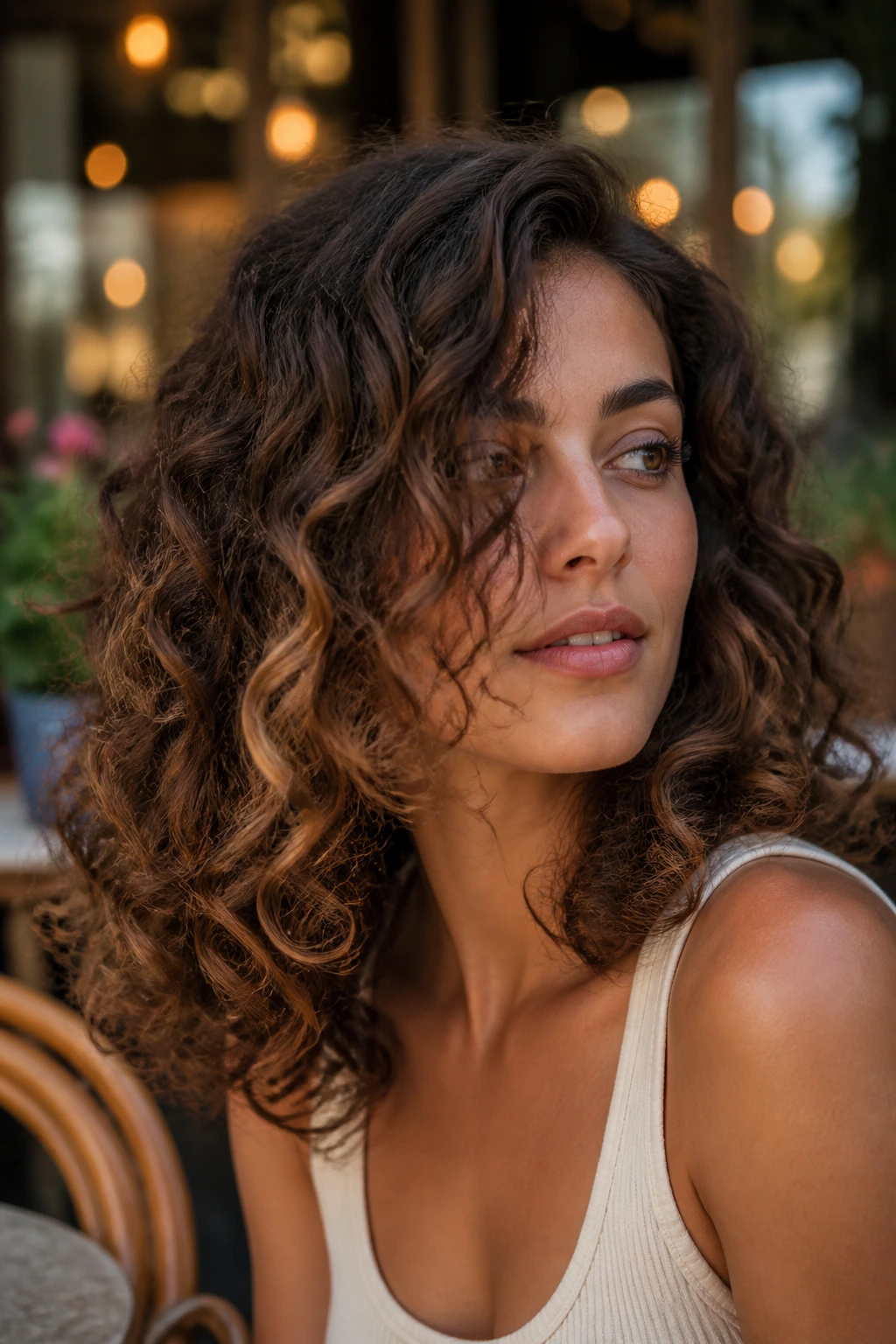
Tawny brunette is a good choice when you want the color to surprise people a little. The peekaboo pieces stay hidden under the top layer until the curls move, then they flash through with a lighter, sandier brown. It’s subtle, but not dull.
This works especially well on curly hair because curl clumps open and close as you move. A hidden lighter panel behind the ear or under the crown can show up at just the right moment. That makes the style feel more alive than a fully exposed highlight map.
Best for someone who likes a clean top layer but still wants dimension once the hair is flipped, tucked, or pinned. It’s one of those looks that looks calm from the front and a little more interesting in motion.
24. Dark Roast Brown With Auburn Veins
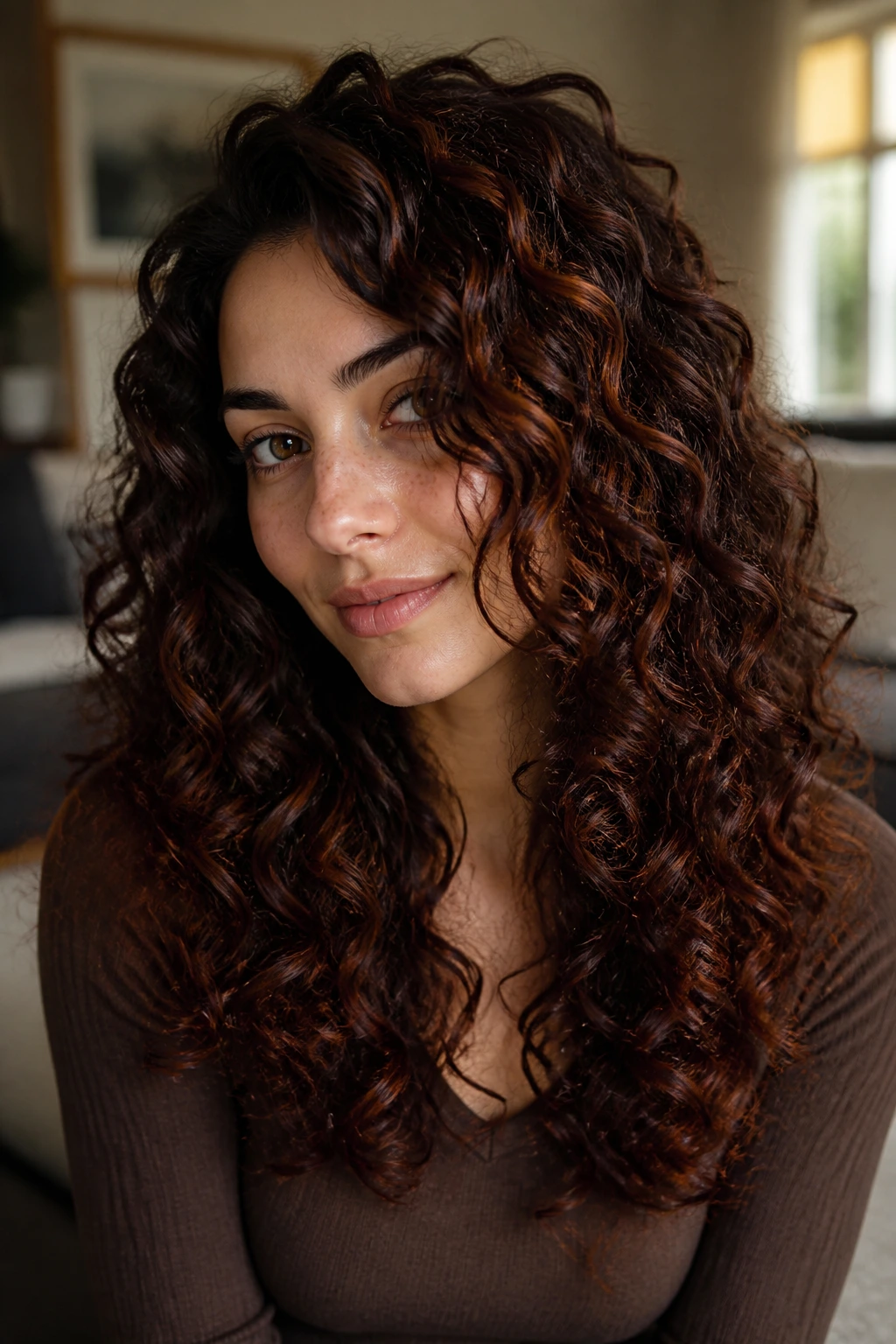
Dark roast brown with auburn veins is a strong brunette if you want depth with a warm pulse running through it. The auburn sits underneath the darker brown, so it doesn’t announce itself all at once. It peeks out in the bends of the curls, especially where the hair layers overlap.
I like this better than a heavy red-brown everywhere because it keeps the hair looking brown first and red second. That gives curly hair more control. A full auburn can dominate fine curls; this version lets the texture stay in charge.
If your base is already dark and you don’t want a big lift, this is a smart way to add life. The auburn only needs to be visible in a few places to change the whole mood.
25. Soft Sandalwood Brunette on Airy Curls
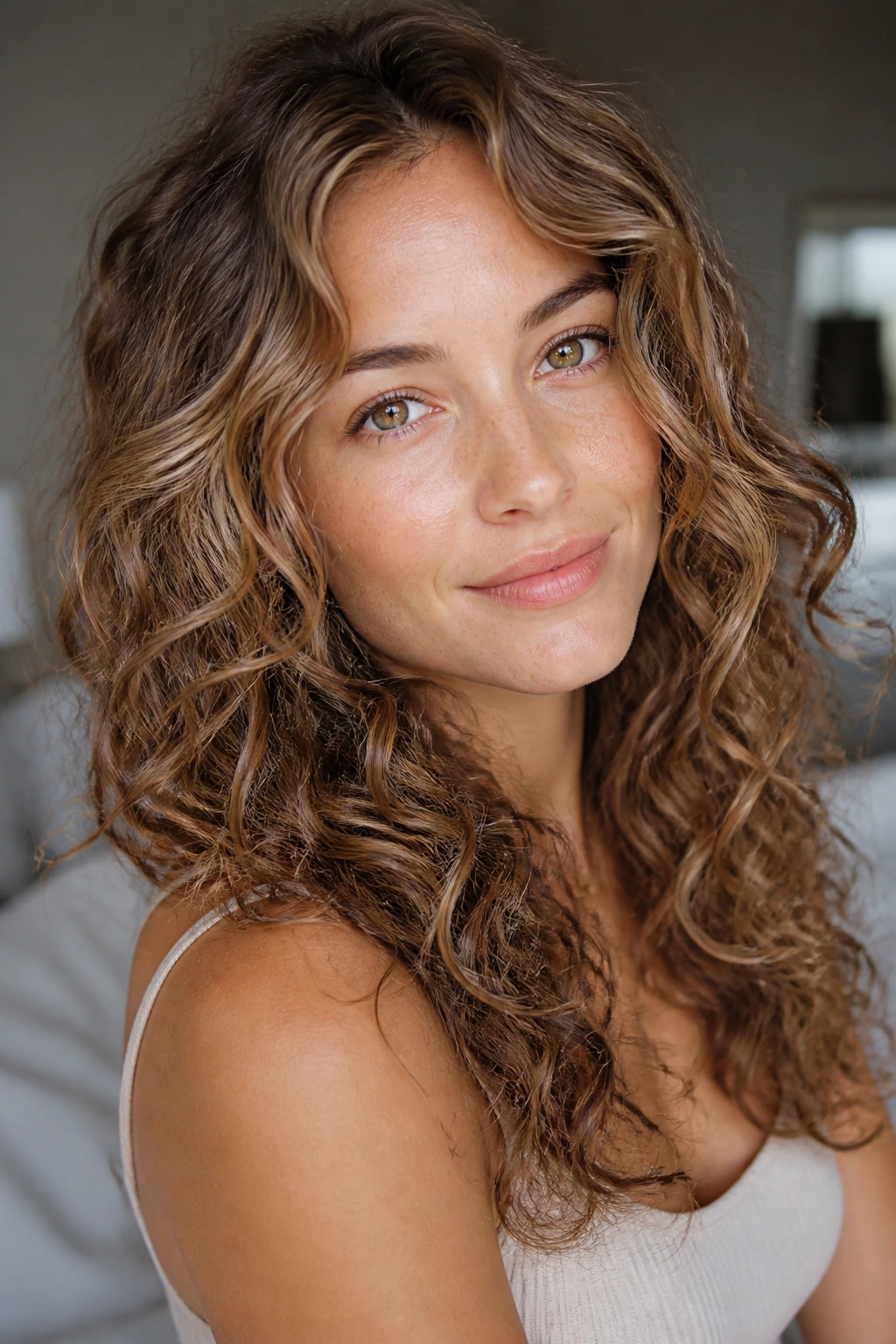
Sandalwood brunette has a soft beige-brown quality that suits airy curls very well. The shade is lighter than espresso but quieter than caramel, which gives the hair a calm, breathable look. On loose, airy curls, that matters because the curl pattern already brings plenty of movement.
The tone helps the shape read soft instead of heavy. If the hair is fine or medium in density, sandalwood can make it look fuller without adding obvious contrast. That’s a useful trick. Not every brunette needs drama.
This one works best when the finish is clean and touchable. Heavy creams can blur the tone, while a light curl lotion lets the beige-brown shift show through.
26. Walnut and Caramel Peekaboo Layers
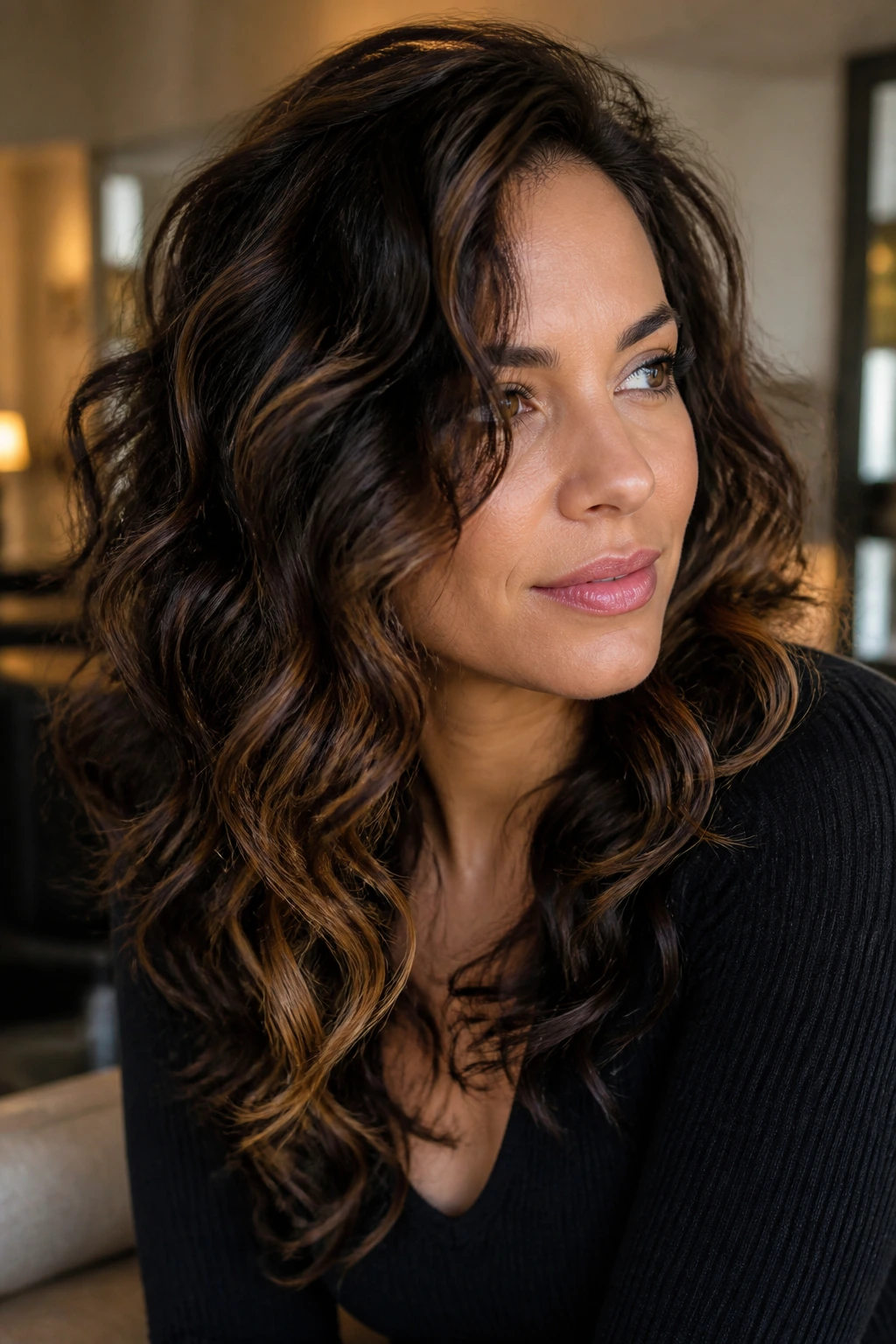
Walnut and caramel is a smart mix if you want depth first and brightness second. The walnut layers create shadow, while the caramel peekaboo pieces give the curls something to reveal as they move. On layered hair, that hidden contrast can look much richer than a wide band of highlights.
The nice part is how customizable it is. You can keep the caramel very subtle or push it brighter behind the front layers and near the ends. On curls, hidden brightness often lasts longer visually because not every piece is exposed at once.
This is a solid option for people who wear their hair down most days but still like a little surprise when they flip or clip it up.
27. Espresso-to-Milk-Chocolate Melt
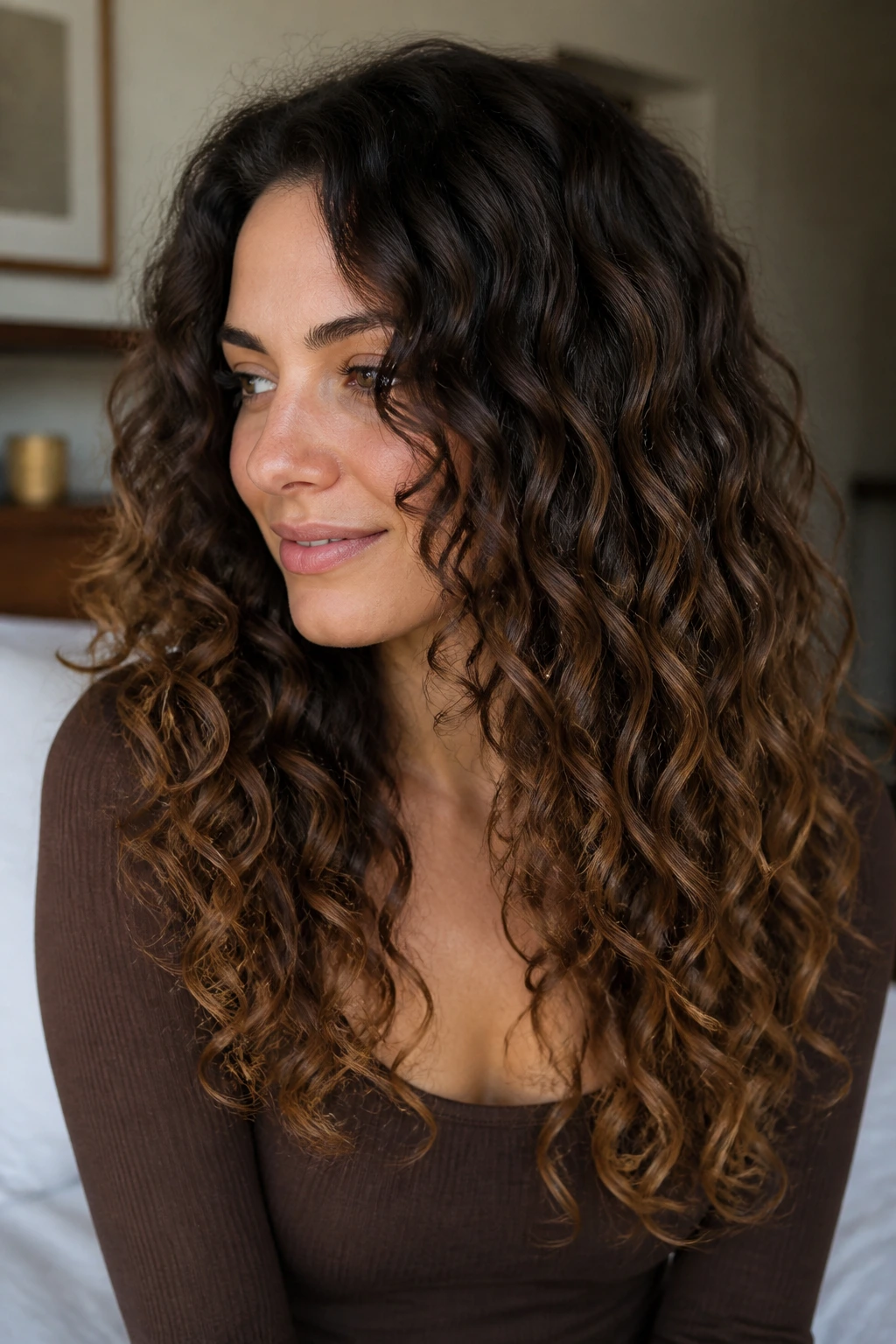
An espresso-to-milk-chocolate melt gives curly hair a smooth range of brown without hard lines. The root starts dark and ends a few shades lighter, but the transition stays soft enough that the curls can separate it naturally. That melt effect is what keeps the style from looking stripey.
I’m partial to this on medium and long lengths because the gradient needs room to show itself. On short hair, the shift can feel rushed. On longer curls, the eye gets a full progression from dark to light, and the overall effect is richer.
If you want a brunette look that feels polished without being stiff, this is a strong pick. It has movement baked into it.
28. Mahogany Brunette With Polished Ends
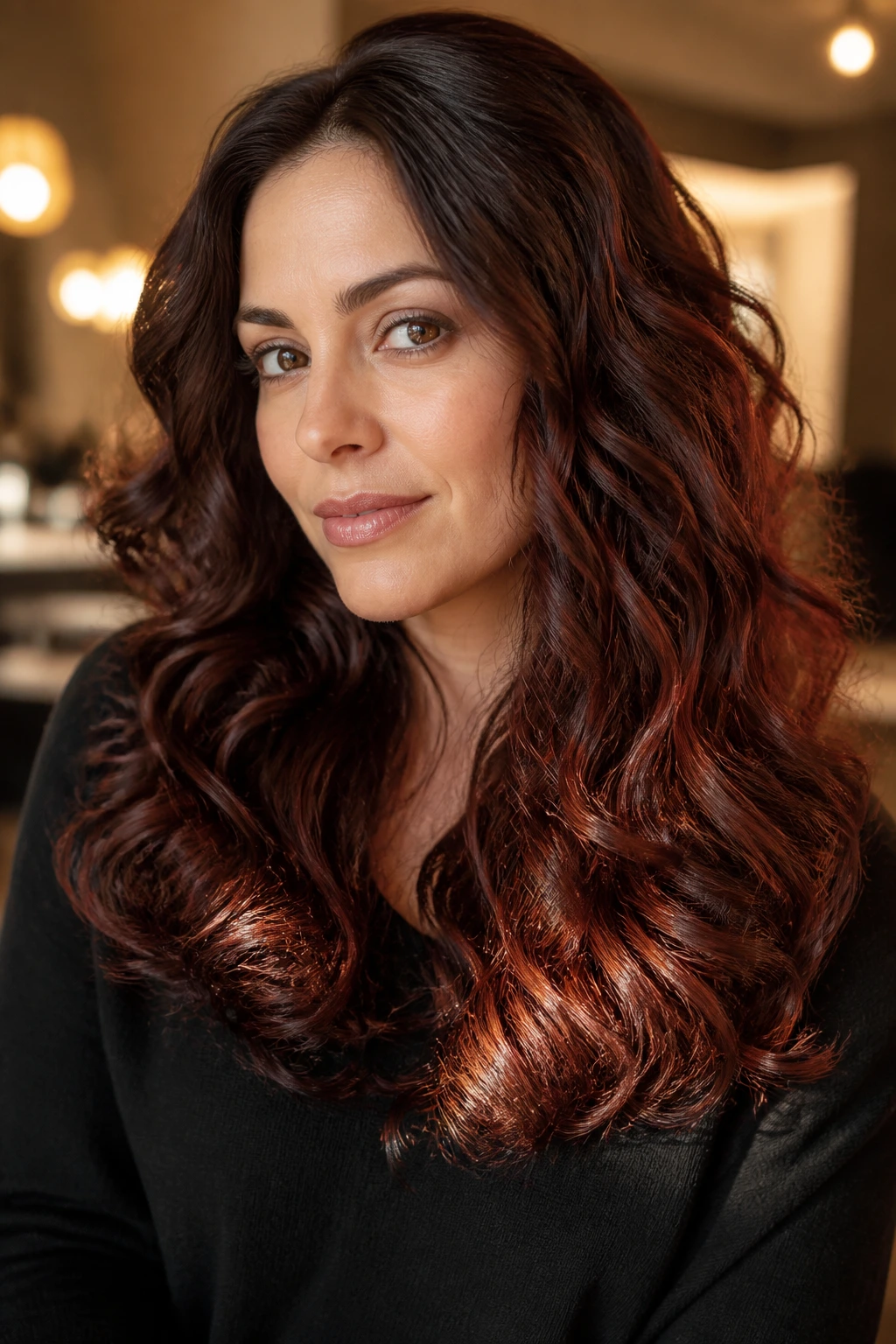
Mahogany brunette brings a red-brown richness that flatters polished curls. The ends are where the color matters most here, because the mahogany tone makes the finish look luxe and intentional. On curly hair, polished ends can keep the shape from reading dry or puffy.
The trick is making sure the mahogany stays brown enough to hold the base. Too much red and the whole look tips into auburn. The best version has a wine-dark edge that shows up in the curl bends and the ends, especially under warm indoor light.
This is a good choice for people who like a richer brunette and don’t mind a bit of warmth. It looks especially good on hair that’s trimmed often and styled with a diffuser.
29. Cinnamon Chestnut on Corkscrew Curls
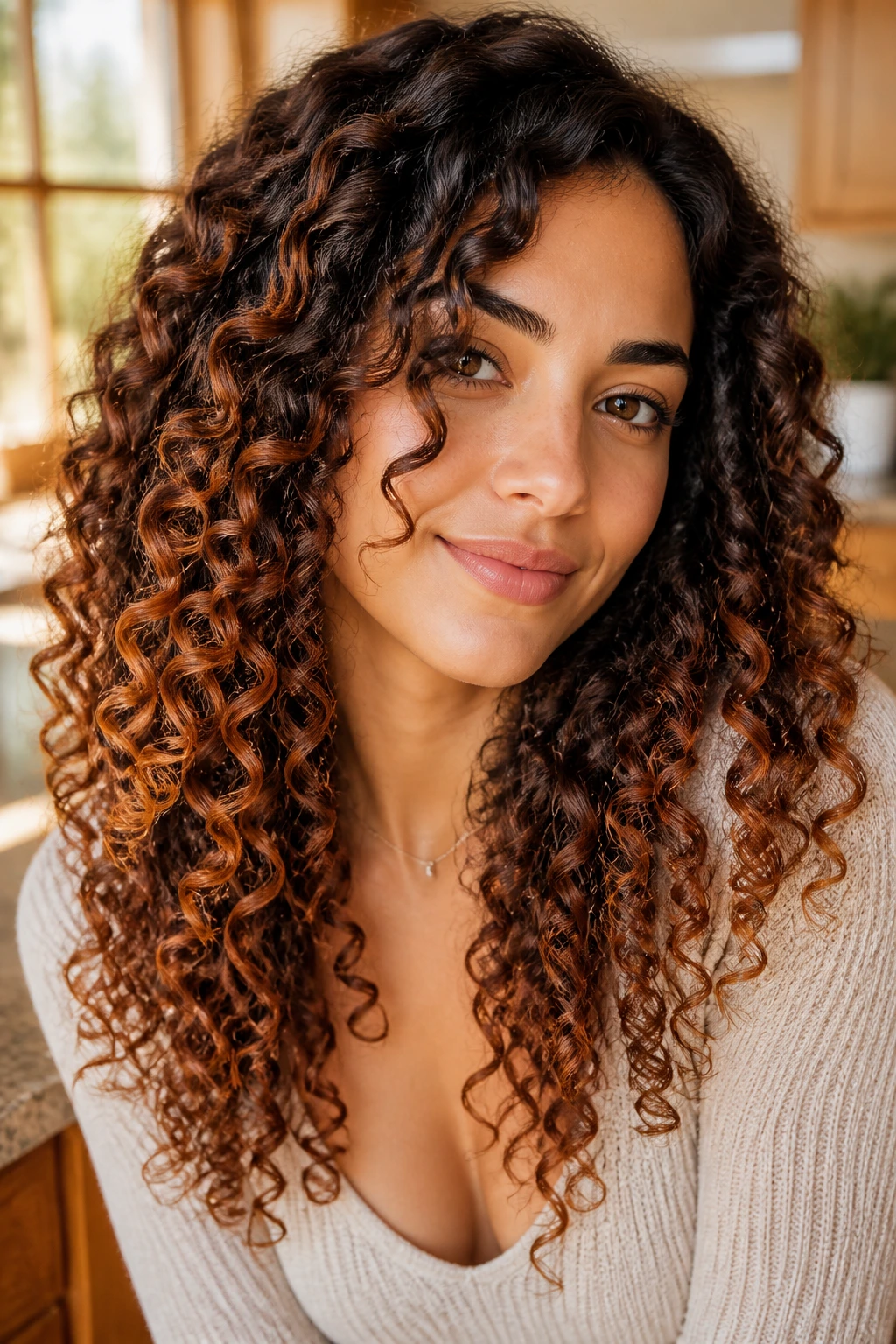
Cinnamon chestnut gives corkscrew curls a lively, layered warmth. Because corkscrews are so tightly wound, the color appears in little flashes rather than broad ribbons. That’s why cinnamon works here — the tone is noticeable, but it doesn’t need large surface area to read.
A chestnut base keeps the look grounded while the cinnamon lightens the overall mood. I’d avoid going too bright, because tight curls can make warm highlights look louder than intended. Small, well-placed pieces are enough.
What to Ask for
Ask for a chestnut brown base with cinnamon accents painted mostly on the outer layer and near the mid-lengths. Keep the root area deeper so the style has room to grow out without looking overprocessed. If the hair is porous, ask for a glossy finish to keep the red-brown from turning dull.
30. Cocoa + Gold Balayage on Mid-Length Hair
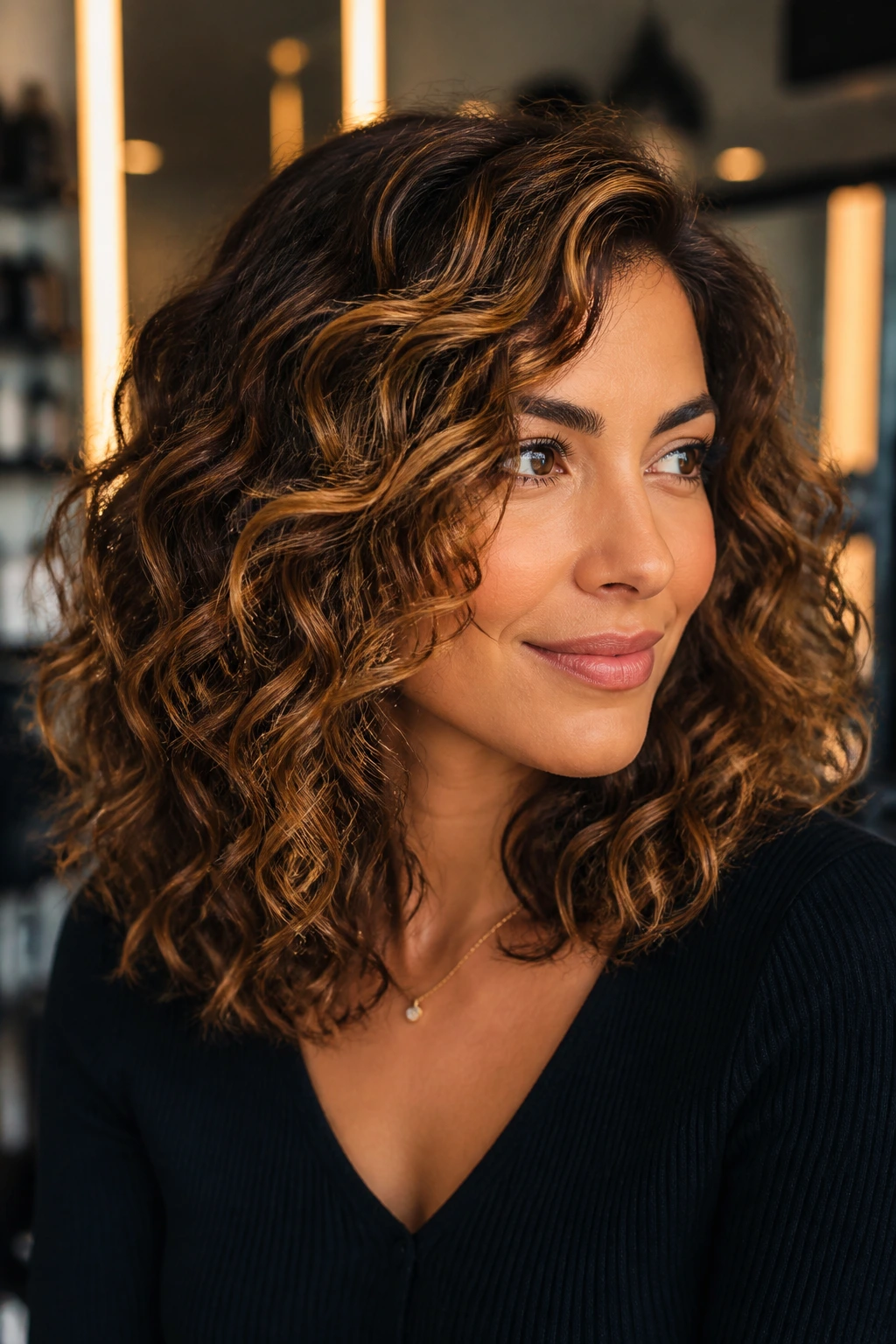
Cocoa and gold is one of those combinations that looks simple until you see it in motion. The cocoa base keeps the whole thing brunette, while the gold pieces are just bright enough to show the curl pattern. On mid-length hair, the balance is usually right where it should be.
The reason this works on curls is that gold catches light fast. You don’t need a ton of it. A few painted bands through the mids and surface layer are enough to make the shape read fuller. Too much gold and the color stops feeling brown.
Key Details
- Keep the cocoa base one full level deeper than the brightest gold pieces.
- Concentrate the gold around the top third of the head and the front curl groups.
- Best on layered shoulder-length cuts that can show motion at the ends.
Quiet opinion: this is one of the most wearable warm brunettes on the list.
31. Smudged Root Brunette With Brightened Tips
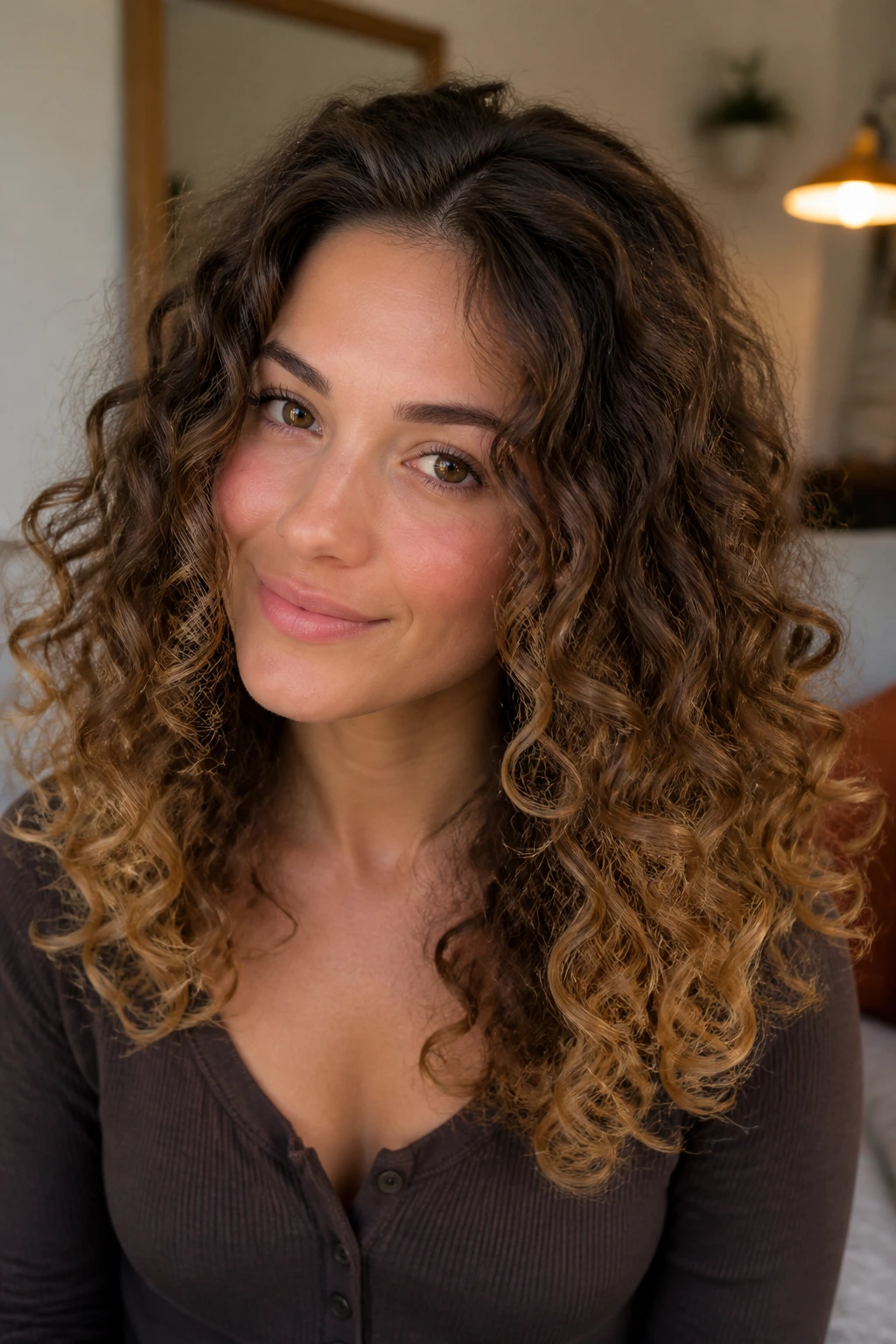
A smudged root brunette is the answer if you want a little brightness without constant touch-ups. The root stays darker and softer, and the tips carry the lighter work. That makes curly hair look deliberate even after a few weeks of growth.
The smudge matters because curly roots can puff up and make a hard line look obvious. A softened root blend hides that transition. The brighter tips then pull the eye downward, which is useful if the ends need visual rescue after repeated styling or heat.
This is a practical style, but not a boring one. It’s the brunette version of making the hair look finished without having to babysit it every ten days.
32. Rich Brown Shag With Minimal Highlighting
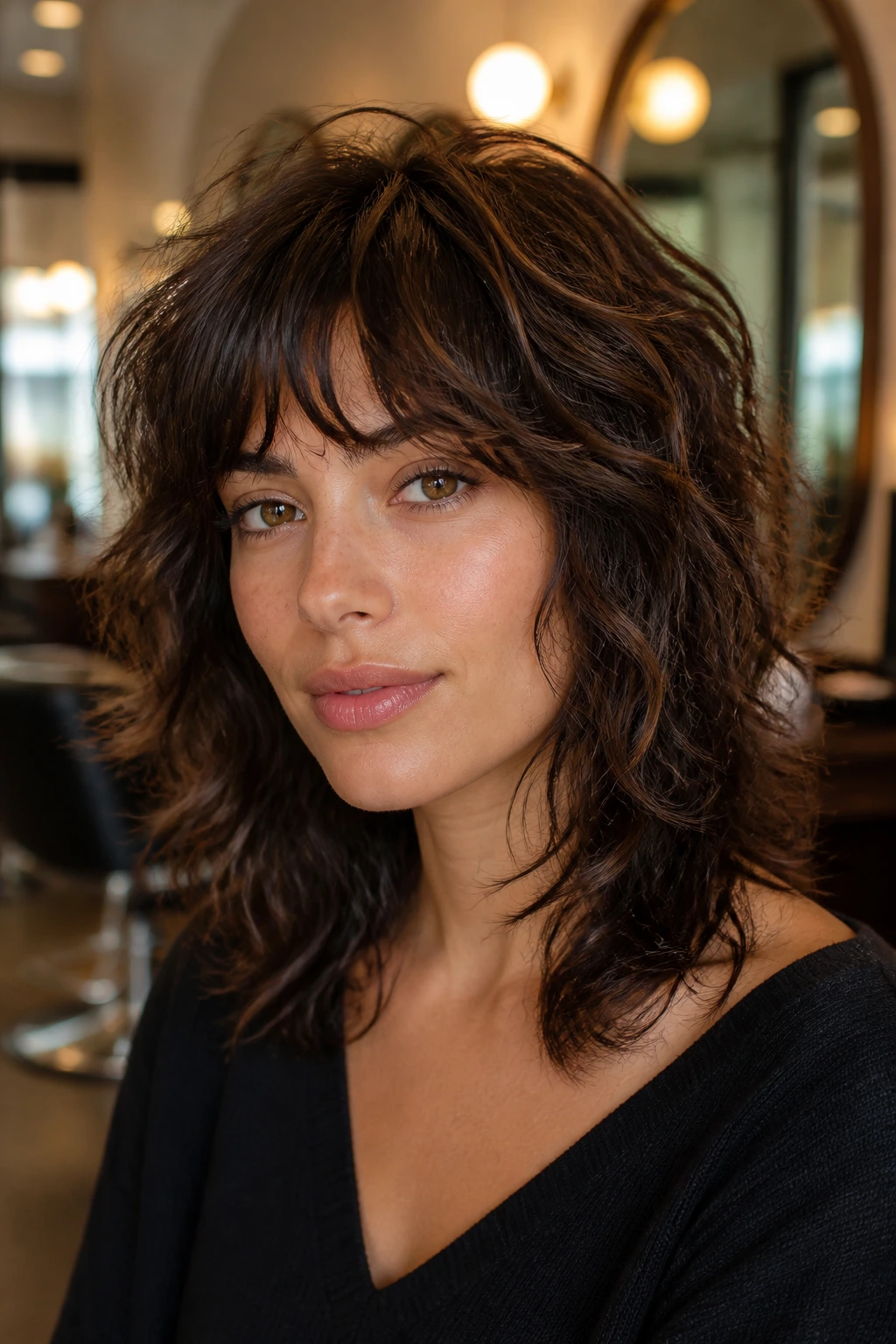
A rich brown shag doesn’t need much highlighting if the cut is good. The layers create all the motion. A little lightness around the crown or fringe can help, but the real job belongs to the haircut, not a highlight map that tries too hard.
I like this on people who are tired of chasing dimension with color alone. Sometimes the better answer is to let the cut do more. The brown can stay deep and rich while the shag breaks up the shape in all the right places.
If you’re working with damaged curls, this is a smart reset. Less lightening. More shape. That often looks better than pushing the hair into a brighter brunette just because you feel like you should.
33. Copper-Kissed Brunette on Thick Curls
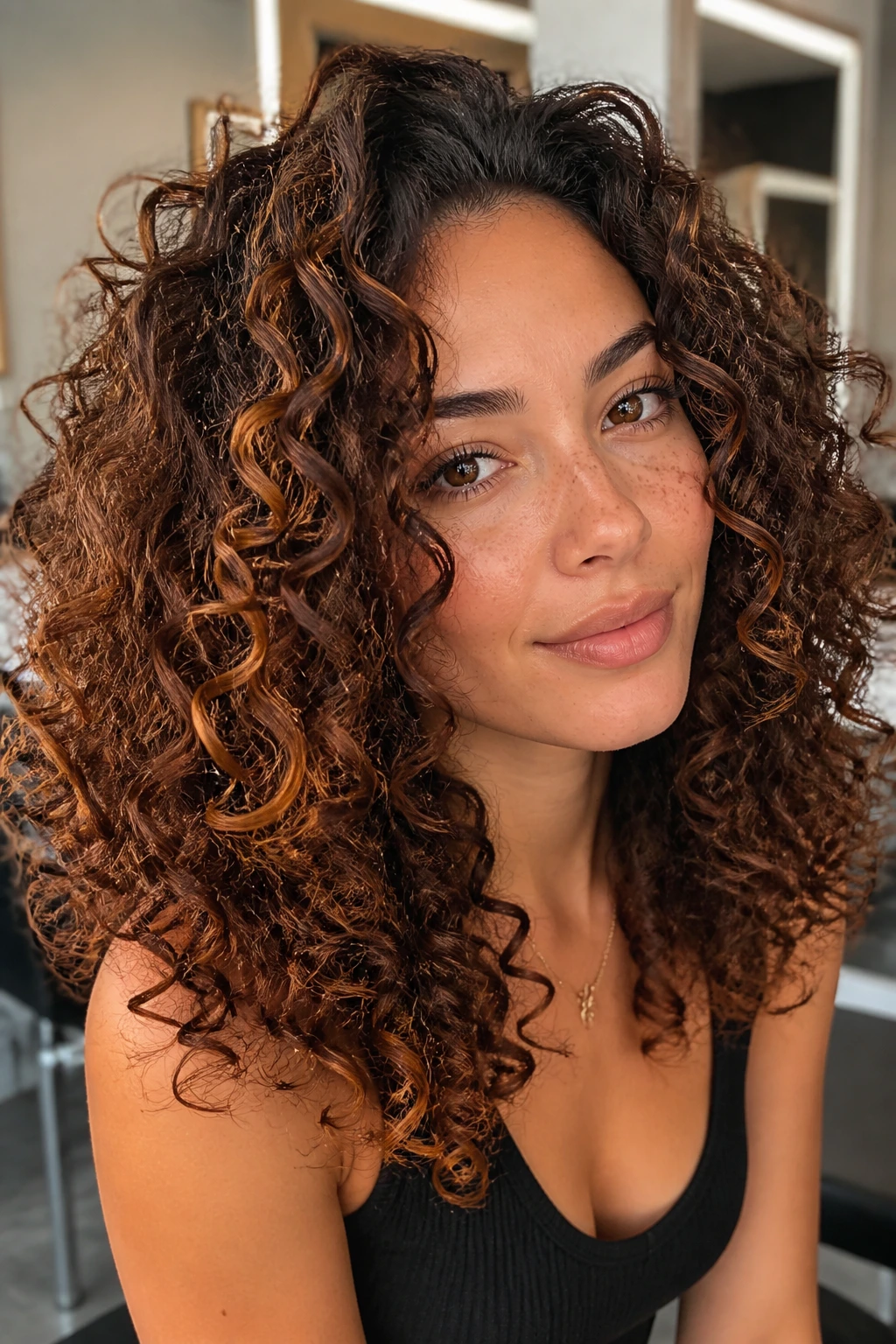
Copper-kissed brunette is warmer and more obvious than some of the quieter browns here, but thick curls can carry it. The copper shows up best where the curls separate, which gives the hair a flicker of brightness without making every strand red. That’s the sweet spot.
Thick hair tends to hide color changes unless the placement has enough saturation. This style solves that by keeping the brunette base strong and letting the copper work like a highlight note instead of a full-color takeover. It feels energetic. Not loud. Energetic.
A medium-brown or chestnut base usually gives the copper the best support. Too dark, and the warmth can disappear; too light, and it stops reading brunette.
34. Cool Latte Brown With Defined Fringe
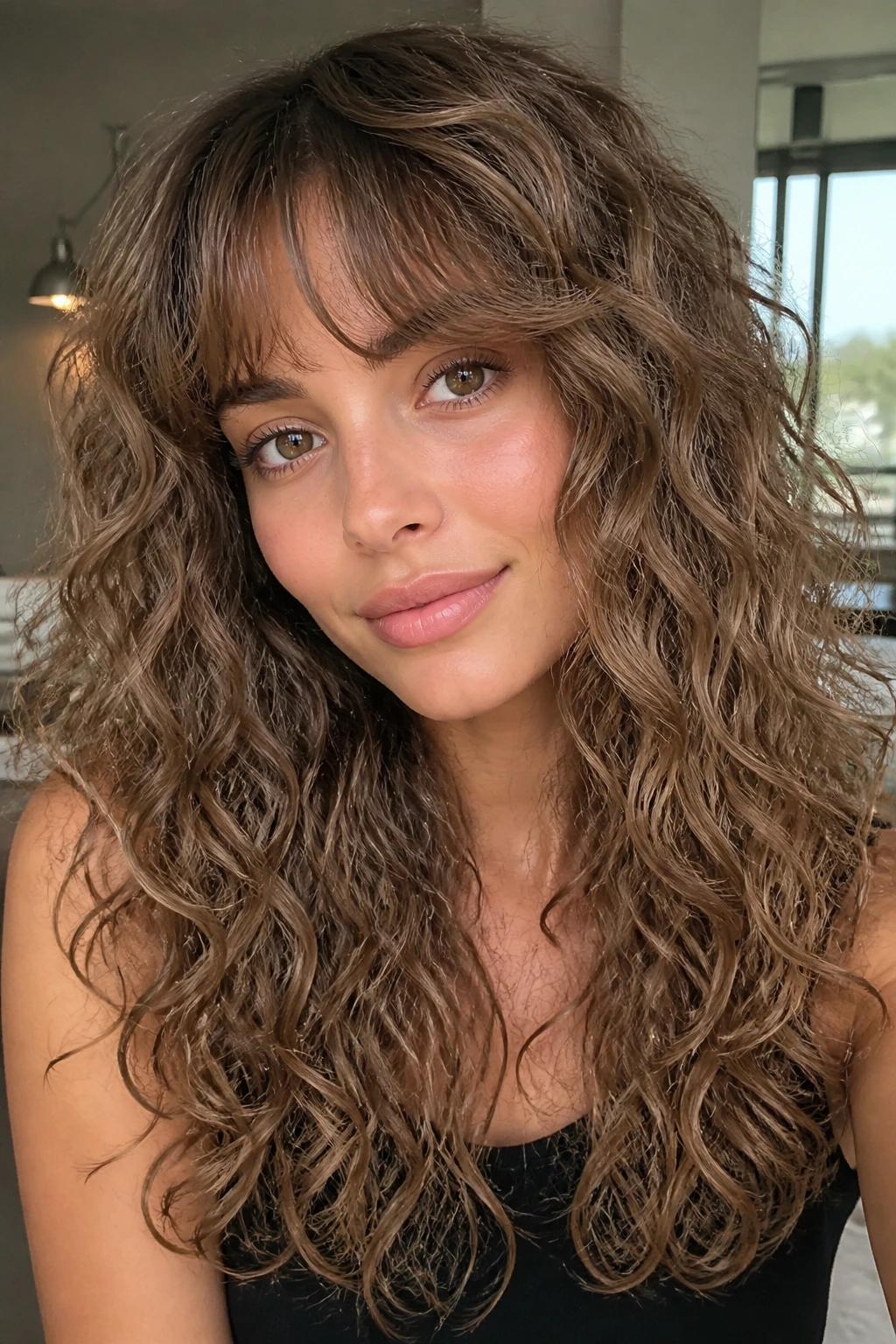
Cool latte brown with a defined fringe has a crisp, modern feel that suits curls with shape near the front. The color sits in the lighter brunette range, but the cool note keeps it from going golden. That’s useful if you want something soft and clean.
The fringe matters because it gives the shade a frame. Curls with bangs can look busy if the color is too busy too. A cooler latte tone keeps the front controlled. It also flatters people who wear makeup with cooler blush or berry lips, because the whole look stays in the same lane.
If your curls are medium density and your fringe sits just above the eyes or skims the brows, this is a strong one. It looks polished without feeling stiff.
35. Deep Brunette With Glossy Money Pieces
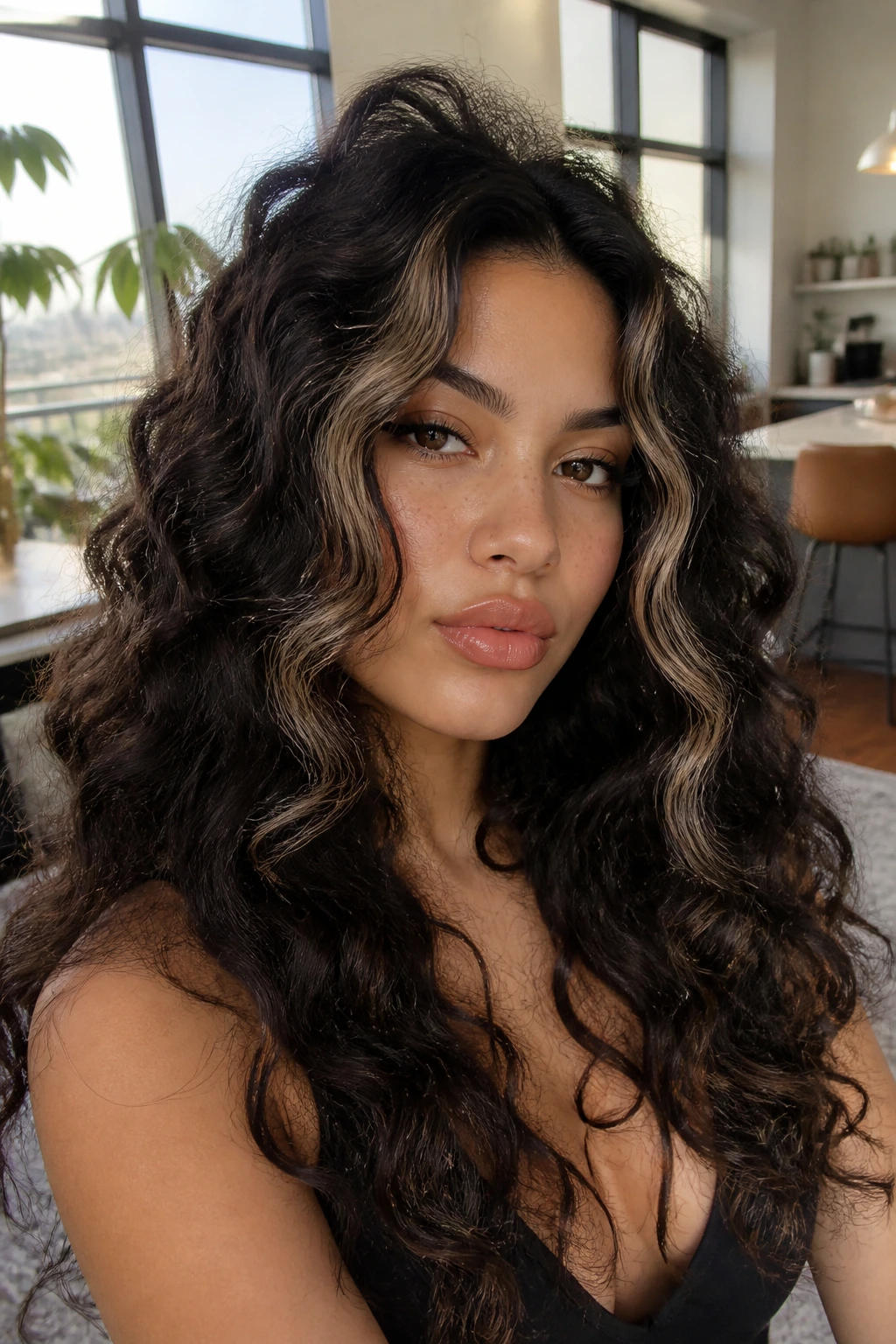
Deep brunette with glossy money pieces is the dramatic version that still behaves itself. The base stays dark and sleek, while the money pieces sit bright enough to frame the face and show the curl pattern right away. It’s the kind of brunette that gives you contrast without turning the whole head into highlights.
The key is keeping the money pieces thick enough to matter. On curly hair, tiny bright streaks can disappear inside the curl clump. A fuller face frame solves that and gives the style presence even when the hair is pulled back or half-up.
This is the look I’d pick if you want something visible in photos and easy to recognize from across a room. The shine matters too. A gloss or smoothing finish makes the brunette base look expensive and keeps the lighter front pieces from looking dry.
Why Brunette Color Moves Better on Curly Hair
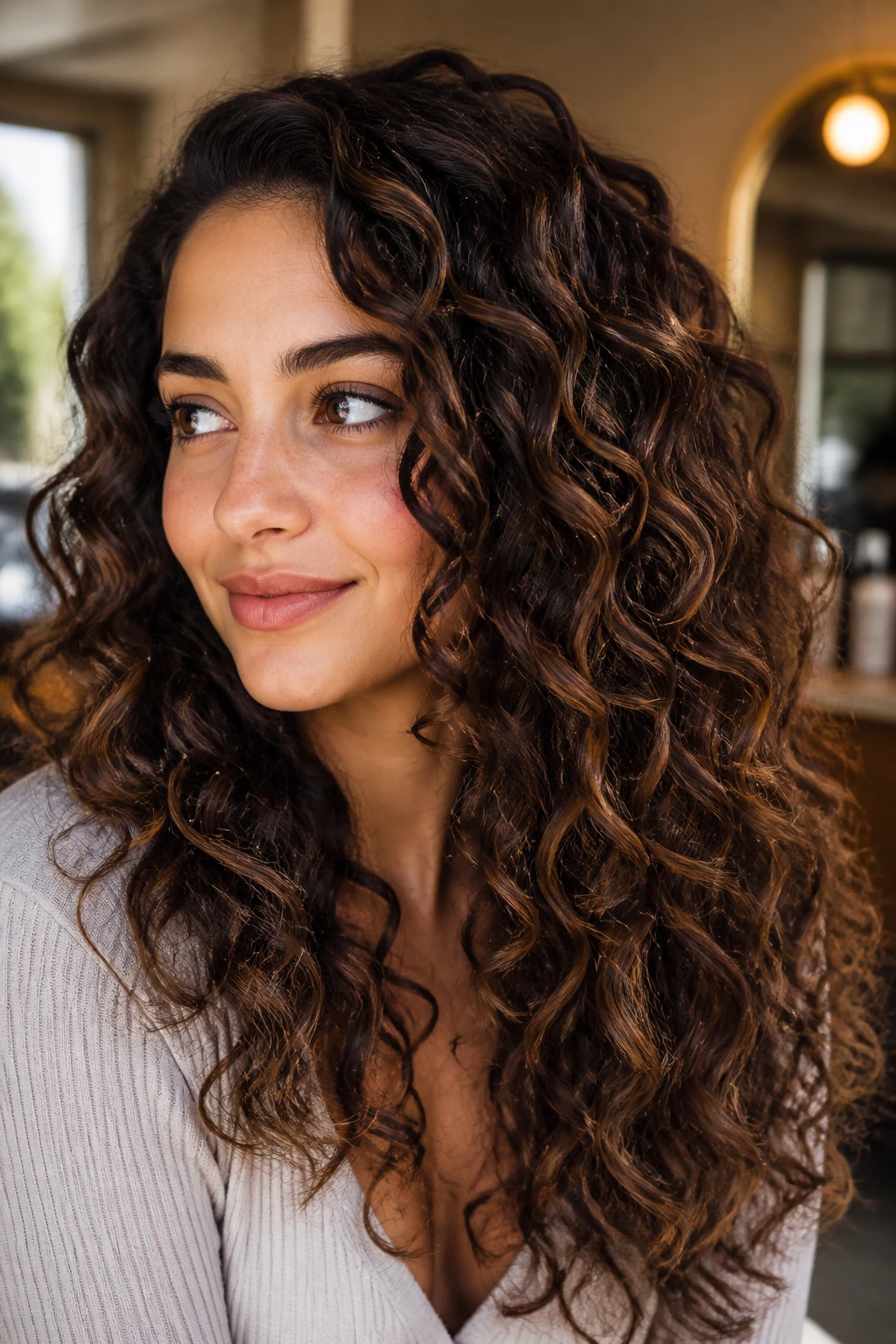
Curly hair doesn’t hold color like a flat sheet. It breaks light up into small planes, and that changes everything. A brown that looks plain on straight hair can look layered, even luxurious, once it bends around a spiral. The shadow on the underside and the sheen on the top ridge do half the color work for you.
The other thing curls do well is hide grow-out. Not all grow-out, mind you. If the lightening is too harsh or the root line is too hard, curls will still show it. But a soft root shadow, a rooted balayage, or a glossed brunette base gives the hair some breathing room. That matters if you don’t want to live in the salon.
Curl Pattern Changes the Finish
Loose curls and waves show broad ribbons of brown more clearly. Tight curls and coils tend to break color into smaller flashes. That’s why a chunky highlight that looks lovely on a wave can turn loud on a coil, while the coil version needs finer placement or a deeper base to keep the balance.
Porosity Changes the Tone
Dry or porous ends absorb color faster, and that means brunette tones can grab darker or warmer than expected. A good colorist will account for that and leave the most fragile areas a little darker or use a gentler gloss at the ends. If your hair tends to go orange fast, or if the mids and ends fade quickly, that note matters more than people think.
How to Choose the Right Brown for Your Curl Pattern and Skin Tone
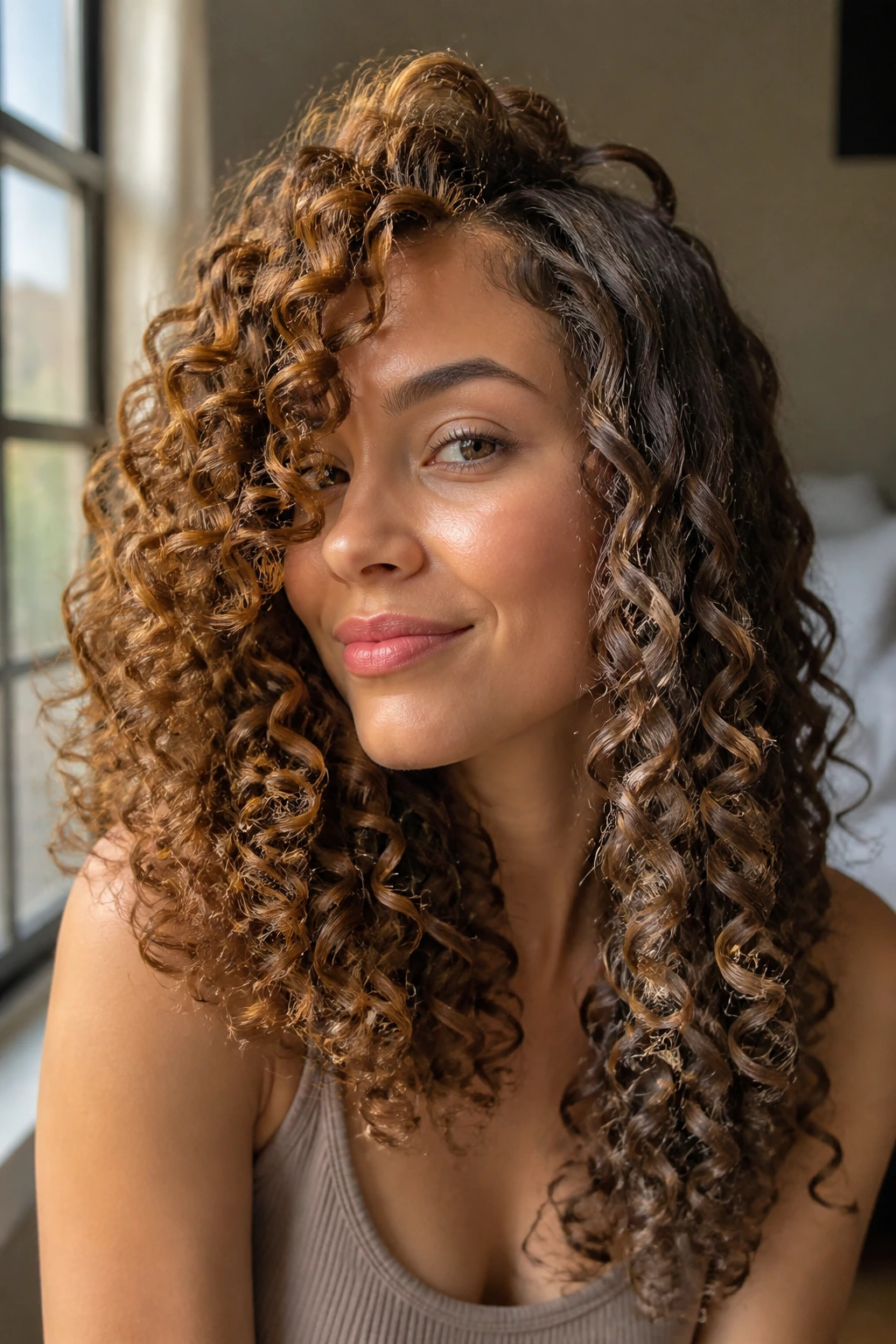
The easiest way to choose a brunette shade is to start with what your curls already do. If your hair is big, loose, and light-catching, you can usually handle more contrast. If it’s tight and dense, softer shifts in tone tend to look cleaner. The wrong kind of contrast can make curls look chopped up instead of dimensional.
Skin tone helps, but it shouldn’t boss the whole decision around. Warm skin often looks good with caramel, chestnut, maple, and bronzed brown. Cool or neutral skin can wear mushroom, ash, smoky mocha, and soft espresso. Still, a warm shade can work on cool skin if the rest of your coloring is strong enough. Hair color isn’t a one-rule system.
Warm, Cool, or Neutral?
Warm brunettes have gold, copper, or chestnut in them. Cool brunettes lean ash, beige, or smoky. Neutral brunettes sit in the middle and usually give the least trouble if you’re unsure. If your closet, makeup, and jewelry already lean one way, that can be a better clue than a swatch chart.
Loose Spirals vs Tight Coils
Loose spirals can carry thicker highlight ribbons because the color gets more visual space. Tight coils often look better with micro-lights, lowlights, or a glossy base with very deliberate face-framing brightness. The tighter the curl, the more important the placement becomes. Color on coils is a placement game, not just a shade choice.
Tools, Products, and Photos to Bring to the Salon
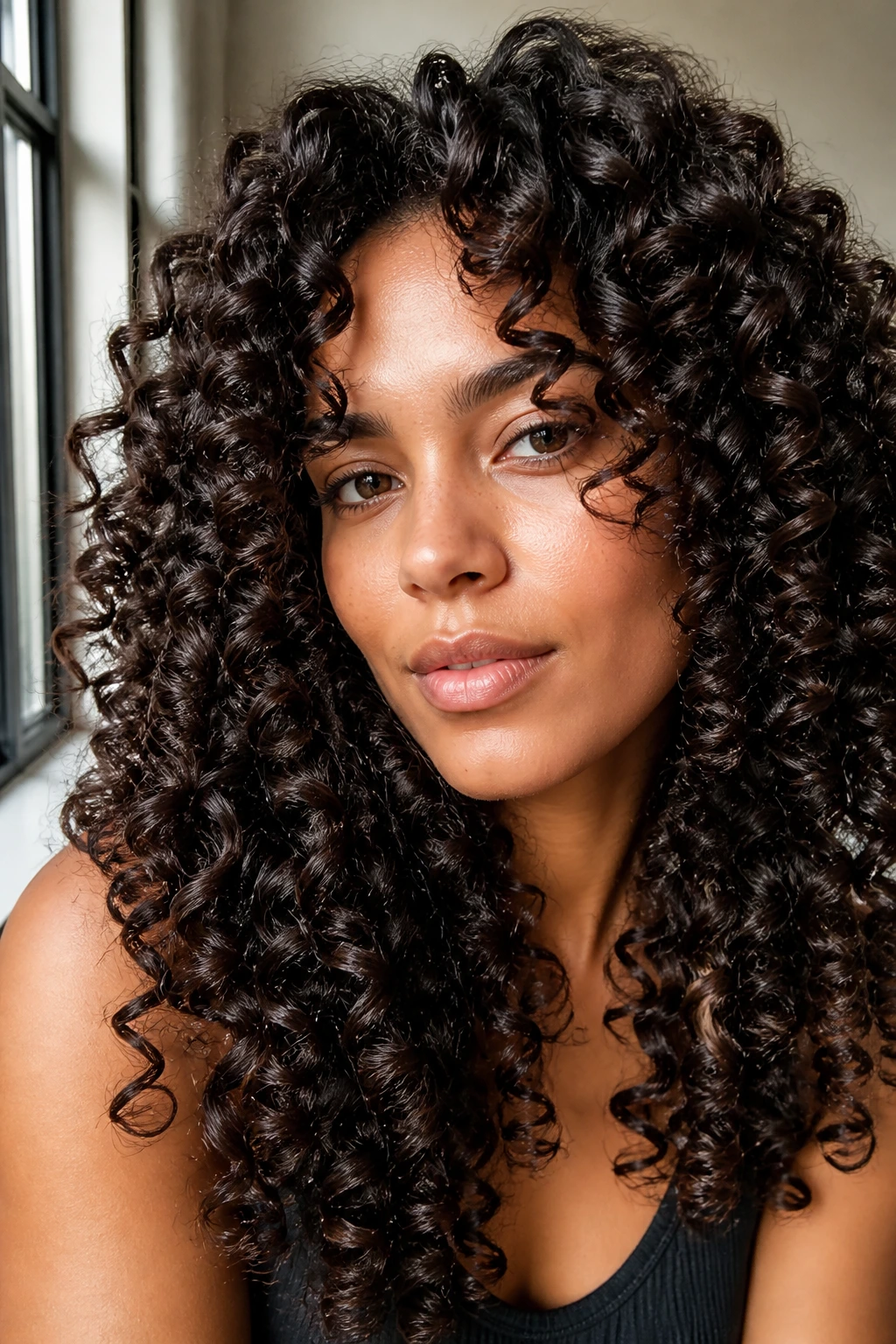
- Reference photos of your own hair in daylight: Photos of your curls under natural light show how the color actually reads, not how it looks under a bathroom bulb.
- A wide-tooth comb: Useful for detangling before a color appointment or gloss service without breaking the curl clumps apart.
- Tint brush and bowl: Helpful if you’re refreshing a gloss or a root smudge at home, or if your stylist wants to place color with precision.
- Duckbill or sectioning clips: These keep curl sections separated so highlight placement doesn’t wander.
- Microfiber towel or cotton T-shirt: Less rough on color-treated curls when you’re blotting after washing.
- Diffuser attachment: Helps curls dry in shape so the brunette dimension shows through instead of getting puffed out.
- Color-safe shampoo: Gentler cleansing means the brunette tone hangs on longer.
- Deep conditioner: Useful after any lightening, even if the lift is small.
- Satin bonnet or pillowcase: Reduces friction overnight, which helps both curl shape and color shine.
- Heat protectant spray: Non-negotiable if you blow-dry or diffuse with high heat often.
How to Wear These Brunette Looks Day to Day
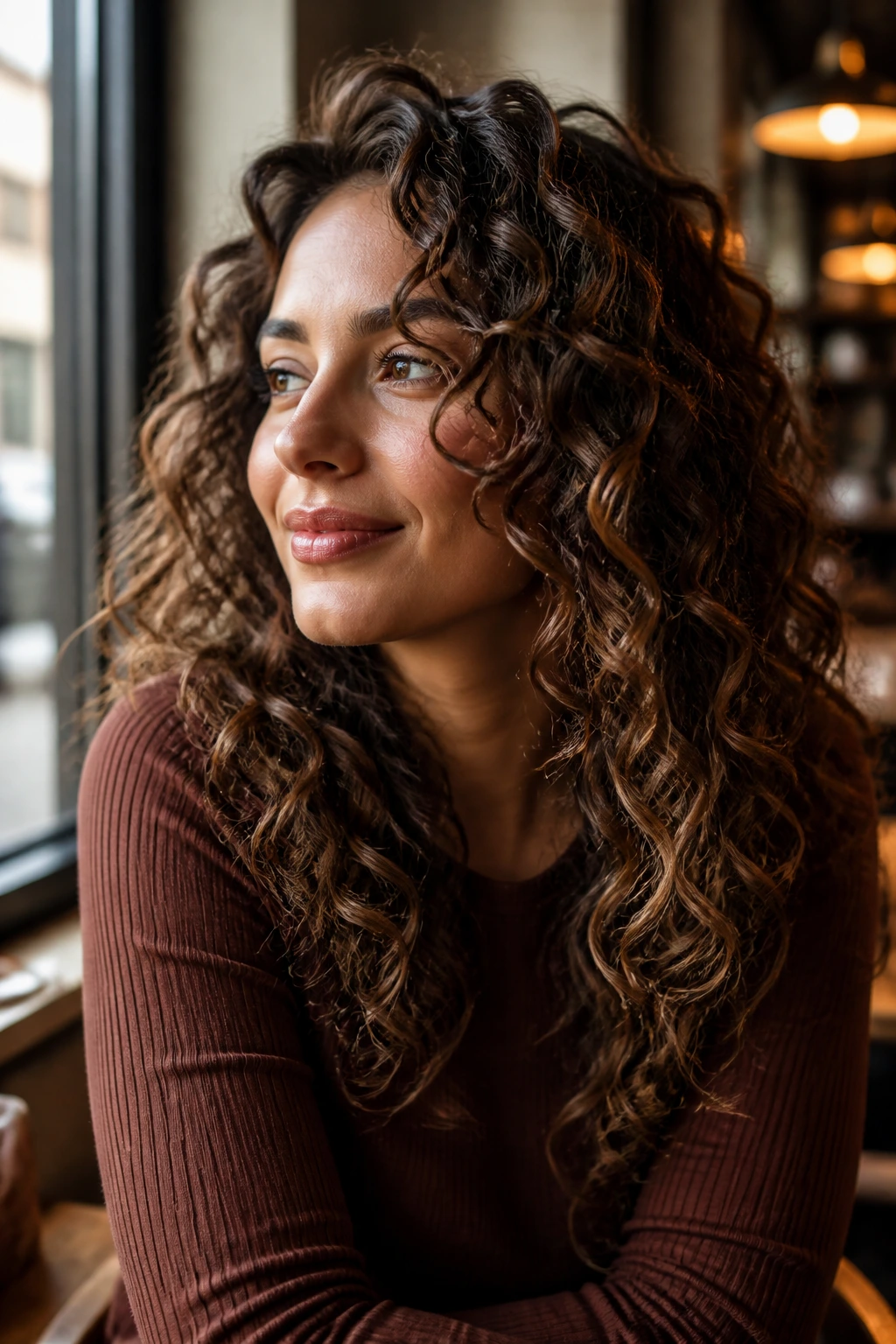
Loose and Defined: Wear the curls fully down when you want the color placement to do the most work. A diffuser, a little scrunching, and a light shine cream on the mids will make caramel ribbons and mocha pieces show up better.
Pulled Back: Half-up styles, claw clips, and loose ponytails are where face-framing highlights earn their keep. If the front pieces are the brightest part of the color, they should still look intentional when the rest of the hair is pinned away.
Best Cuts: Shags, rounded lobs, layered curls, and curly bobs tend to show brunette dimension more clearly than one-length cuts. The cut gives the color air. Without it, even a lovely shade can look compressed.
Accessory Match: Tortoiseshell clips, gold hoops, and soft neutral scarves tend to sit well with brown curls. They don’t compete with the color. They let it breathe.
Small Tweaks That Change the Whole Mood
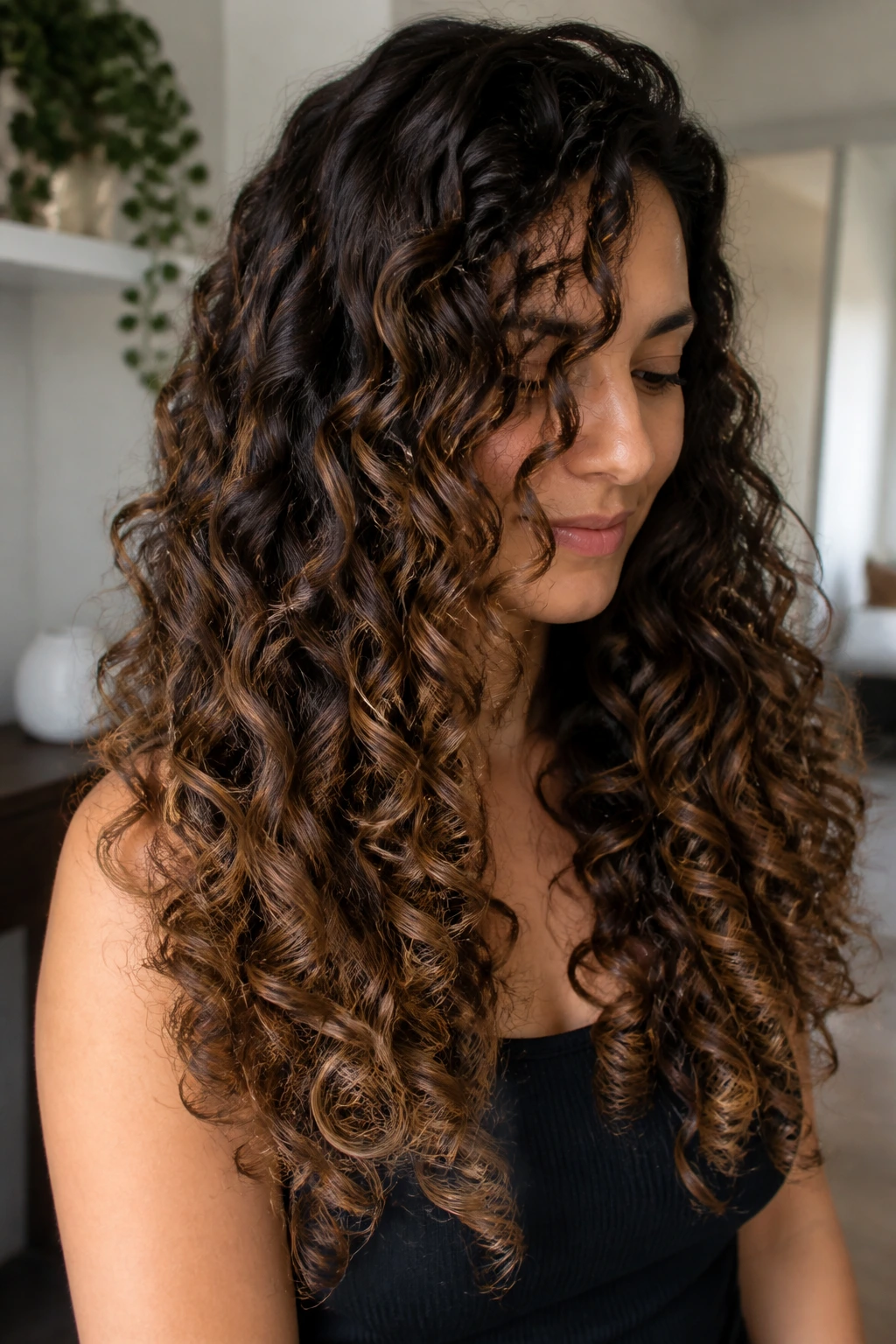
Gloss Boost: A clear or tinted gloss every 4 to 8 weeks keeps brunette curls from going flat or chalky. On darker shades, gloss matters more than people think because shine is part of the color story.
Contrast Boost: If a look feels too quiet, ask for one or two slightly lighter ribbons near the part or cheekbone. That tiny lift can make a brown read richer, not lighter.
Time-Saver: A root shadow or smudged base stretches appointments and softens grow-out on curly hair. If you hate harsh root lines, this is the first adjustment I’d make.
Make-It-Yours: If your skin loves warmth, lean caramel, chestnut, or maple. If you prefer a cooler edge, ask for mushroom, ash, or smoky mocha. Beige brunettes live nicely in the middle.
Shine Move: Use a pea-sized amount of serum only on the ends and outer layer. Too much near the roots turns curls greasy fast, and that ruins the clean read of the color.
Common Mistakes That Flatten Brunette Curls
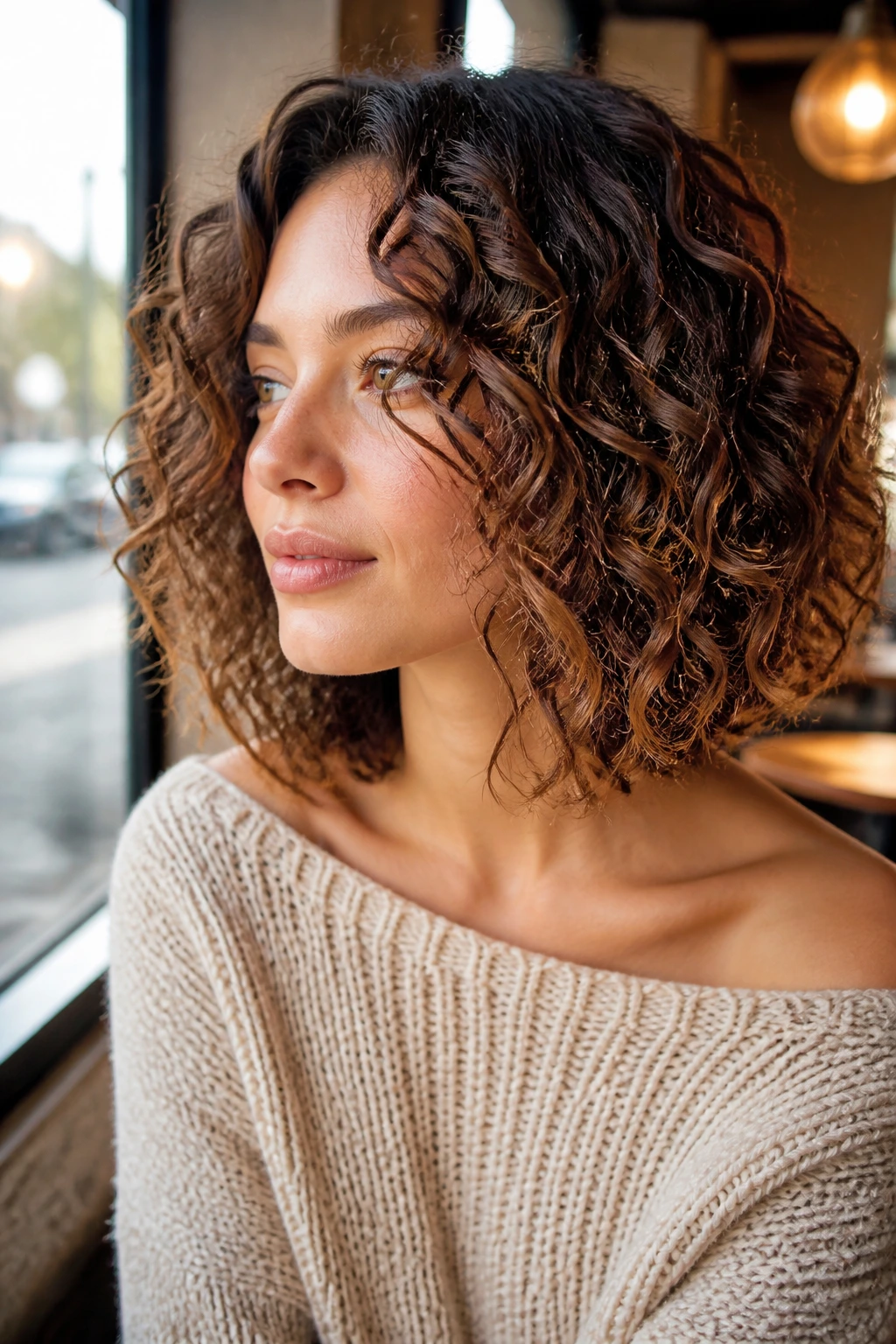
The biggest mistake is painting curly hair like it’s straight. Curly hair shrinks, twists, and stacks on itself. If the light pieces are placed as if the hair will hang flat, they disappear once the curls dry. The fix is to map the color to the curl pattern, not the wet length.
Another one: going too light, too fast. If your curls are dark and fragile, jumping several levels up can leave the ends rough and the brown base looking disconnected from the highlight work. A gentler lift, or even just a gloss and lowlight plan, usually looks better.
Over-toning is a sneaky problem. Brunette hair can pick up ash, blue, or greenish cast if the toner is too strong or used too often, especially on porous ends. If the brown starts looking dull instead of rich, the fix is usually less toner, not more.
Skipping haircut shape is another way brunettes go sideways. A good color on a bad cut still looks awkward. Layers, a clean perimeter, and a shape that suits your curl density matter because the color sits on that structure.
Variations and Adaptations to Try
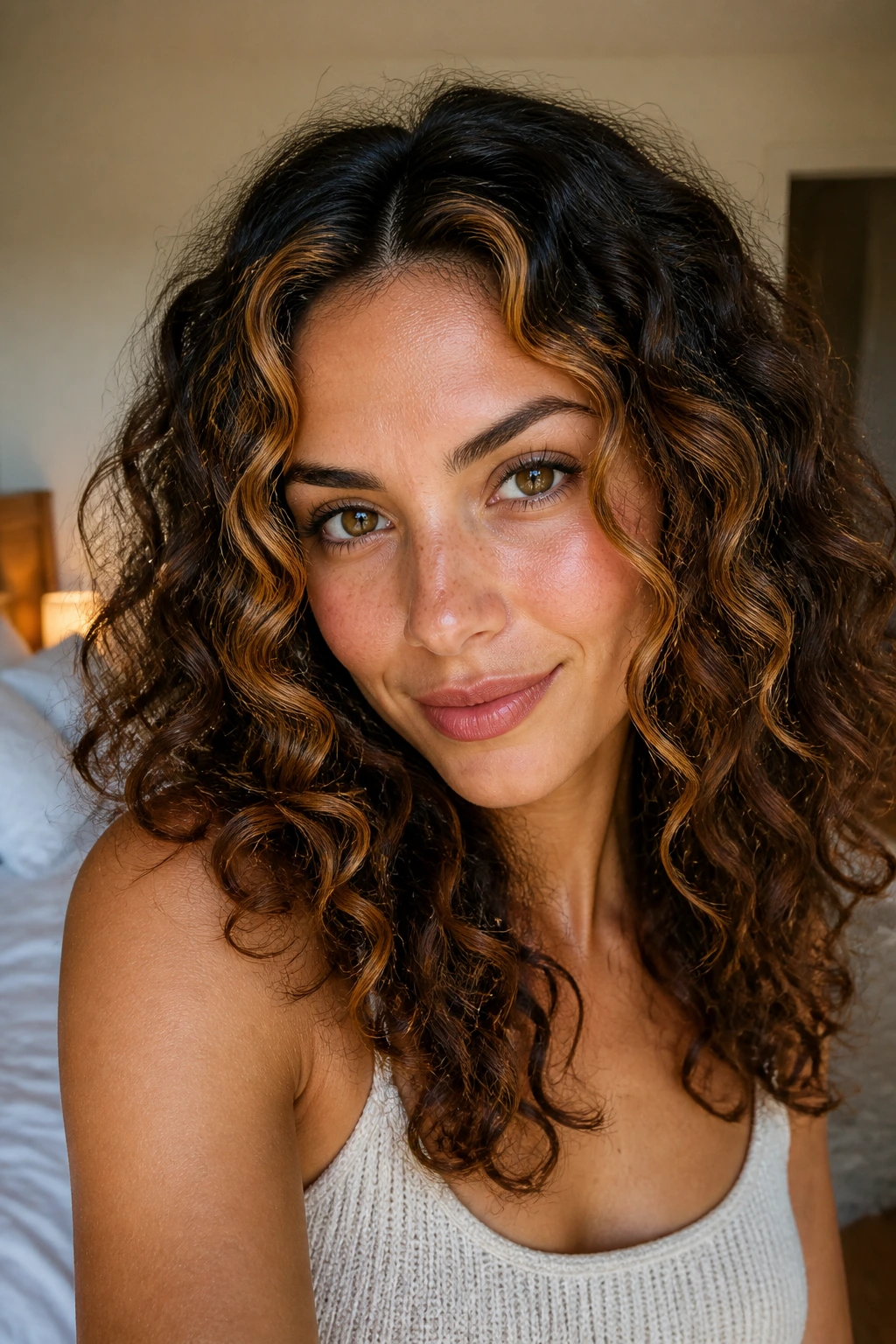
Low-Lift Brunette Reset: If your hair is fragile, keep the color close to your natural brown and use a gloss plus lowlights instead of highlights. It’s the easiest way to get dimension without pushing the hair into damage territory.
Warm Caramel Brunette: Choose chestnut, honey, or caramel ribbons if your skin leans golden or olive. This version feels sunnier and usually reads softer on loose curls than a cooler brunette does.
Smoky Mushroom Brunette: Go cooler with ash, beige, and taupe-brown if you want a muted finish. This works well when you like a quieter, more modern brown and don’t want red or gold showing through.
High-Contrast Ribbon Brunette: Ask for thicker, more visible highlight ribbons if your curls are loose or your haircut has plenty of layers. The contrast shows up best when the curls have room to separate.
Coily Micro-Highlight Brunette: On tight coils, tiny pieces and lowlights usually beat broad streaks. The result looks fuller and more balanced, with color woven through the shape instead of sitting on top of it.
Keeping the Tone Rich Between Salon Visits
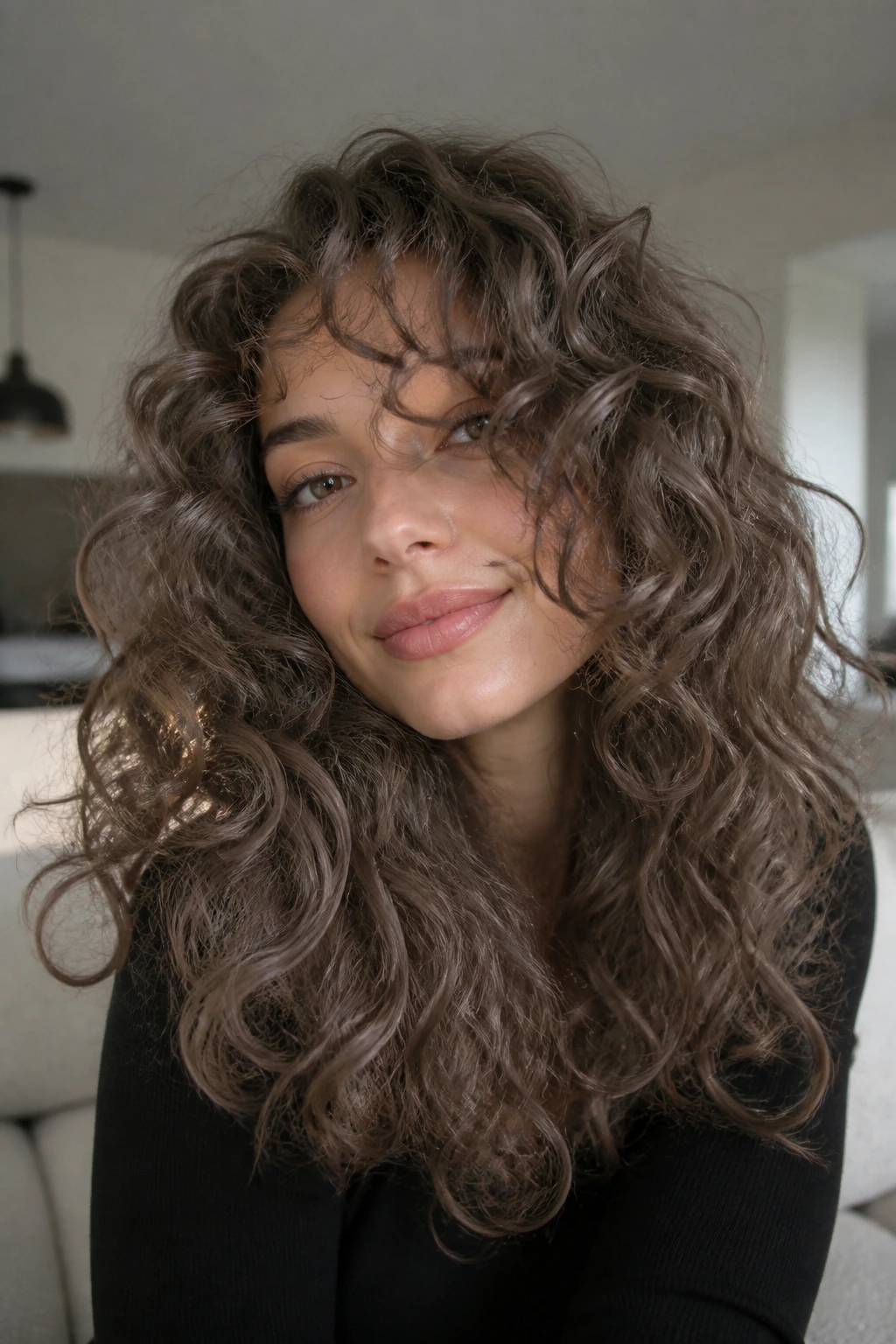
Brunette curls stay nicer when you stop washing them like they’re a gym towel. Two to three washes a week is plenty for most textured hair, and a color-safe, sulfate-free shampoo helps the tone last longer. If your hair is very dry, even less frequent washing can work.
A gloss or toner refresh every 4 to 8 weeks keeps the brown from going flat. If you chose a warm brunette, a blue or blue-violet product can help when orange brass shows up, but use it sparingly. Too much can dull the warmth you actually wanted. For cooler brunettes, a light hand matters even more.
Sleep protection is not optional if you care about the finish. A satin bonnet or pillowcase keeps the curl pattern intact and cuts down on roughness at the surface, which is where brunette shine lives. If you use a diffuser often, trim every 8 to 12 weeks so the ends don’t fray and make the color look tired.
Pool days and strong sun are rough on brown hair, especially if it’s highlighted. Rinse before swimming, use a leave-in with UV protection, and clarify every few weeks if styling products start to cloud the tone. Heavy curl creams can make brunette hair look dull faster than people expect.
Questions Readers Usually Ask About Brunette Curls
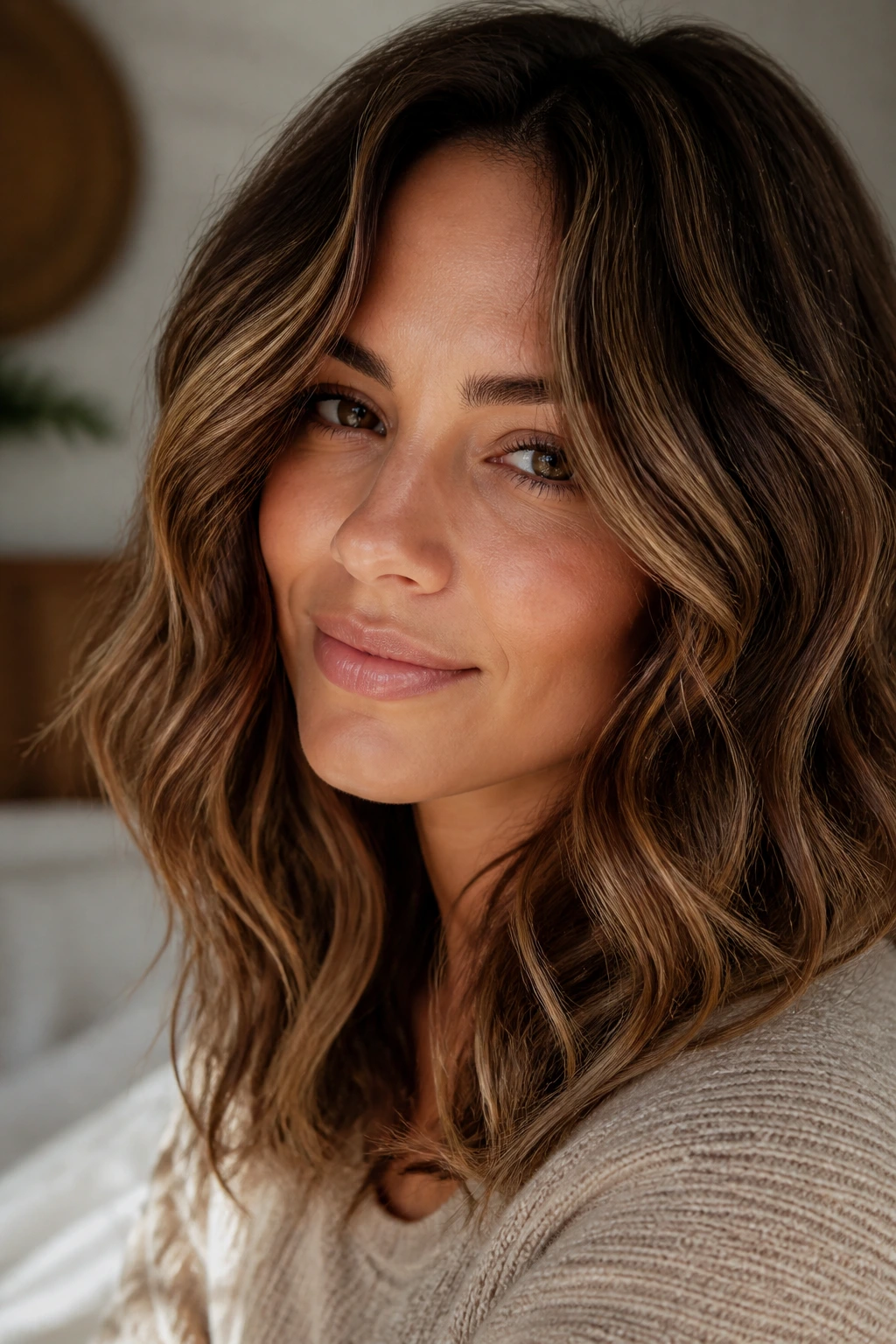
Can you do brunette balayage on very tight curls? Yes, but the placement needs to be finer and more deliberate. Tight curls usually look better with micro-lights, lowlights, or a softer root shadow than with chunky ribbons.
What brunette shade is easiest to maintain on curly hair? A level 4 to 5 rooted brunette with a gloss is usually the easiest. The grow-out stays soft, and you don’t need to chase every inch of new growth.
How do I stop brown hair from turning orange? Keep heat low, use color-safe shampoo, and ask for a toner or gloss with the right undertone. If the hair pulls orange fast, cooler brunettes or neutral browns usually behave better than warm ones.
Do highlights need to be painted differently on curls? Yes. Curly hair should be mapped in its dry state or at least visualized that way. The same highlight placement that works on straight hair can disappear once the curls shrink.
Is ash brown bad for dry curls? Not bad, but it can look flat if the hair is very porous or dull. In that case, a beige-ash blend or a smoky mocha with a gloss usually looks healthier.
What if my curls are damaged from old color? Start with lowlights, a gloss, and a haircut that removes rough ends. You do not need to chase brightness right away; a rich brunette base can make damaged hair look better faster.
Can I get this kind of color at home? For a gloss or root refresh, maybe. For balayage, face-framing pieces, or any color correction, a salon hand usually saves you from patchy placement and uneven tone.
Which looks are best if I wear my hair up a lot? Face-framing caramel, hazelnut, or glossy money pieces show up even when the rest of the hair is clipped back. Hidden peekaboo colors are fun too, but front pieces do more work in ponytails and buns.
A Brown That Moves With the Curl
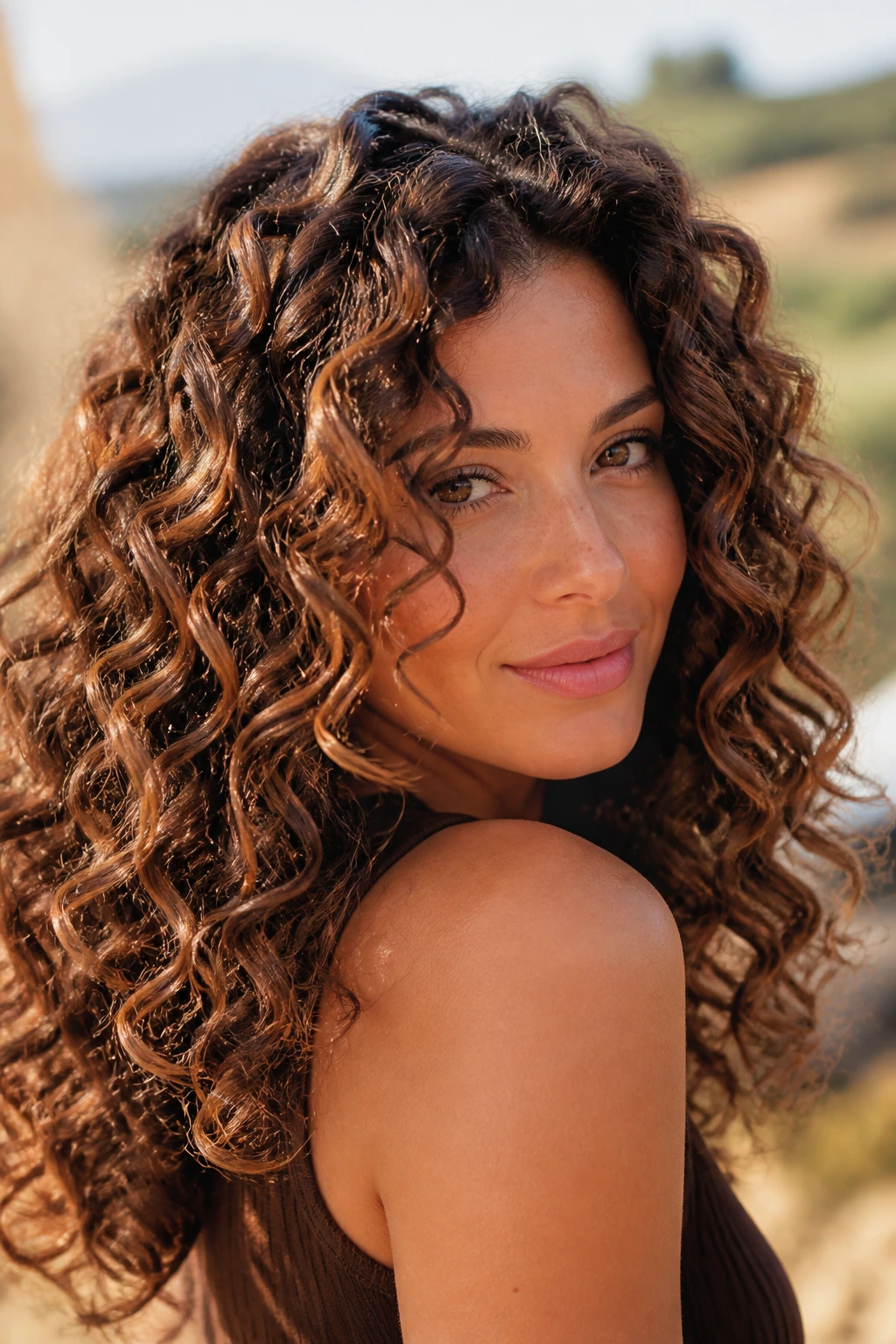
The best brunette curls usually aren’t the loudest ones. They’re the ones that look like the color was planned around the bend of the hair, not painted on top of it. When the shade follows the curl pattern, the whole head starts behaving better: grow-out softens, shine shows up faster, and even a simple wash-and-diffuse feels finished.
That’s why this range of browns works. Some are warm, some smoky, some barely a shade apart from the base. But all of them respect the shape underneath. If you bring one thing from this list to your stylist, make it this: choose the brunette that fits your curl pattern first, then decide how much brightness you want to see. The rest falls into place.
