



Some hairstyles look polished only from one angle. A curly mohawk doesn’t have that problem. On Black hair, it can read sharp, soft, architectural, or playful depending on where the curls sit, how tight the sides are pulled, and whether the center ridge is fluffy, defined, braided, or built from twist-outs.
That flexibility is why the style keeps showing up in so many different forms. A curly mohawk can live on a TWA with a sponge and some edge control. It can also hold its own on waist-length curls with feed-in braids, pinned sections, or a crown of coils that sits right down the middle like it was designed there on purpose. The shape does the heavy lifting. The texture does the rest.
The part people miss is that this look is not only about being bold. It’s about balance. Too much tension on the sides and the whole thing feels stiff. Too much product on the curls and you get a dull, coated finish instead of movement. The best versions leave enough softness for the hair to still look like hair, not a shellacked helmet.
Why These Curly Mohawk Styles Earn a Spot in the Rotation
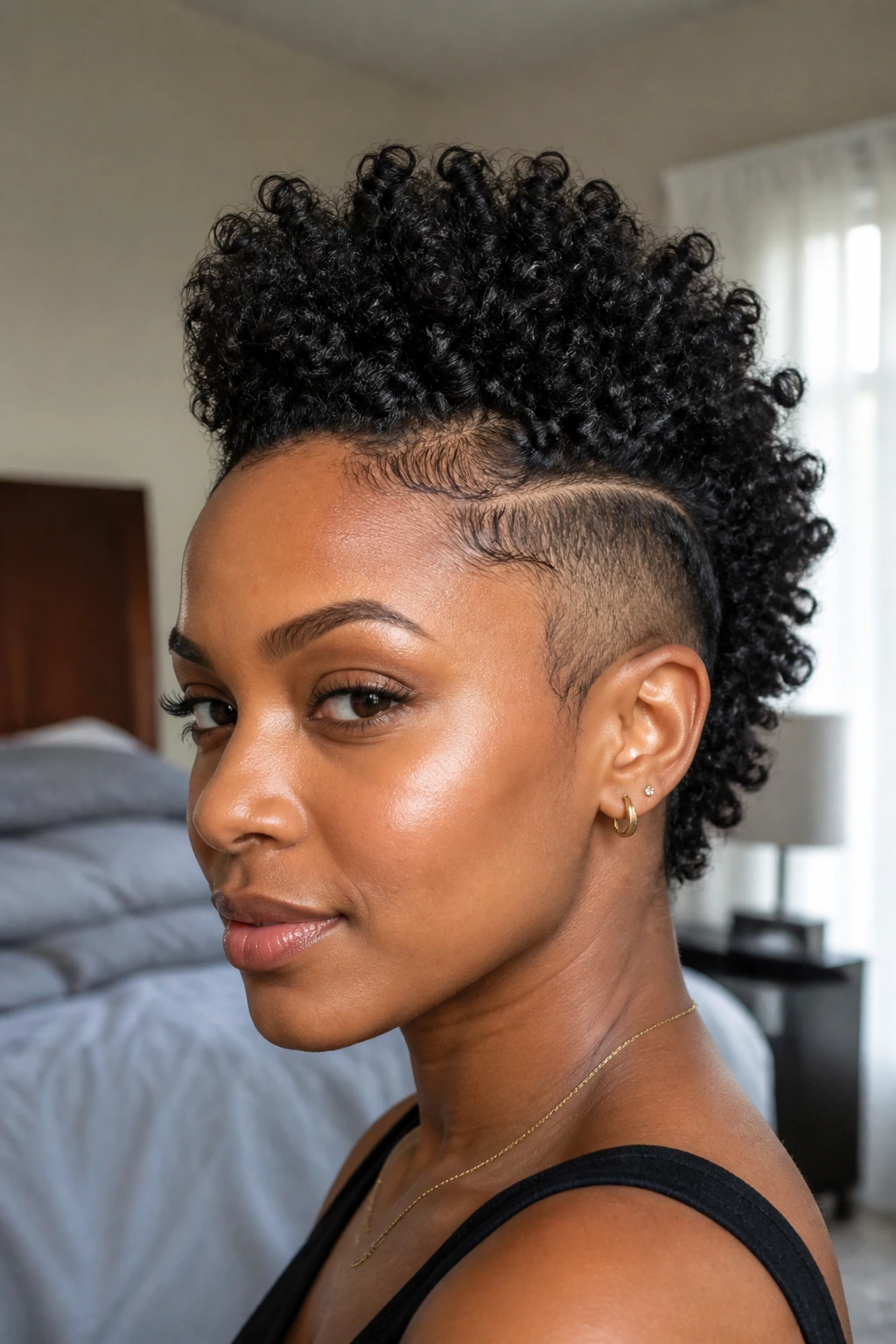
-
Built around texture, not against it: These styles work with shrinkage, coil pattern, and density instead of trying to flatten everything into submission.
-
Short sides make the center ridge pop: Tapering, braiding, or slicking the sides gives the curls in the middle room to look bigger and more defined.
-
They can be low-tension when done right: A good curly mohawk keeps the hairline calm, which matters more than people admit.
-
Easy to dress up or down: The same silhouette can look like a weekend style or a formal updo depending on shine, pins, and accessory choice.
-
They work on more than one length: Short coils, medium natural hair, extensions, and crochet installs all fit the shape.
-
Refreshability matters: Many of these looks can be revived with water, mousse, or a quick re-pin instead of starting from scratch.
1. Tapered Halo Curly Mohawk
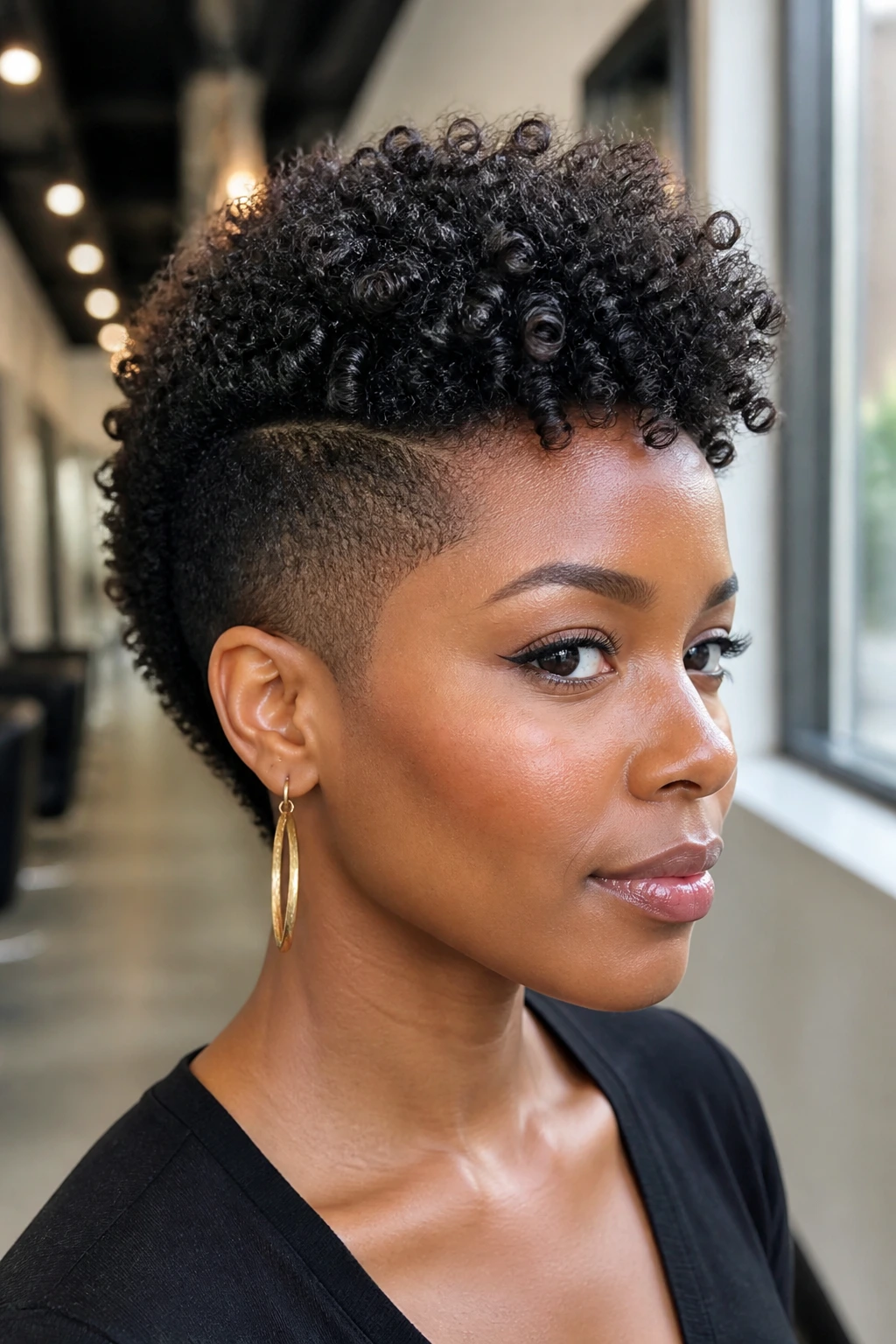
A tapered halo curly mohawk has that neat, rounded outline that makes the center look fuller than it really is. The sides sit close to the scalp, usually faded or clipped down, while the top rises in a soft arc of coils or stretched curls. It’s one of those styles that looks deliberate from every angle, which is why it photographs well in real life, not just in a salon mirror.
The clean shape does the work
What makes this version shine is the contrast. The taper keeps the sides tidy, and the halo of curls gives the style a little lift without turning it into a giant puff. If your hair is 4B or 4C, stretching the top first with chunky twists or a banding method makes the shape sit higher and stay visible longer.
A little edge control around the hairline can sharpen the outline, but don’t drown the front in product. You want a clean curve, not a stiff rim.
2. Braided Side-Panel Curly Mohawk
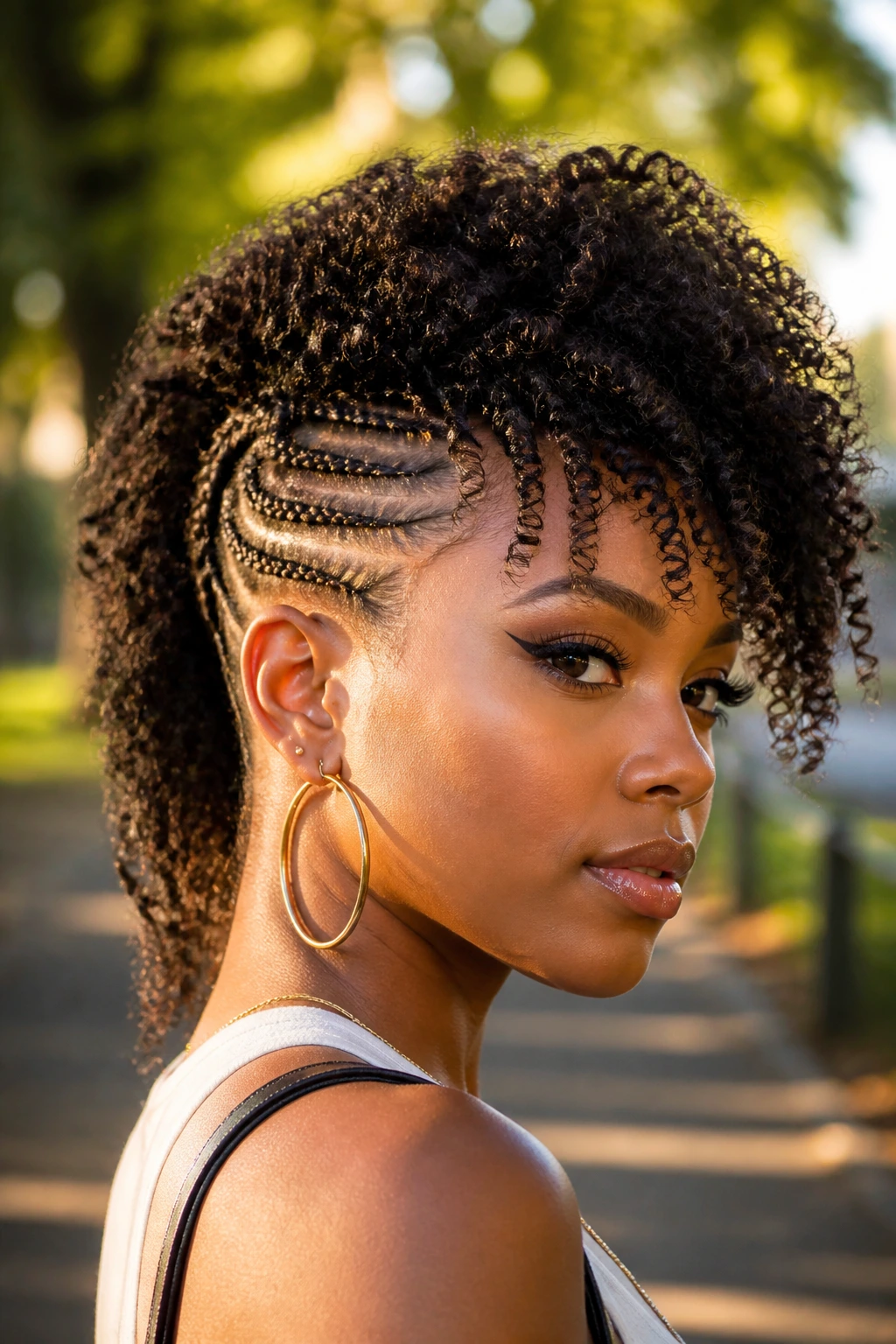
Braided side panels change the whole mood of a curly mohawk. Instead of shaving or slicking the sides flat, you use narrow braids to frame the center section and let the curls stay soft and full in the middle. The result feels more detailed, almost like the style has its own built-in trim.
This is one of the smarter options when you want the mohawk shape to last more than a day. The braids hold the sides in place, and the curls can be refreshed with a quick mist of water and a light mousse scrunch. I like this version on medium to long natural hair because it gives you structure without stealing the movement from the top.
The trick is keeping the braids slim. Thick side braids can make the style look bulky in the wrong places. Thin, even panels read cleaner and leave the center ridge with enough visual room to breathe.
3. Flat-Twist Crown Mohawk
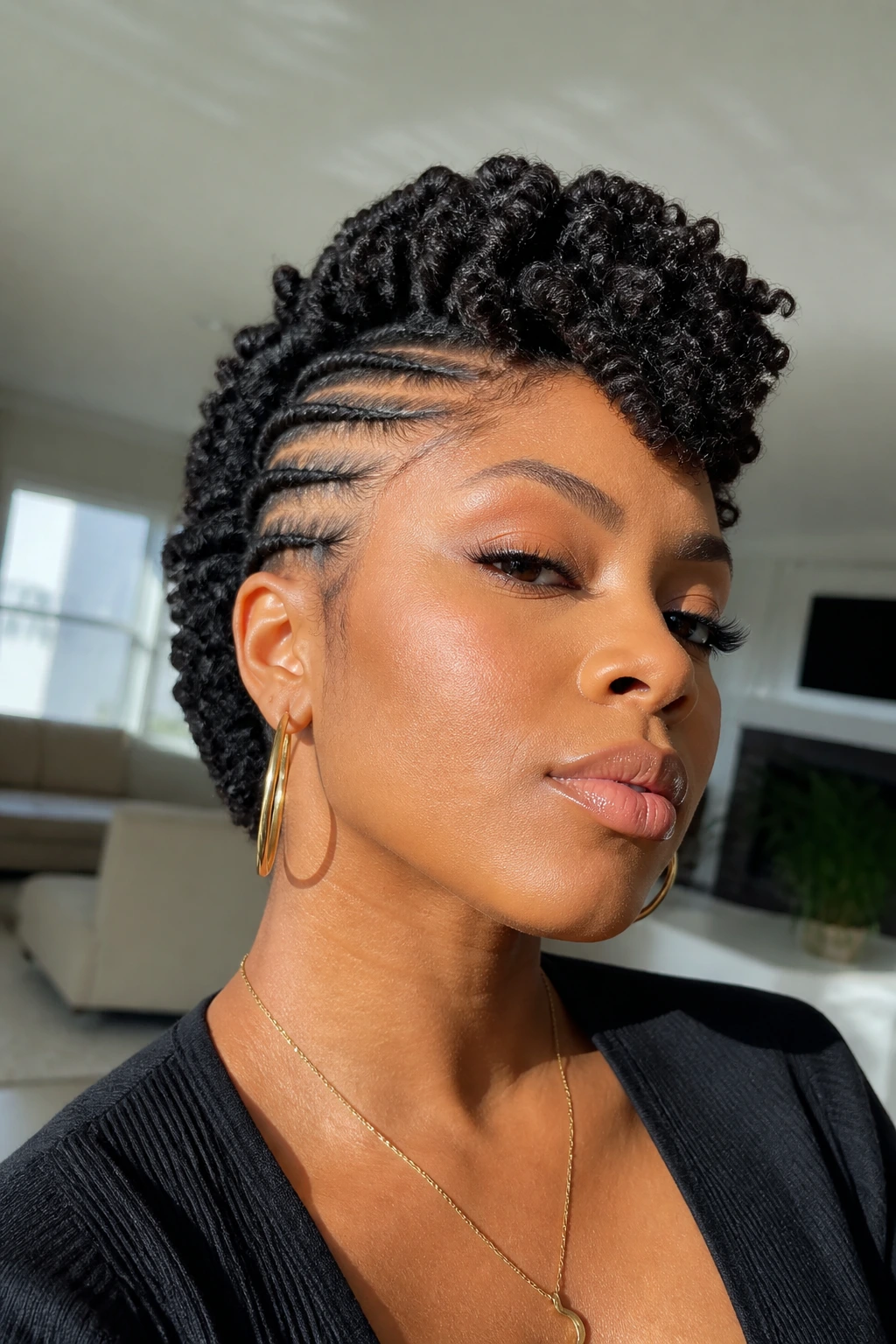
Want the sides to stay flat without feeling plastered to your scalp? Flat twists are the answer. They pull the hair back in tidy lines, then feed into a lifted crown or curly ridge that runs through the middle. It’s a smart choice if you like the mohawk shape but want something a little gentler than a full braid set.
Best on freshly stretched hair
This style holds best when the hair has some length to it, even if that length comes from a twist-out or a blow-dry on low heat. Freshly washed hair can work, but it often shrinks too much and makes the twists harder to keep smooth. A little stretch gives the lines more definition.
The crown can be left curly, tucked into a puff, or set with perm rods if you want a more sculpted finish. Either way, the flat twists keep the perimeter quiet while the center does the talking.
4. High Puff Faux Hawk
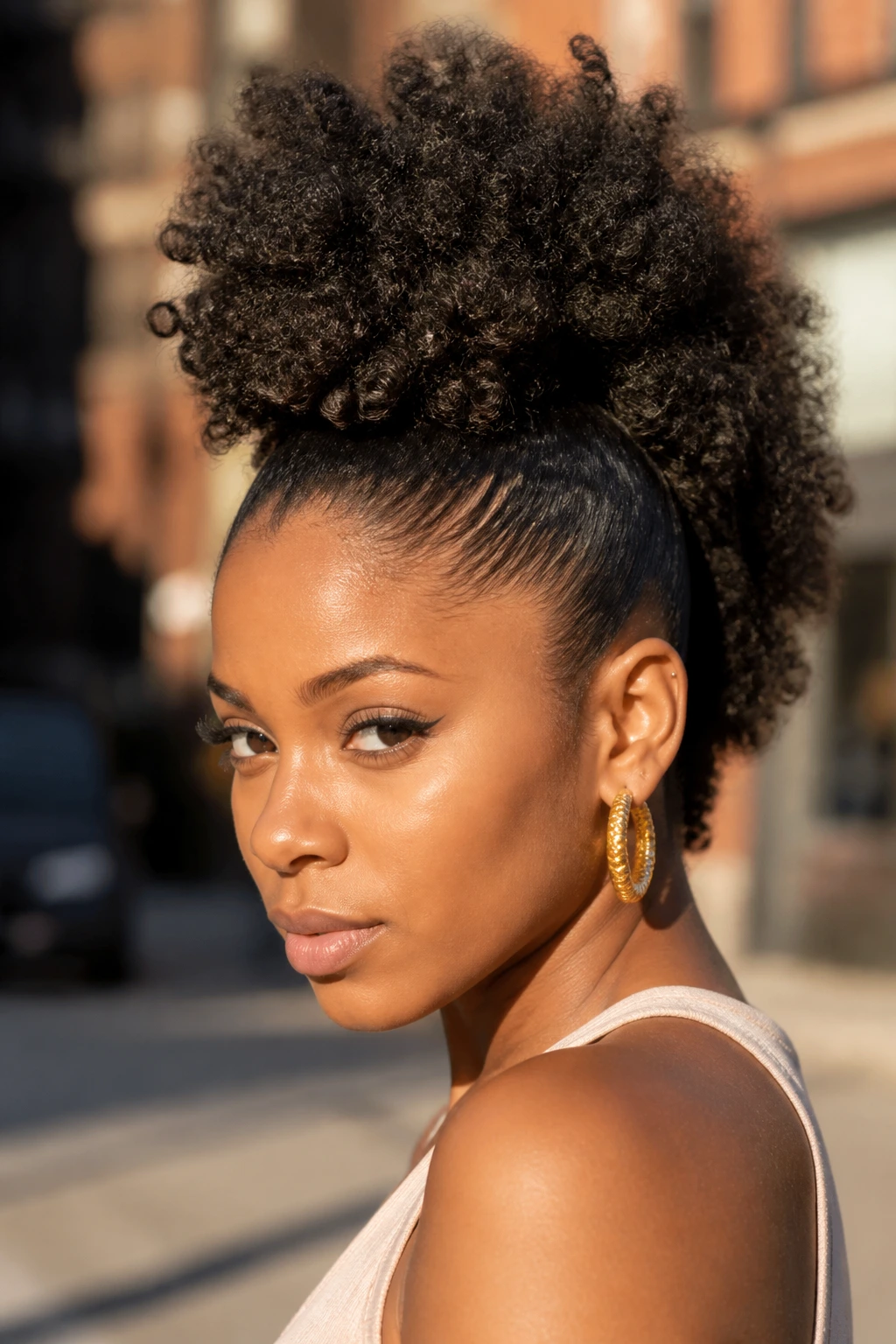
A high puff faux hawk is the fast answer when you want height and don’t have time to braid half your head. The hair is gathered into one or more puffed sections running up the center, while the sides are slicked or pinned down close to the scalp. It gives you the mohawk shape with almost no drama.
-
Fast to build: A spritz bottle, a brush, a puff cuff or small bands, and you’re halfway there.
-
Best for coily hair with shrinkage: The tighter your texture, the easier it is to build a puff that stays full.
-
Looks best with sharp edges: A crisp side part or smooth perimeter keeps the puff from reading messy.
This one works when you want shape, not complexity. If the curls on top are tight and dense, leave them alone. The volume is the point.
5. Soft Twist-Out Mohawk
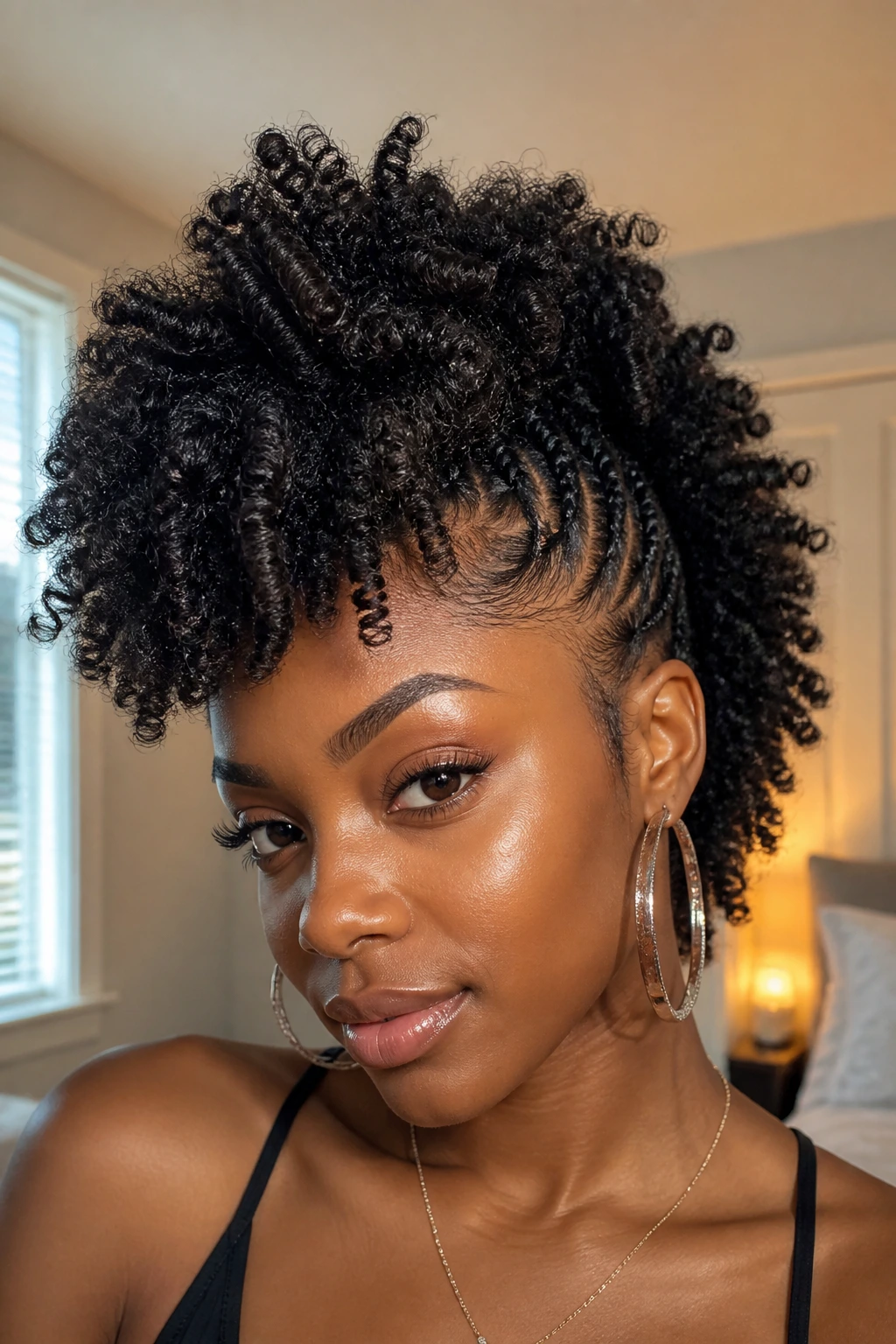
If you like movement more than helmet-smooth polish, this is the one. A soft twist-out mohawk gives you that fluffy, touchable middle ridge that still holds a clear silhouette. The curls break apart just enough to look airy, not frizzy, and the style has a nice lived-in feel after a few hours.
What matters here is the prep. Set the twists while the hair is damp, not soaking, and let them dry completely before taking them down. If you separate too early, you lose the curl pattern and end up with fuzz instead of shape. A little oil on the fingertips helps, but don’t overdo it or the twist-out gets limp.
This version is especially good when you want a mohawk that feels less structured than a braided look. It moves when you turn your head. That’s the charm.
6. Bantu Knot-Out Mohawk
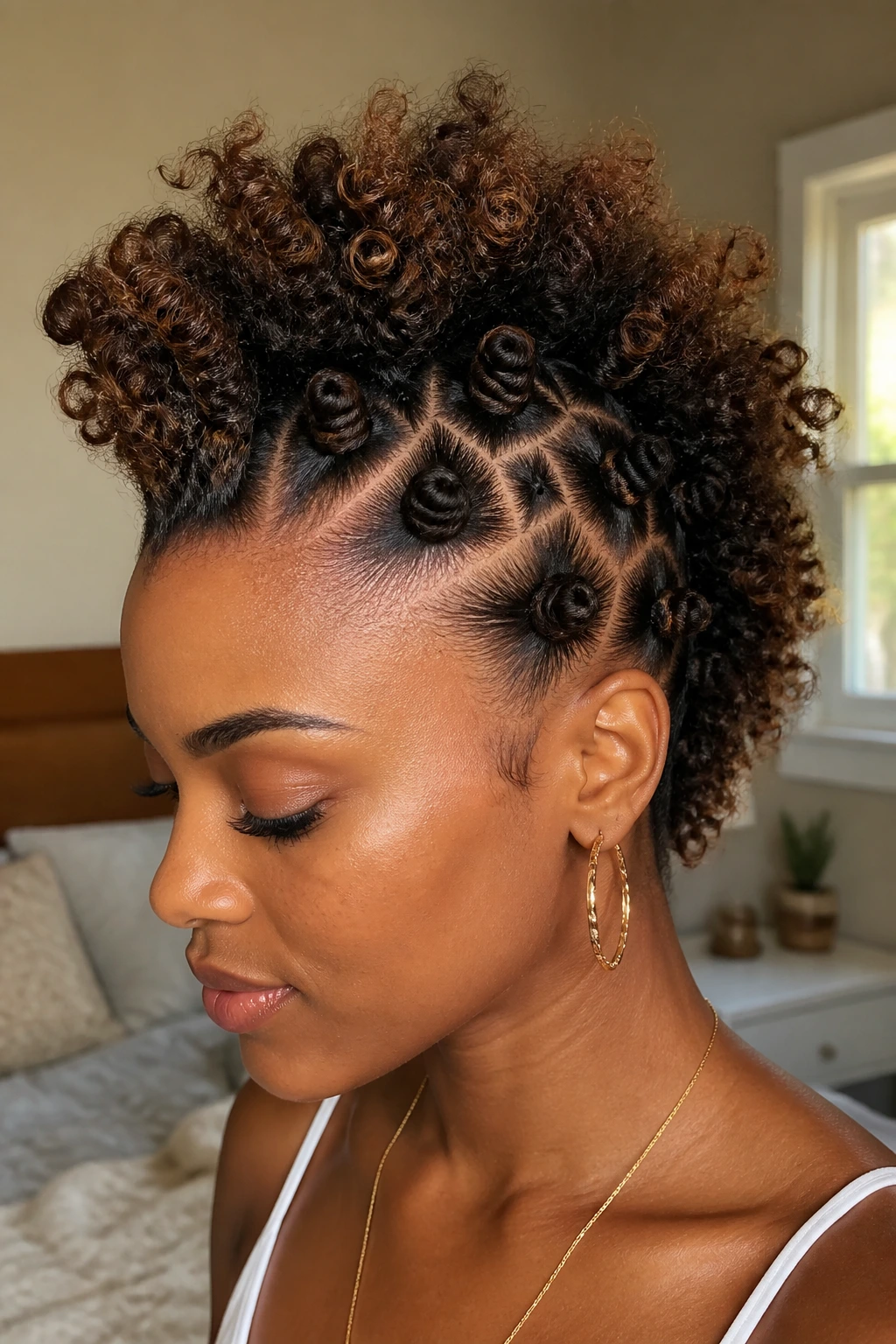
Bantu knots are a little old-school in the best way, and the knot-out mohawk has a finish that’s hard to fake. The hair gets sectioned into small knots across the head, then released into springy curls that gather into a center ridge. The texture looks compact at first, then opens up with a little separation.
Unlike a twist-out, the knot-out gives you a rounder curl and a bit more bounce at the ends. That makes the center of the mohawk feel plush instead of stretched. If your hair is thick and tends to collapse under its own weight, this is a good shape to try because the knot set gives the curls more structure from the start.
The only catch is patience. The knots need to dry all the way through, especially at the base. If you undo them while the center is still damp, the whole style goes flat in about an hour.
7. Finger-Coil Sculpted Mohawk
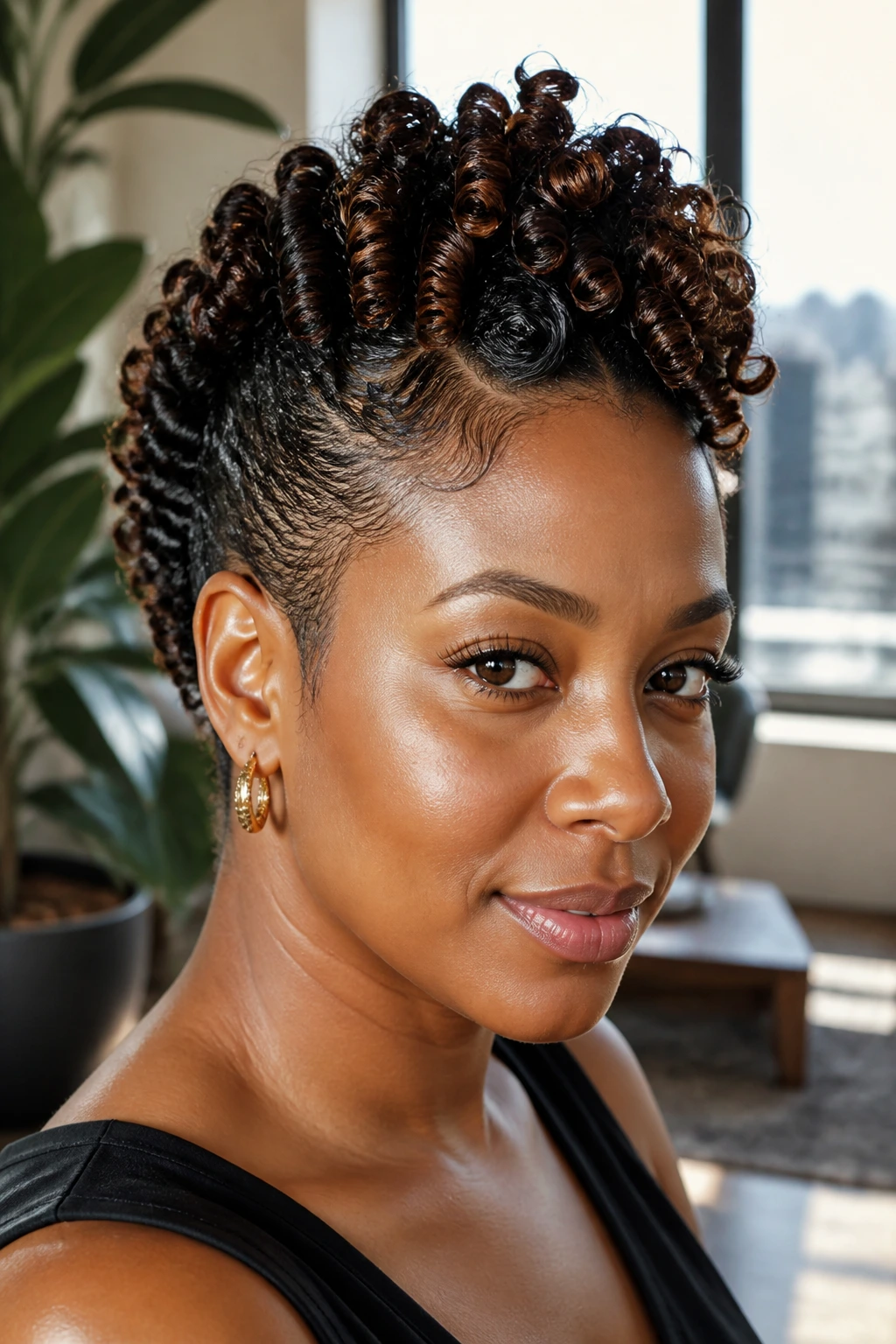
Finger coils turn a curly mohawk into something more precise. Each coil is formed by wrapping a small section around the finger until it springs back into a defined spiral, then the coils are arranged into a strip down the middle of the head. The effect is neat, almost sculptural, and it works especially well on shorter natural hair.
Why this shape looks so tidy
Finger coils are a control move. They keep each curl in its own lane, which means the final mohawk has definition even when the hair is dense or short. On a TWA, the style reads intentional instead of underdone. On longer hair, it gives you a sleeker center line with less puff.
Use a light cream or custard, not a heavy butter. Heavy products make the coils droop before they dry. A little patience goes a long way here. Once they’re set, leave them alone until they’re fully dry, or you’ll pull the shape apart before it has a chance to lock in.
8. Pineapple Curly Mohawk
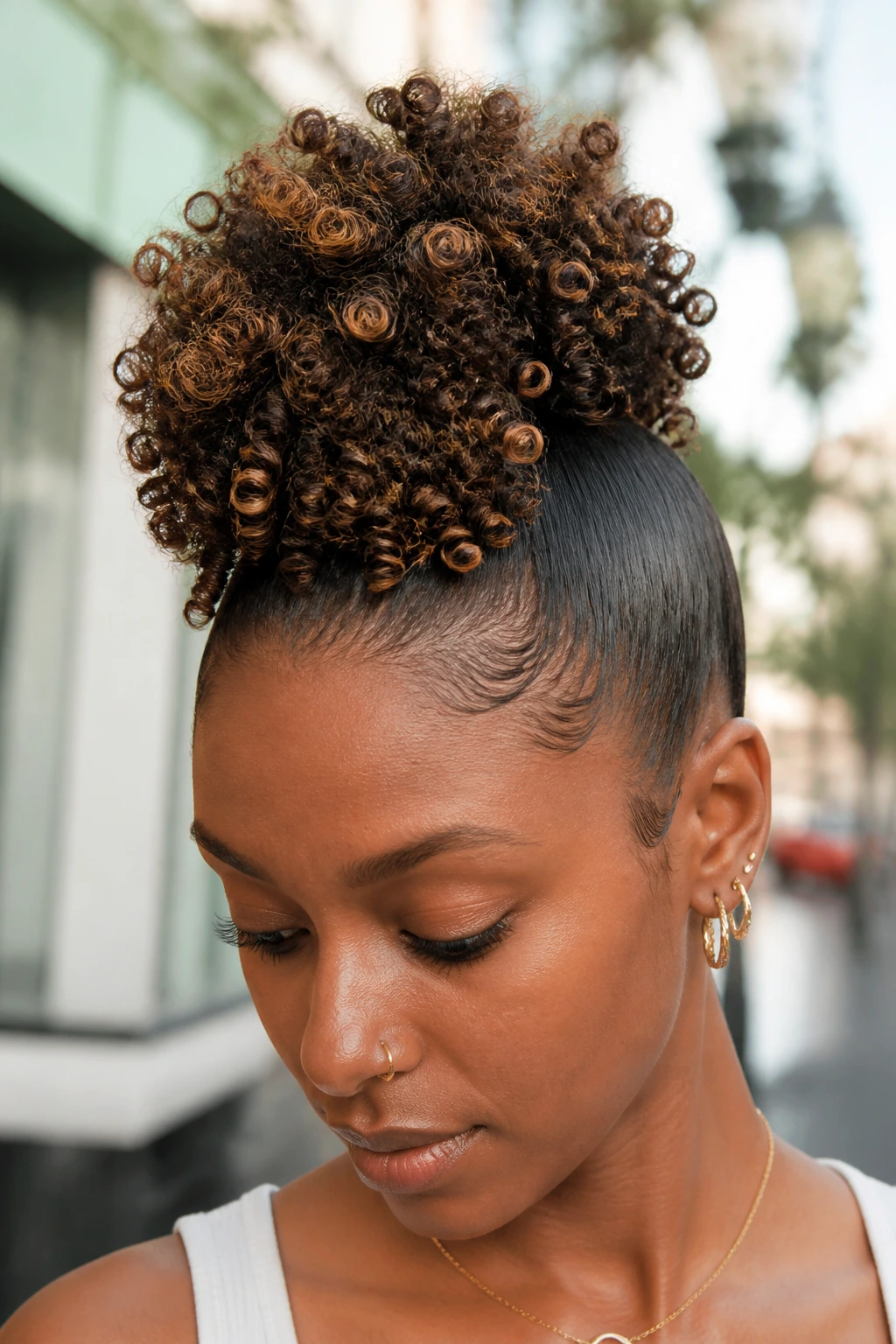
A pineapple mohawk takes the familiar nighttime pineapple idea and turns it into a daytime shape. The curls are gathered up the center of the head, sometimes in one tall puff, sometimes in two or three sections, while the sides are slicked or pinned down. It looks relaxed, but there’s still a clear line running through the middle.
This is one of the easiest ways to show off stretched curls without spending an hour reshaping them. If your hair already has a wash-and-go base, a few strategically placed pins and a strong-hold side brush can turn it into a mohawk in minutes. The key is not over-pulling the top. Leave the curl cluster loose enough that it still has texture.
It’s also forgiving on second- or third-day hair. A little water on the ends and a scrunch can bring the curls back fast. Handy. No one wants to start over for a dinner plan.
9. Feed-In Cornrow Mohawk
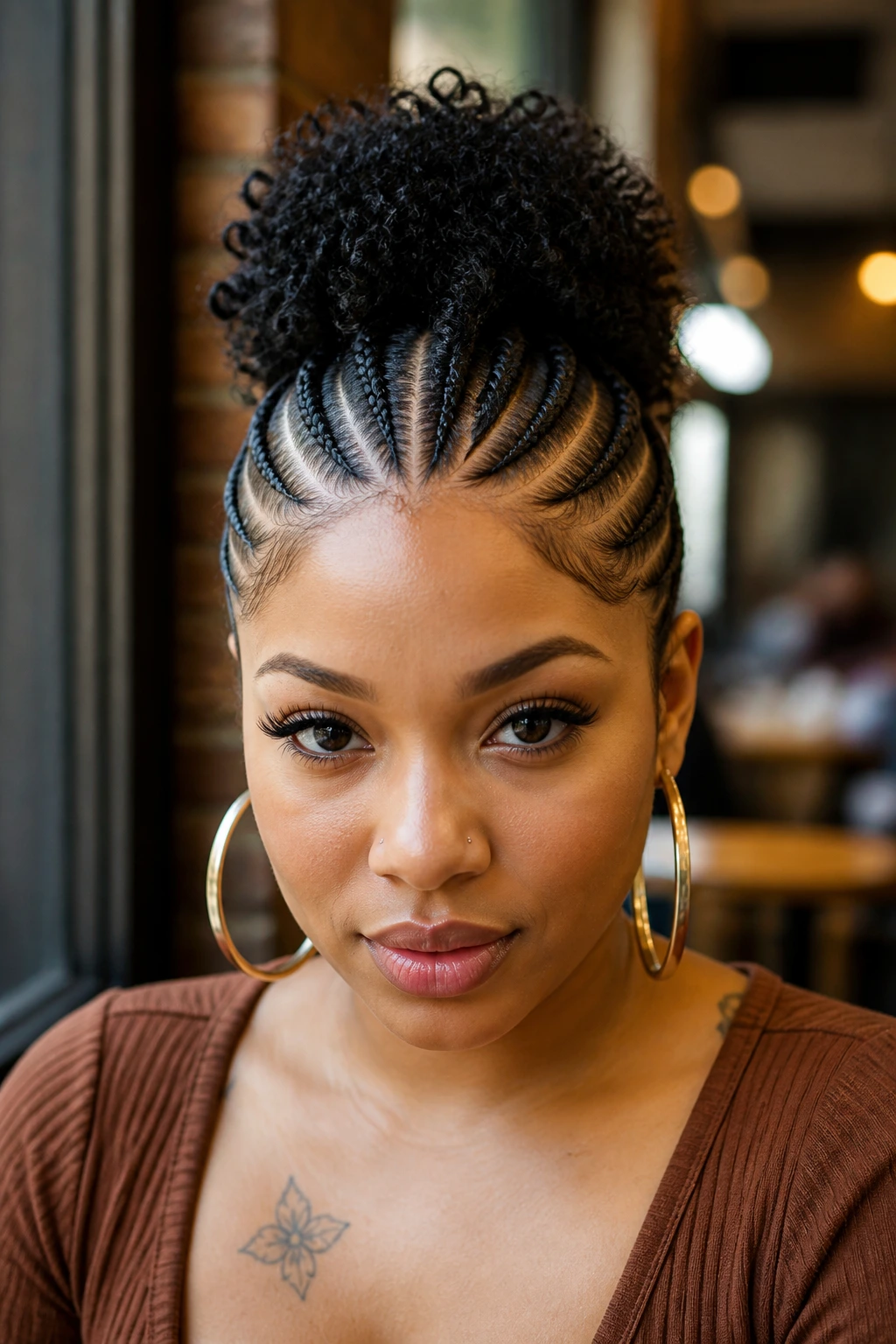
Feed-in cornrow mohawks are all about clean lines. The braids start slim at the hairline, then gradually build into the center strip, which can be left curly, twisted, or tucked into a puff. Because the braiding starts soft and small, the look sits flatter at the scalp and keeps the shape neat for longer.
This style is strong when you want definition without too much bulk. It also makes it easier to add length or fullness in the center because the braids create a clear channel for the hawk itself. If you’re using added hair, choose a texture that matches your own curl pattern close enough that the transition doesn’t look hard.
A good feed-in mohawk has rhythm. The braids shouldn’t feel crowded, and the center curls shouldn’t look squeezed. If you can trace one clean line from front to back, you’re in the right place.
10. Two-Strand Twist Mohawk
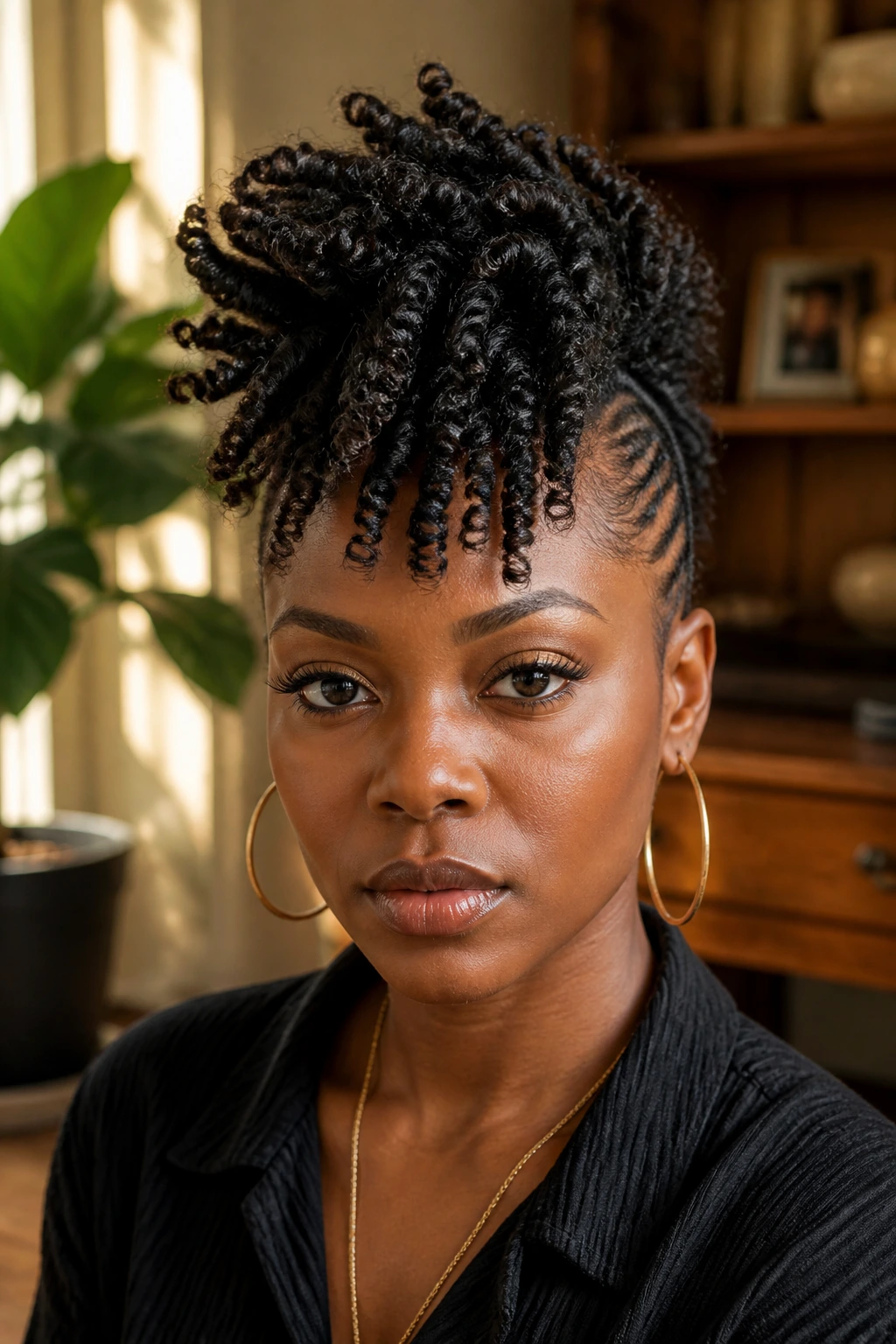
Twists are less rigid than braids, and that softness matters here. A two-strand twist mohawk gives you a center ridge with visible rope-like texture, then lets the ends bloom into fluffy curls if you unravel them later. The look sits somewhere between casual and polished, which is probably why it works so well.
What makes it different from a braid-out
A braid-out has a flatter wave pattern. Twists make the hair feel a little springier and more open. If you want the mohawk to have movement, twists usually win. They also tend to be kinder on hair that gets frizzy when braids are taken down too aggressively.
Set the twists with a leave-in, a cream, and just enough holding product to keep the parts smooth. Too much gel and the twists feel crunchy. Too little and the center ridge frizzes before lunch. There’s a narrow middle ground, and that middle ground is where this style looks best.
11. Rolled Tuck Updo Mohawk
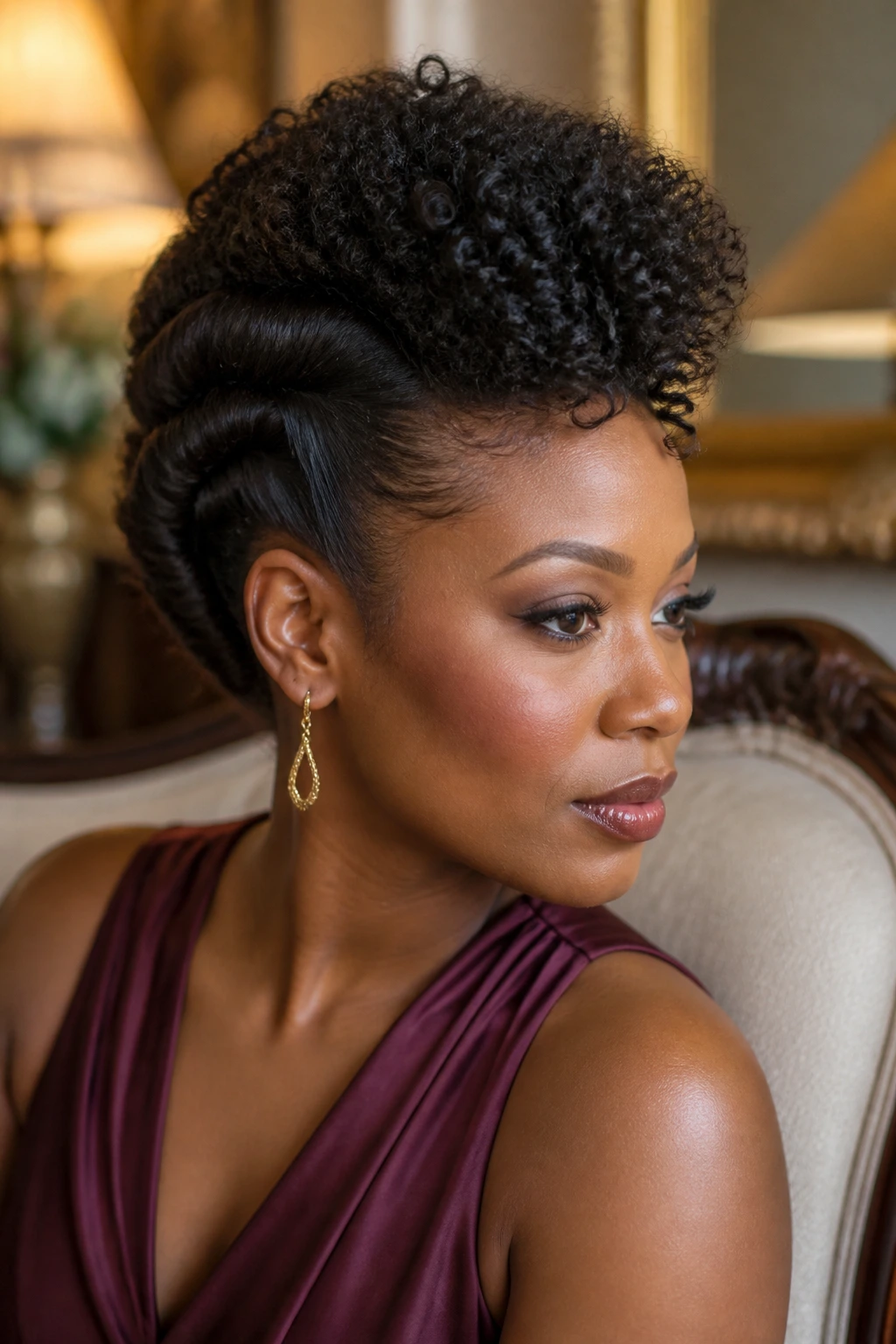
A rolled tuck mohawk looks polished in that old-school, carefully pinned way that never really goes out of style. The sides are rolled inward or tucked under with pins, and the center hair is left to rise in curls or a compact puff. The finish is tidy, but not boring.
This style is especially useful when you want your curls protected and out of the way. The tucked sides reduce the chance of frizz from brushing against clothes or scarf edges, and the center section can be dressed up with a twist-out, rollers, or loose coils. It has enough structure for a formal event without looking heavy.
The pins matter here. U-pins or sturdy bobby pins hold the tuck better than flimsy clips. If the tuck starts slipping, the whole silhouette sags, and you lose the clean mohawk line.
12. Short TWA Curly Mohawk
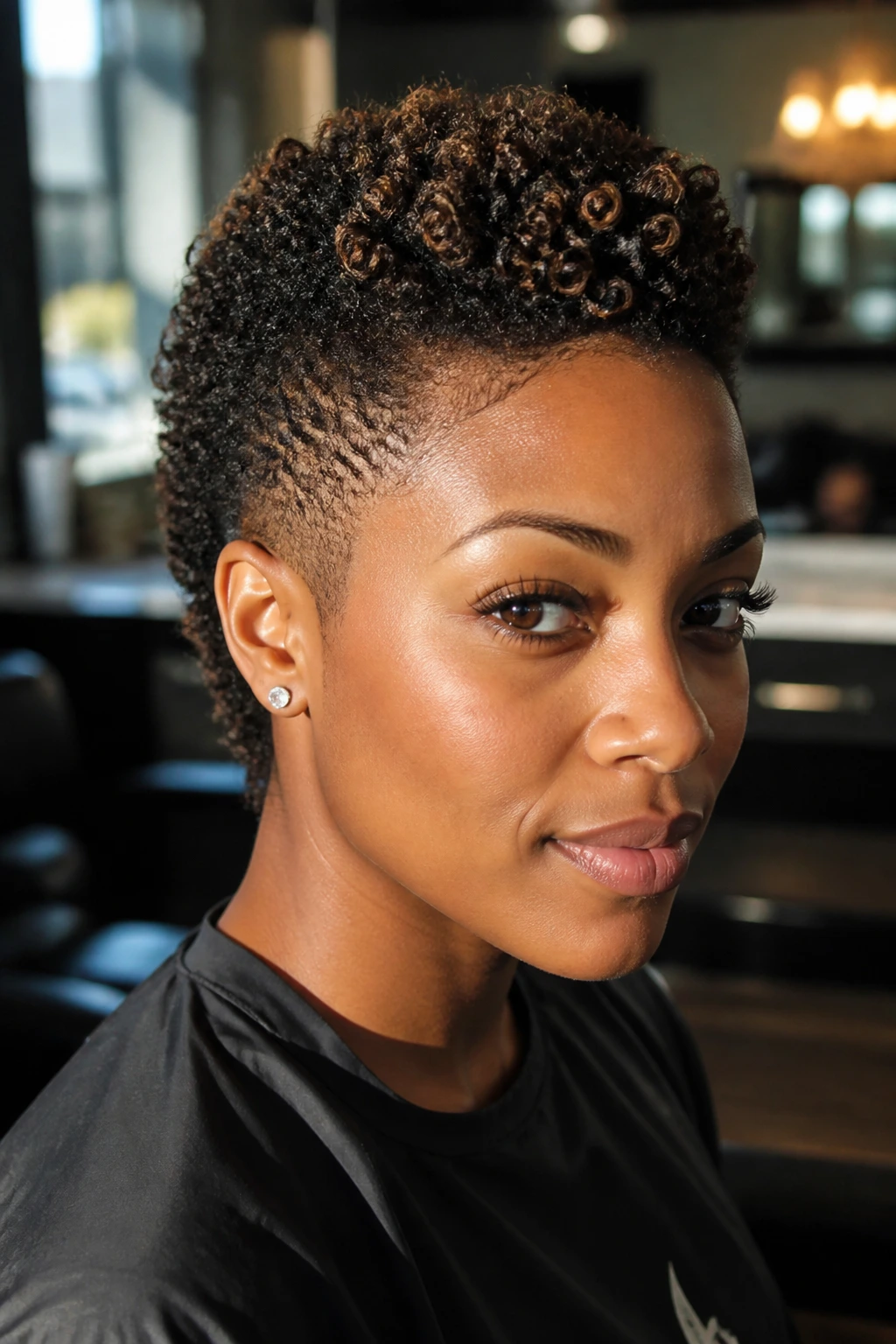
Short hair can pull this off, and it often looks sharper than a longer version because every coil has to earn its place. A short TWA curly mohawk uses tiny curls or sponge-defined texture in the center while the sides are tapered close or smoothed down. The result is compact, neat, and surprisingly strong.
What saves this look is shape, not length. You don’t need a ton of hair to make the middle ridge feel like a ridge. A small amount of height, a clean side outline, and some careful coil definition are enough. If the hair is very short, a curl sponge, tiny finger coils, or a picked-out center strip can do the job.
This is one of the few mohawk styles that doesn’t ask for extra hair to be interesting. It just needs a good outline.
13. Box-Braid Curly Mohawk
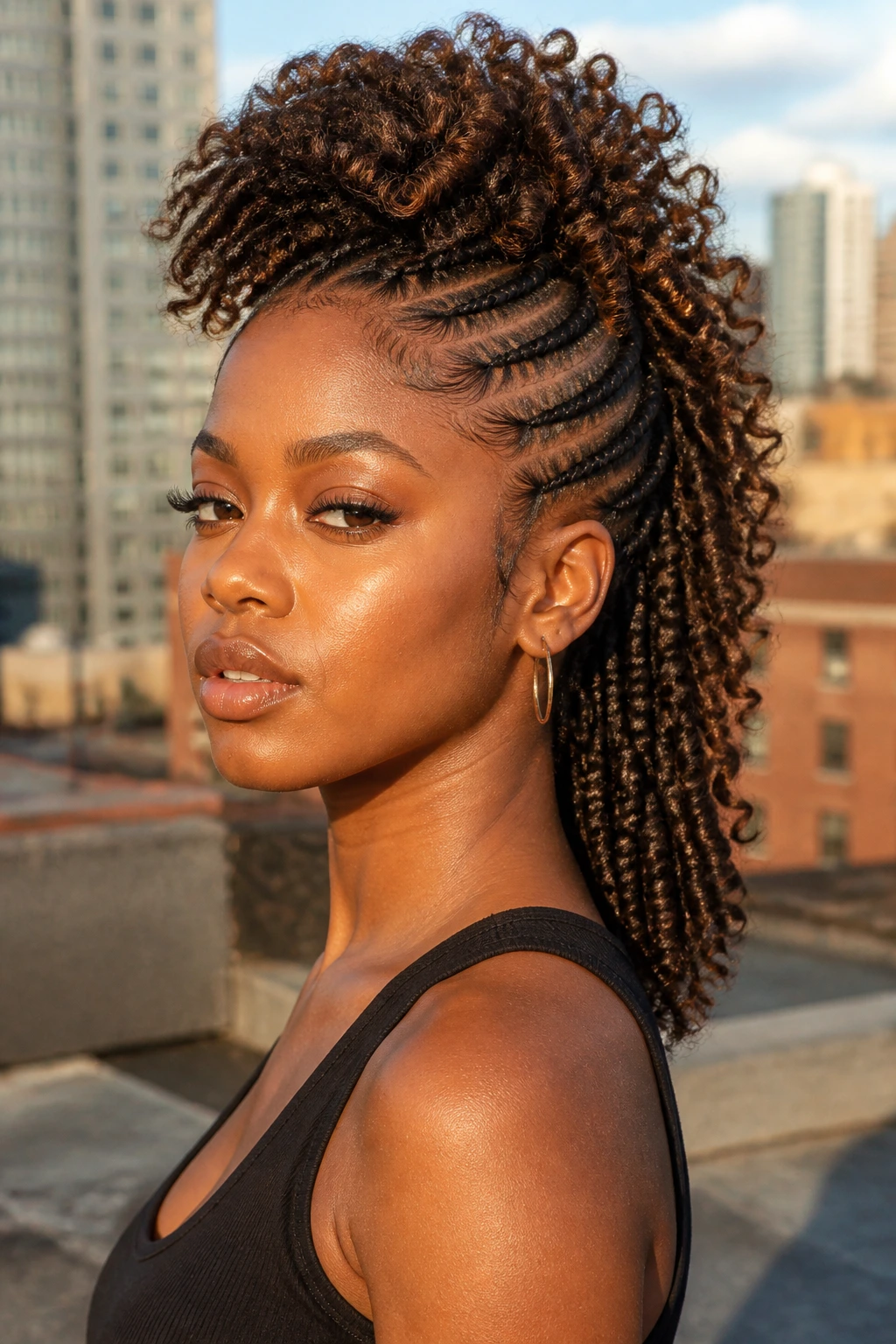
Box braids give the mohawk a different kind of weight. Instead of a loose center ridge, you get a braided structure that can be worn straight back, pinned into a lifted strip, or finished with curly ends for a softer look. It’s one of the more durable ways to wear the shape because the braids themselves hold the style in place.
-
Best when you want longevity: The braid base stays neat far longer than a loose twist-out.
-
The ends make the difference: Curly or wavy ends keep the style from reading too stiff.
-
Good for busy weeks: You can refresh the front and leave the rest alone.
The only thing I’d watch is size. Huge braids can overpower the mohawk line and make the middle feel too heavy. Medium braids usually give the best balance between structure and movement.
14. Puff-Segment Mohawk
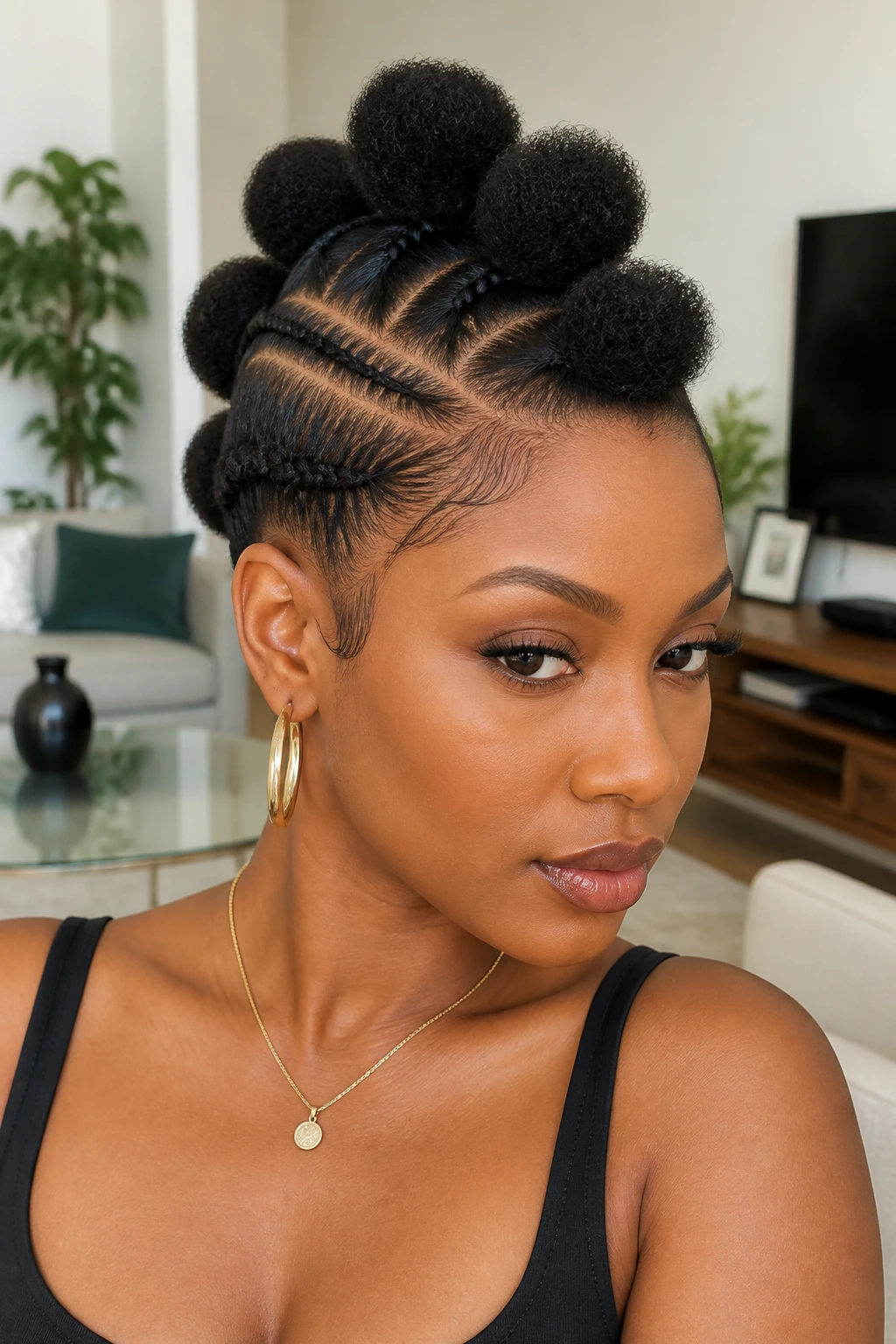
A puff-segment mohawk has a fun, almost rhythmic look. Instead of one big puff, the hair is sectioned into several centered puffs running from front to back. Each puff can sit a little higher or lower, which gives the style a sense of motion even when you’re standing still.
It works best when you want personality without a lot of complicated styling. The sectioned puffs are easy to create with bands or ties, and the parted base can be kept neat with a rat-tail comb and a brush. If your hair is dense, this style gives you a way to distribute the volume instead of trying to cram it into one shape.
I like this one because it feels playful but not childish. The sections can be tight and sleek or soft and fluffy, depending on how much you stretch the hair first.
15. Side-Shaved Curly Mohawk
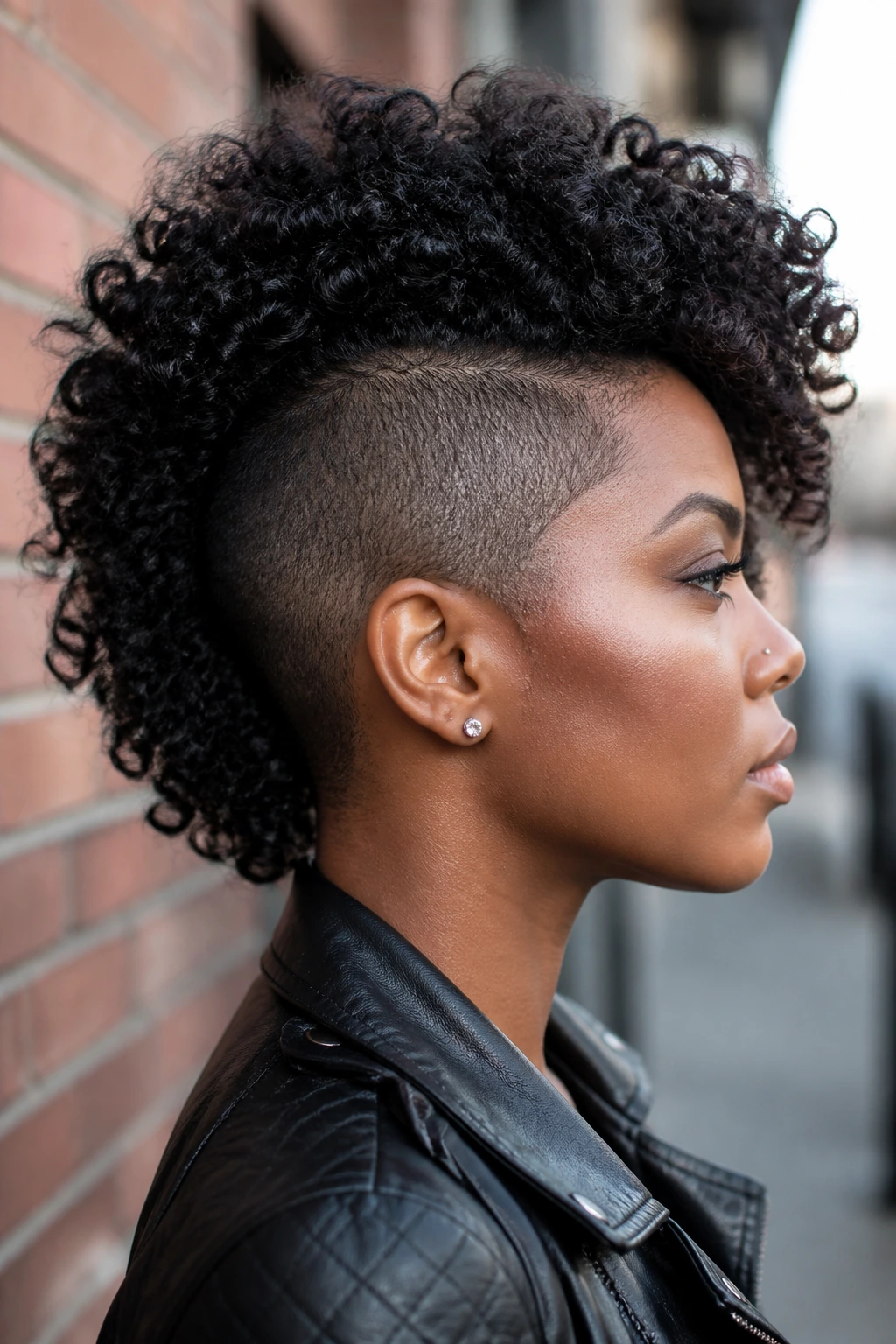
A side-shaved curly mohawk is the bluntest version of the style, and that’s exactly why it lands so hard. The sides are clipped close or fully shaved, which puts every ounce of attention on the curls sitting up top. There’s no visual clutter. Just shape.
If you go this route, the top needs to be worth the contrast. Dense curls, a good twist set, or a defined wash-and-go makes the most of the empty space on the sides. The clean edge around the shaved area also matters; a sloppy grow-out can wreck the line fast.
Best for people who like upkeep
This one is not a set-it-and-forget-it cut. You’ll need to keep the sides shaped if you want the mohawk silhouette to stay crisp. But the payoff is strong. The curl ridge looks bigger because the surrounding hair is stripped away, and the whole style reads bold even when the top is only medium length.
16. Wet-Look Curly Mohawk
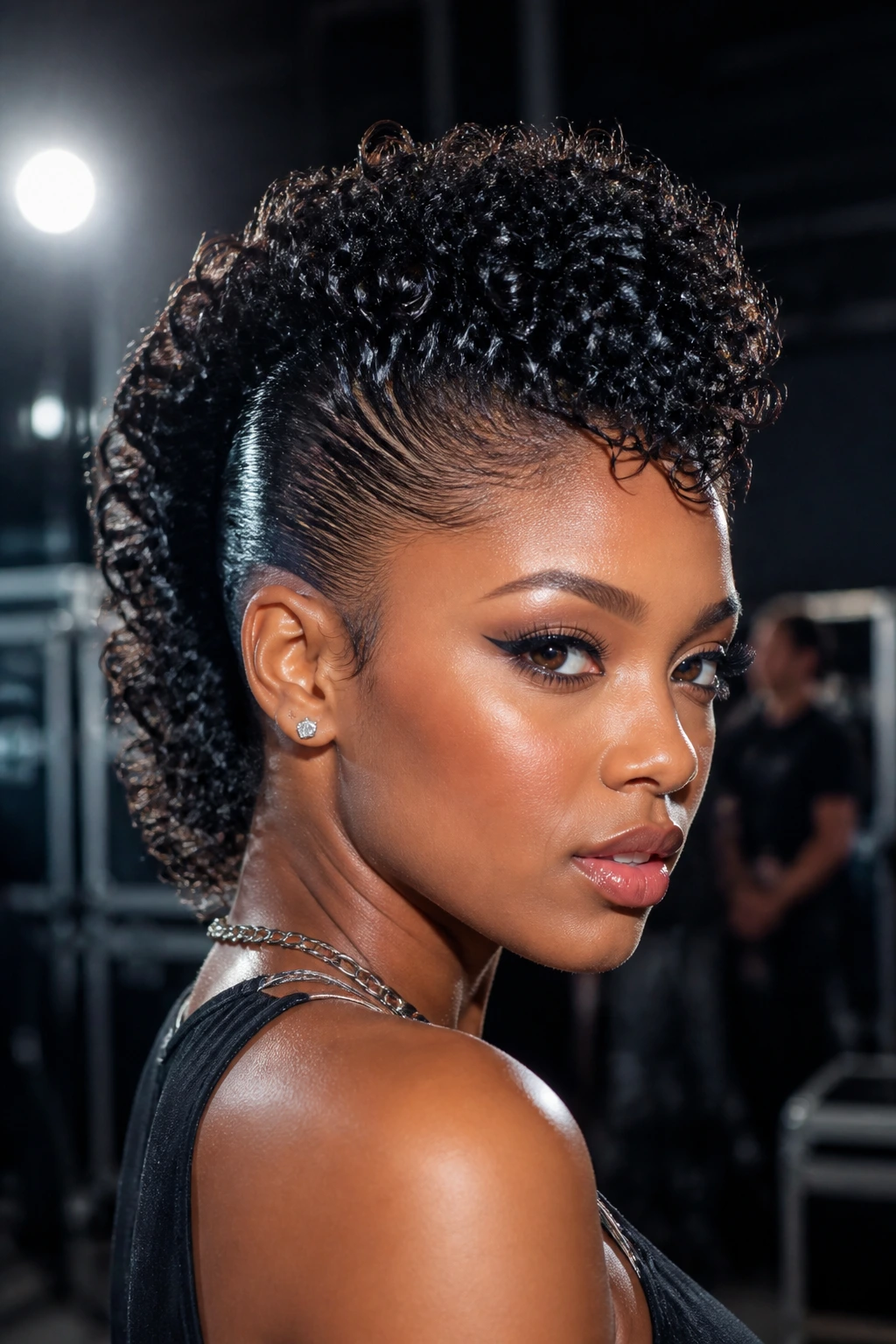
A wet-look curly mohawk has a glossy finish that turns the style a little more dramatic. The curls stay defined and moist-looking on top, while the sides are slicked tight with gel or edge control. It’s a sharp style for evenings, photos, or any setting where you want the shine to do some of the talking.
The danger here is overloading the hair with gel. Too much and the curls go stringy; too little and the sides puff up by the time you leave the house. The balance is a hydrated base with a strong topcoat of hold. Work in thin layers and smooth each one before adding the next.
This style reads best when the curls themselves still have some movement. If the top is stiff, the whole look can feel frozen. Keep the finish glossy, not shellacked.
17. Marley-Hair Accent Mohawk
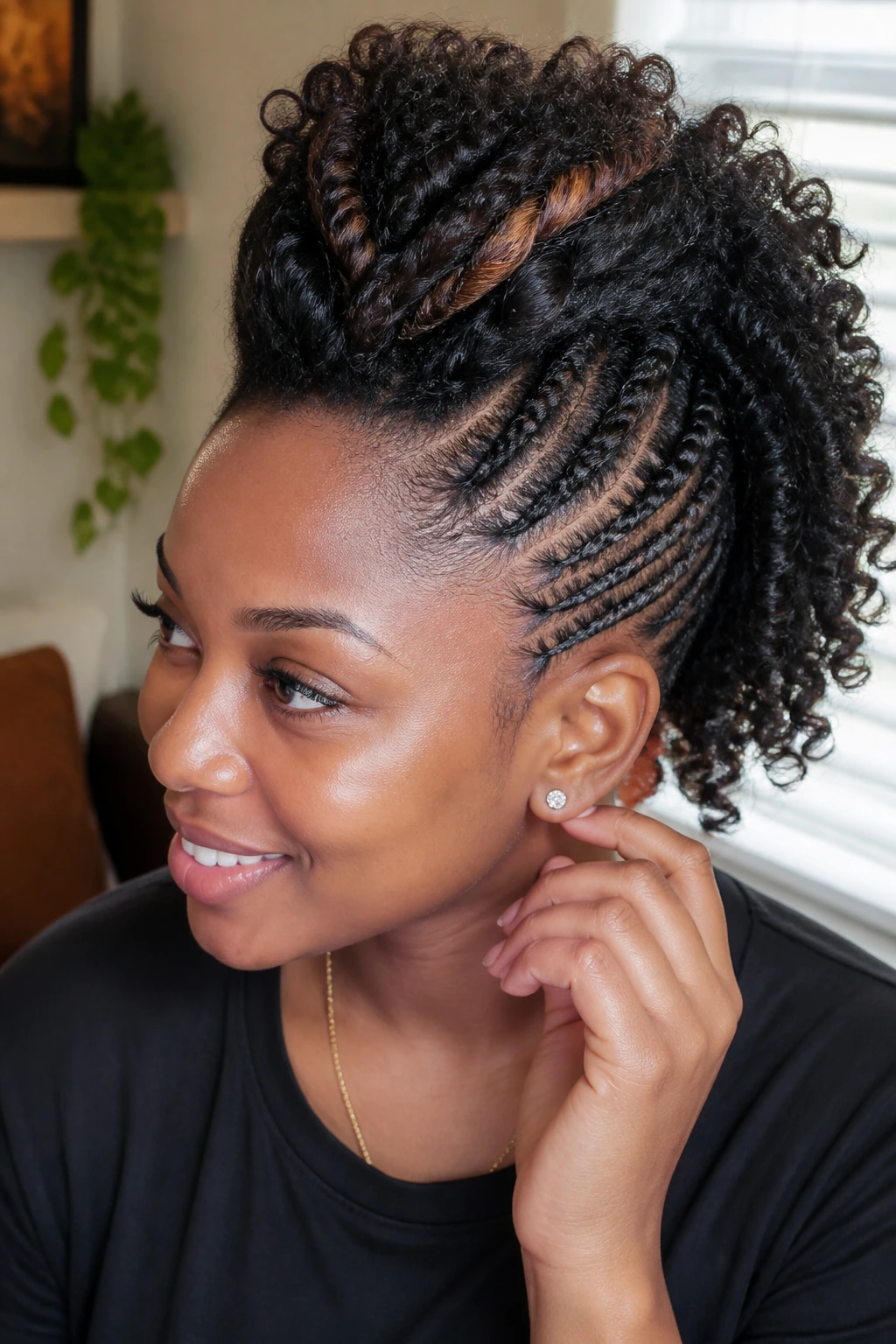
Marley hair can give a curly mohawk extra length, texture, or lift without making it look too polished. It’s useful when you want a thicker center ridge, a rope-like detail woven through the middle, or a pinned updo that needs a little more body to sit properly. The texture is coarser than silky extensions, which helps it blend with natural hair better.
The best part is the grip. Marley hair tends to hold shape well, so once it’s pinned or twisted into the hawk, it stays put. That makes it a smart choice for updos that need support at the crown. If you want the added hair to look less artificial, leave a few curls out around the face or at the ends.
A little goes a long way here. You do not need to overload the style. One well-placed accent can change the whole silhouette.
18. Jumbo Twist Mohawk
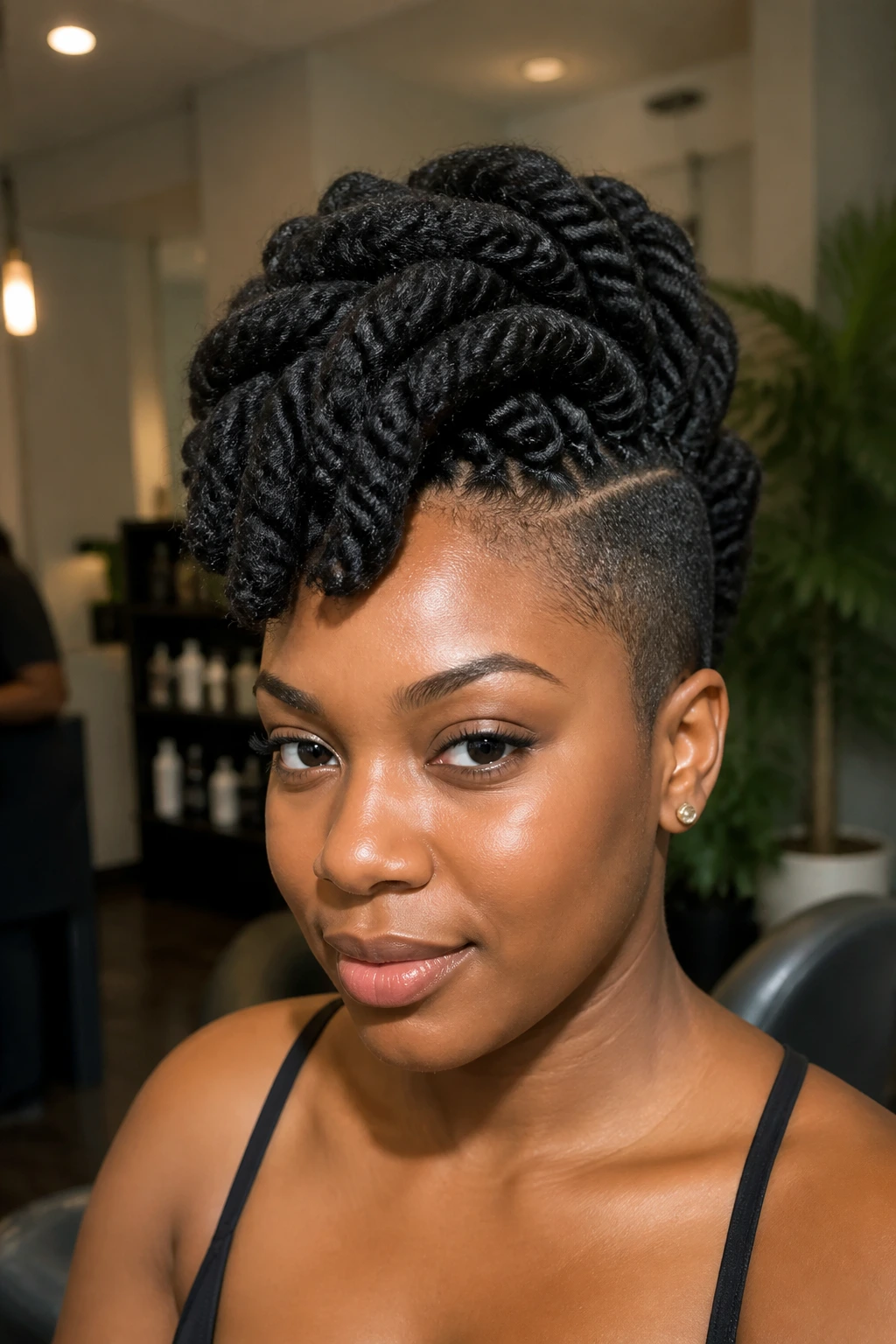
Jumbo twists bring weight and softness at the same time. The twists are larger than a standard two-strand set, which means the mohawk has a chunkier texture and a more relaxed finish. It feels full, but not fussy. That’s the appeal.
If you twist the hair from the front toward the crown, then pin or tuck the back, the style starts to look like a rolled sculpture. If you leave the ends loose, they can frizz out into a soft halo that makes the mohawk feel less rigid. Either way, the scale of the twists changes how the light hits the hair, and that gives the whole style depth.
A good choice for medium to long hair
Short hair can do it, but medium and longer lengths really show off the bulk of the twists. The extra length lets the twists fall over each other in a way that looks intentional, not crowded. That overlap is what gives the style its body.
19. Curly Mohawk with Bangs
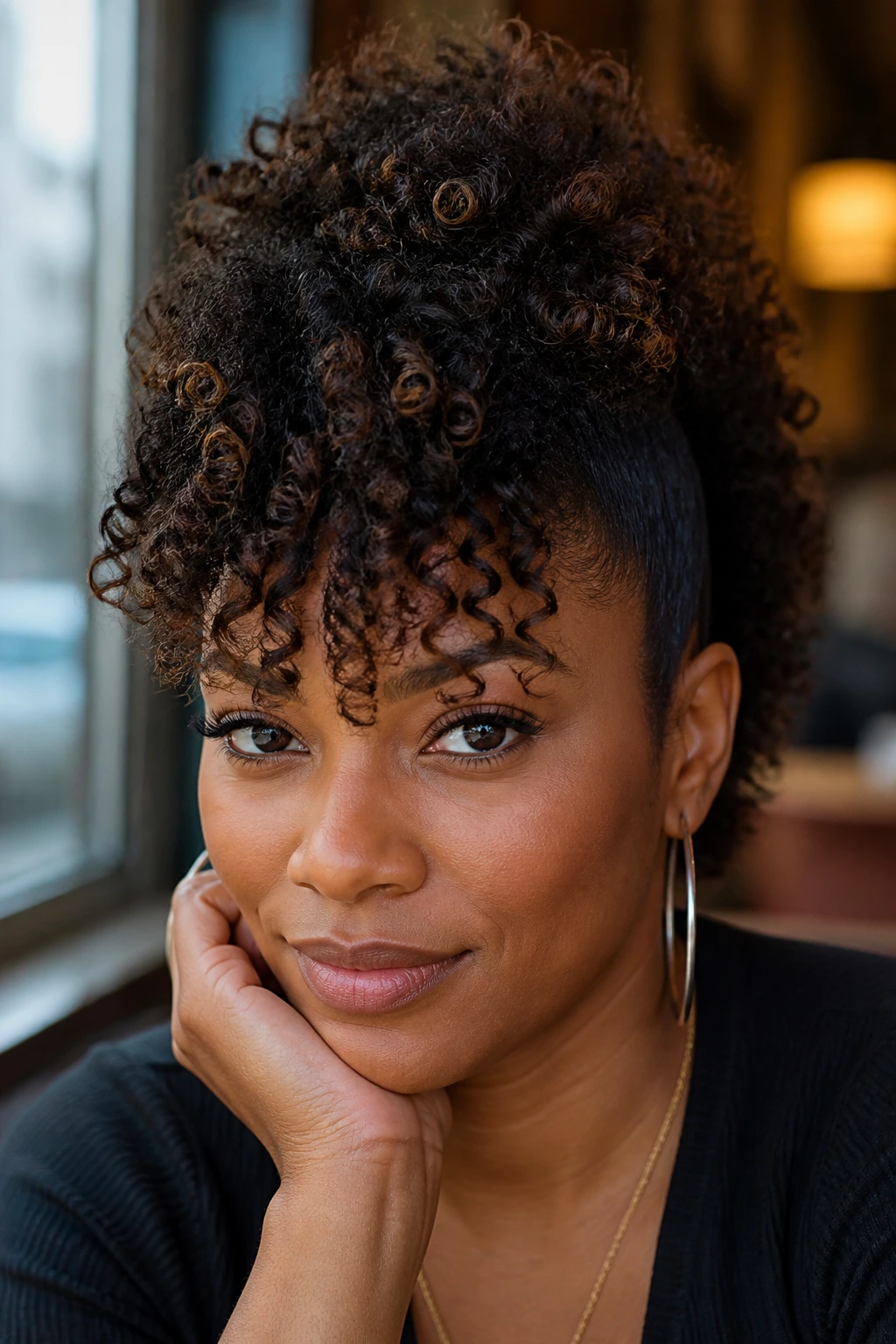
A curly mohawk with bangs feels a little softer around the face, which changes the energy completely. The bangs can be curly, twisted, side-swept, or loosely finger-combed, while the back and sides keep the tighter mohawk structure. It’s a good way to soften a strong silhouette without losing the edge of it.
The face-framing matters more than people think. Bangs pull the eye forward and make the style easier to wear if you don’t want a lot of height at the crown. They also help balance longer faces or high foreheads, though they can work on almost anyone if the lengths are placed well.
Keep the bangs a little separated from the rest of the ridge so they don’t collapse into one lump. A defined front section gives the style shape instead of letting it blur.
20. Beaded Curly Mohawk
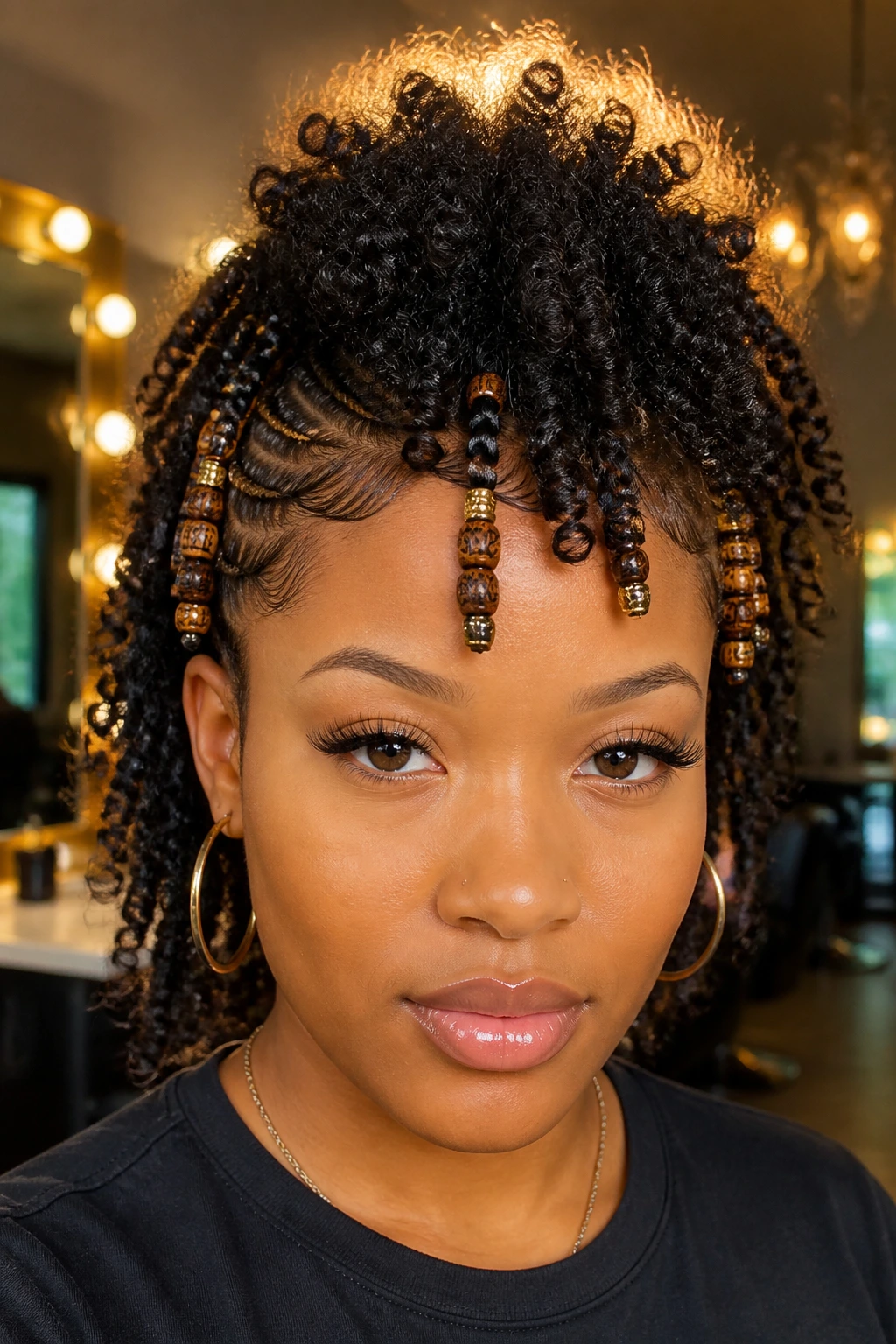
Beads change the sound and movement of a mohawk, and that alone can make the style feel more alive. A beaded curly mohawk usually uses braids, twists, or small sections along the sides or front, then leaves the center curls loose or shaped into a ridge. The beads add weight in a useful way; they help the smaller sections hang where you want them.
This works especially well when you want the hairstyle to carry a little personality without needing extra color or extra height. Metal cuffs, wood beads, and clear plastic beads all send a different message, so the finish you choose matters. I lean toward keeping the center curls simple when the beads are doing the decorative work. Too many busy pieces fighting each other can muddy the shape.
Beads are not only for kids or festival looks. On the right mohawk, they read clean and intentional.
21. Cornrow-Detail Curly Mohawk
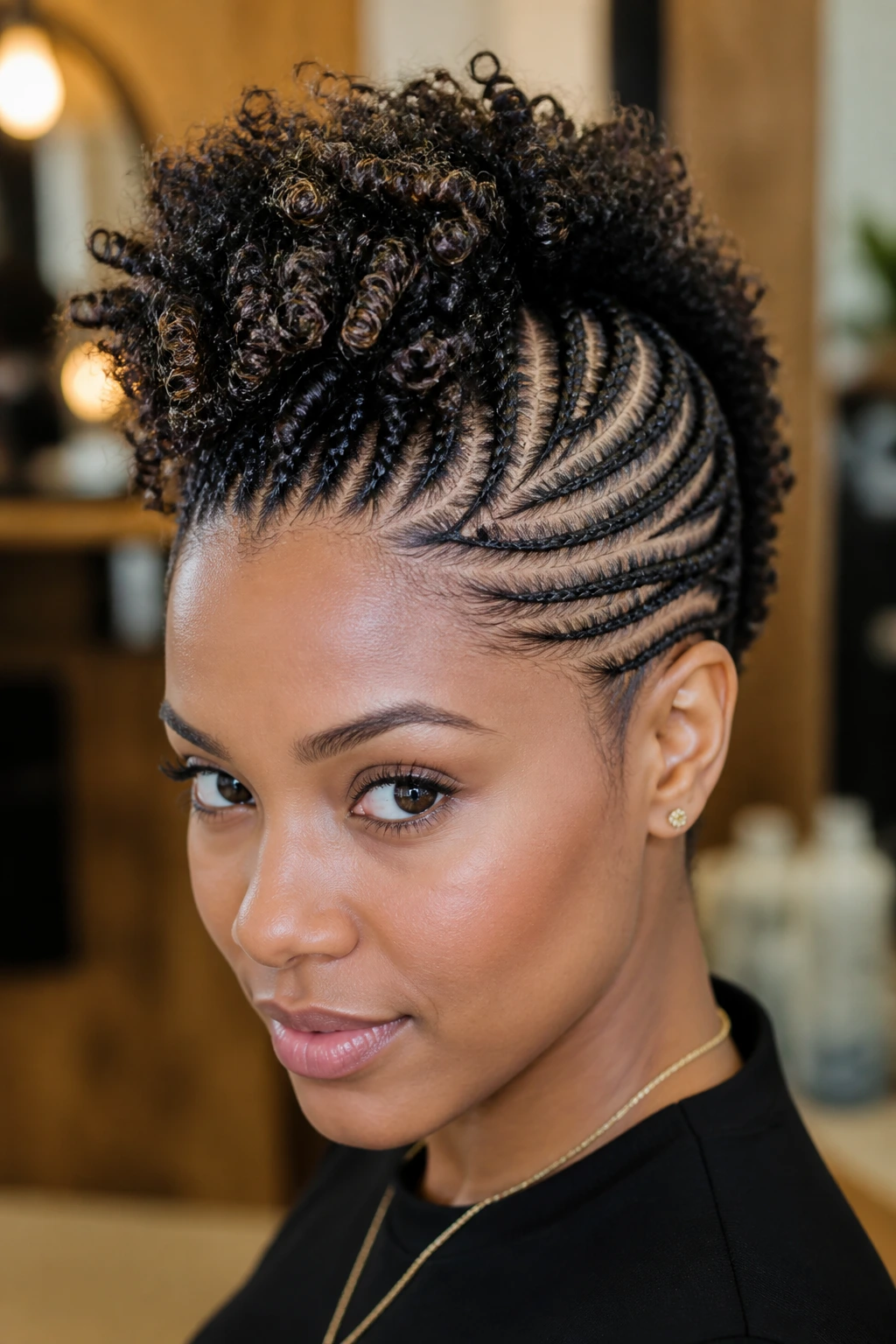
A cornrow-detail curly mohawk is what happens when the braid pattern becomes part of the design instead of just a base for the curls. The sides can have straight-back rows, curved parts, or tiny feed-in lines that funnel the eye toward the center ridge. The curls on top then sit like the payoff.
This style is good when you want the mohawk to look intricate from the first glance. The cornrows create a map, and the curls sit on top of it. It’s also a strong option if your hair likes to puff up at the roots, because the braidwork keeps the perimeter controlled longer.
The pattern should be neat but not cramped. If the rows are jammed too close together, the scalp can feel tight and the whole style loses its clean line. Balanced spacing looks better and feels better. Both matter.
22. Crochet Curly Mohawk
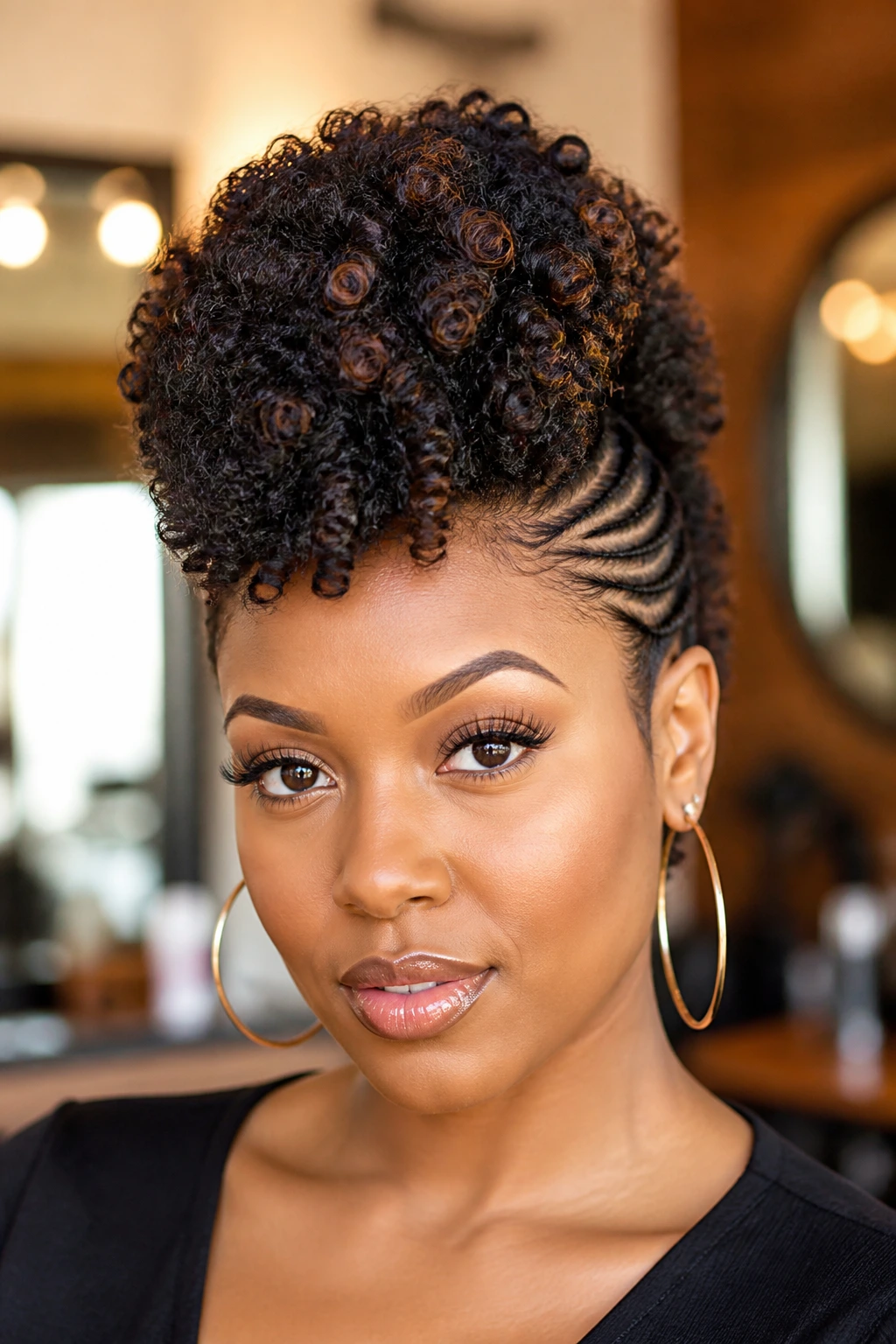
Crochet styles can make a curly mohawk much faster, especially if you want volume without spending half a day setting curls. A braided base supports pre-curled extensions, which are then attached and fluffed into a center hawk. The result can look lush and very full, with less manipulation of your own hair than many other options.
Why this one stays full
The extensions carry the shape. That means the style doesn’t depend as much on your natural curl pattern behaving a certain way on a given day. If you want a taller mohawk or a more dramatic silhouette, crochet curls can give you that height without teasing your own hair into submission.
The finish depends on the texture you choose. Kinky curly and Marley-textured crochet hair blend more naturally with Black hair than silky curls usually do. And if you want a softer finish, separate the curls only a little. Over-pulling them makes the style frizzy fast.
23. Bridal Curly Mohawk
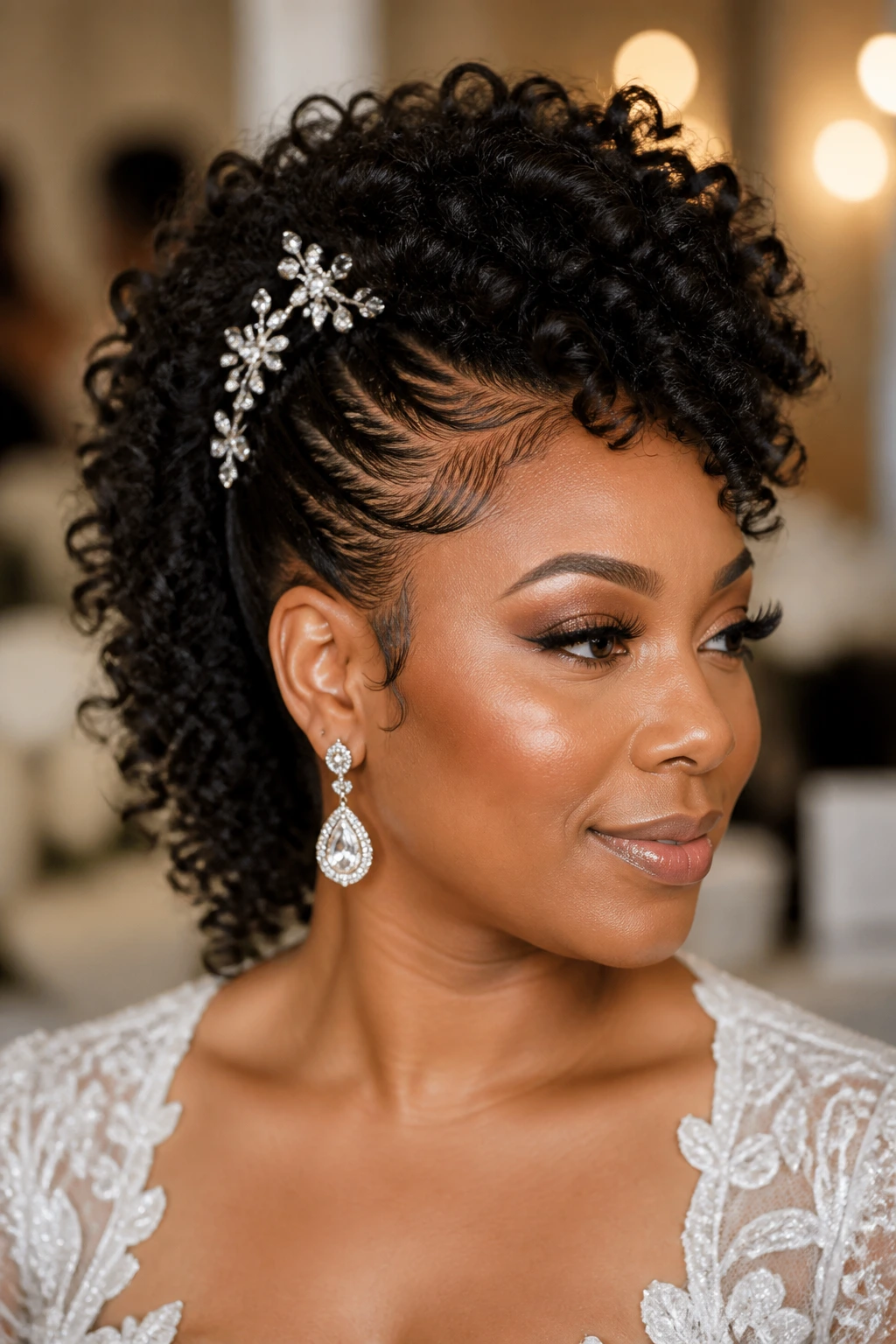
A bridal curly mohawk doesn’t have to be severe. In fact, the best versions are usually the softest ones. Sleek sides, a controlled center ridge, and a few jeweled pins or pearl accents can turn the silhouette into something elegant without flattening the curls into boredom.
The key is restraint. Keep the parting clean, the edges smooth, and the center curls defined but touchable. A loose side twist or a tucked panel can make the shape look formal without trapping the style inside too much product. You want shine, not stiffness.
This is a smart style for anyone who wants drama without losing softness. The mohawk line gives structure, while the curls keep it from feeling hard. That mix matters in formal settings.
24. Color-Block Curly Mohawk
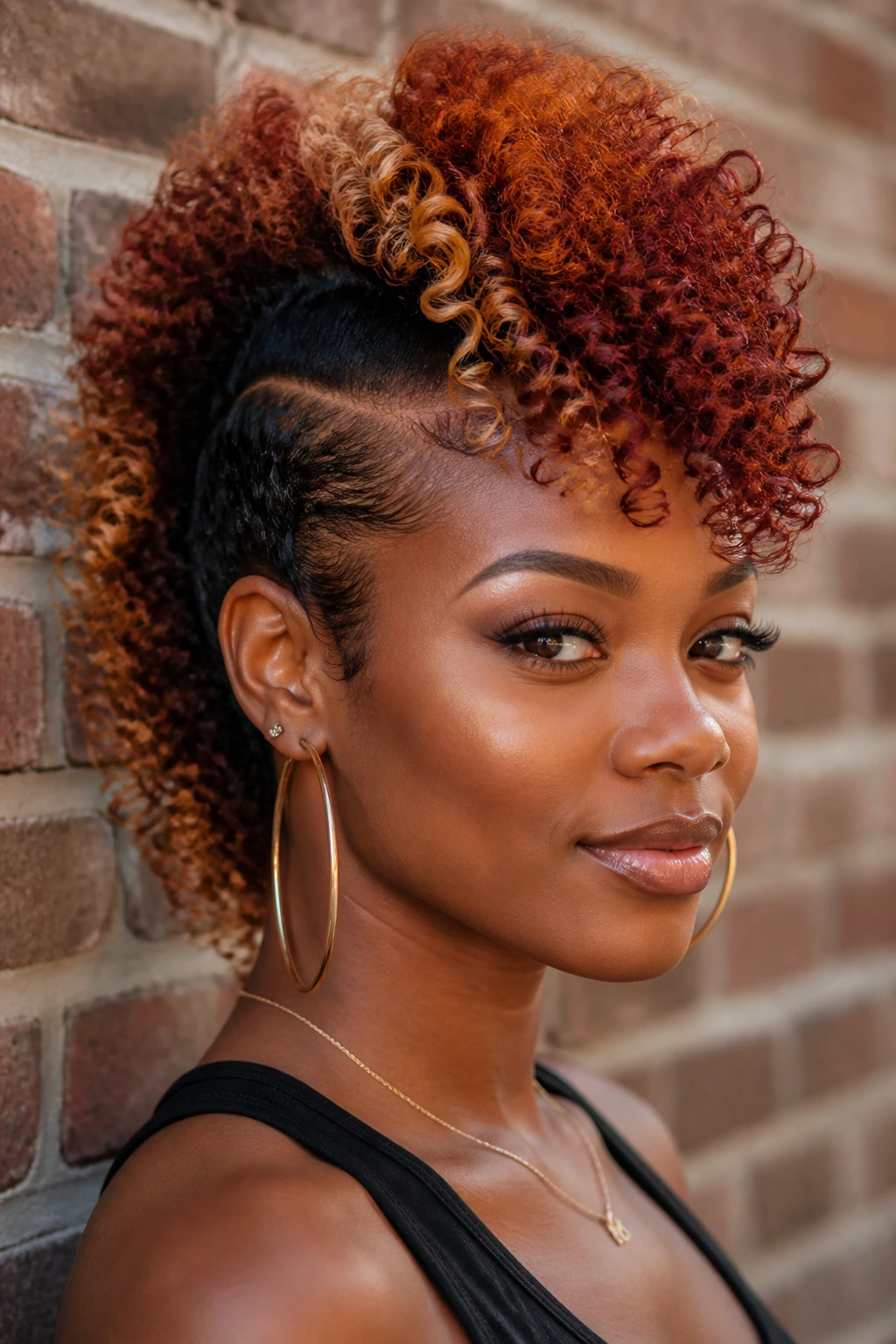
Color-blocked curls can make a mohawk look sharper immediately. A deep auburn ridge, caramel ends, copper pieces near the crown, or even a temporary pop of vivid color changes how the shape reads before anyone has time to study the styling. The silhouette gets louder in a good way.
The trick is keeping the color placement connected to the shape. If the center ridge is the star, put the brightest shade there. If the sides are braided or slicked, let them stay darker so the center keeps its contrast. You do not want random streaks fighting the outline.
This style can work with dye, colored wax, clip-ins, or extensions. The method matters less than the placement. The eye should know where to go the second the style comes into view.
25. Asymmetrical Curly Mohawk
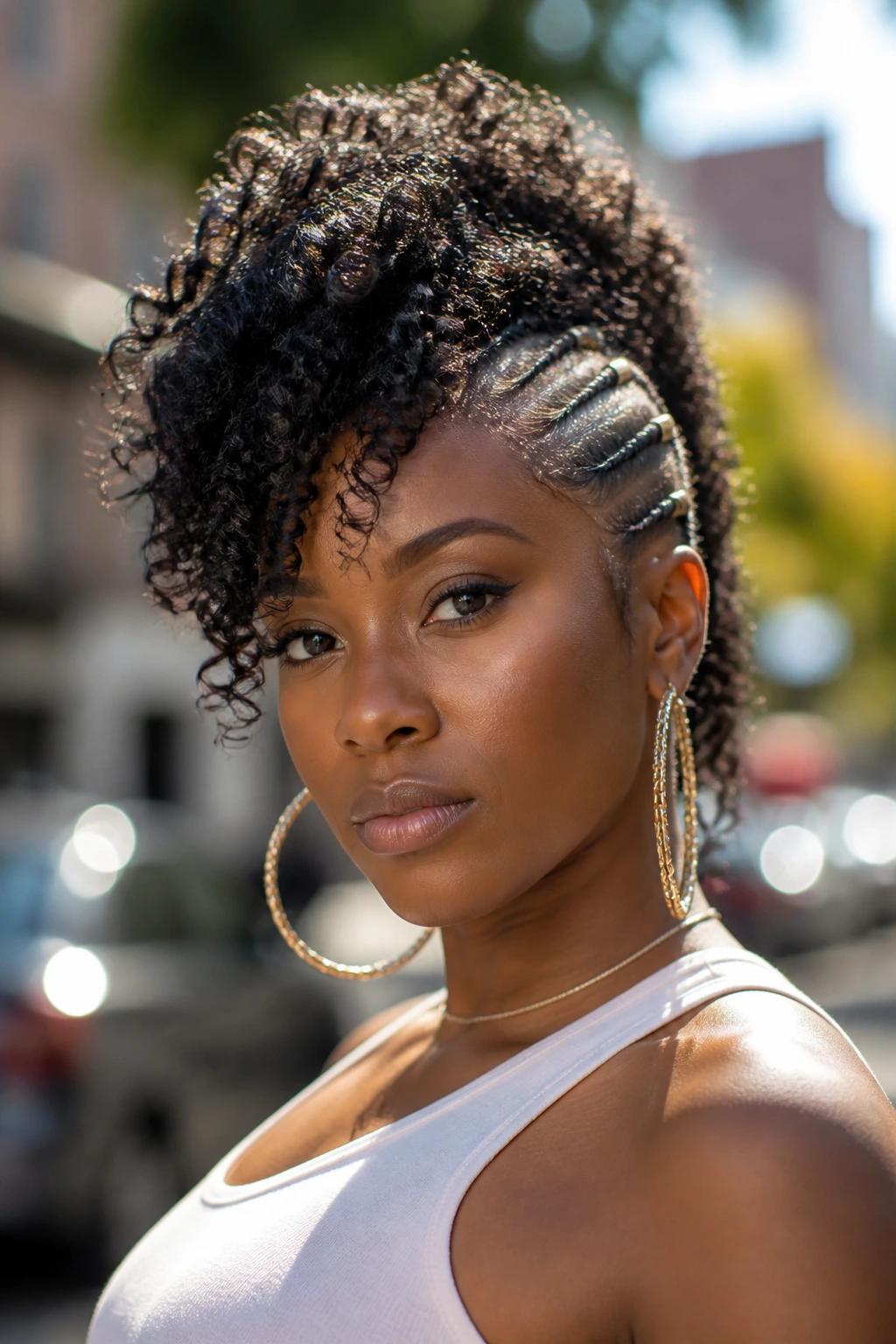
An asymmetrical curly mohawk tilts the whole shape off-center, and that slight imbalance gives it attitude. One side may sit lower, the curls may sweep diagonally across the crown, or the ridge may be fuller in front and tighter toward the back. It breaks the symmetry just enough to feel fresh.
When the off-center line helps
This version is especially good if your face shape likes a little softness on one side. It can also rescue curls that naturally fall in one direction anyway. Instead of fighting that bend, you work with it. The result feels more relaxed than a rigid center hawk, which can be useful if you want the style to look less formal.
A few pins in the right places will hold the angle. After that, let the curls lean. That slight slant is the whole point.
Why Curly Mohawk Hairstyles for Black Women Hold Their Shape So Well
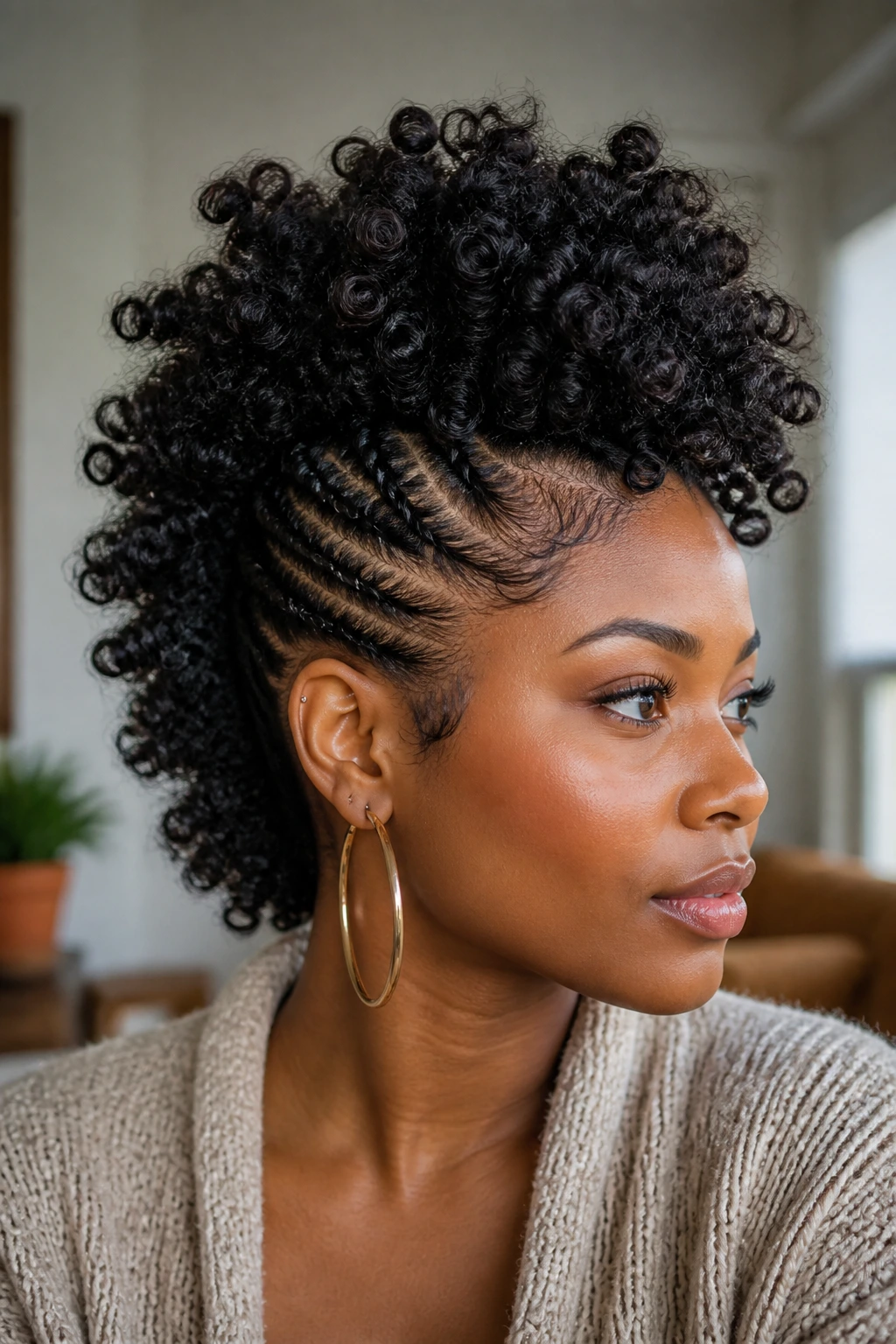
The silhouette works because Black hair already gives you a built-in advantage: density, shrinkage, and texture all help the center ridge stand up without a lot of outside help. A mohawk or faux hawk shape uses that natural lift instead of fighting it. That’s why these styles can look strong even when the tools are simple — a rat-tail comb, a brush, a little gel, and a good set of pins can do a surprising amount of work.
The other reason the shape lasts is contrast. The sides are either braided, slicked, clipped, tucked, or pinned, which creates a clean line around the curls. That line keeps the eye moving straight down the center. If the perimeter starts frizzing, the whole effect softens fast. If the sides stay neat, the curls can loosen a little and still look intentional.
Shrinkage is your friend here
A lot of styles fight shrinkage. Curly mohawks can use it. When the hair contracts upward, it adds height without teasing, which means less rough handling and fewer broken ends. Stretching the hair first can make the style taller, but even un-stretched coils can build a nice ridge if the placement is smart.
Tension should stay under control
This part matters more than people like to admit. The American Academy of Dermatology has long warned that repeated tight pulling on the hairline can lead to traction alopecia, and that caution applies here too. If the sides hurt, itch, or leave dents after you take the style down, it’s too tight. A good mohawk should frame the face, not punish it.
The Tools That Make These Styles Easier to Build
-
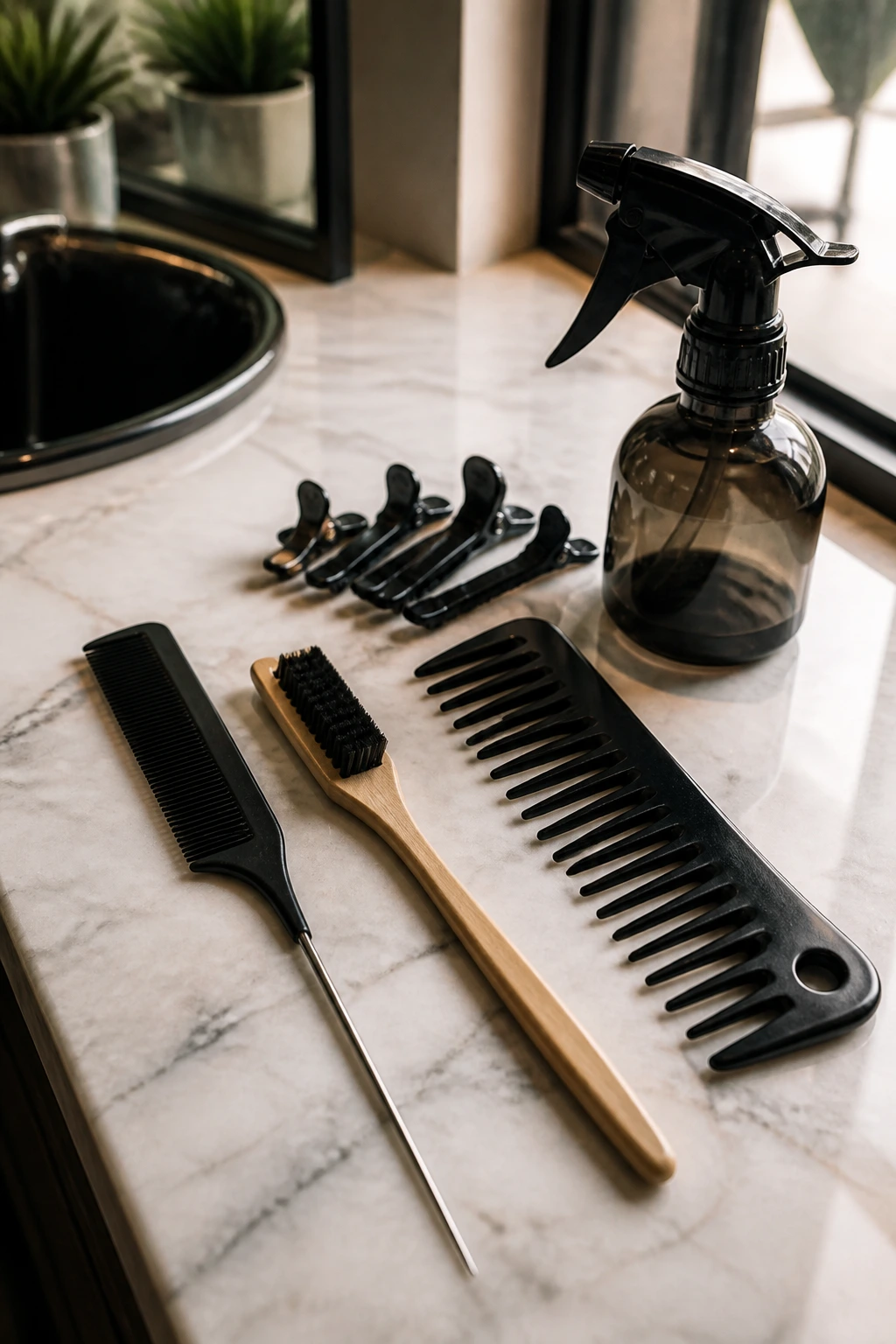
Rat-tail comb: Best for clean parts and sharp side sections; the pointed tail gives you control without jagged lines.
-
Edge brush: Useful for smoothing the hairline and blending gel without dragging the edges rough.
-
Wide-tooth comb: Helps detangle before styling, especially if you’re setting twist-outs or braid-outs.
-
Sectioning clips: Keep the center ridge separate while you work on the sides so you don’t undo your own parting.
-
Spray bottle with water: A light mist wakes up curls and helps product spread evenly. Don’t soak the hair unless the style calls for wet setting.
-
Styling gel or edge control: Use a formula that holds without flaking when layered over a leave-in. Test a small amount first if your hair is picky.
-
Mousse or foam styler: Handy for curl definition on twist-outs, bantu knot-outs, and wash-and-go hawks.
-
Bobby pins and U-pins: These do the real structural work in pinned styles. Cheap pins can slip; buy sturdy ones.
-
Satin scarf or bonnet: Keeps the sides smooth and the center curls from getting rough overnight.
-
Optional diffuser: Useful if you want to dry curls faster without blasting the shape flat.
Product Choices and Prep Habits That Save the Style
The best product stack depends on what you want the hair to do. If you need the sides to stay slick, start with a light leave-in, then layer gel or edge control on top. If you’re building a twist-out mohawk, a cream plus a mousse often gives better curl shape than a heavy butter. Heavy products make the style feel rich for about ten minutes, then the roots start sinking.
Damp hair usually behaves better than soaking-wet hair for this kind of styling. Soaking hair takes forever to dry, and a mohawk built on damp roots tends to slide and puff up in the wrong places. On the other hand, hair that is too dry can eat product and still look fuzzy. The sweet spot is clean, moisturized, and lightly stretched where needed.
A quick clarifying wash helps when old gel keeps causing white flakes or dullness. Product buildup makes the curls look tired, and it also makes the sides harder to smooth down. If the hairline feels crunchy before you even finish styling, that is a sign to reset the base.
How to Wear the Finished Look With Clothes and Accessories
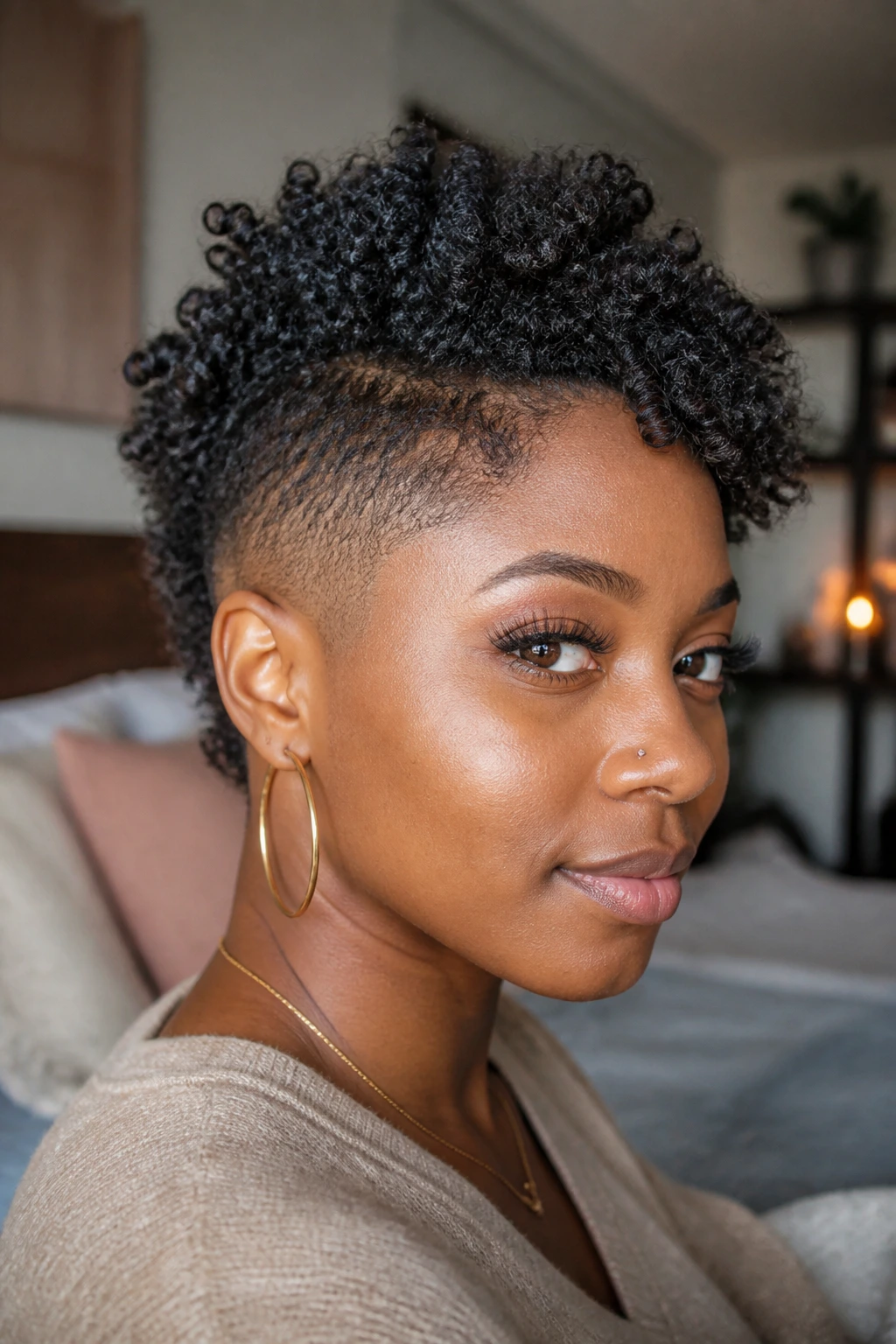
Presentation: Let the shape match the mood. A sharper, higher mohawk reads more structured with clean parts and glossy edges, while a fluffy twist-out ridge feels softer when the front is left a little looser. If the style has a lot of height, keep the rest of the shape compact so the silhouette doesn’t sprawl.
Accessories: Large hoops, cuffs, or a single statement earring pair well with side-shaved or slicked styles because they echo the clean lines. Pearl pins, gold bobby pins, and tiny clips fit better on bridal or formal versions. If the hair already has beads or color, keep the jewelry simpler.
Outfits: Structured necklines, denim jackets, fitted blazers, and even plain tees can work. The trick is not to fight the hair with clothes that are equally busy around the face. A high collar and a tall mohawk can step on each other. A clean neckline gives the style room.
Occasion fit: The same silhouette can sit in a boardroom, at a dinner, or at a concert. What changes is finish. More shine and cleaner edges push it formal; softer curls and less product make it look casual.
Extra Lift, Shine, and Shape Without Overdoing It
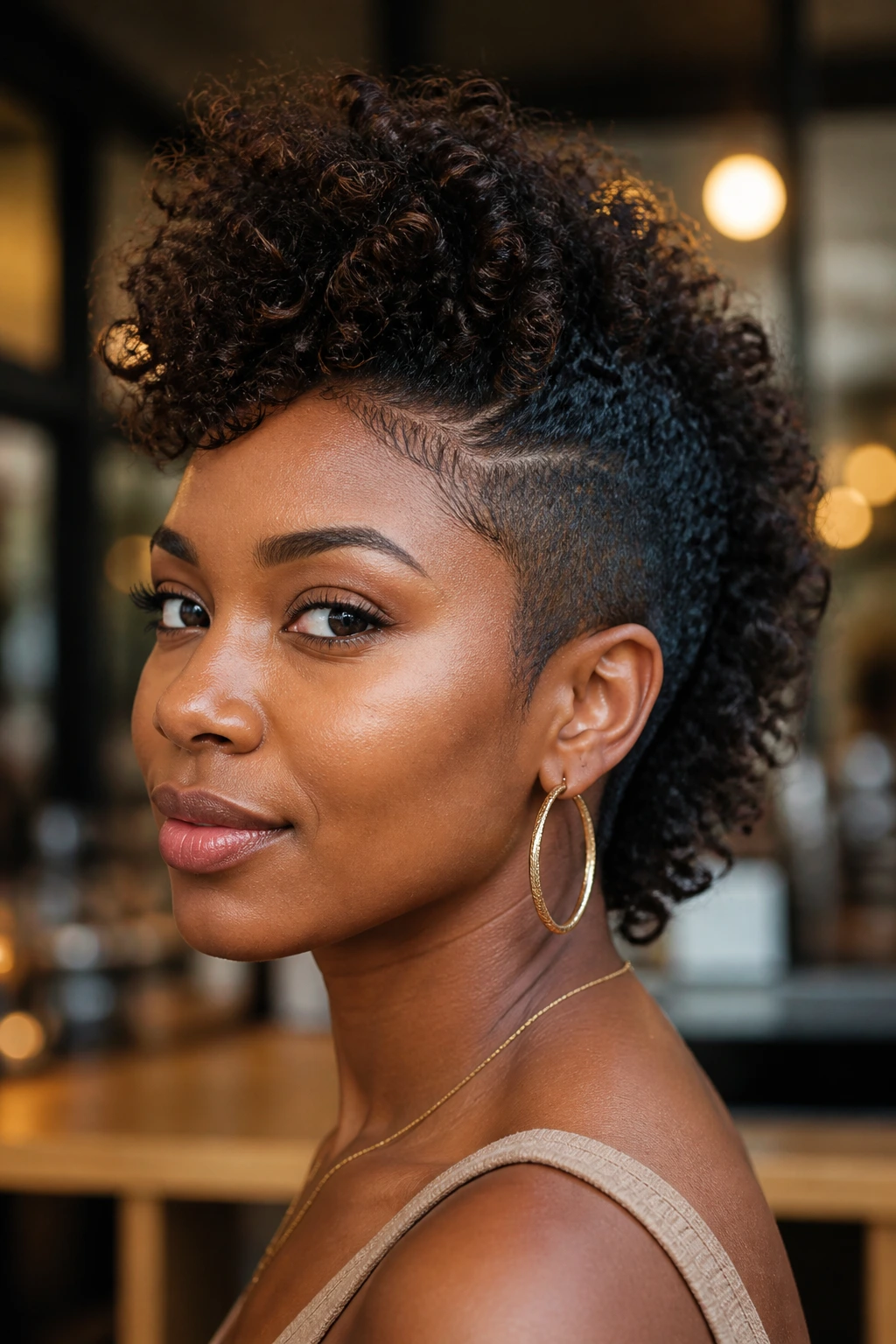
Volume Boost: If the center ridge looks too flat, lift at the roots with your fingers after the hair is dry. Don’t rake through the curls early. That’s how shape turns into puff.
Hold: For a mohawk that has to survive a long day, use a small amount of strong-hold gel on the sides and a lighter mousse on the curls. Heavy gel on the curls can make the top look wet in a bad way. The hold belongs where the tension lives, not everywhere.
Accessory Choice: One well-placed pin or comb can do more than a whole pile of decorations. If the style already has strong braids or a clean fade, a single detail near the crown is enough.
Color Play: Temporary color wax, colored extensions, or a subtle rinse can make the ridge stand out without changing the cut. Keep the brighter shade on the middle strip if you want the mohawk line to read more clearly.
Keeping the Style Fresh Overnight and Between Wash Days
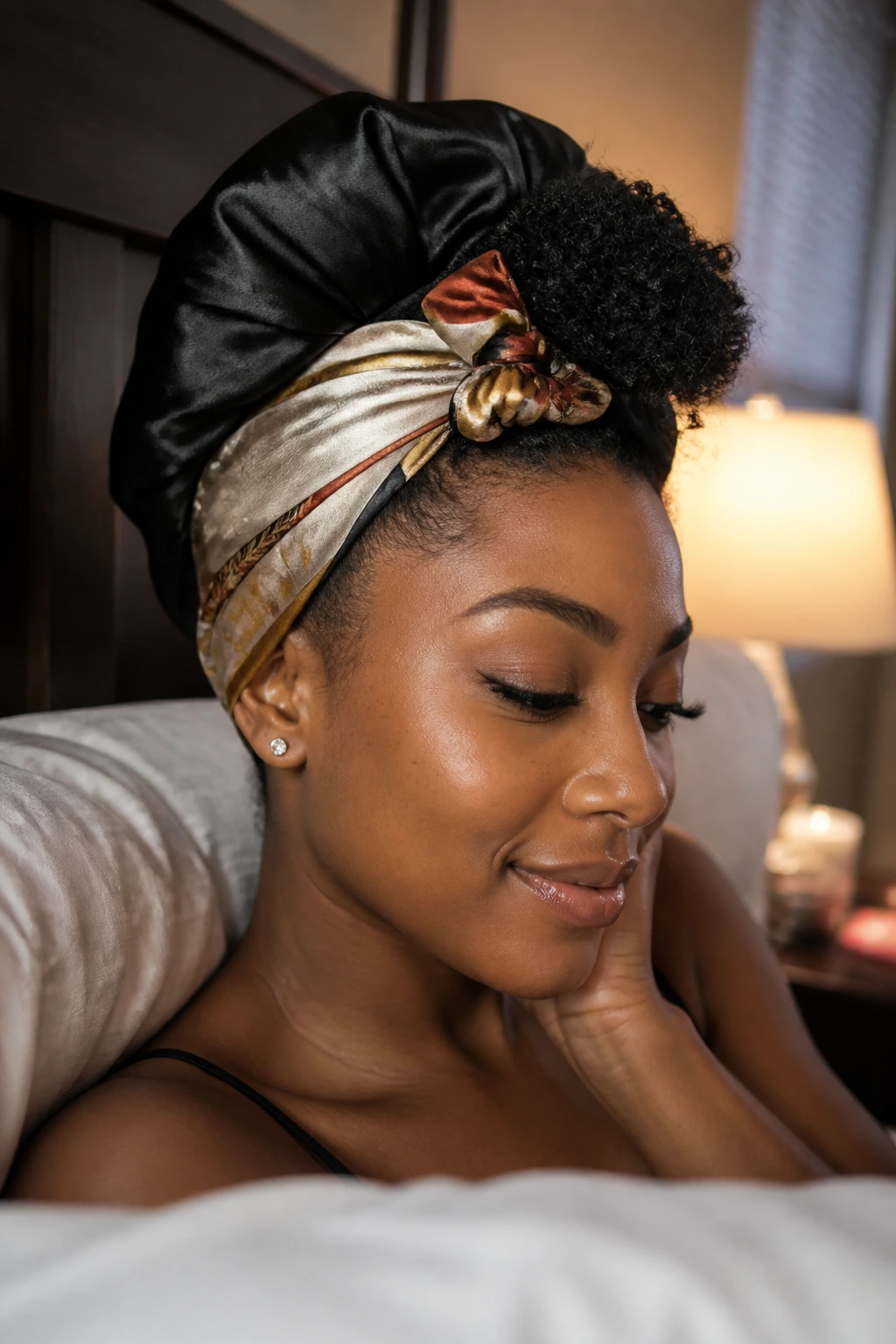
A mohawk lasts longer when the night routine is not lazy. For braided, twisted, or pinned versions, wrap the sides with a satin scarf and tuck the center curls under a bonnet if they fit. If the top is loose enough to flatten, pineapple the center gently with a soft scrunchie so it keeps its height. A cotton pillowcase will rough up the shape fast. Satin slows that down.
Wash-and-go based mohawks usually stay best for one to three days before they need a real refresh. Twist-out and bantu knot-out versions often hold three to five days if you keep your hands out of them. Braided, cornrowed, or pinned structures can last longer — sometimes one to two weeks — but only if the scalp feels good and the tension stays comfortable. If the roots start aching, that style has gone on too long.
Refreshing should be light. A few sprays of water, a dab of leave-in diluted in your palm, and a quick scrunch at the ends usually do the job. Avoid soaking the hair every day. Wetting it too much without full drying time leads to puffiness at the roots and a sour smell nobody wants.
The Slip-Ups That Flatten a Curly Hawk
-
Pulling the sides too tight: A style that leaves your temples sore is already too aggressive. The fix is to loosen the braid pattern, reduce the gel load, or move the braid start point farther from the hairline. Tight can look neat for an hour. Comfortable lasts.
-
Styling curls before they’re dry: Twist-outs, knot-outs, and set curls collapse when you unravel them early. If the hair feels cool in the middle or dense at the root, it is not dry enough yet. Wait longer or use a diffuser on low heat.
-
Using too much heavy cream under the gel: The hair starts shiny, then goes limp and flakes. Use a light leave-in first, then build hold slowly. If the product stack is fighting itself, simplify it.
-
Ignoring the shape of the crown: A great side detail can still look off if the center ridge is too low, too wide, or too flat. Keep checking the silhouette in a mirror from the side, not just the front.
-
Forgetting the night routine: Loose curls will not stay crisp on a rough pillowcase. Satin is not optional if you want the style to survive past day one.
Variations and Adaptations to Try
Low-Tension Hawk: Start braids or slick sections farther back from the hairline and let the center carry more of the visual weight. This is the version to choose if your scalp gets tender easily. It still reads like a mohawk, just without the hard pull.
Soft Glam Hawk: Keep the curls loose, add a side part, and use pearl pins or gold clips near the crown. This works when you want the style to feel polished without becoming stiff. It’s a good middle ground for weddings, photos, or dressier events.
Short-Hair Coil Hawk: On a TWA, use finger coils or a sponge-defined center ridge and keep the sides faded or brushed close. There’s no need to fake length. The compact shape looks clean and direct.
Color Pop Hawk: Put the boldest color on the center strip and leave the sides darker or neutral. Caramel, auburn, copper, and burgundy all work well because they show the texture without hiding it. Temporary color wax is a safe way to test the idea.
Extension-Heavy Drama Hawk: Add Marley hair, crochet curls, or twist extensions when you want more length and fullness. This is the version to reach for if your natural length is not giving you the height you want that day. The added hair should match the texture close enough that the blend looks smooth.
Kid-Friendly Soft Hawk: Use fewer pins, gentler hold, and puffier sections so the style doesn’t feel too tight or fussy. This keeps the silhouette cute and wearable without all the sharp edges.
Frequently Asked Questions
Can you do a curly mohawk on short natural hair?
Yes, and short hair often makes the shape look even cleaner. A TWA can be turned into a mohawk with finger coils, a curl sponge, slicked sides, or a small center puff.
How long does a curly mohawk usually last?
It depends on the base. A wash-and-go style may stay sharp for one to three days, while a twist-out or braid-based version often lasts longer. Braided or pinned mohawks can hold for a week or more if the scalp stays comfortable.
What products keep the sides smooth without flakes?
A light leave-in under a gel or edge control usually behaves better than a pile of heavy creams. If your products are leaving white residue, the issue is often buildup or incompatible formulas, not the style itself.
Is a curly mohawk a protective style?
Sometimes, but not automatically. If the sides are braided or tucked with low tension and the ends are protected, it can be protective. If it’s slicked hard every day or pinned too tightly, it stops being friendly to the hairline.
How do I keep the center curls from falling flat?
Set them fully before styling them into place. Twist-outs, flexi-rod sets, and finger coils need dry time, and a little root lift at the crown can help too. Once the style is done, keep your hands off the top.
Can I make one without shaving my sides?
Absolutely. Many curly mohawks use braids, flat twists, tucks, or heavy slicking to create the same silhouette without cutting anything. The silhouette matters more than the method.
What if my hair shrinks too much after I style it?
Stretch it first with twists, banding, or a low-heat blow-dry. Shrinkage can work in your favor, but too much of it can hide the ridge. A little prep gives the style more height.
How do I sleep on the style without ruining it?
Wrap the sides with a satin scarf and protect the top with a bonnet or loose pineapple, depending on the shape. If the style has pins, make sure they’re secure before bed so you are not redoing the whole thing in the morning.
Can I add extensions to make the mohawk bigger?
Yes, and that’s one of the easiest ways to change the silhouette. Marley hair, crochet curls, or braided extensions can add length and fullness without making the style feel heavy if the texture matches well.
A Shape That Still Feels Alive
A curly mohawk works because it gives Black hair room to be both neat and unruly at the same time. The sides can be exact. The center can be soft. The whole thing still feels like hair, not a helmet, which is why the best versions never look too forced.
Pick the version that matches your patience, your hair length, and how much maintenance you actually want to deal with. The style can be quick, pinned, braided, shaved, or built from coils that took a little more time. That range is the real appeal.
