



A short mohawk has a funny personality. One millimeter too much fluff on the sides and it looks accidental; one good clean ridge down the middle and the whole cut suddenly has spine. That’s why mohawk styles for short hair are such a satisfying category: they don’t need a ton of length to make a point. They need shape, contrast, and a little nerve.
The best versions are never about copying a photo exactly. They’re about reading the head in front of you — the crown swirl, the density at the temples, the way the top wants to lie flat or stand up — and then working with it instead of fighting it. Short hair is actually a gift here. It lets the center strip look crisp instead of floppy, and it keeps the sides tight enough that the top has something to lean against.
And no, a mohawk doesn’t have to scream. It can be sharp, soft, curly, punk, polished, faded, braided, or barely-there. That range is the whole charm. The trick is choosing the version that matches your hair texture and your tolerance for upkeep, because some hawks need daily hands-on shaping while others settle in with a bit of product and a quick blast from the dryer.
Why These 30 Looks Work So Well on Short Hair
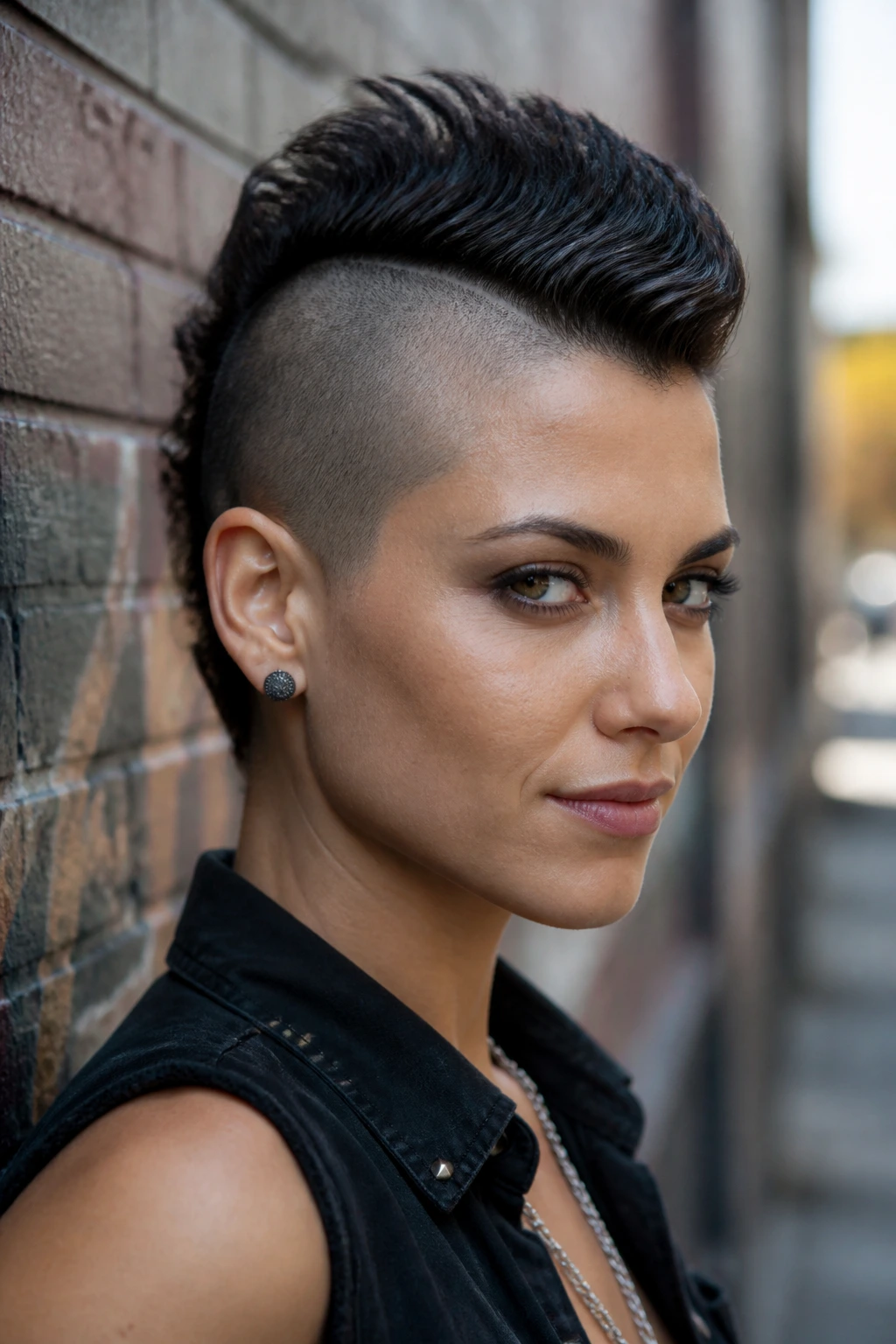
-
Short sides do the heavy lifting: A tighter side shape makes even a 1.5-inch center ridge read as intentional, not undergrown.
-
Texture does more than length: Short hair with grit, bend, or curl can look more dramatic than longer hair that just lies there.
-
The styles scale up or down fast: The same cut can look office-safe with a soft finish or bold with a harder edge and more height.
-
Maintenance stays manageable: Most of these looks need edge cleanup, product refresh, or a quick restyle — not a full salon-level redo.
-
They suit different hair patterns: Straight, wavy, coily, and curly hair can all pull this off, as long as the styling matches the texture.
-
They frame the face differently: A narrow ridge sharpens features, while a softer frohawk or curved hawk can soften a square jaw or broad forehead.
1. The Clean Strip Mohawk
A clean strip mohawk is the version that makes people stop and look twice, because it removes all the extra chatter. The sides are clipped tight — usually a #0.5 to #2 guard, depending on how dramatic you want the contrast — and the center strip runs from the front hairline to the nape in one steady line. On short hair, that strip does not need to be tall to feel strong. It just needs to be neat.
Why It Works on Short Hair
The whole look depends on contrast, and short hair gives you that contrast without a lot of product. The sides drop away fast, so the ridge becomes the main event. If your hair is straight or slightly wavy, a matte paste or fiber cream helps the strip hold its shape without looking crunchy.
Quick Shape Notes
- Keep the top around 1.5 to 3 inches.
- Ask for a clean taper at the neckline if you want it to grow out gracefully.
- Use a blow-dryer to lift the roots before pinching the hair into place.
- A pea-sized amount of matte paste is usually enough for fine hair.
Pro tip: If the strip keeps falling to one side, dry it in the opposite direction first, then reset it with your hands. That tiny detour helps the hair remember the upright shape.
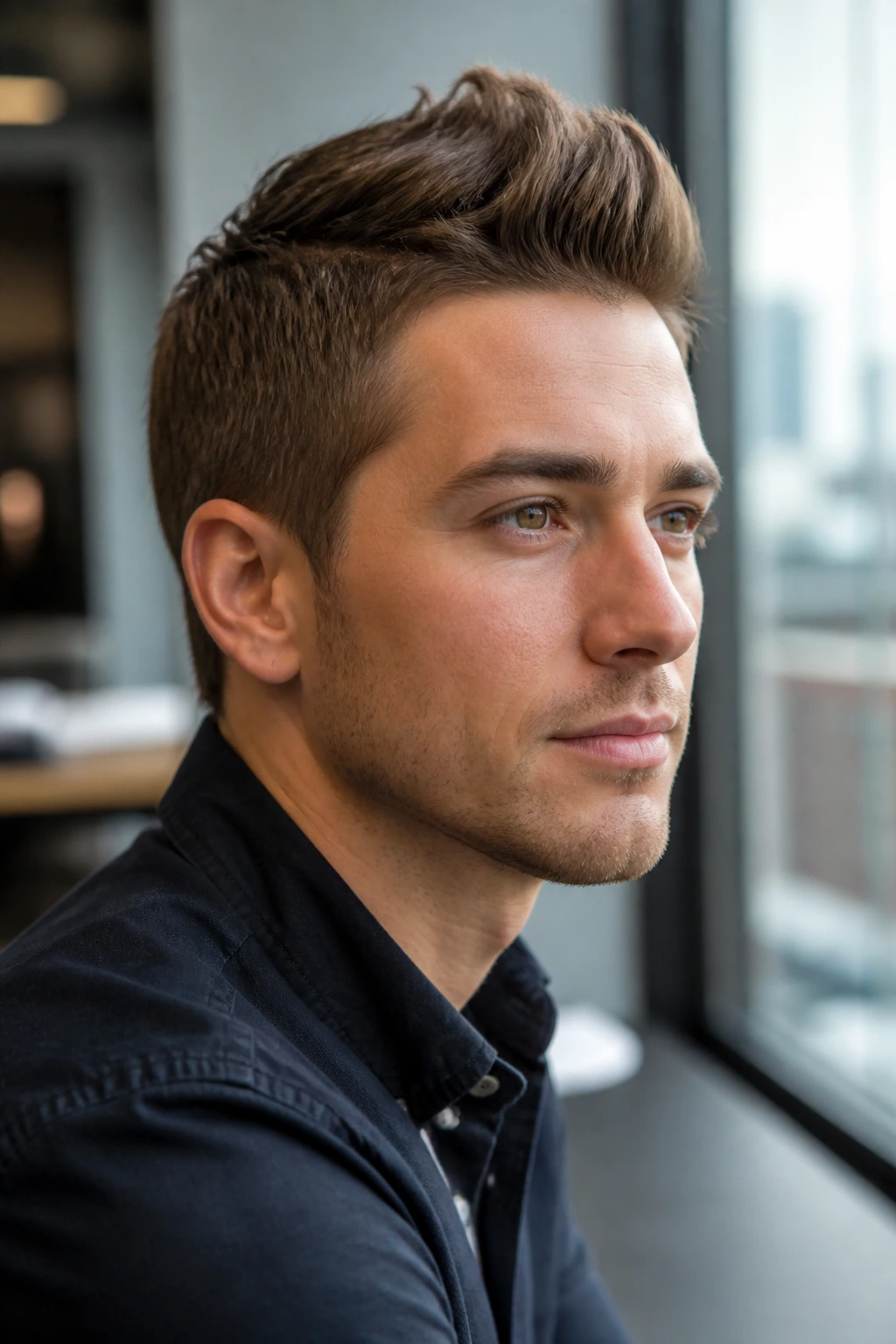
2. The Soft Faux Hawk
This is the version for people who want the attitude without the cliff-edge contrast. A soft faux hawk keeps the sides short, but not shaved, so the center line blends more gently into the rest of the cut. It’s one of the easiest short-hair hawks to wear because it doesn’t demand perfect symmetry.
The shape works especially well on hair that has a little bend. You’re not trying to build a stiff ridge here. You’re nudging the hair upward and inward so it narrows toward the middle. A light cream, spray wax, or flexible paste keeps the shape touchable, which matters if you don’t want your hair to feel like helmet glue.
I like this one for people who are testing the waters. It reads as stylish first, edgy second. That’s a useful balance when your schedule includes a meeting, a grocery run, and maybe a late dinner without a chance to redo your hair between stops.
3. The Skin-Fade Hawk
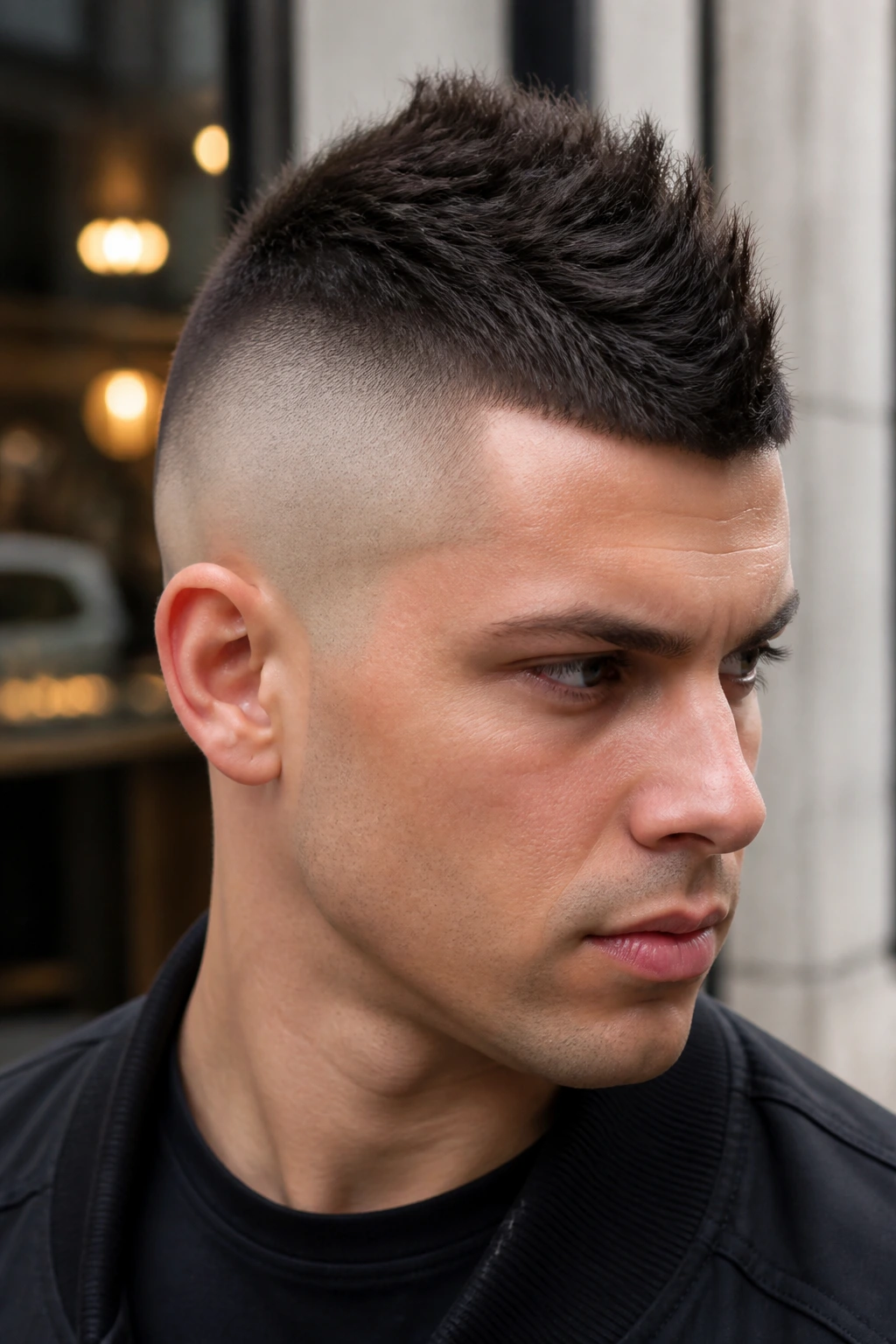
Can a mohawk be clean and aggressive at the same time? Absolutely. The skin-fade hawk answers that question with a hard yes. The sides are taken down to the skin or very close to it, then blended upward into a short center ridge. The result is crisp enough to look barbershop-fresh even when the top is only a couple inches long.
What Makes the Fade Matter
The fade is not decorative fluff. It changes the whole silhouette. When the side disappears into skin, the center strip looks taller than it really is, which is a nice trick if your hair is short or fine. The eye goes straight to the line of the cut.
This style looks best when the top is textured, not smooth. Ask for a little choppy point-cutting on the ridge so the hair separates instead of sitting in one flat sheet. Then use a medium-hold paste and a fingertip lift at the front. That front bit sets the mood for the whole haircut.
Best For
- Thick straight hair that tends to puff out.
- Square or oval faces that can take a sharper frame.
- Anyone who wants a mohawk that still looks precise two days after a cut.
4. The Burst-Fade Frohawk
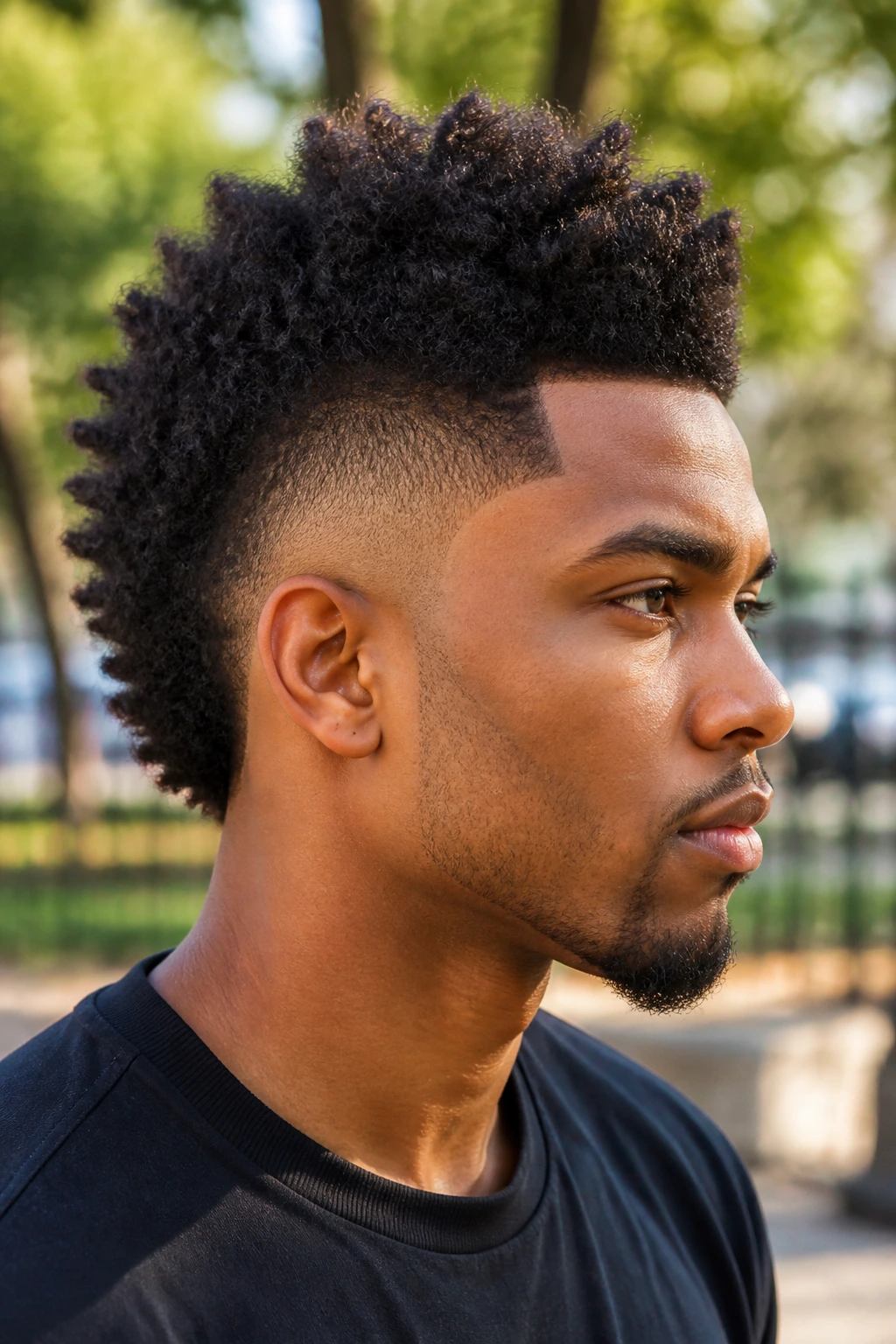
A burst-fade frohawk has a rounder, more sculpted shape around the ears, and that matters more than most people think. Instead of fading straight down, the hair curves around the ear in a semicircle, leaving a lively center strip or crest through the top. On short, coily, or curly hair, this is one of the strongest options because the natural texture does half the styling for you.
The beauty of a frohawk is that it doesn’t need to imitate straight hair. It works with shrinkage, tight curl pattern, and shape memory. A curl sponge, twist-out, or simply a well-moisturized coil pattern can make the top look fuller without a lot of extra effort. The burst fade keeps the edges tight and gives the style a polished frame.
This is one of those cuts that looks more expensive when the side blending is clean. Messy fade work ruins the effect fast. If you’re getting it done at a barbershop, ask them to keep the burst low enough that the curls stay the focus, not the fade itself.
5. The Curly Crown Hawk
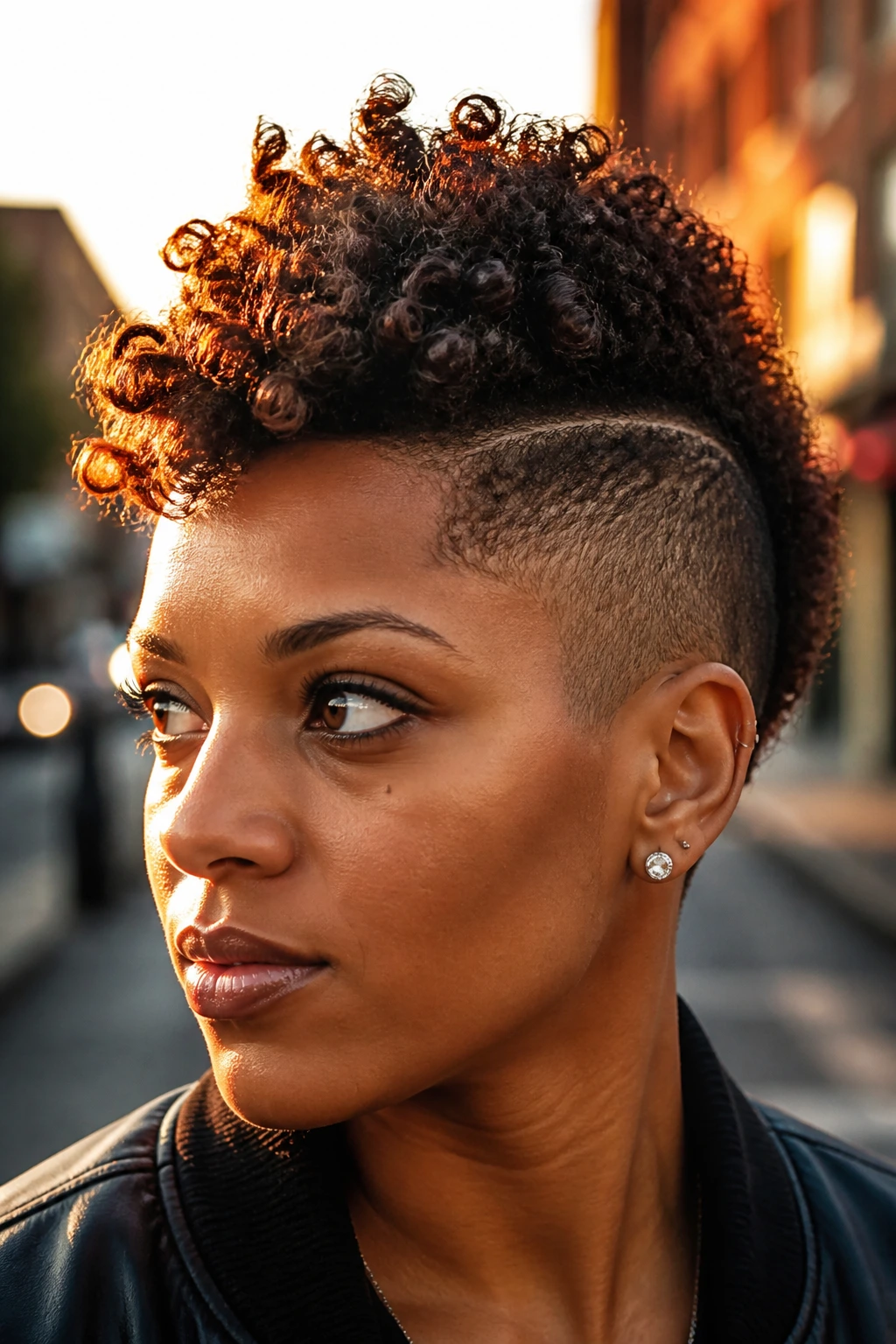
Curly hair and a mohawk are natural companions, and the curly crown hawk proves it. Instead of forcing the curls flat, this style leaves a rounded crest in the middle and trims the sides short enough to expose the curve of the head. The result feels softer than a straight-up punk hawk, but it still has a real line to it.
The trick is moisture. Dry curls collapse into frizz; hydrated curls stack into shape. A leave-in conditioner, a curl cream, and a small amount of gel at the ends can keep the top defined without making it stiff. I’d avoid heavy pomades here. They usually weigh the curls down and turn the whole top into one sad, shiny clump.
6. The Twist-Out Frohawk
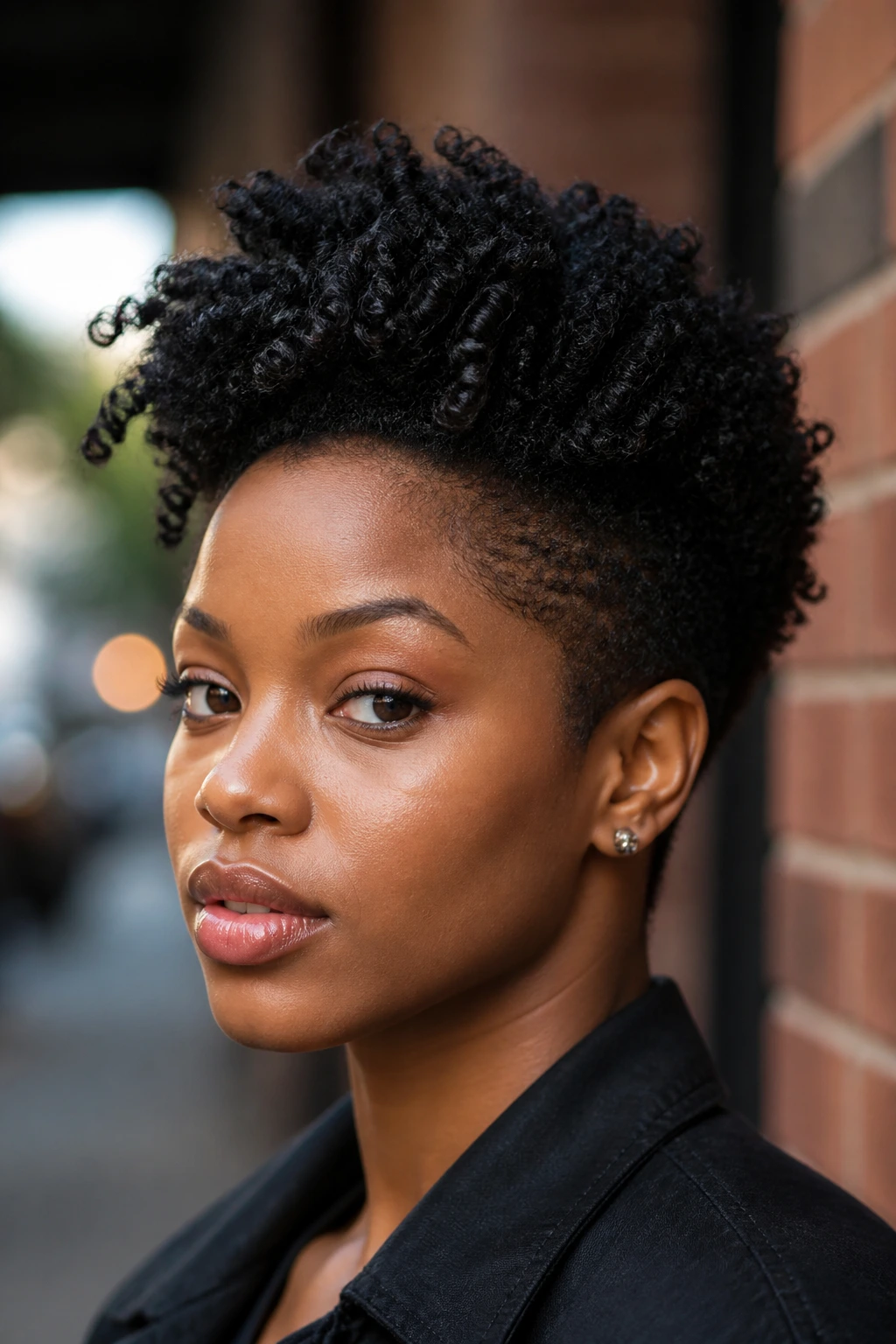
Why does this one work so well? Because twist-outs create their own architecture. A twist-out frohawk uses short twists or two-strand twists on the center section, then lets the sides stay low or faded. Once the twists are unraveled, the top gets a stretched, airy texture that reads as full even when the hair is short.
The look has more movement than a tight curl hawk. It also gives you a little freedom on the shape — you can keep the ridge narrow for a sharper profile or widen it for a softer, fuller crown. If you like styles that look better on day two, this is a strong one. The texture settles in and gets a little more interesting after the first initial set.
How to Style It
Use clean, damp hair and apply a lightweight twisting cream or gel with slip. Create small, even twists on the center strip and let them dry fully before separating. A hooded dryer speeds things up, but air-drying overnight works fine if the twists aren’t too thick.
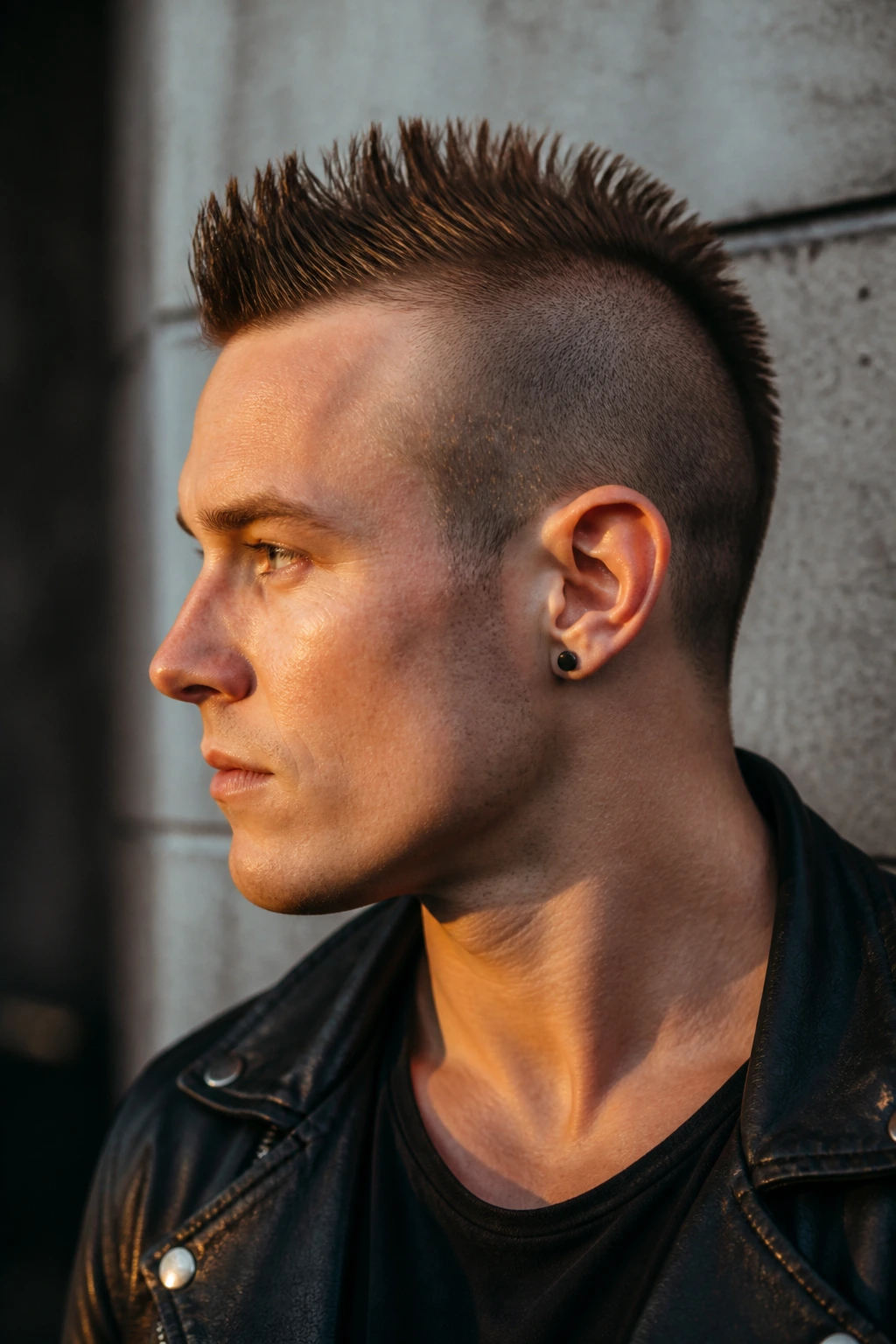
7. The Spiky Texture Hawk
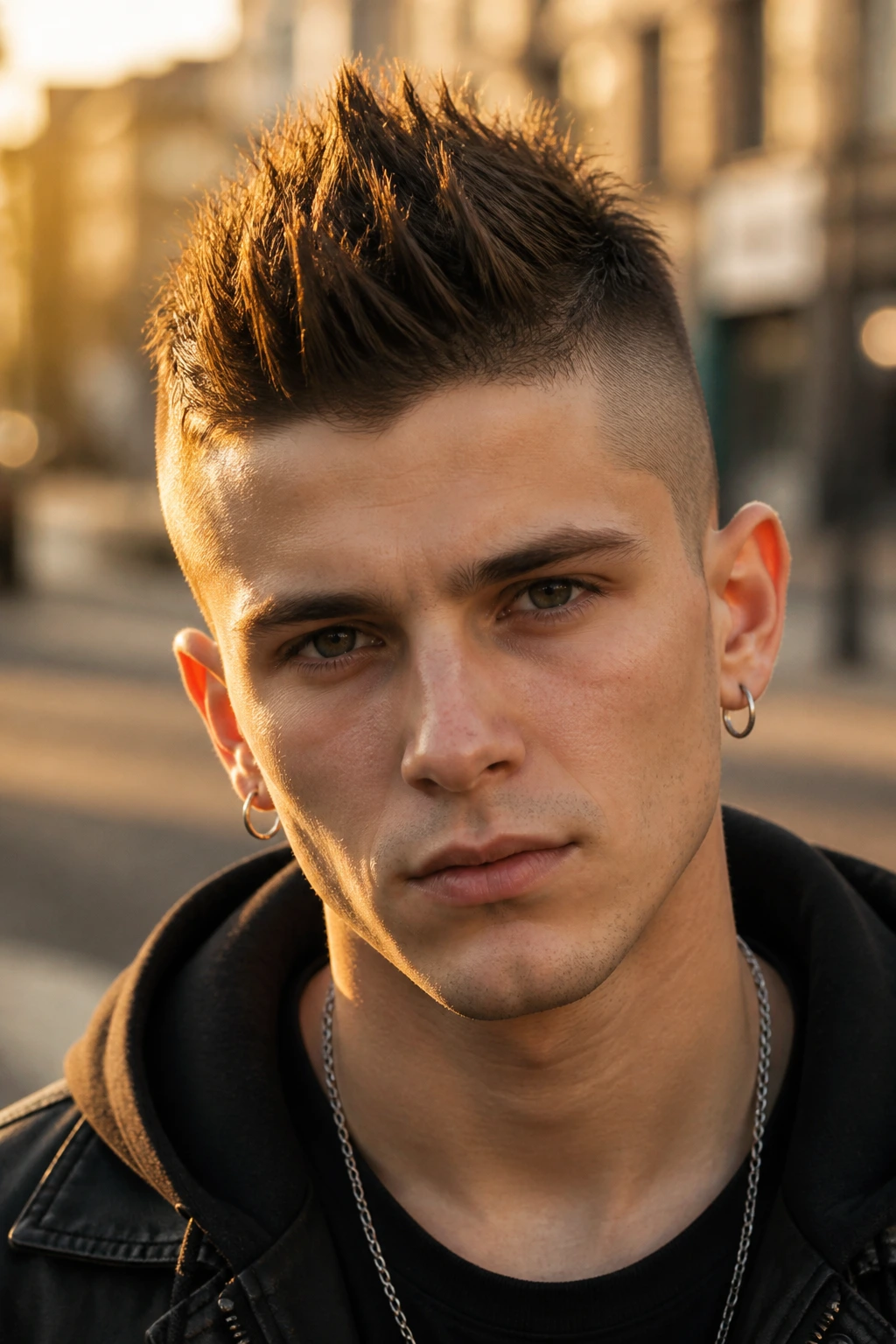
This is the one with a bit of grit in its teeth. The spiky texture hawk works best on straight or slightly wavy short hair that naturally wants to break into pieces. Instead of building one smooth crest, you push the top upward in small sections, which gives the hair a rough, animated finish.
The cut helps here. If the top is point-cut or textured with a razor, the spikes separate easier. A matte clay or firm paste gives that dry, separated look; gel usually makes it too wet and too uniform. Keep the sides tight, but not necessarily skin-faded. The point is texture, not harshness.
I’d choose this one when you want movement more than polish. It reads youthful, sharp, and a little chaotic in a good way. Not sloppy. Just alive.
8. The Disconnected Undercut Hawk
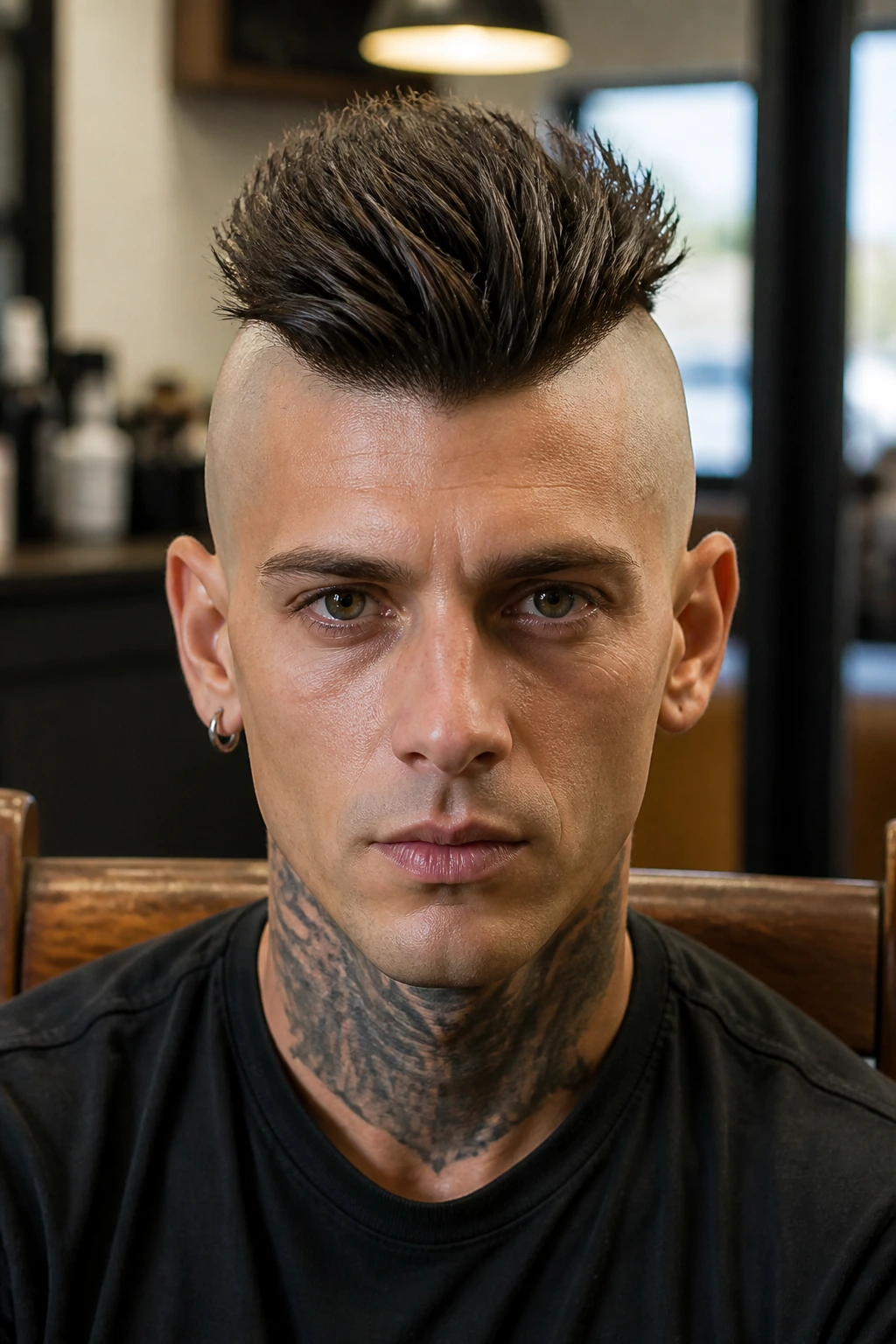
A disconnected undercut hawk makes a strong visual break between top and sides, and the break is the whole point. The top stays clearly longer — often 2 to 4 inches even on short hair — while the sides are taken down abruptly, with little or no blend. That sharp drop gives the style an editorial edge that softer cuts can’t quite match.
If your hair is dense, this is a useful cut because it removes bulk fast. If your hair is fine, the disconnection can still work, but you need enough length on top to keep the center from looking too thin. A strong blow-dry at the roots and a firm matte product will keep the top from collapsing into the undercut line.
This is a style that likes clean maintenance. The grow-out phase can get weird quickly. Once the side starts filling in, the disconnection loses its punch, so regular trims matter more here than they do with softer hawks.
9. The Tapered Everyday Hawk
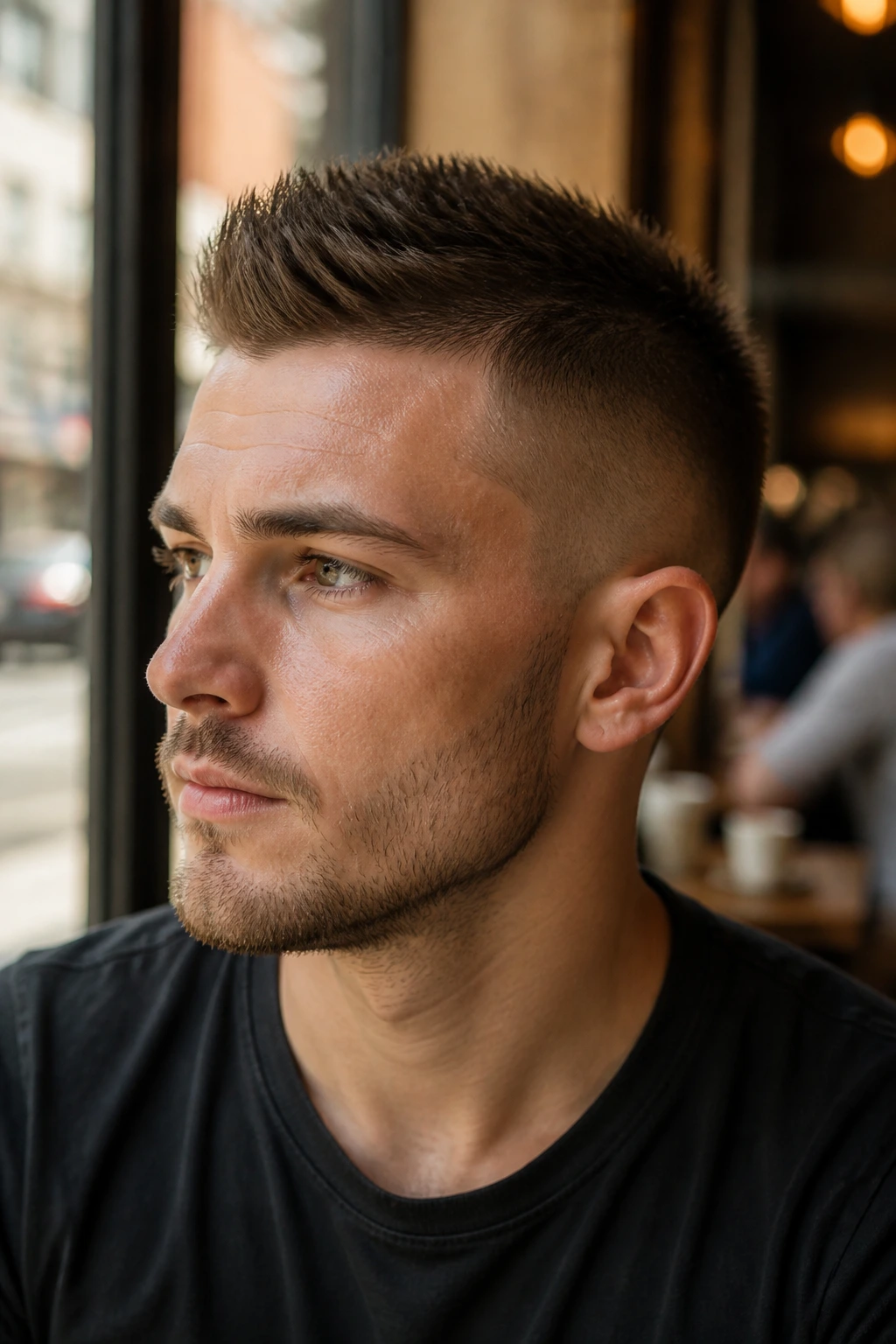
The tapered everyday hawk is the one I’d recommend to people who want to wear a hawk on Tuesday and not think about it again until Thursday. The sides are tapered instead of shaved, which gives the style a gentler fade-out at the temples and neckline. The top stays short, narrow, and easy to restyle.
This version works because it behaves. You can comb it upward, finger-shape it, or let it sit a little flatter and still keep the hawk outline. That makes it useful for people who do not want a high-maintenance cut but still want some edge in the shape.
Good For
- Office settings with relaxed dress codes.
- Fine hair that needs structure without a hard fade.
- Anyone who wants a cut that grows out without looking abandoned.
A dab of cream in damp hair is usually enough. If you need extra lift, dry the roots first, then shape the top with your fingers instead of a brush. A brush can over-smooth the whole thing fast.
10. The Color-Blocked Hawk
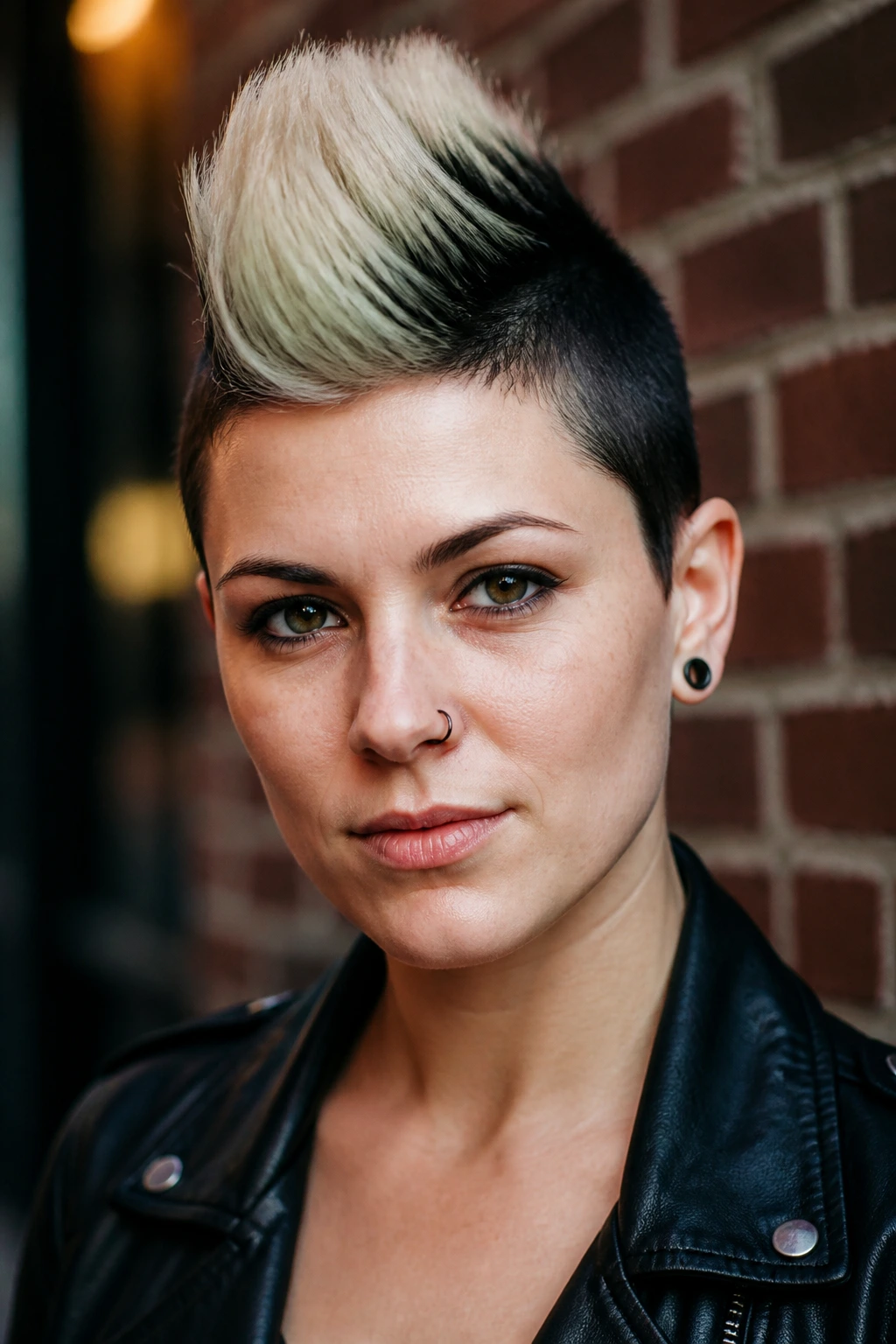
Hair color changes the rules. A color-blocked hawk uses contrast in the dye — dark sides, lighter strip, or a vivid top against a muted base — to make the mohawk shape pop even when the cut itself is short. On short hair, this is a smart trick because color can create the illusion of more height and more separation.
The colors do not have to be neon to work. Even a black-and-copper split, or a dark root with a pale frosted top, can sharpen the shape. If you already have a clean fade, color adds another layer of definition. If the cut is softer, color helps the outline read from farther away.
Bleached sections need care. Dry, brittle short hair loses shape quickly and can get fuzzy at the edges. Use a bond-building conditioner if your color is lightened, and be realistic about upkeep. The grow-out line on short color looks louder than it does on long hair.
11. The Mini Pixie Hawk
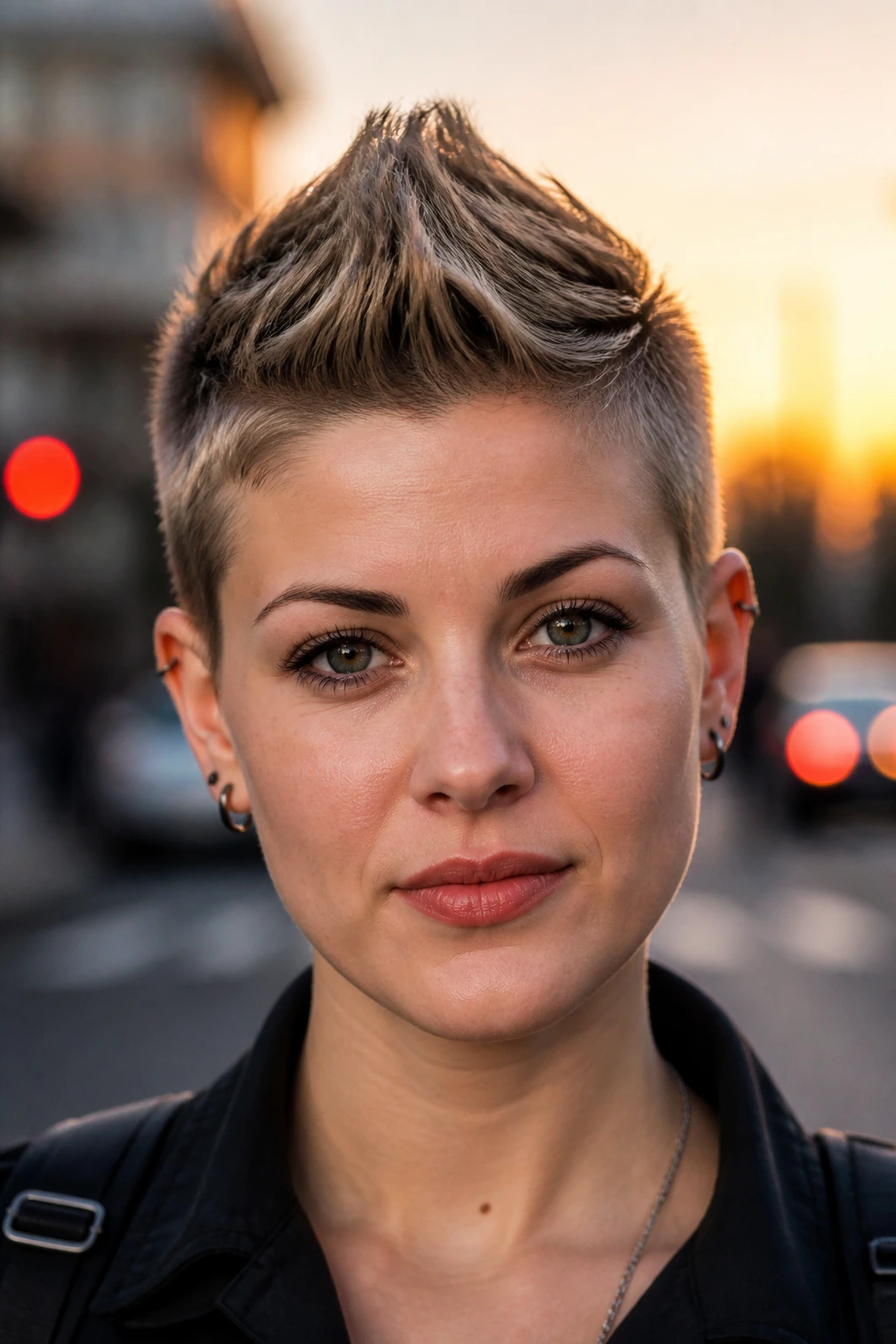
This one is tiny, and that’s what makes it good. A mini pixie hawk keeps the sides short and the top just long enough to lift at the front and crown. Think of it as the smallest version of a mohawk that still carries the idea. It’s clean, wearable, and surprisingly sharp when the edges are tidy.
Why It’s Worth Considering
It suits short pixie cuts that already have a little length on top but don’t have enough hair for a dramatic ridge. The lift is subtle, not theatrical. A small amount of volumizing mousse or a lightweight paste is usually enough to give the top some direction.
How to Get the Most From It
- Blow-dry the crown forward first, then push it up.
- Keep the sideburn area tight so the shape doesn’t puff out.
- A tiny side sweep at the front can soften the line if you want less edge.
- Use a fine comb only if your hair is extremely straight; otherwise fingers work better.
This cut feels especially good on very straight hair that needs a bit of architecture. Straight hair can look flat fast, and this fixes that without requiring a full dramatic hawk.
12. The Cornrow Mohawk
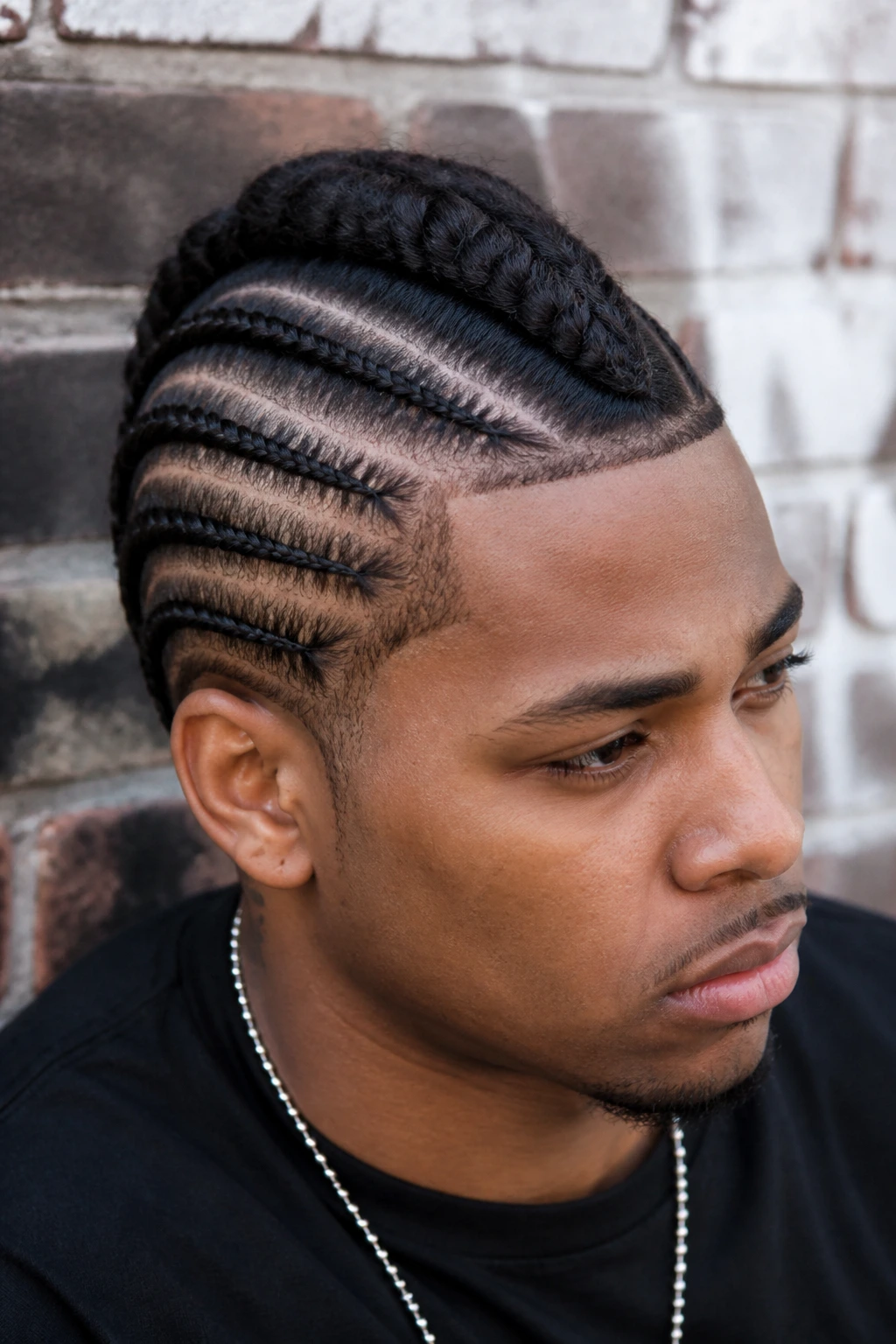
Braids bring control to short hair, and the cornrow mohawk is one of the cleanest examples. The sides are braided straight back or angled toward the center, which creates a mohawk shape without shaving the sides bare. The middle row can be left free, braided, or twisted depending on how much length you have.
This style is practical and striking at the same time. It protects the hair, holds its shape for days, and keeps short coils or curls tucked in place. On hair that is too short to stand tall on its own, cornrows give you the outline without asking the hair to defy gravity.
The line work matters. Neat parting and even tension make the look feel finished. If the braids are too loose, the mohawk shape softens and starts to blur. If they’re too tight, the scalp will tell you immediately, and not in a pleasant way.
13. The Two-Tone Hawk
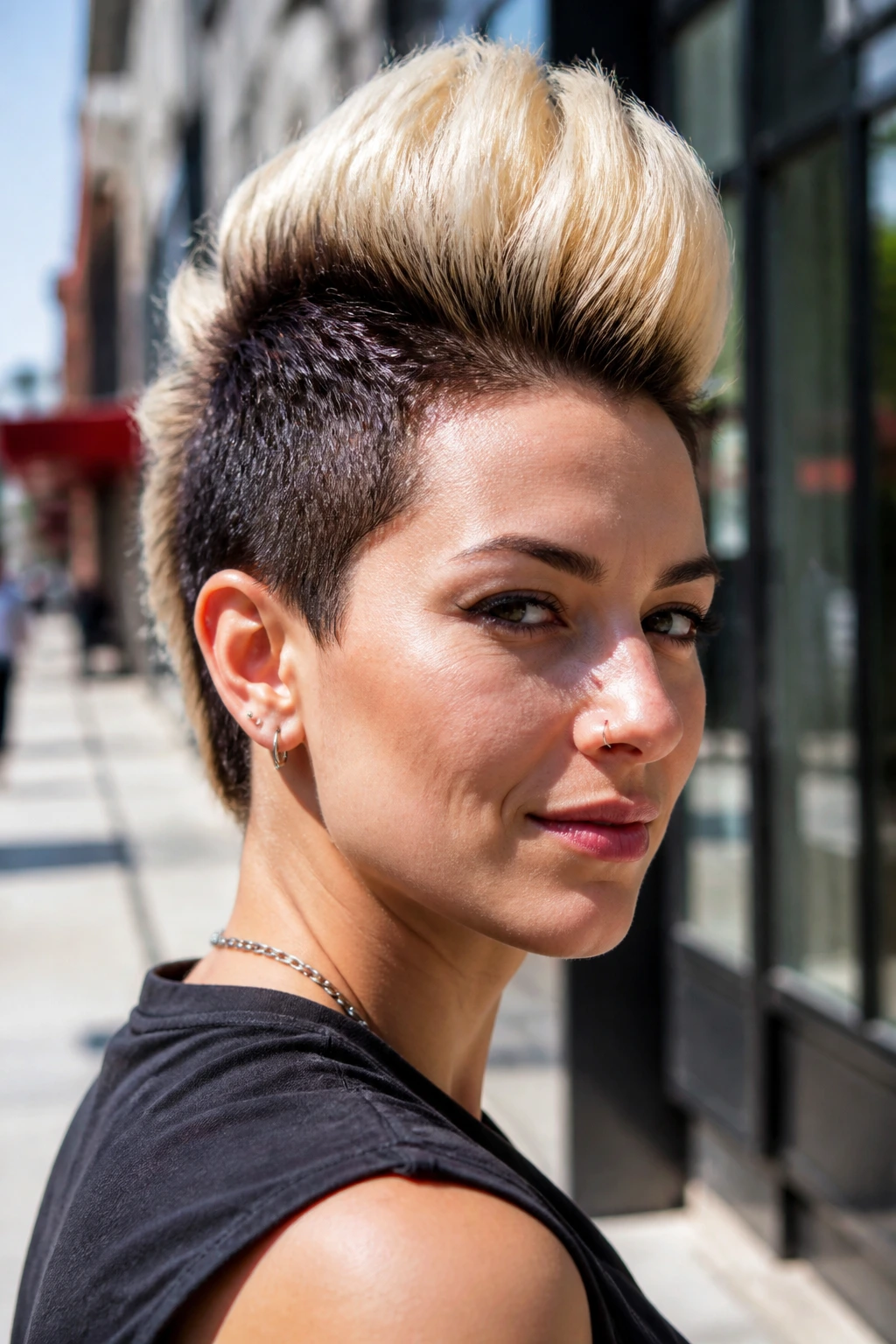
A two-tone hawk doesn’t need wild color to make its point. The idea is contrast: one tone on the sides, one on top, or a darker root with a brighter crest. That split gives the style shape even before the hair is fully styled. Short hair takes to this well because the transition is easy to read.
The best version is controlled, not muddy. If you’re doing it with dye, choose shades that sit apart enough to show the difference — chestnut and honey, black and silver, deep auburn and copper. If you’re doing it with temporary color wax, keep the application clean so the center strip doesn’t bleed into the sides.
I like this option for people who want the hawk shape to show in daylight without needing a huge lift. The color does some of the work the styling product would otherwise have to do.
14. The Mullet-Hawk Hybrid
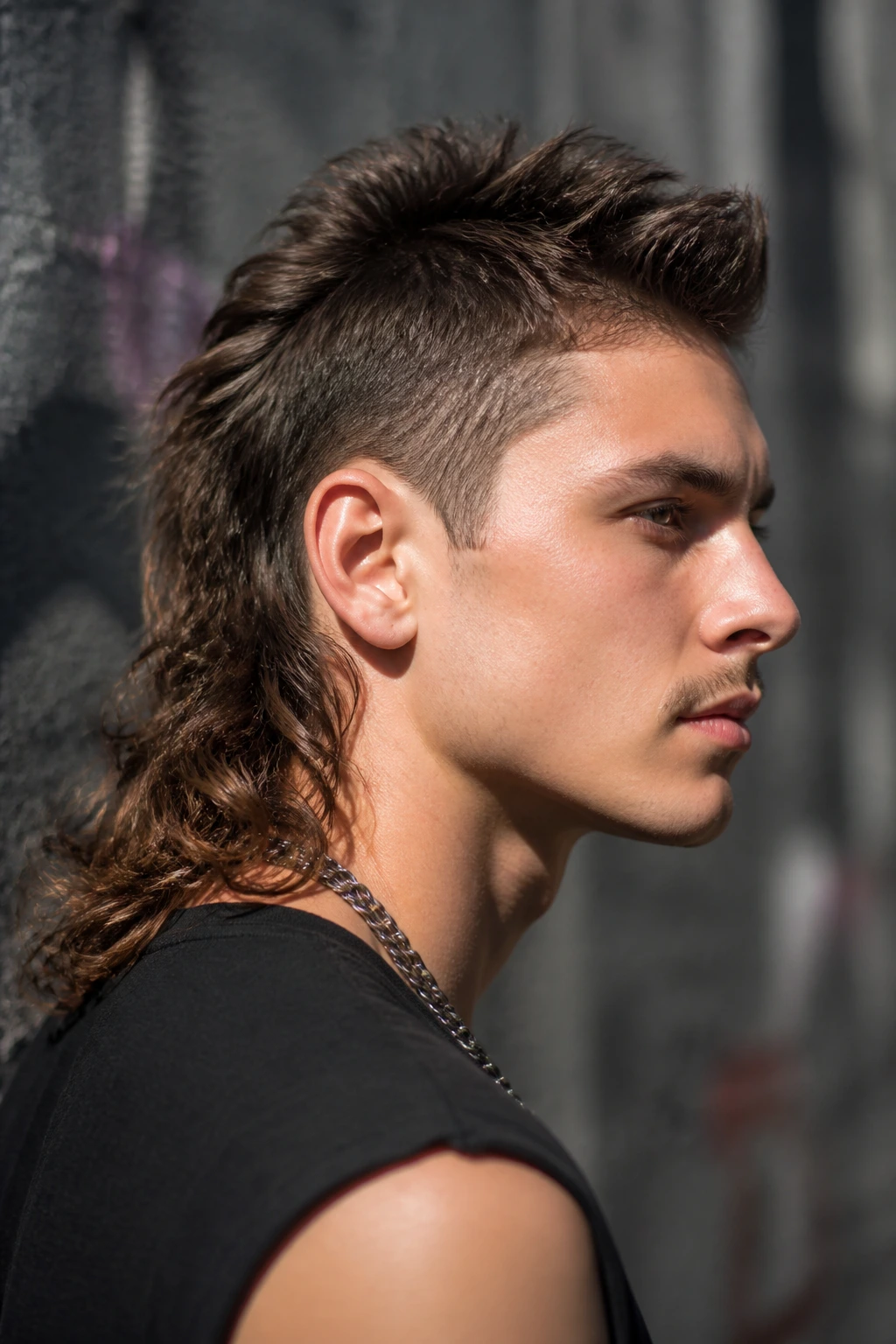
This style has attitude, and it knows it. A mullet-hawk hybrid keeps the front and crown short to medium, but leaves the back slightly longer and more textured than a classic hawk. The result is a shape that moves backward as well as upward, which gives short hair more personality than a strict center ridge ever could.
It works best when the back length is intentional. If the nape is too heavy, the style just looks grown out. You want a little tail, not a mop. Ask for the back to be tapered so the longer section still feels connected to the top.
What Makes It Different
Unlike a standard mohawk, this version has a visible rear flow. That means it can soften an angular face and give thicker hair somewhere to sit without spreading too wide at the temples. A salt spray plus matte paste combo keeps the texture separated.
15. The Slicked Wavy Hawk
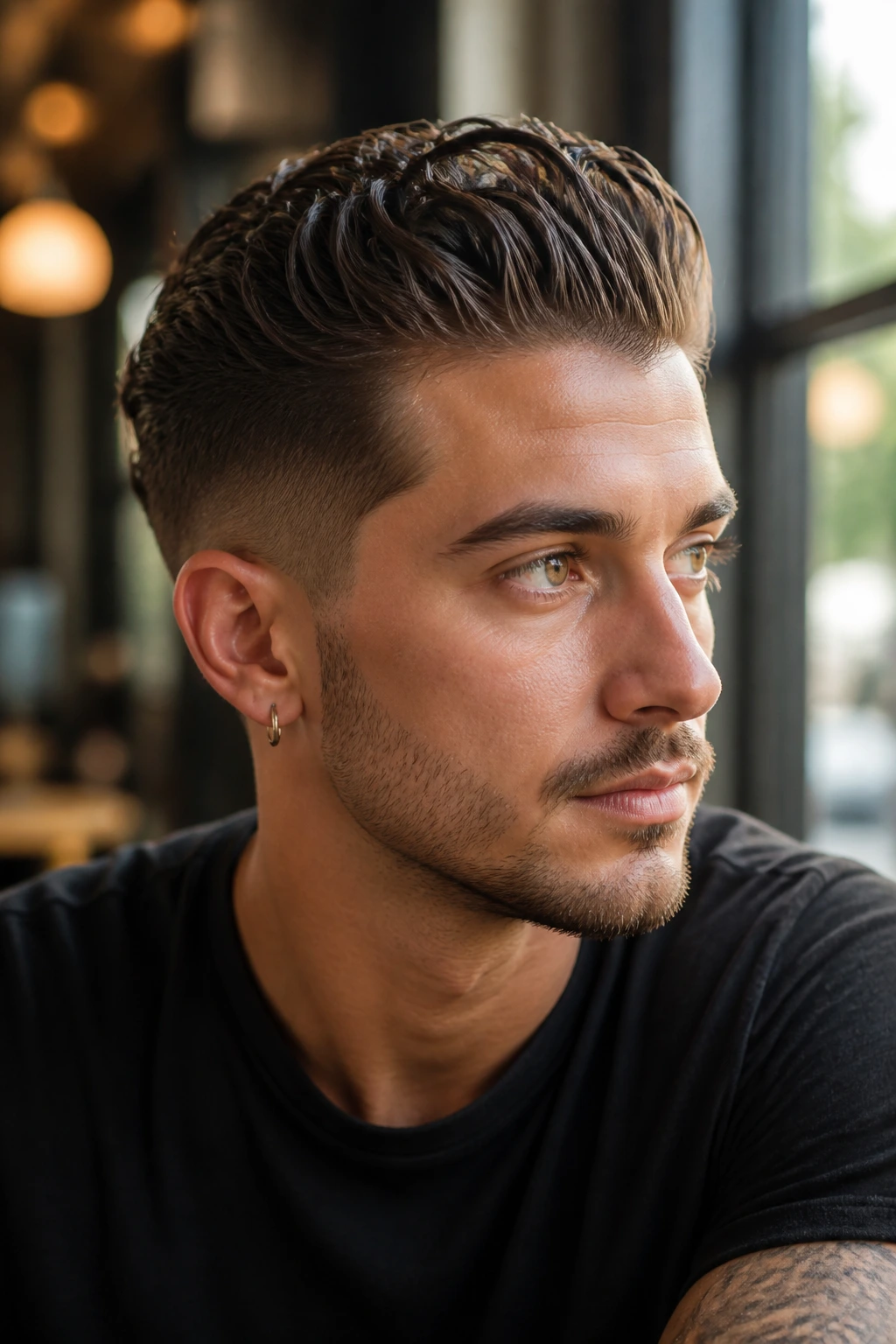
Waves and shine can pull a hawk in a different direction. The slicked wavy hawk takes short wavy hair and smooths it back and slightly upward, keeping enough bend in the hair so it doesn’t look flat or frozen. The look sits somewhere between polished and rebellious, which is a nice place to be.
This one depends on the balance between moisture and control. Too much gel, and the wave pattern disappears into a hard shell. Too little, and the ridge falls apart by lunchtime. I’d use a light cream first, then a medium-hold gel only where the hair tends to collapse, usually at the front and crown.
The style is especially useful if you want a mohawk shape that can survive humidity better than a spiky finish. Wavy hair often wants to move around anyway, so you might as well shape that movement rather than pretend it isn’t there.
16. The Hard-Part Hawk
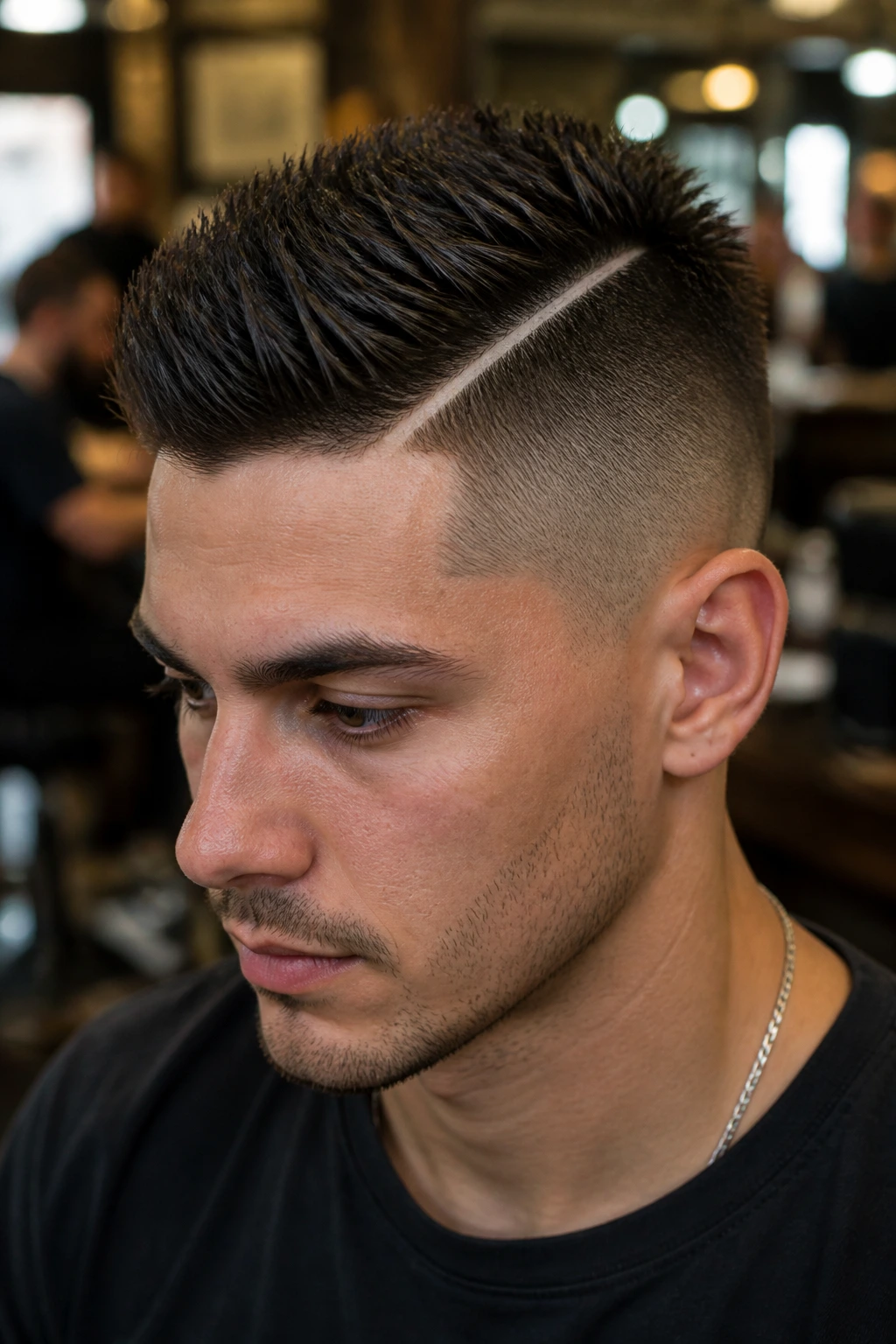
A hard part can sharpen almost any short hawk, but on its own it becomes a style feature worth naming. The part is shaved or razor-lined into the scalp, splitting the top from the side with a crisp, visible line. On a mohawk, that line can make the center strip look cleaner and more deliberate, especially if the rest of the cut is short.
It’s a detail-heavy style, which means the barber’s hand matters a lot. The line should be straight and consistent, not wobbly or overcut. Pair it with a mid fade or low fade, and the whole haircut gets a more tailored look. I’d keep the top textured, because a smooth top plus a hard part can go a little too formal unless that’s the goal.
This is a strong pick for people who like detail. It’s not subtle, but it is tidy.
17. The Temple Fade Frohawk
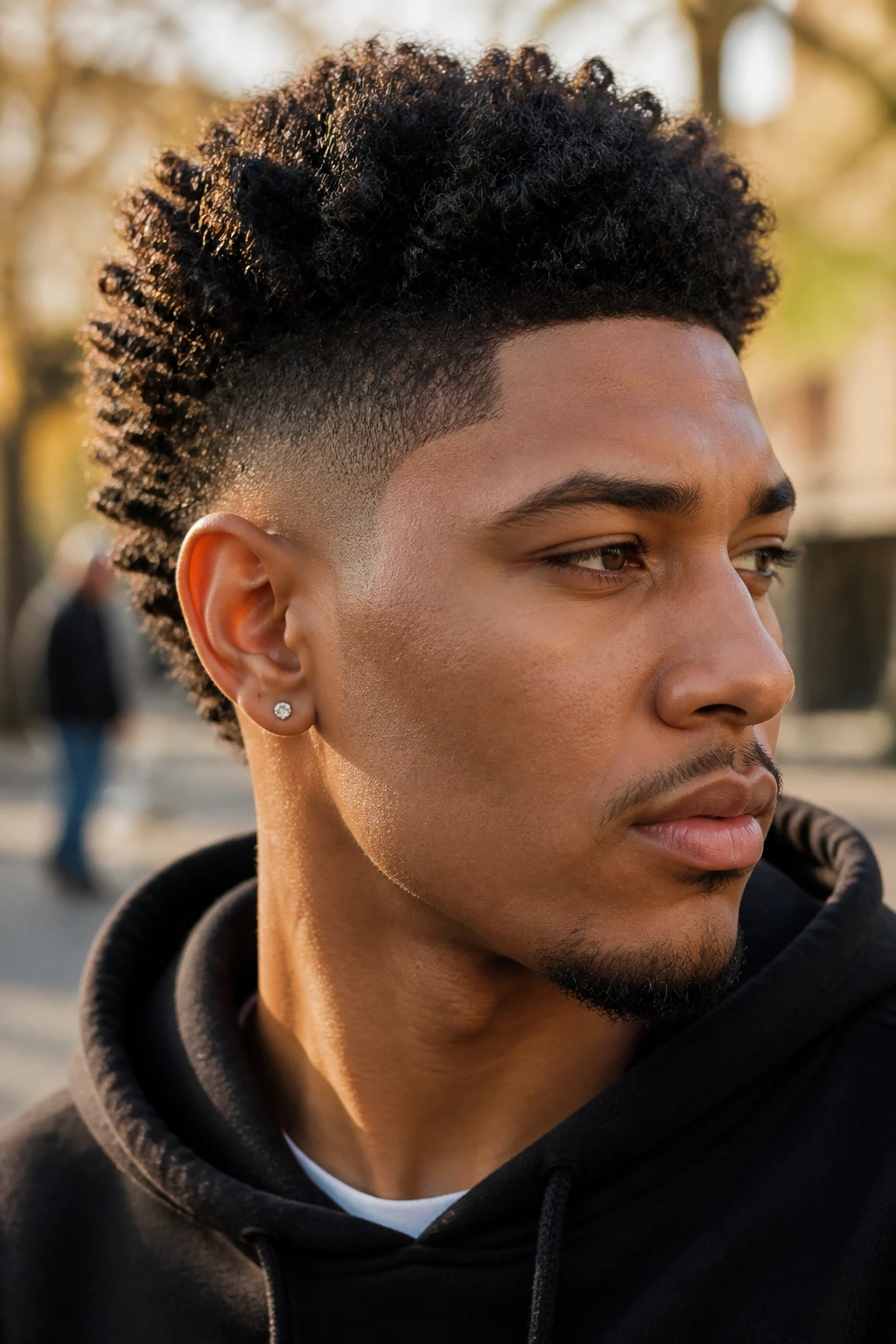
Temple fade frohawks are all about the edges near the face. The fade is concentrated at the temples and sideburn area, which frames the face while leaving the middle and crown fuller. On coily or curly short hair, that setup keeps the style lifted without stripping away too much volume.
The advantage is shape control. Temple fades are flattering because they clean up the side profile but leave enough hair above the ears to show texture. If the curl pattern is tight, a twist cream or curl butter can help the top stay defined without frizzing out at the edges.
This is one of my favorite options for short natural hair because it looks finished even when the curls are not perfectly aligned. That matters. A good frohawk should look intentional on a regular day, not only after a fresh salon visit.
18. The Side-Swept Hawk
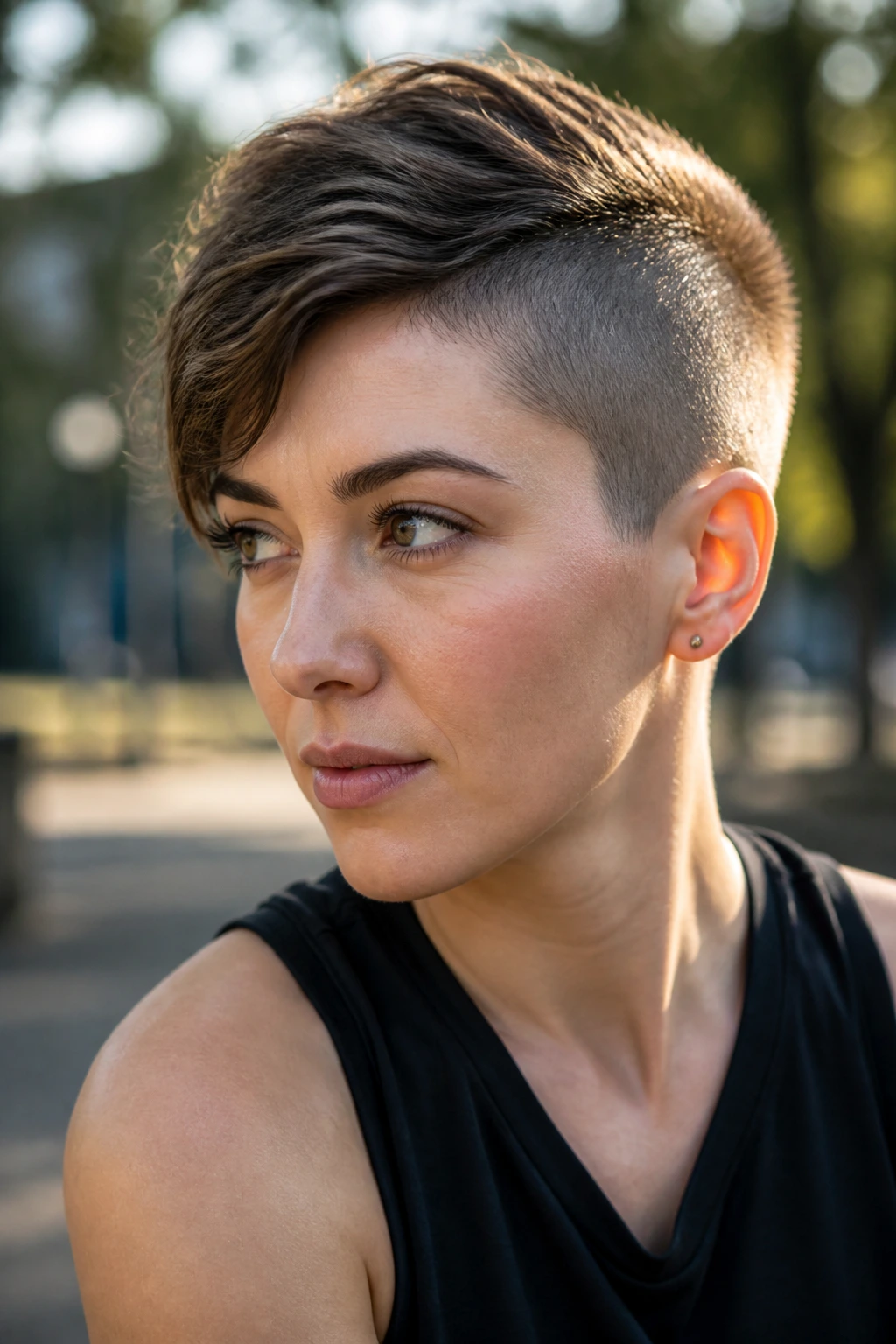
A side-swept hawk bends the center section just enough to one side that it feels softer than a straight-up ridge. The top still narrows into a hawk shape, but the front and crown lean diagonally instead of standing dead center. That little shift makes the style easier to wear if you find classic symmetry too stiff.
It works especially well on short hair with a slight wave or a cowlick that refuses to stay put. Instead of fighting the direction, you use it. A flexible paste or cream wax gives enough hold to keep the sweep in place without locking every strand down.
This one is good when you want the hawk idea without the full punk silhouette. It reads less aggressive, more styled. A small difference, but a useful one.
19. The Sculpted Pompadour Hawk
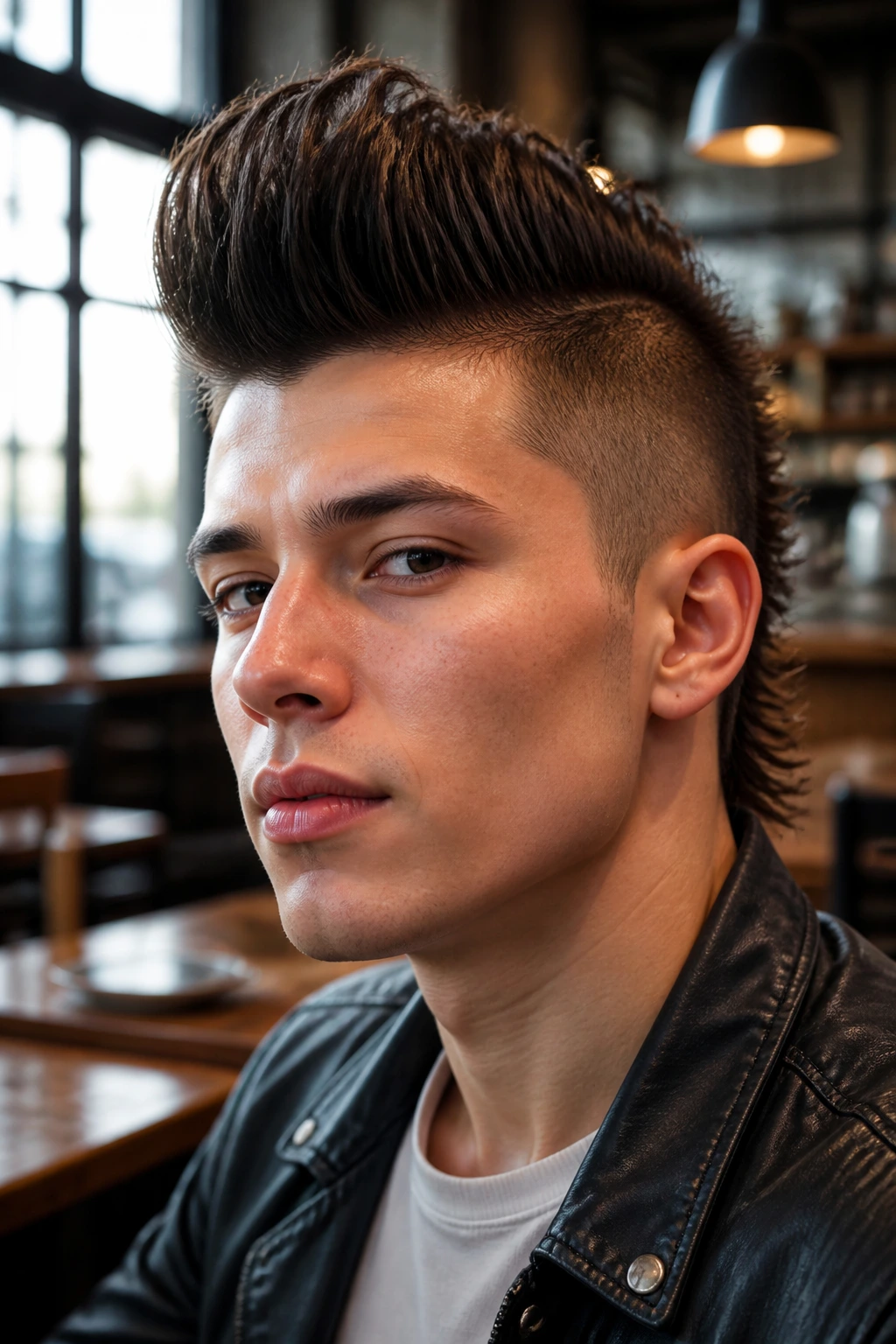
A sculpted pompadour hawk borrows the height of a pompadour and narrows it into a mohawk ridge. The front lifts higher than the crown, then the shape tapers back toward the nape. On short hair, the trick is keeping the height concentrated in the front third so the style doesn’t flop backward.
Why the Front Matters Most
That front lift sets the tone. If the front sits flat, the whole cut loses its shape. Use a blow-dryer and a round brush or your fingers to push the roots up and back, then lock it in with a medium-hold paste. The hair should feel touchable, not stiff.
This is one of the best hybrid styles for people who want polish without losing the mohawk edge. It can read dressy with a blazer or laid-back with a plain tee, which is more useful than it sounds.
20. The Razor-Edge Hawk
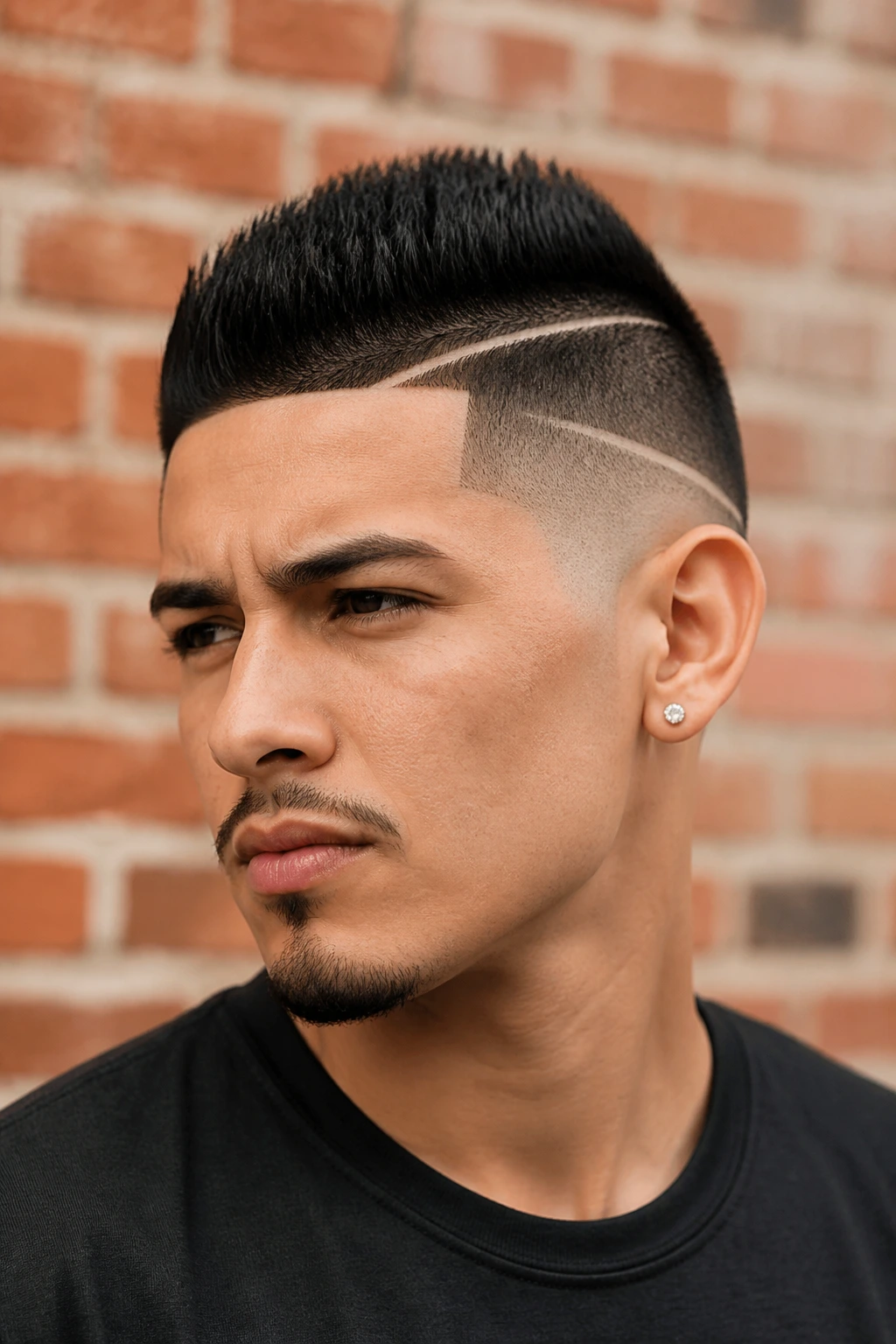
A razor-edge hawk is sharp in both shape and mood. The hairline, side panels, and top edge are cut to crisp lines, often with a razor or very precise clipper work. The effect is clean and almost graphic. Short hair helps the look because the edges stay readable.
The top itself can stay short and choppy. That’s the smart move. If the top is too smooth, the hard lines can start to feel harsh. But when the texture is broken up a little, the edge work frames it nicely. I’d pair this with a strong fade or undercut so the contrast remains clear.
This style is not for hiding. It wants to be seen. If you like haircuts that look engineered rather than casual, this one delivers that feeling without needing much length.
21. The Messy Bedhead Hawk
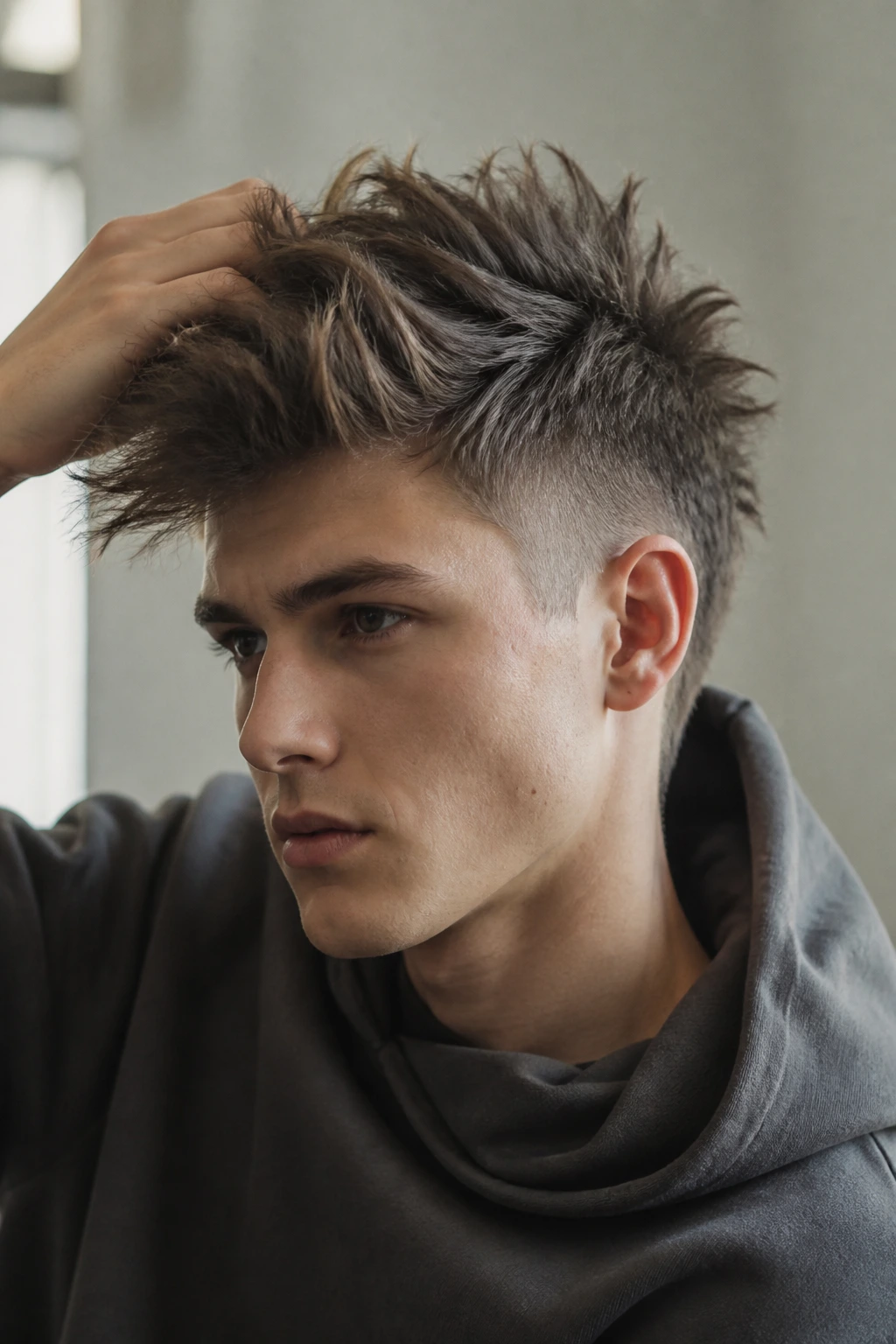
A messy bedhead hawk is what happens when you let texture have a vote. The sides stay short, but the top is left rough, finger-raked, and deliberately imperfect. It looks quick, but it still needs a plan. Without shape, “messy” just becomes flat.
The best version starts with a dry texture spray or sea salt spray, then a little paste at the ends of the top section. Scrunch, pinch, and separate the hair so it doesn’t turn into one damp clump. On very short hair, you may only get a small ridge and a few lifted pieces — that’s fine. The point is movement.
I’d choose this if you hate overstyled hair. It has a worn-in feel that works especially well with denim, boots, leather jackets, or anything else that can handle a bit of roughness.
22. The Curved Hawk
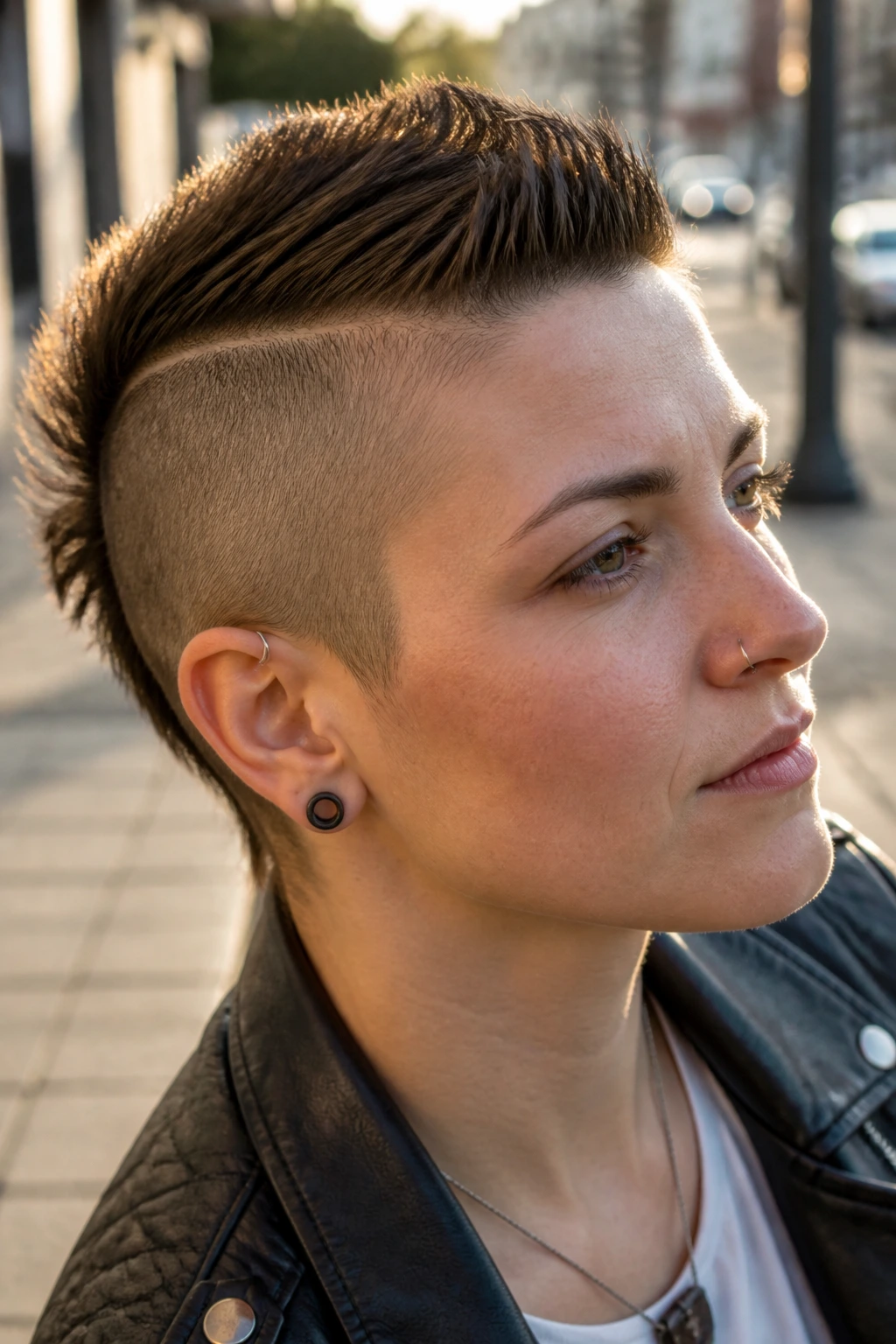
A curved hawk changes the line of the whole head. Instead of running straight down the center, the ridge arcs slightly, following the natural curve from front to crown or crown to nape. That small bend can make the cut look custom-made, especially on heads that are not perfectly symmetrical — which is most heads, honestly.
The curve helps when the hairline is stronger on one side or when the crown swirls push the hair off center. Rather than forcing a rigid straight line, you let the shape glide around the head. A light styling paste and a comb with a soft hand are enough; too much product can make the curve look locked and unnatural.
This one looks subtle from the front and more interesting from the side. That’s a nice surprise.
23. The Line-Design Hawk
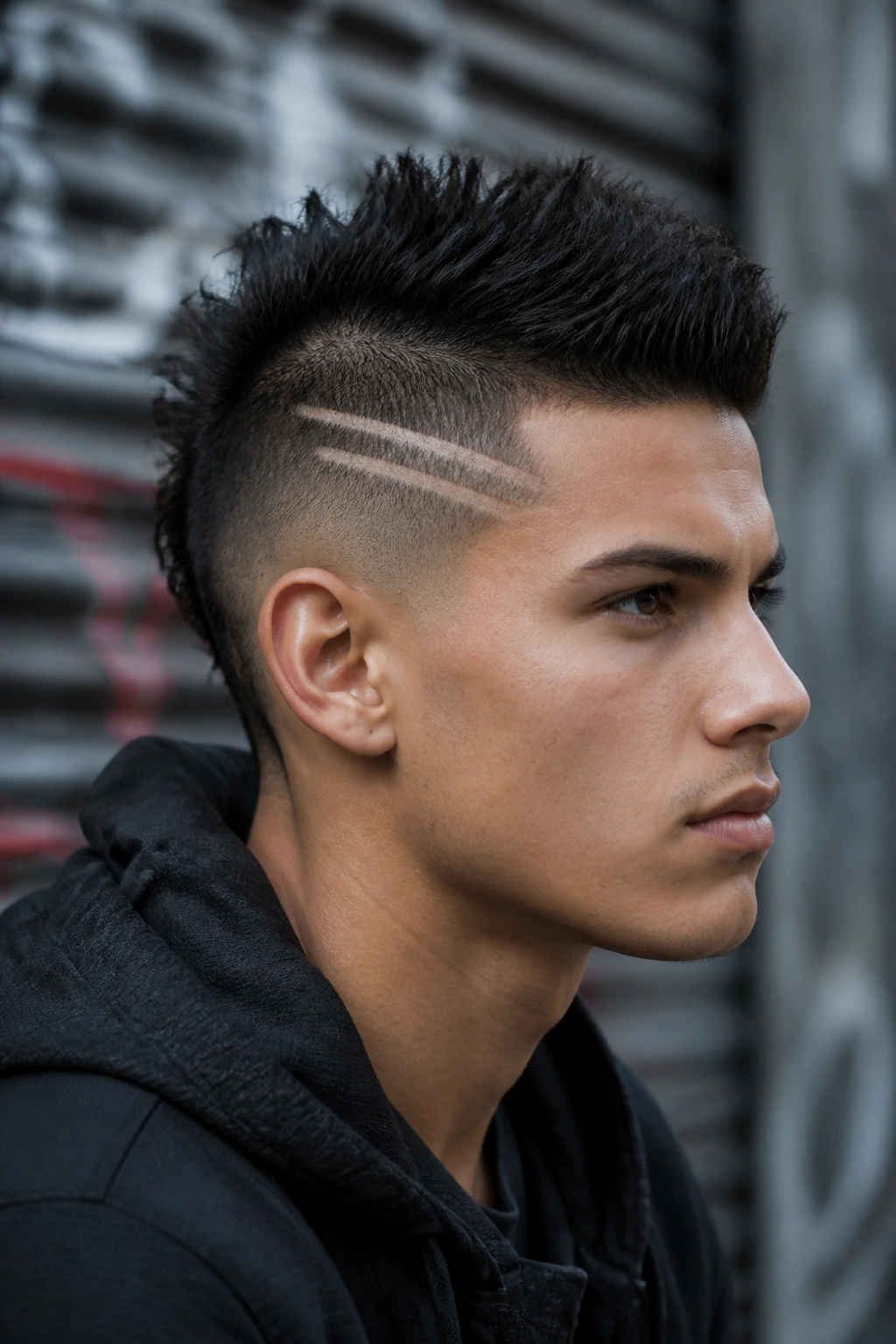
Shaved line designs give a mohawk extra punctuation. One or two clean lines carved into the fade can make a short hawk feel more deliberate without changing the overall cut. On short hair, that little detail carries a lot of weight because there isn’t much surface area for decoration.
The design should support the shape, not fight it. A single diagonal line near the temple can point the eye toward the center ridge. Two parallel lines can echo the mohawk strip. More than that, and the look starts to feel busy unless the rest of the haircut is very clean.
How to Keep It Looking Sharp
- Refresh the lines every 1 to 2 weeks if you want them crisp.
- Keep the top texture simple so the lines stay the main detail.
- Ask for the design on the side with the stronger part line if your hair has one.
This is one of the easiest ways to make a familiar shape feel personal.
24. The Wet-Look Hawk
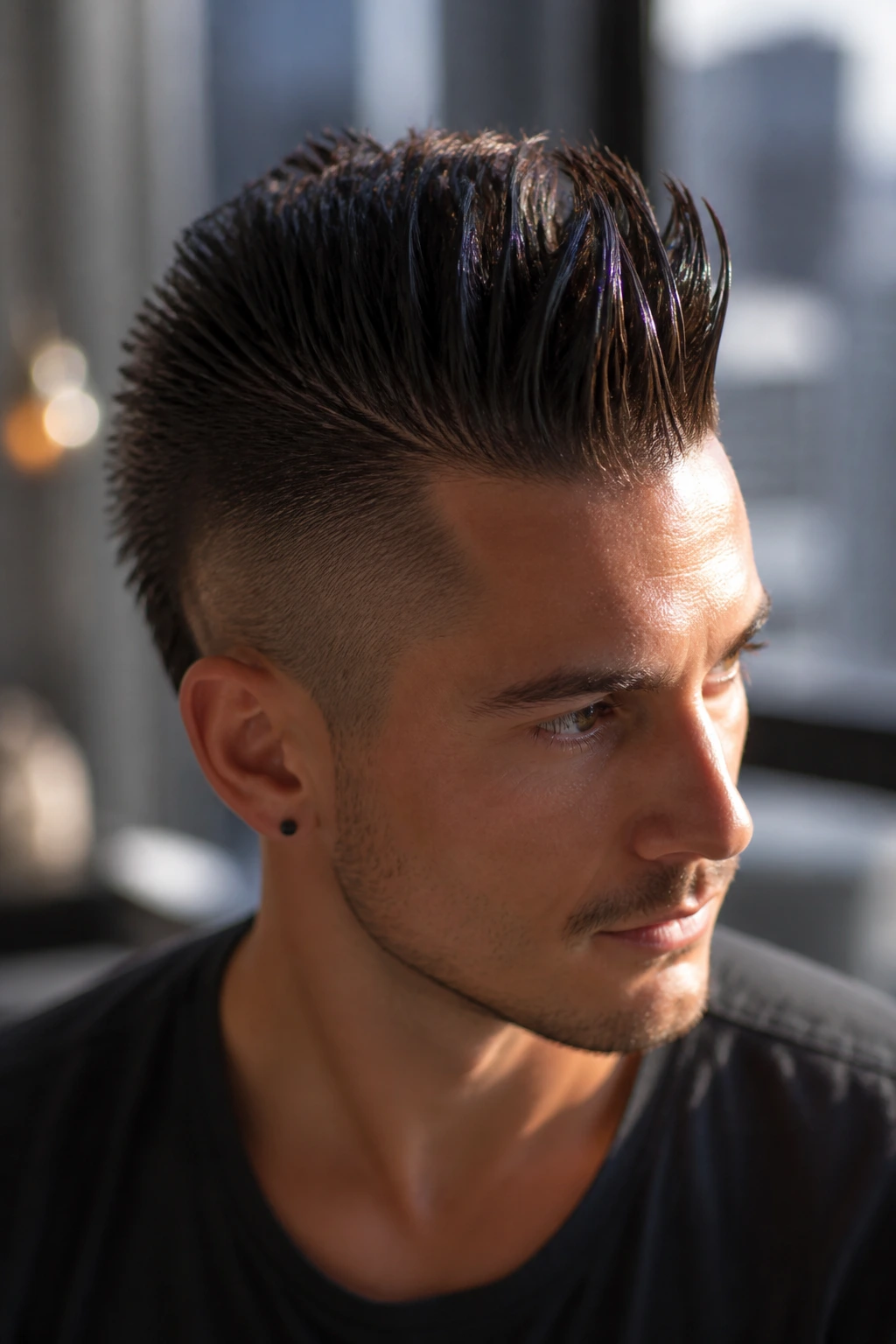
The wet-look hawk is sleek, glossy, and a little dramatic in the best way. The hair is brushed or finger-shaped upward and back with gel, then left shiny enough to look freshly set. On short hair, this finish turns the mohawk into a strong silhouette instead of a fluffy one.
The trick is not drowning the hair. A wet look should still show individual strands or a little ridge texture under the shine. Too much gel makes the hair look heavy and greasy; too little makes it look unfinished. Start with damp hair, work in a controlled amount of gel, and shape fast before it sets.
This style can lean formal or punk depending on what you wear with it. Put it next to a plain black shirt, and it feels sharp. Put it next to a tailored jacket, and it gets unexpectedly clean.
25. The Tapered Curly Hawk
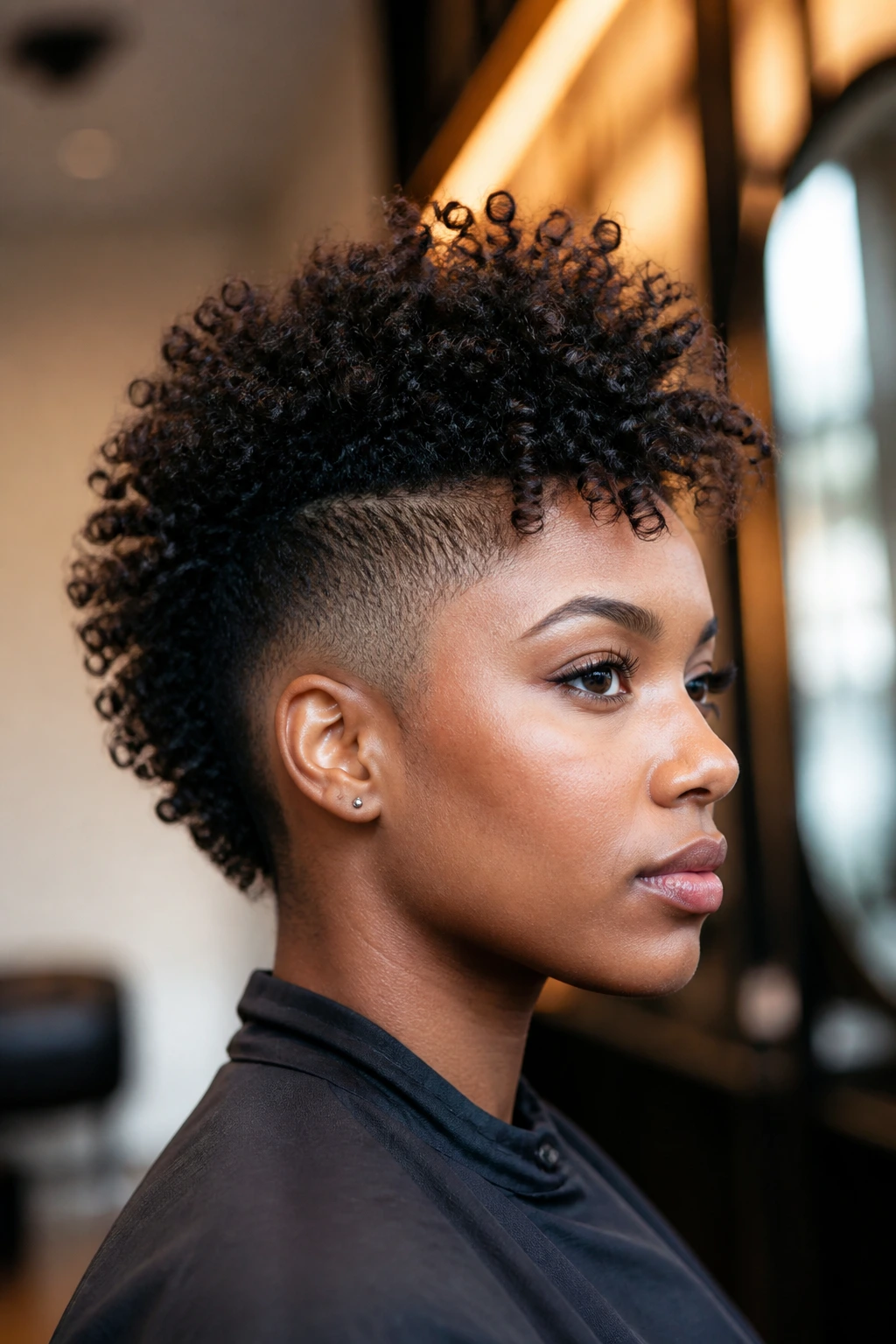
This one is all about balance. The tapered curly hawk keeps the sides gradually shorter and the curls on top a bit longer, but not so long that they balloon out. The taper helps the curls sit like a shaped crest rather than a cloud.
If your curls shrink a lot, ask for a little extra length on top than you think you need. Shrinkage on short curly hair can be sneaky. A curl cream and a touch of gel at the ends keep the ringlets together, while a diffuser helps them dry in place without flattening the root.
The tapered version is friendlier than a hard fade. It feels more natural as it grows, and that matters if you’re not getting weekly haircuts. The shape softens instead of collapsing.
26. The Low-Hold Office Hawk
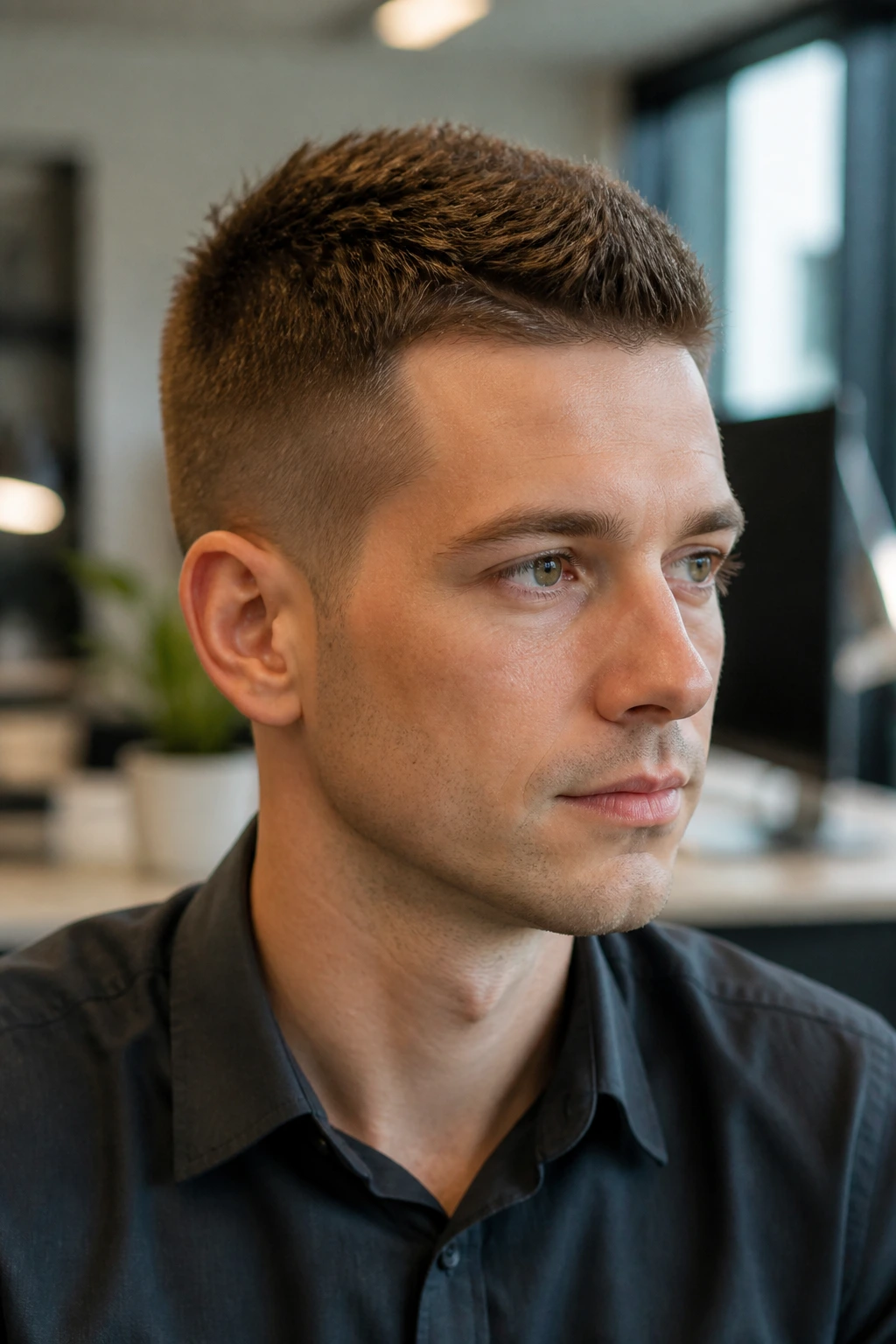
A low-hold office hawk is the one that stays inside the room without becoming boring. The sides are neatly tapered, the top is short, and the product finish is matte and restrained. The style still reads as a hawk, but it doesn’t spike above the rest of the head like it’s trying to start a band in the hallway.
This cut is more about shape than height. Keep the center ridge only a little taller than the sides, and let the product support the line rather than shout it. A light cream or soft paste is enough. If your hair is thick, dry the top with your fingers to remove bulk before adding product.
It’s a useful look for people who want personality with a dress code. Quiet, but not bland.
27. The Box-Fade Frohawk
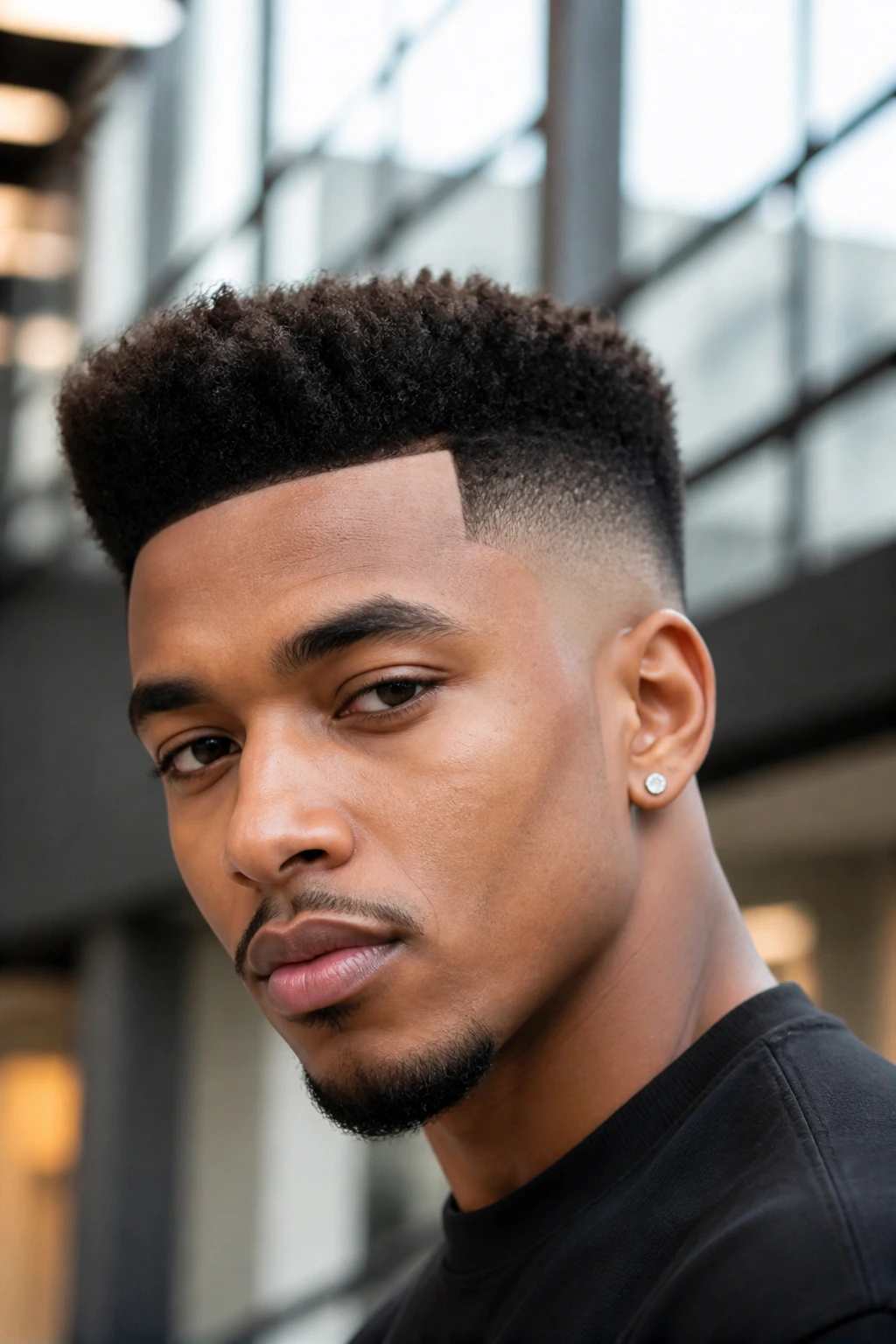
The box-fade frohawk brings cleaner corners and a more angular frame to curly or coily hair. The fade is edged into a flatter, squared outline around the sides and back, while the center strip stays fuller and more vertical. The result has real structure, almost like the haircut has architecture.
This style works best when the top is defined enough to stand on its own. Sponge curls, twists, or a well-moisturized natural coil pattern all help. The box shape at the sides gives the top a stronger visual lift, especially if your hairline is even and your barber knows how to keep the corners crisp.
I like this one when a round fade feels too soft. It gives the hair a sharper frame without making it look overworked.
28. The Micro-Braid Hawk
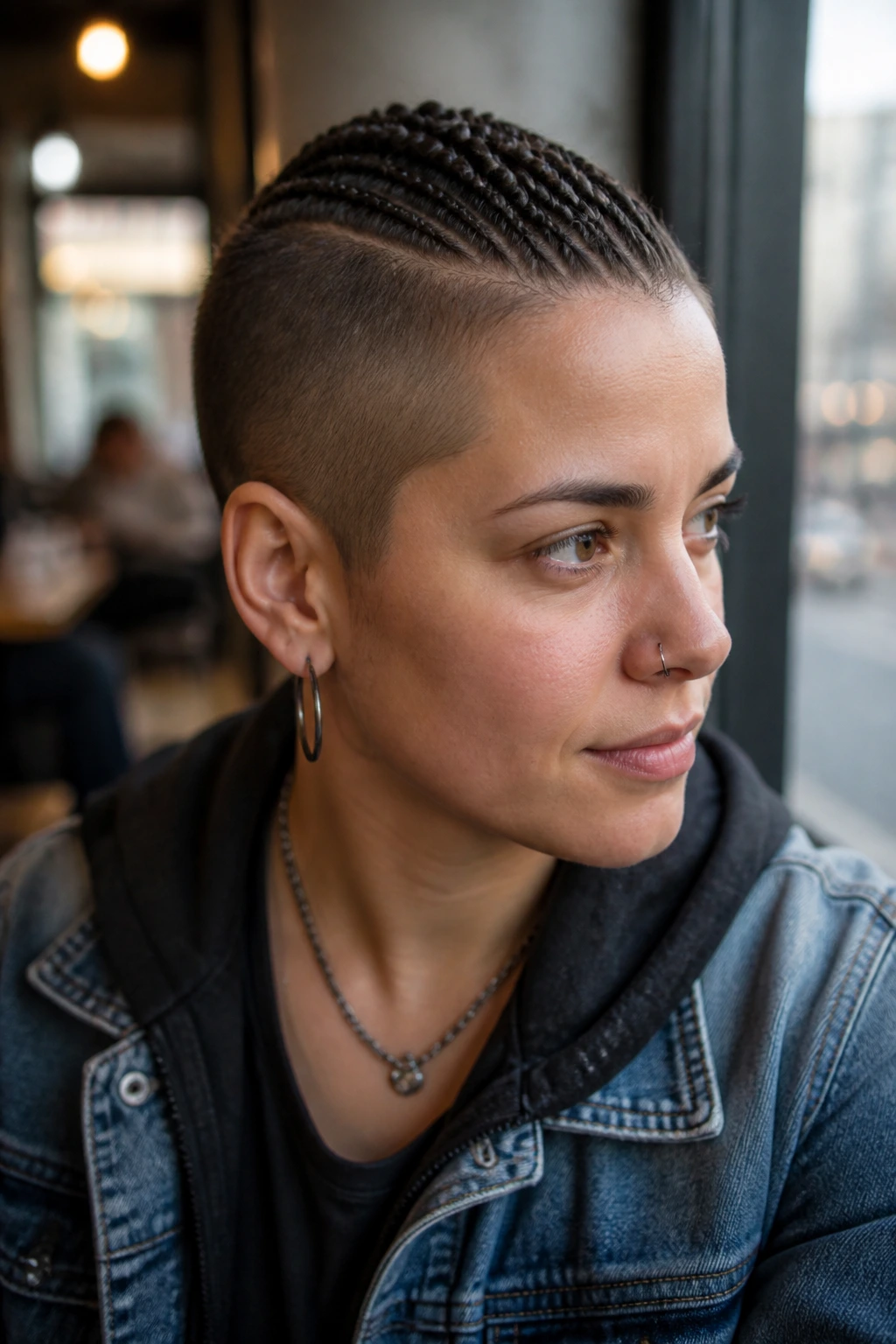
Micro braids change the texture of a mohawk in a way that’s hard to fake with product. The center strip is braided in small, tight sections, creating a slim, detailed ridge that sits flat but still reads as a hawk. On short hair, even tiny braids can create enough visual line to make the style feel complete.
The main thing here is parting. Clean, even sections make the braid pattern look deliberate. If the braids are tiny, the style becomes almost architectural; if they’re larger, the hawk reads softer and more relaxed. Either way, the sides should stay short so the braid row has room to stand out.
This is a strong choice if you want something that can last beyond one day of wear. Braids are doing the work, not a pile of styling paste.
29. The Nape-Detail Hawk
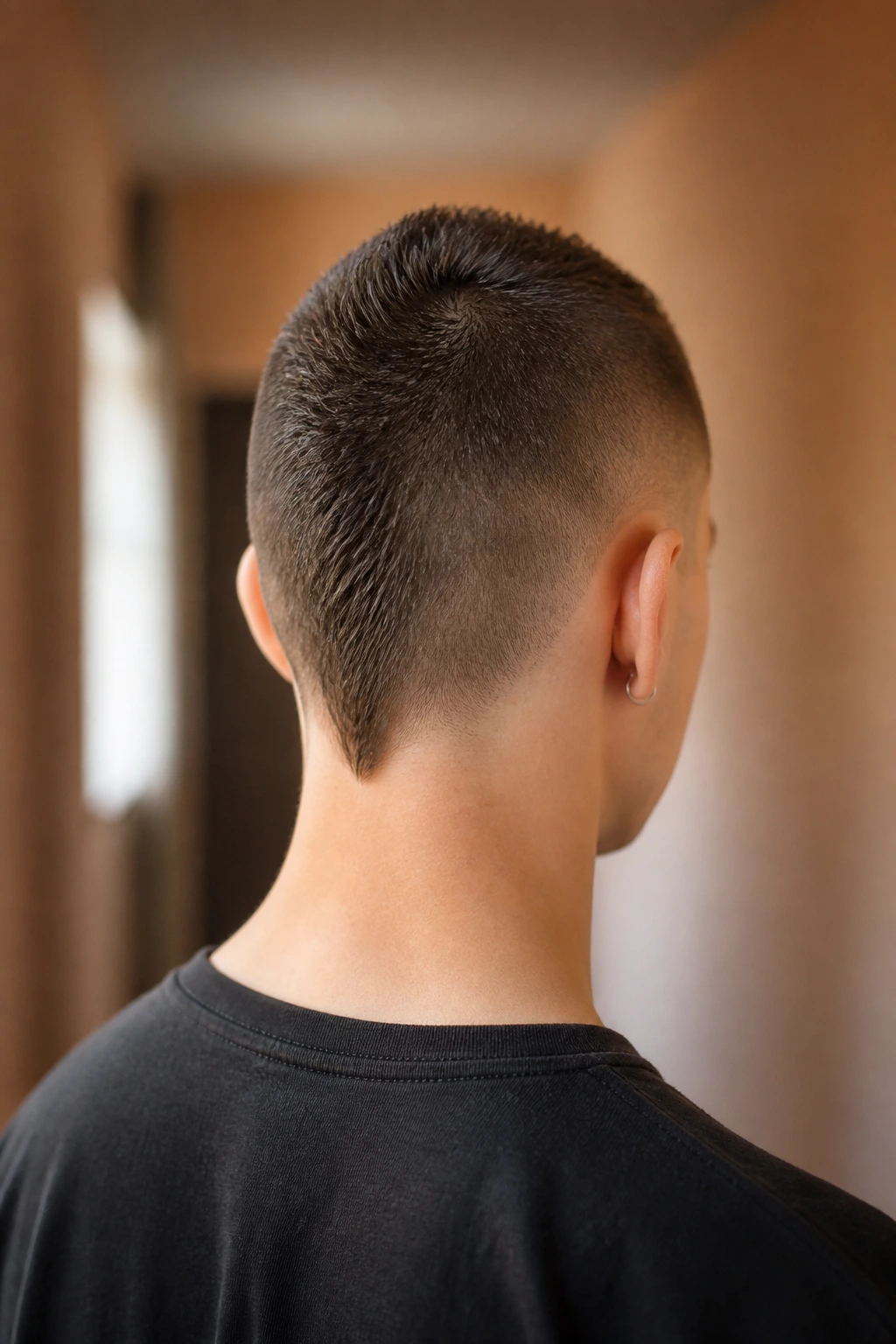
The nape-detail hawk keeps the drama in the back. The front and top stay short and shaped into a narrow crest, while the neckline gets extra cleanup, carving, or a slightly tighter taper so the style ends in a clean point or curve. It’s a small change, but on short hair, the back view matters a lot.
The nape can be squared off, pointed, or softly rounded depending on the mood you want. A pointed finish feels tougher. A rounded neckline feels smoother and more modern. Either way, the line at the back should match the rest of the haircut’s energy. If the top is sharp and the nape is fuzzy, the style loses cohesion.
This version is for people who notice details from behind. And honestly, that’s most people once they’ve taken off a jacket.
30. The Asymmetrical Hawk
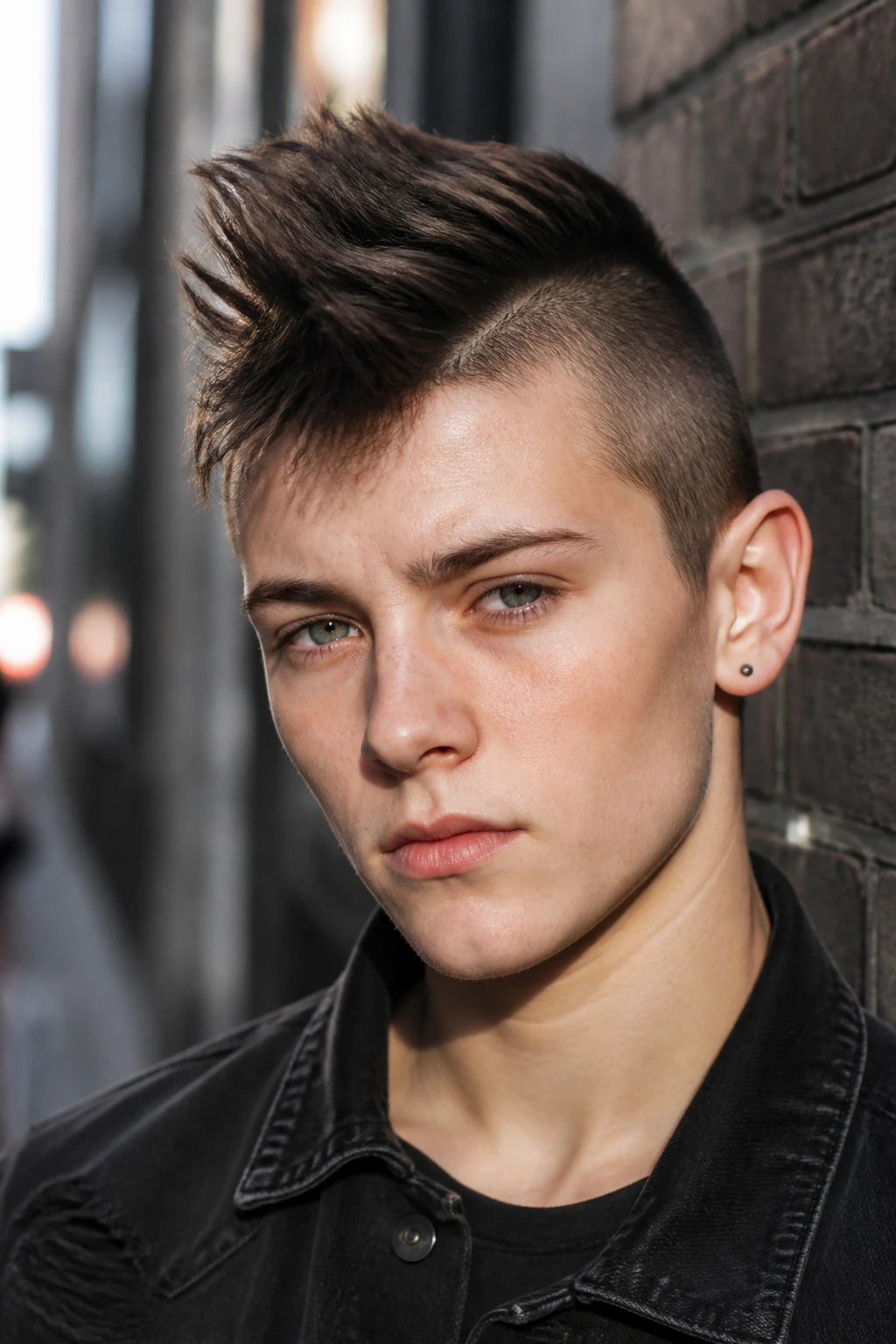
An asymmetrical hawk breaks the rules on purpose. One side sits a little higher, the front leans off center, or the crest angles more sharply toward one temple. The cut still reads as a mohawk, but it has a little tilt, which makes it feel more modern and less predictable.
This style is useful if your face or head shape naturally favors one side. Instead of trying to force perfect symmetry, you use the imbalance as part of the design. A light product with flexible hold helps because you may want to shift the hair slightly through the day rather than lock it in place.
It’s also one of the most forgiving styles on short hair. Small imperfections look intentional when the whole haircut already leans off-axis. That’s a good trick to have.
Why the Short-Hair Hawk Shape Works So Hard
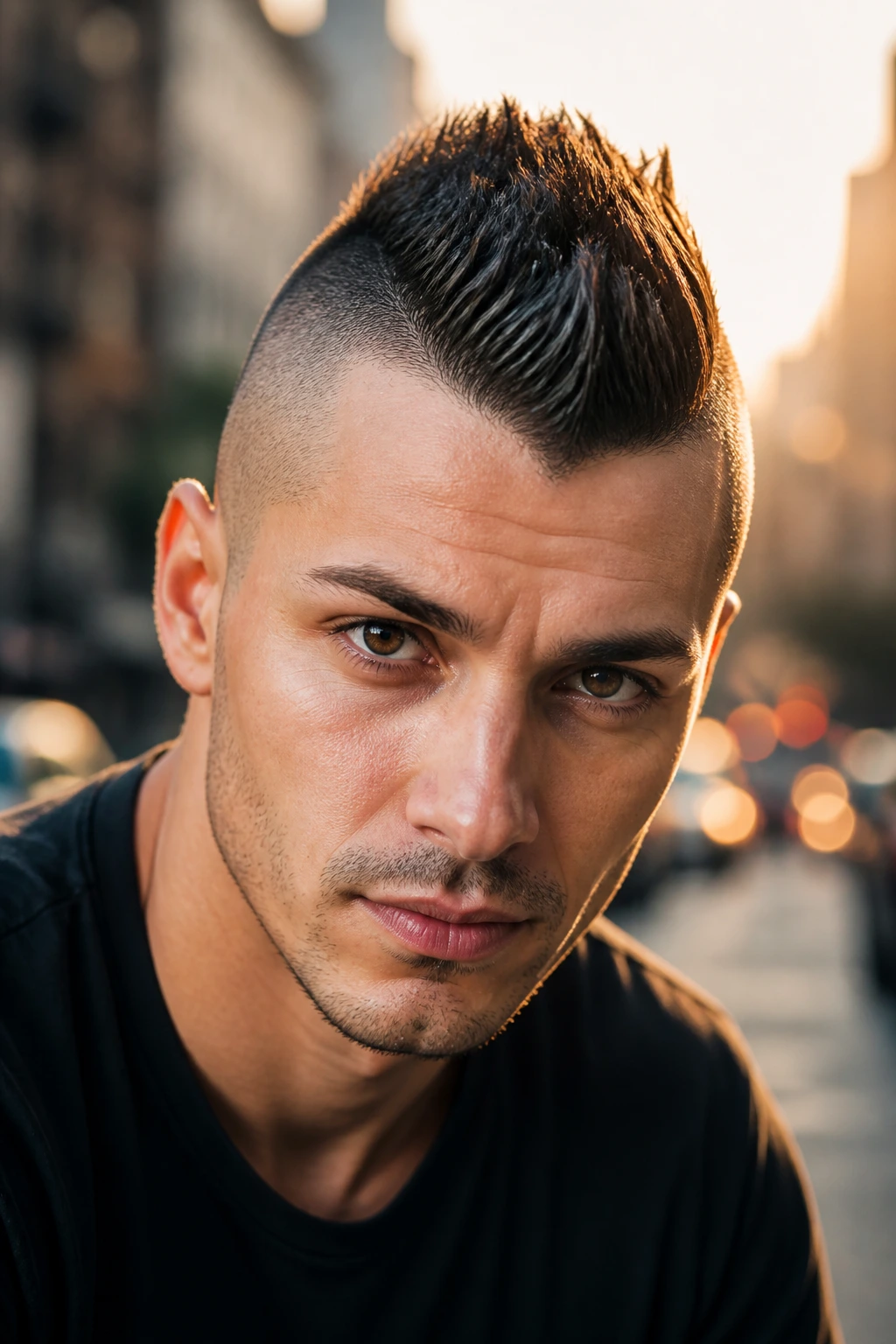
Short hair gives mohawk styles a job they can actually do. The cut doesn’t have to fight a ton of length, so the center strip stays defined, the sides stay clean, and the profile reads fast. That matters more than people admit. A hawk is not just a hairstyle; it’s a shape problem with a visible answer.
Texture is the other big piece. Straight hair needs lift and separation. Curly hair needs moisture and edge control. Coily hair needs definition around the perimeter so the center ridge doesn’t disappear into a halo. Once you know which of those your hair needs, the whole style gets easier.
And one more thing: short hair grows out quickly, which is annoying if you love a crisp line and useful if you like switching moods. A trim can move a cut from sharp to soft in a few weeks. That flexibility is part of the appeal.
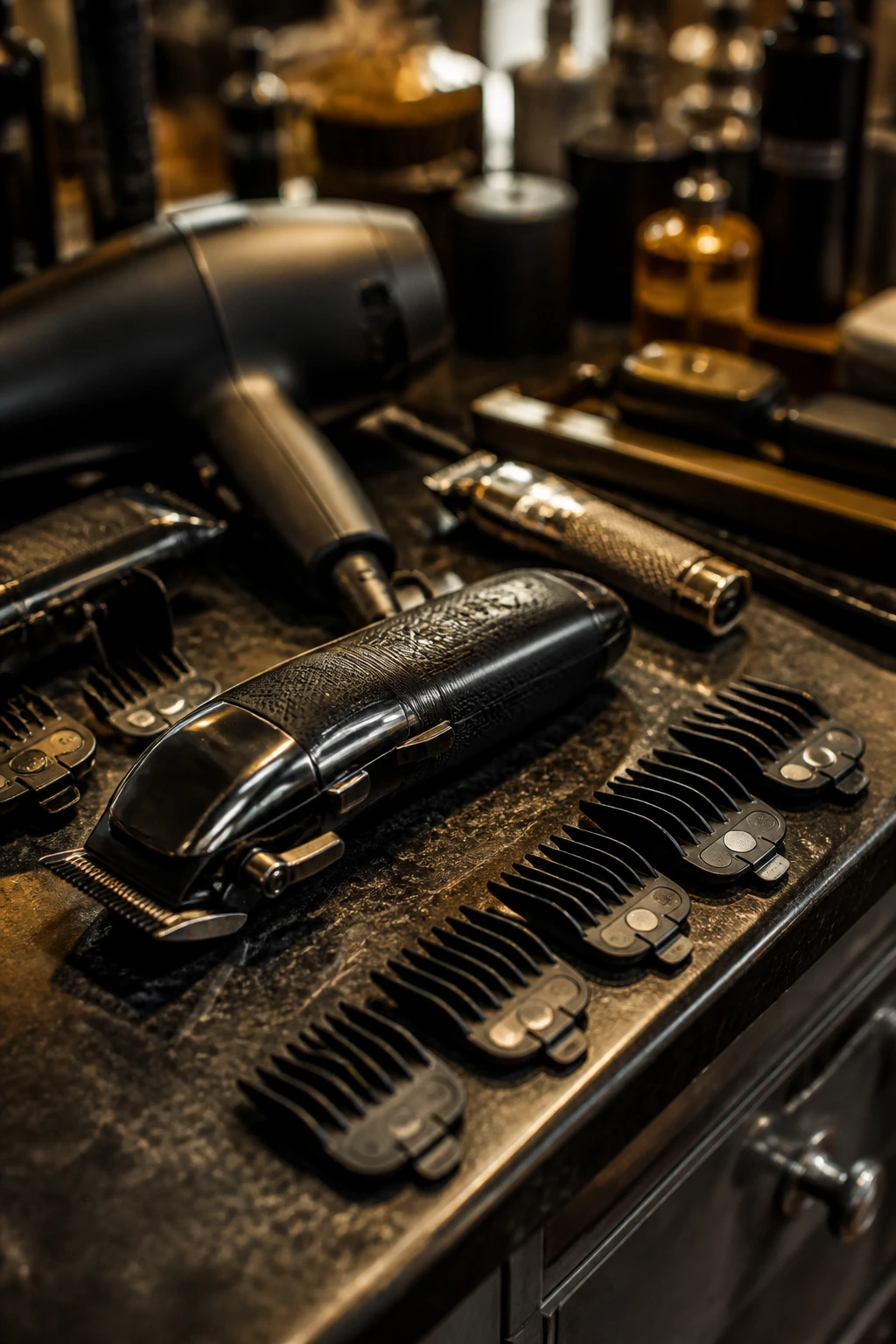
Essential Tools for These Looks
-
A decent clipper set with guards #0 to #4: These cover the tight fades, tapers, and clean side panels that most hawks need.
-
A trimmer or detailer: The hairline, temple edges, and nape look much cleaner when they’re edged with something precise.
-
Blow-dryer with a nozzle attachment: Short hair needs root lift, and the nozzle helps direct heat where the shape needs it most.
-
Matte paste or clay: Best for spiky, textured, or everyday hawks that should hold shape without looking shiny.
-
Gel or edge control: Useful for wet looks, sleek frohawks, and curly styles that need the outline to stay in place.
-
Curl cream or leave-in conditioner: A must for frohawks, twist-outs, and any look that relies on a defined natural pattern.
-
Rat-tail comb: Good for parting, lifting, and clean direction at the crown.
-
Small spray bottle: Damp hair takes product more evenly than dry hair, especially on short textures.
-
Hand mirror or three-way mirror: The back of a hawk is where mistakes hide.
-
Satin bonnet or silk scarf: Helps preserve the shape overnight and keeps the sides from frizzing up.
Smart Cut and Product Choices
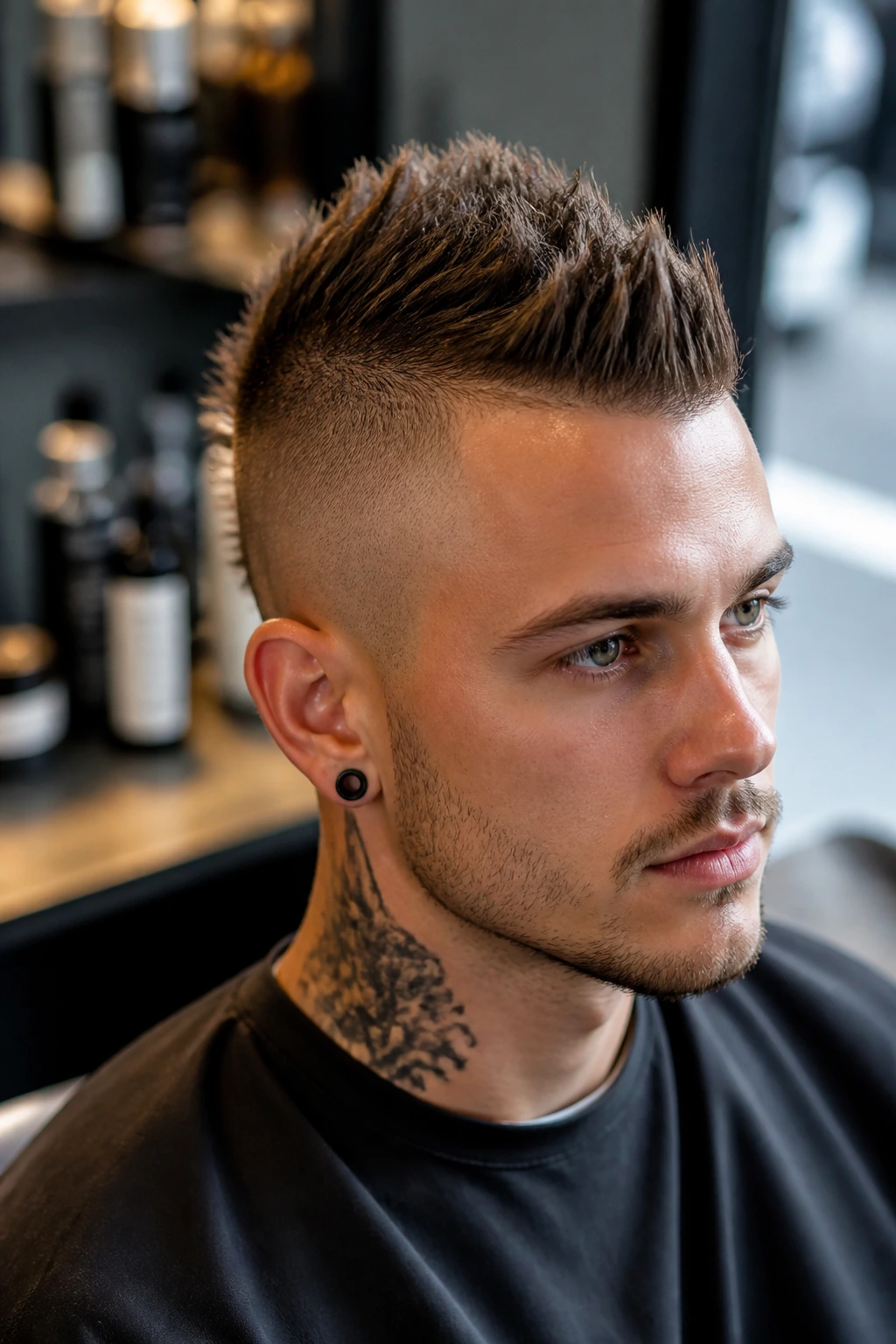
Start with the cut before you start collecting products. That sounds obvious, but people skip it and then wonder why the style falls apart. A hawk with too much bulk on the sides will never feel crisp, no matter how much paste you throw at it. A barber can take a #1 guard to the side, taper the neckline, or carve the fade so the center strip gets enough contrast to stand out.
Choose product by hair texture, not by the label on the jar. Fine straight hair usually needs something matte and light so it can get lift without collapsing under weight. Thick hair often needs firmer hold, because soft creams disappear into the density and leave the top puffy. Curly and coily hair usually respond better to moisture first, hold second. Skip the urge to use the strongest gel in the drawer unless you want a stiff shell.
Color matters, too. If you bleach short hair for a color-blocked hawk, keep an eye on breakage around the edges. Short hair shows damage fast because there isn’t much length to hide it. A bond-building conditioner or a weekly deep mask can keep the ends from fraying into fuzz.
How to Wear These Styles Without Fighting Them
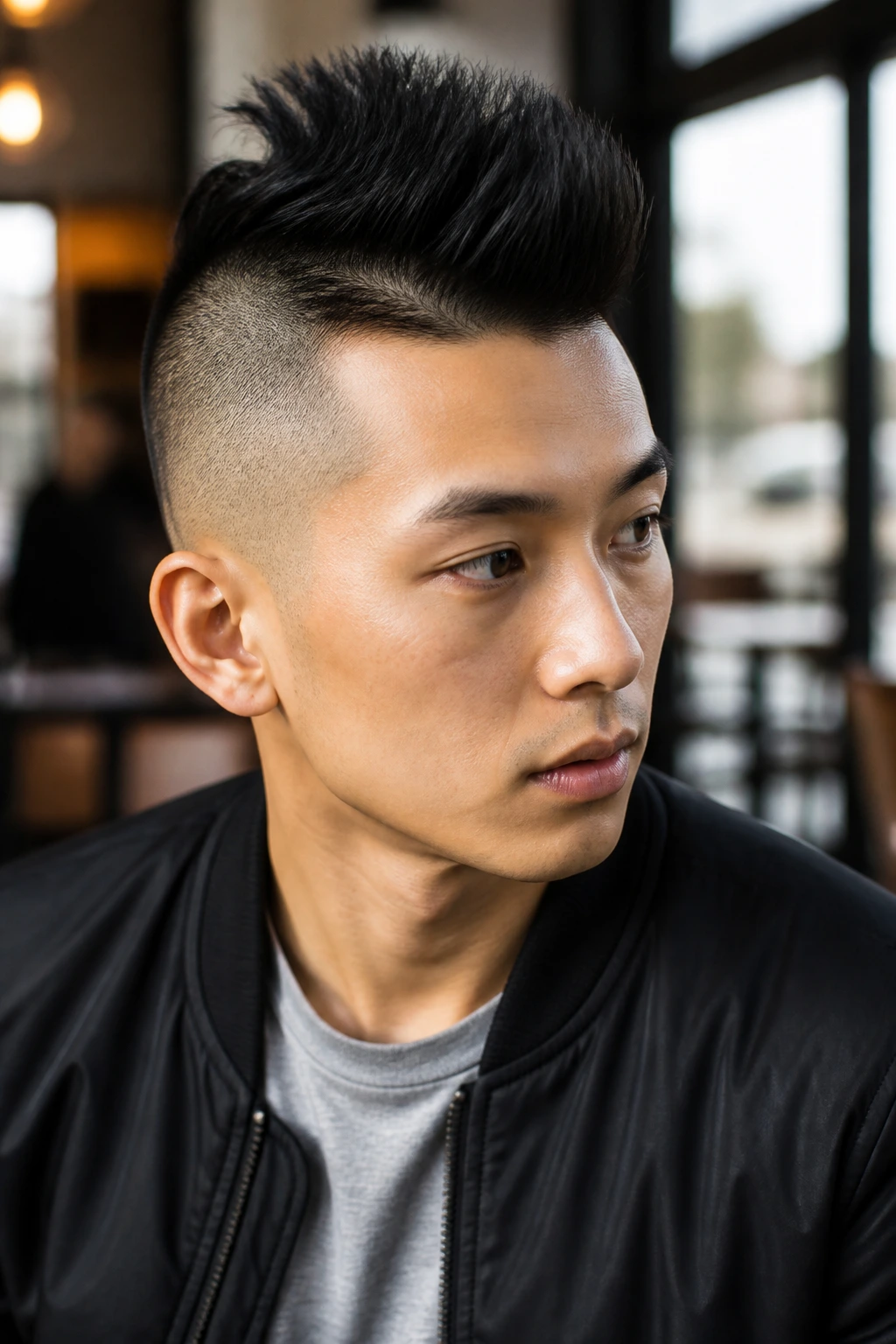
Presentation: Let the shape do the talking. A short mohawk looks cleanest when the sides are deliberately tight and the top has one clear direction, whether that’s straight up, slightly forward, or swept to one side.
Outfit Pairing: Structured collars, sharp jackets, denim, heavy knits, earrings, and clean glasses frames all play nicely with a hawk because they echo the haircut’s line. Soft, loose clothing can work too, but then the hair becomes the boldest thing in the room.
Face Shape: Round faces usually benefit from a taller, narrower ridge. Square faces can take a softer frohawk or curved hawk that eases the angles a little. Longer faces often look balanced with a lower, wider version that doesn’t add too much height.
Setting: If you need the style to feel calmer, keep the top shorter and the finish matte. If you want the haircut to land harder, add more height, cleaner edges, or a wet finish. Same cut. Different mood.
Additional Texture and Finish Tricks
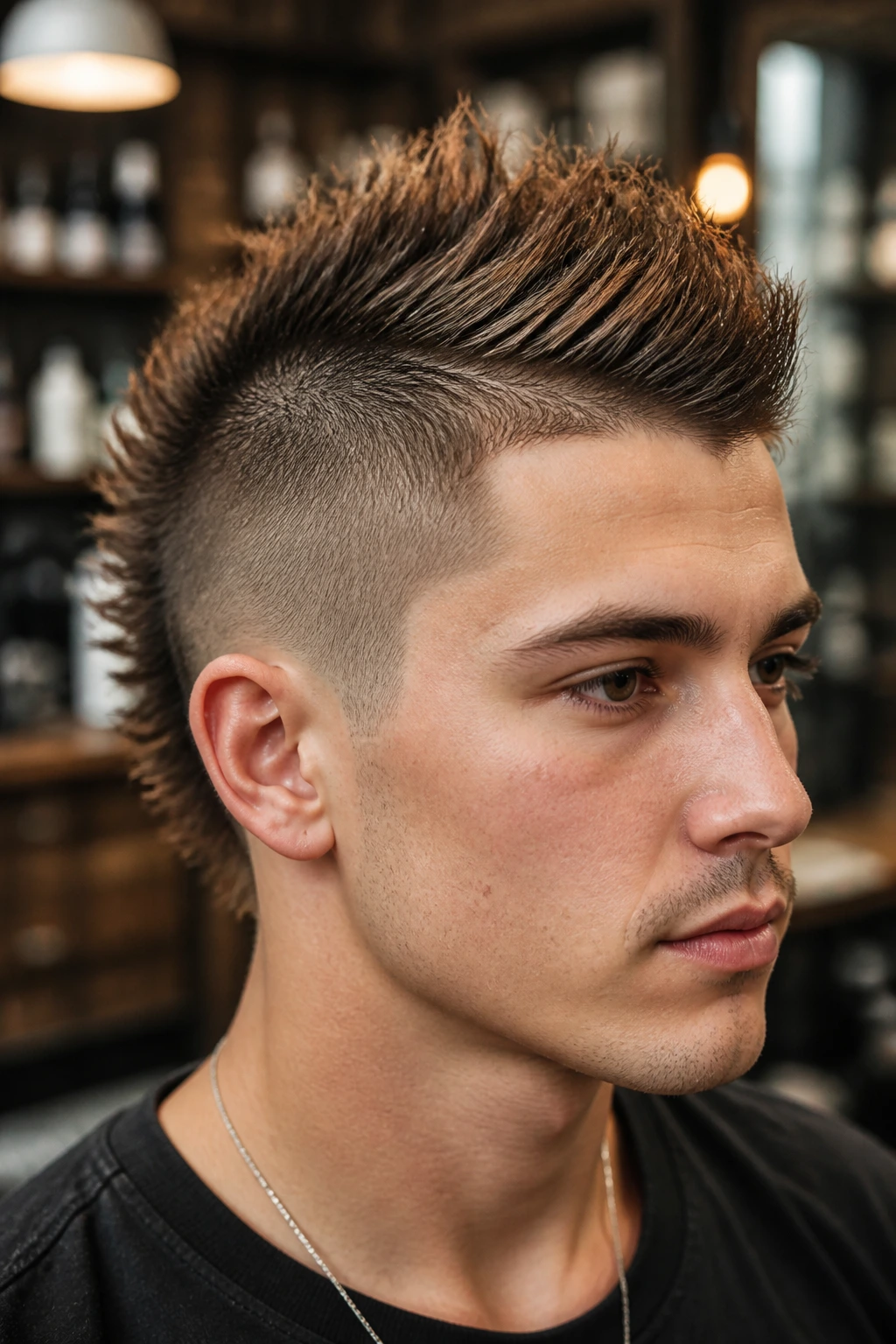
Root Lift: Blow-dry the top against the natural fall for 20 to 30 seconds before shaping it with your hands. That tiny blast at the roots gives short hair more lift than smearing on extra product.
Texture Boost: On straight hair, a little sea salt spray on damp strands can create enough grit for the top to hold a ridge. Use it sparingly. Too much and the hair gets rough in a dry, scratchy way.
Edge Detail: A clean temple edge or a sharp neckline can make even a small hawk look more intentional. Don’t overlook the outline; the outline is half the haircut.
Color Pop: If you want more drama without changing the cut, add temporary color to the center strip only. Even a narrow streak changes how the shape reads from across a room.
Nightly Care and Between-Wash Maintenance

Short hawks usually hold best for one to two days before the shape starts getting tired. That is normal. On the first night, a satin scarf or bonnet keeps the ridge from rubbing flat against the pillow. If you skip that step, the front often gets mashed and the sides frizz at the edges.
In the morning, a light mist of water or leave-in spray is usually enough to reactivate the shape. Finger-comb the top, then add a touch of product only where the hair has lost structure. Do not pile new product over old buildup. That’s how short hair gets heavy and dull-looking fast.
Side maintenance matters more than people expect. For a fade-heavy hawk, clean up the sides every 2 to 3 weeks if you want the shape to stay crisp. Top trims can stretch to 4 to 6 weeks depending on how fast your hair grows and how forgiving the style is. Curly and coily versions often need a little more moisture between washes, while straight versions usually need a little more root lift.
Variations and Adaptations to Try
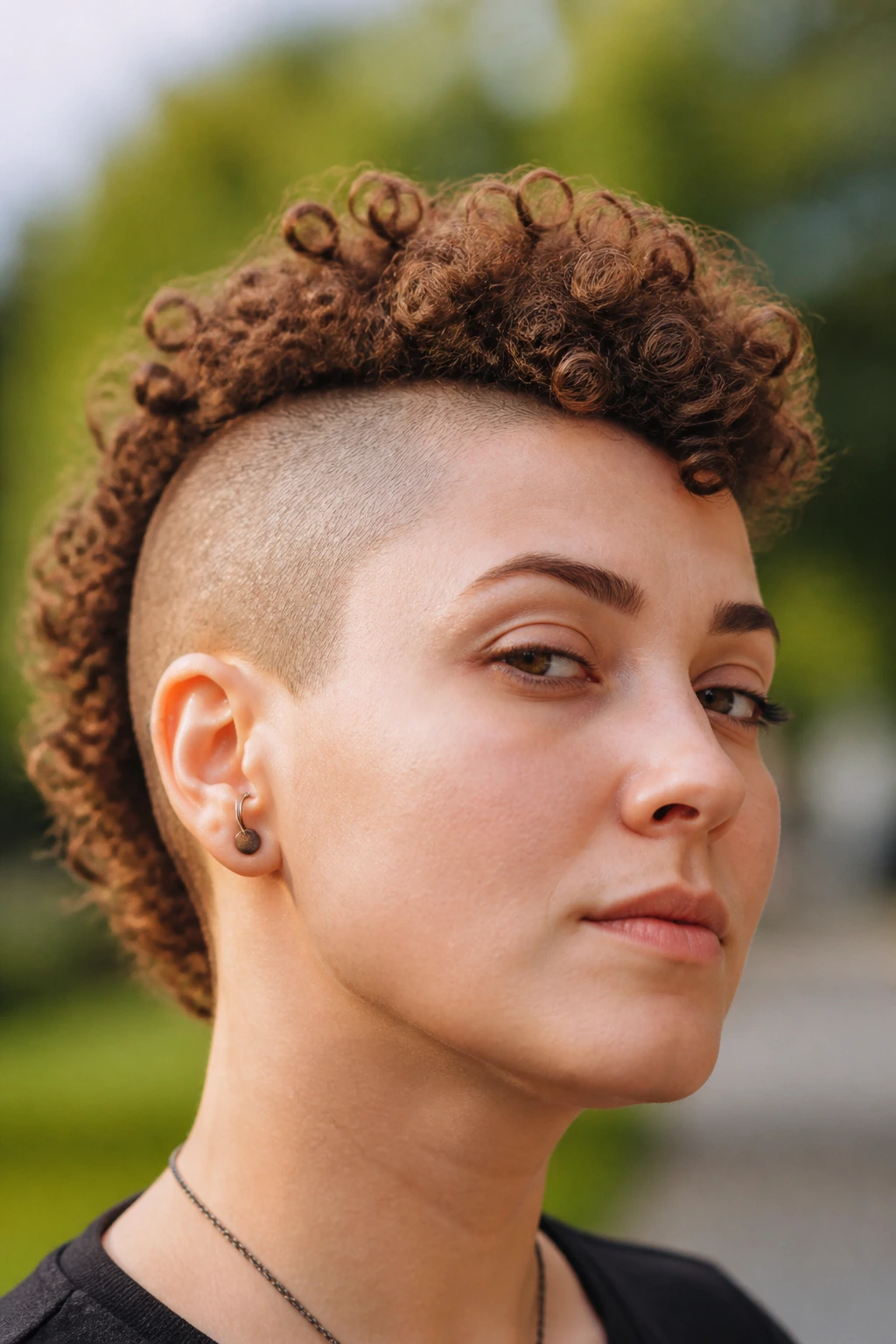
The Soft Workplace Hawk: Keep the sides tapered instead of shaved, and limit the height of the top to about an inch or two. The shape stays visible, but it reads calmer and grows out more gracefully.
The Curl-First Hawk: Built for natural texture, this version leans on curl cream, leave-in conditioner, and a diffuser or twist-out. It works well when you want volume without forcing the hair into a straight shape.
The Color-Edge Hawk: Add a single bold color to the center strip or just the front section. This is a good way to make a short hawk stand out without changing the cut itself.
The Braided Hawk: Use cornrows, micro braids, or twisted rows down the center for a longer-lasting version. It’s especially useful when you want shape that survives several days.
The Low-Maintenance Hawk: Keep the top short, the sides tapered, and the finish matte. This one doesn’t ask much from you in the morning, which is more useful than a lot of flashy styles.
Common Mistakes to Avoid
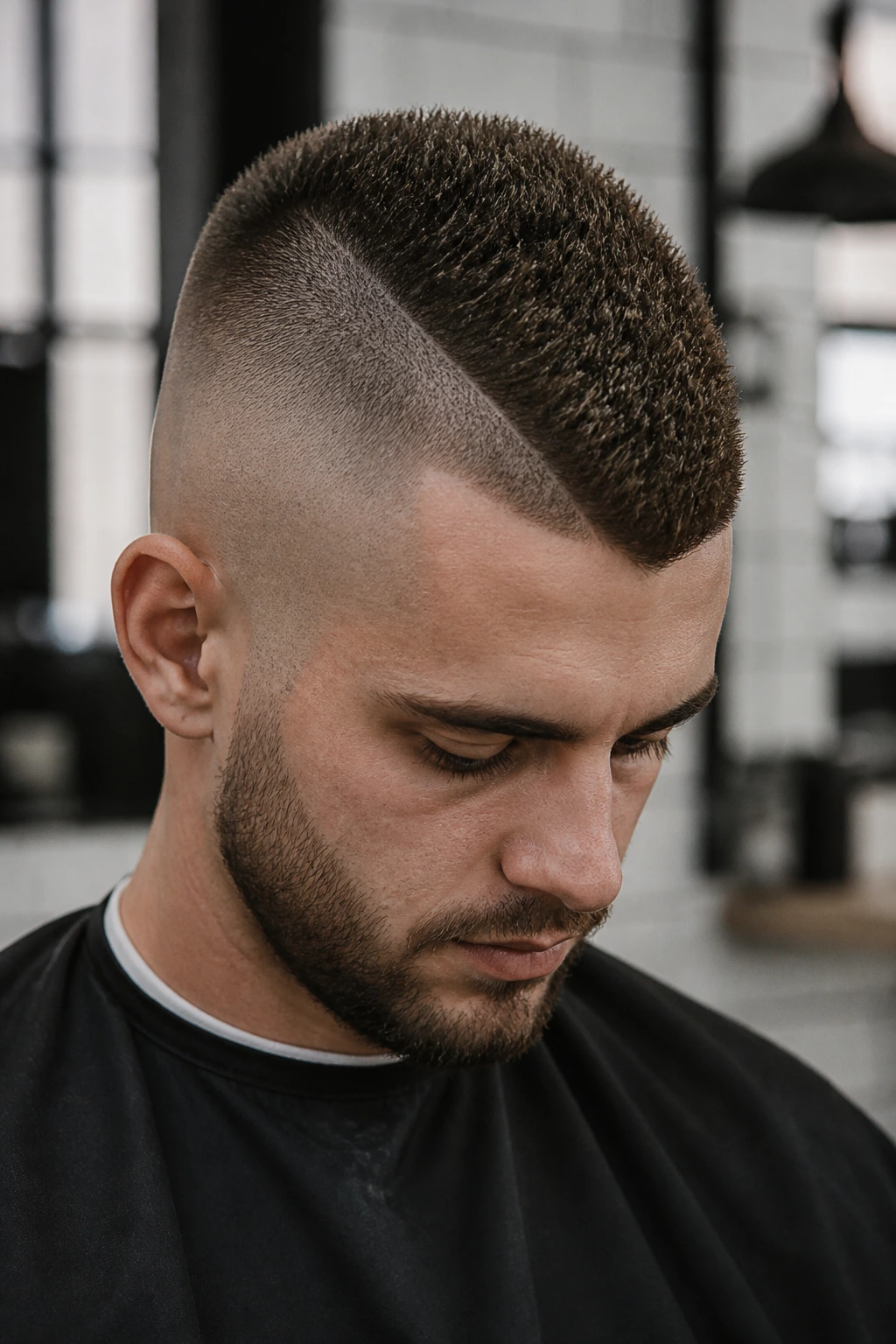
A lot of hawks fail for one boring reason: the sides are not short enough. If the side length is too close to the top length, the haircut loses its contrast and starts reading as an awkward crop. The fix is simple. Make the side-to-top difference obvious, even if the top is only a little longer.
Another problem is product overload. Short hair does not need a baseball-sized scoop of paste. Too much product makes the top sink, clump, or shine in the wrong way. Start small, shape, then add only what the hair actually needs.
Ignoring your hair texture is another easy mistake. A spiky paste routine on tight coils usually gives you frustration, not shape. A wet gel routine on fine straight hair can flatten everything before lunch. Match the product to the hair pattern, not the photo on the package.
And then there’s the neckline. A messy nape can undo a clean hawk from the back, even if the front looks good in the mirror. Clean up the back edge regularly or ask your barber to finish it carefully. Small detail. Big difference.
Frequently Asked Questions
How short is too short for a mohawk style?
If the top has at least about 1 to 2 inches of length, you can usually create some version of a hawk. Very short buzzed hair can still show the shape through fade work and line design, but you won’t get much height from the hair itself.
Do short mohawks work on thin hair?
Yes, but the cut matters more. Keep the top textured and the sides tight, then use a matte product and blow-dry the roots upward. Thin hair usually looks better with a narrow ridge than with a wide, fluffy one.
Can I wear a mohawk to work without looking too extreme?
A tapered hawk, side-swept hawk, or low-hold office hawk is usually the safest route. Keep the top modest, avoid a super shiny finish, and ask for clean edges rather than dramatic shaved panels.
What’s the best product for a short hawk that needs hold but not crunch?
A matte paste or fiber cream is usually the sweet spot for straight or fine hair. For curls and coils, start with leave-in conditioner or curl cream, then add a small amount of gel only where the shape needs extra control.
How often should I trim the sides?
If you want the hawk to stay crisp, every 2 to 3 weeks is a good rhythm for fade-heavy versions. Softer tapered styles can stretch longer, but once the sides start catching up to the top, the whole shape loses its edge.
Will a mohawk look odd with a round face?
Not if the proportions are right. A slightly taller center ridge can add length, while a very wide, puffy top can make the face feel broader. Narrow the strip and keep the sides tight for the cleanest effect.
Can I grow out a short mohawk without an awkward phase?
Yes, but the grow-out has to be managed. Shift from a hard fade to a taper, keep the top textured, and let the side length come back in gradually. If you wait too long between trims, the shape disappears and the cut starts looking unfinished.
Does curly hair need a different approach than straight hair?
Definitely. Curly and coily hawks usually look best when the product starts with moisture and the shape follows the natural curl pattern. Straight hair often needs more lift and separation to avoid looking flat.
The Shape That Stays Sharp
Short mohawk styles work because they respect the hair you actually have instead of chasing some fantasy of bigger, taller, harder. A clean strip, a soft frohawk, a braided center, or a fade with a little linework can all do the job if the cut is balanced and the product stays honest. That’s the real appeal here. The style can be loud or quiet, but it should always look deliberate.
The best versions feel like they belong to the head wearing them. Not borrowed. Not overworked. Just shaped with enough care that the outline reads at a glance and the texture still feels alive when you get closer.
