



A crochet mohawk can do a lot of heavy lifting on Black hair. The shape gives you height down the center, clean sides at the temples, and enough texture on top to make the whole style look intentional from the first glance. Among crochet mohawk hairstyles for Black women, that balance is the whole trick: you get a strong silhouette without needing to commit to shaved sides, and you can push the mood anywhere from soft to severe.
For Black women who like their protective styles to do something a little extra, the mohawk frame is useful because it builds interest with structure, not just with volume. Curls, locs, twists, braids, and faux afro texture all read differently in that narrow center strip. A tight cornrow base can make the style look neat and sculpted; a looser crochet crown can make it feel airy and full. Same outline. Very different personality.
What I like about this family of styles is that the shape already solves half the styling problem. You don’t have to wonder where the eye should go. It goes straight up the center. That means your texture choice, your parting, your accessory placement, and even your earrings get to do real work instead of fighting for attention. The fun part is how far you can stretch that one silhouette, and the 19 looks below prove it.
Why These Crochet Hawks Earn Their Place
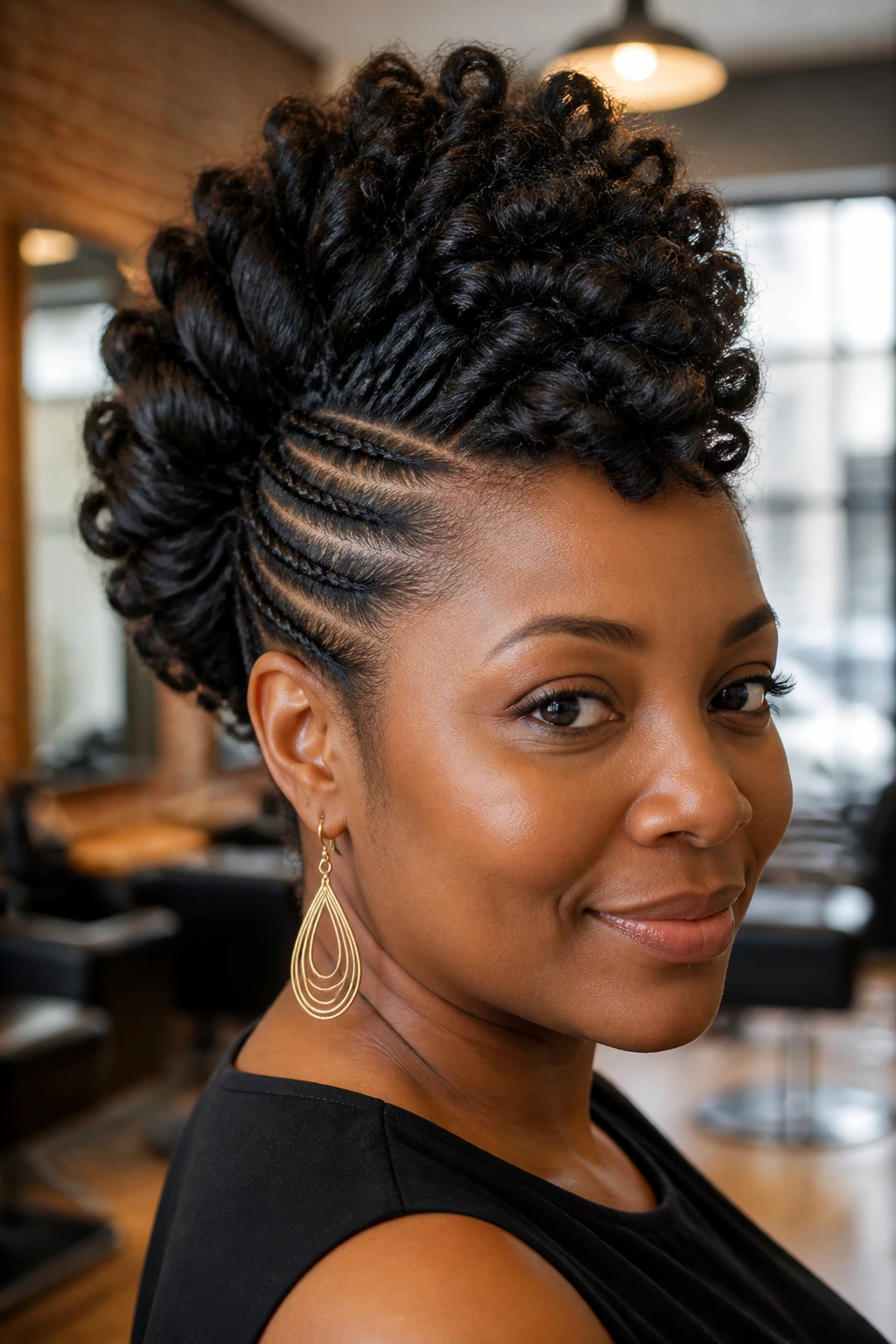
-
The center ridge does the visual work: A raised middle section adds height without making the whole head look wide, which is why the shape flatters round, oval, and square faces in very different ways.
-
The sides can stay calm: Cornrowed or flat-twisted sides keep the profile neat, so the style never turns into a puffy all-over cloud unless you want it to.
-
Texture changes the whole mood: Spring curls, passion twists, faux locs, and Marley braids all sit on the same base, but each one reads differently in motion and in photos.
-
It protects the hairline when done right: A clean base with low tension around the temples and nape keeps the style wearable for weeks instead of feeling like a one-day stunt.
-
It scales up or down easily: You can make the crown narrow and sleek for a sharper look, or widen the center section and load it with hair if you want a fuller, louder finish.
-
It works with natural hair, not against it: The best versions respect shrinkage, density, and edge sensitivity instead of forcing the head into a shape that fights back by day three.
1. Clean High-Volume Crochet Mohawk
A clean high-volume crochet mohawk is the version I reach for when the goal is a sharp outline with real presence. The sides stay braided close to the scalp, and the center ridge carries most of the texture, so the eye goes straight up. That vertical line does more than add drama; it stretches the face and gives the whole style a crisp, finished edge.
The best version uses medium-length curls or springy crochet hair that can hold shape without hanging flat. I like the crown to be dense but not stuffed. If the loops are packed too tightly, the top turns into a heavy mound, and the sides start looking accidental instead of deliberate. Four to six packs usually does the job, though long hair or a wider crown can take more.
A small detail that matters: keep the front of the mohawk slightly tighter than the middle. That subtle narrowing keeps the shape from ballooning at the hairline, which is a common problem with big crochet styles. The result feels clean in profile and stronger from the front. It’s a plain shape done well, and honestly, that’s the point.
2. Soft Curly Frohawk with Rounded Sides
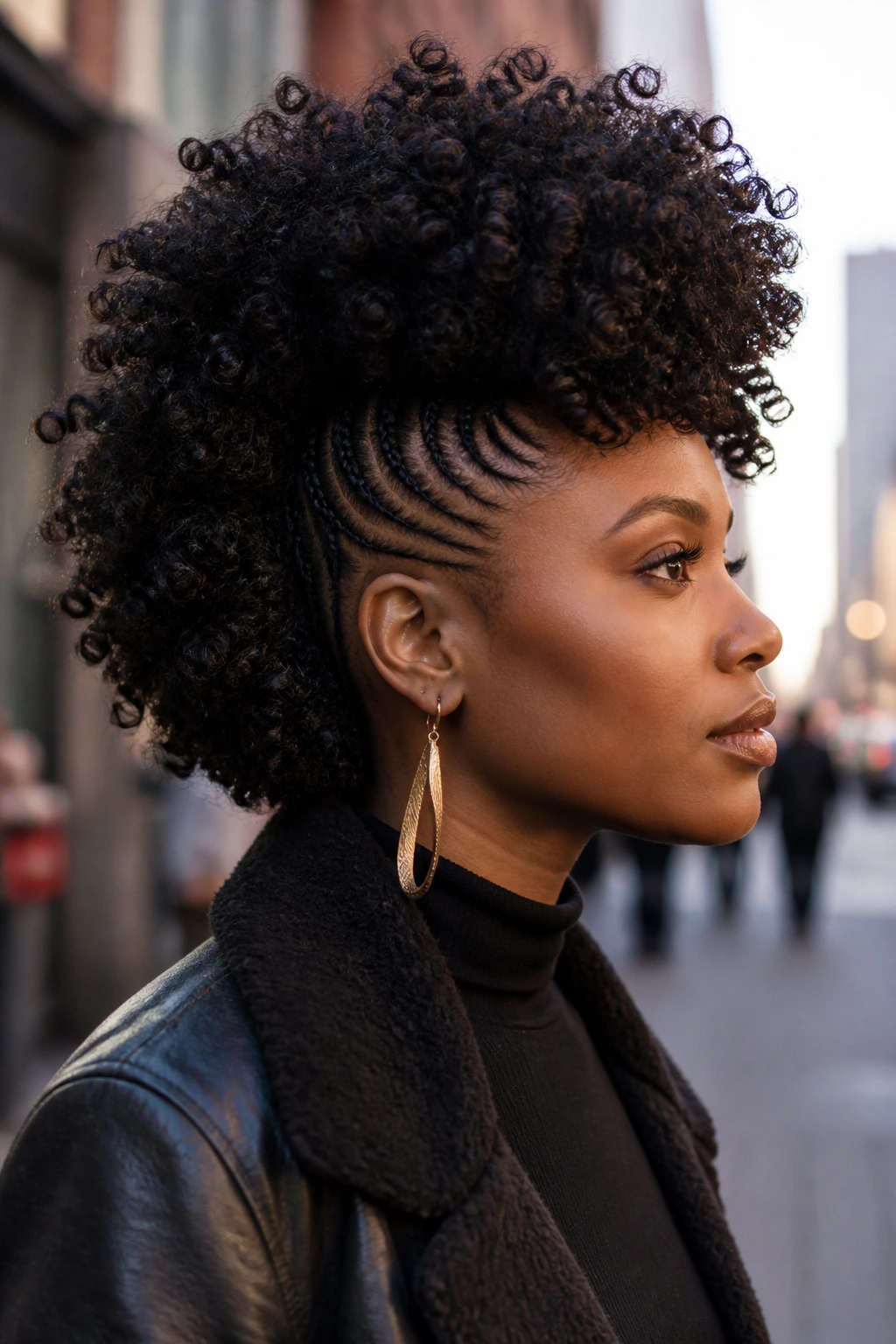
Want a hawk that feels softer than the name sounds? This is the one. A soft curly frohawk swaps hard lines for rounded volume, so the silhouette keeps the mohawk shape but loses the severe, almost architectural edge. The crown looks plush, the curls sit loosely, and the whole style has a touchable, lived-in feel.
I prefer water-wave or deep-wave crochet hair here because it frays into fullness without needing much coaxing. Finger-separate the curls once, maybe twice, and stop there. If you keep pulling them apart, the style gets bigger than the base can support, and then the ends start flying every which way. Not cute. Just fuzzy.
Why it holds up
- The rounded texture hides small spacing differences in the crochet install.
- The softer front makes the style easier to wear with hoops, glasses, or a high collar.
- The look stays casual without turning sloppy, which is harder to pull off than people think.
A frohawk like this works well if you like movement. It shifts when you walk. It also forgives a little frizz, which is useful because curly crochet hair never stays perfect for long, and pretending it should is a waste of energy.
3. Goddess Loc Crochet Mohawk
Goddess locs change the whole conversation. The style feels heavier in the best way, with a center ridge that looks anchored instead of fluffy. Put a few locs over one shoulder and the mohawk silhouette turns elegant fast, but it still keeps that strong lifted shape through the middle.
This version is worth making when you want the style to last visually. Loc texture hides frizz, hides small gaps, and gives you a sturdier outline than curls do. You can add cuffs, thread wraps, or a few small beads near the front, but I’d keep the accessories restrained. Too many pieces on locs makes the crown feel cluttered, and the shape loses focus.
The one thing to watch is weight. Crochet locs can get heavy if you go too long or too dense, especially on the sides where the braids need to lie flat. Stick with a moderate length and a clean base. If your temples are sensitive, ask for a little more room along the hairline and fewer anchor braids near the front. That small adjustment makes a big difference after a full day of wear.
4. Jumbo Marley Braid Hawk
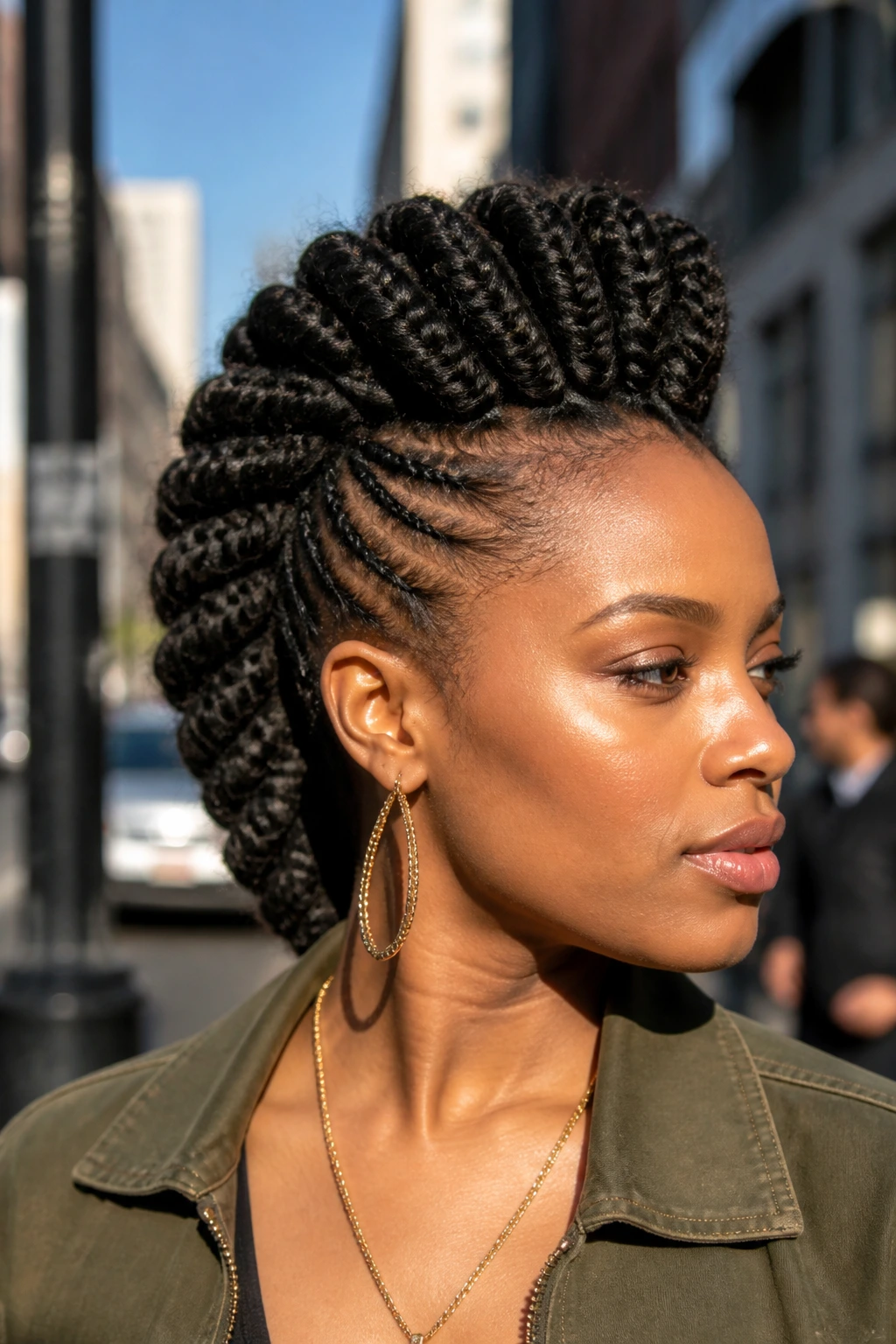
A jumbo Marley braid hawk is blunt, bold, and very much a “don’t miss me” style. The broad braids running through the center give the mohawk real structure, almost like the style has its own spine. It’s the version that works when you want the crown to look sculpted even before you touch it.
Because Marley texture has that matte, ropey finish, it doesn’t need much help to look full. That’s a gift and a trap. Use too much hair and the style starts to sit too high and too wide, which makes the side cornrows look like an afterthought. Keep the braids thick, but not giant. Let the shape breathe.
I like this style best when the braid ends are left slightly tapered or dipped in hot water if the fiber allows it, so the finish looks clean rather than blunt and stubby. It’s also one of the better choices for someone who wants a strong silhouette without constant touch-ups. The braids hold their line. They do not wander around during the day.
5. Feed-In Cornrow Mohawk with Curl Ends
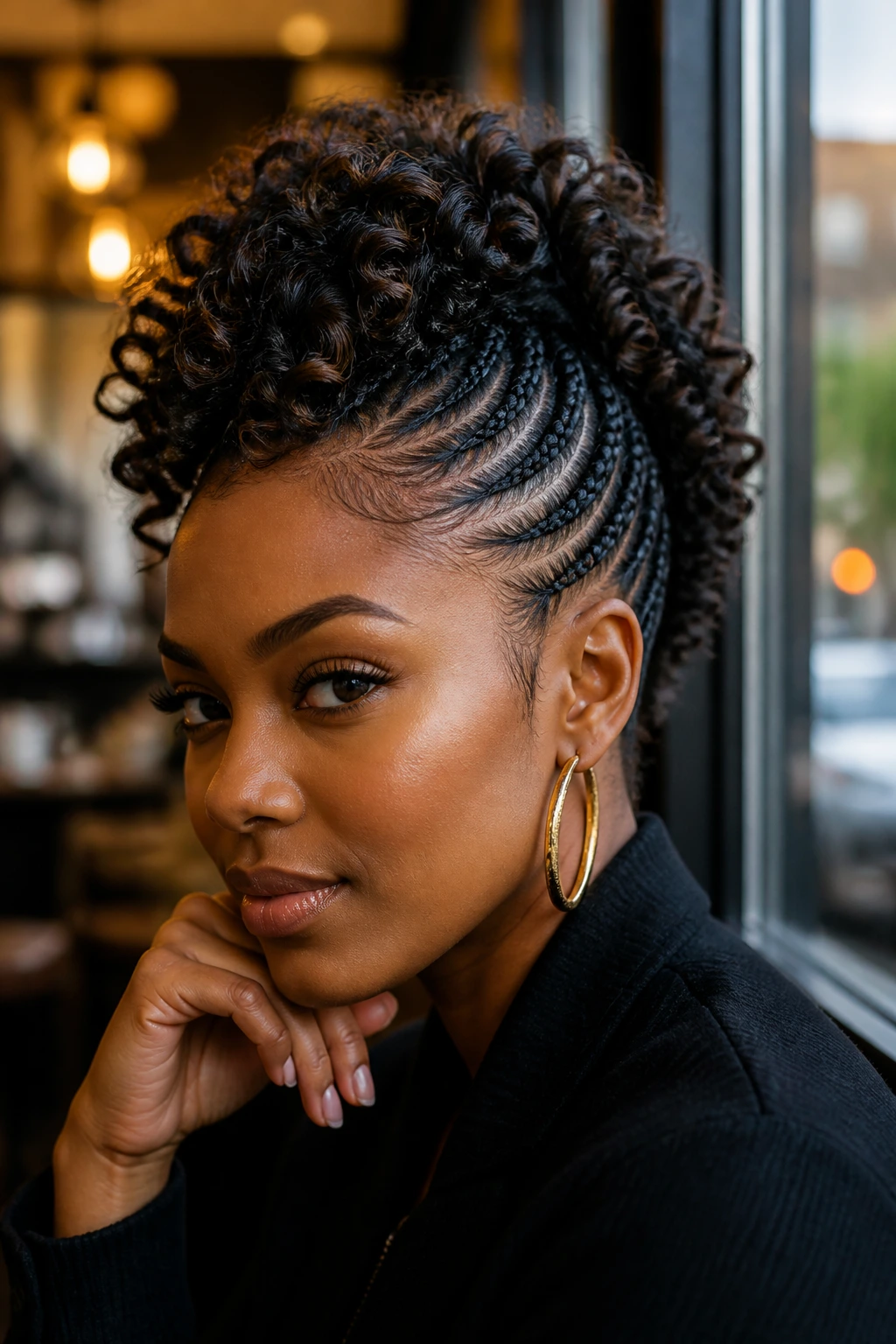
This one is all about the transition. Feed-in cornrows on the sides move from thicker at the temple to slimmer near the ear, and that gradual taper gives the whole style a polished, tailored feel. Then the center section softens the look with curl ends, so the mohawk never turns too rigid.
The pattern matters more here than the hair type. If the side braids are evenly spaced and the tension stays consistent, the style reads expensive without shouting about it. If the feed-ins jump in size or the center crown starts too far back, the shape gets lopsided fast. No mystery. Just geometry.
I like this look for people who want a clean neckline and a crown that still moves. The curls at the ends add bounce, but they don’t take over. Add a light mousse on the finished braid ends every few days, and the style stays neat without turning stiff. It’s one of those mohawks that looks right with a blazer, a T-shirt, or a dramatic earring. Rare useful thing.
6. Kinky Afro Puff Frohawk
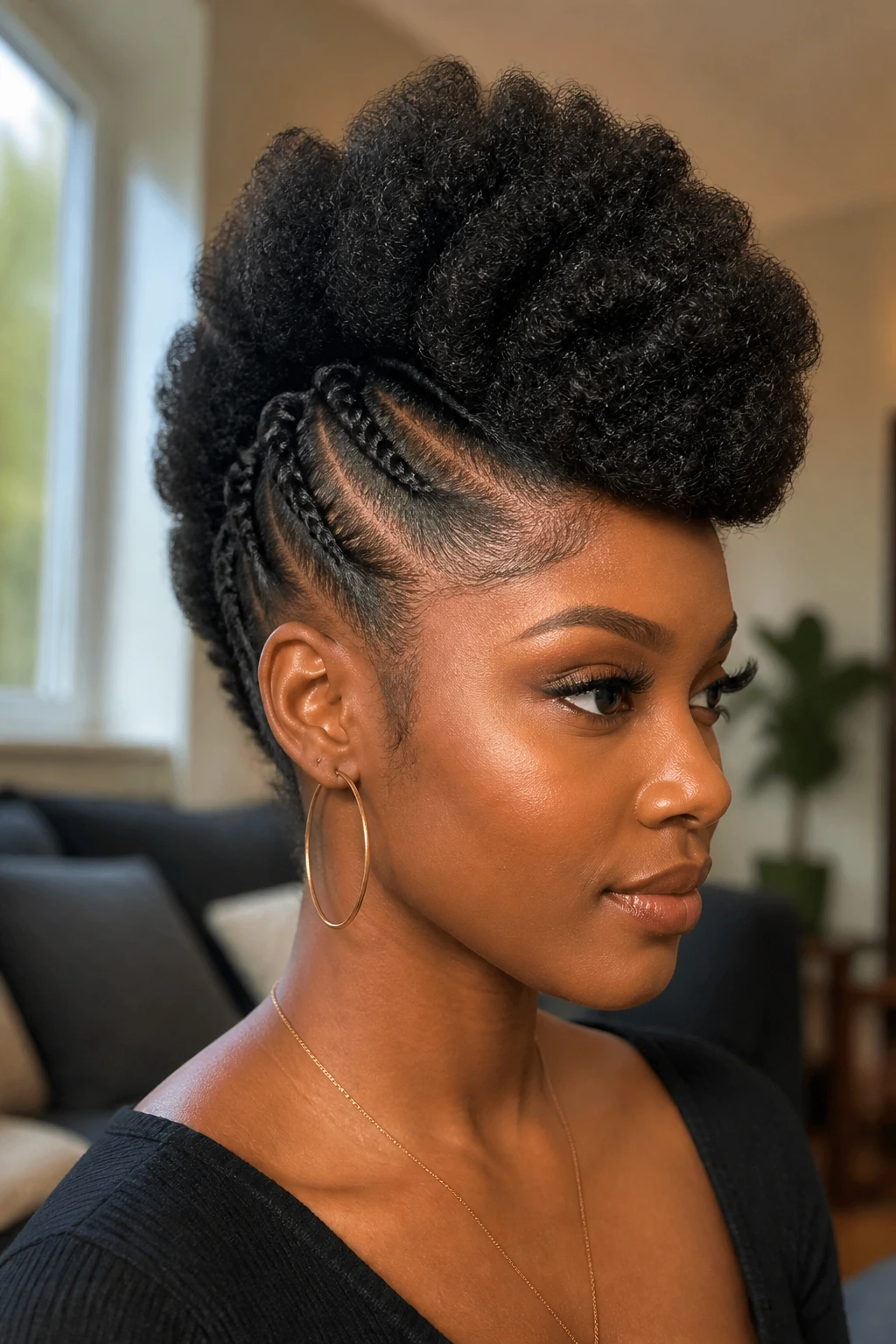
A kinky afro puff frohawk is for anyone who wants the mohawk shape to read close to natural hair instead of imported texture. The center can be built from kinky crochet hair, sectioned into puff-like clusters, or shaped into one continuous ridge that looks like a stretched-out fro. Either way, the texture feels familiar in the best sense.
This style has a lot of charm because it doesn’t try to smooth the hair into something it isn’t. The texture stays soft and cloud-like, but the side braids keep it from expanding too far. If you like a blown-out look with real body, this one gives you that without needing daily picking or heavy heat.
A little advice: don’t over-separate the curls or fibers. The whole point is that rounded, afro-textured fullness. If you pull it apart too much, the crown gets frayed instead of plush. I’d keep the front a touch lower than the middle so the puff line doesn’t climb straight up the forehead. That little dip in front makes the silhouette look more balanced.
7. Shoulder-Grazing Layered Crochet Hawk
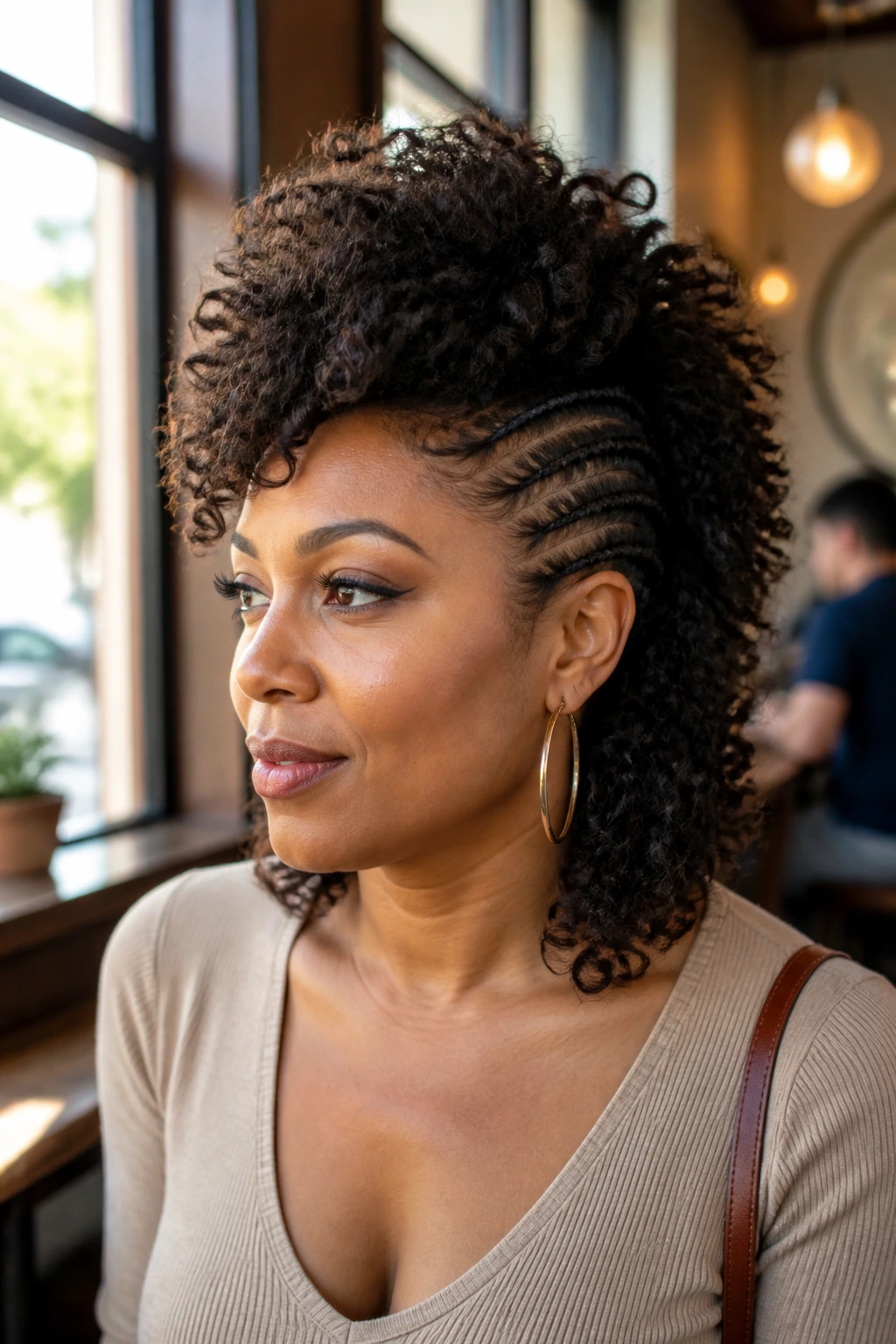
Shoulder-grazing length is the sweet spot for people who want movement without dragging hair across the collarbone all day. In a layered crochet hawk, the ends don’t hang in a single blunt curtain. They fall in pieces, which gives the crown some lift and keeps the profile from looking boxy.
This is the style that benefits most from a careful trim after installation. Just a little. Enough to create soft layers through the sides of the crown and a slightly longer center line. The difference between “layered” and “too much hair chopped at random” is about half an inch and a good eye, which is why I’d rather trim slowly than try to fix everything at once.
The shape looks especially good when the hair has a light wave or loose curl pattern. Straighter fiber can work, but it needs more coaxing to avoid looking stiff. A layered hawk like this is one of the easier versions to wear every day because it doesn’t fight your neck, your jacket collar, or your car seat. Small mercies matter.
8. Havana Twist Mohawk
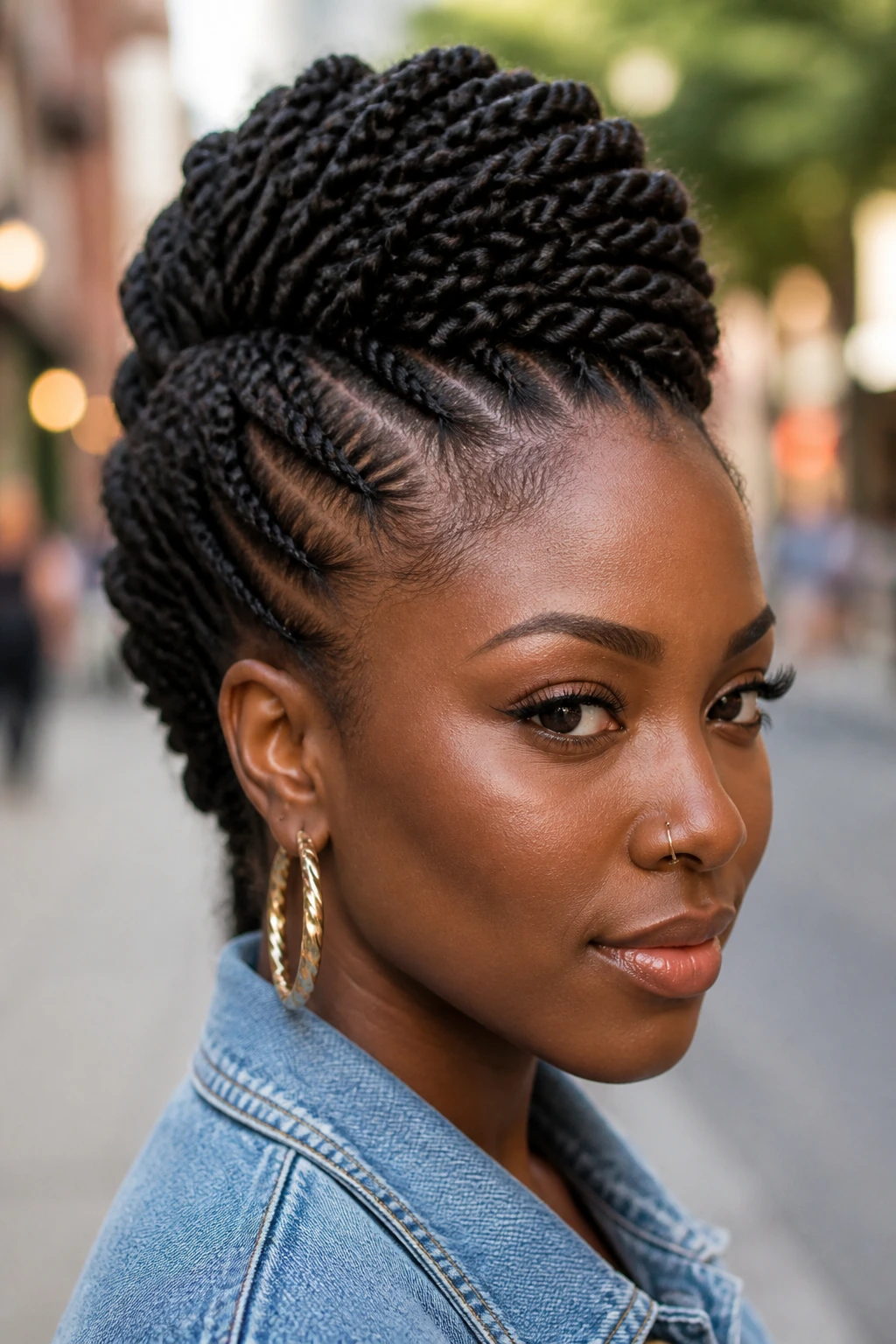
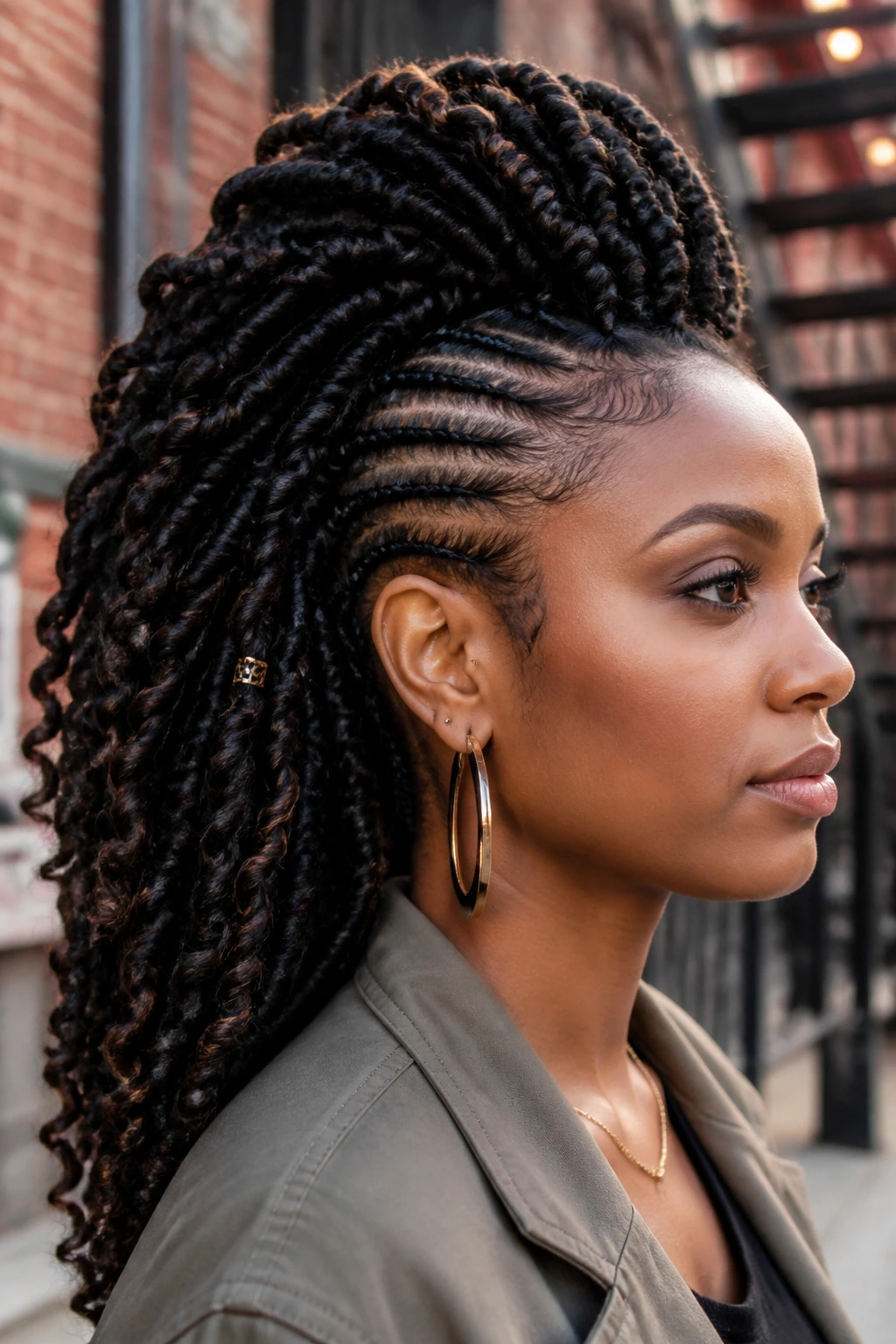
Havana twist texture gives the hawk a matte, rope-like finish that feels grounded and a little more relaxed than locs. The twists are softer to the eye than box braids, but they still hold a clear center ridge, which is exactly what a mohawk needs. You get shape first, movement second.
What makes this one interesting is the contrast between the tidy base and the twist texture. The sides can be cornrowed flat, then the center stays built from chunky twists that lean slightly forward or back depending on how you place them. If you keep the twist sizes consistent, the whole style looks balanced. If they vary too much, the crown gets choppy in a way that isn’t flattering.
This is a good pick if you like a style that looks substantial without feeling overloaded. It’s also easier to refresh than a curl-heavy hawk because twists don’t puff out as fast. A little mousse on the ends and a satin wrap at night go a long way here. Not glamorous advice. Just the stuff that keeps the shape intact.
9. Passion Twist Crochet Mohawk
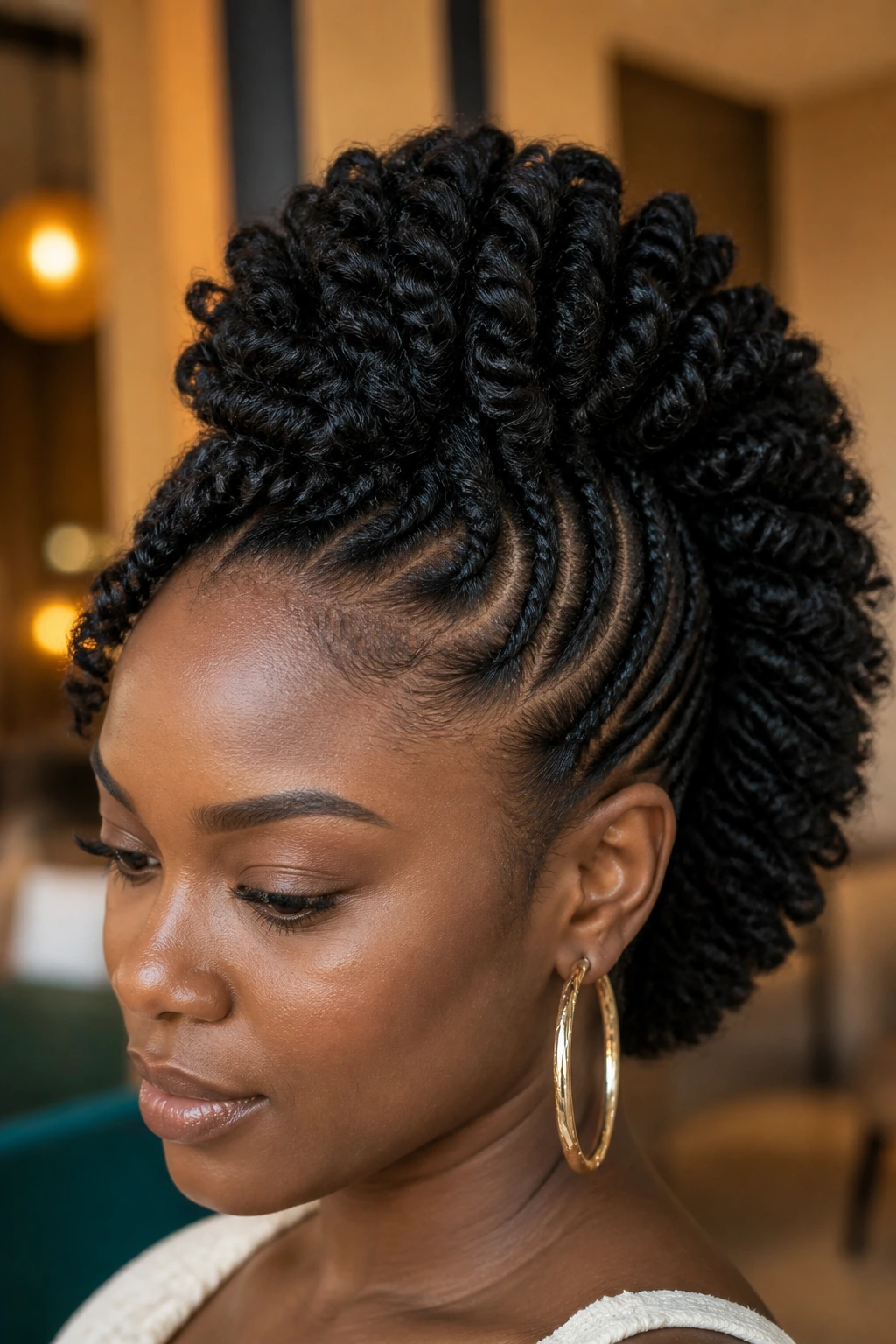
Passion twists bring a lighter, airier feel to the mohawk shape. They’re ropey but soft, with a looser finish than Havana twists and more swing than faux locs. The result is a crown that moves when you move, which can be lovely if you like styles that look a little undone in a controlled way.
The best passion twist hawks keep the center section narrow enough that the twists don’t spread into the sides. That’s where people go wrong. They build a beautiful top, then let the volume creep too wide, and the mohawk loses its line. Keep the anchor braids close and let the twists cascade upward instead of outward.
This style also works well with a few face-framing twists left slightly shorter in front. That softens the forehead area and stops the silhouette from feeling too tall. If you want a more romantic version of a crochet hawk, this is usually the one I’d point to first. It has shape, but it doesn’t feel stern about it.
10. Faux Loc Mohawk with Beads
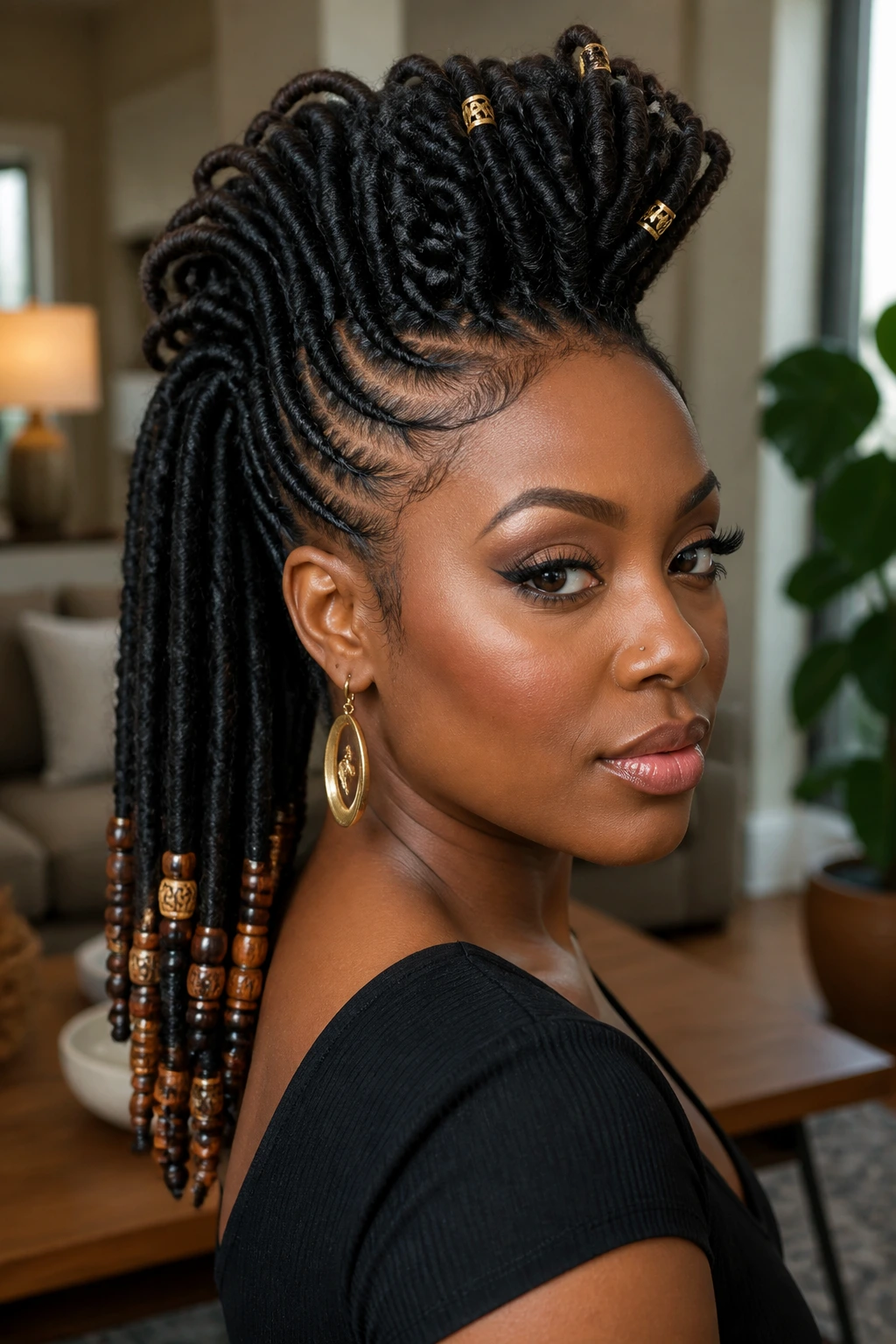
Faux locs bring a heavier, more grounded presence to the mohawk, and beads can make them feel personal without pushing the style into costume territory. The trick is restraint. A few wooden beads near the ends or a couple of cuffs near the front are enough. Once the accessories multiply, the center ridge starts to sag under the weight.
I prefer this style when the base is narrow and the locs are medium length. That gives the mohawk enough presence without making it feel like a helmet. Faux locs already carry visual weight, so the silhouette should stay clean at the sides and slightly lifted at the crown. That’s where the style gets its shape.
A small practical note: if the locs are pre-looped and synthetic, check whether the fiber can handle hot water if you need to seal the ends. Some can, some cannot, and guessing is a bad habit. The best faux loc hawks look polished because the install is tidy, not because the hair is drenched in product.
11. Side-Swept Curly Crochet Hawk
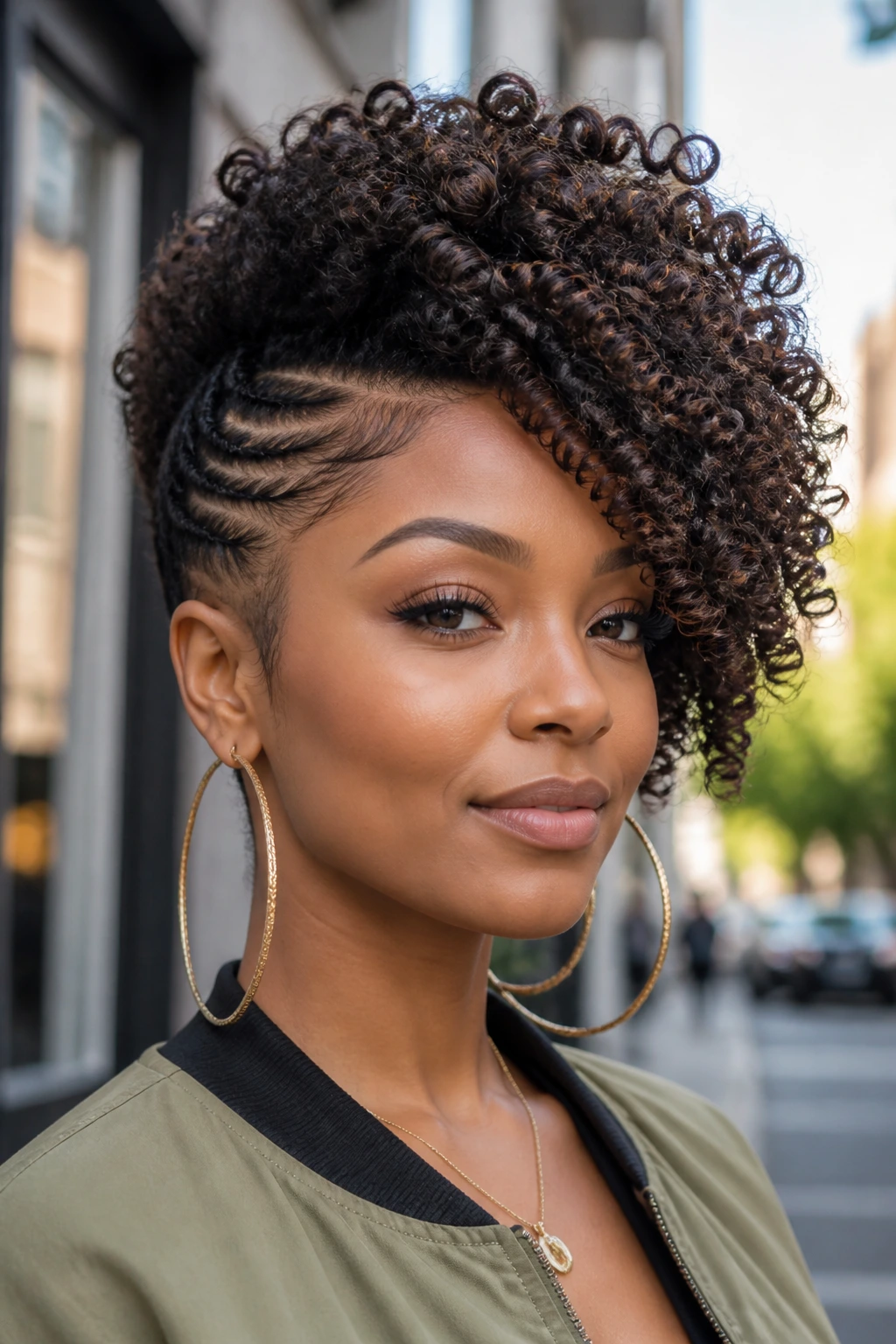
A side-swept curly crochet hawk feels less formal than a centered crown, and that asymmetry gives it a little swagger. The top still rises through the middle, but the curls lean diagonally toward one side, which makes the style feel less rigid and more alive. I like this one because it doesn’t demand symmetry to look finished.
It flatters a lot of face shapes, but especially round or square faces, because the diagonal movement softens the outline. The crown doesn’t need to be massive; it just needs enough length to sweep. If you overbuild the height, the style can get top-heavy and lose the elegant off-center line that makes it work.
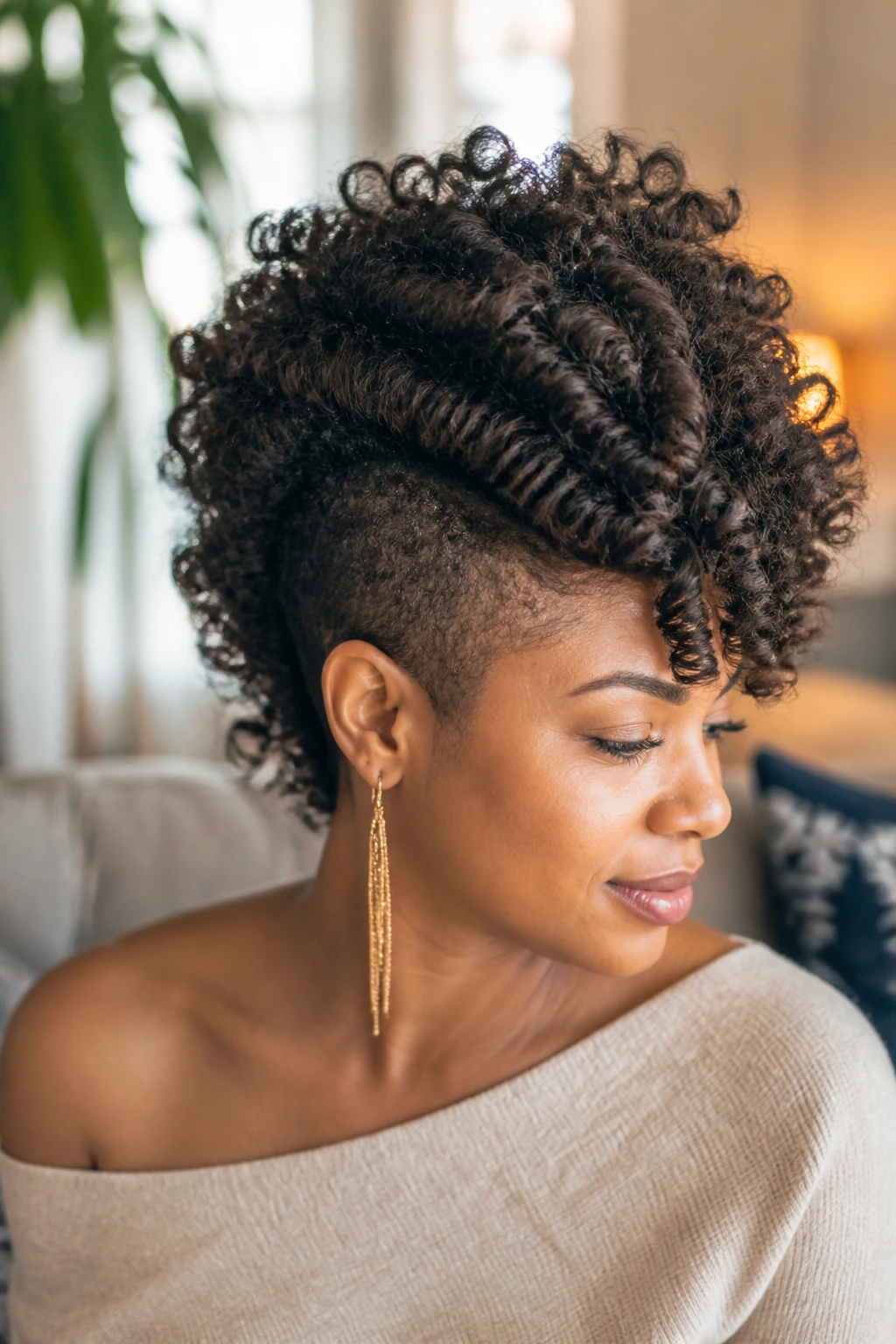
This is one of the best styles for earrings. Long drops, hoops, even a chunky cuff on one side — they all make sense here because the hair already leans into asymmetry. That’s a useful thing in hairstyle design, even if it sounds fussy. A style that knows where it wants to go saves you effort everywhere else.
12. Sculpted Event-Ready Mohawk
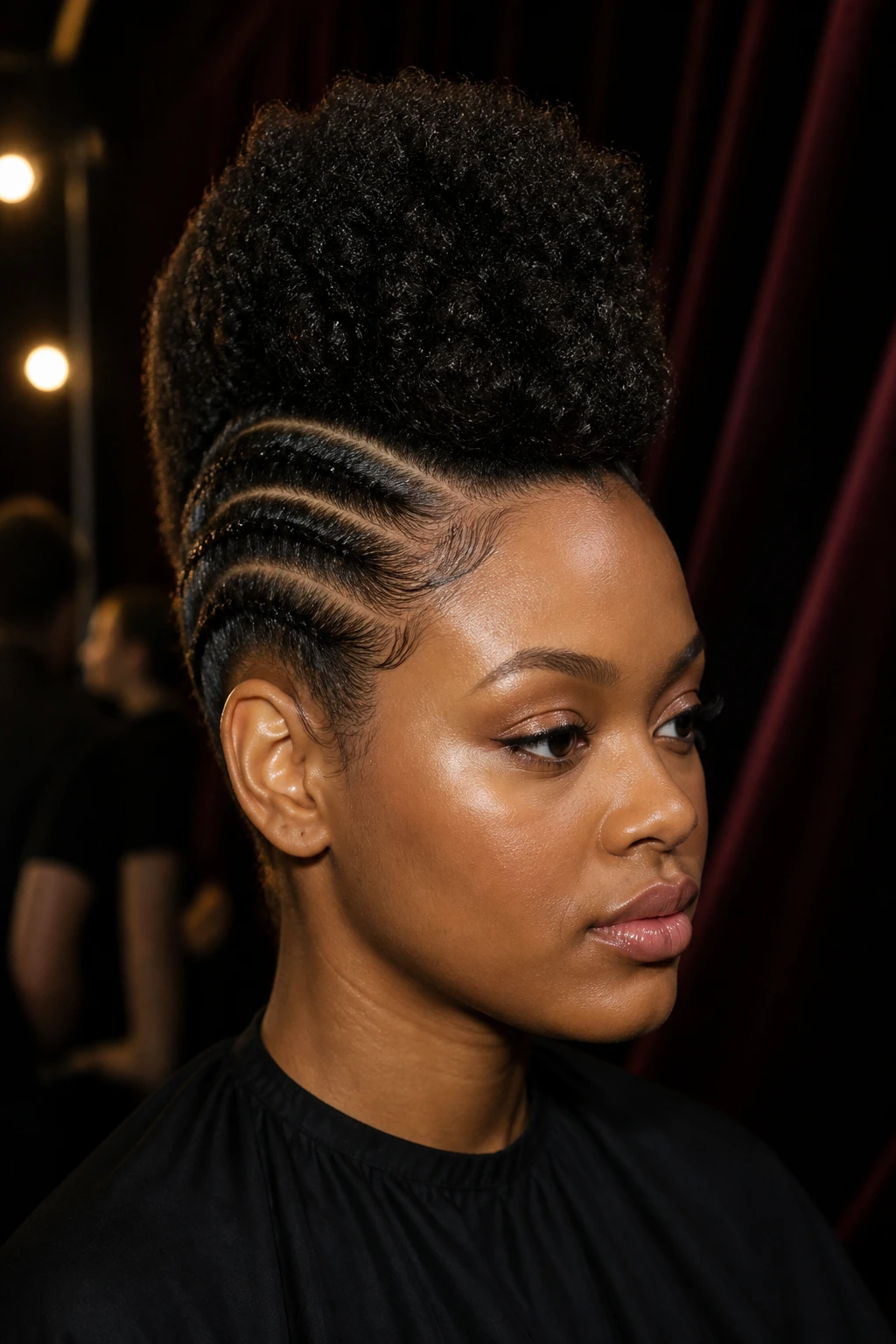
A sculpted event-ready mohawk is the version you wear when you want the hair to look intentionally shaped from every angle. The crown sits higher, the sides are flatter, and the finish is smoother, with less fuzz and more control. It’s the one that benefits from a mirror check from the front, side, and back before you leave the house.
To get that clean finish, use tighter base braids, smaller crochet sections, and a little mousse worked through the outer layer. Don’t drown the hair in product. That turns synthetic fiber sticky and dull. Instead, shape the crown with your hands, pin any stray pieces while it sets, and let the silhouette do the talking.
I like this style for formal events because it frames the face without stealing all the attention from a neckline or makeup look. It’s also one of the rare mohawk styles that can feel polished instead of just bold. The difference is in the edges: neat, intentional, and not overly piled up.
13. Bob-Length Crochet Frohawk
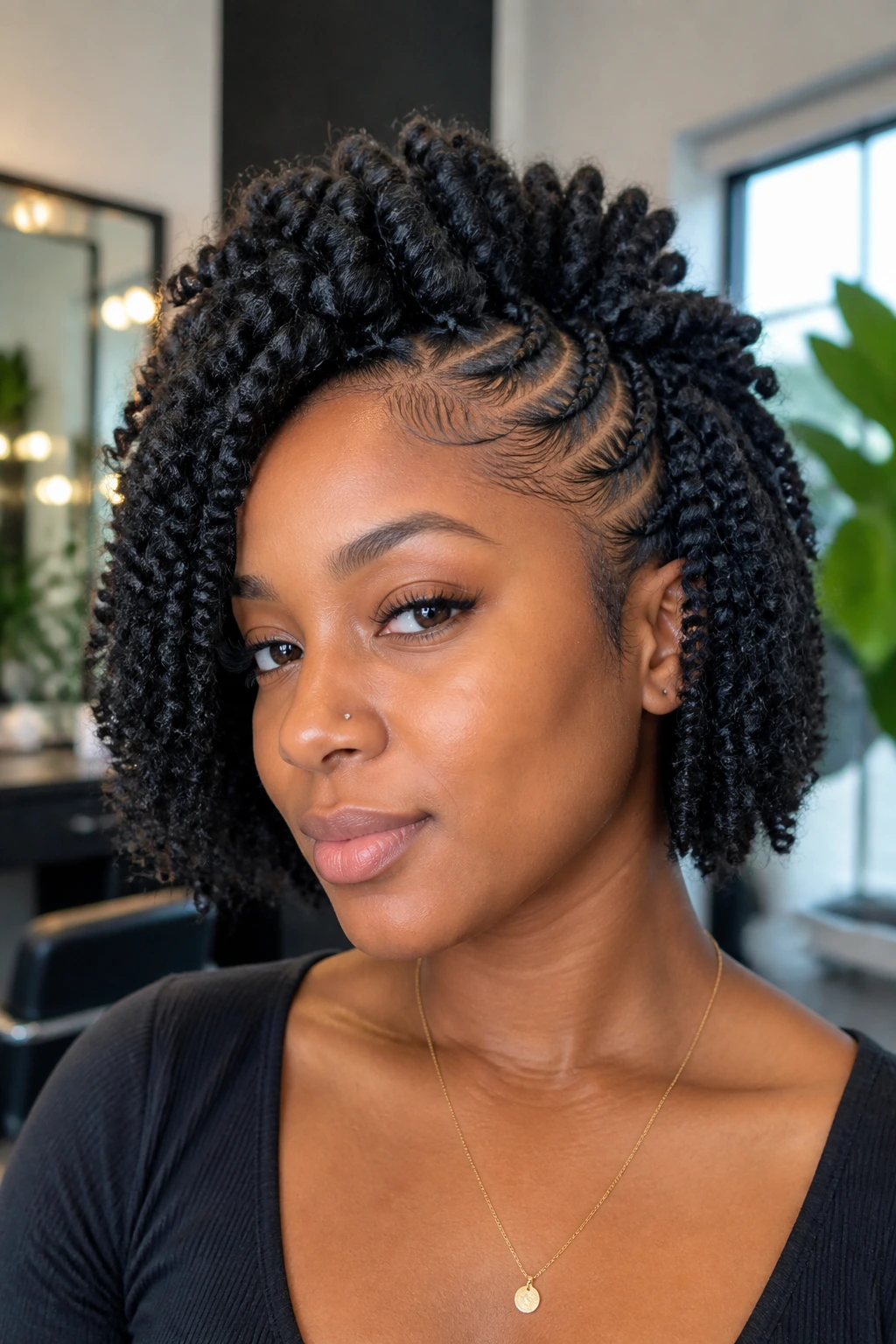
A bob-length frohawk keeps the silhouette short enough to feel light, but still gives you the lift that makes the mohawk shape interesting. The ends land somewhere around the jaw or collarbone, depending on the install, which means the style doesn’t drag on your shoulders every time you turn your head.
This is a smart choice if you want less maintenance. Shorter crochet hair tangles less, frizzes less, and takes less time to dry if you mist or wash the scalp. It also makes the crown look fuller by comparison, because the hair isn’t competing with length. People forget that a shorter style can look bigger than a long one. It often does.
If you want the bob to keep its clean line, have the installer trim it after the crochet hair is in place. Cutting before installation is a guess. Cutting after lets you see how the hair falls on your actual head. That’s the part that matters, not the pack photo.
14. Chunky Cornrow and Curl Mohawk
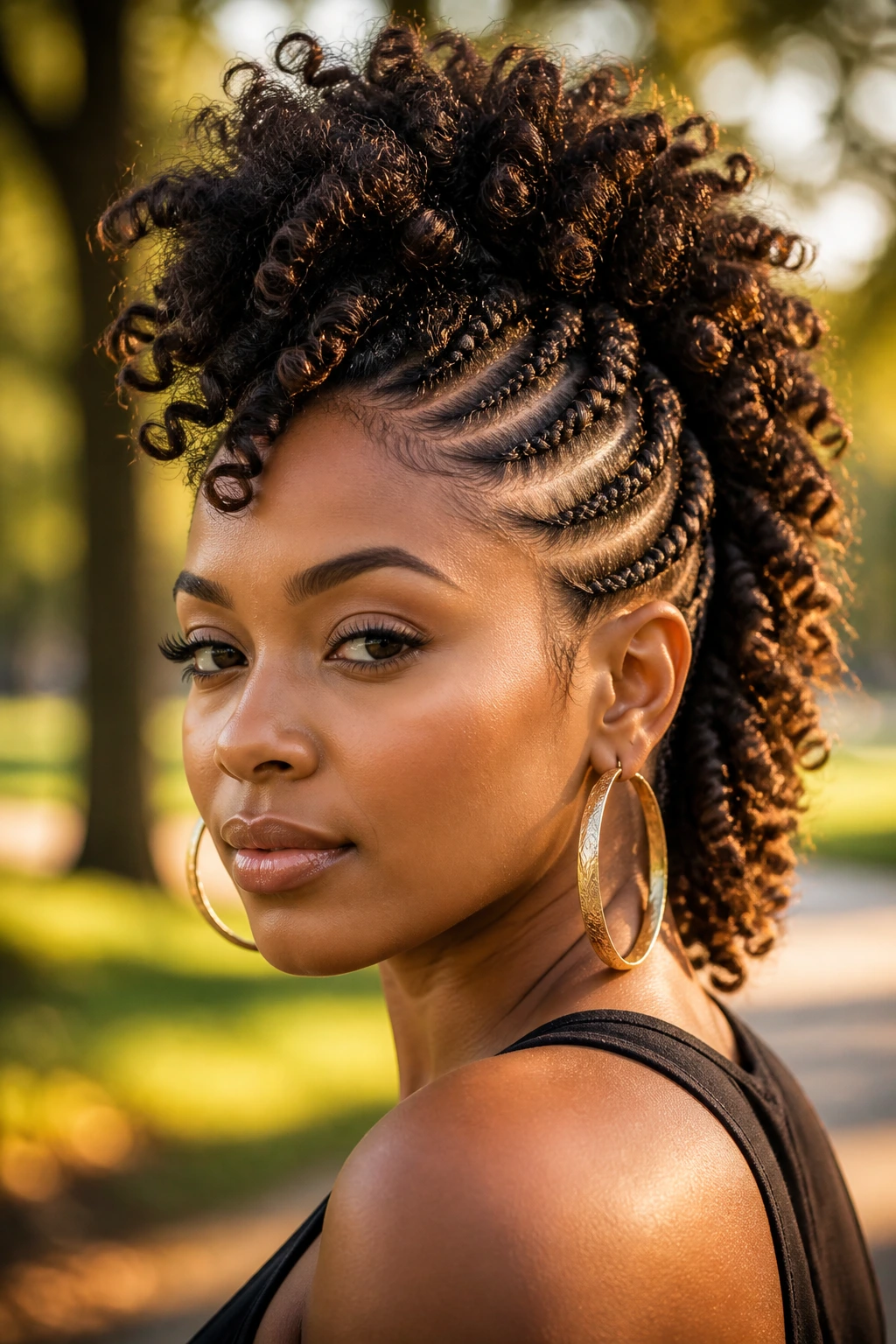
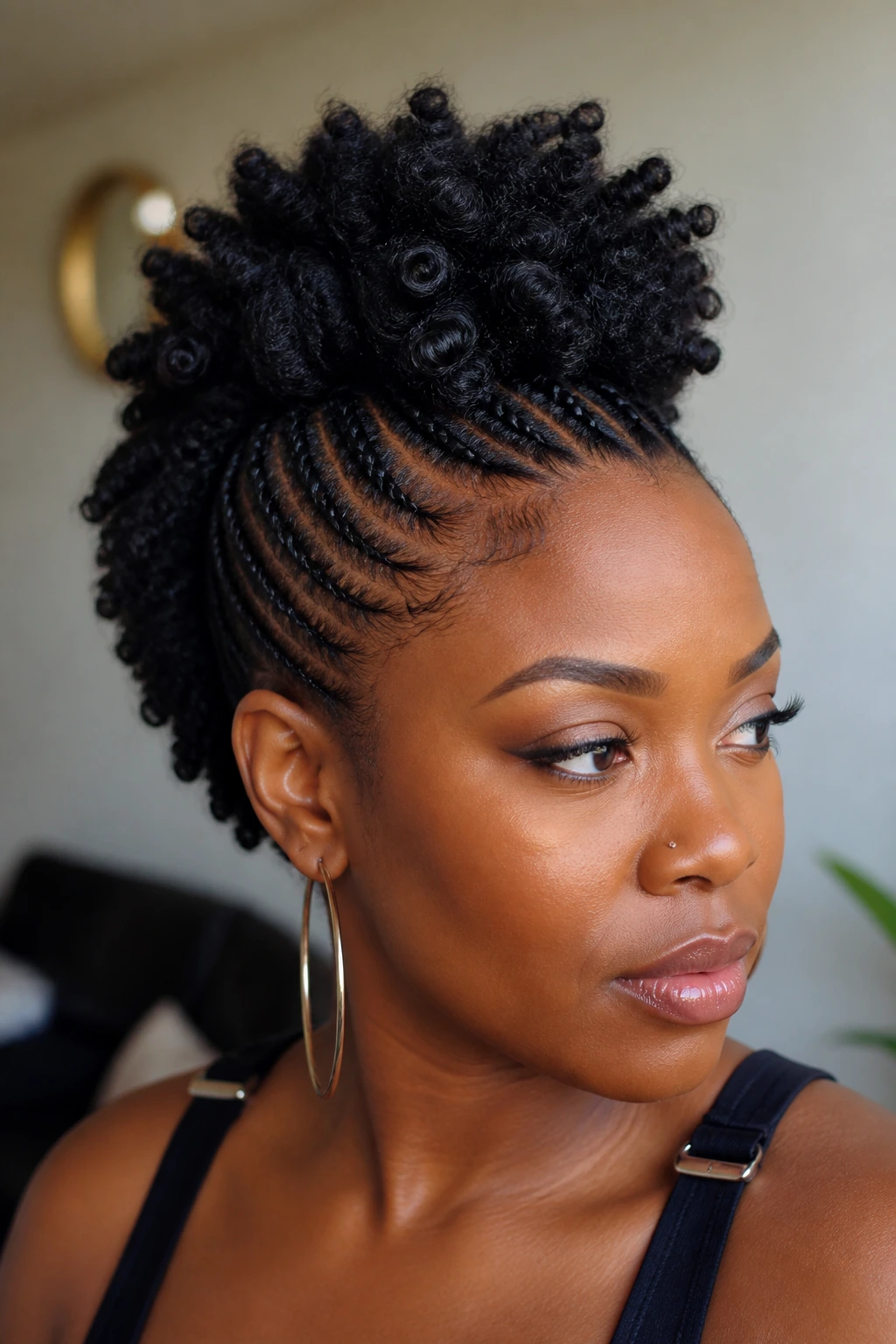
This style works because the textures are doing two different jobs. The cornrows bring order. The curls bring motion. Put them together in one center ridge and you get a mohawk that looks detailed without needing a lot of accessories or color.
The key is spacing. The braided rows should be chunky enough to read from a distance, but not so thick that they crowd the curls. Think of the design as alternating lanes: braid, curl, braid, curl. When those sections are even, the style looks built on purpose. When they’re uneven, the whole thing starts to tilt.
I like this one for people who enjoy texture contrast. It photographs well from the side because the braid ridges create shadows while the curls soften the outline. That shadow-and-softness mix is what makes the style feel layered rather than busy. Tiny structural difference. Big visual payoff.
15. Braided Crown Mohawk
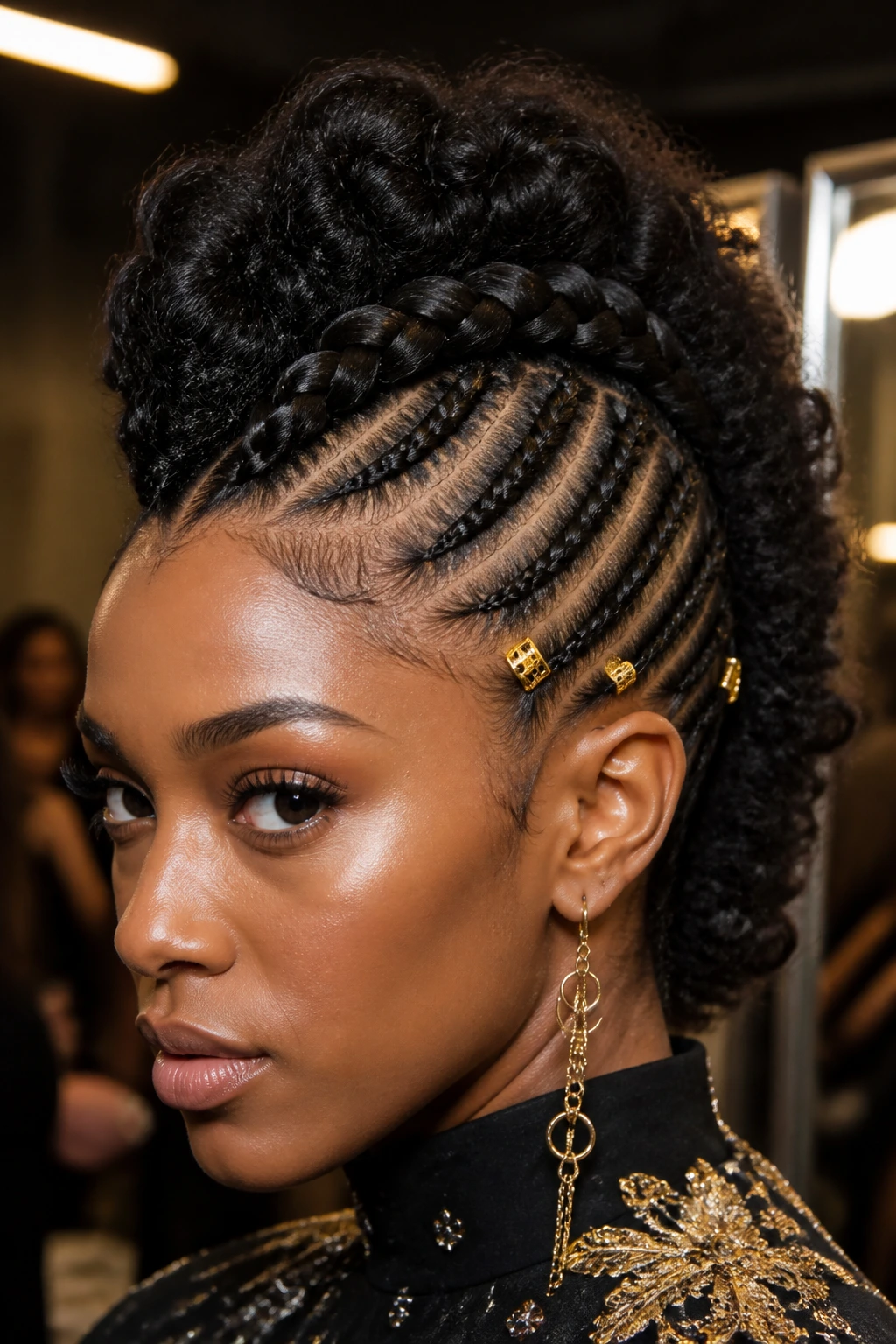
A braided crown mohawk feels regal without getting stiff about it. The braids wrap the perimeter or sit just inside the hairline, which gives the center ridge a framed, almost haloed look. That framing is what separates this style from a standard frohawk; it’s more architectural, less casual.
The crown braid line matters more than the length of the hair. If the perimeter braids are neat and even, the center section can be fuller and softer without the style losing shape. Add a couple of gold cuffs near the temples and the whole look gets a sharp finish, though I’d stop before the accessories start overpowering the braid work.
This is a good option if you want the mohawk silhouette but still want to show off detail around the hairline. It also works well when the center hair has a looser texture, because the braided frame keeps the fluff from swallowing the shape. A framing trick, really. Old one. Still useful.
16. Short Natural Texture Hawk
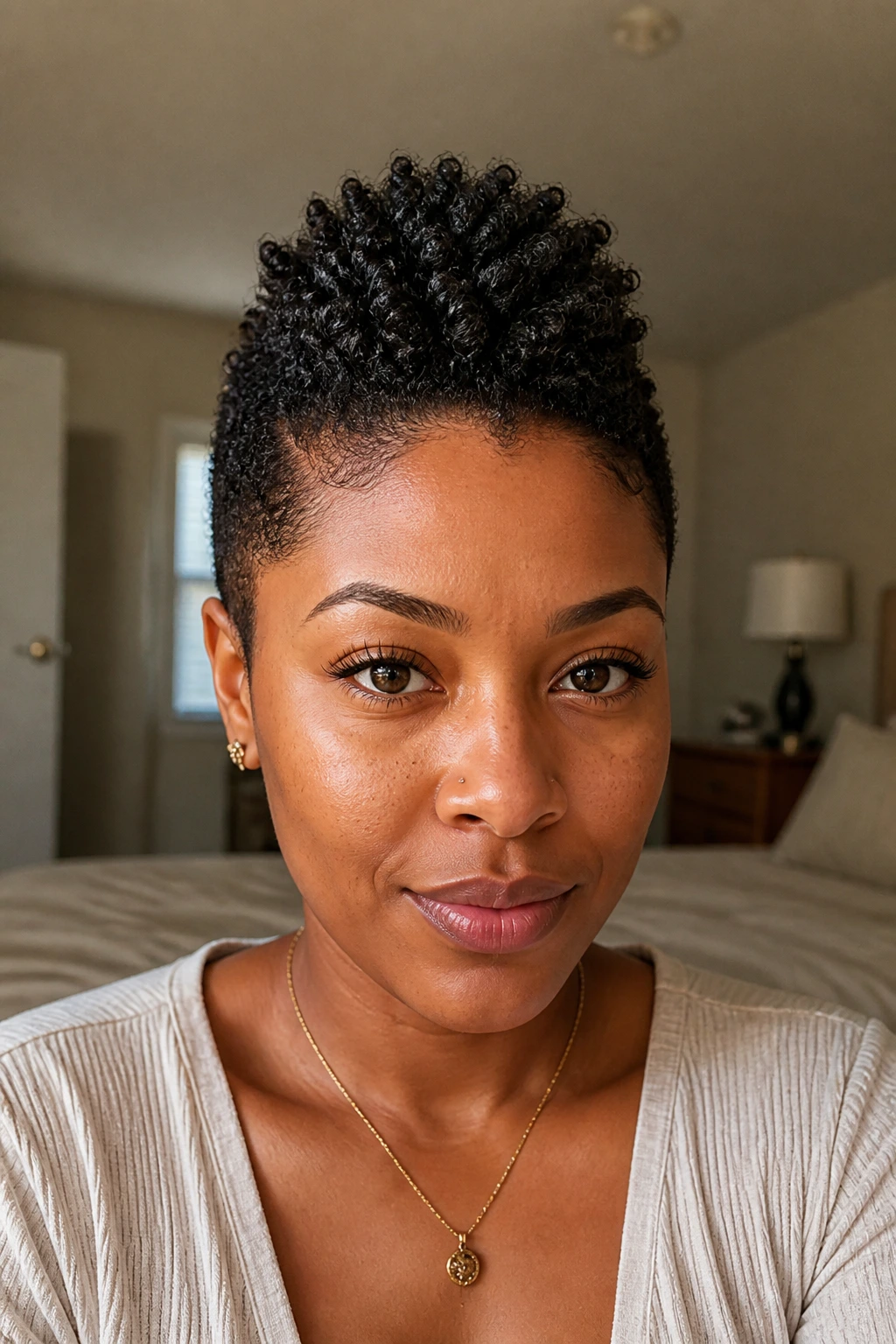
Short natural texture hawks are underrated. People assume a mohawk has to be long to read, but a short center ridge with tight curls or mini coils can look just as strong. In fact, the shorter length makes the shape look sharper because there’s less hair competing for space.
I like this style for anyone who wants a protective look that doesn’t sit heavy on the neck. It’s easier to sleep in, easier to refresh, and easier to keep looking neat when the schedule gets messy. The hair can be tightly curled, kinky, or softly coiled, but the base should stay narrow enough to preserve the hawk line.
The best part is that it feels closer to the head, which means the style has a clean, almost tailored finish. If your own hair is short or you’re trying crochet mohawks for the first time, this is a very sensible place to start. No one needs a ton of length to make a point.
17. Half-Up Color Pop Hawk
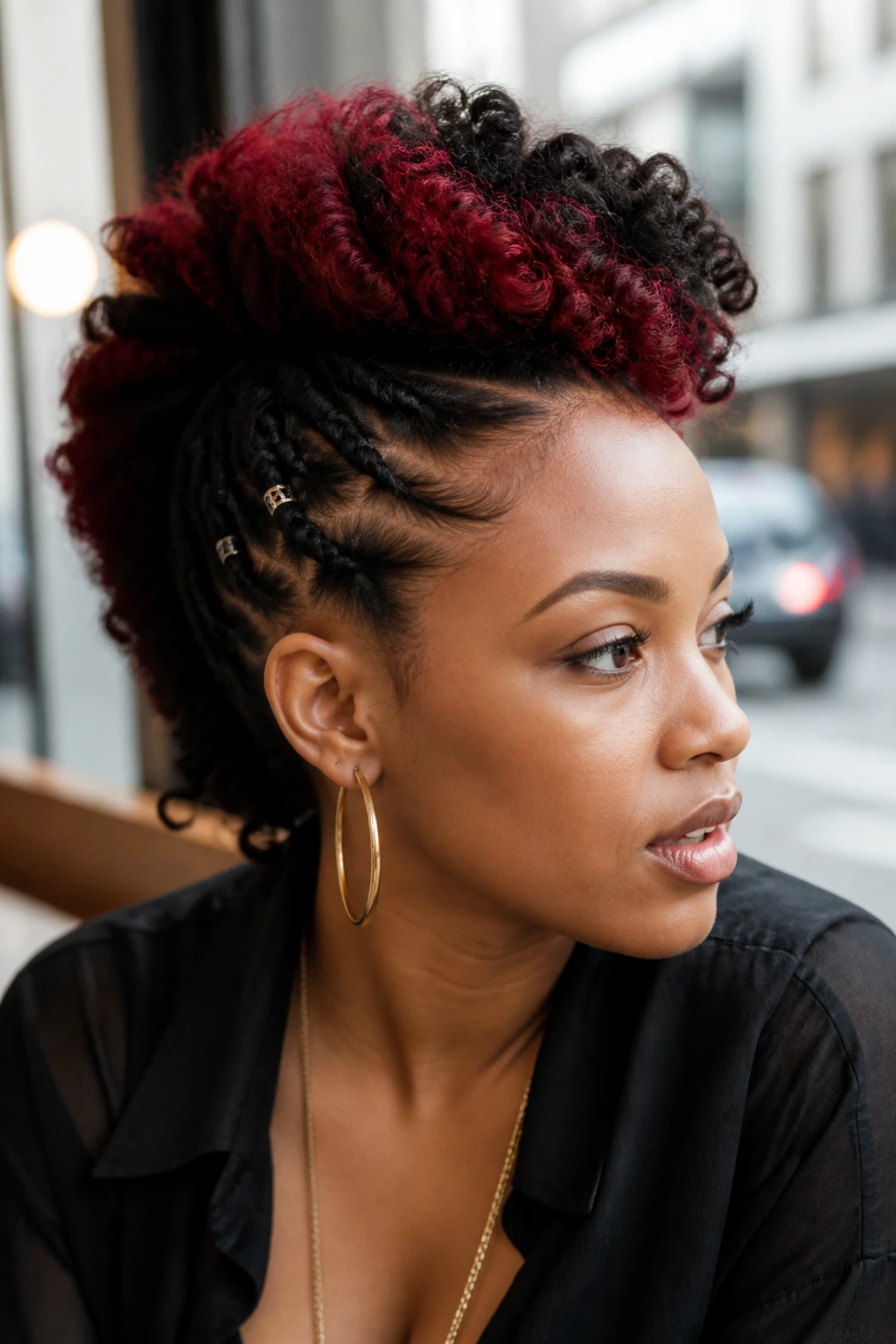
A half-up color pop hawk brings in a little play without requiring a full bright install. You keep the mohawk structure, but the center section gets a flash of burgundy, copper, honey brown, or a soft ombré that shows up most when the hair moves. The sides stay dark and tidy so the color has room to matter.
This is one of the easiest ways to make the style feel fresh without changing the base pattern. The color can live in the crown only, or run through the top third of the hawk. Either way, the contrast gives the profile more depth. A single color stripe can do more than a whole head of flat hair.
If you’re nervous about bright shades, start with a small accent panel near the front. You’ll still get that pop when the hair lifts, and you won’t have to commit to an all-over color story. That’s the nice thing about crochet hair: the risk is mostly cosmetic, not permanent.
18. Long Water-Wave Crochet Mohawk
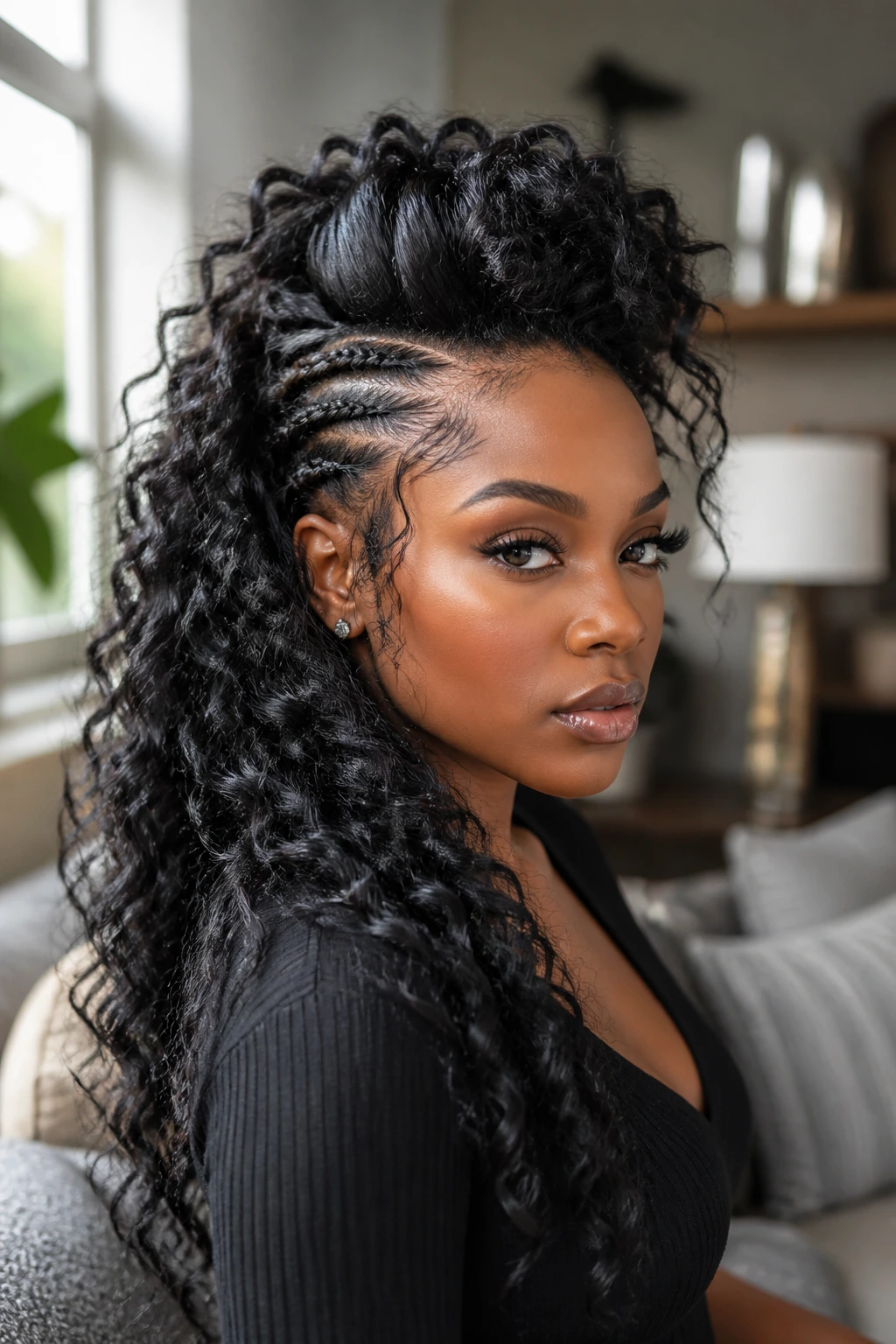
Long water-wave hair gives the mohawk a glossy, flowing finish that looks softer than locs and more polished than kinky curls. The S-pattern in the fiber catches movement nicely, and the length helps the crown feel dramatic without needing extra accessories. It’s the style that says the shape matters, but the hair still gets to move.
The main thing with long water-wave hawks is control. If the center section is too wide, the waves spill over the sides and blur the silhouette. Keep the braid base narrow and stack the crochet loops higher in the middle so the style rises instead of spreading. That narrowness is what keeps the mohawk readable.
I’d also keep the front layers slightly shorter than the back. That subtle difference helps the hair frame the face instead of covering it. A long wave pattern can go flat fast if it hangs in one heavy sheet, and a little layering prevents that. Nothing fancy. Just smart placement.
19. Diamond-Pattern Feed-In Mohawk
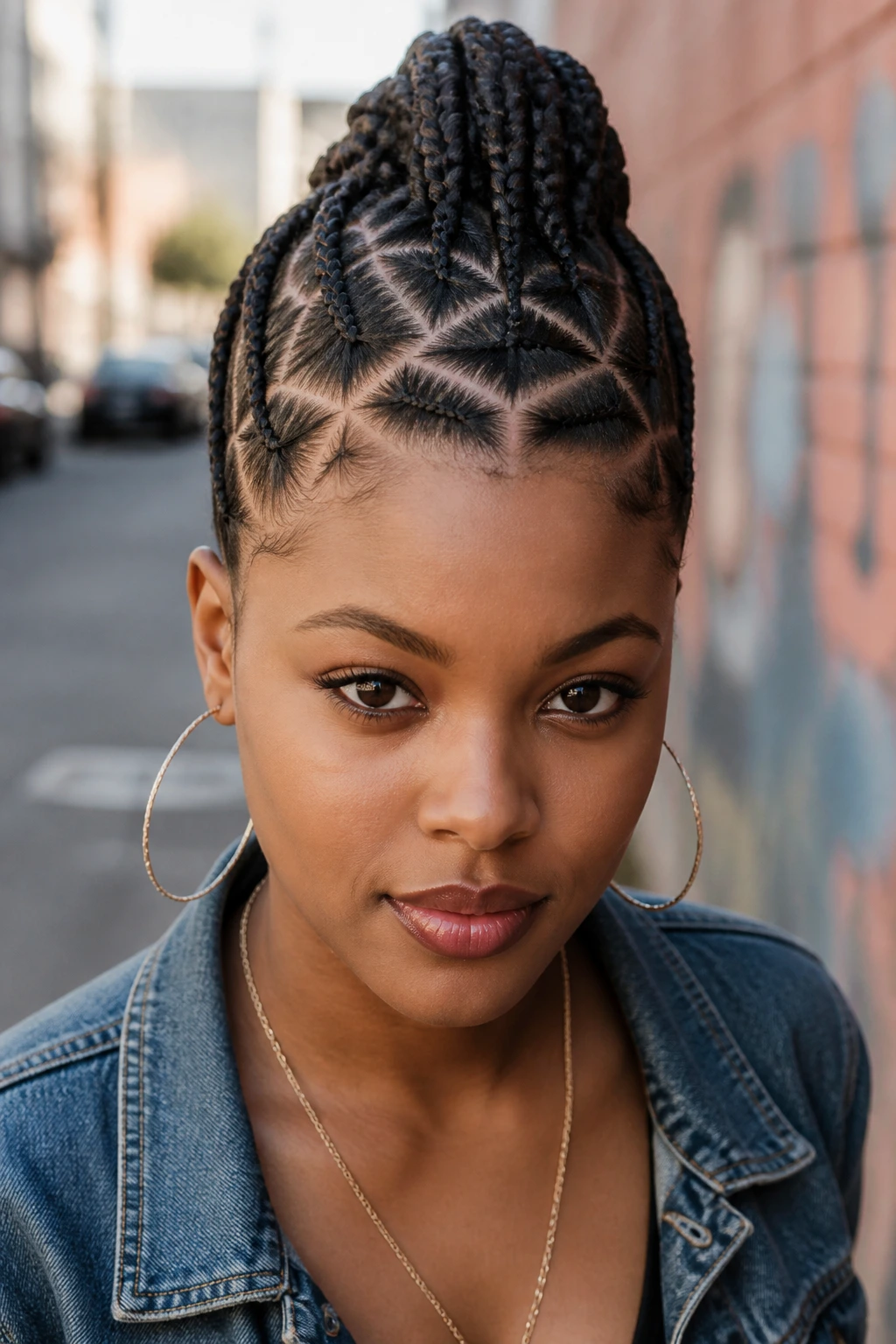
A diamond-pattern feed-in mohawk is for the person who wants the scalp design to matter as much as the crown. The parts create geometric interest before the crochet hair even comes into play, and the finished style looks crafted from the base up. It has a bit of edge to it, but the edge comes from the parting, not from extra volume.
The diamond sections work best when they stay clean and evenly spaced. If the shapes are too small, they blur. Too large, and the pattern loses detail under the crown. The center mohawk should sit on top of that structure rather than smothering it. The braid work needs room to show.
This is one of my favorite versions for someone who likes their hairstyles to have a visible plan. It rewards careful installation. It also looks excellent from the front, which is not true of every mohawk style. Some shapes are better in profile than they are head-on. This one can handle both.
How the Mohawk Shape Stays Sharp on Natural Hair
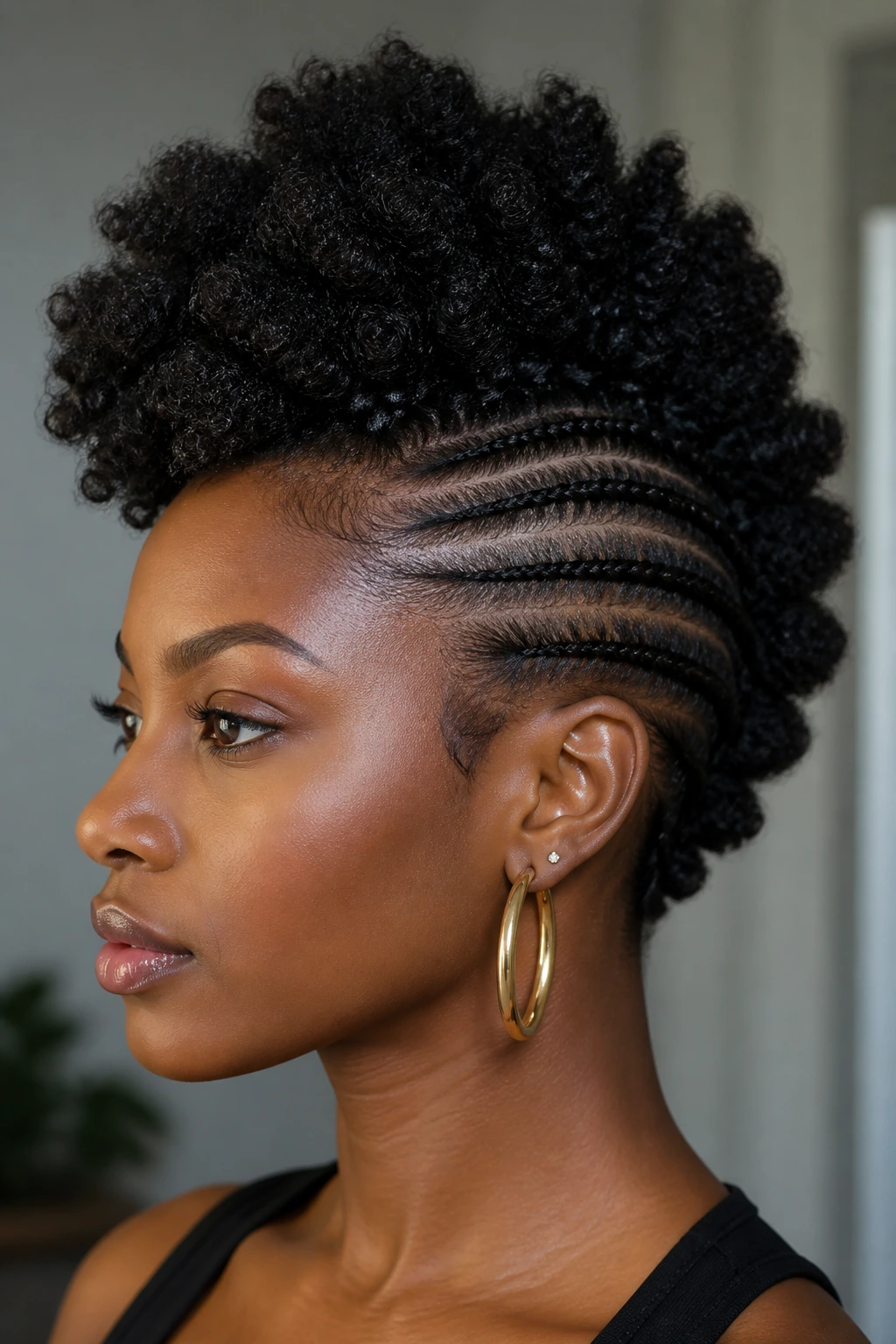
A crochet mohawk looks best when the base does not try to do too much. That sounds obvious, but it’s the difference between a style that sits cleanly and one that swells sideways by the second day. The side braids should lie flat, the center should carry the density, and the crown should taper instead of blooming outward at the temples.
Tension is the other thing people underestimate. The hairline can look neat on install day and still feel wrong by nightfall if the braids are pulling at the edges. I’d rather see a slightly looser side base with a balanced crown than a tight, shiny install that leaves your temples sore. Pretty only counts if you can keep it on your head.
A small amount of mousse on the outer layer helps too, especially for curl-heavy styles. Use it to tame the frizz that rises near the crown, not to freeze the whole style into place. Crochet hair has enough personality on its own. You’re shaping it, not armoring it.
Essential Tools and Products
-
Rat-tail comb: Useful for clean parts and crisp section lines, especially on feed-in or diamond-pattern bases.
-
Edge brush: Good for smoothing the hairline without flooding it with gel.
-
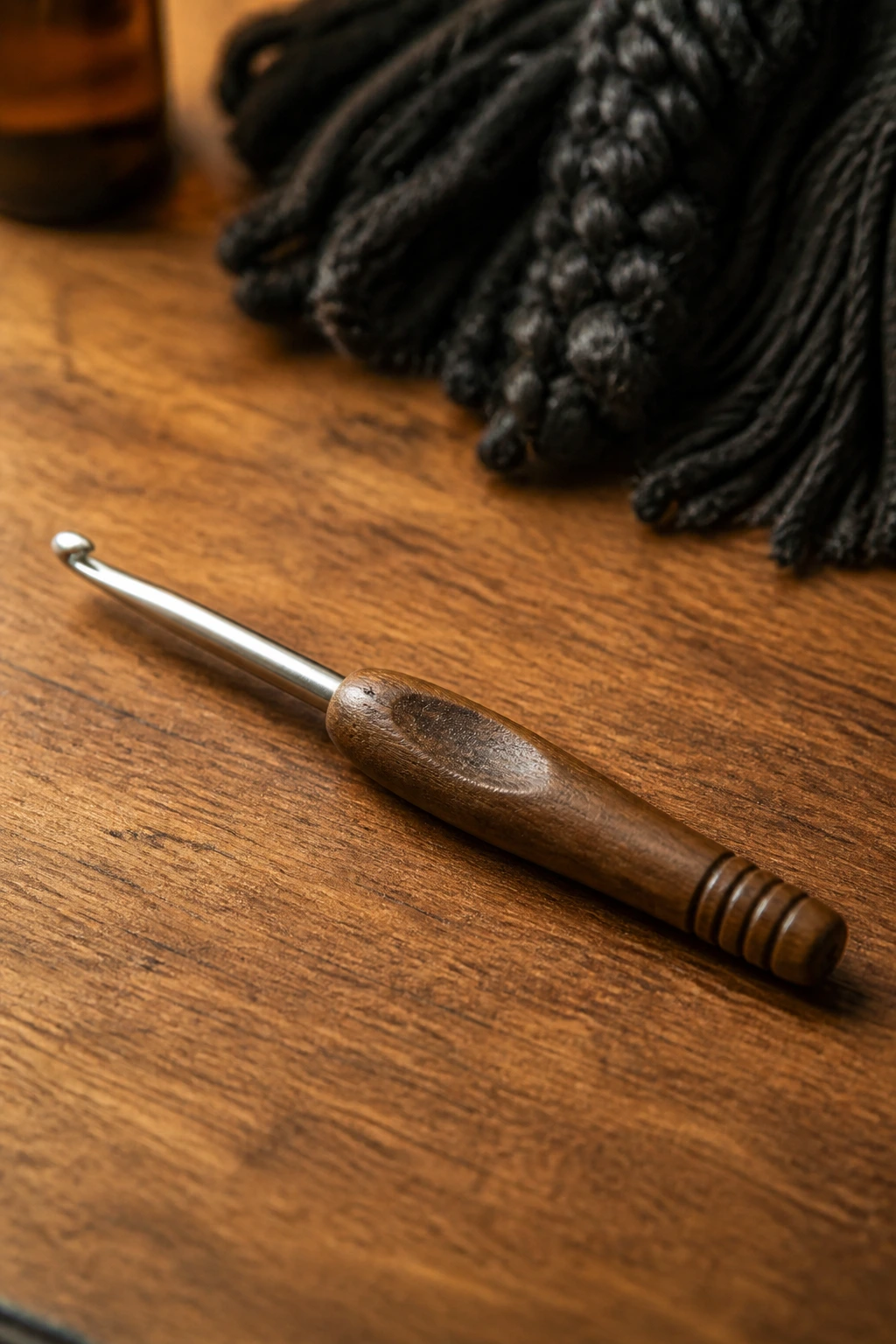
Crochet hook, usually 0.75 mm to 1.0 mm: The size should fit the braid base and the hair loop you’re using.
-
Shine-n-jam or a similar braid pomade: Helps the base lay neat while you cornrow the sides.
-
Mousse: Useful for curl-heavy, twist-heavy, or loc-heavy crowns when you want the surface to settle.
-
Hair clips: Keep unused sections out of the way during installation.
-
Satin scarf or bonnet: Night protection is not optional if you want the style to keep its shape.
-
Small scissors or a trim tool: Handy for cleaning up uneven ends after the hair is installed.
-
Light scalp spray or diluted leave-in: Helps with dryness if your scalp gets itchy under braids.
-
Bobby pins or hairpins: Great for tucking a rogue section back into the crown when the style starts to loosen.
Smart Hair Shopping and Texture Tips
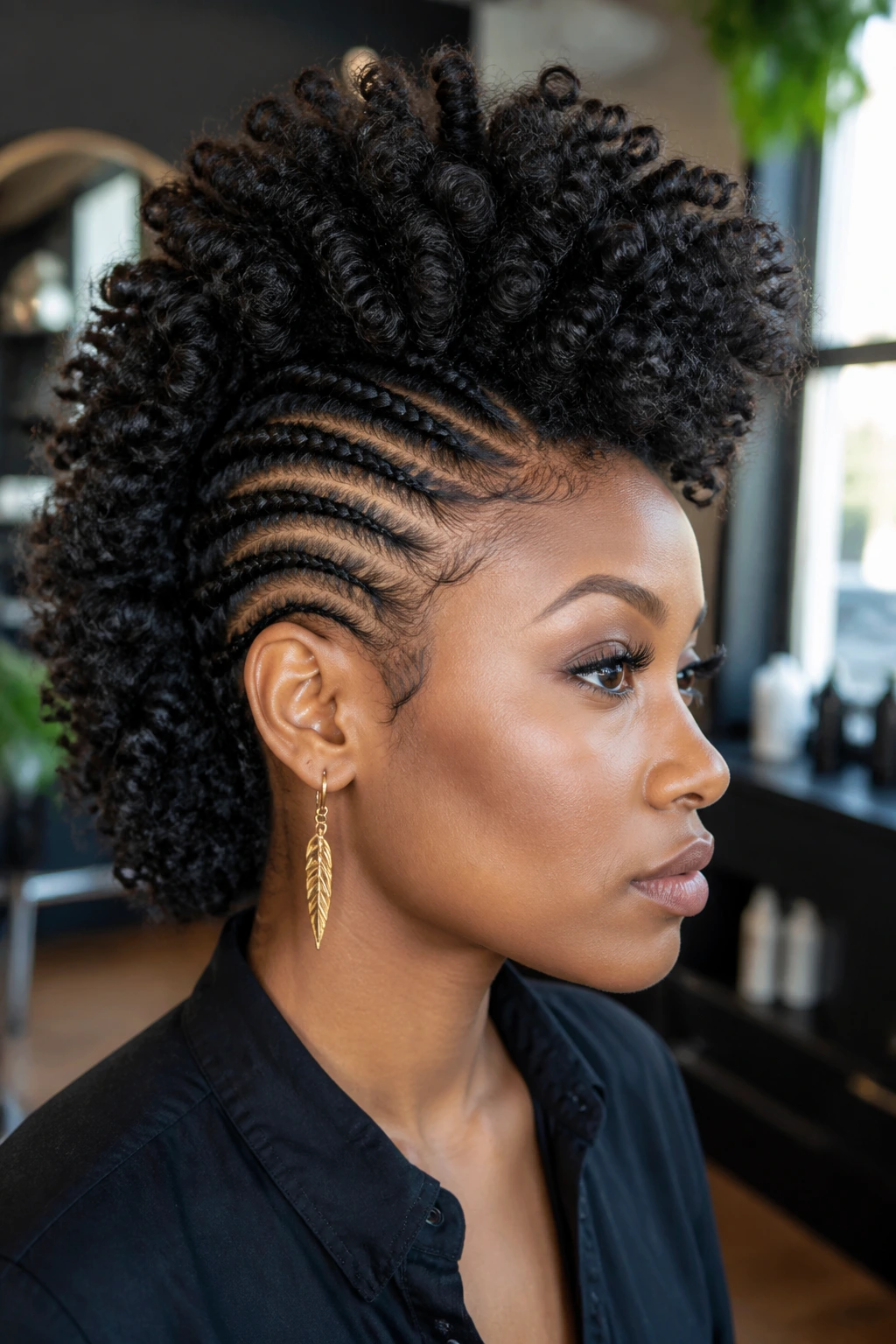
Choosing hair for a crochet mohawk is mostly about texture, weight, and how much movement you want. If you want a softer crown, water-wave, deep-wave, or loose curl hair gives you more bounce with less effort. If you want a firmer shape, Marley hair, faux loc hair, or Havana twist hair holds a stronger line. The texture should support the silhouette, not fight it.
Pack count matters more than people think. A short hawk can be built with four to six packs, while long or very full versions may need six to ten depending on density and how wide you make the center ridge. If your crown is narrow, do not buy hair like you’re making a full head of box braids. You’ll only end up with leftovers and a style that sits too heavy.
Color should be chosen like it’s part of the architecture. Deep 1B or black tones keep the silhouette clean and quiet. Brown, honey, burgundy, or mixed highlights add movement, but they also show the shape more clearly because the light catches the crown differently. I like one accent tone near the front or a subtle ombré through the top if you want the style to look dimensional without shouting.
If your natural hair is dense, pick a fiber that won’t fight the base. Tighter coils blend well with kinky textures and Marley hair. Looser waves blend better with soft curls or passion twists. Matching the installed hair to your own texture keeps the style from looking like a wig perched on top of braids — and yes, that can happen if you ignore texture.
How to Wear These Looks With Face Shape, Outfits, and Accessories
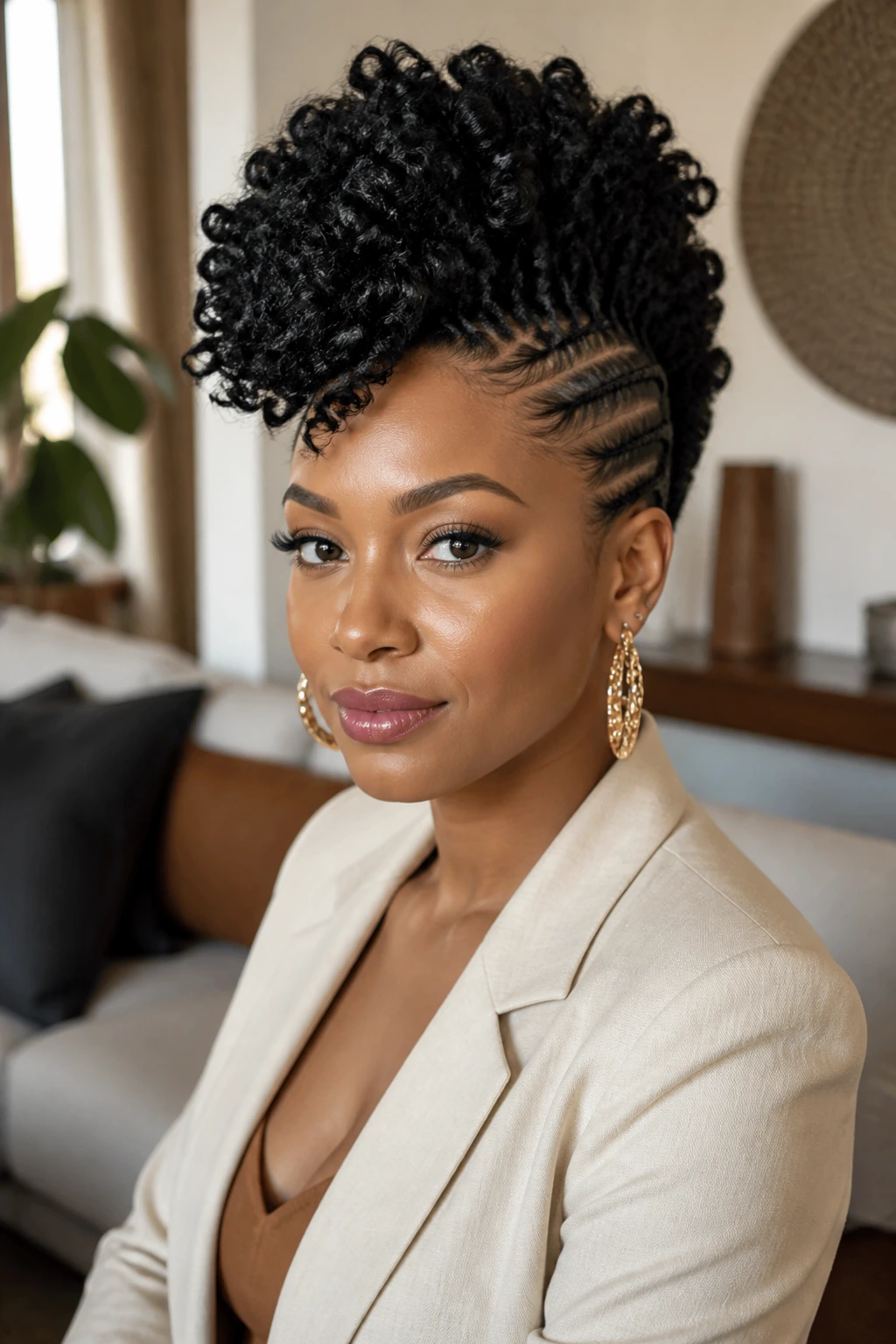
Face Shape: High crowns flatter rounder faces because the height draws the eye upward, while side-swept or diagonal hawks soften square jawlines. If your face is already long, keep the center section a little wider and lower so the style adds width instead of stretching everything further.
Outfit Match: Sleek cornrow sides pair nicely with sharp collars, structured jackets, and buttoned tops because the hairline already looks clean. Fluffier curl hawks work with softer fabrics, open necklines, and easy knits since the texture adds movement without needing extra clothes to compete with it.
Accessory Pairing: Hoops, drop earrings, cuffs, and wraps belong where they can frame the crown without cluttering the base. If the mohawk is already full, keep the accessories near the temples or the ends, not all the way through the center.
Occasion Scale: A lower-profile hawk can read polished enough for a workday or a meeting, while long locs, bright color, or extra height push the style into statement territory fast. The trick is to match the volume to the rest of the look so nothing feels like it showed up from another outfit.
Easy Ways to Push the Look Further
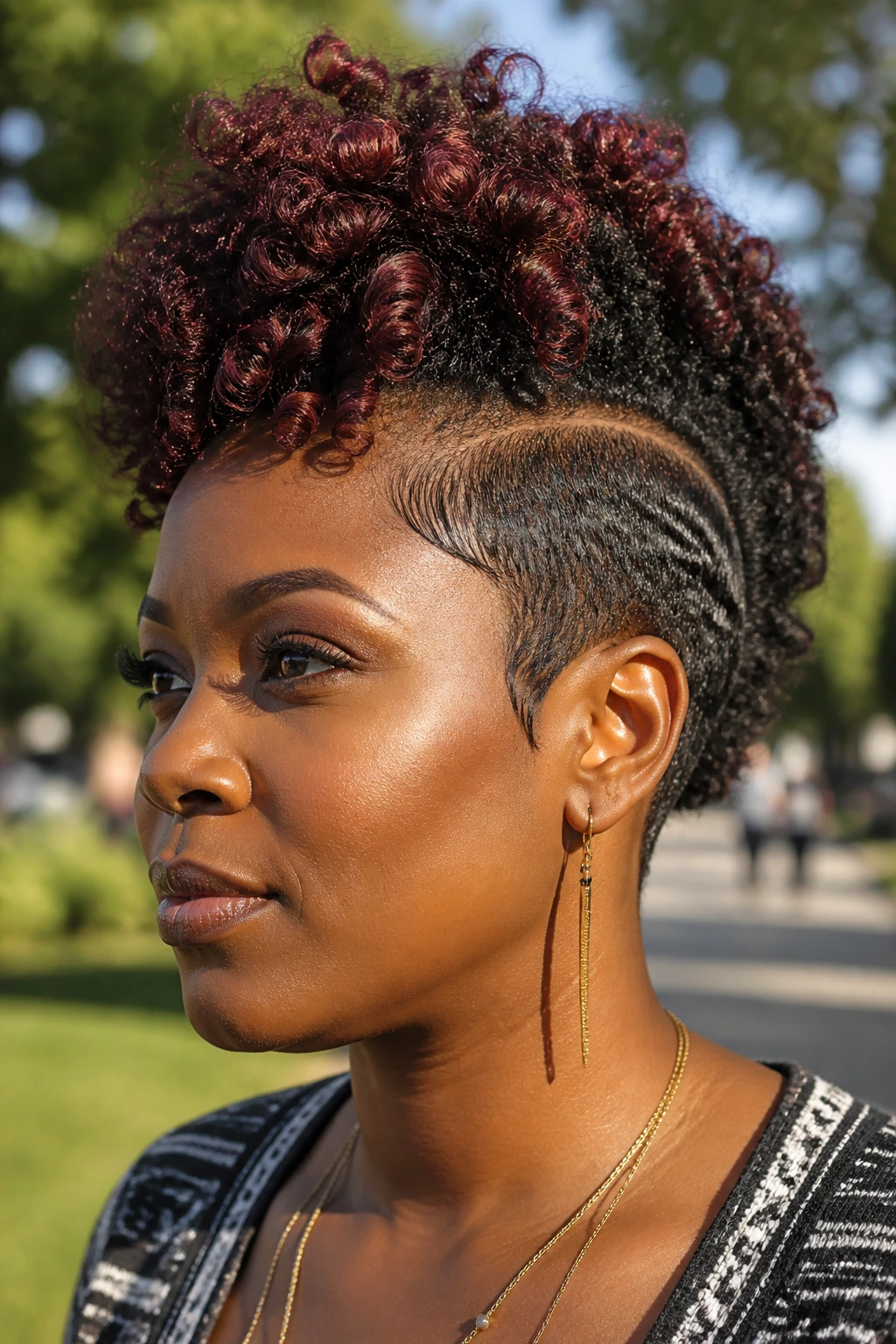
Color Shift: Add one accent shade through the crown — burgundy, copper, or a warm brown — and keep the sides dark. That contrast makes the mohawk line easier to see, especially in daylight.
Texture Control: If you want less bulk, choose a tighter curl or twist pattern and place the loops closer together in the center. If you want more body, separate the curls once after installation and stop before they turn frizzy.
Edge Detail: A soft edge brush and a tiny amount of gel can clean the hairline without making it stiff. The best edge work is still visible if you look closely; it does not need to look like helmet paint.
Height Control: Move the crochet placement slightly closer to the spine of the head if you want the hawk to read narrow and sharp. Push it wider if you want fullness, but keep an eye on the profile — wide hawks can flatten the face if the sides spread too far.
Make-It-Yours: If you like low maintenance, go with locs or twists. If you want softness, use curly or wavy hair. If you want a sharper, more dramatic line, choose braids or feed-in designs and keep the crown tidy.
Night Care, Refreshes, and Take-Down Timing
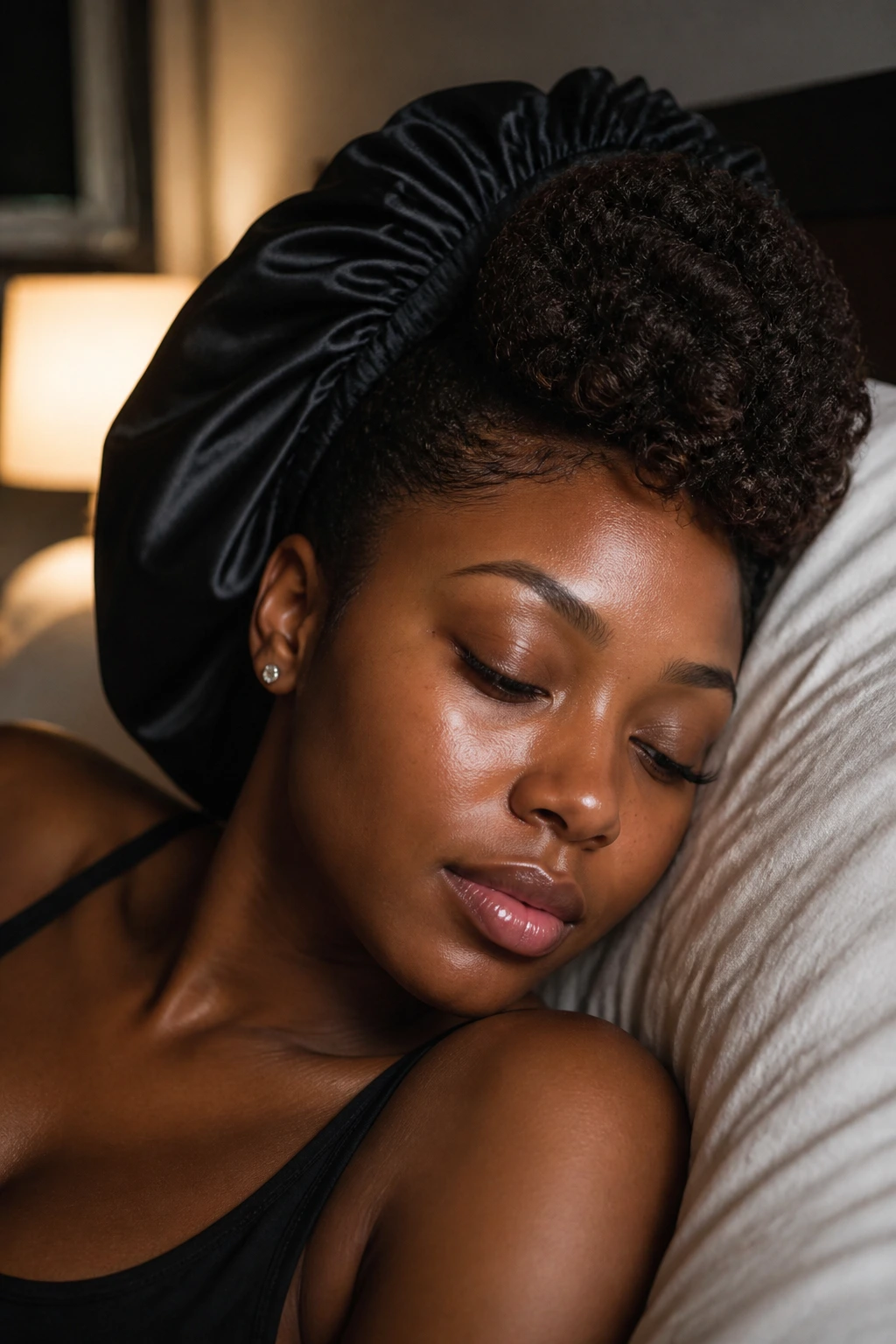
A crochet mohawk keeps its shape longer when you treat the sides and crown differently at night. The braids at the base want protection from friction, while the center texture needs to be kept from tangling into a fuzzy lump. A satin scarf or bonnet handles both jobs well. Wrap the hair smooth, then tuck the longer crown length into the bonnet so it is not rubbing against cotton pillowcases all night.
Refresh the style with a light mist, not a soak. For curls, a water-and-leave-in spray every few days helps the hair recover its shape. For twists or locs, a little mousse on the surface can tame stray fibers without making the style stiff. If the scalp feels dry, use a pointed nozzle bottle to place a small amount of scalp tonic between the braids instead of rubbing product all over the hair.
How long should you keep it in? Usually four to six weeks is a sensible window for most crochet hawks, though low-tension twist or loc versions can sometimes last a little longer if the scalp stays comfortable and the base still looks neat. If the roots start fuzzing badly, if the braids loosen at the temples, or if your scalp starts talking back, take it down. Hair should not need a warning label to be worth keeping.
Common Mistakes That Flatten the Shape or Stress the Hair
-
Pulling the side braids too tight: A shiny, tight install can feel clean on day one and painful by day two. If your temples ache, the tension is wrong, and the fix is to loosen the base before adding more hair.
-
Overloading the center with hair: Too much bulk makes the hawk spread like a pyramid instead of rising like a ridge. Keep the density focused down the middle and let the sides stay calm.
-
Choosing the wrong texture for the finish you want: Soft curls and matte locs do not behave the same way, and pretending they do leads to frustration. Match the texture to the silhouette before you buy the hair.
-
Skipping a mirror check from the side: The front can look fine while the profile collapses into a wide shape. Look at both sides and the back before calling the style done.
-
Using heavy accessories on heavy hair: Beads, cuffs, and wraps can push faux locs or thick twists into a saggy line if you overdo them. Add decoration where it helps the shape, not where it drags it down.
Variations and Adaptations to Try
Low-Profile Office Hawk: Keep the crown shorter, the sides cleaner, and the texture closer to the head. This version still reads like a mohawk, but it doesn’t shout from across the room.
Big-Texture Drama Hawk: Use dense curls or afro-textured crochet hair and widen the center section slightly. The result feels fuller, louder, and more obvious in motion.
Soft Color-Blocked Hawk: Place one accent color through the middle third of the style and keep the base dark. This is a smart way to get dimension without committing to bright full coverage.
Lightweight Starter Hawk: Shorter hair, fewer packs, and a narrow center ridge make the style easier to wear if you are new to crochet installs. It is also kinder to the neck and scalp.
Accessory-Heavy Statement Hawk: Add cuffs, thread wraps, or a few beads to the crown only. The idea is to decorate the structure, not bury it.
Close-Cropped Natural Hawk: Keep the crown short and tight with kinky texture or small curls. This version works beautifully when you want a neat shape that feels less like an event style and more like an everyday one.
Frequently Asked Questions
How long does a crochet mohawk usually last?
Most styles hold up well for about four to six weeks if the base is neat and the tension is reasonable. Loc and twist versions can sometimes stretch a little longer, but the scalp’s comfort should decide the timeline, not stubbornness.
Do I need shaved sides for a crochet mohawk?
No. That’s the old picture people carry in their heads, but crochet hawks are usually built with cornrows or flat braids on the sides. You get the mohawk shape without cutting anything off.
What hair texture is best for a beginner?
A short curly or twist texture is usually easier than long locs or heavy braids. Shorter hair means less weight, less tangling, and less chance of the crown collapsing while you’re still learning how the style sits.
Can I wash a crochet mohawk?
You can cleanse the scalp carefully, but don’t flood the whole style unless the fiber and install can handle it. A pointed applicator bottle, diluted shampoo on the scalp, and a gentle rinse around the base are safer than soaking everything at once.
What if the sides start feeling sore after installation?
That usually means the cornrows are too tight or the anchor braids are placed too close to the hairline. Take note early. A little discomfort is normal for the first hour or so; pain that lingers is the wrong kind of tension.
Which styles need the most hair?
Long water-wave crowns, big curly hawks, and full loc styles use the most packs because they need enough bulk to hold the mohawk shape. Shorter frohawks, bob-length looks, and close-cropped versions use far less.
How do I keep the crown from getting frizzy so fast?
Wrap it at night, mist it lightly every few days, and keep your hands out of it. Frizz is partly the texture doing its job, but rough handling speeds it up. A little mousse helps. So does not over-separate the strands on day one.
The Shape That Does the Heavy Lifting
A good crochet mohawk does not need to be loud to be noticed. It just needs clean sides, a center ridge with a clear plan, and texture that matches the mood you actually want to wear. That is why the style keeps showing up in so many forms: curls, locs, twists, braids, waves, and afro texture all fit the same strong frame.
The best versions respect the head they sit on. They don’t squeeze the edges, they don’t fight the profile, and they don’t waste the center line by spreading hair everywhere. Get the proportion right, and the rest falls into place with much less effort than people expect.
Pick the texture that suits your patience level, keep the base neat, and let the silhouette do its job. A well-made crochet hawk has a way of looking finished even when the rest of the outfit is simple, and that’s a useful thing to have in your style rotation.
