



4c hair does not need to be flattened to look polished. The best hairstyles for 4c hair with natural bounce work with shrinkage instead of fighting it, which is why some styles feel alive the second you step outside and others look frozen in place by noon. The difference usually comes down to shape, stretch, and how much product you pile on before the hair even has a chance to move.
That’s the part a lot of people miss. Bounce on 4c hair isn’t the same thing as loose, drapey curl movement on other textures. It’s tighter, springier, and often more impressive when the style is built with a little air around it — soft roots, clean sections, and enough moisture to keep the hair from turning rigid or fuzzy. If you’ve ever done a twist-out that looked perfect on day one and puffed into a cloud by lunchtime, you already know how touchy this can be.
The good styles have a rhythm to them. They let the hair breathe, they give the ends somewhere to land, and they don’t smother the texture under a thick coat of cream that turns the whole head into one heavy shape. That’s the sweet spot here: styles that keep the coil pattern, show off the shrinkage in a flattering way, and still swing a little when you turn your head.
Why You’ll Keep Reaching for These Styles
- Built Around Real 4c Texture: These styles work with tight coils, shrinkage, and density instead of pretending the hair is something else.
- Bounce Without Stiffness: The best looks here keep movement in the roots, crown, or ends so the hair doesn’t sit like a helmet.
- Low-Tension Options Included: You’ll see styles that are gentle on the scalp, which matters if your hairline gets sore fast or you wear your hair up often.
- Good for Different Lengths: Some of these work on a short TWA, and some look best once you’ve got a few inches of stretch. I call that out as we go.
- Easy to Refresh: A spray bottle, a little mousse, and a satin scarf can bring several of these styles back from “fine” to “fresh.”
- Protective and Pretty Can Coexist: A style doesn’t have to be heavy or flat to protect the ends. A lot of the best ones here do both jobs at once.
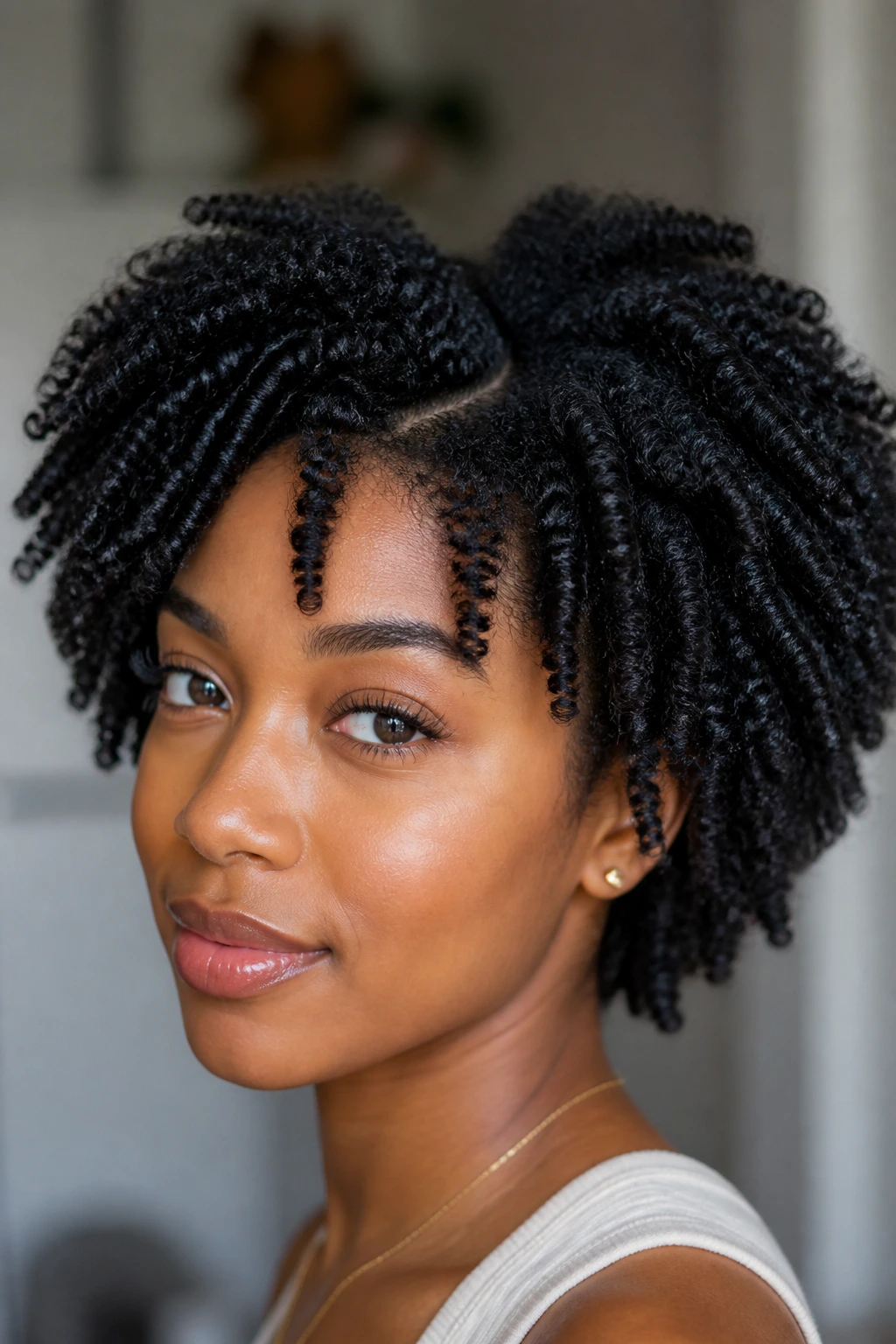
1. Springy Twist-Out With Fluffed Roots
A good twist-out on 4c hair has a certain lift to it. The parts stay visible for a beat, the coils open into a soft zigzag, and the roots keep enough body that the whole style doesn’t collapse into one flat halo by the second day. It’s one of those styles that looks simple until you try to rush it.
Why It Holds So Much Bounce
The twist-out works because the hair is set while it’s damp and shaped by tension, not heat. When you unravel fully dry twists, the strands keep the bend you gave them, and the result is springy instead of stiff. If you want more puff and less definition, make the twists a little chunkier. If you want a sharper pattern, go smaller.
Best Setup
- Twist on hair that’s about 70% dry, not dripping.
- Use a water-based leave-in first, then a light cream or gel.
- Let the twists dry overnight or under a hooded dryer until the centers feel cool and dry.
Best move: Separate each twist once, then stop. The more you pull apart, the bigger the frizz halo gets, and on 4c hair that can go from charming to messy fast.
2. Stretchy Braid-Out With Soft Ends
A braid-out has a different personality from a twist-out. The braids give the hair a little more stretch at the root, so the finished style lands with a softer wave and a fuller shape through the middle. On 4c hair, that extra stretch can be the whole point — it keeps the style from shrinking straight back up the second you touch it.
What I like about braid-outs is the movement at the ends. They do not always curl as tightly as twist-outs, and that’s useful. The finish feels looser, a little fluffier, and less defined in a way that often reads as more natural on dense hair.
If your hair tends to shrink hard, braid the sections while the hair is stretched with your fingers or lightly blown out on cool air. That small step changes the final shape more than people expect. And no, you don’t need tiny braids everywhere. Six to twelve braids can make a clean, wearable set with enough body to swing.
3. Chunky Bantu Knot-Out
Bantu knots are one of the oldest tricks in the book for making 4c hair do something round, soft, and spring-loaded. The knots compress the coil, then release it into a cushioned curl pattern that sits somewhere between a bend and a spiral. It’s not fussy. It’s architectural.
The charm here is in the silhouette. Chunky knots give you big, plush movement; smaller knots give you tighter, more defined bumps of texture. If you want a fuller look with obvious bounce, go larger and keep the parts neat. If you want a tighter finish that lasts longer, size down and let the knots dry all the way through.
This style is especially nice when your hair feels too short for a dramatic twist-out but too thick to leave loose. The knots create shape without needing length. That’s the real win.
4. High Puff With a Curved Part
A high puff has one job: lift the hair away from the head and let the curls do the talking. On 4c hair, that lift makes the texture look expansive instead of crowded, which is a much better use of the density. The puff sits high, the crown looks full, and the back has room to breathe.
The curved part matters more than people think. A clean side curve or a soft middle path can make the puff feel intentional instead of thrown together. Brush the hair upward with a little leave-in on your hands, then secure it with a snag-free band that doesn’t slice the base of the hair. Too tight, and the puff loses softness. Too loose, and the shape sags by lunch.
If your hair is very thick, gather it in two steps: smooth the perimeter first, then raise the puff. That keeps the front sleek while the back stays fluffy. And fluffy is the point.
5. Pineapple Puff on Old Twist-Out Hair
This is the style you pull out when the twist-out is on day two and the roots have started to swell in a good way. The pineapple puff keeps the top high and loose while letting the stretched lengths stack up with a little drama. It looks casual, but not careless.
What makes it work is the contrast. The crown stays lifted, the sides stay smooth, and the loosened twist-out texture gives the puff a soft edge instead of a hard outline. If your hair is shoulder length or longer, you’ll get more height. Shorter hair still works, but the puff sits closer to the head and reads more compact.
I like this style when the hair is slightly dry at the ends but still fluffy at the roots. That in-between texture gives the puff motion. It’s the kind of style that forgives a less-than-perfect twist set and makes it look like a choice.
6. Flat-Twist Crown and Loose Back
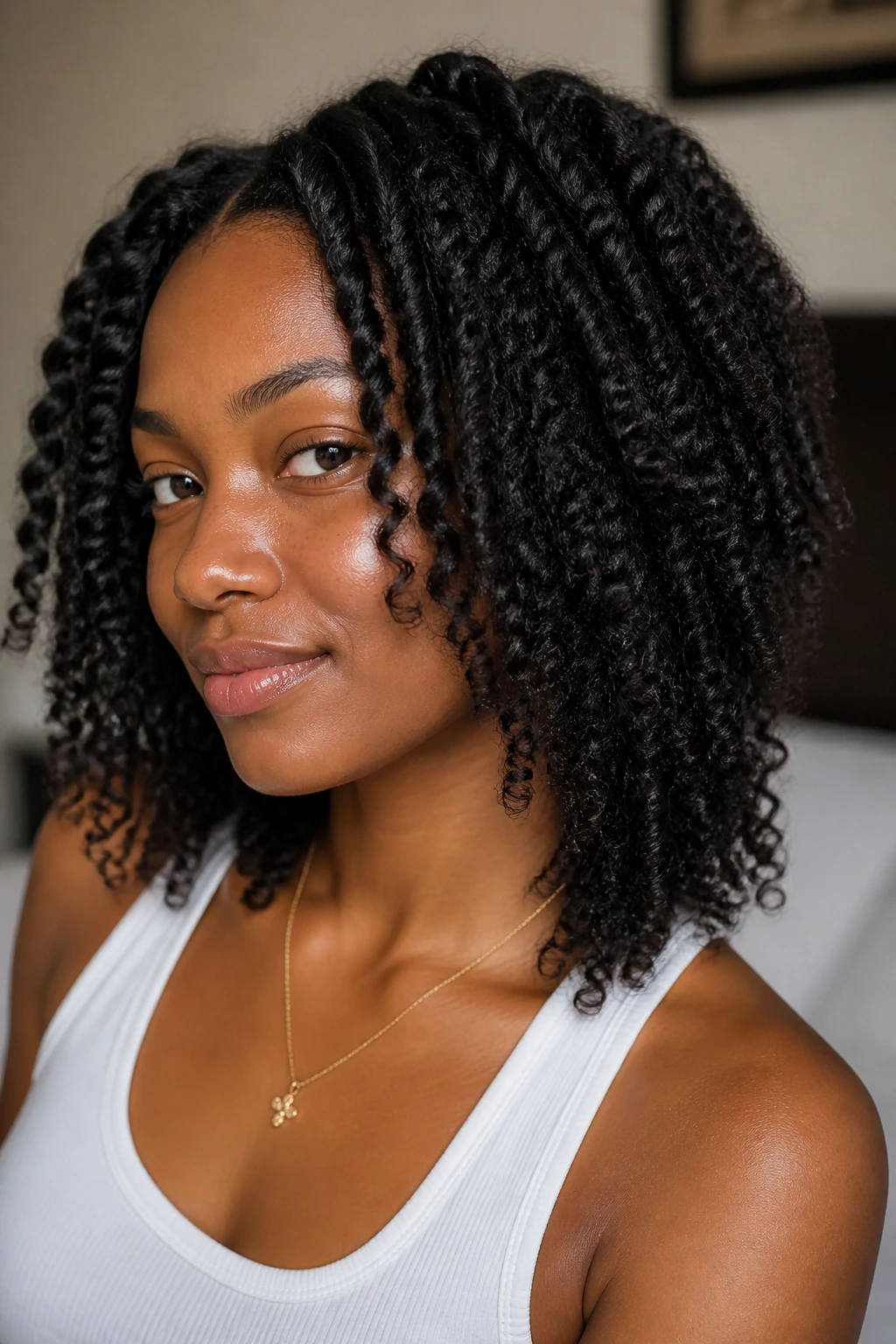
Flat twists around the hairline pull the eye upward first, then let the rest of the hair fall freely in back. That little shift in direction is what gives the style movement. You get the neatness of a crown without losing the bounce in the back section.
This is one of the better styles when you want your hair to stay off your face but still look soft. The front is controlled, the back can be stretched, curled, or left in a fluffy mini-afro state. It works especially well if your 4c hair tends to get bulky around the temples, because the flat twists compress that area just enough to shape it.
The trick is not making the twists too tight. If the front pulls hard, the style looks sharp in the wrong way. Keep the tension even, and let the loose back section stay airy.
7. Defined Wash-and-Go With Soft Coil Clumps
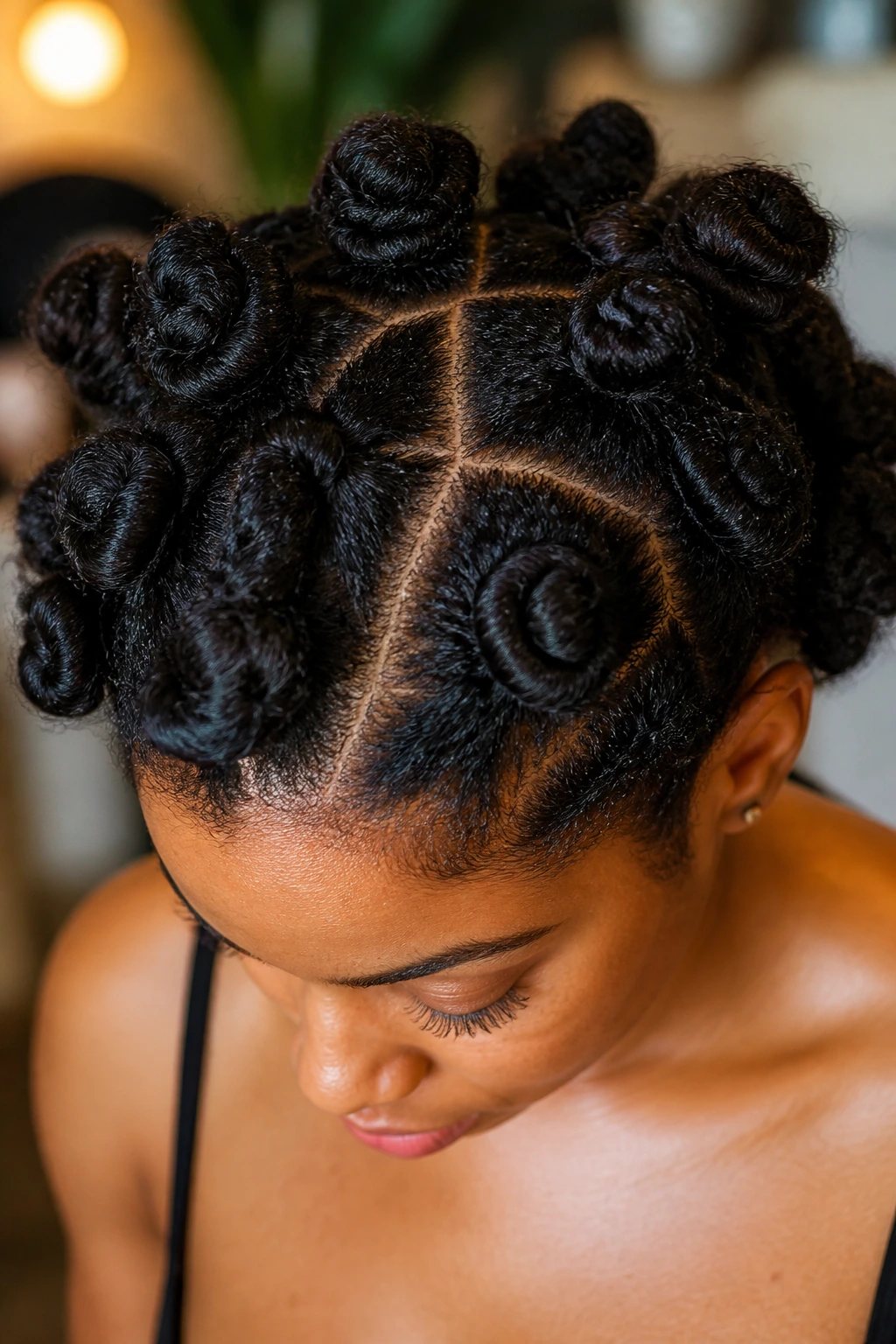
Can 4c hair do a wash-and-go with natural bounce? Yes — but the finish usually looks like coil clumps, not loose spirals, and that’s fine. A good wash-and-go on 4c hair is less about maximum elongation and more about letting the natural curl family show up with enough slip that the coils can separate cleanly.
The styling itself is simple, though “simple” doesn’t mean fast. You need hair that’s clean, drenched, and evenly coated with leave-in and a strong-hold gel or custard. Rake it in sections, smooth the product from root to end, and leave the hair alone once it starts forming small, shiny clusters. Touching it too much is how you get frizz instead of bounce.
A diffuser can help, but air-drying works too if you’re patient. The style looks best when the roots are dry before you start stretching or fluffing, because wet roots collapse the whole shape.
What to Watch For
- Too much cream under the gel can turn the set soft and mushy.
- Too little water leaves the coils clumped in the wrong places.
- Stretching while it’s still damp can ruin the pattern at the crown.
8. Finger Coils on Short 4c Hair
Finger coils are one of the cleanest ways to show off 4c texture on shorter hair. Each coil gets its own little lane, which means the style has structure even if the hair is only a few inches long. The result is neat, springy, and surprisingly lively when the coils are set properly.
Short hair works well here because there’s less weight pulling the coil down. The shape stays compact, and the bounce comes from the twist itself. If your strands are very dense, use small sections and a creamy gel that gives slip but dries with hold. Thick product can make the coils look greasy instead of defined.
The style can lean tidy or playful depending on how much you separate at the end. Leave the coils alone and they look polished. Pick them lightly and they puff up into a soft halo. Both versions work.
9. Mini Twists With a Soft Finish
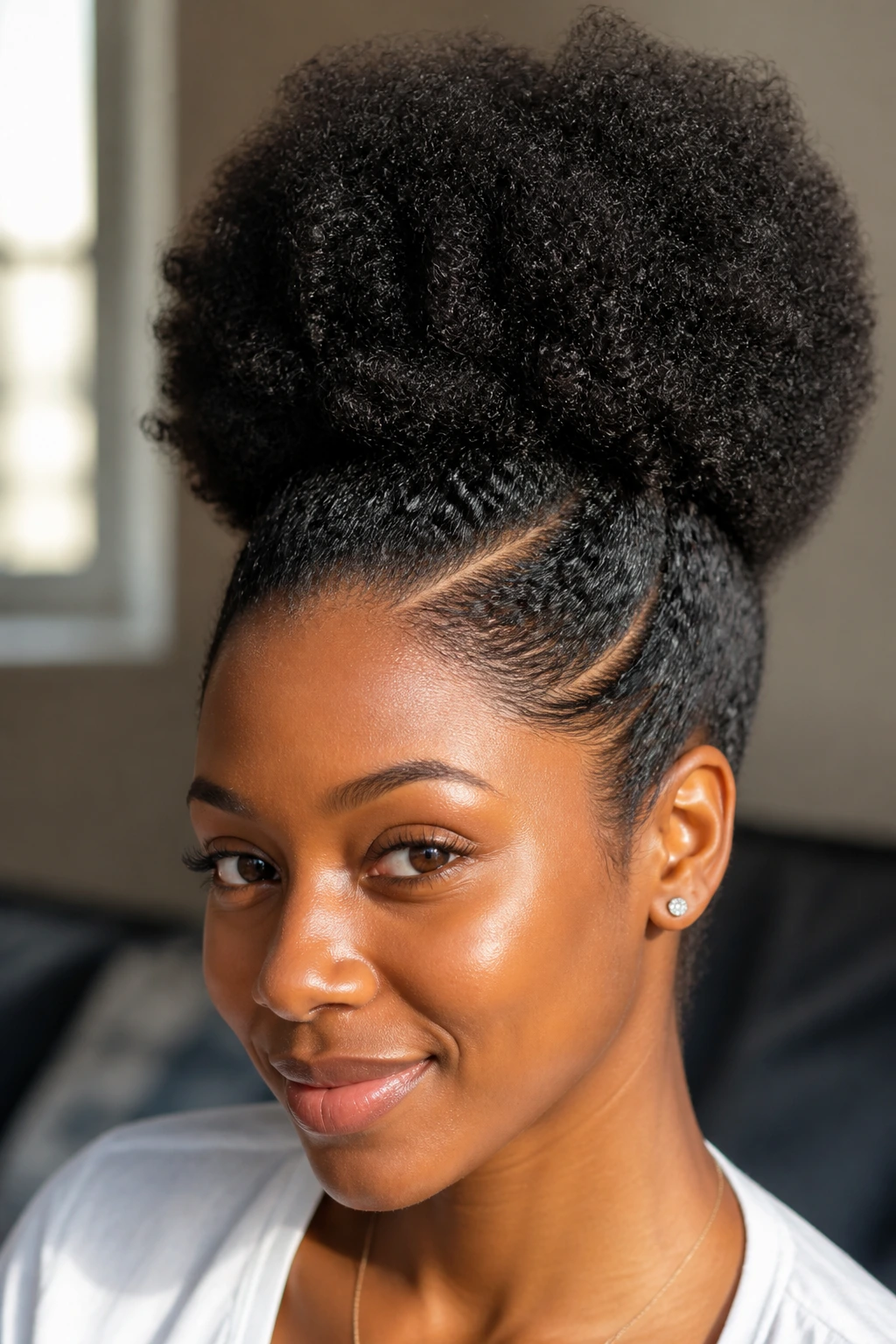
Mini twists do a nice job of balancing protection and movement. They keep the hair tucked away, but because the twists are small, the finished style doesn’t sit heavy. There’s enough room between the twists for the hair to flex, which is where the bounce comes from.
I prefer mini twists when the goal is a style that lasts several days without looking crusty. You can wear them as-is, pin a few back, or unravel them later for a twist-out that starts with a lot of shape already built in. That flexibility matters if you don’t want to do your hair twice in one week.
The key is not loading each section with too much cream. Mini twists get greasy fast if you overdo it. A light leave-in, a little twisting butter, and clean sectioning are enough. Anything more starts to weigh the style down.
10. Chunky Two-Strand Twists for Shape
Chunky two-strand twists are for people who want a style with visible texture and a little swing. The bigger twist creates a thicker rope shape, which reads softer than tiny twists and doesn’t hug the scalp as tightly. On 4c hair, that means the style has body from root to end.
These twists are especially good when you want to set the hair once and leave it alone for a few days. Wear them as a full style, then take them down for a more voluminous twist-out later. That two-stage life is half the appeal. You get a protective style and a second look without starting from scratch.
If your hair is very dry, pre-poo or detangle first. Chunky twists are less forgiving if you start with tangled ends, because the twist can snag and fuzz before it even dries.
11. Twist-and-Curl for Extra End Bounce
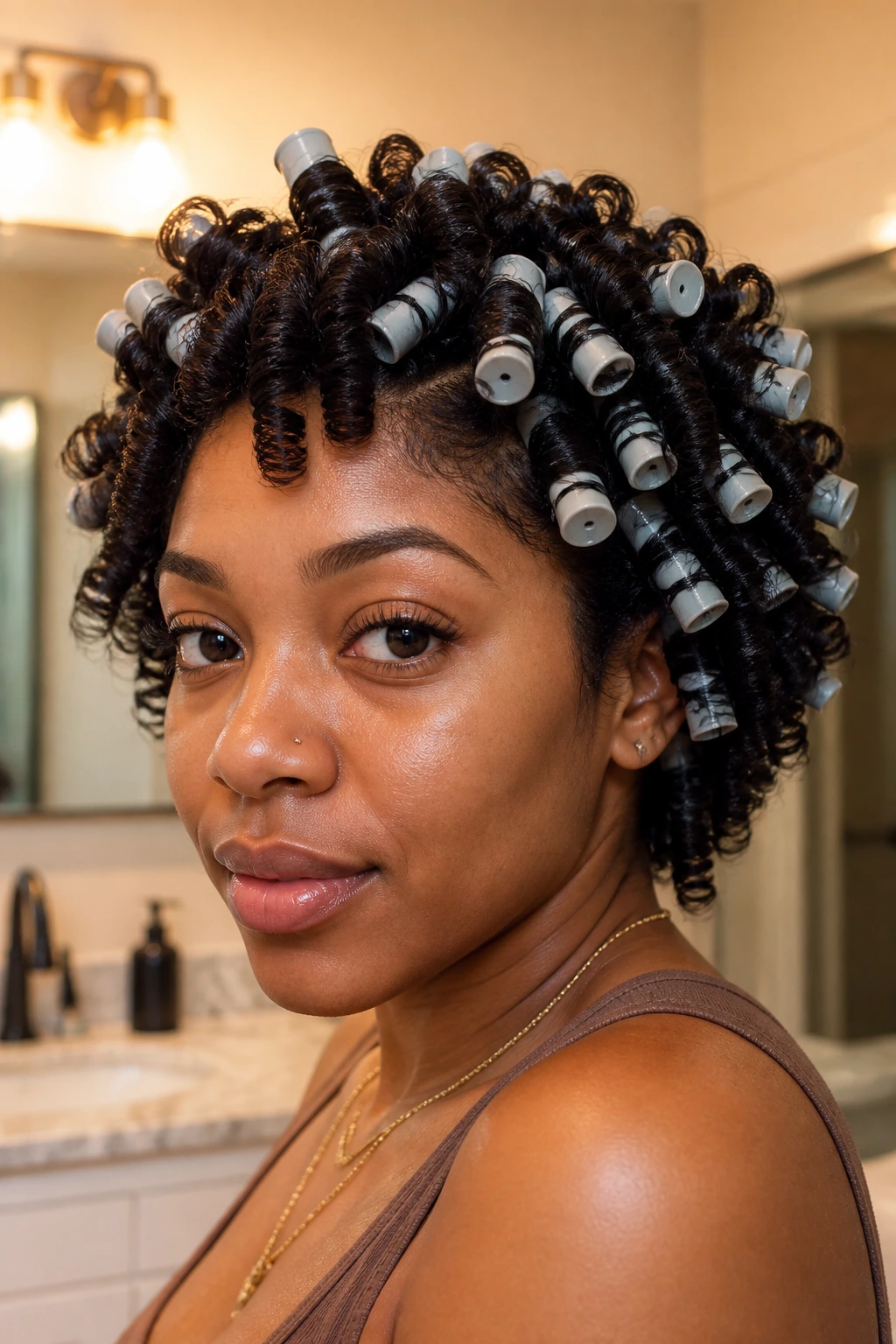
Twist-and-curl is a smart move when your ends need a little more spring than a regular twist set gives them. You twist the root and mid-lengths, then curl the last inch or two on a rod so the ends finish with a clean bend. That tiny detail changes the whole silhouette.
The style works best when you want a twist-out that looks intentional instead of fuzzy at the tips. 4c hair can get bulky at the ends, and a rod-set finish solves that neatly. The hair still looks natural, but the bottom has a polished curve that catches the eye.
Use small perm rods or flexi rods depending on how tight you want the curl. Small rods create more pop at the ends; larger rods give a softer bounce. Dryness matters here. If the rod section is damp, the curl will go limp the moment you take it down.
12. Flexi-Rod Set With a Side Part
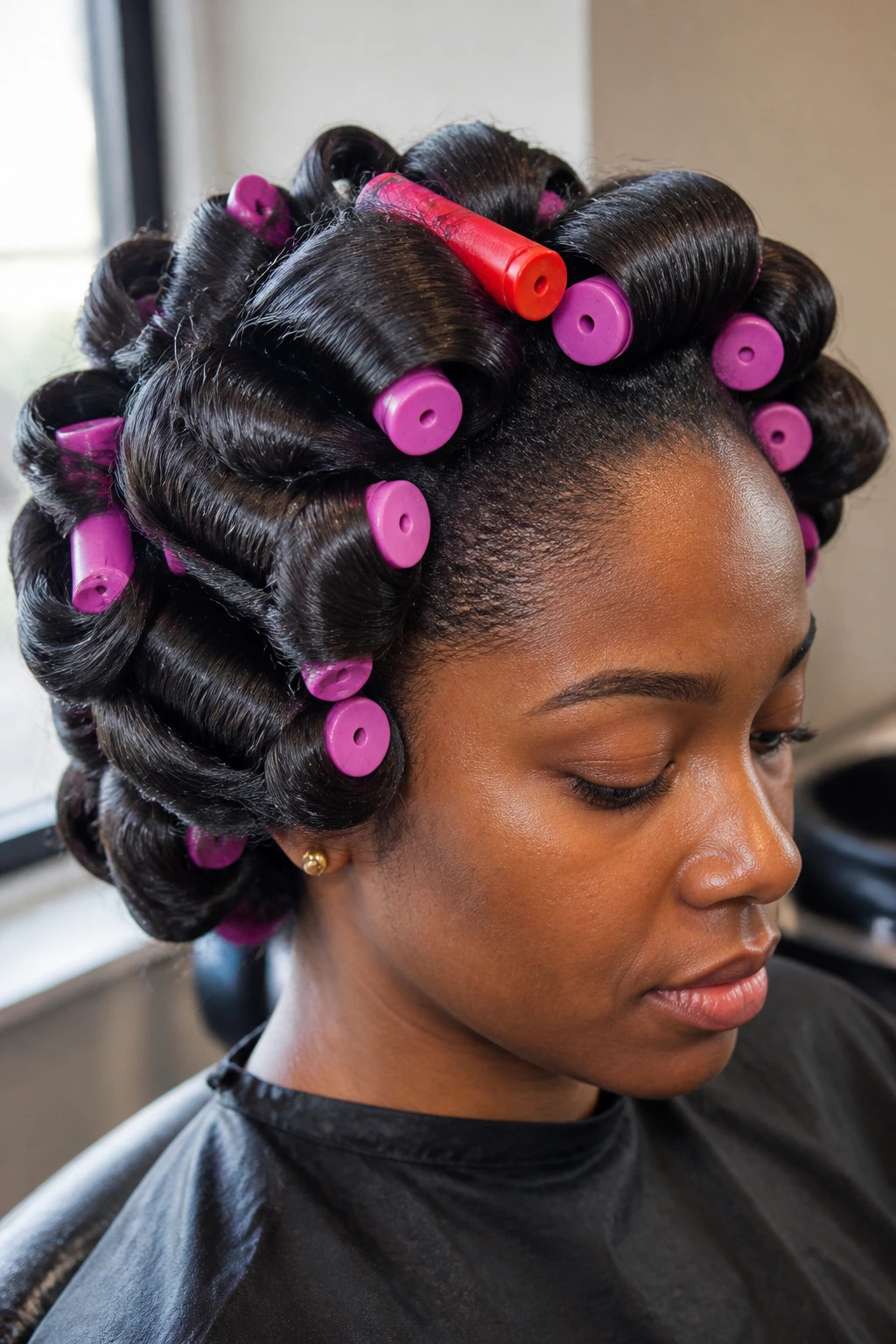
Flexi rods give 4c hair a springy, polished curl that holds its shape without feeling stiff. The bend is cleaner than what you get from many twist sets, and a side part adds a little height at the crown. That’s a good combination if your hair tends to flatten near the top.
This style can feel dramatic in the best way. The curls stack, bounce, and separate into soft loops that move when you walk. The parting matters more than you’d think — a deep side part lets one side sit close and lets the other side lift, which makes the whole style look fuller.
Set the hair on damp, not wet, strands so the rods dry before bedtime if you can. If you remove flexi rods too early, the curl drops and the ends look tired. Give them time. Hair always tells on impatience.
13. Perm Rod Set With Tight, Springy Ends
Perm rods are the small, stubborn cousin of the flexi rod. They make a tighter curl, which is useful when you want the ends to spring up and stay that way. On 4c hair, that tighter bend can bring a lot of shape to a style that might otherwise puff out in random directions.
I like perm rod sets for chin-length to shoulder-length hair because the curls keep their architecture without needing much help. The result is rounded, bouncy, and a little retro if you wear the curls separated. The smaller the rod, the tighter the curl; the larger the rod, the softer the finish.
Use a setting mousse or light styling foam so the hair dries smooth. If you’re using too much cream underneath, the rod set can collapse into soft clumps instead of clean curls. That’s not always bad, but it changes the whole look.
14. Roller Set on Stretched Hair
A roller set on stretched 4c hair has a softer, more controlled bounce than a rod set. The hair is already lengthened before it’s rolled, so the finished style hangs with body rather than shrinking straight upward. This is one of the best ways to get movement without heat styling the hair into submission.
The key is the stretch. If the hair has been banded, blown out lightly, or tension-stretched, the rollers can shape the ends while the mid-lengths stay smooth. That gives you a style with swing instead of volume overload. Hooded dryers are useful here. A hooded dryer dries the set evenly, which matters more than most people think.
If you don’t have a hooded dryer, pin the rollers a bit smaller and let them dry fully overnight. Don’t rush the takedown. Damp rollers are the fastest way to end up with flat, lopsided sections.
15. Side-Part Afro With Lift at the Roots
A side-part afro can look almost sculpted when the roots are lifted right. The part creates a break in the shape, and the pick at the crown keeps the top from sitting too close to the scalp. On 4c hair, that little lift changes everything.
This is one of my favorite styles when the goal is maximum texture with zero stiffness. The afro doesn’t need to be symmetrical to look finished. In fact, a slight tilt often looks better because it lets the volume drift to one side and move when you turn your head.
Use your fingers first, then a pick only where you need height. Going at the whole head with a pick can break up the texture too much and turn the style fuzzy before its time. Work the roots, leave the ends alone, and let the shape breathe.
16. Tapered Fro With Picked Volume
A tapered fro already has built-in bounce because the shape is cut to lift at the top and stay closer at the sides and back. The haircut does half the work. That’s why this style is so easy to wear — the silhouette does not fight the texture, and the texture does not fight the cut.
What I like most here is how little product it needs. A little moisture, a soft cream, and a careful pick at the crown are enough. Too much product weighs the cut down and erases the shape the taper is supposed to give you. When it’s done right, the top looks plush and the sides stay neat without feeling stiff.
This is also one of the easiest styles to refresh in the morning. Fluff the top, smooth the edges if you like, and go. That’s the whole charm.
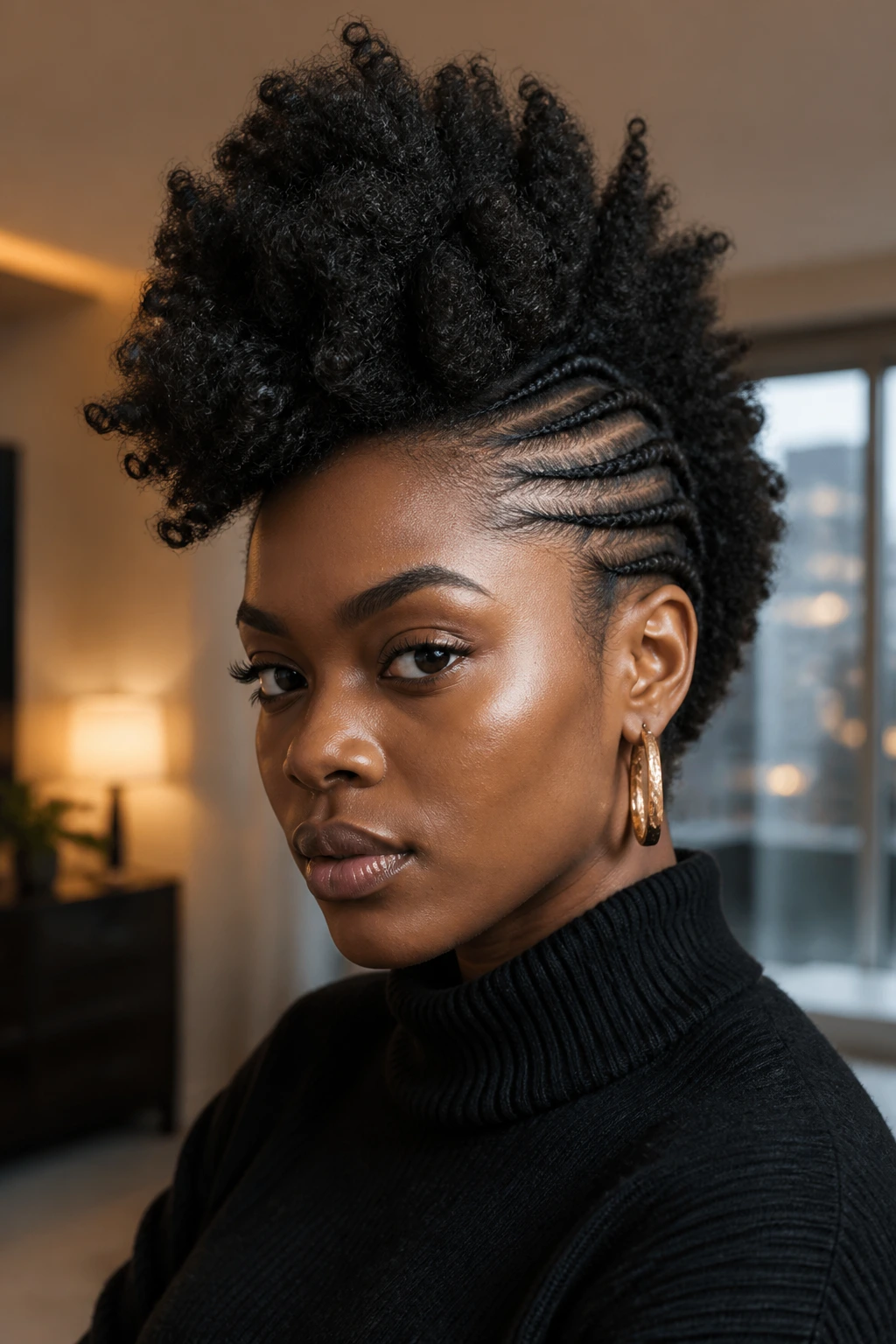
17. Faux Hawk With Flat-Twist Sides
The faux hawk gives 4c hair a bold shape without removing the softness from the top. Flat-twisted sides keep the hair close where you want control, and the center section stays loose enough to puff, coil, or twist into a lifted ridge. The contrast is what makes it work.
This style gets attention because it creates movement in two directions at once. The sides lie sleek, the middle rises, and the shape changes depending on how full you make the center. It can look edgy or soft, and that depends mostly on how much you stretch the center section before styling.
A little mousse on the sides helps them stay smooth. For the middle, use enough moisture to keep the texture soft but not so much that it goes limp. You want lift. Not helmet hair.
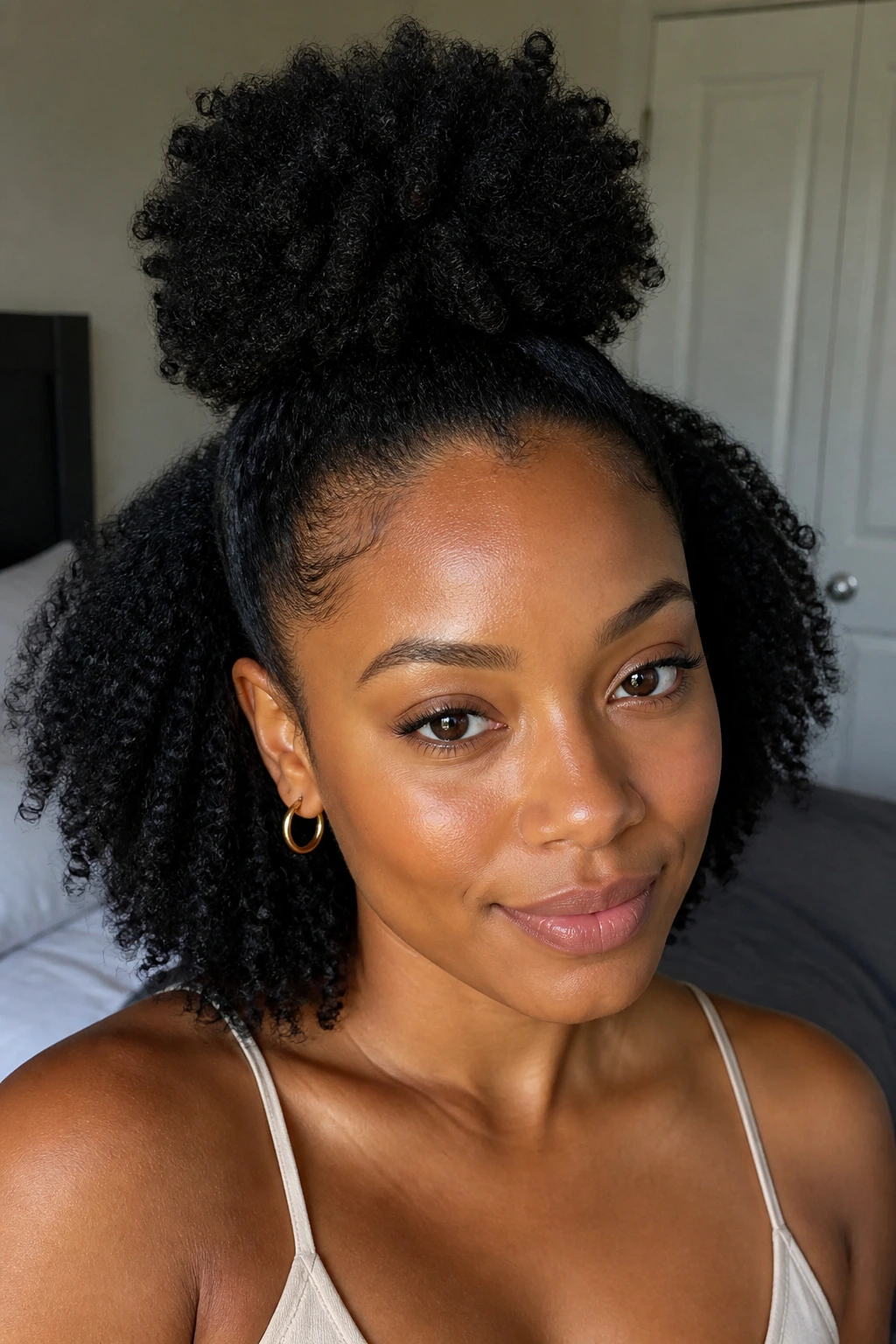
18. Half-Up, Half-Down Puff
A half-up, half-down puff keeps some of the length free while pulling the crown high enough to show off the shape. That split is flattering on 4c hair because it gives the top room to rise and the bottom room to expand. The style feels light even when the hair is dense.
This works well on hair that’s been lightly stretched or set the day before. The top section can be gathered into a puff or a puff-like knot, while the lower section stays loose, curly, or fluffy. If your hair is thick, clip the lower section out of the way first. Then secure the top, then release the bottom. That order saves a lot of tugging.
The style looks best when the two sections are balanced. Too much hair on top and the back looks thin. Too much left down and the top loses its point. Aim for symmetry, but don’t obsess over perfection.
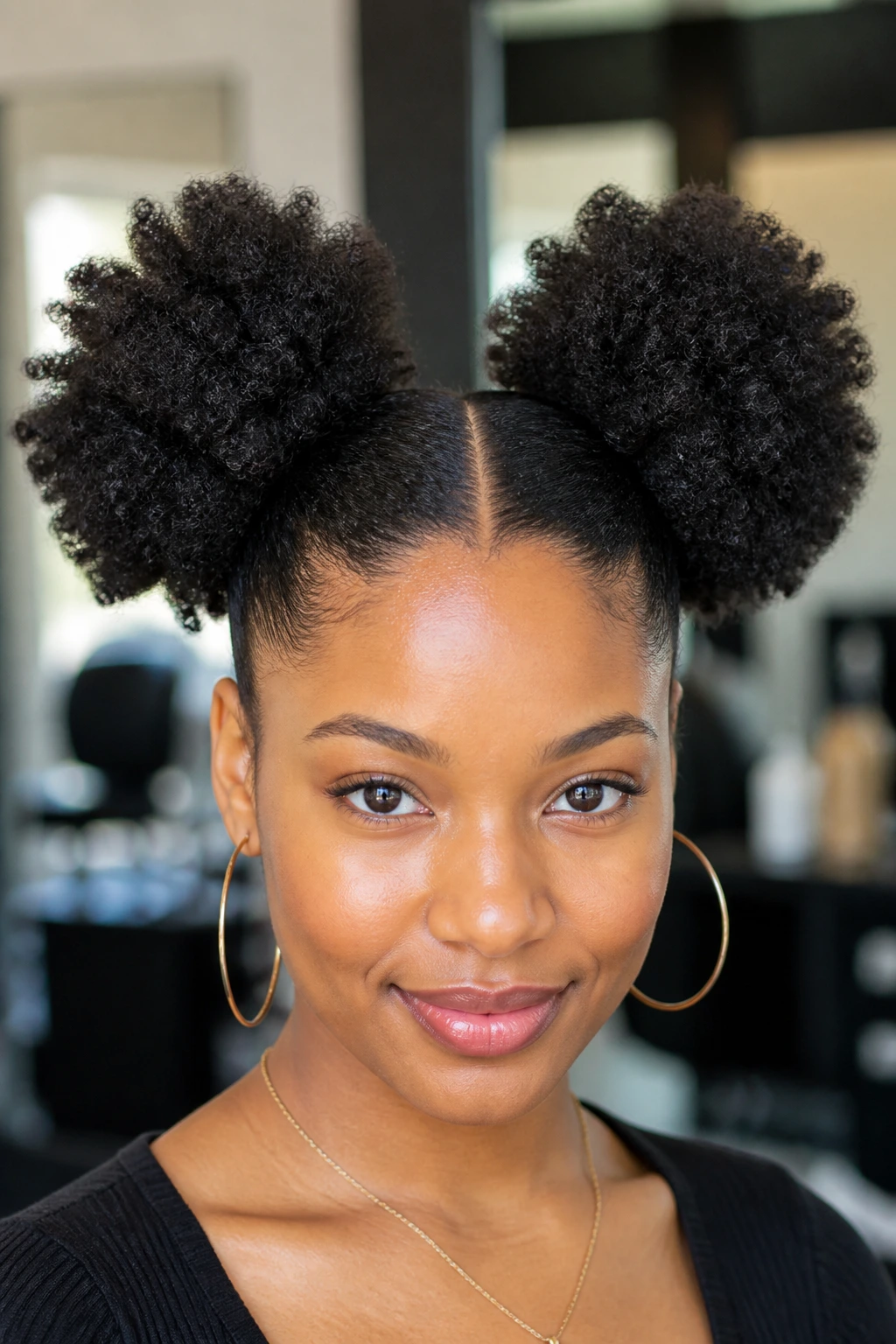
19. Two Puffs With Clean Parts
Two puffs are playful, but they’re also practical. The clean center part gives the style structure, and each puff gets enough space to feel full instead of squeezed. On 4c hair, that separation keeps the shape crisp while letting the curls move.
This is one of the best styles for shorter-to-medium length hair when you want something easy that still reads as styled. The parts matter. Use a rat-tail comb and take your time, because crooked parts make the whole style feel off even if the puffs themselves look good.
If you want extra bounce, place the puffs a little higher than you think. High placement keeps the face open and prevents the style from sagging toward the ears. A soft brush and a bit of leave-in on the perimeter are enough. Don’t smooth the hair so hard that the texture disappears.
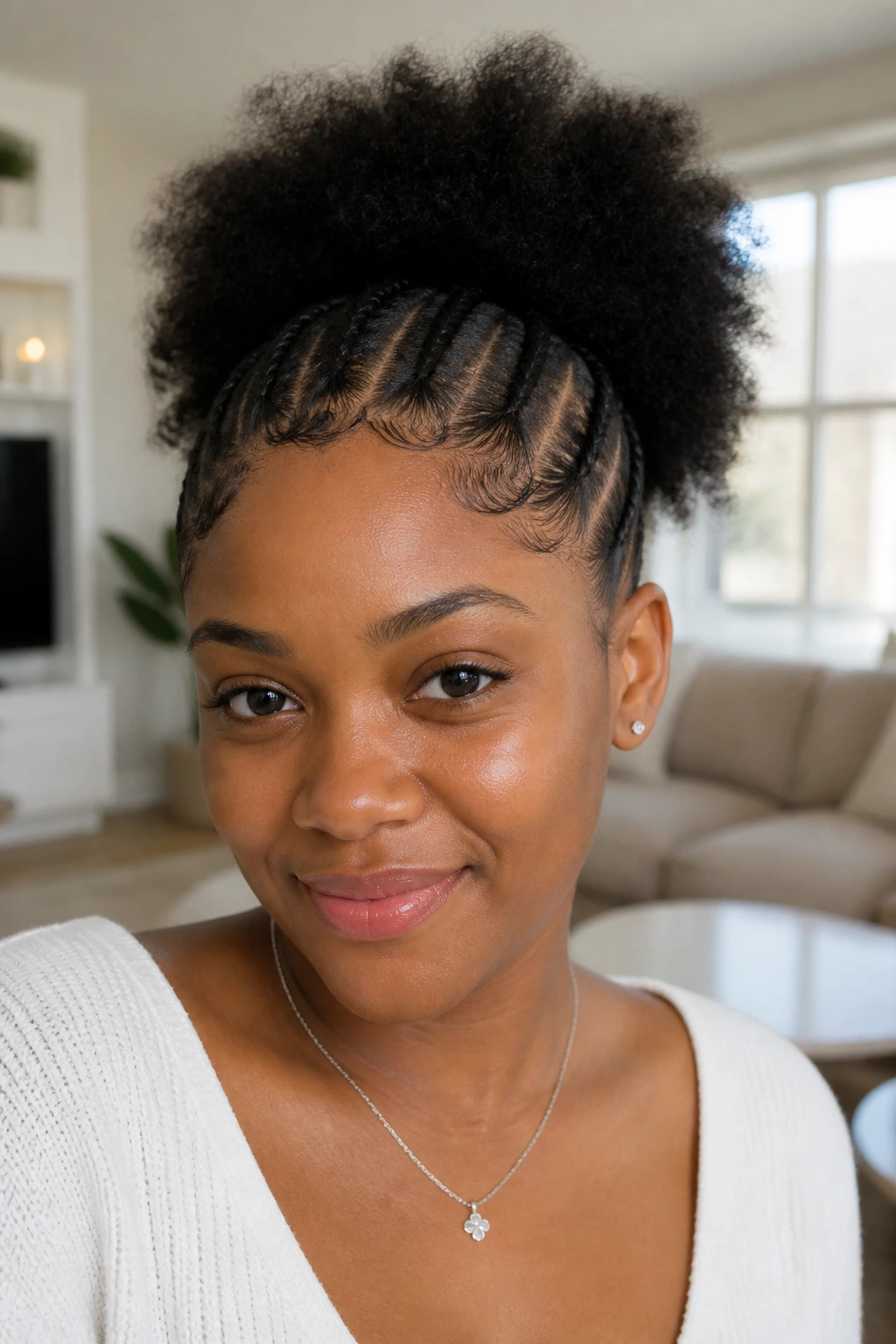
20. Cornrowed Front Into a High Puff
Cornrowing the front of the hair into a high puff is a smart compromise when you want the front flat and the back big. The braids keep the hairline neat, and the puff behind them gives the style its movement. It’s a clean shape with a fluffy finish.
The style works especially well when your front pieces are short or you want to protect the edges from daily handling. Keep the cornrows relaxed, not tight, because the front is where people feel tension first. The back can be a full puff, a coil puff, or even a stretched curly bundle depending on your length.
I like this style because it looks finished even if the puff itself gets a little messy later in the day. The front keeps its structure, so the style still reads intentional. That’s handy on busy mornings.
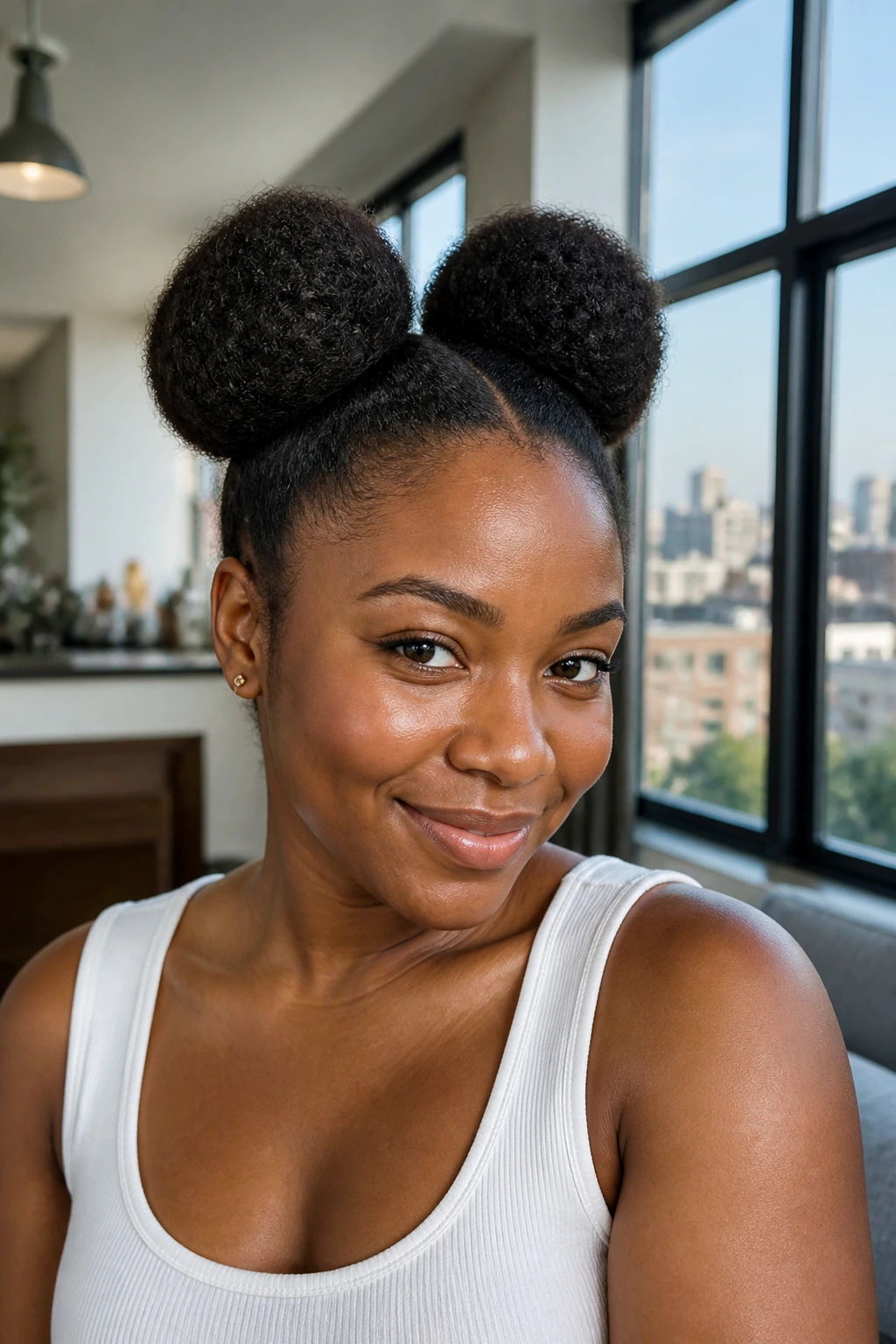
21. Space Buns on Stretched Natural Hair
Space buns bring a little lift and a lot of shape. On stretched 4c hair, they sit high enough to show off texture but still keep the ends tucked in and controlled. The style feels fun, but it also stays neat longer than loose buns usually do.
The stretch matters here. If the hair is freshly blown out or banded, the buns can be larger and softer. If the hair is highly shrunken, the buns become smaller and tighter. Both versions work, though the stretched version gives a more relaxed bounce around the buns themselves.
Part the hair cleanly down the middle and keep the buns balanced. One bun bigger than the other is the sort of thing you notice every time you look in a mirror. It doesn’t need to be perfect, but it does need to look on purpose.
22. Low Puff With a Side Sweep
A low puff is not flashy, which is exactly why it works. The style gathers the hair near the nape, then lets the curls or coils flare out in a controlled cloud. Add a side sweep at the front, and the whole thing gets a little softness around the face.
This is one of the gentlest ways to wear 4c hair up. The tension sits lower on the head, so it can feel kinder on the scalp than a high puff. It also works nicely with day-two hair that still has body but doesn’t want to stay fully stretched.
The side sweep can be smooth or loose. Smooth gives a polished finish; loose makes the style look fuller. Either way, the low puff keeps the movement where you want it — at the back, not at the edges.
23. Halo Braid With Loose, Fluffy Ends
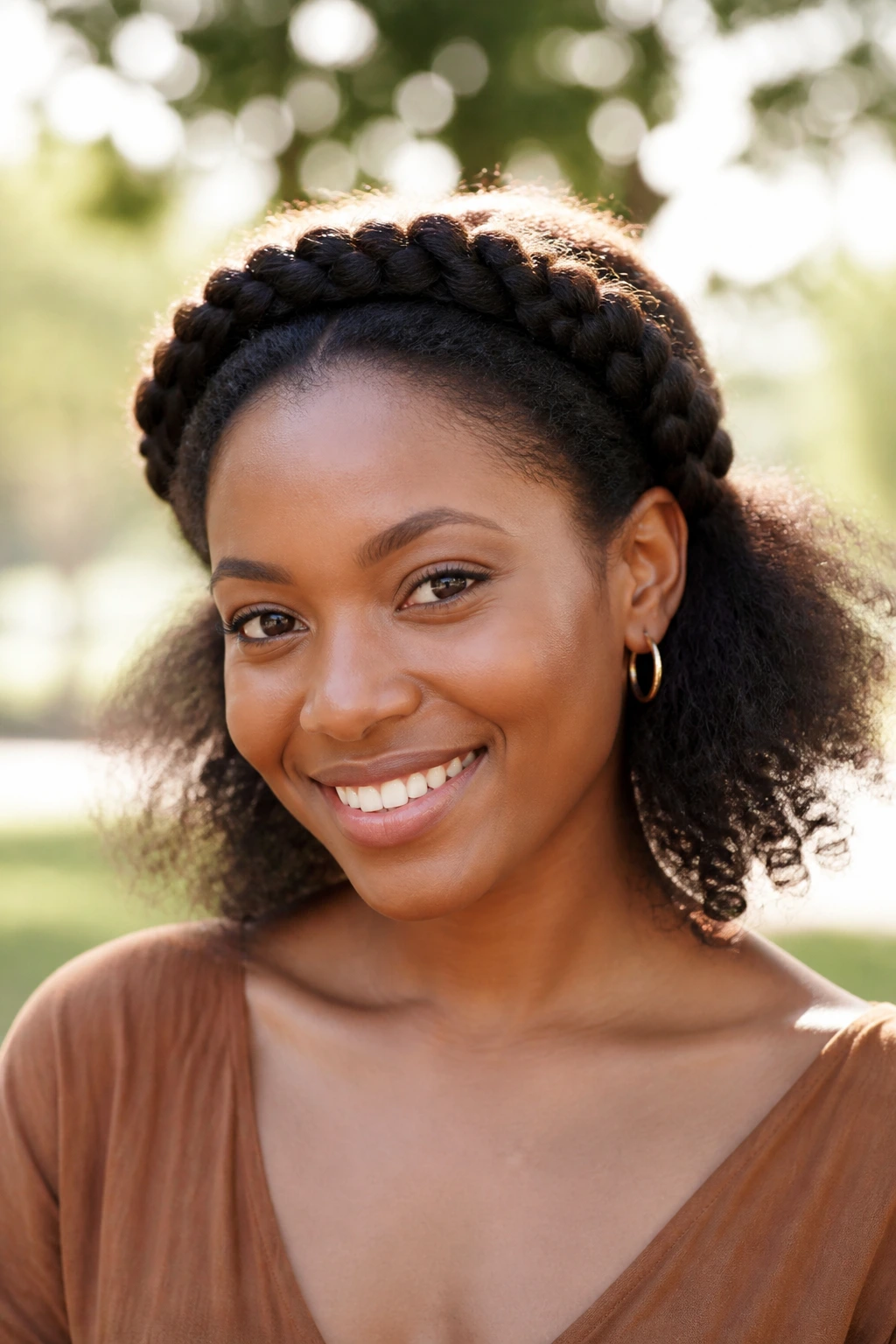
A halo braid gets a lot more interesting when you leave the ends loose instead of pinning every strand flat. The braid frames the face, while the loose ends soften the whole style and keep it from looking too severe. On 4c hair, that softness matters.
This style sits somewhere between protective and decorative. The braided crown keeps the front in place, and the loose ends can be left as curls, coils, or a small puff depending on length. If you want more bounce, lightly stretch the loose section first so it doesn’t shrink into a tight little nub.
I’d keep the braid snug enough to stay put, but not so tight that the crown loses all movement. A halo braid should feel like a shape, not a clamp.
24. Flat Twists Into a Low Bun
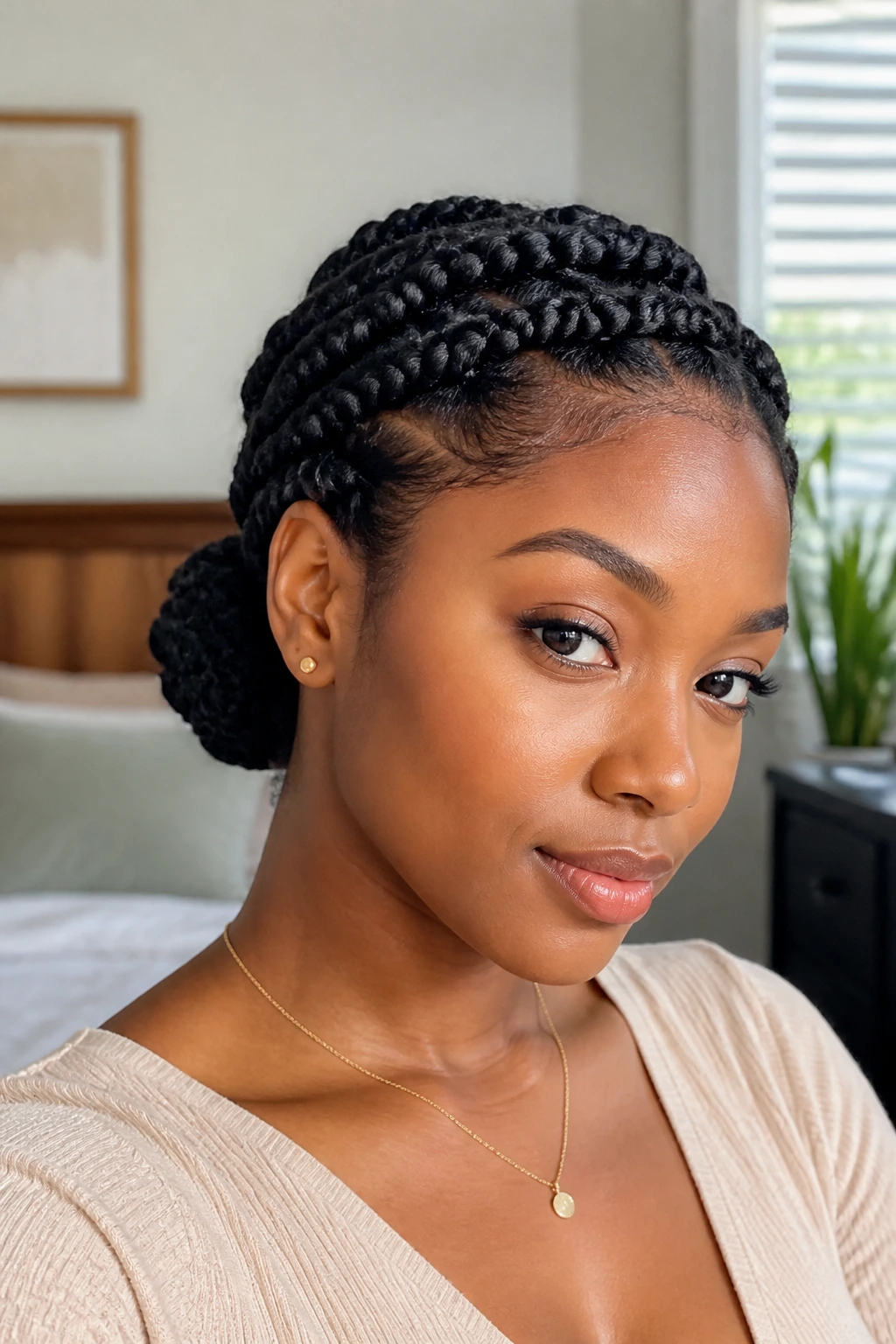
Flat twists are one of those styles that look tidy without looking rigid. When you gather them into a low bun, the whole shape stays close to the head, but the texture still peeks through in a way that feels soft. It’s clean. It’s controlled. It still has life.
This style works for days when you want the hair out of the way but don’t want the stiff look of a tightly packed bun. Keep the twists medium-sized so the bun has some bulk. Tiny twists can make the bun too small and too neat, which is fine if that’s your thing, but less good if you want bounce.
A satin scarf at night preserves the twist pattern. In the morning, a little lift at the bun base can bring the shape back without needing to redo the style.
25. Rounded Afro With Bangs and Lift
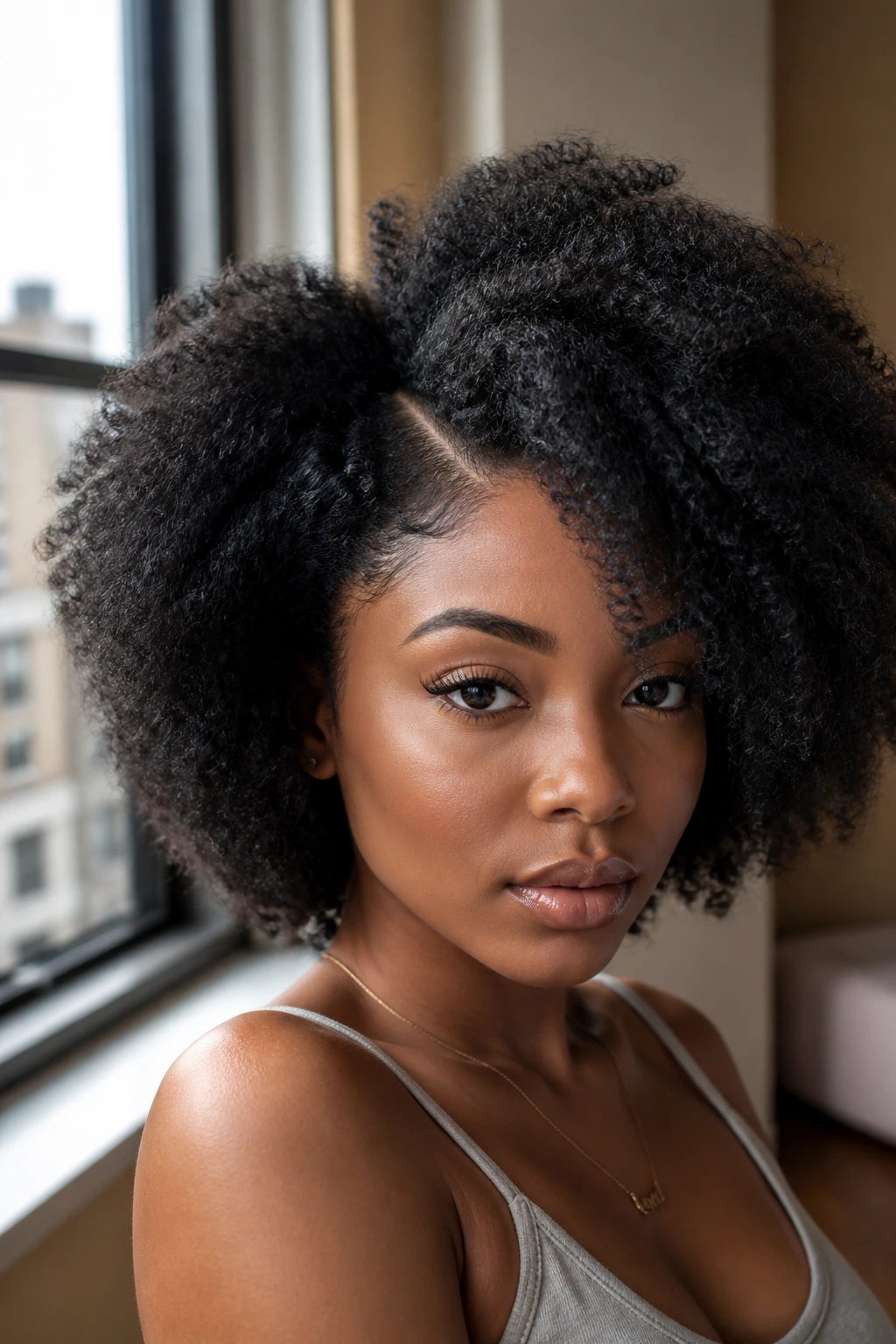
A rounded afro with bangs is one of the purest expressions of 4c bounce. The shape is soft and full, the front falls a little forward, and the rest of the hair swells outward in a way that looks alive rather than controlled. It’s not a style that apologizes for density.
The bangs make a difference because they frame the face and break up the silhouette. If the front is too heavy, the whole style can feel boxy. A little shaping at the front — even just a light pick and finger fluff — makes it feel finished. The goal is not perfect symmetry. The goal is a rounded shape that moves when you do.
This style is best when the hair is moisturized but not wet. Too much product makes the afro sit heavy. Too little and the shape gets dry and brittle at the ends. You want soft, touchable texture that still lifts when you fluff it.
What Gives 4c Hair Its Natural Bounce
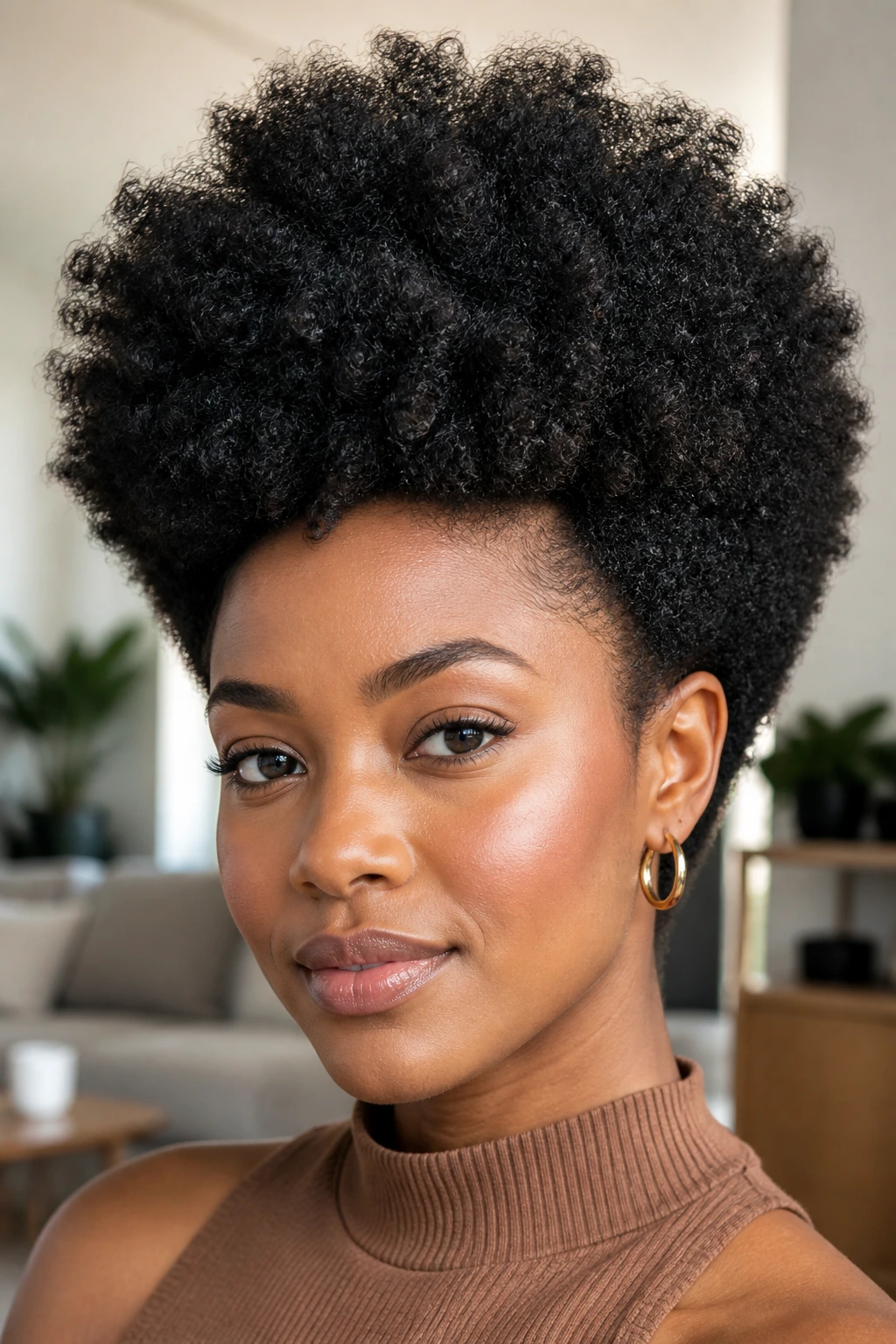
4c hair gets bounce from shape, stretch, and moisture, not from forcing the coils to lie flat. That sounds simple, but it explains almost every good style in this collection. When the hair is too dry, it gets stiff and breaks into sharp little pieces of shape. When it’s overloaded with product, it loses lift and hangs like it’s tired.
The sweet spot is a style that leaves enough room for the strands to move. A twist-out needs clean sectioning and full dryness. A puff needs a secure base without crushing the roots. A rod set needs enough hold to keep the curl, but not so much cream that the ends go limp. The bounce you want usually shows up when the hair is stretched a little, then allowed to spring back on its own terms.
Stretch Matters More Than People Admit
A little stretch changes the way 4c hair behaves. Banding, twisting, braiding, rod-setting, and even a gentle blow-dry on low heat can make the hair swing instead of compacting into itself. That doesn’t mean you need to chase bone-straight length. It means giving the style a starting point that lets the texture show up without overcrowding the scalp.
Moisture Without Slippage
Moisture should make the hair pliable, not greasy. If the strands feel coated and slick, they often lose the grip they need to hold a shape. A water-based leave-in, a light cream, and a styling product with enough hold usually beat a heavy butter any day.
Essential Tools for These Styles
- Spray bottle with water: Useful for rehydrating sections before twisting, braiding, or smoothing a puff.
- Leave-in conditioner: Gives slip so the hair can be detangled and styled without snagging.
- Rat-tail comb: Best for clean parts, precise sections, and polished front hairlines.
- Wide-tooth comb or detangling brush: Good for working through curls without tearing the coil pattern apart.
- Sectioning clips: Keep the rest of the hair out of the way while you style one section at a time.
- Satin bonnet or scarf: Protects styles overnight so the shape doesn’t get crushed by pillow friction.
- No-crease elastics and snag-free bands: Helpful for puffs, buns, and ponytails without pulling too hard.
- Foam mousse or setting lotion: Handy for twist-outs, braid-outs, rods, and styles that need soft hold.
- Light gel or edge control: Useful for smoothing the perimeter when you want a cleaner finish.
- Perm rods, flexi rods, or rollers: Optional, but worth having if you want defined ends or a stronger curl pattern.
Smart Product Choices for Soft Hold and Shine
The product aisle can get messy fast, so it helps to shop with one question in mind: does this product help the hair set, or does it just sit on top of it? For 4c hair styles with bounce, set and hold matter more than glossy promises. A creamy leave-in with slip, a lightweight styler that doesn’t flake, and a sealant that doesn’t gum up the hair will do more for your finished style than a heavy jar of something thick and fragrant.
If your hair loves moisture and drinks up product, you can usually handle a richer cream under a gel or mousse. If your hair gets coated fast, go lighter. Pick water-based products first and keep oils for the ends or the final touch, not the whole head. That rule saves a lot of styles from collapsing.
For rods, twists, and braid-outs, look for products that dry with a soft cast rather than a hard shell. You want enough hold that the shape stays, but not so much stiffness that the hair snaps when you separate it. And if you’ve ever had white flakes in the crown by noon, that was probably a layering problem — not a bad style, just too many products fighting each other.
What to Look For on the Label
- Slip: Helps the hair glide during detangling and parting.
- Flexible hold: Keeps the style in shape without freezing it.
- Low buildup: Lets you refresh the style instead of re-washing too soon.
- Water as a first ingredient: Usually a good sign for moisture-first styling.
How to Prep 4c Hair So the Style Lasts
Prep is where bounce gets won or lost. If the hair starts dry, tangled, or half-detangled, the style usually looks rough by the second day, even if the finished shape looked fine at first. Clean hair helps too, because product buildup can make coils clump in ugly ways and stop rods or twists from setting evenly.
Start with a detangled base. That doesn’t mean you need to spend an hour fighting knots. It means working in sections, misting with water or leave-in, and using your fingers or a detangling brush until each section feels smooth from root to end. After that, decide whether the style needs stretch. If it does, band it, twist it, braid it, or dry it with a bit of tension before you shape it.
Drying is the other half of prep. Damp roots are sneaky. They make a style look finished when it’s still holding hidden moisture inside, and that moisture ruins definition later. If you can, let the style dry fully overnight or under a hooded dryer before separating or fluffing. That one habit saves more sets than any product on the shelf.
Additional Tips and Bounce Boosters
Flavor Enhancement: A tiny bit of mousse over a set twist-out or rod set can sharpen the finish without making the hair crunchy. Use it lightly, mostly on the outer layer, so the style keeps a soft touch.
Customization: If your hair is short, lean into finger coils, mini twists, two puffs, and flat twists. If it’s longer, stretch sets, puff styles, and rod sets will show more swing and shape.
Serving Suggestions: Okay, hair doesn’t get served, but the final polish matters. A neat part, clean edges, a puff cuff, or a silk scarf wrapped around the base can make the whole style look intentional in about ten seconds.
Make-It-Yours: If your hairline is tender, skip tight puffs and hard cornrows and choose looser flat twists, low buns, or a halo style. If your hair is color-treated or high porosity, use a little extra leave-in and keep heat low so the strands don’t feel rough.
Common Mistakes to Avoid
The biggest mistake is styling hair that still feels dry and stiff. Dry 4c hair can hold a shape, sure, but it won’t hold a soft shape, and that’s the whole point here. If the strands feel rough, mist them, add slip, and detangle before you start.
Another common problem is too much product. You’ll know it happened when the roots look shiny but the style sits flat and heavy, or when flakes show up after the hair dries. The fix is boring but effective: use thinner layers, and stop trying to make one cream do every job.
Rushing the drying time ruins more twist-outs, braid-outs, and rod sets than bad technique does. Hair that feels dry on the outside can still be damp in the middle. If you unravel too soon, the shape falls apart before it has a chance to settle.
Tension is the last trouble spot. Tight puffs, tight cornrows, and tight parts can make the style look neat for a minute, then leave the scalp sore and the edges stressed. If your head hurts, the style is too tight. Simple as that.
Variations and Adaptations to Try
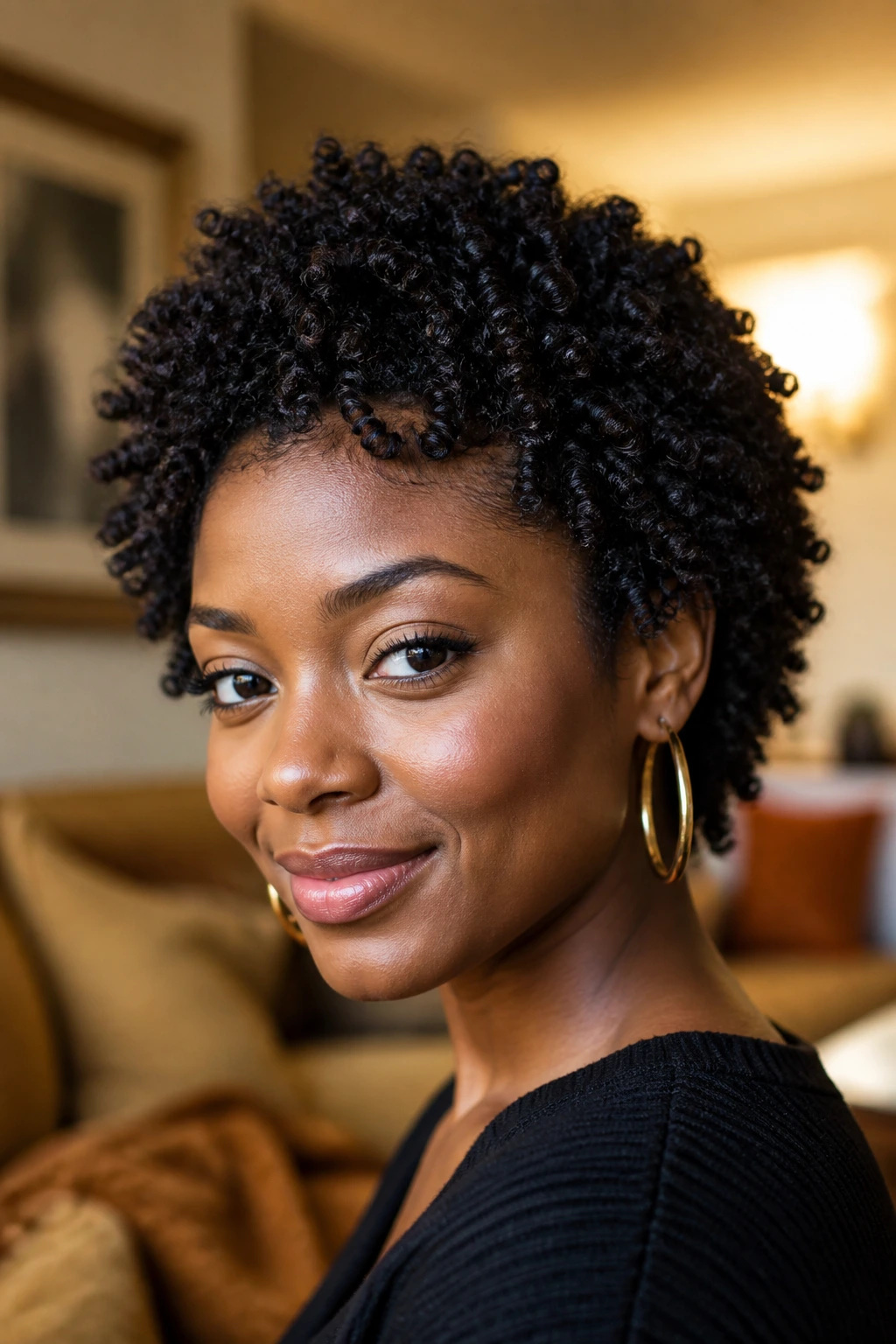
Short-Length Switch: If your hair is a TWA or just past it, focus on finger coils, mini twists, two puffs, and a rounded afro. These styles create bounce without needing extra length to show the movement.
Heatless Stretch Version: Use banding, braids, or twists to stretch the hair overnight before styling. This gives you more visible length and helps puffs, twist-outs, and braid-outs hold their shape longer without blowing the hair out.
Humidity-Smart Finish: In sticky weather, use a stronger hold styler and stop separating the hair so much. A softer finish looks pretty indoors, but outdoors it can swell fast if you keep fluffing it apart.
Low-Tension Scalp Day: Choose flat twists, a low puff, a halo braid, or a loose half-up style when your scalp wants a break. The style still looks finished, but the base stays gentler and easier to wear for a full day.
Kid-Friendly Shape: Two puffs, space buns, and soft flat twists work well when you need a style that stays neat without a lot of manipulation. Keep the parts clean and the elastics gentle, and skip anything that has to be pulled painfully tight.
How to Keep the Shape Overnight and Between Wash Days
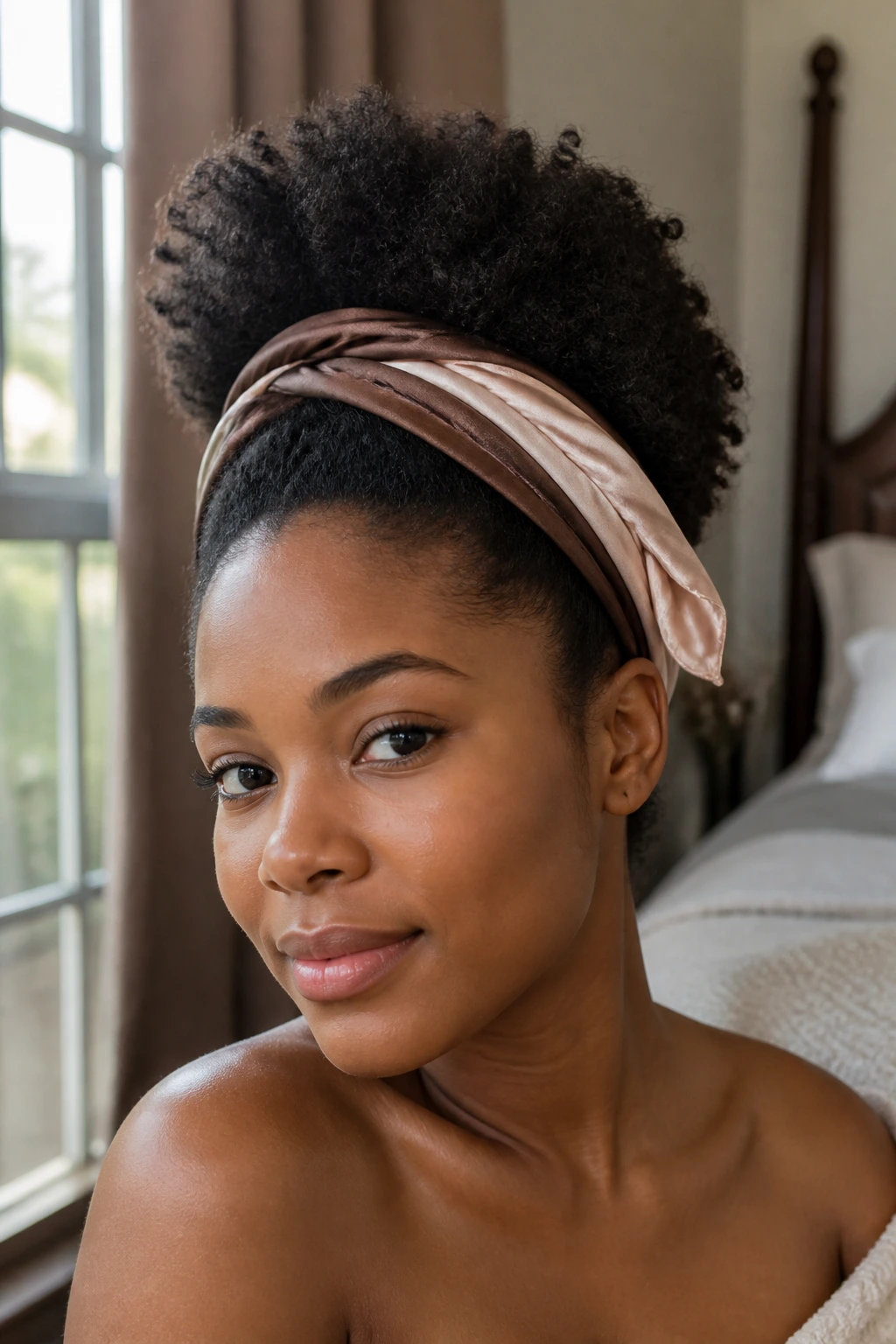
4c styles with bounce usually survive best when they’re protected before bed. A satin bonnet works for shorter styles and coils, while a loose pineapple or scarf wrap helps puffs and twist-outs keep their height. If your style has a clean part, lay the scarf along the part line so it doesn’t get mashed flat.
Morning refresh is usually simple. A light mist of water on your hands, a tiny amount of leave-in, and a few gentle finger lifts at the roots can bring back shape without breaking down the style. For twist-outs and braid-outs, don’t keep separating every day. That’s how you go from fluffy to fuzzy.
Rod sets and finger coils like minimal handling. Pull apart only what looks stuck together, then stop. Puffs and buns need perimeter smoothing more than full restyling, so a quick touch-up around the hairline is often enough to make the whole look feel fresh again.
Frequently Asked Questions
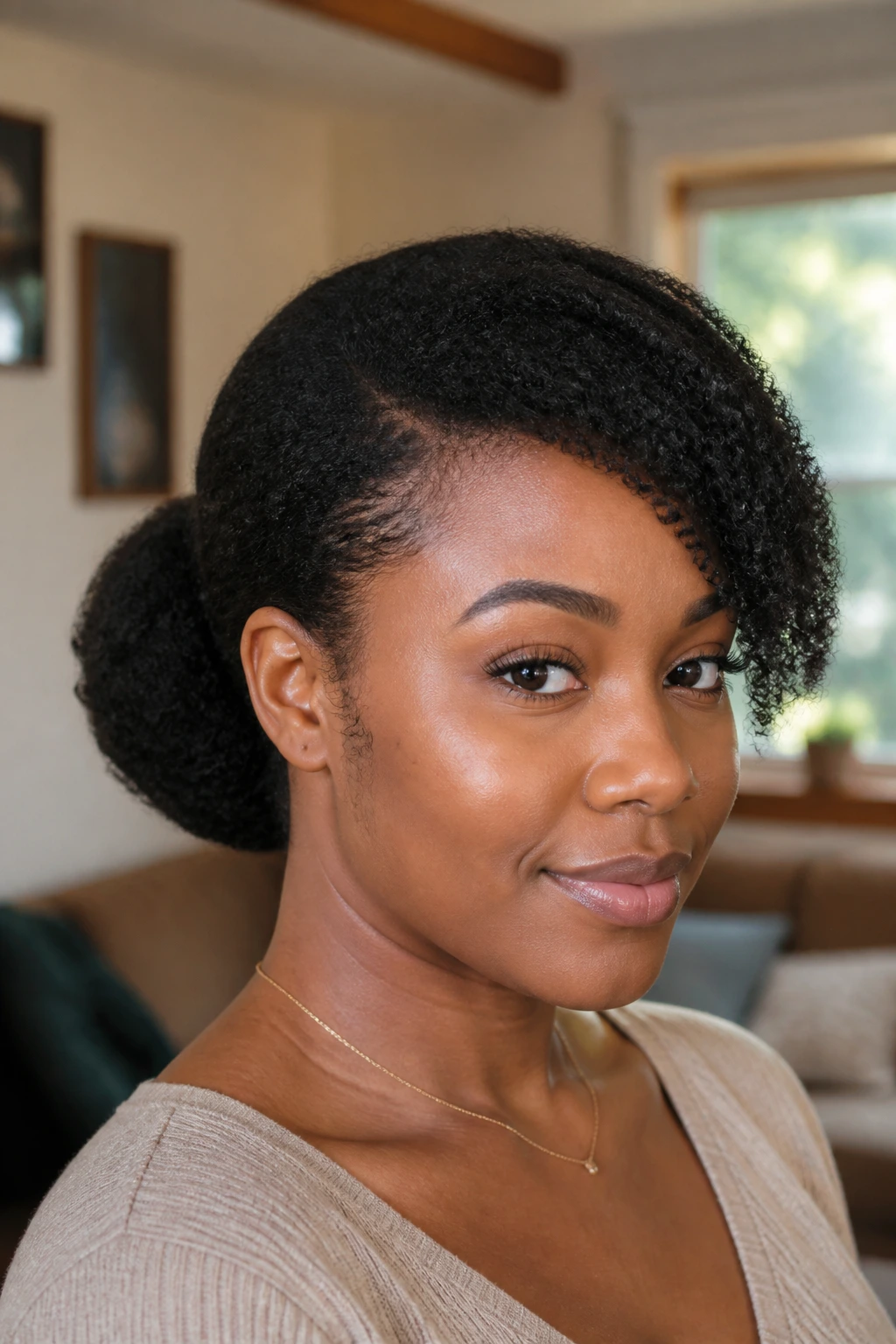
Which of these styles works best on short 4c hair?
Finger coils, mini twists, two puffs, and a rounded afro usually work best when the hair is short. They show texture without needing a lot of length to create shape, and they tend to hold their bounce better on tighter coils.
Do I need to blow-dry my hair first?
No. You can get bounce without heat if you set the hair while it’s damp and give it time to dry fully. A gentle stretch method like banding or braiding can help if you want more length, but it is not required.
How do I keep a twist-out from getting puffy too fast?
Start with clean, fully dry twists and use a product with enough hold to keep the shape. Separate the twists only once, avoid over-fluffing the roots, and sleep in a satin bonnet or scarf so friction doesn’t rough up the pattern overnight.
What if my wash-and-go turns into a fluffy puff by lunch?
That usually means the hold was too soft or the hair was not fully coated while styling. Try applying more gel to soaking-wet hair in smaller sections, then let the roots dry before you touch it again.
Can I do these styles on low-porosity hair?
Yes, but light layers matter even more. Low-porosity hair can sit on top of heavy creams, so use thinner product layers, warm water to help the hair accept moisture, and a hooded dryer or warm dry time when the style needs to set.
Which style is easiest to refresh the next day?
Puffs, twist-outs, braid-outs, and mini twists are all easy to refresh. A quick mist, a little finger shaping, and a satin scarf at night usually bring them back without a full redo.
How do I keep my scalp from getting sore?
Skip tight puffs, tight cornrows, and sharp parting that pulls at the edges. Loose flat twists, low buns, and styles that spread the tension across a larger area are kinder on the scalp.
Can I wear these styles if my hair is color-treated?
Yes, but keep the moisture balance steady and don’t overdo heat. Color-treated 4c hair can feel drier at the ends, so a light leave-in and gentle detangling make a big difference in how the style holds up.
Soft Shape, Real Bounce
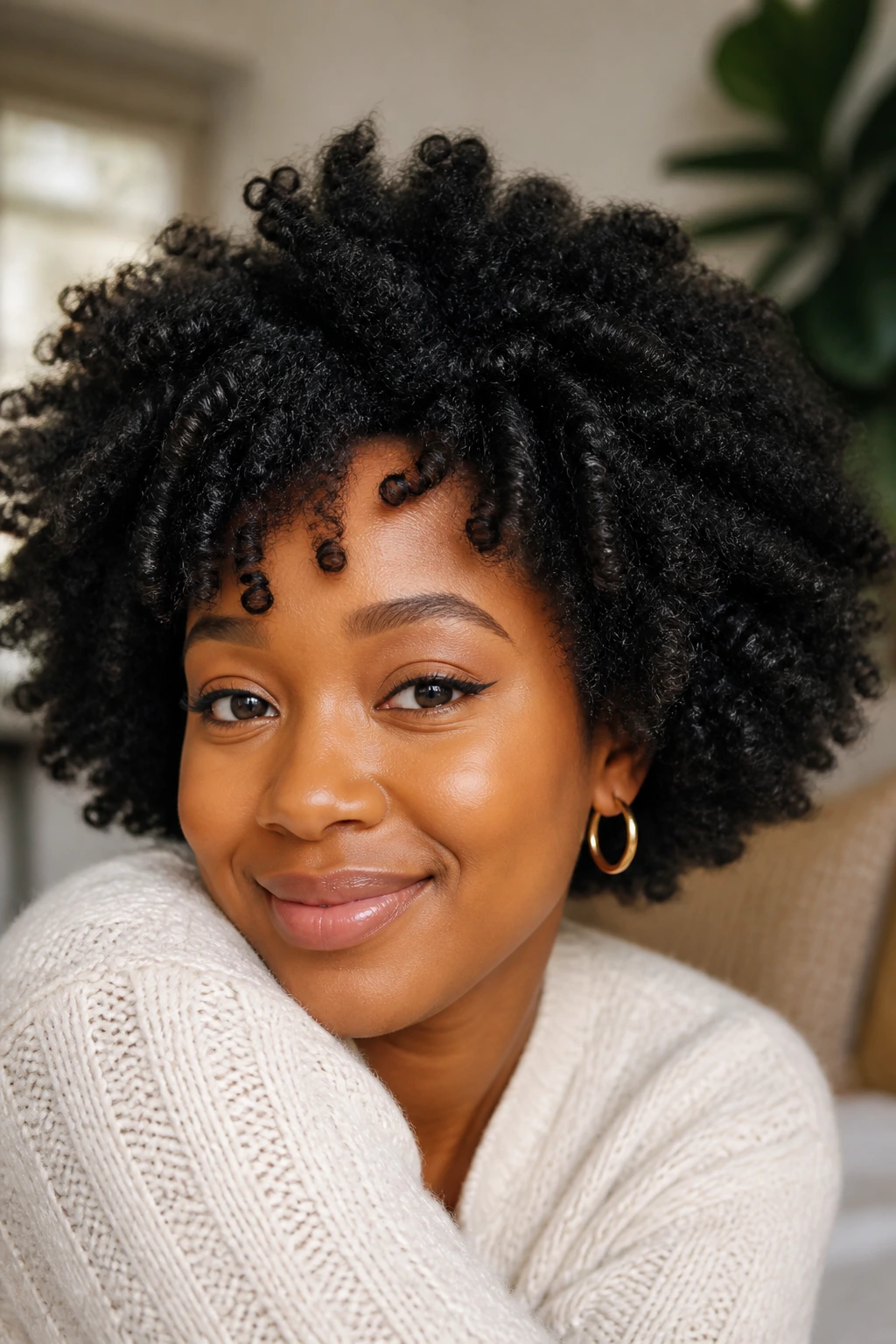
The styles that work best on 4c hair are the ones that respect what the hair already does well: shrink, spring, coil, and expand. Once you stop fighting that and start shaping it, the whole process gets easier. The hair looks healthier, the styles hold better, and you stop spending all day trying to convince a puff to be something it isn’t.
A good style leaves room for movement. That’s the real thread running through every look here, whether it’s a twist-out, a puff, a rod set, or a shaped fro. Give the hair enough moisture, enough stretch, and enough time to dry, and it will do the rest.
