



Long natural hair changes the whole conversation. A twist-out that looks cute at shoulder length can turn into a curtain of ropey definition halfway down your back, and a puff stops reading like a quick fix and starts reading like a shape. There’s more to work with, yes. There’s also more that can go sideways if the parting is sloppy, the roots are overloaded, or the ends are left to fend for themselves.
That’s why natural hairstyles for long hair need a different eye. Length gives you room for braids, buns, coils, and sculpted parts that shorter hair can’t really hold the same way. It also makes mistakes easier to see. The edges tell on you. The ends tell on you. Even the back of the head tells on you, which is rude, but useful.
The sweet spot is styles that respect weight, shrinkage, and density instead of fighting them. Some looks should stretch the hair and show the length. Others should tuck it away and let the silhouette do the work. A good long-hair style doesn’t just fit the hair. It uses the hair’s length as part of the shape.
Why These Looks Earn Their Place in a Long-Hair Rotation
-
Length becomes structure: Braids, twists, and stretched styles hang with cleaner lines when the hair has enough length to pull the shape down instead of puffing out at the scalp.
-
Shrinkage stops being the whole story: On long hair, a shrunken puff or a cropped-looking twist-out can still have visible body and movement, which makes styling feel less like a guessing game.
-
Protective styling gets easier: Long ends are older ends, and styles that tuck, coil, or braid them away can buy you a calmer week without making the hairline do all the heavy lifting.
-
There’s room for detail: A side part, a wrapped base, curled ends, or a few gold cuffs actually show up on long hair. Little touches matter more when the canvas is bigger.
-
Low-heat shaping works better: Banding, threading, twist setting, and rod sets have enough length to create real shape without needing a flat iron every time you want polish.
-
Long hair can wear drama well: A big bun, a waist-length braid, or a side-swept fro doesn’t look accidental on long natural hair. It looks chosen.
1. Waist-Length Twist-Out
A waist-length twist-out has a different personality than a short one. The twists open into long, ropey pieces that move when you turn your head, and the ends don’t vanish into the overall shape the way they can on shorter hair. That extra length gives the style a clean fall. It looks deliberate even when it’s a little undone.
Why it works on long hair
The longer the strands, the more the twist pattern has room to show itself after you separate it. Instead of a puff of texture sitting close to the scalp, you get definition from root to tip, and that’s the whole charm here. The style works best when the hair is set on fully dry twists with a cream or foam that gives hold without coating everything in waxy buildup.
A lot of people rush the takedown. Don’t. Long twist-outs need patience because the weight of the hair can hide damp spots near the roots. If you separate too soon, the style goes fuzzy in the middle and flat at the crown.
Best move: twist in medium sections, let the hair dry completely, then separate with a tiny bit of oil on your fingertips so the ends stay smooth.
2. High Puff with Sleek Edges
A high puff on long natural hair stops looking like a backup plan and starts looking like a shape with intention. The height makes the face look lifted, and the length in the puff gives you that soft cloud at the crown that shorter hair can’t always build without help. It’s one of those styles that can go from errands to dinner with one change of earrings.
The trick is not the puff itself. It’s the base. A single skinny elastic on thick, long hair can dig in and leave a headache by noon. Use a wide band, or even two bands spaced a little apart if your hair is dense and heavy. That spreads the tension and gives the puff a rounder base.
Keep the front polished, but don’t plaster the hairline down like you’re sealing tile grout. A soft brush, a little gel, and a scarf for ten minutes is usually enough.
Watch for this: if the puff sits too high and the root section feels tight, lower it half an inch. That tiny shift can save your temples.
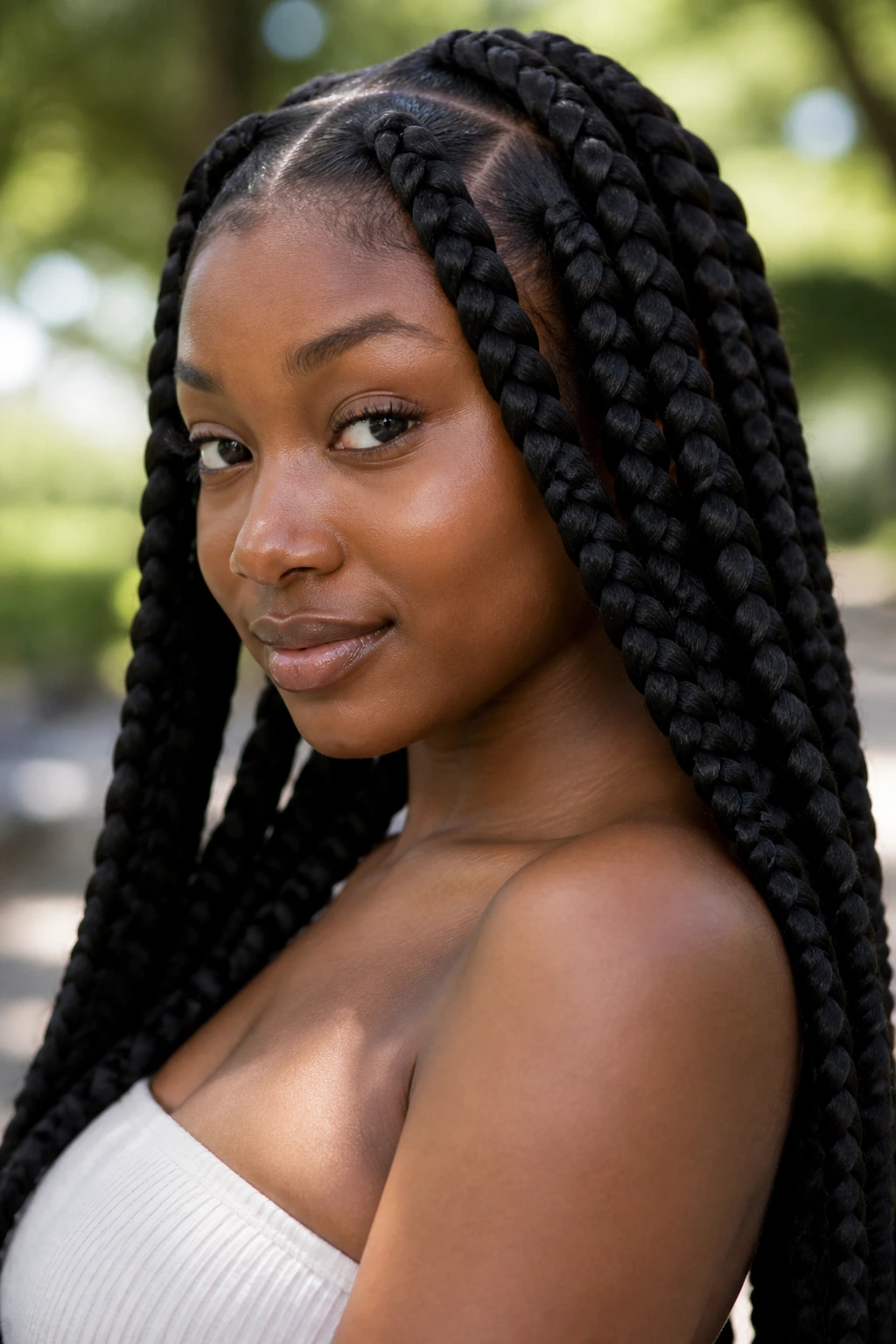
3. Jumbo Box Braids
Jumbo box braids are one of the few styles that can actually use long hair as part of the appeal. The braid has weight. It swings. It hits the back and shoulders with a kind of blunt confidence that smaller braids never quite match. On long hair, the braid itself becomes the statement, not just the parting pattern.
The box parting matters more than people think. Clean squares or neat rectangles make the whole style look fresh, even if the braids themselves are simple. If you’re installing them on your own hair, sectioning carefully at the root will save you from lopsided braids that pull weirdly by day three. And if your edges are already tender, do not braid the front pieces too tightly just because the style is dramatic.
I like jumbo braids most when the ends are sealed cleanly and left plain. Too many extra bells and whistles can fight the size of the braid. Let the braid be the braid.
Quick reality check: big braids are lighter than tiny ones in some ways, but they can still tug if the sections are overpacked. Long hair does not give you a free pass there.
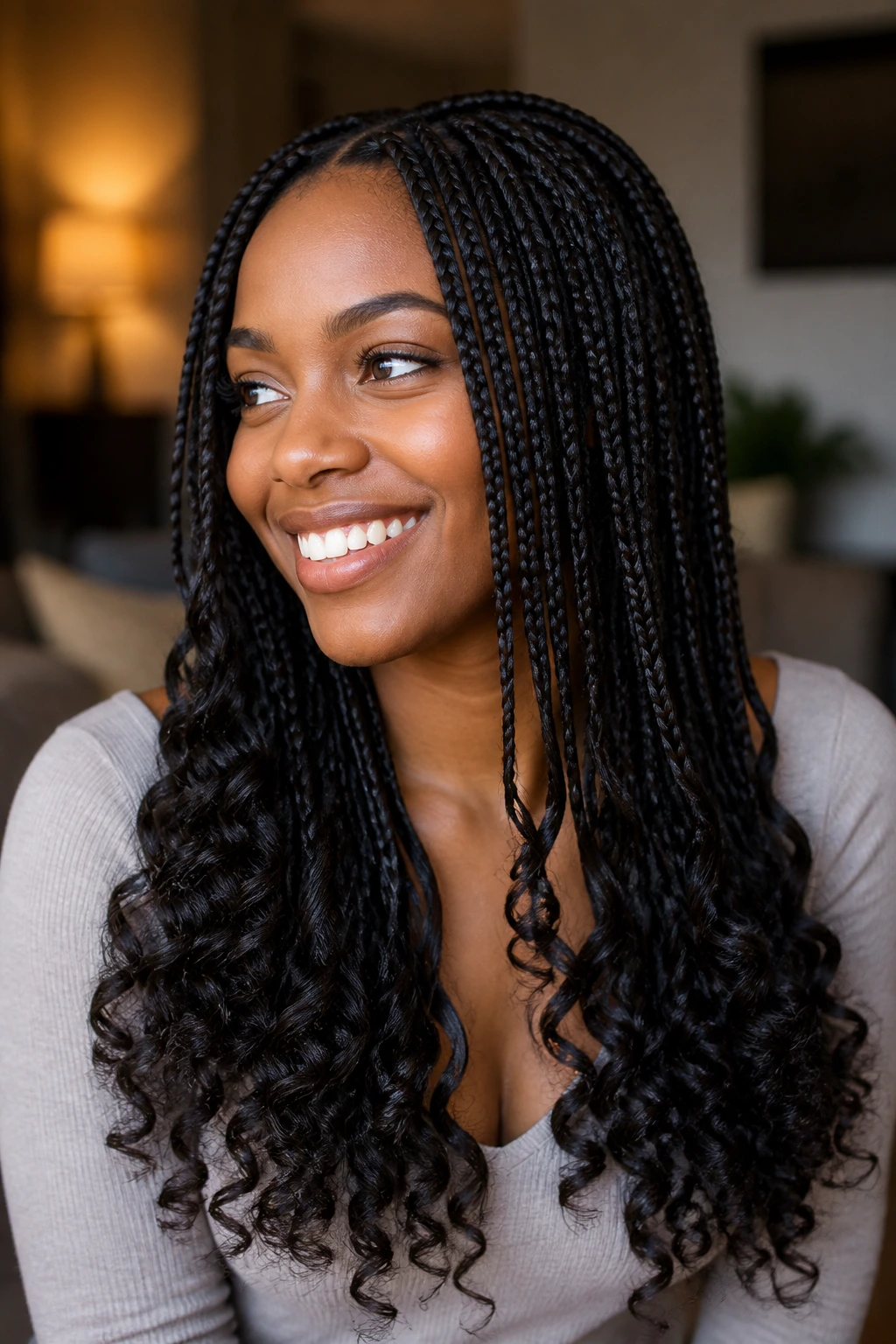
4. Knotless Braids with Curled Ends
Knotless braids with curled ends have a softer feel than classic box braids, and on long hair they move in a way that looks almost unfair. The braid starts gently at the root instead of with a bulky knot, so the scalp line looks cleaner and the braid settles more naturally. Then the curled ends break up the stiffness and keep the length from looking like one long tube.
This is the style for anyone who wants braid longevity without the hard-edged look. The curled ends matter a lot. They add bounce near the bottom, which keeps long braids from dragging the eye straight down in a flat line. Use flexi rods or perm rods on the ends if you want a smoother curl pattern; the final shape depends on how tightly you wrap the hair.
If you’re using extension hair, keep the last few inches loose and hydrated-looking. Dry, frayed ends kill the effect fast.
What to remember
- Start the feed-in slowly so the root stays light.
- Curl the ends only after the braid is secure and dry.
- Use a satin bonnet that actually fits the length.
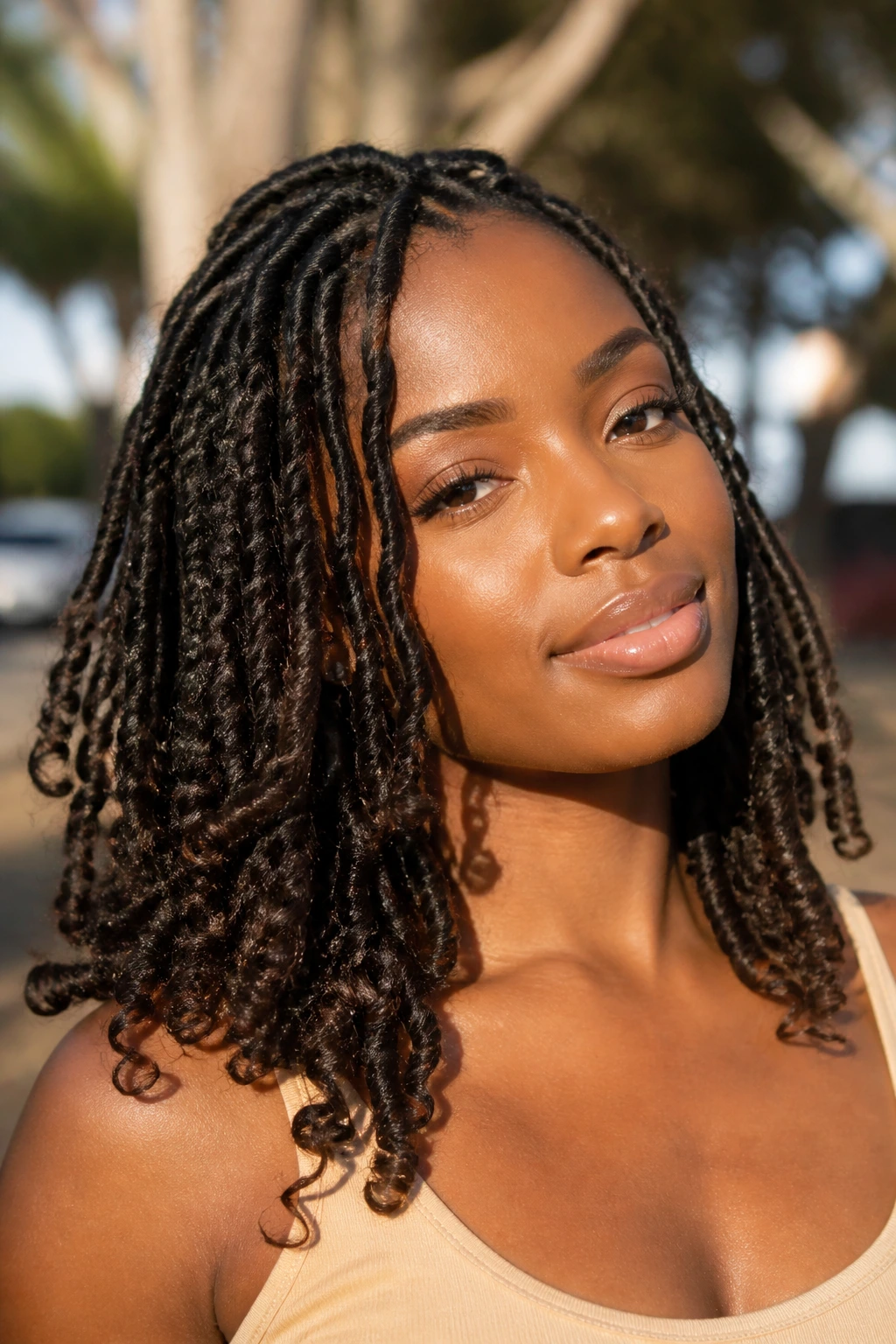
5. Goddess Locs
Goddess locs give long natural hair a soft, almost liquid drape. The loose curly pieces woven through the locs break up the heaviness, so the look never feels too rigid or too serious. On long hair, that softness is the point. The locs hang with weight, but the curls keep them from becoming a solid block.
This style has a little more mood than plain faux locs. It’s the fringe around the edges, the loose ends, the bits that catch at the collarbone and on the shoulder. If you like styles that look a bit fuller after they’ve settled in, this is one of the better options. The movement gets better after the first day or two, once everything stops looking freshly packed.
The only real catch is weight. Long goddess locs can be heavy if the sections are too large or if too much extension hair is added at the roots. That’s where people get into trouble. Keep the base neat and let the texture come from the lengths, not from stuffing extra hair into the front.
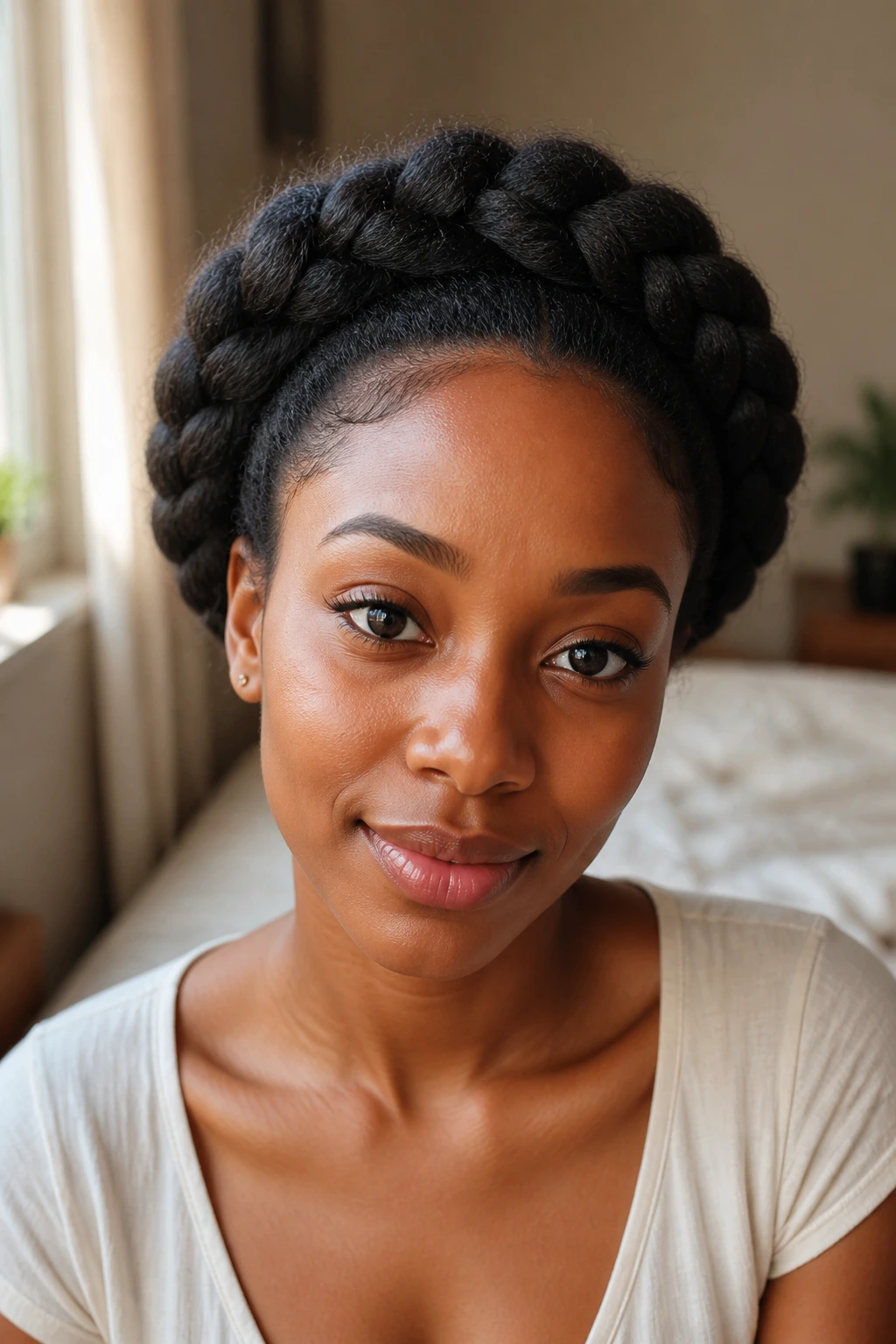
6. Crown Braid Halo
A crown braid halo turns long hair into a frame for the face. The braid wraps around the head like a soft band, and the extra length helps it stay full instead of looking thin by the time it gets to the second side. On shorter hair, this style can feel improvised. On long hair, it looks like the hair had a plan all along.
This is one of my favorite styles when the hair is stretched first. A braid-out, banded blowout, or a well-stretched twist-out gives the braid enough body to hold its round shape. If the hair is too shrunken, the braid can shrink as you work and the halo starts to sit too high or look uneven.
Pin as you go, not just at the end. That one habit saves a lot of redoing. A crown braid that’s only pinned once at the back tends to slide or loosen on the side that gets more movement.
Best for: dressy days, humid weather, or any time you want the face open but the hair still doing something interesting.
7. Side-Swept Flat Twists
Side-swept flat twists have a quiet drama to them. One side lies close to the scalp, the other side spills over the shoulder, and long hair gives the whole look enough length to feel composed instead of cramped. It’s a style that works because of the diagonal line. The eye follows it immediately.
The base needs a clean side part and a little grip. Not a ton. Just enough to keep the twists from puffing up the moment you leave the mirror. Long hair can make flat twists feel heavy if the sections are too wide, so keep them medium and smooth them with your fingers as you go.
I like this style on second-day stretched hair because the twists sit neater and the ends don’t frizz quite as fast. If you want it to look a little sharper, tuck the ends under and pin them near the nape. If you want it softer, leave the ends loose and separate them only once they’re dry.
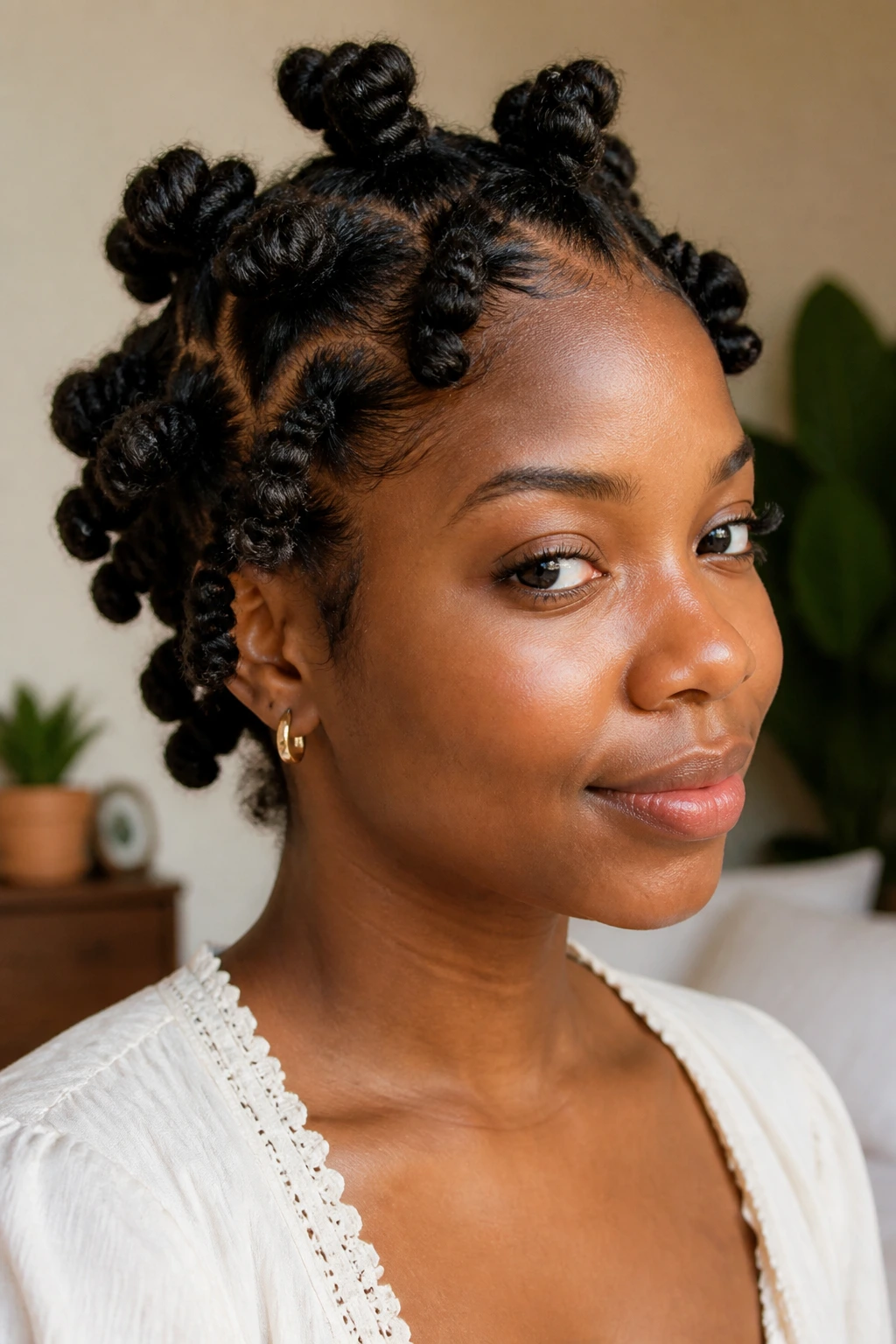
8. Bantu Knot-Out
A Bantu knot-out on long hair gives you springy coils with a little lift at the root and a lot of texture at the ends. The long lengths make the unwrapped coils hang with more shape, so the style doesn’t collapse into a tiny puff the way it sometimes can on shorter hair. The result looks playful, but not messy.
The knots themselves matter. Too small and you spend all night setting your hair. Too big and the curl pattern gets loose and uneven. Medium sections are the sweet spot for most long natural hair, especially if your texture shrinks hard. A little setting lotion or foam can help the knots keep their shape without turning crunchy.
This is one of those styles that rewards a full dry down. If the inside of the knot is even slightly damp, the coil will fall flat by the time you separate it. I prefer to set it at night and give it a little extra air-drying time in the morning if needed. Annoying? Yes. Worth it? Also yes.
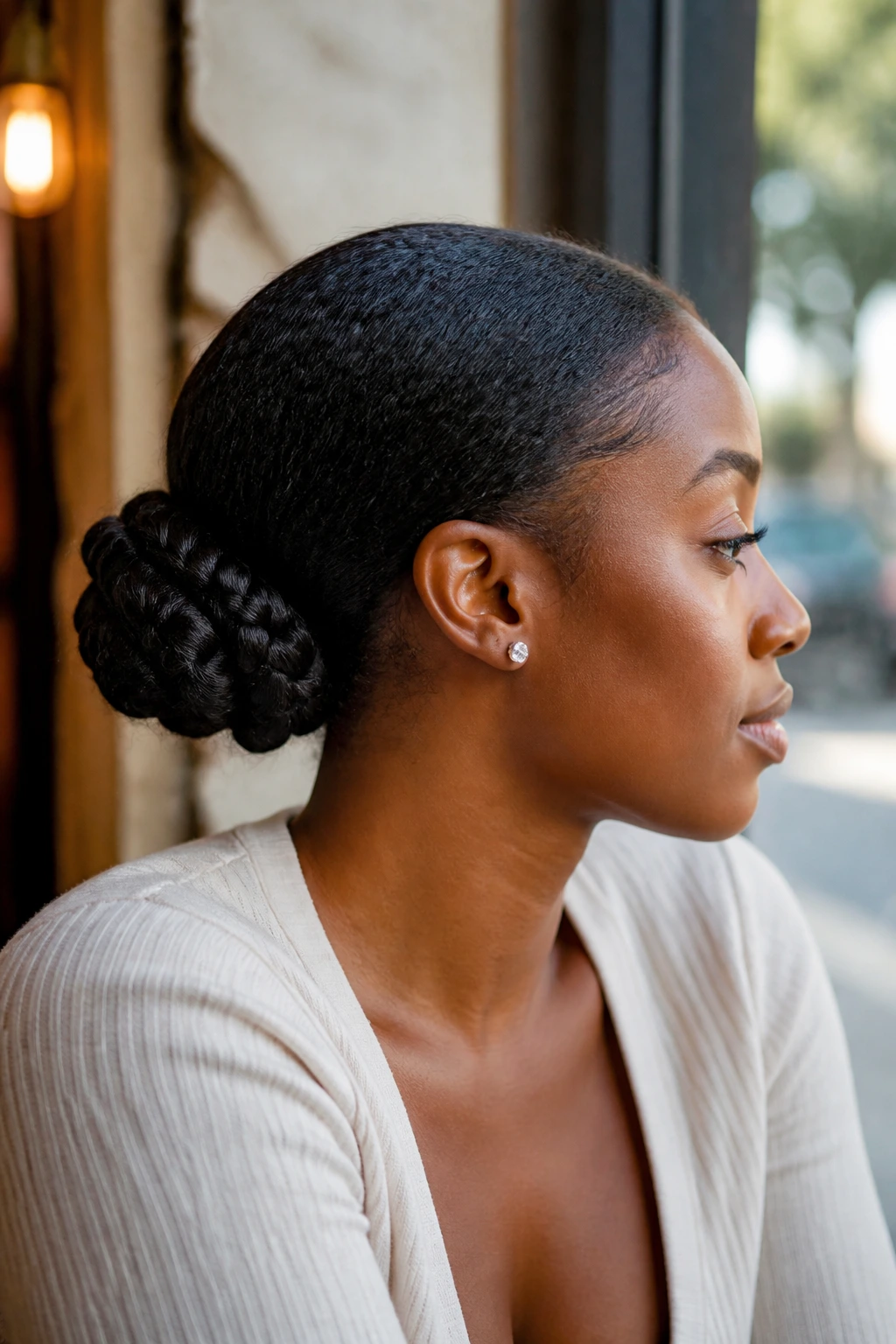
9. Low Braided Bun
A low braided bun is the hair equivalent of a well-cut coat. It sits close, looks neat, and doesn’t need a lot of extra decoration to feel finished. Long hair makes the bun fuller, which means you can get a clean shape without having to stuff in a fake bun piece or build it up with half a dozen pins.
The braid around the base is what keeps the bun from looking flat. If your hair is thick, make the braid a little broader and then tuck the length under itself in a circle. If it’s finer, braid tighter and pin more deliberately. Either way, don’t rely on a single elastic alone. The bun will sag, and long hair has no mercy for a weak anchor.
This style is also one of the better options if your ends need a break but you still want the look to read polished. Keep the front soft, smooth the crown, and let the bun hold the shape at the back.
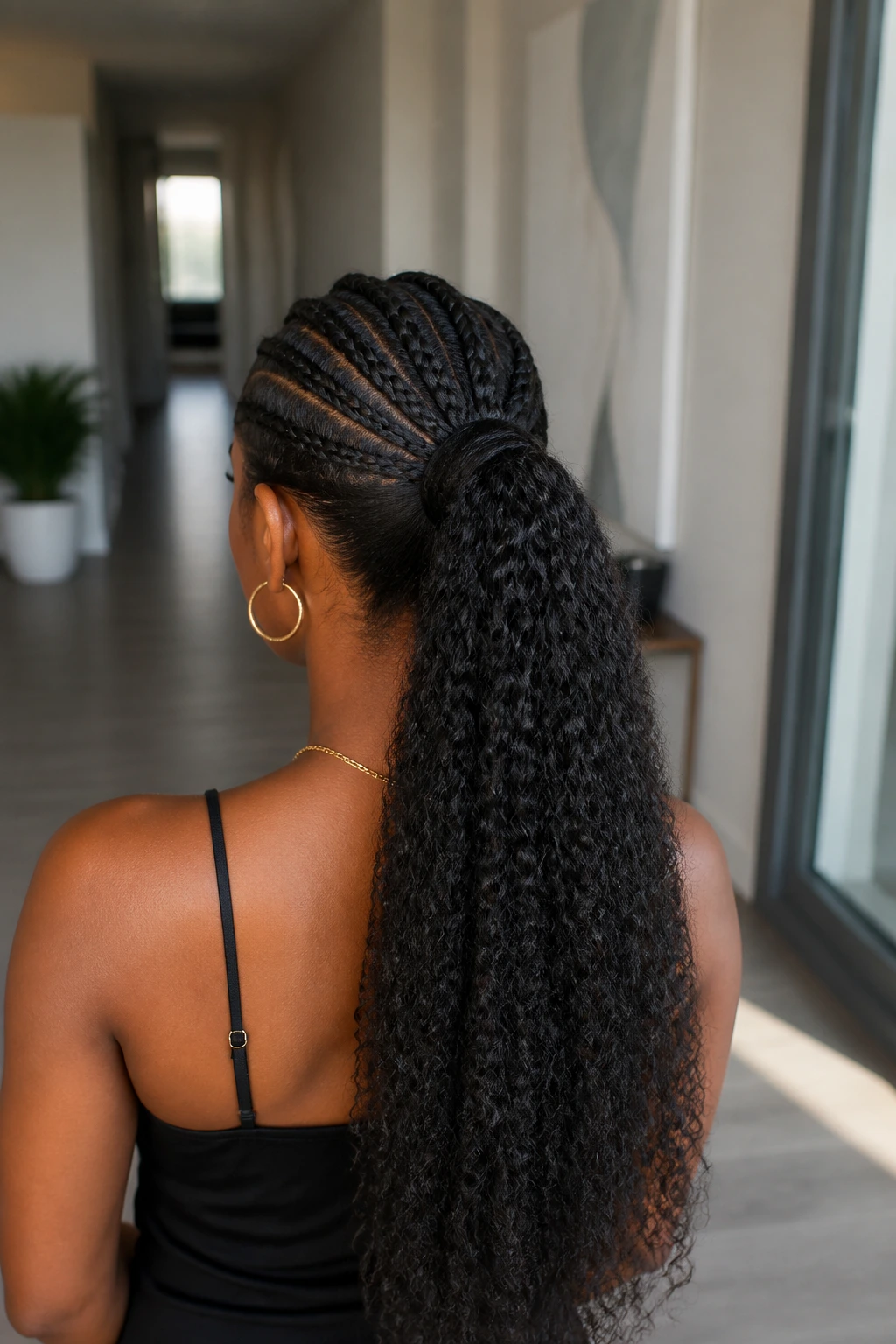
10. Feed-In Ponytail
A feed-in ponytail on long natural hair has a neat, sculpted base and a tail that can go sleek, curly, or braided depending on your mood. The feed-in part is what gives the scalp that clean, tapered look; the long tail is where the drama lives. It’s a style that likes confidence. No timid parts allowed.
Long hair works well here because the ponytail itself has enough length to hang and move without looking thin. You can braid it straight down, curl the tail, or wrap it into a textured rope. The important part is the root. If the front is too tight, the whole style feels unforgiving within an hour. That’s not the price of style. That’s poor tension.
I’m picky about this one. A good feed-in ponytail should feel secure but not hard. If you can’t move your scalp comfortably, it’s too much.
Tip: if you want a sleeker finish, smooth the roots with a boar-bristle brush and a light gel, then tie the base with a satin scarf for ten minutes before you move on.
11. Two-Strand Twist Updo
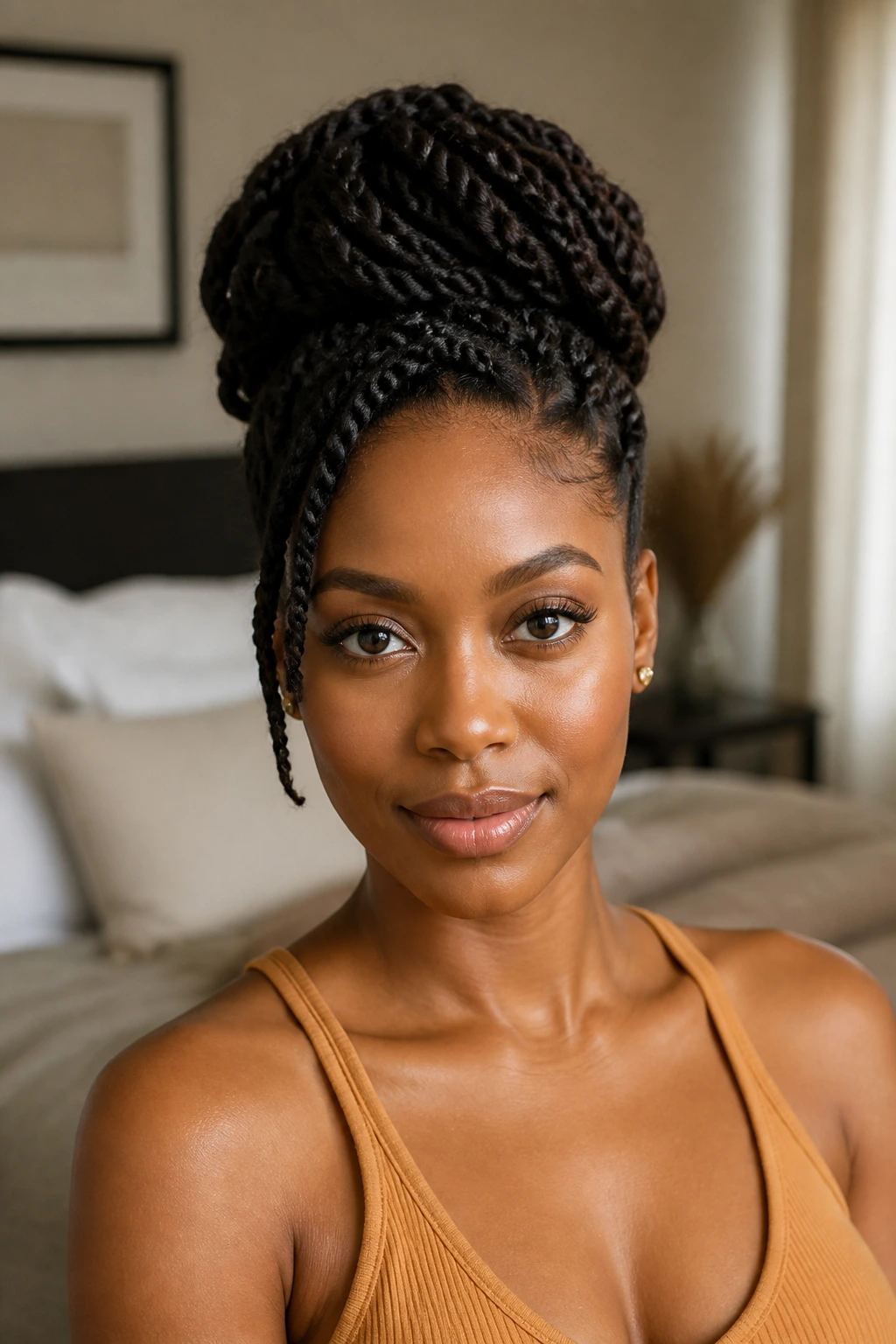
A two-strand twist updo gives long hair shape without making it look overworked. The twists themselves can be chunky or medium, but the point is to gather them into a sculpted profile that sits somewhere between soft and structured. On long hair, the twists have enough length to tuck, coil, and pin into all kinds of shapes.
This one works especially well when you want your ends protected but you don’t want a heavy bun sitting at the back of your head. Twists distribute the hair more evenly, so the finished style can feel lighter than a bun made from the same amount of hair. That’s useful if you wear your hair up a lot and your neck gets tired of the same pressure point.
There’s a small art to this style. Twist too tightly and it turns stiff. Twist too loosely and the shape falls apart. Aim for firm but bendable. That’s the sweet spot.
12. Pineapple with Sculpted Front
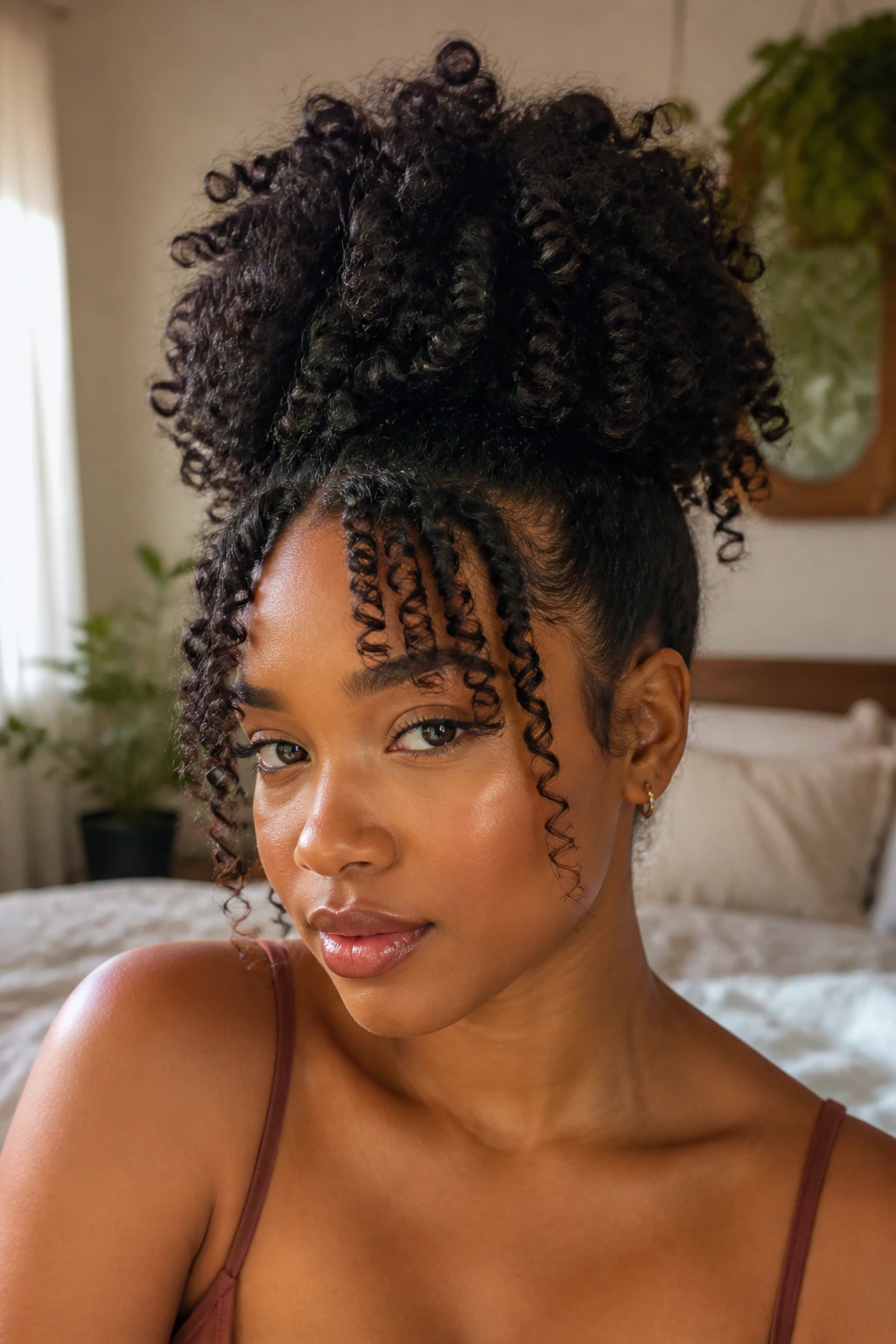
The pineapple is usually thought of as an overnight move, but long hair can turn it into a real daytime style if you shape the front well. Gather the curls high, let the tail spill upward and outward, and smooth the front just enough to frame the face without flattening the roots completely. It’s casual, but not careless.
Long hair helps because the pineapple has enough volume to look intentional instead of like you ran out of time. A curly ponytail on long hair has a nice arc. It sits higher, drops with more length, and keeps its shape even when the curls loosen a little over the day.
Where it can go wrong
If the base band is too tight, the style starts feeling like a headache with good hair. If it’s too loose, the pineapple slips and the whole thing loses its shape. Use a strong elastic or satin scrunchie, and don’t be afraid to add a few hidden pins at the back if your hair is heavy.
13. Flexi-Rod Set
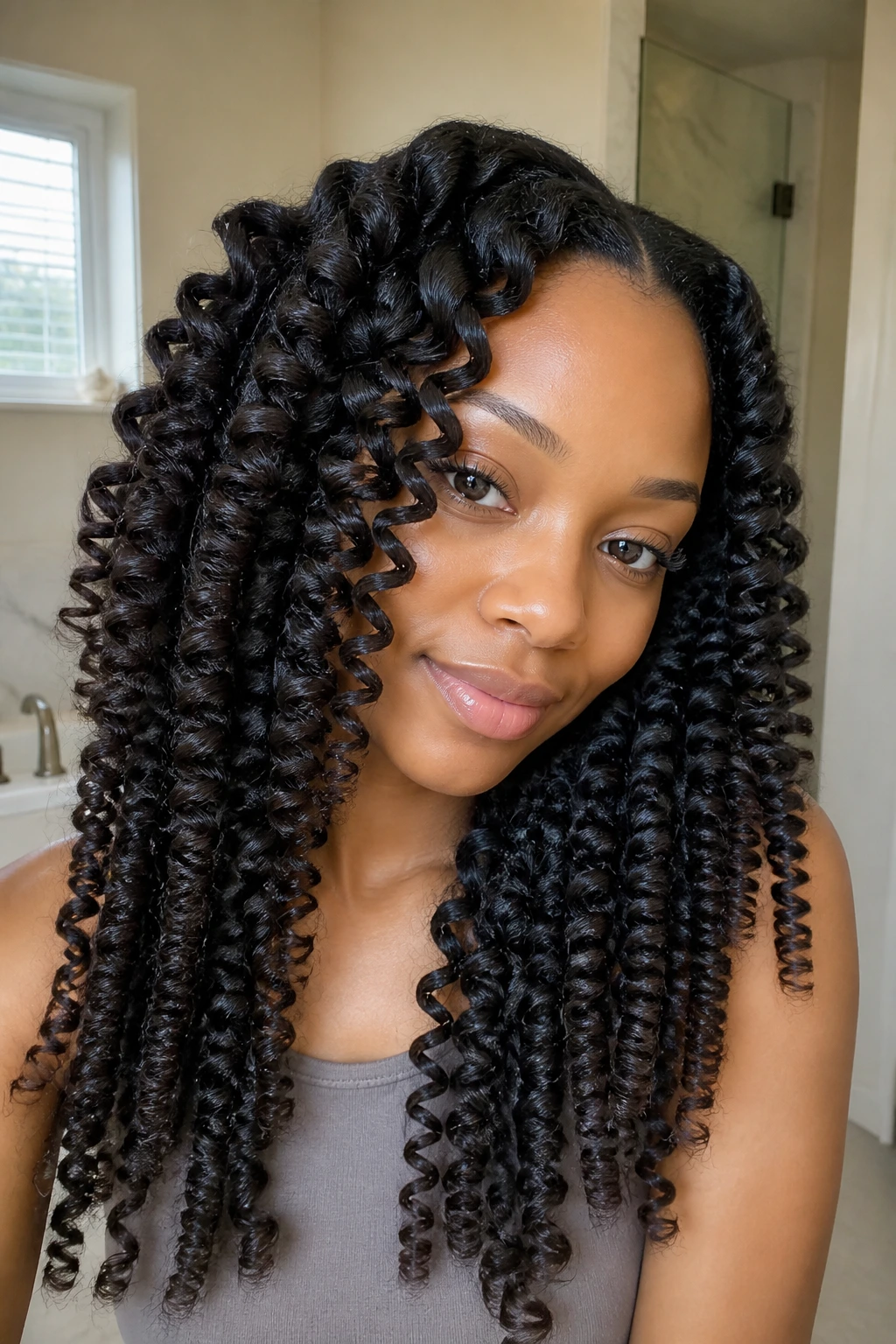
A flexi-rod set on long hair gives you curls with a clear pattern and a lot of movement. Rod size matters here. Smaller rods give tighter spirals, larger rods give softer bends, and long hair makes the difference obvious because the curl has room to hang. The set can look glossy, fluffy, or sharply defined depending on how much product you use and how carefully you dry it.
This style is a patience test, plain and simple. The hair has to dry all the way through. If the roots stay damp, the curls will fall at the crown and leave the ends doing something different from the top. That’s how the style starts to look uneven halfway through the day.
Use a setting foam or light lotion, not a heavy cream that sits on the shaft and takes forever to dry. Long hair already slows the process. There’s no reason to make it slower. A hooded dryer helps, but air-drying overnight with the rods placed neatly can work too if you give the hair enough time.
14. Layered Wash-and-Go
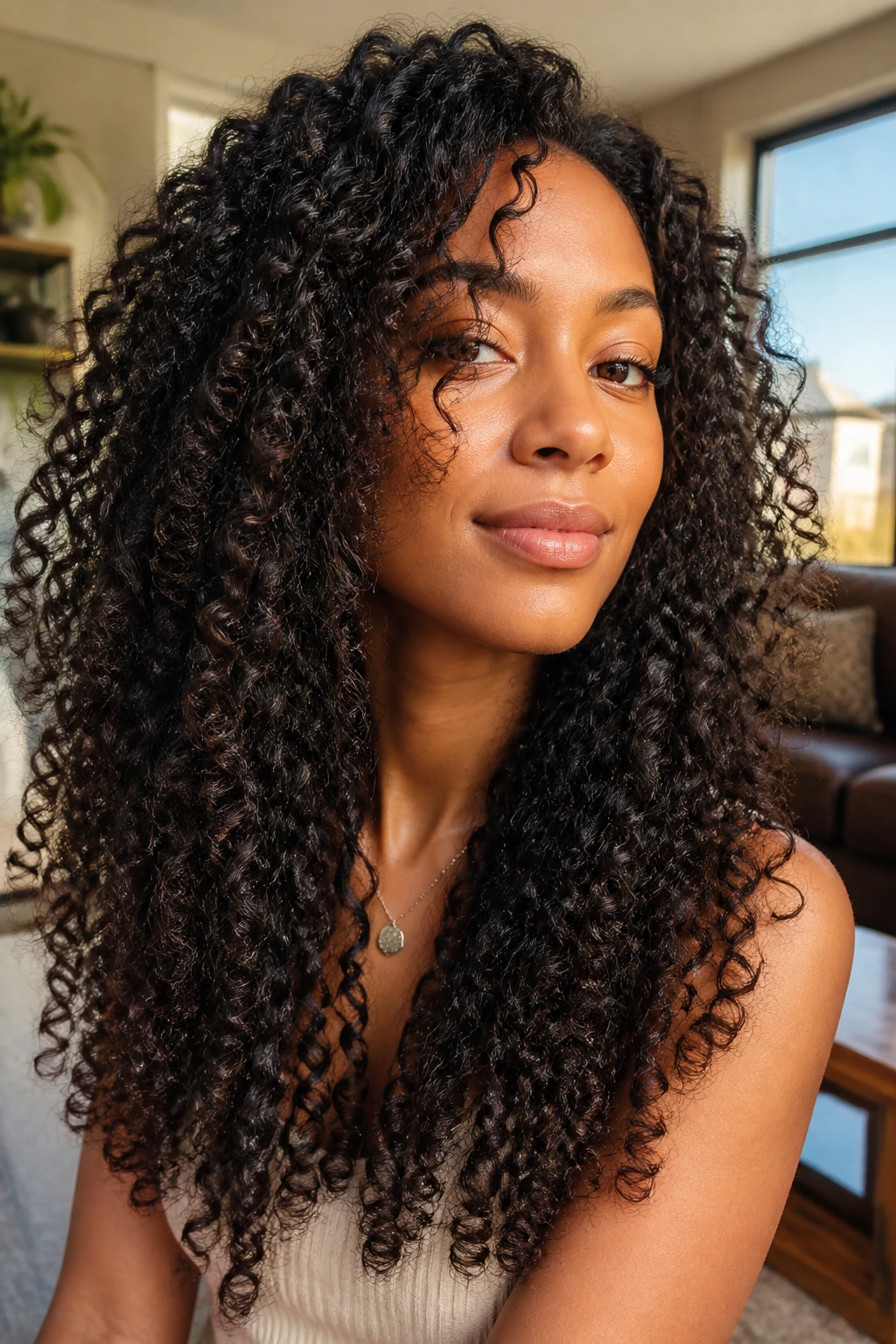
A long wash-and-go can look gorgeous, but only when the shape is right. Without layers, long curls sometimes hang into a triangle or stretch into stringy ends that look tired by midday. With the right cut and a strong hold gel, the style falls in clean sections and keeps its outline.
This is where a lot of people get frustrated. They think the problem is the product. Sometimes it is. Often, though, the issue is the shape of the hair itself. Long curls need a little internal movement, especially around the front and sides, or the whole style settles into one long curtain. A few face-framing layers can make the difference between “nice” and “why does this look heavy?”
What makes it hold
- Apply product in sections, not all at once.
- Smooth the curls downward first, then separate lightly after they dry.
- Diffuse the roots if you want lift without frizz.
- Leave the ends alone until the gel cast is fully dry.
That last one matters. Touching the ends too early is how people turn a defined wash-and-go into a cloud.
15. Cornrow Feed-In Braids
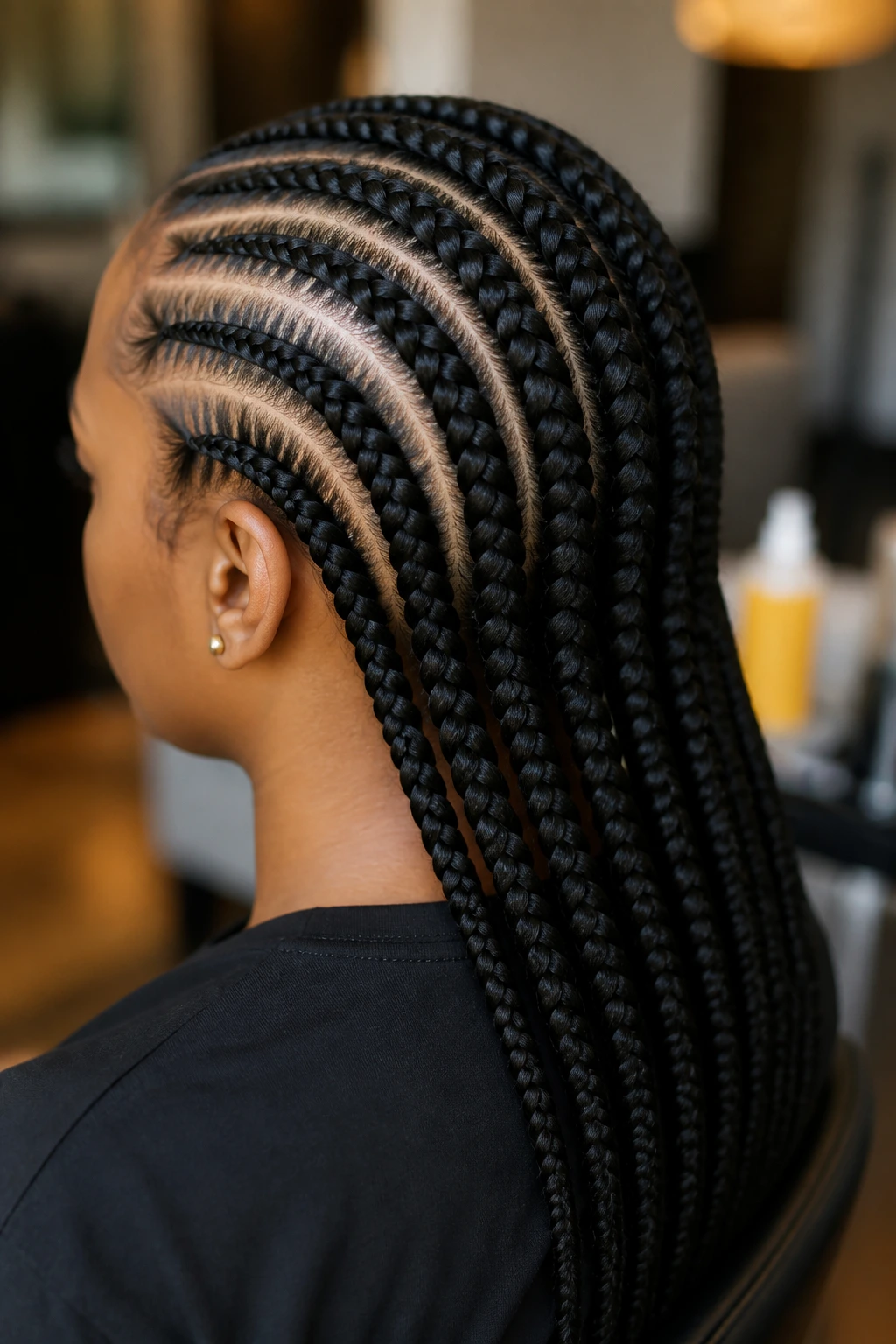
Cornrow feed-in braids are all about line and direction. On long natural hair, the braids can run straight back, curve into swirls, or split into geometric patterns that actually stay visible because there’s enough hair to carry the design. It’s a protective style, yes, but it’s also a design choice.
The feed-in method makes the braids taper from the scalp so they look cleaner at the base. That helps a lot on long hair, where the total amount of hair can make a cornrow feel bulky if it’s not managed carefully. The neatest versions leave the hairline soft and the parts crisp.
If your scalp is tender, tell the braider before they start. Seriously. Long hair can make people think they can pull harder, and that is how you end up with a style that looks good and feels miserable. The style should sit on your head, not grip it like a vice.
16. Half-Up, Half-Down with Curly Ends
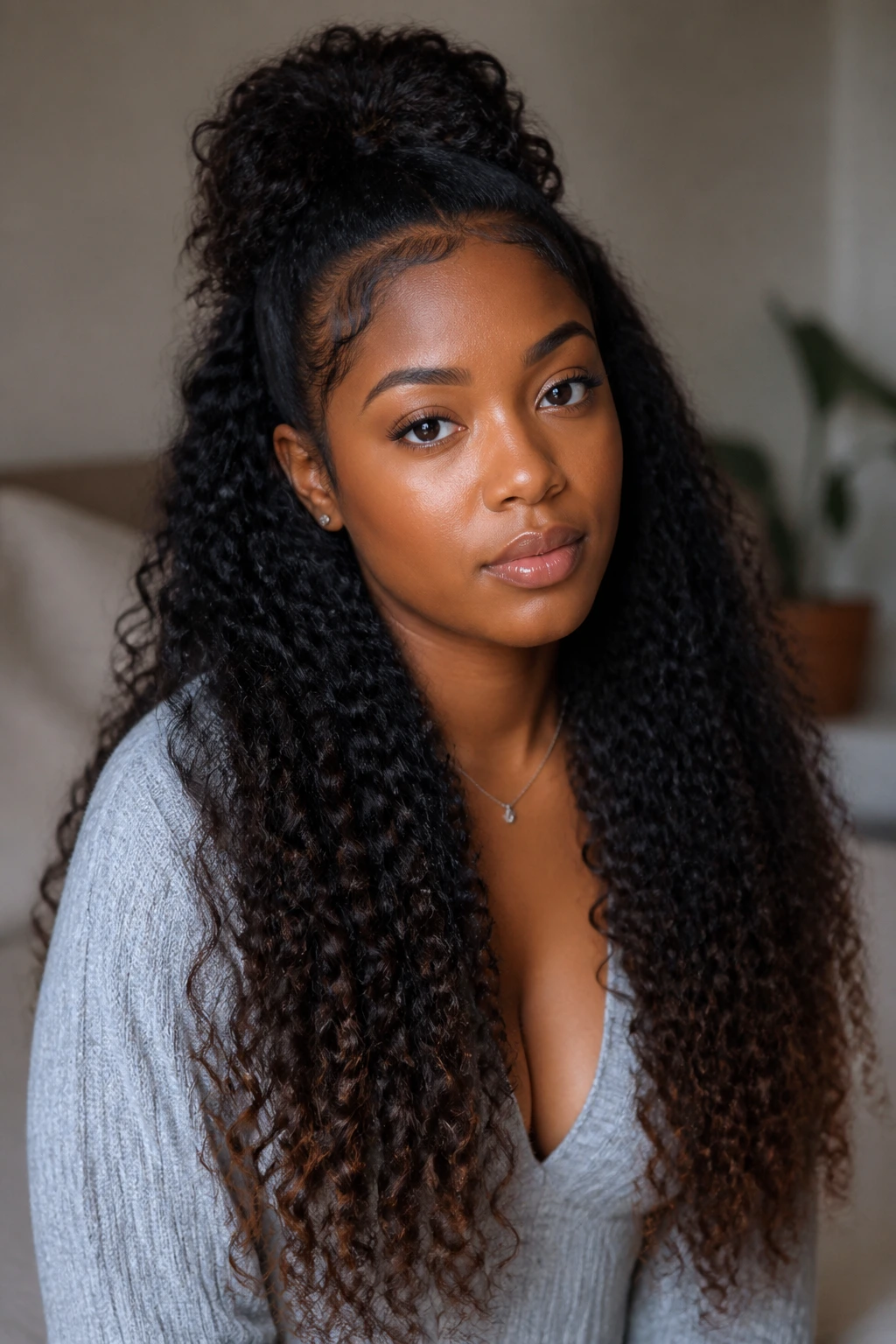
A half-up, half-down style lets long hair do two jobs at once. The top section gets pulled away from the face, and the rest hangs long enough to remind everybody the hair is there. When the ends are curled, the whole thing feels fuller and less flat, which matters a lot on long hair because the bottom half can get heavy fast.
This is the kind of style I reach for when I want length but I don’t want it in my eyes all day. A small puff, a top knot, or a clipped crown section changes the shape without hiding the length. If your hair is stretched first, the bottom pieces tend to stay cleaner and separate more evenly.
Keep the top section soft. Too much tension kills the balance, and then the style starts to look like the top and bottom belong to different heads. Nobody wants that.
Easy upgrade: wrap a small strand of hair around the base of the ponytail or knot so the elastic disappears.
17. Rolled Tuck Protective Updo
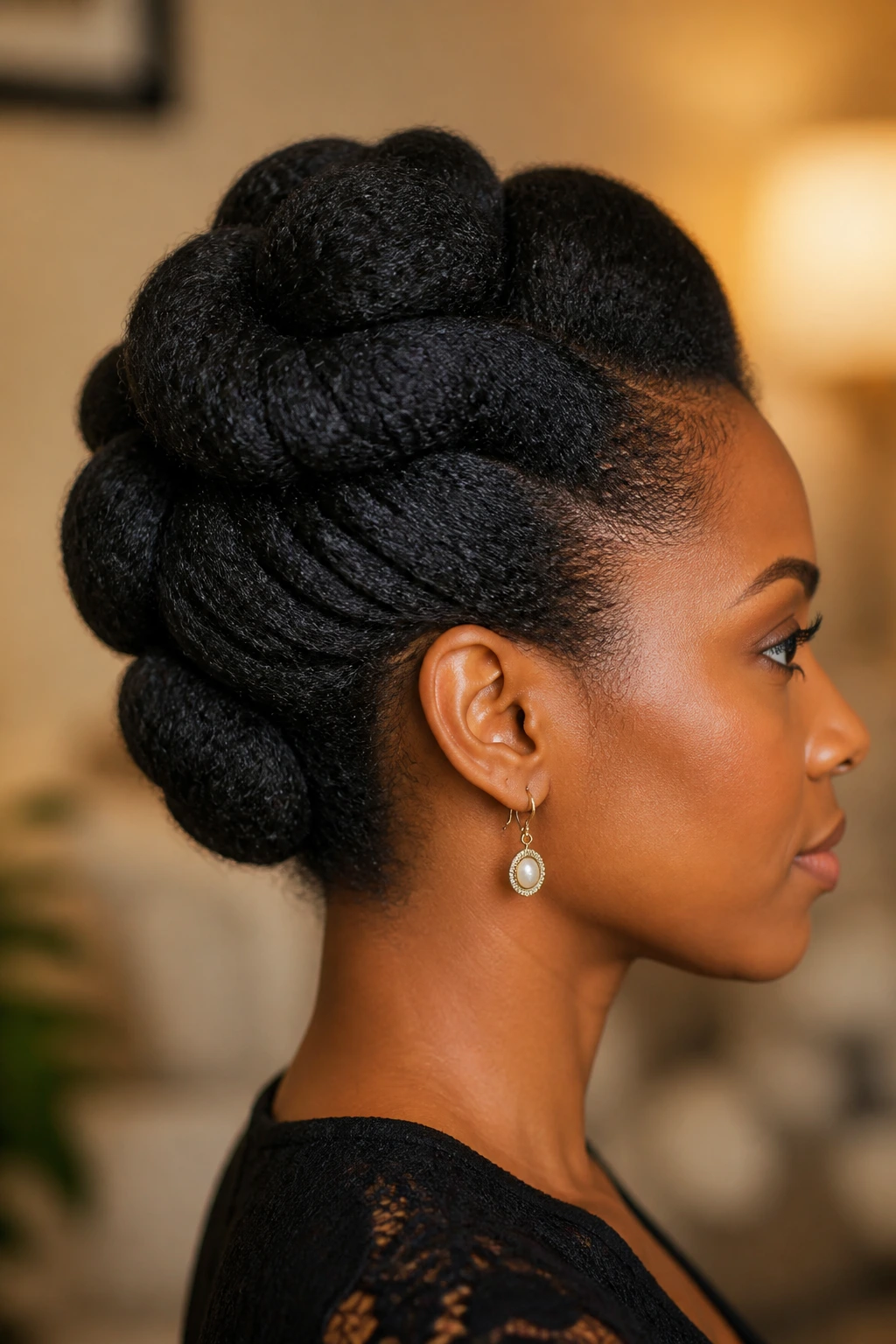
A rolled tuck updo uses the length of the hair to build shape, then hides the ends so they can rest. On long natural hair, that tucked roll can sit full and rounded instead of thin and bony. It’s one of the better options for formal events because the silhouette looks composed from every angle.
The trick is to create enough smoothness at the base before you start rolling. If the front is frizzy, the style looks rushed. If the hair is too wet, the pins slip. A light stretch first helps a lot, even if it’s just a night of banding or a low-heat blow-dry with a diffuser attachment and a comb on low tension.
I like this style because it doesn’t scream for attention. It just sits there looking finished. That can be a relief.
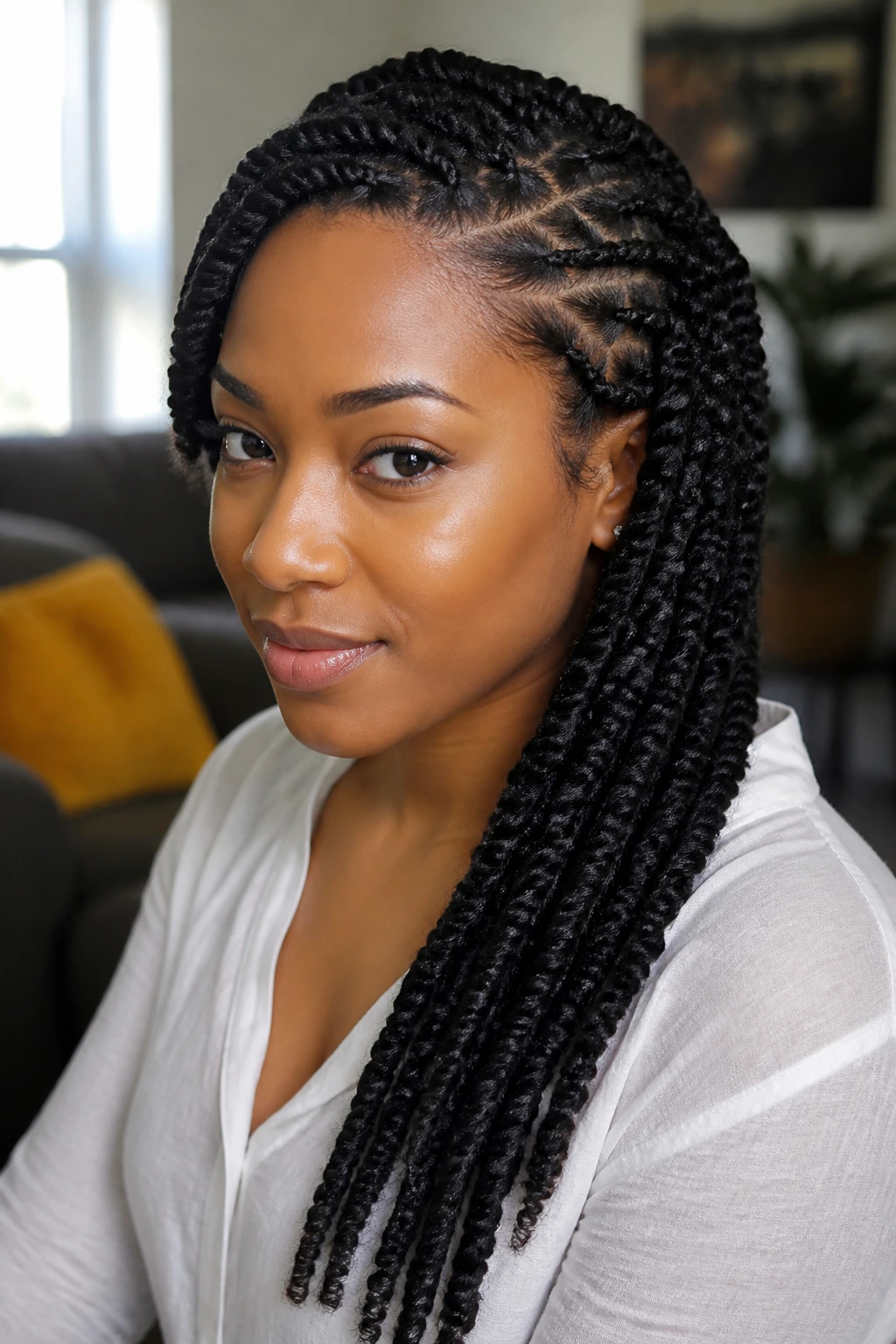
18. Long Marley Twists
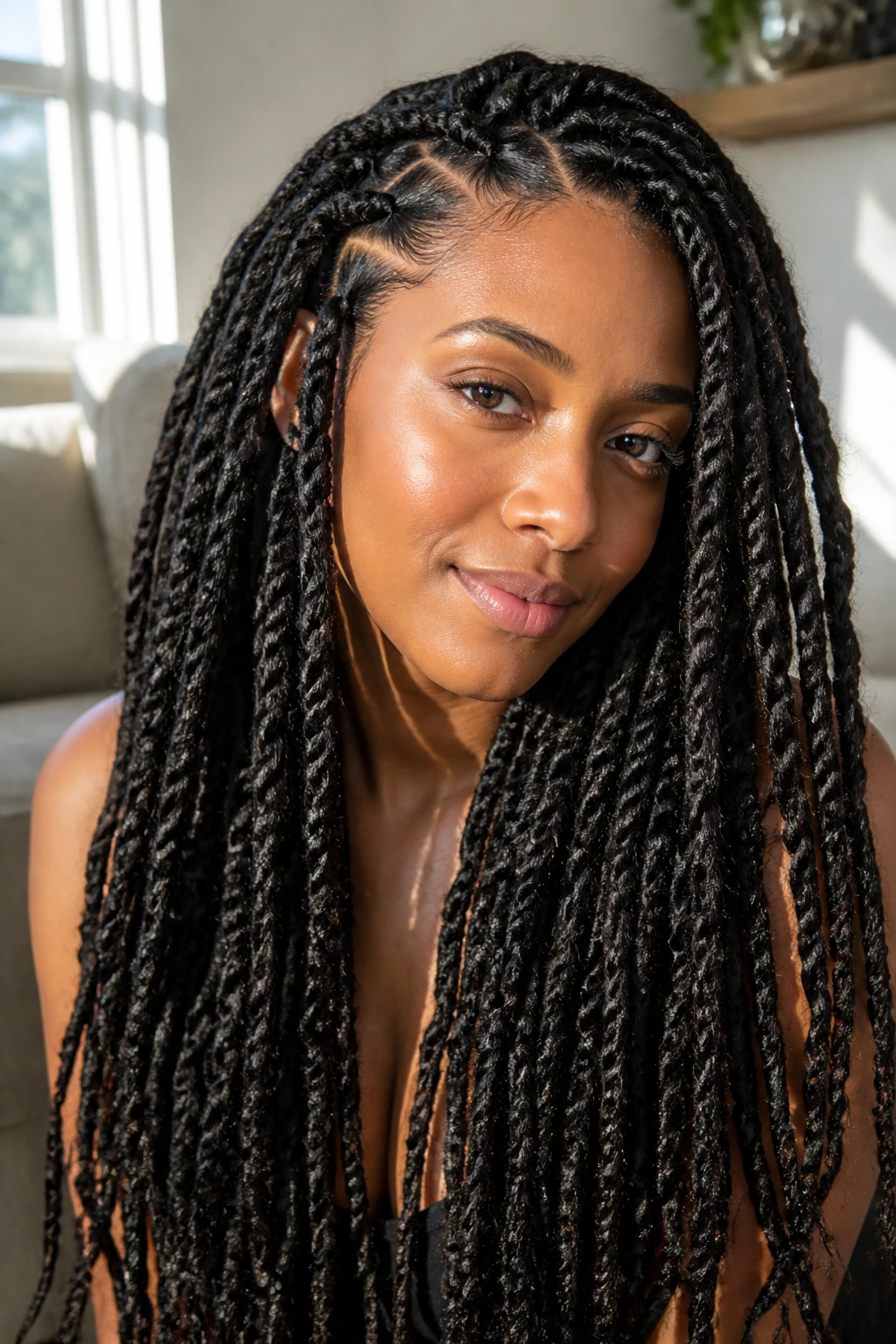
Long Marley twists have a dense, rope-like texture that suits long hair far better than people expect. The added length gives the twists movement, while the matte finish keeps them from looking shiny in a fake way. They hang with a little swing and a lot of presence.
Because Marley hair can be heavier than some other extension textures, section size matters a lot. If the parts are too small, the base can feel tired by the end of the day. Medium sections are usually the safe place. They look full, they hold shape, and they don’t chew up your edges the way oversized twists sometimes can when people try to force too much hair into one root.
This style is one of the best long-term options in a rotation because it keeps the ends tucked and the texture consistent. Just don’t confuse “protective” with “invisible.” Even protective styles need a good part and a clean finish.
19. Side-Part Sleek Low Puff
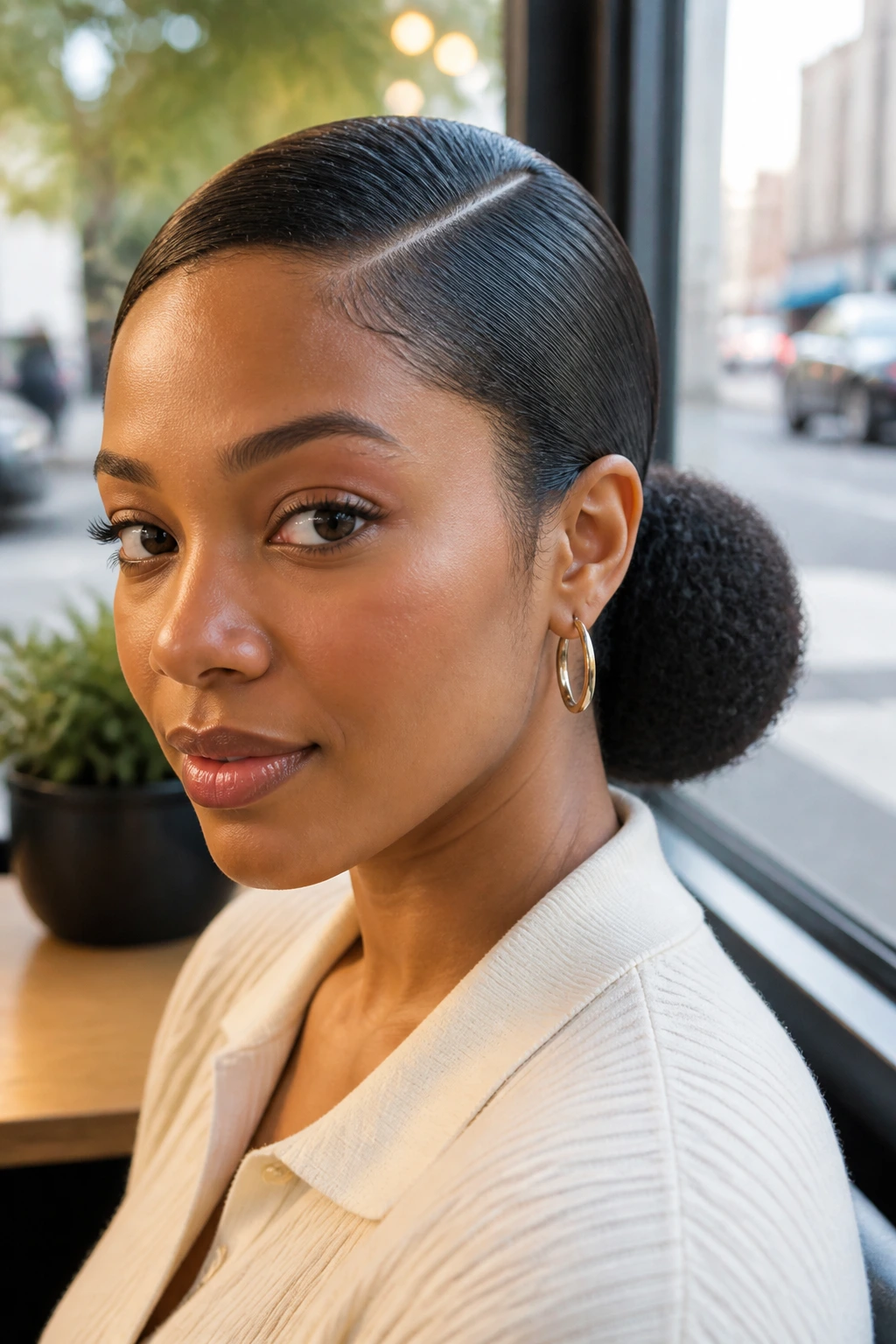
A side-part sleek low puff feels calmer than a high puff. The base sits lower, the part gives the style a little attitude, and the puff itself stays close enough to the neck to look smooth rather than floaty. On long hair, the low placement helps the puff seem intentional instead of improvised.
This style is a good answer when you want volume but not height. The longer the hair, the more the puff can spread and shape itself at the back, which means you can get a full silhouette without pushing everything straight up. That also tends to be easier on the scalp if your hair is dense.
Use just enough gel to lay the front and top. Too much product at the roots will make the crown look hard and shiny in a way that has nothing to do with elegance. A soft brush, a clean side part, and one decent band are usually enough.
20. Faux Hawk with Flat Twists
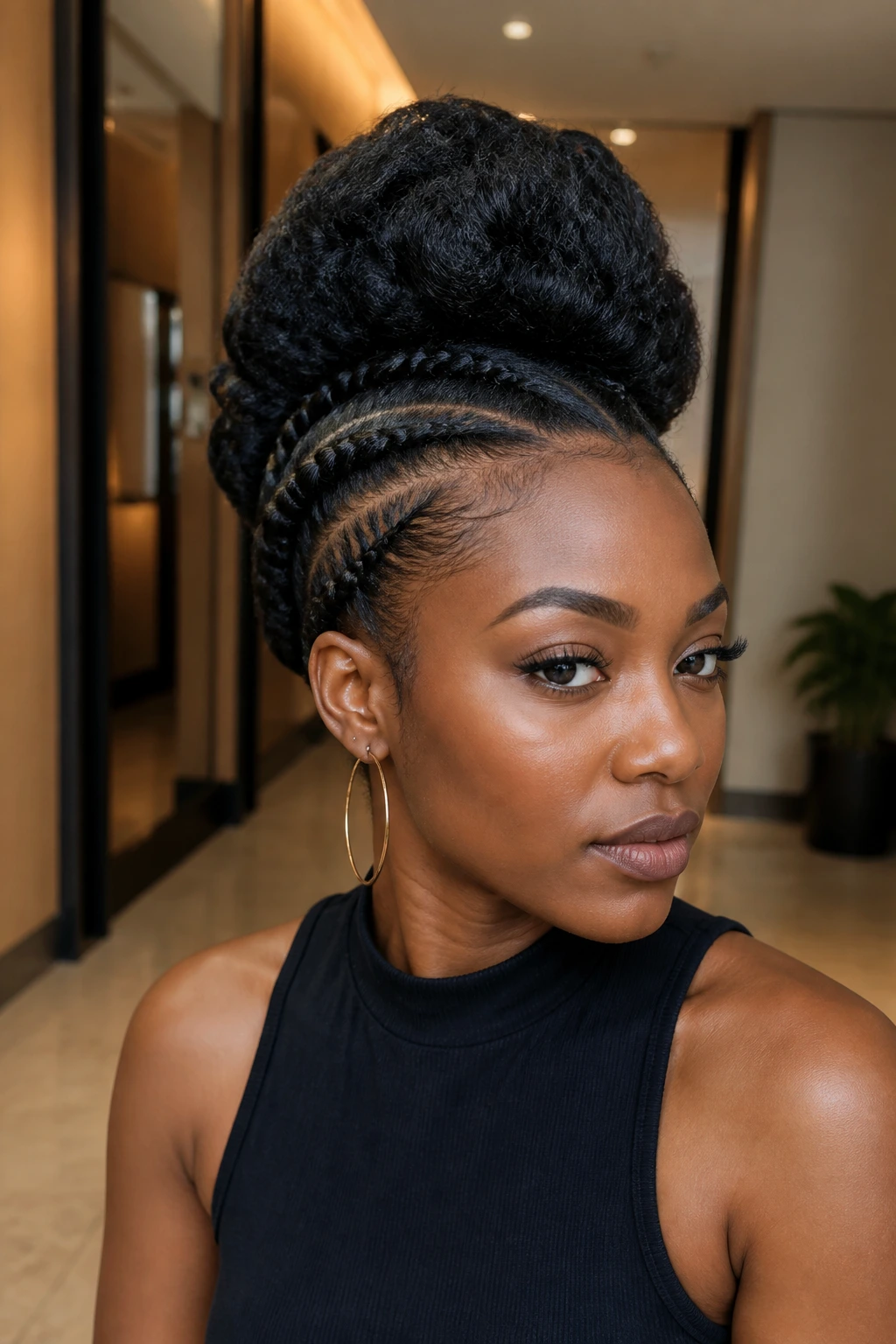
The faux hawk works because long hair gives the center section enough mass to stand up and take shape. The sides are slicked or twisted flat, and the middle can be puffed, braided, curled, or folded into a ridge that runs from front to back. It’s a little edgy, a little playful, and not nearly as fussy as it looks.
This style reads especially well on long natural hair because the center strip doesn’t disappear. On shorter hair, the hawk can look stubby. On long hair, it has room to travel. You can make it soft and romantic with fluffy curls, or sharper with defined twists and a more sculpted crown.
A good faux hawk depends on balance. If the sides are too tight, the style feels harsh. If the center is too loose, it loses the hawk shape. Pinning is your friend here. So is restraint.
21. Wrapped High Bun
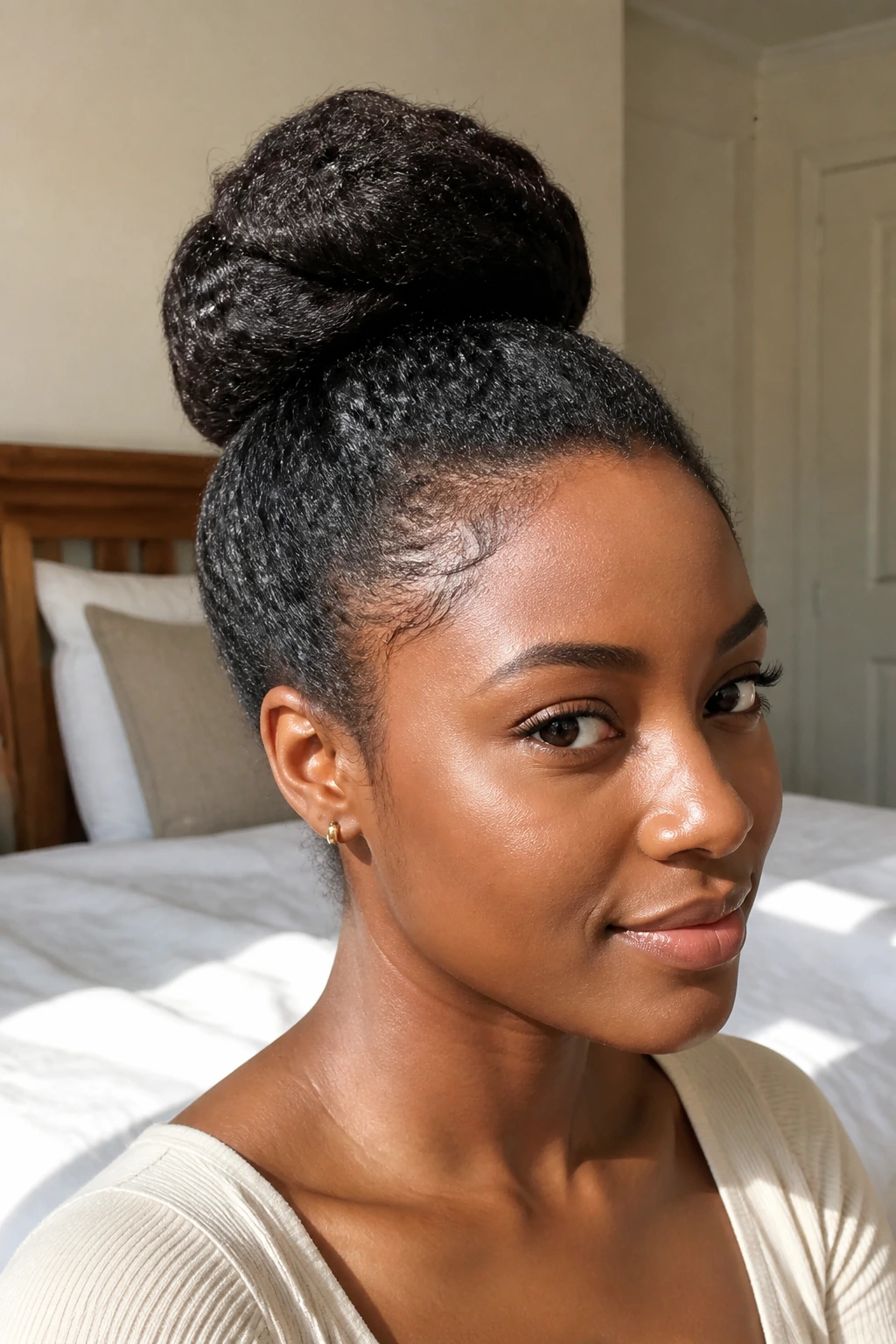
A wrapped high bun is one of those long-hair styles that looks much harder than it is. The length gives the bun fullness, so the shape reads round and substantial without needing a filler piece. Wrap the hair around itself, smooth the outer layer, and pin the ends in a way that keeps the bun anchored but not flattened.
The height matters. A bun placed too low can drag the face down, while a bun too high can feel unstable. Somewhere above the crown usually gives the best balance for long hair. If your hair is thick, use two pins crossed at the base. One pin alone usually gives up by lunchtime.
This is the kind of style that benefits from a clean perimeter. You don’t need every flyaway pinned to the floor, but the silhouette should look finished. Otherwise the length starts looking bulky instead of sleek.
22. African Threading
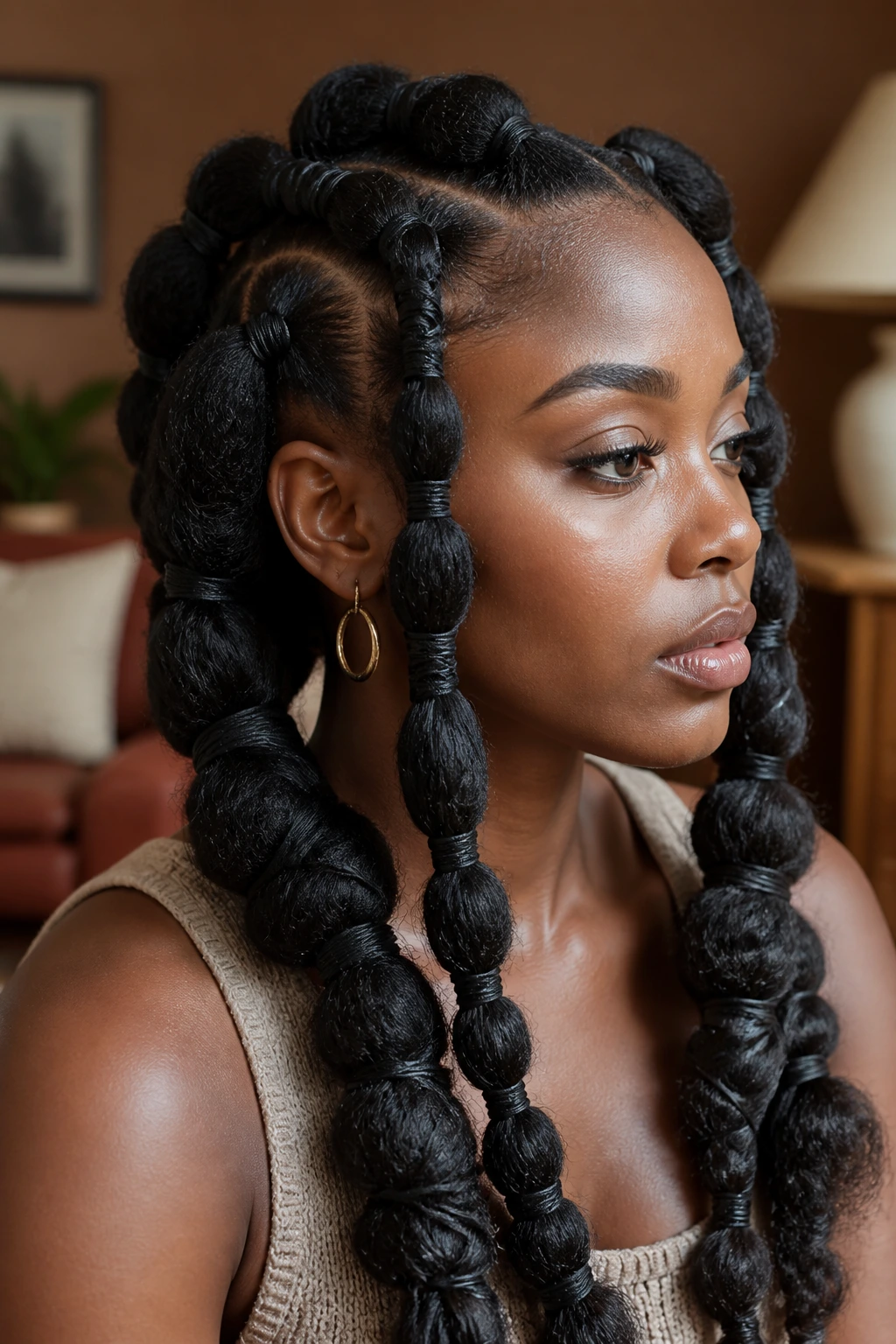
African threading turns long hair into a sculptural style with serious presence. The thread wraps around sections of hair to stretch them, shape them, and give them a bold, segmented look that’s both practical and visually strong. On long hair, the threading can travel farther and create more dramatic lines than it can on shorter lengths.
This style is part elongation, part protection. The hair is kept stretched with relatively low manipulation, and that stretch can make later styling easier too. I’ve always liked threading for the way it changes the hair’s silhouette without forcing a hot tool into the equation. The shape looks almost architectural.
Keep the tension even from root to end. That’s the part people rush, and that’s where discomfort shows up. If the scalp aches, the thread is too tight. If the section slips, it needs a cleaner base, not more force.
23. Perm Rod Set
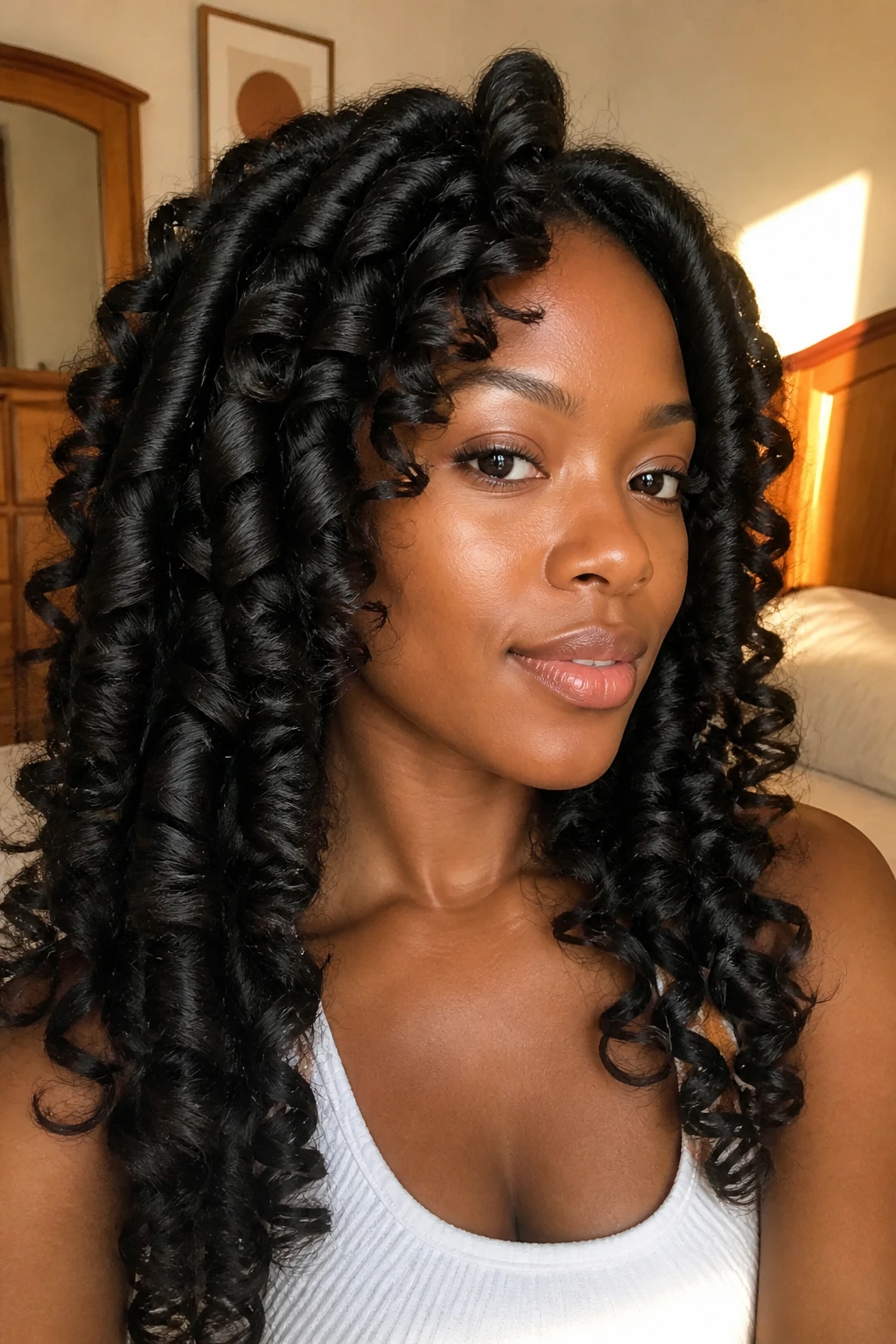
A perm rod set on long natural hair gives you curls with a little more uniformity than a flexi-rod set. The sections can be arranged more precisely, and the final shape often looks crispest when the hair is fully dry and separated only after it cools. Long hair lets the curls stack and cascade instead of bunching up near the scalp.
This is a style that rewards clean sectioning and a controlled product layer. Too much cream and the rods take forever to dry. Too little and the curl doesn’t hold the shape you wanted. Mousse or setting foam usually does the heavy lifting here, with just a touch of leave-in underneath if the hair needs slip.
If you want the set to last, make the sections even. That sounds boring because it is boring, and it matters anyway. Uneven sections lead to uneven curls. Hair does not forgive shortcuts here.
24. Crisscross Stretch Style
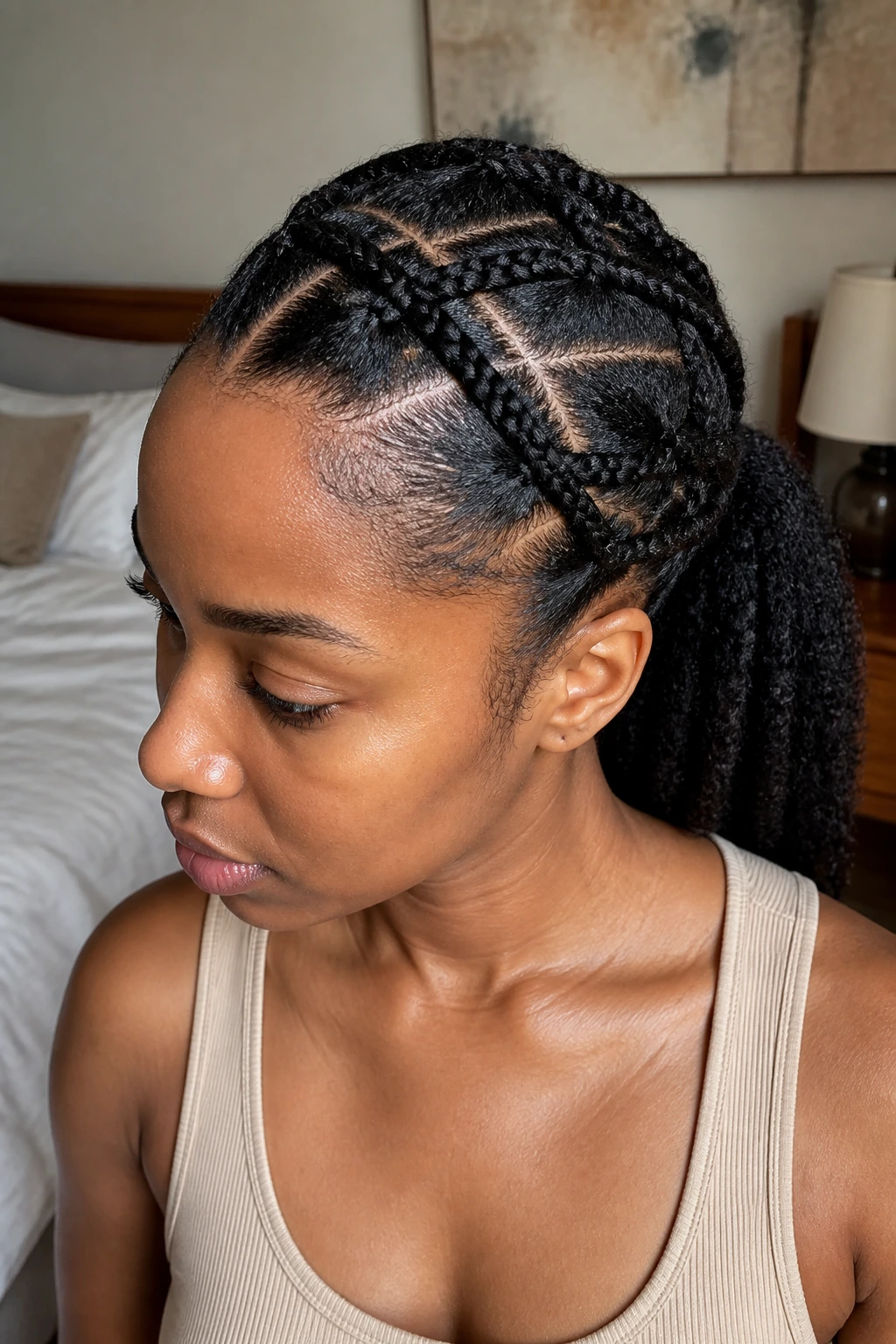
A crisscross stretch style gives long hair a little geometry before the length even starts to show. The front or crown is sectioned into crossing parts or bands, and the rest of the hair is stretched into a ponytail, bun, or hanging section. The pattern at the top becomes part of the style, not just the setup.
This is one of those looks that benefits from clean parting and steady hands. The crisscross lines should feel balanced, not crowded. On long hair, the back section can carry enough visual weight to make the whole style feel finished even if the front is simple.
You don’t need a dozen accessories. One sharp parting pattern does a lot of the work. If you want more polish, wrap the base of the ponytail with a small strand or add a single cuff where the cross lines meet.
25. Rope-Twist Ponytail
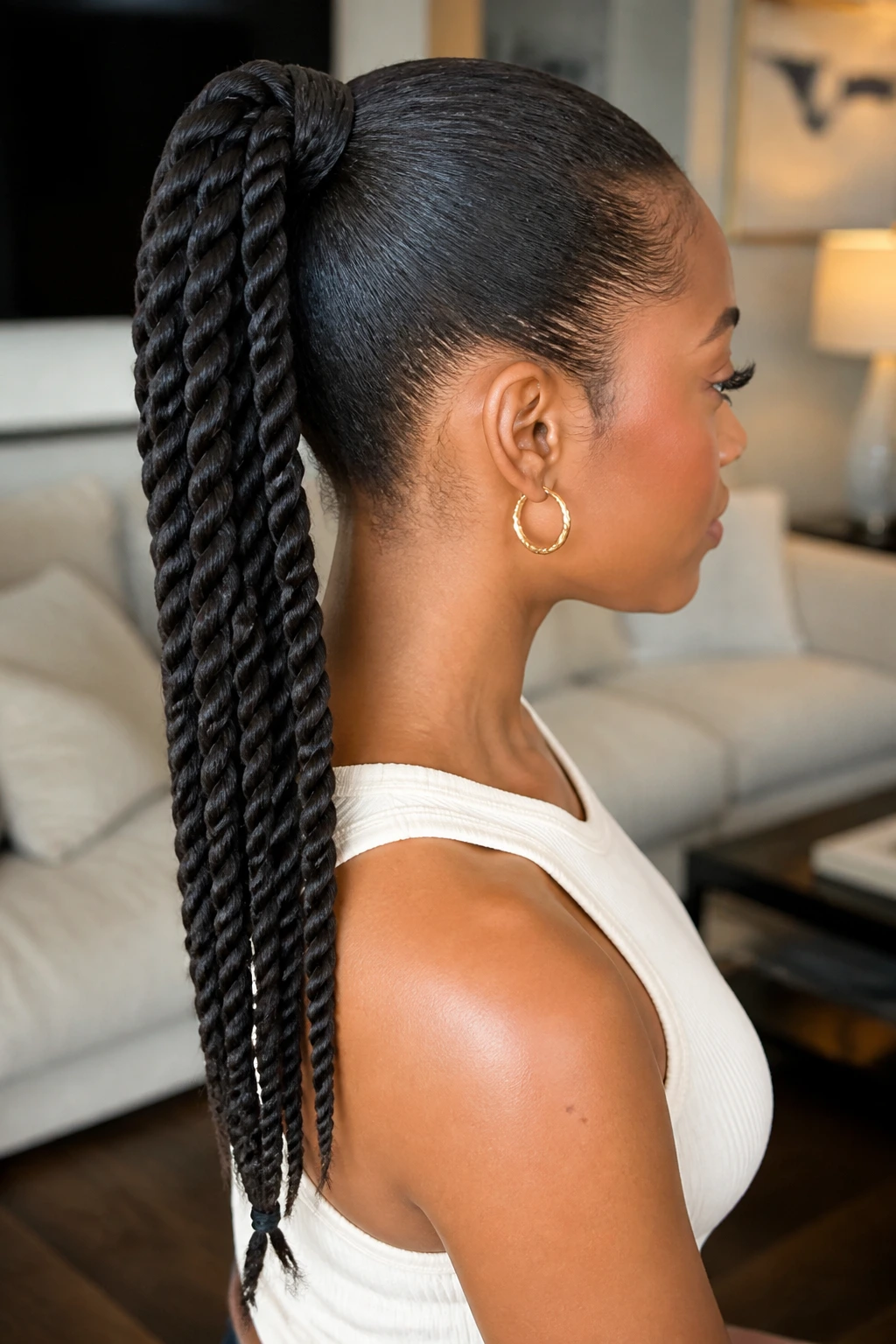
A rope-twist ponytail is sleek at the root and ropey at the end, which makes it a nice bridge between polished and textured. Long hair helps the twist show its pattern because the length gives the rope room to stretch out and move. It’s a style that looks neat without feeling overdone.
The base should be smooth and secure, but not rock hard. Then the ponytail itself can be split into two sections and twisted into one rope-like length. If your hair is dense, use a strong elastic at the base and pin the end of the twist so it doesn’t unravel while you move around.
I like this style when I want one strong line down the back. It looks clean from a distance and detailed up close, which is a nice combination. A little shine at the root helps, but the texture in the ponytail should stay visible.
26. Mini Twists with Defined Ends
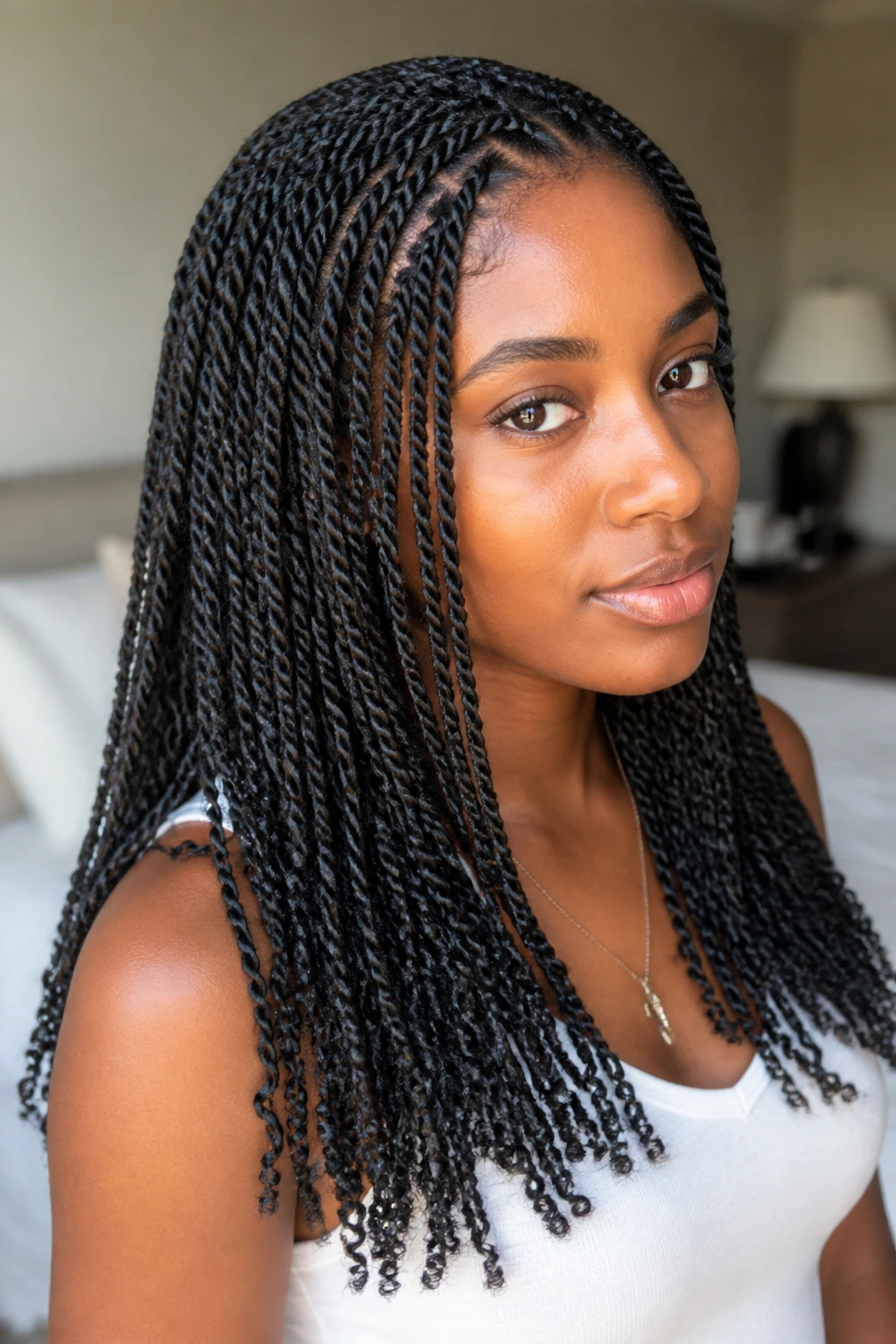
Mini twists on long hair are a commitment, but they pay off in neat movement and low daily fuss. Because the hair is longer, the twists hang with more weight and look less like tiny coils stuck to the head. They also last better when the sections are even and the ends are twisted cleanly.
This is the style for people who want something that can survive a few days without constant rework. The beauty of mini twists is that they keep the hair stretched enough to reduce daily styling while still looking soft. Long hair makes the result feel fuller, which is good, because tiny twists on long hair can look a little sparse if the parts are too large.
A practical note
If the ends unravel fast, the sections are too dry or the twist is too loose. A little leave-in on the fingertips and a clean two-strand motion at the end usually fixes it. Don’t drown the hair in product. The twists need hold, not syrup.
27. Side-Swept Curly Fro
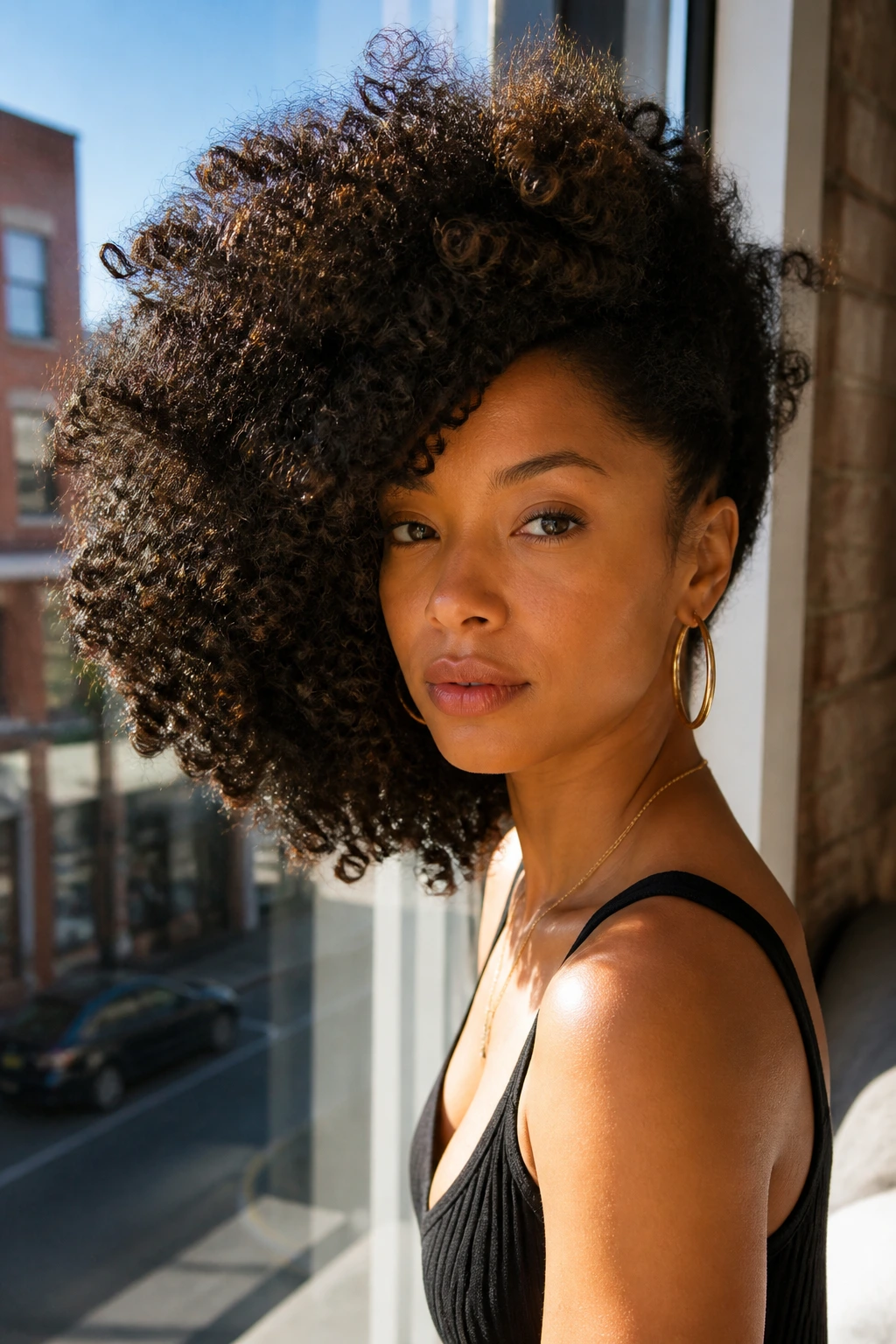
A side-swept curly fro is one of the easiest ways to let long natural hair look big without letting it look shapeless. Push the volume to one side, shape the top with your hands or a pick, and let the curls create a soft line across the face. On long hair, the fro has enough mass to feel dramatic instead of airy.
The side sweep gives the shape a point of view. That’s the thing people sometimes miss. Without a direction, long textured hair can spread out in every direction at once. A side sweep gathers it, even if the gathering is loose and informal.
A trim helps this style more than people expect. The ends are visible, especially when the hair is picked out, and uneven ends make the whole fro look older than it is. Keep the shape rounded and the front slightly lifted, and the style will do a lot of the talking for you.
Why Long Hair Changes the Shape of a Style
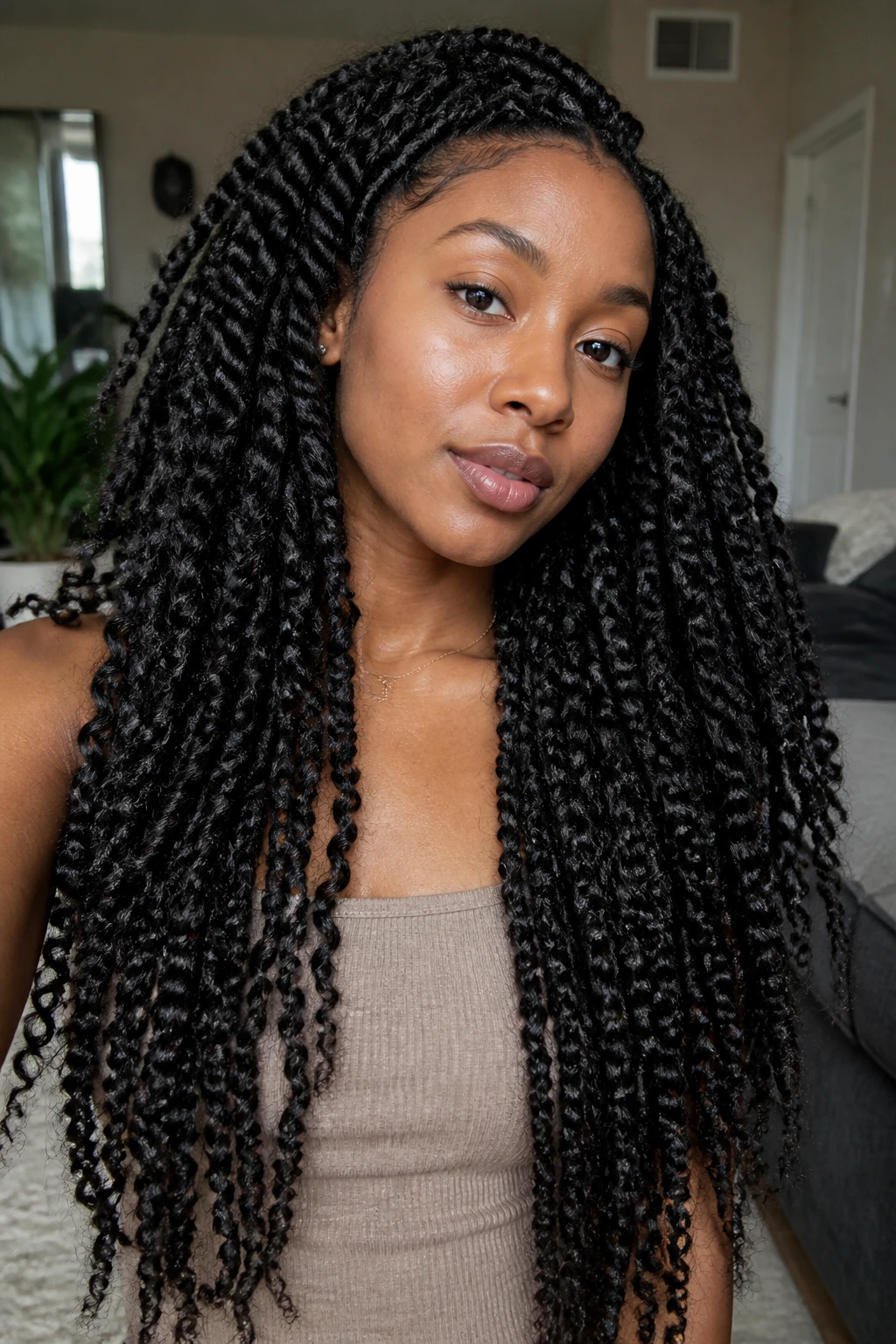
Long natural hair is not just “more hair.” It behaves differently. The weight changes how braids sit, how twists fall, how puffs bloom, and how quickly a wash-and-go loses or keeps its shape. A style that looks crisp on mid-length hair can sag or stretch on long hair if the base isn’t thought through.
That’s why long-hair styling has to start with the silhouette. Do you want lift at the crown? Movement down the back? A frame around the face? A tucked end that disappears cleanly? Once you decide that, the style gets easier. Without that decision, you end up styling against gravity instead of with it.
Shrinkage matters too. Long curls can shrink enough to change the visual length by several inches, which is why stretching methods like banding, threading, twist setting, and rod sets matter so much. They don’t erase texture. They give it a shape you can actually see.
Essential Tools That Keep Long Styles Tidy
-
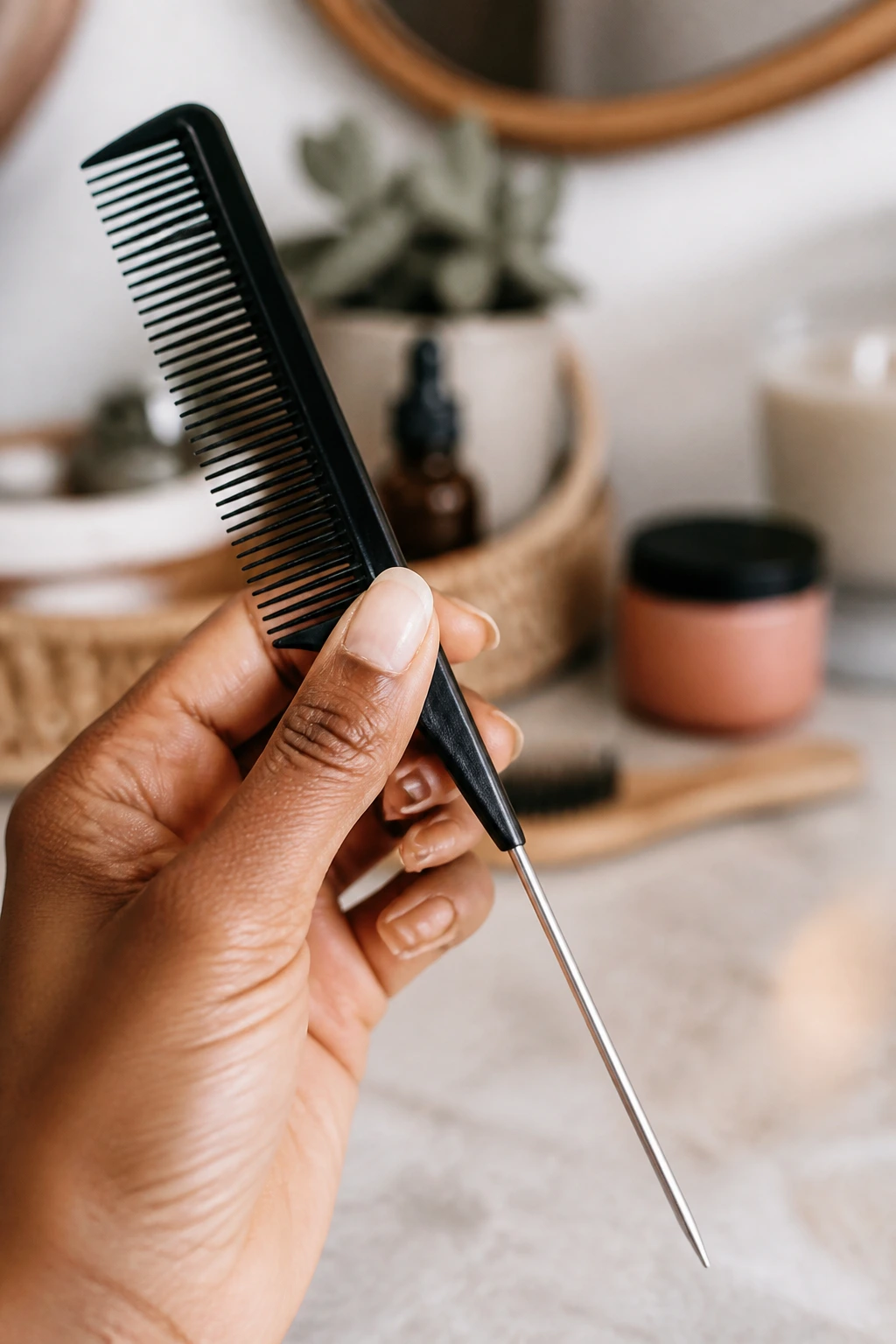
Rat-tail comb: Best for clean parts, neat sections, and crisp crown lines. The pointed end does the separation work without chewing up the hair.
-
Wide-tooth comb or detangling brush: Useful for pre-stretch detangling and for getting product through dense hair without a fight.
-
Sectioning clips: Long hair tangles into itself fast. Clips keep the rest of the head out of the way while you work one section at a time.
-
Snag-free elastics and satin scrunchies: These hold puffs, ponytails, and pineapples without shredding the ends or snagging the base.
-
Bobby pins and U-pins: Needed for buns, crowns, tuck styles, and any look that needs hidden support.
-
Edge brush: Helpful for smoothing the hairline without pressing it flat or applying too much product.
-
Spray bottle: Water mixed with a little leave-in can wake up dry sections before twisting or braiding.
-
Satin bonnet or scarf: Non-negotiable if you want the style to survive the night with less frizz and fewer crushed roots.
-
Optional hooded dryer or diffuser: Not required, but it cuts drying time dramatically for twist-outs, rod sets, and wash-and-gos.
Product Choices That Matter More Than Brand Names
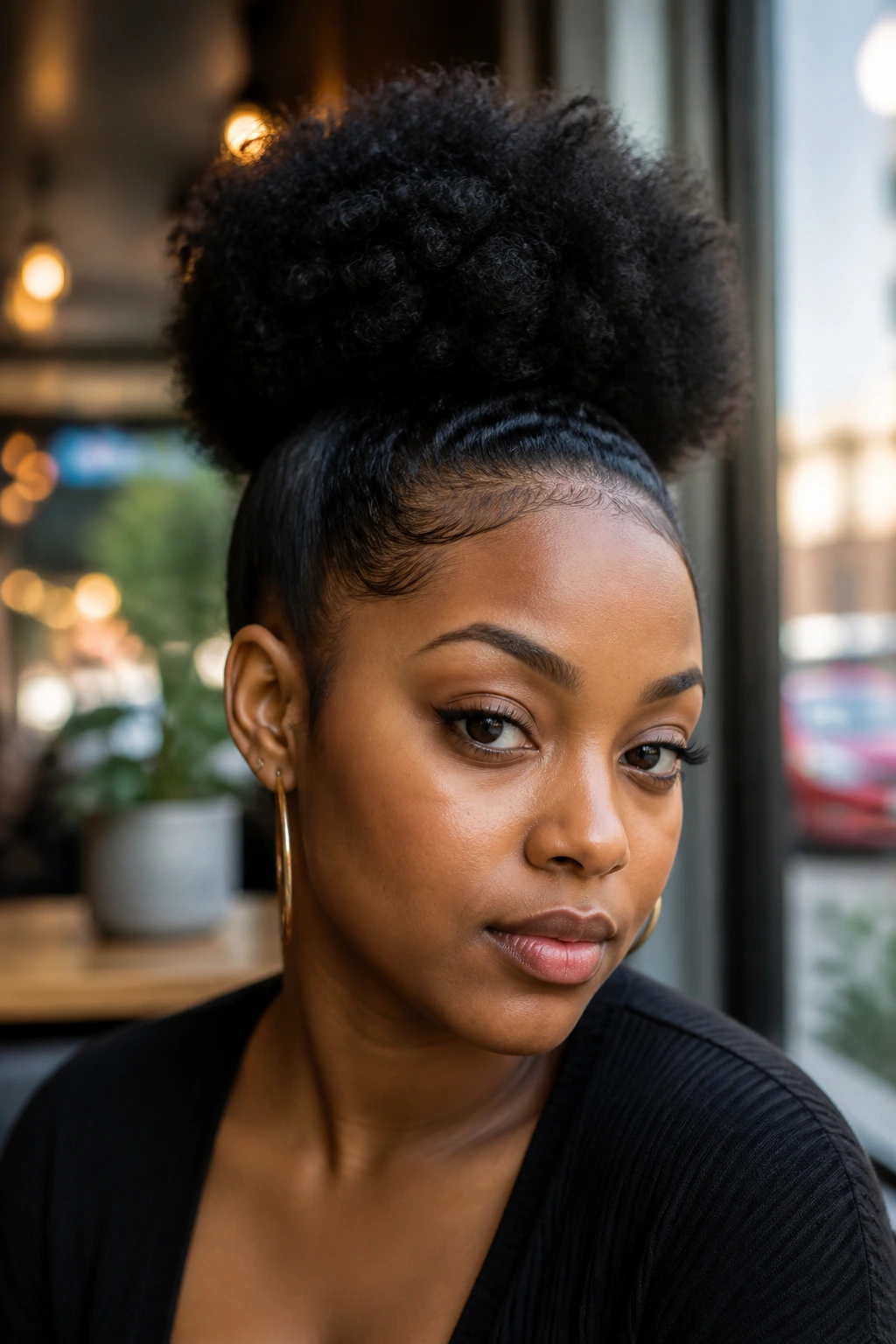
Long natural hair can swallow product fast, and that is where a lot of styles go limp. A thick cream that feels rich in your hands can sit heavy on the hair and make a twist-out lose spring. A watery leave-in can disappear before you finish the second section. The product has to match the job.
For twist-outs, braid-outs, and mini twists, use a leave-in with slip plus a styling cream or mousse that gives hold without building a crust. For puffs and buns, a firmer gel at the front and a softer moisturizer on the body of the hair usually makes more sense than coating the whole head in edge control. For wash-and-gos and rod sets, setting foam or a hard-hold gel can keep the shape from collapsing under the length.
If your hair is dense, coarse, or highly textured, richer creams can help with softness. If your hair is fine or easily weighed down, go lighter. That sounds obvious until you’re standing in the mirror with curls that look like wet ribbons because you used half a jar of butter on one style.
How to Wear These Looks for Work, Church, Weddings, and Errands
Presentation: Clean parts and tidy edges do more for a style than a pile of accessories ever will. A high puff, a bun, or a braid set looks sharper when the base is deliberate and the silhouette is balanced.
Accessories: Gold cuffs, satin bows, scarf wraps, and a single decorative pin can change the tone fast. Use them sparingly on long hair so they read as accents, not distractions.
Workday wear: Low puffs, side buns, knotless braids, and tucked updos tend to stay put through long hours and don’t need constant touching up.
Event wear: Crown braids, goddess locs, rod sets, faux hawks, and wrapped buns make the hair feel dressed up without requiring a lot of extra styling once they’re in place.
Errand and gym wear: High puffs, mini twists, pineapple styles, and feed-in ponytails can be reset quickly with a satin band or scarf when the day gets messy.
Small Finish Tricks That Keep Long Hair from Looking Flat
Long hair can get heavy fast, and heavy hair likes to lie down. The fix is not more product. Usually it’s shape. Fluff the roots at the crown, leave the ends a little freer, and don’t over-compress the style while setting it. A twist-out that’s pressed flat at the scalp will lose life before lunch.
A small side part can help too. So can a little asymmetry. A style that falls slightly to one side often looks more natural on long hair because it lets the weight travel instead of fighting straight down. If you want more volume, separate only after the hair is fully dry and cool. Warm hair stretches in the wrong way.
And please don’t bury the ends in too much oil. Shiny ends are not the same thing as healthy-looking ends. Sometimes they just look greasy.
Keeping Long Styles Fresh Overnight and Between Wash Days
If you’re wearing long natural hair out, nighttime care is where the style either survives or gets flattened into a memory. A satin bonnet or scarf helps, but long hair often needs a little more planning than a short puff. Twist the length loosely, pineapple the curls, or gather the style low so the ends are protected without being crushed.
For braids and twists, refresh the scalp lightly instead of saturating the whole style. A nozzle applicator or a tiny spray bottle gives you enough control to reach the parts without soaking the hair. If the ends look dry, use a drop or two of oil on your palms and smooth them gently. Not much. Just enough to stop the frizz from taking over.
Protective styles still need the scalp cleaned every so often. If the roots feel itchy or heavy, don’t just keep layering more product on top. Clean the scalp, let it breathe, and start again. Long styles last longer when the base is cared for instead of hidden.
Variations and Swaps for Different Densities, Shrinkage, and Schedules
The Low-Manipulation Week: Mini twists, long Marley twists, low braided buns, and tucked updos are the easy answers when you need your hair out of the way for a few days. They keep the ends tucked and cut down on morning styling.
The Stretch-First Version: If shrinkage is strong, banding, threading, twist-stretching, or a gentle blow-dry with heat protectant can give you a better base. The style sits cleaner, and you don’t end up fighting the curl pattern before you even begin.
The Soft Glam Version: Curled ends, side parts, gold cuffs, and a clean front line turn simple styles into occasion-ready looks without needing a full reinstall. This works especially well on braids, rod sets, and twist-outs.
The Tender-Scalp Version: Knotless braids, looser twists, low puffs, and styles with wider sections give the roots a break. If your scalp aches quickly, skip tiny parts and tight feed-ins for now.
The Fast-Morning Version: High puffs, pineapples, rope-twist ponytails, and side-part low puffs can be reset in minutes. These are the styles I’d choose when the day starts before the coffee kicks in.
Common Mistakes That Stress the Hairline or Flatten the Length
-
Pulling the front too tight: If your temples hurt, the style is wrong. The fix is looser sectioning at the hairline and a wider band or softer grip at the base.
-
Using too much product on long hair: Heavy creams and thick gels can make the style dull, stiff, or flaky. Use a lighter hand and build only where the hair actually needs hold.
-
Skipping the stretch step: Shrinkage can make braids, twists, and wash-and-gos look shorter and puffier than intended. Banding, threading, or a proper dry set helps the style keep its shape.
-
Leaving the ends exposed: Dry ends frizz first and break first. Tuck, curl, or seal them so they’re not rubbing on collars, jackets, and car seats all day.
-
Sleeping on the style bare-headed: A satin scarf, bonnet, or pillowcase is not optional if you want the style to survive. Cotton steals moisture and crushes the shape.
-
Ignoring the parting: Long hair shows bad parts immediately. Crooked sections, uneven lines, and lazy crown work stand out more when the hair has length.
Questions People Ask About Natural Hairstyles for Long Hair
Which styles last the longest on long natural hair?
Braids, mini twists, Marley twists, and tucked protective updos usually last the longest because the ends are secured and the shape doesn’t rely on daily fluffing. If the scalp is neat and the base isn’t too tight, those styles can hold for days or weeks with light maintenance.
How do I keep a twist-out from looking heavy at the ends?
Use medium sections, let the hair dry completely, and separate the twists gently instead of ripping them apart. Long hair needs shape at the crown and separation at the ends, or the look can fall into one long, flat curtain.
Are braids better than twists for long hair?
Braids last longer and stay neater, but twists often feel softer and easier to remove. If you want a sleeker finish and longer wear, braids tend to win. If you want more movement and a little less scalp stress, twists are often the kinder option.
Can I wear these styles if my hair is layered?
Yes, but layers change the silhouette. Styles like twist-outs, wash-and-gos, and rod sets may need a little more shaping so the shorter layers don’t pop out awkwardly. Protective styles and tucked buns usually hide layers more easily.
What should I do if a puff gives me a headache?
Lower the placement, switch to a wider band, and stop using tension as the main way to get height. A puff should feel secure, not like it’s negotiating with your scalp. If the pain keeps happening, the base is too tight.
Do I need extensions for feed-in braids or Marley twists?
No, but many people use them for length, fullness, or a more dramatic finish. Long natural hair can carry these styles on its own if the sections are sized well and the shape is balanced. Extensions just change the texture and the amount of hang.
Which styles are safest if my edges are fragile?
Loose puffs, low buns, mini twists, knotless braids, and tucked updos are usually kinder than tight feed-ins or overly slicked styles. Anything that pulls hard at the hairline needs to be adjusted or skipped until the edges settle down.
How often should I refresh long styles?
A light refresh every two to three days is usually enough for out styles, while protective styles may only need scalp care and edge touch-ups once or twice a week. If you’re constantly redoing the whole head, the style is too needy.
A Few Extra Moves That Make the Style Feel Finished
Texture balance: If the hair is very fluffy, keep the base neater and let the ends stay airy. If the hair is fine and falls flat fast, add a little root lift or a fuller parting pattern so the style doesn’t disappear.
Accessories that actually help: A single clip at the side, a scarf tied low around a bun, or a few cuffs in a braid can sharpen the whole look. Don’t overdo it. Long hair already has presence.
Make-it-yours: If you like softer styles, choose twist-outs, rod sets, and puffs. If you prefer a sharper outline, go for braids, threading, cornrows, or a sleek low bun. The right style is the one that matches how much maintenance you’re willing to live with.
Long Hair, Better Shape
Long natural hair gives you range. That’s the part people sometimes miss when they’re staring at all the detangling and sectioning and thinking about how much time it takes. The length isn’t just more work. It’s more structure, more movement, more room to choose a shape on purpose.
Once you start picking styles for the silhouette instead of just the category, everything gets easier. A puff has to sit right. A braid has to fall cleanly. A twist-out has to dry properly. Do those things well, and long hair starts looking less like a problem to manage and more like a feature worth showing off.
Pick one style that fits your week, one that fits your mood, and one that gives your edges a break. The rest is just rotation.
