



Modern hairstyles for Black women usually have one thing in common: they look deliberate.
Not stiff. Not overloaded. Deliberate.
A clean middle part that runs from the forehead to the crown. A puff that sits high enough to show the face instead of swallowing it. Braids with crisp sections and ends that move. Twists that keep their shape for days, then soften a little at the edges in a way that feels lived-in rather than messy. That’s the lane modern hair lives in right now. It doesn’t fight texture. It frames it.
And that’s the fun part. Black hair gives you a huge range of shape, shine, and texture to play with, whether your routine leans natural, stretched, braided, slicked back, or short and sculpted. The best looks don’t hide the hair’s personality. They give it better architecture. A style can be soft and polished at the same time. It can be protective and still look fresh. It can be simple enough for a weekday and sharp enough for a photo, a meeting, or a night out.
What Makes These Styles Feel Fresh
-
Shape comes first: Every look here has a clear silhouette, whether that’s a rounded afro, a tucked bun, a bob, or a high puff with clean edges.
-
Texture is part of the finish: These styles work because they let coils, curls, braids, locs, or twists show up on purpose instead of flattening everything into one texture.
-
The roots matter: A neat part, smooth crown, or well-shaped hairline does a lot of the visual work. That tiny detail changes the whole read of the style.
-
There’s a low-tension option in the mix: Some looks are all about protective styling and gentle handling. That matters when you want style without pulling on the scalp.
-
They can go casual or polished fast: A few pins, a scarf, a little shine on the ends, and the same base style suddenly looks more dressed up.
-
They work with real routines: Some of these can be done in 10 minutes. Others need set time or salon hands. None of them ask you to pretend your schedule is fake.
How to Pick the Right Style for Your Hair and Routine
Start with the part of your hair that gets cranky first. If your edges thin out when you wear too much tension, skip anything that pulls hard across the hairline and lean toward flat twists, a soft puff, or a low bun that sits at the nape instead of the crown. If your hair shrinks the minute it touches humidity, choose styles that hold their shape without requiring a perfect wash-and-go finish.
Length matters, but not the way people think it does. Short hair can do a tapered cut, short coils, Bantu knots, finger waves, or a sculpted frohawk. Medium hair opens the door to twist-outs, half-up styles, and braided bobs. Longer hair gives you more weight and movement, which works beautifully for ponytails, faux locs, and big puffs. The point is not “what can I do with this length?” so much as “what shape does this length already want to hold?”
Then think about upkeep. If you want a style you can sleep in for several days and refresh with a scarf and a little mousse, choose braids, twists, locs, or a bun. If you like styles that change shape daily and look better with a quick fluff, twist-outs and wash-and-gos are your lane. If you want sharp and polished for one event and do not care if it takes time, silk-pressed looks and slick ponytails make sense.
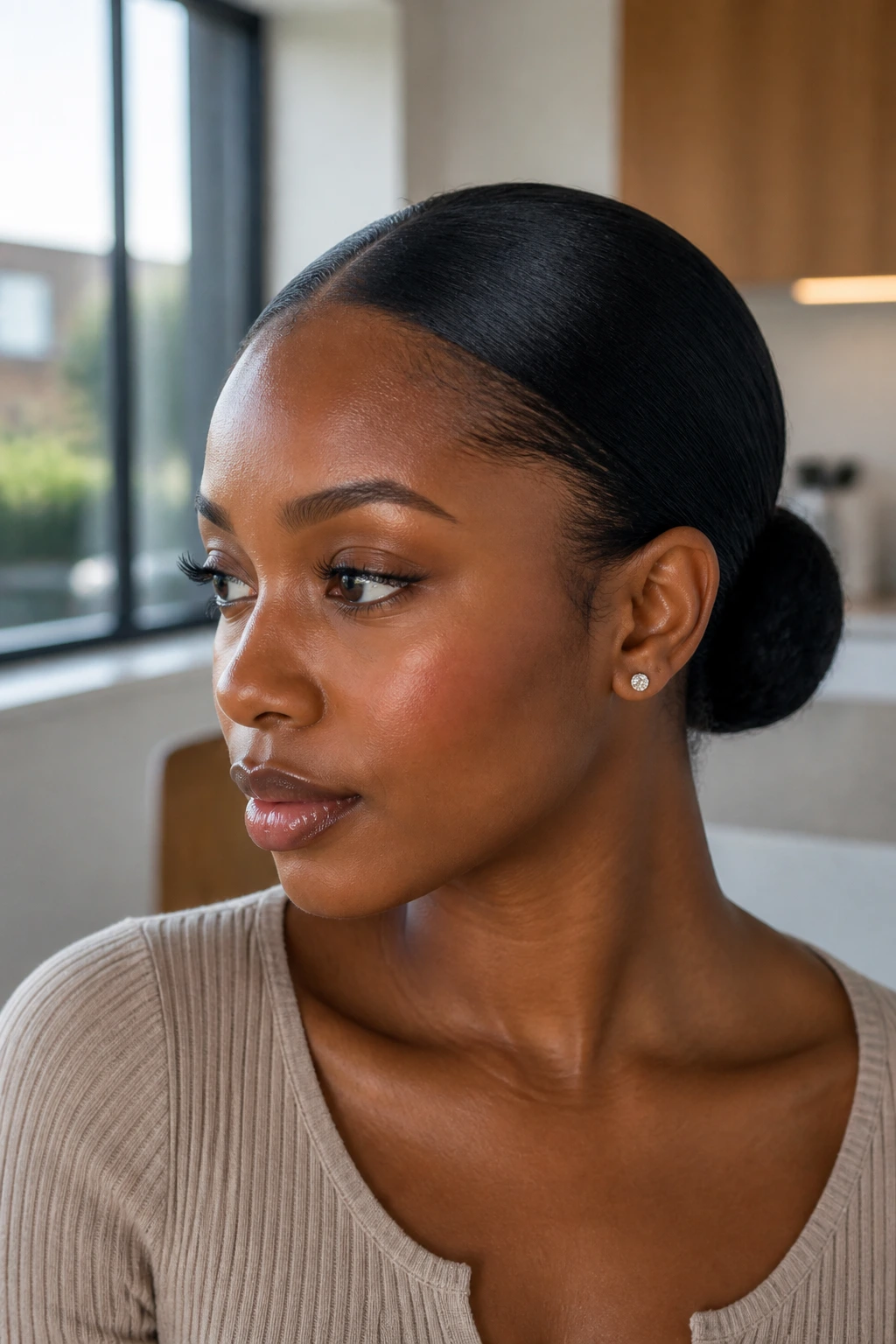
1. Sleek Low Bun with a Sharp Middle Part
If you want one style that looks polished without a lot of fuss, this is the one I’d reach for first. The appeal is in the contrast: a glassy crown, a clean center part, and a bun sitting low at the nape where the shape feels calm instead of severe. It works on stretched natural hair, relaxed hair, or even braids gathered into a bun if the base is neat.
The trick is not using too much product at once. A wide-tooth comb gets the hair moving, then a denser brush smooths the perimeter, and the part needs to stay straight all the way back to the crown. If the part wobbles, the whole look loses that crisp finish. A small wrap of hair around the base makes the bun look intentional, even when the rest of the style is very simple.
This is the style I’d pick for a work day, a dinner, or any moment when you want your face to do the talking. It also plays well with earrings. Big hoops, studs, or a single cuff all make sense here.
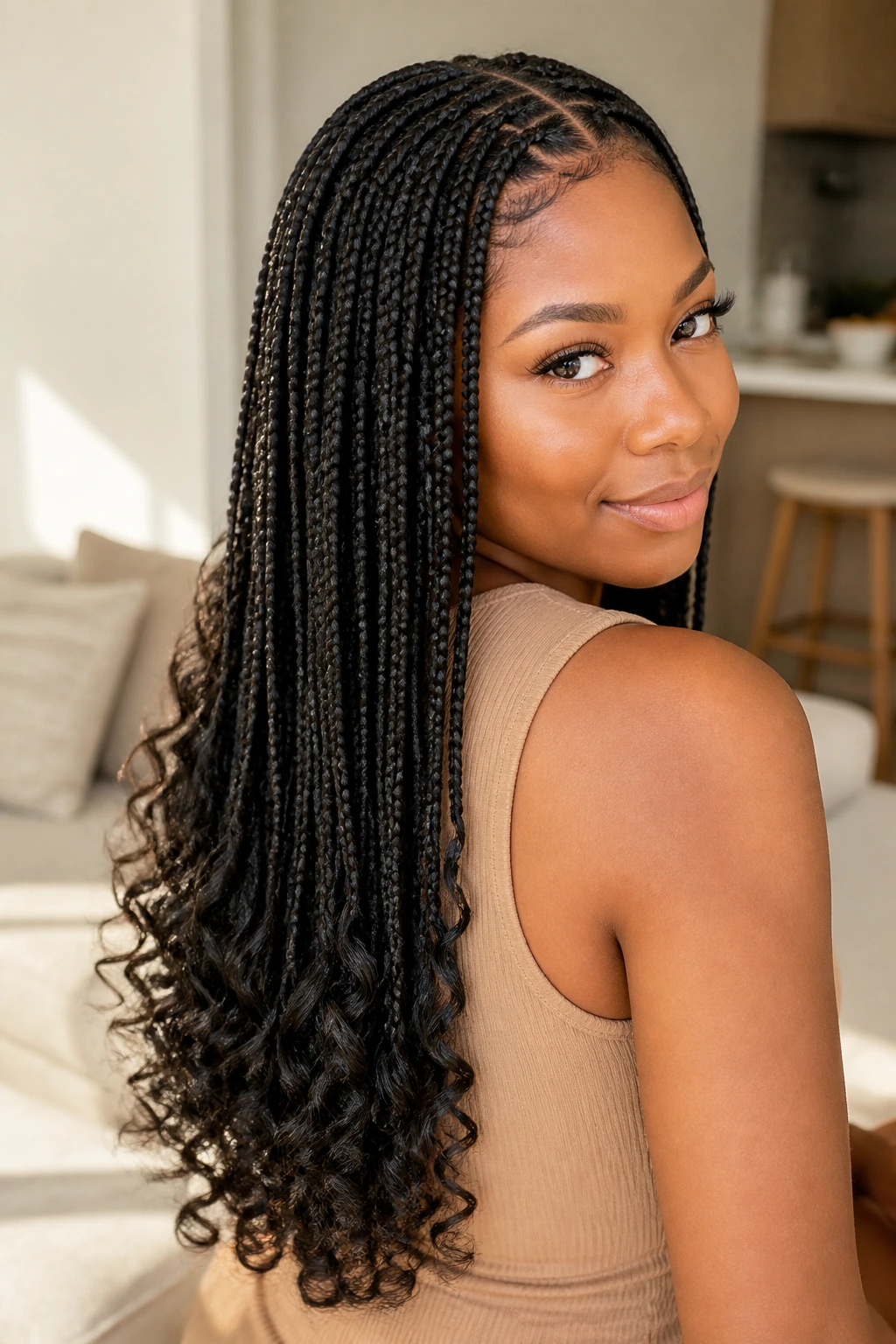
2. Knotless Braids with Curled Ends
Why do knotless braids keep showing up in modern Black hair looks? Because they solve one of the oldest braid problems: too much bulk at the scalp. The braid starts lighter, the sections lie flatter, and the whole style moves a little more naturally. The curled ends soften the shape so the braids don’t read too rigid or too heavy.
This style works best when the braids are sized with restraint. Pencil-thin pieces give a cleaner line than giant sections, and mid-back length tends to feel easier to wear than braids that drag at the waist. If the ends are synthetic, set them with flexi rods before dipping or sealing, then separate the curls only after they cool. That little extra step keeps the ends from puffing into a frizzy cloud on day two.
It’s a smart pick if you want something protective that still has motion. The scalp feels less boxed in than it does with heavy knot braids, and the curled ends add enough softness that you do not need much else. A middle part keeps it sleek. A side part changes the mood fast.
3. Tapered Natural Cut with Finger-Coiled Top
A tapered cut gives you shape the minute you wake up. Shorter sides and back keep the outline clean, while the top stays long enough to show texture and volume. Finger coils on the crown sharpen the look even more, because each little coil catches light and shows the curl pattern instead of letting it blur together.
This is a style with personality, and it does not ask for much in return. A good leave-in, a curl cream or light gel, and patient sectioning are the whole game. Small coils hold their shape better than big, rushed ones. If you want the top to pop, let it dry fully before touching it. Half-dry coils unravel fast and then you end up chasing frizz with your fingers, which never ends well.
It’s one of the best choices for women who want low maintenance without looking like they gave up on their hair. You can wear it with a shape-up around the hairline for a sharper finish, or keep the edges soft and rounded. Either way, the cut does the heavy lifting.
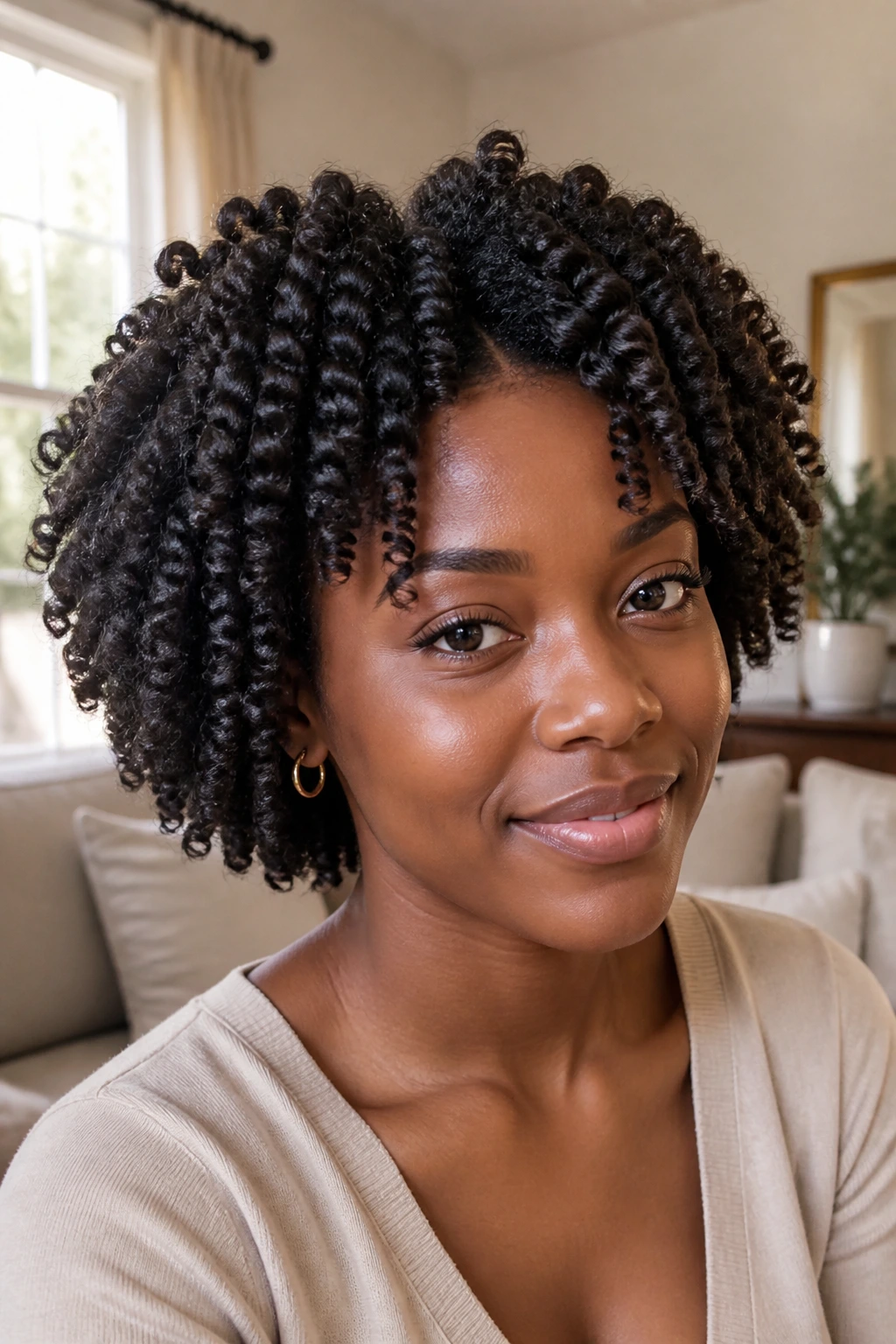
4. Defined Twist-Out with a Rounded Shape
A twist-out looks modern when the shape is round and the curl clumps are defined enough to show intention. The old mistake is making it too fluffy too soon. Better to let the twists dry completely, take them apart with a bit of oil on your fingers, and stop separating before the hair gets too big and fuzzy.
What makes it work
A twist-out is one of those styles that rewards patience more than product hoarding. Use two-strand twists on damp hair, not soaking wet hair, so the curls set without staying mushy underneath. A creamy leave-in plus a medium-hold styler is usually enough; heavy product makes the roots limp and the ends dull.
If you want the style to look current, shape the top and sides with your hands after the takedown. The goal is a rounded silhouette, not a helmet. A little lift at the roots helps too, especially if your hair tends to collapse at the crown.
It’s the kind of style that can look soft, grown, and a little romantic without turning fussy. That balance is why people keep coming back to it.
5. Jumbo Feed-In Braided Ponytail
There’s something clean and almost architectural about a feed-in braided ponytail. The front stays sleek, the braid lines feed neatly into the base, and the length pulls the eye down in one strong line. Modern braid styles often look best when they don’t try to do too much, and this one understands the assignment.
The ponytail can sit high for drama or mid-height for a calmer profile. Either way, the scalp sections need to be precise. A rat-tail comb helps with the parting, and a little gel at the roots keeps flyaways from making the braids look unfinished. If you’re adding extension hair, match the weight to your own hair density. Too much hair makes the base strain, and you’ll feel it by the end of the day.
This style makes sense when you want impact without constant touch-ups. It photographs well from the side, holds its shape in humidity better than a loose blowout style, and pairs nicely with earrings or a clean neckline. The ponytail is the point. Let it be.
6. Wash-and-Go with Soft Edge Detail
A good wash-and-go is never accidental. The curl definition, the parting, and the perimeter all need a little thought, or the style can slide from fresh to chaotic very fast. What makes it look modern is the clean balance between defined curls and a soft hairline. The hair should still look like hair, not like it’s been lacquered into place.
Start with damp, detangled hair and work in sections. A strong-hold gel or foam-custard combination helps the curls stay grouped while they dry. Then stop touching it. That’s the part people ruin. Every extra rake through the hair breaks the clumps apart and leaves frizz in the front where you notice it first.
If your curl pattern is tighter, a diffuser helps preserve definition without flattening the roots. If your curls are looser, air drying can be enough. A side part or a slightly off-center part often looks more current than a straight-down-the-middle approach, though a middle part can be gorgeous when the curls frame the face evenly.
7. Shoulder-Grazing Faux Locs
Shoulder-length faux locs hit a sweet spot. They keep the weight down, frame the jawline, and still give you that textured, layered look people love. Longer locs can be beautiful, but they also bring more bulk, more swing, and more stress on the neck. Shoulder-grazing length feels easier to live in.
The style looks best when the parts are neat and the locs aren’t overpacked. A few curly strands mixed in can soften the outline, but too much decoration turns the whole thing busy. I prefer faux locs when the finish looks a little matte and a little piecey. It feels richer than a shiny, uniform bundle of hair.
You can wear them with a center part for a calmer look or a side part for more drama. A small amount of mousse and a satin scarf at night keeps the roots from puffing out too quickly. If you want a style that buys you time in the morning, this one earns its keep.
8. Side-Swept Cornrow Braids into a Bun
Asymmetry changes everything. A side-swept cornrow pattern feeding into a bun at the nape or behind one ear gives the style movement before you even add accessories. It feels modern because it uses geometry rather than volume to make the point.
The cornrows need to be tight enough to hold their line but not so tight that the scalp looks strained. That tight-versus-painful line matters. If the braids leave you with a headache before lunch, the style is too tight. A good side-swept pattern can still have elegance without that strain.
This is one of those looks that works well for formal settings because it stays put. A bun keeps the silhouette compact, and the sweep across the head creates interest where a plain bun would feel flat. If you want to elevate it, tuck in a single gold cuff or a small pin at the base. Don’t pile on extras. The braid pattern already does enough.
9. Sculpted High Puff with Line-Up Edges
A high puff only looks casual when it’s done carelessly. Done well, it’s a strong, sculpted shape with lifted roots, a round body, and edges that are brushed into a clean frame. That balance is what makes it feel current instead of thrown together.
The best puffs keep the hair stretched enough to show length without smothering the curl pattern. If your hair is very shrunken, stretch it first with banding, twists, or a blow-dry on low heat before gathering it. Then use a wide band that grips without digging into the scalp. Too much pressure at the base can flatten the front and cause that odd “pancaked” look.
A line-up around the hairline can sharpen the style, but it does not need to be severe. A softly brushed edge with a little gel is often more flattering. The puff itself should stay full. That’s the whole point. It gives you height, shape, and a little drama without asking for hours of work.
10. Curly Frohawk on Tapered Sides
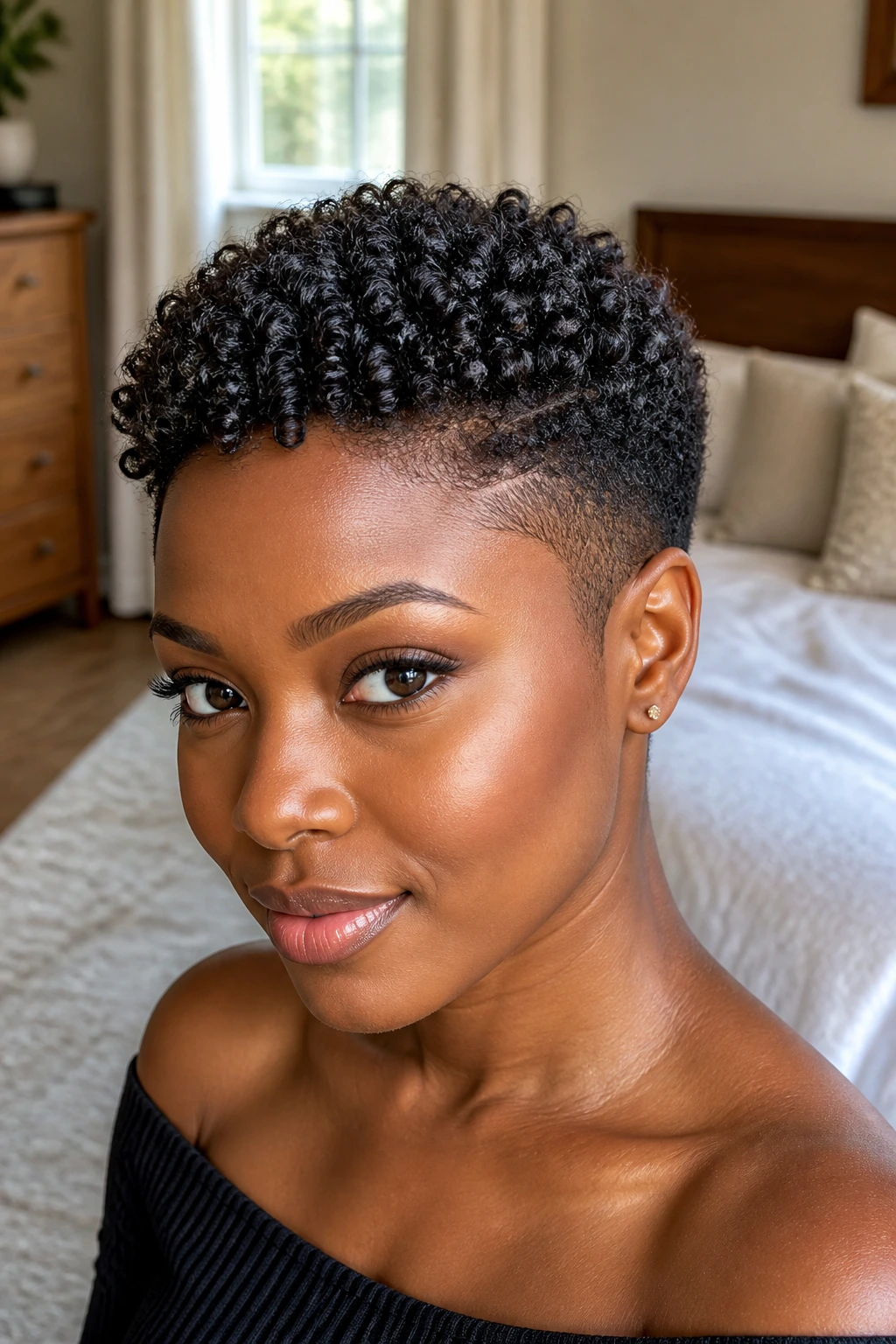
The frohawk works because it combines edge and softness in the same silhouette. Tapered sides keep the shape neat, while the center strip of curls stays full and expressive. The result is bold, but not bulky.
This is one of those styles that looks especially good when the curl pattern is defined from root to tip. A curl cream or gel on the center section gives shape, and a pick at the crown can add lift without turning it into a frizzy cloud. If the sides are tapered short, they need regular cleanup to keep the whole style crisp. Once they start growing out unevenly, the line gets muddy fast.
I like this style on women who want their hair to have some attitude. It has movement. It has structure. It doesn’t apologize for either one. A frohawk also makes earrings, makeup, and necklines easier to show off because the hair draws the eye upward instead of spreading out in every direction.
11. Braided Bob with Beaded Ends
A braided bob does something long braids can’t: it keeps the profile clean. The line ends around the jaw, collarbone, or just above the shoulders, and that shorter shape feels sharper right away. Add a few beads at the ends, and the movement becomes part of the style instead of an afterthought.
The key is restraint. Too many beads can push the look into costume territory, and that’s not where modern style lives. A few clear beads, gold cuffs, or a single accent row usually does the job. The braid ends should still move freely. If they’re weighed down too much, the bob loses that light swing that makes it look current.
This is a good option when you want the convenience of braids without the drag of long hair. It also frames the face beautifully, especially with a center part or soft side part. If your face shape likes a little structure near the chin, a braided bob will do more for you than a braid that falls to the waist and hides everything.
12. Half-Up, Half-Down Curls with a Sleek Crown
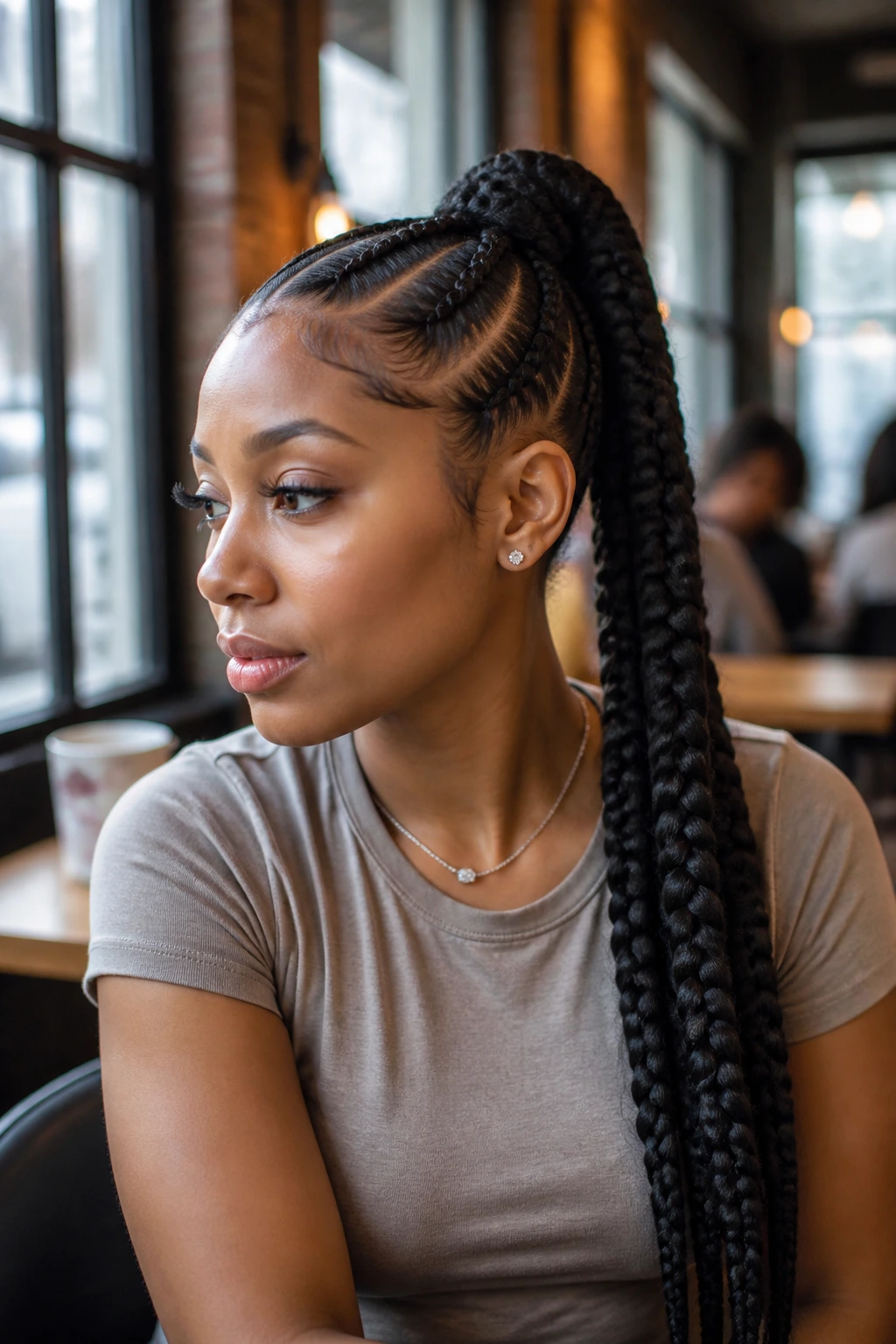
The reason this style keeps coming back is simple: it gives you contrast. The crown is smooth and neat, while the lengths below stay soft, fluffy, and touchable. That mix reads polished but not stiff.
You can build it with natural curls, a braid-out, a twist-out, or even a curl-enhanced sew-in or wig style. What matters is the crown. If the top section is smooth and the parting is tidy, the whole look feels intentional. A small top knot, a tucked half ponytail, or a braided crown at the top all work. The lower section should be loose enough to move when you turn your head.
This style is good for women who want their hair out of the way but do not want to give up volume. It also photographs well because the eye has two places to land: the sleek top and the textured bottom. That little tension is what makes it feel fresh.
13. Passion Twists with a Deep Side Part
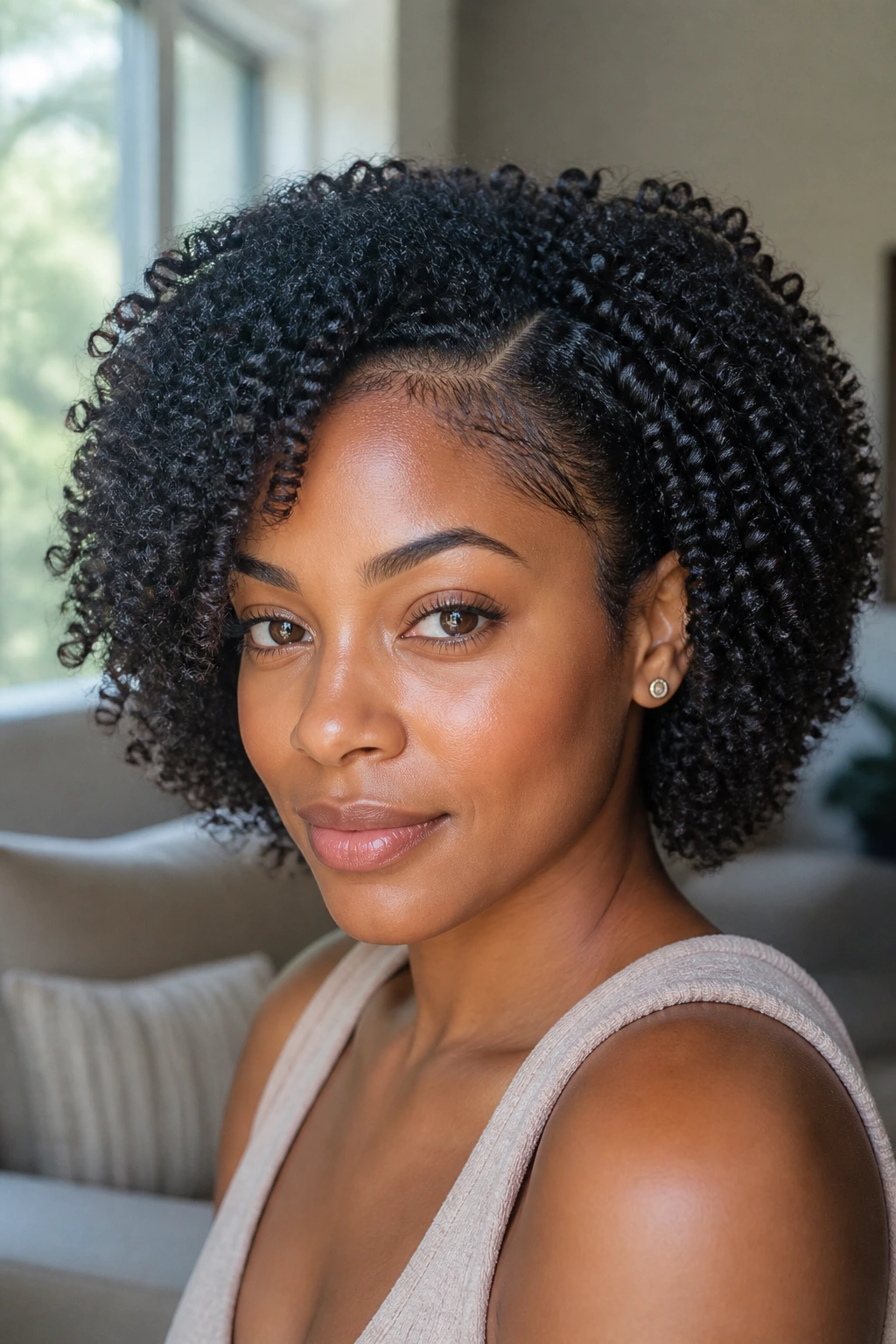
Passion twists have a softer, more fluid look than tighter rope twists, and that softness is part of the appeal. They move easily, sit with a little bend, and have a lived-in texture that feels less rigid than box braids. A deep side part gives them shape so they don’t just hang there.
The parting changes the whole personality of the style. Center part feels calm and symmetrical. Side part creates lift and movement. If you want the twists to keep their shape longer, choose a medium size and keep the root neat. Excessively thick twists can feel bulky after a week, especially if the extensions are dense.
This is one of the better protective styles for someone who likes hair that looks a bit soft around the edges. It’s not shiny in the way some braid styles are. That’s part of the charm. The finish looks more organic, which is exactly why it reads as modern rather than overly manufactured.
14. Flat Twists into a Low Updo
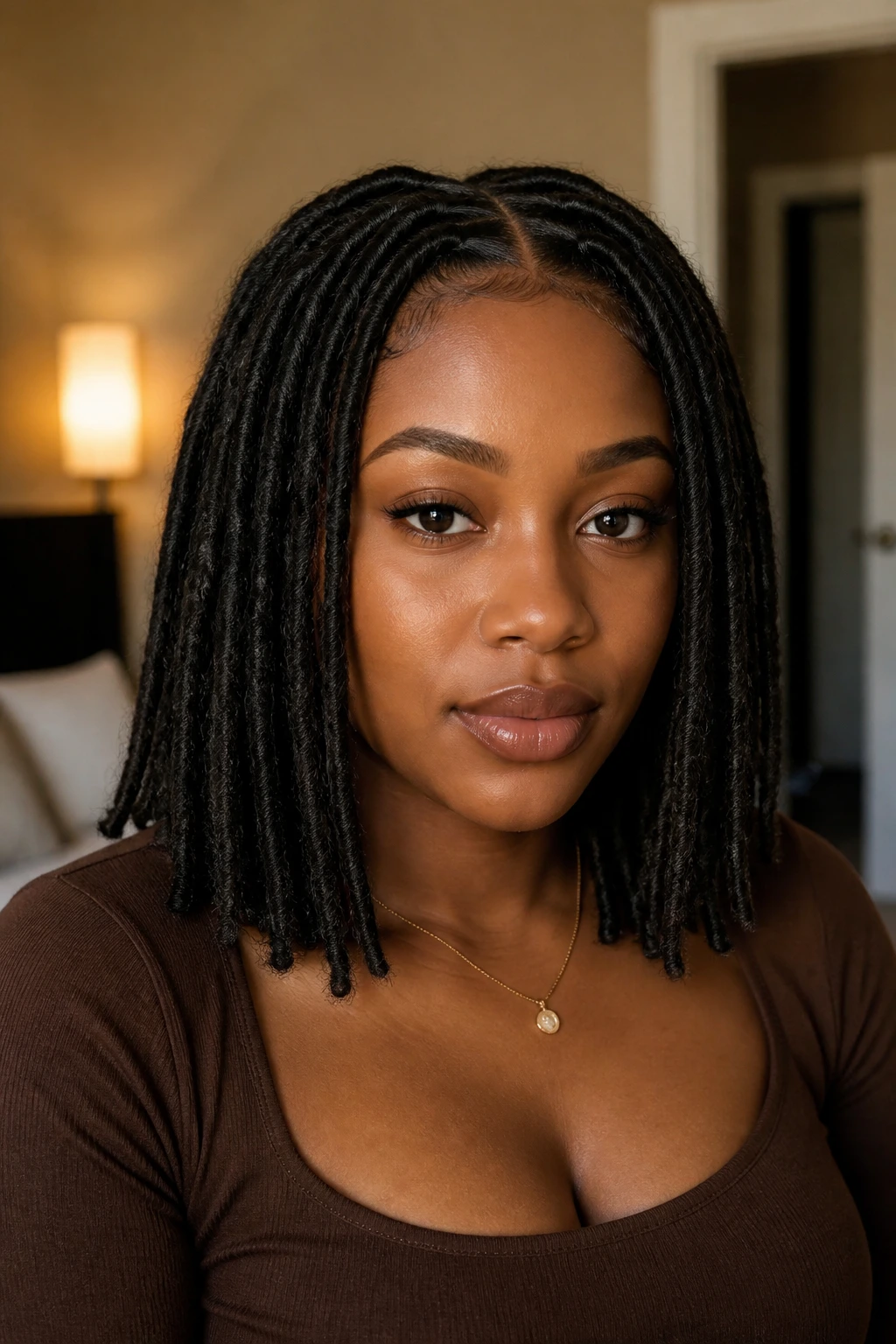
Flat twists are underrated. They lie close to the head, create clean lines, and make it easy to build an updo that looks elegant without needing a lot of added hair. When the twists feed into a low bun or tucked roll, the style feels polished and controlled in the best way.
The parting here matters more than people think. Straight rows can look formal. Curved or angled parts soften the shape and keep it from feeling too severe. A little gel at the root helps the sections stay neat, but the real trick is not over-twisting the ends. Twists that are pulled too tight can make the updo look stiff, and stiff is the opposite of modern.
If you want a style for a wedding, an interview, or a day when you want your face fully visible, this one is hard to beat. It protects the ends, keeps the hair off the neck, and still gives you a proper style instead of a bare-bones bun.
15. Short Coils with a Shape-Up and Shine
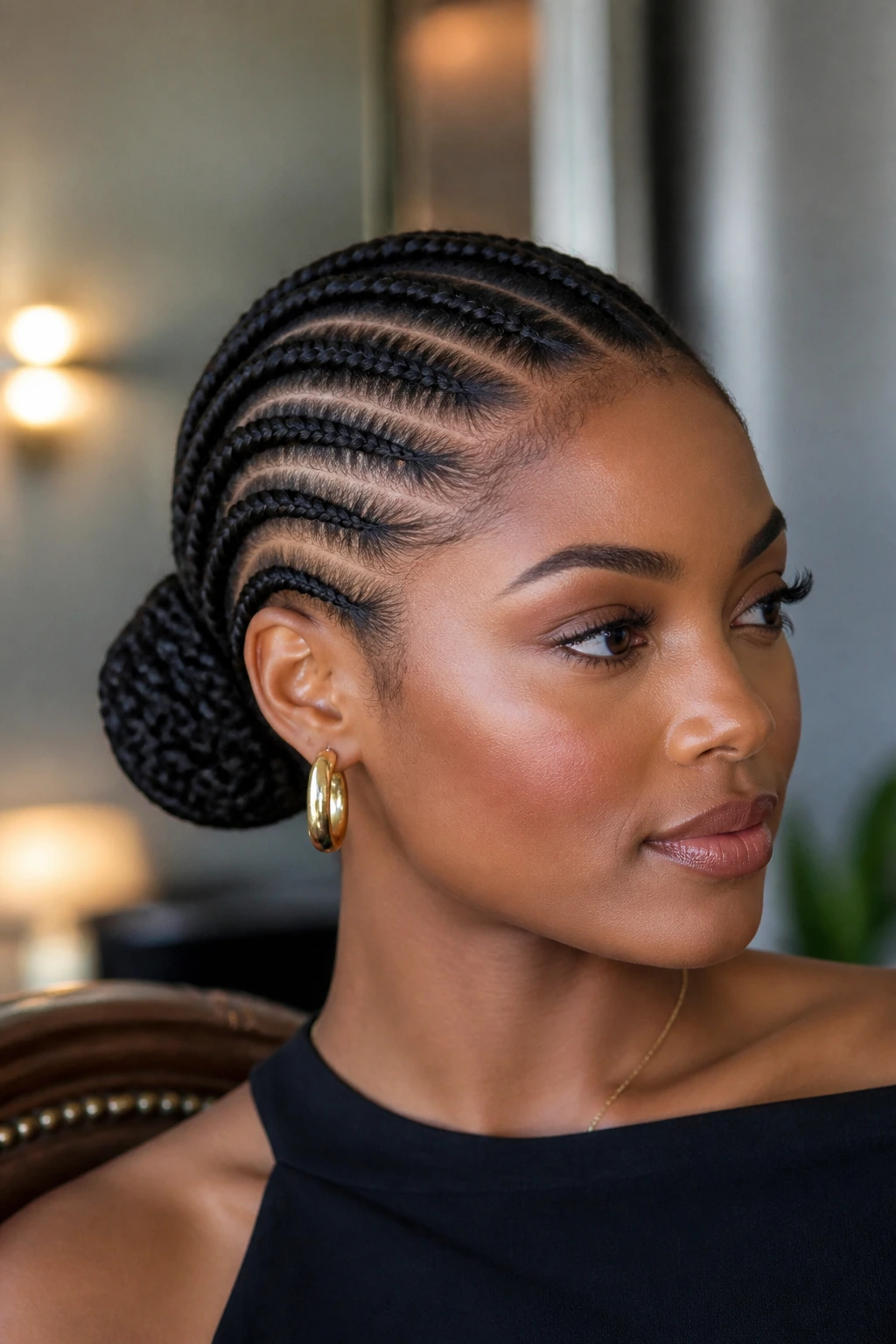
Short hair can look incredibly modern when the shape is clean. Coils defined at the top and sides, with a neat shape-up at the hairline and neckline, make the whole cut feel tailored. There’s nothing extra to hide behind, which is part of why it looks so sharp.
The shine matters, but only in moderation. A light oil or sheen spray gives the coils some depth without making them look greasy. If you use too much product, short coils can start to clump in a way that flattens the whole top. Better to apply a little, then stop. The hair should still look springy.
This style works beautifully on short natural hair that wants structure. It also makes facial features stand out in a clean, direct way. The neckline and temple area become part of the design, which is why a good trim keeps the style looking deliberate instead of grown out.
16. Space Buns on Stretched Natural Hair
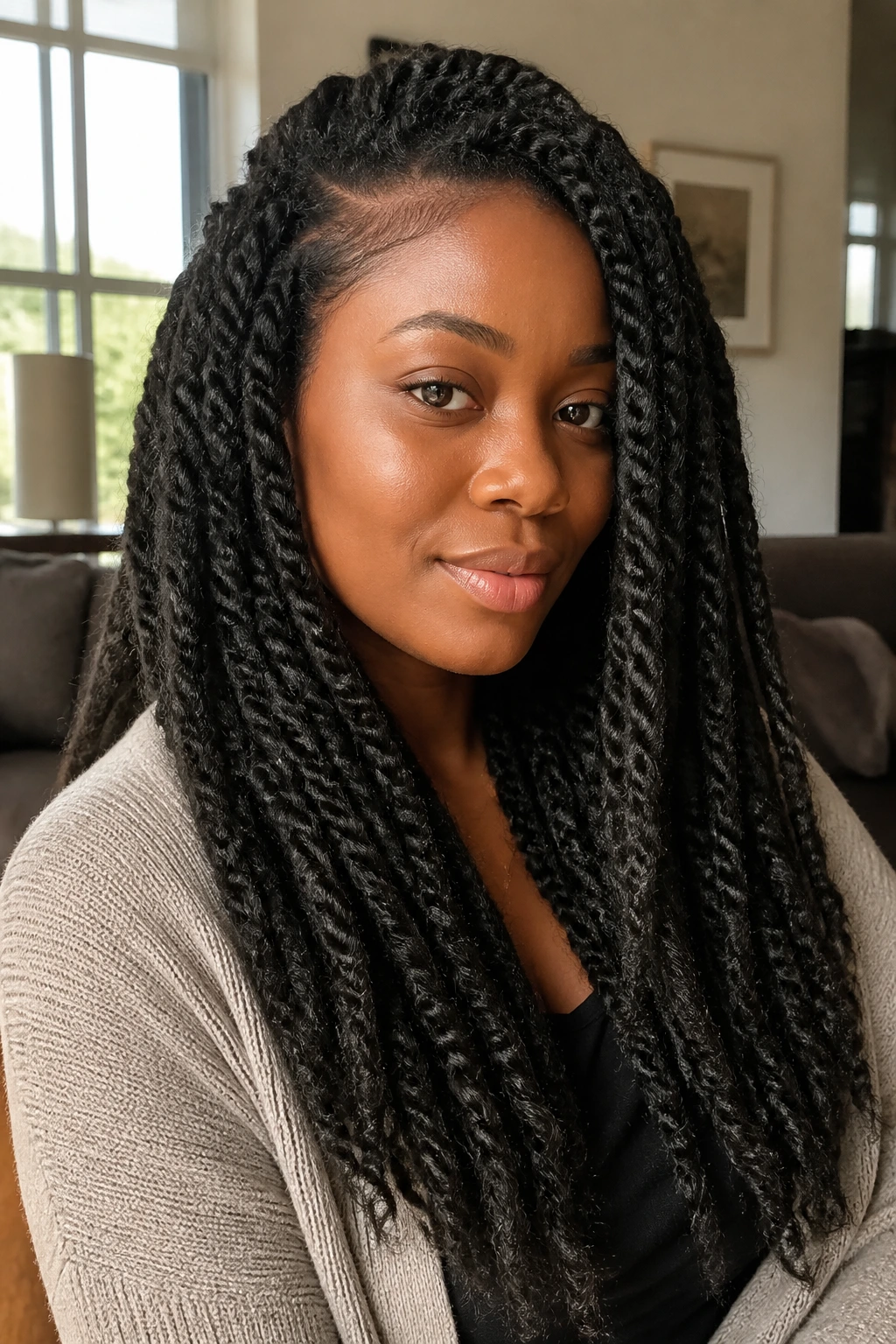
Space buns can look playful, but they feel much more modern when the parts are clean and the buns are balanced. Stretched hair helps a lot here because it gives the buns enough length to hold shape without fighting shrinkage every ten minutes.
The center part needs to be straight. That’s non-negotiable. If the sections are uneven, the whole style looks casual in the wrong way. A little gel at the roots and a toothbrush or edge brush around the hairline can clean up the front fast. The buns themselves can sit high for a bolder look or lower for something a little softer.
This style is one of those easy wins when you want your hair up and out of the way but don’t want a plain ponytail. It can look cute, yes, but it can also look very polished if the parts are sharp and the buns are a matching size. Tiny details make the difference.
17. Marley Twists in a Soft, Fluffy Length
Marley twists have that soft, fiber-rich texture that feels grounded and a little earthy in a good way. They’re not glossy, and that’s part of why they stand out. A fluffy finish reads more relaxed than synthetic braid shine, which gives them a different personality entirely.
Keep the length moderate if you want them to feel current and wearable. Shoulder to mid-back usually hits the sweet spot. Extremely long twists can pull the face down and start to feel like a lot of hair to manage. A side part or a slight asymmetry at the front can help the twists feel lighter visually.
This is a style for people who want protective wear with texture. It’s soft in motion. It’s easy to pin up if you need to. And because the twists don’t look too perfect, they age gracefully over the days instead of going from neat to messy in one jump.
18. Slicked-Back Ponytail with a Wrapped Base
A slicked-back ponytail is one of the cleanest modern looks you can wear on Black hair, especially when the base is wrapped so no elastic is showing. The contrast between the smooth crown and the long tail makes the whole style feel sharp. It’s a little severe at first glance, which is exactly why it works.
What makes this look strong is tension control. The hair should be smooth, but not yanked back so hard that the scalp looks tight or painful. A good brush, a strong-hold gel, and a satin scarf set the front nicely. Then the wrapped base hides the mechanics. That little wrap matters more than people think. It turns a basic ponytail into a finished style.
You can leave the tail straight, curled, braided, or brushed into soft waves. Each finish gives the same base a different mood. Straight tail feels sleek. Curled tail feels softer. Braided tail adds edge. Pick the one that fits the rest of your look.
19. Bantu Knot Set Worn as a Style
Bantu knots are one of the easiest ways to turn texture into a sculpted pattern. Instead of hiding the coils, you stack them into little wrapped knots that sit across the head like a design. That shape can look playful, polished, or a little editorial depending on the size and spacing.
The parts should be clean, and the knots should be similar enough in size that the overall style reads balanced. If the sections are wildly uneven, the eye gets distracted. Use a moisturizing cream or leave-in first so the hair stays supple under the twist. Dry hair can make the knots feel rough and look fuzzy before the day is out.
This style can stand on its own or serve as a set you take down later for a knot-out. Worn as-is, it gives structure and a strong shape. It’s not a style that tries to be invisible. Good. It shouldn’t be.
20. Layered Silk Press with Face-Framing Pieces
A silk press looks modern when it still has movement. Bone-straight hair can be pretty, but a layered press with a little bend at the ends and soft face-framing pieces feels much less flat. The shape is what sells it, not the heat alone.
Heat protectant is not optional here. Neither is a careful pass count. Chasing each section too many times turns a polished press into brittle-looking hair fast. The better approach is controlled tension with a clean blow-dry base, then a flat iron pass just enough to smooth the cuticle. If the ends flip naturally, let them. That little curve makes the style feel alive.
This is the look for someone who likes straight hair but does not want it to look pasted to the skull. Layers keep it from hanging like a curtain. Face-framing pieces soften the line and make the style feel less severe around the jaw and cheekbones.
21. Halo Braid Wrapped Around Natural Hair
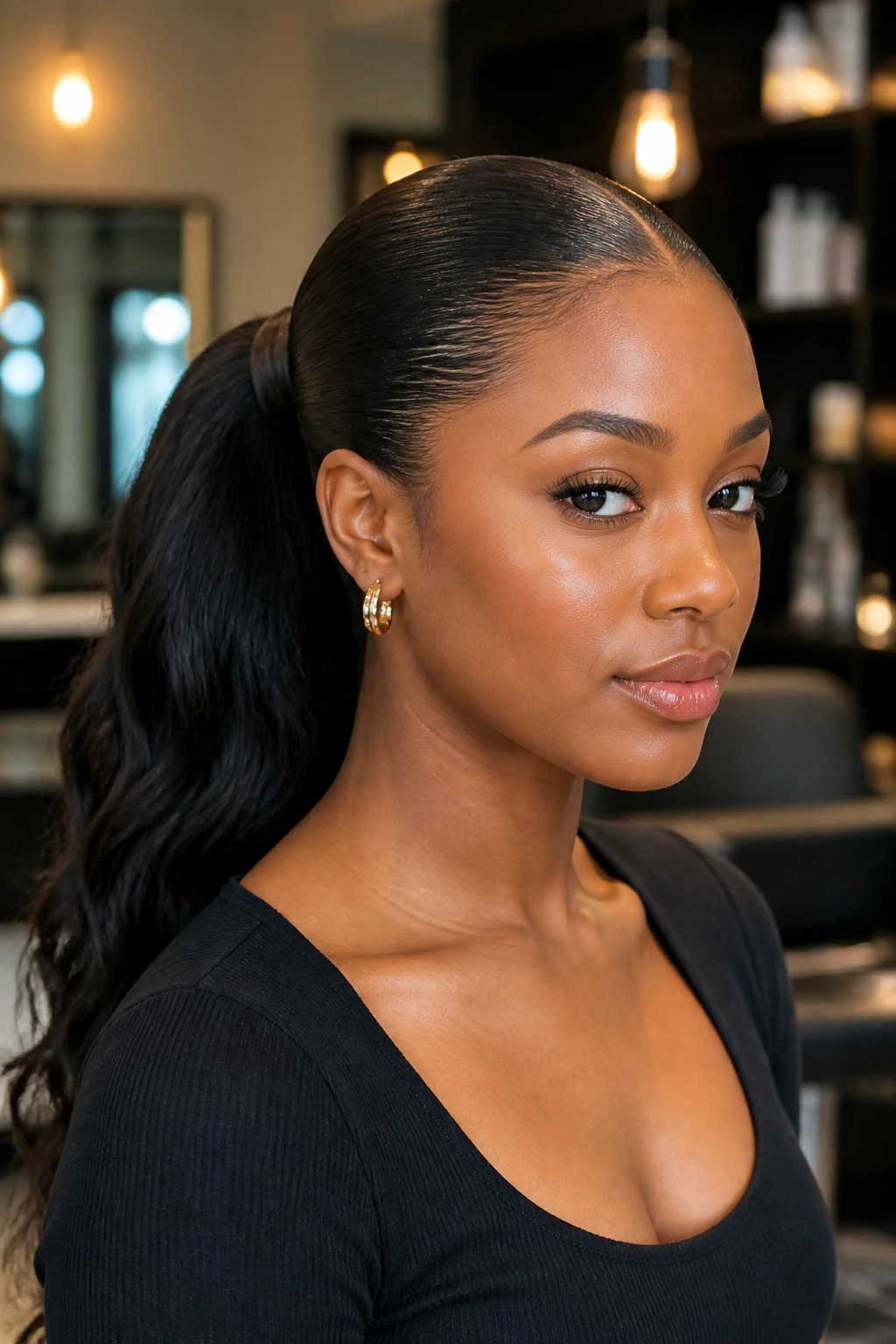
A halo braid frames the face in a way few styles can. It reads clean, neat, and a little regal without turning fussy. The braid sits around the head like a crown, which is a strong shape all on its own, so the rest of the hair can stay tucked and simple.
This style works especially well when the braid itself is smooth and compact. A chunky, lumpy braid can look unfinished. A braid that’s too tiny can disappear into the hairline. Somewhere in the middle tends to work best. If you have very textured hair, stretching it first helps the braid lie flatter and keeps the finish cleaner.
I like halo braids because they handle accessories well, but they do not need them. A single pin or a small gold clip is enough. The braid gives the face a frame, and the frame is already the point.
22. Curly Pixie with a Tapered Neckline
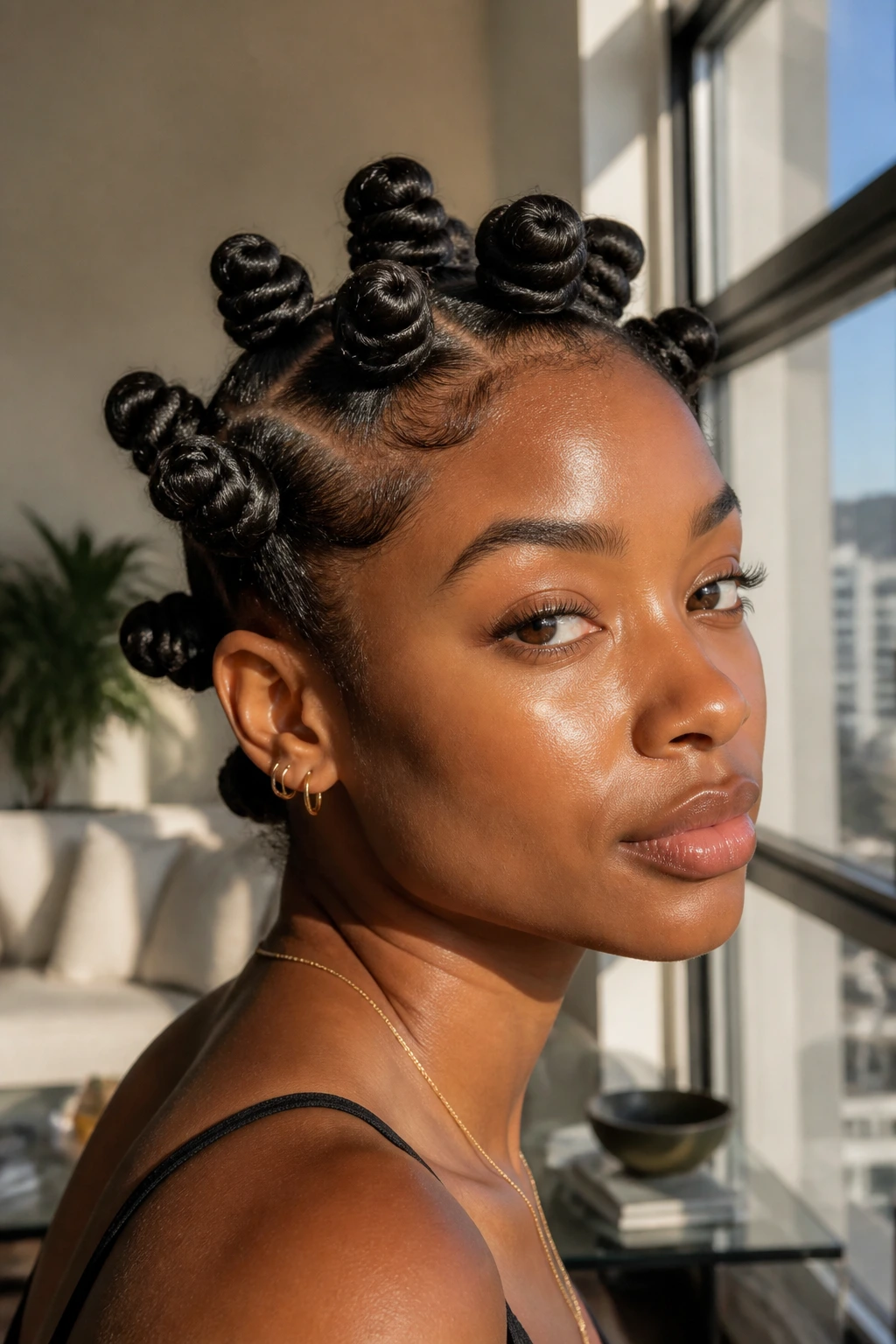
A curly pixie works when the neckline and sides are crisp. That clean taper sets off the curls on top, which keeps the look from drifting into shapeless short hair. The cut is small. The effect is not.
Use a curl sponge, finger coils, or a defined short-curl routine depending on your texture. The top should keep some height, not sit flat against the head. If the hair is cut too evenly all over, the style loses that modern profile and starts looking more generic. The taper gives the eye somewhere to go.
This is one of my favorite low-maintenance shapes for women who want short hair with intention. It can feel soft around the face and neat around the neck at the same time. That’s a good combination, and not as easy to get as it sounds.
23. Cornrow Ponytail with Curled Leave-Out
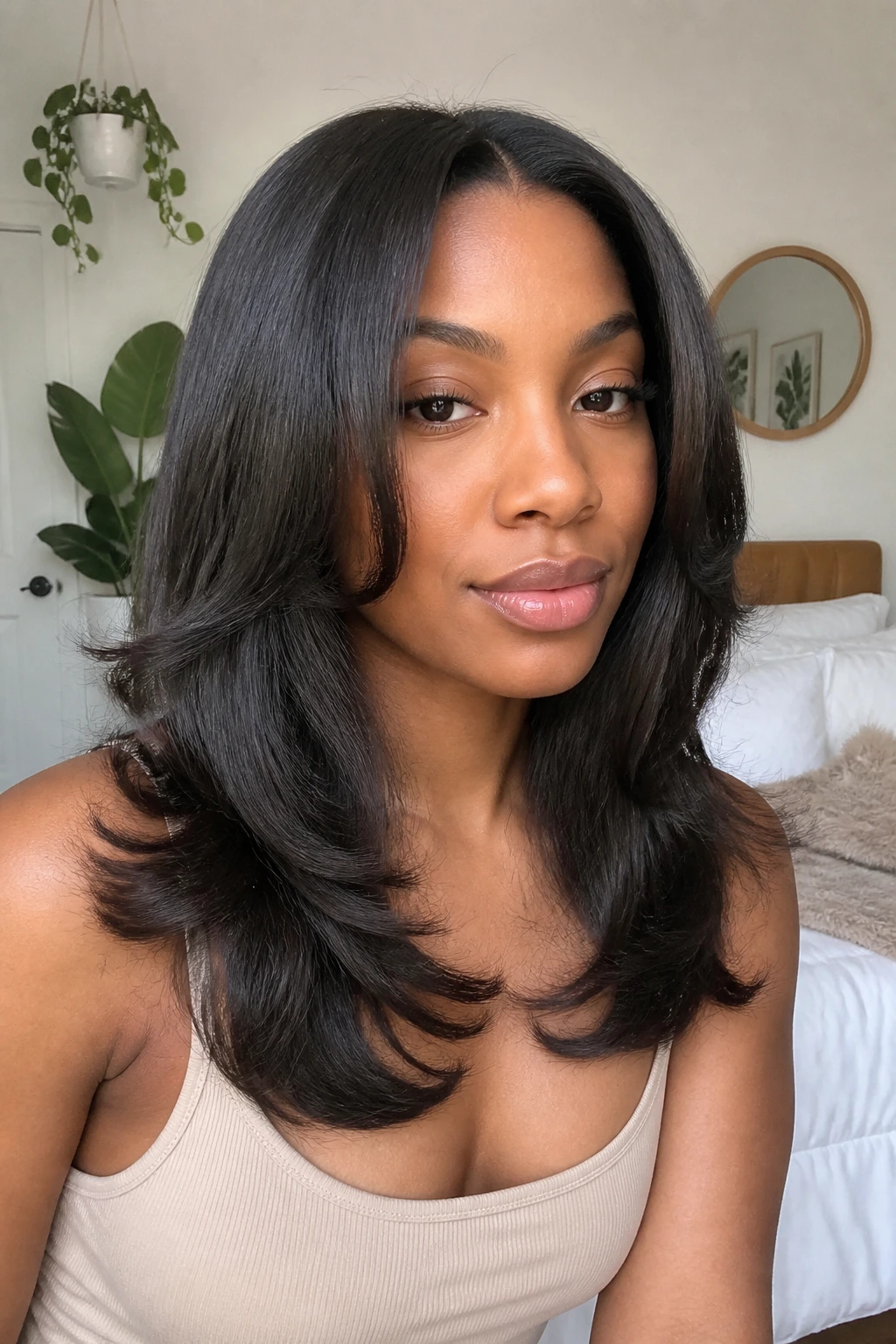
A cornrow ponytail earns its place by mixing two moods at once: the front is tightly controlled, while the ponytail or leave-out brings some movement back in. That contrast keeps it from looking too severe. Add curled pieces near the front or in the tail, and the whole style softens.
The front braid pattern needs to be neat and symmetrical. Once the rows start wandering, the style loses the polished shape that makes it work. A mid or high ponytail usually looks best because it lifts the face and keeps the braid lines visible. If you’re leaving curls out, keep them defined and hydrated so they don’t puff into a halo by midafternoon.
This style is a good middle ground for someone who wants braid structure without committing to a full head of box braids or twists. It’s sleek up front, easy to dress up, and not too heavy if the extensions are chosen with some restraint.
24. Two-Strand Twist Updo with Gold Accessories
A two-strand twist updo looks modern when the twists are arranged with clear shape rather than piled on randomly. Twist the hair into medium sections, then pin them into a bun, crown, or tucked roll that keeps the silhouette compact. A few gold pins or cuffs go a long way here. A few. Not fifteen.
The style works because the twists give texture and the updo gives structure. That’s a good pairing. If the twists are too tiny, the style can look busy. If they’re too large, the updo may not hold its shape well. Medium sections usually strike the right balance.
This is a strong option for formal wear or whenever you want something that feels finished without looking over-accessorized. The gold accents should act like punctuation. They’re there to sharpen the look, not to become the look.
25. Defined Afro with a Clean Shape and Side Part
A well-shaped afro is modern when it looks like it was shaped on purpose, not merely left to grow. The side part adds direction. The rounded outline gives the hair a sculpted presence. And the texture itself does the rest.
This is where a pick, a trim, and a little styling product really matter. If the sides start puffing out unevenly, the shape gets lost. If the top is too flat, the style loses energy. A clean side part can solve both problems by giving the eye a line to follow. Some women like a slightly tapered side or a soft heart shape; others prefer a full round profile. Either way, the shape should feel balanced from front to back.
This is the kind of style that makes Black hair look powerful without needing extra work from the outfit or makeup. It stands on its own. It always has. The trick is giving it a border.
How These Styles Keep Their Shape Without Looking Stiff
The styles that age well share a few habits. They do not fight the hair’s texture, and they do not smother it under layers of product that dry into a hard shell. A modern look on Black hair usually keeps one part sleek and lets another part stay soft. That contrast is doing more work than people realize.
A braid with clean roots and loose ends feels more current than a braid that is tight everywhere. A twist-out with a neat part and a rounded silhouette feels better than one that’s been picked into a cloud. Even a simple bun looks more finished when the line of the hairline is deliberate. Shape matters. Line matters. Texture matters. All three together are what make a style look thoughtful instead of rushed.
Color can matter too, though it does not need to be loud. A subtle brown highlight in braids, a glossy finish on a silk press, or warm hair jewelry on an otherwise minimal style can change the feel fast. Still, the backbone is shape. If the shape is there, the rest can stay quiet.
Small Habits That Keep the Style Looking Fresh
Part cleanly, every time. A crooked part can throw off an entire style, especially braids, buns, and half-up looks. Use the tail of a comb and take the extra minute.
Control the roots before you chase the ends. Most styles look worn out first at the hairline, crown, or nape. Smooth those areas first, then worry about fluffing the rest.
Pick one finish and commit to it. Glossy, fluffy, matte, defined. Mixing all four at once makes the style look confused.
Match the style to the hair’s weight. Heavy extensions on fine strands can drag the scalp. Big volume on very short hair can collapse. The shape has to fit the hair that’s doing the work.
Sleep like you mean it. Satin bonnet, silk scarf, or both. Hair remembers rough pillows, and not in a nice way.
Mistakes That Make a Good Style Look Tired
Tension is the first problem. A style can look neat on day one and still be wrong if it pulls too hard. Tight braids, slick ponytails that yank the edges, and buns that sit like a vice at the crown will all show their damage sooner than you want. If the scalp aches, the style is already too tight.
The second mistake is drowning the hair in product. A little gel on the perimeter or a little mousse on braids can sharpen the finish. Too much leaves white residue, sticky buildup, and that dull coated look that makes even a clean style seem dirty. You know it when you see it. The hair stops moving.
A third one: ignoring the shape at the back. People spend time on the front of the head and forget that the side and back profile is what others see from across the room. If the bun is lopsided or the puff sags in the back, the style loses balance.
And don’t stretch your style past its point. Braids fray, twist-outs fuzz, silk presses swell, and wash-and-gos lose definition. That’s normal. What is not normal is pretending a week-old style should look day-one fresh. Refresh it or retire it.
Easy Variations That Change the Mood
Softer Crown: Keep the roots smoother but let the ends or curls stay looser. This works well for twist-outs, half-up styles, and puffs when you want polish without stiffness.
Sharper Line-Up: Add a cleaner hairline, tighter parting, or a more geometric shape at the sides. This is a good move for tapered cuts, frohawks, and short coils.
Accessory Minimalism: One gold cuff, one pin, or one scarf tie is often enough. Use this when the style already has a lot going on in the texture or braid pattern.
Movement-First Finish: Choose curled ends, layered lengths, or a side part so the style sways a little when you walk. Braids, faux locs, ponytails, and half-up styles benefit most from this.
Texture-Forward Finish: Skip the extra shine and let coils, curls, or Marley texture stay visible. This usually works best for twist-outs, frohawks, afros, and coily short cuts.
Tools That Earn Their Spot on the Counter
-
Rat-tail comb: Best for clean parts, sectioning, and crisp braid lines.
-
Wide-tooth comb: Gentler for detangling curls, twists, and stretched natural hair.
-
Edge brush or soft boar-bristle brush: Helps smooth the hairline without scraping it raw.
-
Strong-hold gel or styling foam: Useful for slick buns, ponytails, wash-and-gos, and neat parting.
-
Leave-in conditioner: Keeps natural hair and twist sets from drying out while styling.
-
Curl cream or twisting butter: Helps define twist-outs, coils, puffs, and short curls.
-
Mousse: Good for braid refreshes, sets, and soft hold without heavy residue.
-
Satin scarf or bonnet: Keeps the style from frizzing up overnight.
-
Hair clips and duckbill clips: Make sectioning easier when you’re working through braids, twists, or a blowout.
-
Elastic bands without metal: Better for ponytails and puffs; metal clasps snag the hair.
-
Blow dryer with comb attachment: Optional, but useful for stretching hair before a sleek bun, braid style, or silk press.
-
Light oil or sheen spray: Best used sparingly on ends or finished styles, not poured on the whole head.
How to Keep the Style Fresh Overnight and Between Washes
Braids, twists, puffs, buns, and slick styles all need different kinds of care, but the basic rule is the same: protect the shape first, then clean up the edges later. A satin scarf or bonnet keeps friction down, and friction is what makes styles puff up, frizz out, or lose their parting. If you sleep on a cotton pillowcase every night with no cover, you are asking the style to work harder than it should.
For twist-outs and wash-and-gos, the refresh method is usually light. A small amount of water mixed with leave-in in a spray bottle can wake up the curls, but don’t soak the hair. Damp, not wet. Re-twist a few large sections at night if the shape starts collapsing. You do not need to re-create the whole head unless the style is badly flattened.
Braids, locs, and twists last longer when the scalp stays clean. A diluted shampoo or scalp cleanser every one to two weeks keeps buildup from sitting at the roots. Use a nozzle or pointed applicator, apply it directly to the scalp, and rinse well. Heavy products near the roots are the fastest way to make a neat style look dull and itchy.
Silk presses and slick ponytails need a different kind of discipline. Don’t pile on more oil every day. That only weighs the hair down and makes the front greasy. Wrap the hair at night, brush the crown lightly in the morning, and use the smallest amount of product needed to reset the finish. Less usually wins here.
Questions Readers Usually Ask
Which of these styles works best on short natural hair?
Tapered cuts, short coils, Bantu knots, curly pixies, and sculpted afros are the strongest choices. They use the length you already have instead of asking it to fake more length than it can hold. A short style looks better when the shape is clear, not when it’s crowded with product or accessories.
What if my hair shrinks up fast and loses the style by noon?
Start with stretched hair for puffs, buns, twist-outs, and braid styles if length matters to the silhouette. Banding, blow-drying on low heat, or setting the hair in large twists first will help. If you want a style that can handle shrinkage without fighting it, go with a wash-and-go, short coils, or a tapered cut.
Are tight braids or slick styles bad for edges?
Too much tension is the issue, not the style category itself. If your scalp hurts, the parting looks pulled, or the hairline starts looking thinner after repeated wear, the style is too tight or too frequent. Looser parting, lighter extension hair, and more rest between installs make a real difference.
How long should braids, faux locs, or twists stay in?
Most protective styles look best somewhere in the four-to-eight-week range, depending on density, growth rate, and how well the scalp is being cared for. Once the roots get fuzzy enough that the parts blur together, it’s time to take them down. Leaving them in too long does more harm than good.
Can I wear these styles to work or formal events?
Absolutely. Sleek buns, flat twists, halo braids, silk presses, and sculpted ponytails are especially strong in formal settings because they keep the silhouette neat. For work, the styles that stay put and need the least midday fixing tend to be the most practical.
What’s the easiest style if I don’t want to spend hours in the mirror?
A puff, a low bun, short coils, a quick twist-out, or a headband-friendly wash-and-go will save the most time. The trick is prep. If the hair is stretched, detangled, and ready the night before, the morning routine gets a lot shorter.
Can I do these styles at home without a stylist?
Some yes, some no. Puffs, buns, twist-outs, wash-and-gos, Bantu knots, and half-up styles are very home-friendly. Precision styles like feed-in braids, cornrow ponytails, and silk presses are harder to do well on your own unless you have a steady hand and a lot of patience.
What if my style looks flat instead of full?
Usually the problem is either too much product, too much tension, or not enough stretching before styling. Lift the roots with a pick, lighten the product load next time, and make sure the hair is dry before taking down twists or curls. Flat hair can usually be revived. Muddy shape is harder to fix.
A Few Styles Worth Saving
The best modern hairstyles for Black women don’t try to erase texture. They arrange it. That’s a big difference, and once you see it, you can spot it everywhere: a bun with a clean line, a puff with the right height, braids that move at the ends, coils that hold their shape without looking stiff.
Pick the look that fits your routine, not the one that asks you to become a different person for three days. The right style should make your hair easier to wear, not harder. And when the shape is right, the whole thing feels like it clicked into place on the first try.
