



Some mornings, your hair knows exactly what it wants to do — and it is not cooperating with your calendar. One curl goes left, another one shrinks straight up, and the little section near your crown decides to keep last night’s shape like a grudge. That’s why cute natural hairstyles for Black women have to do more than look pretty in a mirror. They have to survive humidity, preserve your edges, flatter your texture, and still feel like you when you catch your reflection in a car window.
The styles people actually keep coming back to are the ones that work with coils, kinks, curls, and shrinkage instead of fighting them. A good natural style can turn a rough twist-out into something elegant, make a low puff feel polished enough for a meeting, or give a short TWA enough shape that you don’t need much else. And yes, accessories matter — a satin scarf, a strong bobby pin, a narrow headband, the right gel — but the real magic is in choosing a shape that matches your length, density, and time.
Black hair gives you range. That’s the fun part. You can go sculptural, fluffy, sleek, soft, playful, protective, or all of the above, and the best styles often take the same hair and make it feel like five different heads of hair. The trick is knowing which styles are worth the detangling session and which ones are the fast save when you’ve got ten minutes and no patience.
Why You’ll Love This Collection
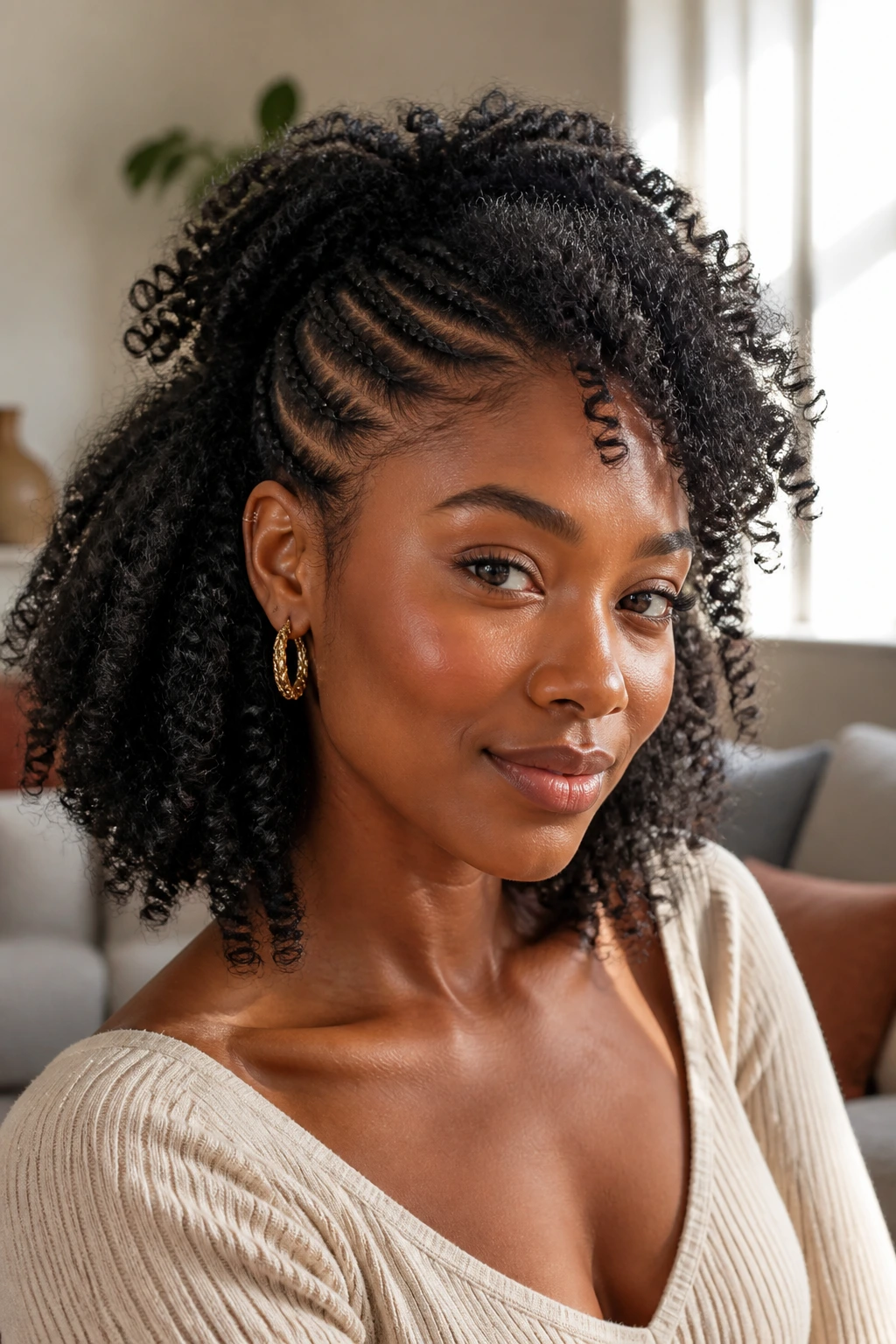
-
Style range: You’ll find short-hair ideas, medium-length options, long-hair looks, and a few protective styles that buy you time between wash days.
-
Low-tension choices: Several of these styles are built to sit close to the head or tuck ends away, which helps when your scalp is tender or your edges need a break.
-
Quick morning options: A puff, a clipped half-up style, or a banded look can take less time than making coffee, which matters on days when the mirror is not getting your full attention.
-
Event-ready looks: Flat twists, buns, braids, and rod sets can look polished enough for weddings, interviews, church, or any day you want your hair to do the talking.
-
Texture-friendly shaping: These styles lean into shrinkage, definition, and volume instead of asking your hair to behave like something it isn’t.
-
Accessory-friendly: Scarves, cuffs, clips, headbands, and barrettes all make sense here, and a small change in accessory can make the same style feel completely different.
1. Twist-Out With a Side Part
A twist-out with a clean side part is one of those styles that looks like you spent all morning on it, even when you didn’t. The texture lands somewhere between soft and springy, with enough definition at the ends to keep the shape from turning into a cloud by lunchtime. I like it best on hair that’s fully dry before unraveling; damp twists almost always go fluffy too soon.
The side part matters more than people give it credit for. It breaks up the roundness, adds movement, and keeps the style from looking flat at the roots. If your hair is thick, make the part deep and let the larger side carry the volume. If your hair is finer or shorter, a smaller side part keeps the style balanced instead of overwhelming your face.
Why It Works
Twists create a controlled curl pattern, so when you take them down, your hair falls in a shape that already has memory. A medium-size twist — think sections about the width of your pinky finger — gives the best mix of definition and fullness. Smaller twists give more curl; larger twists give more body. Both work. The mood is different.
For extra hold, use a water-based leave-in, a light cream, and a little mousse on the finished twists. Heavy butter can weigh the ends down and make the whole thing feel greasy by day two.
2. Wash-and-Go With Defined Curl Clumps
A good wash-and-go is all about clean curl clumps and a gel cast that dries without turning brittle. When it’s done right, the curls look shiny, separated, and springy at the same time. When it’s done badly, you get frizz, flakes, and that sad half-defined halo nobody asked for.
This style shines on hair that likes water and holds curl shape well. Scrunch in your stylers on soaking-wet hair, not towel-dried hair, if you want those clumps to stay intact. Diffusing can help, but air-drying works too if you have time and don’t keep touching it.
A soft cast is the secret. Once your hair is fully dry, scrunch out the crunch with a tiny bit of oil on your palms. That one move changes everything.
3. High Puff
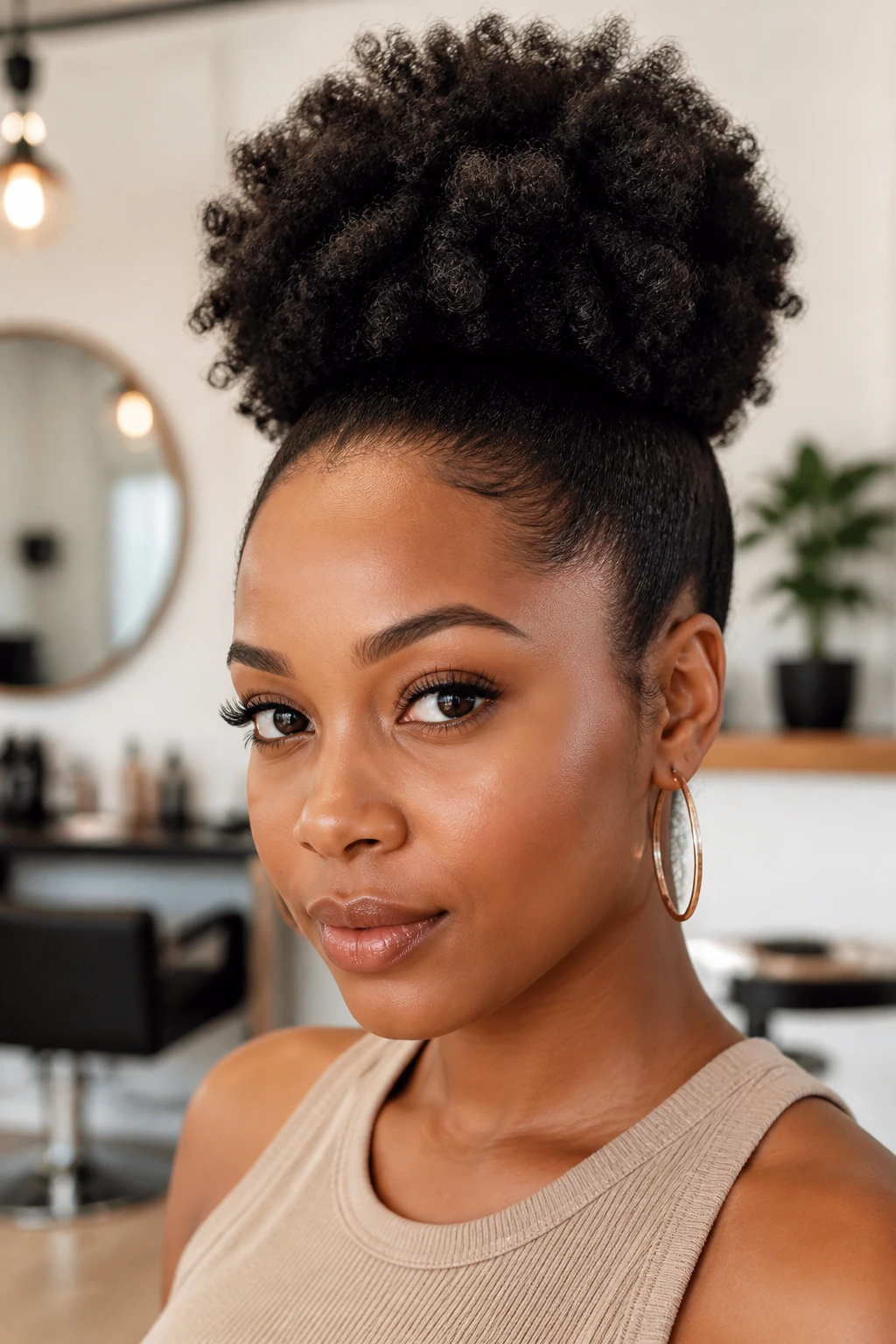
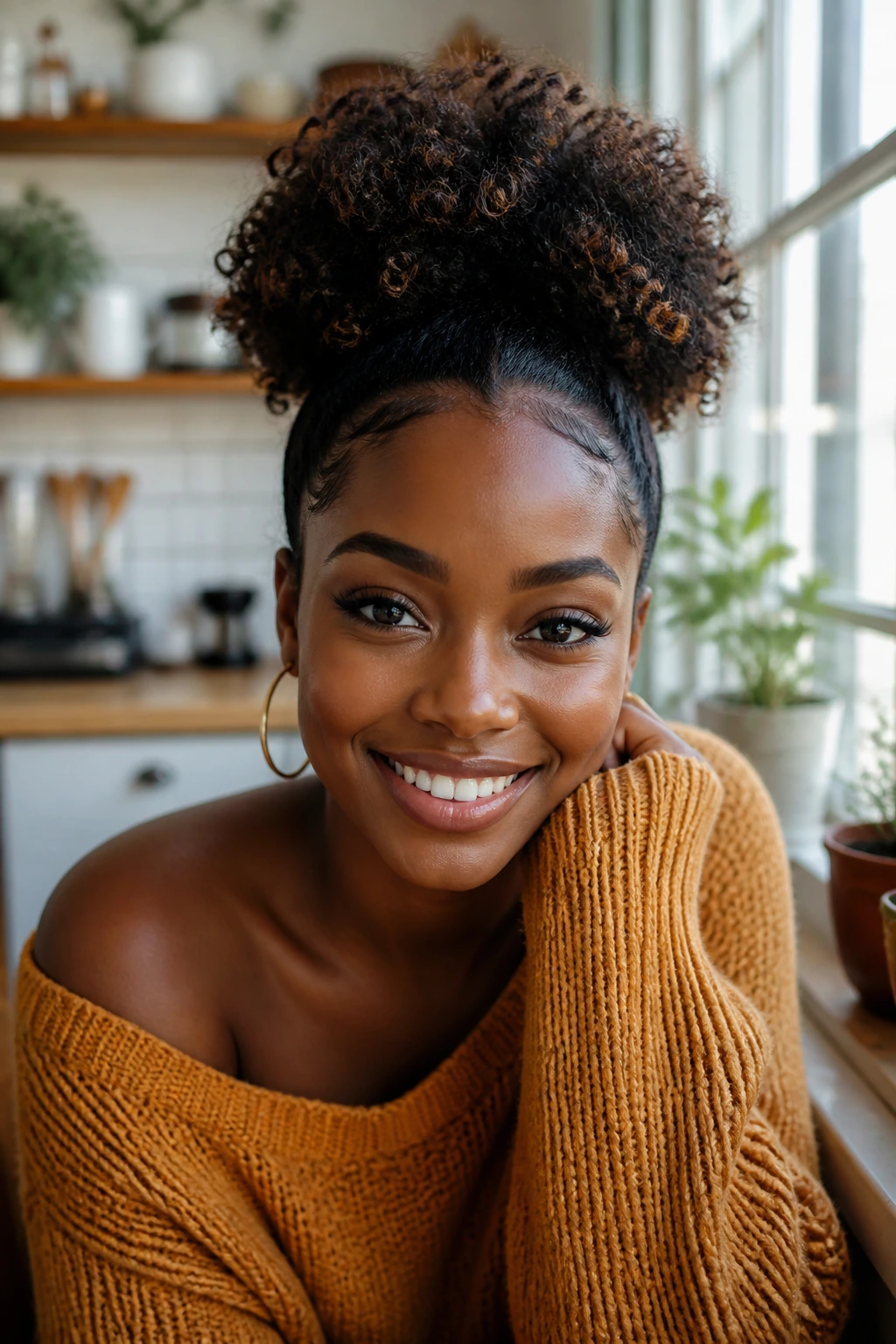
The high puff is the hairstyle equivalent of a strong eyeliner line: fast, clean, and more powerful than it looks. It pulls the hair up and away from the face, shows off your texture, and gives you instant shape even on a day when your curls have lost their idea of ambition.
The real issue is tension. If you need to yank the puff tight to get it to sit, it’s the wrong elastic or the wrong placement. A stretchy drawstring band or a wide elastic works better than a thin hair tie, especially if your hair is dense and full. Keep the puff high enough to lift the crown but not so high that your scalp feels strained.
This style is great when your roots are a little old and your ends still have life. Smooth the front with gel or edge control if you want a polished look, or leave it soft for a more casual finish.
4. Low Puff
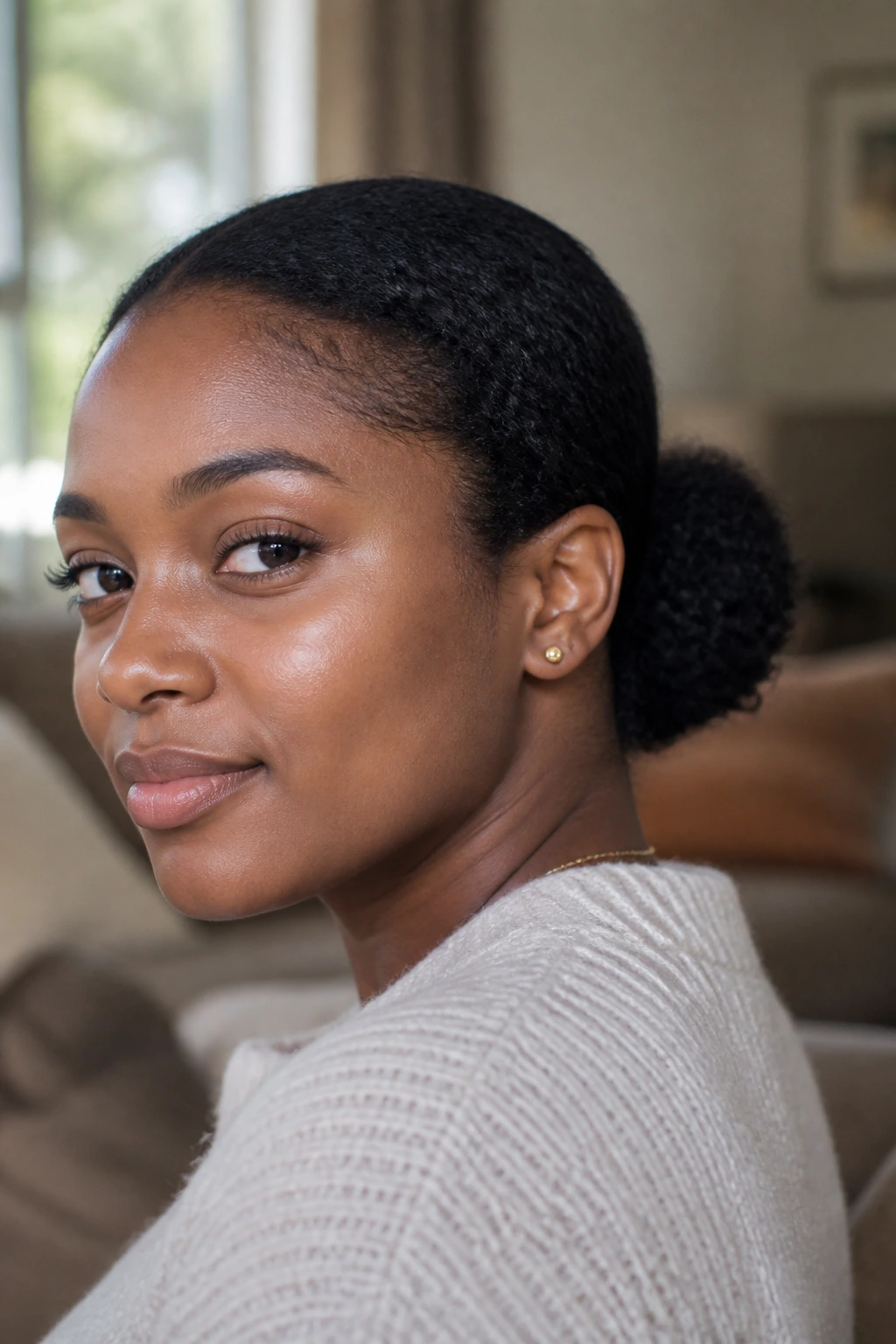
A low puff feels calmer than a high puff. Softer. Less “I’m on my way out the door” and more “I know exactly what I’m doing.” It sits at the nape or just above it, which makes it easier on the edges and more comfortable if you wear it for several hours.
The shape works especially well when your hair has a bit of stretch, either from banding, twist-outs, or a blow-dry on low heat with a diffuser. If your hair is very shrunken, the puff can still work, but you may need to stretch the top first so the puff doesn’t disappear into itself.
I reach for this style when I want something neat without too much height. Add a side part or a middle part, and it changes the whole mood. Tiny detail. Big payoff.
5. Flat Twist Updo
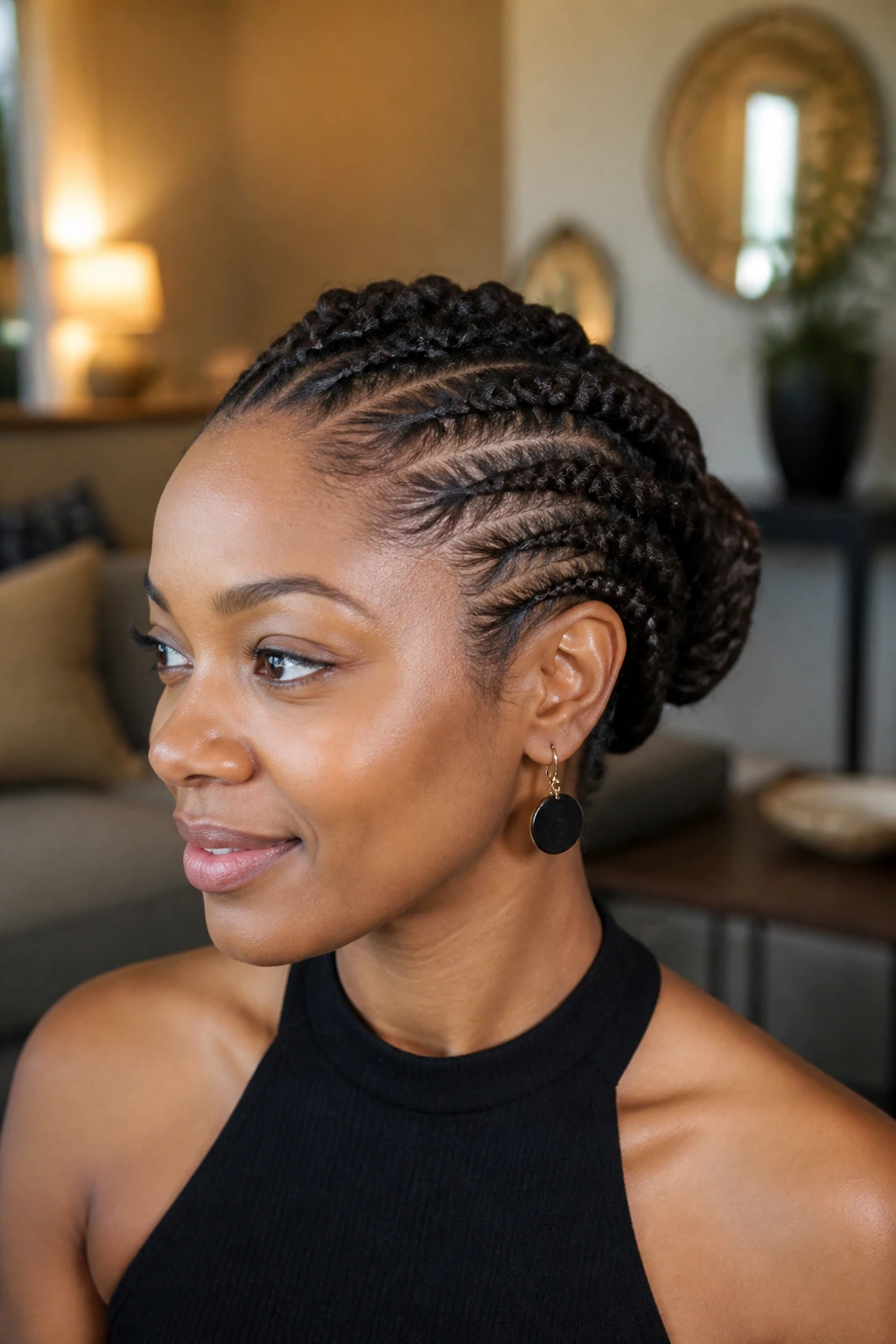
Flat twists laid close to the scalp and tucked into an updo give you structure without relying on heat or extensions. The pattern is the point here. You can keep it simple with two or three twists, or build a more detailed design that curves toward a bun at the back.
This style is especially useful on medium to long natural hair because the ends can be rolled under and pinned instead of hanging around and frizzing out. A little shine foam or setting lotion helps the twists stay smooth. If your hair is thick, sectioning clean lines with a rat-tail comb before you start makes the whole look neater.
It’s one of those styles that reads as tidy even when it has a little softness around the temples. That softness helps.
6. Bantu Knots
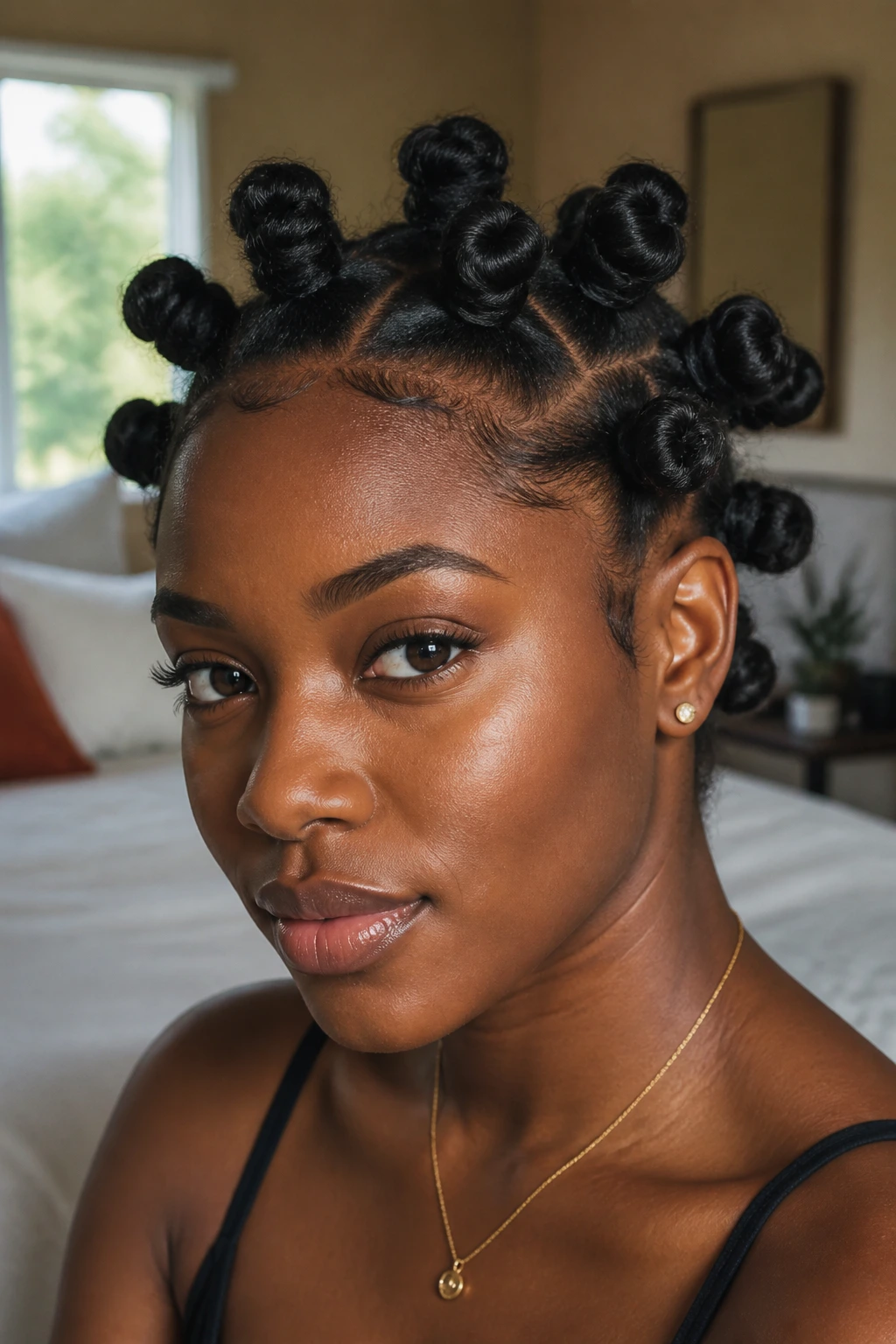
Bantu knots look sculptural, and that’s the appeal. Small coiled sections sit on the head like little wrapped buttons, which gives the whole style a bold, tidy shape. They also pull double duty, because you can wear them as knots or take them down later for a knot-out.
For the cleanest result, work on stretched hair and section it evenly. A dab of cream on each section keeps the coil smooth, but do not overload it or the knots will slouch before they set. If your hair is very dense, use smaller sections; if it’s finer, slightly larger sections are easier to secure.
What Makes Them Stand Out
Bantu knots last better than most people expect when the parts are neat and the hair is fully dry before styling. They’re one of the few looks that can feel playful and protective at the same time. The look is all shape.
7. Mini Twists
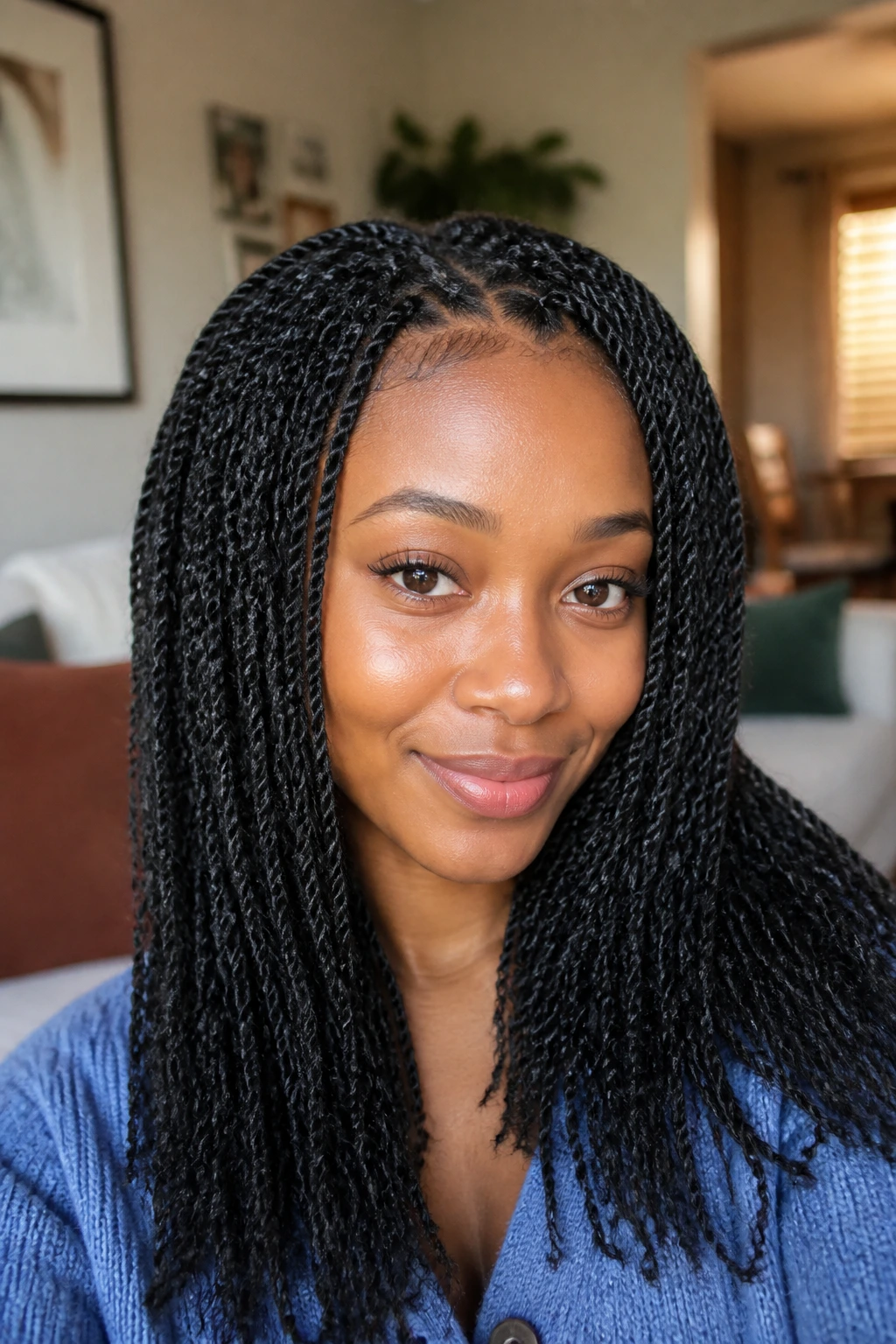
Mini twists are the quiet workhorse of natural hair styling. They’re small enough to stay in place for days, light enough not to feel heavy, and versatile enough to wear loose, pinned up, or gathered into a bun. If you like styles that buy you time, this one earns its keep.
The key is not making them too tiny if your hair tangles easily. A twist that’s too small can shrink, knot, and unravel at the ends. Aim for sections that are neat but not microscopic, and seal the ends with a little product if your hair tends to fray.
I especially like mini twists on hair that’s been fully moisturized but not drenched. Too much water makes the twists puff up fast; too little leaves them stiff and rough. Middle ground. That’s the sweet spot.
8. Two-Strand Twist Crown
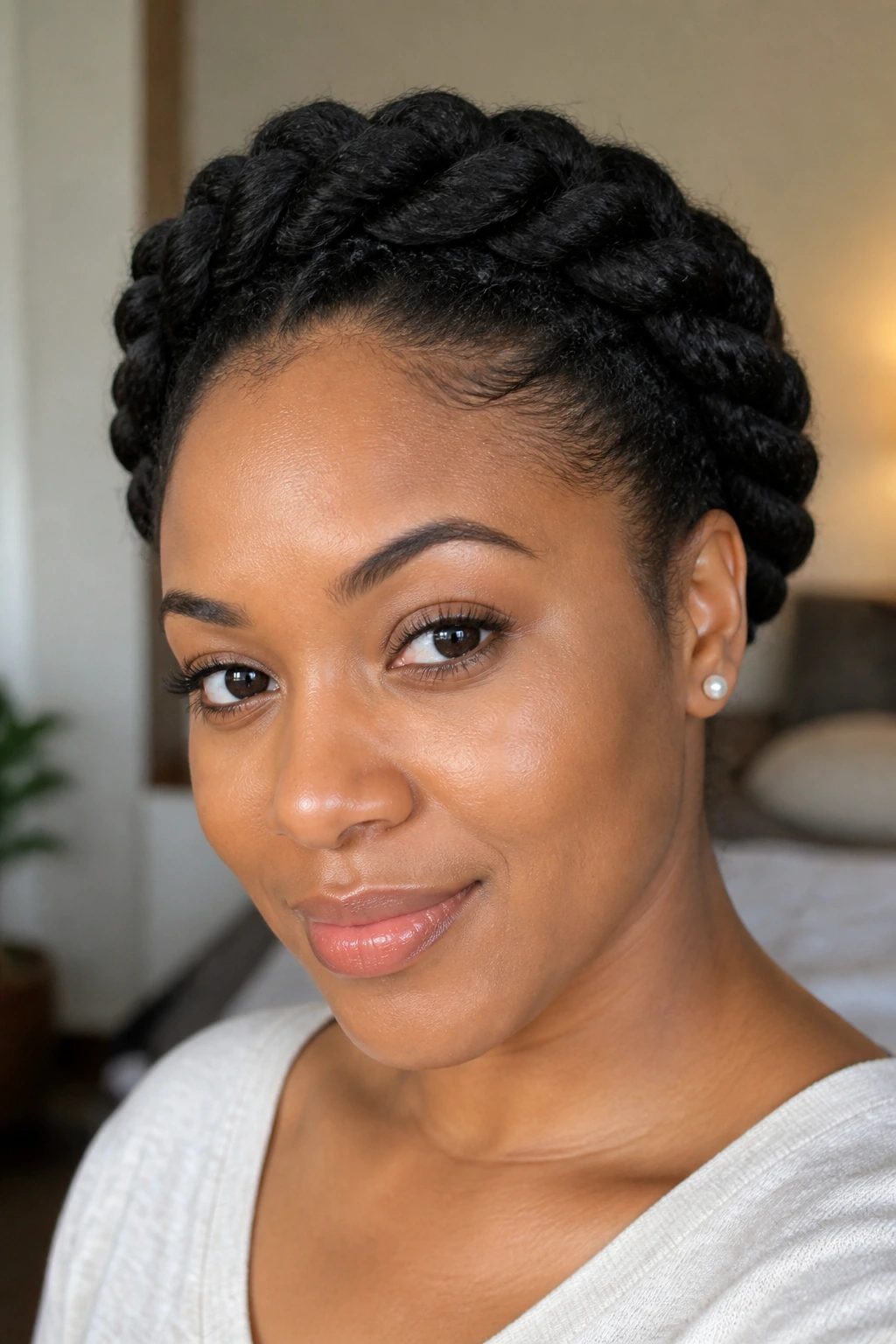
A twist crown wraps around the head like a halo, but without the formality people associate with braided updos. It’s softer than a braid crown and easier to do if your hands don’t love cornrowing. The result frames the face and keeps the rest of the hair tucked away neatly.
This is one of the best looks for medium-length natural hair because the twist can travel around the hairline and secure into itself without needing a ton of pins. If your hair is layered or uneven, tuck the ends under as you go so the crown stays smooth. A little edge control along the front can clean up the finish, but the style still works without it.
If you want a style that says polished without trying too hard, this is one of the first ones I’d grab.
9. Finger Coils on a TWA
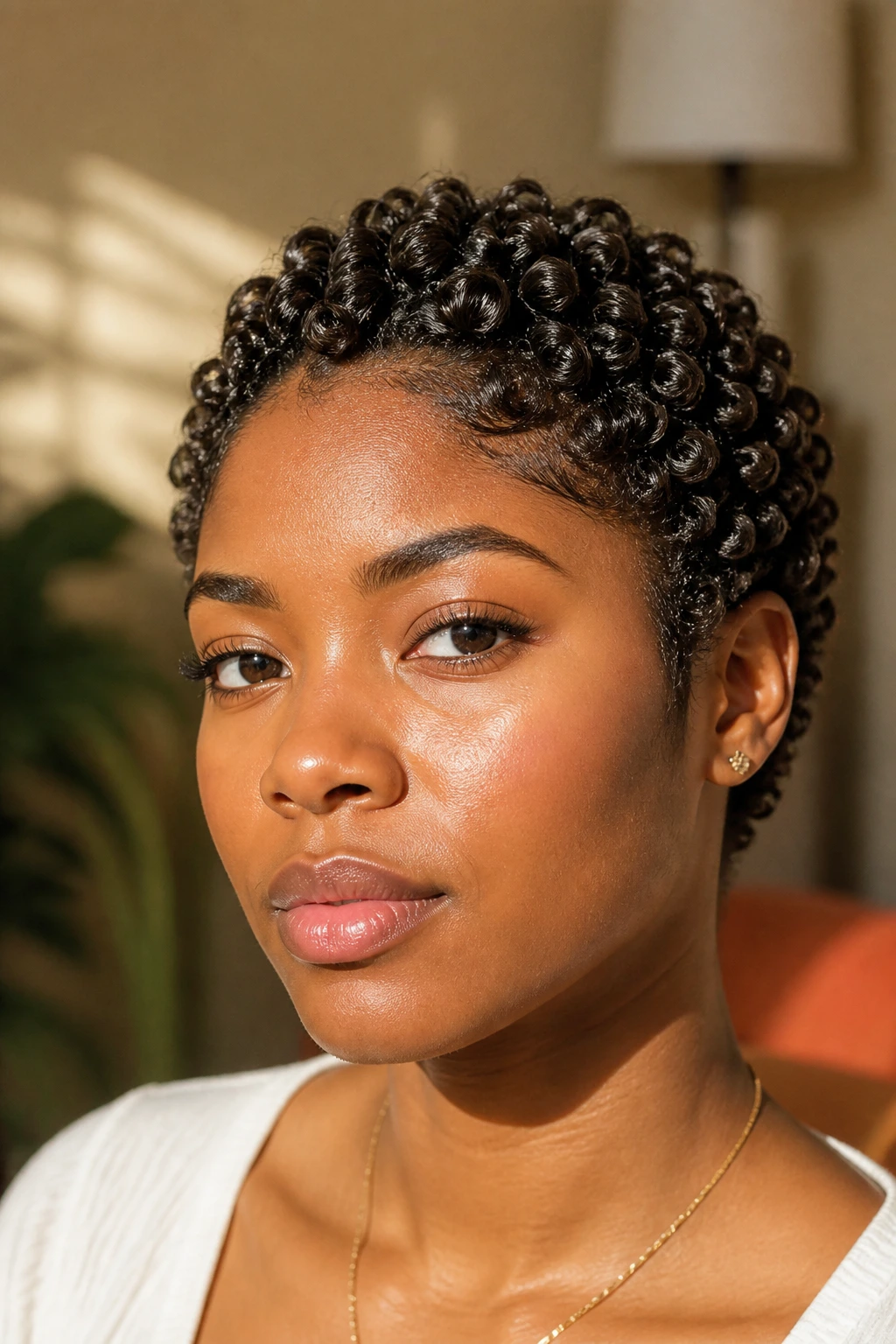
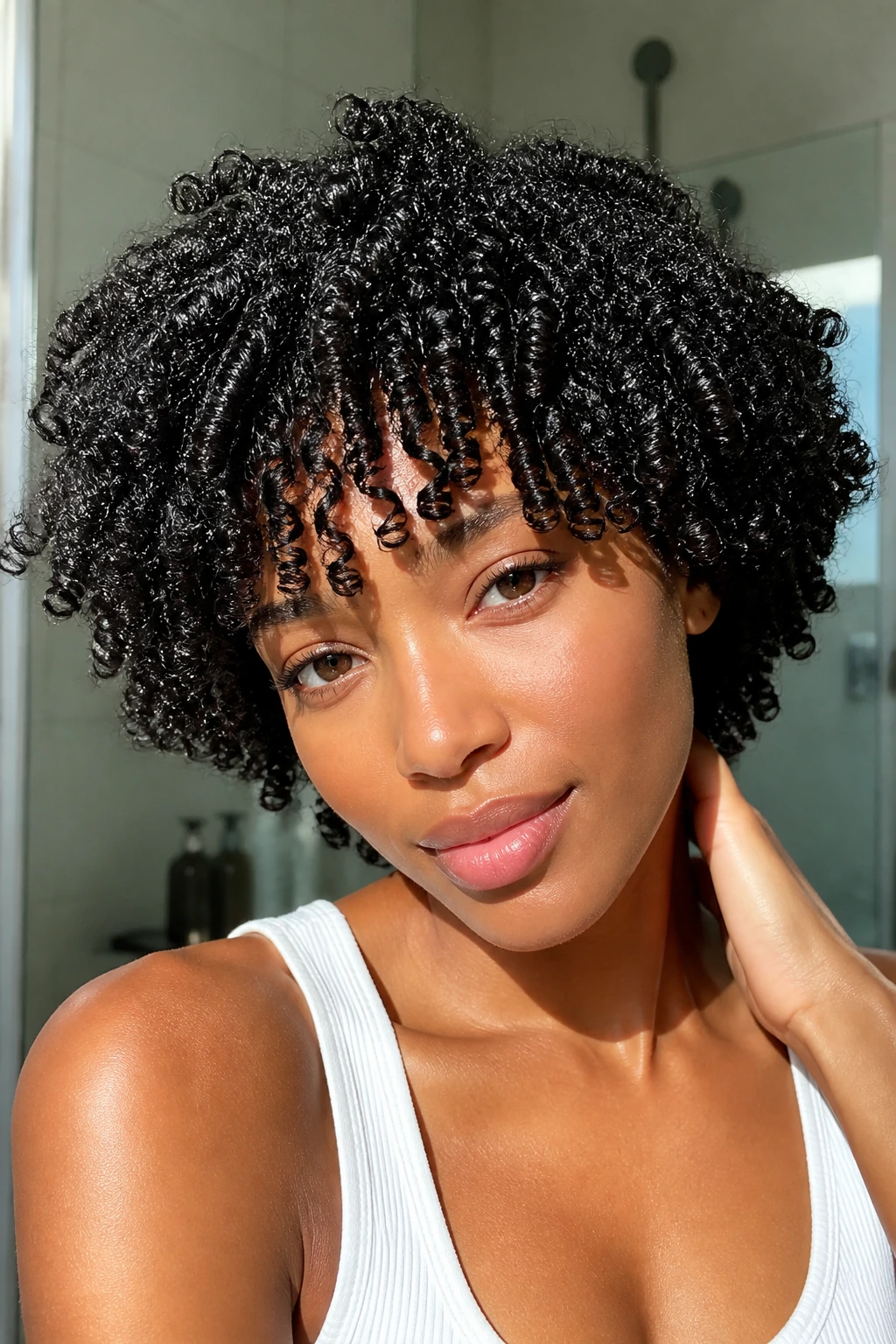
Finger coils are a small-hair style with a lot of attitude. On a TWA, they create tiny spirals that catch the light and give the cut more shape than a simple wash-and-go. The look is neat, defined, and far more flexible than people assume.
Use a lightweight curl cream or gel on damp hair, then coil each small section around your finger until it springs back on its own. The sections need to be consistent, or the style starts looking patchy. A fine-tooth comb can help with parting, but don’t use it to rough up the curls afterward.
How to Get the Best Shape
The best finger coils aren’t rushed. Let them dry completely before touching them, and if you take them apart too early, you’ll lose the clean spiral pattern. Tiny hair. Big payoff.
10. Frohawk With Pinned Sides
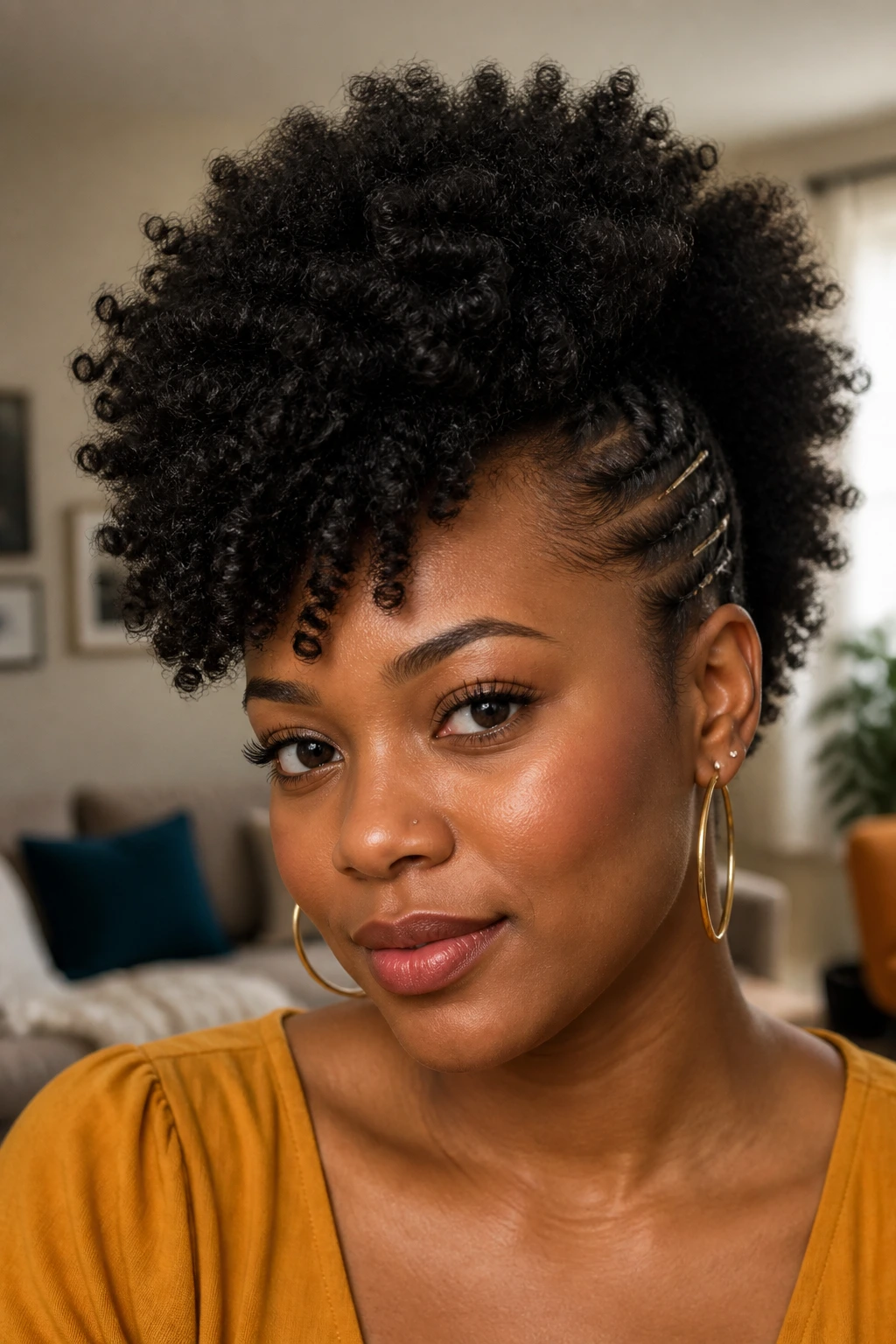
A frohawk is one of those styles that makes people think you did something complicated when, in reality, you just pinned the sides up and let the center carry the drama. It’s bold without needing extensions or a perfect curl pattern. That center strip can be fluffy, stretched, or defined.
The style works on several lengths, but it looks especially good when the sides are flattened with gel or lightly braided back. Keep the center section full and lifted so the hawk shape stays visible. If your hair is short on the sides, even a few pins and a little mousse will do the job.
A frohawk has attitude. It also has range. Wear it for a concert, a dinner, or one of those days when a plain puff feels too safe.
11. Half-Up, Half-Down on Stretched Hair
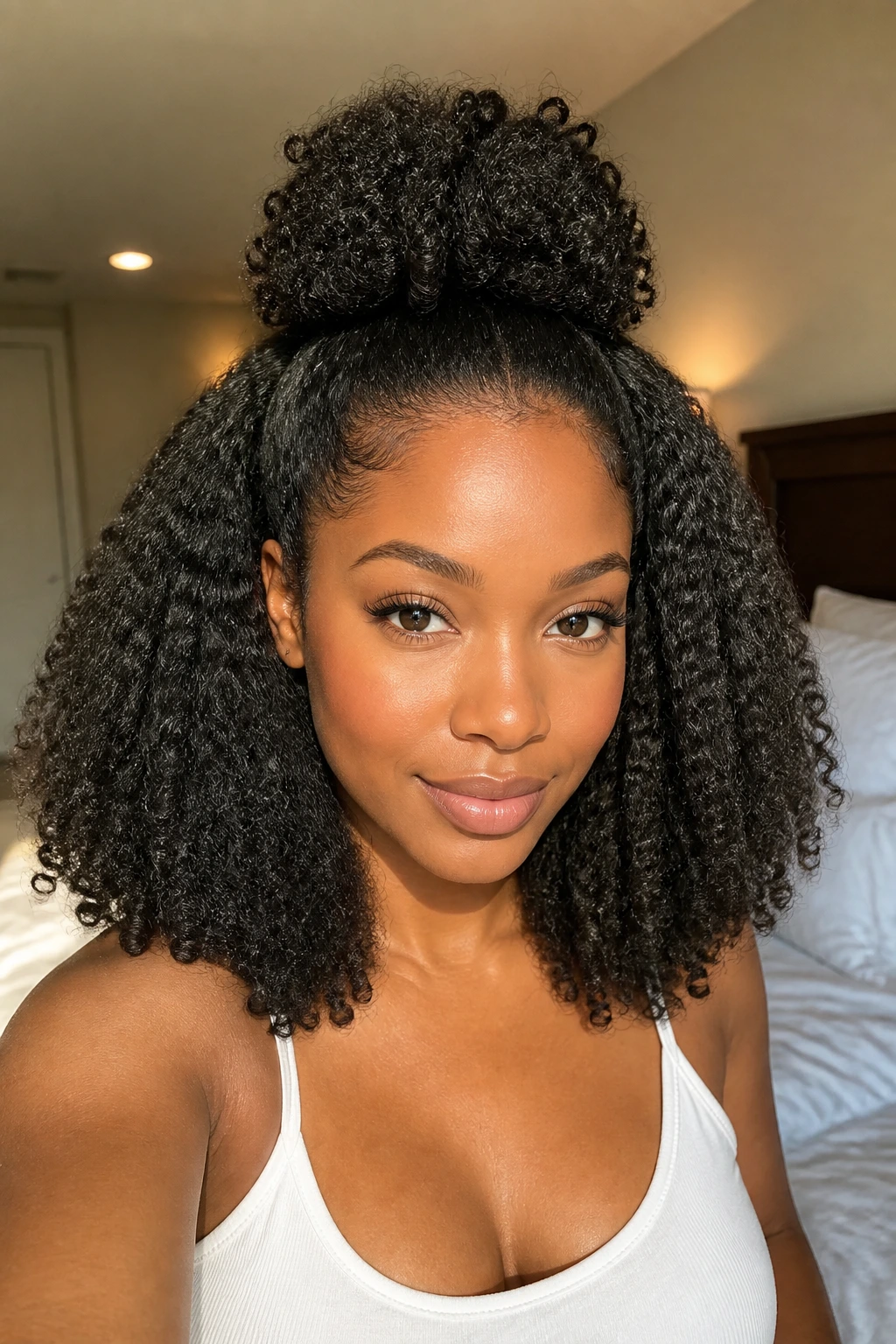
Half-up, half-down styles let you keep the volume without putting all of your hair off your face. On stretched natural hair, the top section sits neatly while the lower section falls into coils, bends, or soft bends from the stretch. It’s one of the easiest ways to look styled without locking yourself into a tight updo.
The top knot, puff, or small bun should sit where the crown naturally lifts. If you place it too far back, the style droops. If you place it too high, the lower half can look sparse. A simple middle part can make it feel more balanced, but a side part softens the whole shape.
Best Use Case
This style works when you want to show length and texture at the same time. It also saves you from over-manipulating the hairline, which is nice when your edges need a break.
12. Space Buns
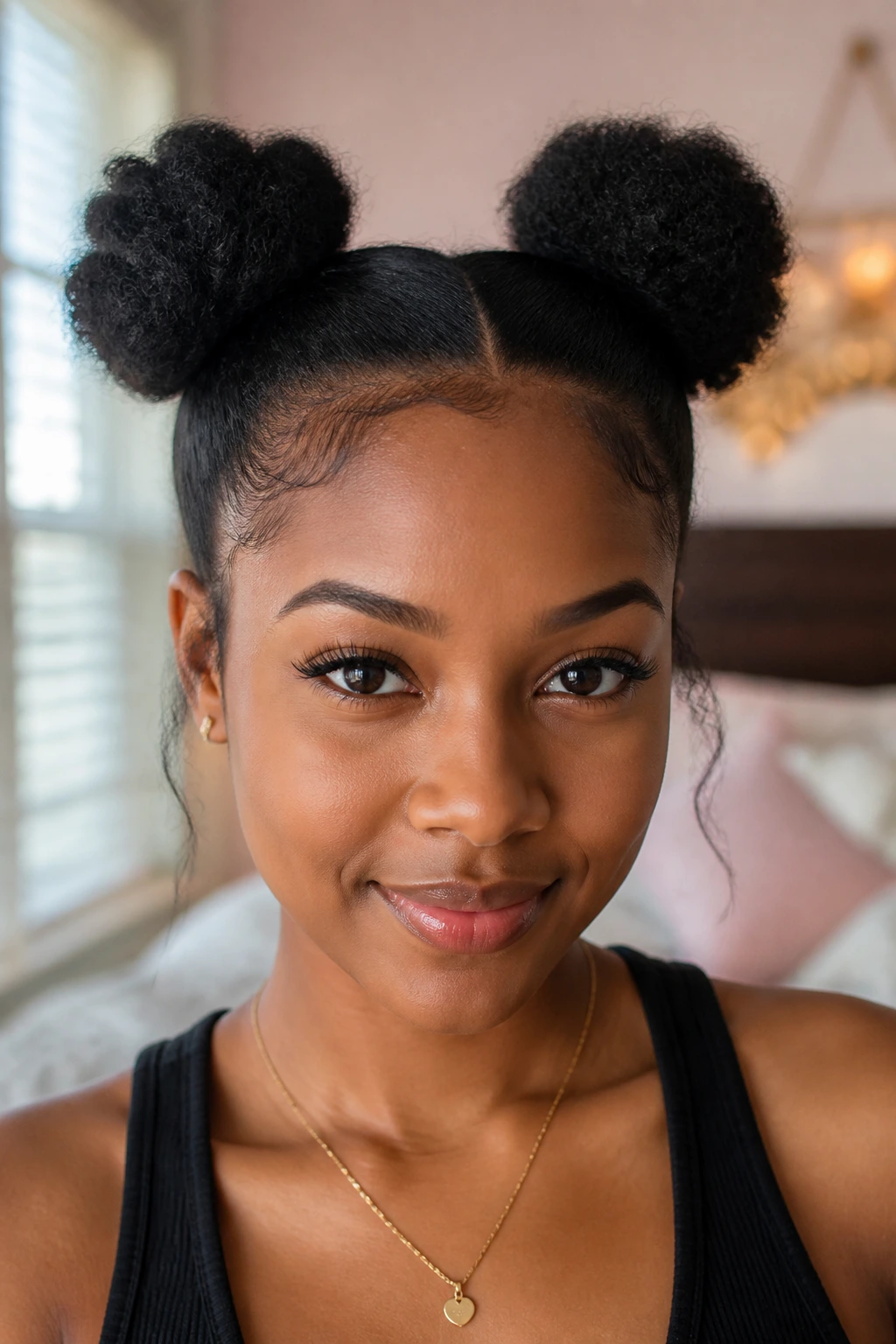
Space buns bring a playful energy that never really gets old. Two buns sit high on the head, and the symmetry does most of the styling work for you. They can be sleek, fluffy, or slightly messy — and all three versions look intentional when the sections are clean.
I like them best on stretched or lightly blown-out hair because the buns hold shape more easily. If you’re working with very shrunken curls, the buns can still work, but they’ll be smaller and denser. That’s not a flaw. It’s just a different silhouette.
Use a little gel around the parting and a satin scrunchie or thick elastic to avoid snapping the hair. Cute styles should not hurt. That’s a line I’d say twice if I had to.
13. Pineapple Puff With a Scarf
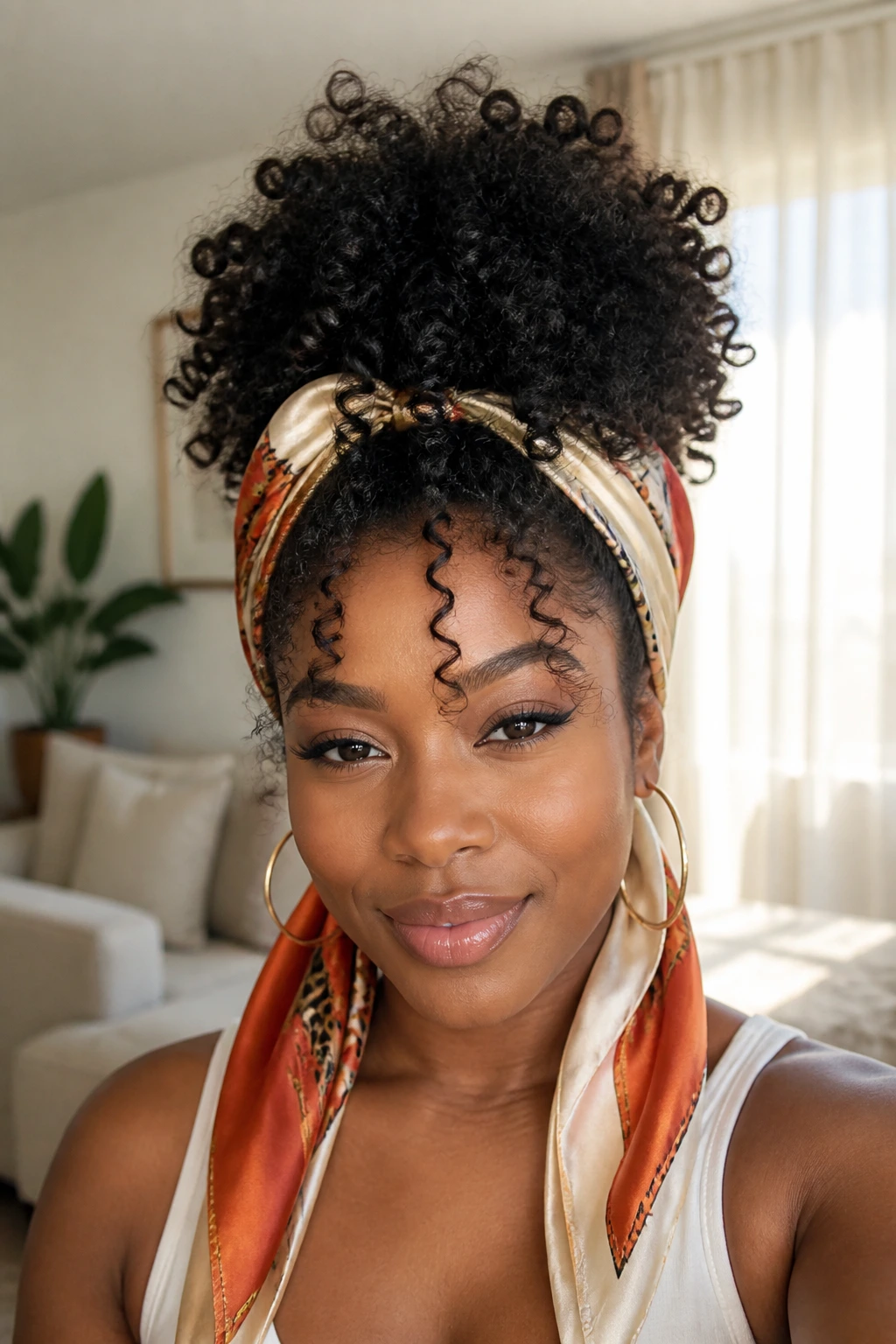
A pineapple puff lifts the curls high and lets the ends spill forward, which makes the whole style feel airy and soft. Add a scarf at the base, and it turns into something that looks deliberate instead of rushed. It’s especially useful when your curls are old but still have good shape.
The scarf can hide a stretched elastic or smooth down the front without flattening the puff itself. Choose a satin or silk scarf if you want to keep the front from drying out. Cotton looks cute, but it steals moisture fast. That matters more than people admit.
This is one of my favorite “day three curls” styles because it protects the top section while letting the ends stay visible. The texture does the styling.
14. Tapered Cut With Defined Curls
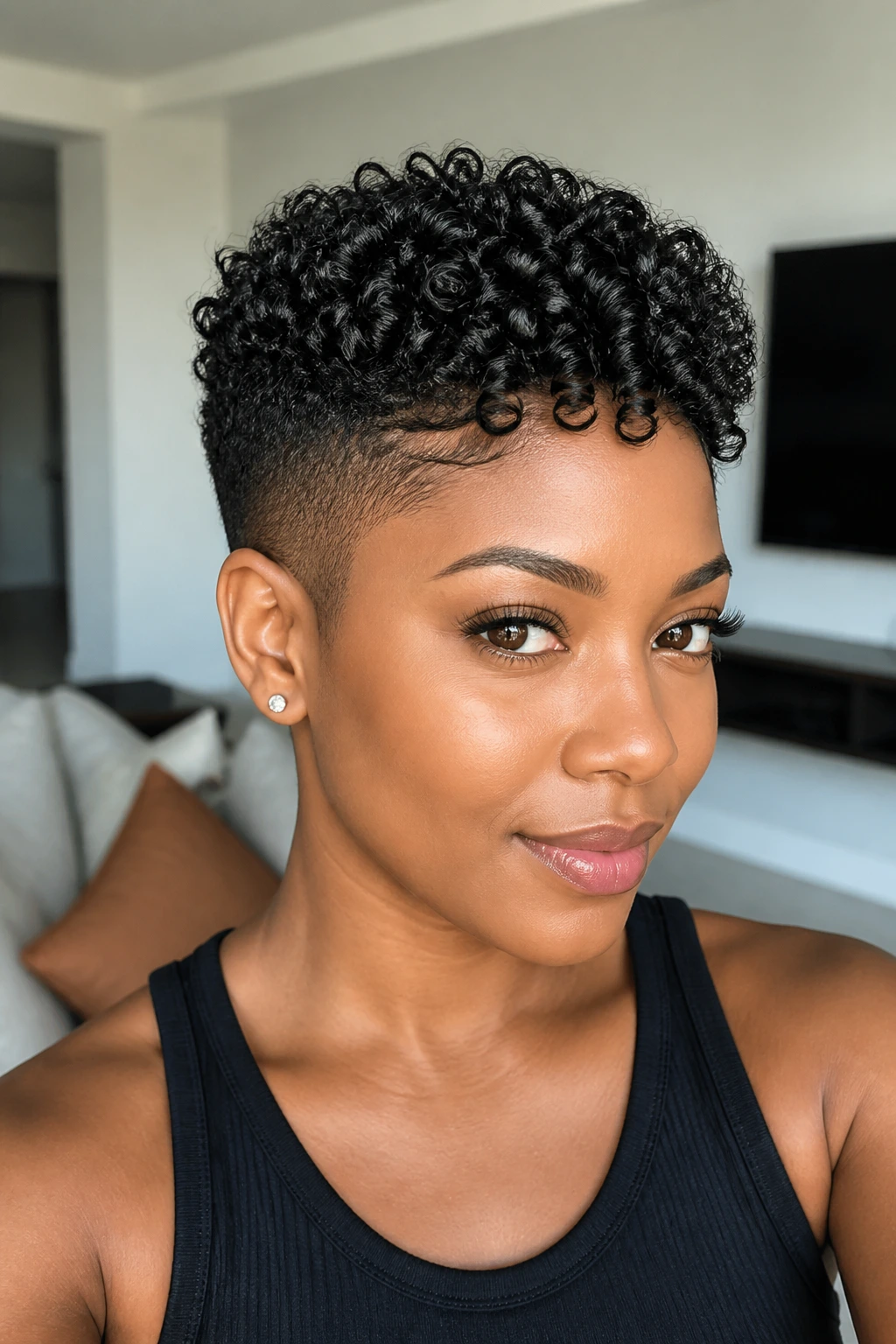
A tapered cut gives you shape by design, so the styling job is mostly about definition and balance. Shorter sides and back keep the silhouette neat, while the top can be twisted, coiled, finger-shaped, or brushed into a soft wave. It’s one of the easiest cuts to make look finished with minimal effort.
The shape should follow your head, not fight it. If the top is longer, define the curls there and let the sides sit smoother. If your taper is tight, a tiny amount of product is usually enough; too much can flatten the volume that makes the cut interesting in the first place.
A tapered natural cut is one of those styles that always looks confident. Even on a messy day, it still has structure.
15. Braided Side Swoop
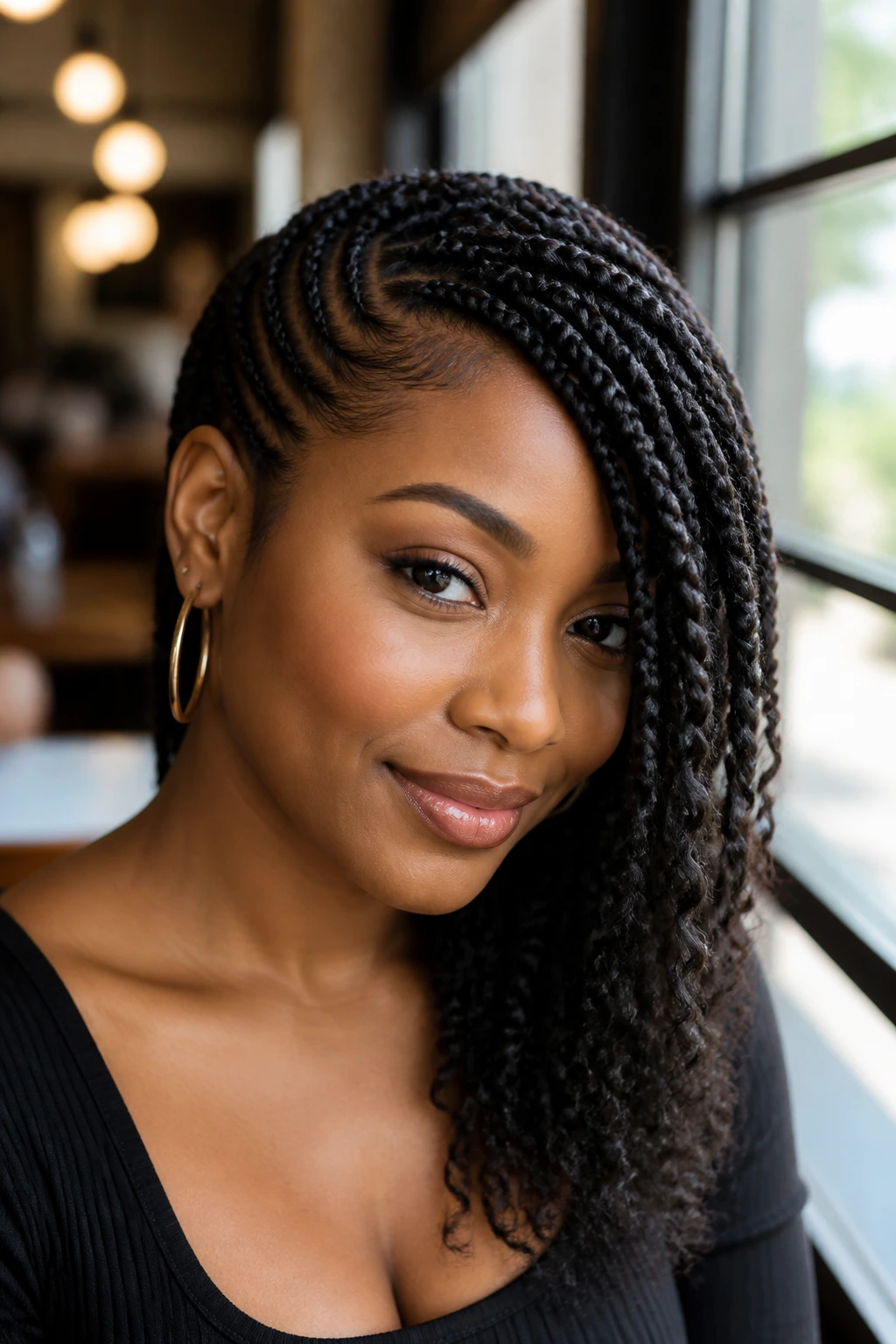
A braided side swoop brings the hair forward instead of pushing it straight back, which changes the whole face shape. The braid or set of braids curves to one side and frames the cheekbone, then the rest of the hair can be pinned, puffed, or left softly textured.
This style works well if you like a little asymmetry. It’s also a smart choice when one side of your hair is cooperating better than the other, which happens more often than anyone likes to admit. Use a strong-hold gel at the root and keep the braid snug but not tight.
The best version of this look feels smooth at the front and fuller through the length. That contrast is what makes it interesting.
16. Halo Braid
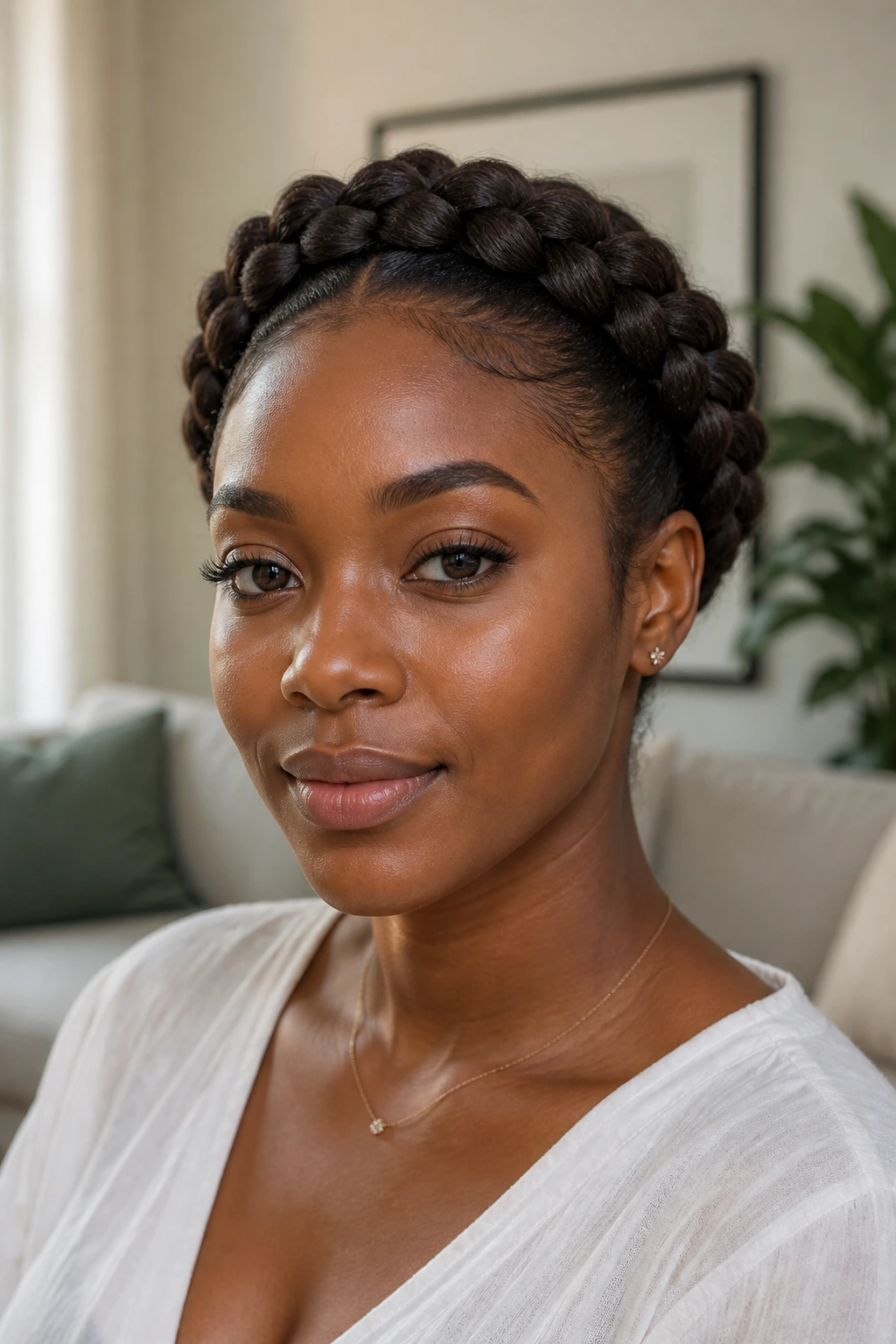
The halo braid sits around the head like a stitched line, and it has that old-school elegance people keep returning to. On natural hair, it can be done as a braid or a twist, depending on how much grip your texture gives you. Either way, the effect is clean and face-framing.
This style is especially useful when you want the ends tucked away and the hairline protected. A soft side part or a few loose curls around the temples keeps it from feeling too severe. If your hair is layered, pin the shorter pieces under as you go so the halo doesn’t break apart.
Small Details That Matter
A halo braid looks best when the parting is clean and the braid follows a smooth arc. If the braid changes direction too sharply, the eye catches it immediately.
17. Flexi Rod Set
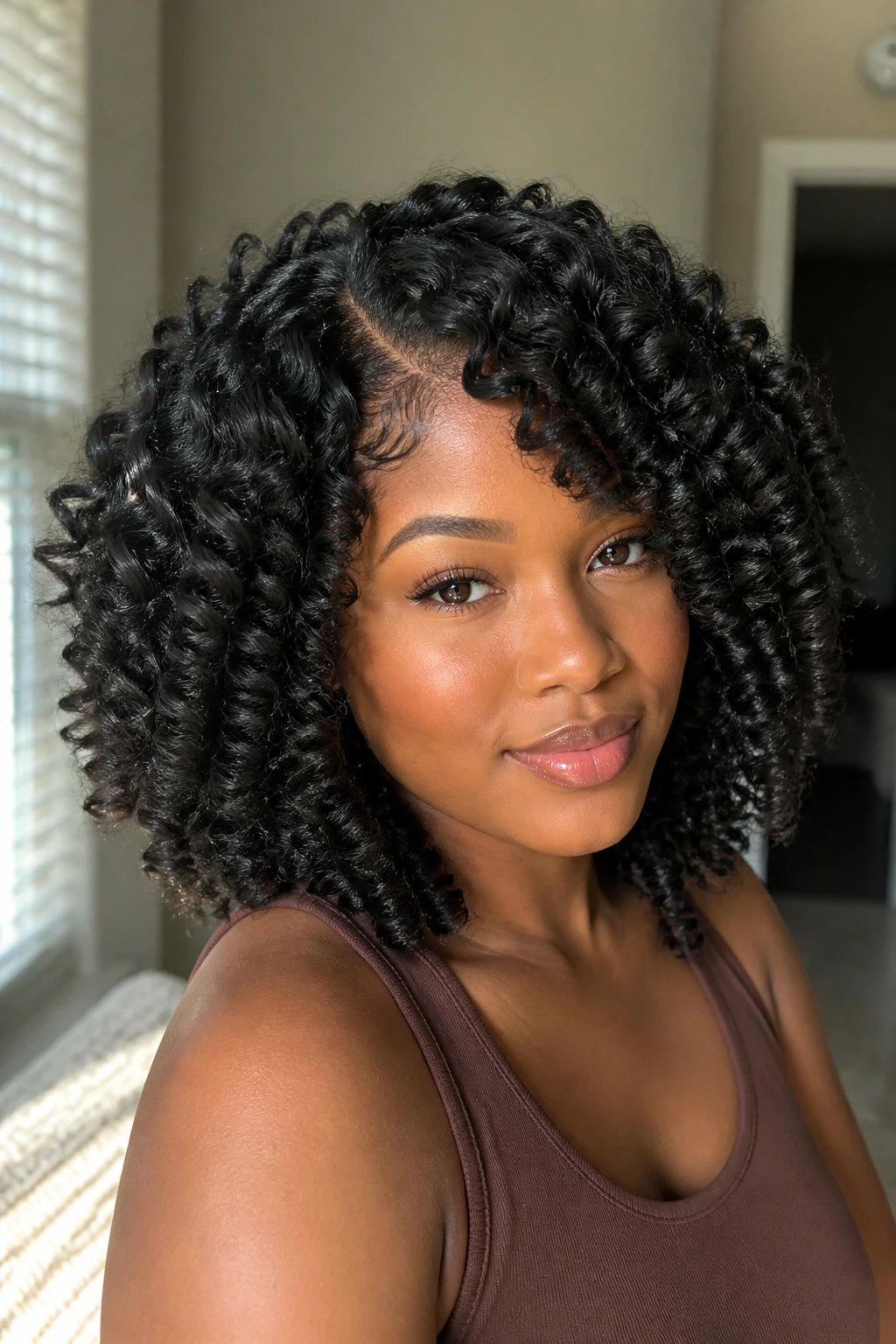
Flexi rod sets give you springy, uniform curls with a little more structure than a twist-out. The rods bend to fit the hair, and that bend helps create a defined spiral when the set dries. If you want curls with bounce and a polished finish, this is a strong choice.
Set on damp hair with a light lotion or foam, not heavy grease. Heavy products slow drying and leave the rods sticky. The sections can be medium-sized for a looser curl or smaller for a tighter spiral. Either way, the rods need time to dry fully.
I’d call this a patience style. The result is worth the wait, but only if you let the hair set properly before taking the rods out.
18. Perm Rod Set
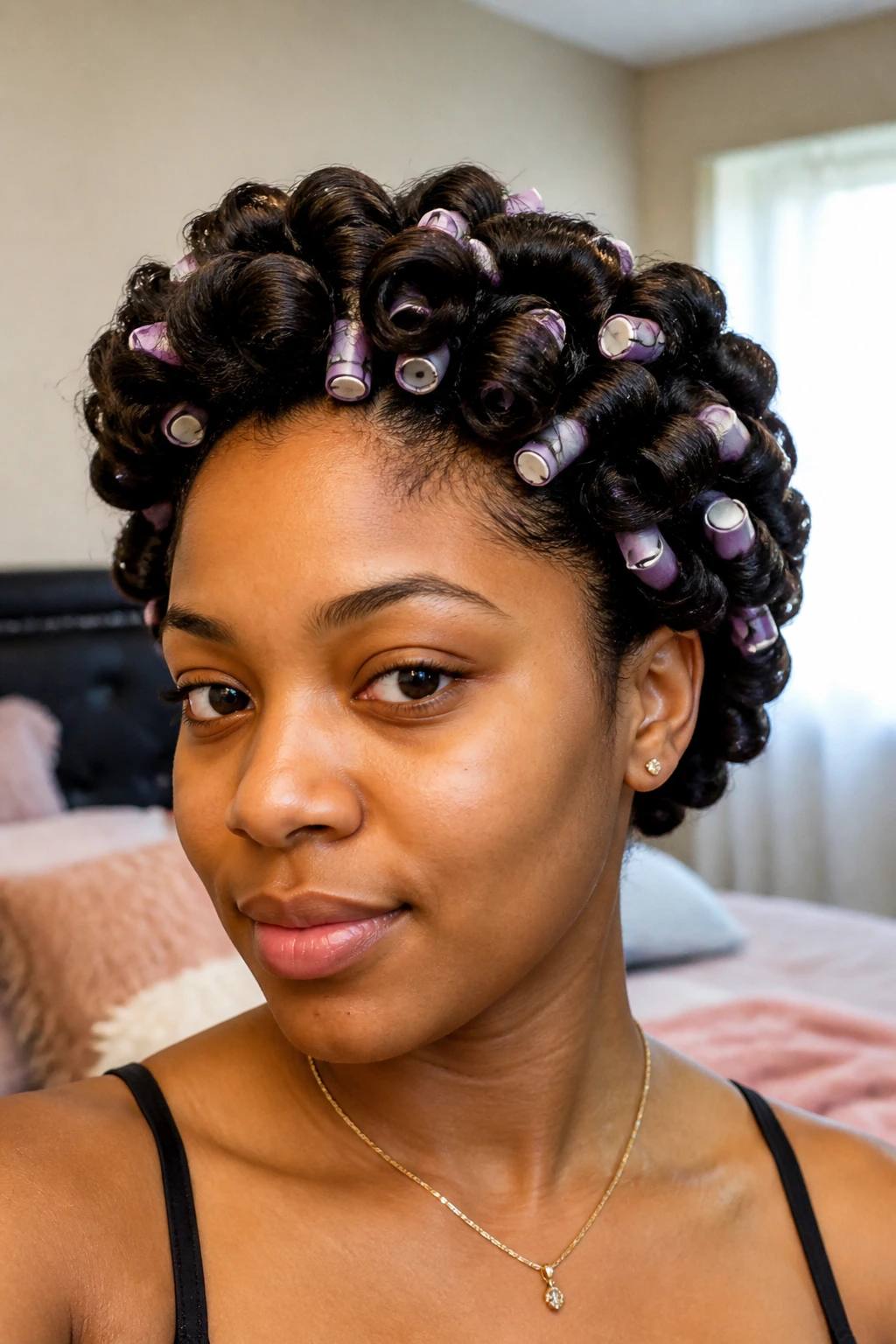
A perm rod set gives a tighter, more uniform curl than flexi rods, which is why it often reads as a little more dressed up. The curls stack neatly, and the whole style has a rounder, springier shape. It’s one of the best ways to make natural hair look deliberately styled without heat.
Use small, even sections and wrap the ends smoothly around each rod so they don’t stick out. A setting mousse or foam works well here because it dries without making the hair hard and sticky. If the rods are too large for your hair length, the ends will slip. Small enough is better than forcing it.
The final look can be glamorous without being stiff. That balance is what makes rod sets so useful.
19. Rope Twist Low Bun
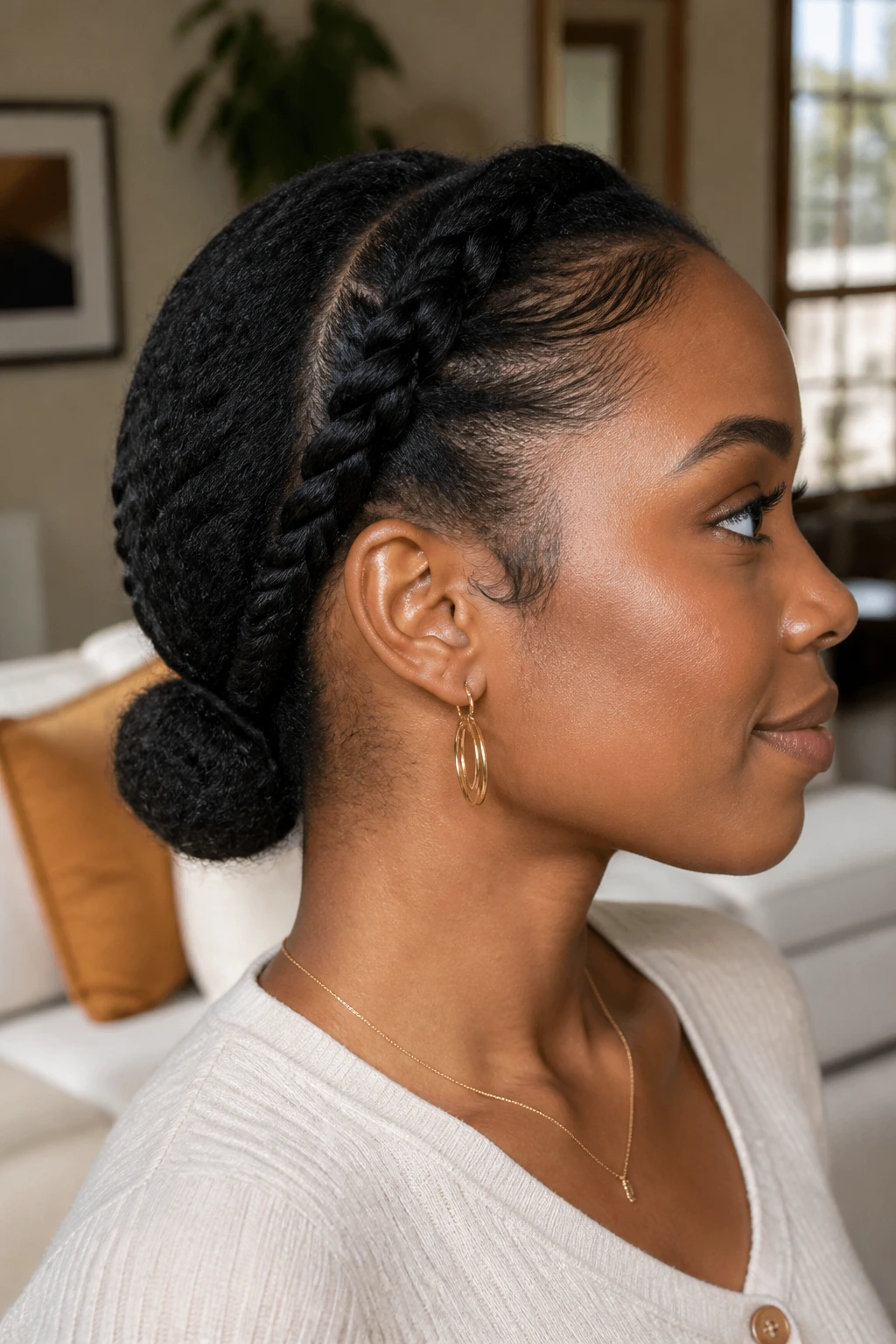
A rope twist low bun is one of the neatest styles in the whole lineup. Two sections twist together, then coil into a bun at the nape. It’s polished, low-tension, and especially helpful when you want your hair secured without a lot of pins showing.
The rope twist gives the bun more visual interest than a plain twist. If your hair is thick, make the twist close to the scalp before wrapping it into the bun so the base feels secure. A little smoothing product at the roots helps, but the style should still look soft, not shellacked.
This is the kind of style I’d choose for a formal day when I still want the texture of natural hair visible. Quiet. Clean. Effective.
20. Knotless Braids With Curly Ends
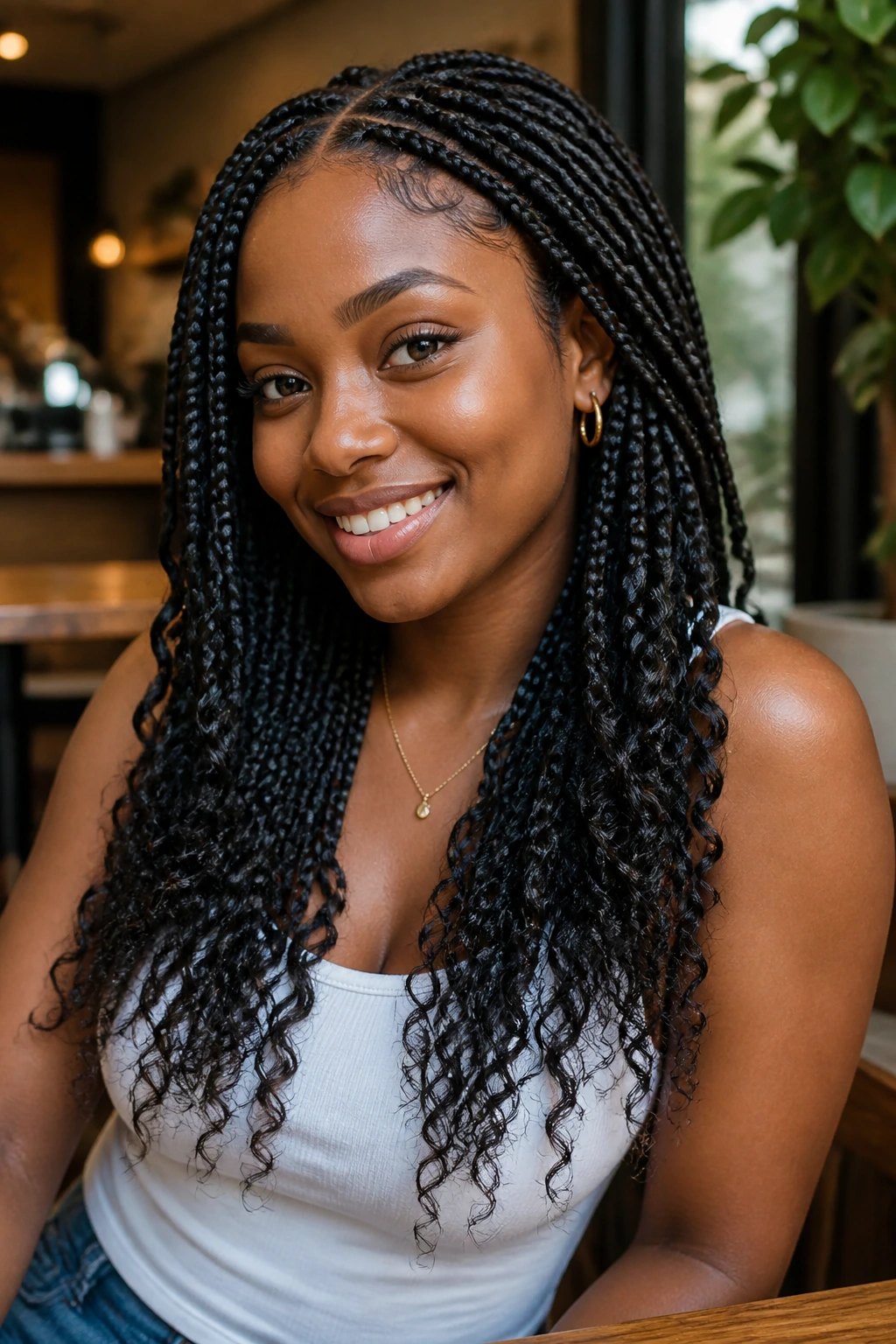
Knotless braids with curly ends bridge protective styling and softness in a way people love for good reason. The braid starts more gently at the scalp, which reduces the bulky knot at the root, then the curled ends keep the style from looking too severe. You get length, movement, and a little swing.
This style takes time, but it pays off in wear. The curls at the ends need care — wrap them at night if you want them to keep their shape, because friction turns them fuzzy fast. If your scalp is sensitive, the lower tension of knotless braids is a real benefit.
The best part is how easy they are to dress up. Gold cuffs, beads, or a side part can change the vibe without changing the braid itself.
21. Short Afro With a Headband
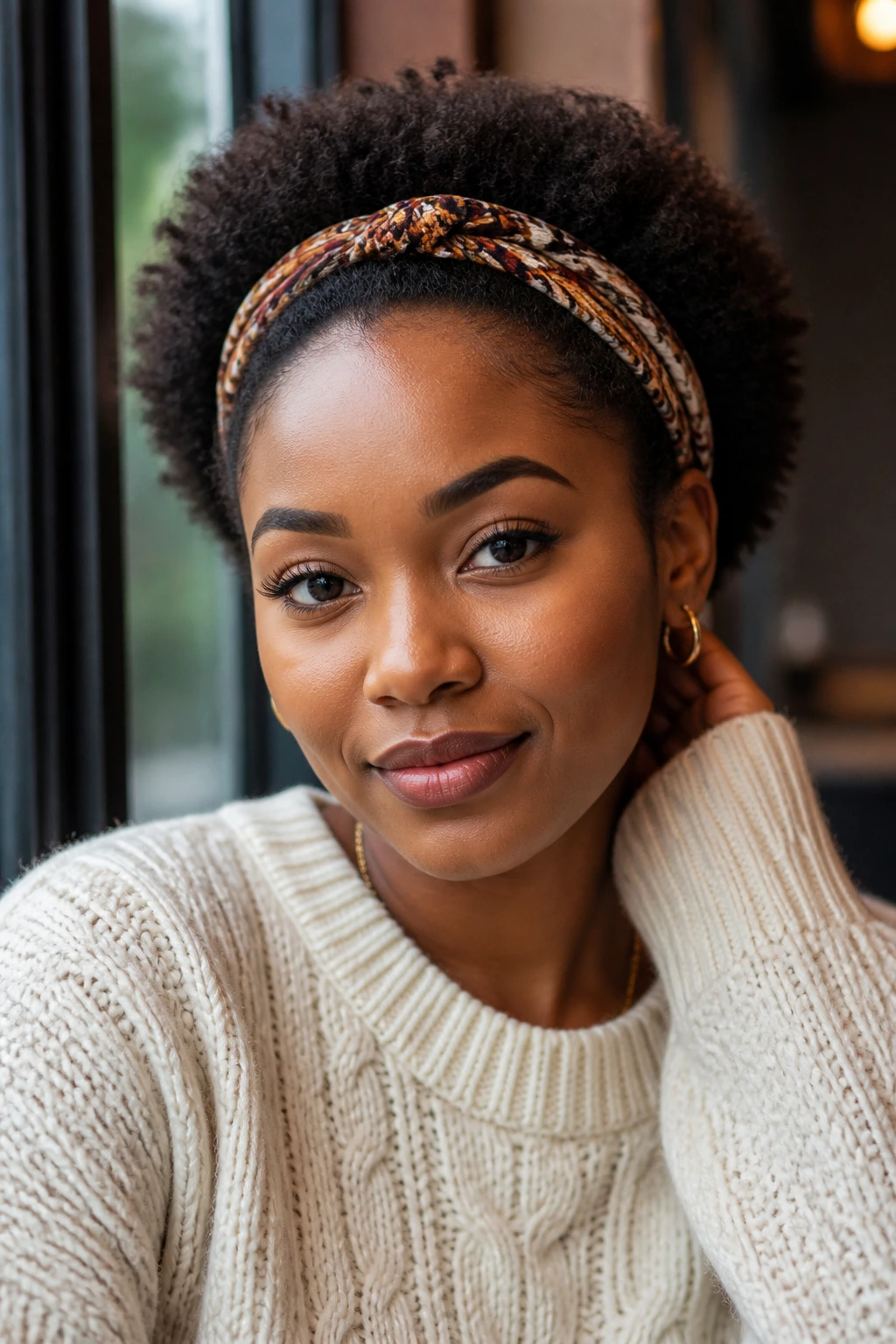
A short afro with a headband is simple, but not plain. The headband gives you a point of focus while the afro itself keeps the shape soft and full. It’s a style that works when your hair has grown out unevenly or you want a fast answer that still feels styled.
Choose a band that sits snug without digging into the temples. Too-tight bands flatten the crown and leave a line across the hair. A wider fabric band usually looks better than a thin plastic one, especially on textured hair.
Why It Feels So Easy
The afro does the heavy lifting. The headband just frames it. That’s the whole charm of the look.
22. Claw Clip Twisted Bun
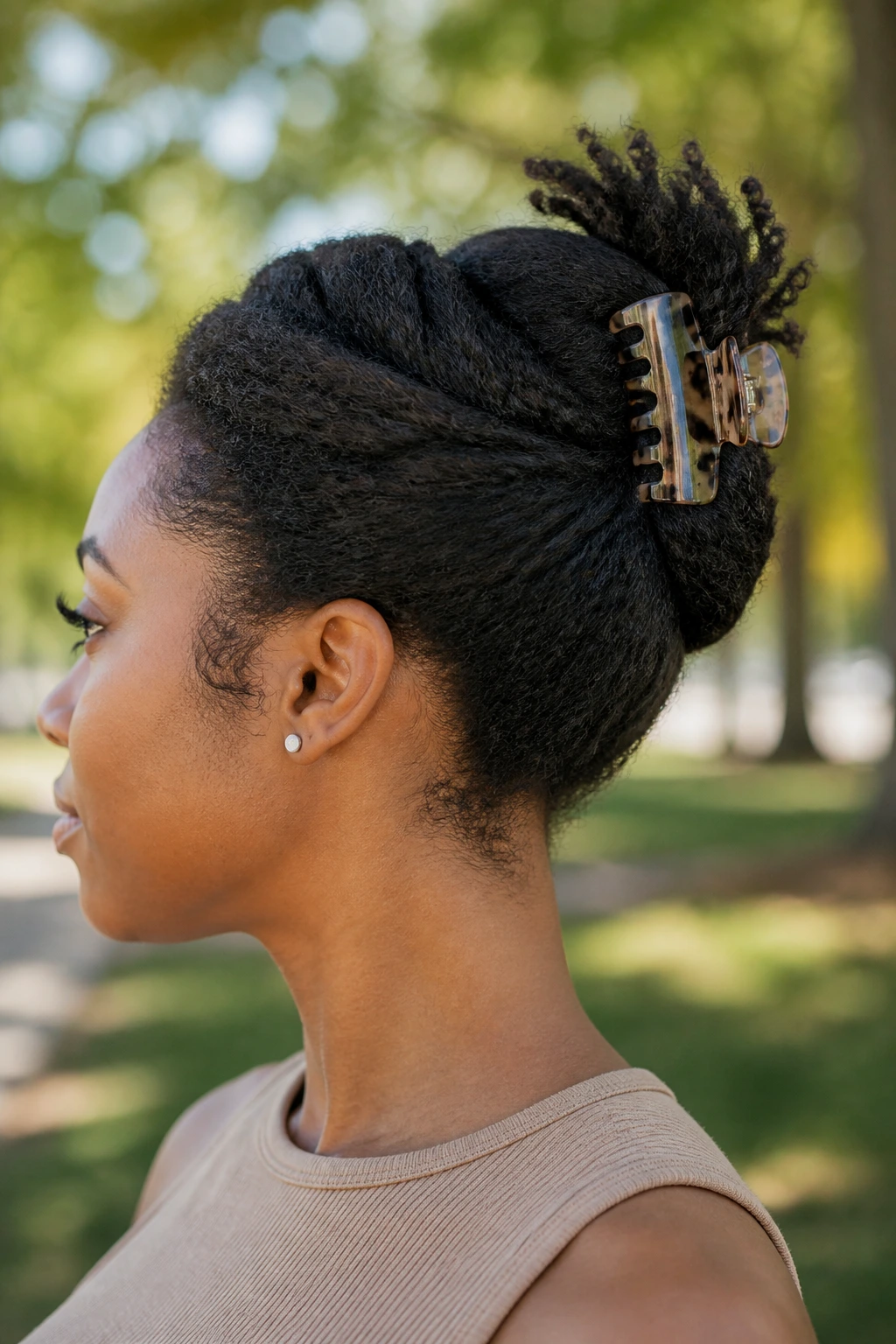
A claw clip twisted bun has become a favorite because it manages to be casual and polished at once. Twist the hair upward, fold it in, and clip it so the ends fan out or tuck under. On natural hair, the texture gives the style more grip than straight hair ever could.
The trick is choosing a clip that’s strong enough for your density. Thin clips slide; cheap clips snap. A medium or large clip with teeth that actually hold hair makes the style last longer and sit more securely.
I like this one on hair that’s been stretched a little. The twist goes in easier, and the bun sits cleaner at the back of the head.
23. Side-Part Afro With Shaped Edges
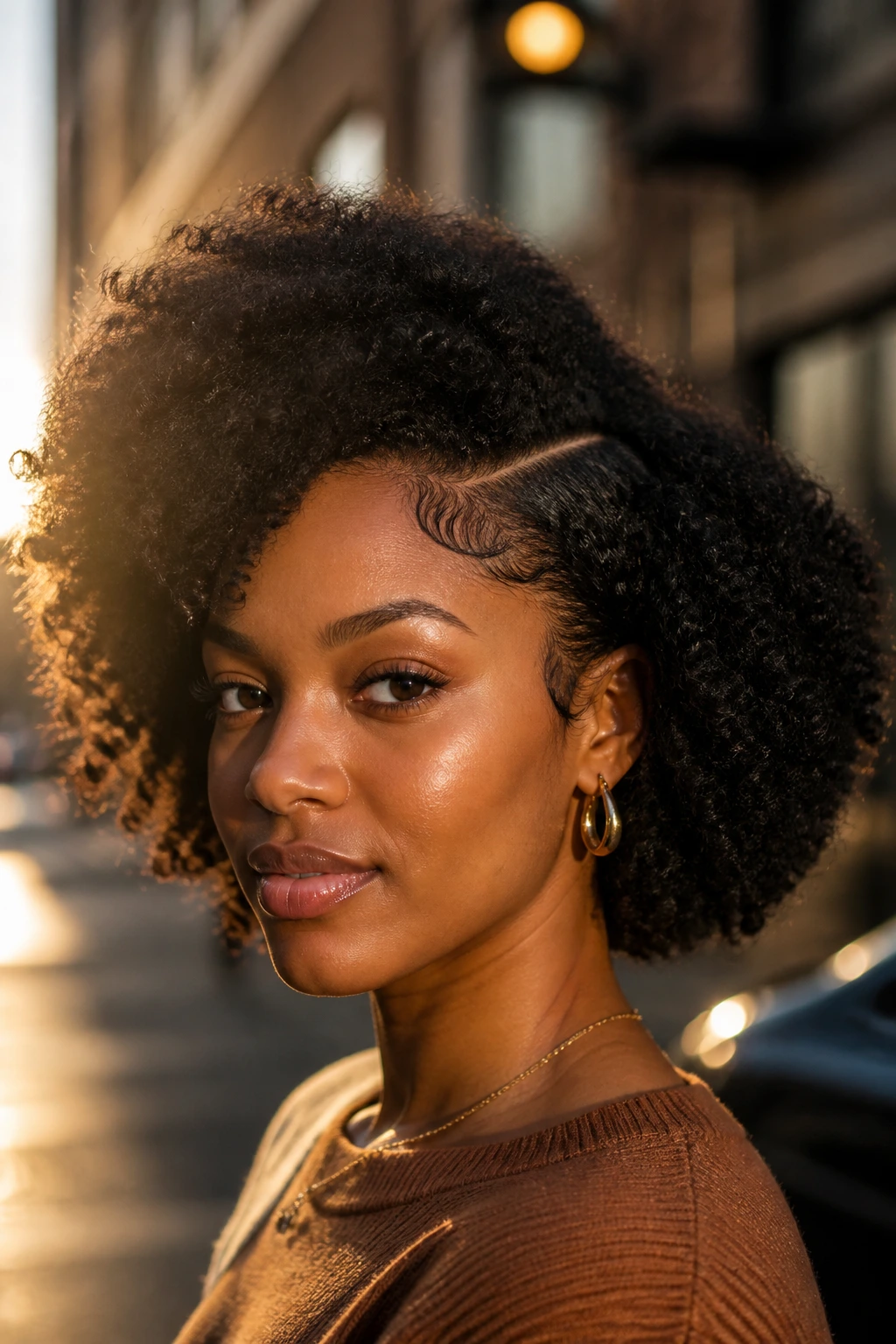
A side-part afro is all about shape, not restraint. The part throws the volume to one side, the edges are shaped just enough to define the front, and the rest of the hair stays soft and round. It’s a style that says you know your texture and you’re not asking it to become something else.
The cut or shape matters here. If your layers are even, the afro expands evenly; if your hair has more volume at the crown, the side part creates a built-in slope that helps balance the face. Pick it out with a wide comb or afro pick, then stop before you overdo it. Too much picking makes the ends frizzy fast.
A side-part afro looks best when it still has some roughness. That’s part of the charm.
24. Tuck-and-Roll Updo
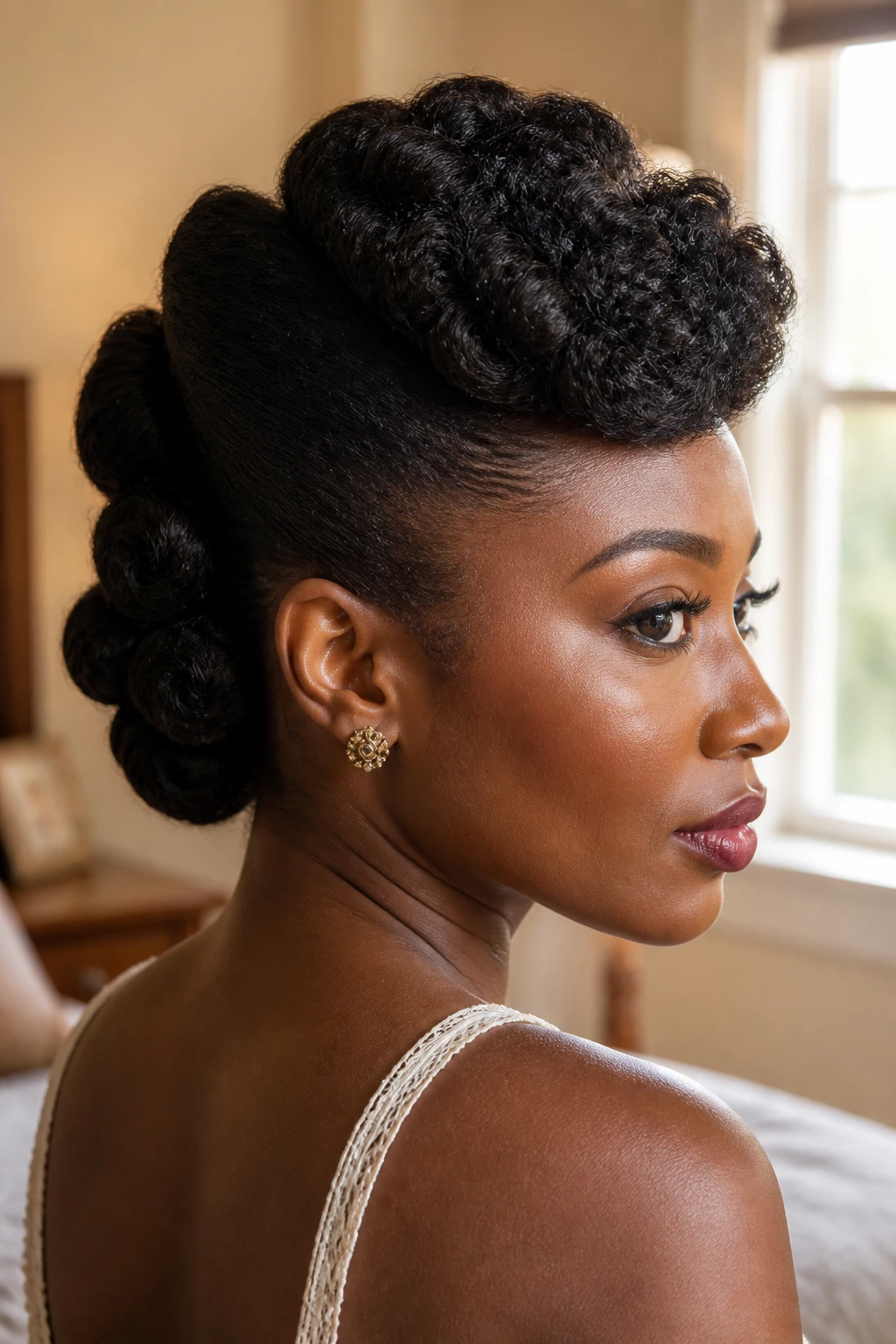
The tuck-and-roll updo has that vintage, almost cinematic feel that never really goes out of style. Sections of hair are rolled under, pinned, and tucked into a smooth shape at the back or side of the head. It works especially well when your hair has been stretched or lightly blown out.
Use bobby pins that match your hair color if you want the finish to look cleaner. The rolls should sit flat enough to stay in place but not so tight that they flatten the texture completely. A little lift near the crown keeps the style from looking too severe.
This is one of those updos that rewards a steady hand. It doesn’t need perfection. It needs clean lines and patience.
25. Two Puffs
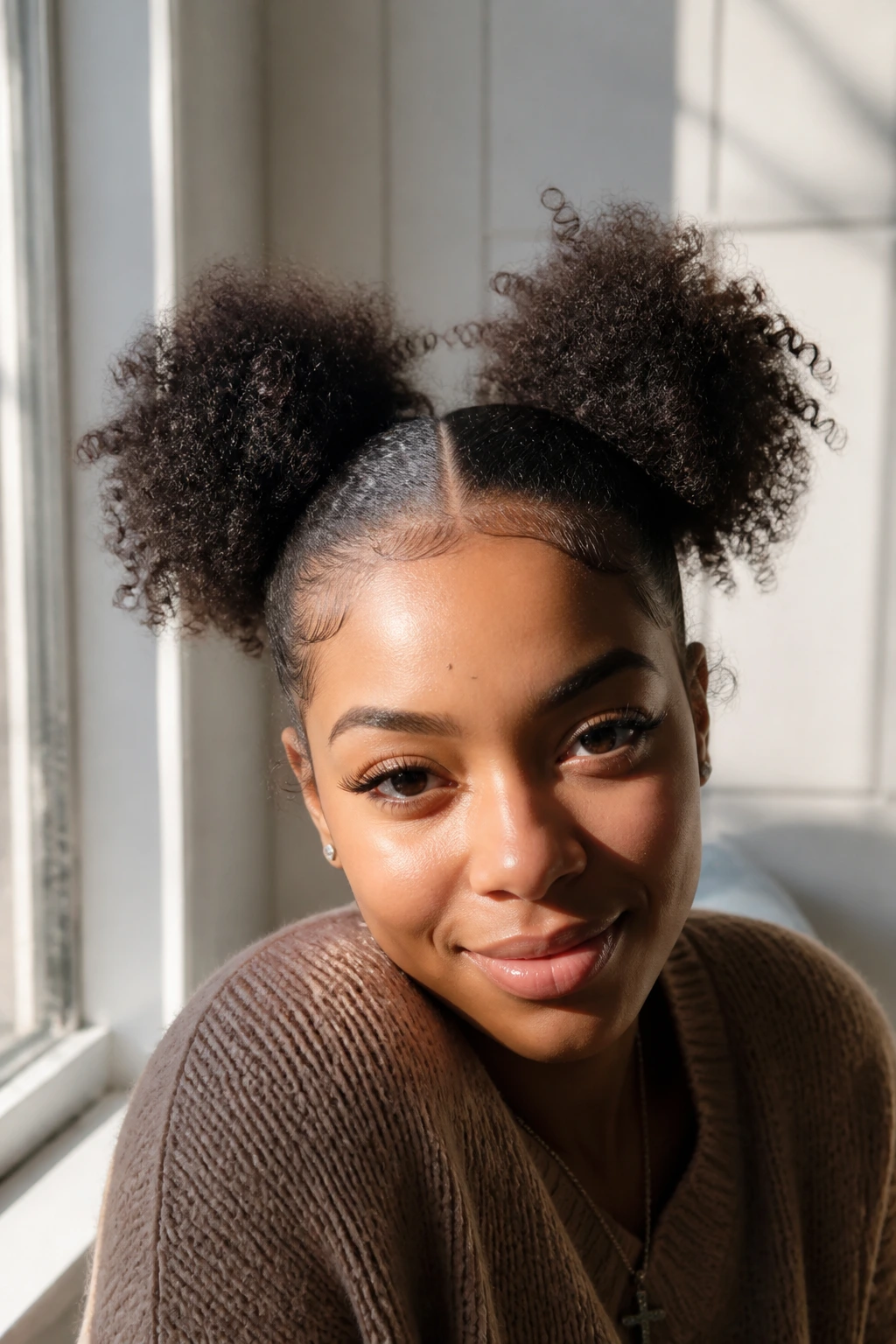
Two puffs can look playful, sweet, or surprisingly chic depending on how you place them. The middle part creates symmetry, and the puffs can sit high or low depending on the vibe you want. They’re fast, easy to refresh, and they work on a lot of lengths.
The most common mistake is making the part crooked and hoping no one notices. People notice. Clean the part with a rat-tail comb, then smooth the roots before gathering the hair. If your hair is thick, use two secure bands instead of one flimsy tie.
This style has a youthful feel, but it doesn’t belong only on children. On adult natural hair, it can read as playful in a very grown way.
26. Cornrow Ponytail
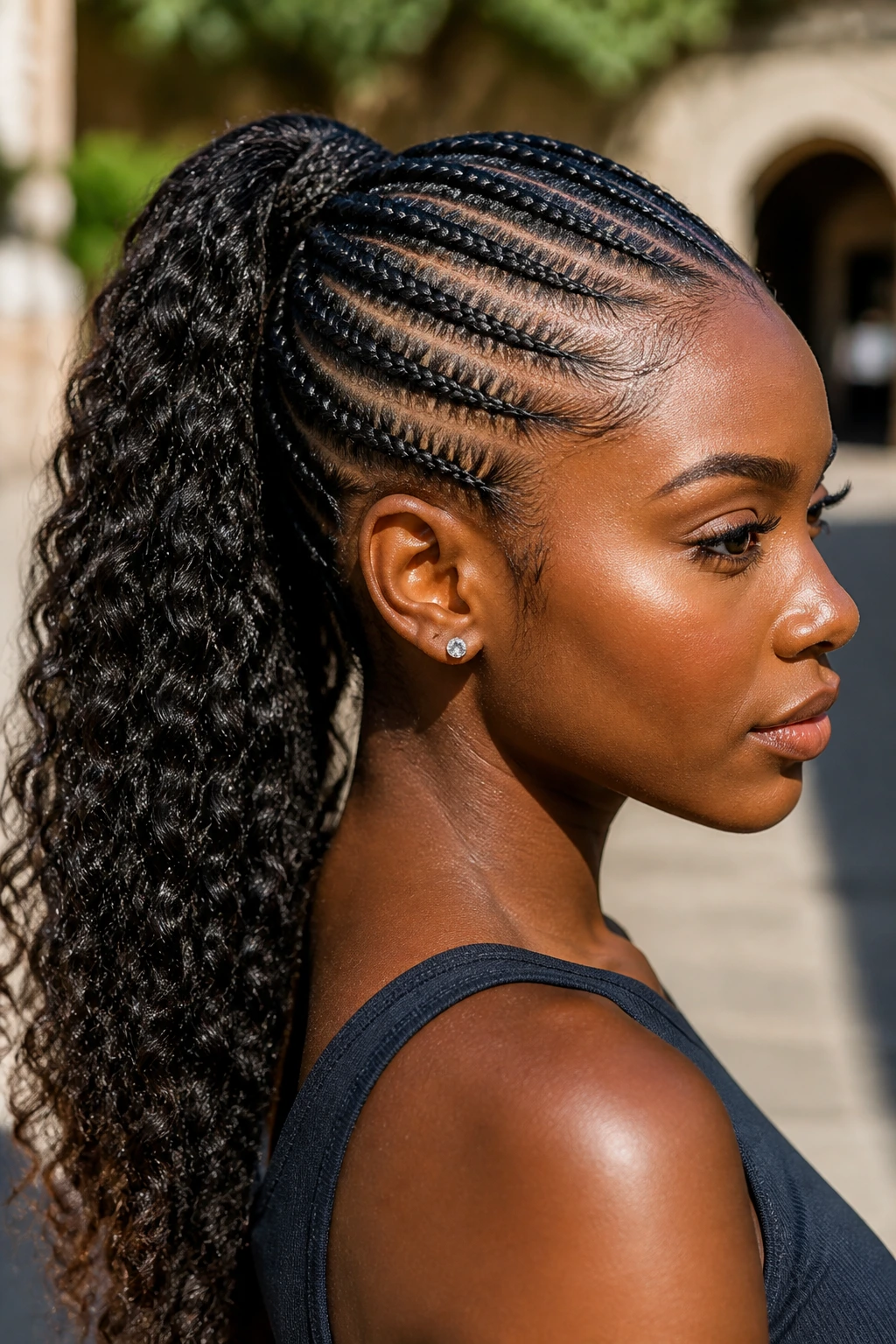
A cornrow ponytail gives you a sleek scalp-to-back shape with a lot of staying power. The braids pull the hair upward or backward, then collect into one ponytail that can stay neat for days. It’s a practical style, but it still has room for design through the parting pattern.
The braid tension should be firm enough to stay put, not so tight that your scalp throbs. That matters more than speed. The American Academy of Dermatology has long warned against tight braided styles that pull on the hairline, and that advice holds up here. If it hurts, it’s too tight.
You can leave the ponytail natural, add curls, or wrap it into a bun. The base stays the same. That’s the useful part.
27. Banded-Stretched Puff
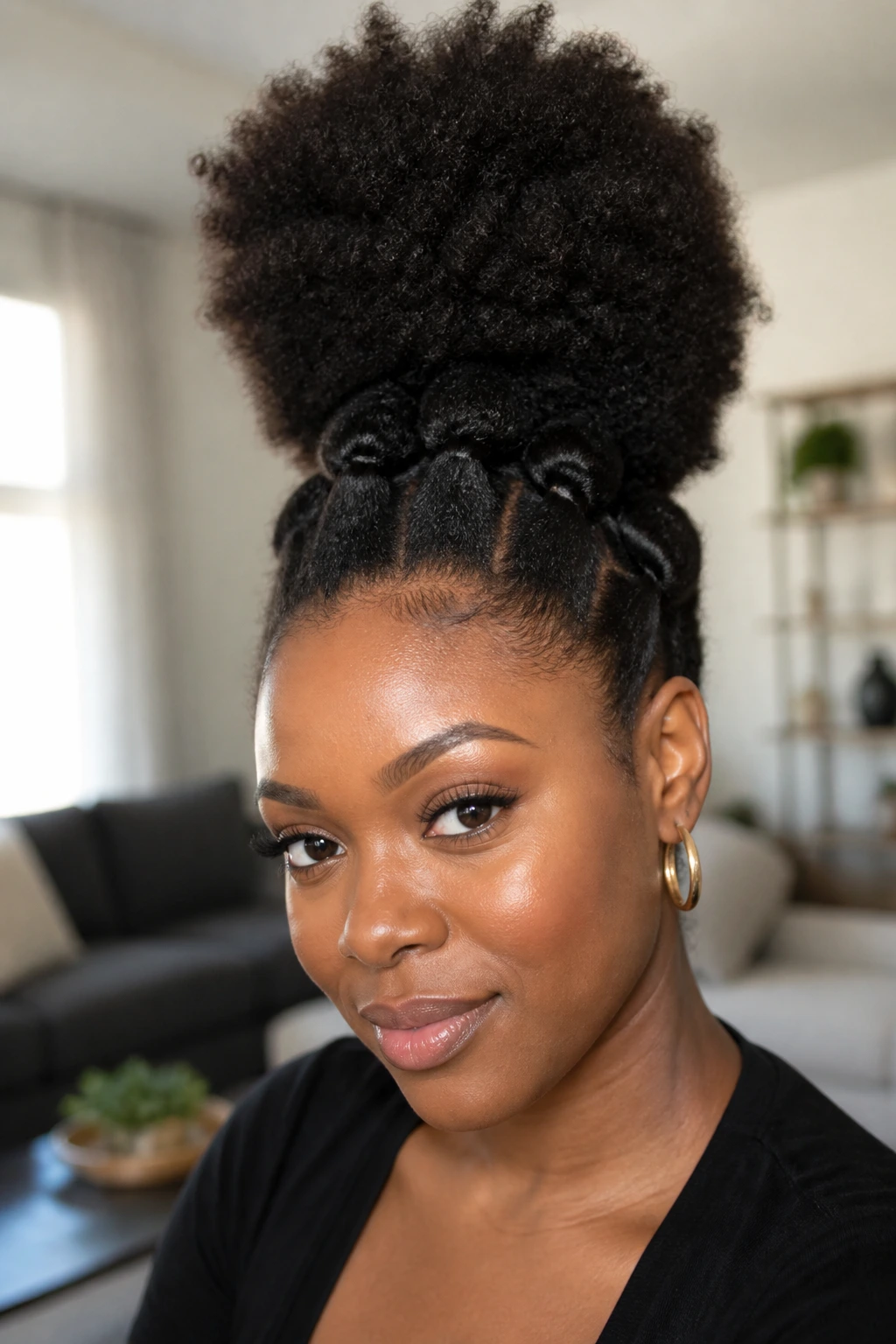
A banded-stretched puff gives you length without heat, using gentle bands to lengthen the hair before you gather it. That stretch changes the silhouette a lot. Instead of a round puff that sits compact, you get a fuller shape with more visible length through the tail.
This is a smart style when shrinkage makes your hair feel shorter than it really is. It also works well if your hair tangles when it’s fully compressed, because the stretch can make detangling easier later. Use soft bands placed a few inches apart and remove them carefully, one by one, if you want the hair to stay smooth.
It’s a practical style that looks more styled than the effort suggests. I like that kind of honesty in a hairstyle.
28. Mini Bantu Knot-Out
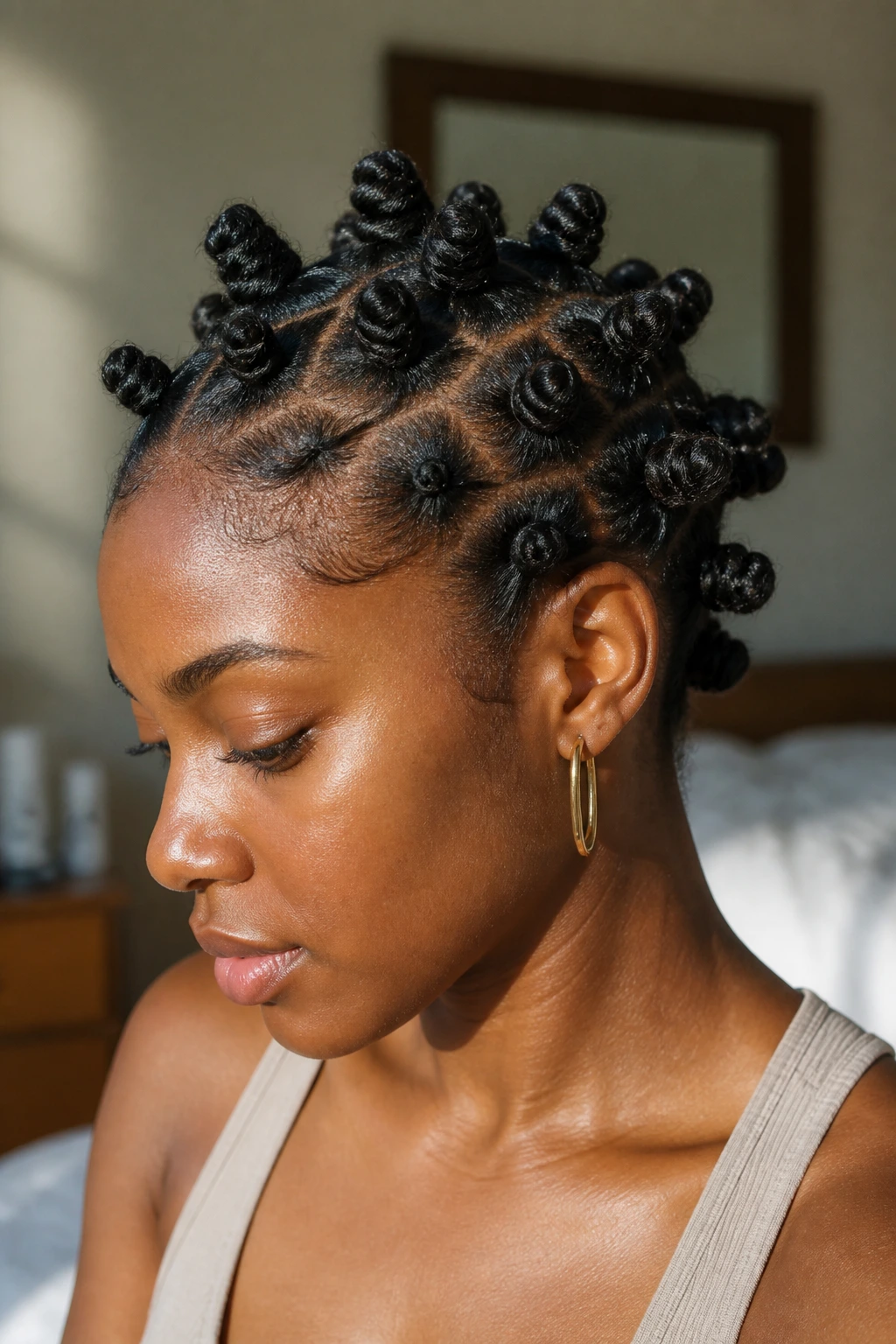
A mini Bantu knot-out gives you two styles in one. First, the knots look cute and sculptural. Then, when you take them down, you get tight little curls with a lot of definition. It’s a good option when you want a style that evolves over the week.
The knots need to be dry before you unravel them, or the curls will collapse fast. Use a tiny amount of cream or gel on each section, then twist and wrap it into a neat knot close to the scalp. The smaller the section, the tighter the curl. That part is predictable in the best way.
A knot-out has a lot of movement, so it reads as softer than a rod set and more defined than a twist-out. Different tools. Different finish.
29. Faux Hawk With Flat Twists and Puffs
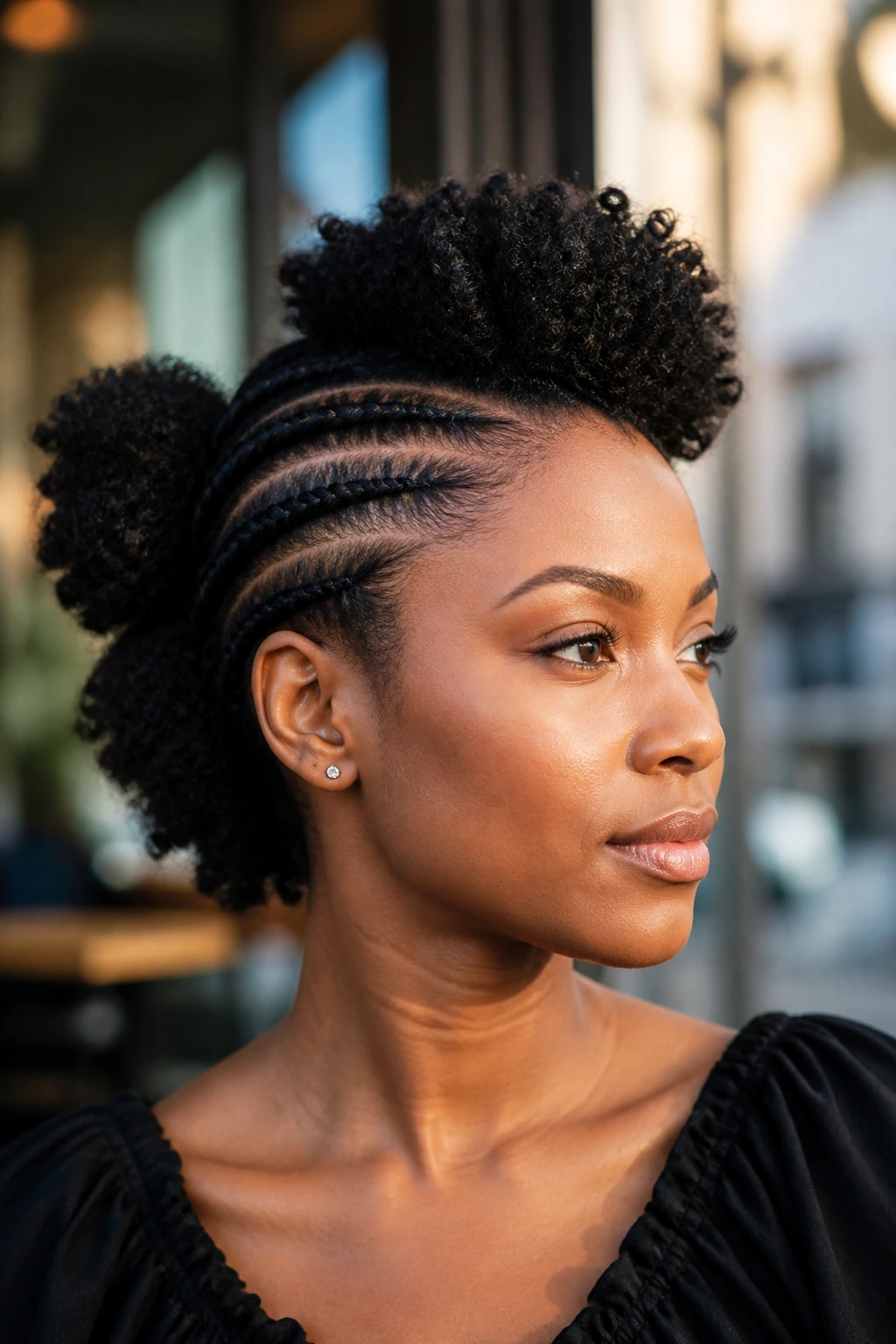
A faux hawk built with flat twists and little puffs in the center gives you shape from front to back. The sides stay tucked and smooth, while the middle section rises in a line of volume. It’s dramatic in a way that still feels wearable.
This style works well when you want the effect of a hawk without shaving the sides or putting pressure on the hairline. The flat twists can guide the eye, and the puffs add softness to the center. If your hair is especially thick, making the central sections a little smaller keeps the silhouette from getting too bulky.
The Visual Trick
The contrast matters. Sleek sides plus textured center equals instant shape. That’s why this style reads so clearly even from across a room.
30. Low Bun With Sculpted Flat Twists
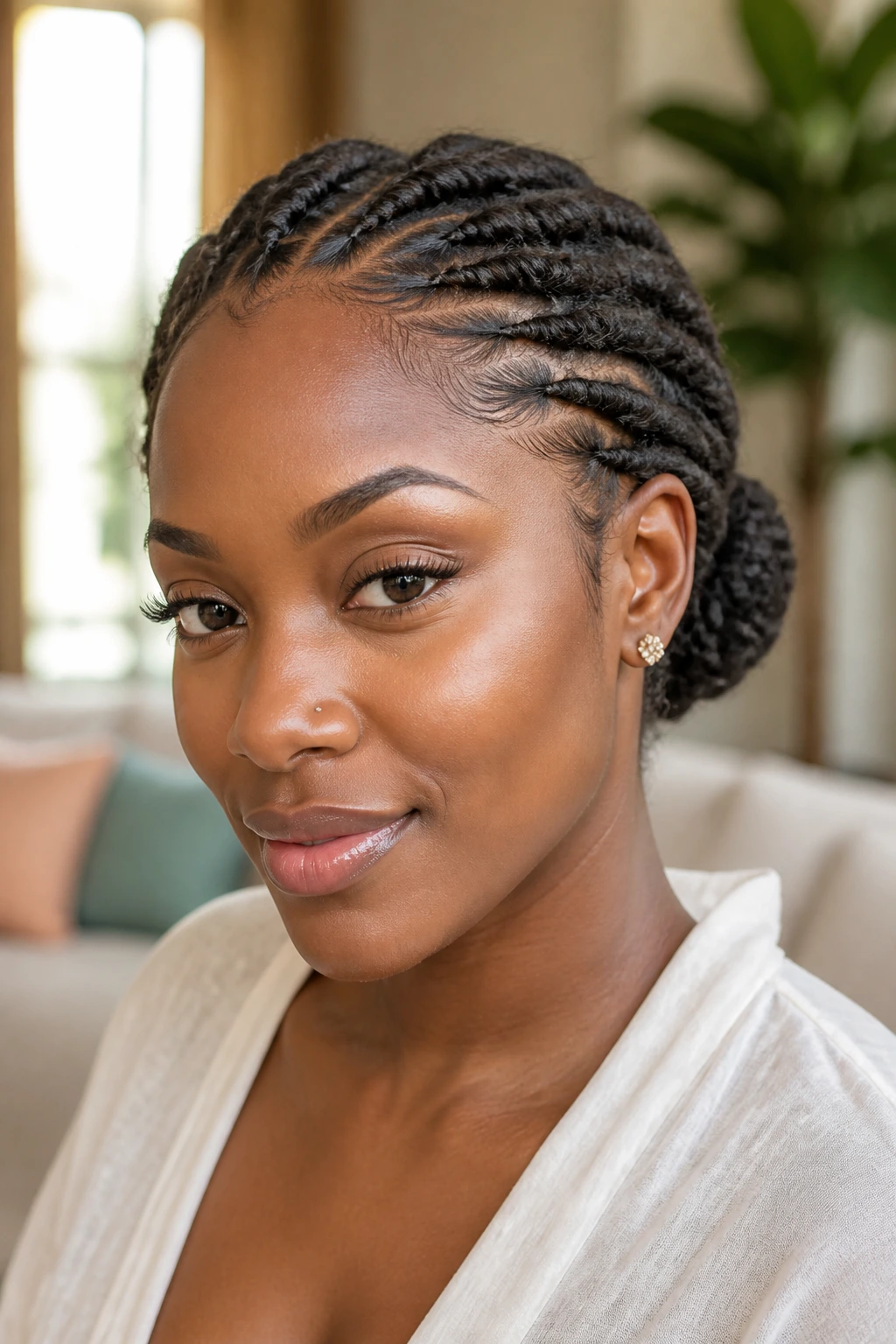
A low bun with sculpted flat twists is one of the neatest ways to keep natural hair tucked away while still showing pattern. The flat twists guide the eye into the bun, which means the style has movement even though it’s secured at the nape.
This one is especially useful for longer hair or hair that’s been stretched. The low placement keeps the weight away from the crown, and the twists act like built-in decoration. If you want a sharper finish, smooth the front with a light gel before you start twisting.
It’s a style that holds up well on busy days because it doesn’t need constant fixing. Once it’s pinned correctly, it stays put.
31. Crisscross Cornrow Crown
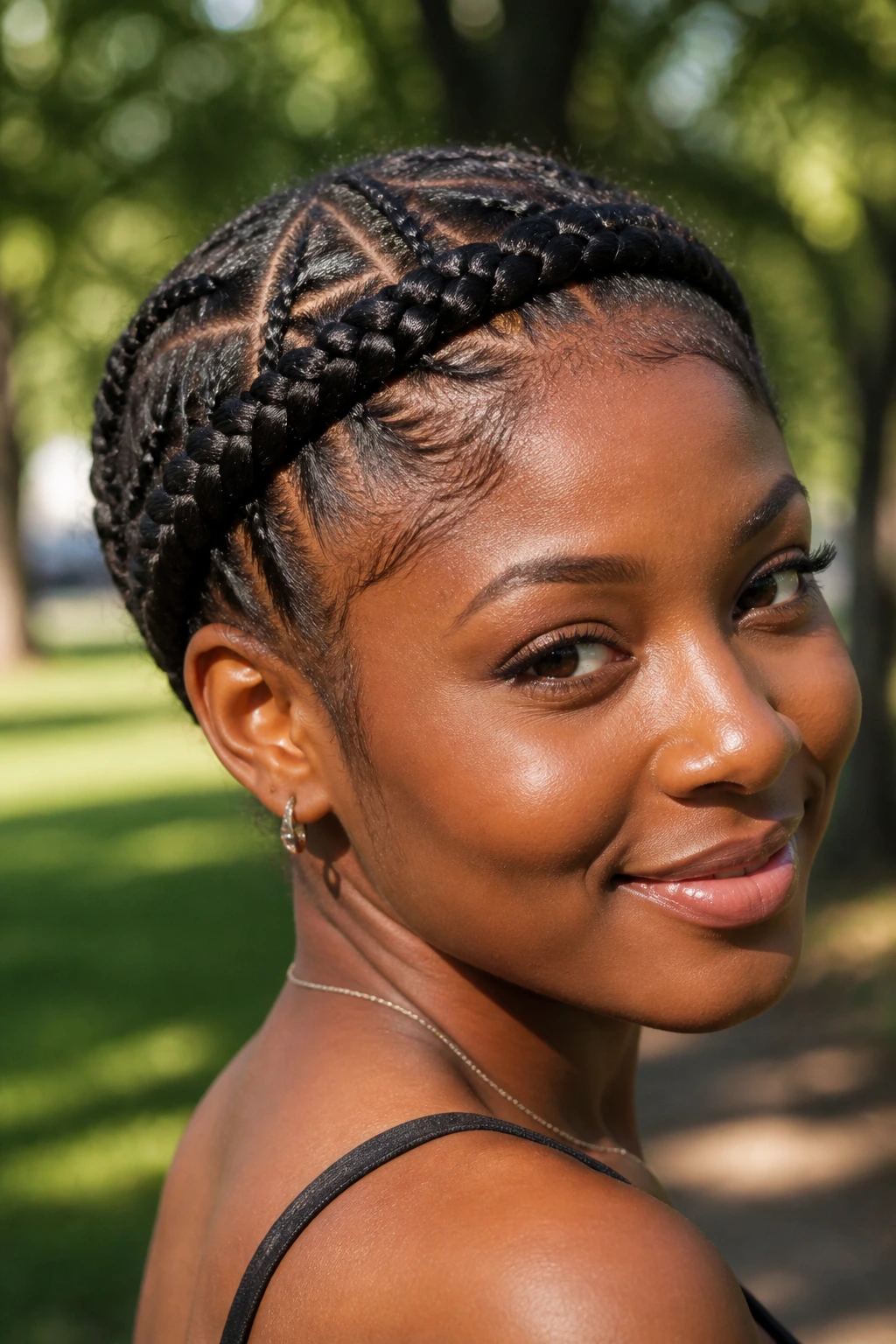
A crisscross cornrow crown adds pattern right into the braid design. Instead of a single smooth braid line, the sections cross over each other like stitches, which gives the style a little edge without making it loud. The shape sits beautifully on short to medium natural hair.
The key is clean parting. Messy lines make crisscross braids look accidental, not intentional. Take your time with the comb and keep the sections even. If your hands are not comfortable doing detailed braiding, ask for help or keep the pattern simple. Simpler lines done neatly always beat ambitious lines done crooked.
This style is practical when you want the hair off your face and the front protected. It has personality built in.
32. Twist-and-Clip Half-Up Style
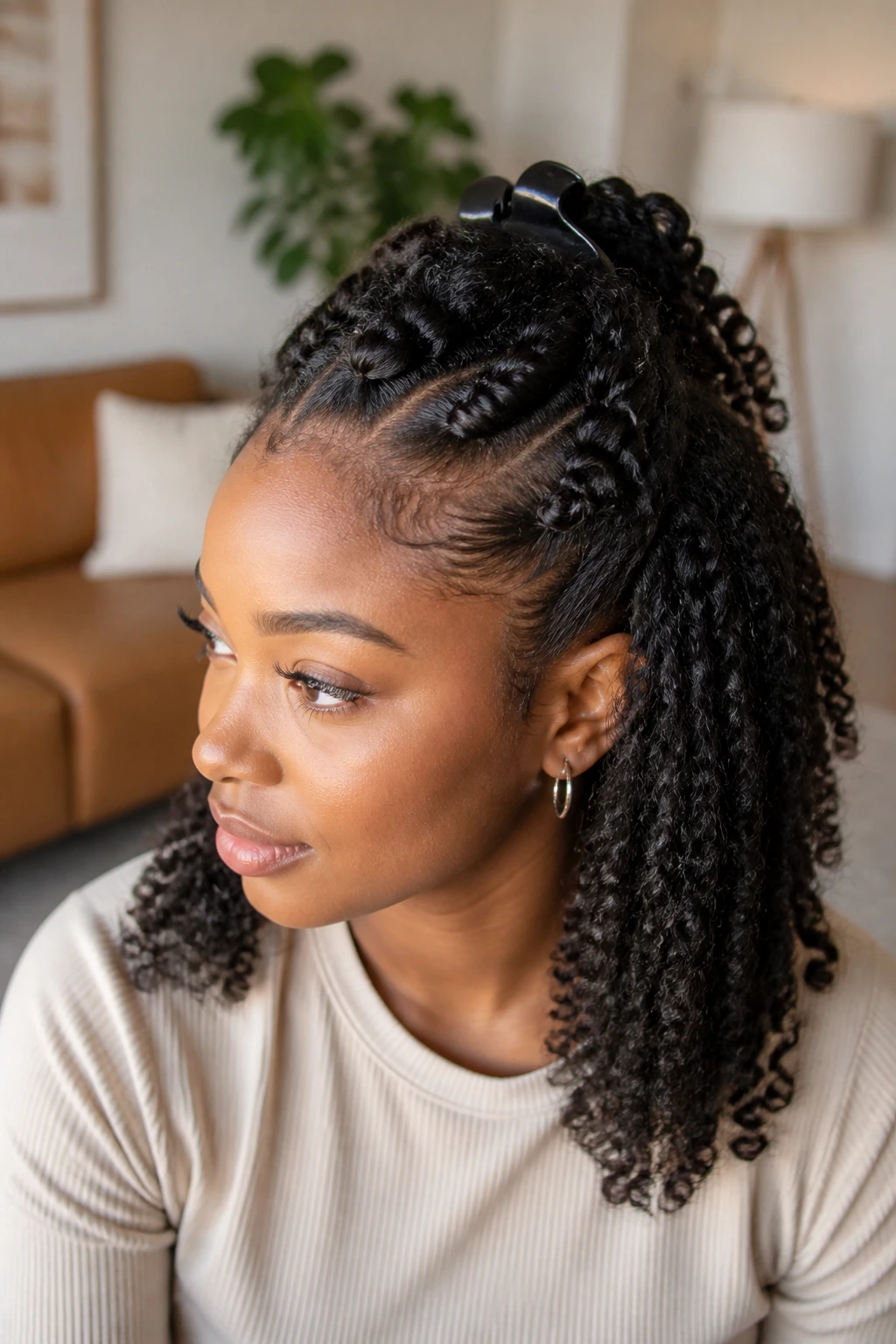
A twist-and-clip half-up style is one of the fastest ways to make natural hair look finished. Twist the top section back, clip it at the crown, and let the rest fall free. It works on curl patterns that still have shape but need some structure at the front.
Choose a clip with a strong spring. If the clip is weak, the style starts slipping as soon as the hair shifts. If your hair is very dense, twist the top section into two smaller pieces instead of one large one so the clip can hold it more comfortably.
The effect is relaxed but tidy. That’s what makes it useful for so many different days.
33. Side-Swept Afro Puff
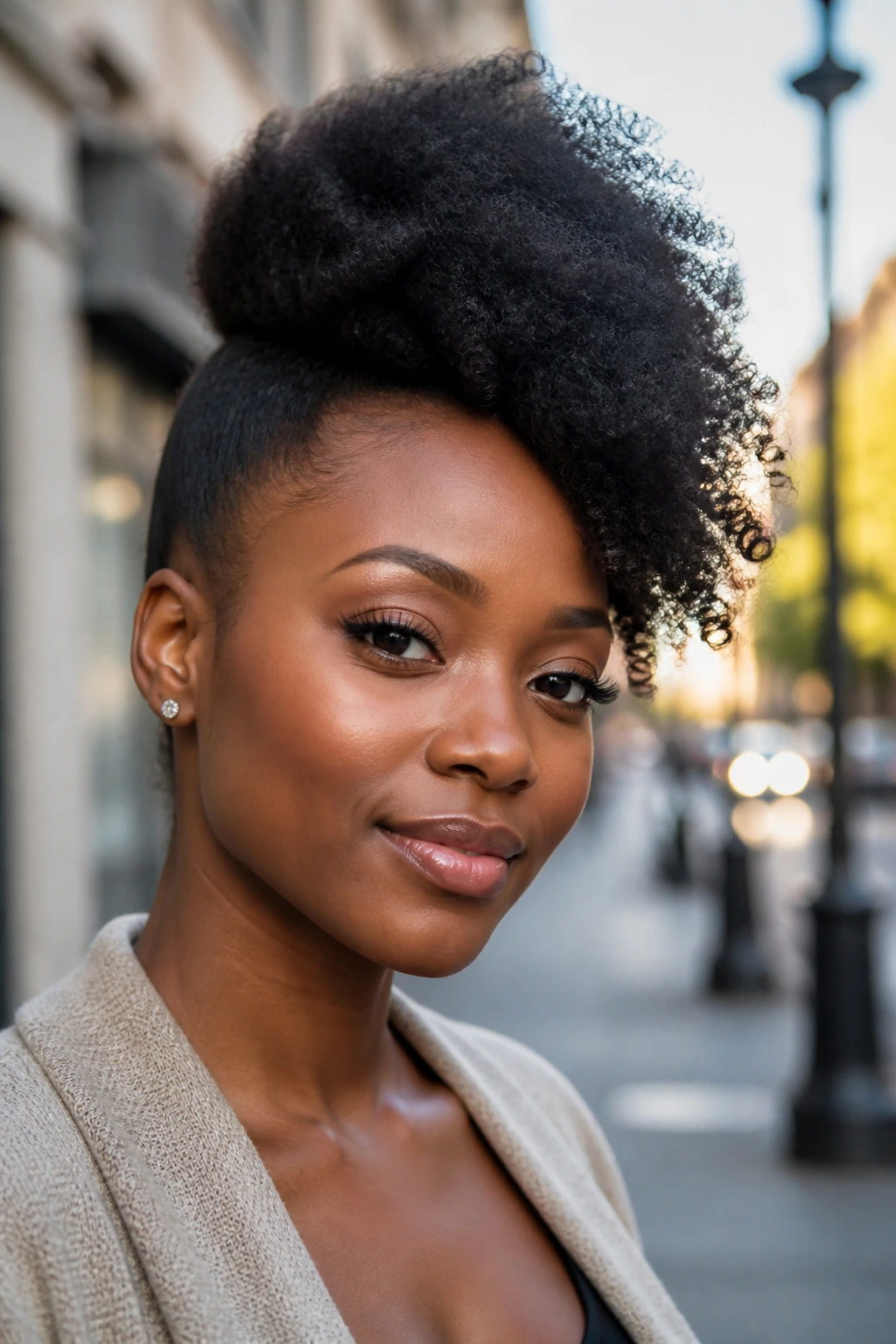
A side-swept puff moves the volume off-center, which softens the look and gives the face a little diagonal line. The puff can sit near one ear or just below the crown, depending on how dramatic you want it. It’s a small change, but it changes the whole feel.
This style works well on hair with plenty of stretch because the puff needs some length to sweep instead of just sit upright. Use a soft band and keep the roots smooth enough to guide the shape. If your hair is very dense, the puff will look fuller and more sculpted; if it’s finer, the side sweep adds volume where you want it.
I like this one when a regular puff feels too centered. The asymmetry wakes it up.
34. Loc Petal Bun
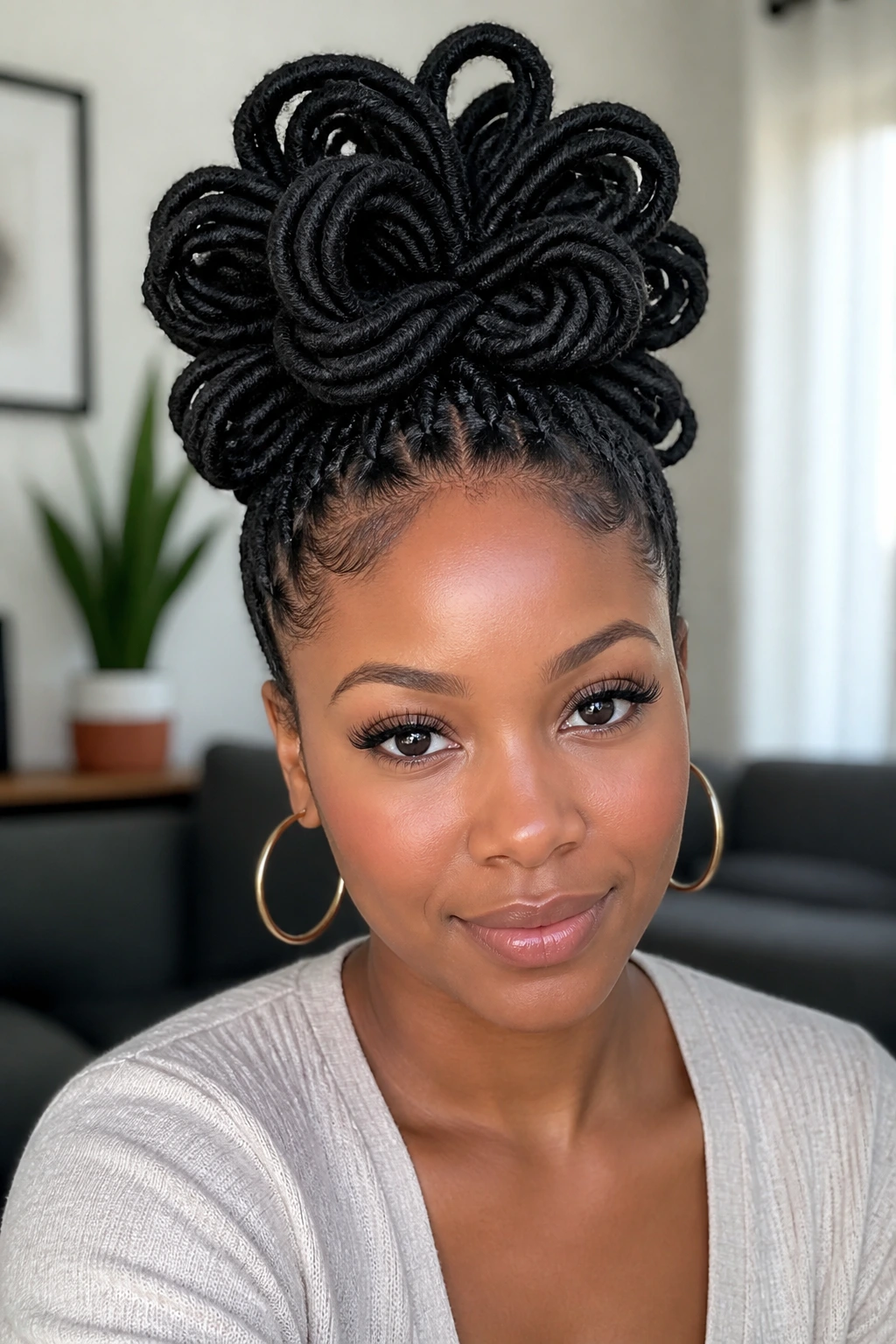
If you wear locs, a petal bun gives you a sculpted style with a soft flower-like shape. The locs are folded and pinned into overlapping loops, which creates dimension without needing much extra fuss. It’s one of the cleanest updos for loc wearers who want something polished.
The petals should overlap enough to hold, but not so much that the bun turns bulky at the base. Medium-length locs usually give the easiest shape, though longer locs can make a fuller bun with more texture. A few decorative pins or cuffs can add detail without changing the silhouette.
It’s elegant in a low-key way. Not fragile. Just composed.
35. Curly Ends Feed-In Braids
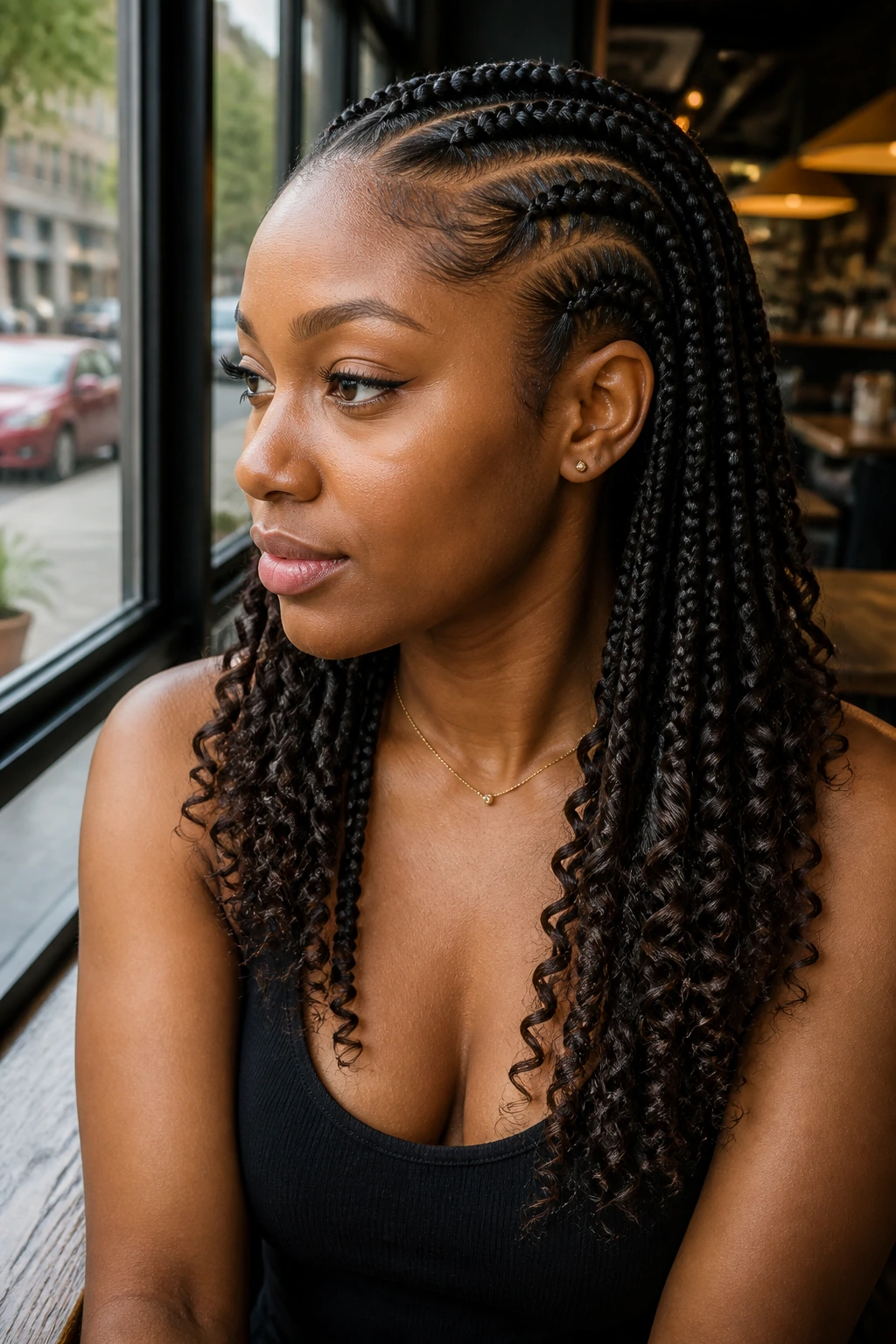
Feed-in braids with curly ends keep the scalp sleek while letting the ends stay soft and textured. The braid begins close to the head, then blends into curls that move when you walk. That combination is why this style keeps showing up in natural-hair inspiration boards and real life alike.
The curly ends need care if you want the style to stay cute for more than a couple of days. Wrap them at night, mist them lightly if they dry out, and avoid piling them under a heavy scarf. If you like a little more length, you can add hair for the braid portion and leave your ends curly for contrast.
This look is especially good when you want structure up top and softness at the bottom. Clean lines at the scalp. Movement at the ends. That balance is the whole point.
Why These Styles Hold Shape So Well on Coily and Curly Hair
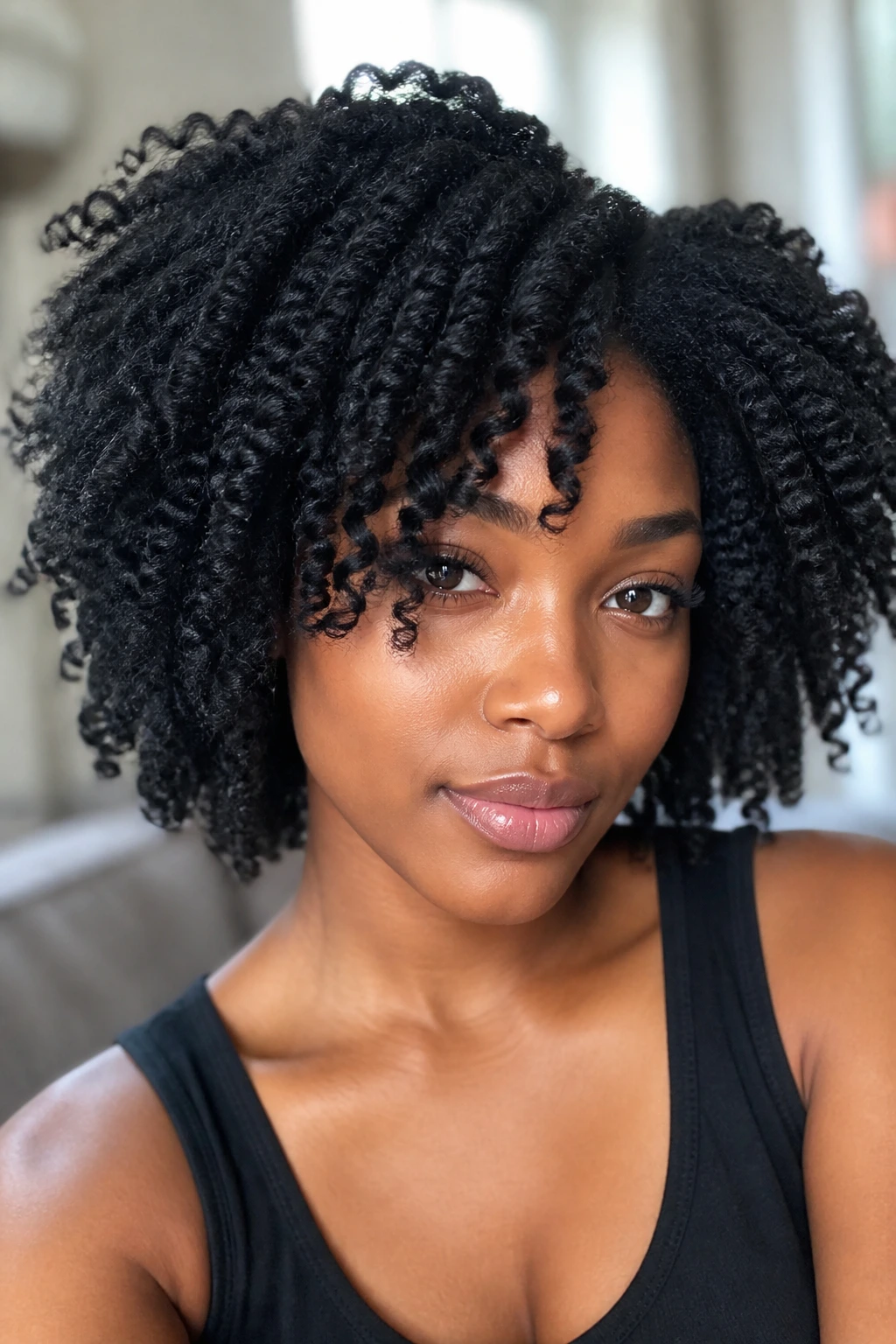
Coily and curly hair has a built-in advantage that straight hair doesn’t: the bend in the strand creates shape without much coaxing. That’s why twist-outs, puff styles, rod sets, and braid-based looks can look so full with so little added work. The texture does half the styling before you even reach for a comb.
Shrinkage is part of the equation, and it is not the enemy. It means the hair wants to curl back on itself, which is useful when you’re building puffs, knots, and rounded shapes. Stretching the hair before styling — with banding, twists, braids, or a blow-dryer on low heat — simply changes the silhouette. It does not erase the texture.
The best styles respect tension. The American Academy of Dermatology advises avoiding braids that hurt, pull, or leave your scalp sore, and that advice matters across the whole category. Cute should never mean tight. If the front edge is getting sore, the style is already too aggressive.
The Tools That Keep Each Style Neat
-
Rat-tail comb: Best for clean parts, especially on side parts, cornrows, and half-up styles.
-
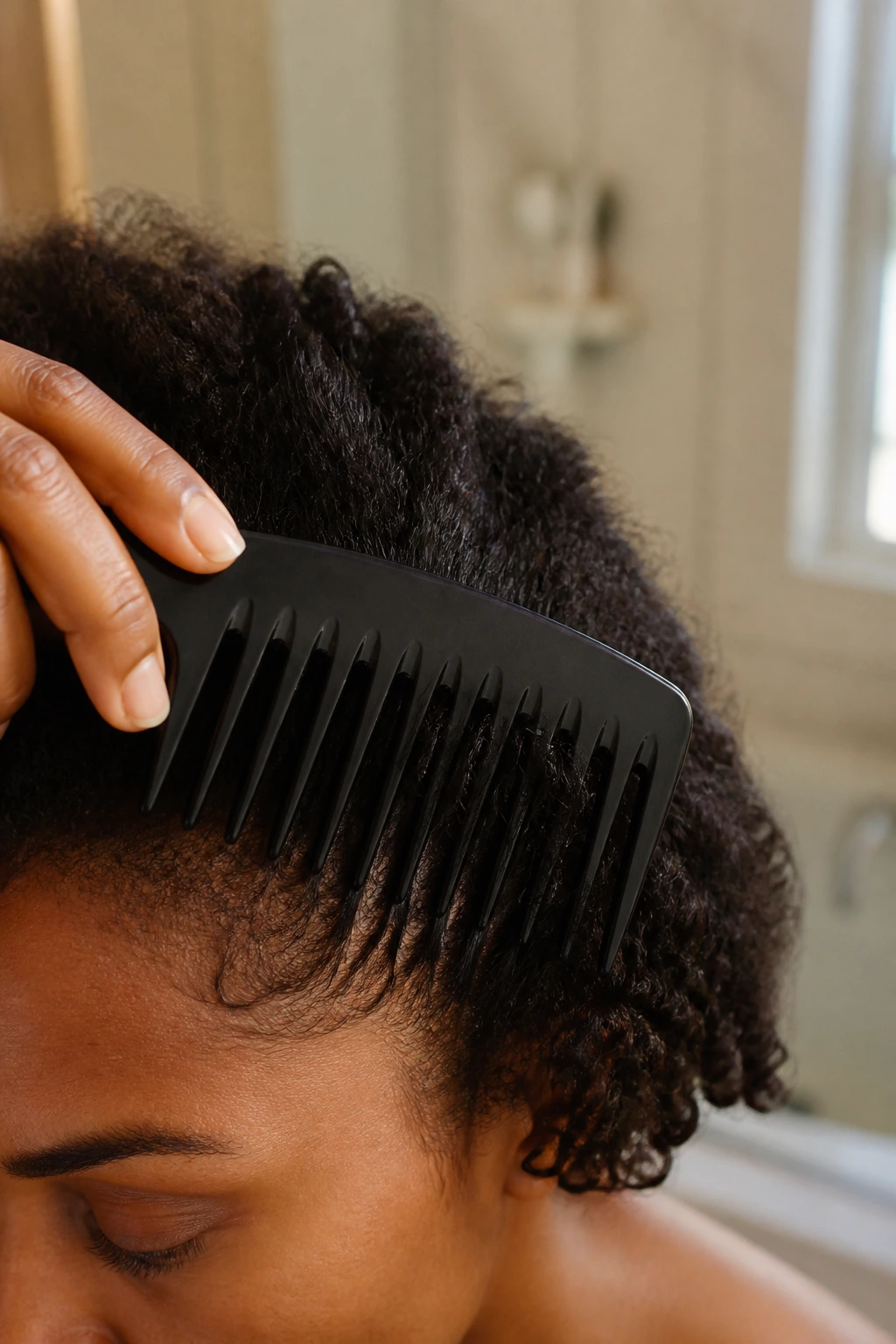
Wide-tooth comb: Gentle detangling after washing, when curls are most vulnerable.
-
Spray bottle: Perfect for re-dampening sections during twist-outs, wash-and-gos, and braid sets.
-
Leave-in conditioner: Helps with slip before styling and keeps strands from feeling brittle.
-
Curl cream or styling milk: Good for twist-outs, mini twists, and finger coils when you want softness without crunch.
-
Mousse or foam: Useful for rod sets, flat twists, and styles that need a little hold without heavy buildup.
-
Gel or edge control: Best for smoothing parts, defining edges, and helping puffs and buns stay neat.
-
Bobby pins: Small, plain, and worth keeping in bulk. You’ll use more than you think for updos and tucked styles.
-
Satin scarf or bonnet: Keeps friction down overnight and helps styles survive more than one day.
-
Stretchy bands and scrunchies: Better than thin ties for puffs and buns because they’re less likely to snag.
-
Claw clips: Strong clips hold twisted styles and half-up looks without flattening everything.
-
Diffuser or hooded dryer: Not mandatory, but useful when you need a set to dry all the way without losing definition.
Smart Wash-Day Prep and Product Picks
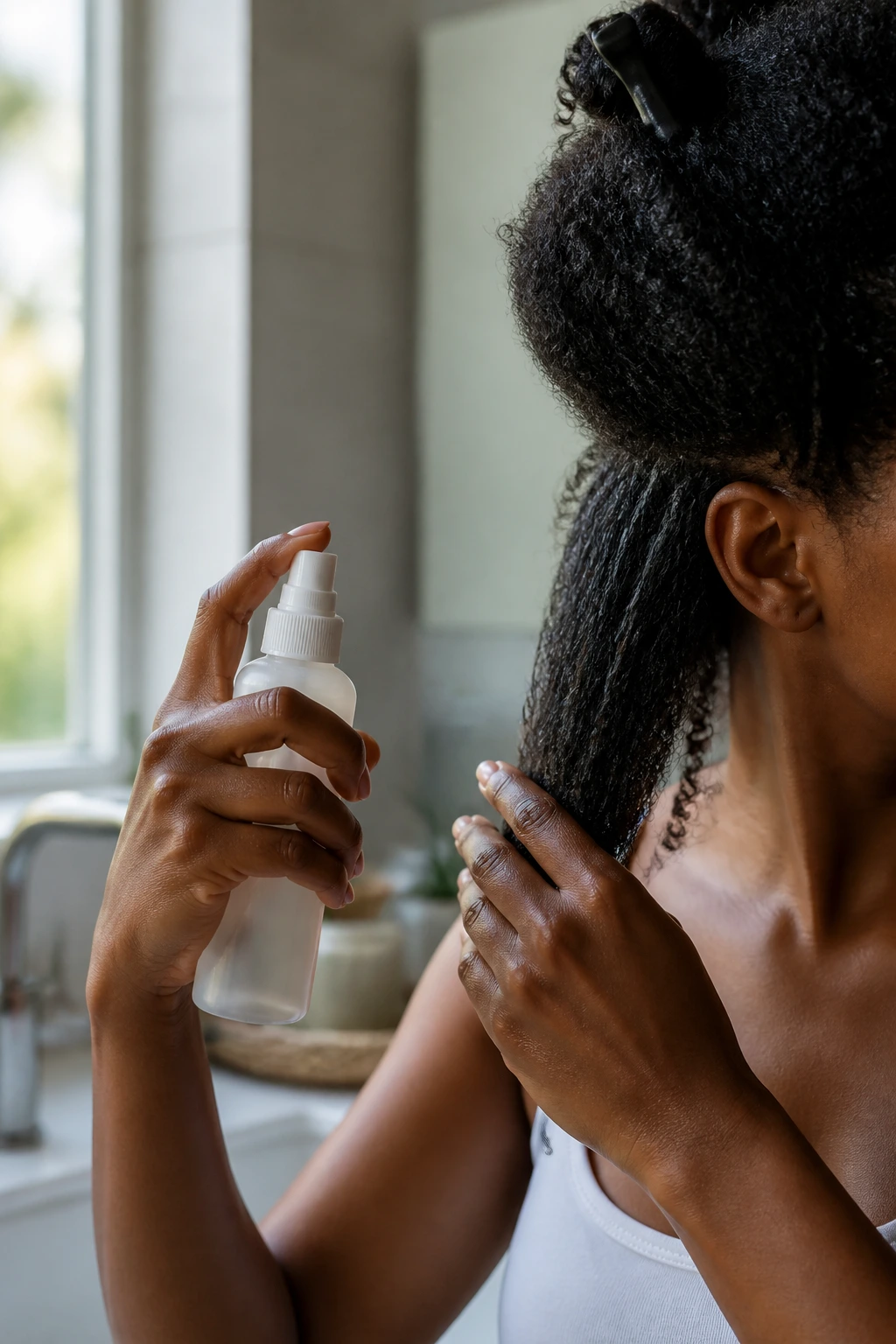
The easiest styles usually start before styling day, not during it. Clean hair, a good conditioner, and a little stretch make puffs, twists, buns, and rod sets behave better. If the hair is still coated in old product or half-detangled, every style becomes harder, and the finish looks rougher than it should.
Water-based leave-ins are the safest starting point for most styles. If your hair drinks moisture fast, add a cream on top. If your hair gets weighed down easily or flakes with heavy butters, keep the product layers light and stop before the hair feels slick. That “too much product” feeling shows up fast on natural hair — especially at the roots and around the front.
For hold, choose the product based on the style. Mousse and foam work well for rod sets and twist-outs because they dry with shape. Gel helps with parts, puffs, and wash-and-gos, but thick gels can leave flakes if you mix them with the wrong cream. When in doubt, use less. You can always add a little more, and you cannot easily take it back once the hair is clumped down.
How to Keep Natural Hairstyles Fresh Overnight
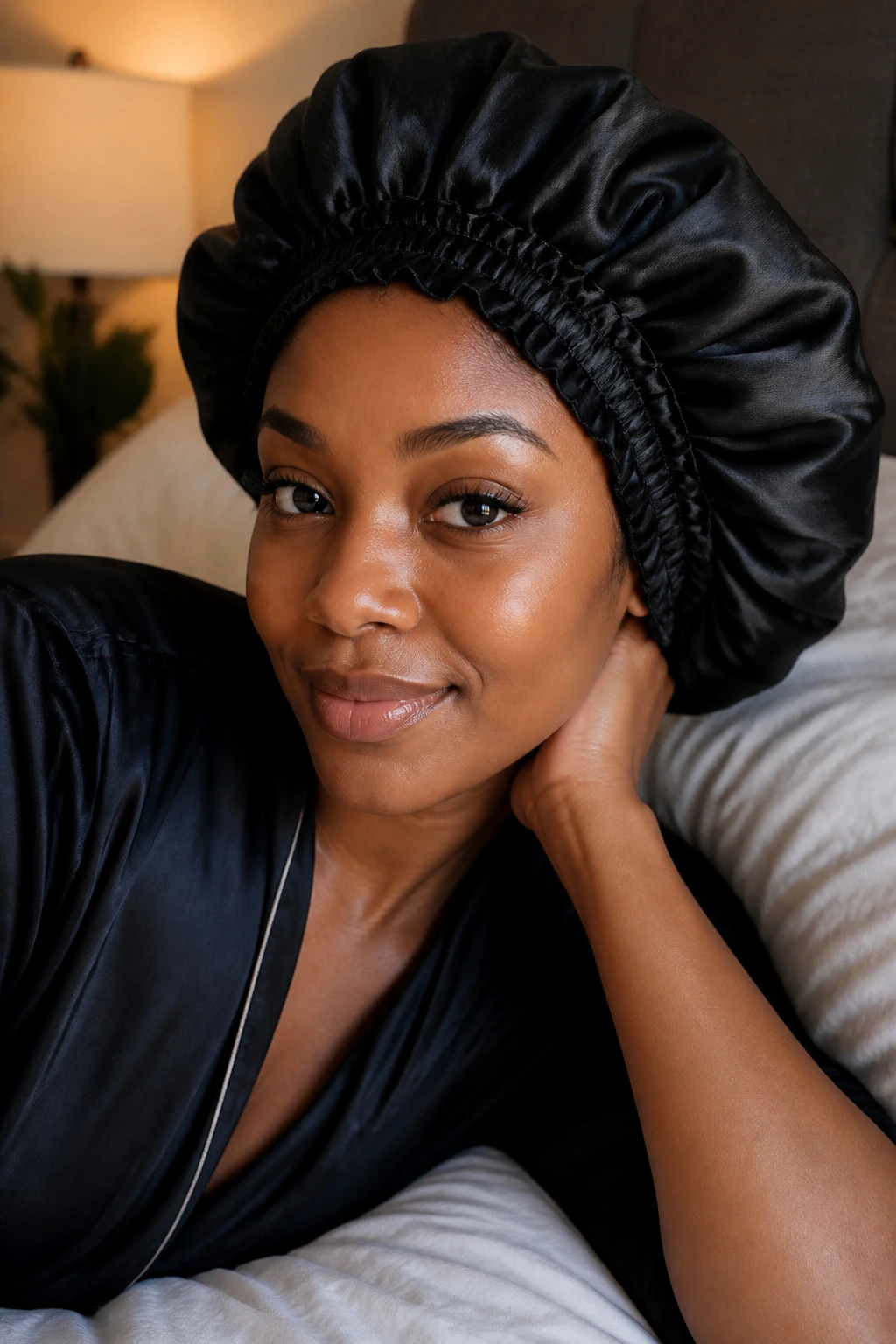
A style lasts longer when the night routine is simple and consistent. Satin bonnets, scarves, and pillowcases cut friction, which means less frizz, fewer flattened sections, and fewer broken ends. For puffs and buns, a loose wrap is usually enough. For twist-outs and wash-and-gos, the pineapple method or a bonnet with room at the crown can protect the curl pattern.
Some styles need a small reset in the morning. A twist-out can be fluffed at the roots with fingertips and re-shaped with a tiny bit of oil. A puff may need the band shifted slightly higher or lower. Rod sets and flexi rod curls often need nothing more than a light shake and separation at the crown. If you sleep rough, pinning the front section down with a silk scarf can save the shape.
Most natural styles do best in a three-to-five-day window, though mini twists, braids, and knotless styles can stretch longer. The goal is not to keep them pristine forever. The goal is to keep them neat enough that you don’t feel like starting over too soon.
Common Mistakes That Shorten the Life of a Style
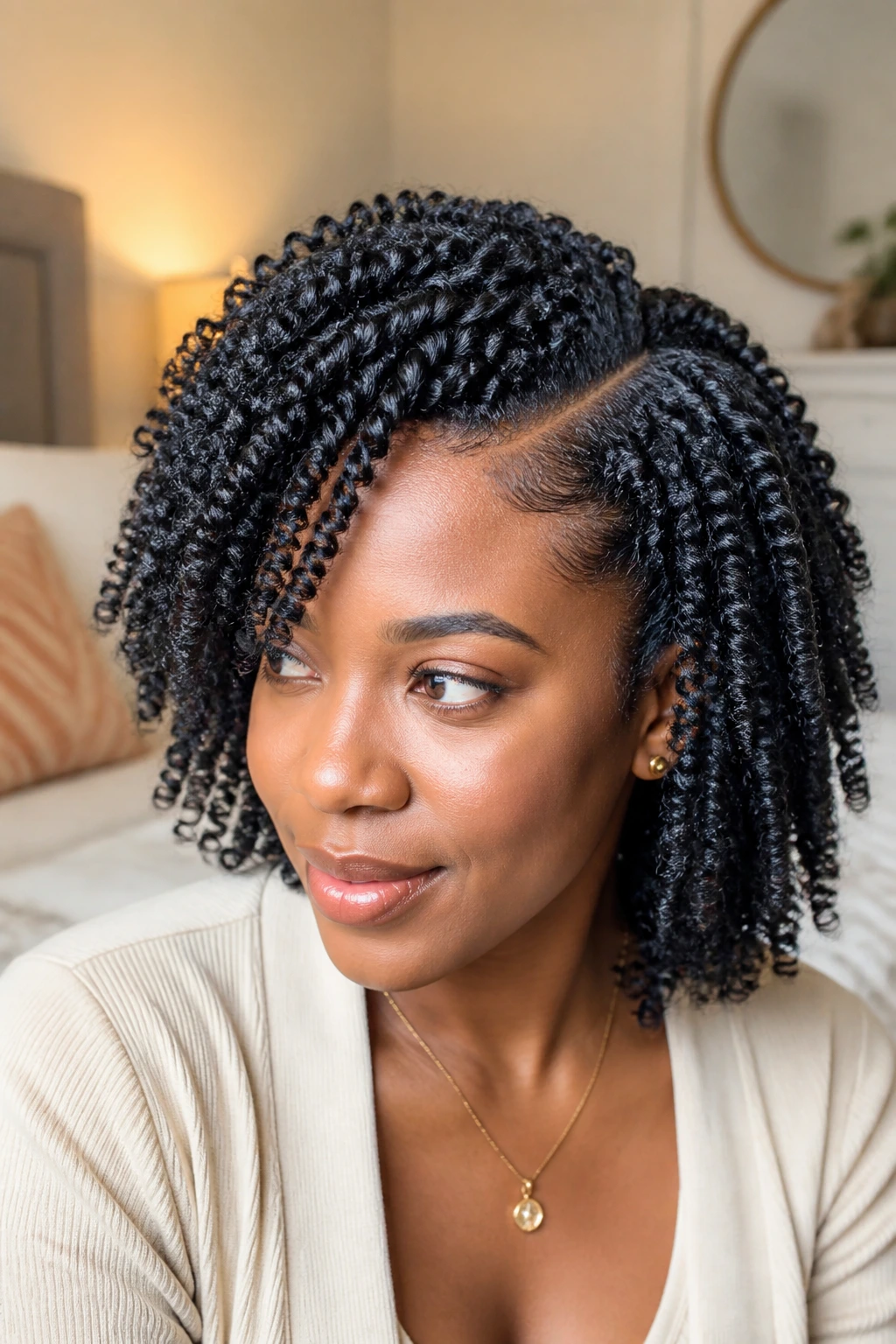
The first mistake is styling hair that is still too wet. Wet hair can look defined for an hour and then collapse as it dries, especially in twists, rods, and updos. Let the hair dry all the way before you take it apart or pin it in a final shape.
Another common problem is overloading the hair with butter or cream. It sounds caring. It usually just makes the style greasy, flat, and prone to buildup near the roots. A lightweight leave-in plus a small amount of styling product is usually enough.
Tension is the next troublemaker. If your edges feel sore, if the scalp burns, or if you see little bumps after braiding, the style is too tight. Loosen it. Black hair styling should not require pain as a price of admission.
People also forget about the night routine. A good style can look tired fast if it’s crushed against cotton for eight hours. Satin changes that. So does wrapping the front of the hair before bed instead of hoping for the best.
Easy Swaps and Personal Touches
-
Soft and Full: Use larger sections for twist-outs, braid-outs, and rod sets if you want a looser, bigger finish instead of tight definition.
-
Sleek and Clean: Add a little more gel at the part and around the hairline for puffs, buns, and ponytails when you want the style to read sharper.
-
Short Hair Friendly: Finger coils, mini twists, headbands, and shaped afros work especially well when the hair is not long enough for a full bun or puff.
-
Protective First: Choose flat twists, mini twists, knotless braids, low buns, or tuck-and-roll styles when your ends need to stay tucked away.
-
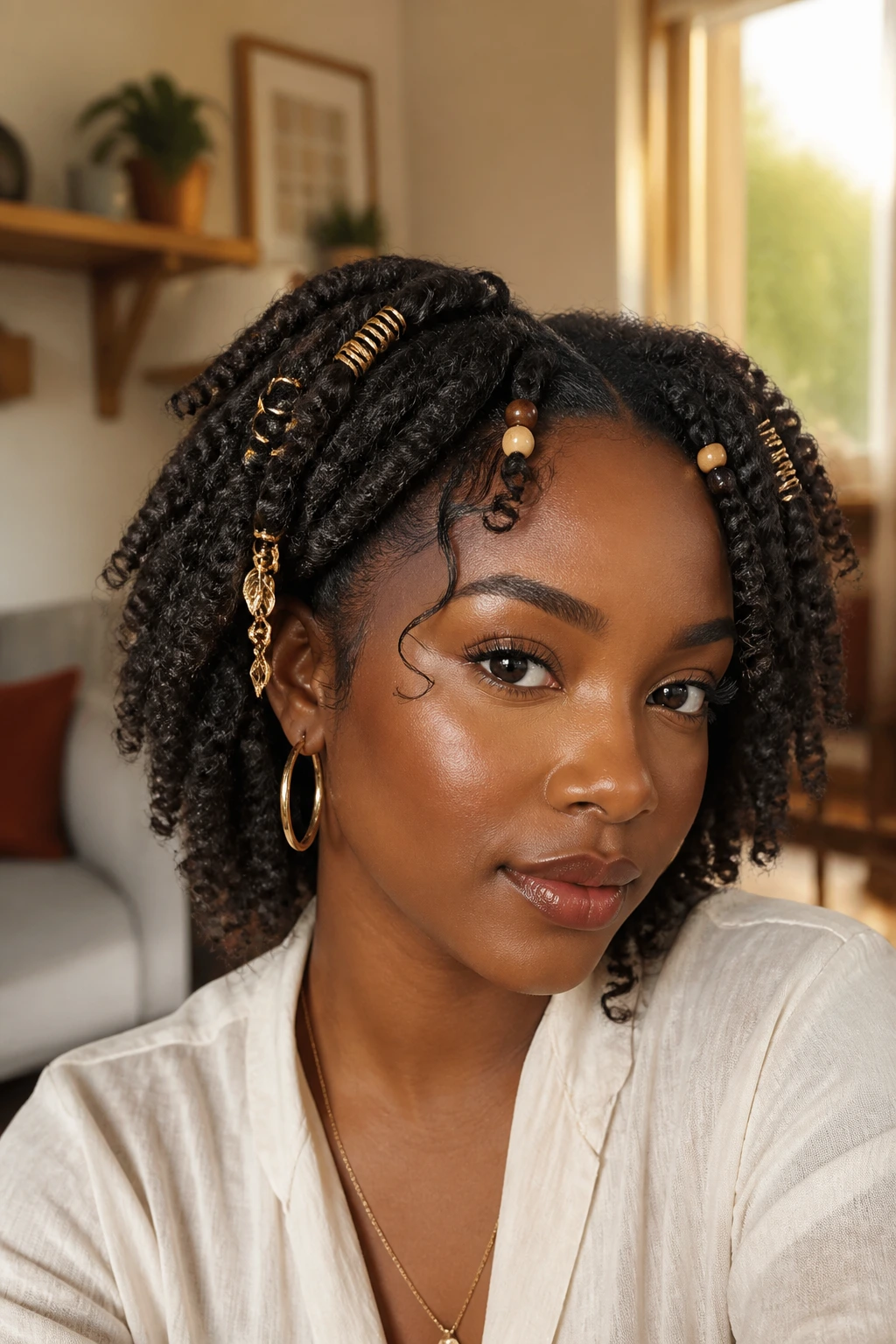
Playful Finish: Clips, cuffs, scarves, beads, and barrettes can change the mood of the same hairstyle without changing the structure at all.
-
Heat-Stretched Version: A quick low-heat blow-dry with a diffuser can make buns, puffs, and updos easier to place, especially on very shrunken hair.
Frequently Asked Questions
Which natural hairstyle lasts the longest?
Mini twists, knotless braids, flat twists, and tucked buns usually last longer than loose styles because the ends stay secured. The exact wear time depends on your hair’s density, how much you move in your sleep, and how well you protect it at night.
What style works best for short natural hair?
Finger coils, shaped afros, headband styles, mini twists, and tiny puffs are the most forgiving on short hair. They give you shape without requiring length you don’t have yet.
Can I do these styles on freshly washed hair?
Yes, but dry time matters. Twist-outs, rod sets, and wash-and-gos work best on damp or wet hair with the right stylers; buns, puffs, and updos often behave better when the hair is partially stretched and fully detangled.
How do I keep a puff from slipping?
Use a wide elastic or drawstring band with enough grip, and smooth the section first with a little gel or mousse. If the puff still slides, the band is probably too loose or the placement is sitting on a slippery part of the head.
Do protective styles have to be tight to last?
No. Tight styles often create more problems than they solve. A protective style should hold the ends away from friction while still letting the scalp feel comfortable and the hairline stay calm.
What if my twist-out gets frizzy on day two?
That usually means the twists were taken down too early, the product hold was too soft, or the weather won the argument. Try drying longer next time, using smaller sections, or refreshing the roots with a tiny bit of mousse instead of re-wetting the whole head.
Can I mix accessories with these styles without looking overdone?
Absolutely. One scarf, one clip, or a set of small cuffs is usually enough. Once you stack too many accessories, the hair starts looking crowded instead of styled.
Which styles are gentlest on the hairline?
Low puffs, mini twists, loose buns, flat twists, and loosely pinned updos are usually easier on the edges than tight braids or heavy ponytails. If your temples are already tender, avoid anything that pulls upward hard.
Is a wash-and-go really low maintenance?
Only if your hair likes that routine. Some textures spring into a wash-and-go with almost no drama; others need a diffuser, strong gel, and a careful refresh schedule. The style itself is simple, but the hair has to cooperate.
A Better Hair Week Starts Here
The nice thing about natural hairstyles is that you are not locked into one lane. One week it’s a twist-out with soft volume; the next week it’s a low bun, a puff, or a set of braids that lets your ends rest. That flexibility is the whole gift.
You do not need every style in this list. You just need a few that fit your length, your routine, and the amount of effort you’re willing to put in before coffee. Start with the styles that make your hair feel easier, not harder, and build from there.
