



A good curly haircut after 50 doesn’t try to tame the curl. It gives the curl a job. Naturally curly haircuts for women over 50 work best when the shape respects shrinkage, keeps the crown from collapsing, and stops the ends from turning into one heavy curtain.
That matters more than people think. Curls change with time — sometimes the texture gets drier, sometimes the gray comes in wirier, sometimes the sides loosen while the top suddenly stands up like it has opinions. A cut that looked fine ten years ago can start feeling bulky, fuzzy, or oddly flat in the wrong places. The fix is rarely more product. Usually, it’s shape.
I’d take a clean, thoughtful curly bob over a blunt, overlong mass of hair almost every time. Not because long curls are bad. They aren’t. Because curls need architecture. They need a place to sit, a way to move, and enough restraint in the right spots that the whole thing still looks deliberate when you’ve done nothing more than scrunch and go.
Why These 25 Cuts Age So Well on Curly Hair

- Shrinkage Matters: Curls can spring up 1 to 3 inches, sometimes more, so every cut here works with dry curl behavior instead of pretending the hair will hang straight.
- Crown Lift Counts: Flat roots are the fastest way to make mature curls look tired, so these shapes build height without making the top look helmet-like.
- Gray Texture Needs Room: Silver strands often feel drier and puffier at the ends, and the better cuts keep that from turning into a triangle.
- Glasses and Frames Have to Fit: A smart curly cut leaves enough space around the temples and cheeks that your frames, earrings, and neckline can breathe.
- Grow-Out Should Still Look Intentional: These styles don’t only look good on the appointment day; they keep their outline at week six, which is the real test.
- Less Daily Wrestling: A good shape shortens diffusing time, cuts down on heavy creams, and lets the curl do more of the work for you.
1. Soft Curly Pixie with Crown Lift
A curly pixie is not a dare. It’s a very smart move when the top has good spring and the sides no longer need to carry all the weight. Keep the top around 2 1/2 to 4 inches so the curls can stack without sticking straight up, and taper the sides close enough to clean the outline without exposing every scalp line.
The trick is balance. Too short on top and you get a puffball. Too much length at the crown and the shape drops forward by lunch. A good pixie for curly hair is cut with the dry curl pattern in mind, then cleaned up around the ears and nape so it looks neat even when the texture goes a little wild.
This cut shines on women who want lift at the crown, minimal drying time, and a neck that stays cool. It also plays nicely with silver hair, which tends to show off the texture instead of hiding it. If your hair is fine, keep the top a little longer and ask for soft point cutting, not a choppy razor job that makes every curl fray.
2. Chin-Length Curly Bob with a Side Sweep
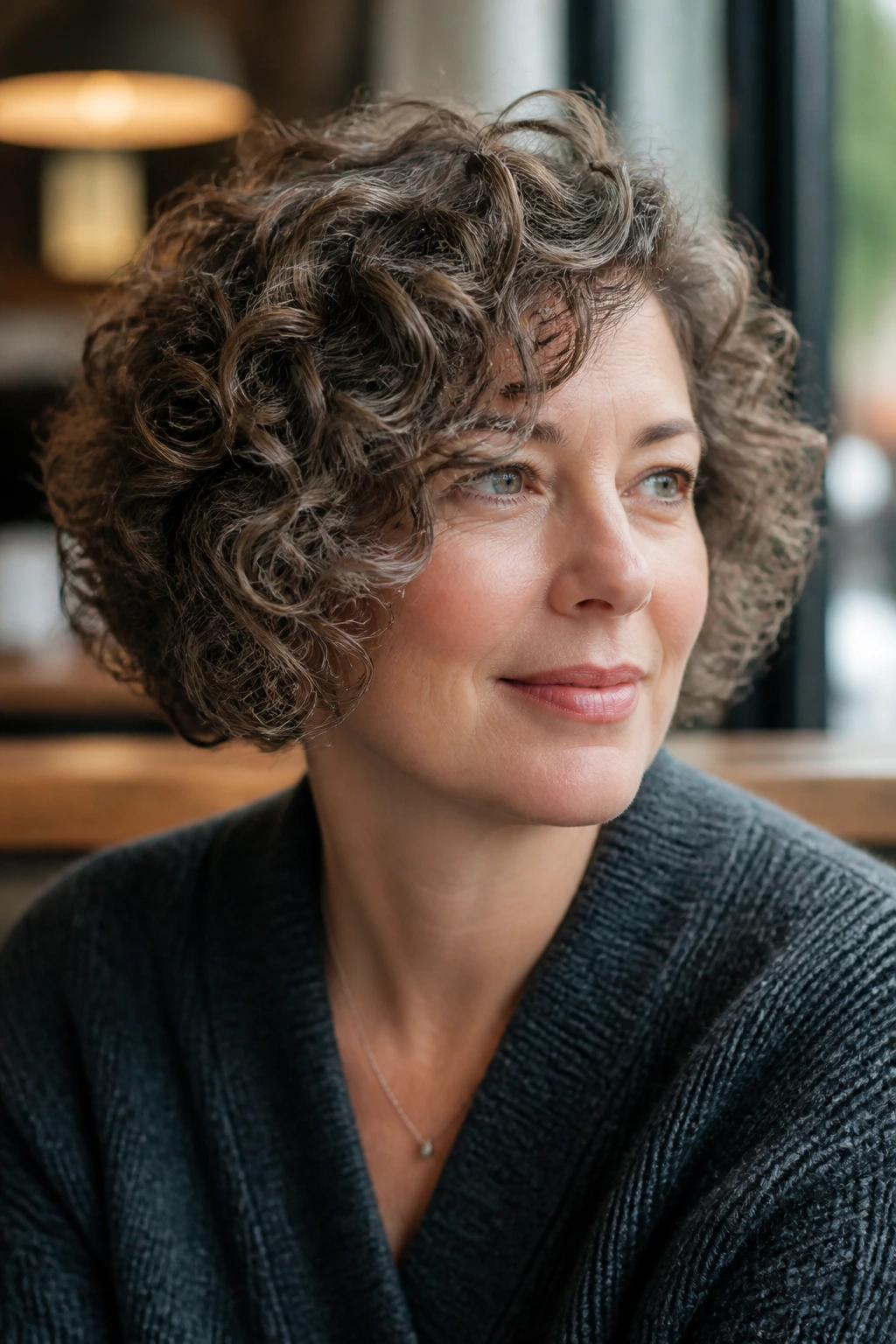
Why does this work so well? Because chin length is the point where curls can frame the face instead of swallowing it. A side sweep keeps the front from feeling severe, and it gives the forehead area some softness without the commitment of a full fringe.
This is one of the most forgiving shapes for women who wear glasses. The bob stops before the temples get crowded, and the side part creates a diagonal line that makes the whole cut feel lighter. If your curls bounce up a lot, ask your stylist to leave the front a half inch longer than you think you need.
A chin-length bob also gives you options on wash day. You can air-dry it with a curl cream and a small amount of gel, or diffuse the roots for extra lift and let the ends stay loose. The silhouette is clean, but not stiff. That’s the sweet spot.
3. Rounded Curly Bob That Hugs the Jawline

A rounded bob is one of the few short cuts that can make thick curls behave without flattening them into a neat little shape that has no life in it. The outline curves gently around the jaw, which keeps the hair from puffing out at the sides and turning into a triangle.
Ask for internal layers, not a lot of surface slicing. You want the perimeter to hold its line while the inside loses some bulk. That’s what keeps the curl from building a shelf around the cheeks. On denser hair, the stylist may need to debulk underneath while preserving the top shape.
This cut is especially good if your jawline is a feature you like. It gives structure right where the face starts, and it works with both loose spirals and tighter ringlets. Keep it slightly longer in the front if you want a softer read.
4. Shoulder-Length Shag with Curtain Pieces
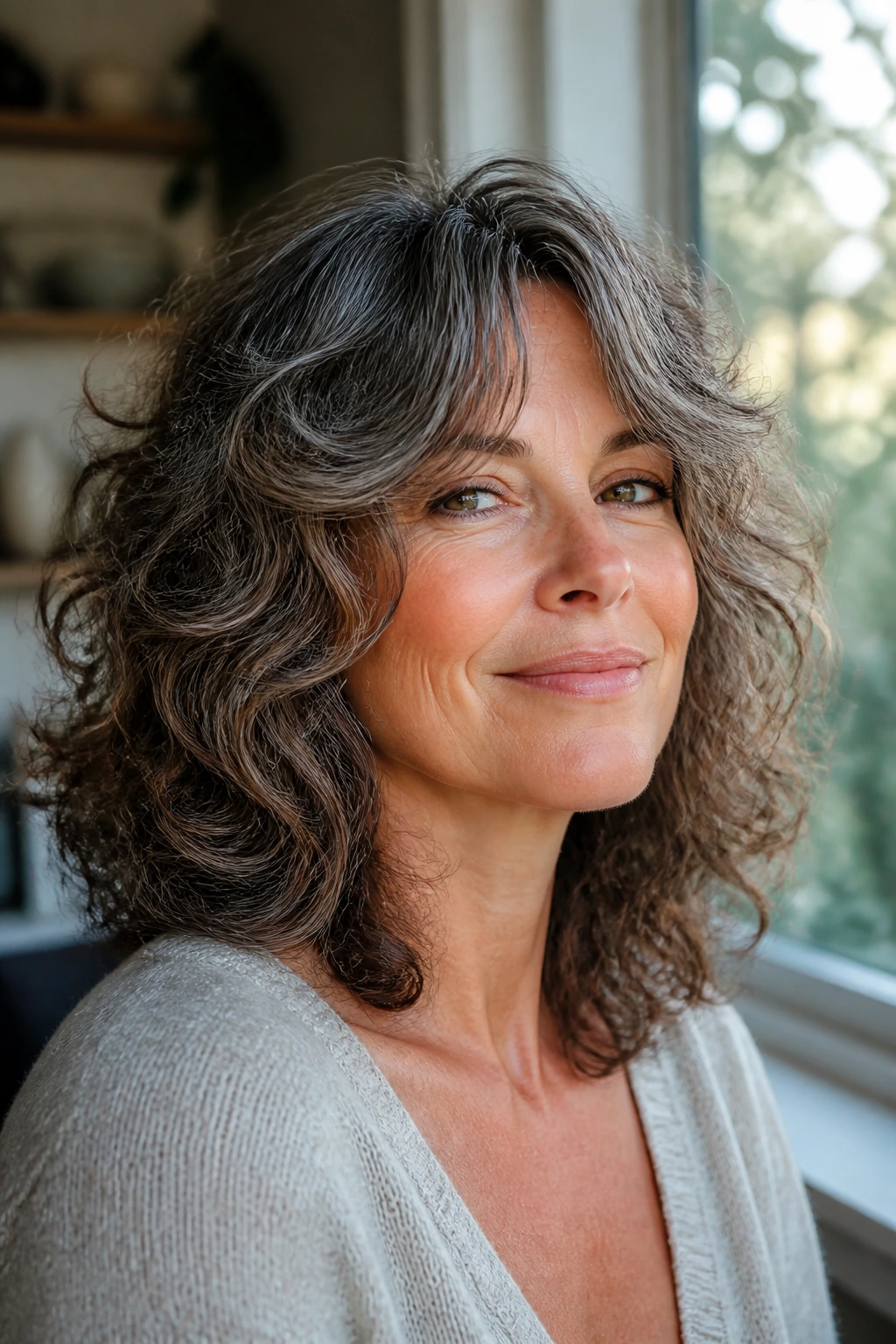
A good curly shag should look slightly unruly in the best possible way. Not messy. Not wild. Just alive. The shoulder-length version gives you room for movement, and the curtain pieces soften the face without sitting like a heavy fringe.
Why It Works
The shag depends on layers that are cut to support the curl’s own spring. If the top is too short, the crown explodes. If the layers are too timid, the cut gets bulky and triangular. The better version has longer crown layers, a little extra length around the cheeks, and enough taper near the ends to keep the whole thing from dragging.
This is the cut I reach for when someone says, “I want shape, but I still want to tuck it behind my ears.” It has personality without needing a lot of heat styling. On day two, a little water in the palms and a squeeze of foam or gel usually brings the whole thing back.
5. Collarbone Lob with Invisible Layers
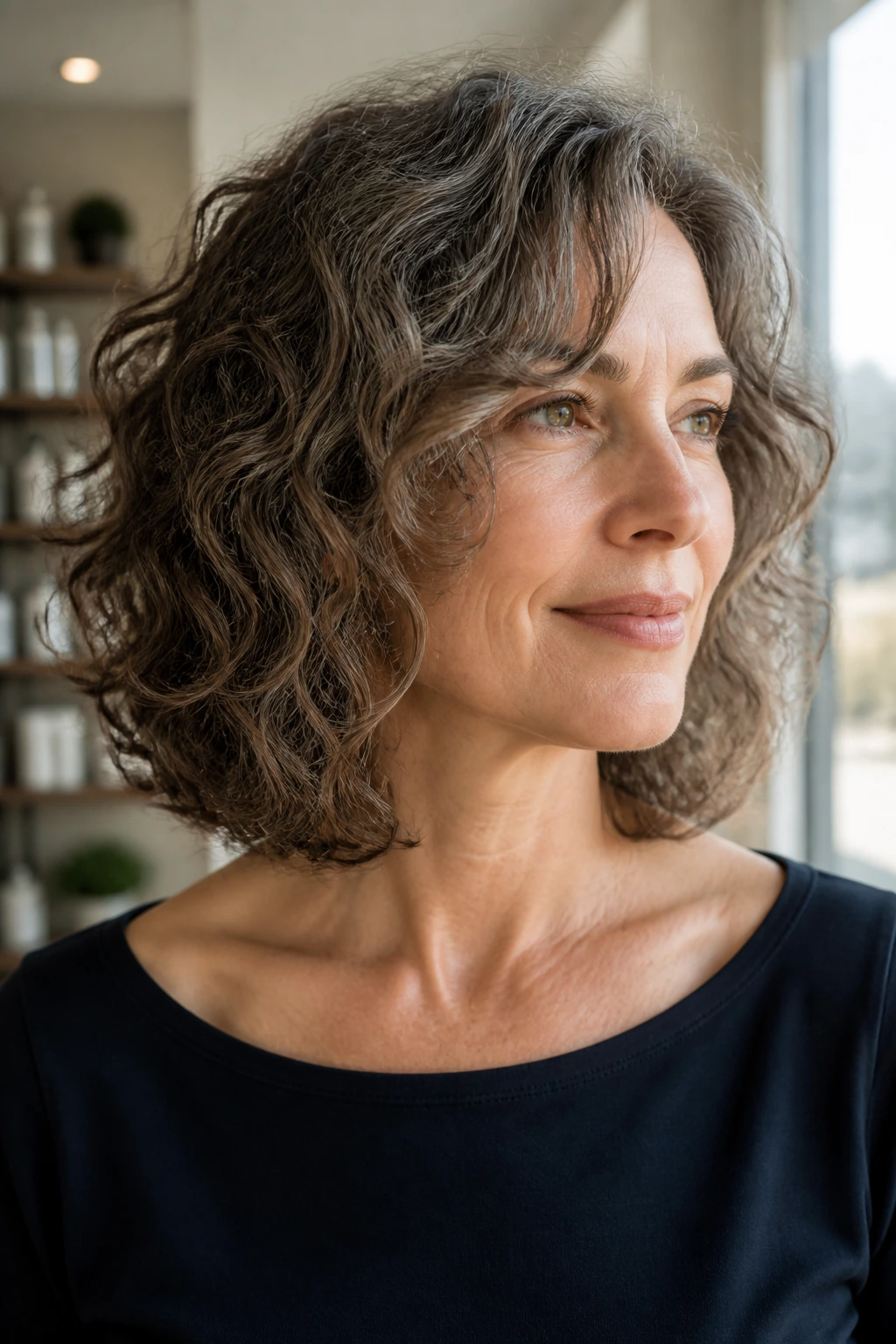
A collarbone lob is one of those cuts that looks almost simple until you realize how much work it’s doing. The length lands right where curls can still swing, but not so low that the roots go flat and the ends start looking heavy.
Invisible layers are the key. You don’t want obvious stair-steps through the shape. You want the curl to move in a gentle curve, with the interior losing just enough weight to keep the outside clean. That matters a lot on hair that’s fine or medium in density, because too many short layers can make the ends look see-through.
This is a strong option if you like to wear your hair up sometimes. A lob still gives you ponytail room, but it won’t drag your face down the way a long, unshaped length can. It’s also easy to adjust around color-treated hair, which often benefits from a little less weight and a little more air.
6. Tapered Crop with a Longer Top
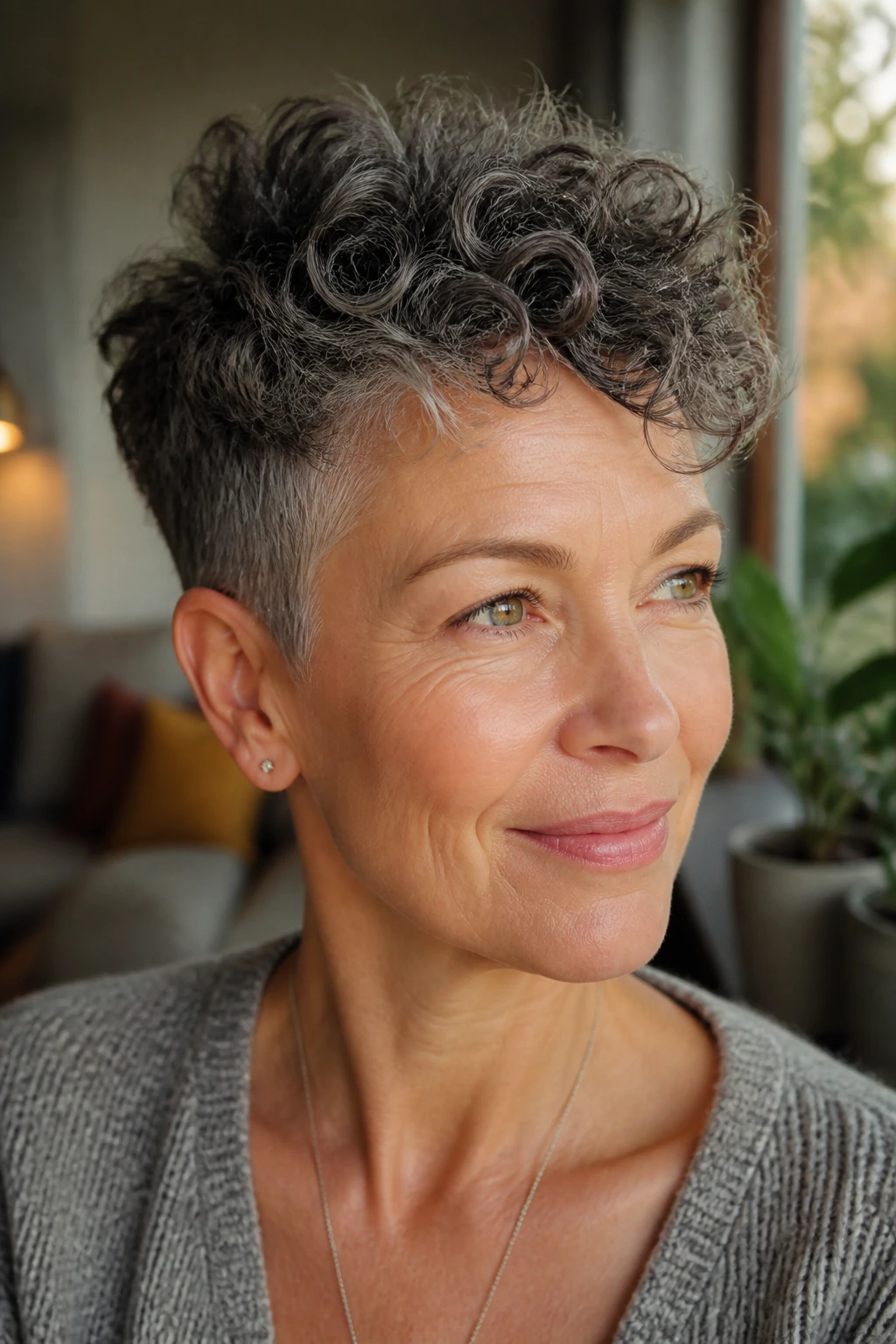
A tapered crop is one of the sharpest-looking curly cuts when it’s done with restraint. The sides and back are trimmed close enough to keep the outline neat, while the top stays longer so the curl pattern can lift and soften the shape.
This works especially well with tighter curls or coils that do not want to sit flat. The taper removes bulk where it tends to gather — around the nape, behind the ears, and at the temples — and leaves the curl room to stand up on top. If you’ve ever felt like your hair grows outward before it grows down, this is the fix.
It’s also practical. Very practical. You can wash it, add a leave-in and a light gel, and be out the door in a fraction of the time a shoulder-length style needs. The tradeoff is maintenance: the sides and nape usually need a tidy-up every 4 to 6 weeks if you want the shape to stay crisp.
7. Mid-Length Face-Framing Cut
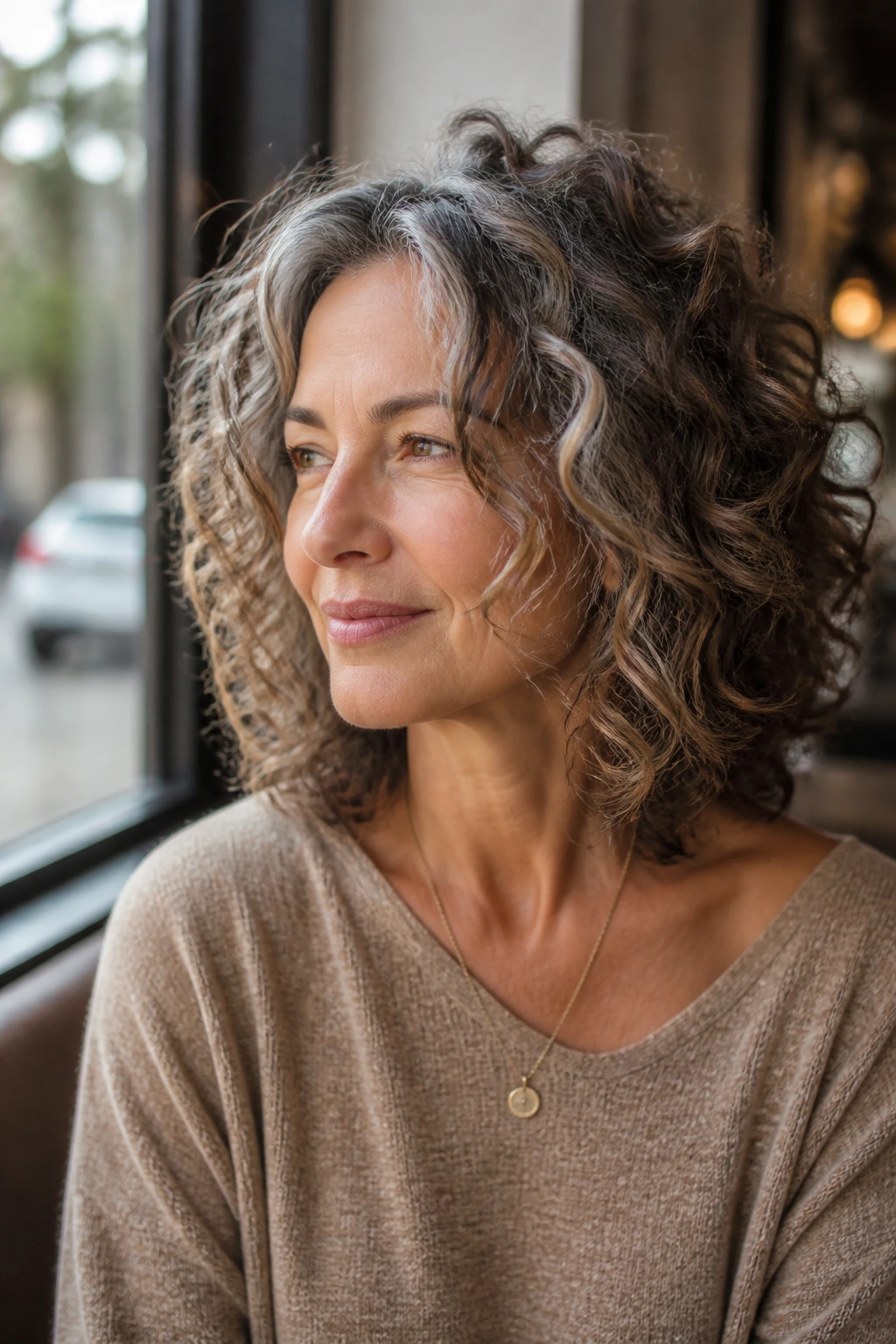
Some women want to keep length because it feels familiar, and I get that. A mid-length curl cut can still look polished if the shape is controlled around the face and the ends aren’t carrying all the weight.
The face-framing pieces should start around the cheekbone or just below it, not at the jawline unless the curl is very loose. If the shortest front pieces are cut too high on springy curls, they bounce up and sit awkwardly above the cheeks. That’s the sort of mistake that makes people think curls are “hard,” when the real problem is the cut.
This shape is good if you like a soft, feminine outline with enough length to clip back. It also behaves well when your curls loosen on the second or third day. The line stays readable even after the volume drops a bit, which is more useful than people admit.
8. Stacked Curly Bob with a Soft Nape
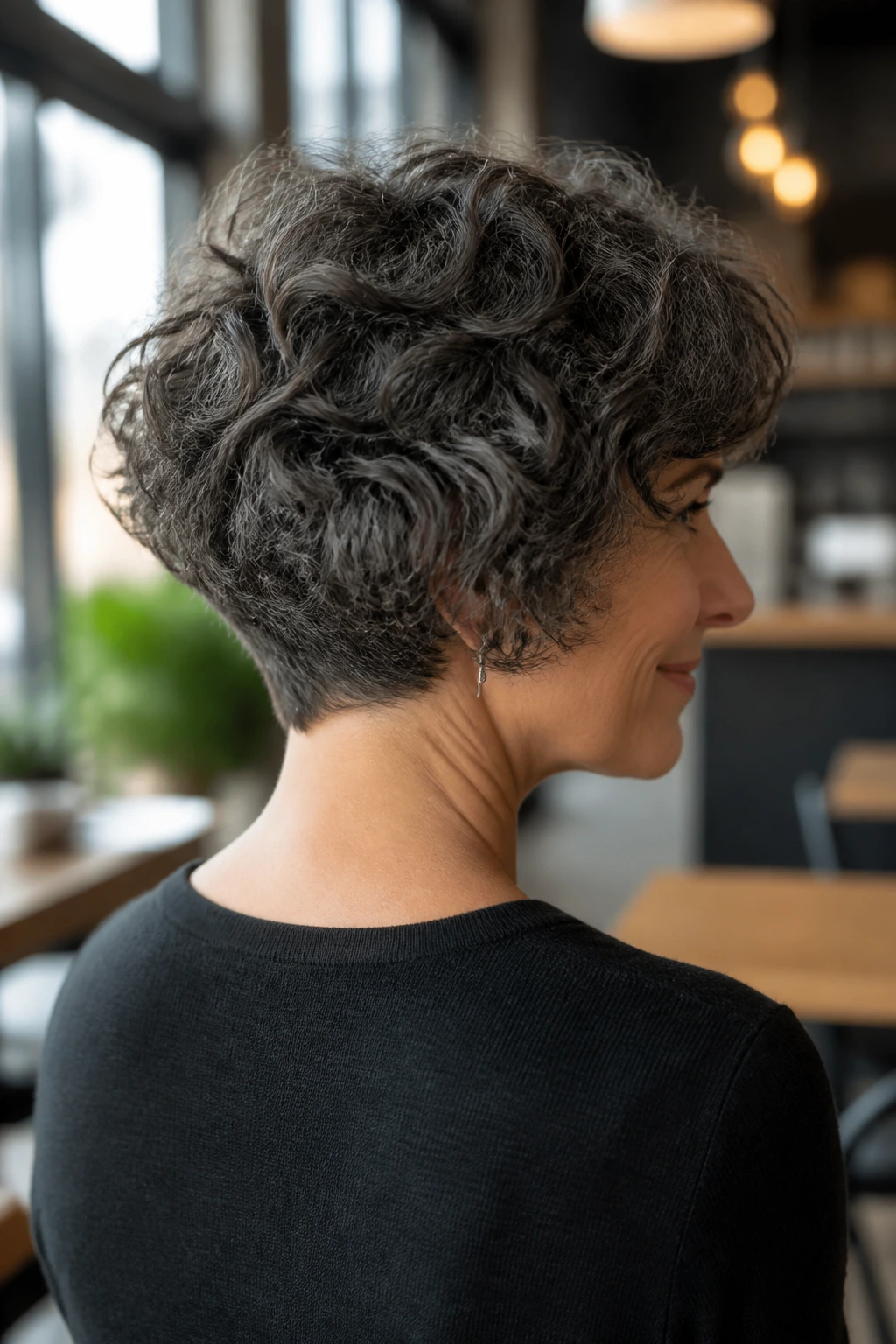
A stacked bob is for anyone who wants the back to do some lifting work. Shorter layers at the nape create a little shelf of volume at the back of the head, which keeps the crown from falling flat and the neckline from looking weighed down.
The word “stacked” scares some people because it can sound dated or too stiff. That’s not the move here. You want a soft stack, which means the back is shaped with enough elevation to support the curls but not so much that the head looks square from behind. On thick curls, this cut can remove a surprising amount of bulk without losing the bounce.
It’s a good answer if you wear jackets, turtlenecks, or collared shirts a lot. A clean nape makes all of those look neater. And if your hair tends to puff under the occipital bone, this cut puts that energy where it belongs — upward, not outward.
9. Long Layered Cut for Gray Curls

Gray curls often need more kindness than drama. The texture can be drier, a little wiry at the ends, and more prone to halo frizz. Long layers are useful here because they let the curl move without chopping away all the length that helps the hair hang with weight.
Keep the layers long enough that the outline still feels continuous. If the interior gets too aggressively layered, gray curls can start to look frayed, especially in bright light. I prefer a cut that keeps the bottom line soft and leaves the top with just enough shaping to stop the crown from collapsing.
This is a smart choice for women who want to keep length but avoid the stale, dragging effect that can happen when curls get too heavy. Long gray curls can look elegant, but only if the shape has some air in it. Otherwise they read as neglected. That’s the blunt truth.
10. Asymmetrical Curly Bob
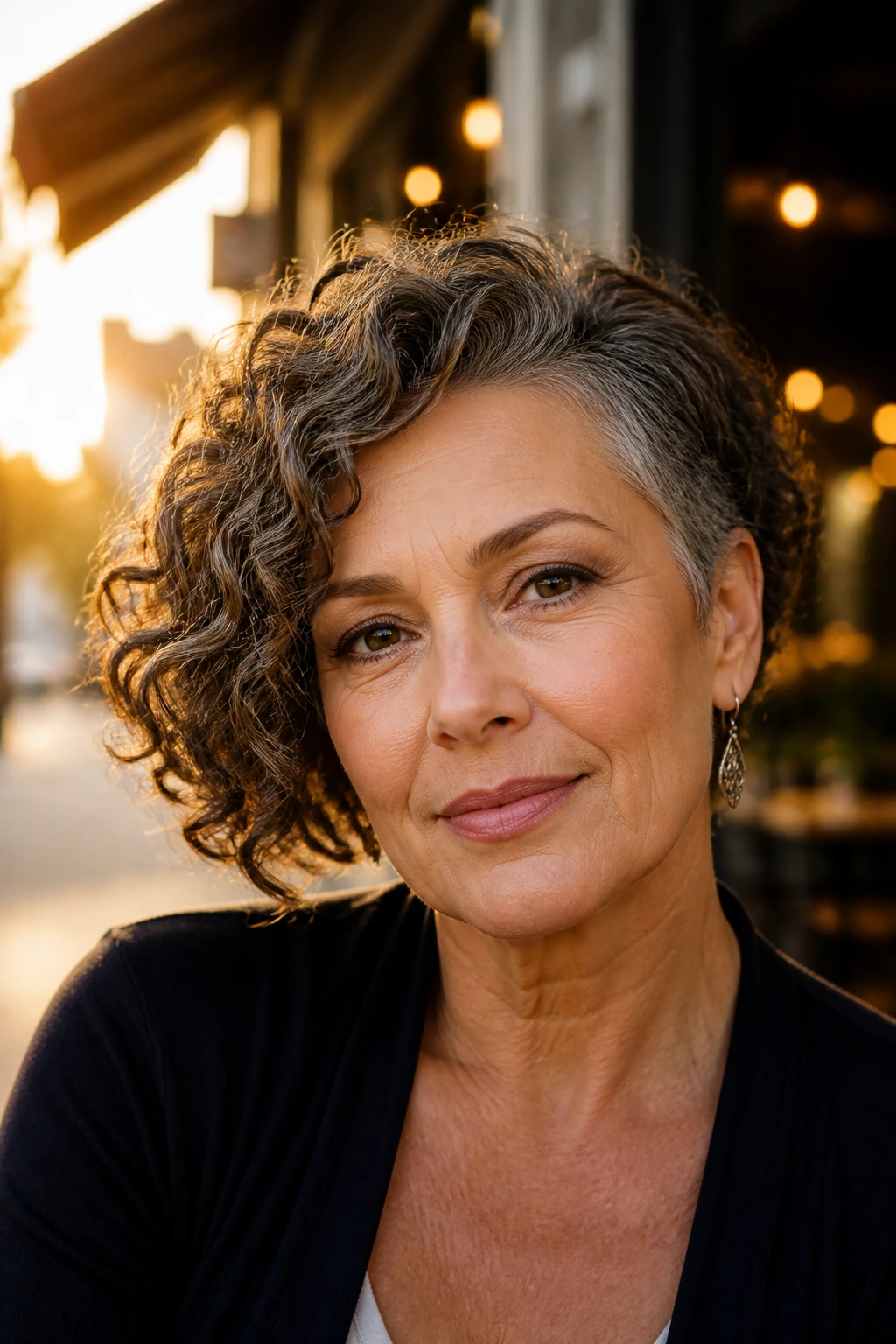
An asymmetrical curly bob gives you a little edge without requiring a lot of styling skill. One side is kept slightly longer than the other — usually by about 1/2 inch to 1 1/2 inches — and that small difference changes the whole line of the haircut.
This is especially useful when one side of the head has a looser pattern or a cowlick that refuses to cooperate. Instead of fighting the difference, the cut turns it into design. The longer side can also soften a stronger jaw or balance a deeper side part.
The best version is subtle. You do not want the haircut to scream “asymmetry” from across the room. You want it to feel intentional when you look in the mirror. On curls, that quiet imbalance can be enough to keep the style interesting without making it hard to wear.
11. French Bob with Soft Curl Movement
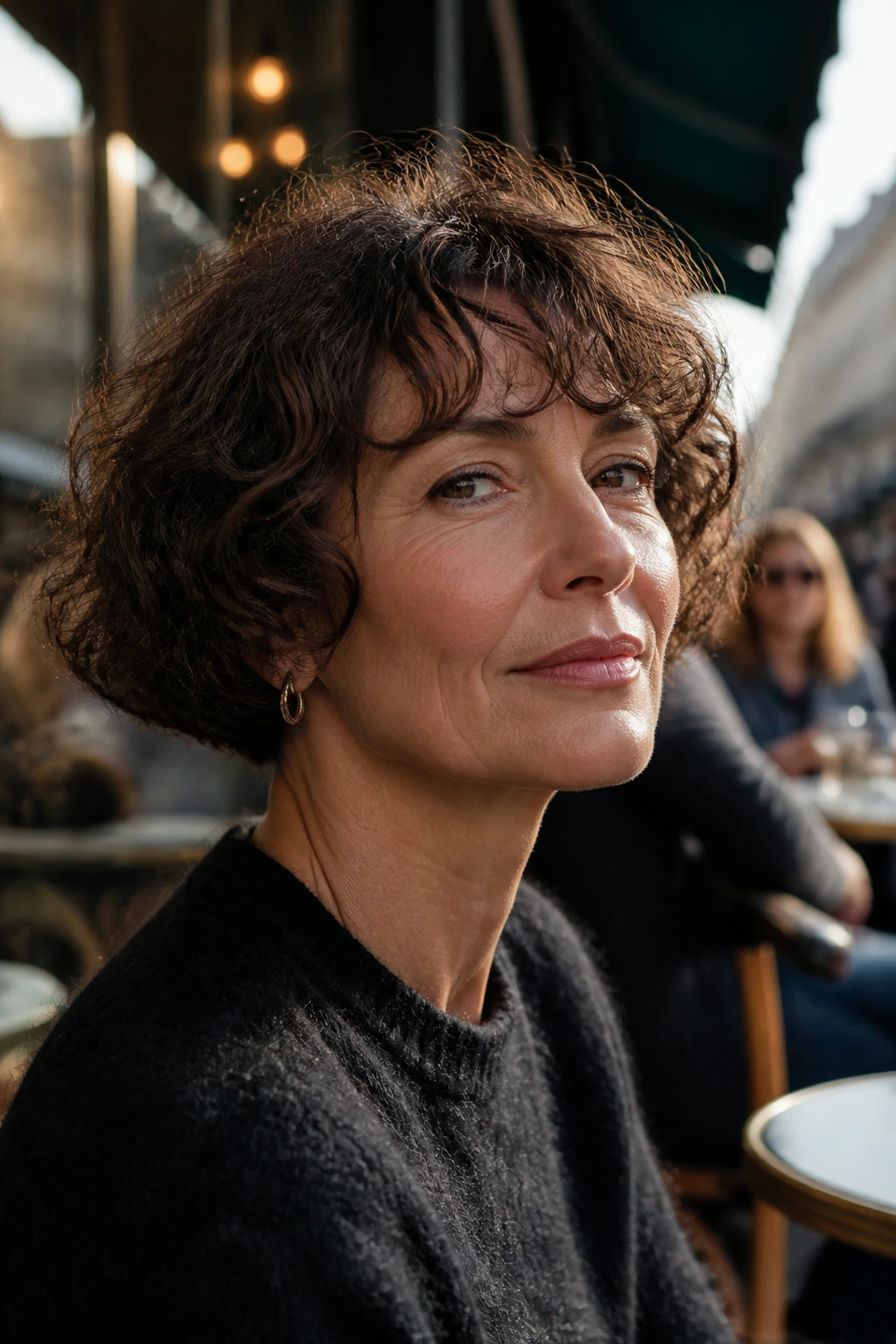
A curly French bob is short, cheekbone-skimming, and a little bit cheeky. The line usually sits somewhere between the jaw and the cheek, with a soft fringe or a piecey front that keeps it from feeling too severe.
What makes it work on curly hair is restraint. The cut should not be too round, and it should never be blunt in a way that turns the hair into a helmet. The curls need to be able to break the line a little. That little bit of disorder is what keeps it modern.
This cut is lovely on smaller faces or on anyone who likes earrings and lipstick to have room to show. It also dries fast, which is useful if you’ve grown tired of spending 25 minutes diffusing a longer style that still ends up with a wonky side. The French bob doesn’t solve everything. It does make the good parts easier to see.
12. Soft Wolf Cut for Loose to Medium Curls
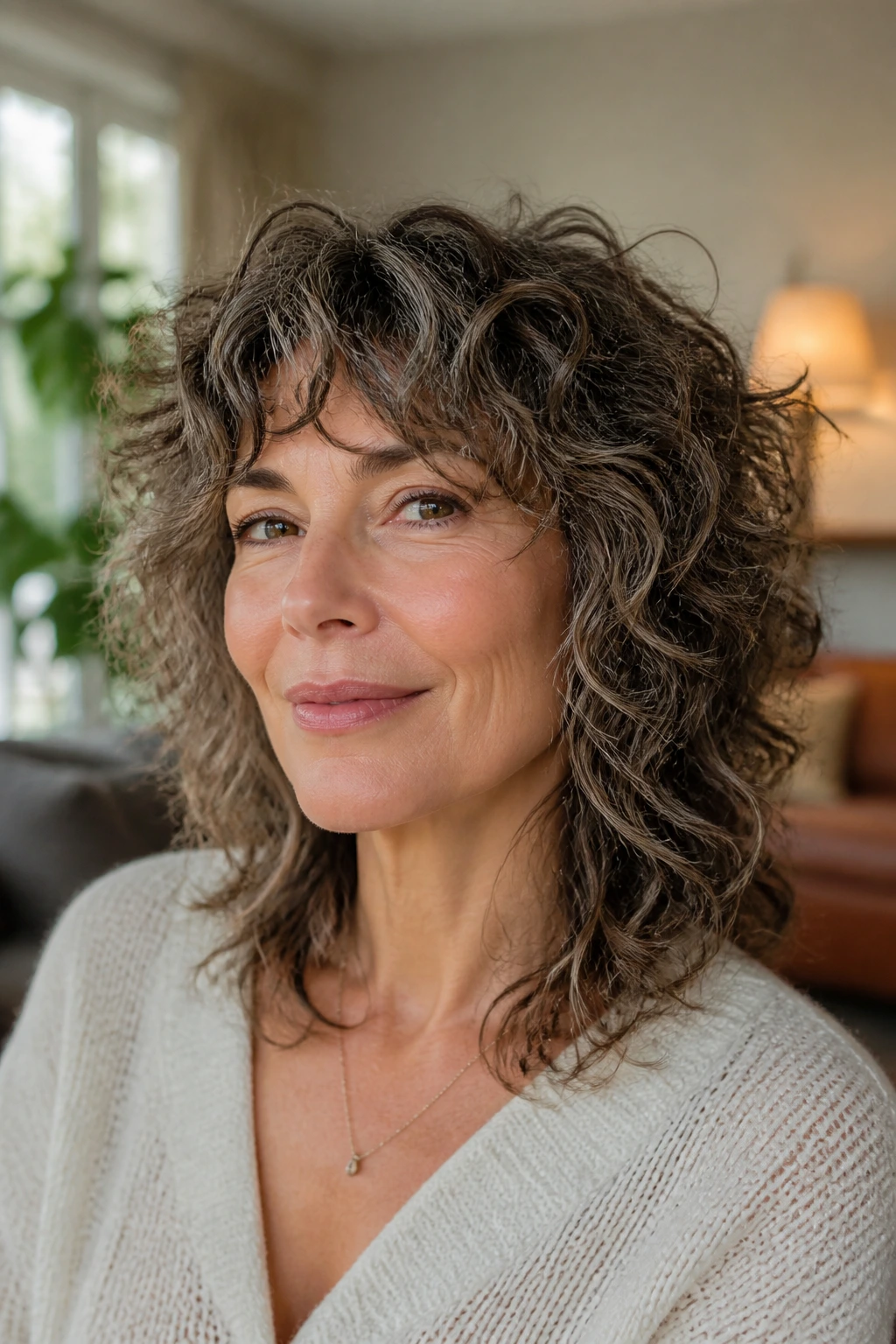
The wolf cut has been overdone in some circles, but the softer version works beautifully on mature curls when it’s kept under control. Think layered crown, tapered middle, and a longer perimeter that stops the whole thing from becoming a mushroom.
This cut is good for dense hair because it redistributes weight instead of just removing it. The top gets lift, the sides get movement, and the ends don’t sit there like a curtain. On loose to medium curls, it can give the hair a bit of wildness without making it hard to manage.
I’d keep the layers longer than the internet sometimes suggests. A curly wolf cut that gets too short at the top can frizz out fast, especially if your hair is dry or color-treated. Softness is the point here. If the cut looks cool only when freshly styled, it’s too much work.
13. The Deva Cut That Follows Each Curl Pattern
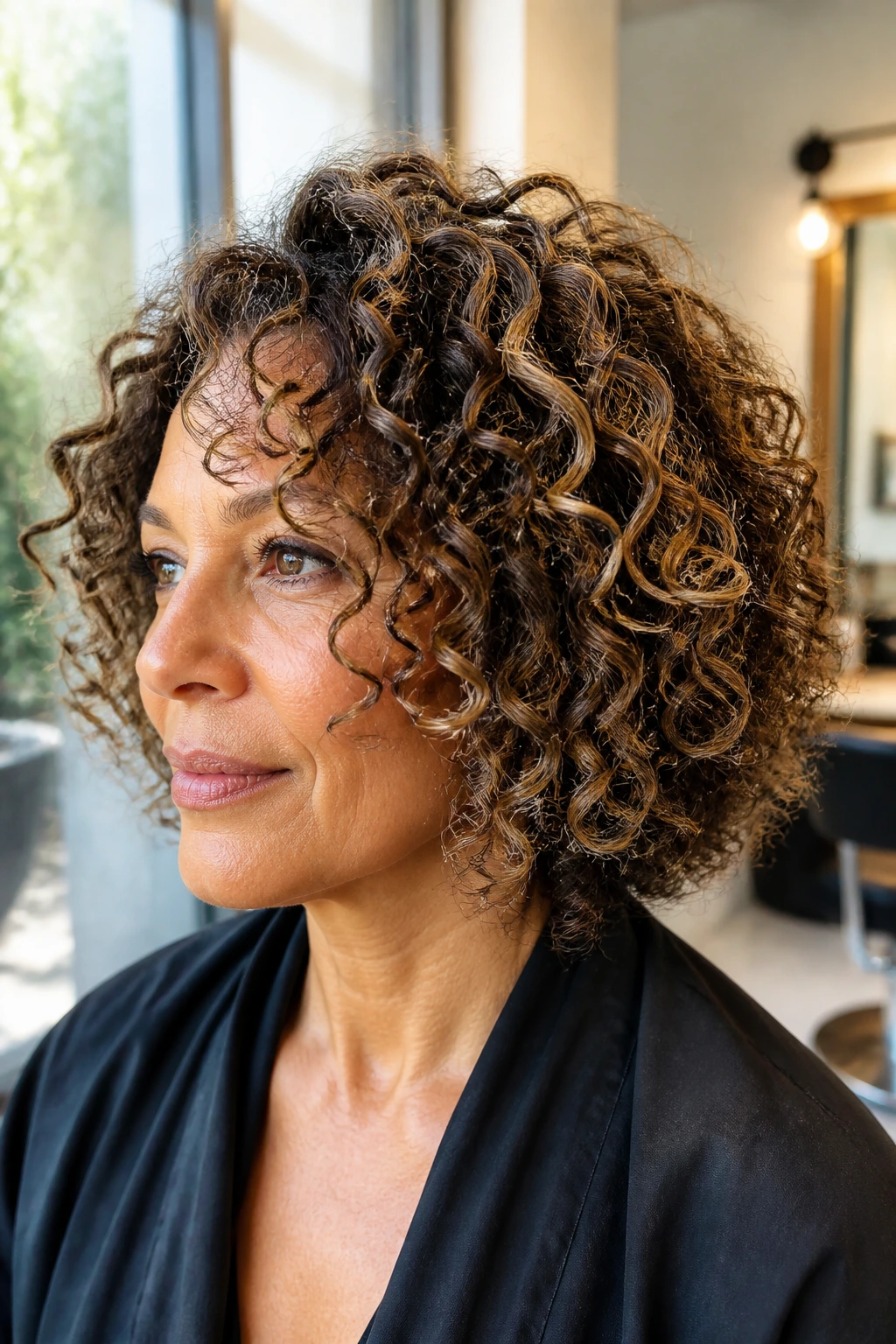
A Deva-style cut is less about a shape and more about a method. The stylist cuts the hair curl by curl, usually dry, so each spiral is judged where it actually falls rather than where it seems to fall when stretched out wet.
That matters a lot for curly hair over 50. You may have tighter curls in one zone, looser bends near the front, and some gray pieces that act like they live in a different head altogether. A curl-by-curl cut respects that mix instead of forcing the whole head into one borrowed silhouette.
This is the cut to choose when your pattern is uneven or your hair has surprise shrinkage in the crown. It takes longer in the chair, and it costs more in most salons, but the payoff is precision. If you’ve ever had one side sit higher than the other after a haircut, this method is usually worth the trouble.
14. Feathered Shoulder Cut with Soft Bangs
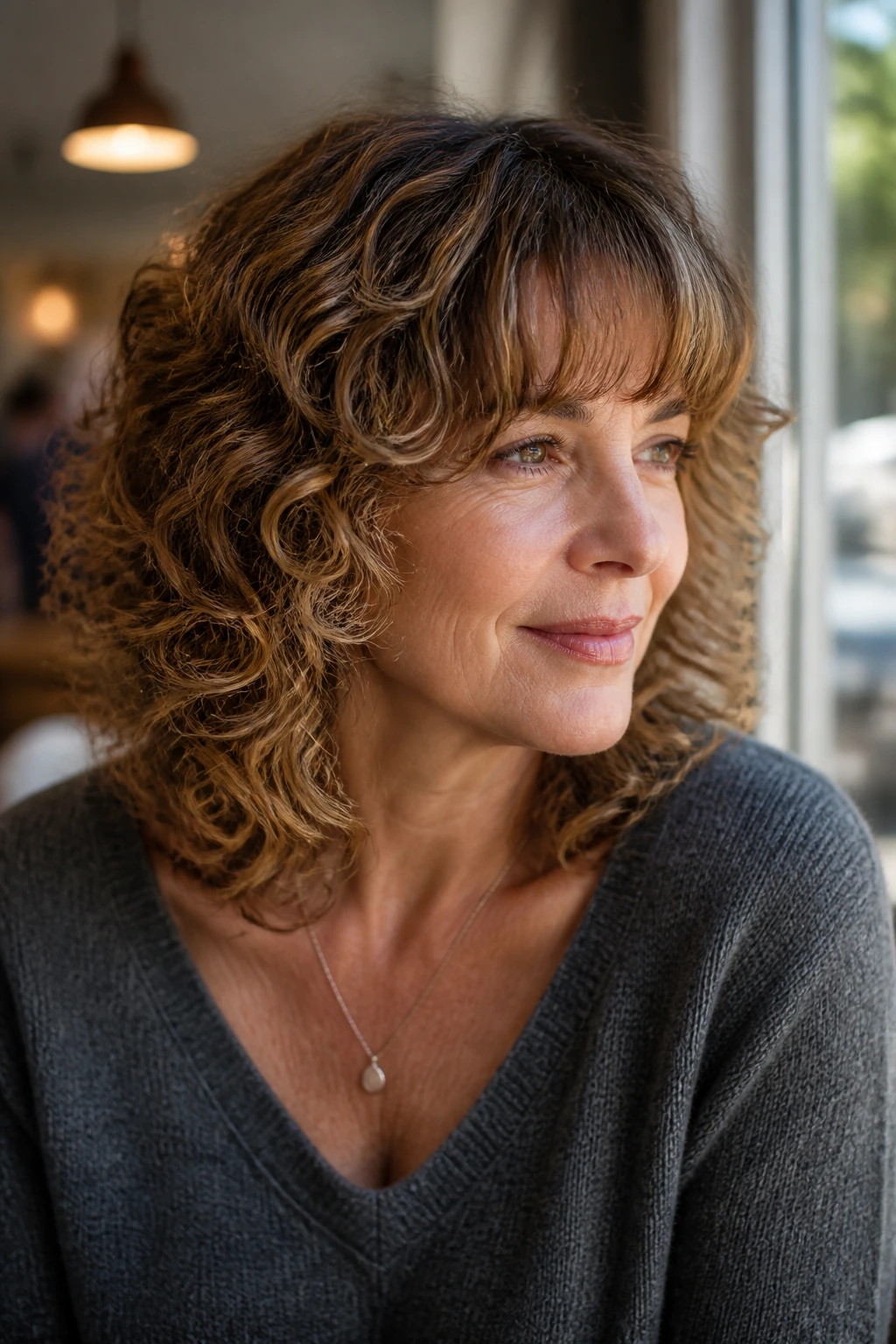
Feathering is useful when curls feel dense but not especially heavy. The layers are lightly removed so the hair moves instead of sitting in one block, and the bangs soften the forehead without taking over the whole face.
This is one of the better choices for women whose curls are a little looser at the front and a little stronger in the back. The feathered edge keeps the haircut from feeling blunt, which is important because bluntness on curly hair can sometimes read as puffy rather than full.
Soft bangs are the key. Not short, hard, chopped bangs. Just enough fringe to break up the forehead and draw the eye upward. If your hairline is finer now than it used to be, these bangs can be a useful disguise, but only if they’re long enough to bend with the curl instead of sticking out on their own.
15. Tapered Afro with Shape at the Sides
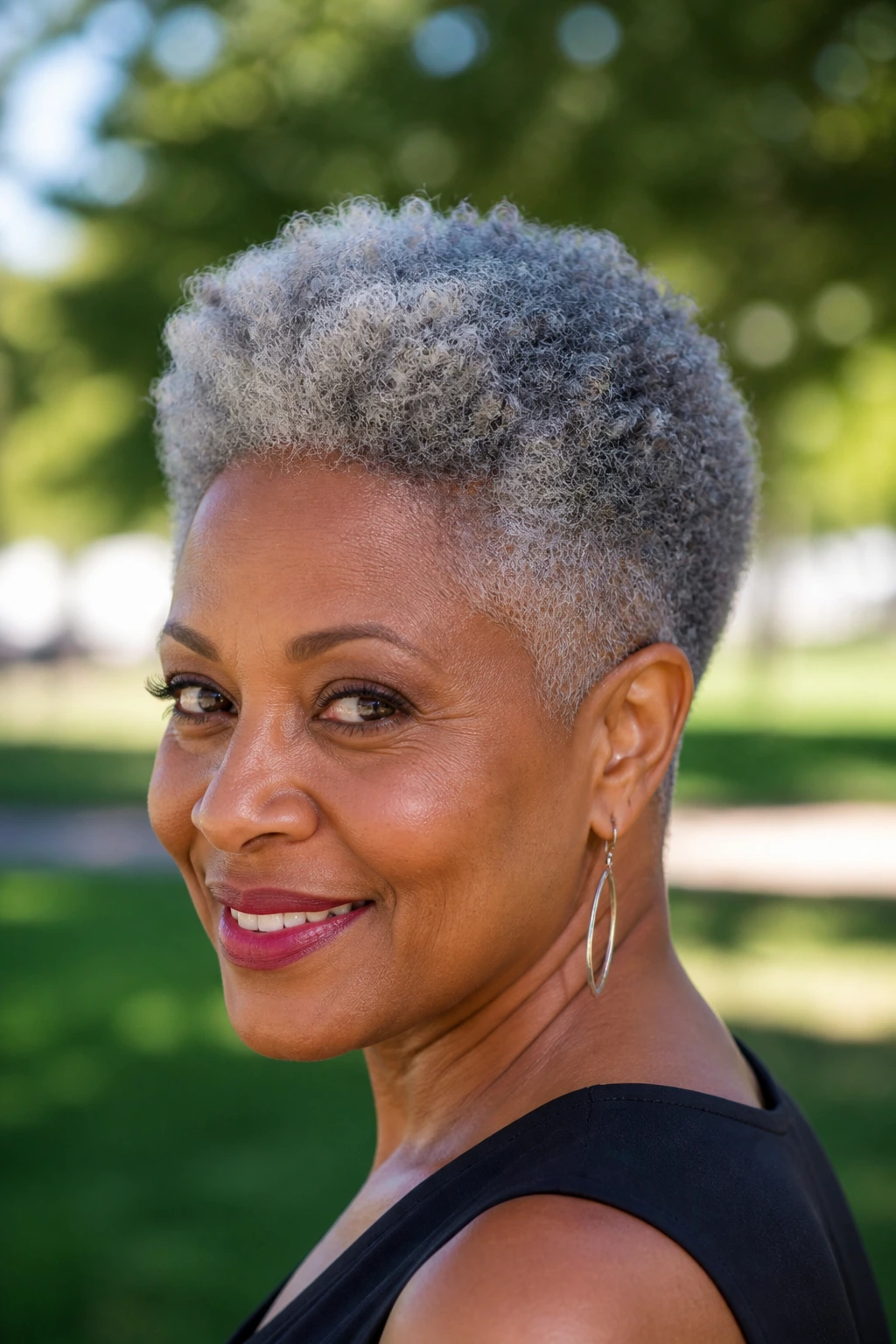
A tapered afro is one of the strongest shapes in the curly-hair playbook. The sides and back are clean and close, while the top and upper sides keep fullness, so the silhouette rises instead of spreading outward.
This cut is a gift to coils and tighter textures because it lets the natural pattern sit in a sculpted shape. It also shows off silver and salt-and-pepper tones in a way that feels deliberate, not accidental. The outline becomes the haircut. There’s no need to hide behind length.
The most important part is the taper. If the sides are left too long, the shape loses its line fast. If they’re cut too aggressively, the head can look narrow and top-heavy. A good tapered afro lands in the middle, with enough softness around the temple and ear to keep the shape elegant.
16. U-Shape Cut with Curly Movement
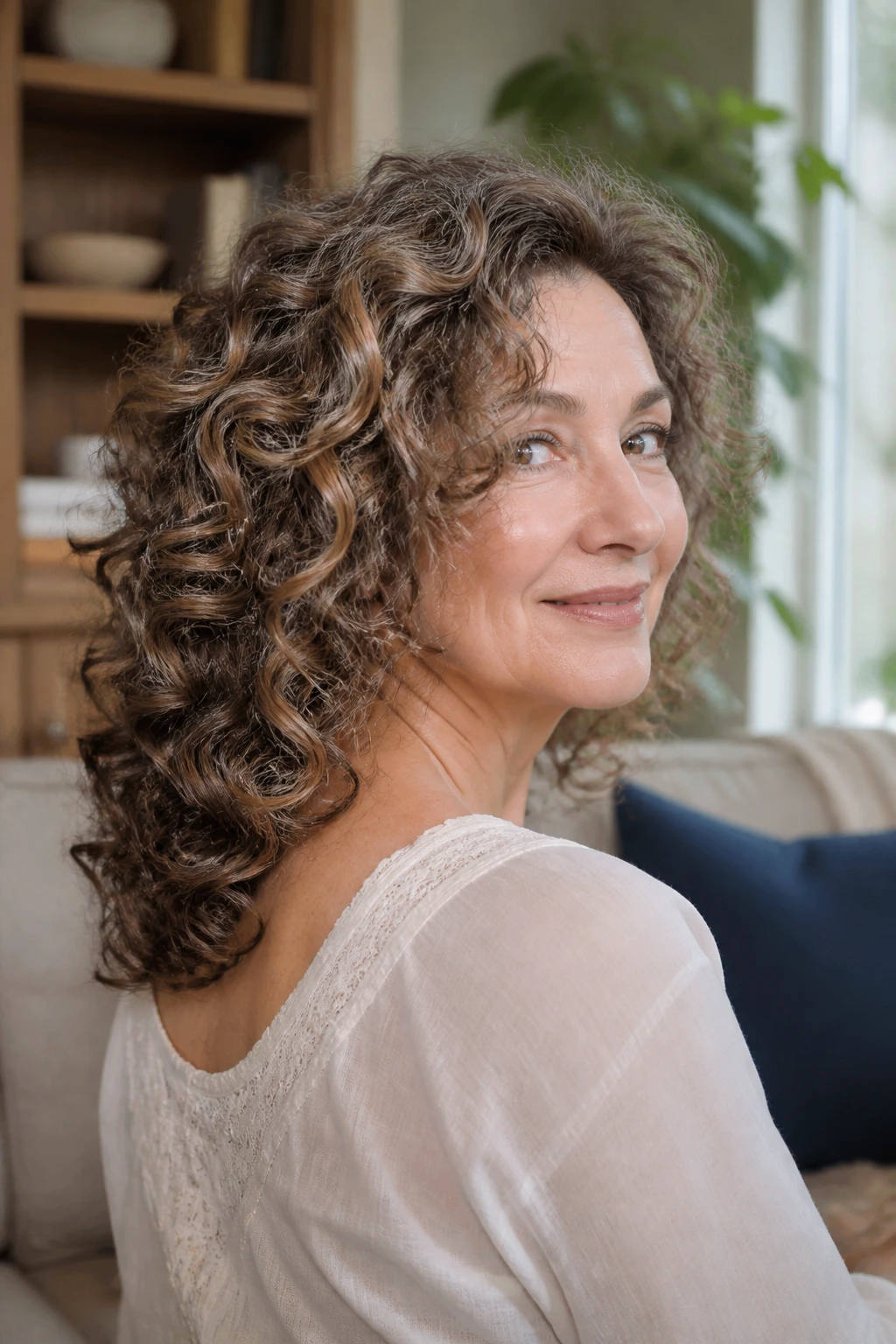
A U-shape is a quiet fix for hair that needs to keep length but still look shaped. The back falls in a gentle curve instead of a straight line, which helps the curls stack in a softer way and keeps the ends from looking like they were cut with a ruler.
This cut works best when the lower layers are minimal and the shape is built mostly through the perimeter. Too many short layers can rob the back of its graceful fall. Too few layers, though, and the whole style gets heavy. The U-shape sits in that middle lane.
It’s also one of the easiest cuts to live with if you like updos. The front pieces can still frame the face, while the longer back gives you enough hair to clip, twist, or tie when you want it off your neck. That makes it practical without making it boring. Which is a rare combination.
17. Deep Side-Part Curly Cut
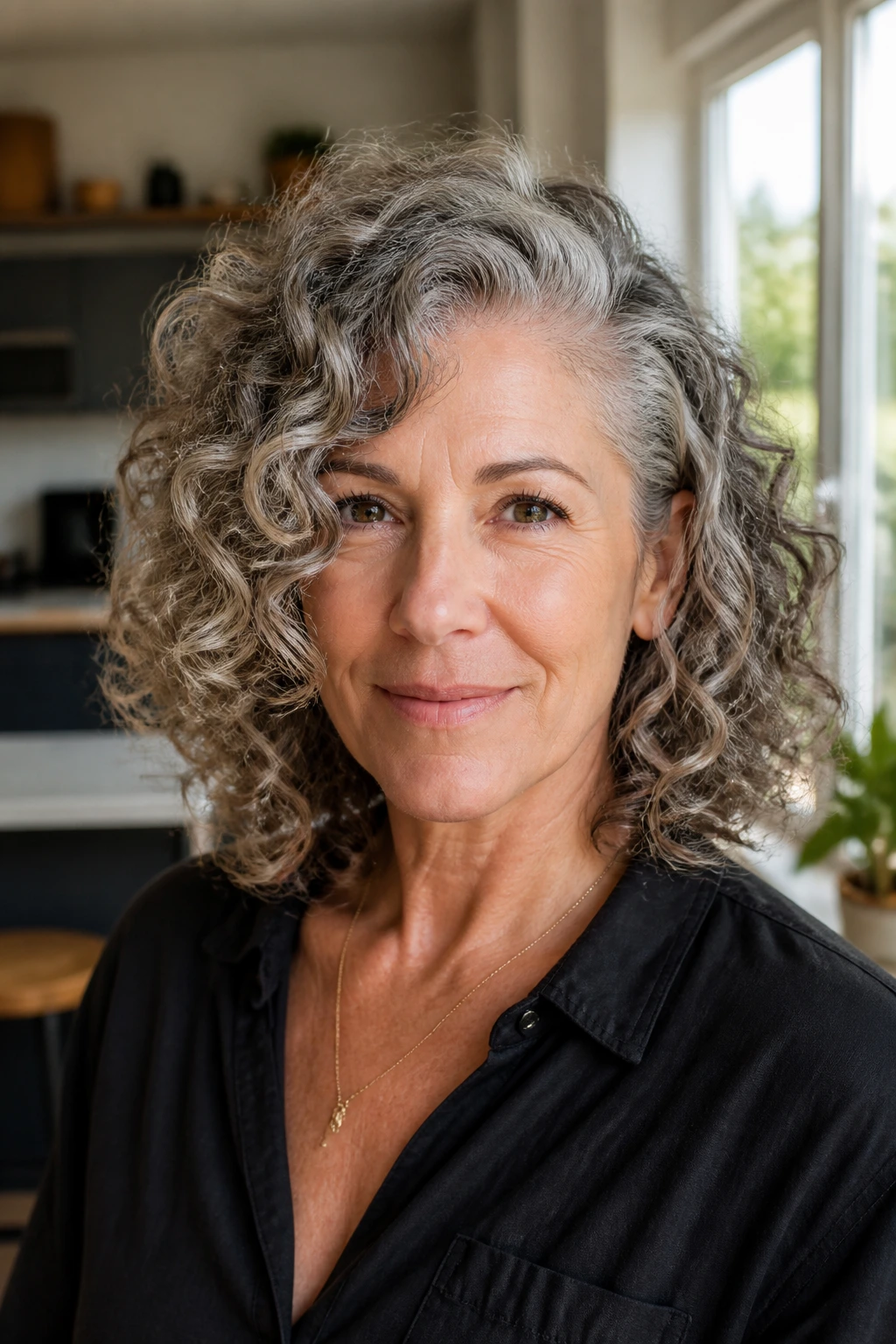
A deep side part can change a haircut without changing the length at all. It shifts the volume to one side, lifts the root area at the front, and gives the face a more sculpted line.
That’s useful when one side of the head is flatter than the other — which happens constantly with curls, by the way, and usually for reasons no one needs to overthink. A deeper part can also help if your hairline has thinned a bit at the temples. The volume moves where you need it most.
The rest of the cut can be simple. Shoulder length, chin length, even longer. The part is the point. You can use a rat-tail comb while the hair is damp, clip it in place for 10 minutes, and let it dry in the direction you want. Small move. Big effect.
18. Ringlet Bob with Micro-Layers
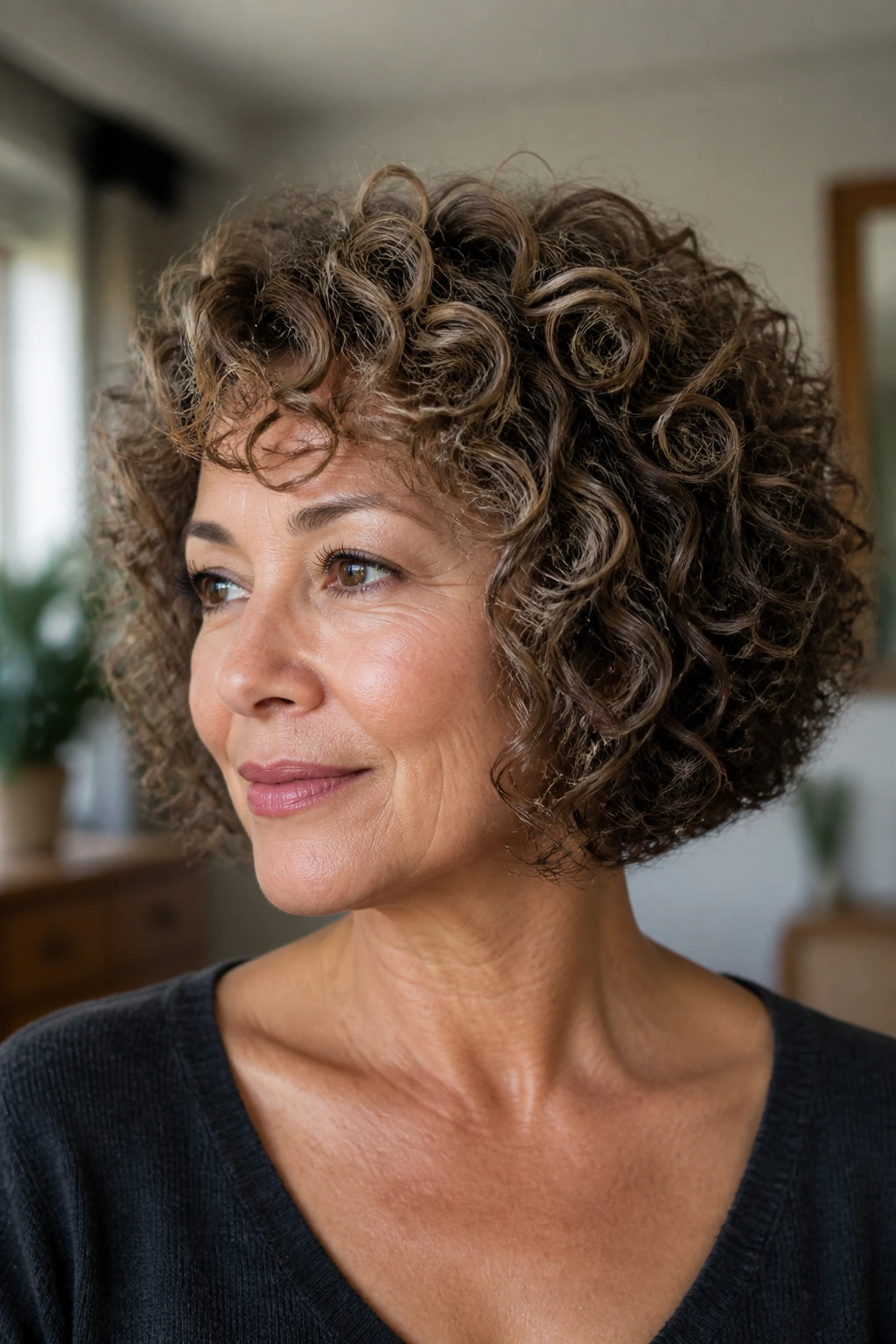
Ringlet curls need a different sort of restraint. They already have strong shape, so the cut’s job is mostly to prevent the bottom from getting too dense and the crown from puffing out like a cloud.
Micro-layers help here. Not big layers. Tiny shifts inside the shape so the ringlets can sit separately instead of clumping into one heavy mass. If the layers are too dramatic, the bob loses its crisp little outline and starts to look patchy.
This style is especially good when the curl pattern is springy and uniform. It gives the hair a precise edge while still letting the ringlets do their thing. I like it for women who want structure without giving up bounce. It looks neat in a way that doesn’t feel stiff, which is harder to pull off than people think.
19. Soft Bixie with Curly Texture
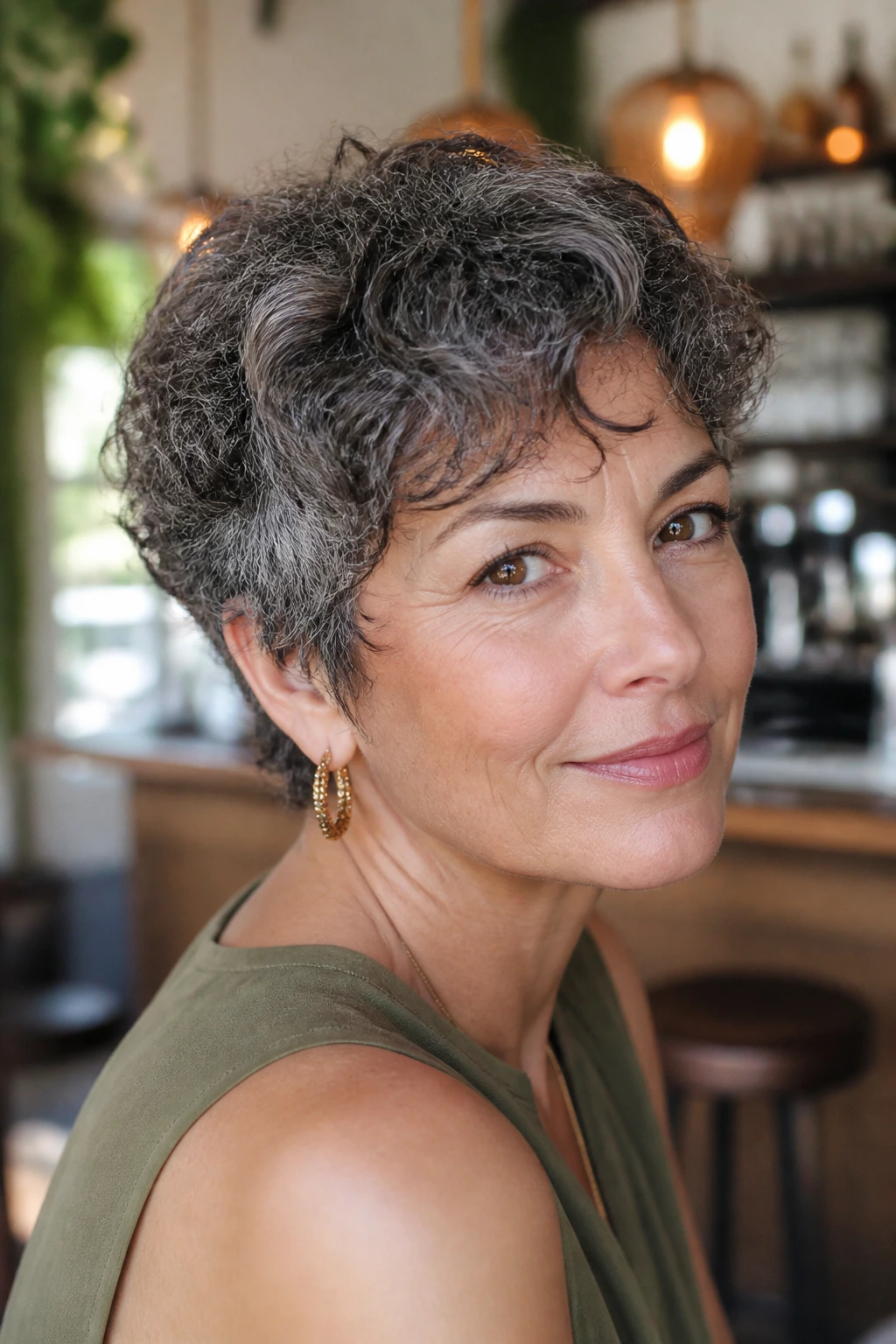
A bixie sits between a bob and a pixie, and on curly hair that in-between space can be very useful. The nape is shorter, the sides stay a little fuller, and the top keeps enough length to show curl pattern instead of just a cropped outline.
This is a strong option if you want short hair but are not ready for a true pixie. The extra length around the crown gives you styling freedom, and the slightly longer sides soften the ears and cheekbones. On curls, that balance can feel fresh without crossing into severe territory.
The cut works best when the edges are softened with point cutting or gentle texturizing. If the outline is too hard, the curls don’t move well and the shape can look boxy. Keep it light, keep it shaped, and don’t be afraid to let the top be a little longer than the sides.
20. Long Layers with Curved Ends
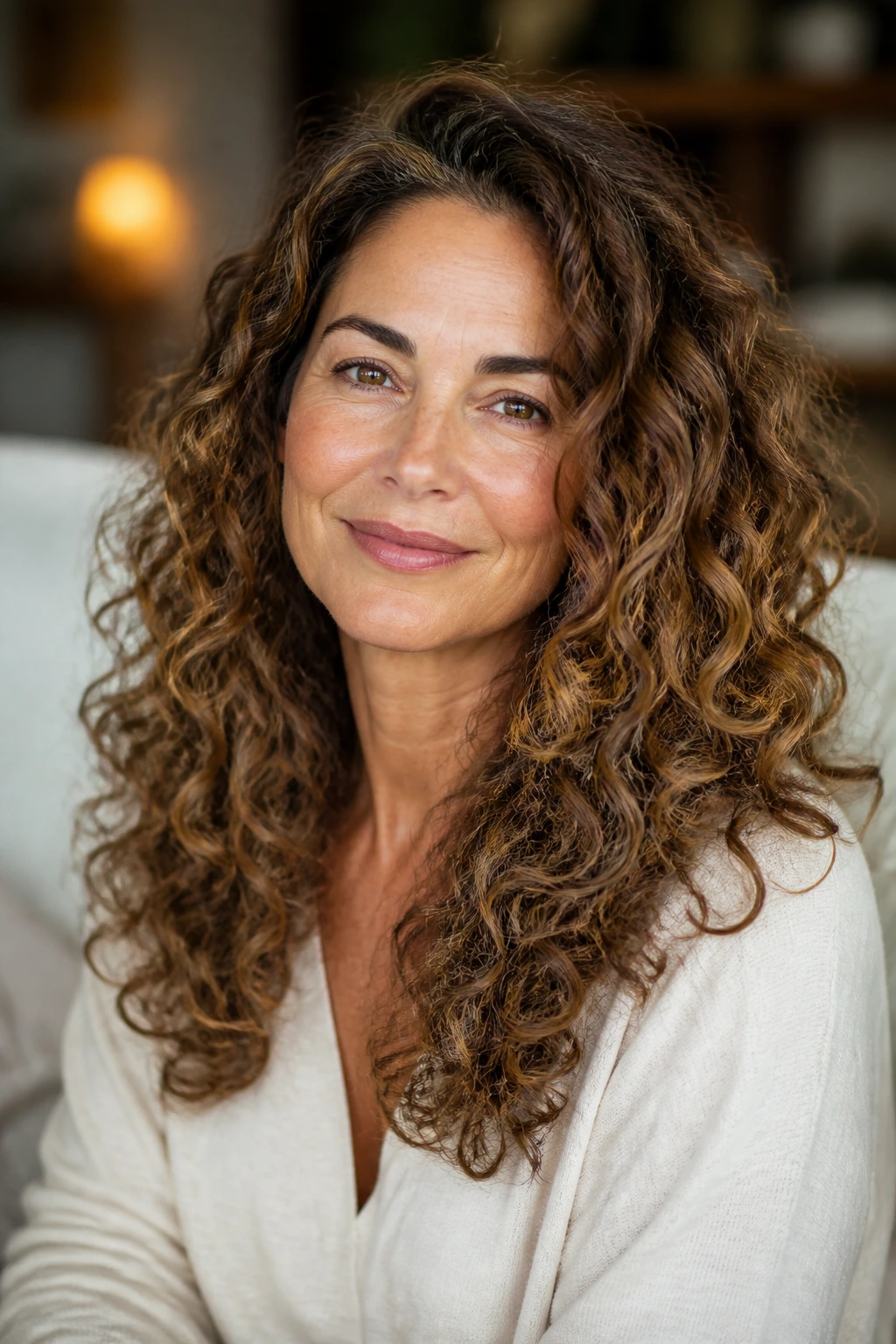
Long curls can still look alive if the layers are placed with purpose. The goal is not to thin everything out. It’s to let the hair fall in a curve that follows the body instead of hanging as one big sheet.
Curved ends matter. They keep the bottom line from looking blunt, especially when the hair dries and the curls bounce back with extra width. On thick hair, the difference between a curved end and a chopped end can be the difference between movement and bulk.
This cut suits women who want to keep length for ponytails, clips, or just personal preference. It’s also one of the better options if your curl pattern varies a lot from front to back. The longer shape gives the different patterns room to coexist without looking like a mistake.
21. Curly Crop with Wispy Fringe
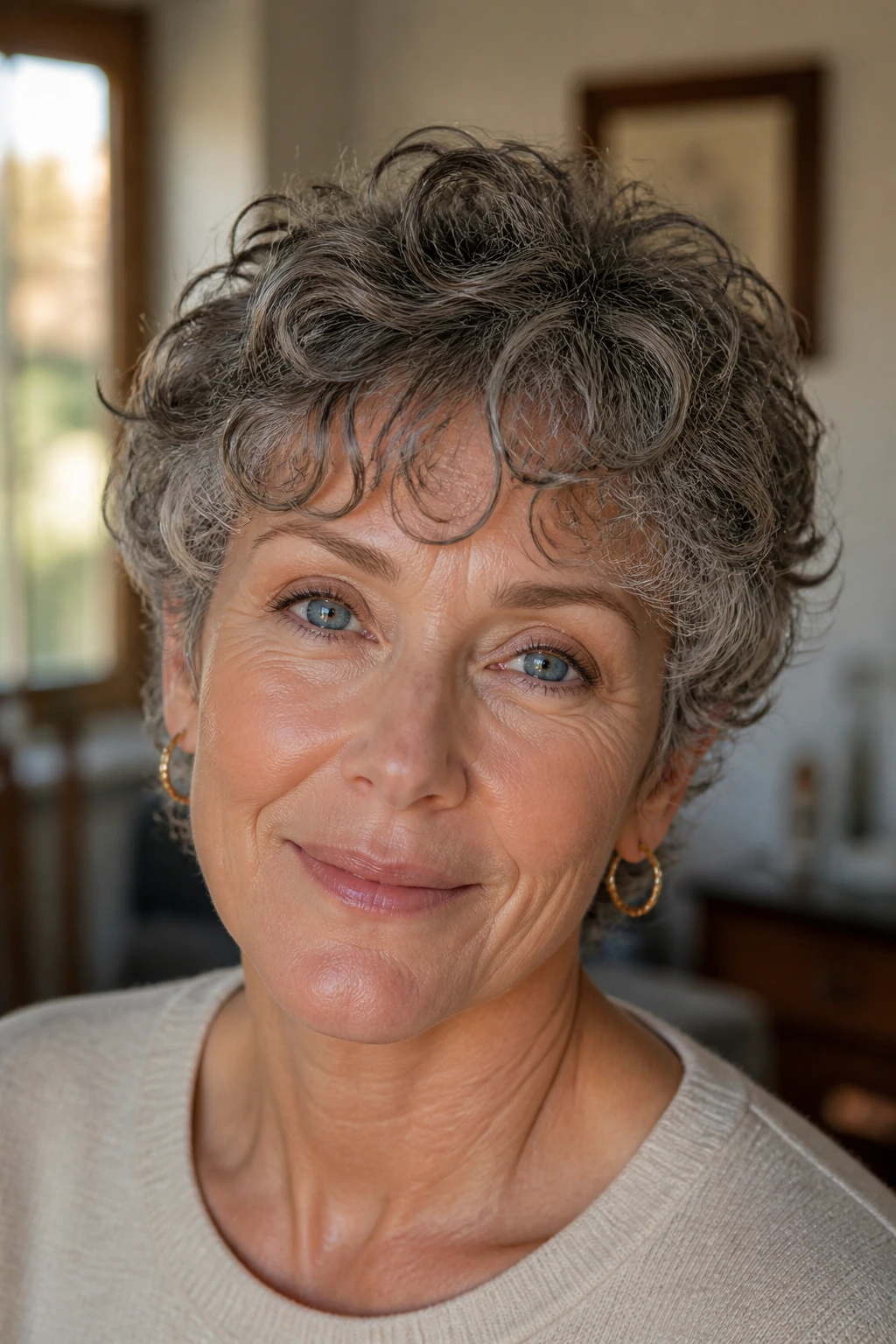
A curly crop with a wispy fringe is short, playful, and less demanding than a full fringe cut. The fringe is kept light enough that it bends with the curl instead of standing in a straight row across the forehead.
The key is not making the fringe too short. On curly hair, bangs almost always bounce up more than you expect. Leave room for that shrinkage, or the fringe will sit too high and start looking accidental. The crop around it should stay soft, not helmet-stiff.
This cut is nice for women who want the face opened up while still keeping some softness at the front. It works with glasses, especially if the frame line is not too heavy. And it’s one of the better styles for showing off texture without needing a lot of daily fuss.
22. Side-Swept Glam Cut with Soft Volume
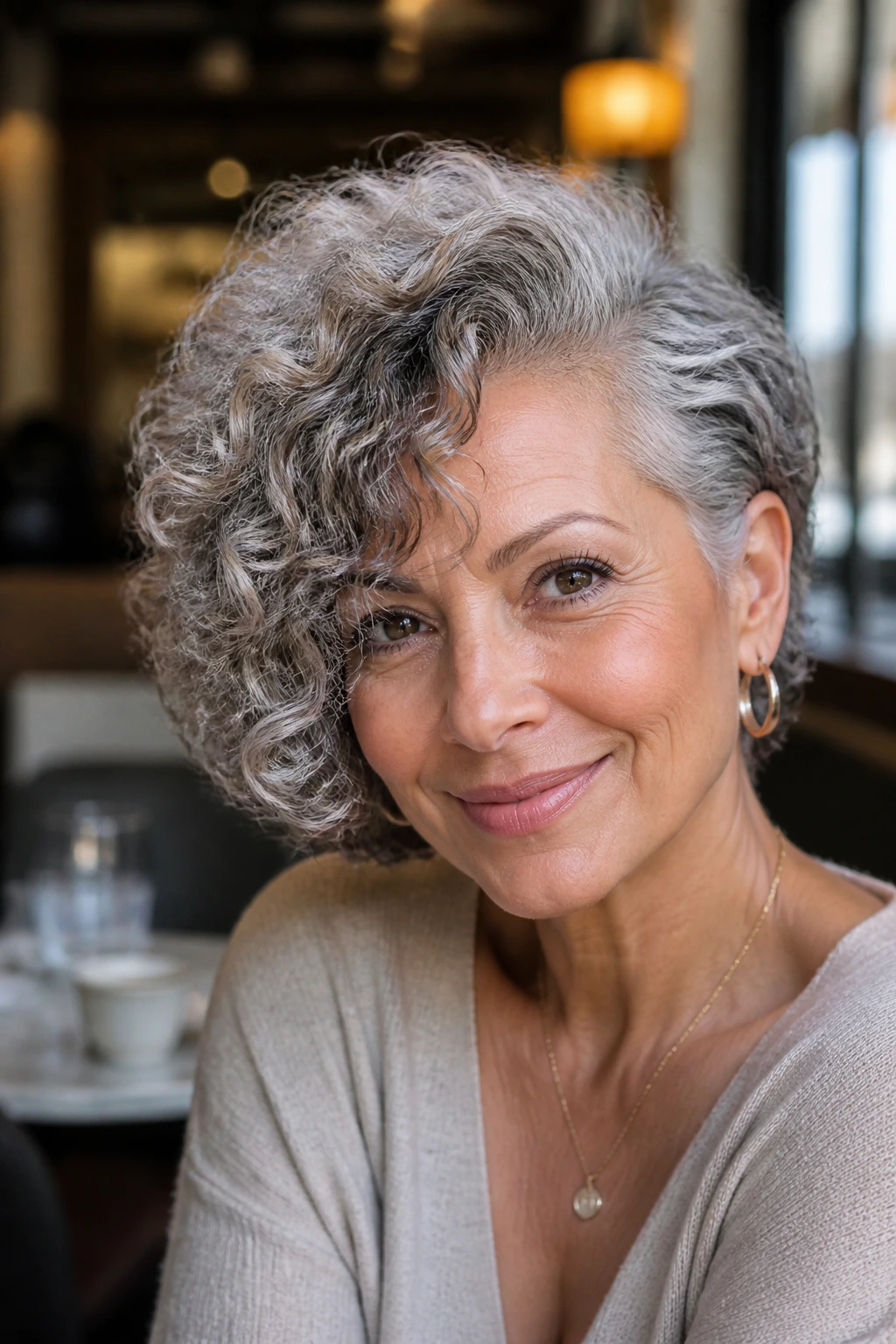
Some curls want a little drama. Not stage drama. Just enough sweep to make the shape feel dressed up. A side-swept cut with soft volume keeps the front long enough to drape across the forehead and cheek, while the rest of the hair stays rounded and controlled.
This is a lovely choice if you like earrings, lipstick, or a neckline that needs a little framing. The side sweep creates a natural focal point, which can be useful if your face shape feels strong and you want to soften one edge. It also helps if one side of your curl pattern is looser than the other.
The style works best when the volume sits at the root and not only at the ends. A little mousse at the crown, a diffuser nozzle, and a controlled part can make a big difference. You do not need a lot of product. You need the right direction.
23. Chin-Length Rounded Cut for Fine Curls
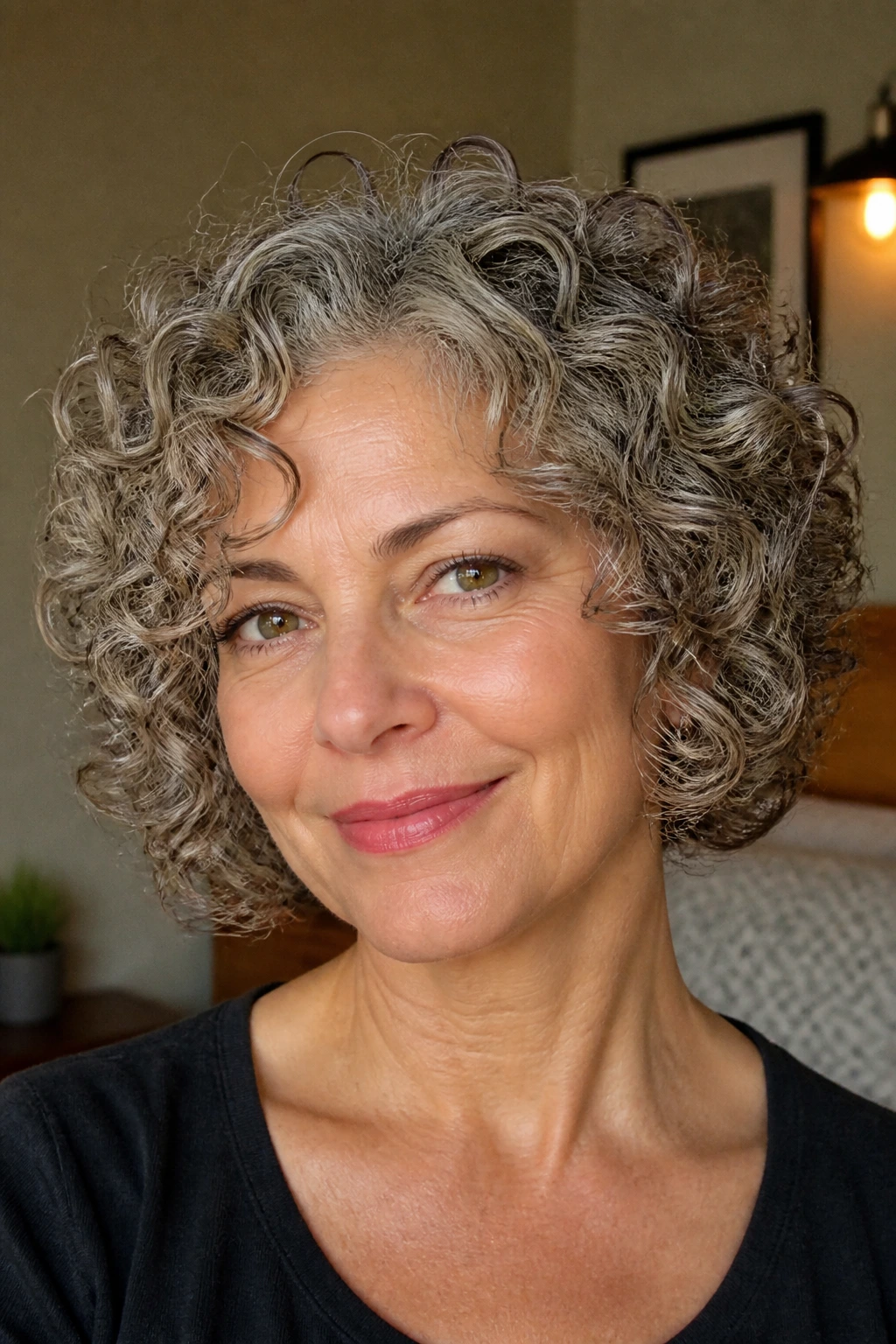
Fine curls need a cut that doesn’t ask them to carry too much weight. A chin-length rounded shape is ideal because it keeps enough length for movement while preventing the ends from going stringy or wispy.
The roundness matters more than people realize. If the bottom is too straight, fine curls can puff at the sides and collapse at the ends. A slightly curved outline gives them a fuller look without making the style heavy. Internal layers should be minimal and carefully placed so the hair keeps its body.
This cut is also a nice answer for women who’ve lost some density but still want softness around the face. It’s neat, but not severe. Full, but not puffed. And when the curls cooperate, it can make fine hair look far more intentional than a longer cut ever could.
24. The Wash-and-Go Curly Cut
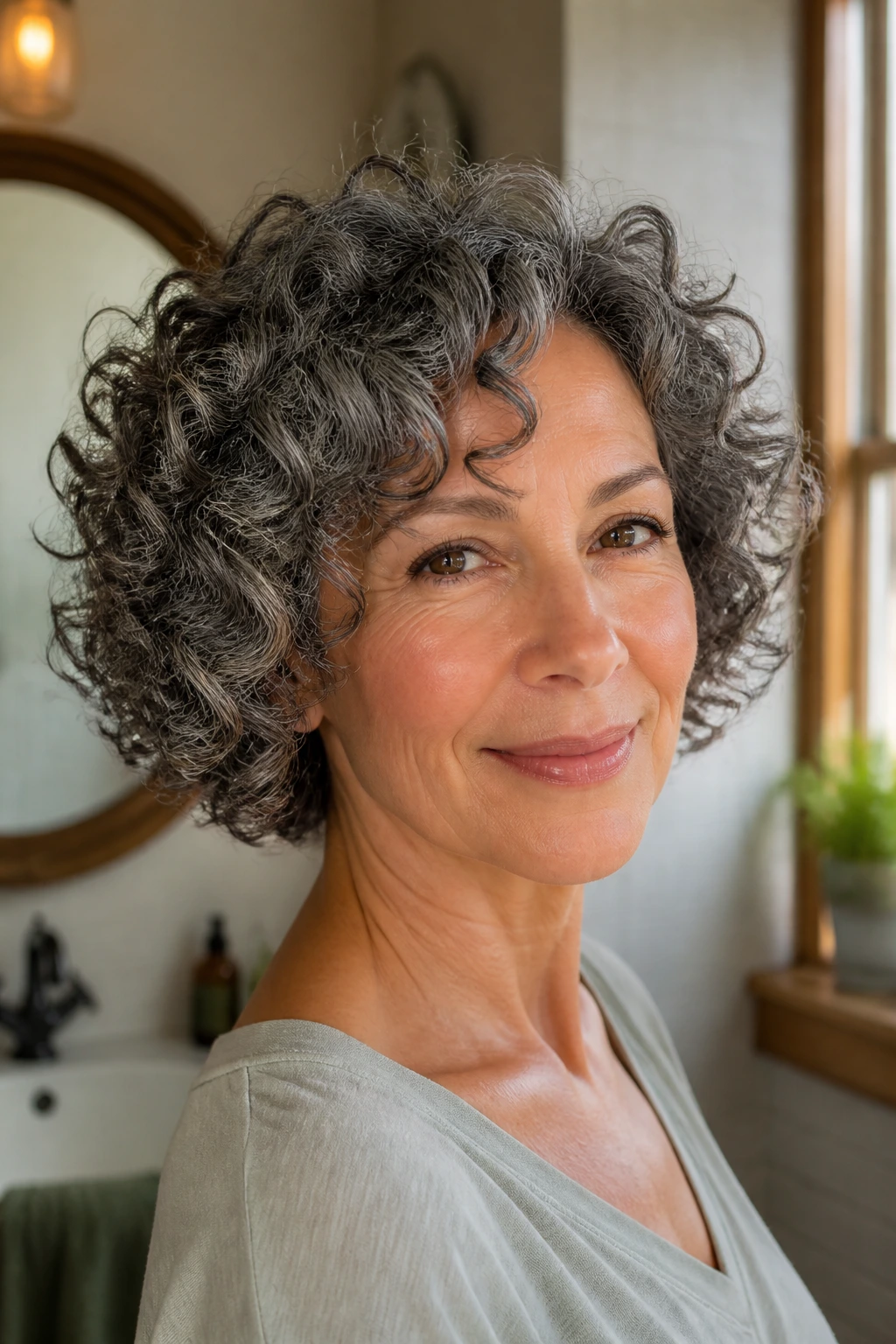
A wash-and-go cut is not a lazy haircut. It’s a smart one. The shape is built so that you can cleanse, apply a small amount of leave-in or gel, scrunch, and walk away without spending 20 minutes forcing the curl into place.
The length can vary, but the logic stays the same: the perimeter should be balanced, the crown should not be overloaded, and the face-framing pieces should dry into something that looks planned. This is where dry cutting and curl-specific shaping earn their keep. If the cut only works after a full blowout, it’s not a wash-and-go cut. It’s a maintenance project pretending to be easy.
Women with busy routines often love this shape because it respects the way curly hair actually gets worn. Air dry. Diffuse a little if you want more lift. Refresh with water in the morning and move on. That kind of practicality is underrated.
25. Silver Halo Cut with Lifted Crown

A silver halo cut keeps the sides softly rounded and the crown visibly lifted, which makes the hair look bright instead of heavy. It’s especially good for gray curls that want a little structure without losing the softness that makes silver hair so striking.
The halo effect comes from keeping the silhouette open around the face and slightly shorter at the top. That gives the hair a luminous outline — not because it’s “age defying,” which is a tired phrase, but because the shape lets the silver tones catch the eye instead of disappearing into bulk.
This is a beautiful option if you’ve embraced your natural gray and want the haircut to match that decision. It can be short, mid-length, or somewhere in between, but it needs a lifted crown and clean sides to work. Otherwise the silver reads flat. And silver hair deserves better than flat.
How Curly Hair Changes After 50—and Why the Cut Has to Catch Up
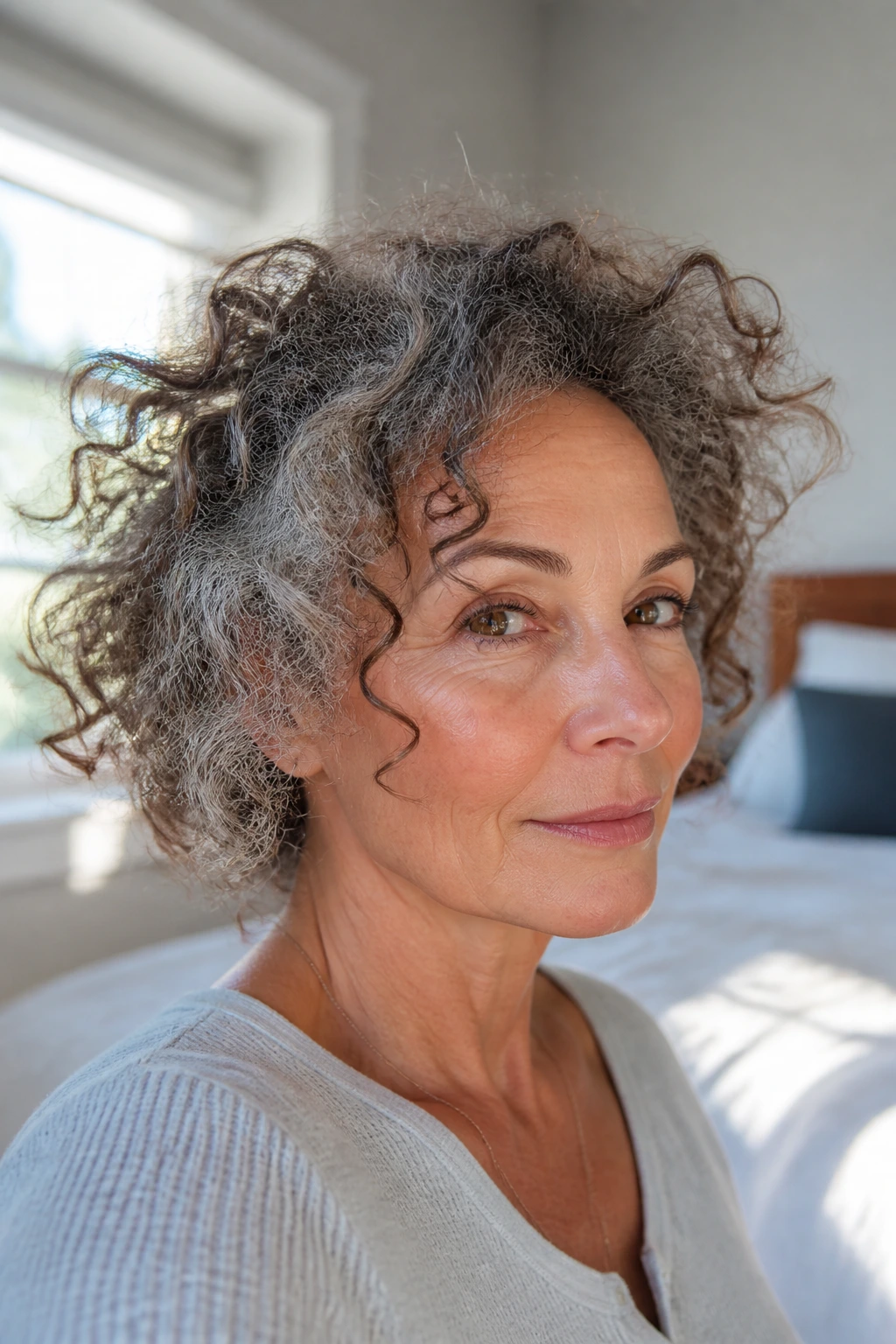
Hair after 50 often behaves differently, and it’s not some dramatic mystery. The scalp can produce less oil, the curl pattern can loosen in one zone and tighten in another, and gray strands often come in with a rougher feel. That mix changes how a cut sits on the head.
A one-length shape usually struggles here. It may have looked easy when density was higher, but now it can fall heavy at the bottom while the crown goes flat. Or the opposite happens: the top gets frizzy and the ends get wispy. A better cut responds to those shifts instead of pretending the hair still behaves exactly the same way it did before.
That’s why dry cutting, curl-by-curl shaping, and careful layering matter so much for mature curls. They let the haircut follow the actual pattern, not a theoretical pattern. And they save you from spending every morning trying to fix a shape that was wrong to begin with.
How to Talk to Your Stylist So You Don’t Leave With a Triangle
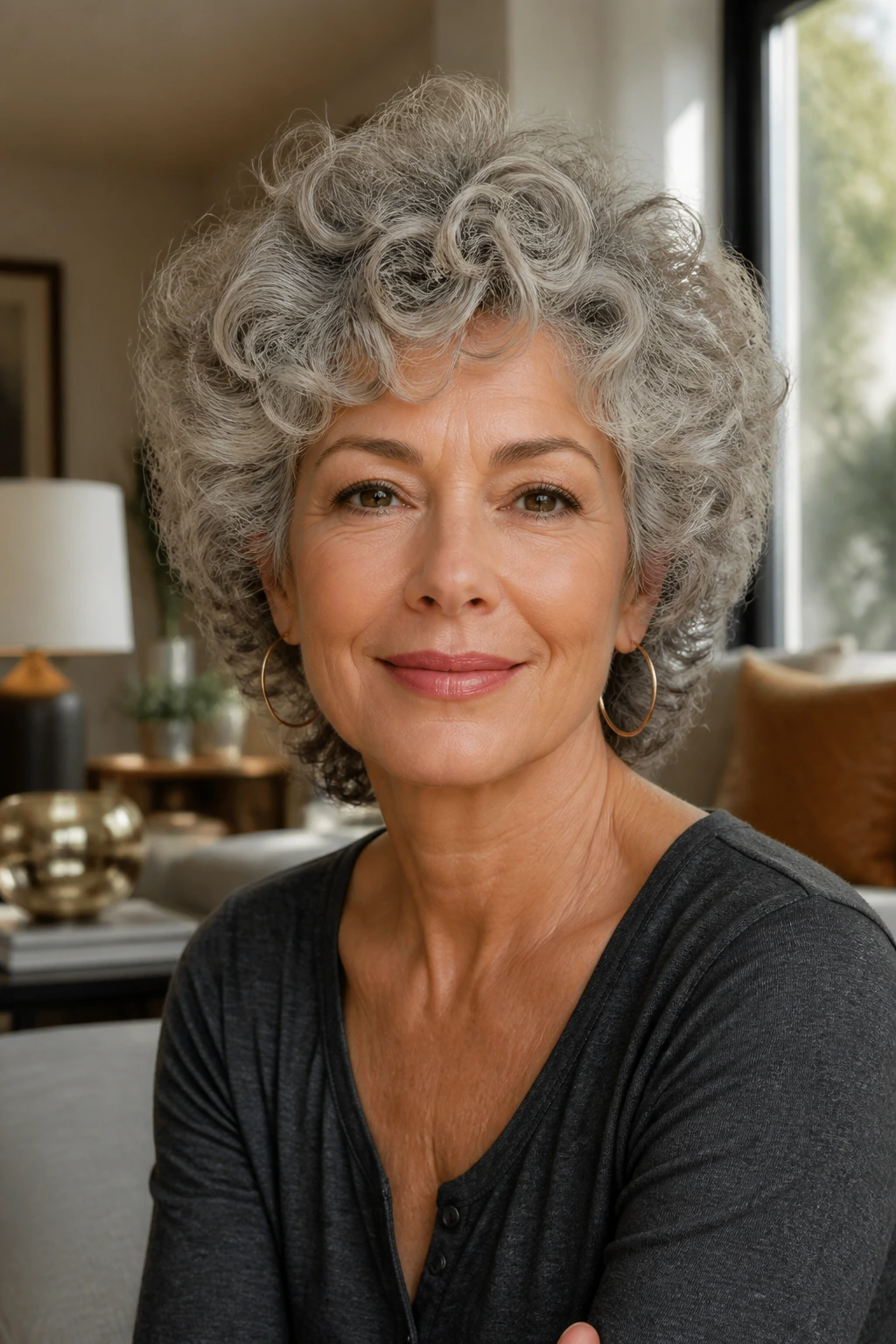
Bring photos, but bring the right kind. A face photo from a celebrity doesn’t help much if your curl pattern, density, and growth direction are different. What helps is a silhouette photo — the outline of the cut, the balance at the crown, the way the front pieces fall.
Say what your hair does in the first 24 hours after washing. Tell the stylist if your curls shrink 1 inch or 3 inches, where the crown goes flat, and whether the front frizzes before the back. That information matters more than saying you want it “manageable.” Manageable to who? At what hour of the day?
Also speak up about the daily routine you’re actually willing to do. If you won’t diffuse for 20 minutes, say so. If you always air-dry, say that too. A great curly haircut should fit the life you lead, not the one you keep imagining for yourself after a perfect salon blowout.
The Best Products and Appointment Notes for a Curl-Friendly Cut
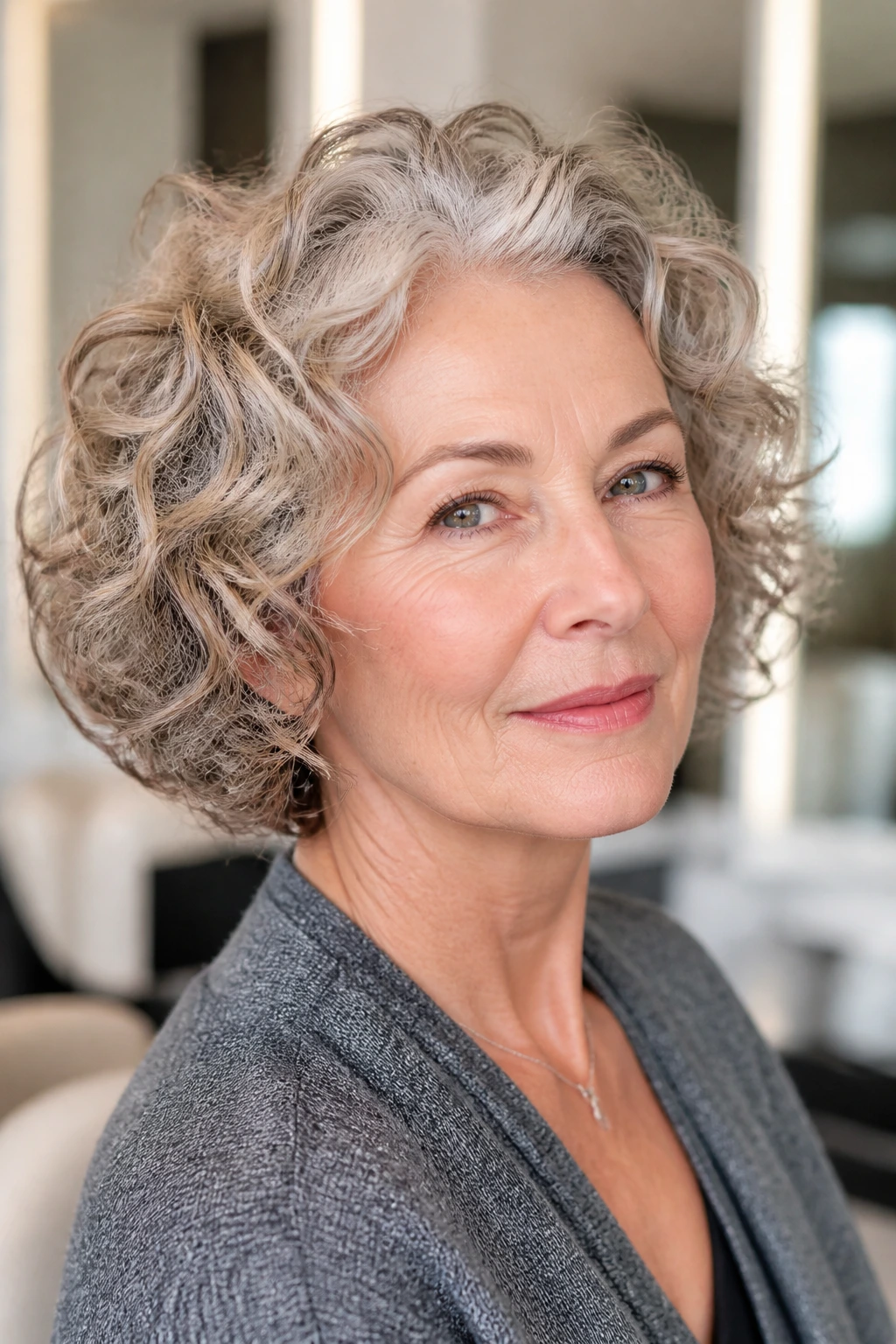
A haircut is only half the story. The products you use after the cut can make the shape look sharp or sleepy, and the ingredient choices matter more than most people admit. Fine curls usually do better with lightweight mousse, foam, and a clean-hold gel; thick or dry curls often need a richer leave-in and a stronger seal on the ends.
If your hair is dry or gray, look for conditioners and stylers with slip, but not a greasy finish. Oils can help, though heavy butter-based products sometimes sit on the hair and make the crown collapse. If your hair is fine, that same butter can turn the whole style soft in the worst way. Product choice has to match density.
At the appointment, show up with your curls in their natural state. Don’t stretch them out with a brush blowout unless you always wear them that way. A good stylist needs to see your real pattern, your real crown, and the places where the hair wants to fall apart. That’s where the cut lives.
The Tools That Make Styling Easier at Home
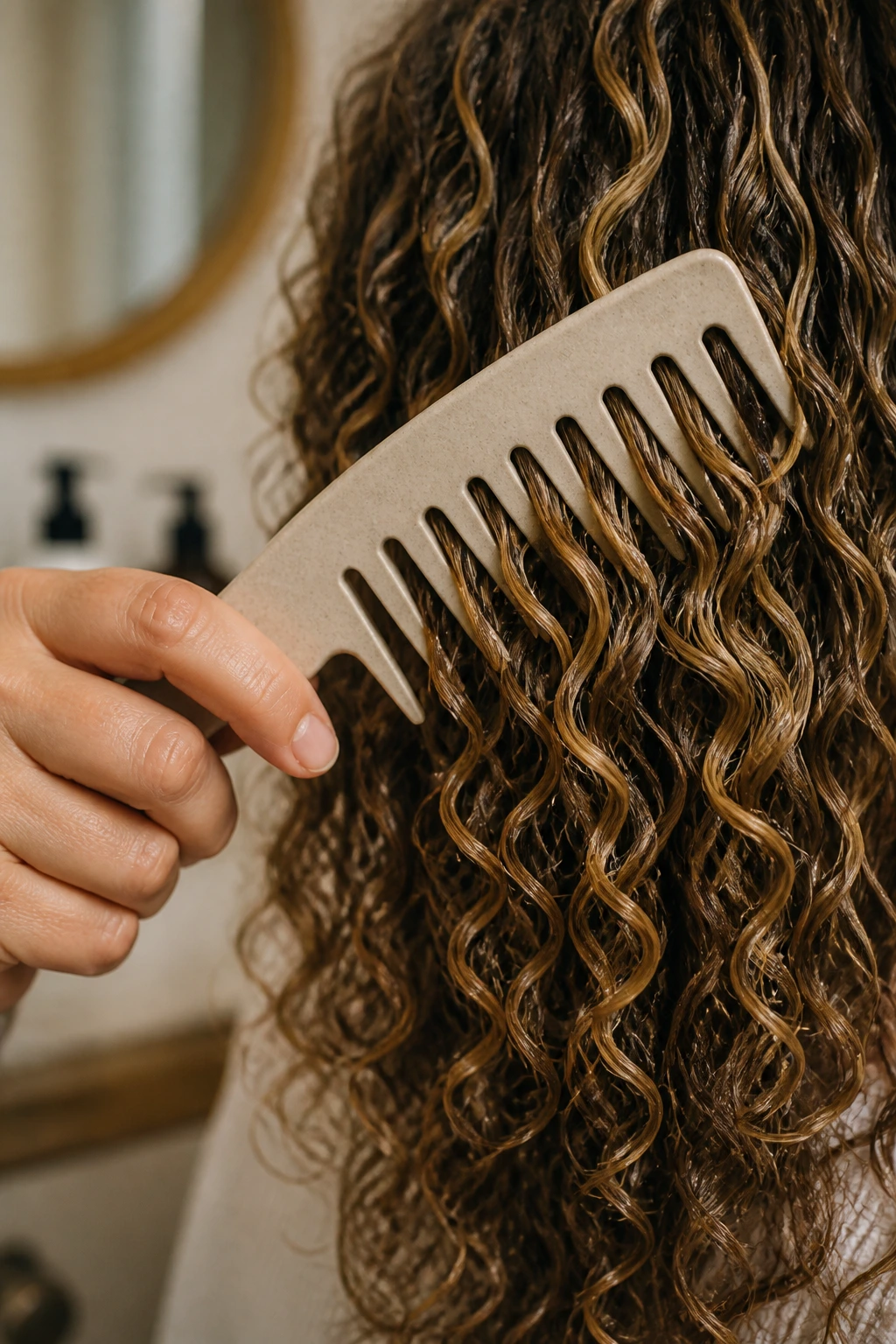
- A wide-tooth comb: Use it in the shower or right after conditioner to detangle without pulling curls apart.
- A spray bottle: A light mist helps revive day-two curls without soaking the whole head.
- A diffuser attachment: This speeds drying and keeps the curl clumps intact when you need more lift at the roots.
- Duckbill clips or root clips: Clip them at the crown while the hair dries to stop flat roots before they start.
- A microfiber towel or cotton T-shirt: Both reduce roughness at the cuticle when you squeeze out water.
- Curl cream or leave-in conditioner: Pick one that matches your density; fine hair needs lighter formulas than coarse curls.
- A light-to-medium hold gel or mousse: This keeps the curl shape from frizzing apart while it dries.
- A silk or satin pillowcase: Not fancy. Just useful. It cuts down on friction overnight.
How to Wear These Cuts With Glasses, Earrings, and Necklines

Presentation: The best curly cuts keep the silhouette clear around the eyes and jaw. If you wear glasses, I’d lean toward chin length, a soft bob, or a side-swept shape so the frames don’t have to compete with too much hair at the temples.
Accessories: Big earrings love short curls, tapered crops, and French bobs because the neck and jaw stay visible. If you wear scarves or high necklines a lot, a shorter cut with a clean nape keeps the whole look from feeling crowded. Long curls work too, but they need a shaped front so the hair doesn’t swallow the accessory work.
Proportion: Rounder faces usually benefit from height at the crown and some length below the chin. Longer faces often do better with a fuller side shape or a fringe that softens the forehead. None of this is rigid. Still, the proportions matter more than the trend of the day.
Best Match: The cut should make your clothes look easier to wear, not harder. If the collar, earring, or frame line disappears under the hair, the shape is too heavy.
Small Styling Tweaks That Change the Whole Silhouette
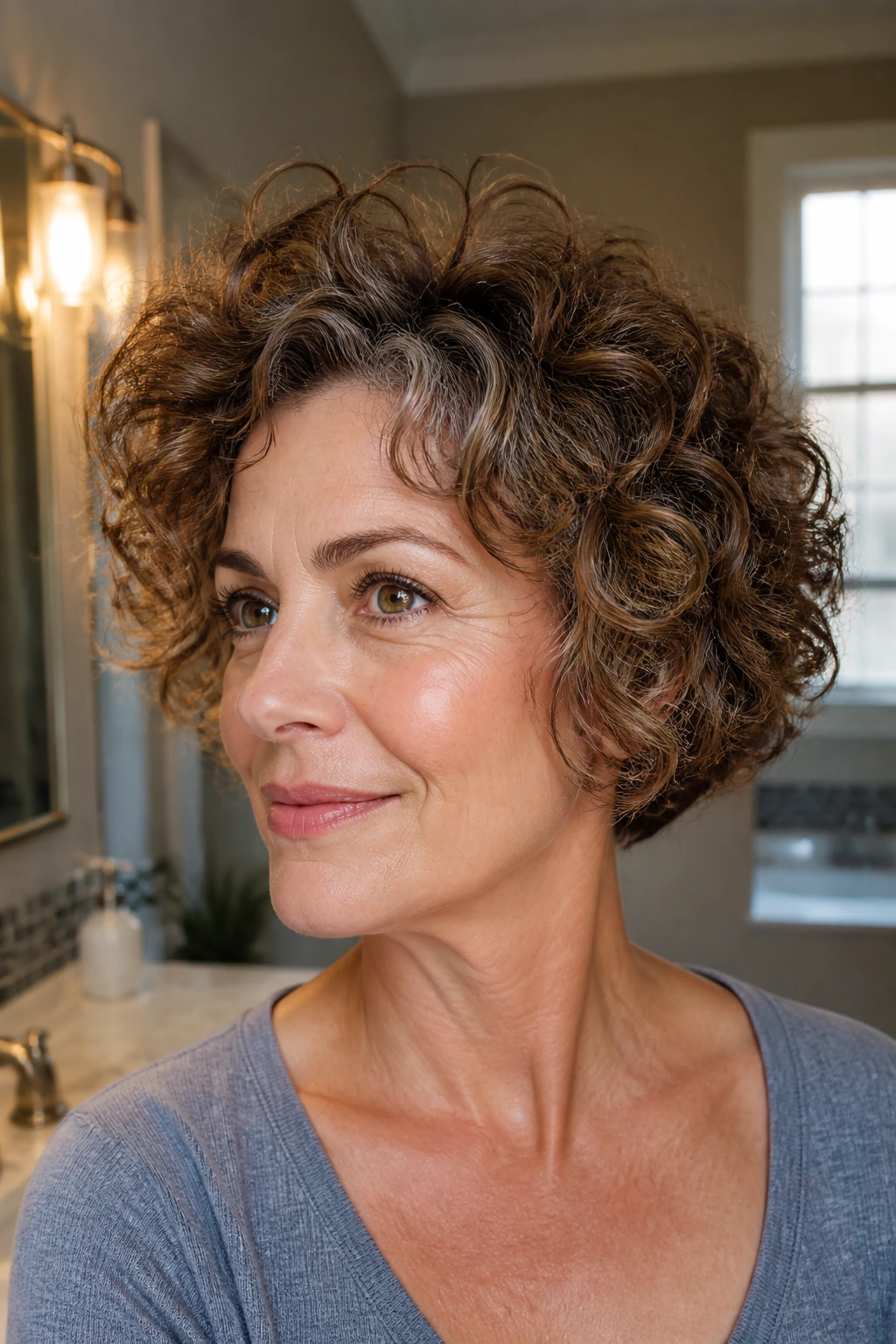
Volume Boost: Clip the roots at the crown for the first 10 to 15 minutes of drying. That tiny habit can keep a bob from collapsing into the scalp by noon.
Frizz Control: Apply styler in soaking-wet hair, not damp hair. Curly hair often frizzes when it starts drying before the product has spread through the clumps.
Shape Recovery: If the front grows too wide, refresh the face-framing pieces with a finger twist and a little water instead of rewetting the whole head. It saves time and keeps the rest of the style intact.
Gray Emphasis: A drop of shine serum on the ends of silver curls can make the texture read polished instead of fuzzy, but use less than you think. Half a pea-sized amount is plenty.
Make-It-Yours: If you like a little edge, add a side part or a small undercut at the nape. If you want softness, keep the layers longer and avoid too much slicing near the perimeter.
Maintenance, Refreshes, and the Grow-Out Window
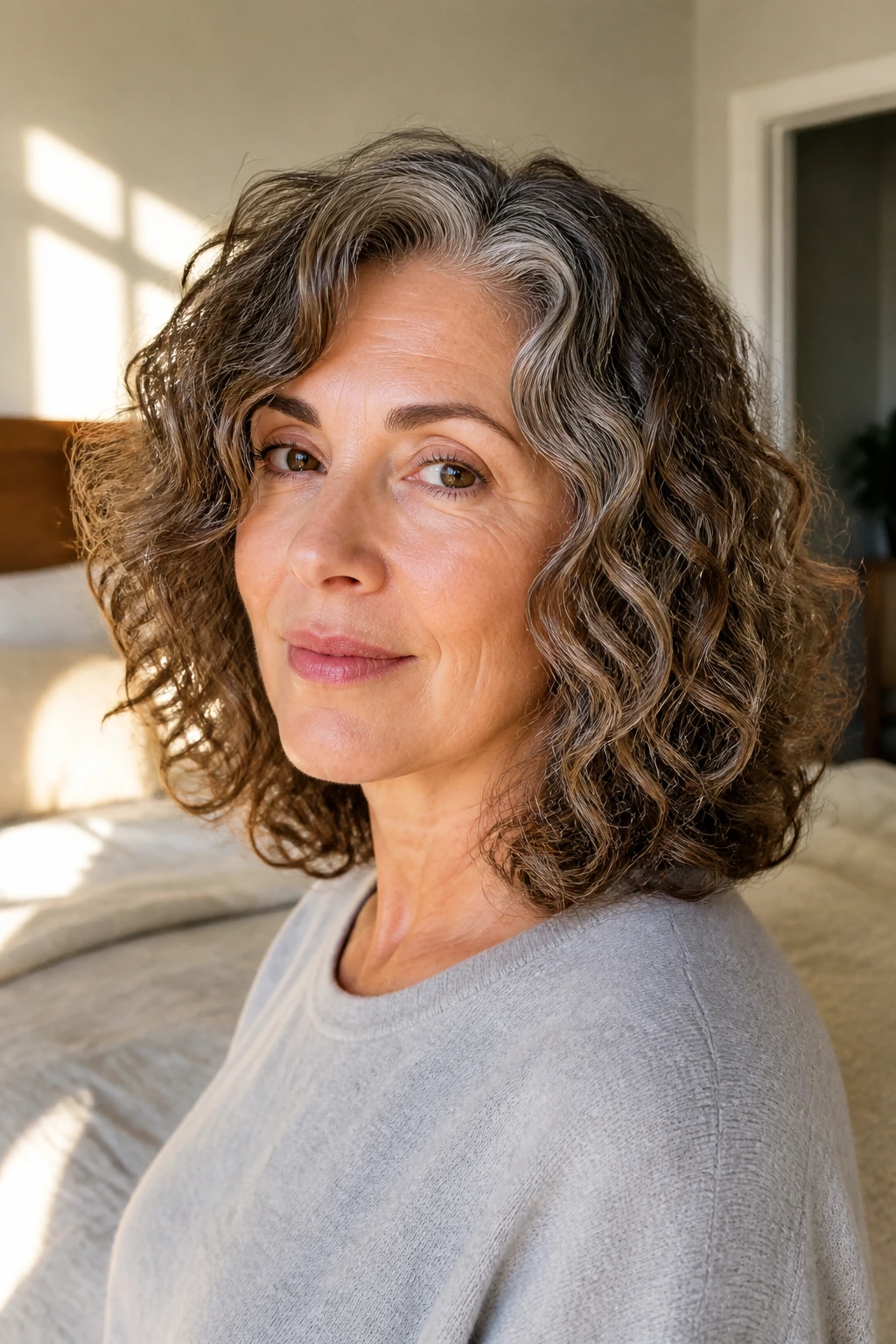
Curly cuts do not stay honest forever. A pixie may need a clean-up every 4 to 6 weeks, especially around the nape and ears. A bob usually holds shape for 6 to 8 weeks. Longer layered cuts can often stretch to 8 to 10 weeks before the ends start looking vague.
Night care matters more than people think. A loose pineapple, a satin bonnet, or a silk pillowcase keeps the curl clumps from rubbing into fuzz. In the morning, use a spray bottle, a small amount of leave-in, and your hands to re-form the curl pattern. If the roots are sleepy, clip them while the hair dries for 10 minutes.
Some cuts improve on day two. Shags often do. Soft layered bobs can, too, because the curl has settled into itself. But if a cut gets wider and wider each day, that shape is telling you something. Usually, it needs less bulk or a better balance at the crown.
Common Mistakes That Throw the Shape Off
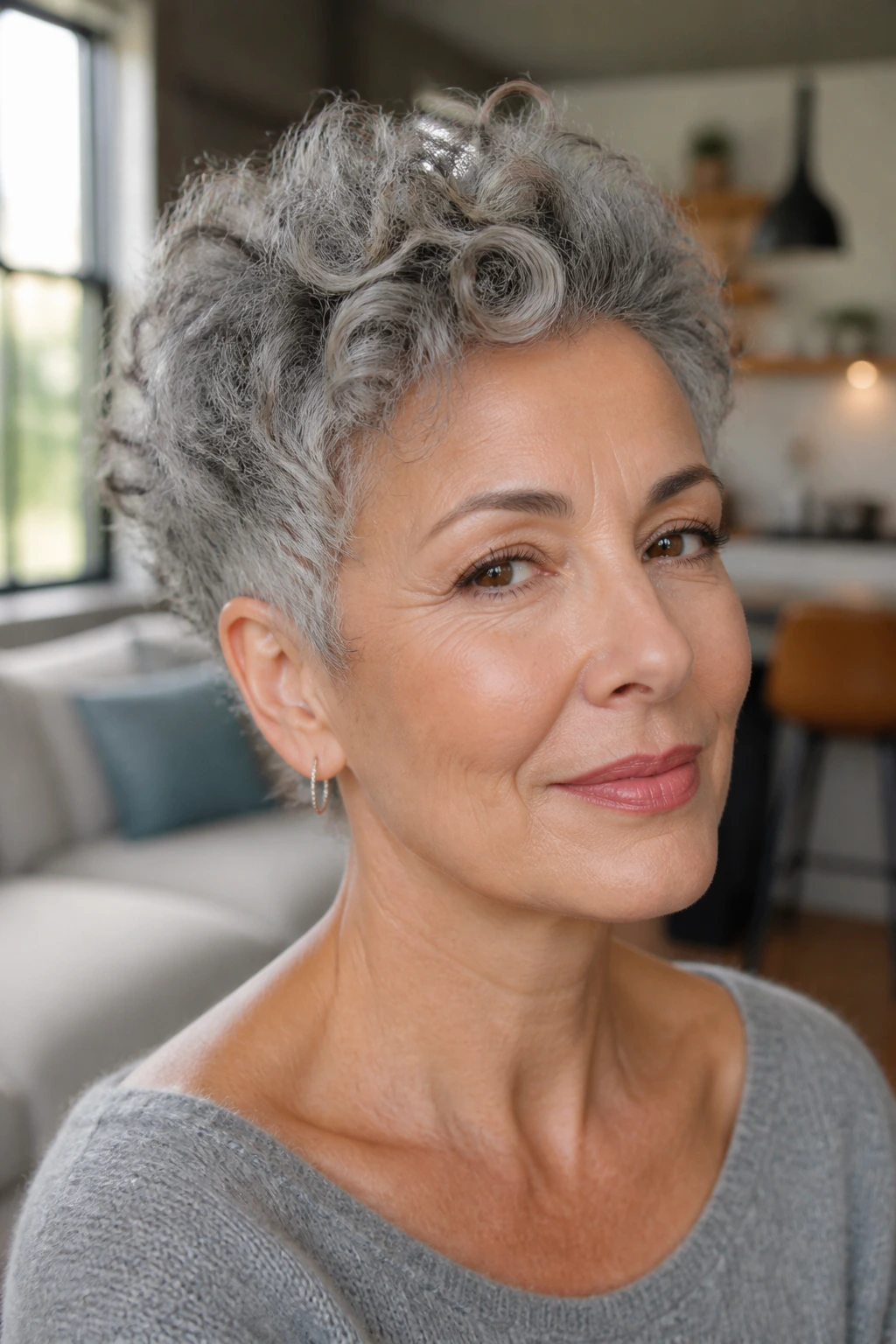
- Cutting curls too wet and stretching them straight: The hair looks longer in the chair than it will at home, and the result is often a bob that lands an inch too high. The fix is dry checking or curl-by-curl cutting.
- Removing too much weight at the crown: That gives you frizz on top and a flat, stringy outline underneath. Keep crown layers controlled, not chopped to pieces.
- Going too short with bangs: Curly bangs shrink harder than people expect. Leave extra length so they can bend instead of sticking up like little hooks.
- Over-layering fine curls: Too many short layers can make see-through spots and a weak bottom line. Fine hair usually wants subtle shaping, not aggressive texturizing.
- Ignoring how the cut grows out: If the style only looks good in week one, it’s not a good haircut. Ask how the shape will look at week six.
- Using heavy cream on every texture: Some curls need moisture, but too much product can flatten the crown and make gray curls look dull.
Variations and Adaptations to Try
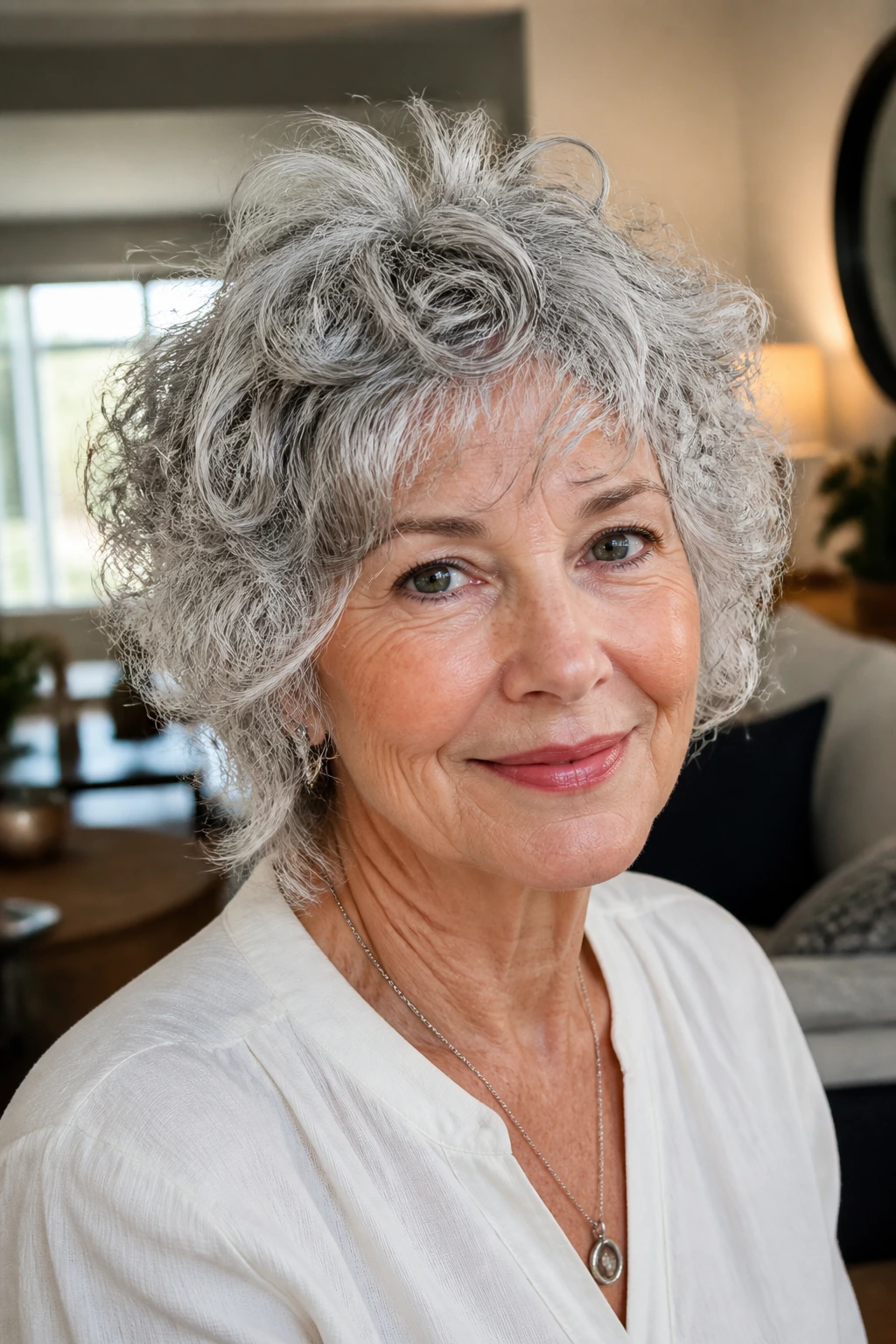
Soft Silver Shag: Keep the crown layered and the fringe light, then let the silver pieces do the visual work. This version is good if you want movement but don’t want the cut to feel trendy or fussy.
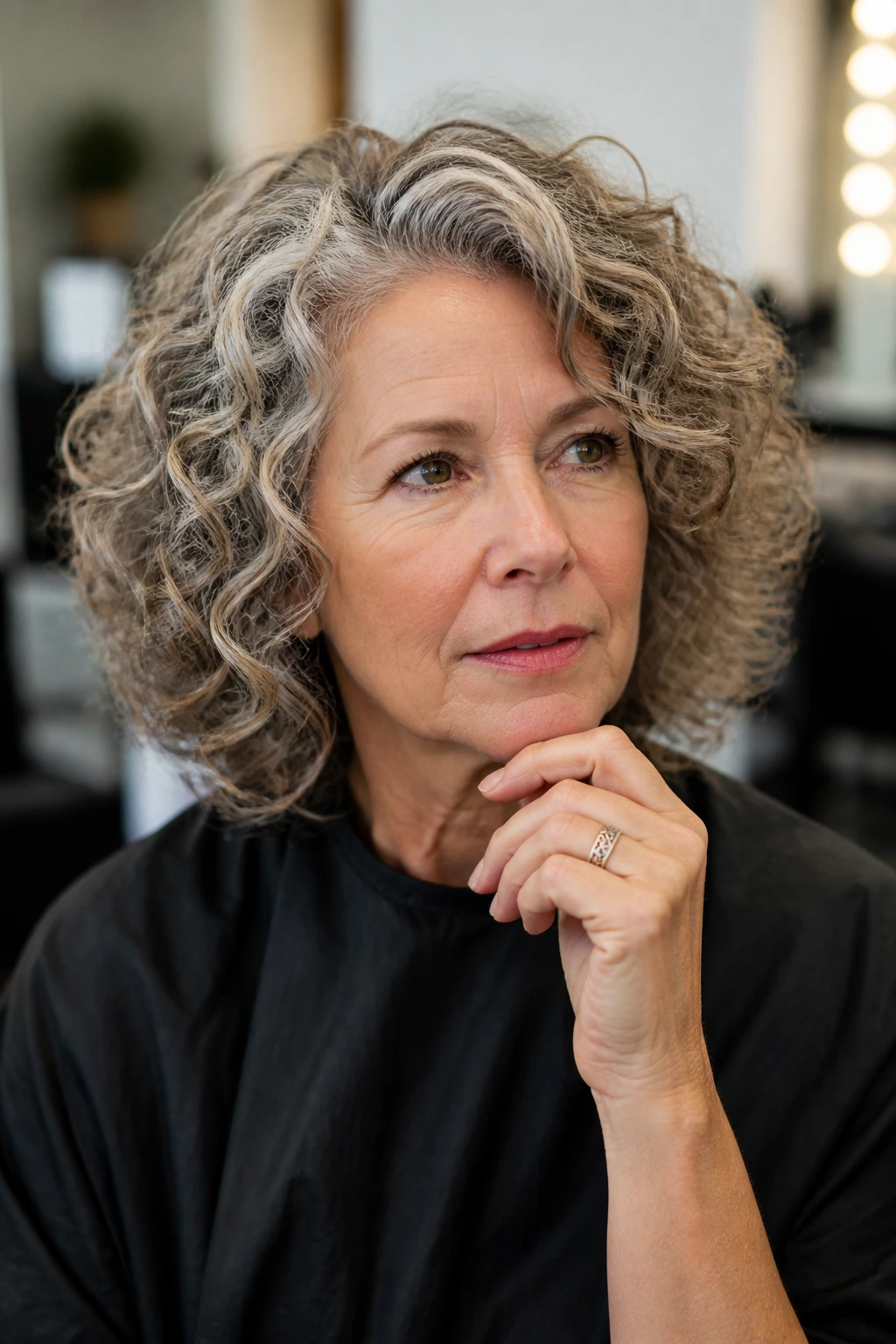
Fine-Curl Glasses Bob: Stop the length just below the jaw, keep the sides softly rounded, and leave the temples light. That opens space for frames and keeps fine curls from overwhelming the face.
Tighter Coil Taper: If your curls are compact and springy, tighten the sides and back while keeping the top a little longer. The result is clean and sculpted, with less work at the neckline.
Long Curly Fringe Lob: For women who like a bit of drama, let the front pieces fall to the cheekbones and keep the rest at the collarbone. The fringe softens the face without needing a full bang.
Graceful Grow-Out Cut: This version is built to look good six weeks later. The layers are long, the outline is soft, and the shape is forgiving if you decide to stretch your trim schedule.
Neckline-Skim Bob: Ideal for collars, scarves, and high necklines. The back stays tidy while the front carries enough length to keep the haircut from looking severe.
Questions Women Ask Before the First Snip
Should curly hair be cut dry or wet?
Dry cutting gives the stylist the best read on shrinkage, curl pattern, and density differences from side to side. Wet cutting can still work, but the hair needs to be checked dry before the final shape is locked in.
Are bangs a bad idea on curls after 50?
Not if they’re cut with shrinkage in mind. Curly bangs can soften the forehead and open the eyes, but they need extra length at the start and a stylist who understands how much curl they’ll lose as they dry.
What if my curls are thinning at the crown?
Choose a cut with gentle crown lift and avoid heavy layers that expose the scalp. A pixie, bixie, soft shag, or rounded bob can all work if the crown is handled carefully.
Can I still wear my hair long?
Yes, but long curly hair needs shape. Long layers and a curved perimeter keep it from looking dragged down, especially if the ends are drier or grayer than the rest.
How often should I trim curly hair after 50?
Short cuts usually need shaping every 4 to 6 weeks. Bobs and lobs can go 6 to 8 weeks. Longer layered cuts often stretch to 8 to 10 weeks if the outline still holds.
What if one side curls tighter than the other?
That’s normal. A good stylist will balance the cut to the way your hair actually grows, not the way you wish it grew. Sometimes the answer is a slight asymmetry, sometimes it’s just smarter layering.
How do I know if a cut is too layered?
If the ends get wispy, the crown gets puffy, and the overall shape starts looking thin after one wash, the layers were probably too short or too aggressive. Curly hair usually needs less stripping than people think.
What should I bring to the salon besides photos?
Bring your usual styling products or, at minimum, a clear explanation of how you style at home. A stylist who knows you air-dry for 45 minutes should not send you home with a shape that only works after a 30-minute blowout.
The Shape That Keeps Curls Moving
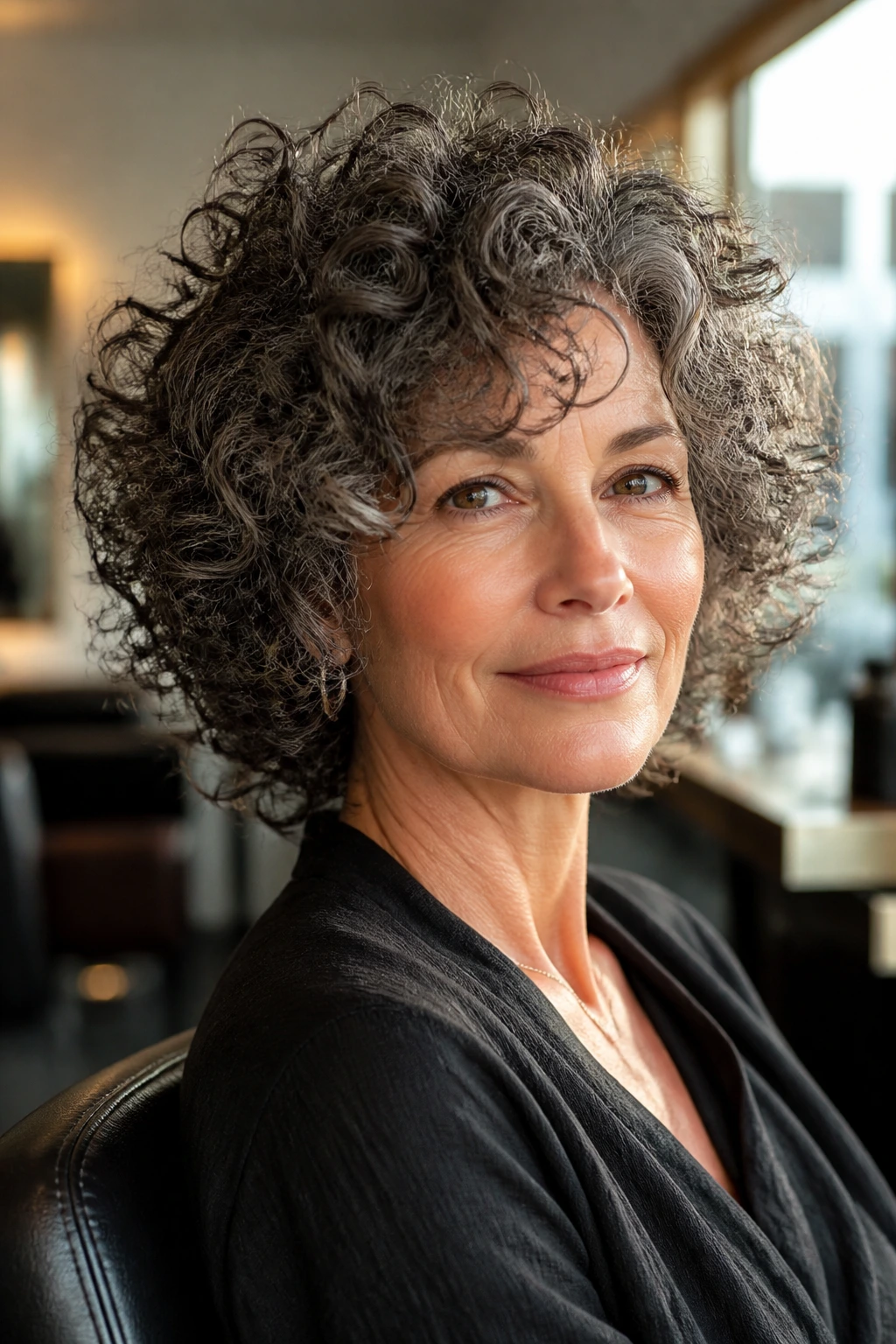
The best curly haircut after 50 is the one that still looks like itself when the day gets on with things. A great shape can handle humidity, a bad night of sleep, a little frizz around the temples, and the fact that your curl pattern may not be identical from front to back anymore.
That’s the whole point. Not perfection. Movement. A cut with enough structure to behave, enough softness to feel natural, and enough honesty to look good without a lot of rescue work in the mirror.
Bring that idea to the salon chair, and the rest gets easier. Choose the shape that looks right when the cape comes off, then keep an eye on how it behaves at week six — that’s where the real answer lives.
