



A good shag haircut never looks frozen. Shag haircuts for women work because they move when you turn your head, not just when you spend twenty minutes styling them, and that alone makes them worth paying attention to if your hair tends to go flat at the crown or heavy at the ends.
The cut has a bad reputation when it’s done lazily. People hear “shag” and picture random choppy layers, but the real version is more controlled than that: shorter pieces near the crown, face-framing layers that change how your cheekbones read, and ends that keep enough weight to avoid turning into fluff.
Done well, a shag solves different problems on different heads. Fine hair gets lift. Thick hair loses the helmet shape. Curly hair gets room to spring. Straight hair gets movement it can’t fake with a quick mist of spray. The trick is choosing the version that matches your texture and your tolerance for styling, because a blow-dry shag and an air-dry shag are not the same animal.
Why These Shag Haircuts Keep Working on Real Hair

- Length range: These cuts stretch from cropped and cheekbone-skimming to long and waist-grazing, so you can keep the length you like and still get movement.
- Texture-aware: Straight, wavy, curly, fine, and dense hair all behave differently in a shag, and the best versions respect that instead of pretending every head works the same.
- Styling honesty: Some of these cuts air-dry with a little mousse; others need a round brush, a diffuser, or a quick pass with a flat iron, and that difference matters.
- Face-shape logic: Fringe placement and where the first face-framing layer starts can change the whole cut more than the back length ever will.
- Grow-out planning: A good shag should still look deliberate after six to eight weeks, not turn into a shape that needs emergency fixing.
- Color friendly: Highlights, gloss, and dimensional color make layered hair read better because the pieces catch the eye instead of disappearing into one flat mass.
What Makes a Shag Look Intentional Instead of Chopped Up
A real shag has a shape. That sounds obvious, but it’s the part people miss when they ask for “something messy.” The best versions still have a plan: the shortest layers create lift near the crown, the face frame falls in a way that suits the jaw and cheekbones, and the perimeter keeps enough density to avoid that hacked-at-the-ends look.
A stylist usually gets there with point cutting, slide cutting, or a careful razor pass, depending on hair type. Straight hair can take more razor work. Curly hair usually needs a scissor hand and a dry cut, because shrinkage changes everything once the curls spring up. If the salon chair only talks about “texture” and never mentions where the weight is being kept, that’s a warning sign.
The smartest shags don’t try to remove bulk everywhere. They remove it where the hair balloons, and they keep it where the shape needs support. That little difference is why one cut looks airy and expensive while another looks like it was attacked by kitchen scissors.
1. Soft Collarbone Shag
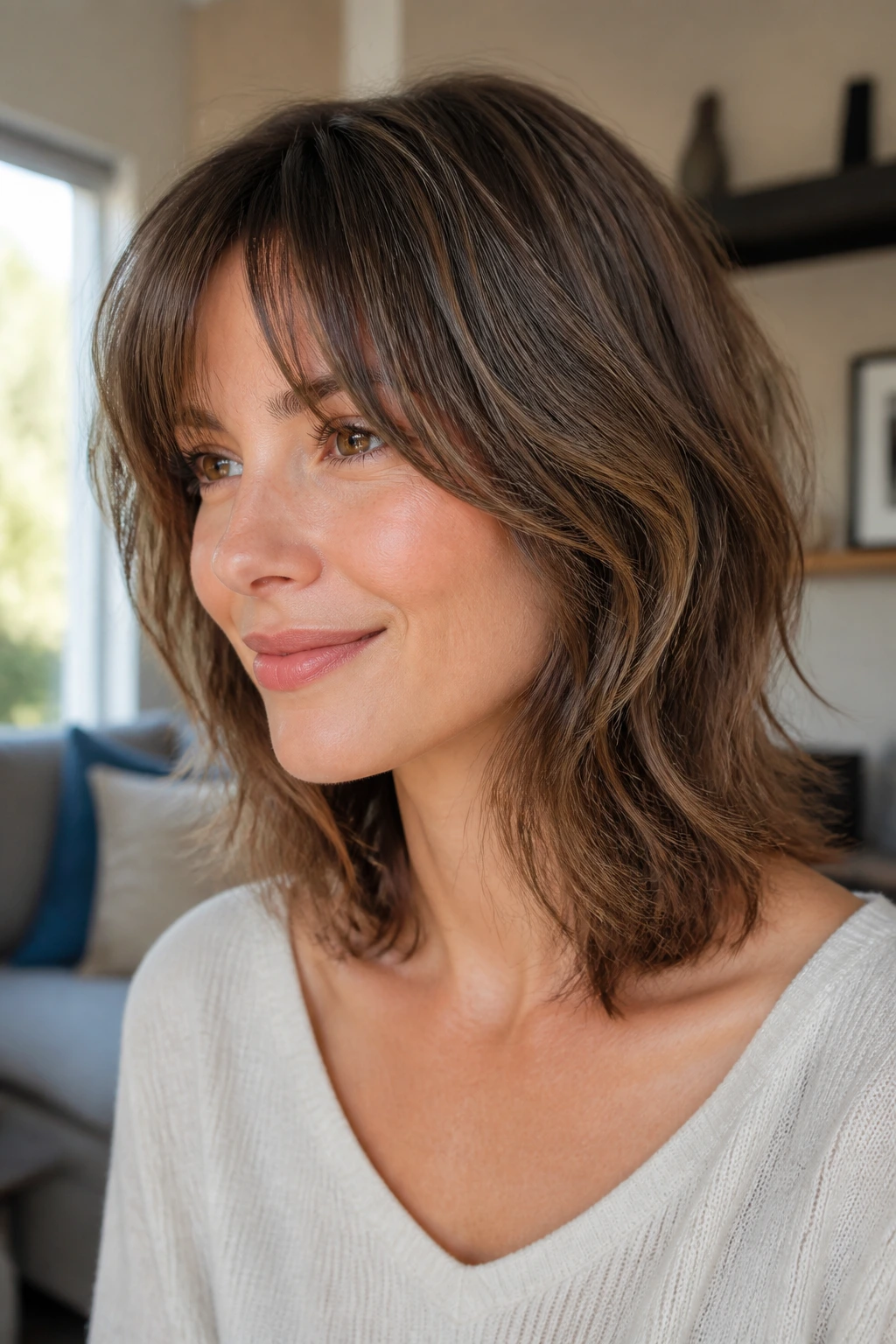
This is the one I’d put on a nervous first-time shag client. The collarbone length gives you a little swing, but the cut still holds enough weight to stop the ends from feathering out into nothing. Ask for soft face-framing layers that begin around the cheekbone and keep the back only lightly textured.
It works especially well on medium-density straight or wavy hair, because the shape moves without needing a lot of product. A rough-dry with a mousse at the roots is usually enough. If you want polish, wrap the ends under with a round brush and leave the rest a little undone.
2. Classic 70s Feathered Shag
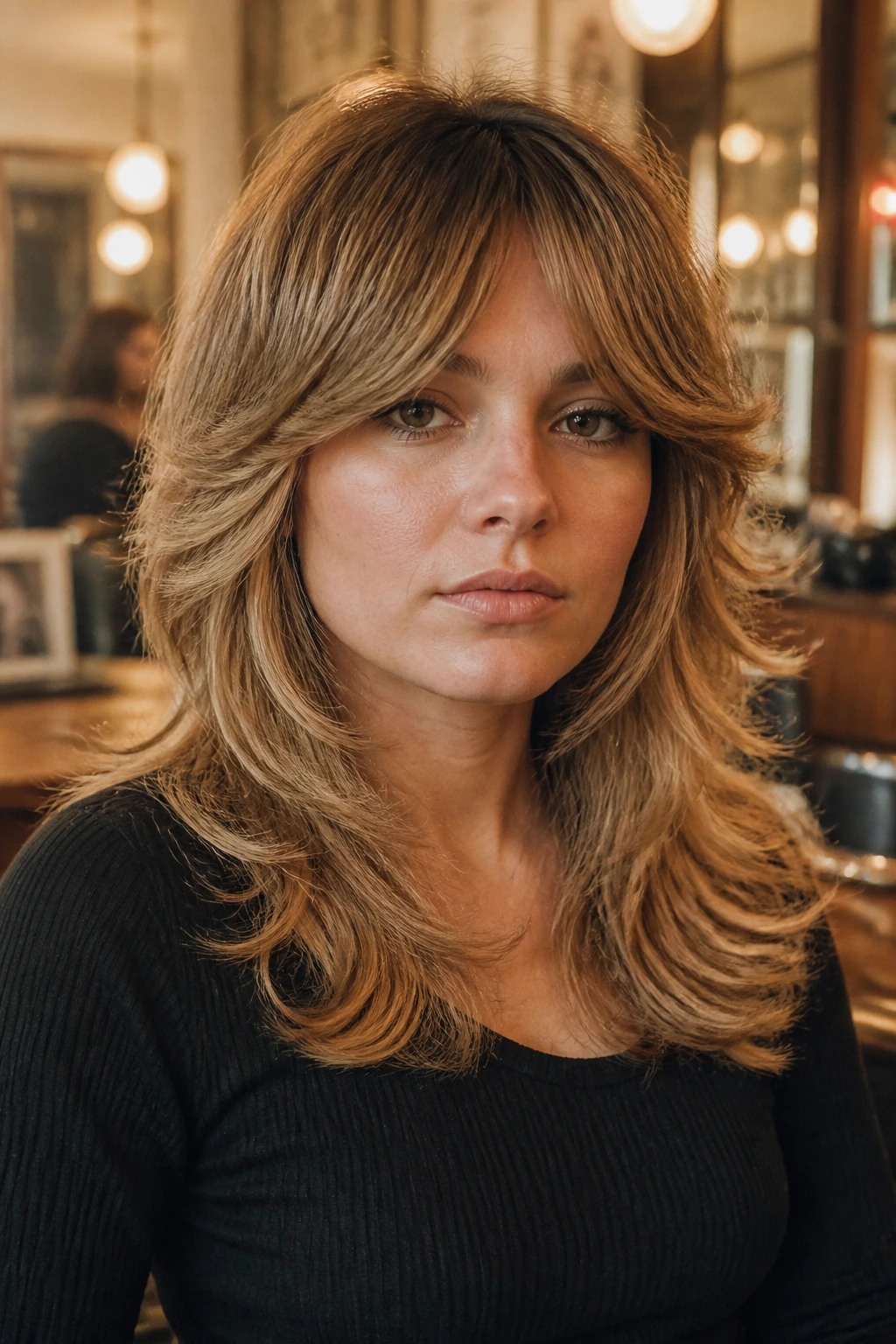
This is the version that still knows how to flirt. The feathering around the face creates that soft, lifted shape that feels retro without looking costume-y, especially when the fringe is cut to split naturally in the middle or slightly off-center.
The catch is styling. You do need a brush, a blow-dryer, and a little patience if you want the layers to turn away from the face instead of collapsing forward. For women who like a bit of volume at the crown and a bit of swing at the shoulders, this is the one that keeps showing up for a reason.
3. Curtain-Bang Shag
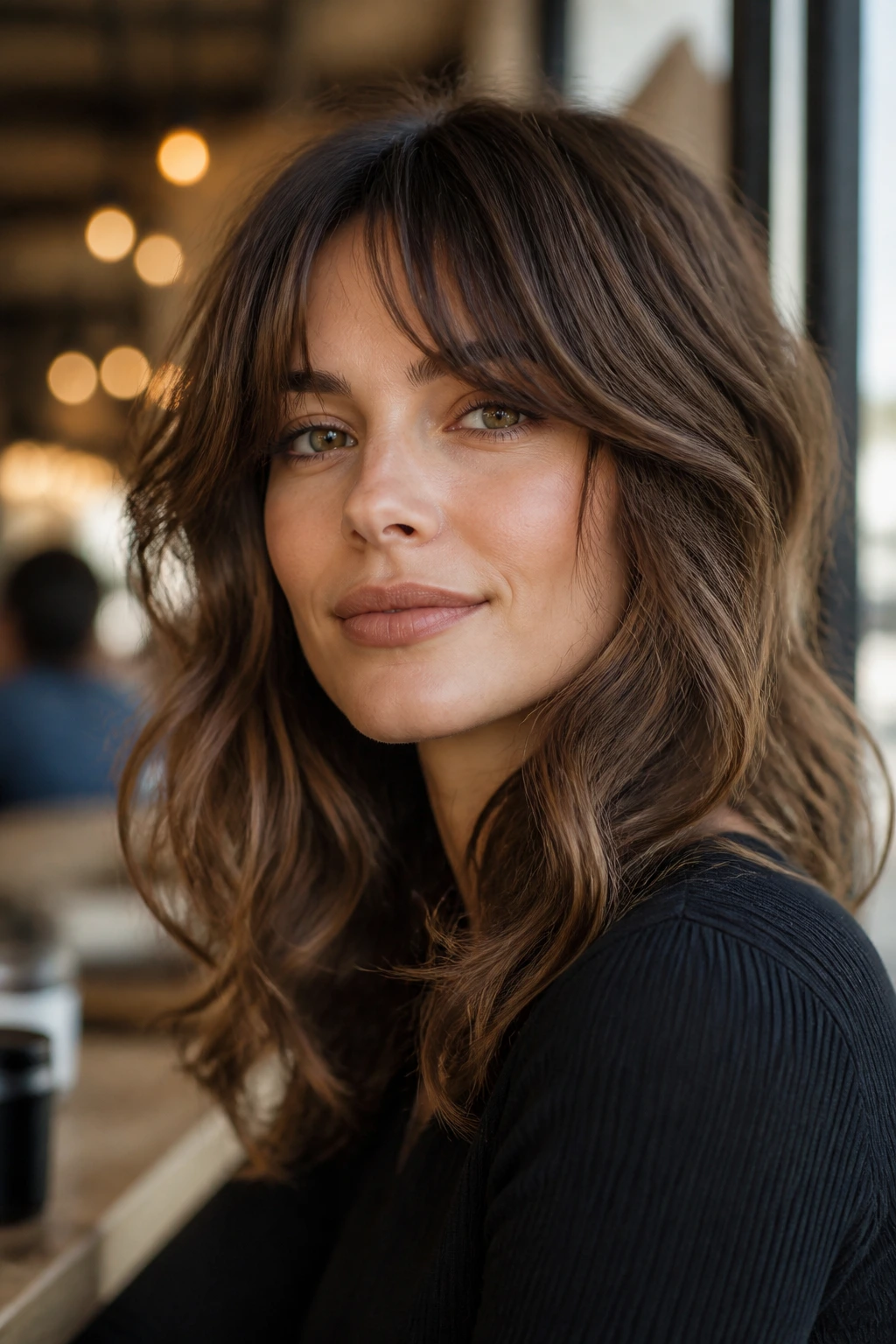
Curtain bangs change the whole mood of a shag. They open the face without committing to a full fringe, and they work nicely when the shortest pieces land between the brow and the cheekbone rather than right at the lash line.
What makes this version smart is that the bangs can grow out with less drama than blunt fringe. A bit of dry shampoo at the root and a quick bend with a round brush is usually enough. If you hate high-maintenance bangs but still want the forehead-softening effect, this cut makes a strong case.
4. Curly Shag for Natural Curls

Curly shag haircuts for women need a different touch, and this one respects that. The best version is usually cut dry or at least partly dry so the stylist can see where the curls spring and where they clump.
A razor can be too aggressive here unless the curl pattern is loose and strong. What usually works better is a scissor cut that removes bulk around the crown and lets the curl family stay together. Diffuse with a gel or cream, then stop touching it. Seriously. Overhandling is how you steal the shape.
5. Wavy Lob Shag
A lob with shag layers is the most easygoing middle ground in the whole batch. It stays long enough to tuck behind the ear, but the layers keep the ends from hanging like wet rope. On wavy hair, it falls into that lived-in shape people spend hours trying to fake.
This cut likes a light wave cream or a texture spray more than heavy oil. A small flat-iron bend through the mid-lengths can be enough, especially if your natural wave already gives the hair a little bend. It’s one of the best options if you want movement without losing the clean outline of a lob.
6. Cropped Shag
Short shags are for women who want the haircut to do the work. This one sits somewhere between a bixie and a shaggy bob, with choppy layers that keep the top airy and the sides soft instead of helmet-like.
The reason it works is simple: less length means less drag. The hair springs up faster, dries faster, and shows texture more clearly. Use a small amount of pomade or wax only on the ends, not at the roots, or you’ll flatten the very lift you paid for.
7. Wolf Cut Shag
This is the edgy cousin in the family. The wolf cut leans harder into the contrast between a shorter, lifted crown and a longer, tapered back, which gives it more bite than a classic shag.
It looks best when the top layers are separated enough to read piece by piece, especially on thick straight or wavy hair. A matte texture spray helps the cut keep its shape without looking stiff. If you like hair that looks a little rebellious even on quiet days, this one doesn’t apologize for itself.
8. Long Boho Shag
Long hair and shag layers can absolutely coexist, and this version proves it. The layers are cut in a way that keeps the length but breaks up the heavy curtain effect that long hair often develops around the ribs and waist.
The best part is the face frame. Done right, it starts high enough to matter but not so high that you lose the long, loose feel. This is the cut for someone who wants movement without giving up the drama of long hair. A little oil on the ends keeps the longer pieces from looking dry or stringy.
9. Razor-Cut Shag with Wispy Ends
A razor cut can make a shag feel lighter, almost airy, but it’s not the answer for every head. On straight or slightly wavy hair, the razor softens the edges and gives the layers a sliced, feathered finish that sits nicely instead of stacking up.
It’s a poor fit for coarse frizz-prone hair if the goal is smooth movement, because the razor can make the ends puff if the texture is already rough. Use a smoothing cream and a medium round brush if you want the wispy ends to stay controlled.
10. Birkin-Bang Shag
There’s something nice about a fringe that sits just below the brow and breaks slightly in the middle. It gives the haircut a little attitude without the commitment of a blunt bang that needs constant trimming.
A Birkin-bang shag works best when the sides are kept soft and the front has enough density to hold its shape after washing. It suits longer foreheads and anyone who likes the eyes to stay the focus. Keep a small round brush nearby; this fringe looks its best when the ends get a quick bend instead of hanging flat.
11. Choppy Shag Bob
A shag bob is blunt only in the way a good leather jacket is blunt. The edge is there, but the layers keep it from feeling rigid. It lands beautifully on hair that needs movement but not too much length.
If your bob always turns into a triangle by lunch, this is the fix. The internal layers remove width without turning the perimeter into wisps. Ask for a little extra softness around the jaw if your face is strong there; it stops the cut from feeling too squared off.
12. Face-Framing Round Shag
This version rounds everything out on purpose. The layers curve around the face instead of angling straight down, which can be especially useful if sharper cuts tend to emphasize features you’d rather soften.
The trick is balance. You want enough roundness to flatter the face, but not so much that the cut becomes a helmet with bangs. A flexible cream and a vent brush are usually enough to keep the shape loose. It’s one of the more forgiving shag haircuts for women who want a softer silhouette.
13. Layered Shag for Fine Hair
Fine hair needs restraint, not a haircut that eats its own tail. The best shag for this texture keeps the layers lighter and avoids over-thinning the ends, because too much removal makes the bottom look see-through in daylight.
What to ask for
Ask for crown lift, a soft face frame, and a perimeter that still has enough density to hold its line. A root-lifting mousse and a quick blow-dry upside down can make the cut look fuller without turning it puffy.
Fine hair shags live or die by the bottom edge. If the ends get too wispy, the whole thing collapses visually.
14. Heavy-Layer Shag for Thick Hair
Thick hair usually needs weight removal in the right places, not an all-over haircut that makes the ends fray. This version uses longer internal layers and smarter debulking so the hair still has body, just not the kind that sits like a thick pad.
It’s especially useful if your hair swells after washing or if you have a lot of bulk around the nape and sides. A stylist who sections carefully and checks how the hair falls between each pass is worth their weight in salon chairs. On this one, precision matters more than speed.
15. Bottleneck Bang Shag

A bottleneck fringe starts narrow in the center and opens wider around the eyes, which gives the cut a really nice face-framing effect. It’s less severe than micro bangs and less predictable than curtain bangs, which is part of the appeal.
The shape softens a high forehead and blends well into both short and medium shags. It does need regular trimming if you want the narrow center to stay neat, though. Let it grow for too long and it starts behaving like a confused curtain instead of a deliberate fringe.
16. Mullet-Inspired Shag

This is the one for women who don’t mind a little swagger. The mullet influence gives you shorter layers near the top and face, then keeps the back longer for a sharper contrast that reads more fashion-forward than pretty.
It works best when the layers are still connected enough to feel intentional. Too much disconnection and you get a cut that looks unfinished. A little texture paste through the crown and sides can keep the top from lying flat, which is half the point.
17. Soft Shag for Straight Hair

Straight hair can make a shag look too tidy if the layers are timid, or too hacked if the layering is heavy-handed. The soft version finds the middle: enough face-framing and crown movement to create lift, but not so much cutting that the ends go stringy.
A blow-dry with a round brush helps the layers separate visually, and a light volumizing foam keeps them from falling straight back into place. If your straight hair resists texture, this is the version that gives it some without making it look like you fought with it.
18. Airy Shag for Oval Faces

Oval faces can wear a lot of fringe and layer combinations, which is useful because it means the cut can lean airy without getting fussy. The best version keeps movement around the cheeks and chin rather than crowding the face with too many short pieces.
You don’t need a dramatic shape here. In fact, the more obvious the haircut becomes, the easier it is to lose that easy balance oval faces already have. A loose wave, a little lift at the roots, and a soft finish are usually enough.
19. Side-Swept Fringe Shag

A side-swept fringe changes the geometry fast. It gives the cut a little sweep and motion, and it’s a smart choice if your part already falls to one side or if a center fringe fights your cowlick.
Styling note
Ask for the fringe to be cut dry or almost dry so the stylist can see how it sits when it moves. A side-swept bang looks best when it has enough length to tuck behind one ear and enough body to stay visible at the other.
This is one of the easier shags to live with because the fringe can hide in a pinch. That matters more than people think.
20. Shoulder-Length Shag with Flipped Ends

There’s a playful feel to ends that flick out a little instead of tucking under. Shoulder-length shag haircuts for women do this well because the length gives the flip a place to show up without making the shape feel retro in a costume-y way.
A round brush or even a quick pass with a flat iron can kick the ends out just enough. Keep the root area a bit lifted and the perimeter clean. If the hair is too layered at the very bottom, the flip loses definition and starts looking like static.
21. Tousled Shag with Beach Waves
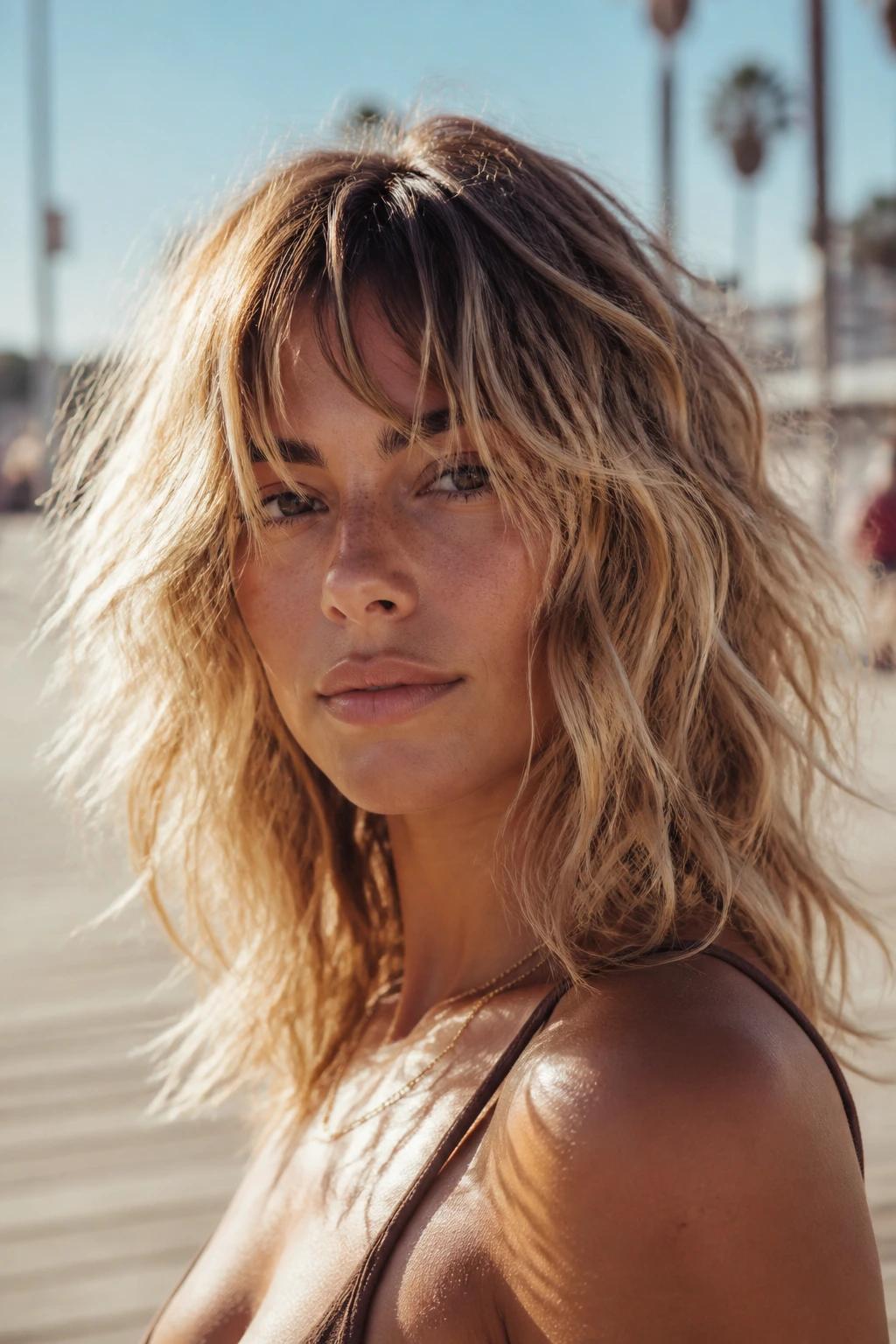
This one is all about loose texture, not polished curl patterns. The layers are cut to hold soft bends, then styled with a wave spray or salt spray that gives the strands just enough grit to separate.
It works best on hair that already has some wave to it, though straight hair can fake the look with a curling wand and a quick finger comb-through. Don’t curl every piece the same direction. That’s how you end up with pageant hair instead of tousle.
22. Micro Bang Shag

Micro bangs are not a shy choice. They sit high on the forehead and make the eyes, brows, and cheekbones do more of the talking, which can look sharp and modern when the rest of the cut stays soft.
They do come with upkeep. If you hate regular trims or your fringe grows in fast, this is a commitment. The payoff is that the short front makes even a simple shag feel deliberate and a little editorial.
23. Platinum Shag with Piecey Texture
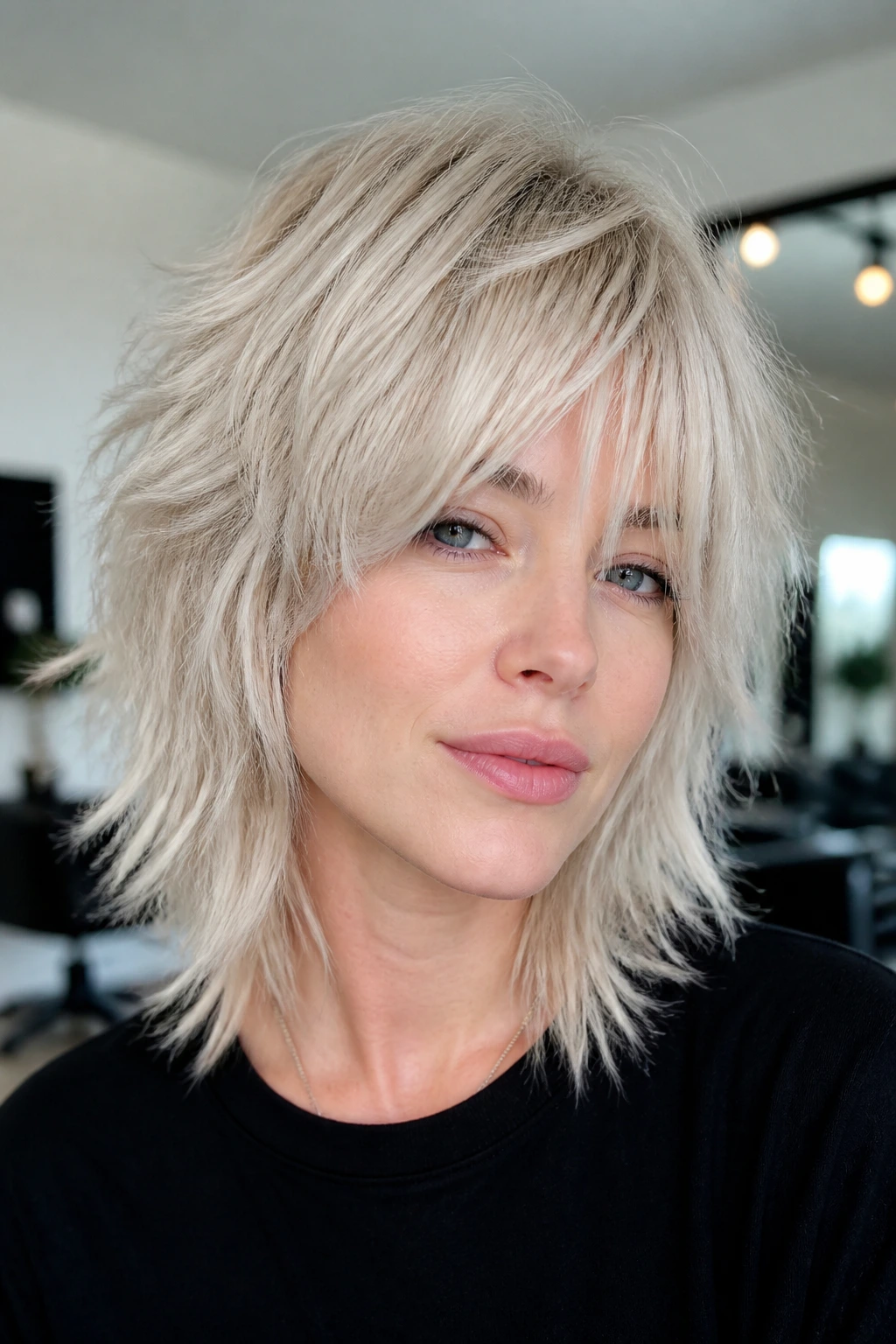
Platinum blond hair makes every layer visible, which is exactly why this version works. The light color turns the haircut into a shape-shifting object; the layers read immediately because the tonal contrast is so clean.
Piecey texture matters here. A matte paste or lightweight wax gives the ends definition without adding a greasy finish that can make platinum hair look dull. If the color is icy, keep the layers soft. Too much chunkiness fights the brightness.
24. Copper Shag with Warm Layers

Copper loves layered cuts because the tone glows differently when light hits the top pieces and the face frame. The warmth can make the shape feel richer, almost more dimensional than the cut itself would suggest.
A copper shag looks especially good when the face-framing layers catch a little shine serum and the ends stay loose. If the haircut is too blunt, the color can look flat. If the layers are too choppy, the warmth can turn busy. This version sits in a nice middle lane.
25. Dimensional Brunette Shag
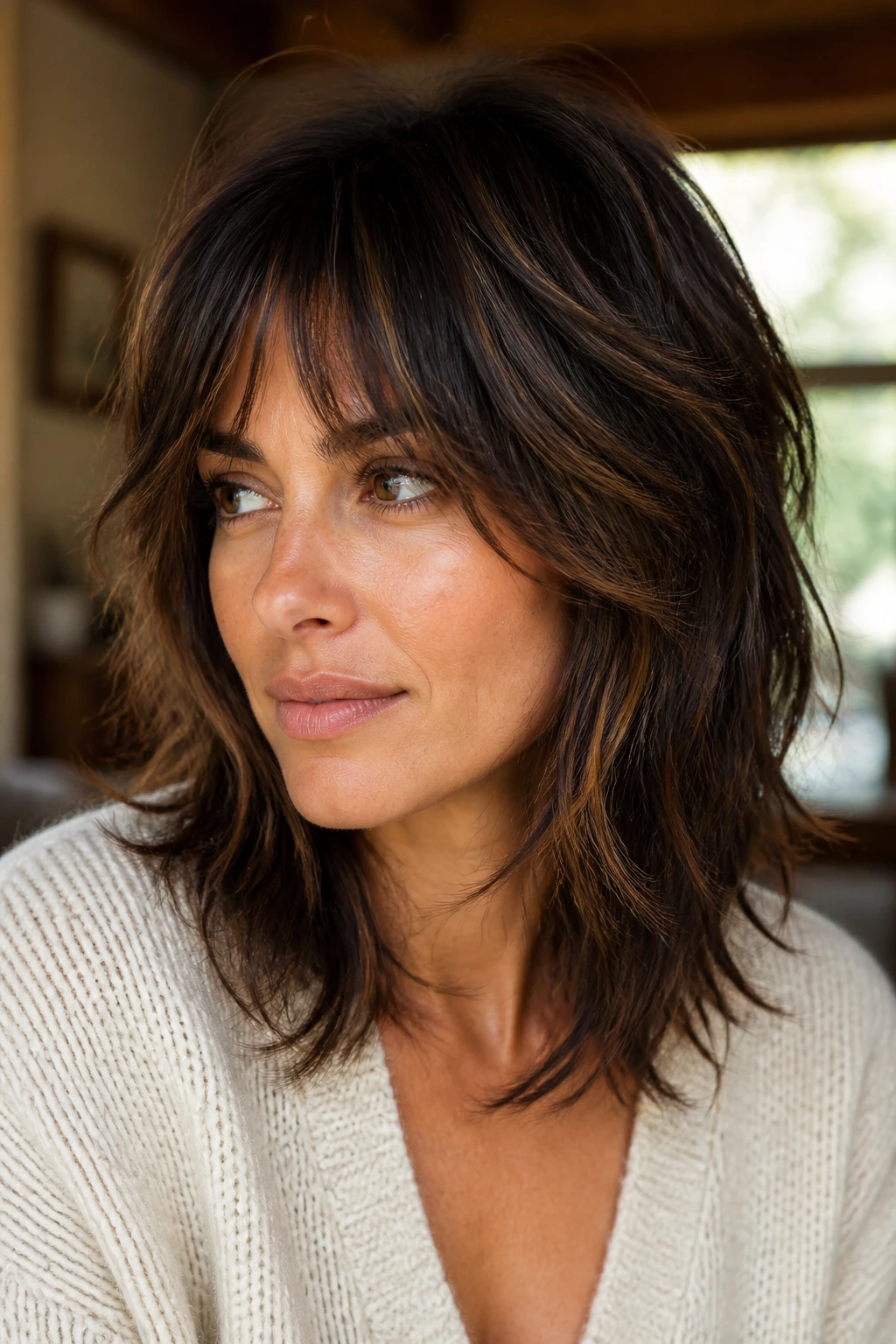
Brunette shades can disappear in heavy layers unless there’s some tonal movement, and this is where gloss, lowlights, or soft caramel pieces help the cut read better. The layers don’t have to scream to show up; they just need contrast.
Why it works
On dark hair, the shape shows through the color more than the cut line does. That means subtle highlights around the cheekbone and crown can make a shag look more expensive without changing the haircut itself.
A dimensional brunette shag is easier to maintain than a high-contrast blonde one, which makes it a practical choice if you want movement without a loud color schedule.
26. Silver Hair Shag

Silver and white hair can be stunning in a shag because the layers catch light differently at the crown, around the temples, and near the jaw. The shape keeps the color from feeling static or helmet-like.
The trick is softness. If the cut is too severe, silver hair can look wiry instead of elegant. Keep the face frame gentle and use a glossing treatment or shine spray to stop the texture from looking dry. The cut should feel airy, not fragile.
27. Edgy Undercut Shag
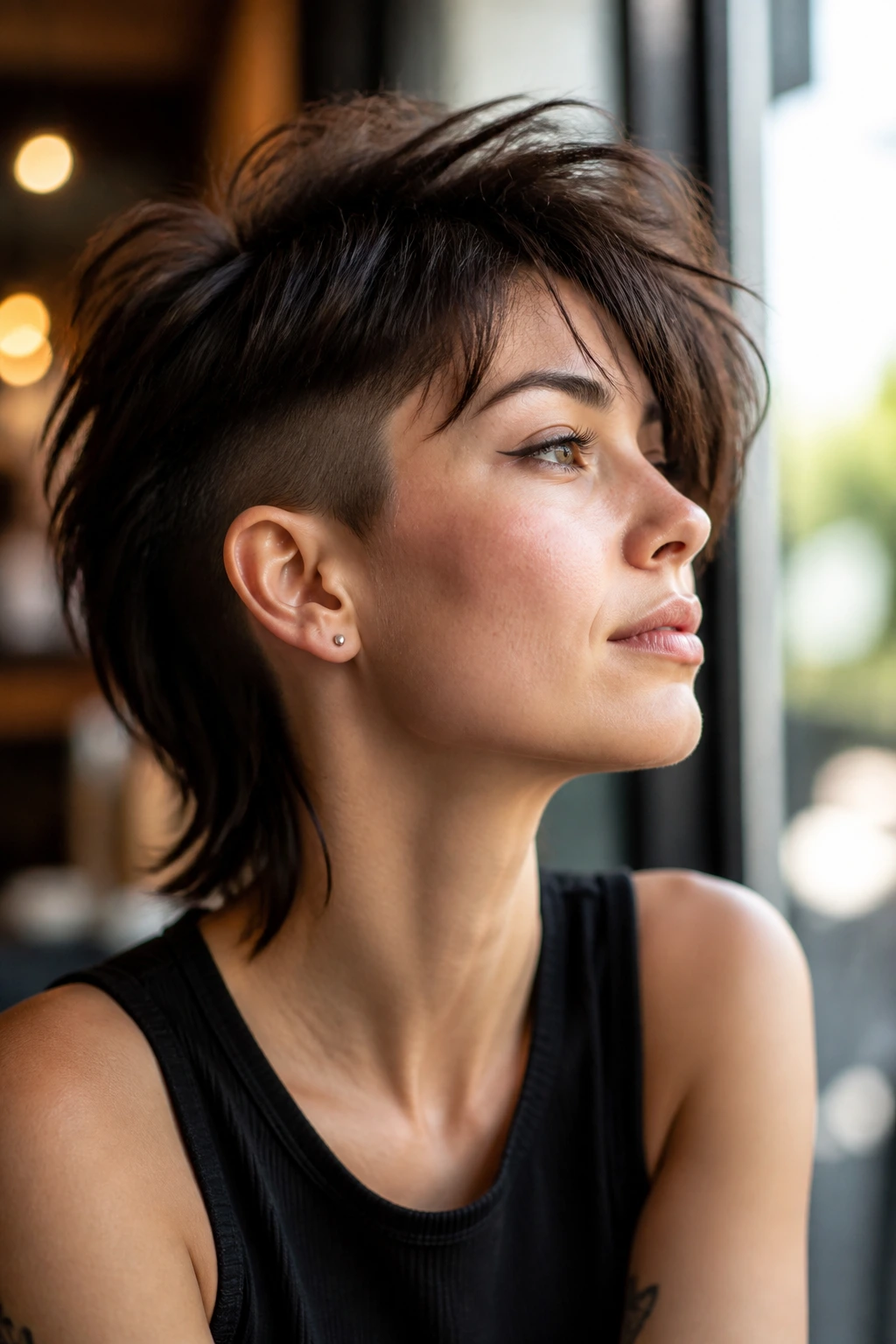
An undercut changes the whole math of a shag. Removing bulk underneath lets the top layers sit with more lift, and it can be a lifesaver if your hair is thick enough to build a small tent by noon.
This version works best when the undercut is hidden or partially hidden, so the haircut still grows out gracefully. If you want a little rebellion without fully shaving the sides, even a narrow nape undercut can take weight off and make styling easier.
28. Romantic Soft Shag with Invisible Layers

Not everyone wants a shag that announces itself from across the room. The invisible-layer version keeps the structure soft, with subtle internal cutting that creates movement without obvious choppiness.
It’s a smart answer for women who love the idea of the shag but hate visible slicing. The hair still falls with bend and lift, just without hard layer lines. It’s especially pretty when styled with a loose blowout or soft wave, because the ends keep that gentle, lived-in swing.
29. Long Layer Shag with Bottleneck Fringe
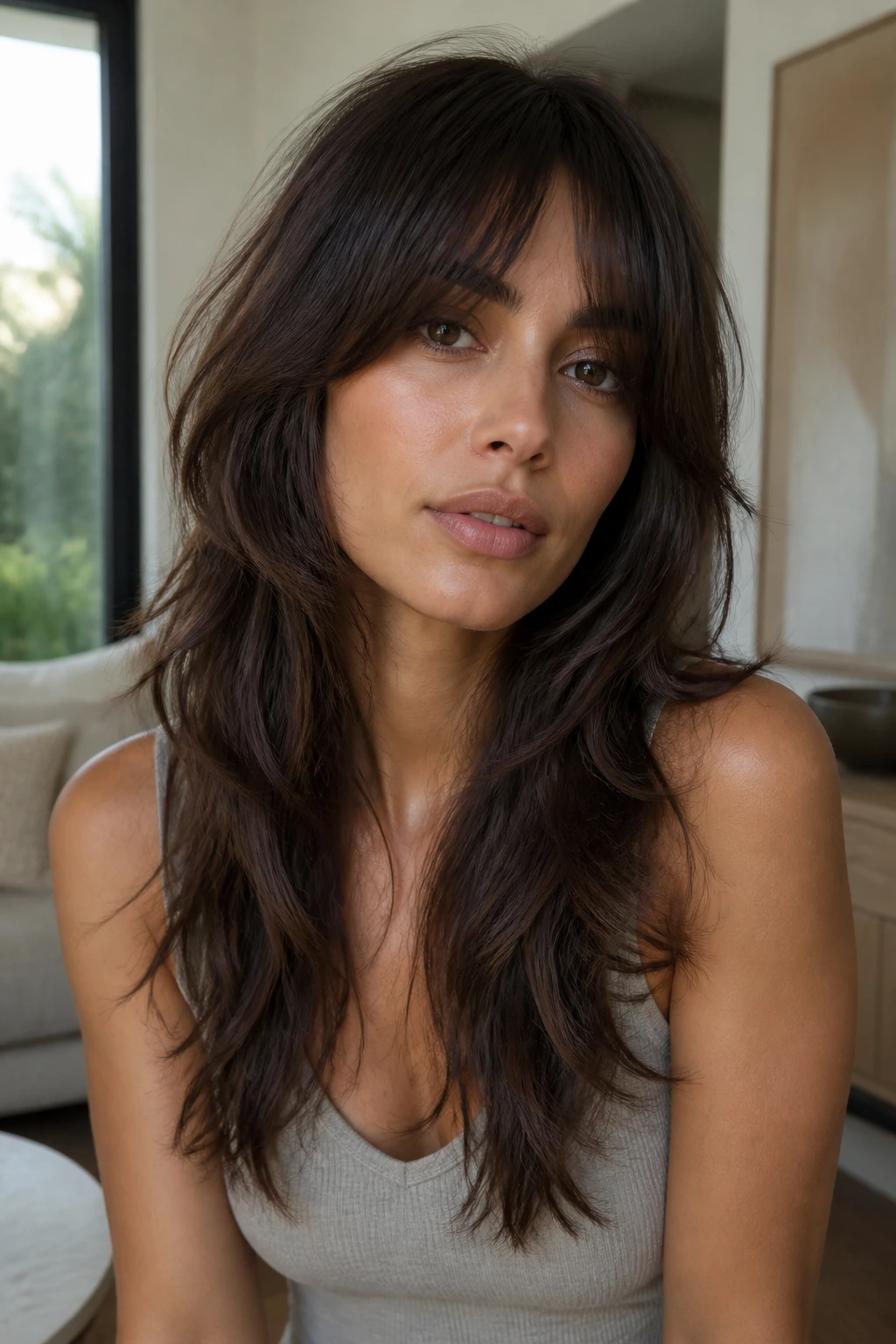
Long layers can still have personality, and adding a bottleneck fringe keeps the front from feeling too plain. This version gives you the length you want, but the layers make sure the hair doesn’t just hang there in one big sheet.
It’s a useful cut if you want a more polished entry into the shag family. The fringe can be trimmed on its own schedule, which helps if you like your face frame to look purposeful even when the lengths are growing out.
30. Pixie Shag
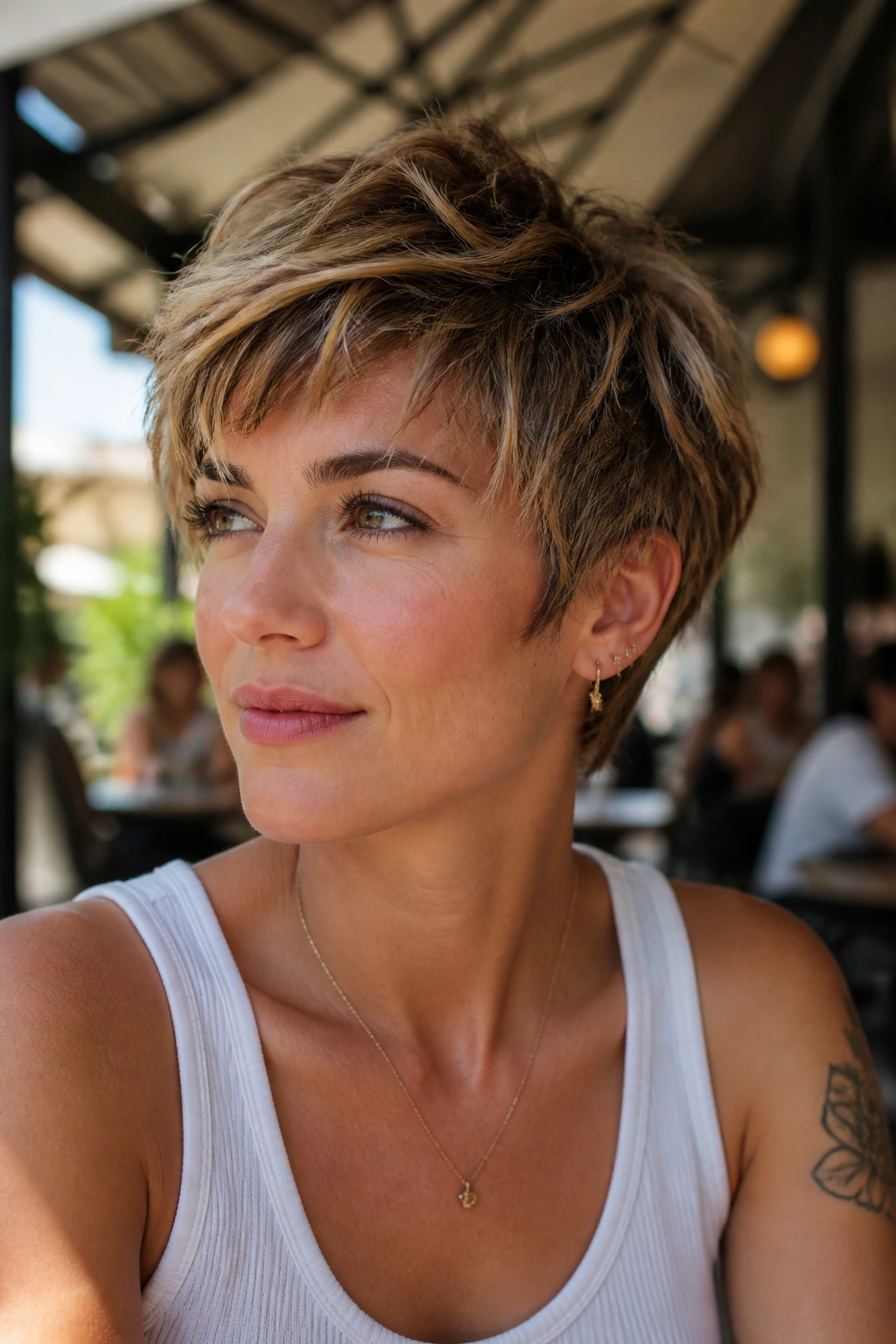
A pixie shag is short enough to dry in minutes but textured enough to avoid that helmety pixie problem. The top stays piecey, the sides stay soft, and the fringe can angle forward or to the side depending on your cowlick.
This cut works best for women who like styling with their fingers more than a brush. A small dab of paste through the crown is usually enough. If you want something sharp, fast, and not at all precious, this one delivers that mood.
31. Midi Shag with Rounded Shape

Midi length gives a shag room to breathe. The rounded shape keeps the silhouette gentle, which makes this cut feel approachable instead of aggressive, especially on hair that carries a lot of weight in the middle.
The shape detail
Ask for the shortest layers to sit around the cheekbone and the longer layers to soften around the shoulders. That creates a curve that flatters the face without making the haircut too fluffy.
This is the sort of shag that looks good both tucked into a coat collar and left loose over a sweater. It’s practical, but not plain.
32. Layered Shag with Face-Framing Highlights
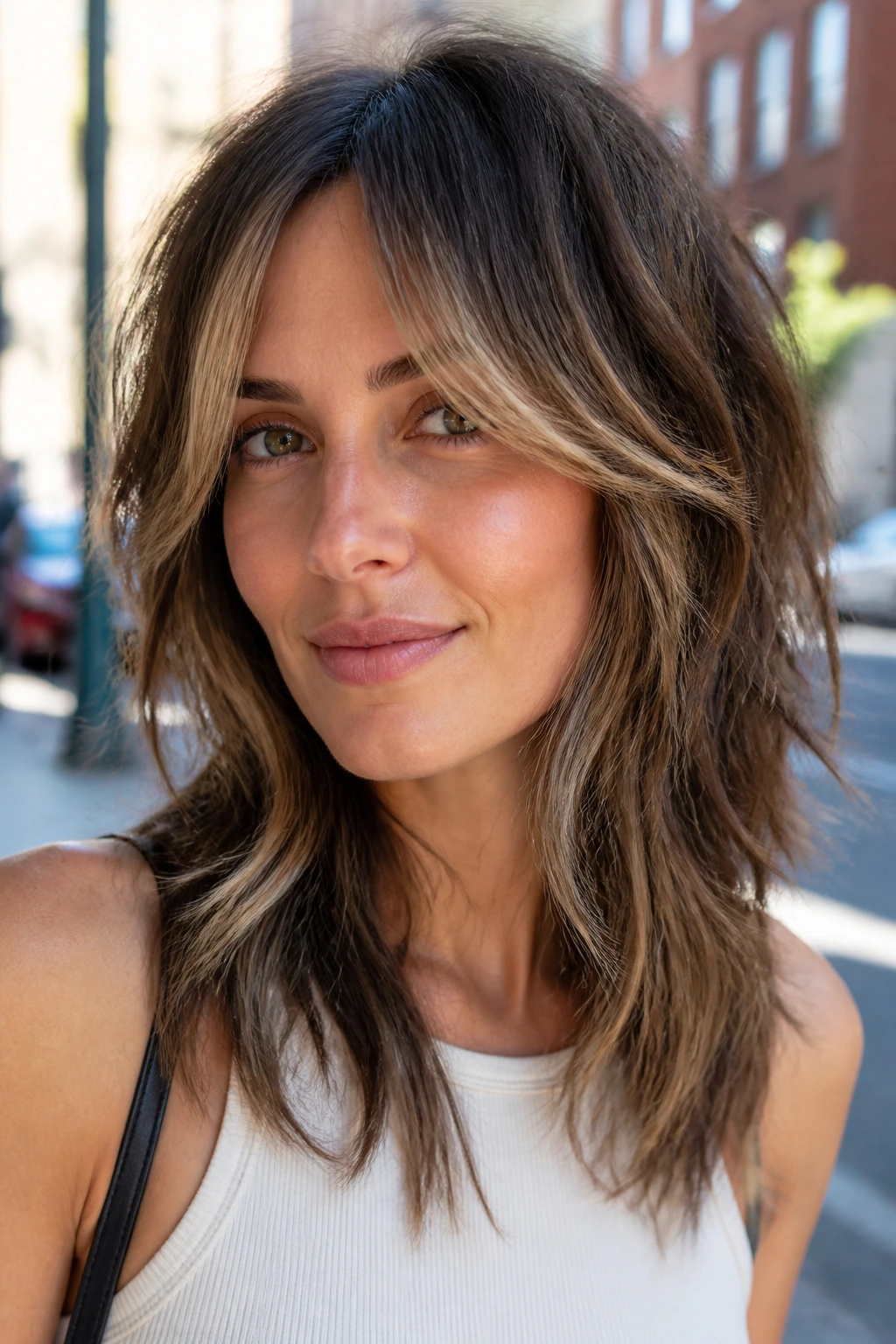
When the haircut and color are planned together, the layers read faster. Face-framing highlights can outline the cut and make the shortest pieces pop without adding more actual length or more actual layers.
This is especially useful if your hair is dark or medium brown and you want the front of the shag to stand out in photos and daylight. Keep the color a shade or two lighter than your base rather than going for harsh contrast unless you want the striping effect. That’s a choice. Not always a good one.
33. Low-Maintenance Air-Dry Shag

A good air-dry shag has to be cut with the washing routine in mind. The layers should sit in a way that bends naturally, not in a way that only works after a blowout and three rounds of product.
Ask for a shape that follows your natural pattern and use a leave-in cream or light mousse on damp hair. Then stop touching it while it dries. That’s the hardest part for most people. The more you fuss, the more the layers lose their clean separation.
34. Glam Shag with Big Blowout
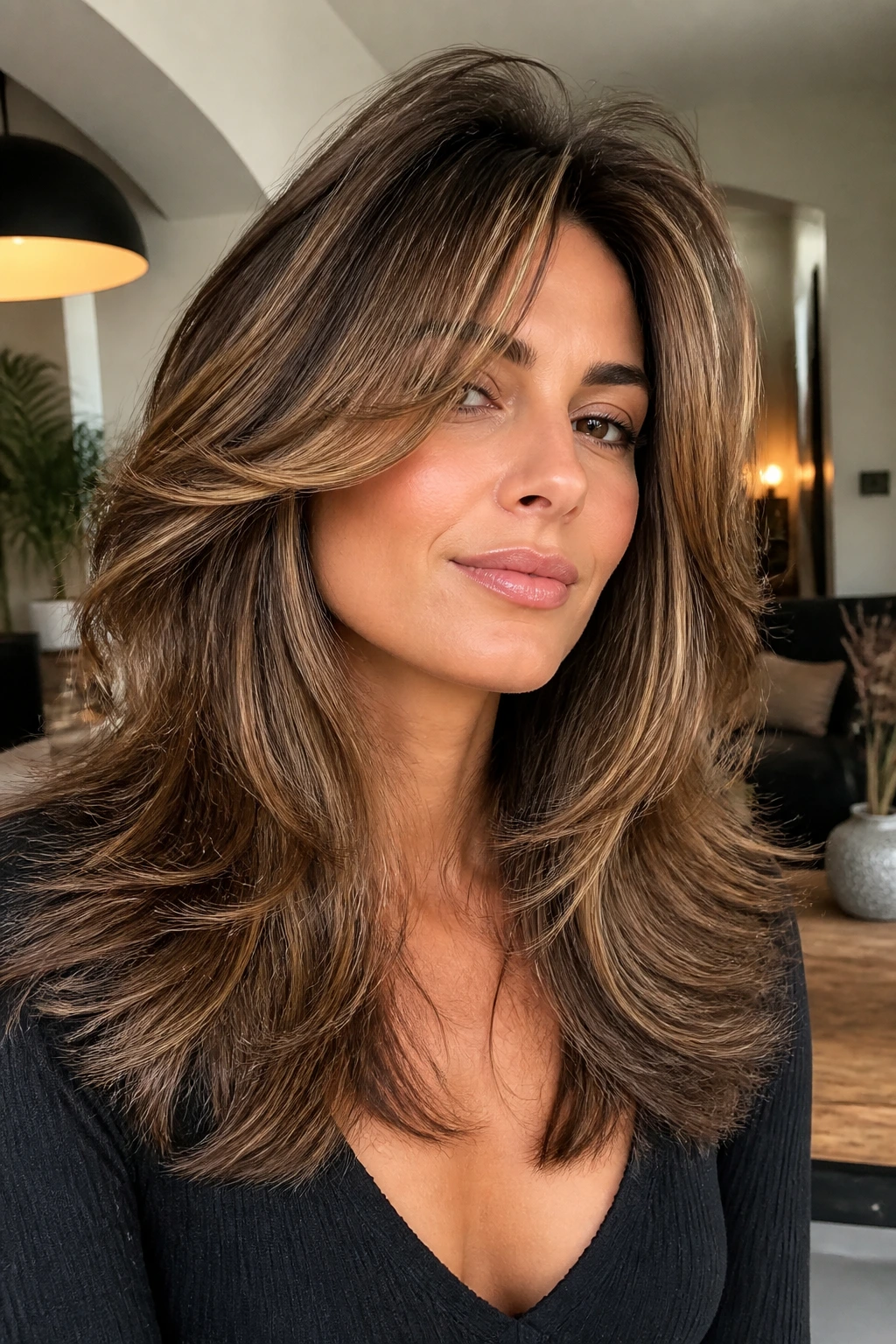
This is the version that likes a brush. A big blowout shag borrows from the salon look of lifted roots, polished ends, and soft movement that feels deliberate rather than messy.
It’s a strong option if your hair is thick enough to hold volume and you enjoy styling as part of the ritual. A large round brush, a blow-dryer with a nozzle, and a little heat protectant are the basic setup. If you love the old-school swing of a proper blowout, this one has the best payoff.
35. Shag for Round Faces
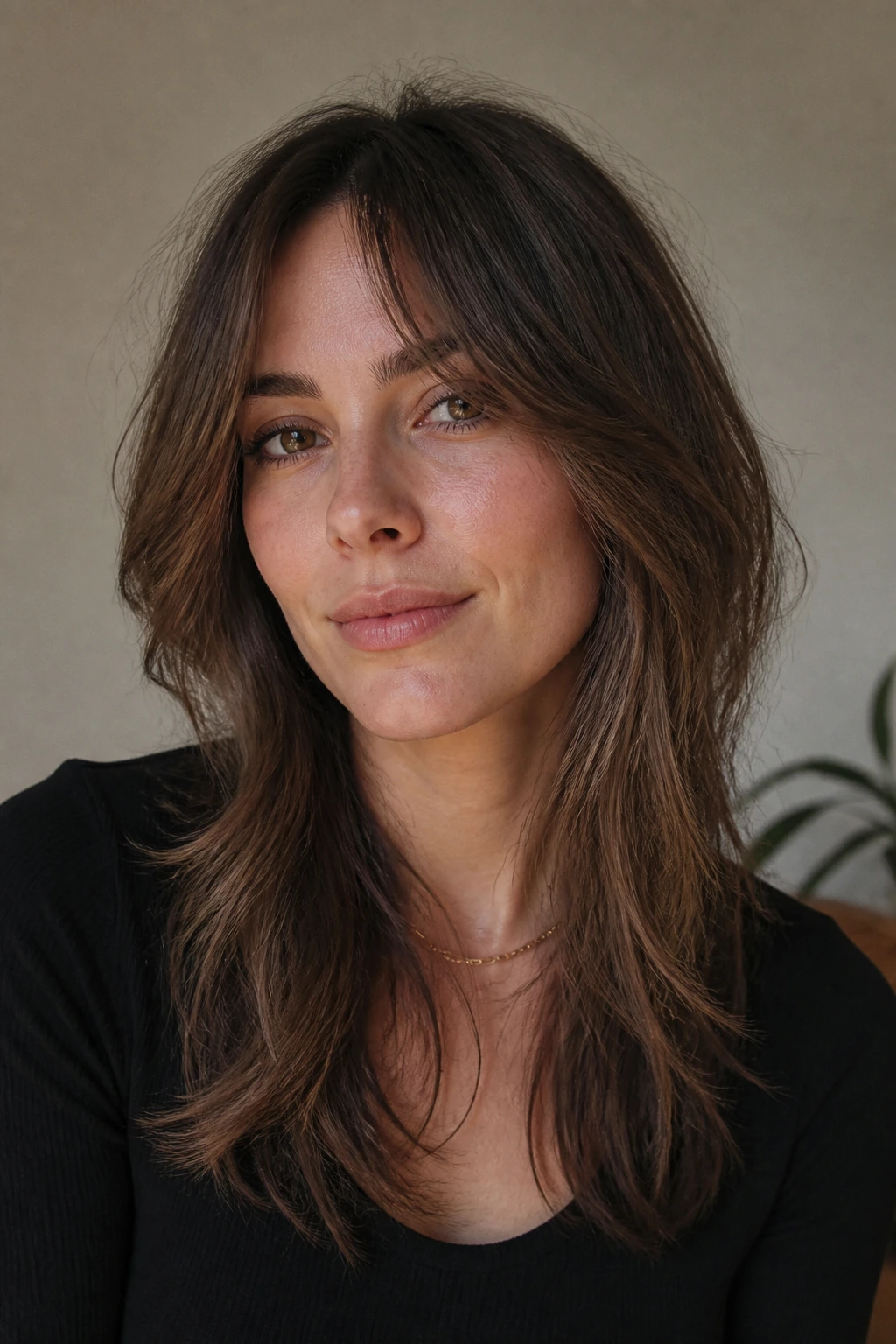
Round faces usually benefit from length and lift in the right places, not extra width at the cheeks. A shag with longer face-framing pieces below the chin and some crown volume helps stretch the silhouette a little.
The mistake to avoid is a shortest layer that lands right at the widest part of the face. That’s how the haircut ends up echoing the round shape instead of balancing it. A little side sweep or fringe that opens at the center can help, too.
36. Shag for Square Faces

Square faces can take a shag beautifully when the cut softens the jaw instead of sitting right on top of it. Layers that curve around the cheekbones and fringe that breaks up the forehead keep the outline less severe.
A softer edge helps more than a blunt one here. If the layers are too geometric, the jaw can start to dominate the whole look. One of the nicest tricks is a wispy front with movement near the temples, because it eases the straight lines without hiding the face.
37. Shag for Heart-Shaped Faces
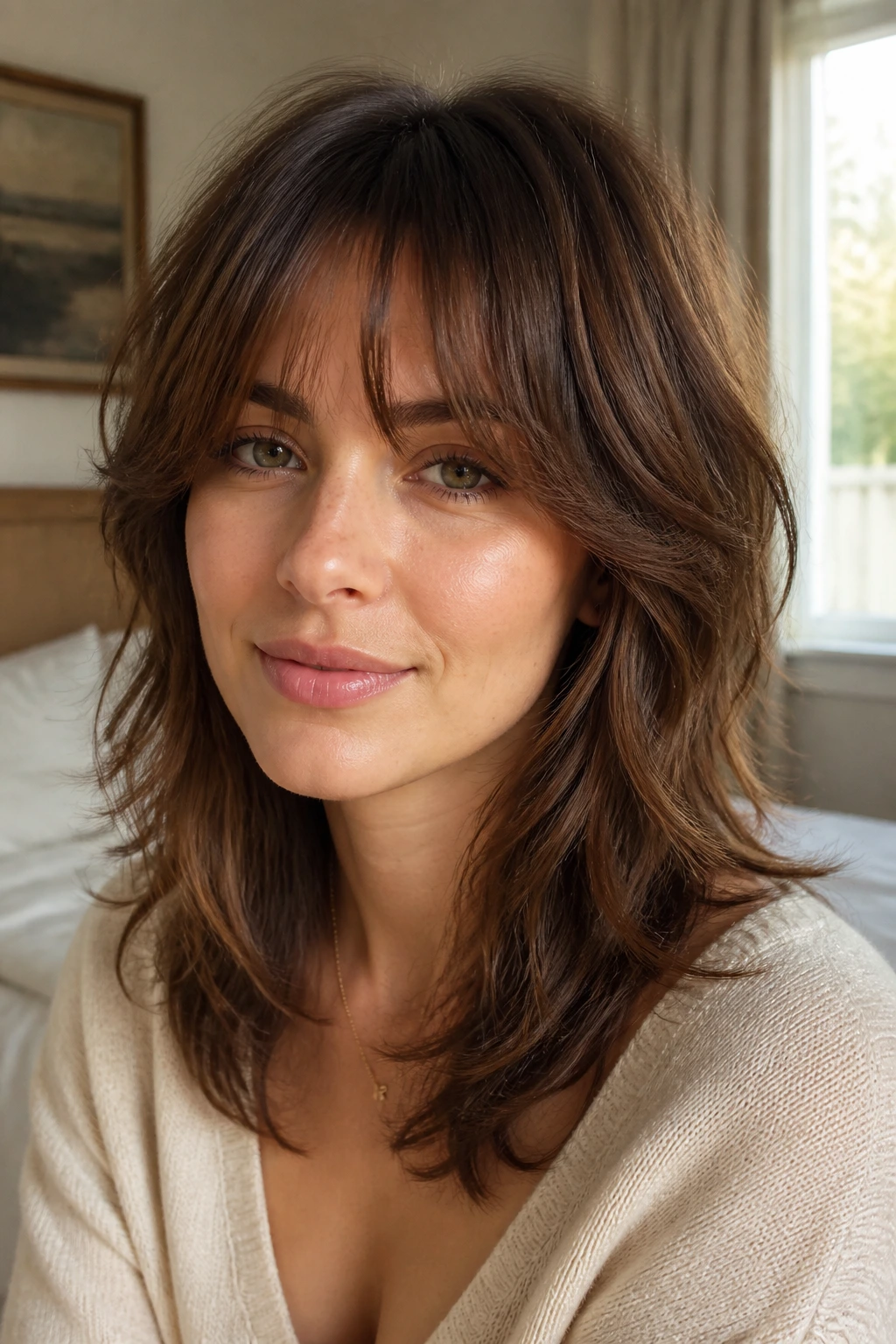
A heart-shaped face often wants balance: less emphasis at the forehead and a little softness around the chin. That’s where a shag with curtain bangs or a bottleneck fringe earns its keep.
Best placement
Keep the shortest pieces around the brows or cheekbones, then let the lower layers land near the collarbone or just under it. That creates a steadier visual line through the face.
If the top gets too short, the forehead can feel overexposed. If the sides are too blunt, the chin starts looking smaller than it is. The right shape avoids both.
38. Shag for Fine, Limp Hair

Fine hair can wear a shag well, but only if the cut doesn’t get over-layered. Too many short pieces make the hair look thin at the ends and patchy in daylight, which is the exact opposite of what you want.
The better move is controlled texture around the crown and a perimeter that still holds some density. Root mousse, dry shampoo, and a quick blast of heat can make the lift hold longer than people expect. Skip heavy creams; they flatten fine hair fast.
39. Shag for Dense, Coarse Hair
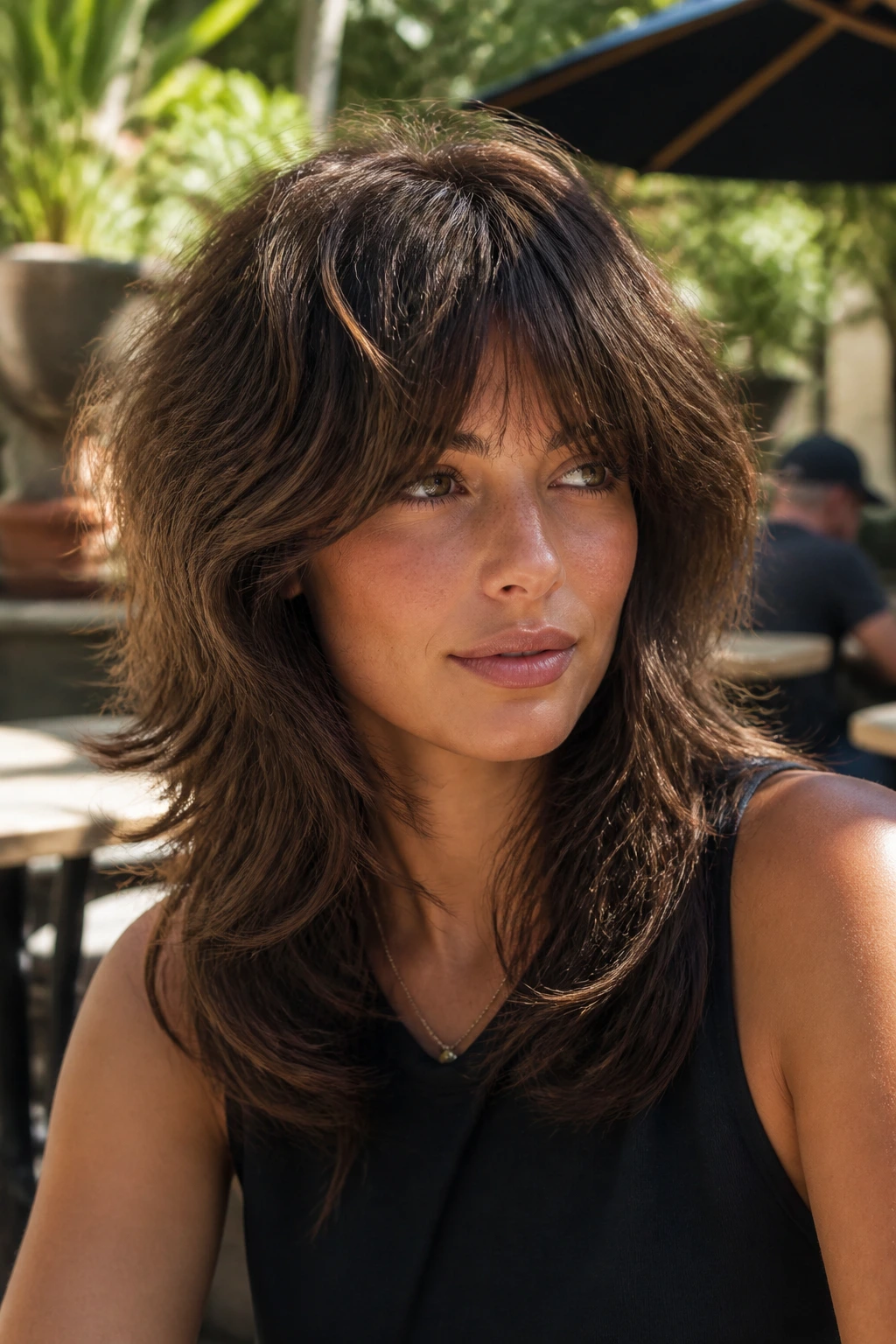
Dense hair needs a plan. Without one, a shag can become a mountain of broad layers that still feels heavy because the weight was removed in the wrong places.
This cut works when the stylist takes bulk out internally and leaves enough surface to keep the shape from frizzing apart. It’s often better to keep the layers longer than to carve them into tiny pieces. That keeps the texture controlled and the outline smoother, especially in humidity.
40. Center-Part Shag
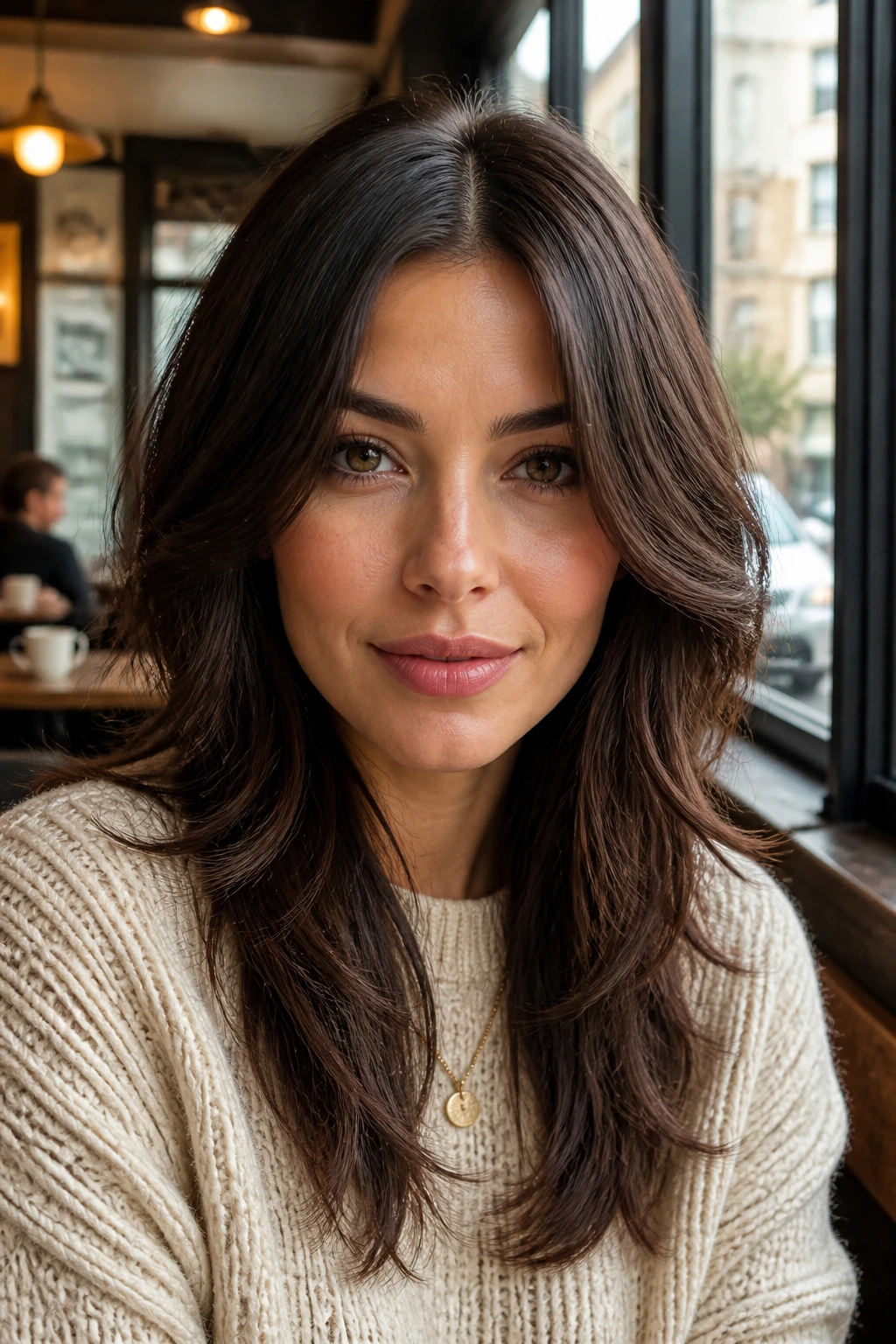
A center part changes the tone of a shag instantly. It makes the face frame look more symmetrical and can give the cut a cleaner, more modern feel than a side part does.
This version works best when the shortest front layers mirror each other instead of being cut unevenly on purpose. The hair on both sides should move, not sit like two stiff curtains. If your face is already very narrow, keep the front pieces soft so the middle part doesn’t exaggerate it.
41. Deep Side-Part Shag
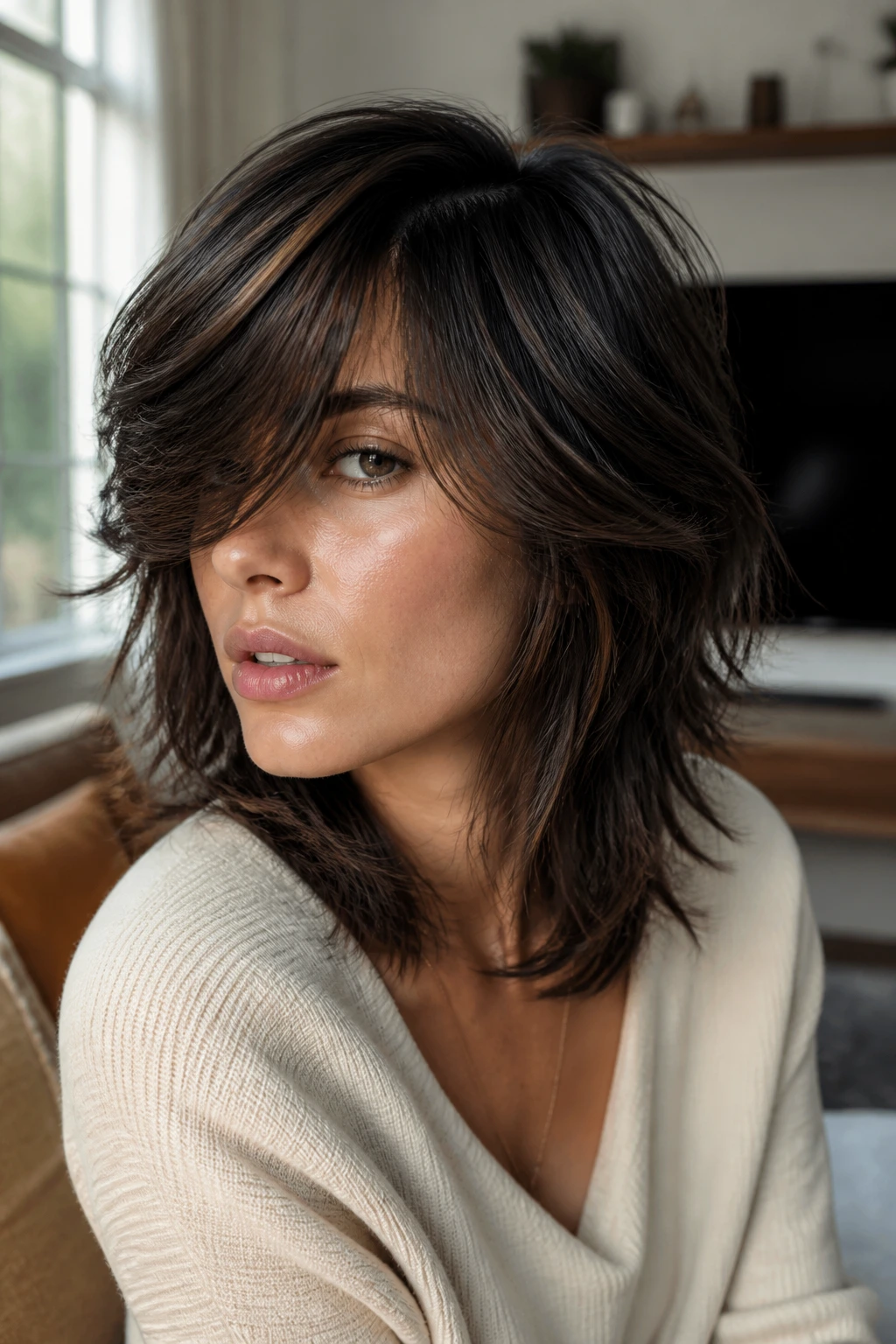
A deep side part gives the haircut more drama without changing the actual cut much. It pushes volume to one side, softens the forehead, and makes the fringe behave in a way that feels a little old-Hollywood and a little lived-in.
Styling note
Use a round brush or velcro rollers at the roots if you want the part to stay lifted. A flat part on a deep side-swept shag ruins the whole point.
This is one of the best choices if you like your hair to fall across one eye now and then. It has attitude baked in.
42. Grown-Out Shag
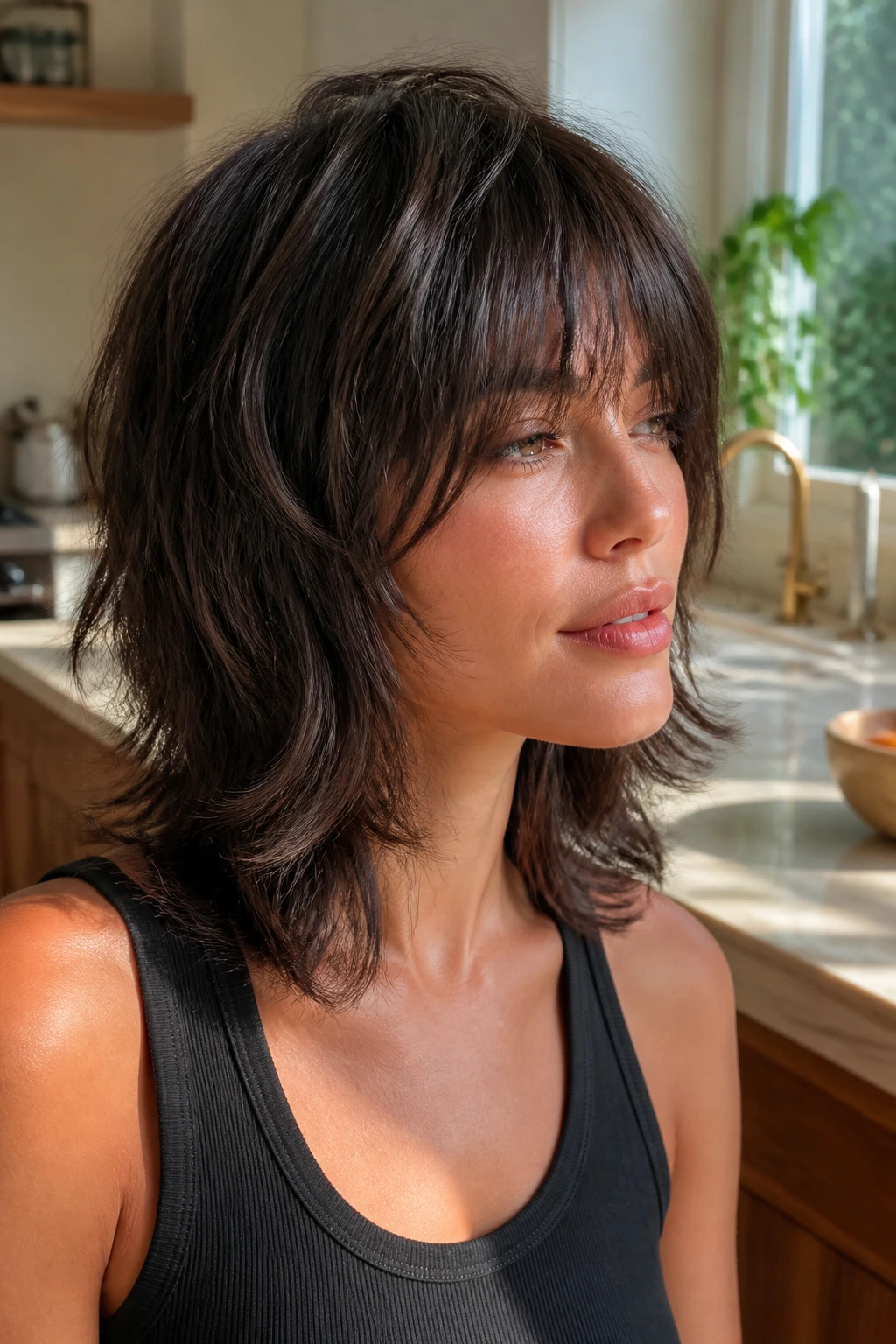
Not every shag should look fresh from the salon. The grown-out version is designed to still look good after a month or two, with layers that soften rather than break into awkward shelves.
That matters because shags can get expensive if the shape only works for three weeks. A good grow-out shag keeps the fringe long enough to blend and the layers long enough to avoid obvious lines. If your schedule is unpredictable, this is the version that forgives you.
43. Indie Sleaze Shag

This is the shag that looks better when it’s a little piecey and a little rough around the edges. The fringe can be heavier, the crown can be more separated, and the ends can look intentionally lived-in instead of brushed to death.
It’s not for someone who wants a polished finish every morning. Matte texture spray, a little root lift, and fingers are usually enough. The appeal is in the looseness. If it looks too neat, it loses the point.
44. Sleek Straight Shag
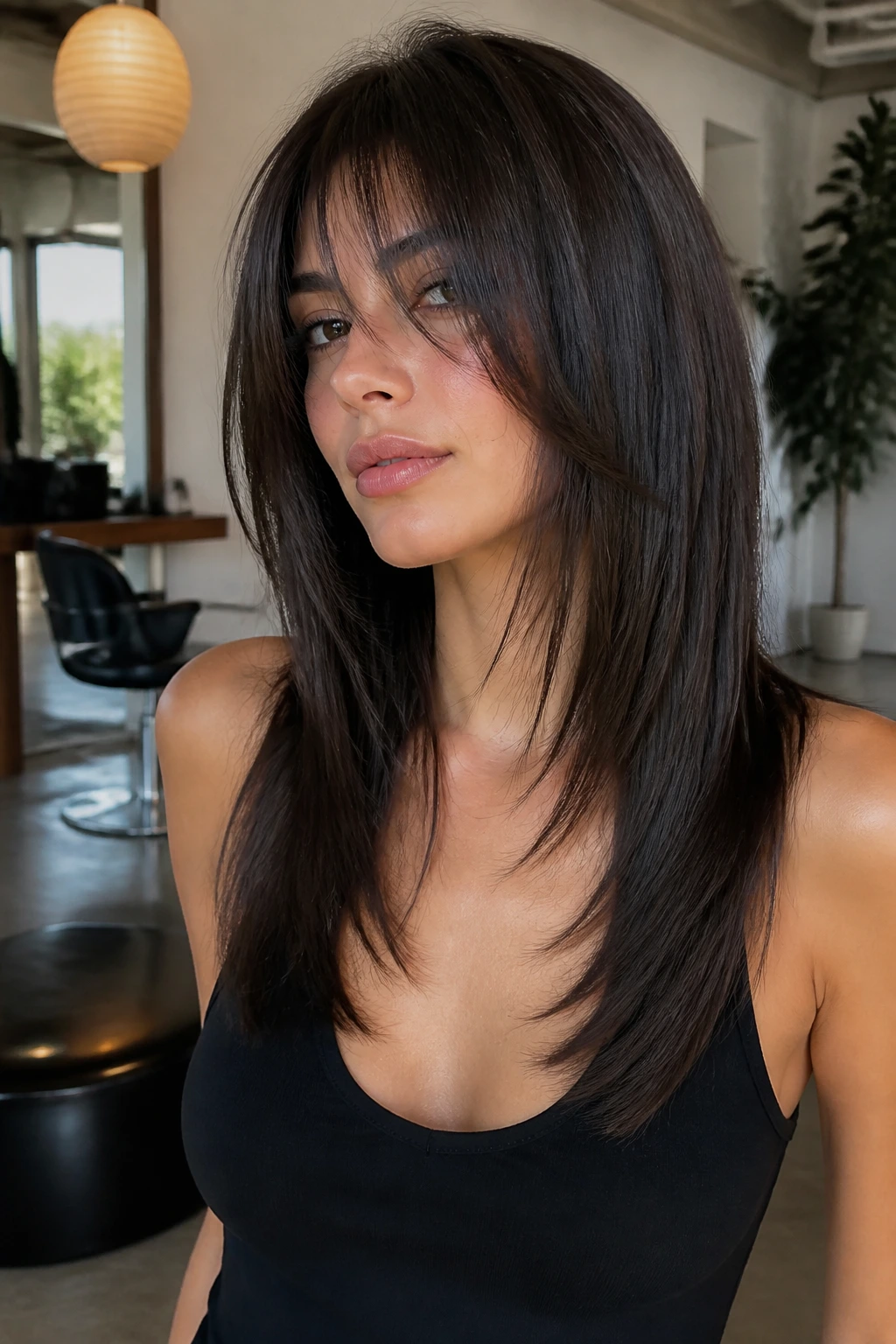
Straight hair doesn’t have to wear shag haircuts for women in a messy way. A sleeker version keeps the layers visible but lets the finish stay smooth, which is useful if you like clean lines and still want movement.
A flat iron bend at the ends and a gloss serum on the mid-lengths can make the cut feel deliberate instead of fuzzy. Keep the layers longer and the fringe softer if you want the sleekness to last through the day. This is the shag for people who like structure with a little air in it.
45. Soft Wolf-Influenced Shag

This version borrows the lift and shape of a wolf cut but softens the contrast so it feels easier to wear. The crown still gets attention, the face frame still matters, but the back isn’t pushed into an extreme tail.
It’s a good compromise if you like the edge of the wolf cut but don’t want the stronger mullet effect. Ask for texture that fades gradually rather than a hard disconnect between top and bottom. The result has personality, but it doesn’t shout.
How to Choose the Right Shag for Your Hair Before You Sit in the Chair
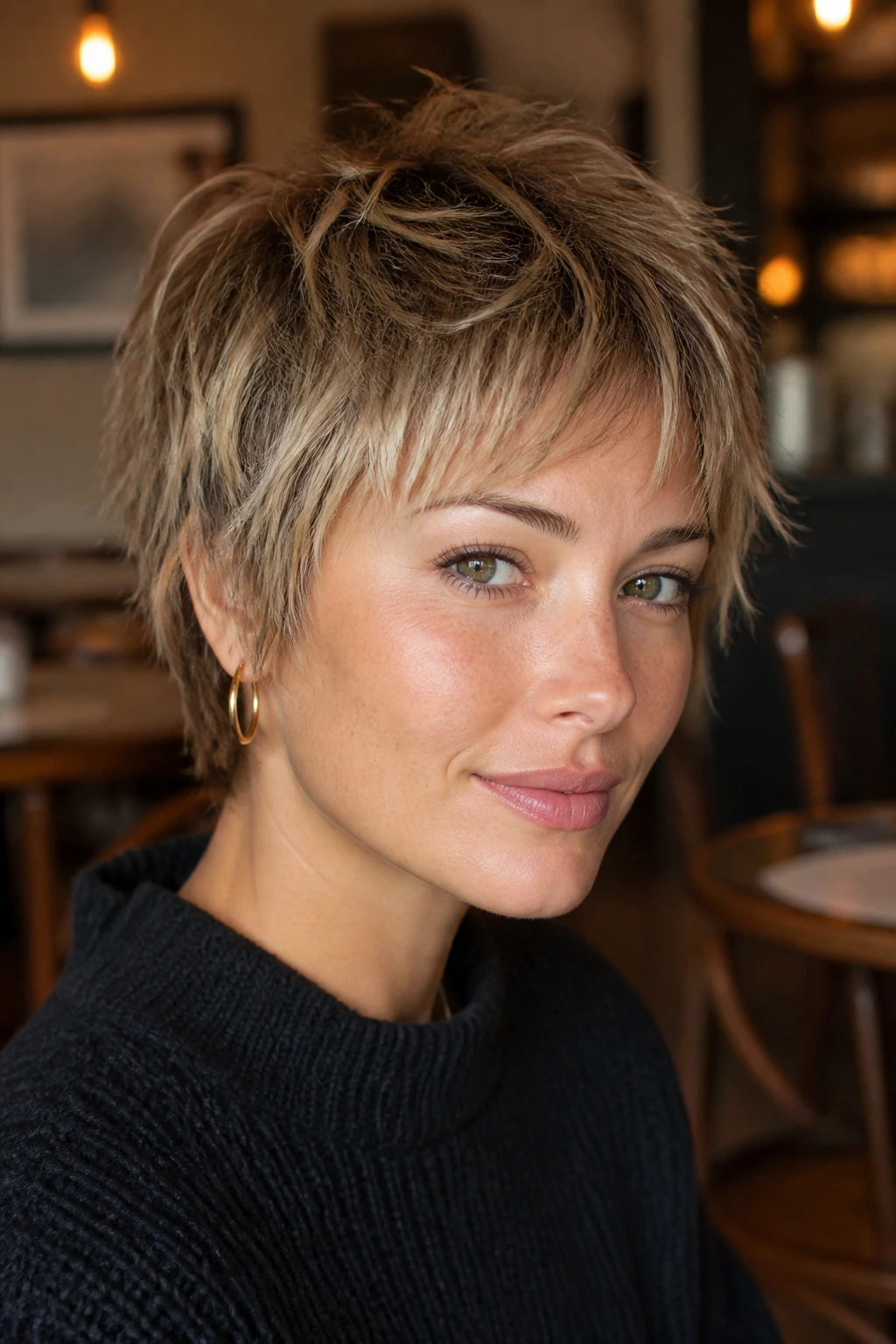
A good shag starts before the scissors come out. Bring photos, but bring the right kind of photos: one for length, one for fringe, and one for texture. That trio tells the stylist more than a single picture of a celebrity who has a different hair density, face shape, and blow-dry team.
Say what your hair does on a bad day. Does it swell at the sides? Does the crown collapse? Does your fringe split in weird places or stick to your forehead? Those details matter more than buzzwords like “effortless” or “lived-in.” A stylist can work with a cowlick. They cannot guess it.
Ask where the shortest layer will fall. Ask whether the fringe is meant to be blow-dried or air-dried. Ask whether the texture comes from point cutting, razor work, or a softer scissor finish. If the answer sounds vague, keep asking. A shag that fits your real routine is always better than one that looks good only in the mirror at the salon.
How to Wear a Shag So It Looks Finished

Silhouette: The shape should sit where your hair naturally wants to move. If the crown needs lift, keep the top lighter; if the sides balloon, keep the layers longer around the jaw.
Texture: Use mousse for volume, cream for softness, and texture spray when you want the ends to separate. A shag can handle some roughness, but it should not look dry or dusty.
Accessories: Hoops, clips, headbands, and glasses all change how the fringe reads. A side-swept shag loves earrings. A short shag looks sharp with a clean collar or a crewneck. Long shags sit nicely with layers in the clothing, too.
Maintenance: Fringe and face-framing pieces usually need attention first. The back can go longer, but the front is what changes the mood fastest.
Essential Tools for Styling and Maintenance
- Blow dryer with a nozzle: Helps direct the crown and fringe so the layers don’t dry in random directions.
- 2.5-inch round brush: Useful for medium to long shags when you want bend without tight curls.
- Small round brush: Better for bangs, cropped shags, and shorter face-framing pieces.
- Diffuser: The safest way to dry curly and wavy shags without blowing the pattern apart.
- Volumizing mousse: Gives the roots a little grip before drying, especially on fine hair.
- Texture spray: Useful for piecey ends and airy separation without adding much weight.
- Heat protectant: Non-negotiable if you use a blow-dryer, flat iron, or curling wand.
- Dry shampoo: Helps the crown keep lift and buys a day or two between washes.
- Wide-tooth comb: Safer than a brush for curls and wet, fragile layers.
- Light oil or serum: Use a few drops on the ends only, especially on long shags or color-treated hair.
Additional Tips and Texture Boosters
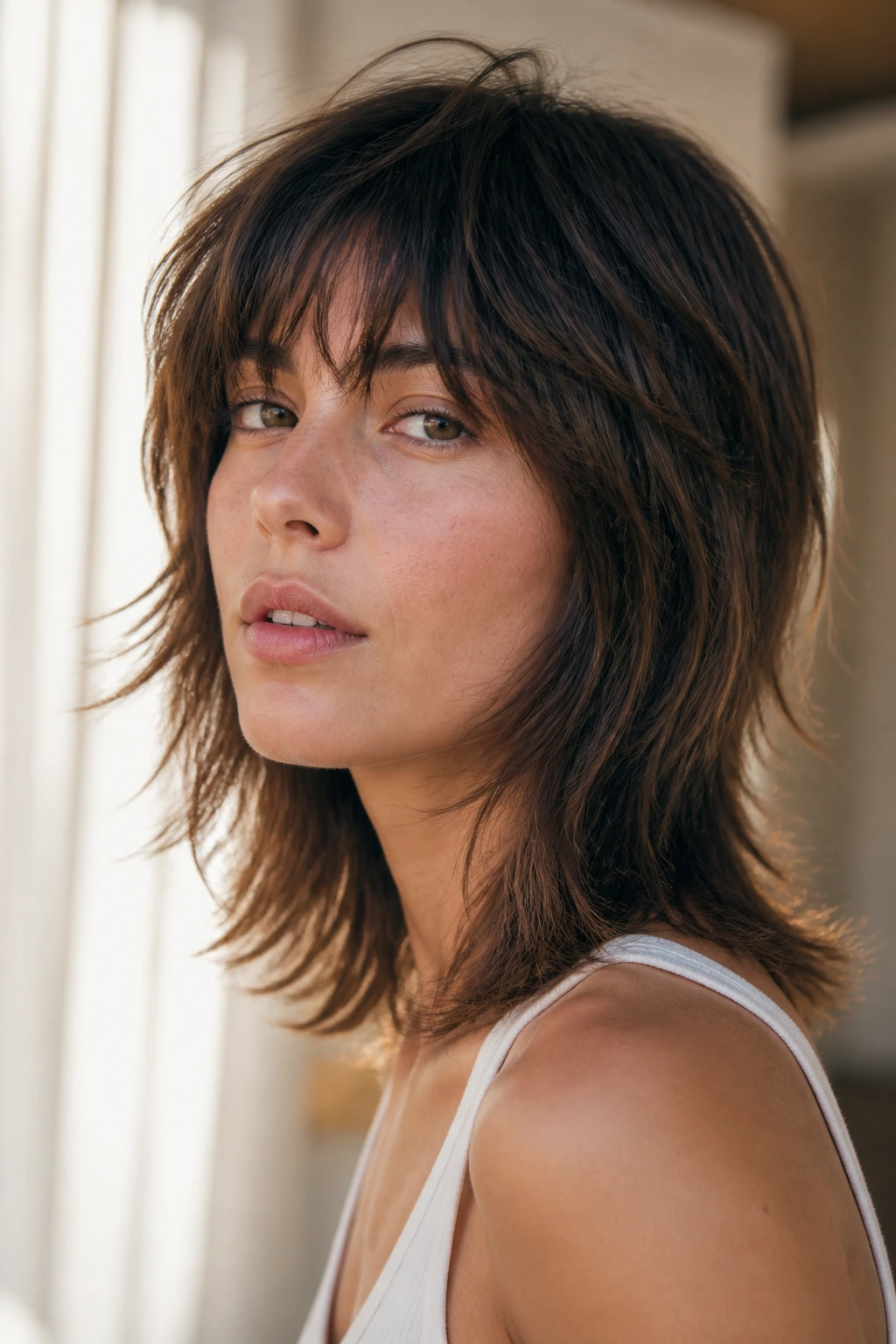
Texture Enhancement: If your shag looks too flat, mist a root-lifting spray at the crown before blow-drying and lift the hair in short sections with the nozzle pointed down the shaft. The shape shows up faster than people expect.
Customization: For softer movement, ask for longer face-framing layers and fewer short pieces around the ears. For more edge, keep the fringe stronger and separate the ends with a touch of matte paste.
Color Lift: Highlights around the cheekbones and crown make layers easier to see. Even subtle balayage can change how the cut reads in daylight.
Bang Control: If your fringe starts fighting you, dry it first before the rest of the hair. Bangs are usually the first thing to collapse, and they recover better when they’re set on their own.
Make-It-Yours: If you wear glasses, keep the front a little longer so the frames don’t fight the fringe. If you live in humidity, ask for softer ends and less aggressive thinning.
Common Mistakes That Make a Shag Look Wrong
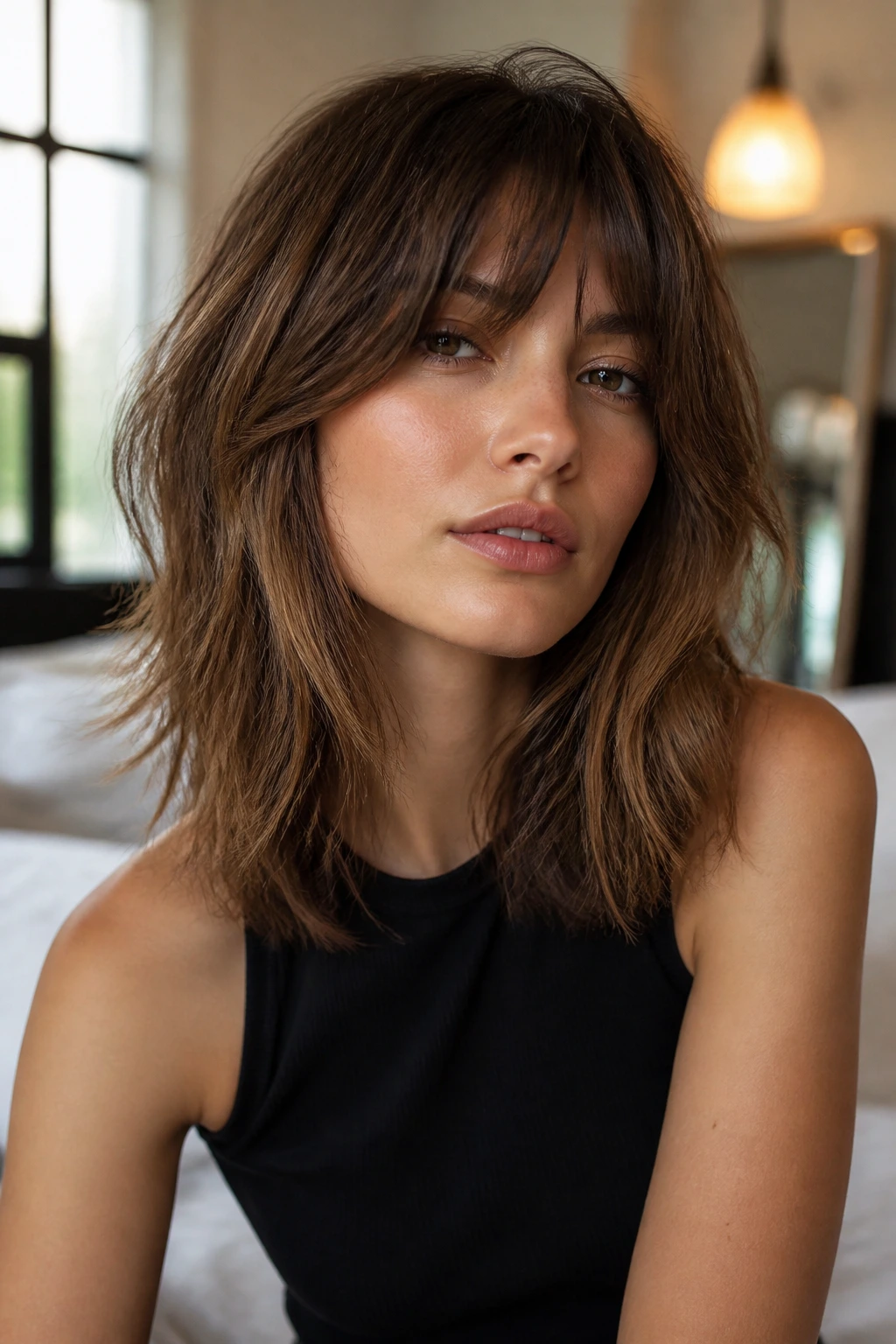
The first mistake is asking for too much texture on fine hair. The ends get thin fast, and the haircut starts looking see-through instead of airy. The fix is to keep the perimeter denser and let the crown do the lifting.
The second mistake is treating every shag like a razor cut. Curly hair, coarse hair, and frizz-prone waves often need a gentler hand, or the ends puff and split. Ask how the stylist plans to cut your specific texture, not just which trendy method they like best.
The third mistake is ignoring your fringe habits. If your bangs split, stick, or grow fast, micro bangs and heavy straight fringes will make your life harder than it needs to be. Choose a fringe that matches your part, cowlicks, and patience.
The fourth mistake is under-styling a cut that needs a little help. Some shags air-dry beautifully. Others need a diffuser or round brush to keep the shape from collapsing. The haircut is only half the story.
Variations and Adaptations to Try

The Office-Friendly Shag: Keep the fringe soft, the layers long, and the finish smooth. It reads polished in a ponytail or loose, which matters more than people admit.
The Air-Dry Version: Ask for layers that follow your natural bend and keep the ends blunt enough to hold weight. This works best if you already have wave or curl and don’t want a daily blow-dry.
The Big-Volume Blowout: Increase crown lift and keep the layers around the face a little more structured. This version loves round brushes, rollers, and a bit of setting spray.
The Curl-Friendly Version: Request a dry cut or curl-by-curl shaping, then keep the fringe and face frame long enough to shrink up predictably. It’s calmer and more wearable than a razor-heavy shag.
The Grow-Out Version: Keep the shortest pieces long enough to blend into a lob or bob later. You’ll still have shape when the haircut is a few weeks past fresh.
Keeping the Shape Between Cuts
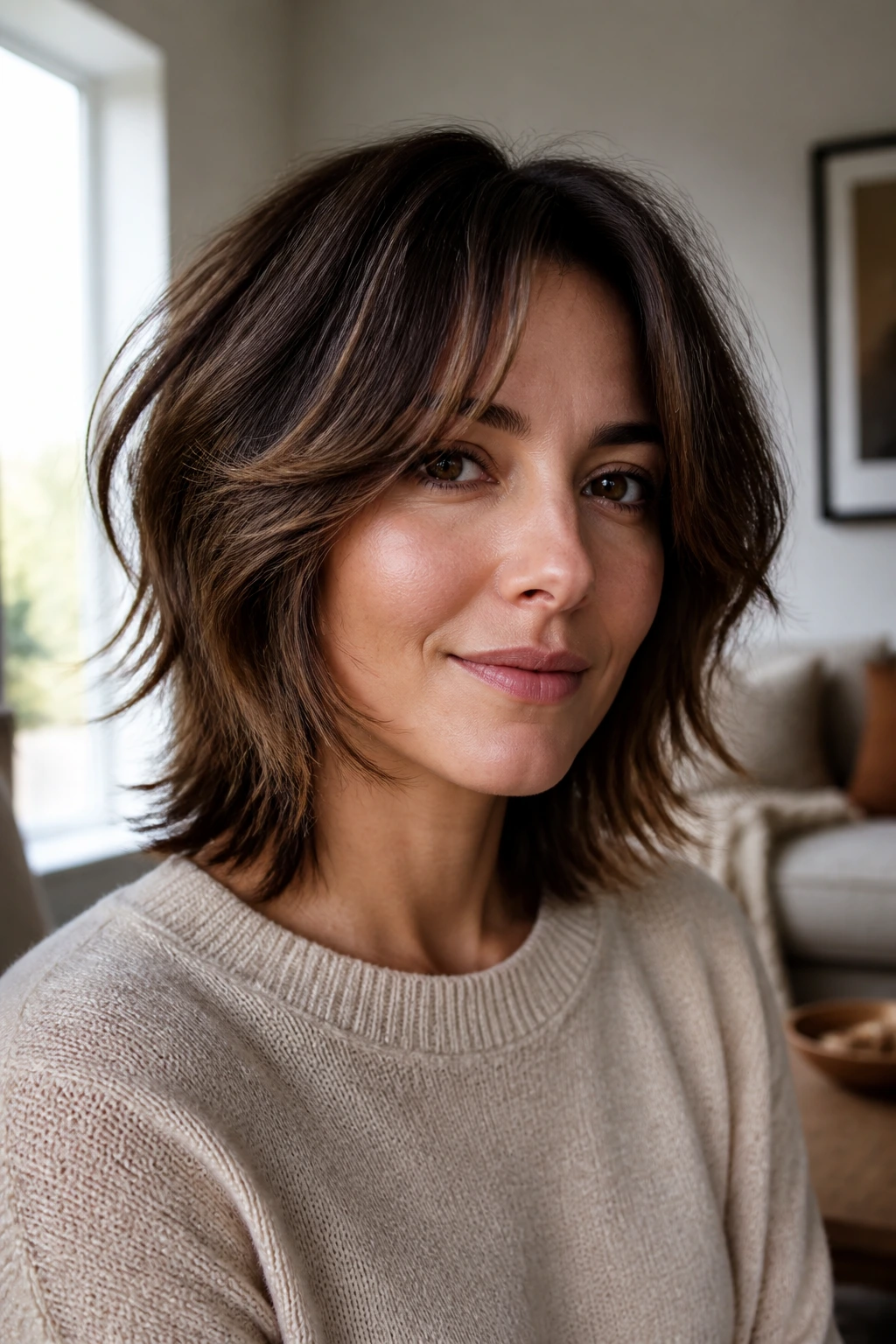
A shag usually looks best in the first six to eight weeks after the cut, then starts to lose the clean separation that made it feel special. Fringe can need a touch-up sooner than that, especially if it sits on the brows or splits around a cowlick.
Wash frequency depends on hair type, but most shags behave better when they’re not scrubbed into submission every day. Fine hair can lose lift fast if it’s overloaded with product, so a clarifying wash every couple of weeks helps. Thick or curly hair usually likes more moisture and less frequent washing so the shape doesn’t puff.
Trim the fringe before it gets in your eyes, not after. And if the ends start flipping in odd directions or the crown loses lift, that’s your sign the layers need a clean-up. A good shag should age into a softer version of itself, not into a shapeless heap.
Frequently Asked Questions About Shag Haircuts
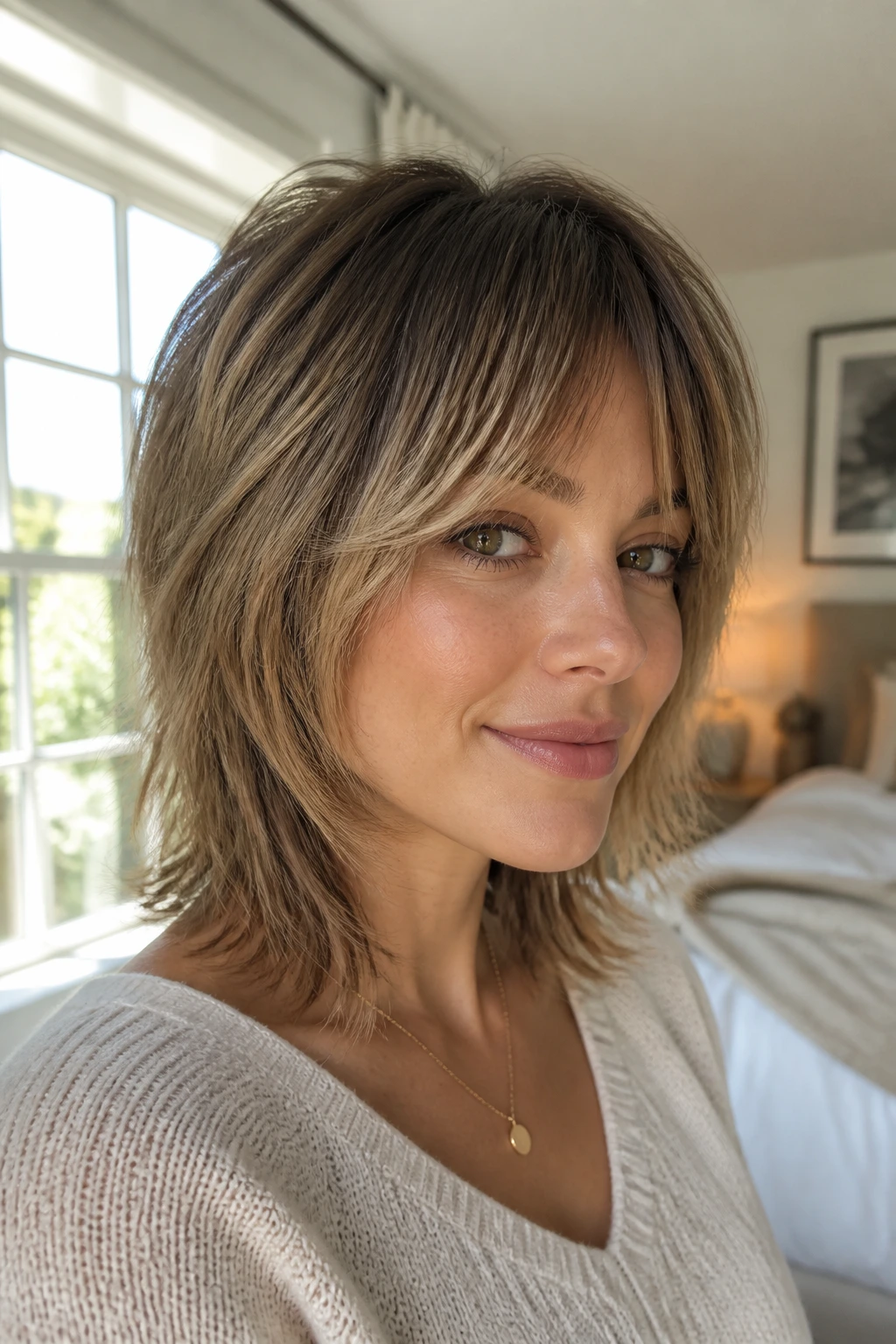
Do shag haircuts work on fine hair?
Yes, if the layers are kept light and the perimeter still has enough density. Fine hair usually looks better with crown lift and soft face-framing than with aggressive thinning through the ends.
Are shags hard to style every day?
Some are, some aren’t. A soft collarbone shag or air-dry shag can be low-effort, while a glam blowout shag or micro-bang shag needs more hands-on styling.
What’s the difference between a shag and a wolf cut?
A wolf cut usually has more contrast between the short top and longer bottom, while a shag keeps the layers more blended. The wolf cut feels sharper and more rebellious; the shag often feels softer and more wearable.
Can curly hair wear a shag without looking puffy?
Yes, if the cut respects the curl pattern and doesn’t remove too much bulk in the wrong spots. Dry cutting and diffusing usually give better control than a heavy razor cut.
How often should I trim a shag?
Most people do well with a trim every six to ten weeks, but fringe may need touching up sooner. If the front changes the whole vibe, it’s worth keeping a closer eye on it.
What if my shag looks too triangular?
That usually means the sides are too wide or the crown isn’t lifted enough. Ask for more internal shape near the top and a softer perimeter around the jaw.
Can I grow a shag into a bob or lob?
Yes, and that’s one of the haircut’s best traits. A well-cut shag usually grows out in a way that can be reshaped into a lob without a painful in-between stage.
Should I ask for a razor cut?
Only if your hair type can handle it. Straight and slightly wavy hair often can; curly or frizz-prone hair may do better with scissors so the ends stay smoother.
The Shape That Grows Out Gracefully
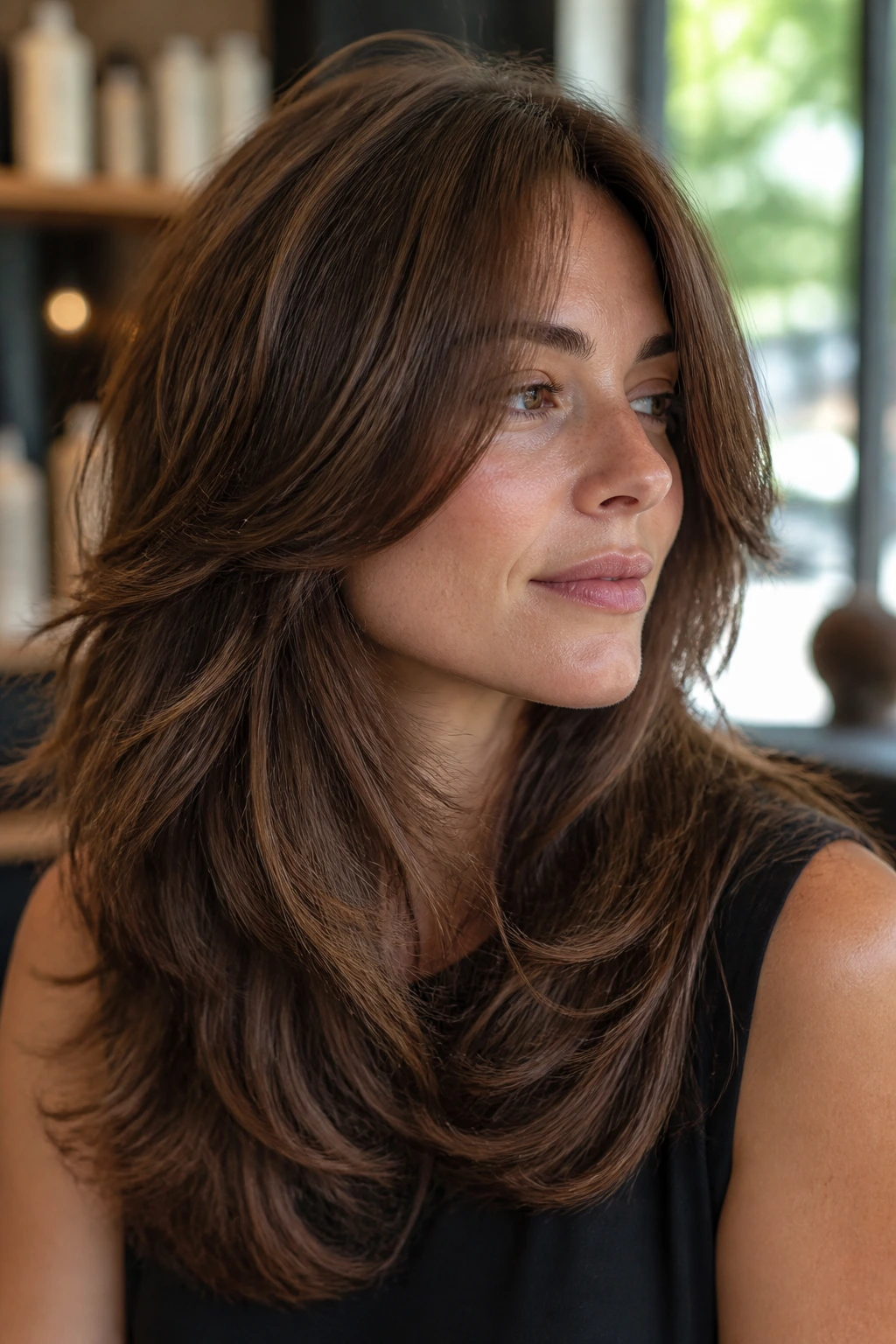
The best shag haircuts for women do something rare: they look interesting on day one and still make sense when they’ve had a few weeks to settle. That matters because hair lives in the real world, not in a salon mirror with perfect lighting and a fresh blowout.
Pick the version that matches your texture, your part, and your tolerance for styling, and the cut stops feeling trendy for a minute and starts feeling like yours. That’s the point. Not the mess. Not the nostalgia. Just a shape that moves with you and doesn’t punish you for having a busy morning.
