



The wrong cut can turn curls into a triangle fast. Not a soft little triangle, either. The kind that puffs at the sides, collapses at the crown, and makes you spend ten minutes trying to bully it into shape with a round brush you probably didn’t want to use in the first place.
Curly hairstyles for women over 50 need to do more than “look nice.” They have to work with curl shrinkage, drier ends, grayer strands, changing density at the crown, and the very real fact that many of us would rather spend five minutes finishing our hair than half an hour arguing with it. A blunt cut that looked tidy a decade ago can start feeling boxy. A little smart layering can change the whole mood.
The best curly styles don’t fight the curl. They give it a cleaner outline, a better part, and enough space around the jaw and neck so the shape moves instead of sitting there like a helmet. That’s the sweet spot. And that’s where the good stuff starts.
Why These Curly Styles Earn Their Keep
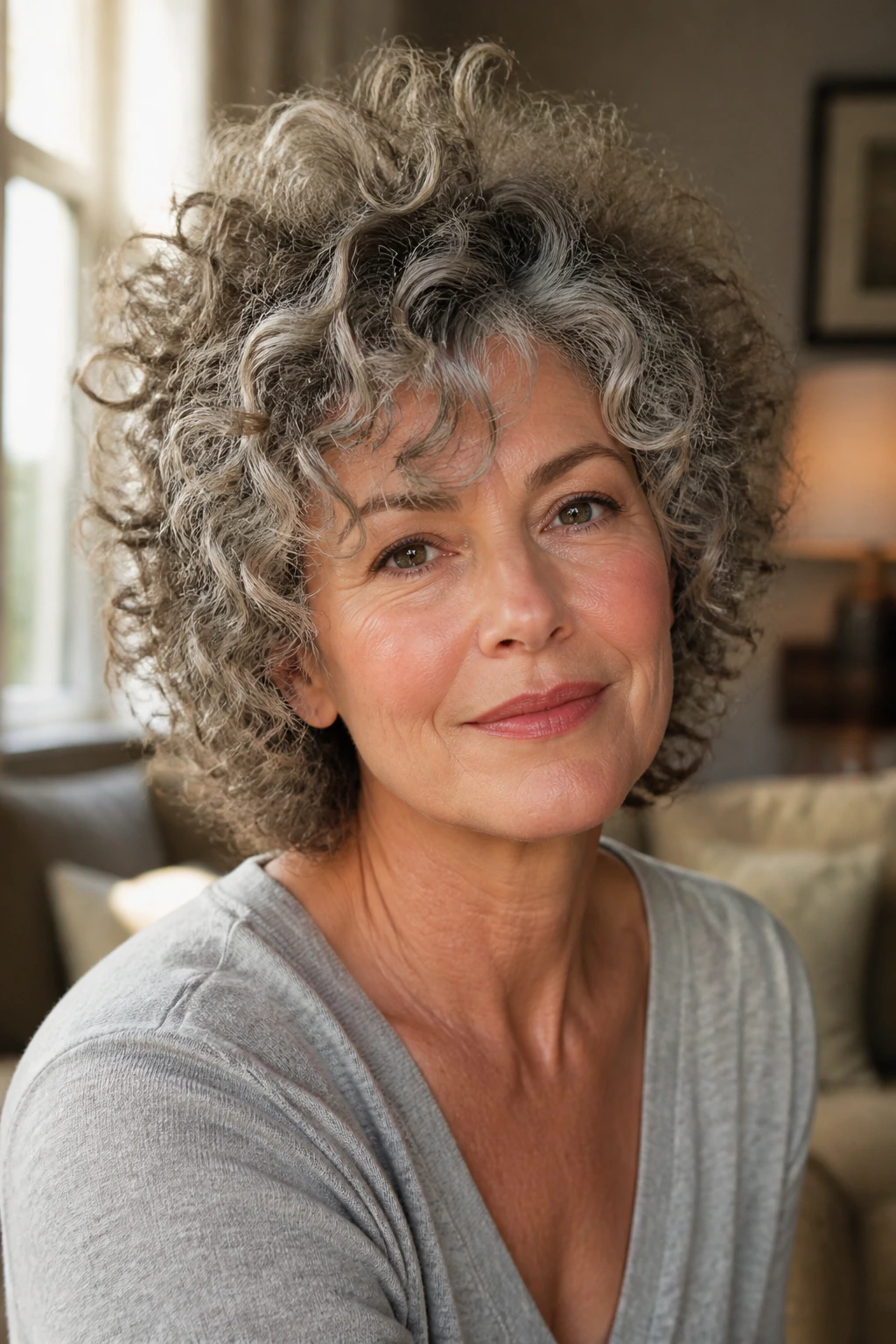
-
They respect curl shrinkage: A cut that looks shoulder-length in the chair can spring up two or three inches once it dries, so these shapes leave room for that bounce without turning into a puffball.
-
They keep the crown from going flat: Shorter internal layers, a side part, or a bit of height on top can stop curls from sinking at the roots and spreading out at the sides.
-
They make gray texture look intentional: Gray strands often feel coarser and drier, so rounded shapes and soft face-framing keep the outline clean instead of boxy.
-
They work on real mornings: Several of these styles look finished with a diffuser, a little scrunching, and a decent leave-in, which is about as much ceremony as most days deserve.
-
They leave room for glasses, earrings, and necklines: That sounds small. It isn’t. The wrong length can fight your frames, hide your earrings, or sit on your collar all day.
-
They let you keep length if you want it: Not every cut here is short. Some keep the curl long and swinging, just with better weight control and a cleaner silhouette.
1. Shoulder-Length Layers That Let Curls Swing
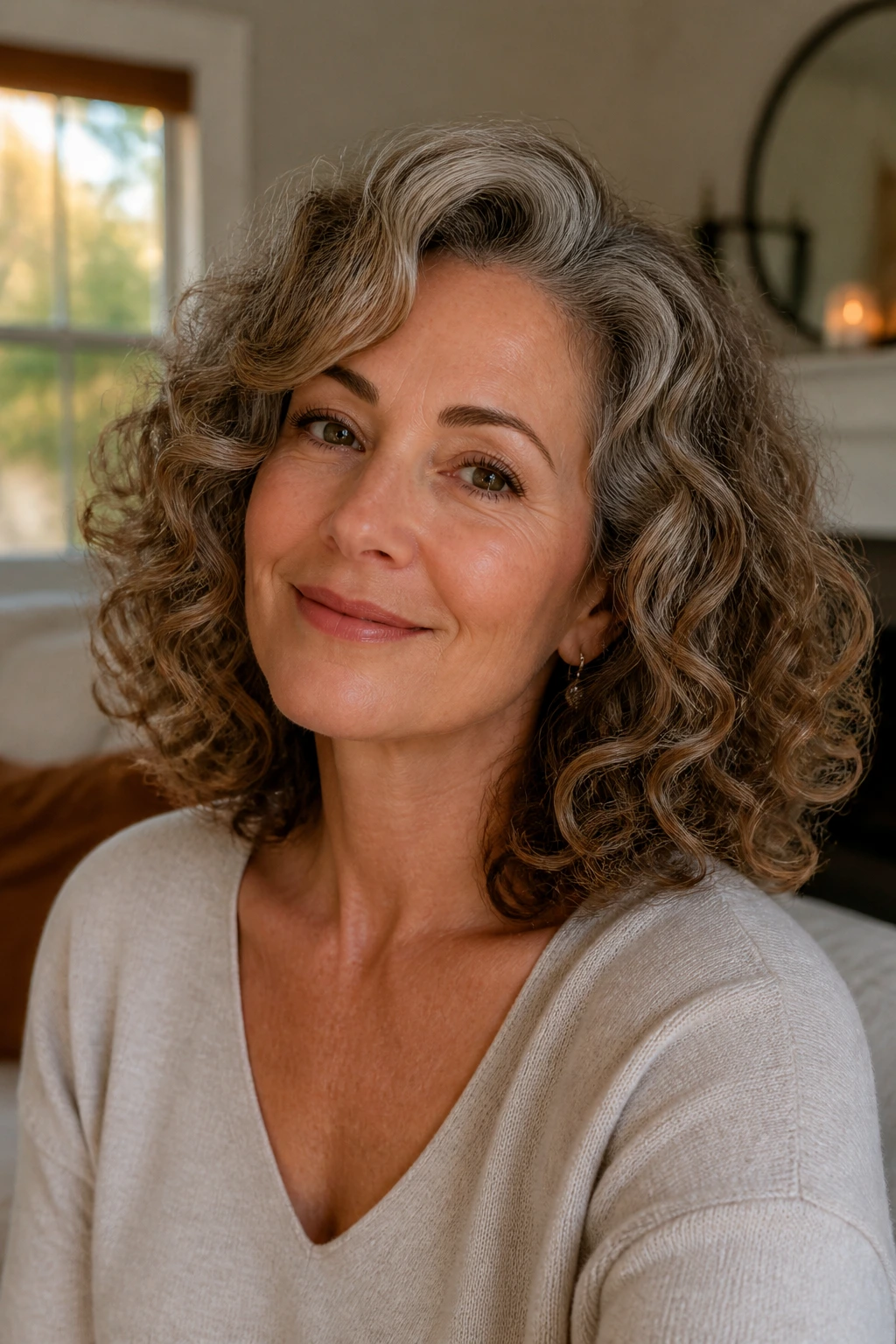
Shoulder-length layers are the style I keep coming back to when someone wants movement without giving up the option to clip it back. The length lands somewhere near the collarbone, which gives the curl enough weight to hang, but not so much that the ends drag everything down into a block. That balance matters after 50, because the hair often gets drier at the ends while the crown starts acting a little shy.
The trick is where the layers begin. If the first shortest layer starts around the cheekbone or below, the curls can fall softly around the face instead of flaring out at the widest point. If they start too high, the cut can get frizzy fast. Too low, and you lose the lift that keeps the shape from feeling heavy.
Best cut cue: ask for the first layer to sit below the cheekbone and the longest pieces to graze the shoulders. That keeps the curve soft.
This cut looks especially good with a side part and a medium-hold gel cast scrunched out once the hair is dry. It doesn’t need perfection. A little irregularity makes it feel lived-in instead of stiff.
2. A Curly Shag With Crown Lift
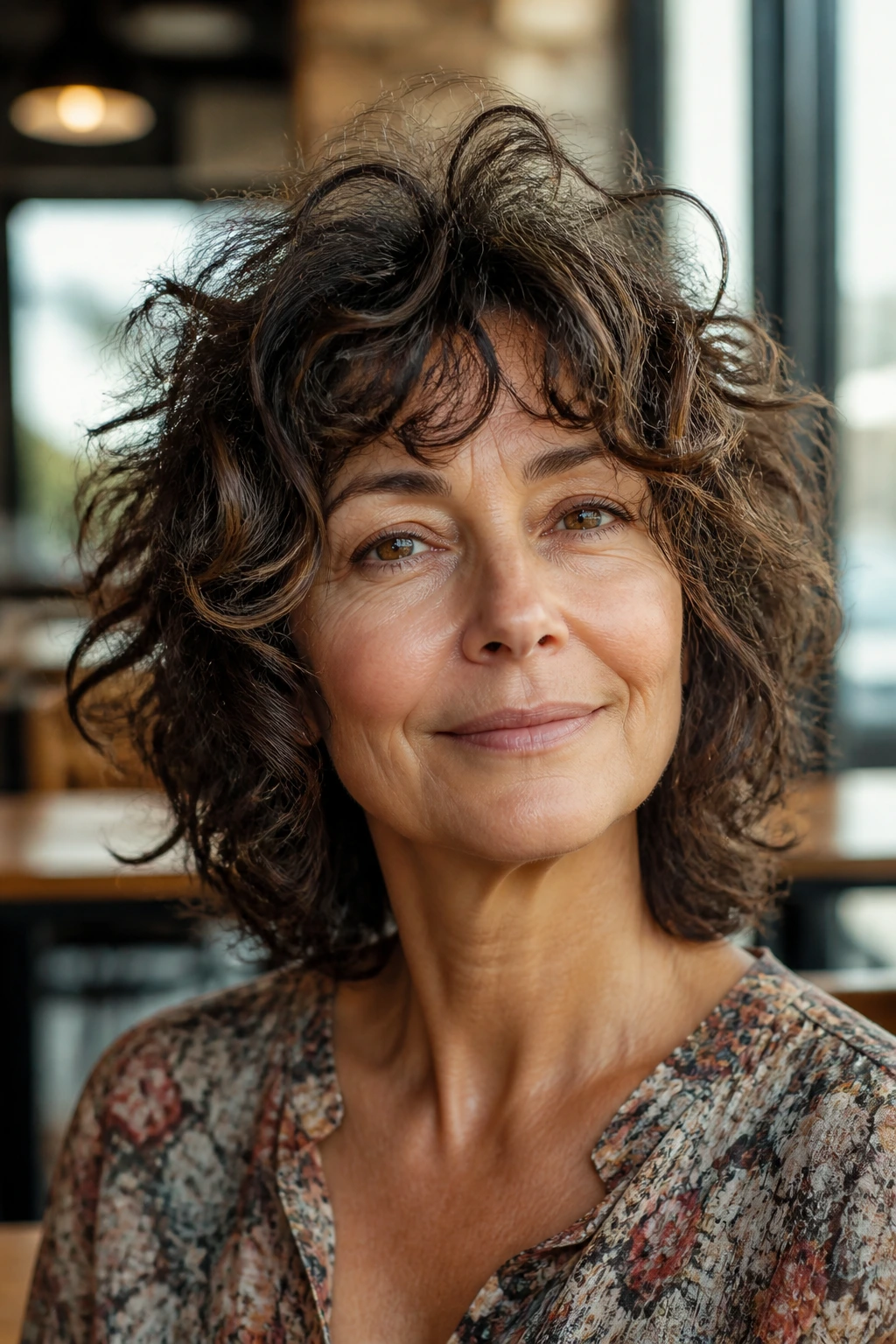
A curly shag is not polite. That is exactly why it works. If your crown goes flat and your sides go wide, the shag gives you movement where the head needs it most: on top, around the temples, and through the middle of the hair instead of only at the ends.
Why the shag behaves better than a blunt cut
The old fear is that layers will make curly hair frizzy. Sometimes that happens, yes. But the bigger problem is usually too much weight in the wrong place. A shag removes some of that bulk at the crown and mid-lengths, so the curl can stack up into shape instead of hanging straight down and then puffing sideways.
- Keep the crown layers a little shorter, but not choppy to the point of fuzz.
- Let the fringe sit soft at the brow or just below it.
- Leave enough length in the back so the cut still feels modern, not spiky.
The shag is one of those cuts that forgives less-than-perfect styling. Air-dry it, diffuse it, clip the roots while they cool — it still keeps its attitude. And if your curls have a mind of their own, that’s a feature, not a flaw.
3. The Chin-Length Bob That Keeps the Neck Light
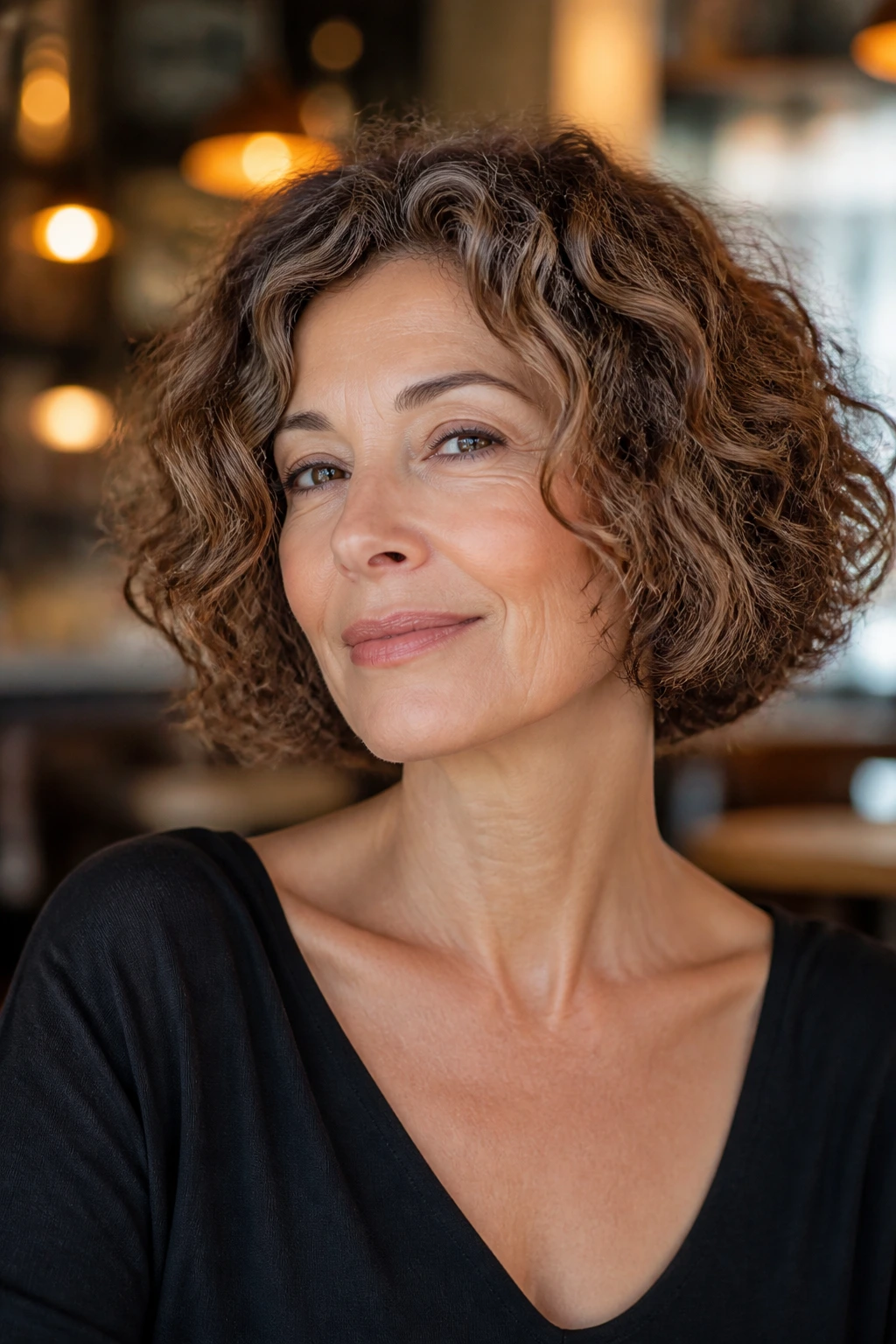
A chin-length curly bob looks simple. That is the trick. Done well, it gives you a clean line under the jaw and keeps hair off the neck without making the face look boxed in. Done badly, it becomes a round puff. The difference is all in the shaping.
Ask for the ends to sit just at or slightly below the chin when dry. That tiny bit of extra room keeps shrinkage from turning the bob into a helmet. The back should be soft enough to curve with the head, not stacked so sharply that the cut feels dated. A little movement around the face helps too, especially if your curls are springy and dense.
This is the cut I’d choose for someone who wants shorter hair but doesn’t want the drama of a pixie. It feels neat. It also keeps a scarf, a high collar, and a statement earring from all fighting the same space.
A side part keeps the shape from going too round. A center part can work, but only if the curls have enough length to fall in a clean line rather than exploding at the temples.
4. Long Layers With a Side Part and Soft Face Framing
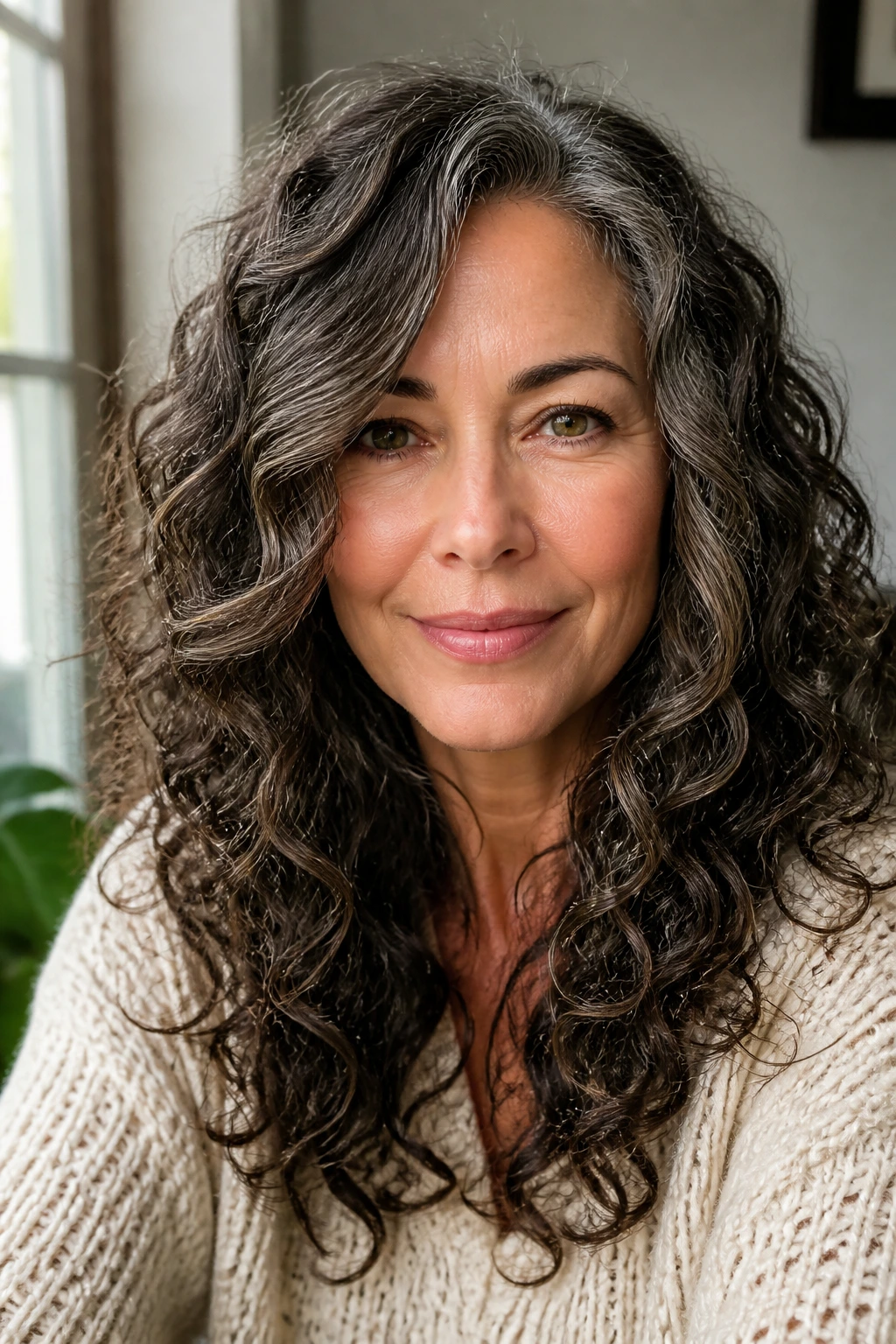
If you like length and you’re not in the mood to give it up, long layers are the move. The wrong version is all one length, heavy at the ends, with no lift at the crown. The better version lets the curl fall in sections, with face-framing pieces that start where they’ll soften the outline instead of interrupting it.
Where the face-framing pieces should land
For looser curls, the shortest front pieces can start near the cheekbone. For tighter curls, they often need to sit lower so the spring doesn’t jump them into your eyes. That’s the part people miss. Curly hair never tells the truth when wet. It tells the truth when it’s dry.
A side part is doing more work here than most people realize. It gives one side a little more height at the root and breaks up the symmetry that can make long curls feel flat or heavy. If your hair has started thinning a bit at the part line, this is a very good trick.
This shape is especially useful if you want to wear your hair down most days but still pull it into a low clip or half-up style when it’s hot, windy, or simply too much hair for the mood you’re in.
5. A Pixie With Curly Height on Top
A curly pixie can be soft. It does not have to mean severe sides and a hard-edged top. The best version keeps the sides neat and the top long enough for the curl to show its shape, usually with about 2 to 4 inches on top depending on your texture.
That extra top length matters because curls need a little room to spring. If the cut is too tight, the curl pattern gets compressed and starts to look fuzzy instead of defined. With enough length on top, you get height, movement, and a little lift at the forehead without spending your life with a flat iron.
This one works especially well if you wear glasses or love earrings. The face stays open. The hair doesn’t compete with your frames. And on days when you want a little polish, a dab of mousse at the roots and a quick diffuse for 3 to 5 minutes is often enough to get the shape back.
Best for: strong cheekbones, active mornings, and anyone who is done negotiating with long hair.
A pixie like this looks best when it’s trimmed often enough to keep the silhouette clean. Once the back starts to blur, the whole cut loses its point.
6. The Tapered Crop That Shows Off the Curl Pattern
A tapered crop is short on the sides and back, fuller on top, and usually neat around the nape. It’s one of the sharpest shapes on this list, and it can be stunning on tighter curls or coils because it shows the pattern instead of burying it under extra length.
The taper pulls the eye upward. That matters. It gives the face vertical line, which can be especially nice if hair has gotten dense around the cheeks or heavy through the lower half. It also keeps the neck clean, which is not a tiny detail when your hair tends to fluff against your collar.
The best taper has a soft edge, not a hard military line. A little softness around the ears keeps it feminine and easy to grow out. Ask for the top to stay long enough that the curl can still curl — if the crown is cut too short, the hair can stand up in a way that feels unfinished rather than stylish.
This is not the cut for someone who wants to hide behind their hair. It’s for someone who wants the shape to do the talking.
7. A Lob That Sits Right on the Collarbone
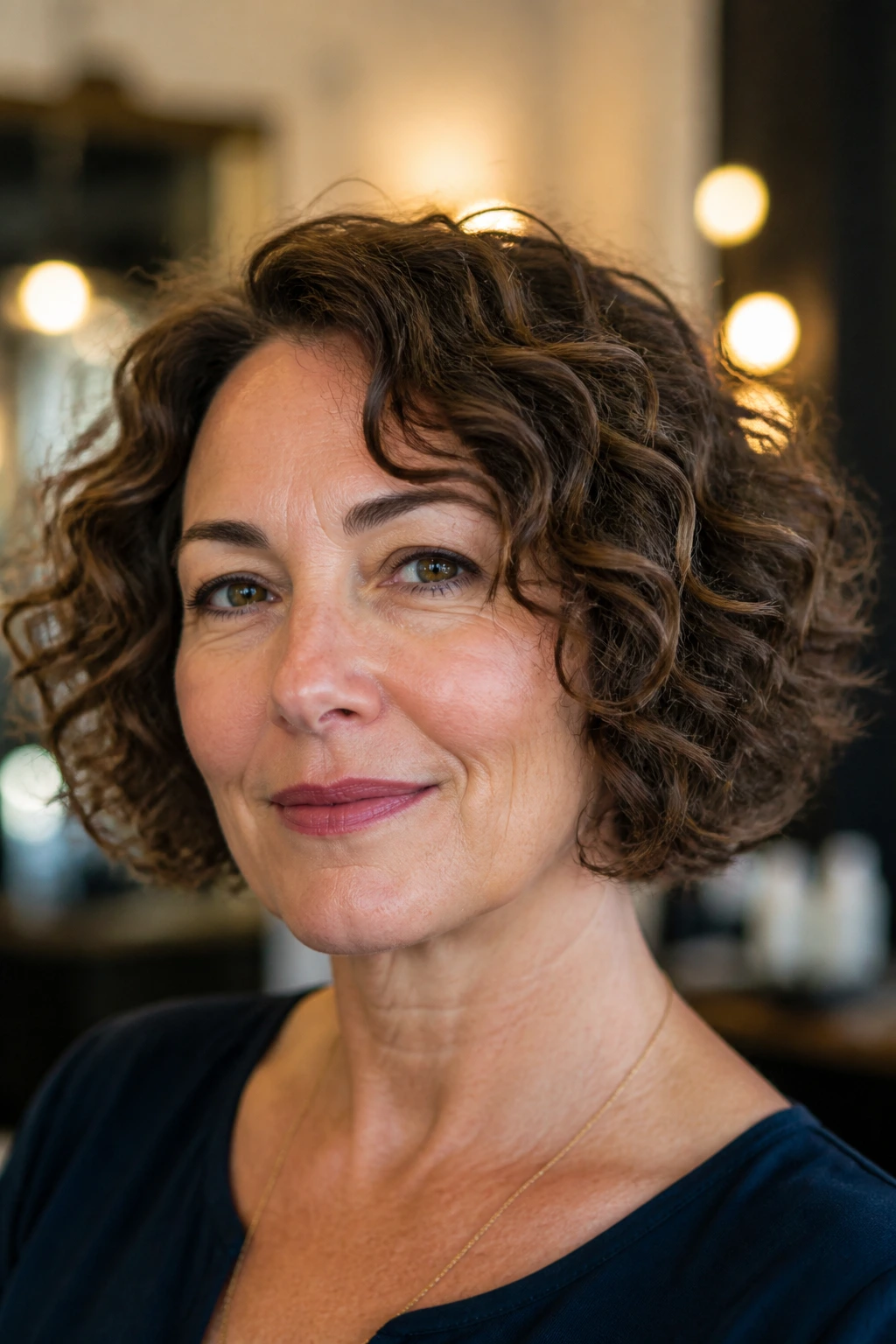
The lob is the curly haircut equivalent of a good leather jacket. It has enough structure to look deliberate, but it doesn’t try too hard. Landing at the collarbone gives the curl enough space to move while keeping the length practical enough to tuck, clip, or half-up when needed.
Why the collarbone works so well
That spot is magic because it keeps the hair off the ends of the jaw while avoiding the heavy bulk of a longer cut. Curls sit on the collarbone and bounce, instead of collecting around the chin like a round frame. If your hair is fine, this length gives the illusion of fullness. If it’s thick, it still feels controlled.
A lob loves a little interior shaping. Not heavy layers. Just enough weight removal inside the shape so the curl doesn’t collapse into one dense curtain. I’d ask for the shortest pieces to hit a little below the chin and the longest to land right at the collarbone when dry.
The style works with a center part, but I like it better slightly off center. It keeps the roots from going too flat and makes the curl pattern look less formal. A proper gel cast helps too. Scrunch it out once it’s dry and the whole thing softens up nicely.
8. An Angled Bob That Gives Fine Curls More Shape
An angled bob is shorter in the back and longer in the front, which gives fine curls a little more visual structure. That front line matters. It keeps the eye moving, and it stops the cut from looking like it all stops at one level.
If your curls are soft, loose, or a little inconsistent, an angled bob can make the whole head look more intentional. The longer front pieces slim the jawline and give the style a clean edge without making it severe. Meanwhile, the shorter back keeps the weight from dragging the whole cut down.
This cut is a nice answer for hair that goes flat easily. The back gets enough lift to keep the shape from collapsing, and the front has enough length to feel grown-up rather than clipper short. It does need regular trimming, though. Once the angle blurs, the style turns into “somewhere between a bob and a grow-out,” which is rarely the goal.
A side part usually helps. So does a diffuser set low and pointed upward at the roots for a few minutes before you let the rest air-dry.
9. The Pineapple Updo for Loose, Soft Volume
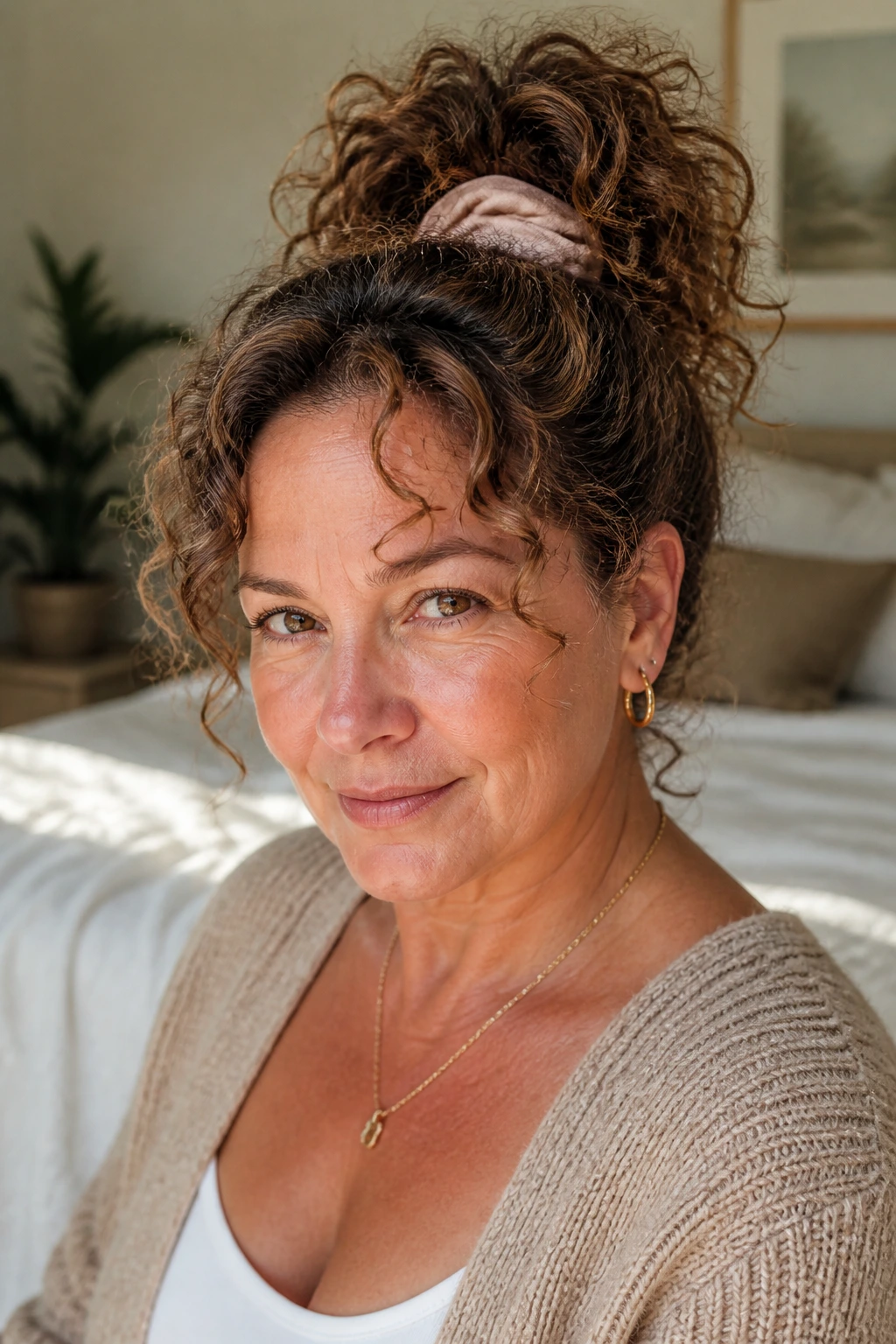
The pineapple is not just for sleeping. Worn as an everyday style, it gives you crown height, visible curl, and a shape that looks casual but not sloppy. Gather the curls high, use a silk scrunchie or soft band, and let the ends spill out rather than forcing them flat.
This works best on medium to long curls with enough length to hold a loose top knot shape. The hair at the sides stays softer, the crown gets lifted, and the neck stays clear. That makes it practical on warm days or when you want the face to stay open.
The trick is not to make it tight. Tight hair at the top flattens the curls and creates a dent where the band sits. Loose is better. A few face-framing tendrils make the style look deliberate, especially if you pull one or two pieces forward near the temples.
Quick opinion: a pineapple is one of the fastest ways to make second-day curls look better than first-day curls.
It also gives you a little flexibility. You can wear it high and playful, or lower and more relaxed, depending on how much volume you want on top.
10. Half-Up Twists That Keep the Front Controlled
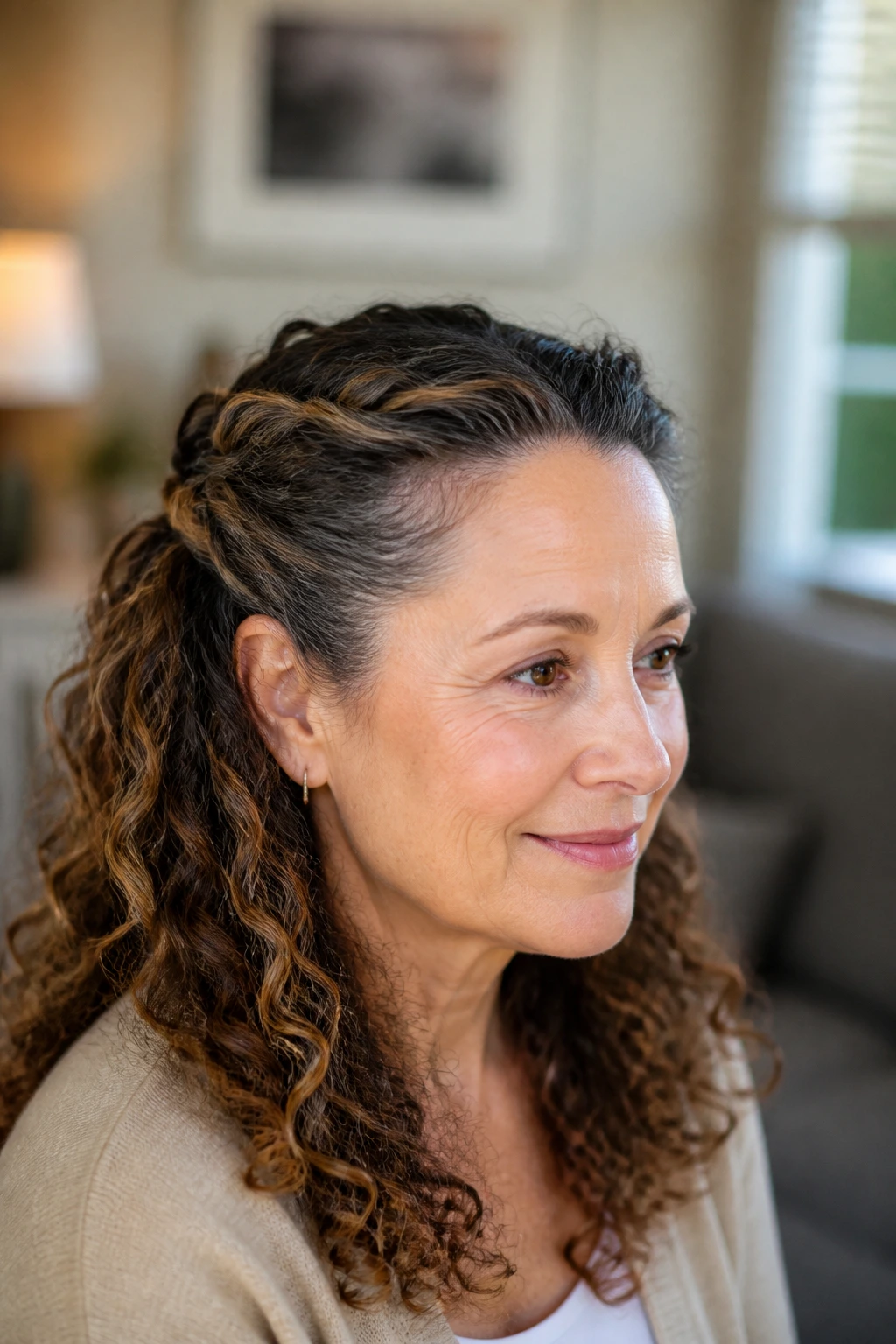
Half-up twists are the clean middle ground between wearing hair down and putting it up. Take a section from each temple, twist it back loosely, and pin it just behind the crown. The result keeps curls off the face while leaving the length and texture visible.
This style is useful when the front pieces keep falling into your eyes or puffing around your glasses. The twist gives you shape at the crown, which helps older curls look more lifted, and it leaves the ends free so the cut still feels like a curly style instead of a plain pin-up.
A good half-up twist should look soft, not strict. If you pull it too tight, the front goes flat and the whole thing starts to feel formal in a bad way. Leave a little slack at the temples and let a few curls escape near the ears. That bit of mess is what keeps it from looking like a school recital hairstyle.
I like this one for shoulder-length cuts and lob-length curls. It also works well on day two when the roots need a reset but the lengths still look decent.
11. Curly Bangs With Mid-Length Layers
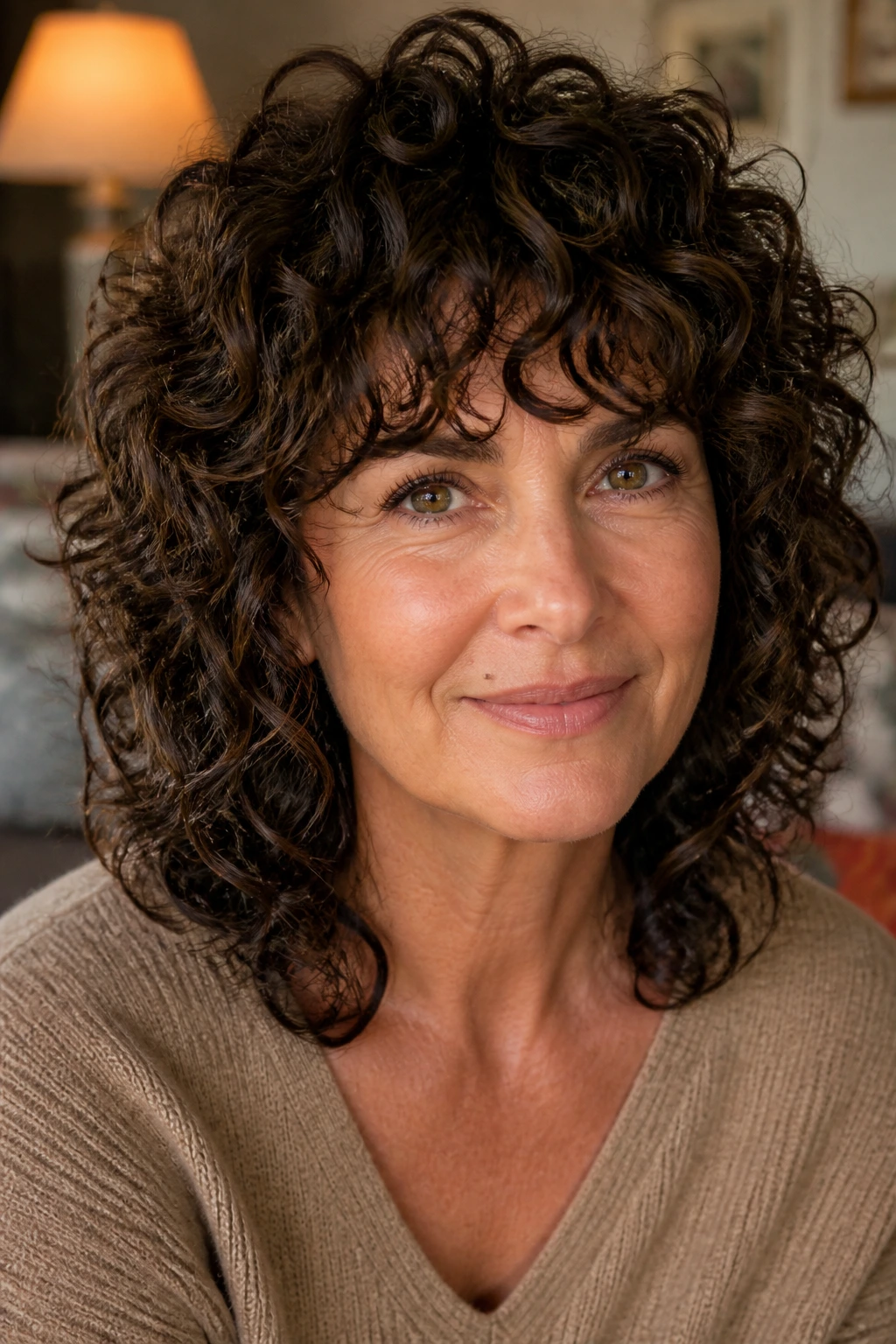
Curly bangs are one of those things people fear for no good reason. The real problem is not bangs themselves. It’s cutting them too short and pretending shrinkage won’t happen. With curls, it always happens.
Why bang length matters more than the photo
A fringe that looks perfect wet can bounce up an inch, sometimes more, once it dries. That’s why curly bangs usually need to start longer than you think. Let them skim the eyebrows or sit just below them dry, and they can soften the forehead without vanishing into the curl spring.
Mid-length layers underneath keep the bangs from looking like they belong to a different haircut. The whole shape needs to connect. If the fringe is too blunt and the rest of the hair is too heavy, the cut feels disconnected. Soft layers around the cheekbone help everything blend.
Curly bangs work especially well when you want to draw attention upward. They can soften a strong forehead, skim past frames, or simply make the haircut feel less predictable. But they need a stylist who understands how your curls behave dry, not just in a sprayed-down section under salon lights.
If you’re nervous, start with a longer curtain-like fringe and move shorter only after you know how much it shrinks.
12. A Silver-Halo Shape for Natural Gray Curls
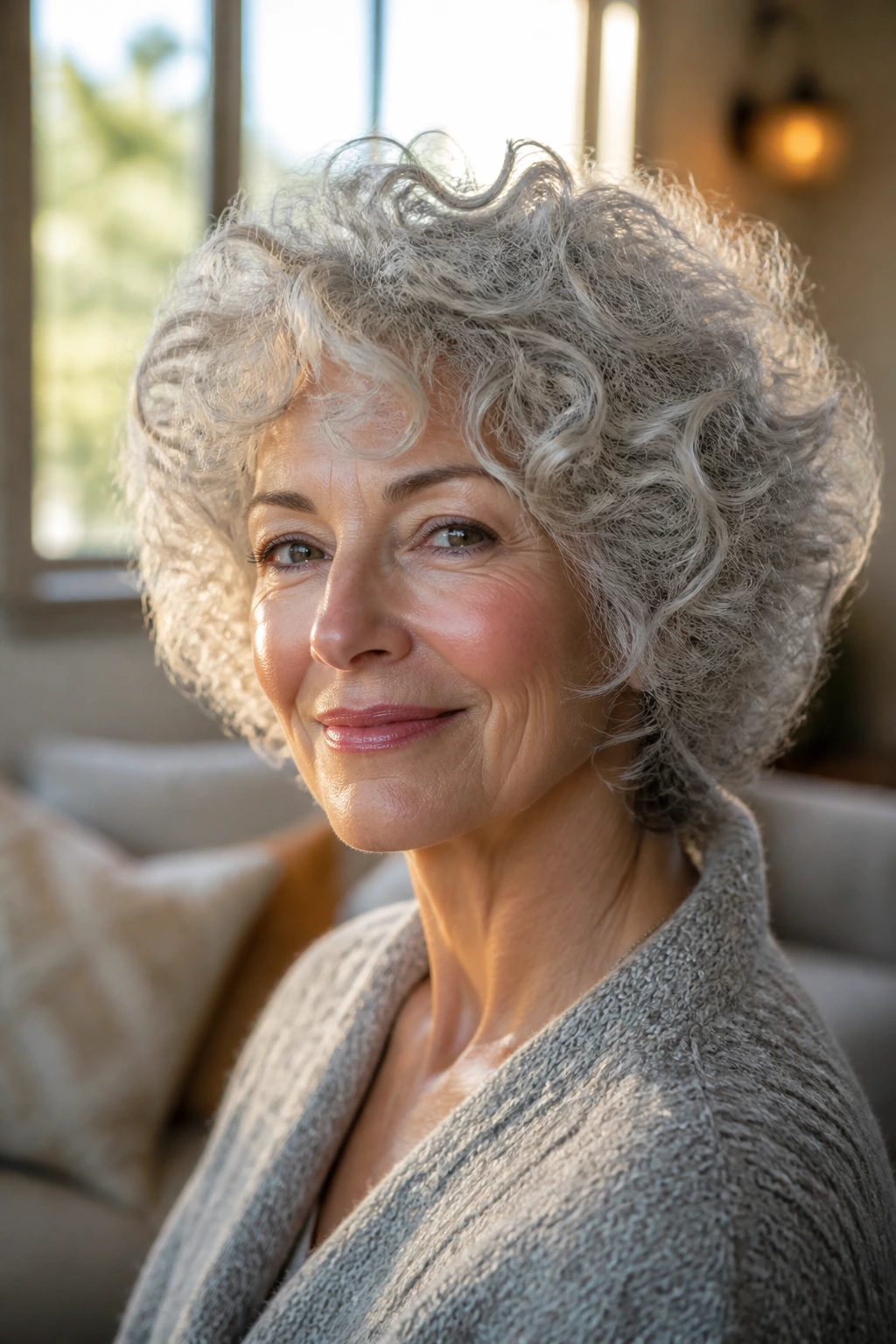
Gray curls often have their own personality. They can feel coarser, springier, and a little drier, which means the shape has to do more of the heavy lifting. A silver-halo cut keeps the outline rounded around the head, with enough softness at the edges that the hair glows instead of puffing outward.
That halo shape is especially flattering when the gray is mixed through the hair rather than all one solid silver. It lets the light bounce through the curls while keeping the silhouette neat. The key is not to carve too many short pieces into the cut. Gray hair can frizz when it’s over-layered, and then you get fluff instead of shape.
A rounded bob or mid-length crop works well here because it lets the hair sit in a tidy arc. The perimeter stays clean. The top stays lifted. And the cut gives the color space to show off, which is half the point when the silver is this good.
Use moisture, but not a heavy butter that swallows the curl. A light leave-in, a touch of gel, and a diffuser on low heat usually give the best result.
13. Neck-Length Tousled Layers That Move Easily
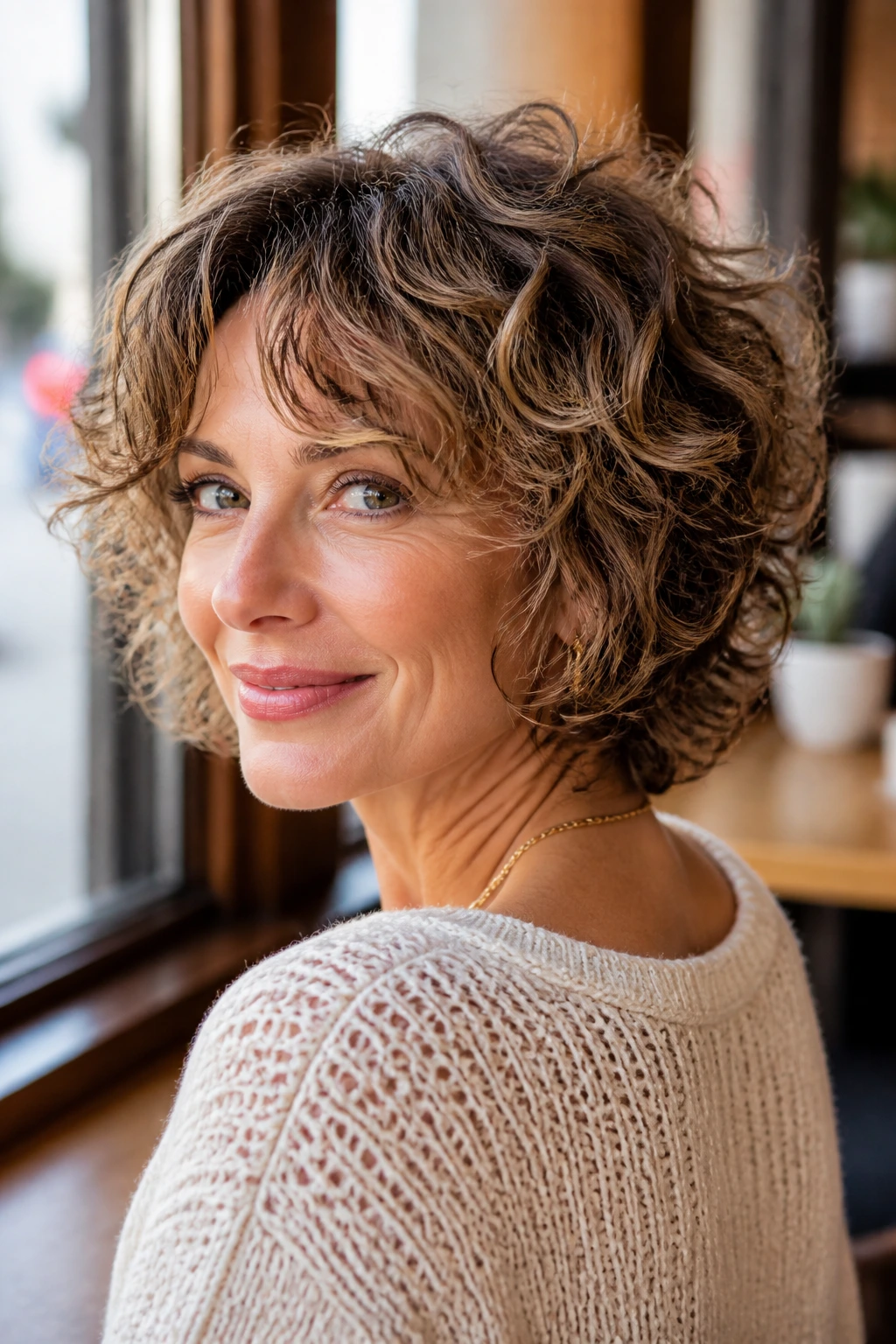
Neck-length curls are underrated. They’re long enough to feel soft, short enough to avoid the drag that happens when curls grow past the point of easy movement. The length sits around the nape or just above the shoulders, which keeps the neck clear without making the cut feel too severe.
The best part of this shape is the movement. With a few well-placed layers, the curls separate enough to show texture instead of clumping into a single dense shape. That gives the haircut a looser, more playful feel.
It’s a smart cut if you don’t want a lot of styling time. A little scrunching, a light diffuser pass, and you’re done. If you want the hair to stay from getting too wide at the sides, ask for the interior to be shaped rather than the ends aggressively thinned. Thin the wrong area and you get frizz where you wanted air.
This cut also handles scarves and collars well. It sits where hair can move, not where it gets squashed flat by clothing all day.
14. A DevaCut-Style Shape Built Around the Curl Pattern
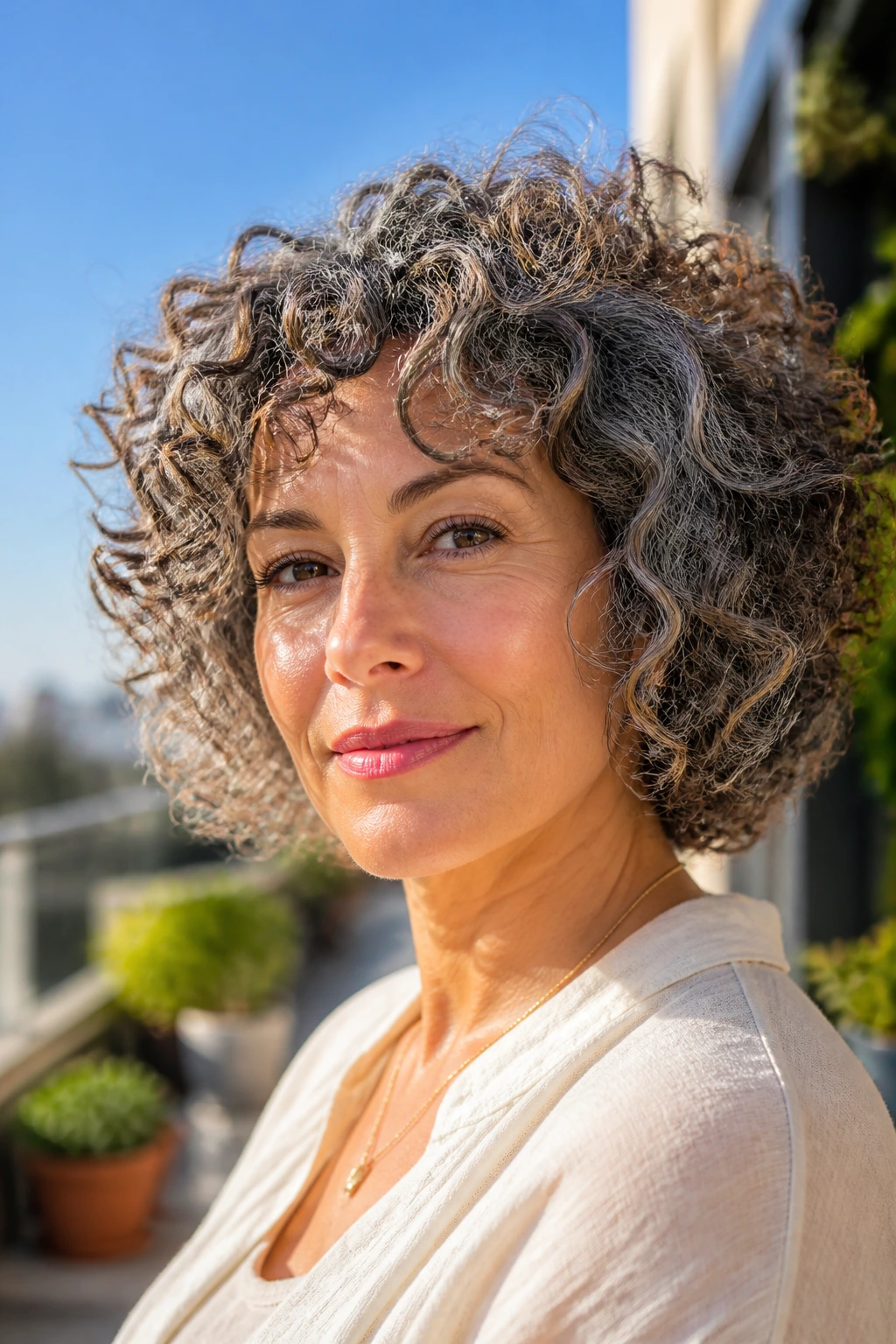
A DevaCut-style shape is less about a specific length and more about the way the hair is cut. Each curl is shaped according to how it falls, often while dry or mostly dry, which lets the stylist see shrinkage and curl spring before the scissors are done.
Why dry cutting changes everything
Curly hair hides a lot when it’s wet. A curl that looks long and calm can pop up into a tight spring. A dry or curl-by-curl cut takes that into account, so the final shape makes more sense once the hair is washed and diffused at home. That is why this method can be such a relief for women who have had too many surprise triangle cuts.
It works best when the stylist is comfortable reading different curl types on the same head. Mixed patterns are common. Some sections bend tighter. Some stretch more. A good shape doesn’t pretend all of it behaves the same way.
If your hair has been hard to tame with a standard wet cut, this is the method I’d consider first. It often gives a softer outline, less bulk where you don’t want it, and a shape that looks more intentional from the back, which is where a lot of curly cuts fall apart.
15. The French Bob With Soft, Airy Ends
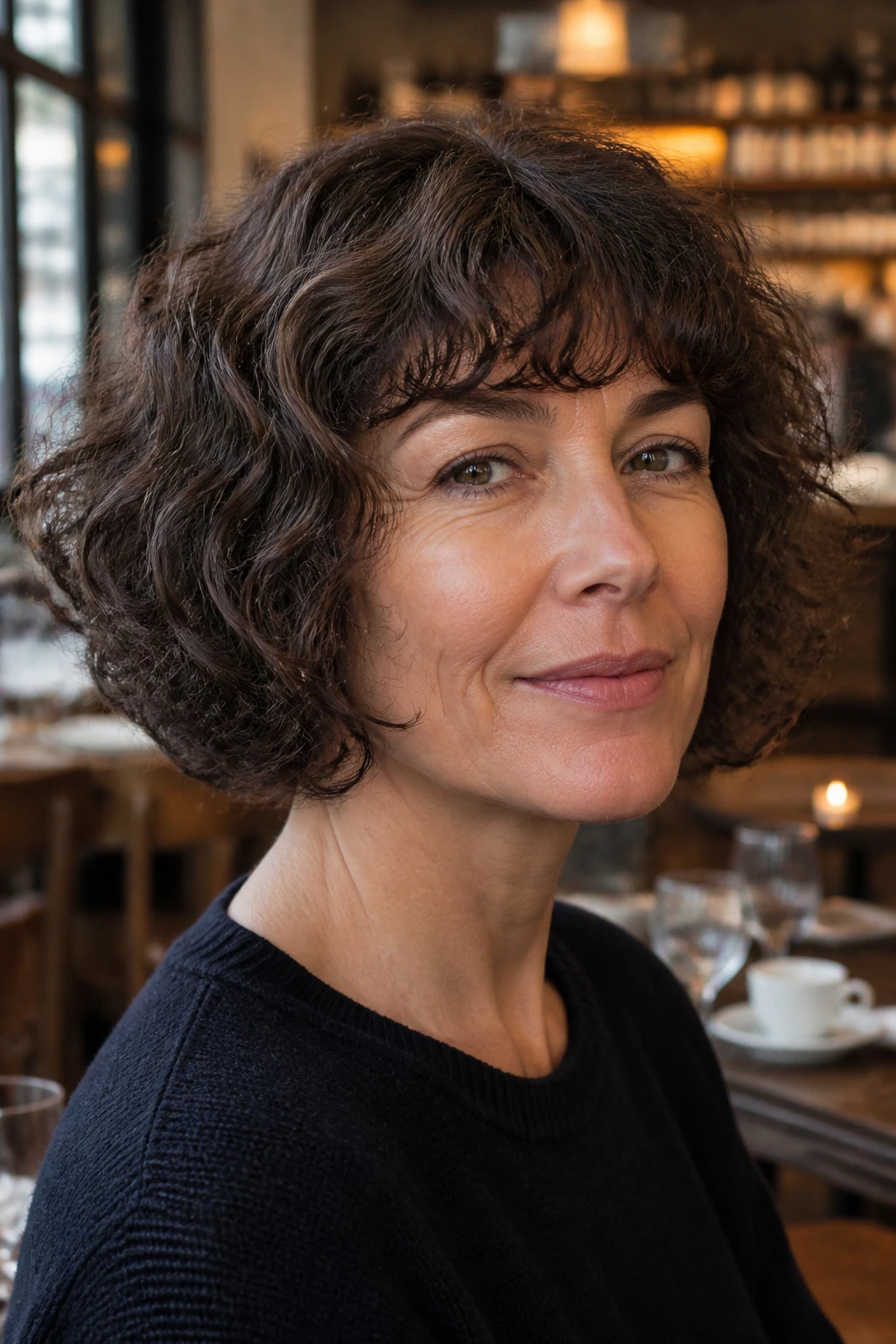
The French bob is short, cheekbone-skimming, and a little cheeky. On curls, it works best when the ends are softened rather than sliced into a hard line. That softness keeps the style from feeling stiff or too “done.”
It suits looser curls and waves especially well, but tighter curl patterns can wear it too if the length is left just long enough to move. The whole point is to create a frame around the face that feels lively, not helmet-like. A little fringe or a side sweep adds even more shape.
This is one of the best short curly styles for anyone who likes structure but hates a rigid look. It’s neat enough for a blazer and casual enough for a T-shirt. The cut lands somewhere between polished and playful, which is exactly why people keep coming back to it.
Keep in mind that very short bobs can shrink a lot. Ask your stylist to leave the perimeter a touch longer than the photo if your curls spring hard. That extra quarter inch saves a lot of regret.
16. A Side-Swept Bob That Breaks Up a Round Face

A side-swept bob is all about asymmetry. The part moves off center, the front pieces sweep across the forehead, and one side usually lands a bit longer than the other. That little shift gives the face a cleaner line and stops the haircut from becoming too circular.
If your face is round or full through the cheeks, this shape adds length without making the cut feel severe. The longer side drapes toward the jaw, while the lifted side gives the root some height. It’s a small trick, but it changes the whole balance of the haircut.
It also pairs well with glasses because the sweep keeps the curls from crowding the frames. That matters more than people think. When the hair and the glasses are both fighting for the same space, the face starts to feel busy.
The side-swept bob looks best when the front is just a bit longer than the back and the layers are soft enough to keep the curl from breaking apart. Too much layering and the sweep loses its shape. Too little, and it turns into a round puff with a side part.
17. Loose Spiral Layers for Bouncy, Defined Curls
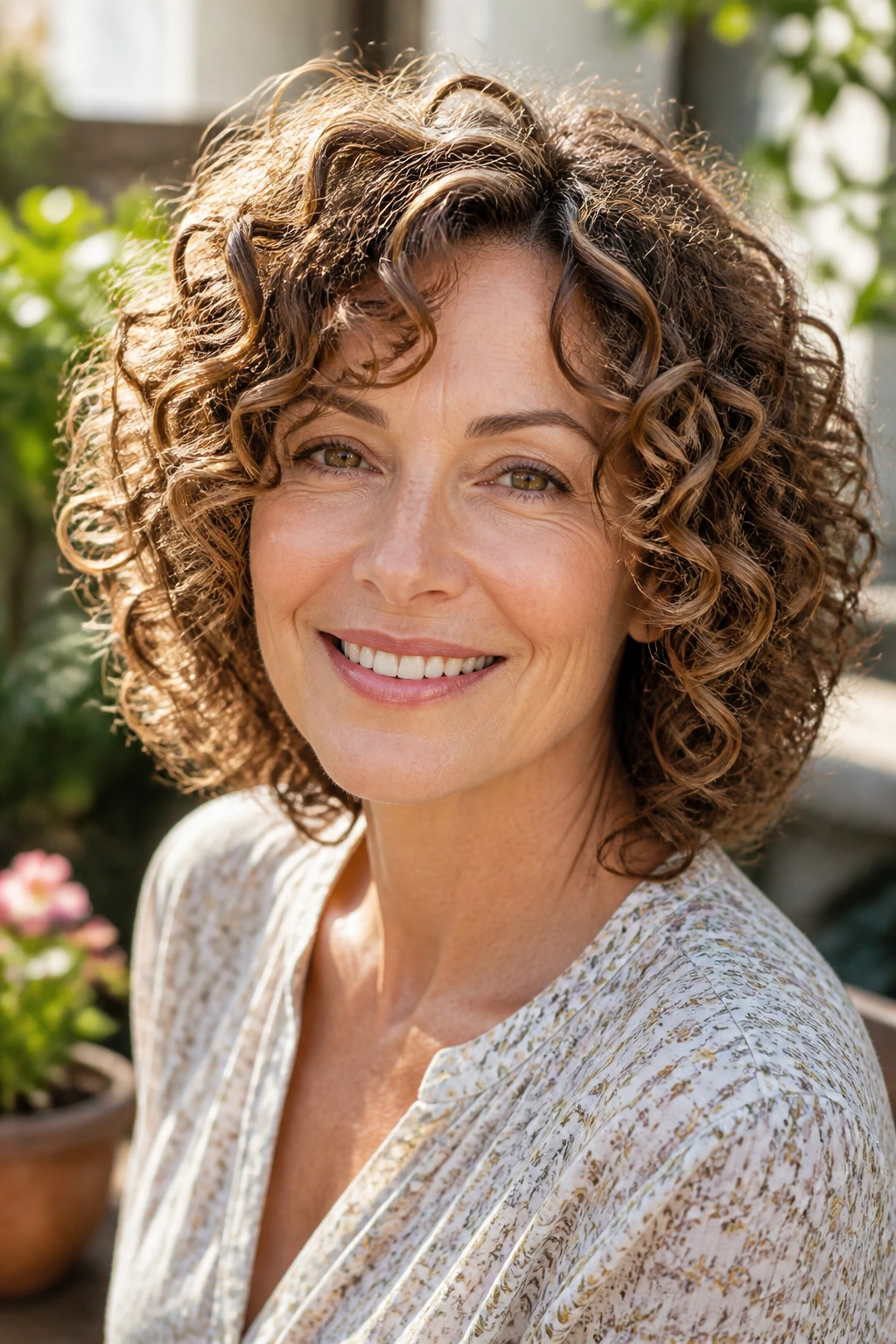
Loose spiral curls need room. If you cut them too bluntly, they lose their shape. If you layer them too heavily, they frizz out. The sweet spot is a medium-length layered cut that lets the spirals clump naturally while still separating enough to show each ring.
This style is especially good for curls that are more springy than tight. It keeps the shape open and buoyant. The layers don’t need to be dramatic; they just need to give each spiral a place to sit. That keeps the bottom from feeling heavy and the top from lying flat.
I like this one with a soft center part or a slightly off-center part, depending on how much height you want at the roots. A curl cream on damp hair, followed by a thin layer of gel, usually gives the best definition without turning the hair crunchy.
The goal here is not perfect ringlets. It’s healthy separation, soft shine, and enough bounce that the curls still look lively by the end of the day.
18. The Tucked-Behind-Ear Cut That Looks Polished Fast
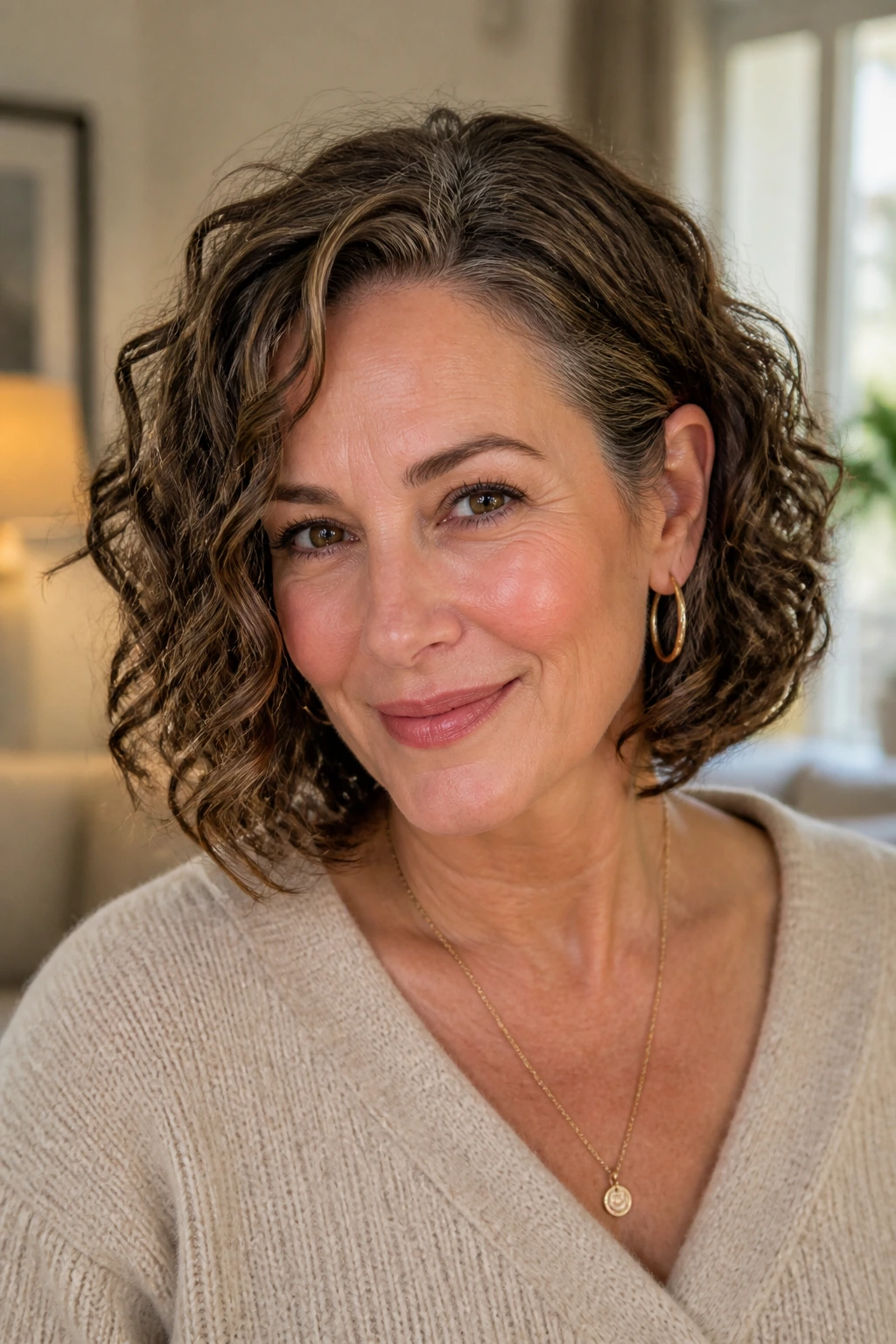
Some cuts are about what happens when the hair is down. This one is about what happens when you tuck one side behind the ear and suddenly the whole face opens up. That’s the appeal.
The length usually sits around the jaw or collarbone, with enough softness near the ears that the tuck doesn’t leave a hard dent. It’s a smart look if you like seeing your earrings or if your hair tends to fall into your face every five minutes. One side tucked, one side loose. Done.
A side part helps here too, because it gives the loose side a little lift and the tucked side a little order. The style works especially well on curls with medium density. If the hair is too thick, the tuck can look bulky. If it’s too fine, it can go flat unless the roots are lifted first.
A clip or a hidden pin can keep the tuck in place, but the best version still looks a little accidental. That’s the charm. It says, “I had five minutes,” but in a way that feels polished.
19. A Defined Ringlet Bob for Tighter, Neater Curls
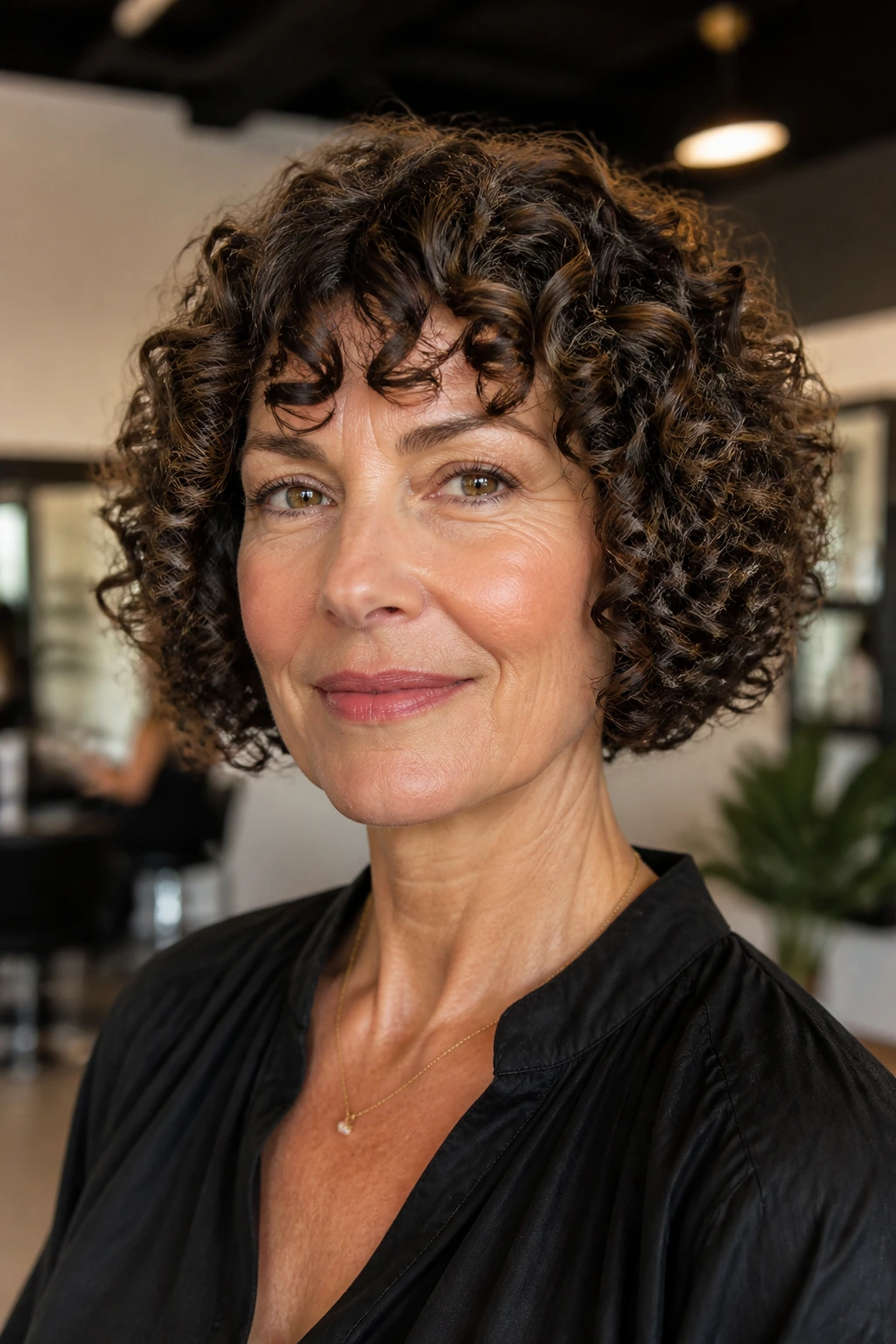
A defined ringlet bob is for curls that want to make a clean, neat statement. It usually lands around the chin or jaw and leans into uniform spring rather than messy volume. When done well, it can look crisp without losing softness.
This shape works especially well if your curls are tighter and you like them to behave in predictable coils. The shorter length keeps the weight off the bottom, which helps the ringlets sit on top of one another instead of hanging down and stretching out. A little shaping around the face keeps the bob from looking boxy.
Finger-coiling a few face-framing pieces after wash day can make the whole style look more finished. You do not need to coil every strand. Just the front and the perimeter can be enough to sharpen the outline.
The ringlet bob is one of those cuts that rewards regular maintenance. If the perimeter grows too far past the jaw, the ringlets start to blur into bulk. Keep the edge clean and the whole thing holds its line better.
20. A Low Curly Bun With Texture Instead of Tightness
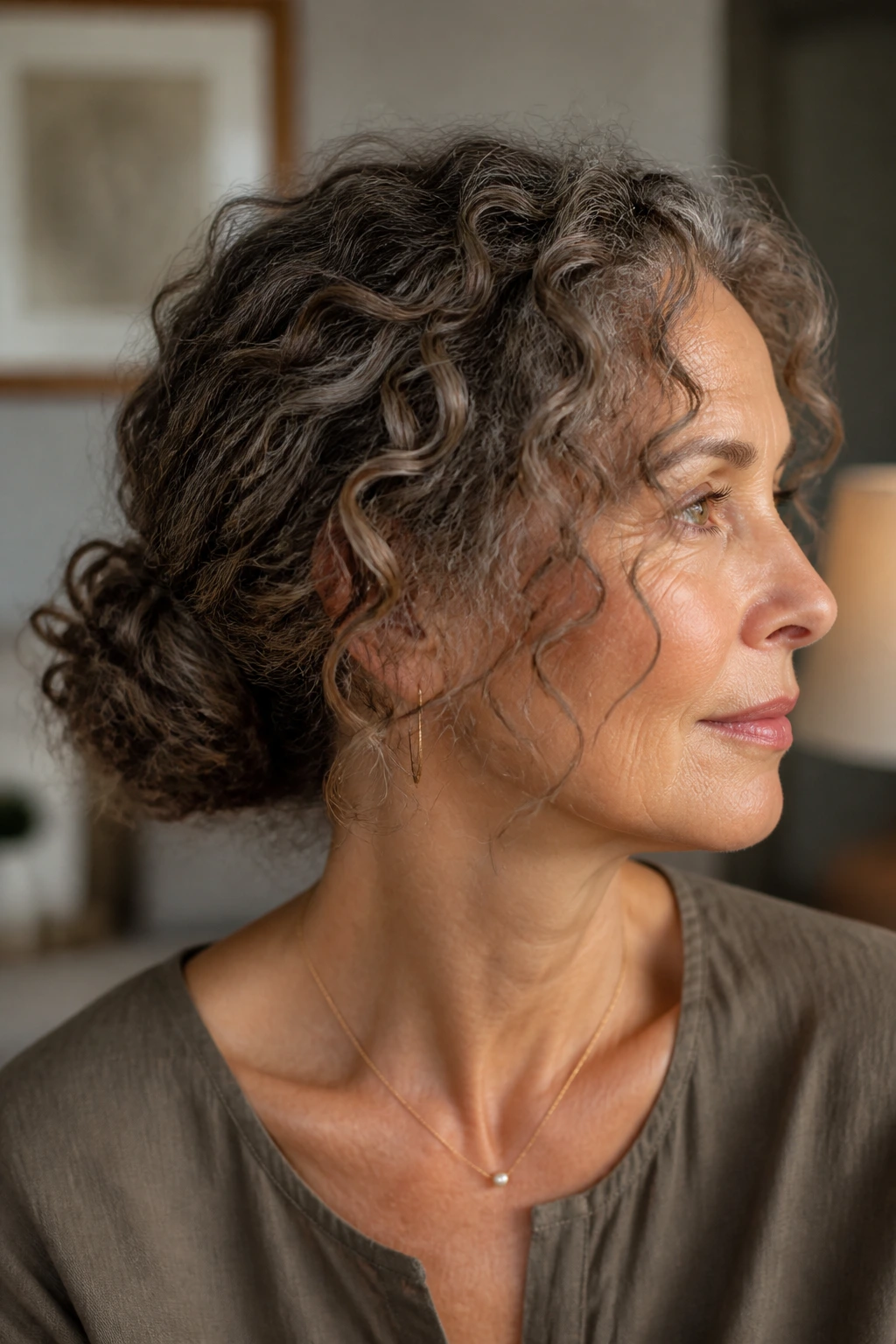
A low curly bun is the grown-up answer to “I want my hair up, but I still want it to look like my hair.” The bun sits at the nape or slightly above it, and the curls stay visible instead of being smoothed into a slick knot.
The key is texture. Pull the curls back loosely, keep a few pieces soft around the face, and twist the length just enough to form a bun shape without crushing everything flat. If your hair is long and dense, pin the bun in sections rather than forcing it through one elastic. That keeps the shape from turning lumpy.
This is a nice style for events, hot weather, or any day when your curls are not behaving and you are not in the mood for a fight. It also plays well with silver hair because the texture catches the light. A low bun with texture looks deliberate without feeling stiff.
Leave the front soft. If the hairline is pulled too tight, the whole look can age the face in the wrong way. A little lift at the crown and a loose edge around the ears make all the difference.
21. Twist-Out Shoulder Length Layers
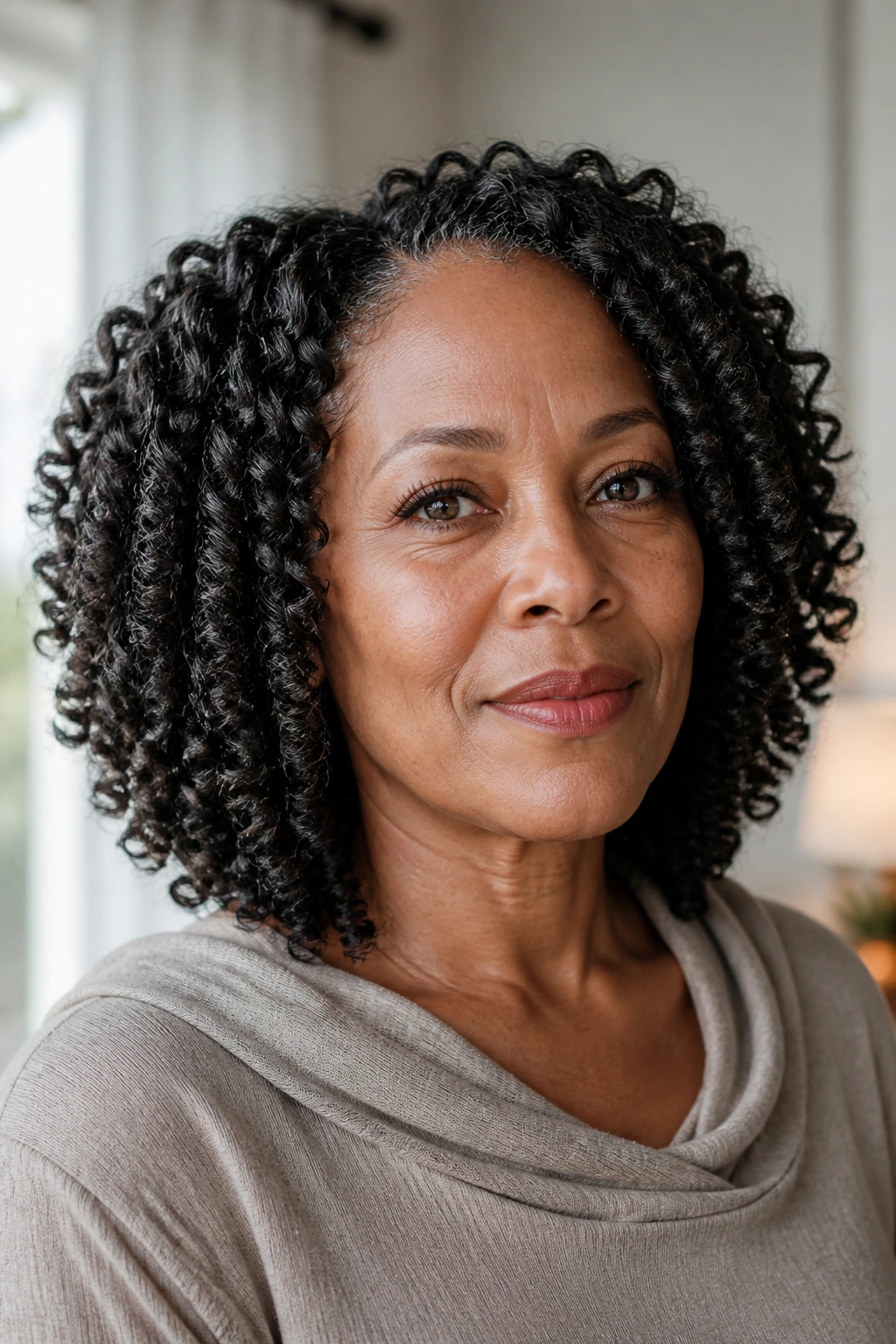
A twist-out on shoulder-length hair gives you definition, control, and a shape that reads as styled even when the curls themselves are doing the heavy lifting. It’s a particularly good match for hair that likes to hold pattern once it’s set, whether that means tighter curls or coily textures.
The shoulder-length base matters because it keeps the finished shape from spreading too wide. If the hair is too long, a twist-out can balloon. If it’s too short, the pattern can feel crowded. At collarbone to shoulder length, the curls have room to stretch and still fall in a clean silhouette.
The set itself can be as simple or as elaborate as you want. Twists about 1/2 to 1 inch wide usually give a nice pattern. Let them dry completely before unraveling. Not partly dry. Completely dry. That’s the line between a neat style and a fuzzy one.
A twist-out looks best when the layers are placed to support the curl pattern rather than interrupt it. Ask your stylist to keep the outline rounded and the ends soft. That way the set has a good base to sit on every time you redo it.
22. A Gray-Blending Layered Mid-Length Cut
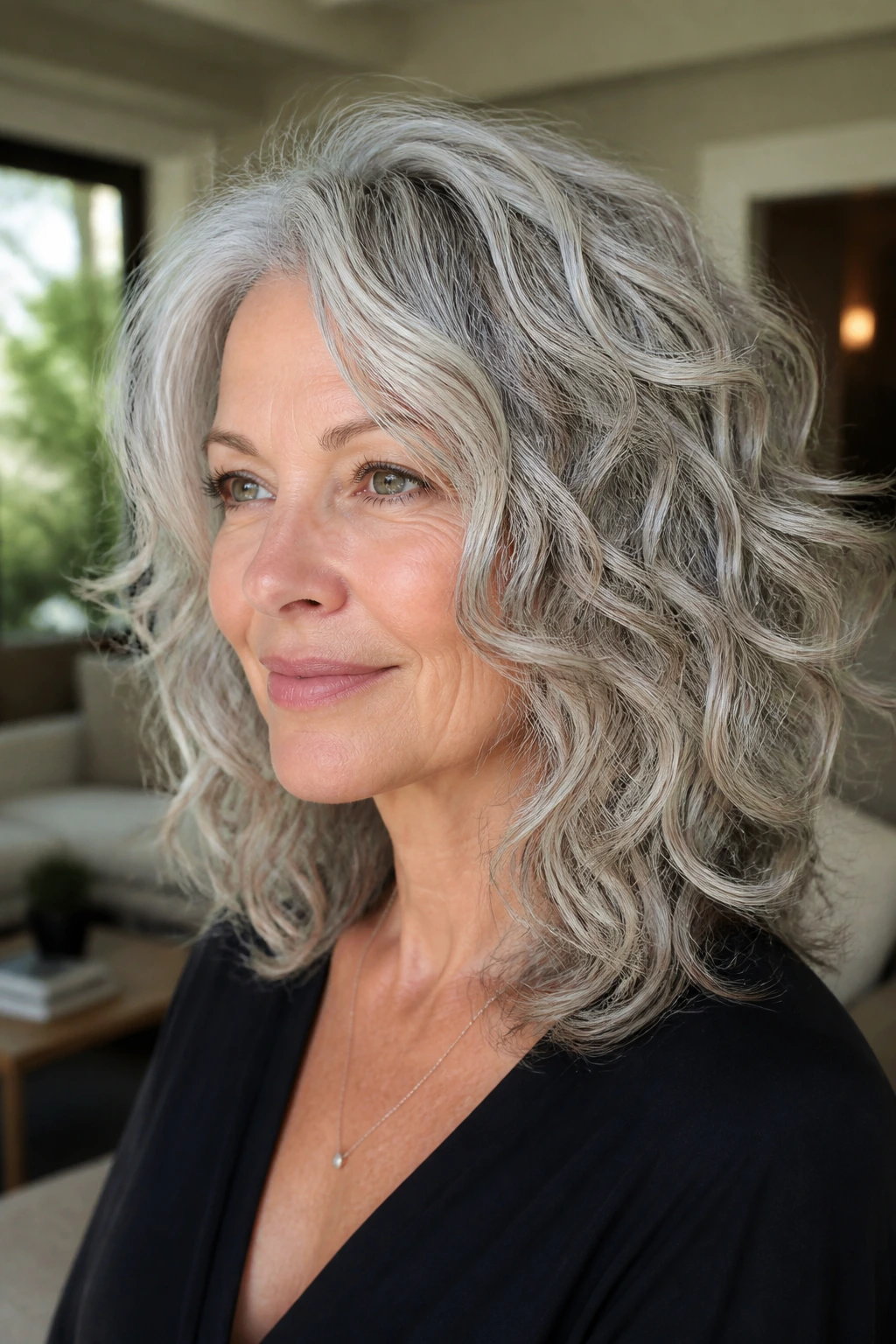
If your color is moving toward silver, white, or salt-and-pepper, a gray-blending layered cut can make the transition feel deliberate instead of awkward. Mid-length layers keep the change soft and stop the line of color from looking heavy at the bottom.
This shape works because it treats the gray as part of the texture story, not a separate problem. Curly gray hair often feels rougher, so a layered cut that keeps movement around the face and through the mid-lengths helps the color look brighter. The shine shows up better when the shape isn’t overworked.
If you’re growing out dye, this cut helps the blend happen with less fuss. The layers break up the contrast between the old color and the new silver strands. That means fewer harsh lines and less pressure to hide the grow-out every single day.
A light gloss or moisture treatment can keep the silver looking clean, but the haircut does the visual work. The right shape makes the transition look finished before the color has even fully grown out.
23. A Rounded Shoulder Cut With a Soft Fringe
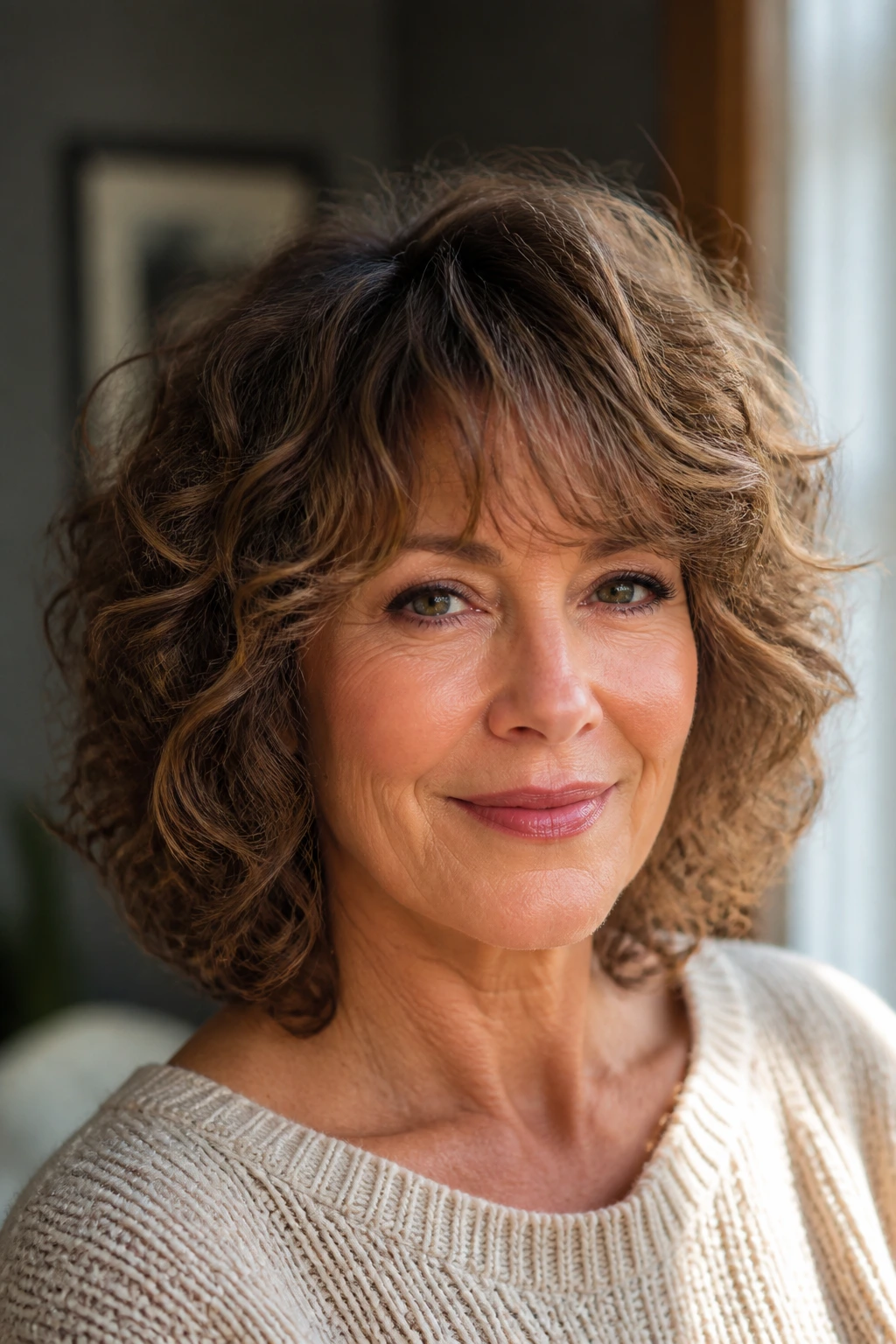
A rounded shoulder cut is one of the safest bets on the list, but “safe” here does not mean boring. It means balanced. The silhouette follows the curve of the head, which stops curly hair from bulking out at the sides and going flat at the top.
The soft fringe is the detail that makes it feel current. It can skim the brow, split a little in the middle, or bend to one side depending on your curl pattern. The point is to frame the face without building a hard wall of bangs.
This cut is a good choice if you want something that grows out gracefully. Because the outline is rounded, it keeps its shape longer than a sharper bob. That matters if you do not want to live in the salon chair.
Ask for internal layers and a soft perimeter rather than a heavily textured edge. You want the curl to fold into the shape, not get chewed apart. When this cut works, it has a calm, easy look that still feels full.
How to Pick the Shape That Fits Your Face, Density, and Routine
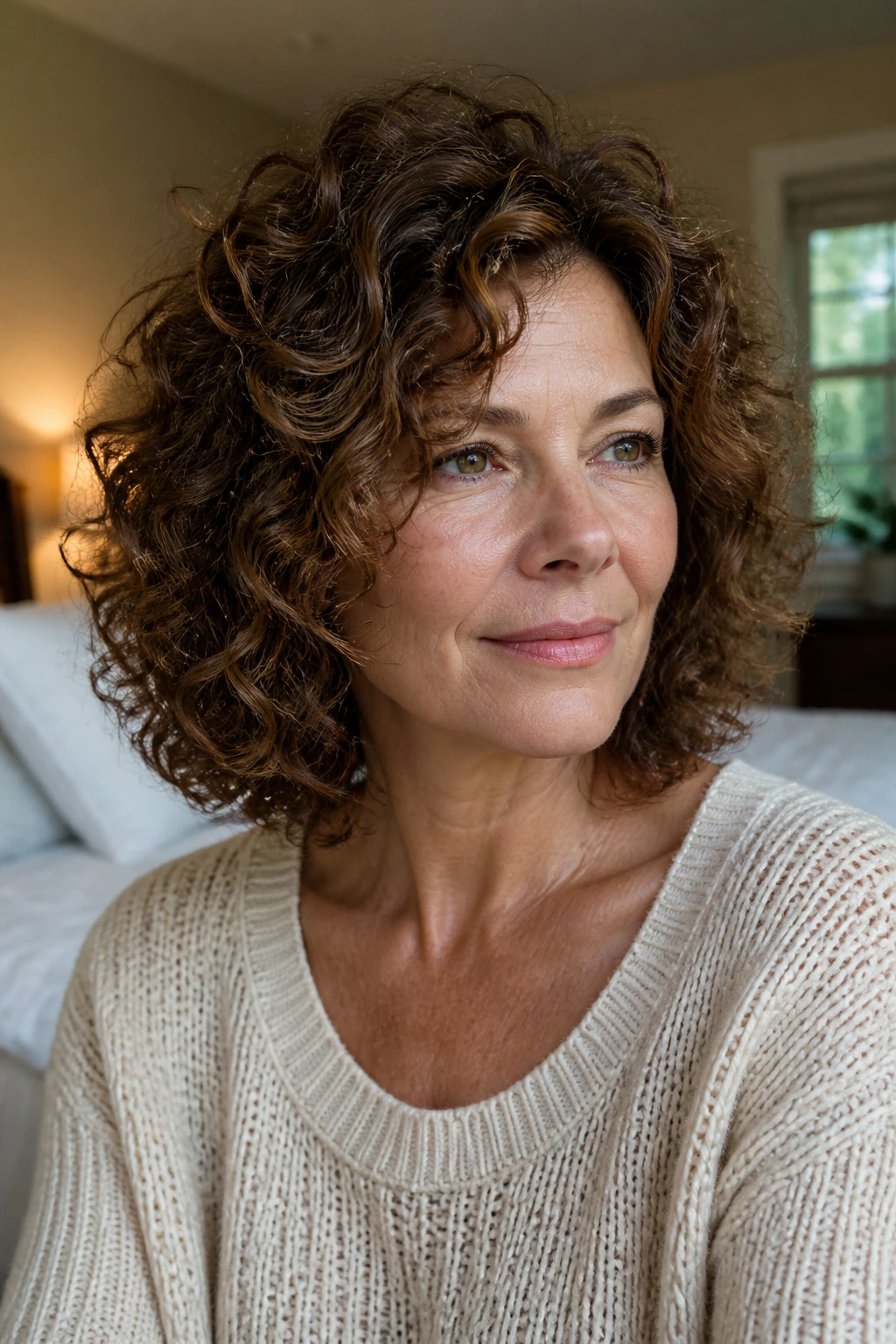
The best curly cut starts with the day you actually live, not the photo you saved. If you need a style that’s out the door in ten minutes, a shoulder-length lob, a curly bob, or a tapered crop will usually make more sense than a longer layered shape that needs a lot of product and drying time. If you don’t mind diffusing and scrunching a bit, you can wear more layers and more length without the cut falling apart by noon.
Face shape matters, but not in the stiff, rulebook way people like to pretend. Round faces usually do well with a side part, length below the jaw, or a sweep that breaks up the circle. Square faces often soften nicely with face-framing pieces that land around the cheekbone and a fringe that isn’t cut too blunt. Long faces usually like width around the temples or cheekbone, which is where a shag, shaggy lob, or curly bangs can help.
Density changes the whole conversation. Fine hair can look thinner if you over-layer it. Thick hair can turn into a pyramid if you leave too much weight at the bottom. A good stylist should be able to tell you where the bulk is sitting and remove it there, not just at the ends because that’s easy.
Bring photos, yes, but also bring reality. If you wear glasses, say so. If you hate heat styling, say that too. The right cut is the one that supports your actual routine, not the one that asks you to become someone else every morning.
Styling Details That Make the Difference
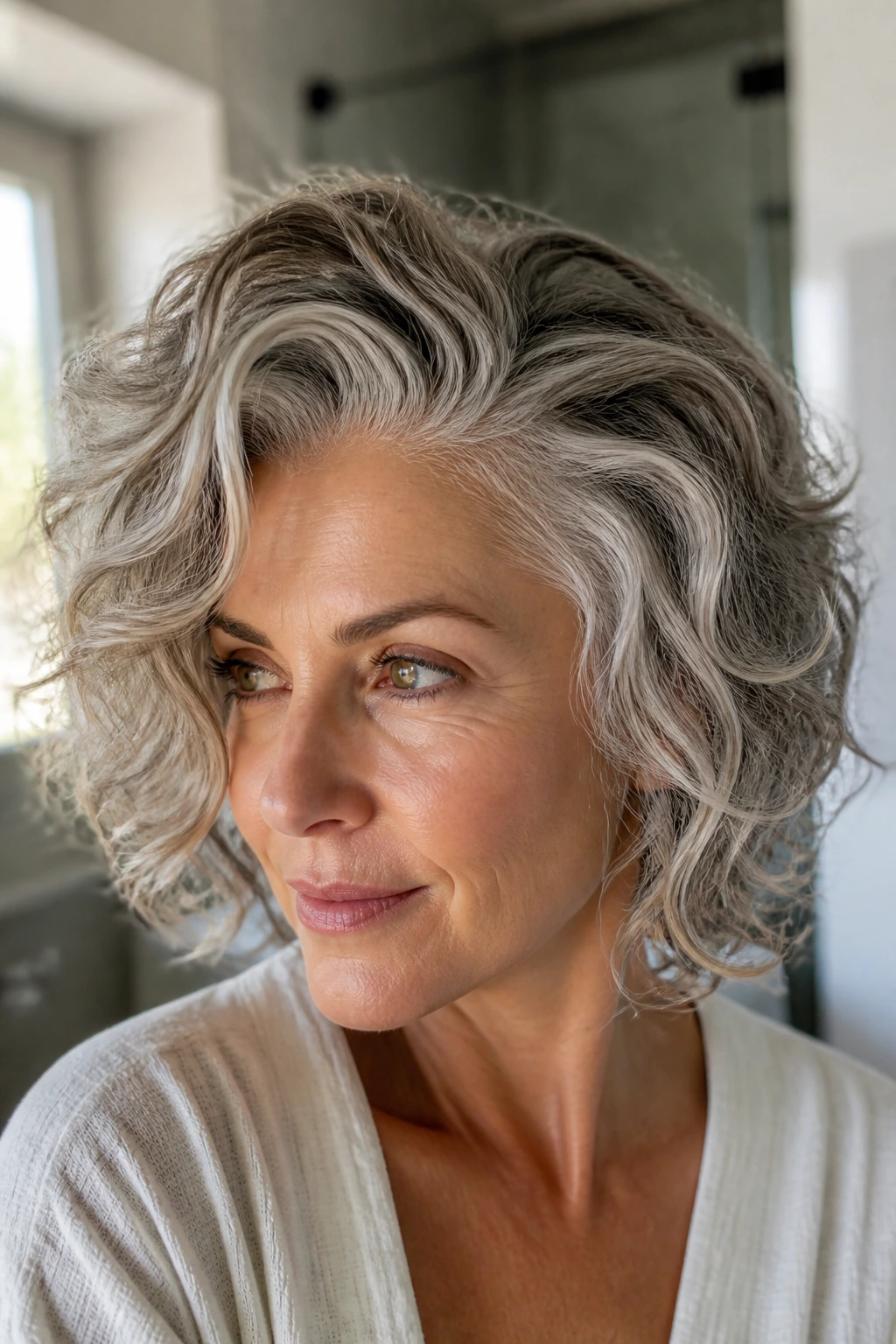
A good cut can still look sloppy if the styling is off by half an inch. The biggest thing I’d tell anyone after 50 is this: don’t overload the roots. Curly hair often needs moisture, but too much cream at the scalp will drag the whole shape down and flatten the crown before the day has started.
Parting: A side part adds lift fast. A center part can look clean, but it also exposes the root line, which is where flatness shows first.
Drying: Diffuse on low heat and low speed if you can. Hold the diffuser near the roots for a few seconds, then move. Do not blast the hair until it turns into a halo of fuzz.
Finish: Once the hair is fully dry, scrunch out the cast if you used gel. That turns hard-looking curls into soft ones without wrecking the definition.
Salon language: Ask for internal layers, not just “more layers.” That phrase means weight removal inside the shape, which is often the difference between springy curls and a triangle. If your hair shrinks a lot, ask to see the shape dry before the final snip.
The Tools, Brushes, Clips, and Products That Keep Curls Cooperative
-
Wide-tooth comb: Best for detangling in the shower with conditioner still in the hair; it separates knots without pulling curls apart.
-
Microfiber towel or cotton T-shirt: Use it to blot water instead of roughing up the cuticle with a regular bath towel.
-
Spray bottle with water: Handy for refreshing a flat fringe, reactivating product, or reshaping one stubborn section without rewashing the whole head.
-
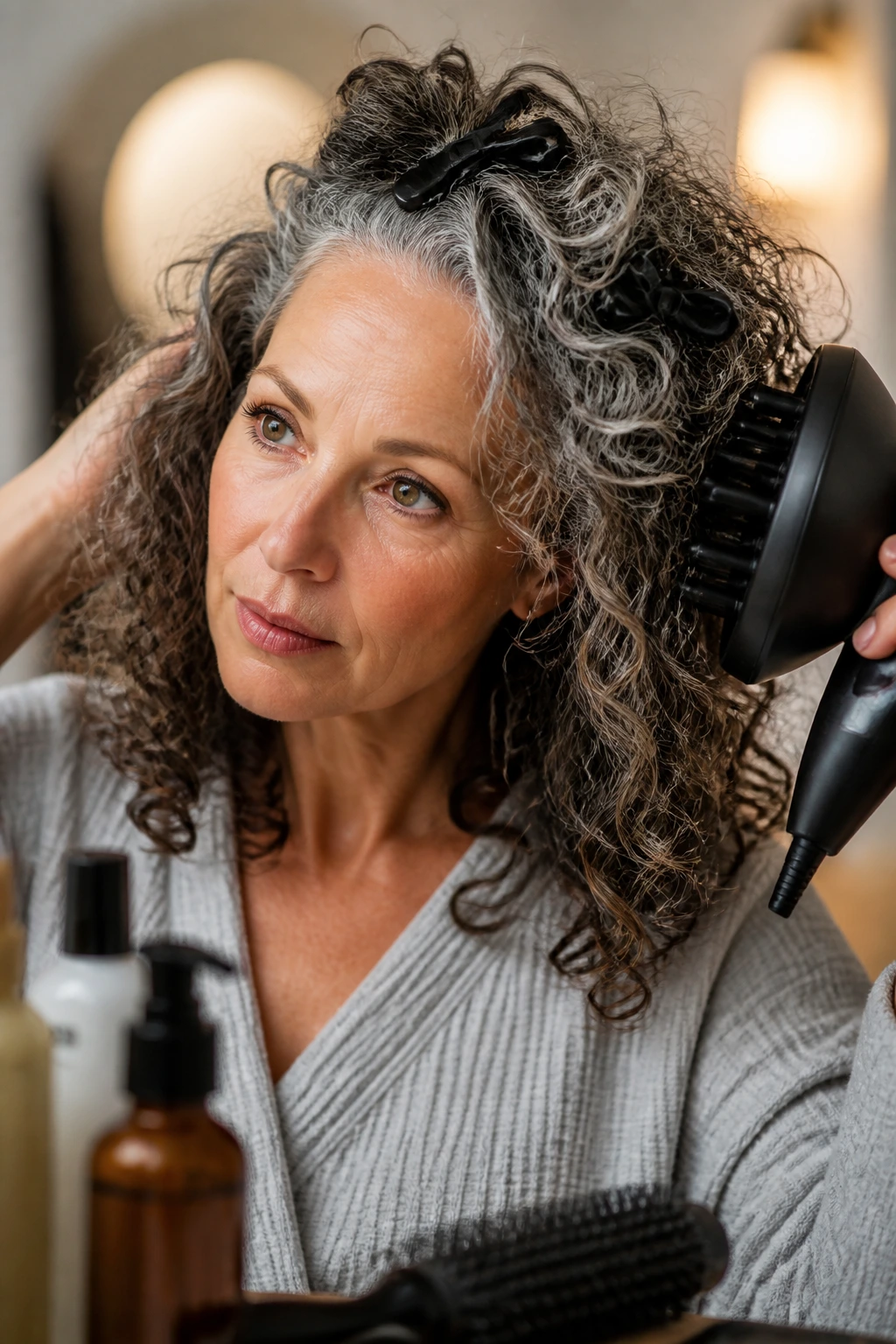
Duckbill clips: These are excellent for root clipping while the hair dries, especially if your crown goes flat fast.
-
Diffuser attachment: A diffuser keeps curls from blasting apart under direct heat and helps preserve the cut shape while drying.
-
Medium-hold gel: Gives definition and keeps the style from spreading out by lunchtime.
-
Lightweight mousse: Useful for fine curls or for adding root lift without the drag of heavier creams.
-
Leave-in conditioner: A small amount helps drier, grayer, or more porous curls stay soft enough to shape.
-
Satin bonnet or pillowcase: Reduces friction overnight, which matters more than people admit.
How to Keep Curls Fresh Between Wash Days
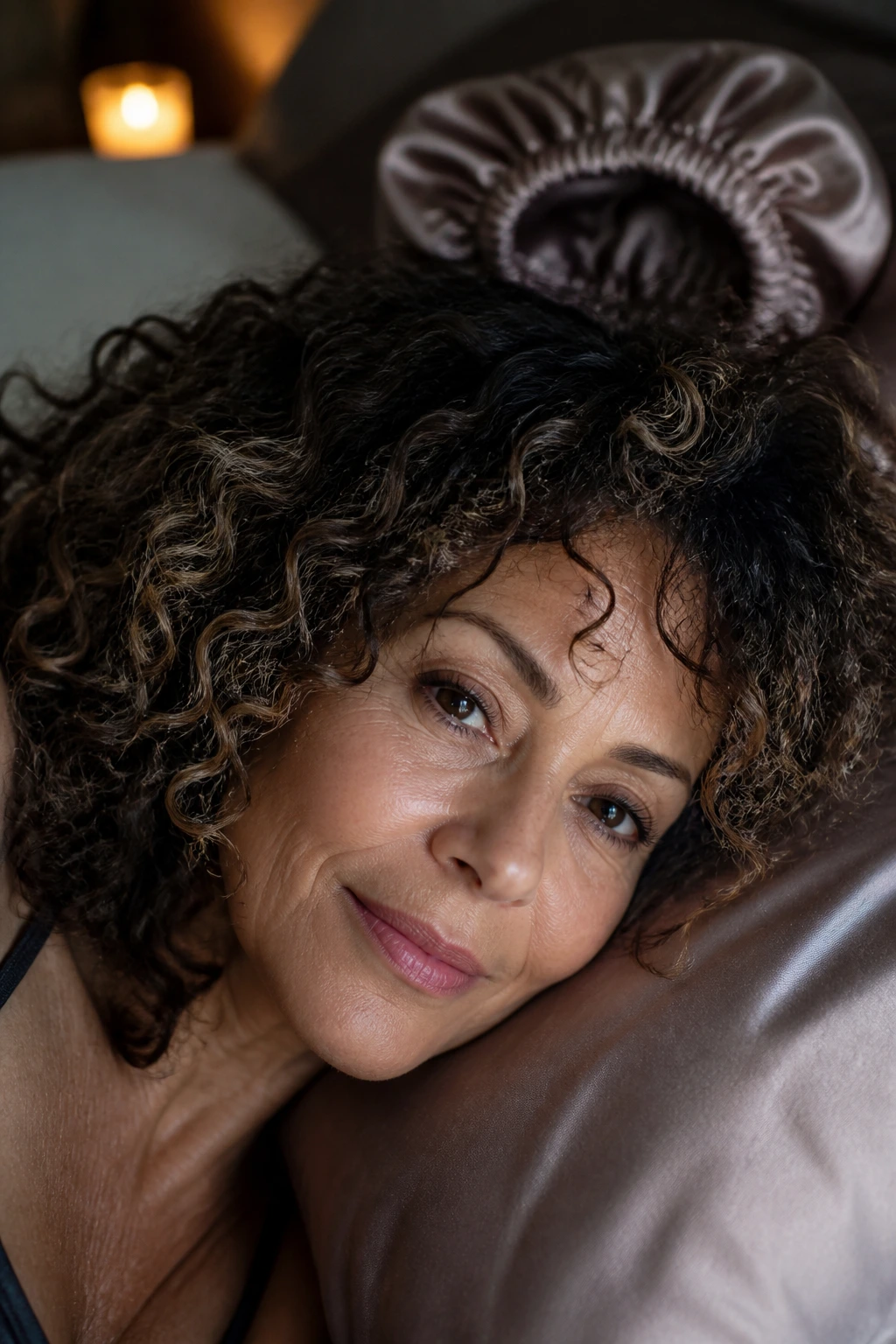
Curly cuts live or die by what happens at night. If the style gets crushed while you sleep, the next morning starts with a battle. A loose pineapple, a satin bonnet, or a satin pillowcase can keep the crown from flattening and the ends from fraying. For shoulder-length and longer styles, I like a very loose top clip or a soft scrunchie that does not leave a dent.
Refresh only what needs refreshing. A light mist of water, or water mixed with a tiny bit of leave-in, can wake up a frizzy front section without soaking the whole head. If the roots are flat, lift them with your fingers and clip them for ten minutes while the hair air-dries. That is often enough to bring the shape back.
Shorter cuts need more frequent shaping, but less product buildup. A pixie or tapered crop usually wants a trim every 6 to 8 weeks to keep the outline clean. A lob or layered shoulder cut can stretch to 8 to 12 weeks if the shape still holds. Gray curls often benefit from a clarifying wash every 2 to 4 weeks if gel and cream start coating the strands.
The biggest maintenance mistake is letting a cut go too long and then trying to style around a shape that has already stopped being a shape. Hair cannot be bullied back into balance forever. At some point, it wants scissors.
Styling Mistakes That Flatten Good Curls
The first mistake is cutting too much weight off the top and leaving the bottom heavy. That creates the classic mushroom shape: flat crown, wide sides, no movement. The fix is long internal layers or a side part that lifts the roots instead of hollowing out the top.
Another common problem is treating gray or fine curls like thick, coarse hair. Heavy creams can be a disaster here. They make the curl limp and greasy-looking by the end of the day. A lighter mousse at the roots and a small amount of gel through the lengths usually works better.
Cutting bangs too short is another one. Curly bangs bounce, and once they bounce, they rarely come back down. Leave extra length, let them dry fully, and trim again only after you know how much they spring.
Brushing curls dry is still one of the fastest ways to destroy a good shape. It stretches the curl, opens the frizz, and turns the whole head into a halo. Detangle wet, with conditioner, and stop there.
The last one is ignoring accessories. Glasses, earrings, and collars all change how a curl sits. If hair keeps colliding with your frames or clothing, the cut may need a different length line, not more product.
Easy Tweaks for Fine Hair, Thick Hair, and Gray Hair
Featherweight Lift: If your hair is fine, keep the layers long and the product light. A lob or shoulder-length cut with a side part gives lift without exposing too much scalp, and mousse usually beats a heavy cream on the roots.
Dense-Curl Release: Thick curls need room to breathe. A shag, tapered crop, or rounded shoulder cut can remove bulk where it builds up — usually around the mid-lengths and lower sides — so the silhouette doesn’t spread out like a box.
Silver Halo Softness: Gray curls often love a rounded shape with moisture and a soft perimeter. Ask for clean ends, not razor-thin texture, because gray strands can fray if they’re overworked.
Glasses-Friendly Frame: If you wear glasses, choose a cut with side pieces that clear the frame and a fringe that stops just above or below the brow. That keeps the hair from sitting on the same line as the glasses, which makes the face look less crowded.
Low-Fuss Wash-and-Go: If your schedule is packed, aim for a style that still looks finished when air-dried: a curly bob, collarbone lob, or tapered crop. These cuts don’t need rescue work every morning.
Questions Women Ask Before They Sit in the Chair
What curly haircut is best for thinning hair after 50?
A collarbone lob, rounded bob, or soft shag usually works well because the shape can keep fullness at the crown without making the ends look stringy. The key is long internal layers, not aggressive thinning. Too many short layers can make the scalp show more.
Should curly hair be cut dry or wet?
Dry or mostly dry cutting is often safer when curl shrinkage is dramatic, because the stylist can see how the hair sits in real life. Wet cuts can work too, but only if the person cutting understands your pattern and leaves room for bounce. If you’re unsure, ask for a dry curl check before the final shape is set.
How often should a curly haircut be trimmed?
Short curly cuts usually need shape-ups every 6 to 8 weeks. Shoulder-length and longer styles can stretch to 8 to 12 weeks if the outline still holds and the ends don’t look ragged. Gray curls may show split ends faster, so watch the perimeter.
Can curly bangs work if I wear glasses?
Yes, but the bang length needs to be planned around your frames. Side-swept or brow-skimming bangs usually work best because they don’t sit right on top of the glasses line. Keep them longer at first; curls shrink more than people expect.
Is a bob or longer cut better for gray curls?
Both can work, but gray curls often look especially clean in a bob or rounded lob because the shape keeps the texture under control. If your hair is coarse and springy, a longer cut can get bulky fast. If it’s fine, a lob may give you more movement.
How do I stop curls from puffing out into a triangle?
Ask for layers that remove weight from the right places, usually the interior and crown, not just the ends. A side part, a softer perimeter, and a good diffuser technique can help too. Triangle hair is usually a shaping problem, not a curl problem.
What if I do not want to heat-style every day?
Choose a cut that air-dries well: a lob, shag, curl-friendly bob, or tapered crop. Then use light styling products and let the shape do the work. A good cut should look presentable even when you only refresh the front pieces.
Can very tight curls wear a short style without looking bulky?
Yes, but the shaping has to be careful. A tapered crop, rounded bob, or dry-cut shape usually works better than a blunt one-length cut. Too much weight at the bottom makes tight curls spread out; the right cut keeps the outline compact.
The Cut That Feels Like Yourself Again
The best curly hairstyle isn’t the one that tries hardest to behave. It’s the one that gives your hair room to spring, a clean edge to fall into, and a shape that still looks good when the day gets messy. That can mean a chin-length bob, a shag, a rounded shoulder cut, or something short and tidy that shows off your curl pattern without making you fight it.
A good cut after 50 usually does one simple thing well: it stops the hair from sitting where you don’t want it. Around the jaw. At the crown. On the collar. In your glasses. Once that part gets solved, the rest feels easier than it should.
Bring the photo, yes. Bring the reality too. Your routine, your curl pattern, your frames, your patience level. Then ask for a shape that works with all of it, because that’s the part that lasts longer than the salon blow-dry.
