



Wavy hair and a long shag haircut get along better than most people think. Give the wave room to bend, keep the crown a little higher, and the whole cut starts to move on its own. That’s the trick behind 1980s long shag haircuts for wavy hair: they aren’t trying to force the hair into a neat shape so much as they’re building a shape that the hair can finish for you.
The wrong version looks familiar in the bad way. Too many short layers, too much thinning, or a blunt perimeter left to fend for itself, and you end up with puff at the sides and flatness at the top. The good version does the opposite. It lets the wave catch the light, keeps the ends from dragging, and leaves enough length that the haircut still feels grown-up instead of chopped up.
What makes this cut so satisfying is the range. One shag can read soft and feathered, another can feel rock-and-roll, and a third can flirt with a blowout that practically asks for a round brush. Some of them lean hard into bangs. Some avoid fringe entirely. All of them borrow from the same 1980s playbook: height, swing, feathering, and a little attitude around the face.
Why These 1980s Long Shag Haircuts Work So Well on Wavy Hair
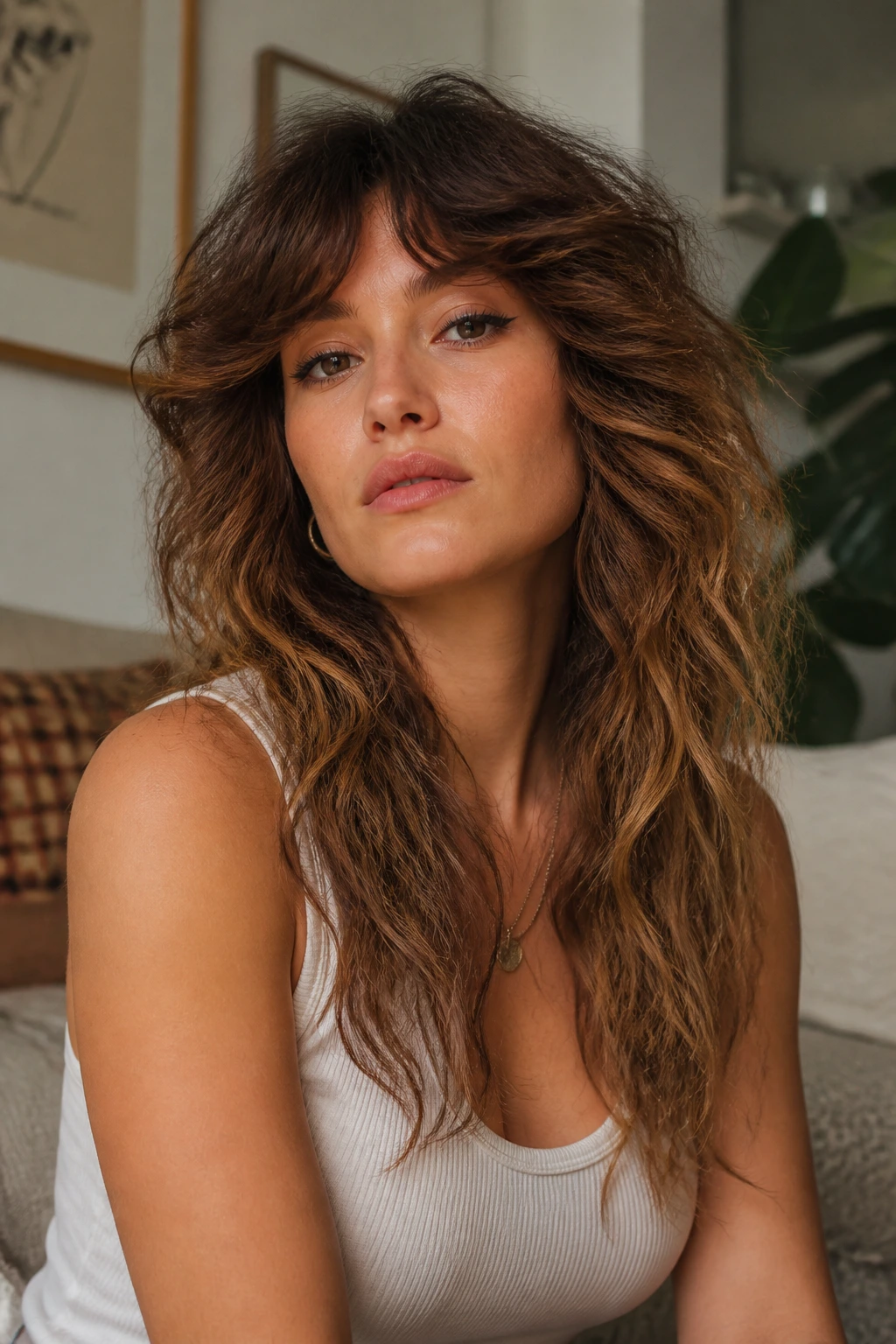
- The wave does half the styling: A good shag gives your natural bend somewhere to go instead of fighting it into a straight line.
- The crown gets real lift: Shorter layers near the top stop wavy hair from collapsing into a heavy curtain.
- Length stays useful: You still get ponytail length, braid length, and tuck-behind-the-ear length, which is the part a lot of shag cuts forget.
- The grow-out is kinder: Soft layers and feathered edges blur as they grow, so the shape does not fall apart overnight.
- The look changes with styling: Air-dried, diffused, or blown out, the same cut can lean casual, glossy, or full-tilt retro.
What a True 1980s Long Shag Looks Like in the Chair
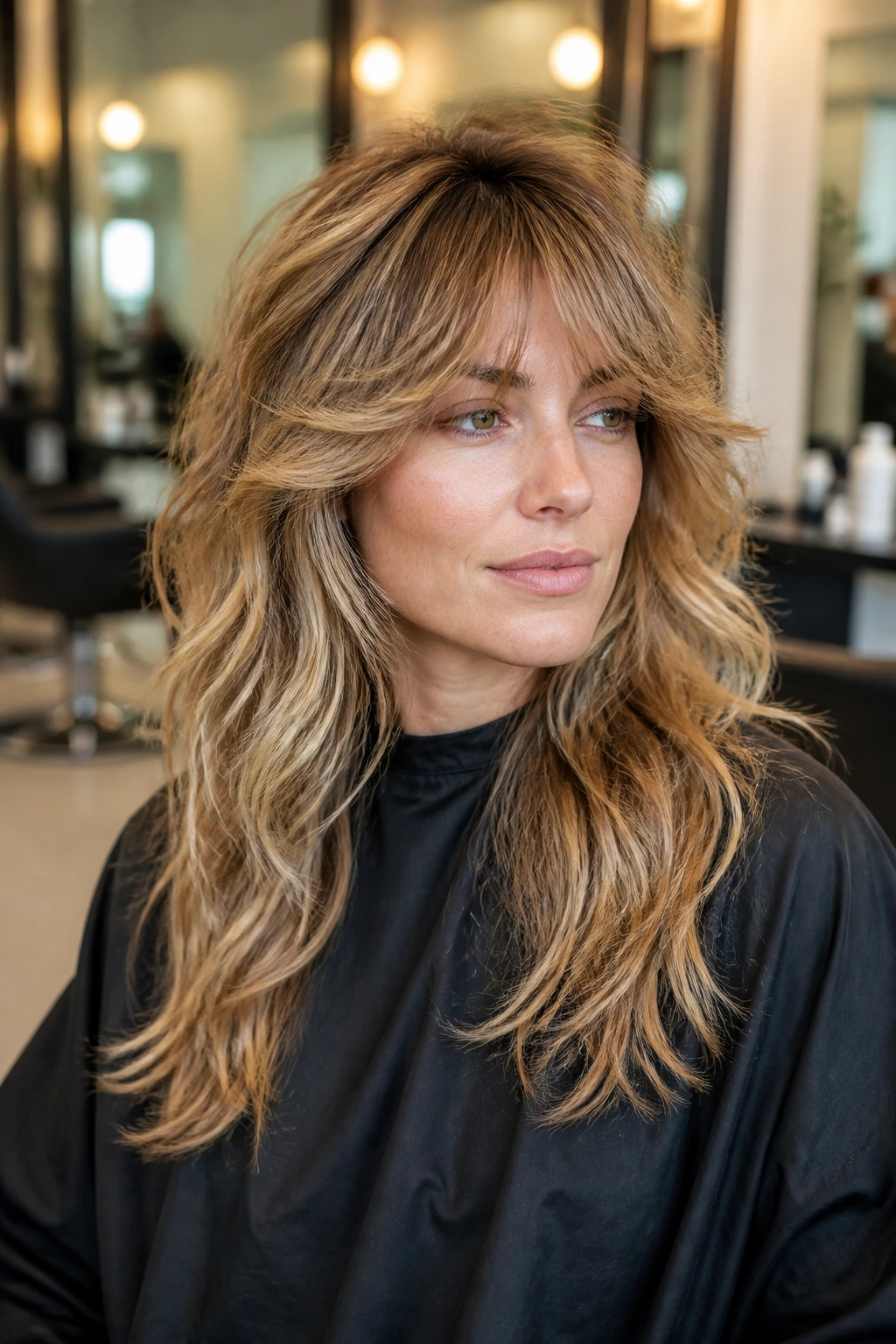
A real 1980s shag is not just “some layers.” It has a plan. The crown usually carries more lift, the face frame is cut with intent, and the perimeter keeps enough weight to stop the whole thing from floating away. That weight line matters. Without it, the cut starts to look stringy instead of feathery.
The Crown Comes First
The crown is where the 1980s energy lives. If the top is left too long, the haircut lies flat; if it’s cut too aggressively, the whole head can look frayed. The sweet spot is a layered top that lets the root rise about an inch or two once the wave dries. That gives you height without that bubble-helmet shape nobody wants.
Feathering Is Not the Same as Thinning
Feathering should soften the edge, not chew it up. On wavy hair, a soft razor or point-cut finish can help the ends move, but heavy thinning shears near the perimeter often create frizz and see-through ends. I’d rather keep a little density and let the wave separate naturally.
The Face Frame Does the Talking
The best long shag shapes pull attention around the eyes and cheekbones. That can mean curtain bangs, a deep side sweep, or long layers that start at the chin and fall toward the collarbone. The line should feel deliberate. Random face-framing cuts tend to look like damage. That’s the difference.
How to Choose the Right Version for Your Wave Pattern
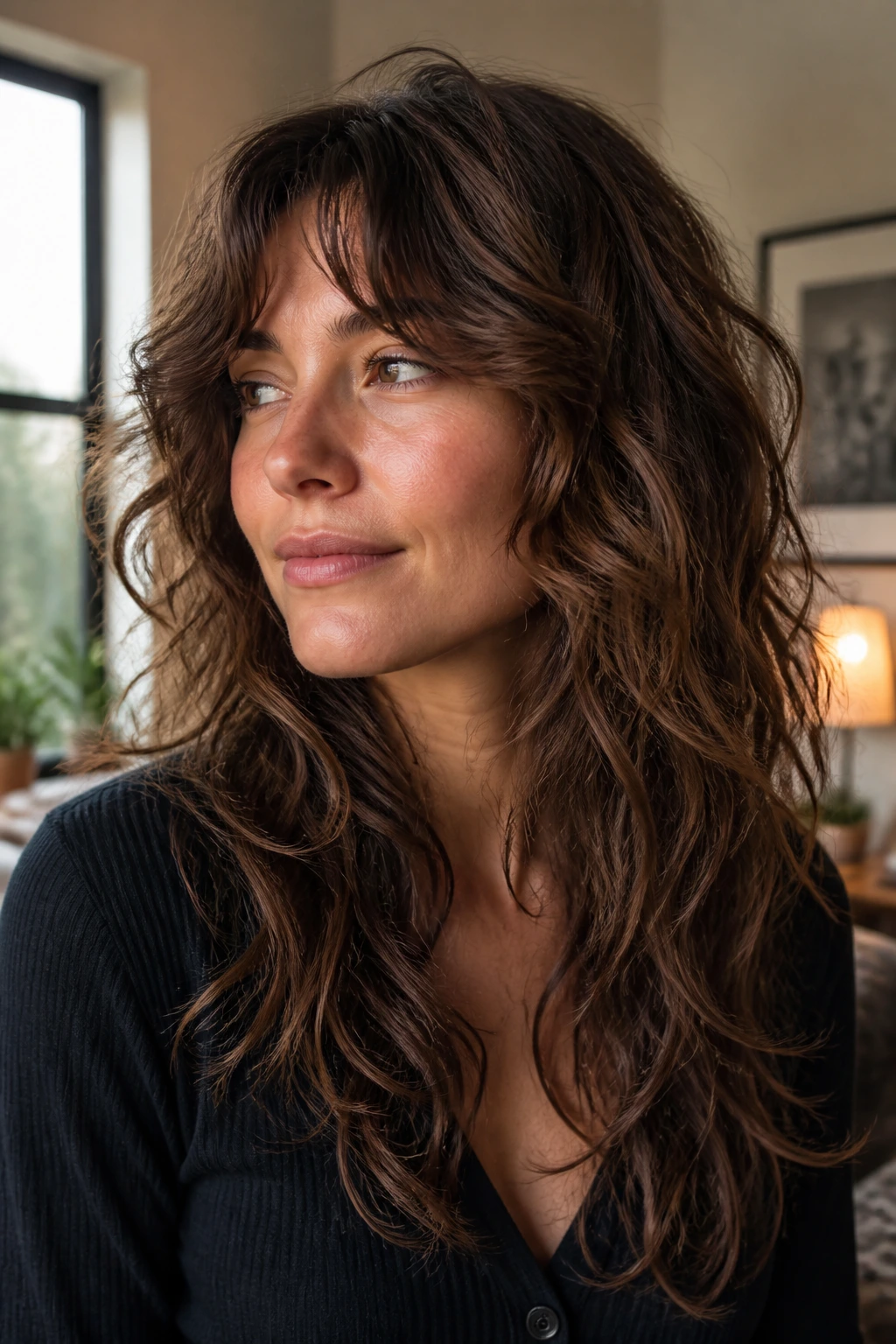
Loose S-waves, stronger bends, and thick, springy waves all need a slightly different layer map. The haircut itself can look similar on paper, but the placement of the shortest layers changes everything.
Loose Waves
If your wave is soft and stretches easily, ask for longer crown layers and a fuller perimeter. Too much internal layering and the hair starts to drape instead of bend. A long shag with curtain bangs or a gentle side part usually gives loose waves enough shape without taking away body.
Stronger Waves
For a more obvious wave pattern, you can push the crown a little shorter and let the face frame do more of the work. This hair type can carry a bit more texture. It’s the one that can handle a collarbone-skimming shag with more lift near the top and still look polished.
Thick or Dense Hair
Dense hair needs weight removal, but not all at once. Ask for internal layering and soft graduation through the sides, then keep the ends blunt enough to hold the shape. If the stylist over-thins thick wavy hair, the result puffs up at the sides and gets fuzzy at the bottom. That is a headache, not a haircut.
1. Feathered Crown Shag
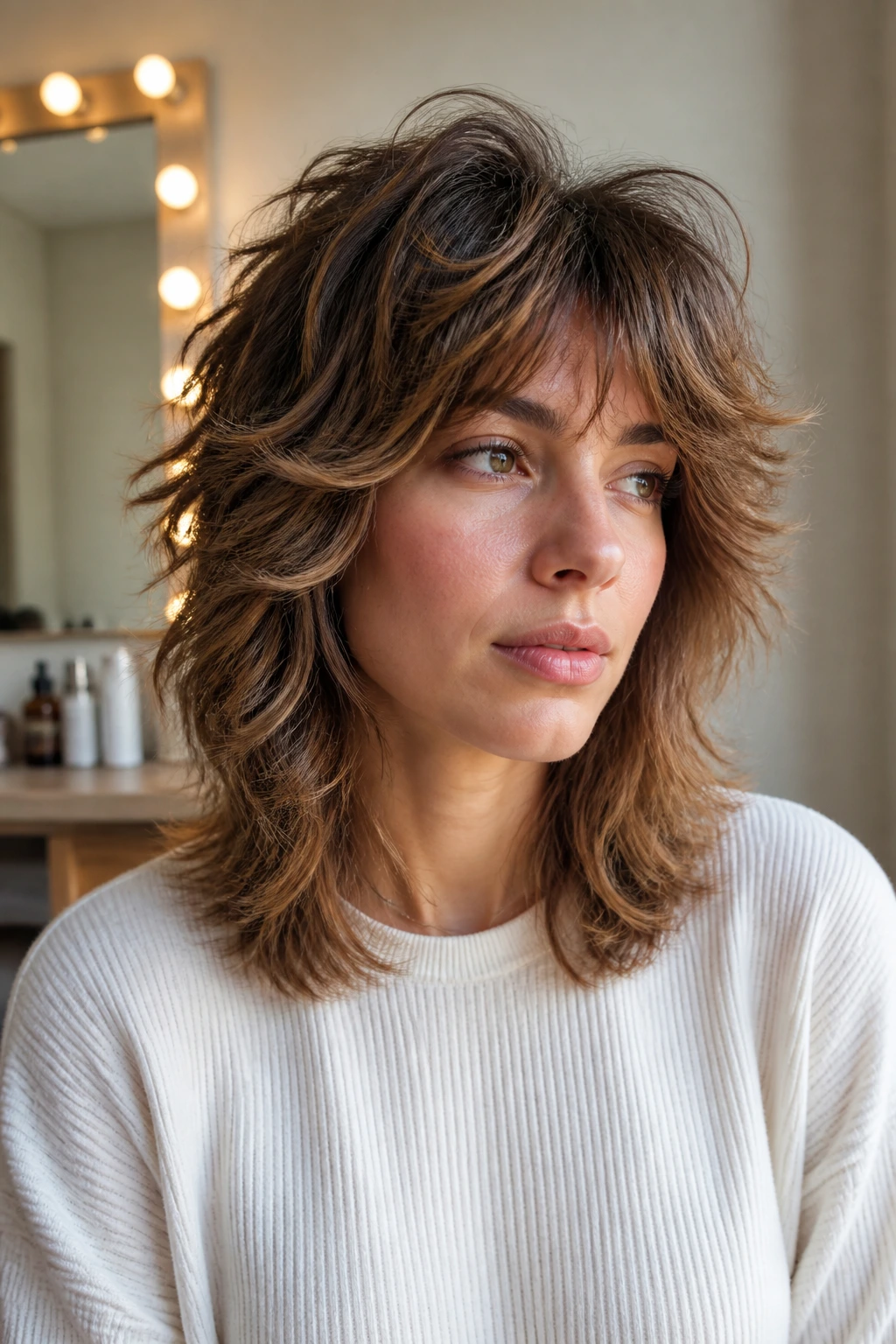
This is the classic. Shorter layers sit through the crown, then the lengths fall long enough to brush the shoulders or slip past them. On wavy hair, the feathering makes the top light and airy, while the lower lengths keep the cut from turning wispy.
Ask for the crown to be lifted without chopping the back to pieces. That one detail matters. If you want the most recognizable 1980s outline, this is the cut that gives it to you with the least fuss.
2. Curtain-Bang Cascade
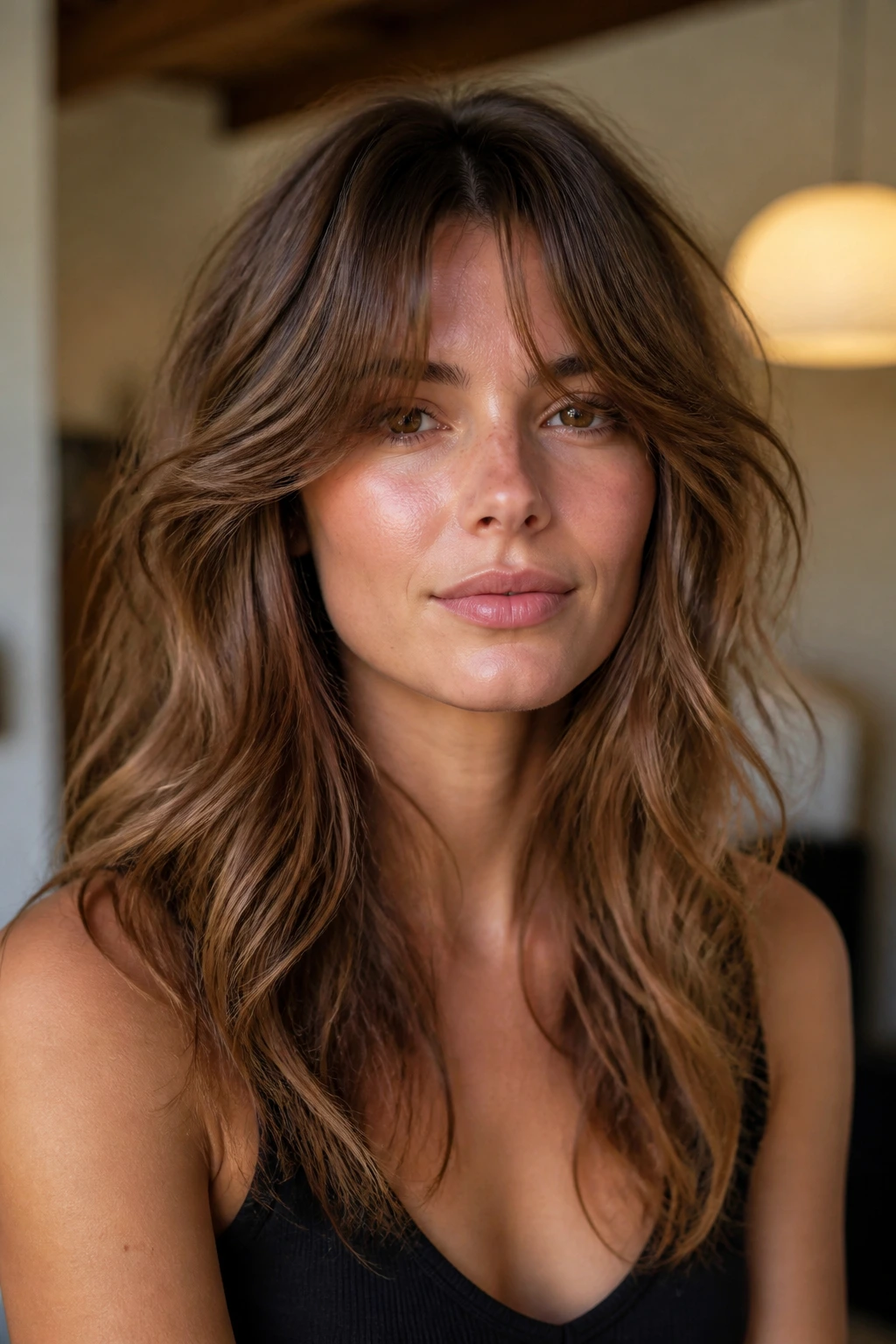
Why does this one work so well? Because curtain bangs and wavy hair are natural allies. The fringe opens in the center, drops toward the cheekbones, and blends into long layers that feel soft instead of severe.
The magic is in the transition. The bangs should not stop and start like a separate piece; they should melt into the front lengths. That makes the cut look expensive even when the styling is simple. A little mousse at the roots, a rough dry, and you’re done.
3. Razored Collarbone Shag
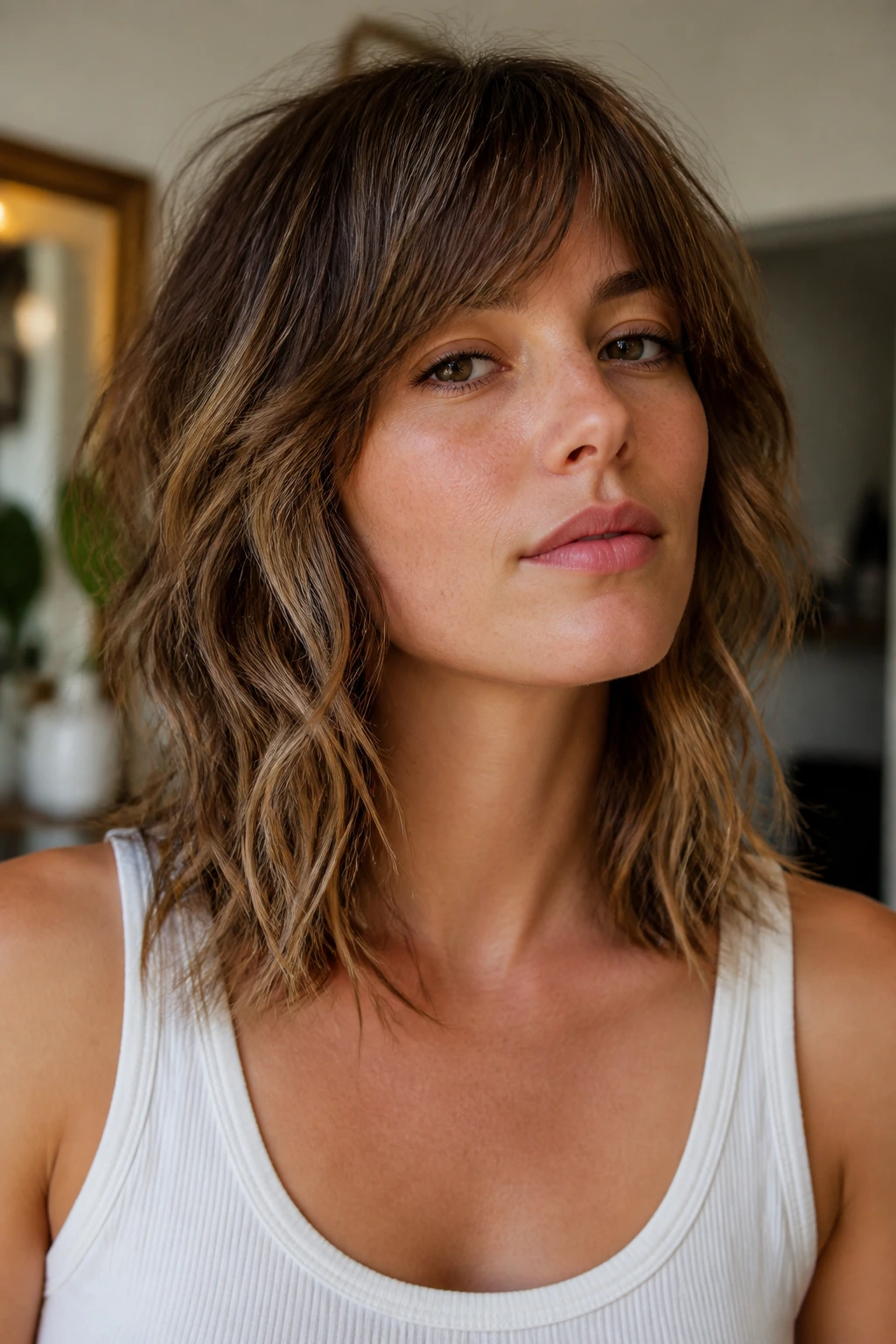
The collarbone is a useful stopping point. It gives the cut a clear line without making the ends blunt, and on wavy hair it keeps the movement from getting swallowed by too much length. A soft razor finish through the ends helps the waves separate in a neat, piecey way.
If your hair is medium-fine, this version can be a lifesaver. It looks lighter, but it still keeps enough body to swing when you turn your head.
4. Deep Side-Part Rocker Shag

A deep side part changes the whole mood. Suddenly the shag gets a dramatic sweep at the front, more height on one side, and a little swagger that feels straight out of an old concert photo.
This cut works best when the longest face-framing layer starts low enough to skim the cheek or jaw. That keeps the side part from looking severe. It also gives wavy hair a place to collapse softly instead of puffing into a pyramid.
5. Big-Volume Blowout Shag
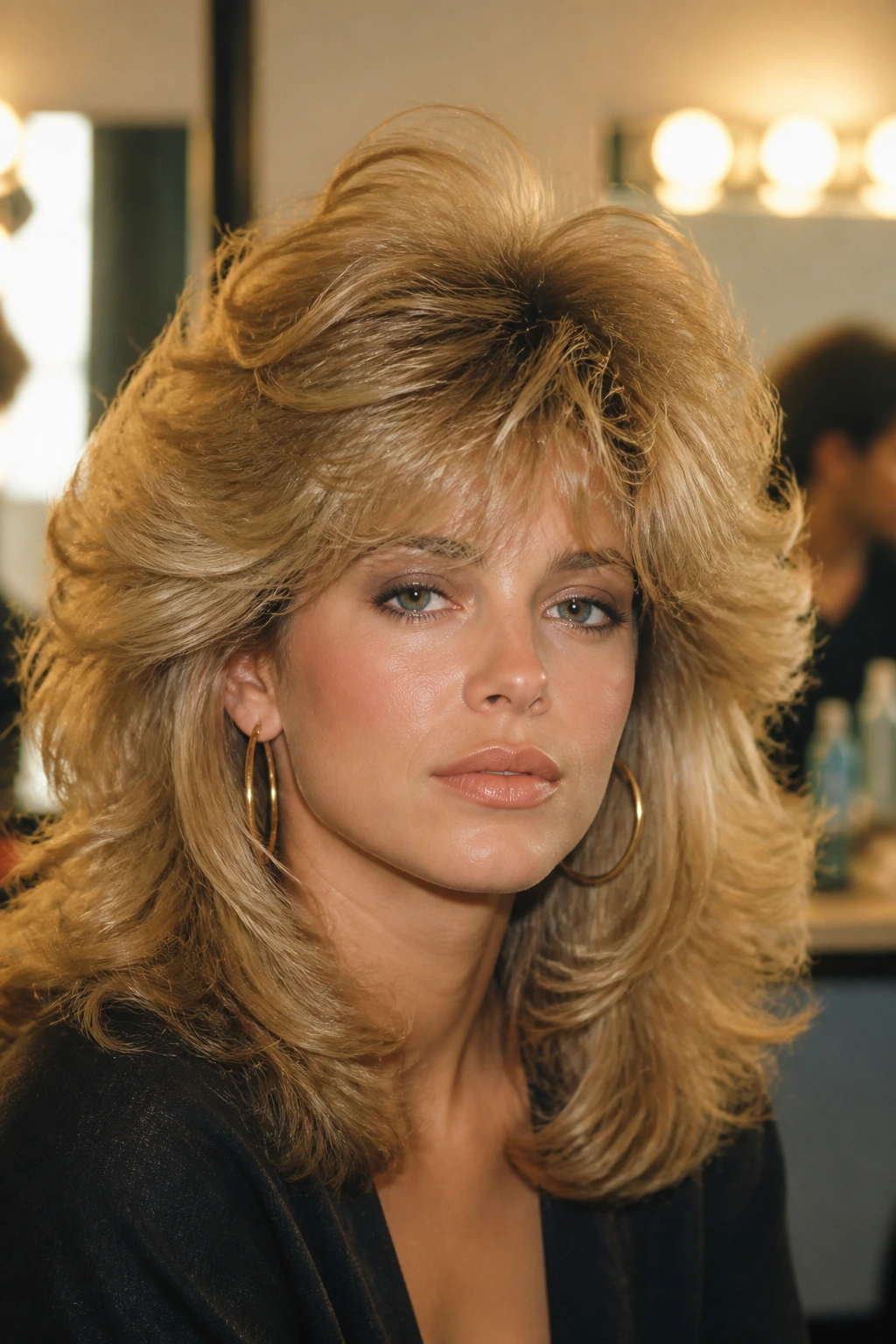
This is the one for people who like to round-brush their hair and hear the dryer before they hear the music in the room. The layers are arranged so the crown lifts, the mid-lengths curve, and the ends flip with a little persuasion.
It’s glamorous in a very 1980s way. Not stiff. Just full. If your waves flatten fast, this is the cut that gives you back the movement you thought was gone.
6. Soft Wolf Shag

A soft wolf shag borrows a little from the mullet, but it stops before things get too extreme. The top is shorter, the face frame is broken up, and the back hangs longer with a loose, wild finish.
What keeps it wearable is the softness around the edges. On wavy hair, that softness matters because it prevents the cut from turning into a spiky outline. Ask for texture, yes, but not a lot of razoring through the bottom.
7. Face-Framing River Shag
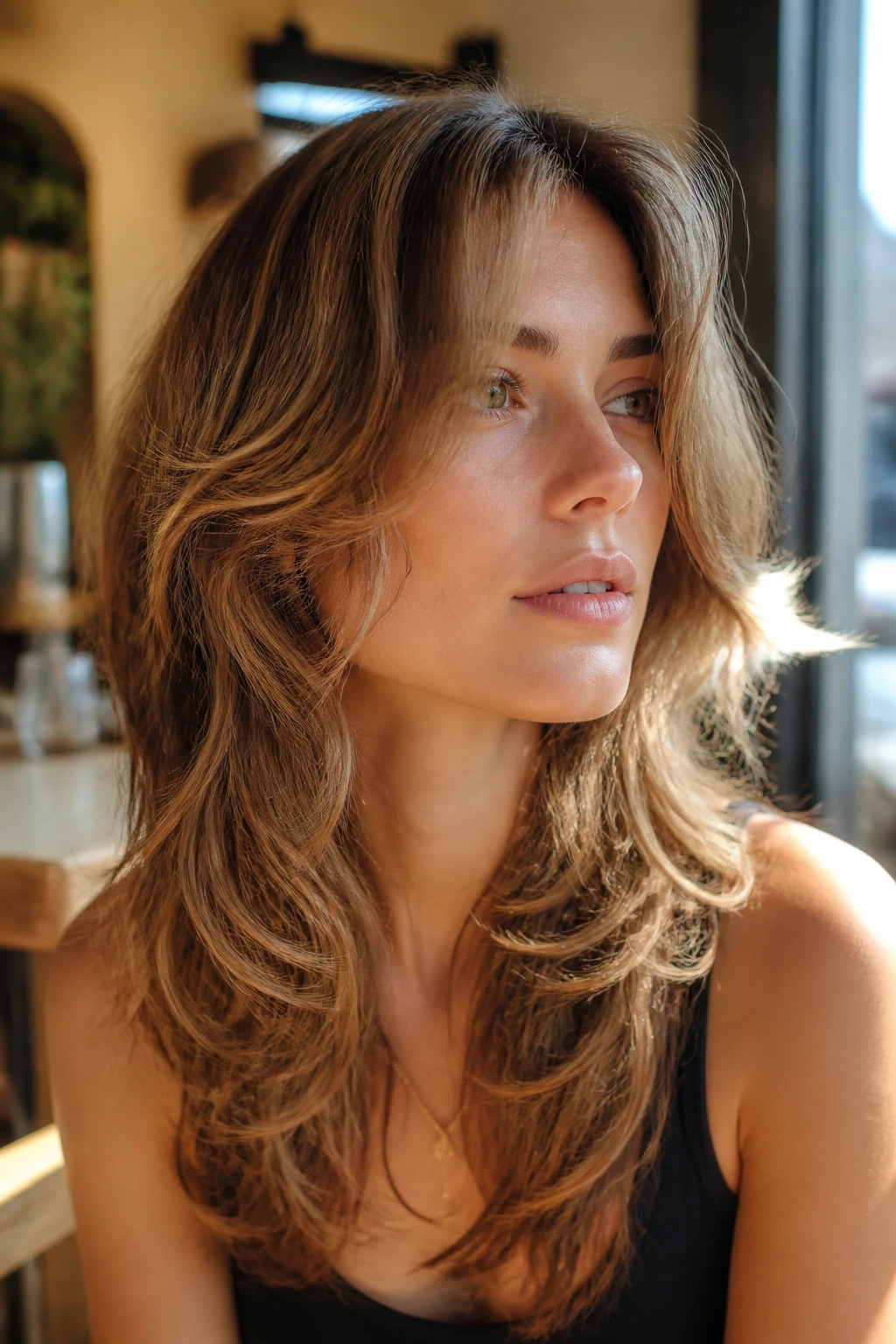
Think of this as layers that flow. The front pieces start around the chin or collarbone and slide downward in a way that feels almost liquid once the waves dry. It’s a good choice if you want the 1980s shape without heavy fringe.
This version is flattering because it follows the face instead of boxing it in. The waves bounce off the longer front sections, and the cut keeps its movement even when you don’t style it much.
8. Brow-Grazing Fringe Shag
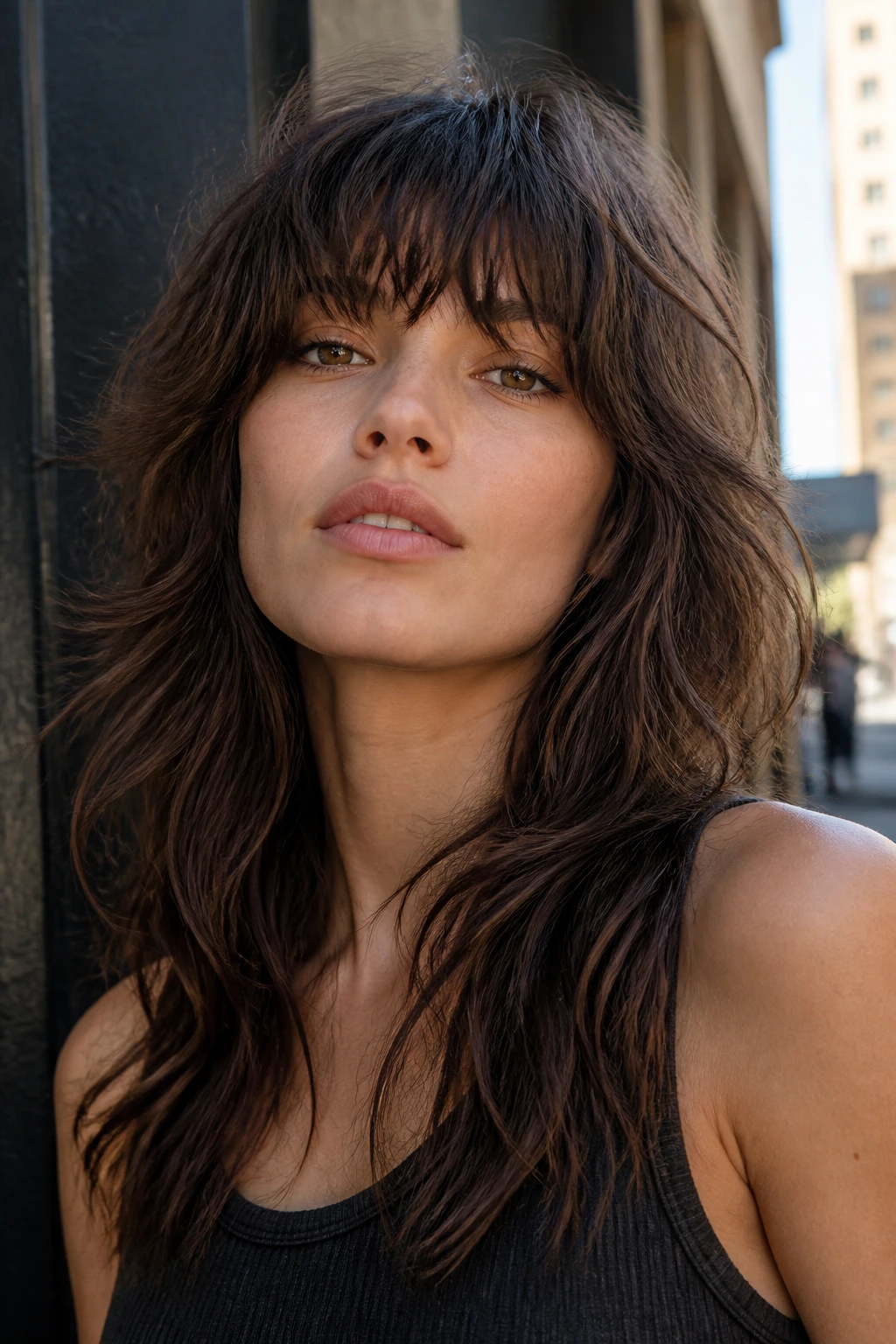
This cut lives or dies by the bangs. Brow-grazing fringe gives the face a strong front edge, and the long layers behind it keep the rest of the hair from feeling blunt. It’s a bold shape, but not a fussy one.
How to Keep the Fringe from Springing Up
Cut it a little longer than you think. Wavy hair rises when it dries, and fringe that lands exactly at the brow in the salon often sits too short at home. A soft, slightly piecey bang also looks better than a perfectly even one. The wave needs room to breathe.
9. Boho Layered Shag
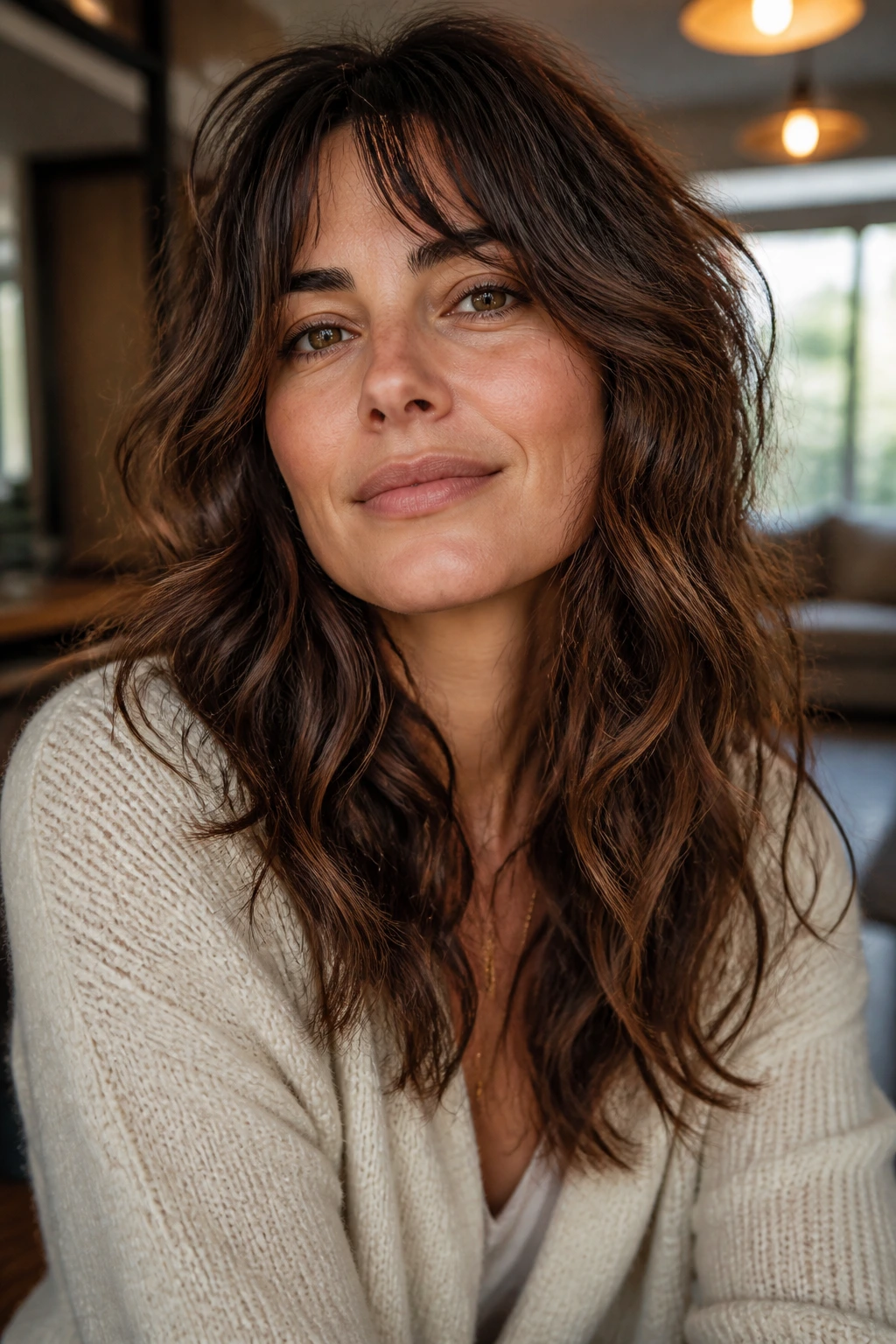
This one leans relaxed. The layers are softer, the ends are less feathered, and the whole cut looks like it was made for a sweater, a denim jacket, and a long afternoon that drifts into evening.
It’s a good option if you want a shag that doesn’t scream “salon blowout.” Wavy hair gives it enough movement on its own, so the cut can stay quiet and still feel finished.
10. Jagger-Edge Shag

The Jagger-edge shag has a sharper attitude. The layers are more broken up, the face frame is more angular, and the top carries a little extra lift. It’s one of those cuts that looks especially good when the hair is barely brushed.
Unlike softer shags, this one wants definition. A bit of matte texturizing spray through the mids helps keep the pieces separated. If you like your waves with a little grit, this is the lane.
11. V-Cut Feathered Shag
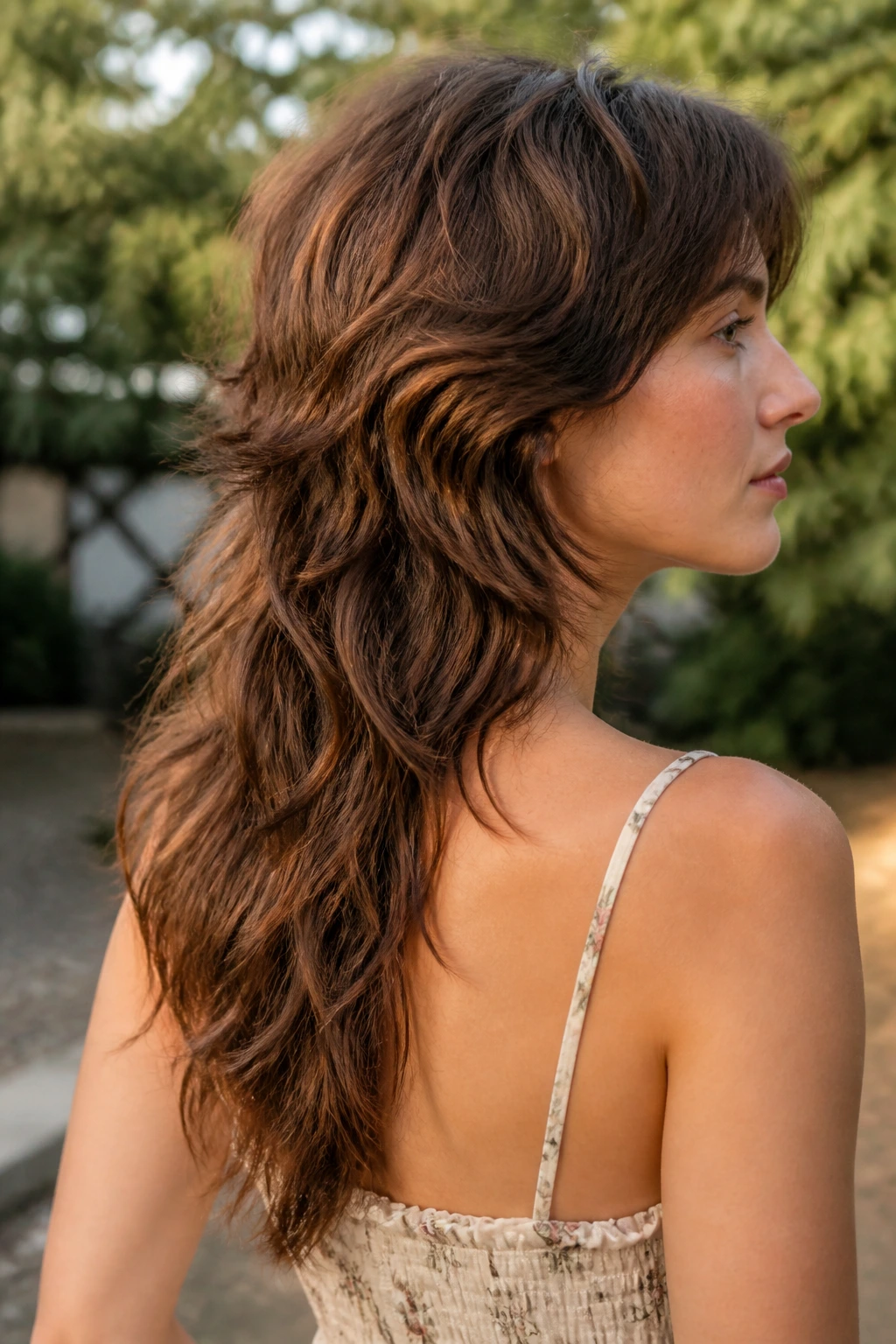
The V-cut gives the back a taper, so the longest point sits right down the center while the sides fall a bit shorter. On long wavy hair, that creates a nice trailing shape that still moves when you walk.
The feathering around the crown keeps the top from looking heavy. If you wear your hair half-up a lot, this shape is especially good because the layers still show even when the top is pinned back.
12. Tapered-Top Shag

Why do some shags feel flat while others feel alive? Usually it comes down to the top. A tapered-top shag keeps more lift near the crown, then gradually releases length through the sides and back.
That shape is handy if your hair tends to go wide at the cheek level. The taper directs attention upward. It also gives you a nice profile from the side, which is one of those small things that makes a haircut feel expensive.
13. Long Shag Lob Hybrid
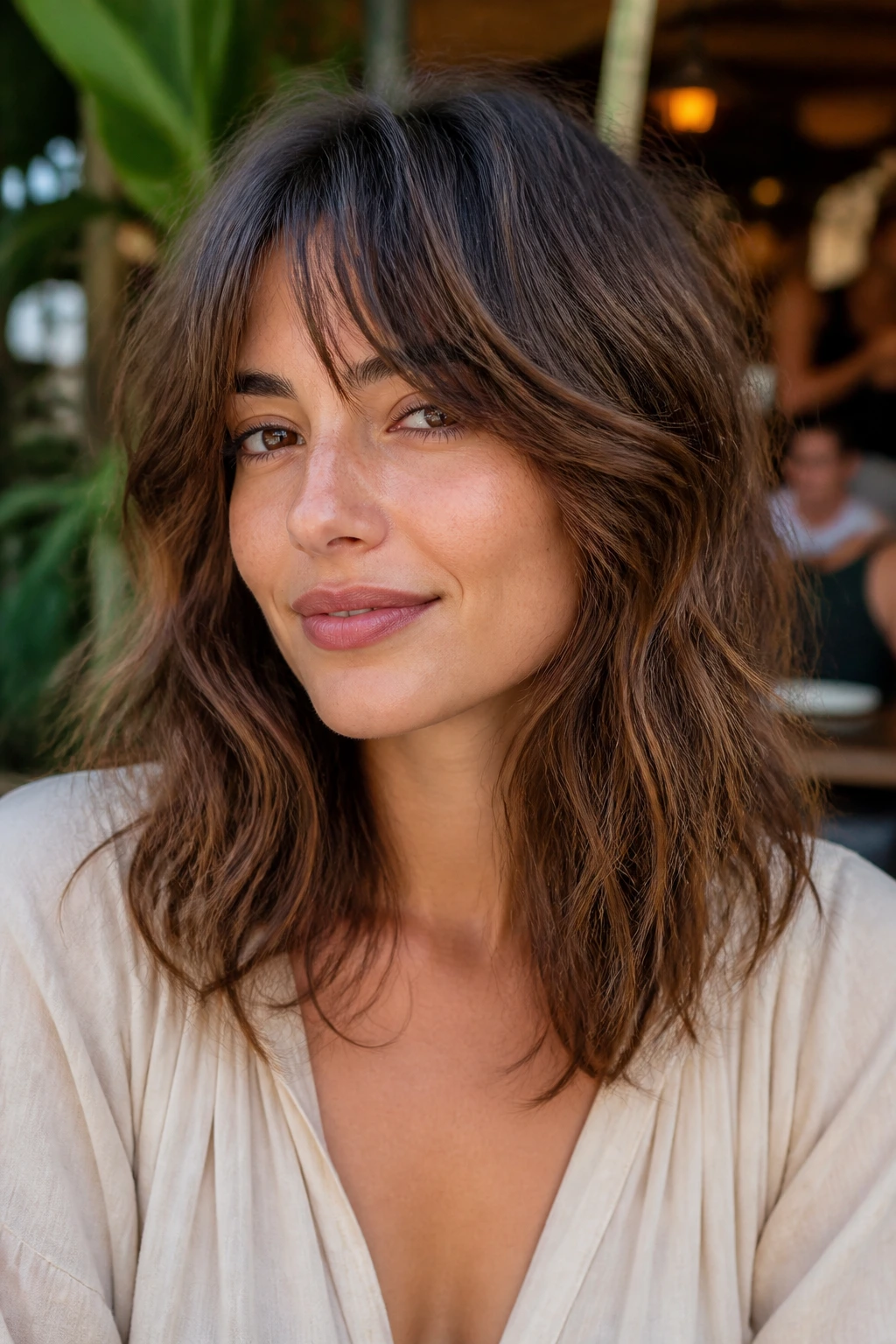
This is the compromise haircut for people who love long hair but want something that behaves more like a shag. The length sits around the shoulders or just below, and the layers are placed to keep the wave from collapsing.
It’s one of the easiest shapes to live with. You can wear it air-dried, lightly blown out, or tucked under with a brush. The silhouette still nods to the 1980s, but it reads a little more modern and less dramatic.
14. Curly-Wave Shag

If your “wavy” hair has a hint of curl, this cut needs to be handled with care. The right version is usually cut dry or nearly dry, with the stylist watching how each bend sits before taking off more length.
That keeps the curls from springing into mismatched chunks. A curly-wave shag should clump in soft sections, not explode outward. It’s a smart option if your waves change shape depending on humidity.
15. Choppy Mid-Length Shag
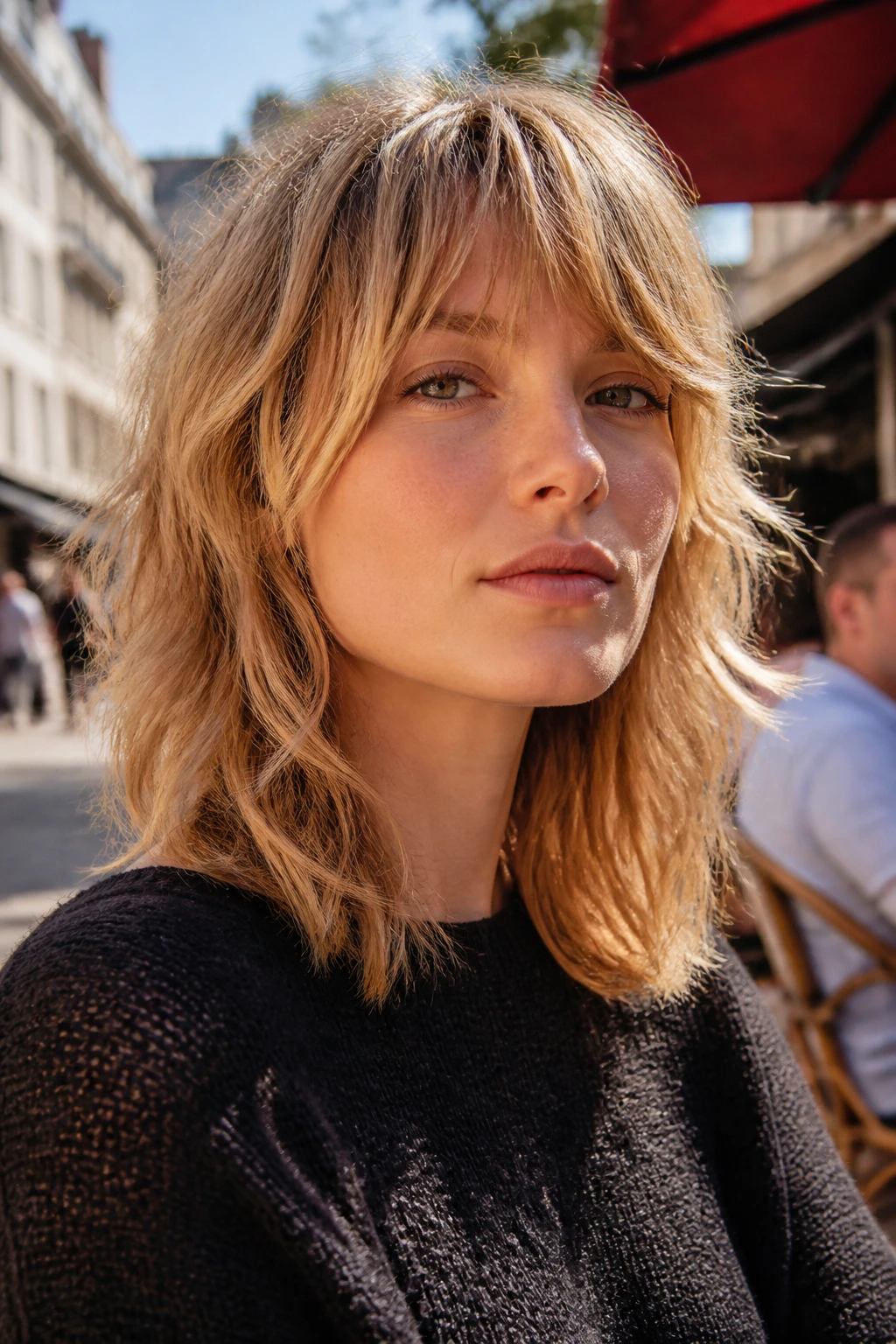
This one lands in the middle of the road, which is not a bad place to be. The ends have some choppiness, but the overall cut stays long enough to tuck behind the shoulders or pin back for work.
The trick is to keep the perimeter clean. If the layers are too broken up and the ends too shredded, the cut loses its 1980s polish. The right version still looks intentionally styled, even when it’s messy.
16. Bottleneck Bangs Long Shag
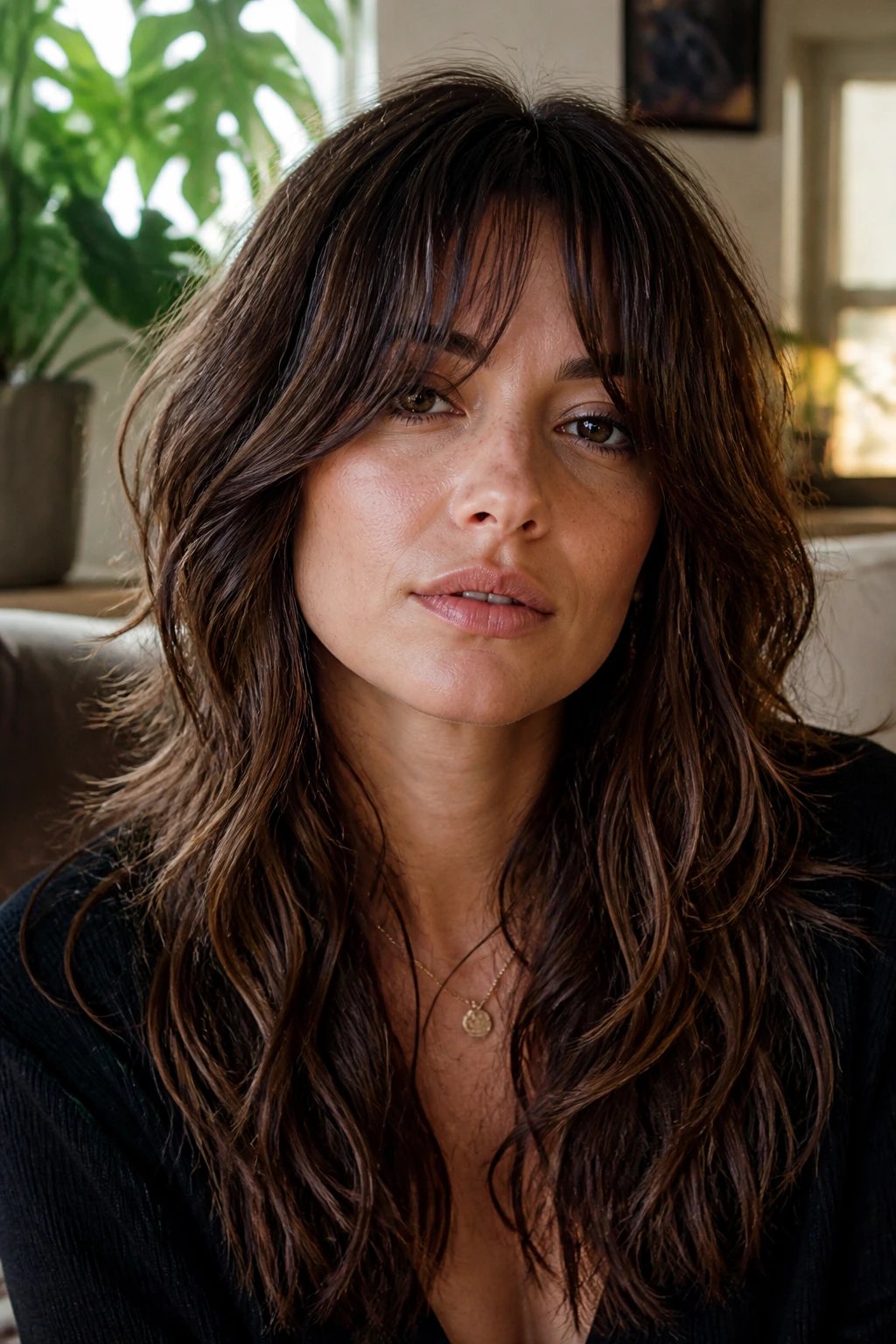
Bottleneck bangs give you a little more shape than curtain bangs and less commitment than a full fringe. They narrow near the center, then open up as they fall toward the cheeks, which makes them a nice fit for wavy hair.
What to Ask Your Stylist
Ask for the center to be short enough to create a real fringe, but not so short that it fights your wave pattern. The side pieces should blend into the longest front layers, and the rest of the shag can stay soft. That keeps the bang from becoming a separate object sitting on top of your head.
17. Temple-Wing Shag
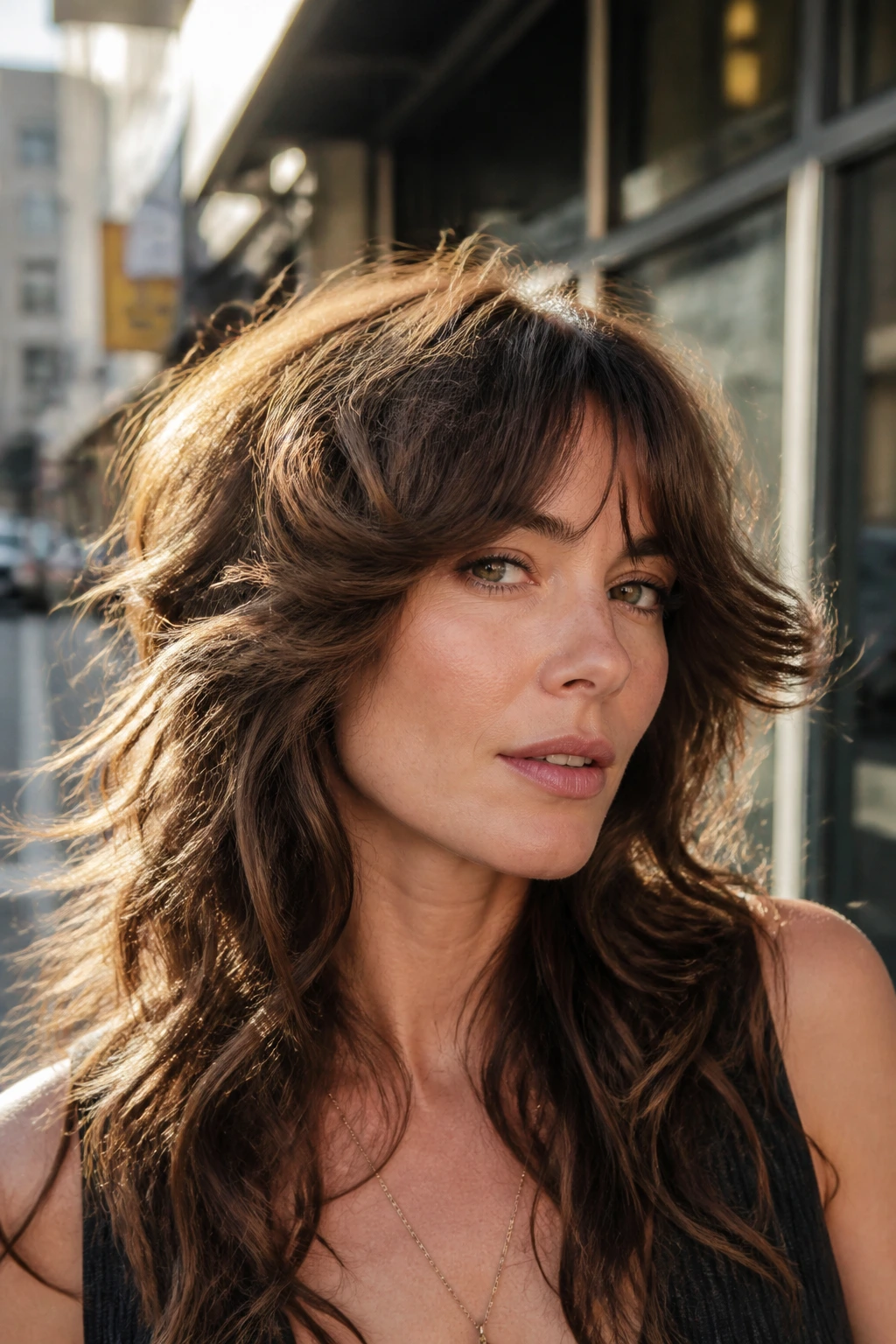
This one starts its framing higher, near the temples, so the shape opens around the face like little wings. It’s a subtle way to get 1980s energy without a heavy bang or a huge crown.
The result is flattering because it softens the upper face and keeps the rest of the hair long. Wavy hair helps the winged pieces curve naturally, which means less styling and fewer sharp lines.
18. Air-Dry Beach Shag

Some shags need a brush. This one does not. The air-dry beach shag is built for waves that want to dry into loose bends, with light layers and just enough shape through the front to keep it from going limp.
It’s a little less polished than the blowout versions, but that is the point. If you like texture that looks lived-in instead of coiffed, this is the easiest cut in the bunch.
19. Glam Side-Sweep Shag
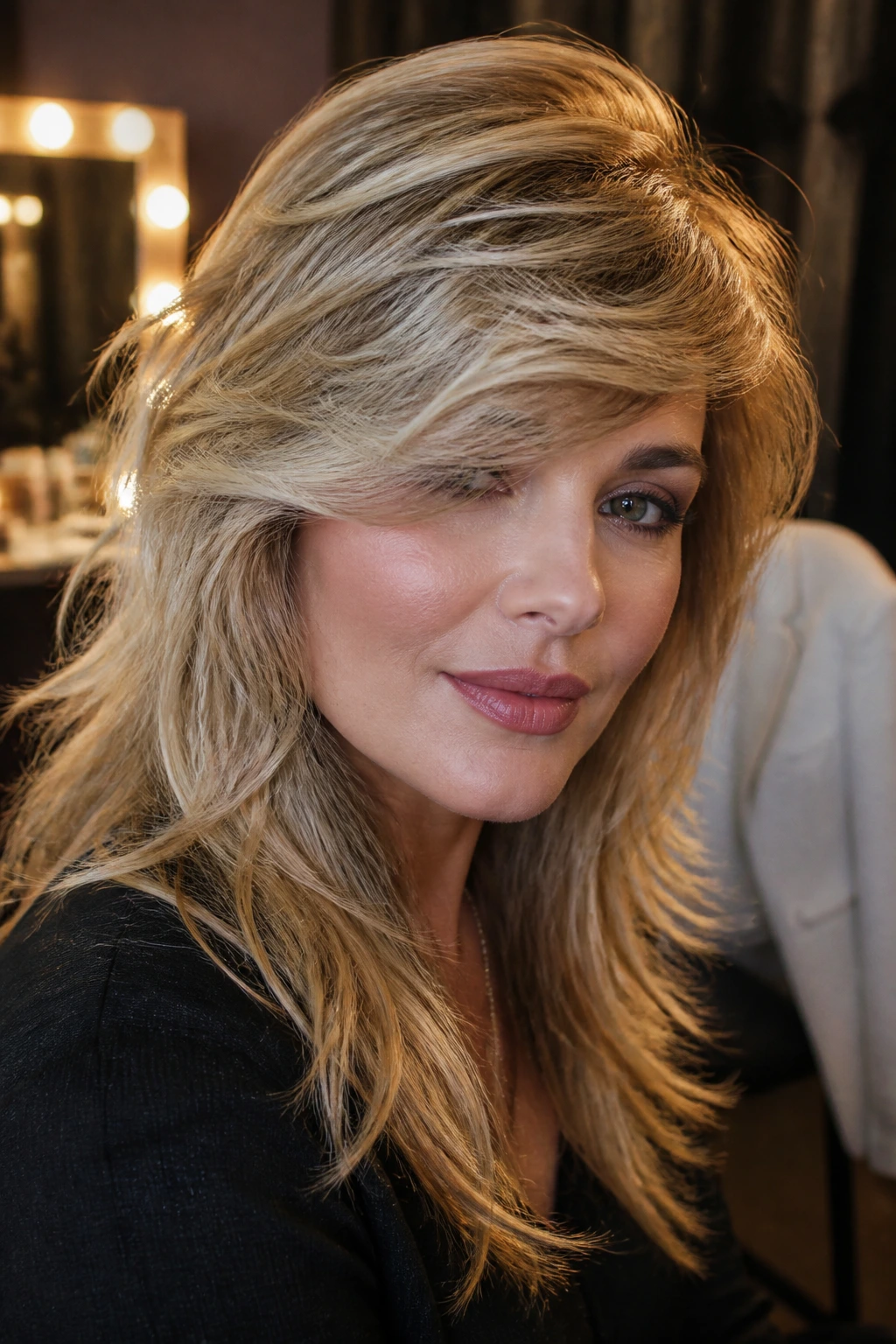
A side-swept fringe gives the shag a more dressed-up finish. The front moves diagonally across the forehead, the crown gets a gentle lift, and the lengths stay long enough to feel elegant rather than choppy.
This is the shag I’d pick for a person who wants the 1980s outline but still needs the haircut to work with a blazer or a slip dress. It can look glossy with a round brush, or softer with a few bends left in.
20. Razor-Textured Shag
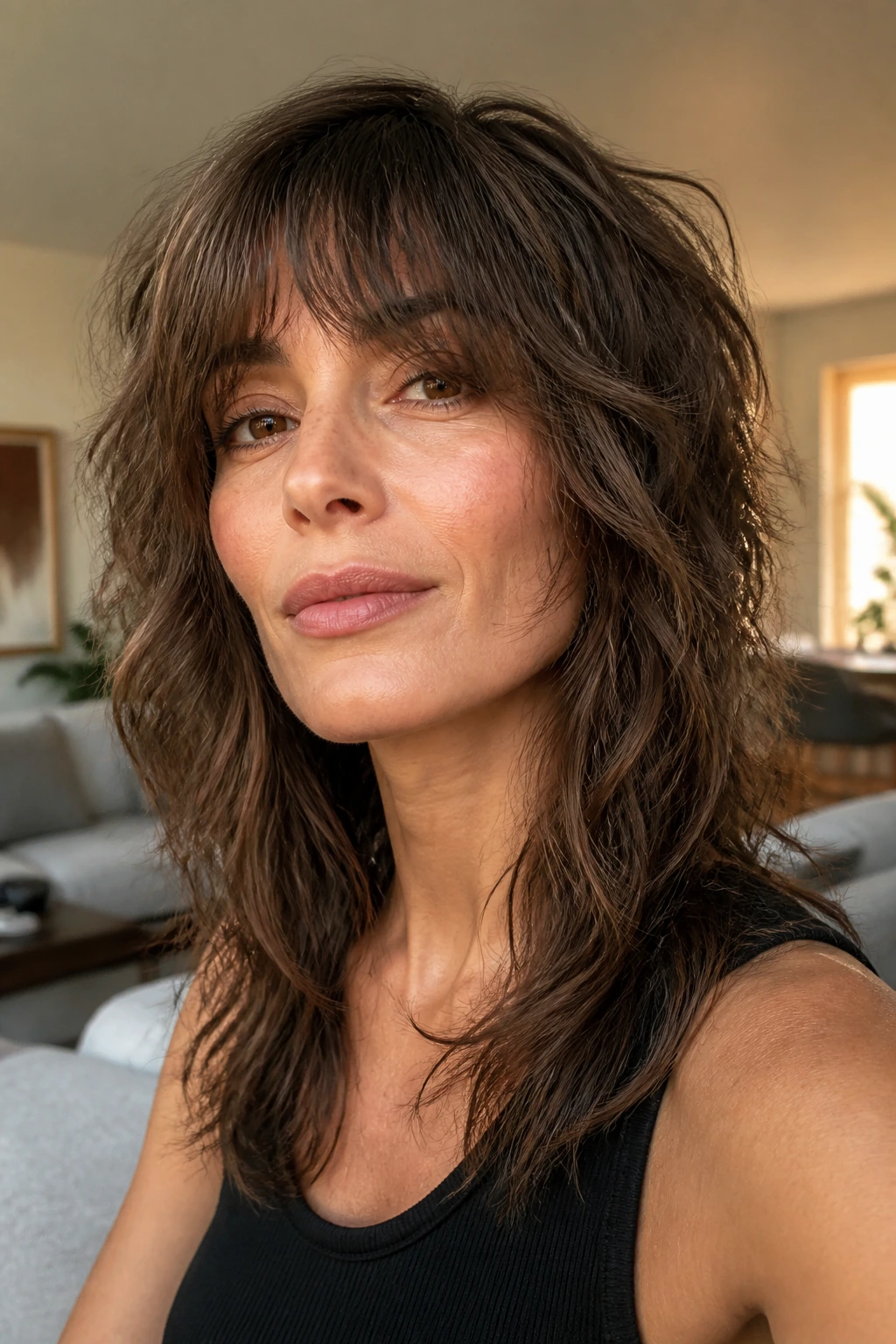
The name tells you the whole story. This version uses razor texture through the mid-lengths and ends to make the waves separate in a looser, more broken-up way. It’s not about making the whole head airy; it’s about making the movement visible.
That visibility is what gives it edge. If your hair is thick or heavy, this can help take away bulk without changing the length line too much. Go easy, though. Too much razor work and the ends start looking hollow.
21. Heavy Fringe Shag
A heavier fringe gives the cut more presence. The bangs sit denser across the forehead, while the layers beneath keep the rest of the shape moving. It’s a strong choice if you like a haircut that announces itself.
The only catch is maintenance. Wavy fringe needs regular trimming, and it behaves better when dried from side to side with a small brush. Skip that and it can split in odd directions by midday.
22. Soft Mullet Shag
This is the braver cousin in the family. The front and crown are kept shorter, the back stays longer, and the transition is softened enough that it doesn’t feel costume-y.
On wavy hair, the soft mullet shag can look surprisingly elegant. The wave helps blur the jump between lengths. If you want some attitude without going full retro rock star, this is the compromise.
23. Flip-Out Feather Shag

The ends of this cut are meant to flip outward a little, which gives the whole look a lively finish. That outward movement is one of the most recognizable 1980s touches, and wavy hair naturally cooperates with it.
What I like here is the energy. It doesn’t sit still. If you round-brush the ends away from the face and set them with a cool shot, the shape holds that jaunty bend without feeling stiff.
24. Piecey Split-End Shag

Piecey does not mean damaged. In this haircut, the ends are intentionally separated so the wave falls in distinct little sections. The shape feels a touch rougher than feathered styles, but that roughness is part of the appeal.
It works best when the layers are cut with restraint. A little texturizing product goes a long way. If the hair starts looking too see-through at the bottom, the cut has gone too far.
25. Crown-Heavy Shag
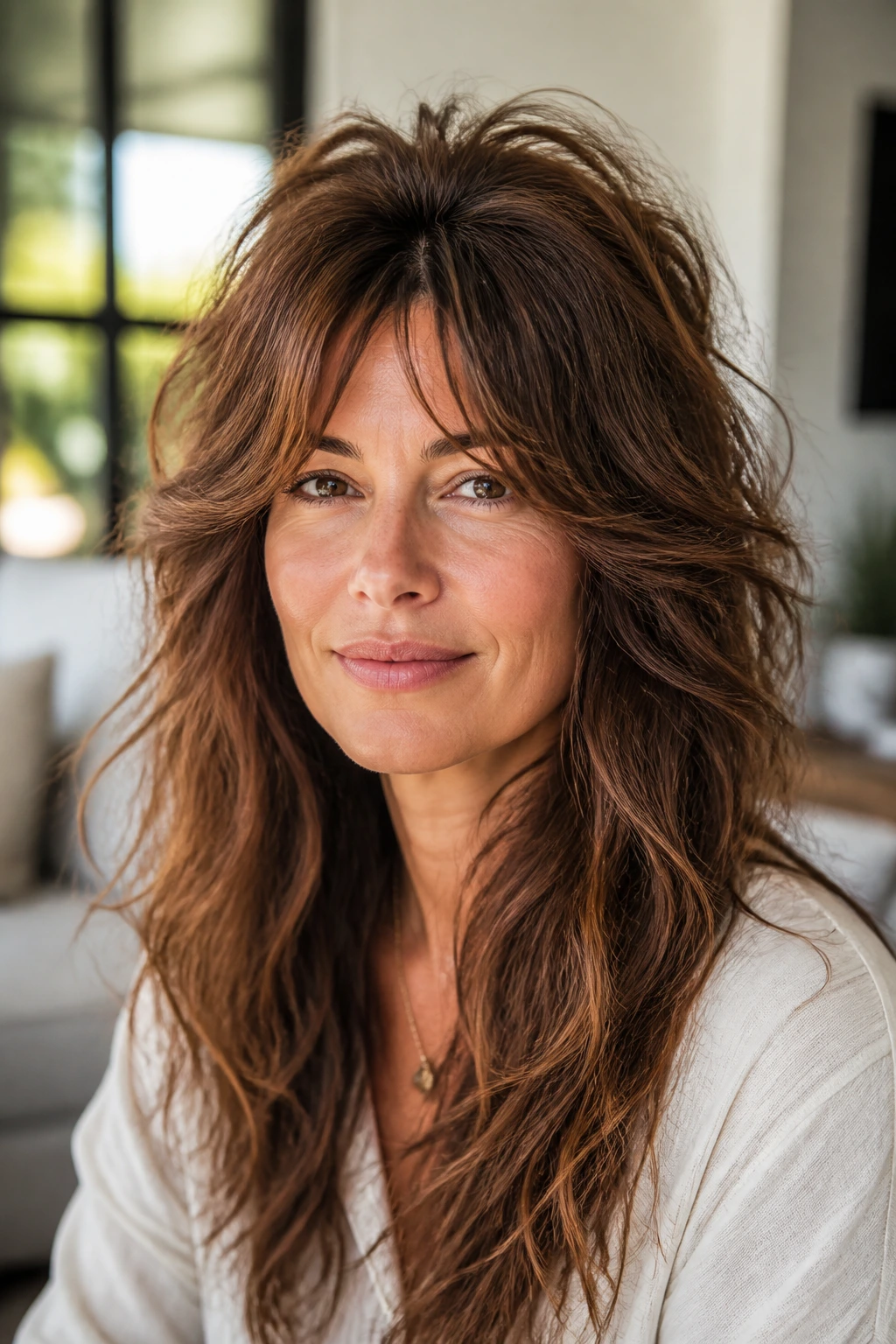
The crown-heavy shag pushes more attention to the top of the head. Volume lives there, the sides stay softer, and the lengths drop below without getting too thin. It’s a very 1980s silhouette, and it flatters wavy hair that tends to lie down at the roots.
Best for: hair that loses lift by noon. The strong crown gives the haircut some backbone, and the longer ends keep it from feeling puffy around the ears.
26. S-Curve Long Shag
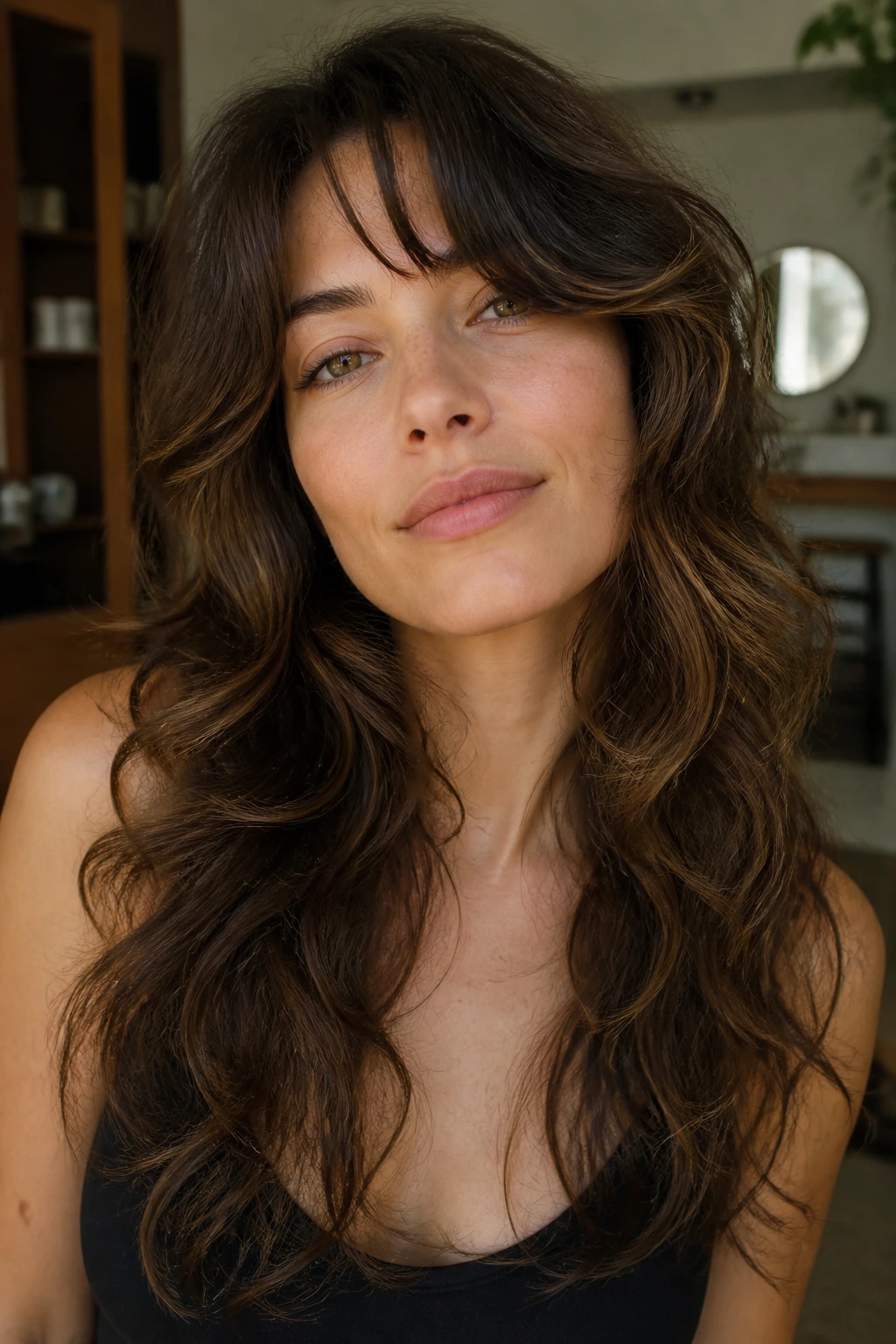
An S-curve shag is all about encouraging the wave pattern you already have. The layers are placed so the hair bends out, then in, then out again, which is what makes the shape feel smooth instead of random.
It’s especially nice on hair that already forms loose bends. The cut does not force the wave; it frames it. That’s a subtle difference, but it changes how the whole style lands.
27. Bardot-Bang Shag

This one softens the face with long, center-parted bangs that feel a little French, a little rock, and very 1980s when paired with full layers. The fringe should be long enough to skim the cheekbones and move out of the way when you want it to.
If you love hair that looks better as the day goes on, this is a strong pick. The bangs loosen, the layers separate, and the cut gets better when it’s not trying too hard.
28. Interior-Layer Shag
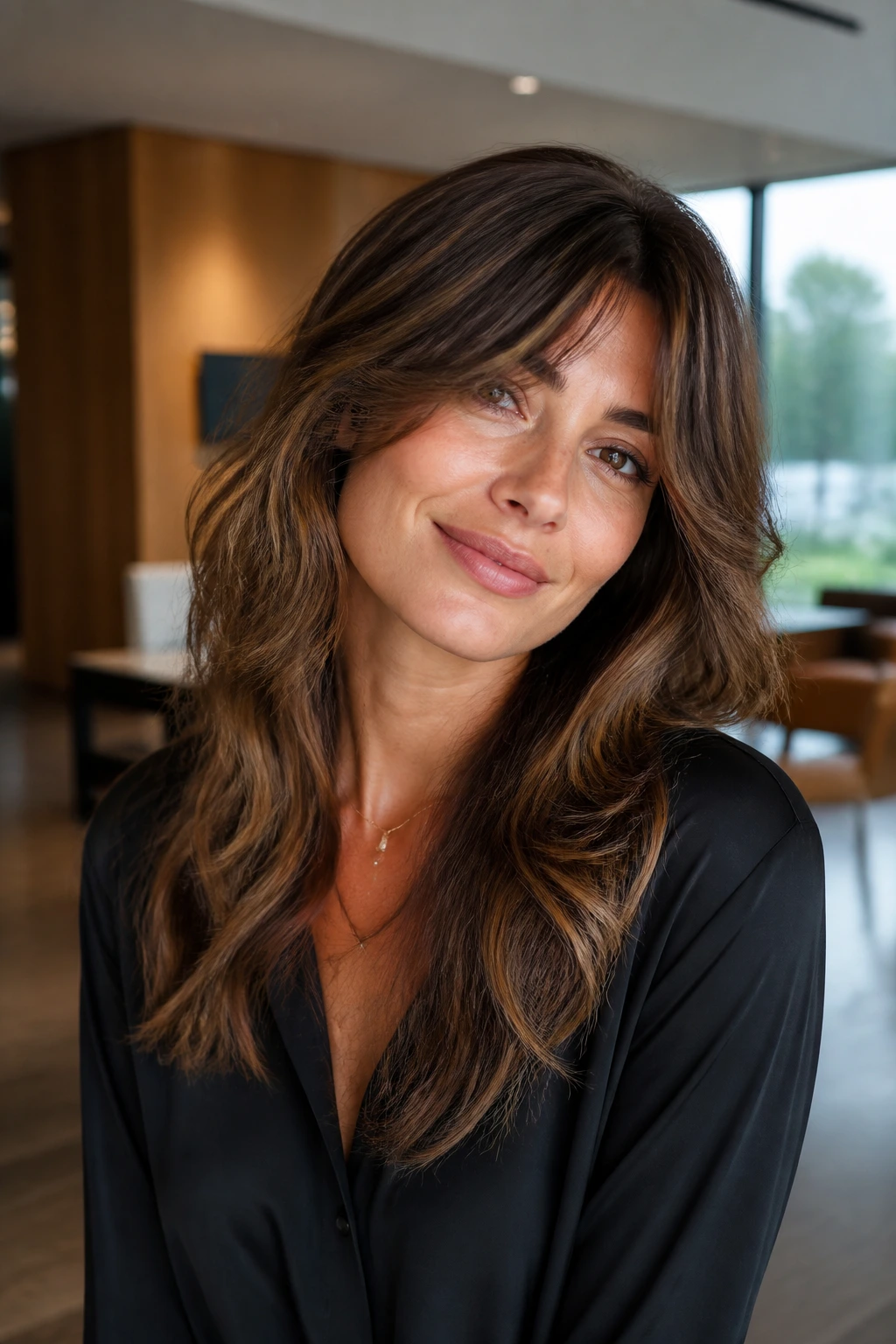
Interior layers are the quiet trick here. The outside length stays smoother and more polished, while the hidden layers underneath create lift, movement, and shape. It’s a smart choice if you want shag texture without a visibly chopped surface.
That makes this version more office-friendly and easier to grow out. Wavy hair gets enough support underneath to stay lively, but the outer shell keeps the silhouette clean.
29. Ruffled Blowout Shag

This one wants a little glamour and a little mess. The crown lifts, the mids ruffle, and the ends sit somewhere between smooth and undone. It’s the kind of shag that looks like you spent time on it, even if the styling was fast.
A round brush helps, but you do not need to chase perfection. In fact, a little imperfect bend through the layers is part of why it works.
30. Transitional Shoulder Shag
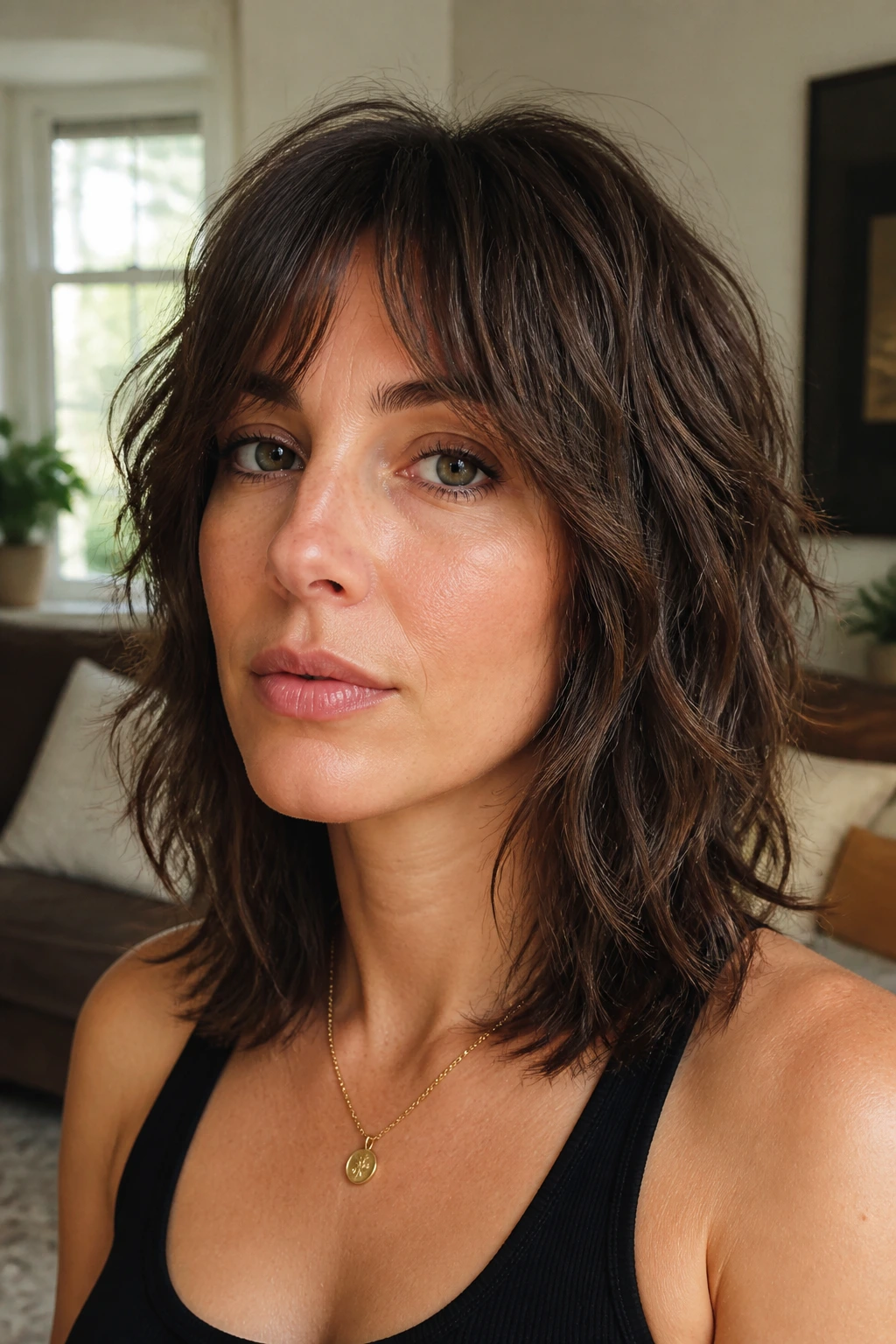
Growing out a shorter shag is awkward unless the shape is planned. This cut sits right at the shoulders and keeps enough face frame to make the grow-out look deliberate instead of accidental.
It’s a good middle stage. You can keep cutting it back into a fuller shag later, or let it drift longer without losing the layers entirely. That flexibility is worth a lot when you’re tired of constant resets.
31. Low-Maintenance Airy Shag
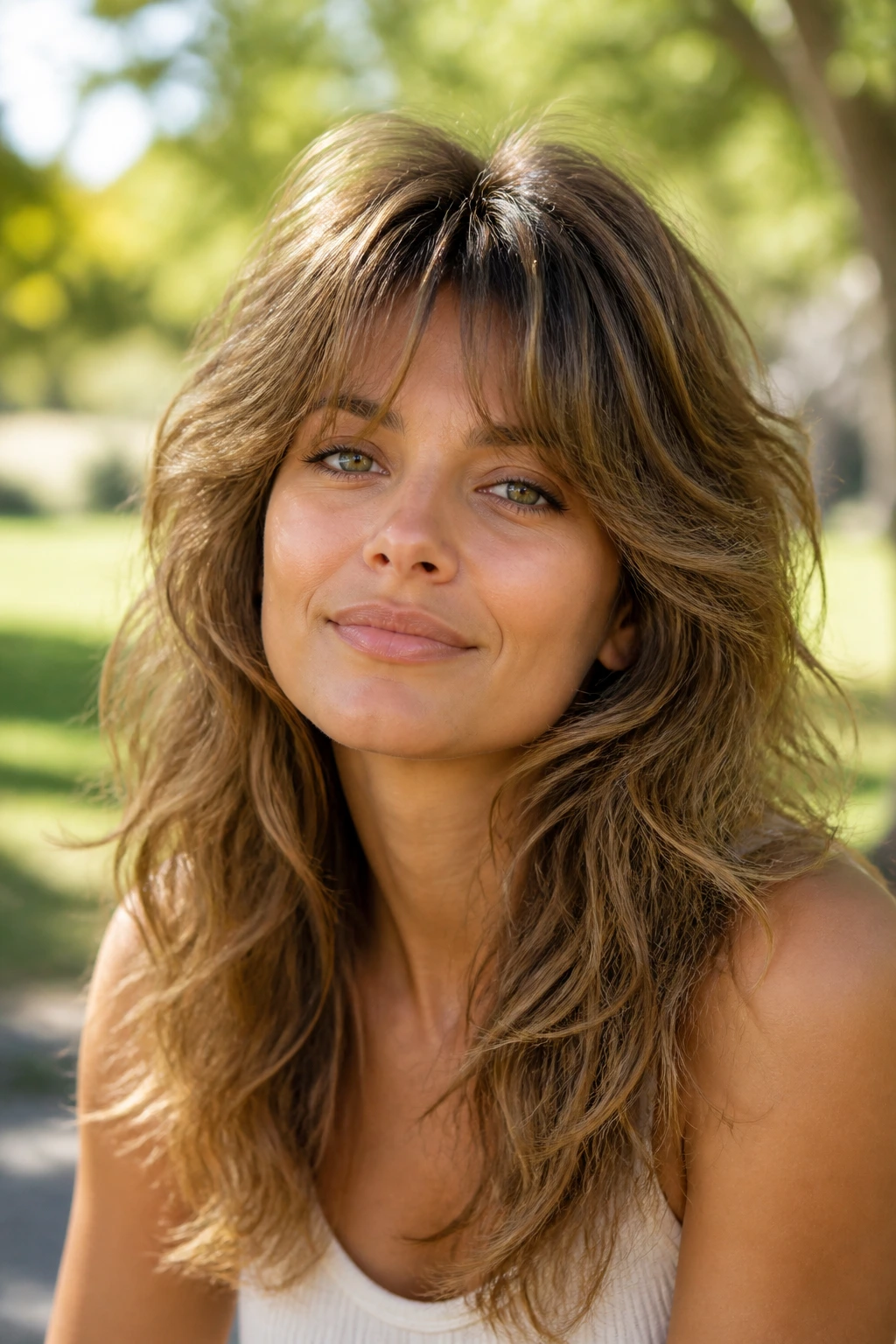
If you want the least drama possible, start here. The layers are long, the ends stay soft, and the crown gets just enough lift to stop the cut from collapsing. It still has 1980s spirit, but it does not demand a full blowout to look finished.
A little leave-in and a scrunch is enough on most days. That’s the point. Not every shag needs a mirror and twenty minutes.
32. Short Face-Frame Shag

This haircut keeps the shortest pieces around the face while leaving the back long. The contrast creates shape fast, and it’s especially useful if you want your eyes and cheekbones to show up more in the haircut.
The face-framing pieces should not be too blunt. On wavy hair, a soft drop into the longer layers helps them sit naturally instead of flipping into the wrong direction.
33. Perm-Friendly Retro Shag

If your waves are strong, permed, or just naturally full of spring, this shag gives the texture room to expand. It uses longer layers, a softer crown, and enough perimeter weight to keep the shape from turning fuzzy.
Who Should Ask for It
Anyone who wants volume without the triangle effect. Tell the stylist you want movement, but you do not want the ends chewed into nothing. That one sentence saves a lot of trouble.
34. Shattered Layer Shag
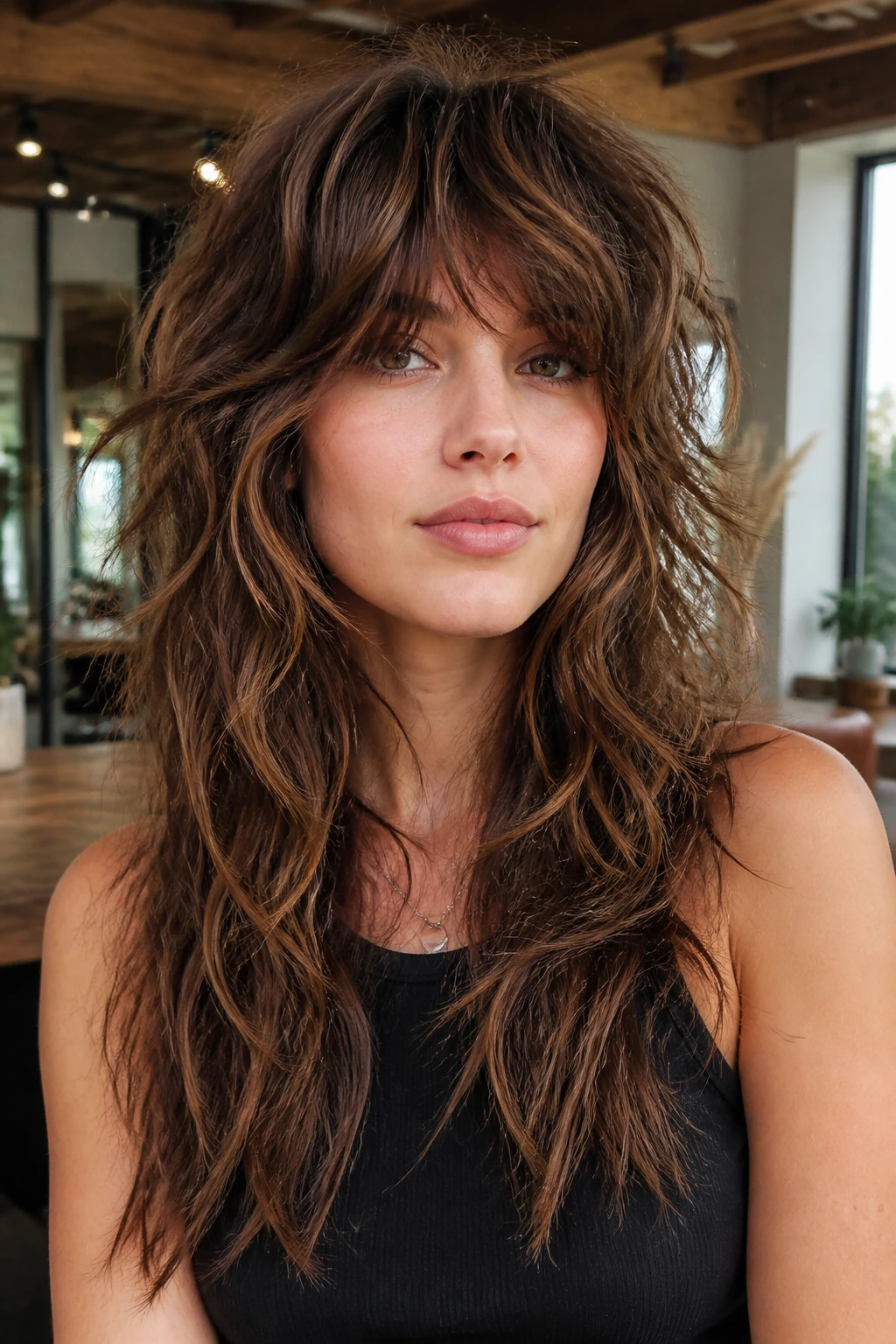
This one is choppier than the feathered versions, with layers that break up the line more aggressively. It can look edgy and cool, especially on thicker waves that can carry a lot of texture.
The downside is obvious: if the cut is too shattered, it can turn dry-looking fast. I’d keep the lowest layers a bit longer so there’s still some structure when the wave settles.
35. Soft Rocker Shag
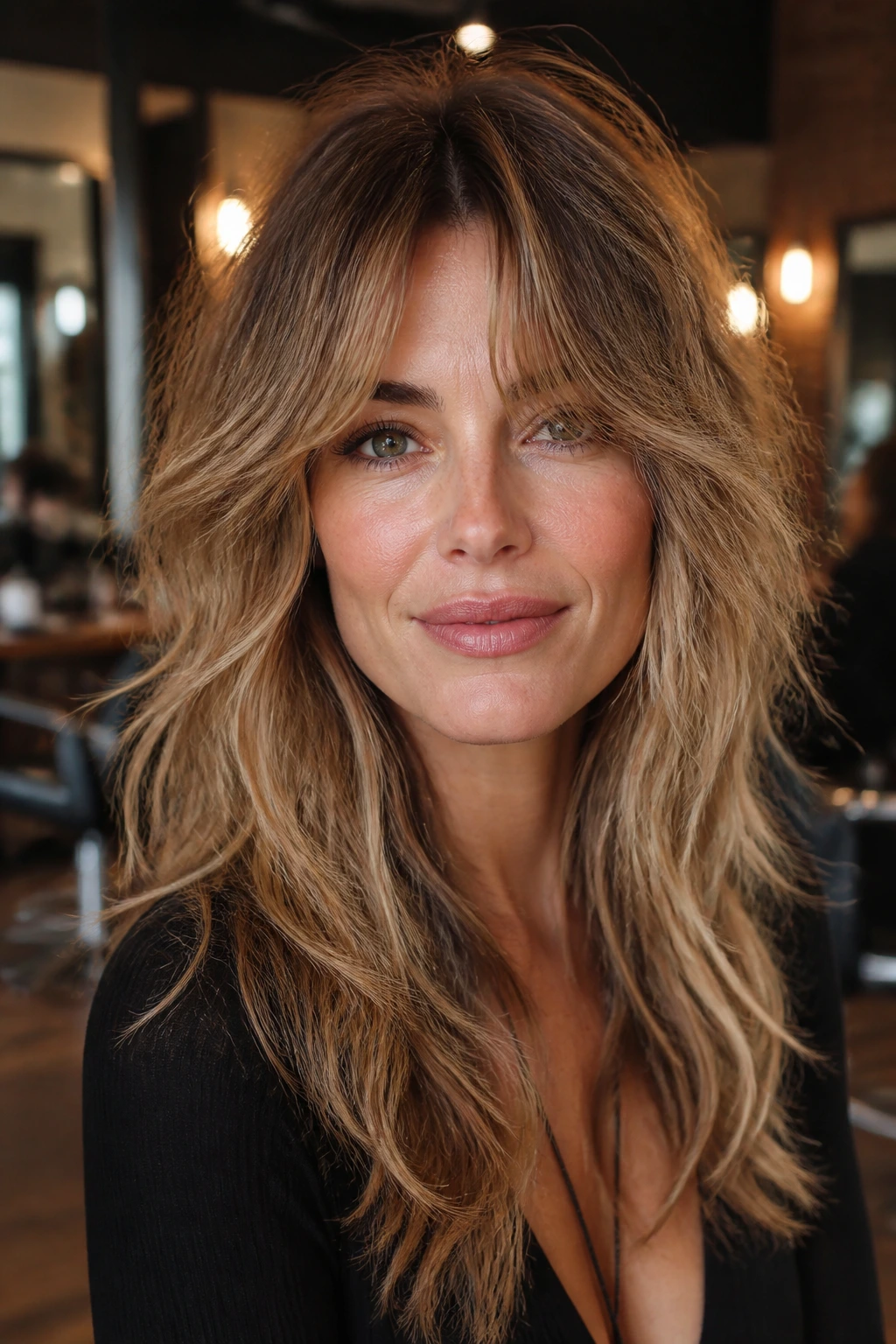
This is the version for people who want the attitude but not the mess. The shape has a rock edge at the crown and around the face, then softens toward the ends so the cut stays wearable.
It’s a nice final note for the list because it shows what the best long shags do: they borrow from the 1980s without getting trapped there. The wave carries the movement, the layers keep the lift, and the length gives the haircut some grace.
How 1980s Long Shag Haircuts Keep Wavy Hair Moving
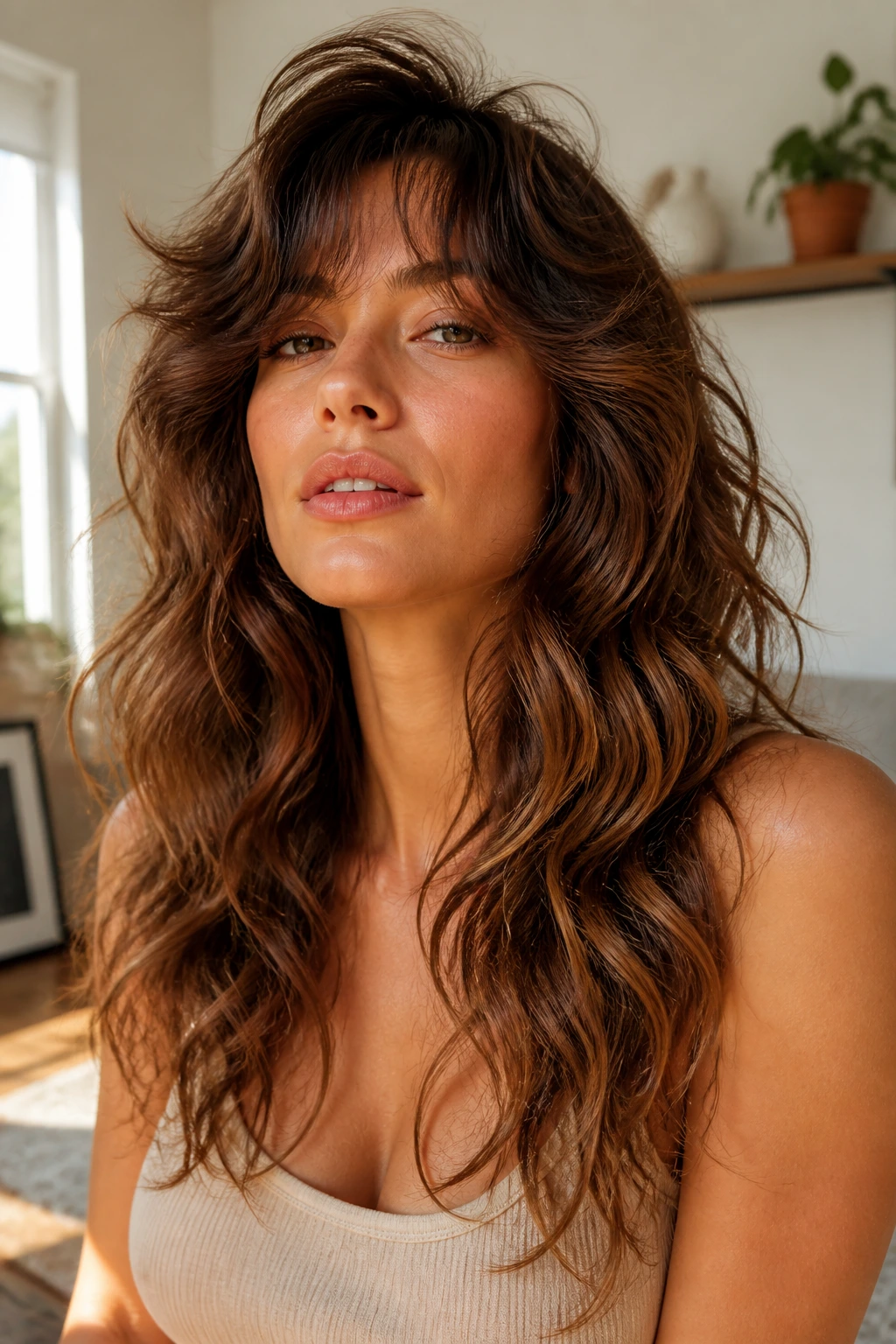
The reason these cuts keep hanging around is simple: they work with the way wavy hair wants to bend. A blunt cut can make waves stack on themselves. A shag opens the shape up. That matters more on dense or medium-dense hair, where the bottom can otherwise sit like a shelf.
The 1980s version adds another useful idea: height. A little lift at the crown changes the whole balance of the head. The hair stops looking heavy at the roots and starts looking alive near the face. That’s why the same waves that feel flat in one cut can feel expensive in another. Same hair. Different map.
There’s also a practical side to the length. Long shag haircuts keep enough weight at the bottom that you still get swing, but they remove enough bulk from the top and sides that the wave can separate. That balance is the whole game. Too little weight, and the hair frizzes apart. Too much, and the wave disappears under its own mass.
How to Ask for a 1980s Long Shag in the Salon Chair

Bring pictures, yes, but bring the right ones. One front view is not enough. You want at least one side view and one back view, because the back length and the crown height are what separate a real shag from a generic layered cut.
Use plain language. Say you want long layers with a lifted crown, a face frame that starts around the cheekbone or chin, and enough weight left at the perimeter to keep the ends full. If you wear bangs, name the kind: curtain, bottleneck, heavy fringe, or none at all.
The other useful sentence is the honest one: “I want it to look good air-dried, but I also want it to work with a blowout.” That tells the stylist to build shape, not just texture. And if your hair is fine, ask them to avoid over-thinning the ends. If it’s thick, ask where they plan to remove weight. You want a plan, not a guess.
Styling These Cuts Without Flattening the Crown

The crown is where many shags go wrong. People spend all their time scrunching the ends and forget the top. Then the head looks wide at the sides and flat at the roots, which is the opposite of what these cuts need.
Use root-lift mousse or a light volumizing spray on damp hair, then rough-dry the crown first. If you’re blow-drying, lift sections straight up with your fingers or a brush and hit the roots with heat before you fuss with the lengths. That’s the boring part. It also matters most.
For air-drying, flip your part once or twice while the hair is still wet, then let it set. A little root clipping near the front can help if your waves fall forward hard. And if you use a diffuser, don’t bury the hair in it for ten minutes at a time; hover, lift, and move. Stagnant heat creates frizz. Quick passes create shape.
Essential Tools for Styling These Cuts
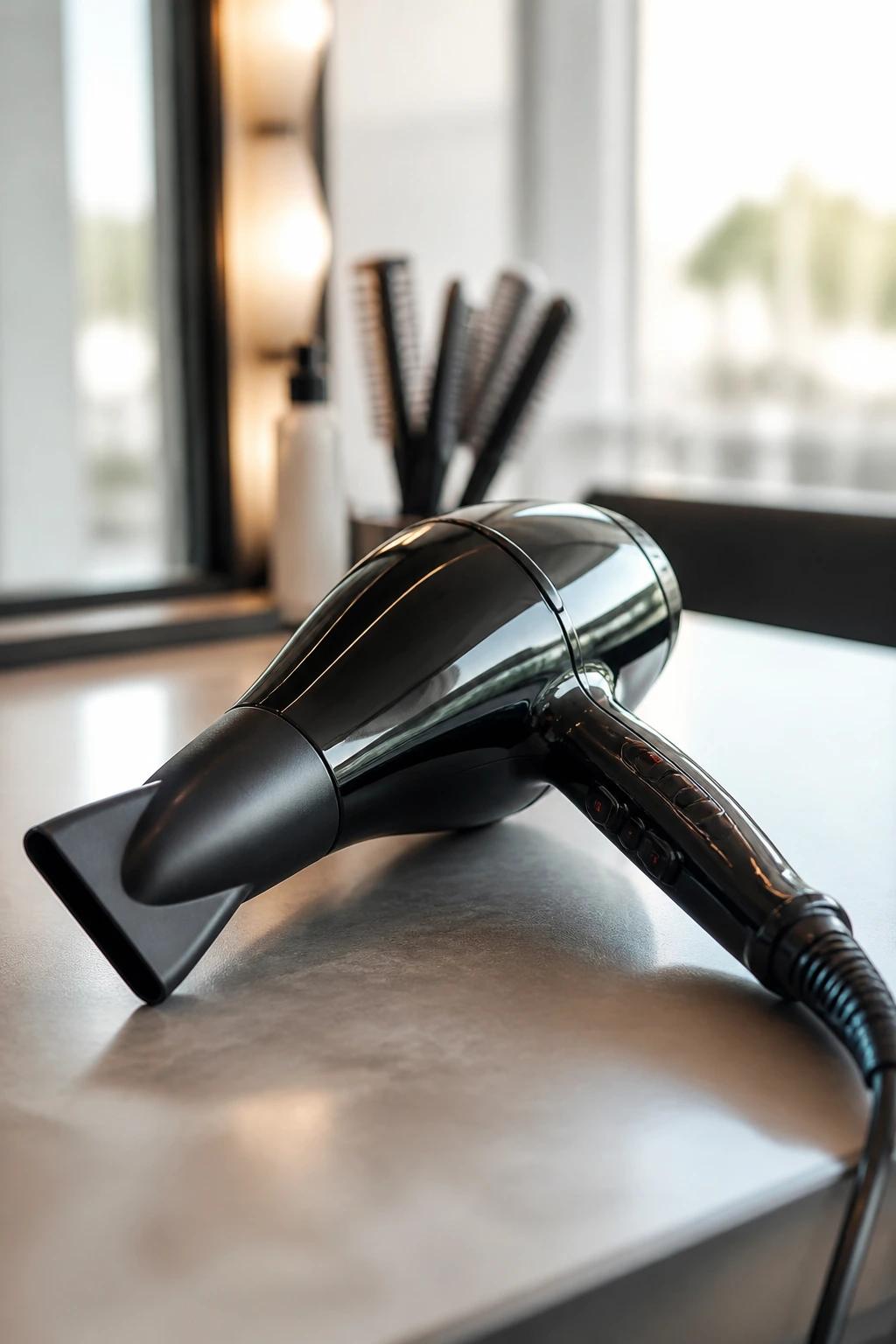
- Blow dryer with a concentrator nozzle: Keeps the airflow directed so the layers do not scatter.
- Diffuser attachment: Best for preserving wave pattern when you want body without a blowout.
- Medium round brush, about 1 to 1.5 inches: Useful for flipping the ends and smoothing curtain bangs.
- Wide-tooth comb: Good for detangling damp waves without wrecking the bend.
- Duckbill or sectioning clips: Helpful for controlling the crown while you dry the rest.
- Light mousse or root-lift spray: Gives the top some hold without turning it crunchy.
- Heat protectant: Non-negotiable if you use a dryer or brush on a regular basis.
- Texturizing spray: Nice for piecey finishes, especially on the more rocker-leaning cuts.
Smart Salon Notes for Wavy Hair and Long Shags
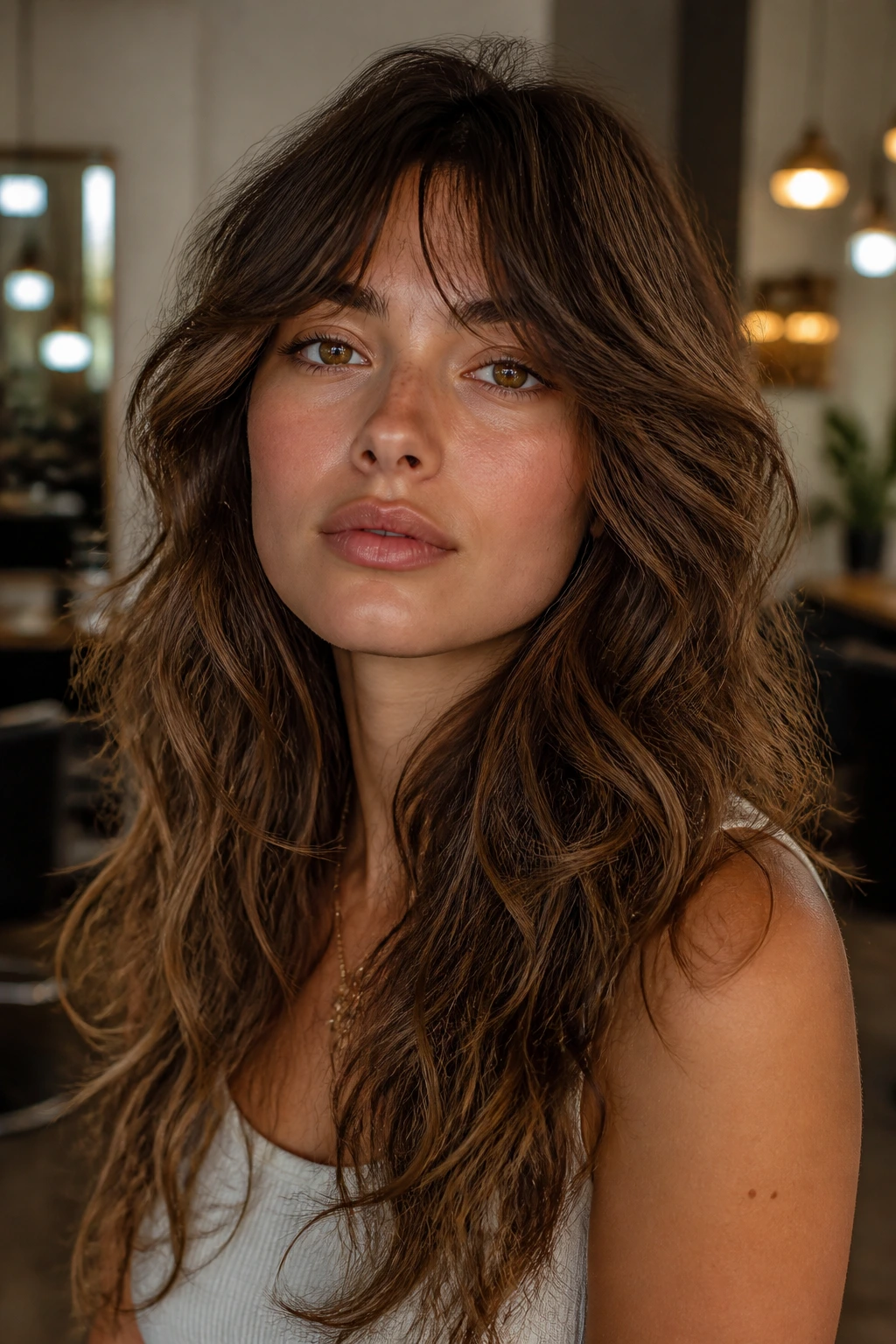
A good shag begins before the scissors move. Tell the stylist how much time you spend styling, how often you wash, and whether your wave pattern changes with humidity. Those details matter more than a vague “I want texture.”
If your hair is fine, ask for longer internal layers and a softer perimeter. If it’s thick, ask for weight removal under the surface rather than a lot of slicing at the ends. If you have a strong wave, ask whether they prefer to cut it damp, dry, or partially dry. The answer tells you a lot about how they read texture.
The last note is bangs. Wavy bangs behave differently from straight ones. They shrink, split, and move around the forehead during the day. So if you want fringe, ask for a length that looks almost a touch too long at first. That is usually the right length once the hair dries and settles.
Common Mistakes That Flatten or Frizz Out the Shape
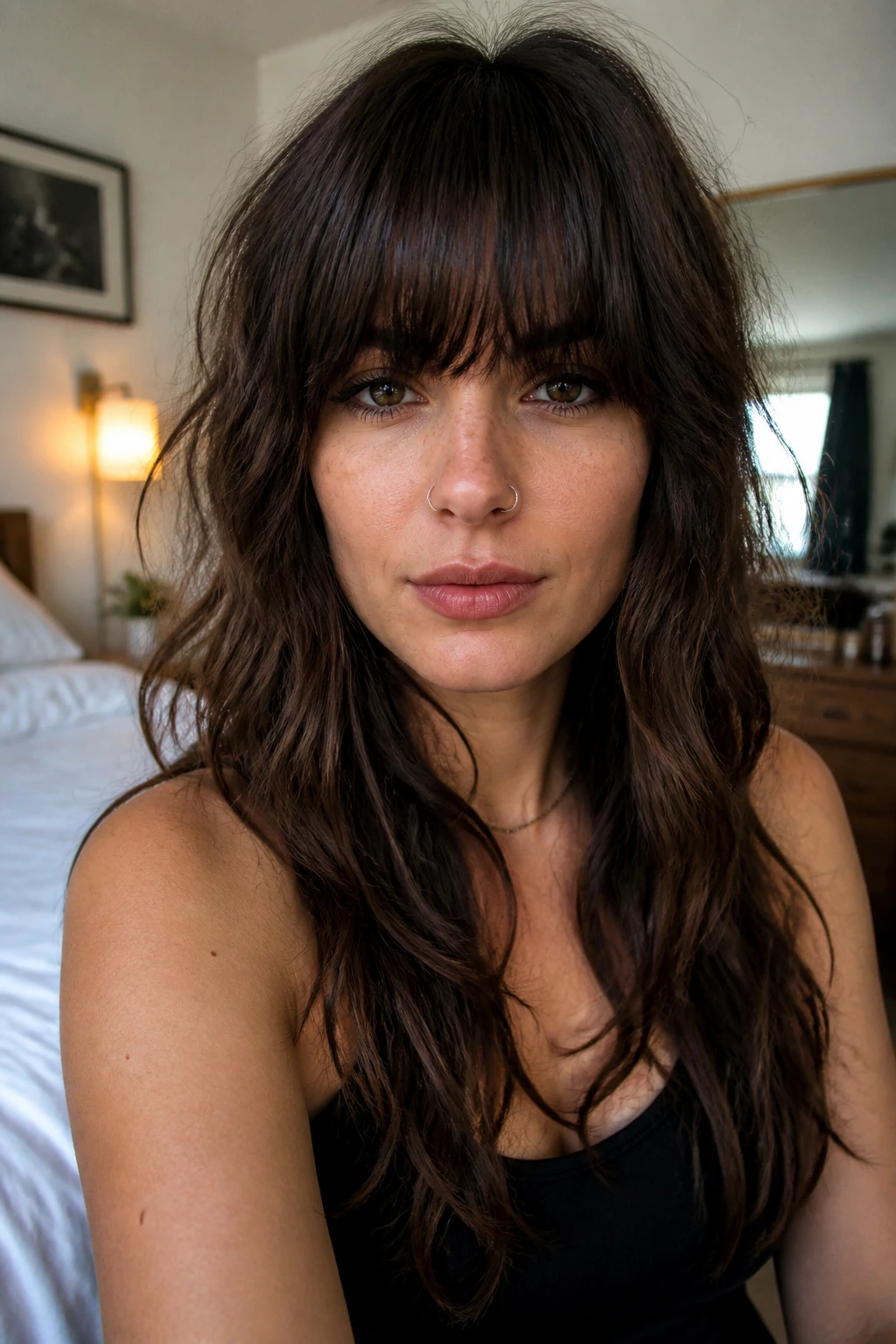
The most common mistake is asking for too many short layers everywhere. The haircut may look exciting at the chair, but once it dries, there’s no weight left to support the wave. The result is fluffy sides and skinny ends. Keep some length intact, especially through the bottom third.
Another problem is overusing thinning shears. A few snips in the wrong place can make wavy hair go fuzzy, especially around the ends. If the stylist needs to remove bulk, internal layering or point-cutting is usually safer than aggressive thinning.
Bang length causes trouble too. Wavy fringe almost always looks shorter once it dries. If it’s cut exactly at the brow in the salon, it can jump up and sit too high at home. Leave extra length. You can always trim later. You cannot add hair back.
The last one is the flat crown. If you air-dry without lifting the roots or blow-dry everything straight down, the top collapses and the sides bloom. That shape is tiring. Fix it by drying the roots first and changing the part while the hair is still damp.
Small Tweaks That Change the Whole Mood
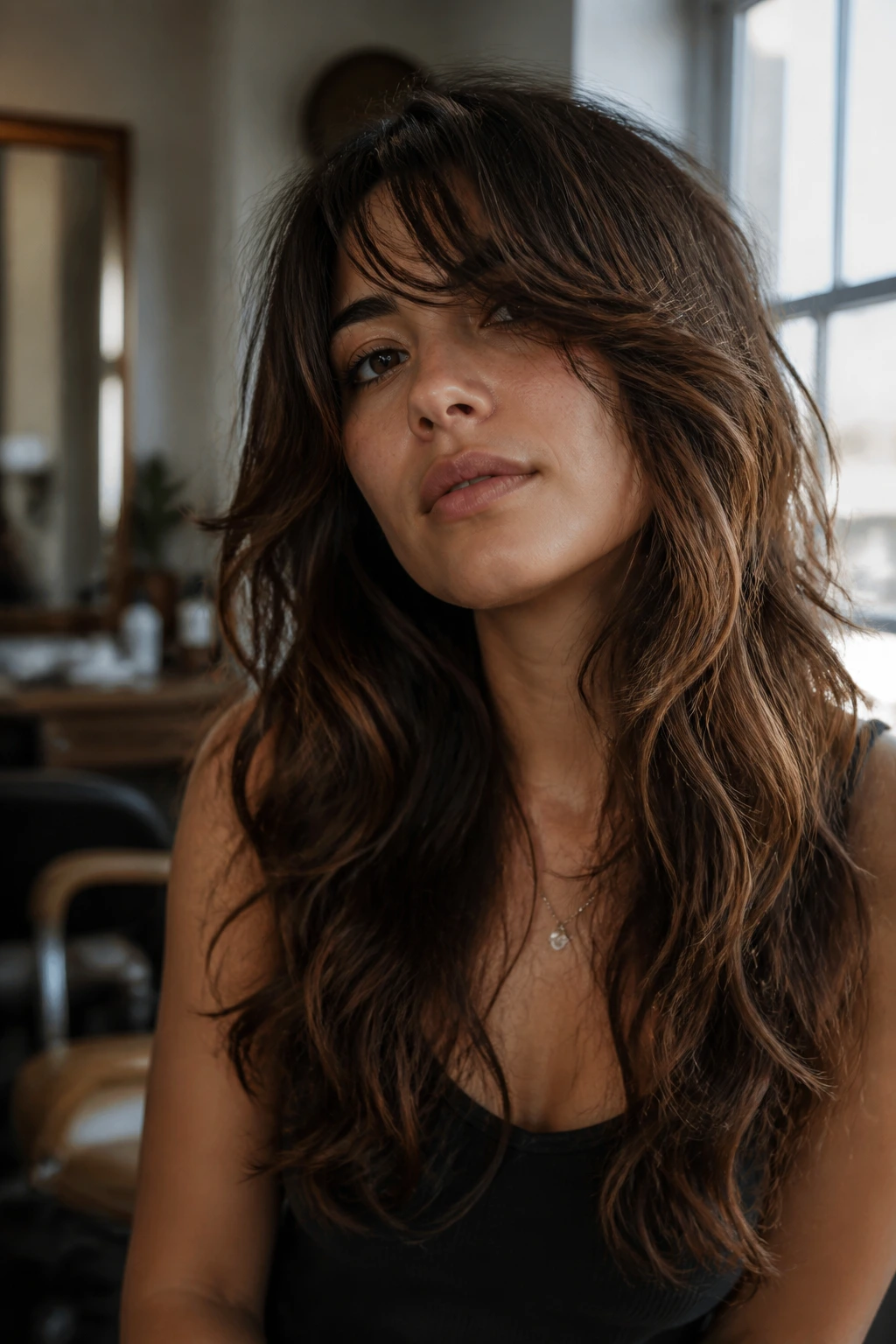
- More glam: Add a round-brush finish and a side sweep through the fringe. The cut reads richer and more polished right away.
- More rock: Ask for a little more separation around the face and use a matte texture spray instead of shine-heavy cream.
- More soft: Keep the layers longer and let the ends feather gently instead of chopping them up.
- More modern: Lose the biggest crown lift and keep the face frame cleaner. The 1980s shape is still there, just quieter.
- More low-effort: Cut the fringe longer or skip it entirely, then build the shape with long layers and a small amount of mousse.
Variations and Alternatives to Try
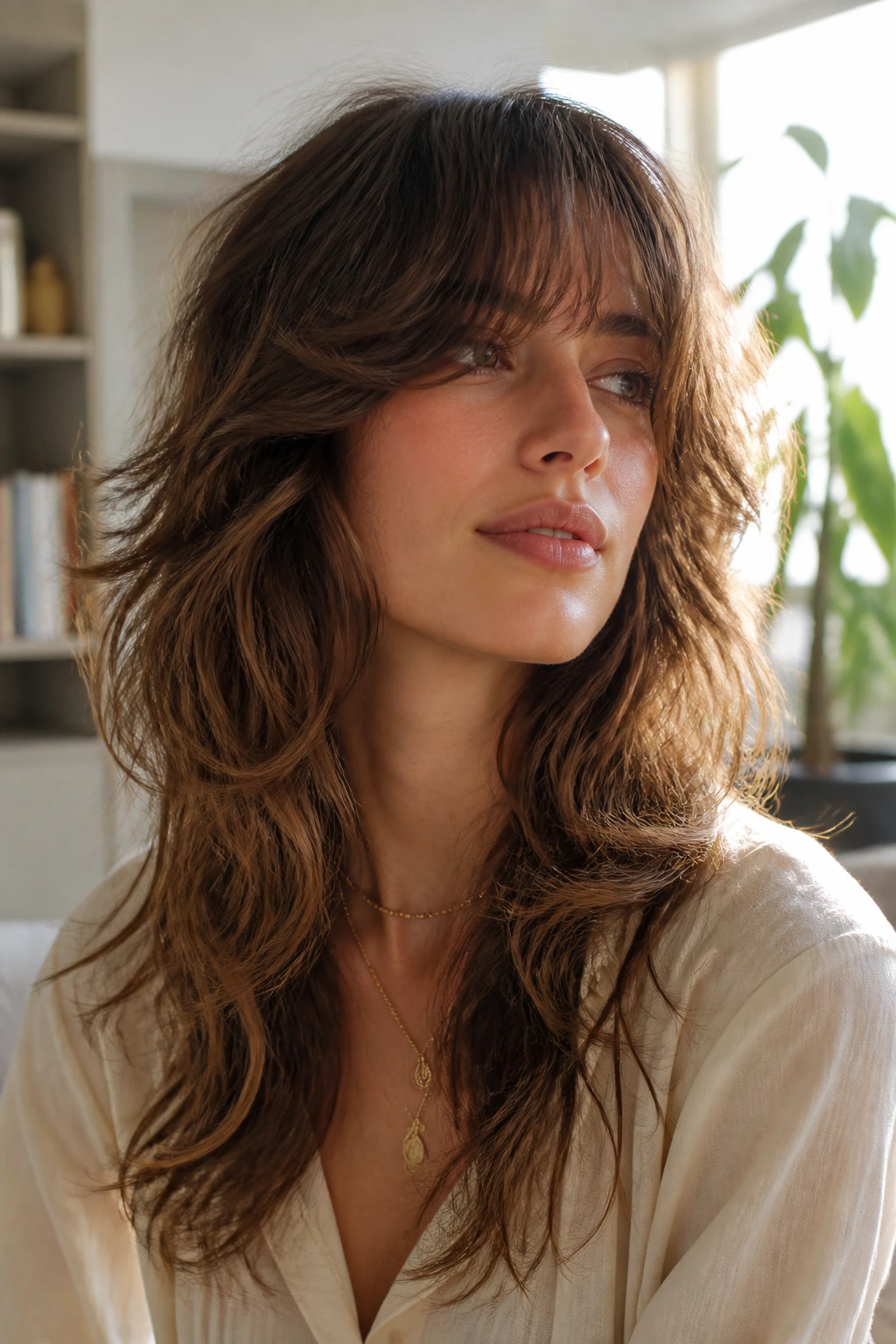
Blown-Out Studio Shag: This version leans polished. The layers are shaped for a smooth round-brush finish, so the crown lifts and the ends curve inward and out without looking fuzzy.
Air-Dried Rebel Shag: Softer layers, less styling, more wave. It’s the choice for people who want texture to do the heavy lifting and don’t want to chase every bend with a brush.
Curly-Wave Hybrid: Cut for stronger movement and more clumping through the mids. This works best when the hair is shaped in a dry or mostly dry state so the curl pattern can be respected.
Soft Office Shag: Keeps the long layers and face frame, but tones down the fringe and crown drama. You still get the silhouette, just in a quieter form.
Rock-Queen Shag: Bigger side part, stronger fringe, more lift at the top. This is the one if you want the haircut to feel like it has a little volume in its chest.
Keeping 1980s Long Shag Haircuts in Shape Between Trims
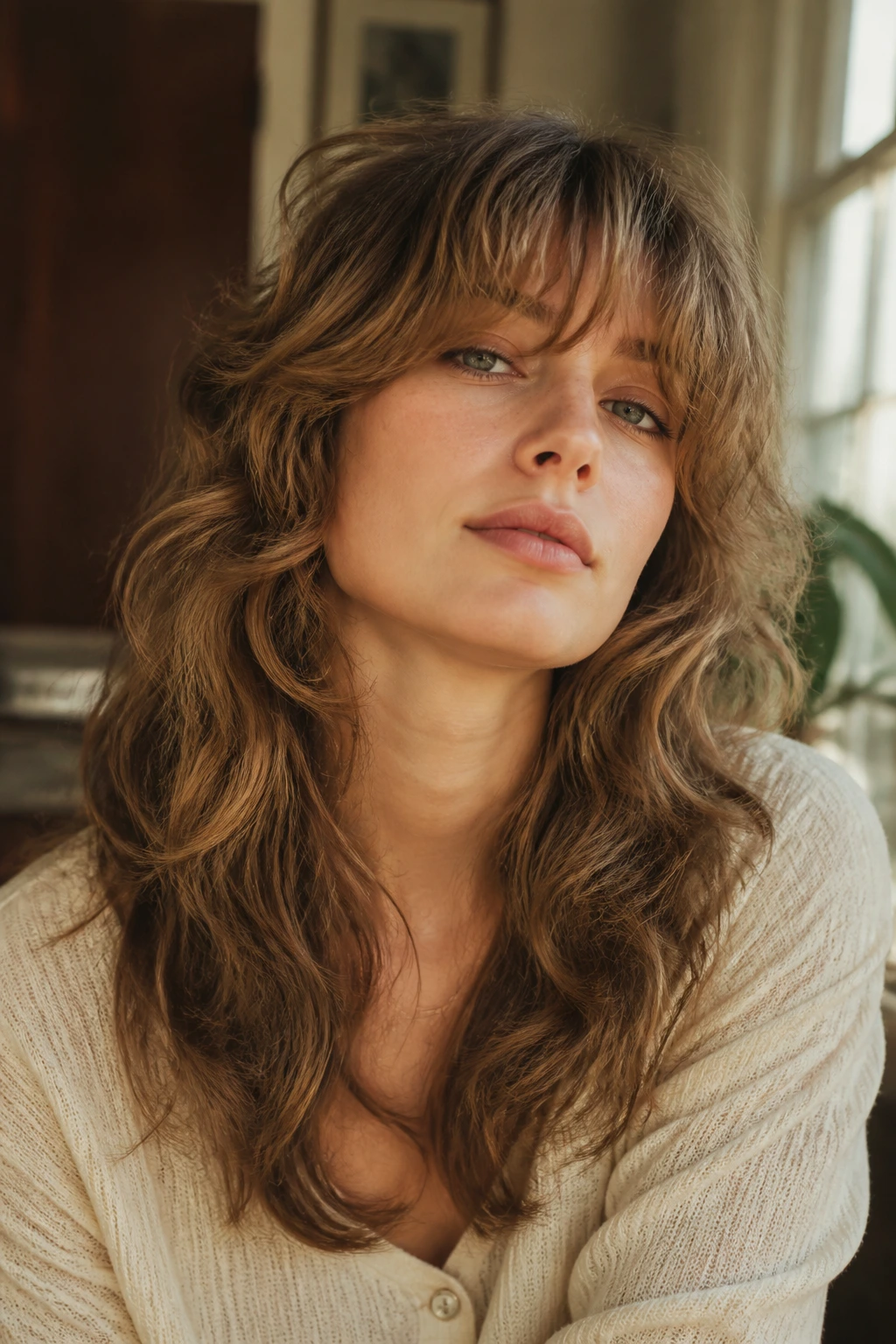
Long shags usually hold their shape for a decent stretch, but the bangs and face frame need more attention than the back. Plan on a trim every 8 to 10 weeks if you want the layers to keep their balance. Fringe may need a cleanup sooner, sometimes every 3 to 4 weeks, depending on how much it springs.
Wash frequency depends on scalp oil and styling products, but many wavy shags behave best with a rhythm of 2 to 4 washes a week. Too much washing can strip the wave pattern and make the hair puffier than it needs to be. On off days, refresh with a little water, a touch of leave-in, and a quick scrunch.
At night, a loose braid or a soft clip can save the waves from getting mashed into the pillow. A silk or satin pillowcase helps too. Not glamorous advice. Useful advice. If the ends start looking dry, use a pea-sized amount of cream on the bottom few inches only. Do not glaze the crown with it unless you want to lose lift by breakfast.
Frequently Asked Questions

Can wavy hair actually carry a long shag without looking messy?
Yes, if the layers are placed with some restraint. Wavy hair needs shape, not shredding, so the cut should keep enough length at the bottom to support the bend while the top gets lift. When that balance is right, the haircut looks intentionally textured instead of accidental.
Should I get bangs with a long shag?
Only if you’re willing to deal with them. Curtain bangs and bottleneck bangs are the easiest on wavy hair because they can split and grow out gracefully. Heavy fringe looks great, but it needs more trimming and more daily styling.
Will this cut work if my hair is fine?
It can, but the layer map matters even more. Fine wavy hair needs lift at the crown and lighter internal layers, not a lot of aggressive texturizing at the ends. If the stylist removes too much weight, the hair can look sparse fast.
What if I have thick wavy hair and hate puffiness?
Ask for bulk removal under the surface, not around the edges. The perimeter needs some weight so the haircut hangs properly. That extra density is what stops the sides from ballooning out when the air is humid or the hair dries on its own.
How do I style a shag if I don’t use heat?
Work in a light mousse or wave cream on damp hair, scrunch the crown, and clip the roots for the first part of drying if they tend to lie flat. Then leave the hair alone. The less you keep touching it, the less likely it is to frizz into the shape you were trying to avoid.
What if my shag feels too short after the cut?
Wait until it settles before making a panic decision. Wavy hair often shrinks more after the first wash, especially around the bangs and crown. If it still feels too short after a week, the next trim can soften the face frame and add back some visual length.
Can a long shag grow out cleanly?
Yes, and that’s one reason people keep coming back to it. As the layers lengthen, the cut usually turns into a softer long layer shape instead of a weird in-between stage. You may need a bang trim or two along the way, but the body of the haircut grows out better than a blunt chop.
Is a razor cut always better for this look?
No. Razor cutting can help with movement, but too much of it can make wavy hair frizzier and thinner at the ends. Some of the best long shags are mostly scissor-cut with a little point-cut detail around the face. The goal is shape, not scalp-level drama.
The Shape That Keeps Coming Back

The nicest thing about 1980s long shag haircuts for wavy hair is that they don’t ask your texture to pretend. They take the bend, the lift, the softness, and even the occasional messy patch, then turn those things into a haircut with personality. That’s a pretty good deal.
Pick the version that matches how much styling you actually want to do. Some of these cuts want a blowout. Some need only mousse and a scrunch. All of them work best when the layers are placed with purpose and the crown isn’t forgotten.
If you walk out of the salon with a shag that moves when you do, you’re already halfway there. The rest is mostly about not fighting your wave pattern, which, frankly, is the best lesson this haircut has ever had to offer.
