



Pageant hairstyles are less about hair and more about control. Under harsh lights, a curl can flatten in ten minutes, a center part can sharpen the face in a good way or a brutal way, and a bun that sits an inch too low starts looking accidental. The polished look happens when the shape is clean, the finish is deliberate, and the style still holds together after walking, smiling, turning, and doing all the other things pageant hair has to survive.
The best pageant hairstyles have one thing in common: they read clearly from a distance. A low chignon leaves the neckline open, a deep side sweep softens the face, and a smooth crown keeps the eye on the gown instead of on flyaways. I’m partial to styles that look elegant without feeling frozen in place. Hair that’s sprayed into a helmet misses the point.
These 25 looks range from sleek buns to brushed-out waves to vintage-inspired rolls, because polished pageant hair is not one-size-fits-all. Length, texture, neckline, earrings, face shape, and even the size of the stage all change what works. The trick is to choose a style that looks intentional from the front, the side, and the back. That’s where the real finish lives.
Why These Pageant Looks Read So Clean on Stage
- Stage-Ready Shape: Each style here has a strong outline, so it still looks finished when you’re seen from the judges’ table or in a fast-moving photo.
- Controlled Shine: The polished look comes from smoothing the crown and taming the surface, not from drowning the hair in oil or spray.
- Built for Movement: These styles are chosen because they can handle walking, turning, and a little humidity without collapsing into frizz.
- Works With Different Gowns: Some looks open the neckline, some frame one shoulder, and some balance a high collar or heavy embellishment.
- Accessory-Friendly: Tiaras, combs, pins, and earrings land better when the hairstyle already has a clear structure.
- Not Just for Long Hair: Short cuts, shoulder-length hair, curly textures, and extensions can all work here with the right shaping and pinning.
1. Glass-Smooth Low Chignon
A low chignon has that sharp, expensive-looking finish that pageant hair needs. The crown stays smooth, the nape stays tidy, and the bun sits low enough to keep the focus on your face and neckline. It’s one of those styles that looks calm from the front and surprisingly detailed from the back.
What makes it work is the restraint. Brush the hair straight back or part it cleanly in the middle, then gather it at the nape with enough tension to remove bumps but not so much that the scalp looks pulled. A little root lift at the crown keeps the style from going flat on camera.
If your hair is slippery, mist the roots with a light mousse before blow-drying. A thin veil of shine spray over the outer layer gives the chignon that polished stage finish. Skip heavy oil near the scalp. It makes the style separate faster than you’d expect.
2. Deep Side-Part Hollywood Waves
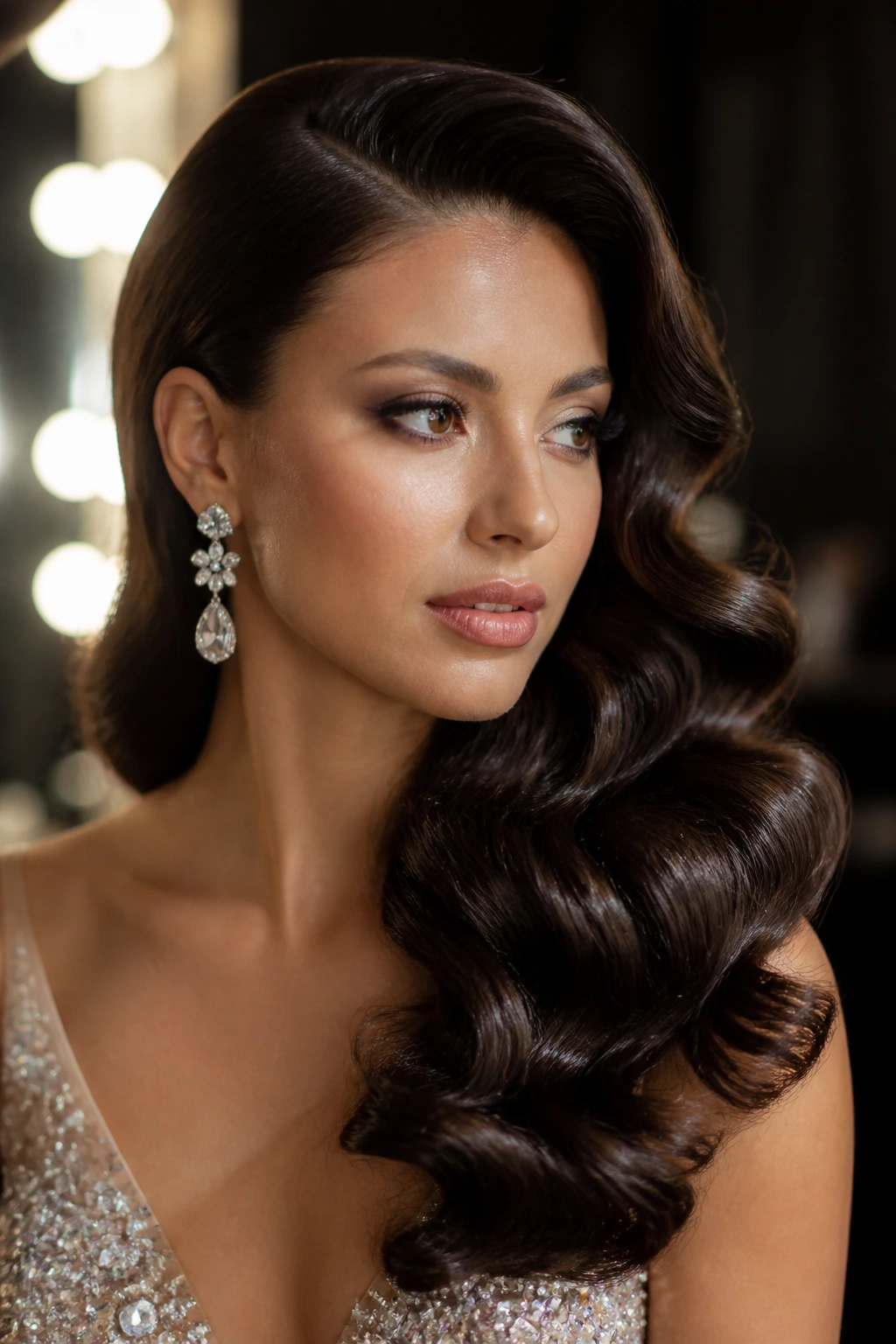
Why do Hollywood waves keep showing up in pageant looks? Because they give you movement without losing the outline. A deep side part instantly shifts the face shape, and the waves create a clean, glossy line that reads beautifully under lights. This is a style that knows how to photograph.
The key is setting the curl direction before brushing. Use a 1.25-inch curling iron, wrap each section away from the face, pin the curls flat until they cool, then brush them into one continuous wave pattern. If you skip the cooling step, the bend softens too soon and the whole look turns lazy.
A side part about an inch or two off the center usually gives the best shape. Tuck one side behind the ear and leave the other side fuller if you want a stronger asymmetrical line. It’s dramatic without feeling loud, which is a useful place to be in pageant hair.
3. Crown-Volume Blowout with Soft Ends
A polished blowout with lifted roots gives the face instant energy. The crown gets height, the lengths stay smooth, and the ends curve just enough to keep the style from reading stiff. It’s a clean, modern choice when you want hair to look styled rather than heavily arranged.
This style depends on direction. Blow-dry the roots up and away from the scalp with a round brush, then flip the ends under or softly out, depending on the gown. Large Velcro rollers at the crown for 15 to 20 minutes can make a huge difference if your hair tends to collapse once it cools.
I like this one for long faces and gowns with simple necklines. It gives structure without the weight of an updo. If your hair is fine, use mousse at the roots before drying; if it’s thick, use a smoothing cream only on the mids and ends so the top stays full.
4. High Wrapped Ponytail
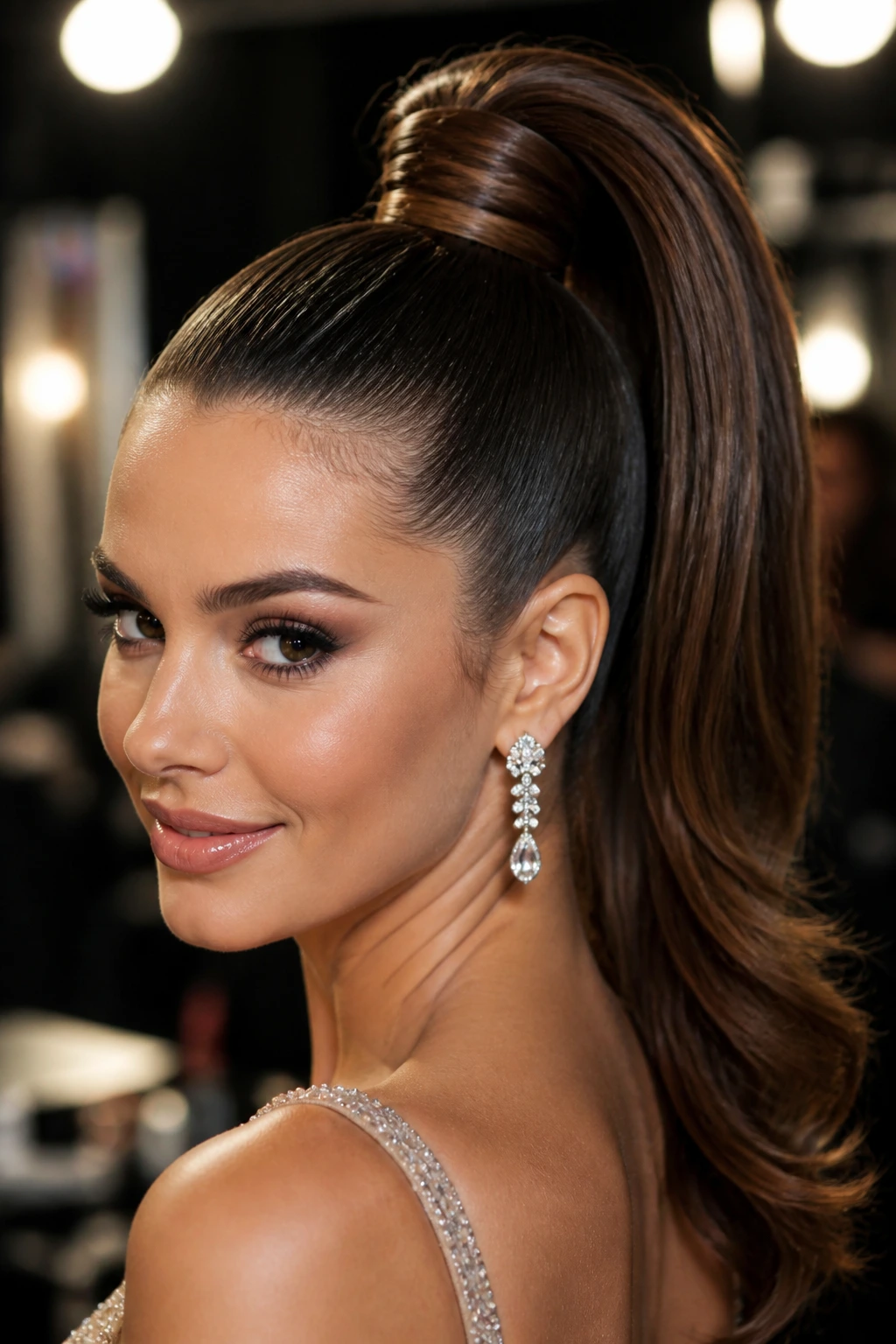
A high ponytail can look fully pageant-ready when the crown is sleek and the base is wrapped cleanly. It’s not a gym ponytail. It’s a lifted, glossy shape that shows off the face and keeps the profile sharp. Done well, it has a little red-carpet energy.
The trick is the height. Set the ponytail at the crown, not halfway down the head, and smooth the sides back with a bristle brush so the finish looks deliberate. Wrap a strand around the elastic and pin it underneath. That tiny detail matters more than most people think.
If you want it to feel more formal, curl the tail into soft waves instead of leaving it pin-straight. A high pony works especially well with off-the-shoulder gowns and sparkly earrings. It gives the whole look a lifted line, which is exactly what the stage likes.
5. Braided Halo Bun
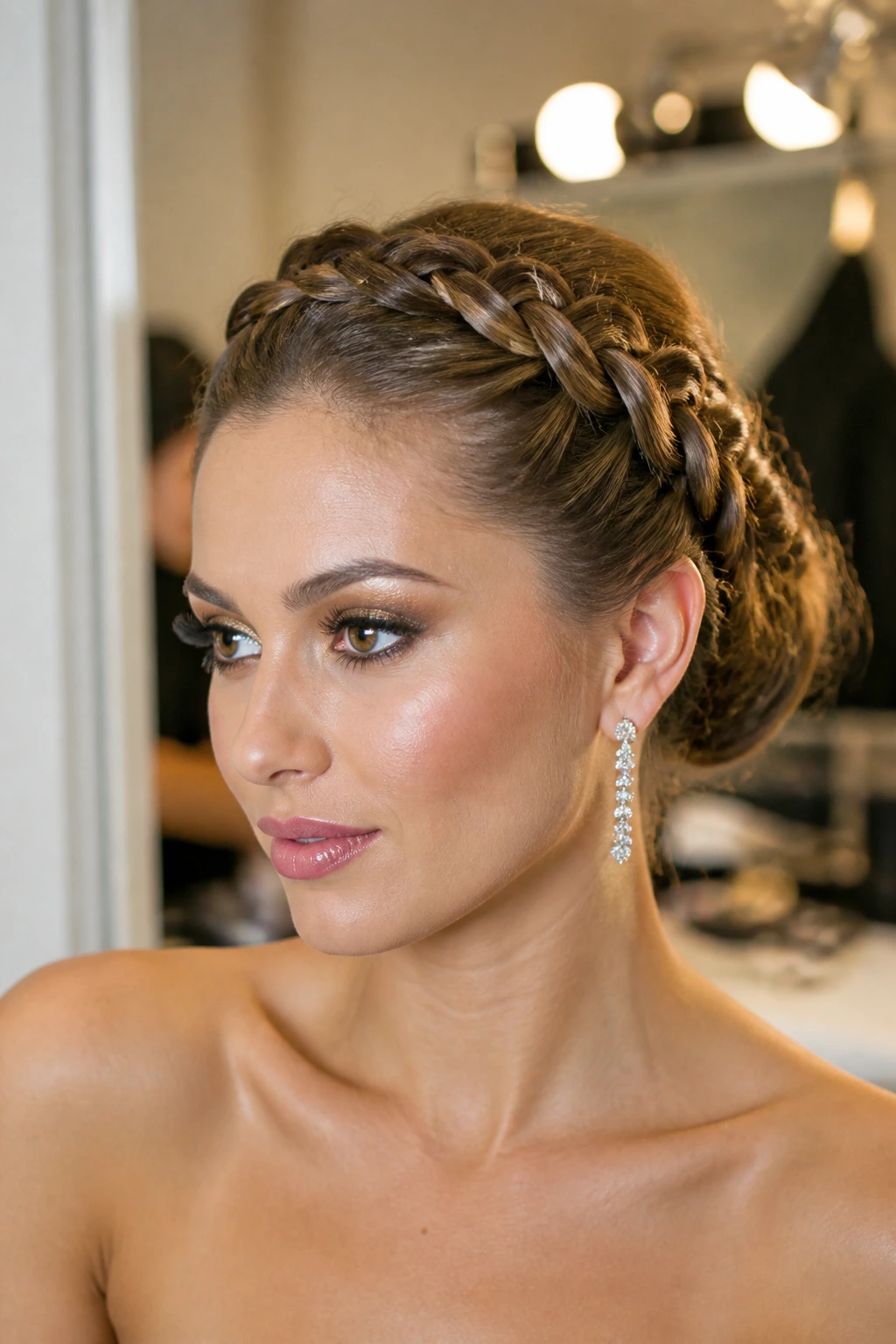
A braided halo bun gives the hair structure from every angle. The braid frames the face, the bun stays compact at the back, and the result feels polished without looking severe. It has a slightly regal quality that fits pageant styling nicely.
This is not a loose boho braid. Keep the sections neat, braid close to the head, and smooth the top so the crown doesn’t puff up in the wrong places. Once the braid meets the bun, pin it tightly in a circular shape. You want clean lines, not soft loops that wander.
It works well for thicker hair because the braid gives you control. It also helps if you want to keep flyaways around the hairline under wraps. A dab of styling cream on the fingertips is enough to smooth the sides before braiding. Too much and the braid loses grip.
6. French Twist with Face-Framing Pieces
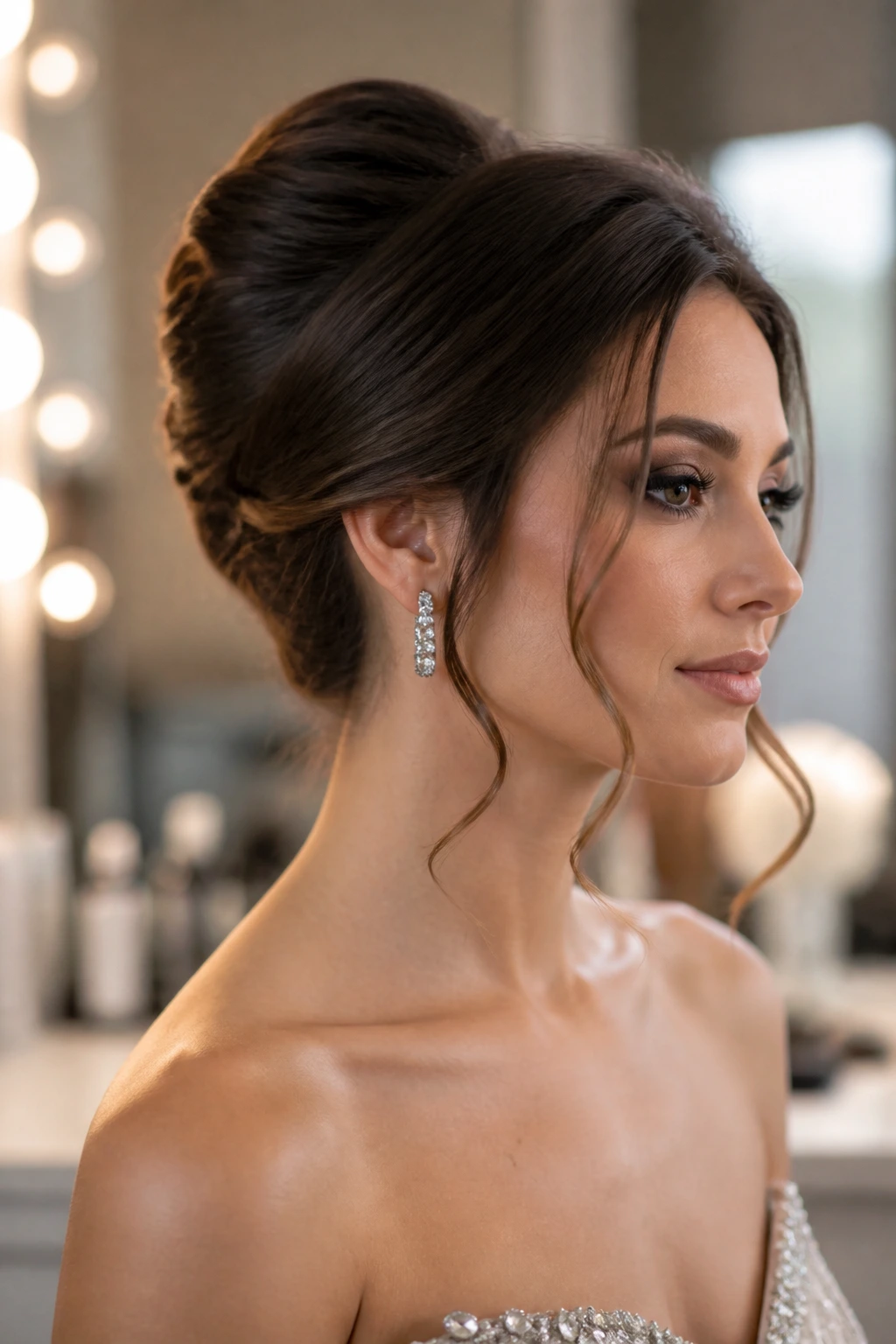
A French twist has one job: look elegant fast. It pulls the hair up into a vertical line that lengthens the neck and keeps the back clean, which is useful when the gown already has a lot going on. A few loose face-framing pieces keep it from feeling too severe.
The structure matters. Roll the hair upward against the back of the head, pin as you go, and use crisscrossed bobby pins to lock the twist in place. If the hair is very soft, a little teasing at the crown gives the pins something to hold onto. No teasing, no grip. That’s the boring truth.
Leave two thin sections near the cheekbones if you want a softer finish. Curl them away from the face so they sit in a controlled sweep instead of drooping. This is one of the best pageant hairstyles when the dress has a high neckline or detailed shoulders.
7. Half-Up Barrel Curl Set
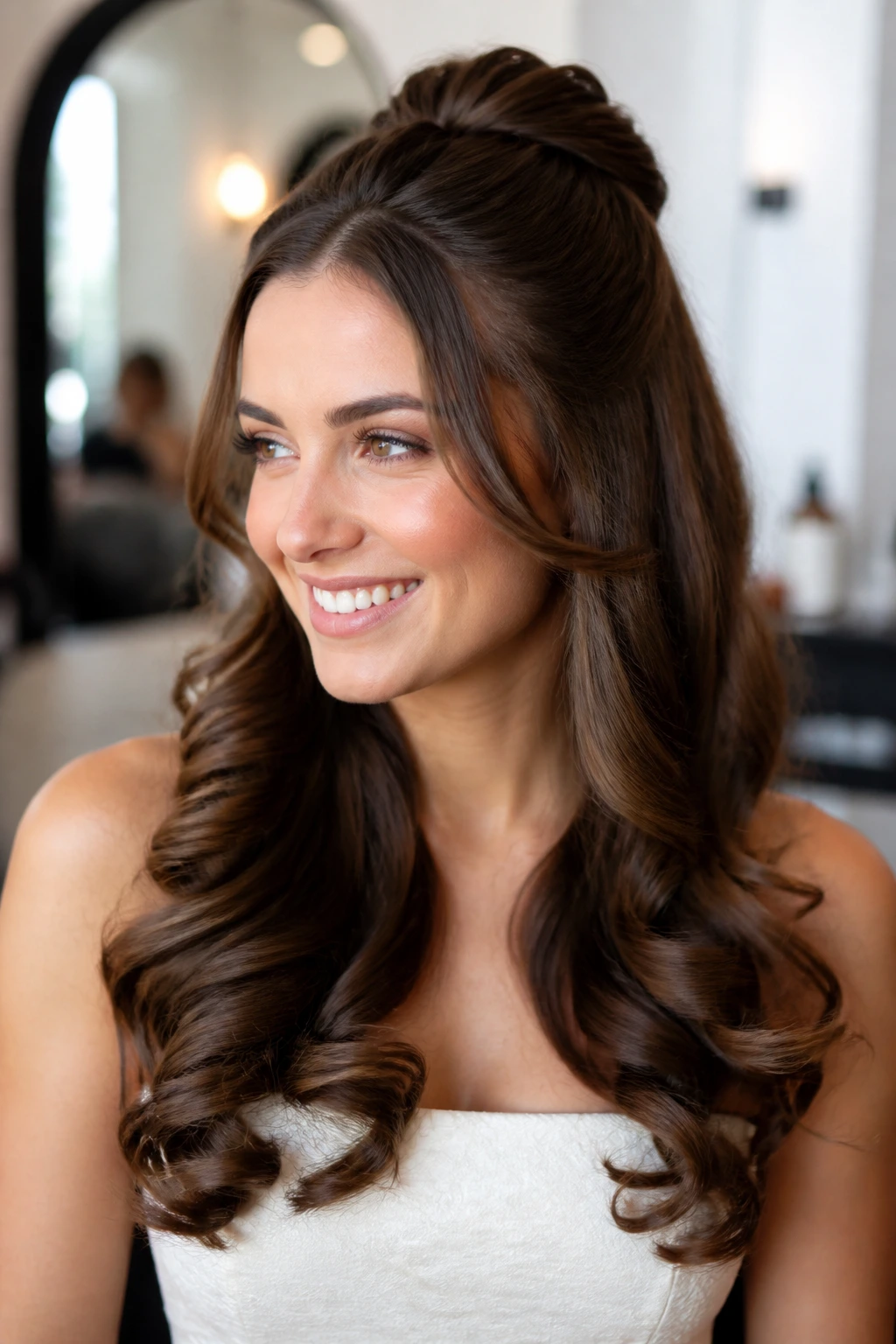
The half-up barrel curl set is one of those styles that looks expensive because the curls are orderly, not because they’re massive. The top section gets pinned or twisted back, while the lower half falls in brushed-out curves that still keep their shape. It’s classic, but not sleepy.
The top half should anchor at the crown, not at the back of the head. That small shift gives lift and keeps the face open. Curl the lower sections in consistent directions, pin them to cool, then brush lightly into a unified wave pattern so the ends stay rounded.
I like this style for long hair that needs to show length. It gives movement without letting the whole head of hair run wild. If your ends are dry, finish with a tiny bit of serum only on the last inch or two. Anything more and the curls separate too fast.
8. Bubble Ponytail with Sleek Crown
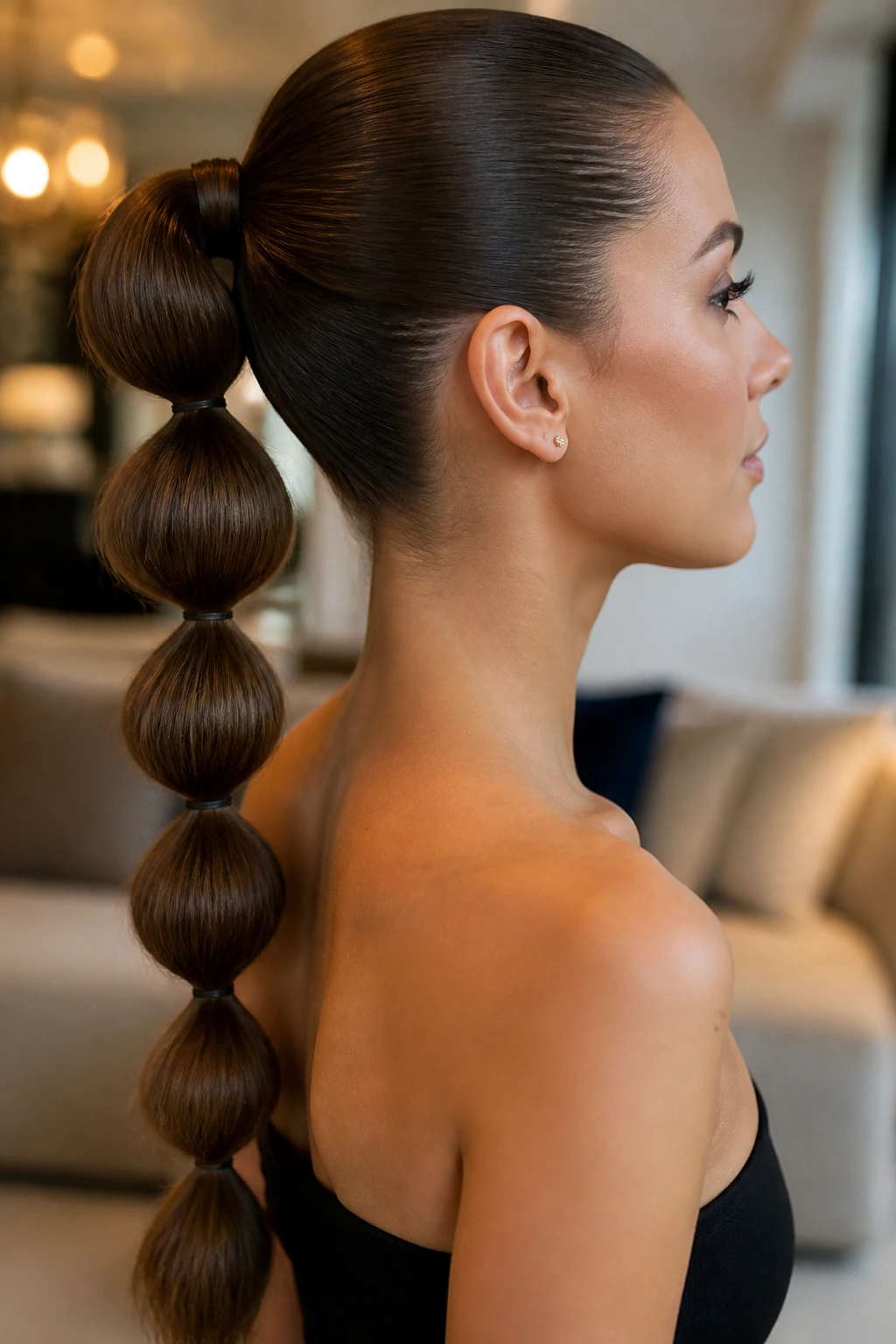
A bubble ponytail can look surprisingly polished when the crown is smooth and the sections are even. It’s a little more playful than a classic ponytail, but the clean division between each bubble keeps it looking intentional. This works best when the hair has enough length to make the bubbles round rather than skinny.
Start with a sleek base and secure the ponytail tightly. Add clear elastics every 1.5 to 2 inches down the tail, then gently puff each section outward with your fingers until each one looks full. The bubbles should be balanced, not different sizes. Uneven spacing makes the style look rushed.
This is a strong choice if your dress has clean lines or a modern cut. The style gives movement without the softness of full curls. A light mist of spray on the tail before shaping the bubbles helps them hold their round shape.
9. Old Hollywood Side Roll
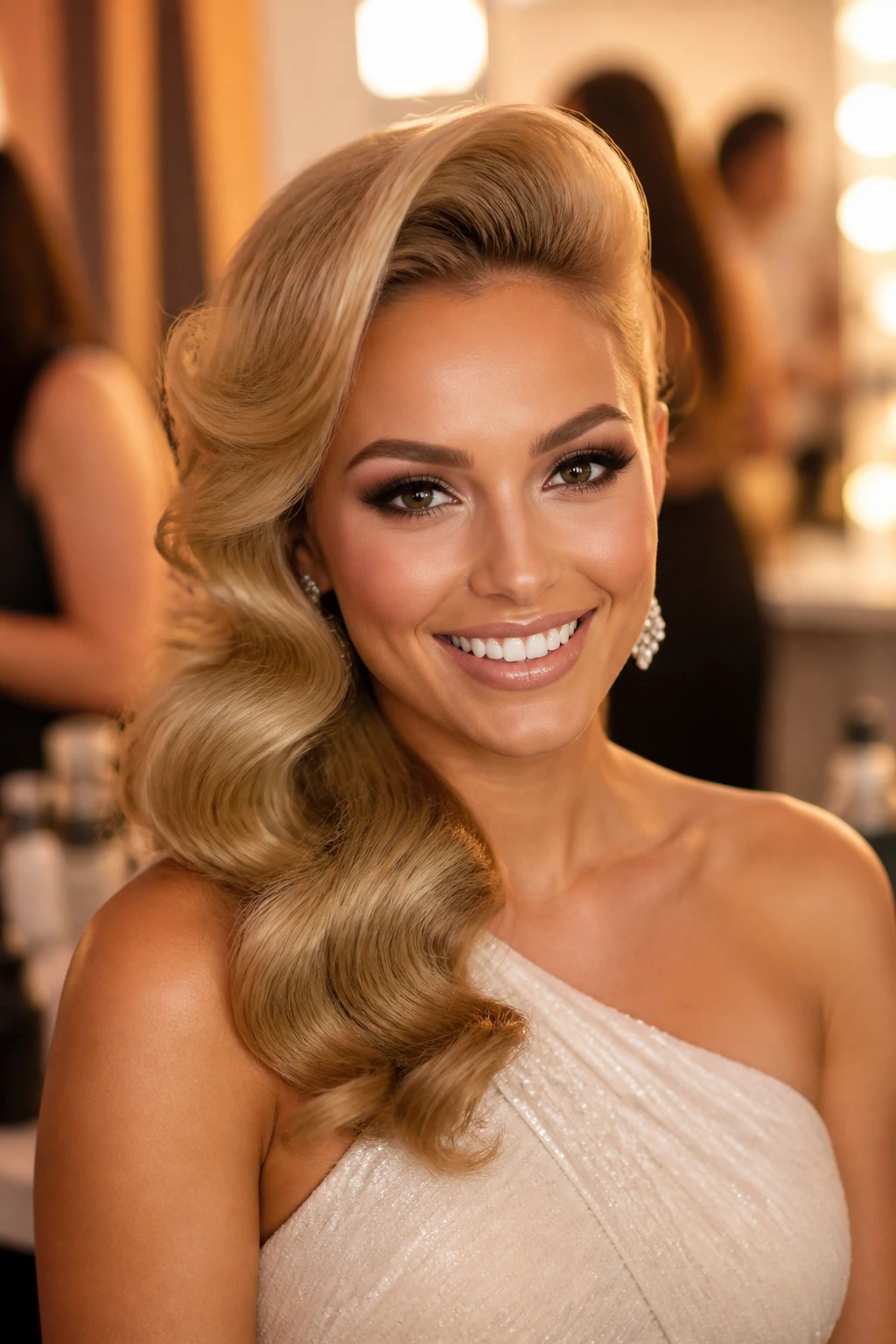
Old Hollywood hair brings drama in a controlled way. The side roll at the front gives the face a sculpted frame, while the rest of the hair falls in smooth, glossy waves over one shoulder. It’s classic stage hair for a reason.
The front roll should sit high enough to be visible but not so high that it steals the whole show. Roll the front section away from the face, pin it flat, and blend it into the rest of the wave pattern. The rest of the hair should move in one direction, not bounce around in separate curls.
This style loves one-shoulder gowns. It also works with strong eyeliner and a bold lip because the hair has enough presence to balance the makeup. If you brush it out too much, the wave loses its line and turns plain. Stop while the bends are still visible.
10. Sculpted Top Knot
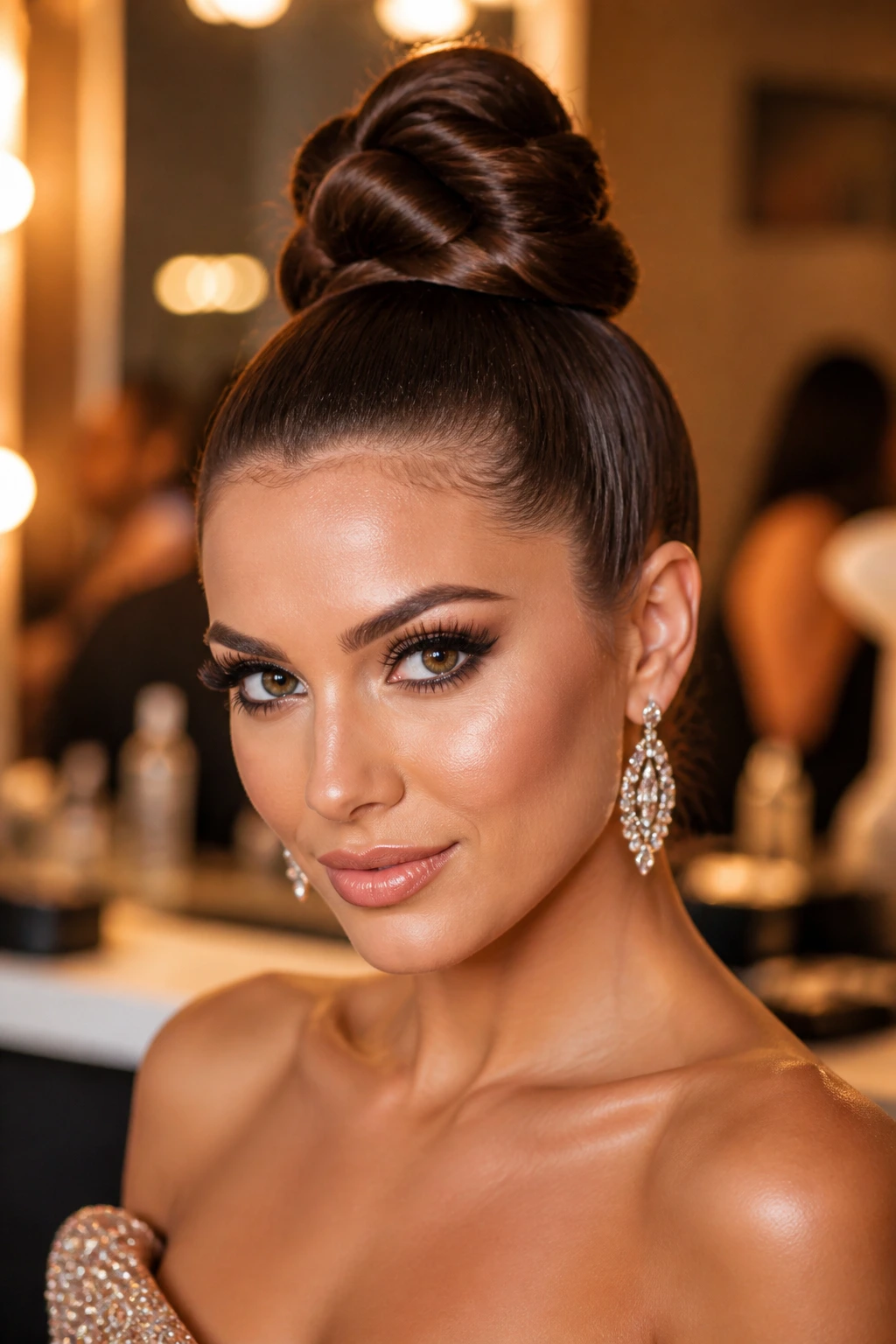
A sculpted top knot gives height, polish, and a crisp outline. It’s the kind of style that makes the face look lifted and the neckline look longer. If the bun is neat and the sides stay smooth, it can look much more formal than people expect.
The goal is shape, not size. Gather the hair high on the crown, smooth the sides back, and twist the length into a compact knot or bun. A bun donut or padding ring can help if your hair is fine and you need more body. If your hair is thick, keep the knot smaller so it doesn’t wobble.
This one is especially useful with gowns that have lots of detail at the waist or shoulders. It keeps the hair from competing with the dress. A few tiny pins hidden around the knot make all the difference. Don’t rely on one big clip and hope for the best.
11. Textured Low Knot with Polished Finish
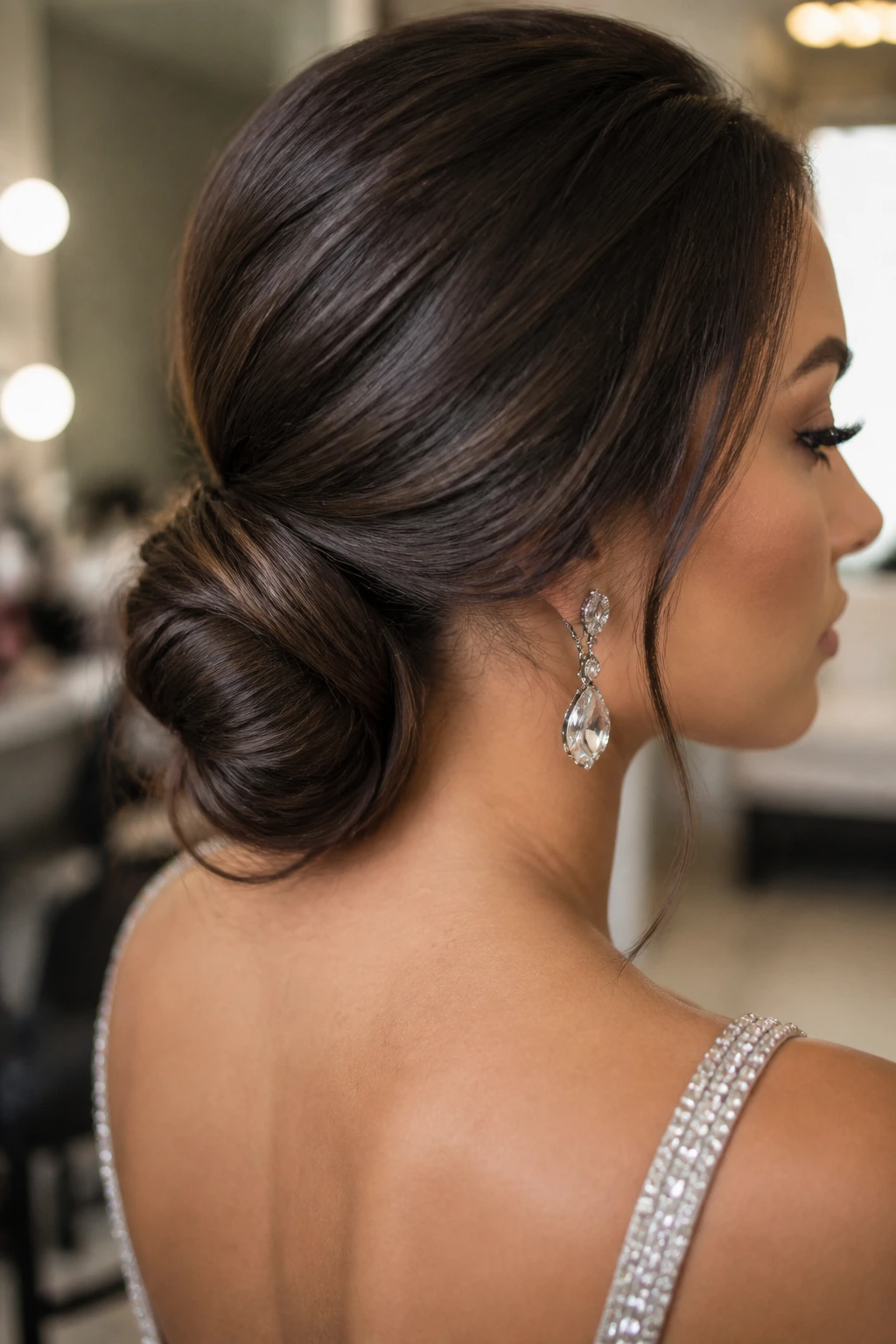
A low knot can read either messy or polished. The difference is whether the surface is controlled. This version keeps the outer layer smooth and the knot tucked neatly at the nape, while the texture lives only where it adds shape, not chaos.
Start by smoothing the crown and leaving a little softness through the mids. Twist the lengths into a low knot and pin the ends underneath so nothing sticks out like a mistake. A touch of texture spray on the lower half can help if the hair is too silky to hold shape, but keep it away from the roots.
This style is a nice middle ground for anyone who wants an updo without the severity of a French twist. It works particularly well with softer gowns, chiffon, and dresses that need a little movement at the neckline. The finish should feel relaxed, not undone.
12. Waterfall Braid with Curled Ends
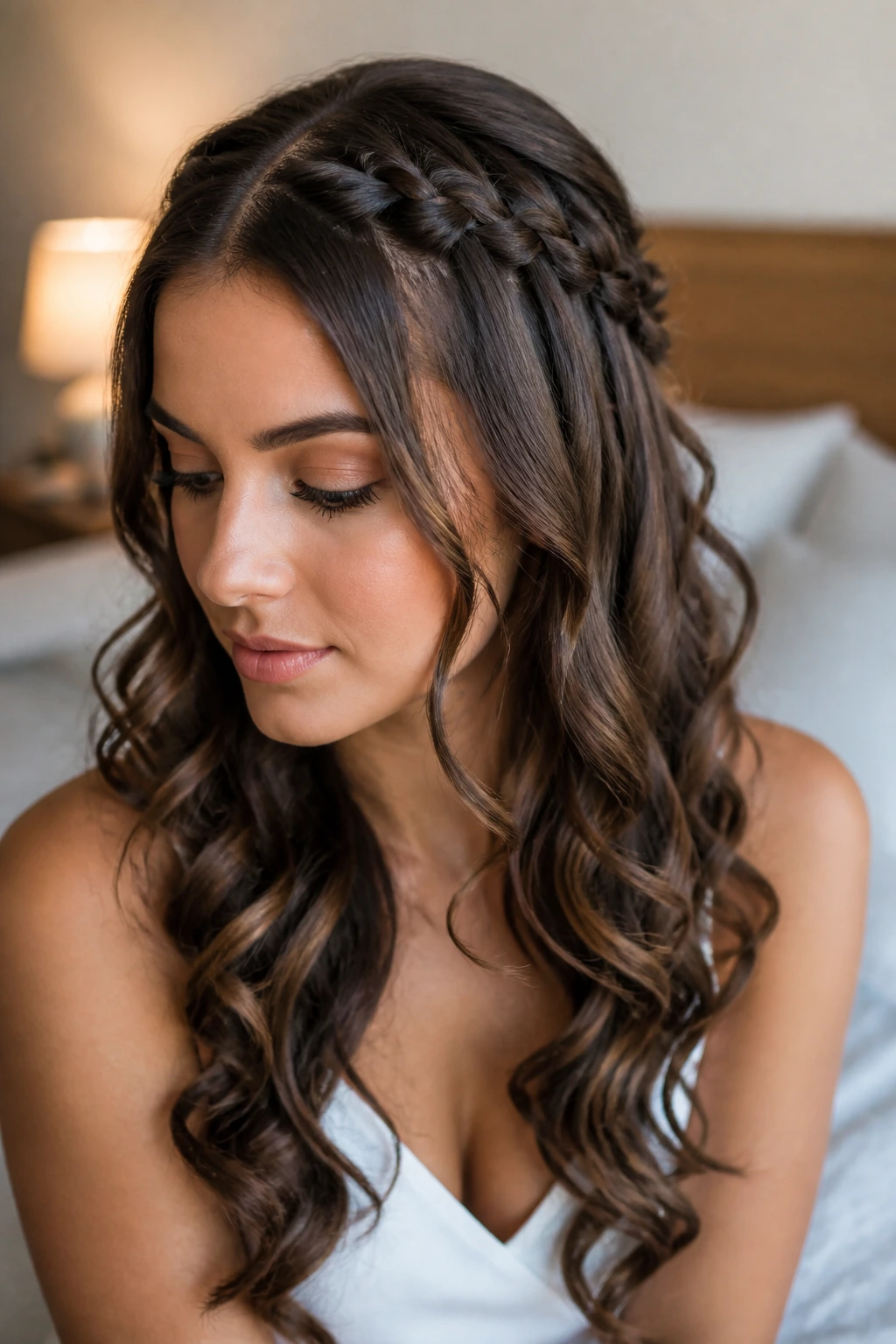
A waterfall braid gives you a built-in focal point without swallowing the whole head of hair. The braid sits across the crown like a frame, while the loose lengths fall in curled ends that keep the style romantic and still pageant-appropriate. It has enough detail to look special from the back row.
The braid itself should be flat and tidy. Pull each dropped strand evenly so the pattern stays clear, then curl the remaining hair in uniform sections. If the curls are too different in size, the look becomes busy instead of polished.
This is a strong choice for long hair and soft, flowing gowns. It also works when you want the front hair away from the face but don’t want a full updo. A few discreet pins hidden under the braid will keep it from loosening during a long event. That part is not optional.
13. Side Chignon for Asymmetry
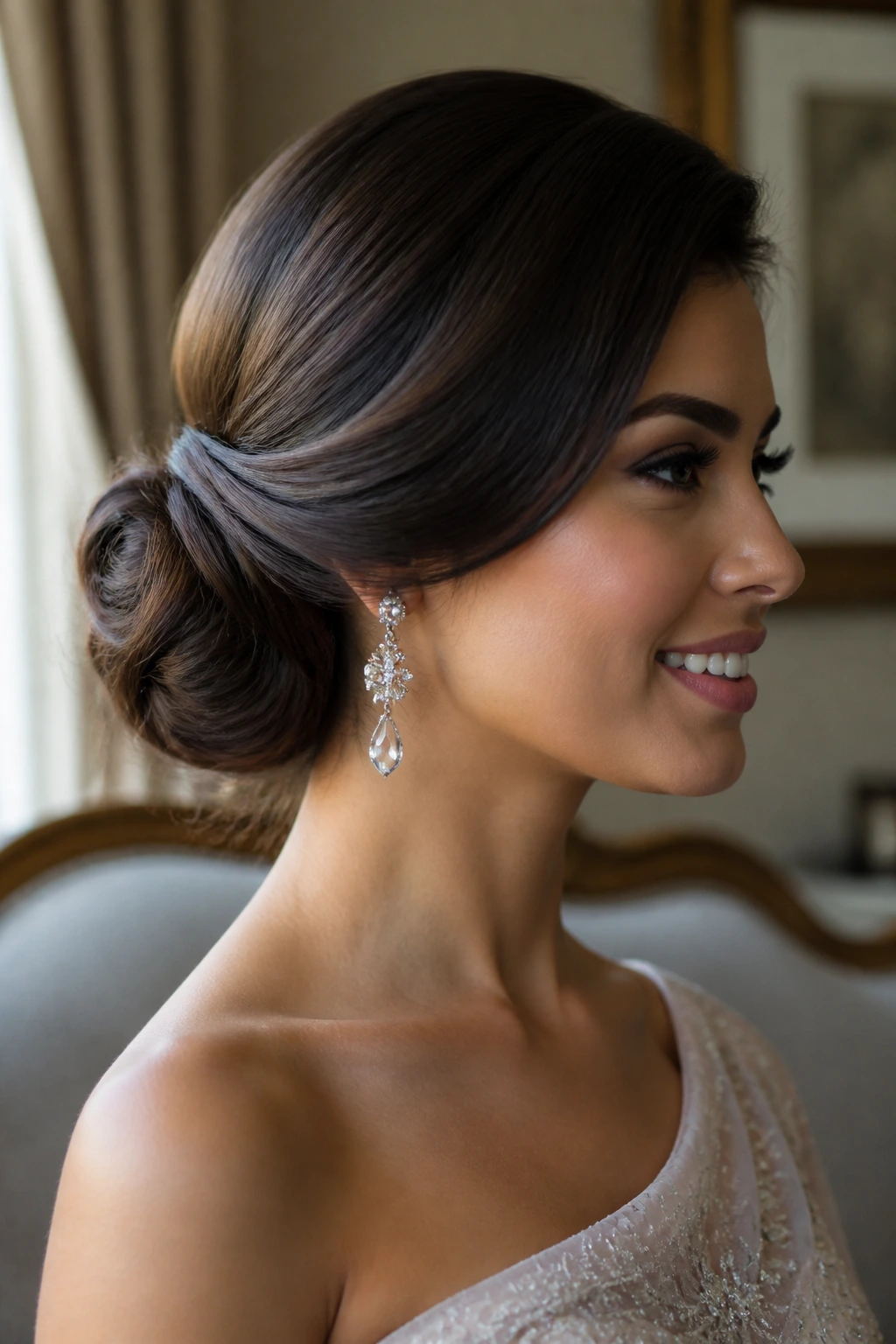
A side chignon gives you a cleaner profile than a center bun and adds a little shape around the jawline. Because it sits to one side, it can balance an asymmetrical neckline or earrings that need room to show off. The overall effect is refined, not fussy.
I like to place the side part on the opposite side of the bun so the style feels balanced. Sweep the hair low and secure it near the ear or just below it, then twist the lengths into a smooth knot. Keep the silhouette compact. A giant side bun starts looking theatrical in the wrong way.
This style is a smart choice for dresses with one strap, side draping, or heavy beading on one shoulder. It makes the garment and the hair talk to each other instead of fighting for space. The bun should feel anchored, almost heavy in the hand, before you leave it alone.
14. Faux Bob with Hidden Pins
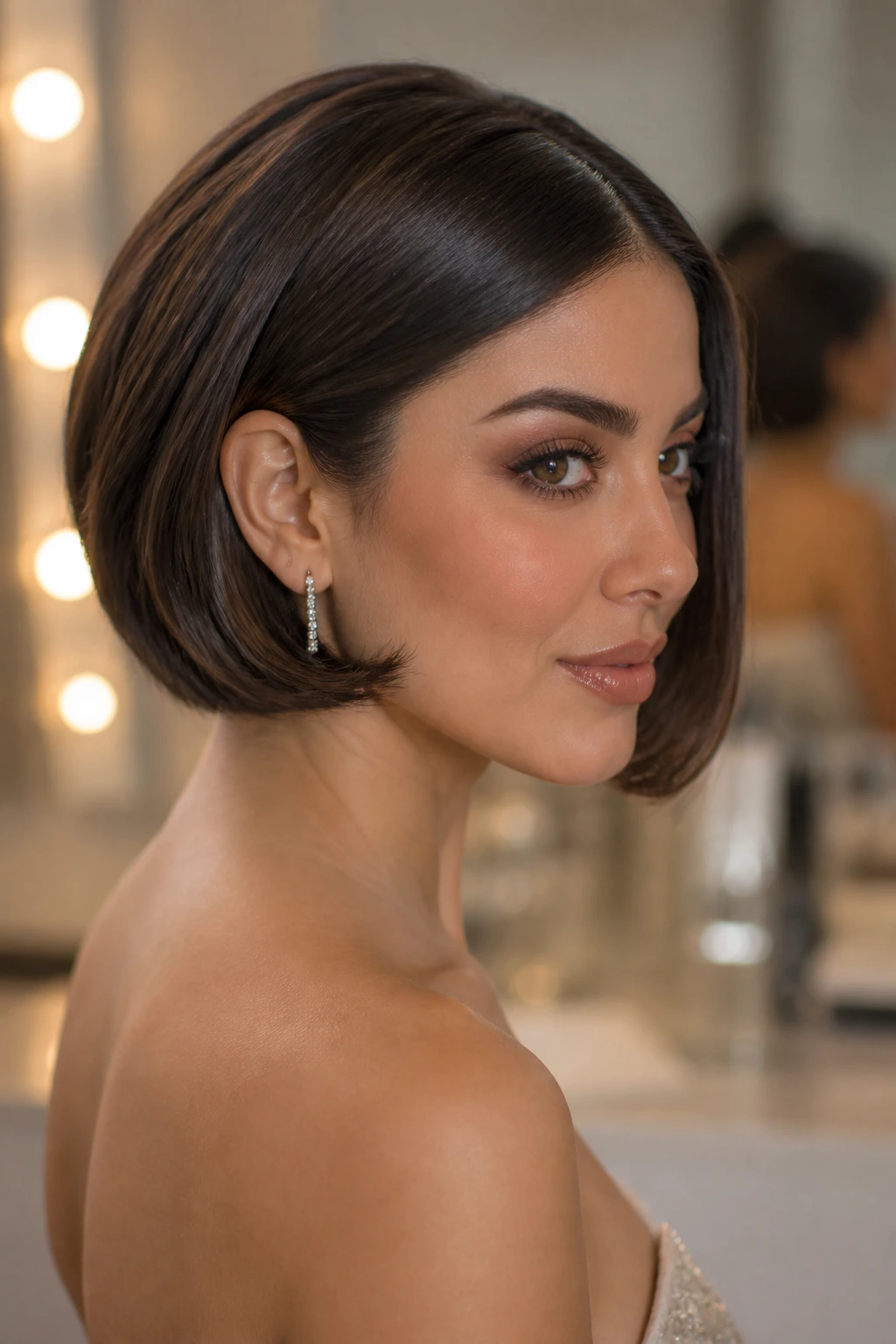
A faux bob is one of the cleverest pageant hairstyles on the list. It lets long hair mimic a shorter cut, which can make the face and neckline feel sharper and more modern. When it’s pinned properly, the illusion is clean from the front and surprisingly believable from the side.
The trick is tucking the ends under in layers rather than folding everything into one lump. Curl the hair first, then pin the lengths upward under the base until they disappear. You need enough pins to keep the hidden roll flat. Too few, and the bottom collapses by the time you reach the stage.
This style is especially useful if you want vintage polish without committing to a real haircut. It works well with dramatic makeup and gowns that have strong shoulders or a structured bodice. A little smoothing spray on the top layer keeps the illusion tight.
15. Finger Waves for a Vintage Edge
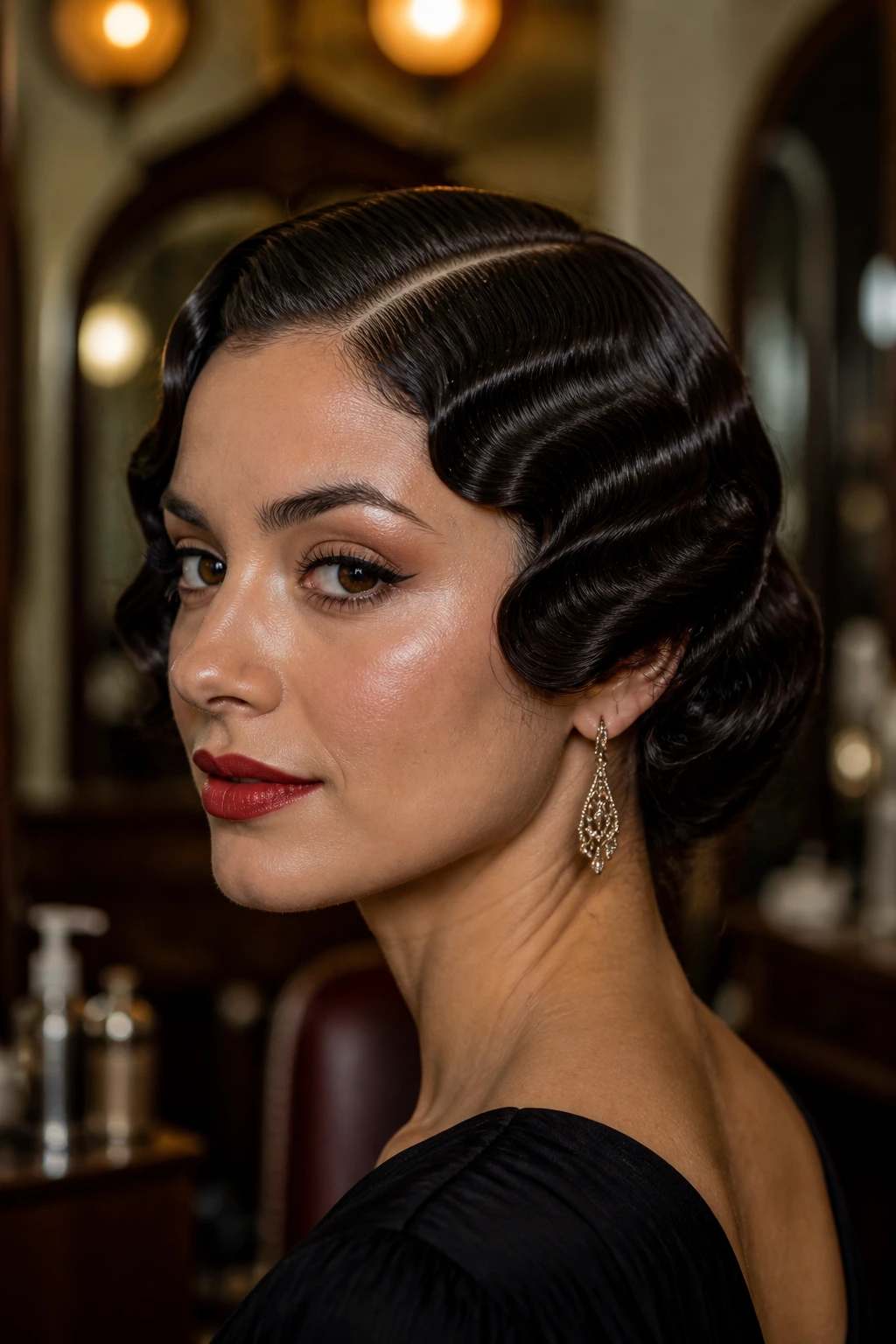
Finger waves are a more advanced choice, but when they’re done well, they look sharp and deliberate in a way no loose curl can match. The waves sit flat against the head, making the finish crisp and sculptural. There’s nothing casual about them.
You’ll want setting lotion, fine-tooth comb control, and clips that hold each wave in place while it dries. The hair should be damp enough to shape but not dripping. Once the waves set, don’t rough them up. That ruins the line and turns the style soft in a bad way.
This is a good pick for short to medium lengths, or for anyone who wants a vintage look that feels editorial. It pairs well with bold lips, strong brows, and a gown that has some structure. Finger waves do not ask for much ornament. They already bring enough detail.
16. Half-Up Bouffant with Long Curls
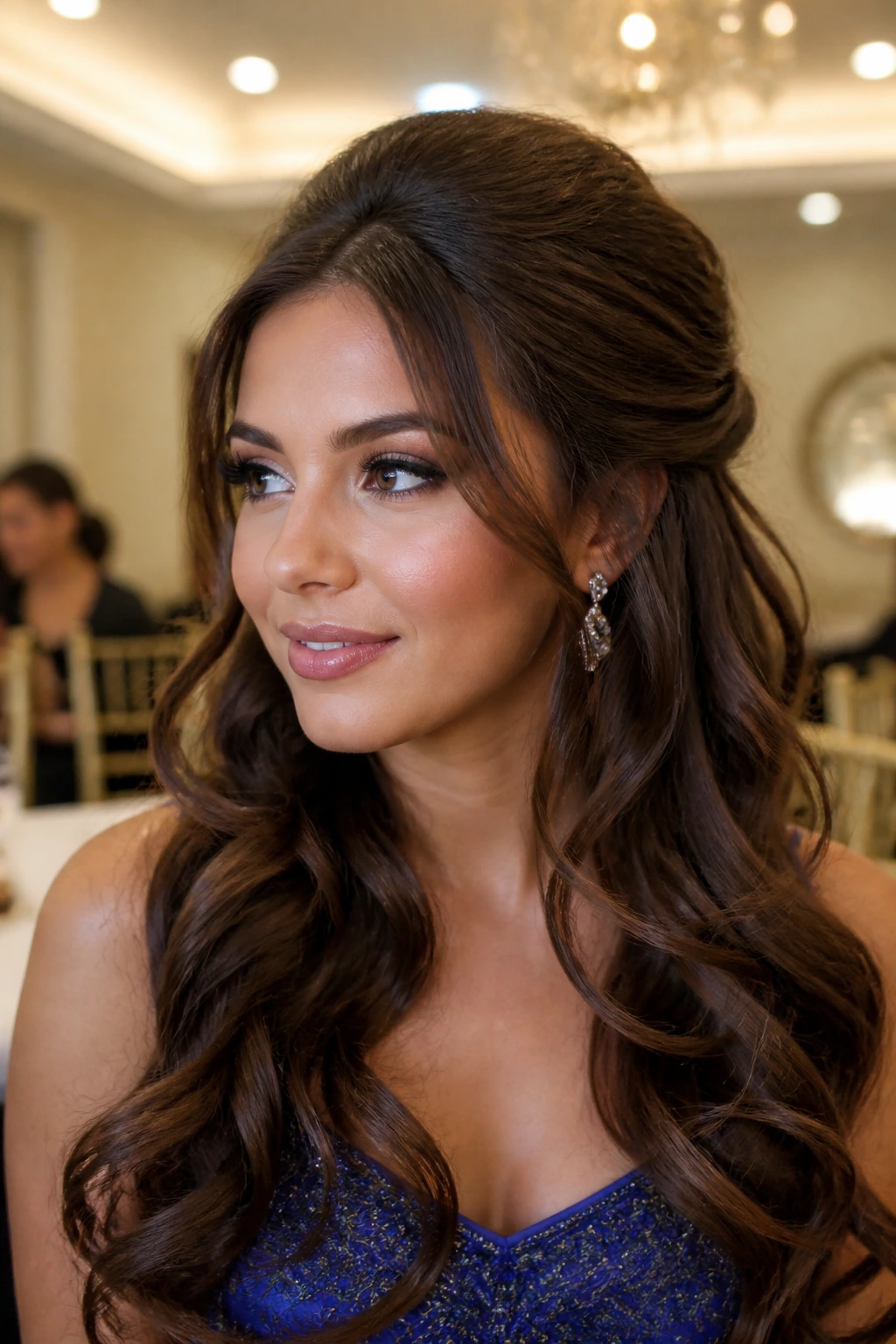
A half-up bouffant is a pageant staple for a reason. The crown lifts the face, the pinned-back top section keeps the style tidy, and the long curls below give you the softness judges expect from a more romantic look. It sits right between glam and control.
The bouffant should be built with careful teasing at the crown, then smoothed on top so it doesn’t look puffy in a dated way. Pin the back section securely, curl the lower lengths in large sections, and brush them lightly for softness. That contrast between lift and movement is the whole point.
If your face is round or soft, this style can add a little vertical line without making the hair look severe. If your hair is very fine, a small padding piece under the crown can help the volume survive the evening. Quiet trick. Big payoff.
17. Low Wrapped Pony with Tail Waves
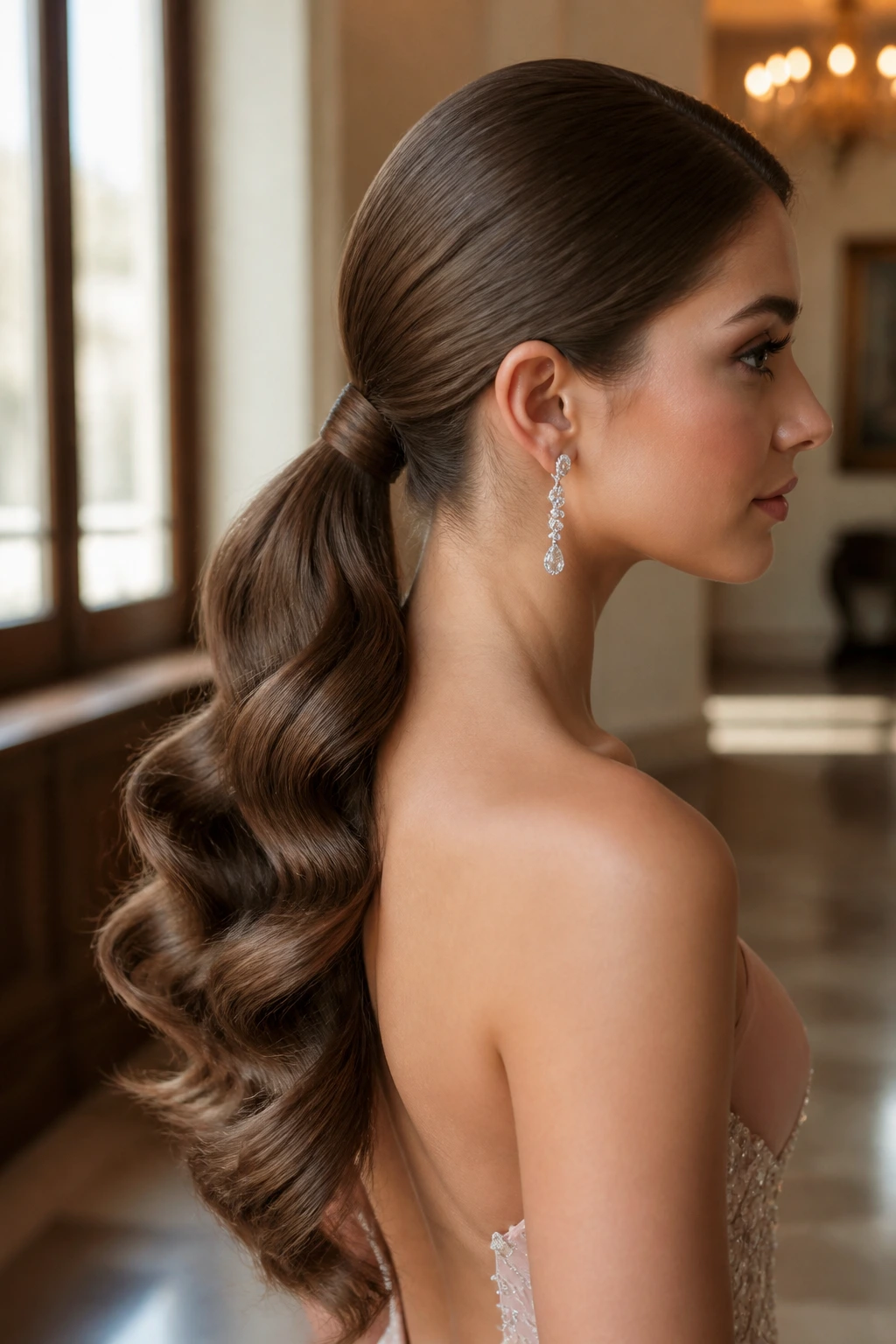
A low wrapped ponytail is cleaner than people give it credit for. The base sits low and sleek, the wrap hides the elastic, and the tail can be waved or curled to keep the style from looking flat. It’s polished, tidy, and easy to read.
I like this look when the gown is detailed and the hair needs to stay out of the way. It exposes the shoulders and keeps the neckline visible, which is useful if you’re wearing statement earrings. The tail should move a little, not hang like a rope.
If you want more presence, wave the tail with a curling iron before gathering it into the pony. A wrapped strand around the base makes the style feel finished. Don’t skip that part. Without it, the ponytail can look like a quick fix instead of a choice.
18. Dutch Braid into a Tight Bun
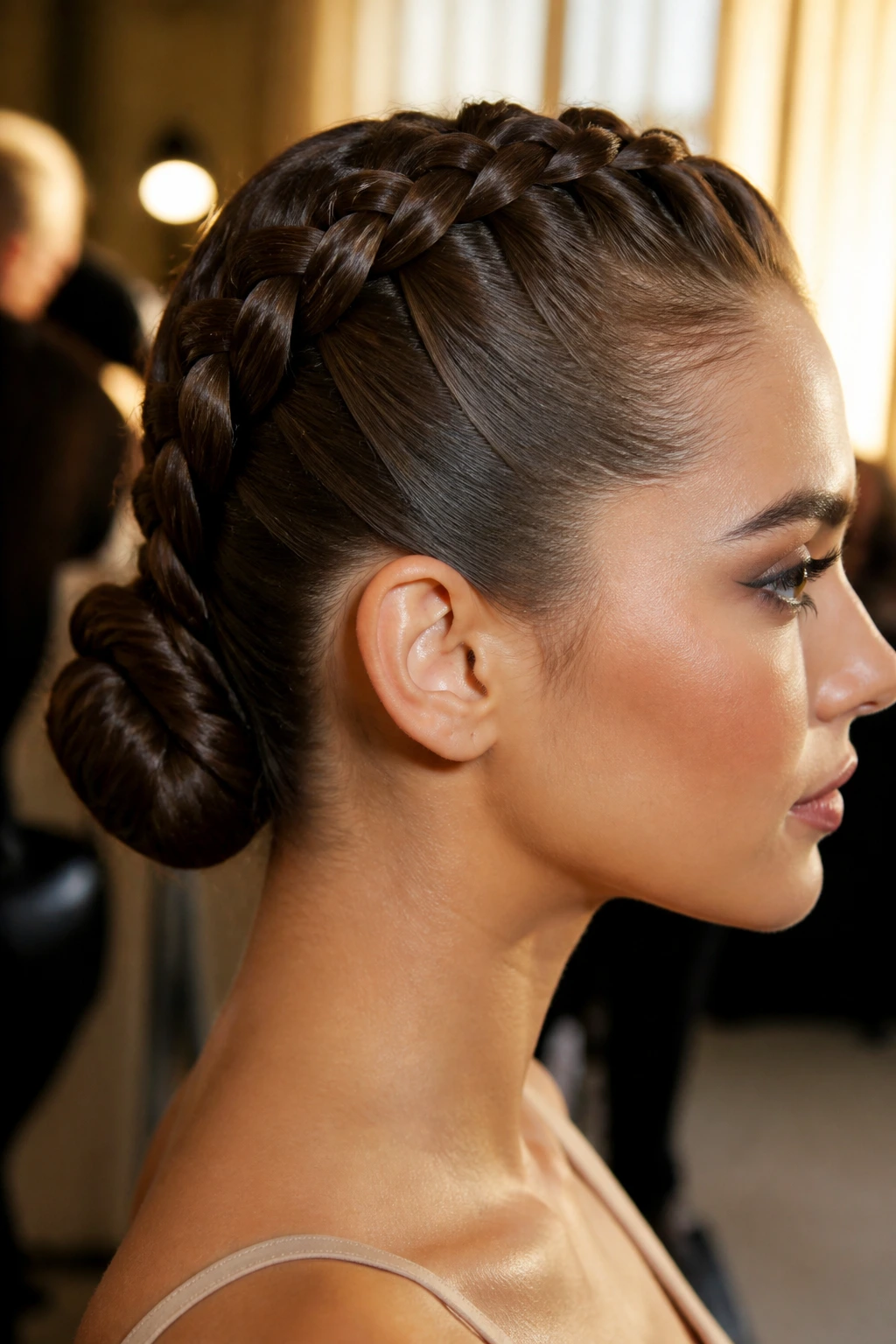
A Dutch braid leading into a bun gives you control from the scalp all the way to the back of the head. The braid sits raised from the crown, which creates texture up top, and the bun stays tucked and secure. It’s one of the more practical polished pageant styles, even if it looks more elaborate than it feels.
Braid close to the scalp and keep the tension even so the pattern looks neat. Once the braid reaches the nape, coil the ends into a bun and pin them under in a circular shape. If the braid pieces start fanning out, the whole style loses its clean edge fast.
This is a strong choice for thicker hair, especially if it tends to slip out of sleek styles. It also works well when you want the hair fully off the face but still want visible detail. A light mist of flexible spray will keep the braid defined without making it stiff.
19. Loose Glam Curls with a Clean Middle Part
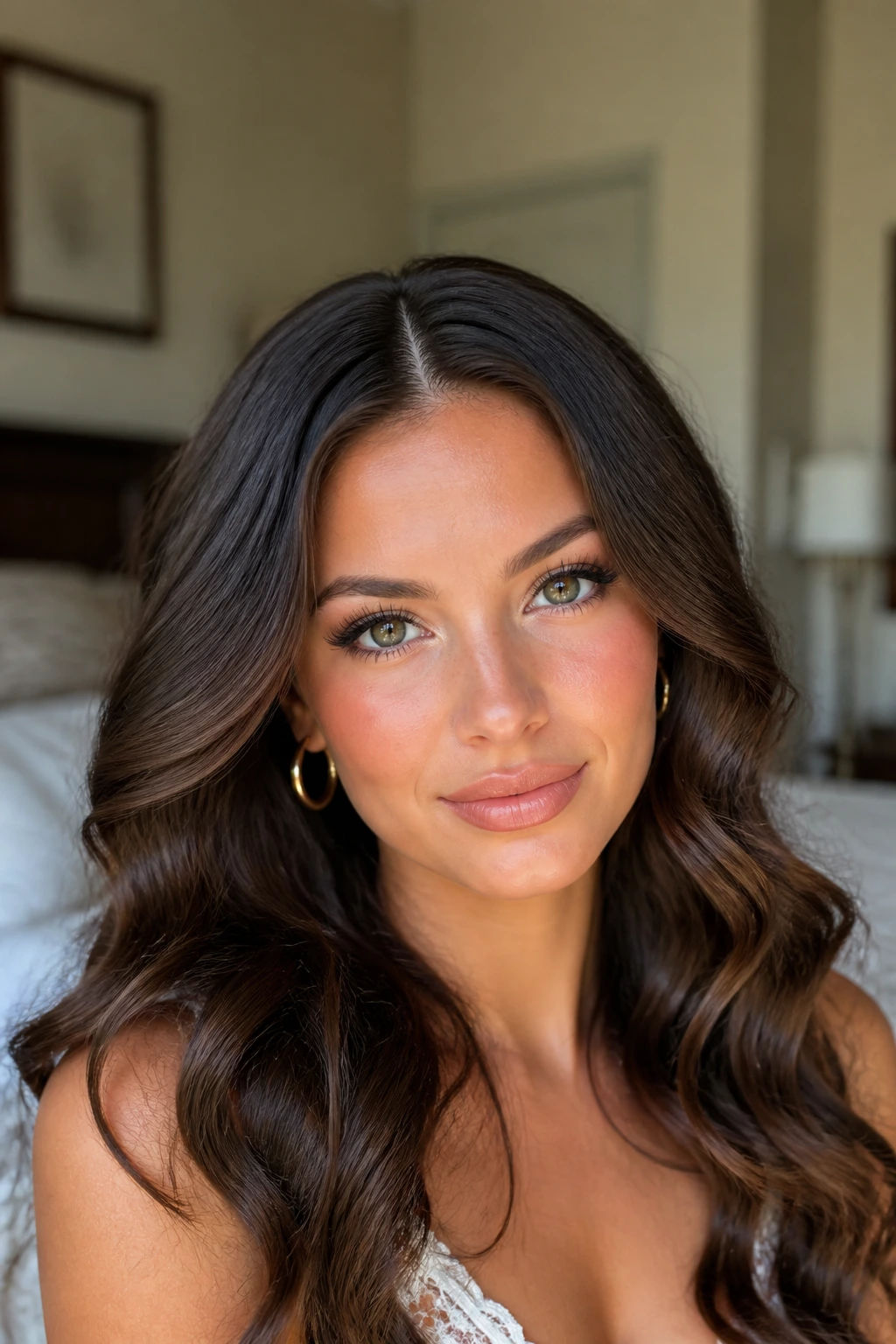
Loose glam curls can absolutely look polished if the part is sharp and the curl pattern is deliberate. The middle part creates symmetry, and the soft, glossy curls give the hair movement without making it fluffy. It’s simple, which is not the same thing as plain.
The trick is consistency. Curl the sections away from the face, let them cool, then brush gently so the curls merge into smooth bends. If you alternate directions too much, the finish turns fuzzy instead of refined. One direction, one clean pattern.
I like this style when the dress is intricate and the hair should support the look rather than compete with it. It’s also a good option for hair that already has healthy shine. A tiny amount of smoothing serum on the bottom third of the lengths is enough. More than that and the curls start to separate.
20. Sleek Side-Swept Knot
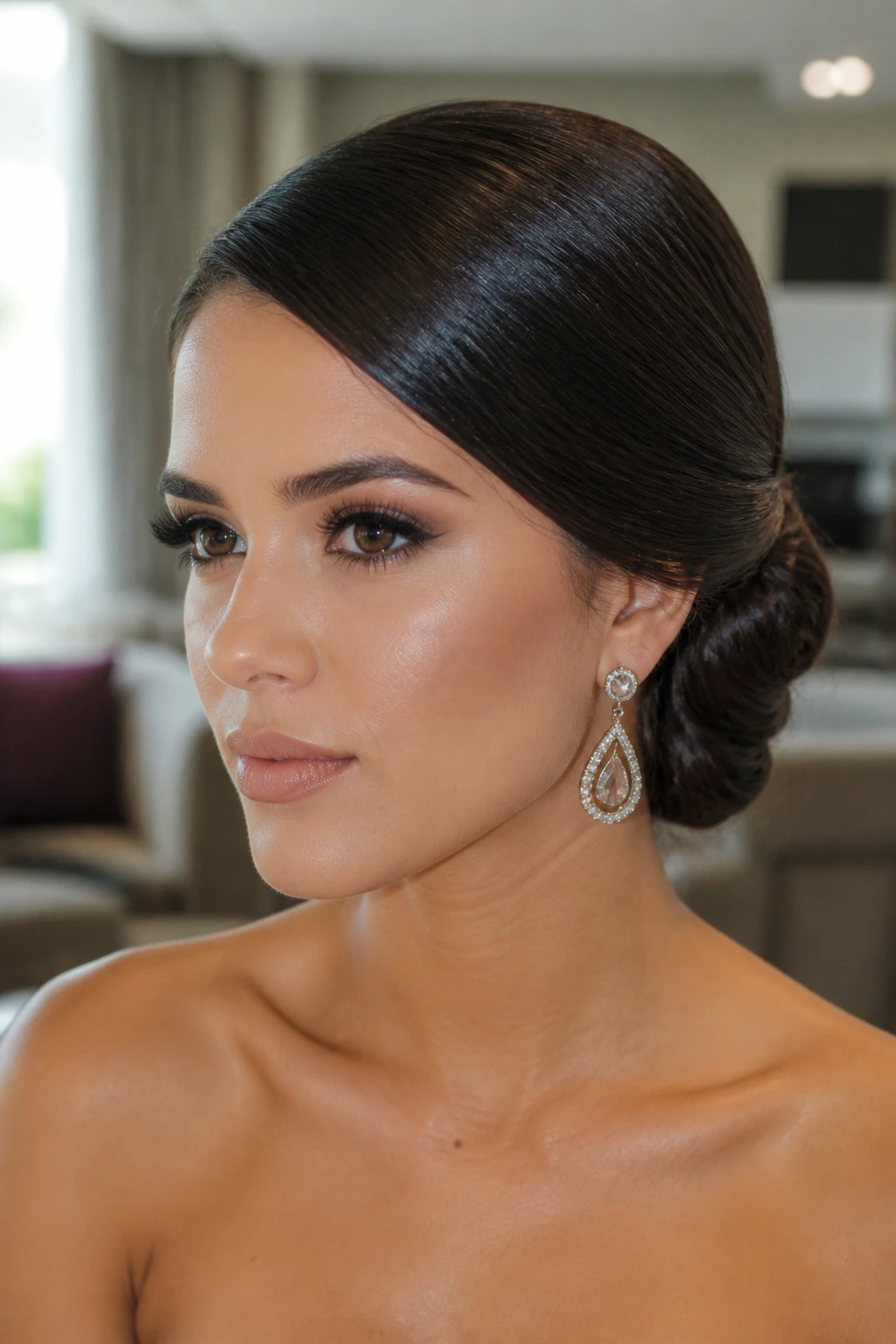
A sleek side-swept knot gives you asymmetry and polish at the same time. The hair is directed across the head, gathered low to one side, and twisted into a knot that feels modern rather than fussy. It has a clean line that works well in pageant settings where every detail gets noticed.
The side sweep is the important part. Don’t just pull the hair back and call it done. Brush it across the head so the direction is obvious, then secure the knot low and slightly behind the ear. That angle keeps the face open and gives the style a little drama.
It works especially well with side-swept gowns and long earrings. If your hair is very straight, give the lengths a tiny bit of grip with texture spray before pinning. Otherwise the style can slide around and look too slick in the wrong way.
21. Twisted Crown Half-Up Style
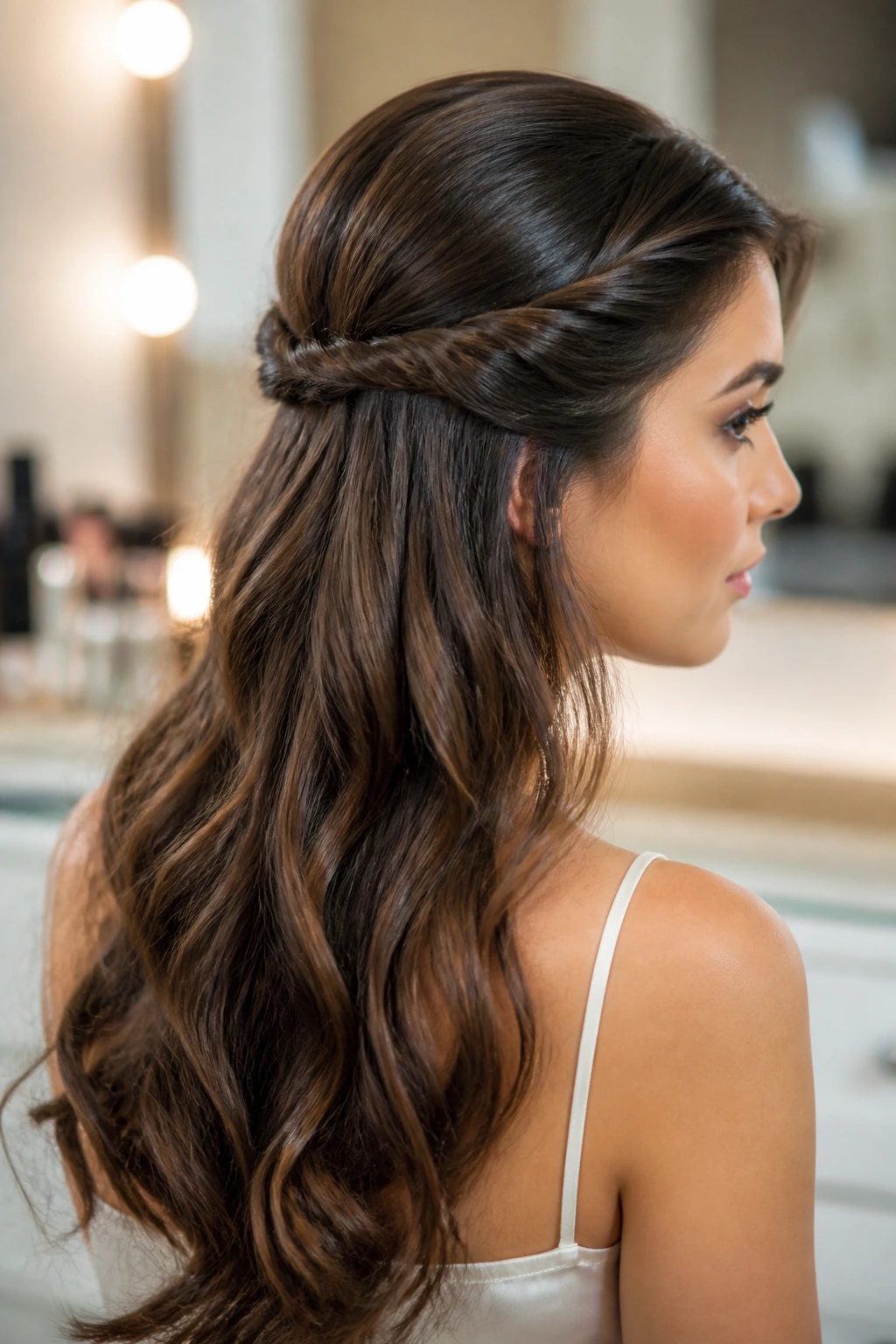
Twisted crown half-up styles are useful when you want softness around the face but still need the hair controlled. Two twisted sections from the temples meet at the back, leaving the rest of the hair down in waves or smooth curls. It feels gentle, but it’s still structured.
The twists should sit close to the head so they read as part of the hairstyle, not loose pieces that wandered out of place. Pin them together at the back with hidden bobby pins, then blend the lower lengths so the join point disappears. If the twists are too loose, they lose the polished edge.
This look is especially good for medium to long hair with some natural bend. It works with gowns that don’t need a severe updo but still ask for something intentional. A little shine spray across the surface helps the twists stand out under stage lights.
22. Soft Gibson Tuck
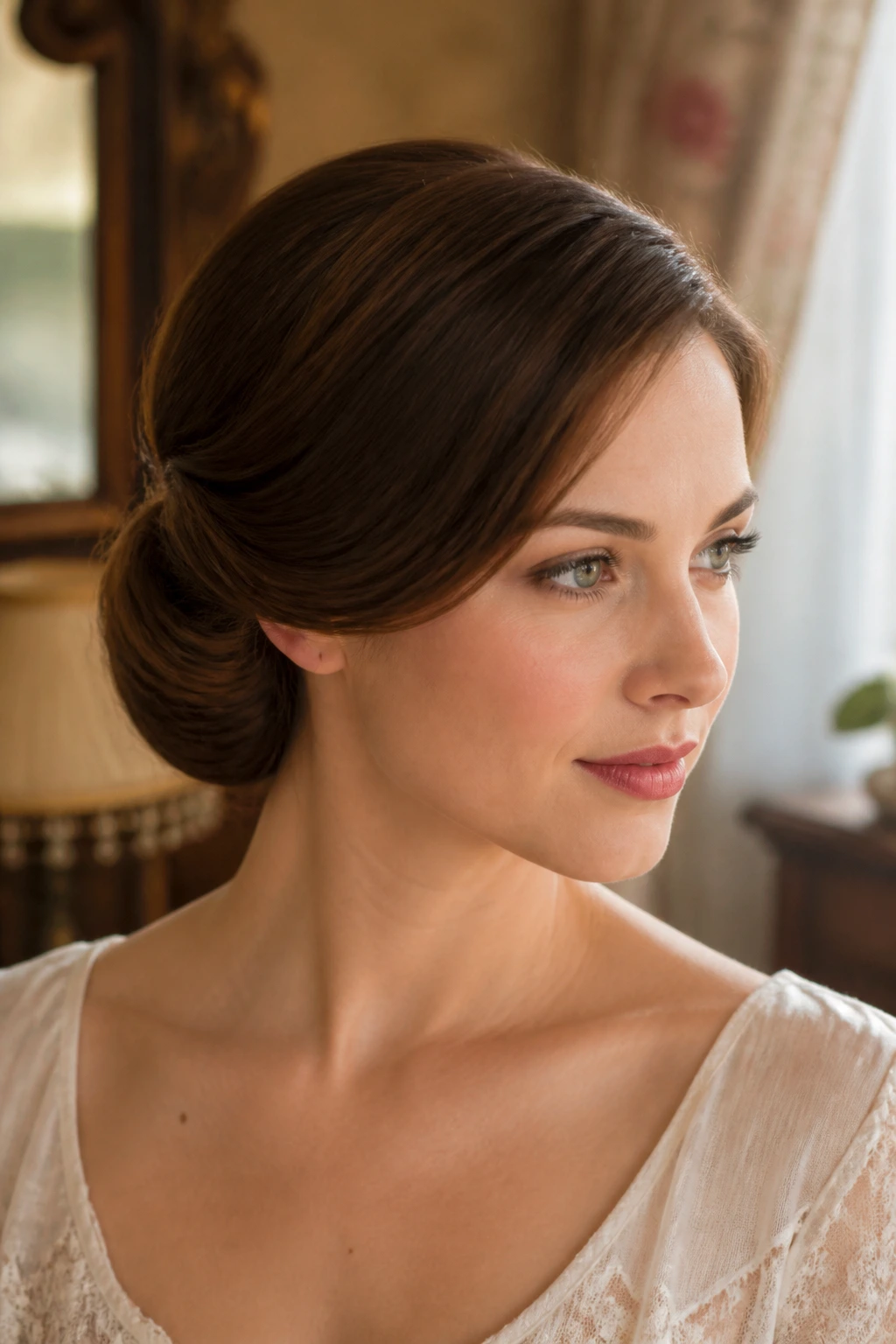
A Gibson tuck has that neat rolled-under finish that can look almost deceptively simple. Hair is rolled inward at the nape and pinned into a soft fold, which creates a tidy shape without the bulk of a full bun. It’s a nice choice when you want classic polish with less visual weight.
The success of this style depends on smooth prep. If the hair is frizzy or full of static, the tuck will look messy right away. Blow-dry it smooth, then shape the roll carefully and pin under the fold so the edges disappear. This is one of those styles where the back matters as much as the front.
I like it for dresses with vintage lines or softer fabric. It has a formal feel that doesn’t shout for attention. If you want to add a little sparkle, tuck a small comb or a row of pins just above the roll instead of burying the accent in the tuck itself.
23. Rope-Braid Ponytail
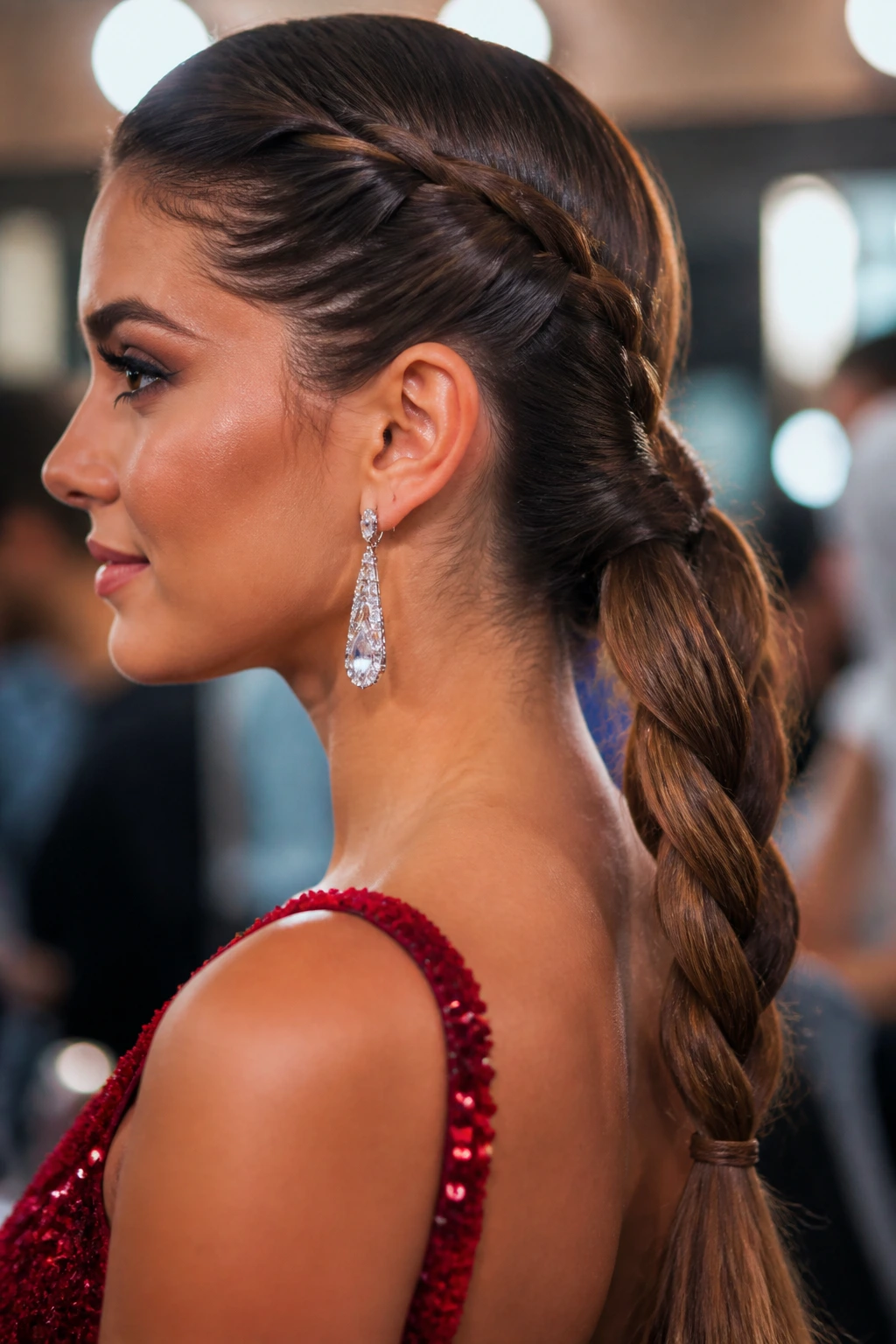
A rope-braid ponytail gives you clean texture with almost no fuss. Two sections twist around each other in a way that looks polished and modern, and the final ponytail stays neat instead of fraying out. It’s a good answer when you want something less traditional than curls but more finished than a simple pony.
The rope effect works best on hair with some length and grip. Secure the base tightly, split the tail into two sections, twist each one in the same direction, then wrap them around each other in the opposite direction. That opposing motion is what keeps the braid tight.
This style is a nice fit for high-neck gowns or dresses with strong lines. It also works if you want the back of the hair to look neat in photos. A small elastic at the end and a clear spray over the finished twist are usually enough to keep it together through the event.
24. Pearl-Pinned Low Bun
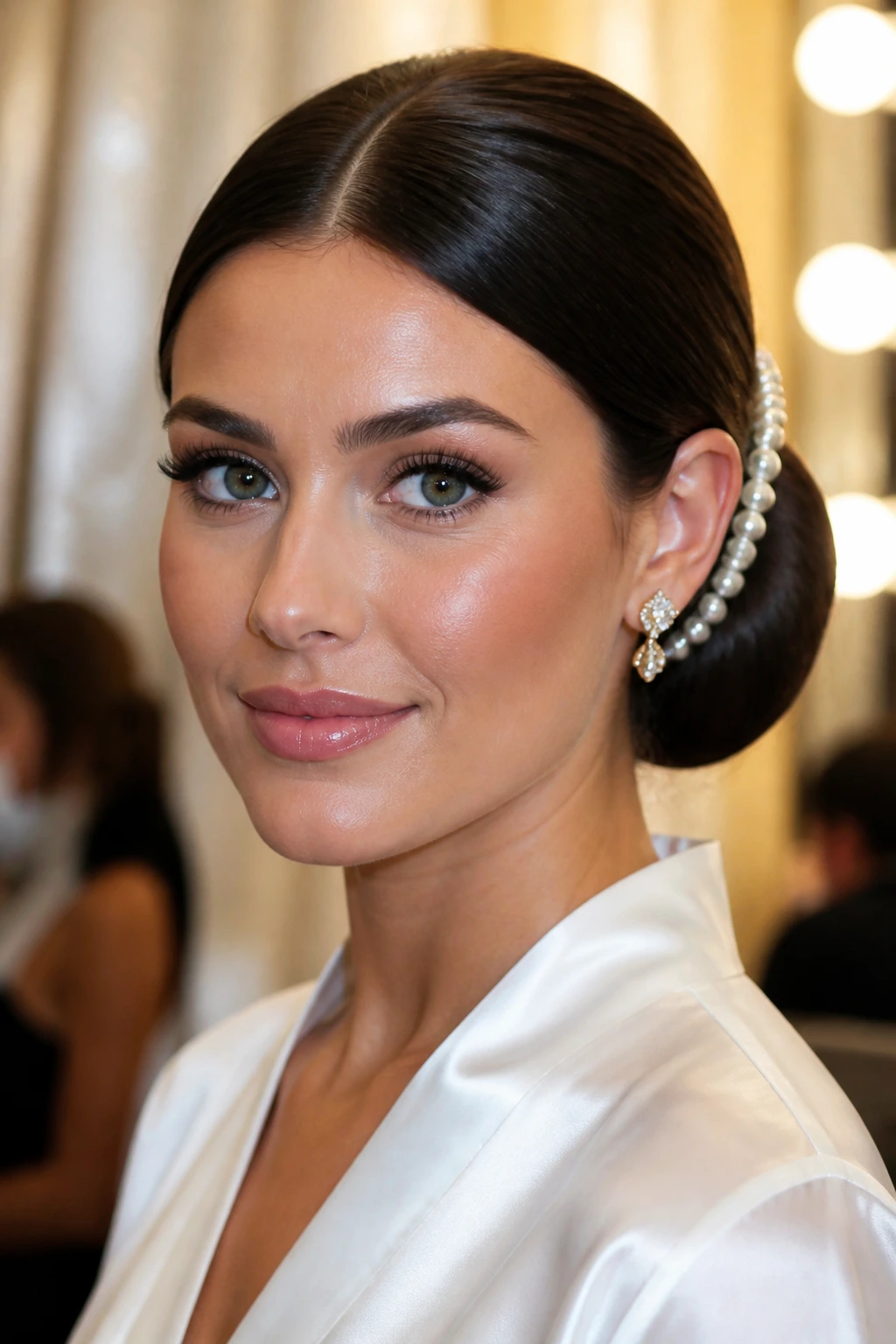
A pearl-pinned low bun is all about placement. The bun itself should stay compact and smooth, while the pearl pins add a deliberate line of shine around one side or across the base. If you scatter the pins randomly, it looks decorative in a rushed way. If you place them with intention, the whole style feels finished.
I prefer this look when the dress is already elegant and needs only one accent at the hair. The bun can be a chignon, knot, or tucked roll, but the pins should sit where they can catch the light without overwhelming the style. Use a mirror at the side to check the arrangement. The back matters here.
This is a useful choice for brides, scholarship pageants, and any event where the hair needs to look formal without becoming stiff. Keep the rest of the style simple. The pearls do the talking.
25. Romantic Ponytail with Face-Frame Waves
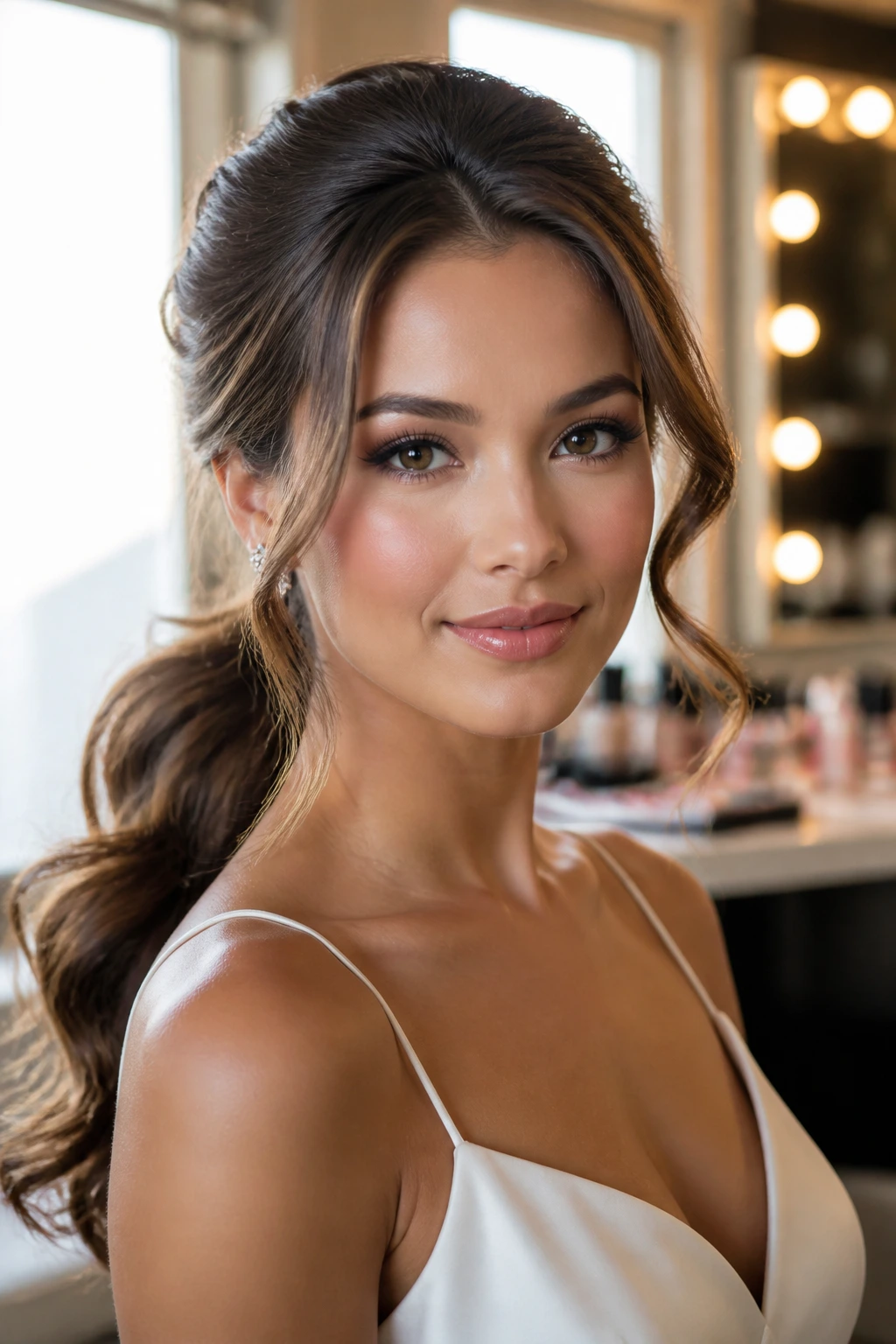
A romantic ponytail gives you softness, lift, and enough movement to keep the style from feeling too rigid. The crown stays sleek, the ponytail sits low or mid-height, and the face-frame waves soften the front without swallowing the face. It’s a pretty finish, but still controlled.
This style works because the details are balanced. Smooth the crown first, then leave a few strategic face-framing pieces and wave them away from the face. Curl the ponytail itself in broad sections so the tail has shape instead of hanging flat. The whole look should move, but not frizz.
If you want a polished pageant hairstyle that feels less formal than a bun, this is one of the best options. It suits long hair, extensions, and dresses that need a little softness around the shoulders. A tiny mist of flexible hairspray is enough. Heavy spray makes the curls sag.
Why Pageant Hair Needs Shape Before Shine
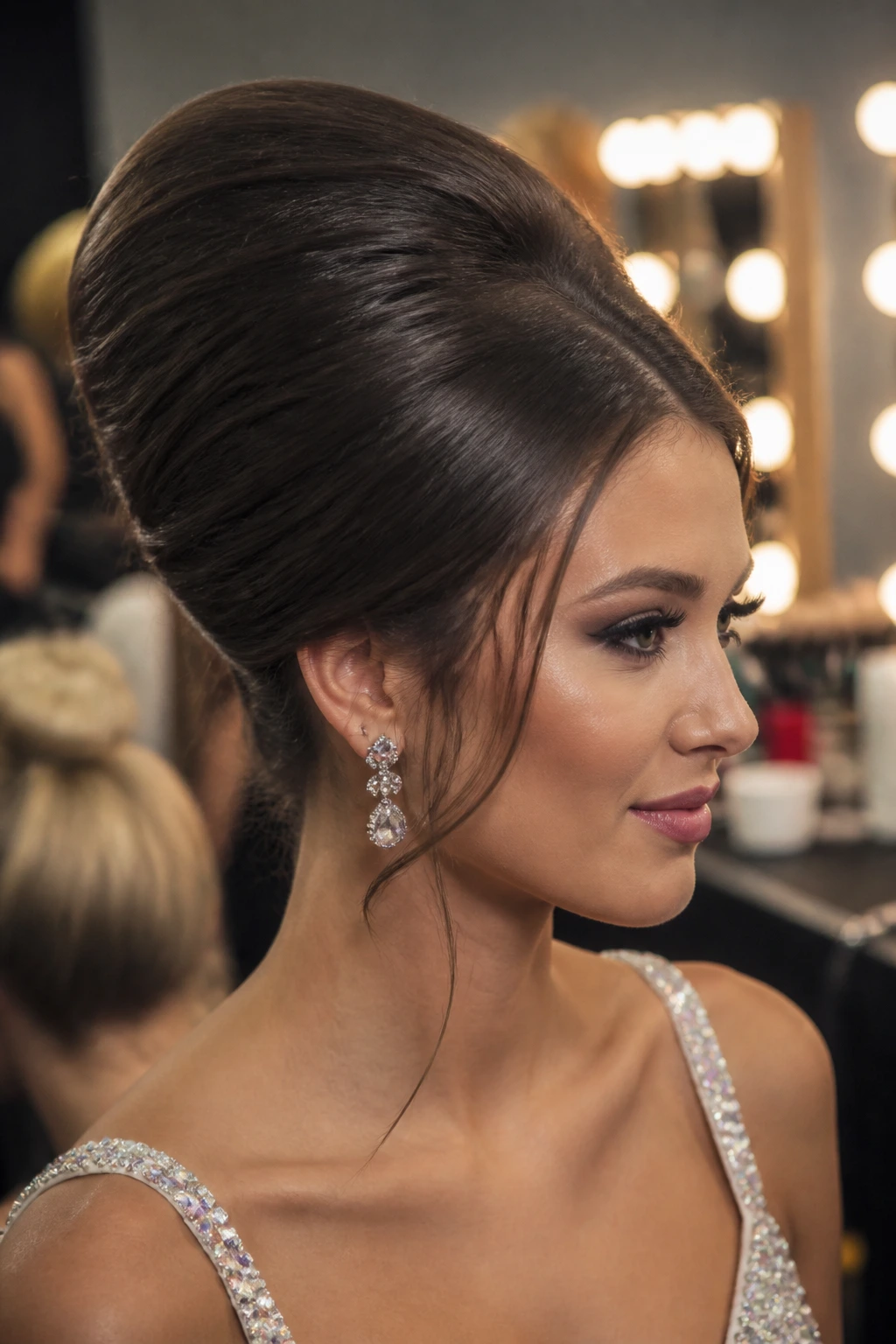
A lot of people chase gloss first, and that’s backwards. Shine without structure just looks oily under stage lights. The reason pageant hairstyles look polished is because the hair has a clear shape first: a clean crown, a defined part or sweep, and a silhouette that holds its line from a few feet away all the way to the back row.
Stage lighting changes everything. It flattens soft texture, exposes flyaways, and makes badly placed volume look bigger than it should. That’s why a low bun with a smooth top can look more expensive than loose curls that were never set properly. The style has to be built for cameras, movement, and distance.
There’s also the neckline problem. Hair that competes with a detailed bodice or a big collar makes the whole outfit feel noisy. Hair that opens the face and balances the dress gives the judges a cleaner read. That is the quiet math behind polished pageant styling.
Essential Tools for These Styles
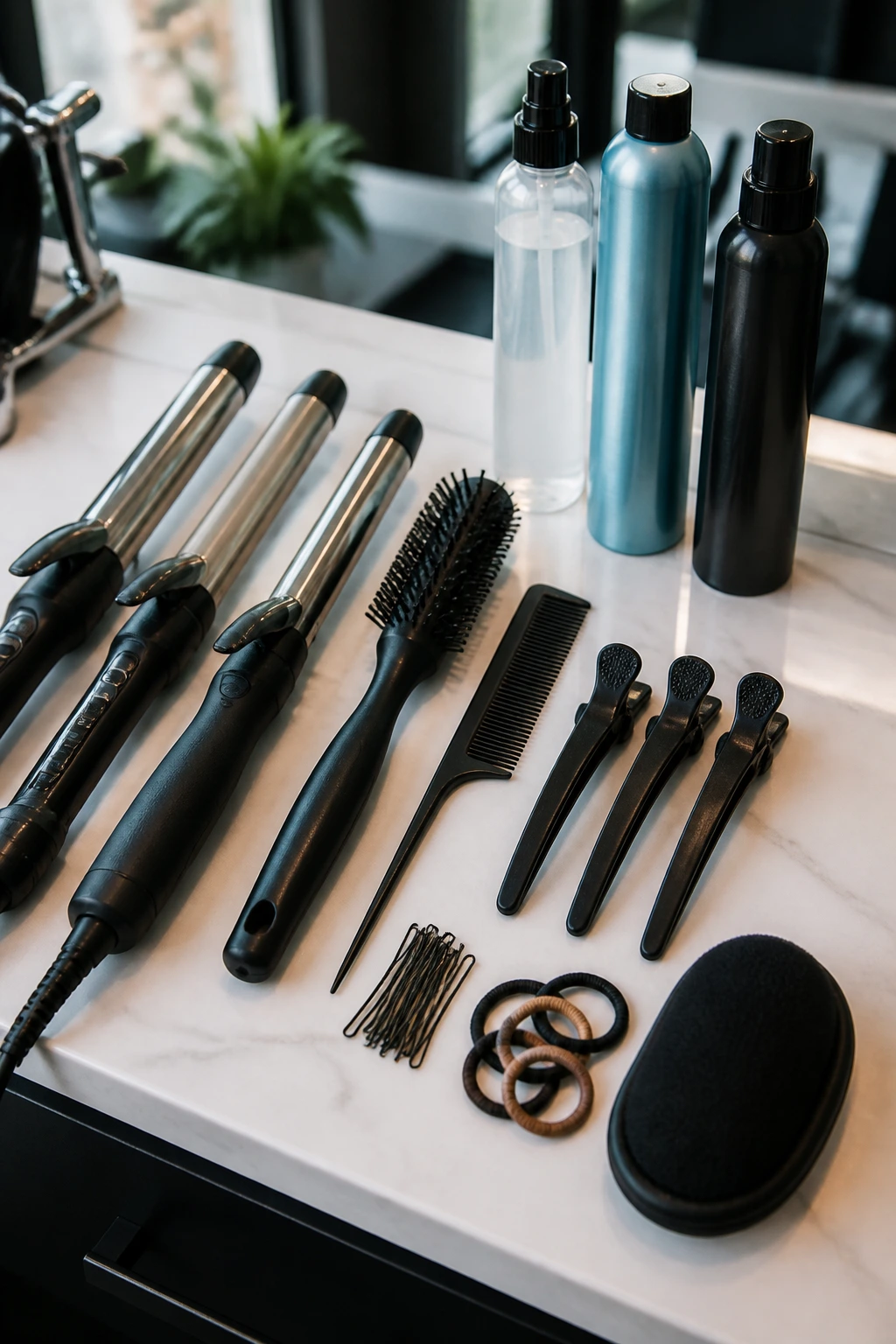
- 1-inch curling iron: Best for tighter pageant curls, pin curls, and styles that need a firmer bend.
- 1.25-inch curling iron: My usual pick for Hollywood waves, barrel curls, and soft glam finishes.
- Tail comb: Useful for clean parts, sectioning, teasing the crown, and tucking edges into place.
- Bristle brush: Smooths the crown and helps brushed-out waves blend together without frizz.
- Duckbill clips: Hold sections while you curl or set waves so the heat can cool properly.
- Bobby pins in two sizes: Standard pins for most of the work, smaller ones for hidden details and fine hair.
- Strong-elastic bands: Best for ponytails and wrapped bases that need to stay tight.
- Heat protectant spray: Keeps hot tools from roughing up the cuticle; choose one that doesn’t leave the hair sticky.
- Flexible-hold hairspray: Good for shaping without making the style crunchy.
- Strong-hold hairspray: Handy for buns, twists, and any style that has to survive a long day.
- Hair donut or padding insert: Optional, but useful for top knots and big buns when you need extra shape.
- Shine spray or light serum: Finish only, and use a small amount. Too much will flatten the style.
Smart Product Choices and Prep Tips
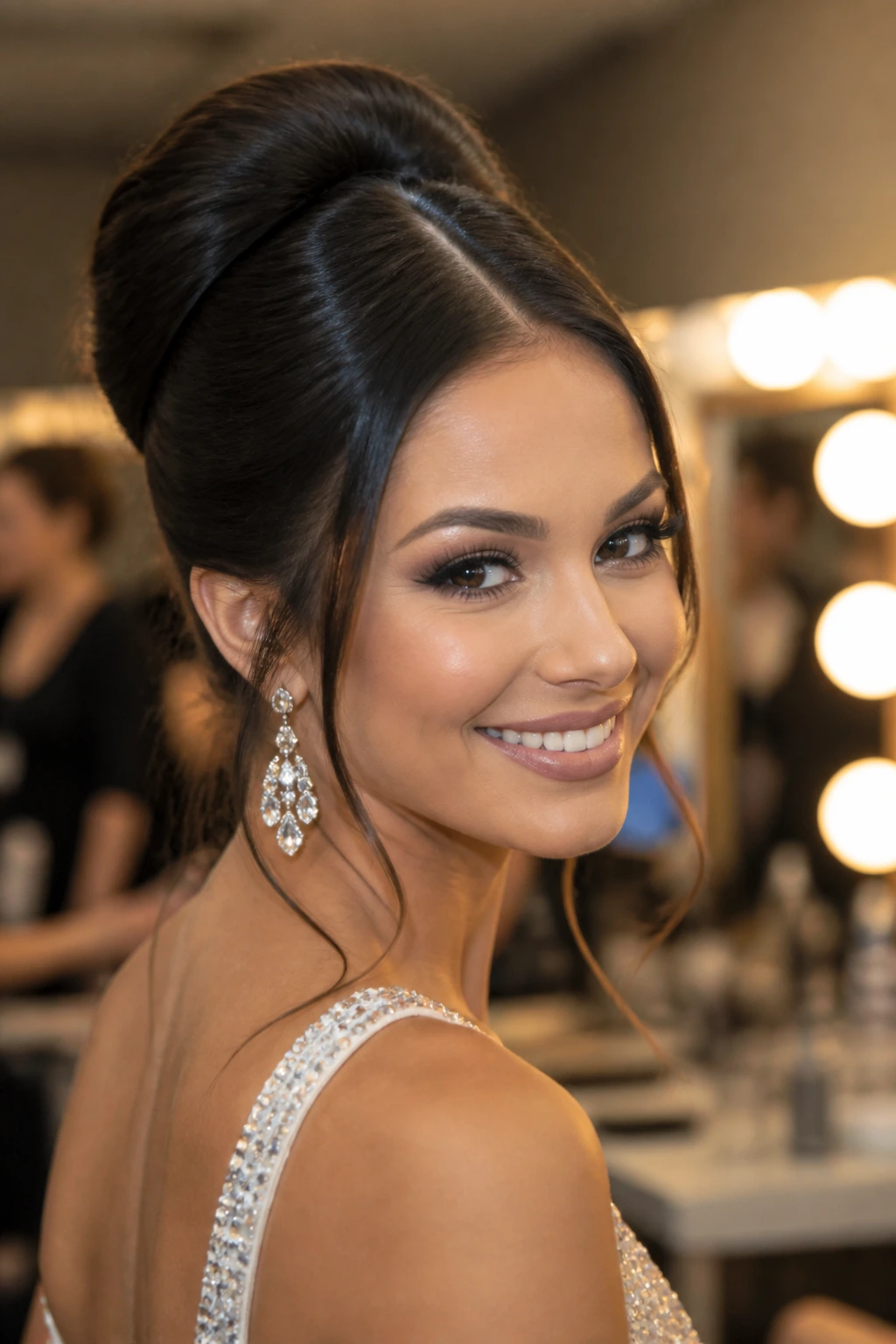
The right products matter more than a dramatic new technique. If the hair is fine, start with mousse at the roots and a light heat protectant through the lengths. Fine hair collapses fast when you load it with heavy creams, so keep the texture airy and save the smoothing products for the ends.
Thick or coarse hair usually needs a different balance. Use a smoothing cream or a light oil on the mids and ends, then a firmer spray at the finish. The roots should stay controlled, but not greasy. If the crown starts looking shiny in the wrong way, you used too much product too close to the scalp.
Bobby pins with a little grip on them are worth buying. So are clear elastics and sectioning clips that don’t bend under tension. Cheap pins can slip out halfway through the walk, which is exactly the wrong moment to discover they’re useless. I’d rather spend a few extra dollars on pins than fix a style under pressure.
One more thing: prep the hair the day before if it’s naturally slippery. A clean wash can be too soft for updos and waves that need some hold. Day-old hair with a little dry shampoo or texture spray often styles better. That isn’t glamorous, but it works.
How to Wear These Styles With a Gown and a Crown
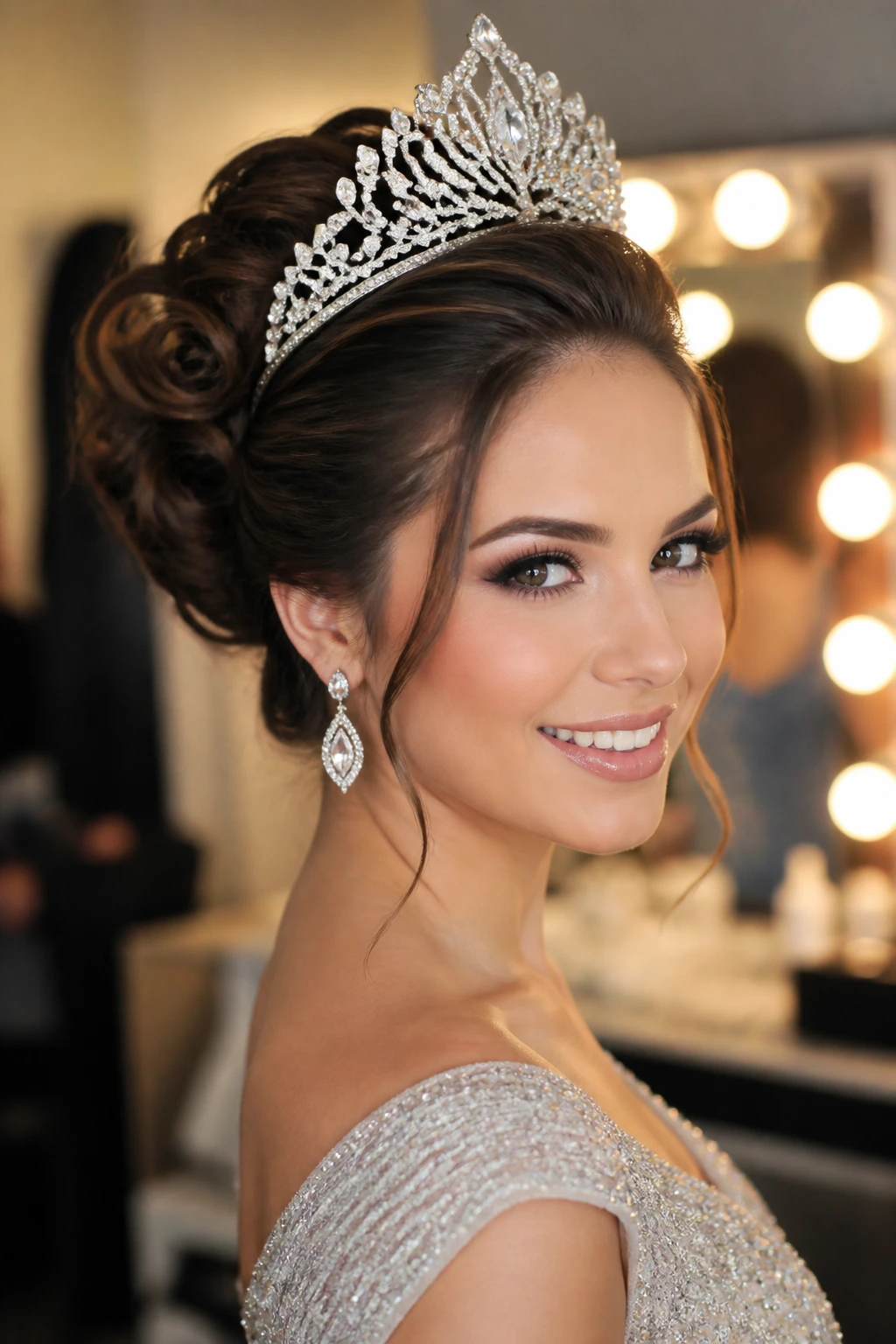
Presentation: A polished pageant hairstyle should frame the face first and decorate the head second. Keep the line clean where the hair meets the forehead, and place accessories where they support the shape instead of sitting on top of it like a last-minute add-on. A tiny mist of shine spray across the outer layer is enough; drenched hair looks heavy on camera.
Accompaniments: Match the hairstyle to the neckline and the earring size. High necklines like sculpted buns, twists, or sleek ponies; strapless gowns can handle broader waves and side sweeps; one-shoulder dresses usually look best when the hair moves away from the bare side. If your earrings are large, avoid a hairstyle that hides half of them.
Portions: Think about the scale of the style the same way you’d think about skirt fullness. Petite features usually look cleaner with controlled height and smaller buns, while longer faces can carry more crown lift or a wider wave pattern. The hairstyle should balance the gown, not compete with it.
Beverage Pairing: Keep a bottle of water nearby and skip anything sticky or dark before photos. Herbal tea, plain water, or a clear electrolyte drink are the sensible choices when you’re trying to keep lipstick, teeth, and hair all looking clean at the same time.
Additional Tips and Polish Boosters
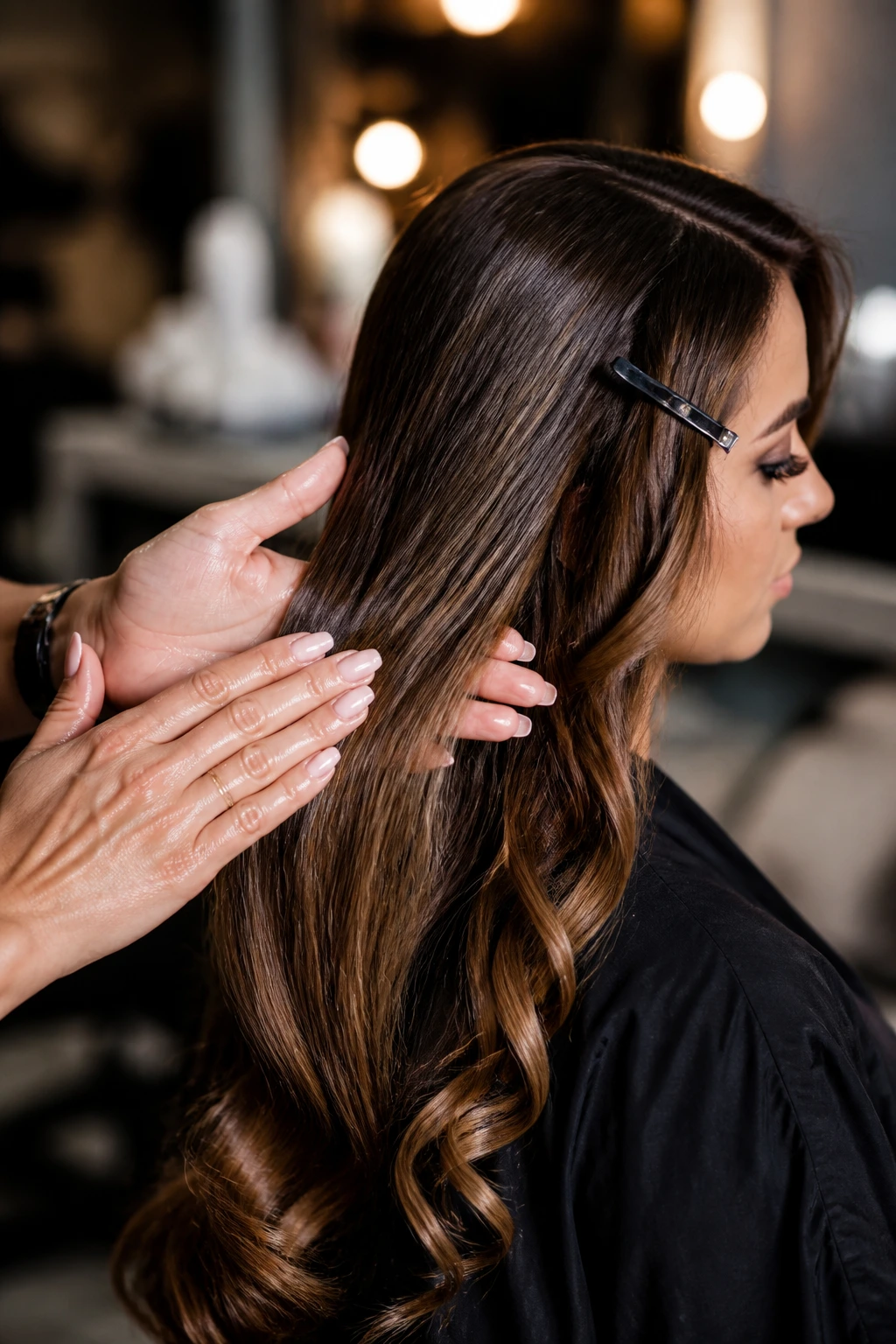
Finish Enhancement: A pea-sized amount of lightweight shine serum rubbed between the palms and smoothed over the outer layer can make the hair look cleaner without flattening the style. Apply it to the mids and ends, not the crown, unless you want the scalp to look oily in flash photos.
Customization: Change the part, the height, or the amount of face-framing hair to suit the gown. A deep side part gives drama fast, while a center part reads calmer and more symmetrical. If the neckline is busy, keep the hair tighter. If the dress is simple, let the style carry a little more movement.
Serving Suggestions: Use one accent and place it with purpose. A pearl comb near the bun, a crystal pin at the side sweep, or a small row of pins along the braid looks cleaner than scattering sparkle everywhere. The eye should land, not wander.
Make-It-Yours: Fine hair needs padding and root lift. Thick hair needs sectioning and more pins. Curly hair usually looks best when the roots are smoothed first and the curl pattern is chosen on purpose, not left to chance. Short hair can still get a polished pageant finish with pin curls, tucked ends, or a faux bob.
Common Mistakes to Avoid
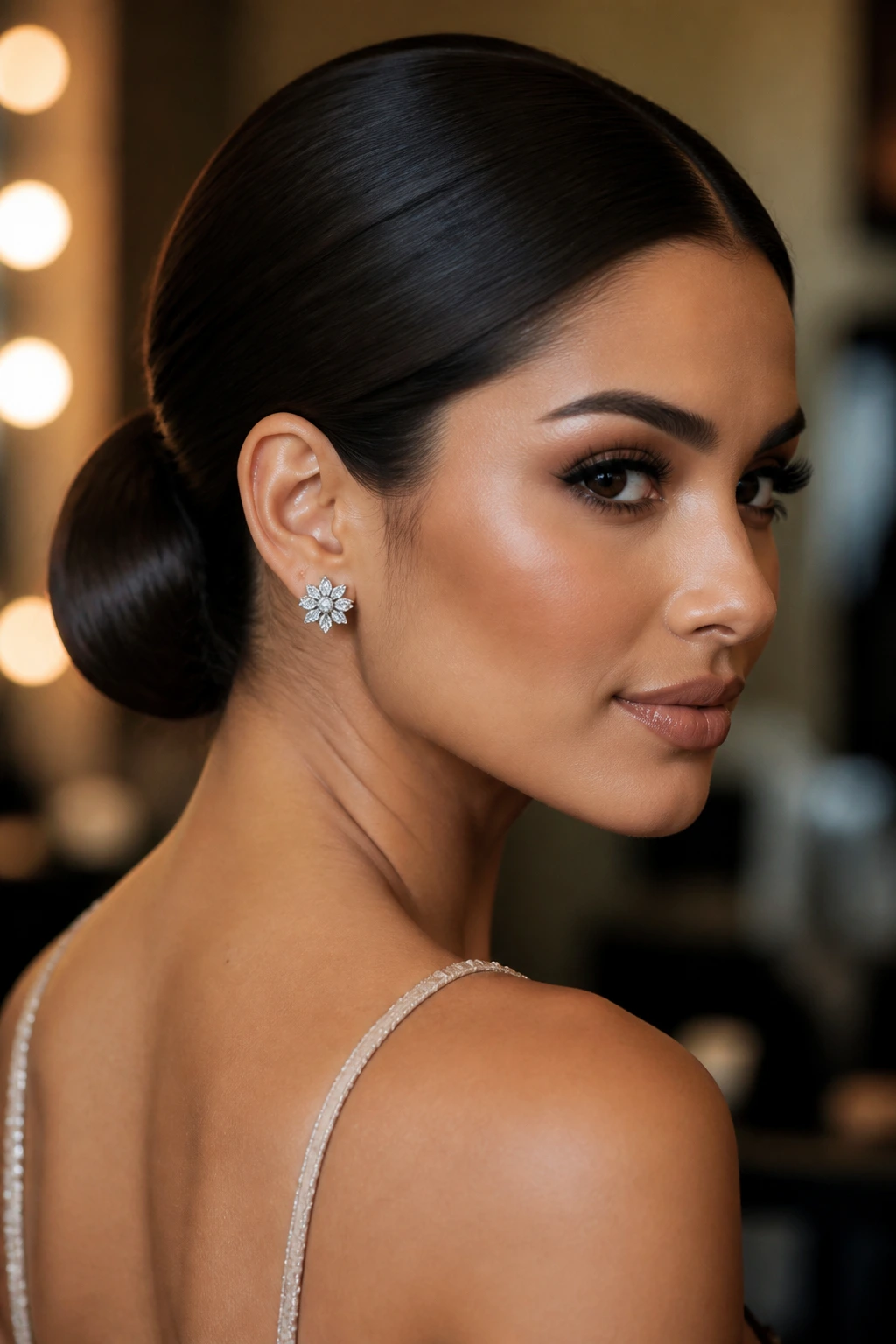
- Too much product at the roots: The crown goes flat and shiny in the wrong way. Fix it by keeping oils and creams off the top section and using them only where the hair needs smoothing.
- Curling without cooling: The wave falls before you reach the stage. Pin the curl in place for 10 to 15 minutes so it sets with shape instead of drooping.
- Pins placed like afterthoughts: Loose buns and twists can slide halfway through the event. Cross the pins, hide the ends, and test the style by shaking your head gently before you leave.
- Ignoring the neckline: A hairstyle that fights the gown always looks off. If the dress is busy up top, choose a cleaner style; if the dress is simple, you can afford more movement.
- Using the wrong parting line: A part that lands in the wrong place can pull the face down or make the style feel dated. Move it a half inch at a time until the balance looks right in the mirror and on camera.
- Over-spraying the finish: Hair that sounds crunchy and feels stiff usually looks older than it should. Use enough spray to hold the shape, then stop before the style loses its softness.
Variations and Alternatives to Try
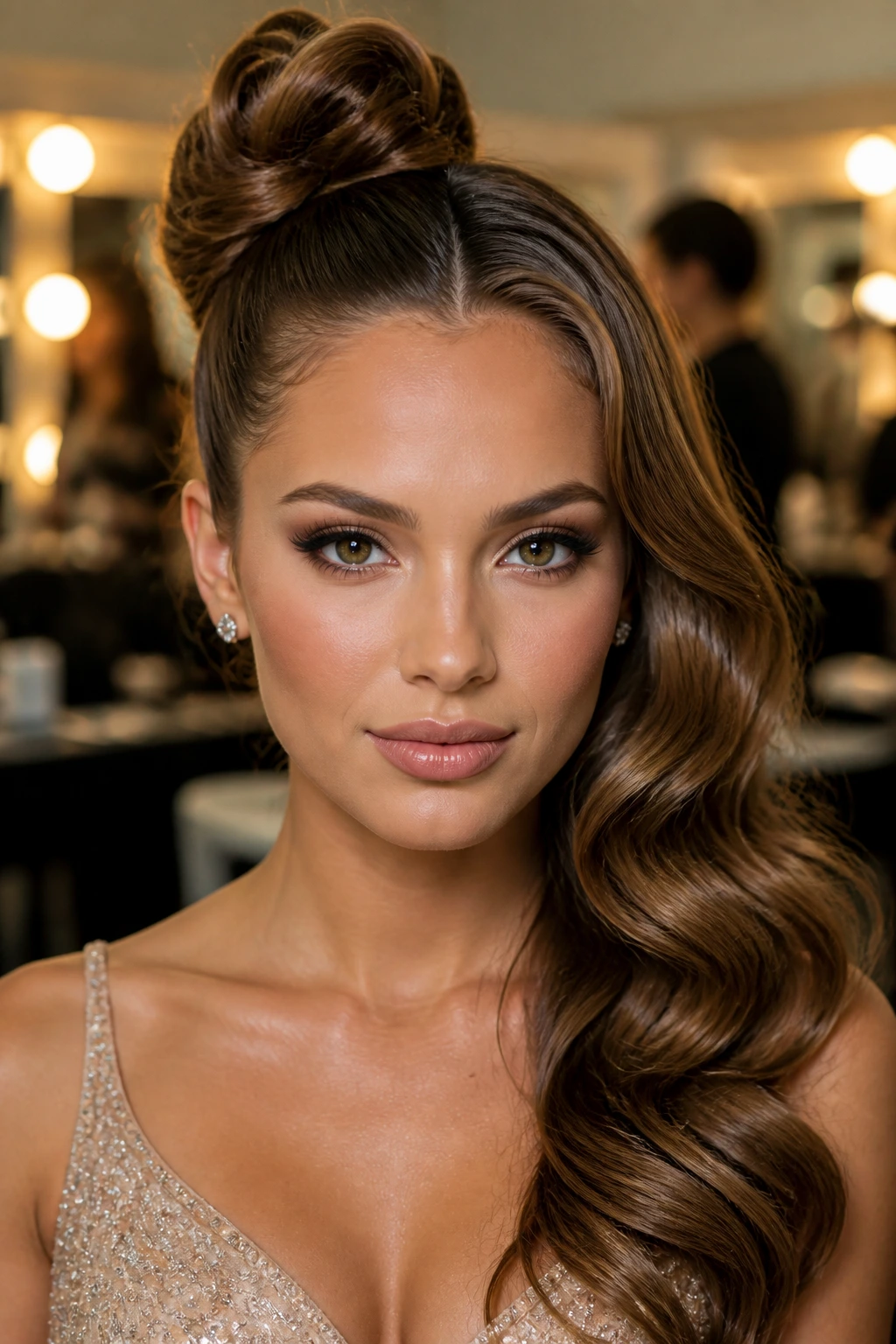
Fine-Hair Lift Version: Add a small padding piece at the crown and choose styles with a compact base, like a low chignon or sculpted top knot. Fine hair usually looks best when the shape is clean and the top has a little support.
Natural-Curl Version: Stretch the roots with a blow-dryer and diffuse the lengths before shaping the style. Curly hair can look stunning in a pageant setting when the crown is controlled and the curl pattern is grouped into neat sections rather than left loose and unpredictable.
Short-Hair Illusion Version: Use pin curls, tucked ends, and hidden bobby pins to create the look of a faux bob or soft twist. Shorter hair can still read polished if the edges are clean and the silhouette is intentional.
Vintage Glam Version: Go for finger waves, a side roll, or an Old Hollywood side sweep. These styles pair well with strong makeup and structured gowns, especially when you want the hair to feel classic instead of trendy.
Soft Romantic Version: Choose half-up curls, waterfall braids, or a low ponytail with face-framing waves. This approach works when the dress is airy or the overall look needs a softer outline.
High-Drama Crown Version: Add extra height at the roots and use a sleek pony, bouffant, or top knot. This is the route for gowns with simple lines that need a stronger hair shape to match.
How to Keep the Style Fresh Through Photos and Crowns
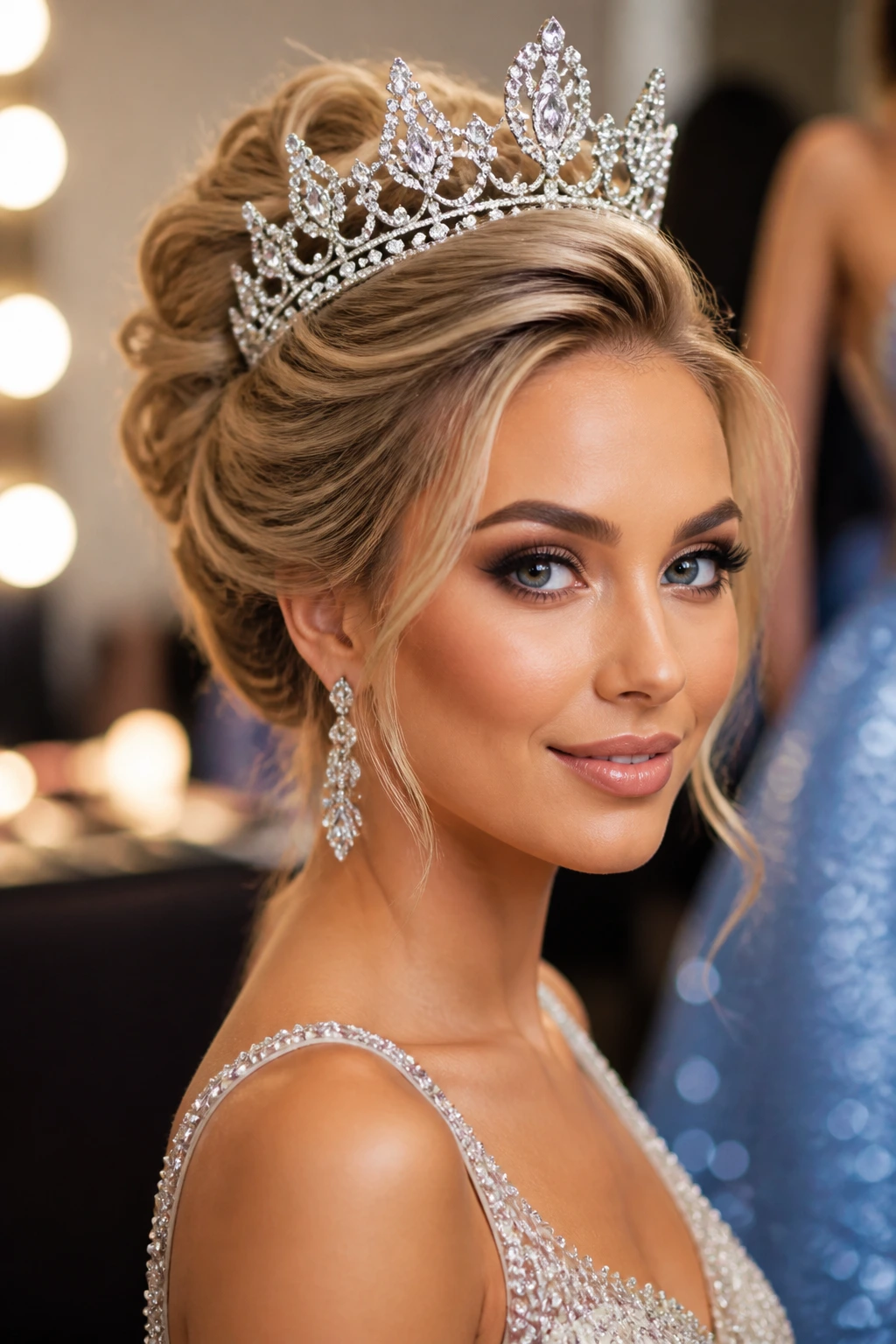
The biggest mistake people make with pageant hair is treating the style like it only has to survive the first five minutes. It doesn’t. It has to hold through walking, sitting, changing clothes, touching up makeup, and whatever the day throws at it. That means the prep matters almost as much as the final pins.
If you’re setting curls in advance, let them cool completely before brushing. If you’re sleeping with the style partially set, wrap the hair in a silk scarf or sleep in a satin bonnet so the surface doesn’t rough up overnight. For updos, keep a few extra pins and a travel-size spray in a small pouch. You will be happier for it.
Before the final walk or photo session, check the hairline, the nape, and the accessory placement. Those three spots tell you almost everything. A clean hairline, a snug nape, and a crown or comb that isn’t sliding usually mean the style is still in good shape. A quick touch with a tail comb is enough for most fixes.
Humidity is its own problem. If the air is damp, use flexible spray at the start and stronger spray at the finish, then avoid touching the curls once they’re set. Hands make frizz. So does panic, which is less funny than it sounds.
Frequently Asked Questions
Which pageant hairstyle looks most polished on short hair?
A French twist, finger waves, or a faux bob usually gives short hair the cleanest pageant finish. The key is making the silhouette look intentional instead of trying to fake length that isn’t there.
Can I wear my hair down and still look stage-ready?
Yes, if the hair has a strong part, uniform curl pattern, and enough control at the crown. Loose glam curls or Old Hollywood waves can look very polished when the top section is smooth and the ends are shaped on purpose.
How much volume is too much?
Too much volume starts to hide the face or fight the neckline. If the crown is taller than your overall features can balance, or the bun feels like it’s wearing the dress, back it down a little.
Should the hairstyle match the gown neckline?
Absolutely. High necklines usually look cleaner with buns, twists, or ponytails, while open necklines can support softer waves and side-swept styles. That little coordination keeps the whole look from feeling crowded.
What if my curls fall before I get on stage?
Pin each curl while it cools, use a curl-setting spray before heat, and avoid brushing too soon. If the hair tends to collapse anyway, add a bit of texture spray before curling and finish with flexible hairspray instead of heavy oil.
Do I need extensions for pageant hair?
Not always. Extensions help with length and fullness, but a smart cut, good prep, and the right style can do a lot on their own. If you do add pieces, blend them into the lower layers so the hairline still looks clean.
Can I do these styles without a stylist?
Yes, but choose one that matches your skill level. A low bun, wrapped ponytail, or soft waves are much easier to self-style than finger waves or a detailed braided crown. The simpler the structure, the better the odds.
How do I stop hair from looking greasy under lights?
Keep shine products off the scalp and use them only on the mids and ends. A polished finish should reflect light, not look wet, so work in tiny amounts and step back to check the result in bright light before you leave.
The Finish That Holds Up in the Lights
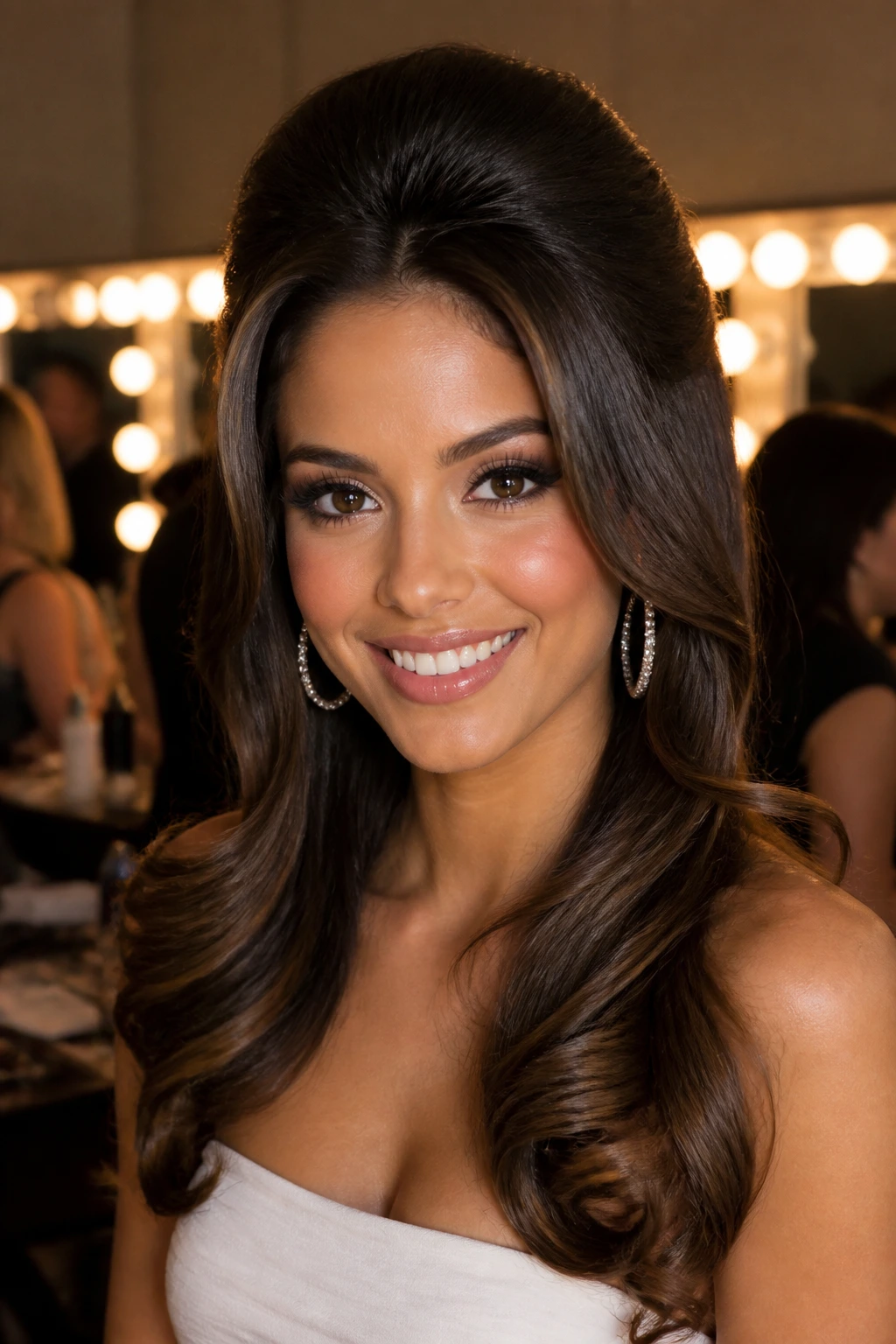
The best pageant hairstyles do one thing well: they keep their shape when everything around them gets busier. That means a smooth crown, a clear silhouette, and enough restraint that the gown, earrings, and makeup can all breathe. Softness has a place. So does control.
If you remember nothing else, remember this: polish comes from structure first and shine second. Get the part right, pin the base tightly, and stop before the finish starts looking stiff. That’s where the good styles turn into the ones people keep noticing long after the stage lights are off.
