



A bridal chignon can look almost invisible in the best possible way. One version sits at the nape like silk ribbon folded into itself; another has a little grit in the texture, a few escaped pieces, and enough movement to feel alive when the bride turns her head. The difference is rarely the hair length or the color or the veil. It’s placement, pinning, and restraint. A chignon that is too tight starts to look severe. One that is too loose can sag before the champagne toast.
That balance is why chignons for brides keep showing up in real weddings, not just in styled shoots. They work with clean satin gowns, lace backs, cathedral veils, big earrings, and dresses that practically demand the hair stay off the shoulders. They also behave better than a lot of fancier updos. When the structure is right, a chignon can survive hugs, dancing, wind, and a long day of being photographed from the back, which is where a lot of bridal hair lives or dies.
The trick is that “chignon” is not one look. It’s a whole family of looks: sleek, twisted, braided, tucked, loopy, glossy, matte, low, side-swept, and softly undone. Some brides want a sculpted knot that feels architectural. Others want something gentler, with a little softness around the face and a few visible pins that catch the light only when they move. Both can be right. The best one is the one that fits the dress, the veil, the hair density, and the bride’s tolerance for fuss.
Why This Collection Is Different
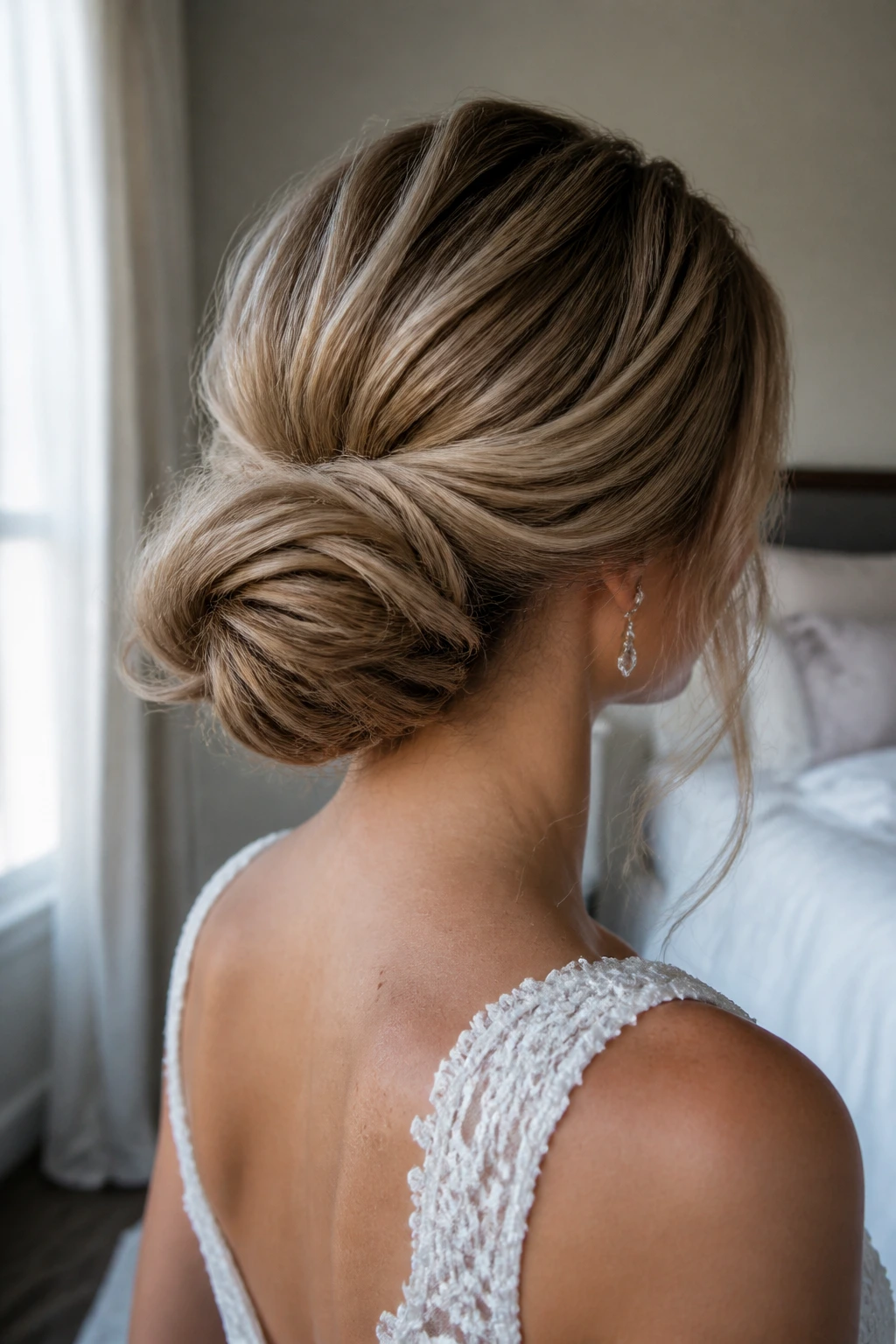
Style range: These chignons cover polished ballroom hair, garden-wedding softness, and low-key minimalist knots, so there’s something here whether the dress is dramatic or stripped back.
Hair-type friendly: Fine hair, thick hair, curls, short lob-length layers, and long lengths all need different support, and the styles here account for that instead of pretending every head of hair behaves the same.
Accessory-aware: Veils, pins, combs, flowers, pearls, and statement earrings change the shape of a chignon more than most people expect, so several looks are built around those details.
Comfort matters: A pretty bun that gives you a headache by hour three is a bad plan. These picks favor balance, pin placement, and hold that doesn’t feel like a helmet.
Photograph-friendly backs: Bridal hair is seen from behind a lot. These styles are chosen for the way they read from the back, the side, and the slightly awkward over-the-shoulder glance.
Practical for trials: None of these requires some mythical amount of hair wizardry. A good stylist can build them with standard tools, sensible prep, and a clear reference photo.
Why a Bridal Chignon Holds Up When Other Styles Start Fading
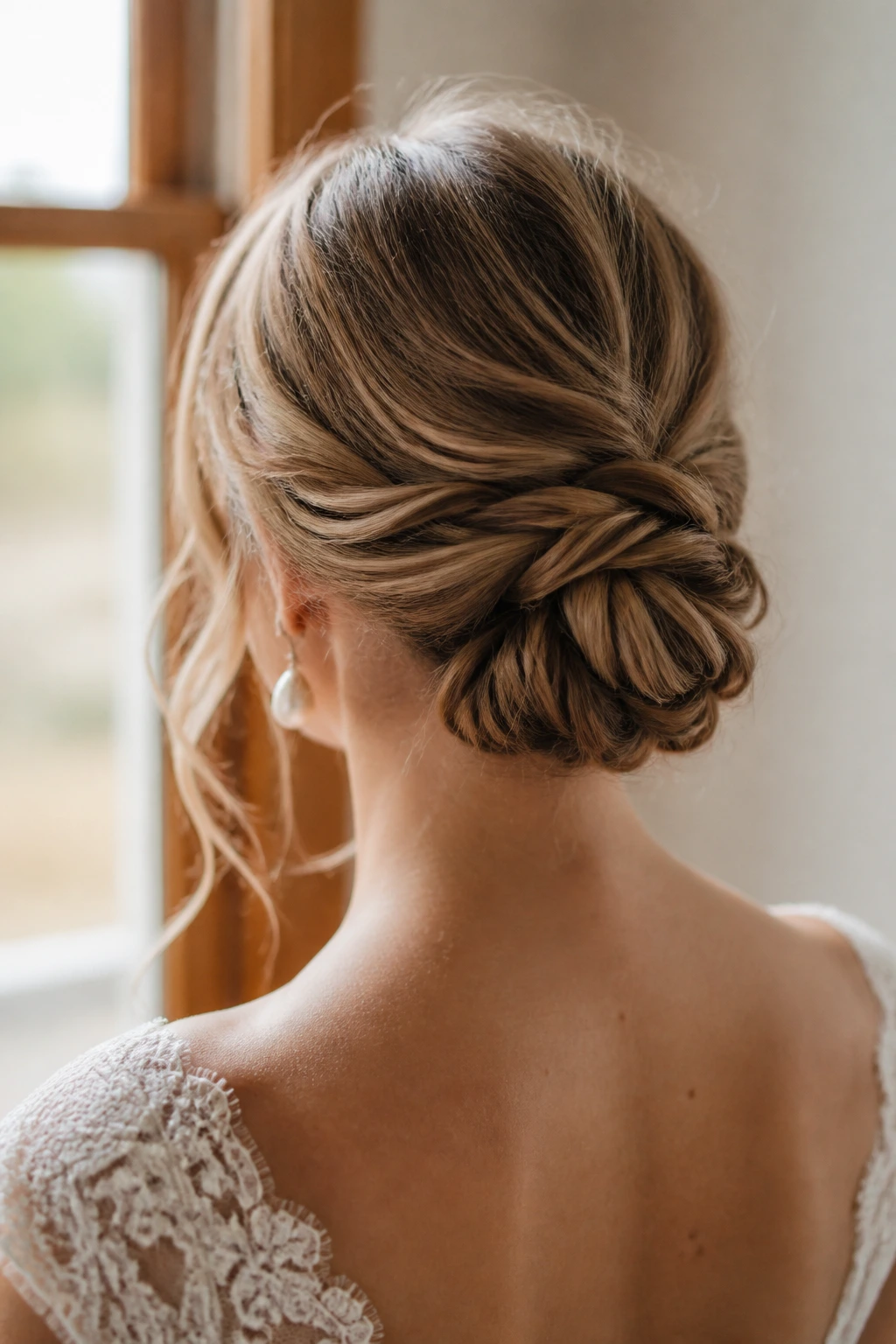
A good chignon has a very specific kind of discipline. It keeps the neck open, it clears the shoulders, and it gives the rest of the bridal look room to breathe. That matters more than people think. A dress with beading at the collarbone does not need hair crowding the same space. A dramatic veil does not need a competing mound of curls. A chignon lets the dress speak without leaving the hair boring.
The other reason this style lasts is mechanical. Hair that is tucked, pinned, and anchored low at the head’s center of gravity tends to stay put better than styles stacked high and loosely built. That’s not magic. It’s physics and a little patience. The best bridal chignon usually starts with a texture base — blowout grip, light backcombing, or a bit of wave — then gets shaped into a knot, fold, or twist before being locked down with pins in multiple directions.
And there’s a final reason I keep coming back to them: chignons can be quiet or theatrical. A sleek low knot can look almost severe in a good way. A braided chignon can feel romantic without going sugary. A looser version with tendrils can soften a strong jawline or a structured gown. That range is why brides keep asking for them, and why stylists keep reaching for the same handful of techniques with different finishes.
1. Sleek Low Chignon with a Center Part
A sleek low chignon is the one you pick when the dress already has the drama. Clean center part, glassy smooth crown, knot pinned right at the nape. It has that precise, expensive-looking calm that works best with satin, mikado, crepe, or a gown with a very strong silhouette. Nothing fights with it. That’s the appeal.
Why It Works
This style holds because the top section is controlled before the bun is built. A center part gives symmetry, and symmetry reads instantly in photos. The hair at the crown should be smoothed flat with a light cream or serum, then shaped into a low tail before it’s folded into a tight coil. The result is neat, but not stiff if you leave the tiniest amount of movement at the hairline.
It’s also one of the easiest chignons to veil. A comb veil can slide just above the knot, and a cathedral veil can sit lower without swallowing the style. If a bride wants pearl pins or a single jeweled comb, this is the base I’d choose first.
Best Fit
- Sharp necklines
- Minimal gowns
- Big earrings
- Brides who hate flyaways
A tiny caution: if the hair is too freshly washed, it can slip. Day-old hair or a very light texture spray gives the bun something to grip.
2. Soft Romantic Chignon with Face-Framing Pieces
This is the version that looks as if it was pinned together after a deep exhale. The knot stays low and loose, but two front pieces drift along the cheekbones, and the crown has a little lift instead of a hard polish. It works especially well when the dress is lace, tulle, or anything with a softer neckline.
Why It Works
The face-framing pieces do more than decorate the face. They change the whole mood of the chignon. A smooth bun can feel formal; a few loose strands turn it warmer and more forgiving. The trick is keeping those pieces intentional. They should be curled or waved, not left limp, and they should start a touch below the cheekbone so they don’t look like an afterthought.
A little root lift at the crown keeps the style from collapsing visually when the veil comes off. I like this version for brides who want softness without chaos. It still photographs as a bridal updo, not a casual knot on the way to brunch.
3. Braided Crown Chignon
If the dress has open shoulders or a back that deserves to be seen, a braided crown chignon is a smart move. A braid — Dutch, French, or even a rope braid — wraps from the front or side and feeds into a low bun at the nape. You get detail from the braid and a tidy finish from the chignon. It looks more complicated than it is.
What Makes It Different
The braid creates texture before the bun even starts, which is a gift for brides with fine or slippery hair. Once the braid is set, the bun itself can be smaller and more secure. That means less bulk at the back of the head, which is useful if the bride plans to wear a veil or a hair comb.
This one reads beautifully from the side. A braid that curves into the knot gives the whole head shape, not just a bun at the bottom. If you want the style to feel a little more intricate without leaning into a full boho braid crown, this is the middle ground I’d choose.
4. French Roll Chignon with a Tucked Finish
A French roll chignon has structure in its bones. Instead of a circular bun, the hair folds upward into a vertical roll and then tucks into a narrow seam. It’s elegant in a way that can look almost severe — and that’s exactly why it works so well with long earrings, sculpted gowns, or a bride who wants a sharp, grown-up finish.
The roll gives the back of the head a clean line, which is very good if the dress has buttons, a keyhole back, or strong seam work. I like this look most on medium to thick hair because the fold needs enough fullness to read properly. Too little hair and it can look thin at the center; enough hair and it becomes beautifully crisp.
A French roll chignon also holds its shape well in humid weather. There’s less exposed texture, fewer soft pieces to frizz, and less chance of the style deflating before the last dance.
5. Side-Swept Chignon with a Soft Part
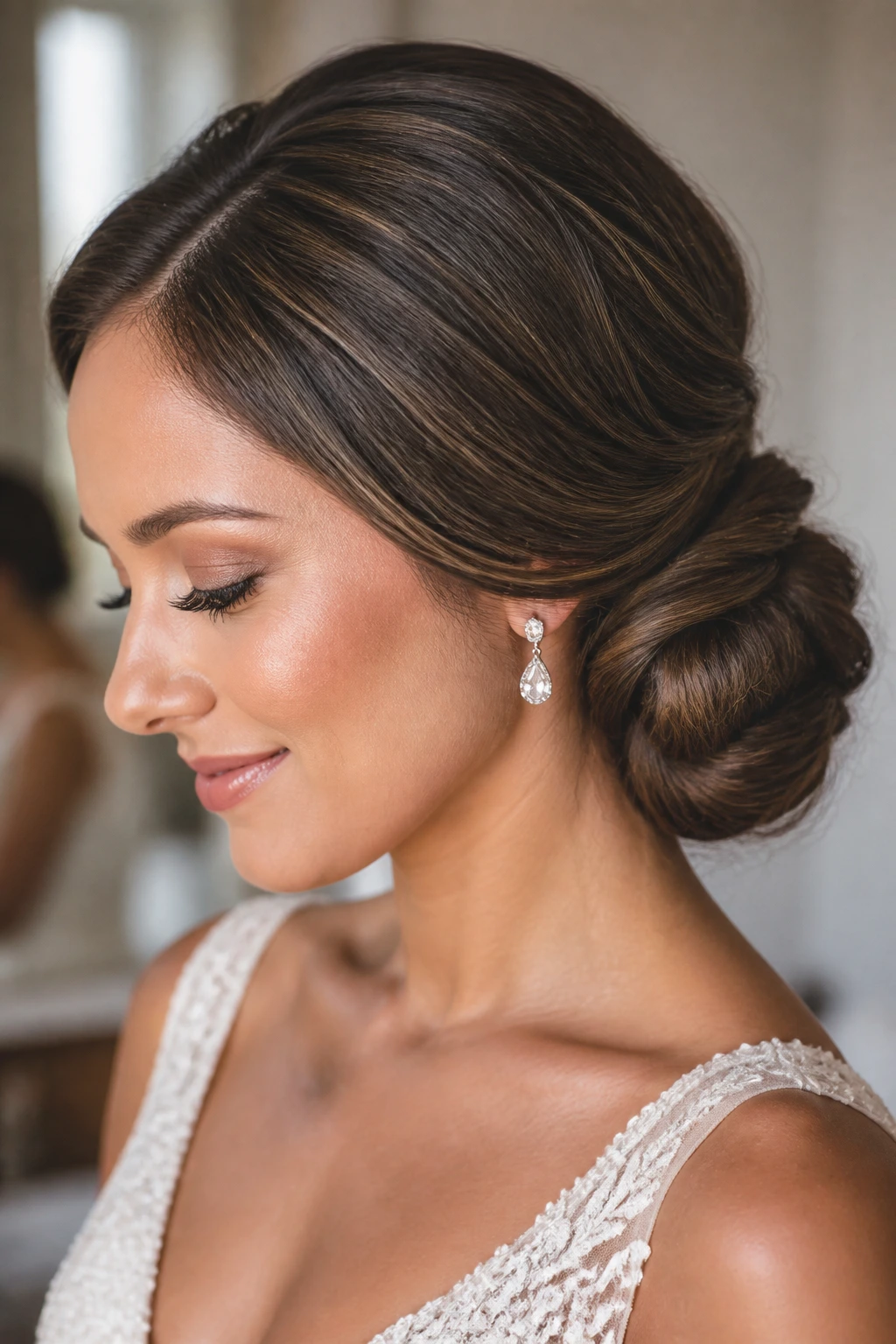
Sometimes the cleanest answer is not the centered one. A side-swept chignon pulls the hair diagonally before it settles into a low knot off to one side of the nape. It feels a little more relaxed than a center-part bun, and it flatters brides who wear asymmetrical gowns, one-shoulder necklines, or long earrings that need a little asymmetry to make sense.
The side sweep also helps if the bride’s face is fuller through the cheeks or if the parting is naturally more flattering off-center. The hair across the forehead can be kept sleek, or it can be tucked loosely behind one ear for a softer edge. Either way, the shape gives the eyes somewhere to go.
I like this look when a bride says she wants elegance, but not strict symmetry. That’s usually code for “I want it polished without looking pinned to a board.” Fair enough.
6. Textured Knot with a Veil Anchor
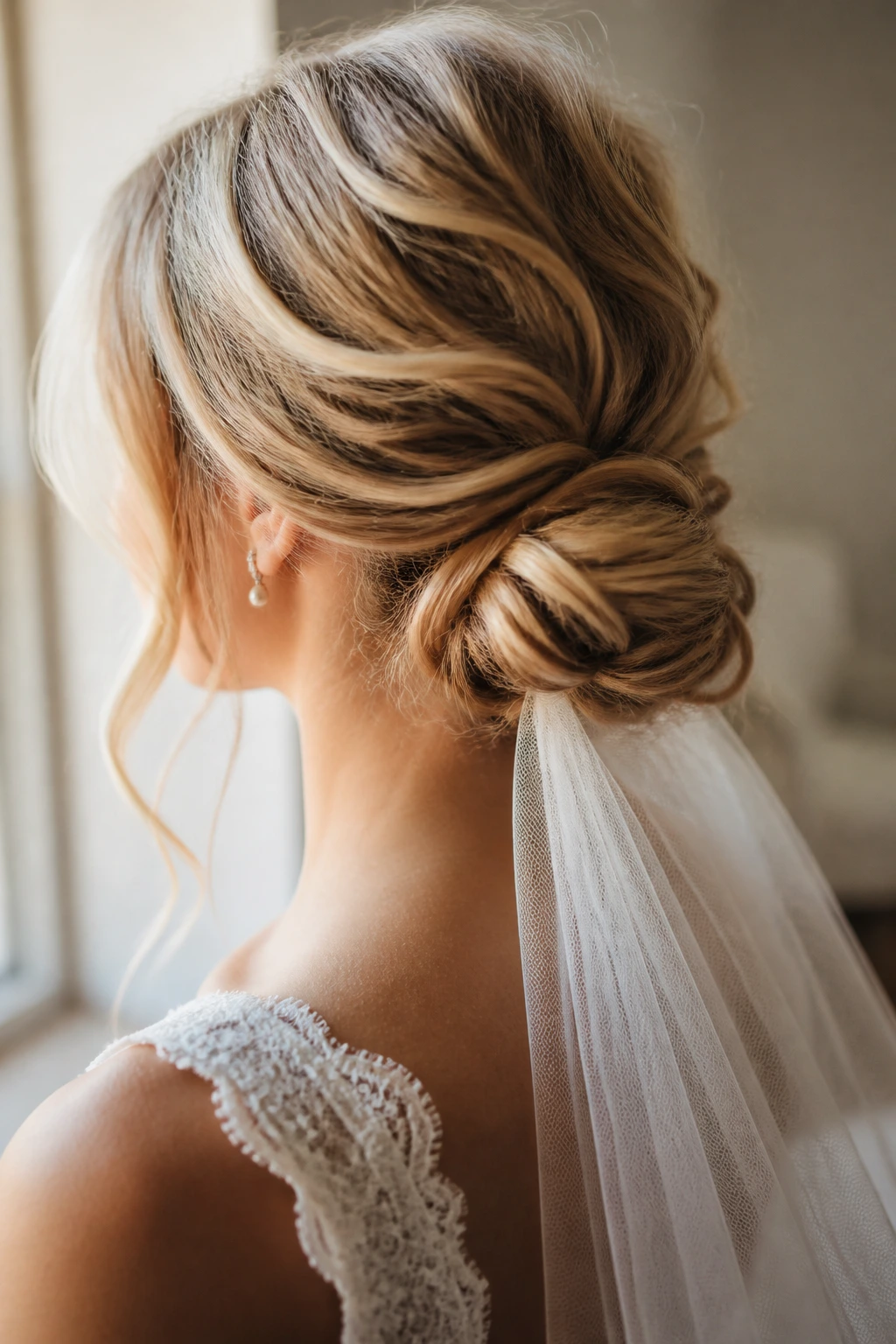
A veil can make or break a chignon, and a textured knot is often the safest anchor. This style uses a softly roughed-up base — think loose bends, piecey sections, and a bun that looks hand-shaped rather than shellacked — so the veil comb can sit securely without flattening the entire hairstyle.
The Practical Part
The key is building the knot with enough body at the base to support the comb. I’d never put a heavy veil into hair that’s been smoothed to a mirror finish and sprayed into submission. That may look neat for a photo, but it often loses grip. Texture gives the comb teeth something to hold.
This is one of the few chignons where a little mess is not a mistake. A few deliberate bends, a softly pinched bun, and one or two visible pins can make the whole thing feel stable and lived-in, not perfect in a way that breaks the second someone hugs the bride.
7. Classic Ballet Chignon
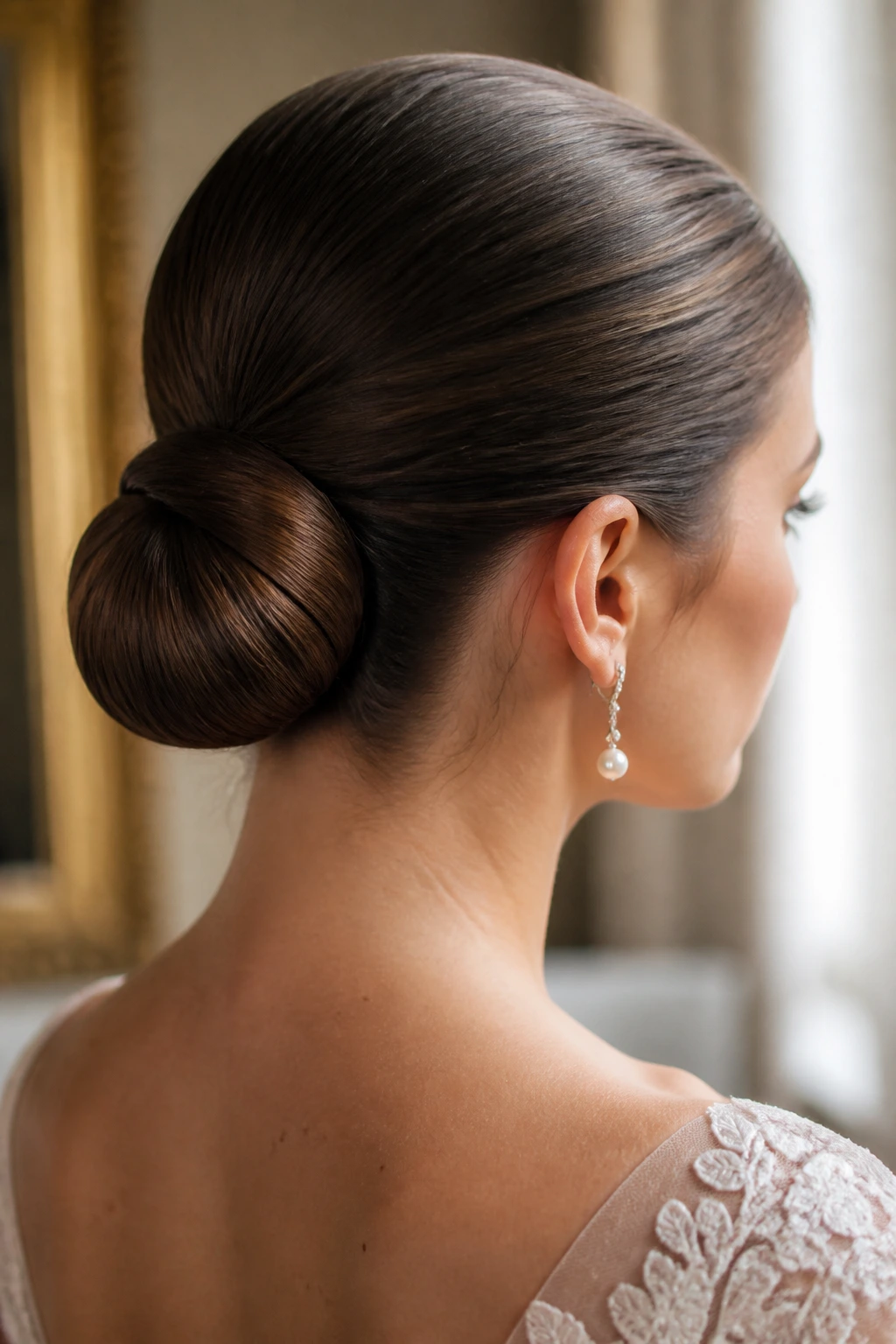
A ballet chignon is the tight, round, low bun that looks like it belongs in a rehearsal studio and a wedding chapel at the same time. It’s compact, balanced, and usually sits right at the center of the nape. There’s almost no loose movement, which makes it a strong choice for a bride who wants clean lines and zero distraction.
It works best on hair that can be smoothed evenly and gathered without bumps. If the bride has thick hair, the bun may need to be built in layers and pinned in a spiral. If the hair is fine, a bun cushion or padding can give it that proper rounded shape without making the style feel fake.
There’s a reason this one never disappears. It keeps the whole look disciplined. With a simple gown and a strong lip color, it can feel almost editorial.
8. Twisted Low Chignon with Hidden Pins
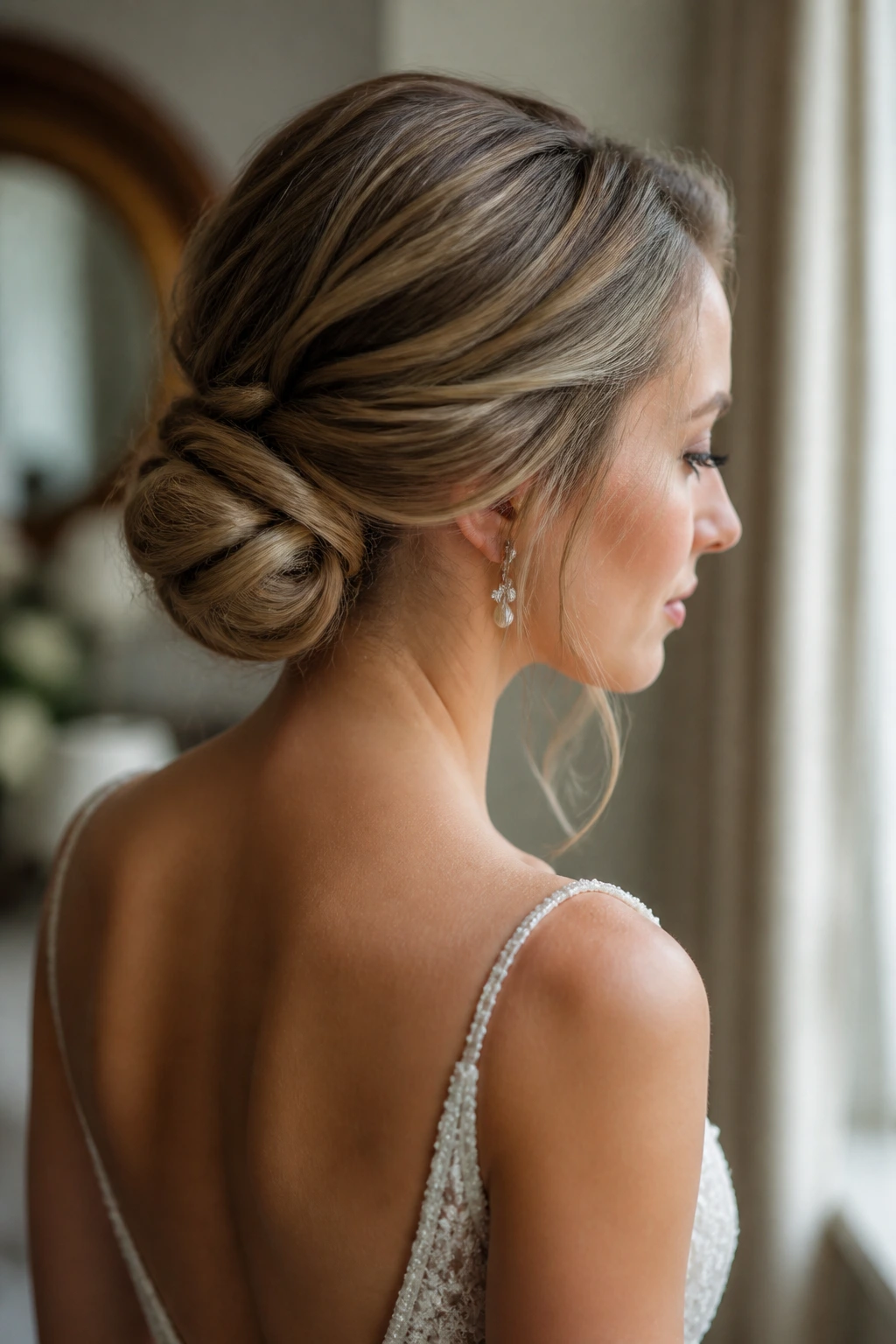
What I love about a twisted low chignon is that it gives you movement without using curls as the main event. Sections of hair are twisted back from the temples or nape, then folded and pinned into a soft knot. The twists create line and direction, and the finished bun looks layered instead of built from one solid mass.
Best For
- Brides with medium-length hair
- Dresses with texture
- Veils that sit below the crown
- Hair that needs a little extra grip
The hidden pins matter here. If the pins are placed inside the folds, the style looks smoother from the outside and feels more secure. It’s a useful option when the bride wants softness but doesn’t want loose strands everywhere.
9. Messy Chignon with Deliberate Tendrils
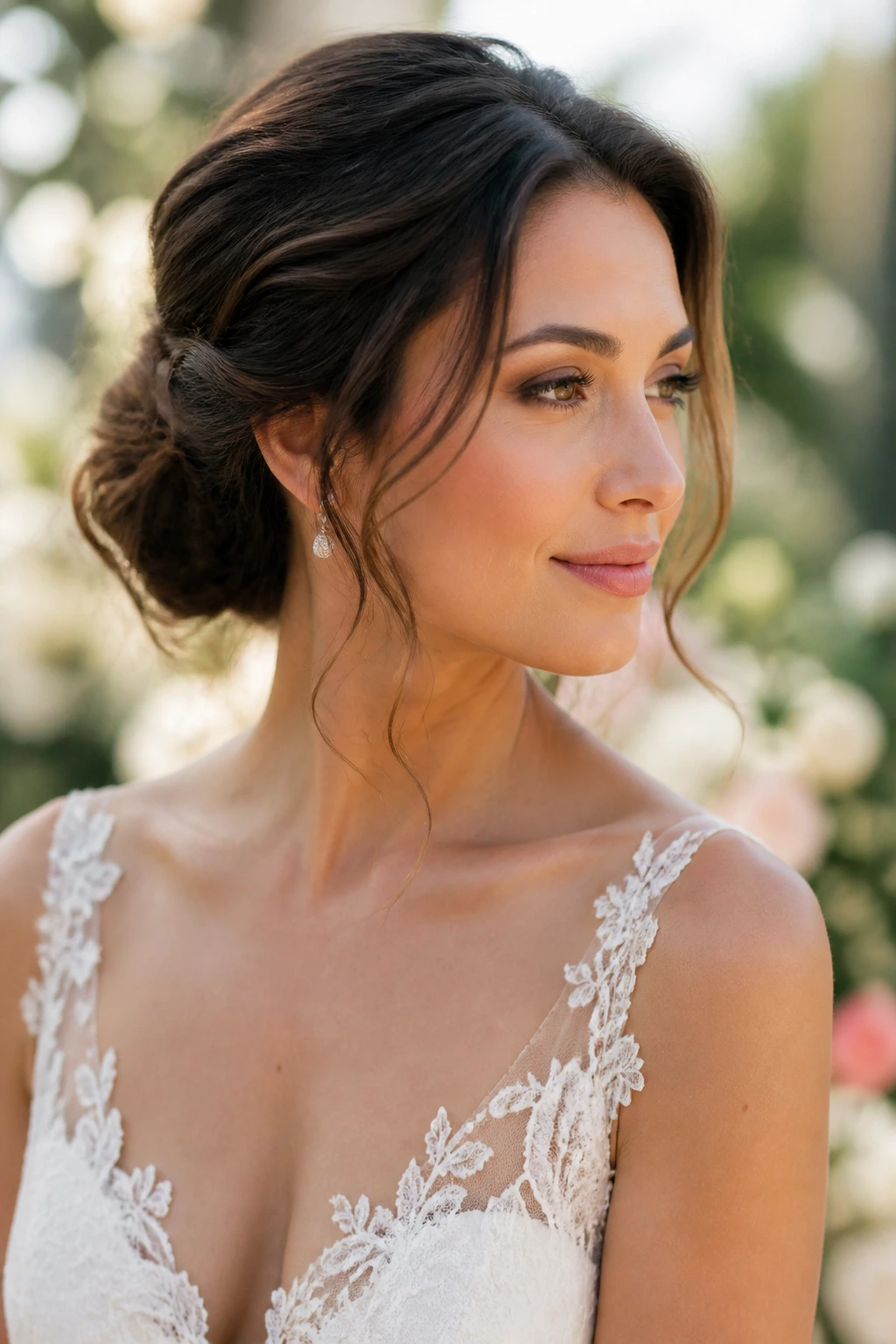
A messy chignon is only flattering when the “mess” is designed. Leave too much loose hair and the style looks unfinished. Leave the right amount — a few tendrils, a bit of bend through the crown, a softly pinned bun — and it becomes one of the easiest ways to get movement around a bridal face without losing the updo shape.
The tendrils should be placed with intention. Usually one near the temple, one softer piece by the jaw, maybe a thinner strand behind the ear. Curl them lightly, then break them up with your fingers so they don’t look like ringlets from a party updo. The bun itself should still have a clear center. Otherwise, it stops reading as a chignon and starts reading as “hair that gave up.”
This version suits outdoor weddings, garden settings, and gowns with soft drape. It feels less formal, but not sloppy.
10. Polished Chignon with Pearl Pins
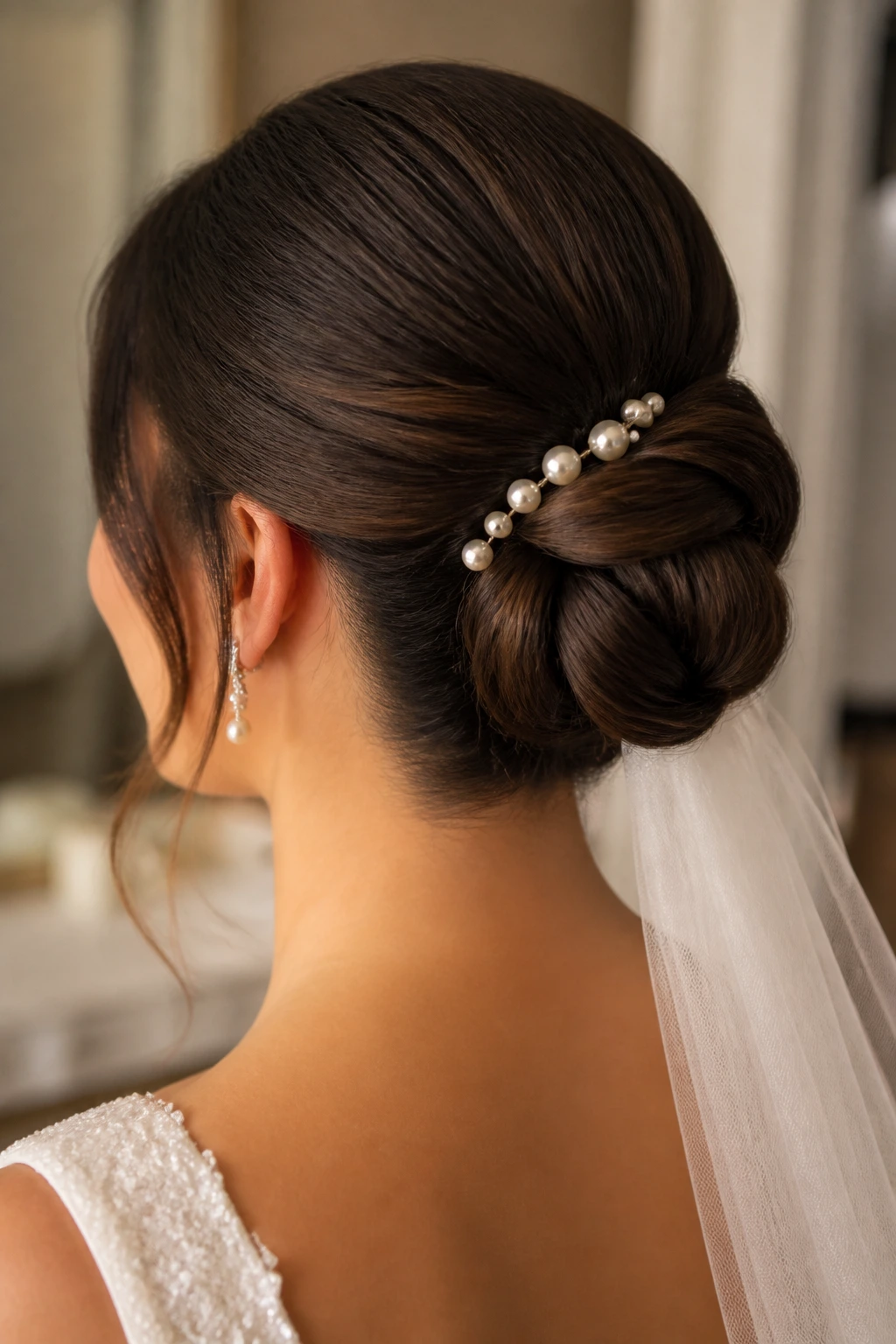
A polished chignon becomes something else the moment pearls enter the picture. Tiny pins scattered through the bun or placed at the seam of the twist add rhythm to the style without forcing it into full ornament. I like this on brides who want accessories, but not a giant headpiece that competes with the dress.
The finish should stay smooth and controlled so the pearls feel like a detail, not a rescue attempt. A low knot or folded bun works well here, especially if the hair has been brushed glossy and pinned into a tight shape. One larger comb with clustered pearls can sit above the bun; a row of small pins can trail through the twist.
This style is safest when the jewelry is already doing some of the heavy lifting. If the earrings are simple, the pearls in the hair can carry the sparkle. If the earrings are dramatic, keep the pins sparse.
11. Chignon for Curly Hair That Keeps Its Texture
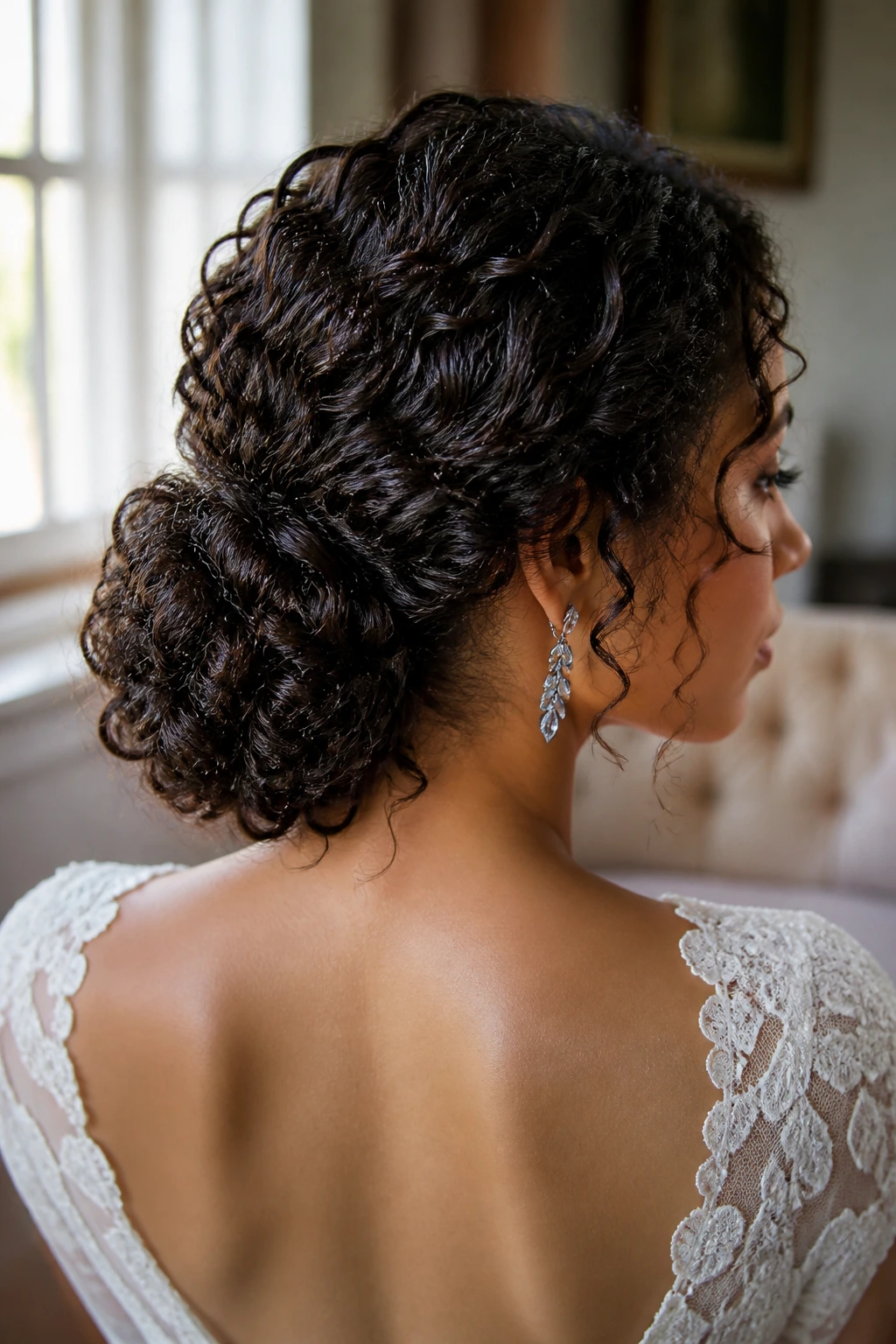
Curly-haired brides do not need their texture erased to wear a chignon. In fact, a curly chignon is often the best version of the style because the curls create their own body and grip. The trick is shaping, not flattening. Pull the curls into a low arrangement, tuck the ends under, and let some texture show through the bun.
A curl cream or light gel can help keep frizz under control without turning the hair crunchy. I’d avoid pressing curls into submission with too much heat unless the bride truly wants a sleek finish. The shape is more interesting when the curl pattern is still visible.
This style pairs nicely with veils, but it also works beautifully on its own. The texture gives the back of the head depth, which means the chignon doesn’t need much extra decoration to feel complete.
What to Watch
- Over-brushing the curl pattern flat
- Using too much oil at the crown
- Pinning only the outer layer
- Forgetting to secure the veil comb through the dense center
12. Chignon for Thick Hair with Layered Support
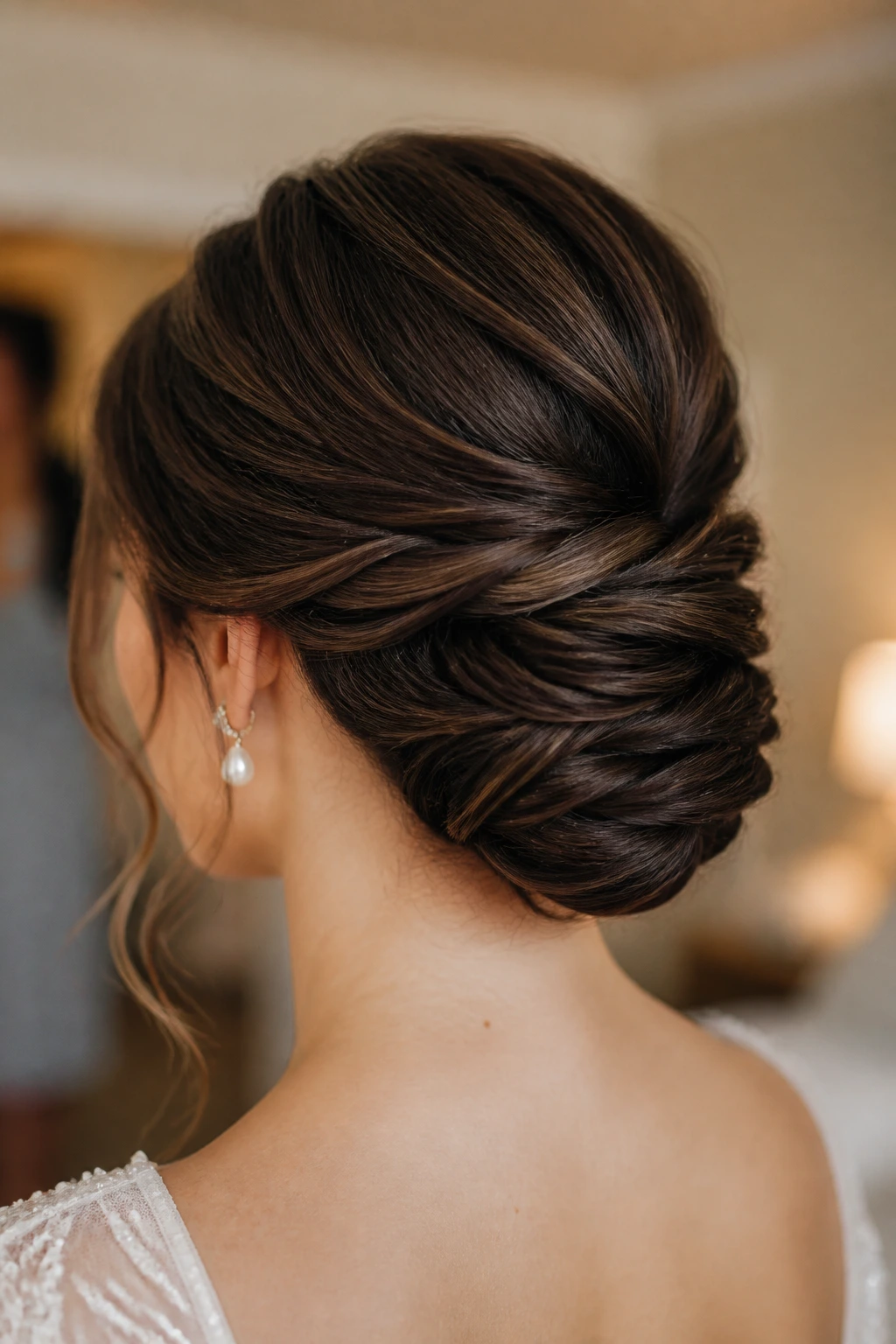
Thick hair can build a spectacular chignon, but only if the weight is handled well. One giant bun tends to slide, bulge, or pull uncomfortably at the scalp. Layered support fixes that. The hair gets divided into sections, twisted or rolled separately, then stacked and pinned so the final shape sits evenly at the nape.
This is the version that often needs the most pins, and that’s fine. The goal is not to use the fewest pins possible; the goal is to place them where they actually hold. U-pins can help create a cushioned base, while longer bobby pins lock the outer shape.
For thick hair, a chignon can look almost architectural. That’s the beauty of it. The density gives the bun presence, and the low placement keeps it from becoming a helmet.
13. Chignon for Fine Hair with Clever Padding
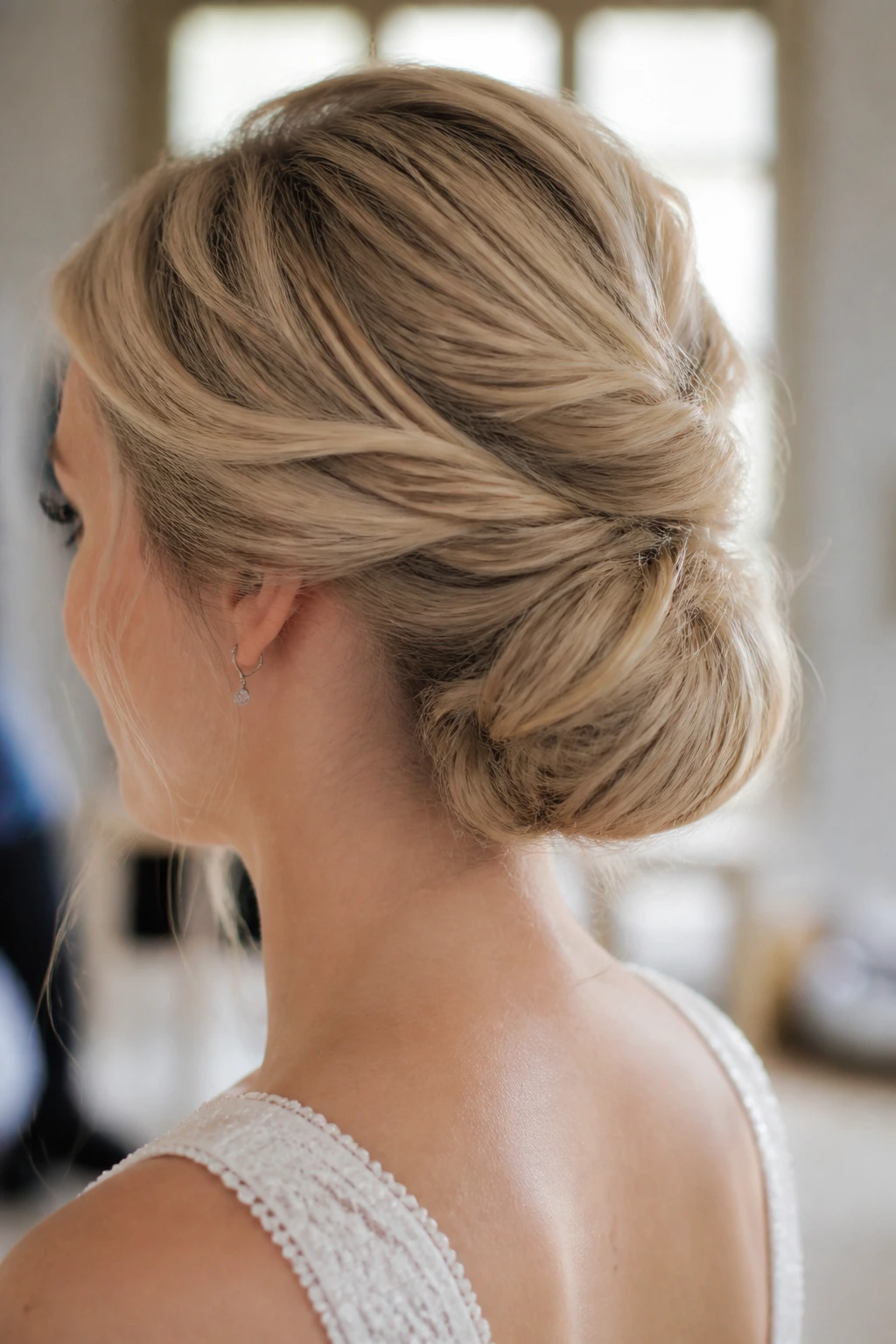
Fine hair needs a little strategic help, not a heavy-handed one. A small donut cushion, a teased base, or a few hidden cross-pins can turn a thin-looking bun into something fuller without making it obvious. The best fine-hair chignon looks soft and controlled, not stuffed.
The product choice matters here. A light texturizing spray before styling gives the hair enough grit to stay put. Too much conditioner, too much serum, or a freshly washed blow-dry can make the hair slide around like silk on glass. That’s the enemy.
I’d keep the finish slightly airy rather than trying to imitate a thick, dense bun. Fine hair often looks best when the chignon is compact, polished, and proportionate to the head. Small can be lovely. Small and deliberate is better.
14. Pearl-Threaded Bridal Chignon
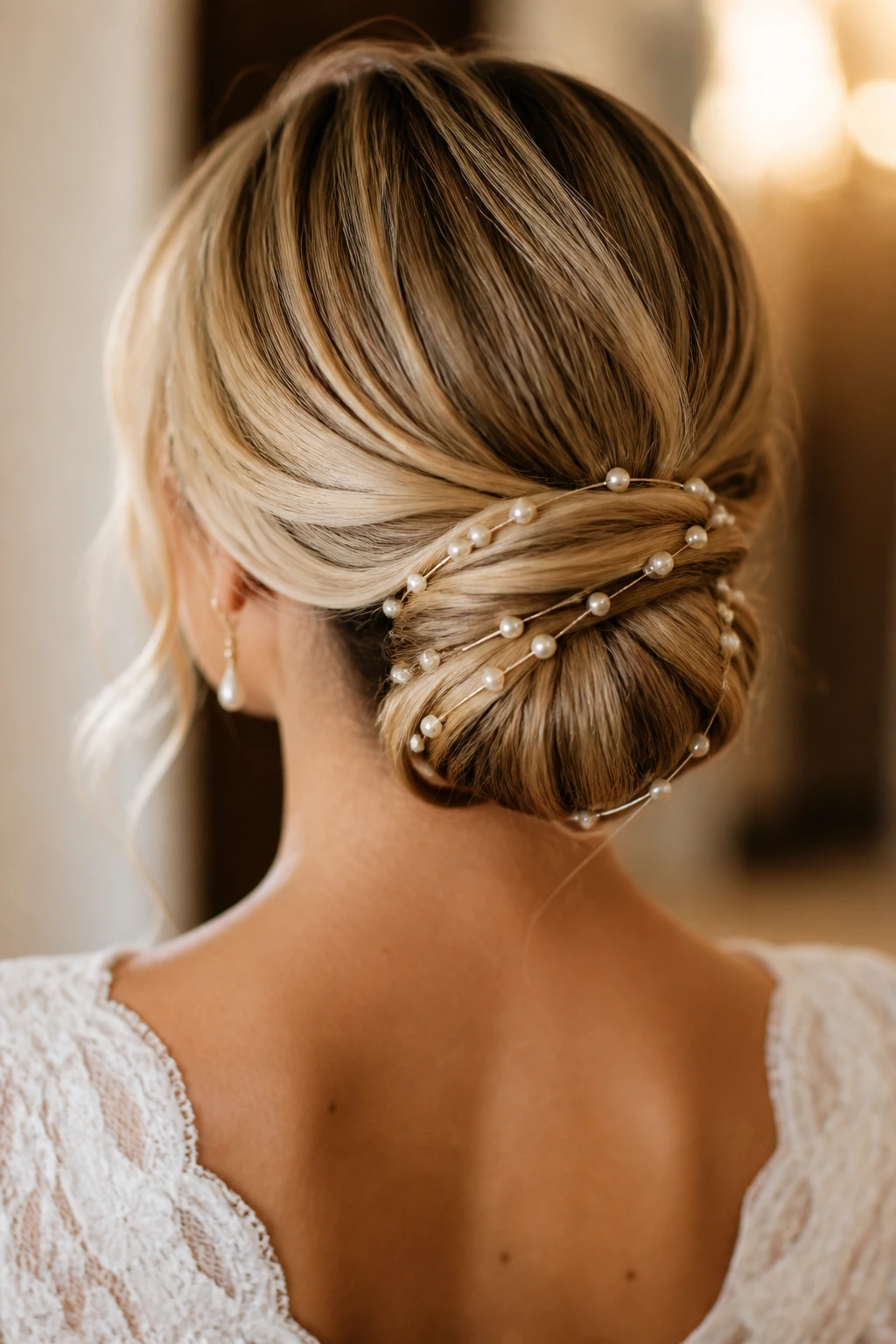
If the dress is simple and the bride wants the hair to do a little more, threading pearls through the chignon is a smart move. Not giant, obvious beads. Smaller pieces, woven into the twist or tucked along the seam, look integrated instead of stuck on at the end.
The style works especially well with a low bun that has visible folds. Those folds give the pearls pockets to sit in. I like this look with off-white gowns, ivory satin, and veils edged in a narrow trim. It has a soft, old-school feel without turning nostalgic in a costume-y way.
A pearl-threaded chignon doesn’t need much else. Keep the earrings small or medium. Let the hair accessory and the dress fabric do the talking.
15. Fresh Flower Chignon with Soft Stems
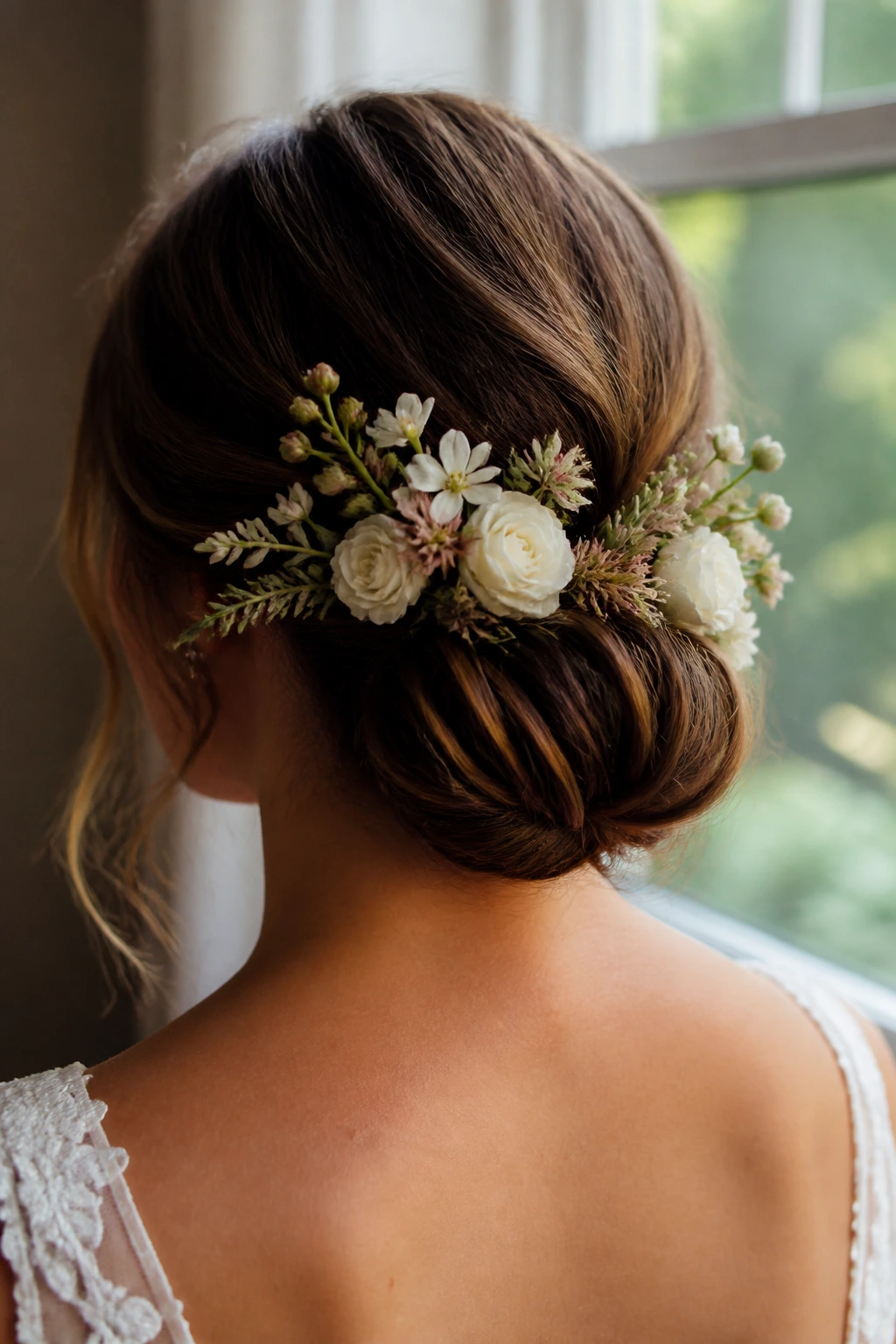
Fresh flowers can look lovely in a chignon, but they need structure. A few blooms tucked into the side or just above the bun read better than a full garden jammed into the hair. Roses, spray roses, orchids, and tiny seasonal blossoms all work, provided the stems are wrapped and supported.
The chignon itself should be stable before the flowers go in. If the bun is loose, the stems shift. If it is polished and pinned well, the flowers sit like an accent line, not a florist’s accident. I prefer a low base for this style because it gives the flowers a clear place to live.
The effect is strongest when the blooms echo the bouquet. Not identical, just related. That little echo ties the whole bridal look together in a way that feels considered.
16. Chignon for Off-the-Shoulder Gowns
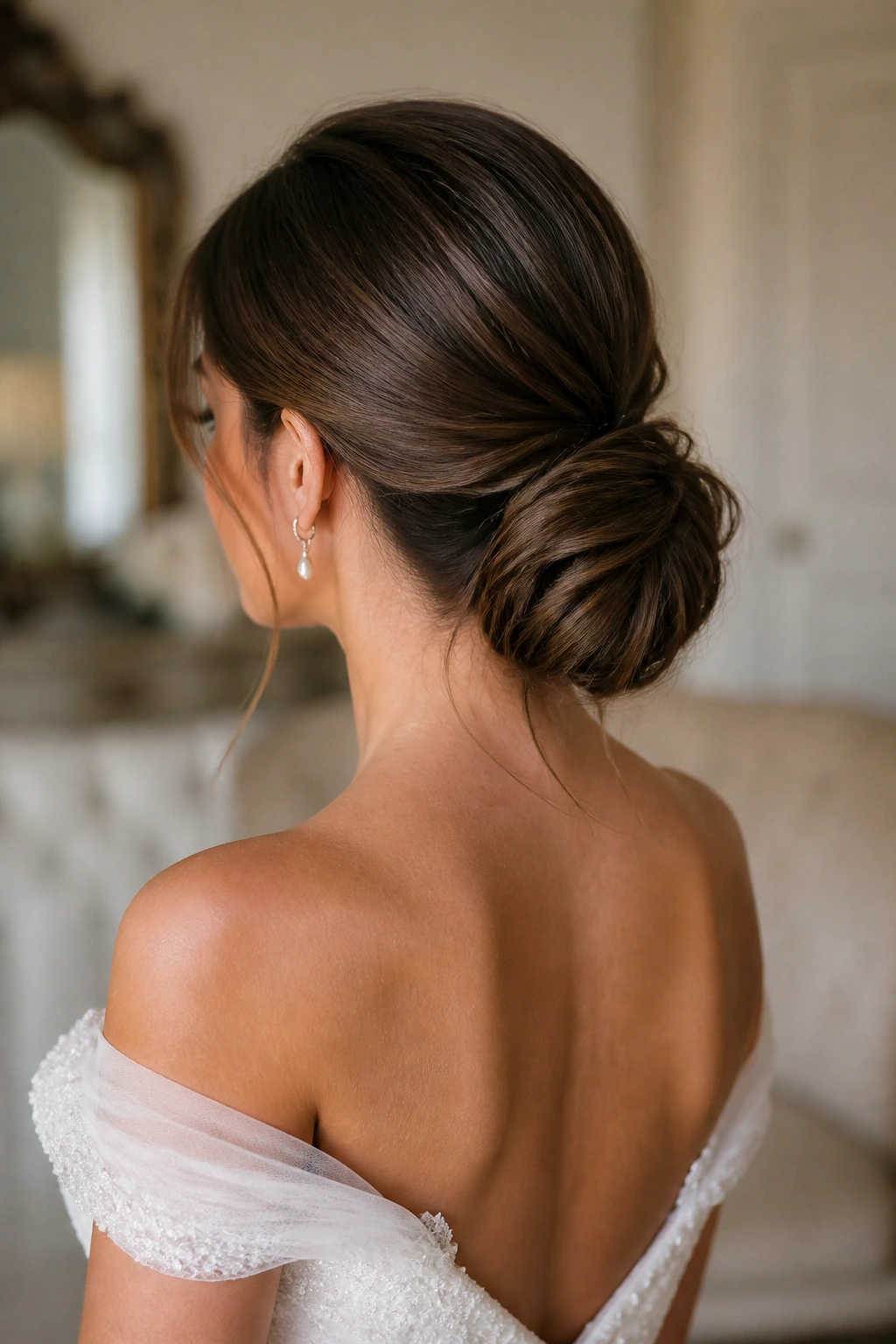
Off-the-shoulder dresses ask for hair that doesn’t crowd the neckline. A low chignon is the obvious answer, but the shape matters. If the bun sits too high, it interrupts the line of the shoulders. If it’s too tight and tiny, it can look underfed against a dress with a lot of presence. The sweet spot is a soft, low knot with enough width to balance the gown.
This is a good place for subtle softness at the temples or a faint wave through the crown. The bare shoulders already frame the face, so the hair doesn’t need to do much extra work. A chignon keeps the visual focus where it belongs: collarbone, neckline, and the line from shoulder to shoulder.
It’s one of the easiest pairings in bridal hair, honestly. Almost unfairly easy.
17. Chignon for High-Neck Gowns
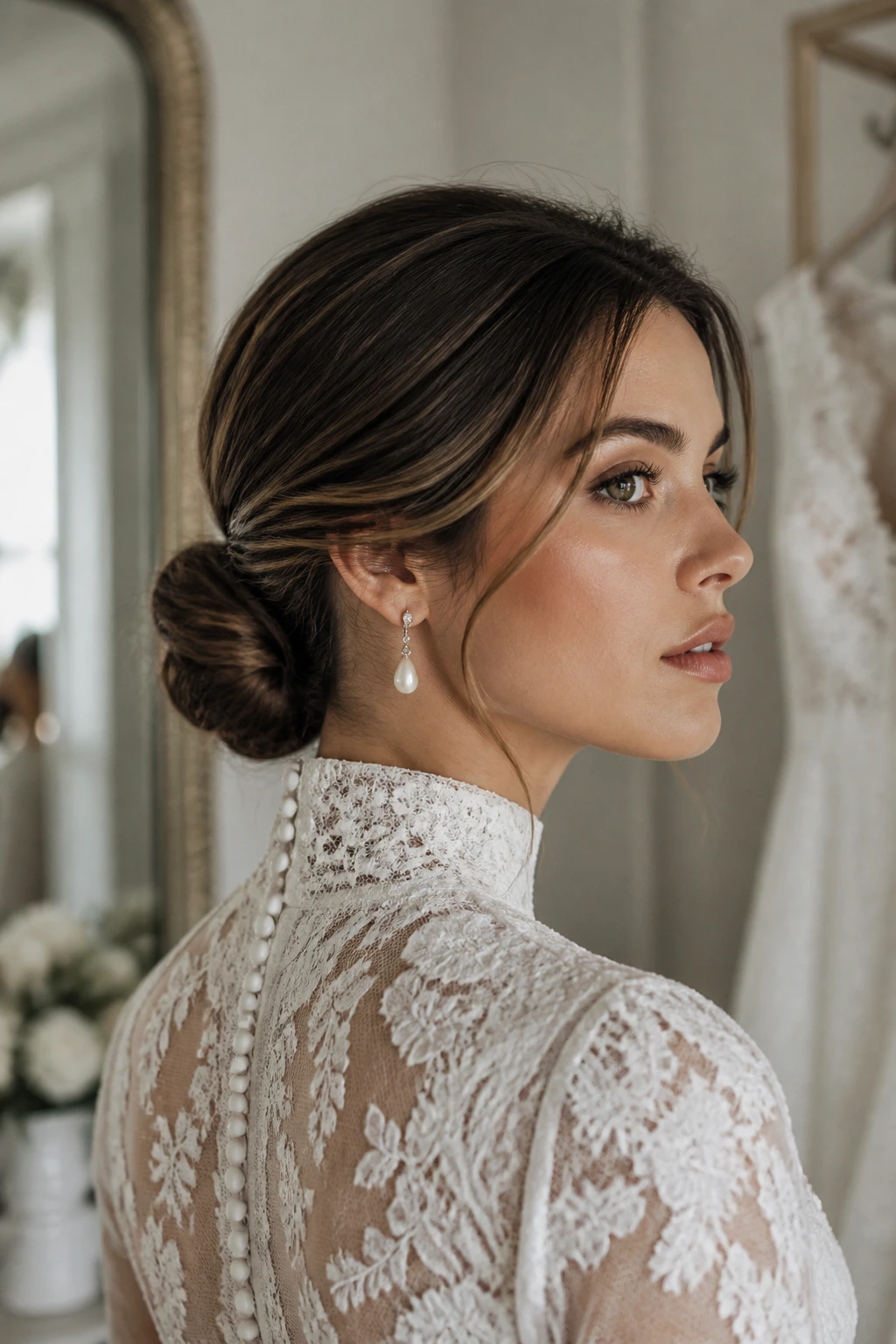
High-neck gowns can swallow hair if the style is wrong. That’s why a compact chignon is so useful here. It clears the neckline, avoids crowding the back of the dress, and lets the fabric or lace detail stay visible. The bun should sit low enough to keep the silhouette long and clean.
A French roll, tucked bun, or sleek low knot works better than a fluffy one. The reason is simple: high-neck dresses already bring structure to the face. Hair that is too large or too textured starts competing with that structure. Keep the bun neat, and let the dress do the formal work.
I’d use this pairing when the bride wants a very classic silhouette. It photographs well from the side, especially if the neckline has buttons or a lace inset.
18. Wind-Friendly Chignon for Outdoor Ceremonies
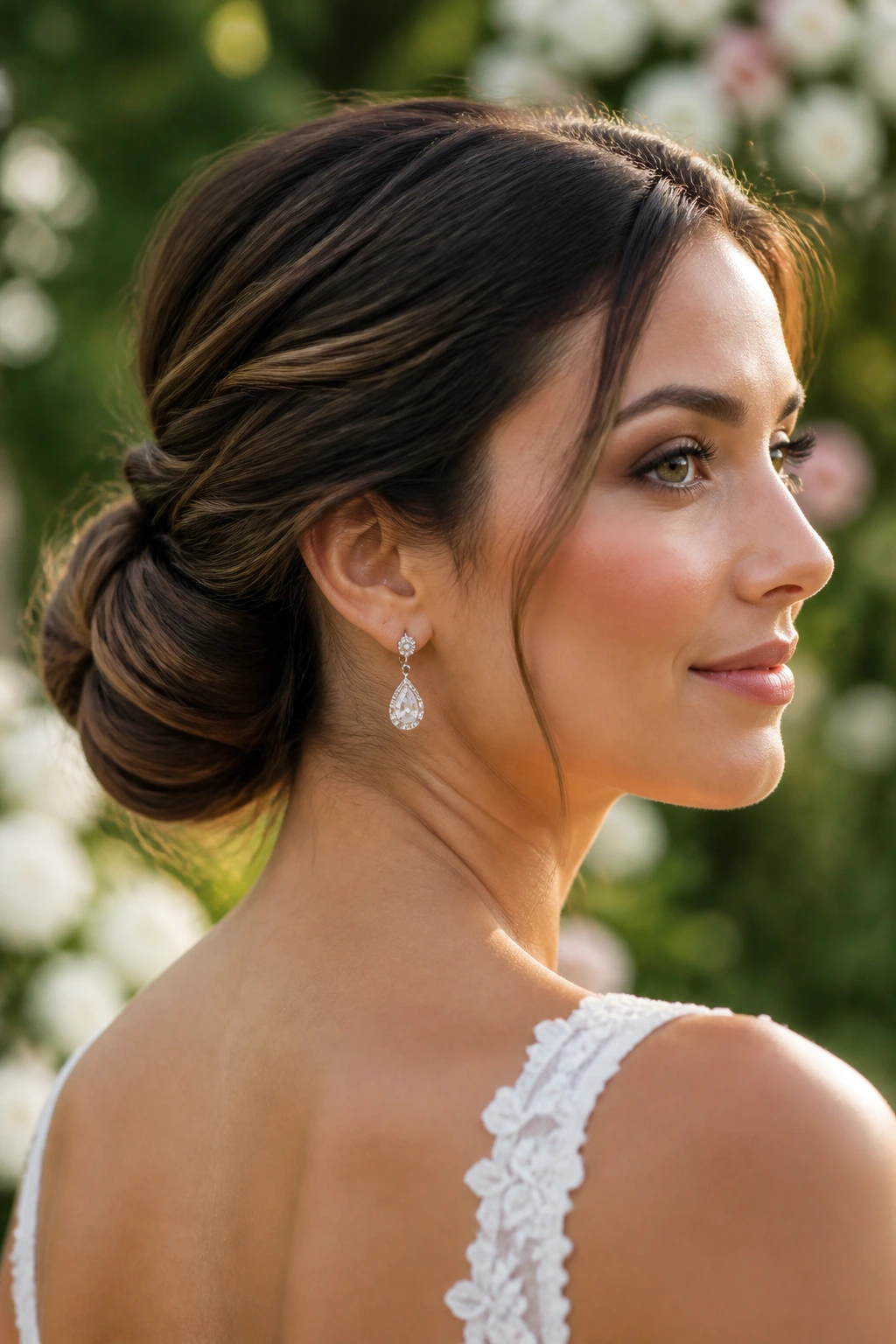
Outdoor weddings change the rules fast. Wind does not care that the hair looked perfect in the mirror five minutes ago. A wind-friendly chignon uses a low, compact base with fewer loose pieces, and it keeps the front sections controlled so they don’t whip across the face the second the bride steps outside.
Why It Holds Better
The style stays closer to the head, which cuts down on movement. A few soft face-framing pieces can still work, but they should be pinned back from the face rather than left entirely free. Hairspray matters here, but so does pin direction. Cross-pinning the bun and securing the seam in at least two places makes a real difference.
If the venue is breezy, I’d avoid anything with a lot of lift at the crown. Pretty in the mirror. Annoying in the wind. There’s no medal for fighting the weather.
19. Double-Twist Low Chignon
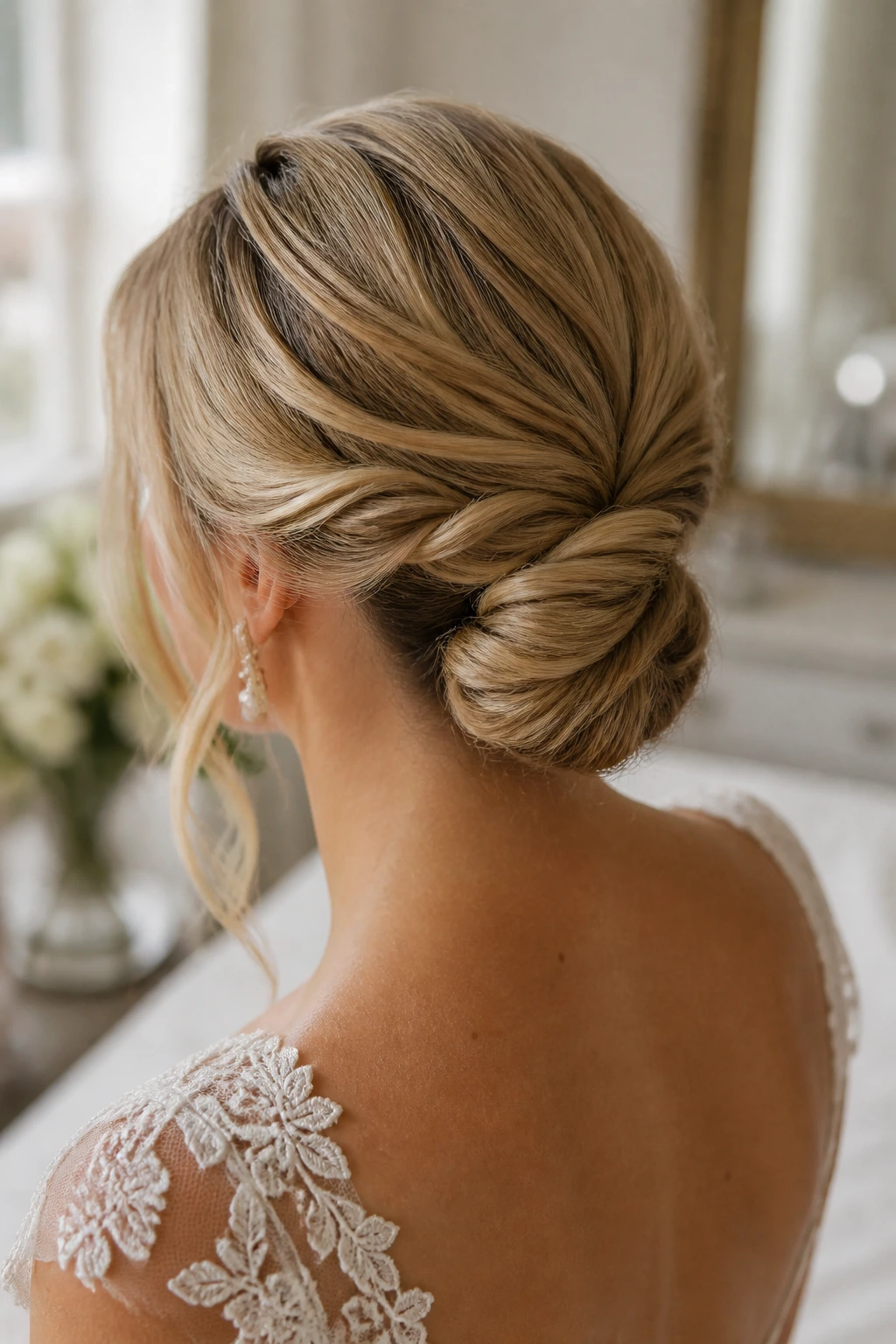
A double-twist chignon gives the eye something to follow. Hair from each side is twisted inward, then the two sections meet and fold into a low knot. It looks elegant without relying on braid work, and it’s a nice option when the bride wants texture but doesn’t want a fully braided style.
The twist lines are the whole point. They add shape along the head before the bun even begins. That helps on brides with medium-density hair or hair that falls flat when pulled straight back. The twist creates a little lift without inviting frizz.
This one feels especially good for brides who like neatness but still want the hair to show some handwork. It looks intentional from the front and even better from the back.
20. Knotted Chignon for Shorter Lengths
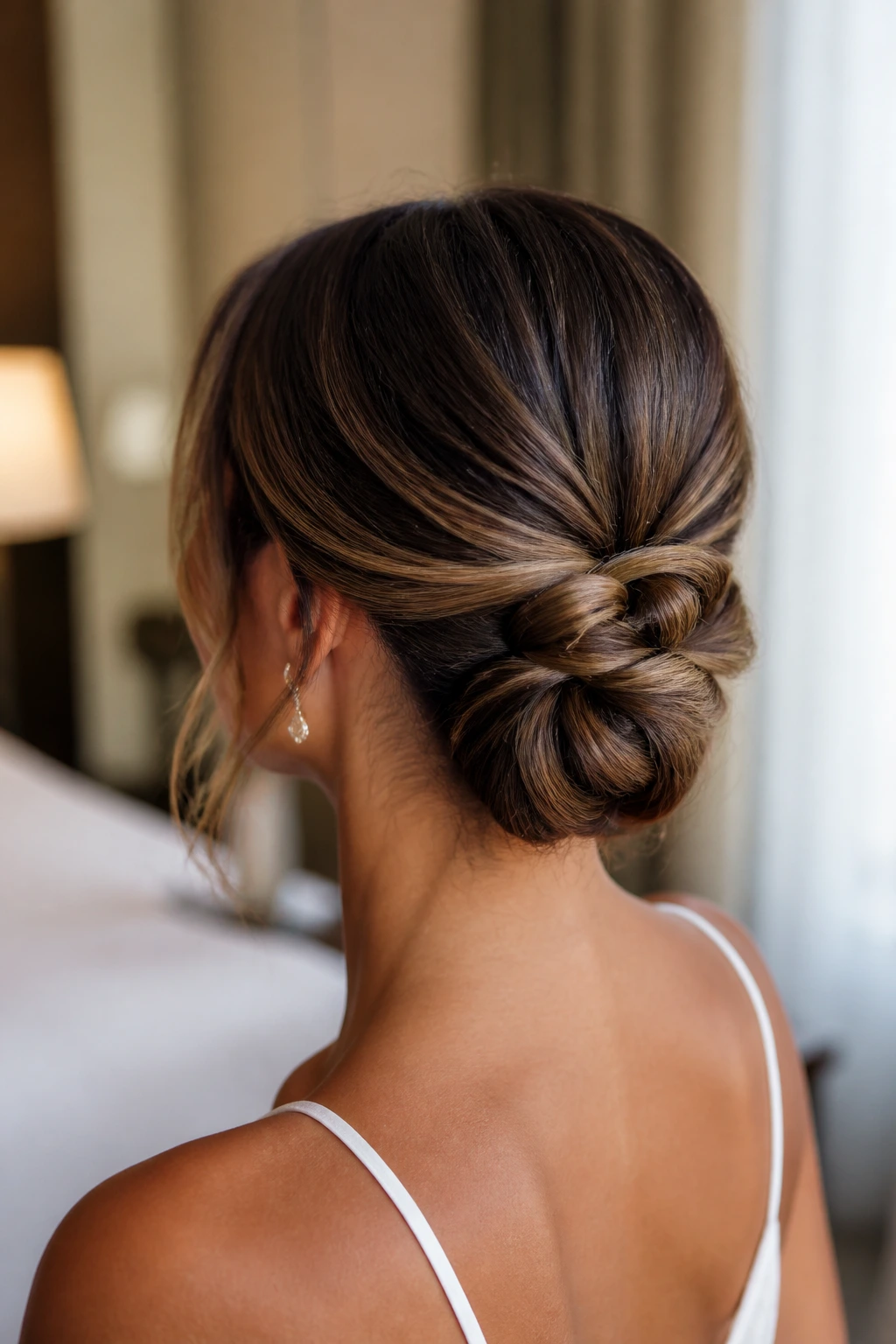
Shorter hair can absolutely do a chignon, but the shape needs to stay compact and cleverly pinned. A knot built from shoulder-length or collarbone-length hair usually relies on tucked ends, hidden pins, and a little padding to make the bun read full enough in photos.
The goal is not to fake long hair. It’s to make the knot look balanced and secure. I like this style when the bride’s hair brushes the shoulders but doesn’t quite reach a classic low bun. A good stylist can create a folded chignon that looks polished without pretending the hair is longer than it is.
If the ends are too short to wrap cleanly, they can be tucked into the center and pinned underneath. That little cheat is normal. Half the best bridal hair is hidden inside the style anyway.
21. Low Chignon with a Bubble Braid Detail
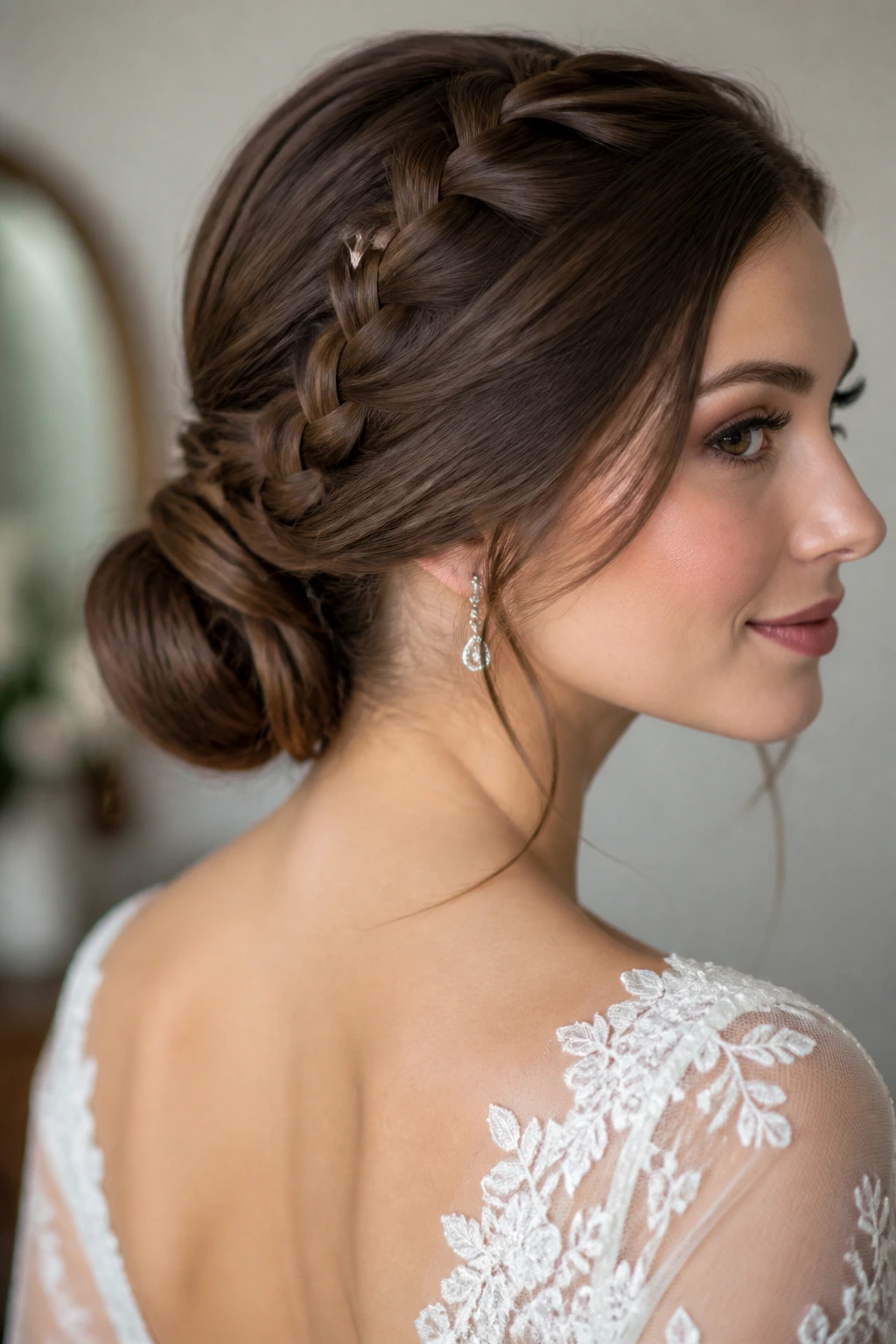
A bubble braid feeding into a chignon sounds playful, and it is, but the effect can be very refined when the bubbles are small and evenly spaced. The braid adds structure through the length, then the bun finishes everything low and tidy. It’s a good compromise for brides who want detail without a full braid crown.
The bubbles should be measured. Too large, and the style gets a little costume-like. Too tiny, and you lose the point. A low bubble braid works best when the sections are gently puffed, not overpulled. Then the chignon gathers the tail into a neat finish.
This look is more modern than the classic bun, and that can be a good thing. It gives the back of the head movement in a controlled way.
22. Vintage-Inspired French Chignon
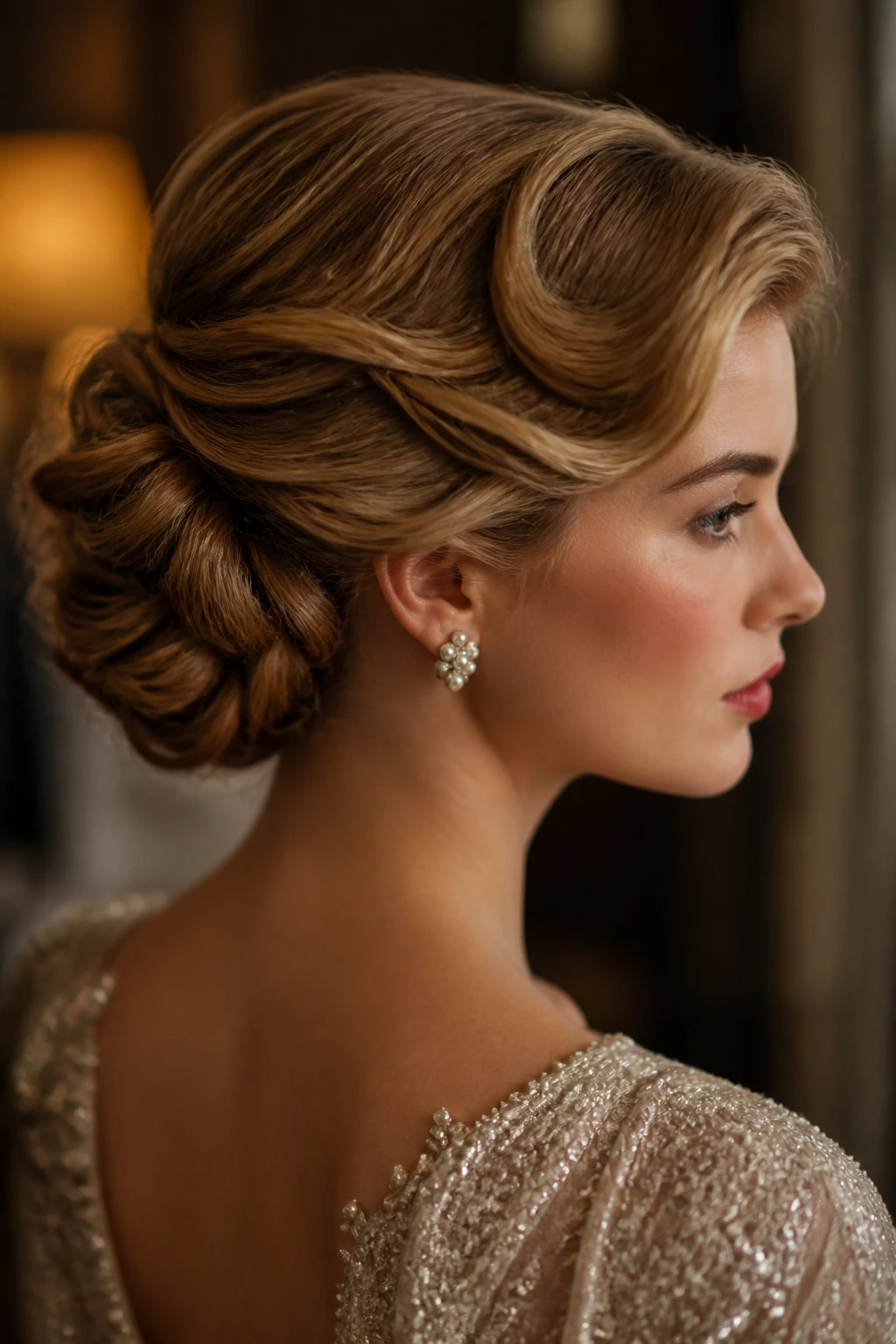
A vintage-inspired French chignon leans into old Hollywood without copying it line for line. Think polished sides, a softly rolled back, maybe a slight wave through the front, and a bun or tuck that feels a little dressed up for another era. It suits beaded gowns, satin gloves, cat-eye liner, and brides who want a touch of drama.
How to Get the Mood Right
The front section should be smooth and deliberate. The bun itself can be slightly fuller than a strict French roll, but the lines should remain clean. A side part can push the style toward vintage glamour, while a center part keeps it more modern. Either works.
This is one of the few chignons where a little shine is a virtue. Too matte and it loses the vintage feel. Too glossy and it can look harsh. A soft, brushed sheen is the sweet spot.
23. Minimalist Matte Chignon
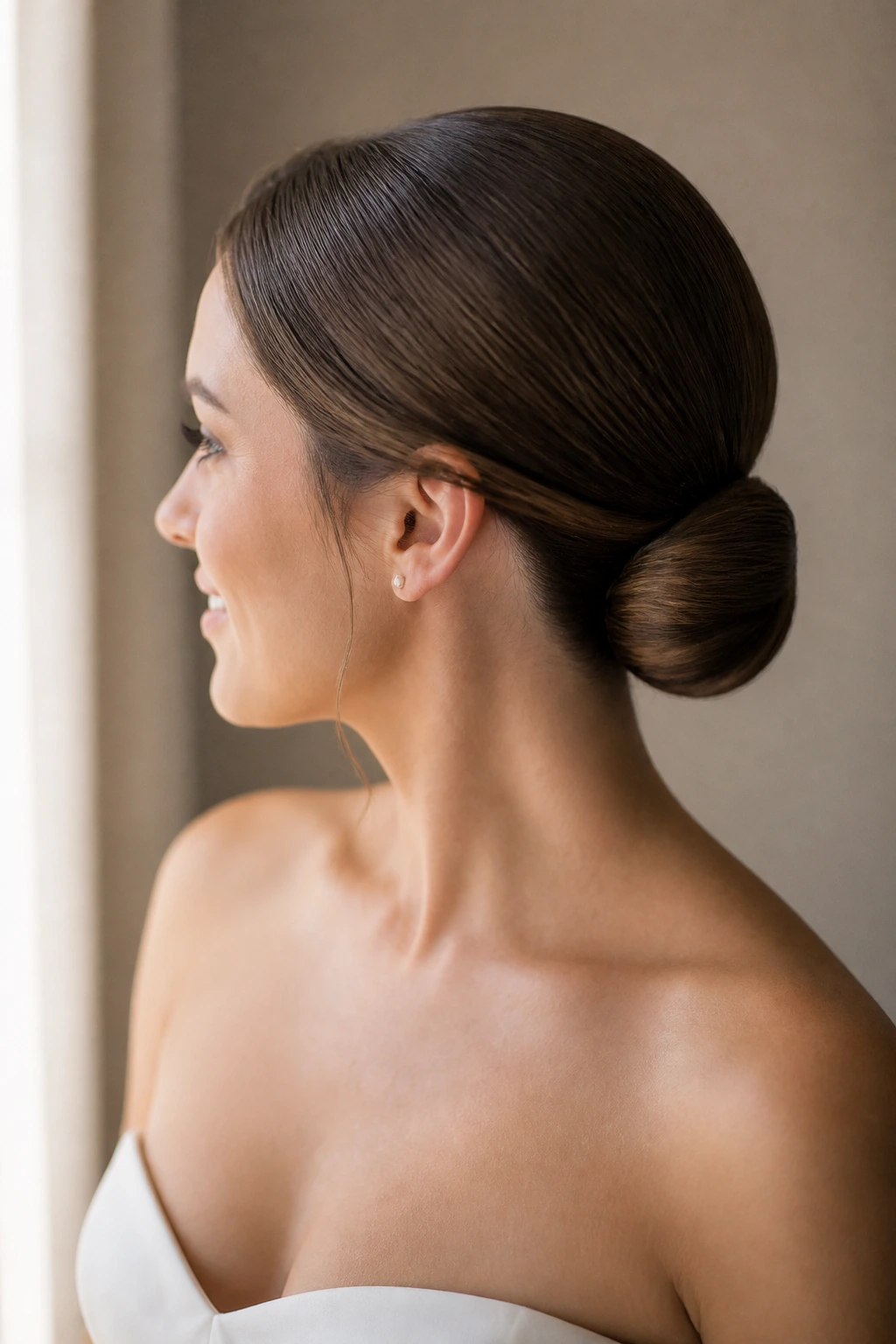
Not every bride wants shine. A minimalist matte chignon strips the style down to its shape: smooth, low, and clean, with almost no ornament and very little texture showing through the surface. It works when the gown is detailed, the makeup is precise, or the bride just dislikes anything fussy.
The matte finish gives the chignon a modern, slightly restrained look. No pearl pins. No flowers. Maybe one invisible comb, and that’s it. The bun itself should be neat and evenly shaped so the absence of decoration feels intentional rather than unfinished.
I like this version with architectural dresses and simple veils. There’s a confidence in leaving the hair alone. No explanation needed.
24. Voluminous Bridal Chignon with Lift at the Crown
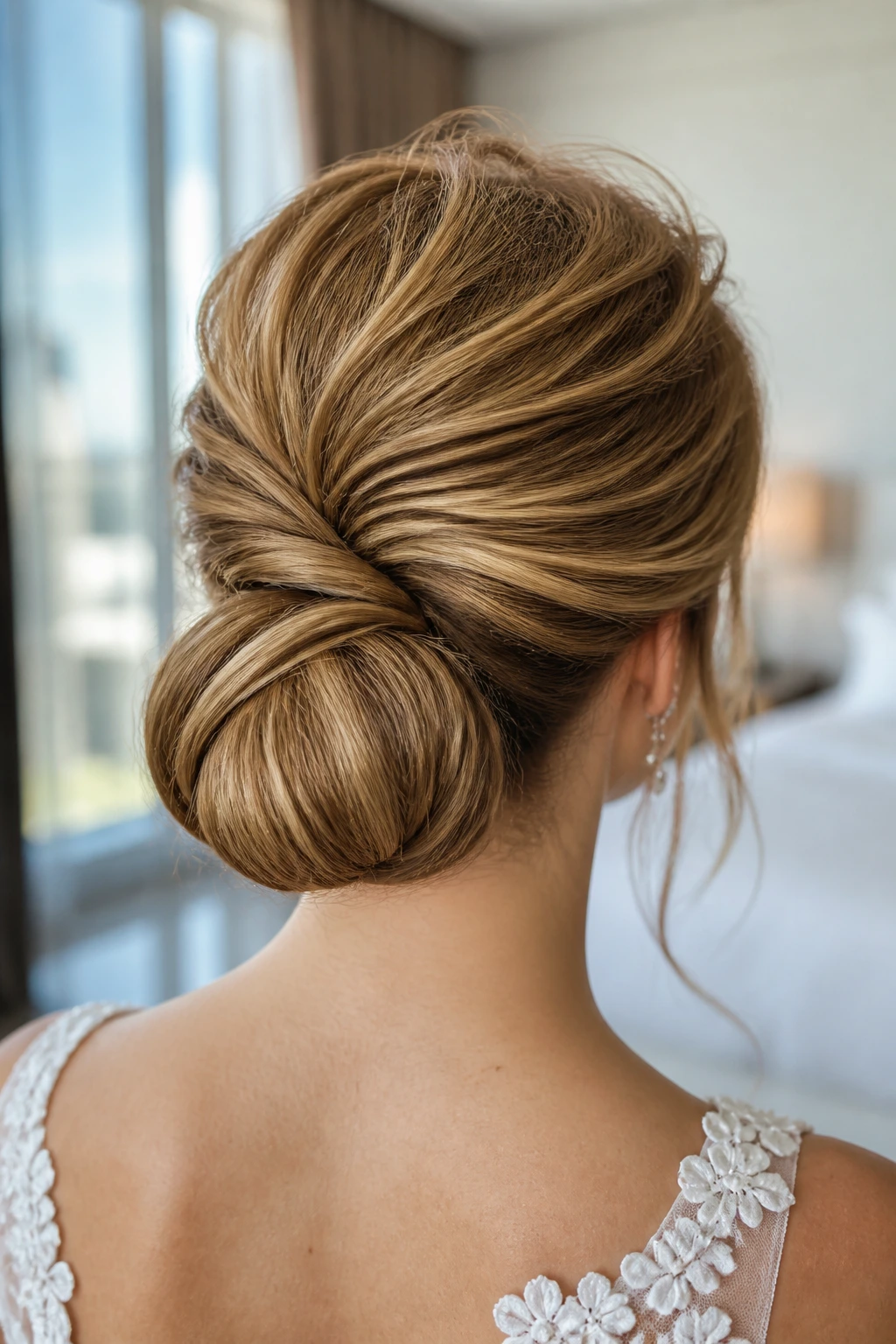
Some dresses need more hair. Some faces do too. A voluminous bridal chignon adds height through the crown before the hair drops into a low knot, which lengthens the neck and gives the whole style more presence. It’s the right answer when a bride wants her hair to feel styled, not merely pinned.
The lift should be soft, not a hard bump. Backcombing or hidden padding can create the height, but the top layer must stay smooth enough that the volume reads as shape, not frizz. The bun itself can be medium-sized, since the crown is already doing some of the visual work.
This is a strong choice for cathedral-length veils and for gowns that need a more dramatic silhouette from the back. It does not whisper. That’s the point.
25. Loop-and-Pin Bridal Chignon
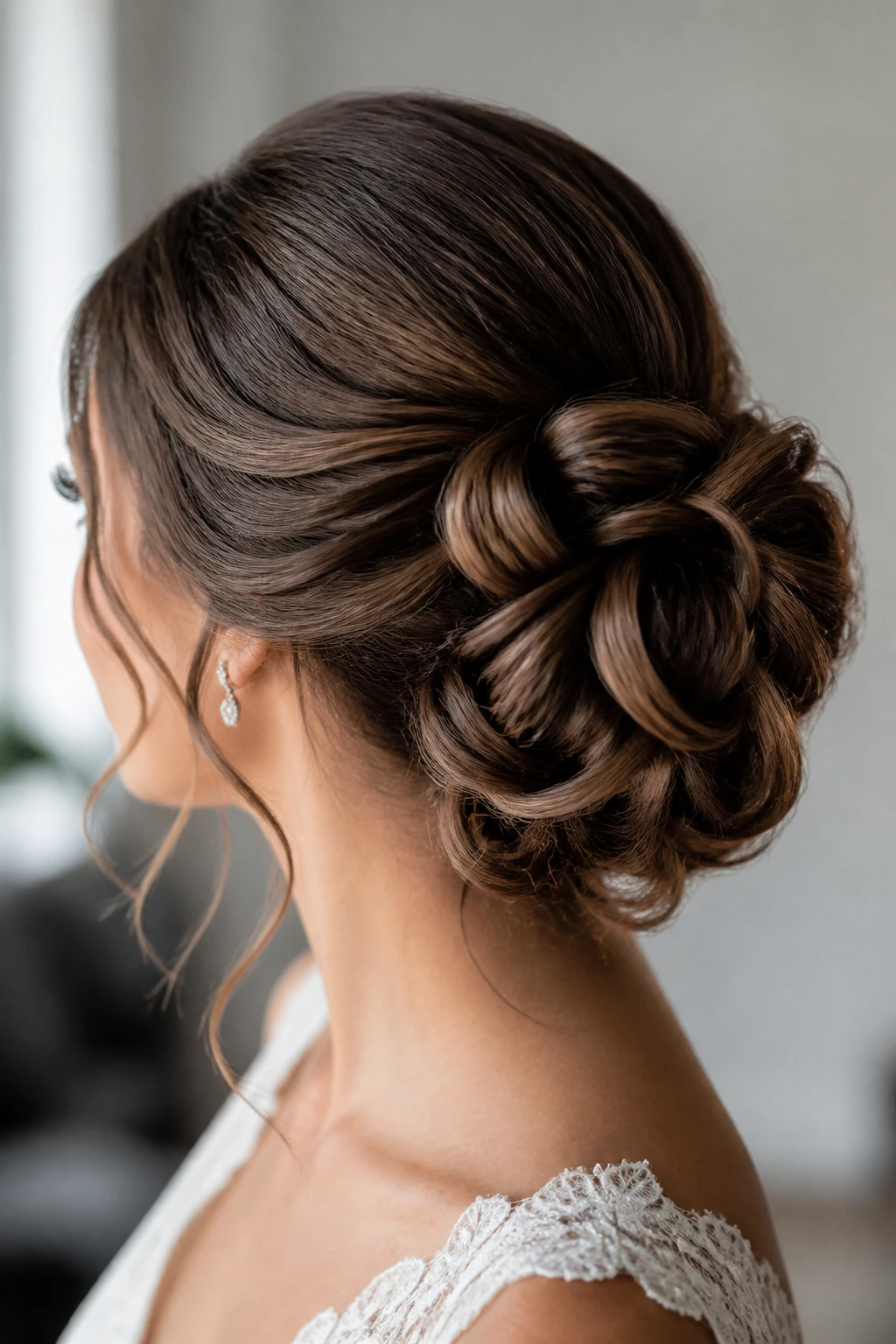
A loop-and-pin chignon is one of those styles that looks more technical than romantic until it’s finished, and then it suddenly feels very bridal. Hair is looped back on itself in sections, pinned in place, and layered until the bun becomes a cluster of soft folds rather than one round knot.
The beauty of this style is how well it adapts to different densities. Fine hair can use more loops and a little padding. Thick hair can build larger folds and still stay compact. The result is a chignon with texture that doesn’t depend on curls or braids.
It’s also a good style for brides who want movement without strand-by-strand looseness. The folds catch light and shadow in a subtle way. No gimmicks. Just shape.
26. Softly Undone Chignon with Tucked Ends
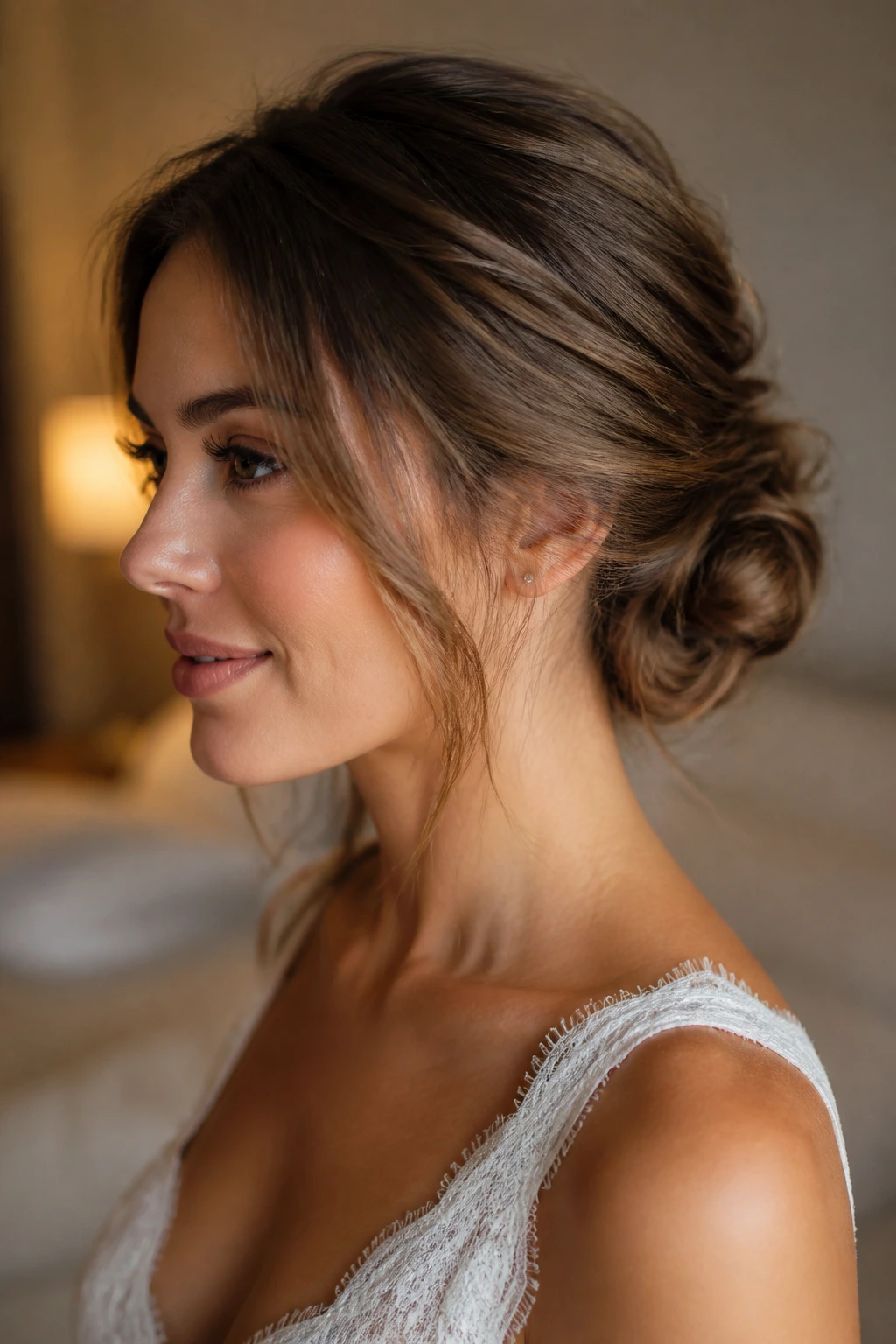
This one lives in the space between polished and relaxed. The front stays controlled, the bun stays low, and the ends are tucked in so they don’t fall apart, but the surface has a bit of separation that keeps it from feeling too severe. If a bride says she wants “done, but not too done,” this is probably the style she means.
The undone look works because the structure underneath is strong. Without strong pinning, it turns into a loose knot by mid-ceremony. With the support in place, it has movement and still survives the dance floor.
A softly undone chignon is forgiving on most face shapes. It softens the jaw, eases around the ears, and doesn’t demand perfect symmetry. That can be a relief on a long day.
27. Deep Side-Part Chignon for Statement Earrings
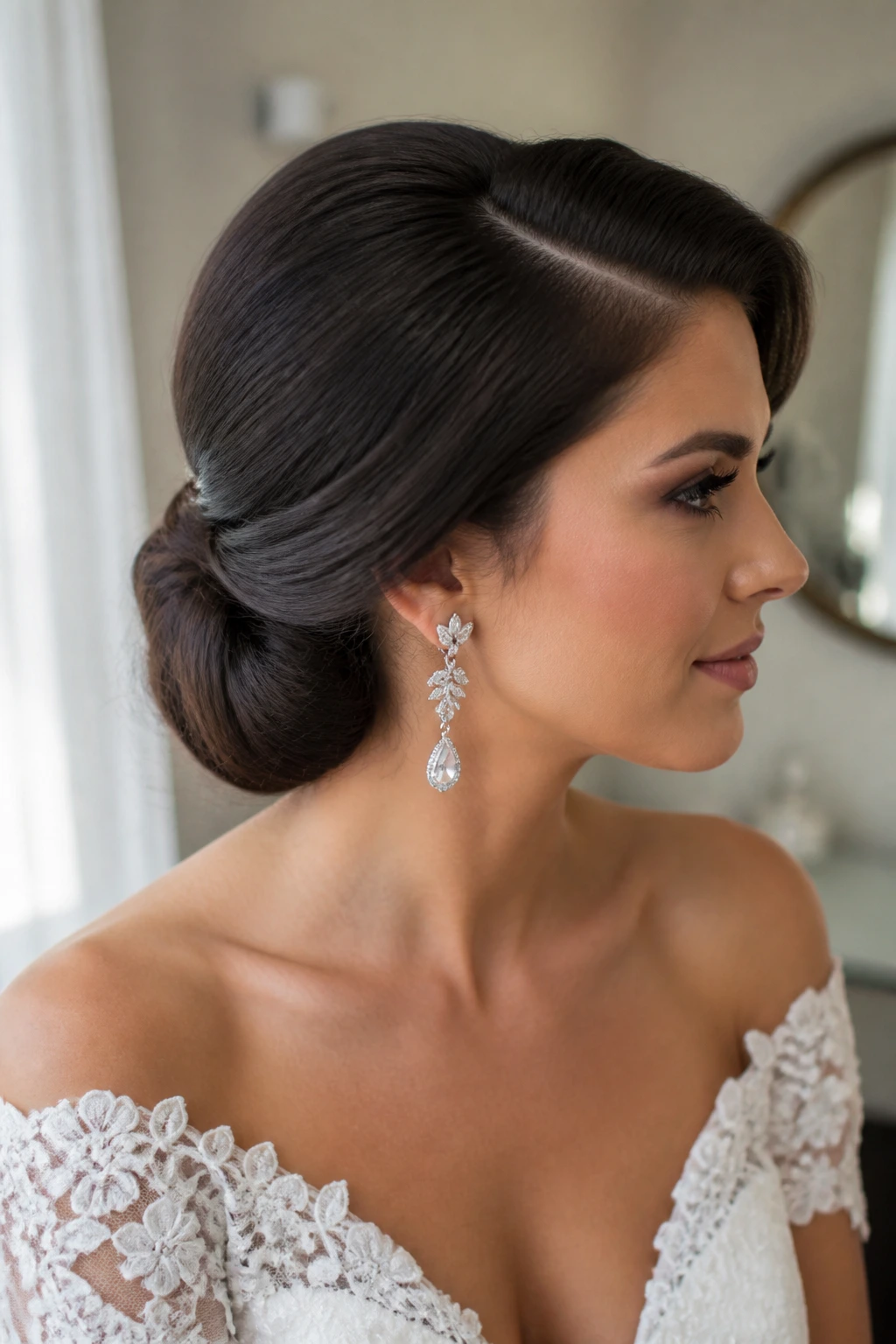
This is the chignon for brides who want the earrings to do a little of the heavy lifting. A deep side part shifts the balance of the face, sweeps the front back, and sends the eye straight toward the jawline and neck. The bun stays low, usually tucked near the nape on the heavier side of the part, so the jewelry has room to show.
The shape is especially flattering with shoulder-grazing or chandelier earrings because the asymmetry gives them a clean line to hang against. If the hair is too centered, the earrings can get lost. A deep side part fixes that in one move.
It’s a strong, slightly dramatic ending to the lineup because it has edge without looking severe. If I had to pick one version for a bride who wants the hair and jewelry to work together instead of competing, this would be in the final shortlist.
Pins, Combs, and Hold Products That Make These Styles Work
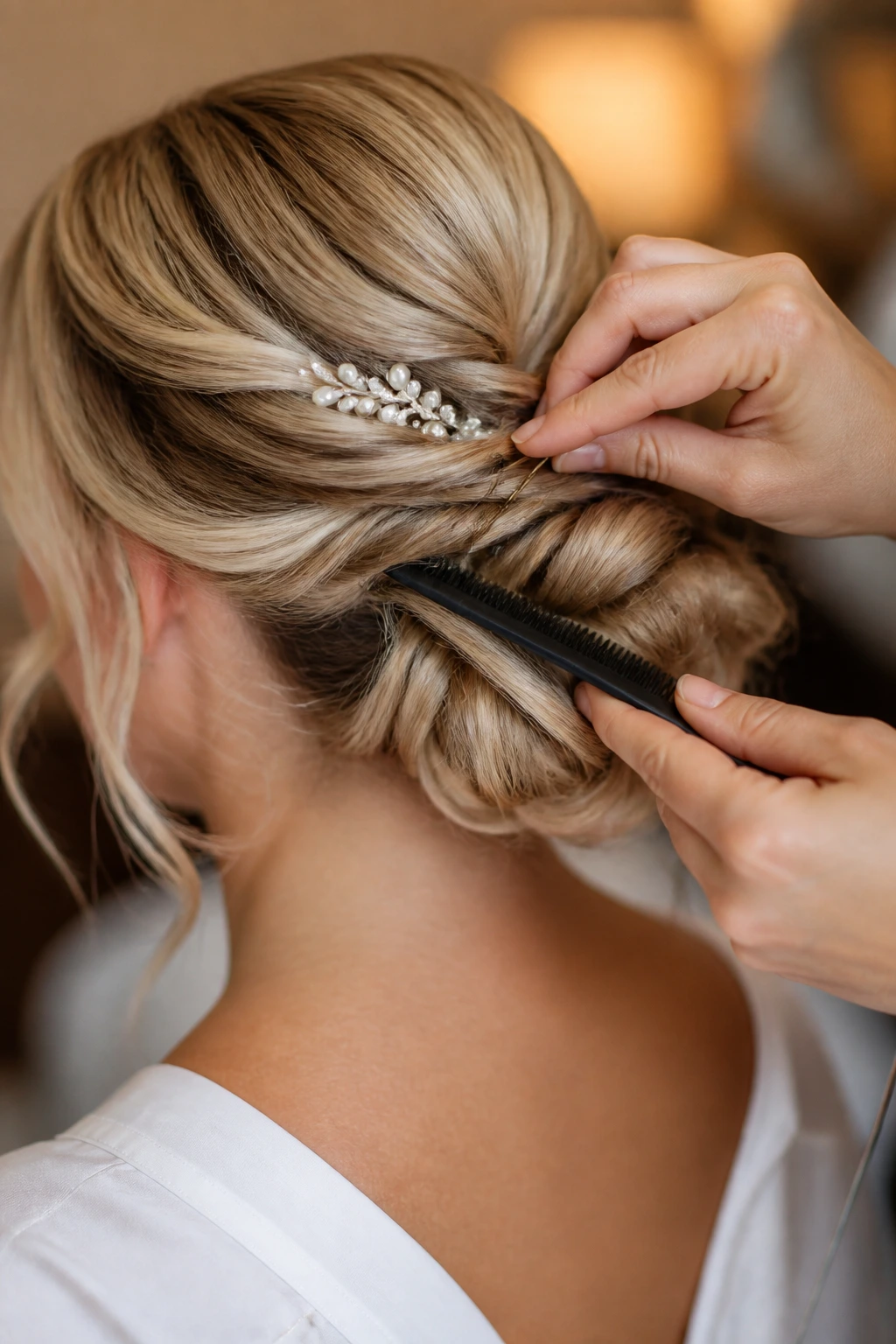
A bridal chignon is only as good as the stuff underneath it. Pretty shape matters, yes. But the hidden tools are what keep the shape from wobbling after the third hug and the first round of dancing. That’s the unglamorous truth, and it’s worth saying plainly.
Tail comb: Useful for clean parts, sectioning, and smoothing the crown before any pinning starts.
Boar-bristle brush: Helps polish the top layer without making the hair fluffy or scattered.
Texturizing spray: Gives clean hair some grip; it’s especially helpful on fine or freshly blown-out hair.
Light smoothing cream or serum: Best for flyaways at the hairline and for slicker styles, but use a small amount.
Hair elastics: Clear or hair-colored elastics keep the base secure before the bun is shaped.
U-pins and bobby pins: U-pins hold bulk; bobby pins lock the edges. Both matter.
Sectioning clips: Keep the hair separated while you build the style in controlled pieces.
Padding or a bun donut: Optional, but useful for fine hair or any bride who wants a fuller silhouette.
Strong-hold hairspray: Pick one that sets the style without turning the hair brittle in the first five minutes.
Veil comb or bridal comb: Make sure it matches the shape of the chignon so it does not pull the knot sideways.
How to Match the Chignon to the Dress, Veil, and Jewelry
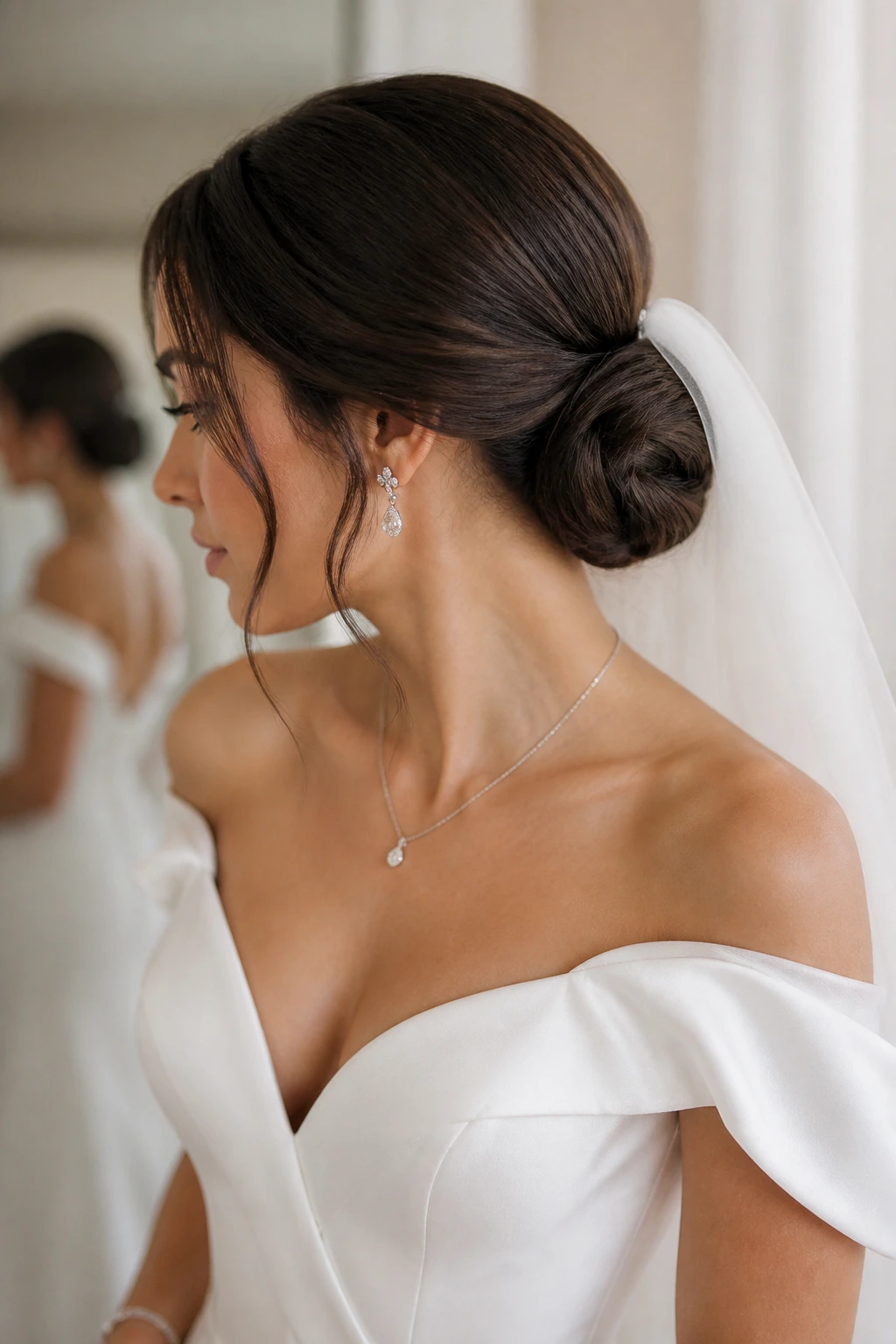
A bridal hairstyle never lives alone. It has to share space with fabric, metal, lace, and whatever the neckline is doing. A chignon makes that easier because it clears the shoulders and keeps the hair off the back, but the exact shape still needs to match the rest of the look.
Presentation: If the dress is structured, keep the chignon crisp, low, and centered. If the dress is soft or draped, a looser knot or twist can echo that movement without looking messy.
Neckline: High necks want compact buns. Off-the-shoulder necklines can take a softer, wider shape. Deep backs look best with styles that sit low enough to show the detail instead of cutting it off.
Veil: Heavy veils need a bun with real anchor points. Light veils can sit higher or be pinned into softer texture. If the veil comes off after the ceremony, make sure the chignon still feels complete on its own.
Jewelry: Big earrings usually like a cleaner bun or a deep side part. If the earrings are small, the hair can carry more detail — braid work, pins, flowers, or a little extra volume.
Practical Trial-Day Tips for a Bridal Chignon
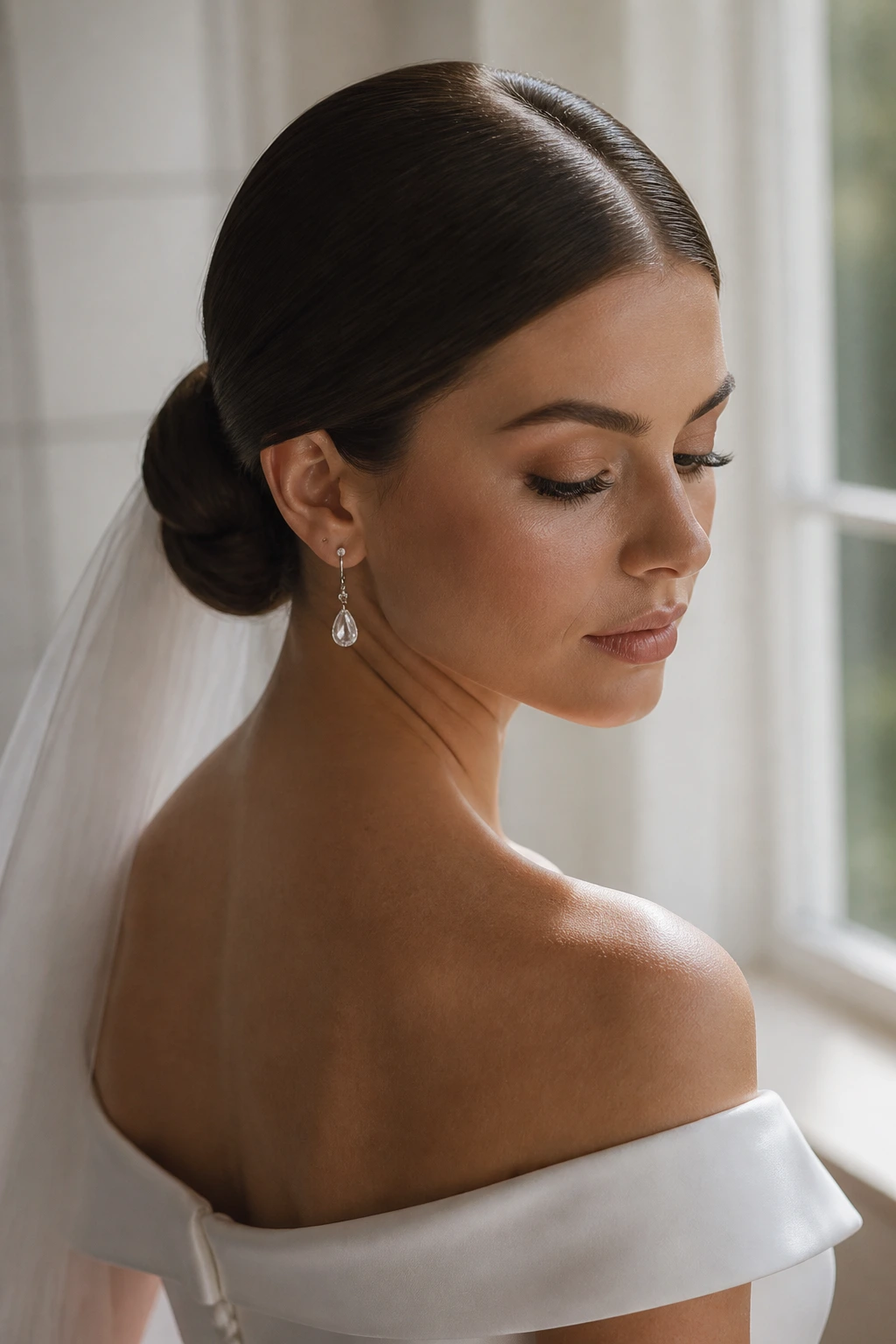
A good trial is not about making the hair perfect once. It’s about finding out what will go wrong before the wedding day does it for you. That means wearing the right shirt, taking photos from the back, and paying attention to comfort after an hour or two instead of ten minutes.
Bring the real accessories. Veil, comb, earrings, hairpins, all of it. A chignon can look balanced without the veil and then shift the second the comb goes in.
Test the weight. If the style feels tight at the trial, it’ll feel worse later. A low chignon should sit securely, not drag at the scalp.
Take side and back photos. The mirror lies a little. The camera tells the truth about bumps, bulges, and whether the bun sits too high.
Wear the hairstyle for a while. Walk around, bend, sit, laugh, and shake your head gently. If pins start poking or the front lifts, the stylist needs to adjust the placement.
Ask for a backup plan. If the first version feels too soft or too severe, it helps to know what can be changed without starting over.
Common Mistakes That Flatten or Loosen a Bridal Chignon
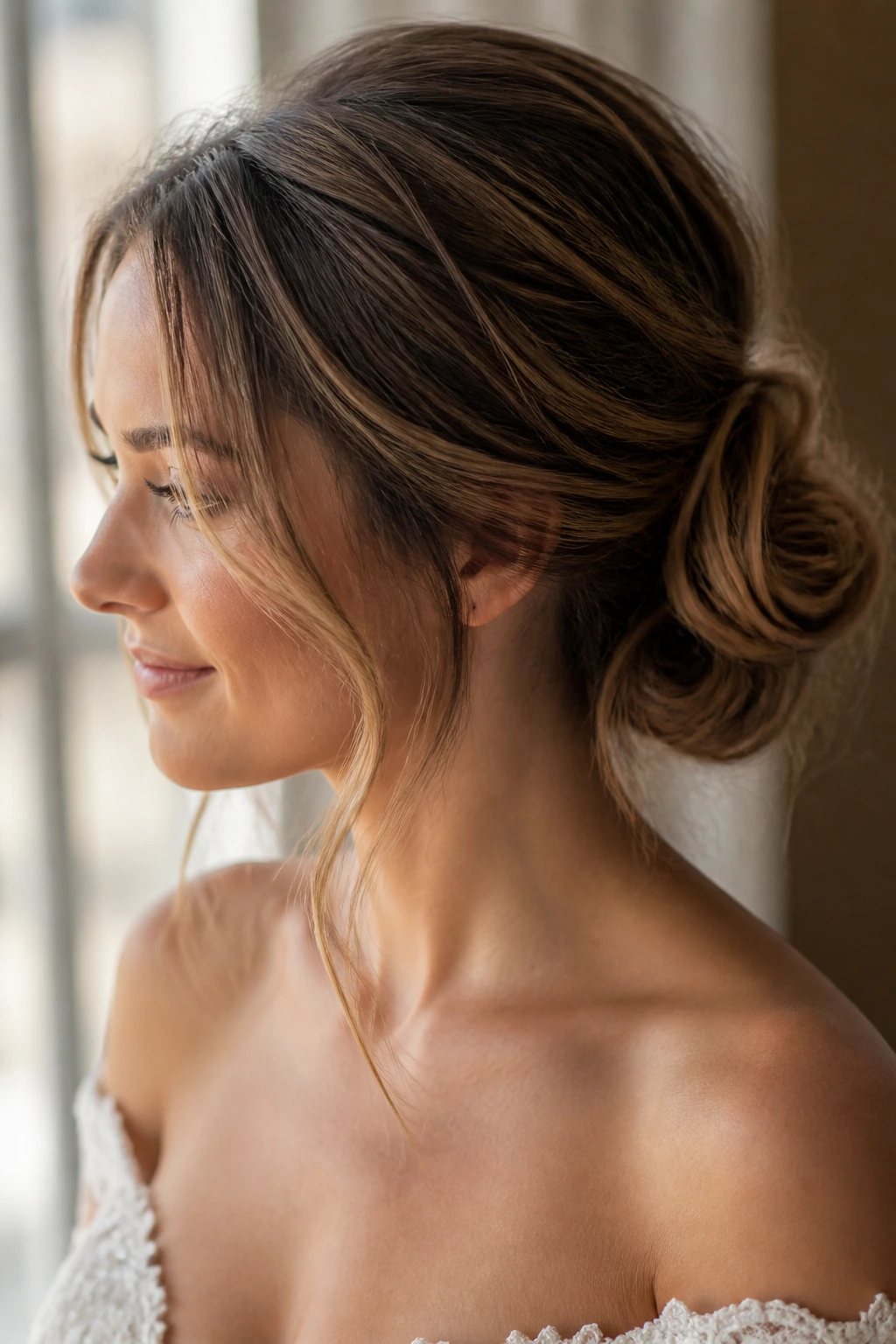
The worst chignon mistakes are usually quiet ones. Nothing dramatic happens right away. The style just starts to look tired, loose, or oddly heavy after a few hours. That’s the sort of problem you can prevent if you know what to watch for.
Too much slip at the roots: Freshly washed, heavily conditioned hair can make the style fall apart. A little texture spray or a day-old blowout gives the pins something to catch.
Pinning only the outside: If every pin sits on the surface, the bun feels secure for about ten minutes. Pins need to cross-anchor inside the knot, not just decorate it.
Building the bun too high: A chignon that sits above the nape often loses its elegance and can clash with veils or necklines. Low placement keeps the shape grounded.
Overloading with accessories: A bun, a veil, pearls, flowers, and six pins fighting for attention can start to feel crowded. Pick the detail that matters most and let the rest support it.
Ignoring hair density: Fine hair needs padding or a compact shape. Thick hair needs sectional support. Forcing one method onto the wrong hair type is where a lot of bad bridal buns begin.
When a Chignon Needs a Twist, a Braid, or a Softer Finish
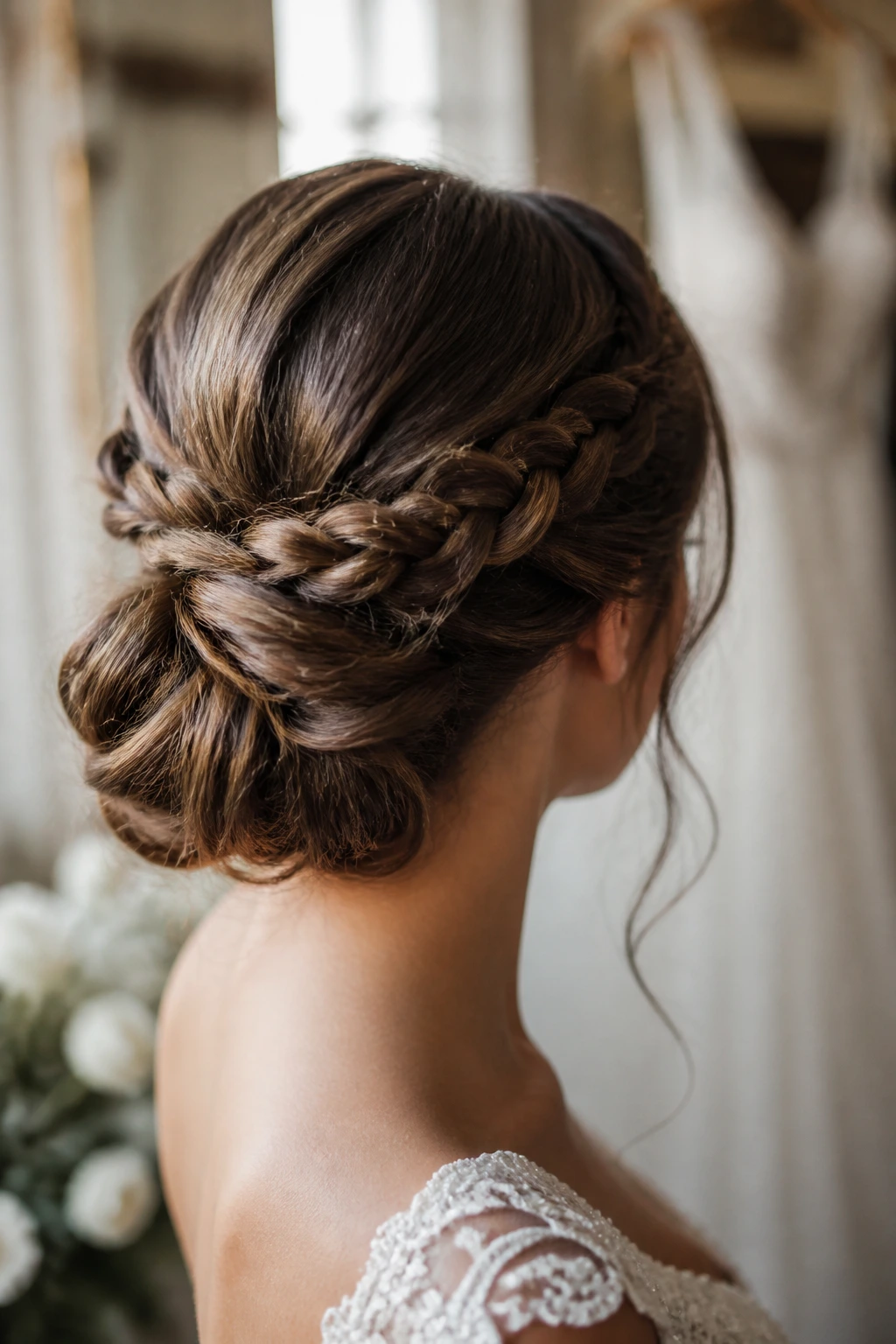
Not every bride wants the same kind of control. Some want the elegance of a chignon with a little movement built in. Others want an updo that nods to braid work or loose texture because a perfectly smooth bun feels too severe with the dress. That is where small variations save the day.
Braided Twist Chignon: Add one braid from each side before folding the hair into the bun. It gives detail at the crown and works well for brides who want a little more interest near the face.
Soft Knot With Tendrils: Leave two or three face-framing pieces loose and keep the bun low and relaxed. Good for romantic dresses, garden venues, and brides who do not want a strict finish.
French-Roll Hybrid: Roll the sides inward, then tuck the base into a small chignon. This gives you the polish of a French twist with the softer finish of a bun.
Pearl or Flower Accent Version: Keep the bun simple and let one accessory do the decorating. This is the cleanest way to make a chignon feel bridal without overcomplicating it.
How to Keep the Style Fresh From Trial to Last Dance
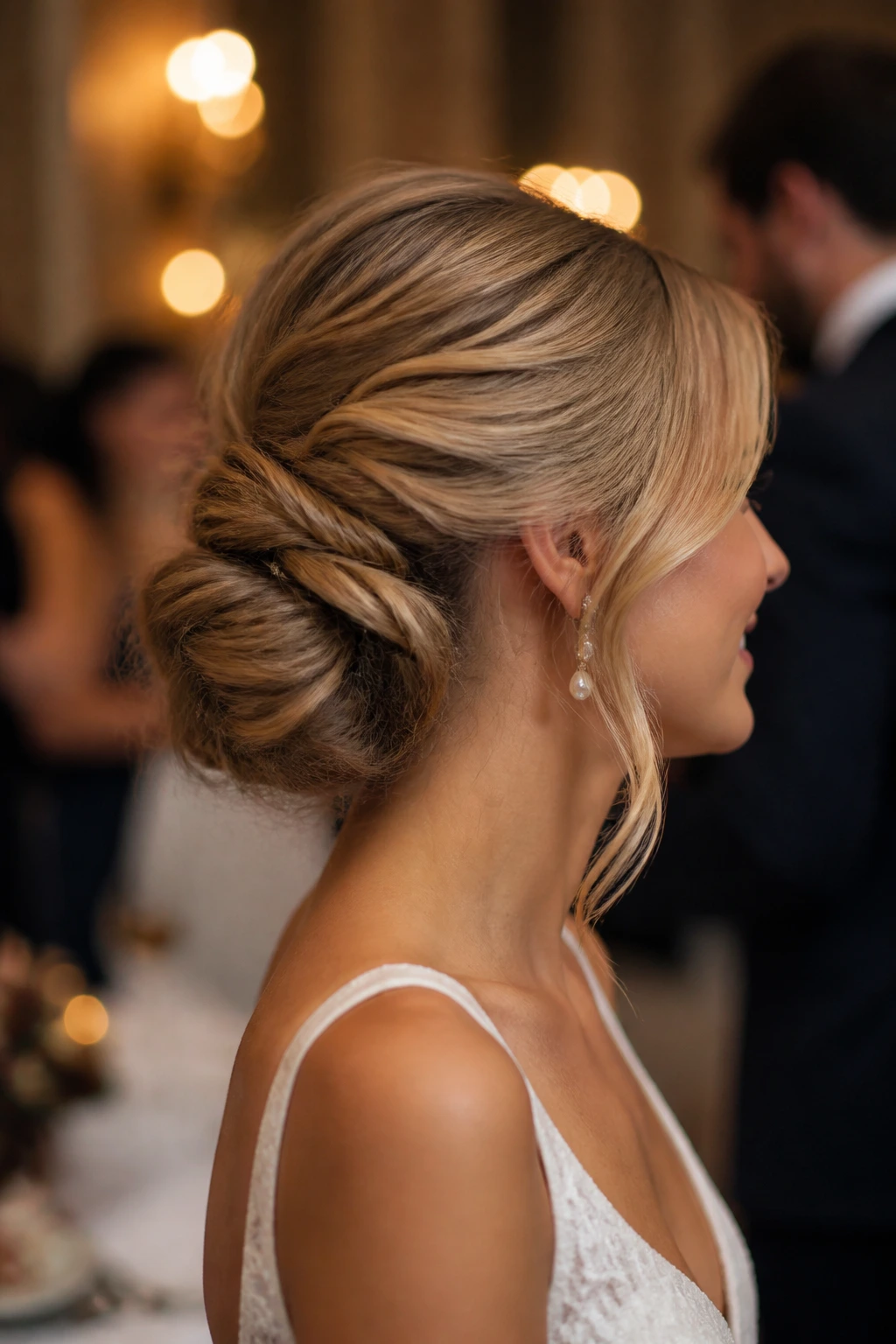
Hair that looks good in the chair can look tired by the first course if it wasn’t built with endurance in mind. Bridal hair needs a little management, not just styling. That starts the day before the wedding and keeps going until the last pin is pulled out.
Wash the hair on the schedule your stylist prefers — often not the same day, because a little natural oil gives grip. Keep the ends conditioned, but not slick. If the hair is very clean, it usually needs more product and more support to behave.
During the day, keep a tiny touch-up kit nearby: a few bobby pins, a small can of hairspray, one mini comb, and maybe a second veil comb if the first one shifts. If the venue is warm, the hairline may need a quick smoothing before portraits. If the chignon is textured, resist the urge to keep touching it. That’s how little loose bits turn into a halo of fuzz.
Frequently Asked Questions
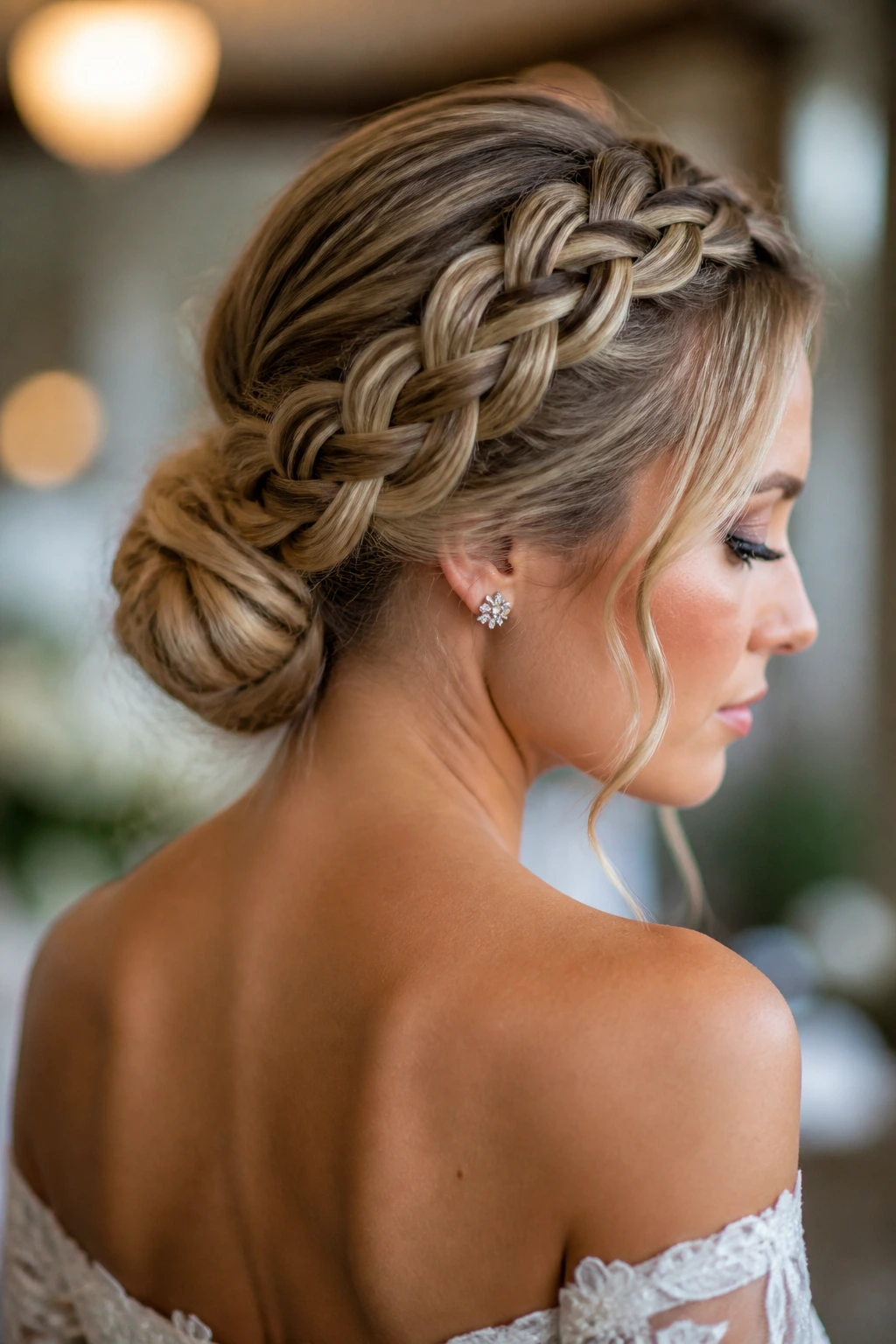
Can a chignon stay secure with a veil all day?
Yes, if the veil comb is anchored into the structure of the bun and not just the outer layer. A low chignon with a textured base usually holds a veil more reliably than a slippery, ultra-smooth bun.
Does a chignon work on fine hair?
Absolutely. Fine hair often benefits from padding, light backcombing, and a compact shape that doesn’t demand too much volume. The trick is making the bun proportionate, not oversized.
What if my hair is too short for a classic chignon?
A shoulder-length cut can still work if the stylist uses tucked ends, hidden pins, and a smaller knot shape. You do not need waist-length hair; you need enough length to fold and secure.
Is a chignon too formal for a casual wedding?
Not if the finish is soft. A loose, textured, or side-swept chignon can feel relaxed while still keeping the hair off the shoulders and out of the face.
How do I stop flyaways without making the hair look hard?
Use a light smoothing cream on the top layer before styling, then mist hairspray onto a brush or your hands and press gently over the surface. Spraying directly from too close often makes the hair look stiff.
Should I wash my hair the morning of the wedding?
Usually not, unless your stylist specifically wants that. Slightly older hair tends to hold shape better and gives pins more grip. Freshly washed hair can be too soft and too slippery.
Can I wear statement earrings with a chignon?
Yes, and they often look better with one than with loose hair. A low bun, side part, or swept-back front gives earrings room to show without tangling in the hair.
What if the bun starts to loosen during the reception?
A few hidden bobby pins and a light mist of hairspray can usually tighten the silhouette. If the style was built with a solid internal base, small shifts are easy to fix without rebuilding the whole thing.
Final Sweep
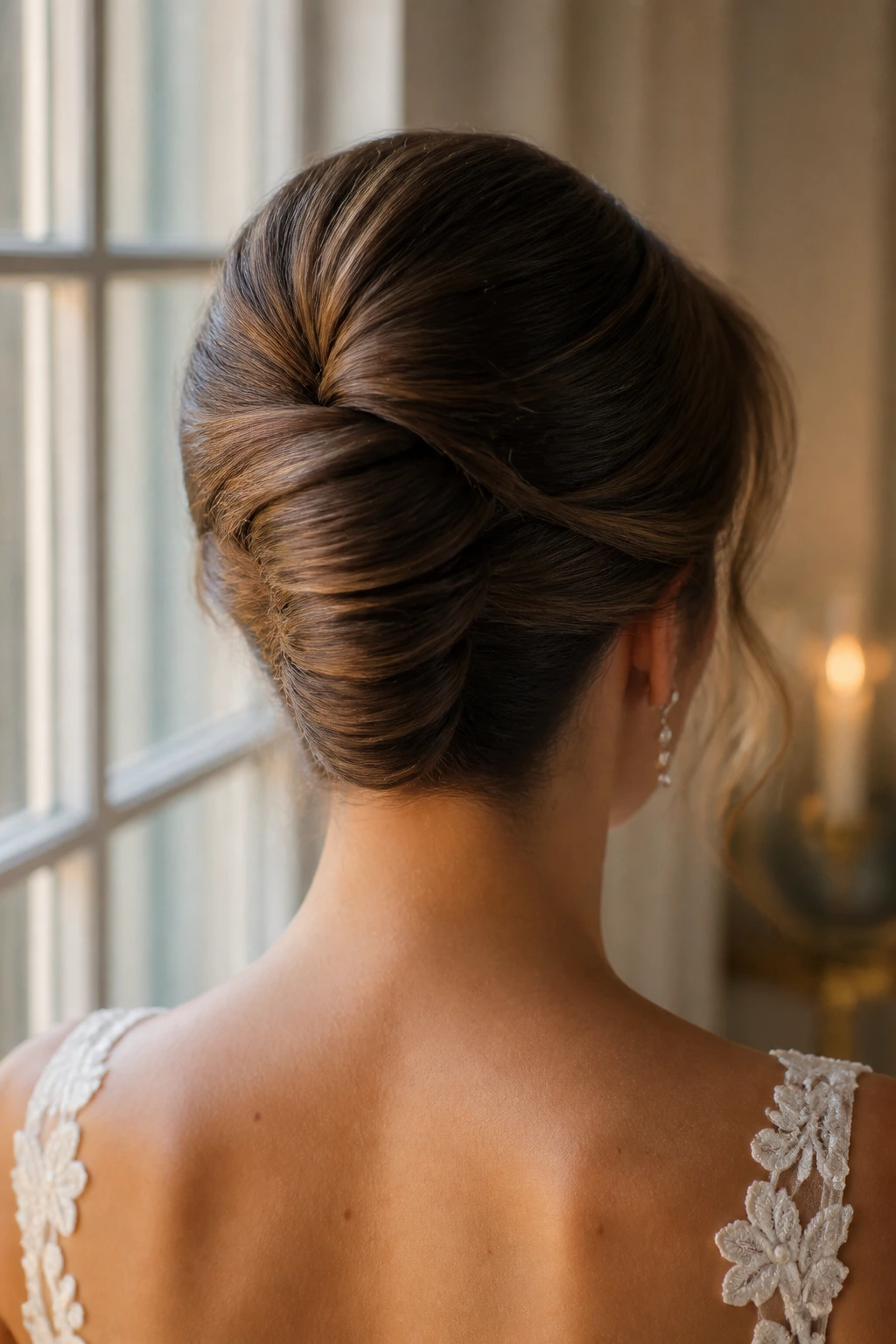
A chignon gives a bride something rare: control without stiffness, softness without collapse. That mix is why these styles keep working across dresses, venues, face shapes, and hair textures. A good one does not fight the rest of the look. It makes the rest of the look easier to see.
Pick the version that suits the neckline, the veil, and the way the bride actually moves. Not the version that only looks good in a perfect still photo. The one that survives a hug, a laugh, and a long evening under warm lights is the one worth trusting.
