



Groom hairstyles can make or break the whole look. A crisp tux with fuzzy edges around the ears feels unfinished. A simple side part with the right taper, though? That can make the suit look more expensive and the face look calmer in photos, which is half the battle on a day full of flash, hugs, wind, and people reaching in for one more shoulder pat.
The tricky part is that “polished” does not mean frozen. The best wedding hair still looks like hair. It has movement, clean lines, and enough control to survive a ceremony, portraits, a humid patio cocktail hour, and a dance floor that turns everyone’s forehead into a steam room. I have very little patience for styles that look shellacked in the mirror and tired by the second toast.
A good groom cut respects the hair you actually have. Thick hair needs weight removed. Fine hair needs shape and a little lift. Curly and coily textures need definition, not flattening. Long hair needs restraint at the neckline. Once you get those basics right, the whole thing gets easier, and the styles below give you a wide enough field to find the one that fits your face, your beard, your suit, and the kind of wedding you’re walking into.
Why This Collection Is Worth Your Time
- Covers every length: You’ll find short cuts, medium sweeps, curly styles, long-hair options, and a few in-between looks that bridge the gap.
- Built for real wedding conditions: These styles are chosen because they can handle movement, bright light, and a little humidity without collapsing into mush.
- Works with different textures: Straight, wavy, curly, coily, thick, and fine hair all get options that make sense for the texture instead of fighting it.
- Helps you avoid overstyling: A lot of groom hair goes wrong because it’s overloaded with product. These looks lean cleaner, lighter, and more deliberate.
- Easy to talk about with a barber: Each style gives you a clear starting point, so you can ask for length, taper, fringe, or part placement without guessing.
- Matches the rest of the outfit: These cuts are chosen to sit well with lapels, collars, beard lines, and formalwear rather than looking like they were chosen in isolation.
1. Classic Side Part with a Low Taper
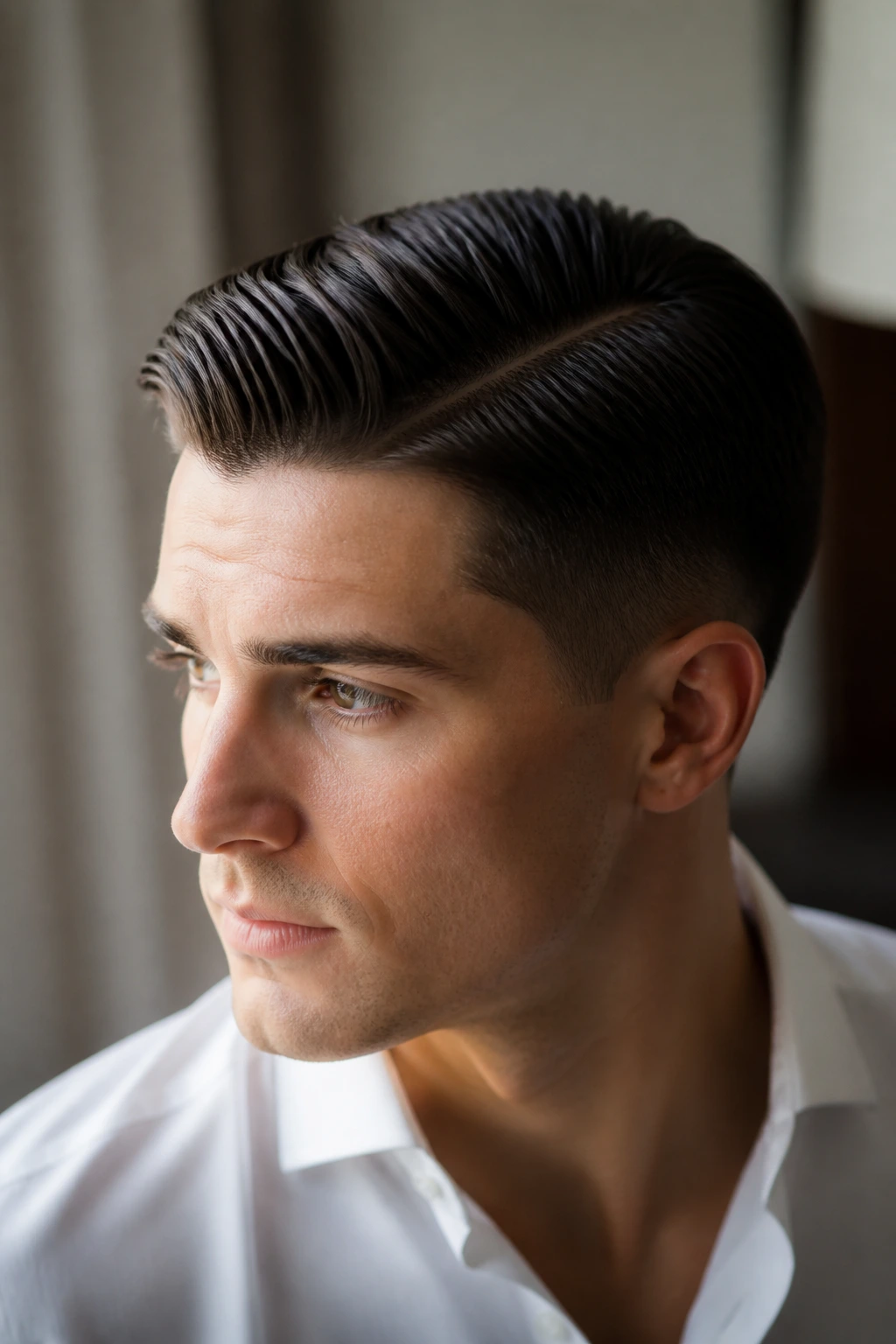
A side part earns its keep when the line is soft, not carved into the scalp like a ruler mark. With a low taper around the ears and nape, this cut reads clean and calm, which is exactly what you want when the rest of the day is already full of noise.
Keep about 2.5 to 3.5 inches on top, enough to separate neatly but not so much that it flops over halfway through the vows. A pea-sized amount of matte cream or light pomade usually does the job. If your hair has a natural bend, even better; the style looks more expensive when it follows the grain instead of bullying it.
A low taper is the detail that keeps this from turning stiff. The sides should shrink gently, not vanish into a skin fade unless that’s your normal look. Clean sideburns and a tidy neckline do more for the finish than a heavy hand with product ever will.
2. Slicked-Back Taper with Matte Finish
Want slicked-back hair that doesn’t turn into a greasy helmet under camera flash? Use a matte finish and keep the shape controlled, not plastered. That combination gives you polish without the wet, oil-slick shine that can look a little dated in person.
This works best with 3 to 5 inches on top and a taper on the sides that stays close but not severe. Blow-dry the hair back while it’s still damp, then work in a small amount of matte pomade or styling cream. Comb once to set the direction, then stop fussing with it. Too much combing is how you end up with flat, ropey strands that show every part line.
The slick-back reads especially well with a sharp collar and a darker suit. It frames the face, opens the forehead, and gives the whole silhouette a more formal line. If your hair is very fine, use less product than you think you need. Seriously. Fine hair collapses fast under a heavy load.
3. Textured Crop with a Clean Fringe
If your hair falls forward the second you stop touching it, the textured crop is a smart move. It works with that behavior instead of fighting it, which is why it often looks better at hour six than a style that needed constant rescue from the start.
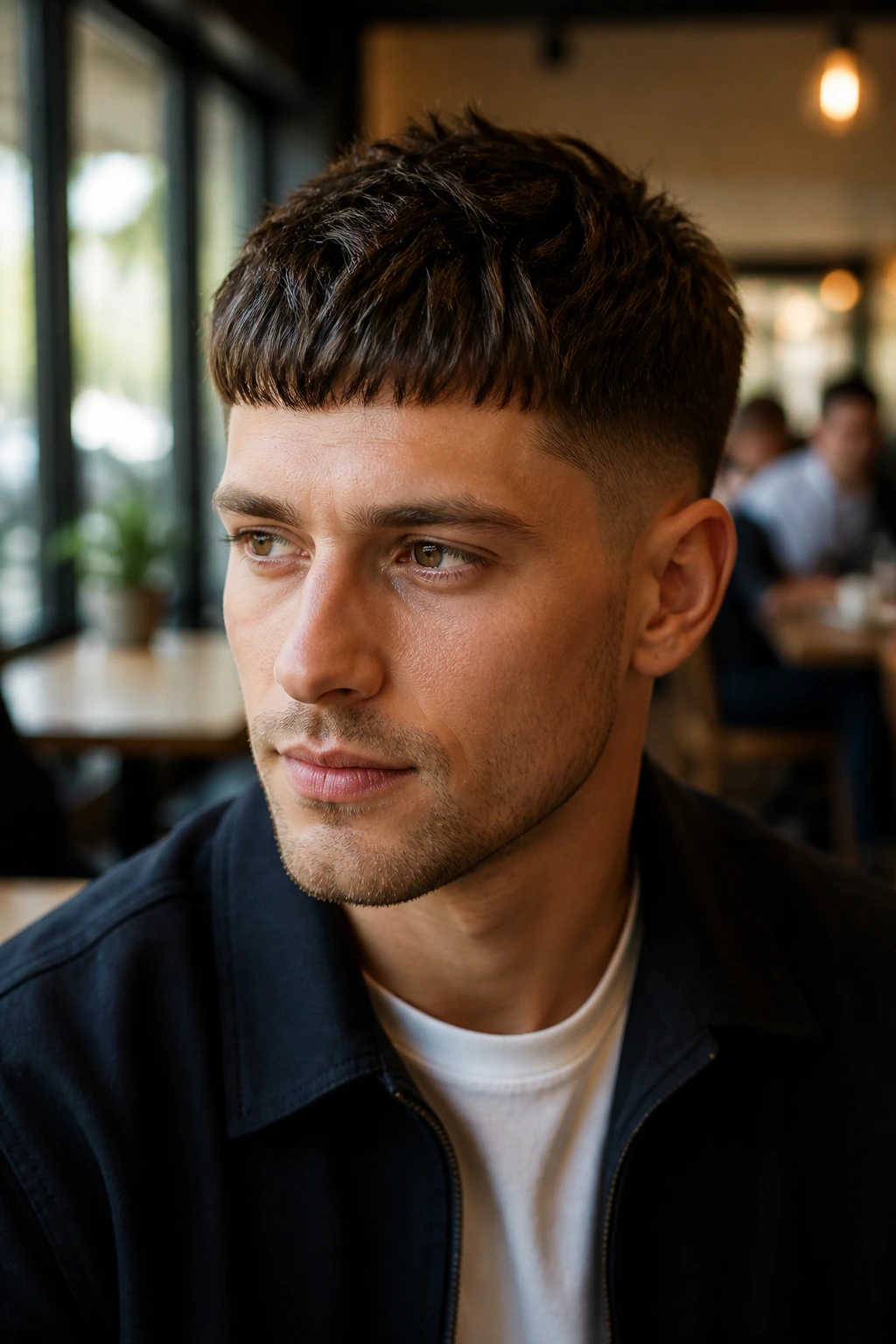
Ask for 1.5 to 2.5 inches on top with a short, uneven fringe that sits just above the brows. The sides should be tapered tight enough to clean the outline, but not so tight that the top feels disconnected. A matte clay gives this style its shape; the goal is separation at the ends, not shine at the roots.
What keeps it polished
The fringe should look intentional, not like a haircut that forgot where to stop. If your barber cuts it too blunt, the style can feel heavy across the forehead. If it’s too choppy, it starts looking casual in a way that fights a formal suit.
This one is especially good for thicker hair and for men who want a style that survives a long day with less maintenance. The front stays in place, the sides stay neat, and the texture keeps the cut from feeling too neat. That balance is the whole point.
4. Ivy League with Soft Volume
You do not need a big, tall top to look dressed up. The Ivy League proves that a measured shape can look even sharper than extra height, especially if your suit is clean, structured, and not trying to start a conversation.
Keep the top around 2 to 3 inches and let the front rise just a little when you dry it. The side part should sit where your hair naturally opens, not where a comb tries to force it. I like this cut for finer hair because it gives structure without shouting about it.
A light cream or low-shine pomade is enough. Brush the sides into place, then lift the front with your fingers so the shape doesn’t go flat. This is one of those cuts that looks better the second time you touch it, which is rare and useful. It also plays nicely with glasses, a narrow tie, or a tux that already has plenty of visual weight.
5. Short Quiff with Tapered Sides
The quiff sits halfway between neat and a little bit alive. That’s why it works so well on a wedding day. You get a bit of lift at the front, but you don’t end up with a towering shape that turns into a windswept problem the minute you step outside.
Barber note
- Leave 3 to 4 inches at the front so the top can rise without collapsing.
- Keep the sides tapered low or mid, depending on how bold you want the shape to feel.
- Ask for the front to be blended, not blunt, so the lift looks soft.
Use a blow-dryer and a vent brush to push the roots upward and slightly back. Then work in a small amount of matte paste. The front should hold a gentle crest, not a hard spike. If the hair starts to feel crunchy, you’ve used too much product. Back off and loosen it with your hands.
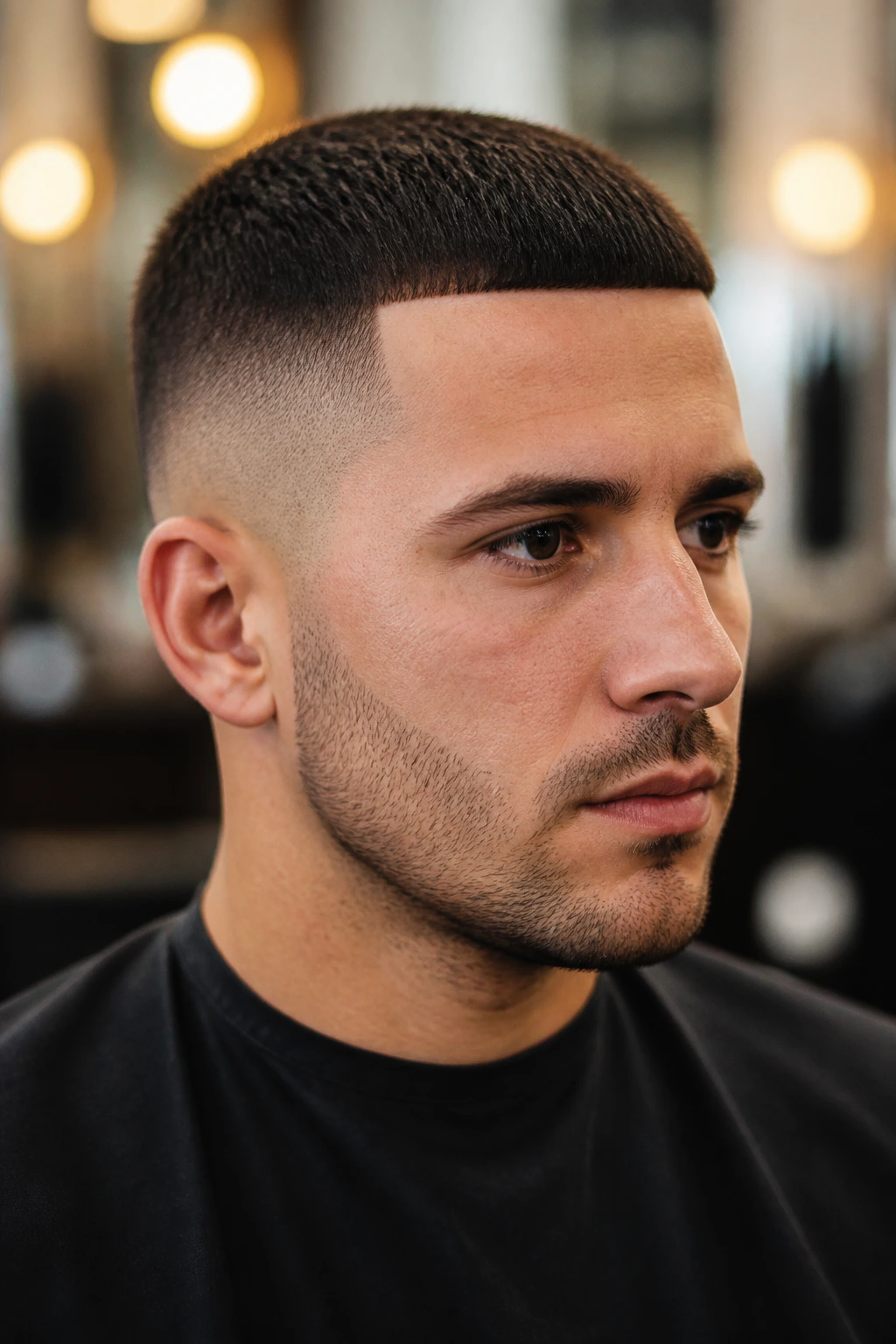
6. Crew Cut with a Precise Line-Up
The crew cut can look sharper than a longer style when the edges are done right. It’s one of those haircuts that people underestimate until they see it with a fresh line-up, a clean taper, and a jawline that actually gets some breathing room.
Keep the top around 0.75 to 1.25 inches. That little bit of length matters because it stops the cut from reading as a buzz cut. The line-up at the temples and forehead should be neat, not boxy. A hard square edge can look too severe unless that’s your normal shape.
This is a strong choice for coarse hair, active grooms, or anyone who does not want to think about hair once the jacket goes on. It also pairs nicely with a beard because the shape on top doesn’t fight the shape below. Just keep the neckline cleaned up. A sloppy nape ruins the whole effect faster than most people realize.
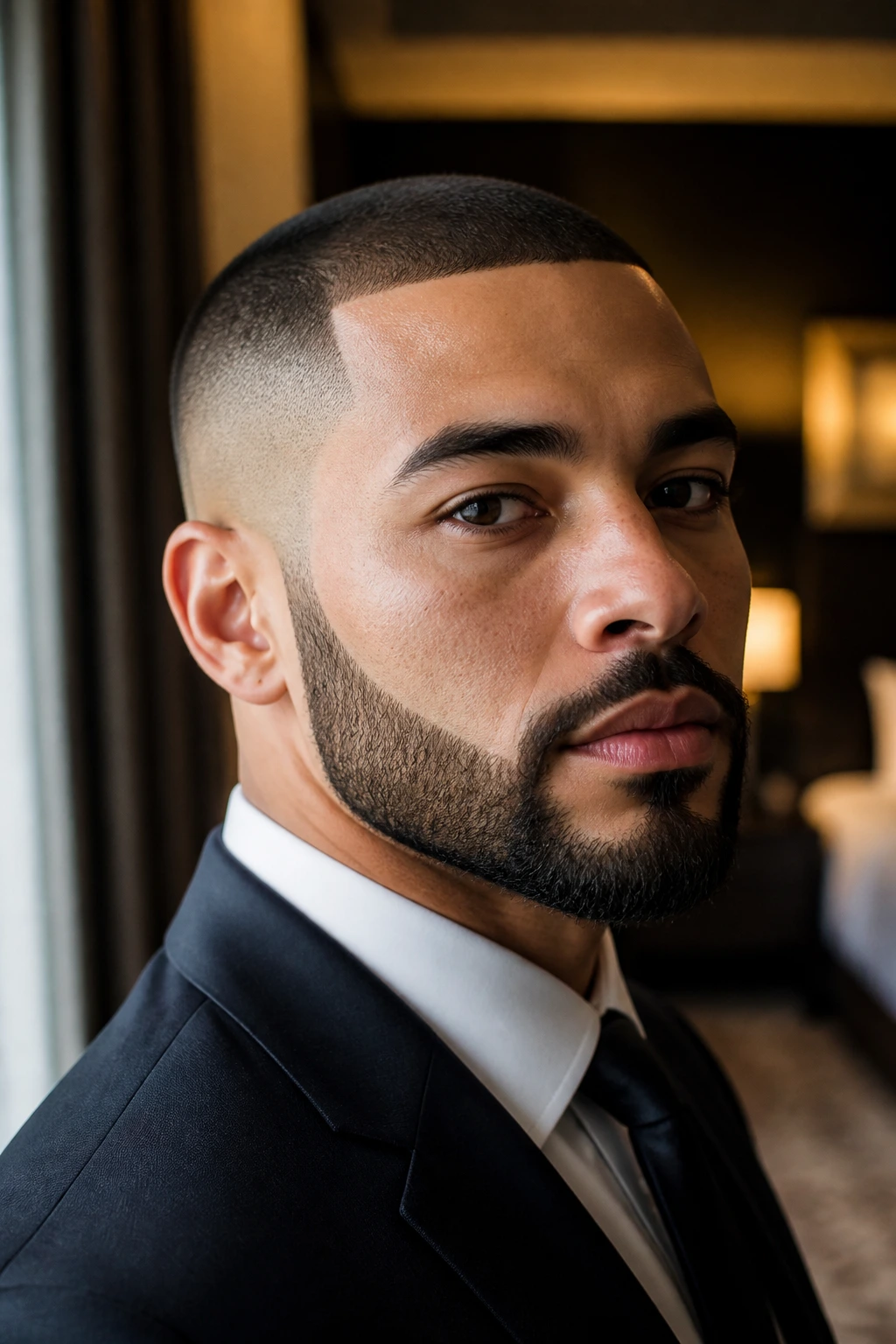
7. Buzz Cut with Beard Framing
Can a buzz cut look formal? Yes, if the proportions are right. A buzz with a crisp beard line and tidy edges can look incredibly clean, especially when the suit is tailored and the shirt collar sits flat.
Go with a guard length that leaves a little texture on top — usually #1 or #2 works better than going nearly bare unless your head shape is already very even. The beard matters here. A sharp cheek line, clean neck line, and tidy sideburn transition keep the look deliberate instead of unfinished.
This style is a gift for men who hate styling time and want one less thing to manage on the wedding morning. The tradeoff is that every edge shows, so the fade, beard, and scalp care all need to be in order. If your scalp tends to get dry, use a light moisturizer the day before. Little detail. Big difference.
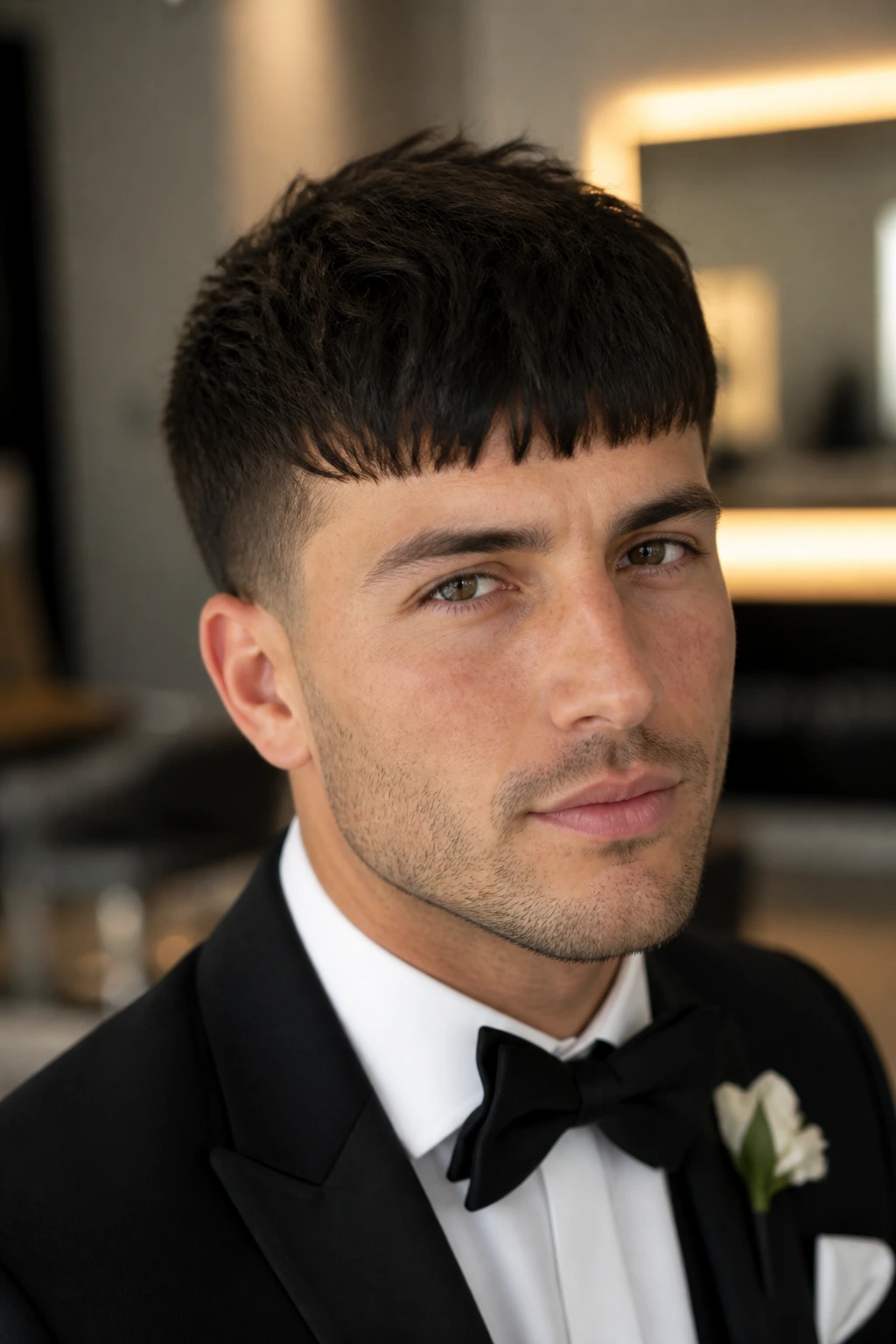
8. French Crop with a Heavy Fringe
A French crop is one of the easiest ways to look put together when your hair wants to sit forward. The fringe gives the cut shape, and the short sides keep it from puffing up or spreading out around the ears.
Keep the fringe dense but not bulky. About 1 to 2 inches on top is usually enough, with the front cut blunt enough to feel intentional and textured enough to avoid looking like a helmet. Matte paste works better than anything shiny here. Work it through damp hair, brush the fringe forward, then pinch the ends so the front has a little separation.
Best for
- Straight or slightly wavy hair that falls over the forehead.
- Grooms who want a low-maintenance style that still looks sharp in photos.
- Foreheads you’d rather soften than highlight.
The French crop has a certain confidence to it. It does not beg for attention, but it also does not disappear. That’s a nice place to be on a wedding day.
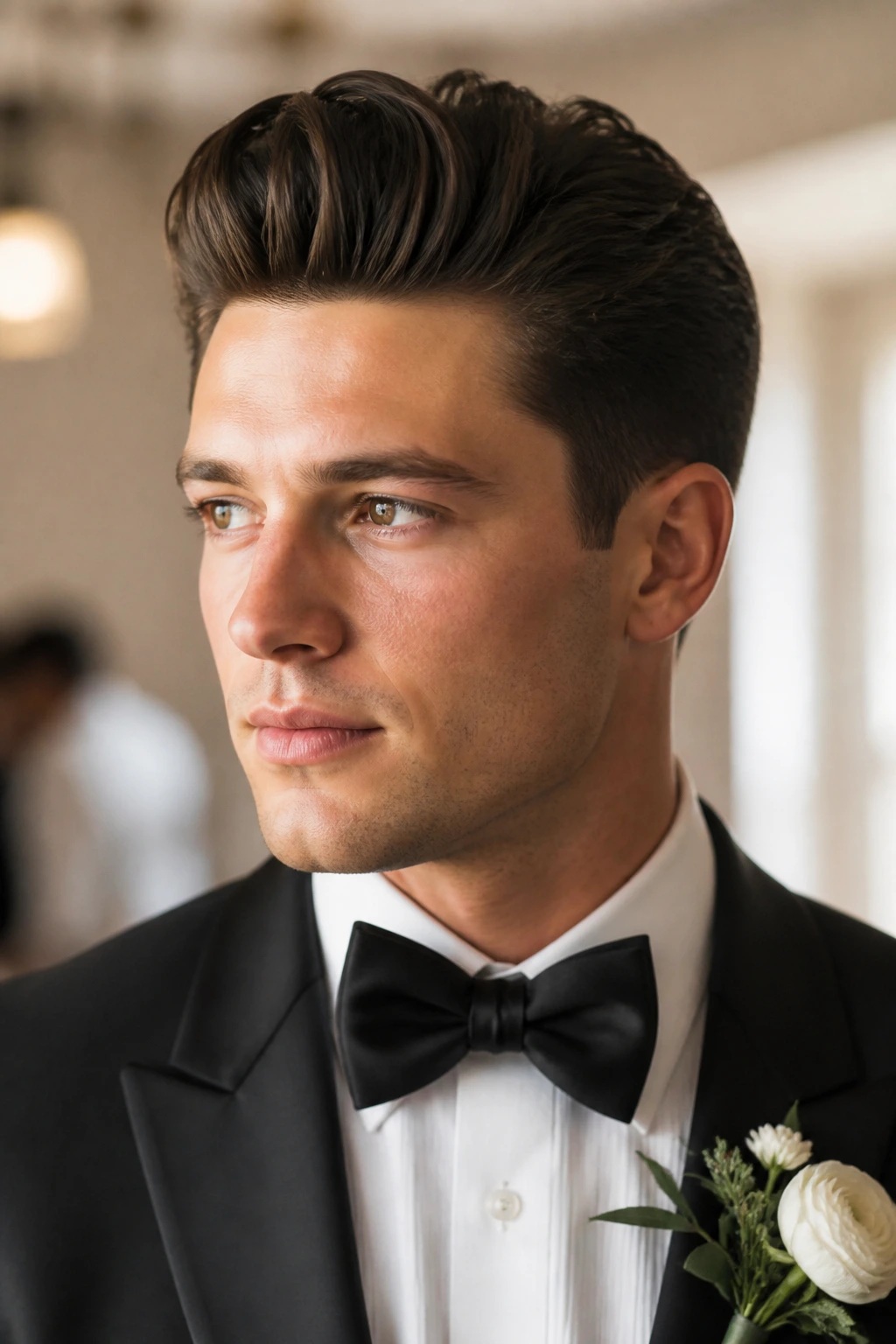
9. Soft Pompadour with Controlled Height
A groom in a soft pompadour looks put together from across the room and still human up close. The trick is “soft.” Once the height gets too rigid, the cut starts wearing you instead of the other way around.
You want 3 to 5 inches at the front, with the sides tapered low enough to keep the outline clean. Blow-dry the front up and slightly back, then cool it in place before adding product. A medium-hold pomade or cream is enough. Skip the glossy stuff unless your whole look is leaning black-tie and you know you like some shine.
The best version of this style has a curved front, not a vertical wall. The front should feel lifted, not stacked. If you have thick hair, the pompadour is one of the few formal styles that can actually benefit from it instead of being buried by it.
10. Hard-Part Comb Over
A hard part adds structure the way a pressed crease sharpens trousers. It gives the eye a clear line to follow, and that line can make a groom hairstyle feel more intentional without requiring a complicated cut.
This style is strongest on straight or slightly wavy hair with enough length to sweep neatly, usually 2.5 to 4 inches on top. The part can be cut with clippers or a razor, but I prefer a clean, not-too-deep line. A part that looks gouged into the scalp can feel fussy, and the point here is precision, not drama.
Comb the top to the side, then use your fingers to soften the finish once the shape is set. That avoids the stiff, helmeted look some comb overs get when they’re brushed one hundred percent into place. Keep the sides tight and the temples clean. If the beard is full, a hard part can help balance the weight.
11. Curly Top with a Low Fade
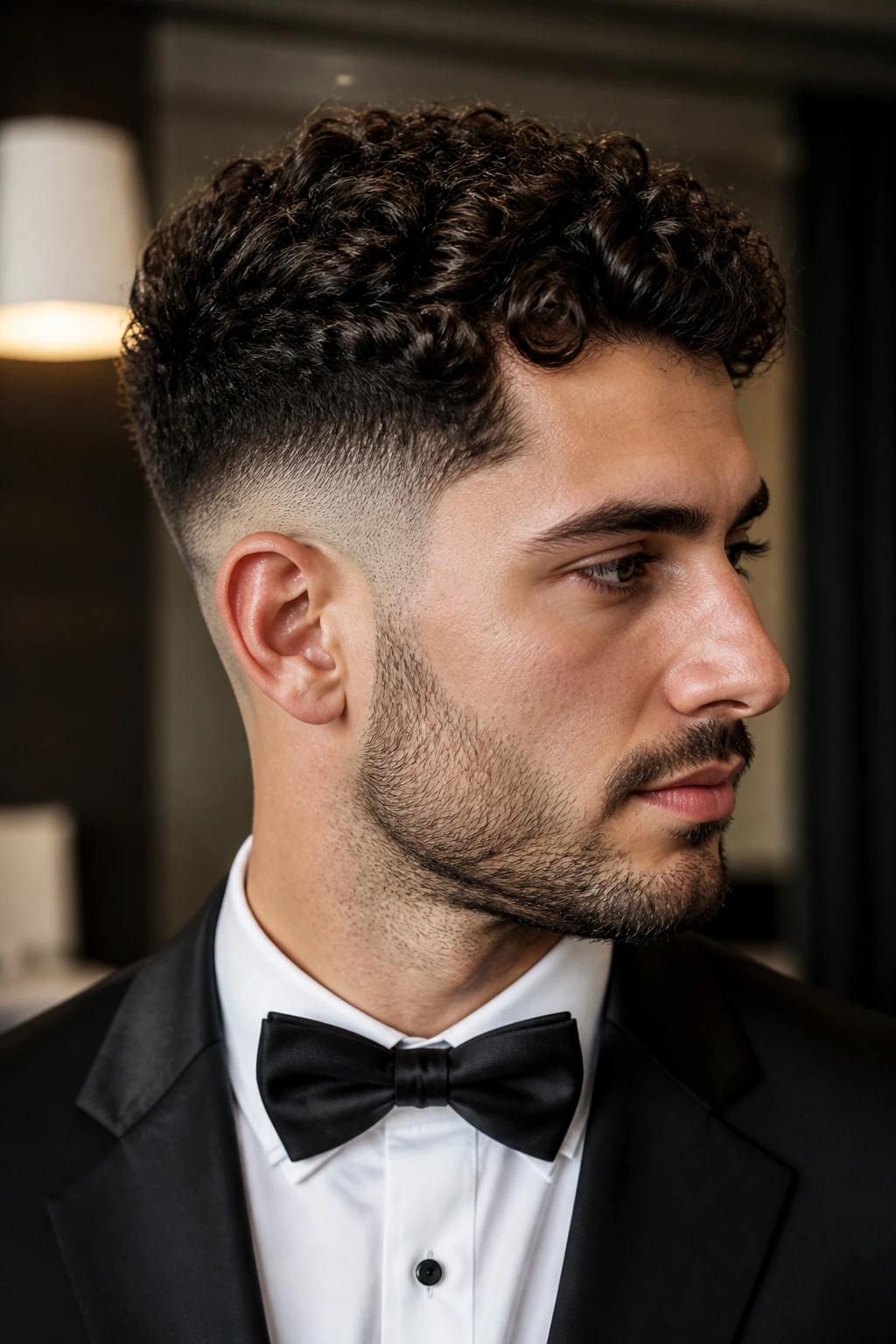
Why flatten good curls into something lifeless? A curly top with a low fade lets the texture stay visible while the sides stay crisp, which is a much better trade on a formal day than trying to press the curls into submission.
Use a low fade that keeps the shape grounded rather than jumping too high. Leave enough length on top for the curl pattern to show, then work in a leave-in conditioner or curl cream while the hair is damp. A diffuser on low heat helps the curls set without puffing out. That part matters. High heat can make the surface frizzy before the style ever leaves the bathroom.
The detail that matters
The top should feel defined, not crunchy. I’d rather see a little movement than a pile of stiff ringlets glued together with product. Clean edges around the ears and neckline make this style read polished even when the curls themselves stay soft and natural.
12. Wavy Brush Back
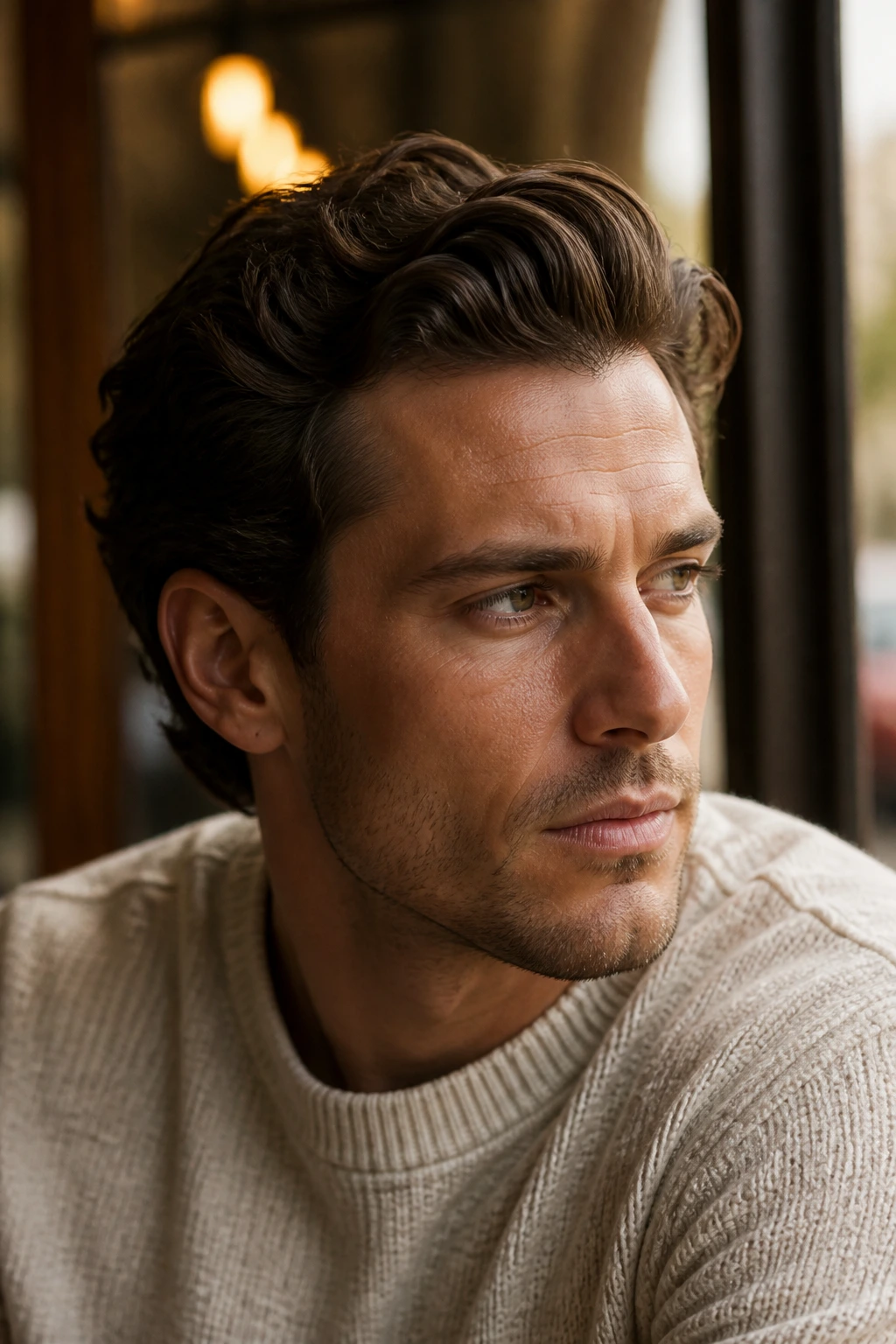
Waves brushed back with a bit of lift at the roots have a quiet, expensive-looking ease. It’s not flashy. That’s the point. The style looks deliberate without looking rehearsed, which is a useful quality when the rest of your outfit already does a lot of the talking.
Start with damp hair and mist in a little sea salt spray if you need extra grip. Follow with a light cream, then brush the hair back using a vent brush or fingers, depending on how much control you want. Let a few strands fall into place on their own. That softness keeps the look from becoming too tidy.
This style works especially well if your hair naturally bends a bit and you don’t want to fight that texture. Keep the neckline tapered and the sides close enough to frame the face. A brush-back can look luxurious, but only if the ends are clean. If the back of the hair gets fluffy, the whole style falls apart fast.
13. Bro Flow with a Neat Neckline
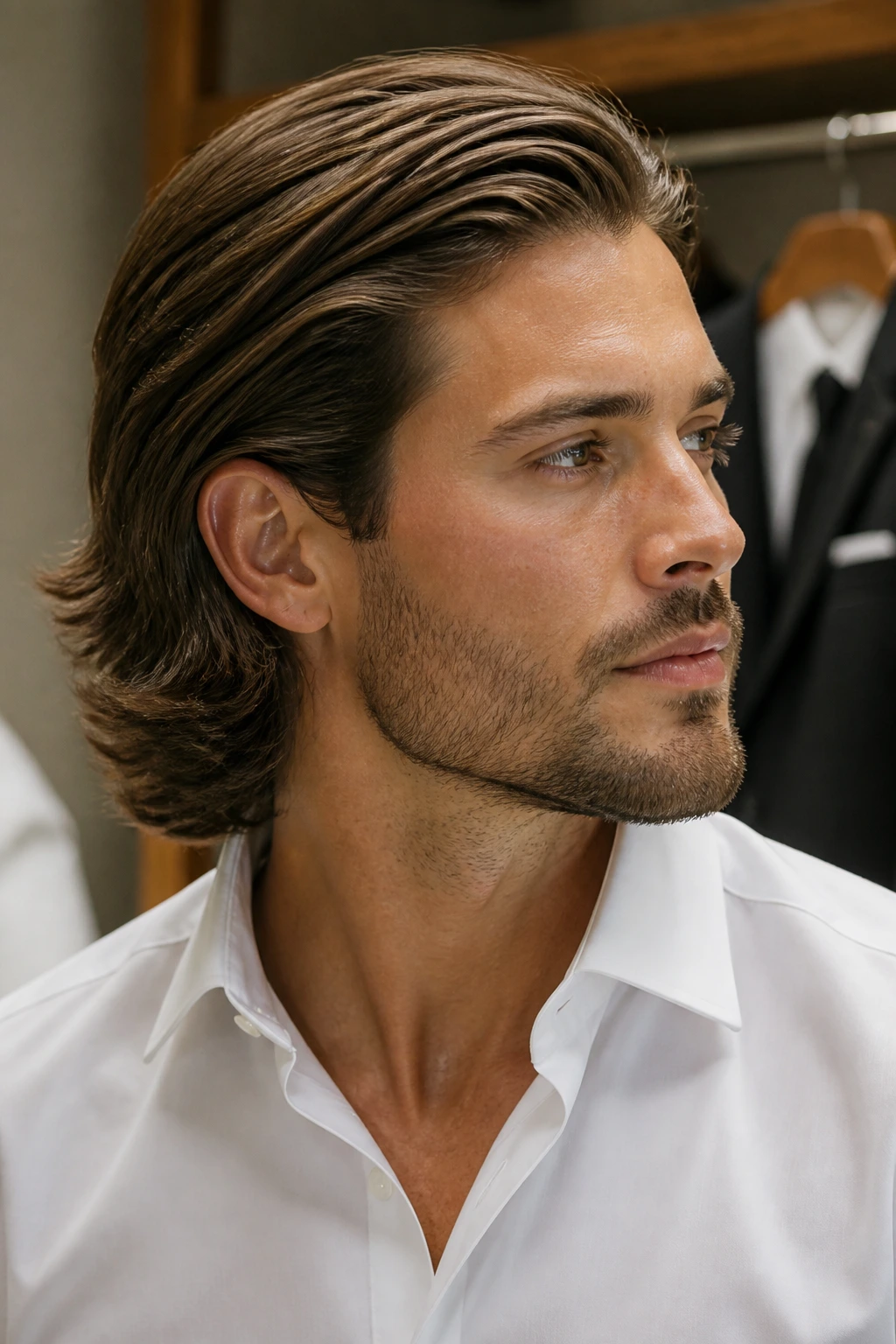
Bro flow turns from beachy to formal when the neckline is cleaned and the ends are trimmed. That’s the whole trick. Long hair can look polished. It just needs shape and a little discipline so it doesn’t drag the suit down.
Ask for the ends to be dusted so the layers sit together rather than fraying out at the shoulders. The sides should tuck behind the ears neatly or sweep away from the face without sticking. A light leave-in conditioner keeps the surface calm and helps the hair move without looking dry.
The clean neckline is the part people forget. A low taper or a tidy natural edge keeps the back from reading messy in photos. If the hair hits the collar, it should do so on purpose, not because it was left to do whatever it wanted. I like this look best with softer jackets and less angular lapels.
14. Middle-Part Curtains with Tidy Ends
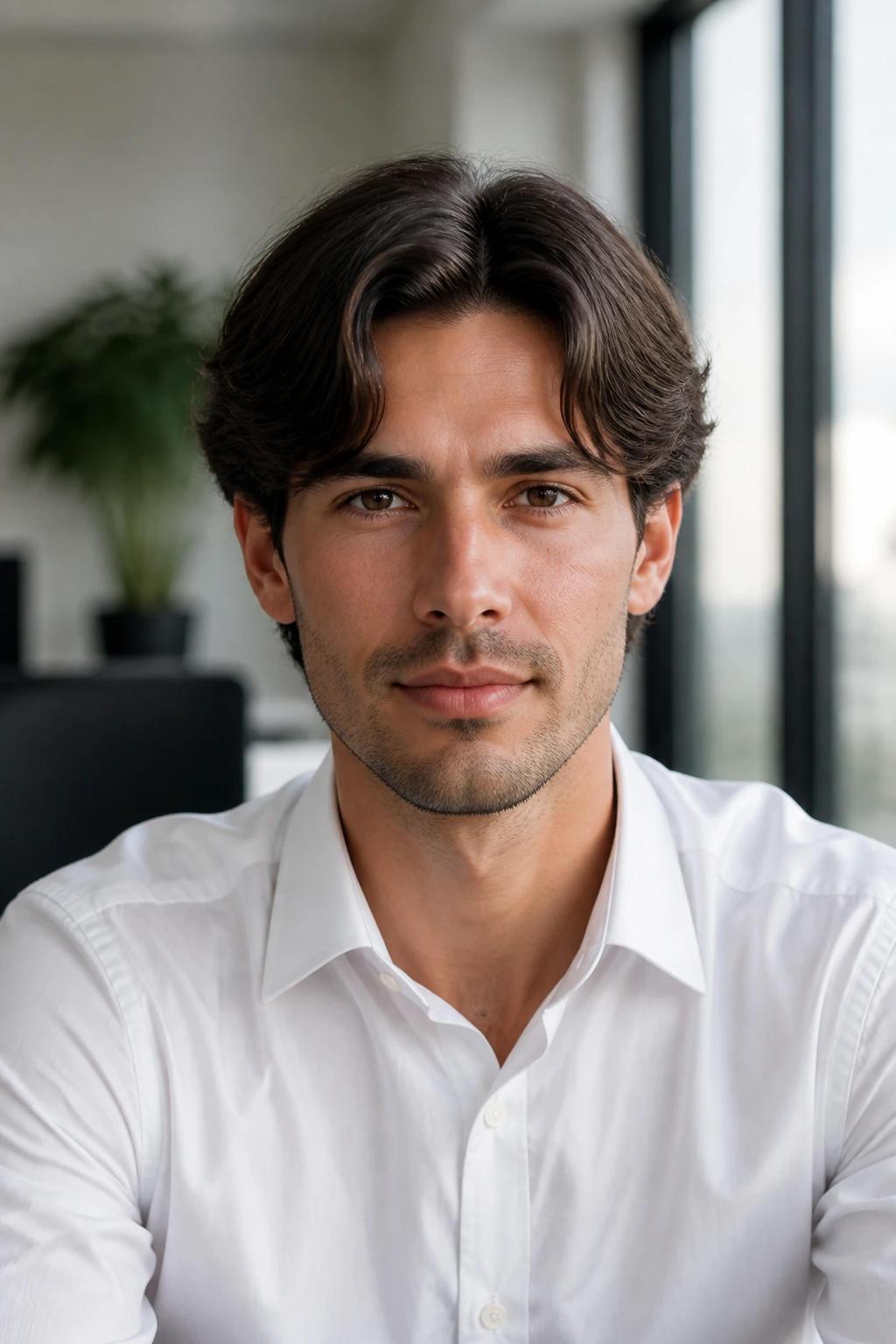
Curtains are not just for fashion shoots. When the part sits naturally and the ends are trimmed clean, this style can look very sharp, especially on men with straight or wavy hair that likes to fall in two directions anyway.
Keep the length around 4 to 6 inches so the front can separate without sagging into the eyes. Blow-dry from the roots while guiding the hair away from the center, then use a light cream to keep the ends smooth. The goal is movement, not a blown-out cloud.
How to keep it dressed up
- Keep the part centered on your natural growth pattern.
- Trim the ends every few weeks so the curtain shape stays tidy.
- Use a small amount of product; too much makes the part look greasy.
This style works best with a clean collar and a suit that isn’t too stiff. It has a relaxed energy, but relaxed does not have to mean sloppy.
15. Tapered Afro with Sharp Edges
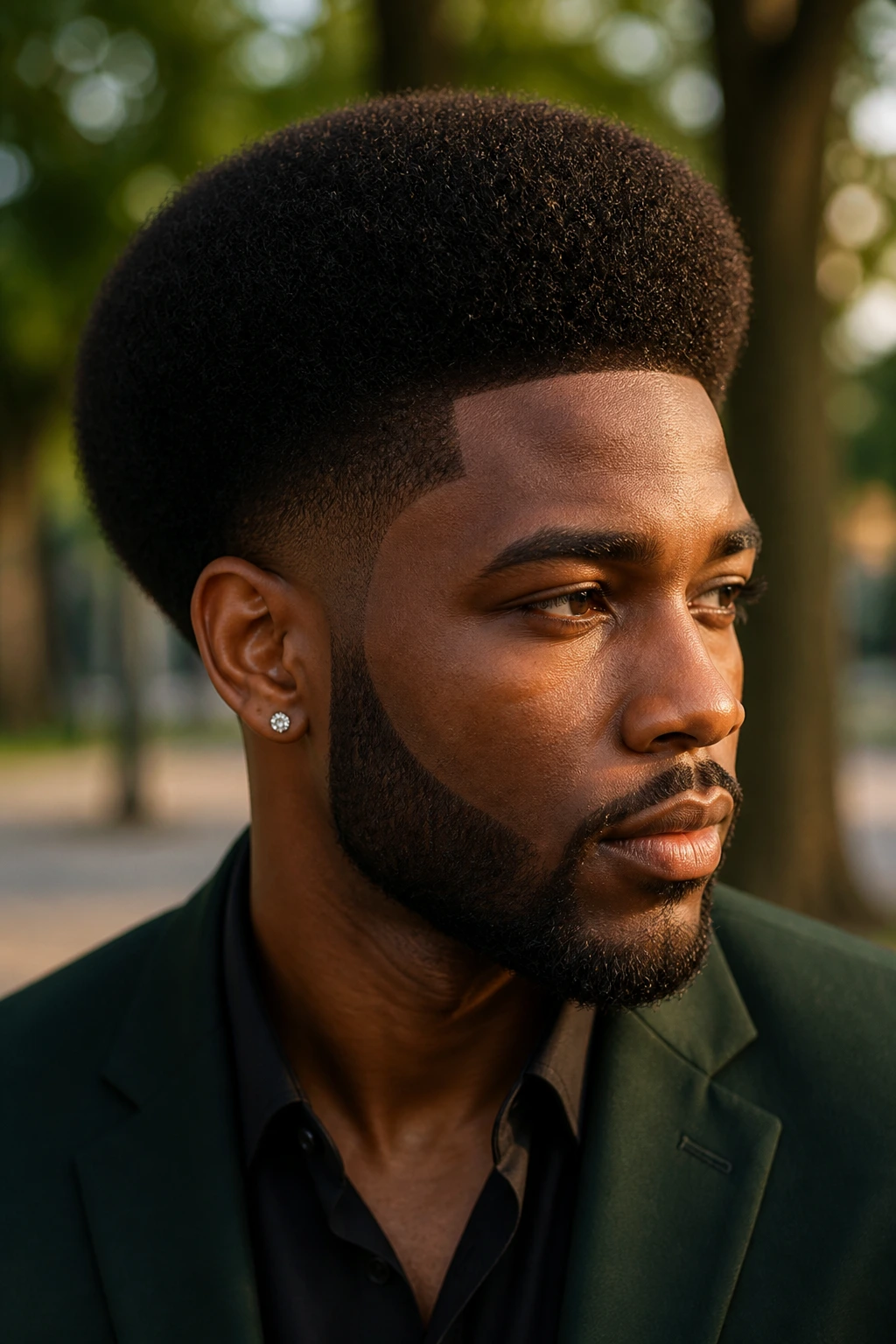
A tapered afro wins on shape. If the outline is clean, the temples are sharp, and the top keeps its natural roundness, the whole style looks intentional and formal without needing to be flattened into something else.
The taper should tighten around the ears and neckline while leaving the top full enough to keep its profile. A fresh shape-up at the forehead and temples matters here. That edge line is doing more work than most people realize. A little leave-in moisturizer keeps the texture soft and helps the finish stay healthy-looking rather than dry and fuzzy.
What I like about this style is that it respects texture instead of trying to negotiate with it. You do not need to press the hair flat to look polished. You need shape, moisture, and a clean outline. That’s the better formula.
16. Neat Man Bun with Tapered Sides
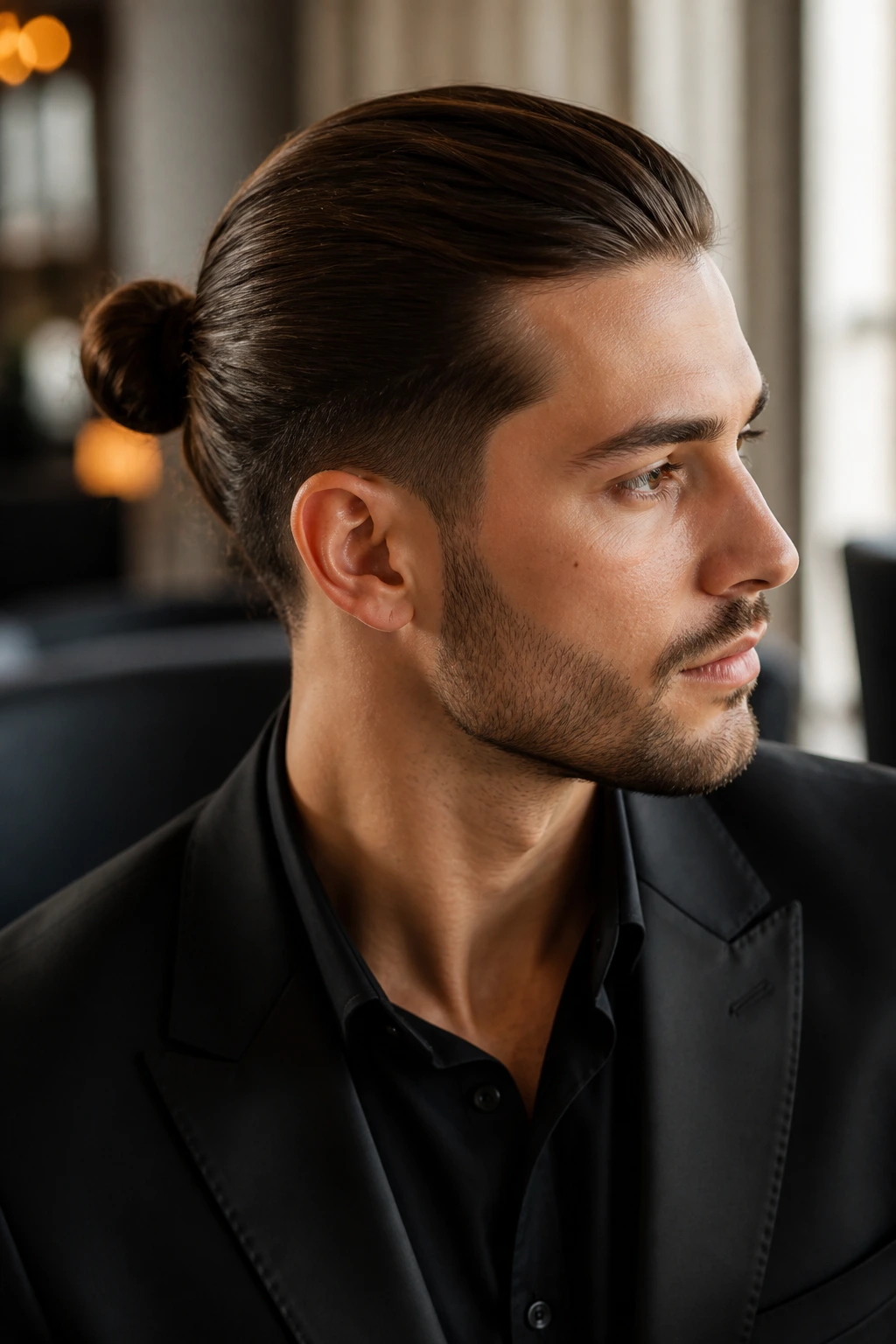
Does a man bun count as polished? Absolutely, if the knot sits low, the sides are tapered, and the top isn’t full of flyaways. A sloppy bun is casual. A clean bun with a neat neckline and controlled finish can look dressed-up fast.
Pull the hair back at the occipital bone or slightly lower, not at the crown. That keeps the head shape balanced and the style from looking too tight on top. Use a brush to smooth the surface, then secure it with a hair tie that matches your hair color if possible. A little cream on the lengths helps tame fuzz.
This works especially well when the suit has a clean collar and the beard is either neatly trimmed or fully intentional. Loose pieces around the temples can be charming in daylight, but on a formal day they usually just look unfinished. Keep them in check.
17. Braids Pulled Back with Tidy Partings
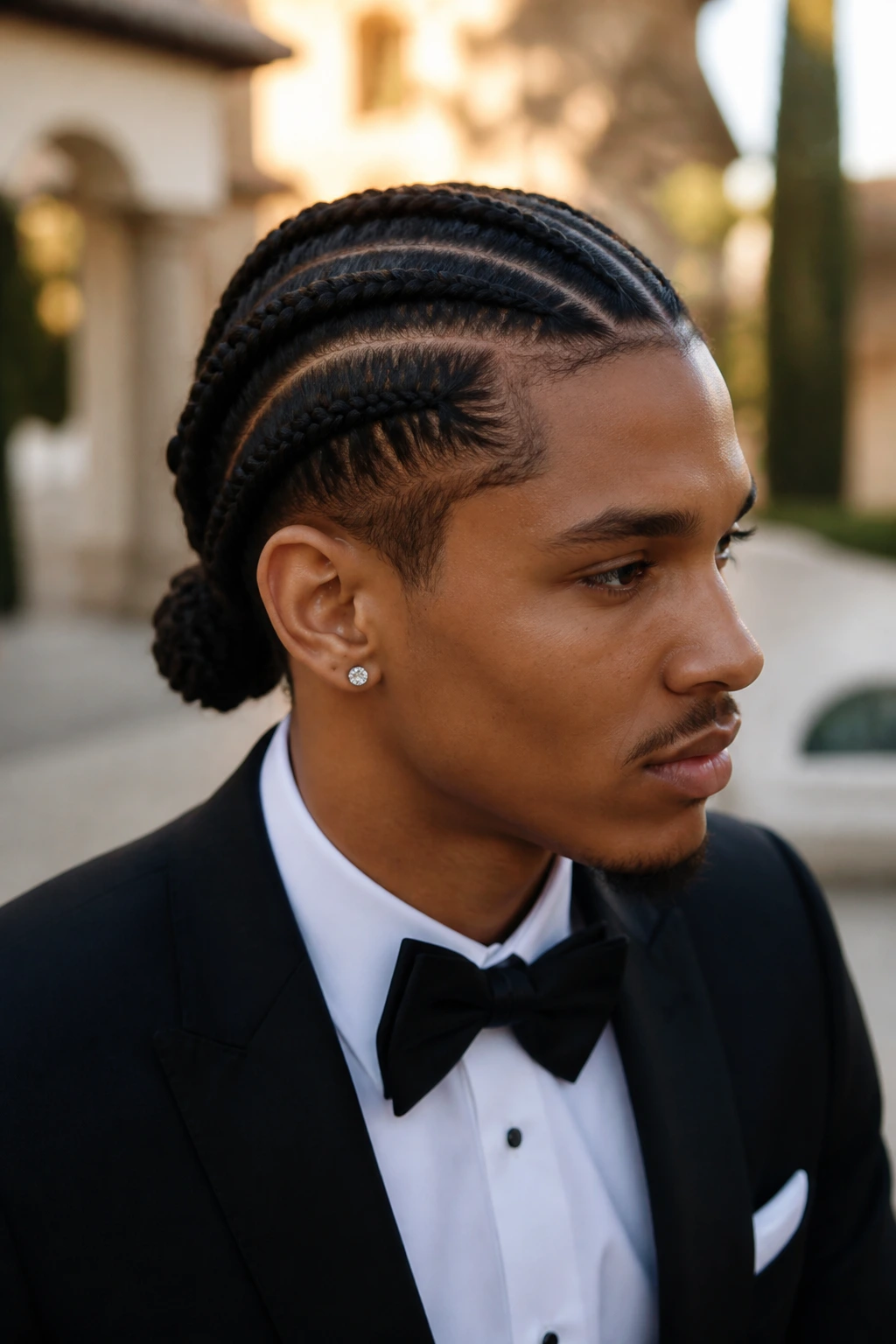
Braids can look as formal as any side part when the partings are crisp and the finish is clean. The style has structure built in. That makes it a strong groom option if you want something distinctive without giving up polish.
Depending on density and length, this could mean four to eight braids, cornrows pulled back into a low tie, or box braids gathered neatly at the nape. The scalp parts should be even and clean, not wobbly or uneven. A light oil or moisturizing spray keeps the braids looking cared for, and a controlled hairline ties the whole thing together.
The shape of the braids matters more than people think. Wide, loose sections read casual. Tighter, cleaner partings read sharper. If the wedding is formal, keep the finish neat and avoid piling the braids too high unless that’s part of your usual look.
18. High and Tight with a Skin Fade
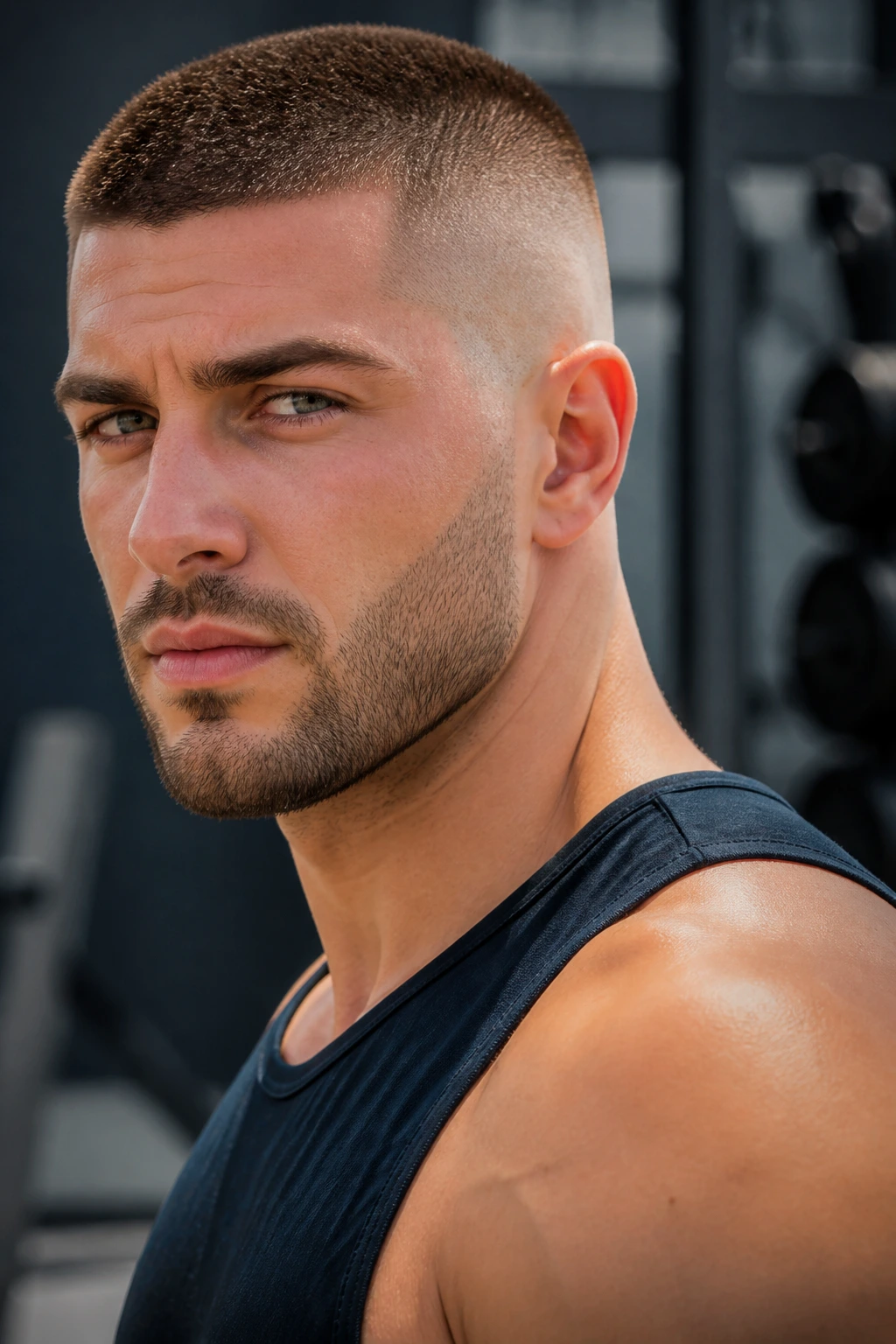
This is the style for a groom who wants zero fuss and hard edges. The high and tight has a clean, athletic sharpness that can look excellent with a slim tie, a crisp shirt, and a jacket that fits the shoulders well.
The top stays short — usually around half an inch to 1 inch — while the fade moves high and close on the sides. Because the cut is so minimal, the barber work has to be clean. Any imbalance shows fast. The advantage is that the style will not collapse, sweat out, or need a complicated product routine. A little moisturizer or scalp-safe matte product is enough.
This cut is strongest when the beard is trimmed to match the same level of precision. If the beard is wild and the hair is severe, the contrast can feel accidental. Keep both sides of the face speaking the same language.
19. Caesar Cut with a Short Forward Fringe
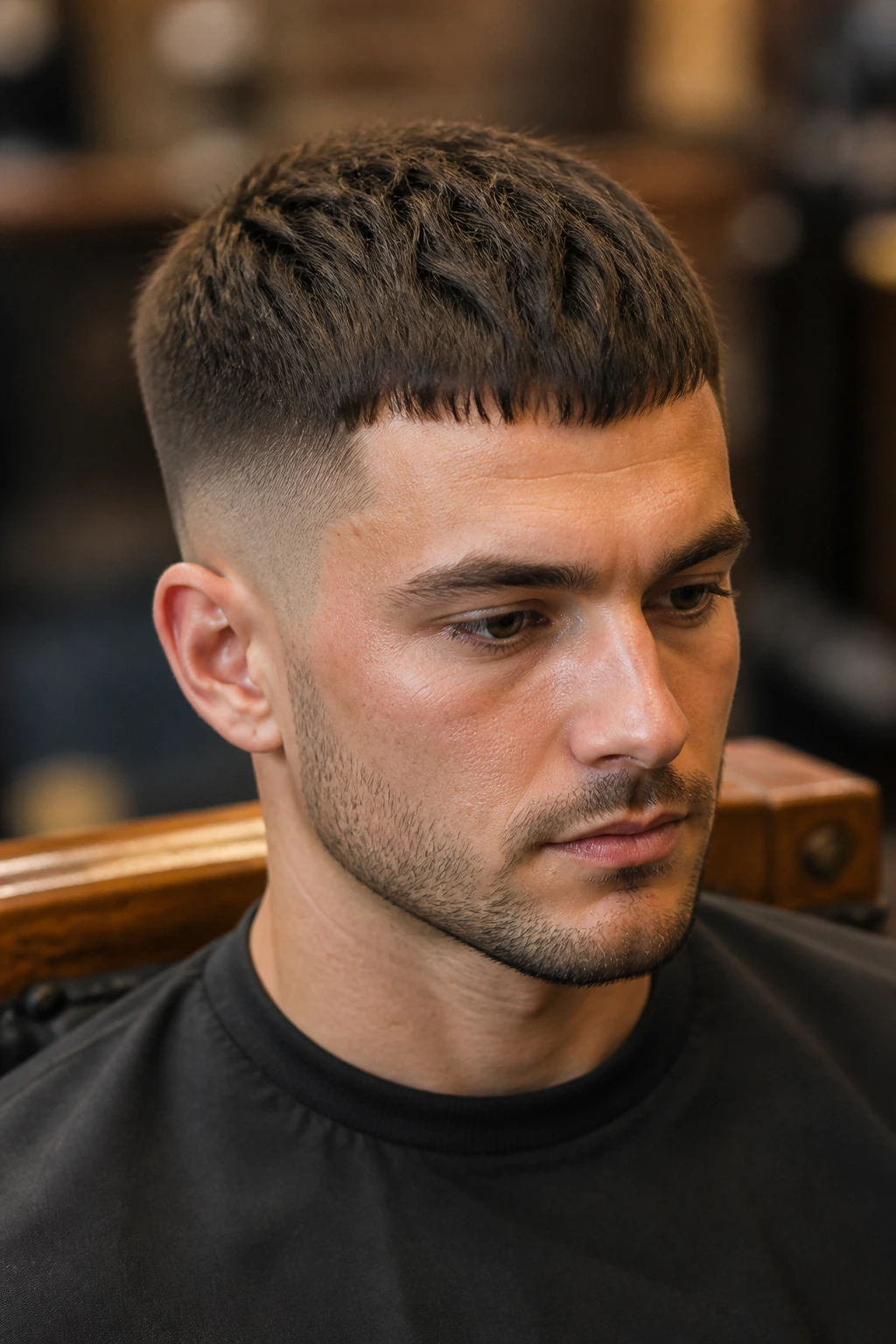
I like the Caesar on men who want the forehead softened and the styling time cut to under a minute. It has a practical honesty to it. Short, controlled, neat. No drama.
Ask for a short, even fringe with the hair brushed forward rather than up or back. The top stays short, usually around 0.5 to 1.5 inches, and the sides taper cleanly into the shape. Matte product helps separate the front slightly so it does not look like a heavy slab across the brow.
This cut can be especially useful if your hairline is receding or naturally uneven. The fringe draws the eye forward in a gentle way instead of trying to hide everything. It is also one of the easiest cuts to maintain through the night, which matters more than people admit. Nobody wants to babysit their bangs during a first dance.
20. Side-Swept Crop for Thick Hair
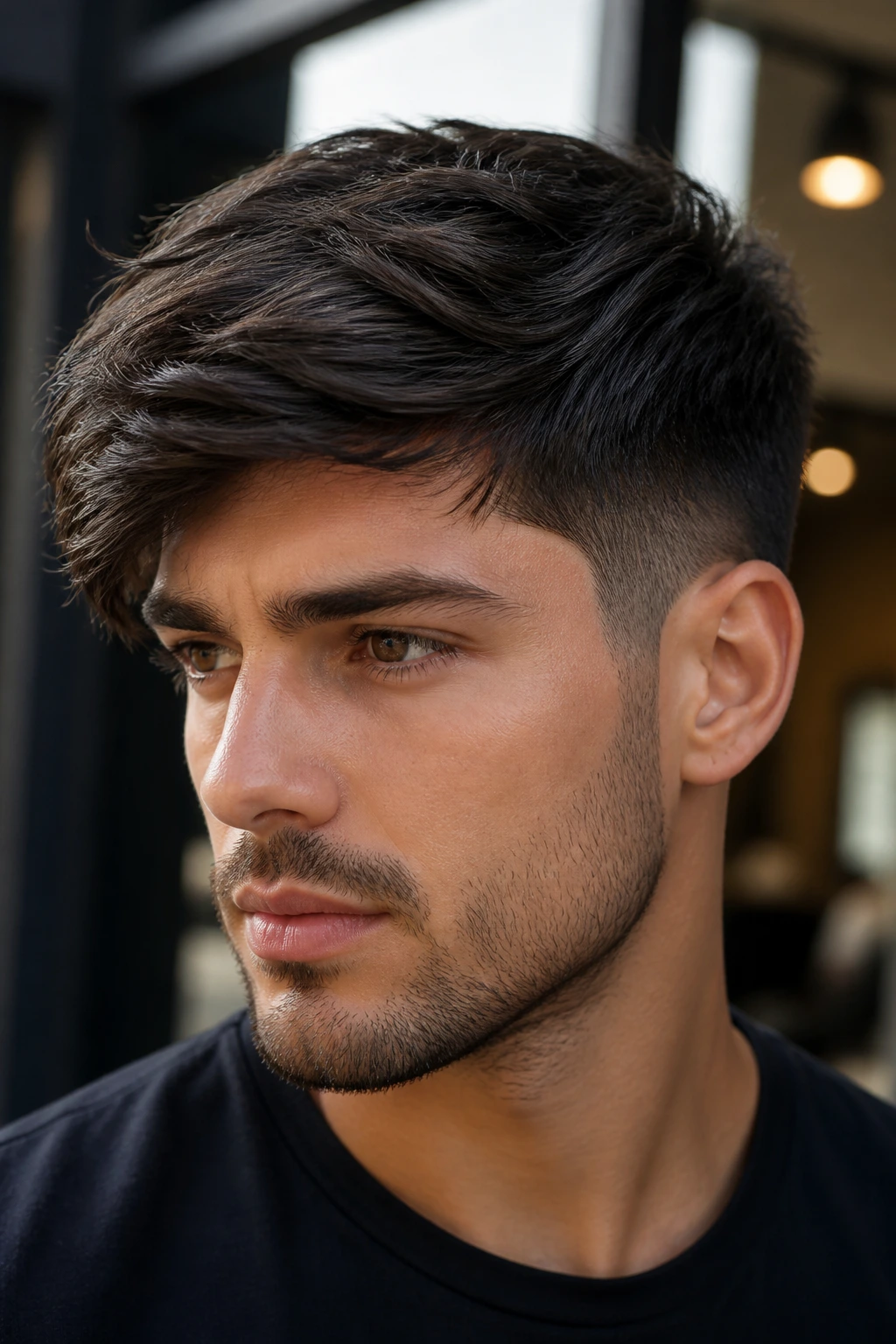
Thick hair will rebel if you ask it to behave like fine hair. A side-swept crop solves that by giving the density a direction and removing some of the bulk underneath so the top can move without ballooning.
The barber should remove weight from the interior and keep the sides tapered close. On top, the sweep should move across the head with enough length to show direction, not so much that it starts drooping into the face. A blow-dryer with a nozzle helps push the roots where they need to go. Finish with a paste that gives separation, not shine.
This is one of my favorite looks for guys whose hair gets puffy in humidity. The side sweep lets you keep movement while staying controlled. The whole cut feels cleaner when the line of the sweep matches the line of the jacket shoulder. That might sound fussy. It is, a little. And it works.
21. Long Layers Pulled Back Low
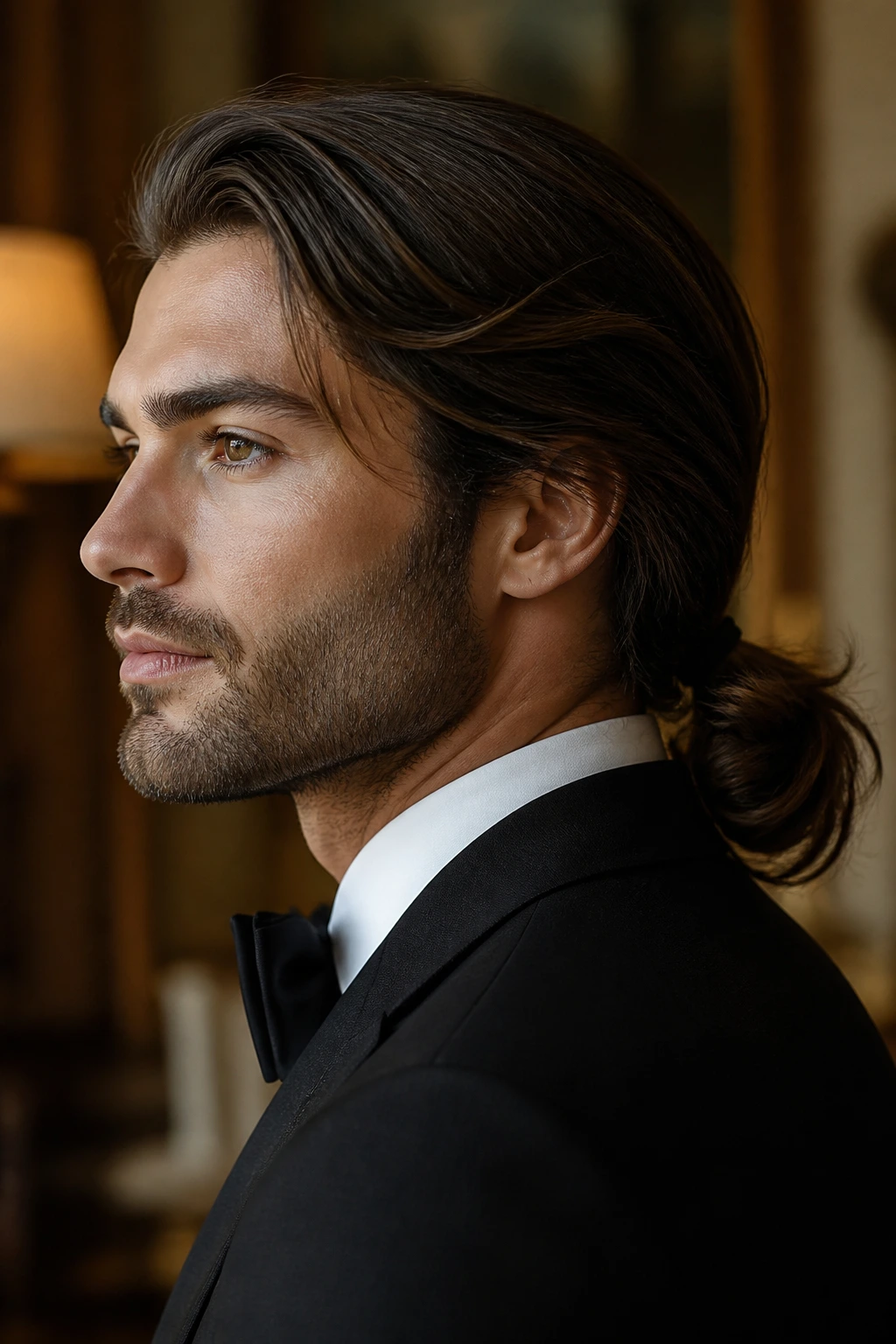
Long hair looks polished when it stops trying to be perfect. Clean layers, a low tie, and a little movement at the temples usually look better than a tightly wound knot that fights the hair’s own shape.
Keep the layers trimmed so they fall together instead of fraying into different lengths. Pull the hair back low at the nape or just above it, and let the front sit smooth rather than stretched flat. A light cream or leave-in helps the surface stay calm without making it greasy. If the hair is very straight, a quick bend with a dryer can stop the style from looking too severe.
The beauty of this look is that it works for formal settings without hiding the hair’s length. It has presence. It also needs discipline, because long hair turns scruffy fast if the neckline, tie point, or ends are ignored.
22. Slick Side Sweep with Natural Texture
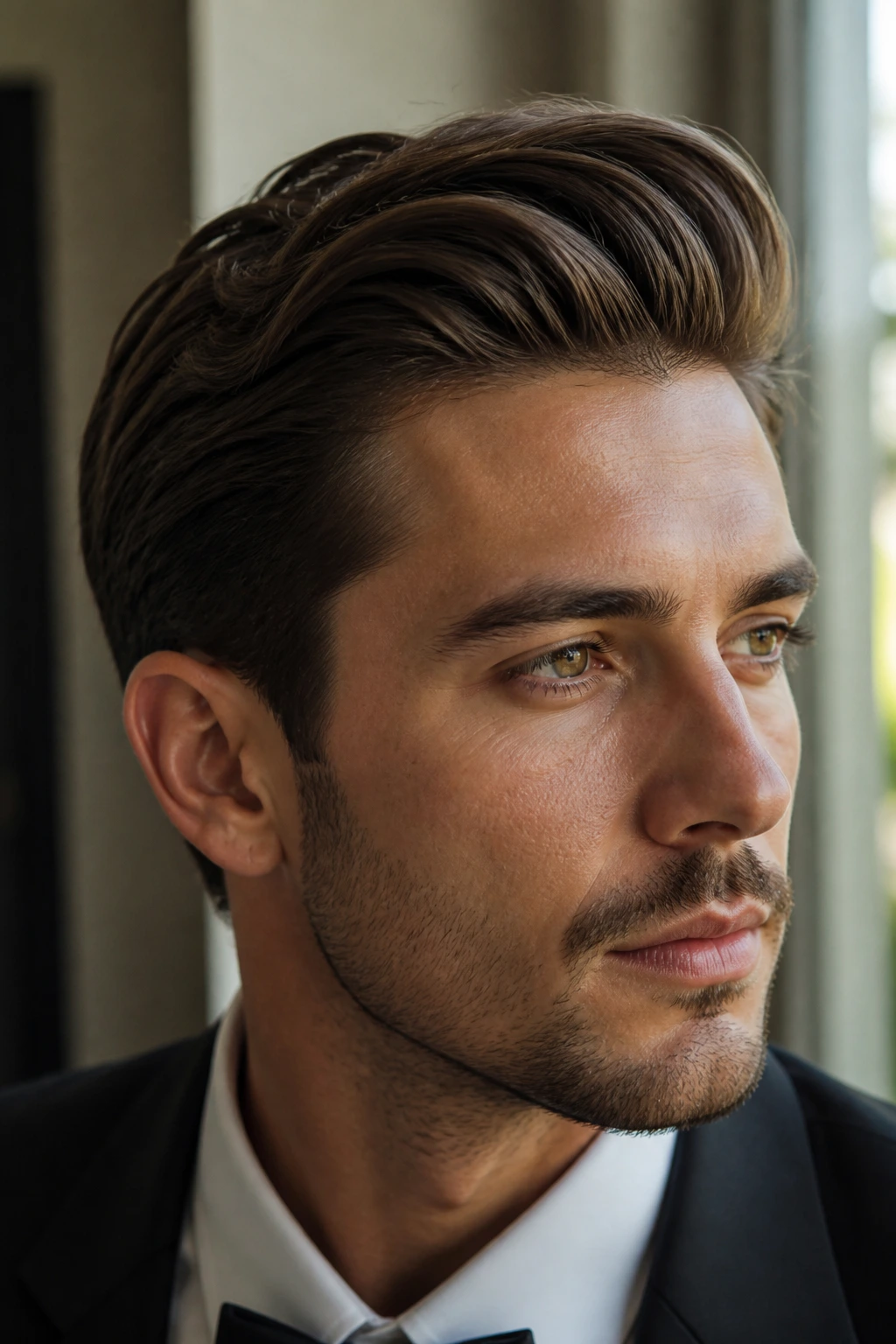
A side sweep gives you the order of a comb-over without the hard line of one. It’s softer, a little more relaxed, and often more flattering if your hair wants to move in one direction already.
Brush the hair across with a comb once, then finish shaping it with your fingers so the strands keep some separation. A medium-hold cream or light pomade gives control without turning the style stiff. The sides should stay neat, but the top should still show some texture. That little bit of movement keeps the look from feeling overworked.
This is a smart final option for thick, wavy, or medium-density hair because it does not demand a perfect part or a super-precise silhouette. It just needs direction. That’s often enough for a polished finish.
What Makes a Groom Hairstyle Look Polished Instead of Stiff
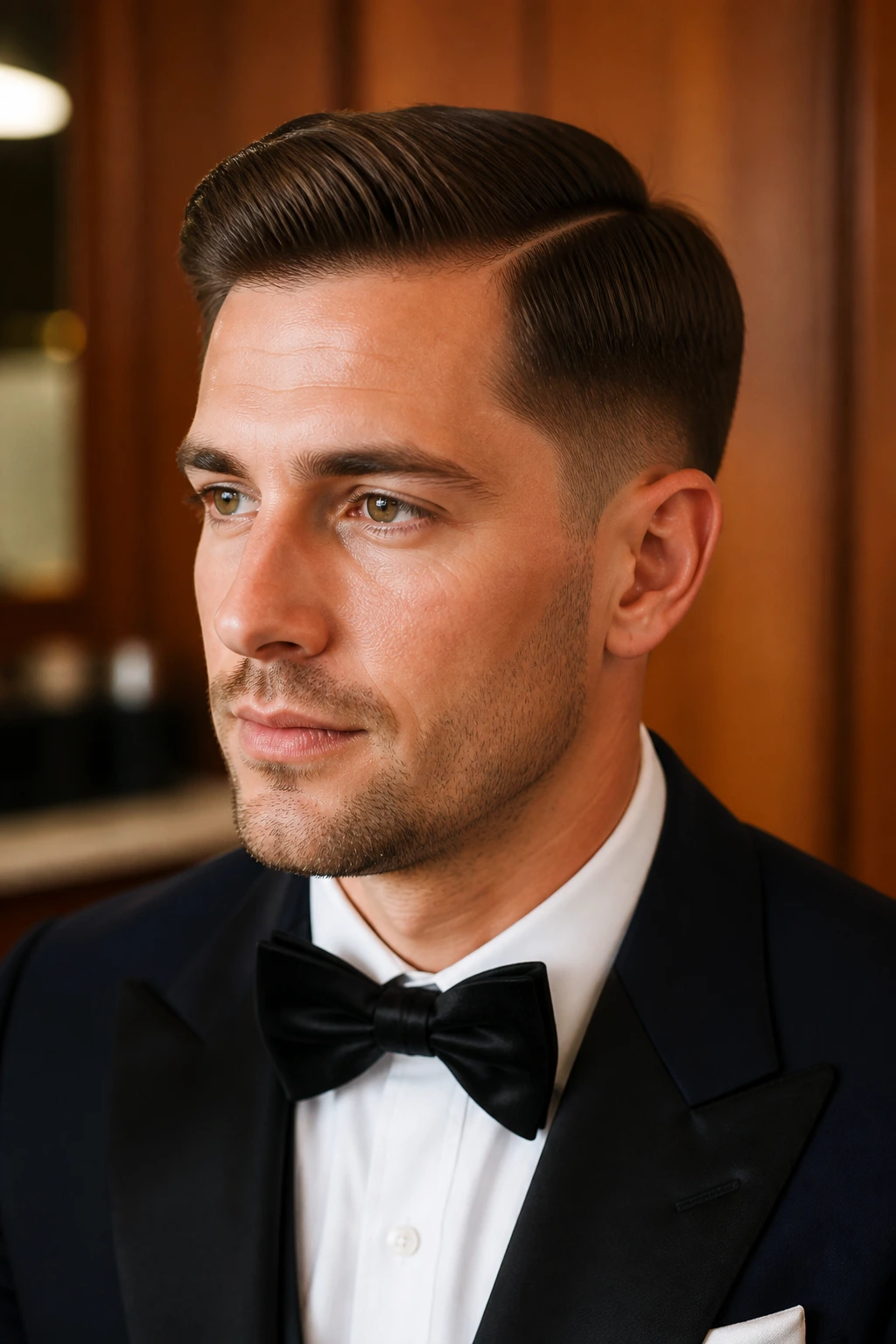
Polish comes from control, not from drowning the hair in product. I see this mistake all the time: the haircut itself is fine, but the finish looks lacquered, stiff, or flattened because somebody tried to make every strand behave at once. That usually ages the face and makes the whole look feel more formal in the wrong way.
A clean outline does most of the work. The neckline, sideburns, temple corners, and any part line need to be tidy. If those edges are muddy, no amount of pomade will save the style. The same goes for shine. A little sheen can look healthy. Too much makes the hair catch light in a way that reads greasy, especially in wedding photos with bright flash.
Texture is the thing that keeps the style human. Even the neatest side part or slick-back looks better when the top still has a bit of movement. That can come from a blow-dryer, a matte product, or simply leaving the hair slightly less combed than you think you should. Leave one or two things soft. It helps.
The three details that matter most
- The hairline: Clean at the temples and neckline, never squared off so hard it looks drawn on.
- The finish: Matte to low-shine usually looks more current and less fussy than heavy gloss.
- The shape: The silhouette should follow your head and face, not fight them.
What to Tell Your Barber Before the Trial Cut
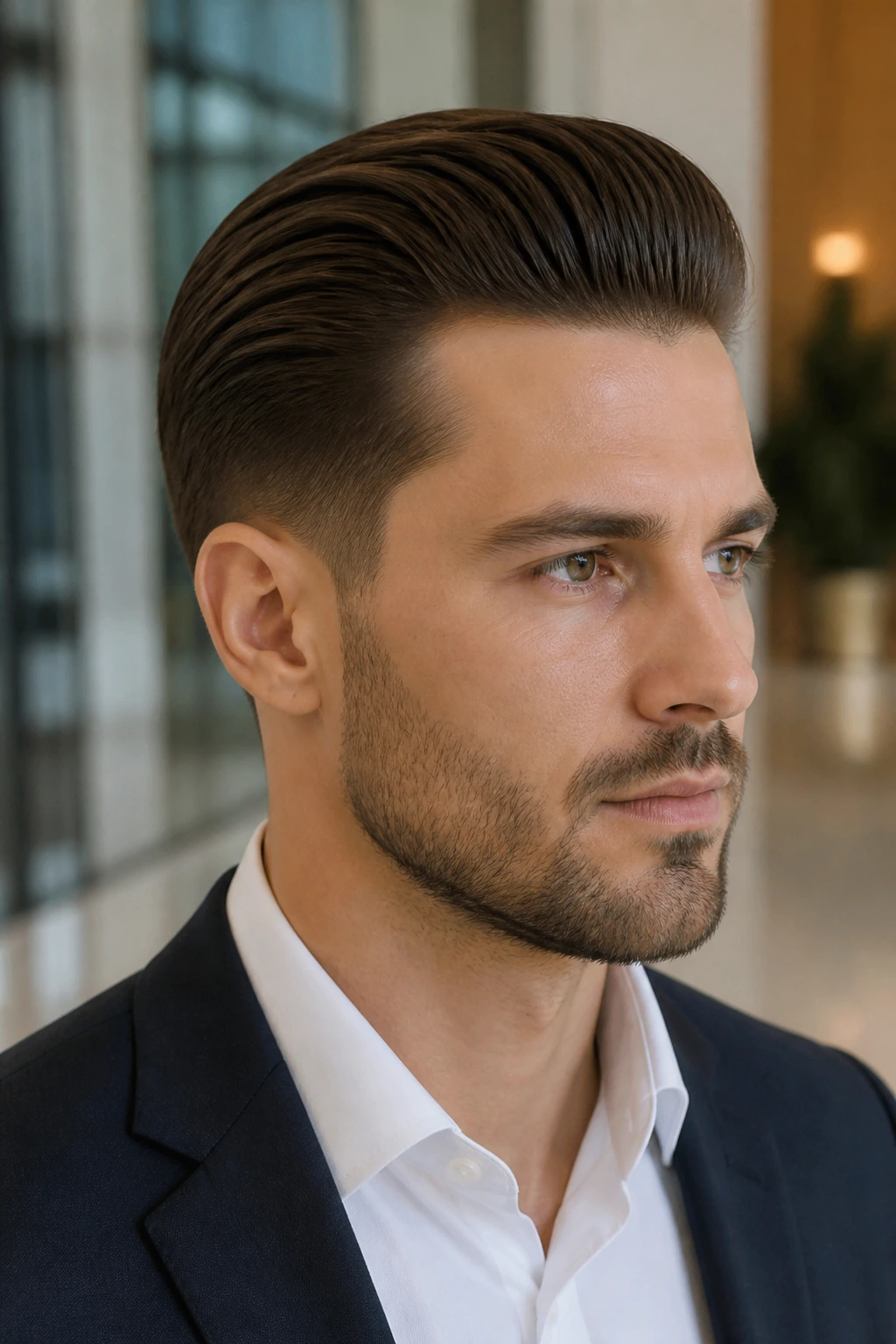
Bring pictures, but bring the right kind. One front view is not enough. Show a barber the side, the back, and, if possible, the texture you actually want to end up with. A photo of a model with similar hair length tells the truth; a photo of a stranger with a different hair density usually does not.
Book the main haircut 7 to 10 days before the wedding if you want the edges to settle and the fresh-cut sharpness to soften a little. That gives the taper a more natural look and keeps the top from sitting too “just left the chair.” If you’re planning a fade or a beard blend, this timing is even more useful because it lets the details relax a bit.
Tell your barber about the suit collar, the beard, and whether you usually part your hair on one side or push it straight back. Mention cowlicks. Mention a receding hairline if you have one. They will see it anyway, and it is better to work with the pattern than hide from it.
If you can, ask for a trial run a few weeks earlier. That one step saves a lot of drama. You learn how the cut behaves in daylight, how much product it actually needs, and whether the shape still looks right after you’ve walked around for an hour.
Essential Tools and Products for These Looks
- Hair dryer with a nozzle attachment: Helps push the roots in the right direction before product goes in.
- Vent brush or round brush: A vent brush is better for quick shaping; a round brush helps when you want lift at the front.
- Wide-tooth comb: Useful for curly and wavy hair when you want to keep definition and avoid frizz.
- Fine-tooth comb: Best for parts, slick backs, and clean side sweeps.
- Matte clay or paste: Good for textured crops, quiffs, side parts, and anything that needs hold without shine.
- Light pomade or styling cream: Better for slicked-back looks, Ivy League cuts, and polished waves.
- Sea salt spray: Adds grip to fine or straight hair before drying.
- Curl cream or leave-in conditioner: Keeps curly and coily textures soft and defined instead of dry.
- Beard trimmer: Handy for cleaning sideburns and the neckline so the haircut and beard connect cleanly.
- Hand mirror: Lets you check the back and sides before leaving the house.
- Small travel comb: Worth packing for touch-ups between photos and the reception.
How to Match the Style to Hair Length, Texture, and Face Shape
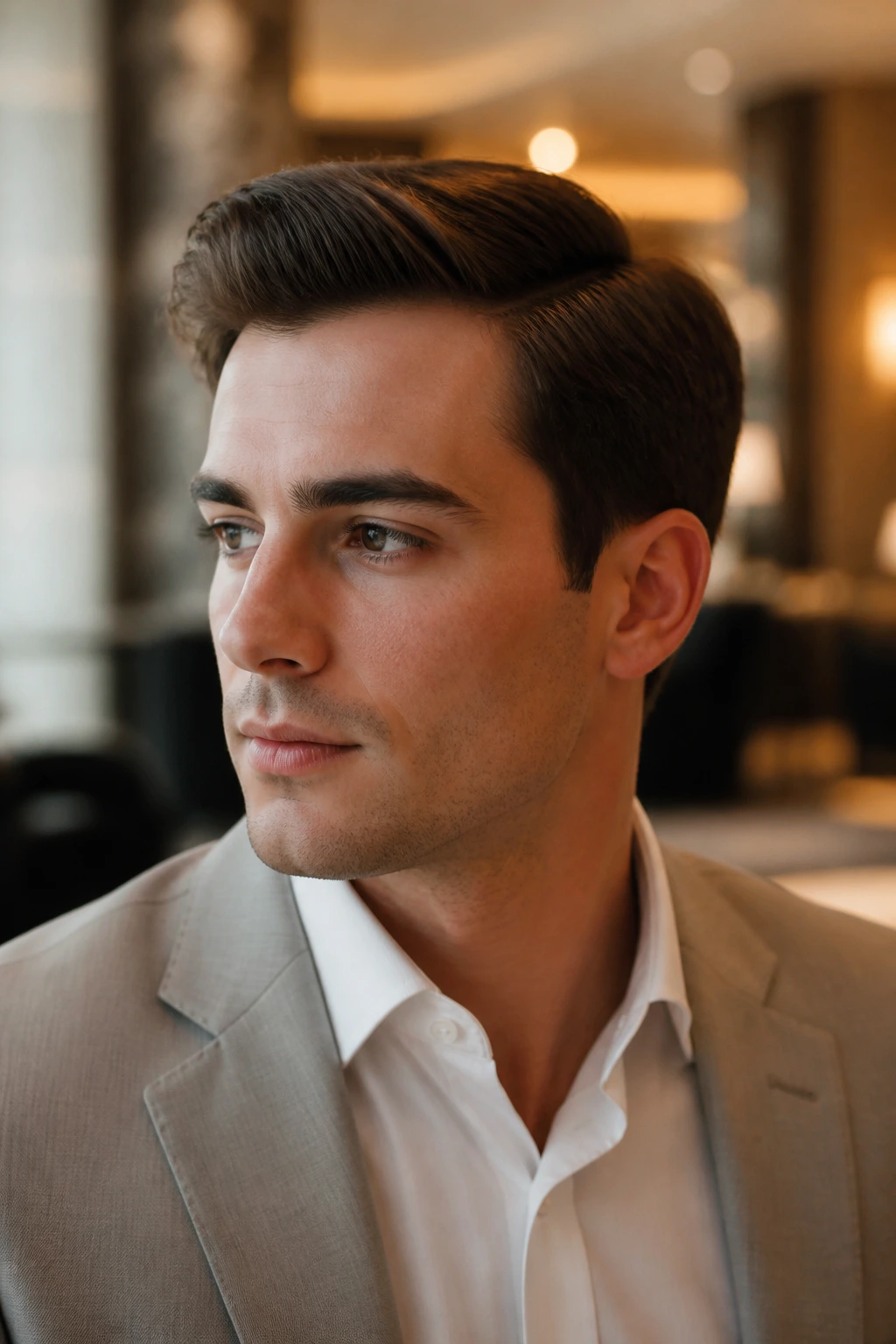
Short hair does not need the same treatment as medium or long hair, and that sounds obvious until you see someone forcing a long-top style onto hair that barely reaches two fingers high. Short cuts look strongest when the edges are sharp and the top is cleanly shaped. Medium-length hair gives you room for side parts, quiffs, slick-backs, and crops. Long hair needs restraint and clean layering or it starts living its own life.
Texture changes the whole equation. Straight hair holds parts easily, but it can go flat without root lift. Wavy hair looks best when you keep some movement instead of trying to iron it smooth. Curly hair needs moisture and shape. Coily and tightly textured hair tend to look strongest when the outline is clean and the structure respects the natural volume.
Face shape matters more than people think. If your face is long, too much height can stretch it further. If it is round, a little lift can help. Strong jaws usually handle short cuts and beard-heavy styles well. Softer jawlines often benefit from some movement on top or a side part that draws the eye diagonally. None of this is law. It is just the stuff that saves you from looking oddly proportioned in photos.
A quick matching guide
- Fine hair: Ivy League, textured crop, side part.
- Thick hair: side-swept crop, quiff, slick back with matte finish.
- Curly or coily hair: curly top, tapered afro, braids, locs pulled back neatly.
- Long hair: bro flow, low bun, half-up knot, low tie-back.
- Long face: avoid very tall shapes; keep the top balanced.
- Round face: a little extra height or side sweep usually helps.
How to Pair the Hair with the Suit, Beard, and Setting
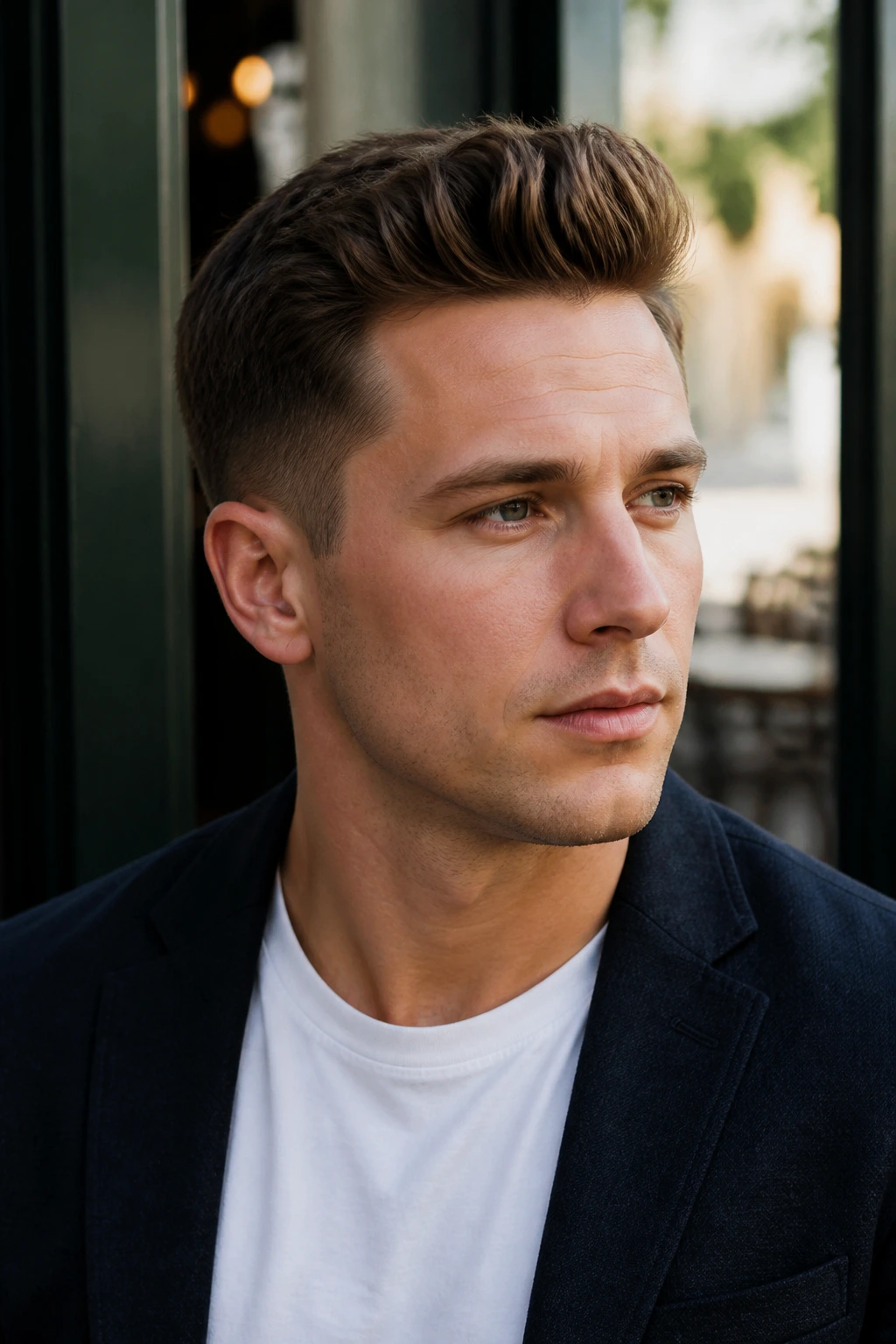
A tuxedo and a beachy haircut rarely make sense together. The hair should speak the same style language as the rest of the outfit, even if the clothes are not formal formal. A clean side part or slick-back fits a black-tie jacket almost instantly. A textured crop or brushed-back wave works better with softer tailoring. A bro flow or low bun can look excellent with a relaxed suit that has more drape and less structure.
Beards are part of the silhouette, not a separate item. If the beard is full, the hair on top can be a touch cleaner and more controlled so the face does not feel heavy. If the beard is short or tightly trimmed, a little more volume on top helps balance the look. The goal is not symmetry. The goal is visual weight that feels deliberate.
The neckline deserves more attention than most grooms give it. A high collar and narrow lapel usually benefit from cleaner sides and a more controlled top. A wide spread collar can carry a little more height. Outdoor ceremonies can tolerate slightly less structure because wind and humidity will not be kind to overworked hair. Indoor, black-tie settings can handle a sharper, sleeker finish.
Best pairings at a glance
- Tuxedo or black tie: side part, slick back, soft pompadour.
- Tailored suit with a beard: Ivy League, quiff, side-swept crop.
- Relaxed linen or softer tailoring: bro flow, wavy brush back, low bun.
- Statement jacket or strong lapels: comb over, hard part, high and tight.
Extra Styling Moves That Make the Finish Better
Root direction: Blow-drying the hair where you want it to sit is half the job. If the roots are pointing the wrong way, product will only pin the mistake down. Use the dryer first, then the product. Not the other way around.
Product stacking: One product rarely needs to do everything. Sea salt spray can give grip, cream can give control, and a small touch of paste can lock the front into place. The key is using less of each, not more of one. That keeps the finish lighter and cleaner.
Hands-off shaping: Once the style is set, stop touching it. Fingers are useful for breaking up the last 10 percent of stiffness, but constant fussing makes the shape fall apart. Set it, check it from the front and side, then leave it alone.
The emergency kit: Pack a travel comb, a couple of tissues, and a tiny product sample if your hair is prone to flattening. If it starts to collapse between photos, use damp fingertips to rework only the front and top. The sides usually need less rescue than the mirror makes you think.
A polished style is rarely the result of one magic step. It is usually the result of six small ones done without panic.
Common Mistakes That Hurt the Finish
Cutting the hair too close to the event: Fresh cuts can look harsh, especially around the ears and neckline. Hair needs a few days to settle so the edges soften and the top stops looking like it was carved that morning. Book the haircut a week out if you want a more natural finish.
Using too much product: Greasy roots and stiff ends are the fastest way to ruin a formal style. The symptom is easy to spot: the hair looks dark, heavy, and stuck together under bright light. Start with a pea-sized amount and build only if the hair still feels loose.
Ignoring the cowlicks: If your hair fights in one spot every day, the wedding morning will not magically fix it. You need to dry that area in the direction it wants to lie, then set it before moving on. Force it the wrong way and it will split or puff up by the first hug.
Forgetting the beard and neckline: A polished top with a sloppy neck reads unfinished. The fix is simple: trim the beard edges, clean the sideburn transition, and check the back in a mirror before you leave.
Trying a new style with no practice: Wedding day is not the place to discover that your hair hates being slicked back or that your curls expand when brushed. Do one test run in normal daylight. If the style falls apart after two hours at home, it will not survive the reception.
Variations and Personal Tweaks Worth Trying
Matte and Natural: Use clay, paste, or cream with little to no shine. This works well for textured crops, Ivy Leagues, and side parts when you want the style to feel modern and low-key rather than glossy.
Low-Gloss Formal: Use a small amount of light pomade for slick-backs, comb overs, and side sweeps. The shine should be soft, not wet. This is the version that plays best with tuxedos and evening wear.
Curly Definition First: For curly and coily hair, put moisture first and hold second. Leave-in conditioner, curl cream, or a light gel can keep the shape defined without crunch. The result looks more polished when the curl pattern stays visible.
Beard-Balanced Finish: If the beard is full, keep the haircut clean and controlled. If the beard is short, allow a little more movement or height on top so the face does not look bottom-heavy. That balance matters more than people think.
Outdoor Ceremony Guardrails: For humid or windy settings, keep the shape lower and the product drier. Heavy height and glossy product tend to fail fast outside. A side part, crop, or low taper usually survives better than a high, delicate style.
Long-Hair Tie-Back: If your hair is long, a low bun or pulled-back knot keeps the face open while still showing length. Use a fabric tie or slim elastic and keep the knot close to the nape. High buns tend to look more casual and a little less grounded.
Keeping the Style Sharp from First Photo to Last Dance
The best wedding hair usually starts before the wedding morning. A cut that’s a few days old settles better, and a style trial lets you see how the top behaves once you’re dressed and moving around. If you know the day will be long, build the style to last in a normal room, not just under bathroom lighting.
On the day itself, wash or don’t wash based on the style. Very clean hair can be slippery for slick-backs and side parts, while curls and textured crops often behave better with a little natural grip left in them. If your hair gets oily fast, a small amount of dry shampoo at the roots can help. Use it lightly. Overdoing it leaves a chalky cast that shows up in photos.
Pack a tiny comb and a travel product if the style depends on exact placement. For side parts and slick backs, a quick touch-up at the crown or front can save the whole look after a long hug line or a humid ceremony. For curls and waves, avoid combing everything flat once it starts to frizz. Rework the top with damp hands and let the texture stay alive.
After the reception, long hair and curly styles usually benefit from a gentle, wide-tooth detangle and a little conditioner the next morning. Short styles need less, but the beard line and neckline may need a refresh if there was dancing, sweating, or a late night under bright lights.
Frequently Asked Questions
How far before the wedding should a groom get a haircut?
Most grooms look best with the haircut done about 7 to 10 days before the event. That gives the edges time to soften a bit and the top time to settle, which usually looks better in photos than a brand-new cut.
Should groom hairstyles look shiny or matte?
A low-shine or matte finish usually looks cleaner for weddings because it avoids that wet, greasy effect under flash. Slick styles can handle a little shine, but the surface should still look controlled rather than oily.
What if my hair is thinning?
Shorter, textured styles usually help more than long styles that expose sparse areas. An Ivy League, textured crop, Caesar, or soft side part can add shape without making thin spots obvious. Heavy product is the enemy here; it makes thinning hair separate and clump.
Can curly or coily hair look polished without straightening it?
Absolutely. A tapered afro, curly top with a low fade, or braids with clean partings can look extremely sharp. Moisture, shape, and clean edges matter more than forcing the hair into a texture it does not want.
How do I keep my hair from falling flat during the reception?
Start with the roots. Blow-dry the direction you want, then use only enough product to hold the shape. Carry a small comb and touch up the front or crown after photos if needed, but don’t keep restyling the whole head every twenty minutes.
What hairstyle works best with a beard?
Side parts, Ivy Leagues, low fades, and textured crops all pair well with a beard because they don’t compete for attention. If the beard is full, keep the haircut tidy. If the beard is short, a little more lift or length on top helps balance the face.
Can I style my hair myself on the wedding morning?
Yes, if you’ve practiced the style before and know exactly how much product it takes. If the look depends on a sharp fade blend, a precise part, or a tricky curl pattern, a barber finish is safer. Self-styling works best when the haircut already does most of the work.
What should I do if the weather is humid or windy?
Choose a style with a lower profile and a drier finish. Side parts, crops, low tapers, and textured cuts usually handle humidity better than tall pomps or glossy slick-backs. Bring a small comb and keep your hands off the front unless it actually needs a touch-up.
The Last Mirror Check
The cleanest groom hairstyles are the ones that look like they belong to the person wearing them. Not a magazine cut. Not a rushed compromise. Just a shape that fits the face, the suit, the beard, and the way the hair actually behaves when it’s not being bullied in front of a mirror.
That’s why I’d rather see a simple side part done well than a complicated style that has to be rescued all afternoon. The best choice is the one that still looks calm after the greeting line, the portraits, and the first dance. If it holds together then, it was the right call.
Spend a little time on the cut, a little less on the product, and one honest look in daylight before you leave. That tends to be enough.
