



When you’re searching for wedding hairstyles for medium length hair, the sweet spot is easier to miss than it should be: enough length to twist, pin, and braid, but not so much weight that the shape drags itself flat by dessert. Collarbone hair can hold a veil comb with less fuss than waist-length hair, and it usually gives you cleaner lines around the neckline.
That balance matters. Medium-length strands let you choose between sculpted buns, loose Hollywood waves, half-up twists, and ponytails that still feel bridal instead of gym-class casual. The trick is matching the shape to the dress, the veil, and the hair texture you actually have — not the one you wish would appear after two cans of spray.
A good bridal style here should do three things at once: stay put, keep the profile readable, and look like hair, not a helmet. The looks below cover the full range, from low knots and polished ponies to soft waves with enough structure to survive a long day on your feet.
Why Medium-Length Bridal Hair Gives You More Room Than You Think
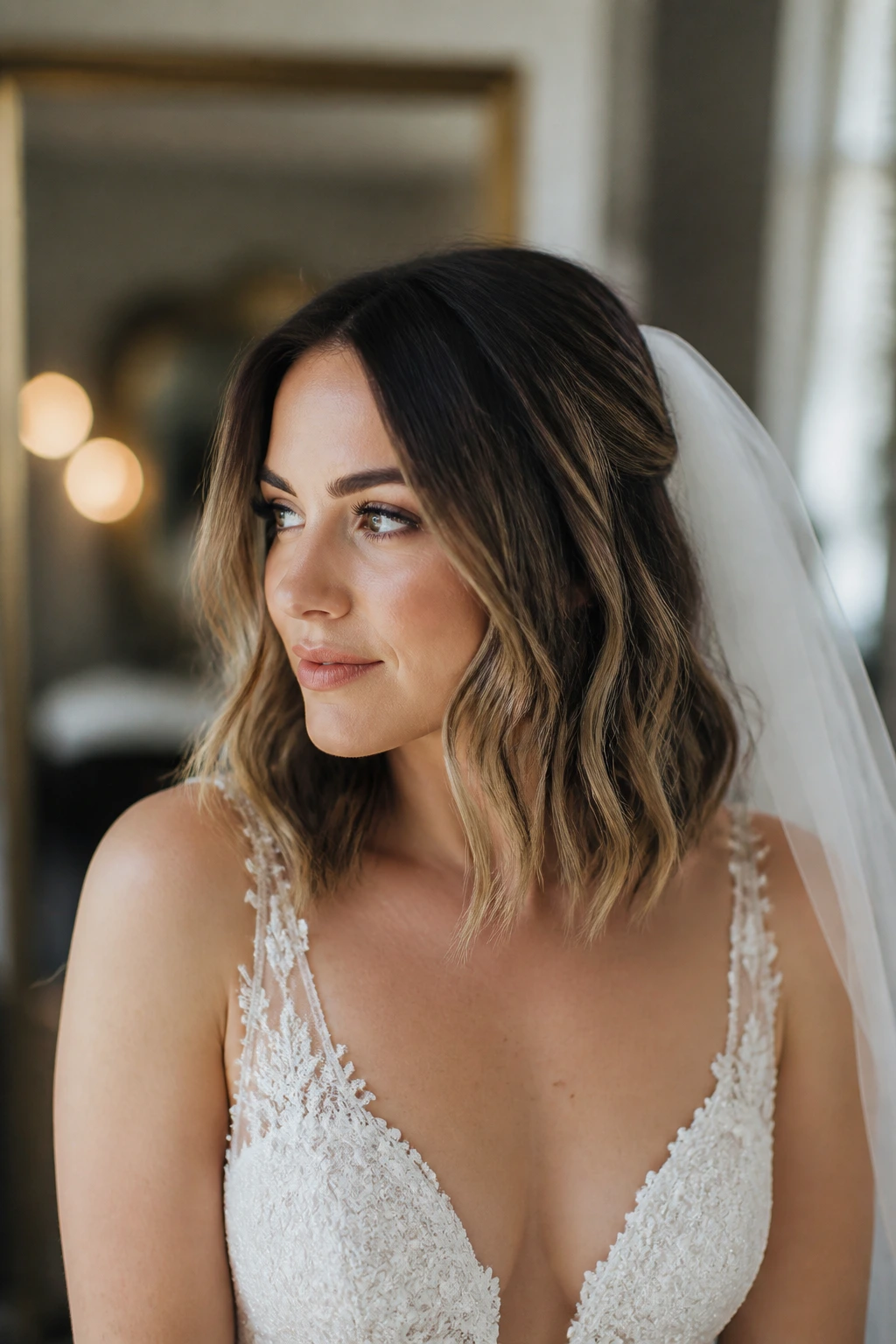
Medium hair is not a compromise. It’s often the most cooperative length in the room, because it has enough body to anchor pins and enough swing to keep the style from looking stiff.
At the collarbone, a low bun can sit close to the head without turning into a bulky knot. Waves also hold their curve better because the hair isn’t carrying extra length down the back. That matters when you want shape to stay visible after hours of hugs, photos, and movement.
Accessories behave better too. A comb, a vine, or a row of pearl pins doesn’t sink into a heavy nest of hair, and a veil can sit where it should instead of tilting backward. If you have fine hair, this length also makes it easier to add one small set of clip-ins without feeling overloaded.
- Pins have something to grab: Shoulder-to-collarbone lengths hide bobby pins without swallowing them.
- Volume stays lighter: Medium hair can be teased at the crown without needing a huge padded base.
- Veils sit cleaner: The comb has less weight to fight, so it stays level longer.
- Extensions are optional: One hidden weft can fill a ponytail or bun without changing the whole shape.
- The neckline stays visible: The hair frames the dress instead of covering every detail.
1. Soft Low Chignon with Face-Framing Pieces
A low chignon is the style I reach for when the dress has lace, buttons, or a back that deserves a clean frame. On medium-length hair, the bun sits low and tidy instead of bulky, and two curled pieces near the cheekbone keep it from feeling severe.
The shape is simple, but the details matter. If your ends are layered, twist them inward before pinning so the bun doesn’t puff out at the sides. A 1-inch iron on the front pieces gives enough bend that they won’t fall straight by the time you’re walking into the reception.
This one works especially well with cathedral veils, pearl earrings, and satin gowns that need a calm silhouette. It’s quiet in the best way.
Best with: square necklines, lace backs, and pearl pins.
Avoid if: you want a lot of movement through the ends.
Small trick: tuck the bun a half-inch lower than you think you should; medium hair often sits prettier when it hugs the nape.
2. Textured Half-Up Twist
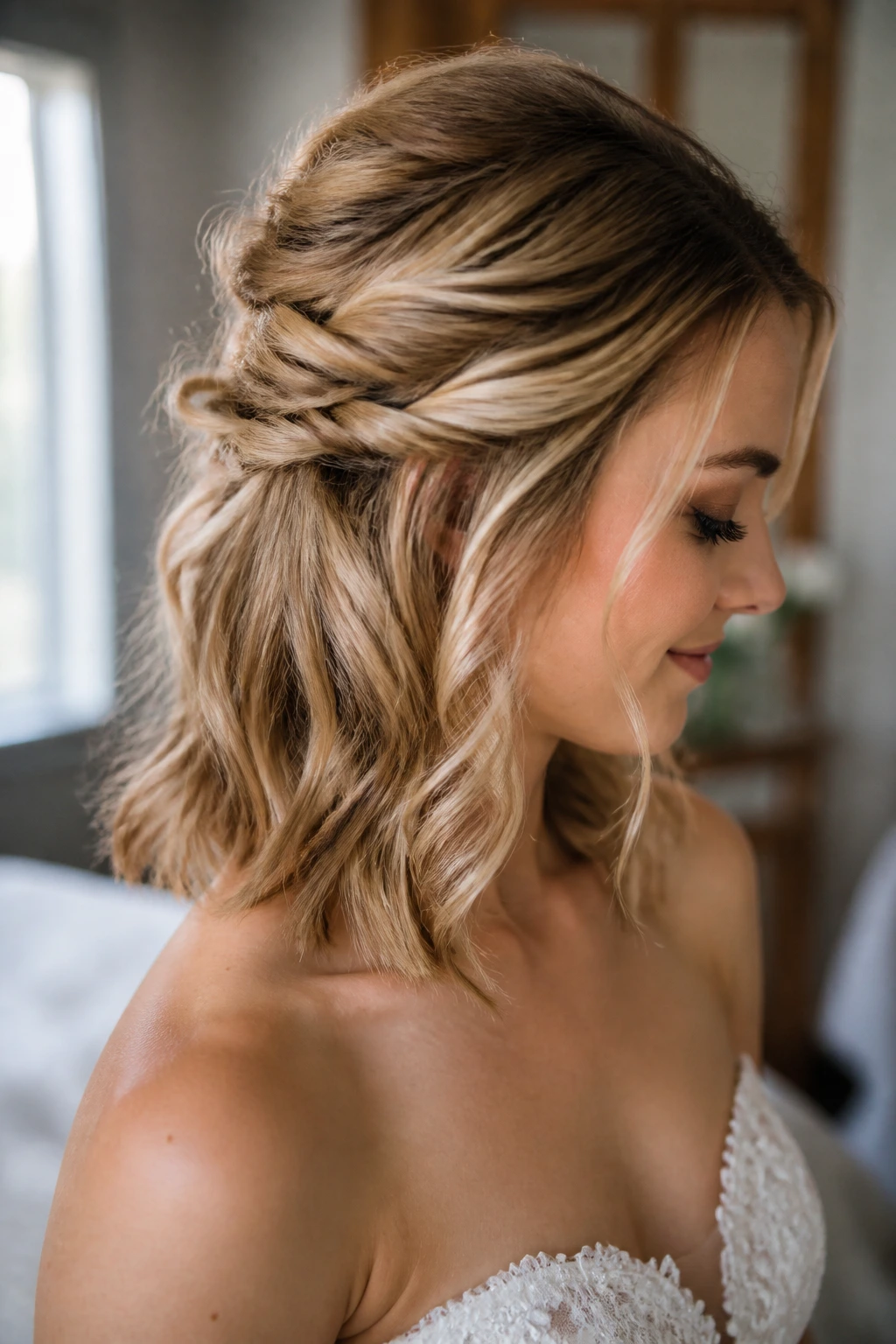
Want hair down but not in your face all night? This is the answer. The crown gets a small lift, the sides twist back, and the lengths stay loose enough to show curl pattern without collapsing into one flat sheet.
The shape is forgiving on medium hair because it doesn’t need endless length to look full. A little backcombing at the crown, a mist of texture spray, and two hidden pins can do more than people expect. If your hair is layered, leave the shortest front pieces soft around the temples instead of forcing them into the twist.
I like this look for brides who want movement and a little control. It feels romantic without turning into a pageant style.
Why it works on medium hair
Medium hair gives the twist enough mass to look deliberate, but not so much weight that the back turns heavy. The loose lower section still bounces when you turn your head, which keeps the style from looking stuck in place.
If you want a veil, place the comb just below the twist so the fabric doesn’t fight the lifted crown.
3. Old Hollywood Waves with a Deep Side Part
Few styles feel as dressed up as a deep side part and brushed-out waves. On medium-length hair, the pattern stays readable from the front, and the ends don’t get lost under too much length. That means the curve at the cheek and jaw actually shows.
The set matters. Use a 1.25-inch curling iron or hot rollers, clip each curl until it cools, then brush the waves together with a boar-bristle brush or a soft paddle brush. The finish should look smooth, not crunchy. If you spray too early, the wave line goes stiff and the whole thing loses that old-film softness.
A single crystal pin near the temple can hold the side back without crowding the look. This is the hairstyle I’d pick for a fitted satin gown or anything with a strong shoulder line.
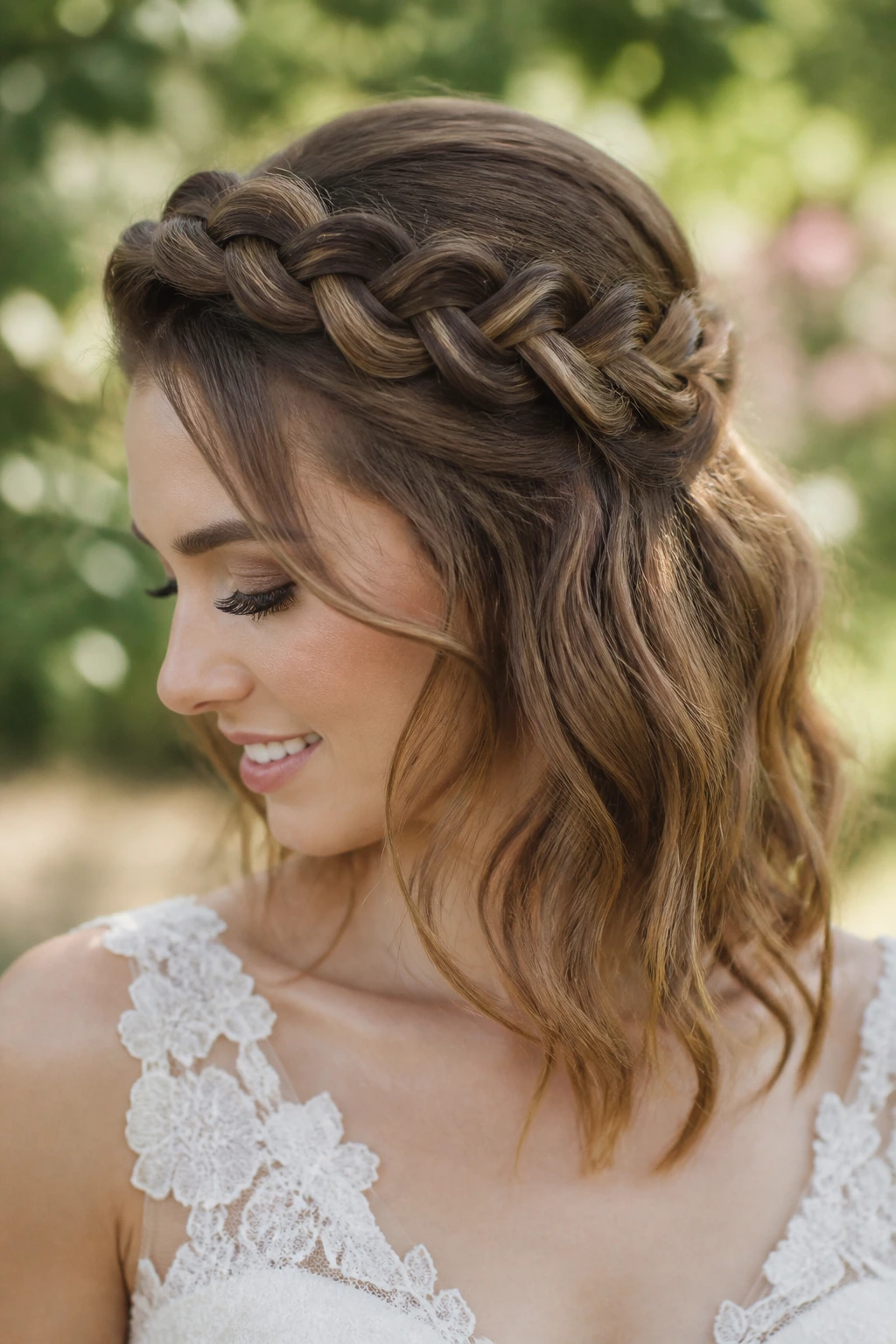
4. Braided Crown with Loose Ends
A braided crown is the cleanest way to keep hair off your face without pushing it into a tight updo. On medium hair, it has enough length to wrap around the head without looking thick or overbuilt, and the loose ends can fall in soft waves at the back.
The braid should feel controlled at the base and looser once it’s pinned. Pull the braid edges apart a little after securing them, but don’t pancake them so much that the plait starts to fray. That tiny bit of looseness is what keeps the style from looking school-pageant stiff.
This one is lovely with garden flowers, outdoor ceremonies, and dresses that have a softer, floatier shape. It’s also a smart option if you don’t want to touch your front layers all day.
Tip: curl the loose ends first, then braid. The texture blends better and the whole style feels less rushed.
5. Sleek Middle-Part Low Bun
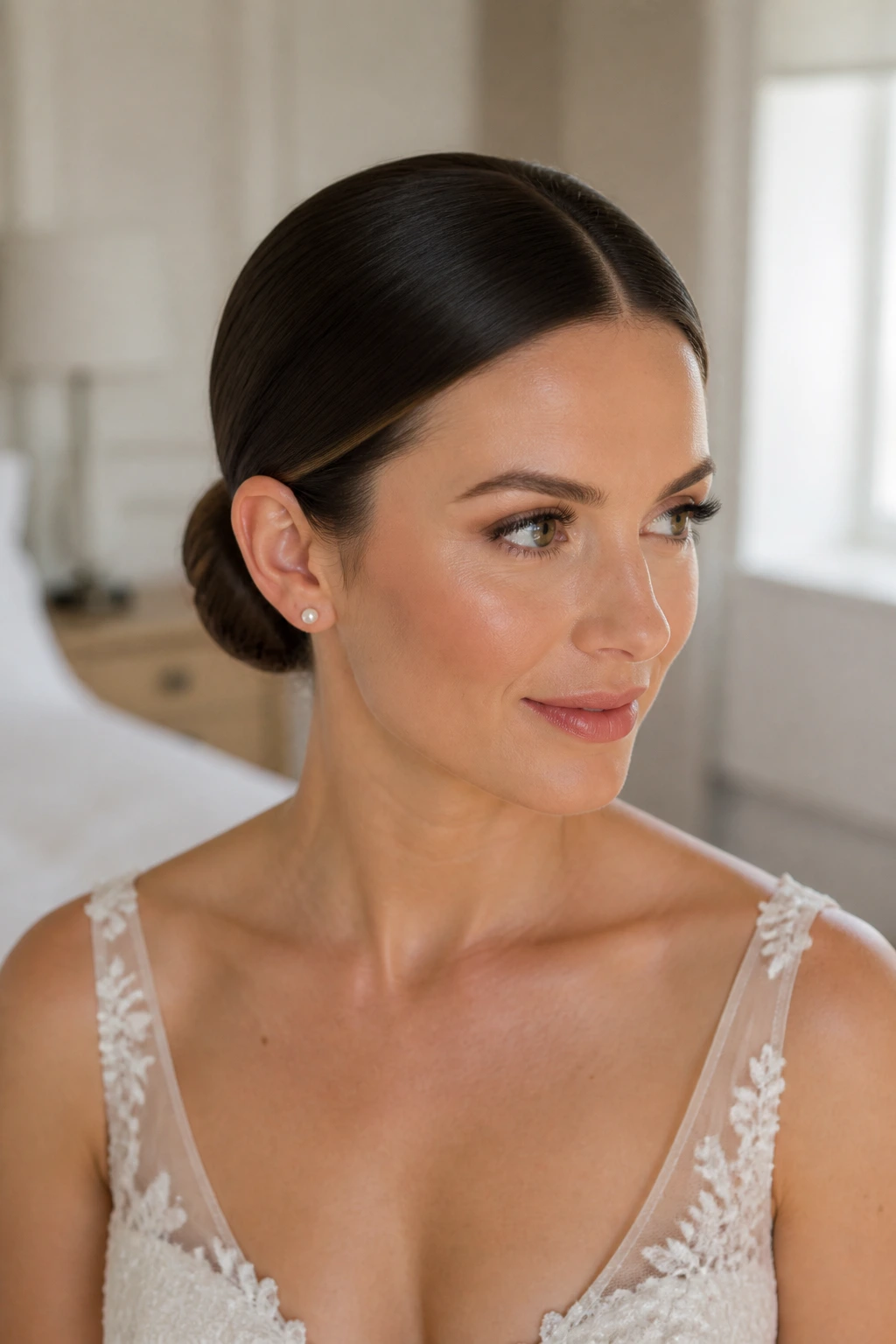
If your dress is busy, the hair should calm things down. A middle part and a low bun do that fast. The line down the center makes the face look long and clean, and the bun sits low enough to leave the neckline open.
This style loves smoothness. Start with a light cream or serum through the mid-lengths and ends, then brush the hair flat with a fine bristle brush before pinning. The goal is shine without slip. Too much oil at the roots is a mistake; it turns the whole head into a slide.
I like this best on brides who wear minimalist gowns, crepe fabric, or strong earrings. It has a cool, polished look that doesn’t need extra decoration.
6. Side-Swept Curls with One Sparkling Pin
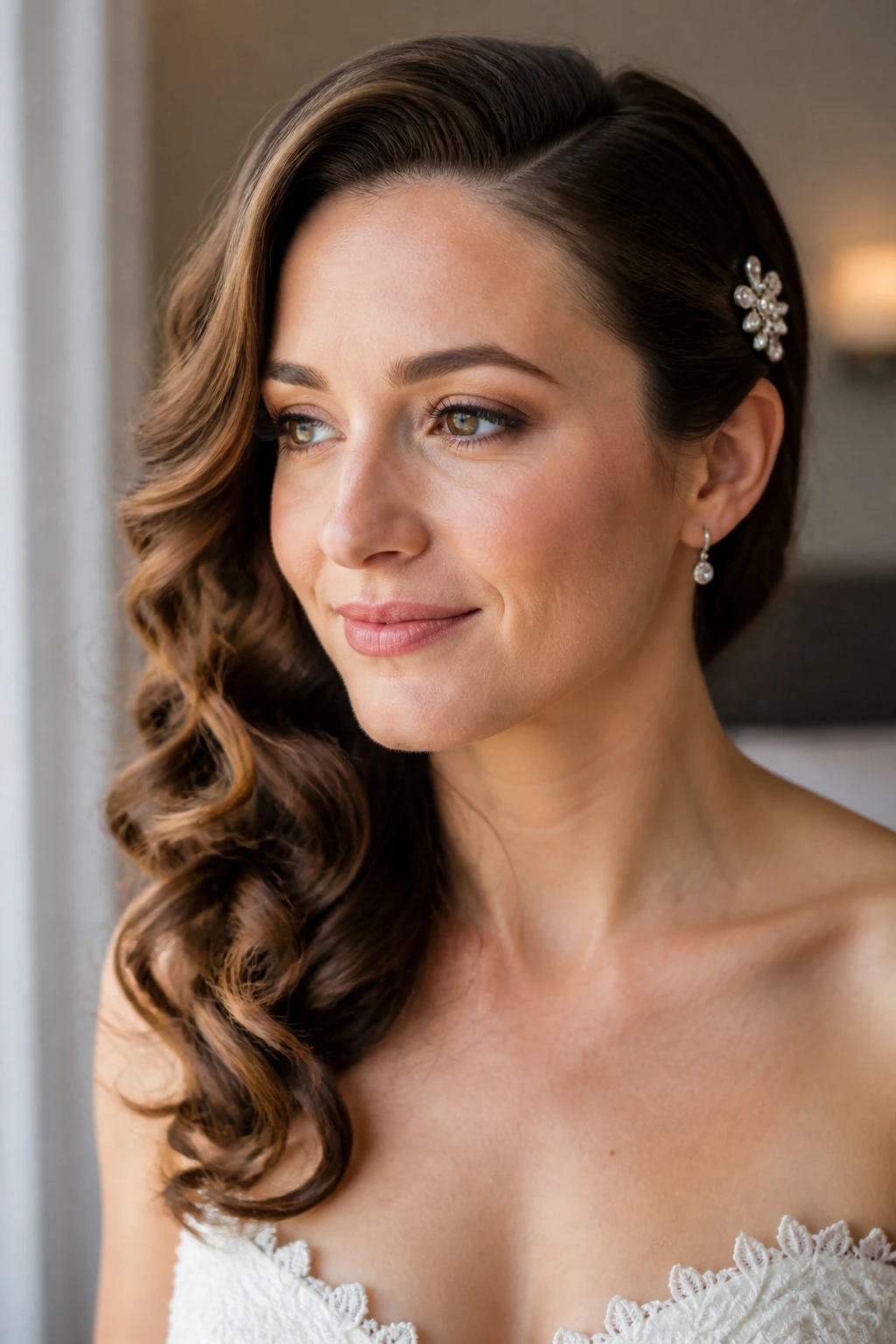
One pin can do more than a whole cluster. Sweep the hair to one side, leave the opposite temple soft, and set the curls so they flow over one shoulder instead of sitting evenly on both sides. The result feels dramatic without getting fussy.
Medium-length hair is ideal here because the curls have enough body to stay in the side sweep, but not so much length that the weight pulls them down. Use a medium barrel iron, then pin the side back while the curl is still warm if you want a firmer bend around the face.
This style is especially good with one-shoulder dresses, asymmetric necklines, and earrings that deserve room to show. Keep the pin simple if the dress already has sparkle. Too much sparkle near the face starts to feel noisy.
7. Twisted Halo Half-Up
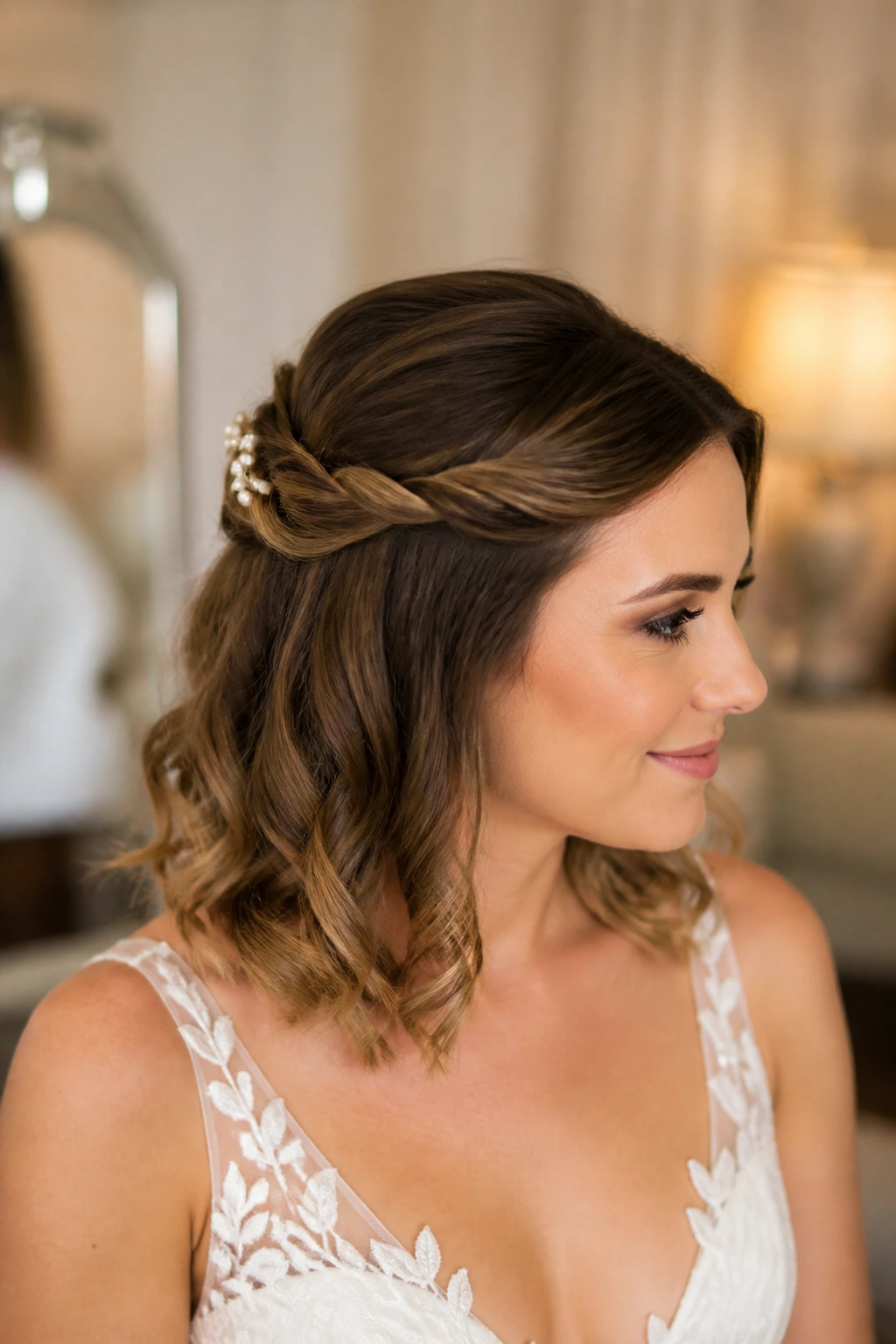
This one sits between a braid and an updo. Two side sections twist back from the temples, meet at the back of the head, and leave the rest loose in soft curls. It gives a halo effect without the dense texture of a full braided crown.
On medium hair, the twists sit flatter and cleaner than they do on long hair. That’s a plus. You get the shape without the bulk, and the back still keeps enough length to feel feminine and relaxed.
Where to place the twist
Keep the twist just above the ear line if you want softness. Push it higher if the dress has a low back and you need the hairstyle to look a little more lifted.
A small comb or a few pearl pins in the join area is enough. Don’t over-decorate it. The twist already does the work.
8. Polished Low Ponytail with Wrapped Base
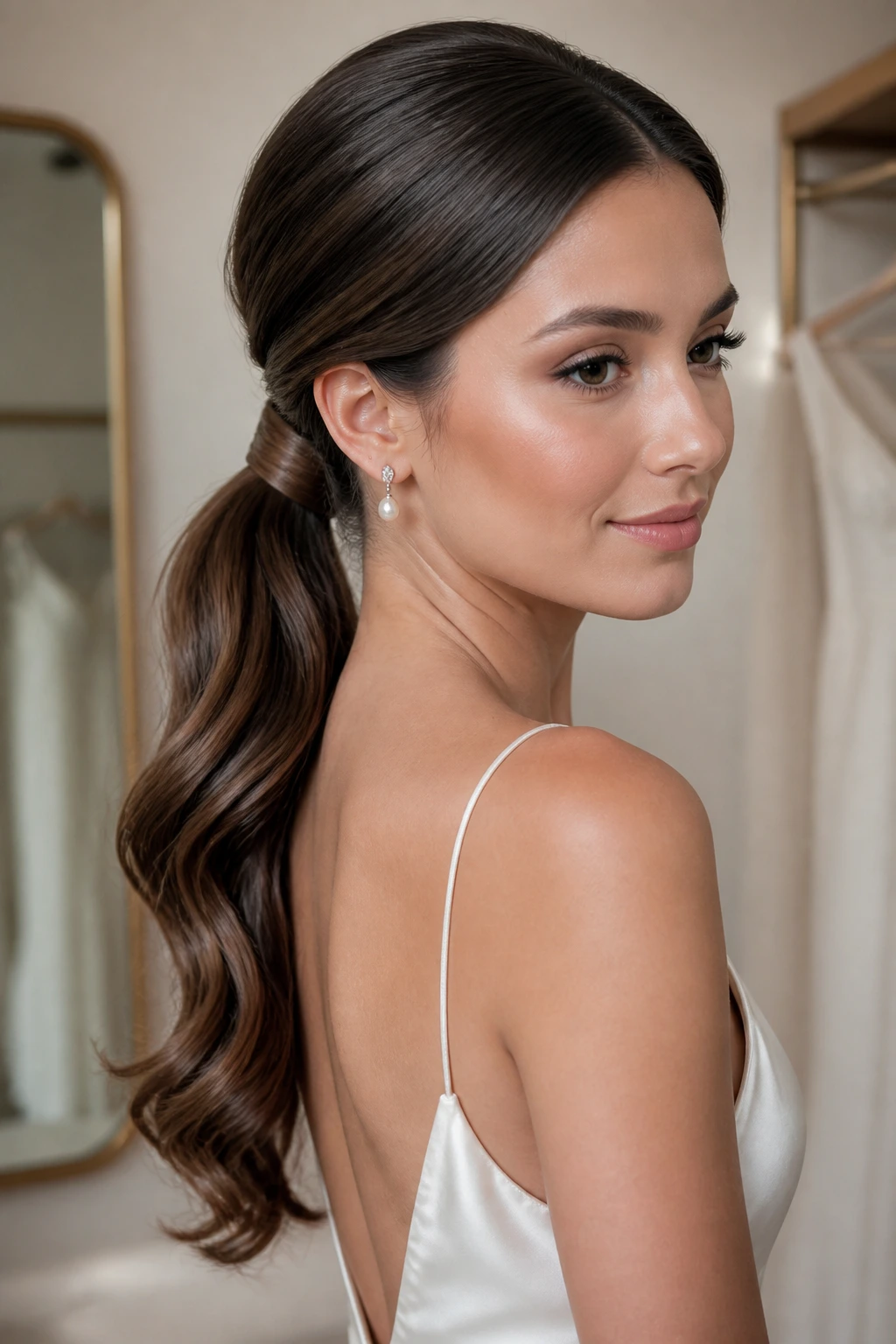
A low ponytail is not the lazy choice here. When it’s smoothed, wrapped, and given a clean finish, it looks deliberate and sharp. On medium-length hair, the pony sits at a flattering height without dragging at the crown.
The best version starts with a smooth blowout, a center or soft off-center part, and a wrapped section of hair around the elastic. Curl the tail in large sections so the ends don’t look thin. If your hair is fine, a small clip-in pony piece can fill it out without changing the feel of the style.
This works well with backless gowns, modern suits, and brides who want something that won’t fight a strong neckline. It’s one of the easiest looks to keep neat through the last dance.
9. Messy Bridal Bun with Soft Tendrils
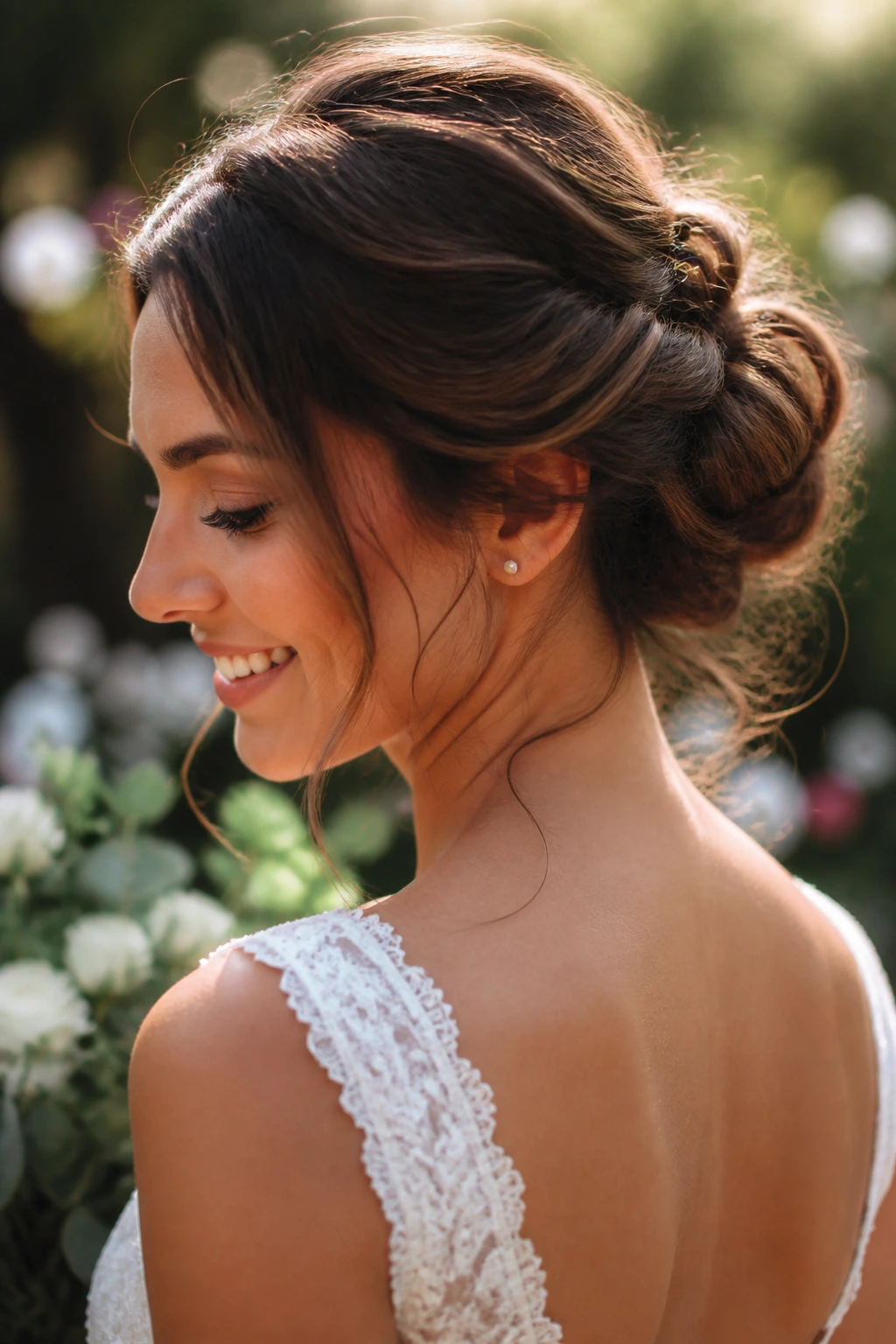
Messy does not mean loose enough to come apart. A good bridal bun has shape, pins, and purpose — just with softer edges and a few tendrils around the face and nape. Medium-length hair is especially good for this because the bun can stay airy instead of turning into a giant knot.
Start by curling the hair first. That gives the bun texture and keeps the ends from poking out in odd directions. Leave the front tendrils a little longer than you think you need; when they get curled and softened, they usually land shorter than expected.
I like this look for garden weddings, relaxed venues, and dresses that need a little softness. It pairs nicely with tiny flowers or a thin vine. No need to overthink it.
10. Waterfall Braid into Loose Waves
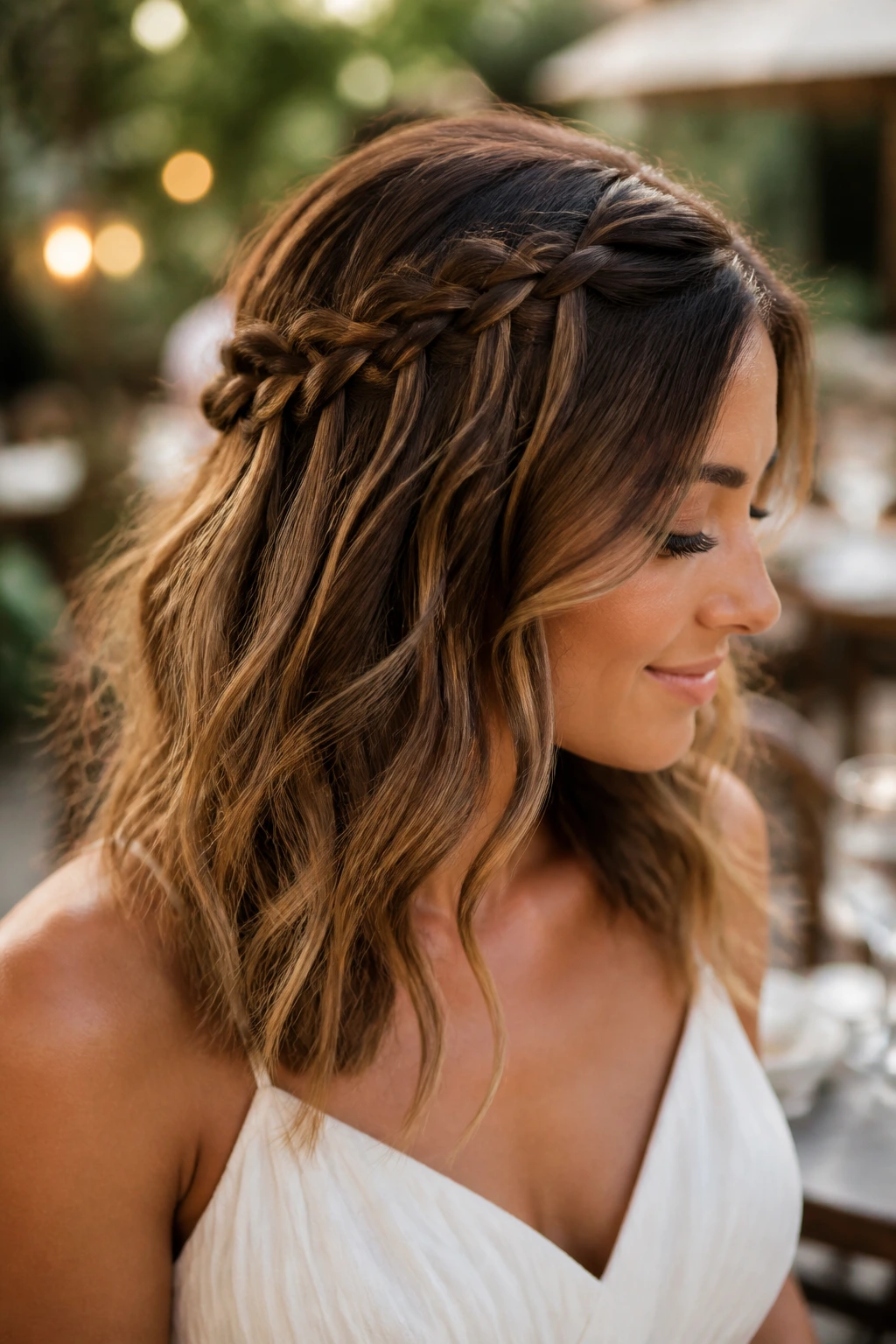
A waterfall braid gives you detail at the crown and motion through the lengths. The braid drops strands as it moves, which means the loose hair below still feels full and soft. On medium hair, that balance works better than on hair that’s either very short or very long.
The braid should start clean and controlled near the temple, then loosen a touch as it curves back. Curl the loose lengths first or after the braid is done; I prefer curling first because the braid sits better on top of a shaped base. A little texture spray at the roots helps the braid hold its lines.
Best for layered cuts
Layered medium hair often needs a style that can handle different lengths without looking messy. The waterfall braid does exactly that. It hides the shorter pieces in the weave and lets the longer sections move underneath.
This is a good choice if you want something soft but not plain.
11. Faux Bob with Soft Ends
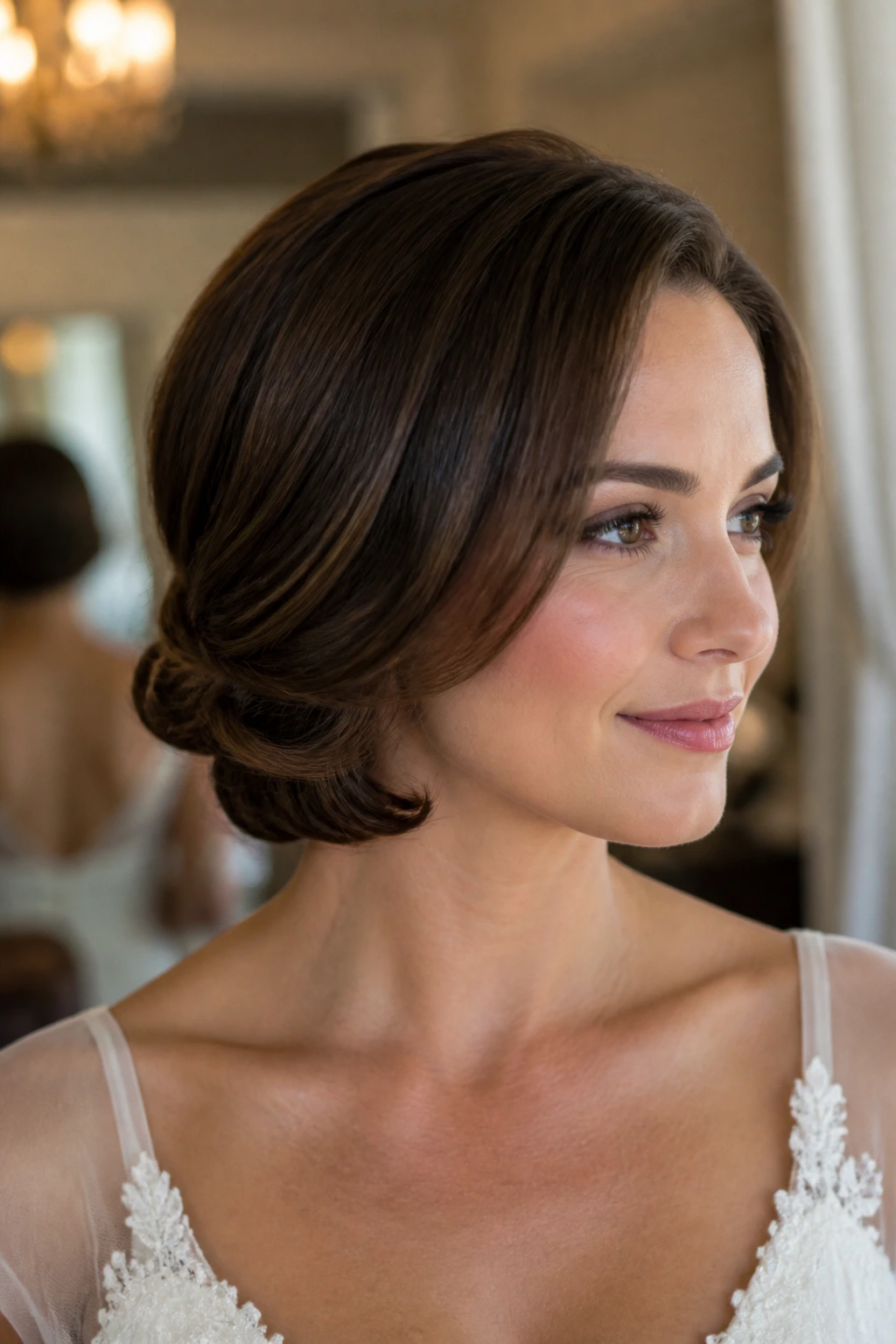
If you want that shorter, vintage profile without cutting your hair, this is the trick. The ends are tucked under and pinned so the shape lands around the jaw or just below it, while the top stays smooth and gently curved.
Medium-length hair is the right starting point because there’s enough length to fold under cleanly. You don’t need a huge mound of pins either. Usually, a few well-placed pins and a little setting spray are enough if the hair is curled first and allowed to cool.
This style looks sharp with Art Deco gowns, birdcage veils, and brides who want their earrings to matter. It has a little attitude. Not loud. Just a little.
12. Bubble Ponytail with Pearl Ties
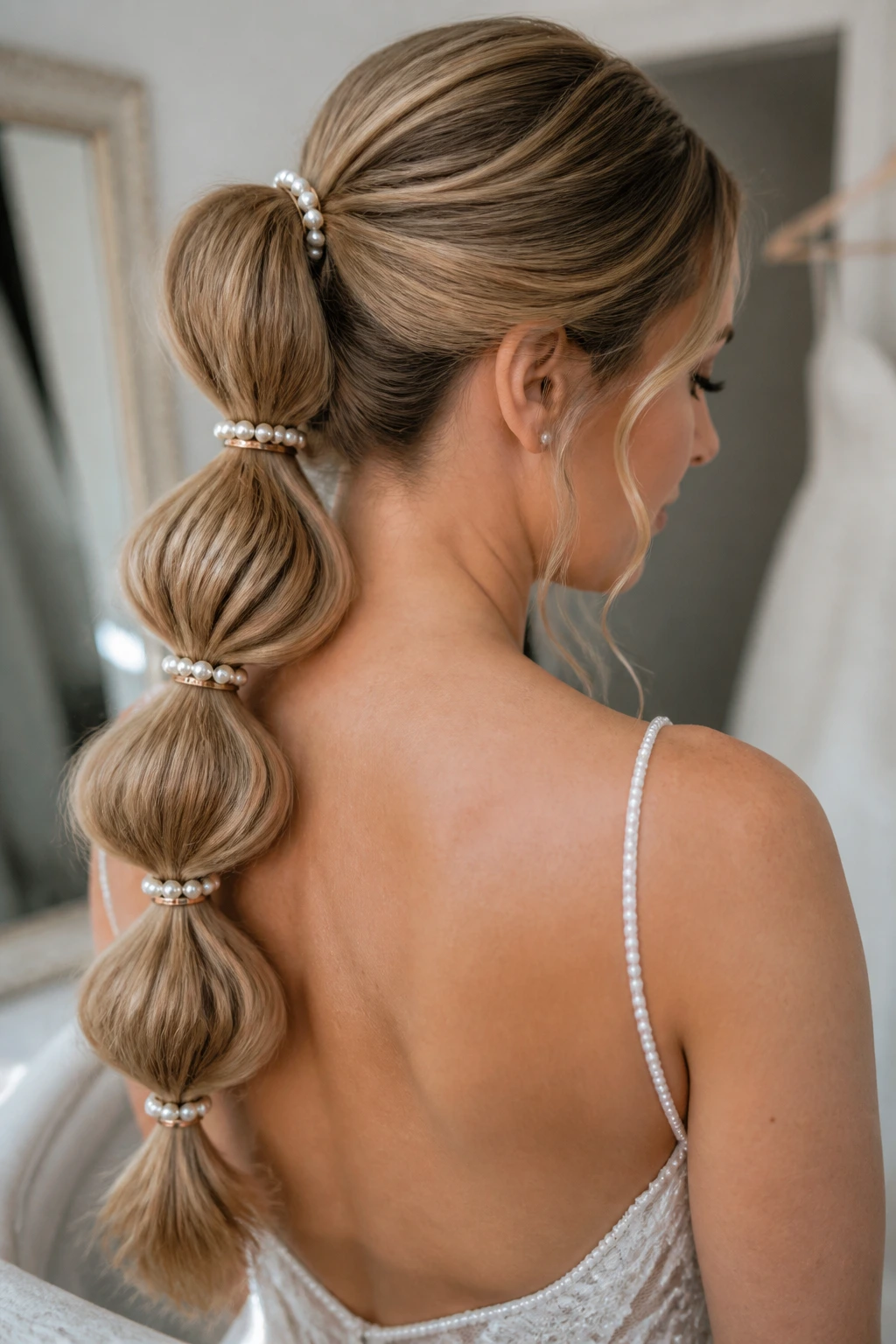
A bubble ponytail can look playful or formal depending on how tight the bubbles are. On medium hair, the sections sit close enough together to look intentional without getting heavy. It’s a good pick if you want something that feels modern but not severe.
Use clear elastics or tiny covered ties, then gently pull each section to create the bubble. Pearl wraps or slim metallic bands make the shape feel bridal fast. If your hair is just grazing the shoulders, you may want a small extension piece in the tail so the last bubble doesn’t look thin.
This works best with clean necklines and simpler dresses. The ponytail itself becomes the detail.
13. Braided Low Bun
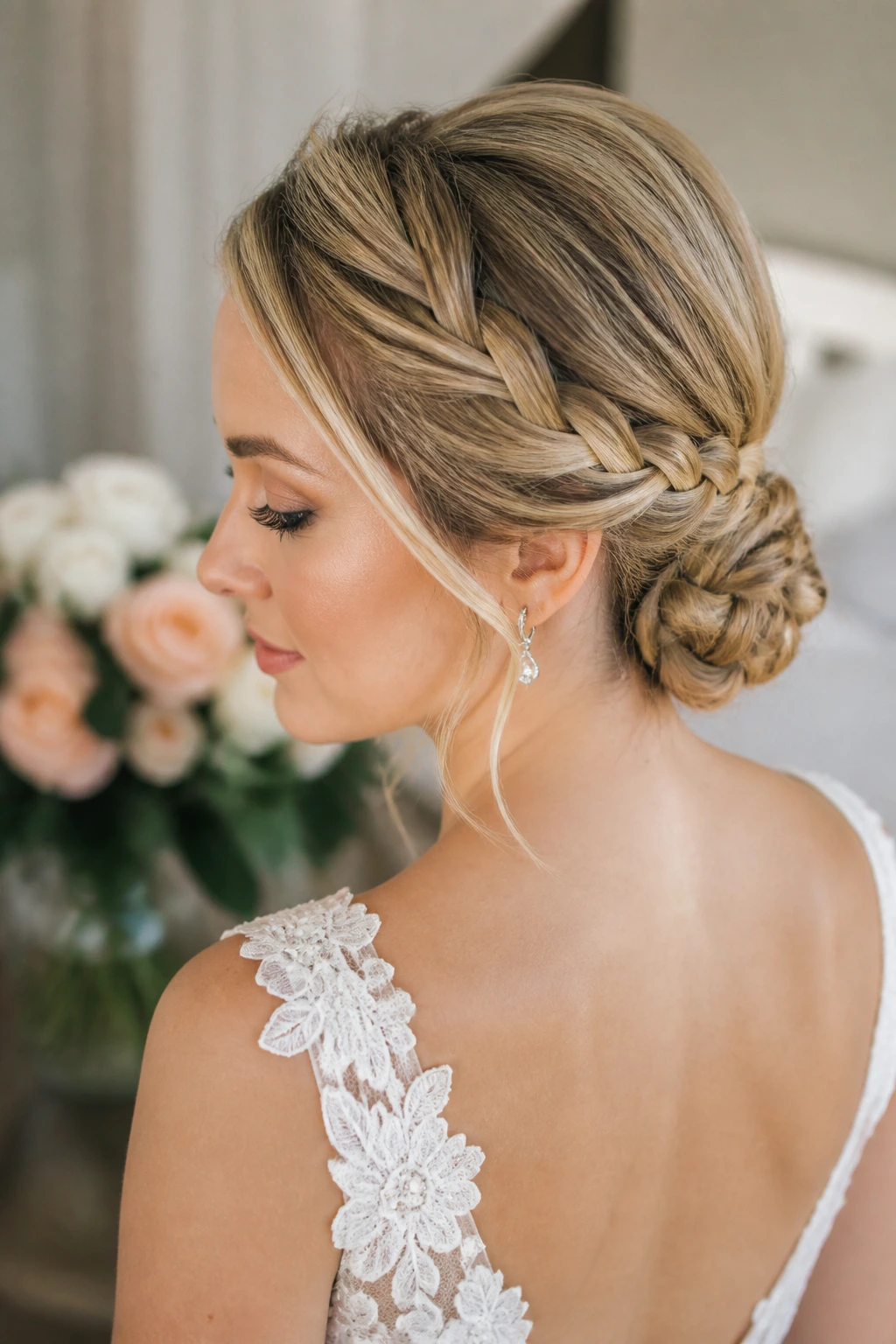
This is the most practical answer for brides who plan to dance hard. Braid the ponytail first, then coil it into a bun at the nape. The braid gives the bun texture and grip, which means it usually stays put better than a plain twist.
Medium-length hair benefits here because the braid isn’t excessively long, so the bun stays compact and readable. If your hair is slippery, dust the lengths with a little texture powder before braiding. Not much. Just enough to make the strands stop sliding through your fingers.
A braided low bun looks good with simple studs, off-the-shoulder dresses, and veils anchored low at the back. It’s not flashy. It’s sturdy, and that matters.
14. Gibson Tuck with Texture
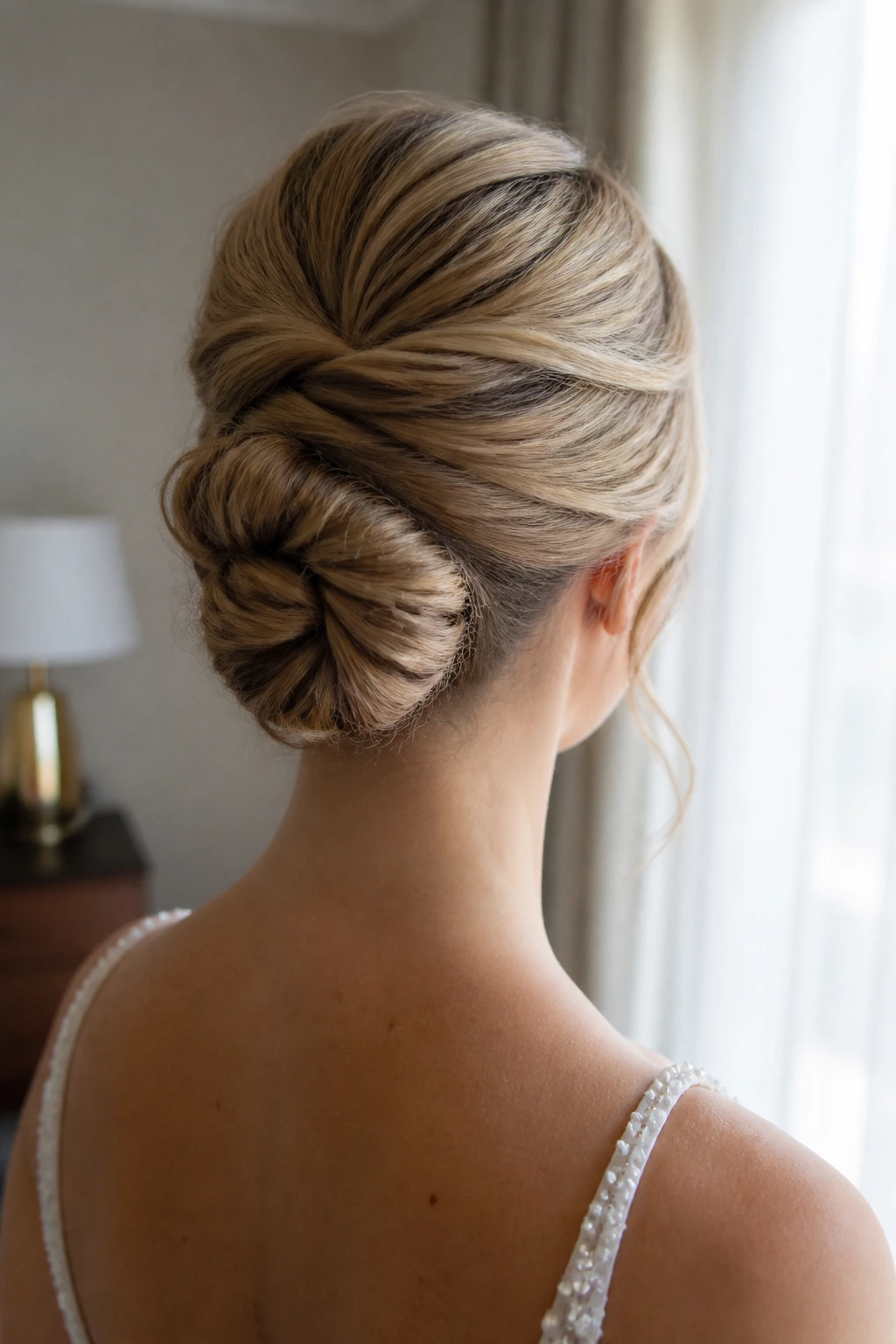
The Gibson tuck keeps showing up because it solves the same problem every time: keep the hair neat, but not stiff. The hair is rolled upward and tucked into itself at the nape, which gives a smooth vintage fold that sits beautifully on medium-length strands.
Textured medium hair makes this look better than pin-straight hair. A little bend gives the tuck depth, and a bit of volume at the crown keeps it from flattening against the head. If the top is too slick, the style can go flat in a hurry.
How to keep the tuck smooth
Use a small elastic or hidden pins to create the roll, then check the sides in a mirror before spraying. The back should look folded, not stuffed. That’s the line to watch.
This is one of my favorites for lace sleeves, satin bodices, and brides who like old-fashioned shapes without a lot of decoration.
15. Voluminous Blowout with Tucked Sides
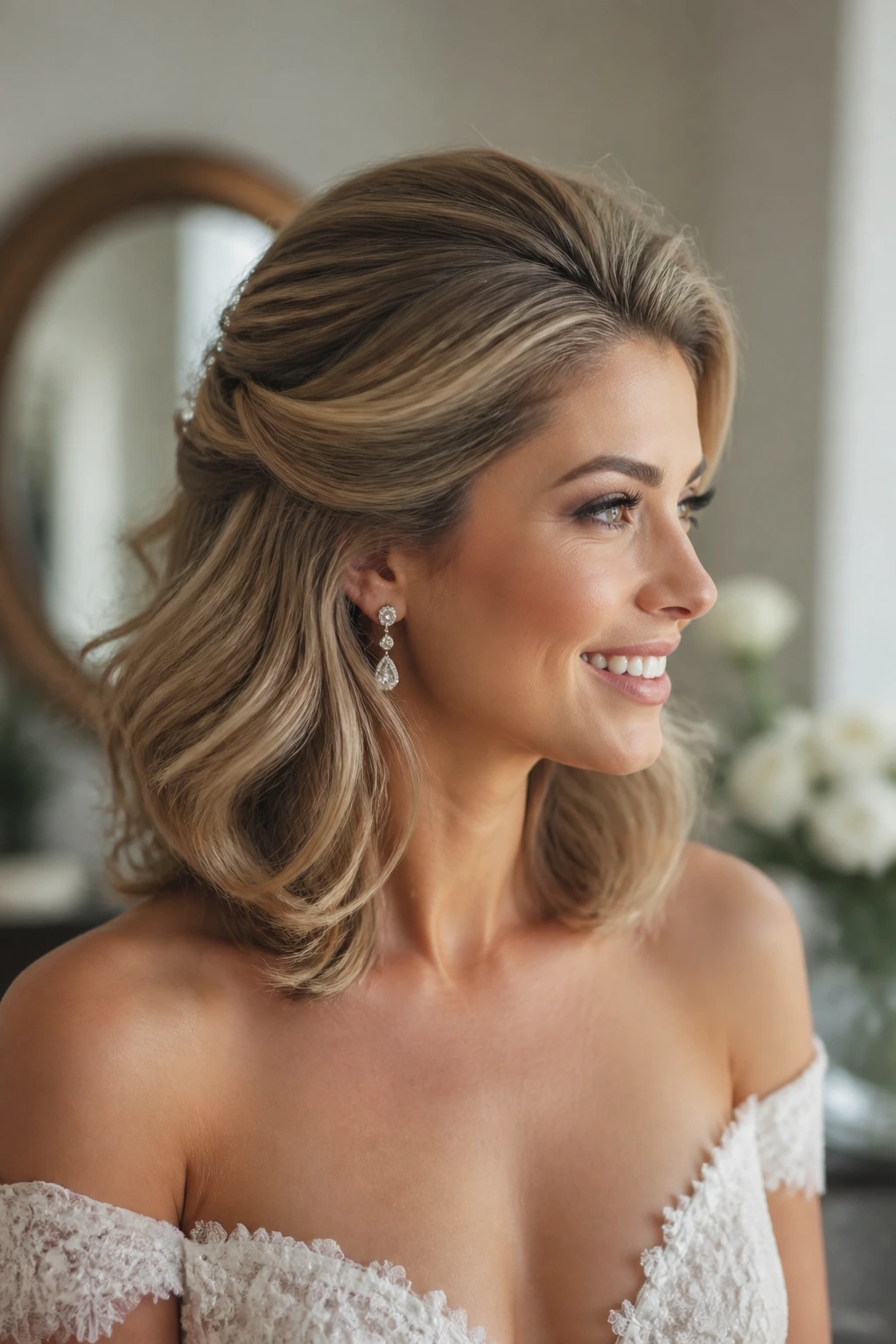
Some brides want movement more than height. A voluminous blowout with the front sections tucked back gives that — the length stays loose, but the face is open and the crown has a little lift. On medium hair, the blowout still looks airy instead of weighed down.
Use a round brush or large rollers to build bend from mid-length to end. Then take the front sections and pin them softly behind the ears or just above them. The result has a graceful shape without needing a full updo.
This is the look I’d pick for a bride who hates the feeling of too many pins. It works well with simple gowns and strong makeup because the hair doesn’t compete.
16. Half-Up Crown Twist
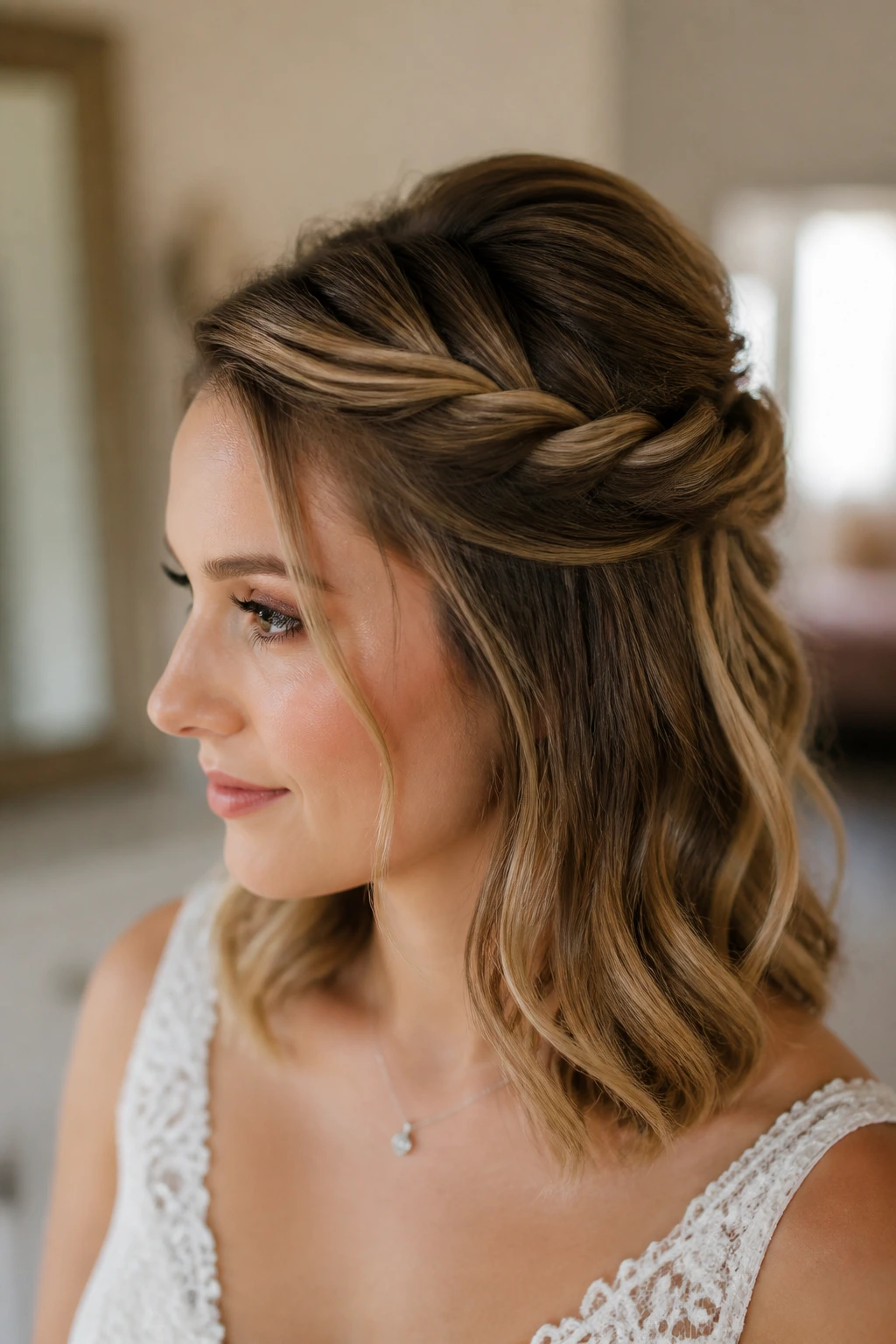
If a standard half-up feels too sweet, push the twist higher and widen the volume at the crown. That small shift changes the whole mood. The style looks a little more formal, a little more lifted, and a lot better with medium-length hair that needs structure without being fully pinned up.
The crown twist should start with gentle teasing underneath, not a giant backcomb. Pull the side sections back, twist them once or twice, and secure them so the twist crosses just behind the crown. The lower lengths can stay in polished curls or soft waves.
This is a good middle ground for brides who can’t decide between down hair and an updo. It gives both.
17. Romantic Side Chignon
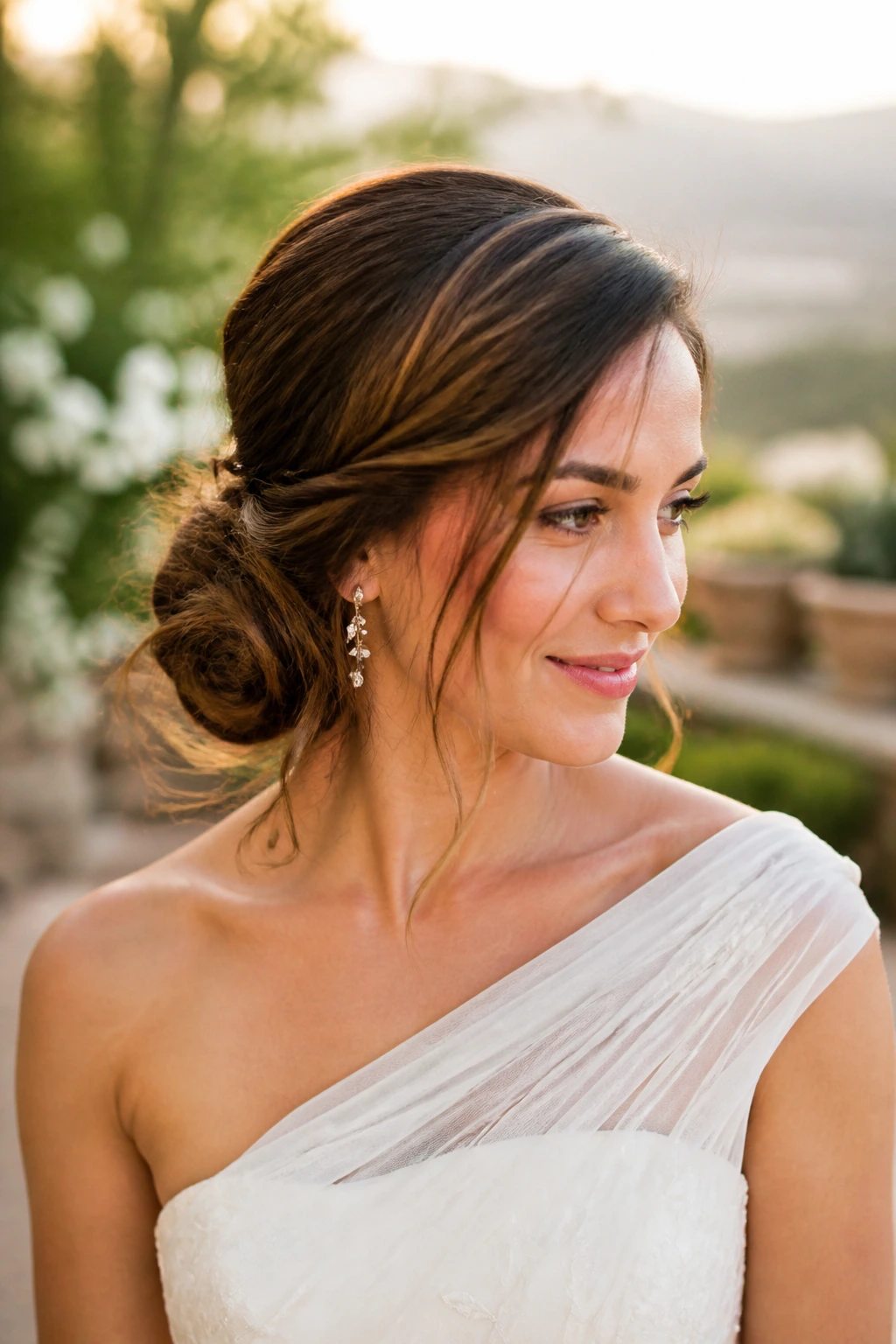
A side chignon lands behind one ear or just below it, which makes it a nice match for one-shoulder gowns, off-the-shoulder necklines, or dresses with a lot going on at the front. It feels softer than a centered bun and a little more relaxed than a strict updo.
Medium-length hair gives this style enough structure to hold the side shape without flopping. Keep the base low, and sweep the opposite side of the hair smoothly across the head before pinning. A few soft pieces near the temple keep it from looking too rigid.
Long earrings work well here because the style opens up one side of the neck. It’s elegant without trying too hard.
18. Sleek High Ponytail with Wrapped Length
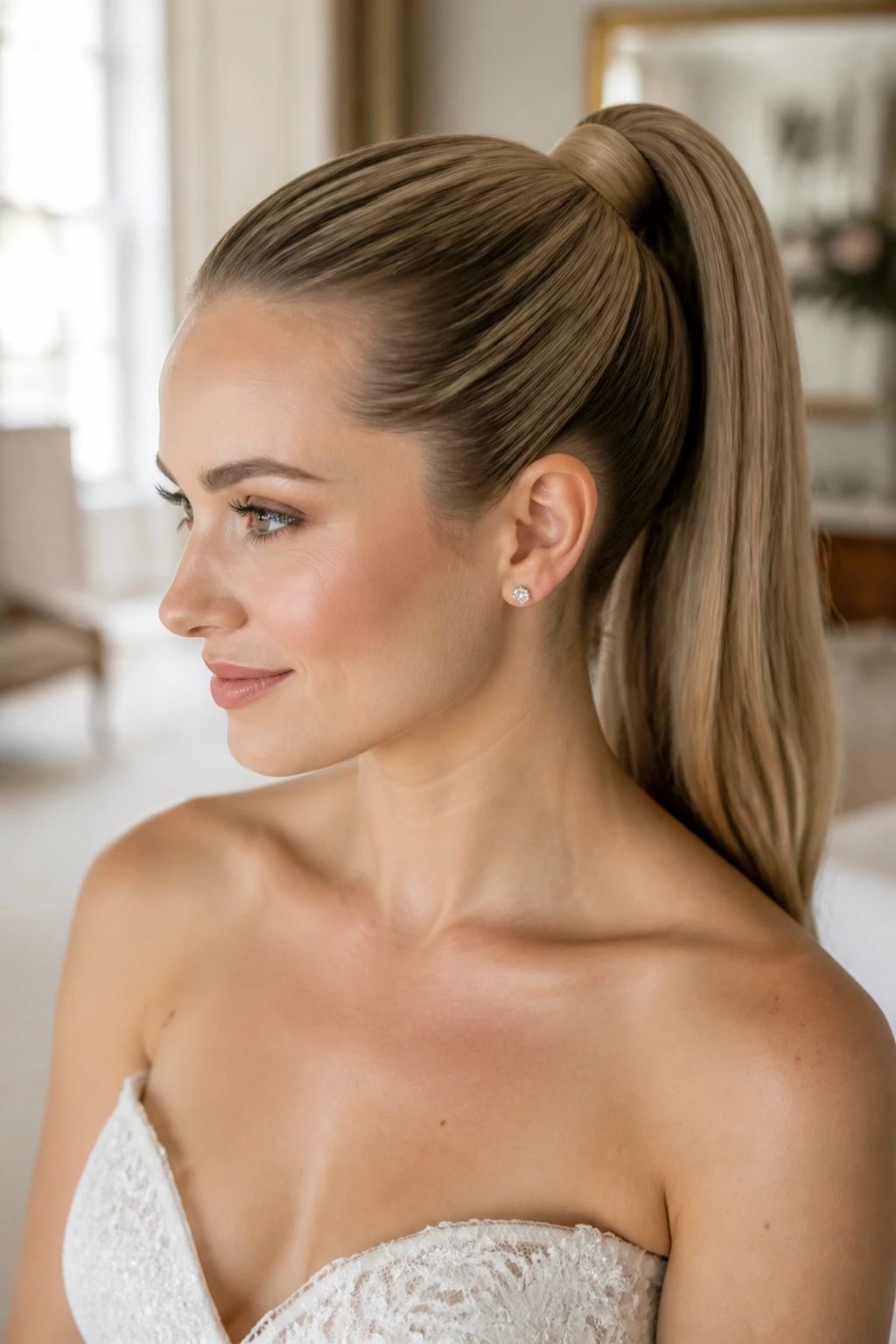
A high ponytail can be a bridal hairstyle if it’s smooth enough and the base is handled well. On medium hair, the pony sits better as a mid-high lift unless you add a small extension for fullness. Either way, the wrapped base gives it a finished look fast.
The key is tension. Brush the crown up firmly, keep the sides flat, and wrap a section of hair around the elastic so it looks intentional. Curl the tail in large sections if you want a soft end, or leave it straighter for a sharper line.
This style suits modern gowns, architectural necklines, and brides who want a cleaner face and more movement in the hair. It’s bold. Not busy. There’s a difference.
19. Loose Rope-Braid Ponytail
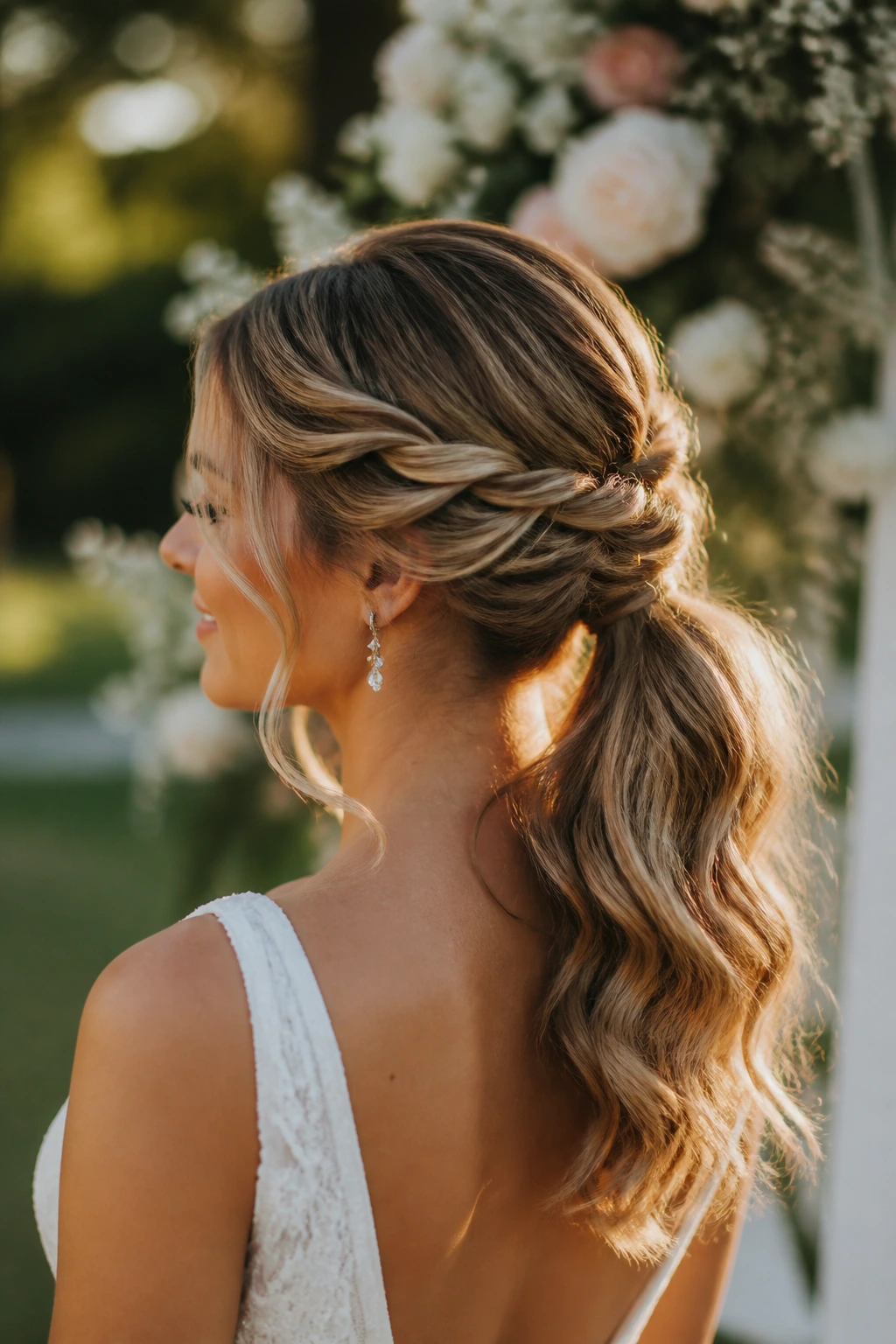
A rope braid is the bride’s answer to humidity when a full braid feels too heavy. Two sections are twisted around each other, then lightly pulled apart so the shape gets softer without losing its line. On medium-length hair, that twist shows off length without asking for much.
When the braid should start
Start the braid low if the dress has a detailed back. Start it a little higher if you want the braid itself to be part of the visual focus. Either way, the ponytail should begin smooth and stay controlled at the base.
I like this one for outdoor ceremonies, destination settings, and brides who want something with texture that still feels neat. It handles movement better than a perfect straight pony.
20. Floral Half-Up with Soft Curls
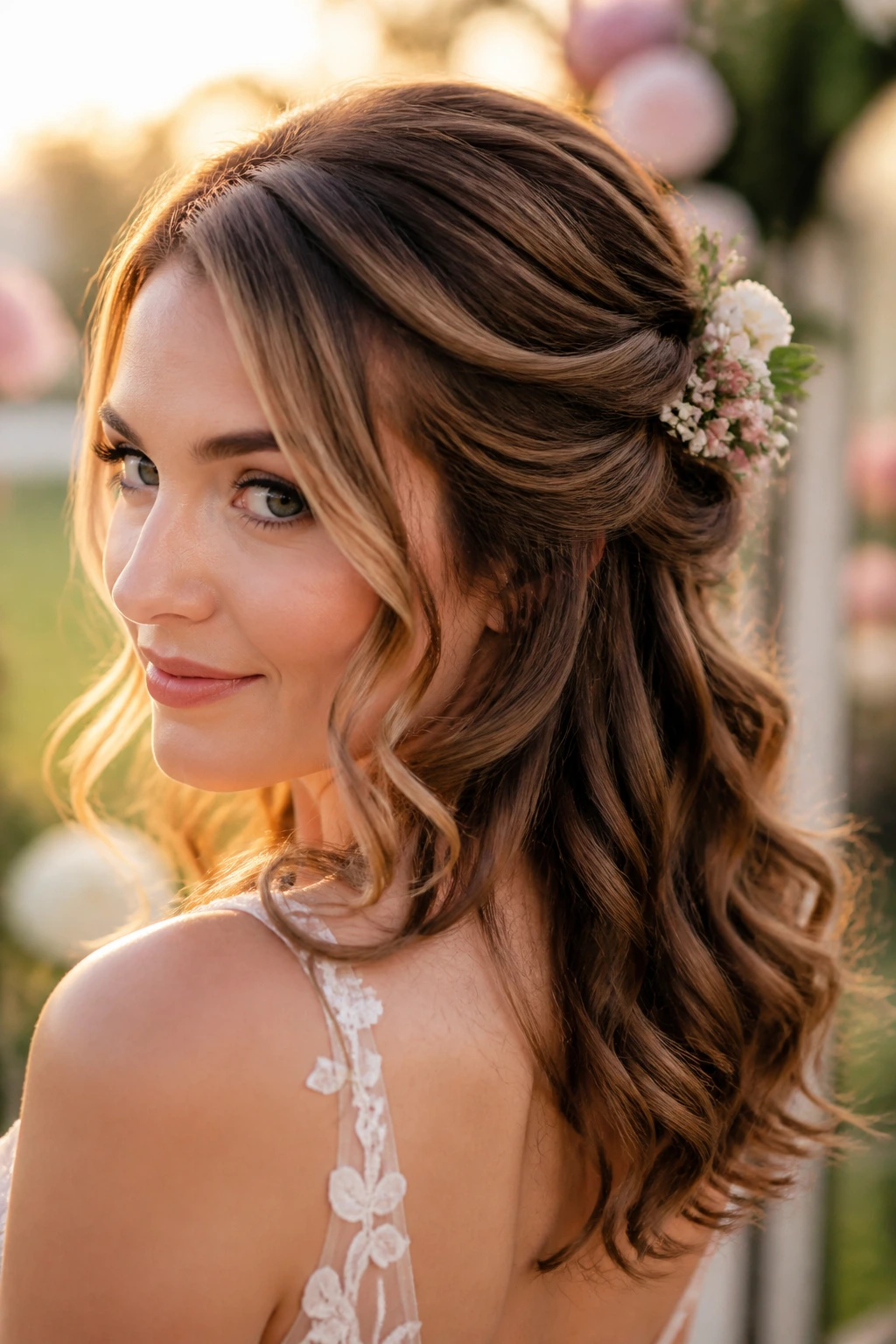
Flowers change the mood fast, but only if they’re small enough to sit in the hair instead of fighting it. On medium-length hair, a half-up shape gives the florist or stylist a stable place to tuck in a few blooms without overwhelming the whole head.
The base should be simple: a soft twist, a half-up knot, or a loose braid at the back. Then add wired flowers or tiny silk pieces in one cluster or in a light trail. I prefer one side or the center back, not flowers scattered everywhere. That can start to look messy in the wrong way.
This look works best when the bouquet and hair accents speak the same language. If the bouquet is all white roses, keep the hair flowers restrained. If the bouquet is loose and garden-like, the hair can be a touch softer too.
21. Veil-Friendly Low Knot with Lift
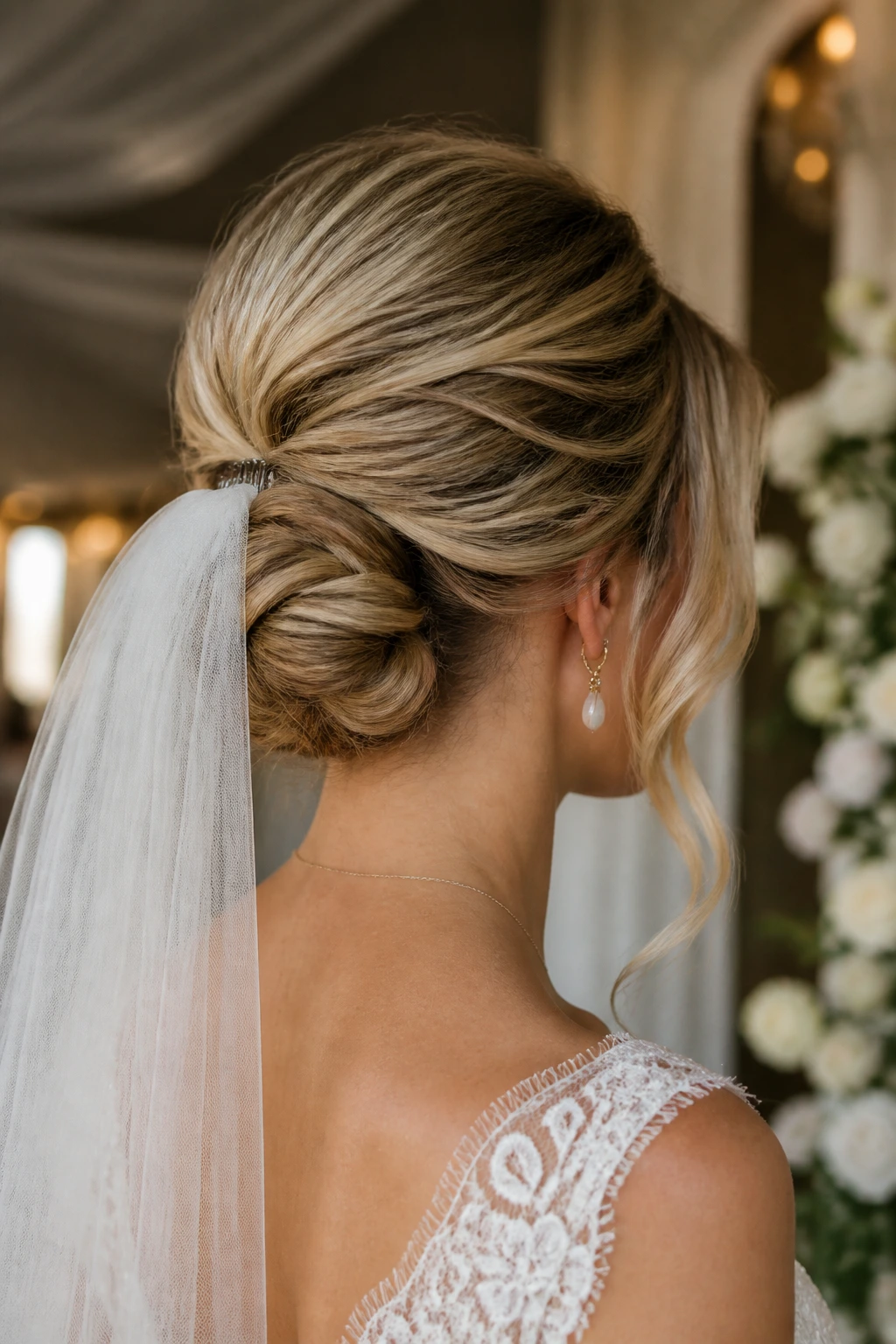
When the veil is the star, the hair should know its job. A low knot with a little crown lift gives the comb a secure landing spot and keeps the silhouette from going flat under the fabric. Medium hair is especially good here because the knot can stay compact while still giving the veil enough support.
The lift at the crown is what keeps the style from disappearing. A light tease under the top layer, a careful smoothing over it, and two or three anchor pins at the nape usually do the work. If the veil is heavy, add extra pins crossing under the comb so the weight doesn’t tug the knot down.
This is the one I’d point to for brides who want one style that carries both the ceremony and the dance floor without a mid-evening change.
The Tools That Make Bridal Styling Easier
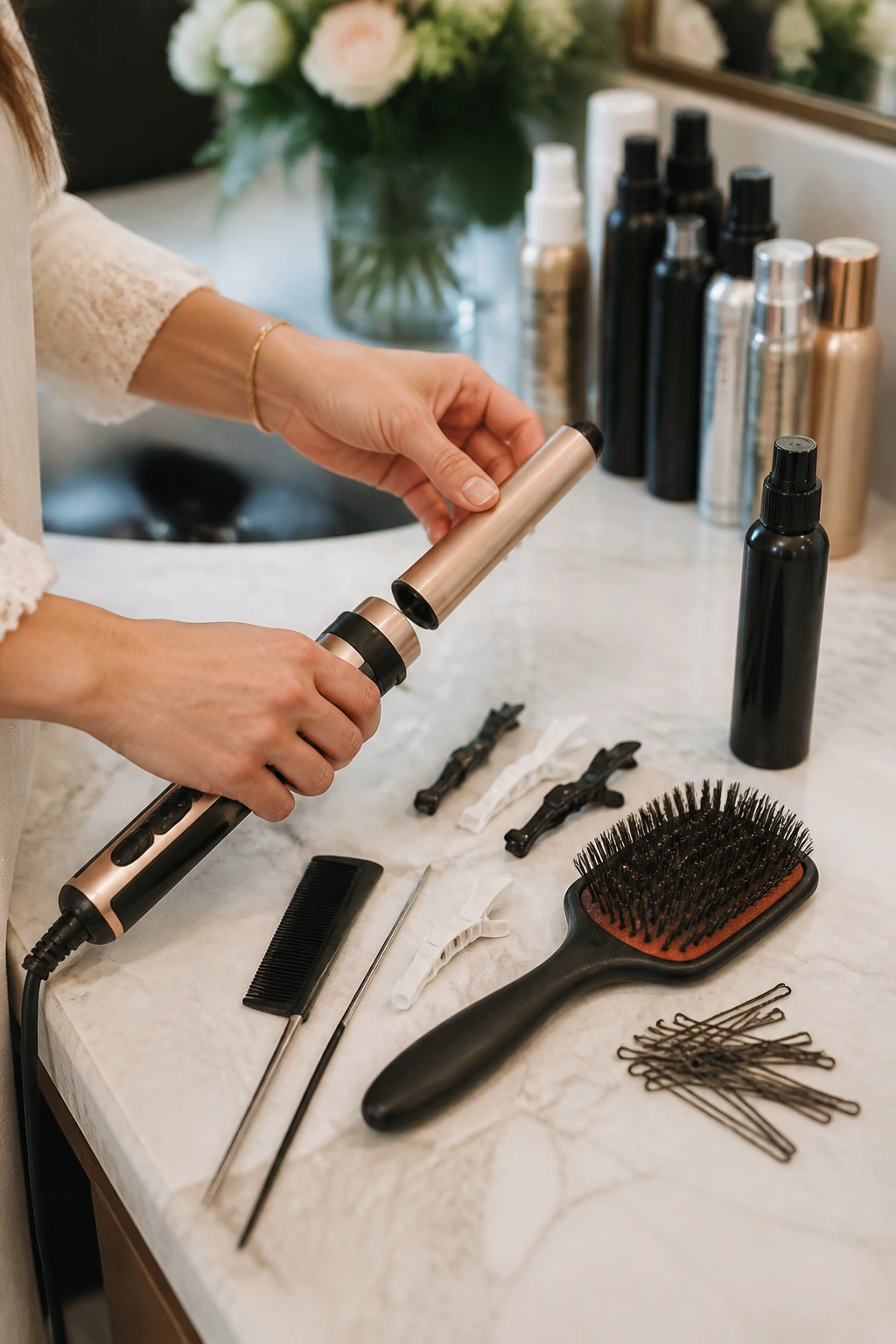
A good bridal hairstyle is less about magic and more about the right handful of tools. The list is shorter than people think, but the pieces need to be the right shape, size, and hold for medium-length hair.
- 1-inch curling iron: Best for face-framing pieces, tendrils, and tighter waves that need to last.
- 1.25-inch curling iron or wand: Good for brushed-out Hollywood waves and soft, loose curl patterns.
- Boar-bristle brush: Helps smooth curls into waves without ripping out the set.
- Tail comb: Useful for clean parts, crown lift, and placing tiny sections exactly where they belong.
- Sectioning clips: Keep curled pieces out of the way while you build the shape.
- No-slip bobby pins: The grippy kind matter more than the decorative kind.
- Clear elastics: Better for half-up looks, ponytails, and hidden anchor points.
- Strong-hold hairspray: Use it at the end, not all through the process.
- Texturizing spray or powder: Gives medium hair enough grip to hold pins and twists.
- Smoothing cream or lightweight serum: Helps slick looks stay neat without greasy shine.
- Veil comb and anchor pins: Worth testing before the wedding day, not after.
- Optional clip-in extensions: Handy for ponytails, braids, or buns that need a little more length or fullness.
Choosing the Right Prep Products and Hairpieces
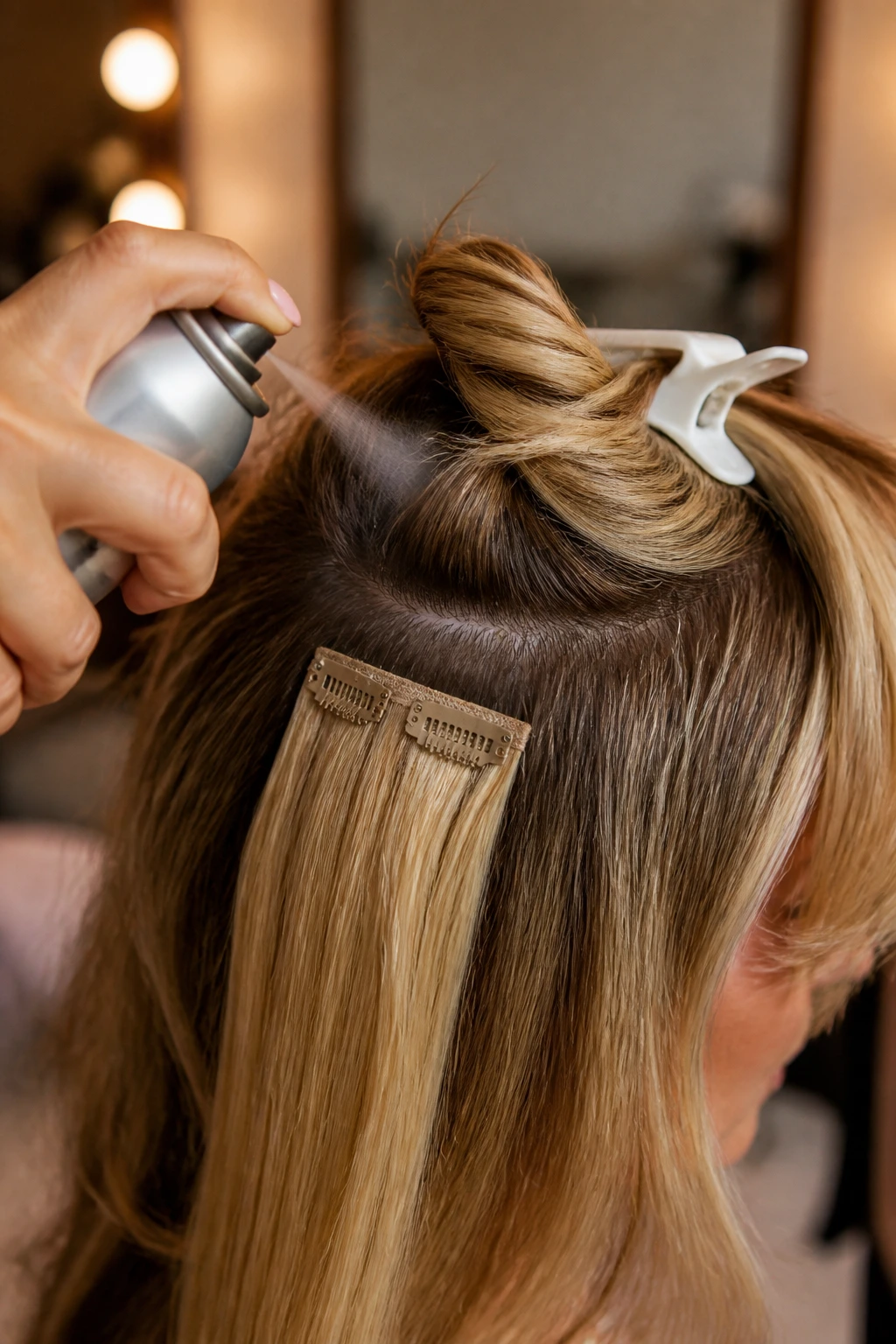
The prep matters more than the final spray. Hair that’s too soft, too clean, or too slippery tends to lose shape before the night is over. Medium-length hair usually responds well to a little grip at the roots and controlled shine through the mids and ends.
For fine or slippery hair
Start with dry shampoo or texture spray at the roots, even if the hair is clean. A little grit makes pins stay where you place them. If the hair is very fine, a small amount of clip-in padding or one set of wefts can keep buns and ponytails from collapsing.
For thick or curly hair
Use a smoothing cream or anti-frizz product only where it’s needed. Too much product at the crown can make curls slide. If you want a sleek bun or ponytail, blow-dry the base smooth first and leave the ends to be shaped later.
For veil combs, pins, and hairpieces
Test the actual comb, vine, or clip on your head before the big day. A piece that sits flat in the box can feel awkward once the hair is pinned. Color matters too — gold pins vanish better in warm brunette or blonde tones, while black pins tend to hide in deeper shades.
I like to see the whole set together: dress, earrings, hairpiece, and hairstyle. That’s where the real decision gets made.
How to Wear the Look With a Veil, Jewelry, and Neckline
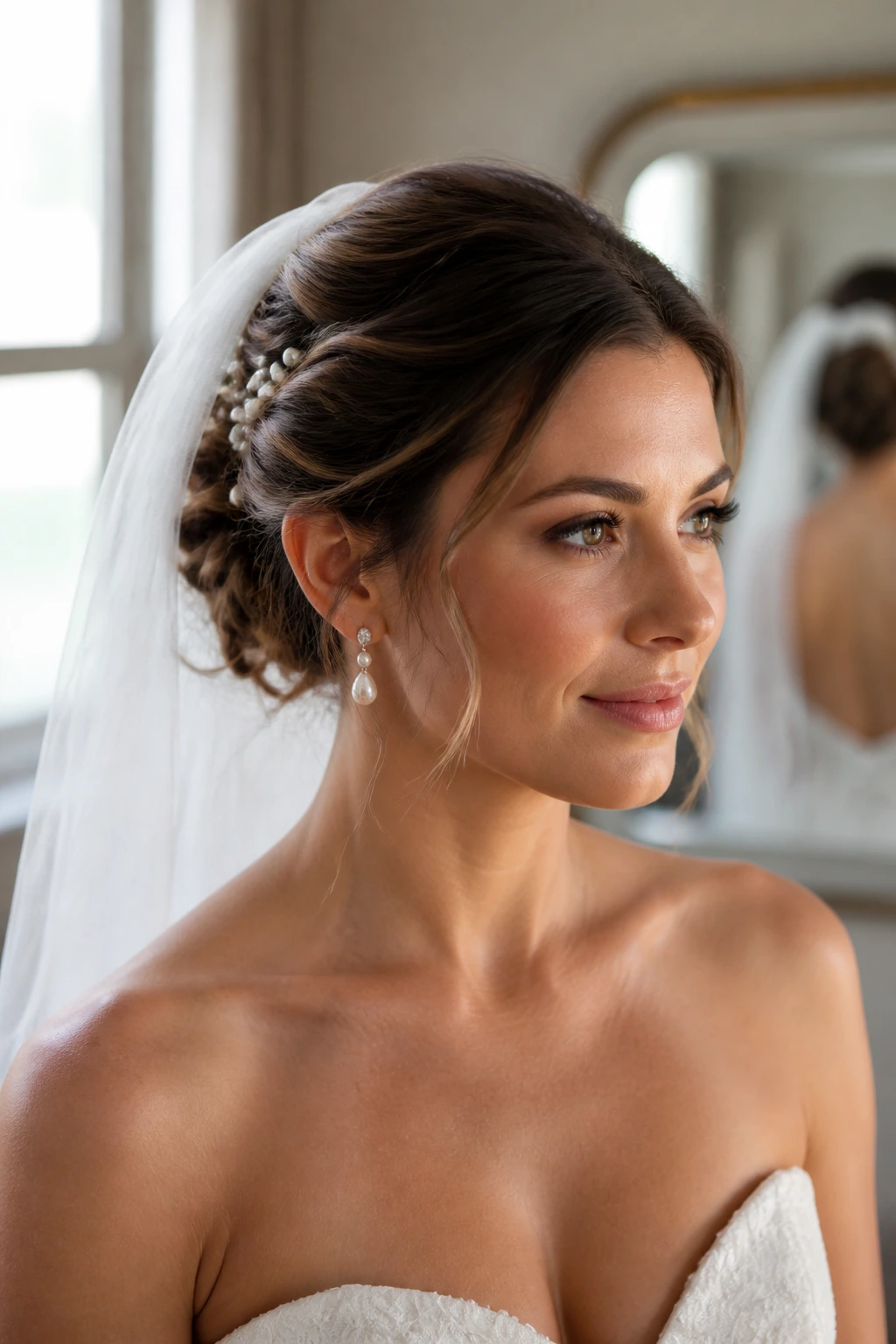
A hairstyle can look finished in a vacuum and still fight the dress. Medium-length bridal hair works best when the accessories are planned with the shape in mind, not added as an afterthought.
Placement: A veil comb usually sits just above a bun or twist, or just below the crown area if you want the fabric to drape from higher up. If the style has a lot of lift at the top, the comb should sit in a stable patch of teased hair, not on a slippery smooth section.
Accessories: Pearl pins, combs, and vines belong where the eye naturally pauses — usually near the join point of a twist, at one temple, or just above a low knot. If the hairstyle already has motion, keep the accessory small. If the hair is sleek, one stronger piece can carry the whole look.
Neckline Match: A high neckline likes a lower bun or ponytail that clears the collarbone. A strapless or sweetheart dress can handle soft waves, side-swept curls, or a half-up shape with more movement. One-shoulder dresses usually look best with hair pushed to the opposite side, so the lines don’t fight each other.
Comfort Check: Turn your head, bend forward, and sit down in the hairstyle before the wedding day. If the comb shifts or the earrings catch on the hair, fix it then.
Practical Tips That Keep the Style Alive All Day
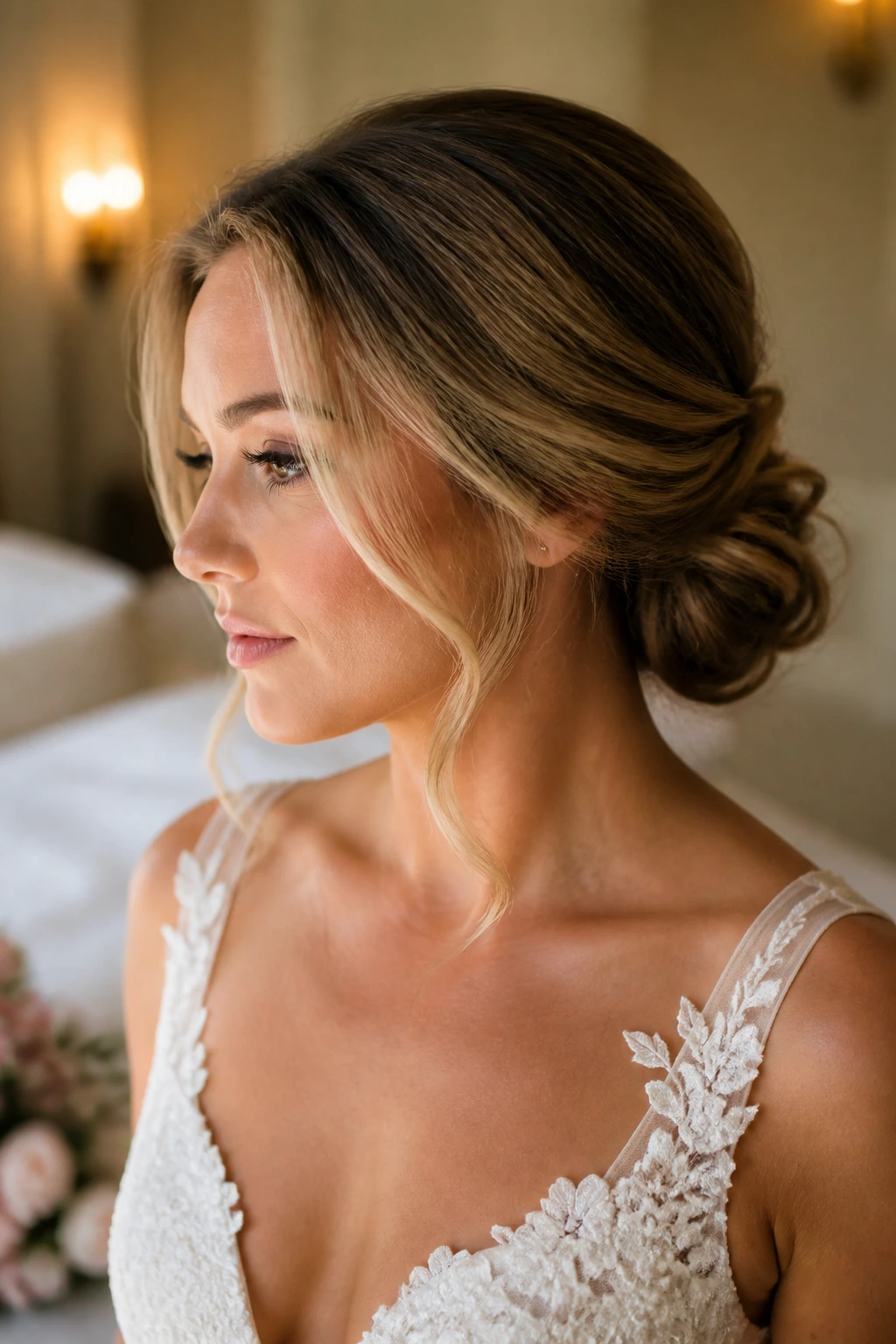
The difference between “looks good in the chair” and “still looks good at the last song” usually comes down to four things: grip, pin placement, timing, and restraint.
- Build grip before shape: A little texture spray at the roots gives the hair something to hold onto. Clean, silky hair often needs more help than brides expect.
- Let curls cool fully: Pinning warm curls in place helps them keep the bend. Rushing this step is one of the fastest ways to lose shape early.
- Cross pins where weight sits: If a bun or twist feels heavy on one side, use two pins in an X pattern rather than one straight pin.
- Spray in layers: A light mist, a short wait, then another mist gives better hold than flooding the style in one go.
- Keep hands off the front: The more you touch the face-framing pieces, the faster they loosen and separate.
- Pack a tiny repair kit: Six bobby pins, a travel spray, and one small comb can rescue a style after the ceremony, especially if the weather is warm or windy.
My blunt advice: stop trying to make the style bulletproof. Make it stable, then let it move a little. That’s what looks human.
Common Mistakes Brides Make With Medium-Length Hair
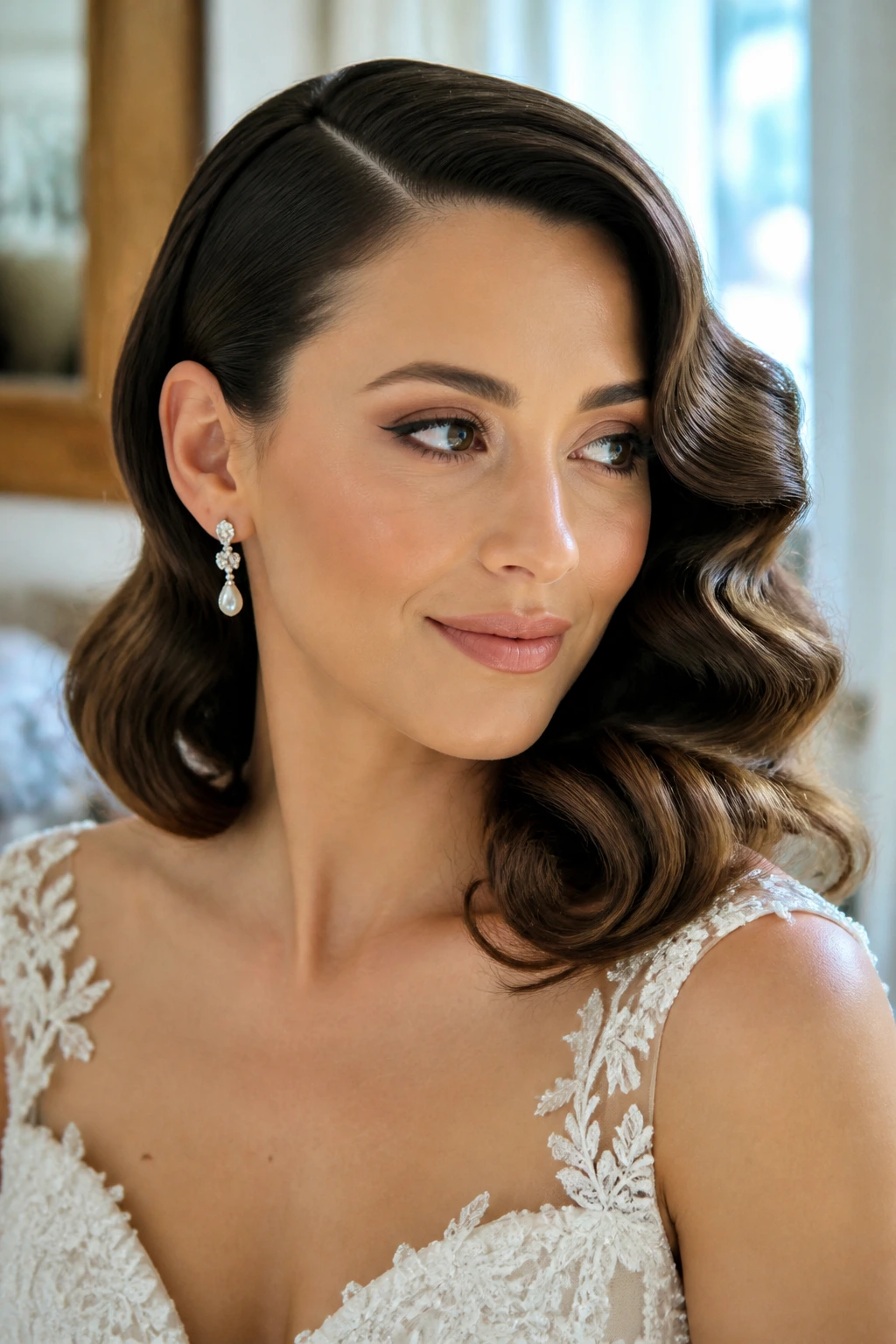
The mistakes are usually small. They just compound fast.
- Starting with hair that’s too clean: Freshly washed hair can be slippery, especially if it’s fine. The fix is simple — wash earlier, or add dry shampoo and texture spray before styling.
- Choosing a style that fights the dress: A big side sweep with a one-shoulder gown is harmony. A high voluminous crown with a high neck can feel crowded. Match the lines, and the whole look settles down.
- Using too much oil or serum at the roots: Shine is nice; slip is not. Keep smoothing products through the mids and ends, and leave the scalp area lighter.
- Skipping a veil trial: A veil comb that seems harmless can tilt a bun or flatten a twist. Put the actual veil in during the hair trial and check it from the side and back.
- Over-spraying the front: Heavy hairspray near the face can make the style look stiff and dry. Spray the base, then finish with a lighter mist on the outer layer.
- Forgetting about movement: You’ll turn, hug, dance, and lean in for photos. A style that looks fine standing still may not survive motion unless it’s anchored from the start.
Variations and Alternatives to Try
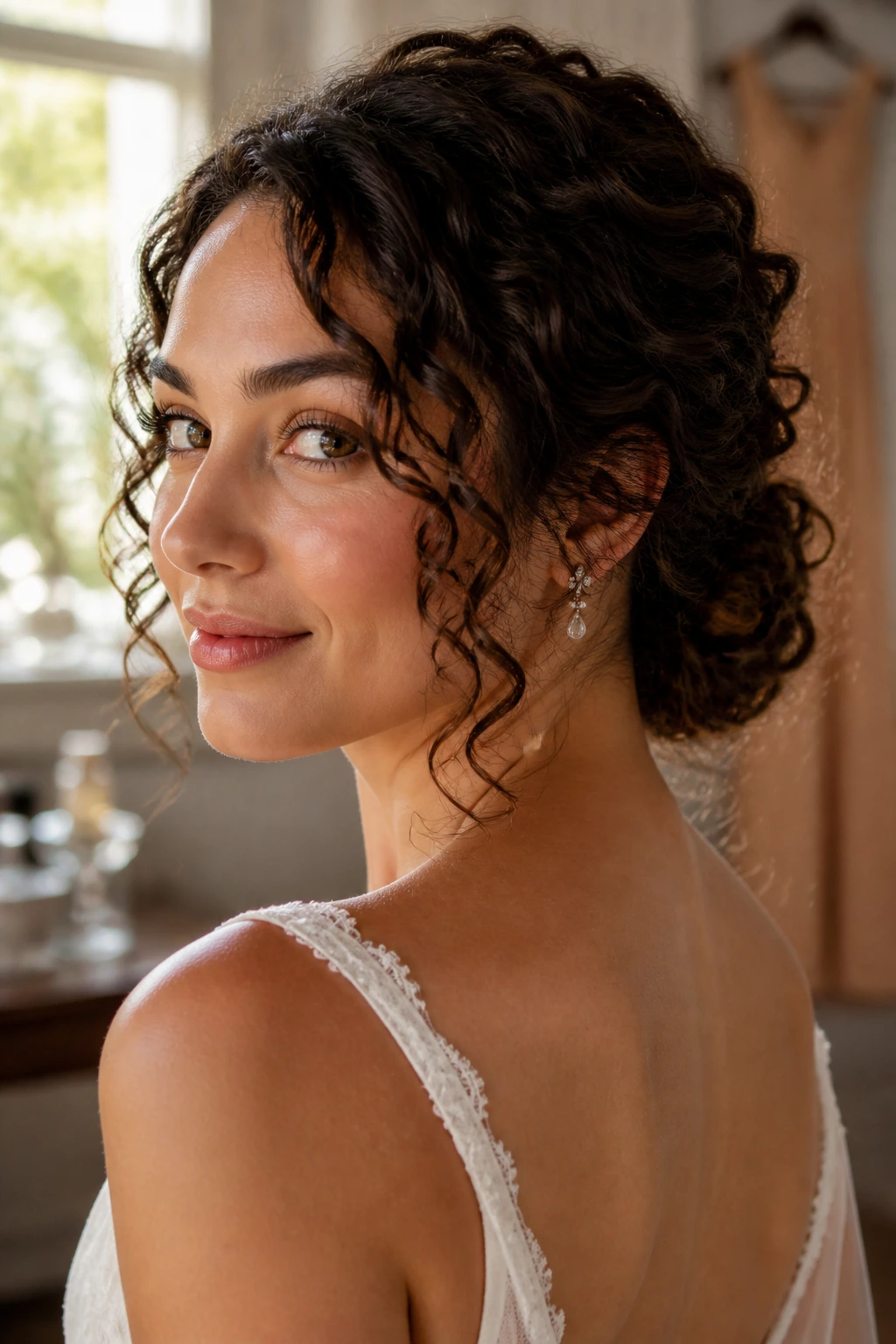
Curly-First Version: If your natural curl pattern is strong, build the hairstyle around it instead of fighting it. Half-up twists, side sweeps, and low knots all look better when the curl is allowed to stay visible rather than brushed into a puff.
Shorter-Medium Length Fix: Hair that barely reaches the shoulders can still do most of these styles, but the bun and ponytail versions may need a small clip-in piece or padding. That extra inch or two keeps the ends from poking out and gives the silhouette a cleaner finish.
No-Veil Minimalist: Skip the veil and let the hair be the accessory. Sleek buns, low ponytails, and Old Hollywood waves work especially well here because they don’t need extra fabric to feel complete.
Statement Accessory Edit: Swap pearls for a jewel comb, a satin ribbon, or a floral vine. The hairstyle itself can stay almost identical; the accessory changes the mood faster than a full restyle.
Wind-Proof Outdoor Version: Go one level tighter on the base and choose a shape with multiple anchor points — low bun, braided bun, or a half-up with a strong twist. Soft loose ends are still fine, but they should be shorter and better controlled.
Vintage-Finish Version: Brush curls into waves, add a deep side part, and finish with a pin at one temple or a tucked veil comb. That small shift gives the whole look a more formal, old-school feel.
Make-Ahead Prep and Long-Wear Maintenance
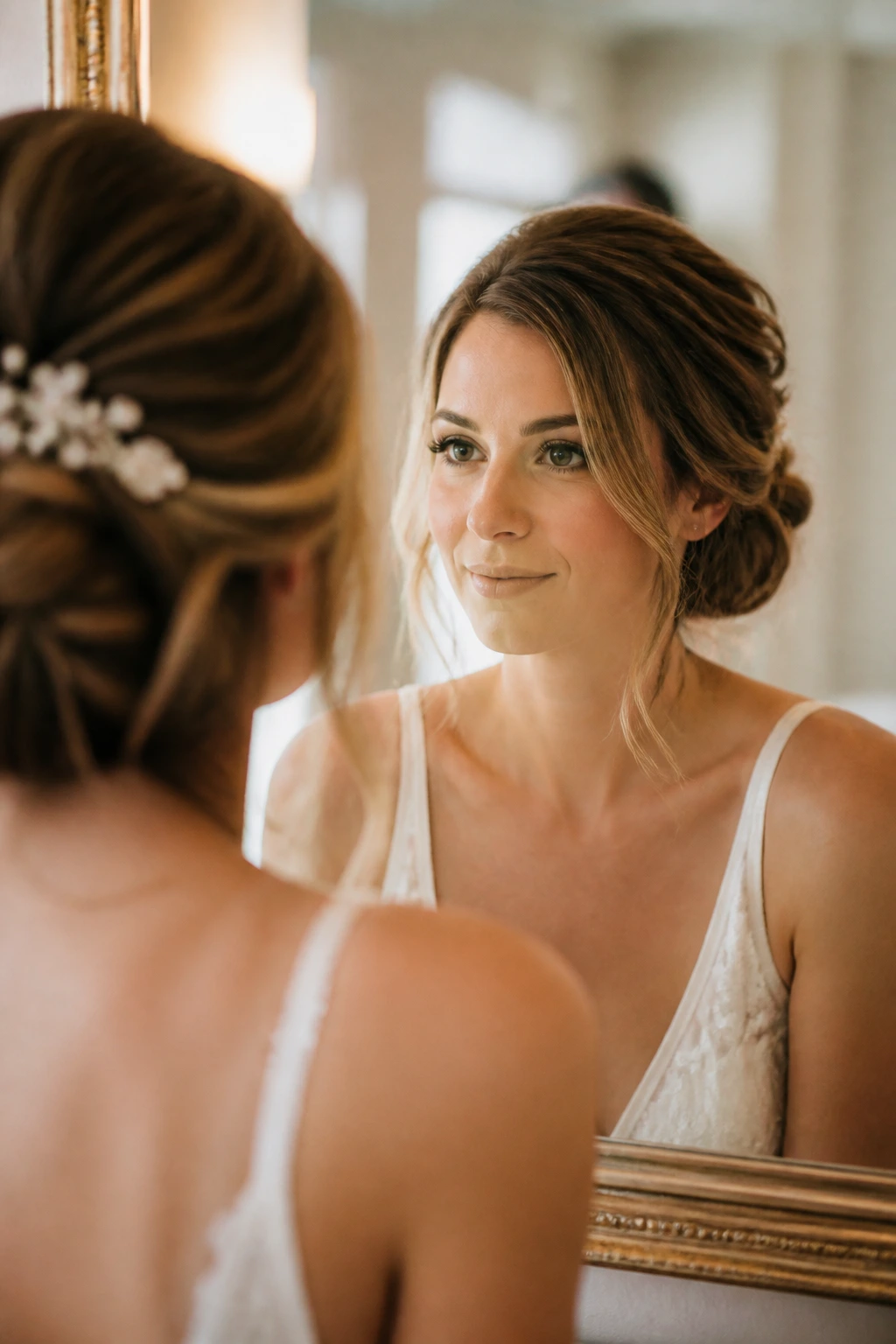
A hair trial is worth its weight in bobby pins. Do it with the actual veil, earrings, and any comb or vine you plan to wear. The goal is not only to like the shape, but to see whether the accessories sit where they should and whether the neckline still feels open.
For prep, medium-length hair usually behaves best when it isn’t freshly stripped of all texture. If your hair is fine, a wash the day before often gives better grip. If your hair is coarse or curly, a wash earlier can help the hair calm down and accept heat better. Either way, avoid loading conditioner near the roots.
If you’re using hot tools, let each section cool completely before you touch it again. Warm hair wants to unroll. Cool hair holds. That’s the whole game.
Keep the accessories together in one pouch: pins, comb, spray, elastics, and a tiny toothbrush or edge brush if you like a smoother hairline. If you’re using fresh flowers, ask for wired blooms that can be inserted at the end instead of waiting around too long. After the event, remove pins before brushing, and wash out the product with a clarifying shampoo if the hair feels coated.
Frequently Asked Questions
Can medium-length hair really hold a bridal updo?
Yes, if the style is built with the right anchor points. A low bun, braided bun, Gibson tuck, or twisted chignon usually works well because the hair has enough length to fold and pin without turning bulky.
Should I wash my hair on the wedding morning?
Usually not if your hair is fine or slippery. A little natural texture gives pins and curls something to grab. Many stylists prefer hair that’s been washed the day before, then refreshed with dry shampoo or texture spray.
Do I need extensions for these looks?
Not always. Clip-ins help if you want a fuller ponytail, a thicker braid, or a bun with more body, but many medium-length styles look better without them. The right call depends on how much fullness you want at the finish.
What if my hair is very fine and flat?
Start with texture spray at the roots, use a lightweight blow-dry mousse, and keep the style’s base as compact as possible. Fine hair usually does better in styles that are pinned close to the head, rather than in oversized buns that need a lot of hidden padding.
Can I wear a veil with a half-up style?
Yes. The veil comb usually sits just below the twist or just above the point where the half-up section meets the loose hair. The trial matters here, because the comb can shift the whole shape if it’s placed too low.
Which style works best with a high neckline?
A low bun, sleek ponytail, or tucked style tends to be the cleanest match. Those shapes keep the neck open and avoid crowding the fabric at the collar.
How do I keep curls from falling flat before the reception?
Cool each curl completely before brushing it out, then finish with a flexible spray. If your hair tends to drop quickly, pin the curls up while they cool and don’t touch them until they’re fully set.
What should I do if the weather is windy or humid?
Choose a style with a stronger base — low bun, braided bun, or low ponytail — and keep the loose pieces shorter and more controlled. Bring a travel spray and extra pins, because the fastest fix is usually a few hidden anchors, not a full restyle.
Last Look
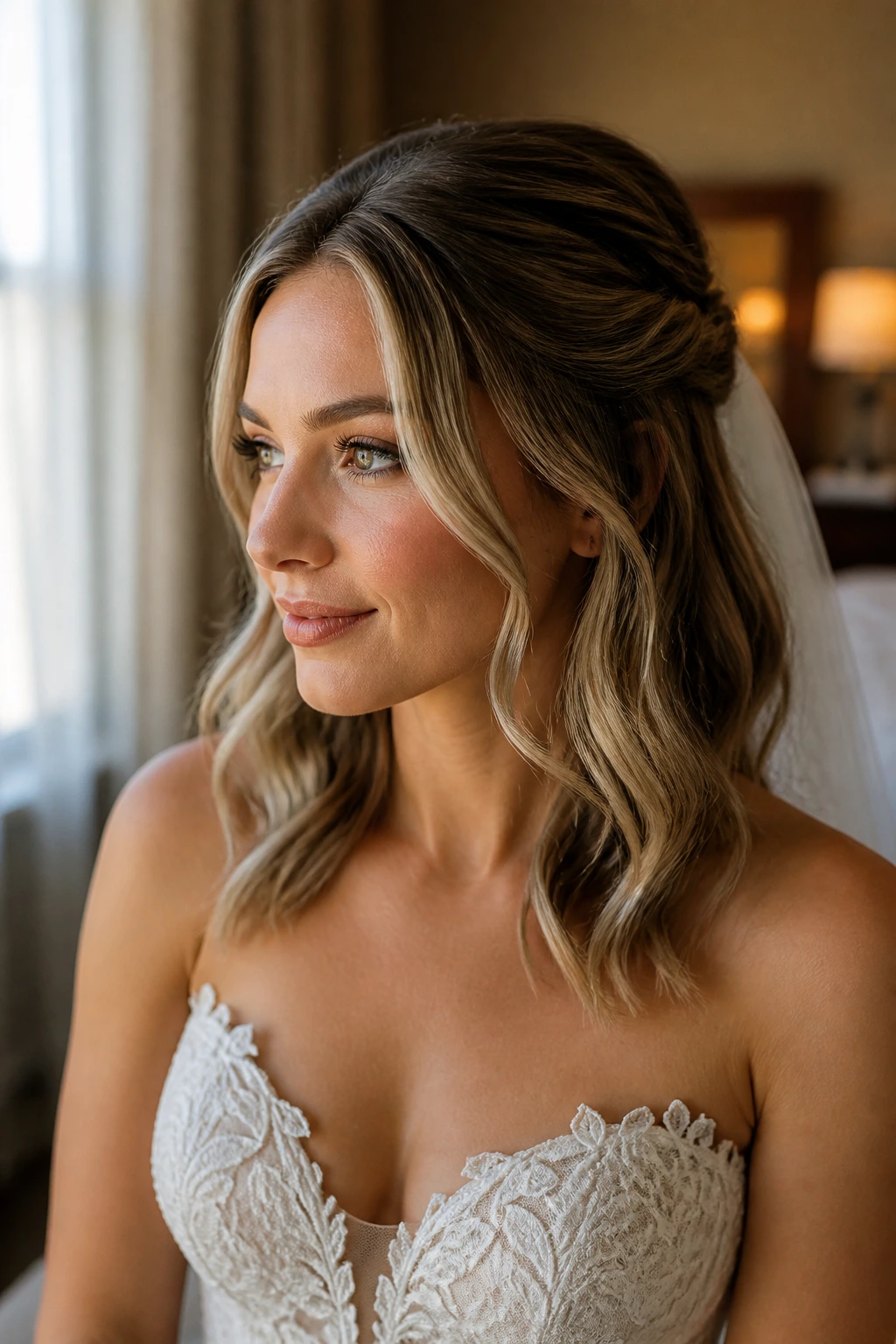
Medium-length hair gives you room to build shape without carrying the weight of extra length. That’s why these styles can look clean, soft, polished, or romantic without falling apart into one predictable bridal template.
The smartest choice is usually the one that respects the dress first, then the veil, then the hair texture you actually have. Pick a shape that fits those three things, and the rest gets easier fast.
A strong trial will tell you more than a dozen saved photos. Choose the version that sits well from the front, the side, and the back — then let the day unfold around it.
