



A formal hairstyle can be the thing that saves an outfit or the thing that quietly ruins it. You can have the right dress, the right earrings, the right shoes, and still feel a little unfinished if your hair looks like it was handled in a hurry. The trick is not “more hair.” It’s shape. Clean lines. A finish that survives coat checks, candles, humidity, and someone hugging you too hard.
That’s why polished evening hair has its own rules. A good formal style doesn’t just sit there looking neat in one mirror angle. It keeps its line from the front, the side, and the back. It needs an anchor point near the nape, the crown, or the braid base. It needs enough grip to stay put, but not so much product that it turns stiff and chalky by the time you’re halfway through the night.
The 25 styles below cover the full range: sleek buns, old-Hollywood waves, braided details, short-hair finishes, half-up shapes, and a few modern looks that feel sharper than the usual prom-photo updo. Some are safer bets for fine hair. Some are friendlier to thick, slippery, or curly textures. Some need ten minutes and a mirror. Others need a hot tool, a few pins, and a little patience. All of them can read formal if you place the structure in the right spot.
Why This Collection Works for Evening Events
-
Built to hold shape: Each style uses a clear anchor — a bun base, a braid, a twist, or a pinned side — so the hair doesn’t sag after an hour in warm air.
-
Friendly to different lengths: You’ll find looks for short bobs, collarbone cuts, medium hair, and long hair that reaches past the shoulder blades.
-
Formal without feeling stiff: The best evening hair has polish, not helmet hair. These styles keep movement where it belongs, around the face or through the ends.
-
Easy to pair with clothes: High necklines, bare shoulders, one-shoulder dresses, and heavy earrings all ask for a different balance, and these styles cover that range.
-
Useful beyond weddings: Cocktail dinners, gallery openings, holiday parties, black-tie events, and work functions all benefit from the same kind of control.
-
Flexible on texture: Sleek, wavy, braided, and pinned versions mean you can work with your natural pattern instead of fighting it into something that looks fake.
1. Sleek Low Chignon
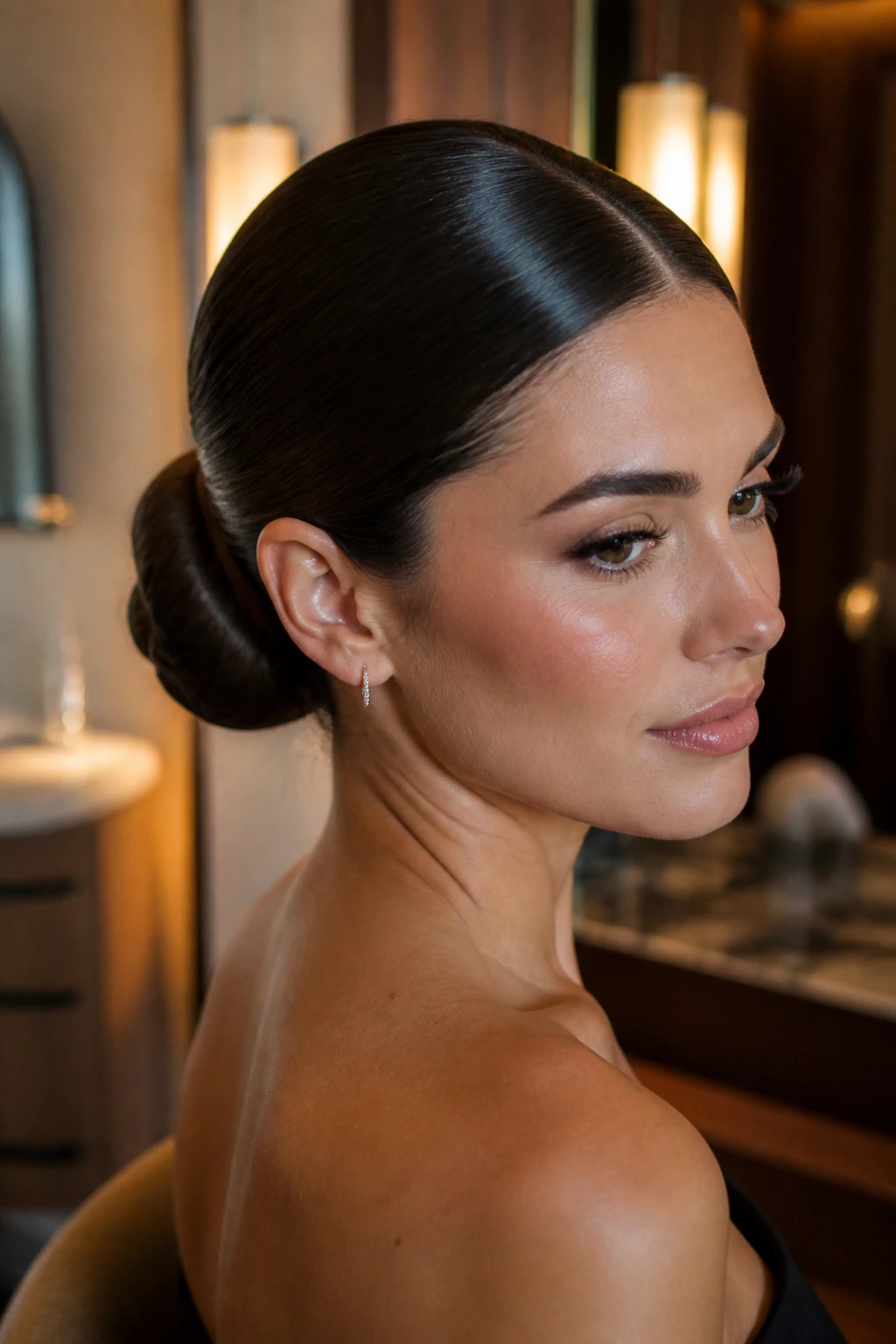
This is the hairstyle I reach for when the outfit already has enough drama. A low chignon sits at the nape, keeps the neckline open, and looks sharper than a loose bun because the surface is smooth from crown to base. It’s one of those styles that looks expensive even when the tools are basic.
What makes it work
The magic is in the control at the front. A clean middle part or a deep side part gives the bun a clear frame, and a thin veil of shine cream keeps flyaways from breaking the line. If your hair is slippery, prep with dry shampoo at the roots first. Seriously. That small bit of grit helps the style stay locked.
- Works best on medium to long hair
- Needs 6 to 10 bobby pins
- Looks strongest with a center part and tucked ends
Tip: wrap one small section of hair around the elastic before pinning the bun. It hides the tie and makes the whole thing look finished instead of improvised.
2. Old-Hollywood Side Waves
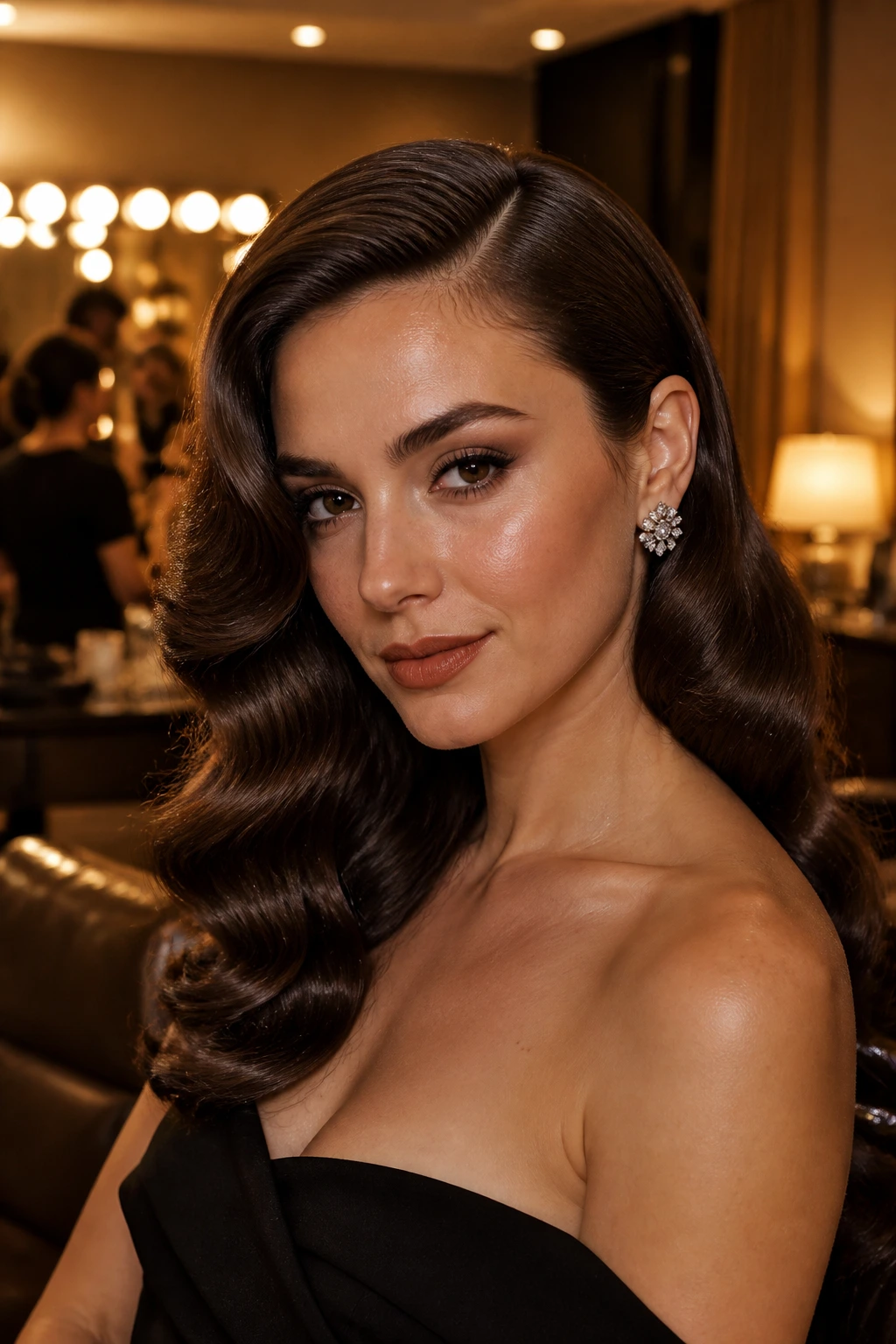
A side wave has a very specific kind of polish. It doesn’t try to be modern in a loud way. It just sits there with soft bends, a deep side part, and enough gloss to catch light on the curve of each wave. If the event calls for gowns, satin, or anything with a dramatic shoulder, this is hard to beat.
The key is brushing out the curl only after it cools. That part matters. If you try to shape it too soon, the wave falls apart and you’re left with a frizzy bend instead of the smooth S-curve you wanted. Use a 1-inch or 1¼-inch iron, set the waves away from the face on the heavy side, and pin them while they cool if your hair tends to lose structure.
Best for
Long hair, medium hair, and shoulder-length cuts with a little weight.
Worth noting: a side wave looks best when one ear is partially exposed. Full coverage makes it feel old-fashioned in the wrong way.
3. Twisted French Twist
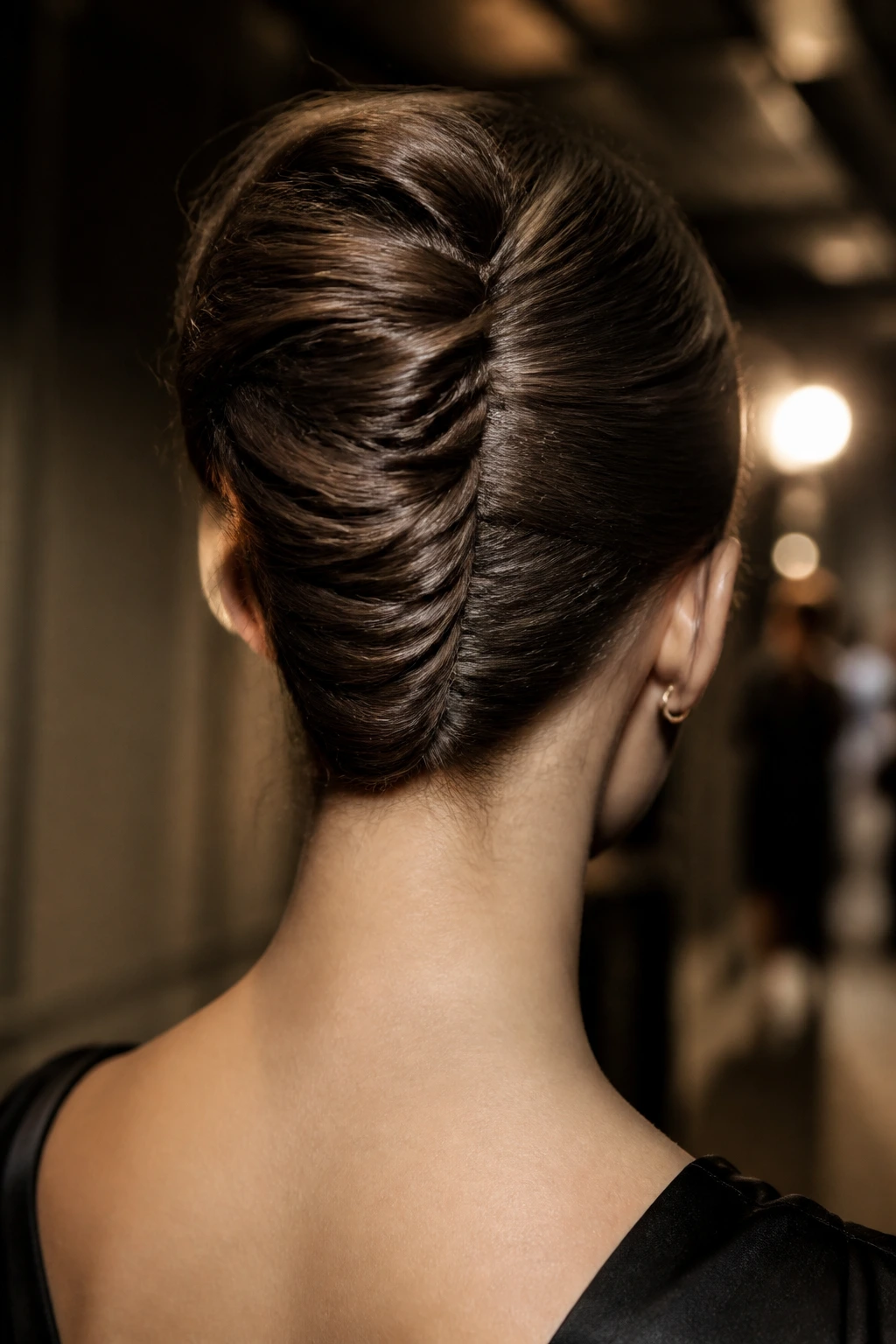
The French twist is the kind of formal hairstyle that looks like you had help, even when you did it yourself in front of a bathroom mirror. It pulls the hair upward into a narrow roll, which gives the back of the head a clean, vertical line. That shape is especially good with high necks and tailored jackets.
Start with hair that has a little texture. Clean, silky hair can slide. If you need grip, rough it up with a bit of styling powder at the crown. Then gather the hair low, twist upward, tuck the ends inside the roll, and secure with long pins from the side, not straight in. That sideways pinning is what keeps the twist from loosening.
How to use it
If your hair is fine, keep the twist compact and close to the head. If it’s thick, don’t fight for a razor-tight roll — a slightly fuller twist looks more balanced and won’t bulge at the seam.
4. Polished High Bun
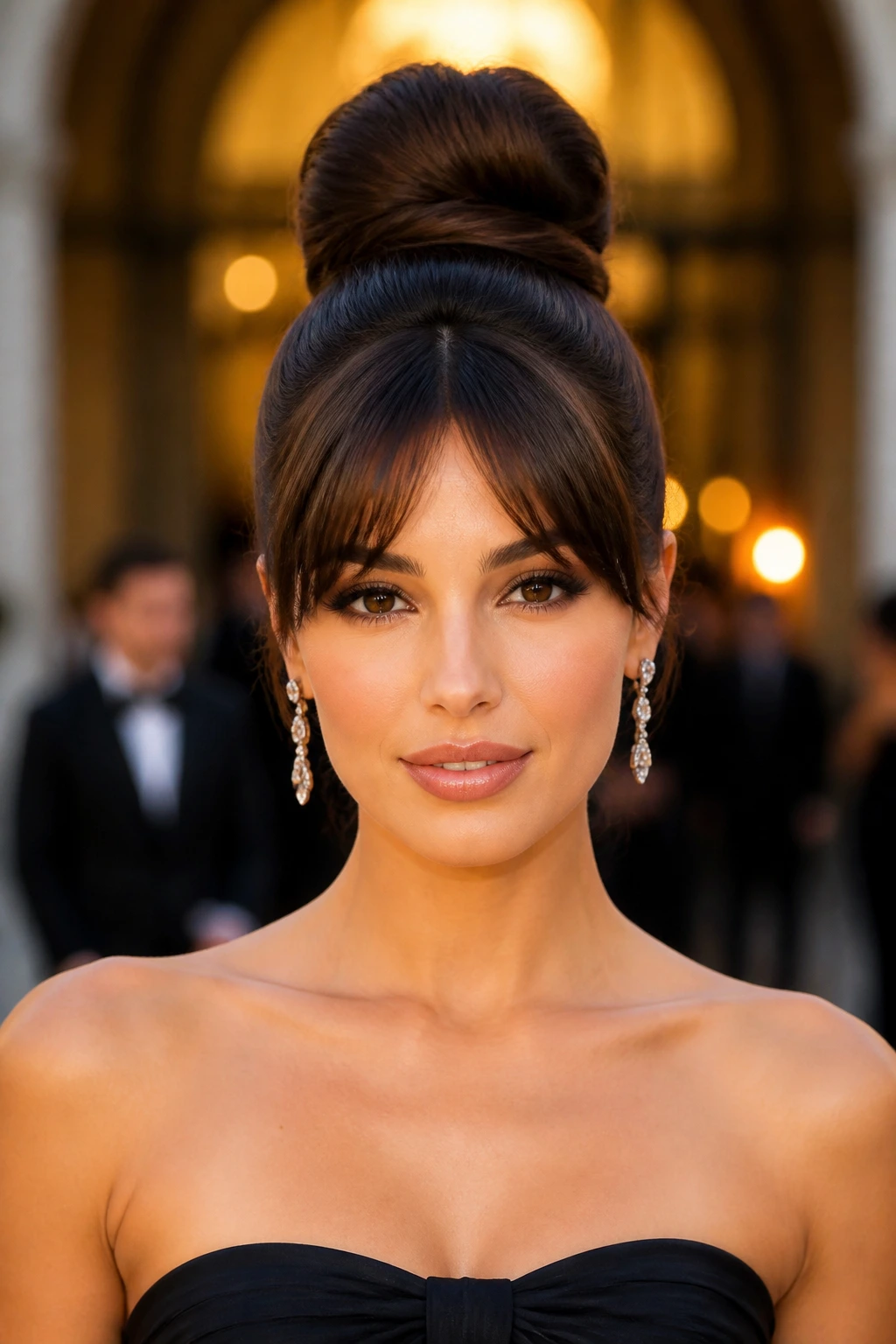
A high bun changes the whole mood of a look. It lifts the face, shows off earrings, and keeps the shoulders clear, which is useful when the dress already has texture or embellishment. The polished version is not messy and not airy. It has structure.
Picture this: hair smoothed back, crown controlled, bun placed high but not cartoonishly high, with a glossy surface that makes the silhouette feel intentional. That’s the target. If you’ve got a blunt fringe, leave it sleek. If you prefer no fringe, make the front as clean as the back. The bun can be braided, twisted, or wrapped, but the outline should stay neat.
- Strongest with medium to long hair
- Great for strapless or off-the-shoulder dresses
- Needs extra pins if your hair is layered
Tip: place the bun slightly above the crown, not at the very top of the head. That small shift keeps it elegant instead of juvenile.
5. Glass-Hair Low Ponytail
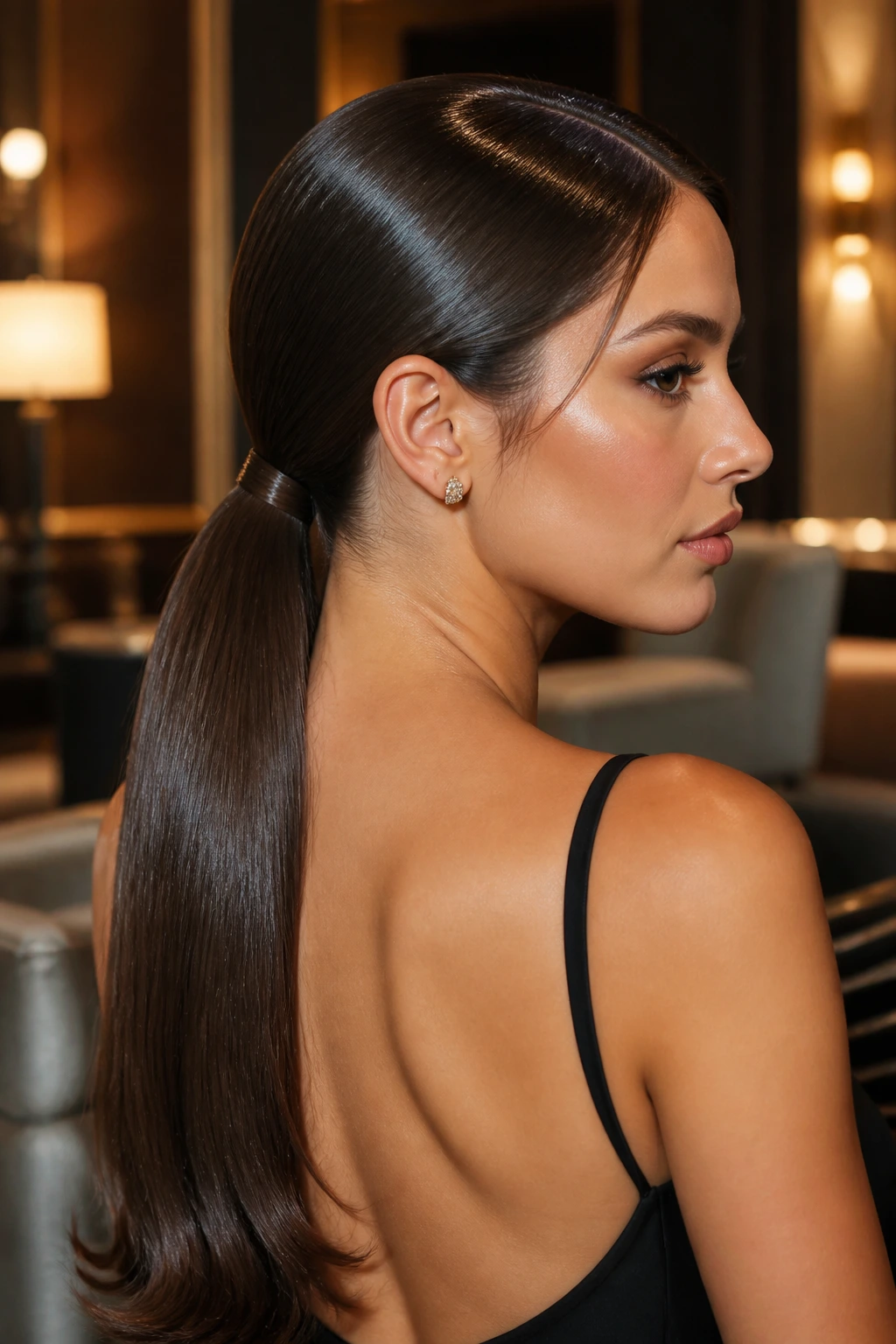
This is the most modern-looking formal style in the bunch, and I mean that in a good way. A glass-hair ponytail is all about shine, a flat and smooth crown, and a low tail that moves like a ribbon when you turn your head. It’s spare, clean, and a little severe — which can be exactly the right mood.
The trick is to smooth the hair in sections. Don’t just drag a brush over the top and hope it behaves. Work from the nape upward, then seal the surface with a light mist of flexible hairspray and a touch of serum on the very outer layer. Too much serum turns the style greasy fast. Too little and you lose the glassy finish.
If you want this to read formal, wrap a small strand around the elastic and let the tail stay straight or give it one soft bend near the ends. That tiny detail stops it from looking like an office ponytail.
6. Soft Braided Crown
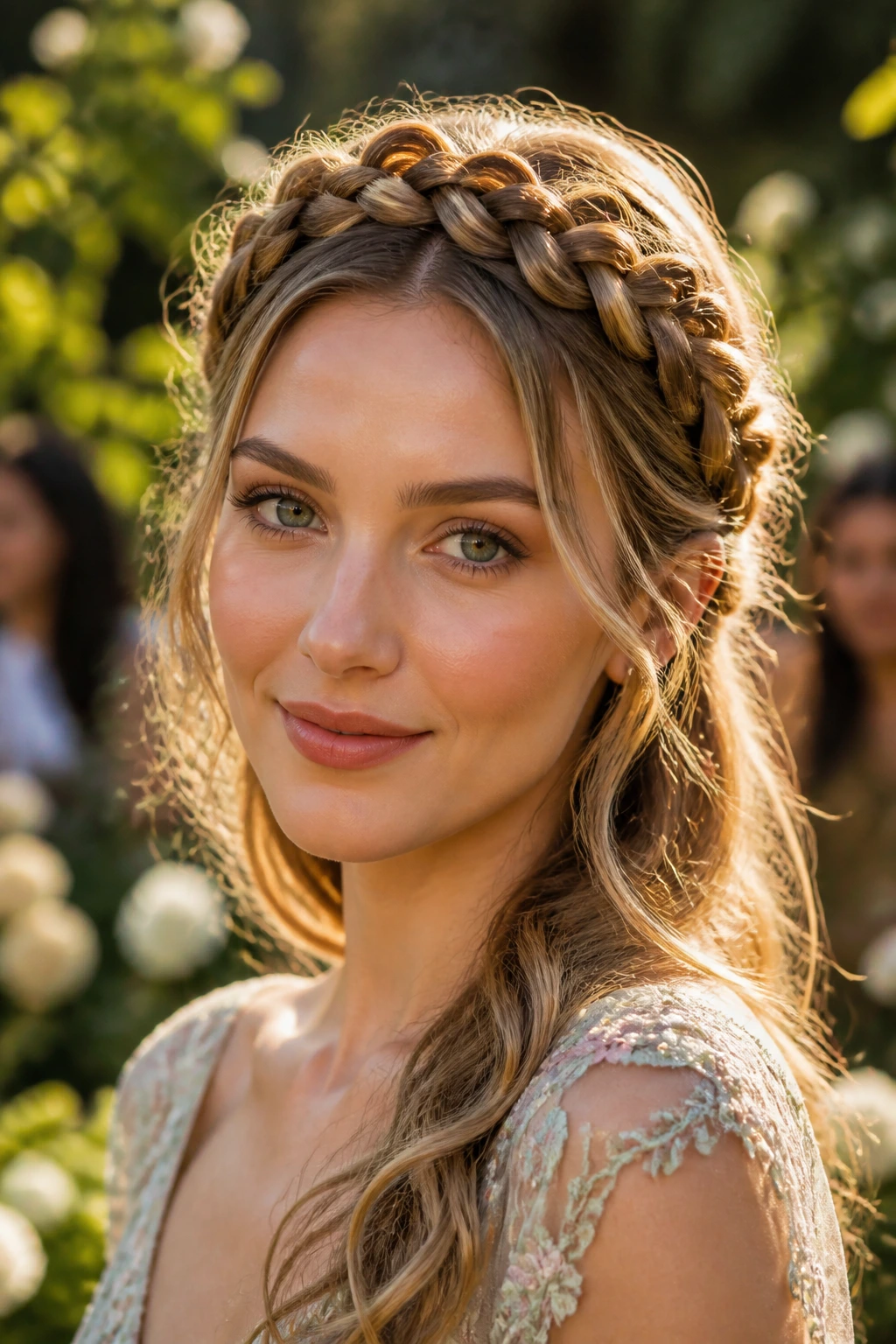
A braided crown gives formal hair a softer frame. Instead of building height, it creates a loop or halo around the head, which keeps the front controlled and leaves the rest of the hair open. I like this for garden parties, dinner events, and dresses with a lot going on at the bodice.
What makes it work is the difference between a tight braid and a gently pulled-apart braid. A crown braid that’s too tight can look severe. A slightly loosened braid, pinned low and hidden at the back, has more ease to it. Leave a few face-framing pieces if the neckline can handle them.
Best for
Medium to long hair, especially hair with natural bend or wave.
One thing to watch: if your hair is very layered, use small clear elastics at the braid ends before pinning. Layers like to escape.
7. Half-Up Rope Twist
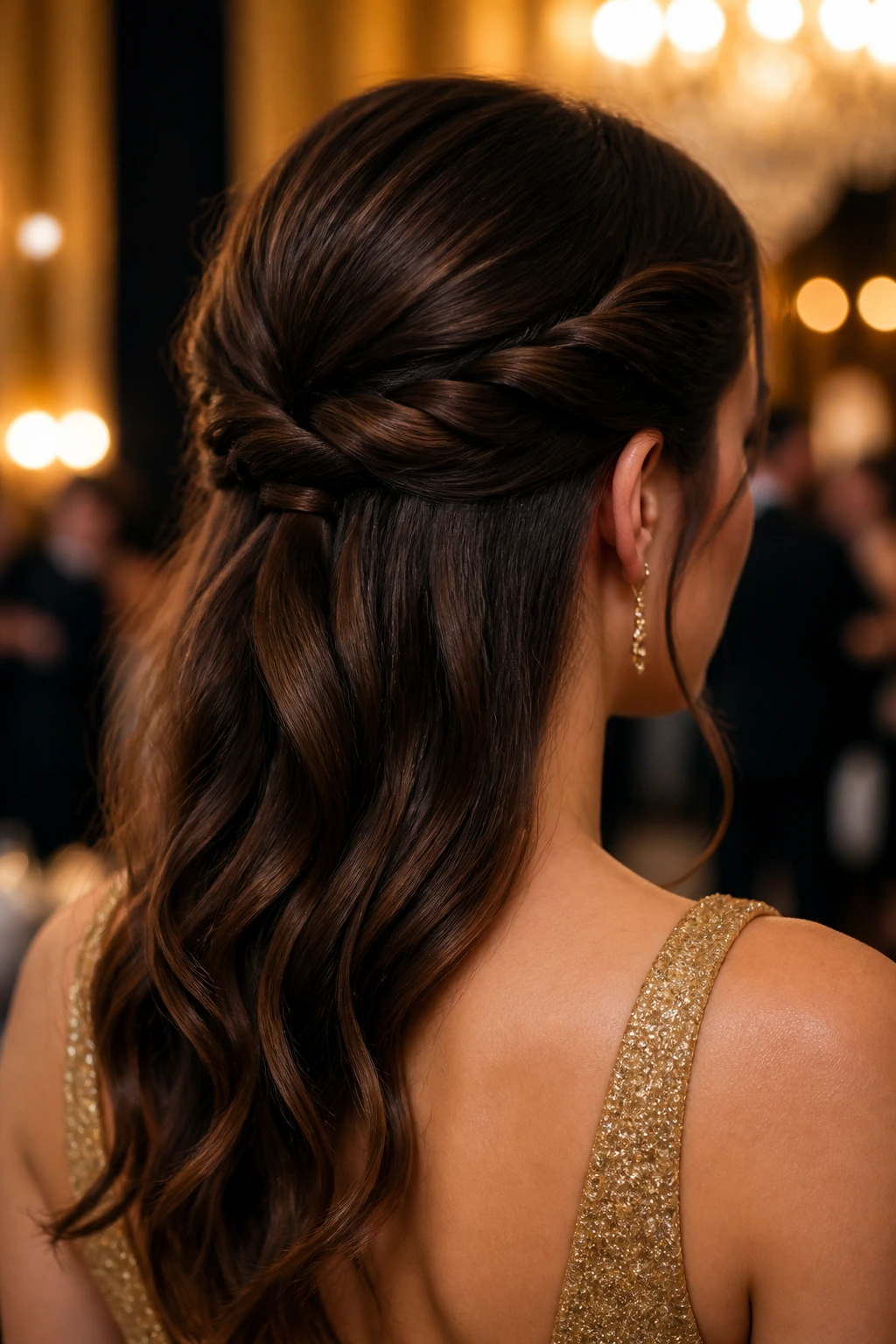
Half-up styles are tricky because they can look too casual if the top section is too small. A rope twist fixes that. It gives you the clean structure of a pinned style while keeping length and movement through the back. The result feels formal without being overworked.
To build it, take two sections from the temples, twist each one back on itself, then twist the two together before pinning them at the back of the head. The twist should sit flat and lie close to the scalp. If you leave it puffy, it loses the sharpness that makes it evening-ready.
This is a good choice for someone who wants to keep curls or waves visible. It also works nicely with earrings, because the front is controlled but not completely pulled away.
8. Side-Swept Barrel Waves
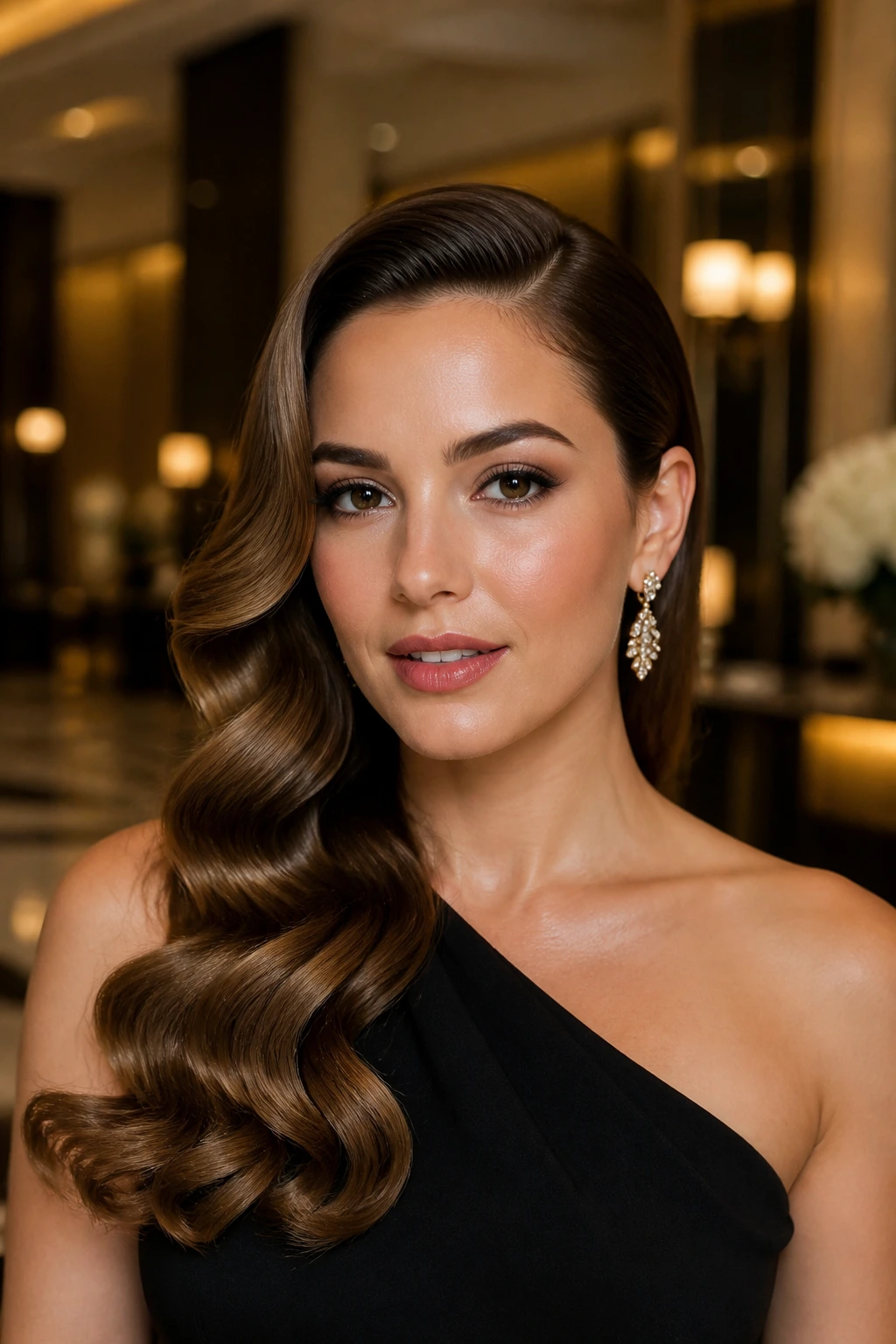
If you want motion, this one has it. Barrel waves swept to one side make the hair look full and deliberate, and they have a much dressier feel than loose beach waves. The side sweep adds structure, while the large curl pattern keeps the ends from looking stiff.
A side-swept wave style needs a clear side part and some support at the root. Tease the underlayer lightly at the crown if your hair lies flat. Then curl in the same direction with a 1¼-inch iron, pin the curls until they cool, and brush them together only after they’ve set. Push the whole shape over one shoulder and pin discreetly behind the ear if needed.
It’s especially strong with asymmetrical dresses. One-shoulder necklines and side-draped gowns love this kind of hair.
9. Wrapped Ponytail with Volume
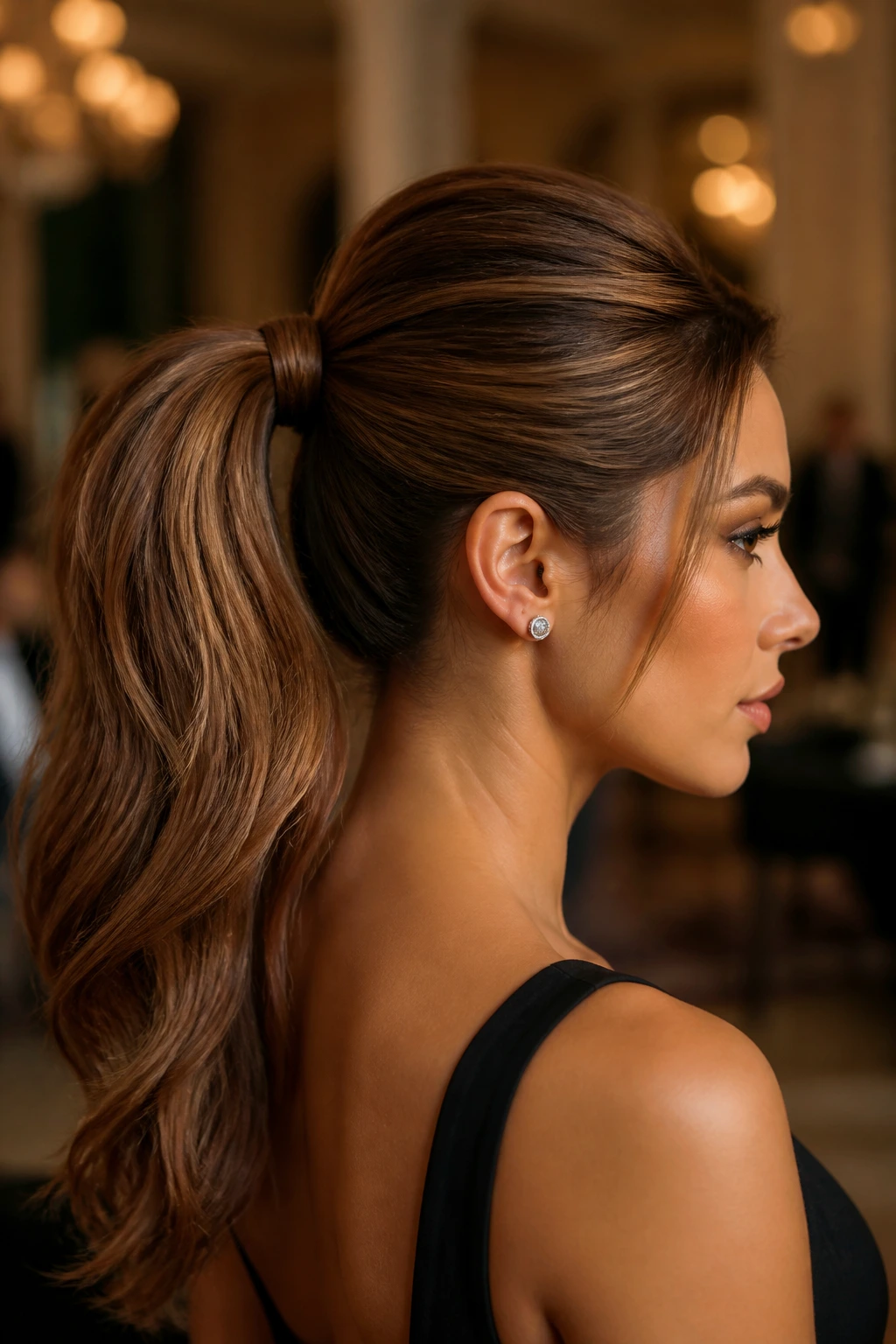
A wrapped ponytail is one of those deceptively simple formal hairstyles that reads much nicer in person than in a flat photo. The volume at the crown gives it lift, and the wrapped base makes it feel styled instead of thrown together.
Start by setting the crown with a bit of teasing or a volumizing powder. Then gather the ponytail low or mid-height, depending on your dress. Wrap a thin section around the elastic, pin it underneath, and smooth the surface with a boar-bristle brush. You want the top to look controlled, not puffed out.
This style works when you need your hair out of the way but don’t want a bun. It also gives long hair a good swing at the back, which helps if the gown is simple and needs a little movement.
10. Knotted Bun
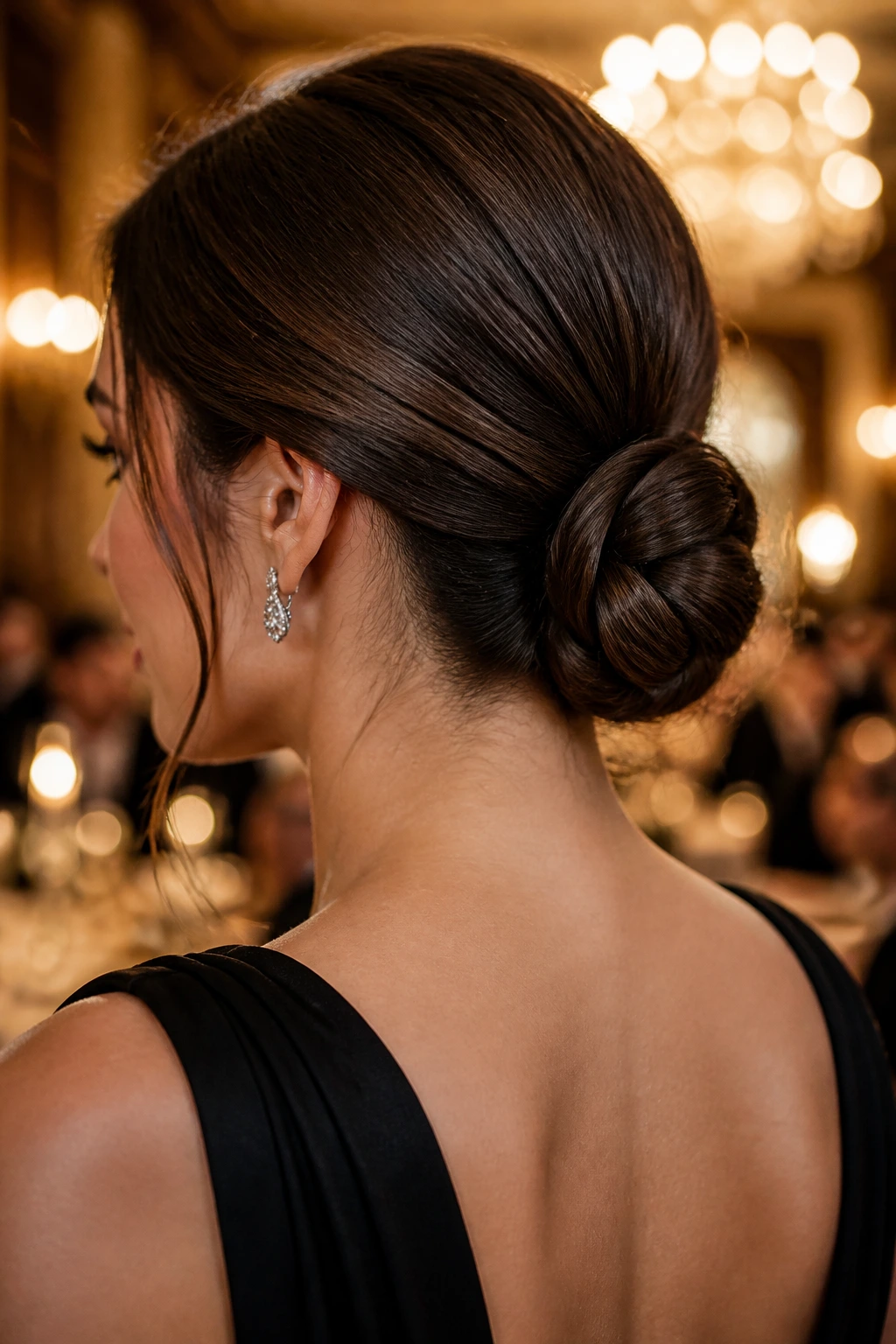
A knotted bun has a slightly more relaxed shape than a French twist or a donut bun, but it still belongs at a formal event when the finish is neat. The knot itself creates visual interest, and that’s helpful if you’re wearing solid fabric or minimal jewelry.
The best version starts with a low ponytail split into two sections. Tie the sections into a loose knot, tuck the ends in, then pin the shape down so it stays compact. If you want the style to read more polished, smooth the top and keep the knot close to the head. If you want a little softness, let a few ends peek out and curl them under.
A knotted bun is especially good for thick hair because the knot creates structure without needing a perfect wrap.
11. Deep Side Part with Tucked Ends
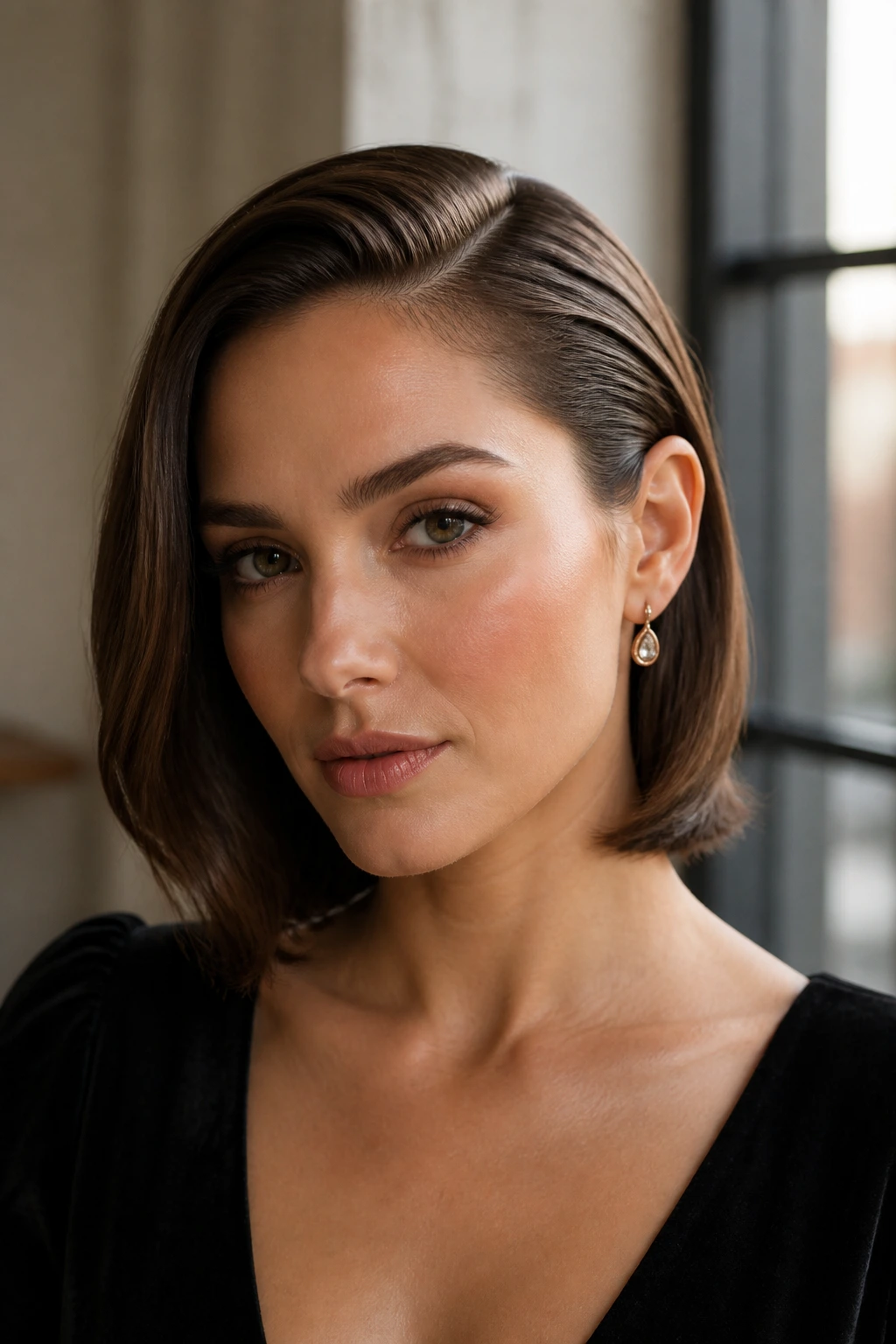
Not every formal hairstyle needs a full updo. Sometimes the smartest move is to make the cut itself look elegant. A deep side part with the ends tucked behind the ear has a quiet, sharp quality that works beautifully on short to medium hair.
This style depends on balance. The side part creates drama at the top, while the tucked side keeps the neck clean and lets a statement earring do some work. Use a flat iron or large round brush to smooth the lengths, then bend the ends slightly under so the shape doesn’t look too blunt. A small decorative pin behind the tucked side can add just enough shine.
It’s a good choice when you want polish but not fuss. And yes, that distinction matters.
12. Textured Low Knot
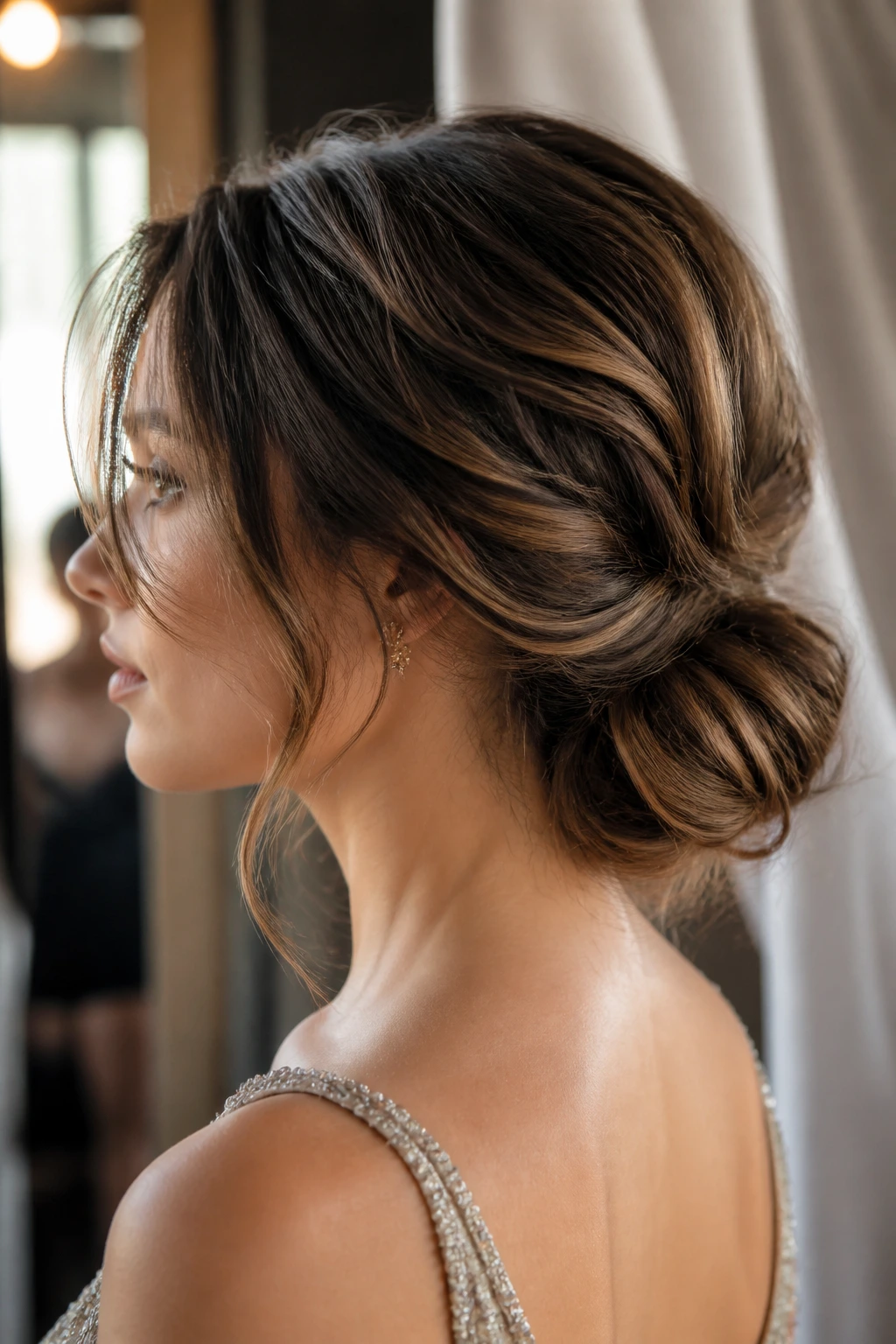
A textured low knot is what you wear when sleek feels too strict. The surface has a little bend, the knot sits low, and the whole style looks soft without falling apart. That looseness can be formal when the rest of the look is controlled.
The trick is to build texture before pinning. A dry shampoo mist through the mid-lengths and a few quick bends with a curling iron give the hair some hold. Then gather it low, twist it loosely, and pin in a compact knot. Pull only a few face pieces forward if the event calls for it. Too many loose bits start to read unfinished.
This works well with dresses that have lace, ruching, or a soft drape. It doesn’t fight those fabrics. It sits with them.
13. Bubble Ponytail
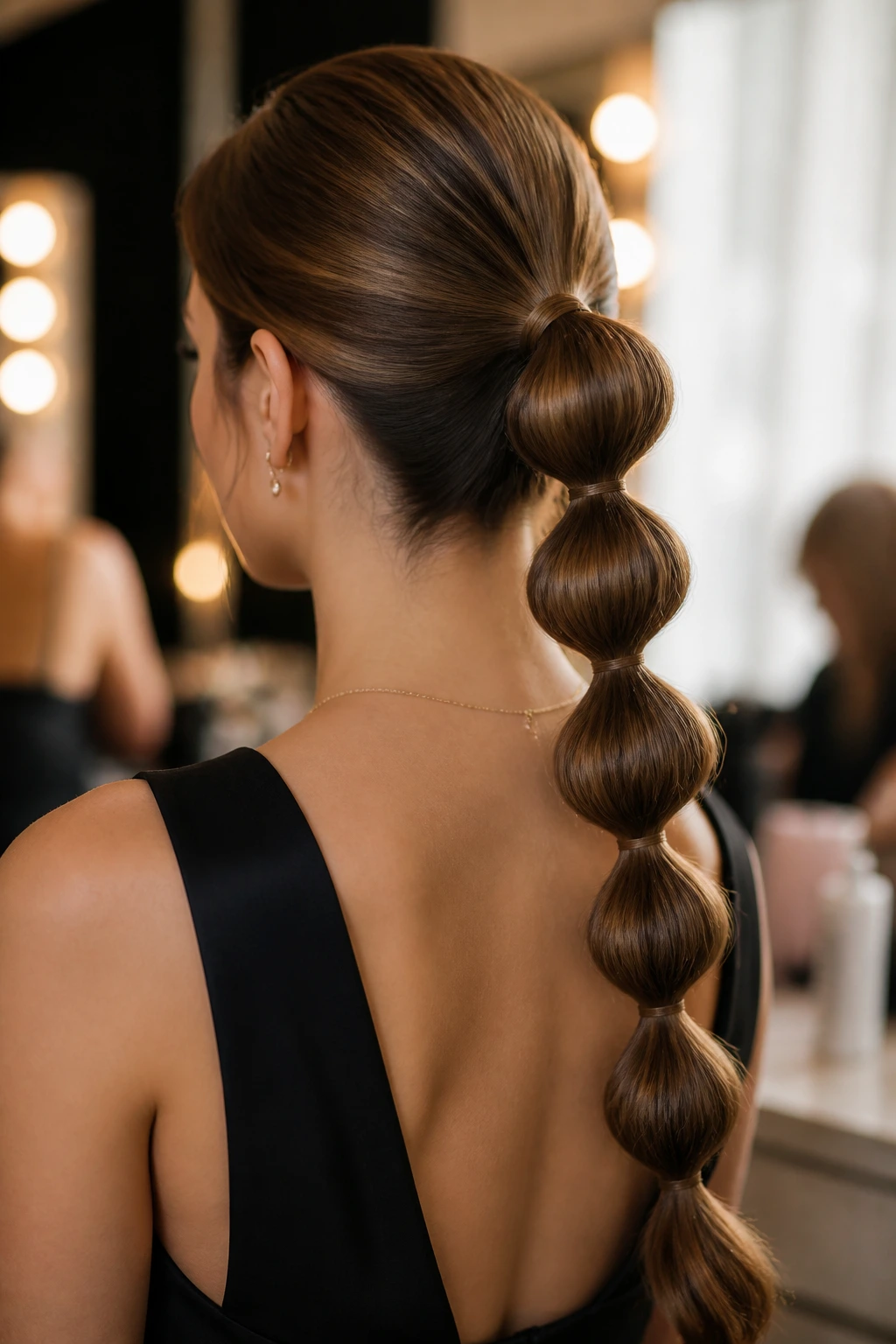
A bubble ponytail has a bit of personality, but if you keep the sections neat and the elastics hidden or matched to your hair color, it becomes formal fast. The shape adds rhythm down the length of the hair, which makes it ideal for long, straight strands that otherwise collapse into a plain tail.
Begin with a smooth ponytail. Then place clear elastics every 2 to 3 inches down the tail and gently tug each section outward to create even “bubbles.” If you want a cleaner look, wrap a small piece of hair around each elastic so they disappear. If the hair is thick, you may need to set the bubbles more tightly to keep the shape crisp.
This one looks especially good with minimalist dresses. The ponytail does the talking.
14. Sculpted Top Knot
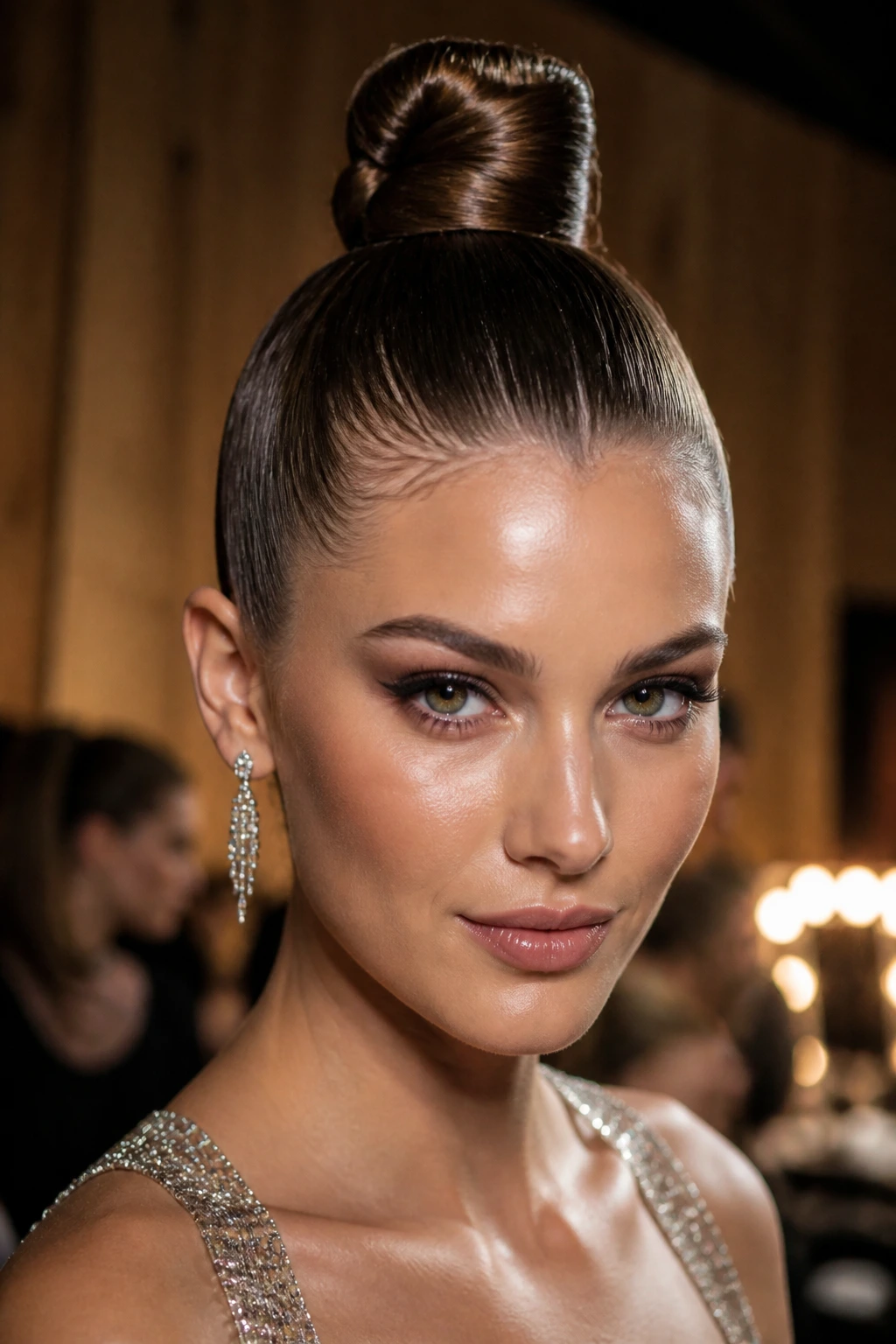
A sculpted top knot is high, clean, and deliberate. There’s no point pretending it’s casual. It’s a formal silhouette with a strong vertical line, and it gives the face a lifted frame that works well for bold eye makeup or a statement neckline.
The shape should be compact, not fluffy. Start with smooth hair, gather it high, and twist or fold the length into a tight knot that sits centered at the crown. Use pins to anchor the knot from multiple directions, then mist the surface lightly so the flyaways stay put. A little shine on the top section goes a long way here.
If you want this style to feel more evening-ready, keep the edges clean and the bun shape deliberate. A lopsided knot makes it feel rushed. A compact one looks sculpted.
15. Glamorous Cascade Braid
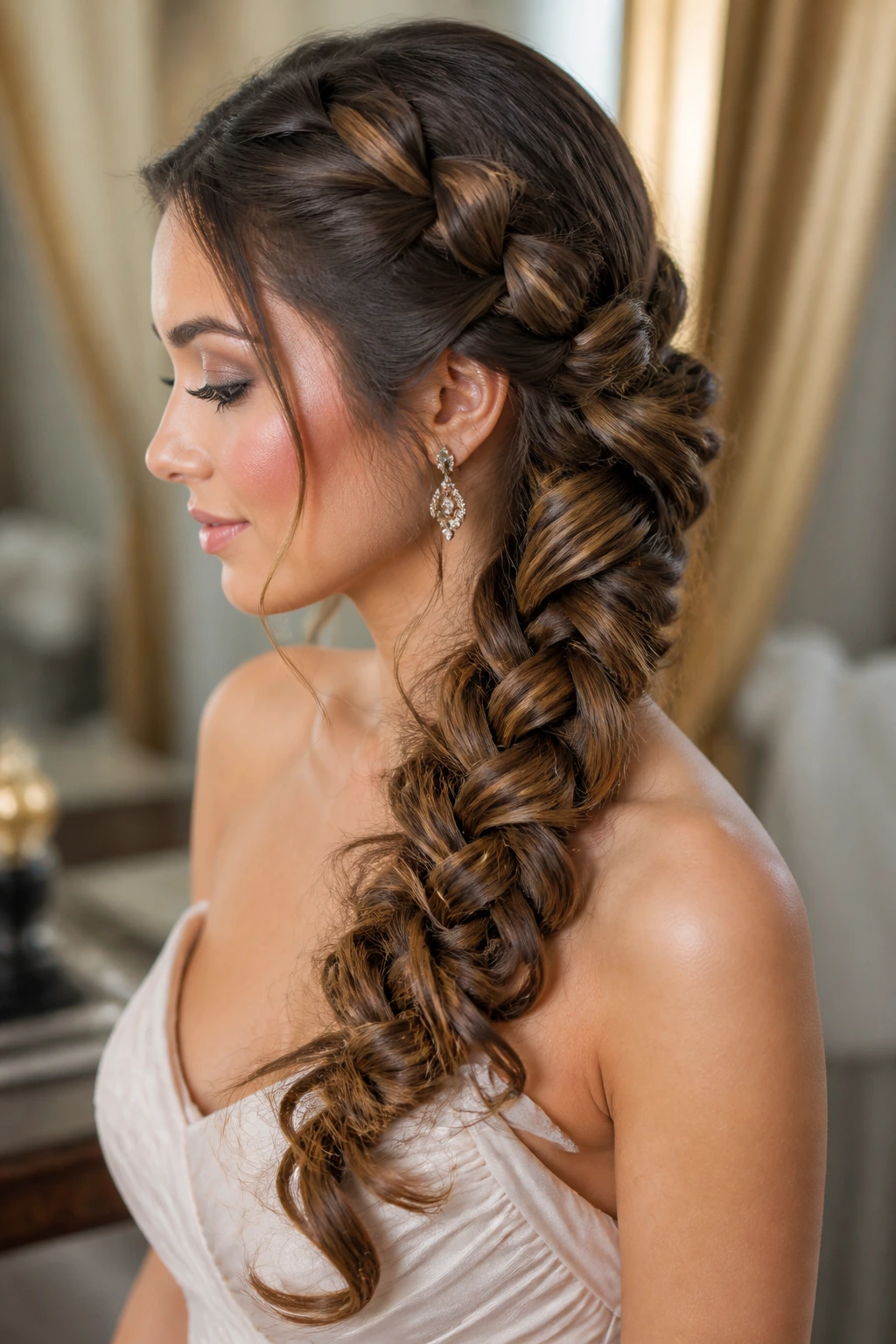
This braid has movement from top to bottom, which makes it feel softer than a strict bun and more special than a plain plait. A cascade braid lets waves or curls spill through the lengths while the braided sections keep the hair anchored.
You can build it as a side braid, a pull-through braid, or a loose braid that drops over one shoulder. What matters is the finish. The braid should be even enough to read as polished, but not so tight that the shape goes flat. If you have layers, braid a little more loosely and secure the ends with a small elastic before tucking or curling them under.
This style is lovely with dresses that have movement in the skirt. There’s a nice echo there. Hair and fabric both shift as you walk.
16. Twisted Half-Up Halo
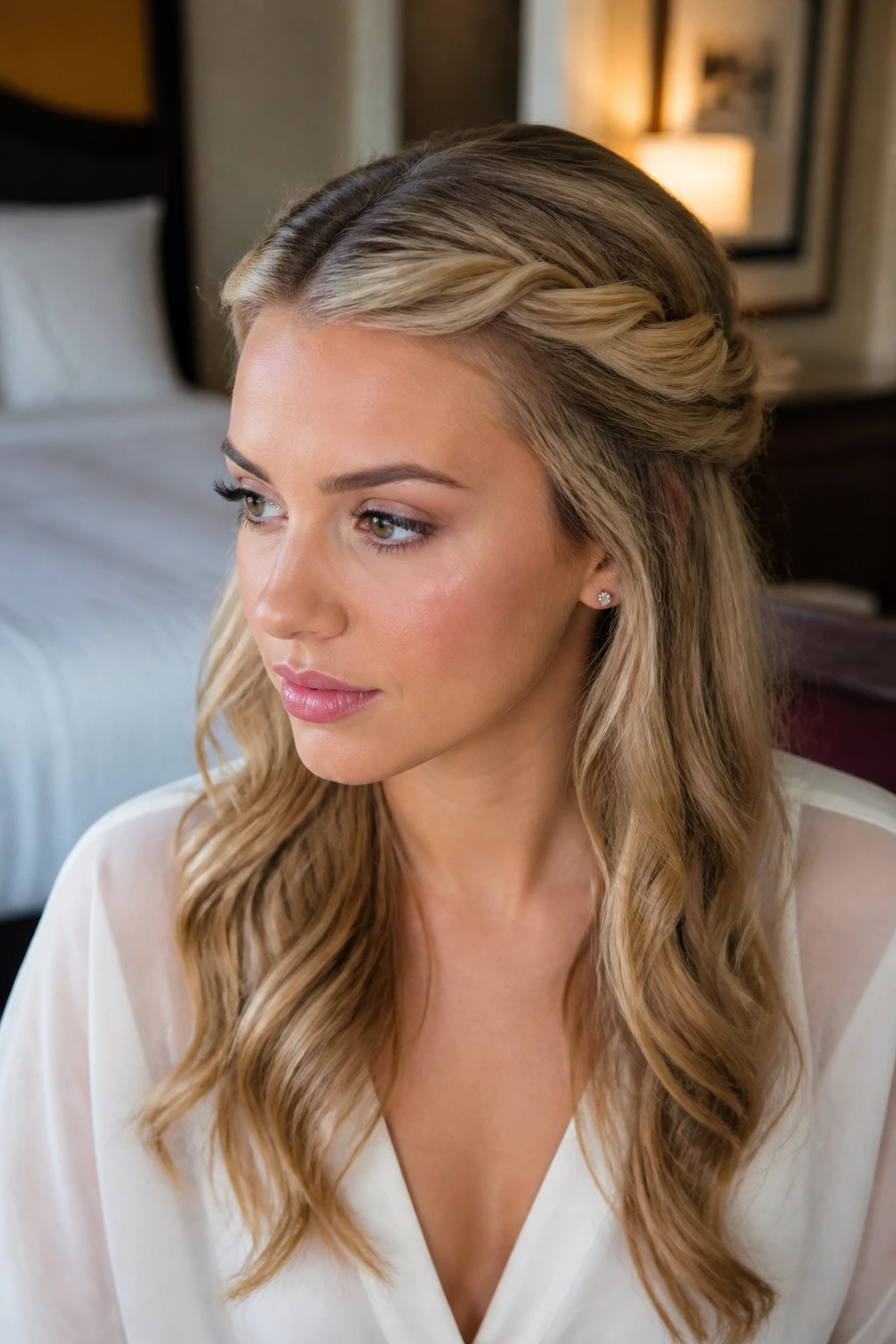
A twisted half-up halo sits somewhere between a braid crown and a simple half-up twist. It frames the face softly and keeps the crown area under control, which is useful if the rest of your hair is curled, waved, or naturally textured.
Unlike a full crown braid, this version leaves more length down. That makes it easier to wear when you want hair on your shoulders but still need some structure near the front. Twist two sections from each side back toward the center, pin them low, and tuck the ends under so the seam disappears.
It’s especially good for hair that’s medium thickness. Fine hair can use a little volume at the roots; thick hair benefits from sectioning the twists a bit wider so the style doesn’t balloon.
17. Smooth Lob with C-Shaped Bend
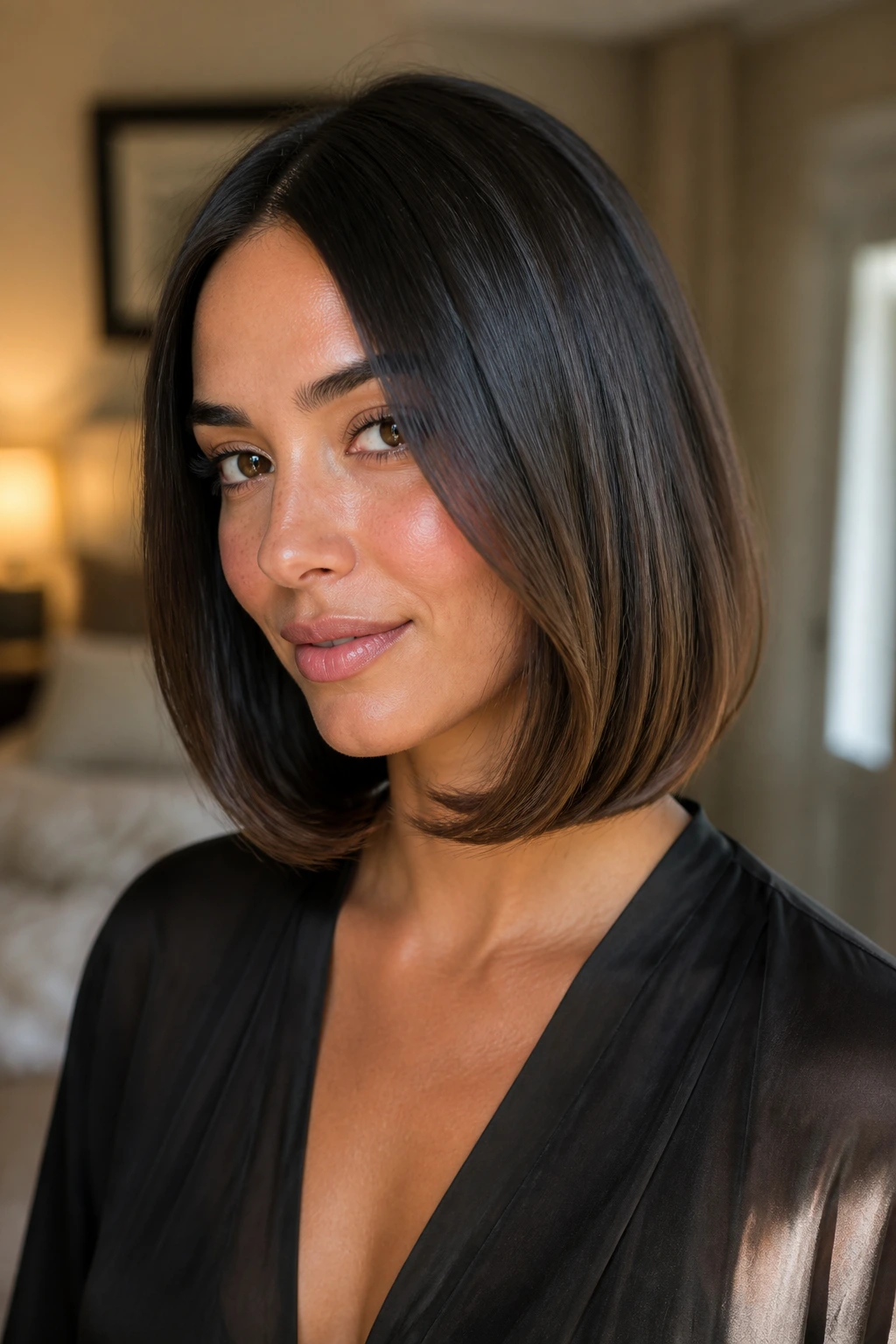
A lob does not need to be “grown out” before it can look formal. A smooth lob with a C-shaped bend at the ends feels clean, modern, and smart. It’s a strong choice when the outfit already carries enough drama and you want the hair to look controlled instead of decorative.
Use a flat iron or round brush to bend the ends under and slightly forward, then create a deep side part or a clean center part. The shape should be sleek through the top and softly curved at the bottom. That curve matters more than a full curl. It keeps the haircut from looking boxy.
This is one of my favorites for short to medium lengths because it proves a point: formal hair doesn’t have to be high or heavily pinned to read as dressed up.
18. Vintage Roll Updo
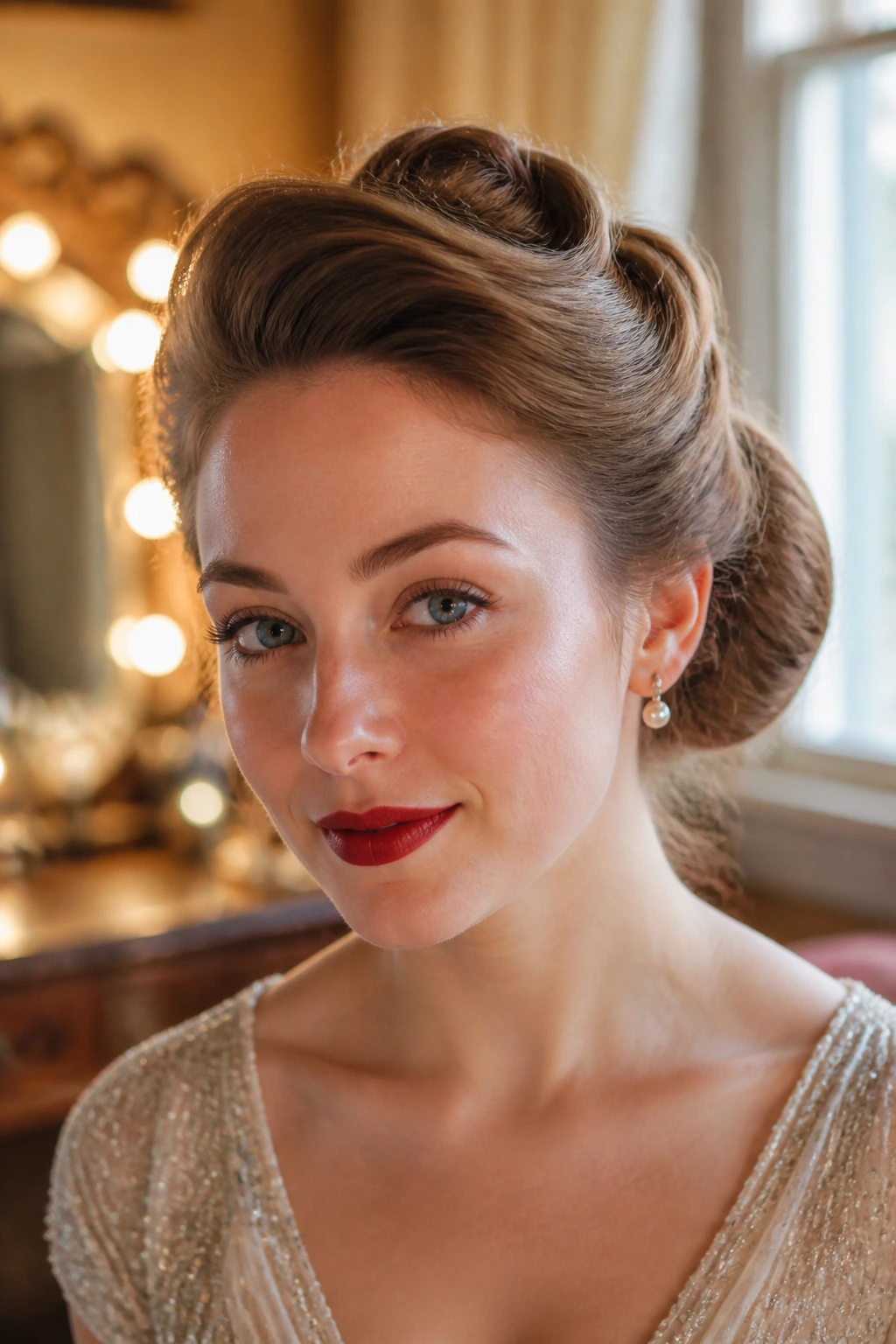
The vintage roll is what happens when you want a nod to old evening glamour without going full costume. A smooth roll at the back or side gives the style a clean focal point, and the rest of the hair can stay tucked close to the head.
This style usually needs a bit of setting lotion or light mousse before blow-drying so the hair holds shape. Roll one section inward, pin it, then layer another section over it to hide the seam. If your hair is very straight, let the curls cool before you roll them in. If it’s wavy, you may be able to shape it with less heat.
It pairs well with jewel tones, satin, and dresses that have a little retro line. There’s a reason it keeps coming back. The silhouette still works.
19. Ribbon-Wrapped Braid
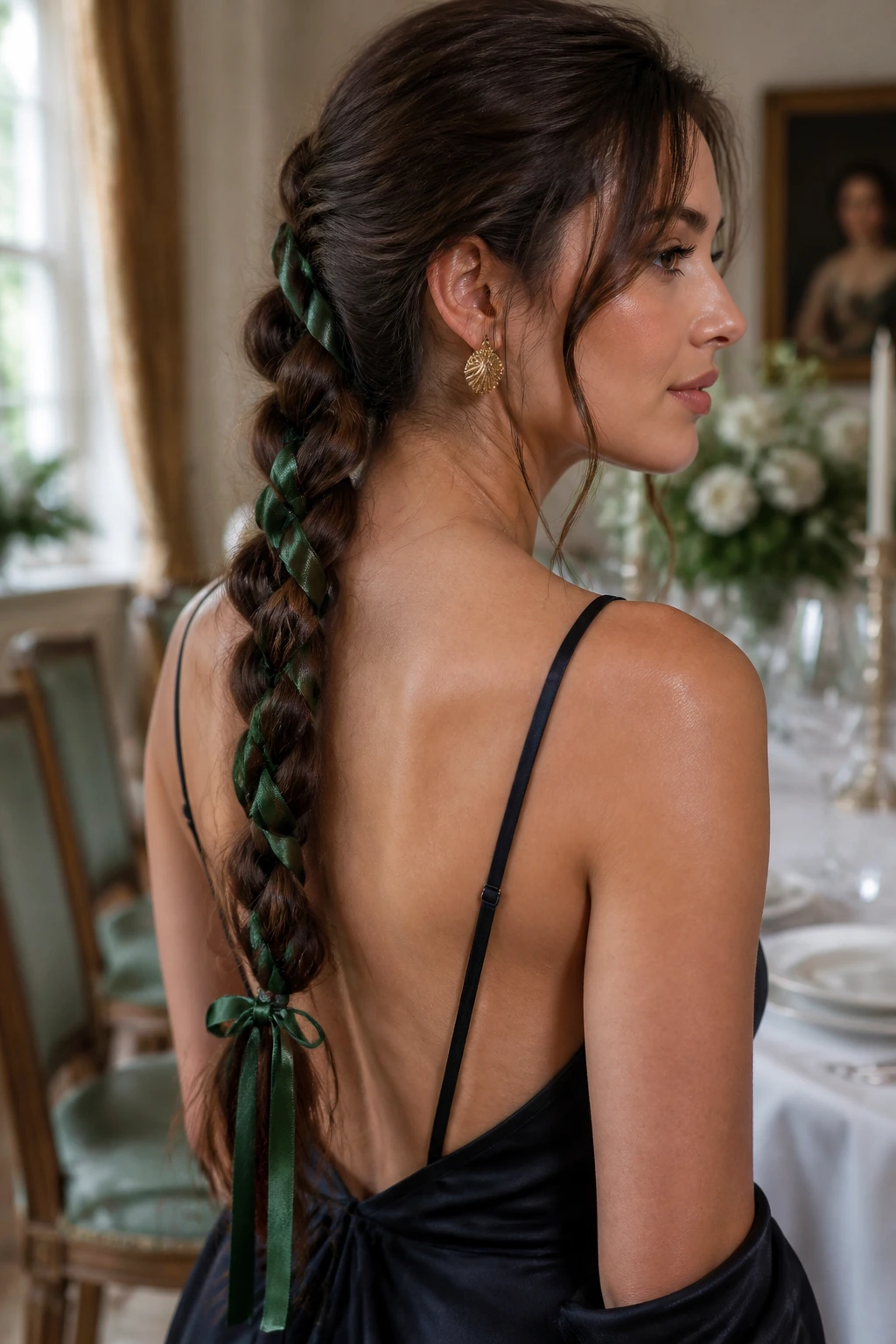
A ribbon-wrapped braid turns a simple braid into something that feels intentional enough for a formal dinner. The ribbon adds color, texture, and a little softness near the face or down the length of the braid. It’s one of the easiest ways to make an ordinary style look dressed up.
Choose a ribbon with body — velvet, grosgrain, or satin that isn’t too slippery. A thin ribbon can vanish inside the braid, while a slightly wider one stays visible. Weave it in from the top or tie it at the base and let the ends trail a little. If the rest of the outfit has shine, a matte ribbon can be a nice counterpoint.
This is especially pretty with longer hair and gowns that need a touch of romance without a full updo.
20. Low Bun with Face-Framing Pieces
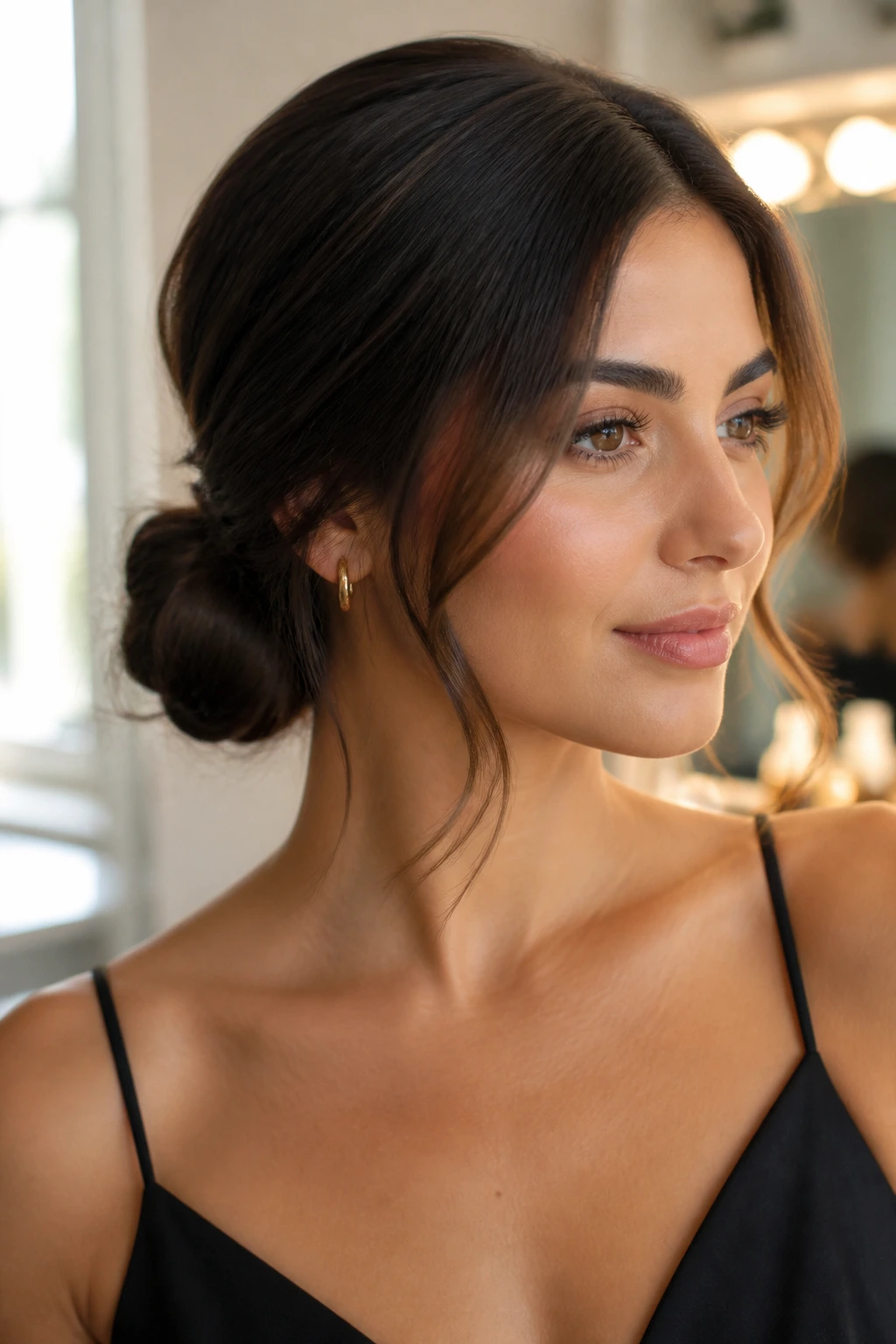
A low bun can feel severe if every strand is pulled back hard. Leave a few face-framing pieces, though, and the whole style softens without losing polish. That’s the sweet spot.
The bun itself should sit neatly at the nape, but the front pieces should be chosen, not accidental. Curl them slightly away from the face so they don’t stick to the cheek or kink under a coat collar. If you’re wearing a high necklace, keep the pieces narrow. If the neckline is open, you can let them be a little fuller.
This style is useful because it gives you the security of an updo with a softer edge around the face. It also photographs well from the side, which matters more than people admit.
21. Curled Bob with Pinned Sides
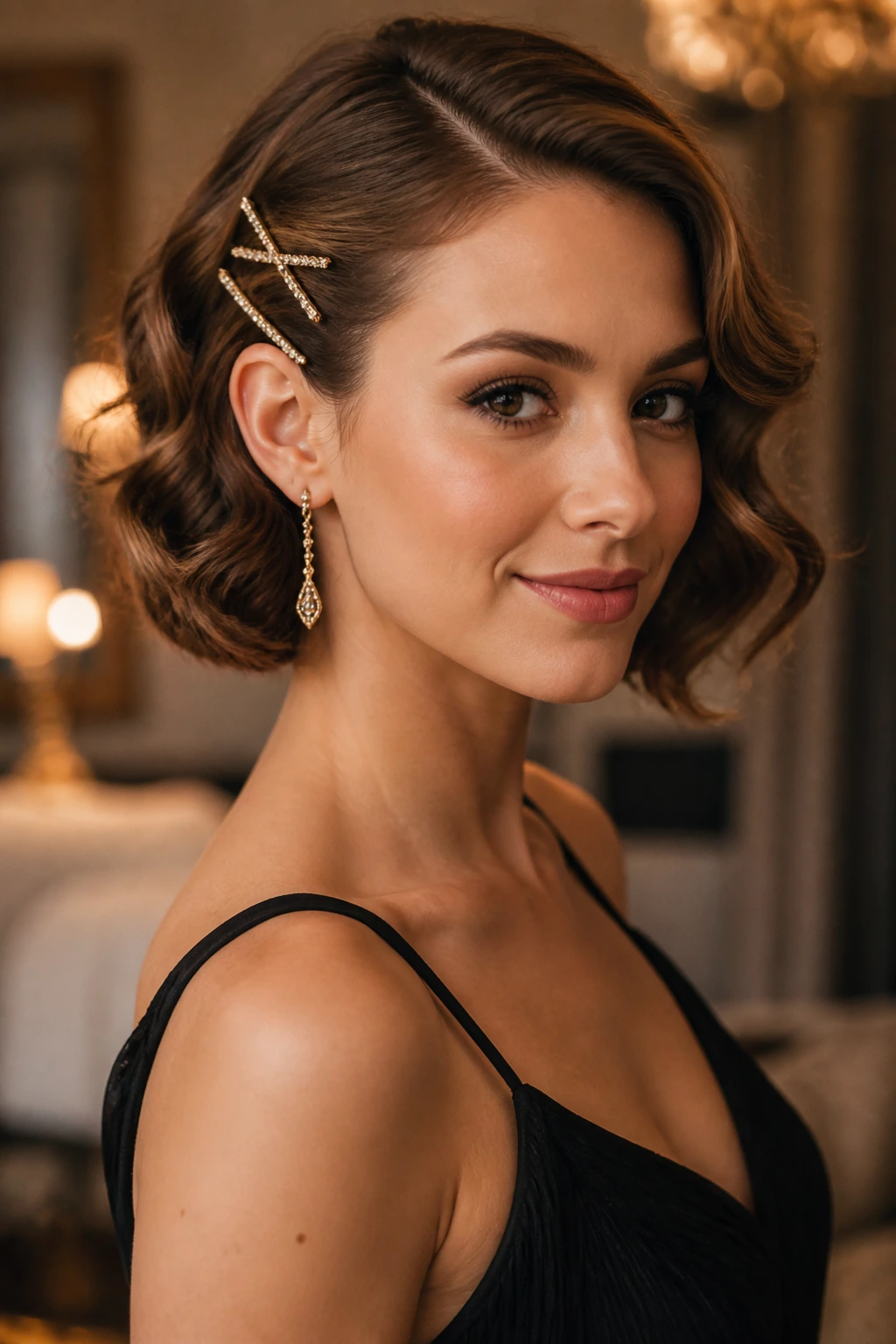
Short hair can look every bit as formal as long hair when the shape is controlled. A curled bob with one or both sides pinned back creates a neat frame and gives the cut a bit of lift at the crown.
Set the bob with loose curls or bends, then pin one side behind the ear with a decorative clip or a pair of crossed bobby pins. That pinned section keeps hair off the face and opens space for earrings. The rest of the bob should stay soft and rounded, not puffed out at the ends. If the cut is blunt, bending the ends under helps it feel finished.
This is a smart choice for anyone who thinks formal hair requires length. It doesn’t. It requires shape.
22. Sleek Wet-Look Back Sweep
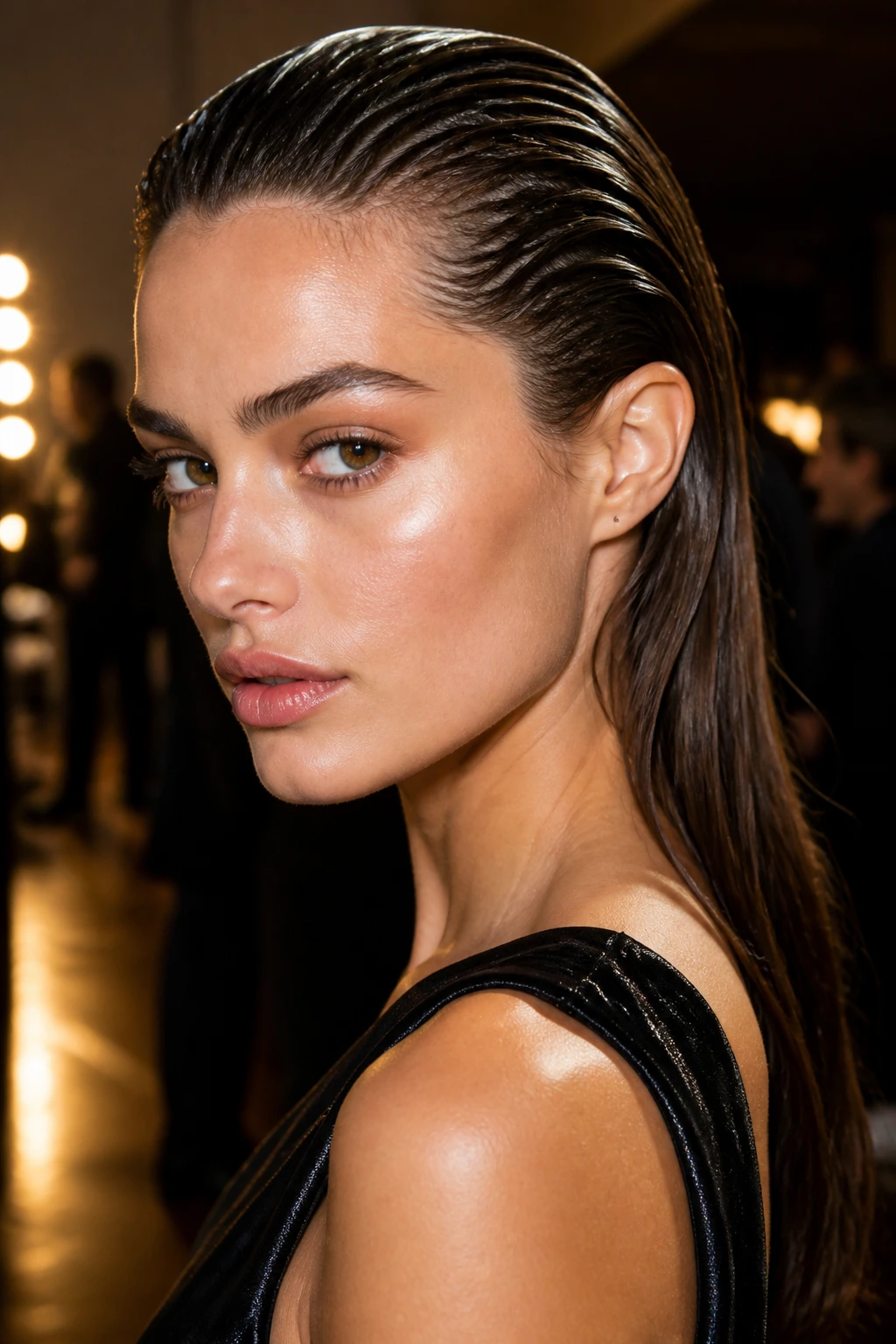
The wet-look sweep is bold, clean, and a little editorial. It’s formal in a modern way, with slicked-back roots and a glossy surface that keeps every strand pointing in the same direction. If you’ve ever wanted your hair to look like it belongs on a runway but still feels appropriate for evening, this is it.
The product choice matters here. Use a gel or cream that gives hold without turning white when it dries. Comb the hair back in small sections, not one giant sweep, and check the sides at the temples so they lie flat. Leave the lengths straight, waved, or tucked, depending on how sharp you want the final shape.
This style rewards confidence. It’s not the most forgiving look on the list, but when it works, it really works.
23. Polished Braided Bun
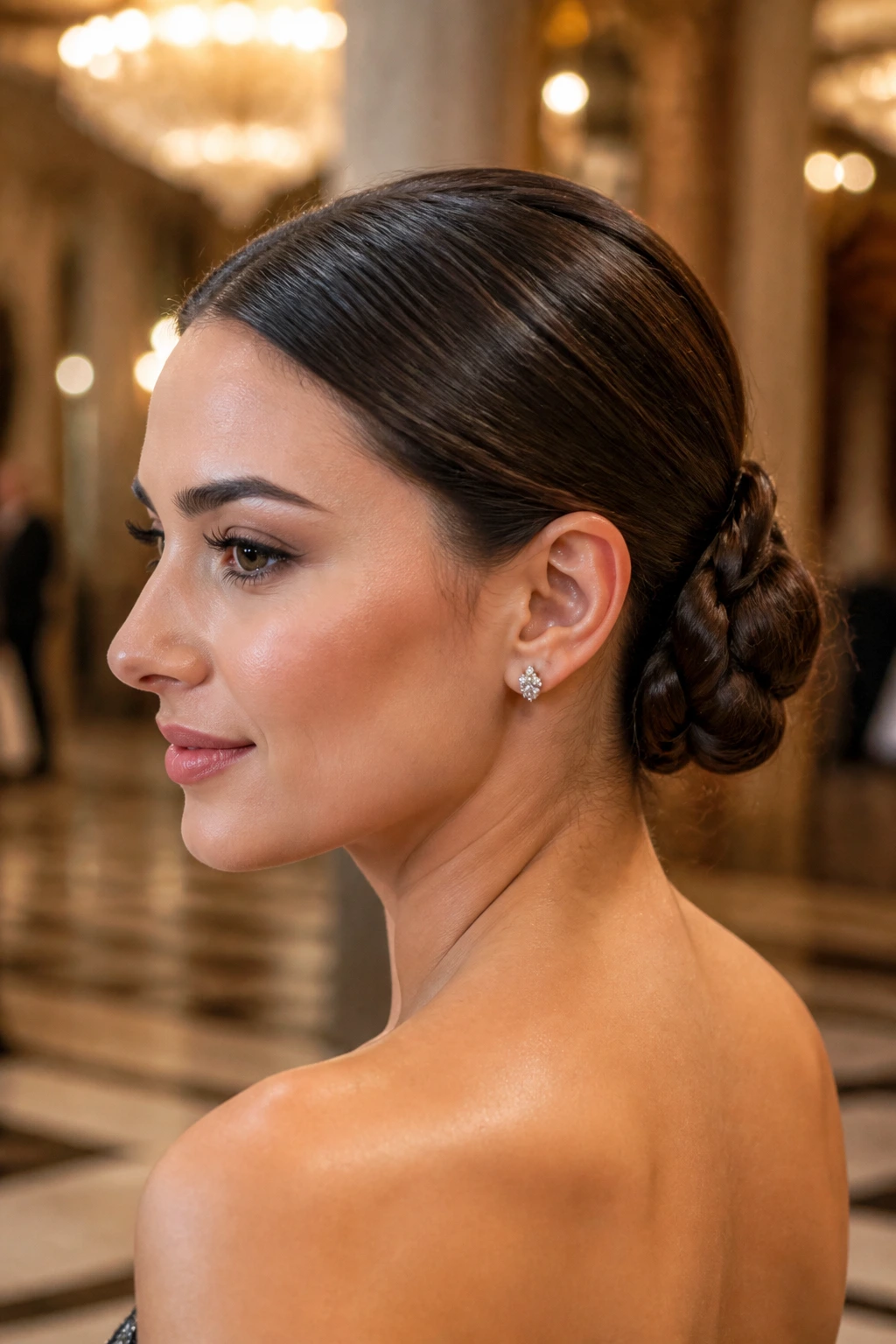
A braided bun gives you texture at the back without looking busy. That braid makes the bun feel more secure, too, which is useful if the evening includes dancing, walking, or a lot of sitting and standing.
Build a low or mid-height braid, then coil it into a bun and pin it down with short pins around the perimeter. Keep the surface smooth at the crown so the braid itself becomes the visual detail. If your hair is thick, split the braid slightly before wrapping so the bun doesn’t sit too far off the head.
It’s a strong compromise style. You get the calm of a bun and the detail of a braid in one shape.
24. Twisted Side Bun
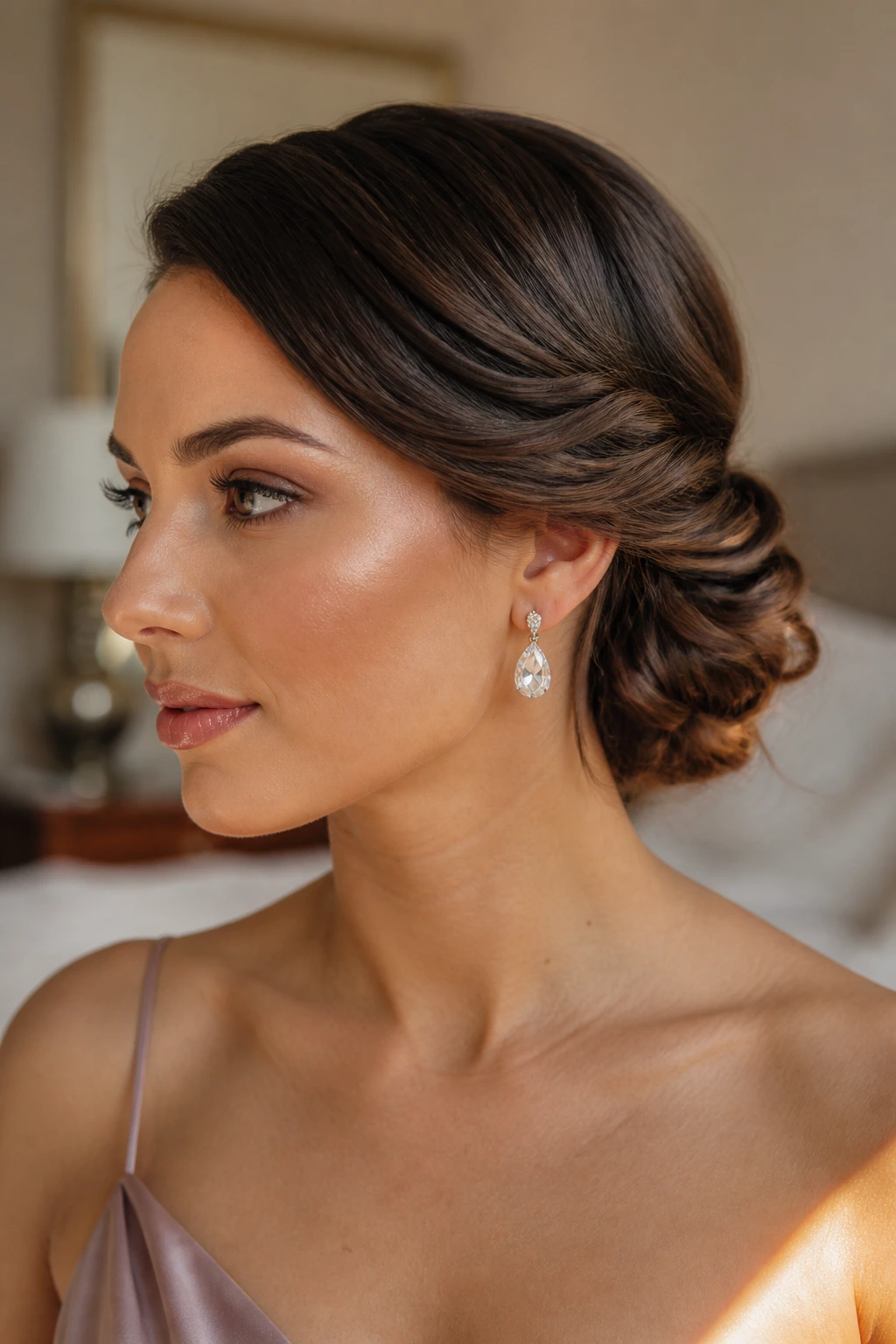
A side bun changes the balance of the whole look. It draws the eye diagonally, which is useful with asymmetrical dresses or necklines that already have movement. The twist keeps it from looking too stiff.
Sweep the hair to one side, twist it into a low bun near the ear or just behind it, and pin the seam so it sits close to the head. Keep one side sleek and the other slightly softer if you want a little contrast. A side bun works especially well with statement earrings on the opposite side, because the styling creates a frame for them.
This is one of those styles that looks simple until you try to do it well. Placement matters. A lot.
25. Soft Wave with Sparkly Clip
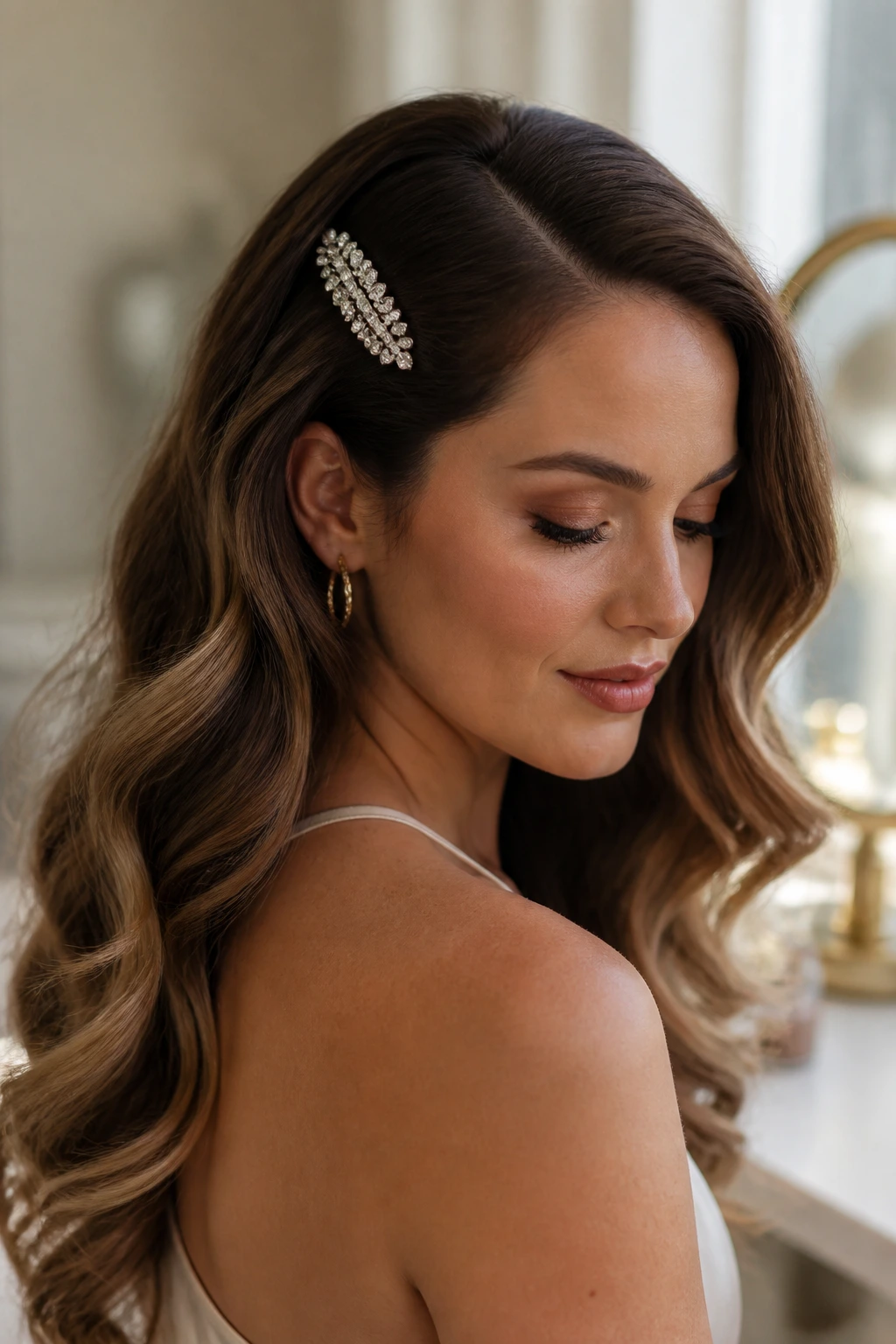
A soft wave with one well-placed clip is the easiest way to look finished without overdoing it. The waves give the hair shape, and the clip does the formal work. One good clip can do more than three decorative pins used badly.
Set the hair in loose waves, brush them into a softer pattern, then place the clip just above the temple or at the side of a deep part. The clip should feel like a decision, not an afterthought. If the waves are too loose, they can slip into ordinary. If they’re too stiff, the clip starts to look heavy. Aim for a bend that still moves when you turn your head.
This is a strong pick when you want something graceful, quick, and not fussy. Sometimes that’s the smart move.
Why Formal Hair Holds Up Better With a Strong Base
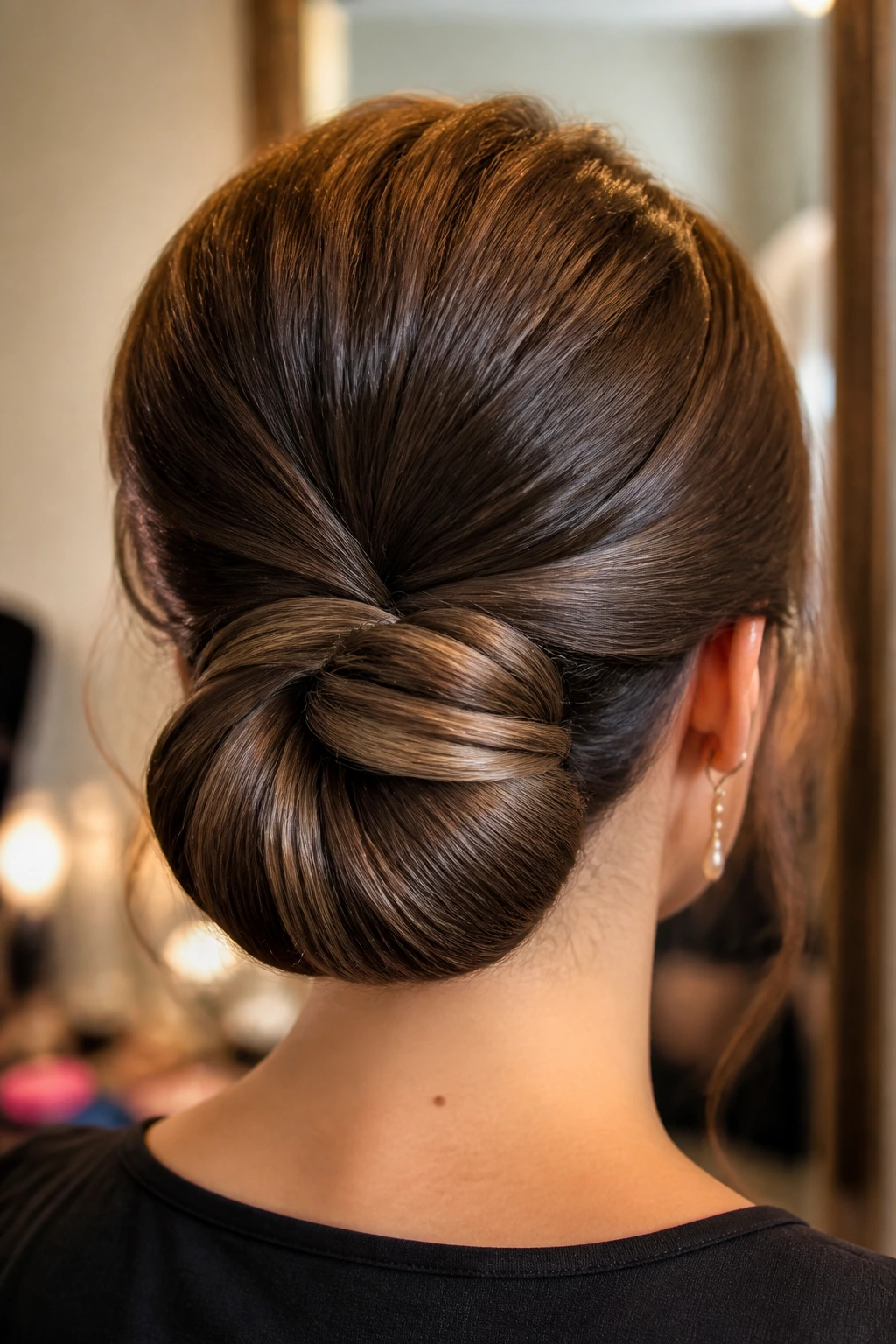
A polished evening hairstyle lasts because the base is doing the work, not because the top looks pretty for the first five minutes. That’s the part people miss when they copy a style from a photo. The smooth parting, the hidden elastic, the teased crown, the braid that acts like an anchor — those are the pieces that keep the style from collapsing into itself by dessert.
Humidity, warm rooms, and coat collars are brutal on hair. They loosen curls, puff up smooth sections, and flatten the crown where the pressure sits. So the best formal styles solve those problems before you leave the bathroom. A chignon gives the nape a fixed point. A braid controls the length. A wave pattern cools into shape before it gets brushed out. Small things. They matter.
I also think formal hair looks better when it has one clear idea. Sleek at the top and soft at the ends. Or pinned at the sides and loose in the back. Or braided, but only in one section. Once you start stacking too many ideas into one style, the shape gets muddy. Clean hair can be beautiful. Fussy hair usually looks tired.
Essential Equipment for These Hairstyles
-
Rat-tail comb: Best for clean parts, sectioning, and smoothing flyaways near the hairline.
-
Boar-bristle brush: Helps gather hair into sleek ponytails and buns without leaving obvious brush marks.
-
1-inch curling iron or wand: Useful for waves, bendy ends, and soft face-framing pieces.
-
Flat iron: Handy for glass-hair finishes, smooth lob styles, and wet-look back sweeps.
-
Sectioning clips: Keep upper layers out of the way while you work on the base.
-
Bobby pins in two sizes: Short pins grip details; long pins anchor buns, twists, and French rolls.
-
Clear elastics: Good for braids, ponytails, and hidden base ties.
-
Texturizing spray or dry shampoo: Gives slippery hair enough grip to hold pins and braids.
-
Flexible-hold hairspray: Keeps movement without turning the hair hard.
-
Strong-hold hairspray: Better for humid rooms, smooth buns, and sculpted updos.
-
Heat protectant: Non-negotiable if you’re using hot tools. Straight hair burns just as fast as curly hair.
-
Shine serum or smoothing cream: Use a tiny amount on the outer layer for sleek looks; don’t saturate the roots.
-
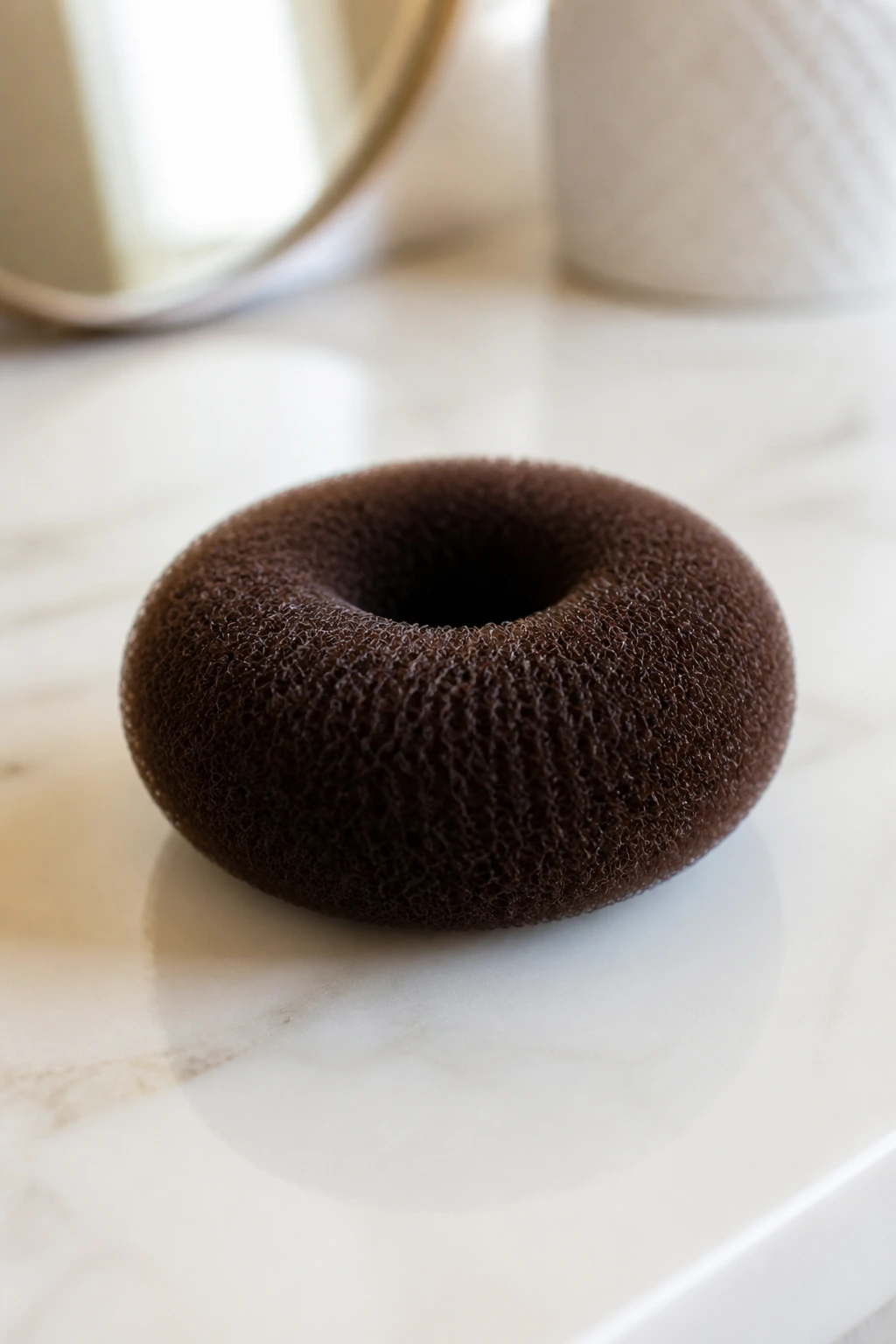
Hair donut or bun maker: Optional, but useful if you want a fuller bun without a lot of teasing.
-
Decorative clips, combs, or pins: Best saved for the final step so they don’t snag during styling.
Smart Shopping and Product Tips
Look at hold level before you buy anything. A flexible-hold spray is nice for waves and half-up styles because it lets the hair move. Strong hold belongs on buns, French twists, and wet looks. If the label sounds vague, hold the bottle in your hand and think about what the hairstyle needs. Soft bends and a hard-shelled twist do not use the same products.
Pins matter more than the price tag suggests. Cheap pins with weak springs slide. Pins with a slightly rough coating grip better, especially in fine hair. Match the pin color to the hair when you can, but don’t obsess over perfection — the angle of the pin is more important than the shade.
For texture, dry shampoo is your friend even on clean hair. A light dusting at the roots and through the mid-lengths gives braids and buns something to grab. If your hair is thick or heavy, a texturizing powder at the crown can help stop the style from collapsing. If your hair is dry, use less. A little goes a long way.
And one practical thought: buy one decorative piece that works with several looks instead of a drawer full of flimsy clips. A single sturdy comb, a pearl pin, or a crystal barrette can move from a low bun to a bob to a half-up style without fuss.
How to Wear These Looks With the Rest of the Outfit
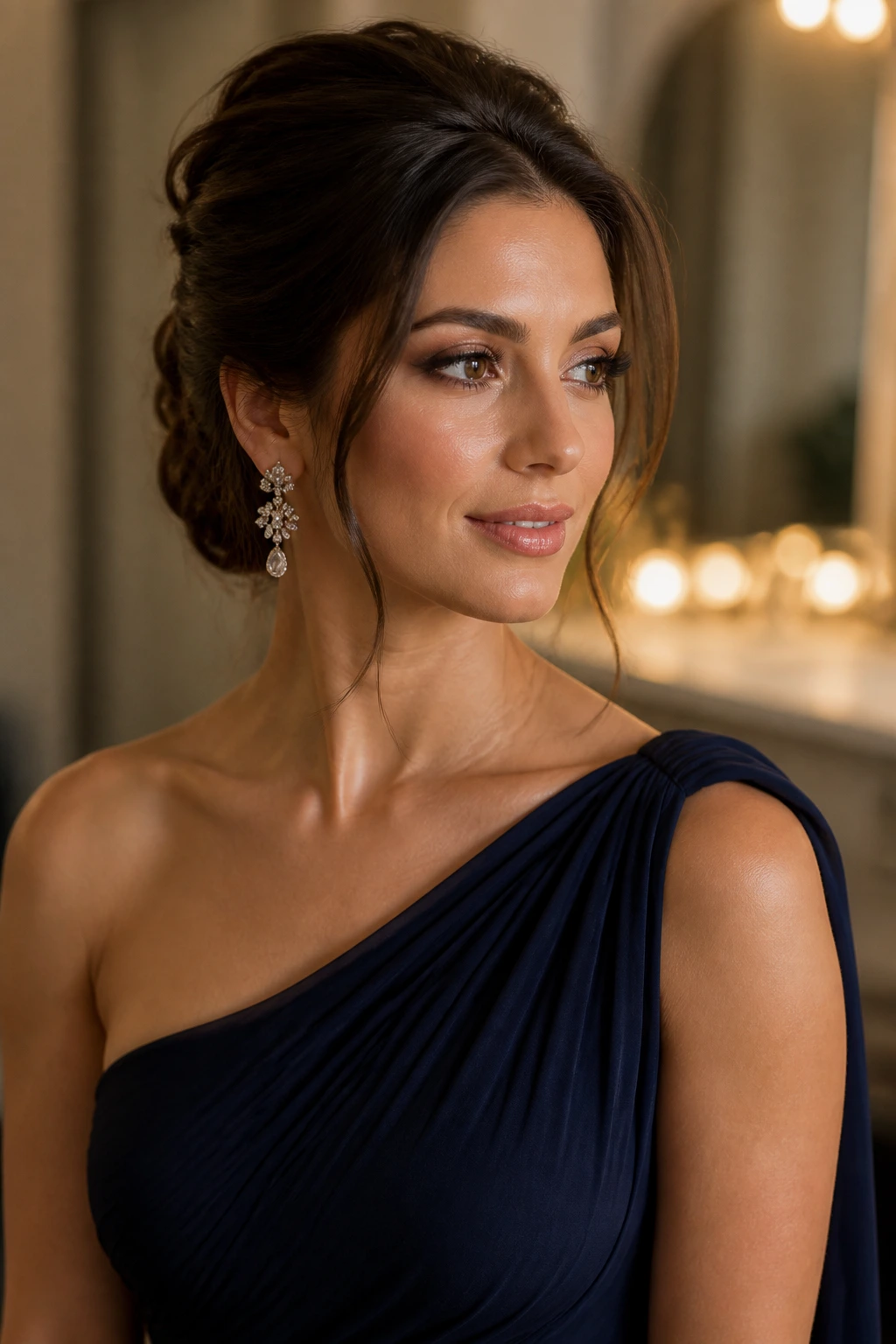
Outfit Pairing: Sleek buns, French twists, and wet-look styles sit well with structured dresses, tailored jackets, and sharp necklines. Softer waves and braids usually feel better with draped fabric, lace, or satin that has some movement.
Neckline Match: High necks and halter tops usually look cleaner with hair pulled up or tucked back. Strapless and off-the-shoulder styles can handle more volume, side-swept waves, or a low bun with a few loose pieces.
Accessory Balance: If the earrings are large, keep the hairline clean. If the necklace is doing the work, a low chignon or tucked bob lets it show. When the dress already has embellishment near the collarbone, skip the extra hair ornament and keep the style simple.
Makeup Balance: A sleek hairstyle tends to sharpen the whole face, so a defined eye or a strong lip can feel balanced. Softer waves and braided styles usually sit nicely with a blended, romantic makeup look. The point is not matching everything. The point is not fighting yourself from top to bottom.
Additional Tips and Finishing Touches
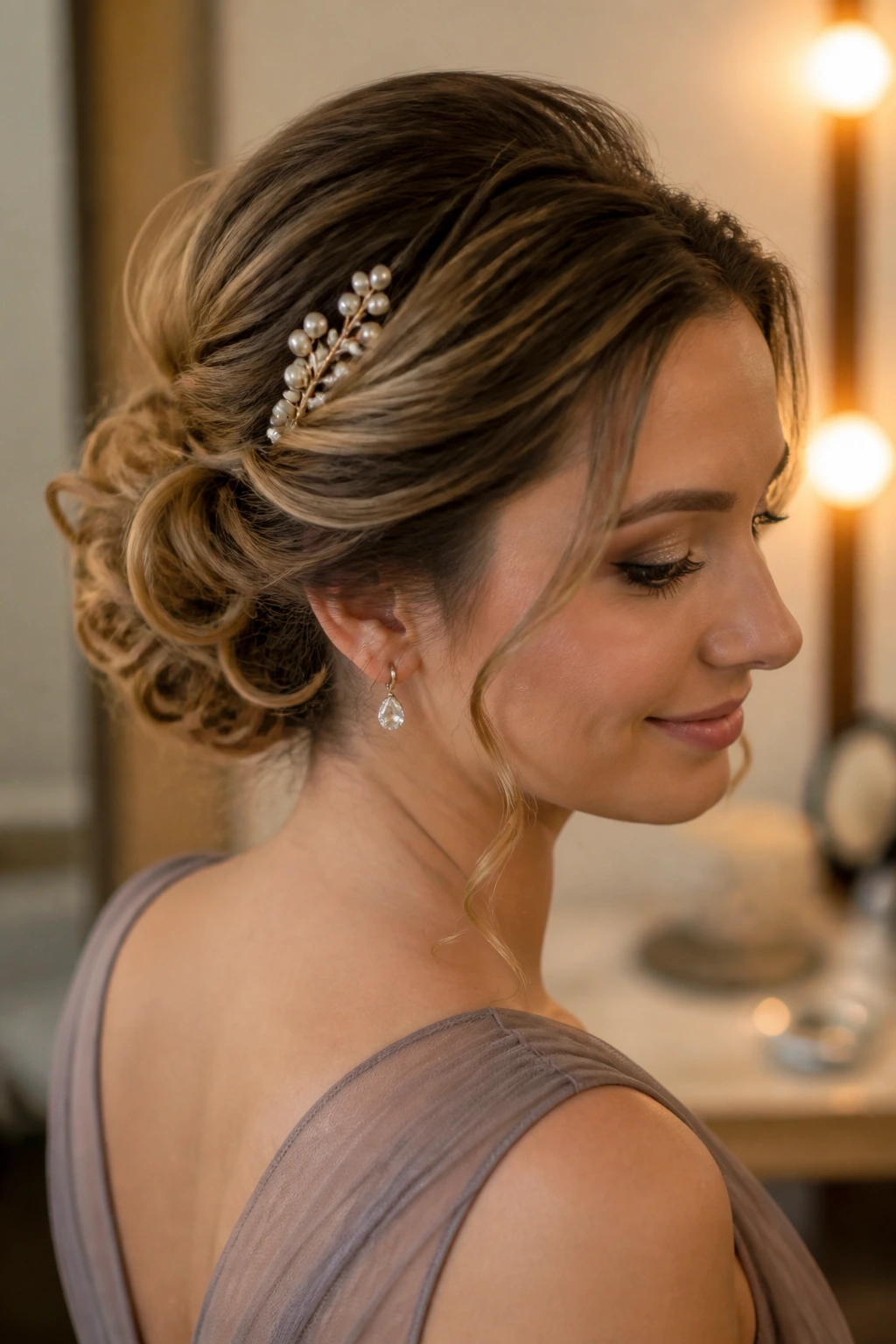
Texture Enhancement: If a style feels too flat, curl only the front third of the hair and leave the rest smoother. That contrast gives the look shape without making it frizzy.
Customization: Swap a middle part for a deep side part when you want the style to read more dramatic. The change sounds small. It isn’t. A part can shift a hairstyle from tidy to evening-ready in a minute.
Serving Suggestions: Finish with one focal detail — a pearl pin, a narrow velvet ribbon, a comb with clear stones, or a single crossed pin near the temple. One strong detail looks sharper than a handful of scattered decorations.
Make-It-Yours: Fine hair usually benefits from smaller sections and a little dry shampoo at the roots. Thick hair needs stronger pins, fewer loose pieces, and more attention to the base. Curly hair often looks best when the texture is respected instead of forced flat; a polished outline around natural curls usually beats a battle with the whole head.
Make-Ahead, Hold, and Touch-Up Guidance
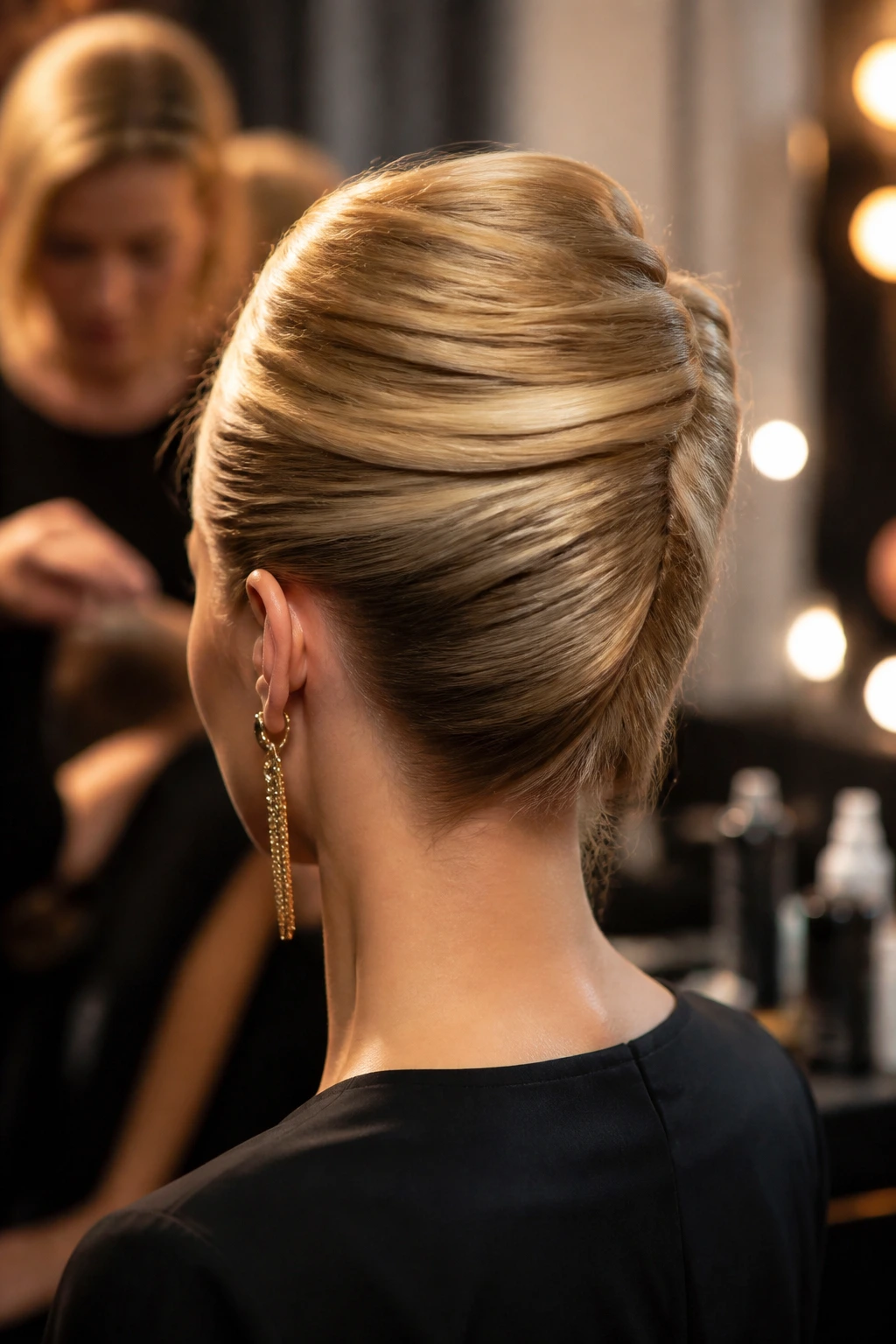
Some formal hairstyles can be built earlier than others, and timing matters. Sleek buns, French twists, and braided crowns are safest when done 1 to 3 hours before you need to leave. That gives the style time to settle and lets you fix the little things that always pop loose near the temples. Waves and barrel curls need at least 20 to 30 minutes to cool fully before brushing out. If you skip the cooling time, the shape loosens fast.
Braids are the easiest make-ahead option. You can braid the hair the night before, sleep on it loosely, and soften the edges the next day with a touch of serum or water mist. Low ponytails and wrapped ponytails can also be prepped ahead if you leave the final wrap or clip for the end. For very smooth styles, though, finish close to departure time. The surface looks freshest in the first few hours.
For touch-ups, pack a mini spray, 4 to 6 bobby pins, a small comb, and a couple of clear elastics. If the crown collapses, lift the top section, spray underneath, and pin from the hidden side. If waves fall straight, twist the section around your finger for a minute and pin it in place while you move. If a bun loosens, don’t dump more spray on top of it. Add one or two pins near the base and press the hair back into the anchor.
And one thing people forget: take the style down before bed. Sleeping in a heavy formal updo crushes the shape and can leave you with bent sections that are harder to fix than starting fresh.
Common Mistakes That Make Formal Hair Fall Flat
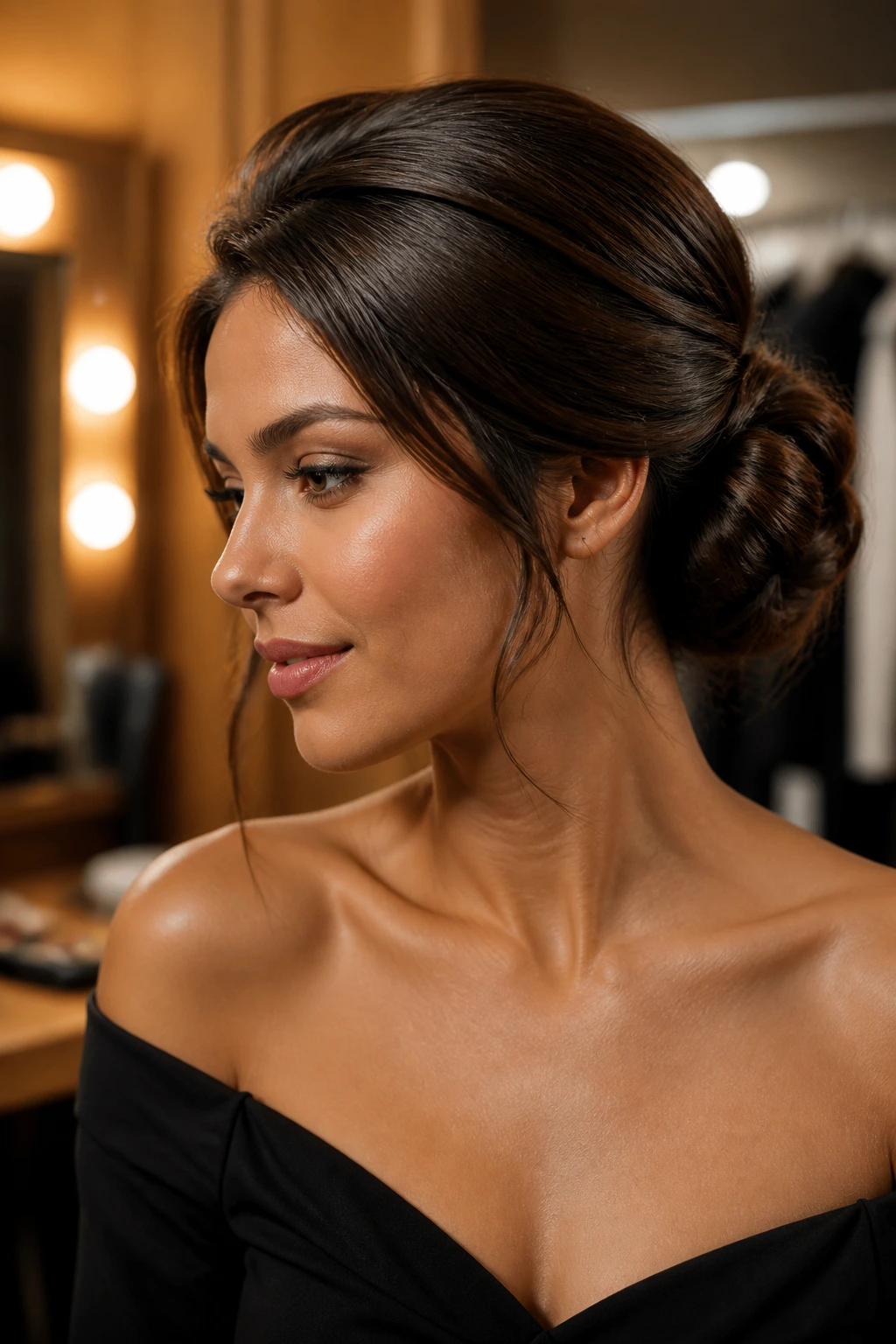
The first mistake is starting with hair that’s too soft and too clean. Freshly washed hair can be slippery, especially if you used a rich conditioner. The symptom is easy to spot: pins slide, braids loosen, and sleek styles refuse to stay where you put them. The fix is simple — use a touch of dry shampoo or texture spray before styling, or work from day-old hair if you can.
Another common one is overloading the style with product. A little smoothing cream helps. A lot of it turns the roots greasy and makes the finished look collapse faster. Same with hairspray. If the hair feels stiff before you even leave, you went too far. Use light layers, let each one set, and stop when the style holds its shape.
People also underestimate anchor points. A bun without a hidden elastic, a braid without a tight base, or a twist without cross-pinned support is basically waiting to fail. The style may look finished in the mirror, but it won’t survive movement. Build the support underneath first. The pretty surface comes after.
And then there’s the mismatch problem. A huge braided crown under a tiny neckline can feel crowded. A very delicate wave with giant chandelier earrings can disappear. Check the whole outfit together. Hair is part of the look, not a separate project.
Variations and Adaptations to Try
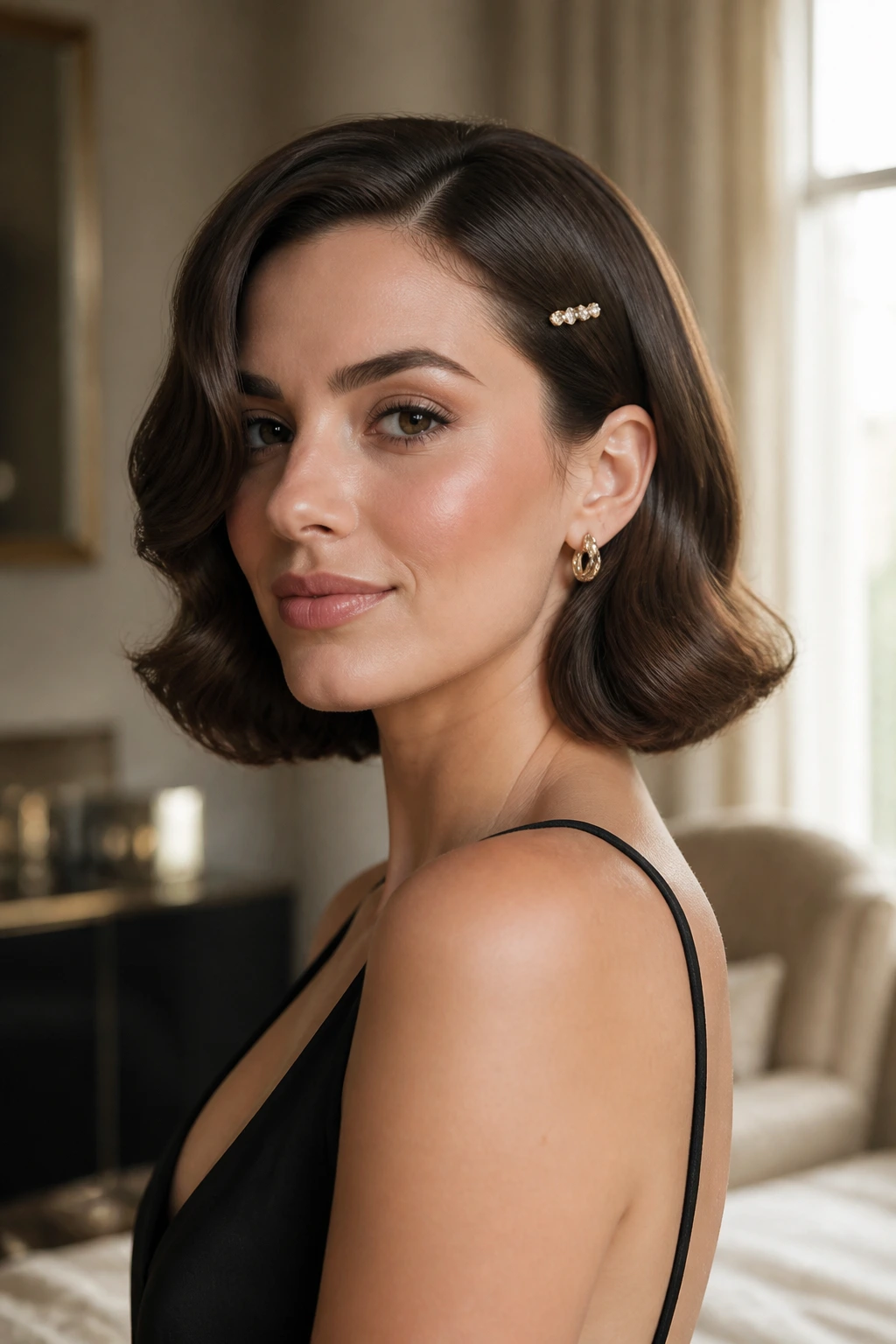
Fine-Hair Lift Kit: Use smaller sections, a little dry shampoo, and more hidden pins. Fine hair usually looks better when the shape is compact and controlled, not over-teased into a puffy cloud.
Thick-Hair Control Plan: Split the hair into more sections and build the base firmly before you try to shape the surface. Thick hair can take a stronger twist, a denser braid, or a larger bun without losing balance.
Short-Hair Formal Finish: A bob or lob can feel dressy with a clean wave, a tucked side, or one decorative clip. You do not need length to look finished; you need precision near the part and the ends.
Curly-Hair Definition First: Work with the curl pattern instead of flattening it. A pinned side, a low bun with curl texture, or a half-up shape that keeps the front controlled can look more elegant than a forced sleek style.
Heat-Free Evening Set: Braids, twists, and pin curls can build formal shape overnight without hot tools. This is the friendliest option when your hair needs a break from iron heat or the event starts early.
Frequently Asked Questions
Which formal hairstyle lasts the longest?
Low buns, French twists, and braided updos usually hold the longest because they have multiple anchor points. If you need a style to survive several hours, choose something with an elastic base, hidden pins, and a shape that sits close to the head.
Can I do these styles on second-day hair?
Yes, and many of them work better that way. Day-old hair usually has enough natural grip to hold pins, braids, and smooth shapes without slipping all over the place.
What if my hair is too short for an updo?
Short hair can still look formal with deep side parts, pinned sides, smooth bends, and good accessories. A curled bob with one decorative clip often reads more elegant than a messy imitation of a bun.
How many bobby pins do I really need?
For a simple half-up style, 4 to 6 may be enough. For buns, twists, or French rolls, keep 8 to 12 on hand. Thick or layered hair usually needs more pins than you think, especially around the seam.
Should I use hairspray before or after styling?
Both, but for different reasons. A light mist before styling can give grip, while a final mist after the shape is set locks everything in place. Don’t soak the hair between those two steps or it can get sticky and hard to move.
How do I stop curls from falling flat?
Let them cool fully before you brush them out. That cooling time is where the curl sets, and skipping it is one of the main reasons formal waves go limp halfway through the night.
Can I hide layers in a sleek bun or ponytail?
Yes, but you have to plan for them. Use a smoothing brush, a hidden elastic, and small pins to tuck the shorter pieces into the base before you finish the surface.
What if my hair is very thick and keeps pulling out of pins?
Use more pins, not more spray. Thick hair often needs stronger anchoring and a slightly looser shape so the weight can distribute without forcing the pins to do all the work.
The Style That Stays Sharp After Dessert
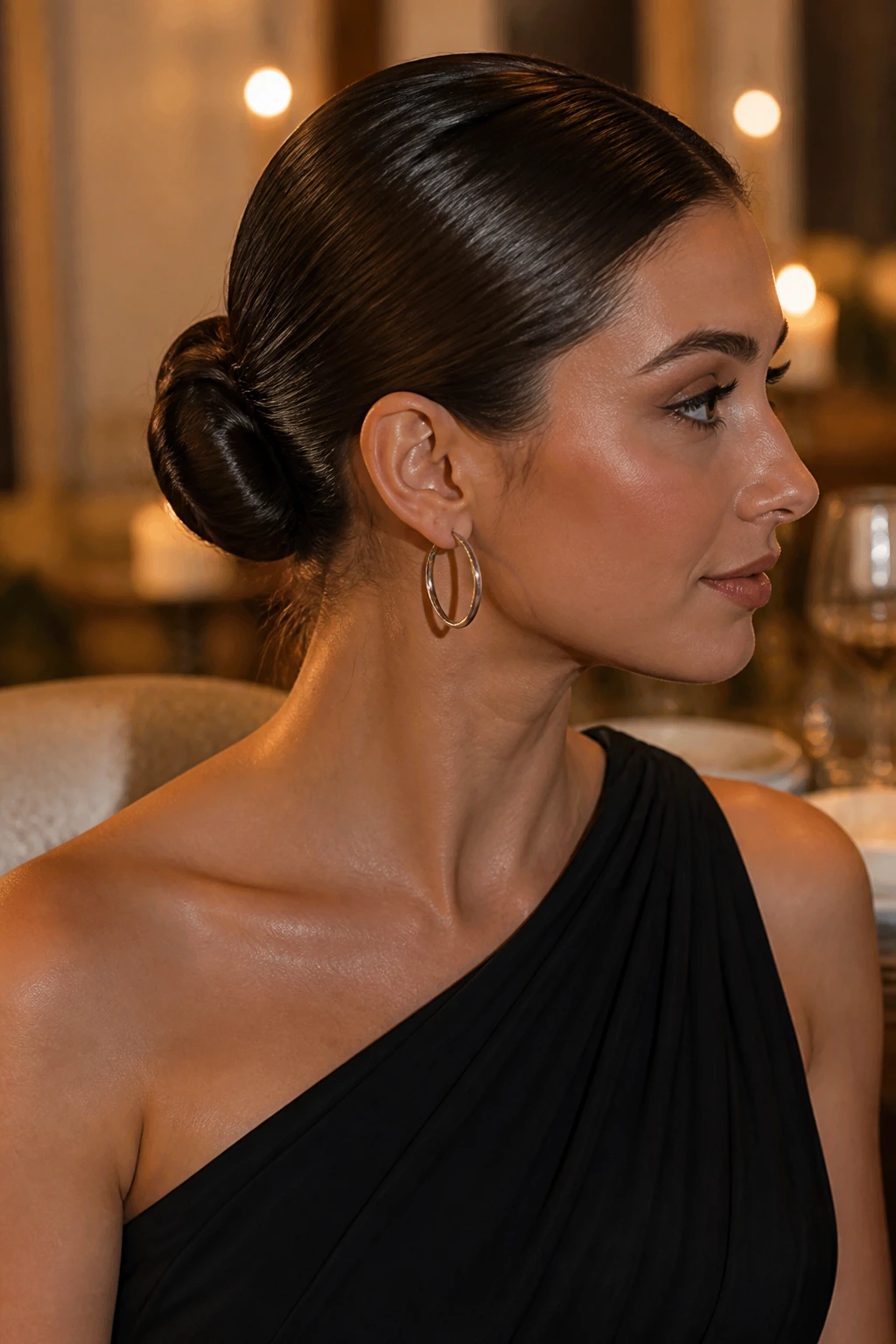
A polished evening hairstyle should do more than survive the first photo. It should still look deliberate after the speech, after the dinner, after the walk to the car with the coat thrown over one shoulder. That’s the real test. Not the mirror. The whole night.
The styles above all solve that problem in different ways. Some rely on smoothness. Some rely on braid structure. Some keep the hair close to the head so it can’t drift. Pick the one that matches your hair texture, your neckline, and your patience level. That part matters more than chasing whatever looks most elaborate on a hanger.
And if you’re standing in front of the mirror with one pin left and ten minutes to spare, keep it simple. Clean part. Strong base. One finished detail. That’s usually enough to make the whole look feel settled.
