



A good pageboy haircut does one thing better than most cropped styles: it draws a line and means it. The weight sits where it should, the ends turn under instead of flaring out, and the whole shape looks deliberate even when the styling took ten minutes and a round brush that’s seen some things.
That’s why pageboy haircuts keep coming back. They have a blunt honesty to them. No fluffy guesswork, no accidental triangle, no vague “I wanted it to look chic” nonsense. When the cut is right, you see the curve at the jaw, the clean nape, the fringe that lands with purpose. When it’s wrong, you see that too. Fast.
My favorite part is how much range the shape actually has. You can wear a pageboy slick and glassy, rough it up with a bit of bend, push it into curtain bangs, or let it graze the shoulders and behave more like a controlled bob. The silhouette stays recognizable. The mood changes. That’s the fun part.
Why These Pageboy Cuts Earn Space in the Chair
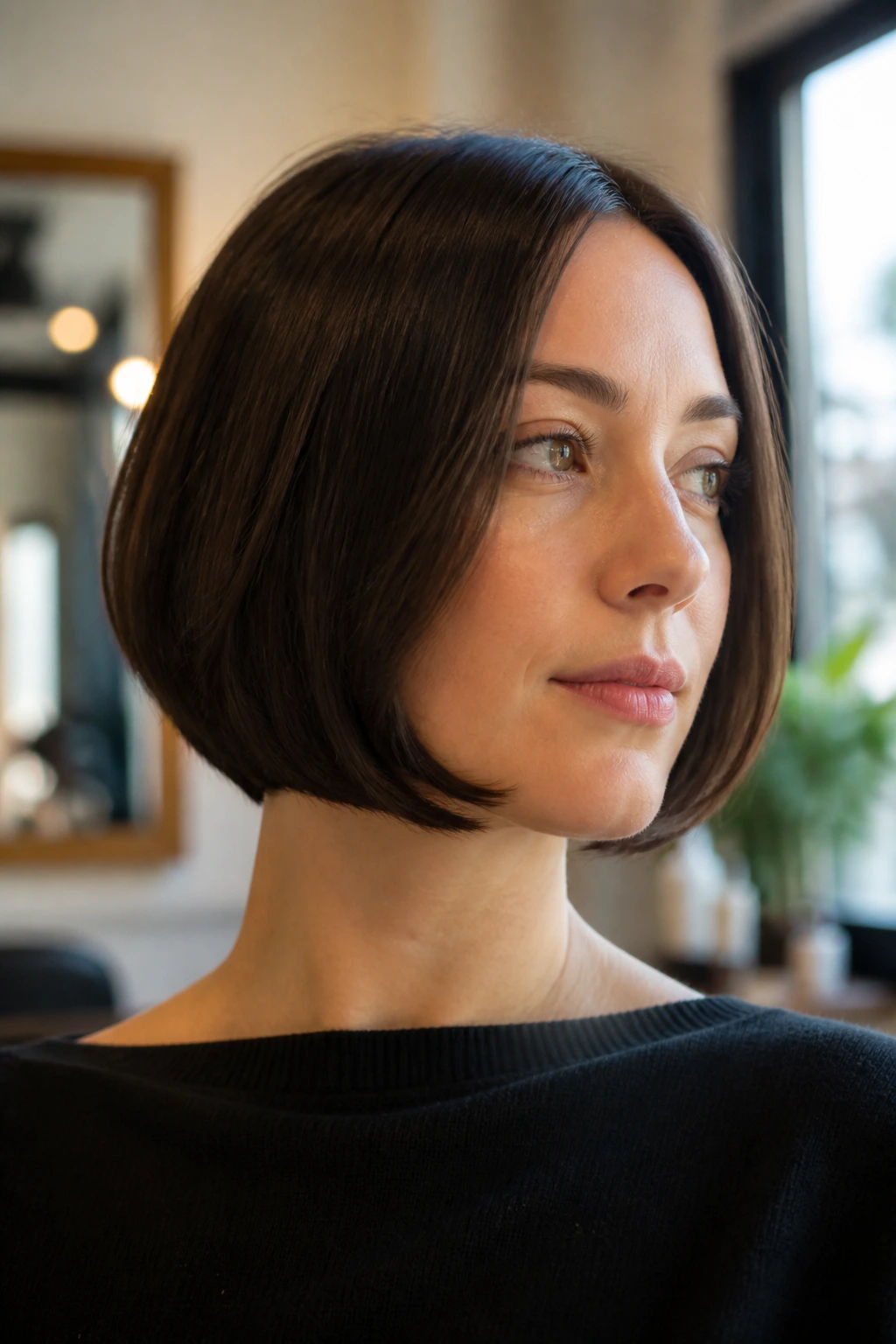
The shape does the heavy lifting: A pageboy lives or dies by its outline, which means even a simple blow-dry can look intentional if the perimeter is clean.
The curve matters more than the length: A chin-length pageboy and a collarbone version can feel completely different, but both rely on that inward bend at the ends.
Bangs change the whole personality: A blunt fringe makes the cut feel sharper, while curtain bangs or a side sweep soften the geometry without losing the pageboy line.
It behaves better on day two than people expect: Once the cut has been set, a quick mist, a brush, and a touch of bend can revive it without starting from scratch.
It’s not only for pin-straight hair: Wavy, thick, and curly textures can wear pageboy shapes too, as long as the weight line is cut with the texture in mind.
It gives you a real answer at the nape: Some cropped cuts puff out behind the ears. A pageboy, when it’s cut well, sits close and clean where the neck meets the hairline.
1. Sleek Chin-Grazing Pageboy
This is the pageboy in its clearest form: a blunt line that sits around the chin, with ends curled just enough to tuck under. It’s polished without looking precious. The kind of cut that makes earrings, a sharp collar, or a plain black sweater look more considered than they really are.
What makes it work is restraint. You do not need heavy layering here; you need a steady perimeter and enough weight to keep the bend at the bottom. On straight or slightly wavy hair, this shape can be blown smooth with a medium round brush and a nozzle, then cooled in place so the ends hold their curve.
Who it flatters: oval, heart, and long faces, especially when the chin line lands right where the jaw starts to angle.
Best styling habit: blow the front sections forward first, then wrap the ends under.
Watch for: over-thinning the sides. Once the edge gets wispy, the whole look loses its backbone.
2. Blunt Micro-Pageboy With Eyebrow Fringe
Shorter pageboys have bite. This one sits high, with the hemline skimming the jaw and the fringe landing at or just above the brows. It feels sharp in a way that’s almost graphic, which is exactly why it looks so good with clean makeup or a strong lip.
The trick is keeping the bangs solid but not bulky. If the fringe is cut too heavy, it sits on the face like a shelf. If it’s too soft, the cut loses the little jolt that makes it memorable. I like this shape most on fine to medium hair, because the shorter length gives the hair some lift without needing a lot of product.
It is not a lazy haircut. You’ll want the edges trimmed on a regular schedule, because even a quarter-inch of growth changes the balance. Still, when it’s fresh, this cut has a crispness that a longer bob can’t quite fake.
3. Rounded Pageboy With Tucked-Under Ends
This is the softer cousin of the classic pageboy. The silhouette still sits close to the head, but the curve is fuller and more rounded, like the hair was guided inward by a clean brush and a patient hand. It’s a lovely choice if you want structure without the hard edges of a blunt crop.
Why it works: the rounded line adds bulk where thick hair usually fights you. Instead of puffing out at the sides, the ends are directed inward so the shape stays contained. A 1¼-inch round brush and a quick cool shot at the end help the bend hold without turning crunchy.
Best for: thick straight hair, dense waves, and anyone whose hair flips out at the collar.
Styling note: keep product light at the root and slightly richer on the mid-lengths.
My opinion: this is one of the best pageboy haircuts if you hate fuss but still want the haircut to look deliberate.
4. Collarbone Pageboy With Curtain Bangs

Once the pageboy passes the chin, the mood changes fast. At collarbone length, it starts to feel less like a strict crop and more like a shaped bob with memory. Add curtain bangs, and the whole cut softens at the front while keeping that inward curve at the ends.
The curtain fringe does useful work here. It opens the face, gives movement around the cheekbones, and keeps the style from reading too severe at this length. I like this version on hair that has some natural bend, because the soft front pieces and tucked-under perimeter play nicely together.
You can rough-dry it and still look styled. That matters. If the goal is a haircut that survives a quick morning without looking half-done, this is one of the safest pageboy routes.
5. Soft French Pageboy

There’s a difference between a pageboy that looks engineered and one that looks lived in. The French-leaning version falls into the second camp. It usually sits somewhere between chin and jaw length, with softer bangs, a little bend in the ends, and just enough irregularity to keep it from feeling helmet-stiff.
The charm here is in the looseness. The fringe can be parted slightly off-center or brushed into a broken curtain, and the perimeter can be blunt without being severe. A light mousse at the roots and a bit of cream through the ends is usually enough. No need to drown it in product.
This one is good for people who want the pageboy shape but not the full retro attitude. It looks especially nice when the hair has a bit of natural texture, because a few stray pieces around the face make the whole cut feel less formal.
6. Curly Pageboy With Defined Ends
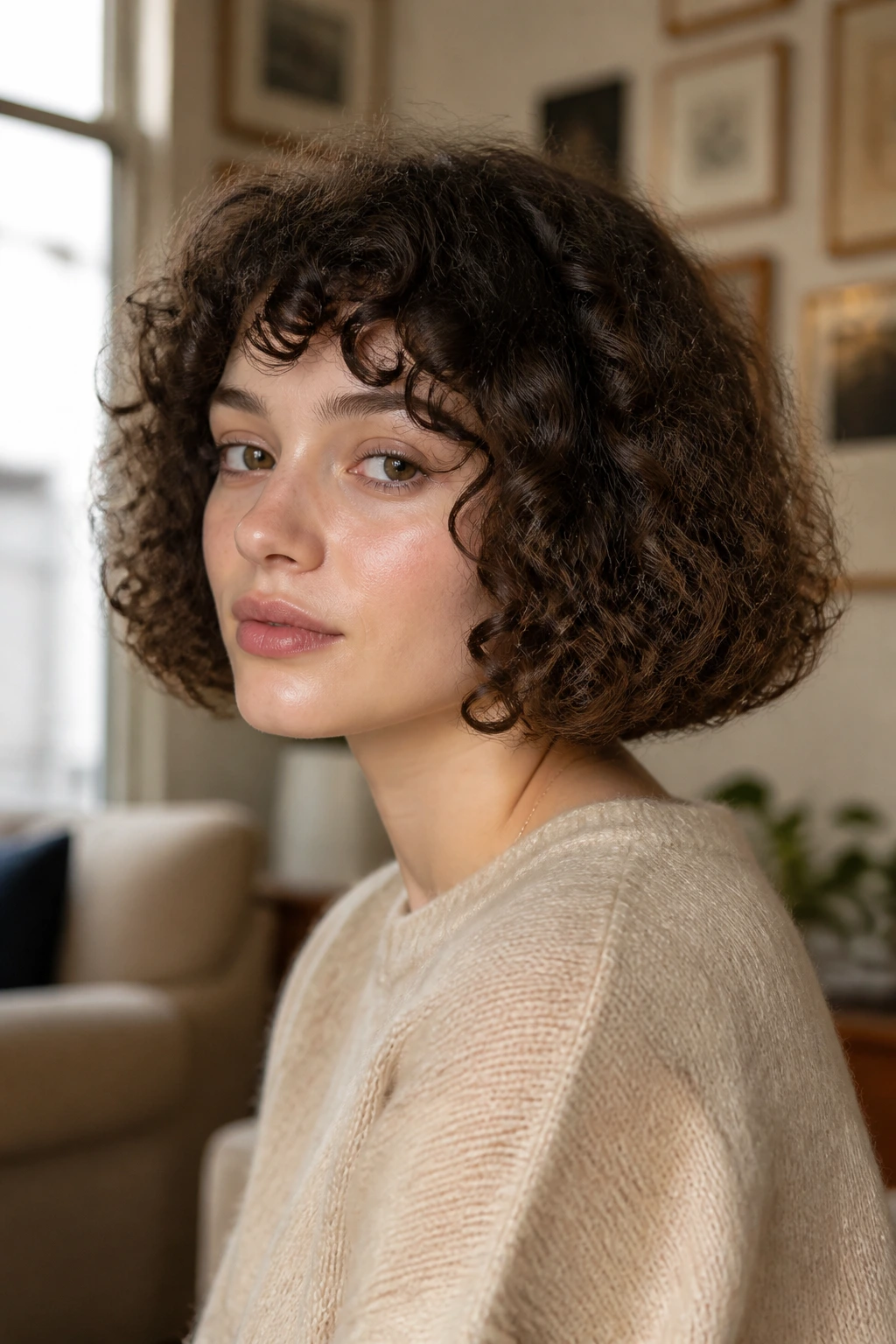
Yes, curls can wear a pageboy. They just need a haircut that respects the spring instead of fighting it. The best curly pageboy keeps a clear outline while allowing the texture to do what it wants inside that shape.
I would ask for the cut to be shaped around the curl pattern, not stretched out while wet and guessed at. That matters more than most people realize. When curly hair dries, it shrinks and shifts, so the perimeter should be planned with the dry finish in mind. A clean edge at the bottom and enough internal room for the curls to move is the sweet spot.
What to ask for
- A rounded silhouette that follows the curl fall.
- Minimal thinning at the perimeter.
- Fringe shaped to your real curl pattern, not forced straight.
- Length that lands where the curl settles, not where it hangs wet.
A curl cream and a firm gel give this version shape without turning it stiff. The result should feel defined, not shellacked.
7. Choppy Shag-Pageboy
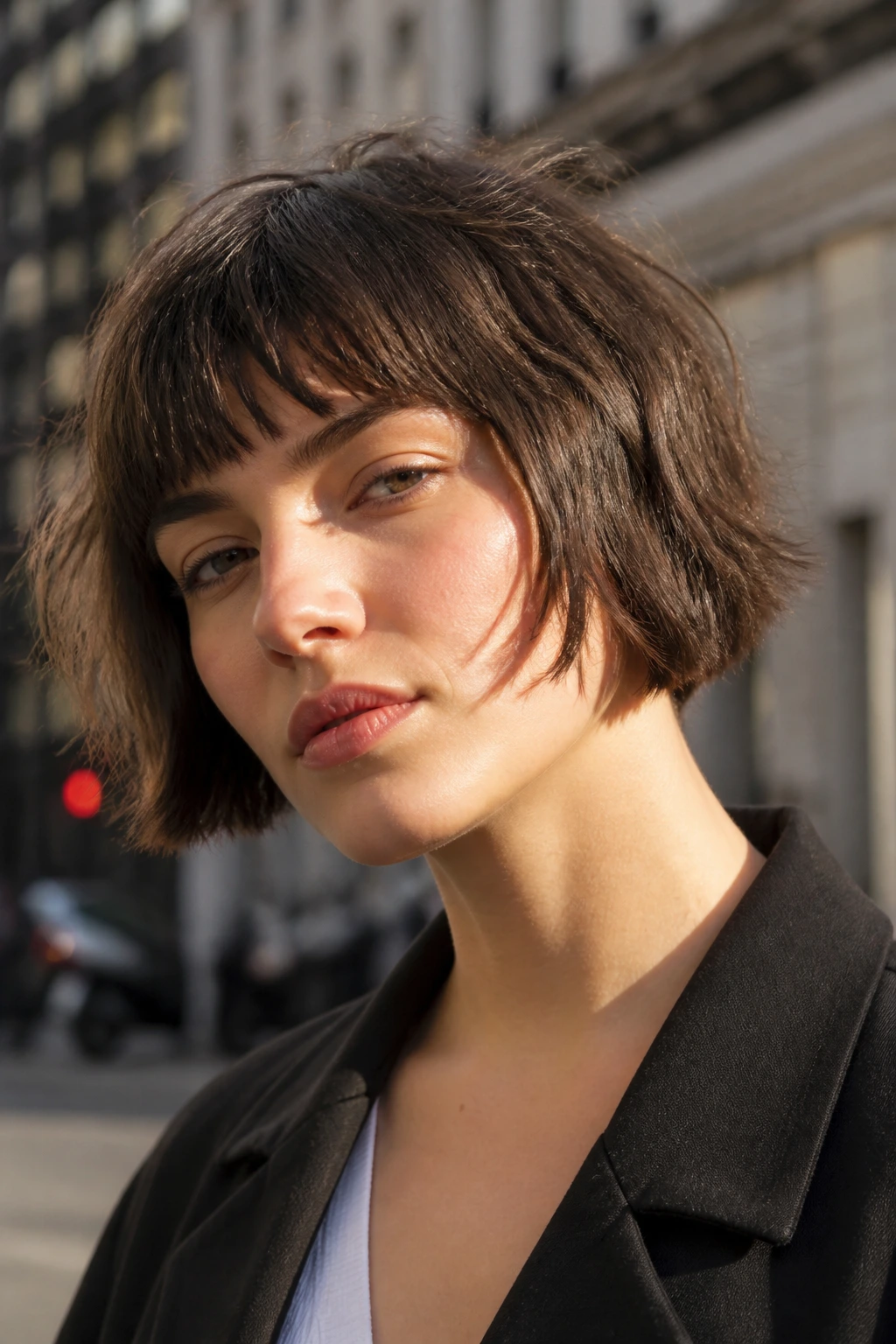
This is where the pageboy gets a little attitude. The outline is still cropped and purposeful, but the interior texture is broken up with choppy bits that move as you turn your head. It’s less polished, more street-corner cool.
The danger is overdoing the texture. If the perimeter is shredded too much, the haircut stops looking like a pageboy and starts looking like a failed grow-out. I like a light touch here: a few internal layers, some softened points around the face, and a blunt enough outer line to keep the shape recognizable.
This version works especially well if your hair is thick or slightly wavy and you hate the feeling of a heavy block. A rough-dry, a dab of matte paste, and finger-combing are usually enough. No round-brush sermon required.
8. Asymmetrical Pageboy With One-Side Sweep
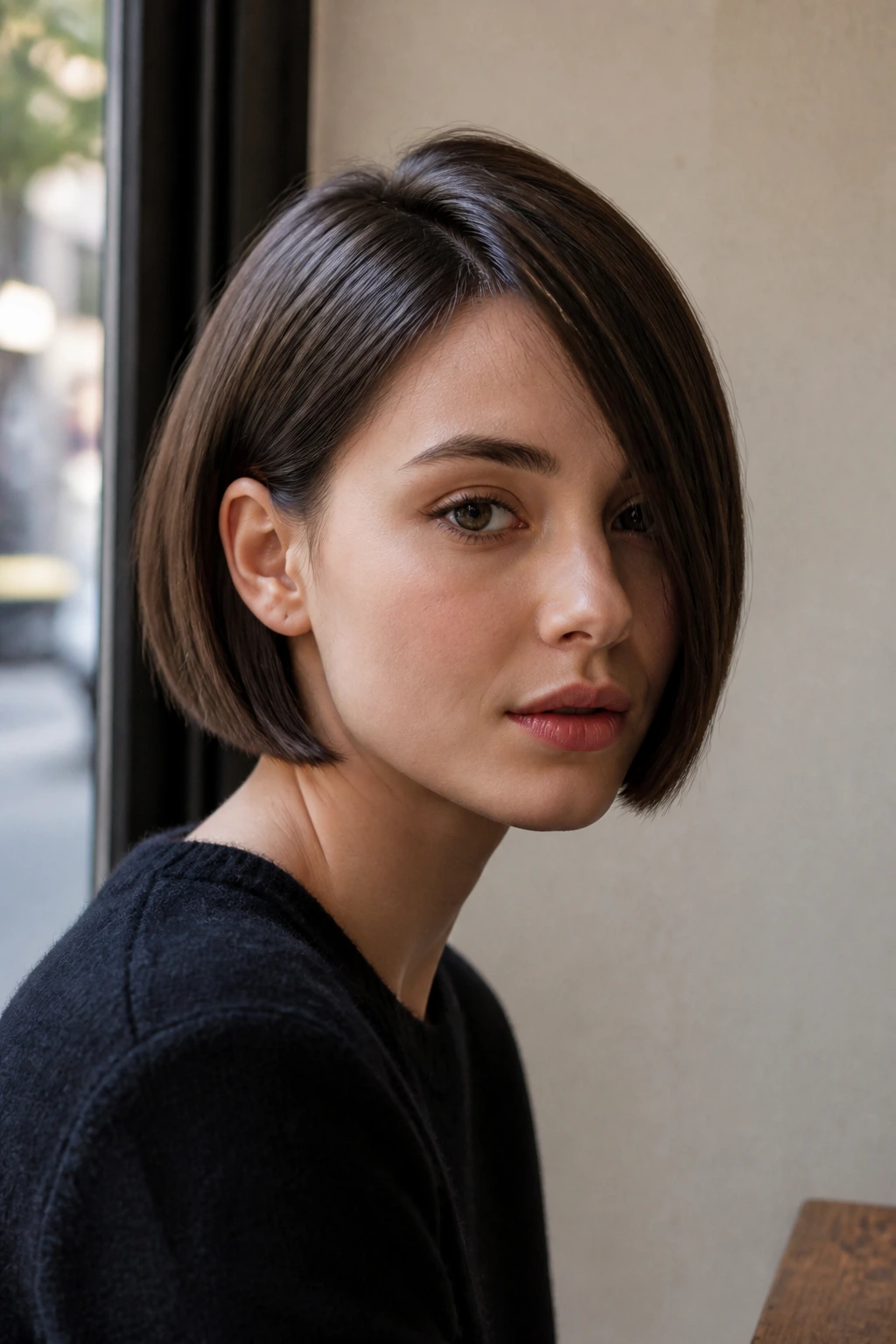
A slight imbalance can wake up a very tidy haircut. In this version, one side sits a touch longer or the part pushes the fringe hard to one side, so the pageboy shape gets a sharper line on one cheek and a longer fall on the other. It’s not wild. It’s just pointed.
The asymmetry does two jobs at once. It makes the cut feel less predictable, and it lets you play with face shape in a real way. A deeper side can soften a strong jaw, lengthen a round face, or bring attention to one eye without making the whole style feel fussy.
Keep the base of the cut clean. That’s the part people sometimes forget. If both sides are uneven and the bottom edge is fuzzy, you lose the deliberate shape and end up with hair that looks undecided.
9. Layered Pageboy for Thick Hair
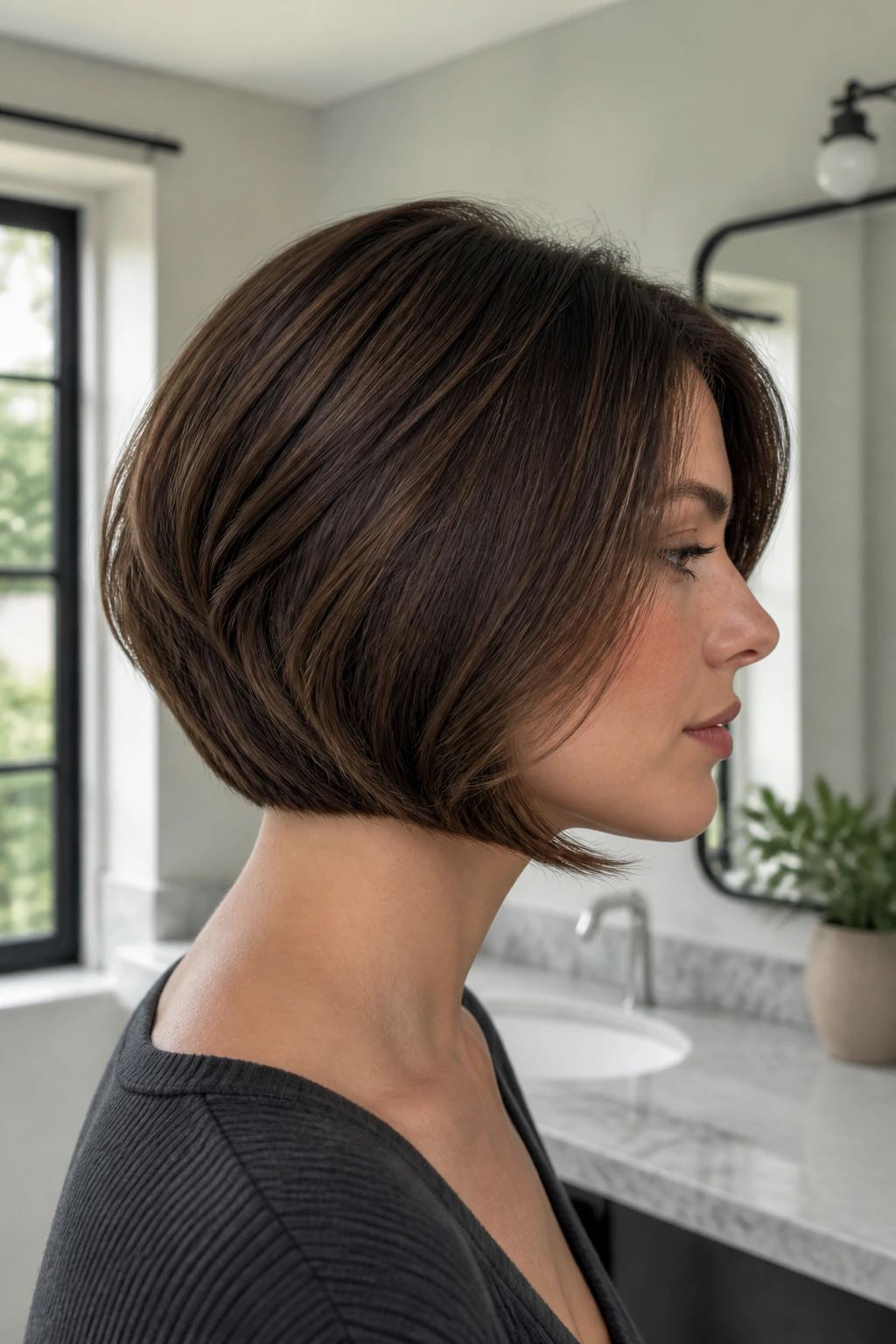
Thick hair needs structure, not sabotage. A layered pageboy can be a smart answer when the bulk starts to pile up around the ears and neck, but the layers should live inside the shape, not chew up the outside edge. The perimeter still has to read as a pageboy.
This is the cut for someone who likes the silhouette but hates the feeling of a hard, heavy curtain of hair. Internal layering helps remove weight, which means the ends can turn under instead of exploding outward. The result is cleaner at the jaw and lighter at the crown.
Pro detail: ask for weight removal in the middle of the haircut, not at the very edge.
Why that matters: the edge is what gives the pageboy its identity.
Best styling move: a blow-dry with the hair sectioned into narrow panels so the curve sets evenly.
10. Fine-Hair Pageboy With Razor-Soft Edges
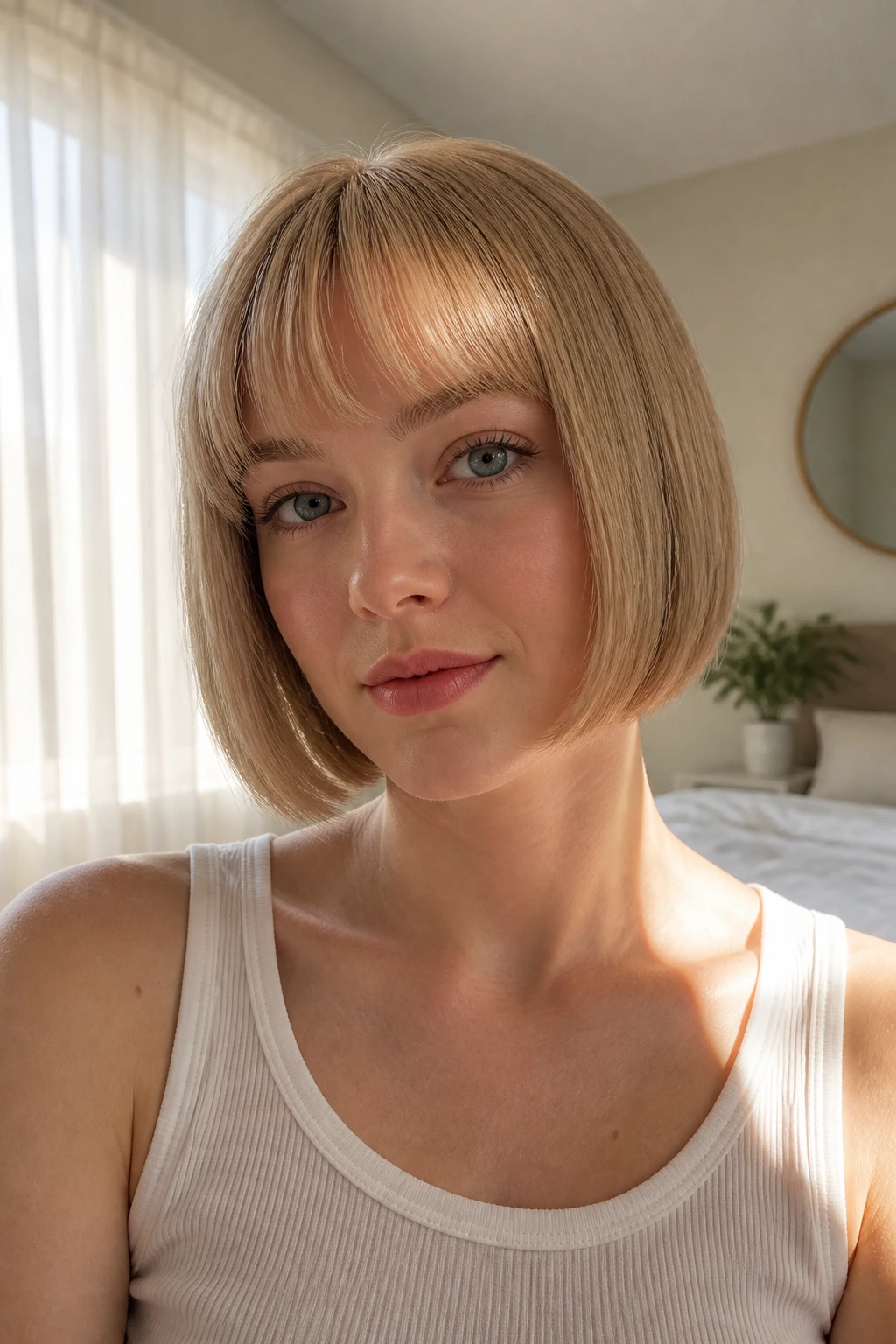
Fine hair can look flat in a blunt crop if the cut is too one-note. A razor-soft pageboy solves that by keeping the line visible while softening the ends just enough to give the hair some movement. Not wispy. Soft.
The key is not to over-layer the thing into nothing. Fine hair usually needs perimeter weight, but it also benefits from a little air around the face so the shape doesn’t look pasted to the scalp. A light root spray at the crown and a round brush at the ends are usually enough to make it look fuller than it is.
I’m picky about this version because it can go wrong fast. If the edge gets too shredded, you lose density. If it’s too blunt, the hair can drop. The sweet spot is a clean line with a touch of feathering inside the shape, not on the hem.
11. Wet-Look Pageboy With Glass Finish
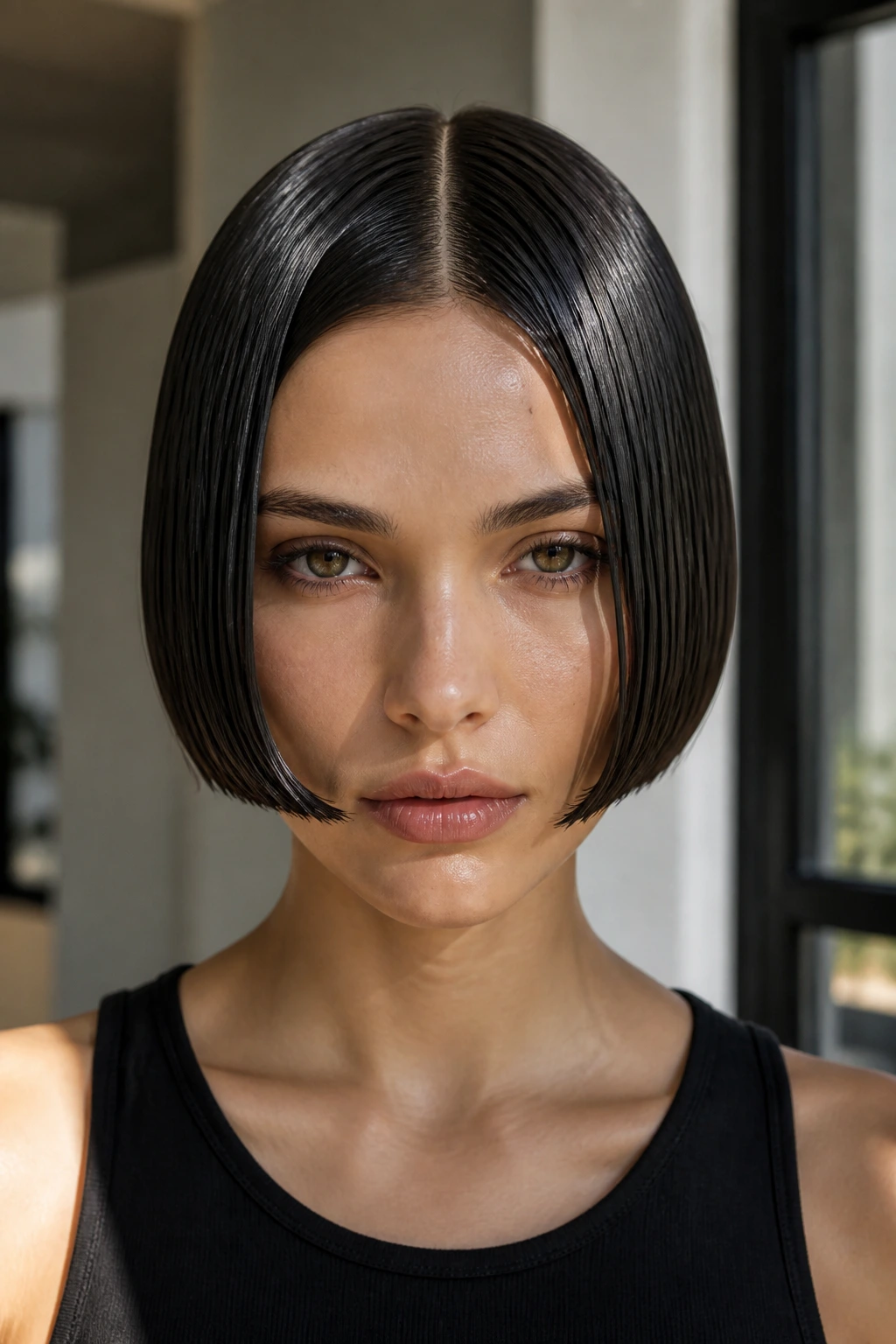
If you like a haircut that shows its bones, this one is for you. The wet-look pageboy leans into shine, with a smooth surface and a defined part that makes the line at the jaw feel almost architectural. It’s dramatic in a controlled way.
The styling is the whole point. You want the hair damp, not soaked, then worked with a gel that has enough hold to keep the front sleek without flaking. A pea-sized amount of shine serum on the outer layer can make the finish look polished instead of greasy, which is a very important difference.
This version pairs best with simple clothes and clean necklines, because the cut already does the talking. It’s one of those styles that looks expensive in motion, especially when the hair swings and the light hits the smooth surface.
12. Deep Side-Part Pageboy

A deep side part can save a pageboy from looking too symmetrical. It shifts the weight, changes the cheek line, and gives the cut a little movement before you even touch a brush. The result feels less school-uniform, more tailored.
This is especially useful if your crown lies flat or one side of your hair insists on doing its own thing. A strong part lets you direct the fall of the fringe and gives the pageboy a longer sweep across the forehead. That sweep can soften a square face or take the edge off a strong jaw.
How to wear it
- Blow the roots opposite the part first for lift.
- Sweep the front across the brow while it cools.
- Keep the ends tucked under so the cut still reads as a pageboy.
- Finish with a flexible spray, not a stiff helmet of hold.
13. Pageboy Bob Hybrid With a Tapered Nape
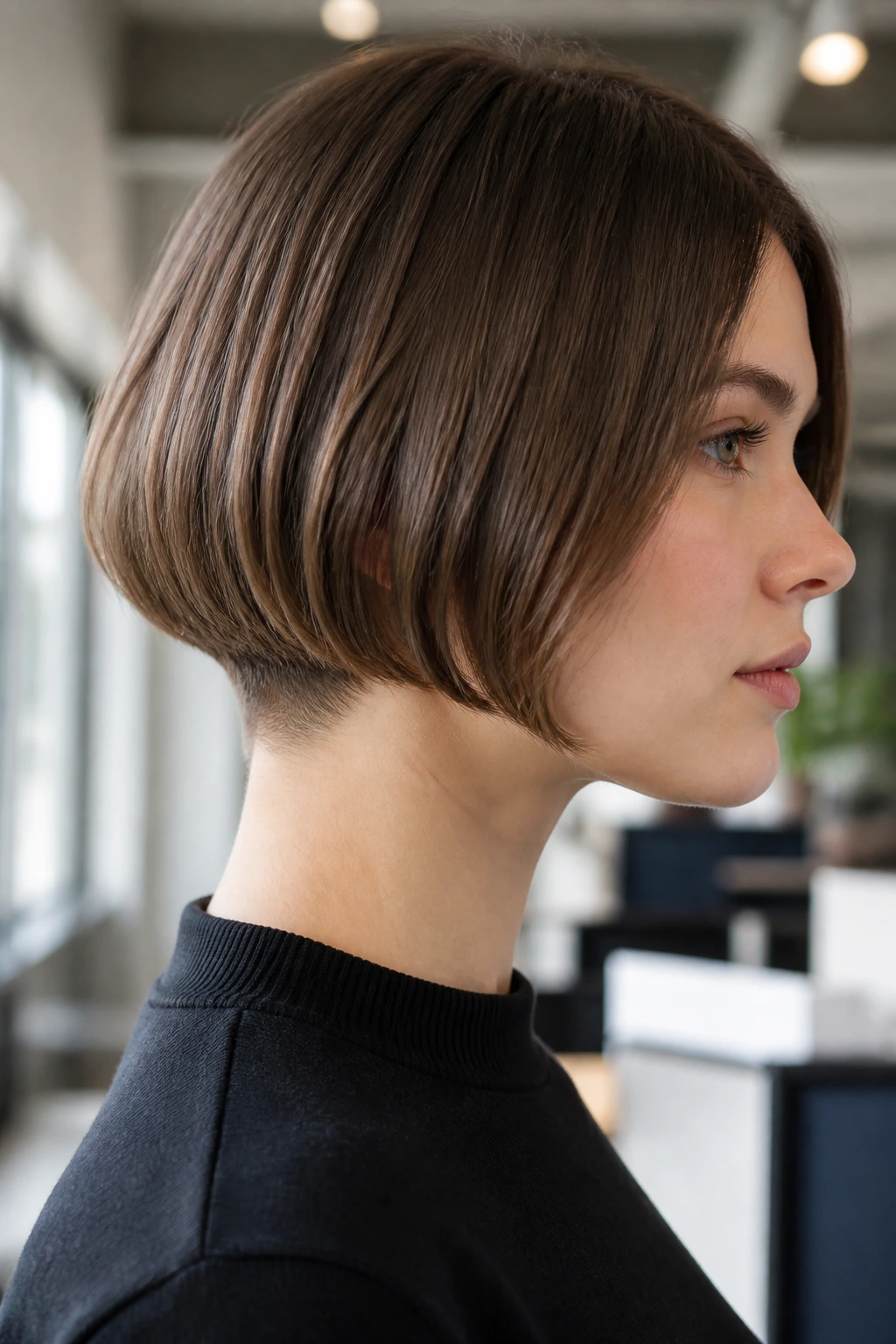
This version sits in the sweet spot between a bob and a pageboy. The front can graze the jaw or just below it, while the back tapers neatly at the nape so the neckline stays clean. It’s a nice answer for people who want some bob length without losing the pageboy curve.
The tapered nape keeps the cut from ballooning behind the ears, which is the part that usually gets sloppy first. A little graduation at the back helps the shape sit closer to the neck. It’s a practical detail, and practical details are what make short hair look expensive instead of accidental.
I like this one for office life, school runs, and anyone who wants the haircut to survive a scarf or a collared jacket without going weird. It wears well tucked behind the ears, too.
14. Blunt Bangs and Dark Gloss Pageboy
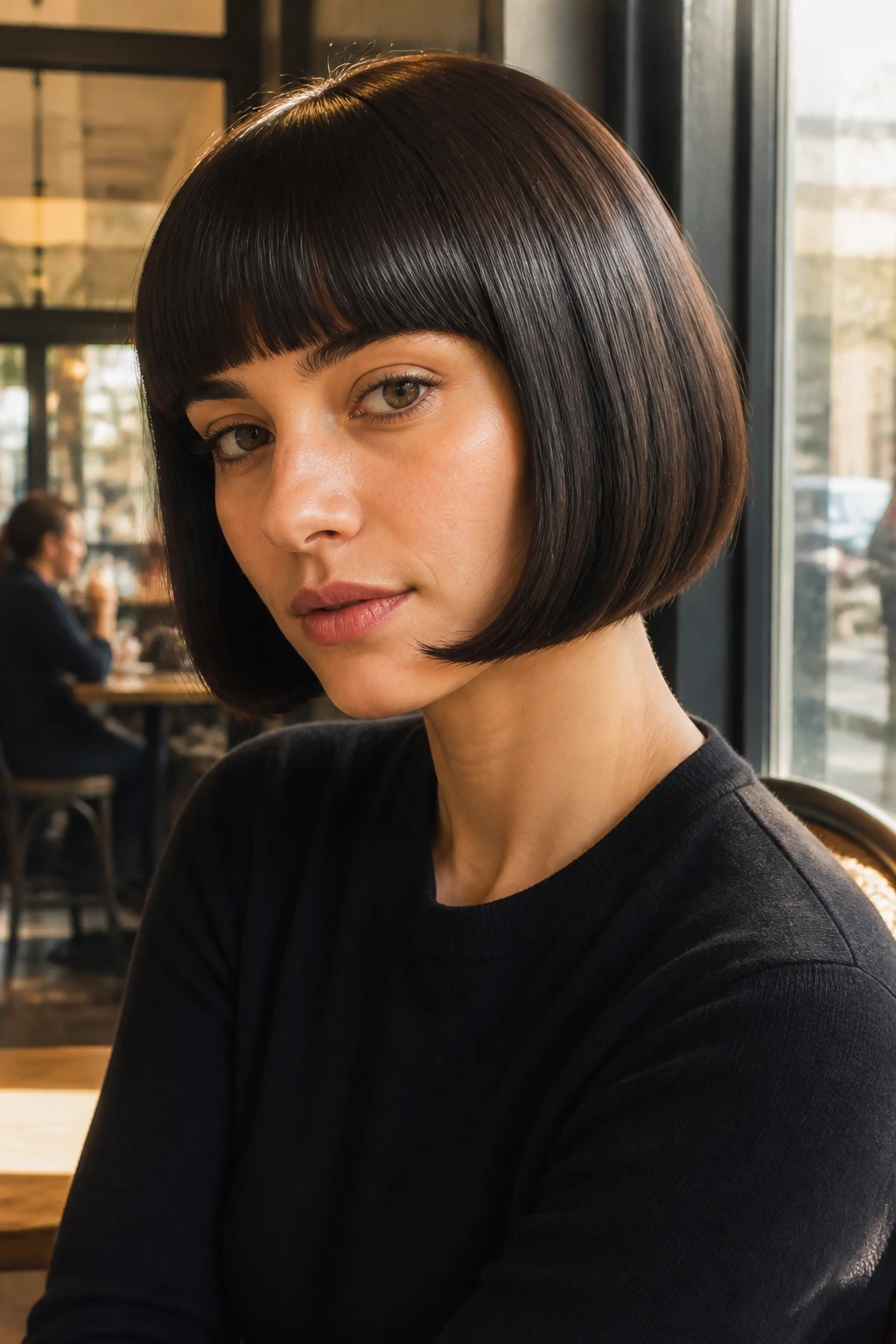
There’s nothing shy about this cut. Straight-across bangs plus a dark, glossy pageboy create a hard line that looks confident before you’ve even done anything else. It has a very specific mood: precise, cool, and a little bit severe in the best way.
The blunt fringe is the whole show. It should sit clean across the brows, with enough density to hold its edge but not so much that it blocks the eyes. The rest of the haircut should stay simple so the bangs stay in charge. If you add too much texture, the cut starts fighting itself.
Best on: straight hair, strong brows, and anyone who likes a clean silhouette with minimal fluff.
Best finish: shine spray or a light serum on the outer layer only.
What not to do: texture spray at the roots. It muddies the line and steals the crispness.
15. Piecey Textured Pageboy

A piecey pageboy is what happens when you want the shape without the stiffness. The line is still there, but the interior has enough separation that the haircut moves in small, visible sections instead of one solid block. That little bit of broken texture keeps it from feeling too formal.
This is a handy option if your hair naturally bends or if you like to finger-style instead of brush everything into place. A light paste or cream-wax can define the ends without collapsing them, especially if you pinch sections around the face and leave the crown a touch airy.
It is a friendlier version of the cut for everyday wear. Not as sculpted as the glossy versions, not as loose as a shag. Somewhere in the middle, which is where a lot of people actually live.
16. Retro Mod Pageboy
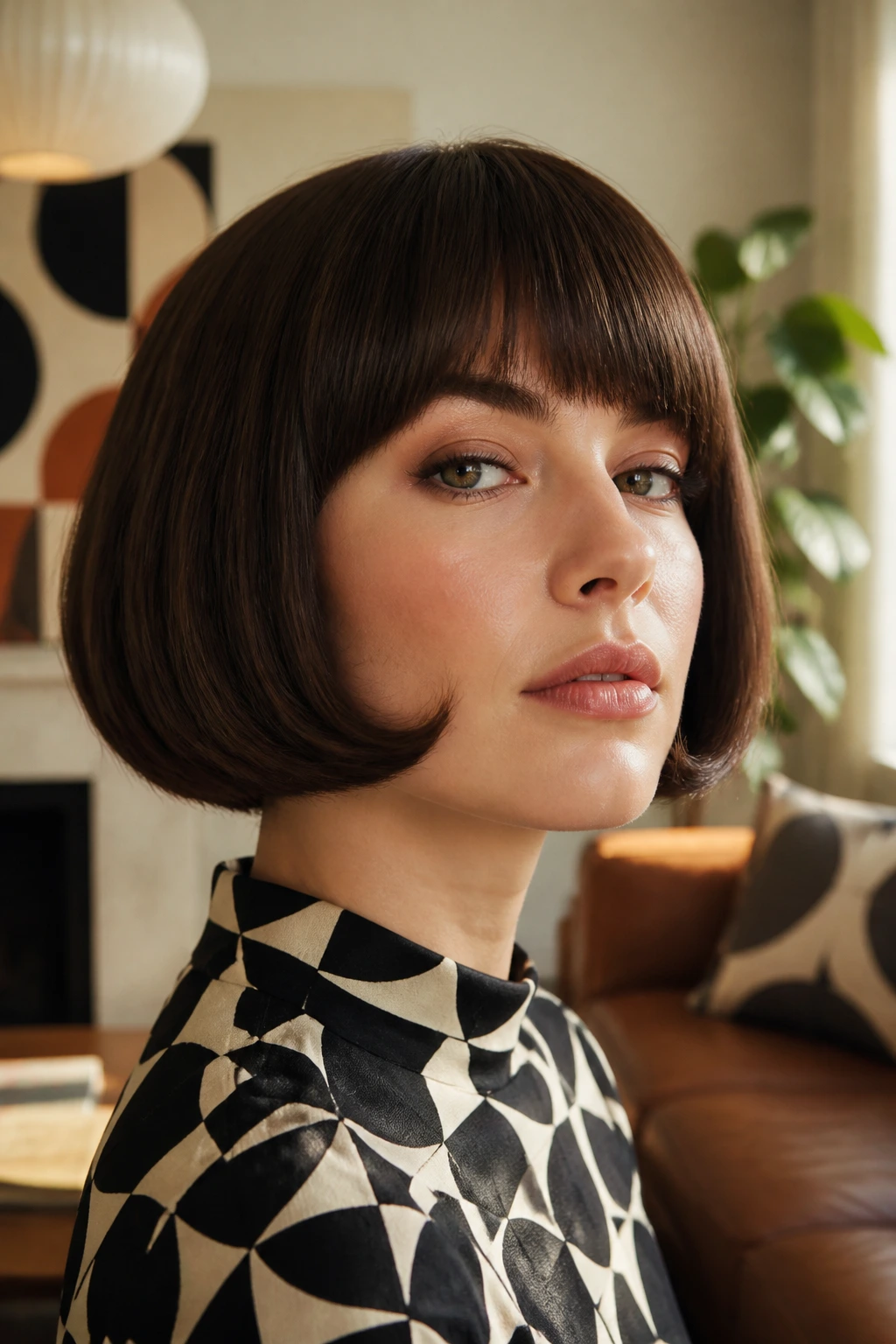
The retro mod version leans into the rounded shape and polished finish that made the pageboy famous in the first place. Think fuller sides, a clean fringe, and an unmistakable curve at the ends. It has presence. No one will mistake it for an accidental bob.
This cut likes a good blowout. A round brush, a concentrator nozzle, and a bit of patience at the crown make a huge difference. If the hair is allowed to dry haphazardly, the shape can puff up and lose that neat, rounded line, which is exactly what you do not want here.
I’d choose this version if you enjoy structure and don’t mind spending a few extra minutes after washing. It looks especially striking with geometric earrings, a sweater with a high collar, or a sharp cat-eye. The haircut does the rest.
17. Tapered Pageboy With Clean Neckline
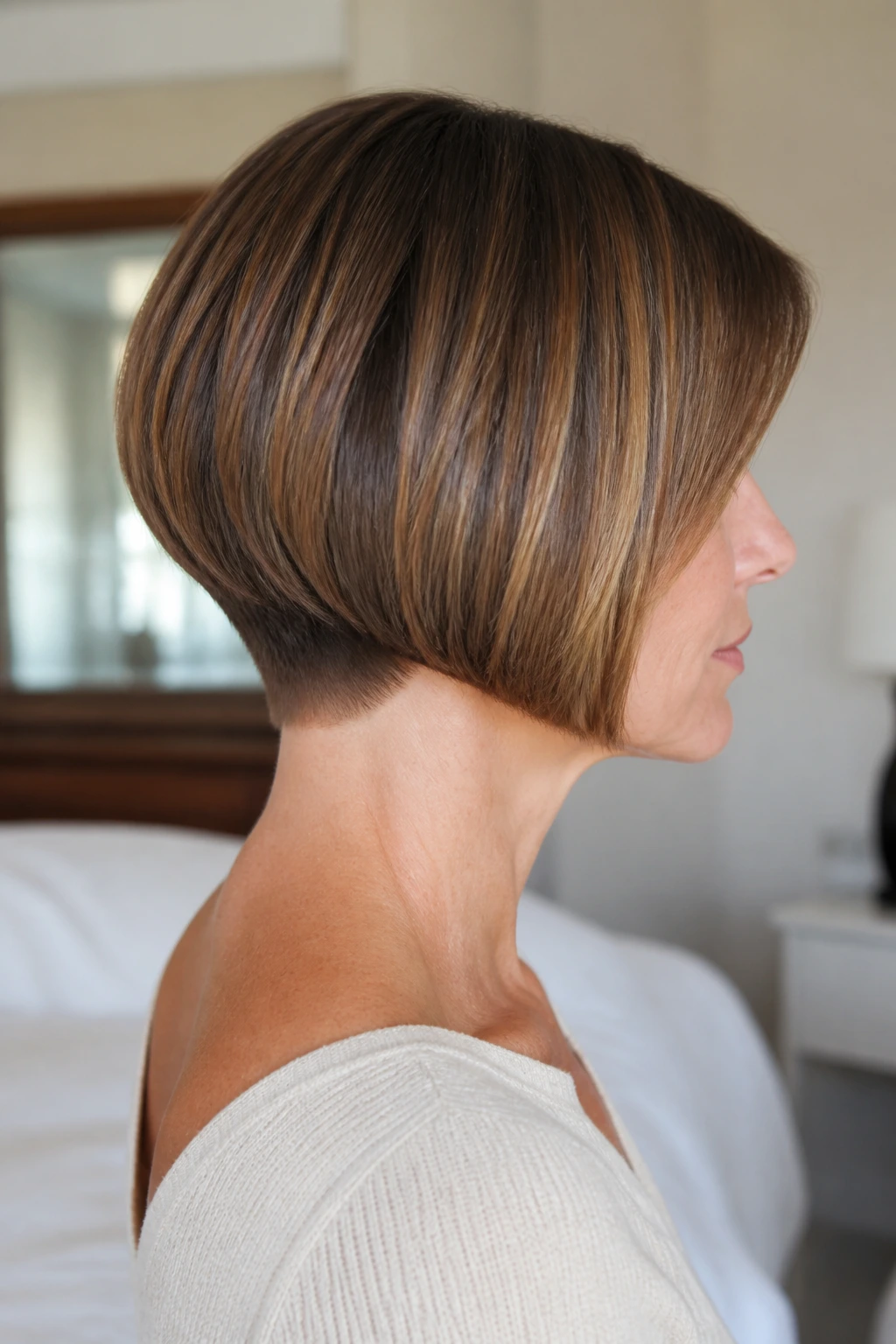
Some people love the pageboy shape but hate anything that brushes the neck. This version answers that complaint. The haircut stays cropped and curved, but the back is tapered closer to the skin so the neckline feels tidier and lighter.
That clean neck makes a real difference in how the cut wears through the day. Hair that sits close at the nape doesn’t bunch up under collars, doesn’t frizz as quickly, and doesn’t make the back of the head feel bulky. Small thing. Big payoff.
This is one of the more low-maintenance pageboy haircuts if you keep the trim schedule honest. It’s especially nice for thick or straight hair that tends to mushroom out the back.
18. Silver-Haired Feathered Pageboy

Silver and white hair can make a pageboy look sharper, not softer, because the light bounces off the shape so clearly. A feathered version keeps that brightness from feeling blocky. The ends stay light, the fringe stays open, and the whole cut has some air in it.
I like this version when the hair has some natural density. Feathering a little through the front and sides stops the cut from reading as a solid shell, which can happen with very full silver hair. A light leave-in conditioner and a smoothing cream are usually enough; the color already does some of the visual work.
There’s a nice honesty to this one. It doesn’t try to fight age, texture, or density. It just gives the hair a clean shape and lets the color do the rest.
19. Hidden Undercut Pageboy
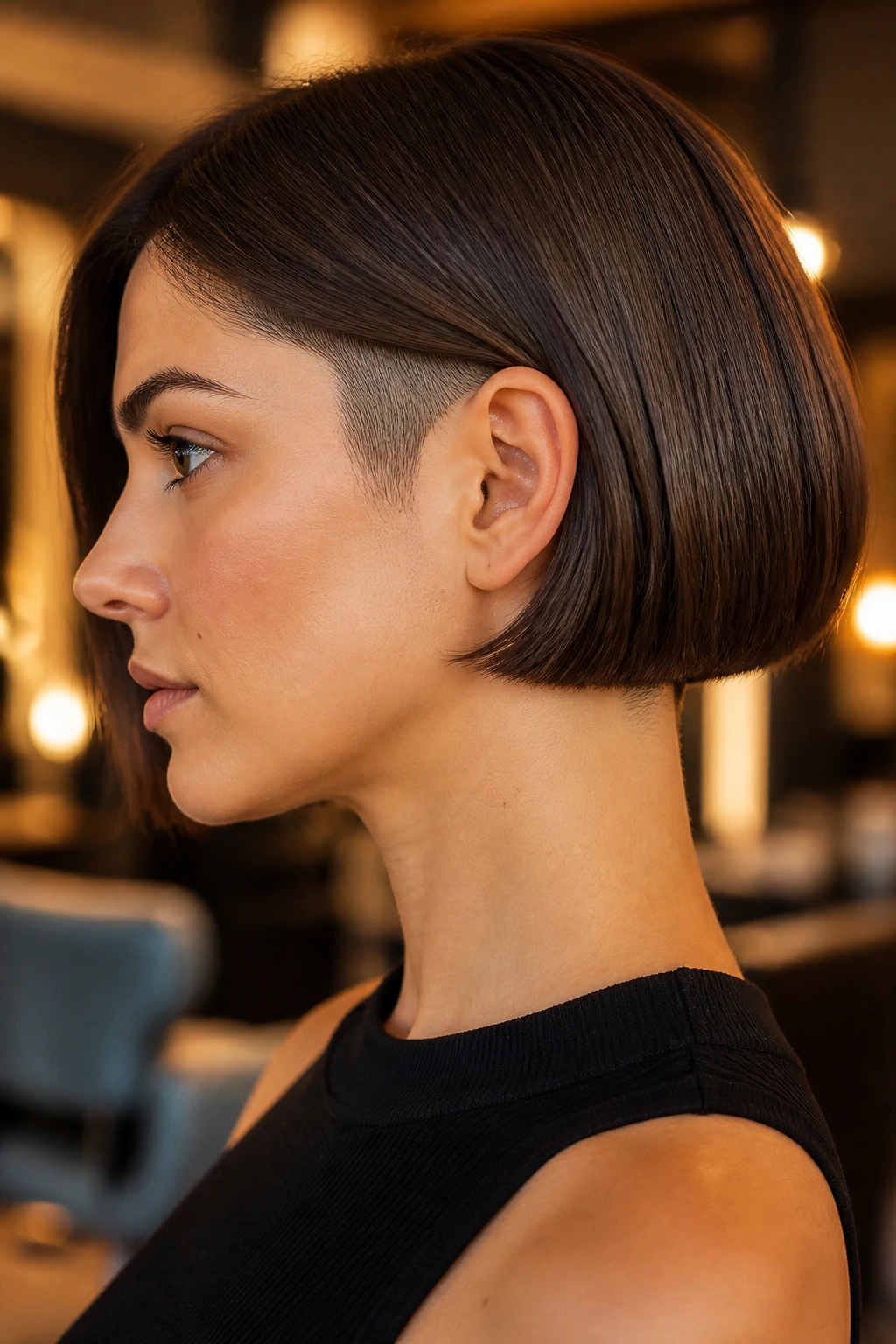
This one is for thick hair that insists on living a life of its own. A hidden undercut takes bulk out from underneath the top layer, so the pageboy sits closer to the head and the outer surface can stay smooth. You get the clean line without the puff.
The best part is that the undercut doesn’t have to show. From the outside, it still looks like a neat cropped pageboy. Underneath, there’s room for the hair to behave. That makes styling faster, and in thick hair, faster is a gift.
You do need maintenance. The undercut grows out before the top does, and if you wait too long, the extra bulk comes back in all at once. Not cute. Keep that area clipped on a predictable schedule or the shape will start to swell behind the ears.
20. Long Pageboy That Skims the Shoulders
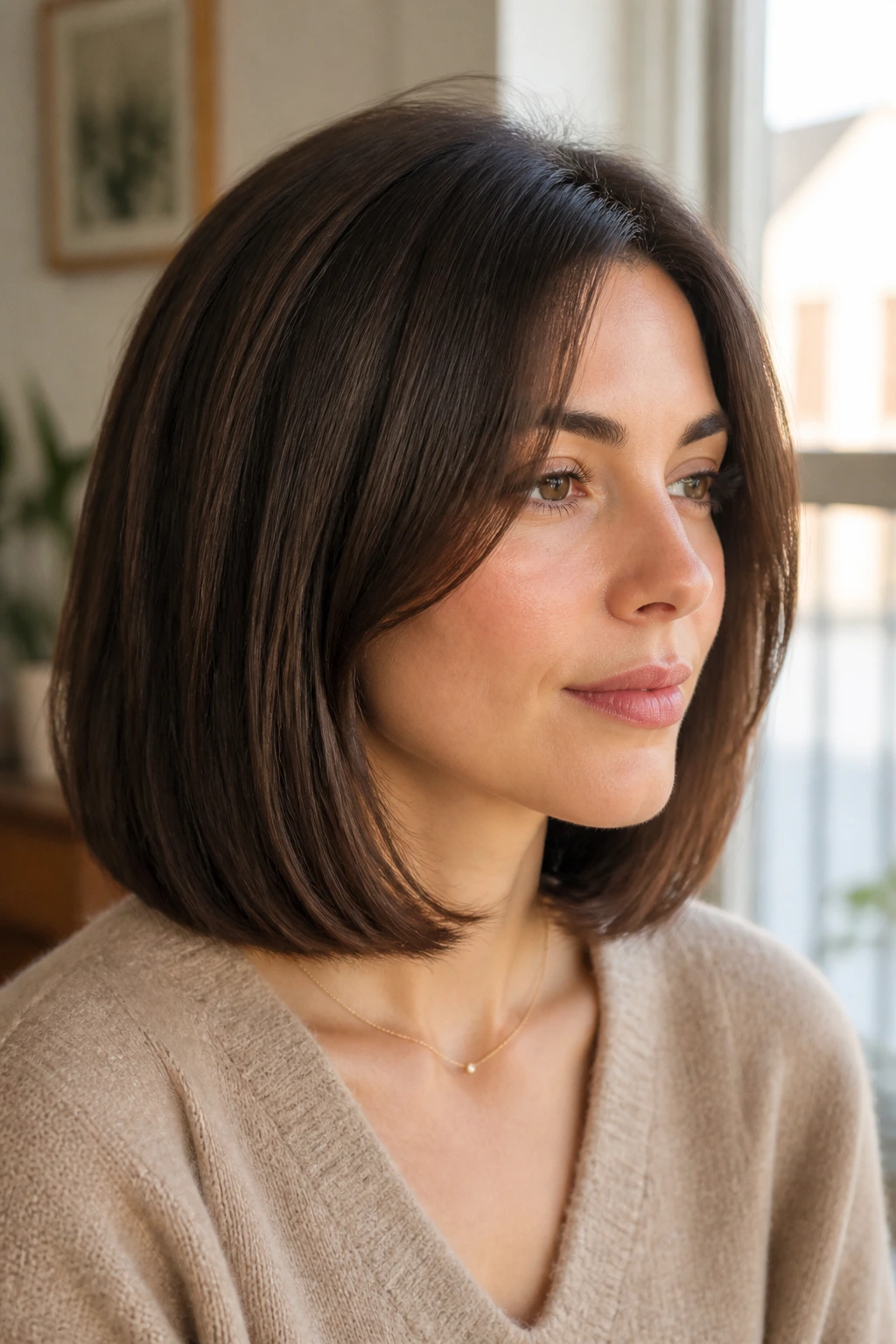
Not every pageboy has to stop at the jaw. A longer version that skims the shoulders can still carry the same curved outline, especially if the ends are trained inward and the front is kept slightly shorter than the back. It feels softer, but the shape is there.
This is a smart option if you like the idea of a pageboy but aren’t ready to go short-short. The extra length gives you more room for movement, ponytail days, and a less dramatic grow-out. Still, the perimeter needs attention. A shoulder-skimming pageboy that flips everywhere is just a long cut with commitment issues.
What makes it work
- A subtle undercurve at the ends.
- Minimal layering around the perimeter.
- A front section that frames the jaw or collarbone.
- Enough weight to keep the shape from puffing at the shoulders.
21. Curved Bob-Pageboy With Micro Layers
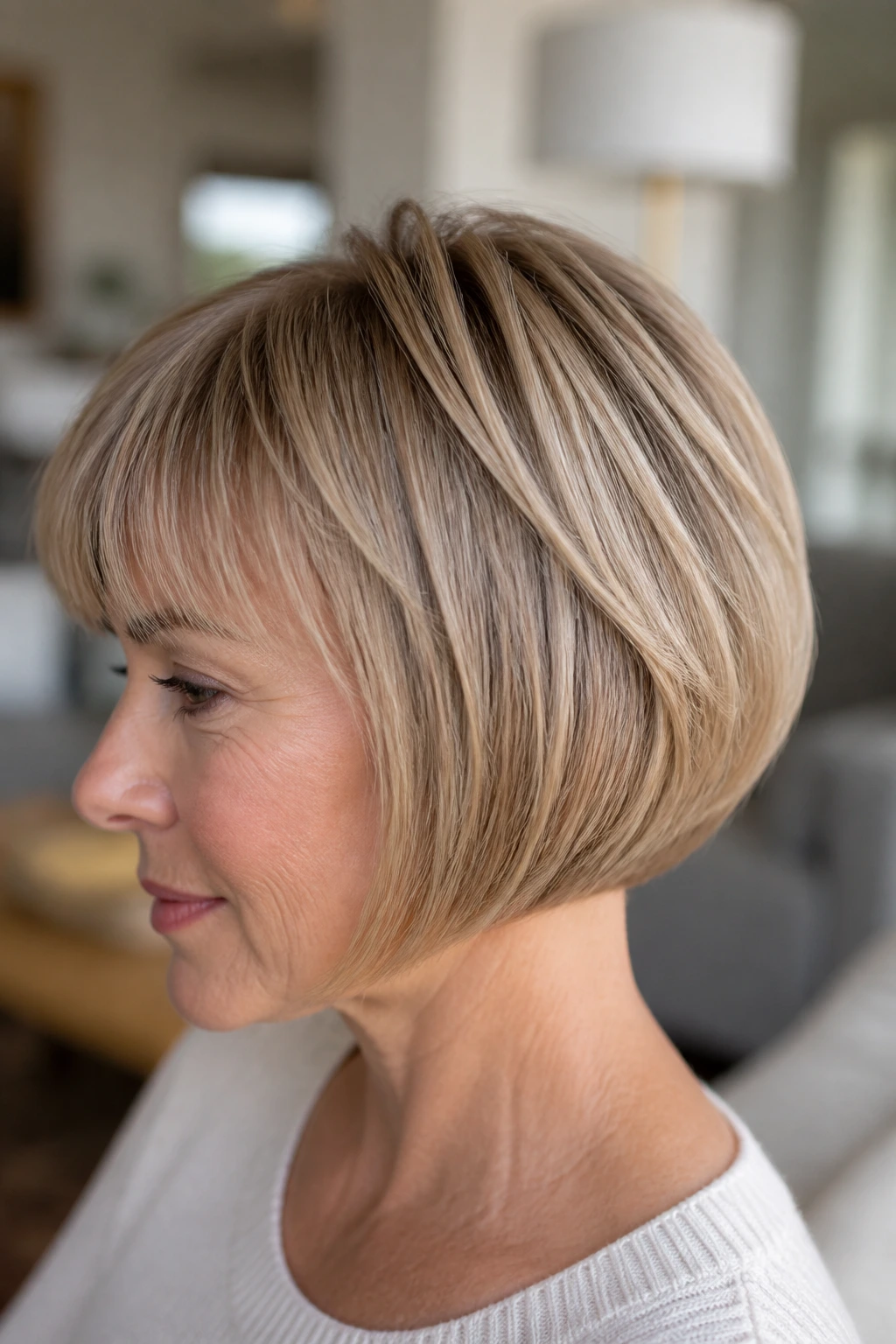
This hybrid cut is neat when you want shape but also a little movement around the crown. Micro layers sit inside the haircut, almost invisible unless the hair moves, while the outer edge stays curved and clean. The result feels alive without turning shaggy.
It’s a nice compromise for medium-density hair that can look too flat with a blunt line and too busy with heavy layering. The micro layers give the crown a lift and the sides a bit of bend, while the bottom edge keeps the pageboy identity intact.
I’d ask for this one if you like a tidy silhouette but don’t want to spend every morning flattening the hair into place. It responds well to a quick blow-dry and a round brush, but it can also survive a rougher finish.
22. Chin-Length Pageboy Made for Ear Tucks
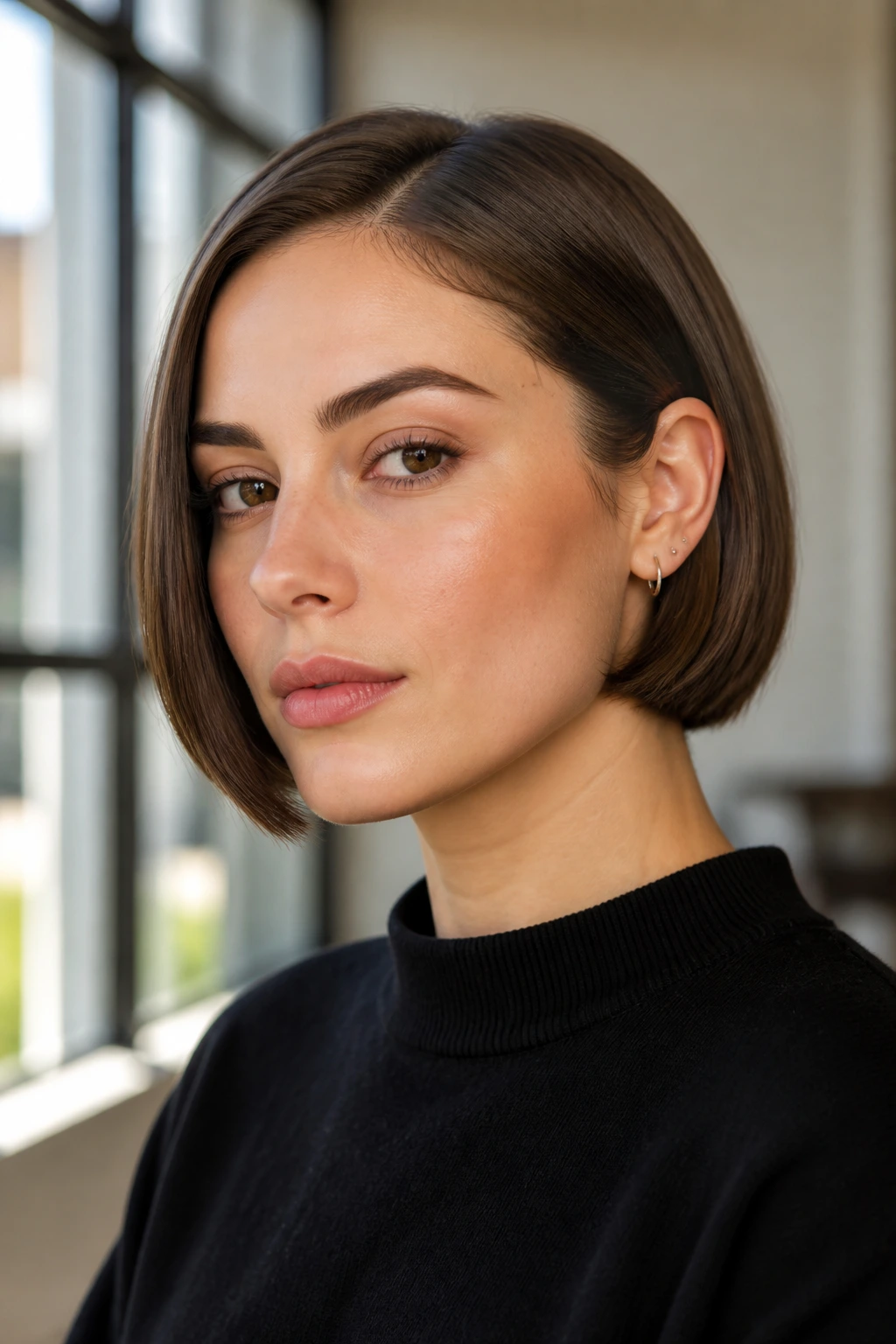
Some cuts are designed to be worn down. This one is designed to slip behind the ears and still look finished. The length skims the chin, the side pieces sit a little shorter, and the overall curve makes the tucked version look intentional rather than fussy.
That matters if you wear glasses, work with your hands, or just like getting the hair off your face. A good ear-tuck pageboy should reveal the cheekbones without leaving a blunt shelf by the temple. The front can be slightly longer so the tuck has room to work.
A tiny bit of smoothing balm at the sides helps the hair settle flat without losing shape. If the sides stick out, the whole effect falls apart. Simple, but only if the cut is made for it.
23. Air-Dried Wavy Pageboy

This version is for people who would rather let the hair set itself. A wavy pageboy that air-dries well needs the right cut from the start: enough weight to keep the perimeter controlled, enough softness inside for the wave to move, and a length that lands where the bend naturally sits.
If the cut is too blunt and heavy, wavy hair can swell into a triangle. If it’s too layered, the wave loses its shape and turns vague. The sweet spot is somewhere in between, with a bit of cream through damp hair and a hands-off drying process.
Best habits for this version
- Scrunch in a small amount of curl cream.
- Clip the crown briefly if it tends to fall flat.
- Don’t touch it while it dries.
- Smooth only the ends if they kick out.
24. Razor-Cut Pageboy With Soft Ends
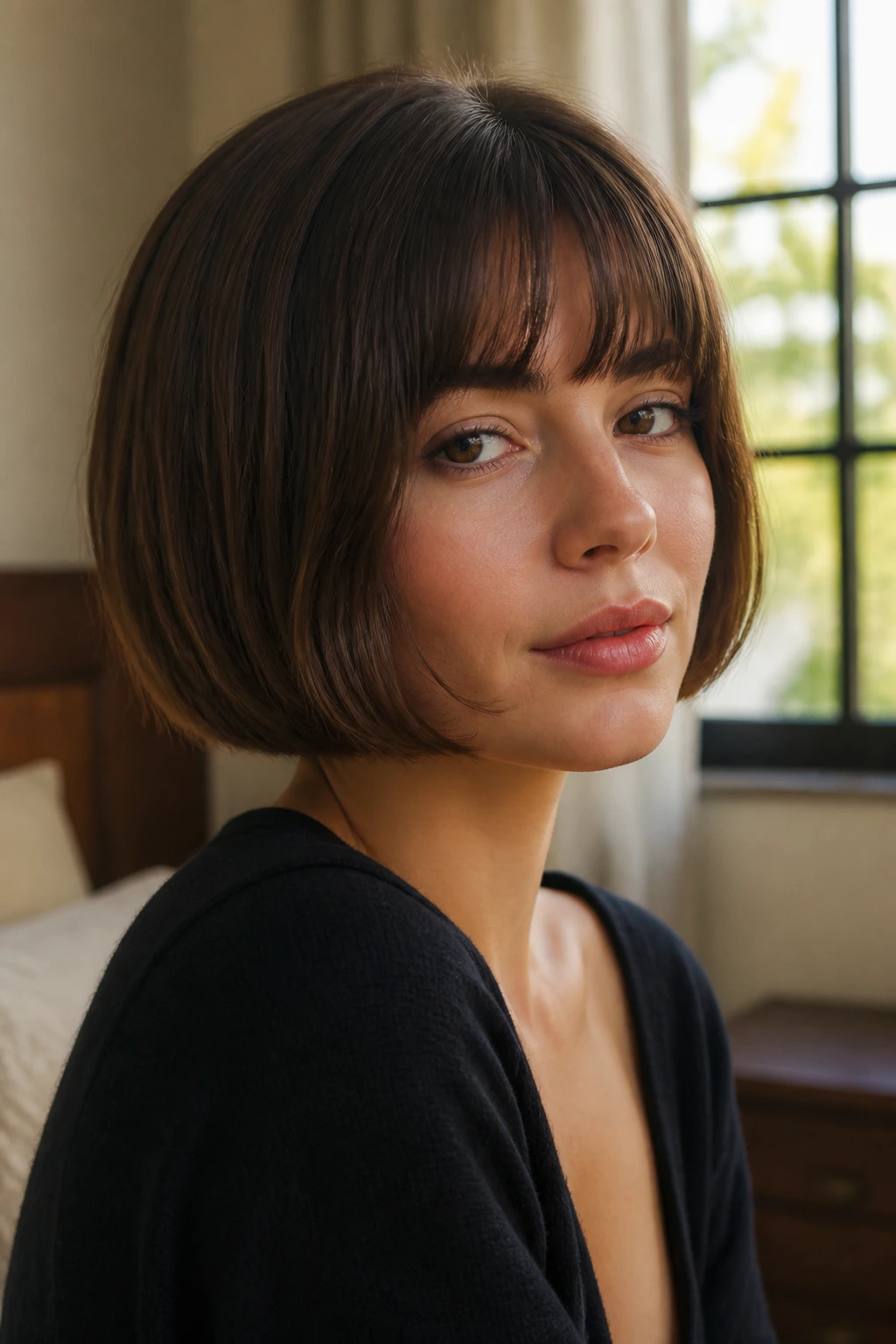
A razor can be useful here, but only in the right hands. The goal is not to shred the haircut. It is to soften the ends just enough that the pageboy feels lighter and more fluid, especially on hair that’s thick or naturally straight and blunt.
This cut has an easy movement that scissors-only versions sometimes miss. The outer line still reads clean, but the finish has a softer edge, almost like the haircut has been brushed by wind. That can be lovely on medium to thick hair that needs a little give.
Be careful with split ends or overprocessed hair. Razor work can make damage look louder, not better. If the hair is already rough, I’d rather see a clean scissor line than pretend softness.
25. Color-Forward Graphic Pageboy
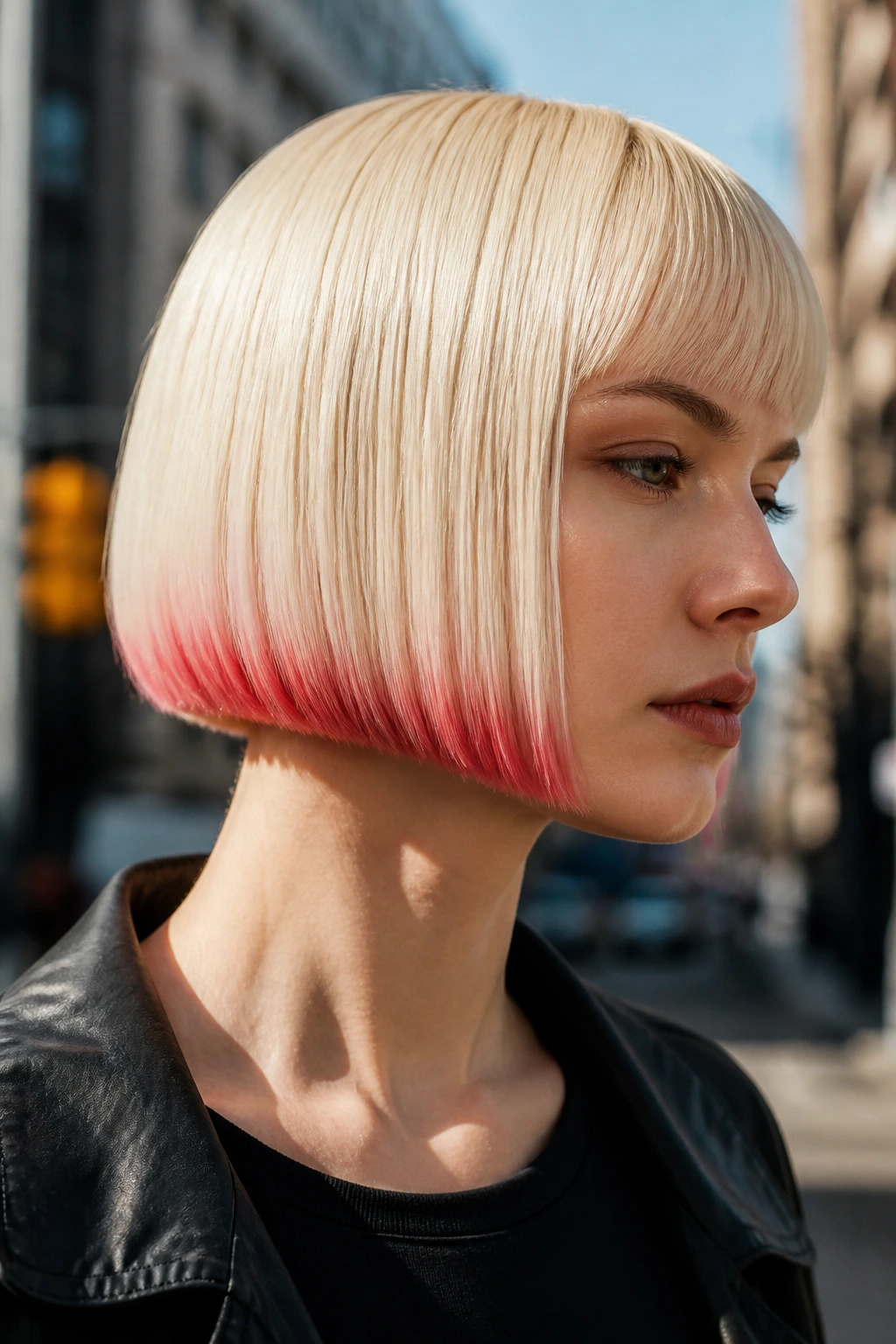
When the color is bold, the cut should know its job. A graphic pageboy gives the shade a clean frame, whether the hair is copper, inky black, platinum, or something louder. The line makes the color look more intentional because there’s less visual noise around it.
This is one of those cuts that benefits from a strong perimeter and minimal fuss. The sharper the edge, the more the color reads in chunks and panels. That can be especially striking on short hair, where the curve at the jaw or cheek acts like a border around the shade.
If you want the haircut to show off color placement, this is a good place to be. The shape keeps the eye where it belongs, and the color does the rest. No extra decorations needed.
Why the Pageboy Shape Still Works So Well
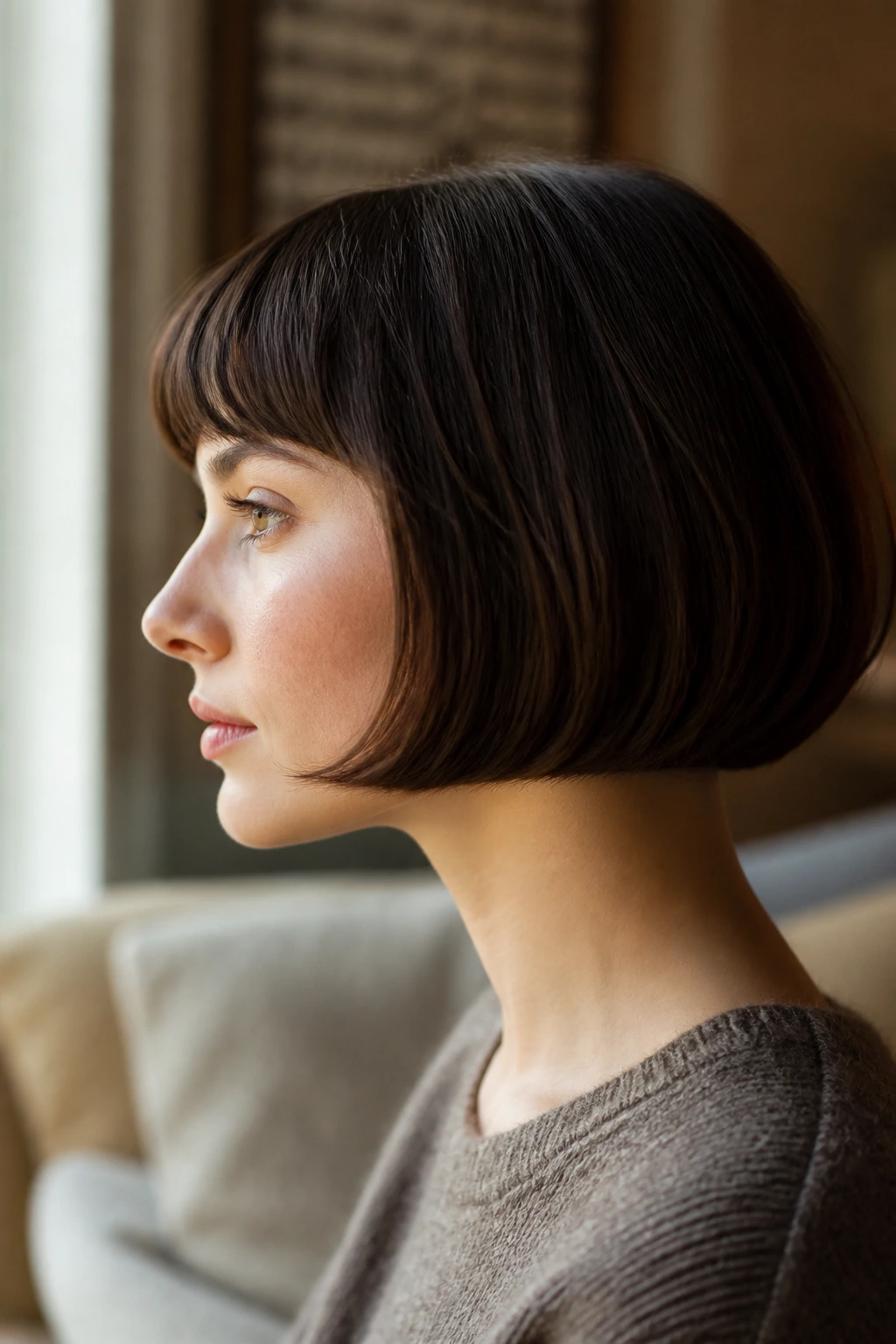
The pageboy has a very specific advantage: it gives you a clear outline without demanding a lot of decorative styling. That’s rarer than it sounds. Plenty of cropped cuts look nice on day one and then fall apart because the architecture is flimsy. A pageboy, by contrast, depends on a weight line, an inward curve, and a perimeter that can take a little growth before it stops looking intentional.
That geometry is why the cut survives across different textures. Straight hair shows the line in the cleanest way. Wavy hair gives the curve a softer, more relaxed feel. Curly hair turns it into a shape that reads from a distance even if every curl is doing its own thing up close. The same basic cut can live three different lives.
The other reason it holds up is that it frames the face without shouting. The jawline gets emphasis. The neck looks cleaner. Bangs, when present, become part of the shape rather than an afterthought. I think that balance is the pageboy’s real strength. It knows where it ends.
Essential Tools for Cutting and Styling a Pageboy
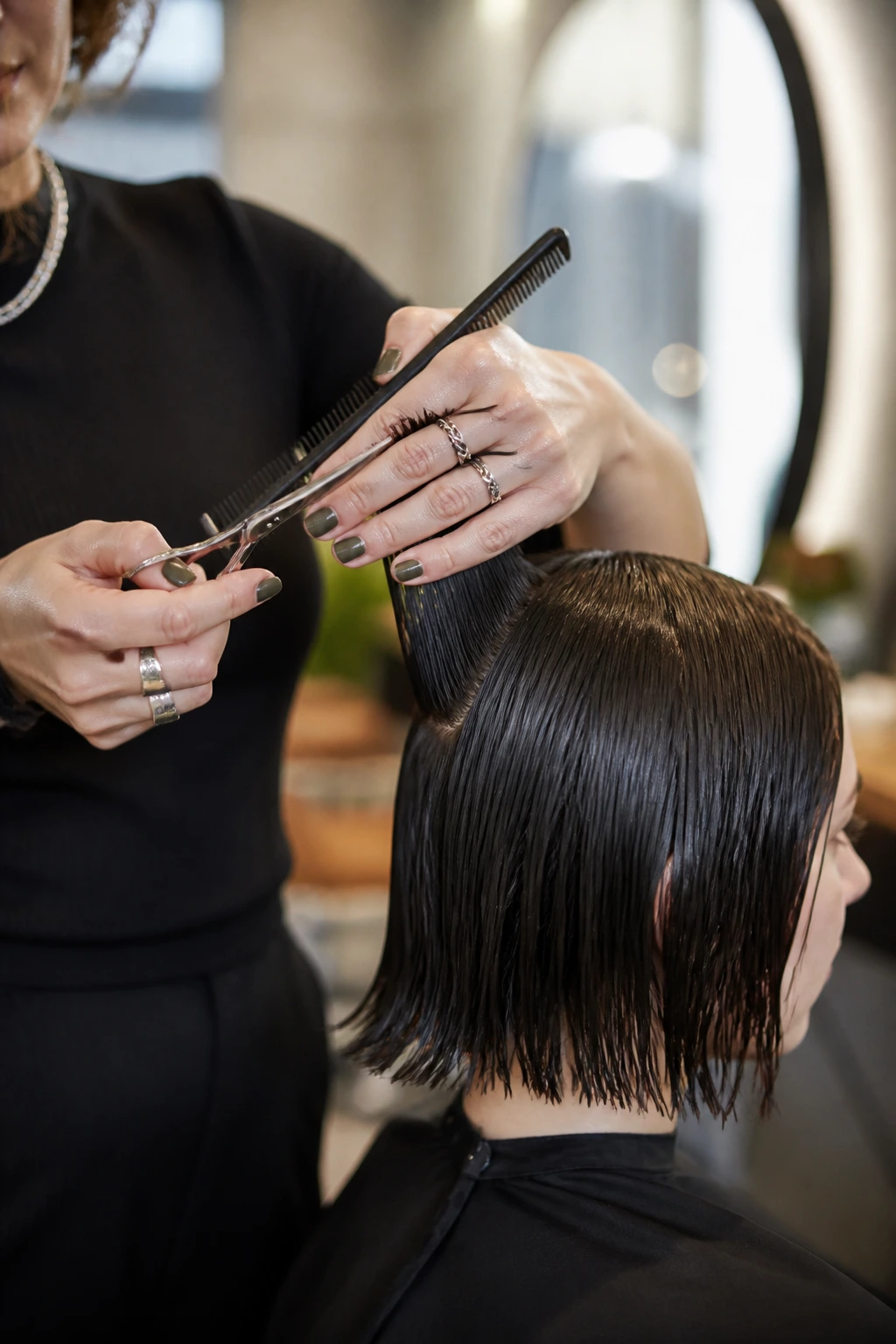
You do not need a suitcase of gear, but the right tools matter more here than on a looser cut. A pageboy depends on direction, and direction comes from the tools you use while the hair is still damp enough to obey.
- Tail comb: Clean parting and bang control start here. The skinny end also helps section the hair without tearing through it.
- Round brush, 1 to 2 inches: A smaller brush gives tighter curve on chin-length cuts; a larger one softens collarbone or shoulder-skimming versions.
- Blow dryer with concentrator nozzle: This helps push the hair smooth and keeps the air aimed where you want the bend.
- Sectioning clips: Four or six duckbill clips save a lot of frustration while you work the back and sides.
- Flat iron: Optional, but useful for refining the ends or flattening a stubborn bend that won’t sit under.
- Light mousse or root spray: Gives lift at the crown without turning the cut sticky.
- Smoothing cream or balm: Best used sparingly on mid-lengths and ends, never dumped near the roots.
- Flexible-hold hairspray: You want hold, not lacquer. The pageboy should move a little.
How to Ask for the Length, Fringe, and Weight Line You Want
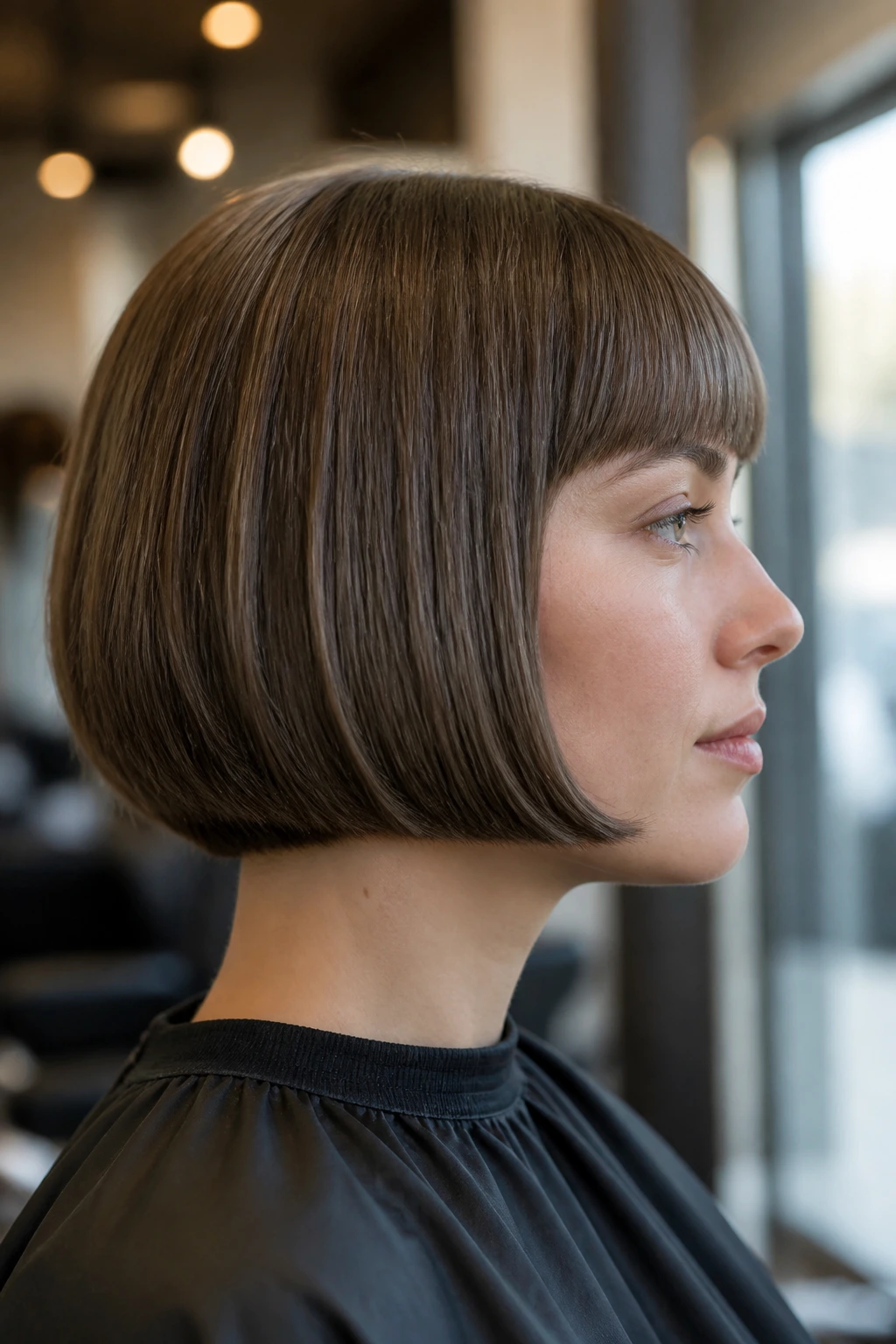
A pageboy can go wrong in a chair if the request is vague. “Something classic” tells a stylist almost nothing. “Make it pageboy-ish” tells them even less. Better to be specific about where you want the edge to land and how heavy you want the line to feel.
Start with length. Say whether you want the perimeter at the chin, jaw, collarbone, or shoulders. Then describe the weight line. I would use words like blunt, rounded, or slightly tapered, because those are the things that change the silhouette. If you want movement, ask for internal softness. If you want a strong shape, ask for a clean outer edge.
Fringe matters too. Bring up whether you want blunt bangs, curtain bangs, a side sweep, or no fringe at all. And show the profile, not just the front. The side view is where a pageboy reveals its real shape. The back matters too, especially if you want the nape snug and tidy instead of bulky.
One more thing: say how you wear your hair on the average day. If you tuck it behind your ears, wear glasses, or air-dry half the week, the cut should be built around that. Haircuts are not sculptures. They’re supposed to live somewhere.
Smart Product Picks for Smoothing, Volume, and Hold
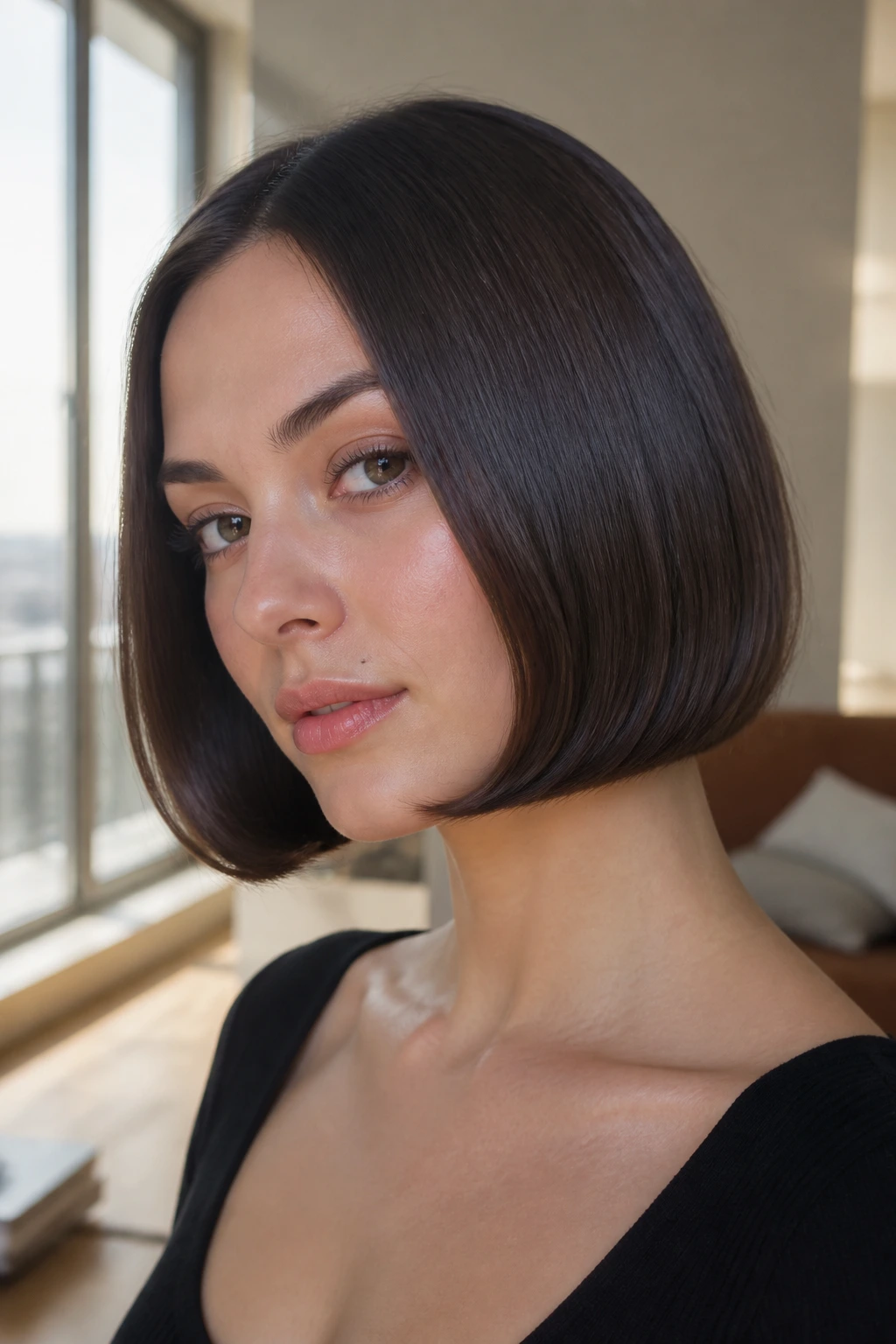
The wrong product can flatten a pageboy faster than bad scissors. Heavy cream at the roots? No. Dry shampoo used as a full styling system? Also no. The product should match the texture you’re trying to preserve.
Fine hair: Start with a root-lifting spray or airy mousse at the crown. Fine hair usually needs help staying up long enough for the brush to shape the ends under, and too much cream will sink it.
Thick hair: Use a smoothing balm or light blow-dry lotion through the mid-lengths, then keep the root area cleaner. Thick hair tends to puff at the sides and back, so control belongs where the bulk is.
Wavy hair: A small amount of curl cream or smoothing cream can keep the wave from turning into frizz while the cut still holds its curve. Skip anything that makes the hair too slippery.
Curly hair: Curl gel or a firm cream-gel mix gives the pageboy shape enough memory to survive drying. The cut needs support, not softness.
For a glossy finish: Use a light shine spray or a drop of serum on the outer surface only. A little goes a long way. Too much and the haircut looks slick in the wrong way.
How to Style a Pageboy Without Flattening It
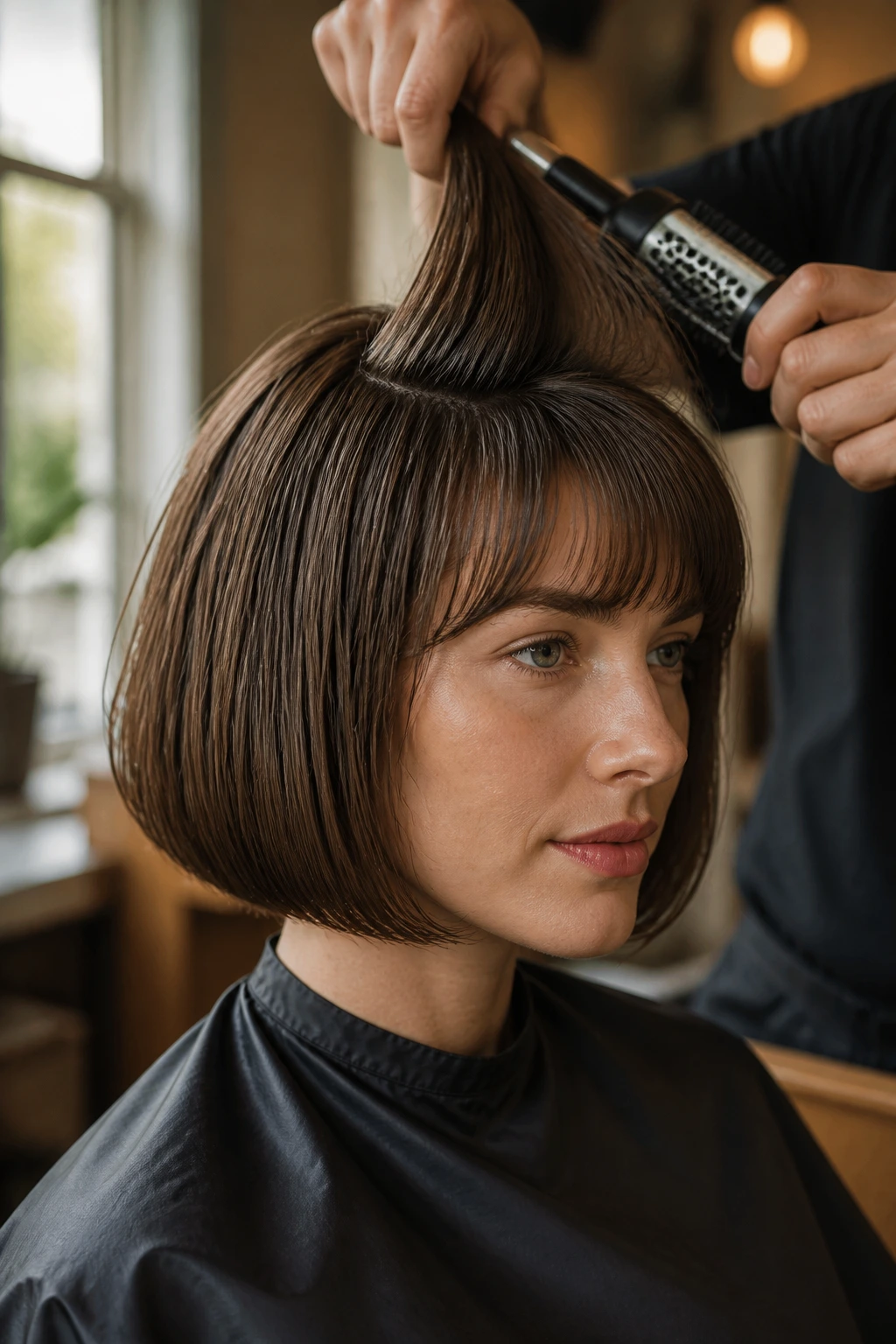
A pageboy should look shaped, not pressed into submission. That’s the whole game. Start with damp hair and section it cleanly, because trying to style a full head at once usually leads to uneven bends and a flat crown.
Root Lift: Aim the dryer at the roots first, lifting the top sections at a slight angle while you keep the nozzle pointed downward. If the crown falls flat, the whole cut loses energy before you even touch the ends.
Curve: Use a round brush to wrap the ends under in a single clean turn. You do not need to over-roll it. One solid bend is better than three awkward flips.
Fringe Control: Bangs should be dried separately if they’re part of the cut. Pull them side to side or straight down depending on the shape you want, then let them cool in place before touching them again.
Finish: Keep product off the roots. That part gets forgotten constantly. A tiny amount of cream or serum through the lower half of the hair is enough to control flyaways and keep the perimeter looking smooth.
If you want a rougher finish, stop after the bend is set and separate the ends with your fingers. If you want polish, hit the shape with a cool blast and leave it alone. The more you fuss, the more likely the pageboy starts looking tired.
Common Mistakes That Turn a Pageboy Into a Helmet
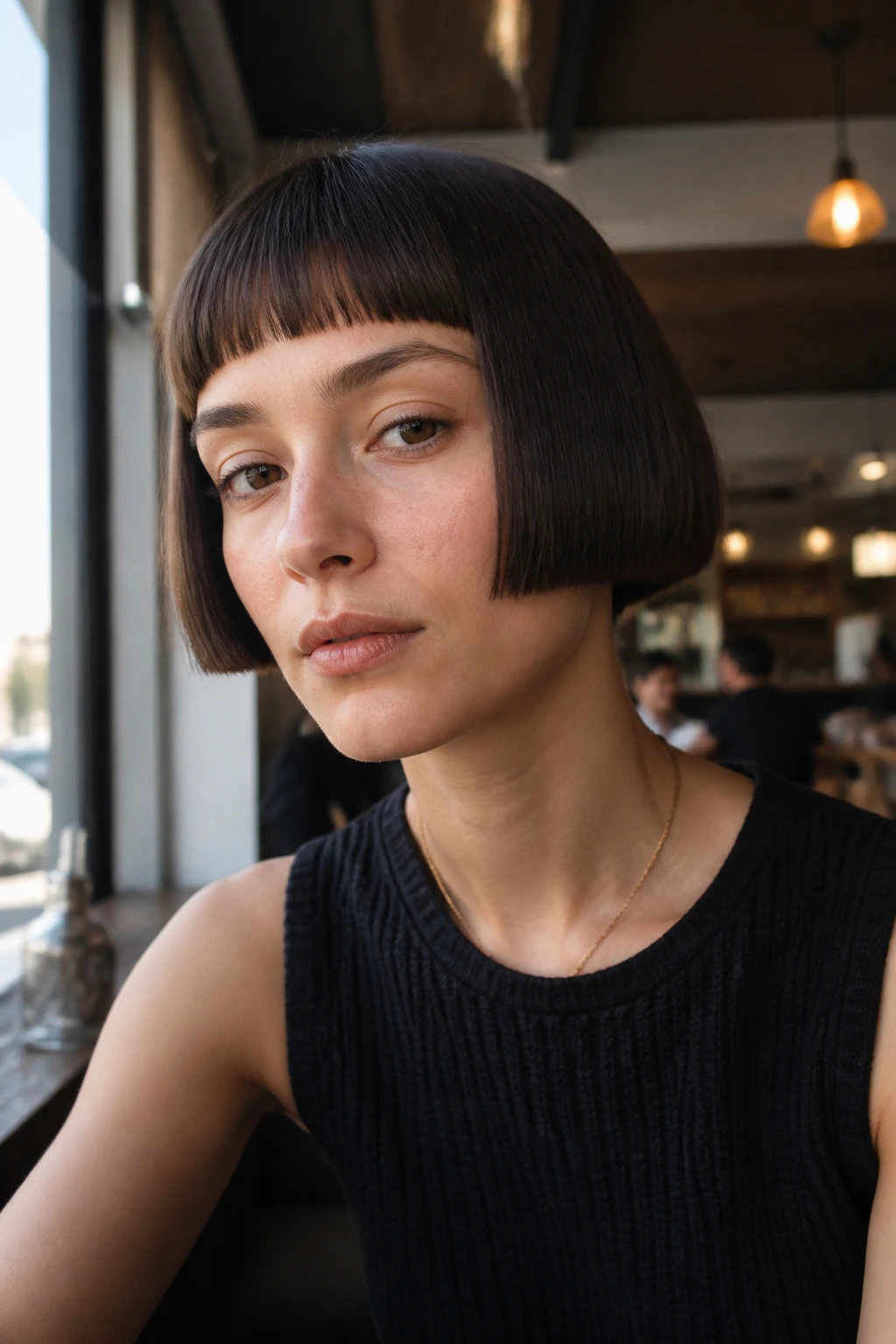
The pageboy is not hard to love, but it is easy to wreck. The biggest mistake is cutting the edge too blunt and too round at the same time, which leaves the head looking boxed in. You want shape, not a helmet.
Another problem is over-layering the perimeter. If the outer line gets shredded, the haircut loses its frame and starts flipping at random points. The fix is simple: keep the edge clean and move any softness inside the shape where it can’t derail the outline.
A third mistake is piling product at the root to “make it stay.” That usually backfires. The roots collapse, the hair looks dirty by noon, and the ends go limp. Put the smoothing product where the bend lives, not where the lift starts.
Cowlicks at the nape also deserve respect. If they’re ignored, the back of the pageboy will kick out and ruin the clean line every time the hair dries. A stylist can work with them, but only if they know they’re there.
Finally, don’t stretch the trim schedule too far. A pageboy grows into a lob faster than you think, and once the weight line drifts, the shape loses its sharpness. It doesn’t need constant panic. It does need maintenance.
Variations and Alternatives for Different Hair Types
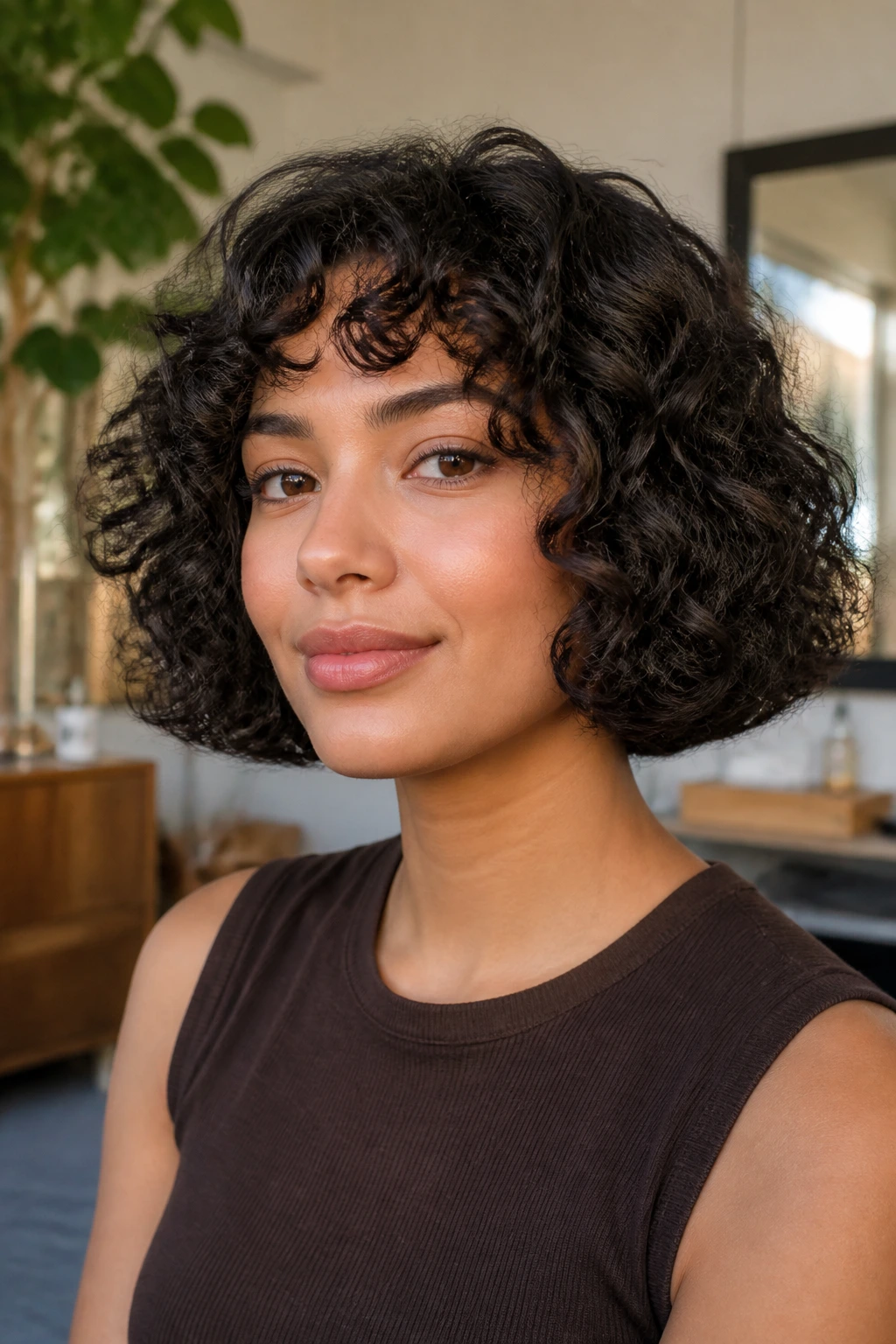
The Softer Bob Exit: If you like the pageboy but want less fringe commitment, ask for the same curved perimeter with no bangs and slightly longer face-framing pieces. It keeps the outline while making the front easier to grow out.
The Curly-Friendly Shape: For curls, keep the bottom line strong and let the interior move. Ask for shape that follows the curl pattern rather than forcing a straight hem, or the haircut will shrink into a shelf.
The Thick-Hair Relief Cut: This version uses hidden internal weight removal and a snug nape taper. It keeps dense hair from ballooning, especially in humid air or under collars.
The Glossy Minimalist: This is the sleekest version, with blunt ends, a clean part, and almost no visible layering. It suits people who like a pared-back look and don’t mind a brush-based routine.
The Messier Weekend Version: Same pageboy silhouette, more separation in the ends, less polish at the crown. It’s a good fit if you want the shape to read without needing a blowout every time.
Maintenance, Trim Timing, and Sleep Care

A pageboy is a shape haircut, which means the edges matter more than they do on a looser style. Once the perimeter starts to fray, the whole thing changes. Short versions with bangs usually want a trim every 4 to 6 weeks. Longer pageboy-bob hybrids can stretch to 6 to 8, but only if the line still sits where it should.
Sleep care helps more than people admit. A satin pillowcase cuts down on friction, which keeps the ends from puffing out or bending oddly at the neck. If the fringe bends weird overnight, a quick mist of water and a round brush will reset it in less time than a full wash. Do that instead of pretending it will fix itself. It won’t.
If you wear the cut tucked behind your ears, give those side sections a little smoothing balm before bed or before you leave the house. The tucked look works because the hair stays obedient at the temple. Once it starts poking out, the whole illusion slips.
Wash frequency depends on your hair type and scalp, but the shape tends to look best when the roots are clean and the mid-lengths are not overloaded. A pageboy likes order. Not fuss. Order.
Frequently Asked Questions

What is the difference between a pageboy and a bob?
A bob can be blunt, layered, curved, or messy; a pageboy usually has a more defined inward bend and a closer, neater outline at the nape. The pageboy also tends to feel more sculpted, especially when bangs are part of the look.
Does a pageboy haircut work on curly hair?
Yes, but the cut has to be shaped around the curl pattern instead of stretched flat in the chair. Curls need room inside the silhouette, or the perimeter will shrink and sit higher than expected.
How short should a pageboy be?
That depends on how much neck you want to show and how much styling you’re willing to do. Chin-length versions look sharp and need regular upkeep, while collarbone or shoulder-skimming versions feel softer and give you more room to live with the cut.
Do pageboy haircuts need bangs?
No, but bangs change the mood fast. A blunt fringe makes the shape feel stronger and more retro, while curtain bangs or a side sweep soften the face and make the style easier to grow out.
What if my hair flips out instead of turning under?
That usually means the cut is too light at the ends or the brush size is wrong for the length. Use a larger round brush on longer sections and make sure the perimeter has enough weight to stay controlled.
Is a pageboy good for fine hair?
It can be, especially if the cut avoids too many layers at the edge. Fine hair needs the outline to stay full enough to hold shape, plus a bit of root lift to stop the crown from falling flat.
How often does a pageboy need trimming?
Short, blunt versions usually need attention every 4 to 6 weeks. Longer or softer versions can go a little longer, but the shape should still be checked before the perimeter gets fuzzy.
Can I grow a pageboy out without looking awkward?
Yes, if the transition is planned. Ask your stylist to soften the fringe first and keep the side pieces long enough to blend into a bob, because the pageboy shape grows most gracefully when the front and nape are balanced.
Clean Lines, Less Fuss
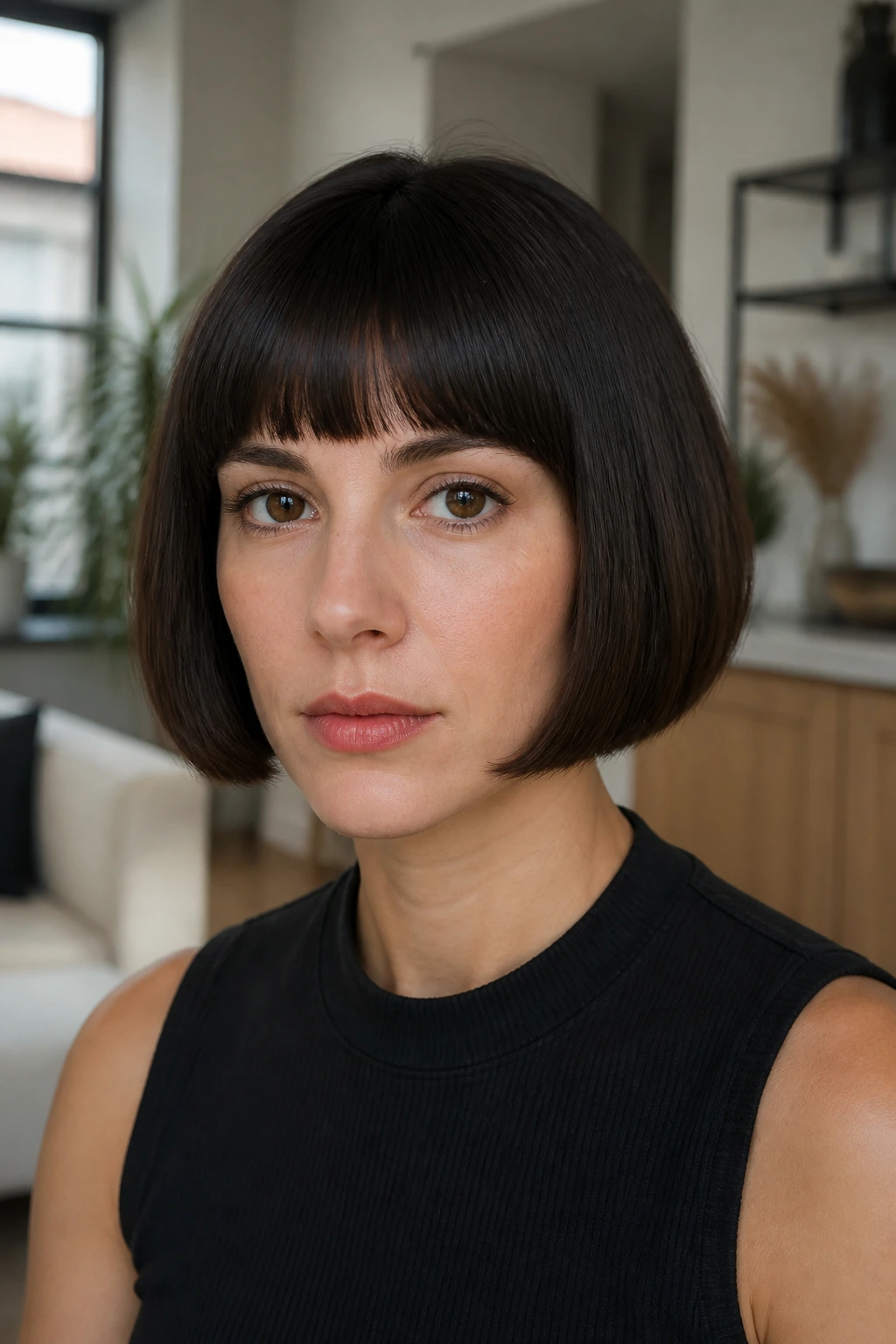
A good pageboy haircut gives you something a lot of cropped styles promise and don’t always deliver: a real shape. It looks tidy when it’s freshly cut, and it still looks like a haircut three days later instead of a tentative compromise. That’s why the best versions keep coming back, even when the styling mood shifts.
The smartest move is to treat the outline like the point of the whole thing. Keep the edge clean, choose the fringe with intention, and let the texture support the shape instead of burying it. If you do that, the pageboy stops reading as retro costume and starts reading as a very sensible piece of hair architecture.
Bring a front view and a side view to the salon. That’s where the truth lives.
