



Glasses change a haircut more than most people expect. A strand that looks harmless in the mirror can land right on the top rim, make a thick frame look heavier, or turn a clean part into a mess of crossing lines. Get the balance right, though, and the face looks calmer at once — the frames read as part of the style instead of something you bolted on before leaving the house.
That balance is mostly about shape, not length. A pixie can look sharp with chunky acetate frames if the top has lift. A bob can make wire frames feel deliberate if the ends stop at the jaw instead of hanging in the same space as the lenses. And bangs? Bangs are the wild card. They can be brilliant, or they can spend the day brushing your eyelashes like a bad decision.
The 20 hairstyles below lean on that line between hair and hardware. Some keep the temples clear. Some put the volume higher. Some let curls and waves do the work so your glasses don’t get swallowed by flat strands. Once you start seeing the face as one shape instead of hair plus frames, the choices get a lot easier.
Why This Collection Works

- Frame balance: These styles keep hair from crowding the same area your glasses occupy, which means fewer dents at the temples and less fidgeting.
- Face-first shape: Each cut or style puts attention where it belongs — brow, cheekbone, jaw, or crown — instead of letting hair and frames fight for the same space.
- Texture-friendly: Straight hair, waves, curls, and coils each behave differently beside glasses, so these options give each texture its own lane.
- Bangs without chaos: Several styles use side-swept fringe, curtain bangs, or a short fringe with the right frame shape, so you do not spend the day lifting hair off your lenses.
- Real-life wearability: These looks survive the things that actually happen: putting glasses on and off, tucking hair behind one ear, and dealing with a little humidity.
How Hairstyles for Women Who Wear Glasses Change the Silhouette
A pair of frames draws a hard line across the face. That line lands right where a lot of haircuts want to do their own work — the temples, the cheekbones, the brow, the outer edge of the jaw. If those pieces all crowd the same strip of space, the style looks busy before you even leave the house.
That is why the best hairstyles for women who wear glasses do one of three things: they clear the temple area, they build lift above the frames, or they echo the frame shape on purpose. A rounded bob can sit neatly under circular glasses. A side-swept pixie can break up boxy acetate. A soft curl can soften a sharp rectangle without hiding it.
Temple room matters. A lot.
Once you notice how the hair touches the frame arms, you start seeing the real trick. The best cut is not the one with the most layers or the most drama. It is the one that still looks good after you’ve worn the glasses for six hours, pushed them up twice, and tucked one side behind your ear without thinking about it.
1. Soft Side-Part Pixie
A soft side-part pixie is one of those cuts that makes glasses look purposeful instead of accidental. The short sides keep the area around the temple arms clean, while the longer top gives you enough movement that the whole look doesn’t collapse into a flat cap shape. It’s especially good with cat-eye frames, rounded acetate, and any pair that already has some visual weight.
Why It Works With Frames
The part pushes hair away from one lens and gives the face a diagonal line, which is useful when your glasses are very symmetrical. If your frames are thick, keep the top piecey rather than slicked down; a little separation keeps the hair from sitting like a helmet around the upper rim. I also like this cut for fine hair because the shorter length makes the strands look denser without a lot of product.
A tiny note that matters: ask for the sideburn area to stay soft, not chopped blunt. That little taper helps the glasses arms slide comfortably without digging into a hard edge of hair.
How to Style It
Use a pea-size amount of matte paste or light styling cream, then blow-dry the front up and over with your fingers. If you want more height, direct the dryer at the roots for 20 to 30 seconds before you touch the lengths.
Best for: round frames, cat-eye frames, thick acetate, and straight or slightly wavy hair.
Skip the heavy gel: it can make the front cling to the lenses and leave the style looking stiff.
2. Chin-Length French Bob
A chin-length French bob has a clean line that does half the styling for you. When the hem of the cut lands right at the jaw, it gives your glasses a clear frame of their own. The result is sharp without looking severe, which is the whole trick with everyday glasses hair.
This cut is excellent with square, oval, and round frames because it keeps the silhouette tidy. If you wear bigger frames, keep the bob a hair below the jaw instead of exactly at it; that tiny difference keeps the bottom edge from feeling boxy. With smaller frames, the chin-level line can look almost graphic, which I love.
The best version has a little bend under the ends, not a hard flip. Use a round brush or a flat iron to turn the last inch under just enough to sit close to the neck. Too much curl makes the bob puff out around the frame arms, and that’s where the look starts to feel crowded.
3. Curtain Bangs and Collarbone Layers
Can bangs work with glasses? Absolutely — if you let them split instead of collide. Curtain bangs are one of the smartest choices for women who wear glasses because the center part opens around the bridge and the longer sides skim past the outer edge of the frames instead of dropping straight into them.
Where the Bangs Should Sit
The shortest point should clear the top rim by about half an inch when your face is relaxed. That sounds fussy, but it keeps the fringe from brushing the lenses every time you blink or smile. The longer sides should land around the cheekbone, where they can blend into the rest of the layers without getting stuck under the frame arms.
Keep the collarbone layers soft and movable. If they’re too blunt, the haircut turns into a heavy wall; if they’re too thin, the front looks stringy and disappears behind the glasses.
How to Style It
A small round brush and a quick blow-dry forward, then out, is enough. I like to twist each side of the fringe away from the face for the first 10 seconds of drying, then let it fall. That creates a bend instead of a curl, which sits better with frames.
4. Textured Shag With Airy Ends
If your hair goes flat by noon, the shag is the cut that stops pretending life is a smooth little schedule. It gives you crown lift, broken-up layers, and movement around the cheekbones, which means the frames don’t have to do all the visual work. This is a particularly good choice for round or aviator-style glasses, where a little hair chaos keeps the face from looking too polished in one plane.
The key is where the layers live. You want lift at the crown and airy ends below the cheekbone, not chunky layers that stop right at the frame arms. That middle zone is where things can go puffy fast. Keep the front pieces wispy enough that they move when you turn your head, but not so short that they keep brushing the top rim.
A shag also gives you flexibility on rough hair days. Rough-dry it with your fingers, shake in a little texturizing spray at the roots, and let the ends do their own thing. It looks better with a bit of grit, which is convenient because a perfectly polished shag can start to look a little too styled for daily wear.
5. Sleek Low Bun With Face-Framing Pieces
Sometimes the simplest answer is the cleanest one. A sleek low bun keeps the bulk off your neck, clears the temples completely, and lets the glasses become part of the line of the face instead of competing with a lot of loose hair. I reach for this style when I want the frames to look crisp, especially with rectangular or oversized designs.
The trick is not to pull every strand back so tightly that your face loses shape. Leave two slim face-framing pieces near the temples and let them fall from around cheekbone level. Those little pieces soften the jaw and keep the style from feeling severe. If the bun sits too high, the whole look starts to fight the top of the frames; keep it at the nape.
Use a smoothing cream at the hairline and a fine brush to gather the hair cleanly. Then wrap the bun low and pin it flat. A little shine is good here. A greasy finish is not.
6. Deep Side-Part Lob
A deep side part gives glasses something to push against. That asymmetry is useful when your frames are straight across the brow or very geometric, because the hair breaks up all that horizontal structure. A lob that lands between the chin and collarbone gives you enough length for movement without letting the ends hang into the same space as the lenses.
I’m fond of this cut for women who wear rectangular or square frames because it keeps the face from looking too boxed in. One side can tuck behind the ear, the other can fall across the cheek in a gentle curve. That small imbalance does a lot of work.
If your hair is pin-straight, add a bend at the ends with a 1-inch iron or a round brush. You do not need a big wave. Just enough shape so the hair doesn’t hang like a curtain right under the frames.
7. Soft Curly Crop
What if your curls want to expand exactly where the frames live? Then the answer is not to fight them into submission. It’s to shape them so the volume sits where it helps rather than where it steals the whole face. A soft curly crop keeps the sides neat, lets the curls lift above the frame line, and keeps the silhouette rounded instead of triangular.
Why Curl Shape Matters
With glasses, curly hair looks best when the sides are trimmed with the frame arms in mind. If the cut balloons right at temple level, the glasses can disappear into the hair. If the curls are shaped a little tighter at the sides and fuller up top, the face looks open and the frames stay visible.
Use a diffuser on low heat until the curls form a cast, then scrunch in a small amount of light oil once the hair is dry. Heavy cream near the front can make the curls collapse and slide onto the lenses.
Best Frame Pairing
This cut handles round, oval, and smaller rectangular frames well. The frames should not be so thick that they steal attention from the curls. Let the shape of the hair do the talking.
8. Long Waves With an Ear Tuck
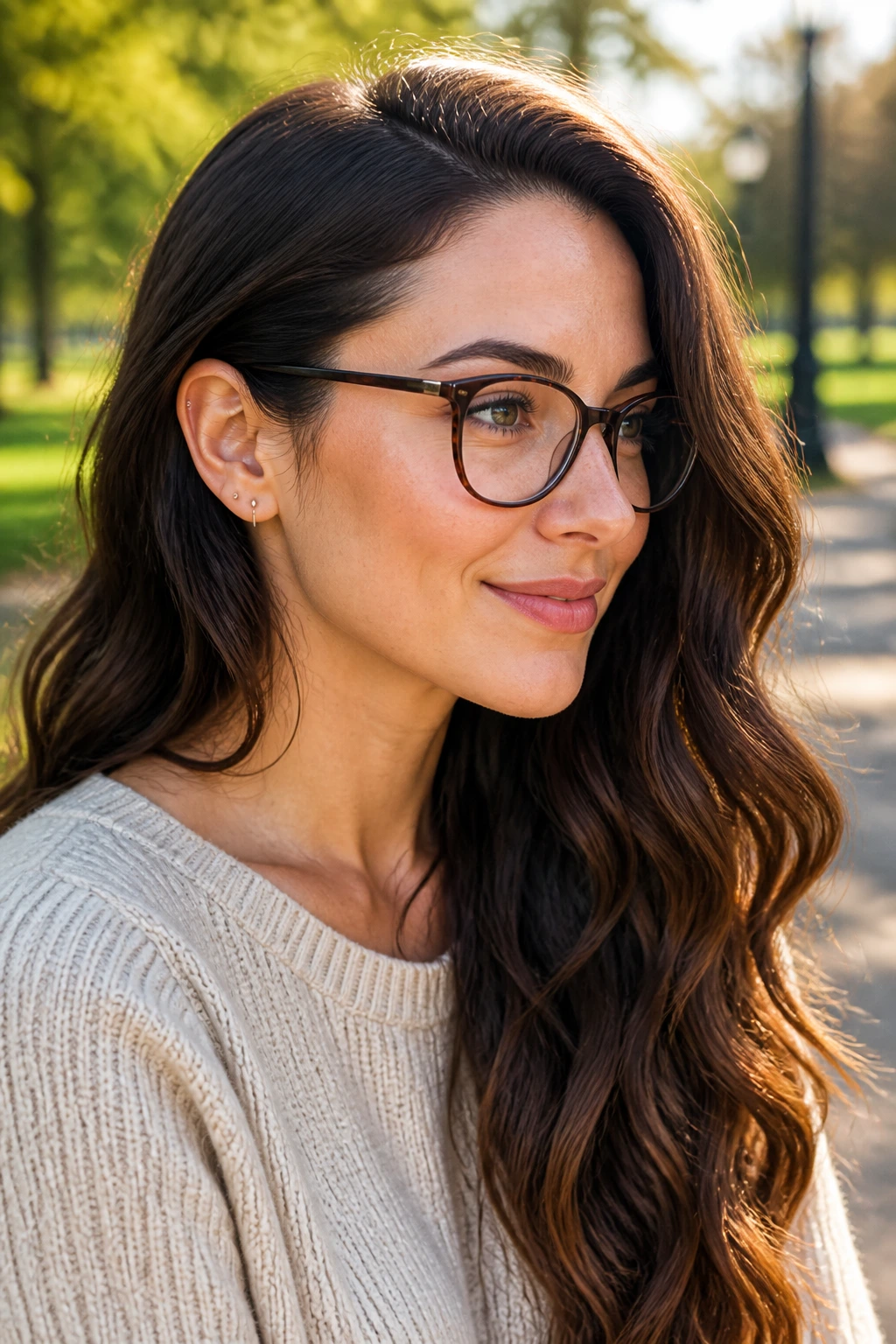
Some days you want length, not commitment. Long waves with a simple ear tuck keep that length, but they also give your glasses breathing room. One side stays down, the other slips neatly behind the ear, and the result looks casual in a way that still feels planned.
The waves should start below the cheekbone. If you curl them too high, the hair starts fighting the frame arms and gets too busy around the eye area. I like a 1.25-inch iron for this, because it makes broad waves rather than tight ringlets. Leave the last inch straighter so the ends don’t turn into frizz by lunchtime.
This is a nice option for thin metal frames and rimless styles. The glasses stay visible, the hair keeps its softness, and you avoid the heavy curtain effect that straight long hair can create around the lenses.
9. Asymmetrical Bob
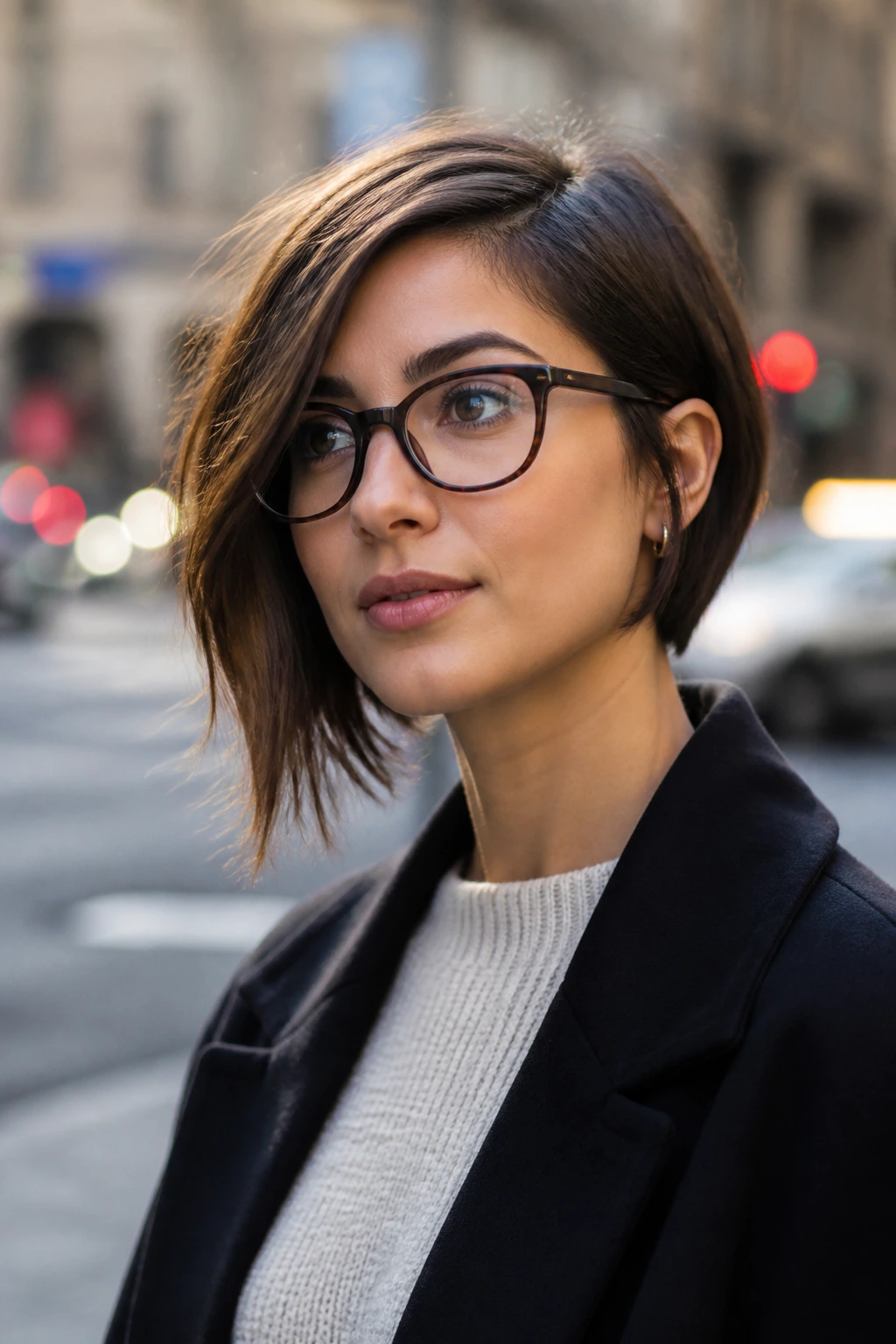
Symmetry can be the boring choice. An asymmetrical bob gives your glasses some shape contrast, which is useful when the frames are very even and tidy. One side is a little longer, the other sits closer to the jaw, and the result has enough edge that the frames don’t feel like the only sharp thing in the room.
This cut is especially good with geometric frames, because the slight length difference keeps the face from becoming a square inside a square. It also works if you have a strong jawline and want the haircut to soften one side without hiding the bone structure. That little bit of imbalance can be surprisingly flattering, though that word never tells the full story. What matters is the line.
Keep the longer side polished, not floppy. If it bends under too much, it can curl into the frame. A clean swing is better.
10. Half-Up Twist With Crown Lift
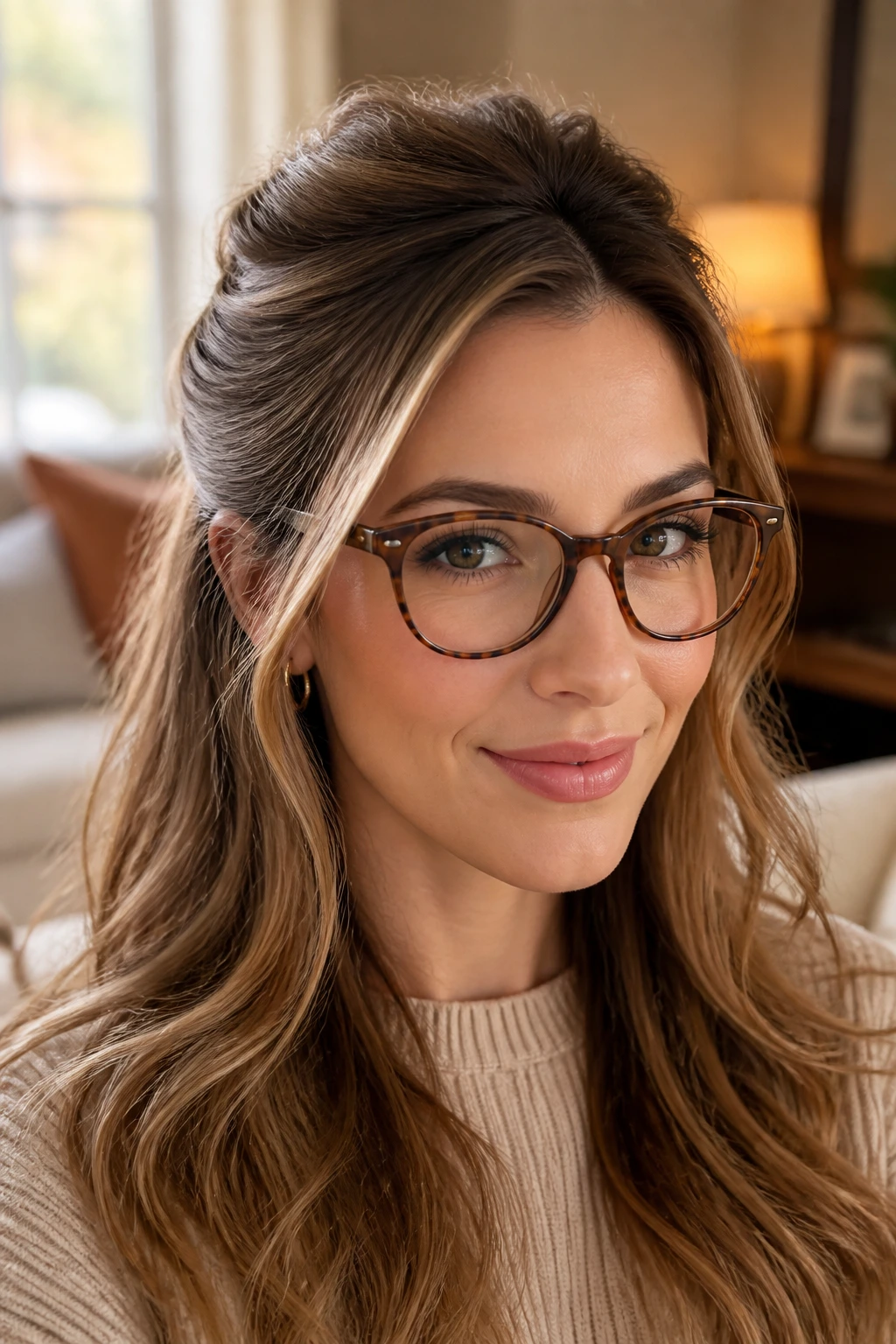
A half-up twist is the kind of style that makes sense when you want hair off your face but not all the way gone. The crown lift gives your glasses room to breathe, and the lower half keeps enough softness around the shoulders that the whole look doesn’t become severe.
What to Do
Take the top section from temple to temple, twist it back, and pin it just above the occipital bone. That placement matters. Too high, and it pulls the eye upward in a way that can fight the frames. Too low, and it lands right where the glasses arms sit.
Leave the front slightly loose. A few wispy pieces near the temples are enough. If you over-tease the crown, the glasses can look small and the hairstyle starts to read as costume.
When It Works Best
This is a smart choice for medium-length and long hair, especially if the front tends to fall into your eyes by noon. It also handles second-day hair with a little dry shampoo better than freshly washed hair, which is one reason I keep coming back to it.
11. Braided Crown With Loose Ends
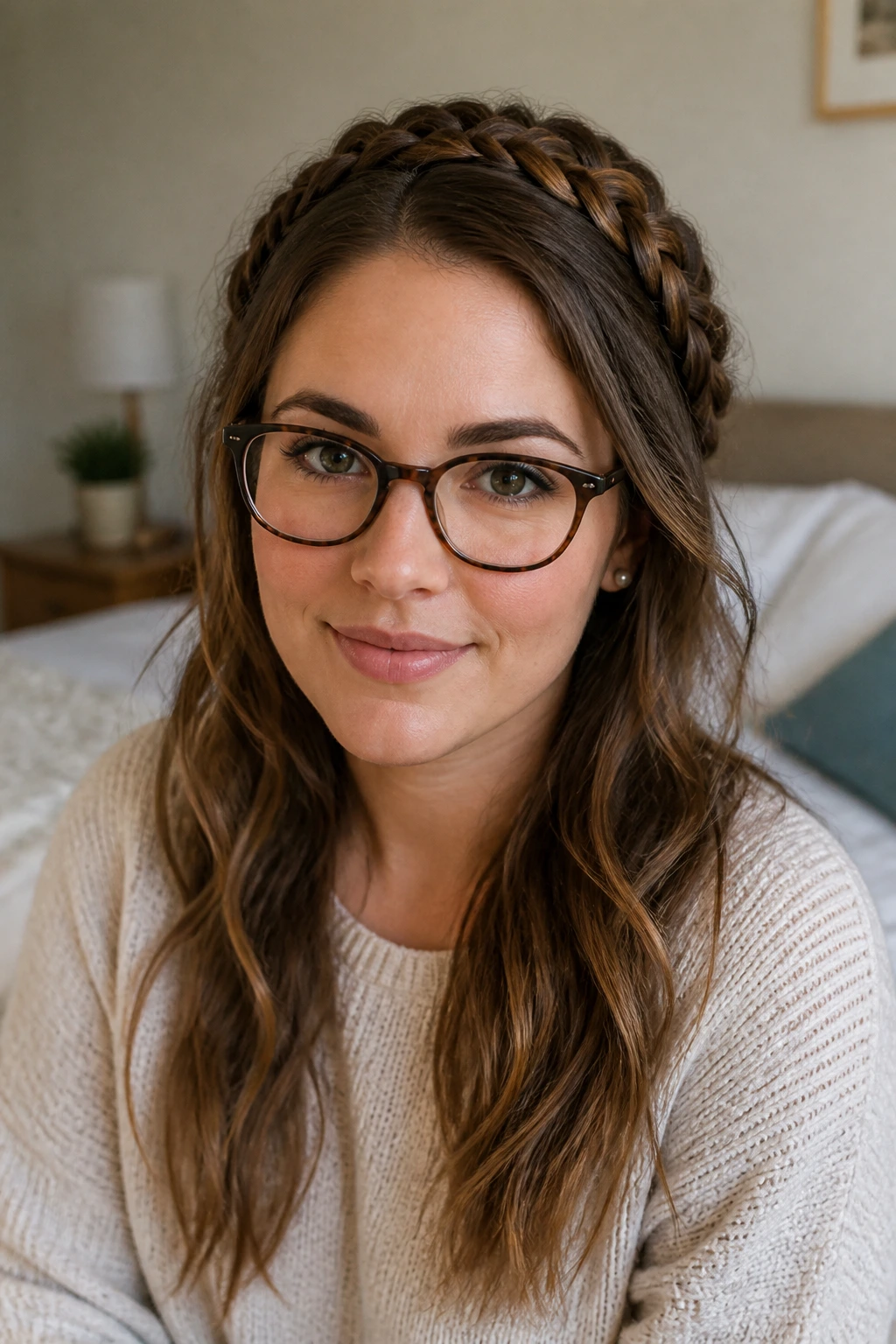
A braided crown clears the face in a way that feels neat without being fussy. Because the braid sits above the frames, it draws the eye upward and leaves the glasses to do their own job. If you’ve ever had a fringe or wave sit right on top of your lenses and make everything feel cluttered, this is the opposite of that problem.
Keep the braid modest in thickness. About thumb-width is enough. A braid that’s too chunky can crowd the top of the glasses and make the forehead feel short. Let the ends fall loose over the shoulders so the style doesn’t become too stiff.
This works well for round and oval frames, but it also gives square glasses a little softness. You get shape near the crown and simplicity near the eyes. That balance is the whole point.
12. Feathered Shoulder Cut
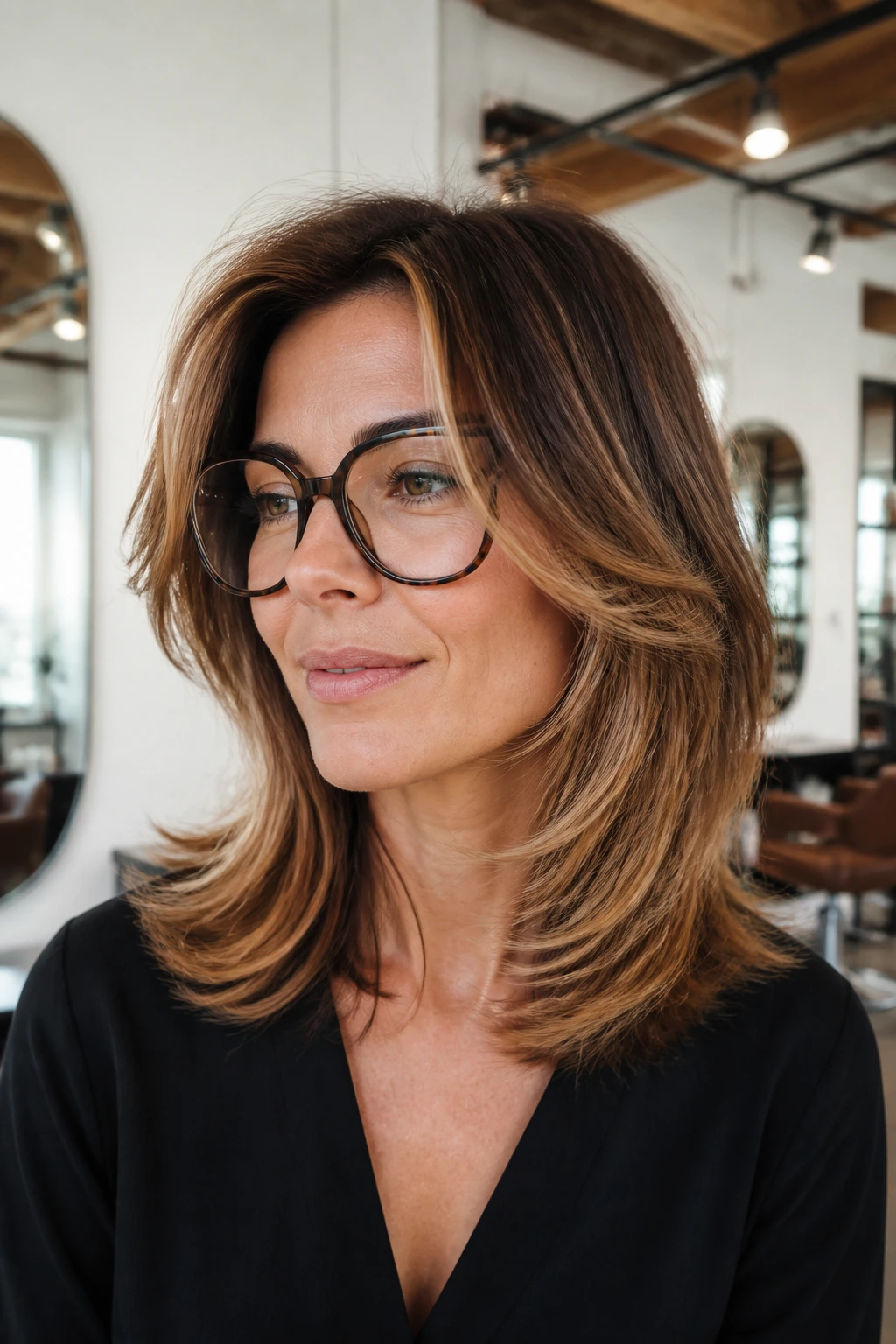
A feathered shoulder cut has movement baked into it. The layers are light enough to swing away from the face, which keeps the hair from sitting like a shelf on top of your frames. That matters more than it sounds. A blunt shoulder cut can make glasses look trapped; feathering lets the silhouette breathe.
I like this cut with oversized acetate frames because the softer ends keep the lower half of the face from feeling too heavy. If your glasses are small, the feathered layers can make them stand out more. If your glasses are large, the feathering stops the whole look from turning blocky.
Blow-dry the front away from the face with a round brush, then give the ends a gentle outward turn. Nothing sharp. Just enough lift that the hair moves when you walk.
13. Micro Fringe With Minimal Frames

Micro fringe is a bold choice, and I wouldn’t hand-wave that away. It can look brilliant with glasses, but only if the frames stay light and the rest of the haircut is clean. Thin wire frames, small geometric frames, or rimless pairs let the fringe do the talking. Thick acetate usually makes the top half of the face feel crowded.
The fringe should sit well above the brow line. Not skimming it. Above it. That space keeps the fringe from crashing into the frame and gives your eyes more room to show. The sides of the cut should stay narrow so the whole effect doesn’t turn busy.
This one needs maintenance. Not a little. A lot. If your fringe grows fast, it starts to lose the whole point within a few weeks. That is the price of the look, and it is not a small price. But when the proportions are right, the result is crisp, modern, and a little mischievous.
14. Rounded Afro With Tapered Sides
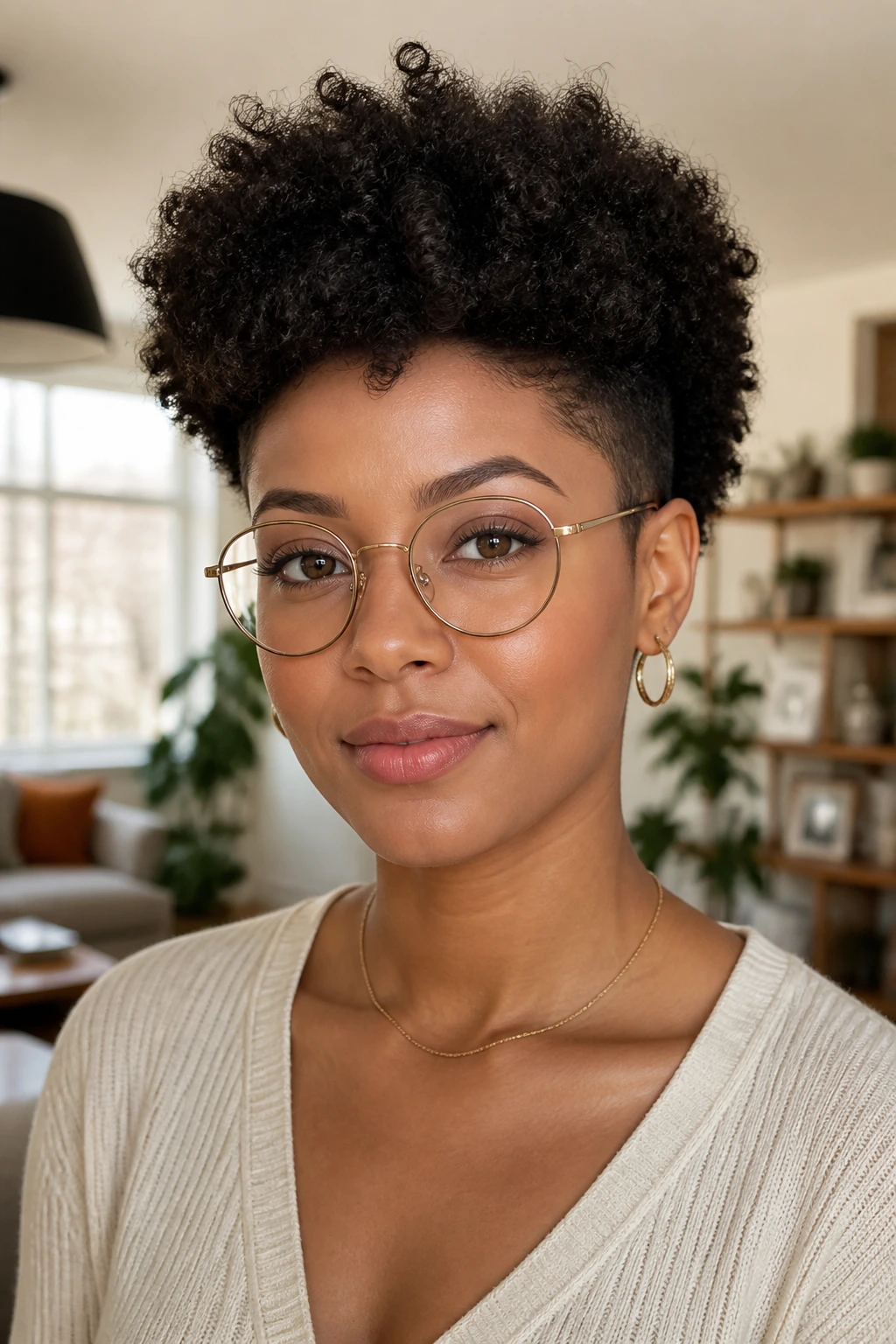
Shape beats length here. A rounded afro with tapered sides works beautifully with glasses because it gives the face a clear outline without swallowing the frames. The taper near the ears keeps the temple area open, while the rounded crown adds presence above the lenses.
This style looks especially strong with round or square frames. With round glasses, the shape echoes each other in a way that feels soft and intentional. With square glasses, the hair balances the geometry so the face doesn’t feel too hard-edged.
Moisture matters more than almost anything else. Use a leave-in that keeps the curls soft, then pick the roots for lift only after the hair is dry. Picking too much through the sides makes the glasses settle into the hair and mess with the shape. Keep the sides closer than the crown, and the outline stays clean.
15. Sleek High Ponytail With Face-Framing Pieces

A high ponytail can make glasses look sharper, not softer. The lift at the crown opens the face, and the pulled-back length keeps the temple zone free of stray strands. If your frames tend to get lost in loose hair, this is one of the quickest ways to fix that.
The ponytail should sit high enough to clear the frame arms but not so tight that it drags on the temples. That’s the detail people miss. Too much tension can make your head ache after a few hours, and the glasses only make it worse. Keep the front smooth, then leave two face-framing pieces loose around the cheekbone.
A bit of gel at the hairline works well here, but keep it minimal. You want polish, not a shellacked finish. The ponytail itself can be wrapped with a small section of hair if you want it cleaner. That small move makes the style look finished, even on a plain T-shirt day.
16. Soft Wolf Cut

The wolf cut can go wrong fast if it’s too choppy near the cheekbones. But when it’s cut with glasses in mind, it does something useful: it keeps the crown light, the ends loose, and the temple area from getting too puffy. The result has enough edge to feel modern without swallowing the frames.
What matters most is where the shorter layers stop. Ask for them to sit higher up on the head, not right where the glasses arms touch. The longer layers should fall below the lenses, so the face keeps some shape instead of turning into a blur of texture.
This cut makes sense for wavy and thick hair in particular. The layers take some weight out, the hair moves, and you don’t end up with that heavy triangle shape that can make glasses look tiny. A little frizz is fine. A little. The whole point is texture, not perfection.
17. Scarf-Wrapped Low Chignon
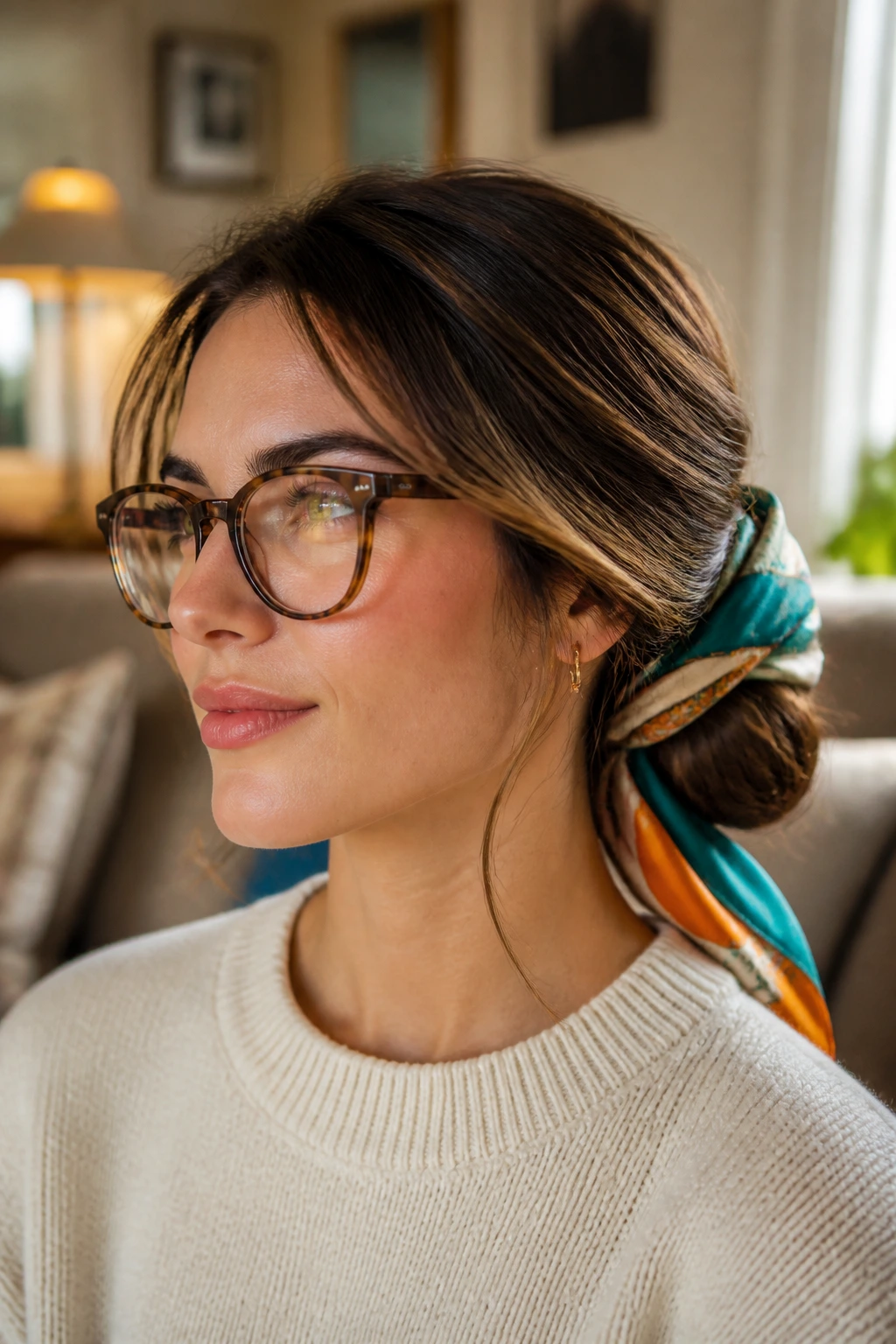
A scarf-wrapped low chignon is one of my favorite low-effort fixes for days when you want your glasses to take center stage. The hair is gathered low, tucked into a neat knot, and finished with a scarf that adds color without adding bulk around the temples. It’s tidy in a way that doesn’t feel severe.
Use a silk or cotton scarf depending on how much grip you need. Silk slides more; cotton holds better. Wrap it around the base of the chignon, not over the temple arms. That keeps the pressure off the glasses and stops the knot from creeping up the back of the head.
This works best with medium to long hair. If the bun sits too high, it starts competing with the frames. Keep it low and close to the nape. The line stays clean, the glasses stay visible, and the scarf gives you one extra thing to play with when the outfit needs a little more color.
18. Collarbone Flip With a Side Sweep
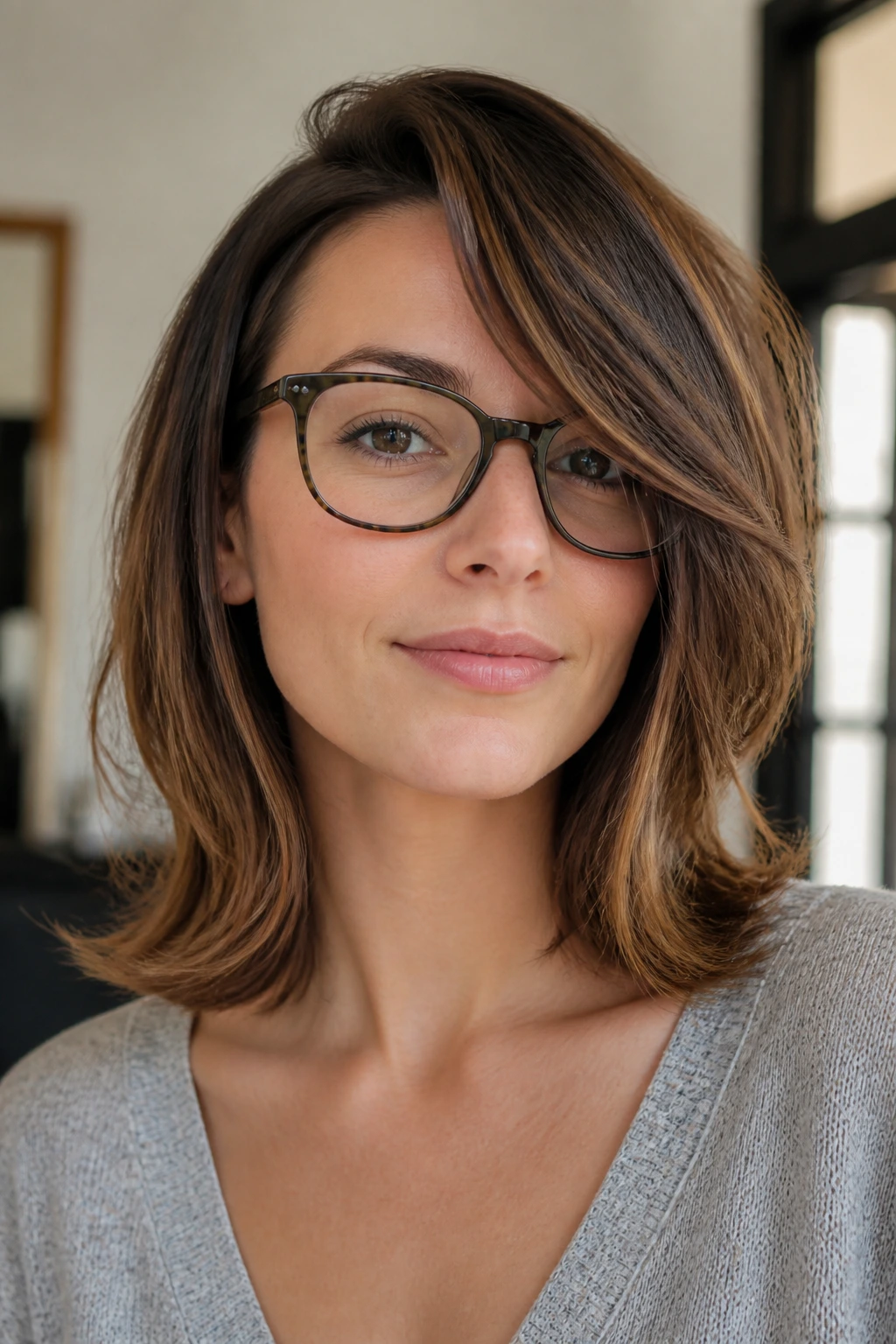
A collarbone flip gives the hair a little bounce where it matters. The ends turn away from the face, which keeps them from hanging into the glasses, and the side sweep breaks the forehead line without making the front heavy. It has a little retro energy, but not in a costume way.
This look is especially good with cat-eye and rectangular frames. The flipped ends echo the upward angle of the frames, while the side sweep softens the brow. If you wear strong glasses, the haircut should be a little softer. If your frames are delicate, the flip can add some presence back into the silhouette.
Use a round brush or a flat iron to turn the ends outward just at the collarbone. You do not need a huge blowout. A two-inch flip is enough. The idea is movement, not drama.
19. Chin-Length Curly Bob

Can a short curly cut and glasses get along? Yes, if you respect shrinkage and give the shape enough room. A chin-length curly bob works because it places the curl volume right where the face needs it, then keeps the sides clear enough that the frames don’t disappear.
The Part Matters More Than You Think
A side part can open the face and keep the curls from sitting directly behind the lenses. A center part gives a more even shape, which can work with round frames or soft, rounded lenses. The wrong part makes the whole cut feel crowded, especially if the curls are dense.
Cut it dry or almost dry if you can. Curly hair shortens when it dries, and a bob that looks chin-length wet can shrink to cheek level later. That is not a small difference.
Styling Without Flattening It
Use a curl cream that gives hold without stiffness, then diffuse on low heat until the outside layer is dry. Shake the roots a little once it cools. The goal is a rounded shape that still leaves room for the frame arms.
20. Polished Long Layers With Glasses
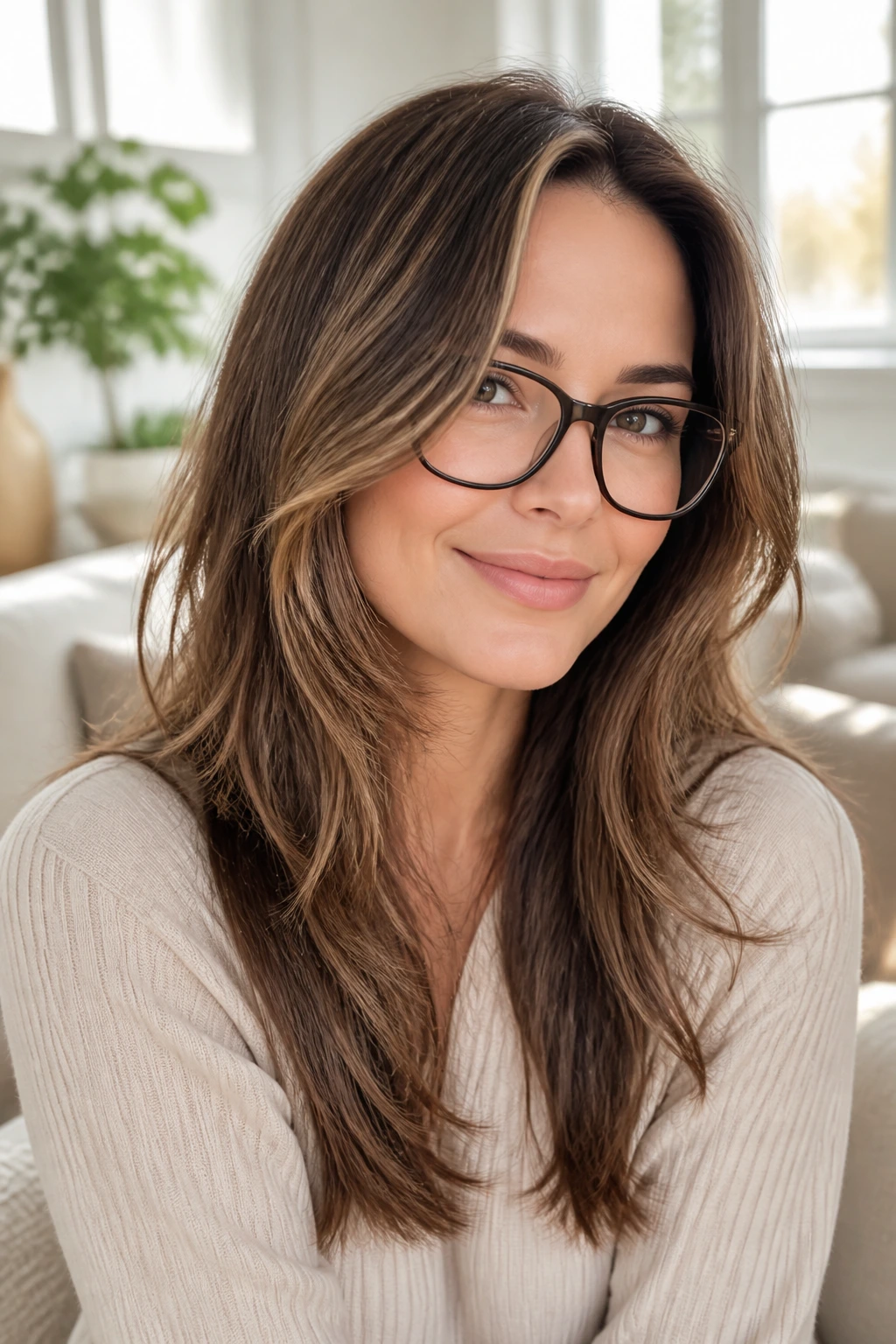
Long hair is easiest when the layers are doing the work. Polished long layers keep the length you want, but they stop the front from turning into one heavy sheet that covers the frames. The best version starts the face-framing pieces below the cheekbone and lets them taper toward the collarbone.
That placement matters because hair that ends right at the lens line tends to bounce around the glasses all day. A little longer gives the frames room. A little shorter can work too, but only if the front is airy enough that it doesn’t sit on the temples.
This is a nice fit for minimal metal frames, rimless glasses, and any style where you want the hair to be part of the outfit without taking over. A soft bend through the lengths keeps it from looking flat. Straight long hair can work, but it needs discipline. If the ends are limp, the glasses start to feel heavier than they are.
Practical Styling Moves for Hairstyles for Women Who Wear Glasses

Crown lift first: A little height at the top keeps thick frames from sitting on a flat sheet of hair. Even one inch of lift changes the whole read of the face.
Cut around the temples, not through them: Ask your stylist to check where the frame arms actually sit. Hair that ends exactly on that line tends to puff out, split oddly, or snag when you push the glasses up.
Match the part to the frame shape: Deep side parts soften straight frames. Center parts calm round frames. A slightly off-center part is the safest move if you want balance without a hard line.
Keep the front lighter than the back: If the pieces around your face are too dense, they swallow the frames. A small reduction in weight near the temples makes the lenses stand out more cleanly.
Use finish products sparingly near the lens line: Cream, oil, and heavy shine spray can slide onto the frames and make them smudge fast. Put the richer product lower in the hair and use a lighter touch around the face.
Tuck with intention: One ear tuck is not a lazy fix. It’s a shape tool. It clears the frame arm, shows the cheekbone, and keeps the style from looking too symmetrical.
Common Mistakes Women Make When Styling Hair With Glasses
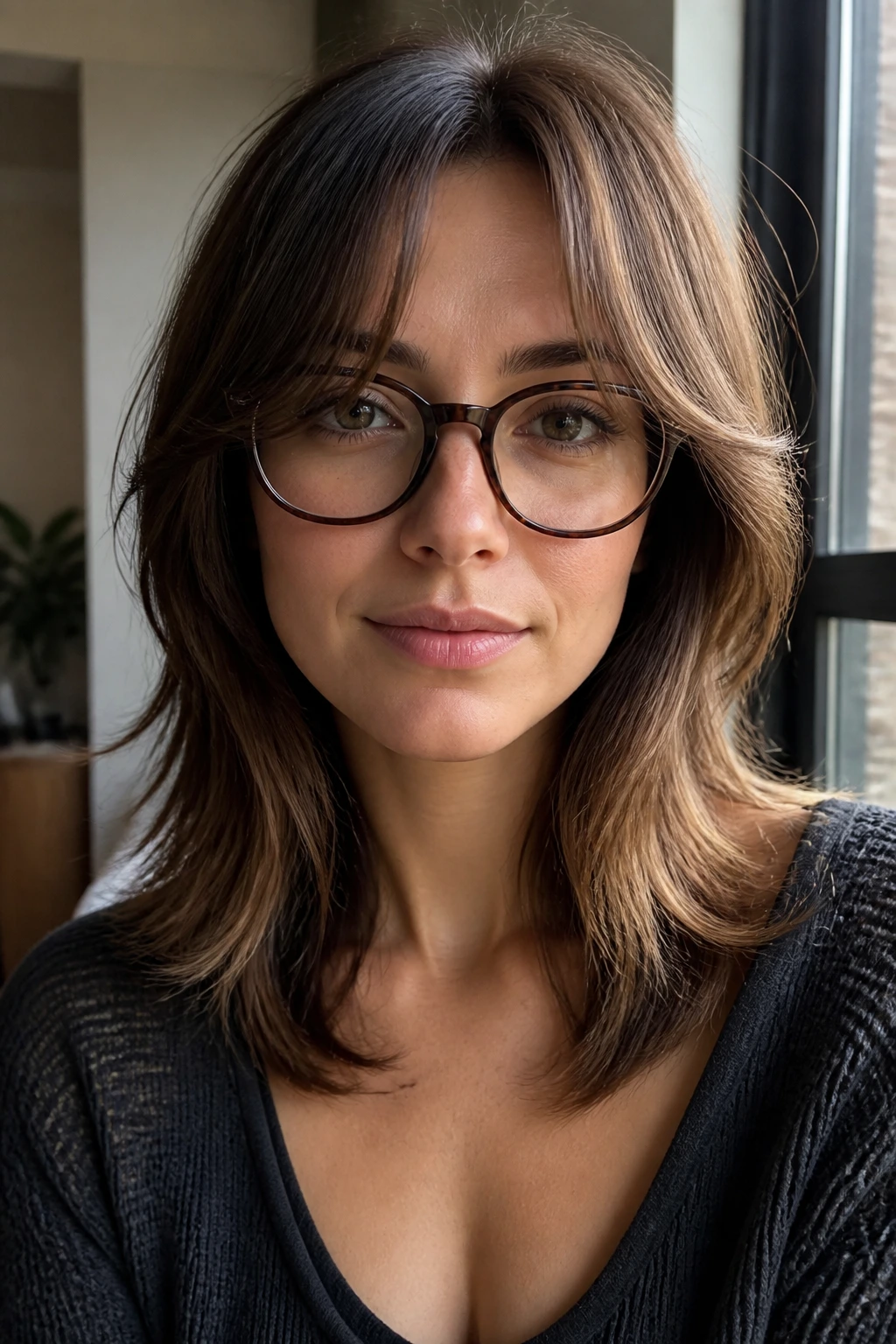
Cutting bangs to the frame, not the face. The symptom is obvious: fringe that bumps the top rim every time you blink. The fix is to leave a little clearance — usually a quarter to half an inch — and let the fringe skim the brow space instead of sitting on it.
Letting the sides get too bulky at the temples. Hair that piles up where the glasses arms rest pushes the frames forward and makes the head feel wider. Ask for tapering or keep that area tucked back after styling so the shape stays clean.
Flattening the crown too much. If the top is slicked down while the frames are bold, the glasses dominate the whole face. A bit of lift, even a soft root bend, gives the haircut enough structure to stand beside the frames.
Choosing a haircut that is heavy in the exact same place as the glasses. A blunt bob plus thick rectangular frames can work, but only if the line is precise and the ends are controlled. If both the hair and the frames are doing their loudest work at jaw level, the face can feel crowded.
Using too much product near the front. Grease at the temple area makes hair slide onto the lenses and leaves smears on the frames. Keep smoothing cream or oil away from the front pieces and finish with a lighter product there.
Forgetting that glasses change how a cut sits over a full day. A style can look fine for ten minutes and then start slipping, denting, or puffing after you’ve worn it for hours. Test the cut by moving your head, smiling, and pushing the frames up once or twice. That’s the real check.
Variations and Alternatives for Hairstyles for Women Who Wear Glasses
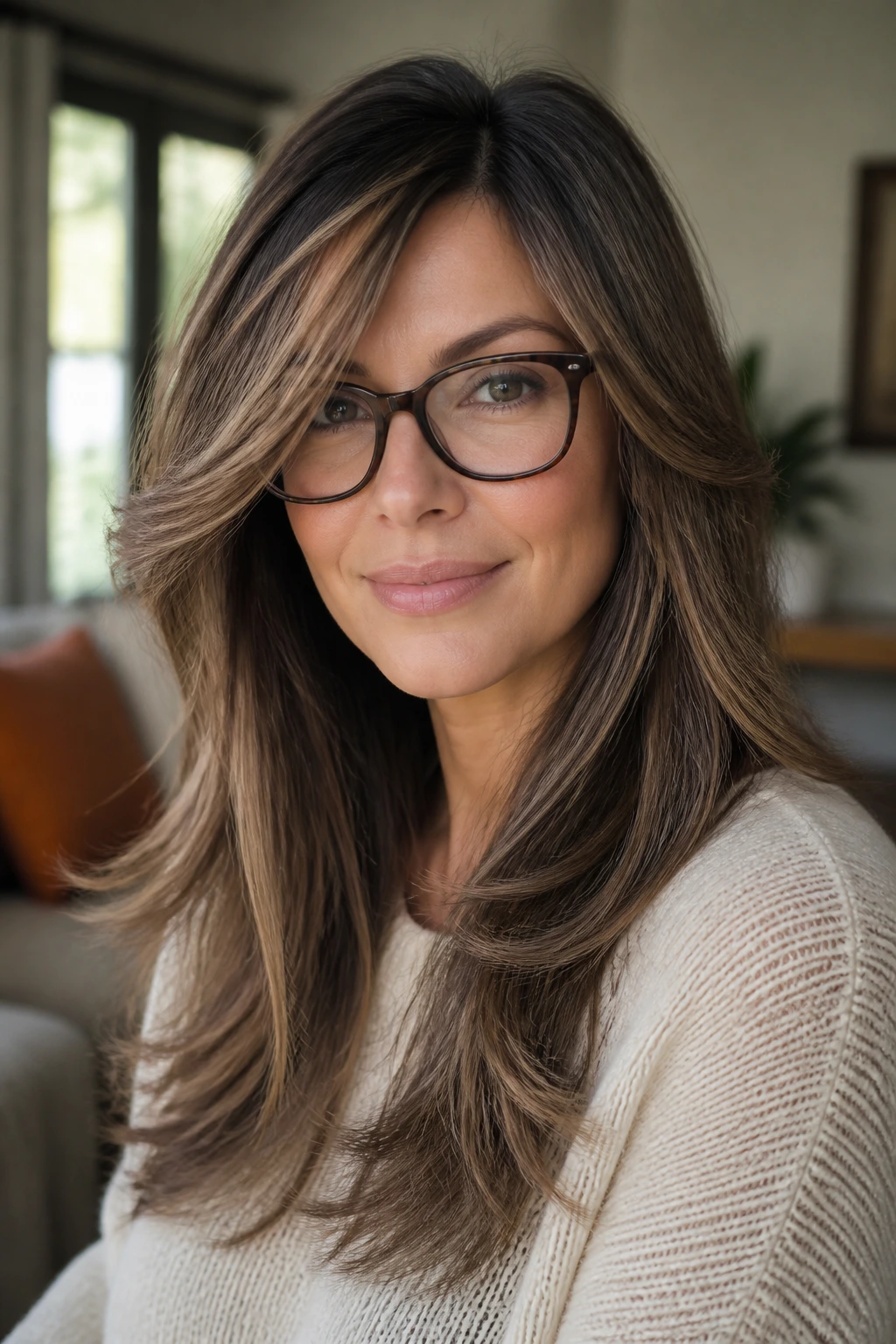
Bold-Rim Balance: If your frames are thick acetate or a strong geometric shape, lean into cleaner hair lines: pixies, sleek buns, blunt bobs, or long layers with very controlled ends. Heavy fringe plus heavy frames can be too much unless the cut is intentionally sharp.
Wire-Frame Softness: Thin metal or rimless frames leave room for movement, so you can get away with curtain bangs, loose waves, feathering, and softer curls. The frames won’t disappear, which means the hair can carry more texture without looking crowded.
Curl-First Shape: For curly and coily hair, start with the curl pattern, not the frame. Dry shaping or curl-by-curl trimming keeps the silhouette from getting too wide at temple level, which is the spot that tends to clash with glasses arms.
Short-Hair Shortcut: If mornings are a mess, go shorter. Pixies, crops, and jaw-length bobs keep the hair out of the lens zone and usually need only a small amount of styling cream or paste. The trade-off is regular trims, but that’s the cost of a cut that stays crisp.
Length Keeper: If you love long hair, keep it — but add a few targeted face-framing layers and a part that doesn’t sit dead center every day. Long hair works best with glasses when the front pieces are light enough to move and long enough to stay below the lens line.
Tools That Make These Hairstyles Easier

- Tail comb: Useful for clean parts, sectioning bangs, and finding the exact line where your glasses sit.
- Blow dryer with a nozzle attachment: Helps you direct hair away from the temples instead of blasting everything in random directions.
- Round brush, 1 to 1.5 inches: Best for bangs, bobs, feathered ends, and soft lift at the crown.
- Flat iron: Handy for bent ends on lobs, collarbone flips, and smoothing the front without making it flat.
- Curling wand or iron: A 1-inch or 1.25-inch barrel gives waves that clear the frame line without turning into tight curls.
- Duckbill clips: Good for setting crown lift while the hair cools.
- Bobby pins: Essential for half-up styles, twists, and low buns that need to stay low and neat.
- Light styling cream or matte paste: Enough hold to shape the front without making it stick to your lenses.
- Dry shampoo: Useful for adding grip at the roots and reducing the slick feeling around the frame arms.
- Light-hold hairspray: Keeps bangs, waves, and buns in place without making the hair crunchy.
- Silk or cotton scarf: Useful for buns, low chignons, or adding color without adding bulk near the temples.
Keeping the Cut in Shape Between Washes
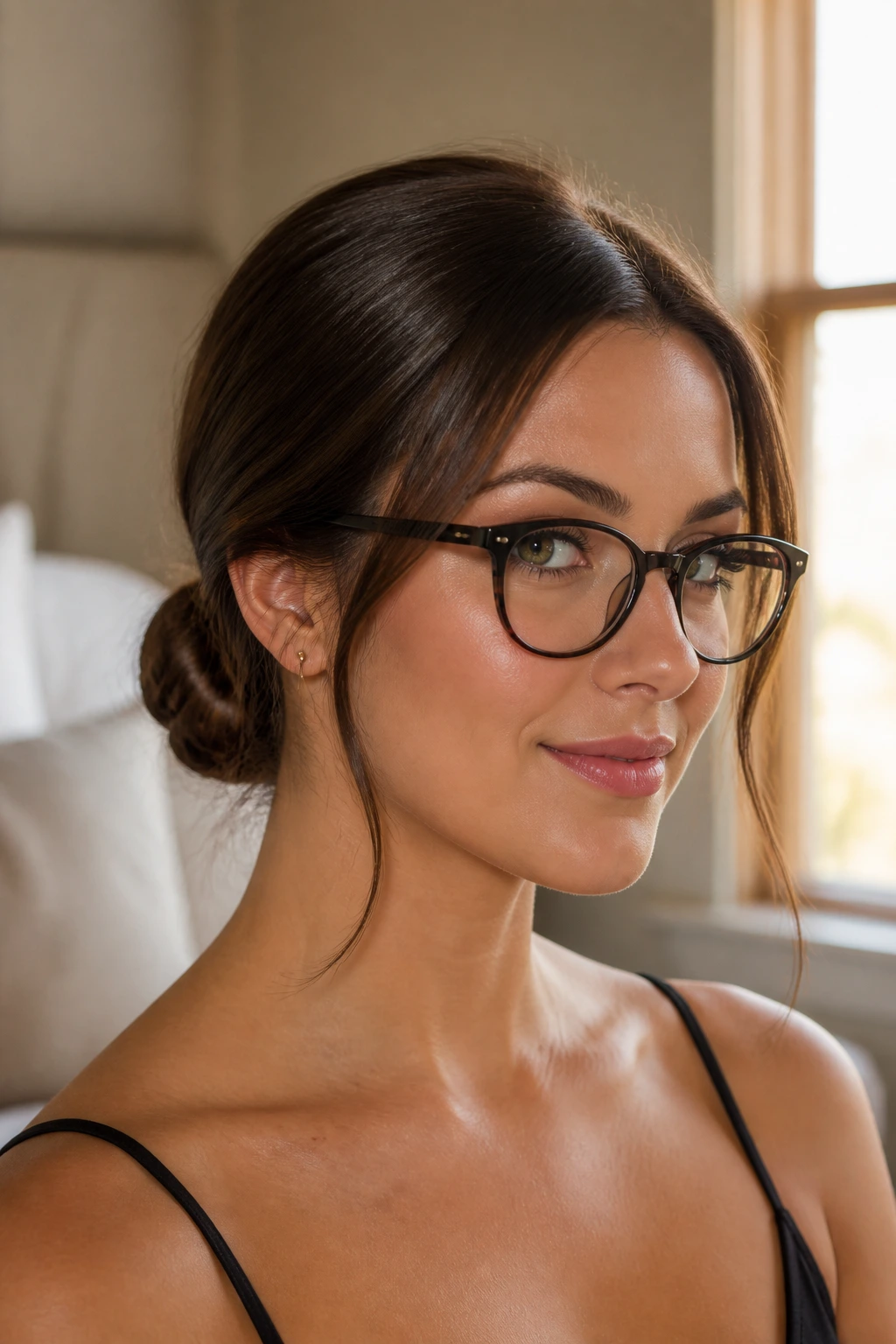
The best hairstyles for women who wear glasses are the ones that still look good on day two. That means the maintenance plan matters. A pixie usually wants a trim every 4 to 6 weeks, because short hair loses its shape fast once the top starts growing into the frame line. Bobs and lobs usually hold for 6 to 8 weeks. Bangs often need a touch-up sooner — sometimes every 2 to 4 weeks if they grow quickly.
Between washes, focus on the temple zone. That’s where glasses flatten hair the fastest. A mist of water, a dab of cream, and a quick blow-dry with the dryer pointed away from the face can reset that area in under five minutes. If your hair gets dented behind the ears, clip it loosely before bed or switch to a silk pillowcase so it doesn’t wake up with hard bends.
Product buildup near the frame arms is another quiet problem. It makes hair look dull and leaves residue on the lenses. Wipe the glasses arms with a soft cloth after styling, and keep richer oils lower on the hair, away from the front pieces. Curly and textured hair usually benefits from a refresh on the second or third day; straight hair may need a root lift or a quick dry shampoo pass sooner.
Frequently Asked Questions About Hairstyles for Women Who Wear Glasses

What haircut looks best with thick glasses frames?
Thick frames usually look best with cleaner hair shapes: pixies, bobs, lobs, or long layers with controlled face-framing pieces. The goal is to avoid a heavy cluster of volume right where the frame sits, especially at the temples and brow line.
Do bangs work if I wear glasses every day?
Yes, but the length has to be deliberate. Curtain bangs, side-swept fringe, and soft micro fringe can work well if they clear the frame line; blunt bangs that stop on the rim are the ones that usually cause daily frustration.
Is long hair harder to wear with glasses?
Not harder — just easier to get wrong. Long hair works well if the front is layered enough to stay below the lenses and the sides are light enough to avoid crowding the frame arms.
Which parting works best with glasses?
There isn’t one answer, but a slightly off-center or deep side part often helps frames feel less boxy. Center parts can work too, especially with rounder glasses or softer cuts, but they need enough height at the crown so the face doesn’t flatten out.
How do I keep hair from puffing out around the temple arms?
Ask for tapering around the ears and avoid loading that area with heavy cream or oil. A quick tuck behind the ear after styling can also keep the shape close to the head without making it look slicked down.
Can curly hair and glasses work without a lot of frizz?
Yes, if the cut respects curl shrinkage and the styling keeps volume where it belongs. A well-shaped curly crop, bob, or shag lets the curls lift above or fall below the frame line instead of exploding exactly at it.
What if my glasses slip after I change my haircut?
Hair can change how frames sit, especially if the area behind the ears gets bulkier. If you’re still having trouble after adjusting the cut, have the frames fitted properly by an optician; small arm bends often fix what hair alone can’t.
How often should I trim bangs or face-framing layers?
Bangs usually need the most attention, often every 2 to 4 weeks. Face-framing layers can often go 8 to 10 weeks, but if they start landing right on the top rim of your glasses, they’ve already crossed into annoying territory.
When Hair and Frames Stop Competing

The nicest thing about good hairstyles for women who wear glasses is that they stop looking like “hair plus accessories” and start reading as one shape. That’s the sweet spot. The frames sit cleanly. The hair has a purpose. Nothing is fighting for the same inch of space around your eyes.
If you’re unsure where to start, make one small change first: move the part, clear the temples, or trim the fringe so it stops arguing with the lens line. Those tiny edits often do more than a dramatic cut, and they’re easier to live with while you figure out what your frames really want.
Once the silhouette stops arguing with itself, the rest falls into place.
