



Fine hair doesn’t need more drama; it needs a wispy haircut that knows where to stop. Too blunt, and the ends can look hard and a little shapeless. Too layered, and you get that see-through, over-chewed look that makes delicate strands feel even lighter than they already are.
The sweet spot is a clean outline with soft movement threaded through the interior. That’s the part a lot of haircut advice misses. Wispy haircuts are not about stripping hair down until it floats away; they’re about keeping enough density at the edge so the shape reads as intentional, then softening just enough to keep it from looking stiff.
And yes, the details matter. A chin-length bob that’s point-cut at the perimeter behaves differently from a razor-thinned lob. Curtain bangs change the whole mood of a cut. So do face-framing pieces that start at the cheekbone instead of the chin. The best versions make delicate texture look airy, swishy, and touchable instead of weak or flat.
Why These Wispy Haircuts Feel So Good on Delicate Texture
-
They keep the perimeter honest: A wispy cut still needs a clean outer line, because fine hair looks fuller when the ends land in a deliberate shape instead of a ragged blur.
-
They remove weight where hair collapses: Soft internal layers can lift the crown and sides without taking away the bulk that gives the ends their presence.
-
They work with movement, not against it: The right wispy haircut lets hair swing when you walk, tuck behind the ear without sticking out, and air-dry without turning puffy.
-
They make face-framing look lighter: Pieces cut around the cheekbones or jawline soften the front without forcing the rest of the haircut to get shredded.
-
They grow out better than harsh layers: A well-cut wispy shape usually softens gracefully over 6 to 10 weeks, which matters if you don’t live at the salon.
-
They make styling faster: A bit of mousse, a quick bend with a round brush, or even a scrunch and go can be enough when the cut already does the heavy lifting.
1. Chin-Grazing Wispy Bob
A chin-grazing bob is one of those cuts that looks simple until you notice how much work it’s doing. The line sits right at the jaw, which gives fine hair a fuller-looking edge, and the wispy finish keeps it from feeling like a helmet. It’s especially good if your hair tends to fall flat at the roots but still has decent movement through the ends.
Why It Flatters Soft Hair
The trick is in the perimeter. Ask for a bob that’s lightly point-cut at the ends rather than hacked into texture with a razor. That gives you softness without making the outline look see-through, which is the usual problem with delicate hair.
For this cut, a side part can be a smart move. It builds lift on one side and gives the bob a little swing when it moves. If your hair sits close to your head, that bit of asymmetry does more than you’d expect.
- Best length: Right at the chin or a half-inch below it.
- Styling note: A small round brush or a one-inch flat brush works well.
- Texture match: Straight to softly wavy hair gets the cleanest shape.
- Trim rhythm: Every 6 to 8 weeks keeps the line from drooping.
Pro tip: If you want the ends to look fuller, tell your stylist to keep the last half-inch crisp and only soften the surface, not the whole edge.
2. Collarbone Lob with Invisible Layers
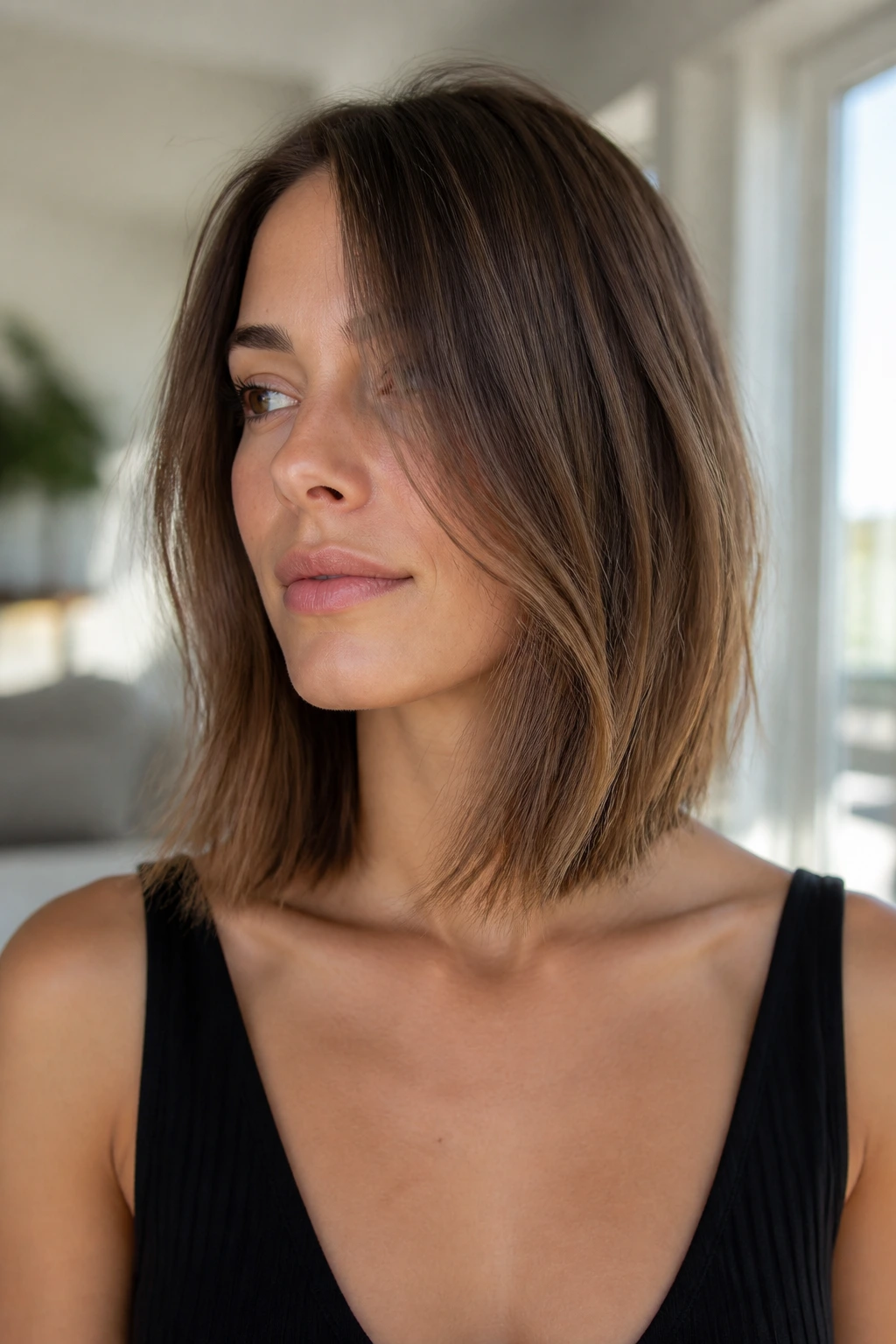
This is the haircut I’d hand to someone who wants movement but hates the idea of obvious layers. A collarbone lob with invisible layers keeps the outside shape long enough to tuck behind the ear, but the inside gets just enough internal removal to stop it from hanging like a curtain. The haircut has motion. It does not have noise.
Because the layers live inside the shape, the ends still look dense. That matters on soft, delicate texture, where visible step layers can quickly turn into gaps. If your hair is fine but you wear it straight most days, this is one of the safest bets.
The best version lands right on the collarbone or just a touch below it. That length gives the hair room to bend at the ends and lets you throw in a loose wave when you want extra body. It’s the kind of cut that looks polished in daylight and even better after a little scrunching with mousse.
3. Feathered Curtain Bangs on Long Hair
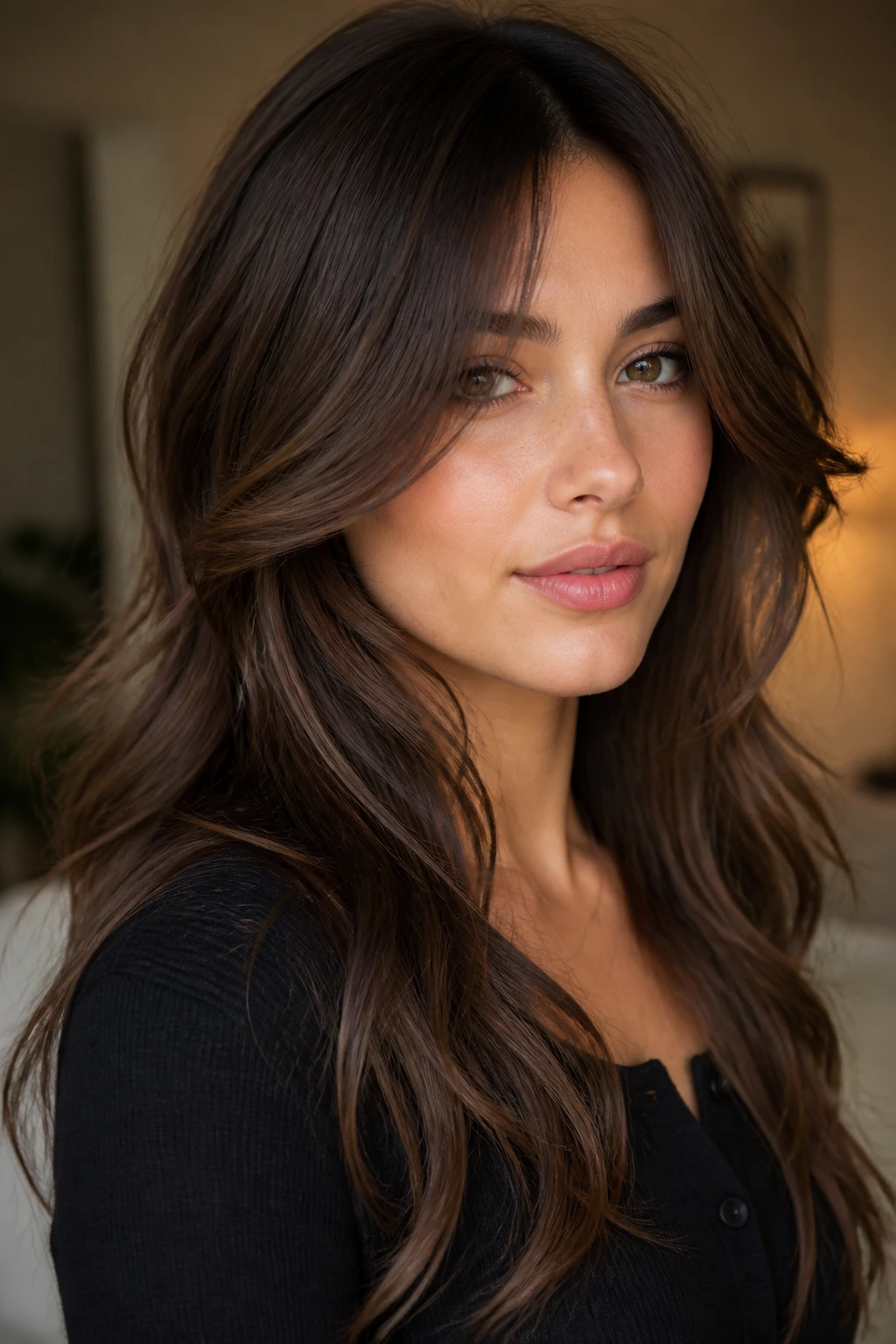
Why do curtain bangs keep showing up? Because they solve a specific problem: long hair can feel heavy around the face, and wispy bangs fix that without taking much length away. The feathered version is softer than a blunt fringe and easier to grow out than a heavy bang.
How to Ask for It
Tell your stylist you want bangs that open at the center, skim the cheekbones, and blend into the longest layers. That blend is the whole point. If the fringe is cut too short or too square, it can look severe against fine hair.
Keep the rest of the hair long and airy, not overloaded with layers. Curtain bangs look best when the body of the hair still has some weight, because the contrast makes the front pieces feel lighter. A round brush or velcro roller can give the fringe that soft bend at the cheekbone.
One nice thing about this cut: it gives you something to play with on day two. A little dry shampoo at the roots and a quick finger-comb is usually enough.
4. Soft Shag with a Light Crown
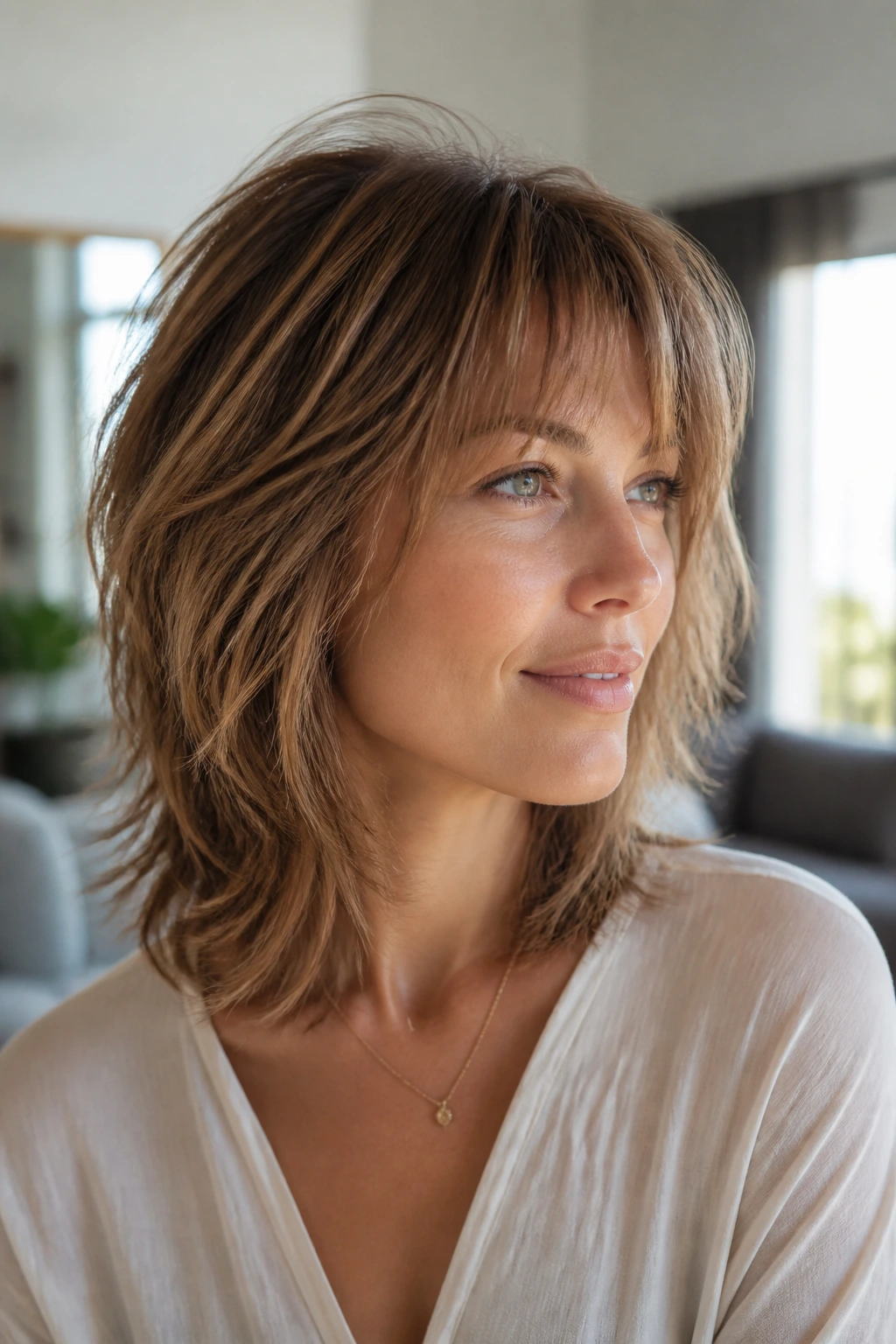
A shag can go wrong fast on delicate hair. The hard version shreds the ends and leaves you with flyaway bits that never settle. The soft version is a different animal. It keeps the crown light, the fringe diffused, and the ends loose enough to move without looking chopped.
Picture a cut that has lift near the top, but not a bunch of disconnected pieces at the bottom. That’s the one. On hair that leans flat, the shape helps because the crown gets a little air under it, and the layers encourage texture to show up instead of disappearing.
What to Watch For
- Ask for soft, blended layers, not aggressive thinning.
- Keep the fringe long enough to tuck or sweep.
- Use mousse at the roots, not heavy cream.
- Diffuse on low heat if your hair has any bend at all.
One-sentence truth: A soft shag works because it has structure at the top and restraint at the bottom.
5. Rounded French Bob
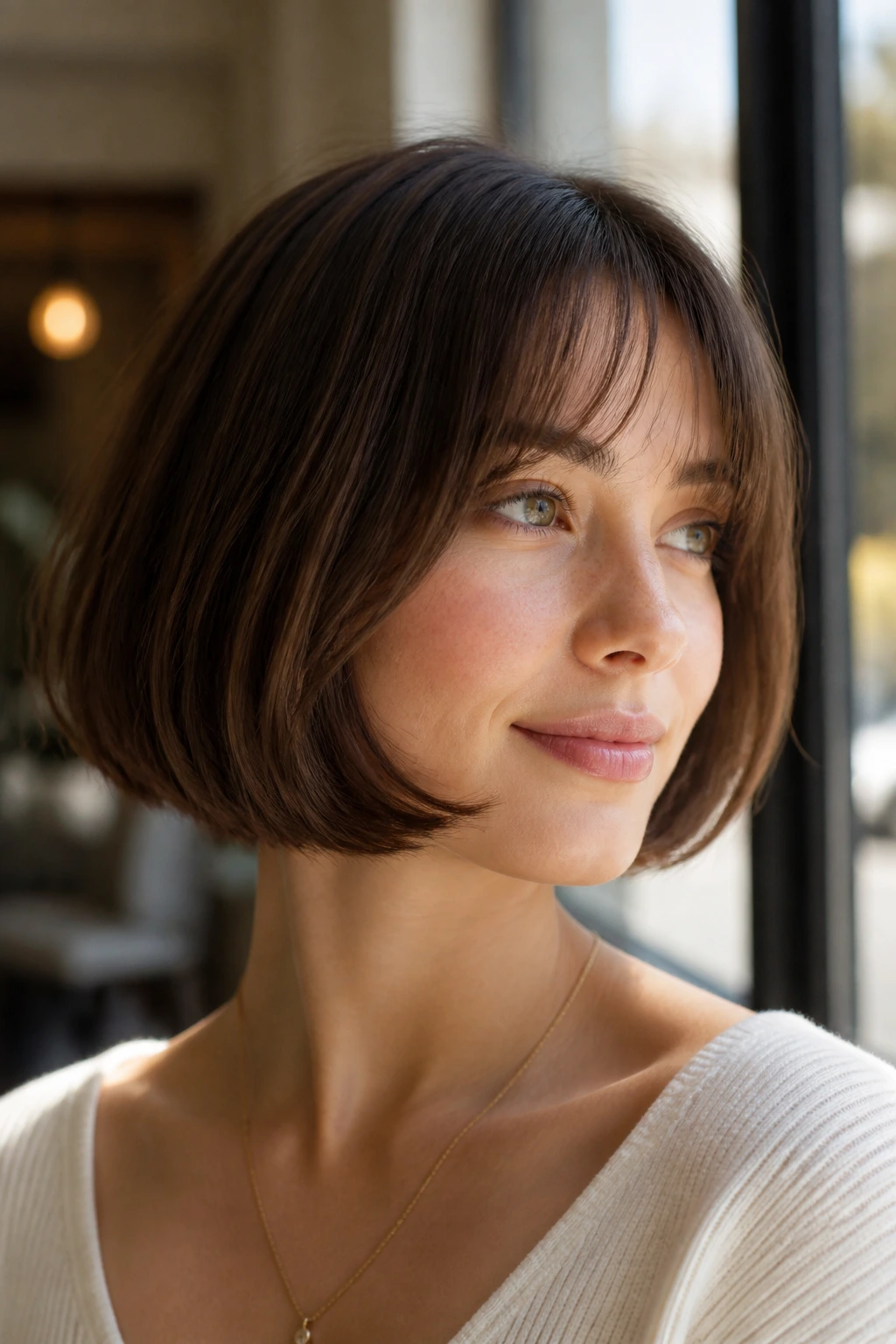
The rounded French bob has a quiet confidence that suits fine hair extremely well. It sits around the jaw, curves in just enough to hug the face, and usually has a soft fringe or a side-swept front that keeps the whole thing from feeling boxy. It’s sharper than a lob and softer than a classic blunt crop.
The rounded shape is the part I like most. On delicate texture, a rounder outline can create the sense of thickness even when the hair itself is light. It keeps the silhouette full at the cheeks and jaw instead of letting the ends taper off into nothing.
This cut loves a little bend under the ends. A small brush and a quick blow-dry inward will do more than a pile of styling product ever could. If you want an easy wash-and-go shape that still looks deliberate, this one earns its keep.
6. Butterfly Cut with Sheer Face Framing
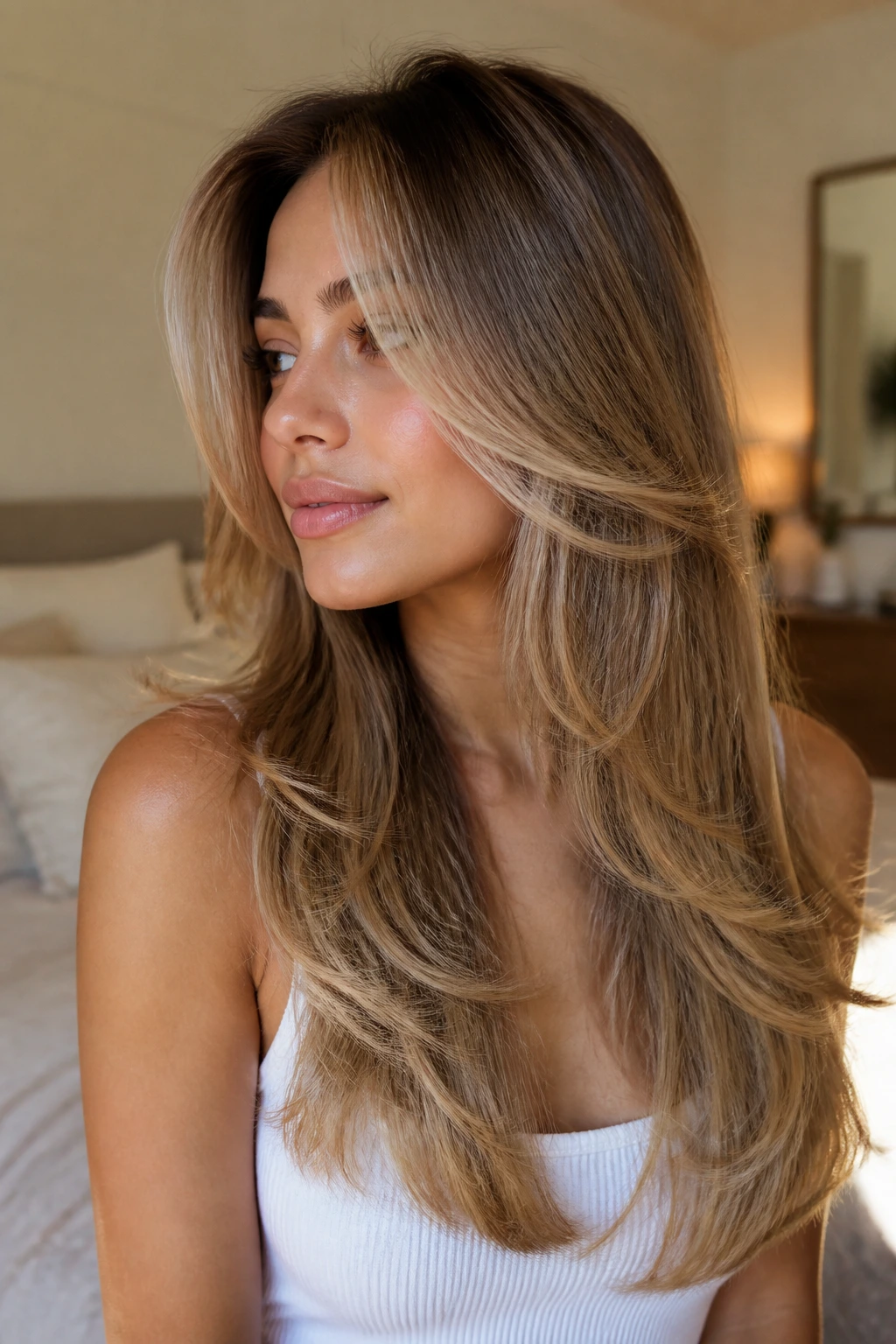
The butterfly cut is usually sold as a dramatic, layered look, but it can be softened for fine hair if you’re careful. The key is sheer face framing, not chunked-out layers that go flying in every direction. You keep the long back lengths, then build short front pieces that melt into them.
This cut works because it gives the illusion of fullness around the face without making the ends too sparse. If your hair is long but sits limp, that front movement can wake up the whole shape. You get swing around the collarbone and cheekbone, but the body of the hair still hangs with some weight.
It’s especially useful if you like to wear your hair half-up. The front layers fall around the face while the back still gives you enough length for clips, twists, and low ponytails. That balance matters more than most people realize.
7. Grown-Out Pixie with Side-Swept Fringe
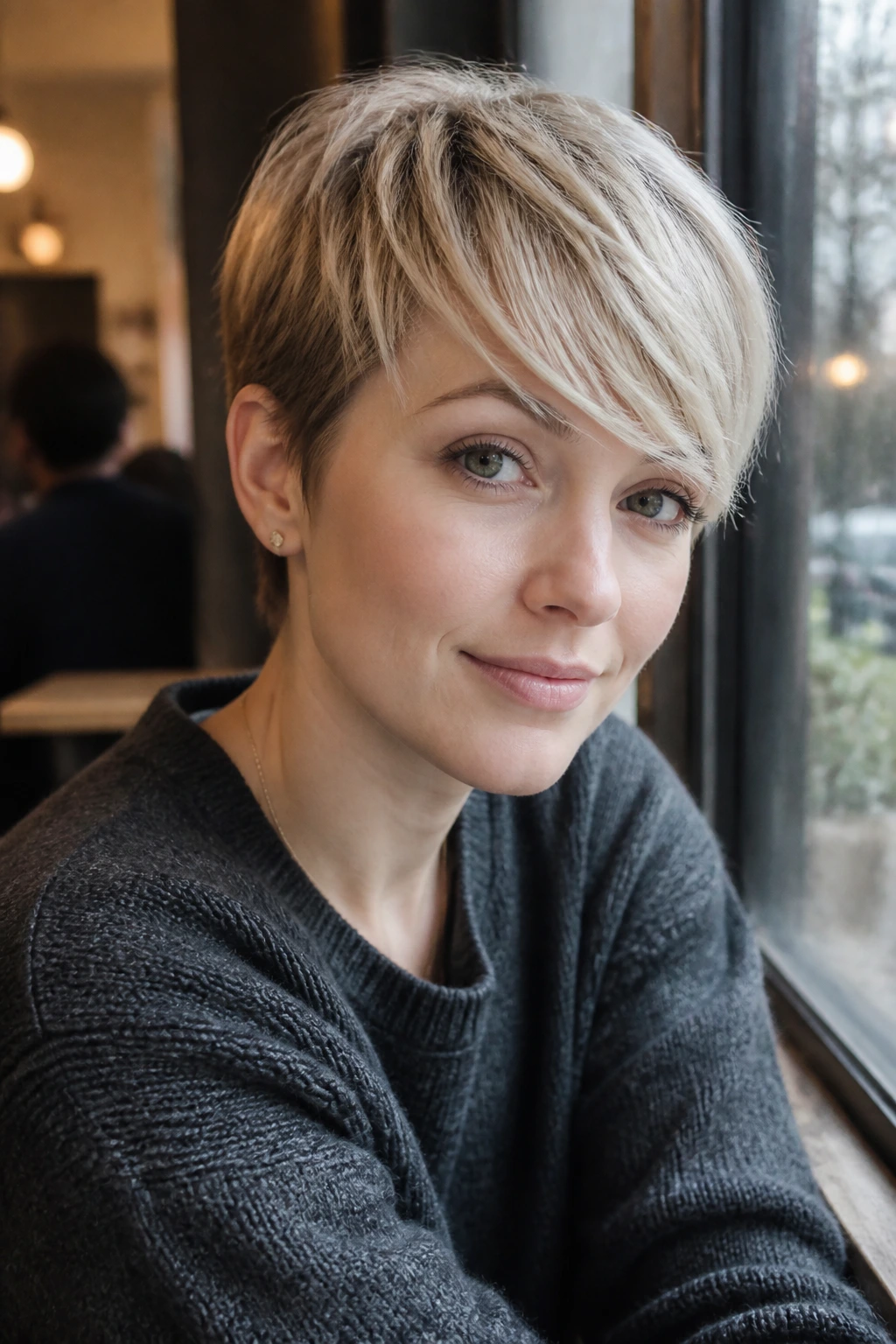
Short hair can be brutally honest on delicate texture. If the cut is too choppy, you see every thin patch. The grown-out pixie with a side-swept fringe avoids that problem by keeping the top soft and the fringe long enough to move across the forehead instead of sticking straight out.
This is a good cut if you want lightness around the ears and nape but still need some face-framing softness. The fringe does a lot of the visual work, which means the rest of the shape can stay neat and low-maintenance. A little paste or light cream is enough; you do not need a heavy wax unless your hair refuses to stay put.
It also grows out well into a pixie-bob or a short bob. That’s a real bonus if you’re nervous about going too short. The line between “cute, airy crop” and “why did I do this” is mostly the fringe length.
8. A-Line Wispy Lob
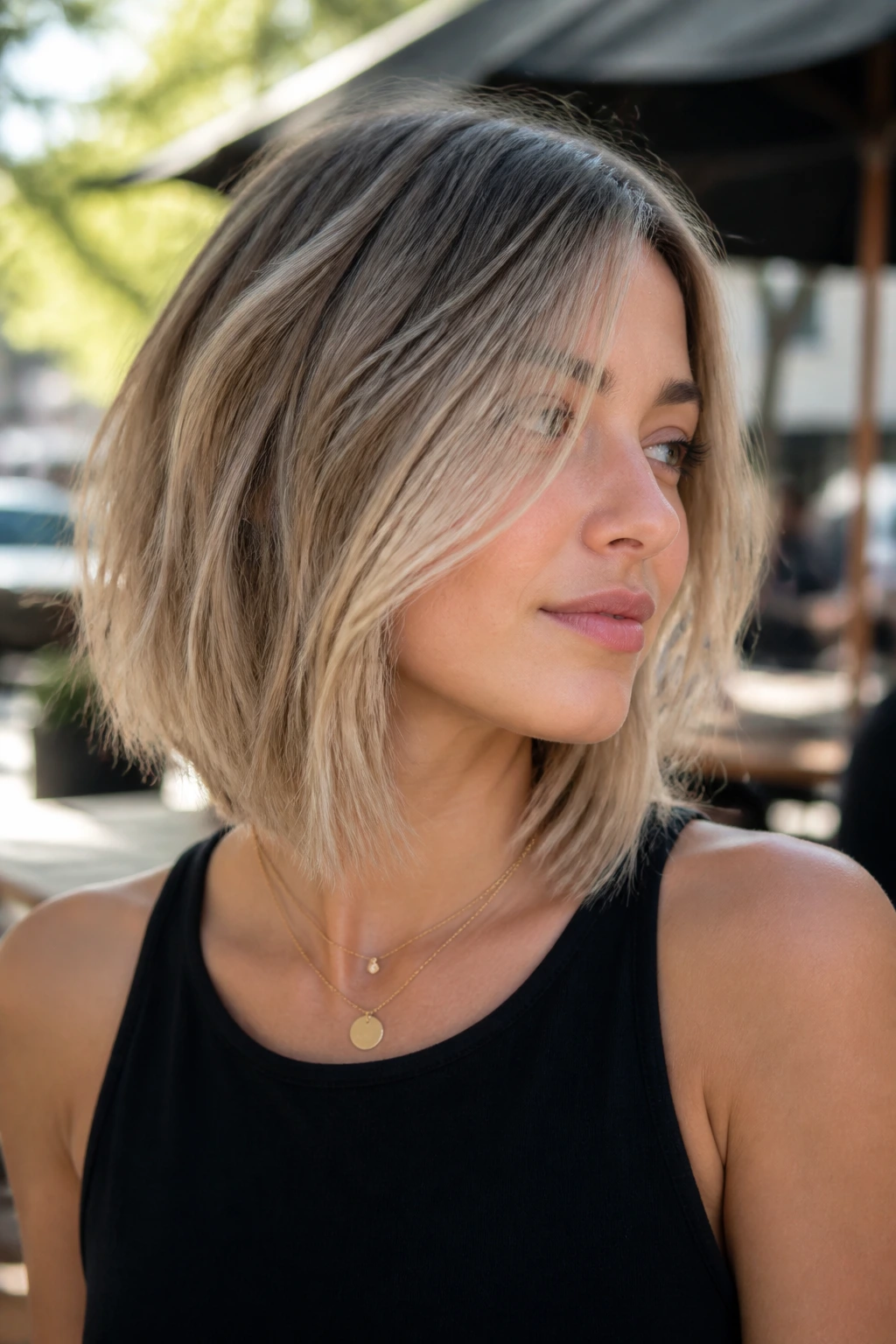
An A-line lob gives you a longer front and a shorter back, which sounds dramatic until the angles are softened. On fine hair, that slight pitch creates swing and a sense of volume at the front without making the haircut look severe. I prefer a subtle version over a steep one; too much angle can make delicate ends look stringy.
The best part is the movement. When you turn your head, the front pieces slide forward a little, and that movement makes the whole cut feel alive. It’s especially useful if your hair tucks behind your ears all day and flops flat at the back.
If you want a low-fuss style with a little edge, this is a safe place to start. Keep the angle gentle, and ask for the ends to be softened with point cutting so they don’t look like a ruler line.
9. Hush Cut with Tapered Ends
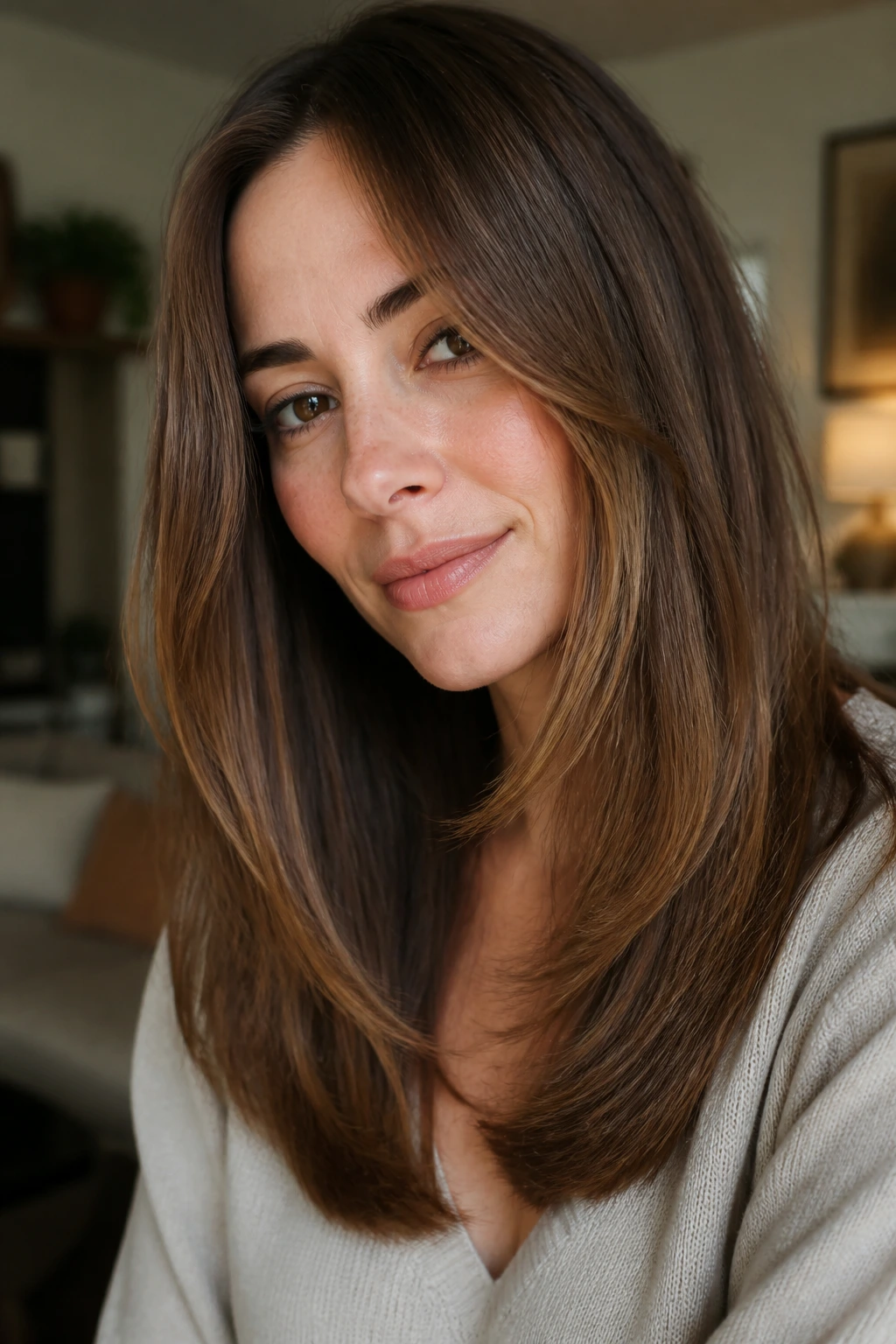
The hush cut is one of the softer layer cuts out there, which is why it works so well on delicate texture. Instead of obvious tiered layers, it uses tapered ends and quiet face framing to create movement that looks almost accidental. Almost. It’s a controlled kind of softness.
This cut suits straight or slightly wavy hair best, because the gentle layers show up without exploding into frizz. If your hair tends to fall flat around the crown, a hush cut can give it just enough lift to look styled even when you barely touch it.
The thing to ask for is restraint. You want tapering, not aggressive debulking. If a stylist reaches for the thinning shears too quickly, stop them. That tool can make fine hair look wispy in the bad sense: sparse, frayed, and hard to control.
10. Midi Cut with Soft Taper
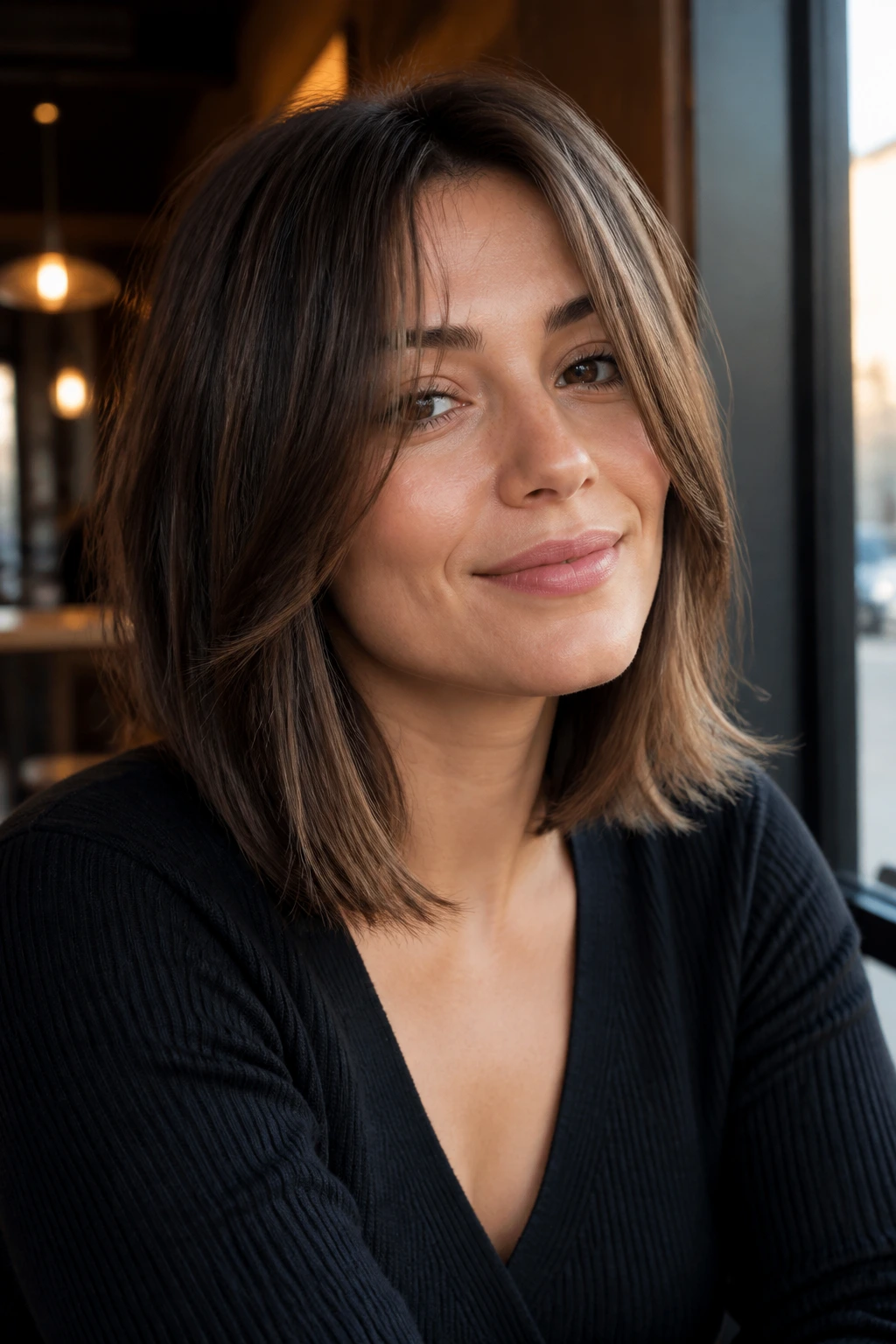
A midi cut sits between the shoulders and the upper chest, and that middle zone is a sweet spot for soft, delicate texture. Long enough to feel feminine, short enough to avoid dragging the face down. Add a soft taper through the ends and you get movement without losing the length that gives fine hair some visual substance.
This is the cut I’d pick for someone who hates obvious layers but still wants the hair to bend when it moves. It works because the taper lives quietly at the edges. The perimeter isn’t chopped, so the whole shape still reads as full.
It’s also practical. You can wear it straight, bend the ends under, or throw in loose waves. If your hair gets frizzy in humidity, a midi length is usually easier to manage than very long hair, which can start to split into weak-looking sections.
11. Bottleneck Bangs and Layered Length
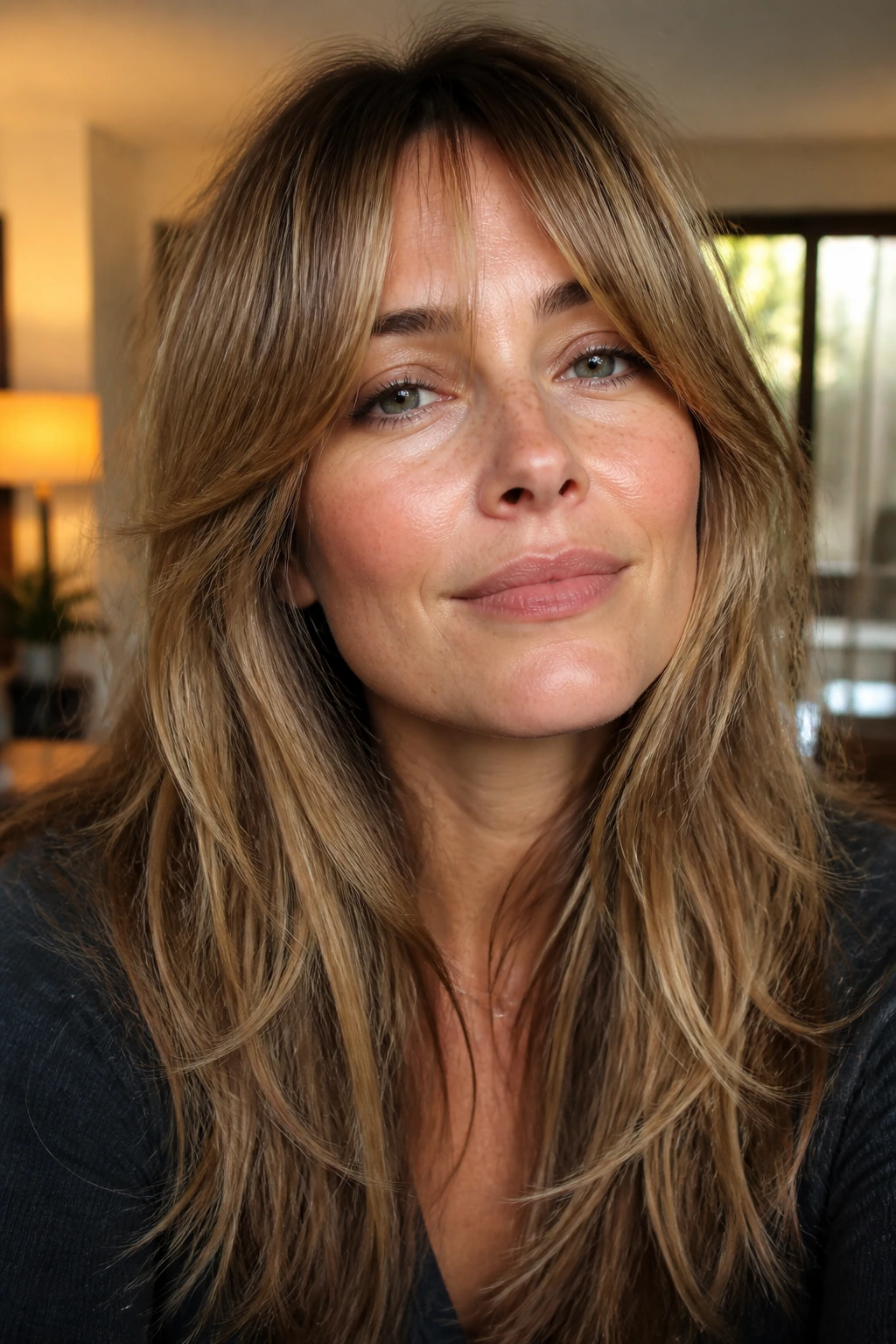
Bottleneck bangs are a nice answer for anyone who wants fringe without a hard line across the forehead. They start narrow between the brows, then open out toward the sides, which helps them blend into layered lengths. On delicate texture, that shape keeps the face frame soft instead of heavy.
The haircut works because the bangs give you a focal point while the rest of the length stays airy and movable. If your hair is fine, that’s a useful trade. You get a little drama around the face without needing lots of layers all through the back.
Ask for the shortest point to sit around the bridge of the nose or just above the brows, then let the sides graze the cheekbones. That length range grows out more gracefully than a blunt straight-across bang. It also gives you room to split the fringe if you change your mind.
12. Piecey Crop with Tucked Nape
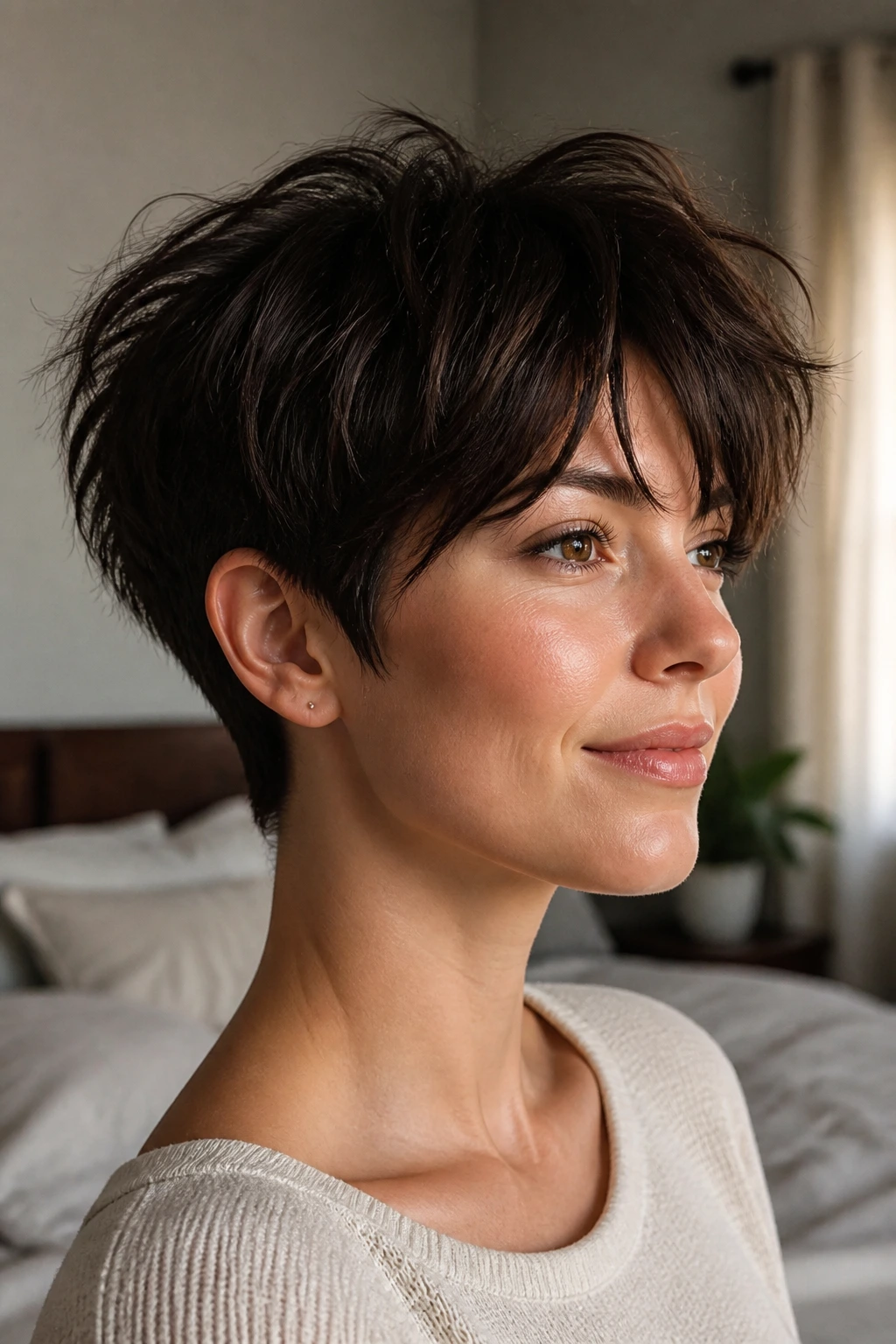
A piecey crop is short, a little playful, and easier to wear than people expect. The tucked nape keeps the neck open and neat, while the top stays soft enough to move around with your fingers. On soft texture, that balance matters because the cut needs shape, not bulk.
What keeps this from looking too severe is the way the top is handled. You want separated pieces, not chopped spikes. A tiny bit of paste or styling cream through the crown gives the hair direction, but the perimeter should still look clean.
This cut is a good fit if your hair is fragile and you’re tired of fighting it. Shorter lengths can take stress off the ends, and a tidy nape means you’re less likely to get that fuzzy, worn-out look that shows up on longer fine hair after a few weeks.
13. Long U-Shape with Micro-Layers
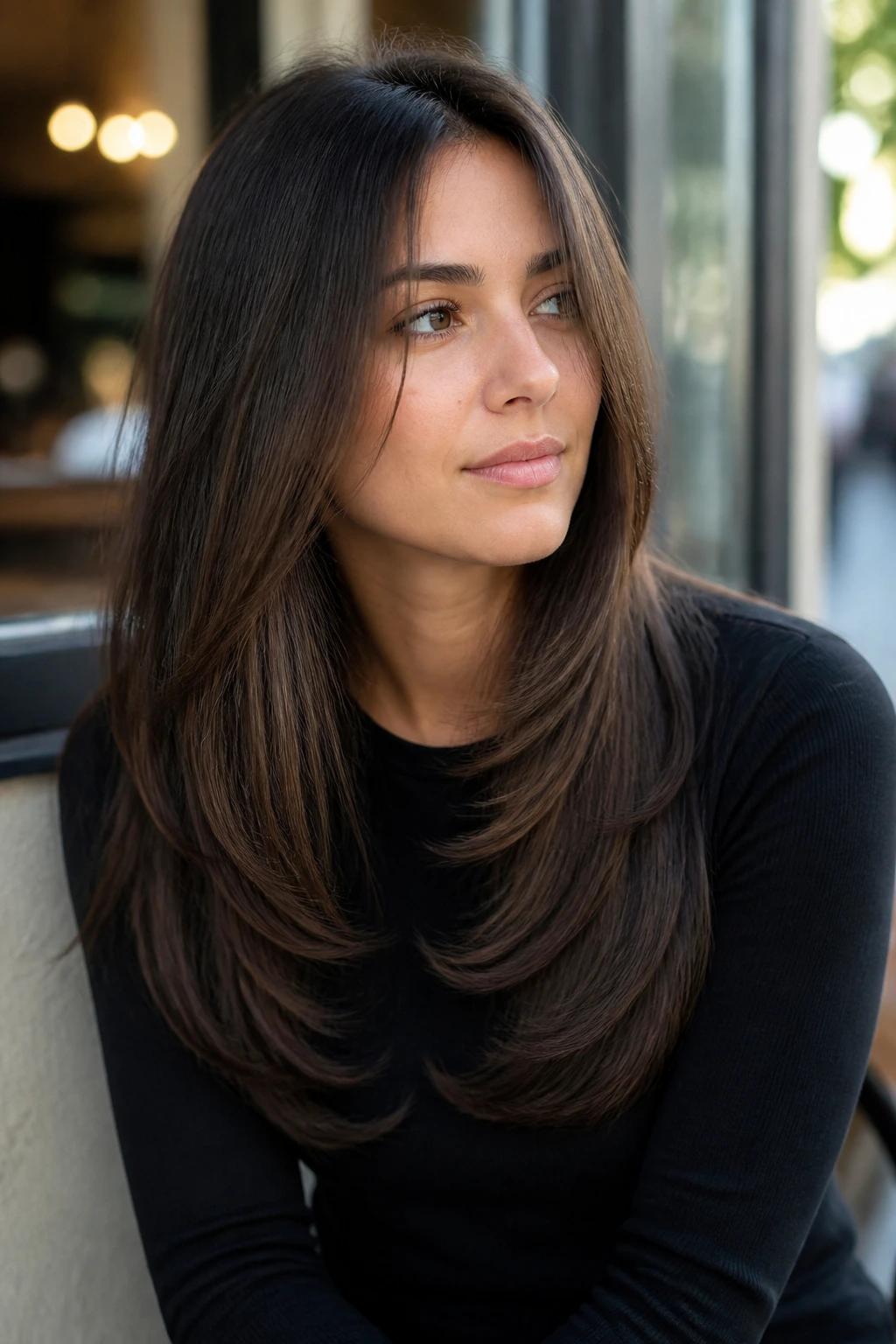
Do you want to keep length and still make the hair move? A long U-shape with micro-layers is one of the smarter ways to do it. The perimeter stays fuller through the back, curving softly instead of hanging in a hard blunt line, and the tiny internal layers give the hair a little lift without creating visible steps.
This is a nice option for people who hate losing length but know the ends need help. The U-shape keeps the silhouette soft, especially if your hair narrows at the bottom. Micro-layers keep the crown from lying dead flat.
I like this cut for people who wear hair down more often than up. It looks especially good when the ends are bent inward just a touch, because the U-shape becomes more visible. A center part or a very slight off-center part both work, depending on your face and cowlicks.
14. Wavy Lob with Internal Texture
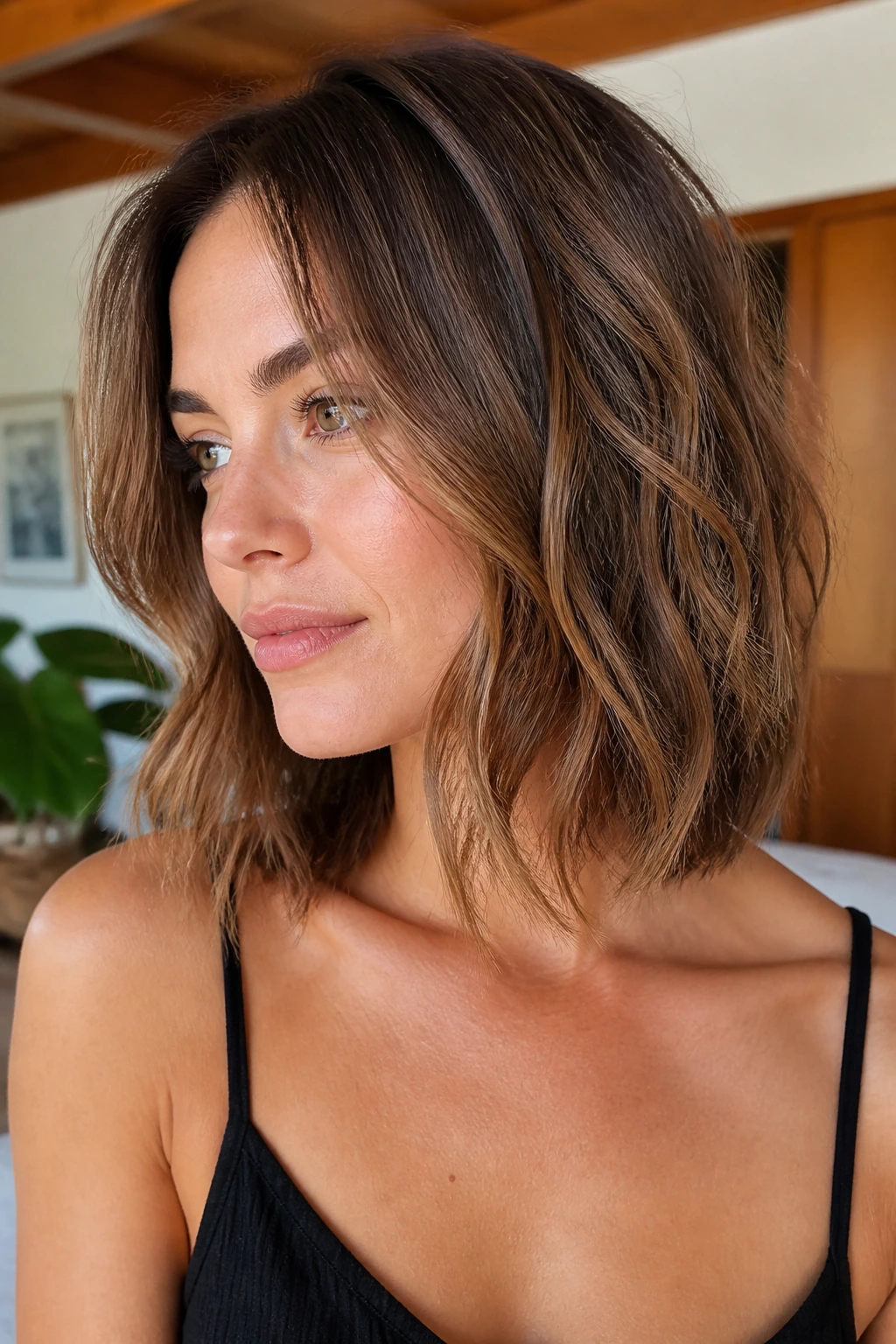
If your hair has even a hint of wave, a lob with internal texture can make it look like you meant to style it. The cut sits around the collarbone and keeps the outside line clean, while the texture lives inside where it helps the wave pattern show up instead of getting crushed.
This is one of those cuts that looks calm but never boring. Air-dry it with a touch of mousse and you get soft bends. Blow it out and it still keeps its shape. That flexibility is gold when your hair is fine, because you’re not forced into one styling habit just to make the cut behave.
Be careful with over-texturizing. The goal is to support the wave, not scatter the ends. If your stylist starts talking about “removing bulk” and your hair is already delicate, ask them exactly where that bulk is supposed to be. Sometimes the right answer is “almost nowhere.”
15. Side-Part Bob with Feathered Fringe
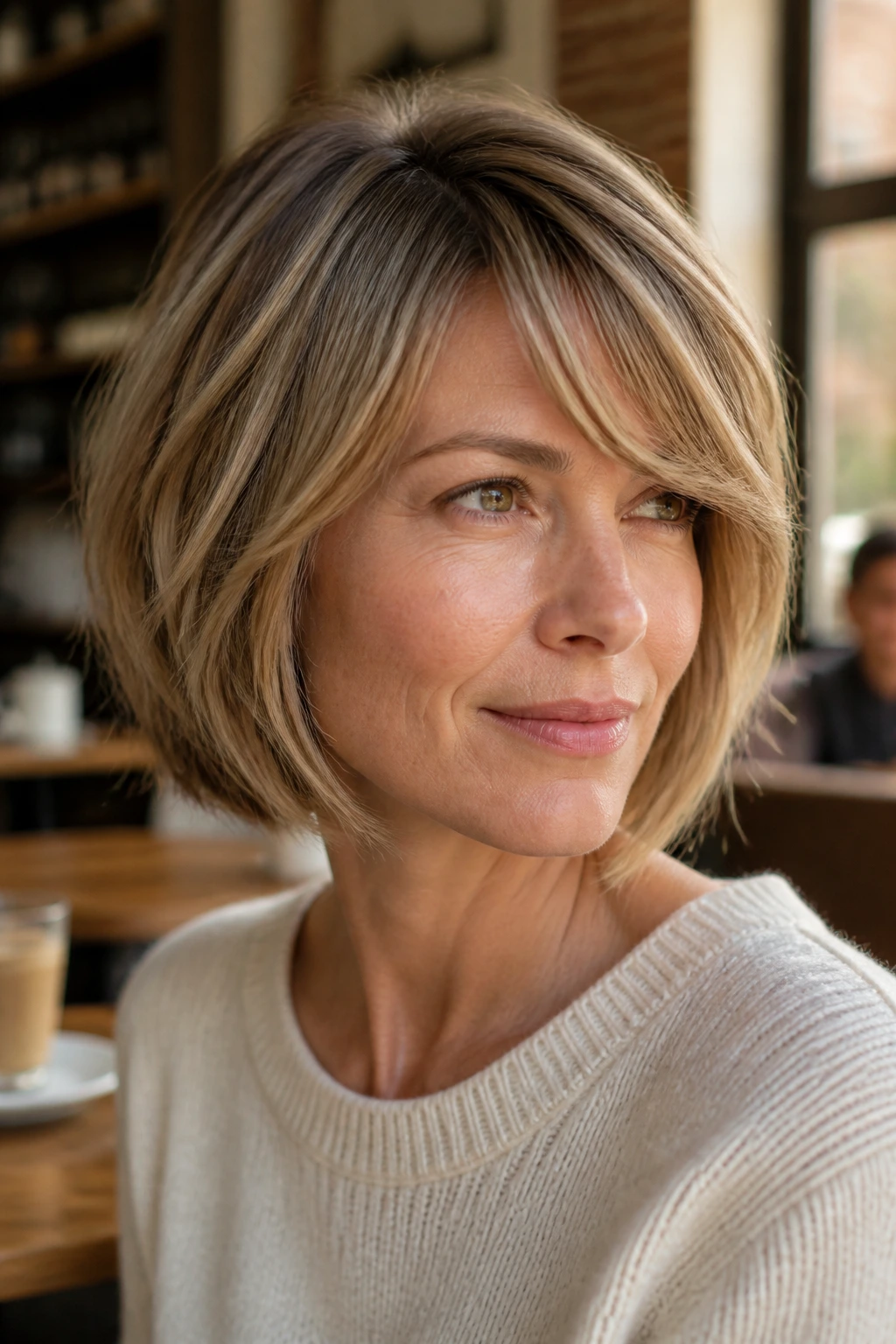
A side part changes more than people think. On fine hair, it creates lift at the root and shifts the weight line, which makes a bob feel less flat and more alive. Add a feathered fringe, and the whole cut gets a soft sweep that flatters the forehead without hiding it.
This haircut is especially good if your hair naturally wants to fall on one side anyway. Work with the bias instead of fighting it. A side part plus a feathered front can also soften a strong jaw or a longer forehead, but the bigger win is visual fullness.
I’d keep the bob around chin to jaw length and the fringe long enough to tuck. That way the cut still looks neat when you don’t style it much. If you want a bob that doesn’t scream “I just got my hair cut,” this is the sort of shape that settles in fast.
16. Soft Mullet with a Clean Perimeter
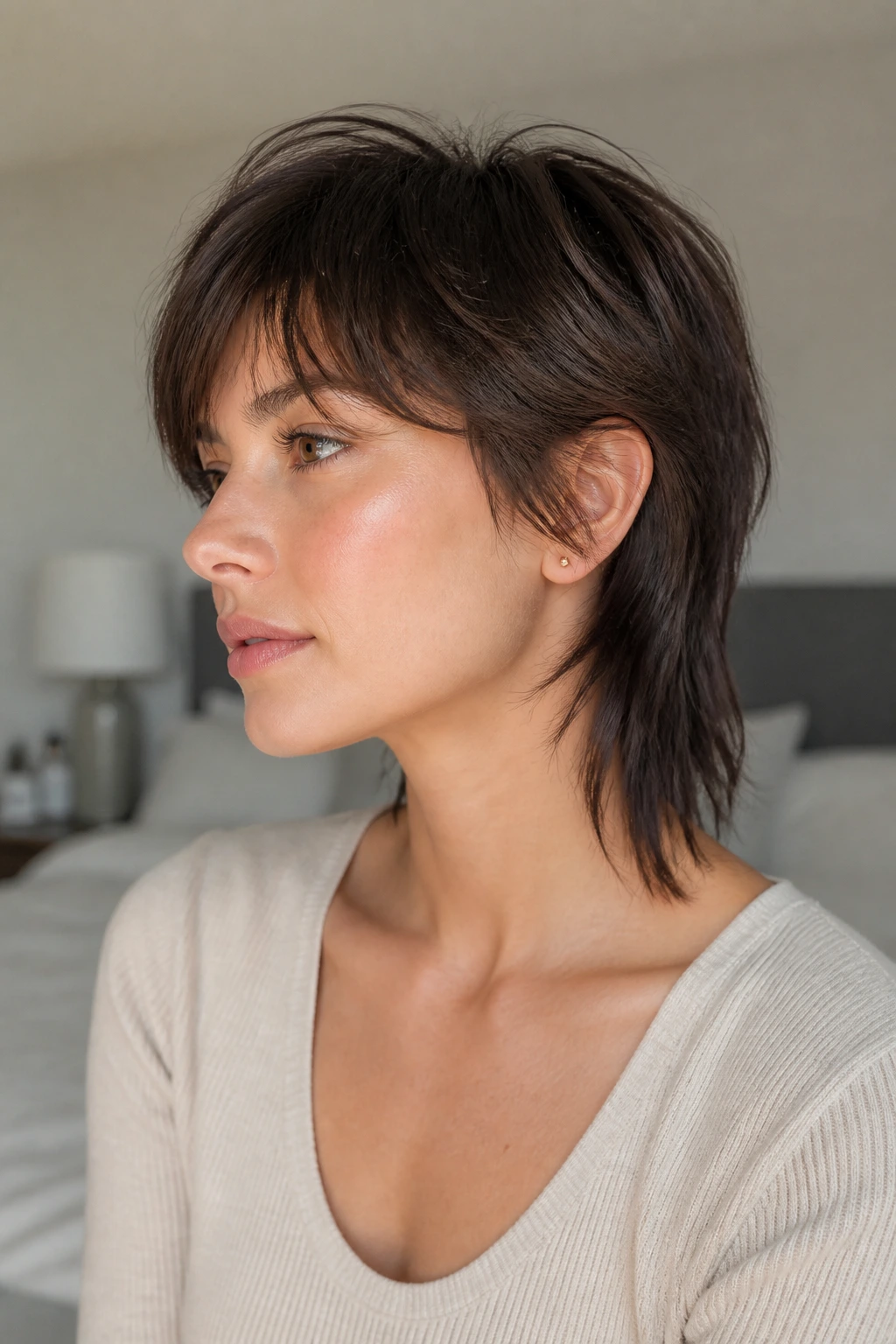
A soft mullet sounds brash on paper, but the delicate version is surprisingly wearable. The crown and top layers are shorter, the nape stays longer, and the perimeter is kept neat so the cut doesn’t turn into a shaggy blur. On soft texture, that clean edge keeps the style from looking accidental.
The reason it works is contrast. You get a bit of lift and movement around the crown, then a longer tail at the back that gives the hair something to hang on to. That length contrast adds shape even if the hair itself is fine.
This isn’t the cut for someone who wants zero upkeep. It does need some styling at the top, usually a bit of mousse or spray gel worked through damp hair. But if you want edge without a lot of bulk, it’s a more interesting choice than a plain layered bob.
17. Swoopy Shoulder-Length Cut
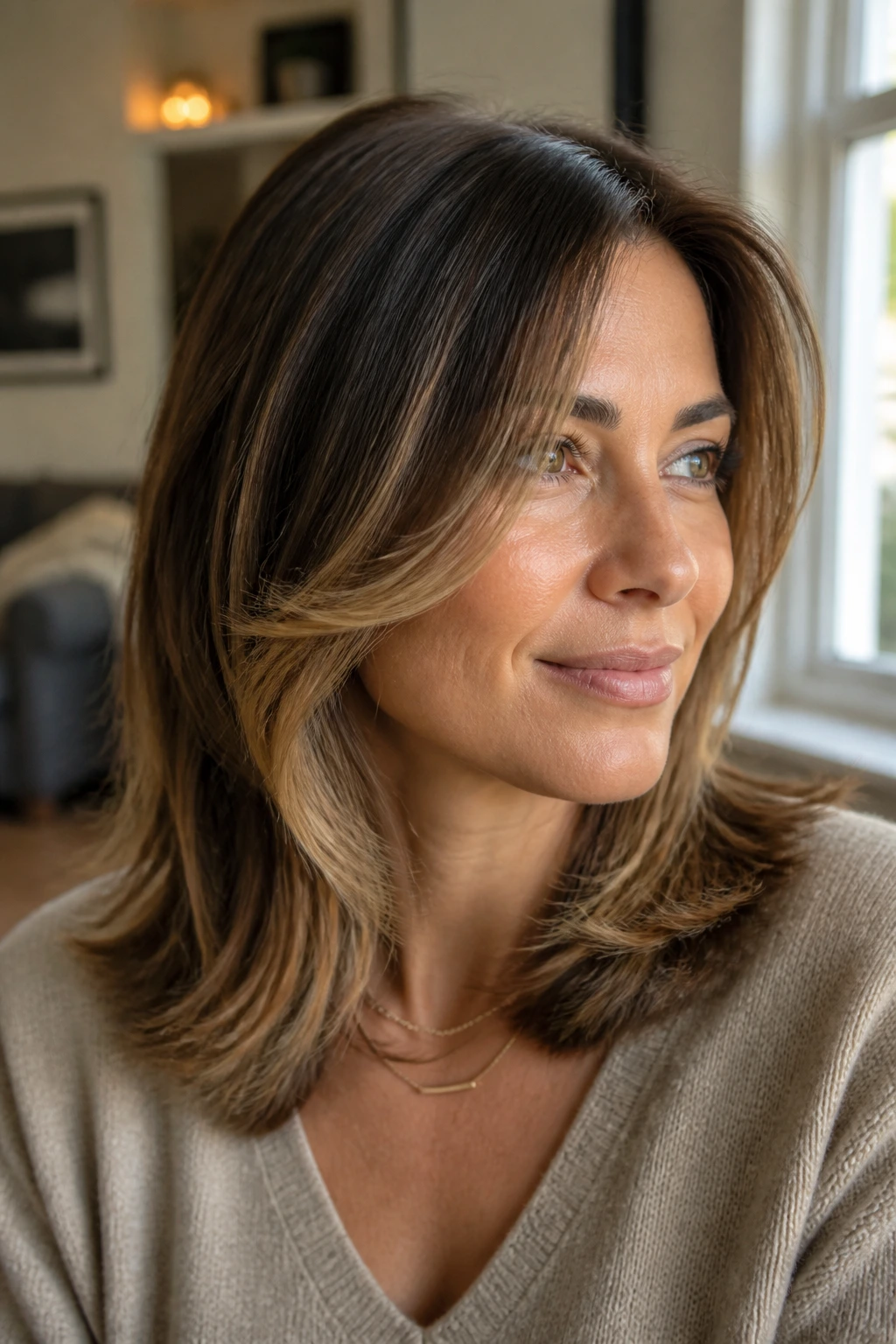
Shoulder length can be a dangerous zone for fine hair. If the cut is too blunt and too long, it can hang there like wet thread. A swoopy shoulder-length cut avoids that by building movement into the front pieces so the whole shape seems to float.
What I like about this one is the face movement. The layers are angled to sweep away from the cheeks, which makes the haircut feel airy even when the back stays fairly full. It’s a smart pick if you want to keep enough length for clips, twists, and low ponytails.
A round brush helps, but only a little. You don’t need a salon blowout every time. The point is to create a bend, not a curl. If the ends kick out too much, the cut loses its softness, so keep the styling loose.
18. Rounded Shag Bob
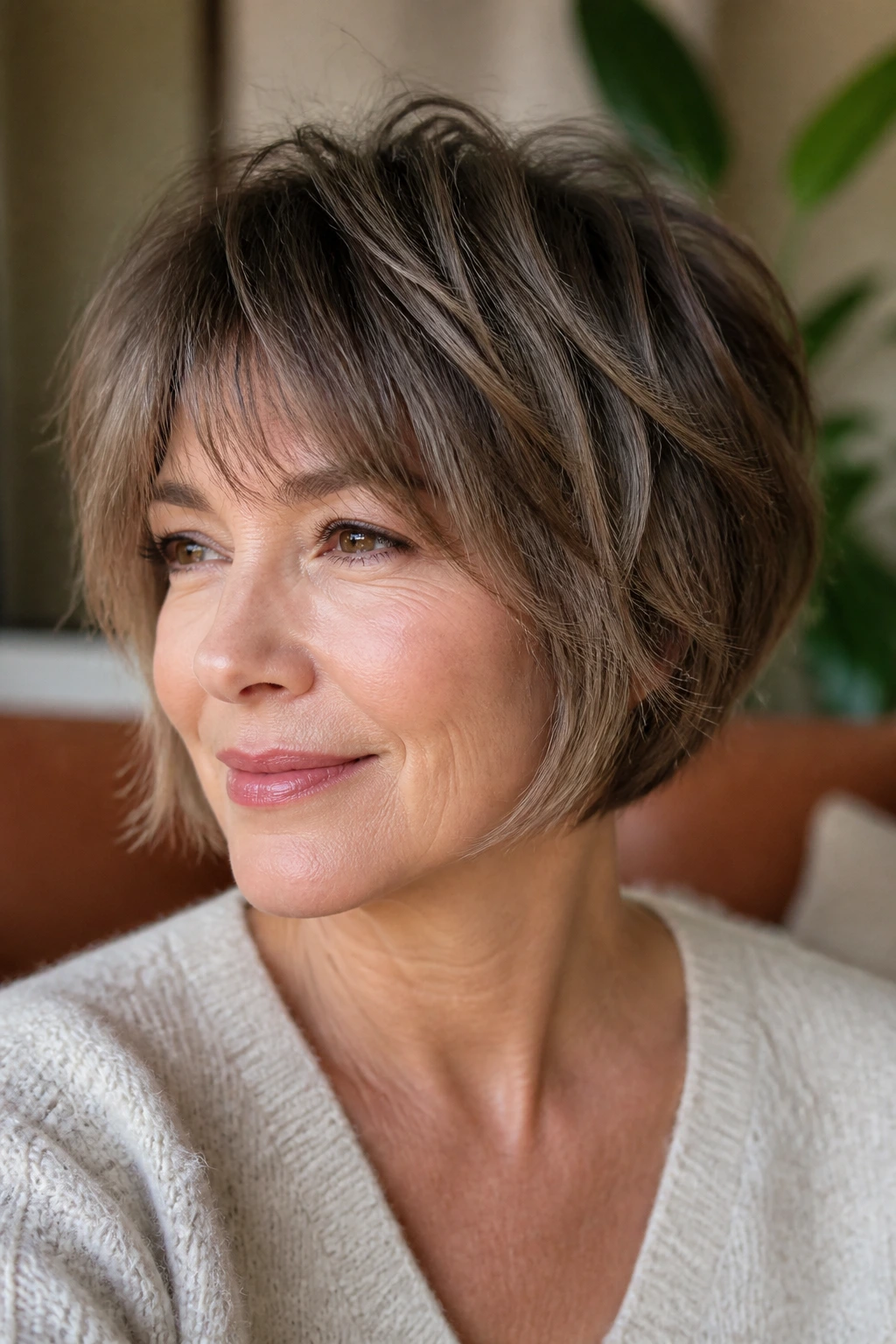
A rounded shag bob gives you texture without the ragged edges that can make delicate hair look wispy in a bad way. The bob length keeps the shape compact, while the shag influence adds movement through the crown and sides. Rounded silhouette. Soft texture. No stiffness.
This cut works beautifully when your hair needs a little height at the roots but doesn’t have enough density for a heavy shag. The rounded outline keeps the bottom from looking broken up, which is a common problem when layered hair gets too thin at the ends.
If you like a lived-in finish, this is a good one to try. A little texture spray, a quick scrunch, and a side-to-side shake are often enough. That sounds almost too easy, but that’s the point: the cut should carry the shape.
19. Lightly Razored Lob
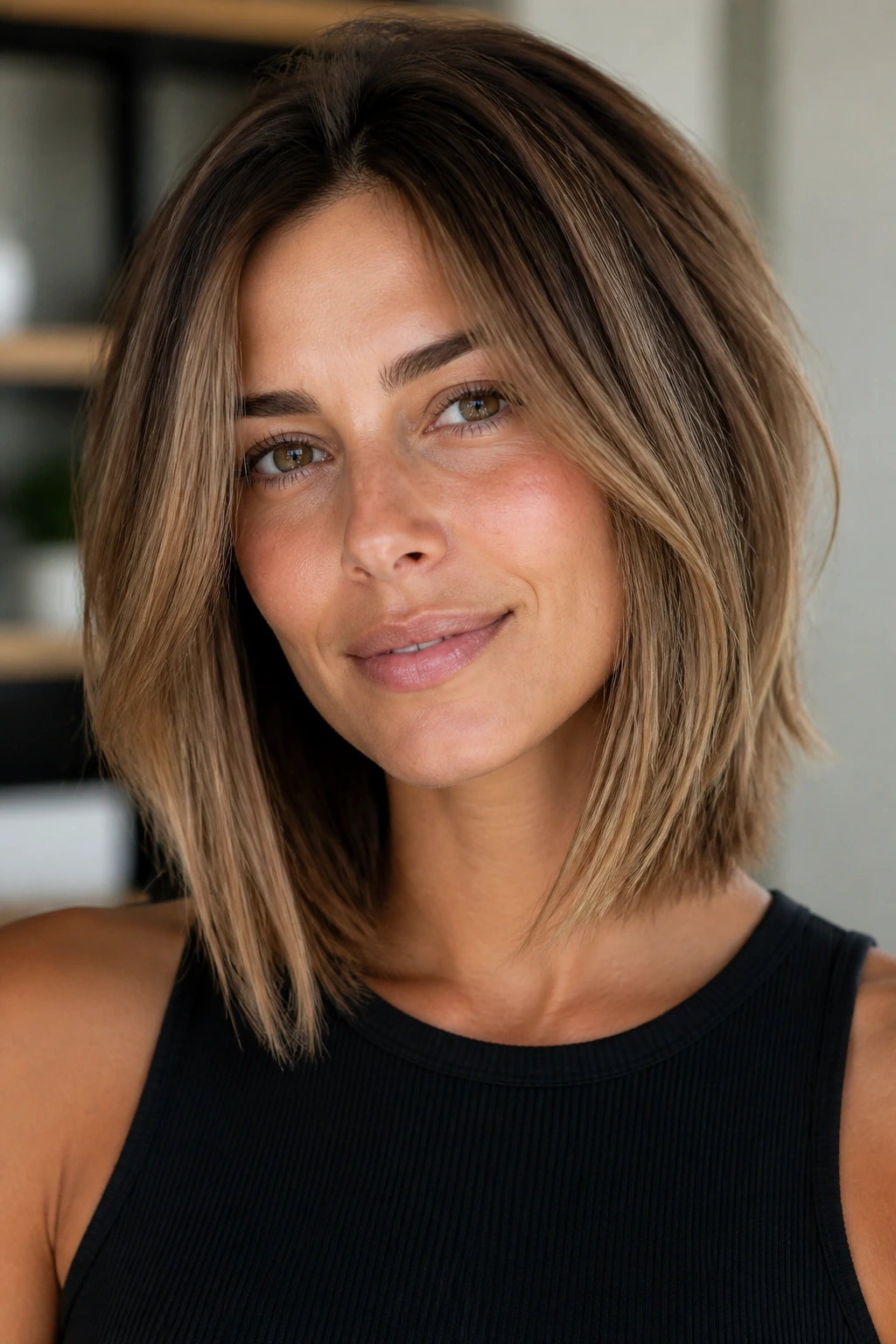
A razor can be a friend or a menace. On healthy straight hair, a lightly razored lob can soften the ends and give the shape a bit of swing. On fragile or frizzy hair, it can make the surface look fuzzy and stressed. So the method matters more than the label.
The best version uses the razor only at the surface and only where the hair can take it. You want softened edges, not shredded lengths. If your ends already split or your hair behaves like static in dry air, I’d lean toward scissors and point cutting instead.
This cut is a good fit for someone who wants a sleek base with just enough feathering to keep it from feeling blocky. It’s modern, but not fussy. The key is restraint, which is not always the most exciting thing to hear, but it saves the haircut.
20. Long Cut with Barely-There Layers
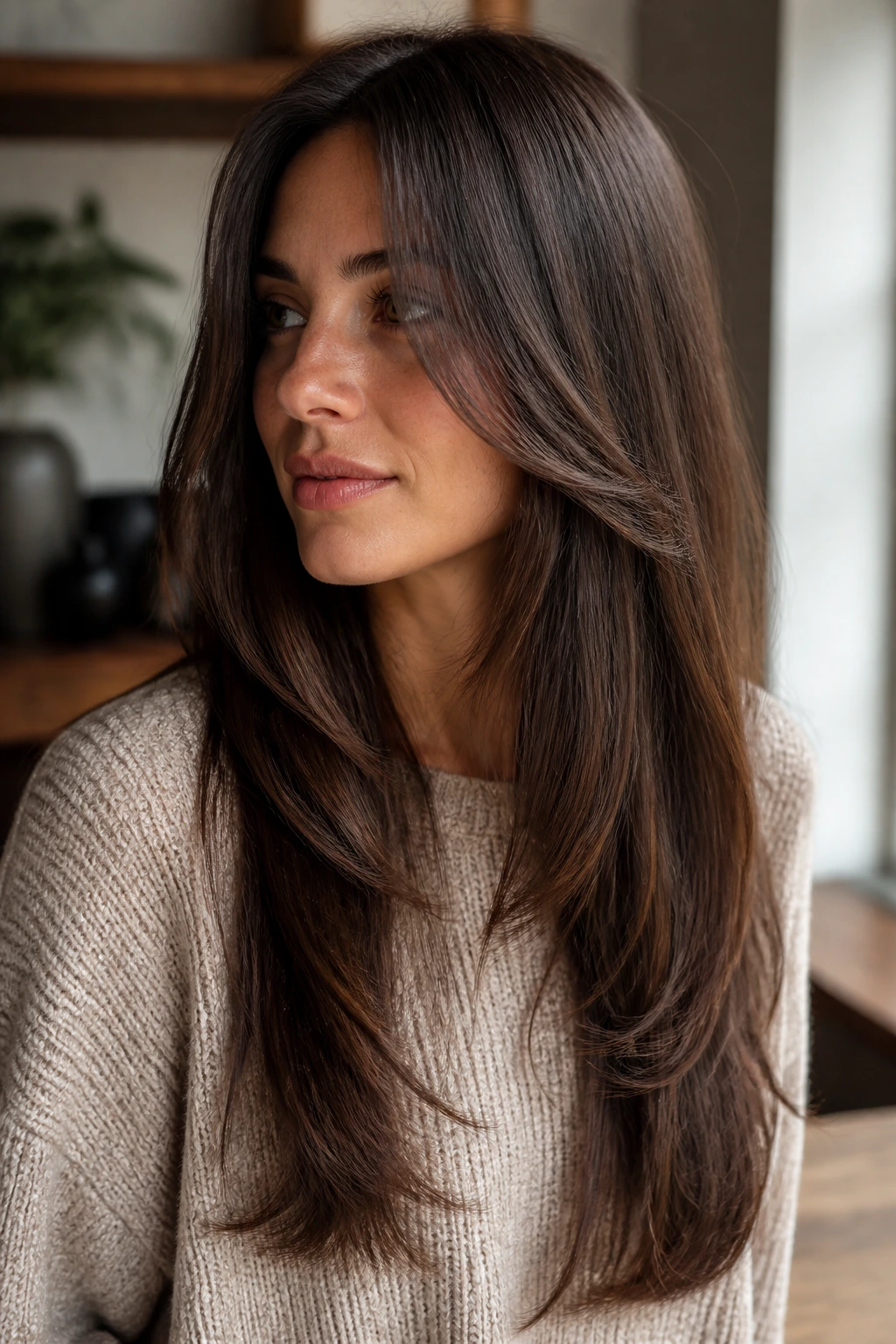
If you’re nervous about losing density, this one is your safer play. A long cut with barely-there layers keeps most of the length intact and softens only the parts that need movement. That usually means a bit around the face and a whisper of shaping through the interior.
This cut is useful when your hair is fine but you still want that curtain of length. Too many layers can make the bottom half look thin; this version avoids that trap. It gives the hair a little bend so it doesn’t hang stiff, but the perimeter still feels substantial.
It also ages well between trims. Long, delicate hair can look better with a small amount of softness as it grows, especially if the ends stay blunt enough to hold their line. If you don’t want to babysit your haircut, this is one of the easier options.
21. Airy Blunt Bob
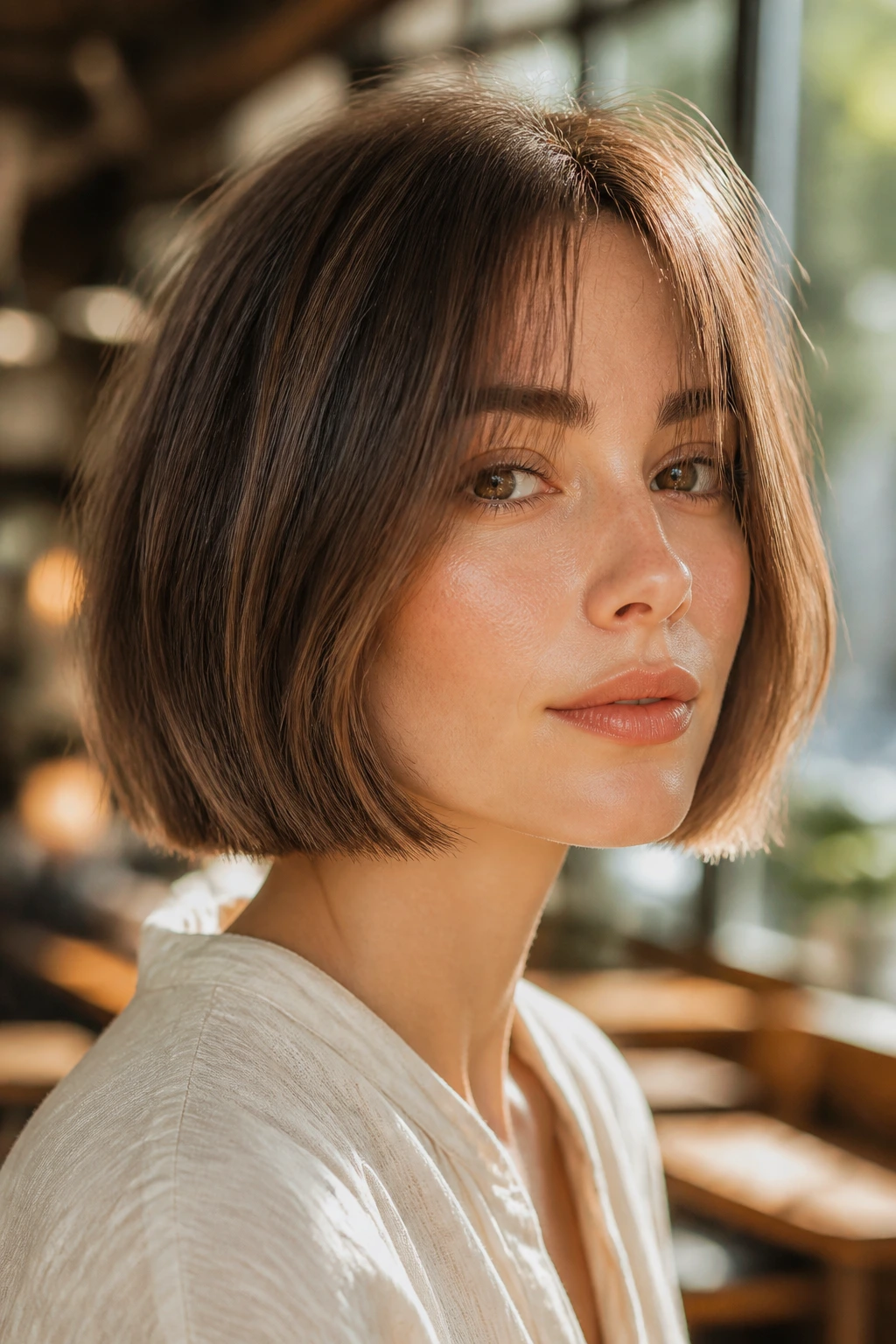
Blunt and wispy sound like opposite ideas, but they can work together. An airy blunt bob keeps the edge clean so the hair looks fuller, then softens the tiniest bit at the ends so it doesn’t read as hard or blocky. On delicate texture, that balance is the point.
This is one of my favorite choices for very fine hair that still wants presence. A pure wispy cut can sometimes look too light. A blunt line gives the eye something to hold on to. Then the soft detailing keeps it from feeling too severe.
It’s a sharp-looking cut that doesn’t demand a huge styling routine. A quick blow-dry, a dab of smoothing cream, and a small bend at the ends are usually enough. If your hair tends to disappear when it’s too layered, this is worth a serious look.
22. Wispy Wolf Cut
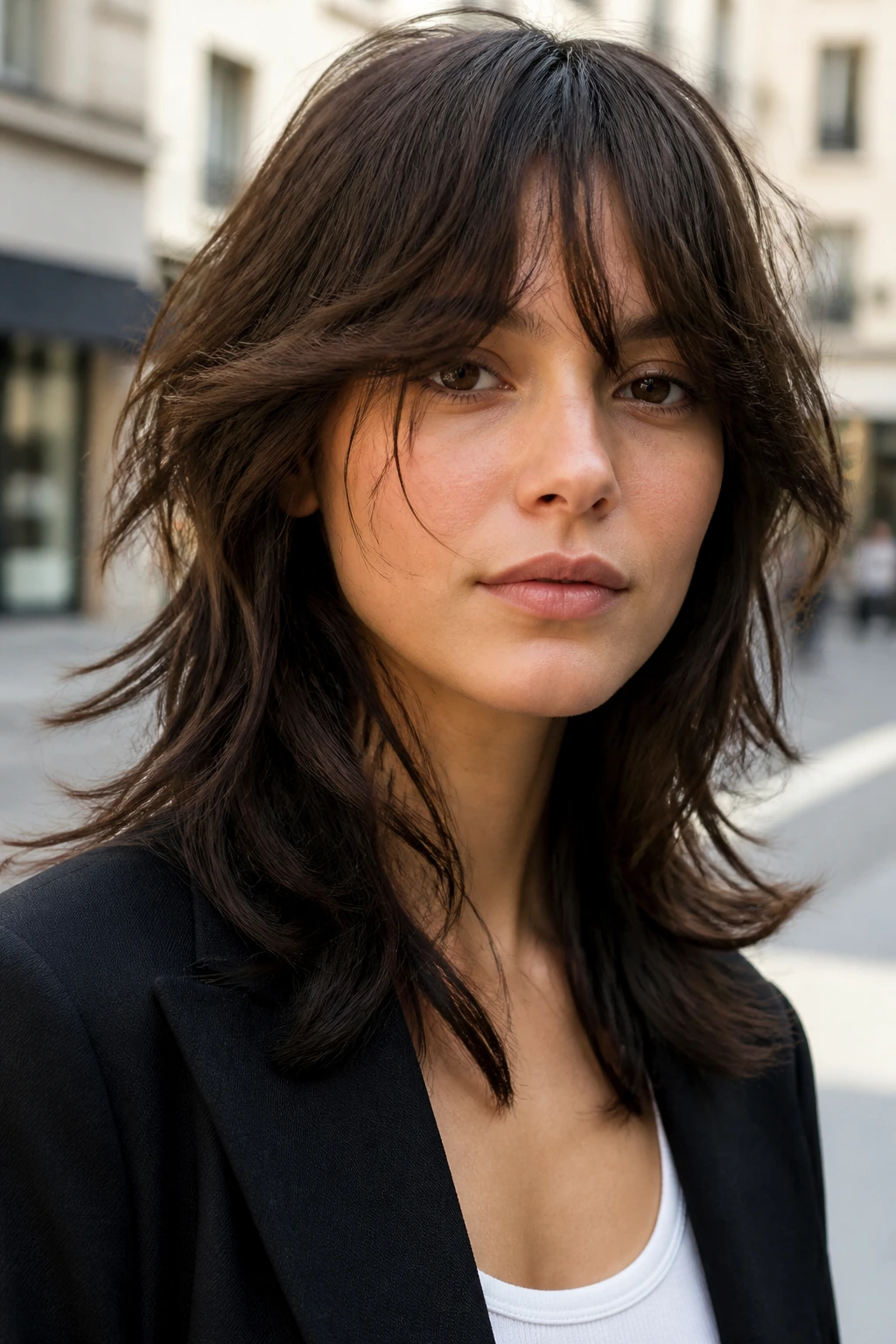
The wolf cut gets a lot of attention, but the wispy version is the one that makes sense for everyday wear. It’s less extreme than the shaggy, high-contrast versions you see online. More crown lift, more face frame, softer ends, less “I cut this myself in the bathroom.”
On delicate texture, restraint keeps the style from falling apart. You want enough layers to create movement and a little edge, but not so many that the hair loses all weight at the bottom. The wispy wolf cut usually lands best on wavy or slightly textured hair that can hold a bit of shape.
If you’re after something with personality, this is a good compromise between soft and cool. It looks especially good when air-dried with a bit of cream scrunched through the mid-lengths. Don’t overdo the product, though. The piecey finish should look touchable, not wet.
23. Flip-Ended Collarbone Cut
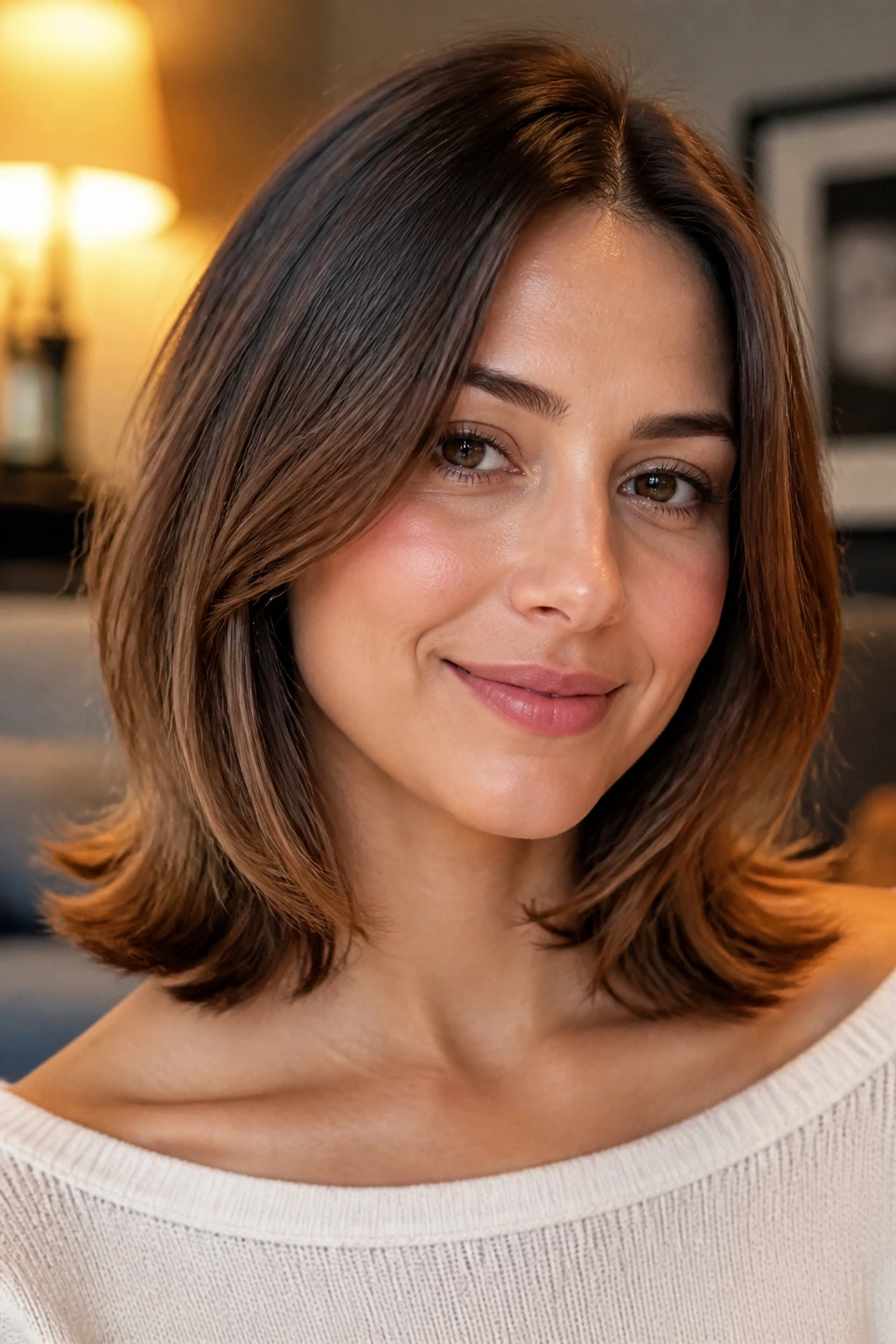
Why do flipped ends keep coming back? Because they add motion at the exact point where fine hair often looks tired: the bottom edge. A flip-ended collarbone cut uses that little outward bend to give the haircut a sense of lift and bounce.
The collarbone length is the right stage for it. Too short and the flip feels precious; too long and it can disappear. At this length, the ends can kick out just enough to animate the shape. You can achieve the flip with a round brush, a flat iron twist, or even a loose velcro roller if you’re patient.
This cut is friendly to people who like a little polish. It isn’t messy, and it doesn’t need a lot of texturizing to work. It just needs the ends to be shaped carefully so the flip looks soft instead of cartoonish.
24. Graduated Bob with a Soft Stack
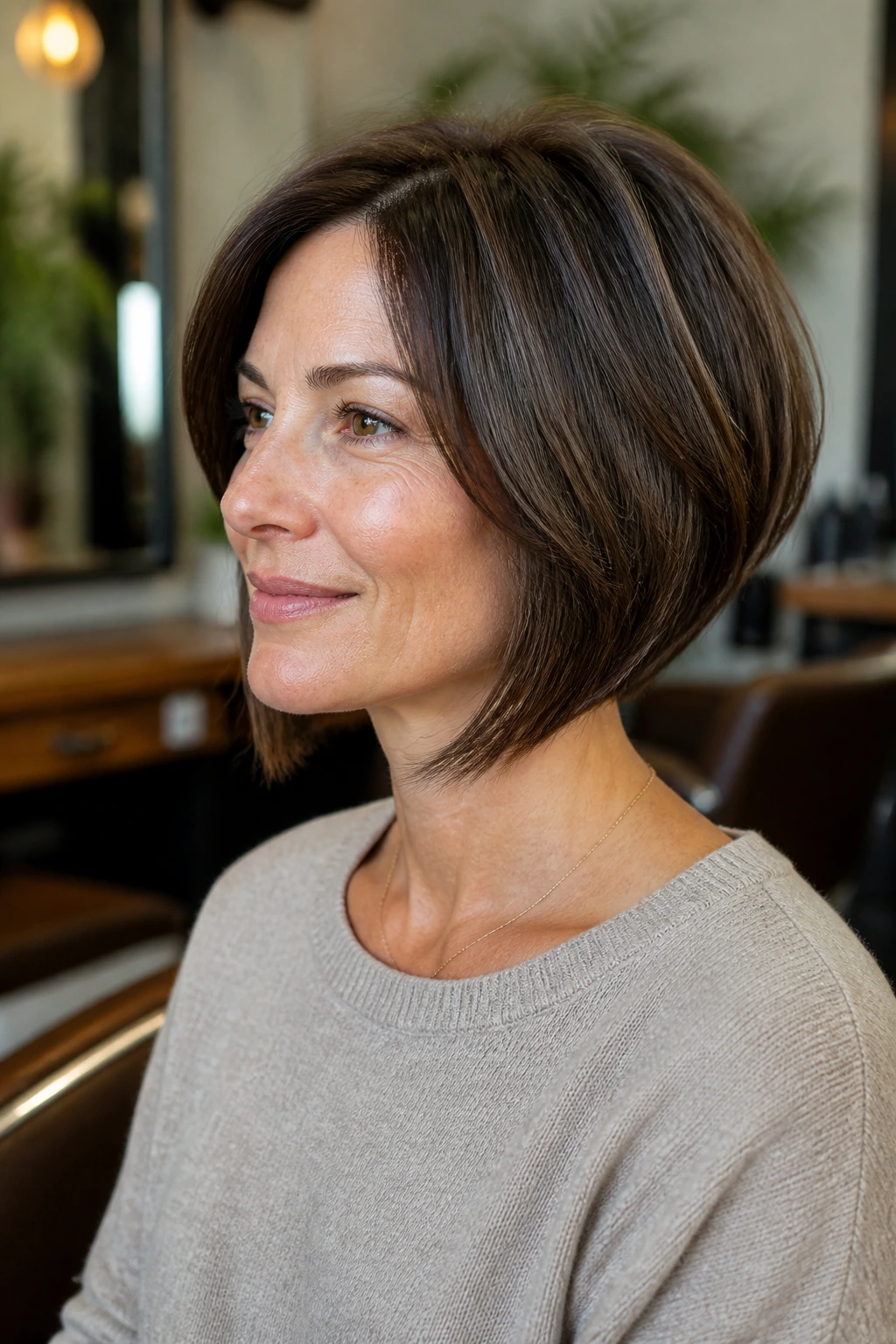
A graduated bob builds a little more volume in the back, which can be a blessing if your hair lies flat at the crown. The soft stack version keeps that lift gentle, not overbuilt. The line rises slightly toward the nape, then eases into longer front pieces.
That structure matters on fine hair because it gives the illusion of thickness where you usually need it most. The back looks fuller, the neck area feels neat, and the front still has enough softness to avoid a hard, old-school bob shape. I like this cut for straight hair that needs a firmer frame.
Ask for a soft stack, not a dramatic one. Too much elevation in the back can make the style feel dated fast. The sweet spot is subtle: enough shape to support the crown, not so much that it turns into a little helmet.
25. Soft Pixie-Bob
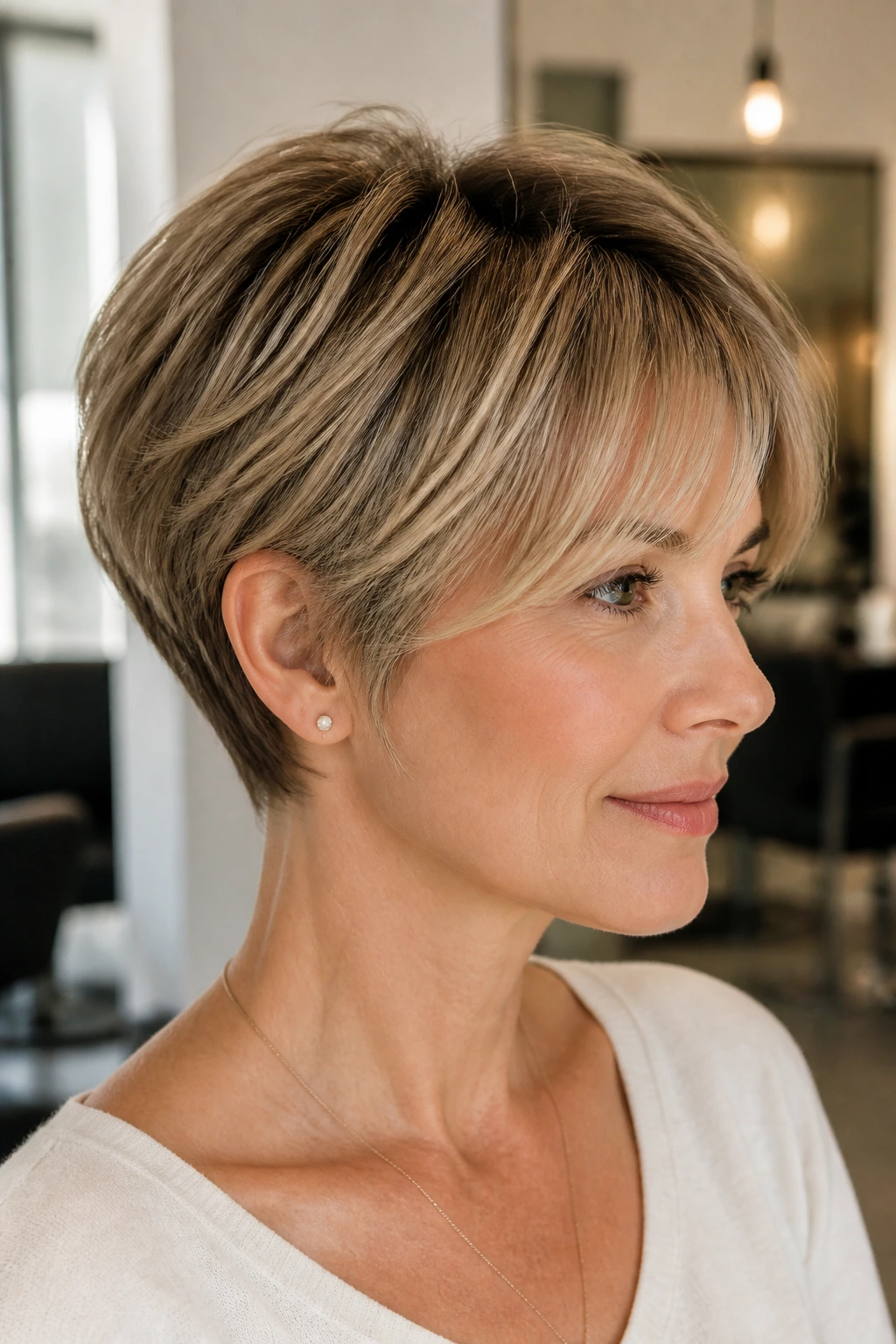
A soft pixie-bob sits between a short bob and a grown-out pixie, and that middle ground is useful if you want easy styling without going ultra-short. The nape stays tidy, the top has a little lift, and the front pieces are long enough to brush across the forehead or tuck behind the ears.
This cut suits delicate texture because it keeps the hair light where it tends to collapse and slightly fuller where the eye wants to see it. The shape is neat, but the finish is soft. That’s a nice combination if you want your hair to look intentional even on a lazy day.
It does need regular trims. Short hair shows growth fast, especially around the nape and ears. But if you’re ready for a cut that dries quickly and still has movement, this is one of the easiest ways to get there.
Why Wispy Haircuts Work Better When the Outline Stays Clean
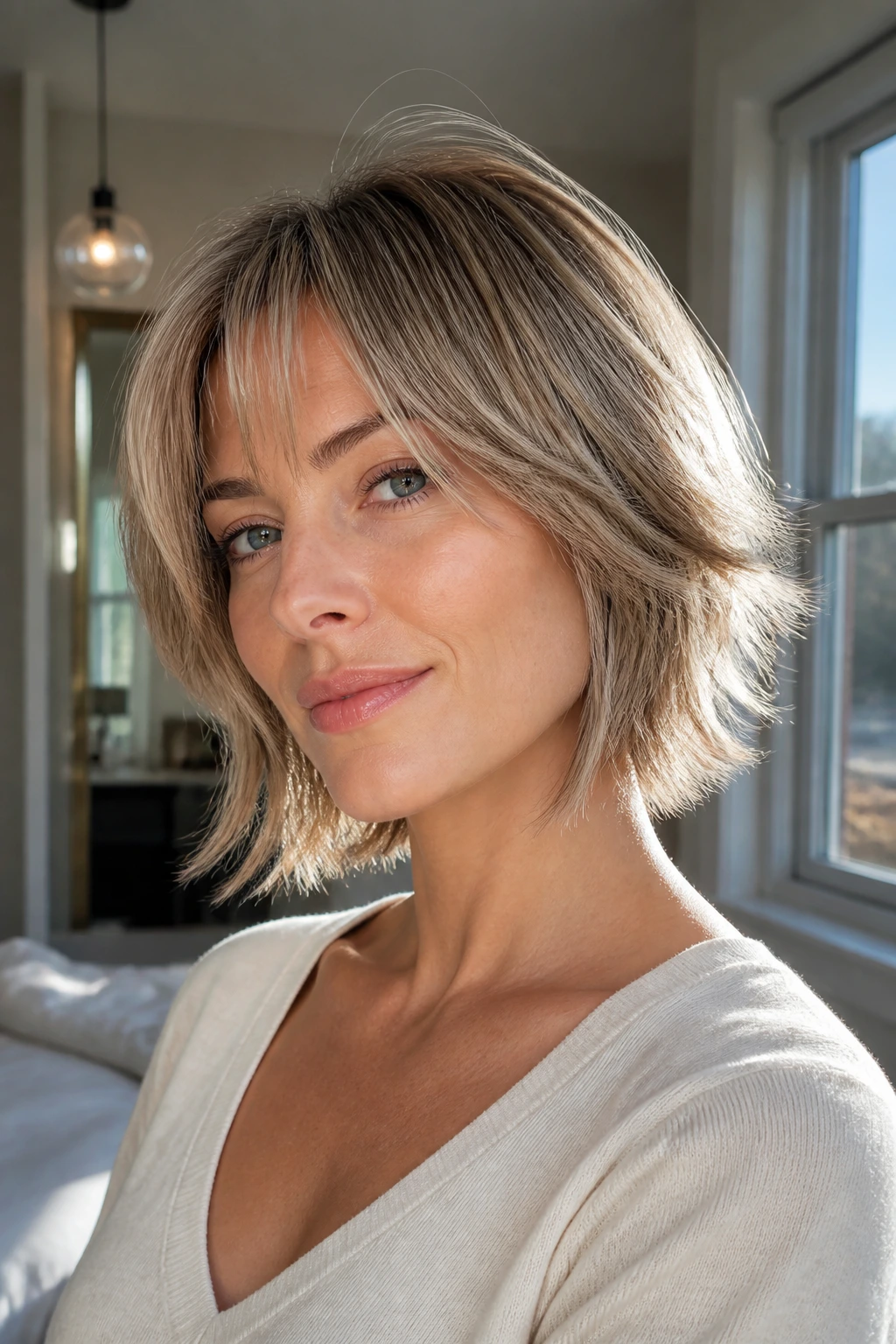
The reason so many wispy haircuts fail on fine hair is simple: people confuse softness with thinning. Those are not the same thing. Softness should happen in the interior, around the face, and at the very ends of the hair. The outline still needs structure.
A clean perimeter gives delicate texture something to read against. Without it, the hair can look frayed, especially in daylight or when it’s freshly washed and still a little fluffy. That’s why bobs, lobs, and long cuts with a careful edge often look better than over-layered styles that remove density everywhere.
Point cutting is one of the quiet heroes here. So is a gentle dry-cut finish, especially when a stylist wants to see how the hair falls naturally. A light hand with texturizing shears can help, but only when the goal is softness, not reduction. Once the hair gets too hollowed out, the cut loses its shape and starts relying on styling to do everything.
Essential Tools for Styling Wispy Haircuts
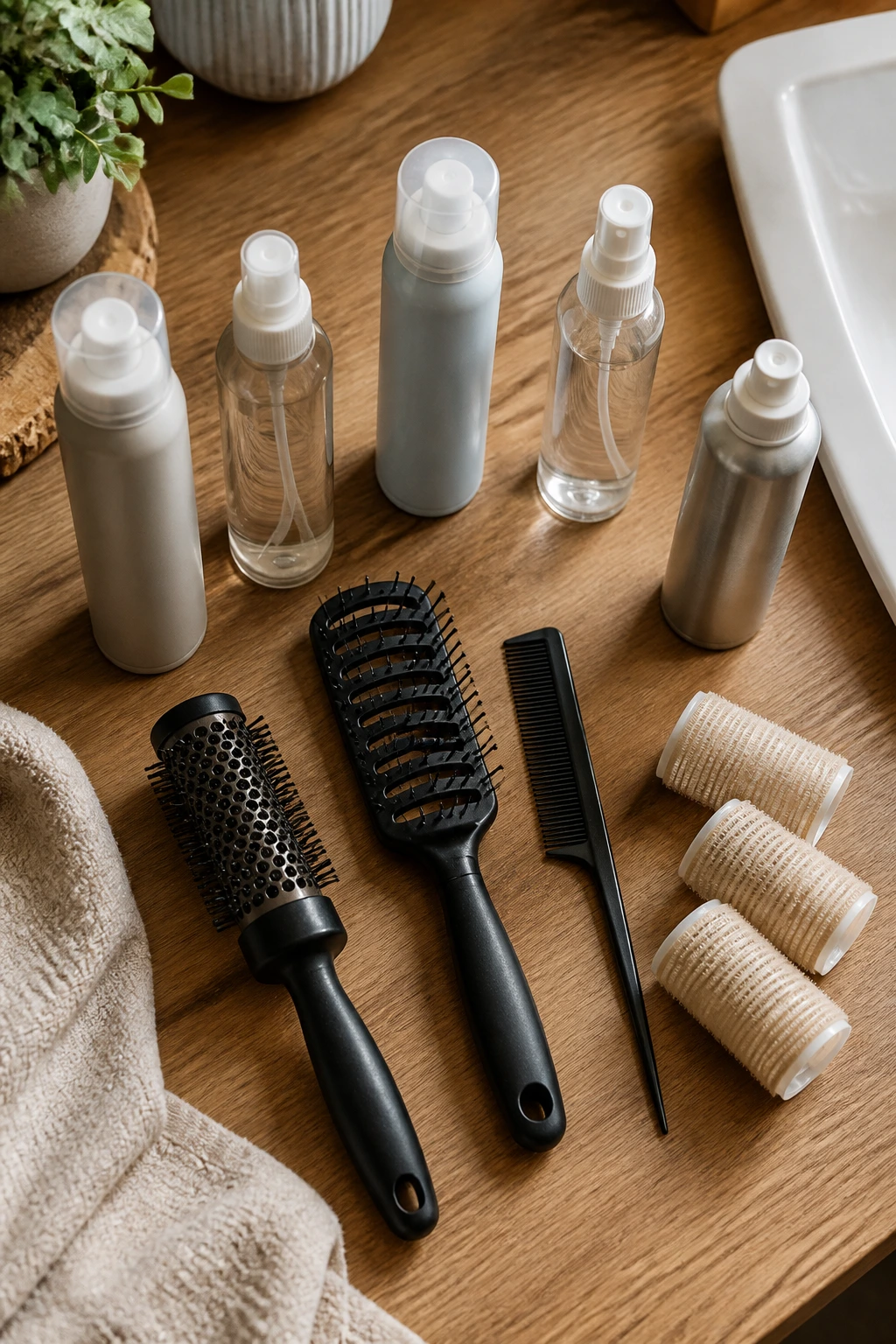
- Lightweight mousse: Gives roots and mid-lengths a bit of lift without turning the hair crunchy.
- Volumizing spray: Best at the crown and around the part line when fine hair needs a little body.
- Heat protectant mist: Non-negotiable if you use a blow-dryer, flat iron, or curling tool.
- Small round brush: Ideal for bobs, lobs, and fringe that needs a soft bend.
- Vent brush: Good for fast blow-drying when you want movement, not a polished curl.
- Dry shampoo: Helps day-two roots and keeps wispy bangs from clinging to the forehead.
- Texturizing spray: Useful on shaggy or piecey cuts, but use a light hand so the ends don’t feel dusty.
- Light-hold hairspray: Holds the shape without freezing the hair in place.
- Tail comb: Useful for clean parts and for lifting small sections at the roots.
- Velcro rollers: A quiet cheat for face-framing volume and soft bends at the ends.
What to Tell Your Stylist at the Chair
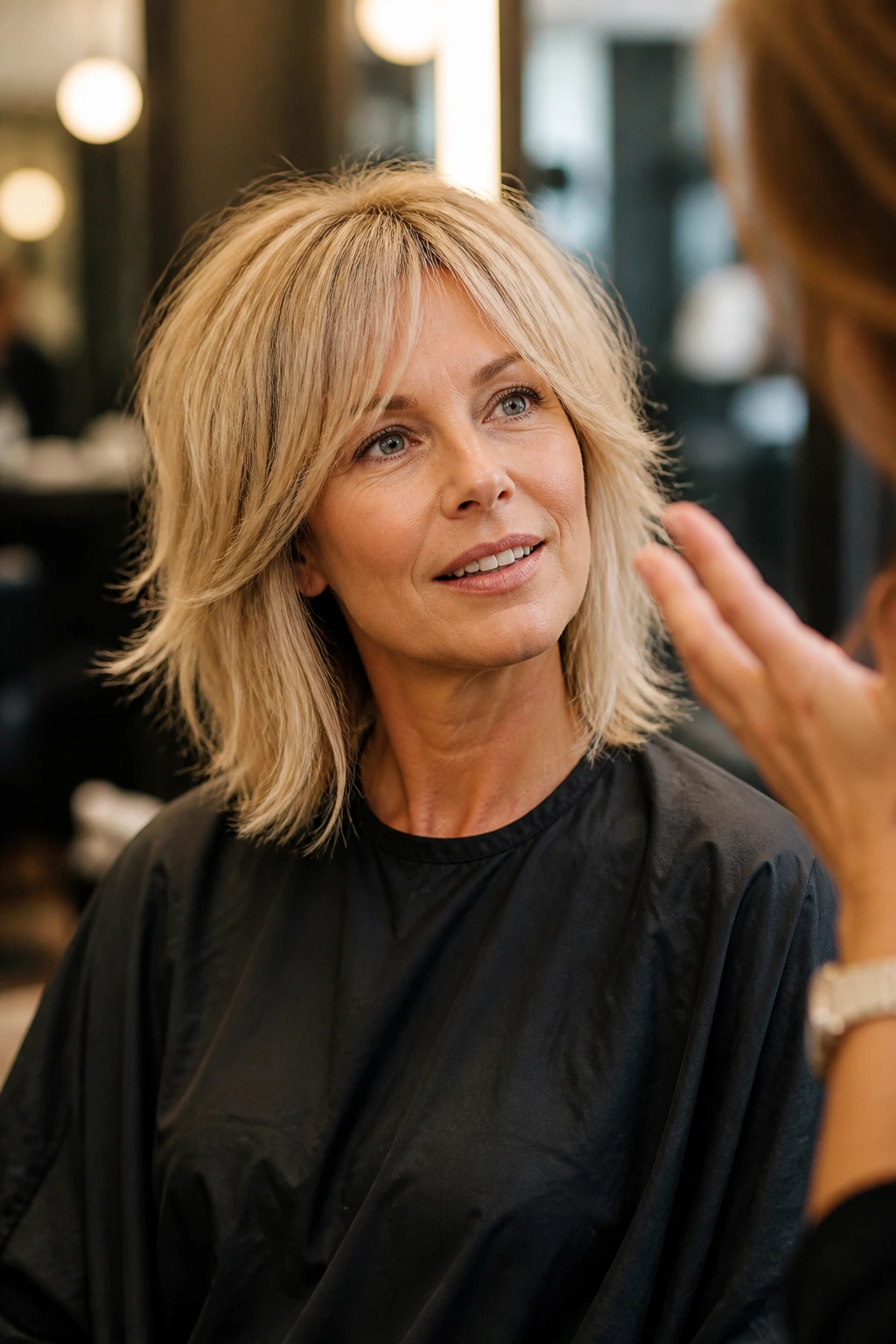
The fastest way to get a good wispy haircut is to describe what you want it to do, not just how short you want it to be. Say things like, “I want movement, but I don’t want the ends to look thin,” or, “Keep the perimeter full and soften the front.” Those sentences help more than waving a photo around and hoping for the best.
If your hair is fine, mention where it collapses. Crown? Sides? Around the jaw? That tells the stylist where to keep weight and where they can safely remove a little. A good cut on delicate texture is mostly about balance, and balance starts with the chair conversation.
Bring a reference photo that shows the front, side, and back if you can. One photo from the front can hide a lot. Also mention how you style it day to day. If you air-dry, a layered blowout cut may be a pain. If you never touch a hot tool, you need a shape that still behaves when it dries on its own.
Daily Styling Moves That Keep the Shape Light
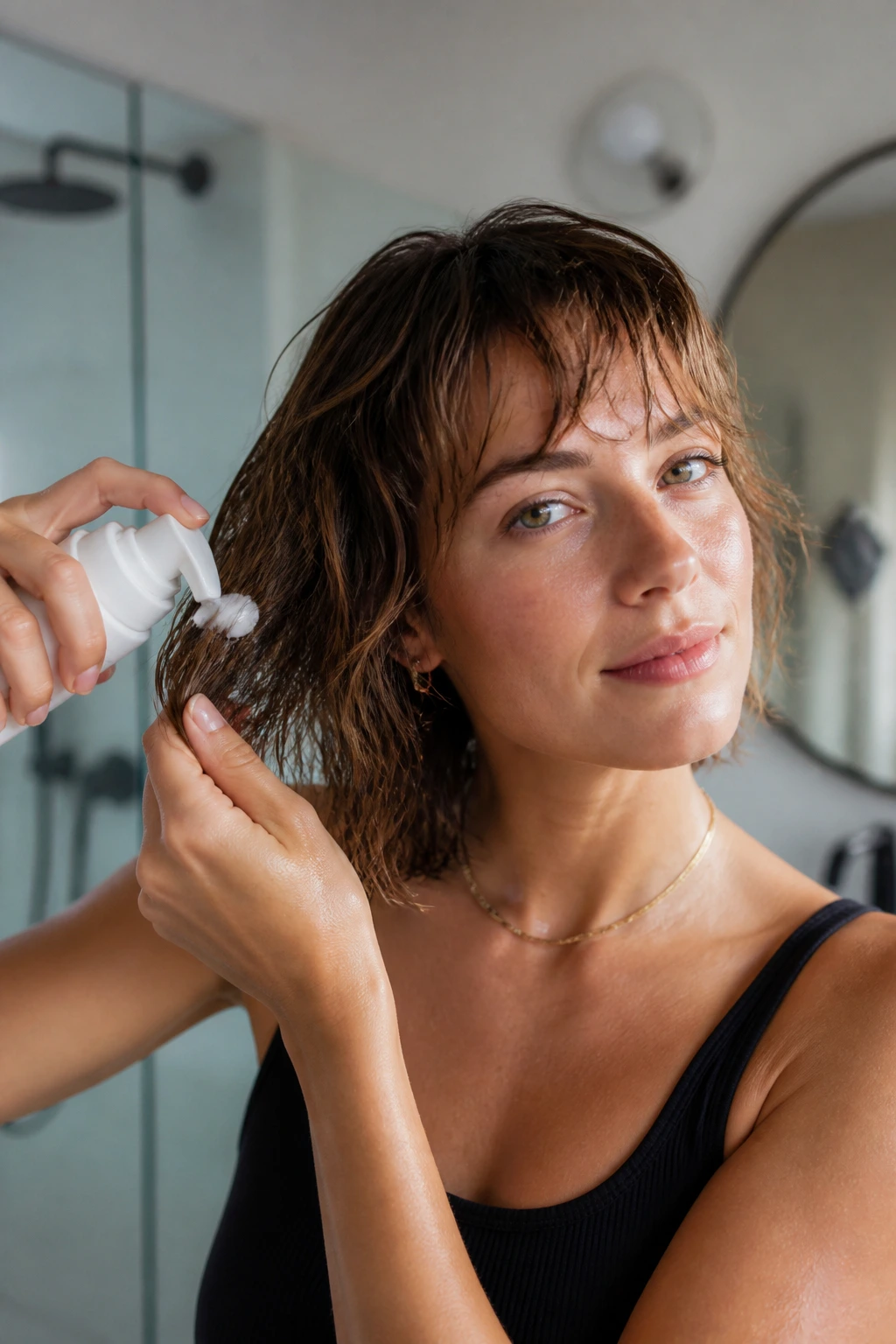
The biggest mistake with wispy haircuts is treating every day like a salon blowout day. You do not need that. Most of these cuts work best when the styling stays light and targeted.
Air-Dry Days: Work a small amount of mousse or curl cream through damp hair, then scrunch or finger-twist the front pieces. If your hair is straight, tuck the front behind your ears while it dries so the ends don’t flare out oddly.
Blow-Dry Days: Use a round brush or vent brush only where the cut needs help — usually the roots, fringe, and last inch of the ends. Keep the dryer on medium heat and finish with a cool shot to lock the bend.
Second-Day Reset: Mist the roots with dry shampoo, lift the crown with your fingers, and re-bend the front with a quick pass of a flat iron or brush. A wispy cut should recover fast. If it needs a full rewash every morning, the styling is too heavy or the cut is too fragmented.
How to Keep Wispy Haircuts Fresh Between Salon Visits

Fine hair shows growth faster than thick hair, especially in short and mid-length cuts. A chin-length bob can lose its edge in 5 to 7 weeks. Longer layers usually stay tidy for 8 to 12 weeks. Bangs often need a trim every 2 to 4 weeks if you want them to sit right.
Dry shampoo helps, but don’t pack it on until the roots feel dusty. Use a little, wait 30 seconds, then massage it in. That gives lift without creating a chalky cast around the part line. A satin pillowcase can also keep delicate ends from roughing up overnight, which matters more than people think.
If you heat-style often, keep a trim schedule. Wispy ends look best when they’re crisp, not frayed. Once the bottom starts looking see-through, the cut loses the airy effect and turns stringy. That’s the point where a small trim beats six more weeks of hoping it behaves.
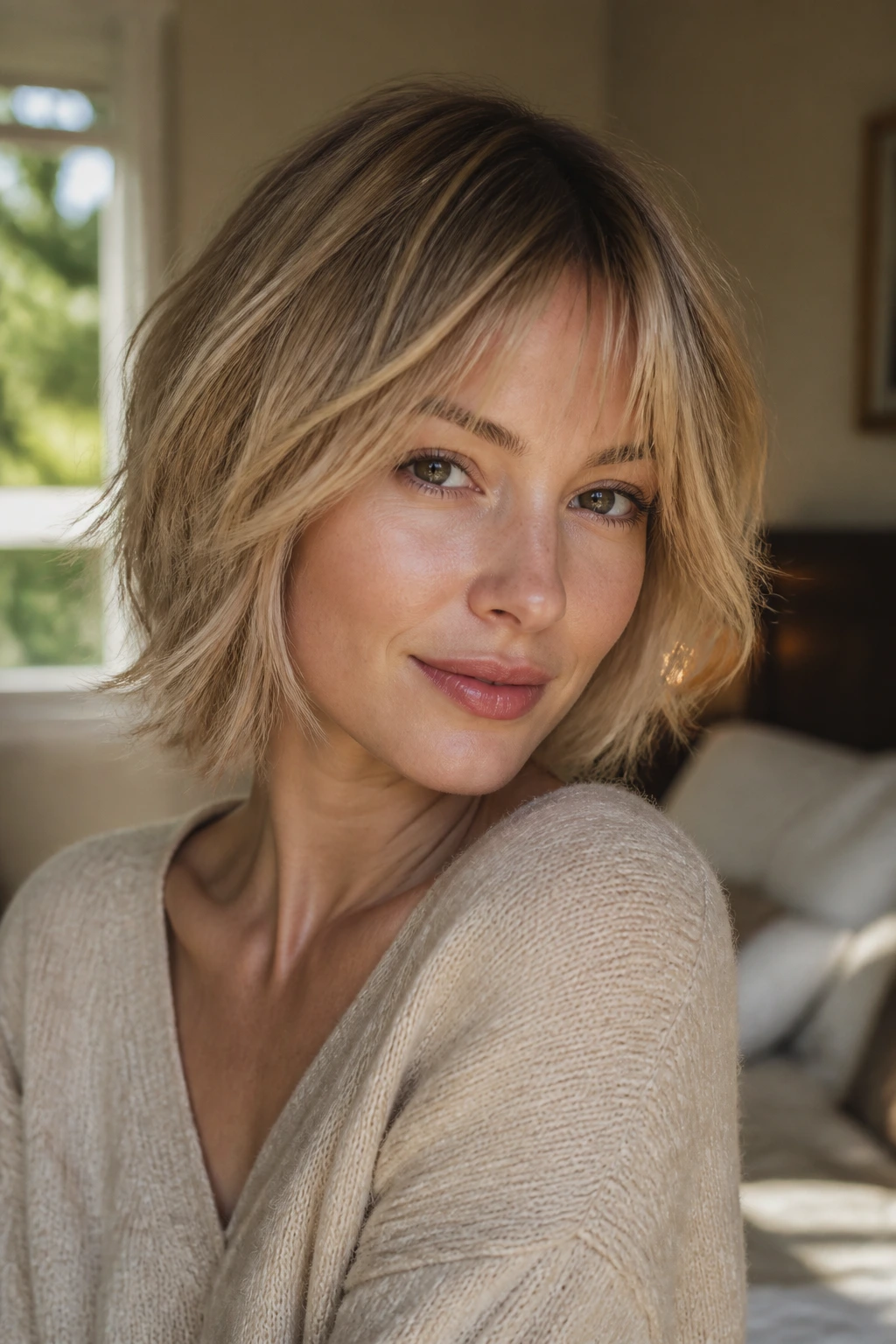
Common Mistakes That Make Delicate Hair Look Thinner
-
Over-thinning the ends: The symptom is a haircut that looks fluffy at the top and see-through at the bottom. The fix is to keep the perimeter denser and soften only selected pieces.
-
Too many short layers: If the hair sticks out in separate bits instead of moving as one shape, the layers are too aggressive. Ask for longer, blended movement instead.
-
Using heavy creams on fine hair: The hair may feel smoother for an hour, then collapse and separate by noon. Use lightweight mousse or a tiny amount of cream only on the ends.
-
Choosing bangs that are too short: Short wispy bangs can flip oddly and expose the forehead more than you want. Longer fringe that skims the brows or cheekbones is easier to live with.
-
Ignoring your part and cowlicks: A cut that fights the natural part will puff in the wrong places. Work with your growth pattern, not against it.
-
Razor-cutting fragile ends: If the ends already fray, a razor can make them look chewed up. Scissors and point cutting are the safer call.
Variations and Alternatives to Try
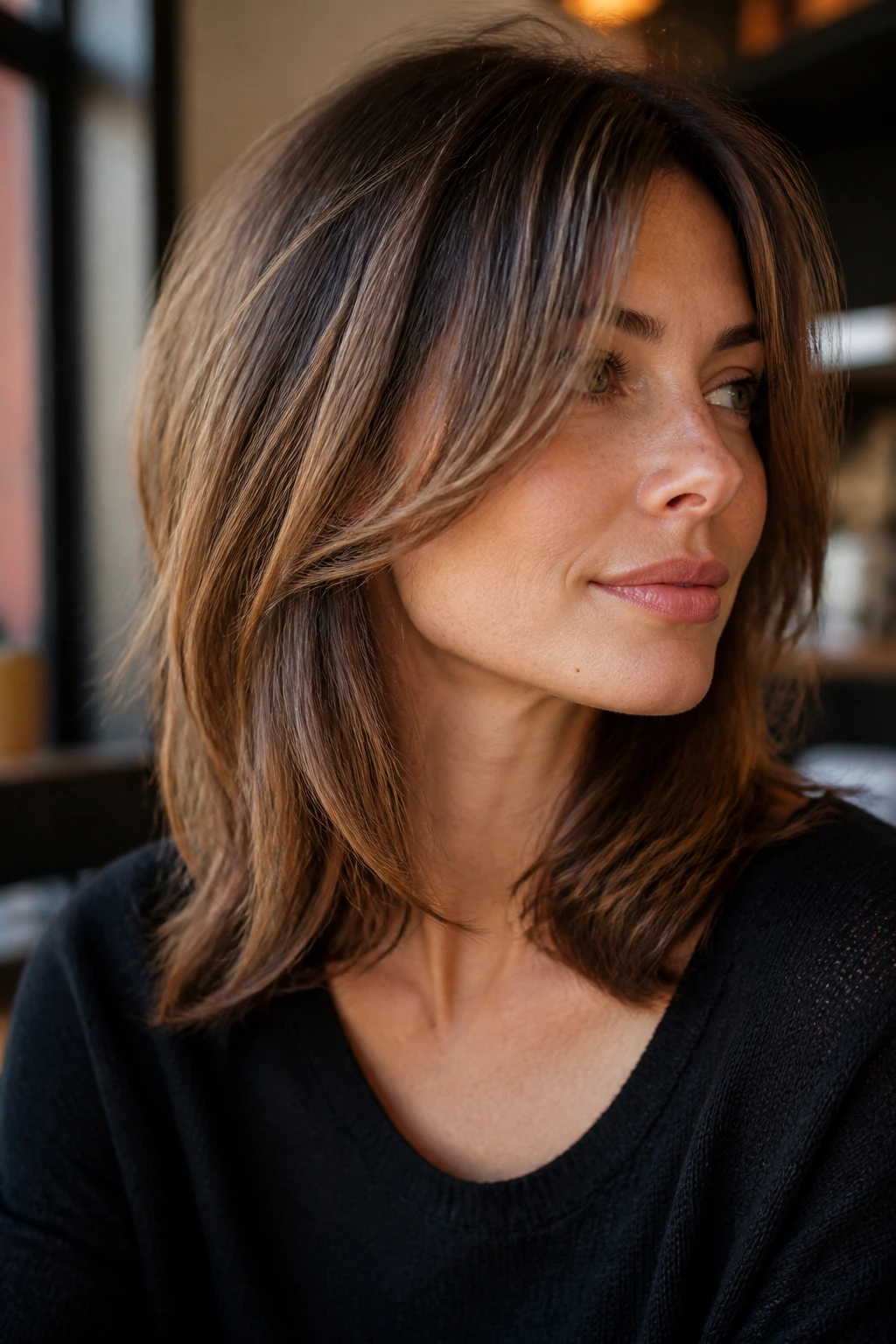
The Face-Frame First Version
This is for anyone who wants the least amount of risk. Keep most of the length intact and put the softness around the cheekbones and jawline only. It gives you movement where people notice it first, while the rest of the hair stays full.
The Density-Safe Bob
If your hair is very fine, this version keeps the outside line blunt and uses almost no interior layering. It still feels light because the ends are softened, but it preserves the illusion of thickness better than a heavily layered cut.
The Curly-Soft Version
For wavy or curly hair, the wispy effect should come from shaping and curl placement, not from thinning the life out of the ends. Ask for longer layers that encourage curl clumps and a face frame that follows the wave pattern.
The Edge-With-Length Version
This one is for people who want personality without going short. Keep the hair at the collarbone or longer, add movement only through the front and interior, and leave the ends substantial. It’s the easiest way to get a wispy look that still feels polished.
The Short-and-Swingy Version
If you like short hair but want softness, ask for a bob or pixie-bob with a swinging fringe and a little movement at the nape. It should feel easy, not overly sculpted, and the outline should stay clean enough to grow out gracefully.
Frequently Asked Questions About Wispy Haircuts
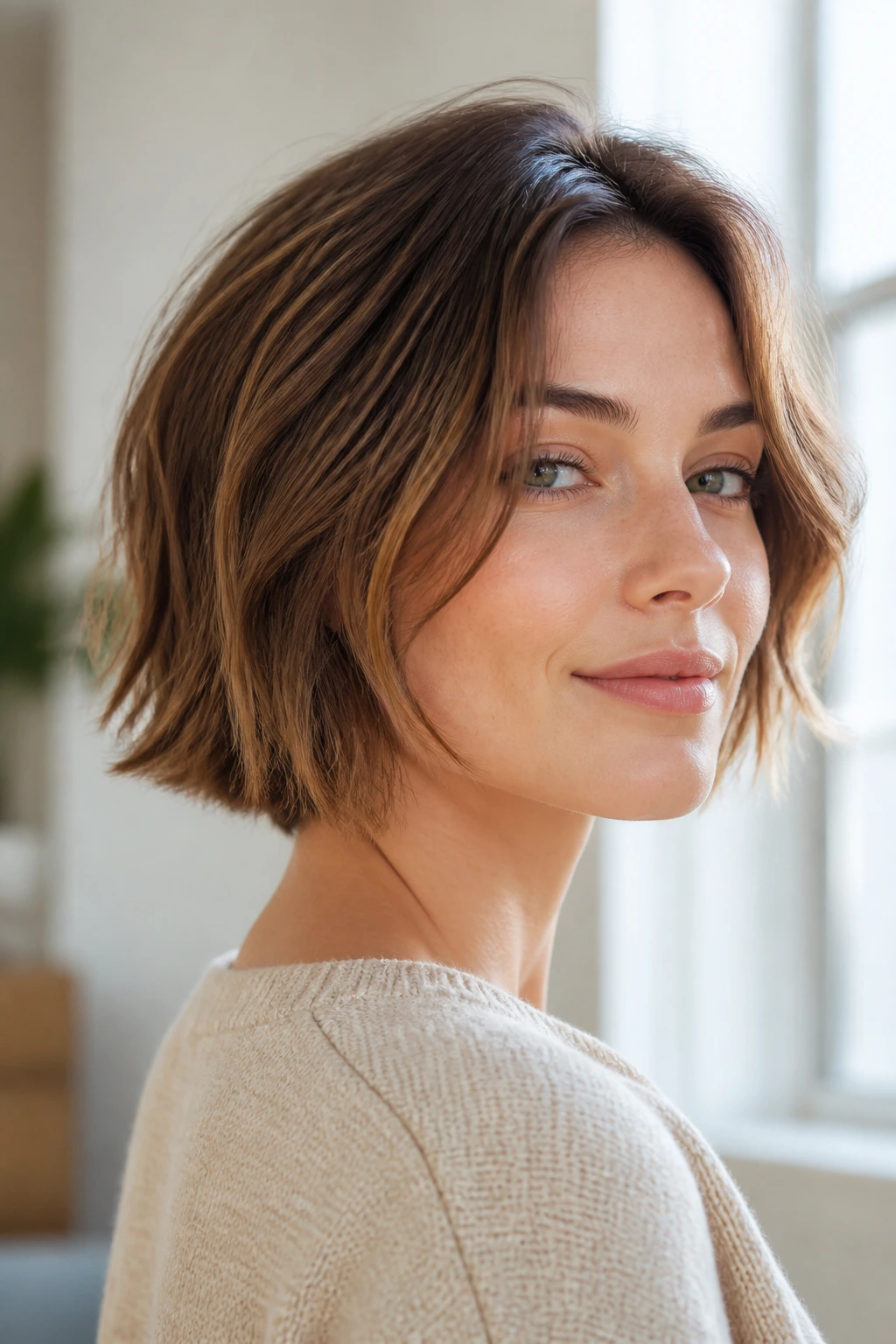
Will a wispy haircut make fine hair look thinner?
Not if it’s cut well. The problem is usually over-thinning, which removes the outer density and leaves the ends sparse. A good wispy cut keeps the perimeter full and uses softness only where it helps the shape move.
What is the best wispy haircut for very fine hair?
A chin-length bob, airy blunt bob, or collarbone lob with invisible layers usually works best. Those shapes keep enough structure to make the hair look fuller while still giving you the lightness people want from a wispy cut.
Can I get wispy layers if my hair is straight and flat?
Yes, but the cut needs root support and a clean outline. Ask for soft internal layers rather than lots of broken pieces, and style with a lightweight mousse or volumizing spray at the crown so the hair doesn’t lie dead flat.
Are razors a bad idea on delicate hair?
Not always, but they’re easy to overdo. If your hair is prone to frizz, split ends, or a rough surface, scissors and point cutting are usually safer. A razor should soften, not shred.
How often do wispy bangs need trimming?
Usually every 2 to 4 weeks if you want them to sit neatly. Curtain bangs and bottleneck bangs can stretch a little longer, but they start to lose their balance once they get into the eyes or hang too heavy at the sides.
What should I ask for if I want movement but don’t want to lose length?
Say you want soft face-framing and minimal internal layering, with a fuller perimeter. That tells the stylist to preserve the bottom shape while still giving the hair some bend and lift.
Do wispy haircuts work on thick hair too?
Yes, though the technique changes. Thick hair often needs controlled removal of bulk, while fine hair needs restraint. The end goal is the same: a shape that moves cleanly without looking bulky or straggly.
How do I keep the cut from going flat by midday?
Use less product than you think you need, then put most of it at the roots and mids, not the ends. A quick lift at the part line with dry shampoo or a root spray can revive the shape without making the hair sticky.
The Shape That Lets Hair Move
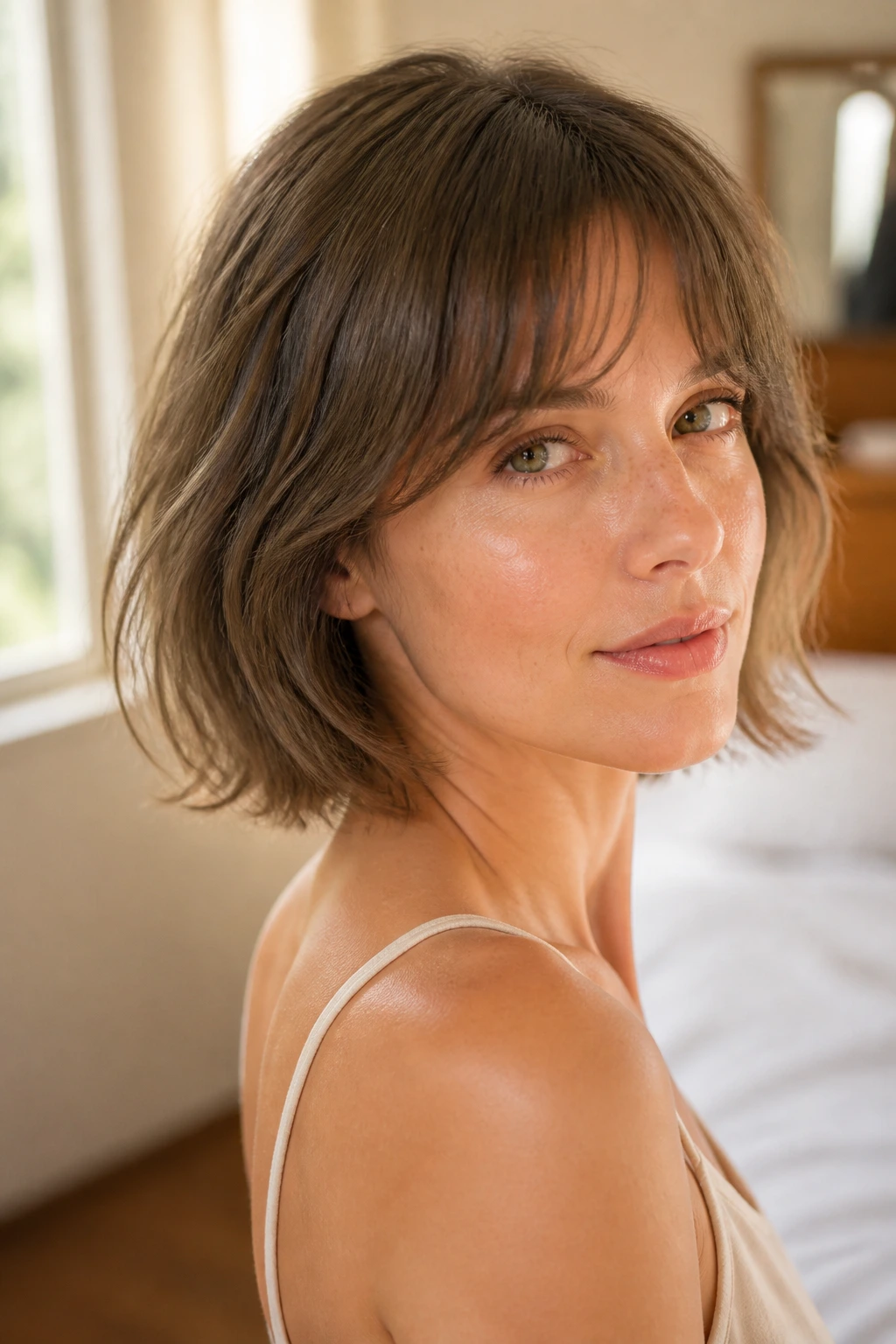
The nicest thing about a wispy haircut is that it doesn’t ask delicate hair to become something else. It works with the strands you already have. That means a clean perimeter, a little softness in the right places, and enough restraint that the cut still looks like hair, not a lesson in over-layering.
If you’re choosing between several of these styles, start with the one that matches how you already wear your hair. The best version isn’t the most dramatic one on the list. It’s the one that gives your fine or delicate texture a shape it can hold without constant correction.
And once you get that balance right, the haircut stops fighting you. That’s the whole point.
