



Some haircuts look polished in the mirror and tired by lunch. That’s the problem with a lot of hairstyles for women over 50 that look modern when they’re built on too much teasing, too many short layers, or a blowout that only survives in one exact weather pattern. The cuts worth wearing now are calmer than that.
I keep coming back to haircuts with a clean outline—chin, collarbone, or a neat nape—because they make the whole face look deliberate. A blunt line near the jaw can sharpen soft features; a few well-placed layers can keep thick hair from turning into a triangle; a little lift at the crown does more than a mountain of spray ever will.
And there’s a bonus most people miss: gray and silver hair can make a clean cut look even better, because shine shows every line. When the shape is right, you do not need a complicated routine. The first styles below prove it.
Why This Collection Feels Fresh Without Trying Too Hard
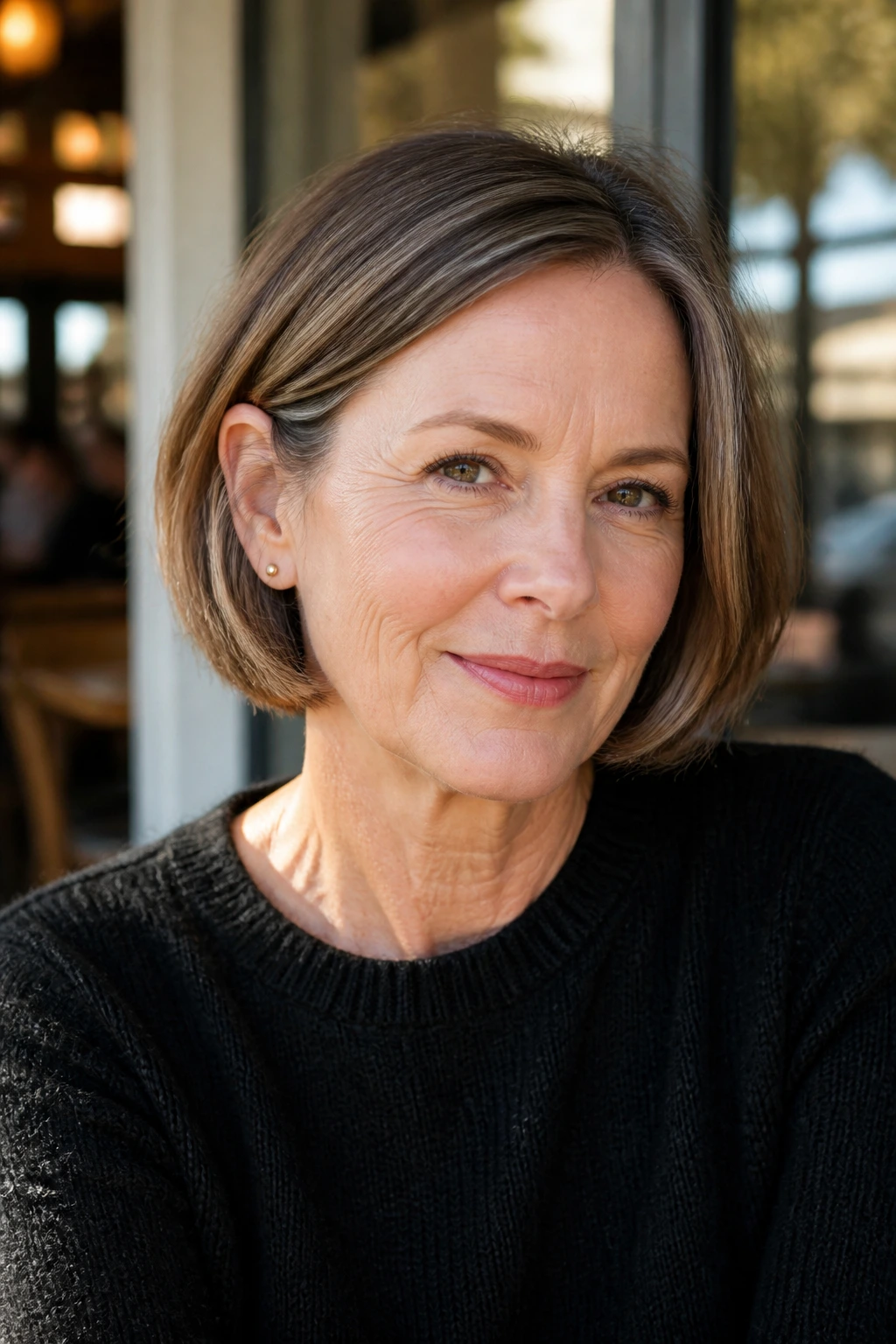
- Clean shape matters: These cuts keep a clear line at the jaw, collarbone, or nape, which is why they read as current instead of overworked.
- Texture gets room to breathe: You’ll see styles that work with waves, curls, or straight hair instead of fighting them into one stiff finish.
- Length stays purposeful: Shorter doesn’t mean severe, and longer doesn’t mean shapeless; every option here has a job to do.
- Grow-out looks better: A modern cut should still look decent six weeks later, not fall apart the minute it moves past the salon chair.
- Styling takes less drama: Most of these styles need one good product, a brush, and a few minutes—not a full production.
- Gray hair looks intentional here: Sharp edges and soft movement make silver strands look like part of the design, not something to hide.
How to Pick the Shape That Fits Your Hair You Actually Have
The best haircut is the one that works on a Tuesday morning, not just the one that looks cute in a salon mirror with fresh color and perfect lights. If your hair is fine, you want a cut that keeps some weight at the ends so it doesn’t fray into little wisps by noon. If your hair is thick, the trick is usually not more layers; it’s better placement of the layers so the shape can move without ballooning at the sides.
Cowlicks matter. So do temples, crown lift, and where your hair naturally wants to part. A cut that fights your growth pattern will demand daily correction, and that gets old fast.
Fine Hair Needs a Clear Edge
A blunt bob, a tidy pixie, or a lob with minimal internal layers tends to work better than a heavily razored cut. Fine strands need a line they can hold. Too much thinning and the ends start to look see-through, which is never a modern look.
Thick Hair Needs Weight Removed in the Right Places
Heavy hair usually looks best when the bulk is taken out from the inside, not shredded from the outside. That keeps the shape from puffing out around the ears. Ask for movement that starts lower, near the cheekbones or collarbone, instead of a thousand short pieces around the face.
Curly Hair Needs Shape, Not Control
With curls, the goal is not to flatten the texture into obedience. It’s to keep the silhouette tidy so the curls stack in a good way. A rounded bob or a shoulder cut with longer layers often looks better than a cut that tries to force curls into straight lines.
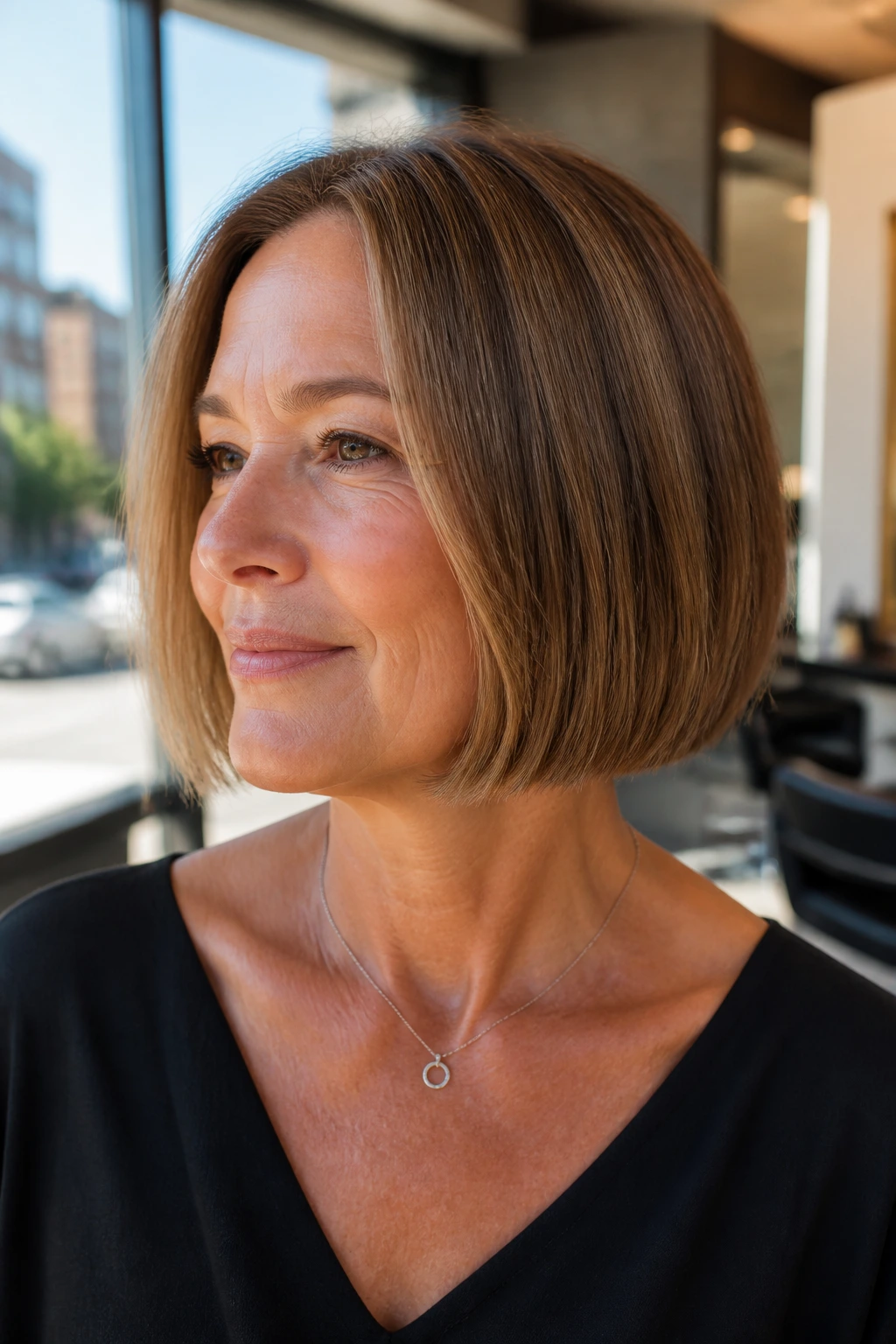
1. Chin-Length French Bob With Soft Ends
A chin-length French bob has a clean line that lands right where the jaw starts to narrow. That makes it look sharp on gray hair, rich on brunette hair, and easy to style when you only want a quick bend with a round brush. I like it because it does not need a lot of layering to feel current.
Why it reads modern
The soft bevel at the ends keeps the cut from looking blocky. Ask for the perimeter to sit at the chin, with just enough movement at the corners that the front can tuck behind one ear without sticking out. If your hair flips out at the jaw, tell your stylist to leave the front a touch longer than the back.
- Best for straight to softly wavy hair.
- Works with a side part or a center part.
- Usually needs a trim every 6 to 8 weeks.
- Looks especially clean with glasses or small hoops.
Tiny tip: A pea-size bit of styling cream on the ends keeps the line smooth without making it slick.
2. Collarbone Lob With a Center Part
If you want one haircut that rarely looks like it tried too hard, this is the one. A collarbone lob sits long enough to pull back, but short enough that the ends still look full when you air-dry. On hair that has lost some density, that line below the shoulders can look cleaner than a longer cut that has gone wispy.
The center part gives the lob a straight, modern spine through the face. If your hair is flat at the root, a small lift spray at the crown and a one-inch bend at the ends is enough. Not fancy. Just right.
What I like most is the middle ground it gives you. You can wear it sleek, bend it with a flat iron, or let it dry with a little wave and still look like you meant it.
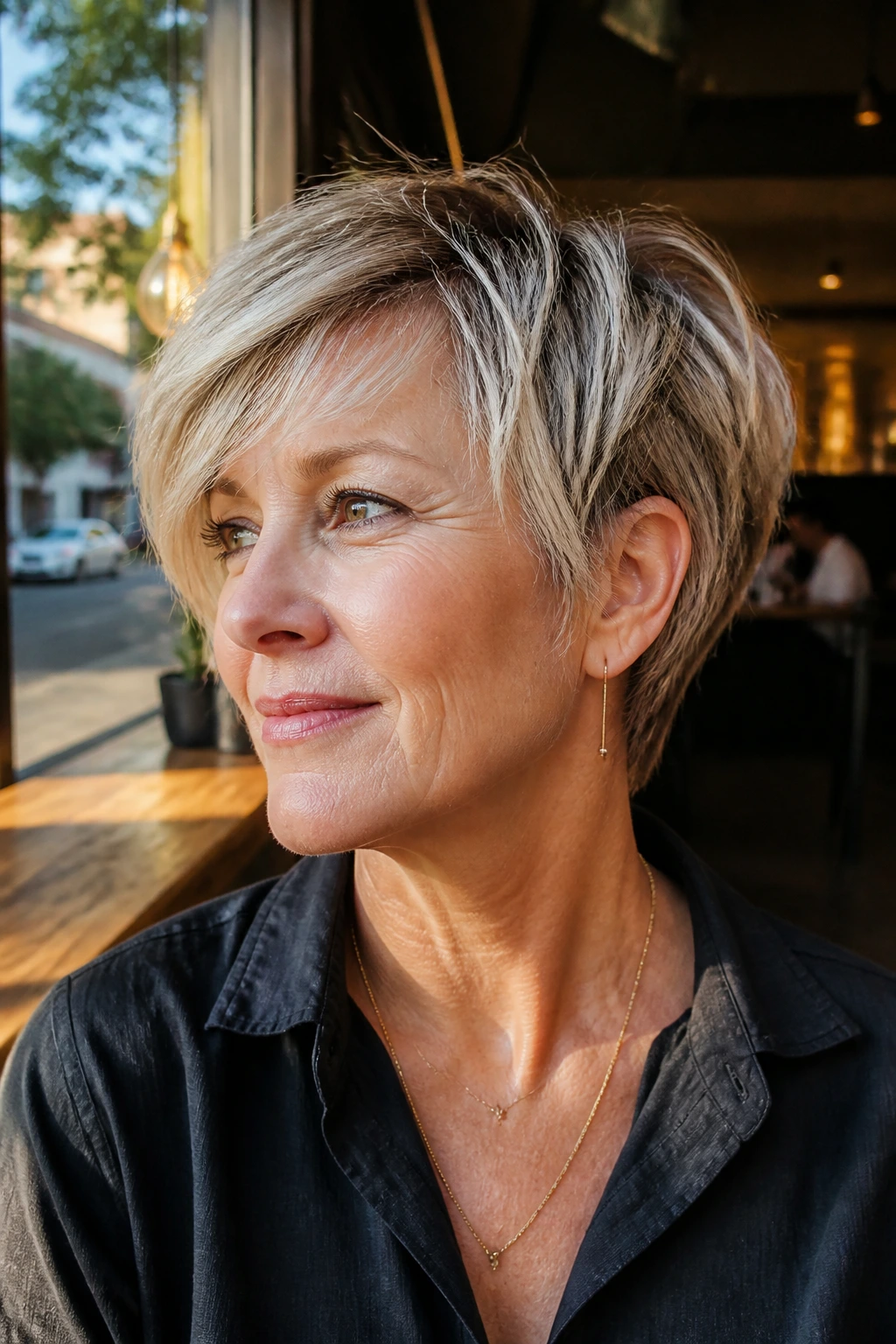
3. Long Pixie With Side-Swept Fringe
Why do some pixies look chic and others look overcut? The difference is usually in the top length. Keep 2 to 3 inches on top, taper the sides gently, and leave the fringe long enough to sweep across the forehead without sticking up.
Styling note
This version works because it still has movement. A dab of paste or cream through the top is enough to separate the pieces, and that separation keeps the cut from reading like a helmet. If your hairline has changed a bit over the years, a side-swept fringe softens that without hiding your face.
- Best for fine to medium hair.
- Needs styling more often than a bob, but it’s fast.
- Great if you want ears exposed and a cleaner neckline.
- Trim every 4 to 6 weeks to keep the shape tight.
Best part: It grows out well if the top stays longer than the sides.
4. Shoulder-Length Shag With Curtain Bangs
Picture hair that brushes the shoulders and breaks into soft pieces around the cheekbones. That’s the shag that still looks fresh, not stuck in some old idea of “layers everywhere.” Curtain bangs are the reason it works; they open the face and keep the front from looking heavy.
The trick is restraint. Too many short layers around the crown and the whole cut can start to puff out. Keep the longest layers grazing the collarbone, then let the bangs sweep out from the center so they fold into the rest of the shape.
What makes it work
This cut gives movement without making you fight with volume. It’s one of those styles that looks better when the hair isn’t perfect. Air-dry it with a little mousse, or rough-blow-dry the front and let the ends do their own thing.
5. Blunt Bob With Soft Internal Texture
A blunt bob sounds severe until you see it on hair with a little internal texture. Then it becomes clean, not hard. The outer line stays solid, which is what gives the cut its modern feel, but a few hidden layers inside keep it from sitting like a block.
This is one of my favorite haircuts for women over 50 because it does so much with so little. It works on straight hair that likes to fall flat, and it can make gray or salt-and-pepper strands look almost polished by default. You do not need a lot of height at the crown. You need a confident line.
If your ends tend to fray, this cut also buys you time. A blunt perimeter hides a little wear better than feathered ends do.
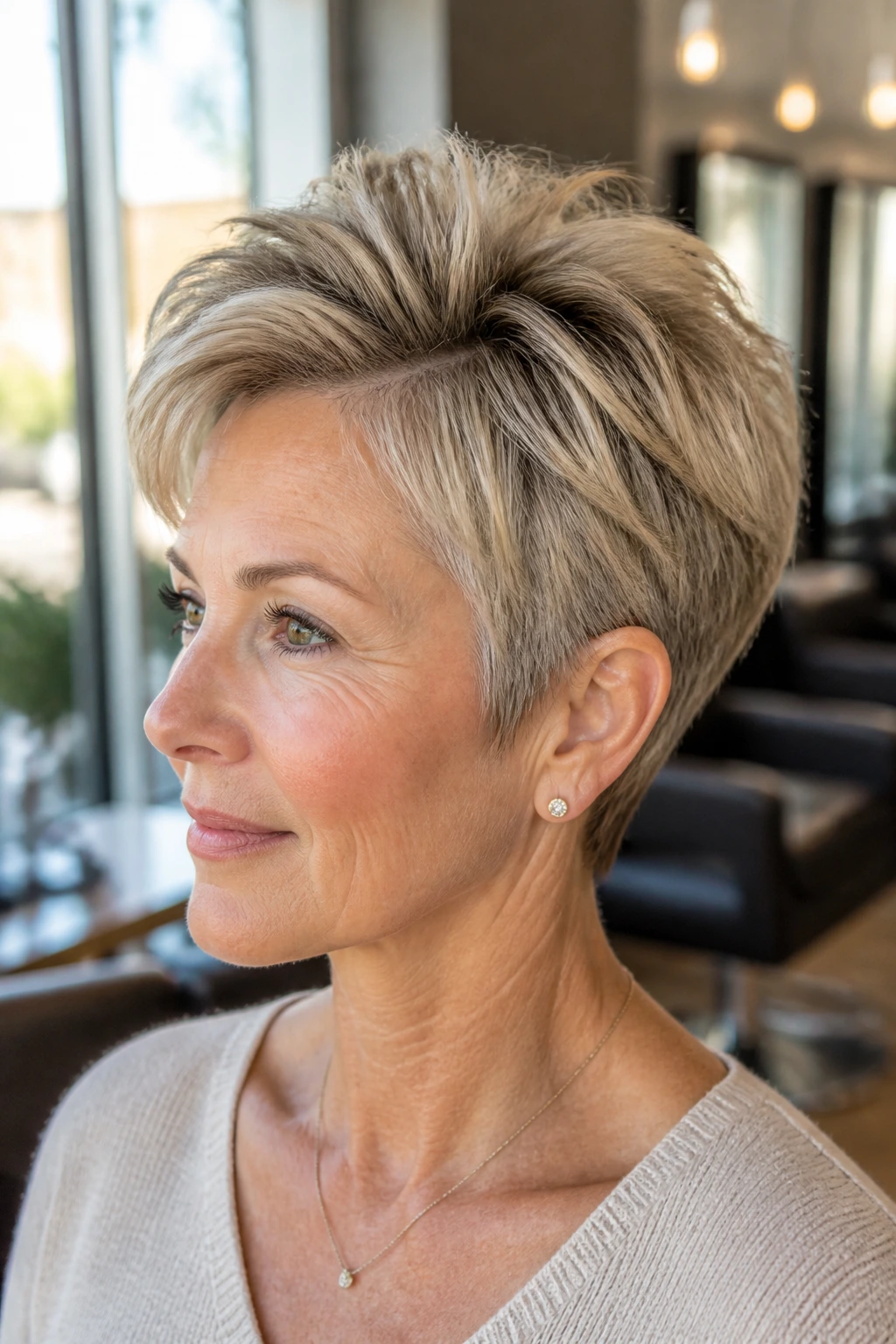
6. Tapered Crop With Crown Lift
A tapered crop is not the same thing as a very short cut with everything buzzed close. The shape matters. Keep the back snug, keep the sides neat, and leave enough length on top for a little lift at the crown.
That crown lift is what keeps the style from looking flat. A round brush, a touch of mousse, and a quick blast of heat at the roots is usually enough. If your hair is dense, ask for the bulk to be removed inside the top instead of thinning the edges. That keeps the silhouette crisp.
This one suits people who like tidy hair and do not want it hanging in their face. Simple. Clean. No drama.
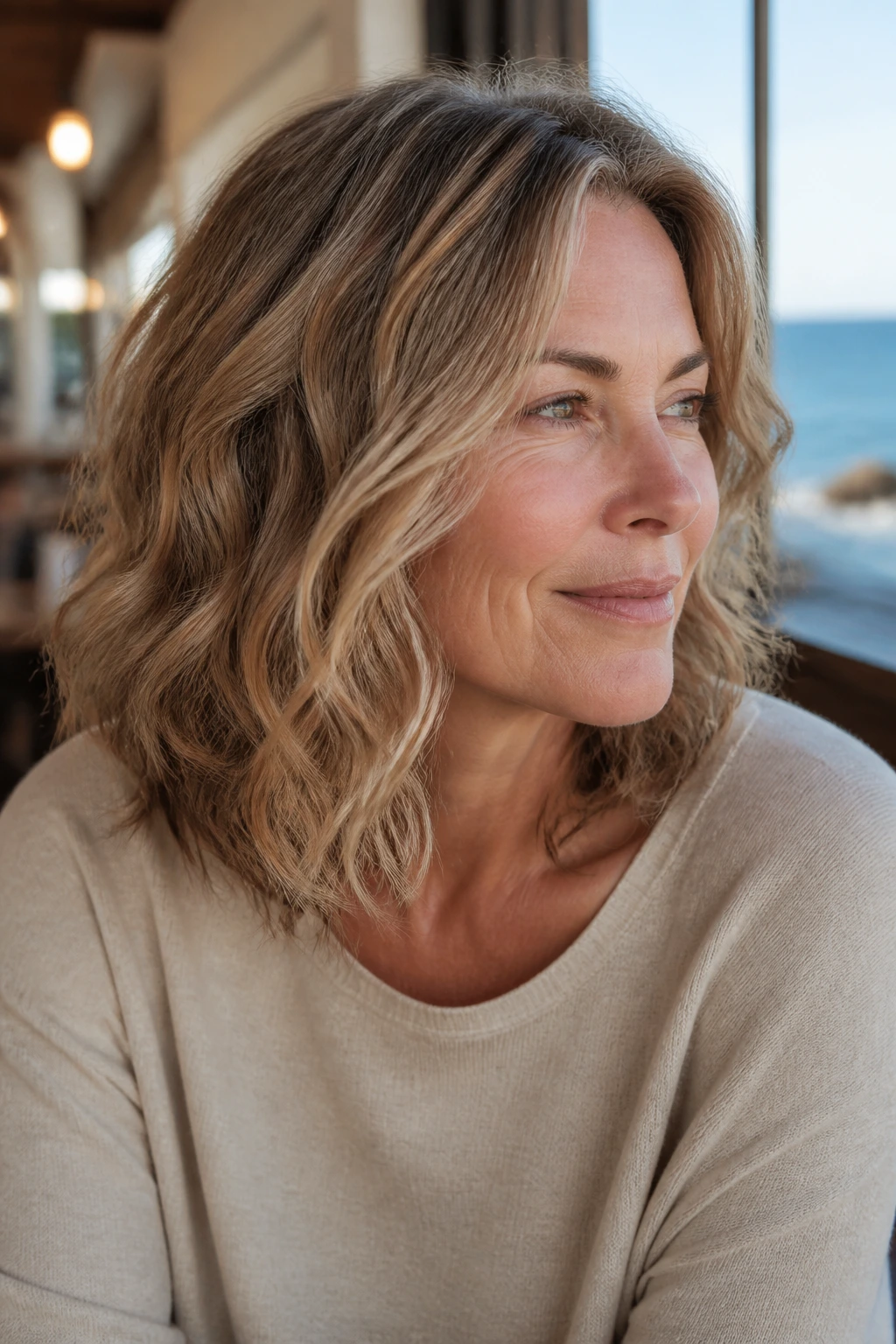
7. Wavy Lob With Invisible Layers
A wavy lob is one of those cuts that looks expensive even when it’s not trying. The “invisible” layers are the point: they take some weight out, but you don’t see sharp steps in the shape. That keeps the ends from looking choppy.
How to wear it
Let the waves fall from about the cheekbone down. If your hair naturally bends, this cut will follow that pattern instead of fighting it. A sea-salt spray can be too rough on drier hair, so I prefer a light mousse worked in at the roots and a touch of cream on the ends.
The best version of this cut sits just below the collarbone. Long enough to tuck. Short enough to look full.
8. Bixie Cut With a Piecey Top
A bixie sits between a bob and a pixie, which is exactly why it works so well for women who want short hair without going ultra-short. The back stays neat, the sides stay soft, and the top has enough length to move around a little instead of standing at attention.
It’s the piecey top that keeps this cut from feeling dated. A little separation at the ends gives the style a casual finish, especially if you wear glasses or have a strong brow line. Keep the fringe long enough to brush to one side. Shorter than that, and the whole thing can tip into “too severe” very fast.
This is a smart cut for hair that is fine but not fragile. It gives body without needing much daily work.
9. Mid-Length Layers With a Side Part
A side part changes the whole mood of a cut. With mid-length layers, it creates lift at the front and keeps the face from looking boxed in. The style lands in that useful place between shoulder length and long, which means it can still be tied back but doesn’t collapse the second you take it down.
The layers should start low enough to keep some weight through the ends. If they start too high, the cut can turn fluffy around the ears. That is the part people get wrong. The modern version is softer, with movement concentrated around the cheekbones and collarbone.
A bit of round-brush bend at the front is usually enough. Nothing stiff. Nothing sprayed into place.
10. Curly Bob With a Rounded Outline
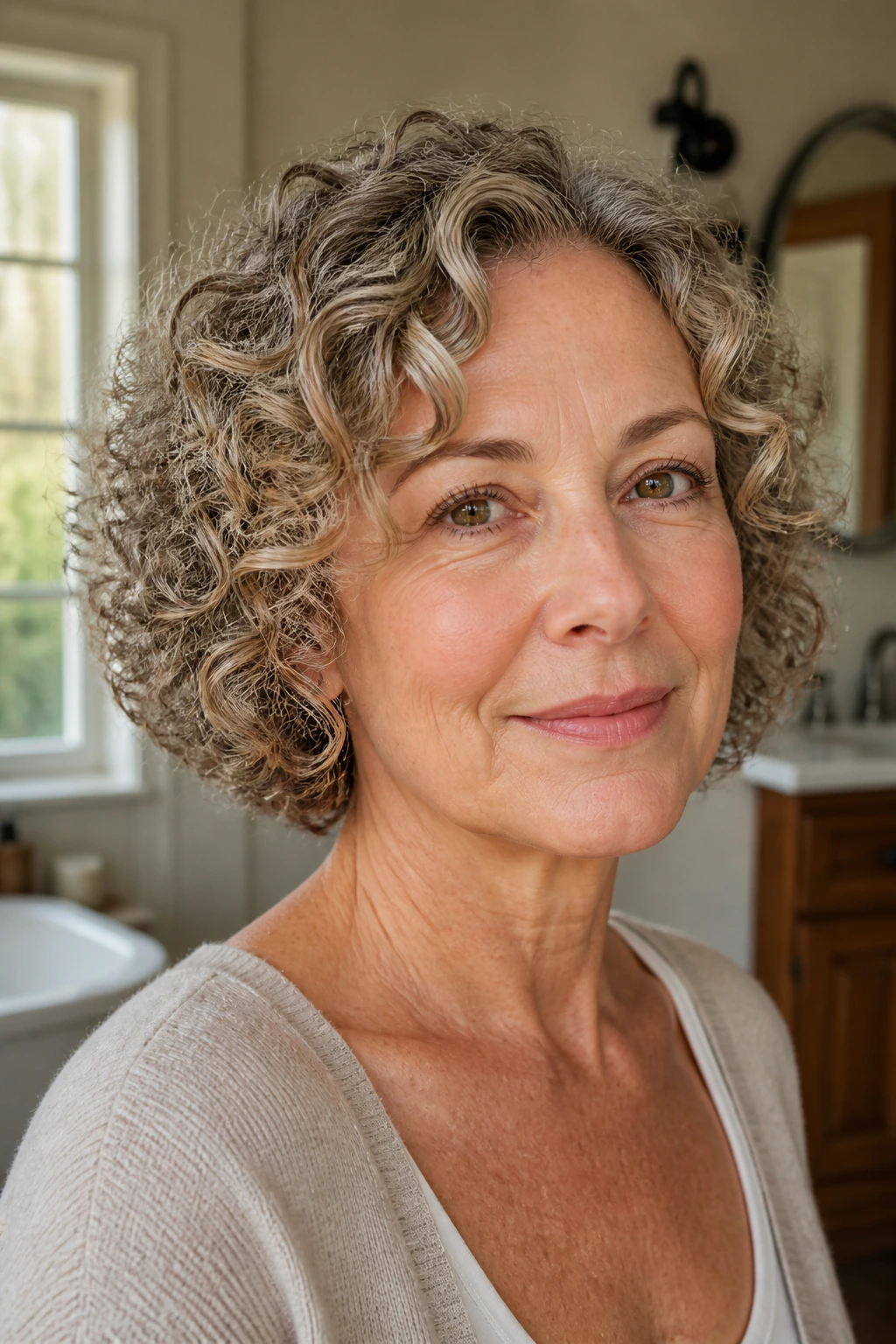
Curly hair looks best when the shape has a plan. A rounded bob gives the curls a place to gather, so they don’t puff out in a triangle or hang too long in front. Ask for the cut to follow your curl pattern and leave the perimeter just under the jaw or at the chin, depending on shrinkage.
Why the shape matters
Curly hair after 50 often changes in density and texture, and a blunt cut that worked years ago may not sit the same way now. The rounded outline helps the curls stack softly at the sides while keeping the neck area open. A diffuser can help, but the cut should already do half the job.
- Best when cut with your natural curl pattern in mind.
- Needs moisture more than heavy hold.
- Works well with a side part if you want extra lift at the front.
- Try to schedule trims every 8 to 10 weeks.
Pro move: Ask for the longest curl to be near the lower jaw, not halfway down the neck, if you want the style to feel lighter.
11. Feathered Shoulder Cut
Feathered cuts got a bad reputation because people remember the overdone versions. The modern take is quieter. Longer feathers around the face, a shoulder-grazing length, and ends that stay soft instead of flicking everywhere. That’s the difference.
The appeal is in the movement. The hair shifts when you turn your head, but it still has shape. If you wear your hair with a blowout, this cut gives you that brushed-back lift without needing a round brush marathon every day.
I like this for hair that feels heavy at the ends. The feathering takes the edge off without making the cut look thin. That balance is harder to get than it sounds.
12. Modern Pageboy With Tucked Ends
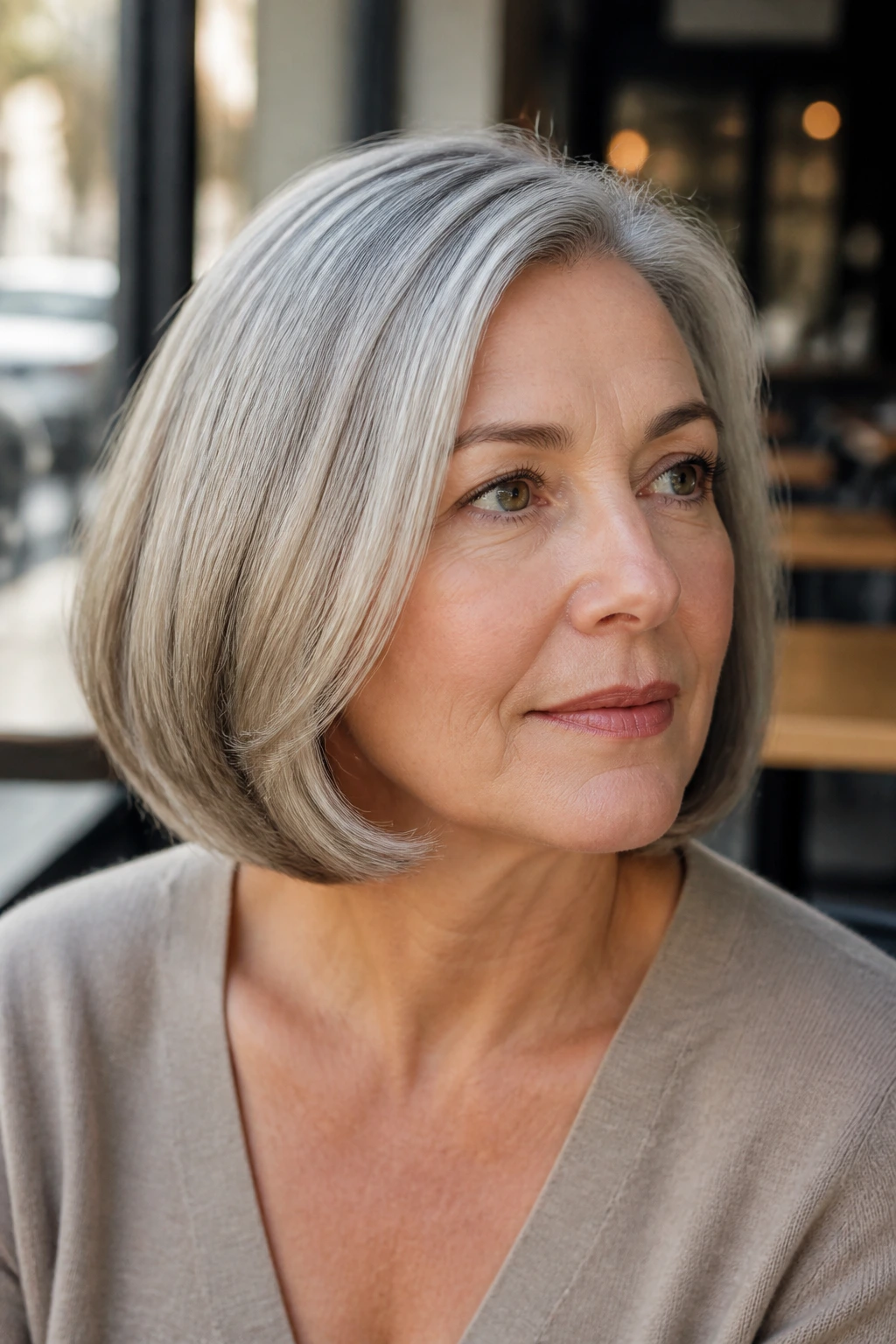
A pageboy can feel dated if the ends are too round or the fringe is too perfect. The modern version keeps the tucked-under shape, but the line is softer and the finish is less rigid. Think polished, not shellacked.
This cut works beautifully on straight hair that likes to obey. The curve at the ends frames the jaw and neck in a clean way, which is flattering if you want the focus near the face. It also looks sharp with turtlenecks, crisp collars, and glasses.
The one thing to avoid is too much spray. The whole point is movement at the ends, not a frozen cap.
13. Long Layers With Face-Framing Starting at the Cheekbone
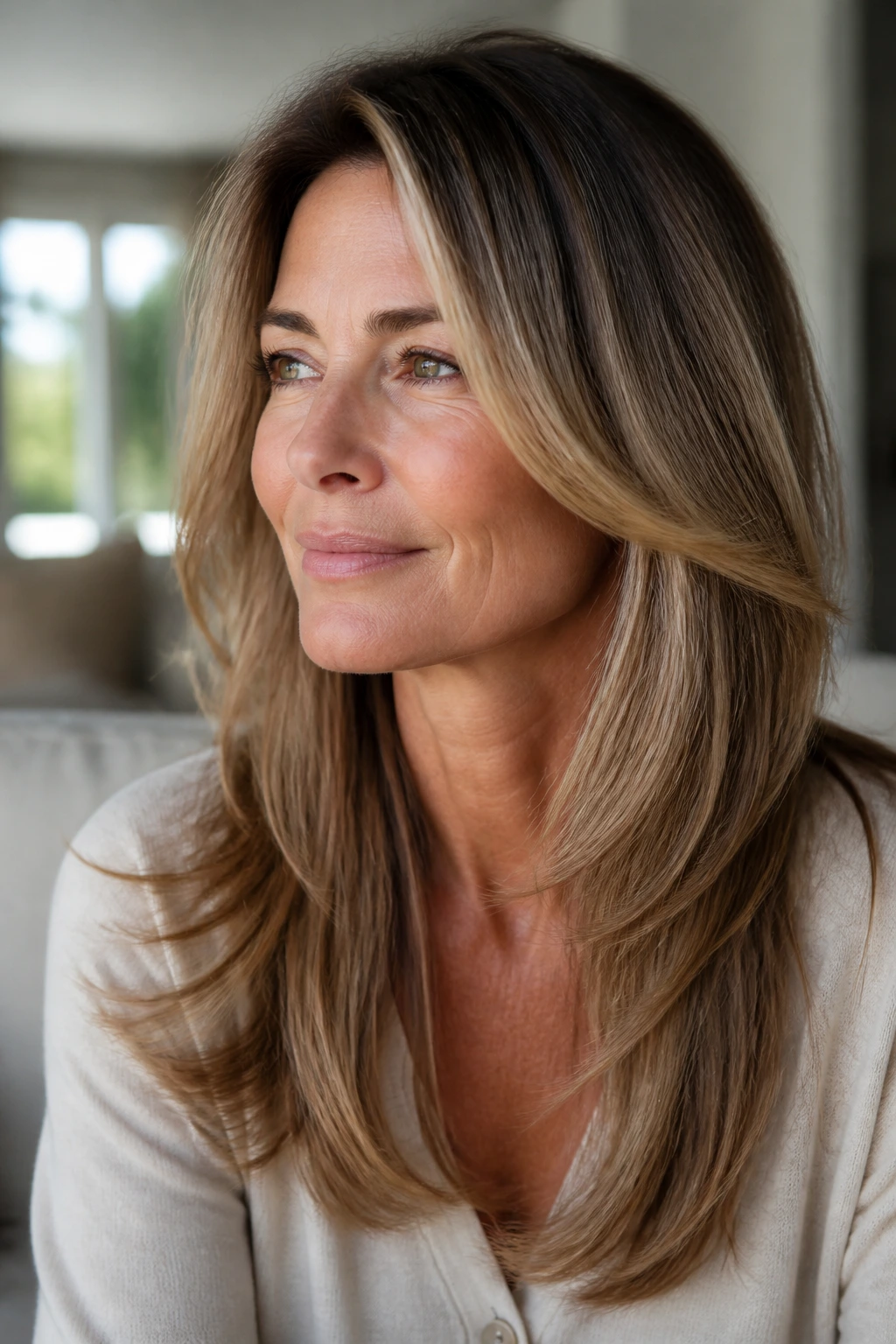
Long hair after 50 does not need to be chopped off to look current. It does need shape. Layers that begin at the cheekbone keep the front from dragging the face down, and they add movement without turning the bottom into frizz.
Where this shines
This is a good pick if you like length but hate when long hair goes flat around the face. The cheekbone start point lifts the eye line and keeps the silhouette open. The back stays long enough to tie up, braid, or clip, which matters more than people admit.
A middle part can work here, but a slightly off-center part often gives the front more life. If your ends are dry, keep the layer count low and the perimeter clean.
14. Soft Crop With a Swept Fringe
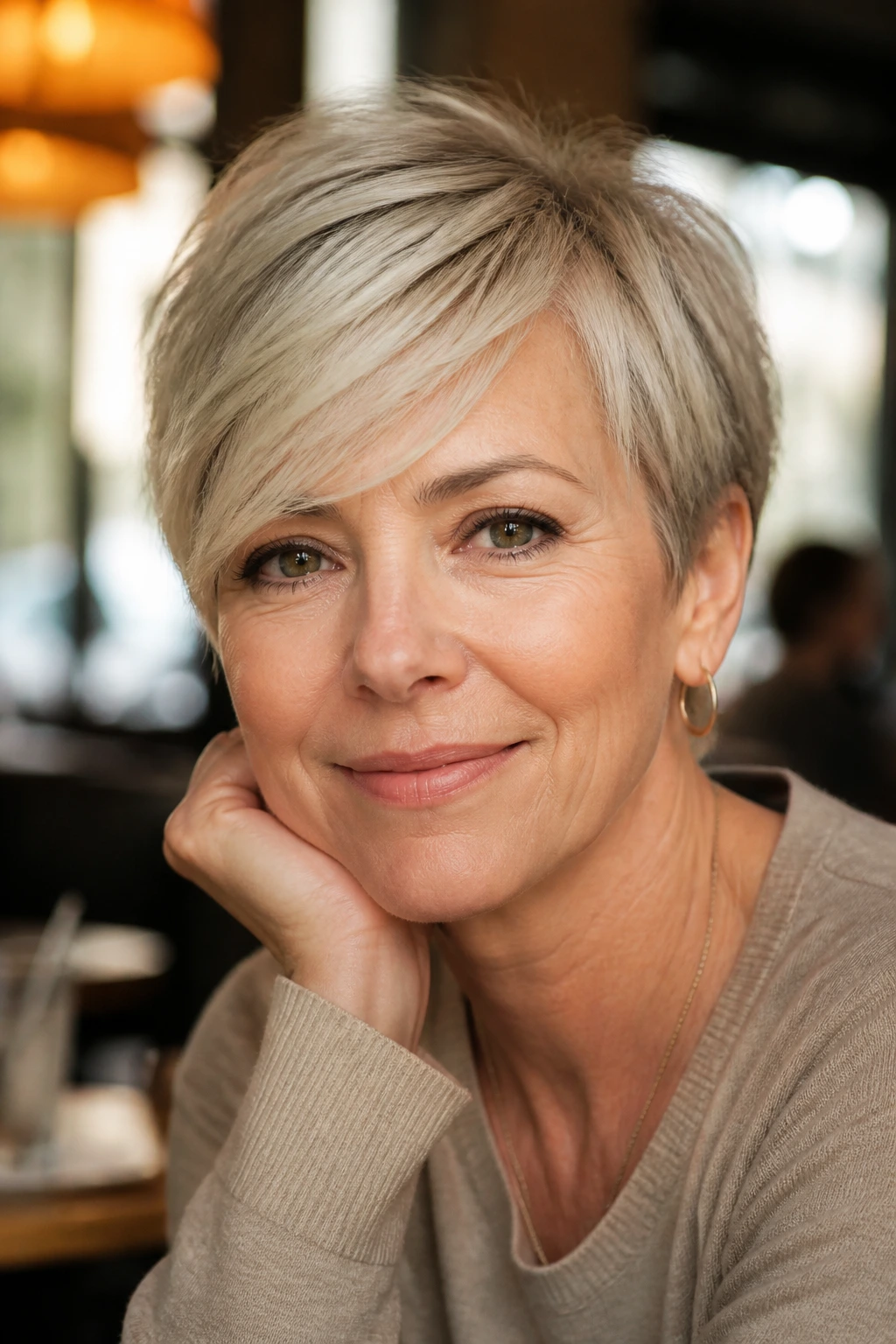
A soft crop is what happens when you want short hair but do not want the edges to feel sharp. The fringe sweeps instead of sitting in a straight line, and the sides stay close enough to the head to keep the shape neat.
This cut is especially good if your forehead is shorter or if you like your glasses to sit above the hairline without fighting the fringe. It opens the face without leaving everything bare. And that matters. A lot of short cuts fail because they leave no room for softness.
Use a little light wax, then pinch the fringe into place with your fingers. Brushless styling. Less fuss.
15. Collarbone Cut With Bottleneck Bangs
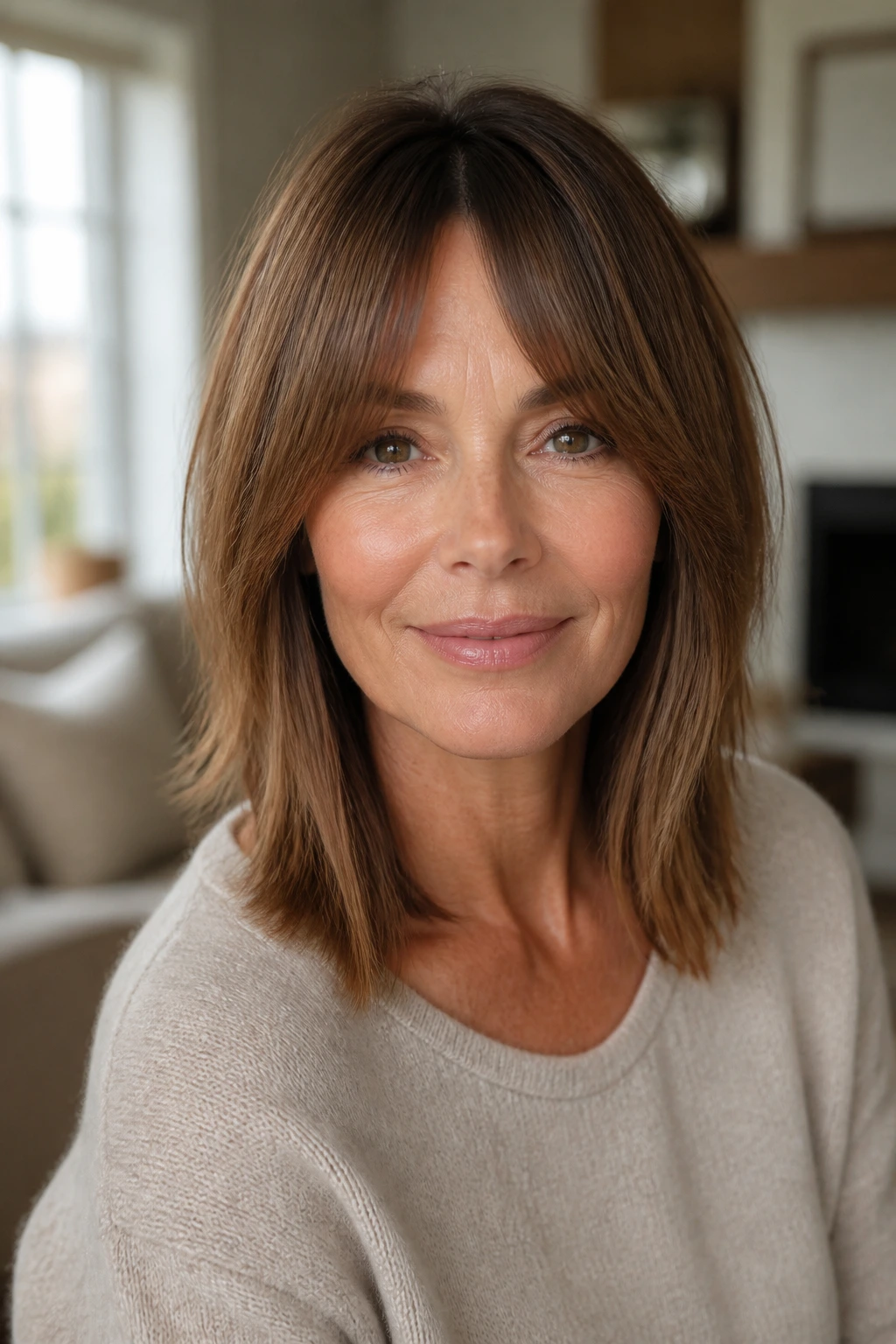
Do bottleneck bangs sound fussy? They aren’t, if they’re cut well. The center is shorter, the sides get longer, and the whole thing blends into a collarbone-length cut without slicing the forehead in half.
This style works because it draws attention to the eyes and cheekbones without boxing in the face. If you like a little fringe but hate a heavy bang, this is the move. Keep the rest of the cut blunt or lightly layered, depending on hair density, and let the bangs do the shaping.
Styling note
A quick blow-dry with a small round brush usually does it. The middle should lift just enough to clear the brow, and the sides should fall into the front pieces without turning into separate curtains.
16. Piecey Crop for Fine Hair
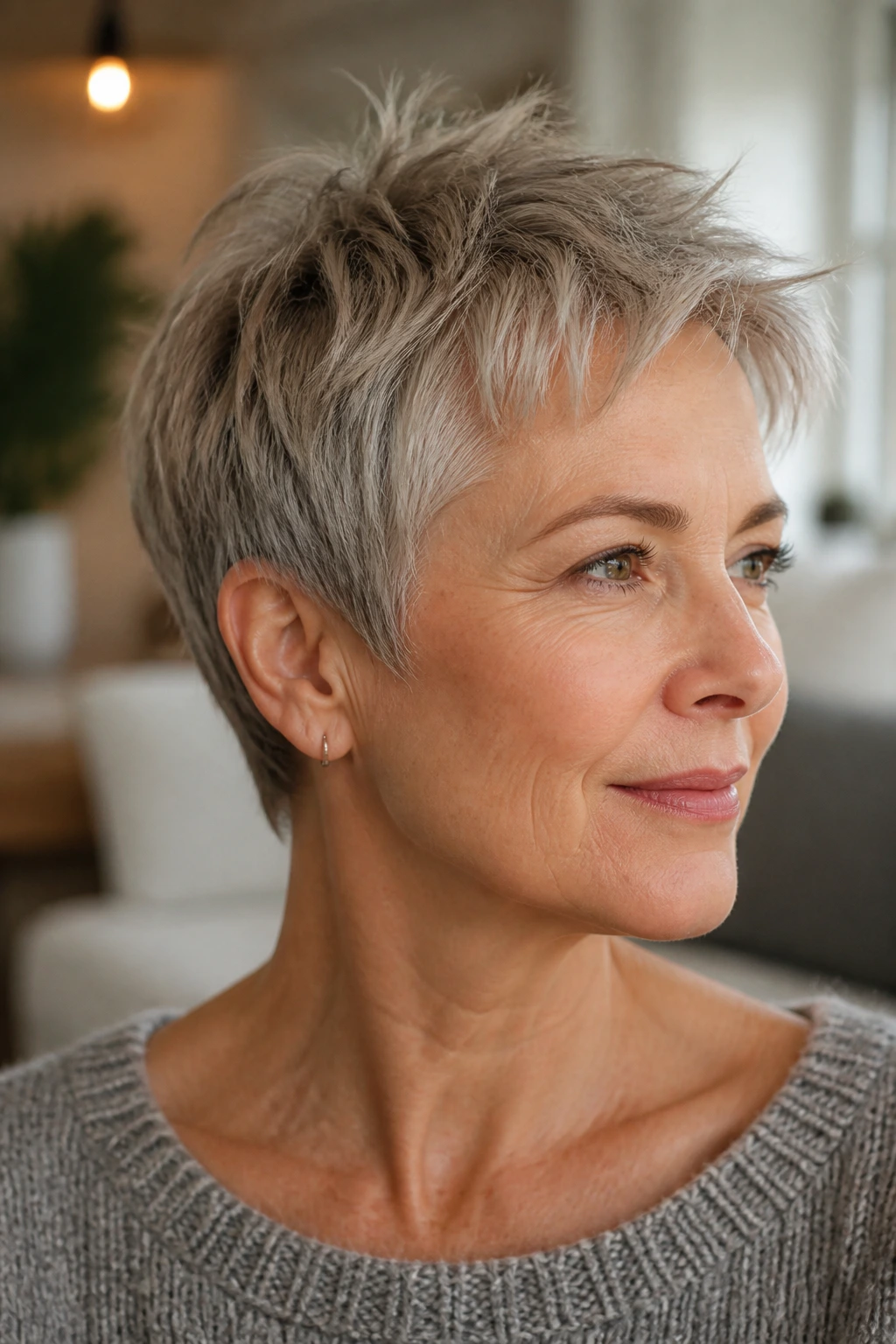
Fine hair often looks best when the cut stays compact. A piecey crop keeps the hair close to the head but leaves enough movement on top that it doesn’t read like a cap. The piecey finish matters here; it keeps the style from looking too neat or too stiff.
The top should have some separation, but not so much that the scalp starts showing through. That’s the line to watch. A matte paste or a tiny amount of volumizing cream usually works better than anything shiny, which can make fine hair look thinner.
This is a good option if you want something short, fast, and a little sharper than a classic crop. It gives you shape without asking for volume you don’t have.
17. Thick-Hair Lob With Internal Debulking
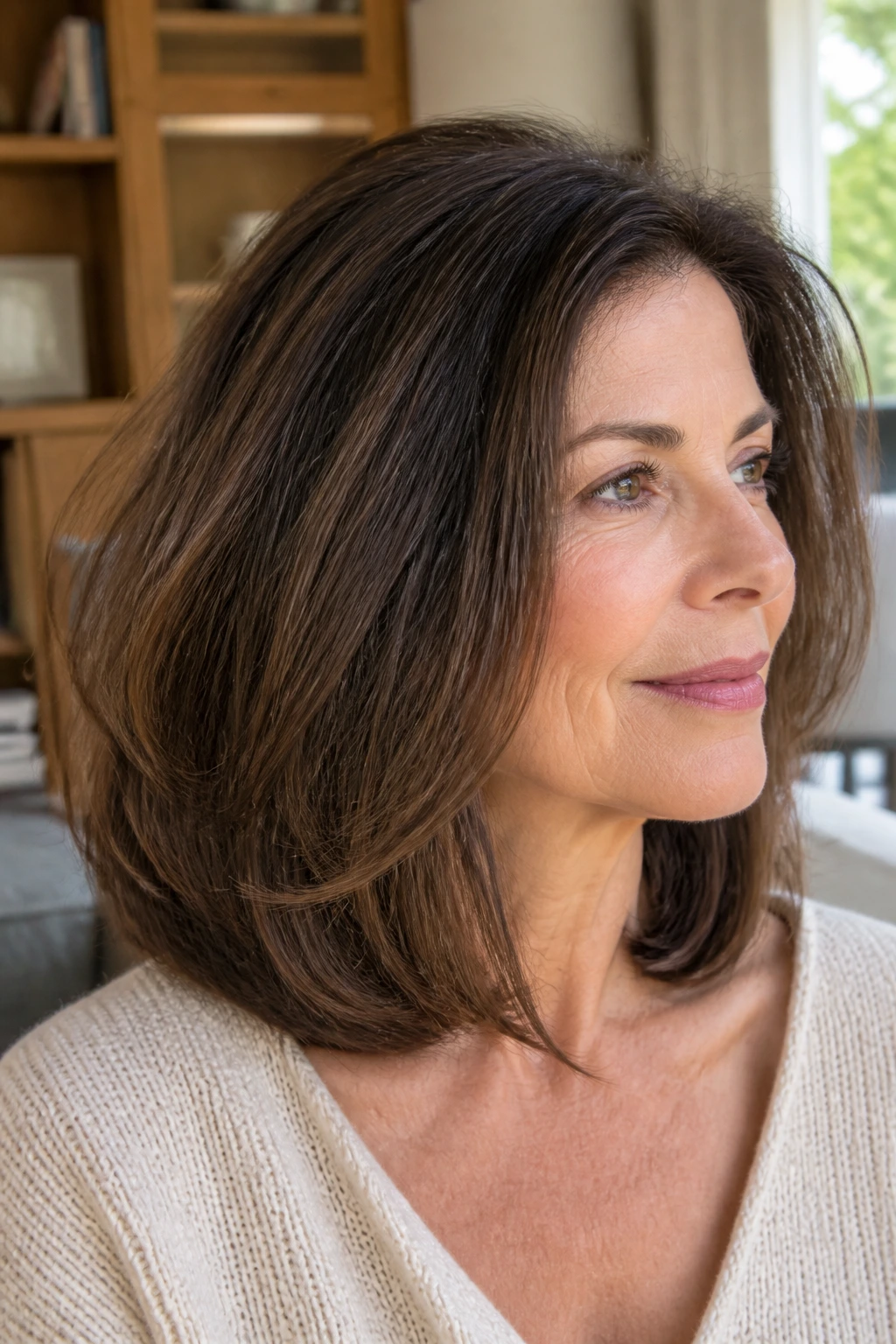
Thick hair can carry length, but it needs the bulk handled properly. A lob that sits between the collarbone and shoulders, with weight removed from the inside, gives the hair room to move without exploding outward. That internal debulking is the whole point.
If your hair tends to look puffy at the sides, this cut can save you time. The ends stay full, which keeps the shape healthy-looking, but the inside has enough movement that the hair doesn’t feel heavy. Ask your stylist to avoid over-thinning the ends. That’s the mistake that turns thick hair frizzy.
Blow-dry it smooth once, then let the body of the cut do the rest.
18. Gray Pixie With a Tapered Nape
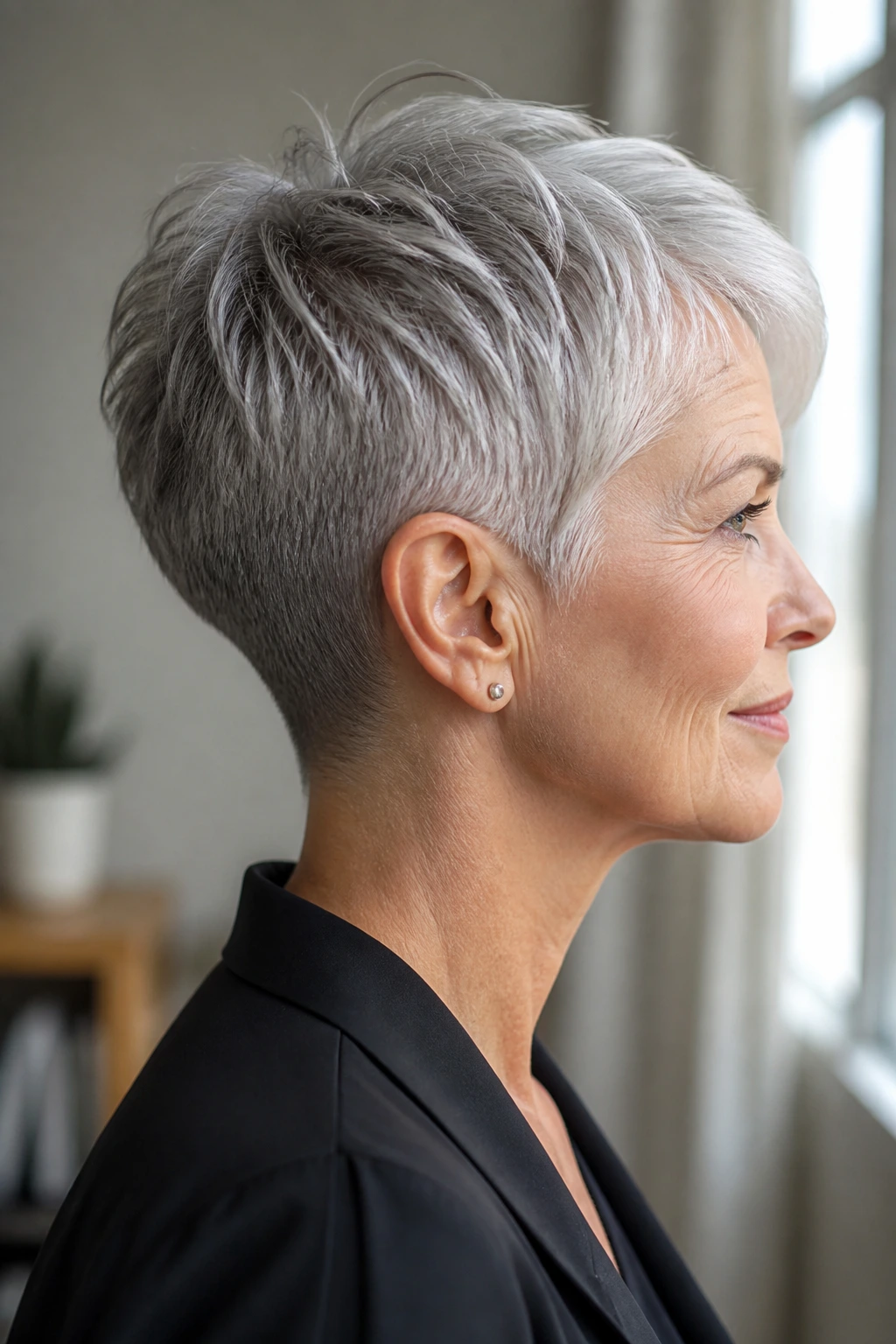
Gray hair looks especially good in a pixie when the nape is tight and clean. The contrast between the short back and the longer crown gives the silver strands structure, and structure is what keeps the cut from looking like an accident. No fluff. No helmet.
I prefer this cut when the hair at the back grows in quickly or the neckline needs a neat finish. The tapered nape keeps the cut sharp between trims, and the top length gives enough room for a little lift or a soft side sweep.
If you’ve been coloring for years and want to let the gray show, this is one of the easiest cuts to wear during the transition. The shape does the visual work.
19. Chin-Length Bob With a Side-Swept Fringe
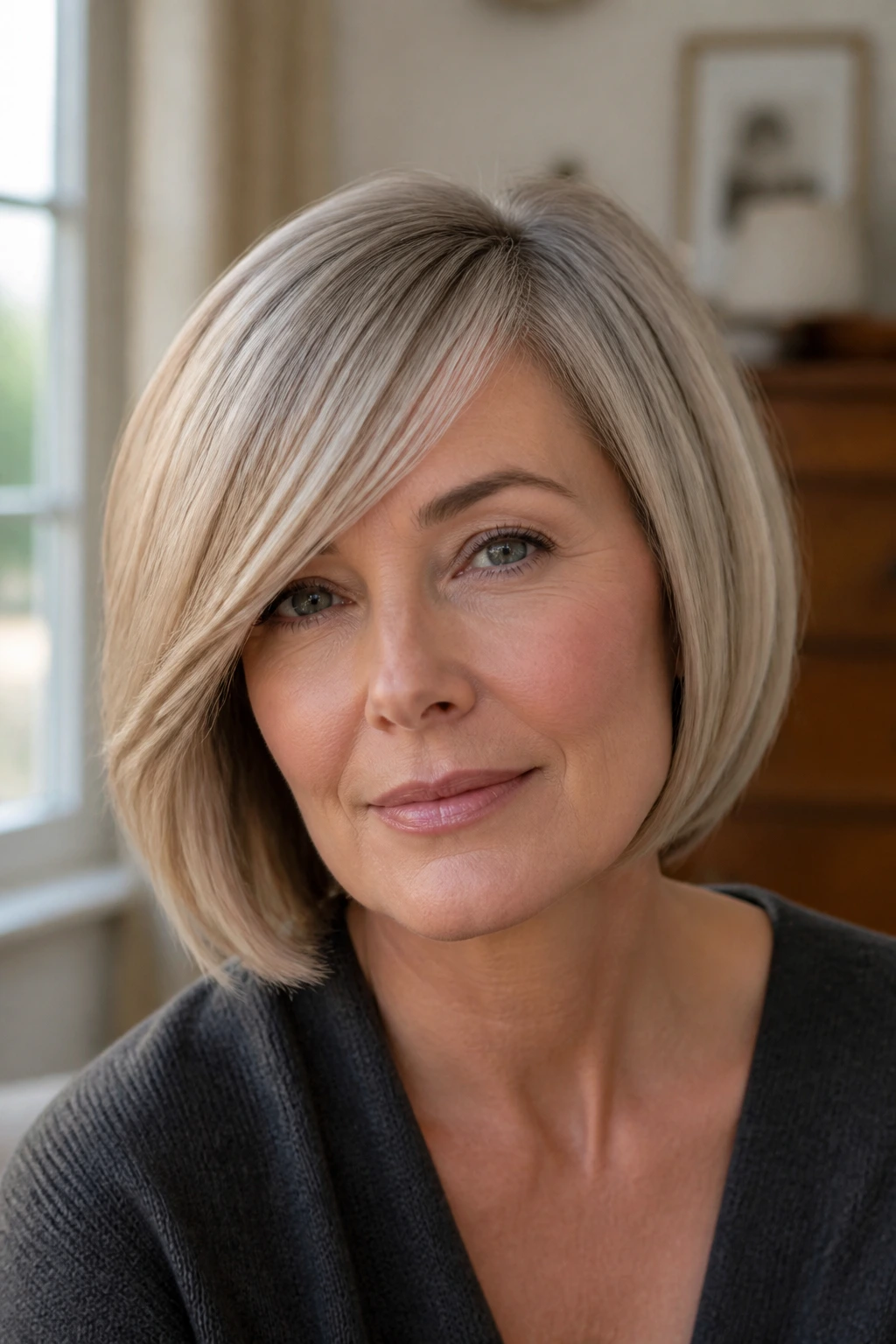
Some faces need a little diagonal line to break up straight edges, and that’s where this bob earns its keep. The chin length gives the cut a clear frame, while the side-swept fringe softens the forehead and cheek area without hiding anything important.
This is a good choice if a center part feels too severe on you. The fringe brings movement to the front, which is handy for hair that likes to lie flat around the hairline. Keep the bob slightly longer in front than in back if you want a subtle angle.
One sentence from the chair often helps: “I want the fringe to sweep, not sit heavy.” That saves a lot of awkward trimming.
20. Flip-Out Lob With Beveled Ends

A flip-out lob can look playful in the best way when the bevel is controlled. The ends turn away from the neck just enough to create motion, but not so much that the cut starts reading retro. The trick is keeping the layers long and the edge soft.
This style is surprisingly flattering if you want the face to look lifted. The outward movement pulls the eye up and out, which makes the whole cut feel lively. Use a round brush or a flat iron turn at the very ends—nothing more.
If your hair is naturally straight and a little stubborn, this cut gives you something to work with instead of against. It has personality without needing a lot of product.
21. Modern Shag With a Longer Back
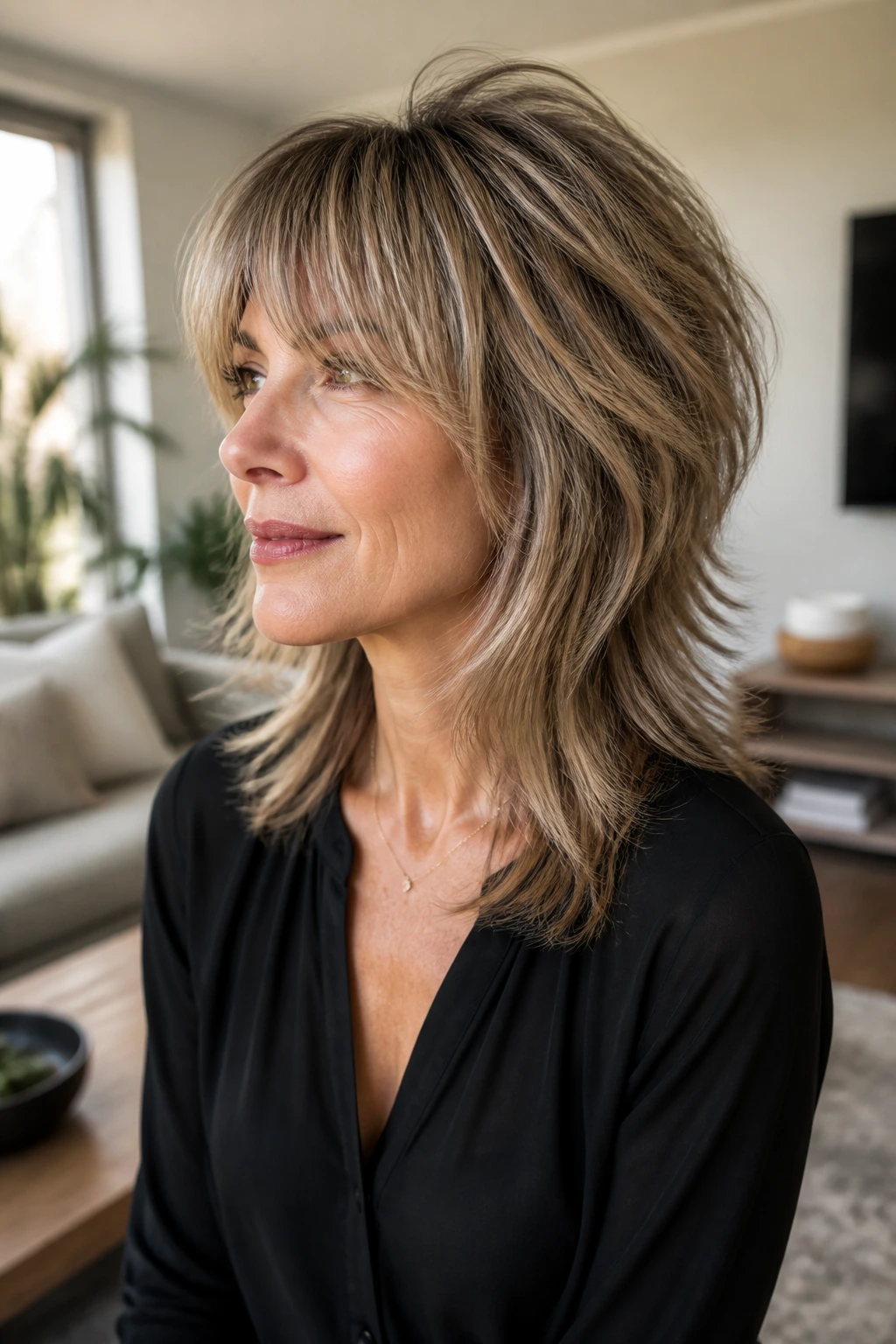
Is this a shag, a soft mullet, or something in between? Yes. And that’s exactly why it works. The longer back keeps the haircut wearable, while the layers at the crown and around the face give it lift and movement.
What makes it different
Older shags can get too choppy and too short around the top. This version keeps the layers more blended, so it feels current rather than costume-like. It’s a strong pick for wavy hair that needs shape but not a lot of heat styling.
- Keep the crown layers soft, not shredded.
- Let the back graze the shoulders or just below.
- Ask for face-framing pieces that stop around the cheekbone.
- Use texture spray lightly; too much and it gets crunchy.
My view: This cut looks best when the finish is a little imperfect.
22. Air-Dry Cut for Natural Waves
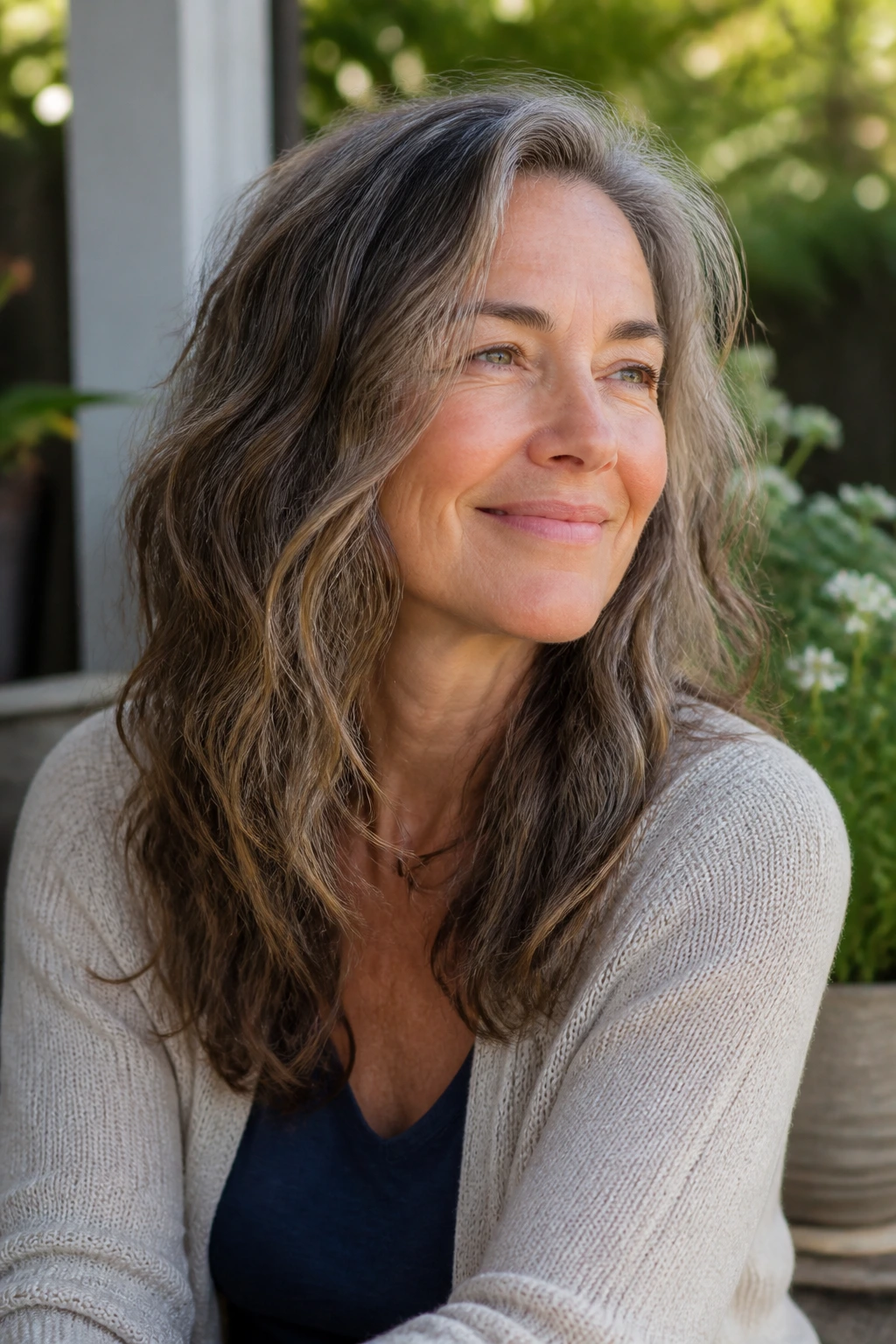
Some cuts are designed for the hand of a curling iron. This one isn’t. It’s made for natural waves that need a little help, not a lot of correction. The cut should follow the bend of the hair and leave enough length for the wave to form without sticking out.
A good air-dry cut usually keeps the layers long and the perimeter tidy. That prevents the ends from fraying while the waves do their thing. If your hair gets frizzy, a cream or foam will usually beat a heavy oil. Oil weighs the wave down fast.
This is the style for people who want to wash, scrunch, and move on. No round brush. No big deal.
23. Glasses-Friendly Bob With Open Temples
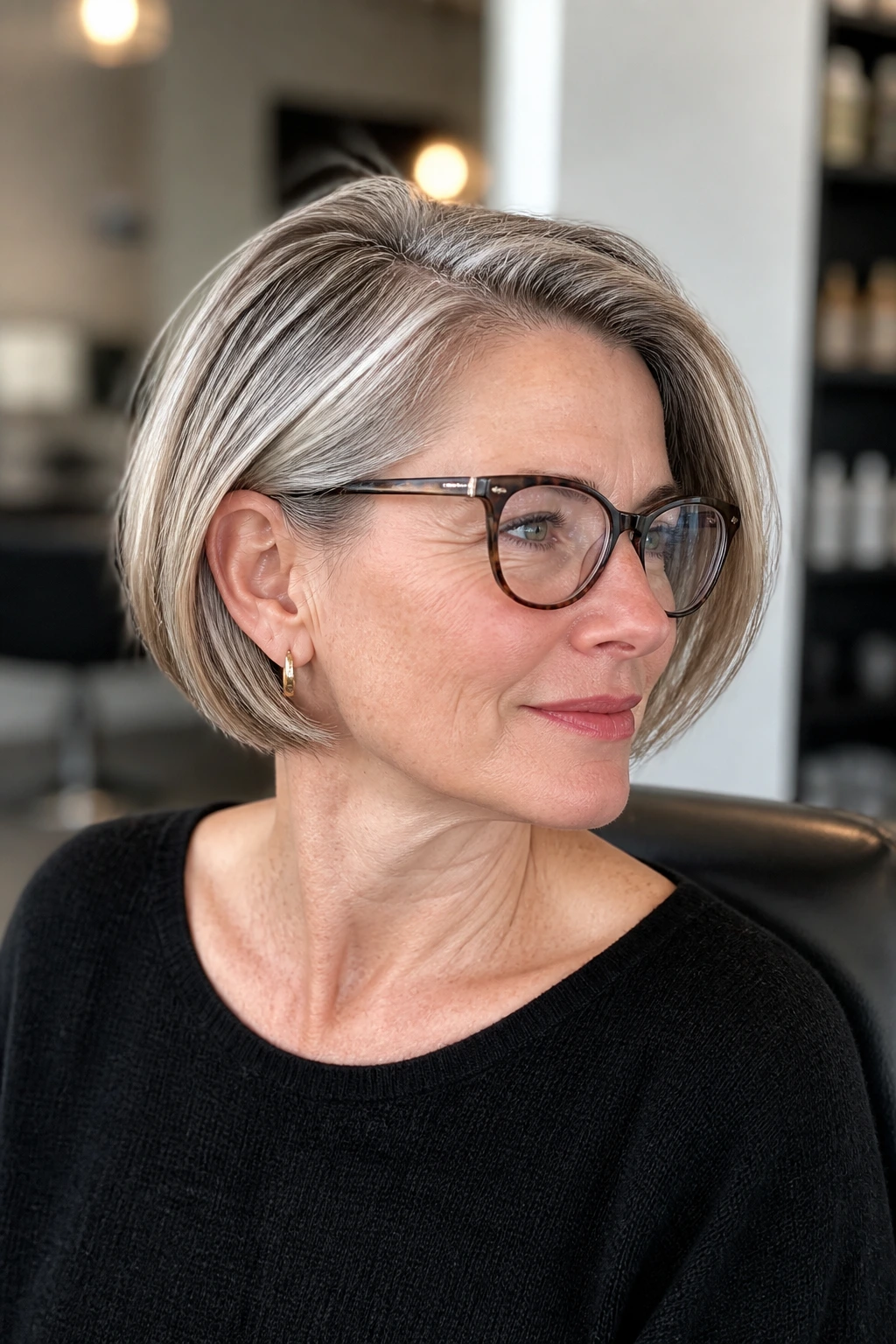
Glasses change the whole haircut conversation. A glasses-friendly bob stays open around the temples so the frames do not compete with the hair. That means less bulk at the sides and a fringe that lands above, below, or just outside the frame line.
The best version usually sits between the chin and jaw, with a clean edge and a little softness at the corners. You want the hair to frame the glasses, not swallow them. If your frames are bold, keep the cut quieter. If the frames are thin, you can get away with a little more texture.
This one looks especially good with a side tuck. It clears the face and makes the glasses look intentional instead of crowded.
24. Shoulder-Length Cut With Hidden Layers
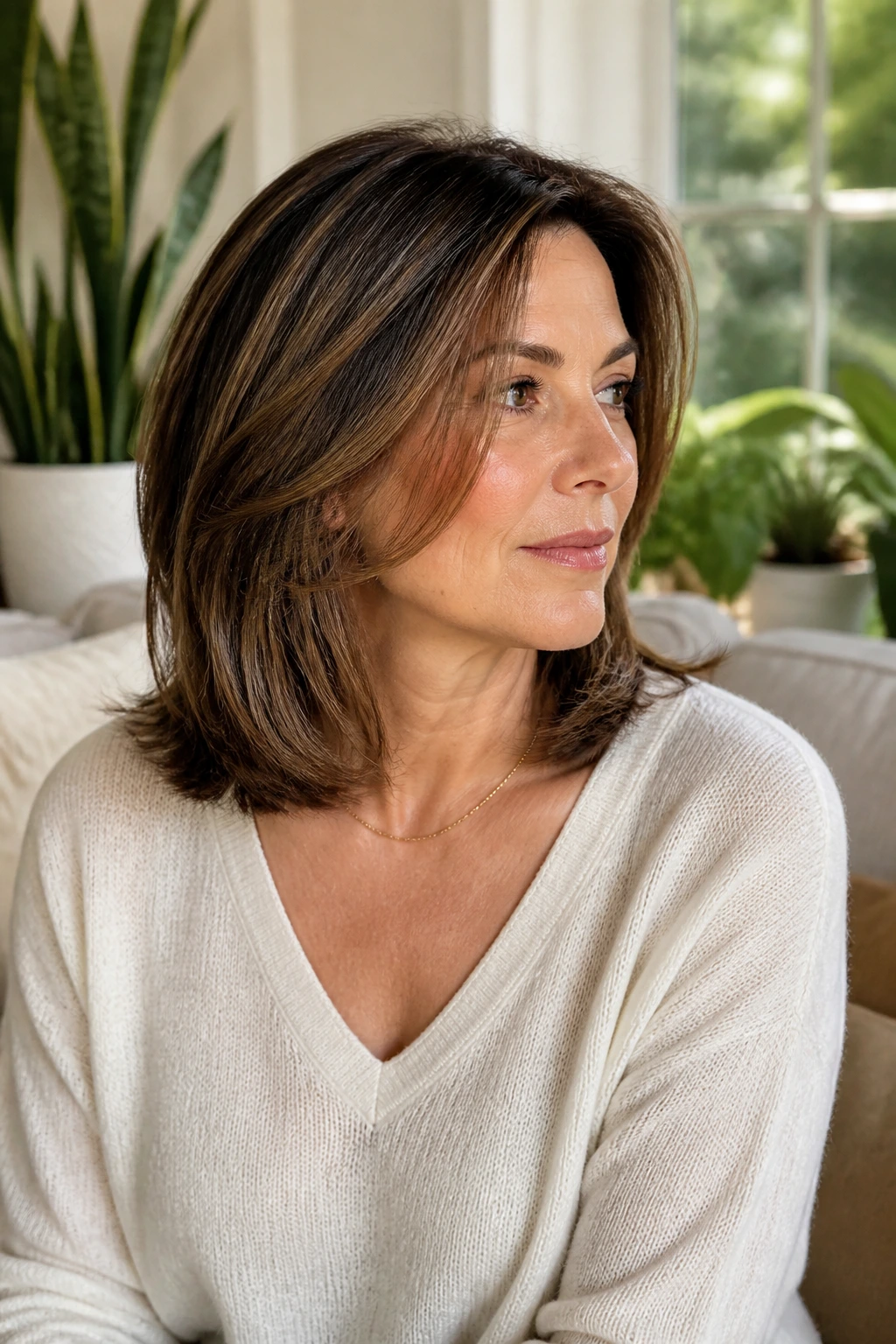
Hidden layers are for people who want movement but hate seeing obvious steps in the cut. The outside line stays smooth, while the inside has enough variation to stop the hair from hanging like a curtain. That’s what keeps shoulder-length hair from feeling heavy.
This works well if your hair is medium to thick and you want to keep some length around the collarbone. The hidden layers help the cut swing when you turn your head, but they don’t break the outline. That outline is the thing that keeps it modern.
If you wear your hair half up, this cut behaves nicely. It holds shape without looking overstyled.
25. Sleek Short Cut With an Ear Tuck
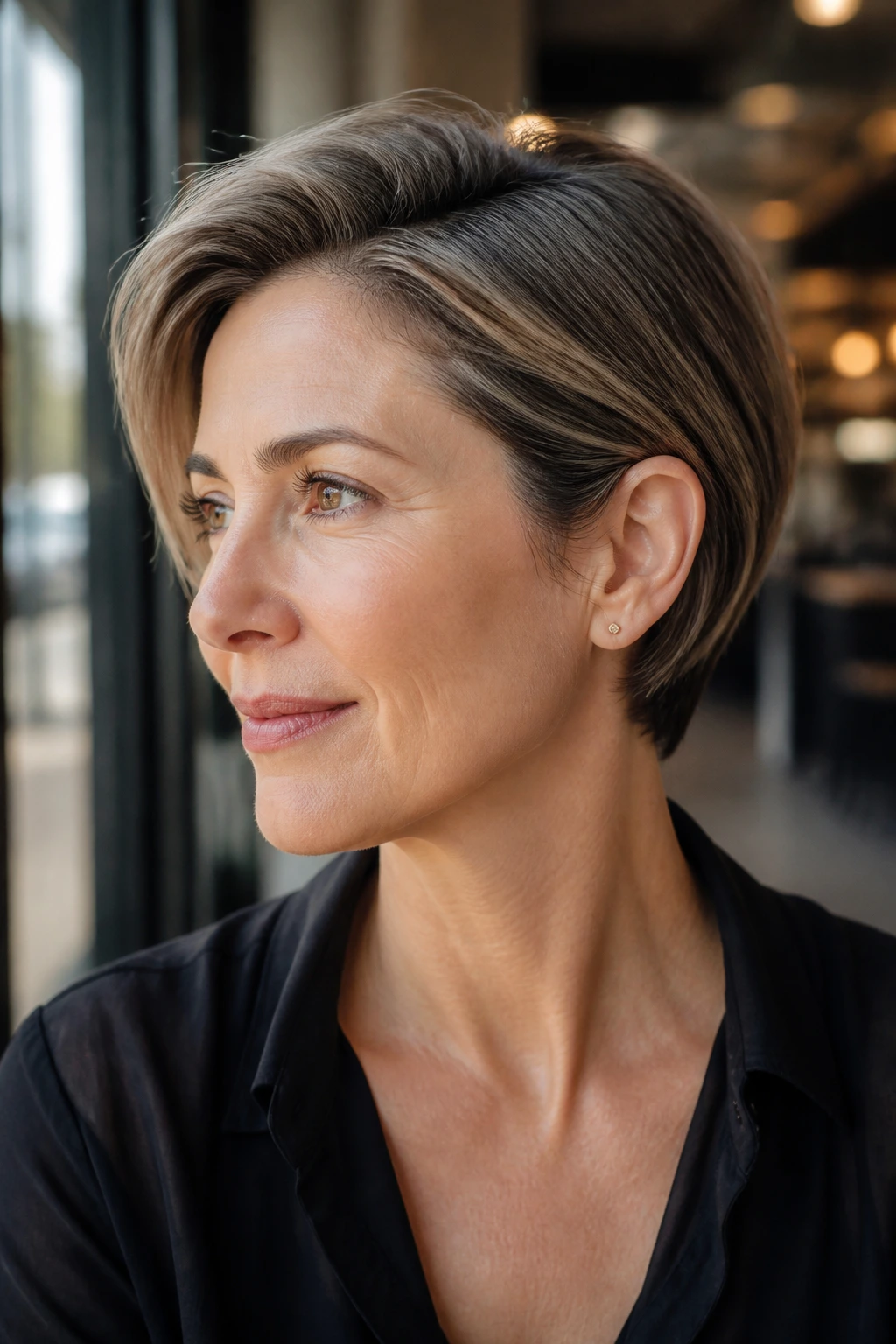
A short cut can look incredibly current when the sides are neat and the top is just long enough to tuck behind the ear. That little tuck changes everything. It opens the cheekbone, shows the jaw, and gives the whole cut a clean finish.
Final detail that matters
Ask for the back to be close and the top to have enough length to brush sideways rather than straight up. That keeps the style from looking spiky. A small amount of pomade or cream is usually enough to control the ends.
The cut works best when the neckline is freshly cleaned up. A sharp nape and a soft tuck by the ear read as polished without looking precious.
Why These Cuts Read Modern Instead of Fussy

Modern hair is not about pretending you are 25. It’s about giving your hair a shape that behaves. Clean lines matter because they look intentional even when the rest of the day does not go according to plan.
The old mistake was piling on too many layers and too much volume, then spraying everything into place. That can make a haircut look busy. A better cut keeps the weight where the hair needs it, which is usually at the perimeter or the crown, not both. That’s why a blunt bob can look fresher than a heavily razored one, and why a tidy pixie can feel softer than a cut with random texture everywhere.
Shine matters too. Gray hair, highlighted hair, dark hair with a gloss finish—all of it looks better when the outline is crisp. A good line catches the eye first. The rest can stay relaxed.
Essential Tools for Styling These Cuts
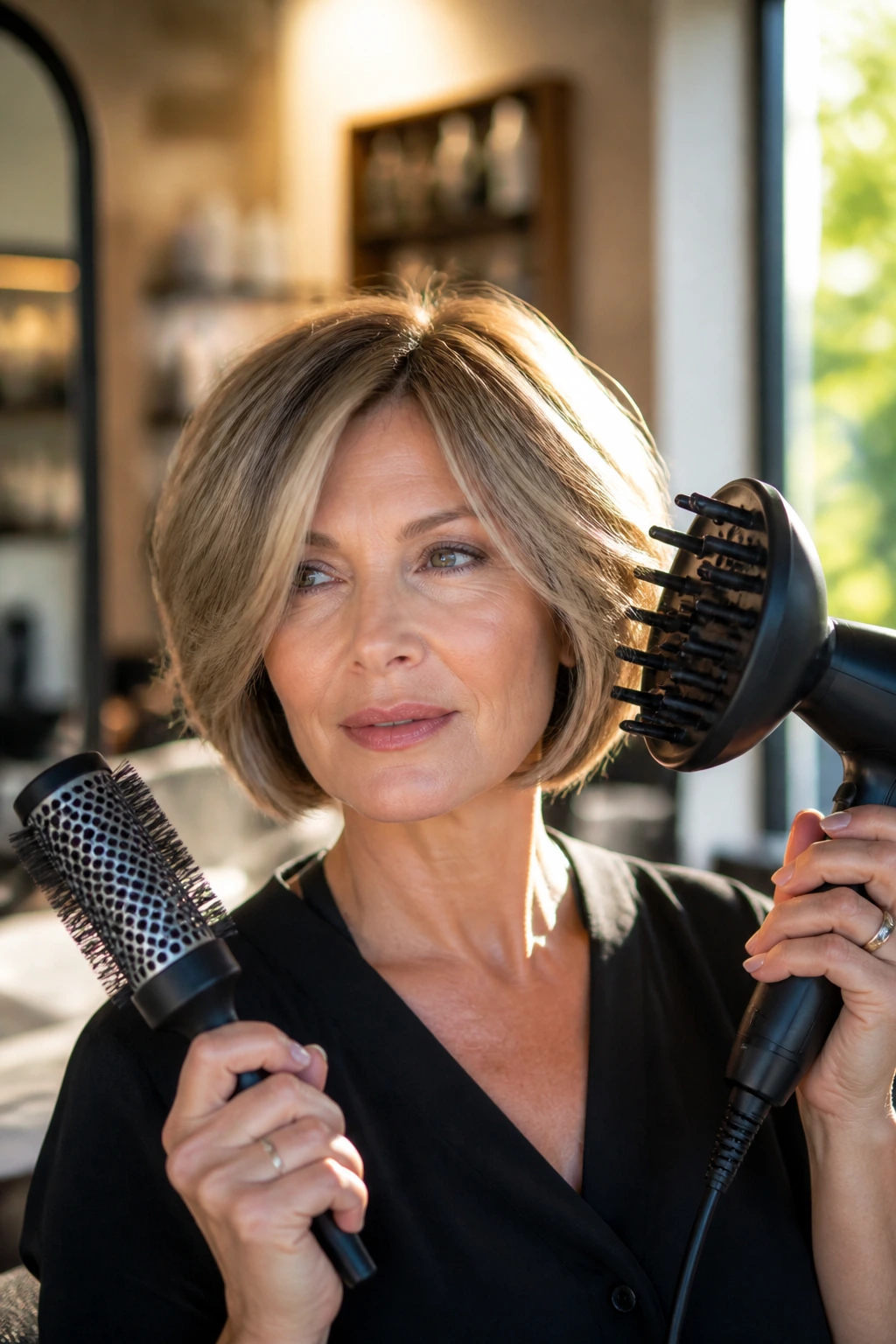
- Blow dryer with a nozzle: Directs airflow so the hair dries along the shape instead of puffing out.
- 1 to 1.25-inch round brush: Useful for bobs, lobs, curtain bangs, and any front section that needs a bend.
- Paddle brush: Better for smoothing mid-length and longer cuts without adding too much curve.
- Diffuser attachment: Worth having if you wear waves or curls and want less frizz.
- Small flat iron: Helpful for beveling ends, flipping a lob, or smoothing a fringe.
- Light mousse or root lift spray: Gives fine hair a little memory without turning it sticky.
- Styling cream: Good for bob ends, pixie texture, and soft control on gray hair.
- Texturizing spray: Best for piecey crops, bixies, and shags that need separation.
- Heat protectant: Use it any time you dry or smooth with heat. Always.
- Wide-tooth comb and section clips: Make the whole routine easier, especially if your hair is thick or curly.
What to Tell Your Stylist So the Cut Lands Right
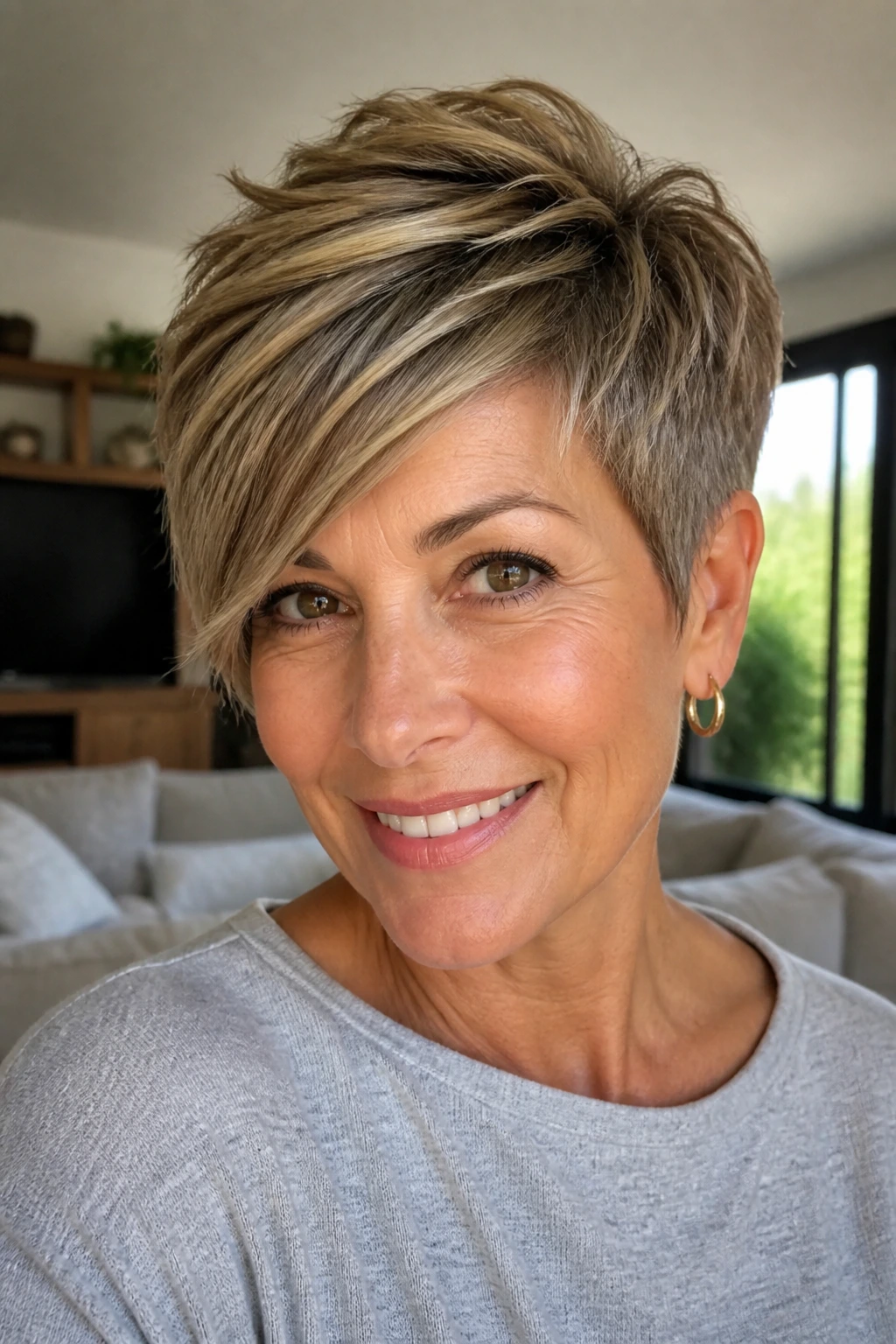
A good haircut starts with a clear sentence, not a vague wish. “Make it modern” sounds nice, but it does not tell anyone where the weight should sit, how much fringe you want, or whether you will spend five minutes styling it or fifteen.
Bring one photo for shape and one for finish
The best salon reference isn’t a single perfect photo. It’s one picture of the cut and another of the texture. A bob may show the perimeter, while a separate photo shows the softness you want around the face. That gives your stylist a real map.
Say what you do every morning
If you air-dry, say that. If you round-brush only the front, say that too. A haircut that requires a full blowout when you only own a vent brush is a bad deal, no matter how good it looked in the chair.
Name the problem, not just the style
“I need the sides to stay off my cheeks” is more useful than “I want it shorter.” So is “My crown goes flat by noon” or “My hair flips out at the neck.” Those clues change the cut in ways that matter.
How to Match the Cut to Your Hair Texture and Face Shape

Fine hair usually does best with a stronger edge. Bobs, lobs, and pixies that keep some bluntness at the perimeter tend to look fuller because the hair has a line to sit on. Too many short layers and the ends start to look empty, which is the fastest way to make a haircut feel tired.
Thick hair wants control without stiffness. A collarbone lob with internal debulking, a shoulder-length shag, or a hidden-layer cut can keep the bulk from spreading outward. The point is to move the weight, not remove so much that the hair gets fuzzy.
Curly hair is a different animal. The cut has to respect shrinkage, and the shape should be judged by how the curls fall when they dry. Straight hair can take a sharper edge, a beveled end, or a flip-out finish because the line stays visible. Round faces usually like a little height or diagonal movement; longer faces often look better with a fringe or a fuller side area.
How to Wear These Cuts With Glasses and Everyday Clothes
Presentation: Keep the finish matched to the line of the cut. A blunt bob looks best when the ends are smooth and the front sits cleanly around the cheekbones, while a pixie needs a little separation at the top so it doesn’t read flat. If your glasses are bold, let the hair stay quieter around the temples.
Accompaniments: Small hoops, thin chains, and neat collars usually work best with these shapes because they don’t compete with the hair. A scarf can look smart with a pixie or short bob, but it can crowd a lob if the ends are already close to the neck. Turtlenecks and high collars pair well with bobs that expose the jaw.
Portions: If your hair is thick, keep more length at the ends so the shape doesn’t puff out too soon. If your hair is fine, keep the cut compact and clean so it doesn’t split into soft-looking pieces by the end of the day. The right amount of hair is the amount your shape can hold.
Beverage Pairing: A mug of coffee or tea is the right companion for these cuts, because none of them should demand a forty-minute styling ritual before breakfast. If you’re spending more time than that, something in the cut is working against your life.
Additional Tips and Finishers
Shape Boost: Shift your part half an inch off center and you can change the whole face-framing effect without touching the scissors. A small move can create lift at the root and stop a flat front from dragging the style down.
Time-Saver: Clip the front pieces up while you do makeup, then let them fall after they cool. That little pause helps bangs, curtain pieces, and long fringe hold their bend longer.
Polish Move: Use serum or cream on the last inch of the ends only. Mid-shaft product can flatten hair fast, especially on bobs and lobs.
Make-It-Yours: If you wear your hair curly, choose a shape that leaves room for shrinkage. If your hair is straight, ask for a little bevel or one soft wave at the end so the line doesn’t look rigid. If you prefer low effort, keep the perimeter clear and the layers minimal.
Common Mistakes That Age a Cut Fast
The biggest mistake is over-thinning fine hair. It looks light for about ten minutes, then the ends turn see-through and frayed. The fix is a cleaner perimeter with fewer short layers.
Another one: bangs cut too short. They may look cute for a day, then they jump up, split, or sit exactly where your glasses live. Ask for more length than you think you need. You can always trim down later.
Ignoring the growth pattern is another trap. Cowlicks at the crown or around the forehead can push a style sideways in a hurry. If you know your hair fights in one spot, tell the stylist before the scissors touch it.
And then there’s the style you never touch. A shag that needs daily round-brushing, or a pixie that wants wax every morning, is only “easy” if you actually enjoy doing that. Pick the routine you’ll keep.
Variations and Alternatives to Try
The Glasses-Friendly Shift: Keep the temples lighter and the fringe a little longer so frames have room to sit. This works especially well on bobs and bixies where the side area can easily get crowded.
The Silver-Glow Edit: Choose a stronger outline and a glossing routine that keeps gray hair reflective instead of dry-looking. A crisp perimeter plus shine makes silver strands look purposeful.
The Fine-Hair Lift: Stay closer to blunt lines, use fewer layers, and keep the crown from getting too feathered. The point is fullness at the edge, not airy texture everywhere.
The Curl-Respecting Version: Ask for the cut to follow the curl pattern and let the dry shape guide the final length. That keeps the bob, lob, or shag from shrinking into a shape you didn’t ask for.
The Low-Heat Routine: Build the style around air-drying, mousse, and hand shaping instead of hot tools. This is the one to choose if you want a hair routine that fits into real mornings.
The Dressier Side-Part Finish: Shift the part deeper, tuck one side behind the ear, and smooth the front with a brush or iron. The same haircut can look sharper for dinner or more relaxed for daytime with one simple change.
Keeping the Shape Between Salon Visits
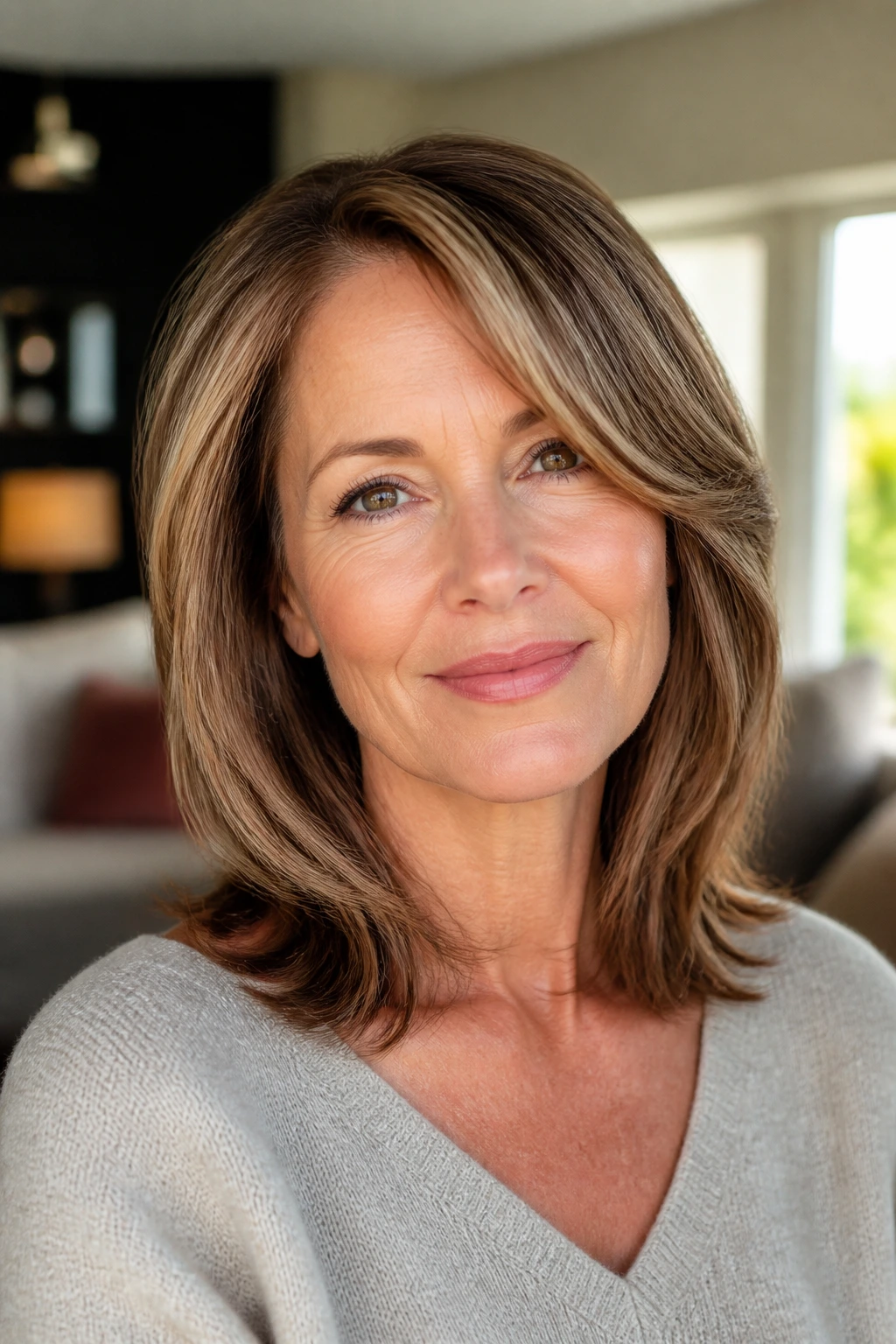
Short cuts need trims faster than long ones. A pixie or tapered crop usually wants a cleanup every 4 to 6 weeks, while bobs and lobs can often go 6 to 10 weeks before they start losing shape. Bangs are the first thing to betray a haircut, so if you wear fringe, keep an eye on where it lands once it starts brushing your lashes.
At home, the goal is to keep the ends from drying out and the roots from getting coated in too much product. Use heat protectant any time you dry or iron. Use a clarifying shampoo once every couple of weeks if your hair starts going dull or flat from mousse and cream buildup. For gray hair, a purple shampoo can help if yellowing shows up, but use it sparingly; too much can make the hair look flat and chalky.
At night, a loose clip or a silk pillowcase can keep the shape from collapsing. If the front pieces are the part that always goes wild, pin them gently for ten minutes after styling. Small habits. Big payoff.
Frequently Asked Questions
What haircut makes hair look fuller after 50?
A blunt bob, a collarbone lob, or a compact pixie usually gives the best fullness because the perimeter stays solid. Hair looks thicker when the ends have a clear line to sit on.
Are bangs a bad idea if I wear glasses?
No, but the length matters. Long side-swept bangs, bottleneck bangs, or curtain pieces usually sit better than a short, heavy fringe that lands right at the frame line.
Does short hair automatically make you look older?
Not if the shape is clean and the top has enough movement. Short hair looks flat or severe when it’s cut too tight everywhere, not because it’s short.
What if my hair is curly and I want a bob?
Ask for a curl-shaped bob, not a straight-line bob copied from a photo. The dry finish and shrinkage matter more than the wet length in the chair.
How often should I trim a modern bob?
Most bobs need a trim every 6 to 8 weeks to keep the outline crisp. If your hair is very straight or your bob is blunt, you may notice the shape sooner.
Can I keep long hair and still look current?
Yes. Long layers that begin around the cheekbone, a cleaner perimeter, and a better part can make long hair feel far fresher than a dramatic chop.
What if my crown goes flat no matter what I do?
Choose a cut with some lift built in near the crown or top, then use mousse at the roots and dry the hair upward with a nozzle. Product alone won’t fix a shape that lies too close to the head.
Should gray hair be cut differently than colored hair?
Often, yes. Gray hair can be drier or coarser, so a cleaner perimeter and less aggressive thinning usually help it look smoother and more reflective.
A Cut That Still Feels Like You
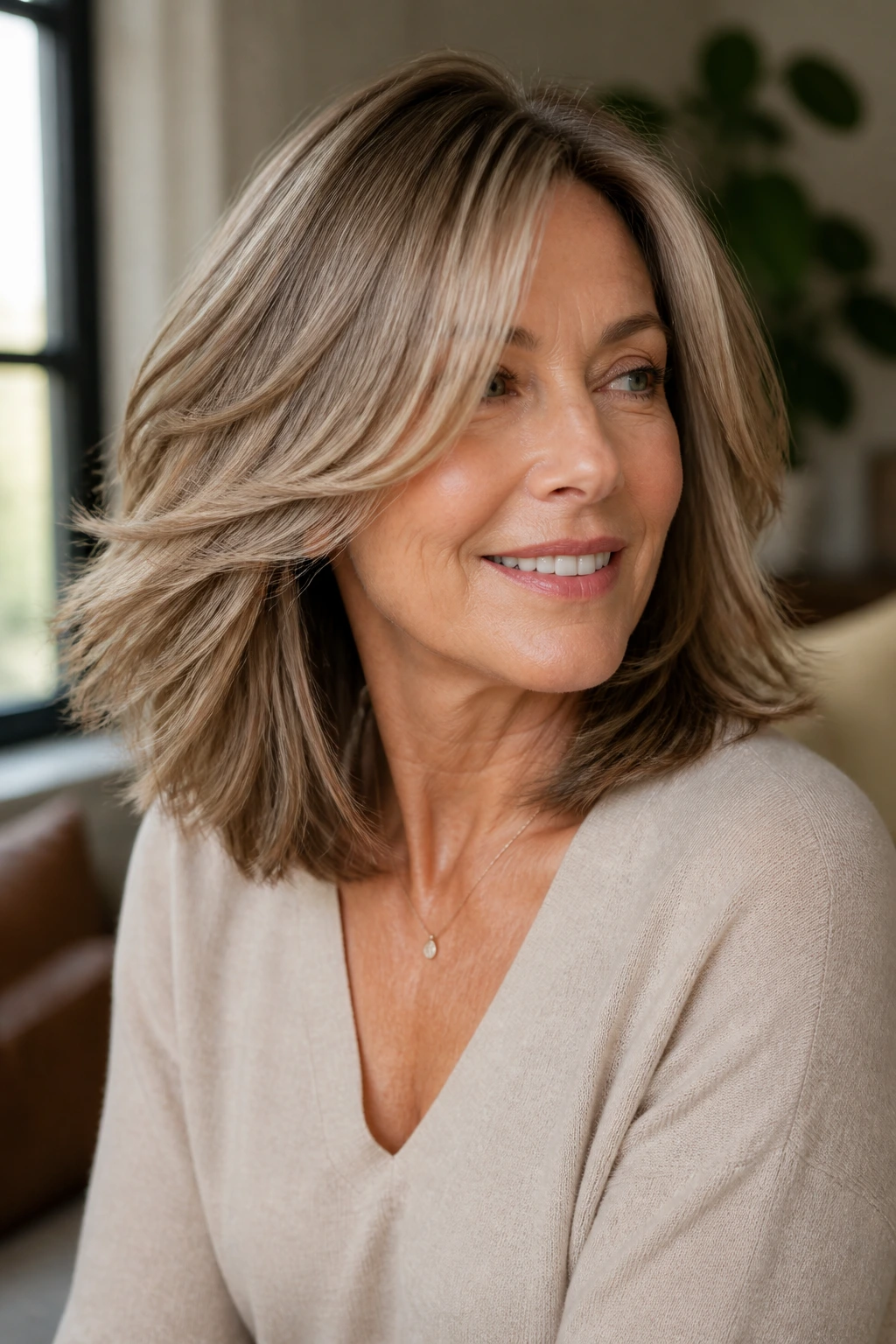
The best modern haircut is not the one that chases youth. It’s the one that gives your hair a clear shape, works with your morning routine, and still looks decent when the day gets messy. That’s the whole point of these styles: they behave.
Pick the cut that matches your texture, your glasses, your part, and the amount of time you will actually spend on it. Then ask for the shape in plain words, not salon poetry. A good haircut should make your life simpler the minute you leave the chair—and the right one usually does.
