



Cold air does strange things to hair. One quick walk under a wool scarf, and a smooth blowout can puff up at the crown, snag at the nape, and pick up enough static to make a simple part look like it fought with a sweater and lost.
That’s why winter hairstyles need a different kind of polish. Not more fuss. More shape. More restraint at the ends, cleaner lines at the hairline, and enough hold to survive a collar brushing the back of your neck every ten minutes.
The best winter hairstyles for a polished seasonal look do one of two things: they either tuck the vulnerable parts away, or they make the frizz and softness look intentional. That’s the whole trick. A style can be neat, glossy, soft, or romantic — but if it falls apart the second a coat goes on, it stops reading polished and starts reading unfinished.
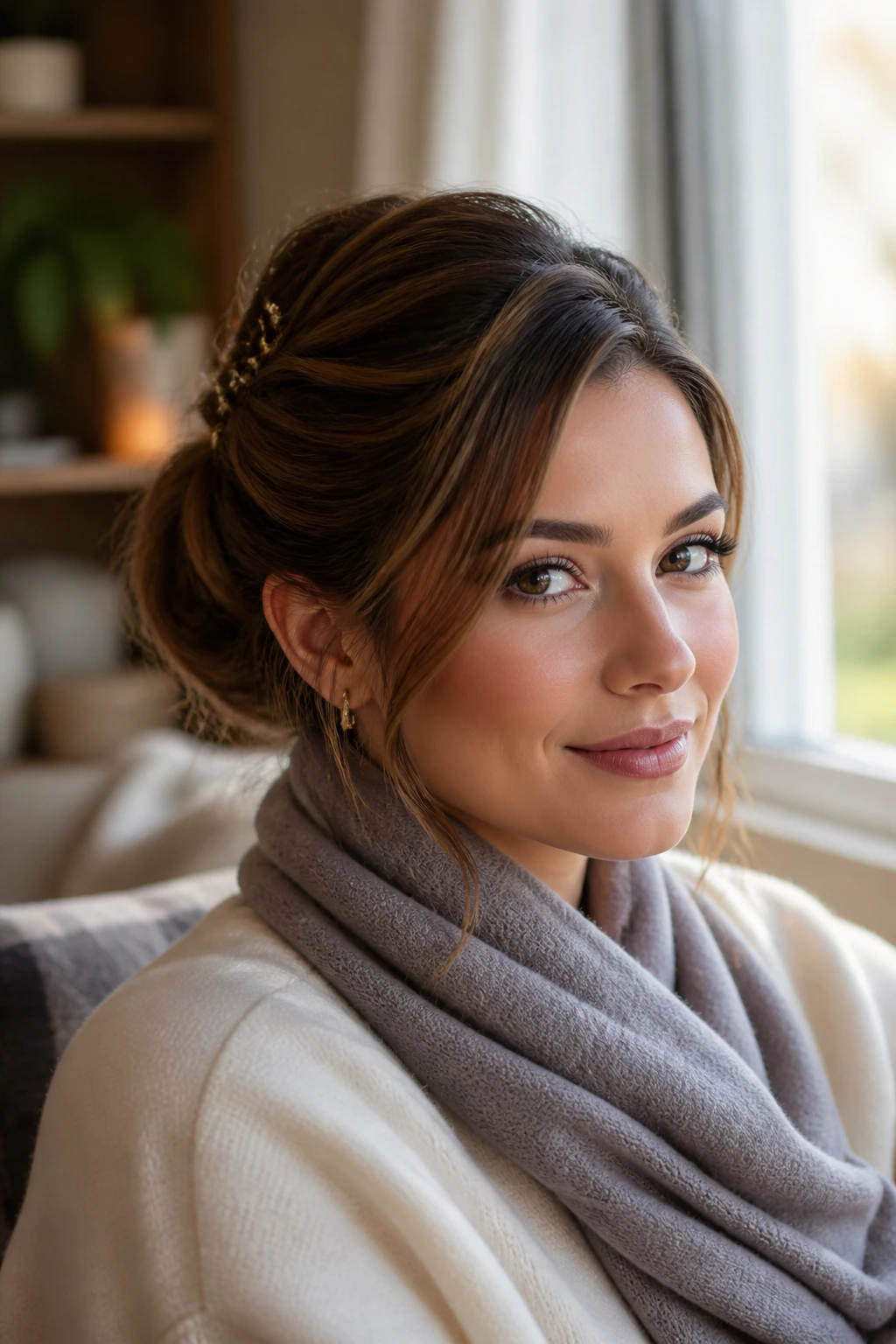
Why These Winter Hairstyles Earn Their Spot
-
They work with dry air, not against it: Winter air pulls moisture from hair fast, so these styles lean on shape, pins, braids, and smooth bases that still look good when the ends get a little rough.
-
They survive scarves and coat collars: Styles with low placements or tucked lengths keep the most fragile part of the hair away from friction, which is where the fuzzy halo usually starts.
-
They make second-day hair useful: A little grit at the roots can help braids, twists, and buns stay put instead of sliding out by lunch.
-
They keep the finish sharp: Clean parts, controlled flyaways, and one deliberate accessory do more for a cold-weather look than piling on extra volume.
-
They scale from errand hair to evening hair: The same base style can look casual with a matte clip or dressier with a ribbon, a shine mist, or a polished part.
-
They leave room for hats: A good winter style doesn’t panic when a beanie comes off. It bends a little, then still looks like it meant to be there.
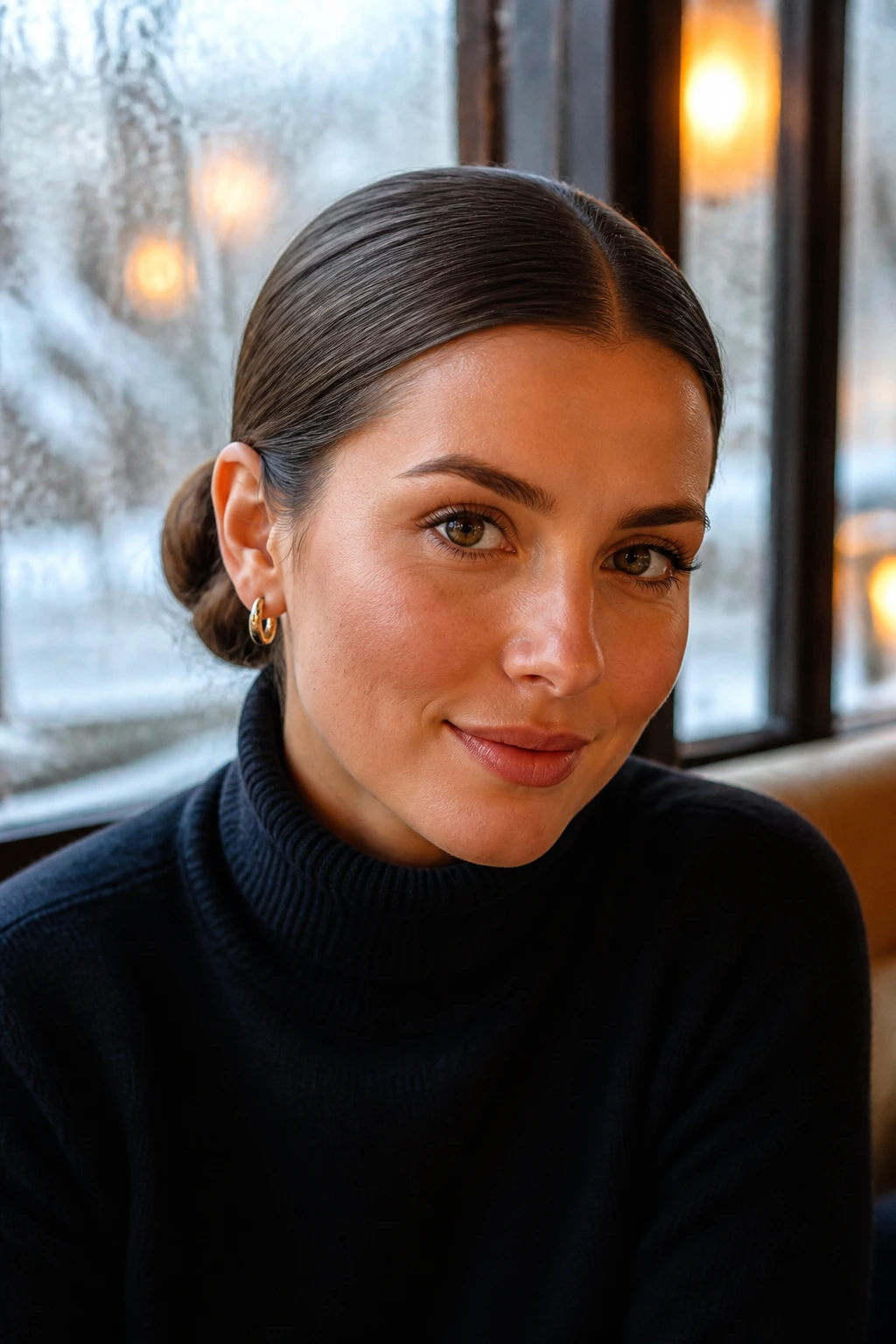
1. Sleek Low Chignon
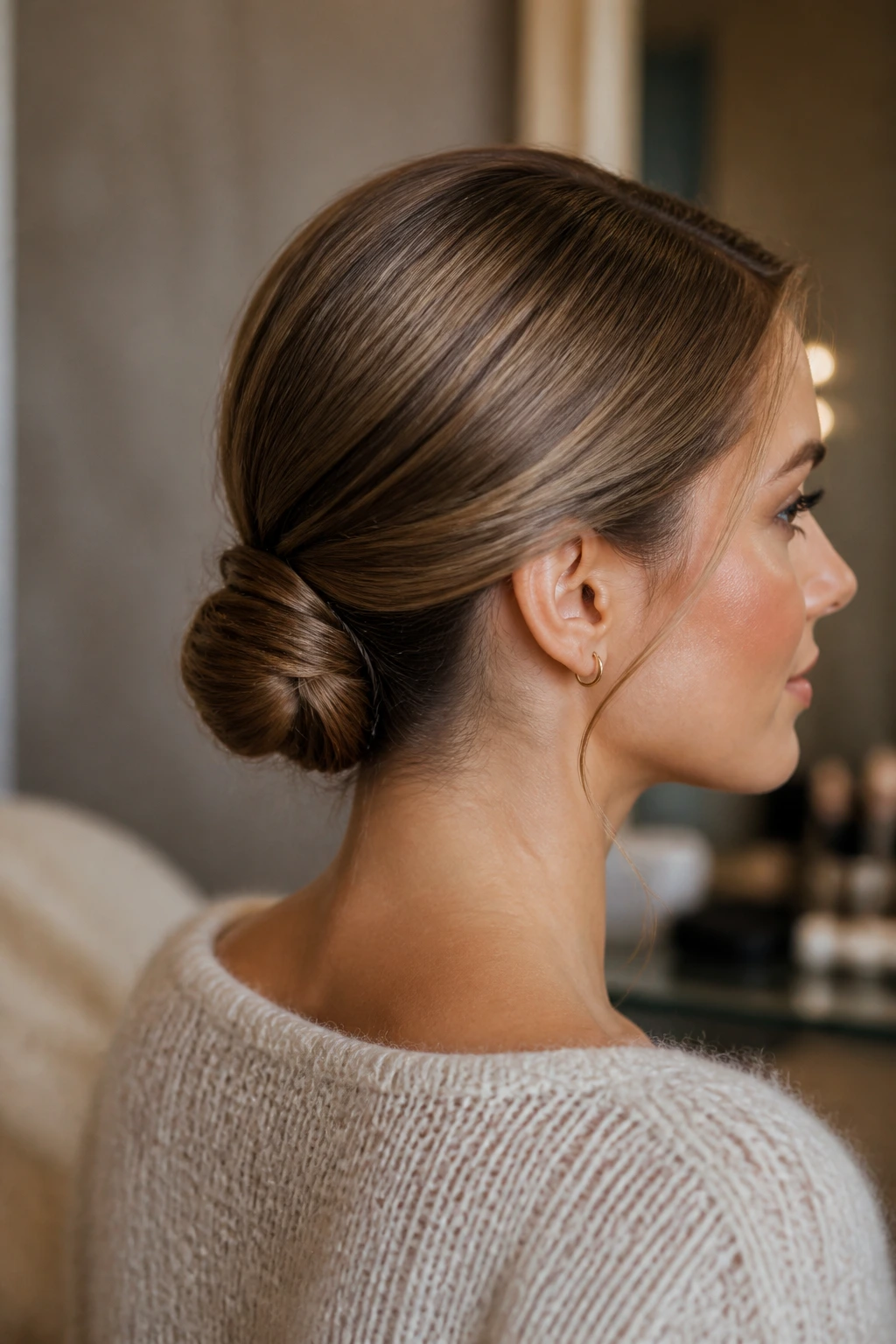
A low chignon is one of those styles that looks more expensive than it is. The nape stays tucked, the silhouette stays clean, and the whole thing ignores scarf friction better than most updos. If your hair is a little dry at the ends, that barely matters here. The twist hides a lot.
Start with a light smoothing cream through the mid-lengths, then pull everything into a low ponytail at the nape. Twist the tail until it coils naturally, wrap it into a knot, and pin it flat with crossed bobby pins. A mist of flexible-hold hairspray after the first two pins — not before — helps the shape stay crisp without turning the surface stiff.
This is one of the best winter hairstyles when you want your hair to look settled, not overworked. It sits neatly under coat collars and still looks good if a few tiny flyaways appear near the part. Tiny flaws. Big payoff.
2. Polished French Twist
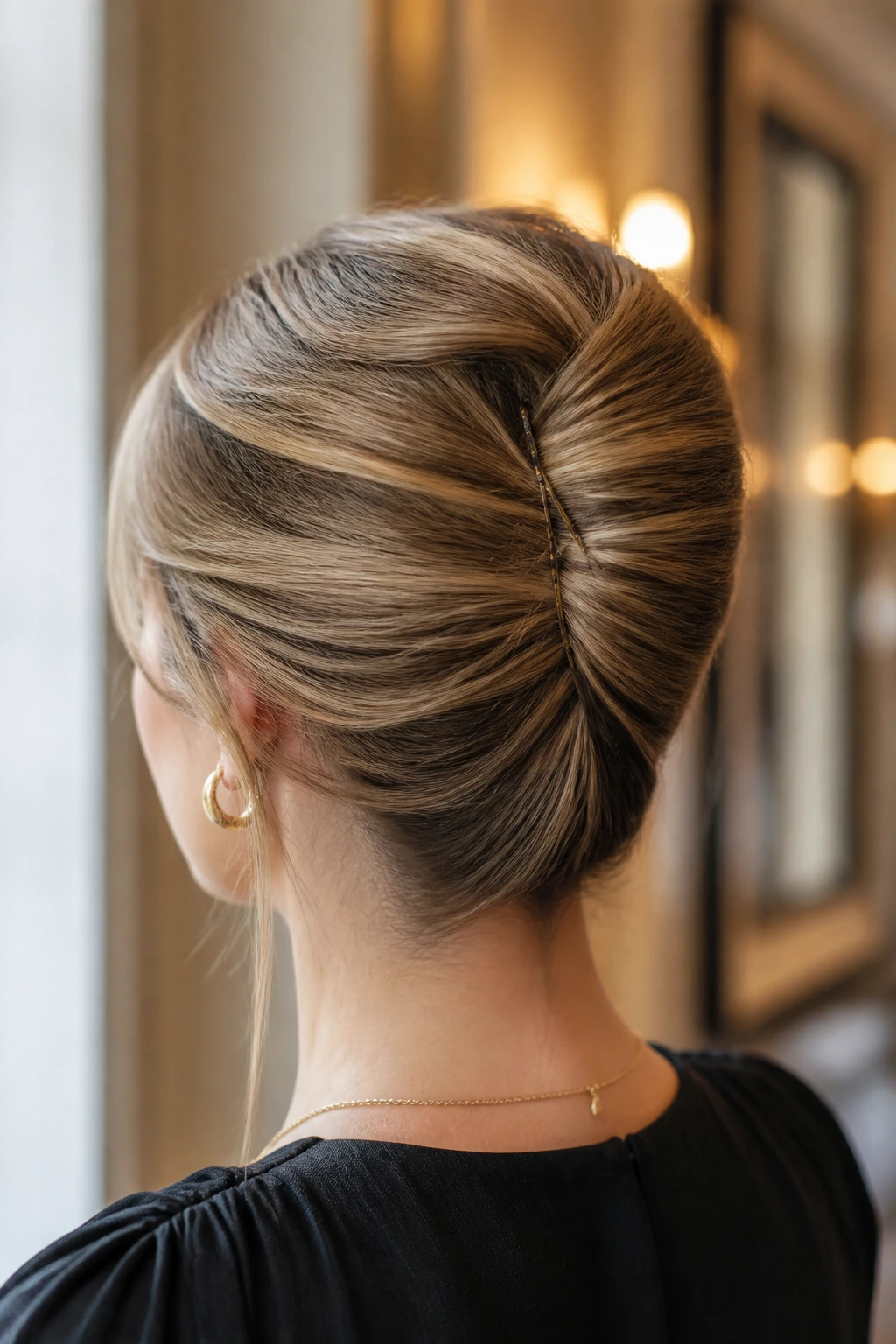
Why does a French twist feel so right in cold weather? Because it solves three problems at once: it lifts the hair off the neck, keeps the ends hidden, and gives you a profile that looks finished even from across a room.
I like this one most on hair with a little day-old grip. If your hair is freshly washed and slippery, a dusting of texturizing spray at the crown makes the twist stay put instead of unraveling while you pin it. Roll the hair upward along the back of the head, tuck the ends inside the fold, and anchor the twist with long pins that cross near the center.
It’s elegant, yes, but not delicate. The style can take a wool scarf without falling apart, which is more than I can say for half the formal looks people reach for in winter.
3. Center-Part Glass Hair
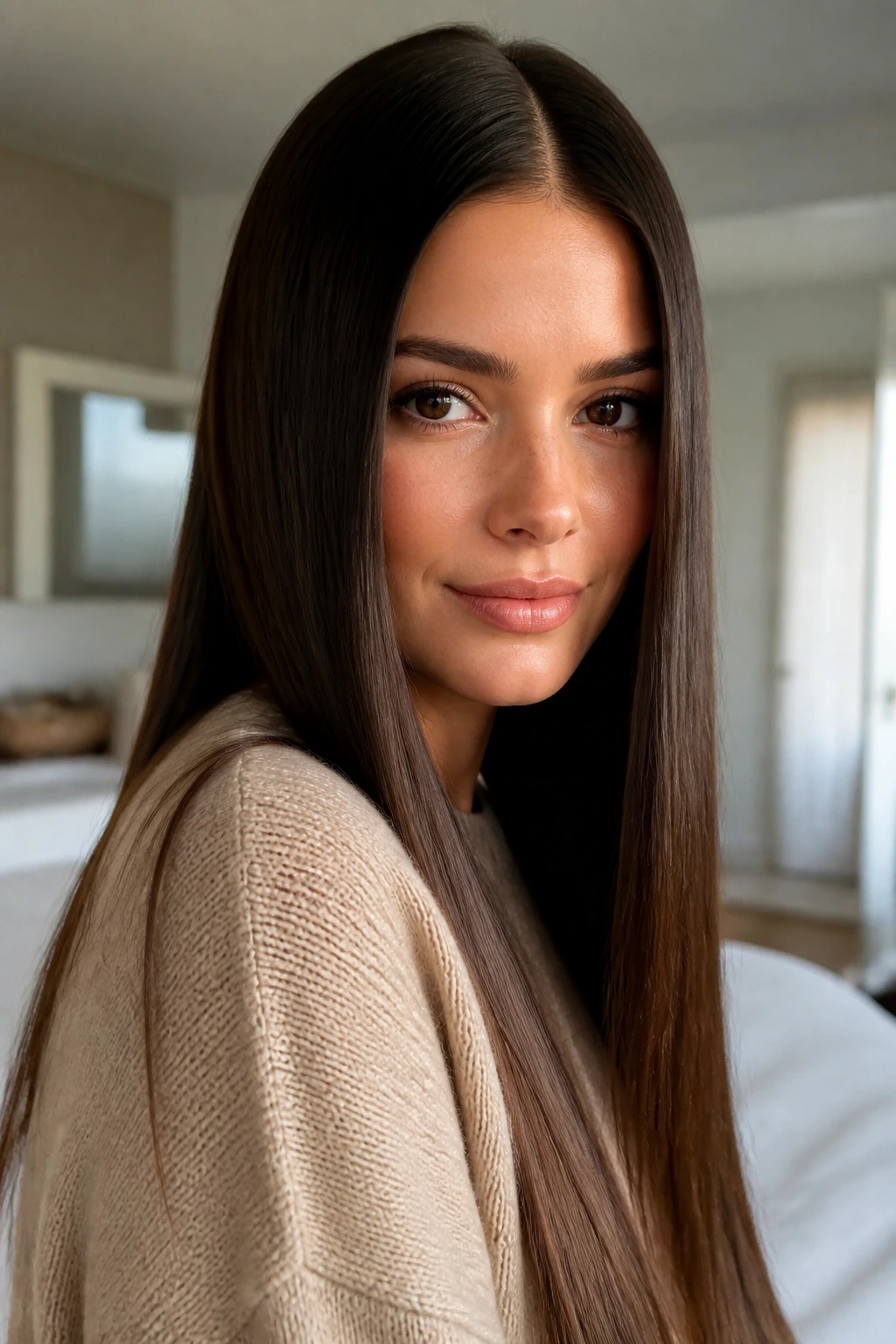
Straight, shiny, and stripped of extra fluff — that’s the appeal here. Center-part glass hair gives winter the cold, crisp finish it sometimes pretends to have in editorials, but in real life it’s just a smart way to use a flat iron, a heat protectant, and a light serum on the lengths.
The key is restraint. Too much oil at the roots makes the style collapse, and too much product on the surface turns it limp. I’d rather see a tiny bit of bend at the ends than a greasy crown. Blow the hair smooth with a nozzle first, then pass the flat iron in slow, steady sections, chasing each piece with a brush if needed.
This style looks especially sharp with big earrings, high-neck sweaters, or clean tailoring. It has a blunt, reflective finish that reads polished even when the rest of the outfit is doing a lot.
4. Soft Curl Blowout
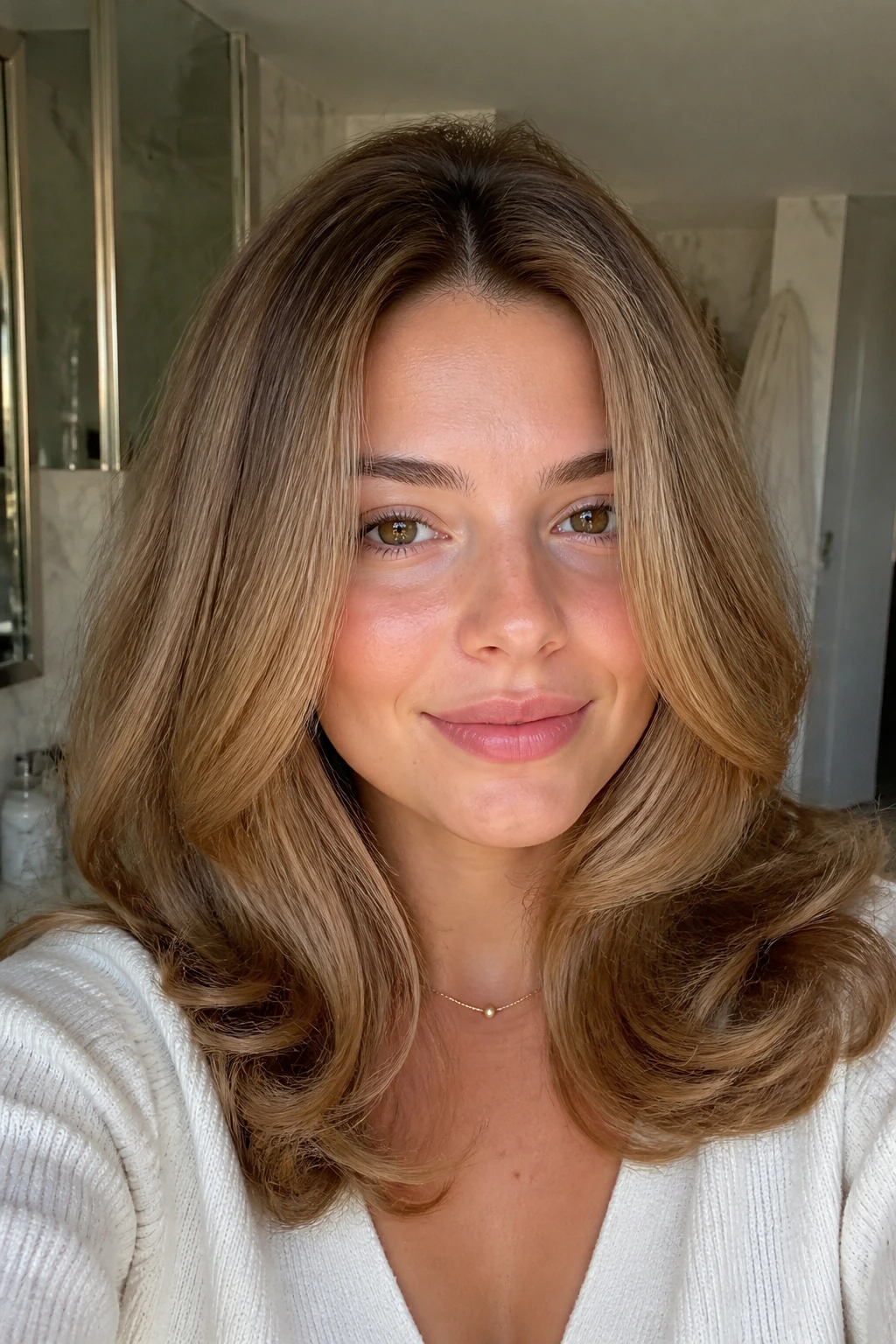
A soft curl blowout is what you want when your hair needs movement but not chaos. The ends curve under just enough, the roots keep a little lift, and the face-framing pieces stop the style from feeling severe under winter light.
Use a round brush or a large-barrel brush dryer, then set each section with a 1.25-inch curling iron if your hair tends to fall flat. Let the curls cool before touching them; that cooling time matters more than people think. If you brush too early, the shape disappears, and you’re left with loose bends that look accidental instead of styled.
This is one of the most forgiving winter hairstyles for polished daytime plans. It can handle a little puff, which is useful, because cold air almost always sneaks in a little texture whether you ask for it or not.
5. Low Bubble Ponytail
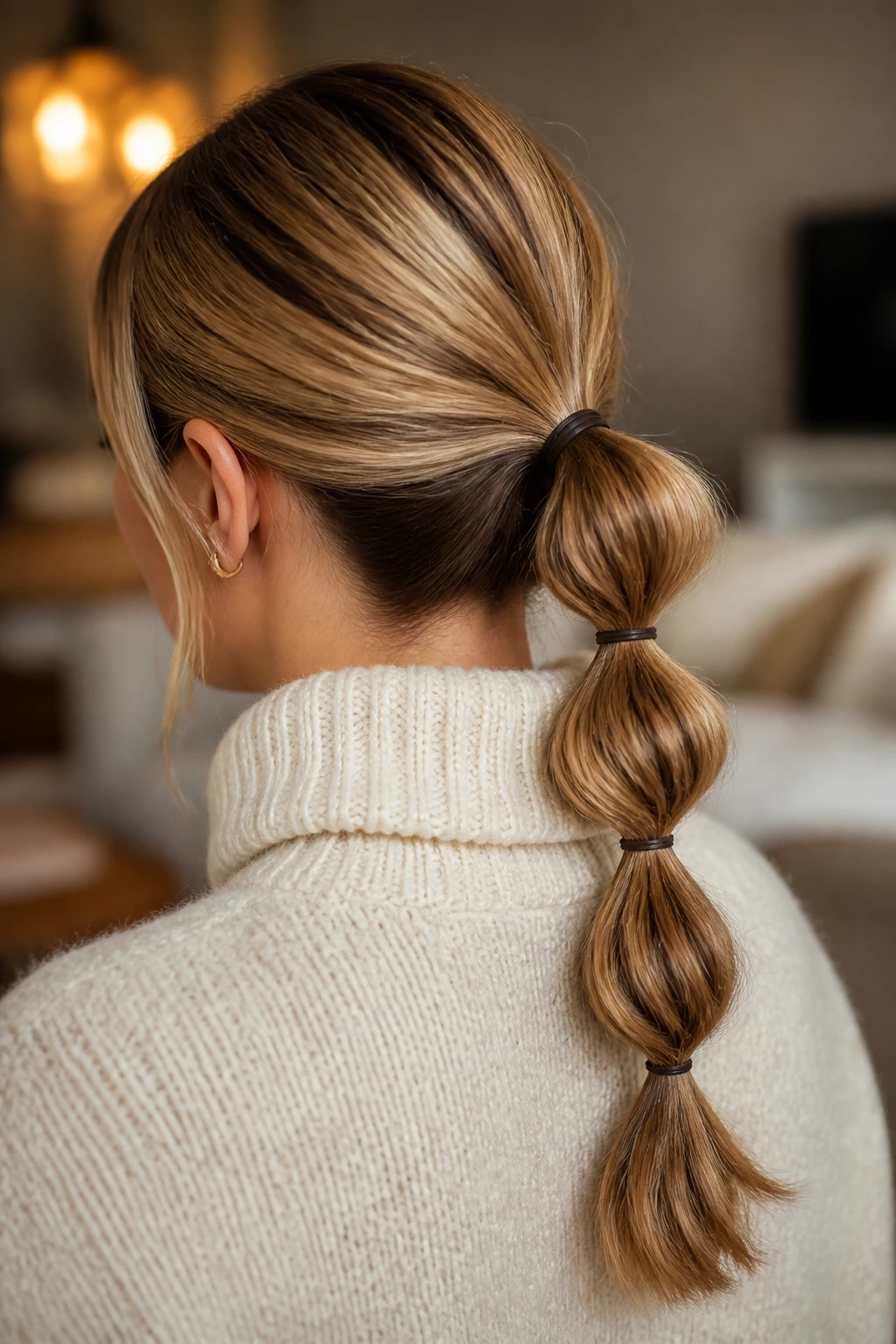
A bubble ponytail looks playful, but the low version reads neat and grown-up when you keep the bubbles even and the base smooth. The shape works especially well with knit collars, because the pony sits below the friction zone instead of right in it.
Here’s the trick: secure the pony at the nape, then place clear elastics every 2 to 3 inches down the length. Gently tug each section outward until it rounds into a full bubble. Don’t yank the sides too hard or the whole thing starts to look lopsided, which is not the mood.
What makes it winter-friendly: it handles second-day hair nicely, it keeps the ends contained, and it still has enough personality that you don’t feel overdressed for a regular day out. That balance is rare. Keep it.
6. Crown Braid
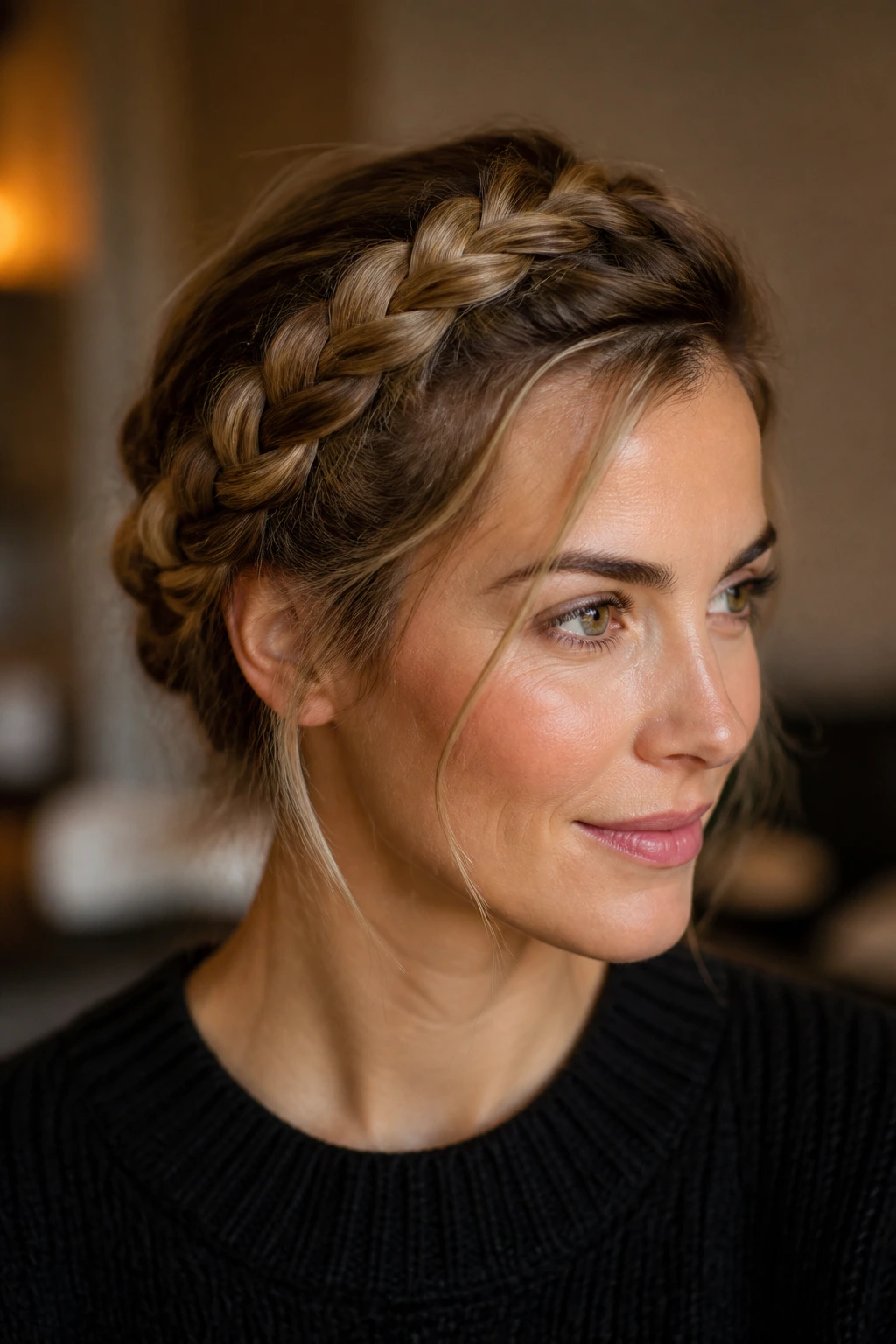
A crown braid is one of the few styles that can survive a hat, a scarf, and a long day without looking like it needs rescuing. It keeps the front soft, controls the sides, and gives you that wrapped, intentional shape that winter hair often lacks by default.
I prefer a Dutch braid here because the braid sits a little higher and reads more clearly against coats and dark sweaters. If your hair is layered, leave the shortest front pieces free instead of forcing them into the braid. A tiny amount of wax stick at the hairline helps tame the little fuzzy bits that pop out near the temples.
It’s a practical style, but it doesn’t feel plain. That’s the whole reason it keeps showing up in cold-weather rotations.
7. Half-Up Twist with Loose Waves
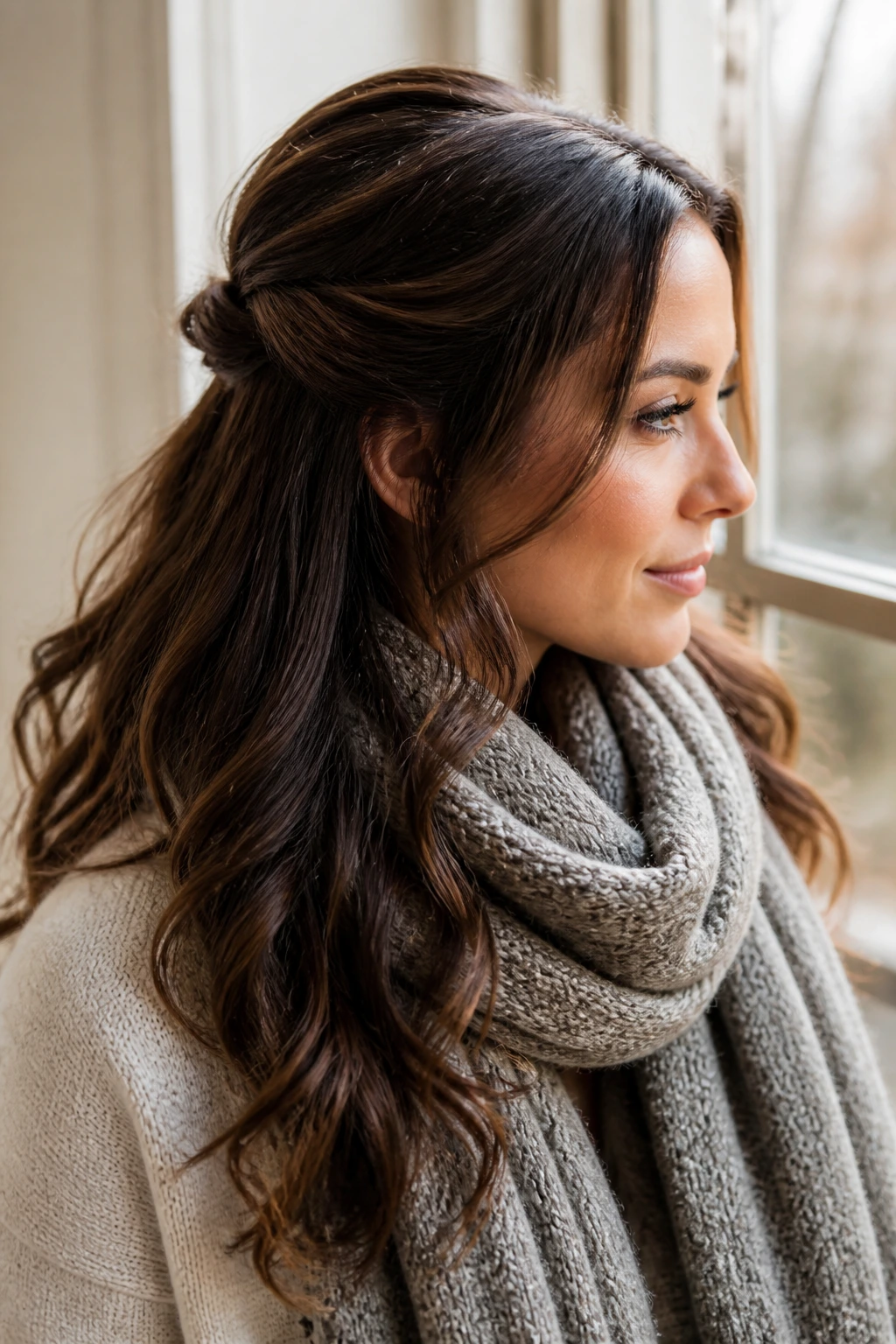
This one hits a sweet spot. The top half gets pinned and controlled, while the lower waves stay soft enough to keep the style from looking too formal for daytime.
Twist two sections from the temples back toward the crown, secure them with a small clip or a pair of bobby pins, then leave the rest in loose waves. If your hair is very straight, a 1-inch iron gives the wave enough bend to hold under a scarf without turning into corkscrews. The front pieces should curve away from the face, not stick straight out — that little detail changes the whole mood.
The look works because it lets the hair breathe. Not every polished style has to be sealed up tight.
8. Tucked-In Faux Bob
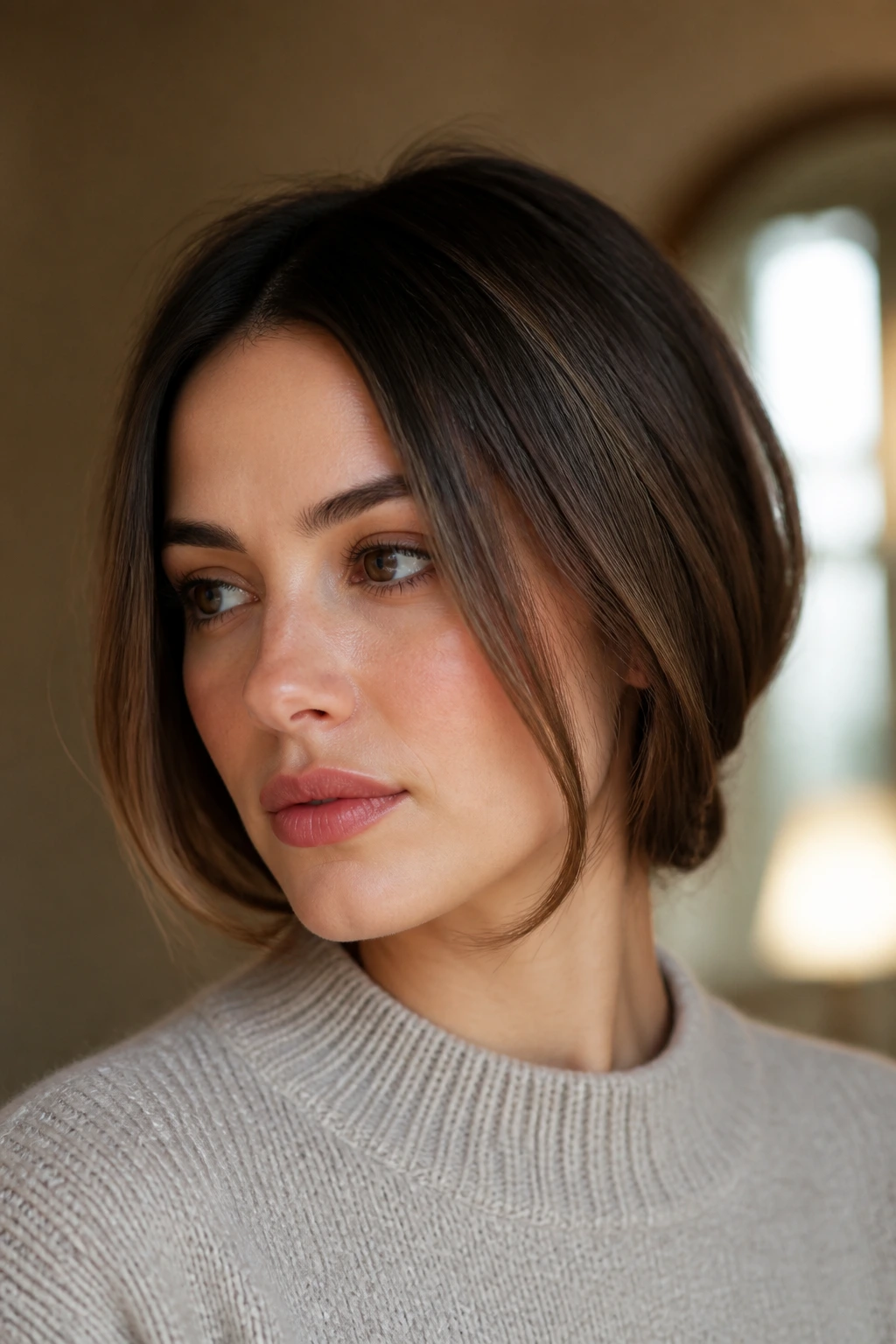
Long hair can fake a shorter cut faster than most people expect. A tucked-in faux bob takes the ends, folds them under, and pins them so the overall shape lands somewhere between chic and slightly old-school in the best way.
This is a smart choice when you want something a little different for a dinner, a party, or any cold-weather event where scarves keep messing with the back of your hair. Start with a low, loose pony, fold the length upward, then tuck the ends under and pin them into the base. Leave a few face-framing pieces out if you want softness; keep it all tucked if you want a sharper line.
It works best on hair that has some hold already, even if that hold came from second-day texture and not styling magic.
9. Velvet Bow Half-Up
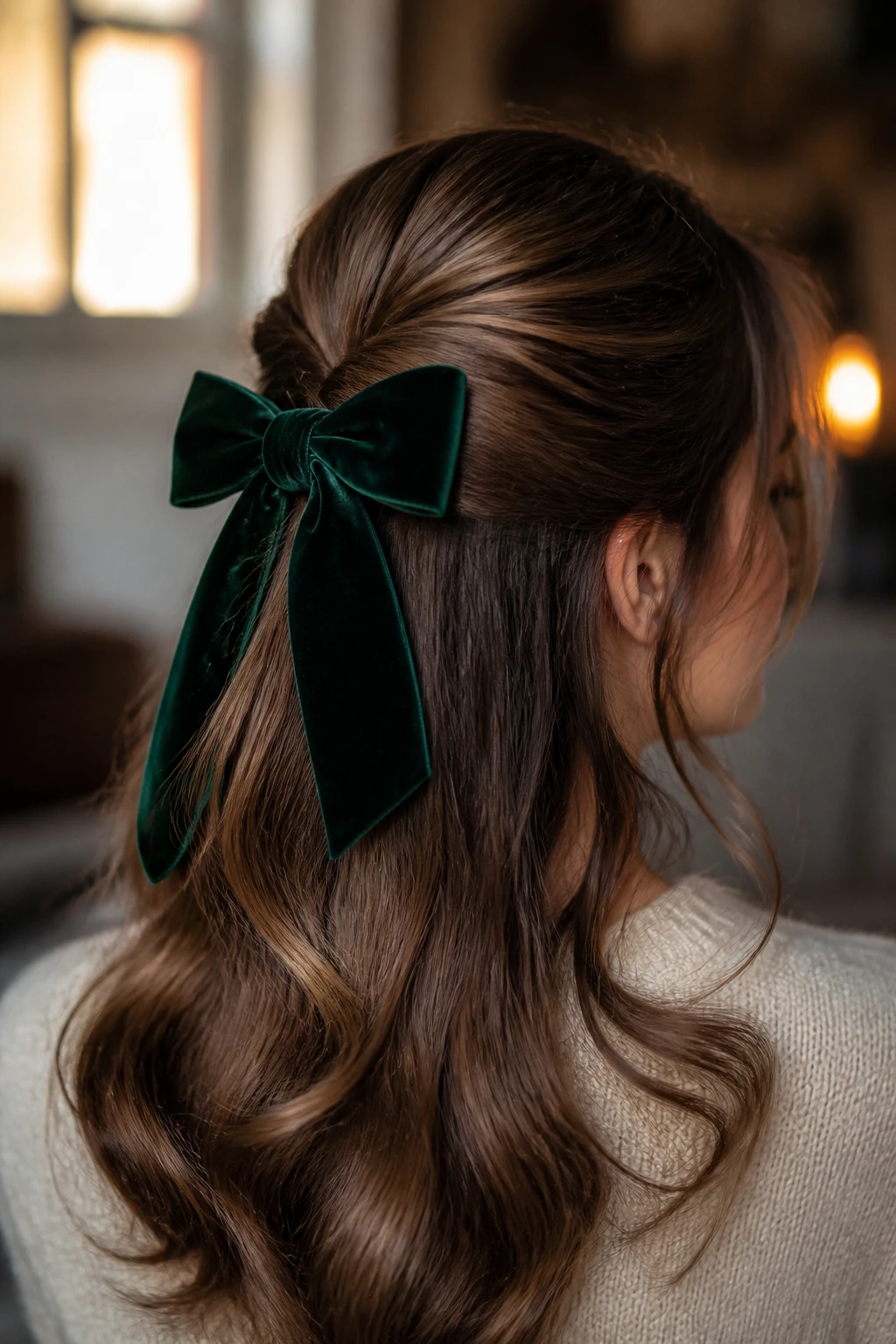
A velvet bow can carry a whole look if you place it right. The half-up section should sit around the back of the crown, not too high, or it starts to feel juvenile in a way winter tailoring won’t forgive.
Pull the top section back smoothly, secure it with an elastic, then cover the tie with a ribbon or bow in a rich dark shade — deep green, burgundy, navy, or black all make sense here. Keep the lengths below soft and brushed. If the ends are a little dry, a drop of serum warmed between your palms will calm them down without flattening the rest.
This style is especially good when you want one visible detail and nothing else fighting for attention. Clean, simple, done.
10. Side-Swept Low Ponytail
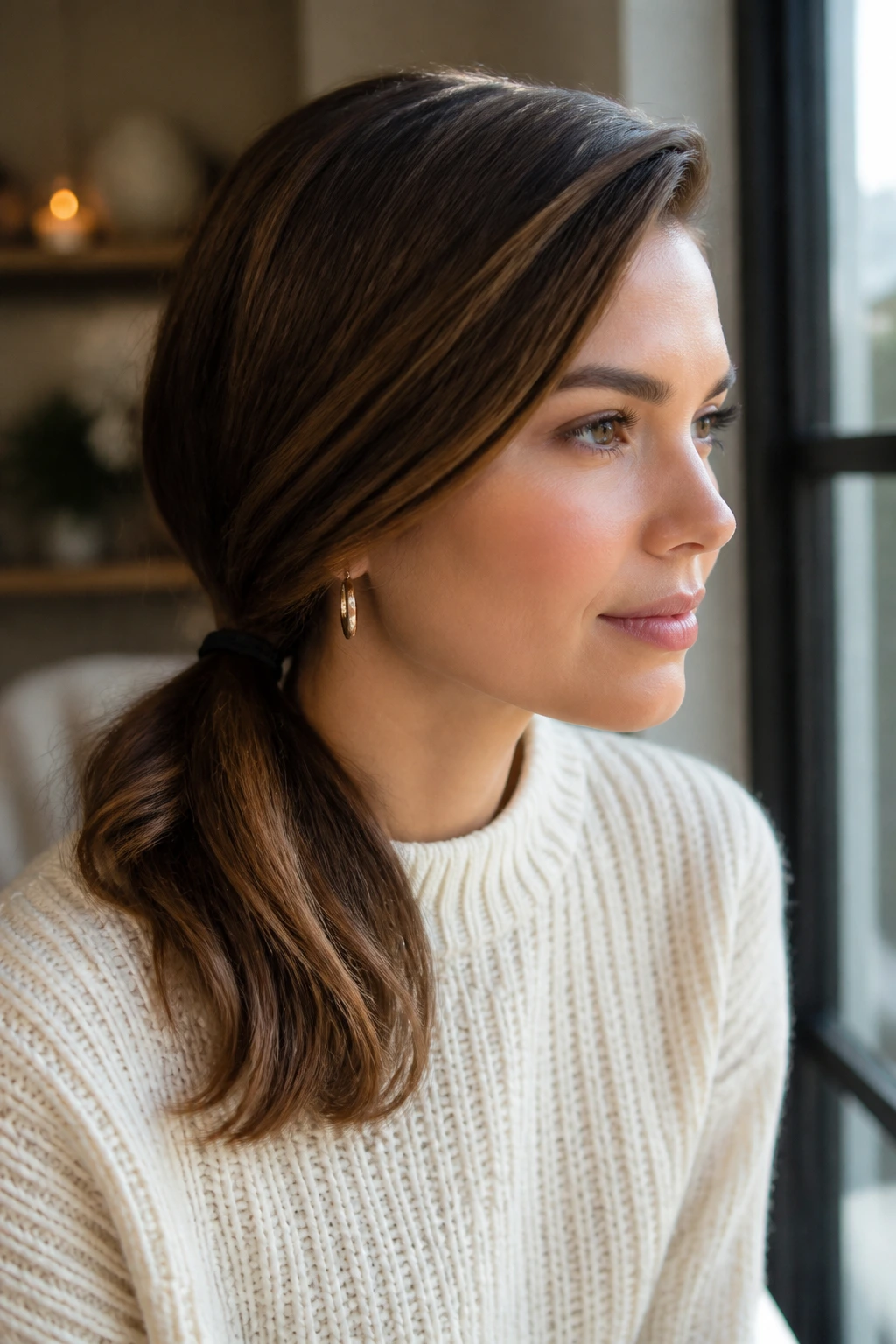
A side-swept low ponytail gets overlooked because it sounds too easy. It isn’t. The side part, the directional sweep, and the placement just below the ear change the whole feel of the style, especially when winter coats are doing their best to crush the back of your head.
Begin with a deep part, smooth the heavier side across the crown, and gather the pony low on the opposite side of the nape. Wrap a small section of hair around the elastic so the base disappears. If your hair is fine, a tiny bit of teasing at the crown gives the style enough lift to stay from looking flat against a sweater.
This one shines when you want earrings to show. It frames the jaw nicely, which helps when coats and scarves swallow up half your outfit.
11. Braided Bun
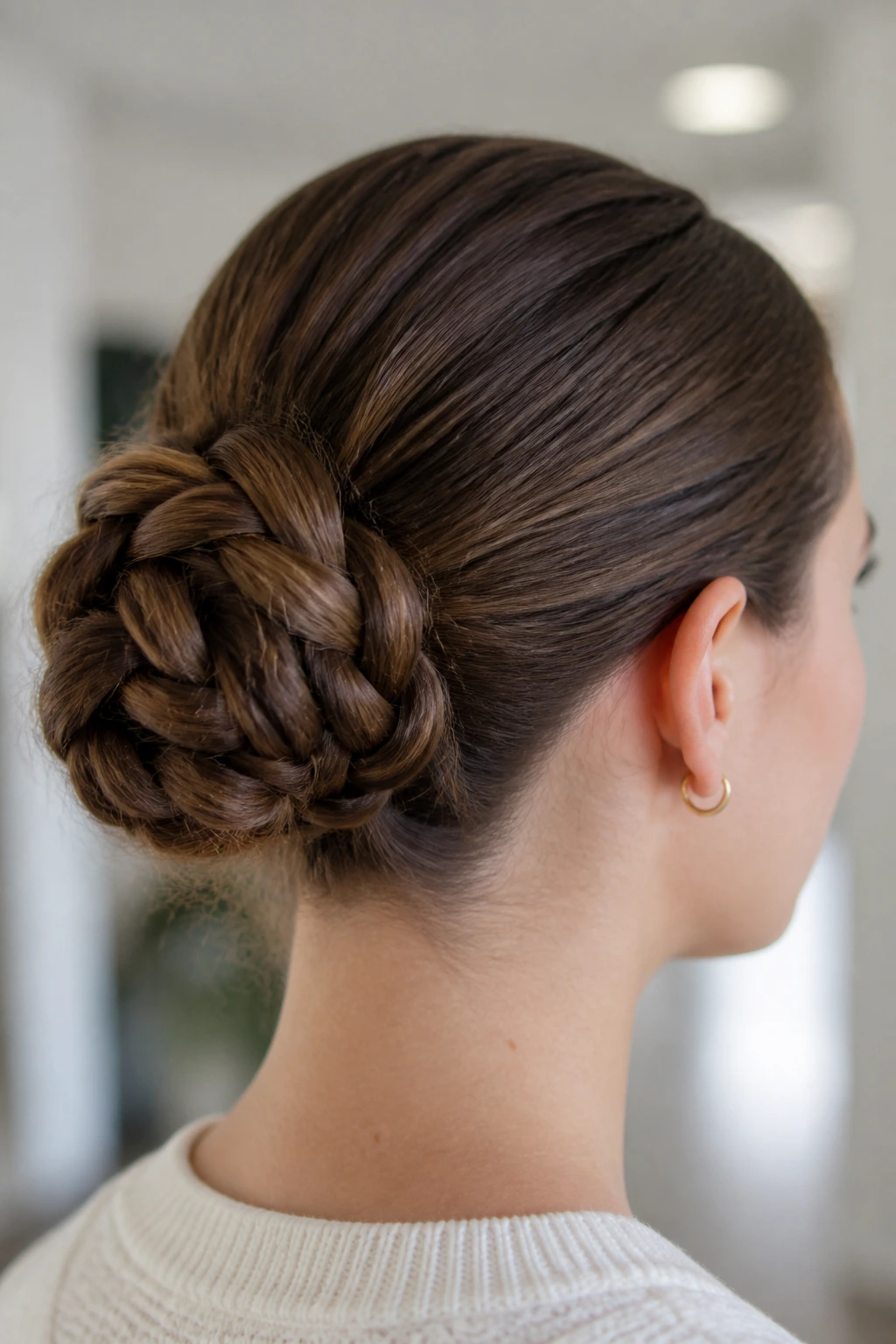
A braided bun is the workhorse of polished winter hair. The braid gives the bun structure, the bun keeps the ends protected, and the whole thing holds together better than a loose knot when your day involves real movement.
Braid the ponytail first, then coil it into a bun and pin around the base with U-pins or strong bobby pins. If your hair is thick, don’t try to make the bun tiny. Let it stay a little larger and flatter at the edges; that’s cleaner than forcing too much hair into a tight shape. A light mist of hairspray across the braid before coiling helps keep shorter strands from slipping free.
It’s the kind of style that looks deliberate in daylight and still looks deliberate after a long afternoon indoors.
12. Loose Face-Framing Blowout
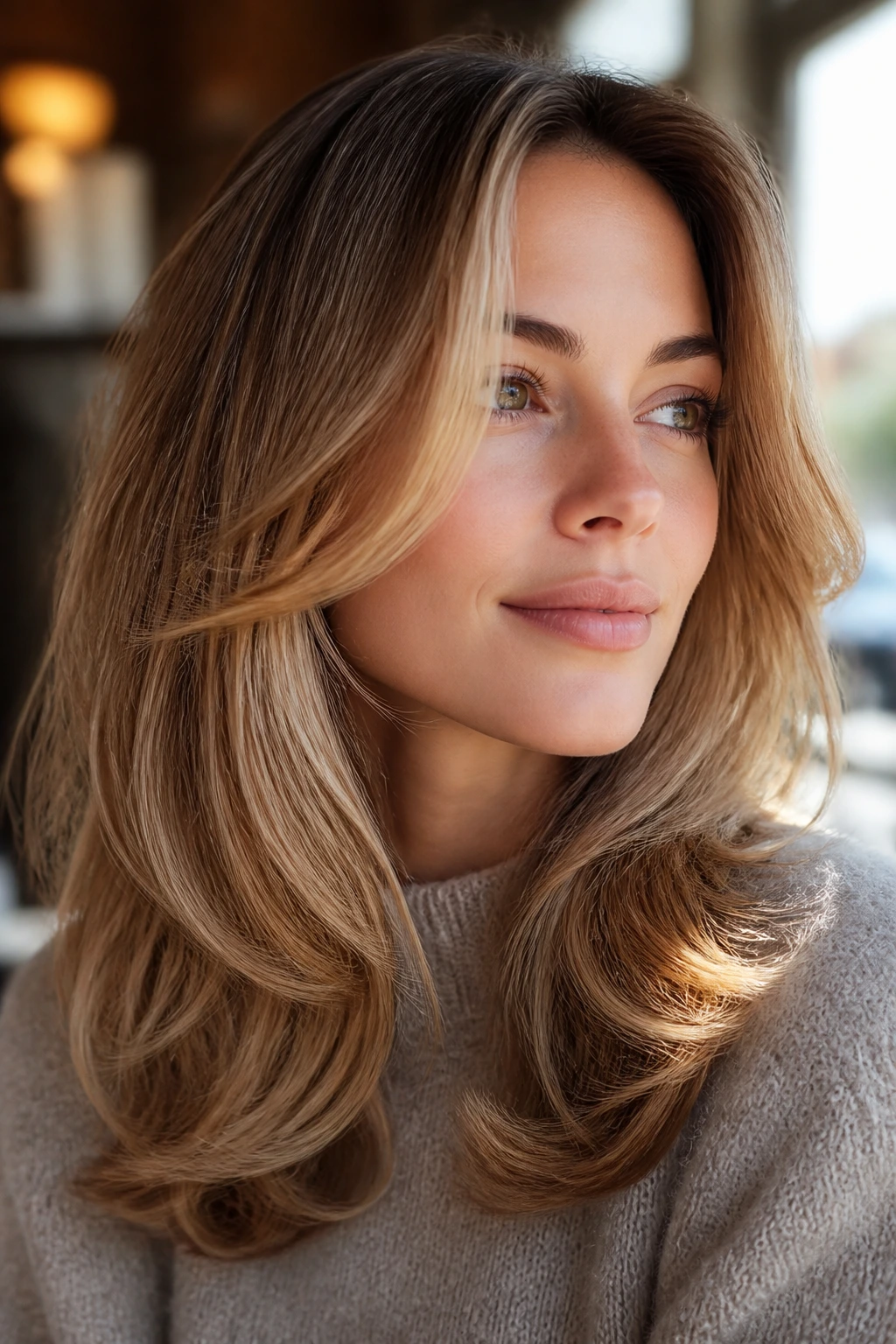
A blowout with face-framing layers can feel a little plain on paper. In person, it’s one of the best winter hairstyles because it keeps movement near the face while the rest of the hair stays glossy and controlled.
Use a round brush to lift the roots and curve the front sections away from the cheeks. That tiny bend matters. It stops the style from sitting flat under winter hats and gives your face some shape when scarves cover the neckline. I’d skip heavy finishing cream near the roots; use it only on the last few inches, where dryness shows fastest.
This is the style for people who like hair that looks styled but not sealed into place. It has air in it. That matters.
13. Sleek High Ponytail with Wrapped Base
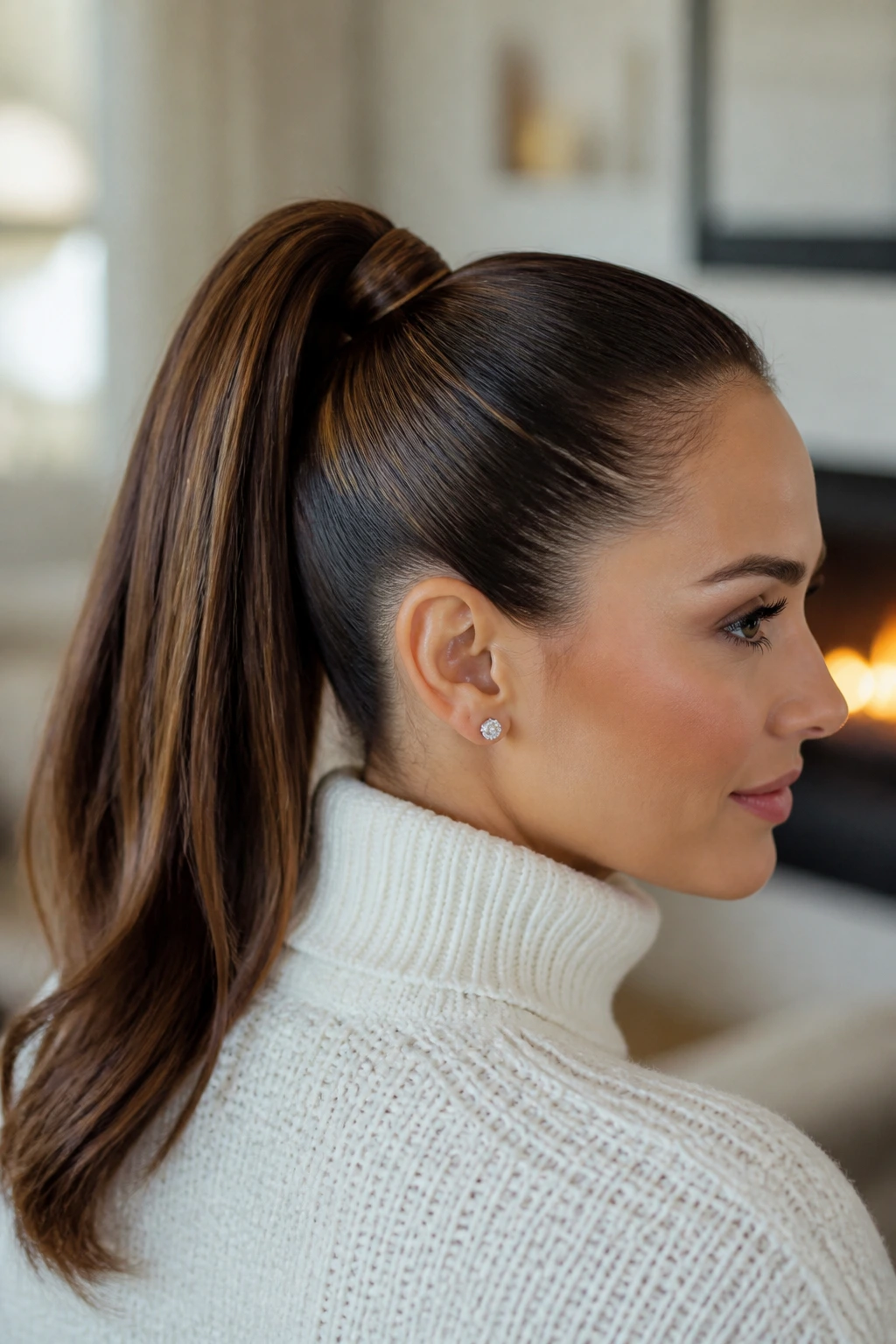
A high ponytail can look sharp in winter if you keep the crown smooth and the base hidden. The danger is the elastic line. The fix is simple: wrap a clean section of hair around it and pin the tail underneath.
Use gel or a smoothing cream at the hairline, brush the top half of the hair upward, and secure the pony as high as feels comfortable without pulling. If your hair is long and heavy, add a second elastic underneath the first so the pony doesn’t sag by the end of the day. A touch of shine spray on the tail makes the style read cleaner, especially against dark coats.
It’s brisk, lifted, and a little sporty in a good way. Not everything winter needs to be soft.
14. Rope Braid
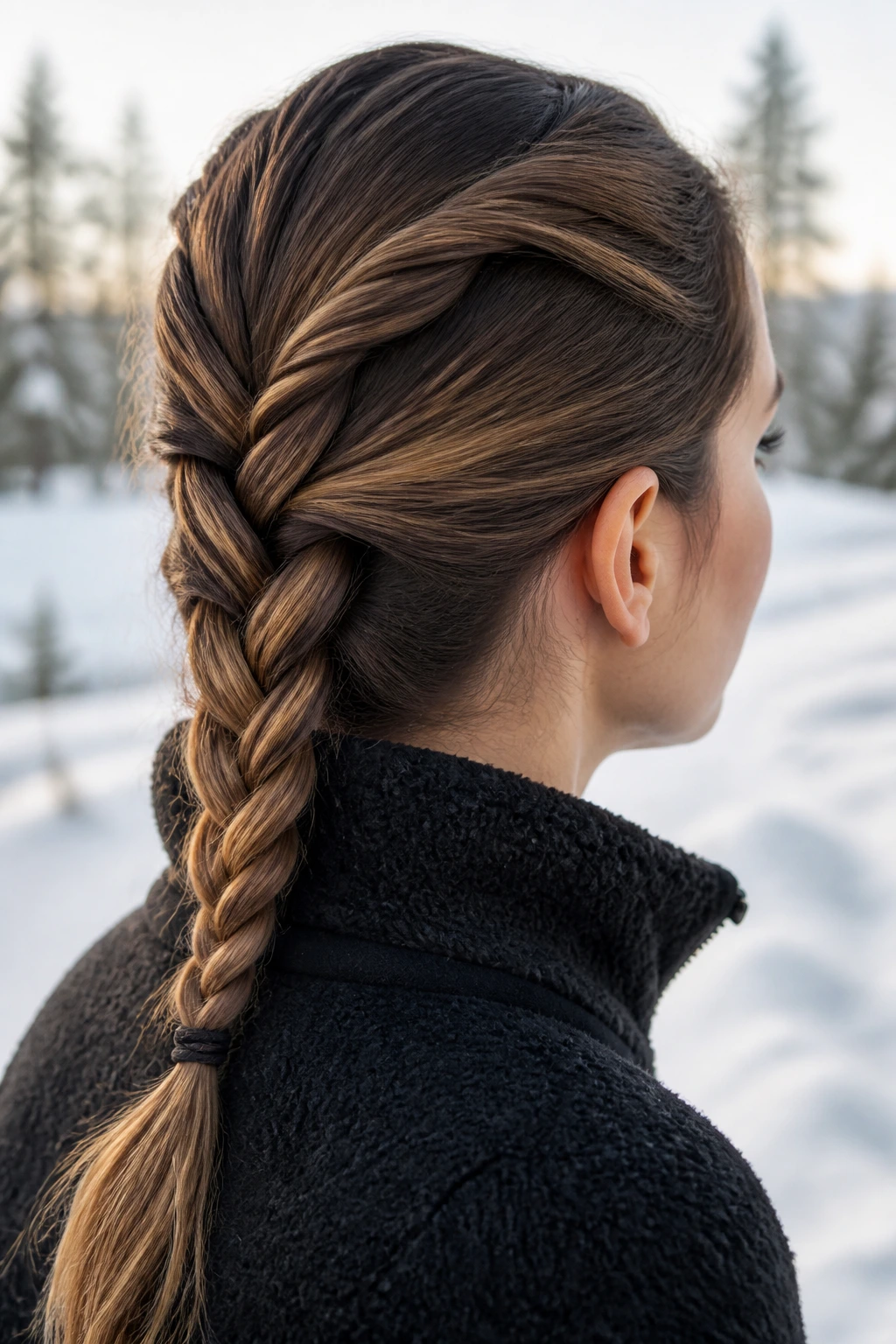
A rope braid has a cleaner, tighter texture than a standard three-strand braid, and that’s part of why it works so well in dry weather. Two sections twisted around each other hold surprisingly well, especially if you’re dealing with medium-length hair that tends to slip out of traditional braids.
Divide the hair into two pieces, twist each section in the same direction, then wrap them around each other in the opposite direction. Secure the end with a small elastic and tug the braid gently to widen it if you want a fuller look. The shape should feel neat, not ropey in a rough sense — although, yes, that is the actual structure.
It’s fast, practical, and polished enough for a busy day that still ends somewhere nicer than the grocery store.
15. Claw-Clip Twist
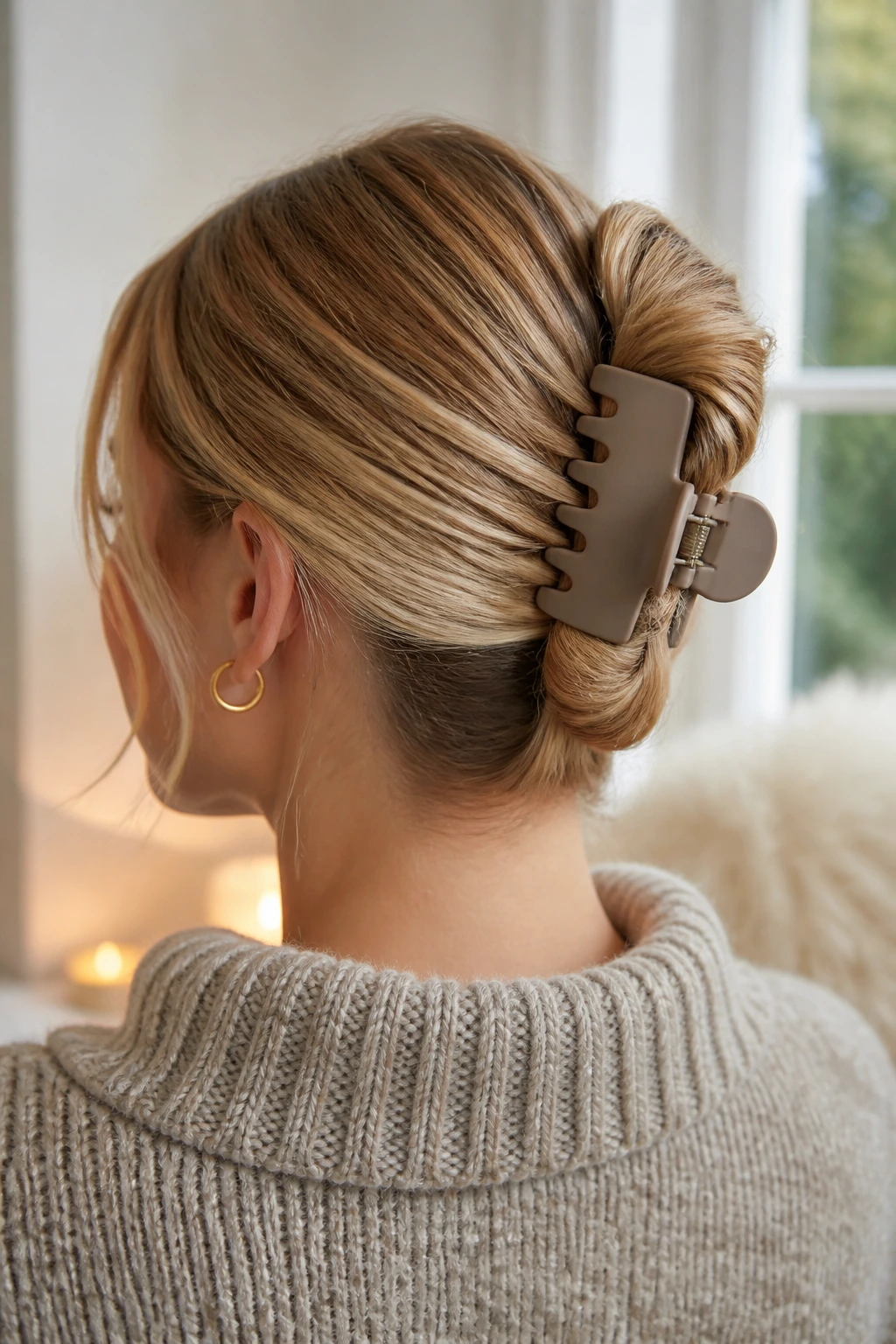
A good claw-clip twist is not a lazy style. It’s a controlled one. The difference is in how clean the base looks and whether the ends are tucked or dangling in a way that seems intentional.
Gather the hair low at the back, twist it upward, fold the length back down, and clip the center so the shape stays close to the head. A matte clip in black, tortoiseshell, or deep brown looks more polished than a huge glossy one that flashes under indoor lights. If the hair is slippery, rough up the mid-lengths with dry shampoo first.
This is one of the easiest winter hairstyles to wear with hats because you can drop the clip, reshape the twist in seconds, and keep moving. Practical. Neat. No drama.
16. Old Hollywood Waves
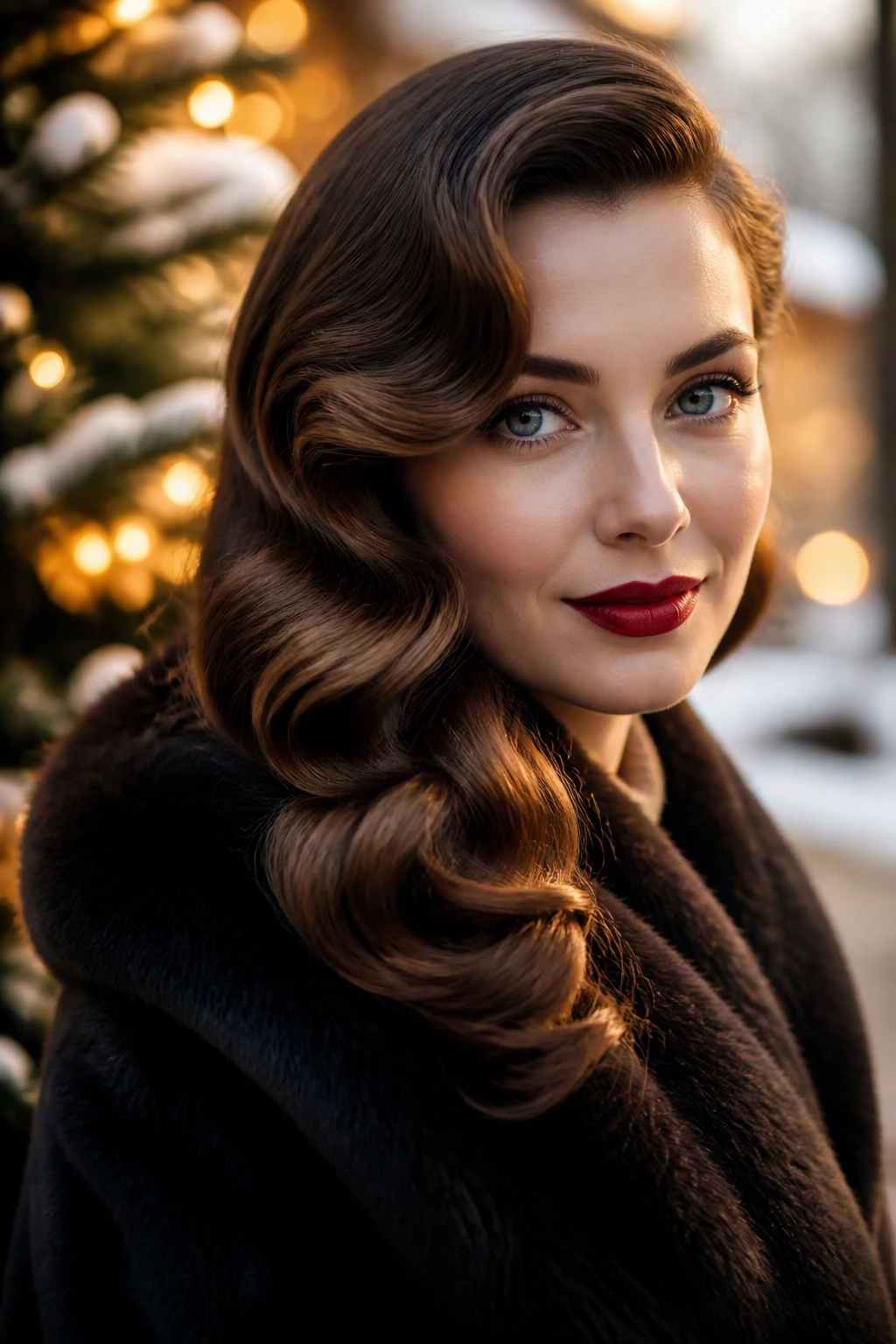
Old Hollywood waves are winter’s answer to soft structure. They have shine, they have rhythm, and they hold up beautifully in dry air because the season is not trying to collapse them with humidity.
Set the hair in sections with a 1.25-inch iron, pin each curl flat while it cools, then brush it out carefully once everything has set. The brush-through is the part people rush. Don’t. If the curls are still warm, the wave pattern gets loose and the finish turns mushy instead of smooth. A side part gives this style extra shape, especially with a shoulder-baring neckline or a fitted coat.
This is the one I reach for when I want hair to do some of the dressing work. It has polish without hardness.
17. Modern Milkmaid Braid
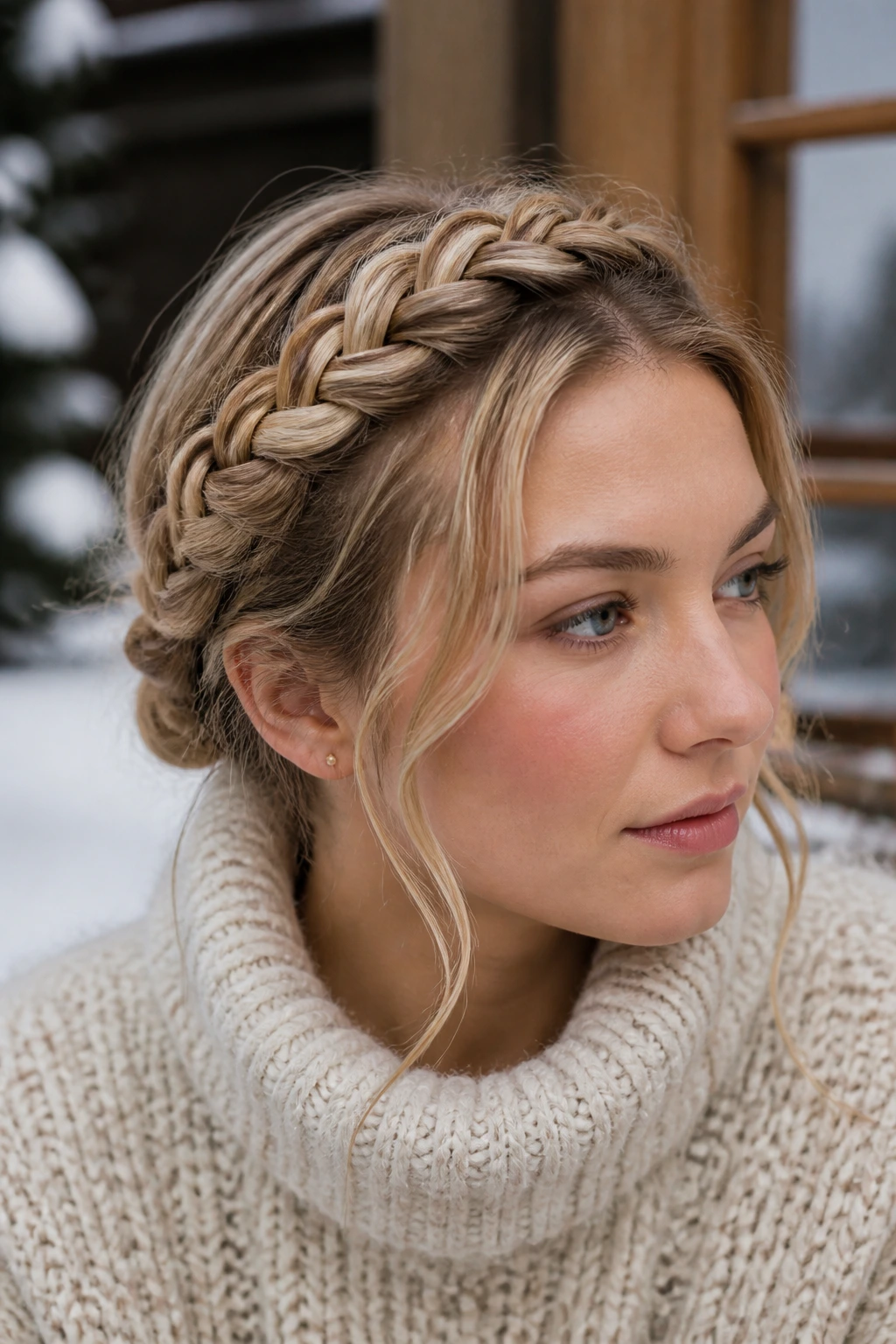
The milkmaid braid can look costume-y if you pin it too tight or too high. Keep it low and a little loose, and it becomes a clean, romantic style that makes sense with winter knits and long coats.
Braid two sections, wrap them across the crown, and pin them at the back of the head so the shape follows the hairline rather than floating above it. Leave a few soft pieces near the temples if you want less severity. If your hair is layered, use small hidden pins at the ends of the braids so the shorter bits don’t poke out.
It’s a nice option for people who want something a little more detailed than a bun but still easy to keep in place. The braid does the talking. You don’t need much else.
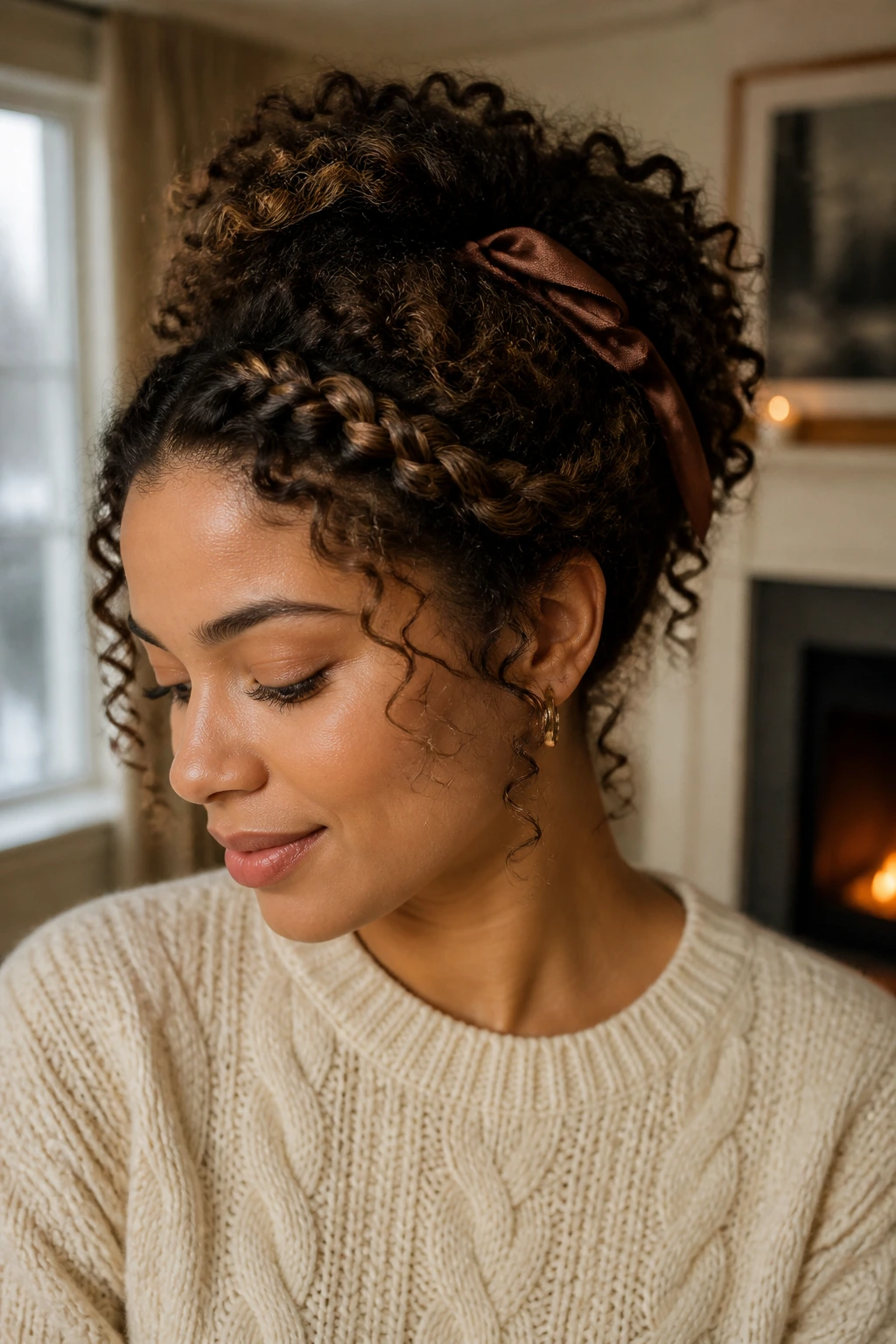
18. Defined Curly Pineapple Updo
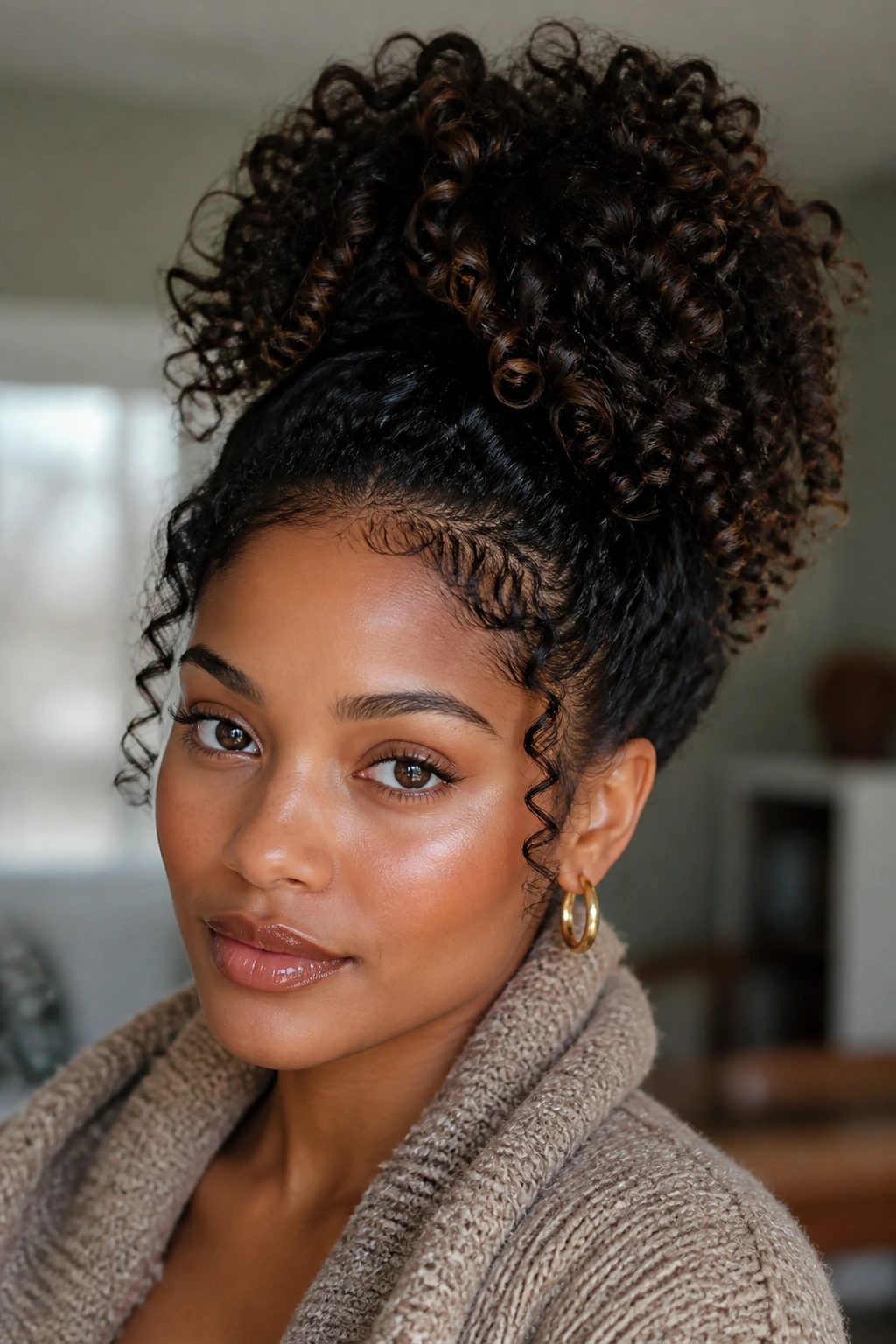
Curly hair gets its own kind of winter polish here. A defined pineapple updo keeps the curl pattern high and intact while protecting the ends from scarf rub and neck friction, which is where curly styles tend to lose their shape first.
Use a satin scrunchie to gather the curls loosely at the top of the head, then shape the sides with your fingers so they don’t collapse into a tight ball. A bit of leave-in conditioner or gel on the outer curls helps the finish stay defined without turning crunchy. If you want the style to look more finished, smooth the hairline with a small brush and a dab of edge control.
Best for: curls that need protection and shape at the same time.
Best finishing move: leave two or three defined curls loose in front, then stop touching it.
19. Polished Pixie with Side Sweep
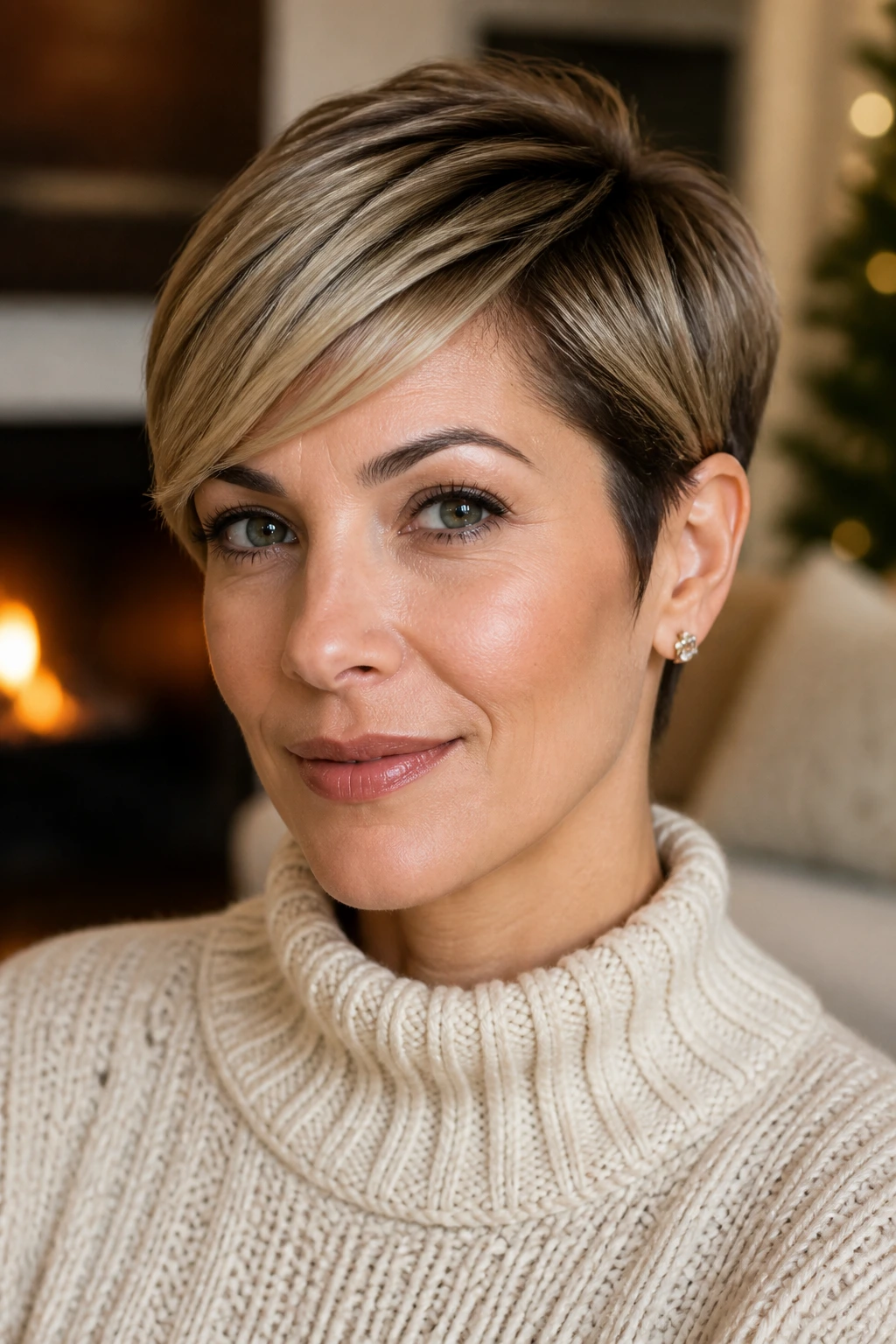
Short hair can look especially crisp in winter when the shape is intentional. A polished pixie with a side sweep uses direction, not length, to create the look.
Blow-dry the hair in the direction you want it to fall, then work a pea-sized amount of paste or cream through the top with your fingertips. Don’t smear product all over the head; that’s how pixies lose their clean edges and start looking greasy. Tuck one side behind the ear or add a small barrette if you want the style to feel more dressed up.
This is one of those winter hairstyles that benefits from a great cut more than a pile of product. Short hair has to earn its shape. When it does, the result is sharp.
20. Slicked-Back Bob Tuck
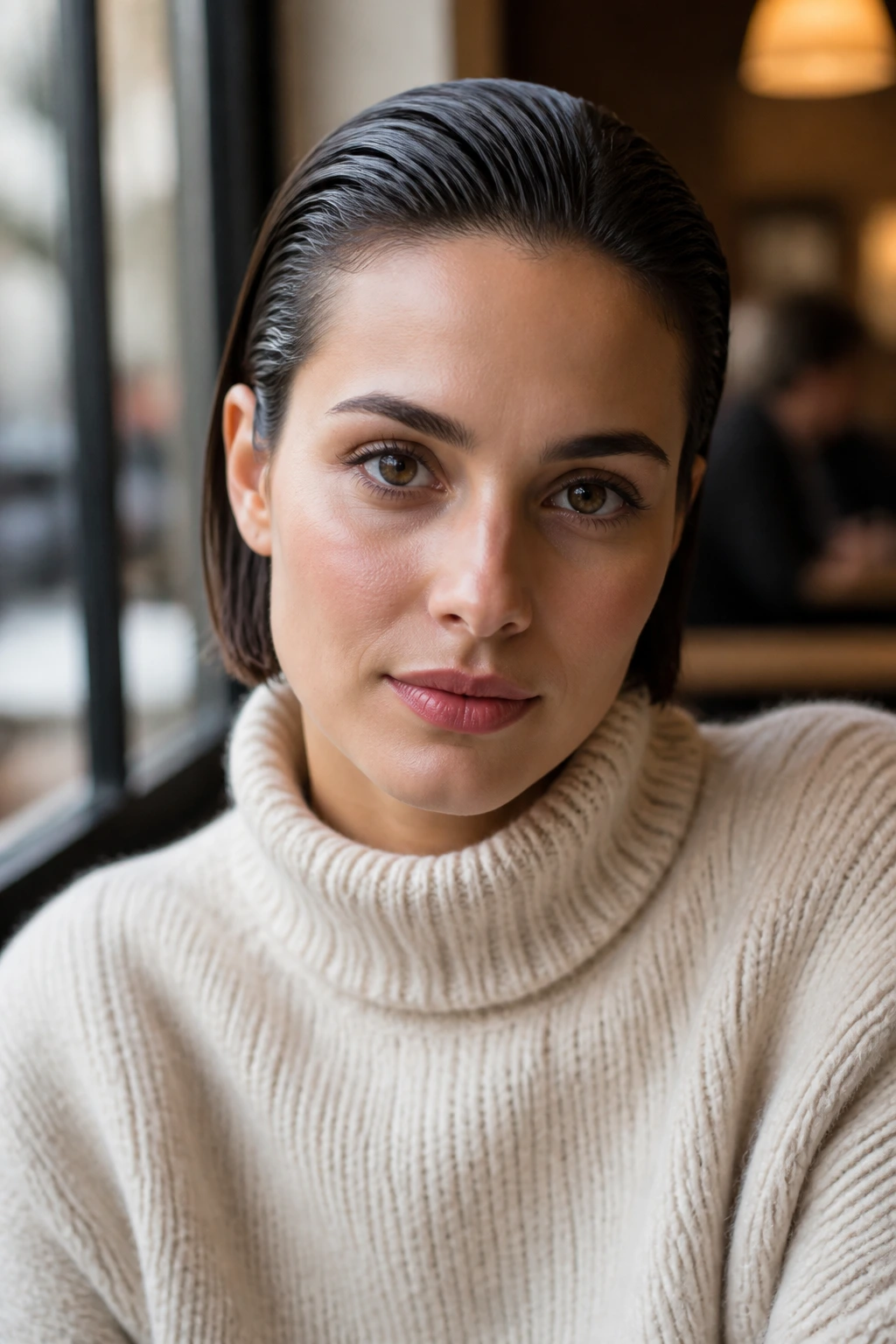
A bob tucked behind the ears can look ordinary. Slick it back with a precise part, and suddenly it reads polished, deliberate, and a little sharper than people expect from a shorter cut.
Work a small amount of gel or cream along the hairline, comb the top smooth, and tuck the ends neatly behind the ears or under the edge of a scarf collar. If your bob has a bit of wave, that’s fine — just keep the top section sleek so the movement looks chosen, not accidental. A light shine mist near the part helps the style hold its shape against dry indoor air.
It’s a good choice when you want the face open and the neckline clean. Nothing wasted.
21. Twisted Low Knot Ponytail
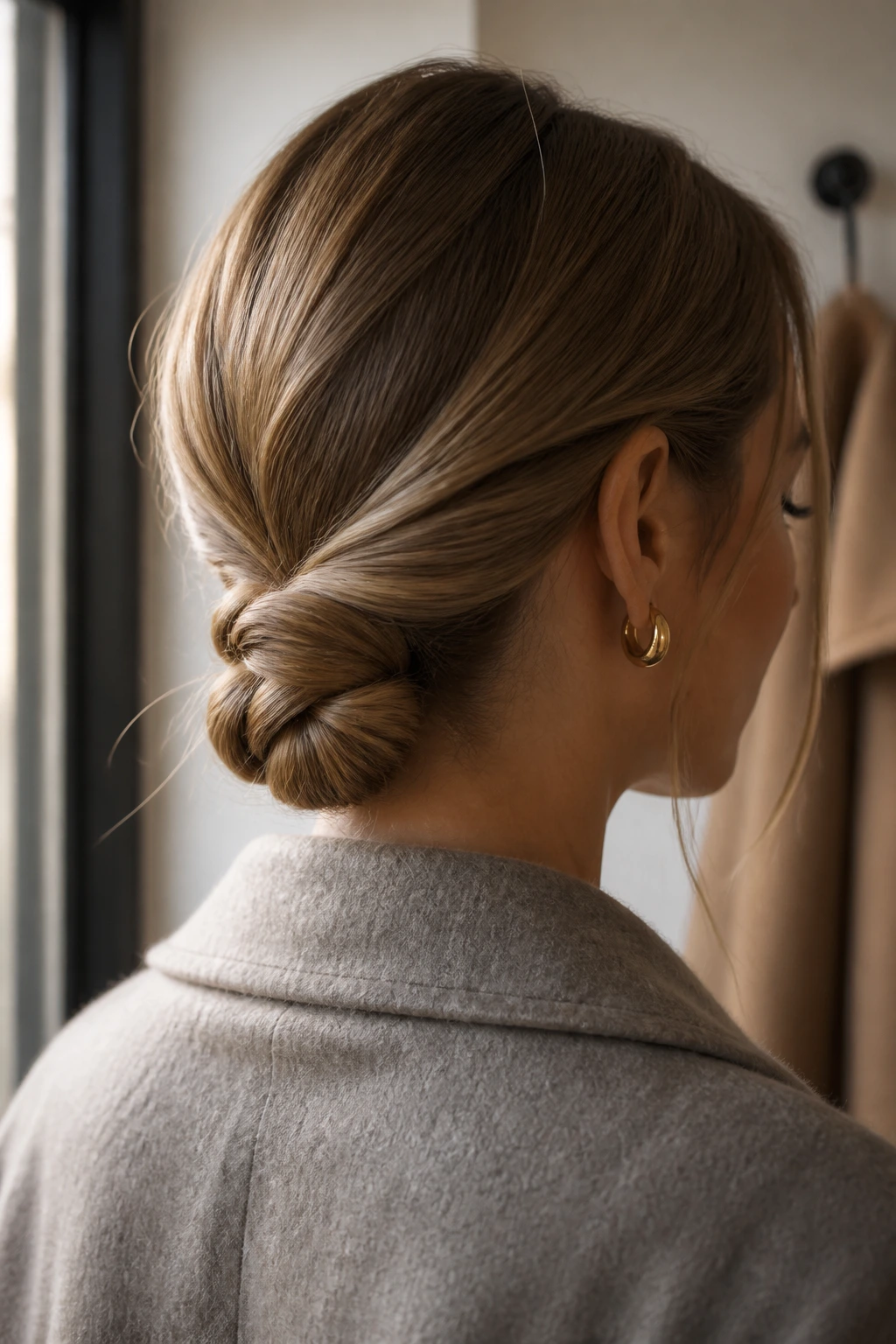
A twisted low knot ponytail gives you the neatness of a bun with a little more structure in the middle. The twist is what makes it look styled instead of simply tied back.
Start with a low ponytail, split the length into two sections, twist them together, then knot or loop them into a compact shape at the nape. Pin the ends under the knot so they disappear. If the hair is thick, flatten the top first with a boar-bristle brush and a touch of smoothing cream; if it’s fine, a bit of dry texture spray at the roots helps the knot stay put.
This style is useful because it sits low enough for coats, but it still has a clear shape. That keeps it from looking like last-minute hair.
22. Scarf-Wrapped Low Bun
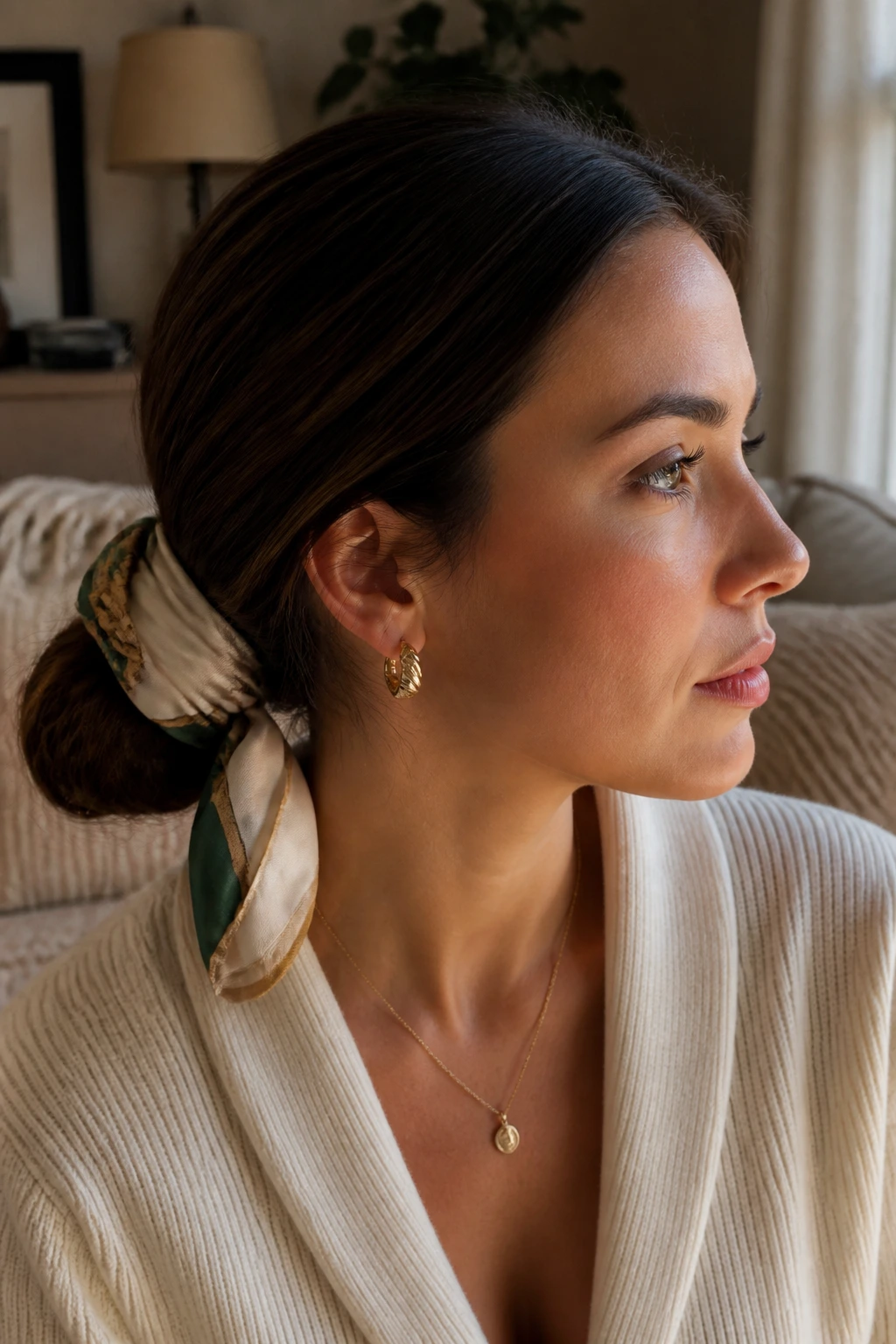
A scarf-wrapped low bun is winter styling with purpose. The scarf adds color, the bun keeps the hair protected, and the whole look feels seasonal instead of seasonal-adjacent, which is a subtle but useful difference.
Tie the hair into a low bun first, then fold a silk or satin scarf into a narrow band and wrap it around the base. Keep the knot or bow off-center if you want it to look relaxed, or tuck the ends underneath for a cleaner finish. A scarf with a little structure — not a floppy one — holds its shape better and doesn’t slide as much against smooth hair.
This is the style I’d choose for a day when the outfit needs one obvious detail and the rest should stay quiet.
Why Winter Styles Need Sharper Structure
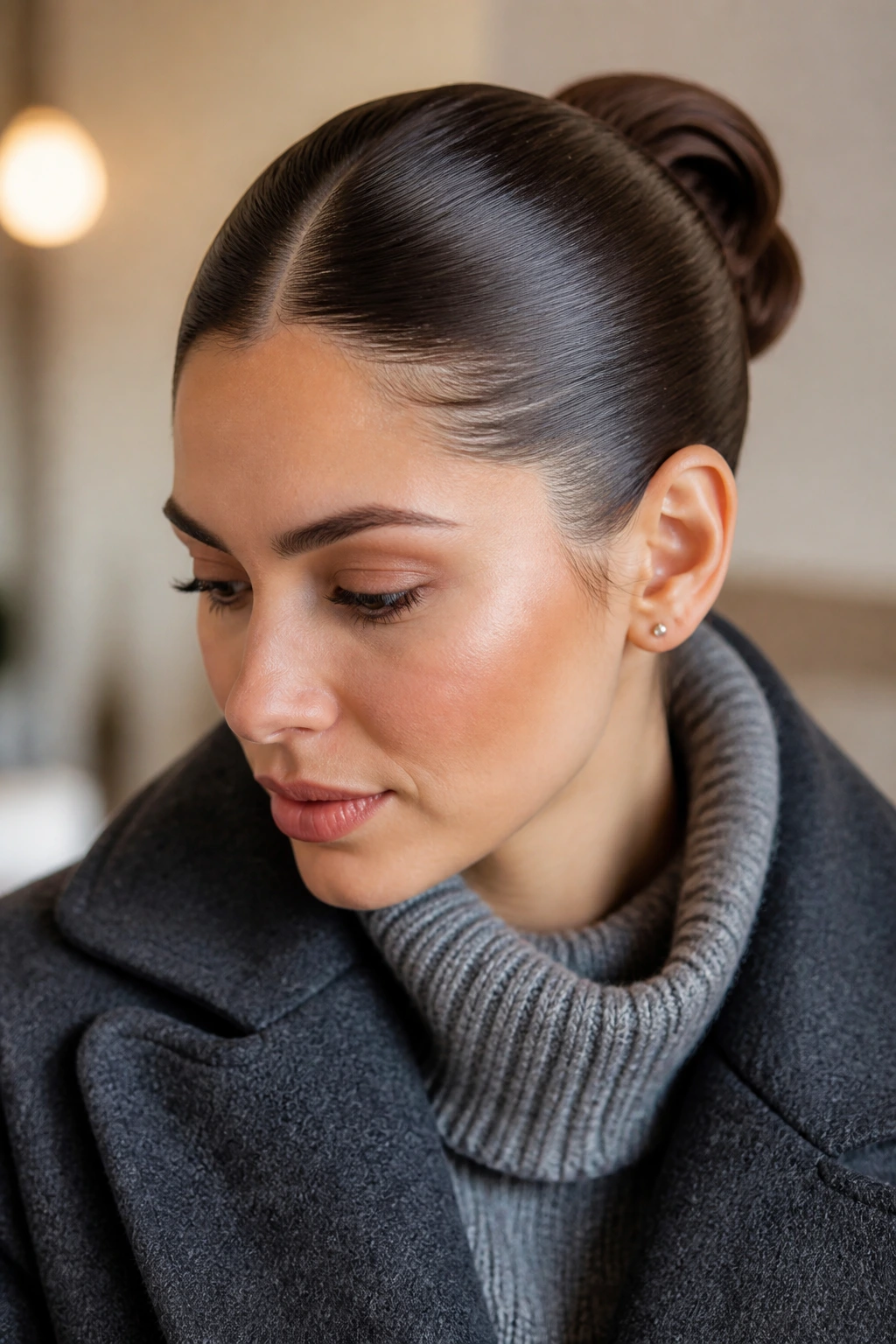
Dry air changes the rules. Hair loses moisture faster, the cuticle lifts a little more easily, and any rough fabric that brushes the shaft — a wool hat, a thick collar, a knitted scarf — can make the surface puff up in spots that were smooth twenty minutes earlier.
That’s why polished winter hairstyles tend to rely on structure. A braid doesn’t mind a bit of texture. A tucked bun doesn’t care if the ends are dry. A smooth part, a strong base, and a controlled finish can hold the style together long after summer humidity would have turned it soft and flat.
I also think winter light plays a role people ignore. Indoor light is unforgiving, and outdoor light in cold weather tends to make hair look drier than it feels. A clean shape and a little shine at the mids and ends go a long way. Not sparkle. Shine. There’s a difference.
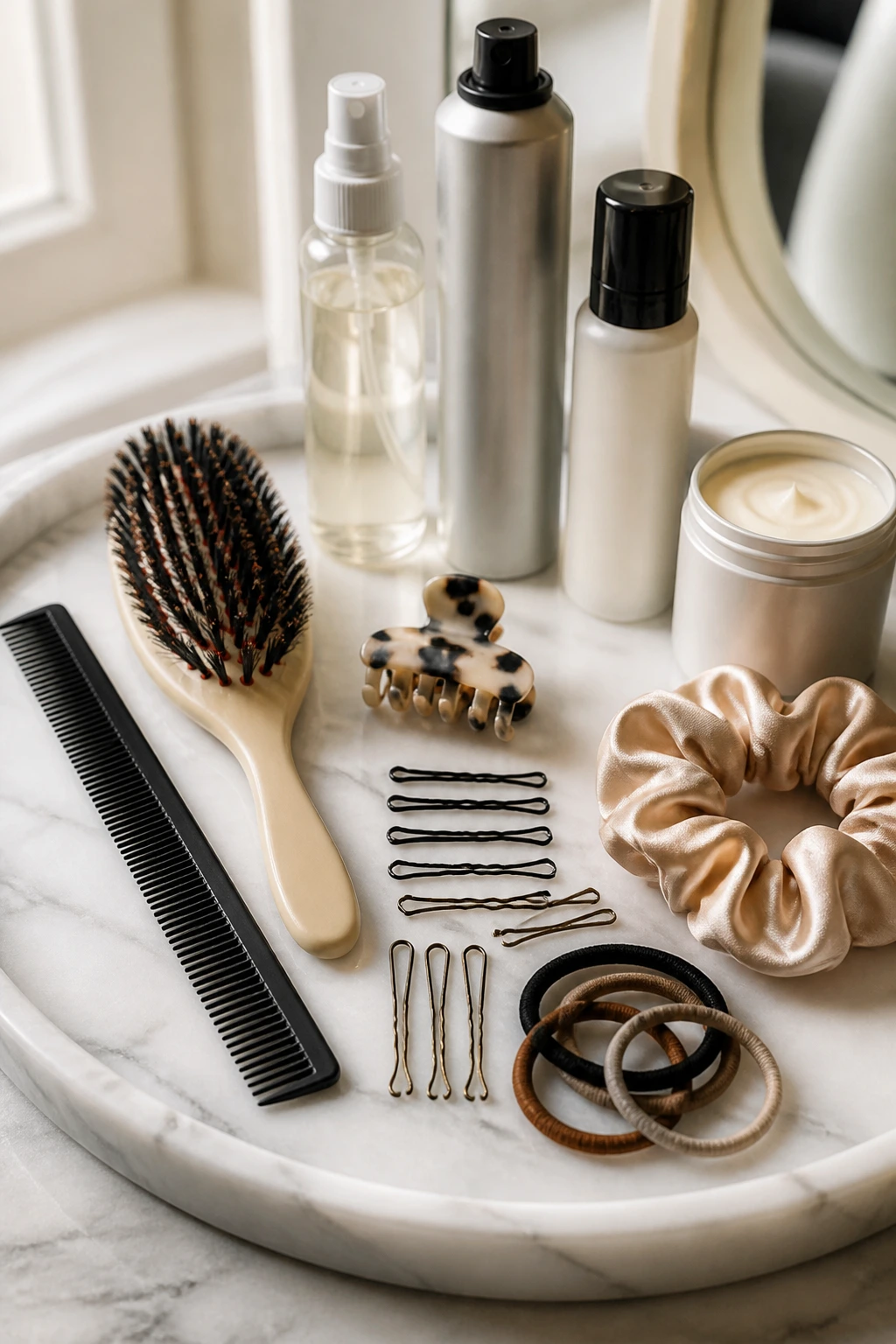
The Tools That Make These Looks Hold
-
Fine-tooth comb: Best for clean parts and smoothing the hairline before a ponytail or bun.
-
Boar-bristle brush: Useful for polishing the surface without yanking out all the natural grip.
-
Bobby pins in two sizes: Standard pins for general anchoring and long pins for French twists, braided buns, and heavier updos.
-
U-pins: Ideal for buns that need shape without a visible clamp of pins.
-
Snag-free elastics: Clear or fabric-covered versions are gentler on dry winter hair than stiff rubber bands.
-
Small claw clip: Handy for twists, half-up styles, and quick shape changes after hat hair.
-
Heat protectant spray: Needed for blowouts, waves, and any style that uses a flat iron or curling iron.
-
Flexible-hold hairspray: Keeps flyaways in check without making hair feel helmet-hard.
-
Dry shampoo: Gives slippery roots grip and helps revive next-day volume.
-
Smoothing cream or lightweight serum: Use a small amount on mid-lengths and ends to cut frizz.
-
Satin scrunchie or scarf: Gentle on curls and useful for overnight protection.
Smart Product Picks for Dry, Static-Prone Hair
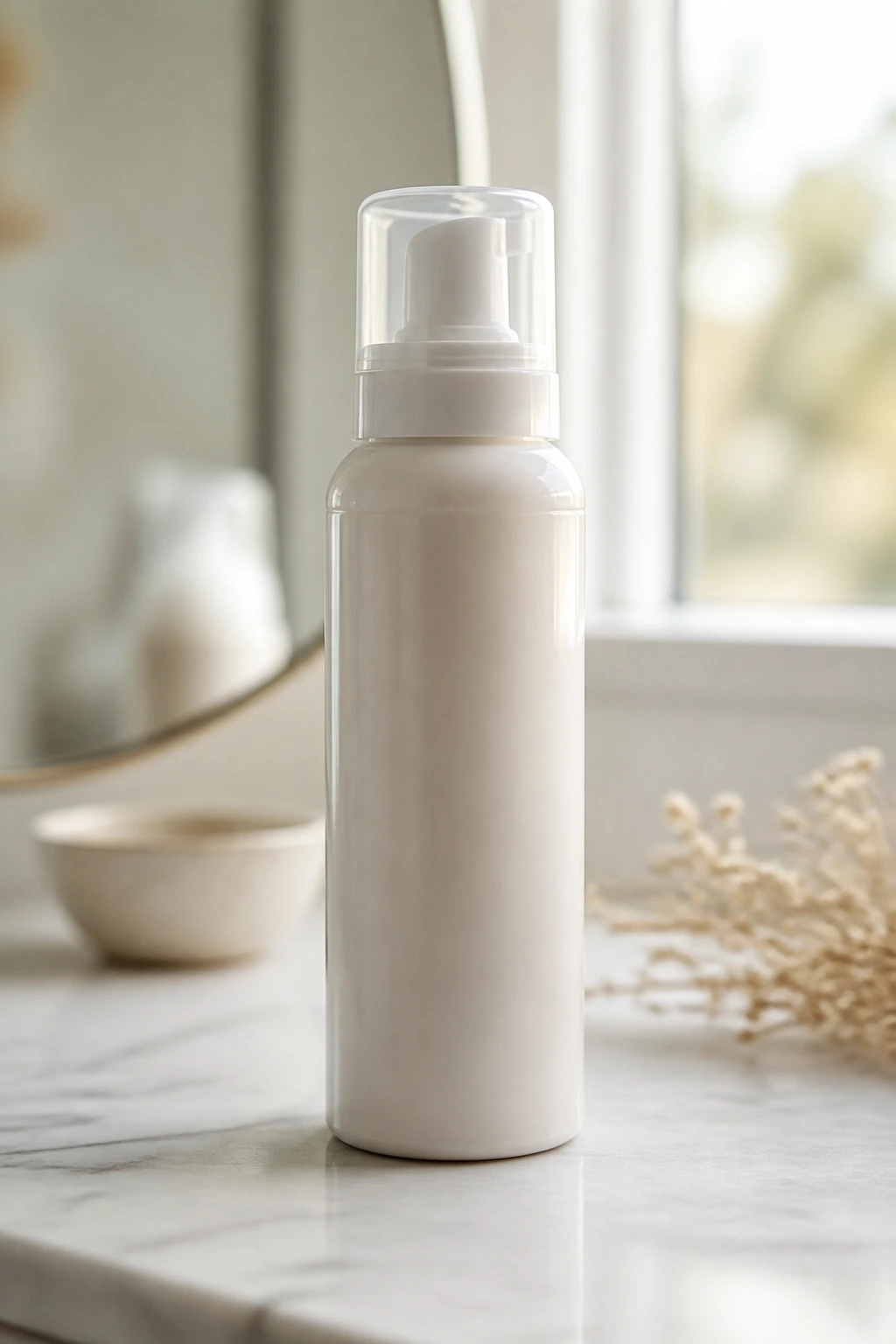
Winter hair does better with lighter products than most people expect. Heavy oils and thick creams can sit on top of dry strands and make the crown look greasy while the ends still feel rough, which is an annoying little trick of the season. A light mousse or root-lifting spray is often more useful than a rich mask right before styling, especially if you want volume that lasts past lunch.
Look for a hairspray with a fine mist and flexible hold. The cheap, sticky kind can turn flyaways into hard little wires, and nobody wants that. A better spray lets you brush the style back into place if a scarf disturbs it. For smoothing products, choose something that says lightweight or anti-frizz and use less than you think you need. A half-pea amount can go a long way on clean hair.
Hair accessories matter more in winter, too. Matte clips grip better than slippery glossy ones, velvet bows hold their shape nicely, and satin or silk ties are kinder if your hair is already feeling fragile. If you wear hats a lot, keep one small bottle of static spray or a leave-in mist near the door. That sounds fussy. It isn’t. It saves time.
How to Wear These Styles with Coats, Hats, and Scarves
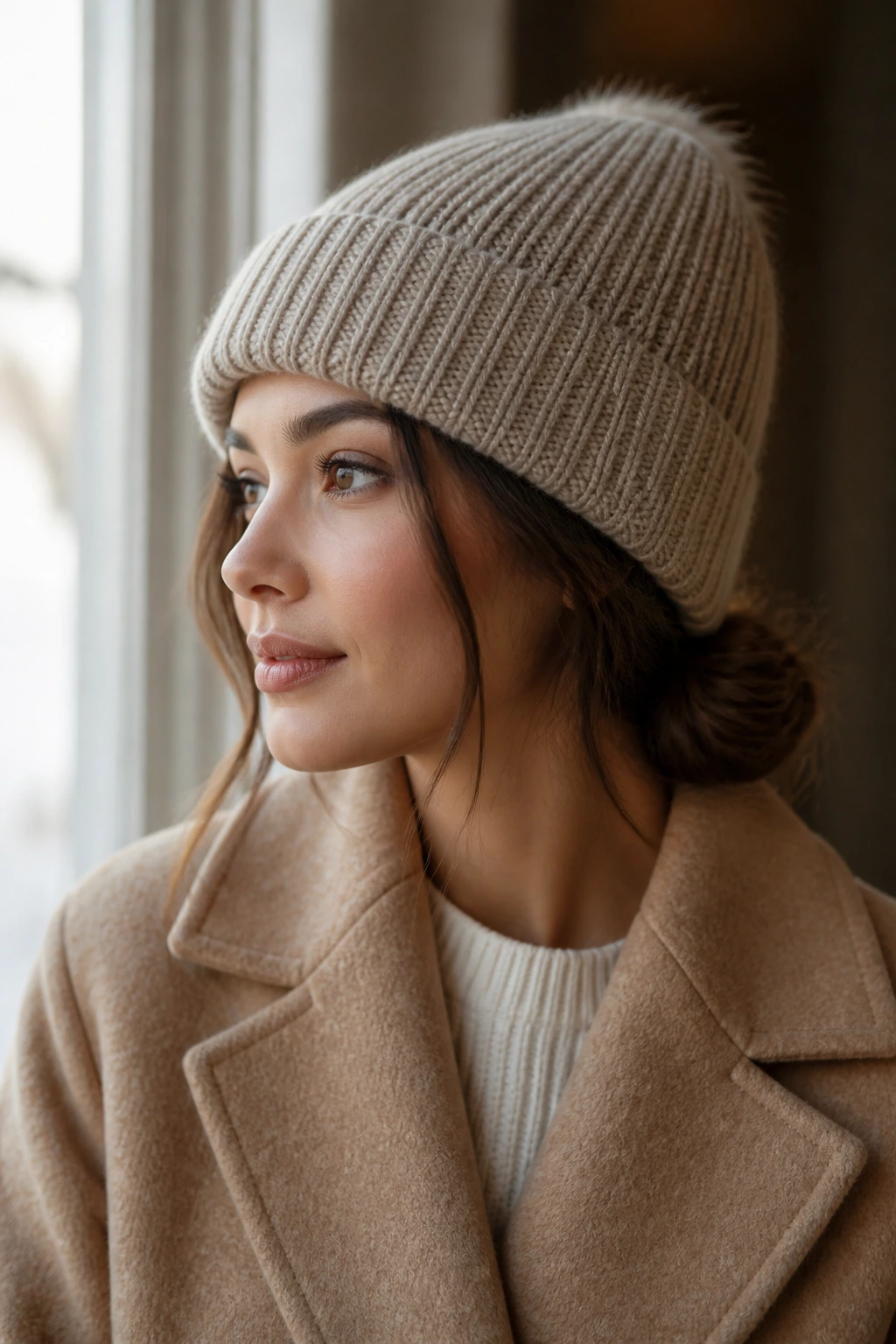
Hat Compatibility: Low buns, crown braids, tucked ponytails, and flat twists work best under beanies because they keep the bulk away from the crown. If you know you’ll wear a hat, leave a touch of lift at the front and keep the back low so the shape survives the squeeze.
Face Framing: A few loose pieces around the temples or cheekbones soften sharper styles like French twists and slicked-back ponytails. Keep those pieces intentional — curled or smoothed, not half-finished — so they look chosen rather than escaped.
Texture Match: Straight hair usually reads best in glass hair, low chignons, and polished ponytails. Curly and coily hair shines in defined updos, braids, and protective styles that preserve curl pattern instead of flattening it.
Occasion: Errands call for claw clips, braids, and low knots that can be fixed in seconds. Dinner, parties, and work events want cleaner parts, shinier finishes, and one accessory that feels deliberate. The outfit matters too. A heavy scarf can do the styling work for you if the hair underneath stays simple.
Extra Shine, Hold, and Finish Tricks
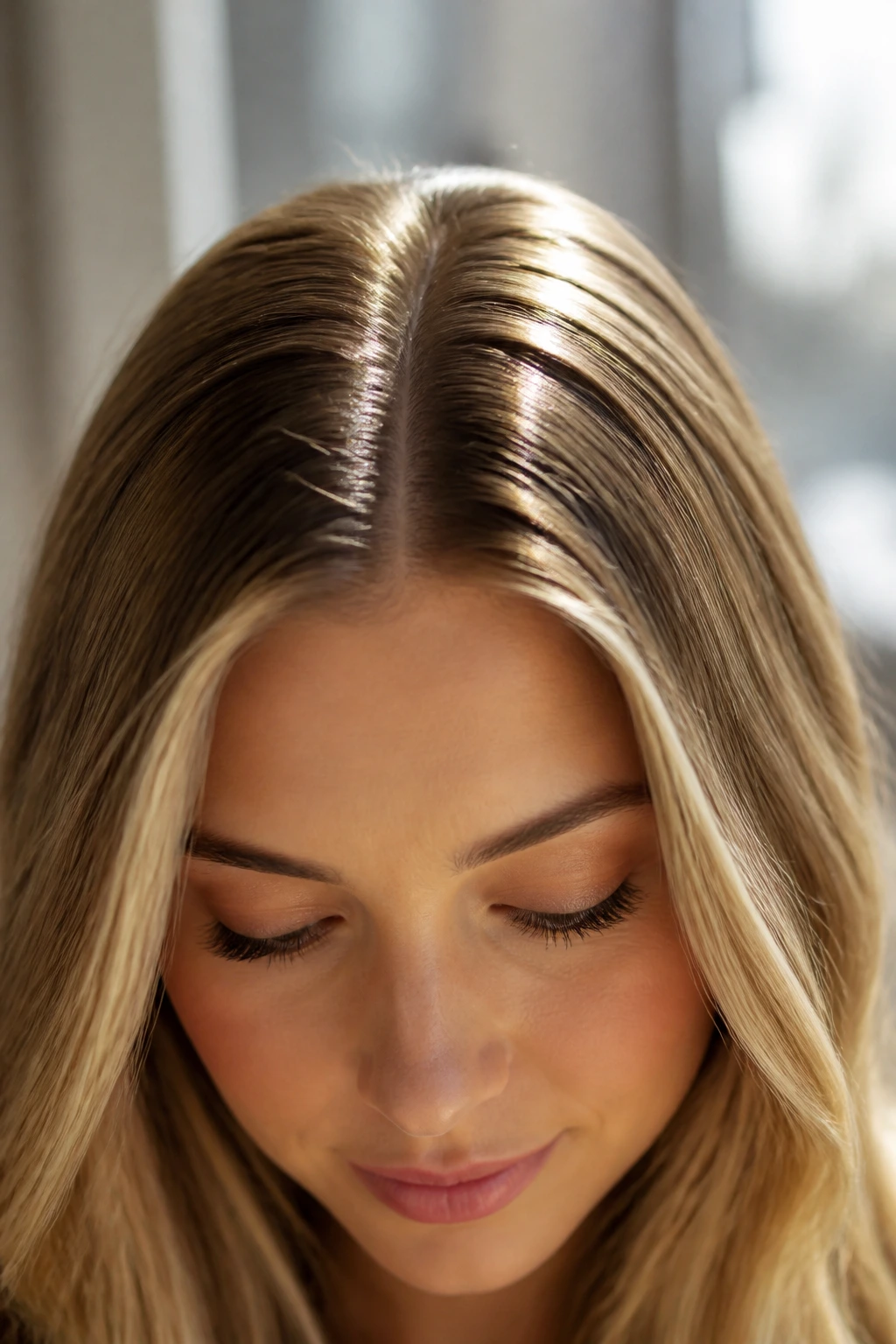
Polish: A toothbrush or clean spoolie misted with hairspray can tame the little halo around your part and hairline. Use it sparingly. If the hair looks wet at the top, you’ve gone too far.
Customization: Swap a center part for a deep side part if you want a style to feel softer. Add one pearl pin, one velvet ribbon, or one metal clip. One. Not three.
Accessories: Winter gives you a rare excuse to use richer textures — velvet, satin, tortoiseshell, brushed metal, matte black. They read better against coats and knits than tiny glossy clips that disappear.
Make-It-Yours: Fine hair needs lift at the roots and smaller accessories. Thick hair needs stronger pins and fewer decorative add-ons. Curly hair usually looks best when the front is defined but not flattened; that little halo of texture around the face keeps the style from feeling overmanipulated.
How to Keep These Styles Fresh for Another Day
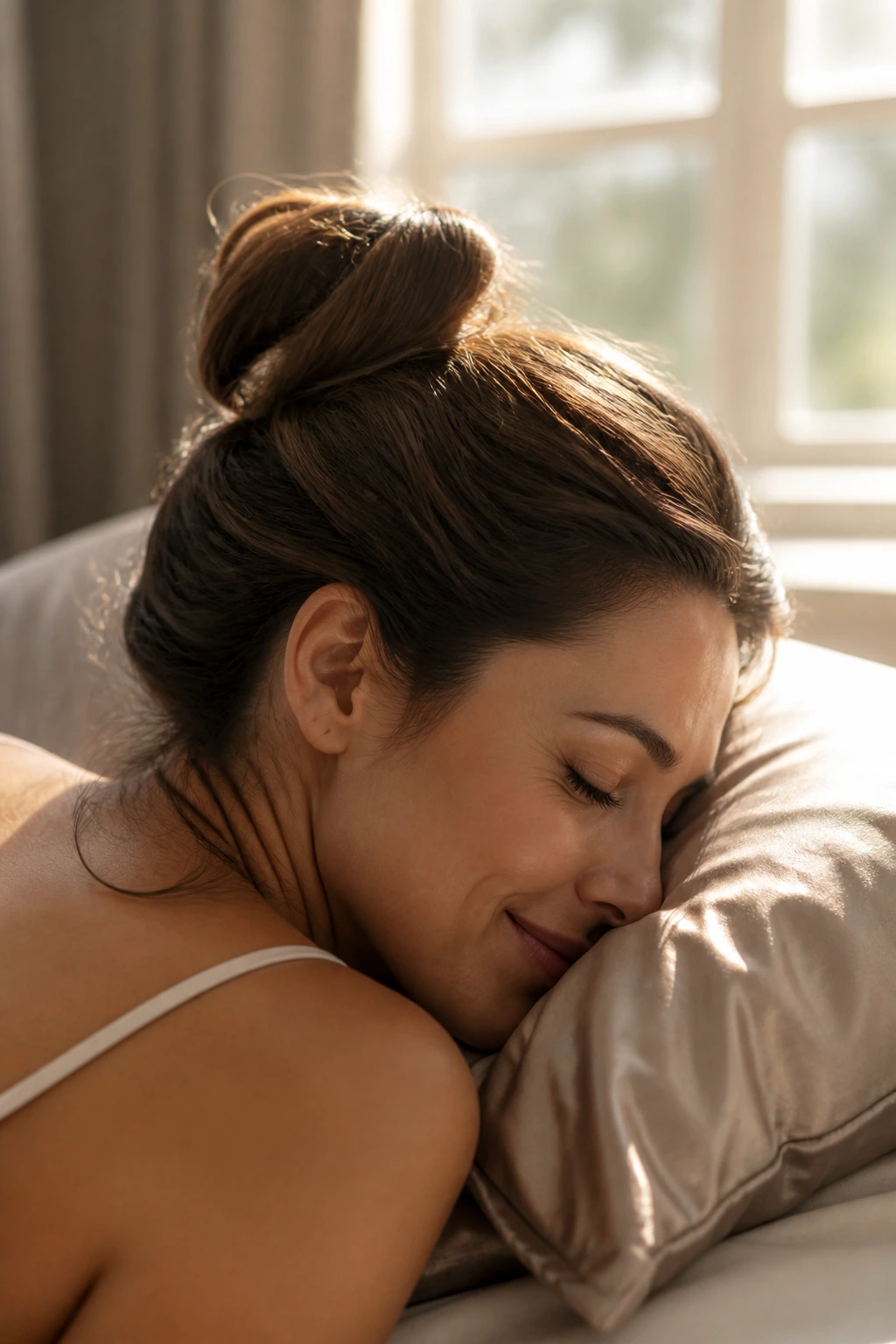
Low buns, chignons, and twists usually hold their shape for about one day cleanly and a second day with a few repairs. Sleep on a silk pillowcase or wrap the style in a silk scarf, then pin back any loose pieces in the morning before adding more spray. If the bun has loosened, don’t rebuild it from scratch; tighten the base and re-pin the shape where it already wants to sit.
Braids, bubble ponytails, and rope styles can last 2 to 3 days if you keep the roots from getting oily. A little dry shampoo at the crown before bed helps more than spraying it on top after the style has already collapsed. In the morning, rub your hands over the braid rather than brushing it hard. Brushing out the pattern is the fastest way to make it frizz.
Blowouts and waves are usually best within 24 to 48 hours, depending on hair type. Pin the curls while they cool, and if they start to fall flat, re-curl only the front pieces and the top layer instead of redoing the whole head. Curly styles tend to last longer when you preserve the curl pattern overnight with a satin bonnet or a loose pineapple.
Short cuts need a different rhythm. A pixie or bob often just needs the part refreshed, a tiny bit of paste, and a quick blast from the dryer to wake it back up. Simple. Fast. No drama.
Winter-Friendly Variations for Different Hair Types
Fine-Hair Lift Kit: Swap heavy creams for mousse, texture spray, and smaller pins. Fine hair often looks best when the crown is lifted a little and the base is tucked close, so choose styles like side ponytails, sleek bobs, and low knots over bulky buns.
Curly and Coily Polish: Keep the definition and skip the flattening. Curly hair usually looks best in pineapple updos, crown braids, and braided buns with a satin tie or gel at the hairline. The style should protect the curl, not erase it.
Hat-Ready Edit: Lower every style by an inch or two and keep the crown smooth. Low chignons, tucked ponytails, and side-swept styles survive beanies far better than high volume styles that get crushed and then puff up awkwardly.
Five-Minute Morning Version: Claw-clip twists, rope braids, and low wrapped ponytails are the fastest route to looking deliberate. The trick is to smooth the part and tuck the ends neatly, even when the rest of the style is quick.
Evening-Event Finish: Add shine spray, a crisp part, and one visible accessory. That could be a pearl pin in a French twist, a velvet bow on a half-up style, or a satin scarf wrapped around a low bun. One detail is enough.
Low-Tension Protective Mode: If your scalp is sensitive or your hair breaks easily, keep the pulls loose and the anchors soft. Satin ties, loose braids, and tucked buns reduce stress better than tight ponytails or sharply pulled styles.
Mistakes That Make Winter Hair Look Flat or Fussy
-
Using too much oil at the roots: The crown turns limp, the lengths still look dry, and the whole style loses shape. Put shine products on the mids and ends only, then use a mist or cream at the top if you need smoothing.
-
Letting scarves grind the same section all day: That’s how you get fuzzy napes and broken flyaways under the back collar. Tucked buns, low knots, and braid ends pinned upward hold up better than loose lengths.
-
Skipping the anchor points: Pretty styles collapse when there aren’t enough pins under the surface. If a French twist or bun feels loose in your hands, it will be loose in public. Add more pins than you think you need, then check again.
-
Brushing out curls before they cool: The wave pattern falls apart and the style looks soft in a vague, unfinished way. Let each curl set, then brush gently with a natural-bristle brush or wide-tooth comb only after it’s fully cool.
-
Choosing a style that fights your texture: Very slippery hair may hate a loose braid. Very thick hair may hate tiny twists. Pick the style that works with the natural bend and grip you already have, or spend the day fixing it.
-
Forgetting about hat removal: A style that looks good only until the hat comes off is not winter-proof. Leave a little structure under the crown so it can rebound after compression.
Winter Hair Questions People Ask All the Time
Which winter hairstyle lasts best under a hat?
Low chignons, tucked buns, and crown braids usually hold up best because they sit below the hat line. Keep the crown smooth and leave a little volume at the front so the hair springs back instead of staying flattened.
How do I stop static without making my hair greasy?
Use a light leave-in mist or a single drop of serum on the ends, then smooth the surface with a boar-bristle brush. Avoid loading product near the roots; that’s where static and grease start competing for the spotlight.
Can I do these styles on second-day hair?
Yes, and for many of them, second-day hair is better. Braids, twist styles, low buns, and rope braids need some grip, so a little texture can help the pins stay put.
What if my hair is too slippery for pins?
Rough up the roots with dry shampoo first, then cross your bobby pins instead of placing them straight. A little texture spray at the base often solves what extra hairspray cannot.
Are these styles okay for short hair?
Absolutely. Pixies, bobs, and lobs can do sleek side sweeps, tucked ends, clipped twists, and scarf accents very well. Short hair often looks sharper in winter because the shape is easier to control.
How do I keep a center part looking neat when it’s cold and windy?
Use a fine-tooth comb to draw the part cleanly, then press a tiny amount of smoothing cream or gel along the hairline. Finish with a light mist, not a heavy one, or the part can get stringy.
What’s the fastest polished style if I’m leaving in ten minutes?
A claw-clip twist or a low wrapped ponytail. Both can be redone in under five minutes, and both look intentional if the surface is smooth and the ends are tucked neatly.
Can curly hair wear sleek winter styles without losing shape?
Yes, but don’t fight the curl pattern all the way to a straight finish unless you want to spend time reworking it. Curly hair usually looks better with defined edges, controlled frizz, and styles that keep the ends protected rather than flattened.
A Cleaner Finish for Cold Days
Winter hair doesn’t need to be complicated to look finished. It needs a bit of planning, a few smart pins, and a style that doesn’t panic the second a scarf touches it. That’s the whole game: make the shape strong enough to live through the day, then let the texture behave like part of the look instead of a mistake.
If you keep one sleek style, one braid, and one soft wave in rotation, you’ll have a small but useful menu for cold weather, dressed-up plans, and everything in between. Pick the one that fits your hair’s mood that morning, and the rest gets easier.
