



Gray hair looks for short hair over 60 work best when the cut does half the talking. Once the length comes up, silver stops hanging around the jaw like a tired curtain and starts catching light at the temples, along the crown, and right at the nape where a good haircut can change the whole face.
That’s the part people miss. Gray hair often has a mix of textures on one head — softer pieces near the front, rougher strands in the back, a stubborn cowlick at the crown, maybe a wiry patch where the hair used to lie flat. Shorter cuts make all of that easier to handle. They also make the shine read as shine, not fuzz.
And no, short does not mean severe. The right shape can be soft, airy, sharp, polished, or a little cheeky. The trick is choosing a cut that respects how your hair actually behaves instead of fighting it with a heavy pile of length that has nowhere to go.
Why These 27 Gray Hair Looks Earn Their Keep
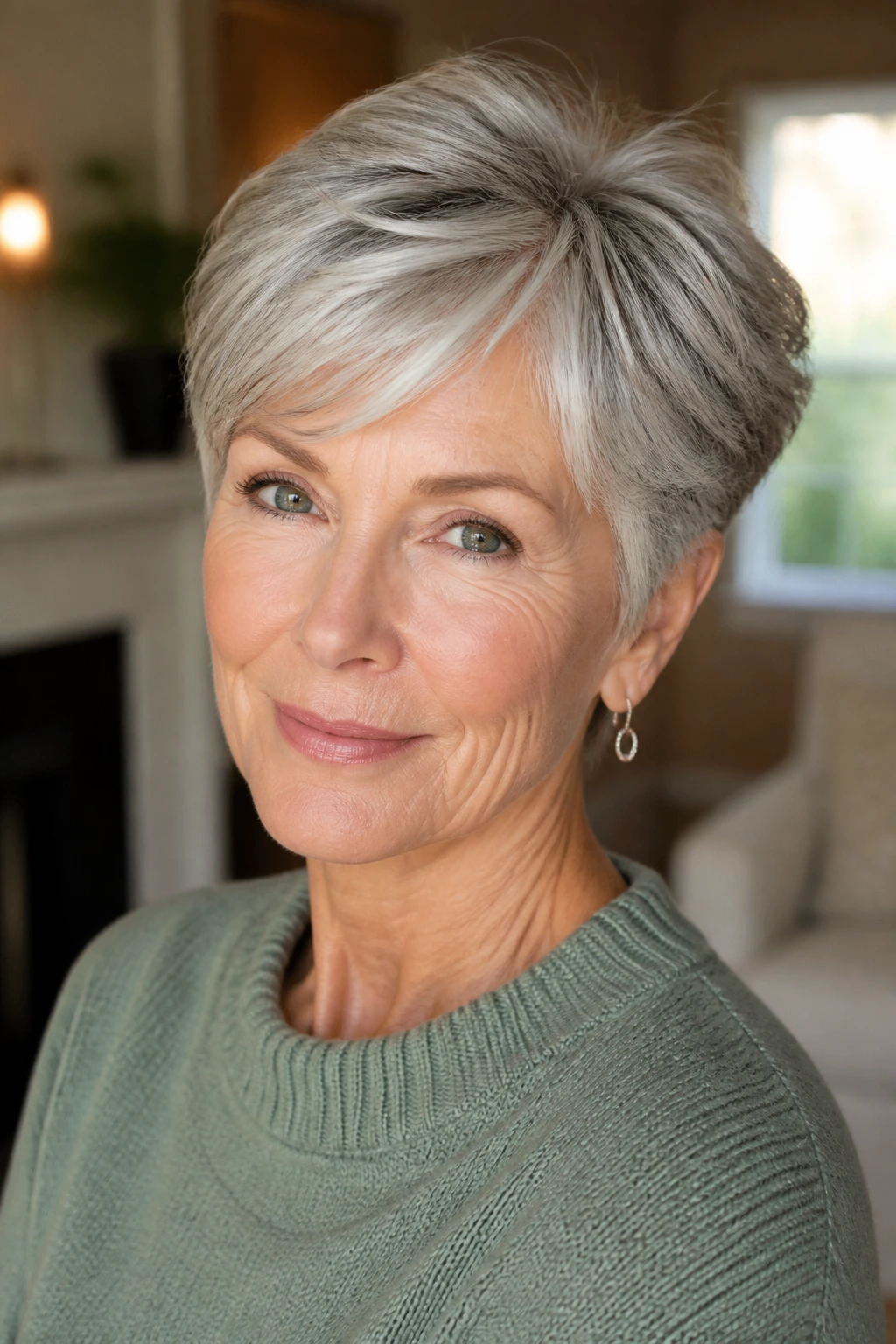
They give gray hair a shape, not just a trim. A good short cut uses your silver strands like part of the design, so the color looks intentional instead of like an afterthought.
They handle thinner hair with less drama. Once the ends come off, the cut can sit closer to the head and the crown can be built up with a few smart layers instead of a gallon of mousse.
They make coarse gray hair easier to live with. Shorter sides and a cleaner neckline take some of the bulk out of hair that has turned wiry, dry, or puff-prone.
They keep styling time sane. Most of these looks can be shaped with a quick blow-dry, a dab of paste, or a finger-combed finish. That matters more than people admit.
They work with glasses, earrings, and real-life mornings. A short cut can show off frames, keep hair off the collar, and stay neat when you’ve got five other things to do.
They still feel feminine, sharp, or soft — your choice. Short gray hair does not have one personality. It can be sleek, choppy, romantic, or bold, and the cut decides which one you get.
1. Feathered Silver Pixie with Crown Lift
This is the cut that wakes up fine gray hair. The top is feathered into light, airy layers, the sides stay close to the head, and the crown gets just enough lift to keep the style from collapsing by noon. It has movement without looking messy.
The real win is balance. Gray hair can go flat at the root and frizzy at the ends in the same week, which is a rude trick, and this pixie handles both problems by taking away dead weight. Ask for point cutting at the top and a neat taper around the ears so the shape stays crisp.
A little mousse at the roots and a quick blast with a nozzle dryer is usually enough. Don’t pile on heavy cream. It smothers the lift.
2. Tapered Salt-and-Pepper Crop with Side Sweep
A side sweep does a lot of work here. It softens the forehead, breaks up any square feeling at the hairline, and keeps the cut from reading too strict. The taper around the neckline makes the whole style feel cleaner.
This is one of those looks that suits women who want order without stiffness. The salt-and-pepper mix gives the cut dimension on its own, so you do not need fancy color tricks. A side part can also hide a cowlick better than a center part if your hair insists on pushing one way.
Best for: hair that grows out fast and gets puffy at the sides.
Style cue: brush the front diagonally, not straight down, then finger-lift the crown.
Salon note: ask for the nape to be tapered close so the back stays neat between trims.
3. Piecey Gray Pixie with Micro-Layers
Thick gray hair can turn into a helmet if the layers are too chunky or too blunt. Micro-layers fix that by breaking the mass into smaller sections, so the hair falls in pieces instead of one heavy block. The result feels lighter on the head and easier to shape with your hands.
I like this cut on hair that has a lot of body but not much patience. It gives you texture without asking for a curling iron every morning. A pea-sized touch of matte paste at the ends is enough to separate the pieces and keep the top from puffing out like a dandelion.
Why it works on coarse gray hair
Gray strands often come in drier and rougher, especially near the ends. Micro-layers let the hair move instead of fighting each other, which matters when every strand seems to have its own opinion. Ask for subtle point cutting, not heavy thinning scissors that can leave the surface frayed.
4. Chin-Length Silver Bob with Tucked Ends
This cut sits right at the chin, which is a smart spot if you want shape without losing too much length. The ends can be tucked behind the ears on one side, or both, and that little detail makes the whole style feel calm and clean.
The chin line also sharpens the jaw in a nice way. If your hair has some bend, this bob can look polished with almost no effort. A round brush under the ends is enough to keep the line smooth, and if you wear glasses, the tucked side keeps the frame and hair from fighting each other.
It’s a good choice when you want short hair that still feels like hair, not a buzzed-down crop. That matters to a lot of people, and there’s nothing wrong with that.
5. Stacked Gray Bob with a Clean Nape
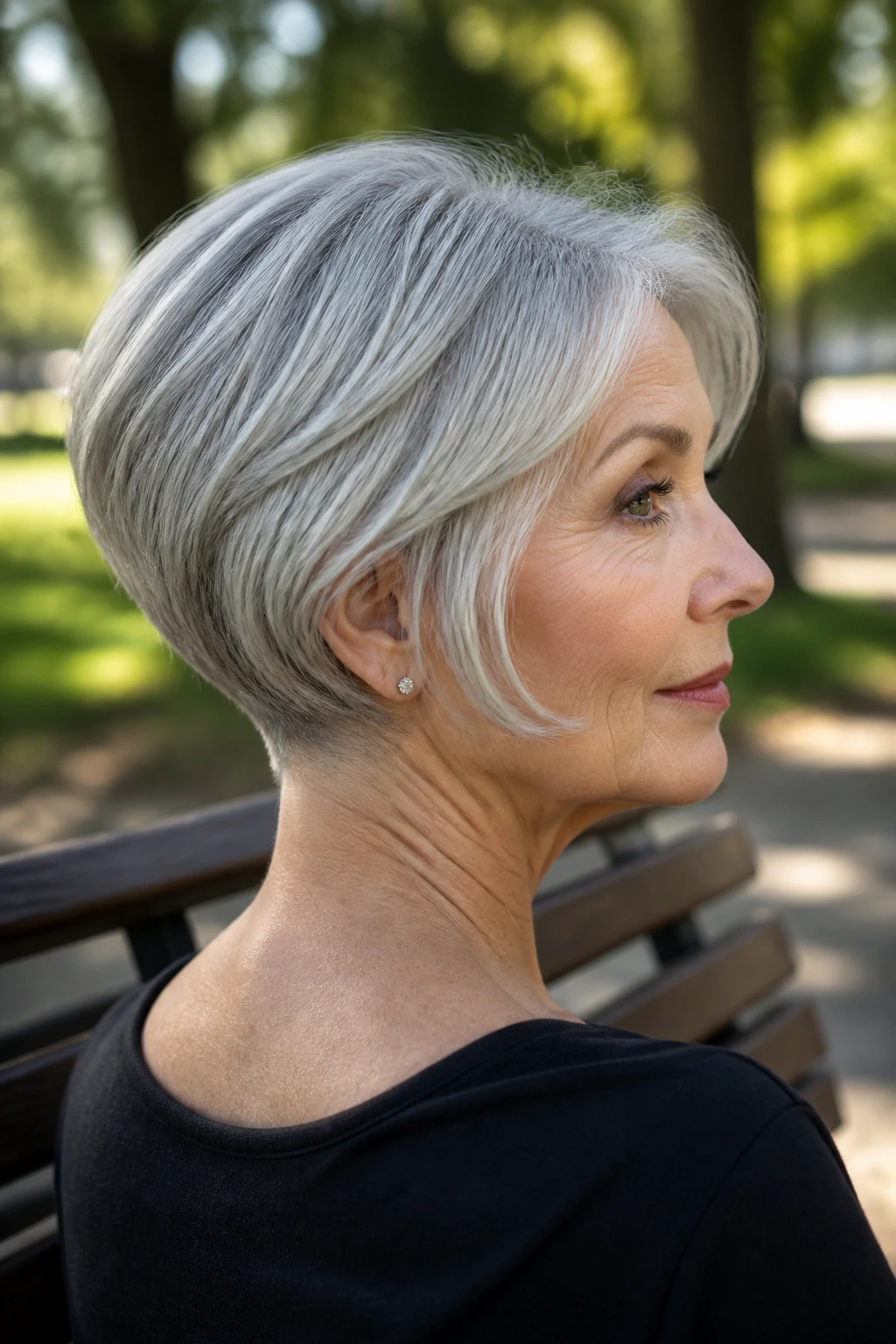
A stacked bob earns its keep in the back. The layers build a little lift through the crown while the neckline stays close and neat, which keeps the style from hanging heavy. On gray hair, that shape can look especially sharp because the silver catches the change in angle.
This cut is useful when the back of the head tends to go flat. The stacked shape gives you a small amount of height without a teased finish, and it holds up well if your hair is straight or just slightly wavy. If your nape has coarse hairs that stick out, ask for a close taper there so the back line doesn’t fuzz up.
It looks good with a side part and a small tuck at one ear. Simple. Clean. No fuss.
6. Curly Crop with a Soft Fringe

Curly gray hair needs a shape that respects spring, not a cut that forces it into a triangle. A cropped length with a soft fringe lets the curls sit up around the face while keeping the top light enough to move. The fringe should be broken up, not cut as one heavy shelf.
If your curls are tight, this cut keeps them from spreading out sideways. If they’re looser, it stops the front from becoming all forehead and no shape. Use a diffuser on low heat, scrunch in a light gel, and leave the curls alone once they dry.
That last part matters. Touching gray curls while they’re drying can make them frizz faster than you’d expect.
7. Soft Shag with Wispy Bangs

The shag works because it refuses to sit still. That’s the whole point. Short gray hair with wispy bangs gets movement at the front, lift at the crown, and enough irregularity through the sides to stop the cut from feeling helmet-like.
A good shag on mature hair is not a mullet in disguise. The layers should be soft and blended, with the bangs broken up so they skim the forehead instead of sitting in a solid line. That softer edge is kinder to thinning temples and a little easier to grow out if you change your mind later.
Ask your stylist to keep the perimeter light and the interior layers visible. If the cut gets too heavy, the shag loses its air and turns clumpy. Nobody wants that.
8. Asymmetrical Gray Bob with Longer Front Pieces
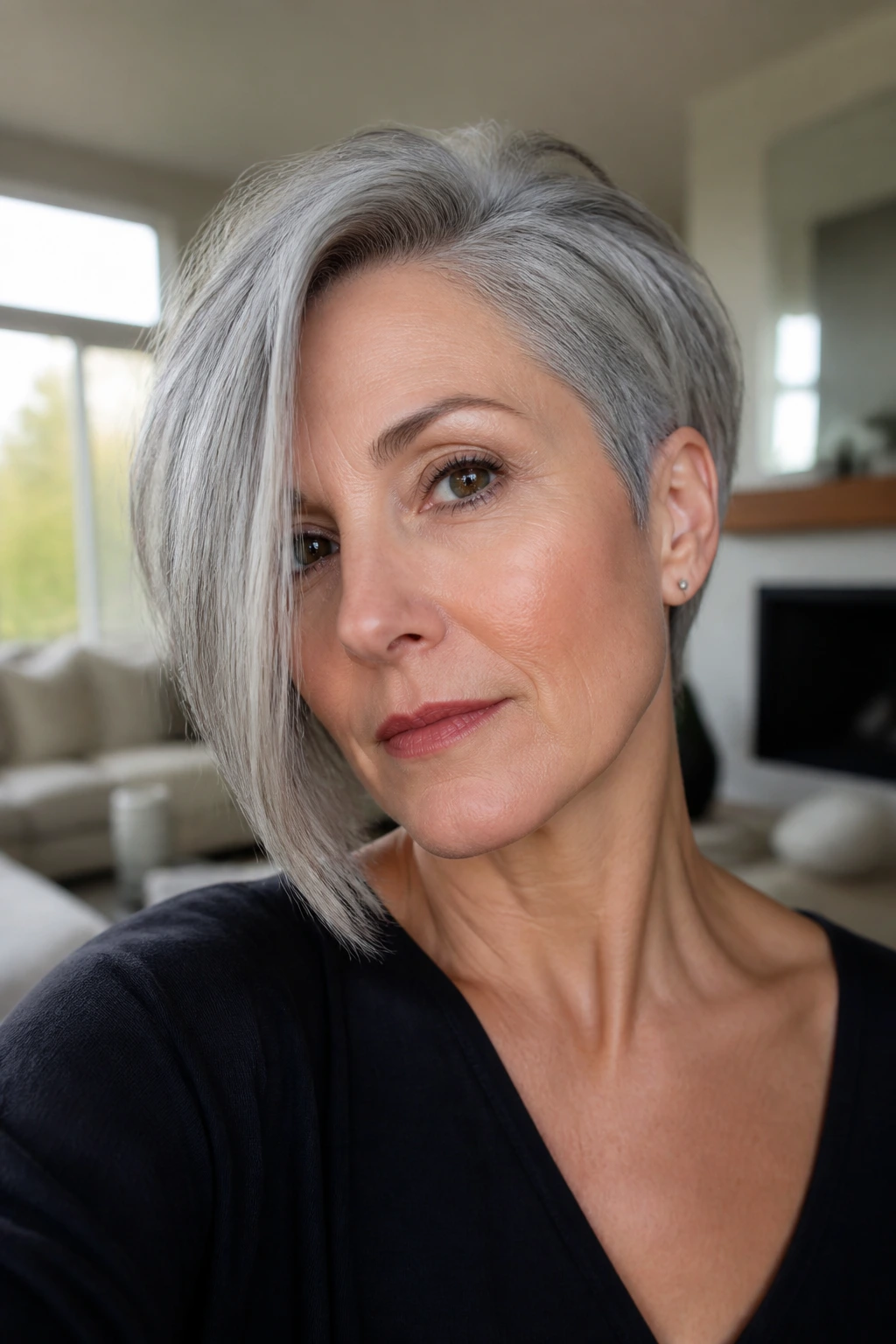
One side a touch longer than the other changes the whole mood. The asymmetry gives the eye somewhere to go, which is useful if you want a short cut that feels a little less expected. Long front pieces also soften the jaw and can make the face look more vertical.
This style works especially well when your hair falls differently on each side. Instead of fighting the unevenness, the cut uses it. A little undercutting in the back can keep the shape from ballooning while the front stays sleek and forward.
It’s a cut with a bit of attitude, but not the loud kind. More like the sort of thing that makes a plain sweater look finished.
9. Sleek Rounded Bob with a Deep Side Part
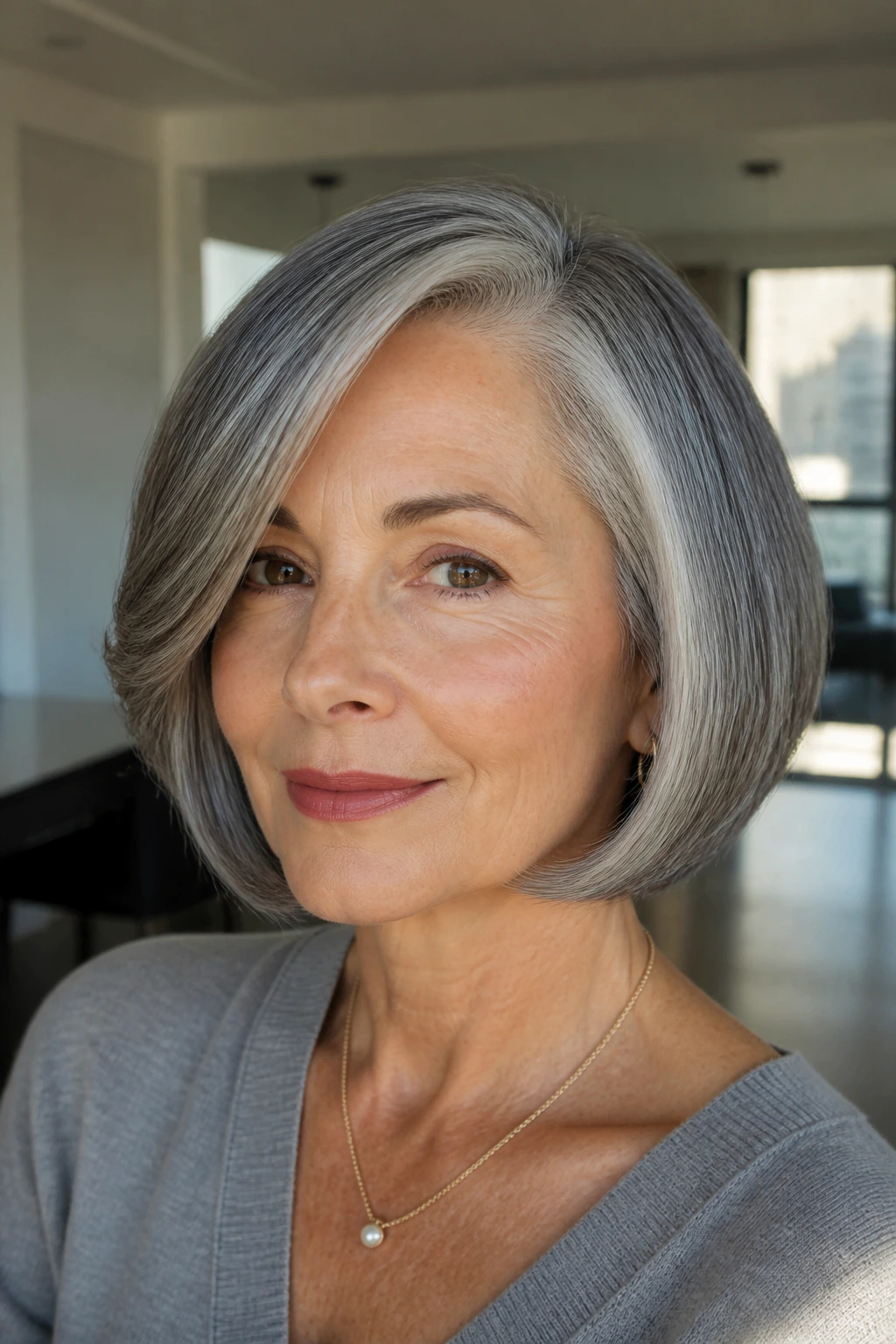
A rounded bob is a good answer when you want polish and not much frizz. The curve follows the head instead of fighting it, and a deep side part gives gray hair a sweep that feels deliberate. It’s especially nice if your strands are straight and a little coarse, because the smooth edge helps the silver shine look even.
This cut does need some discipline. Blow-dry with a nozzle, brush the ends slightly under, and keep the product light. Too much oil on the mid-lengths will flatten the whole thing and make the bob lose its clean outline.
If you like earrings, this is a strong pick. It keeps the hair off the jawline enough to show them off.
10. Tousled Crop with a Lifted Crown
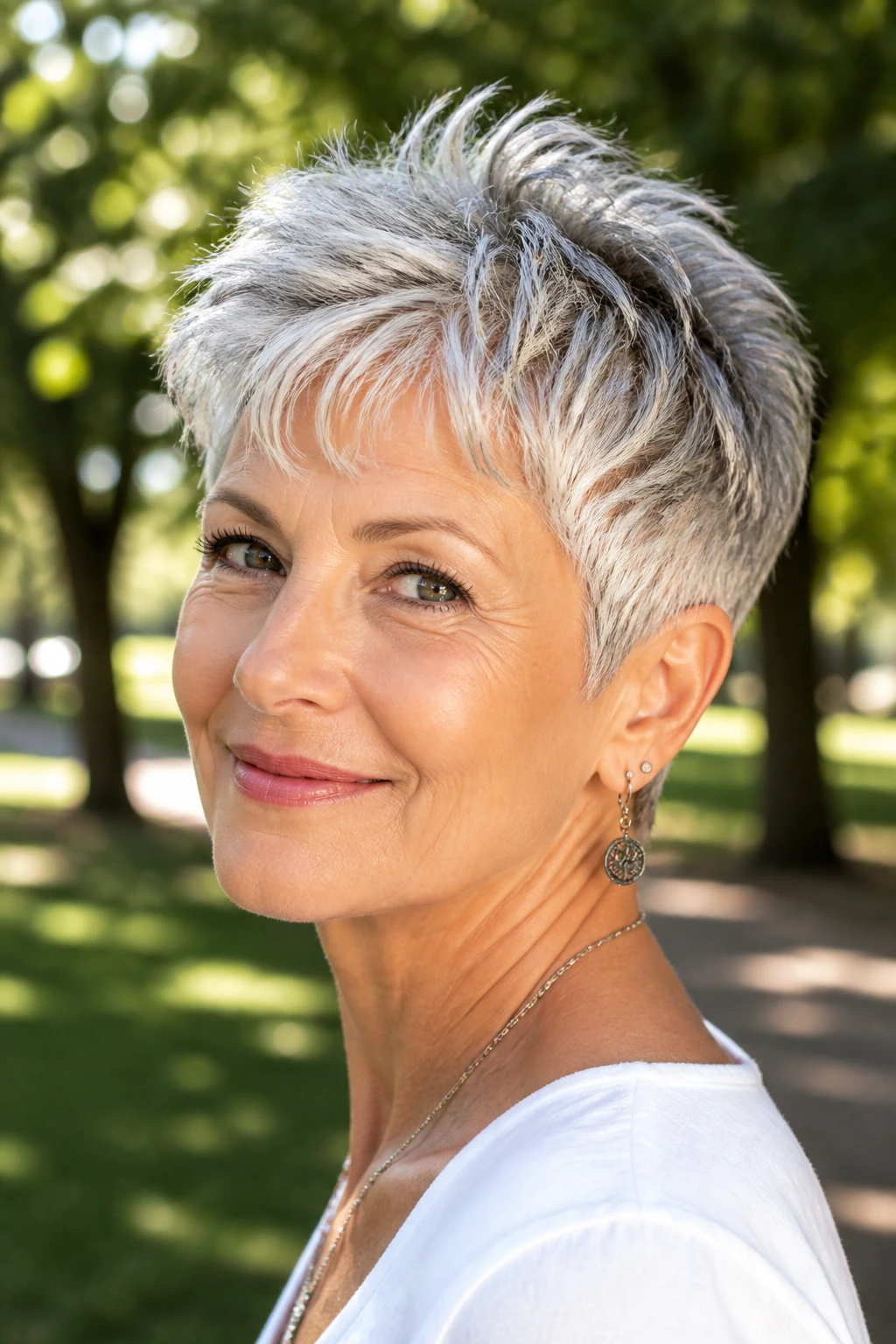
There’s a difference between “unstyled” and “tousled,” and this cut lives in the second camp. The top is left a little longer, the crown gets lift, and the ends are chopped enough to move around instead of hanging in one block. It looks best when the texture is visible.
Gray hair that dries with a natural bend can wear this cut especially well. A root spray and a quick finger-dry can be enough. If your hair is straight, twist small sections while drying so the top doesn’t sit too close to the scalp.
No need to make it precious. The charm is in the slight roughness.
11. Bright White Pixie with a Long Fringe
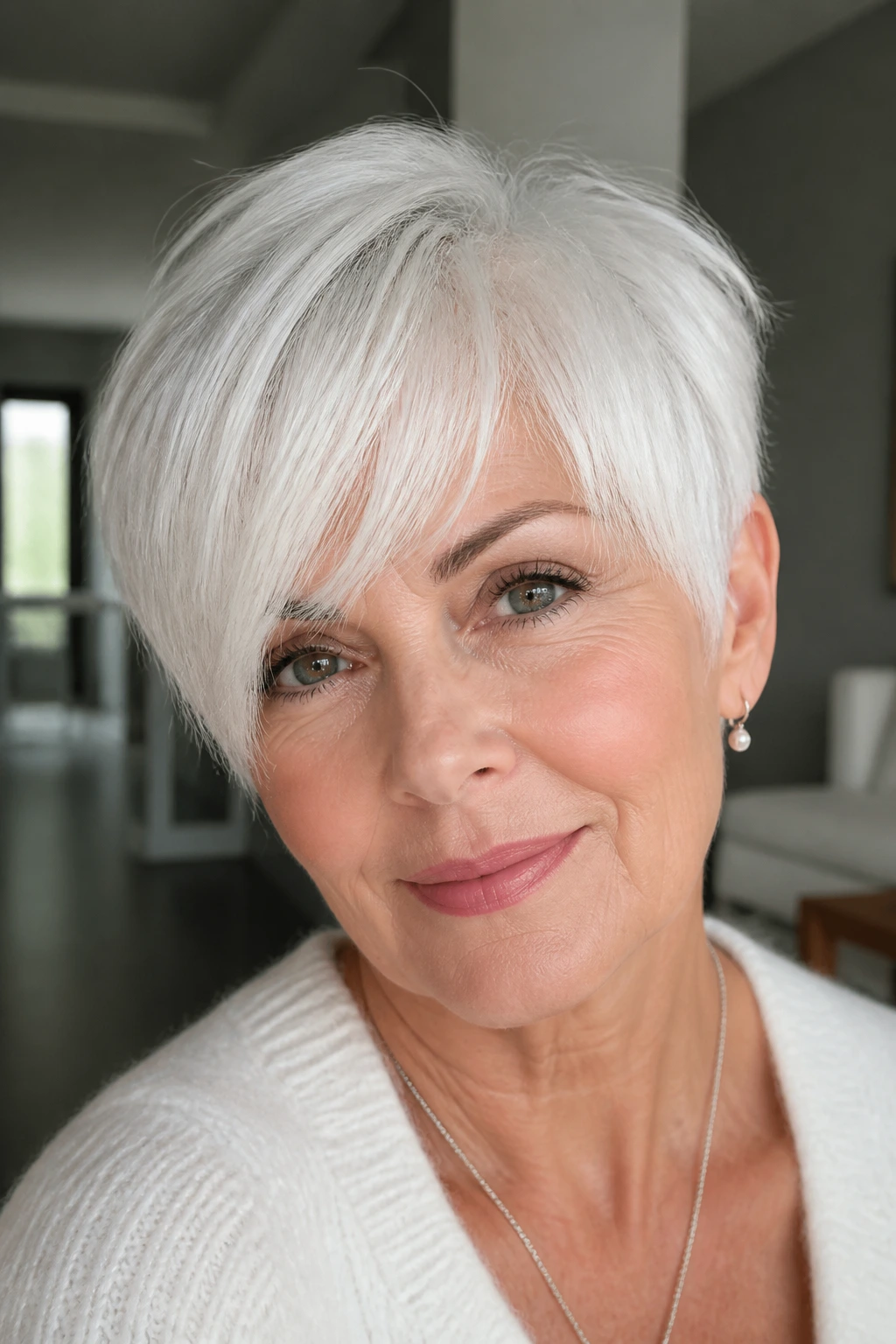
White-gray hair can look icy in a good way when the shape is soft enough to keep it from feeling stark. A longer fringe helps. It breaks up the forehead, draws the eye down toward the eyes, and gives the cut a gentler edge than a very short crop would.
This one is smart if your silver has gone nearly white and you want to lean into it. A gloss or toner can keep yellowing at bay, but the cut itself matters just as much. If the fringe is too blunt, the style gets severe fast. If it’s broken and slightly piecey, the whole thing reads softer.
A useful detail
Leave a touch more length through the fringe than you think you need. White hair reflects light fast, and a little extra softness at the front prevents the cut from looking hard in bright sunlight.
12. Layered Wedge Cut with a Curved Nape
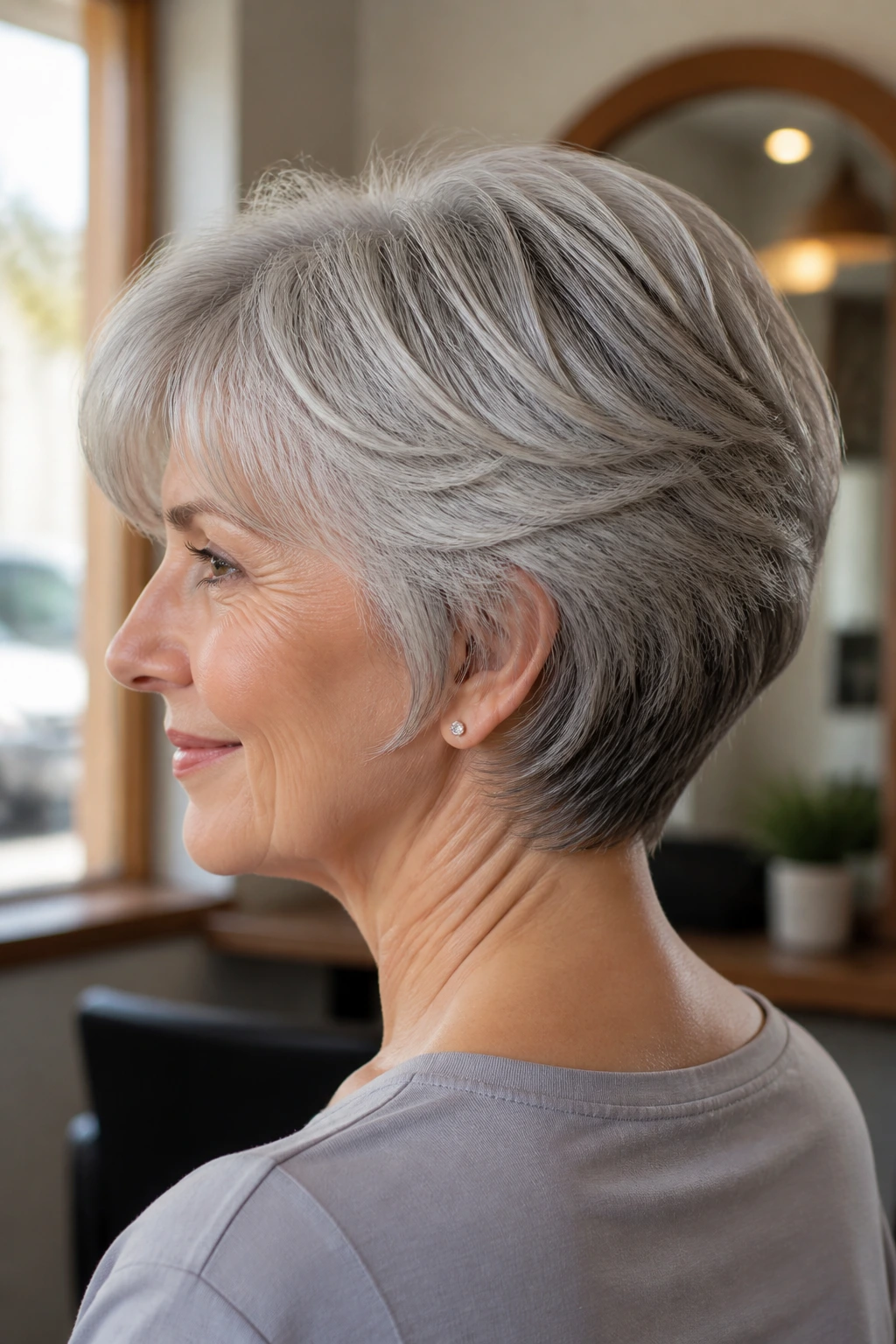
A wedge is a quietly powerful shape. It gives you fullness in the back, smooths the curve of the head, and keeps the nape neat without making the cut feel rigid. On gray hair, that curve can look especially clean because the shape is easy to read.
This cut does best when the interior layers are handled with care. Too much removal in the wrong spots and you lose the shape. Too little, and the wedge sits like a helmet. The sweet spot is a rounded back with lightness through the crown and a front that can be tucked or swept.
It’s a strong choice if your hair is straight, medium in density, and stubborn about holding volume at the root.
13. Cropped Curly Bob with Diffused Volume
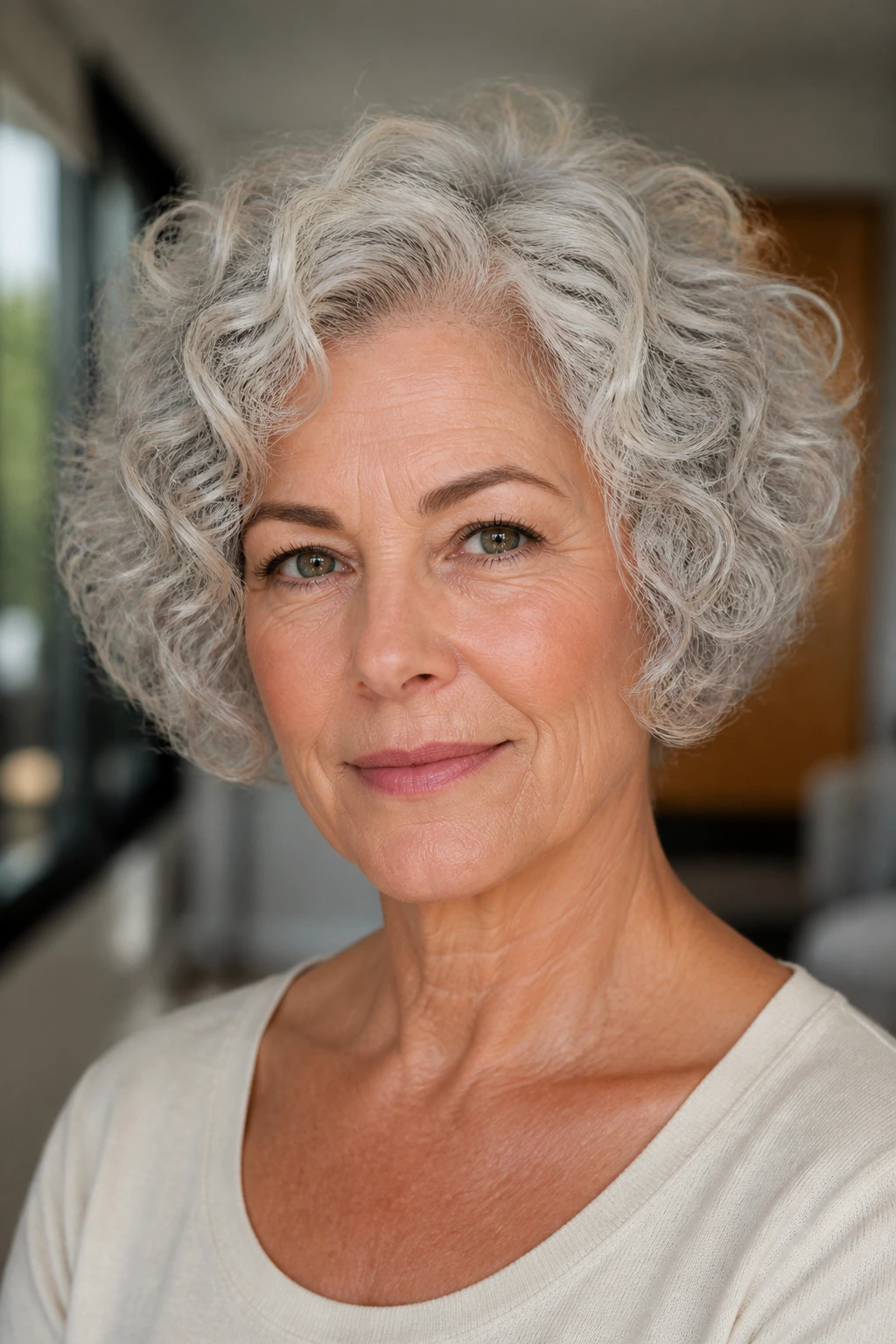
A cropped curly bob keeps the curls close enough to show their pattern without letting them spread out into a wide triangle. The volume should rise, not flare. That’s the difference. If the curls sit around the jaw and cheekbone area, the cut gets shape and the face stays open.
Diffusing on low heat makes a big difference here. Let the curls form, then stop touching them. Gray curls tend to frizz faster when they’re disturbed too much, so the less fuss the better. A curl cream or light gel is usually enough; heavy butter can weigh the top down and blur the pattern.
This is one of the best choices for curly hair that used to get longer just to behave. Shorter can be calmer.
14. Salt-and-Pepper Undercut Pixie
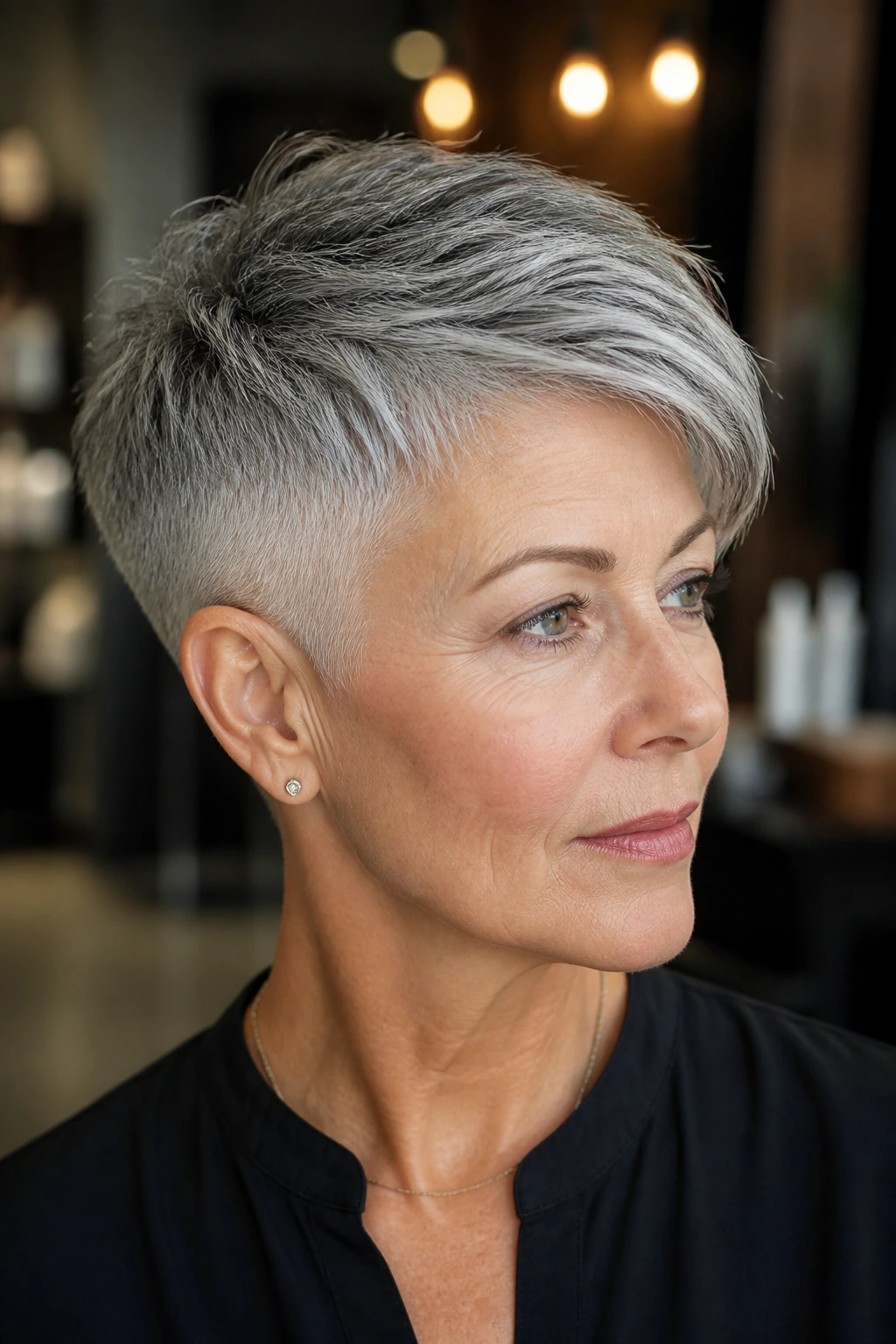
If your hair is thick, dense, or a little wild in the back, an undercut pixie can be a relief. The short or clipped sections underneath remove bulk, while the top stays long enough to style with shape. The salt-and-pepper color makes the contrast look deliberate instead of harsh.
It’s also practical. Less hair under the surface means less swelling around the ears and neckline. That can make a big difference in humid weather or on hair that puffs at the nape the second it dries.
Ask for the undercut to be soft, not shaved to the skin unless you want a stronger edge. The top can be swept forward, lifted, or pushed to one side depending on your mood.
15. French Bob with Airy Bangs
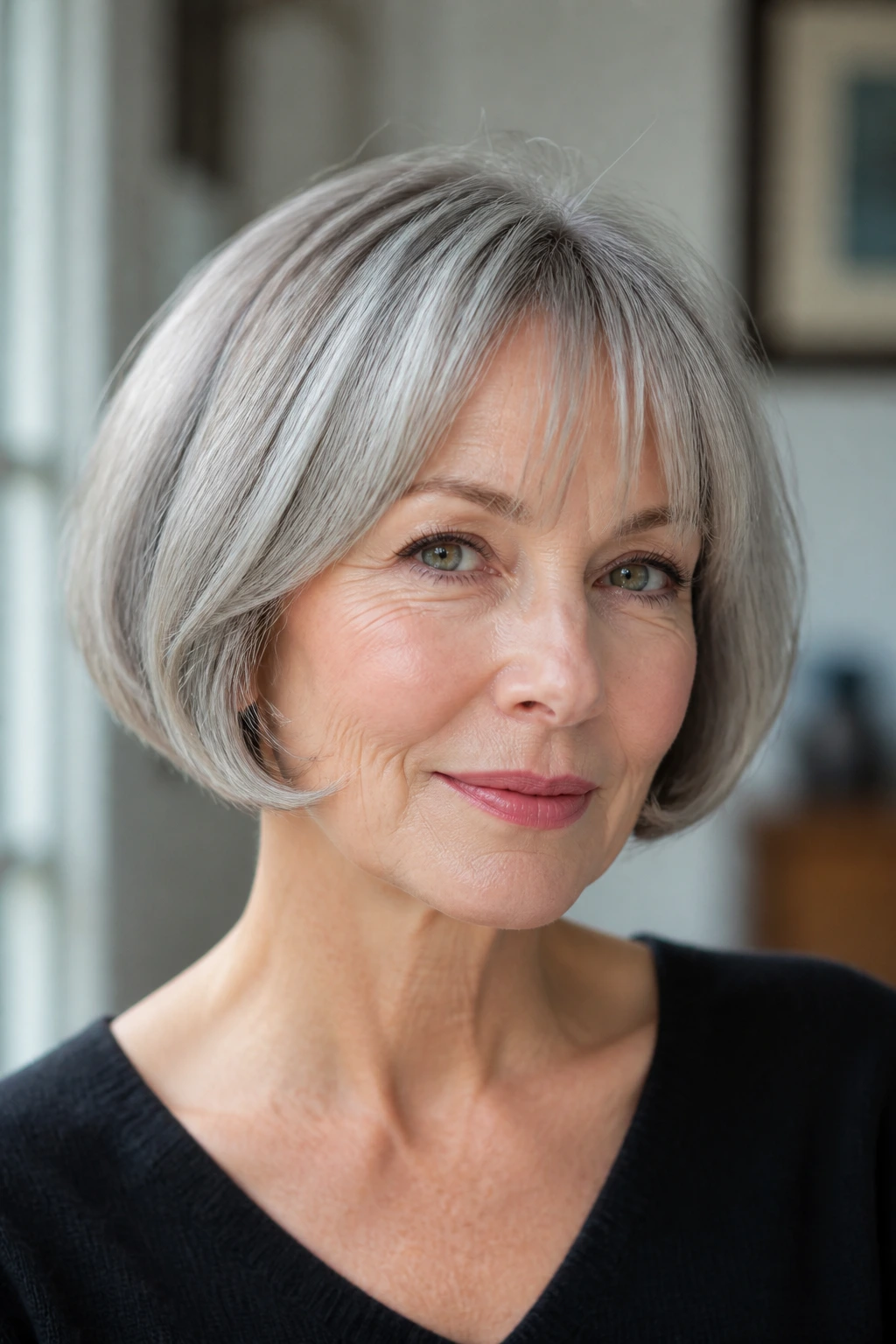
The French bob sits around the jaw or just above it, and airy bangs stop the cut from feeling too square. On gray hair, that combination is lovely because the crisp line of the bob gives structure while the bangs soften the face. It’s short, but not fussy.
The trick is keeping the bangs light. Heavy bangs on mature gray hair can close off the face fast and make the whole style feel weighed down. Airy bangs, by contrast, let a little forehead show through, which keeps the cut fresh.
This style suits someone who likes a little polish and doesn’t mind spending two extra minutes with a brush. Not a flat iron marathon. Two minutes.
16. Softly Stacked Crop with Feathered Back
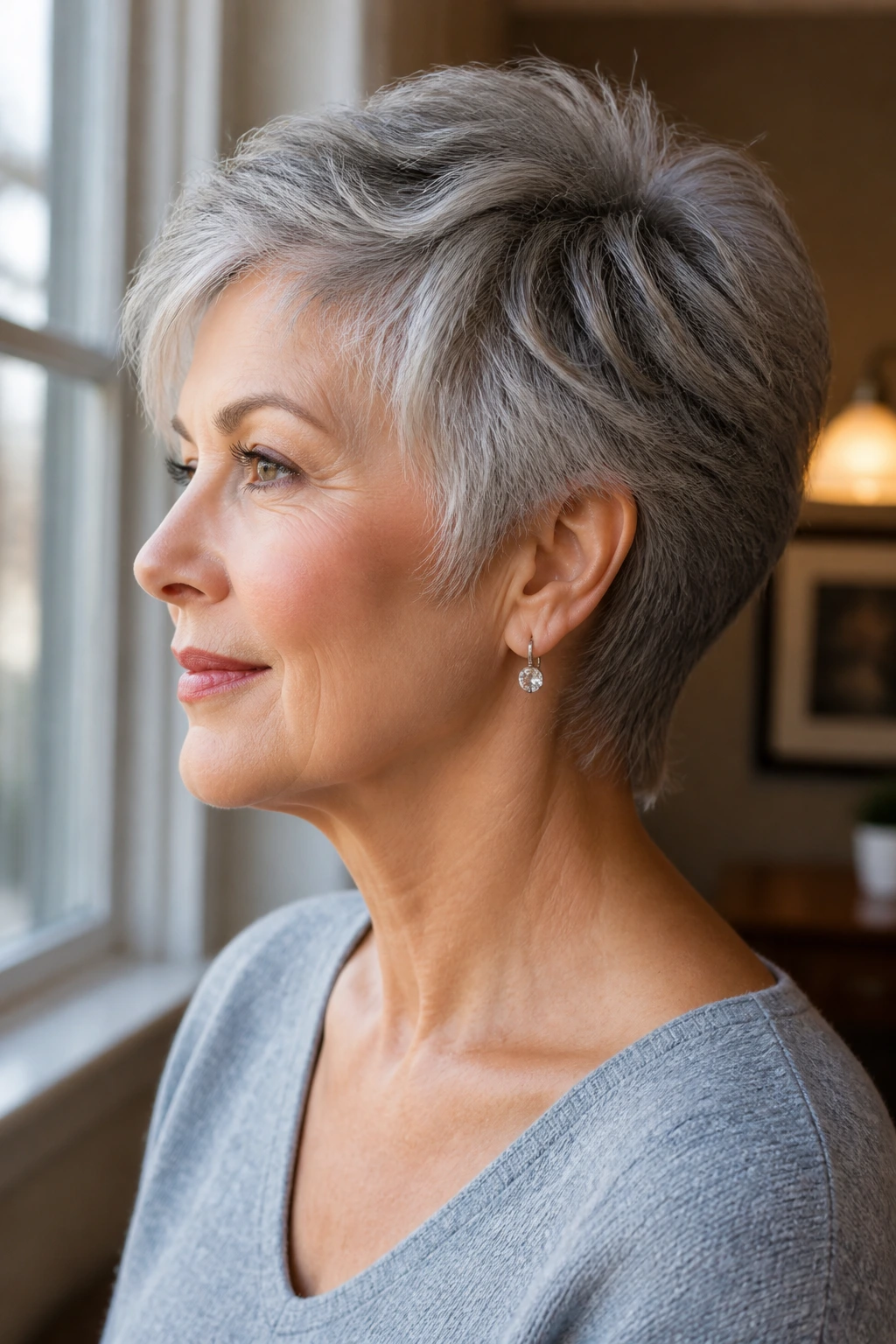
This cut sits between a bob and a pixie, which makes it useful if you want shape without a hard line. The back is stacked softly, the sides stay feathered, and the overall outline feels rounded rather than sharp. It’s one of those cuts that quietly makes the head look neater.
Soft stacking can save gray hair that has lost some density at the crown. The back gets support from the layers, but the feathering keeps it from looking bulky. If your hair flips out at the nape, this shape can tame that without forcing everything flat.
It’s low-key, practical, and more elegant than it sounds on paper.
17. Side-Swept Pixie Bob
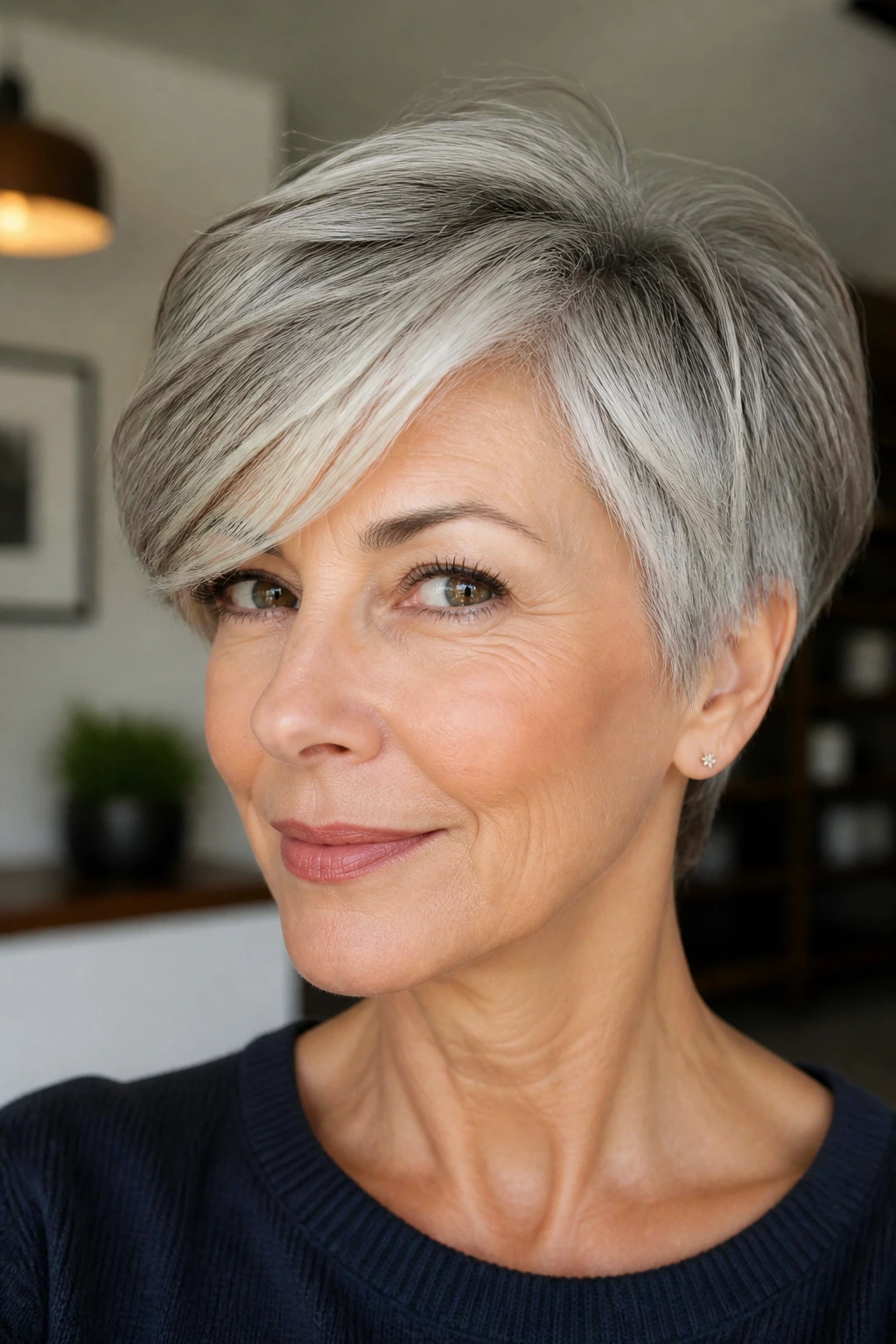
This is the bridge cut. If a pixie feels too short and a bob feels too much like homework, the pixie bob sits in the middle with enough length at the top and temples to tuck, sweep, and shape. The side-swept front is the part that matters most; it softens the forehead and gives the style a little glide.
I like this cut on transitional gray because it gives room for grow-out without looking sloppy. It also works for hair that changes texture from front to back. The shorter nape keeps things tidy, and the longer front pieces let you play with direction.
If you want one haircut that can look casual on Tuesday and neat on Friday, this one earns a hard look.
18. Choppy Silver Crop with Textured Ends
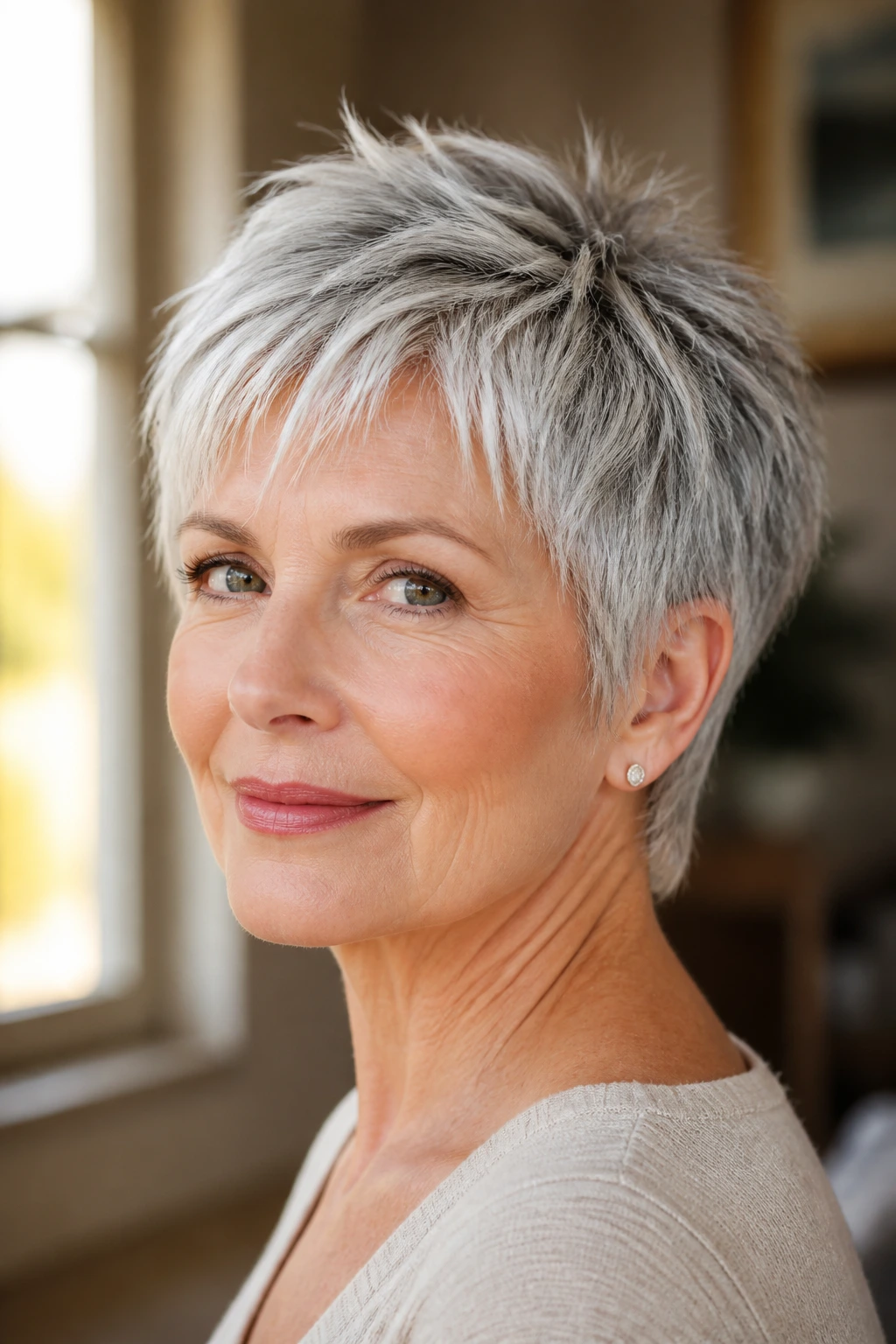
Choppy ends can make silver hair come alive. Not frizzy. Alive. The difference is in how the ends are cut — broken up, not shredded. That slight irregularity makes the light bounce in little flashes and keeps the crop from sitting like one solid mass.
This cut is especially good for thick straight hair that wants to act larger than life. The texture calms it down. A wax or paste used only at the tips can define the pieces without turning them greasy. If your hair is fine, keep the choppiness lighter or it can make the ends look thin.
A clean neckline keeps the look from tipping into rough. That’s the line to watch.
19. Rounded Curly Bob with Face-Hugging Shape

Curly hair needs a bob that curves in toward the face, not out to the sides. When the shape hugs the cheek and mouth area, the curls feel contained and the style reads soft instead of triangular. That shape is especially good if your curls have a springy, medium-tight pattern.
The length should land where the curls can bounce without hanging. For many people, that’s between the chin and top of the neck. Dry the curls with a diffuser or air-dry with clips at the roots if the crown needs help.
A rounded curly bob can make gray hair look plush in a way that longer styles often miss. It has presence without bulk.
20. Neck-Grazing Gray Shag

A neck-grazing shag leaves enough length to feel relaxed while keeping the shape above the collar. The layers are what matter. They give the ends movement and keep the top from going flat. Gray hair with natural wave often loves this length because it can swing a little instead of sitting stiff.
The shag is a good answer for hair that has a few stubborn bends and not much interest in behaving like a smooth bob. A little texture cream, a bit of scrunching, and air-drying can be enough. If your hair is prone to puffing, keep the layers softer around the sides and heavier toward the interior.
This is not a cut for someone who wants razor-straight lines. It’s for movement.
21. Nape-Tapered Pixie with a Long Top
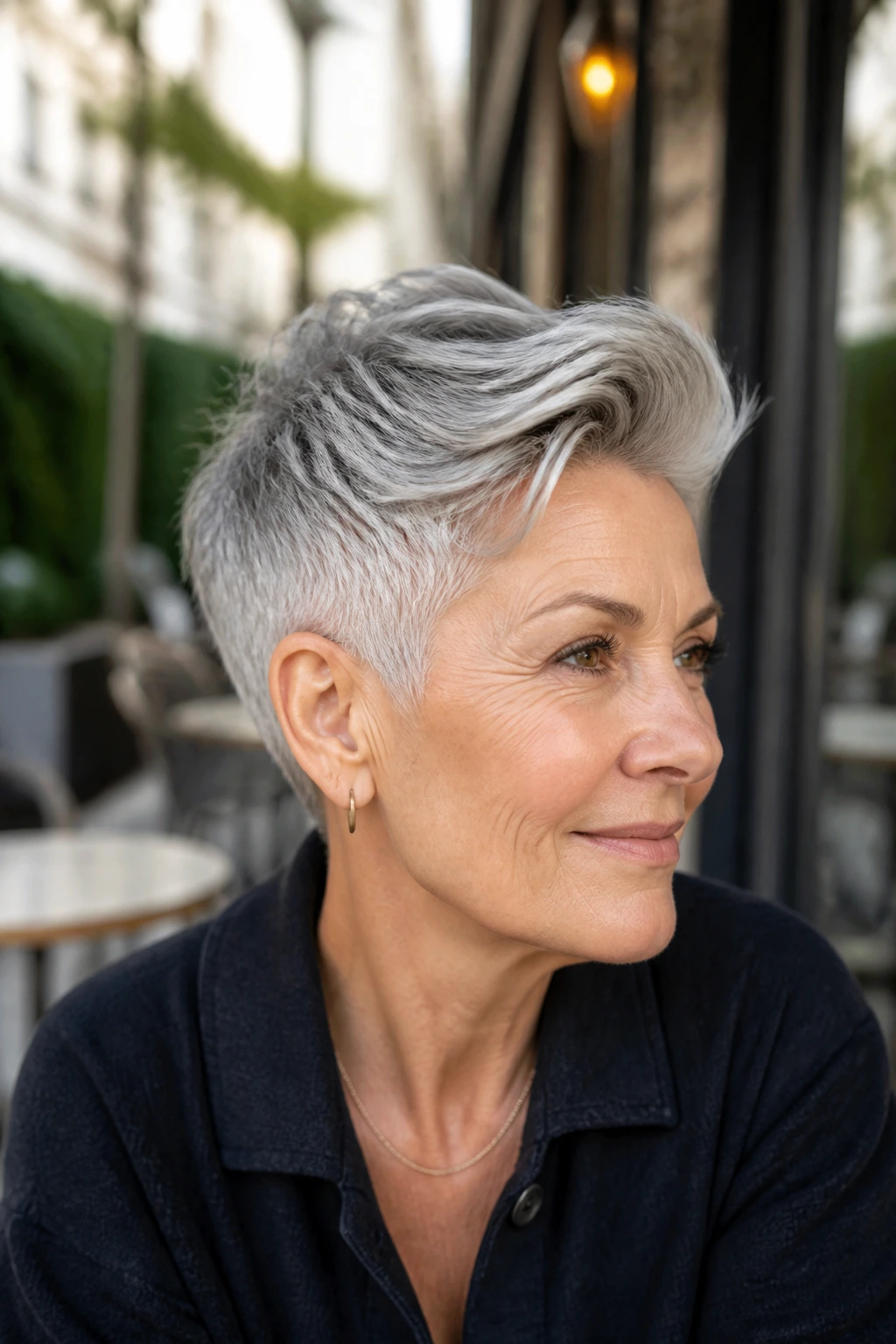
This style has contrast, and that’s why it works. The nape is trimmed close, the sides stay neat, and the top is left long enough to sweep up, forward, or off to the side. On gray hair, the change in length shows off the shape instead of hiding it.
A nape taper is especially useful if the back of your head has coarse growth or a swirl that likes to stick out. By keeping that area tight, the top can do its job without fighting the base. This cut can look sharp with a little texture paste or smooth with a light brush-through.
It’s one of the more flexible looks on the list. Good if you like options.
The styling trick
Flip the top in different directions while drying. That tiny move keeps the roots from training themselves into one flat habit.
22. Smooth Side-Part Bob with a Tucked Ear Finish
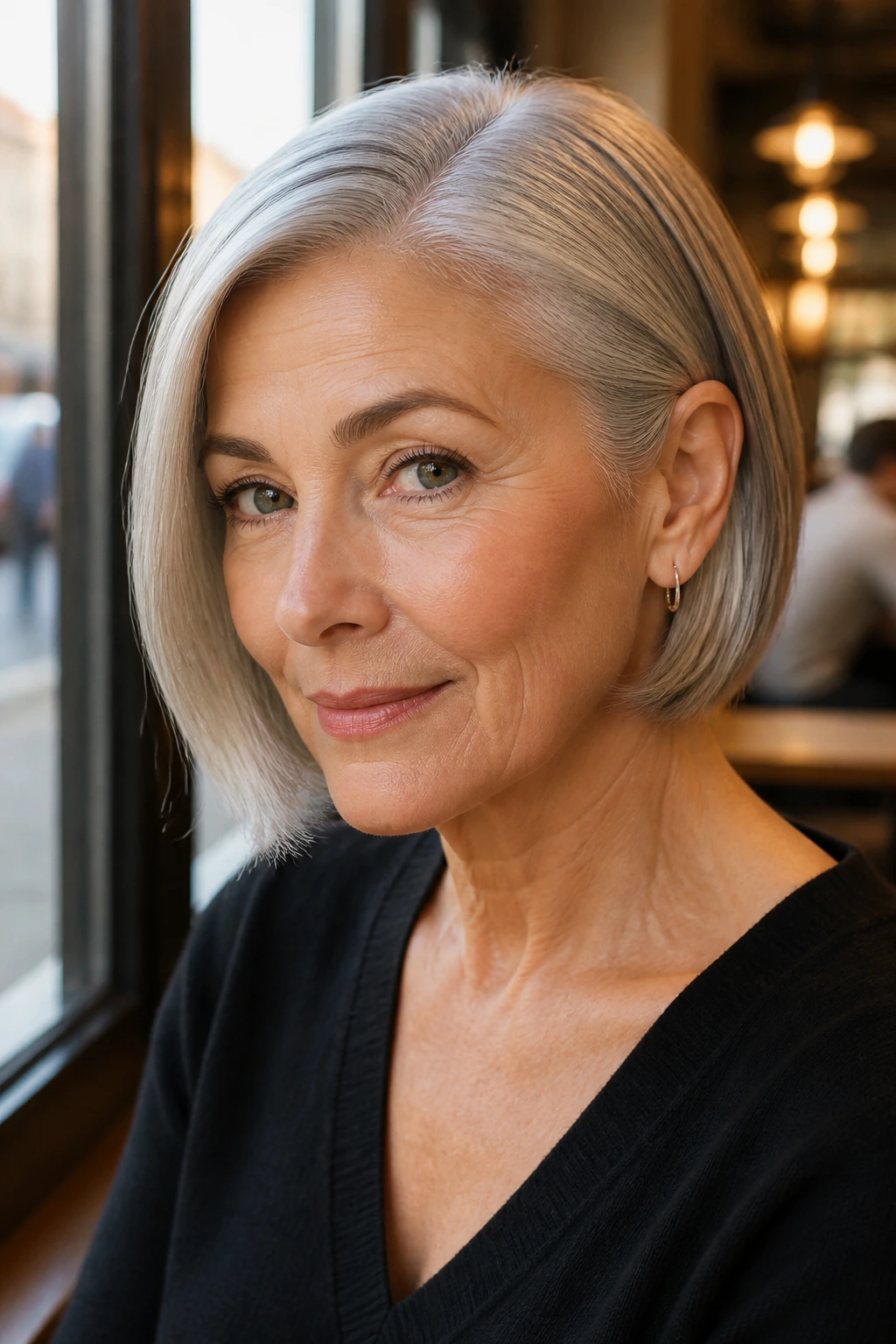
A side-part bob that tucks neatly behind one ear has a calm, finished look. The bob itself should be smooth and light, with enough body at the ends to hold the line without puffing. The tucked ear detail opens the face and lets the silver read cleanly.
This style is a good fit for hair that likes to lie flat and behave. That sounds boring, but it’s useful. If your strands are straight or only slightly wavy, you can keep this cut looking fresh with a round brush and a light serum on the ends. The serum should go nowhere near the roots.
It pairs well with earrings, bold frames, and simple clothes. The cut does the work.
23. Gray Crop with Curtain Bangs
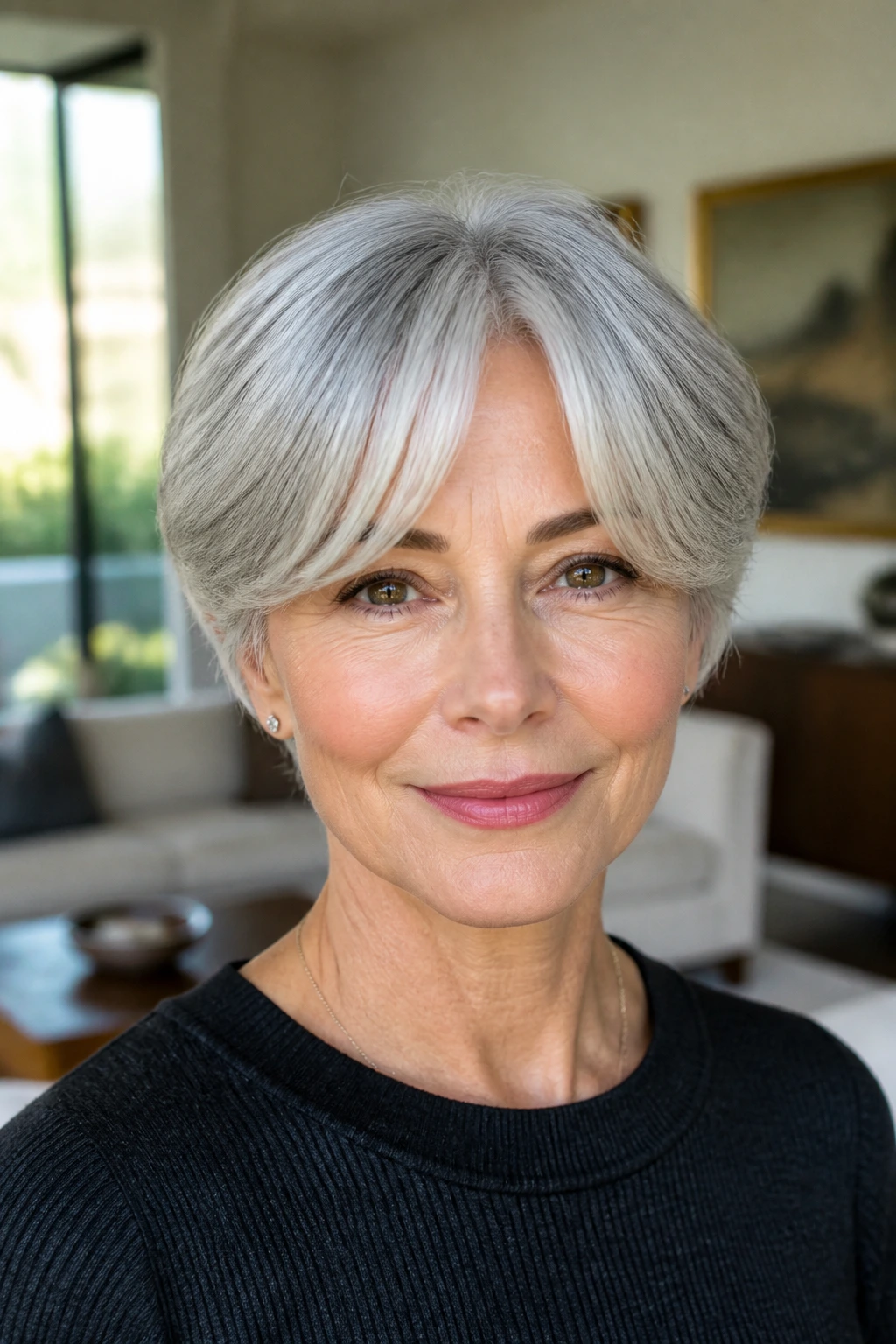
Curtain bangs are a smart way to soften the forehead without cutting a full fringe. They part in the middle or slightly off center, then fall to each side like a soft frame. On short gray hair, that little swing can make the whole cut feel friendlier.
This is a good option if you want front coverage but do not want a heavy bang sitting on the brows. The sides of the crop can stay close while the bangs move a bit more freely. That keeps the face open and gives you options on days when you want to tuck the front back.
Curtain bangs need a little shaping with a brush, but not much. They’re forgiving. That’s part of the appeal.
24. Silver Bob with Invisible Layers
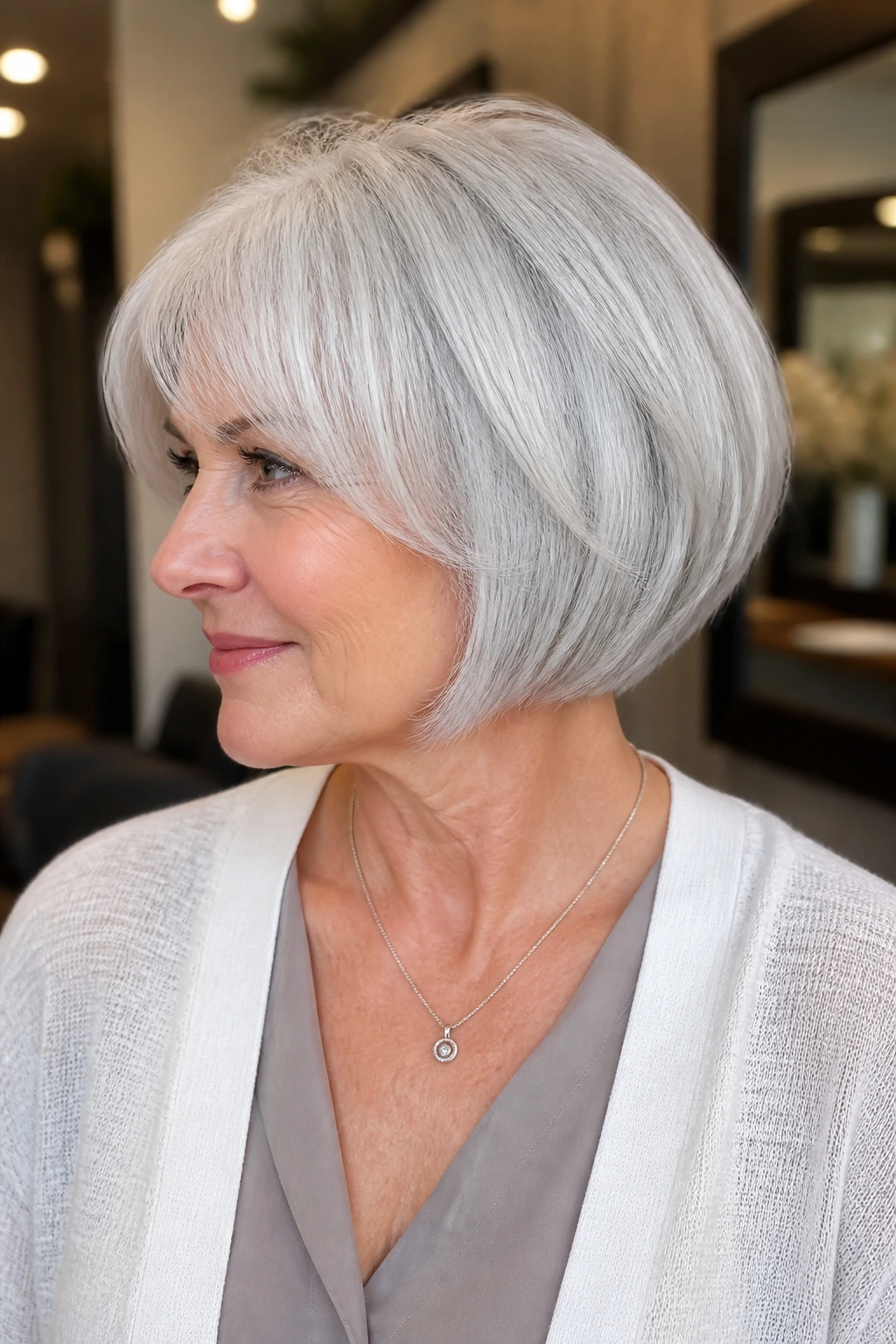
Invisible layers are the answer when you want a bob to look full but not bulky. The surface stays smooth, almost blunt from the outside, while the inside carries the structure. Gray hair can use this trick well because the shine on the outer layer stays clean and the hidden layers give the bob some swing.
This works especially well for finer hair that collapses if the cut gets too shredded. You get shape without losing density. Blow-dry with a medium round brush and keep the movement subtle. The goal is a bob that turns at the ends, not one that flips out in a dramatic way.
If you’ve been told your hair is too thin for a bob, this is the version worth trying.
25. Soft Mushroom-Inspired Cut
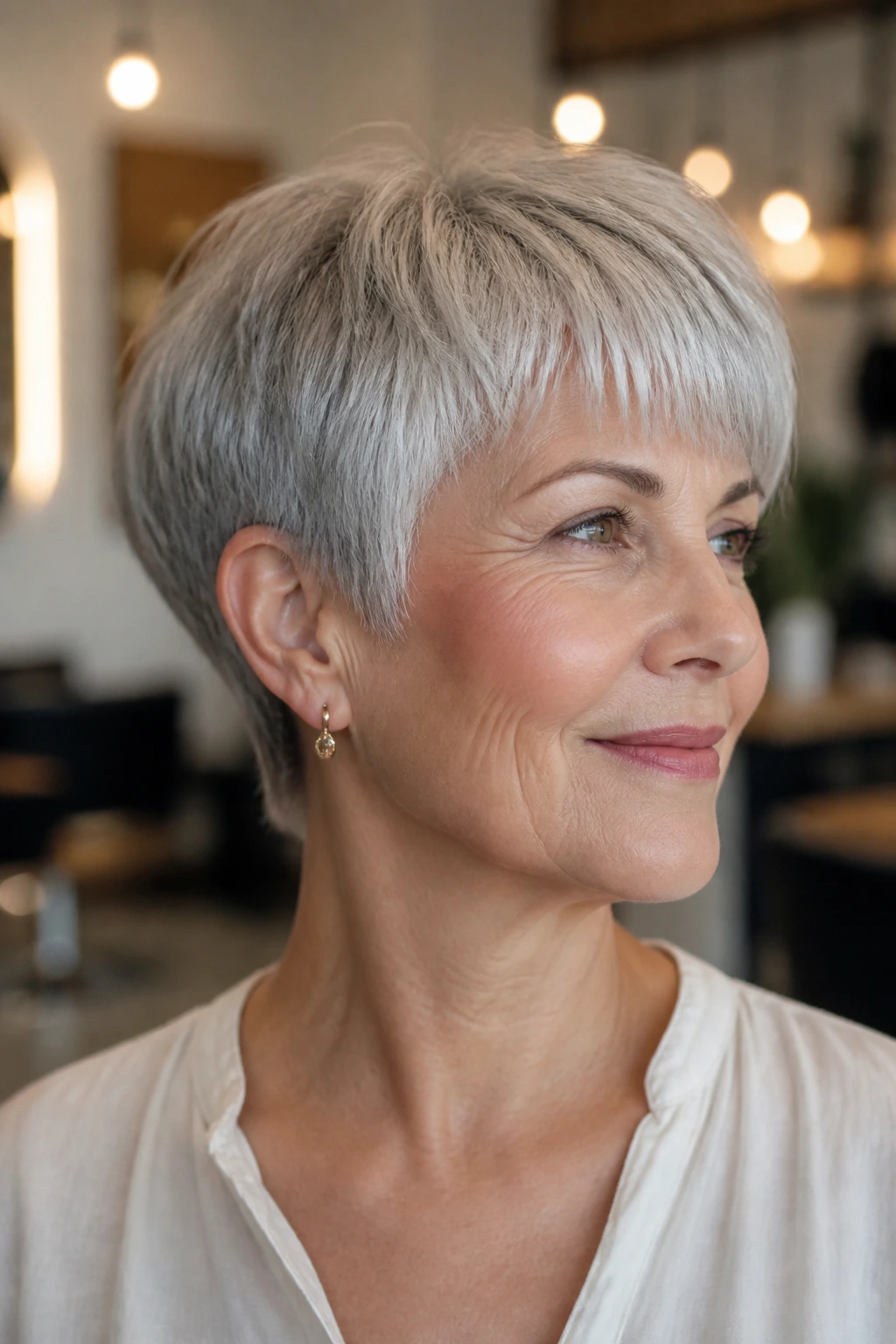
A mushroom-inspired cut sounds risky until you see it done softly. The outline is rounded, the top has a little height, and the sides curve in rather than flare out. On gray hair, that shape can look modern and tidy at the same time.
This one works best when the edges are softened and the neckline is cleaned up. If the bowl shape gets too hard, it turns dated fast. Keep the bangs broken up or lightly side-swept, and let the back curve gently into the nape.
It’s not for everybody. But on the right face shape, it has a real point of view.
26. Wet-Look Styled Crop
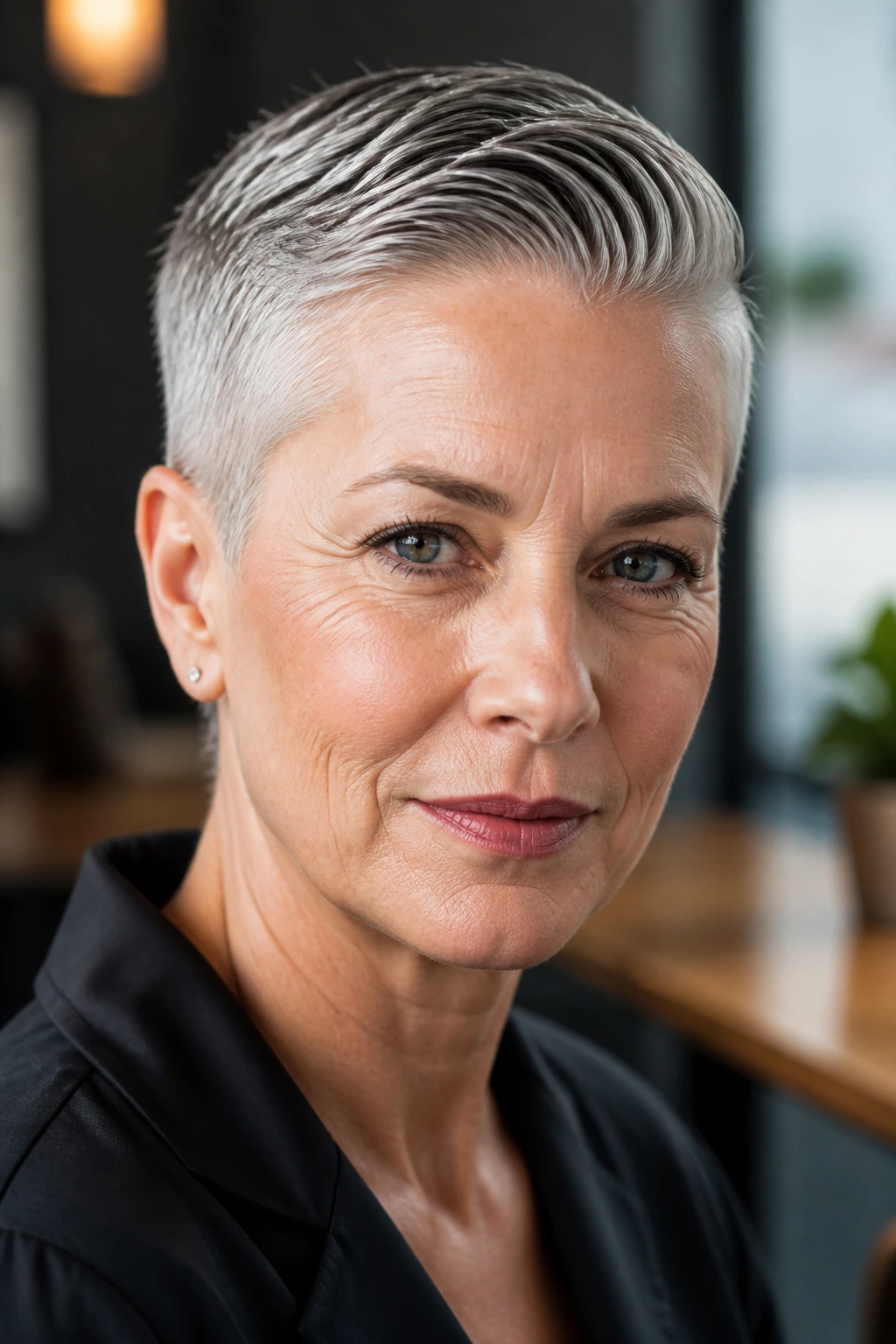
A wet-look crop is not a daily style for most people, and that’s fine. It’s a sharp finish for days when you want silver hair to read glossy and deliberate. The trick is using gel sparingly at the root and through the top, then combing the shape into place before it sets.
Gray hair with strong texture can take this look well because the shine shows off the hair’s silver and white tones. It works on very short crops, especially if the sides are neat and the top has enough length to slick back or to one side.
The whole thing depends on restraint. Too much gel turns the cut crunchy. Too little and it falls apart. A little goes a long way.
27. Natural Coil Crop with Tapered Sides
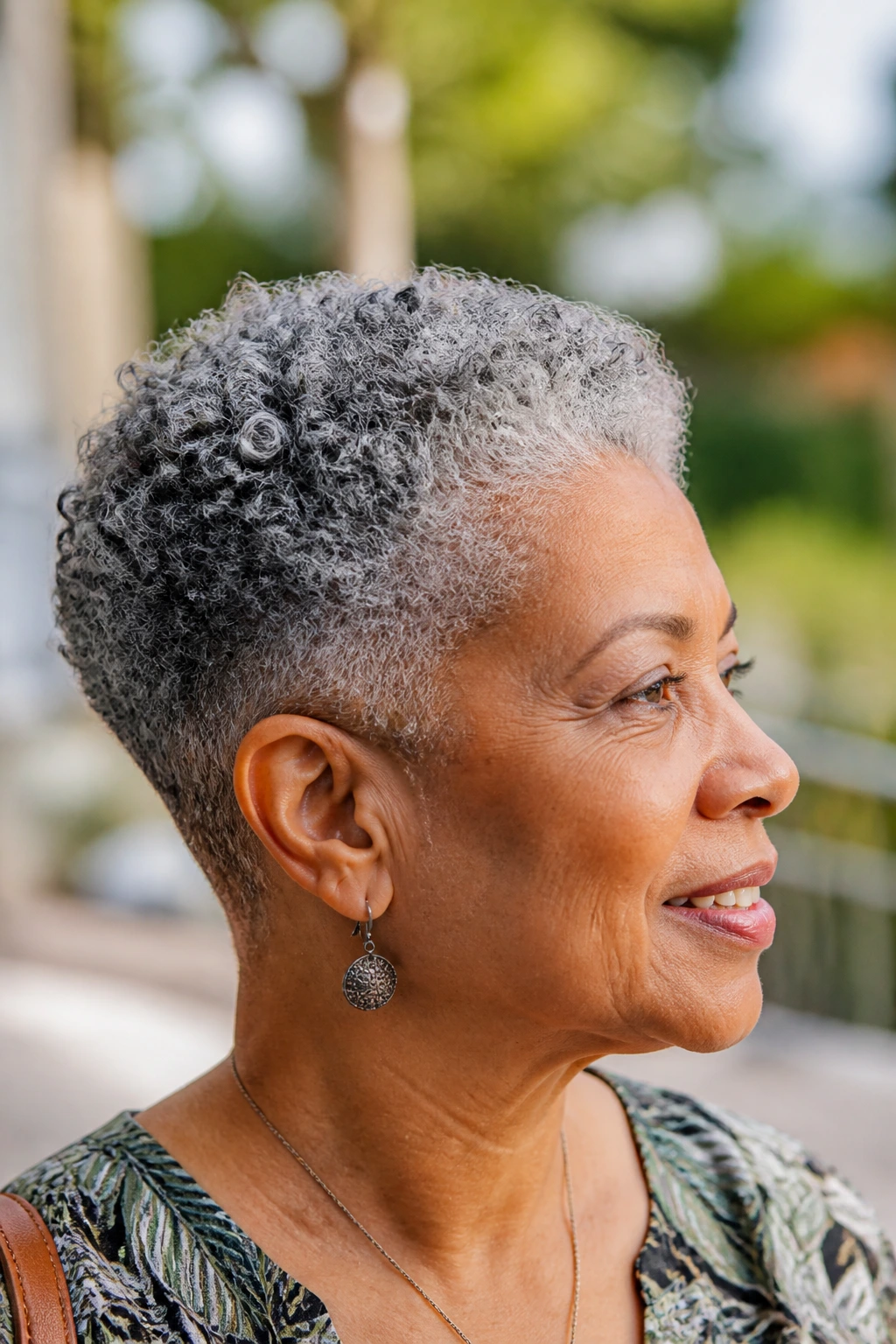
Coily gray hair looks best when the shape respects shrinkage. Keep the top long enough for the coils to spring, taper the sides so the head doesn’t widen too much, and let the texture be the star. A crop like this can look crisp, soft, or bold depending on how tightly the coils are left at the top.
This cut is a relief if you’re tired of dragging curls into a shape they do not want. Leave enough length to show the coil pattern, then clean up the sides and nape so the silhouette stays neat. A rich leave-in and a curl cream are usually enough; heavy oils can sit on top and dull the silver.
The best version of this cut has room. Not bulk. Room.
Why Gray Hair Looks for Short Hair Over 60 Work So Well

Short gray hair has a built-in advantage that long hair often loses: the shape is visible. You see the line at the nape, the bend around the ears, the lift at the crown, and the way silver strands catch light instead of disappearing into a long sheet. That gives the haircut some real authority.
Hair texture matters more here than people think. Gray strands can come in drier, coarser, or more porous, and short lengths handle that better because there’s less weight dragging the shape down. A blunt long style can sit heavy and look tired. A short cut with some internal movement keeps its life.
There’s also the face factor. Once the hair comes closer to the cheekbones and jaw, it starts framing the face instead of hiding it. That does not mean every cut has to be dramatic. Sometimes the smallest shift — a cleaner neckline, a little crown lift, a softer fringe — does more than a whole new color ever could.
How to Ask for the Right Gray Hair Cut at the Salon
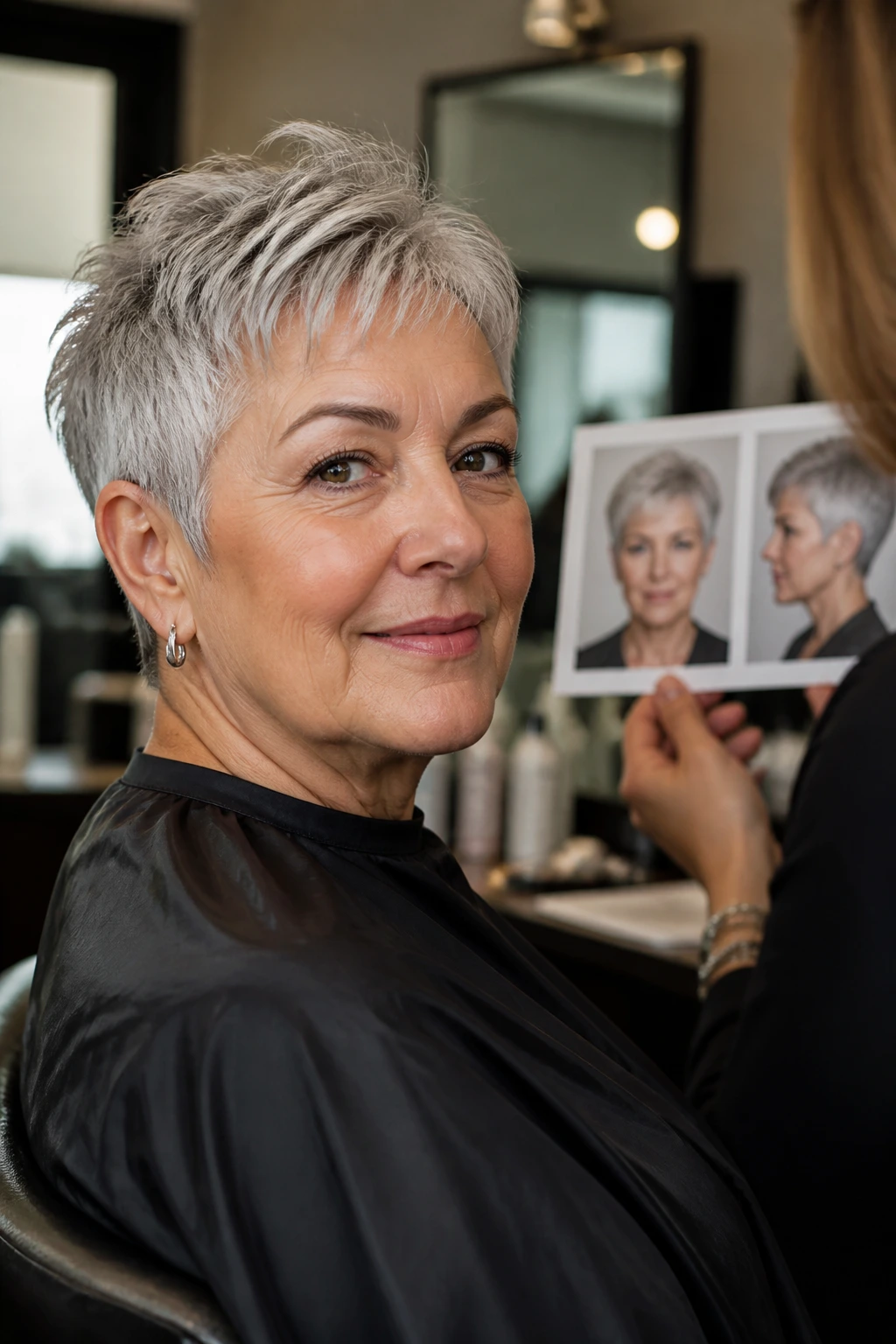
Bring photos, but do not bring only one. One picture from the front and another from the side tell the story better, because short cuts live or die by the profile. A cut that looks cute in a flat photo can turn into a puffed-up triangle from the side if the layers are wrong.
Use plain language with your stylist. Say what you need the hair to do each day. If you want five-minute styling, say that. If your crown goes flat by lunch, say that too. If your nape grows out like a little brush, bring that up before the first snip.
Try these phrases:
- Crown: “I want a little lift here, but not a teased finish.”
- Sides: “Keep the sides close so they don’t puff out.”
- Nape: “Please taper the back so it stays neat for several weeks.”
- Fringe: “I want softness around the forehead, not a heavy bang.”
- Length: “I still want enough hair to tuck behind my ears on one side.”
That last one is the one people forget. And then they leave with a cut that looks right in the chair and wrong at home.
Essential Tools for Styling Short Gray Hair
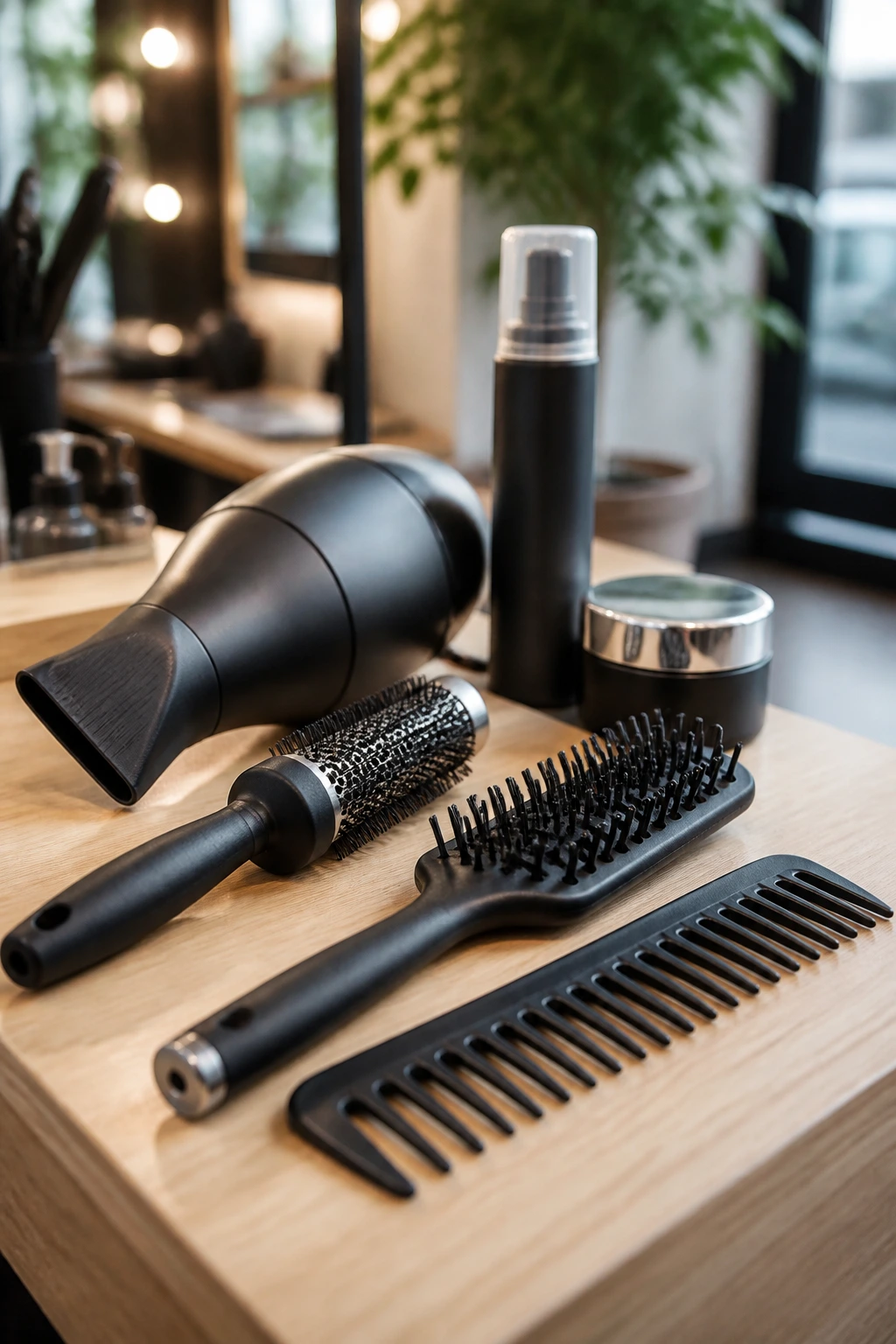
- Blow dryer with a narrow nozzle — Keeps the air aimed at the roots instead of blasting the whole shape apart.
- Small round brush, 1 to 1.5 inches — Good for bending ends under and lifting the crown.
- Vent brush — Fast drying, especially for short hair that needs volume near the scalp.
- Wide-tooth comb — Gentle on curls and useful for shaping a side part without pulling.
- Root-lift mousse — Best when applied to damp roots before drying; use less than you think.
- Light texture paste or cream — Helps piece out pixies and crops without turning them greasy.
- Flexible-hold hairspray — Keeps shape in place while letting the hair still move.
- Heat protectant spray — Necessary if you’re using a dryer, round brush, or flat iron.
- Purple shampoo — Useful for silver hair that starts to yellow; use sparingly so the tone doesn’t go dull.
- Microfiber towel — Cuts drying time and roughs up the hair less than a regular bath towel.
- Styling clips — Helpful for setting bangs, pinning a side sweep, or controlling the top while you dry the back.
- Diffuser attachment — Worth owning if you have curls or waves that need shape without frizz.
Smart Product Choices for Silver and White Hair
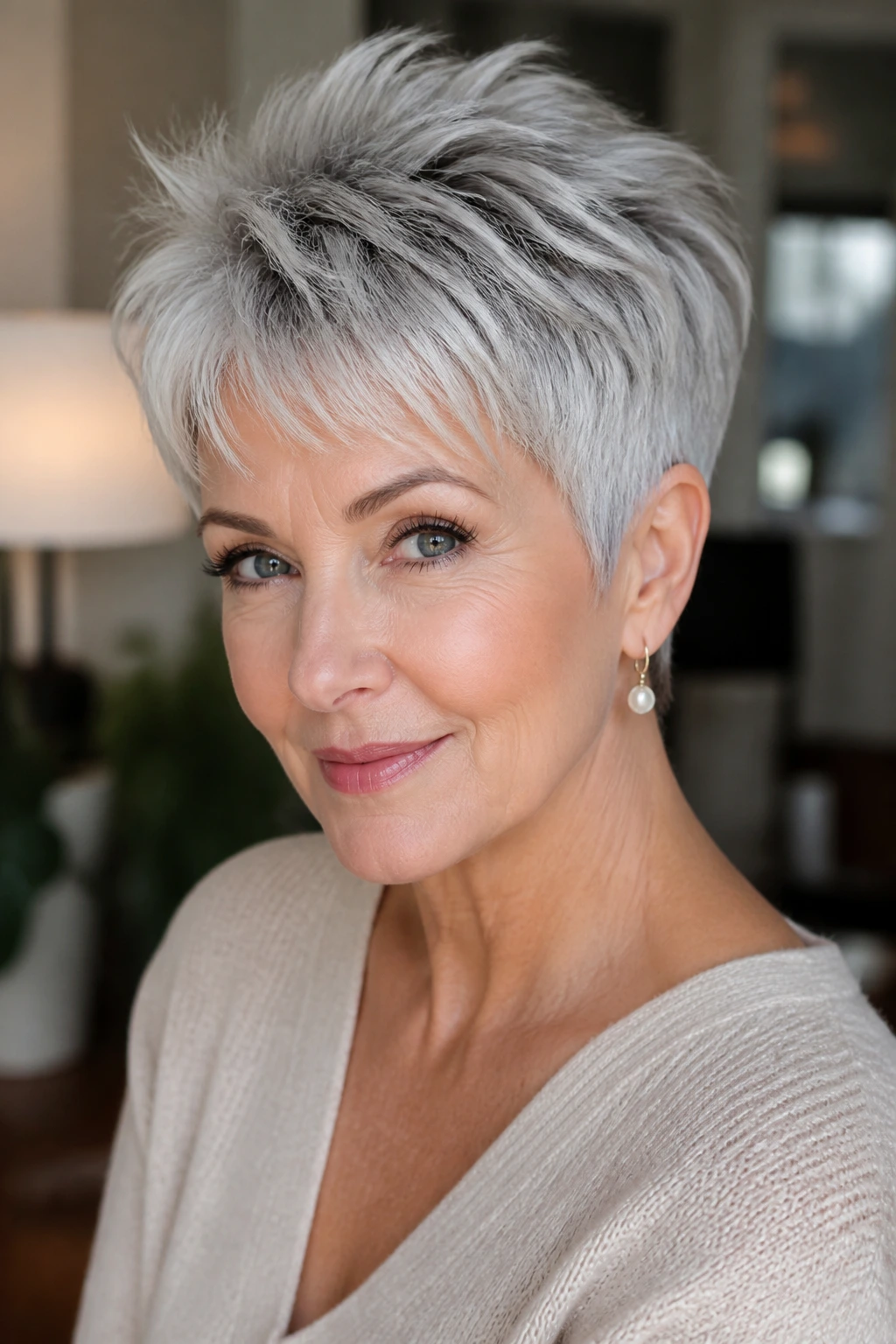
Gray hair does not need a drawer full of products. It needs the right few. The first thing to get right is moisture. Silver hair often feels drier than pigmented hair, so a lightweight conditioner with enough slip to smooth the cuticle can make styling much easier. Heavy masks are fine once in a while, but if you use them too often near the roots, the shape collapses.
Tone matters too. A purple shampoo is useful when gray hair starts to pick up yellow from heat, water, or product buildup. Use it once a week, maybe twice if your hair is very white and tends to warm up fast. Leave it on for a minute or two, not ten. Overdoing it can leave the hair dull or slightly lavender, which is not the same thing as bright silver.
For hold, think light. Root-lift mousse, styling foam, or a small amount of cream at the ends usually beats heavy wax on all but the thickest cuts. If your hair is fine, a root spray can give more lift than a thick paste ever will. And if your hair is coarse, a serum just on the ends can smooth the outer layer without flattening the top.
Styling Moves That Give Short Gray Hair Lift
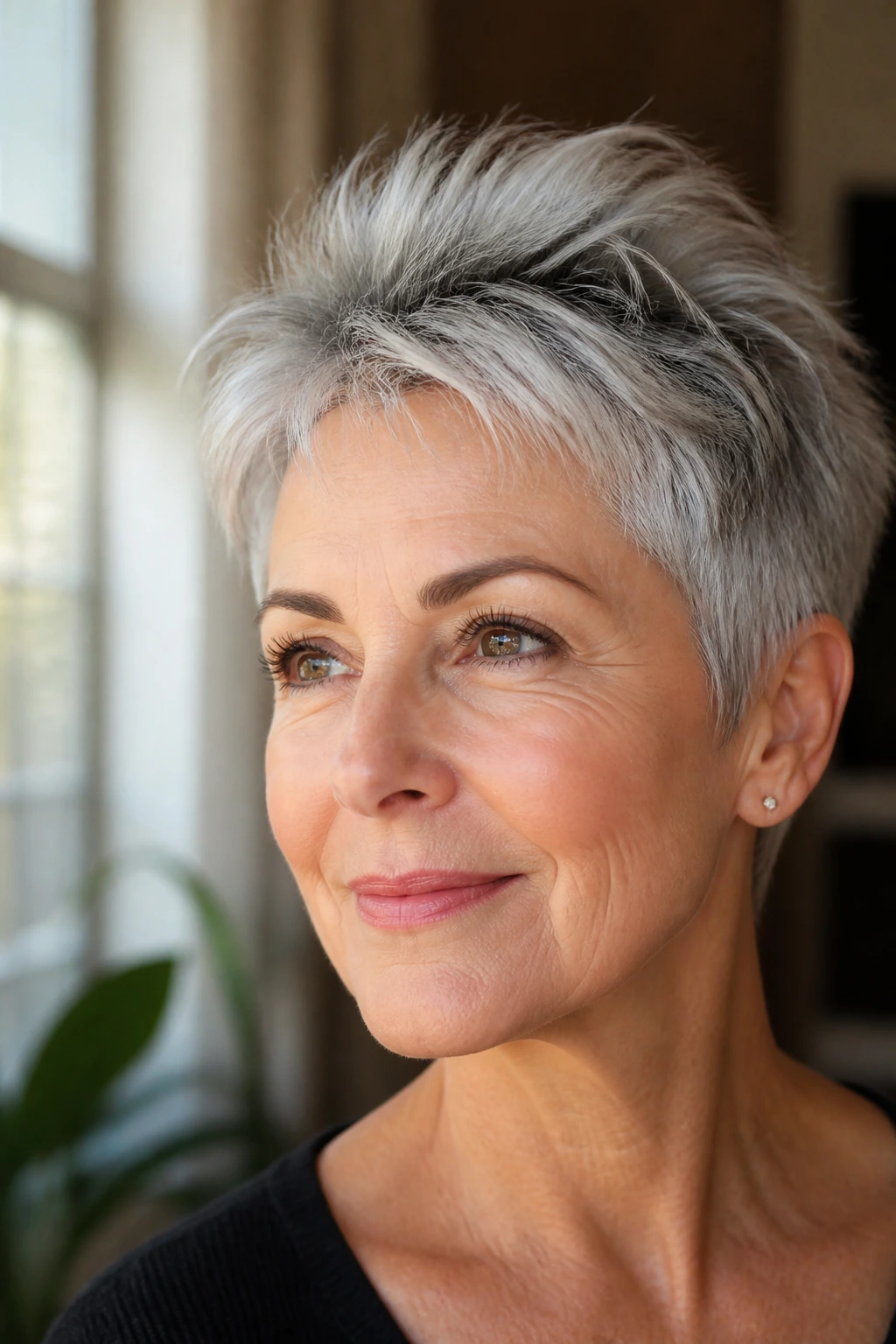
Dry the roots first. That’s the part that shapes the whole cut. If the roots dry flat, the style will usually stay flat, no matter how much product you put on after. Point the dryer at the crown and part line first, then move the air down the sides.
Change the direction while drying. Blow the top forward, then back, then to one side. This breaks the habit of a stubborn cowlick and gives the roots a little lift without teasing. It also keeps short gray hair from settling into one fixed shape too early.
Bend the ends instead of forcing them. A tiny turn under with a round brush or a quick pass of a flat iron at the edge can make a bob or crop look finished. You do not need a hard curl. You need a clean edge.
Finger-style at the end. Brushes can overwork short gray hair fast. Once the main shape is dry, use your fingers to separate the top, tuck one side, or pinch out a few pieces around the fringe. That extra minute keeps the style from looking too polished in a stiff way.
Common Mistakes That Flatten Short Gray Hair
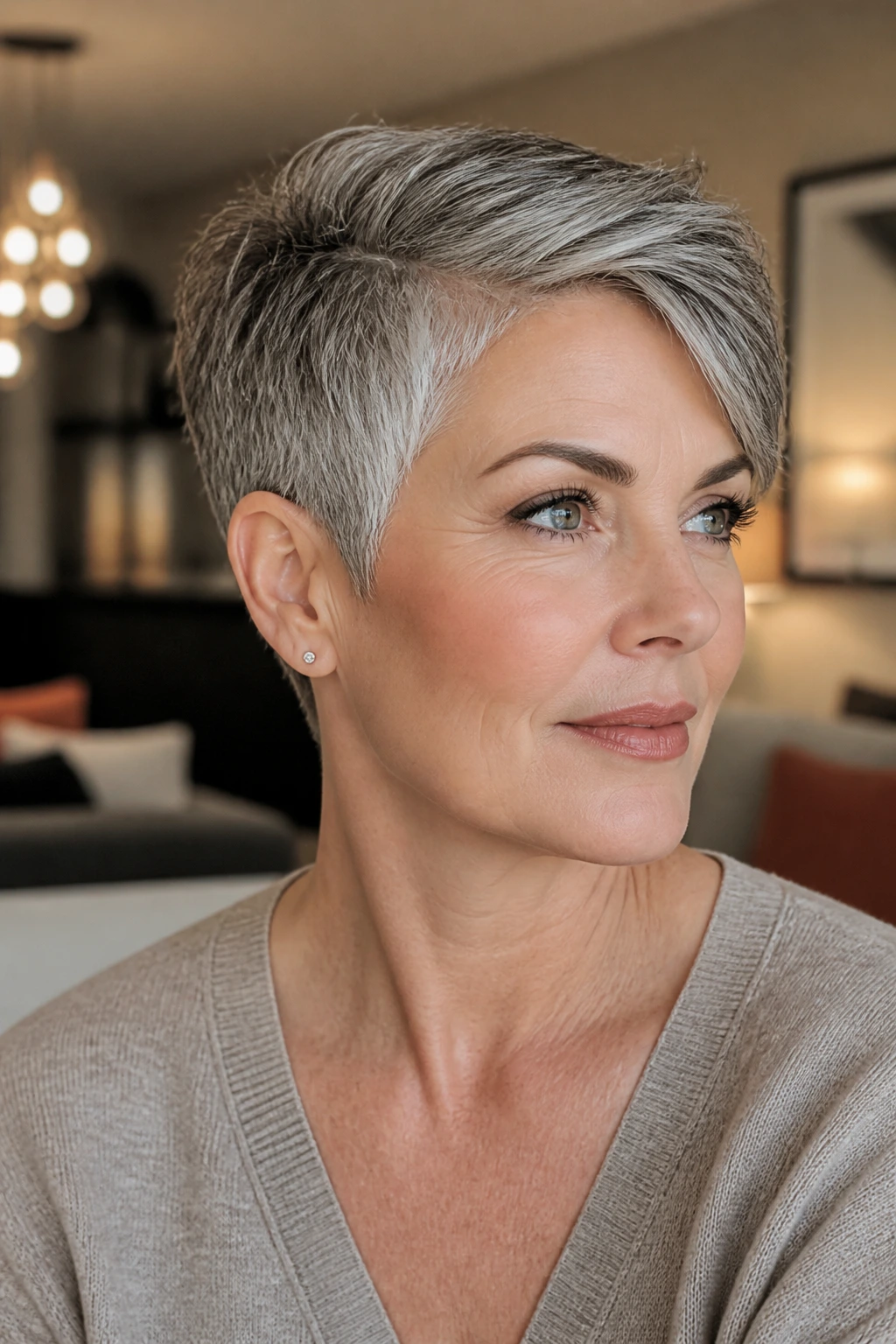
Leaving the nape too heavy.
The back starts to balloon, the neck line disappears, and the whole cut can look broad from behind. Ask for a taper or undercut if your hair is dense there.
Using too much purple shampoo.
The hair can look dry, chalky, or faintly violet instead of bright silver. Use it once a week to start, then adjust only if the tone actually needs it.
Cutting bangs too thick.
A heavy fringe can swallow the face and make gray hair feel boxed in. Wispy bangs, curtain bangs, or a side sweep are easier to live with and easier to grow out.
Putting heavy oil near the roots.
That one drains the life out of a pixie or crop by lunchtime. Keep oils on the ends only, and use just a drop.
Skipping trim appointments.
Short cuts show growth faster than long ones. Once the ears start disappearing or the nape flips out, the shape is already slipping. For many of these styles, waiting too long means the cut is past saving.
Ignoring your hair’s direction.
Cowlicks at the crown and whorls near the temple can make a cut behave badly if the stylist does not work with them. The fix is not more product. It’s a slightly smarter shape.
Variations for Fine, Curly, Thick, and Transitional Hair
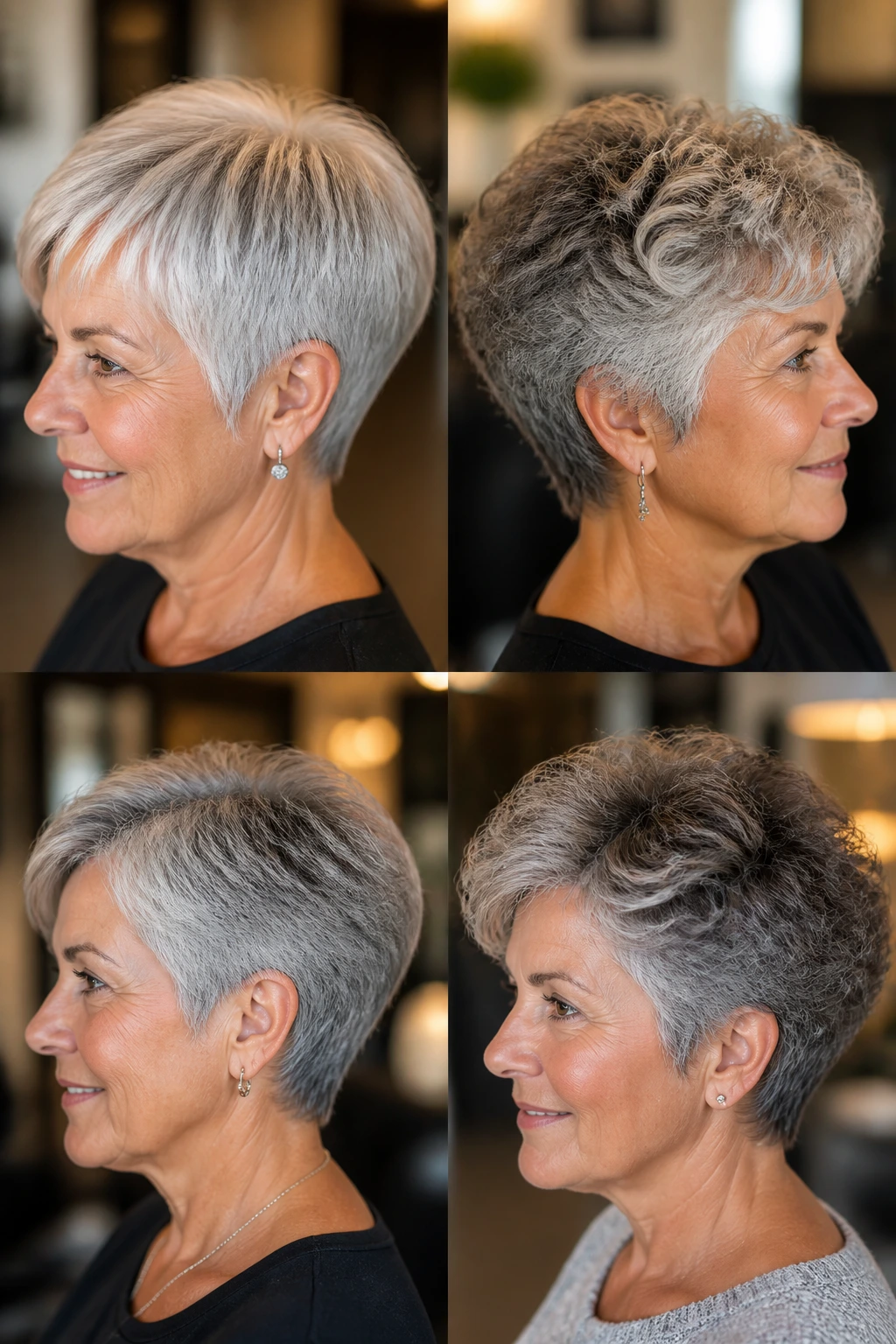
Fine-Hair Lift
Choose the feathered pixie, the invisible-layer bob, or the side-swept pixie bob. These shapes keep the outline light while building a little air at the crown, which is where fine gray hair tends to go limp first. A root spray and a small round brush usually do the trick.
Thick-Hair Tamer
Go for the undercut pixie, stacked bob, wedge cut, or choppy crop. These remove weight where hair gets bulky and make the back of the head sit closer to the neckline. Thick gray hair often looks better with some control underneath the surface.
Curl-First Shape
Use the curly crop, rounded curly bob, or natural coil crop. These cuts leave enough room for texture to spring up without spreading out in a wide mushroom shape. Diffusing or air-drying with a little curl cream keeps the pattern readable.
Gray Transition Cut
A side-swept pixie bob, French bob, or softly stacked crop can help while you grow out dye. These shapes keep the line clean and give the roots room to show without making the grow-out look harsh. A soft side part helps blend different shades more easily.
Low-Heat Routine
If you avoid hot tools, pick a tousled crop or soft shag. These shapes can dry with a little texture cream and a squeeze of the hands, which is easier on gray hair that already runs dry. Letting the hair air-dry halfway, then finishing with a cool blast, keeps the surface smoother.
Keeping the Shape Between Trims
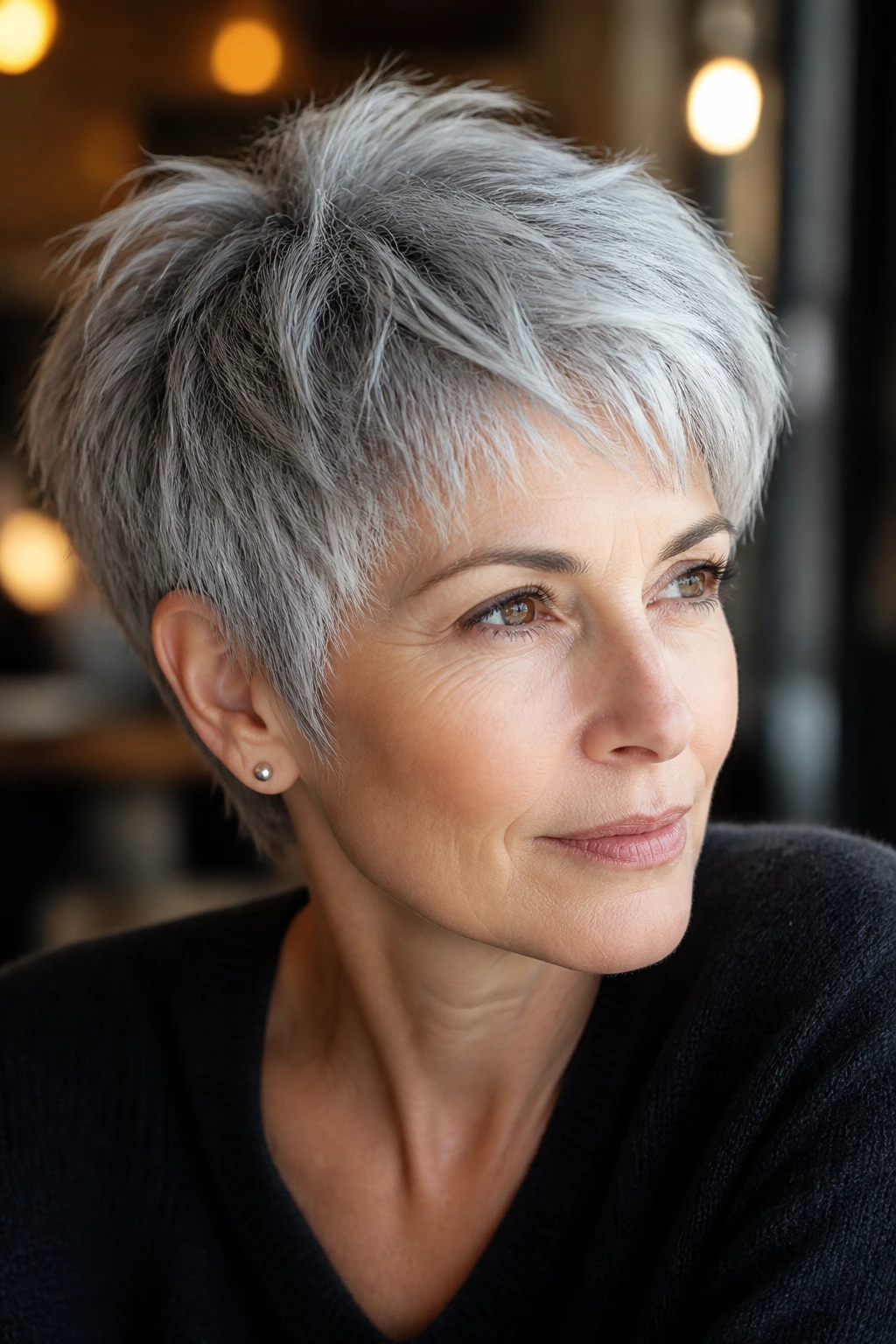
Short gray hair needs a touch more maintenance than a long style, but not as much as people fear. Most pixies and crops look best with trims every 4 to 5 weeks. Bobs, wedges, and longer pixie bobs can usually stretch to 6 to 8 weeks if the neckline stays clean and the sides don’t puff out.
Wash frequency depends on texture. Fine hair may need more frequent cleansing because oil shows fast. Coarser or curlier gray hair often does better with 2 to 3 washes a week and a gentle conditioner every time. If your hair has started to yellow from product buildup or hard water, use a clarifying shampoo once a month and follow it with conditioner.
Purple shampoo belongs on a short schedule, not an every-wash schedule. Once weekly is plenty for most silver hair. And if the ends feel rough, a small leave-in conditioner applied only from mid-length to the tips can keep the cut soft without flattening the top.
Sleep matters too. A silk or satin pillowcase cuts down on roughness at the crown and fringe. It’s a small thing. It helps.
Frequently Asked Questions About Short Gray Hair

Which short gray hair look is best for thinning hair?
Feathered pixies, invisible-layer bobs, and side-swept pixie bobs are strong choices because they create lift without taking too much density out of the sides. Ask for softness at the crown and a clean nape so the cut looks fuller from the front and back.
Do bangs work with gray hair after 60?
Yes, but the cut matters. Wispy bangs, curtain bangs, and soft side-swept fringe usually behave better than a thick blunt bang, especially if your hair is coarse or your forehead tends to show fine lines you do not want to emphasize.
Is a pixie easier to care for than a bob?
Usually, yes, but only if you like regular trims. A pixie can dry faster and take less styling each morning, while a bob gives you a little more tuck-and-go flexibility. If you hate salon visits, a bob often forgives a late trim better.
What if my gray hair is curly and frizzes easily?
Pick a cut that respects the curl pattern, like a cropped curly bob or natural coil crop. Dry with a diffuser on low heat or air-dry with curl cream, and stop brushing once the hair starts to set. Brushing dry curls is a fast route to puff.
How do I keep silver hair from turning yellow?
Use a purple shampoo once a week, keep heavy product buildup under control, and rinse well after styling products. Hard water can also leave a cast, so a clarifying wash once a month helps if the tone starts looking muddy.
Can I grow out dyed hair into one of these looks?
Absolutely. A side-swept pixie bob, soft shag, or French bob can make the transition feel less abrupt because the cut gives the color change some movement. Ask for a shape that keeps the grow-out line soft around the temples and top.
What if my short cut goes flat by the end of the day?
The problem is usually the root shape, not the ends. Dry the crown first, use less heavy cream, and ask for a little more layering through the top on your next trim. A dry texture spray at the roots can also revive the lift without starting over.
Should I color my gray hair to make short cuts look better?
Not necessarily. A good cut can make natural gray, white, or salt-and-pepper hair look clean and deliberate on its own. If you want to tone brass or even out patchy color, that’s a separate decision from whether the cut works.
A Cut With Backbone
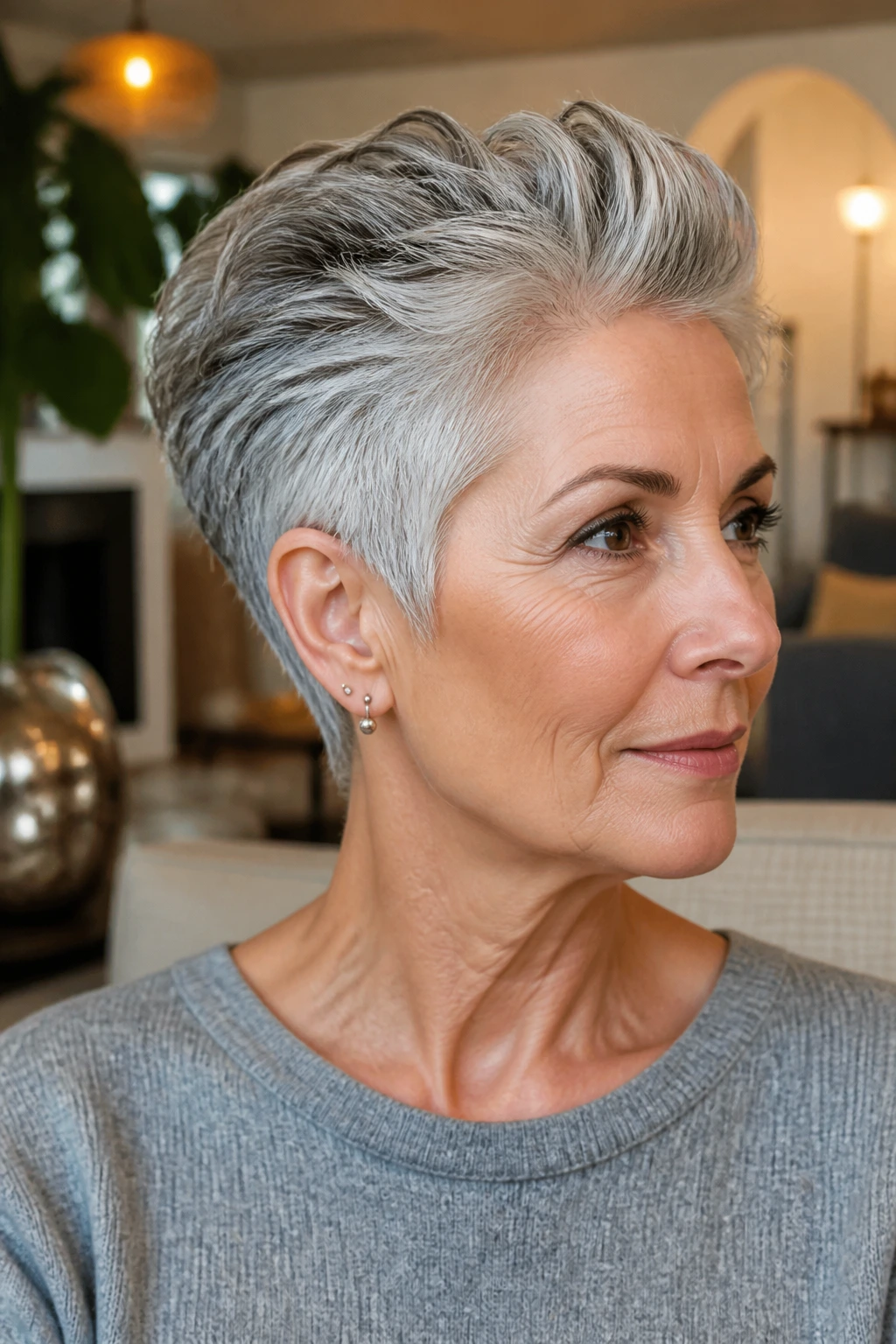
Short gray hair has no reason to hide. The right shape gives the silver room to shine, the neckline room to breathe, and the face a little more structure than a long, tired length usually can. That’s why these looks work: they answer the hair you actually have, not the hair people pretend you should have.
If one thing matters more than the rest, it’s this — the best short gray cut is not the fanciest one. It’s the one that still looks good on the third day, after a walk, after sleep, after the world has had a chance to touch it. That’s the cut worth keeping.
