



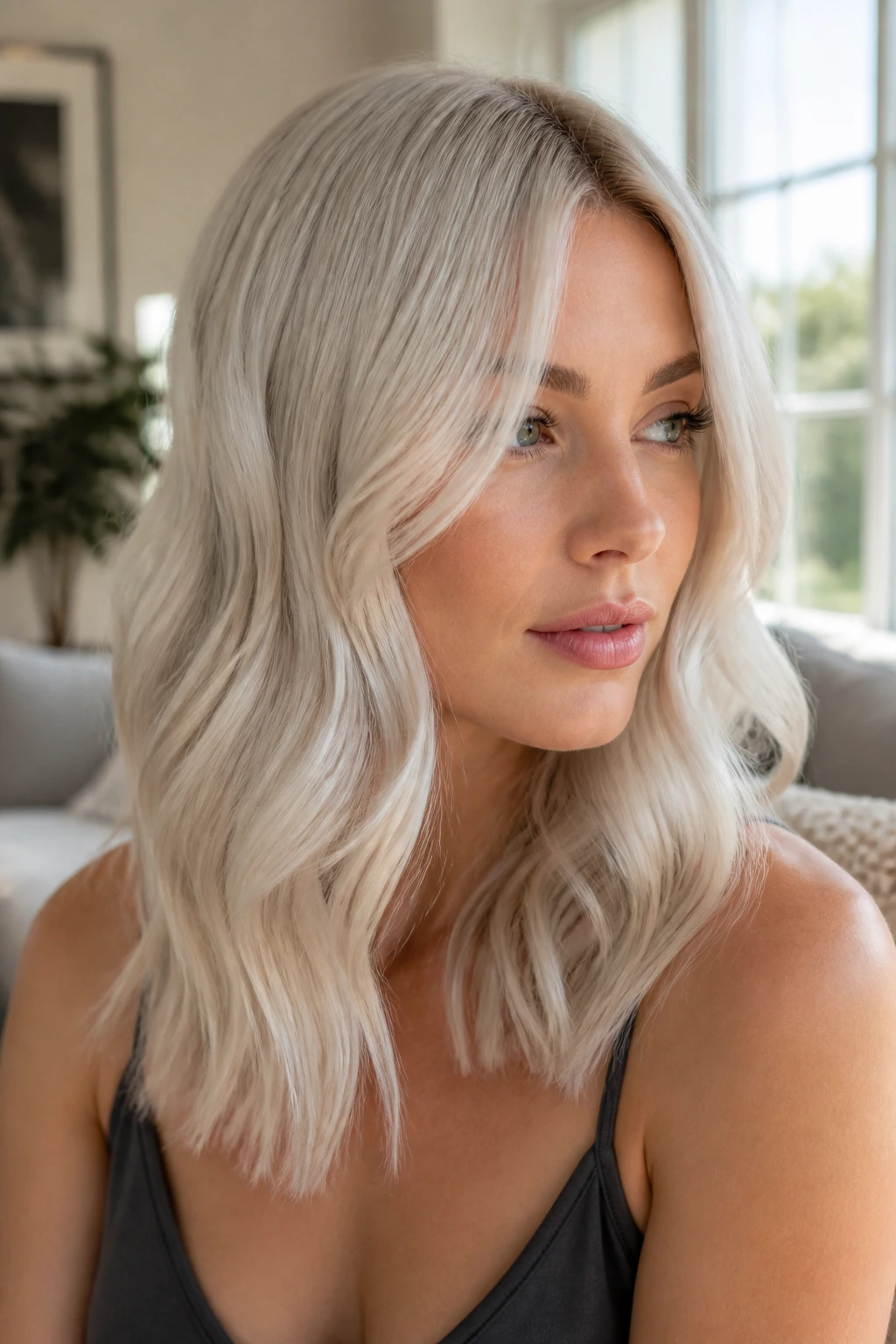
Medium-length blonde hair has a sweet spot that long hair never quite reaches. There’s enough length for ribbons of color to move, but not so much that the shade disappears into a blur halfway down the back. On a collarbone-grazing cut, blonde reads in layers: a brighter face frame, a softer mid-shaft, and ends that can look airy instead of heavy. That’s why so many of the best blonde hair looks live right here, between the shoulders and the chest.
The catch is that medium-length hair is honest. It shows where a toner went a little too cool, where highlights were packed too tightly, and where the haircut isn’t doing enough work. Which is useful, actually. A good blonde on this length doesn’t need tricks. It needs placement that respects the cut, a tone that matches the base, and enough texture to keep the color from looking pasted on.
That’s the part people miss. Blonde on medium hair is not only about being lighter. It’s about where the light lands. A rooted butter blonde looks calm and low-stress. A platinum lob can feel sharp and clean. A beige balayage with curtain bangs can make the whole shape look lifted at the cheeks. The color and the cut have to speak to each other, or the whole thing falls flat.
Why These Medium-Length Blonde Looks Keep Working
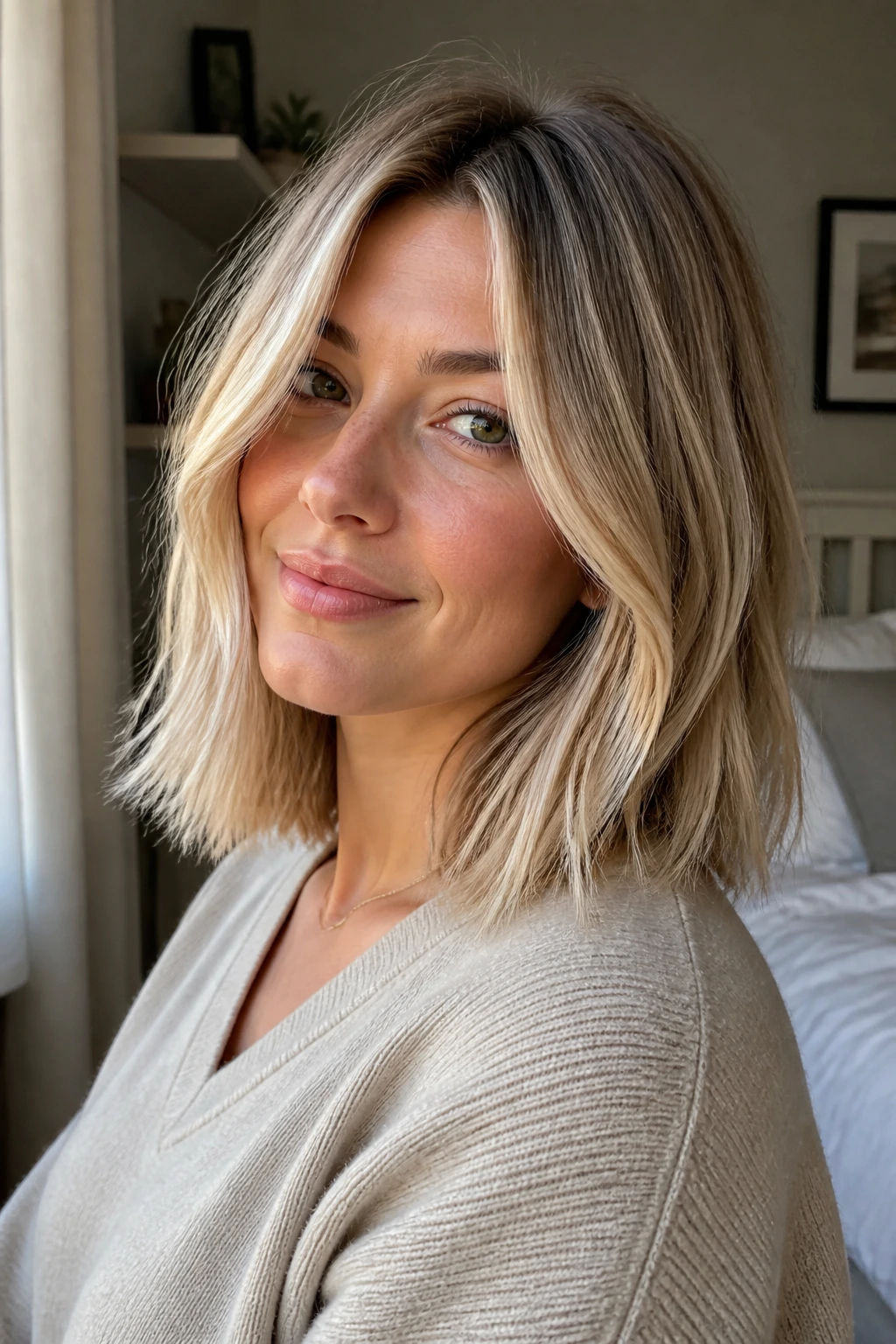
-
Shape does half the work: Shoulder-grazing cuts let you see the root zone, the mid-length tone, and the ends as separate pieces, which makes blonde look intentional instead of washed out.
-
Grow-out is easier to live with: Root shadows, melts, and balayage placements soften the line between appointments, so you do not end up policing your roots every few weeks.
-
There’s room for contrast: Medium length can handle a bright face frame, a darker base, and lighter ends without turning into a stripey mess.
-
Texture changes the whole mood: The same blonde can feel glossy and polished on a straight lob or soft and sunlit on loose waves.
-
You can steer warm or cool: Honey, champagne, ash, pearl, beige—this length shows off undertone shifts without swallowing them.
-
It’s easier to tweak: A few face-framing pieces, a gloss, or a small cut change can make the color read completely differently.
1. Rooted Butter Blonde Lob
A rooted butter blonde lob is the kind of blonde I reach for when someone wants softness without fuss. The base stays a shade or two deeper near the scalp, then the color opens into creamy, buttery ends that look sunlit rather than icy. On a lob that hits right at the collarbone, the effect is clean and relaxed at the same time.
Why the Root Shadow Helps
The darker root gives the eye a place to rest. Without it, butter blonde can look a little floaty on medium-length hair, especially if the cut has blunt ends. With it, the color has shape. It also makes grow-out easier to live with, which matters more than people admit.
Ask for a soft root melt, not a hard band. The best version usually sits around a level 7 or 8 root with level 9 creamy ribbons through the mid-lengths and ends. A loose wave helps the blonde show in pieces, not as one flat sheet.
- Keep the face frame a touch brighter than the back.
- Ask for soft beige-gold, not yellow.
- A center part makes the lob look longer; a side part pushes the color toward the face.
My take: if you want blonde that looks polished even after a week of real life, this is one of the safest bets.
2. Icy Platinum Waves with a Soft Bend
Platinum on medium-length hair can look chic, but only if the cut has a little movement. Dead-straight, one-length platinum can feel severe fast. Add a soft bend through the ends, and the whole thing changes. The hair starts to look lighter, not heavier.
This is the look for someone who likes contrast and doesn’t mind upkeep. Platinum usually needs strong lift, a clean toner, and regular bond care, because the ends on a shoulder-length cut still show every bit of dryness. The upside is that medium length gives the style enough mass to avoid the broomstick effect you sometimes see on very long, over-processed blonde.
A slightly shadowed root helps here too. Even ½ inch of depth at the scalp keeps the platinum from looking stark against the skin. I also prefer a wave that’s not too perfect—more of a soft S-bend with the ends left a bit piecey. That little imperfection keeps the color from looking costume-like.
If your hair is already fragile, this is not the place to cut corners. Platinum asks for healthy starting hair and patient maintenance. No shortcut changes that.
3. Honey Blonde Layers with a Caramel Shadow Root
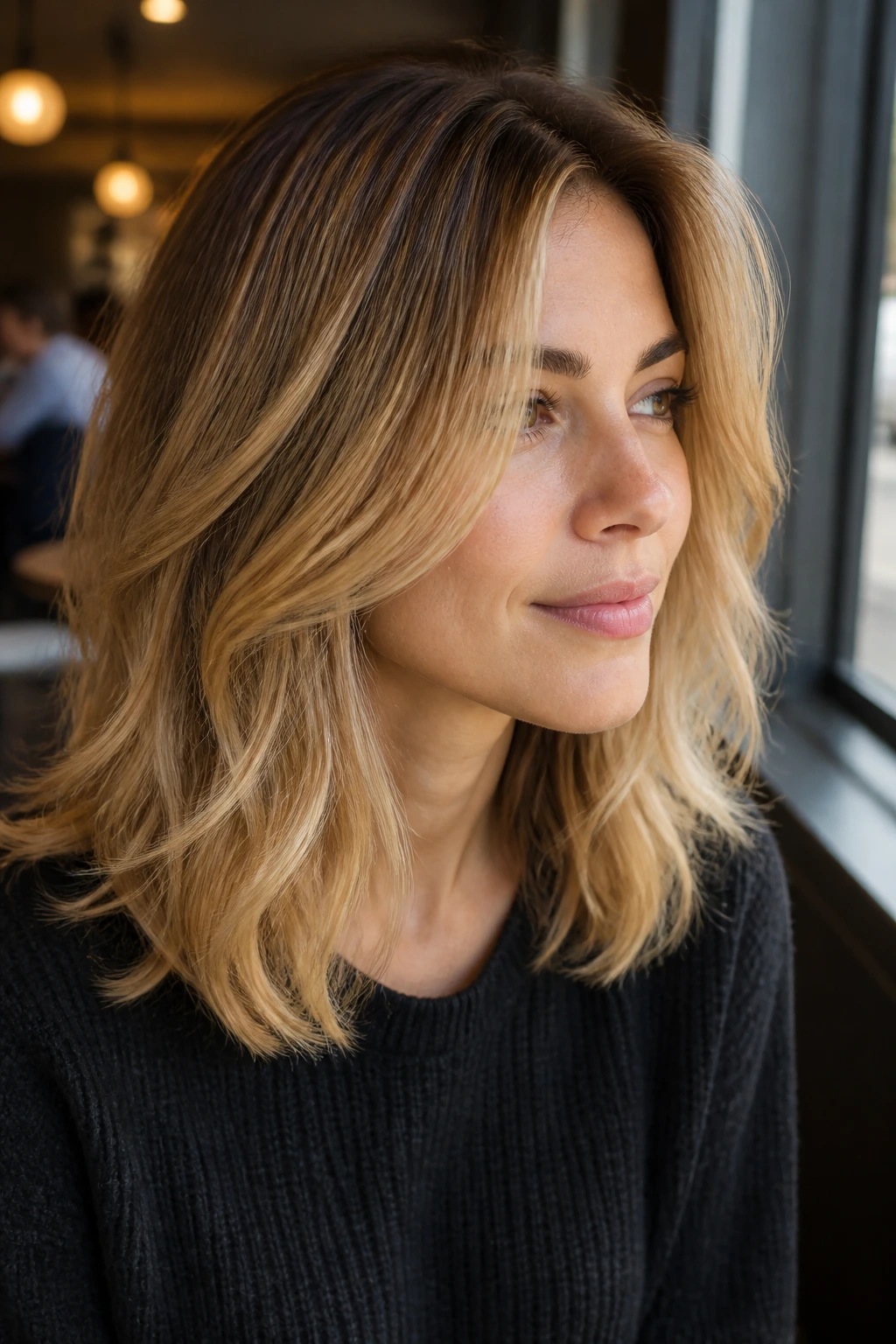
What if you want blonde that still reads warm in indoor light? Honey blonde is the move. On medium-length layers, especially ones that flick out near the ends, it can look almost liquid when the light hits it. Add a caramel shadow root and the brightness feels grounded instead of bright for brightness’ sake.
How to Ask for It
- Root: a soft caramel or light brown shadow at the scalp, usually one level darker than the mid-lengths.
- Mid-lengths: honey blonde ribbons with a little gold, kept soft rather than orange.
- Ends: a slightly lighter veil so the cut doesn’t collapse visually.
- Finish: loose curls or brushed-out waves to show the dimension.
This is a good choice if you wear warmer makeup or if your natural hair has some gold in it already. It also plays nicely with layered cuts, because every bend in the hair catches a different tone.
The mistake to avoid is over-brightening the front. Honey blonde should glow, not flash. If the front pieces are pushed too far pale, you lose the whole caramel-to-honey gradient, and that’s the part that makes this look worth wearing.
4. Beige Blonde with Curtain Bangs
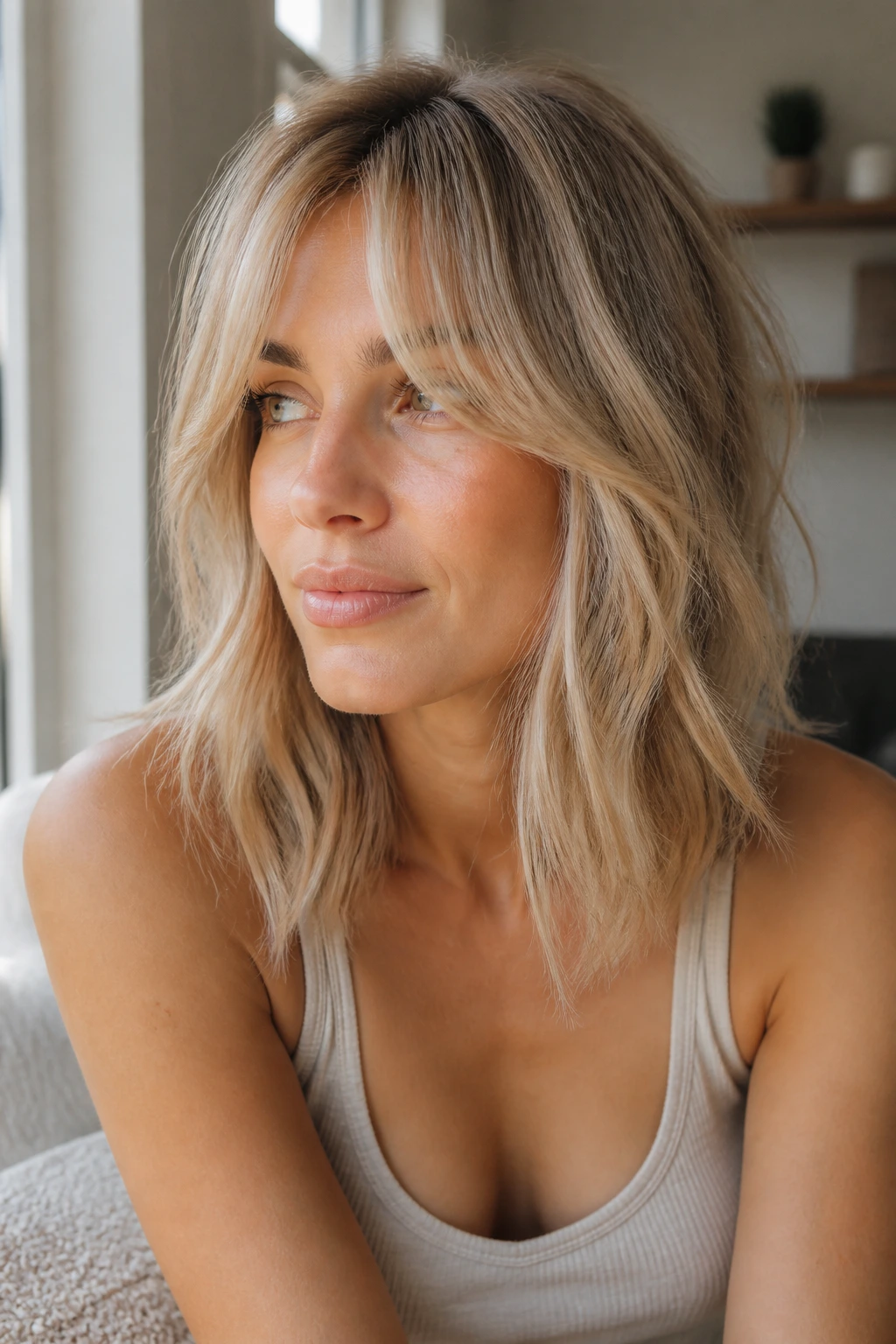
A beige blonde with curtain bangs does a very specific thing: it softens the face without making the color too warm or too icy. Beige sits in that middle space that can look expensive in the plainest, least fussy way. On medium-length hair, curtain bangs help the blonde move upward visually, which is handy if your ends tend to look heavy.
The strongest version of this look keeps the base a touch smoky and the highlights fine. Chunky highlights fight the beige tone. You want thin, woven pieces that melt into the cut, especially around the fringe and cheekbones. Curtain bangs do some of the styling work for you, too. They make the front of the haircut feel deliberate even on days when the rest of your hair is air-dried and imperfect.
This is one of the easiest looks to live with if you don’t want a hard line at the root. A soft beige toner and a bit of face-framing brightness keep it from reading flat. I like it on hair that has a little natural wave, because the bangs and the blonde both benefit from movement. Straight hair can wear it, but the shape needs more polish.
5. Champagne Blonde Blunt Cut
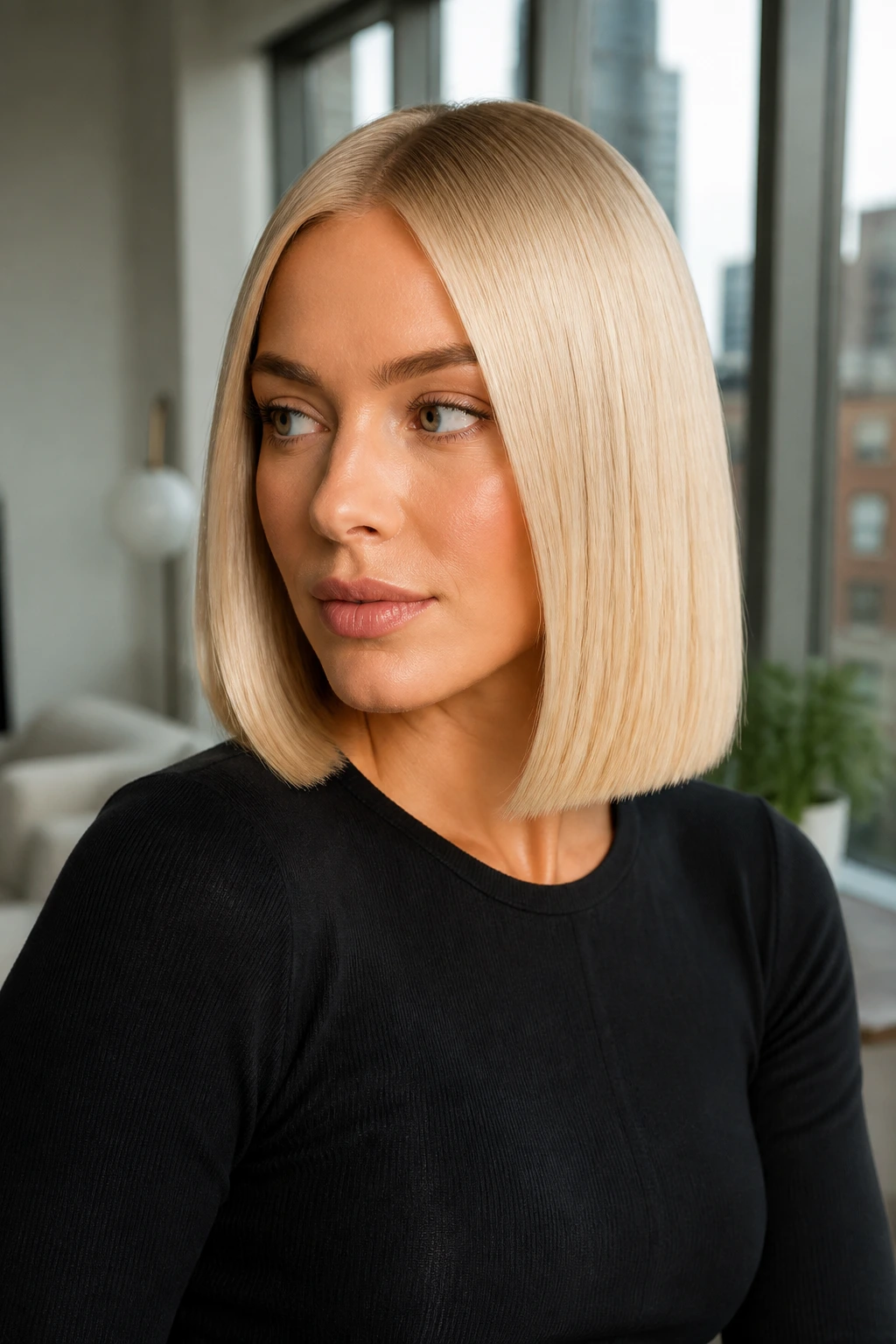
Champagne blonde looks its best when the haircut is crisp. A blunt lob or a clean, shoulder-skimming line gives the shade enough structure to feel intentional. Without that clean edge, champagne can drift into a pale beige that loses all personality.
The color itself sits between pearl and soft gold. Not icy. Not yellow. That middle zone is why it works so well on medium-length hair. The blunt ends reflect the light like a clean line on paper, and the champagne tone keeps the look from feeling severe. On straighter hair, it can read glossy and refined. On a soft wave, it gets a little more dimension, but the cut still stays in charge.
A center part usually makes this color look the most polished. Side parts can work, but they need a little lift at the root so the front doesn’t droop. If your hair is fine, keep the layers minimal. Too many internal layers and the blunt effect starts to disappear, which defeats the whole point of this blonde.
I’m fond of this one because it’s clear without being loud. You see the shape first, then the color. That order matters.
6. Face-Framing Money Piece Blonde
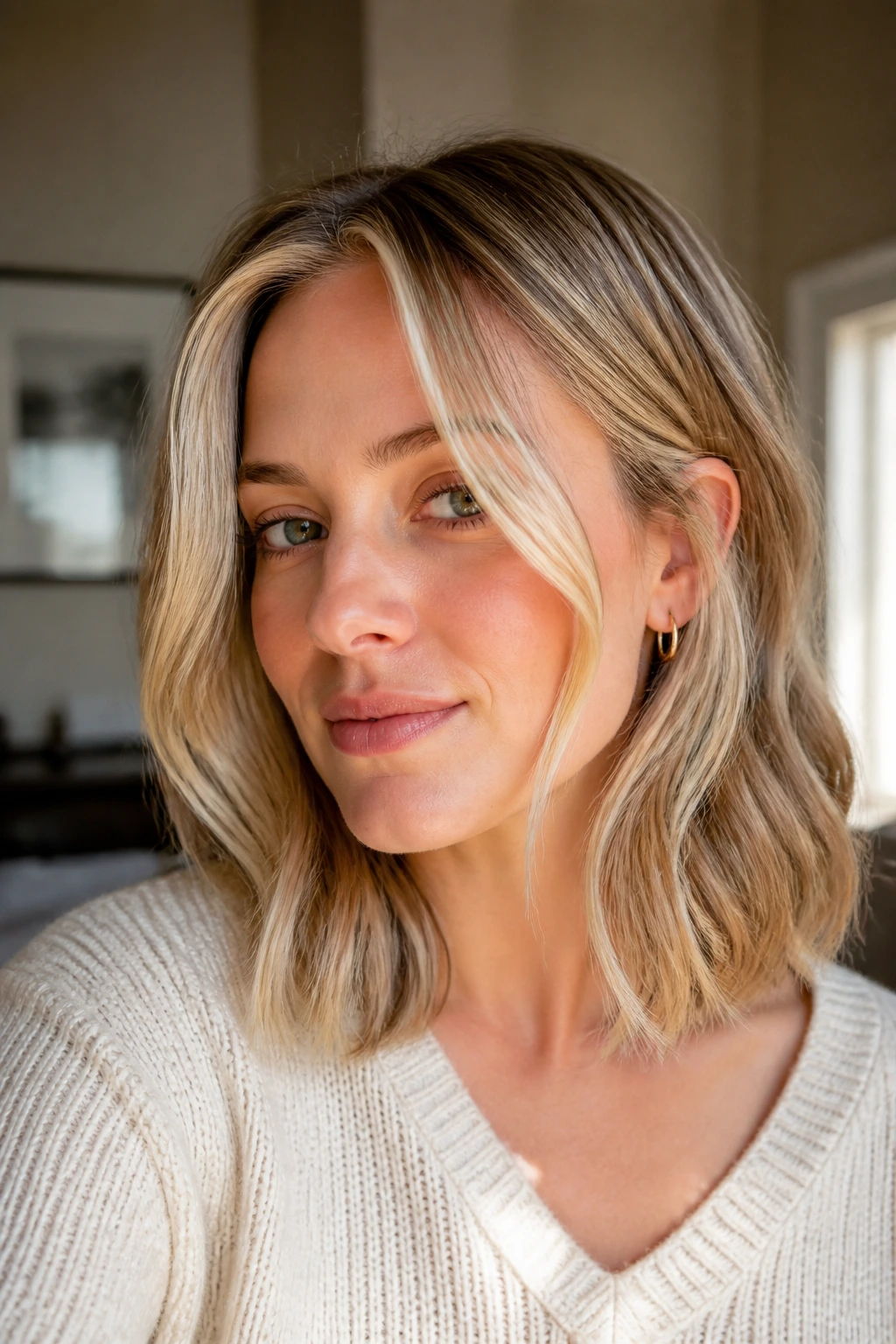
The money piece is the quickest way to make medium-length blonde hair look brighter without committing to an all-over lightening job. Two or three face-framing sections, lifted a shade or two lighter than the rest, can change the whole mood of the haircut. The rest of the hair can stay rooted, beige, or softly honey-toned.
Why It Feels Brighter Than It Is
The eye goes straight to the front of the face. That means you don’t need every strand to be equally light. A bright money piece against a deeper base creates contrast where people actually look first. On medium-length hair, the pieces usually sit around the cheekbones and collarbone, so they show even when the rest of the hair is tucked behind an ear.
This look is especially useful if you part your hair the same way most days. A middle part gives a clean, symmetrical frame. A deep side part gives more drama and can make the whole cut feel lifted. If the front pieces are too thick, though, they start looking stripy. Keep them fine and blended.
It’s one of the few blonde looks that can be adjusted without a full color overhaul. A little lighter at the front. A little deeper at the root. That’s usually enough.
7. Mushroom Blonde Mid-Length Shag
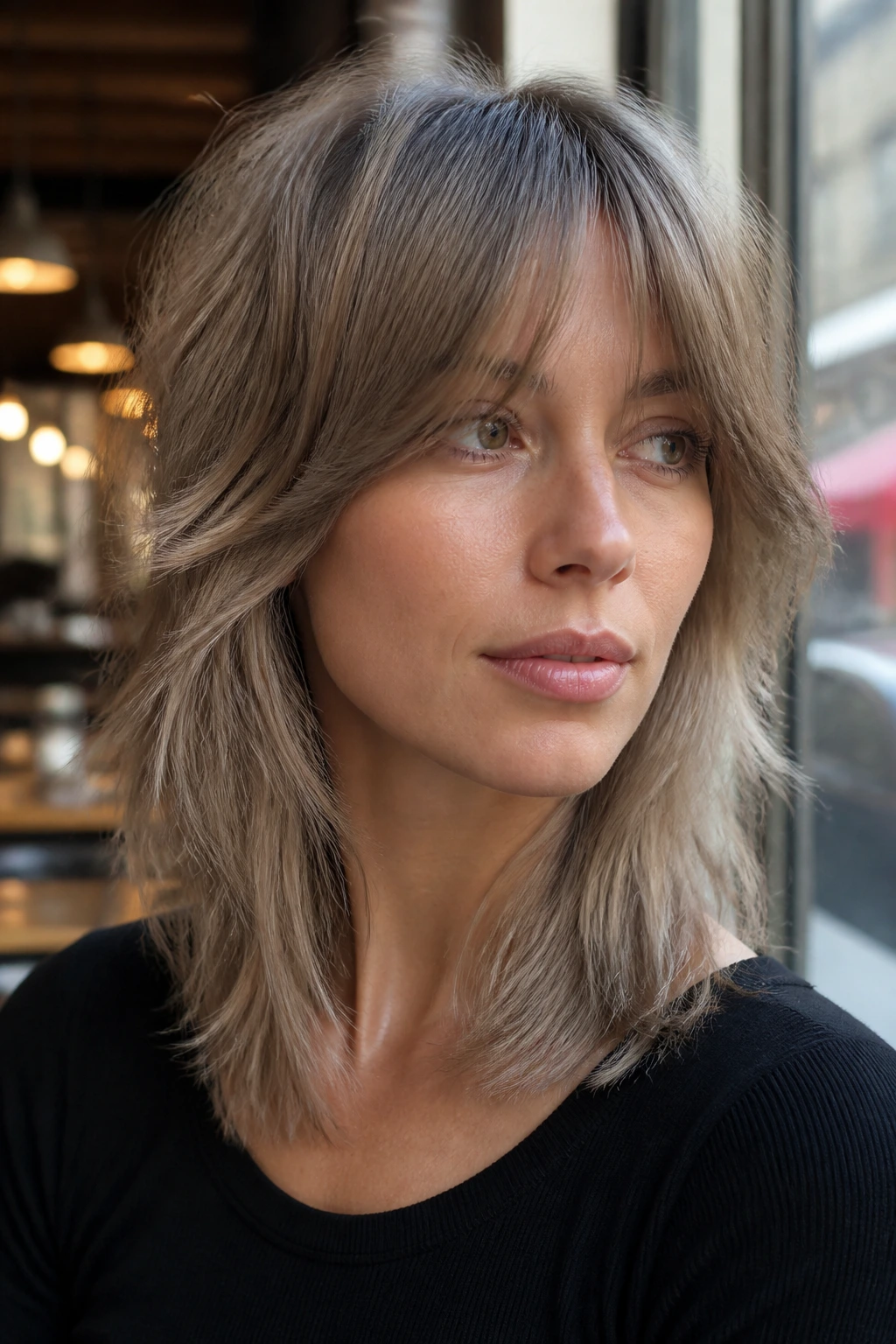
Mushroom blonde is what happens when someone wants blonde, but not the bright, sunny version everybody expects. It leans cool, smoky, and softly taupe, with enough beige to keep it from looking muddy. On a mid-length shag, the color and the cut work together instead of competing.
The shag gives the hair broken-up movement. Mushroom blonde gives that movement definition. Every layer catches a slightly different tone, which is why this look can look oddly expensive in real life even when it’s not trying very hard. The color is not flashy. That’s the point.
If your hair naturally sits somewhere between dark blonde and light brown, this is one of the easiest blonde shifts to wear. You’re not fighting your base, so the grow-out line stays soft. It also works well if you like texture that looks a little undone. Air-drying with a light cream or rough-drying with a diffuser can make the shape feel lived-in instead of finished to death.
This look is not for anyone chasing brightness. It’s for someone who likes depth, smoke, and a little edge. And yes, that edge still counts as blonde.
8. Golden Balayage on a Wavy Lob
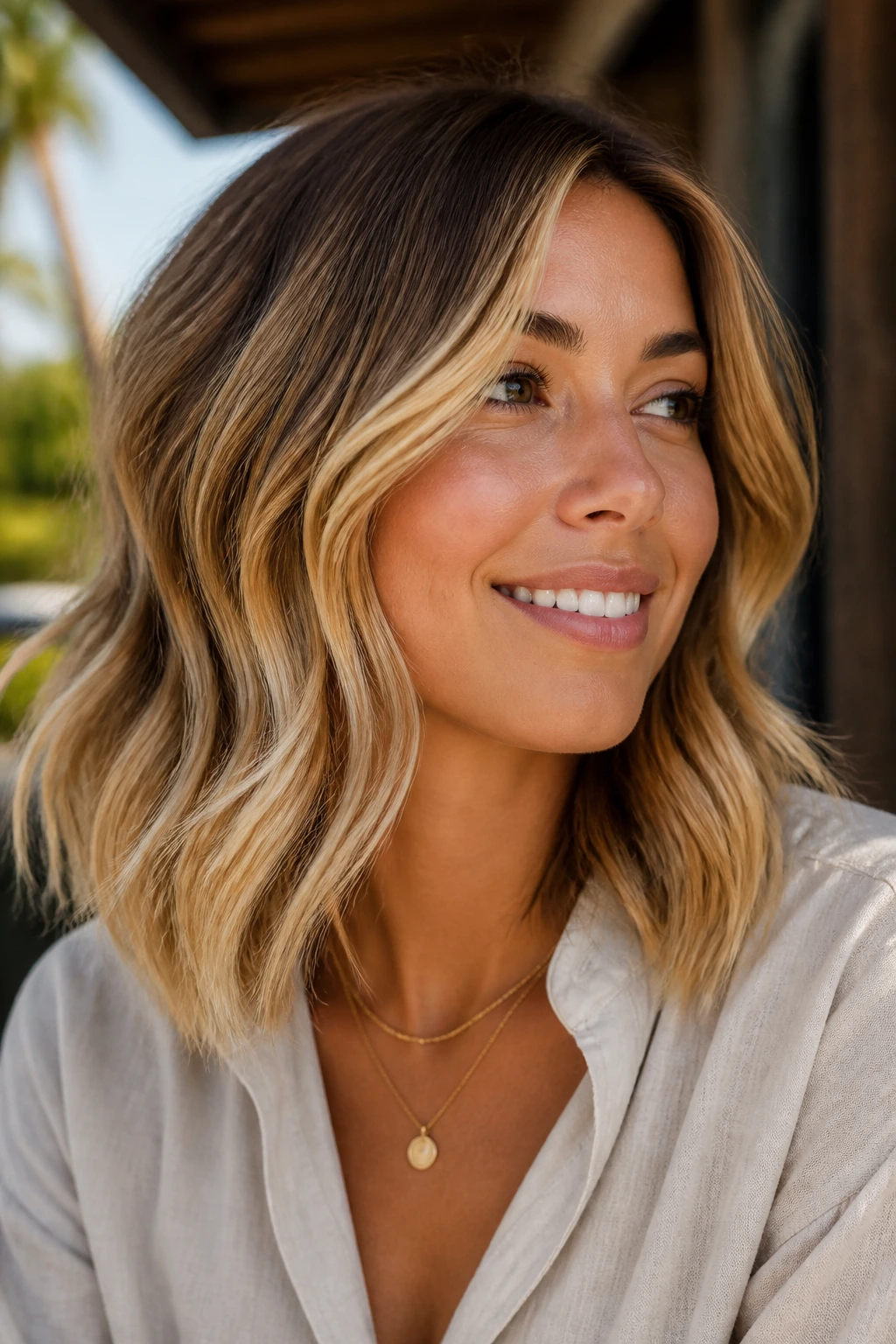
Golden balayage is the old reliable of medium-length blonde hair, but that does not make it boring. On a wavy lob, the painted pieces arc through the hair in a way foils never quite copy. You get brightness where the hair bends, then softer gold through the underlayers and ends.
The reason this works so well on medium length is simple: there’s enough length for the painterly ribbons to travel, but not so much hair that the pattern disappears. A lob usually gives you one or two strong bends on each side, and that’s enough to show off the placement. The roots stay a little deeper, the mids get the sunshine, and the ends lighten up without looking bleached out.
Ask for balayage that starts mid-shaft rather than near the scalp if you want easy grow-out. If you want more pop around the face, have the colorist place a few brighter strands there and keep the back more diffused. That contrast keeps the cut from reading all one note.
Golden balayage works especially well if your natural base already has warmth. Cold, smoky tones can fight it. Warm hair, or hair with a little natural copper in it, tends to make the gold look richer.
9. Creamy Vanilla Blonde with Soft Layers
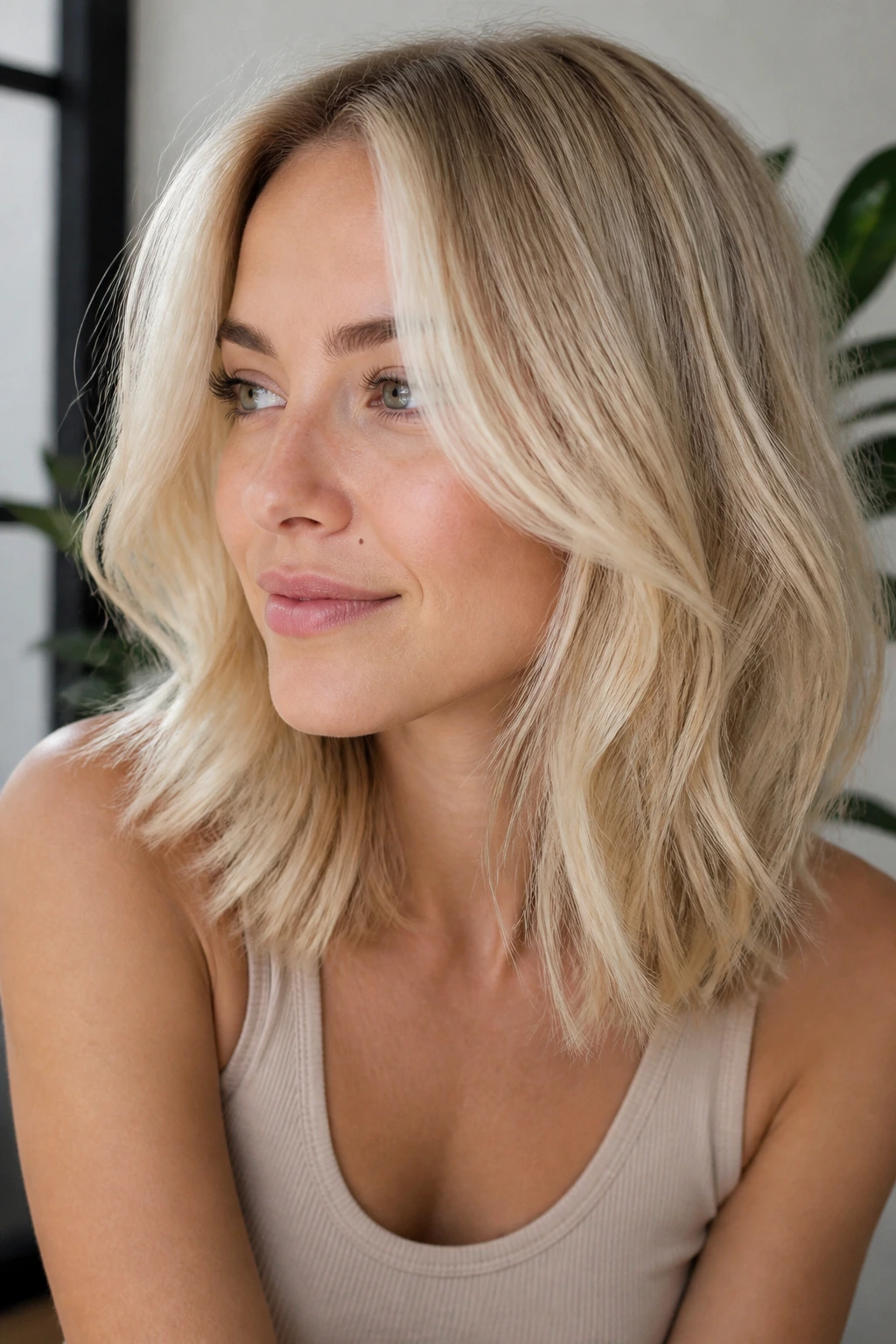
Creamy vanilla blonde sits in that sweet middle place between pale and soft. It is lighter than beige, but less sharp than platinum. On medium-length hair with soft layers, the effect is airy at the ends and brighter around the face, which keeps the whole cut from looking dense.
I like this shade on hair that already has some movement. The layers don’t need to be dramatic. Even subtle internal layers help the blonde catch different tones as it shifts. Vanilla blonde can look a little flat if the cut is too blunt, because the tone itself is smooth and even. Give it texture and it wakes up.
The best version keeps the brightness creamy rather than chalky. That means a toner with a soft pearl or neutral-beige cast, not something that makes the hair look dusty. A little shine spray goes a long way here. So does a clean blowout. The color has a milky surface to it, and the styling should respect that.
If you want something light but not icy, this is one of the prettiest choices. It has enough softness to feel wearable and enough brightness to matter.
10. Ash Blonde with a Cool Root Melt
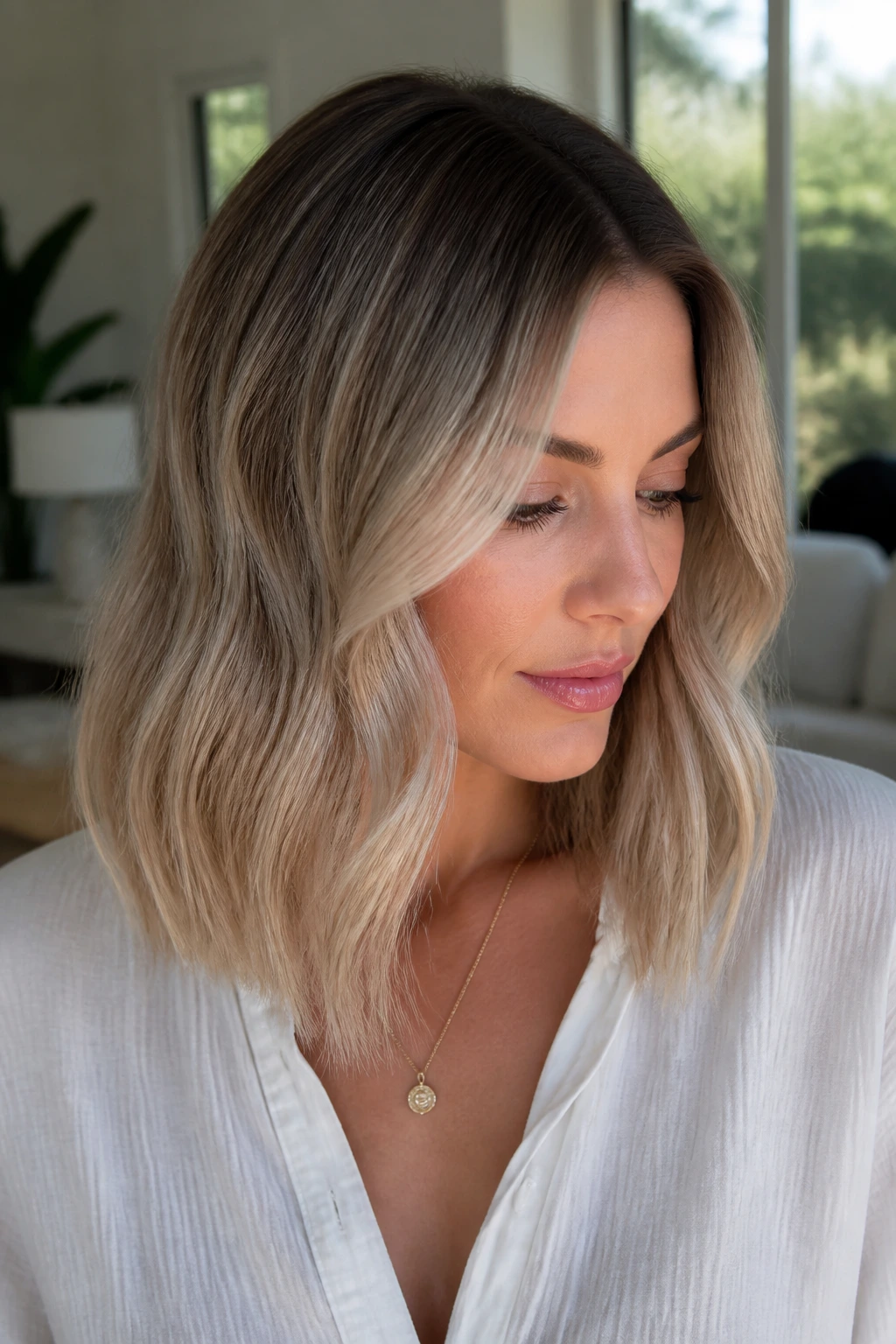
Ash blonde gets a bad reputation because people often push it too far. Done well, it is clean, modern, and a little smoky around the edges. On medium-length hair, a cool root melt keeps the contrast gentle, so the color feels deliberate instead of flat gray.
The trick is balance. Too much ash and the hair can look dull. Too much brightness at the ends and the root melt stops doing its job. I prefer a darker natural root blended into cool beige lengths, then a slightly lighter ash-blonde finish through the ends. That gives the haircut some depth even when it’s straight.
Who It Suits
- Cool or neutral skin tones: The cooler blonde reads clean instead of yellow.
- Fine hair: A root melt can make the hair look fuller at the scalp.
- Straight or slightly wavy textures: The tone stays visible without needing a lot of curl.
- People who hate obvious grow-out: The blurred root line buys you time.
If you lean warm in makeup, keep the ash tone from taking over by adding warmth in your brows or lipstick. That tiny adjustment matters more than people think.
11. Scandinavian Blonde with a Clean Center Part
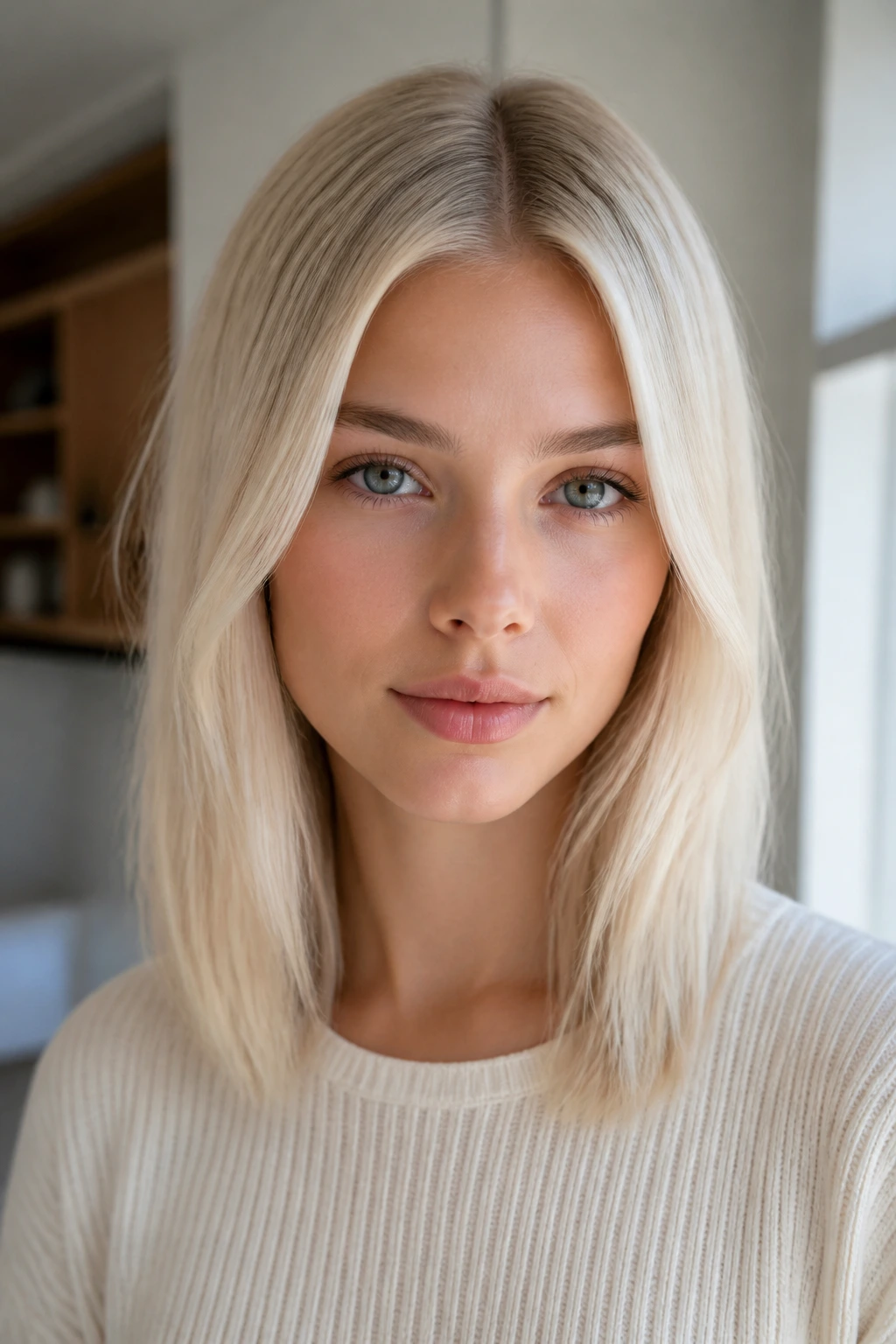
Scandinavian blonde is bright in a stripped-back way. It usually sits closer to pale beige-white than warm gold, and on medium-length hair it looks strongest with a clean center part and a smooth finish. Think sleek, controlled, and bright all at once.
This is one of the hardest blondes to wear casually, which is part of the appeal. The color is so light that the cut has to support it. If the ends are ragged or the layers are too chaotic, the whole look loses its sharpness. Keep the shape simple. A straight, shoulder-grazing line or a very soft bend near the bottom usually works best.
What makes this version of blonde different from platinum is the tone. Platinum can lean icy; Scandinavian blonde usually feels a touch softer and more creamy, even when it’s very light. That softness is what keeps it from looking harsh around the face.
A center part gives the style its clean line. If you keep the front tucked behind the ears for a few minutes after blow-drying, the hair trains itself into a flatter, smoother shape. Small trick. Worth it.
12. Bronde with Fine Baby Lights
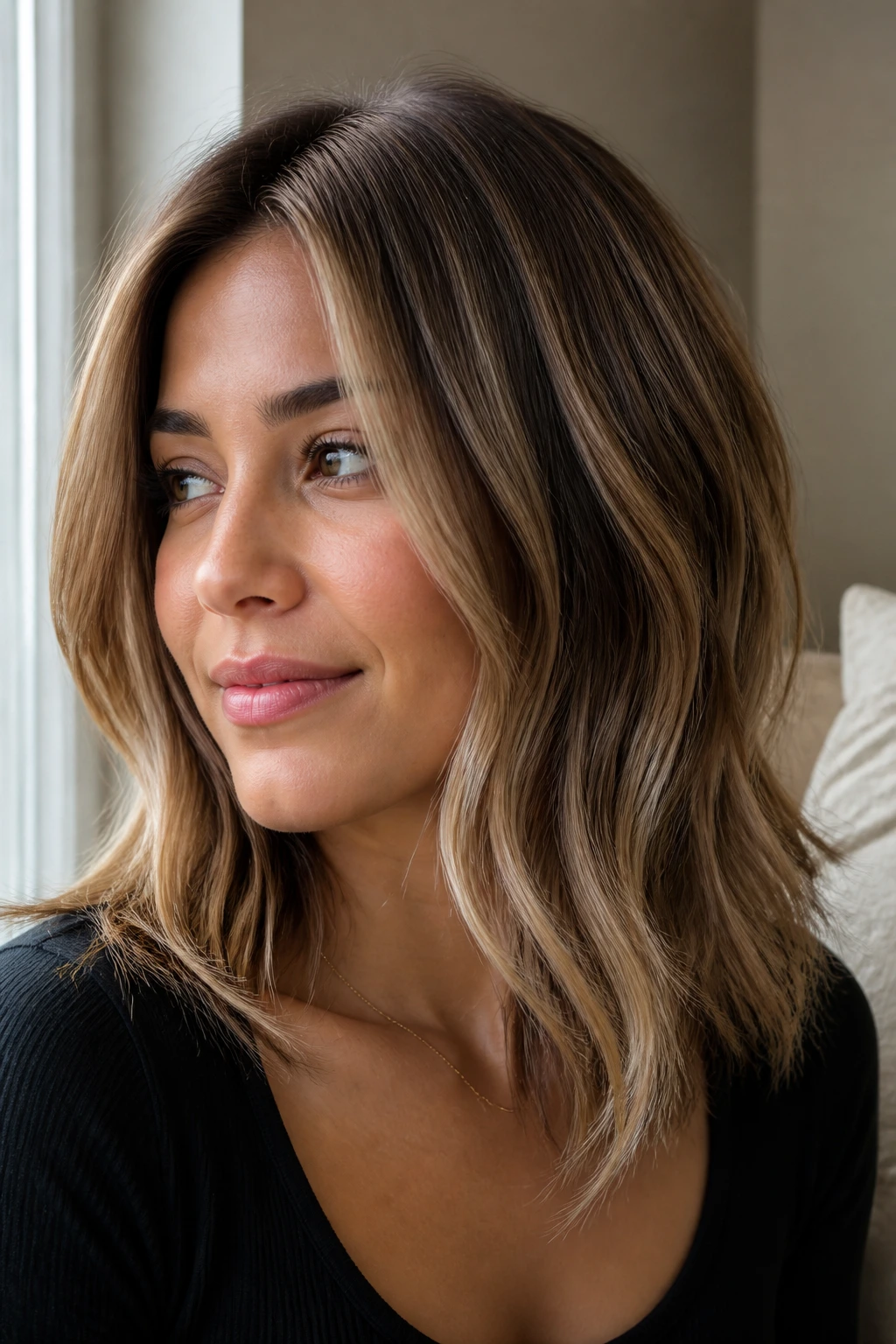
Bronde is for the woman who wants dimension first and brightness second. Fine baby lights thread blonde through a brown or dark blonde base, so the color reads as a soft shift rather than a leap. On medium-length hair, that subtlety matters because the shape can already carry a lot of visual weight.
The baby lights should be thin enough that they vanish from a distance and show up when the hair moves. That’s what keeps the look from tipping into chunky highlight territory. I like it on lob cuts and soft layers because the natural bend in the hair reveals the lighter pieces without needing a lot of styling time.
This is one of the most forgiving options on the list. It grows out softly, it works with most partings, and it doesn’t demand that you live under a purple shampoo bottle. If you like the idea of blonde but don’t want the maintenance of a full lightened look, bronde is one of the smartest places to land.
There’s no drama here. That’s the charm. The hair looks lived-in, and the blonde feels earned rather than sprayed on.
13. Strawberry Blonde Lob with Copper-Kissed Ends
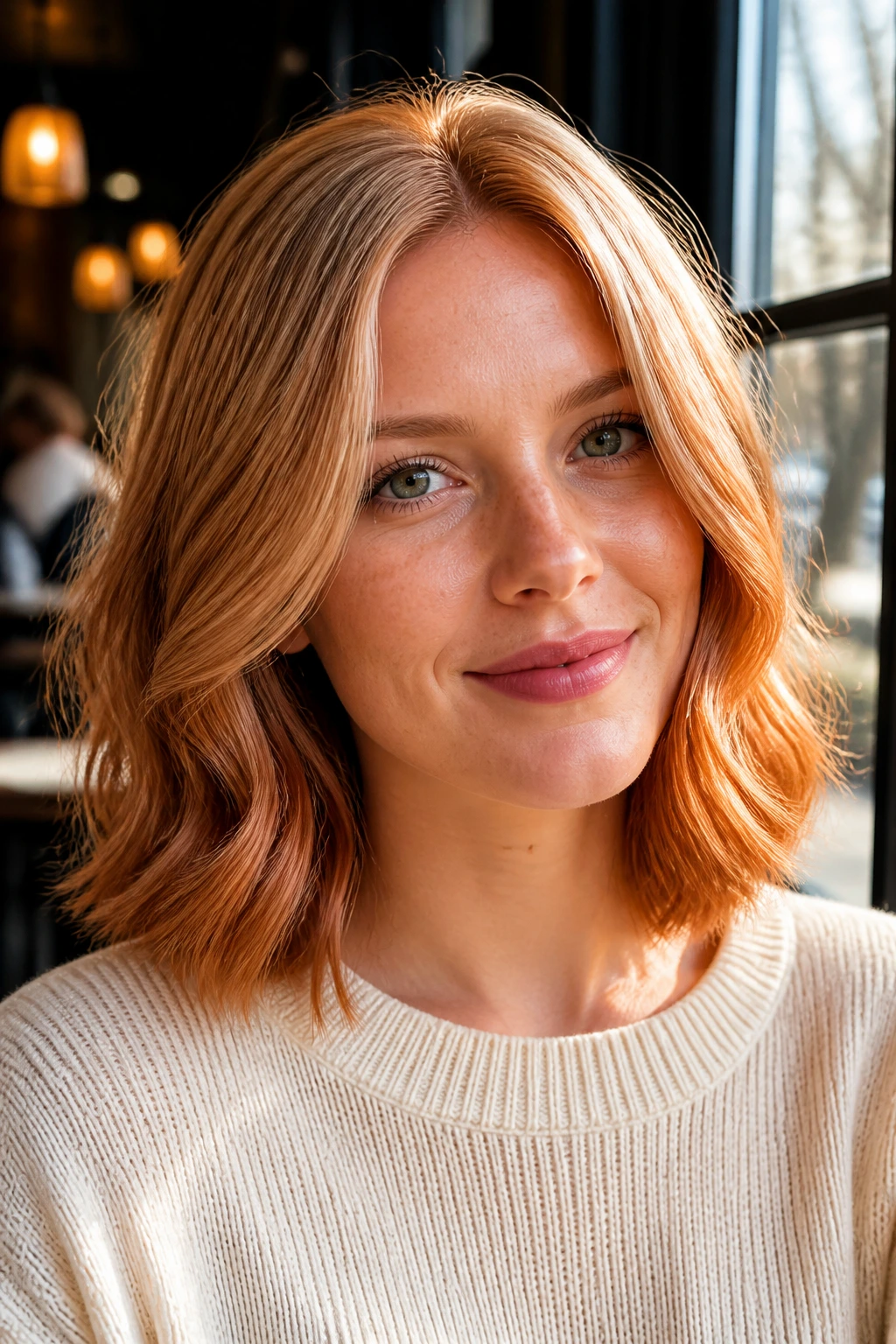
Strawberry blonde on medium-length hair has more personality than people expect. The copper note warms the blonde just enough to make the whole color glow, especially around the ends. On a lob, that warmth looks crisp rather than heavy because the length stops before the color can feel too dense.
This works best when the base is a light brown or dark blonde that can carry some copper without turning orange. The strawberry note should feel like a glaze, not a fire alarm. On wavy hair, the color comes alive fast. The bends pick up the red-gold shift, and the ends look almost lit from inside.
If you have freckles or warm undertones, this is a strong pick. If you run cool, it can still work, but keep the copper more muted and less red. A soft side part also helps the color feel less intense around the face.
I like this look because it doesn’t try to pretend it’s something else. It’s blonde with a warm pulse. That’s more interesting than another flat beige job.
14. Pearl Blonde with Polished Ends
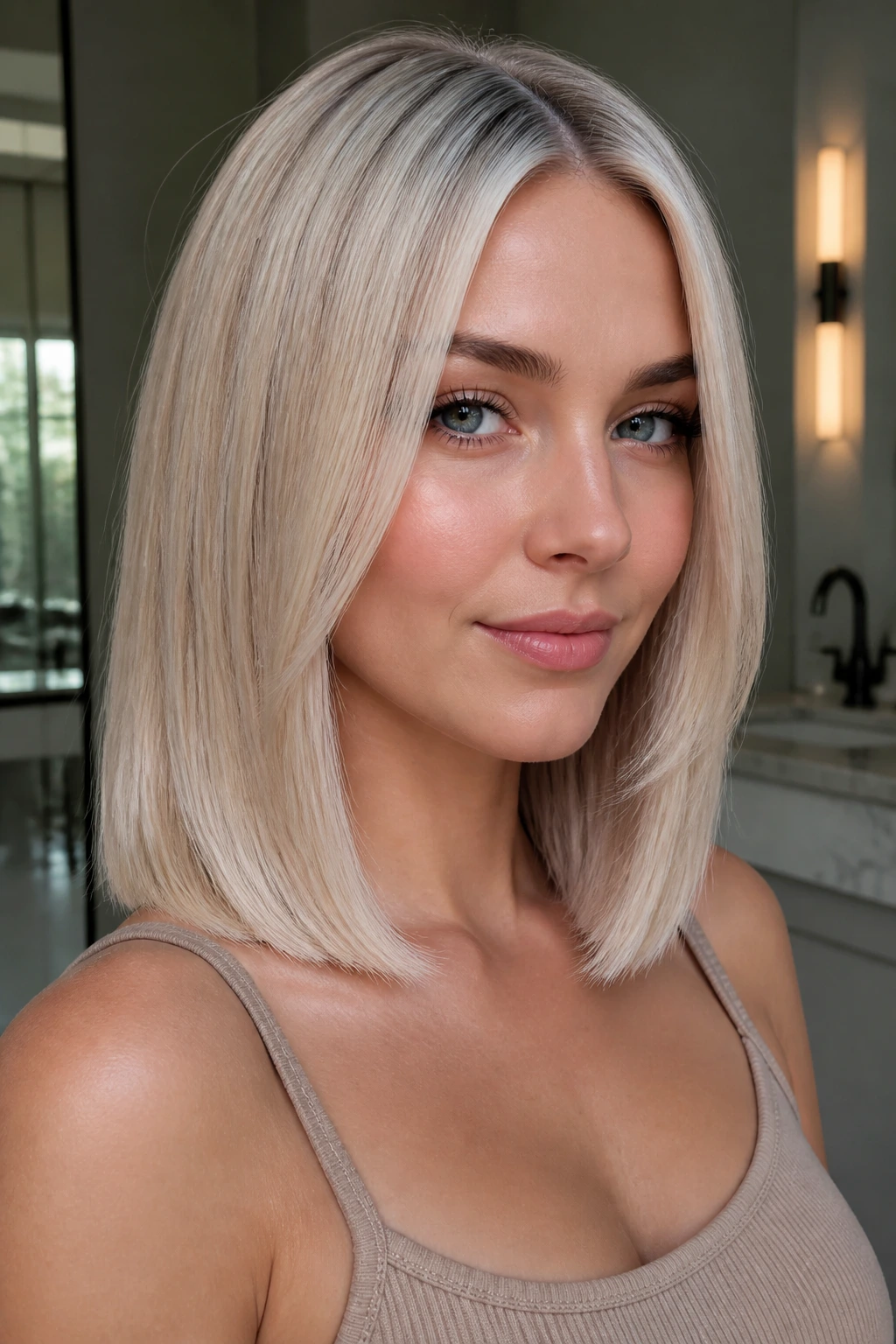
Pearl blonde has a reflective quality that sits somewhere between cool beige and soft silver. On medium-length hair, polished ends make the tone look smoother and more expensive-looking than it would on rough, broken layers. The whole thing depends on shine. Without shine, pearl blonde can go dull fast.
What Makes Pearl Different
Pearl is not icy platinum, and it’s not yellow-blonde either. The tone carries a slight iridescent cast, which is why it looks so good on hair that’s been glossed and trimmed regularly. A blunt or softly rounded lob usually suits it best. Too many choppy layers and the pearl effect starts to scatter.
A low-contrast finish works here. The root should be softly shadowed, not dark enough to look grown out, and the ends should stay smooth so the light can bounce off them. If your hair tends to puff up at the bottom, a lightweight smoothing cream before blow-drying helps keep the look tight.
Pearl blonde is one of those shades that rewards discipline. If you keep the ends neat and the tone clean, it gives back more than most blondes do.
15. Sunlit Beige Balayage with Long Layers
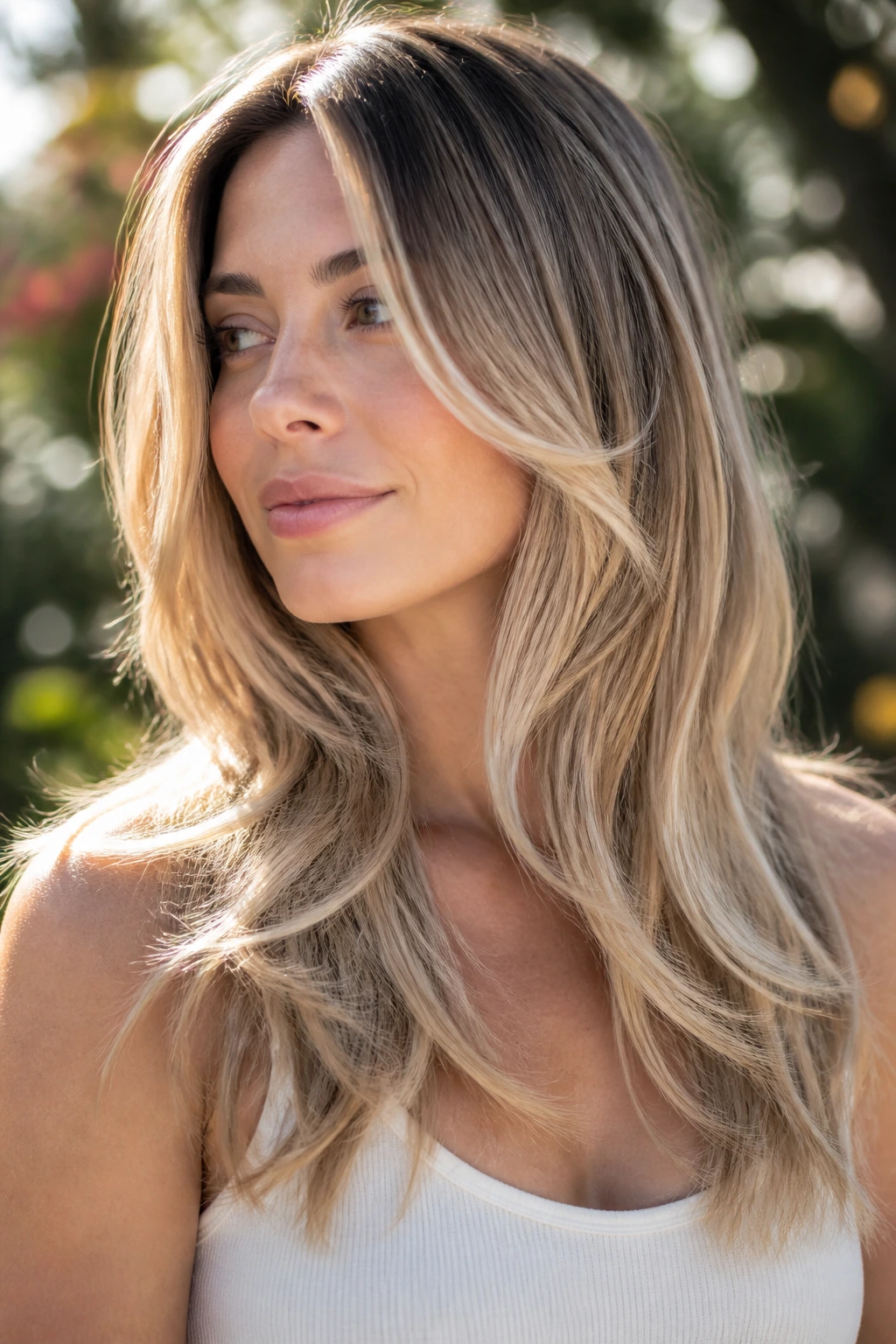
Sunlit beige balayage is what I recommend when someone wants blonde that looks natural from across a room and detailed up close. The beige tone keeps it neutral, while the balayage placement adds that soft sweep through the longer layers. On medium-length hair, the effect is even better than on very long hair because the color pattern stays readable.
The layers matter here. A single blunt line can make beige balayage feel heavy, but longer layers let the painted pieces fall in separate panels. You get little flashes of brightness near the face and softer beige through the back. It looks especially good when the hair is curled away from the face, because the lighter pieces seem to pull the shape upward.
This is one of the easiest looks to wear if you like low-friction styling. A rough blow-dry, a few bends with a curling iron, and the color already looks done. No need to force perfection. The whole point is that the blonde should look like it belongs to the cut, not like it was pasted on afterward.
16. Sandy Blonde with Textured Ends
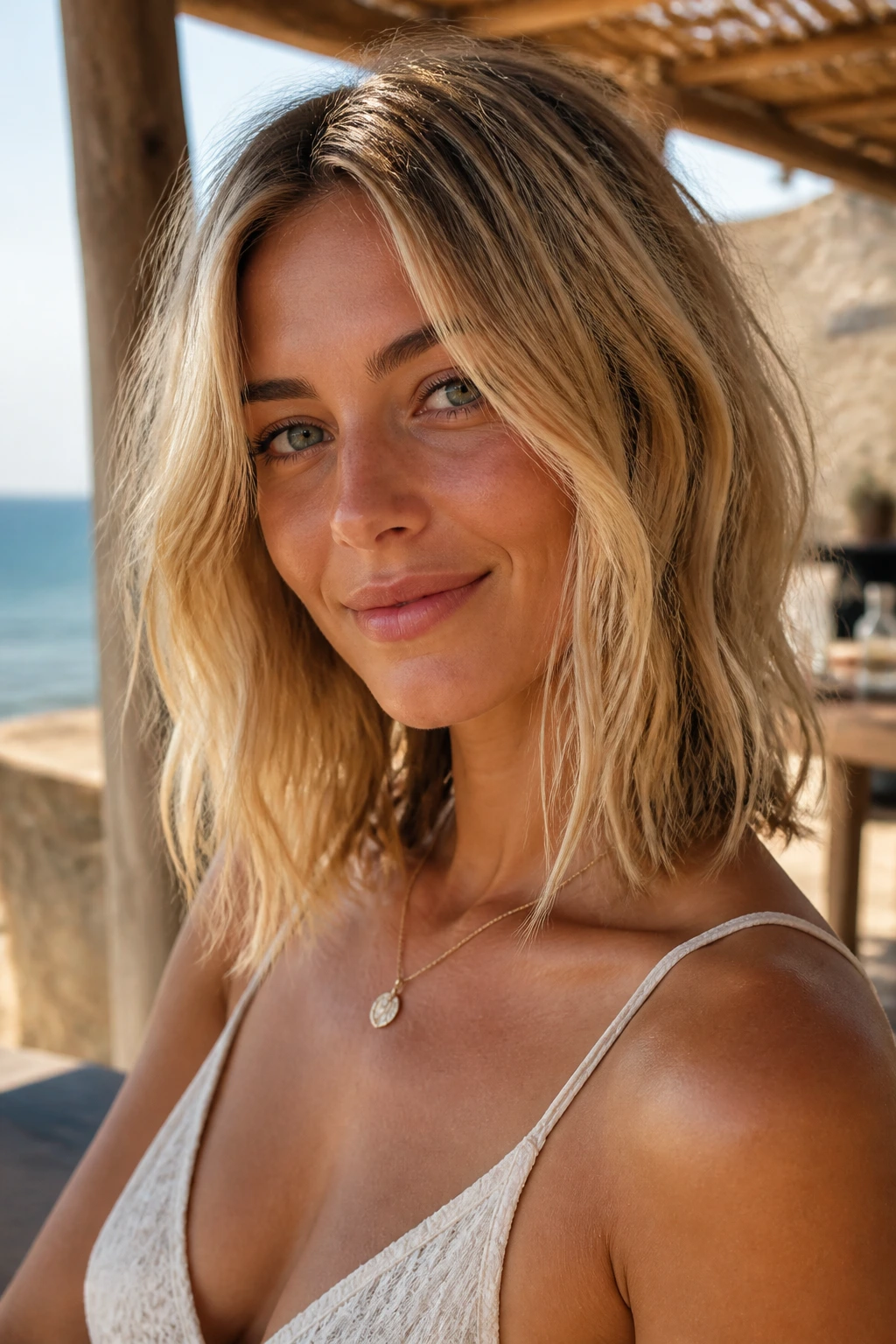
Sandy blonde is underrated. It sits a little deeper than butter blonde, a little softer than ash, and that middle ground gives medium-length hair a lived-in look without much effort. Add textured ends, and the whole cut starts to move in a way that makes the color feel fuller.
This is one of the best choices for air-dried hair. The slightly muted tone does not depend on mirror-straight shine to make sense. In fact, a little texture helps. The ends can be piecey, the layers can be rough around the edges, and the blonde still reads as deliberate.
It’s also a smart option if your natural hair is dark blonde or light brown. The grow-out won’t scream at you, and the sandy tone is forgiving when your styling is rushed. A wave spray, a touch of cream, and a few scrunches with your hands are often enough.
Some blondes need polish to stay believable. Sandy blonde benefits from a little mess. That is a nice change.
17. Smoky Blonde Melt with Tousled Waves
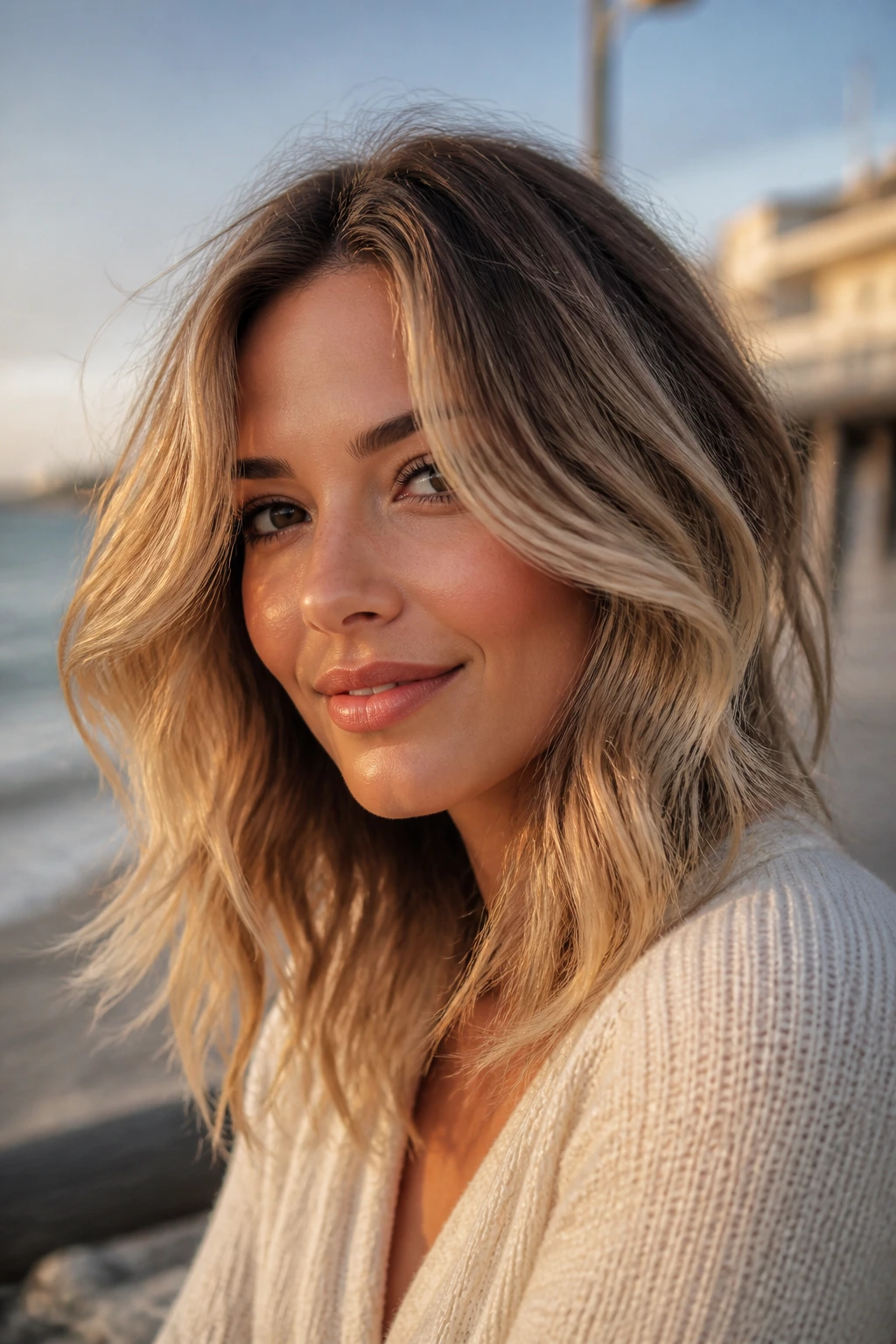
Smoky blonde is the blonde for people who like depth more than brightness. The root stays darker, the mids carry a muted beige or ash-blonde blend, and the ends fade into a smoky, soft finish that looks almost velvety on medium-length waves. It’s not loud. It doesn’t need to be.
The melt is what makes it work. Without that gradual shift, smoky blonde can look patchy. With it, the whole cut feels modern and grown-in. Medium-length hair is a great canvas for this because the color has enough distance to travel without becoming too stretched out. You see the root, the mid-shaft, and the ends as separate parts of the story.
Tousled waves are the right styling partner. Not curls. Not a stiff blowout. A bit of bend, a soft side-to-side twist, and a finger-combed finish are enough. The texture keeps the smoky tone from feeling flat.
If I had to pick one blonde for someone who wants dimension, softness, and a little attitude, this would be near the top of the list.
Why Medium-Length Hair Makes Blonde Easier to Wear
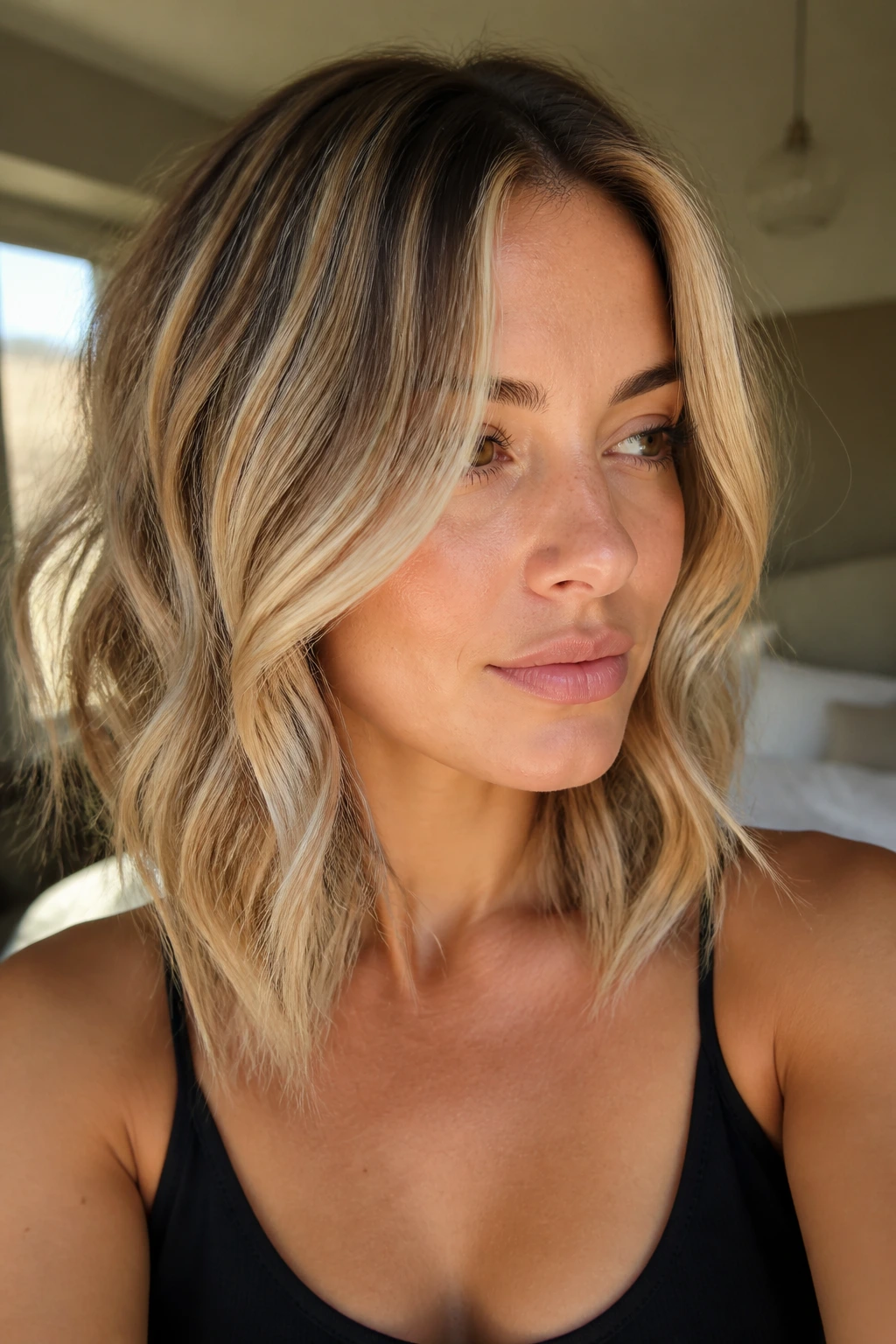
Medium-length hair gives blonde something short hair often can’t: room to move without drifting into overload. There’s enough length for a root shadow to matter, enough ends for balayage to breathe, and enough structure to keep a high-lift shade from looking disconnected from the cut. That balance is the whole game.
The haircut also controls the tone. On a lob, a bright front piece can change the whole face. On a shag, the same color looks more relaxed because the layers break it up. On a blunt cut, the tone feels sharper because the line is clean. Medium length makes those differences obvious, which is useful if you know what you want and dangerous if you do not.
If your hair is fine, this length helps blonde look fuller because the cut still holds shape at the bottom. If your hair is thick, the length keeps the color from being swallowed by bulk. And if you like low-maintenance grow-out, a root melt or balayage on this length usually ages more gracefully than the same color would on very short or very long hair.
Essential Tools and Products for Styling and Color Care
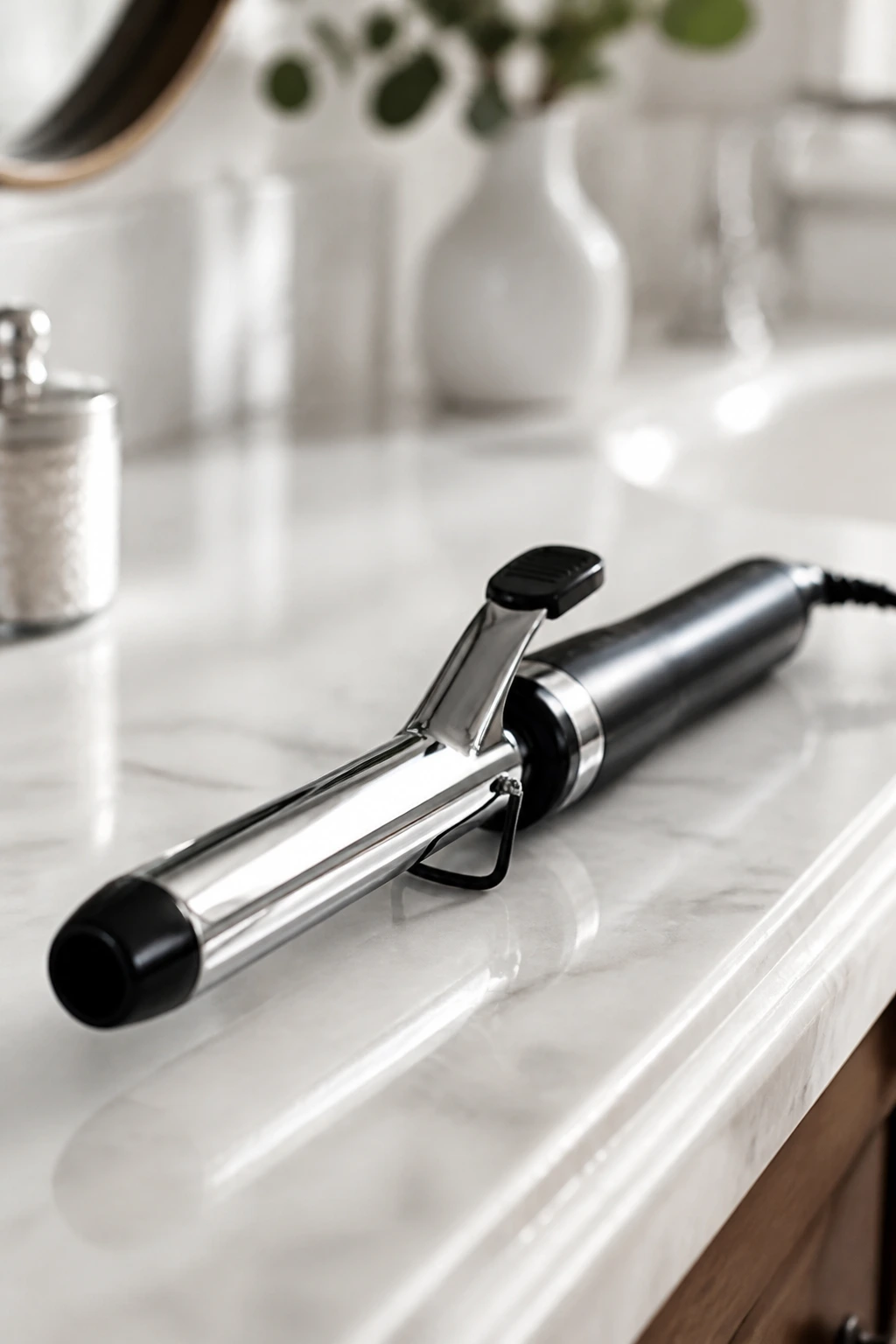
- A 1-inch curling iron or wand: Ideal for loose bends and soft waves that show off dimension without making the hair look overdone.
- A blow-dryer with a nozzle: Helps smooth the cuticle and keeps blonde shades from looking frizzy or dull at the ends.
- Round brush or vent brush: Useful for lifting the root and shaping curtain bangs, blunt ends, or flipped layers.
- Heat protectant spray: Non-negotiable on lightened hair, especially if the ends have been lifted to level 9 or 10.
- Purple shampoo: Best for icy, platinum, pearl, and Scandinavian blondes; use it sparingly so the hair doesn’t go flat or gray.
- Color-safe moisturizing mask: Lightened medium-length hair usually needs weekly moisture to keep the ends from snagging.
- Gloss or toner refresh service: More of a salon resource than a tool, but it keeps beige, champagne, and ash blondes from drifting brassy or muddy.
- Wide-tooth comb: Better than yanking through wet blonde hair with a small brush, especially after washing.
- Lightweight shine spray: Good for vanilla, pearl, and champagne blondes, where reflective finish matters.
How to Choose the Right Blonde Shade for Your Base Color
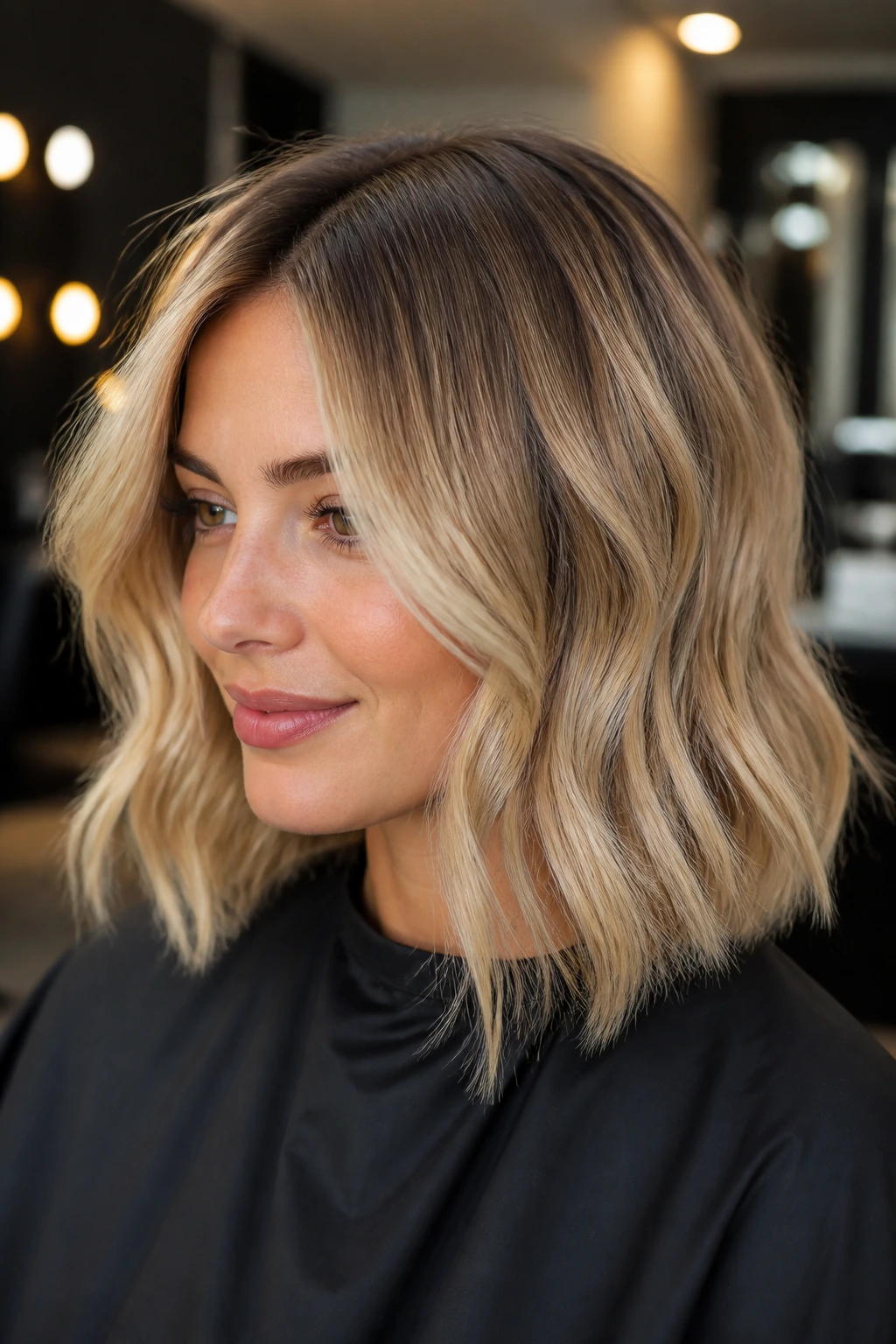
The easiest way to choose a blonde look is to start with your natural base and your tolerance for upkeep. A light brown base can take bronde, sandy blonde, mushroom blonde, or a rooted butter blonde without looking forced. Darker natural hair can move into blonde too, but the lift usually takes more sessions, more patience, and a stronger plan for the ends.
Warm skin tones tend to play nicely with honey blonde, caramel root shadows, strawberry blonde, and golden balayage. Cool skin tones usually look sharp with ash blonde, pearl blonde, platinum, or Scandinavian blonde. Neutral skin can go almost anywhere, which sounds lucky because it is, though the haircut still needs to match the tone. A beige or champagne blonde is usually the safest starting point if you are unsure.
Hair density matters too. Fine hair often looks fuller with a softer root melt and finer highlights, because thick chunks of blonde can make the strands look separated. Thick hair can handle more contrast and more dimension, since the density keeps the shape from looking sparse. If you already have waves, use them. If your hair is straight, choose a tone and cut that give the eye something else to look at—blunt lines, face-framing brightness, or a clean center part.
How to Style Blonde Medium-Length Hair So the Color Reads Clearly
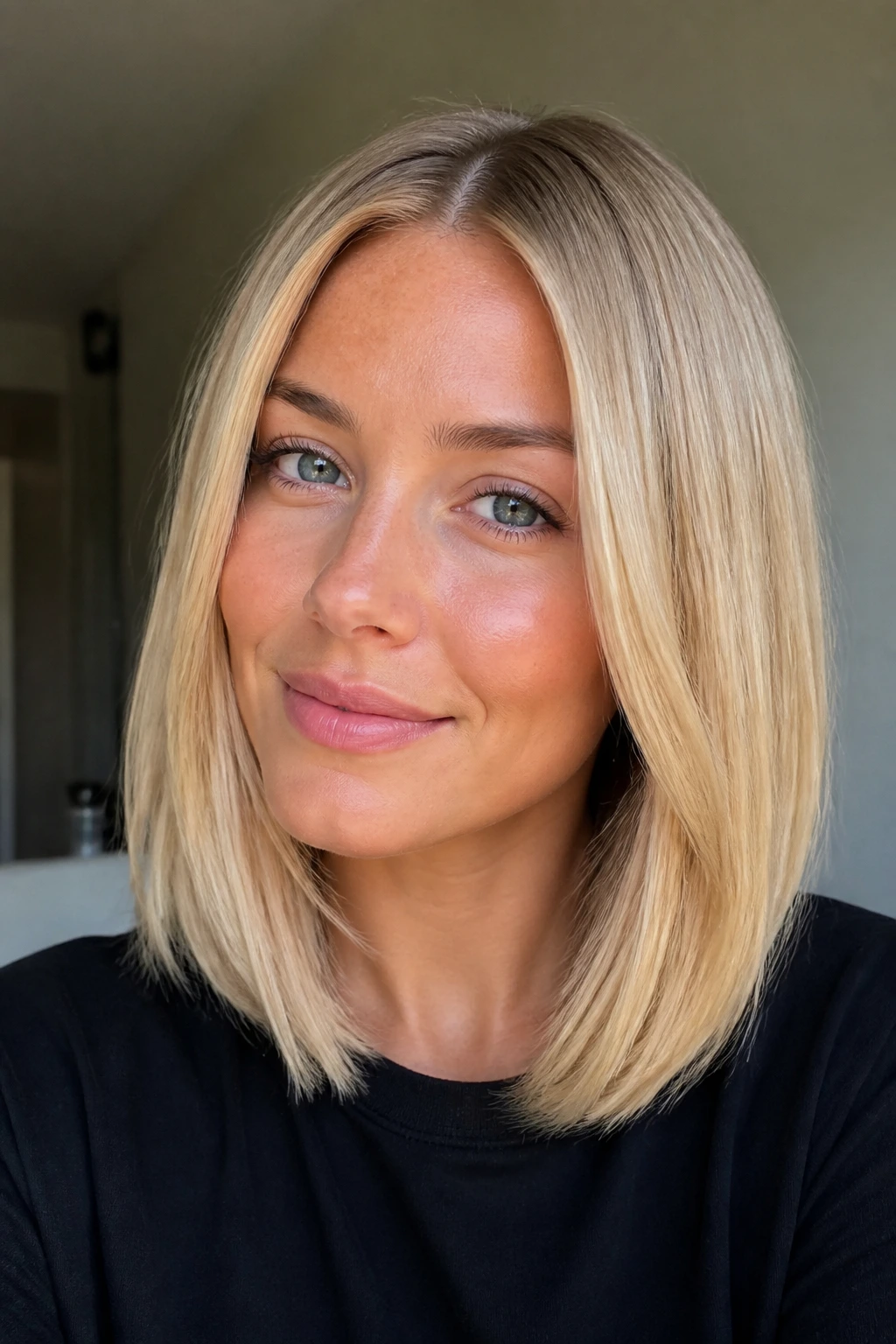
A good blonde can disappear if the styling fights it. That’s the annoying part. Loose bends usually show dimension better than tight curls, because the light lands in broader sections instead of tiny ringlets. For balayage, set the iron away from the roots and keep the last inch of the ends a little straighter so the color looks soft rather than puffy.
Straight styles work too, but they need intention. A middle part and a clean blowout make champagne, pearl, and Scandinavian blondes read sharper. A tucked-behind-the-ear finish can also show off face-framing pieces without much effort. If you wear curtain bangs, give them a quick round brush pass; flat bangs can sink the whole look.
Styling moves that matter
- Blow-dry the roots first so the hair does not collapse.
- Wrap sections away from the face for a softer frame.
- Leave the ends slightly undone on layered looks.
- Use a pea-sized amount of cream, not a palmful. Heavy product kills blonde shine fast.
Extra Shine, Tone, and Texture Tricks
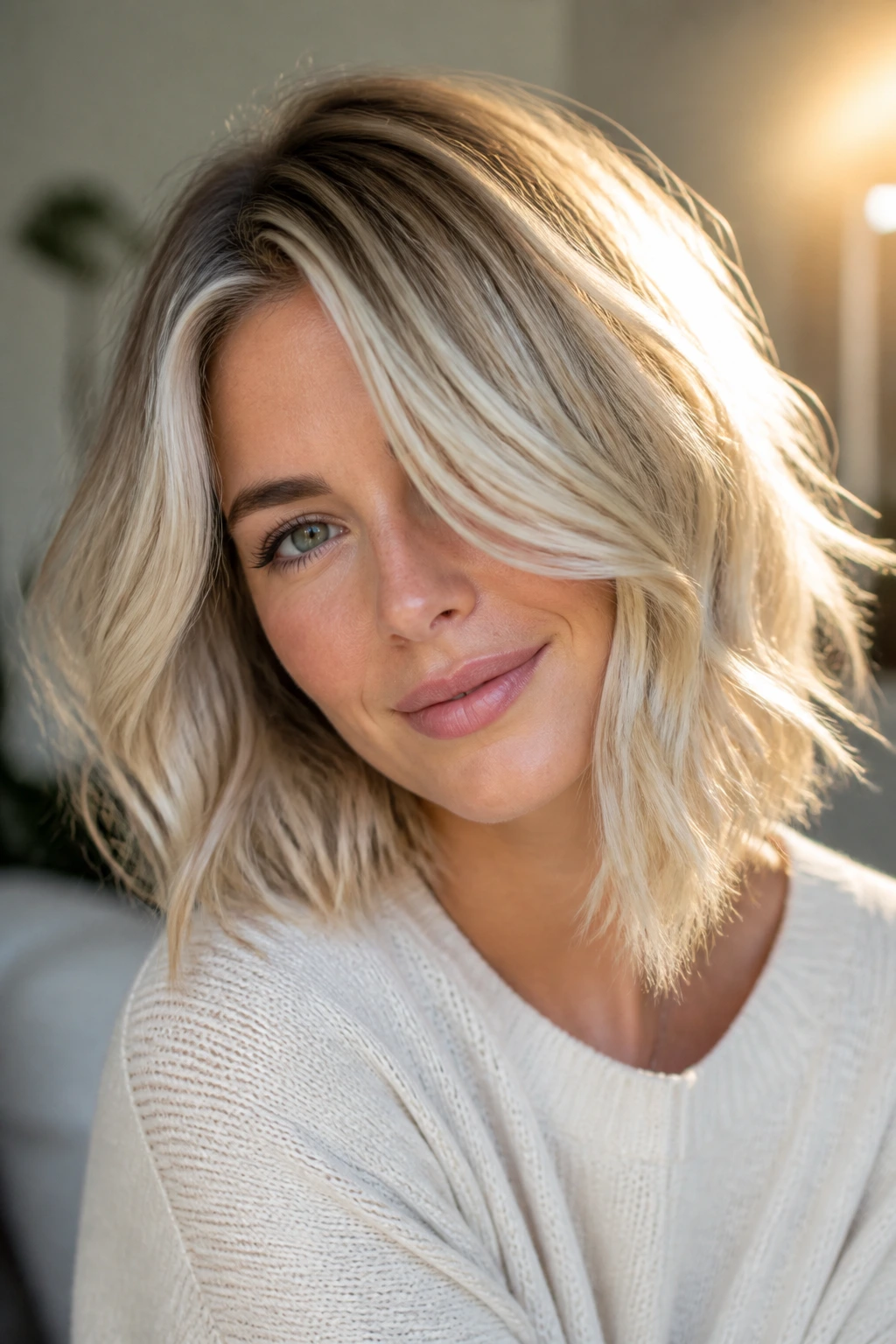
Tone refresh: If your blonde starts leaning yellow, a gloss or toner can pull it back into beige, pearl, or ash without another full lightening session. That is a better fix than loading the hair with purple shampoo until it looks dusty.
Texture boost: Medium-length blonde hair often looks best when it has movement at the mid-shaft and a cleaner finish at the ends. A light wave spray on damp hair, then a rough blow-dry with your fingers, gives the color enough separation to show up.
Root control: A darker root isn’t laziness; it’s design. On most of these looks, a soft shadow root keeps the blonde from looking pasted onto the scalp.
Face-frame emphasis: If you want the color to read brighter without changing the whole head, brighten the first inch and a half around the face and keep the back more muted. That small move changes the whole haircut.
Make-it-yours: If your style runs minimal, keep the cut blunt and the tone clean. If you like a little edge, add piecey layers, a smoky root, or a warmer lowlight through the underside.
Maintenance, Toning, and Trim Schedule
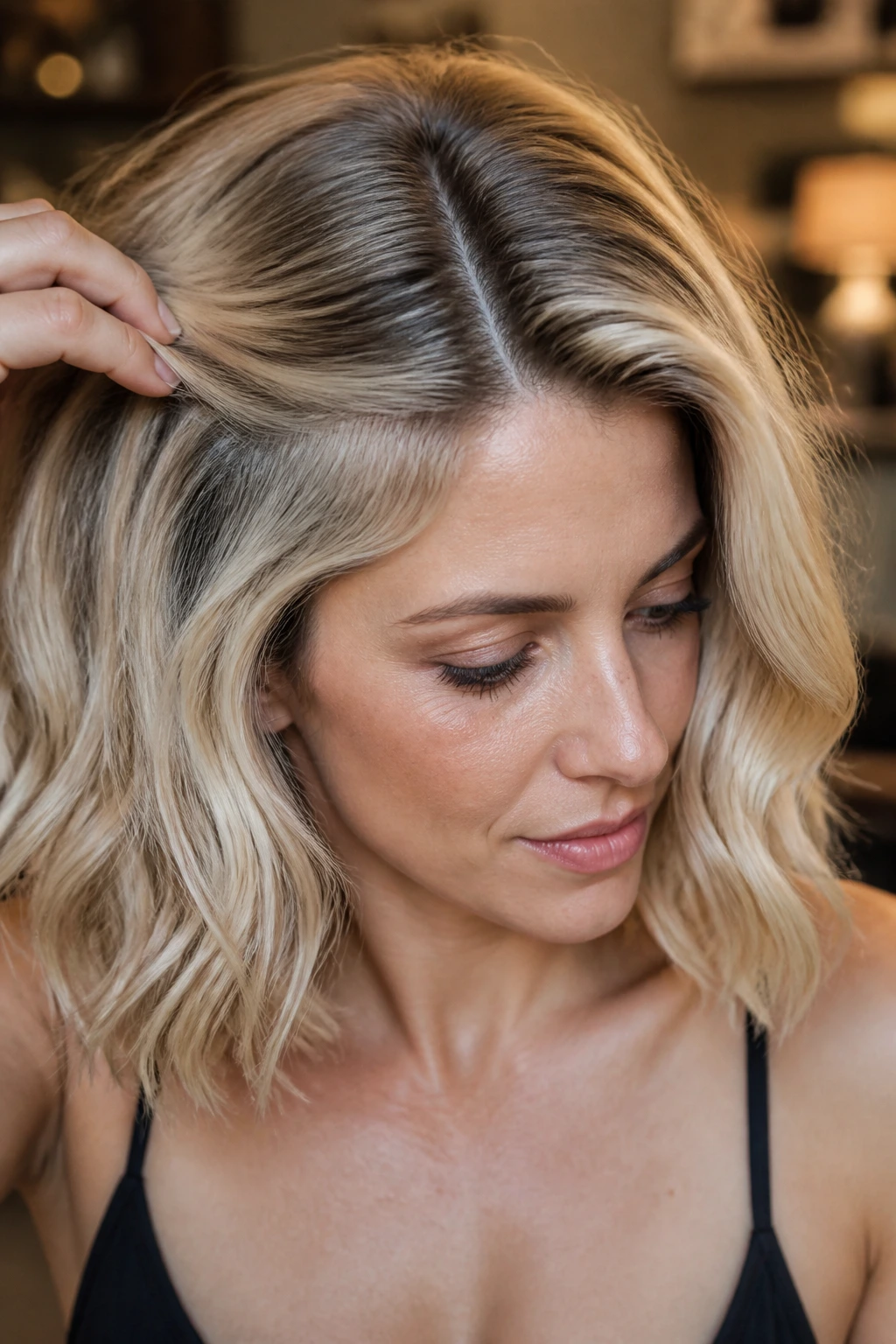
Blonde on medium-length hair usually looks best when it’s kept on a rhythm. Not a rigid one. Just a sensible one. A root shadow or balayage can often go 6 to 12 weeks between major touch-ups, depending on how light the front pieces are and how visible you want the grow-out to be. Platinum, Scandinavian blonde, and very pale pearl tones usually need more attention, sometimes every 4 to 6 weeks for toning and cleanup.
Purple shampoo is a tool, not a lifestyle. For icy or cool blondes, use it every second wash or even less if the tone starts drifting dull. Warm blondes usually need it only occasionally, because the point is to preserve the gold, not cancel it. A moisturizing mask once a week helps keep lightened medium-length ends from turning dry and rough. If the hair feels squeaky but tangly after washing, it needs moisture, not more shampoo.
Trims matter more than people want to admit. For shoulder-length blonde hair, I like a trim every 8 to 10 weeks if the ends are exposed and lighter. If the haircut is blunt, stretched, or heat-styled often, 6 to 8 weeks keeps the shape from fraying. A color gloss between full services can stretch the life of beige, champagne, pearl, and ash blondes without forcing a bigger appointment.
Heat also needs a ceiling. Lightened hair usually behaves better when styling tools stay around 300°F to 350°F rather than blasting past it. If the ends are already porous, the difference between a polished wave and dry straw can be one pass too many.
Variations and Adaptations to Try
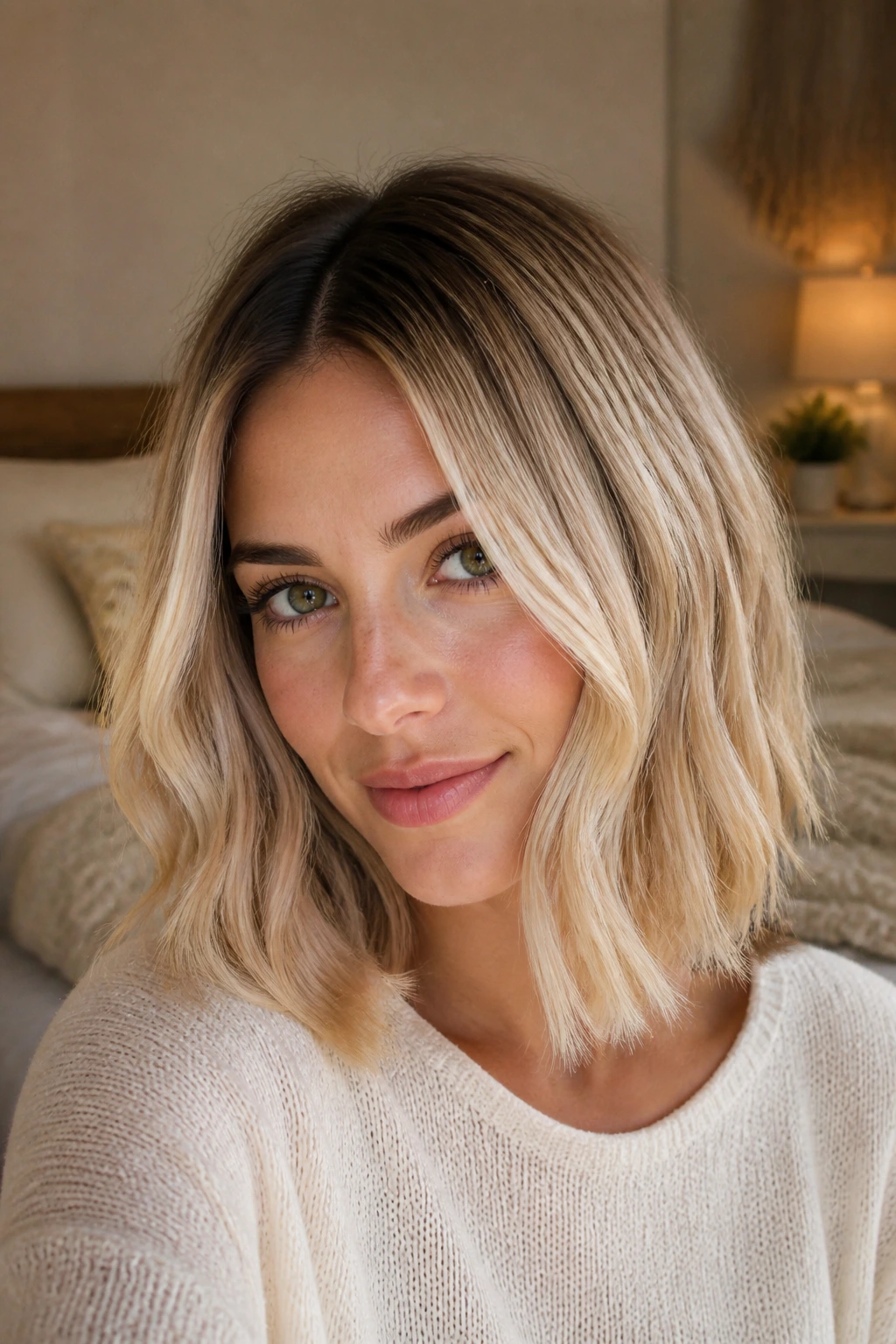
Low-Maintenance Root Melt: Keep the root deeper and blur the transition into blonde over the top third of the hair. This works best if you want to stretch appointments and don’t want your grow-out to look obvious.
High-Contrast Money Piece: Brighten just the front sections and leave the rest of the hair softly rooted. It gives medium-length hair a sharper frame without the upkeep of an all-over blonde.
Cooler Ash Shift: Take honey, beige, or butter blonde and push the toner cooler at the mids and ends. The result is softer and smokier, though it needs regular glossing so it does not go flat.
Warmer Copper Kiss: Add a strawberry or copper glaze to sandy or beige blonde. This suits warm skin and gives the hair a deeper glow, especially on wavy lobs and layered cuts.
Glossy Event Finish: Keep the color itself subtle, then rely on a smoother blowout and shine spray. Pearl, champagne, and vanilla blonde all look more refined when the surface is polished.
Common Mistakes to Avoid
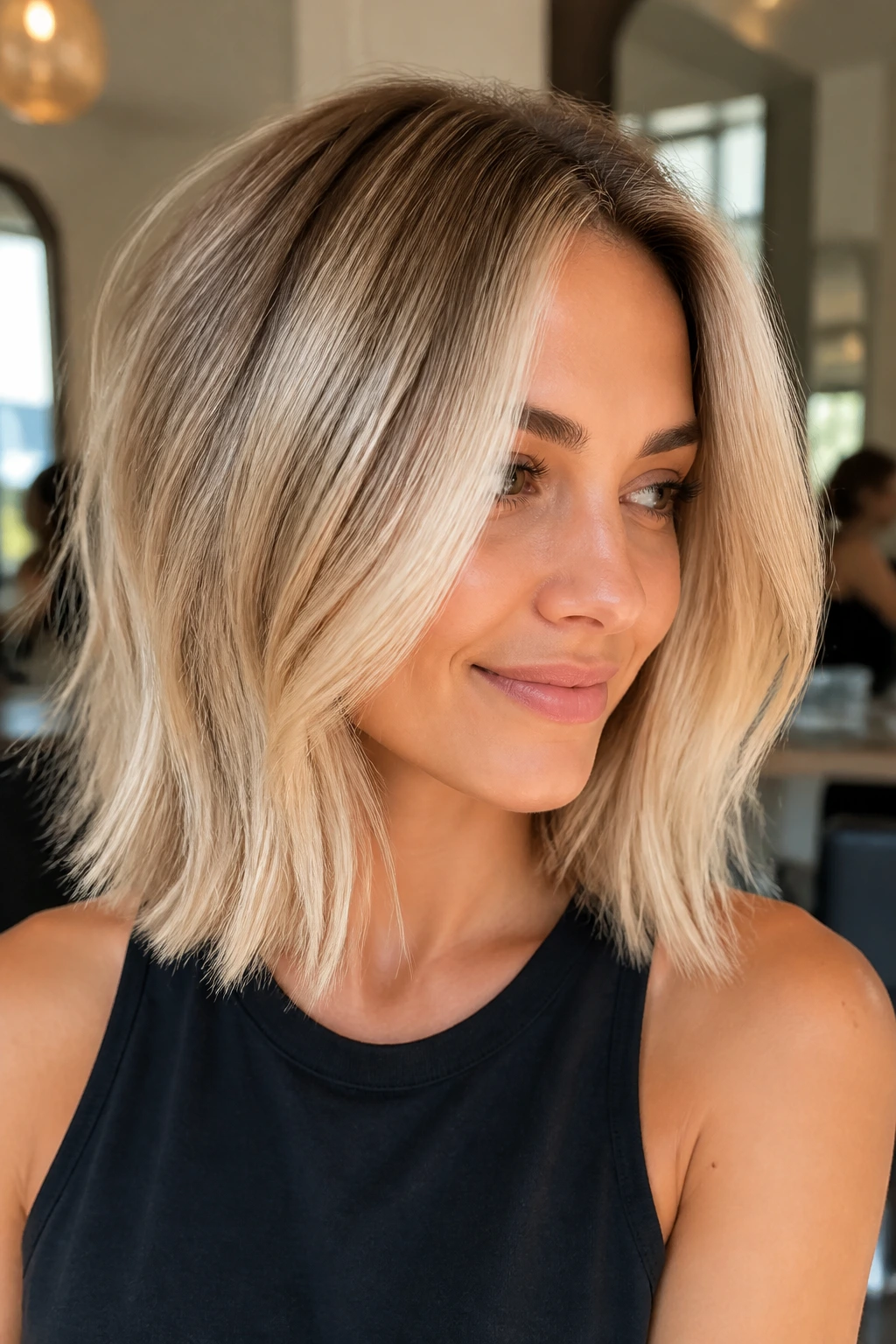
Over-lightening the whole head: Not every blonde needs every strand lifted to the same level. On medium-length hair, full saturation can make the cut lose shape and leave the ends looking thin.
Picking the wrong undertone: A very warm honey blonde on cool skin can look disconnected, while an icy ash blonde on warm skin can feel a little cold against the face. Match the tone to the base and skin, not to a photo that looked good on somebody else.
Letting the ends go fried: Blonde ends show damage first. If the hair is lightened and then flattened with too much hot tool use, the ends start to look rough, see-through, and frayed. Use heat protectant and trim on schedule.
Using purple shampoo too often: It can mute warmth and leave beige or honey blondes looking chalky. Save it for cool shades that need it, and use it sparingly.
Ignoring the haircut: A flat, shapeless cut can make even good blonde look unfinished. Medium-length blonde needs a line, a layer pattern, or some face framing to give the color structure.
Frequently Asked Questions
Which blonde looks is easiest to maintain on medium-length hair?
A rooted butter blonde lob, bronde with baby lights, or sandy blonde with textured ends usually asks for the least babysitting. The root stays softer, the grow-out is blurred, and you do not need constant toner refreshes.
Can medium-length hair handle platinum blonde without looking thin?
Yes, but the haircut has to support it. A blunt edge, soft wave, or controlled bend helps the platinum read full instead of wispy, and the ends need to stay healthy enough to hold shine.
How often should blonde hair be toned?
It depends on the shade. Cool blondes often need toning every 4 to 6 weeks, while warmer looks can go longer and sometimes only need a gloss when they start losing brightness or depth.
Is balayage better than highlights for shoulder-length hair?
Balayage usually gives a softer grow-out and a more painted look, which works well on medium-length cuts. Foil highlights can still be better if you want a brighter, more precise lift from root to end.
What blonde tone works best for warm skin?
Honey blonde, golden balayage, strawberry blonde, and caramel-rooted looks tend to sit well on warm skin because the tone echoes the warmth already in the face. Beige can work too if it leans slightly golden rather than icy.
How do I stop blonde hair from turning brassy?
Use color-safe shampoo, limit hot water, and keep a toner or gloss schedule instead of waiting for the color to drift. If the blonde is very pale, a small amount of purple shampoo can help, but it should not be overused.
What if my hair is dark brown and I want one of these looks?
You may need more than one session, especially for platinum, Scandinavian blonde, or pearl blonde. If you want a softer path, bronde, mushroom blonde, smoky blonde, or a rooted honey balayage usually makes the transition easier.
Should I choose a center part or side part with blonde on medium hair?
A center part sharpens clean blondes like champagne, pearl, and Scandinavian shades. A side part gives more lift to money pieces, curtain bangs, and wavy balayage, especially if the roots need a little volume.
The Blonde Looks That Keep Medium Hair Interesting
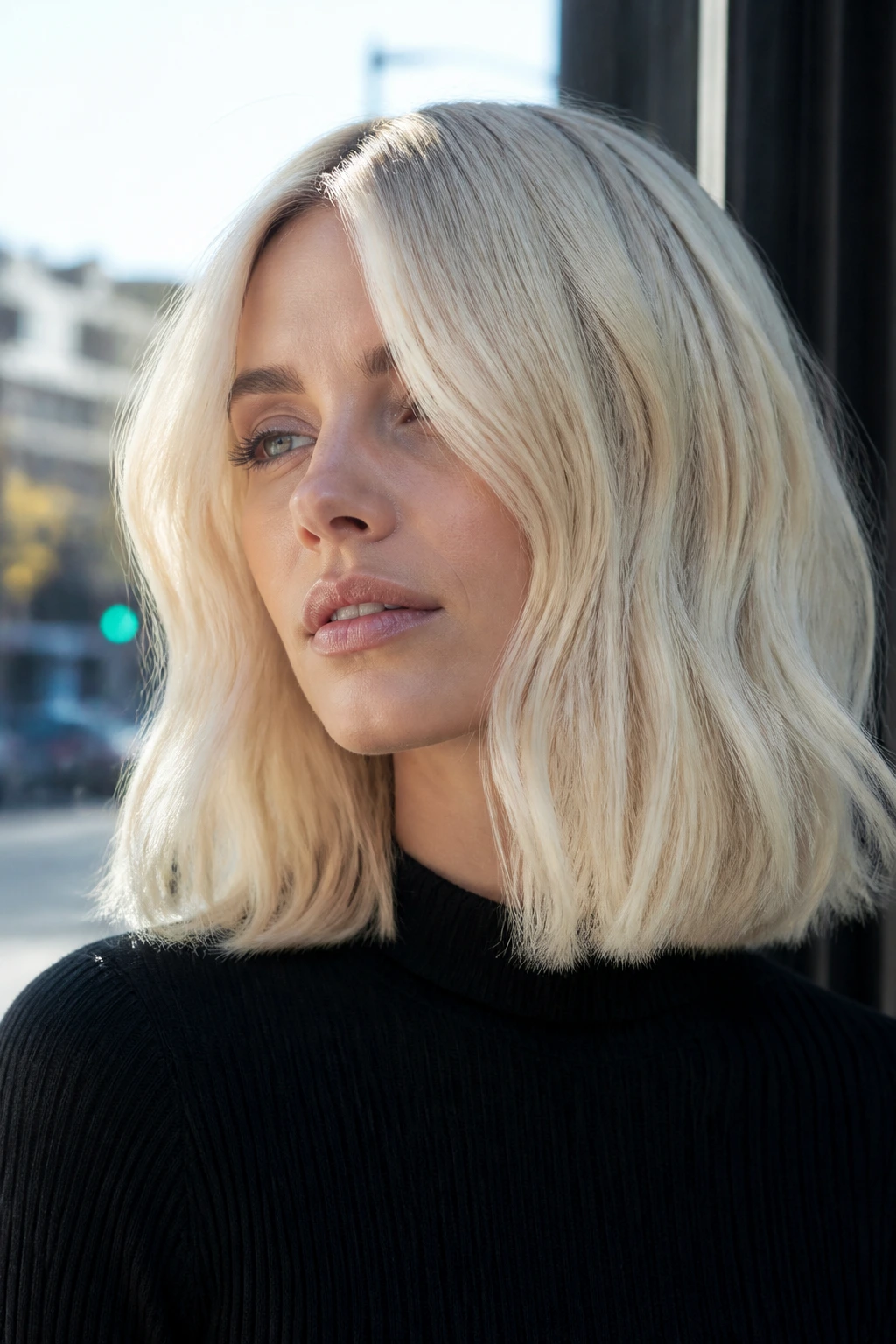
Medium-length blonde hair works because it has enough space to show contrast without wandering off into chaos. The best looks here all do the same basic thing in different ways: they give the cut a shape, give the color a reason to exist, and make the grow-out less annoying than it could be.
If you want the easiest starting point, a rooted butter blonde lob or a bronde baby-light blend usually gives the most mileage. If you want something sharper, platinum, Scandinavian, or pearl blonde can make medium hair look crisp in a way longer lengths sometimes miss. And if warmth is more your lane, honey, golden balayage, or strawberry blonde will bring it without flattening the cut.
Bring a photo, yes, but bring a sense of upkeep too. That matters more than the photo sometimes. The right blonde on medium-length hair is the one that still looks like you on a tired Tuesday, not only on the day it leaves the chair.
