



Sometimes the best fix for a flat short haircut is not another layer. It’s a different direction.
Shift the hair sideways, and a plain crop suddenly gets a cheekbone line. A bob that was sitting heavy starts to look clean. A pixie that felt a little blunt becomes sharp in a way that makes the whole face look more awake. On many Asian hair textures — especially the straight, dense, glossy ones that fall like a sheet — that change can be dramatic because the strands already want to lie smoothly. You are not fighting the hair. You’re steering it.
That’s why comb over styles for Asian women are worth paying attention to. They’re not a single haircut. They’re a family of shapes built around a side-swept front, a shifted part, and just enough root lift to keep the style from collapsing into the same old outline. Some versions are sleek and expensive-looking. Some are soft and airy. A few are a little bolder than people expect. The common thread is control — not stiffness, not helmet hair, just a clean line that moves with the face instead of against it.
And here’s the part that matters most: the details are doing the work. Part placement. Weight removal. A 1-inch round brush. A pea-sized dab of pomade. A cool shot from the dryer. Tiny things. Big difference.
Why You’ll Love This Collection
-
Shape without bulk: A side sweep pulls hair off the center line, which helps dense straight hair stop sitting like one heavy block across the forehead.
-
Works at more than one length: You can wear the idea on a pixie, a bob, a lob, or a collarbone cut, so you’re not locked into one look.
-
Easy to sharpen or soften: The same haircut can look glossy and neat with a flat iron, or airy and loose with a round brush and light texture spray.
-
Good for tricky growth patterns: If you’ve got a stubborn crown, a cowlick, or a part that refuses to behave, these styles usually work with it better than a center part does.
-
Pairs well with glasses and earrings: The sweep keeps the face open on one side, which is handy when you want frames, hoops, or a strong lip to show up cleanly.
-
Less “done,” more deliberate: These looks can be polished without feeling overstyled, which is a nice sweet spot when you want structure but not a stiff finish.
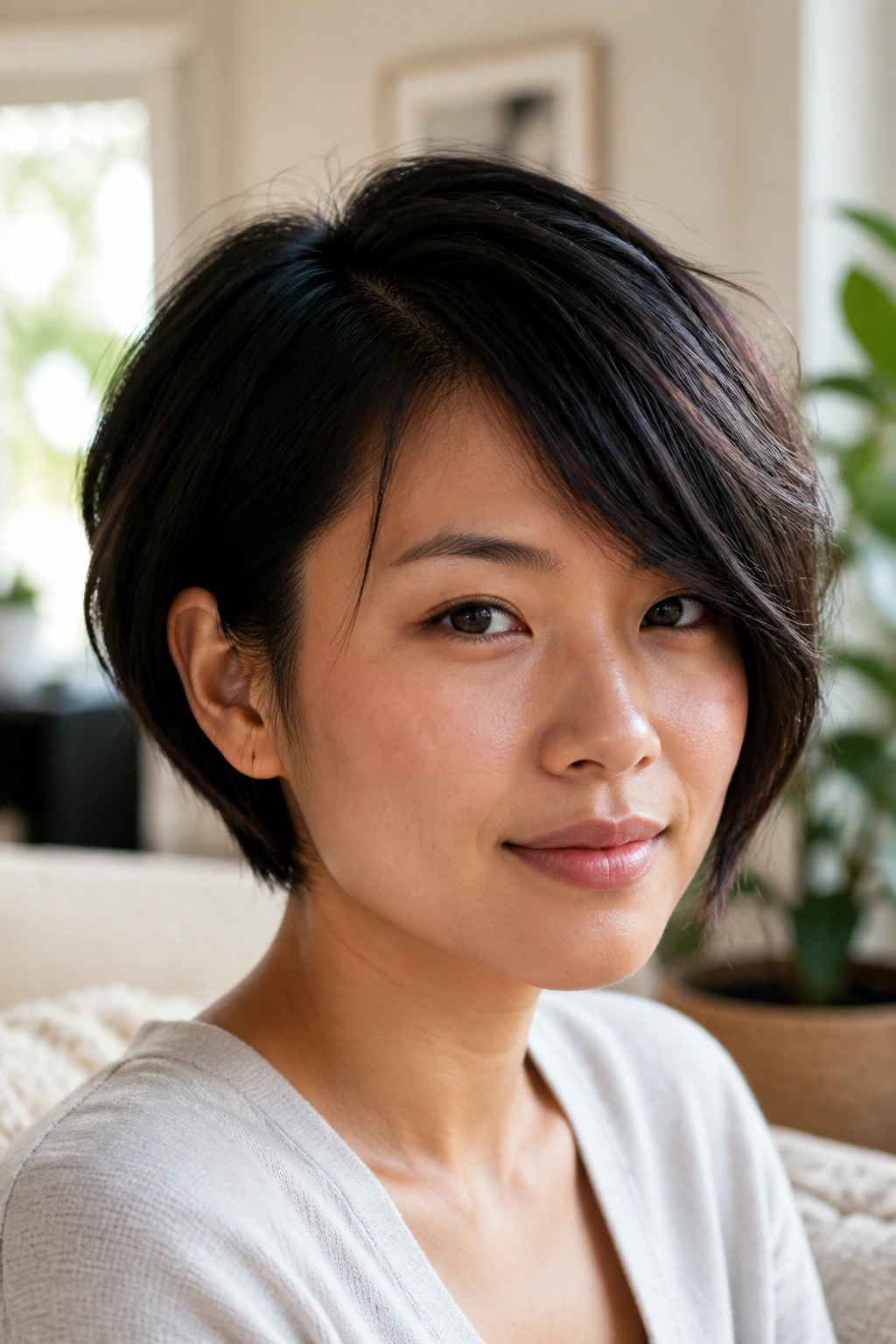
1. Deep Side-Part Sleek Pixie
A deep side-part sleek pixie has a little bite to it. On straight hair, the front falls in a smooth diagonal instead of sticking out, and that alone can make the whole cut feel more deliberate. On dense hair, the short sides keep the shape tight while the longer top gives you room to sweep.
Why It Works
The clean part changes the whole silhouette in one move. If the top is kept around 2 to 3 inches long, the hair has enough length to cross the forehead without flopping into your eyes by lunchtime. I like this cut when the hair is naturally straight and a little stubborn, because that stubbornness turns into polish once the roots are directed properly.
Quick Details
- Keep the part about 1 to 1.5 inches off center.
- Leave the top long enough to brush across the forehead, not so long that it collapses.
- Use a pea-sized amount of styling cream or pomade.
- Finish with a quick blast of cool air so the sweep sets.
Best move: blow-dry the roots first, then sweep the front with the cool shot. If you do the reverse, the hair often slides right back to where it started.
2. Tapered Crown Sweep Crop
If thick hair turns every short cut into a mushroom, this one fixes the silhouette without stealing the top length. The sides stay close, the back tapers neatly, and the upper section keeps enough weight to move from a side part instead of puffing outward like a triangle.
The charm here is balance. You get lift at the crown, but you do not have to live with a shaggy outline. Ask for the interior bulk to be removed under the top section, not just on the surface, because straight dense hair can hide weight in places you won’t notice until the cut dries and expands.
This is one of those cuts that looks best when the front is brushed diagonally and the crown is lifted slightly away from the scalp. A little mousse at the roots, then a medium round brush, and you’re there. No drama. Just shape.
3. Glassy Chin-Length Bob
What if you want a bob that still looks neat after a long day? This is the one. The glassy chin-length bob is blunt enough to feel intentional, but the deep side sweep gives it movement so it doesn’t read as a hard block.
How to Wear It
Keep the line landing right around the chin or a touch below it. That length frames the jaw without making the face feel chopped in half. A side part about an inch off center gives the front enough drop to soften the cheek line, especially if your hair is naturally straight and reflects light well.
A flat iron gives this bob its glassy finish, but the real trick is the direction of the first dry. Blow the front one way while it’s damp, then set the bend with a brush or iron. If your face is narrow, leave a little fullness at the sides; if it’s round, keep the sides cleaner and let the front sweep do the work.
4. Airy See-Through Fringe Sweep
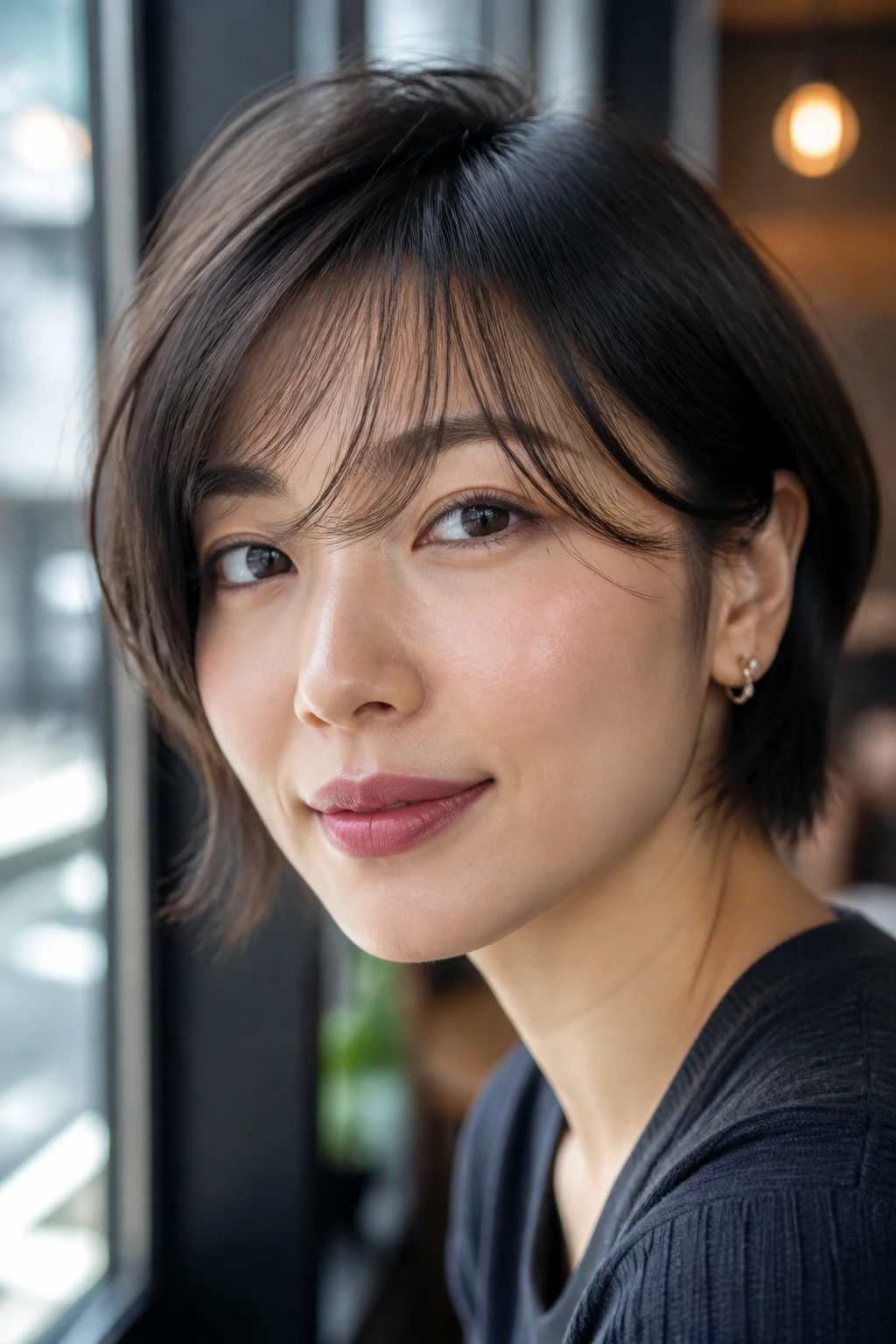
This is the style for anyone who likes the idea of bangs but not the heaviness of a full fringe. The front stays light, a little translucent, and easy to push to one side without looking like you spent half an hour wrestling it into place.
The hair is usually cut in a thin section — not a thick curtain — so a bit of forehead still shows through. That’s what keeps it soft. On straight Asian hair, the lighter density in the fringe prevents the front from sitting in a single heavy slab. It moves.
A tiny round brush or even a Velcro roller at the root helps the fringe lift before it sweeps over. If you wear glasses, this is a smart choice because the fringe won’t fight your frames. It just skims them and keeps going.
5. Asymmetrical Bob with One Long Side
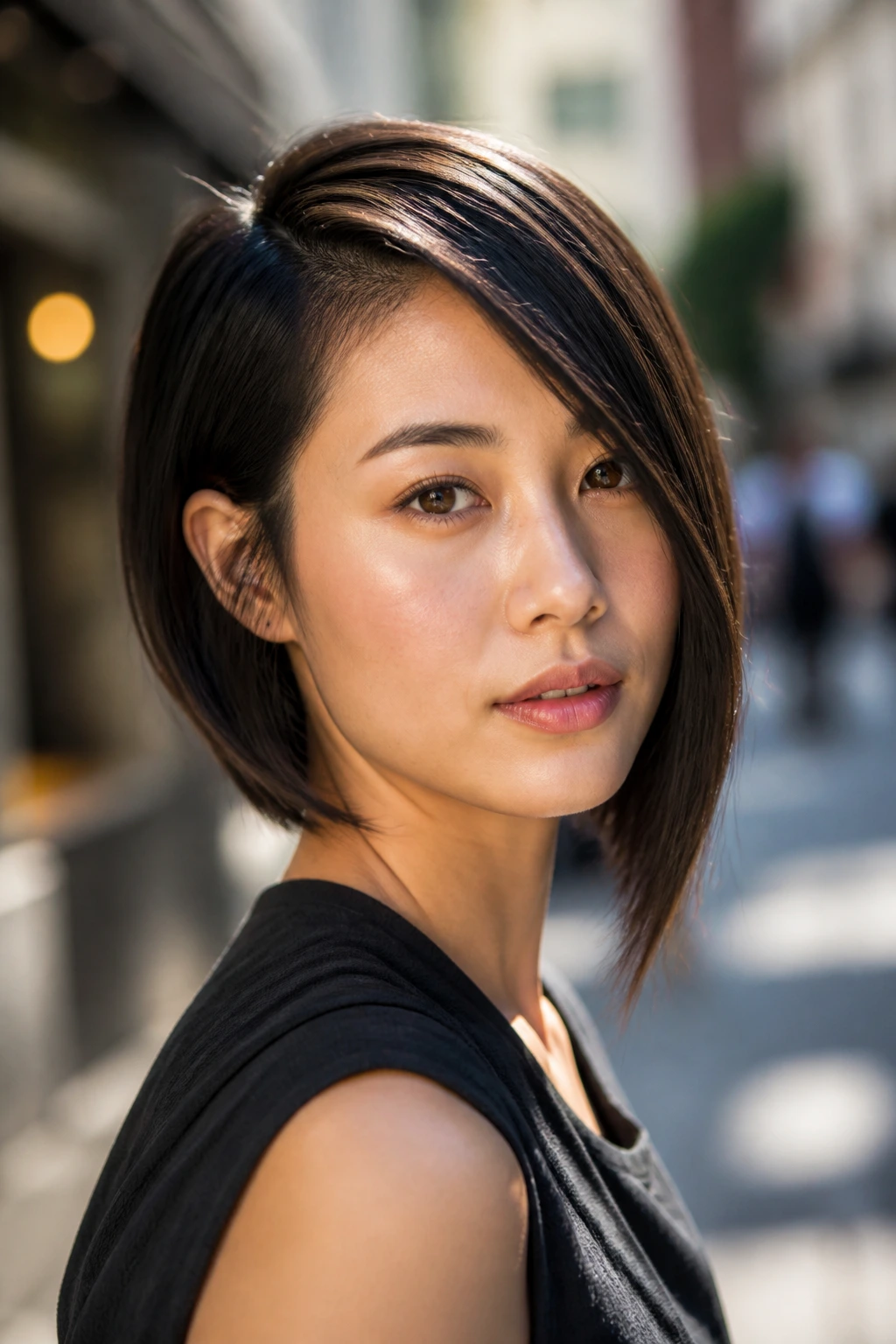
A slight asymmetry can make a bob feel fresh without screaming for attention. One side sits a little longer — sometimes only half an inch, sometimes closer to an inch and a half — and that tiny difference gives the whole cut motion before you even style it.
This works especially well if your face feels round or if your jawline needs a bit of visual length. The longer side draws the eye downward. The shorter side keeps the cut crisp. Together, they stop the bob from looking too symmetrical or too sweet.
I like this version with straight ends and a deep side part. If you add waves, the asymmetry gets softer. If you keep it sleek, the geometry stands out. Either way, it doesn’t sit there politely. It has some personality.
6. Ear-Tucked Collarbone Lob
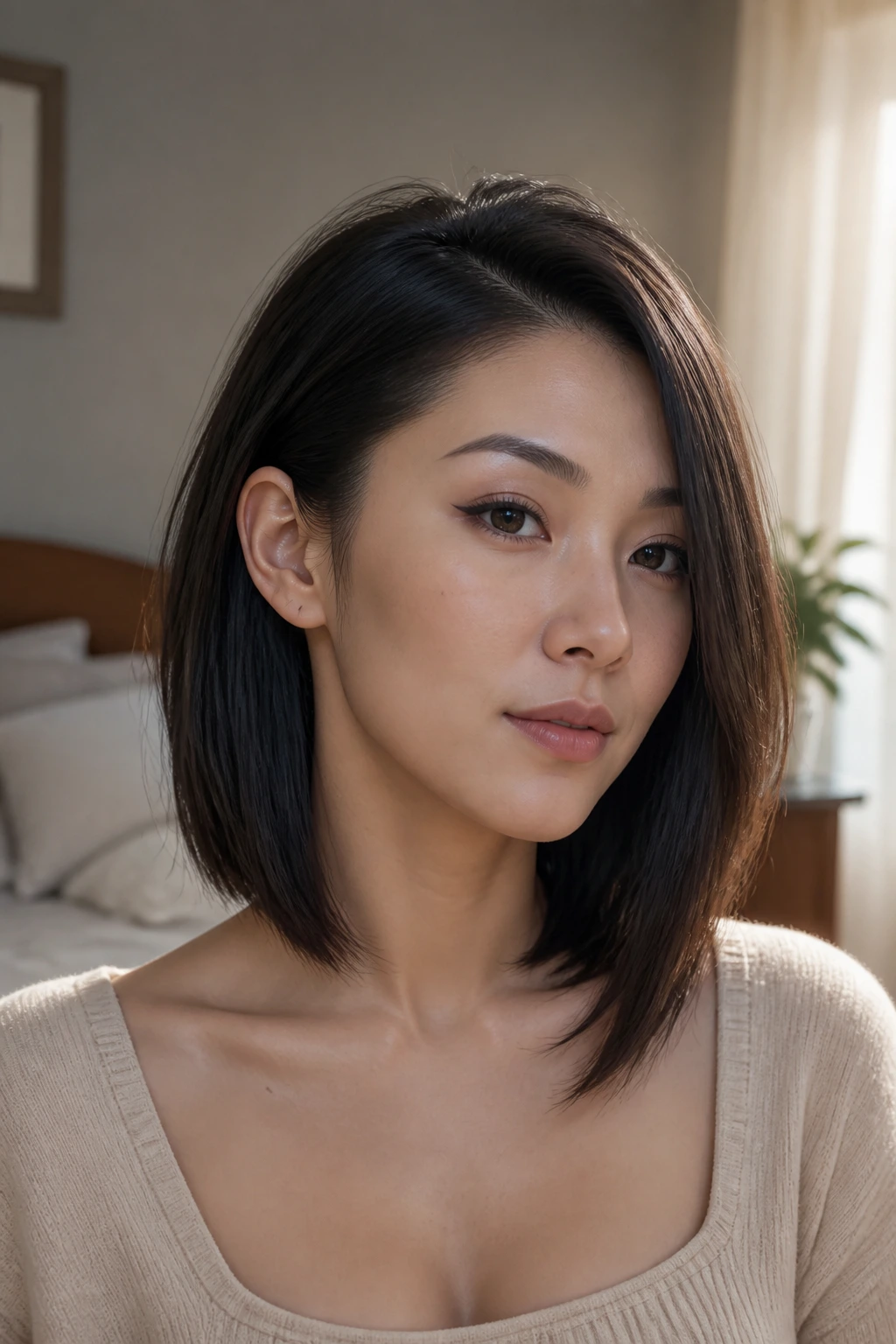
What makes this one easy to live with is the length. You can tuck one side behind the ear, let the other side fall forward, and the haircut still looks finished. A collarbone lob gives you enough hair to play with, which is useful when you want a comb-over feel without committing to a full crop.
The tuck is doing a lot of the visual work here. It opens one side of the face, shows off earrings, and creates that long diagonal line that makes the neck look a little longer. If you wear glasses, the tucked side keeps the frame from competing with the hair.
This version is especially good if you like to switch between polished and casual. Blow it smooth for work. Add a few bends with a flat iron on the ends, and it feels softer by dinner.
7. Razor-Piecey Crop
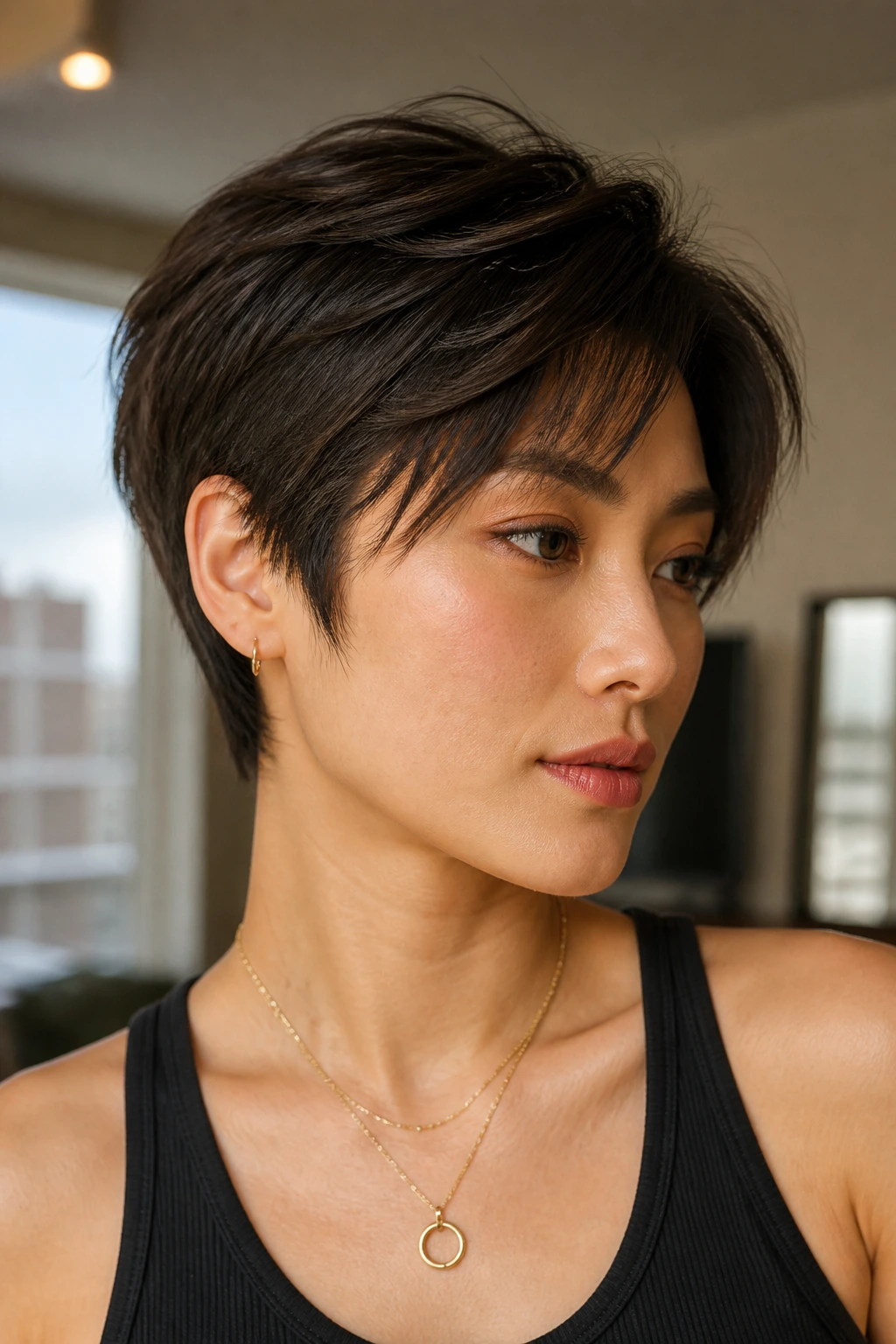
A razor-cut crop can look brilliant on dense hair, but only if the texture is handled with some restraint. Too much product and it turns greasy. Too little and the pieces disappear. The sweet spot is a crop with softened edges, separated ends, and a swept front that looks like it was nudged into place, not forced.
What Makes It Different
The razor gives the ends a little feathering, which stops thick straight hair from looking blocky. That matters. A blunt crop on dense hair can feel too solid, while a piecey crop lets air sit between the strands and keeps the shape lighter.
A matte paste works better than a shiny cream here. Warm a tiny amount between your fingers, then pinch the top layers and push them diagonally across the forehead. If you want this to look modern instead of messy, keep the sides neat and the front controlled.
8. Hidden-Undercut Side Sweep
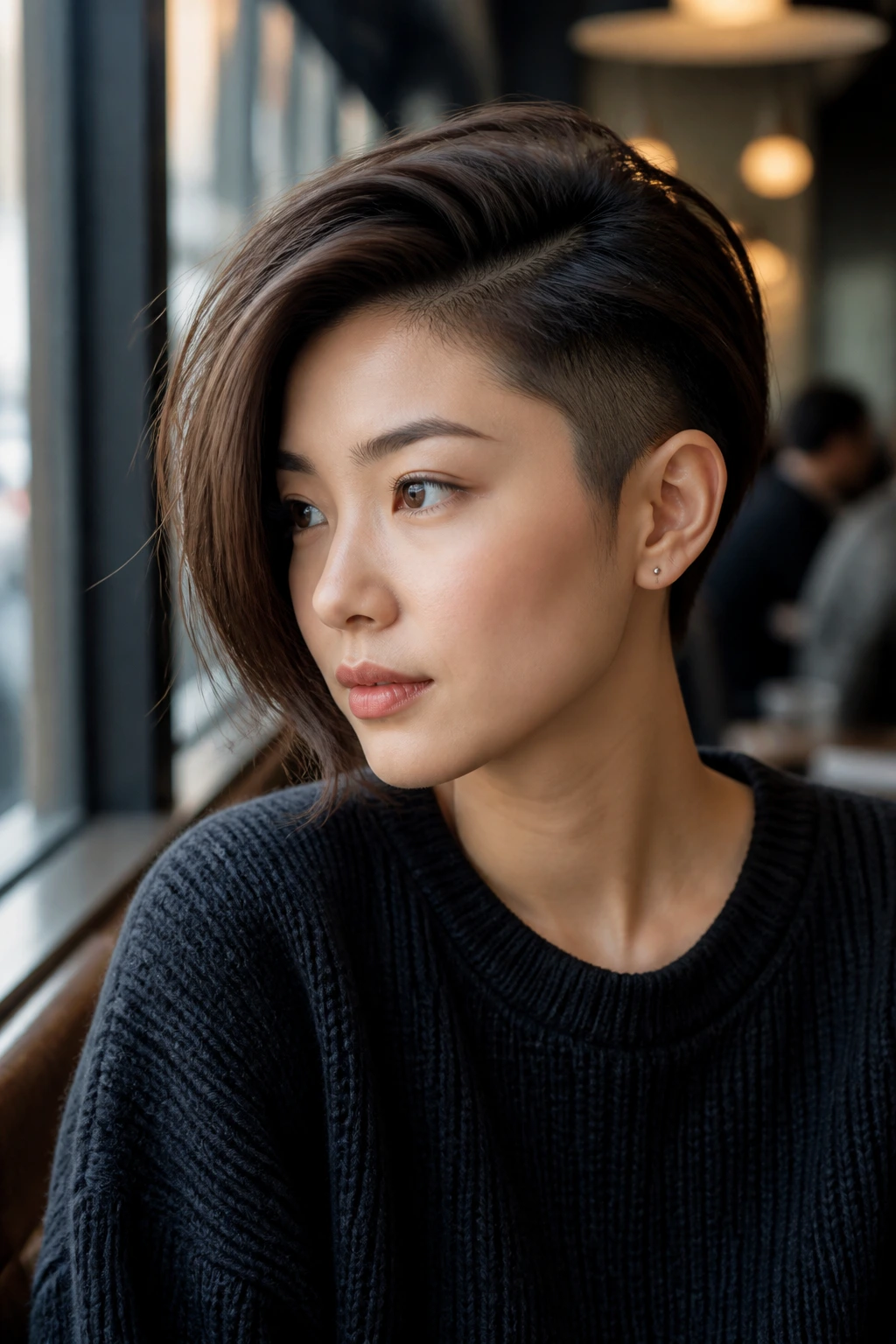
This cut is for the person who keeps saying the same thing about her hair: “It’s too much.” A hidden undercut can remove a surprising amount of bulk at the nape or just behind the ears, which lets the top sweep over without the side width ballooning out.
The beauty of it is that most of the undercut stays out of sight. You get the lightness, but not the visual shock of a visible shave. That makes it a good compromise if you want sharper shape and cleaner movement without going full edgy.
Style it with a blow-dryer and a brush first, not product first. Once the roots are bent into the side sweep, use a little light cream on the top only. If the hair is very thick, this cut can save you from the triangle effect that appears the minute the ends start to dry.
9. Feathered Mushroom Bob
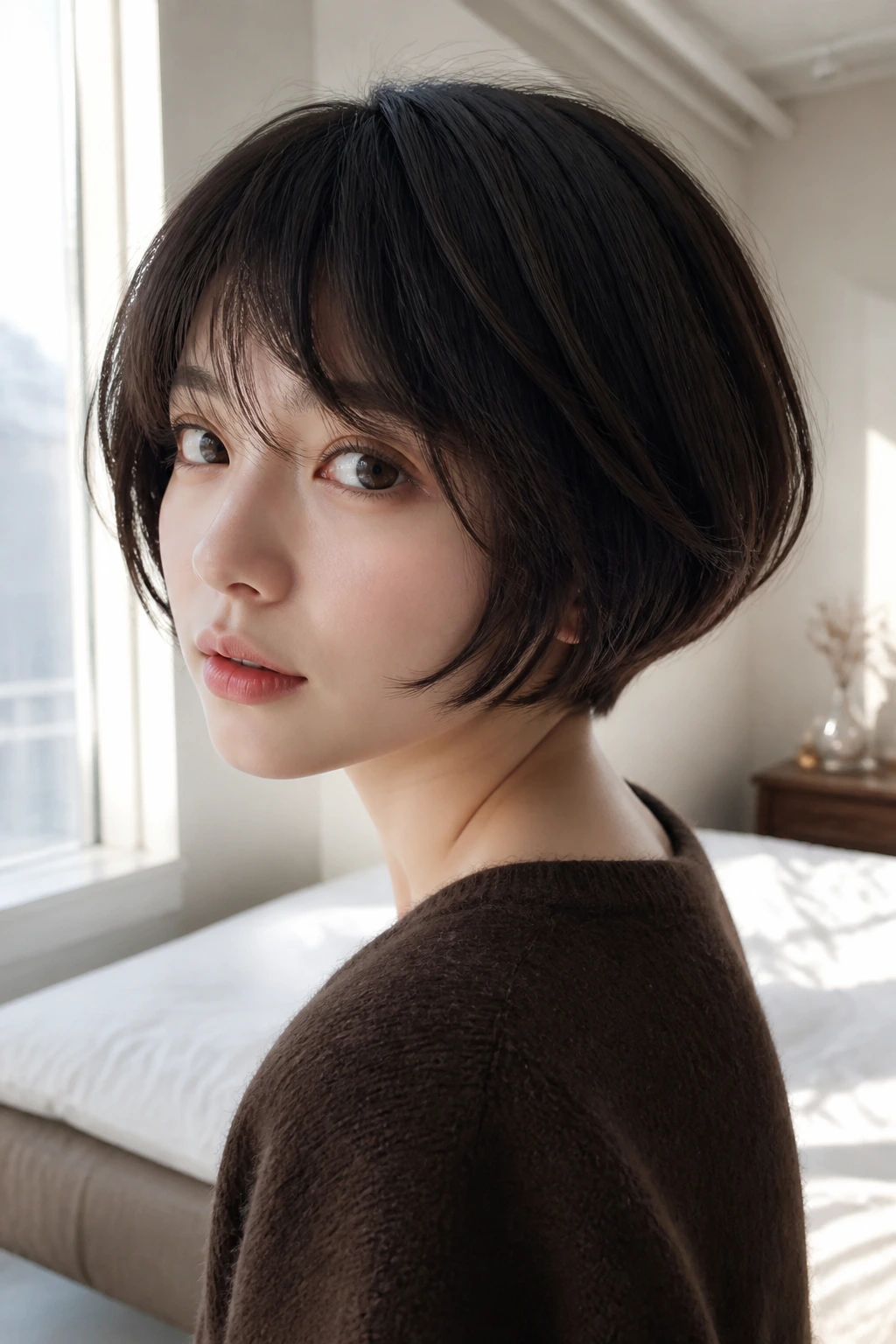
A feathered mushroom bob sounds retro, and, honestly, that’s part of the charm. The outline is rounded, but the interior is softened so it doesn’t feel stiff or dated. On straight hair, that feathering creates just enough lift to keep the shape from sitting too flat on the head.
This works best when the top layers are cut with a bit of air in them, not carved into a heavy cap. The side sweep gives the bob a sense of direction, which keeps the rounded shape from looking too closed off around the face.
It’s a strong choice if you like a neat silhouette but want some softness around the crown. A small round brush, a few clips while the hair cools, and a light mist of hairspray are usually enough. No teasing. No crunch.
10. Wet-Look Side-Swept Crop
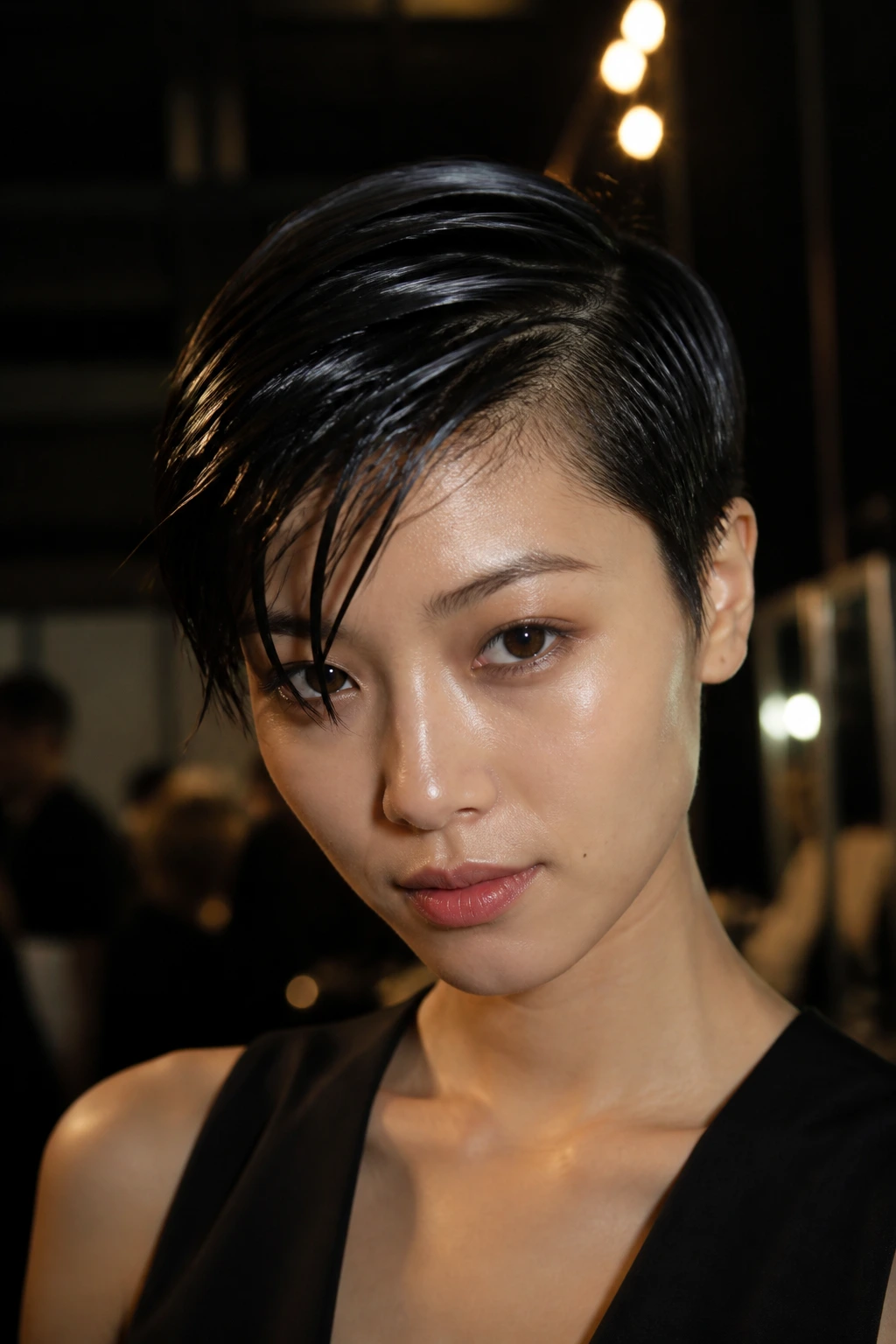
Some styles are meant to be touchable. This is not one of them. The wet-look side-swept crop is slick, reflective, and a little bit dramatic in a way that works best when you commit all the way. If you stop halfway, it can look unfinished. If you go all in, it looks deliberate.
Gel is the right tool here, not cream. Comb it through damp hair, create a deep side part, then use a fine-tooth comb to direct the top across the forehead. The sides should stay clean and close, while the sweep carries the shine.
I like this look for evenings, special events, or damp weather when softer styles start to puff. The hair stays close to the head, the part stays visible, and the whole shape feels a little editorial without becoming fussy.
11. Curved-In French Bob
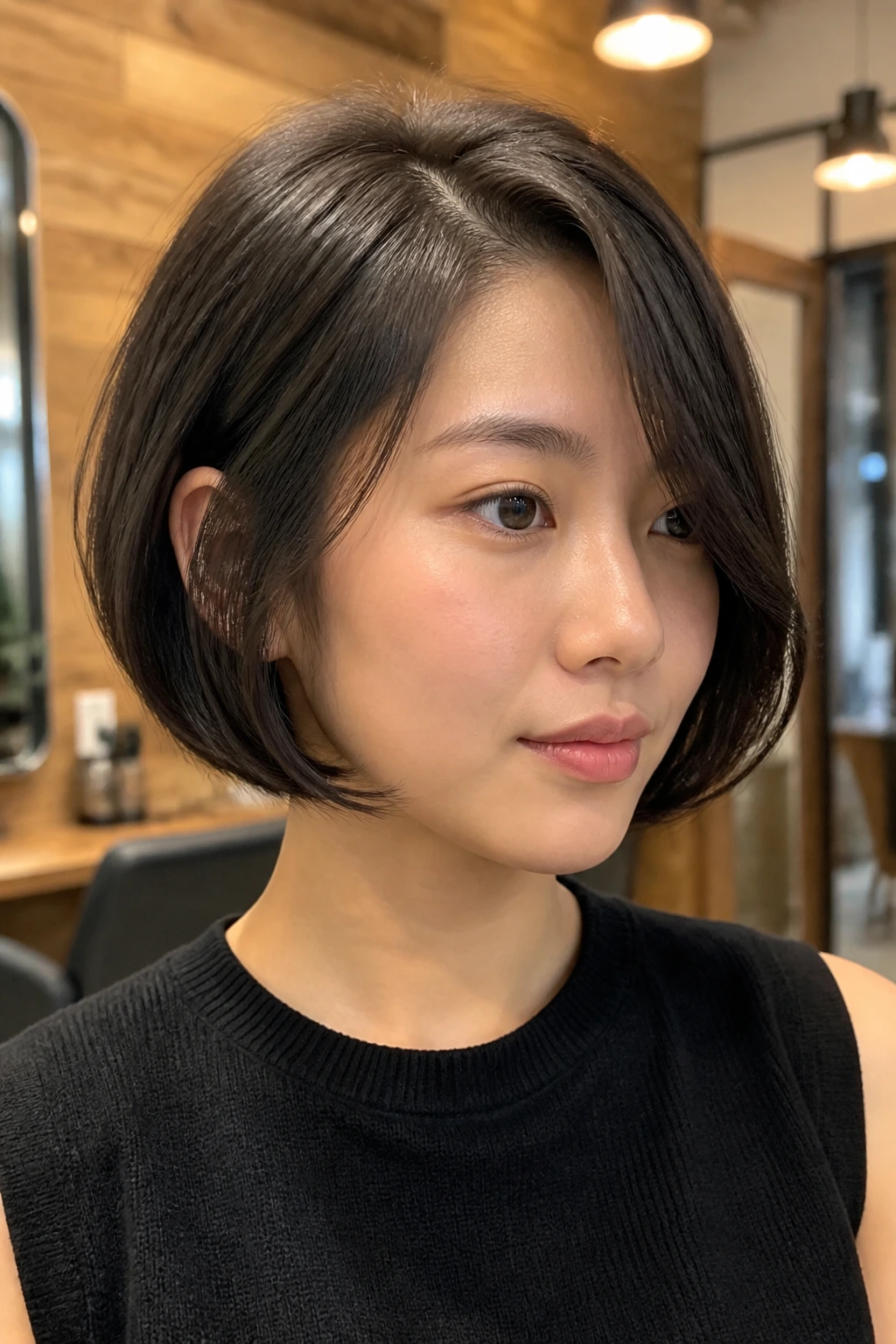
The curved-in French bob is tidy in the best possible way. The ends turn slightly under the jaw, the front is swept to one side, and the whole cut sits close enough to the face to look tailored. It’s a neat shape. Not severe. Just neat.
This cut flatters straight hair because the line is clean and the bend at the ends is easy to hold. If you’ve ever had a bob that looked great from the front and a little strange from the side, this shape solves that by keeping the contour consistent all the way around.
A 1-inch round brush does most of the work. Pull the front away from the part, let the ends curve inward, and keep the finish smooth. If the hair is thick, ask for some interior weight removal so the curve doesn’t turn into a shelf.
12. Blowout Volume Lob
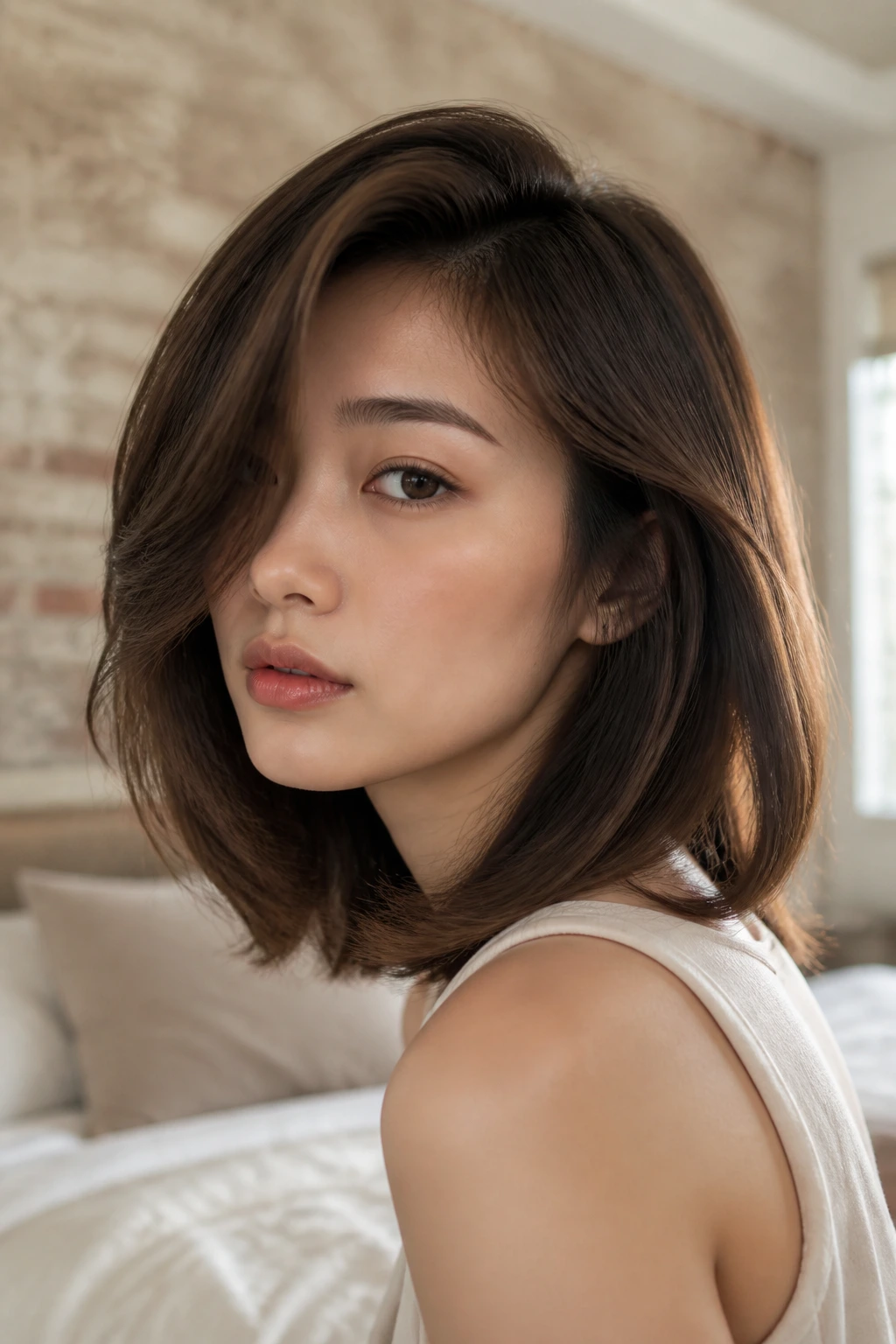
Can a comb over style look soft instead of sleek? Absolutely. The blowout volume lob is all about body at the roots and a moving side sweep through the top. It’s the version you want when you like hair that feels full, touchable, and a little expensive-looking without being stiff.
How to Get the Shape
Start with mousse at the roots. Not a mound of it — just enough to give the dryer something to grip. Blow-dry with a round brush, lifting the top away from the scalp and directing the front across the part while it cools. That cooling step matters more than most people think.
A lob that sits around the collarbone can take this volume without collapsing. If your hair is thick, keep the ends a little blunt. If it’s fine, keep the layers long so the body stays intact. Either way, this is the style that gives you movement without obvious curls.
13. Long Pixie with Crown Lift
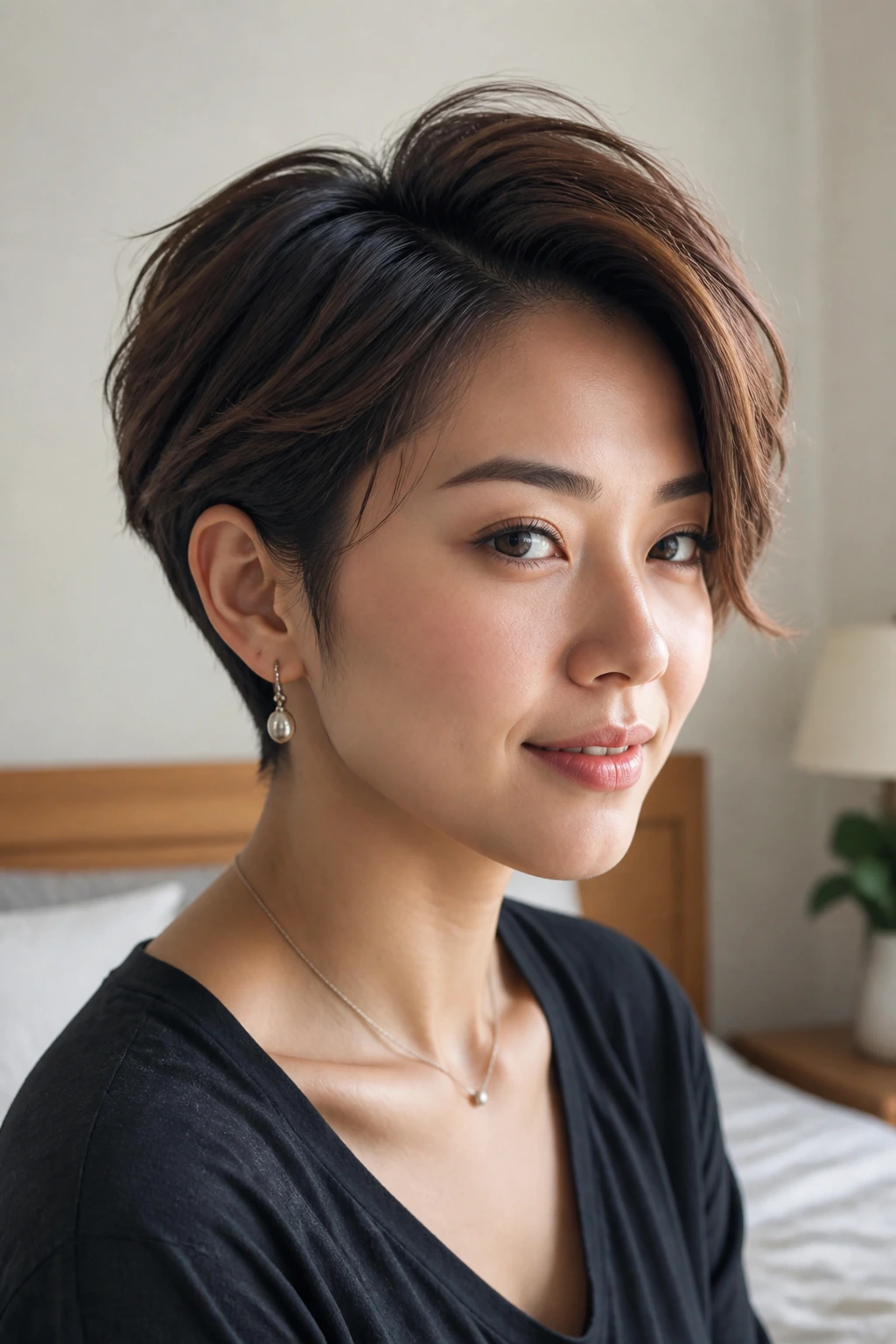
A long pixie is the sweet spot for anyone who wants short hair without losing all styling options. Keep the top long enough to bend, lift, or tuck — usually somewhere around 4 to 6 inches — and the crown can be brushed over with a side sweep that looks different depending on the finish.
This cut is more flexible than a standard pixie. You can wear it sleek one day, piecey the next, and slightly messy on the weekend without changing the haircut itself. That’s useful when your hair grows fast or you want a shape that doesn’t demand a salon visit every three weeks.
The crown lift is the important part. If the top sits flat, the style loses the point. A root spray and a small brush at the crown help the front fold over instead of hanging down.
14. Shaggy Side-Part Bob
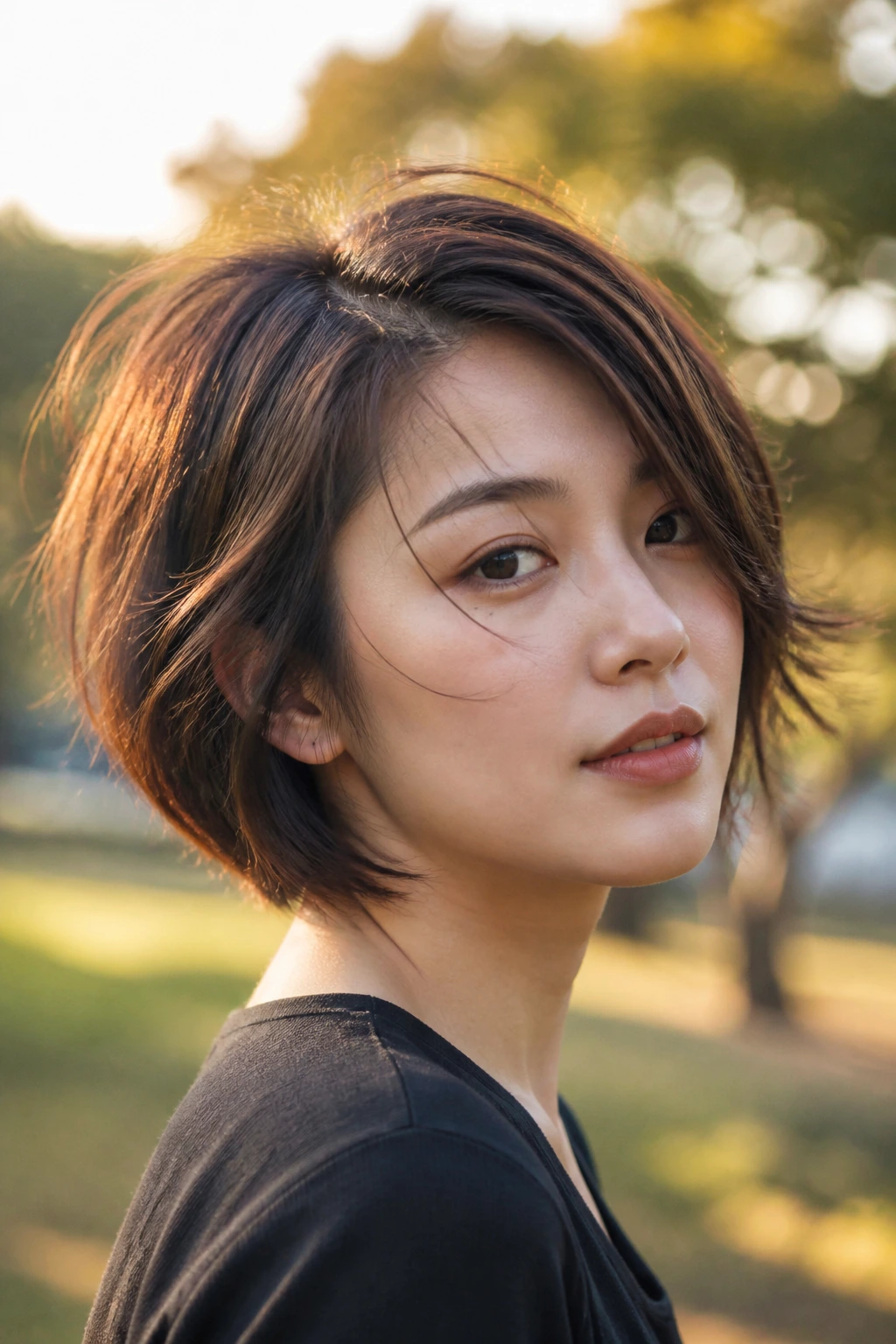
A shaggy bob gives the comb-over idea a little more motion. The layers are choppier, the ends are softer, and the side sweep feels casual instead of severe. It’s a good answer when you want a bob that can survive a little wind and still look intentional.
This is one of the better choices for hair that has some natural bend. Straight hair can wear it too, but the cut needs enough internal layering to keep the shape from falling flat. The side part helps separate the upper section, which keeps the face frame from turning into one blunt wall.
Use a texture spray on the mid-lengths, not the roots. That keeps the crown from looking dirty. If the ends start to puff, a touch of smoothing cream just on the last inch settles them without killing the movement.
15. Rounded Bob with Diagonal Fringe
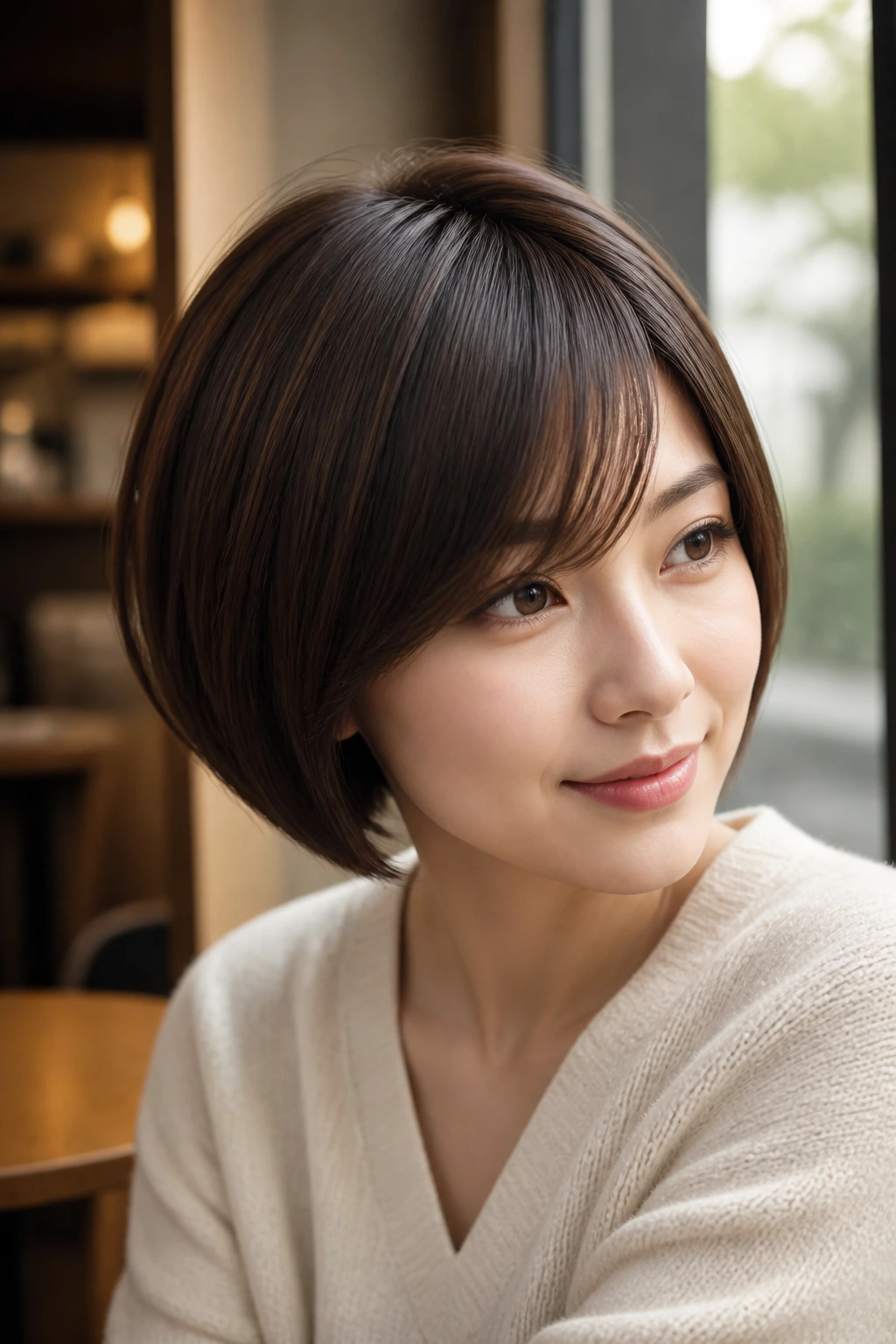
Want the side sweep to feel softer? A rounded bob with a diagonal fringe does that job nicely. The shape curves around the face, and the fringe angles across the forehead just enough to break up straight lines without hiding the features.
This cut can be especially flattering if your face feels a little long or narrow, because the rounded sides add width where the eye wants it. If your face is round, keep the fringe light and let the bob sit a bit lower so the shape doesn’t bunch up at the cheeks.
A round brush is the difference between this looking tidy and looking puffy. Bend the ends inward, sweep the fringe diagonally, and let the front fall softly over one eyebrow. It’s a small move, but it changes the whole attitude of the haircut.
16. Textured Bowl-Cut Remix
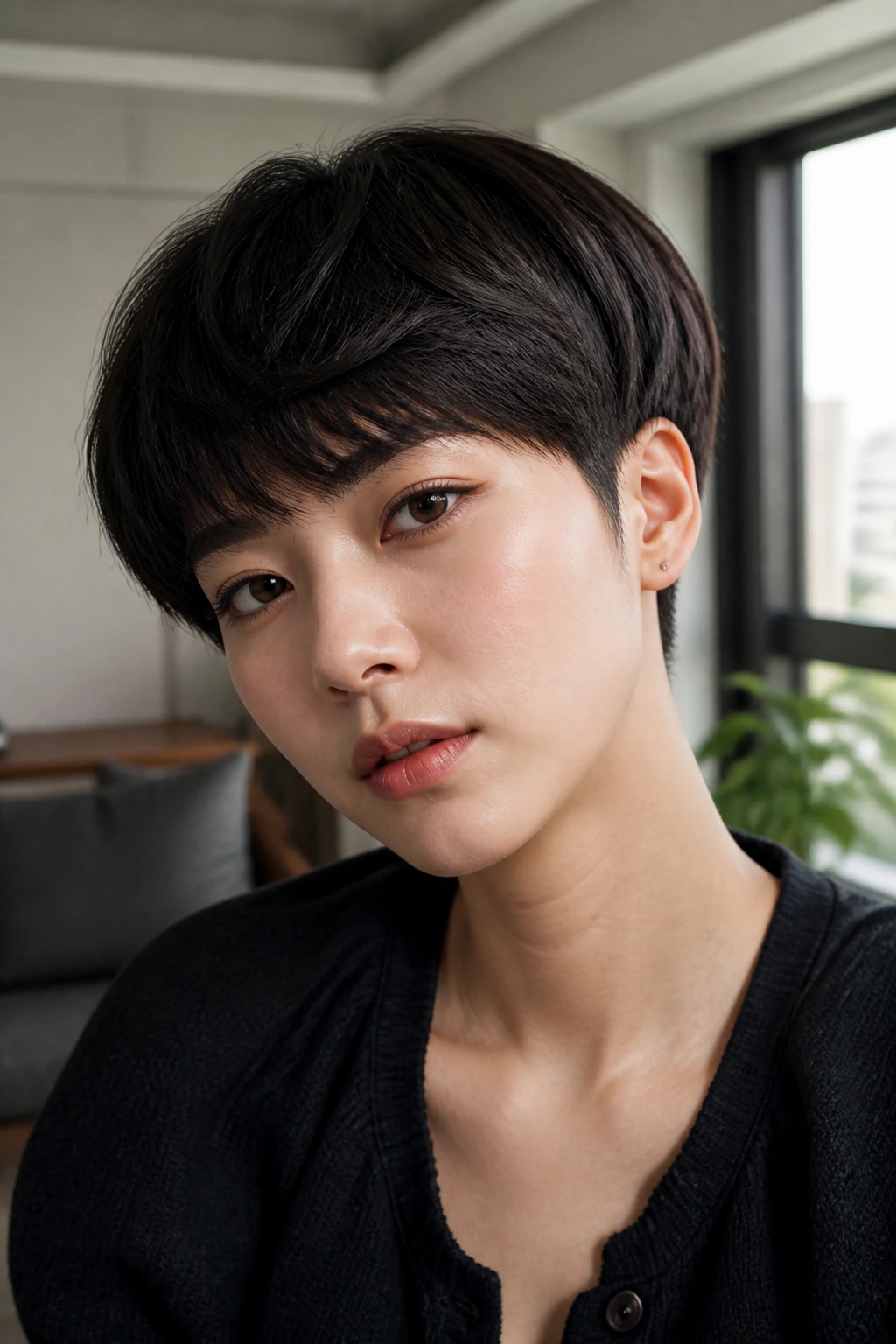
A textured bowl-cut remix is for someone who doesn’t mind looking a little fashion-forward. The outline has that rounded bowl idea, but the edges are softened and the side sweep breaks up the old-school heaviness. Done well, it looks sharp. Done poorly, it looks like a helmet. There’s no middle ground.
Thick hair handles this shape especially well because the density helps support the round line. The trick is to remove enough bulk inside the cut so the curve doesn’t become too solid. A side sweep at the front keeps the style from feeling too strict around the forehead.
I’d call this one bold but wearable. It reads best with simple makeup, strong brows, and clean clothes. The haircut is already doing plenty, so there’s no need to pile on more noise.
17. Sleek Tucked-Behind-Ear Bob
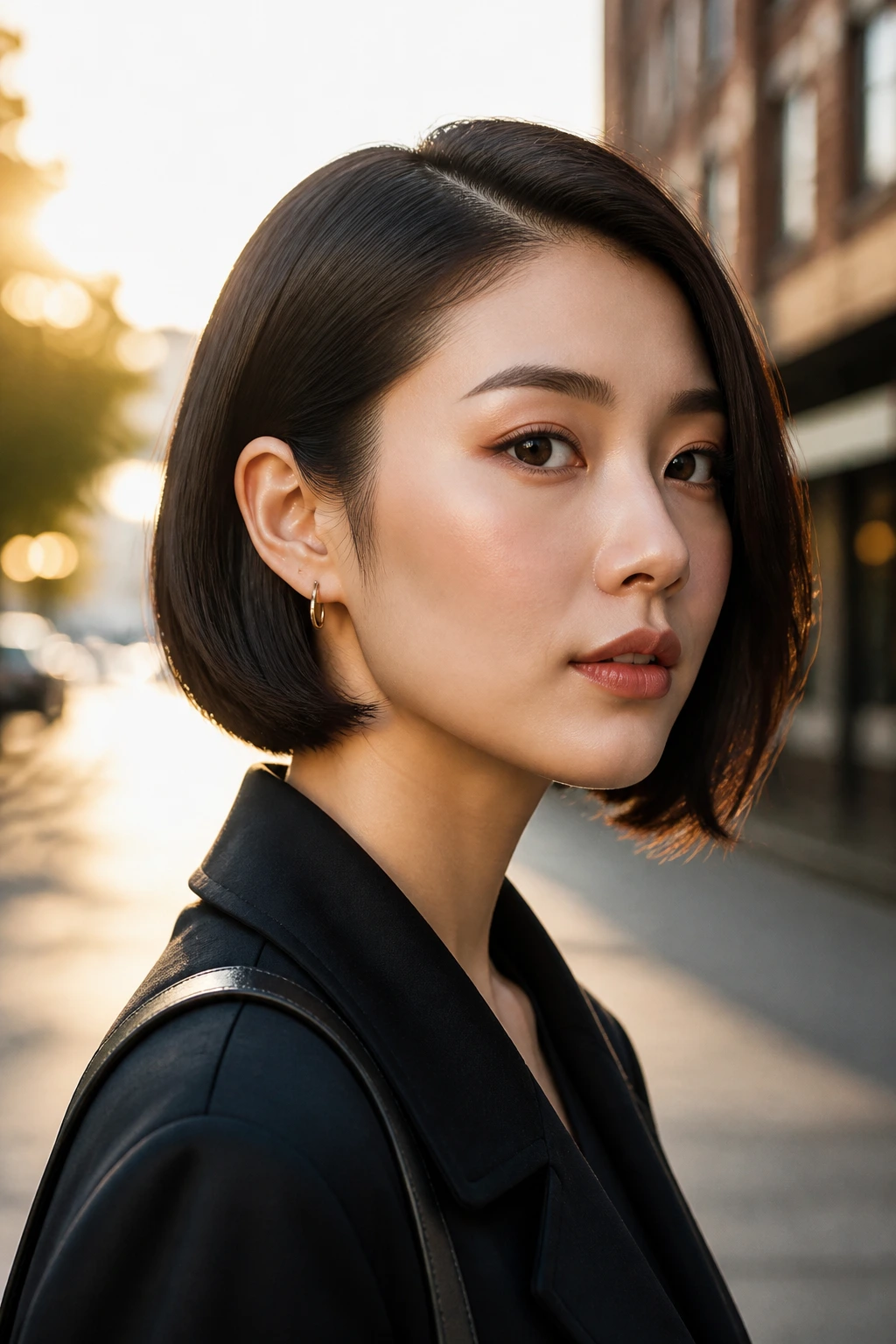
This bob is all about line. One side stays tucked behind the ear, the other side hangs cleanly, and the whole cut looks like it was brushed into place on purpose. There’s no fluff here. No decorative mess. Just a clean sweep and a crisp edge.
Unlike shaggier cuts, this one depends on smoothness and control. Straight hair makes it easy. A narrow flat iron, a heat protectant, and a little shine serum at the ends are enough to keep the finish neat. If you wear earrings or glasses, this is one of the easiest styles to pair with them because the haircut leaves room for both.
It’s also a good cut if you want something that looks tidy from every angle. Tuck one side, leave the other forward, and the asymmetry does the rest.
18. Loose Wavy Side Sweep
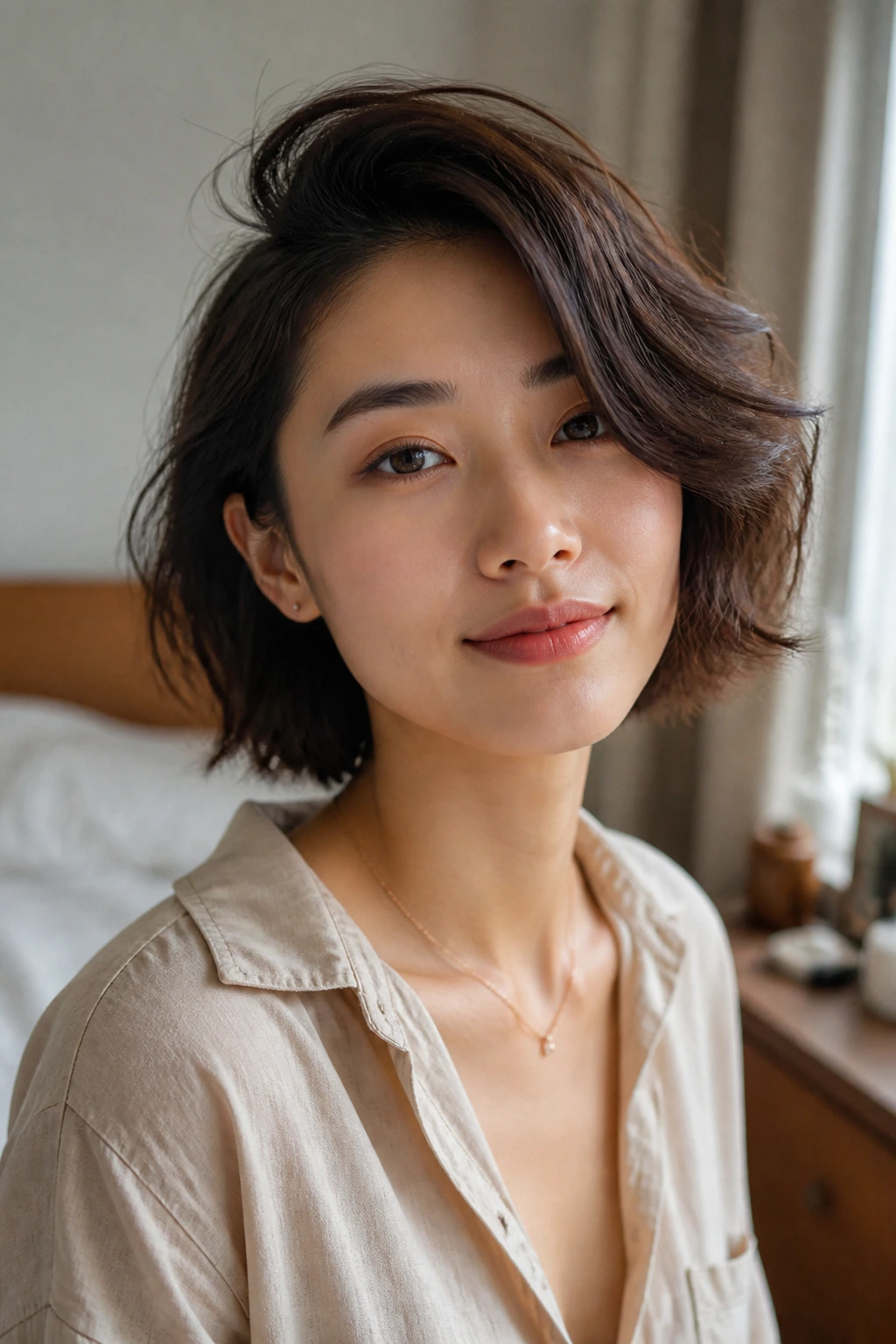
Sometimes the best way to soften a strong side part is to put a bend in it. A loose wavy side sweep works well when you want the comb-over idea but don’t want it to read too strict. The waves break up the line just enough to make the haircut feel relaxed.
Use a 1-inch iron or a small curling wand and leave the ends out for a more modern look. You only need a few bends, not a full head of curls. The goal is movement at the front and mids, not volume everywhere.
This one is a nice choice if your hair is naturally pin-straight and you want a little air in the shape. It also plays well with soft makeup and simple clothes because the hair brings the texture on its own.
19. Collarbone Sweep with Soft Layers
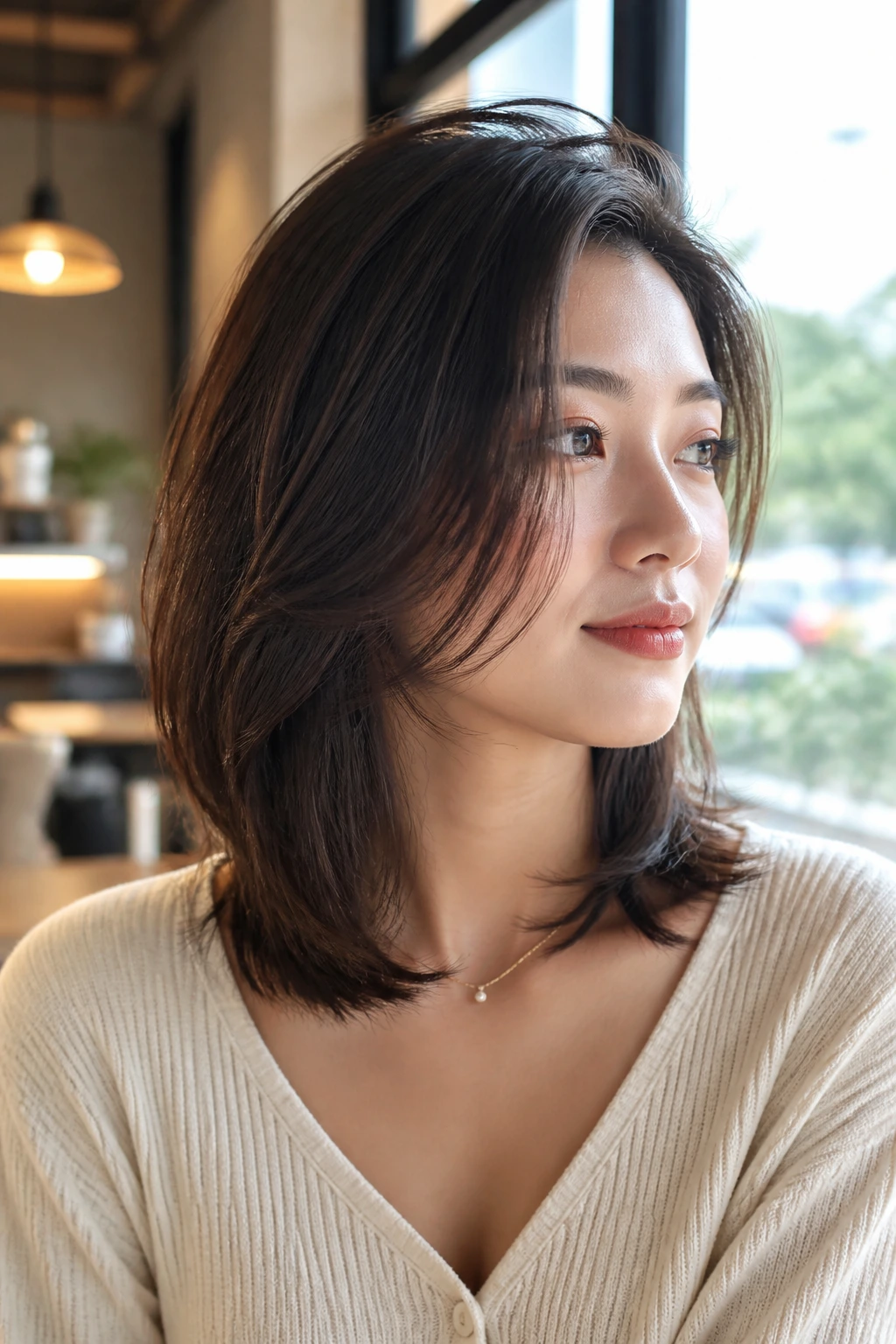
A collarbone-length cut with soft layers is the easiest grow-out option in the whole group. The hair is long enough to tuck, clip, or pin, but the side sweep still gives it shape so it doesn’t just hang there and behave like an in-between stage.
The layers should be long and gentle, not chopped high into the head. Too many short layers can make straight hair fray at the ends. Keep the front pieces a little longer around the cheekbone, and the sweep will naturally guide the eye downward.
This is the kind of cut that works from morning to night without much fuss. Air-dry cream, a quick brush through, maybe a bend at the front if you have five extra minutes. That’s often enough.
20. Pixie-Bob with Long Top Layers
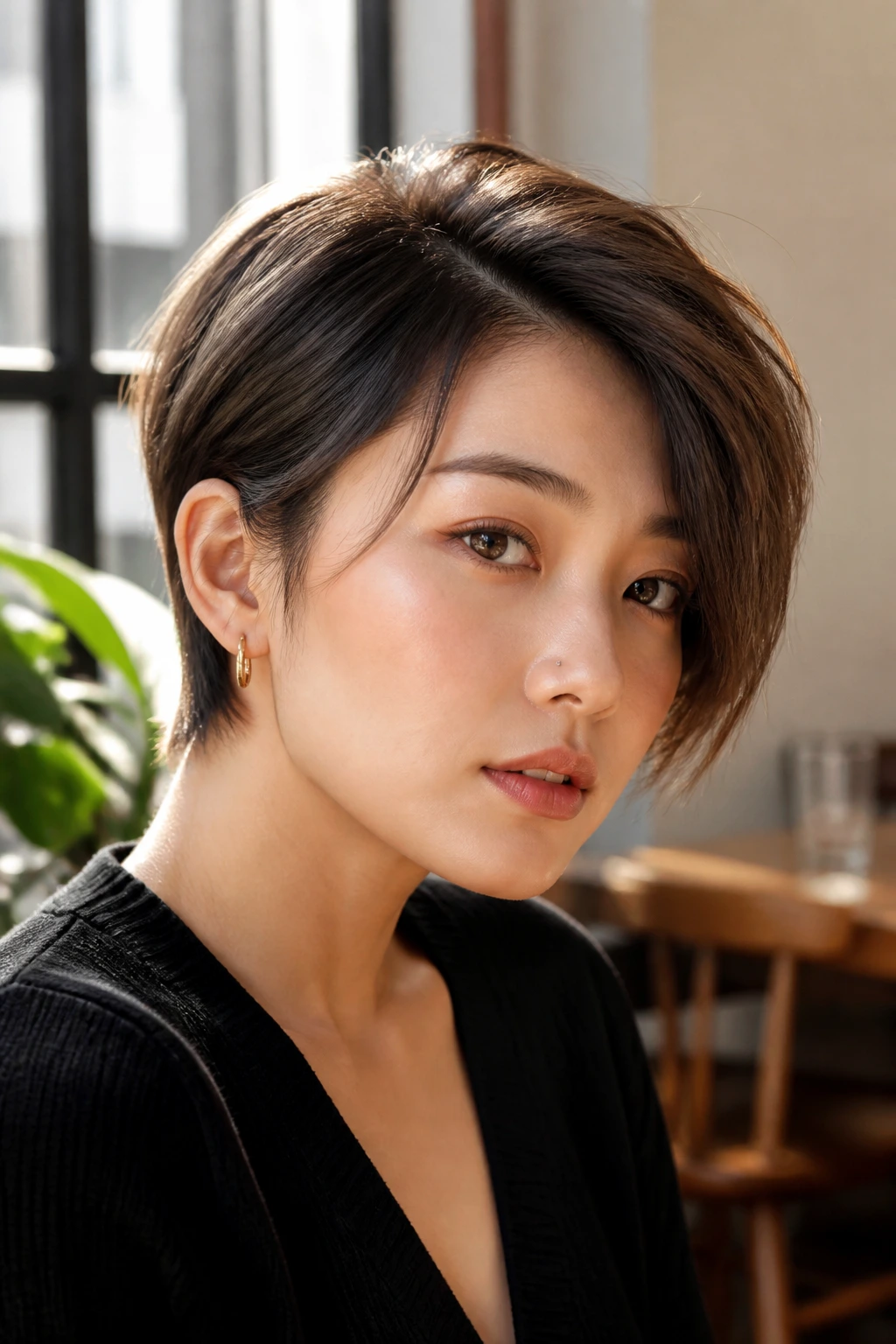
A pixie-bob sits right between two worlds. It has the short, open feel of a pixie, but the outline of a bob keeps it soft enough to style in different ways. The long top layers are the key — without them, the cut loses flexibility fast.
This shape is especially useful if you like changing the part from day to day. A deep side sweep gives it a sharper edge. A shallower part softens it. Tuck one side, and it looks cleaner. Leave the top piecey, and it looks more playful.
Because the cut sits in that middle zone, it’s a good choice if you’re growing out a pixie or testing short hair without jumping straight into a full bob. It’s less of a commitment than it looks. Which is one reason I keep recommending it.
21. High-Crown Side Part with Subtle Undercut
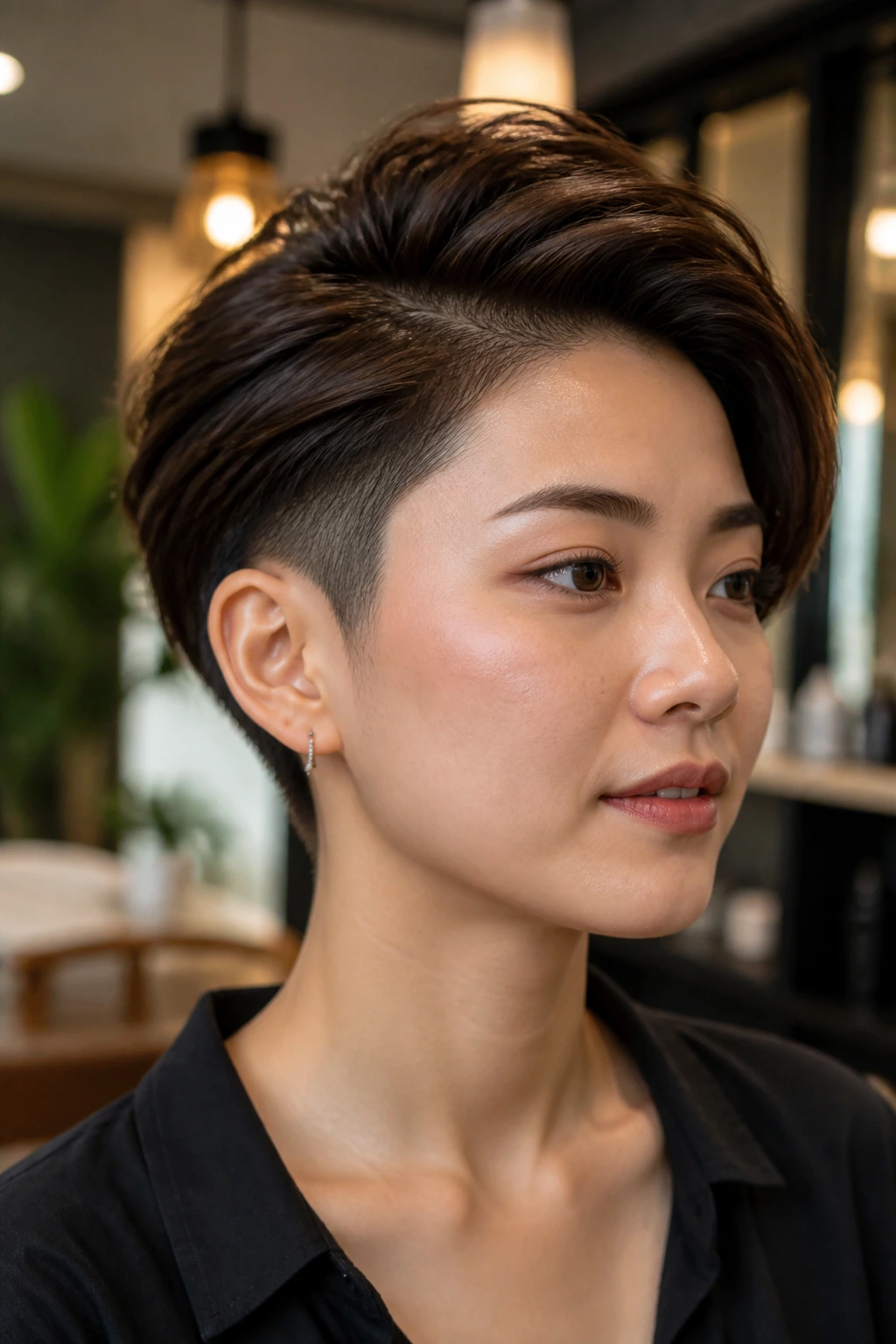
If you want lift that lasts, this is the one to watch. A high-crown side part with a subtle undercut gives the top room to stand away from the head while the hidden lower sections stay compact. The result is height where you want it and less bulk where you don’t.
That undercut doesn’t need to be dramatic. Sometimes removing even a small strip of weight behind the ear or at the nape changes how the whole top sits. Straight, dense hair can be so heavy that the crown collapses by noon; this cut fights that problem directly.
It’s a smart choice for humid days, active routines, or hair that keeps going flat no matter what you do. The part should be set while the hair is still damp, then clipped up while the crown cools. That’s the part people skip. It’s also the part that matters most.
22. Romantic Side-Swept Bob with Curtain Ends
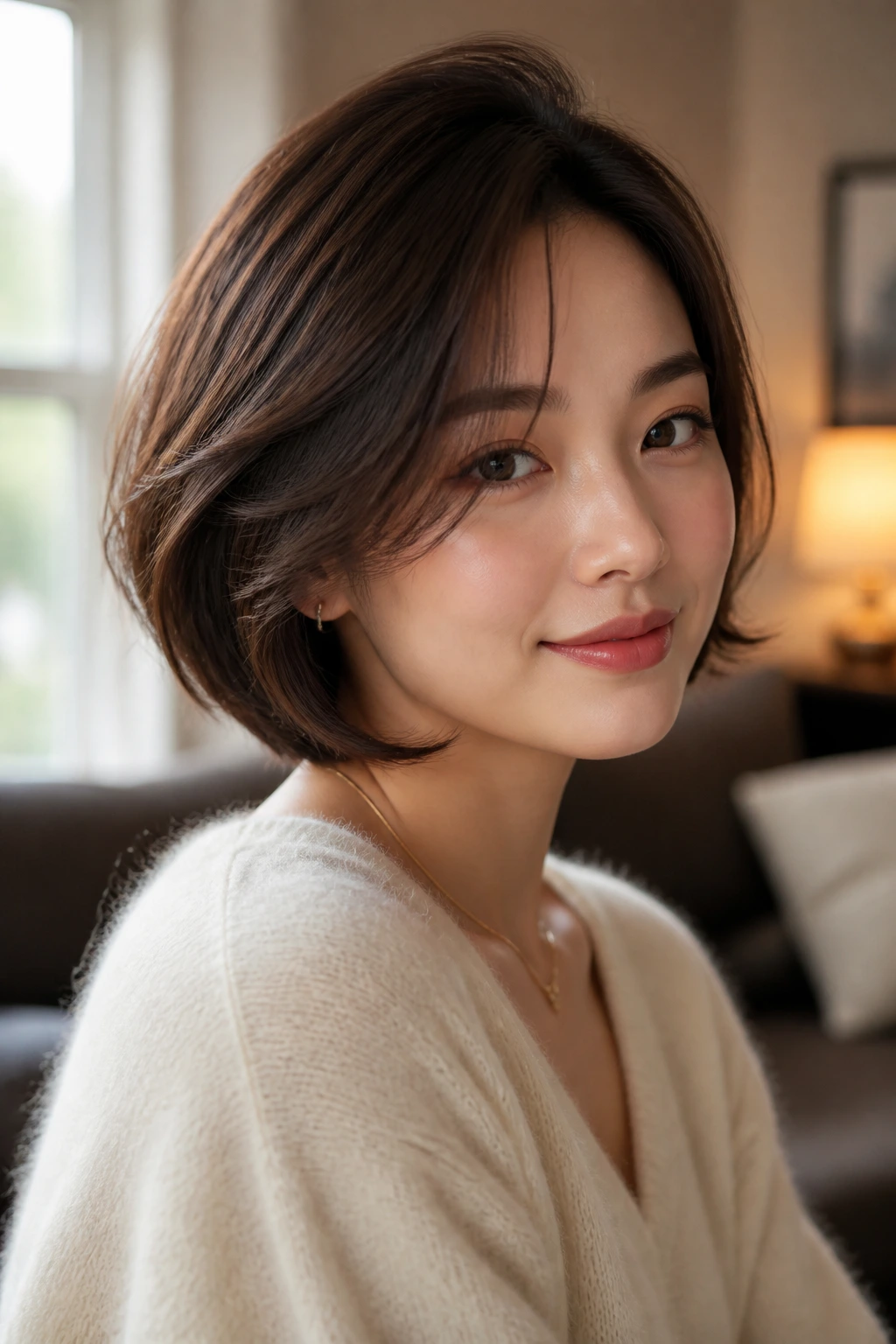
This is the softest-looking version in the bunch, and that softness is the point. The ends fall in a curtain-like frame around the face, the front sweeps to one side, and the whole shape feels gentle rather than severe. It’s the kind of bob that works with a sweater, a silk shirt, or a dress without changing the haircut at all.
The curtain ends keep the face from feeling boxed in. If the bob is a little blunt around the perimeter, those front pieces still give it movement. Straight hair handles this style well because the lines stay clean, but a light bend at the ends keeps it from looking too rigid.
I like this one for anyone who wants a polished side sweep with a little softness around the eyes and cheekbones. It’s not loud. It doesn’t need to be. The shape does enough work on its own.
Why the Side Sweep Changes the Whole Cut
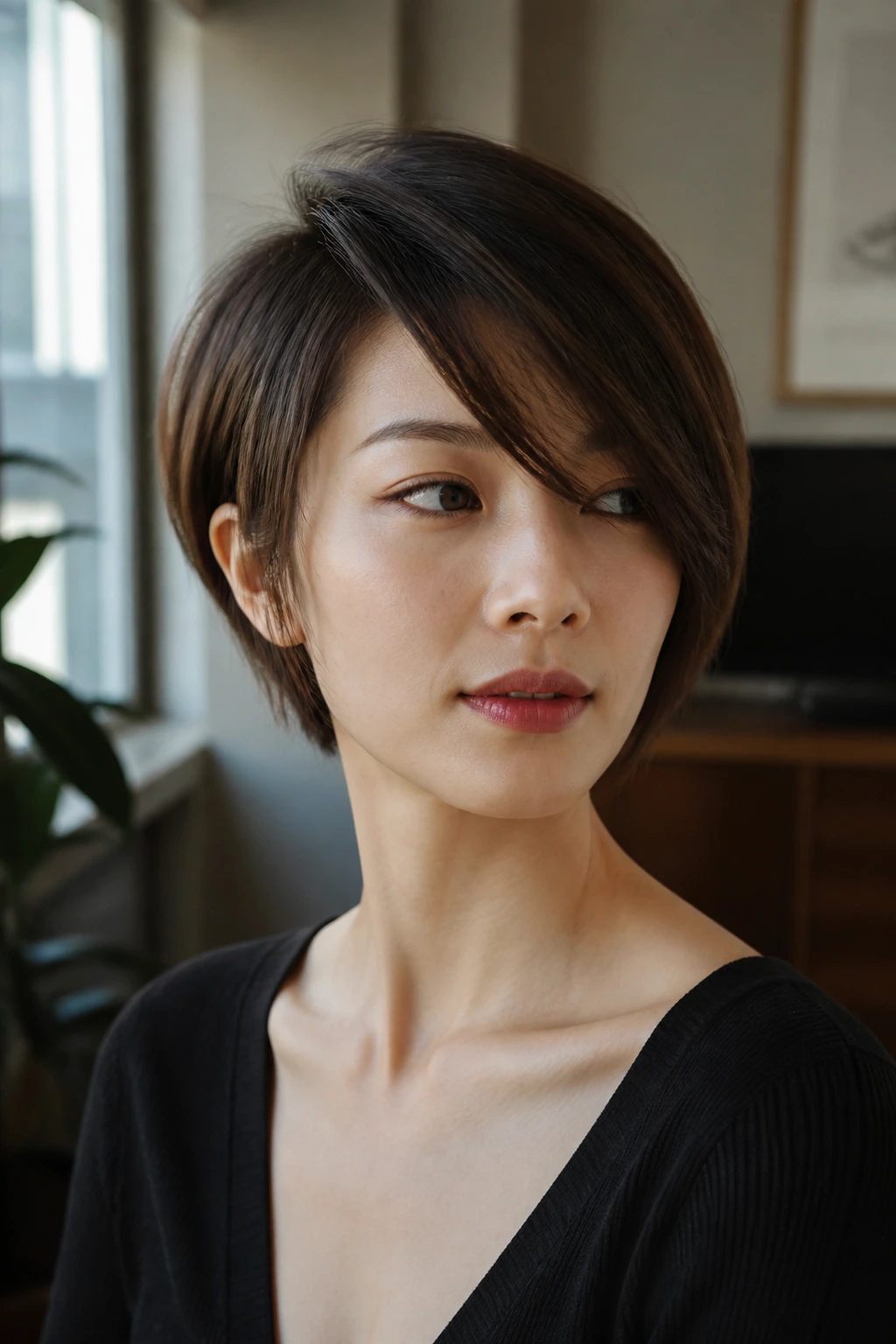
A comb-over style works because the eye reads direction before it reads length. Move the hair diagonally, and the face suddenly gets a line to follow. That line can make a short cut feel leaner, a bob feel longer, or a heavy crown feel less boxy.
Straight hair, especially hair that lies close and smooth, shows this change very clearly. Many Asian hair types have that kind of surface — glossy, dense, and resistant to random frizz — so the side sweep looks clean instead of fuzzy. The trick is not to crush the hair into place. It’s to give the roots a bend and let the lengths follow.
The part matters more than people think. Shift it off-center by even an inch, and one side gets lift while the other side gets weight. That small imbalance is what makes these styles feel alive. Too deep, though, and fine hair can look sparse at the part. Too shallow, and the whole cut loses its shape. That’s why the best versions are measured, not dramatic.
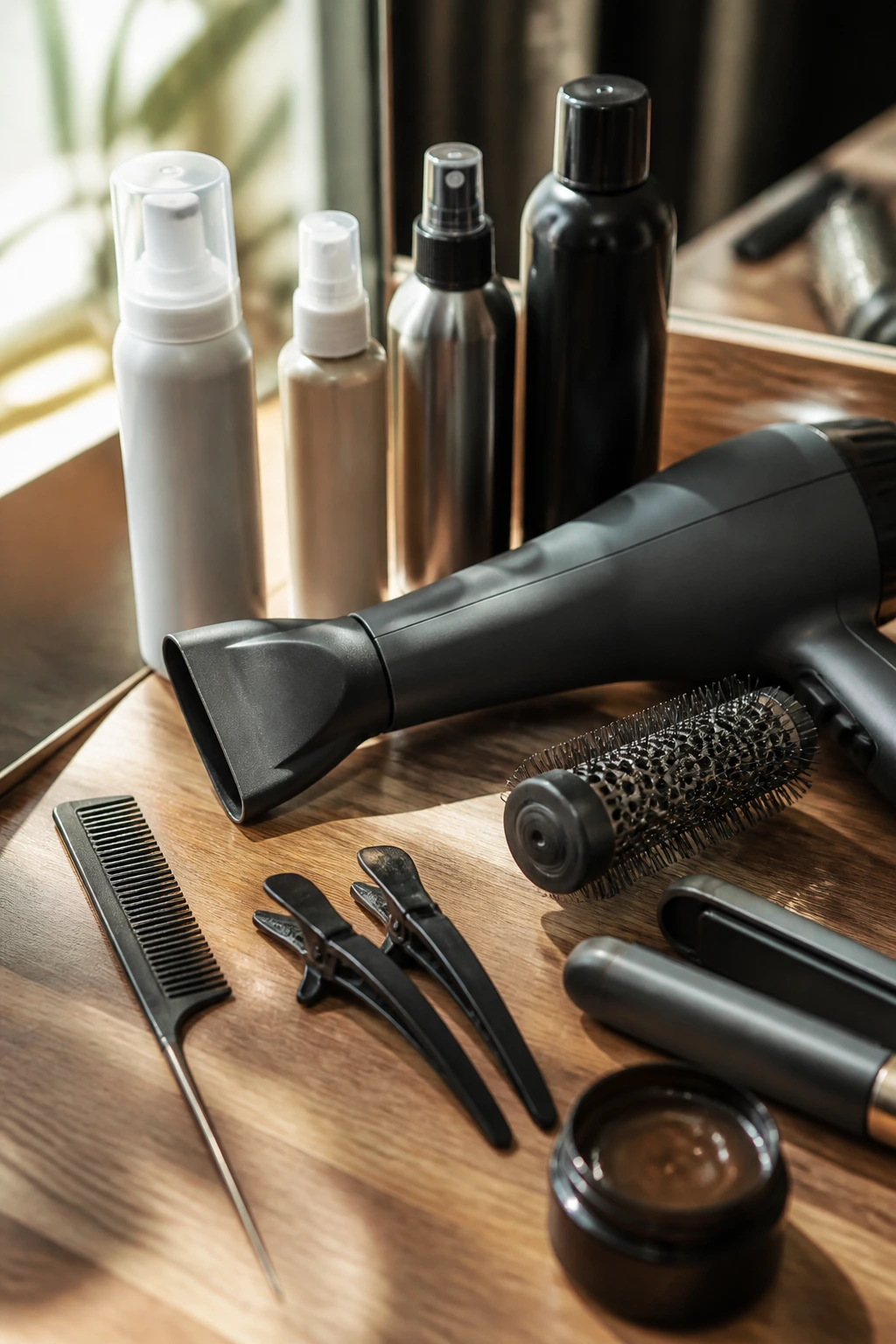
Essential Tools for These Looks
-
Tail comb: Use this to place a clean side part and keep the top section neat while styling.
-
Blow dryer with concentrator nozzle: The nozzle points airflow exactly where you want the roots to bend, which matters more on straight hair than most people admit.
-
1-inch round brush: This is the sweet size for chin-length bobs, fringe sweeps, and gentle root lift at the crown.
-
Small flat iron: A narrow plate is easier for pixies, tucked bobs, and front pieces that need a little bend, not a straight wall of heat.
-
Duckbill clips: Clip the swept side while it cools. Hair remembers shape better when it’s set under tension.
-
Light mousse: Good for volume at the root without making fine hair feel sticky or heavy.
-
Heat protectant spray: Straight hair shows heat damage fast because the surface gets dull before the breakage looks obvious.
-
Texture spray: Best on piecey crops, shaggy bobs, and styles that need a little grip through the mids.
-
Pomade or styling cream: Use a tiny amount for sleek pixies, polished bobs, and side sweeps that need control.
-
Flexible hairspray: Strong enough to hold the shape, light enough that the hair still moves when you turn your head.
Smart Parting, Cutting, and Product Choices
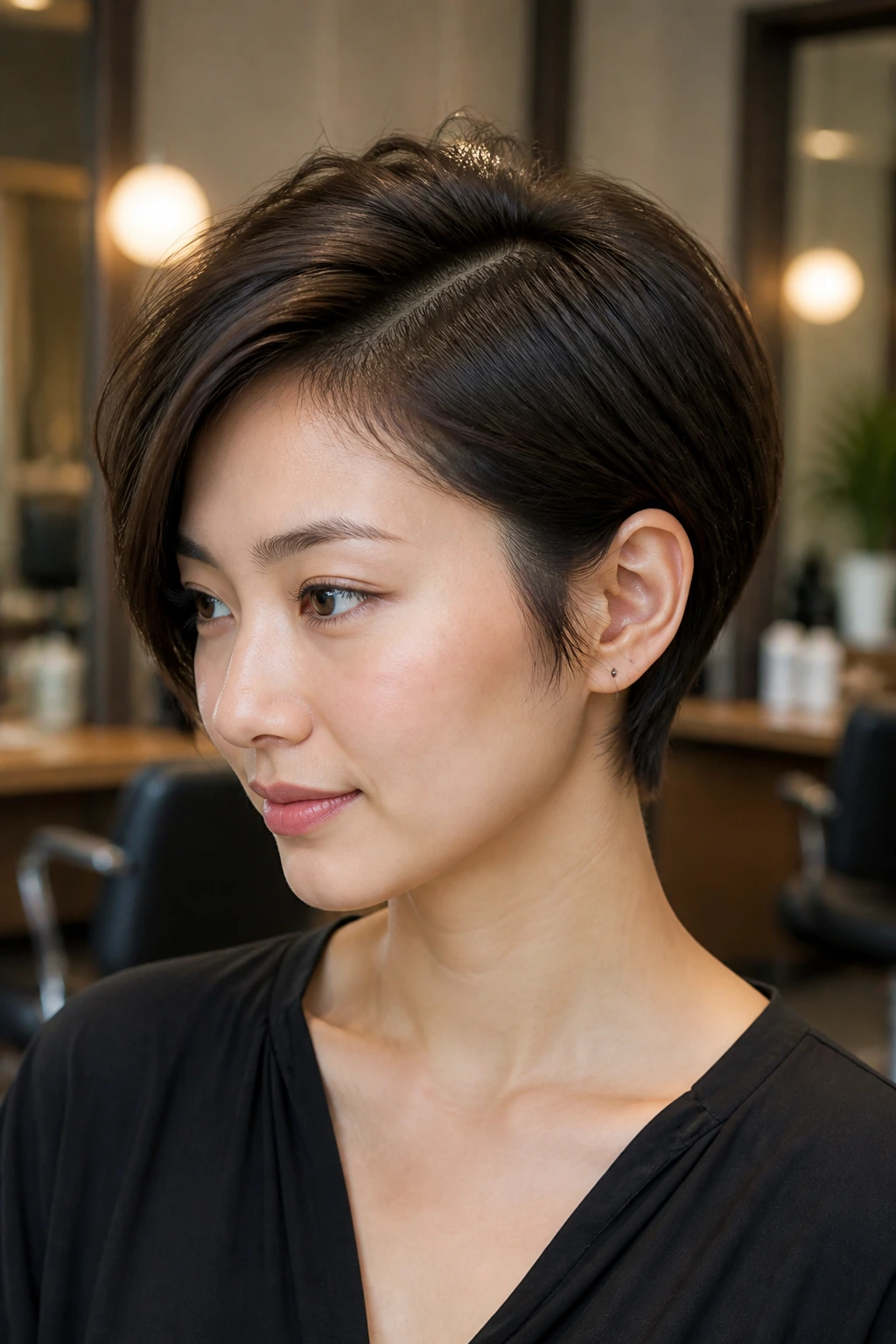
The part should follow the growth pattern whenever possible. If you fight a stubborn crown or a cowlick, the sweep usually falls apart by lunch. Start where the hair wants to separate, then nudge the part a little deeper or a little shallower until the line looks balanced on your face. A full inch off center is common, but some heads need less. Some need more.
At the salon, ask for the top to keep enough length to cross the forehead cleanly. That matters on pixies and short bobs, where one wrong snip can make the front too short to sweep. If your hair is thick, ask for interior weight removal rather than over-thinning the ends. Thin ends on dense straight hair can look wispy fast, and not in a good way.
Product choice changes the whole mood. Mousse gives lift. Cream smooths. Paste creates separation. Gel locks in a wet finish. A tiny drop of serum belongs only on the ends, because Asian hair often shows grease at the roots before anyone notices shine. That’s the part people get wrong. They use one product everywhere and wonder why the hair collapses.
If your hair is fine, keep layers long and ends blunt. If it’s thick, ask for some hidden removal under the crown and near the ears. Same side-sweep idea. Different cutting strategy.
How to Wear These Styles With Glasses, Earrings, and Collars
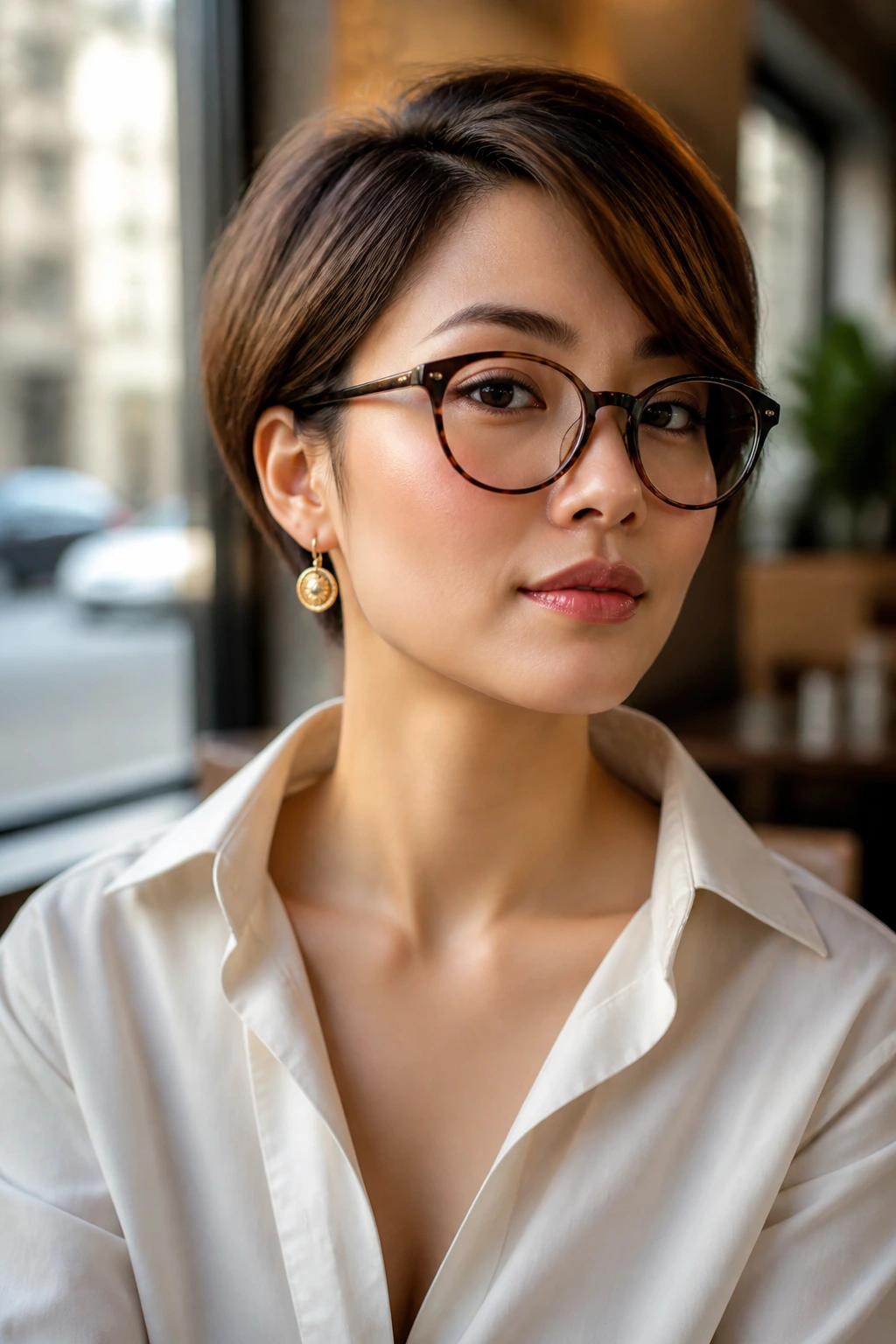
Presentation: The best comb-over finish shows one clean side and one side that feels a little tucked or held back. That contrast is the whole point. If the sweep falls too evenly on both sides, the style loses its edge and starts to read like an ordinary part.
Best Pairings: Glasses, hoops, and a side sweep are natural friends. Frames sit better when one side of the hair is tucked or pushed back, and earrings have room to show when the opposite side stays open. High necklines work best with shorter cuts that open around the jaw, while V-necks and open collars suit lobs and longer shapes because the line keeps going downward.
Scale: If your features are petite, don’t make the part too huge. A slightly softer sweep with a little crown lift will look better than a giant dramatic flip. If your face is broader or you want a sharper profile, push more weight to one side and keep the opposite side neat.
Occasions: Sleeker versions fit offices, dinners, and formal settings without fuss. The piecey, wavy, or shaggy versions feel looser and better for everyday wear. You do not need a separate haircut for every setting. A few clips, a brush, and a different product finish can change the whole mood.
Styling Tricks That Add Lift and Shine
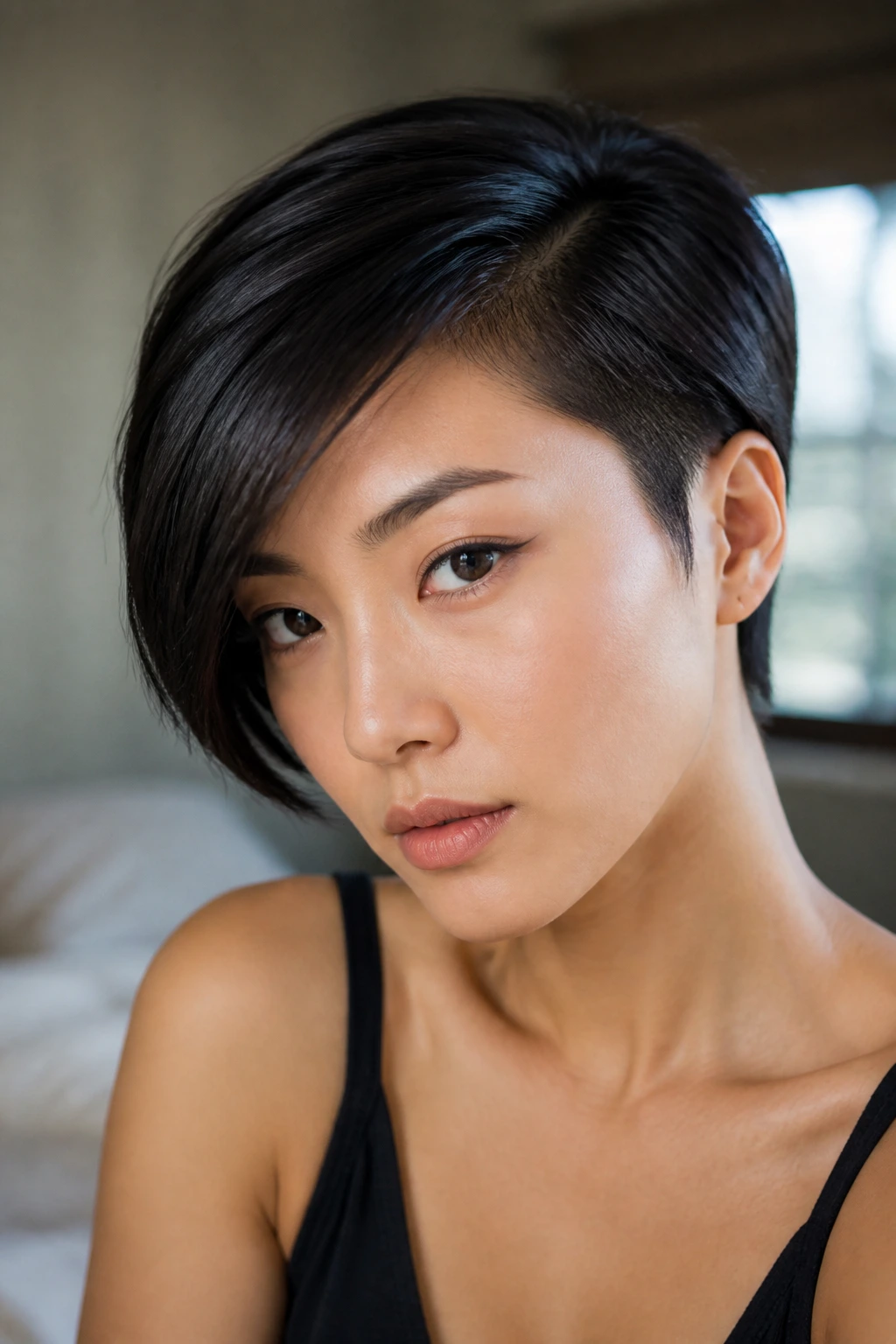
Lift: Put your root product on damp hair, not soaking wet hair. If the hair is too wet, the product slides. If it’s towel-dried and slightly grippy, the lift holds better. Blow-dry the front section away from the part first, then clip it while it cools.
Texture: Use matte paste or texture spray only where the shape needs separation. On straight hair, a little bit goes a long way. A pea-size amount can do the job on a short cut; a dime-size amount is plenty for a bob. Anything more starts to look heavy, and heavy hair loses the whole point of a side sweep.
Finish: One drop of serum on the last inch of hair is enough if you want shine without slickness. I’m picky about this because too much serum is the fastest way to make clean Asian hair look stringy. Better to start small and add nothing than to overdo it and spend the next ten minutes blotting it out.
Personalize It: Tuck one side. Add a barrette near the temple. Move the part 5 millimeters and see how the face changes. These are tiny edits, but they’re the difference between a haircut that looks copied and one that looks chosen.
Common Mistakes That Flatten the Shape
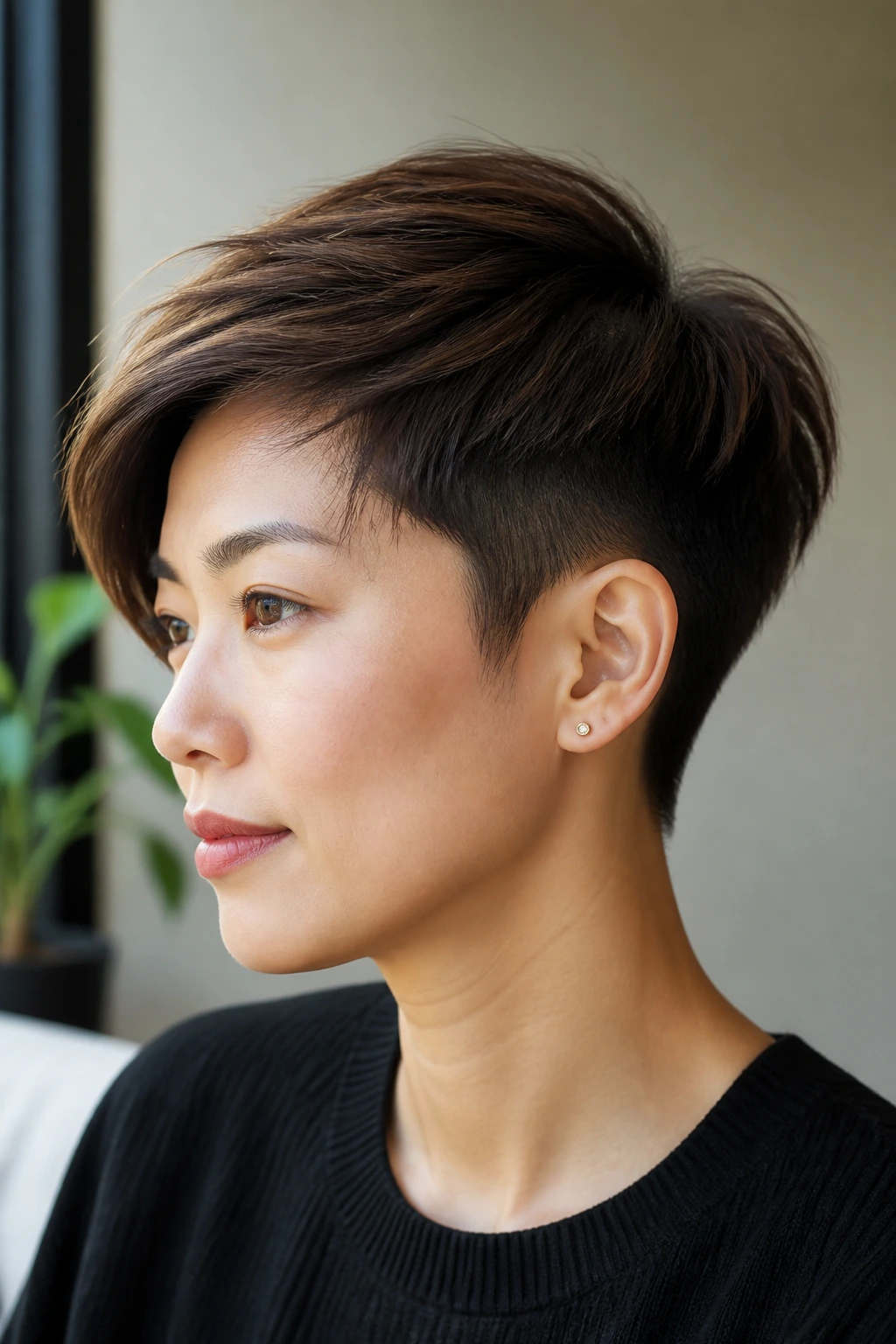
-
Making the part too deep on fine hair: If the scalp shows too much at the part line, the style starts looking thinner instead of sharper. Move the part a little closer to center and add root lift where the hair falls flat.
-
Using too much cream or oil near the roots: The hair gets glossy for about five minutes, then it collapses. Keep rich products on the ends only and use light mousse or spray at the roots.
-
Cutting the front too short to sweep: This is a classic regret. If the top can’t cross the forehead, the “comb over” effect disappears and you’re left with a shape that sticks straight up or falls forward in a clump. Leave enough length for movement.
-
Over-layering dense straight hair: Too many short layers can make the ends kick out and the crown puff up. Ask for controlled weight removal instead of a shredded finish if you want polish.
-
Letting the hair air-dry in the wrong direction: Wet hair locks in whatever shape it dries in. If you let it fall forward while drying, the sweep gets stubborn later. Set the part while the hair is damp and clip the front into place.
-
Ignoring maintenance on short cuts: A pixie or sharp bob grows out quickly. If you wait too long, the side sweep loses the line that made it work in the first place.
Variations and Adaptations to Try

-
Soft Office Sweep: Keep the part shallower, skip the wet shine, and use a smoothing cream instead of strong gel. This version looks tidy enough for conservative settings and still has the side-swept line.
-
Thick-Hair Air-Release Edit: Ask for hidden undercutting and interior weight removal. A little matte paste through the top keeps the shape from ballooning, especially in humid weather or after a long day.
-
Fine-Hair Lift Edit: Keep the perimeter blunt and the layers long. Mousse at the roots plus a light hairspray gives structure without making the hair look sparse.
-
Humidity-Ready Slick Sweep: Use gel, a fine comb, and a firm cool shot from the dryer. This one stays closer to the head and holds up better when the weather tries to ruin everything.
-
Grow-Out Friendly Sweep: Choose a collarbone bob or long pixie with soft front layers. These shapes keep a side sweep even when they’re overdue for a trim.
-
Evening Gloss Sweep: Go deeper on the part, smooth the top flat, and tuck one side behind the ear. Add a little shine serum only on the ends for a clean reflective finish.
Frequently Asked Questions
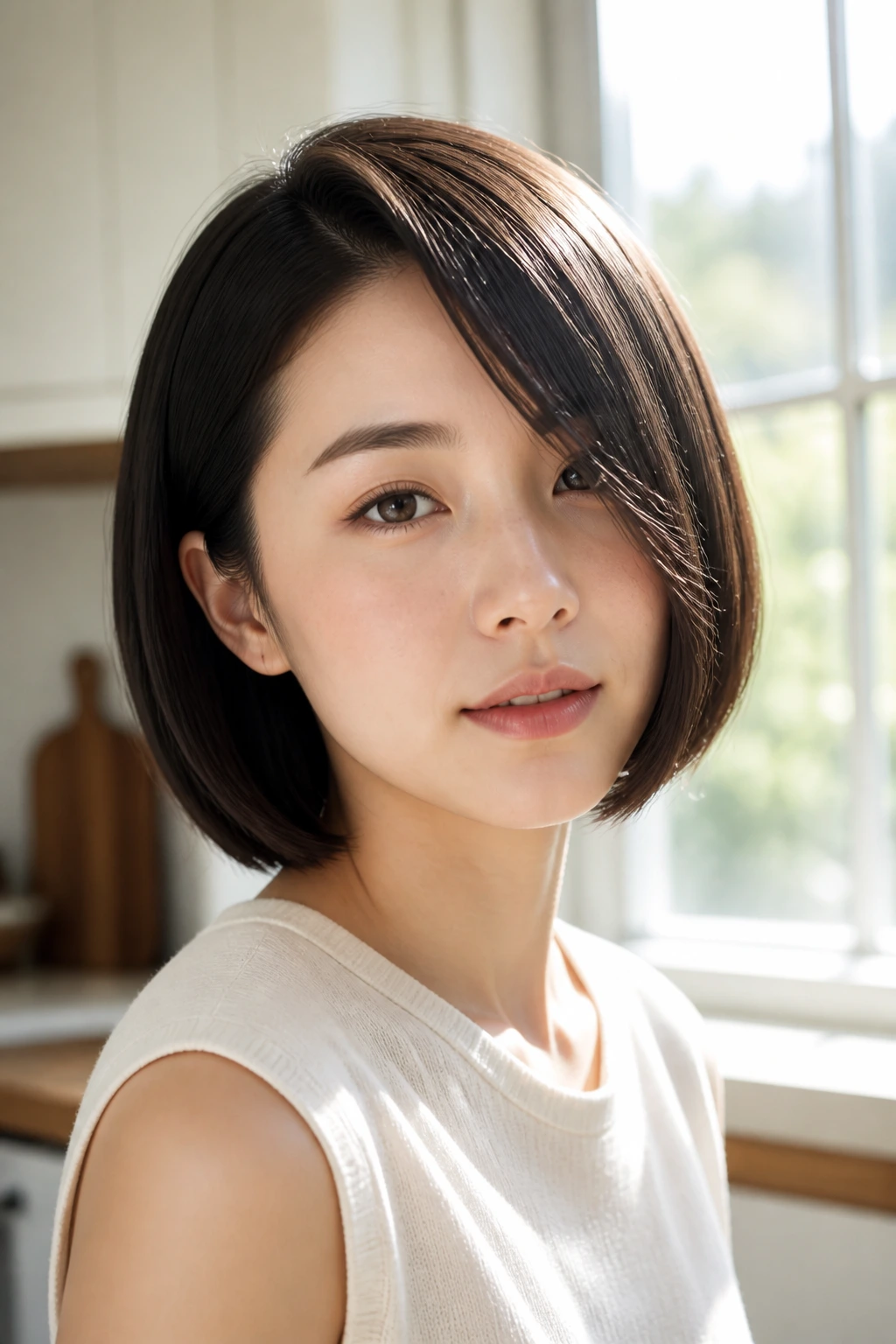
How deep should a comb-over part be?
Usually an inch to an inch and a half off center is enough. Go deeper only if the hair has enough density to support it; fine hair can look sparse if the part is too aggressive.
Can comb over styles work on very short hair?
Yes, as long as the top is left long enough to move. A pixie with 2 to 4 inches on top can still sweep nicely, especially if you blow-dry the root in the direction you want first.
Is this only for straight hair?
No, but straight hair shows the line more cleanly. Wavy hair can wear the look beautifully too; it just needs a little less smoothing and a little more shape around the front.
What if my hair falls flat by midday?
That usually means the roots weren’t set while they were warm. Use a root spray or mousse on damp hair, blow-dry with tension, and clip the front while it cools. A quick midday mist of water at the roots can also help reset the bend.
Should I ask for layers or blunt ends?
If your hair is fine, blunt ends usually hold the shape better. If it’s thick, you may need interior layering or hidden weight removal so the sweep doesn’t feel bulky. The best choice depends on density more than length.
Can I wear these styles with glasses?
Yes, and some versions look better with glasses than without them. Tucked bobs, ear-swept lobs, and airy fringes leave room for the frame and keep the face from feeling crowded.
How often should I trim a short comb-over style?
Pixies usually need attention every 3 to 5 weeks. Bobs can go 6 to 8 weeks, and longer lobs stretch a little farther. Once the front loses its ability to sweep cleanly, it’s time.
What’s the easiest low-heat version?
A collarbone sweep with soft layers is the easiest to air-dry. Put a light cream through the mids, part it damp, clip the front while it dries, and you’ll usually get enough bend without touching a flat iron.
A Shape That Keeps Its Line
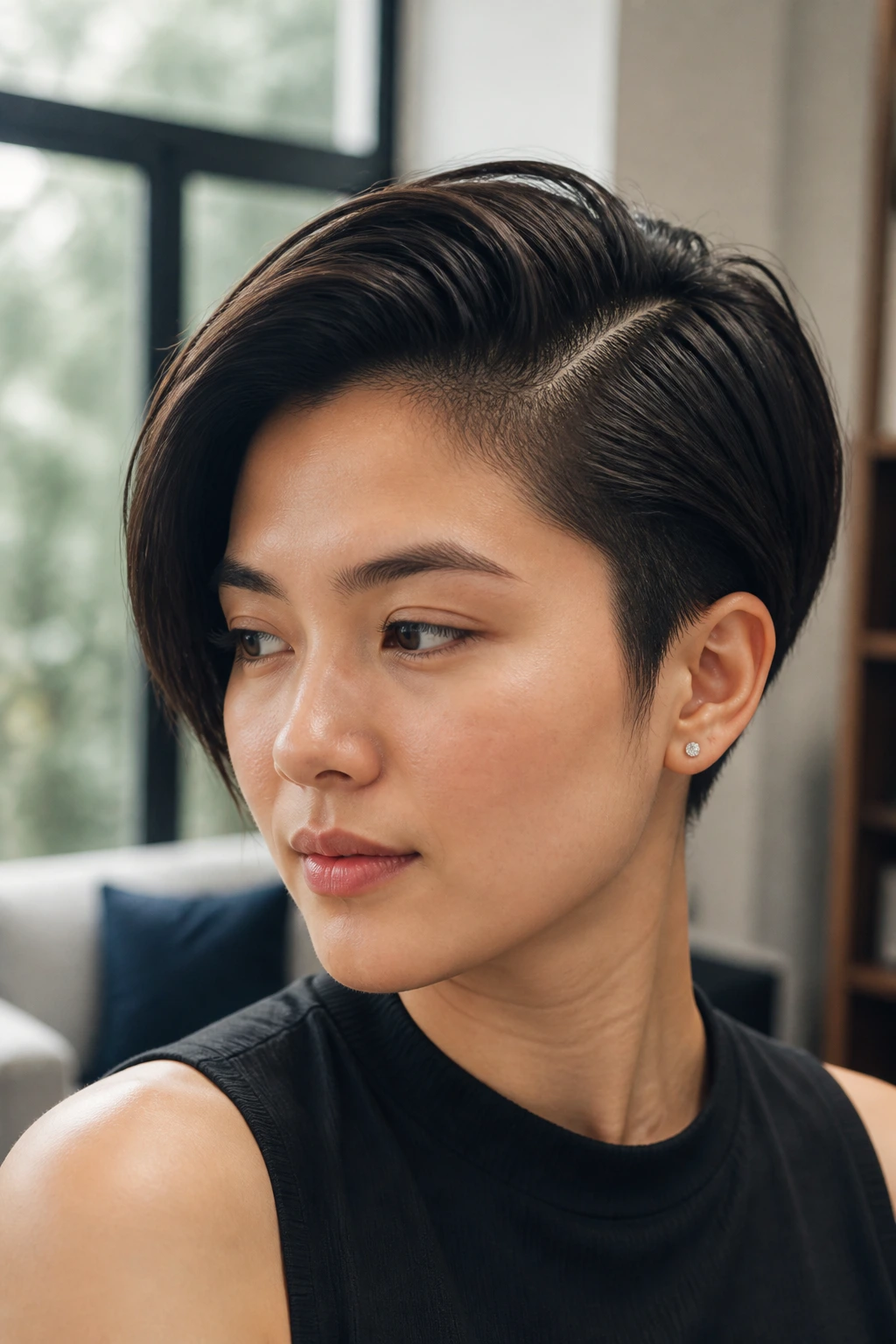
The smartest thing about a good comb-over style is that it doesn’t ask the hair to become something else. It uses the hair you already have — straight, dense, silky, fine, whatever the day gave you — and puts it in a better direction. That’s the whole trick. Not force. Direction.
The best versions feel clean at the roots, light at the crown, and deliberate around the face. Once you get the part and the weight right, the haircut stops fighting you. It settles. And that is usually when it starts looking expensive.
