



Long curls have a temper. Give them a little structure, and they fall in glossy, springy sheets. Force them into the wrong shape, and they swell, slip, or collapse under their own weight. That balance — shape versus length, hold versus movement — is what separates a pretty style from one that lasts past the mirror.
Curly hairstyles for long hair work best when they respect the curl pattern instead of sanding it down. A deep part shifts the whole silhouette. A low anchor point stops the crown from going flat. A single braid, twisted section, or wrapped elastic can change how the eye reads the length, which matters more than people think when the hair reaches the middle of the back or farther.
Some styles are fast and forgiving. Others need a touch of product, a few pins, and a willingness to leave a face-framing curl out on purpose. The best ones don’t fight the texture. They use it. And that’s the fun of long curls: they can look soft, polished, romantic, sharp, or a little unruly, all without losing the thing that makes them worth wearing in the first place.
Why These Styles Earn a Spot in a Long-Curl Rotation
-
They keep the crown from falling flat. Long curls can drag at the roots, so styles with a lift point — a twist, braid, puff, or clipped section — make the whole shape look fresher.
-
They work with second-day texture. A little frizz and a little bend help many of these styles. Clean, slippery curls can be harder to pin.
-
They protect length without hiding it. Braids, ponies, and half-up shapes show off the hair’s length instead of stuffing it all into one lump at the back of the head.
-
They leave room for accessories. Clips, ribbons, scarves, and pins do real work here. They are not afterthoughts; they often hold the style together.
-
They move from casual to dressed-up fast. Change the part, smooth the surface, or swap a scrunchie for a metal cuff, and the whole mood shifts.
-
They solve real-life problems. Wind, humidity, workouts, dinner plans, and day-three curls all show up in the same week. These styles are built for that mess.
1. The Defined Side-Part Cascade
A deep side part gives long curls an instant shape change. Instead of hanging as one heavy curtain, the hair gets a slope, which lifts the top and lets the curl clumps fall in a more deliberate line. I like this one when the curls are already defined but need a better frame around the face.
Why It Flatters Long Curls
The trick is simple: use a rat-tail comb to place the part where your natural crown still has some height, then smooth only the roots on the smaller side with a little cream or gel. Leave the lengths alone. That way the curl pattern stays intact, and the style doesn’t turn into a helmet.
Quick Shape Notes
- Tuck the smaller side behind one ear if you want more cheekbone shape.
- Let the heavier side fall forward if you want the hair to read fuller.
- Pin the part side with one hidden bobby pin if the roots keep drifting back.
Best for: layered curls, oval faces, and anyone who wants a softer answer than a full updo.
Tiny fix that helps: spray the roots with water, not product, before parting. Wet roots separate more cleanly.
2. The Half-Up Twist Crown
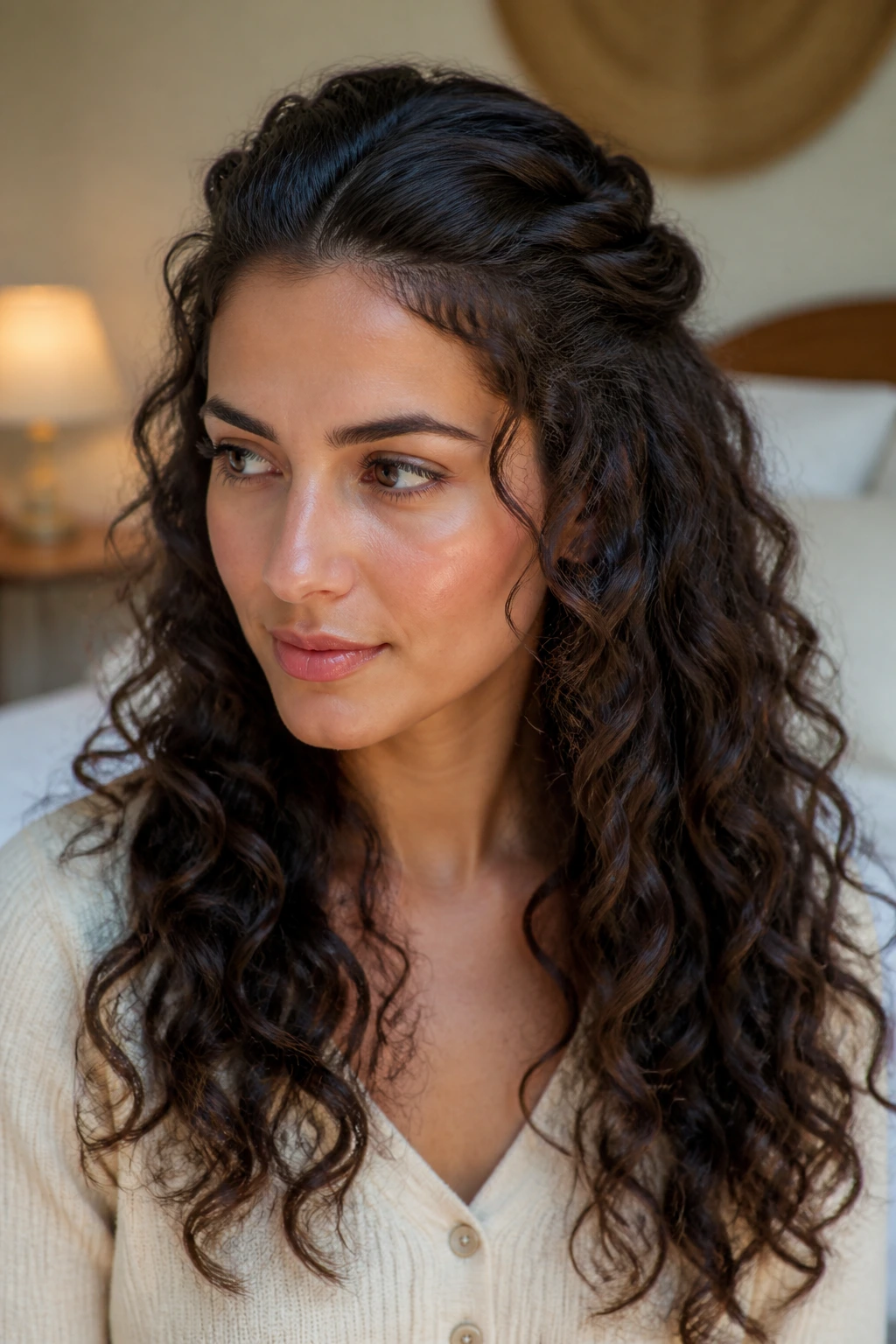
This is the style I reach for when long curls feel too heavy to wear loose but too nice to pin all the way up. Two small sections from the temples get twisted back, crossed at the crown, and pinned. The rest stays down, which keeps the length visible and the front out of your face.
The key is not twisting the sections too tightly. If you wind them like rope, the crown gets narrow and severe. Keep each twist loose enough that the curl pattern can still show through, then pin slightly below the twist so the hold looks hidden rather than forced.
It works best on hair that has some grip — day-two curls, air-dried curls with mousse, or curls that have been lightly refreshed. Freshly washed, silky hair can slide, so a little texturizing spray at the roots helps. This one looks pretty without needing perfection.
3. The Sleek Curly High Ponytail
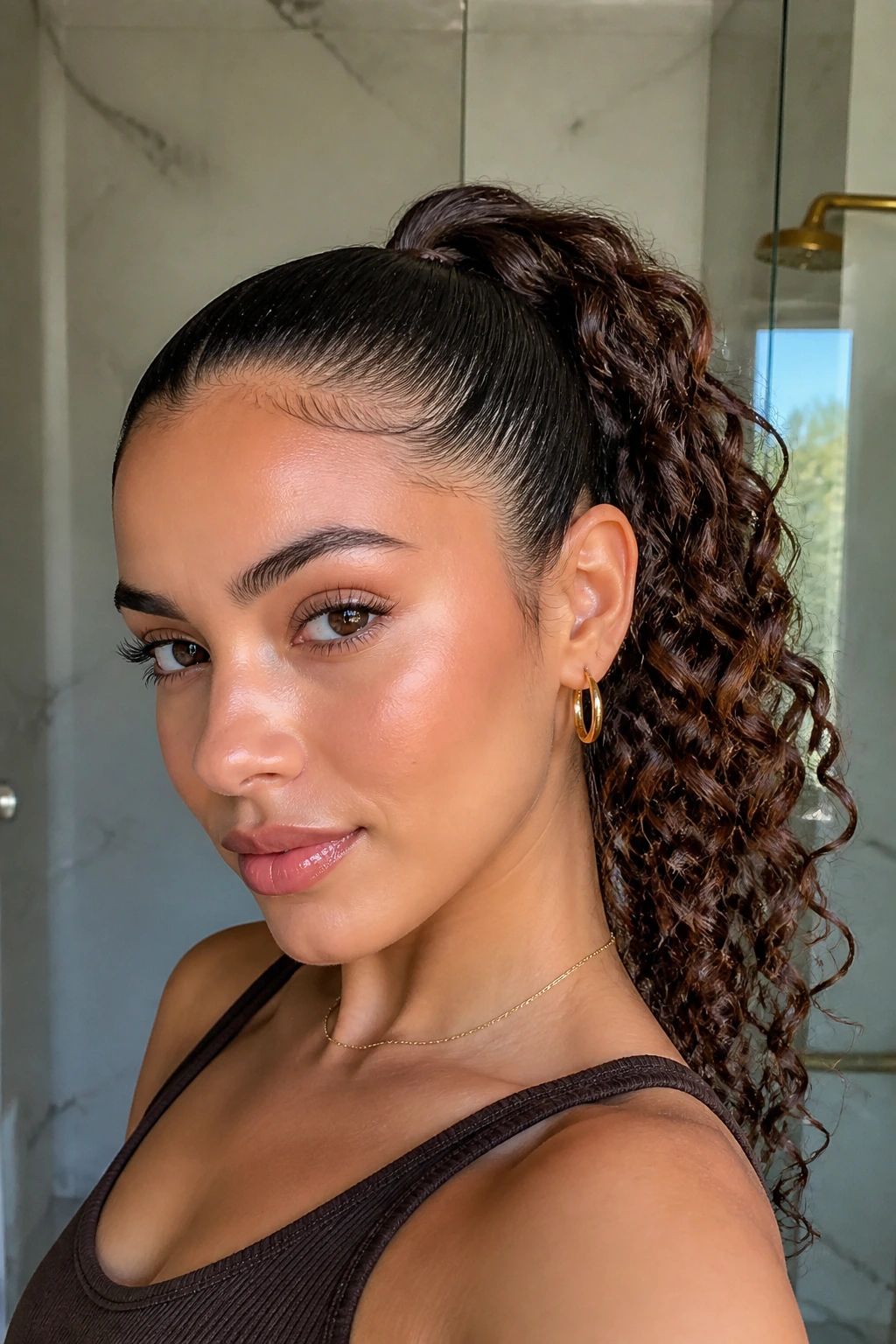
A high ponytail on long curls sounds basic until you see how much shape a well-placed one can give. Put the base about 1 to 2 inches above the highest point of the ears, smooth the front with gel or styling cream, and let the lengths spill out in a full tail. The pony should sit high enough to lift the face, not so high that it looks like a cheerleading joke.
What makes it work is the contrast. The crown is sleek. The tail is all texture. That split keeps the look from getting bulky at the scalp, which is where long curls usually start to misbehave. Wrap a small curl around the elastic if you want the base to disappear.
A strong elastic matters here. Cheap ones slip, and curly ponytails punish you for that by sagging fast. If your hair is thick, use two elastics stacked together. If your hair is fine, one elastic plus two crossed bobby pins underneath gives a better bite.
4. The Low Curly Ponytail with a Wrapped Base
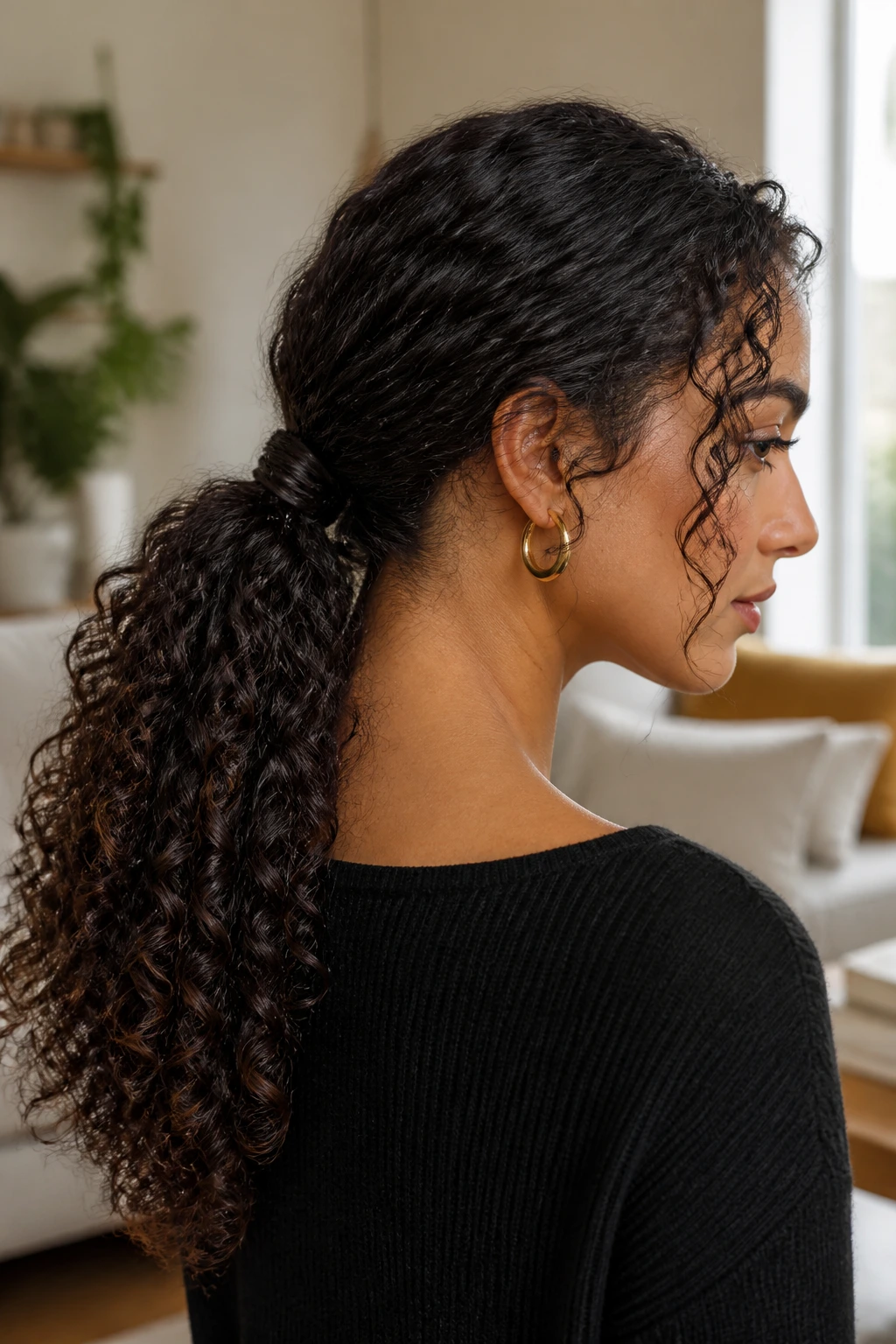
A low ponytail can look plain or it can look expensive. The difference is in the base. Smooth the crown straight back or with a side part, gather the curls low at the nape, and wrap a small strand around the elastic so the tie disappears. Leave the tail full and unbrushed so the curls keep their body.
This style is quietly useful because it doesn’t fight long hair’s weight. The nape placement keeps the tension low, which means less headache, less crown flattening, and fewer random flyaways around the temples. A little serum on the top layer keeps the surface neat without breaking the curl clumps underneath.
It’s the kind of hairstyle that works for errands, work, dinner, or any day when you want your hair under control but not squashed. If the ends are frizzy, mist them lightly with water and a curl refresher, then scrunch once. Don’t overdo it. One pass is enough.
5. The Braided Front Halo
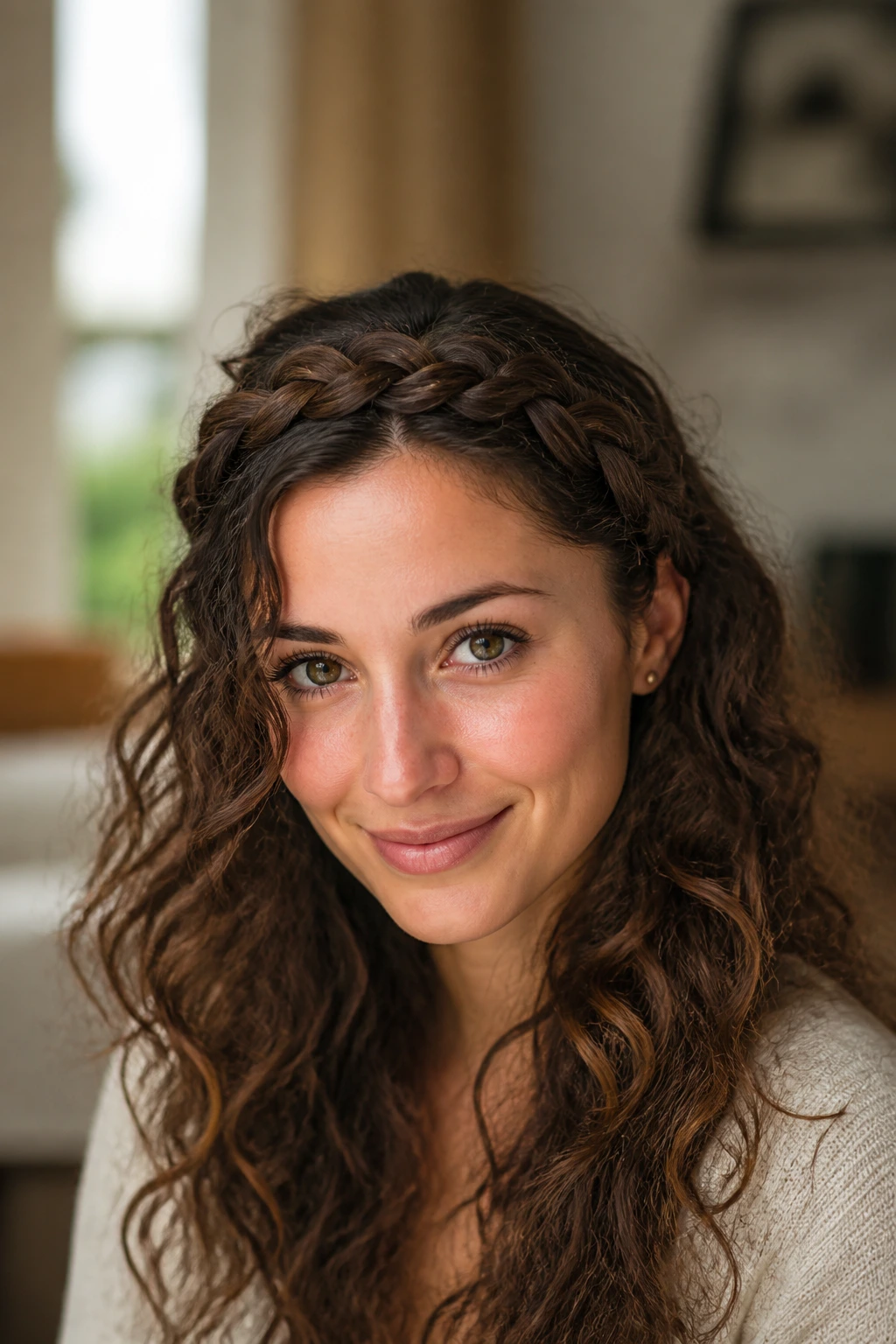
What do you do when you want your curls down but need the face and hairline out of the way? Braid the front. A halo braid starts at one temple, travels across the forehead or crown line, and disappears behind the opposite ear. The rest of the curls stay loose, which keeps the style from feeling overbuilt.
This one is better than it sounds on long hair because you do not need a full crown braid to get the effect. Even a narrow braid across the front changes the whole read of the style. It also helps on windy days, when loose front pieces refuse to behave and end up in your mouth every twelve seconds.
How to Wear It
Use a small section, about 1 inch wide, and keep the braid loose enough that the curl pattern doesn’t disappear. Secure it under the hair with two crossed pins, not one, if your hair is slippery. A tiny bit of edge control at the hairline can keep the braid from puffing out.
6. The Loose French Braid into Curls
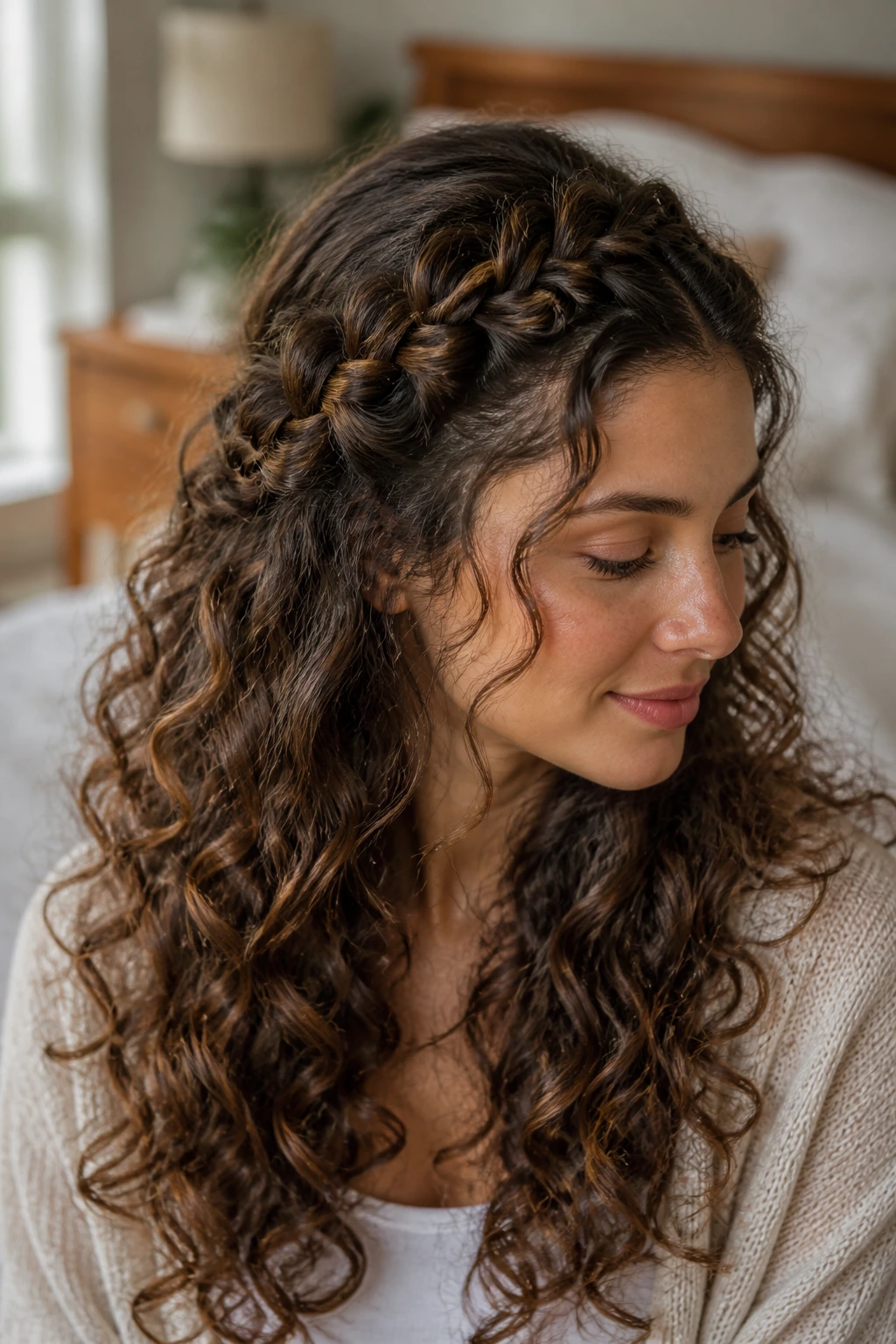
A French braid does not have to be tight to stay put. In fact, on long curls, a loose version often looks better because it lets the braid sit like a soft spine through the top half of the hair. Start at the crown, add hair on both sides as you work down, and stop once you reach the top of the shoulder blades. Let the rest fall as curls.
This style earns its keep on busy days. The top is contained, the length stays visible, and the braid gives the hair enough structure that it doesn’t spread out into a fuzzball by lunch. If the braid looks too neat, tug the outer edges gently with your fingertips to widen it a little.
It suits layered hair especially well. Shorter pieces can live inside the braid, while the longer lengths stay free at the bottom. That mix of control and movement is the whole point.
7. The Pineapple Updo
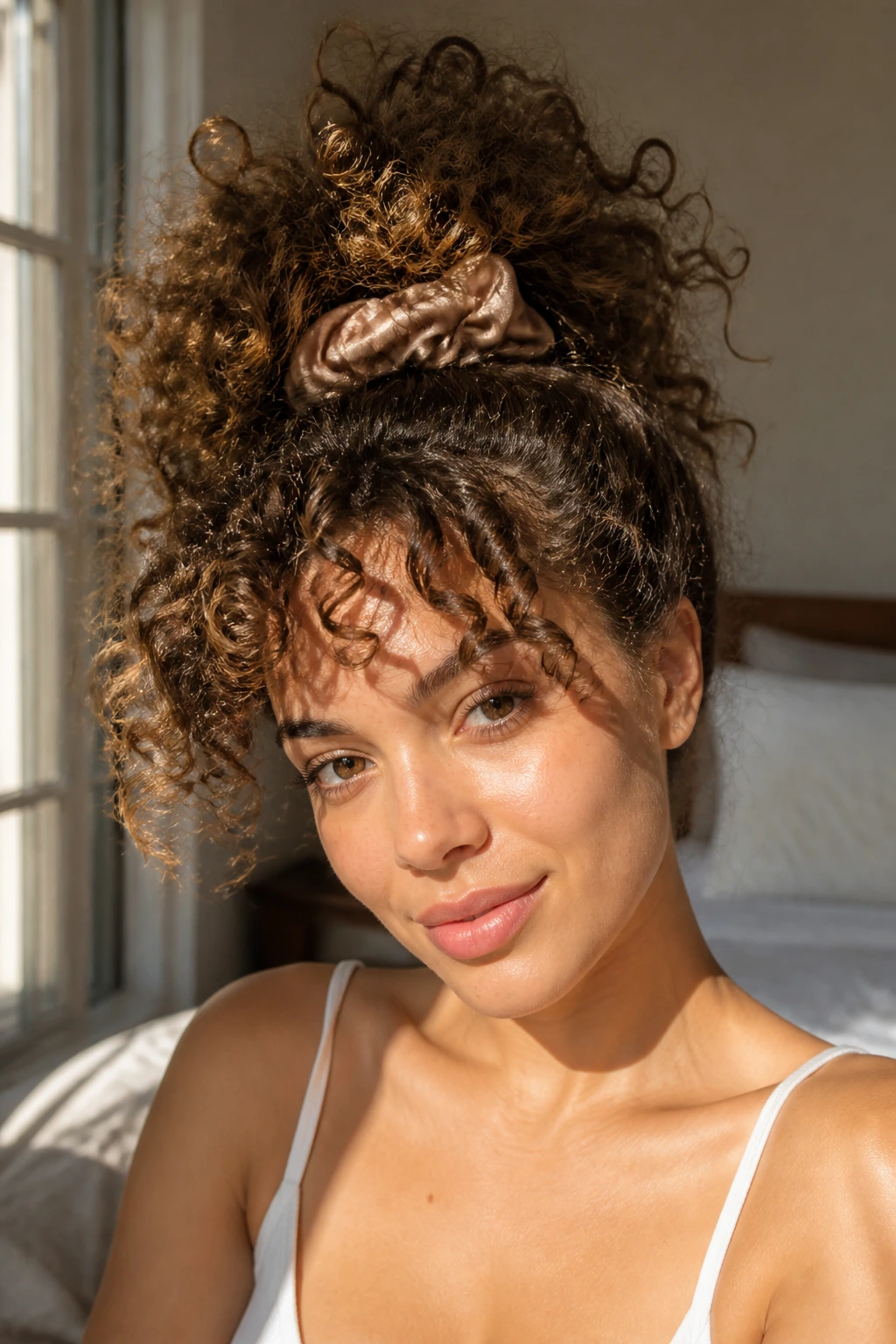
Bed hair turned into a style is my kind of efficiency. The pineapple is a high, loose pony at the very top of the head, usually secured with a satin scrunchie so the curls flop forward instead of getting squashed backward. On long curls, it creates a dramatic waterfall effect that looks playful during the day and preserves shape overnight.
The placement matters. Too low, and you get a droopy pony. Too tight, and the roots get a dent that takes forever to bounce back. Aim for the highest point of the crown, then let the curls fan forward over the forehead or spill down the sides. That forward fall is what makes the style feel intentional.
I like this one for second- or third-day curls that still have a good shape but need lift. It also works when you want volume at the top without losing length, which is a nice trick when the hair feels heavy.
8. The Claw-Clip French Twist
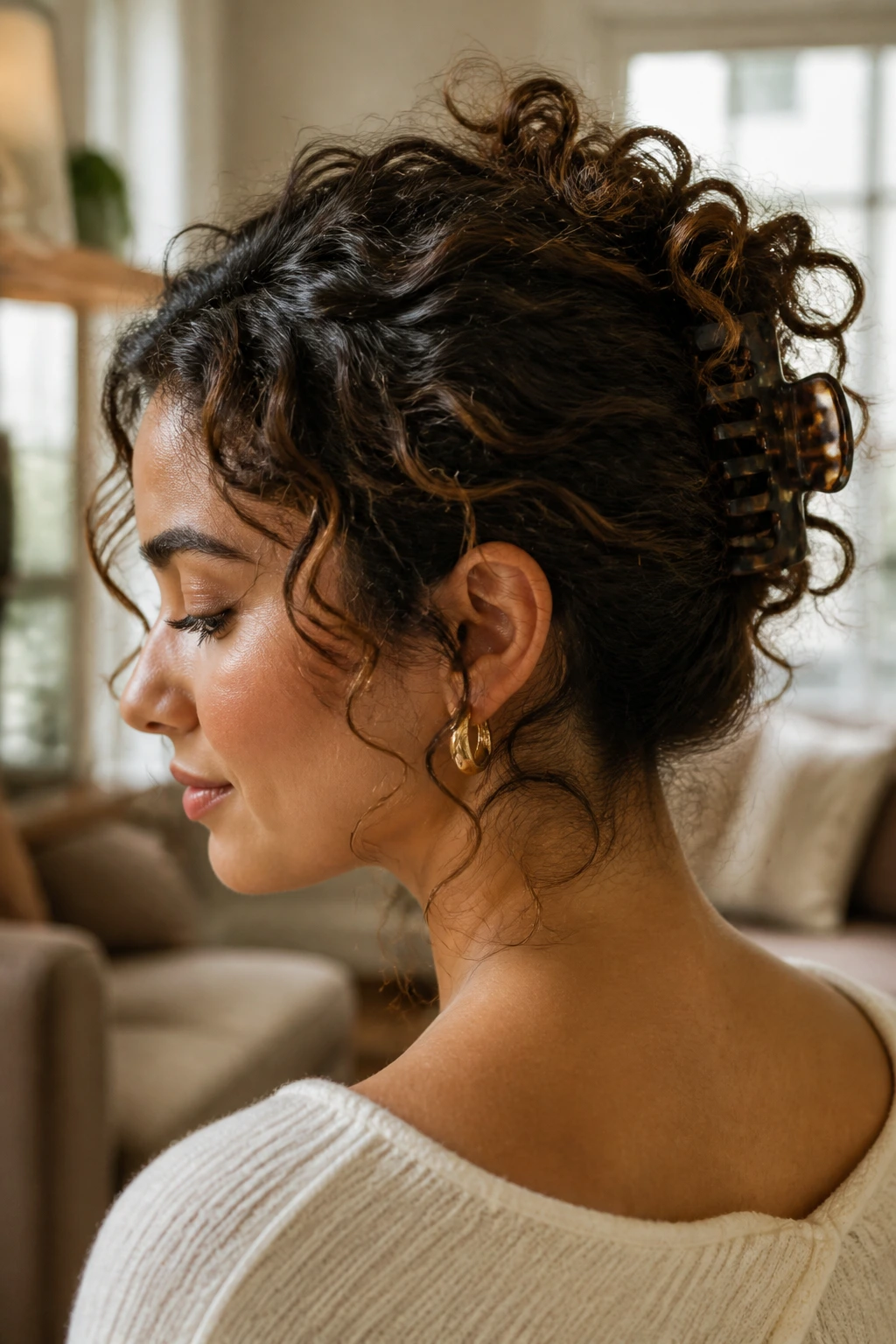
Claw clips are not just for quick bad hair days. On long curls, a large claw clip can hold a French twist in place while leaving the ends visible enough to show the texture. Fold the hair upward, twist once, then tuck the folded length into itself and clamp from the bottom up.
The best version leaves a few curls peeking out at the top or sides. If everything is smoothed into submission, the whole thing looks stiff. A little spill is good. It tells people the shape is meant to be soft, not severe.
Use a clip with long teeth and a real spring. Tiny decorative clips look cute until the weight of long curls bends them open. For thick hair, a jumbo clip with a curved jaw does the job without forcing the twist too tight.
9. The Bubble Ponytail with Curls
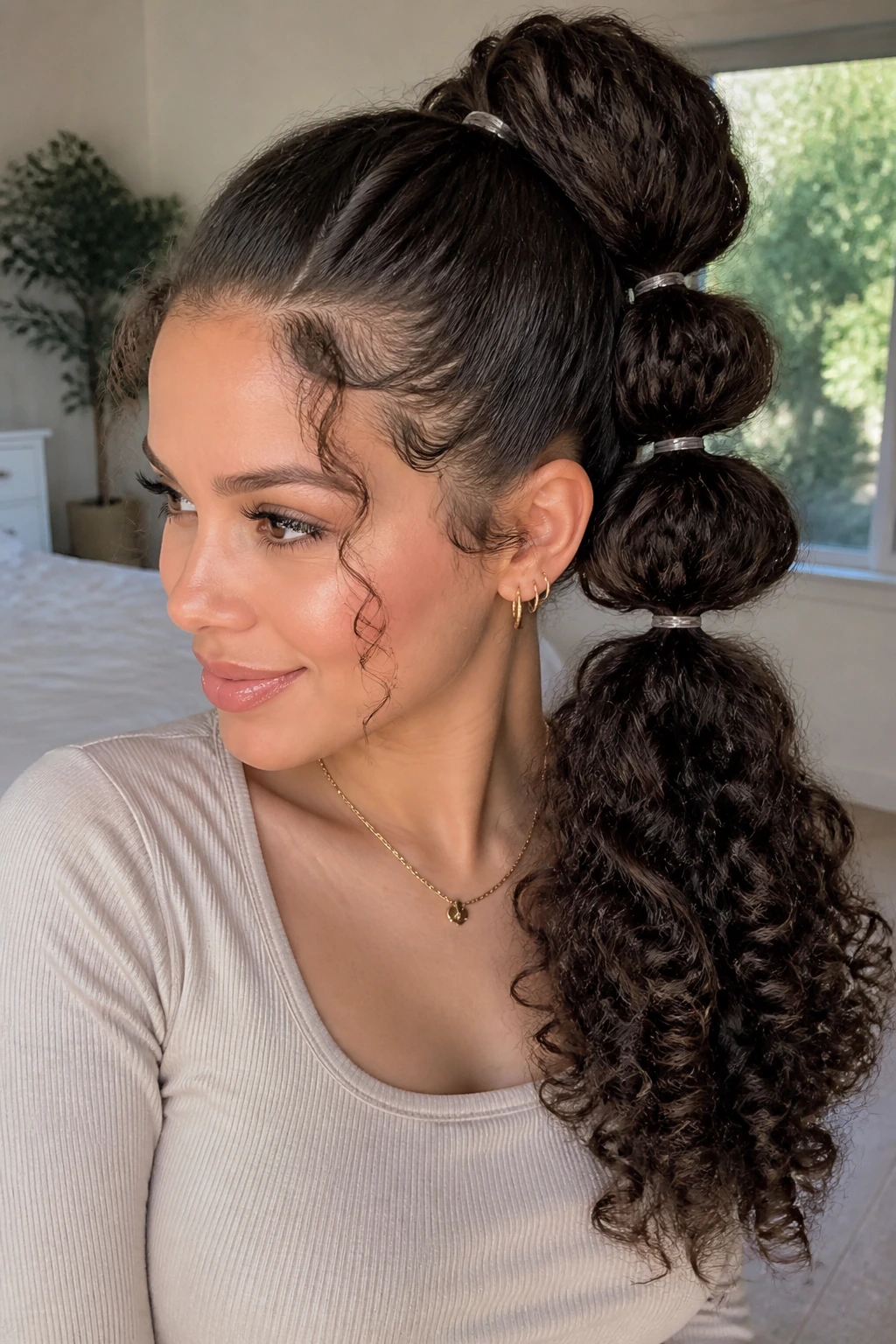
Need a ponytail that looks styled even when the curls have a mind of their own? Add bubbles. Gather the hair into one ponytail, then place clear elastics or small bands every 2 to 4 inches down the tail. Gently puff each section between the bands so the curls fill the space and create those rounded bubbles.
This works because the elastics give the long tail shape in stages. Without them, a curly pony can look like a single heavy rope. With them, the eye sees structure, and the length still moves. It’s a little more playful than a standard pony, and that’s the point.
Keep the base smooth and the bubbles loose. If you cinch them too hard, the tail becomes stiff and the curl pattern gets flattened into ridges. You want soft roundness, not segmented stiffness.
10. The Curly Space Buns
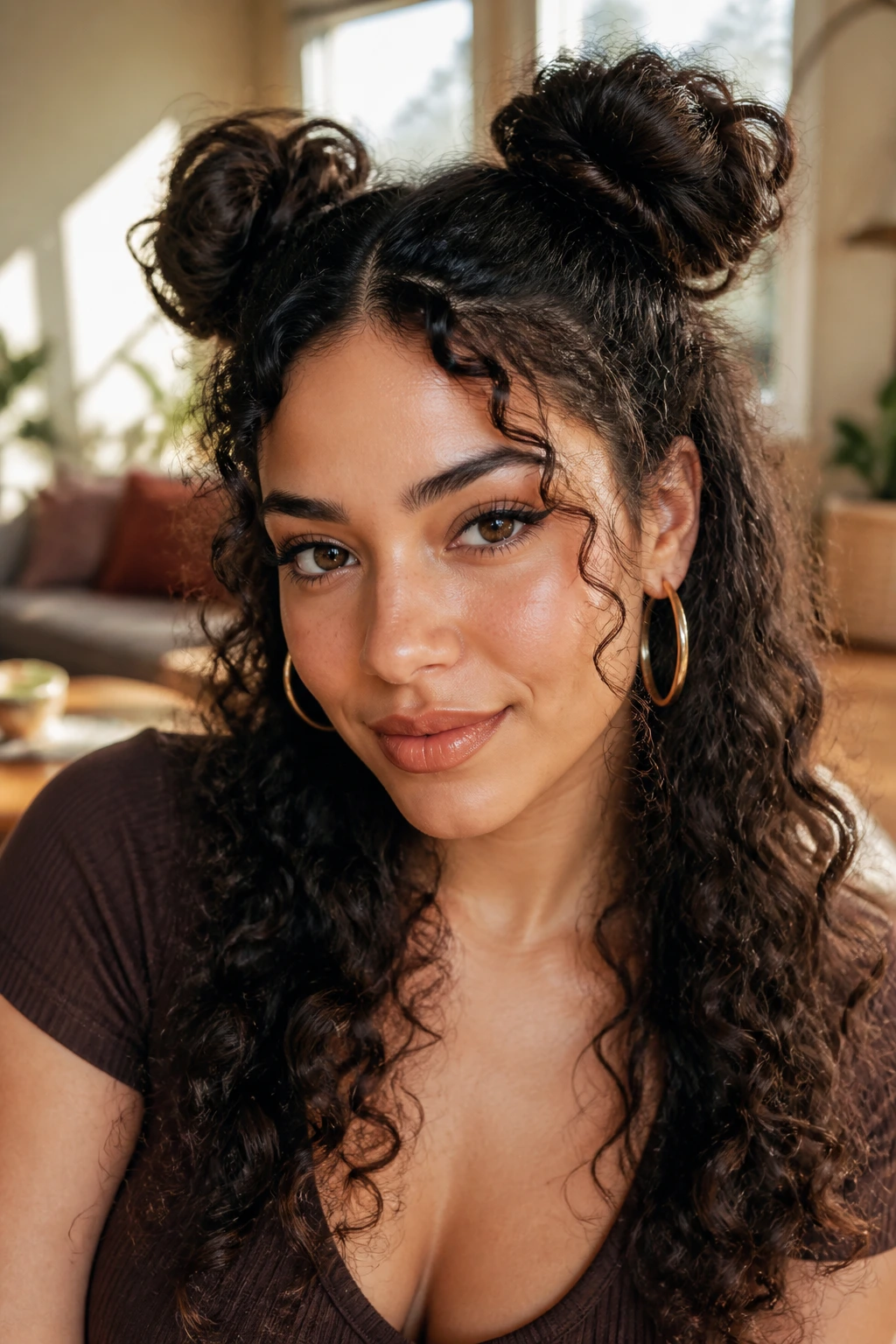
Space buns on long curls are less cartoonish than people assume. Split the hair down the middle, gather two high sections, twist or coil each one into a bun, and let the rest of the curls trail out from the base or wrap loosely around the buns. The style reads fun, but it can still look polished if the parts are clean.
I like this on thick hair because the buns actually hold their shape. Long curls give the buns enough texture to stay interesting. Fine curls can work too, but you’ll want smaller buns and more pins so the style doesn’t sink by noon.
The most flattering version keeps a few curls out around the temples. That softens the look and keeps the buns from sitting too high and too tight, which is where this style starts to feel costume-y.
11. The Side-Swept Hollywood Curls
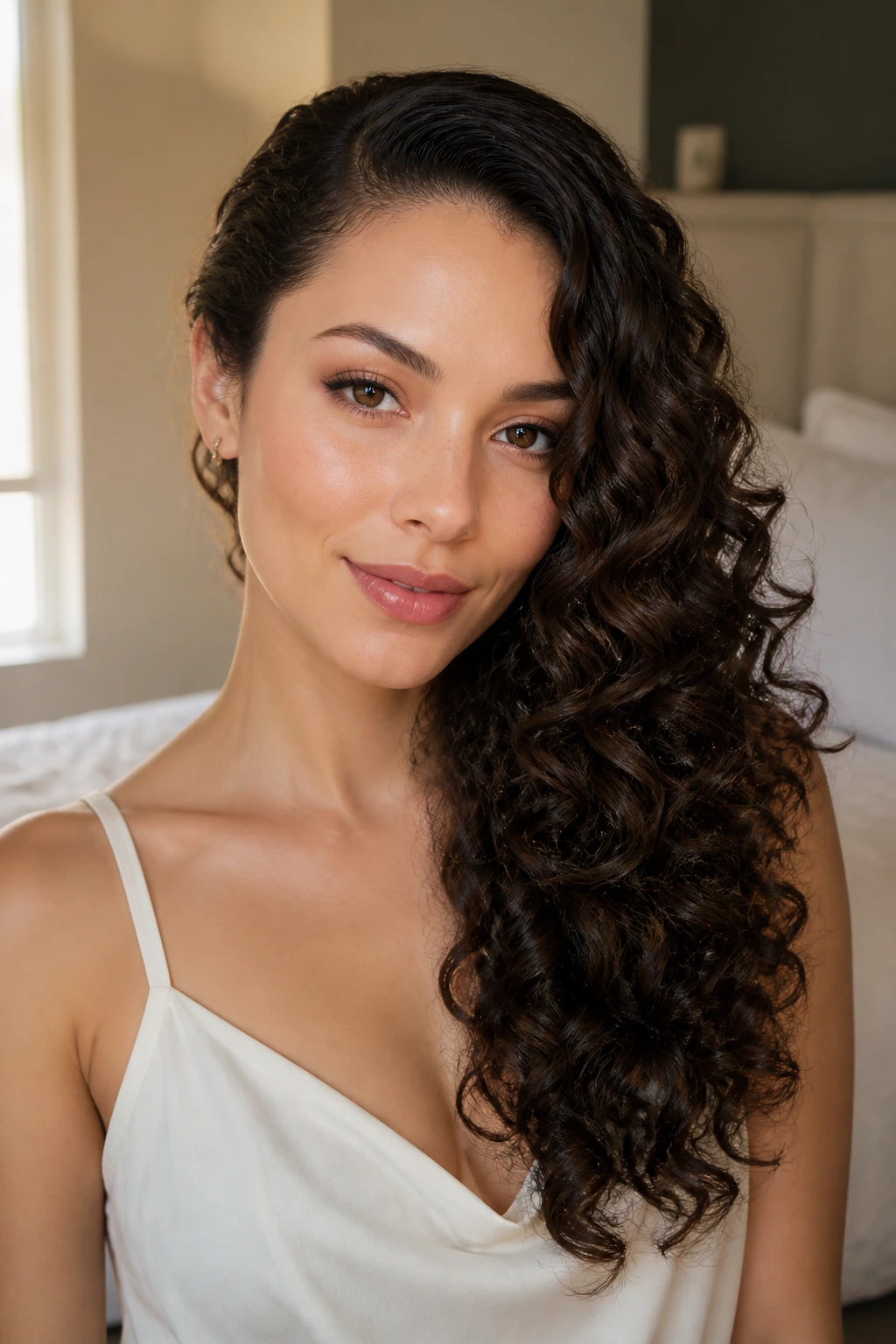
A formal side sweep has a very specific kind of drama. The hair is set with a deep side part, brushed or finger-combed into one glossy direction, and pinned low on the heavier side so the curls fall over one shoulder. The result is long, soft, and deliberate without looking fussy.
The Real Trick
Consistency matters more than size here. Curl the sections in the same direction before brushing them out lightly, and the wave will link together instead of turning into separate springs. A little shine spray on the outer layer helps, but don’t drown it. Too much product makes the curls collapse and the ends go stringy.
This style is especially good when you want the hair to show off a neckline, earrings, or one shoulder of a dress. It also photographs well because the hair creates a strong diagonal line. That diagonal is doing a lot of work.
12. The Waterfall Braid on Long Curls
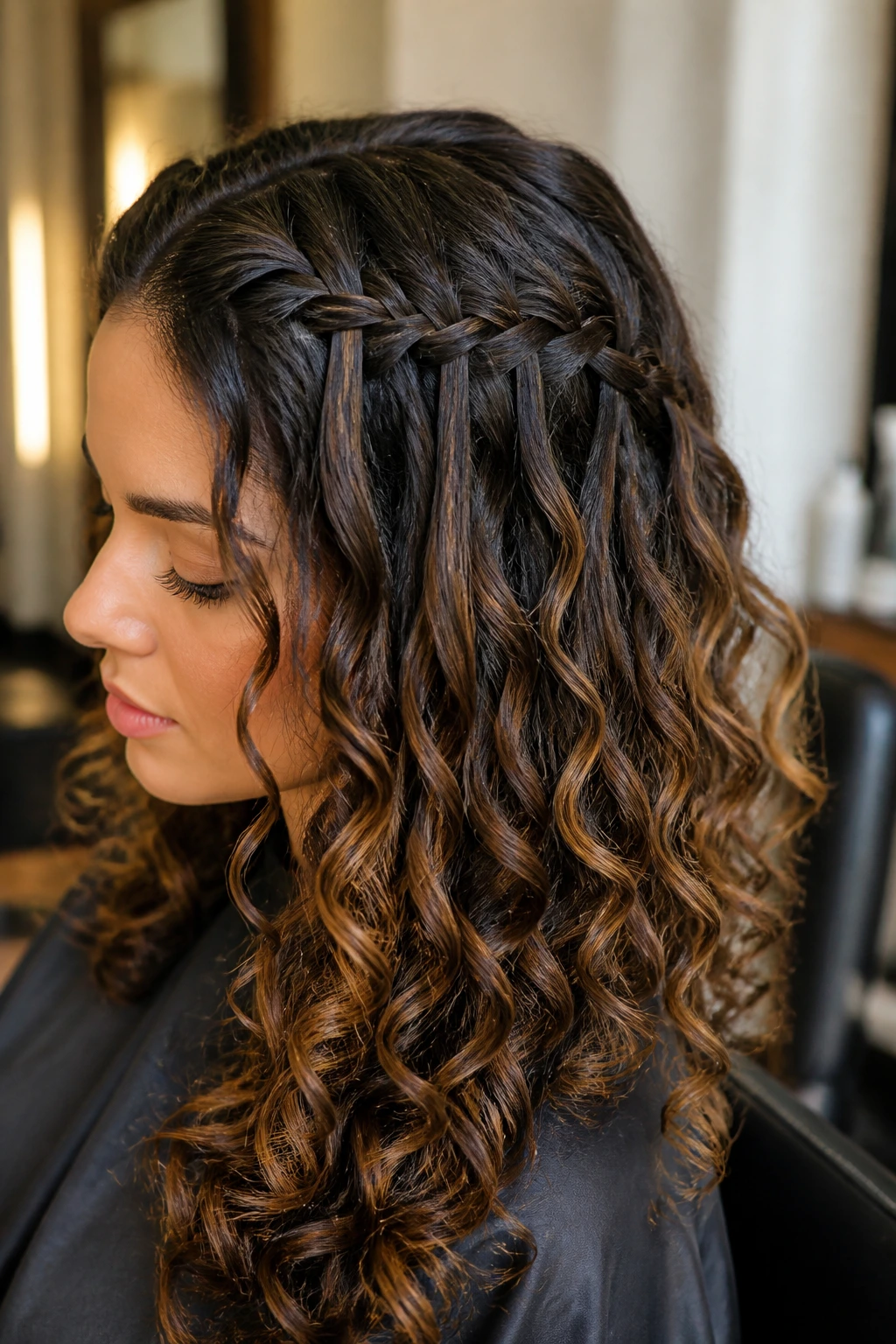
A waterfall braid is one of those styles that looks more complicated than it is. The braid runs across the head, but sections drop through the weave instead of being fed in permanently. On long curls, that means the braid acts like a frame while the rest of the length stays loose and visible.
This style works best when the curls are hydrated and defined, not fluffy and dry. The dropped pieces blend into the rest of the hair more cleanly that way. If you have layered curls, it’s even better, because the shorter pieces around the face can sit inside the braid while the longer lengths fall underneath.
It’s romantic without being precious. A little imperfect spacing actually helps, because the braid should look like it belongs to the curl pattern, not like it was laid on top of it with a ruler.
13. The Half-Up Top Knot
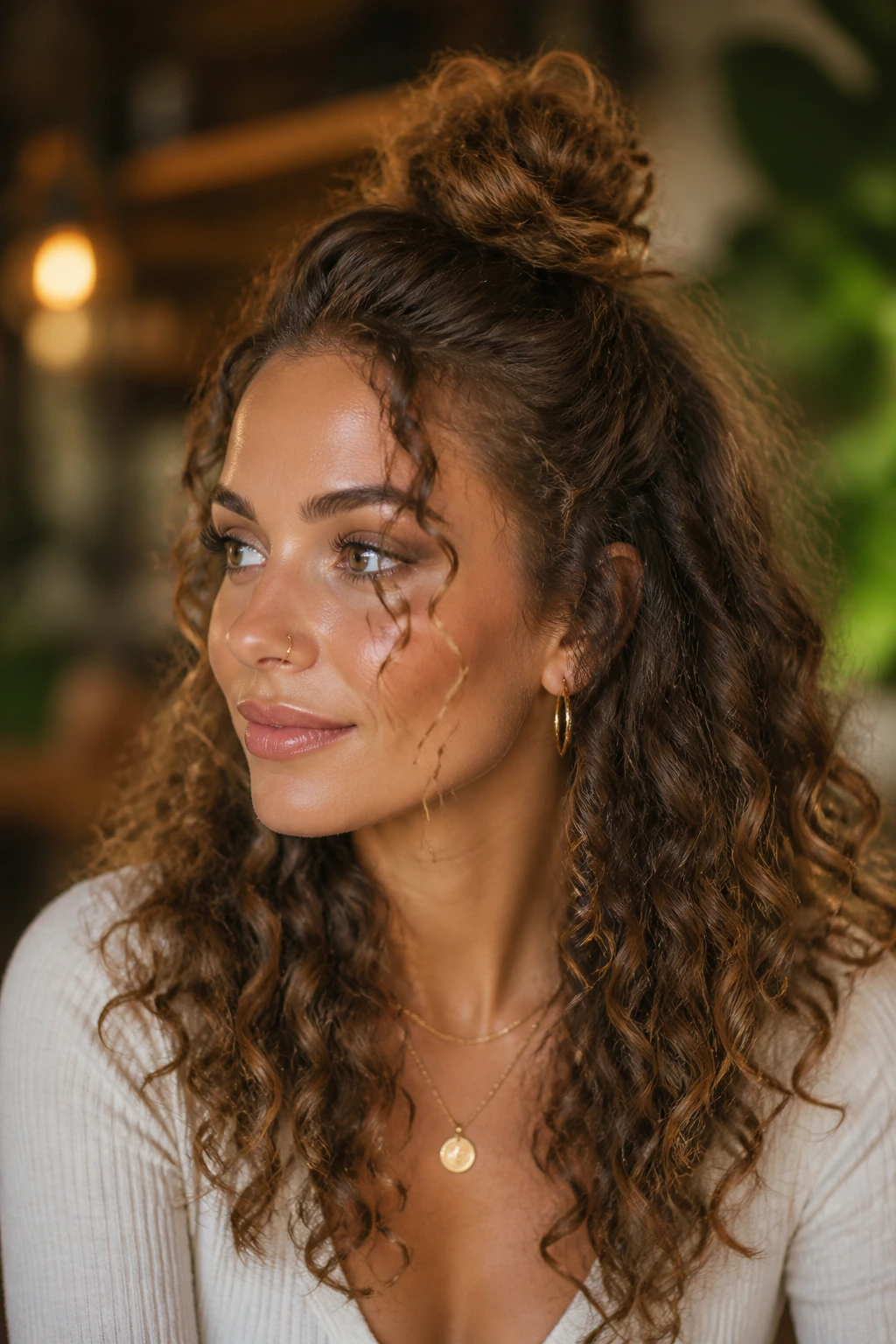
The half-up top knot is safer when it sits slightly off-center. Dead center can make long curls look stiff. Move it a half inch back or a touch higher, and the whole style softens. Gather the top third of the hair, twist it into a knot, and let the rest hang loose and full.
This one is good when your roots need a reset but the ends still look great. It also keeps the crown out of the way without taking away the length, which is usually the part people want to keep visible. If the knot feels too tiny, pinch it wider before pinning.
A few face-framing pieces make it better. One curl falling near the cheekbone changes the whole mood, and that’s probably why this style stays useful no matter how often people wear it.
14. The Low Curly Chignon
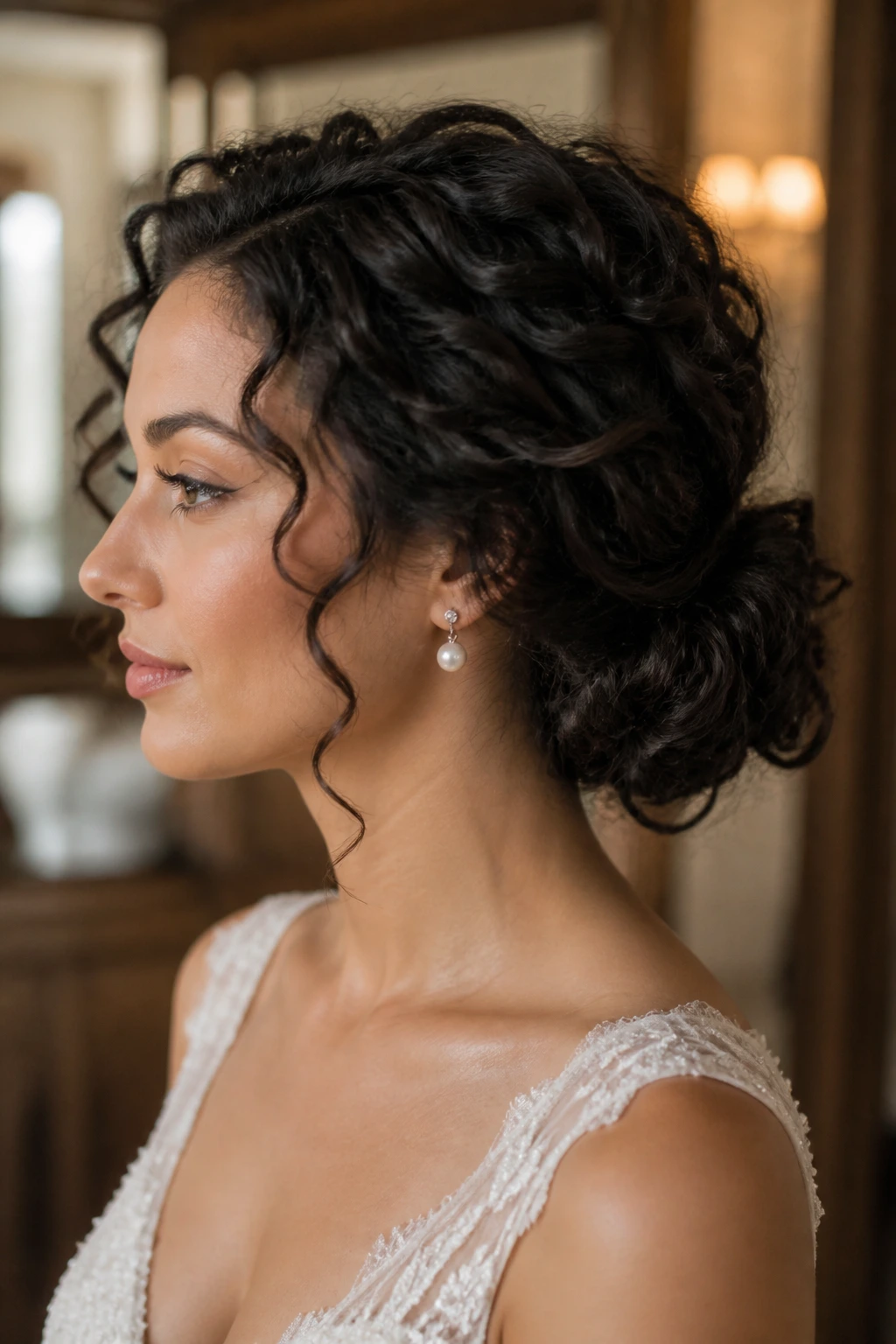
A low chignon on long curls works best when it looks like the hair was tucked, not packed. Bring the curls to the nape, coil them into a soft bun, and pin the outer pieces in place so the texture stays visible. The bun should sit close to the neck and stay a little loose around the edges.
This is the style for moments when you want polish without a shellacked finish. Weddings, dinners, work events, even a sharp coat and boots — the chignon does that quiet, tidy thing without erasing the curl pattern completely. It’s also kinder to long hair than a high bun, because the weight sits lower.
Leave one or two curls free at the front if you want the style to feel less formal. A chignon with no movement can look severe fast.
15. The Double Dutch Braids into Curls
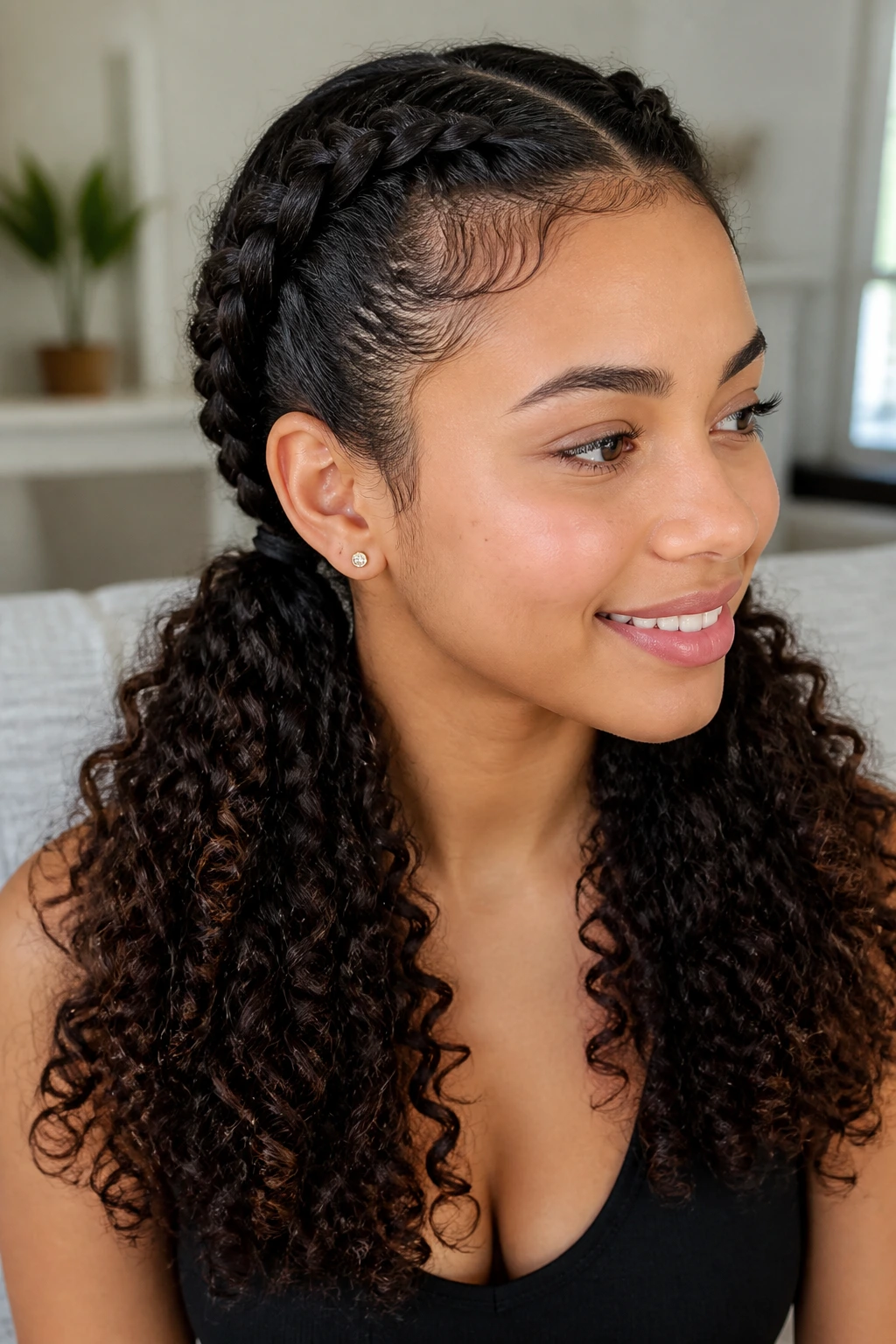
Need something that actually stays put through a long day? Double Dutch braids do the heavy lifting. Start at the hairline, braid close to the scalp on both sides, and continue until the braids reach the base of the neck. Then let the remaining lengths fall as curls.
The braid depth gives the style grip, which is why it works so well for thick or slippery curls. It also keeps the hairline under control without flattening the whole head. If you want more volume, pull the outer edges of each braid a little wider after you finish. That softens the look and gives the braid more body.
This is one of the more practical curly hairstyles for long hair if you need the hair off the face but do not want a full updo. It’s also a good choice for days when you know you will be moving around a lot.
16. The Curly Mohawk Braid
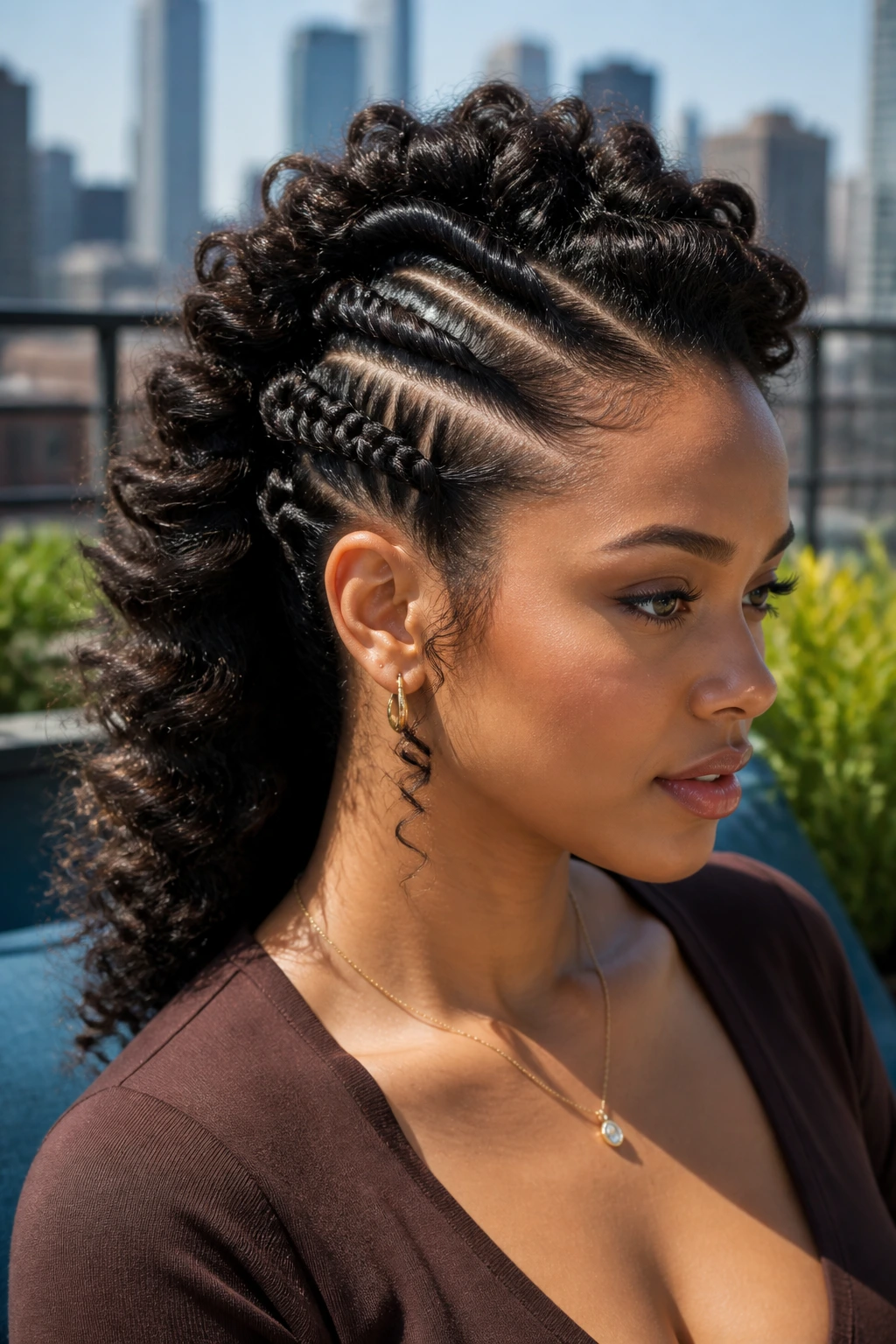
A mohawk braid has attitude, but it’s also practical. The sides get twisted or pinned back, while the center ridge stays lifted and full. On long curls, that center section can be braided, puffed, or left in a defined ridge of curls, depending on how much control you want.
The payoff is shape. By moving the width of the style to the middle of the head, you stop the sides from swallowing the face. That’s a common problem with long curls, especially when the hair is dense. This style fixes it by redirecting the volume instead of trying to reduce it.
It looks best when the crown has a little lift. If the top lies flat, the whole thing loses the point. Clip the roots while they dry or push them up gently with a pick before setting the braid.
17. The Curtain-Bang Curl Sweep
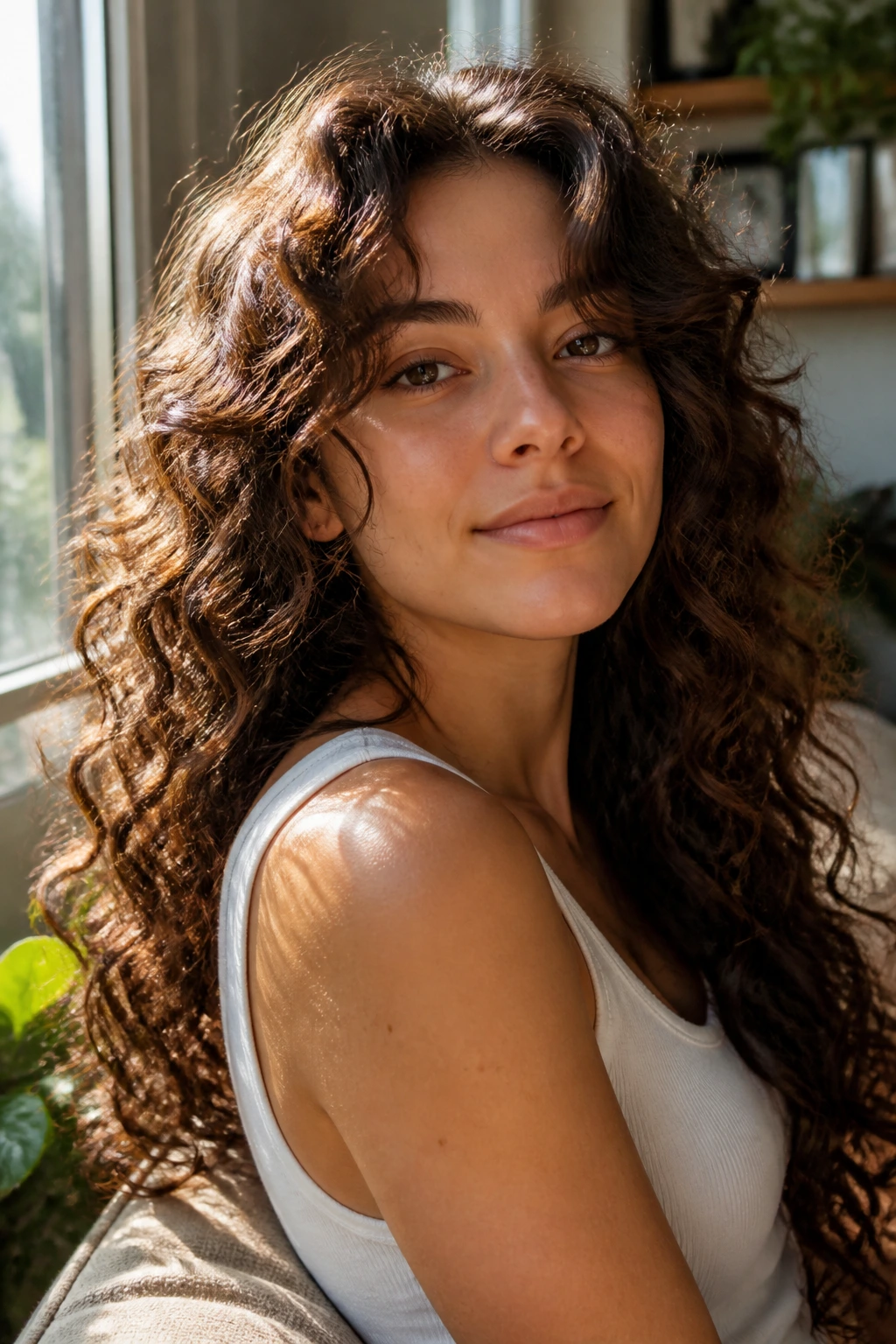
Curtain bangs or long face-framing pieces can make a down style look finished without much effort. Sweep the front sections away from the center, set them with a side clip or a loose pin while they cool, and let the rest of the curls fall behind them. The result is soft, open, and not at all heavy around the face.
Why the Front Matters
Long curls can get visually dense around the cheekbones. A curtain sweep solves that by opening the center line and letting the front pieces travel outward instead of straight down. If you use a diffuser, dry the front sections with a lift at the root and a slight bend away from the face. That tiny angle changes the whole shape.
This style works especially well when you want to wear the hair down but avoid the “all hair, all the time” feeling that can happen with long length. It’s simple, but not boring. Those are the best kinds of styles.
18. The Ribbon-Tied Low Ponytail
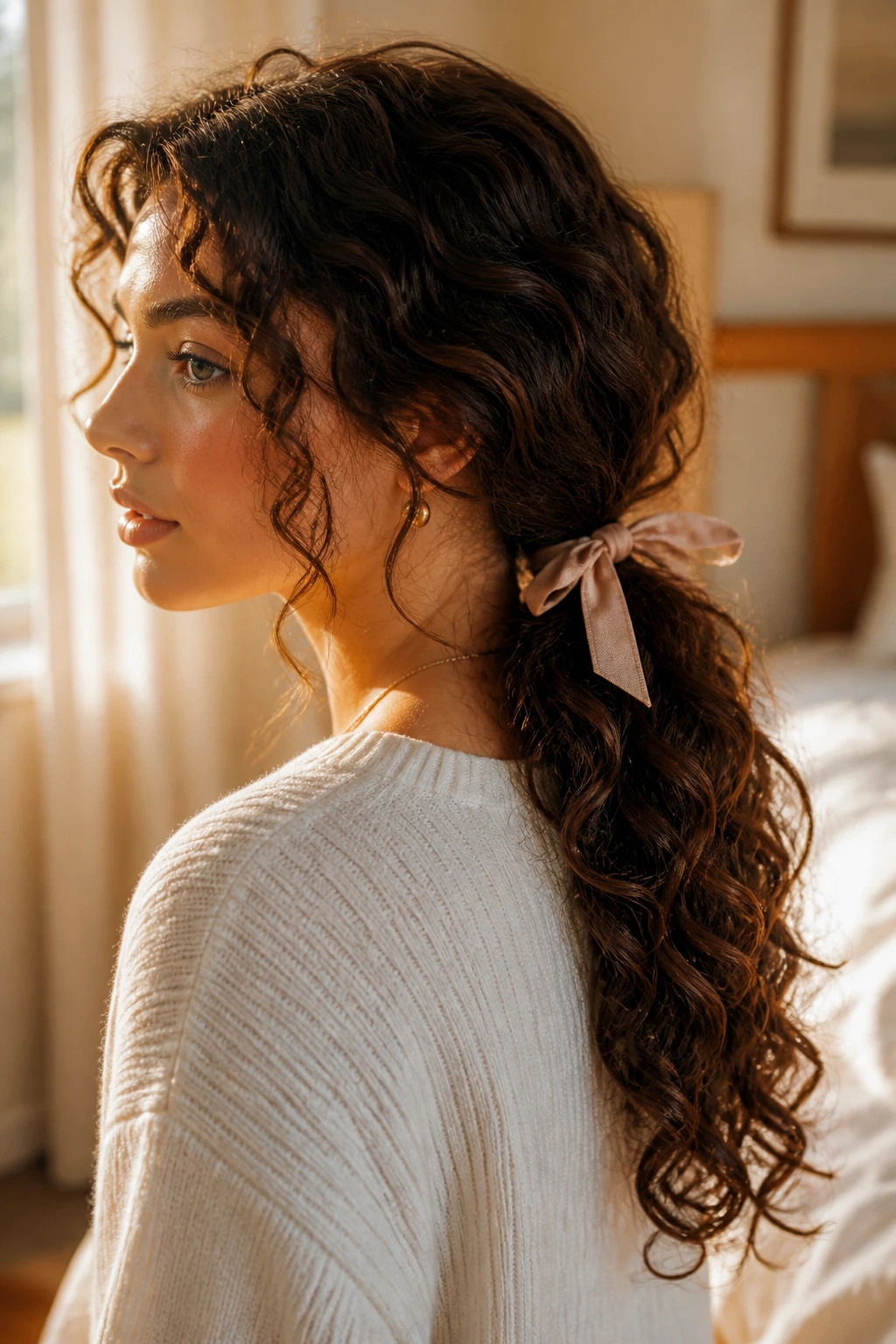
A ribbon can do more than decorate. Tie one around a low ponytail and it instantly reads softer, cleaner, and more finished than an elastic alone. I like a ribbon that’s about 1/2 to 1 inch wide, with enough length to knot neatly under the pony and let the ends hang.
The ponytail itself should sit just above the nape, with the curls gathered loosely so they keep their shape. If the hair is too tight at the base, the ribbon becomes a bandage. Not the look. Let the curls spill a little around the tie so the ribbon feels like part of the style, not a gift-wrap afterthought.
This one is especially useful when you want a style that looks deliberate but does not require pins everywhere. It’s a small change, but on long curls it makes a real difference.
19. The Silk-Scarf Wrapped Bun
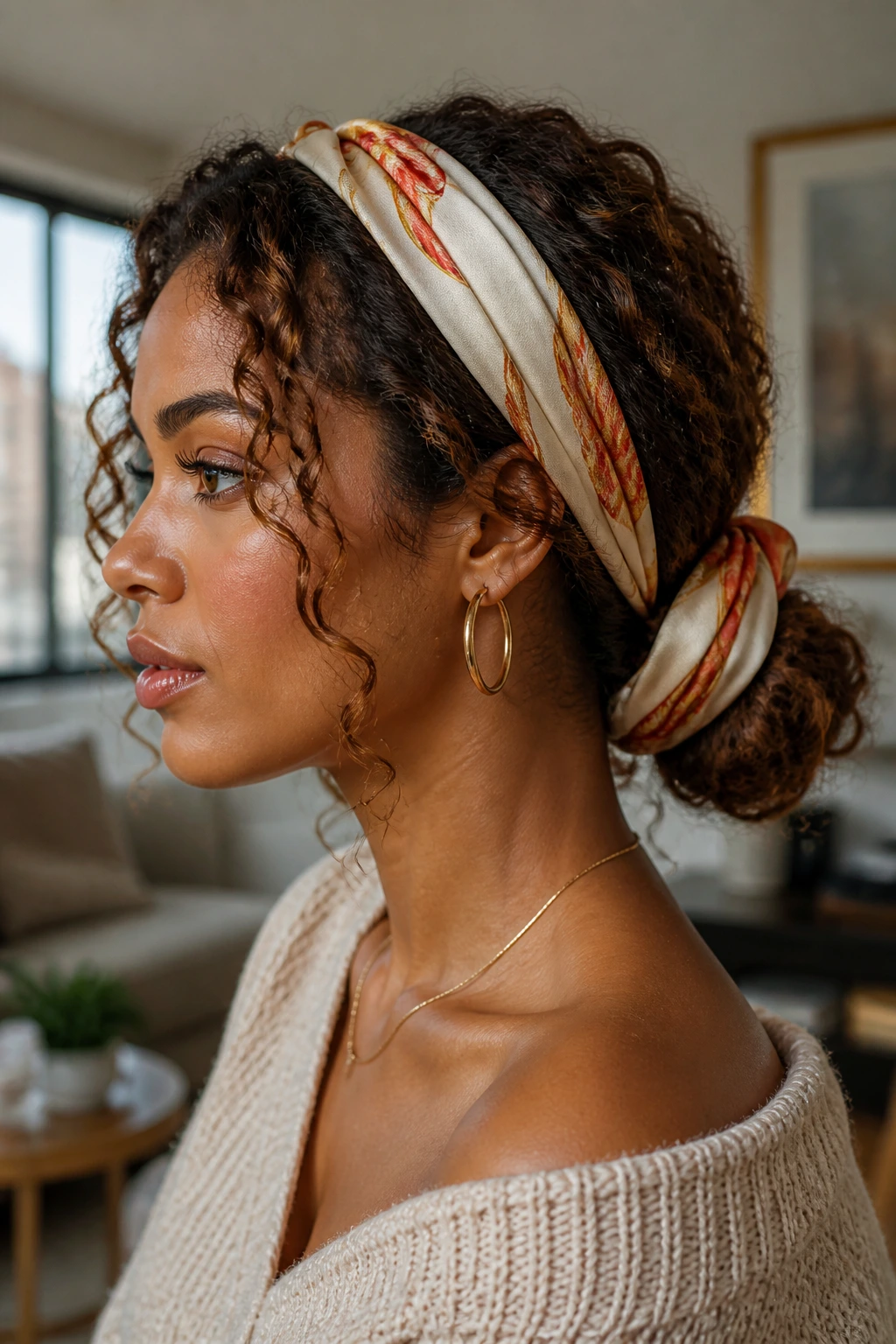
A silk scarf around a bun looks elegant, but it also helps preserve the curl pattern. Fold the scarf into a band, wrap it around a low bun or pineapple, and knot it where it won’t dig into the scalp. The scarf protects the outer layer from friction and adds enough color or pattern to make the style feel finished.
How to Wear It
Use a bun that already has a bit of shape before the scarf goes on. If the hair is just shoved into a knot, the scarf has nothing to work with. Tuck the ends of the scarf under the wrap if you want a cleaner line, or leave the tails out if you want a more relaxed look.
Silk and satin are both useful here. Cotton scarves catch on curls and dry them out faster. This matters more than people admit, especially on long hair that rubs against coats, collars, and seats all day.
20. The Faux Hawk with Pin Curls
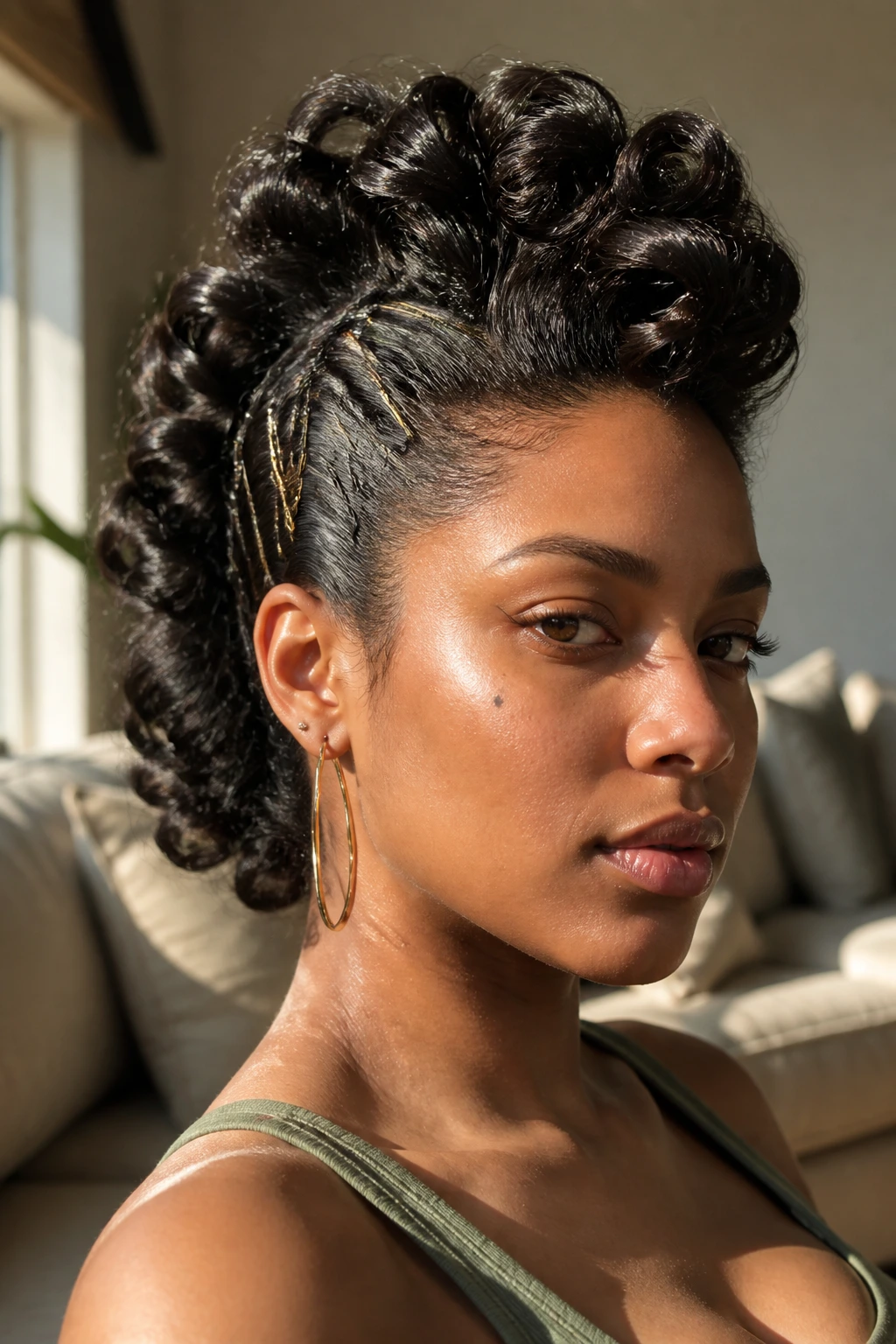
The faux hawk only looks dramatic if the sides are controlled. Pin them back tight enough to create a clean edge, then lift the center section into a ridge of curls that runs from the forehead to the nape. The contrast between the smooth sides and the volume in the middle is what makes this style work.
It’s a good option when you want something sharper than a braid but less formal than a chignon. Long curls give the center ridge enough length to curve and stack, which is why this style can look fuller on long hair than on shorter lengths. That weight helps.
Use several bobby pins instead of one or two heavy clips. Pins let you shape the sides more precisely, especially if your hairline has shorter layers that like to escape. A quick mist of strong-hold spray over the pinned sections helps them stay put.
21. The Curly Pigtail Braids
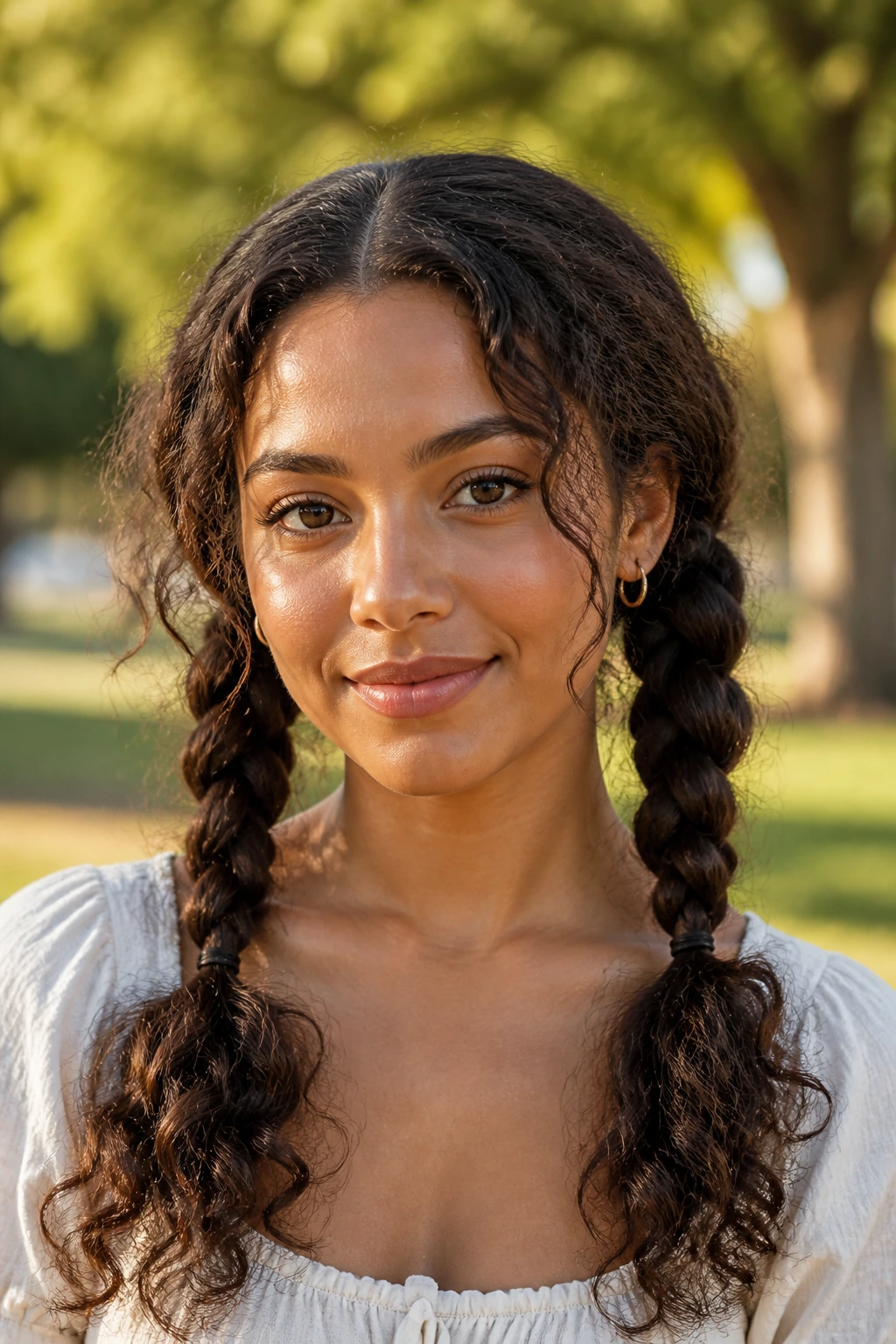
Pigtail braids on long curls can look playful in the best way when you keep them loose. Part the hair down the center, braid each side low and chunky, and let the ends remain curly. If the braids start below the ears, they feel grown-up instead of schoolgirl.
This style is useful when you want the length under control but still visible. It keeps the shoulders clear, which is nice on warm days, and it distributes the weight of the curls so the roots do not feel pulled in one direction. Thick curls especially appreciate that balance.
A little tug on the outer braid sections creates a fuller shape. Don’t overdo it. The braid should look soft, not unraveling.
22. The Temple Clip Deep Part
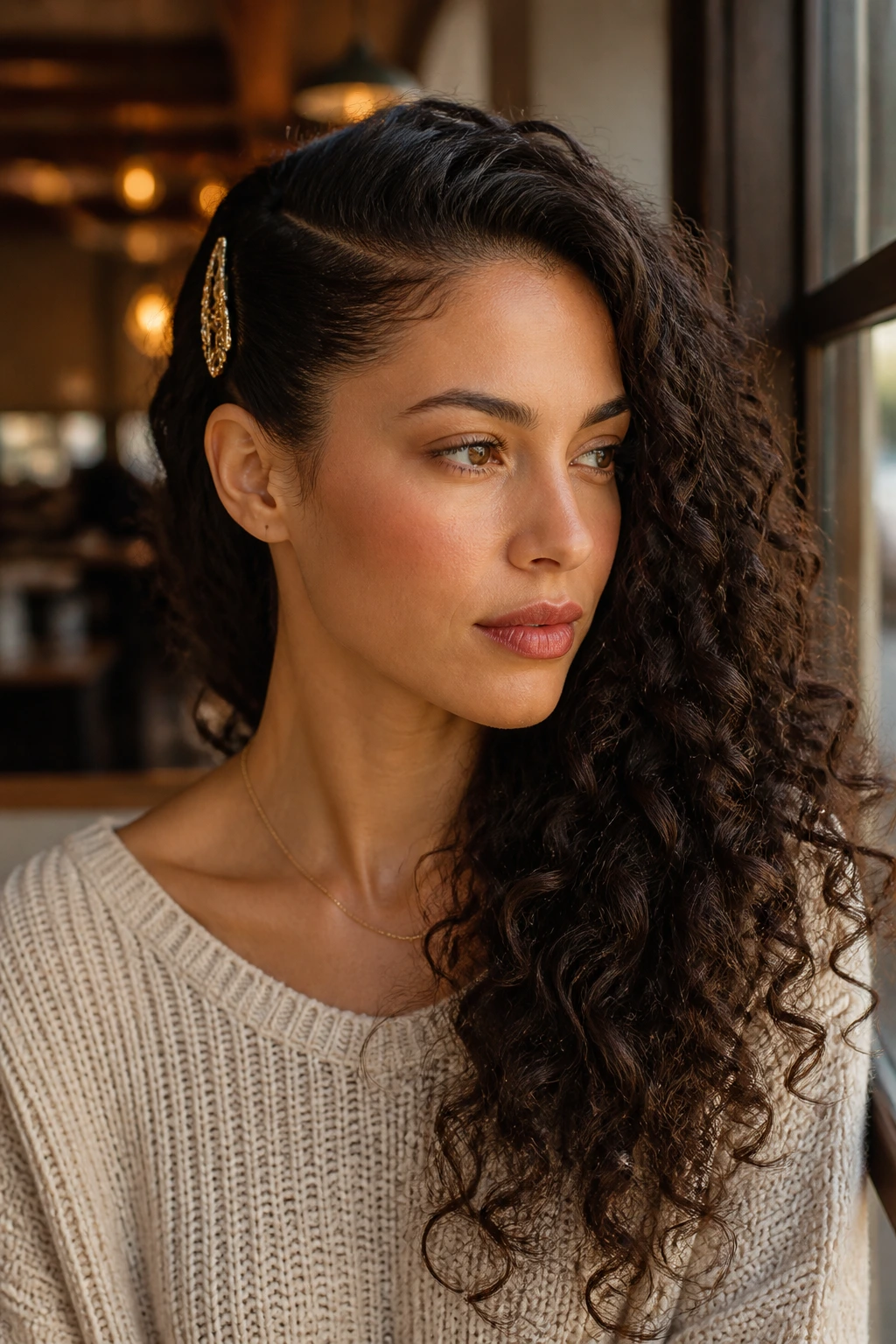
A deep part and a single temple clip can do more than people expect. Sweep most of the hair to one side, place a decorative clip just above the temple or slightly behind it, and let the curls cascade from there. The clip acts like a hinge, keeping the front open while the rest of the length falls naturally.
This is one of the easiest ways to change the mood of long curls without changing the whole style. The part creates asymmetry, the clip gives the eye a resting point, and the curls do the rest. If the roots at the crown are flat, lift them a little with a diffuser first so the style doesn’t collapse toward the scalp.
A metal barrette, pearl clip, or plain acetate clip all work. Choose the one that can actually hold the weight. Pretty means nothing if it slides out in ten minutes.
23. The Crown Twist with Loose Length
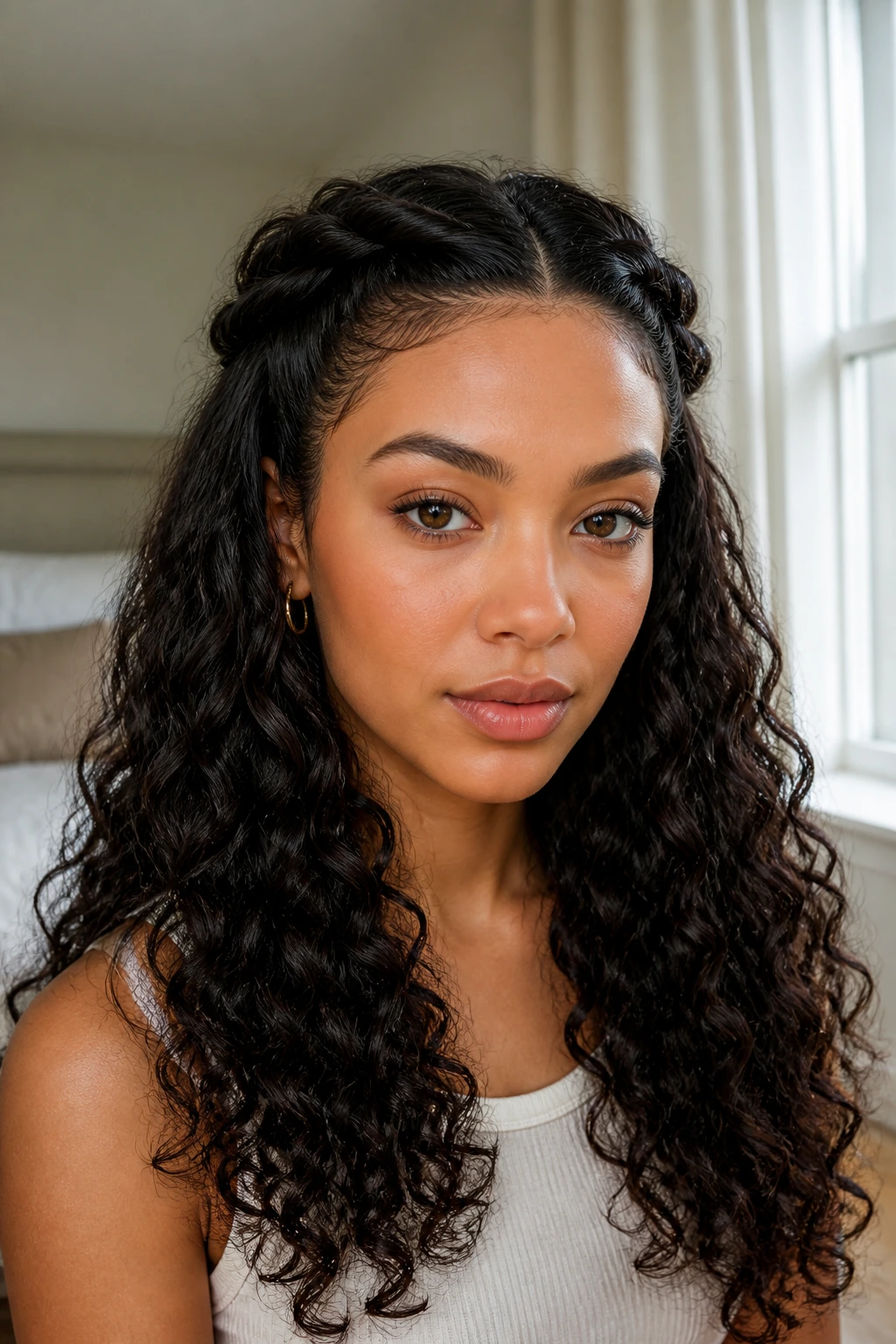
A crown twist is a neat answer when you want the front controlled and the length still free. Take a section from each side of the head, twist them back along the crown, and pin them where they meet. The rest of the curls stay down, which keeps the style from feeling trapped.
The twist should travel close enough to the hairline to make a visible frame, but not so close that it pulls the skin tight. That tension is where headaches begin. Keep the twists relaxed, and use pins that disappear into the curl color if you can.
This style is one of my favorites for layered hair. The shorter front pieces stay in the twist, the longer pieces fall out underneath, and the haircut finally gets to do some work on its own. That’s a nice change from styles that hide the cut entirely.
24. The Half-Up High Puff
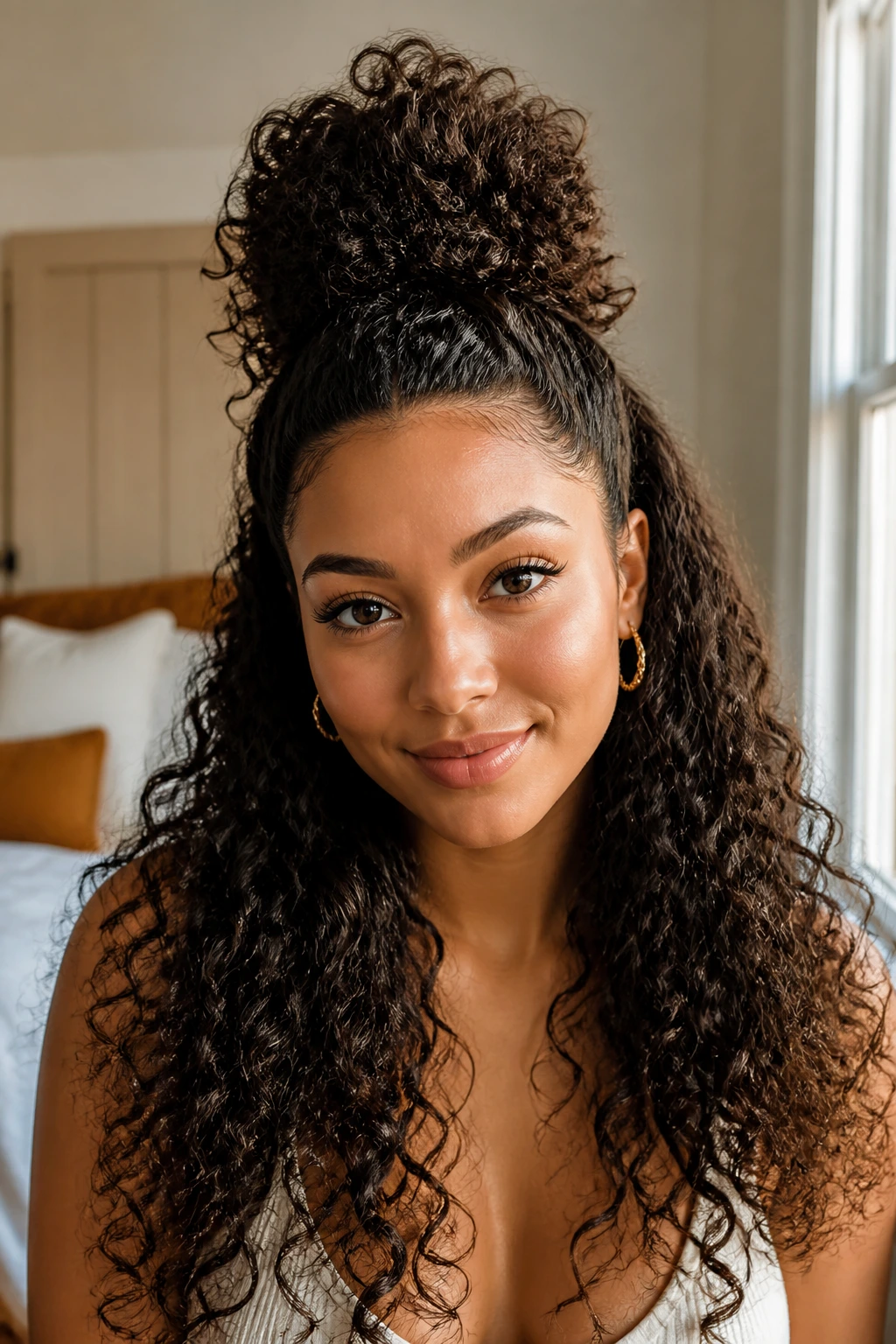
A high puff, even in a half-up version, gives long curls a lift that small clips can’t match. Gather the top third of the hair near the crown, secure it loosely, then fan the puff upward so the curls sit above the head instead of being dragged backward. The rest of the length stays down.
Why It Works
Long hair can weigh the top of the head down, especially if the curls are dense. This style solves that by moving the anchor point higher. The visual effect is a lifted face and a stronger silhouette, but the length remains visible, which keeps the style from feeling chopped up.
If the puff looks flat, loosen the base a little and shake the top with your fingers. That one small adjustment usually fixes the whole thing. The style should look airy, not squeezed.
25. The Rope-Braid Low Bun
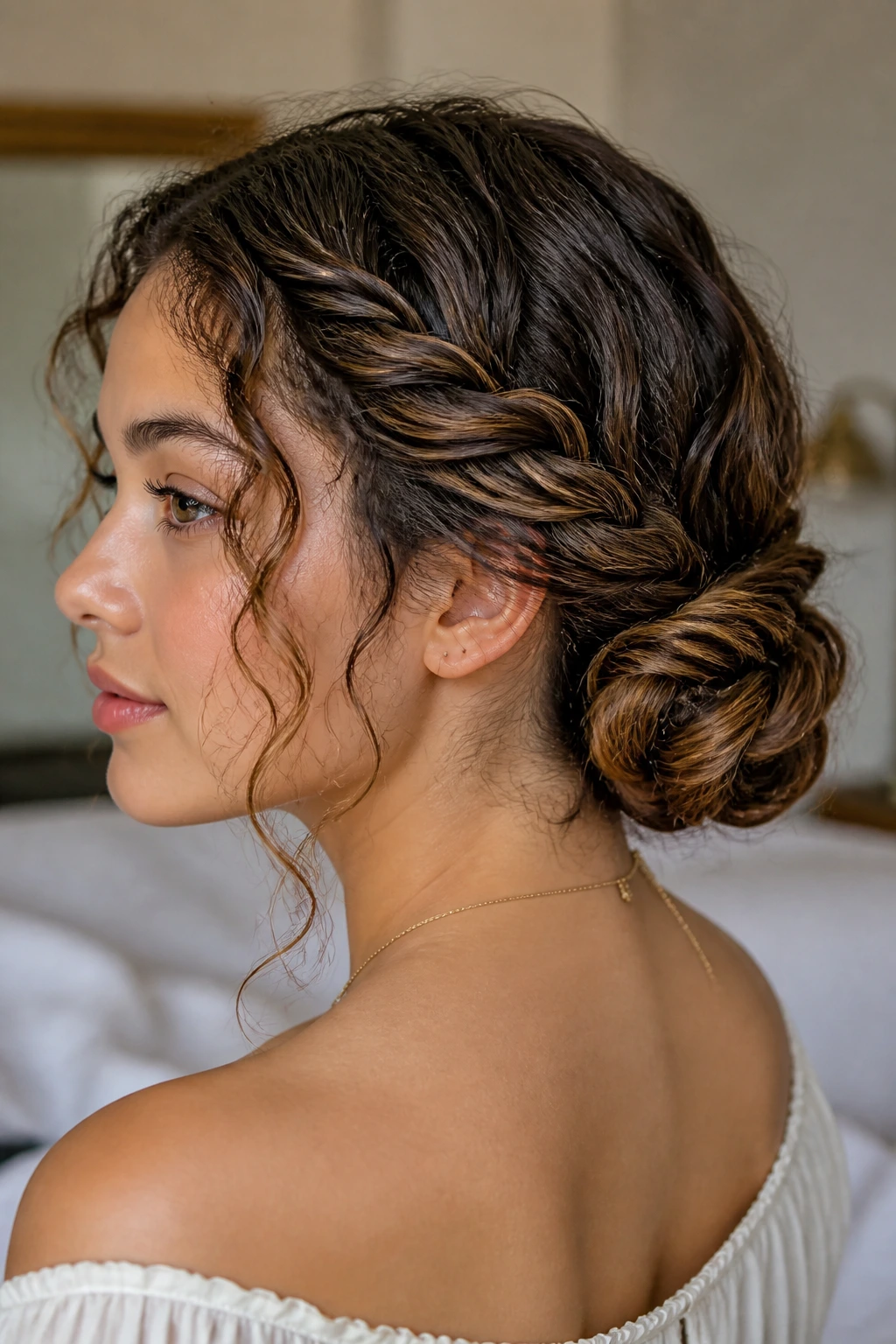
A rope braid is just two strands twisted in the same direction and then wrapped around each other, which makes it faster than a full braid and a little smoother in finish. On long curls, it works beautifully as the base for a low bun. Twist the sections, coil the rope at the nape, and pin the bun in place.
This style has a tidier surface than a regular braid, which makes it useful when you want less frizz showing. It also holds a bit better on slippery hair because the twisted structure has more bite. If the ends poke out, tuck them under with a pin rather than trying to force them into the coil.
A rope-braid bun is one of those styles that looks fancier than the effort it takes. That’s worth something on a long-hair day.
26. The Vintage Roll with Defined Curls
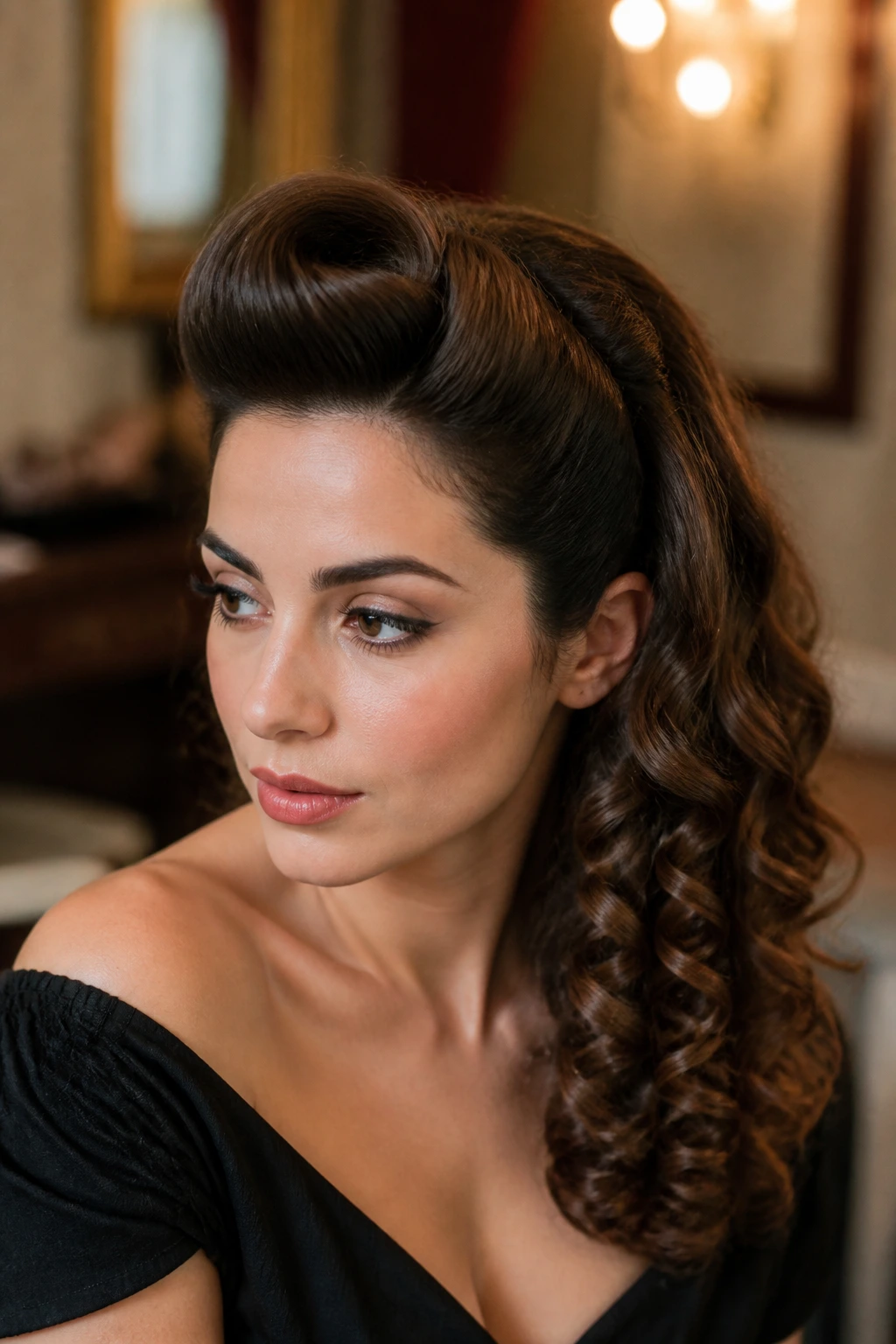
A vintage roll gives long curls a little old-film polish. Roll the front section backward, pin it at the crown, and let the rest of the curls stay loose or sweep them to one side. The front roll creates a clean line across the top, which is the whole reason the style feels intentional.
The roll should stay soft, not rigid. If you smooth every strand into place, it starts to look like a costume piece. Leave texture in the rolled section, and let a few curls sit free around the face so the look stays modern enough to wear outside a photo booth.
This one is especially good for events where you want a bit of structure without losing the natural curl pattern. It is formal, but not stiff.
27. The Wet-Look Curly Sweep
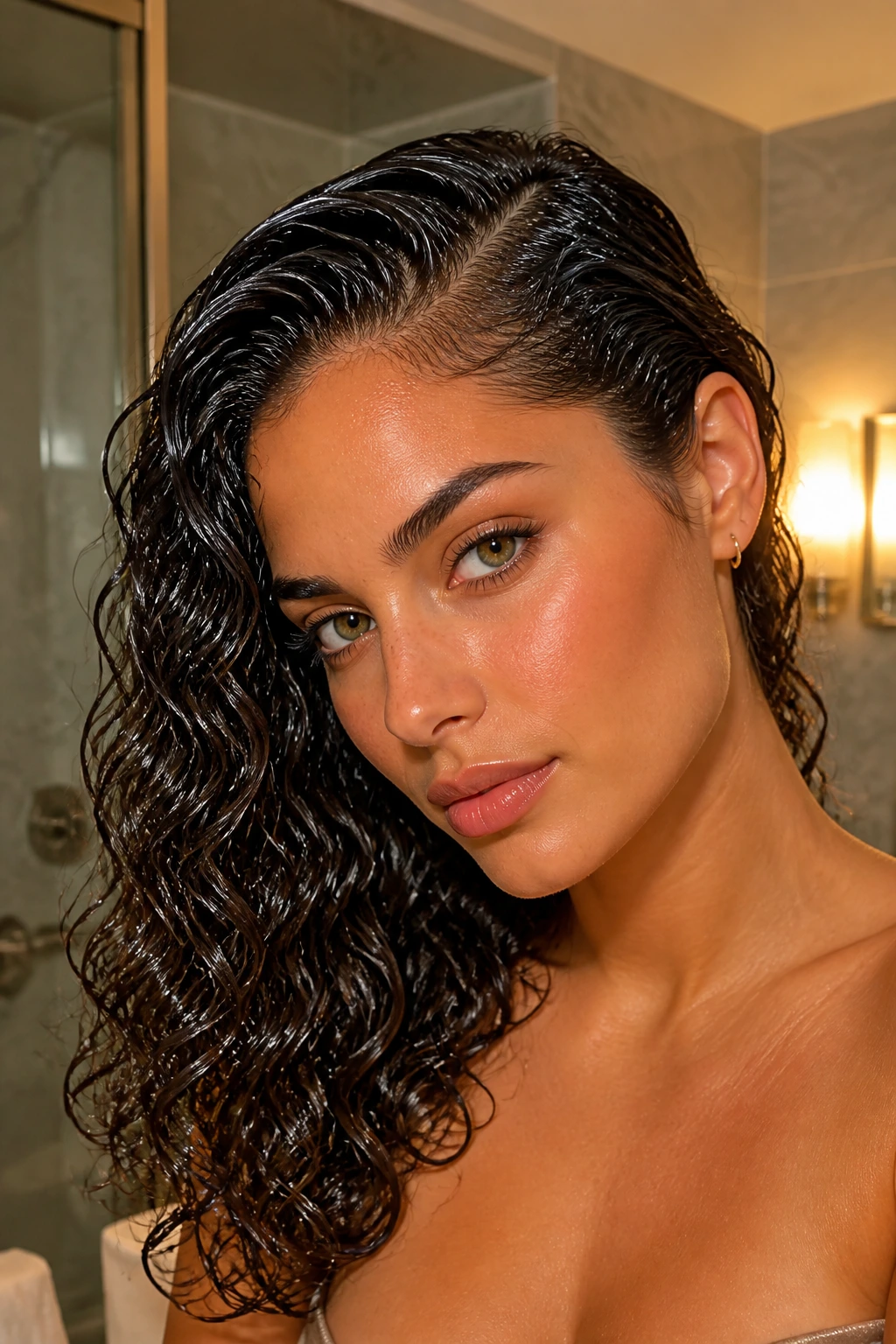
A wet look on long curls does not need to mean crunchy hair. Apply gel to damp curls, part the hair deeply to one side, and sweep the front back so the lengths cling together in shiny clumps. The result is smooth at the roots and glossy through the ends, with the curl pattern still visible.
The trick is to stop touching it. Once the hair starts to dry, hands make it frizz faster. Let the gel form its cast, then break that cast only at the end if you want a softer finish. That is the part people skip, and then they wonder why the style looks fuzzy.
This is a strong choice in humid weather, for nighttime events, or whenever you want the hair to read sleek without ironing out the texture. It looks deliberate because it is.
28. The Mermaid Side Braid
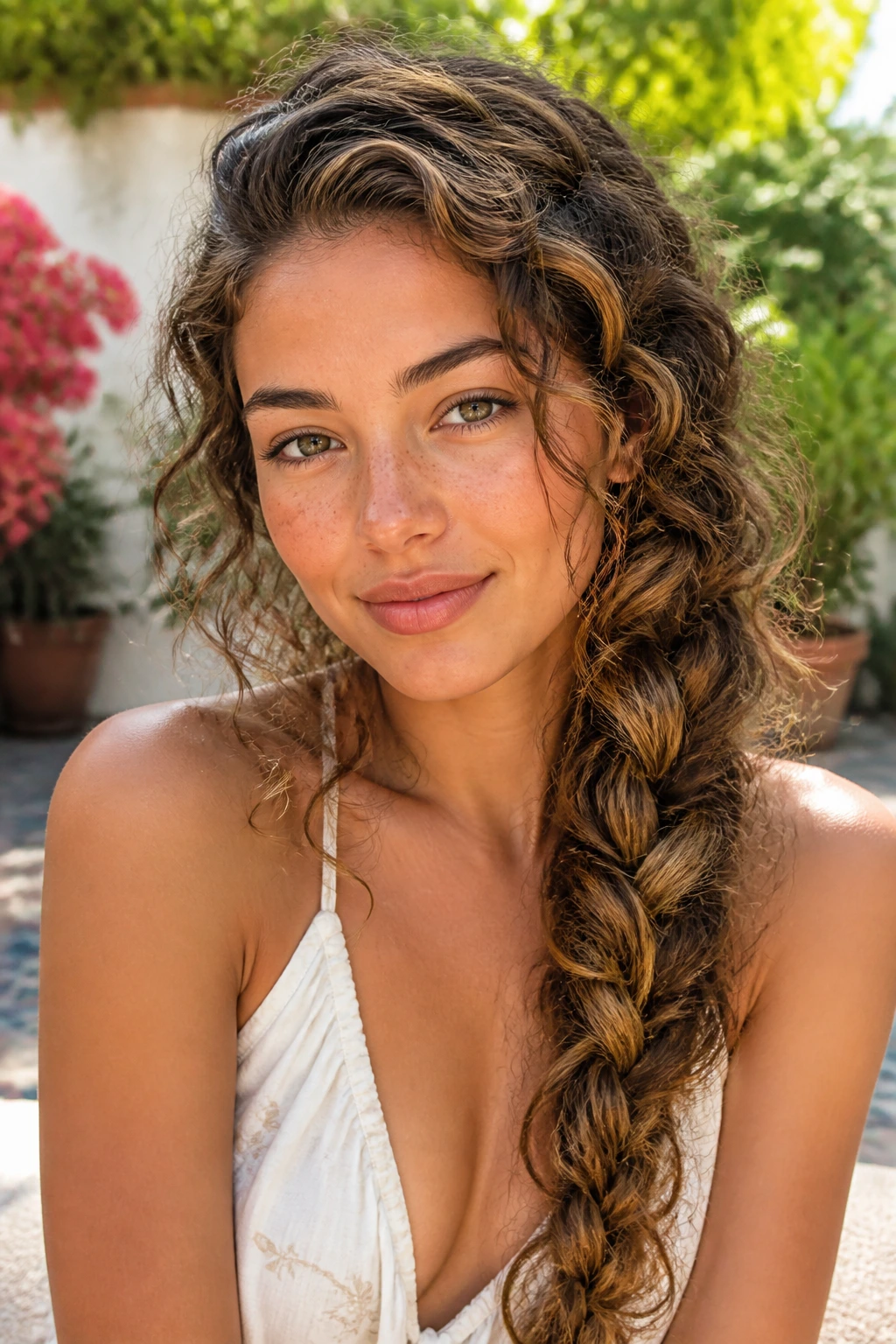
A mermaid side braid lets long curls show off their length without falling into total chaos. Sweep all the hair to one side, braid the upper portion loosely, and let the lower lengths remain curly or partially woven through. The braid should travel far enough down the shoulder to feel anchored, but not so far that the tail disappears.
This style works because it uses the length as part of the design. The braid frames the body, the curls add texture at the bottom, and the side placement keeps the whole thing from feeling bulky down the back. If your layers are short near the front, tuck them into the braid with small pins before you start.
It’s one of the prettiest answers for long curls when you want movement and control at the same time. A little lived-in looseness suits it. Too neat, and it loses the whole sea-worn point.
What Makes Long Curls Hold Their Shape
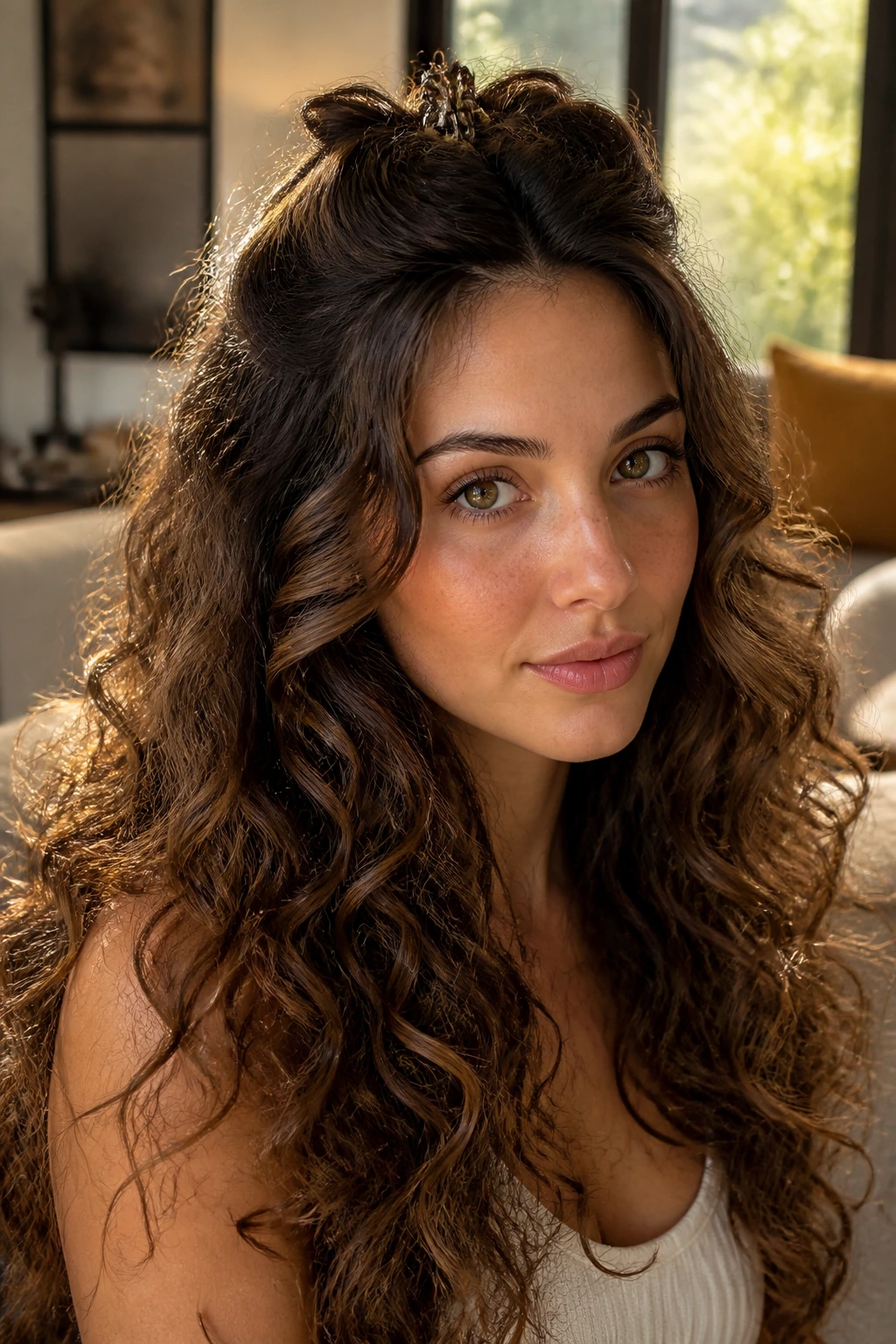
Long curls behave differently from shoulder-length curls because gravity has more time to work on them. A curl that looks springy at the chin can stretch and flatten by the time it reaches the ribcage. That does not mean the hair is difficult. It means the style needs an anchor point and a clear finish.
The crown is the first place to pay attention to. If the top goes flat, the whole style feels tired, even when the lengths are still defined. That is why twists, braids, clips, and high ponytails keep showing up in this list. They add lift exactly where long hair tends to sag.
Product matters, but not in the heavy-handed way people sometimes assume. A light mousse, a strong gel at the roots, or a small amount of cream on the lengths can help the hair stay where you place it. Too much product near the scalp, though, makes long curls slip faster. That greasy, soft-root feeling is usually the enemy.
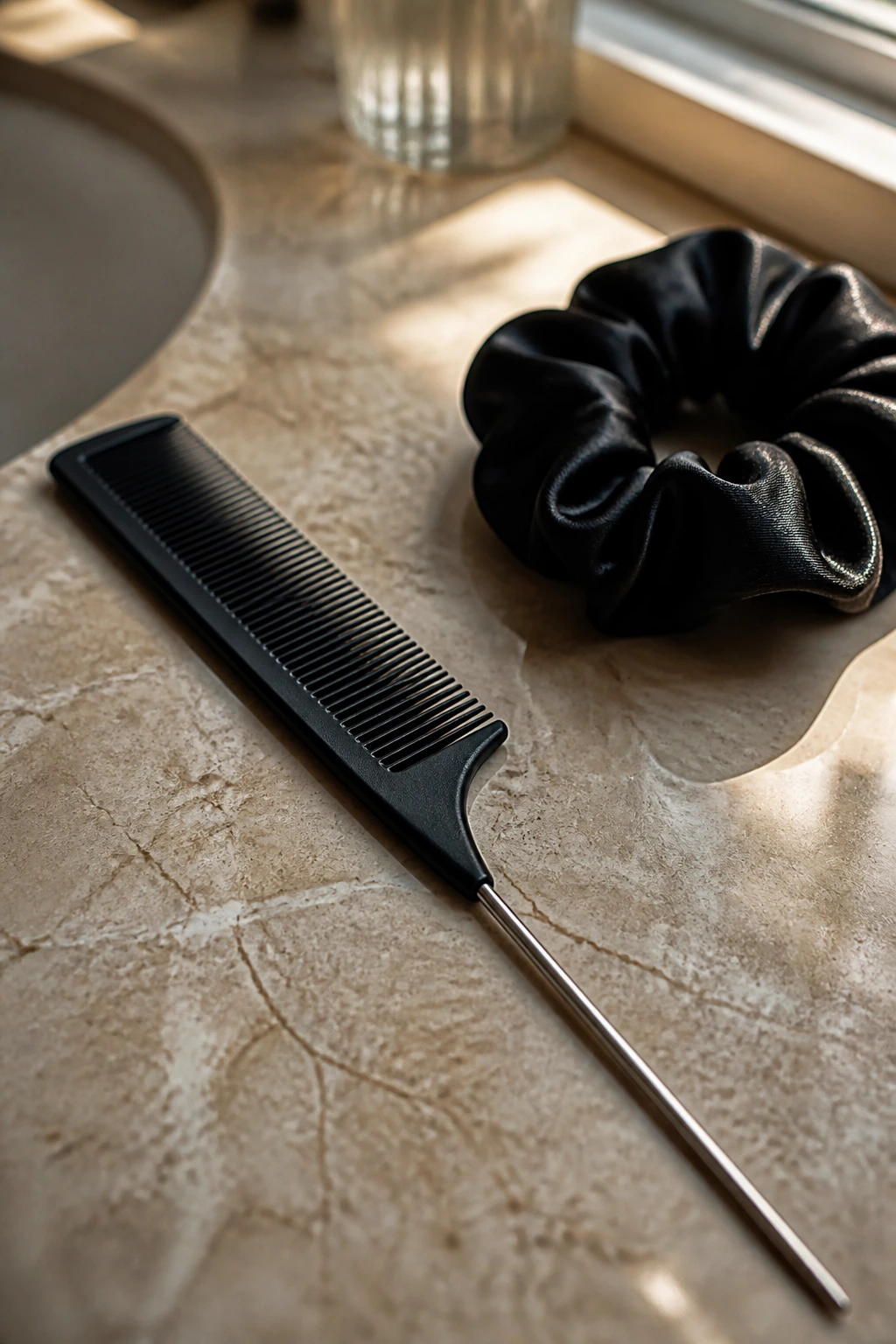
Essential Equipment for These Styles
-
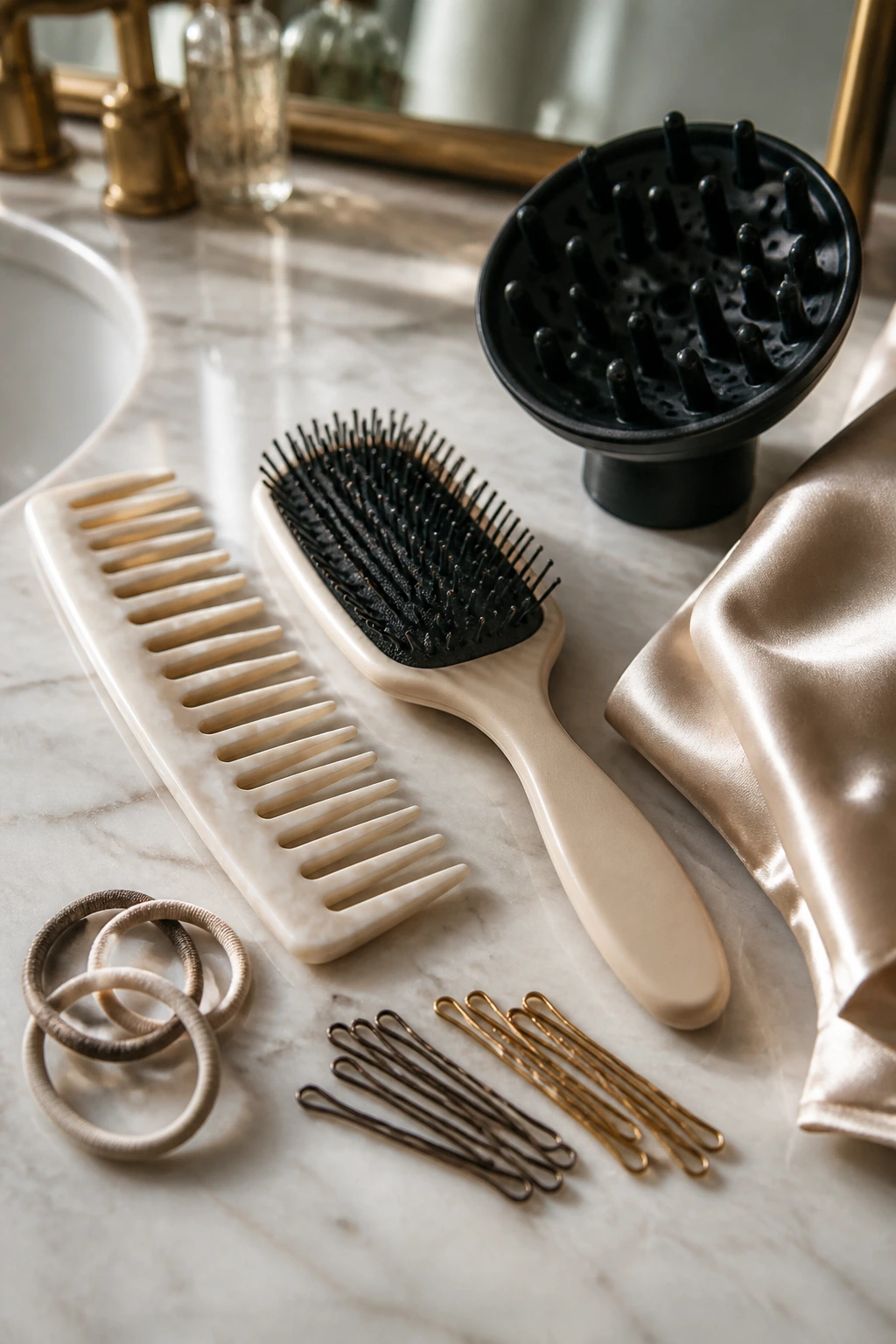
Rat-tail comb — Best for clean parts, crown sections, and narrow braids.
-
Wide-tooth comb — Use it on wet curls or after a refresh to separate knots without wrecking the pattern.
-
Satin scrunchies — They grip without leaving the ugly dent that thin elastics make.
-
Bobby pins with a coated finish — These hold twists and crown pieces better than the cheap slippery kind.
-
Clear elastics — Useful for bubble ponies, braid ends, and low-profile anchors.
-
Large claw clip — Choose one with real spring and long teeth if your hair is thick.
-
Duckbill clips — Handy while setting parts, bangs, or face-framing sections.
-
Diffuser attachment — Helps dry roots and set shape without blasting curls apart.
-
Light gel or mousse — Gives the style memory, especially on humidity-prone days.
-
Satin scarf — Protects the style overnight and helps with pineapples, buns, and wrapped finishes.
Smart Product and Accessory Choices
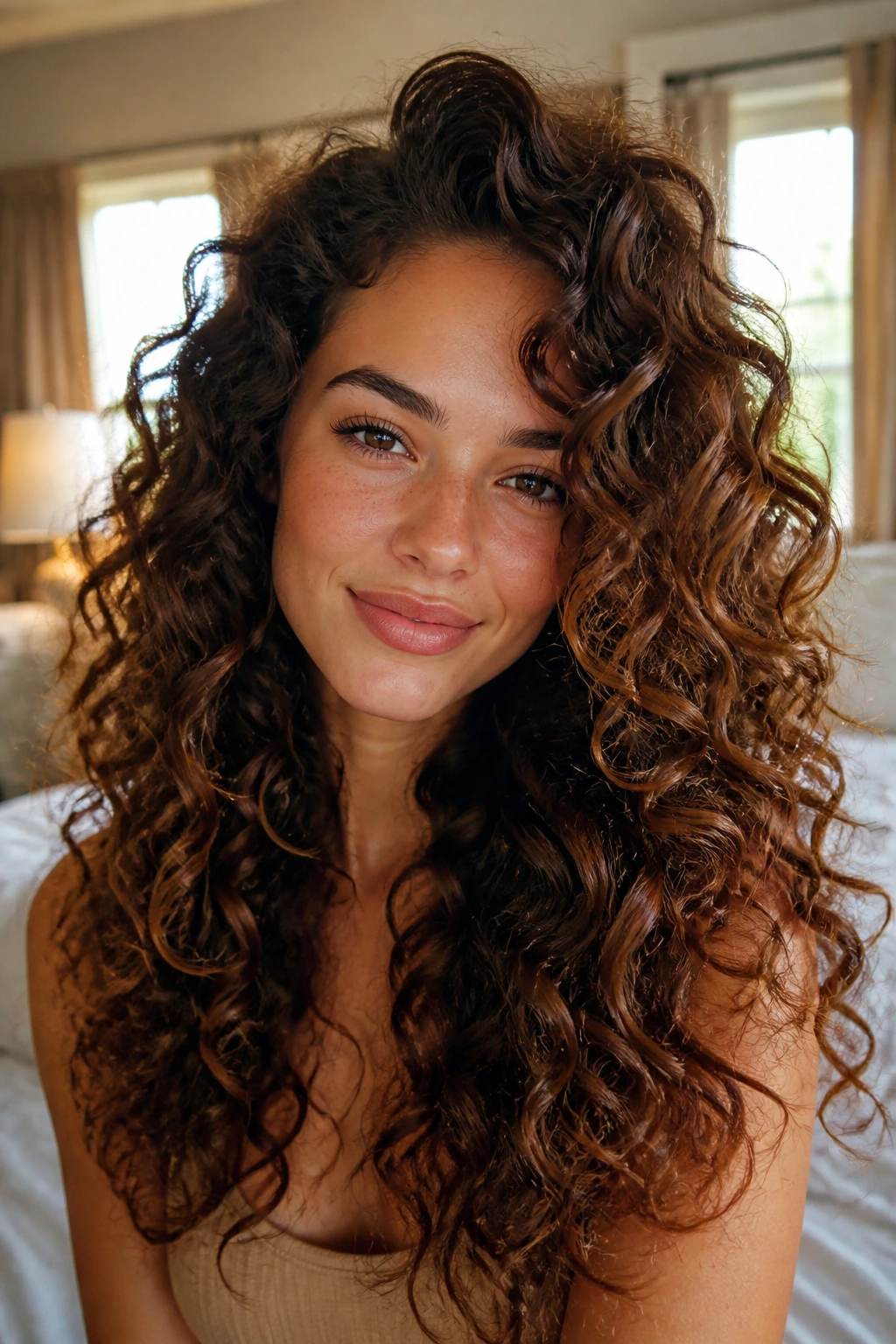
Not all hair accessories are built for long curls, and that shows up fast. Thin elastics snap, tiny clips slide, and decorative pins that look cute in a basket can fail the second they meet real weight. The better choice is the one with enough grip for your density, not the one that looks prettiest in the package.
For styling products, think in layers. A mousse or foam helps the curl keep its body. A gel gives hold and keeps the surface smoother. A little cream on the ends keeps them from puffing up like dandelion fluff. Put the heaviest products where the hair needs control, usually the crown or part line, and keep the ends lighter.
Accessories should match the amount of hair they need to hold. Fine curls often do better with smaller pins and medium clips. Thick curls usually need jumbo claw clips, double elastics, or two-row pinning. And if the accessory bends open when you test it with your hand, it will probably fail in your hair too.
How to Wear These Styles in Real Life
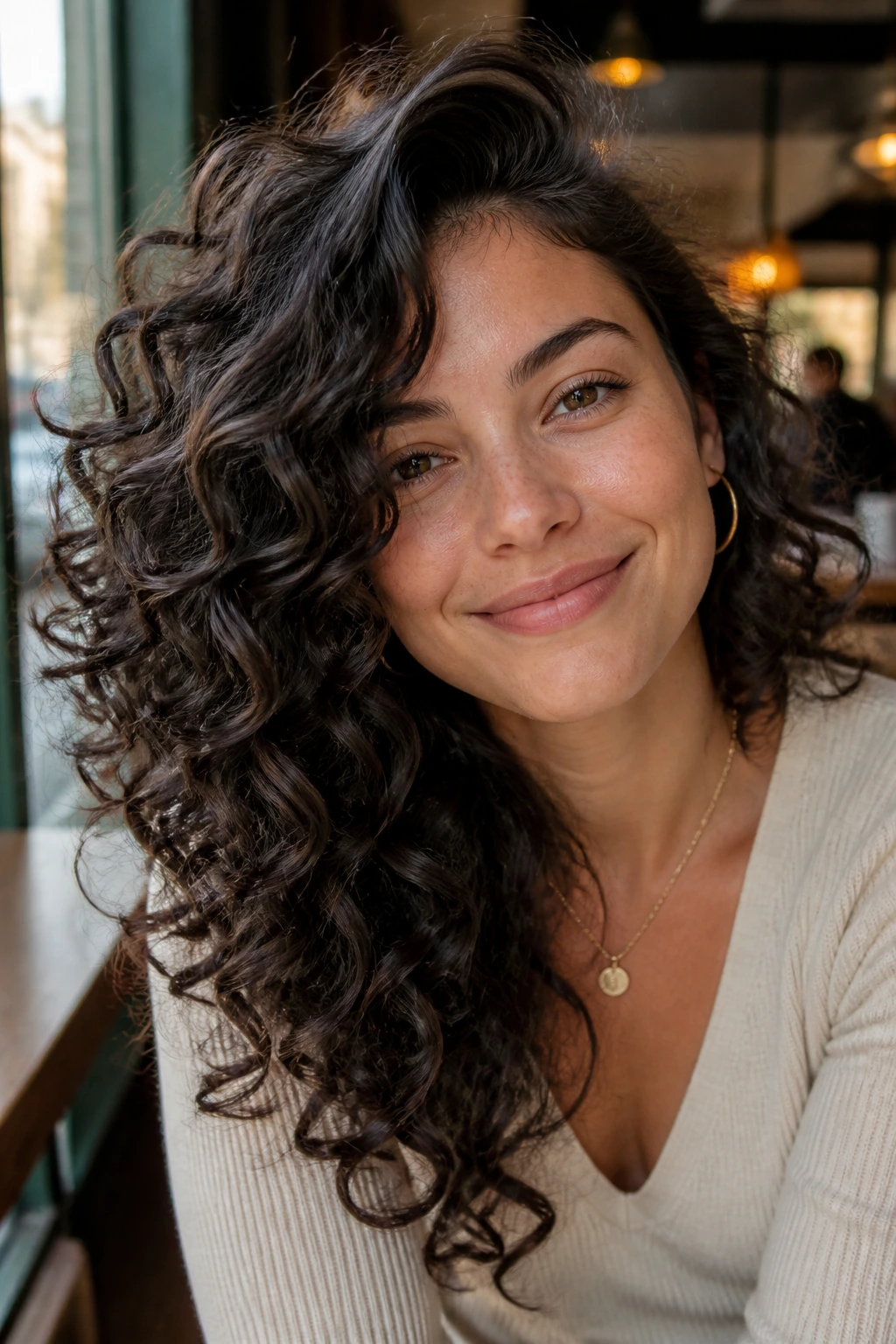
Everyday: Reach for the side-part cascade, the low ponytail, the temple clip, or the crown twist. Those styles give shape fast and do not ask for perfect curls. A little frizz is fine. It softens the look.
Office and dressier settings: The low chignon, ribbon-tied ponytail, rope-braid bun, and side-swept Hollywood curls all read cleaner without looking severe. Keep the roots smooth, leave one or two front curls out, and the style will stay friendly instead of stiff.
Busy or humid days: Braids, the pineapple, the French twist, and the wet-look sweep hold up better when the air turns difficult. They rely on structure more than perfection, which is exactly what long curls need when the weather gets annoying.
Accessories: Put clips where the eye naturally lands — near the temple, just above the ear, or at the base of a twist. Scarves belong around buns and pineapples. Ribbons work best at the ponytail base, not halfway down the length where they start to look random.
Easy Upgrades That Change the Finish
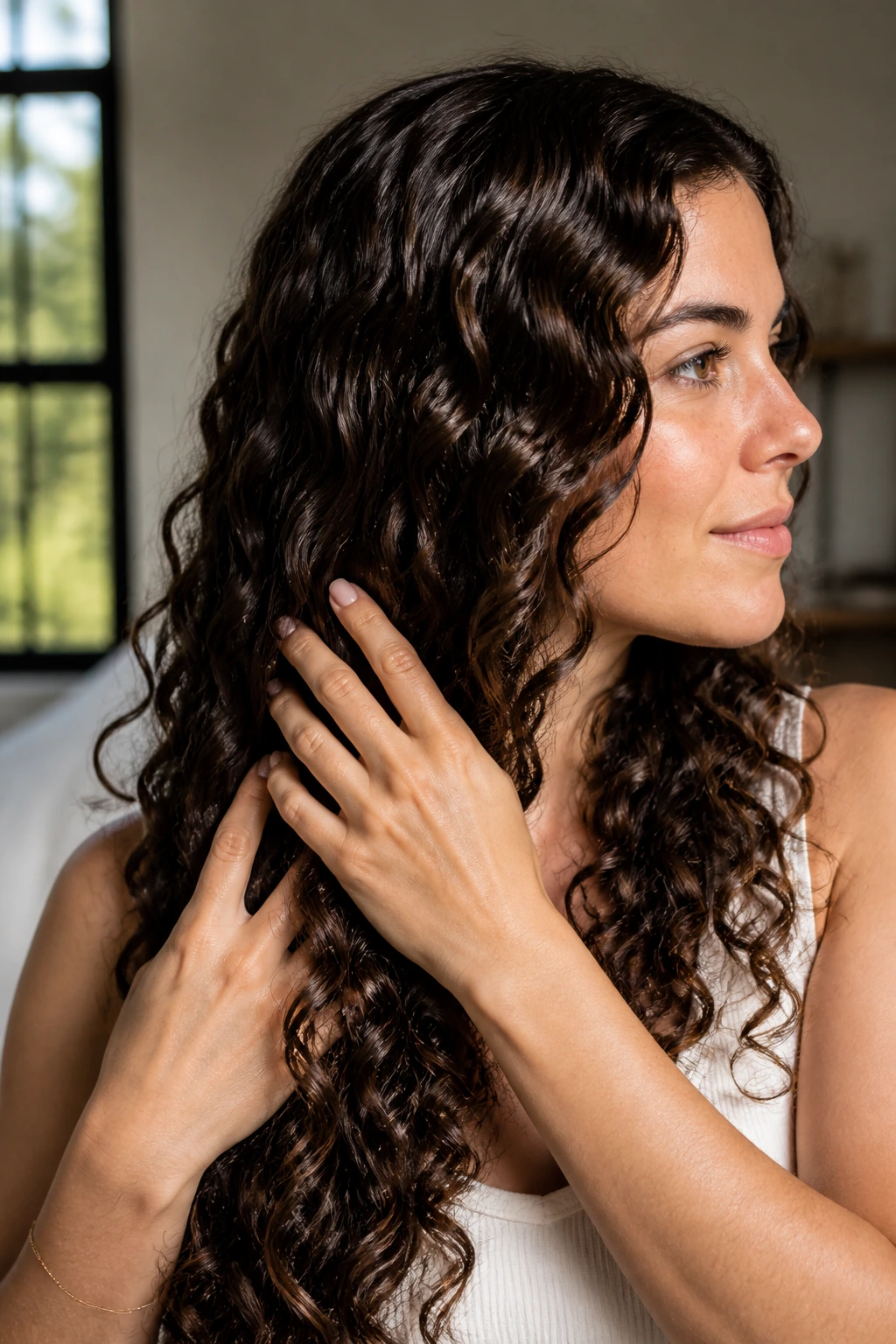
Definition Boost: Work a pea-size amount of mousse through damp mids and ends, then scrunch and diffuse until the curl cast sets. The style will hold longer and look less fuzzy.
Volume Boost: Clip the roots at the crown while drying, or flip the part side-to-side for a few minutes. Long hair often needs help remembering height.
Smoother Finish: Warm a drop of serum between your palms and smooth only the outer layer of the hair. Don’t chase every frizz; you’ll flatten the curls and lose the shape.
Shortcut: Start with second-day hair. Long curls often behave better once a little natural oil and texture are in the mix.
Make-It-Yours: Fine curls usually need lighter pins and less product. Thick curls need stronger elastics, a firmer clip, and a little extra patience around the base.
Common Mistakes to Avoid
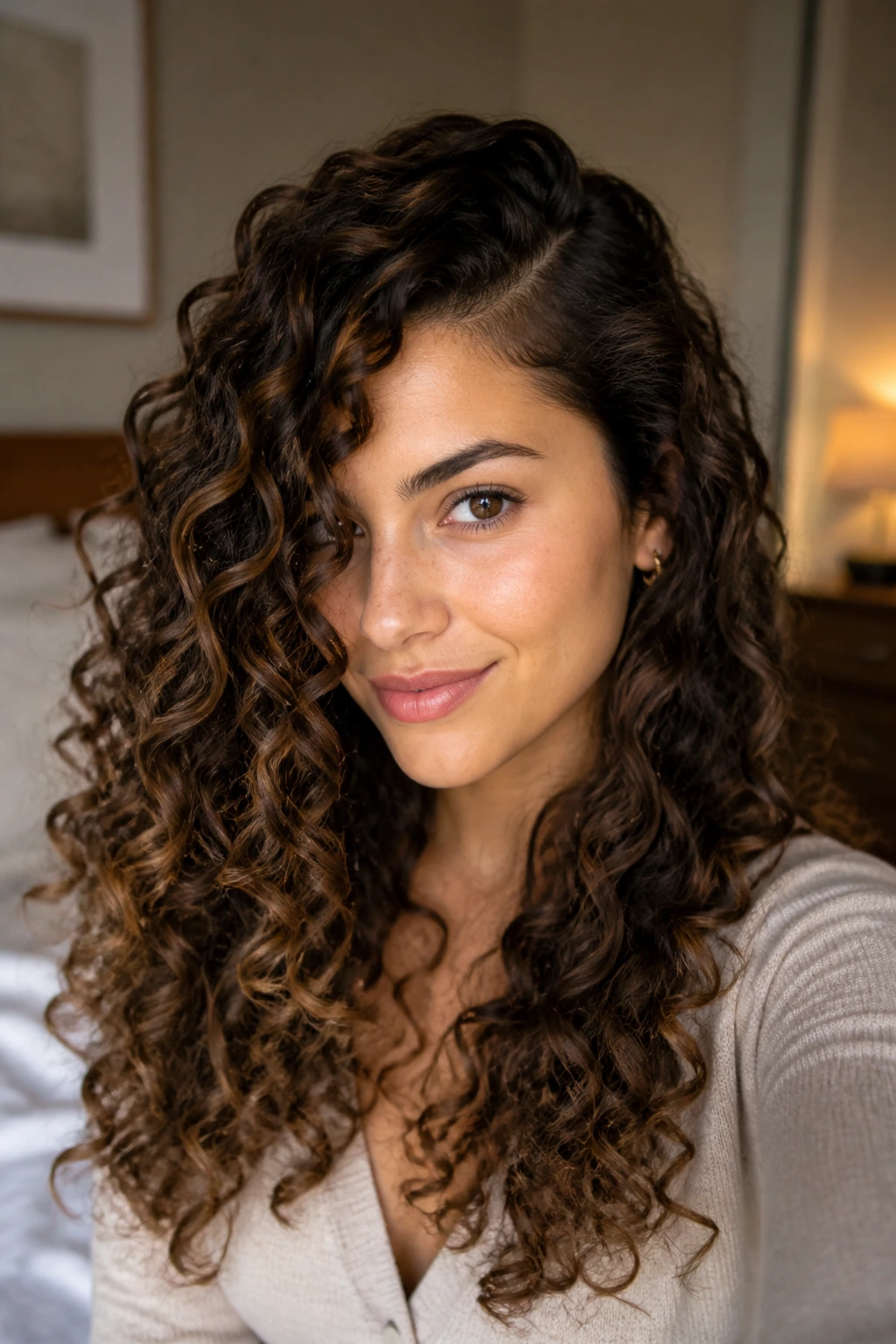
Pulling the hair too tight is the fastest way to ruin a good style. The scalp looks flat, the face feels dragged backward, and by midday you get that tense ache near the temples. Loosen the anchor point and use a wider section of hair instead of yanking harder.
Overloading the roots with cream is another easy mistake. The style may look sleek for ten minutes, then slip. Keep heavier products on the mids and ends, and use lighter hold near the part line.
Brushing curls until they turn into one fluffy mass is a bad trade. Long curls need clumps. If you want a smoother finish, smooth the surface with your hands or a brush only on the top layer, not through the whole head.
Ignoring hair density causes trouble too. A claw clip that works on fine curls can fail on thick curls. A tiny braid that looks delicate on loose waves can disappear in a dense head of curls. Match the style to the actual amount of hair you have.
Sleeping on a style without protecting it will flatten almost anything. Satin or silk makes a real difference, especially for buns, pineapples, and loose braids.
Variations and Adaptations to Try
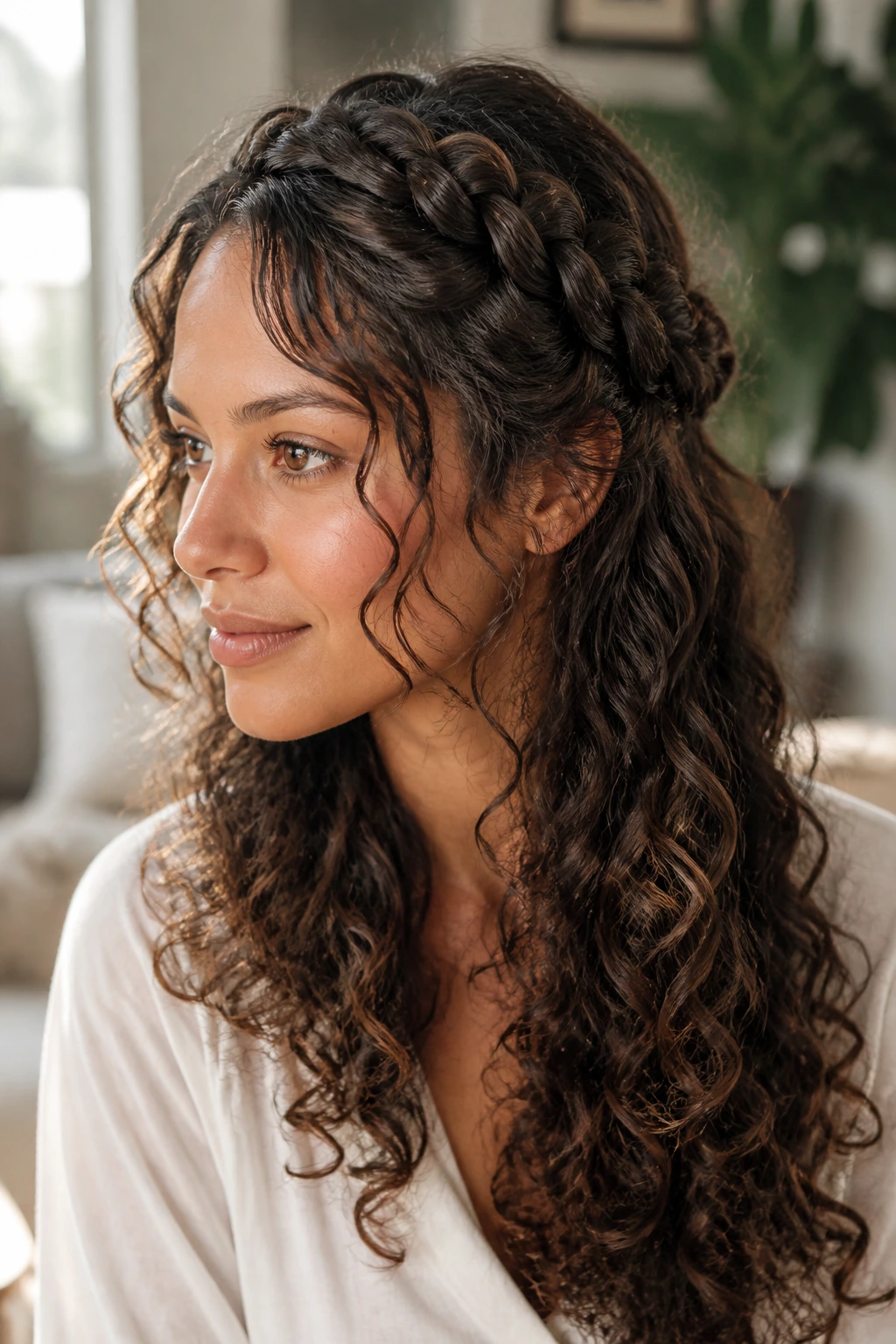
Fine-Curl Friendly: Use smaller sections, lighter products, and lower anchor points. Fine curls usually do better with a soft finish and fewer bulky pins.
Thick-Hair Control: Split the hair into two anchor zones before pinning or clipping. One giant twist often fails on heavy hair; two smaller ones usually hold better.
Shorter-Layer Workaround: Hidden pins are your friend. If layers keep escaping from braids or buns, tuck them into the structure with bobby pins before you finish the main style.
Humidity-Proof Edit: Choose braids, wet-look sets, or low buns with gel at the roots. The goal is grip, not softness, when the air turns sticky.
Protective Weekend Version: Use the pineapple, a silk scarf, and a low-manipulation style like a loose braid or twist. Less handling means less frizz and less breakage.
Event-Ready Swap: Add a barrette, ribbon, or metal cuff to an otherwise plain ponytail or bun. A small accessory can make the whole style look planned without adding much time.
Tools and Resources
-
Wide-tooth combs and detangling brushes — Keep one in the shower and one near your styling area so you are not searching for the right tool mid-routine.
-
No-metal elastics — Better for braids, ponies, and bubble styles because they do not snag the curl clumps.
-
Strong bobby pins in two sizes — Small pins for face-framing sections, larger ones for buns, twists, and crown work.
-
Diffuser attachment — If you air-dry everything, this still helps with roots and directional shape.
-
Satin pillowcase or scarf — Useful for preserving a style longer than one evening.
-
Lighthold and stronghold styling products — Keep both on hand so you can choose based on the day’s humidity and the style’s complexity.
-
Clips with long jaws — A good claw clip makes more difference than people expect on long hair.
How to Keep the Style Looking Good Overnight
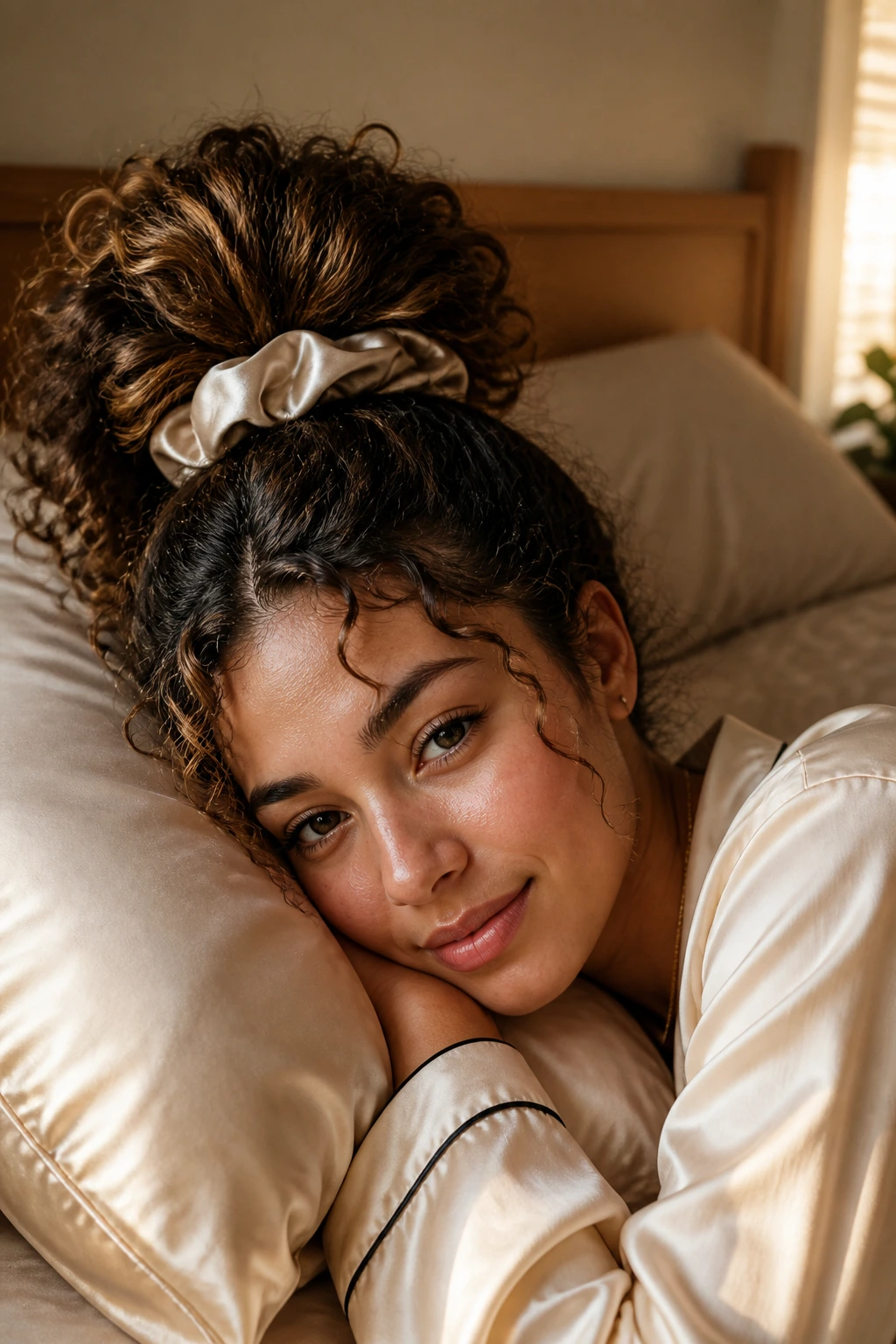
Long curls are easier to preserve than to rebuild from scratch. A pineapple is the simplest overnight move: gather the hair high and loose with a satin scrunchie, then sleep on a satin pillowcase so the length does not rub itself into frizz. If the style is a bun or twist, protect the edges with a scarf and keep the tension low.
Braids usually hold better than ponies overnight, especially if they are loose and not overhandled before bed. In the morning, break them apart with your fingers, mist lightly with water, and reshape the front rather than redoing the whole head. That saves time and keeps the hair from getting puffy.
For day-two refreshing, use a small spray bottle with water and a touch of leave-in conditioner. Mist the outer layer only. Then scrunch the ends and smooth the crown with your hands. If the style has a part or twist, redefine just that section, not the whole head. The less you disturb, the longer it lasts.
Frequently Asked Questions
Which curly hairstyle for long hair lasts the longest?
Braids and low bun styles usually outlast loose ponytails because they anchor the length in more than one place. Double Dutch braids, a low chignon, and the rope-braid bun tend to survive wind and movement better than open styles.
What if my crown goes flat every time I wear my curls up?
Lift the roots before you anchor the style. A diffuser, a few duckbill clips at the crown, or a slightly higher placement on the head can change the whole look. Flat roots are usually a placement issue, not a curl issue.
Can I do these styles on day-three curls?
Yes, and some of them work better that way. Day-three hair usually has enough texture to hold pins, braids, and clips without slipping, though you may want a light refresh spray on the ends if they feel dry.
Are claw clips actually good for thick, long curls?
They can be, but only if the clip is large enough and the teeth are strong. Small decorative clips often fail because the hair weight is too much for them. Look for a jaw that can close fully over the twist.
How do I keep a ponytail from sagging by noon?
Place the anchor higher than you think you need to, then secure it with a strong elastic and, if necessary, a second hidden pin below the base. Long curls pull down as the day goes on, so a slightly higher starting point helps.
Do braids ruin curl definition?
Not if you braid loosely and don’t do it on soaking-wet hair every day. A braid can leave a beautiful bend or wave in the hair, especially when you undo it with care. Repeated tight braiding, though, can rough up the outer layer.
What’s the easiest style here if I only have five minutes?
The side-part cascade, the temple clip deep part, and the low ponytail are the fastest. They need only a comb, one elastic or clip, and a minute or two of smoothing at the front.
Can I wear these styles if my curls are fine, not thick?
Absolutely. Just scale everything down. Use smaller sections, lighter product, and fewer pins. Fine curls often look best in half-up twists, side sweeps, and low ponies with a little volume at the crown.
The Styles Worth Reaching For
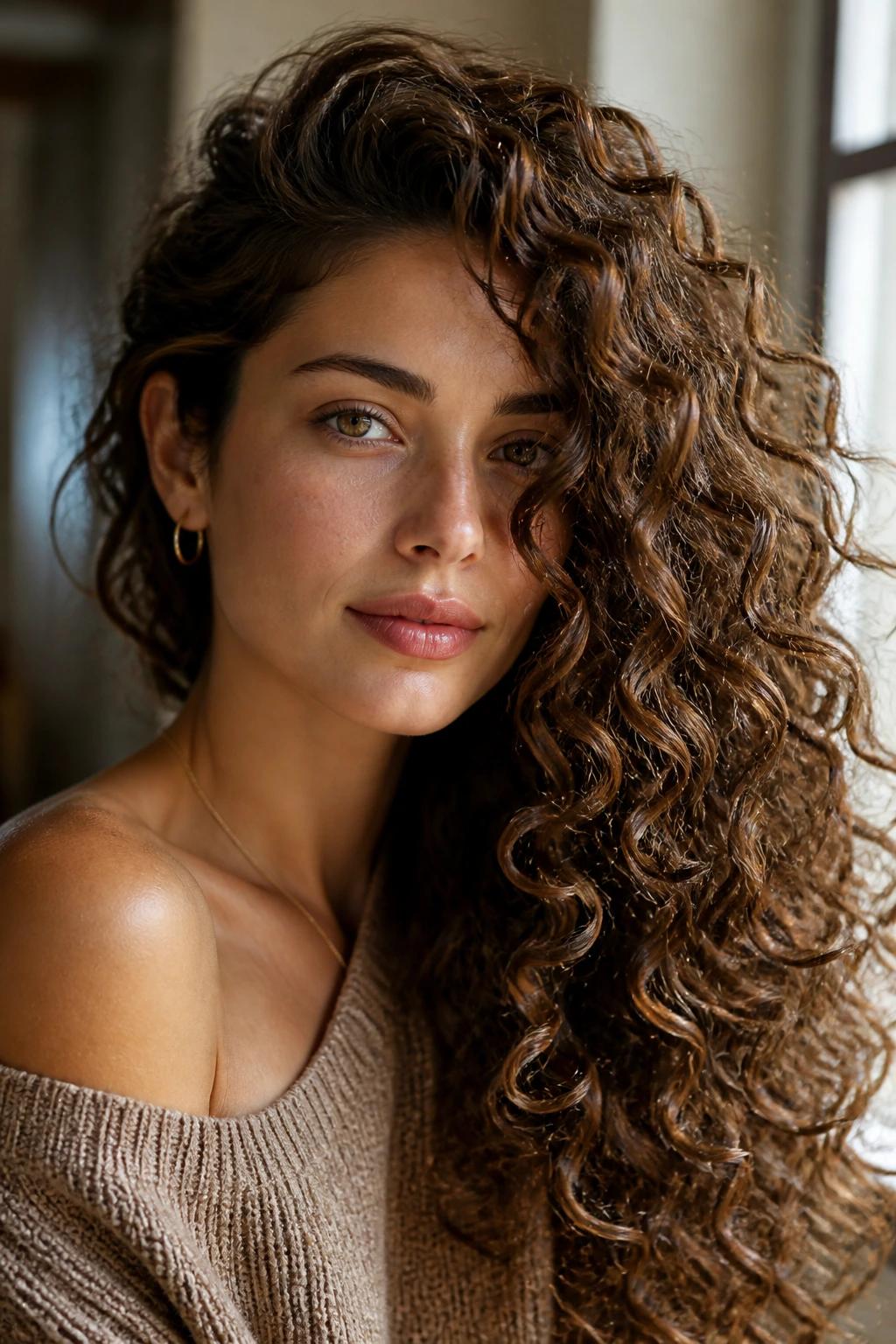
The nicest thing about long curls is that they do not need to be tamed into one look. They need a shape that makes sense for the day. Some mornings call for a braid and a clip. Others want a low pony with a wrapped base. On better days, a side sweep or waterfall braid is enough to make the whole head feel finished.
Pick the style that solves the problem in front of you. Flat crown? Lift it. Windy walk? Braid it. Dinner plans? Smooth the front and keep the length moving. Long curls are at their best when the style gives them a job to do, not a cage to sit in.
