



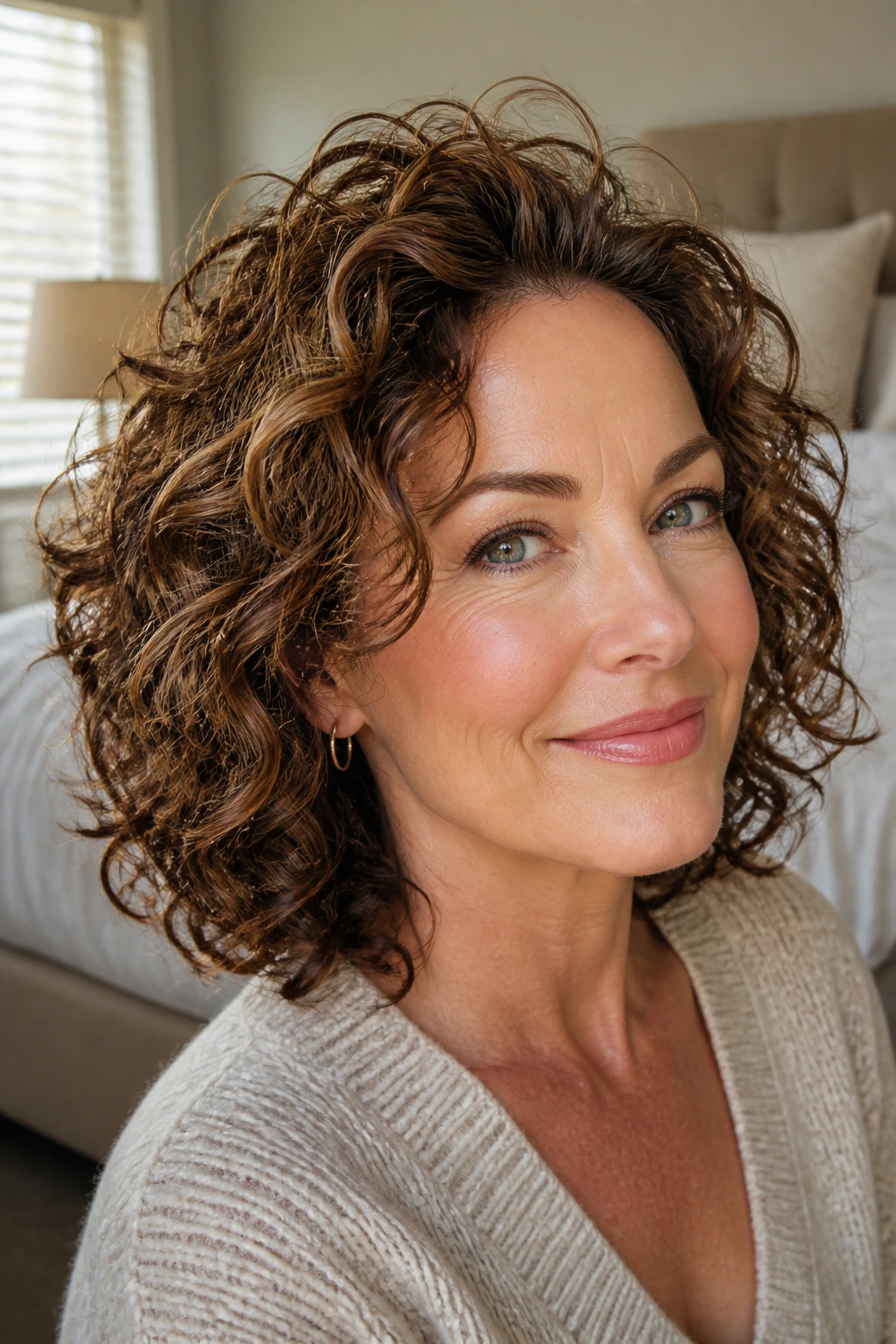
A shoulder-length curl does something a longer style can’t always manage: it gives the curl room to move without dragging the whole head of hair downward. That’s why curly hairstyles for medium length hair over 50 are such a smart place to live. The shape sits right in that useful band between the chin and the top of the shoulders, where curls can spring, frame the face, and still feel polished instead of fussy.
There’s also a practical side people skip over. Medium length is often the sweet spot when curls get a little drier, a little finer, or a little less predictable than they used to be. The ends aren’t heavy enough to hang flat, but they’re not so short that every cowlick and weather shift turns into a fight. That matters. Especially when you want a cut that looks intentional on day one and still behaves on day three.
The best part? You do not need one “perfect” curl pattern, one face shape, or one personality type to make this work. Some of these styles lean soft and airy, some are fuller and more sculpted, and some look better with a side part and a little attitude. The trick is choosing a shape that lets your curls do what they already want to do, then nudging them in the right direction.
Why These Curly Styles Earn Their Keep
-
They hold shape without overloading the ends. Medium length keeps curly hair from getting pulled down by its own weight, which usually means better lift at the crown and less puff at the bottom.
-
They work with gray texture instead of fighting it. Silver and salt-and-pepper curls often feel coarser and drier, so a shape with movement reads cleaner than a blunt, heavy line.
-
They make face-framing easier. A few strategically placed layers around the cheekbone or jaw can soften the whole cut without needing a dramatic chop.
-
They give you options on lazy mornings. A collarbone curl can be worn loose, pinned back, twisted up, or refreshed with a spritz bottle and a diffuser. That flexibility is the point.
-
They look finished even when they’re not perfect. Curly hair has a built-in softness that hides small frizz, uneven coil sizes, and a little day-two chaos better than straight hair ever will.
1. The Shoulder-Grazing Layered Lob
This is the one I reach for first when someone wants movement without the haircut shouting at the room. The shape sits just above or just below the shoulders, with long layers that start around the chin or cheekbone so the curl can bend instead of balloon. On medium length hair, that balance matters. Too blunt, and the bottom acts like a shelf. Too choppy, and the whole thing starts to feel over-edited.
Ask for the perimeter to stay a touch blunt, then let the layers do the quiet work. That gives the ends enough weight to look deliberate while the top stays lifted. It’s especially good for loose curls and springy spirals that need a little structure.
Best when you want polish without stiffness. A mousse at the roots and a light gel through the mid-lengths is usually enough. Diffuse until the curls are about 80% dry, then let the rest air-dry.
2. Curly Shag with Curtain Bangs
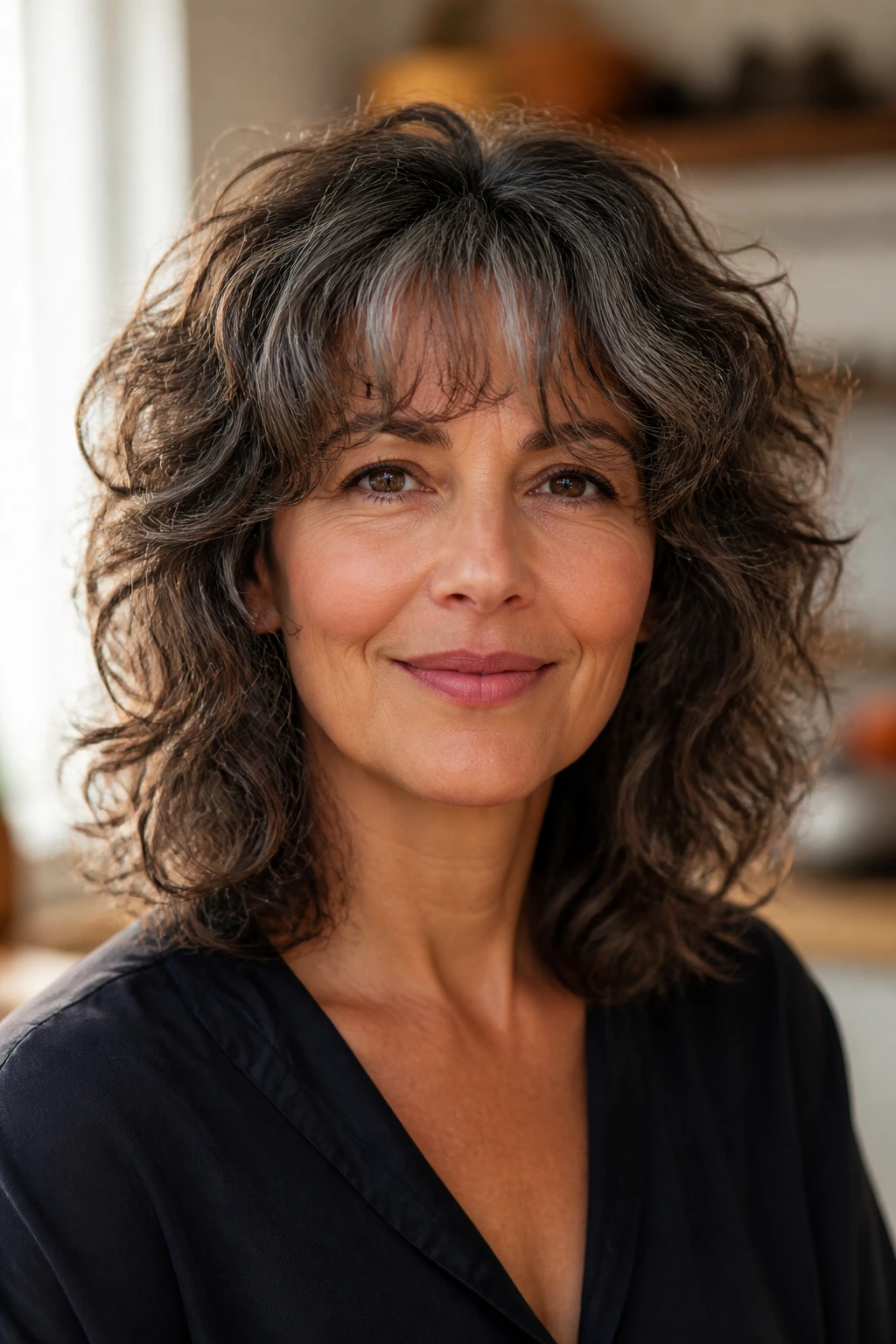
The curly shag has a little edge, but not the cartoon version people sometimes picture. Done well, it’s layered through the crown and around the face so the hair has air in it, not bulk. The curtain bangs split naturally and soften the forehead without sitting like a heavy curtain of wet rope.
This is one of the smartest curly hairstyles for medium length hair over 50 if your hair tends to flatten on top. The shorter crown layers create lift, while the longer sides keep the shape from turning puffy. It also does a nice job of disguising a cowlick at the front, which is one of those annoying little details that can make a morning feel longer than it should.
A soft cream under a firmer gel works well here. Let the bangs fall where they want, then nudge them apart with your fingers while they’re still damp.
3. The Rounded Curl Bob
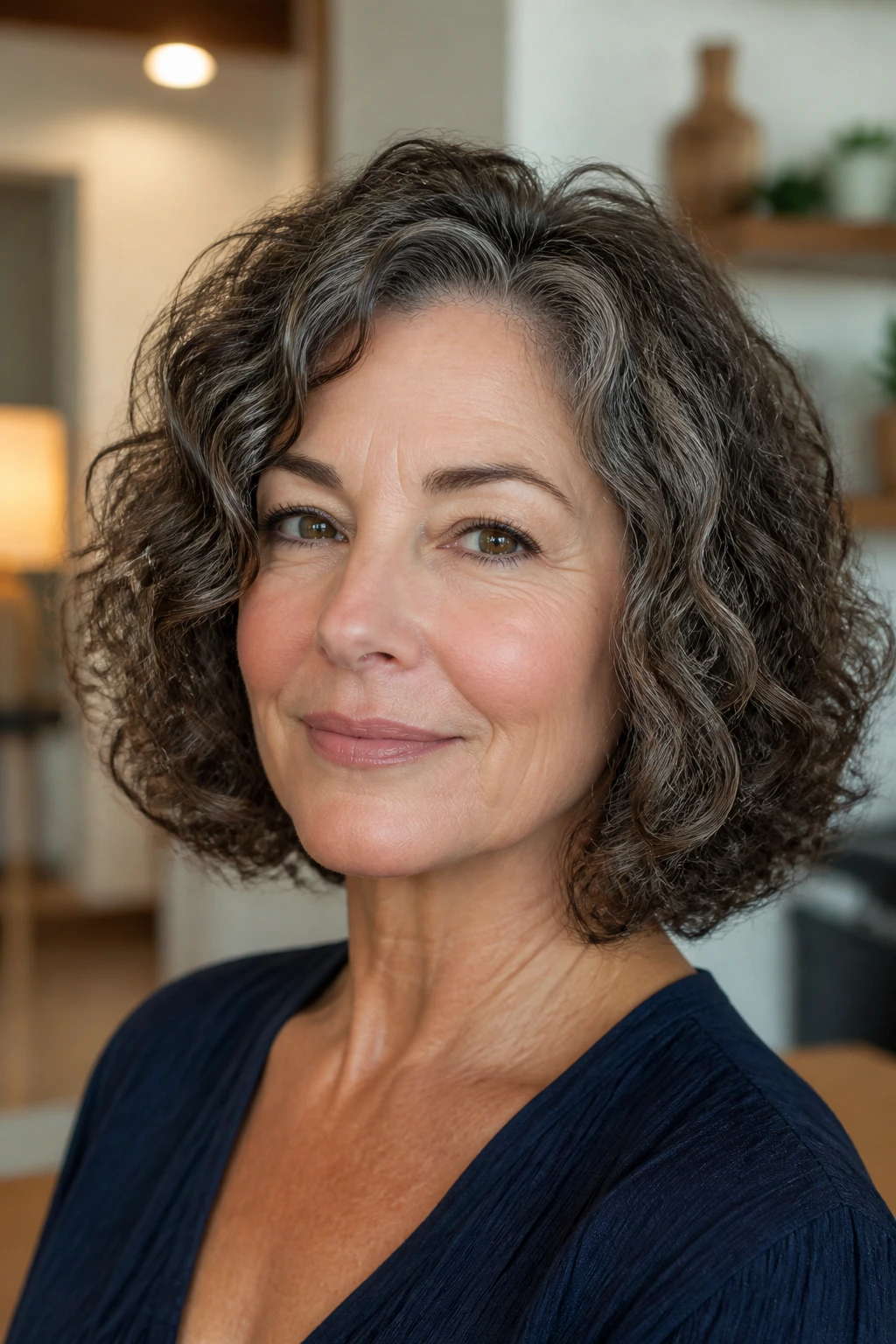
A rounded bob sounds simple, but on curls it can be the difference between “styled” and “mop.” The key is keeping the silhouette curved, not triangular. That means the top and sides get enough shape that the hair hugs the head a bit before it opens out at the jawline.
This cut is especially good for dense curls that expand as they dry. If you’ve ever had a bob turn into a mushroom by lunchtime, you know why the rounding matters. The outline should read soft, not boxy. A dry cut or curl-by-curl shaping usually helps a stylist see where the hair actually sits once it springs up.
I like this style for women who want something clean around the neck but not severely short. It looks neat with glasses, too. A side part keeps it from looking helmet-like.
4. Deep Side-Part Volume Sweep
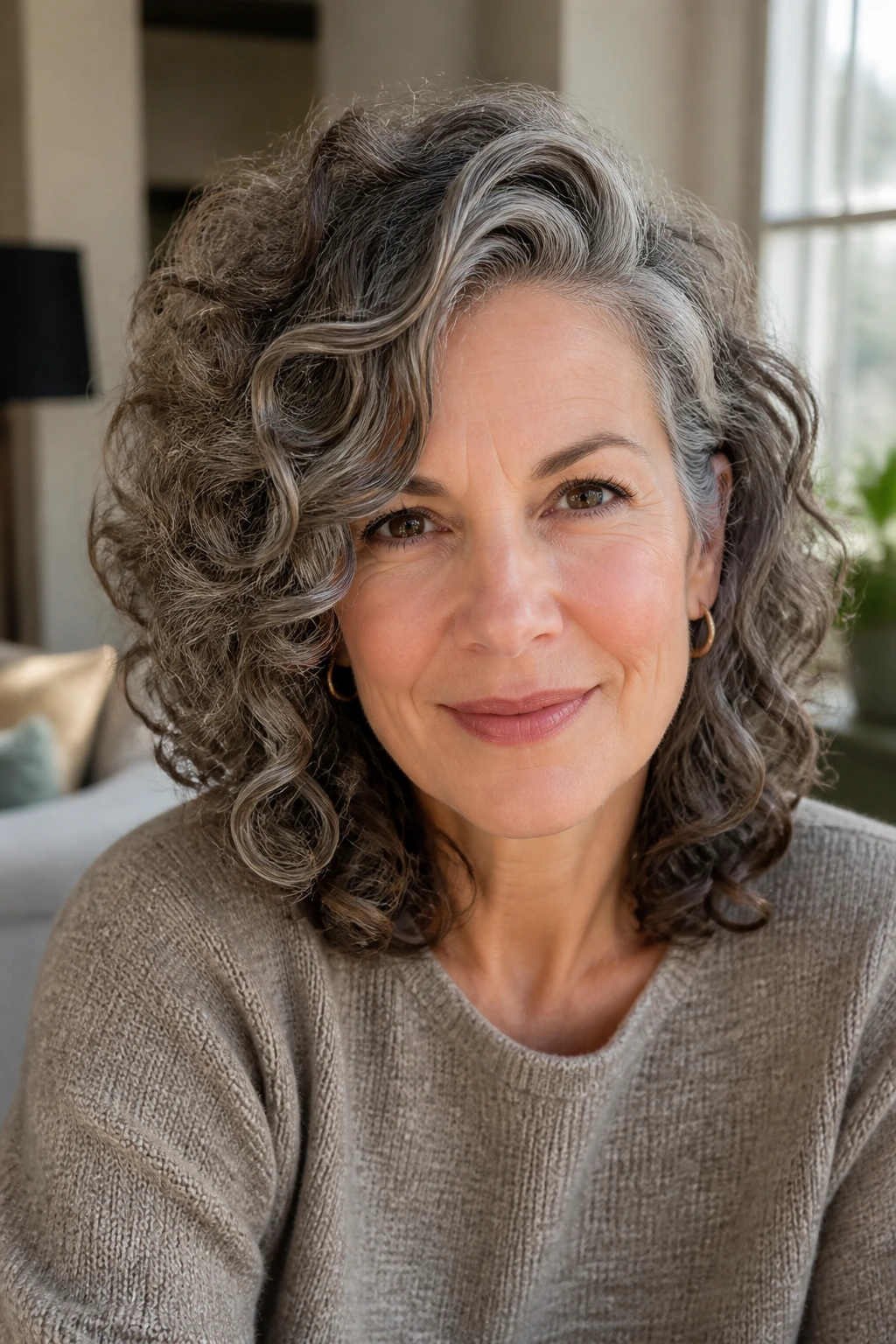
A deep side part changes the whole attitude of curly hair. One side gets lifted, the other side falls across the face, and suddenly the cut has movement even before you touch a product. On medium length curls, this works especially well when the root area has gone a little flat or the temples need a softer frame.
It’s not a complicated style. That’s part of the charm. The part itself does a lot of the work, and the asymmetry gives the style a little drama without asking for more length. If one side of your hair is curlier than the other, this can also hide the mismatch instead of fighting it.
Use a root clip at the heavier side while the hair dries. That one tiny move can keep the part from collapsing. Then finish with a drop of serum on the ends, not the crown.
5. Collarbone Cut with Invisible Layers
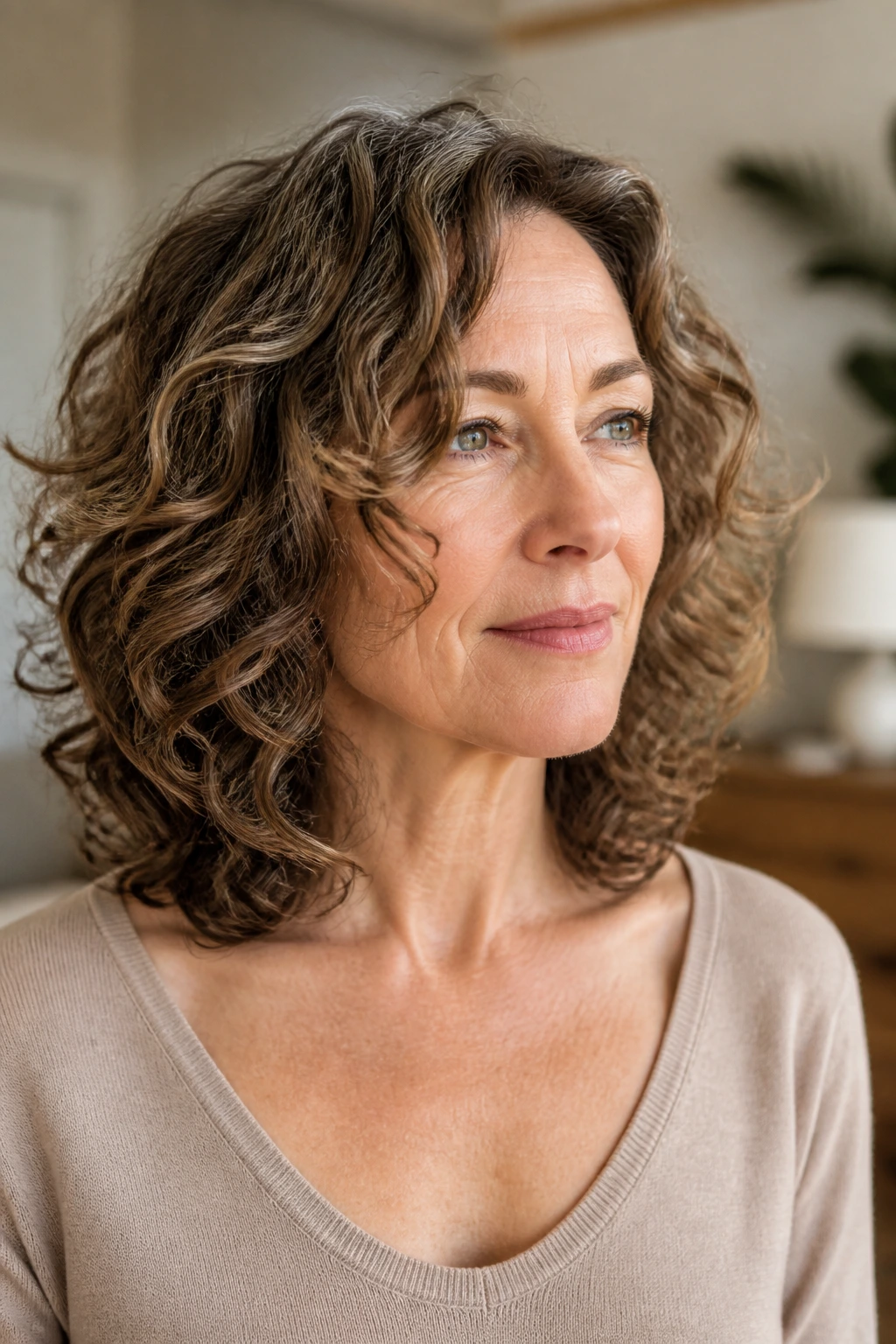
This is the haircut for someone who wants the hair to look calm, not carved. The length lands at the collarbone, and the layers are tucked inside the shape so they do their job without advertising themselves. The result is a smooth outline with enough internal movement to keep curls from stacking on top of each other.
Invisible layers are underrated. They stop the bottom from turning into a block while letting the surface stay clean. That’s useful when you wear your hair loose more often than up. It also plays nicely with fine curls that don’t need a lot of aggressive layer work.
If you’re asking a stylist for this, be blunt: you want movement without losing the perimeter. Say that. It saves everyone time.
6. Face-Framing Spiral Layers
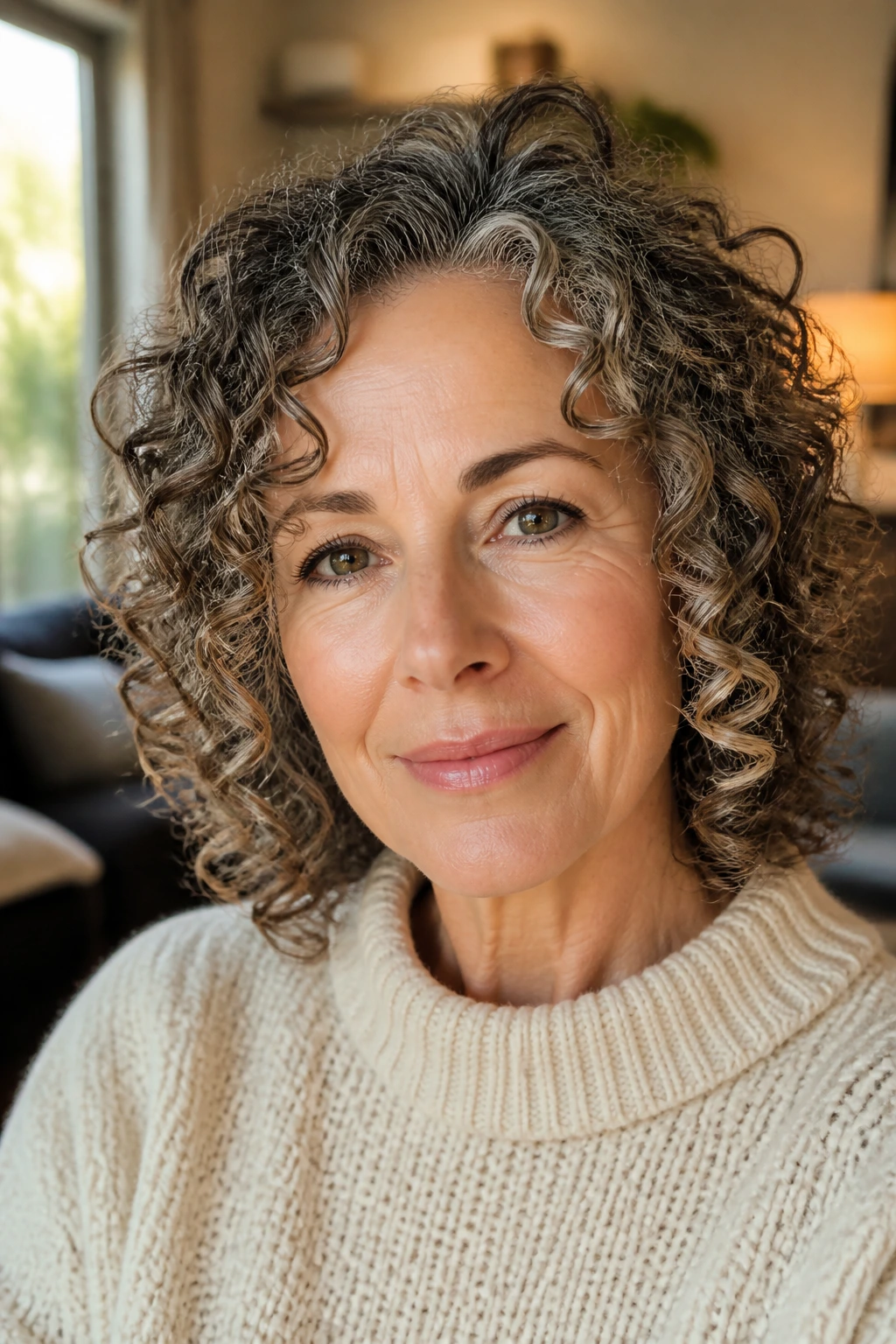
This one is all about where the first curls fall. The shortest pieces sit around the cheekbones or jaw, and the rest of the hair stays medium length through the shoulders. On a round face, those spirals create vertical lines. On a longer face, they soften the middle without dragging the eye downward.
The shape looks especially good when the curls are defined enough to separate in clean ribbons. If your texture tends to frizz into a halo, a stronger hold gel will help the frame read as purposeful instead of fuzzy. And yes, this style loves a middle part, but it can take a side part too.
I think it’s one of the easiest styles to dress up with earrings. The curls stop just enough above the jaw to let the jewelry show.
7. The Silver Halo Bob
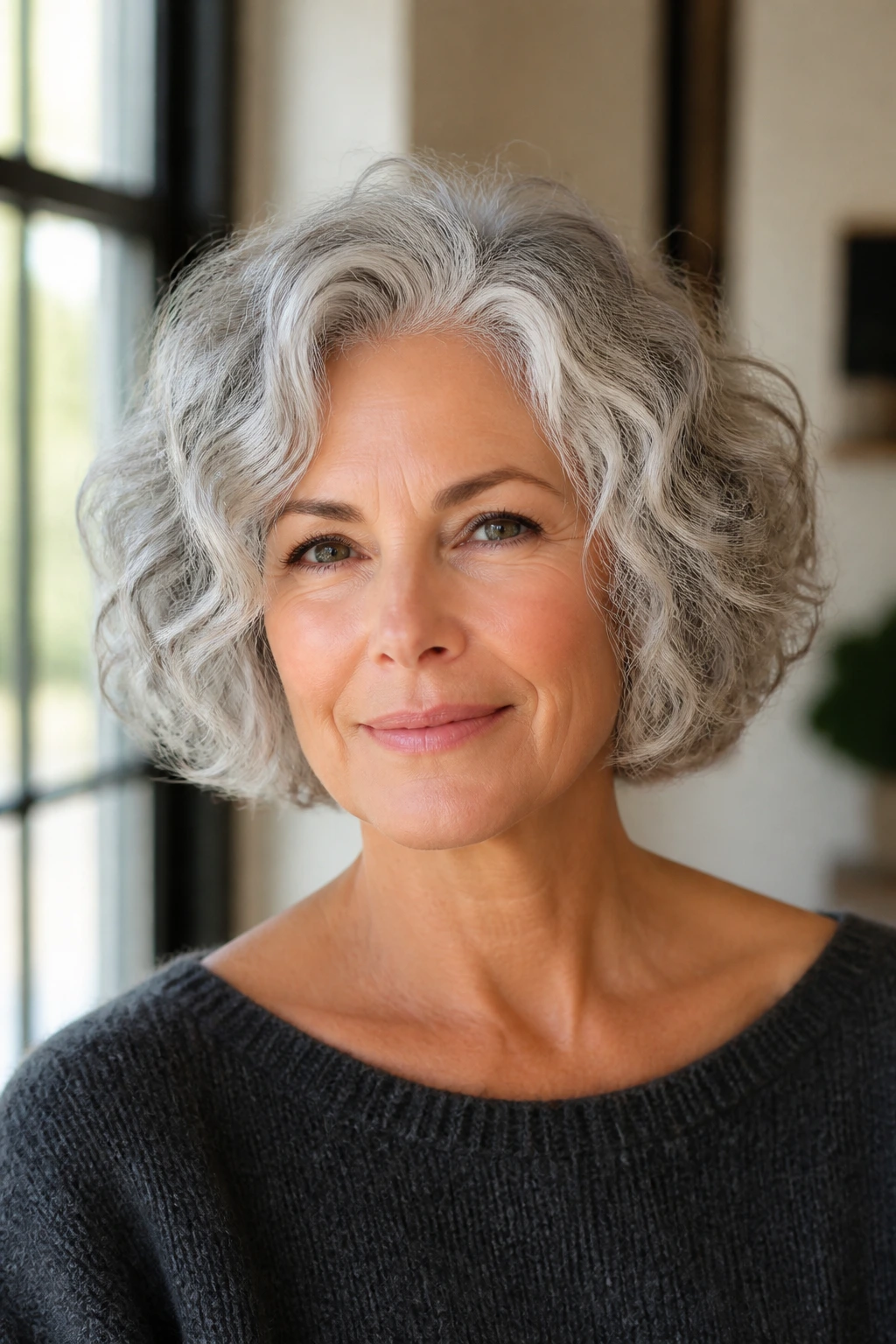
Gray curls can be fierce in the right cut, and this is one of those cuts. The silver halo bob keeps the length near the jaw or a little below it, then shapes the top so the hair lifts away from the face like a soft crown. When the curl pattern is healthy, the silver catches the light and the whole style looks brighter, not older.
What matters here is hydration and shape. Coarse gray curls need moisture, but they also need a silhouette that isn’t too heavy. If the cut gets too long or the ends go wispy, the halo effect disappears and the hair starts to hang. Keep the outline clean.
A lightweight leave-in and a little gel at the top are usually enough. Heavy cream can make silver curls look coated rather than lively.
8. The Half-Up Twist Crown
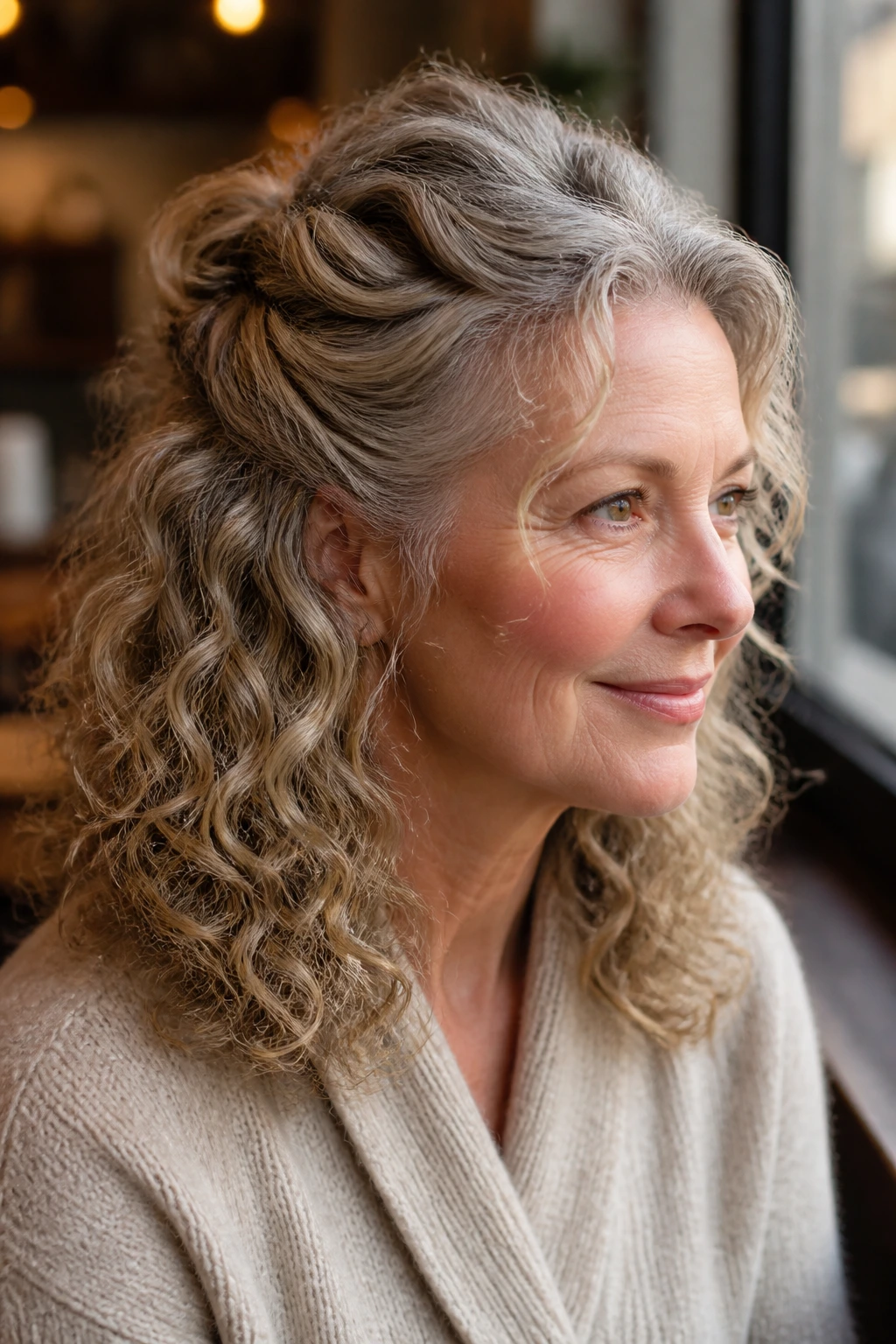
Some styles are less about the haircut and more about how you wear the haircut. The half-up twist crown is a good example. You gather the front and top sections, twist them back from each temple, and pin them where the crown starts to rise. The rest of the curls fall free through the shoulders.
It’s practical, but it doesn’t look like you gave up. That’s a nice line to walk. It lifts hair away from the face, keeps the front from puffing into your glasses, and leaves enough curl visible to keep the style from feeling stiff. If your hair is medium length, you usually have enough length for the twist to hold without needing a dozen pins.
Use one or two small claw clips if you hate bobby pins. I’m partial to that, because it takes less time and the result is less fussy.
9. The Low Curly Knot with Soft Tendrils
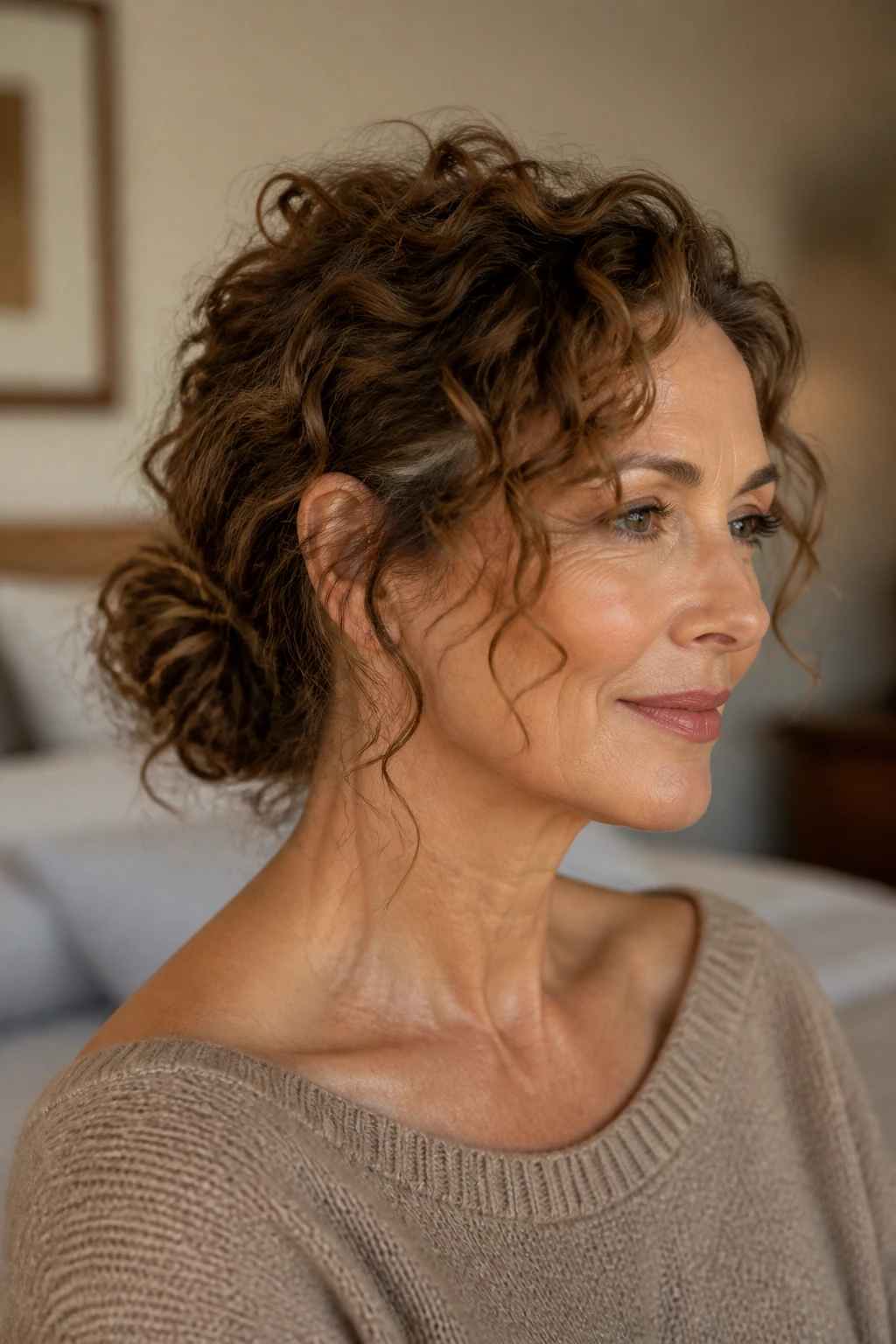
This is the version of an updo that still looks like curly hair. You gather the curls low at the back of the head, twist or fold them into a loose knot, and leave a few tendrils out around the ears and temples. The softness around the face matters. Without it, the style can look too severe for medium length curls.
It works best when the curls have enough stretch to gather but not so much tension that they lose shape. If you wear your hair in a knot often, keep the base low and loose. Tight pulling can flatten the crown and leave the front frizzy, which is a bad trade.
A satin scrunchie helps. So does a little gel smoothed over the outer layer before pinning.
10. Tucked-Back Ear Sweep
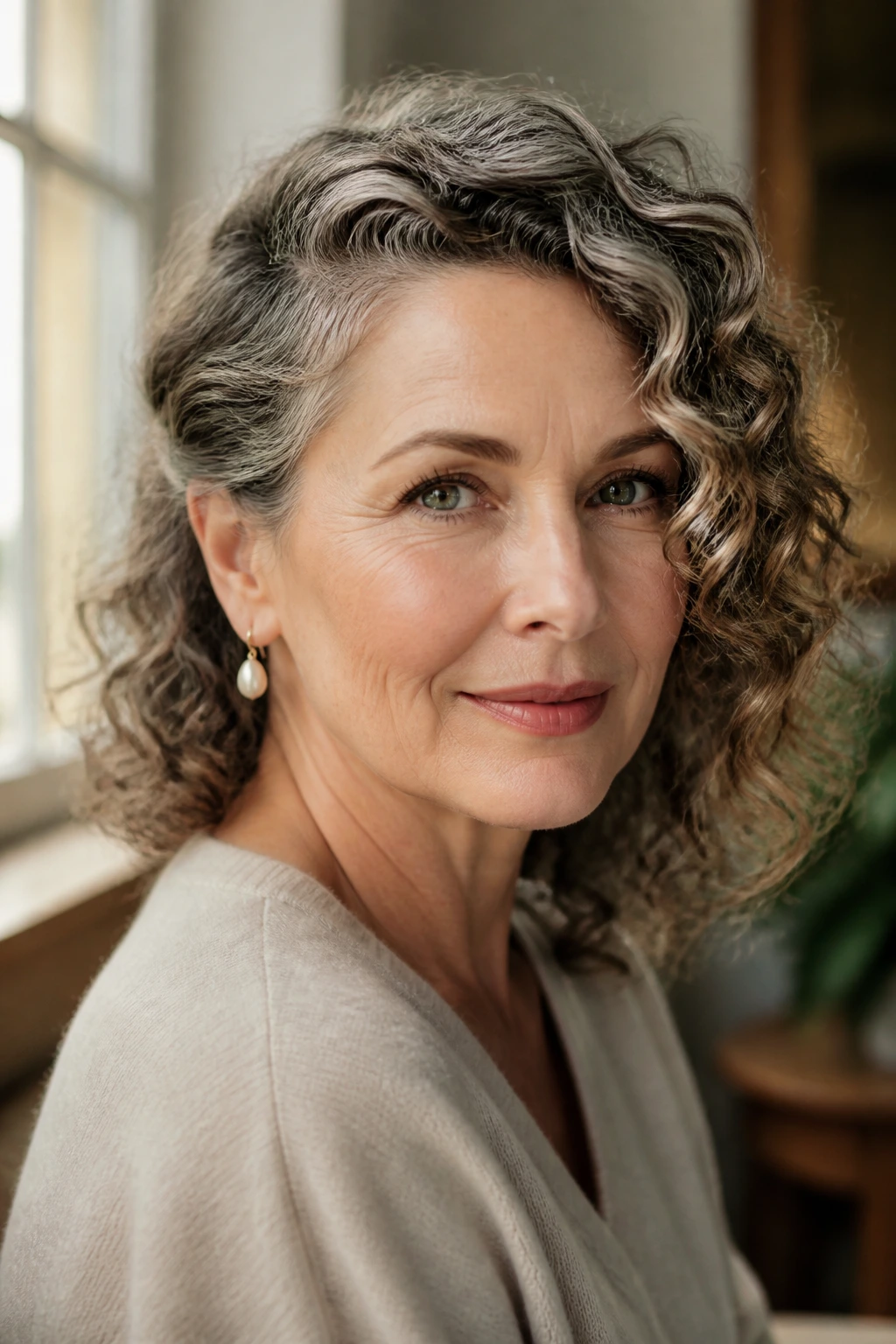
This style has a quiet kind of confidence to it. One side is tucked behind the ear and pinned low, while the other side keeps its curl and frame. It’s a great way to show off one earring, open the face, and keep the cut from feeling heavy around the cheeks.
Medium length curls are especially good at this because the hair has enough weight to stay tucked without needing to be forced flat. Ask for the front layers to stay long enough to sweep back cleanly. If they’re too short, you’ll spend the day re-tucking them.
This is one of those looks that benefits from a tiny bit of root volume at the part. Too slick, and it turns severe. Too fluffy, and it loses the neat line that makes it work.
11. Defined Wash-and-Go Shape
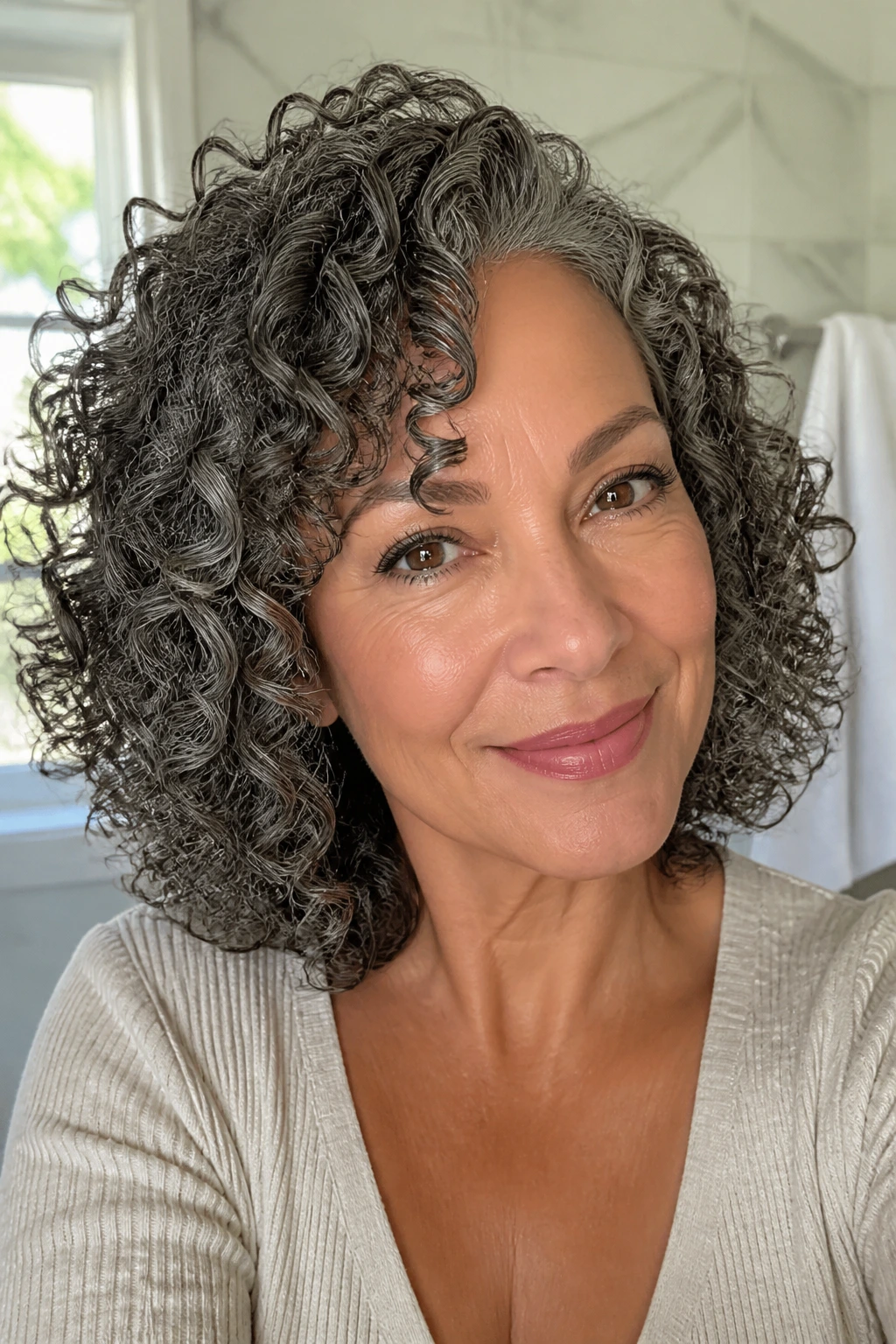
A good wash-and-go is not “I washed my hair and hoped for the best.” It’s a shape. The curls are cleaned, conditioned, styled while wet, and set into a defined pattern that dries with intention. On medium length hair over 50, this style is useful because it shows off the curl itself rather than trying to hide it behind too much manipulation.
The product choice matters here. A curl cream gives slip, but a gel or mousse gives the structure that keeps the pattern from expanding into frizz. Scrunch, don’t rake endlessly. That’s how you keep clumps intact.
If the crown falls flat, clip the roots for the first 20 minutes of drying. That small pause changes the silhouette more than most people expect.
12. The Diffused Volume Puff
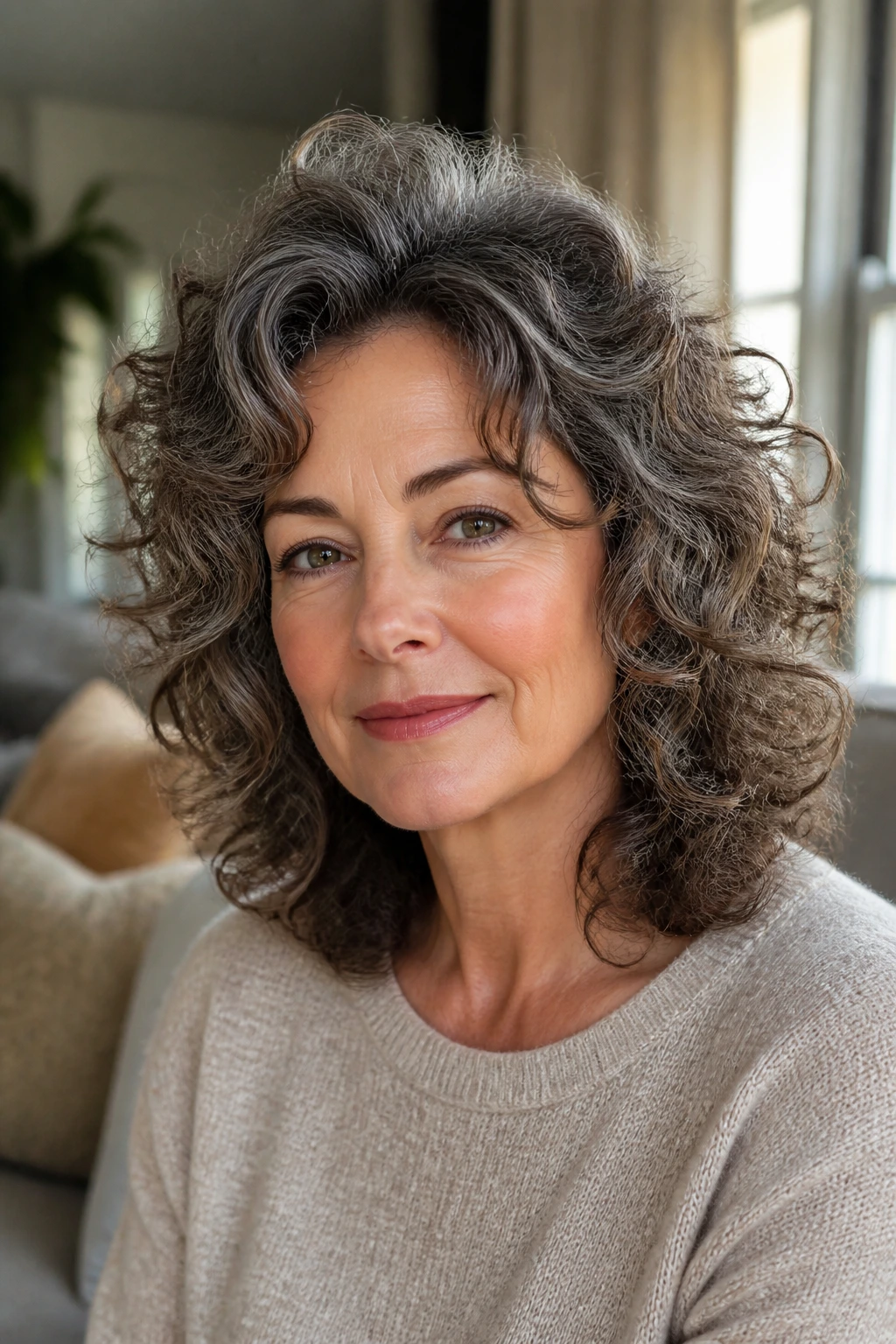
This is for people who love body more than precision. The diffused volume puff keeps the curl length around the shoulders but pushes lift at the root and air through the sides, so the style reads full and buoyant. It’s especially good for looser curl patterns that can go limp if they’re over-creamed.
The trick is to stop diffusing before the hair gets too handled. Scrunch with the diffuser bowl, hold each section for a few seconds, then move on. If you keep chasing perfect curl clumps, you’ll often end up with more frizz than volume. Funny how that works.
I’d use this style on days when the outfit is simple and the hair is supposed to do the talking. It’s a little softer than a glam blowout, but it has more life.
13. The Asymmetrical Curly Lob
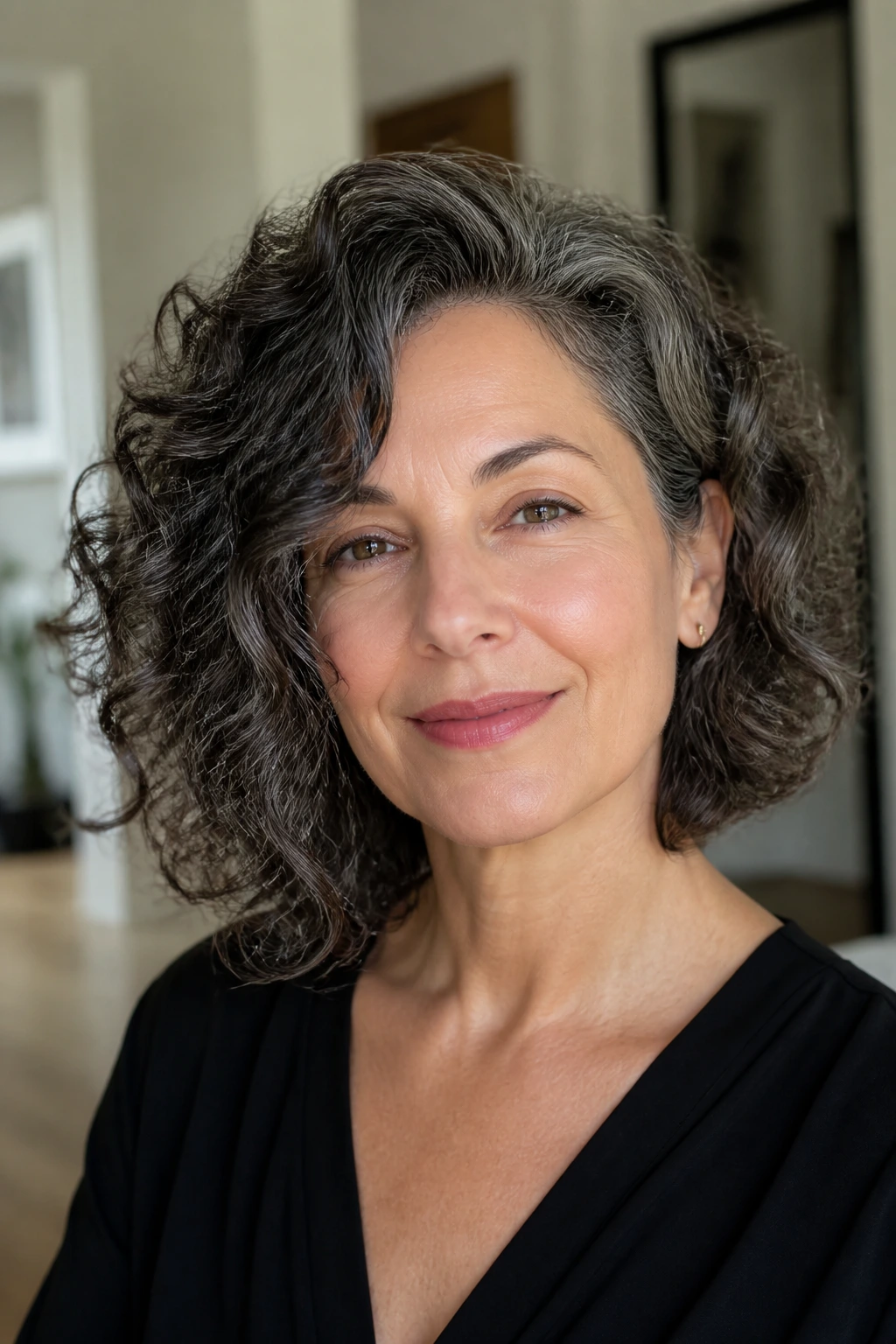
An asymmetrical lob gives you just enough oddness to look deliberate. One side is left slightly longer than the other, and the difference is subtle enough that it reads stylish rather than severe. With curls, that unevenness can be a blessing if one side naturally springs tighter or sits flatter.
This is a good choice when the hairline or jawline feels a little uneven and you want the haircut to do some balancing. The longer side can skim the neck or collarbone, while the shorter side keeps things from feeling heavy. It also works if you like to tuck one side behind the ear and let the other fall free.
Ask for the difference to be modest. Half an inch to an inch can be plenty. More than that, and the curl pattern starts to look like a deliberate asymmetry instead of a shape.
14. Feathered Flip-Out Ends
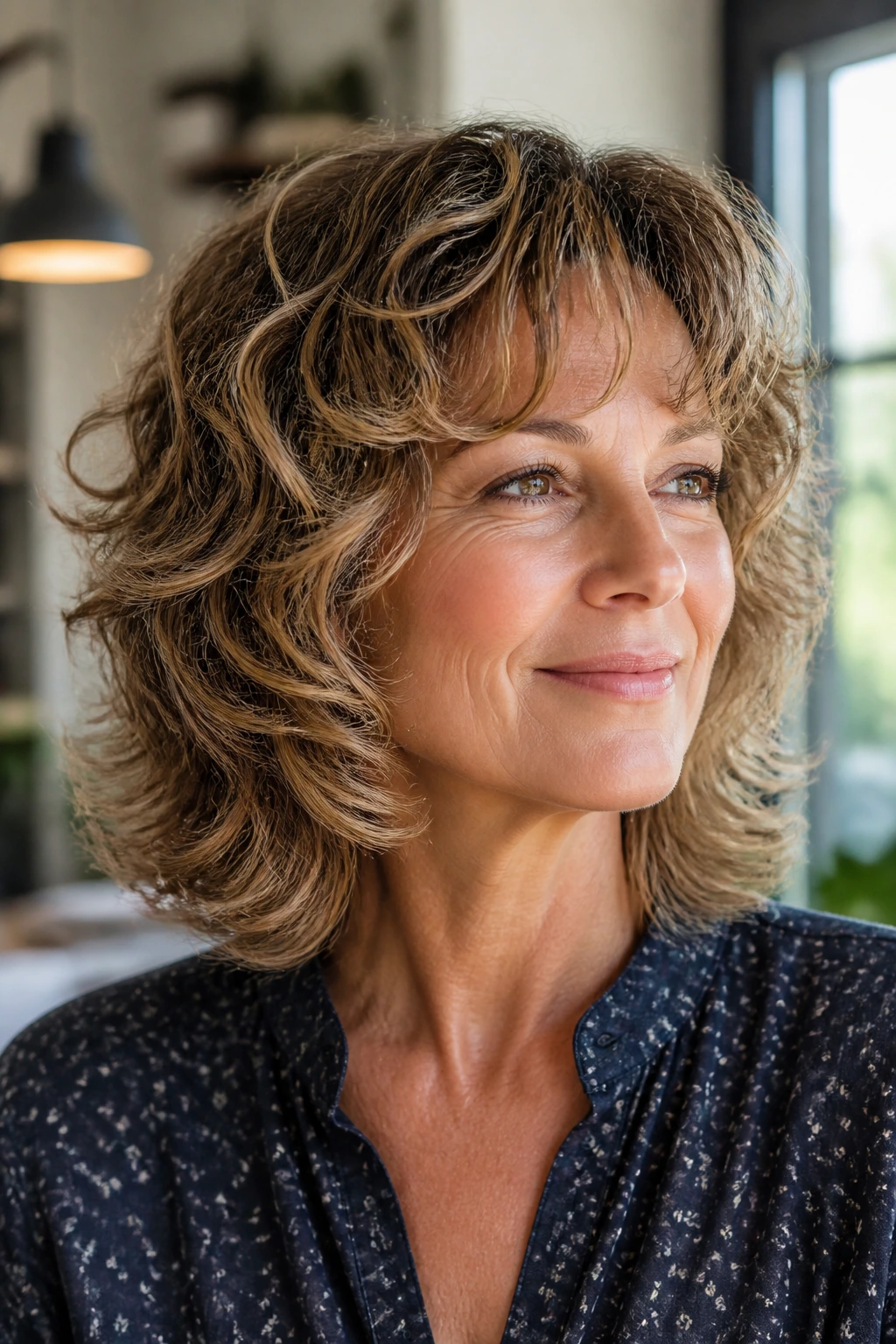
A feathered flip-out finish is one of the easiest ways to keep medium curls from dropping into a heavy sheet. The ends are cut and styled so they turn away from the face or flick out a bit at the shoulders. It gives the hair movement at the bottom, which is where older curly cuts often go wrong.
This style works best when the upper sections are not too layered. You want a clean top with some air at the bottom. That contrast keeps the outline from going puffball. A medium round brush can help during the final stretch-dry, but don’t over-smooth it. The point is softness, not a helmet.
A little bit of flip at the ends can also make the neck look longer. Small detail. Big difference.
15. Curly Wolf Cut Lite
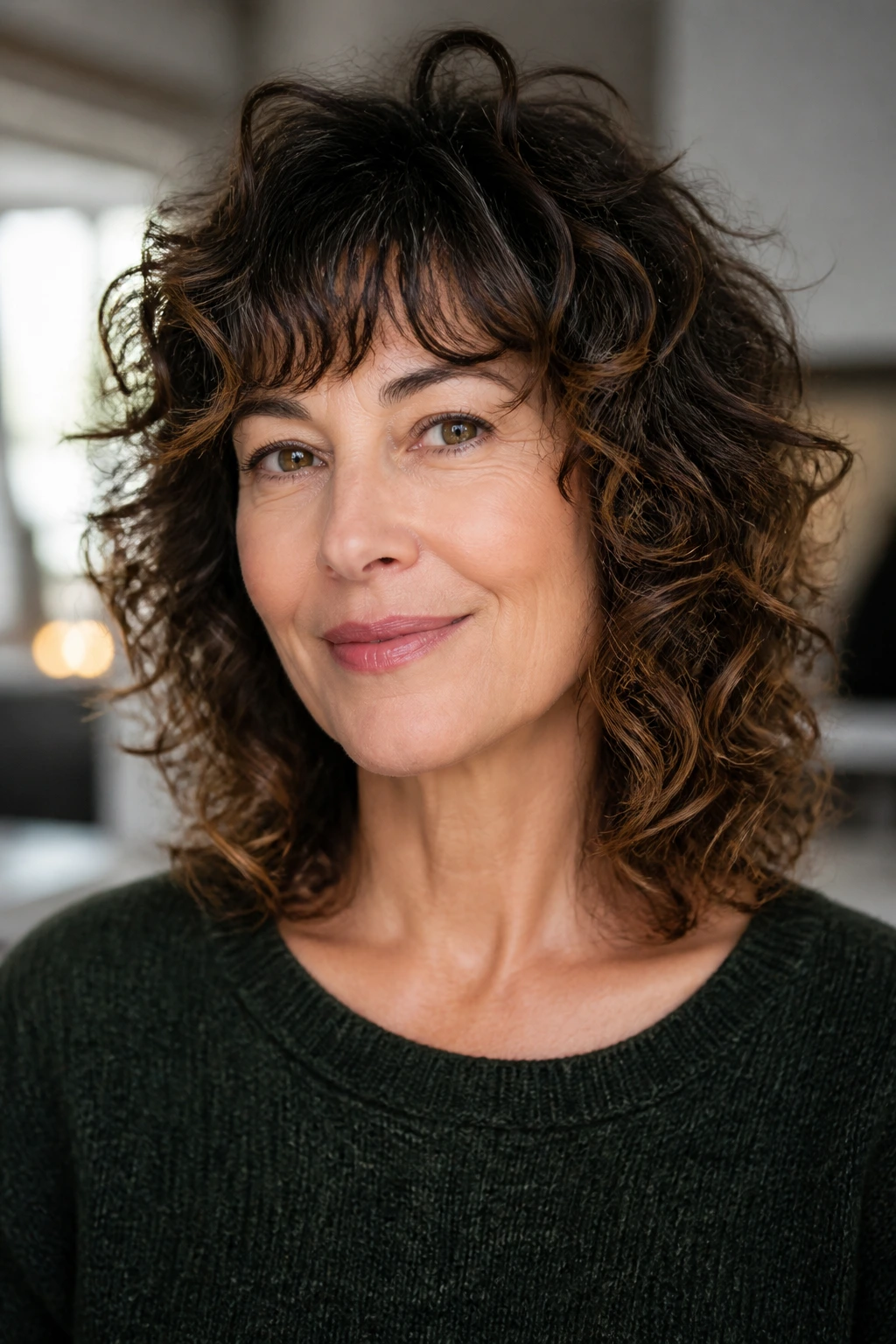
The wolf cut has been everywhere in spirit, but the version that works on medium curls over 50 is the softer one. Think shag energy without the wild overload. You keep more length through the back, add airy layers through the crown, and let the face pieces fall with some separation instead of one solid curtain.
This cut is for curl wearers who want edge without looking like they’re trying too hard. The crown gets movement, the sides stay lively, and the ends don’t become a dense rectangle. It can be very flattering on thick hair because it removes just enough bulk to let the curl breathe.
If your stylist reaches for the thinning shears too quickly, stop them. Real curl shaping usually looks better with clean cutting and strategic layering, not a lot of aggressive texturizing.
16. Side-Swept Fringe and Loose Ringlets
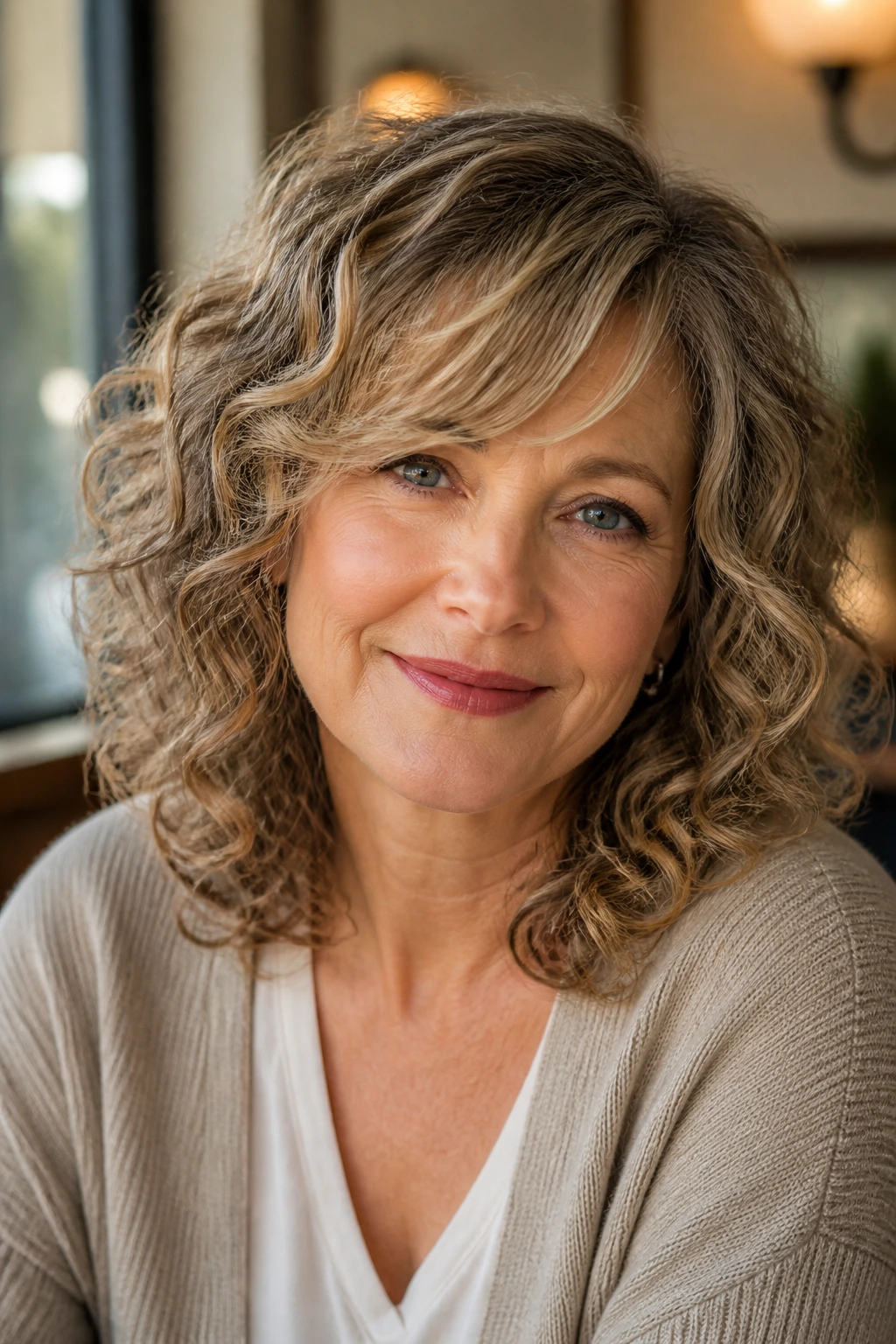
A side-swept fringe can do wonders for curls that need softness across the forehead. The fringe should fall in pieces, not one solid strip, and the rest of the hair should stay medium length through the shoulders in loose ringlets. The result is easy on the eyes. It frames without boxing the face in.
This style works especially well if you like a little polish but do not want full bangs. It gives forehead coverage on some days and can be swept away on others. That flexibility is useful, especially when your curl pattern changes depending on humidity or how much product you use.
Keep the fringe a touch longer than you think you need. Curly bangs shrink, and short fringe has a nasty habit of becoming a springy surprise.
17. The Twist-Out Shoulder Shape
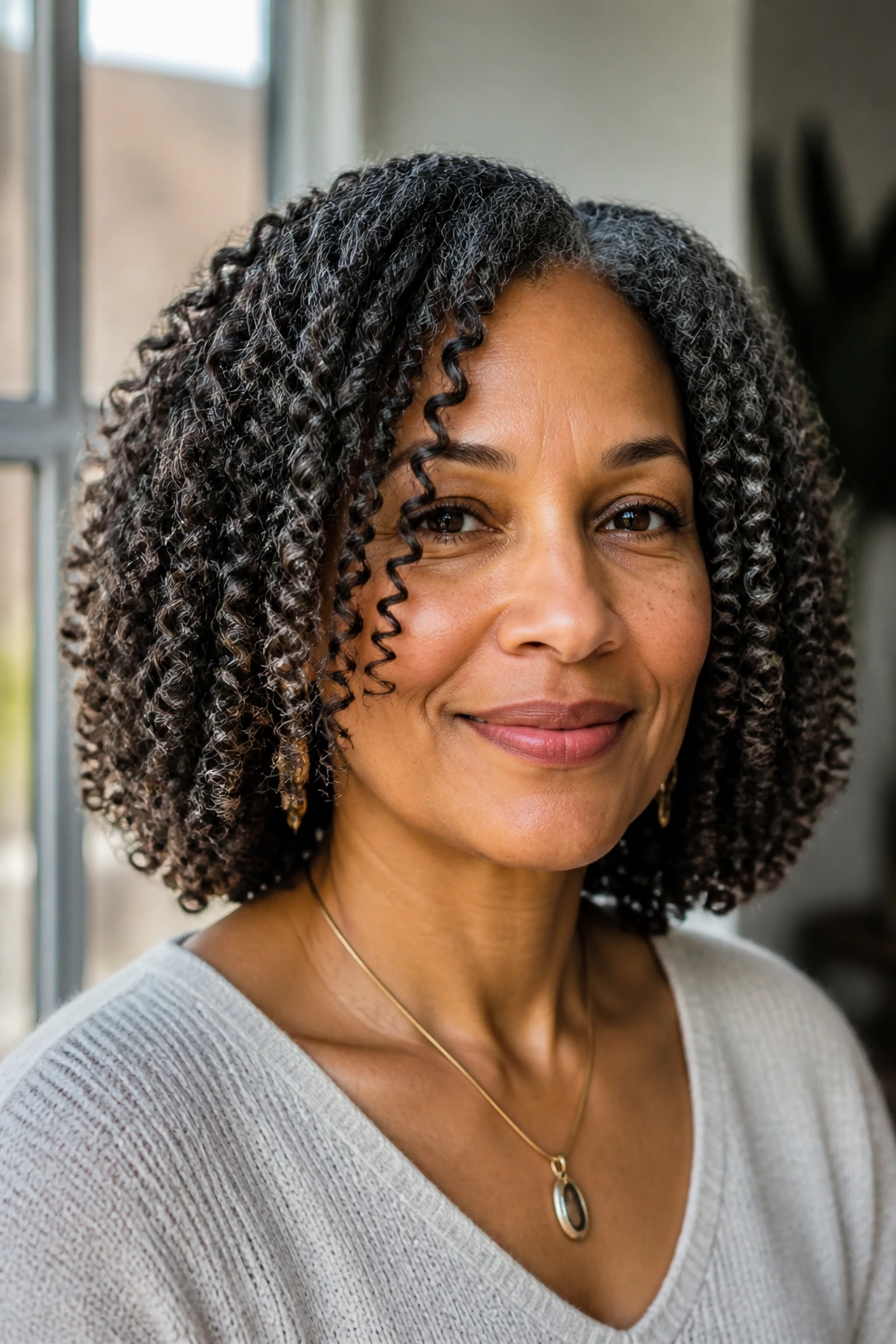
A twist-out brings a more uniform pattern to curls that are a little inconsistent. You set the hair in two-strand twists, let them dry fully, then unravel them into a soft shoulder-length shape. Medium length is ideal here because there’s enough hair to stretch and release, but not so much that the twists become a whole project.
This is a good choice if you want definition that lasts past the first few hours. The pattern tends to hold better than a simple air-dry, especially when the hair is porous or frays at the ends. Use a light cream under gel if the hair needs slip, then leave the twists alone until they’re fully dry. Fully. Not almost.
The finished look is neat but not stiff, which is a rare and useful combination.
18. Clipped Crown Lift
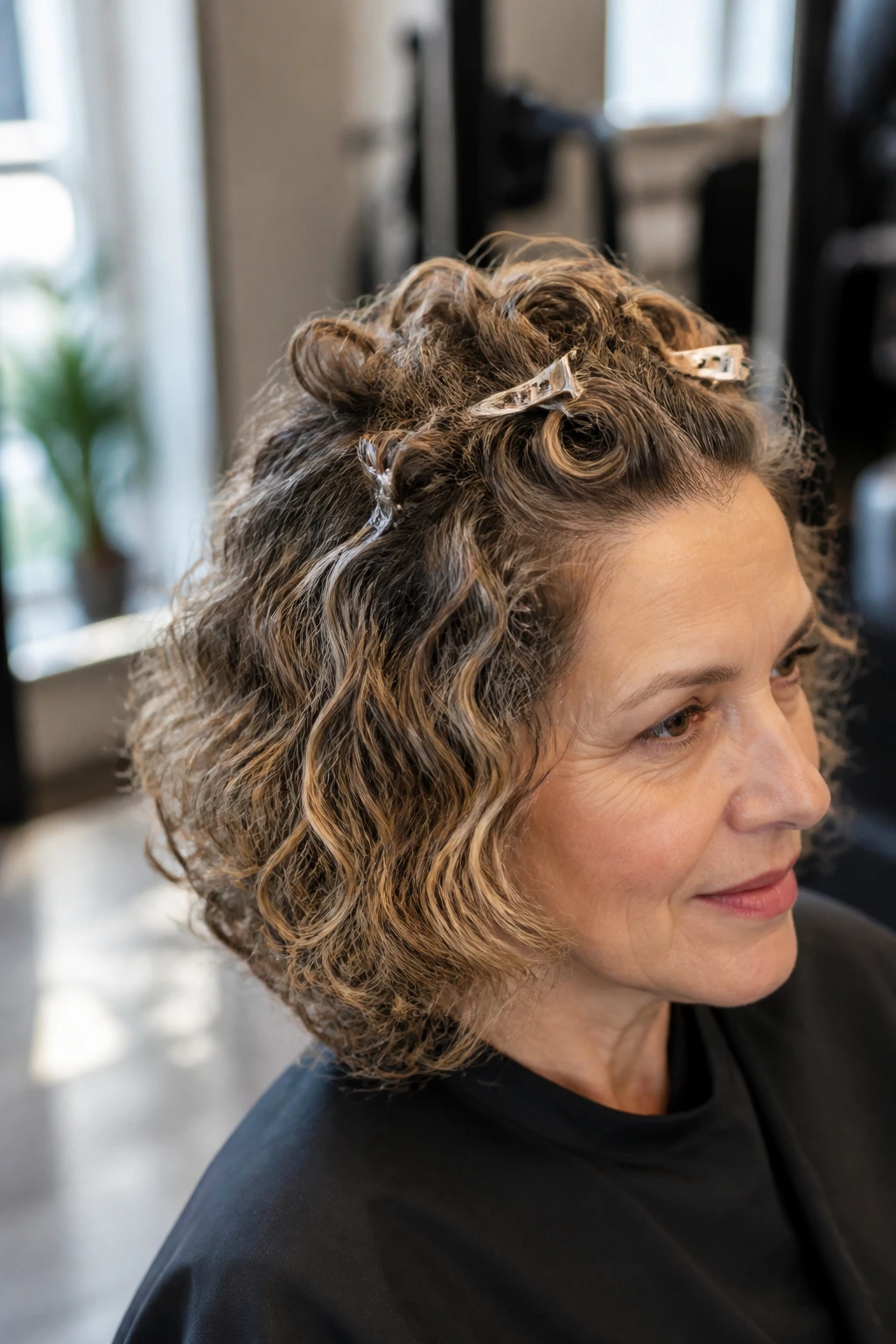
Some curls need help at the root, plain and simple. Clipped crown lift uses small root clips during drying to keep the top area from lying flat while the rest of the curl sets. It can be built into a haircut too, with layers that support volume at the crown, but the styling trick alone can change the whole silhouette.
This is especially good when the haircut is fine at the top but fuller through the sides. A little lift on top stops the shape from looking like a bell. The visual effect is cleaner and a bit more youthful, if that word is even worth using here. What really matters is balance.
Use clips only while the hair is damp. Take them out once the roots are set, or you’ll create dents that look worse than flatness.
19. The Polished Pinned-Back Event Style
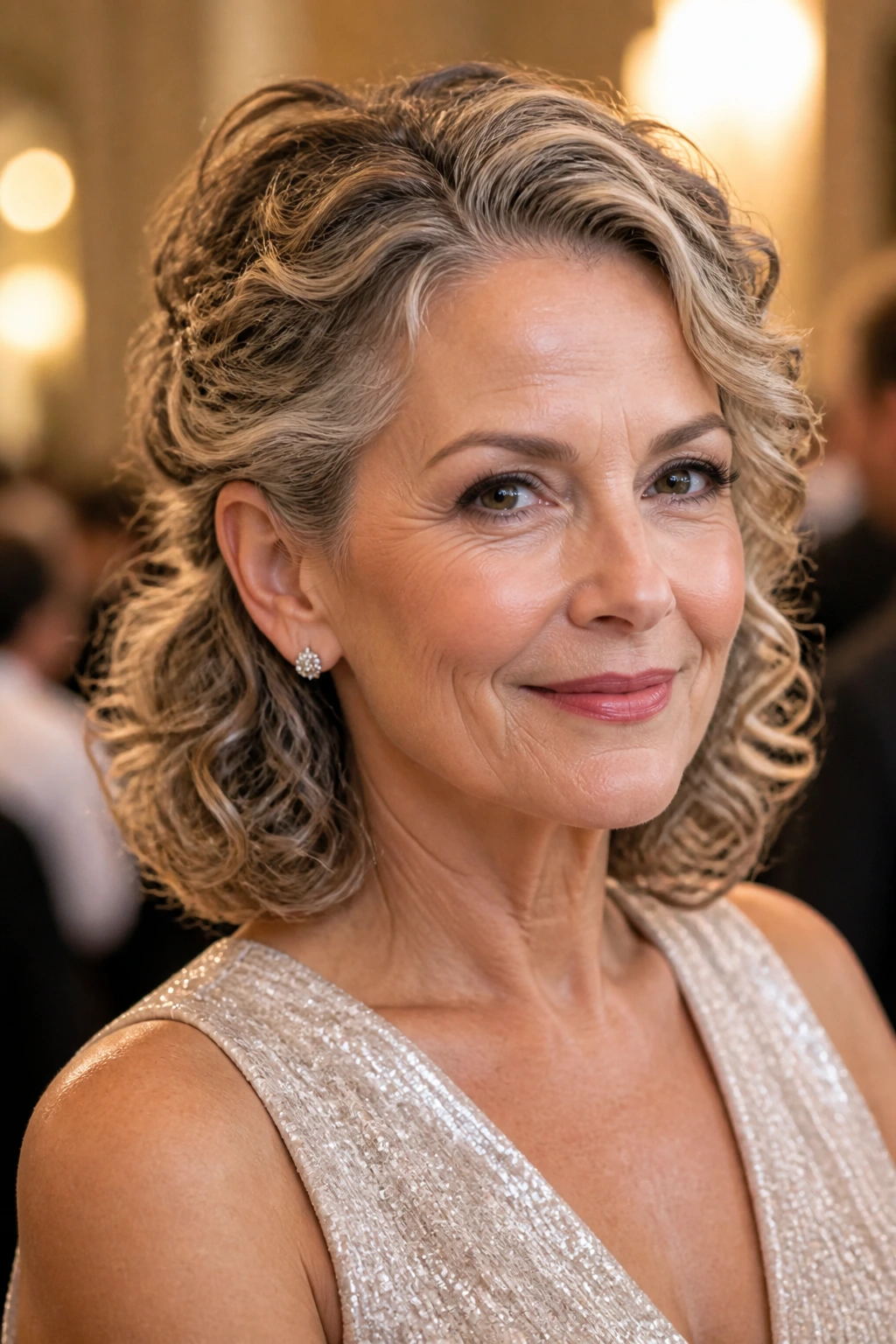
For dinners, weddings, or any event where you want the hair to look controlled without becoming formal in a stiff way, a pinned-back curly style works beautifully. Pull the front sections away from the face, pin them low or at the sides, and let the remaining curls fall around the shoulders. That keeps the shape soft and open.
This is one of the easier medium length styles to dress up with a sparkly clip or a pair of stronger earrings. The hair stays visible, but the face gets room. If you’ve got a collar or neckline with detail, this style keeps the hair from competing with it.
A shine serum on the outer layer helps. Not too much. One pump warmed between the palms is usually enough.
20. Airy Layers for Fine Curls
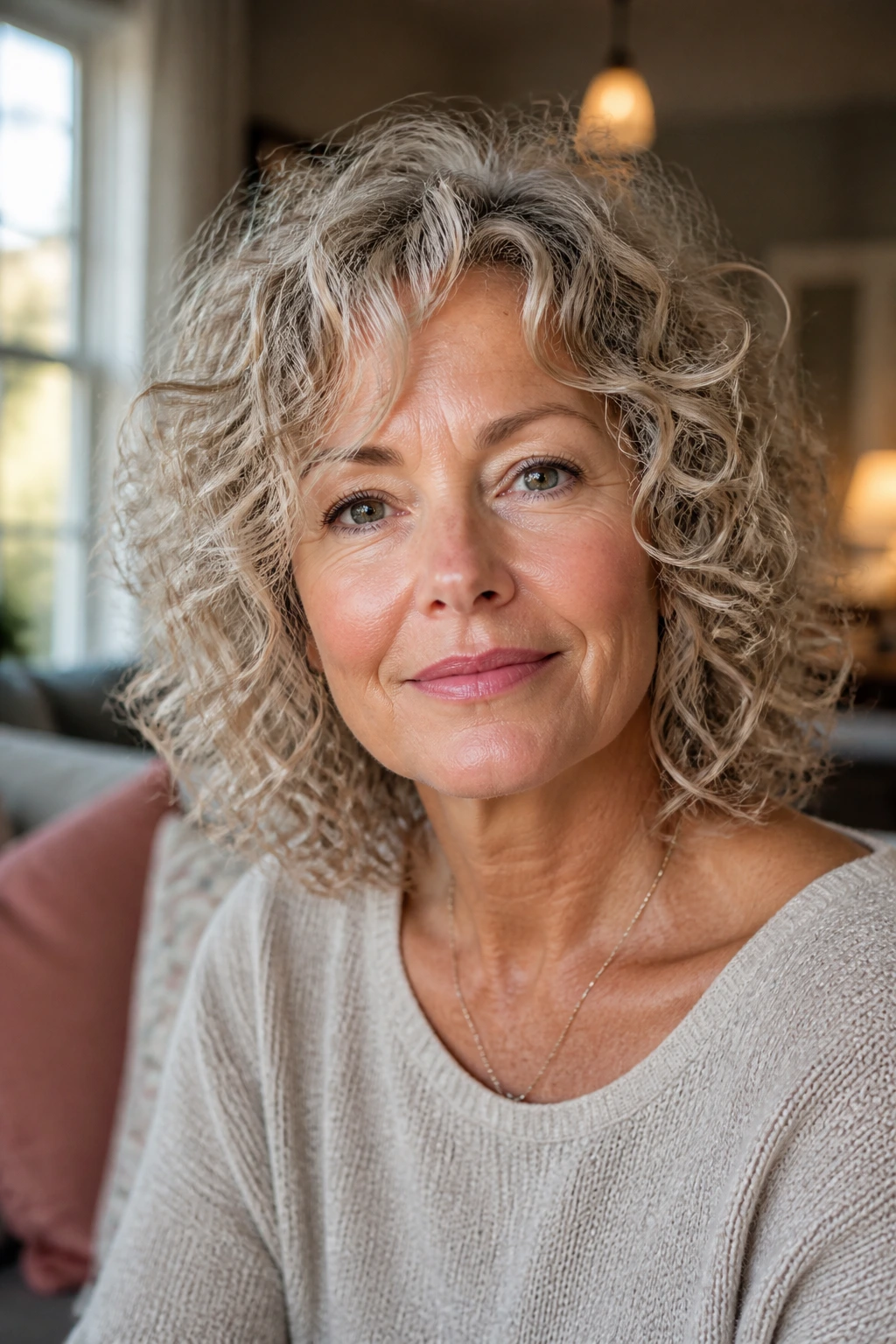
Fine curls need a different conversation. Too many layers and they vanish; too little and they fall flat. Airy layers keep the length medium while removing just enough weight that the curl can bend. The shape stays soft and light, not skinny or stringy.
If your curls are fine, I’d avoid heavy creams here. They soak up product and go limp fast. A foam or lightweight mousse usually gives better lift, especially at the roots and through the crown. The cut should do most of the work, though. That’s the part people forget.
A good fine-curly medium cut often looks a little too simple on the hanger and then looks right once it dries. That’s normal. Don’t panic and over-edit it.
21. Chunky Definition for Thick Curls
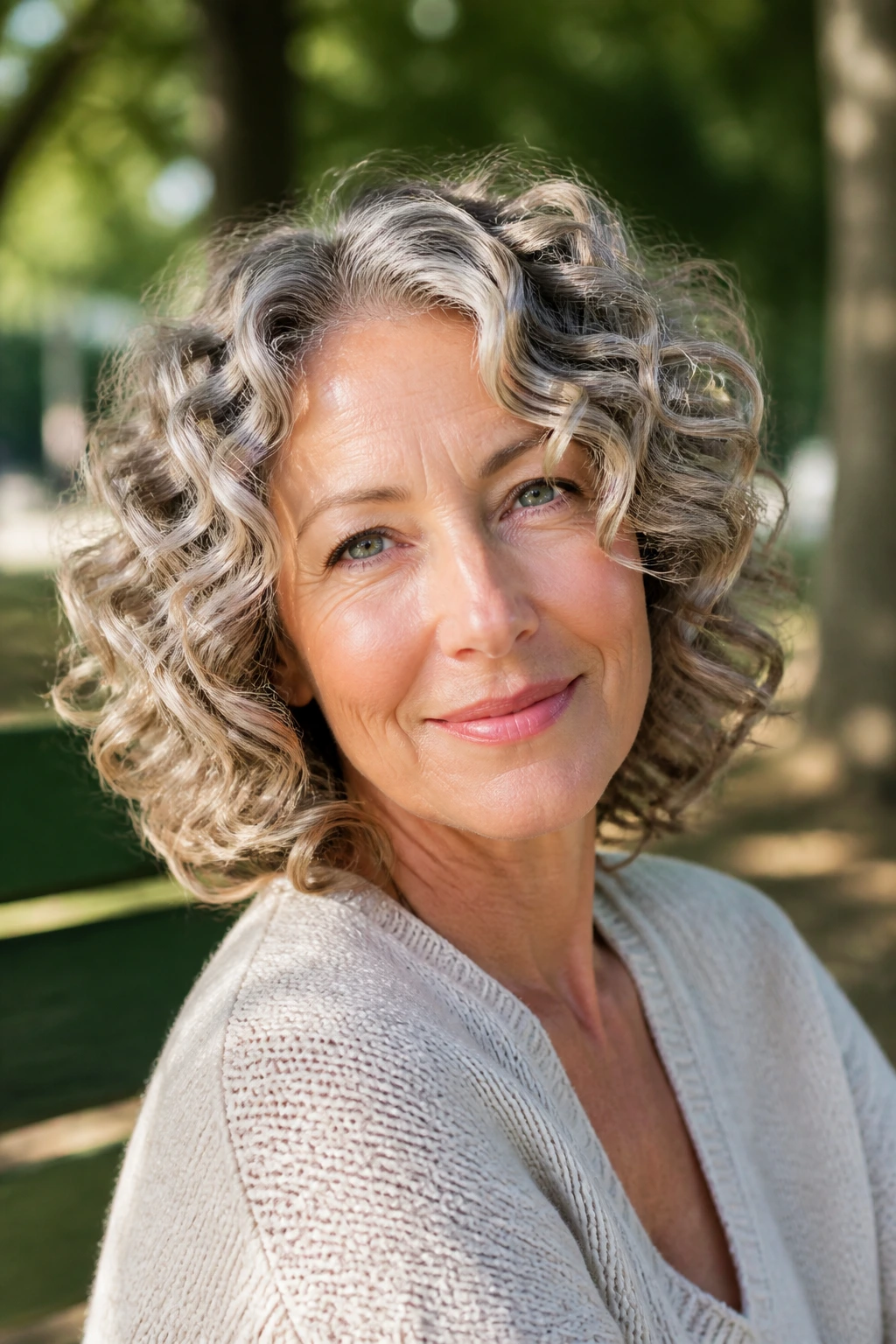
Thick curls usually want clumps, not chaos. This style leans into larger, more defined sections of hair so the overall shape reads rich rather than puffy. Medium length keeps the volume manageable, and a stronger hold product helps the curl groups stay together as they dry.
If your hair is dense, you probably already know that a weak cream won’t hold the line. Use a gel that gives a real cast, then break it only after the hair is fully dry. That crisp finish is what keeps the style from expanding into a cloud by noon.
This look is a good argument for sectioning the hair carefully. Four to six sections is not overkill if the hair is thick. It’s just smart.
22. Glasses-Friendly Soft Frame

Glasses change the geometry of a haircut, and not enough people admit it. A glasses-friendly soft frame keeps the front pieces long enough to avoid tangling with the frames, while the layers open around the temples and cheekbones so the glasses don’t get buried. Medium curls are perfect for this because they can sit forward or back without much fuss.
The best version of this style avoids bulky sides. You want the hair to move away from the frame line, not crowd it. A soft side part usually helps, and a little root lift at the temple keeps the whole thing from squashing down.
If you wear bold frames, keep the fringe lighter. If your frames are thin, you can afford a bit more curl at the front. Small adjustment. Big payoff.
23. The Soft Pinned Side Roll
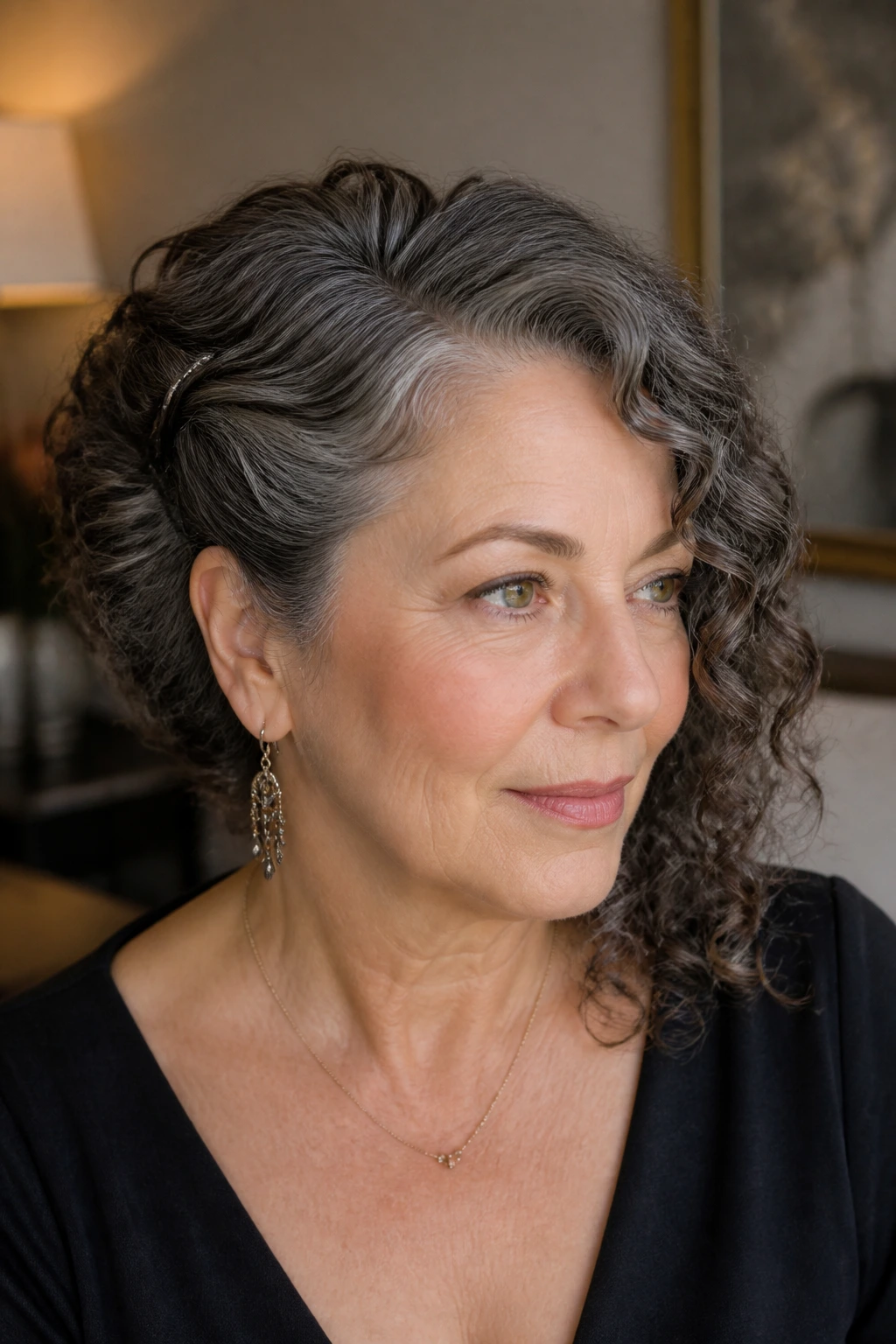
This one feels a little old-school in the best way. You sweep one side back into a soft roll or twist, pin it low, and leave the other side loose in curls. It gives the haircut shape without making it formal in a stiff, sprayed-to-death way. Medium length hair has enough body for the roll to hold and enough curl to keep the style from looking plain.
It’s a strong choice when you want the face open on one side and a little drama on the other. The asymmetry is flattering, especially if one side of the face feels more open to you than the other. Hair does not have to be perfectly symmetrical to be elegant. That’s the wrong goal anyway.
A decorative pin works here, but a couple of hidden bobby pins are enough if you want the roll to stay put all day.
Why Medium Length Keeps Curls in the Sweet Spot
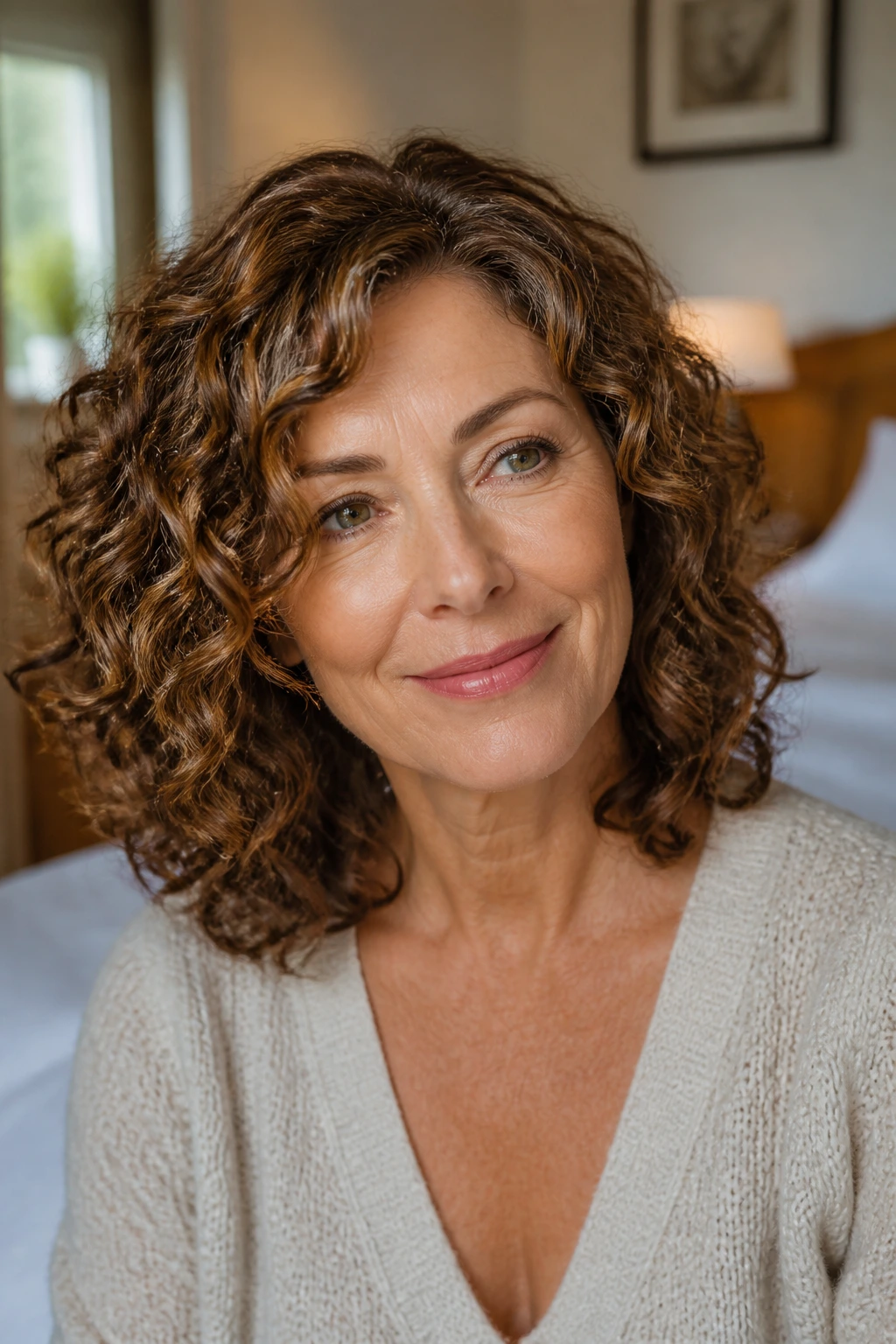
Medium length is where curls get to keep some of their weight without dragging themselves into a flat, tired line. That matters more after 50 than most people admit, because hair often changes in density, strand diameter, and moisture retention. A shoulder-grazing cut can make the curl pattern look clearer with less daily effort. It’s not magic. It’s physics.
Long curls can be beautiful, but they ask more from the hair shaft and the styling routine. Short curls can be lively, but they sometimes expose the scalp more than you want or go wide before they go tall. Medium length sits between those extremes. It gives curl enough space to spring, enough length to frame the face, and enough structure to work with glasses, earrings, scarves, and the rest of real life.
That’s why the best curly hairstyles for medium length hair over 50 usually have one thing in common: they respect the curl’s weight. They don’t fight it with tiny layers everywhere, and they don’t drown it under too much product. The shape is honest. Honest hair is easier to live with.
Tools and Products That Make Styling Less Annoying
-
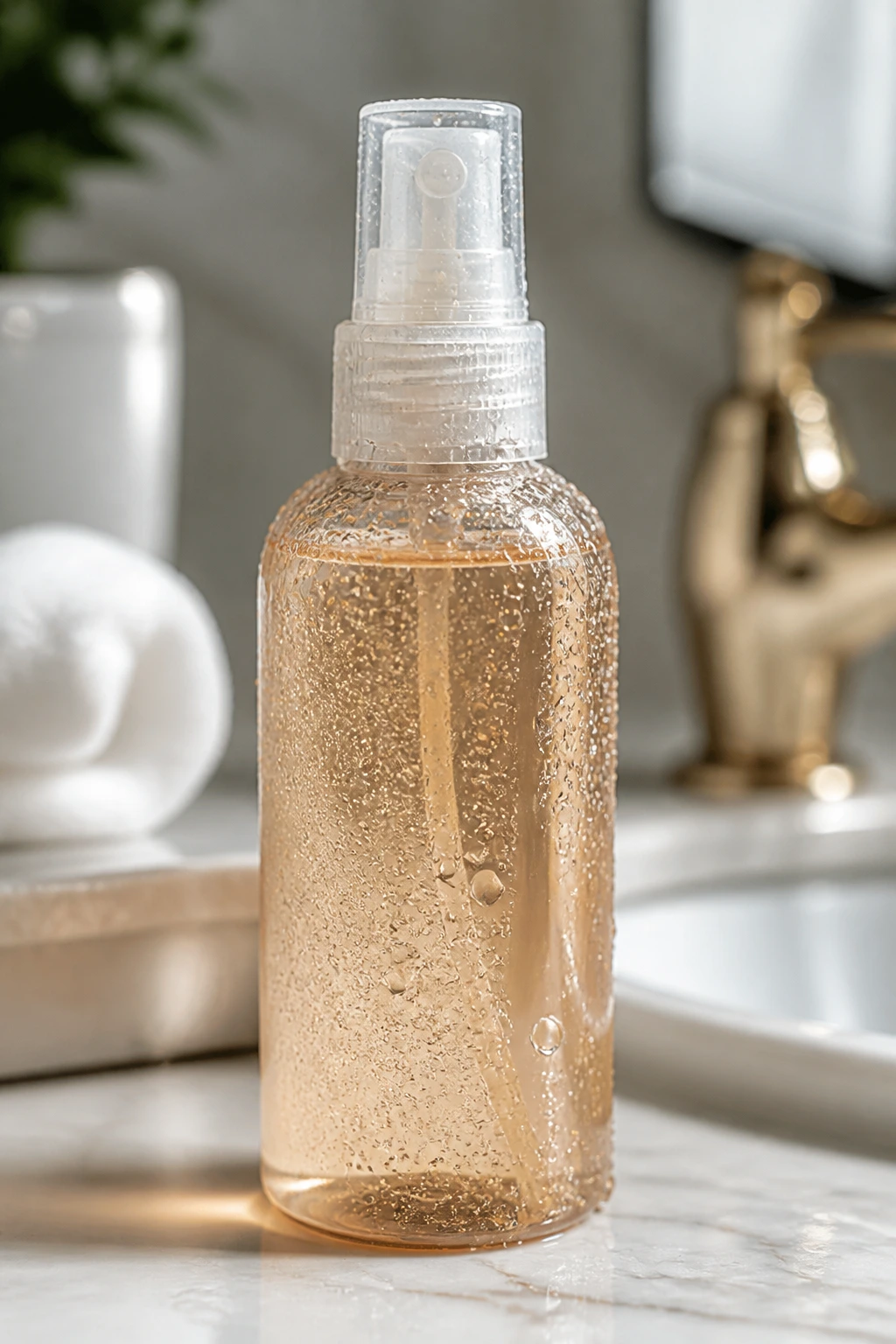
Spray bottle with water — Needed for day-two refreshes and for reactivating product without soaking the whole head.
-
Curl cream — Good for slip and softness, especially on drier or gray curls that need a little extra moisture.
-
Mousse or foam — Best when you want lift without heaviness; useful for fine curls and root volume.
-
Gel with medium or strong hold — Gives shape that lasts beyond the first hour, especially in humidity.
-
Diffuser attachment — Helps set the curl pattern while keeping the roots from going flat.
-
Microfiber towel or cotton T-shirt — Better than a rough bath towel for blotting water without tearing up the cuticle.
-
Wide-tooth comb — Useful for distributing conditioner in the shower and detangling while hair is wet.
-
Duckbill clips or small root clips — Handy for crown lift, part control, and keeping the top from collapsing as it dries.
-
Silk or satin pillowcase — Saves the curl pattern overnight and cuts down on frizz at the edges.
-
Light serum or finishing oil — Best for the ends and outer layer; a tiny amount is enough.
How to Pick the Right Shape for Your Curl Pattern and Density
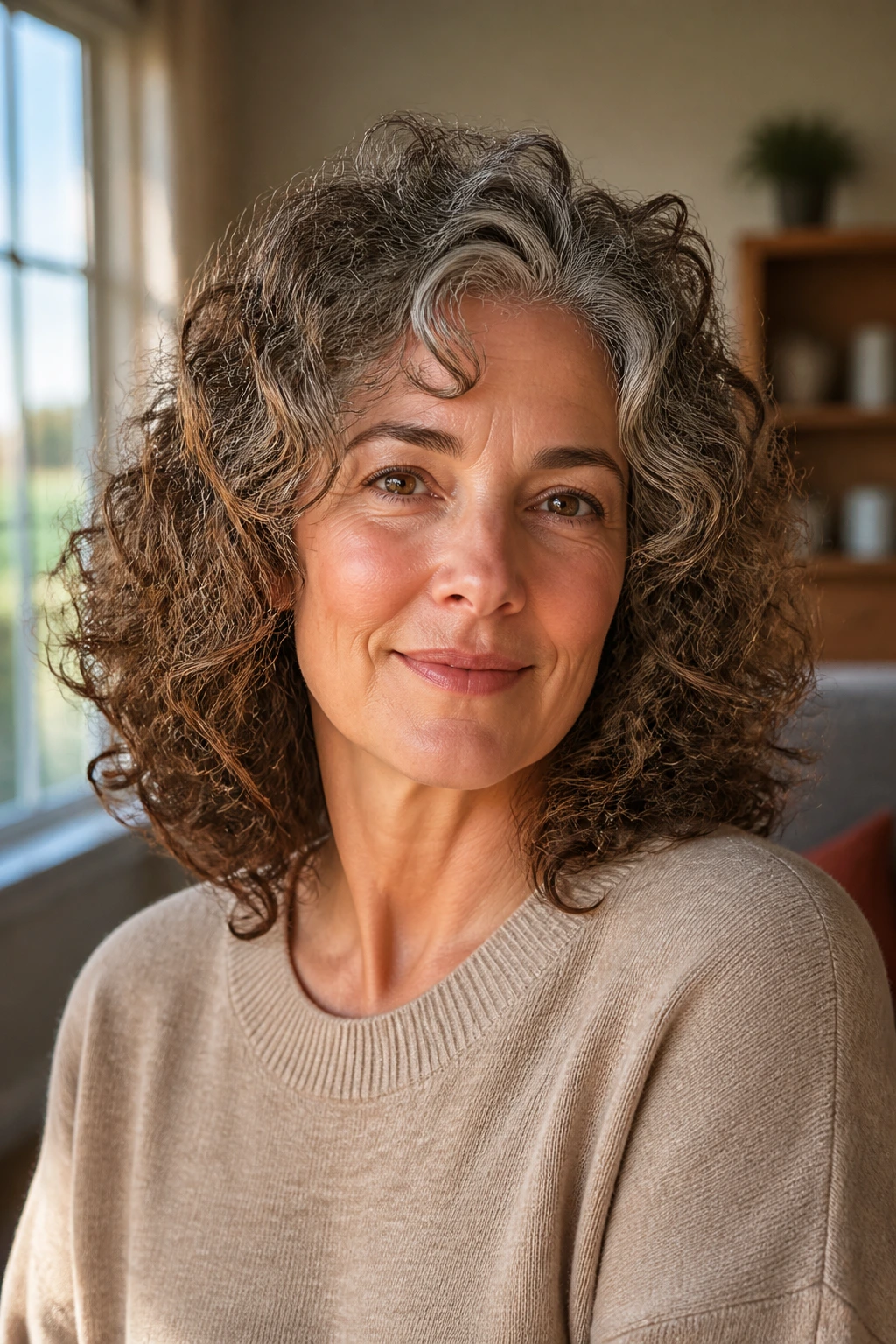
If your curls are fine and easily weighed down, keep the layers longer and the products lighter. Heavy butters and thick creams can make the cut look flatter than the haircut deserves. A foam at the roots and a gel through the mid-lengths usually gives a better result than piling on moisture.
Thicker curls usually need more structure inside the shape. A stylist who understands curl-by-curl cutting or dry shaping can remove bulk without hacking at the outline. That’s the difference between a rounded, movable cut and one that just looks chopped. Gray curls, meanwhile, often need a cleaner silhouette and a touch more hydration, because silver strands can feel rougher and show frizz faster.
The smartest move is to treat the cut and the styling routine as one decision. A gorgeous haircut that only works with a 40-minute diffuser session is not a low-maintenance haircut. Be honest about the time you actually want to spend.
How to Wear These Styles With Glasses, Earrings, and Necklines
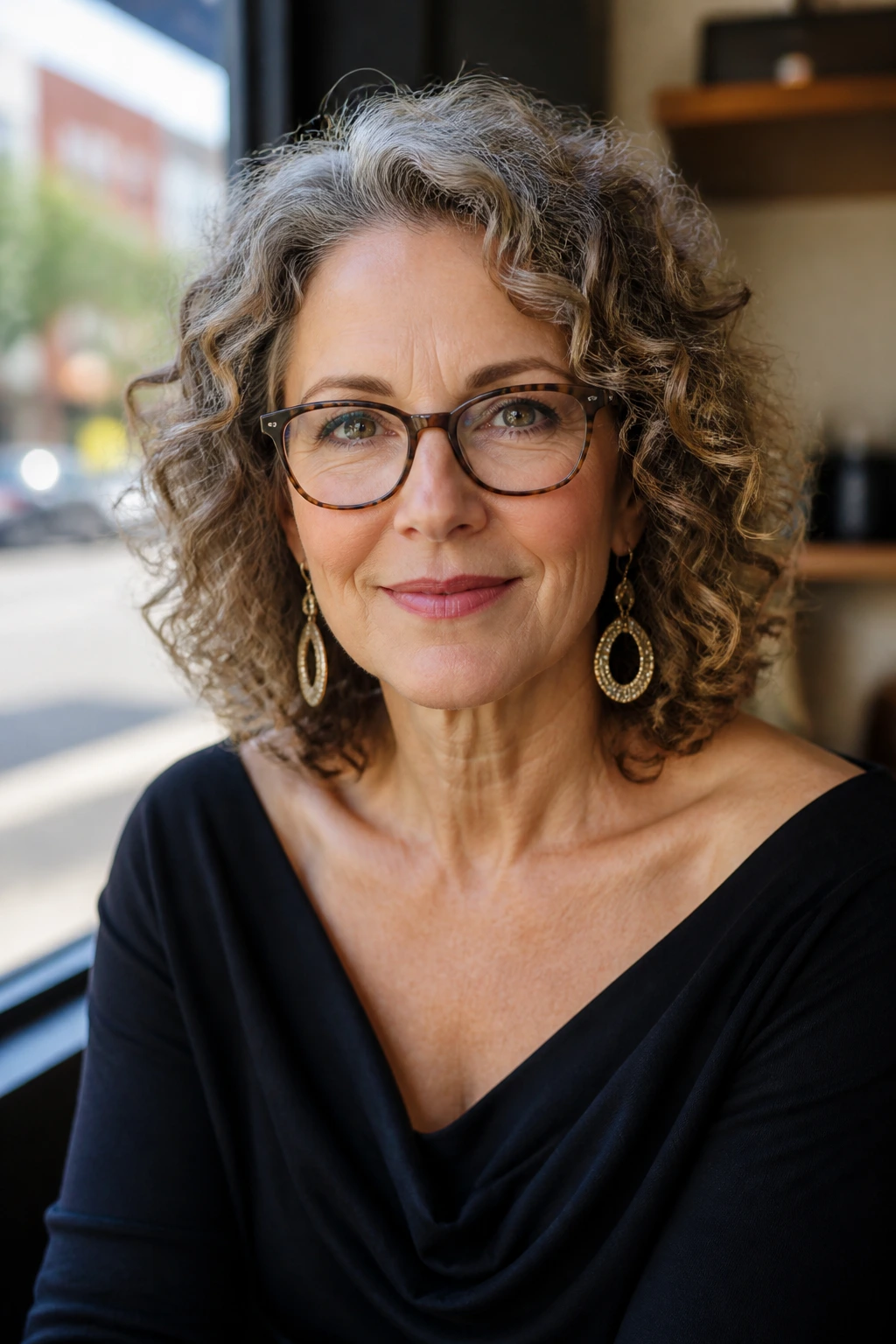
Presentation: Medium-length curls look best when the silhouette is allowed to breathe a little. Let the front pieces sit away from the face, and keep the crown lifted enough that the style doesn’t press into the forehead or temples. If the cut has bangs, make sure they fall in pieces, not one heavy slab.
Accessory Pairing: Glasses, hoop earrings, and scarves can either help the style or bully it. Thin frames work with softer, fuller curls; bolder frames usually need cleaner side lines. Drop earrings show well with tucked-back sides, while studs disappear a little unless the hair is shorter around the jaw.
Best Match: Round faces usually benefit from side parts and vertical movement. Longer faces often look better with more width through the sides and a fringe that breaks up the forehead. If your necklines tend to be high, a pinned-back or tucked style keeps the hair from crowding the whole area.
Mood: There’s a nice range here, and that’s the point. Some of these styles read relaxed and everyday, while others feel polished enough for a dinner out or a family event. Pick the one that fits your week, not the one that requires a costume.
Small Styling Upgrades That Make the Cut Look Intentional
Definition Boost: Use your stylers on soaking-wet hair, then scrunch with your hands before diffusing. That helps the curl clump before frizz gets a vote.
Volume Boost: Clip the crown for the first part of drying, and flip your part while the hair is still damp. Root lift is easier to build early than to rescue later.
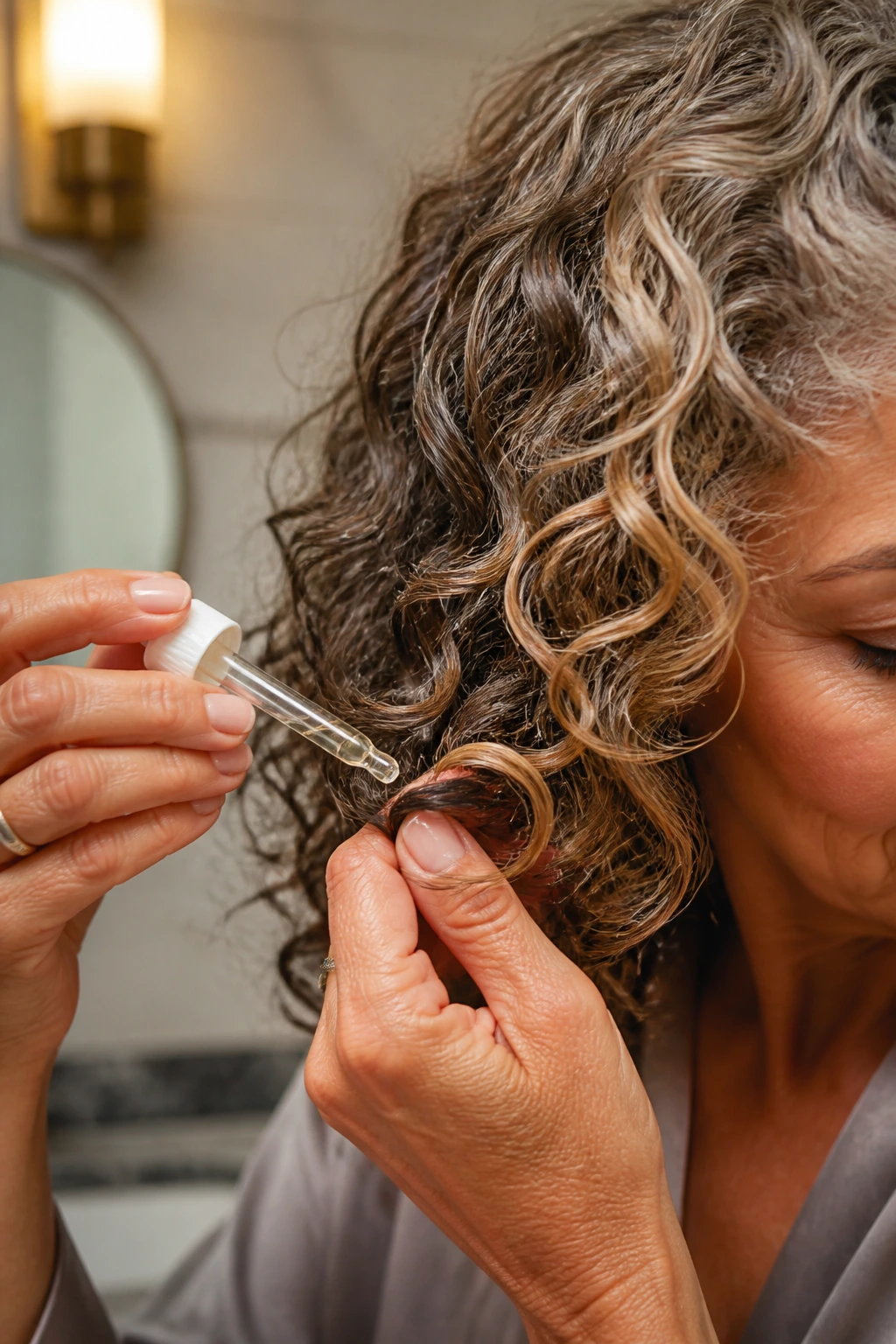
Softness Boost: Once the hair is fully dry, warm one drop of serum between your palms and smooth only the outer layer. The inner curl should stay untouched.
Time-Saver: Set your part and section your hair before you step into the shower. That tiny bit of prep makes wash day faster, and faster usually means cleaner styling.
Make-It-Yours: If you like a slightly more polished finish, use a fine-tooth comb only at the root area near the part. If you prefer a looser look, keep your fingers out of the curls after styling and let the shape land where it wants.
How to Keep the Shape Between Wash Days
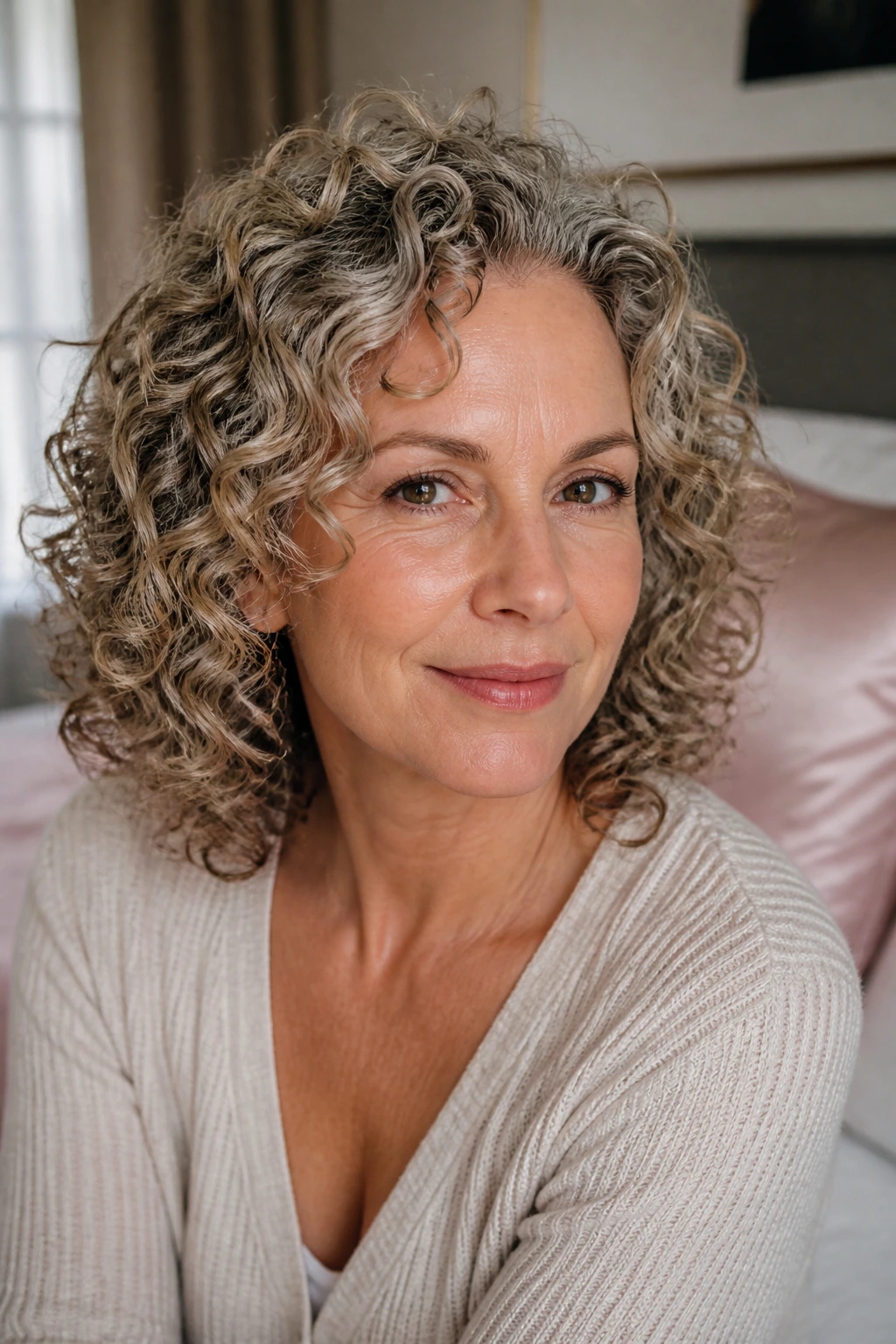
Curly hair behaves better when you stop trying to make each day a full restart. On most medium-length curls, a light refresh on day two or three is enough. Mist the hair with water, add a pea-sized amount of leave-in or foam to the frizziest sections, and scrunch until the curl wakes back up. Don’t drench it unless you want to start over.
At night, pineapple the curls loosely or sleep on a silk pillowcase. If the hair is especially prone to flattening at the crown, clip the top section very lightly before bed and remove the clip in the morning. That’s a small thing, but it can save the top from looking tired.
Trim every 8 to 12 weeks if you keep layered styles, or about 10 to 14 weeks if you prefer a cleaner lob. Gray or coarse curls may need deep conditioning every 1 to 2 weeks, while finer curls usually do better with lighter moisture and the occasional clarifying wash every 2 to 4 weeks. If the curl suddenly feels gummy, limp, or strangely soft, that’s often a product buildup problem, not a haircut problem.
Common Mistakes That Flatten or Widen Curly Medium Cuts
-
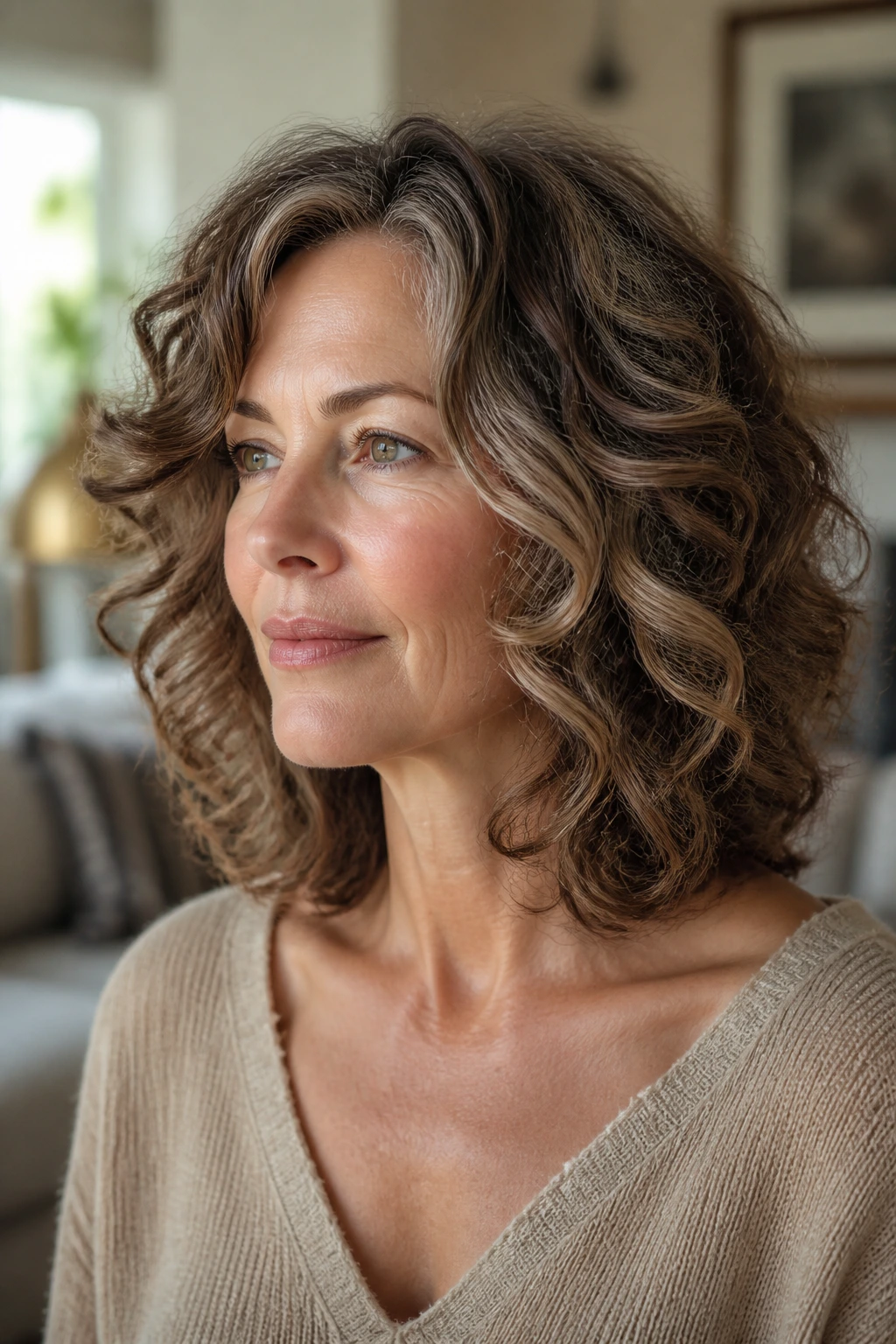
Cutting the bottom too blunt and too heavy. The hair sits like a shelf, especially when it dries, and the whole shape can widen at the jaw. Ask for enough internal movement that the ends can bend.
-
Using too much cream on fine curls. The style looks smooth for 20 minutes, then collapses at the roots. Switch some of that moisture for mousse or gel and see what happens.
-
Brushing curls once they’re dry. That turns definition into fluff fast. Detangle wet, style wet, and leave dry curls alone unless you’re only breaking a gel cast.
-
Keeping the same part forever. The scalp can get lazy, and the roots flatten in one spot. Change the part side or move it slightly every few washes.
-
Over-diffusing on high heat. The outside dries fast, the inside stays damp, and the curl gets frizzy before it ever settles. Medium heat and a little patience work better.
-
Ignoring the crown. A flat crown makes even a good cut look tired. Root clips, lift at the top, or a slightly shorter crown layer can fix a lot.
Variations and Adaptations to Try
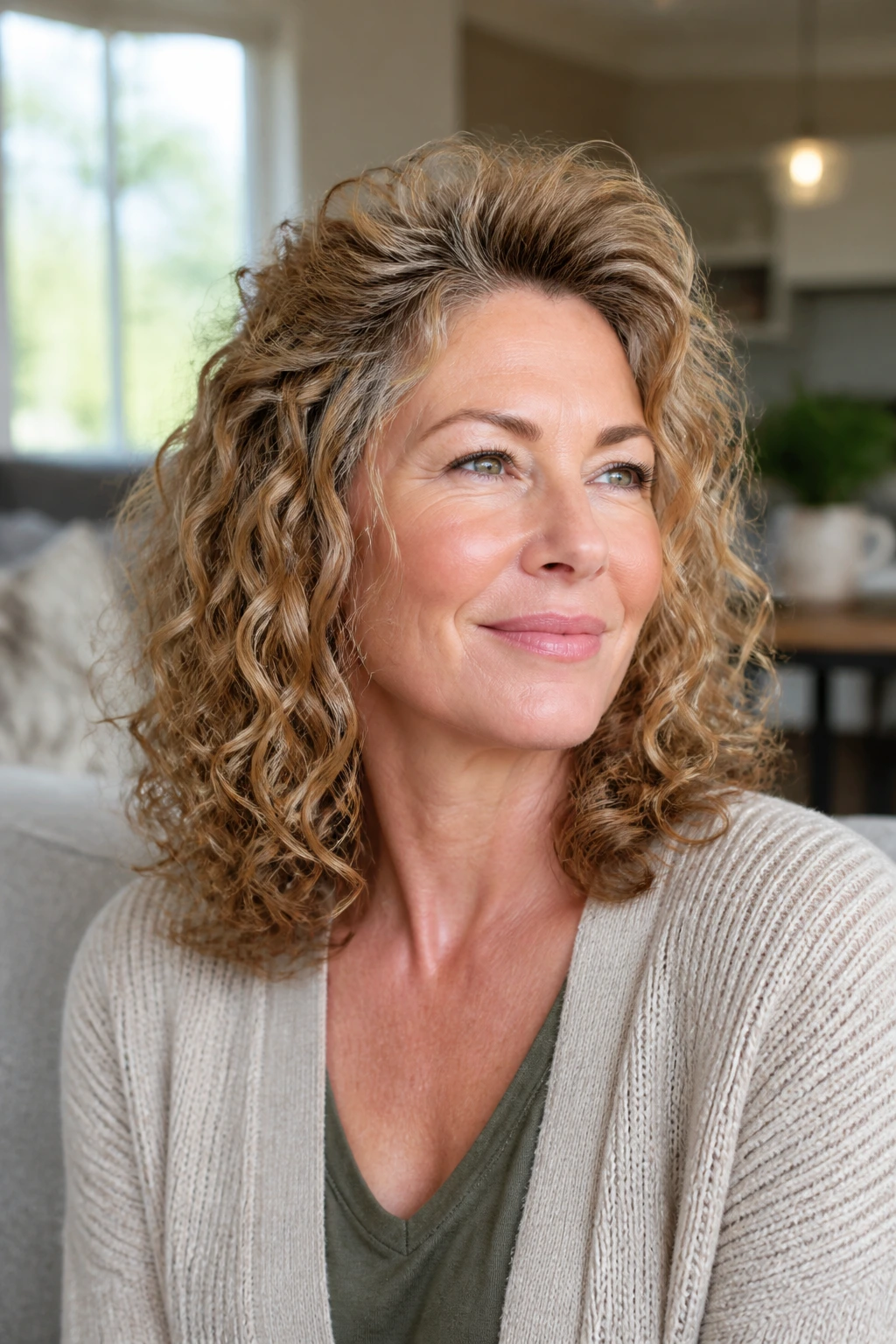
The Fine-Curl Float: Keep the layers long and use mousse instead of heavy cream. This version keeps the cut from disappearing under product and gives the crown enough air to stay lifted.
The Thick-Curl Sculpt: Ask for internal debulking and a stronger hold gel in the styling routine. The goal is to keep thick curls in defined clumps, not to split them into a million little frizzy bits.
The Gray-Silver Shine Version: Use a cleaner silhouette with a little more shine product on the outer layer. Silver hair often looks best when the shape is crisp and the ends are well conditioned, not overloaded.
The Glasses-Friendly Fringe: Soften the front pieces, keep the temples light, and let the hair move away from the frame line. That stops the style from bunching against the glasses arms and keeps the face open.
The Humidity Shield: Add a stronger gel, dry a little longer with the diffuser, and avoid too much touching once the cast is set. In sticky weather, the goal is hold first, softness second.
The Low-Heat Air-Dry Version: If you hate blow-drying, use clips at the crown, scrunch in product, and air-dry in sections. The shape will take longer to set, but it usually keeps a softer, more relaxed finish.
Curly Hair Questions People Ask All the Time

Which curly hairstyle is best if my hair is thinning on top?
A layered lob with crown lift or a deep side-part style usually helps the most. You want shape and movement at the top without cutting the hair so short that the scalp becomes the focus.
Do bangs work on curly hair after 50?
Yes, but the best version is usually soft, piecey, and a little longer than you expect. Curtain bangs or side-swept fringe are easier to live with than a blunt curly bang that shrinks above the brow.
Should I ask for layers if my curls are fine?
Yes, but keep them long and subtle. Fine curls need shape, not a lot of internal thinning, or they’ll lose the little body they have.
How do I stop medium-length curls from looking wide?
Build lift at the crown, keep the sides from puffing out with too much cream, and avoid a blunt bottom edge. A better part can also make the whole cut read narrower.
Can gray curls hold these styles?
Absolutely, though gray strands often need more moisture and a firmer hold product. The shape usually looks best when it’s clean, defined, and not overloaded with butter-heavy stylers.
What if one side of my curls is tighter than the other?
Use an asymmetrical part or a side-swept style to balance the difference. Not every curl pattern needs to be identical, and trying to force sameness usually makes the problem louder.
How often should medium curly hair be trimmed?
Most curly cuts behave best with trims every 8 to 12 weeks. If the ends start to fray or the shape loses its outline before then, book sooner.
Is a diffuser necessary?
No, but it helps if you want more root lift and better curl clumping. If you air-dry, use clips at the crown and avoid touching the hair while it sets.
The Cuts That Keep Curls Looking Awake
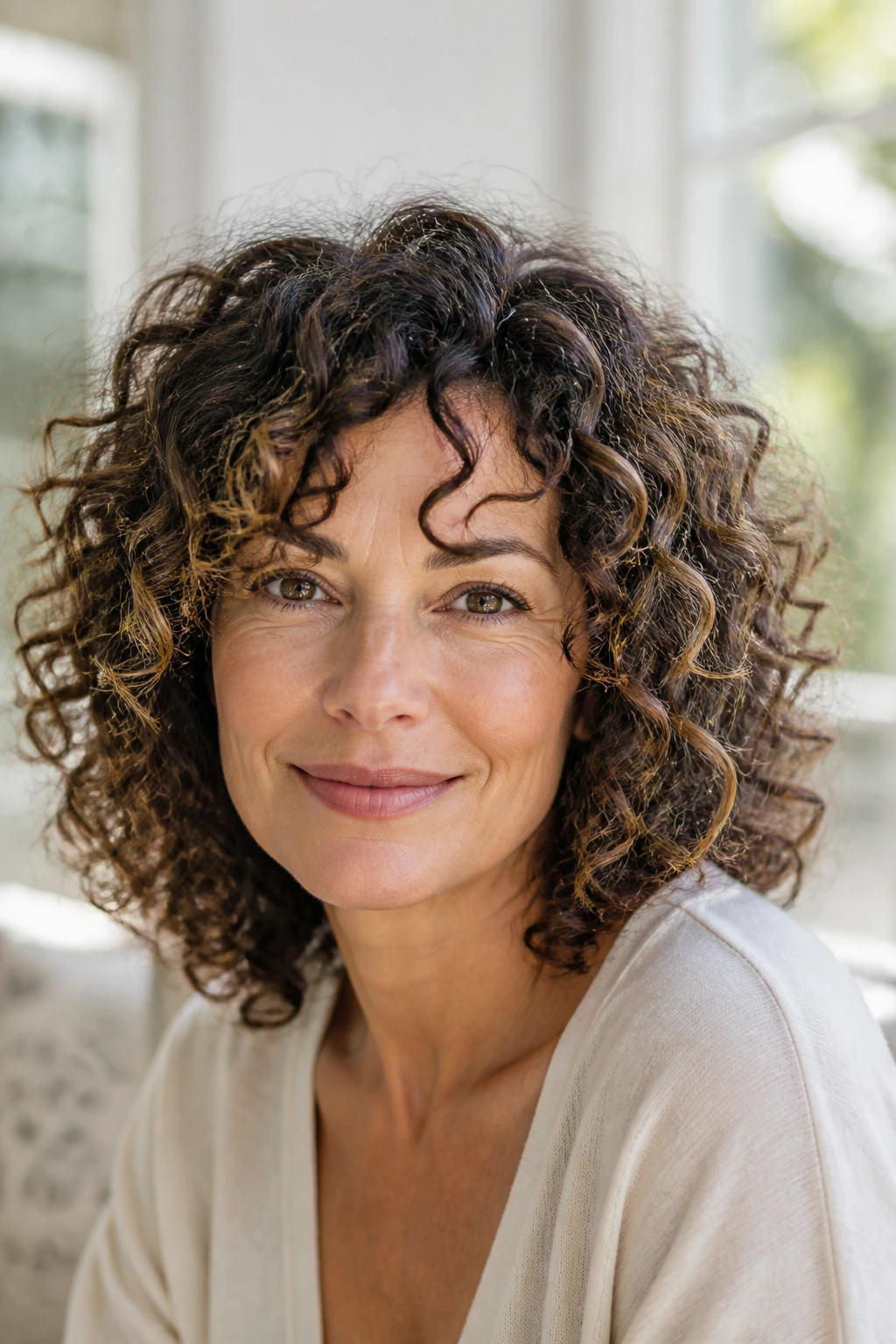
The nicest thing about medium-length curls is that they rarely need to be forced into one mood. They can look airy, sculpted, soft, polished, or a little wild, and the same head of hair can move between those modes without a full reset. That’s a gift, really.
If one lesson sits above the rest, it’s this: choose a shape that respects the way your curls fall, then style for the finish you want. A good cut gives you room. A good routine keeps that room from disappearing by lunch.
Pick the style that fits your face, your density, and your patience level. The rest is mostly a matter of smart layers, a decent diffuser, and not treating curl day like a negotiation you have to win.
