



Box braid styles can change the whole face in a way a lot of protective looks can’t. The neat little squares at the scalp, the clean drop of the lengths, the way a cuff clicks against a braid when you turn your head — it all adds up fast. For Black women, the cutest box braid styles usually do two things at once: they keep the hair tucked away and they make the whole silhouette feel intentional.
And the thing is, not every box braid set has to be big, waist-long, and loud to work. A medium knotless install with a center part can look sharper than a dramatic set if the parting is clean and the roots sit flat. A chin-length bob can feel fresher than a long style when you want less weight on your neck. Small choices. Big shift.
That’s why the difference between a braid style that looks good for six hours and one that still looks pulled together after two weeks usually comes down to the shape, the parting, the length, and how much hair you ask your head to carry. Keep those four things in mind and the rest gets easier fast.
Why These Styles Keep Getting Saved
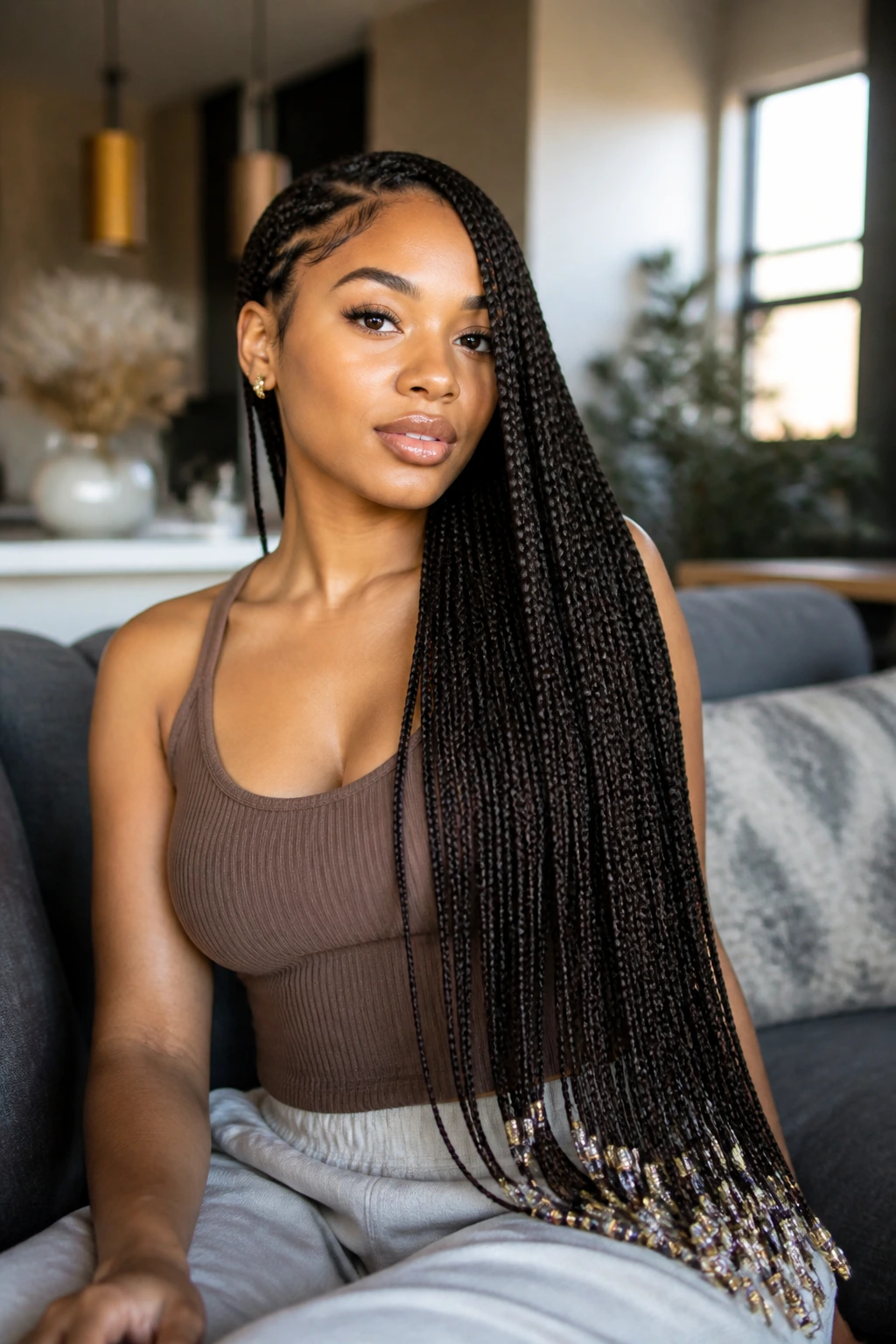
-
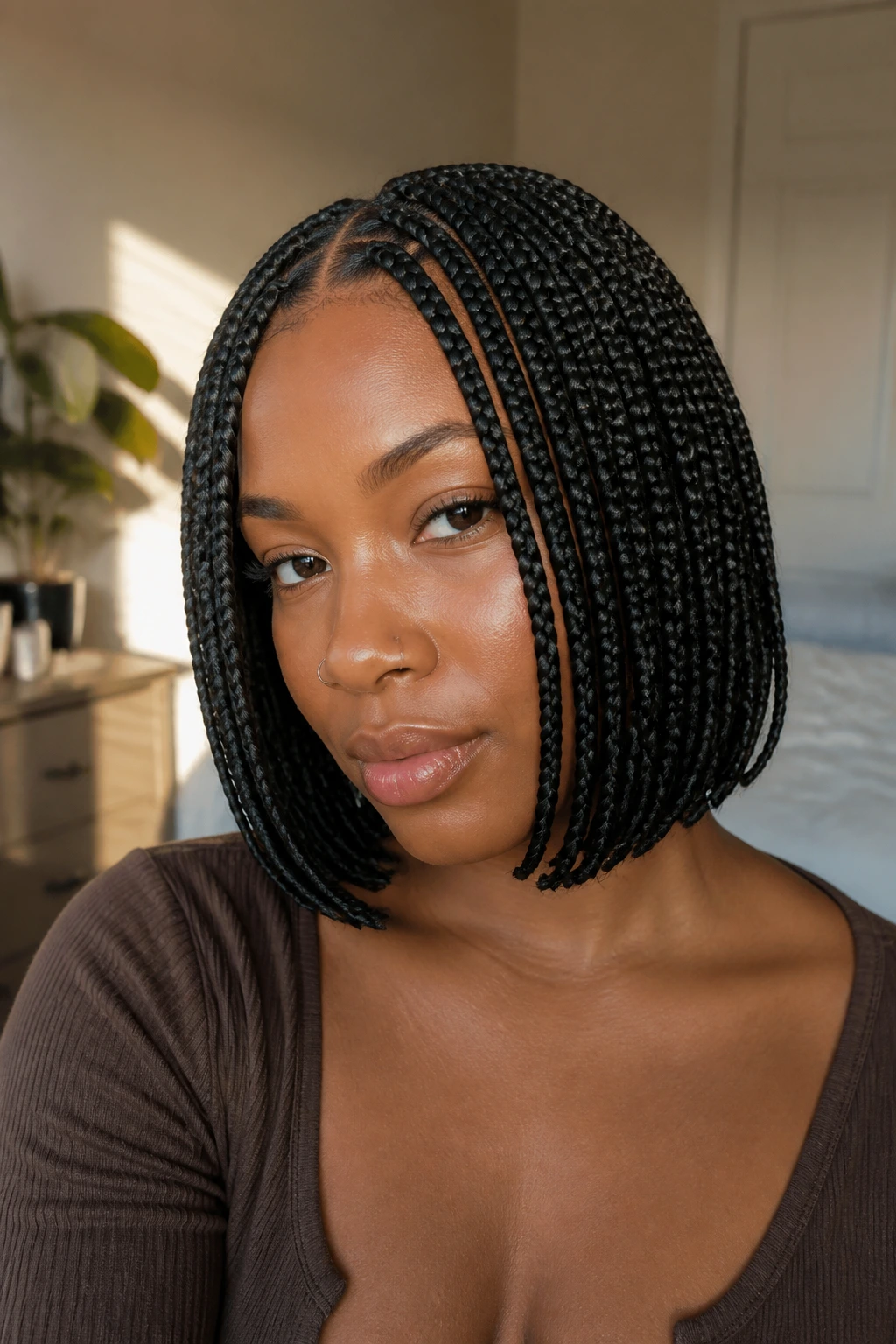
They change the frame of your face: A middle part stretches the face, a side part softens it, and a bob lands right at the jaw where it can sharpen or soften depending on the cut.
-
They give you range without changing the base install: The same braid set can be worn down, half-up, in a bun, or pinned back with cuffs and beads.
-
They let you control the weight: Jumbo braids, medium braids, and micro braids all read differently on the head, and that changes how long you can comfortably keep them in.
-
They work with your natural hair instead of fighting it: When the parts are clean and the tension stays sane, box braids sit on textured hair with less daily fuss than loose styles that need heat and detangling.
-
They can be as simple or as dressed up as you want: A plain classic set looks neat. Add curly ends, gold cuffs, or a scarf wrap and the same braid base turns into a whole different mood.
Why Box Braids Still Work on Black Hair
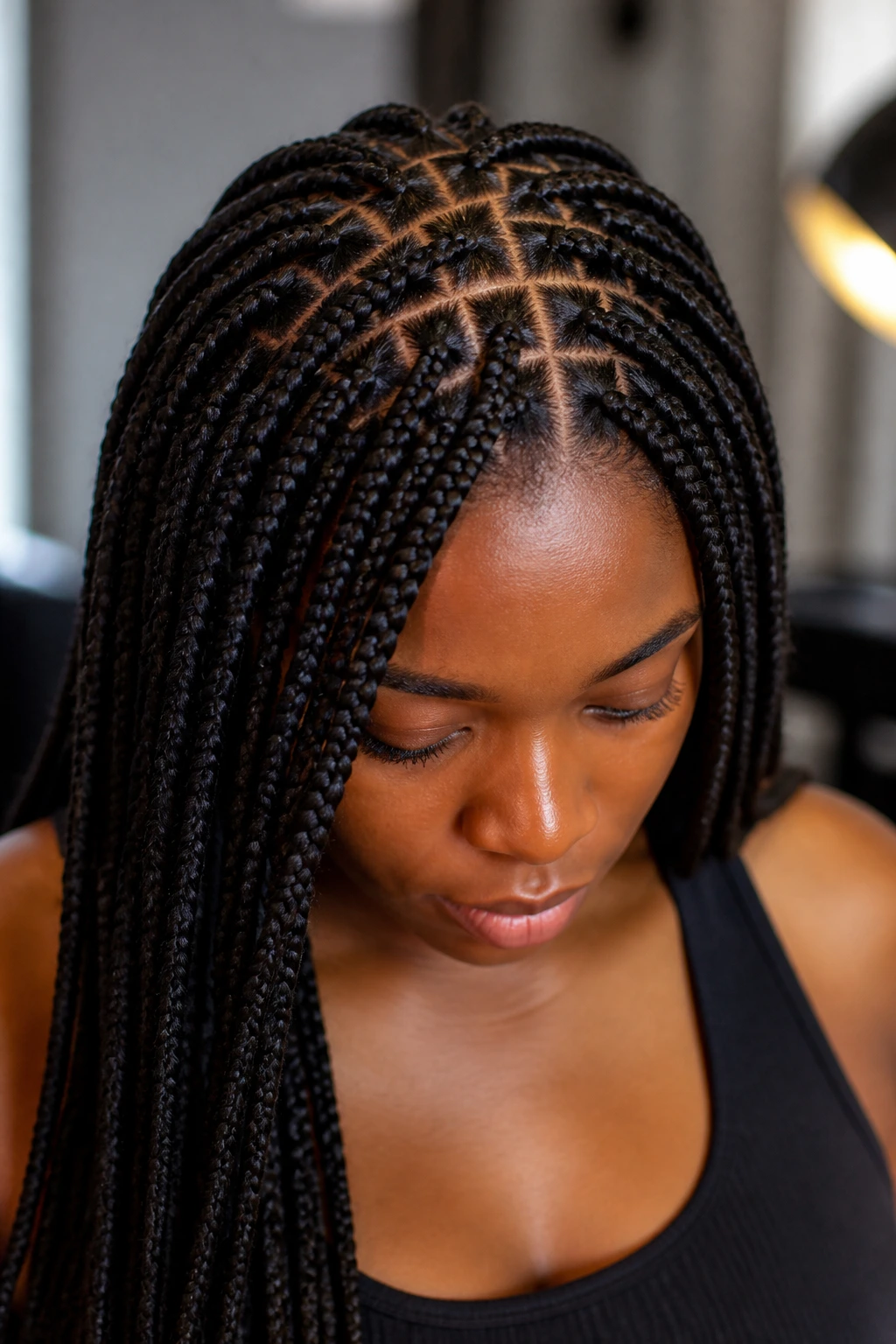
What gives box braids so much staying power is the structure. The square parting creates a clean grid at the scalp, and that grid does half the visual work before the braids even move. Once the lengths start hanging, you get rhythm, swing, and texture in one style. It’s tidy without looking stiff. That’s the part people keep coming back for.
The parting does the first visual job
A center part reads sharp. A side part reads softer. Triangle parts change the whole surface of the scalp, which sounds minor until you see it in real life and realize the pattern is doing most of the talking. If your braider is neat with the sections, even a simple braid set looks more polished than a fancier style done sloppily.
Weight changes everything
Long braids are not the same as heavy braids, and that difference matters. Waist-length box braids with too much added hair can tug at the hairline by the second week, while shoulder-grazing braids can stay comfortable far longer. The smartest styles are the ones that look full without turning the scalp into a suspension bridge.
A good braid set should move
Still braids look dated fast. Braids that swing when you walk, tuck easily behind one ear, and sit flat at the roots without puffing out on day one feel better. That’s why knotless installs, layered ends, and smaller front pieces keep showing up. They let the hair move like hair, not like a helmet.
1. Classic Waist-Length Box Braids
Classic waist-length box braids are the reference point for a reason. They give you long, straight fall, enough length to swing over one shoulder, and enough surface area to play with beads, cuffs, or a deep side part. If you like your braids to make an entrance when you walk into a room, this is the set that does it.
Why It Works
The length gives the braid pattern room to breathe. Shorter braids can look neat, but waist-length braids bring movement, and that movement softens the whole look. They also make simple styles easier: one low ponytail, one high bun, one half-up knot, and you’ve already got several days of looks without redoing a thing.
The catch is weight. A clean install matters here more than almost anywhere else. If the sections are too large or the added hair is too dense, the braids start leaning on the scalp instead of hanging from it. That’s when the style stops feeling cute and starts feeling like a chore.
A classic set works best when the roots are tidy, the ends are sealed smooth, and the braid size matches the density of your own hair. No drama needed. Just a good, even drop.
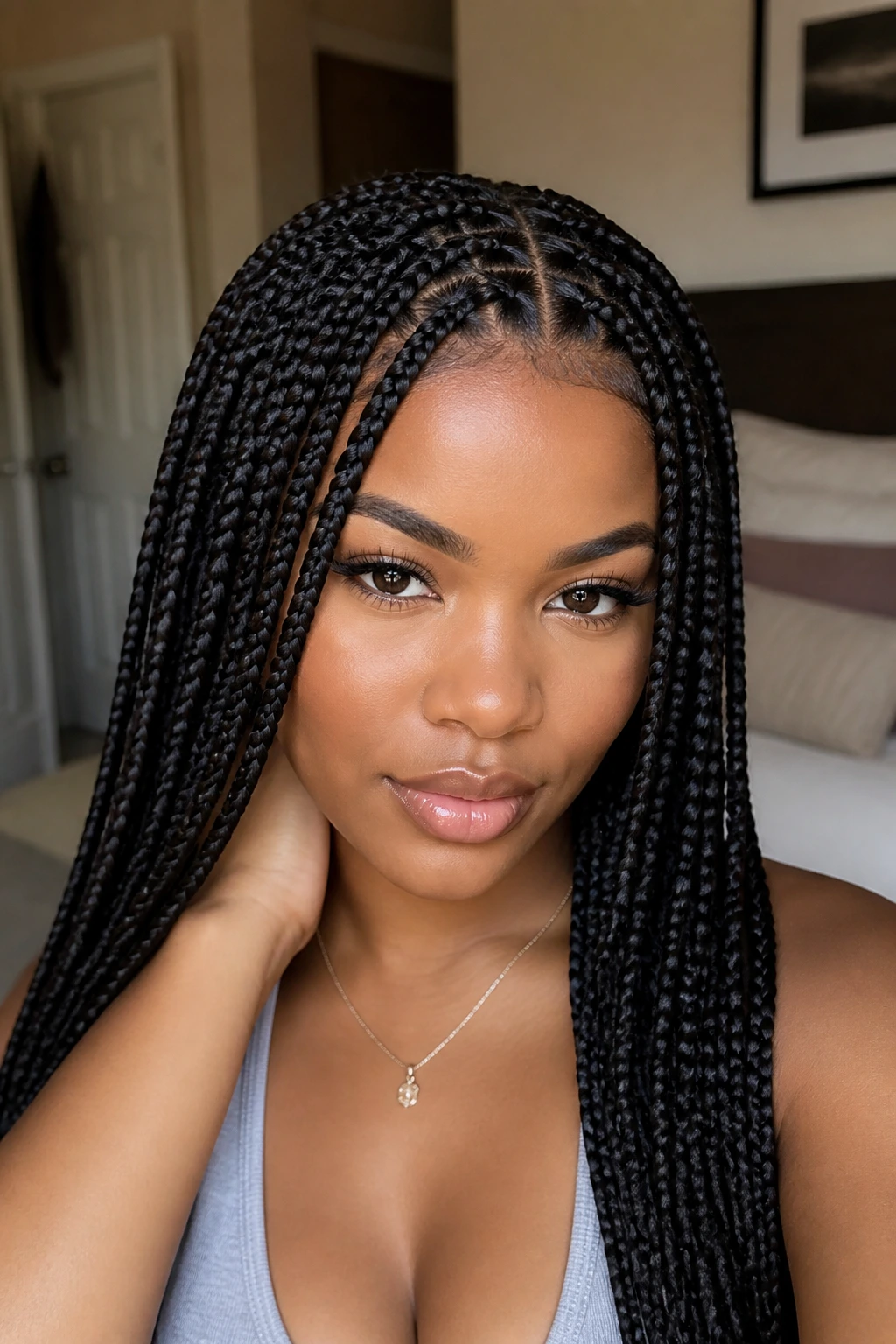
2. Medium Knotless Box Braids
Medium knotless box braids are the style I’d hand to someone who wants the braid look without the bulky start. The root is flatter, the base is lighter, and the whole install sits with a softer line around the hairline. On Black women, that slight reduction in tension makes a big difference in how the style feels by day three.
What Makes Them Stand Out
Knotless braids don’t begin with a hard knot at the root, which means the braid grows out looking smoother. That matters if you wear your hair pulled back often or if your scalp gets fussy under heavier installs. The medium size is the sweet spot here: not so small that the install drags on forever, not so big that the style loses shape after a week.
Best if you want a softer front line
If you like middle parts, this is one of the cleanest ways to wear them. The braids fall in straight curtains, and the flatter root means the part line stays visible longer before puff starts showing. Keep the parts crisp and avoid overloading the front rows with extra hair. That’s where a lot of installs go sideways. Too much weight right at the temples, and the whole head starts to look tired.
3. Triangle-Part Box Braids
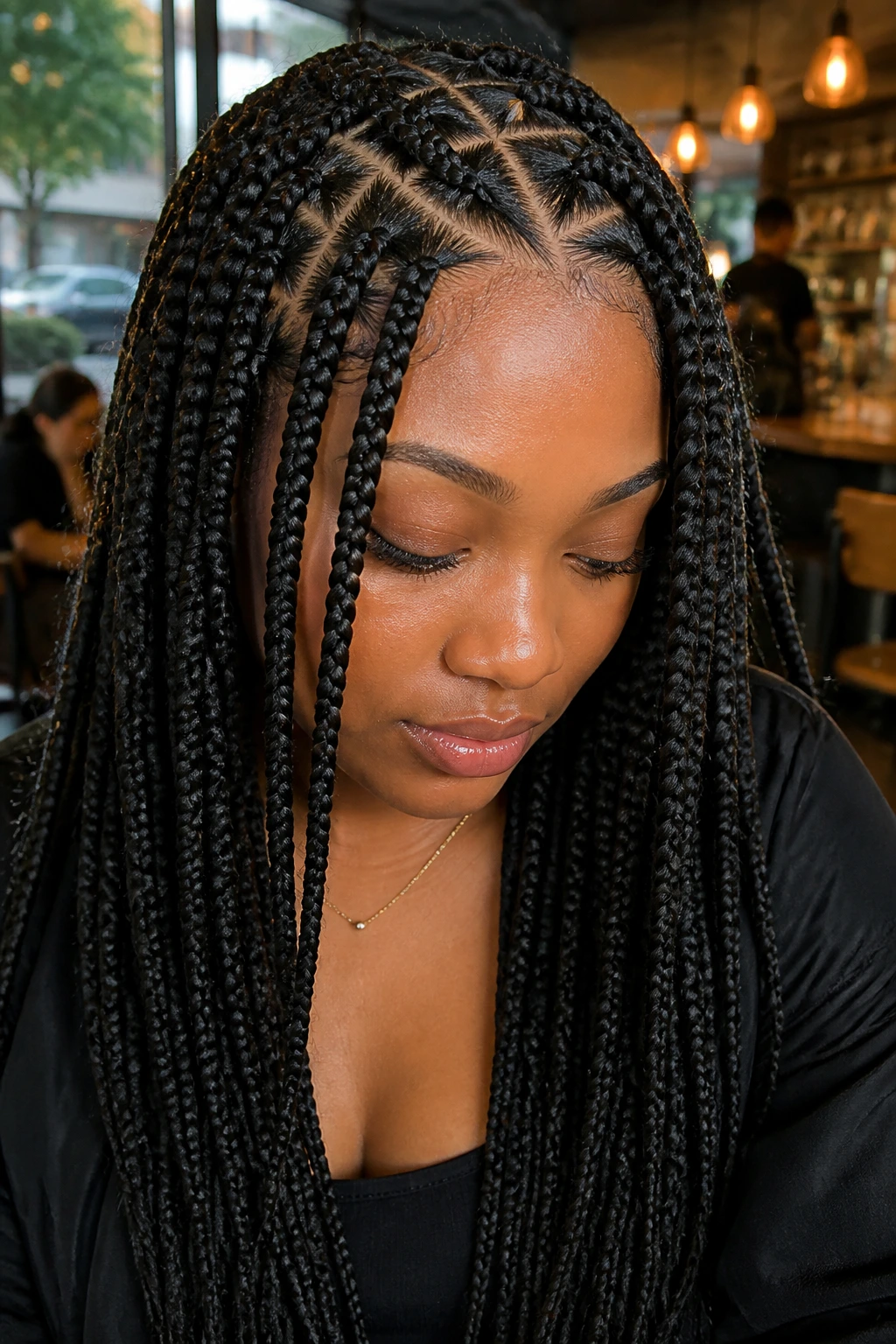
Triangle-part box braids are for anyone who wants the classic braid look with a little geometry baked in. The braids themselves can be medium or long, but the parting changes the mood right away. Instead of the usual squares, the scalp shows these pointed little sections that catch the eye in a different way.
The style reads interesting before a single accessory goes in. That’s what makes it smart. You don’t need beads, color, or curls at the ends to make the install stand out. The parting already did the work.
Why it feels fresh
Triangle parts break up the predictable grid. They create angles that look sharper on the scalp and can make even a basic braid set feel less ordinary. The only tradeoff is time. Triangle parting takes more care, especially if you want the front rows to stay symmetrical, so this is the style to choose when you’re willing to sit still for a while.
The best version has clean, even triangles and medium-sized braids that don’t crowd each other. If the sections are too thick, the shape gets lost. If they’re too small, the whole install can feel busy. The sweet spot is that clean, deliberate in-between.
4. Side-Part Box Braids
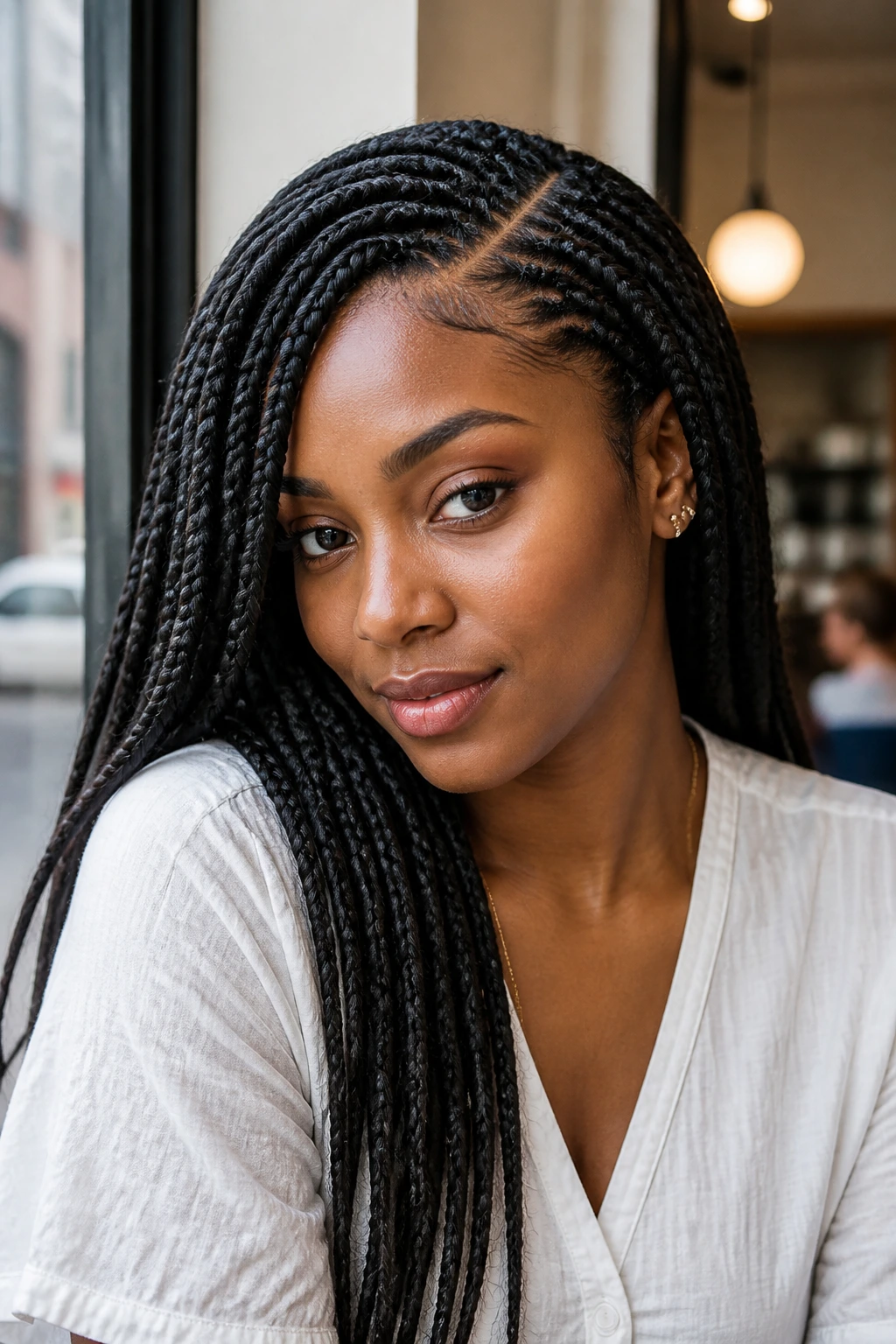
A side part changes the whole attitude of box braids. Middle parts can feel crisp and direct, but a deep side part softens the line across the forehead and gives the braids a little more motion when they fall. It’s one of the easiest ways to make a simple install feel styled without asking the braider to do much extra work.
This is the style for people who like asymmetry but don’t want chaos. The front section sweeps over one side, and that little shift changes how earrings, cheekbones, and brows show up together.
Why it works on so many face shapes
A side part can take pressure off a wider forehead, make a round face look a little longer, and keep long braids from hanging straight down with no shape. It also pairs well with layered lengths, especially if the front braids are slightly shorter than the back ones. That small cut gives the style movement instead of a blunt wall of hair.
Keep the part clean and don’t let the front rows get too heavy. A side part needs a soft drape, not a collapse. If you like wearing one side tucked behind the ear, leave a little space near the temple so it doesn’t look too packed in.
5. Jumbo Box Braids
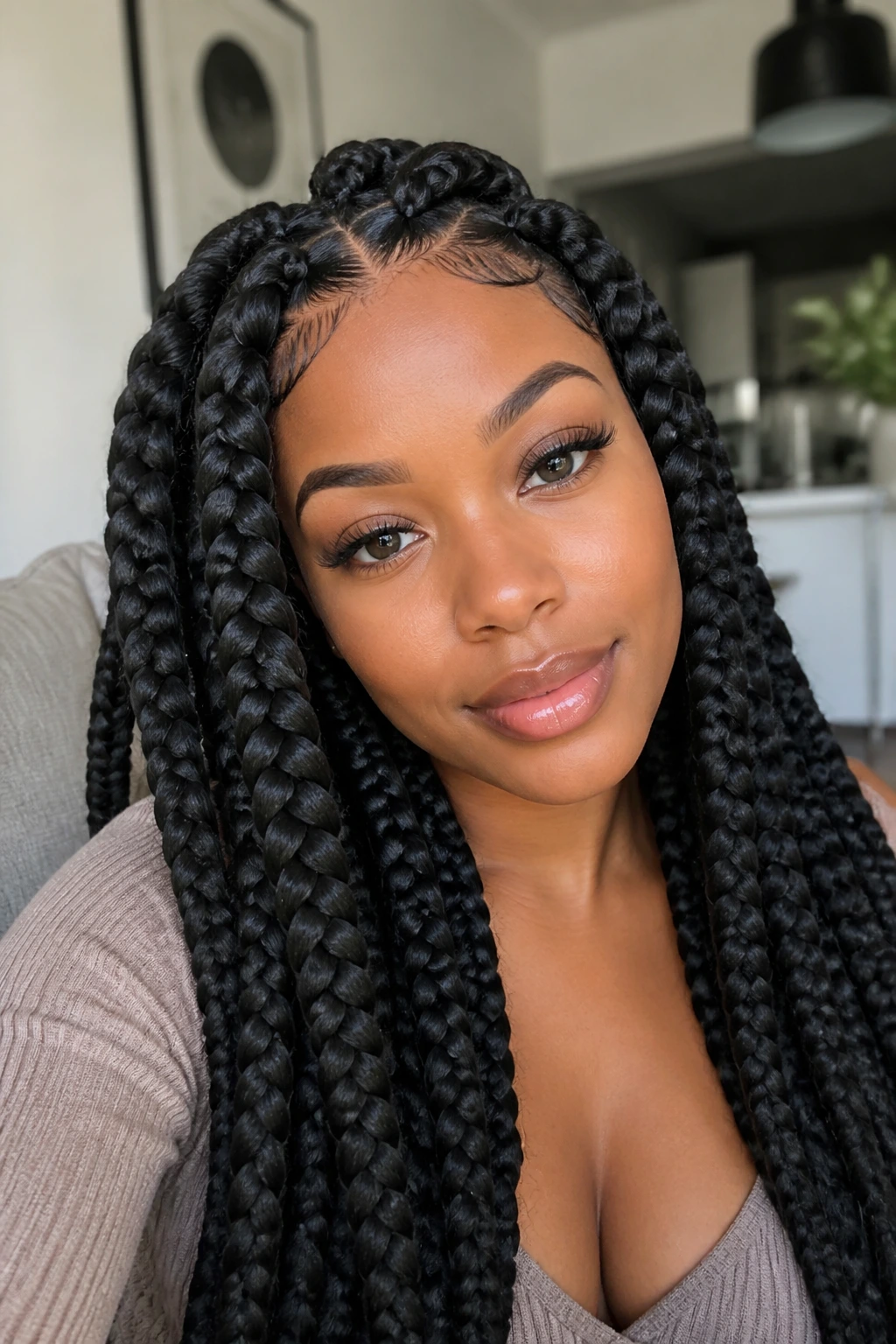
Jumbo box braids are bold in a way that feels practical, not fussy. Because the sections are larger, the install moves faster, and the braids themselves have a thick, chunky shape that reads from across the room. If you want a look that feels strong without spending forever in the chair, this is a smart pick.
A style with a clear silhouette
Jumbo braids show off the parting less and the braid shape more. That can be a plus. The style looks graphic, especially when the ends are tucked neatly and the roots are laid flat. It also makes accessories like cuffs easier to see because each braid has more surface area.
But there’s a catch. Bigger braids can still feel heavy if the stylist loads too much hair into each section. Ask for balance, not bulk. The braid should look full because of its size, not because each strand has been overstuffed. When jumbo braids are done well, they sit like thick ropes with movement. When they’re not, they drag.
6. Micro Box Braids
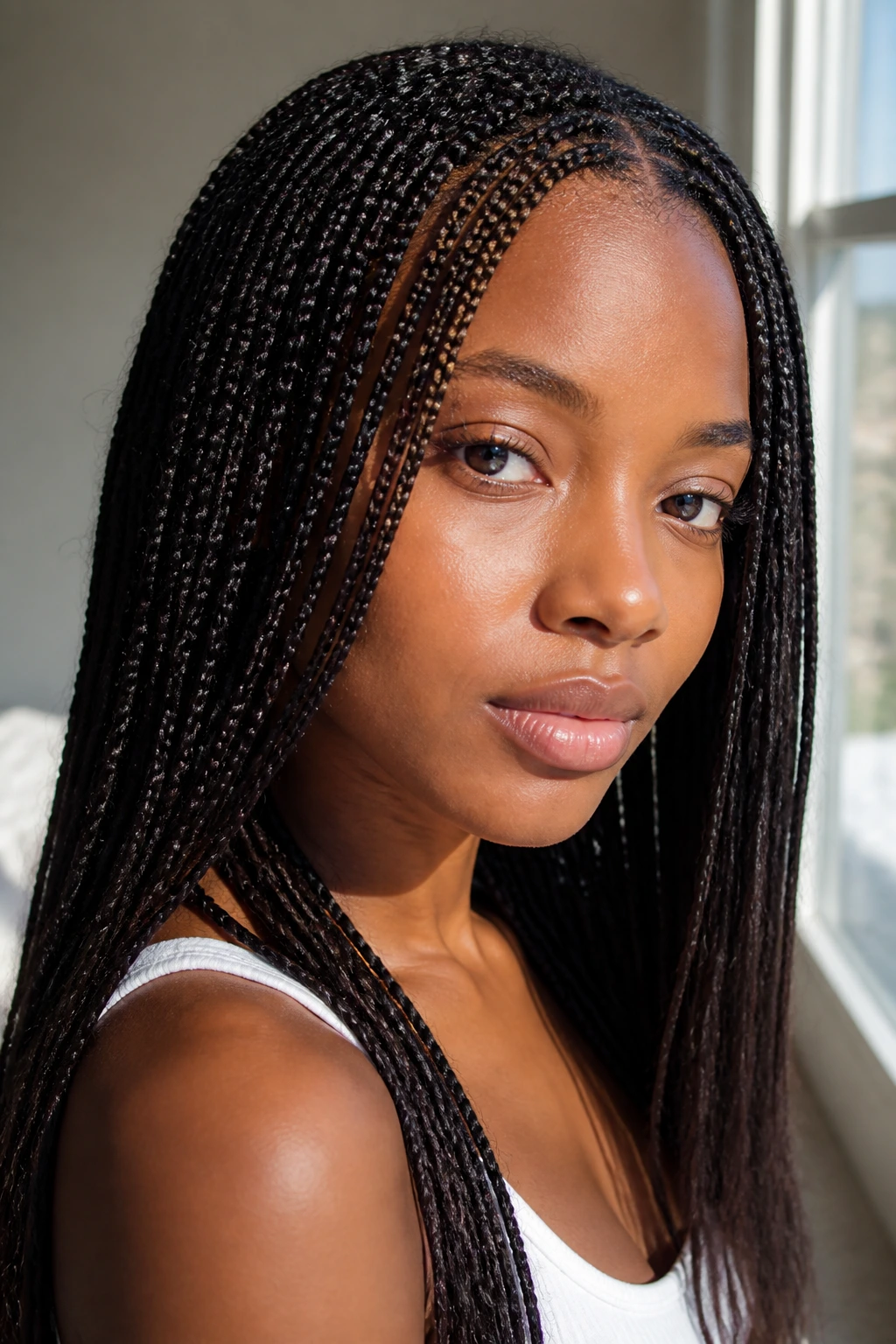
Micro box braids are for the person who likes detail. They take longer to install, yes, but the payoff is a head full of tiny braids with a lot of movement and a lot of styling range. Updos look intricate. Ponytails look sleek. Even a simple middle part starts to look almost architectural.
The style can be gorgeous, but it asks for patience. More sections means more time, and more sections means more attention during take-down later too. You do not want to rush either end of that process.
When they make sense
If you wear braids as a long-term protective style and you like changing the look often, micro braids can be worth the sitting time. They’re also useful if you want a more delicate finish that doesn’t read as chunky or heavy at the crown. The smaller the sections, the more natural the drape tends to look.
The tradeoff is upkeep. Frizz shows differently on tiny braids, and buildup can settle into small parts if you’re heavy-handed with oils. Light product wins here. Heavy product just makes the scalp look dusty.
7. Box Braid Bob
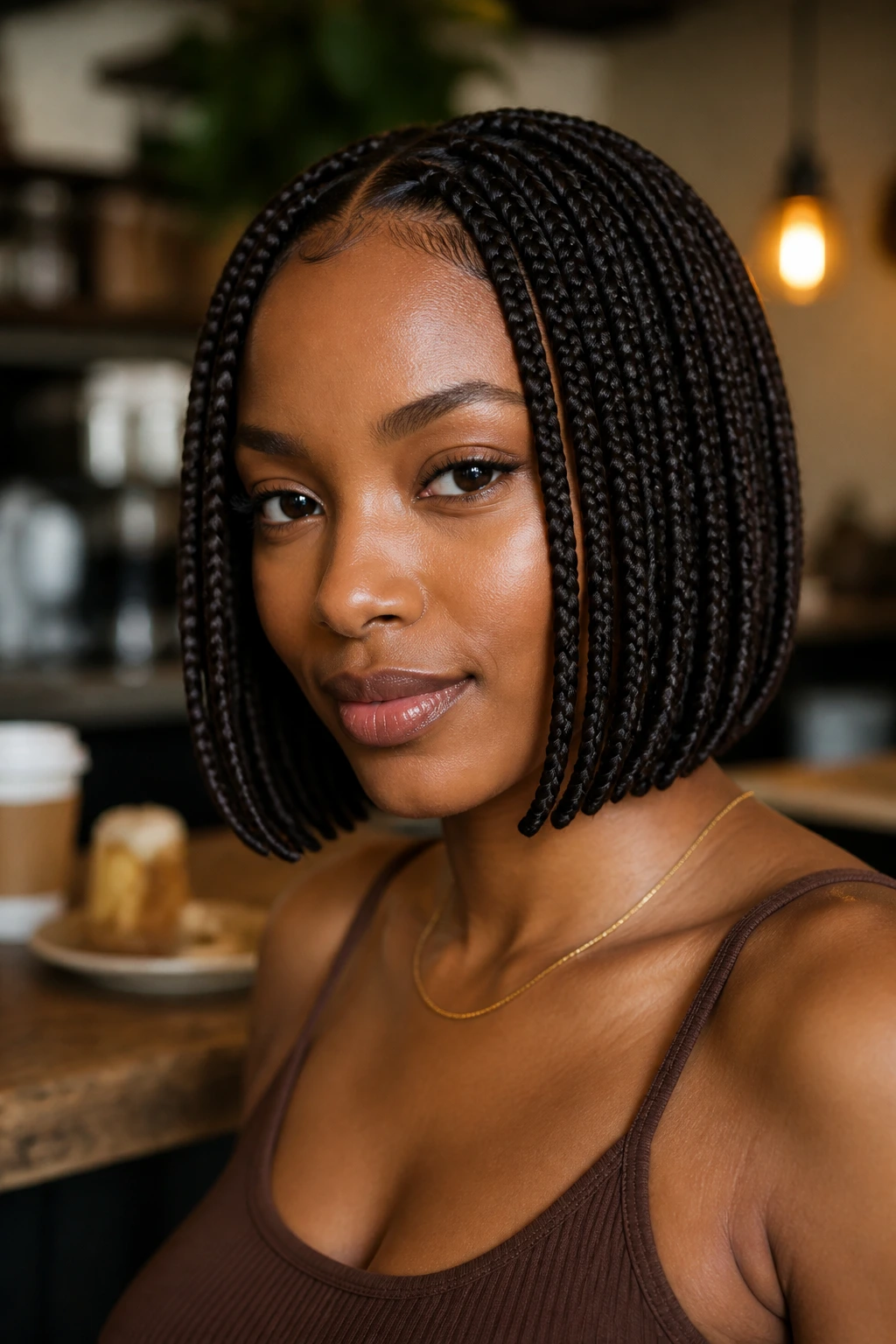
The box braid bob is one of those styles that looks neat before it looks dramatic. Chin-length or collarbone-length braids land with enough structure to frame the jaw, but they don’t drag on the shoulders the way longer sets do. That makes the whole style feel lighter, cleaner, and easier to handle.
Shorter braids can also look sharper with blunt ends. There’s a nice honesty to that shape. No trailing length, no extra weight, no need to tuck a braid under your arm every twenty minutes.
Best if you want less fuss
A bob is a good answer when you want the box braid look without the long-haul maintenance of waist-length hair. It dries faster after washing, sits better under a jacket, and usually stays fresher-looking around the nape because there’s less rubbing. If your neck gets irritated by long braids, this is a relief.
A blunt bob reads crisp. A layered bob reads softer. I usually prefer a slight layer because it stops the bottom edge from looking like a hard shelf. Either way, ask for the ends to be sealed neatly. A bob shows sloppy finishing more than a long braid set does.
8. Layered Box Braids
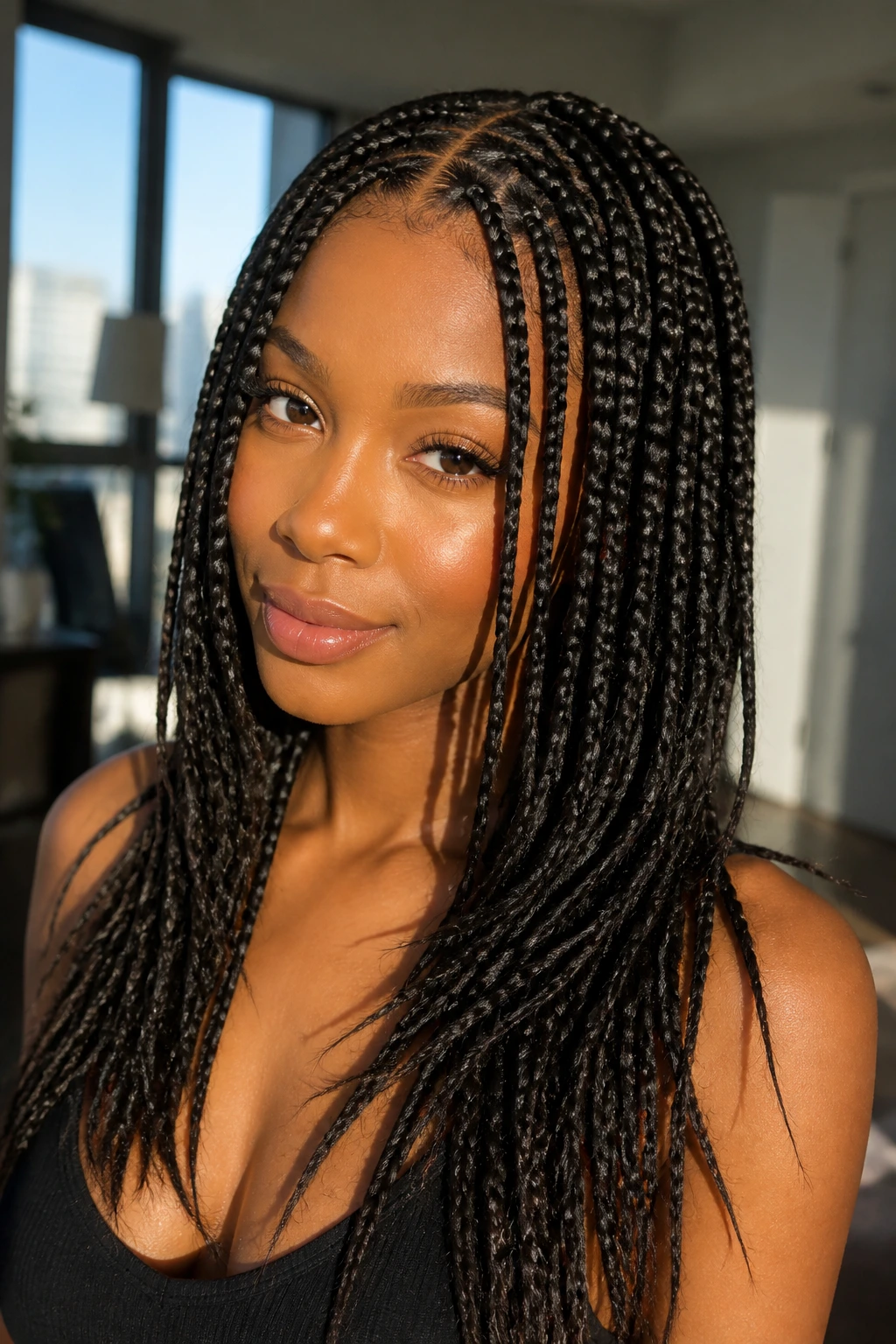
Layered box braids fix one of the most common braid complaints: the flat wall effect. When every braid is the same length, the install can hang heavy and straight. Layers break that up. A few shorter pieces around the face and slightly longer pieces in the back make the whole style move better.
That small shift in length changes the mood a lot. The face gets some softness, the back keeps the drama, and the braid set stops looking like one single curtain.
A subtle way to shape the face
Layering is especially useful if you want the braids to sit around your cheeks instead of straight past them. Even a difference of two to four inches in the front can make the style feel more tailored. Ask for the shortest pieces to land near the collarbone if you want softness without losing length.
This is also one of the best choices if you wear braids down most of the time. The layers keep the front from feeling heavy and help the braids fall with more texture. Clean parting still matters, but the cut does a lot of the visual work here.
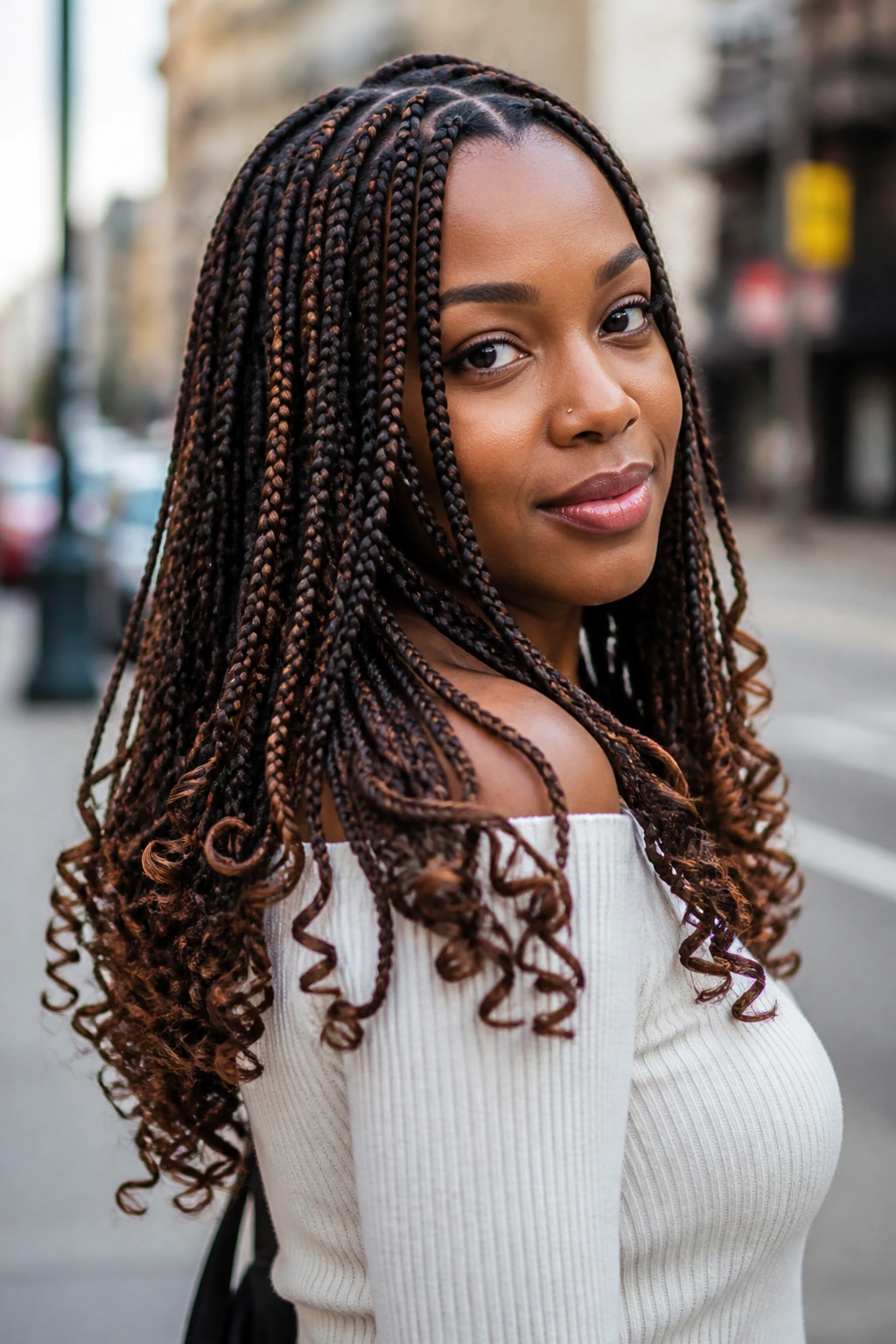
9. Curly-End Box Braids
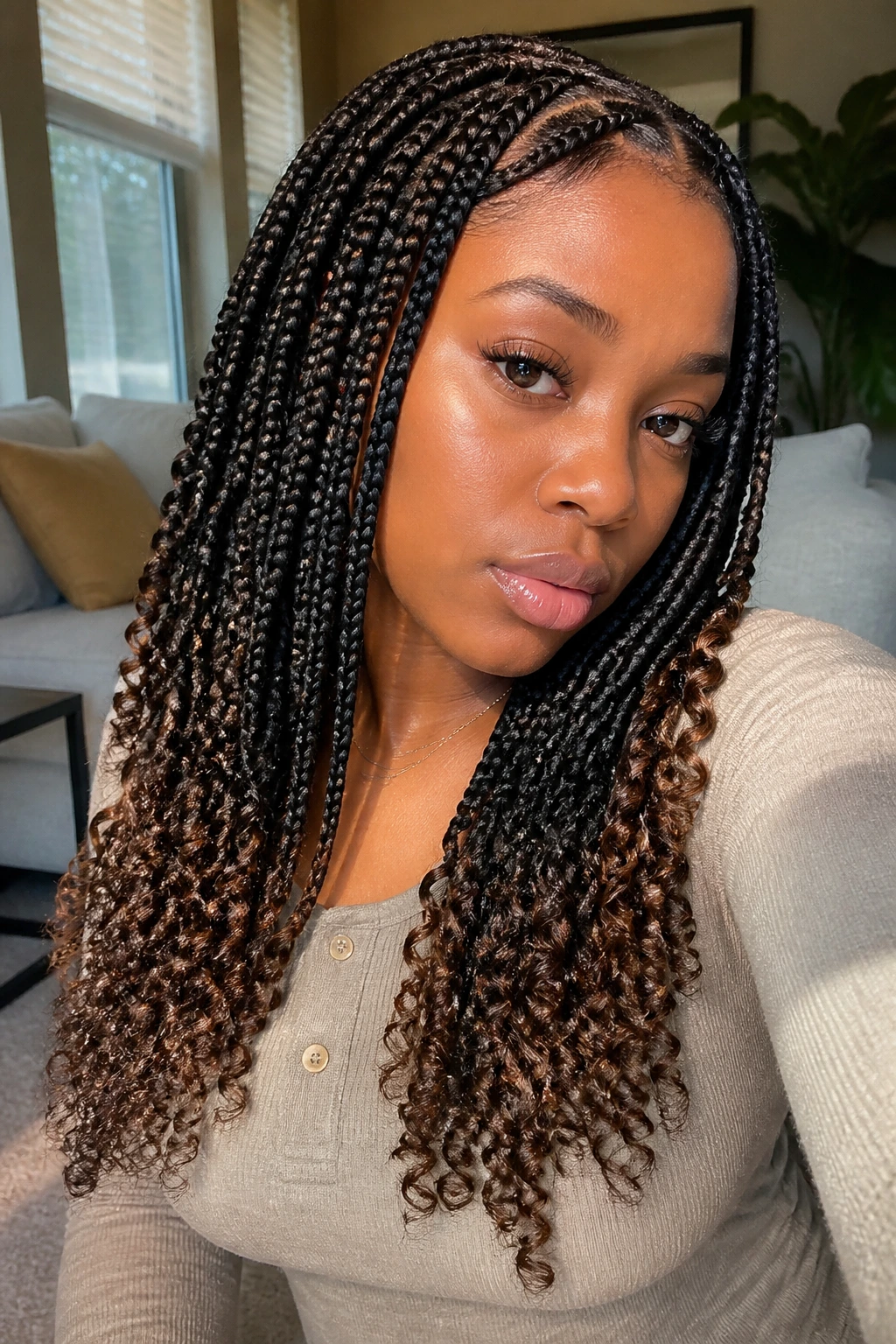
Curly-end box braids mix clean braid work with a softer finish at the bottom. The braid stays neat for most of its length, then the ends open up into a loose curl or spiral. That one detail changes the whole style from orderly to a little more playful.
The contrast is the appeal. You get the grid at the scalp and the soft movement at the bottom. It’s the braid version of wearing a structured jacket over a silky top.
What makes the curls hold
The ends usually need to be set with rods, flexi rods, or dipped with care so the curl doesn’t fall flat after the first night. If your braider leaves the ends too heavy, the curl will relax too quickly. If the ends are too thin, they can frizz before they even get a chance to shine. The sweet spot is a balanced curl that still looks defined after a few days.
This style works especially well on medium and long braids. The curl gives the eye a stop point, so the length feels less severe. It’s a nice choice when you want something soft but not loose.
10. Boho Box Braids
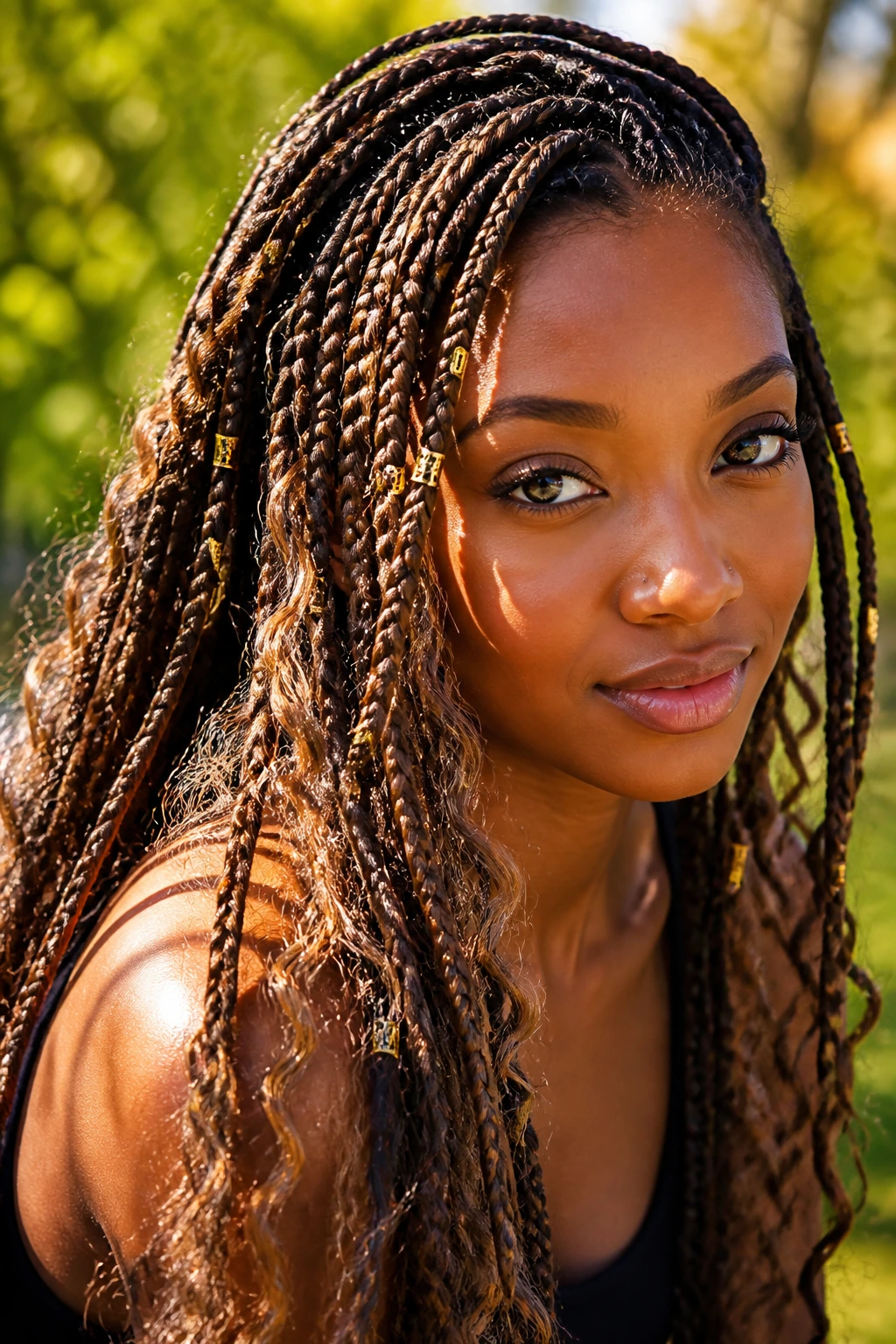
Boho box braids bring in loose curly pieces between the braids, and that changes the texture from neat to airy. The look feels less rigid because the stray curls interrupt the braid line in a way that keeps it from feeling too controlled. If you like your hair to move and have a little mess in it on purpose, this is the lane.
The extra curls also make the style look fuller without adding more braid bulk. That’s a useful trick. More visual volume, not more pressure.
Best for a softer, lived-in look
Boho braids make sense when you want the base install to look finished but not overworked. The loose pieces can be added around the face, through the mid-lengths, or mostly at the ends depending on how much texture you want. Keep the curls hydrated and separated with your fingers, not a brush. Brushing them out turns the style into a frizz cloud fast.
I like this style on medium-length braids because the curls don’t have to fight too much braid weight. Long braids can carry the look too, but the install has to be balanced or the loose pieces get lost.
11. Half-Up, Half-Down Box Braids
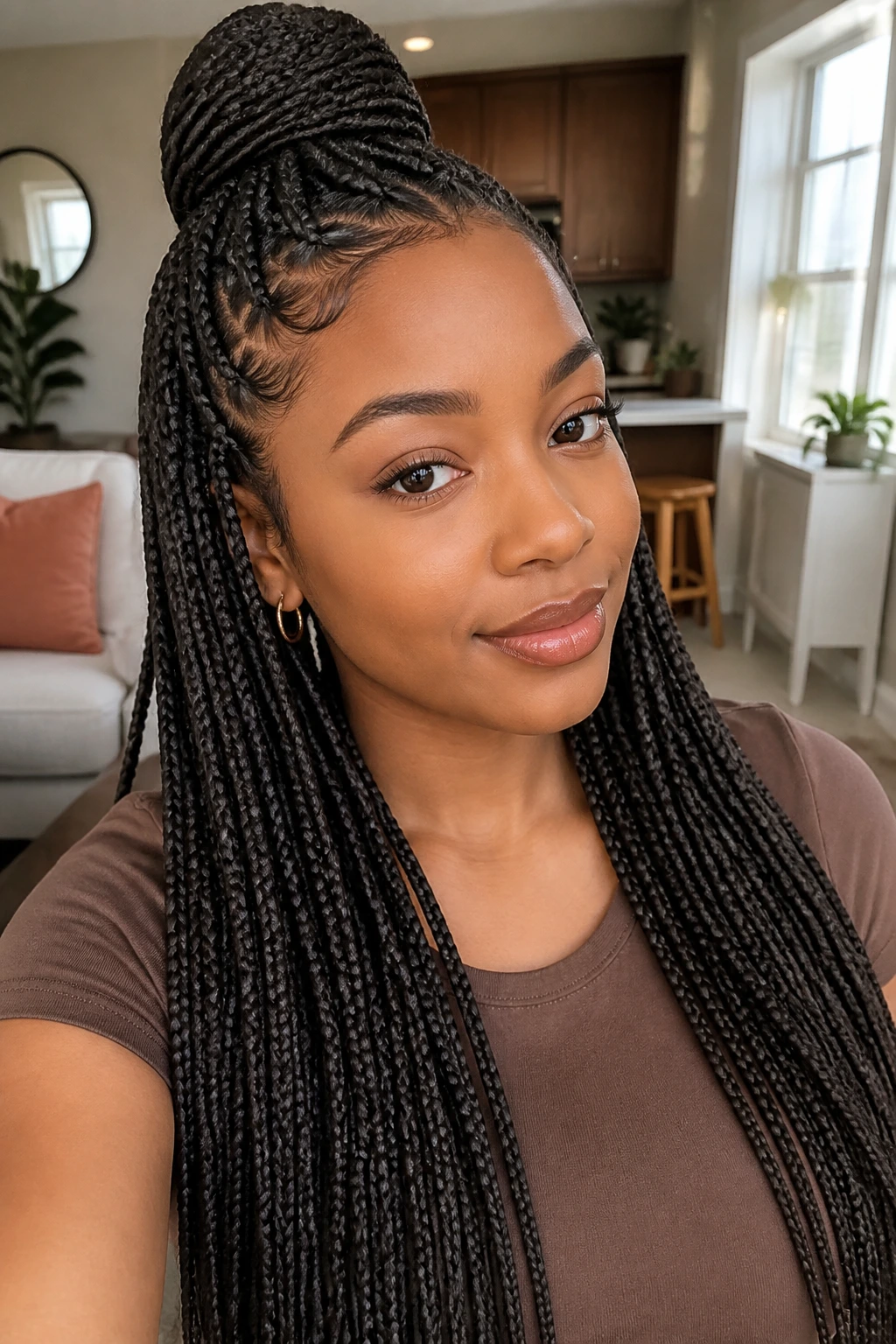
Half-up, half-down box braids solve a basic problem: you want the length, but you do not want all of it on your neck. By pulling the top section up and leaving the rest down, the style gives you shape at the crown and movement through the back. It’s one of those looks that works for errands, a workday, or dinner without asking for a full re-do.
The best part is the balance. You get lift at the top, but the lengths still show.
A clean half-up style needs a good base at the crown. If the top section is too loose, the whole look starts slumping by noon. Use a braid wrapped around the base or a satin scrunchie that won’t snag. A tiny claw clip can work too, but only if the braids are not too heavy.
12. High Ponytail Box Braids
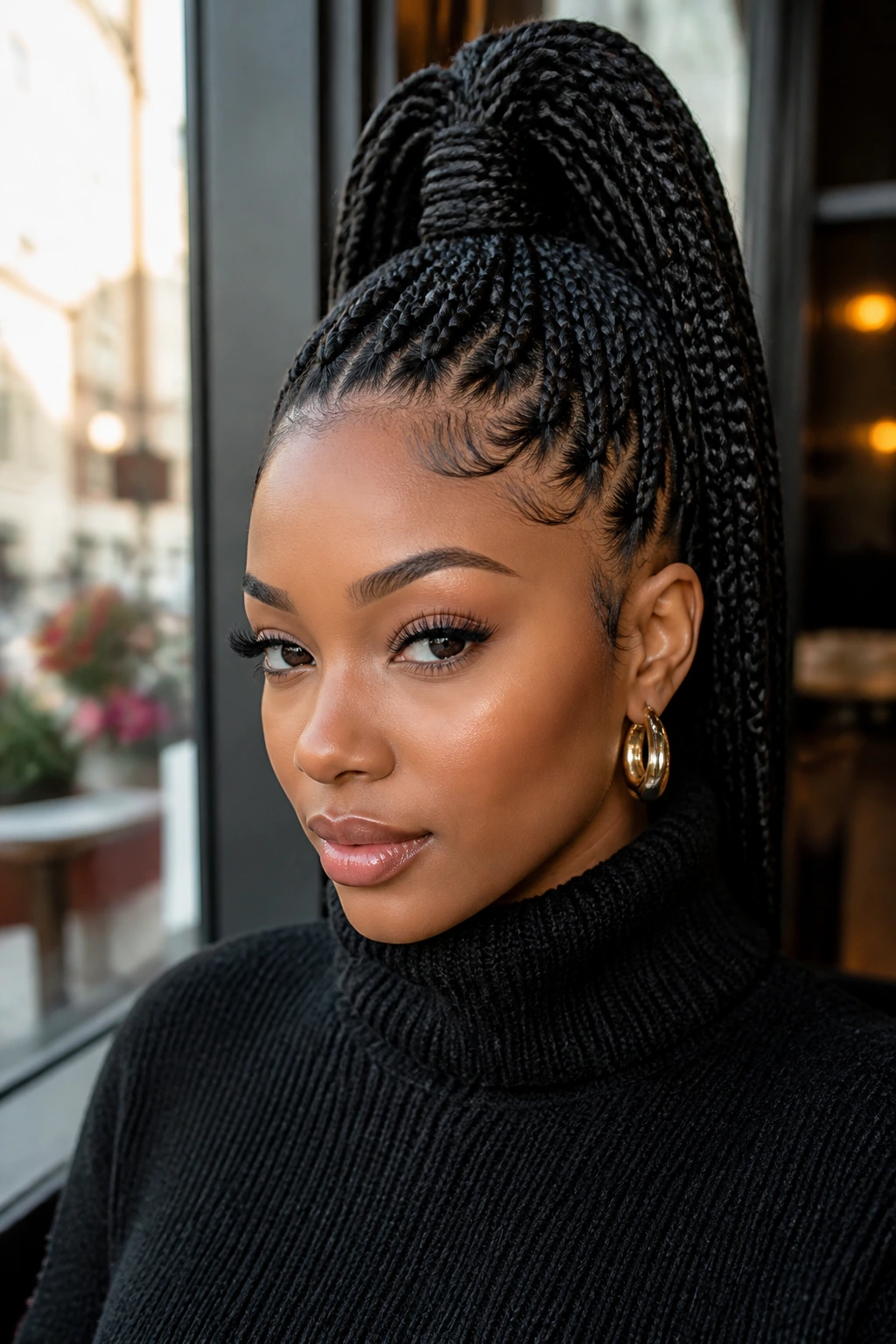
A high ponytail lifts the braids and the face at the same time. The style shows off the cheekbones, leaves the neck open, and gives the braids a bit of swagger when they swish behind you. It reads polished in a way that takes almost no extra styling once the install is done.
Why it stays neat
High ponytails work best when the front rows are installed with enough care to lie flat. A messy hairline shows immediately here. If the base is tidy, though, the whole style feels sleek and pulled together. Wrap one braid around the ponytail base so the tie disappears, and the look stops feeling like a gym shortcut.
This is also a smart style if you want to highlight earrings or a dramatic neckline. The hair gets up and out of the way, but it still feels like a style rather than a convenience.
13. Low Bun Box Braids
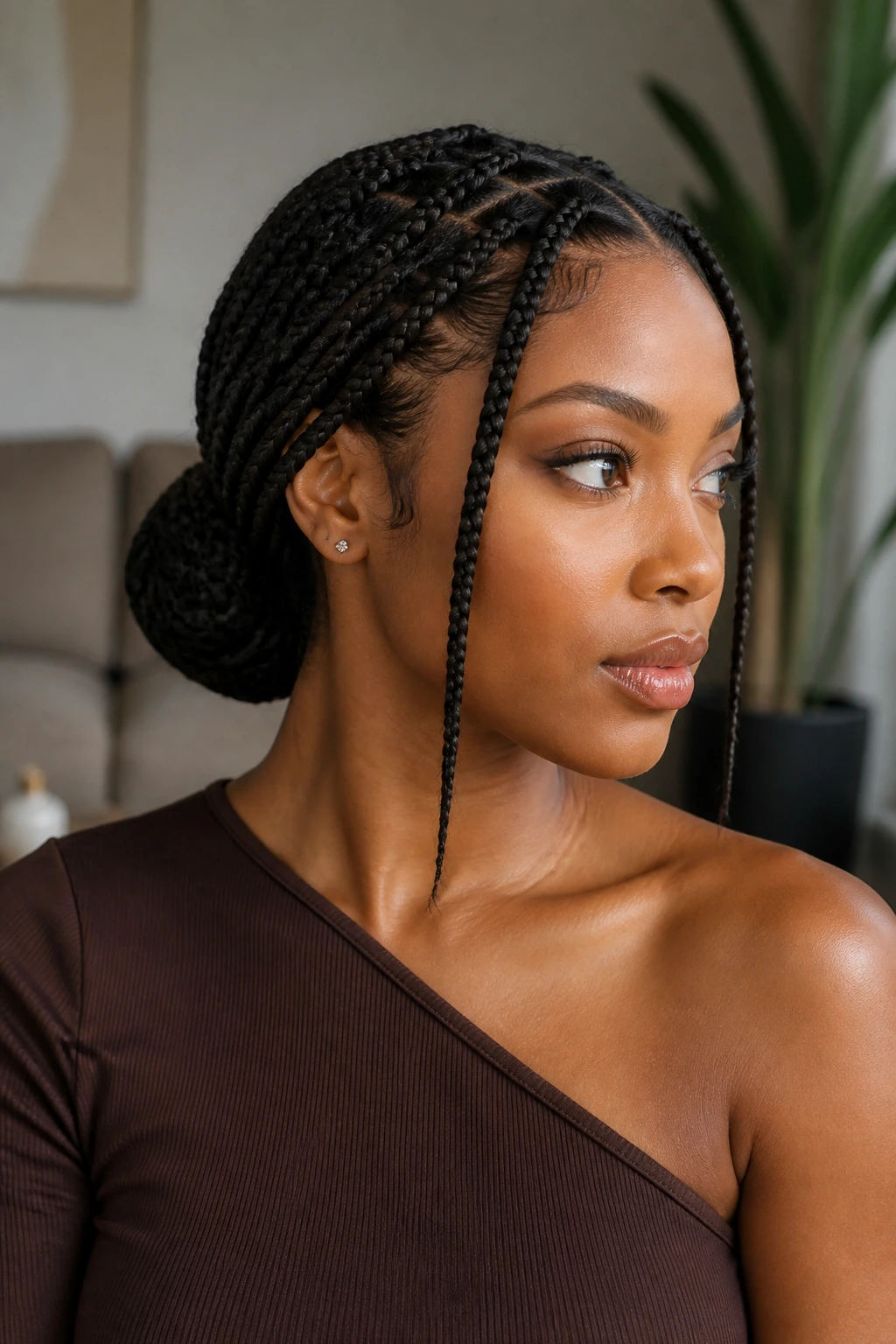
Low bun box braids are one of the cleanest ways to wear a braid set when you want the hair contained. The bun sits at the nape, which takes pressure off the front and gives the style a smooth, quiet shape. It’s not flashy. That’s the point.
The bun can be tight and compact or a little fuller, depending on how much braid you want to tuck in. A compact bun looks sharper; a looser bun feels softer and less formal.
Where it shines
This style is useful when you want the braids out of your face but you still want them to look intentional. It also helps on days when the braids are a little frizzy at the ends and you want to hide that under a wrapped base. A low bun can buy you a few extra wears before takedown.
Don’t force all the hair into one tiny elastic. That’s where tension gets ugly. Use a sturdy tie, shape the bun with your hands, and pin where needed instead of yanking.
14. Space Bun Box Braids
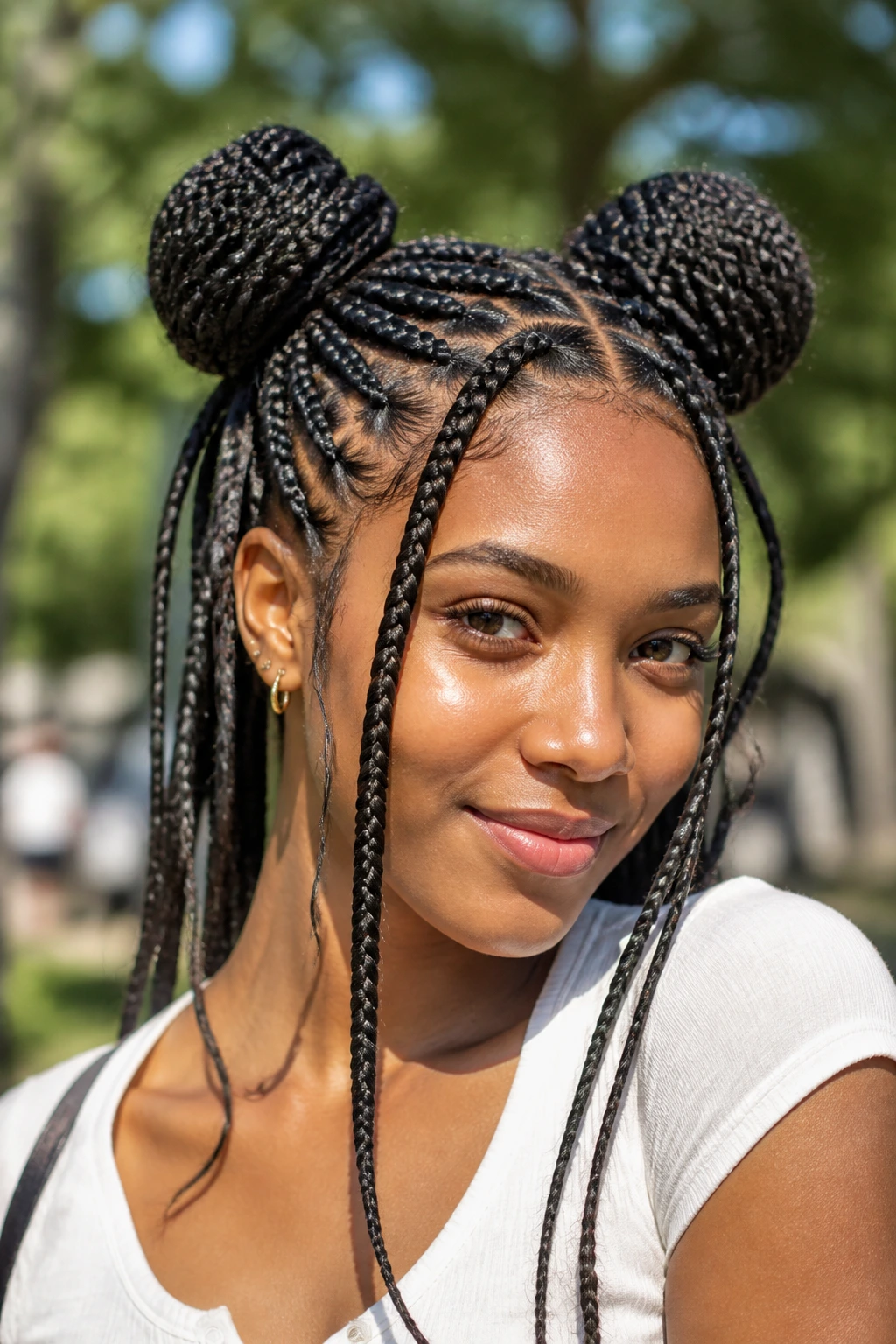
Space bun box braids lean playful without becoming costume-y, which is a harder line to walk than people think. Two buns on either side of the head create symmetry, and that symmetry gives the style a lifted, lively look. It’s cute in a way that still feels grown.
The style works best when the buns aren’t jammed too high or pulled too tight. A little breathing room near the temples keeps it from looking strained.
A good option for shorter to medium braids
If your braids are shoulder-length or a bit longer, space buns can sit neatly without fighting the length. With long braids, the buns can get heavy fast unless they’re wrapped in smaller bundles. The key is balance. You want the buns to look like shape, not like two knots trying to escape.
Keep a few front braids loose if you want a softer finish. That tiny detail keeps the style from feeling too severe and brings some movement around the face.
15. Beaded Box Braids
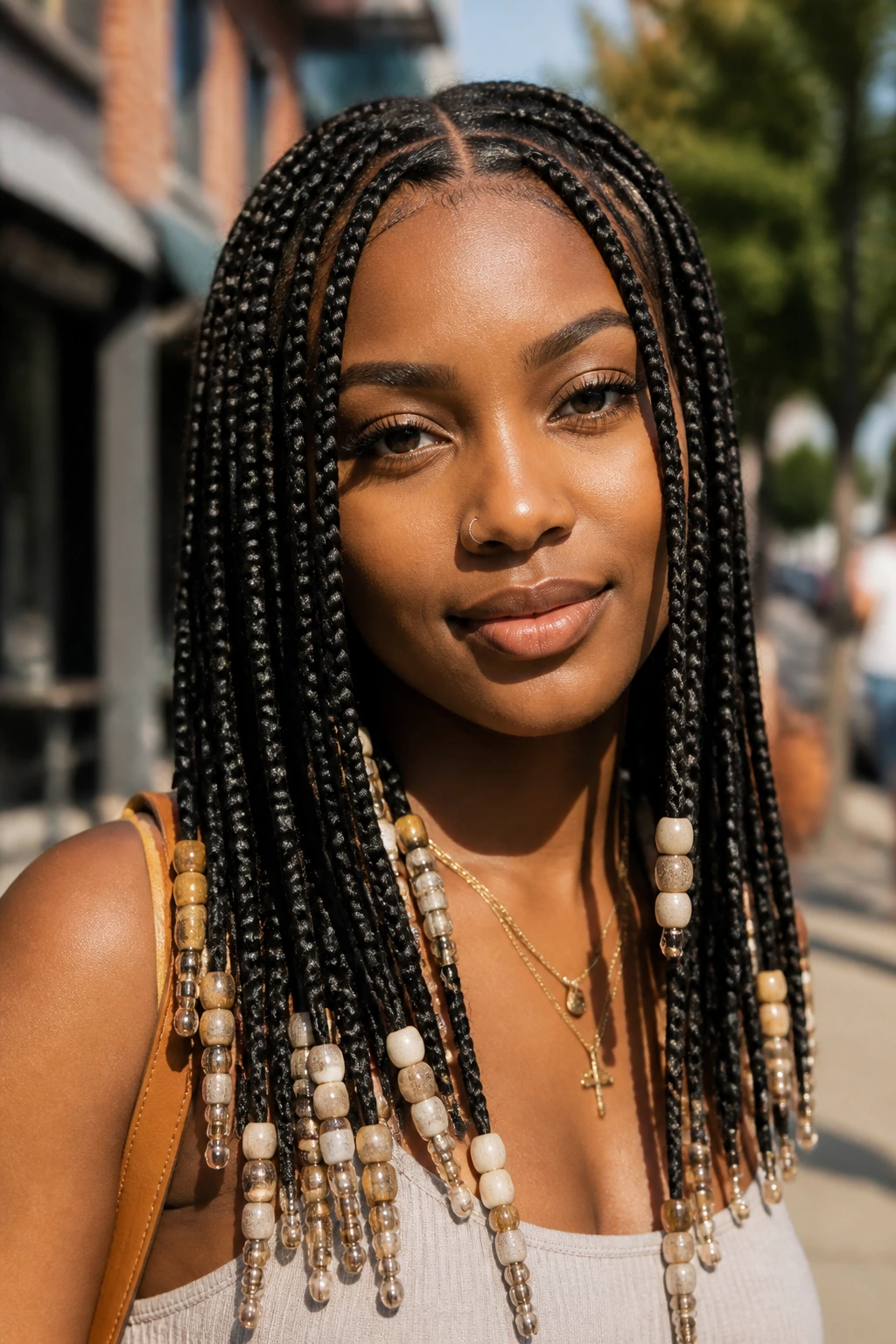
Beaded box braids add sound, weight, and a little shine to the ends of the braids. The beads tap when you move, which sounds small until you notice how much personality it gives the style. One row of clear beads. A mix of wood and gold. Matte black if you want the look to stay grounded. The details matter here.
Beads can make a plain braid set feel styled without changing the whole install. That’s useful if you like simplicity but still want a little edge.
Keep the placement intentional
A few braids with beads at the front can frame the face. Beads all over can feel busy if the colors clash or the sizes vary too much. Pick one direction and stick to it. Same bead size, same finish, same general tone. That keeps the style looking deliberate instead of random.
Also, don’t load the ends too heavily if your braids are already long. Too many beads can pull at the length and make the bottom of the style swing in a way that feels clunky. A few placed well beat a whole jar dumped in.
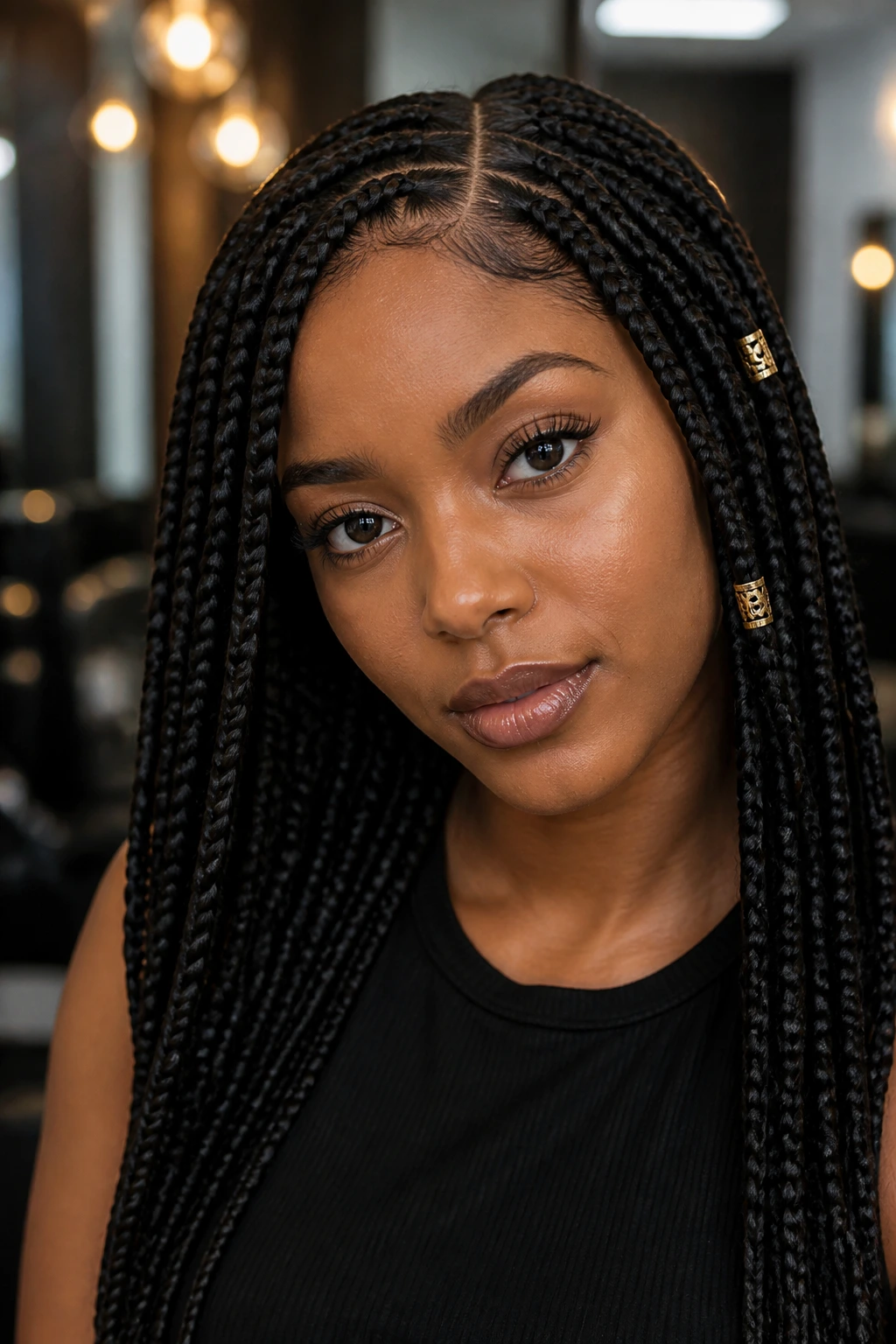
16. Gold-Cuff Box Braids
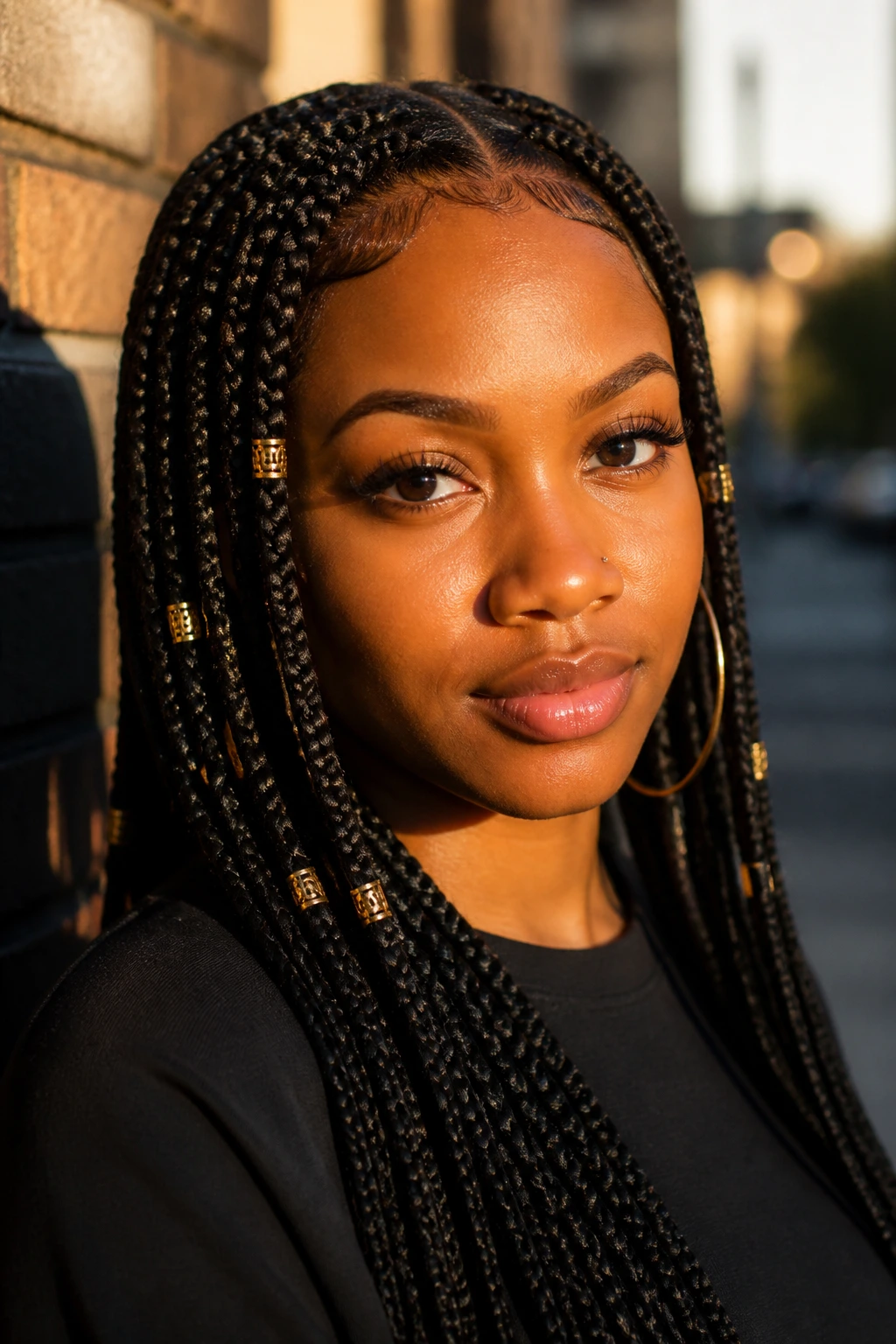
Gold cuffs are the easiest way to refresh a braid set that needs a little shine. You slide them onto a few braids, and the whole style picks up a cleaner, more finished look. No color change. No restyle. Just a bit of metal catching the light at the right spots.
The best thing about cuffs is restraint. One or two near the face can do more than a dozen scattered everywhere. Too many, and the braids stop looking sleek and start looking crowded.
Where to put them
I like cuffs on the front rows, a few at the side, and maybe one near the end of a longer braid. That gives the eye a place to land without turning the whole head into a hardware store. If your braids are dark, gold cuffs pop harder. If the hair is blonde or copper, rose gold and brass can feel softer.
This is a low-commitment style change. That’s why it works so well. You can change the mood without changing the install.
17. Color-Blocked Box Braids
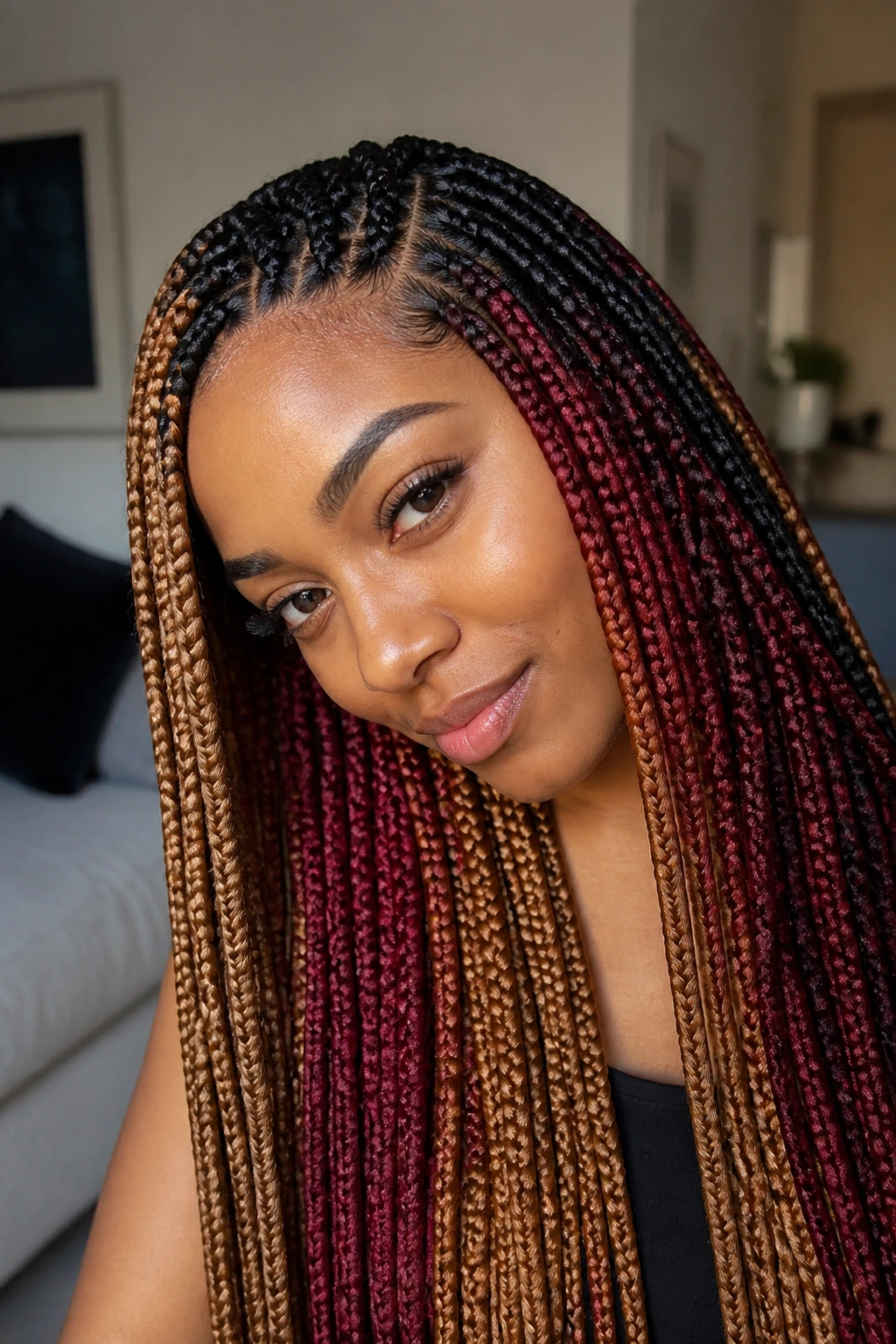
Color-blocked box braids use bold sections of different shades to create contrast. Think black roots with caramel lengths, burgundy panels against dark brown, or blonde pieces placed just at the front. The style reads graphic, and when the colors are placed well, it has real shape.
The trick is placement. Color-blocking can look expensive when the shade changes feel planned. It looks sloppy when the colors seem scattered by accident.
Make the contrast intentional
If you’re using more than one color, decide whether you want the change to be front-heavy, underneath, or spread through the head in even chunks. Front pieces draw attention to the face. Underlayers show movement only when the hair swings. Both work. Mixing them without a plan usually does not.
This is also a good lane if you want color without bleaching your own hair. Synthetic braiding hair can carry the color while your natural hair stays tucked away underneath. That matters more than people admit, especially if you want to keep the install protective.
18. Ombre Box Braids
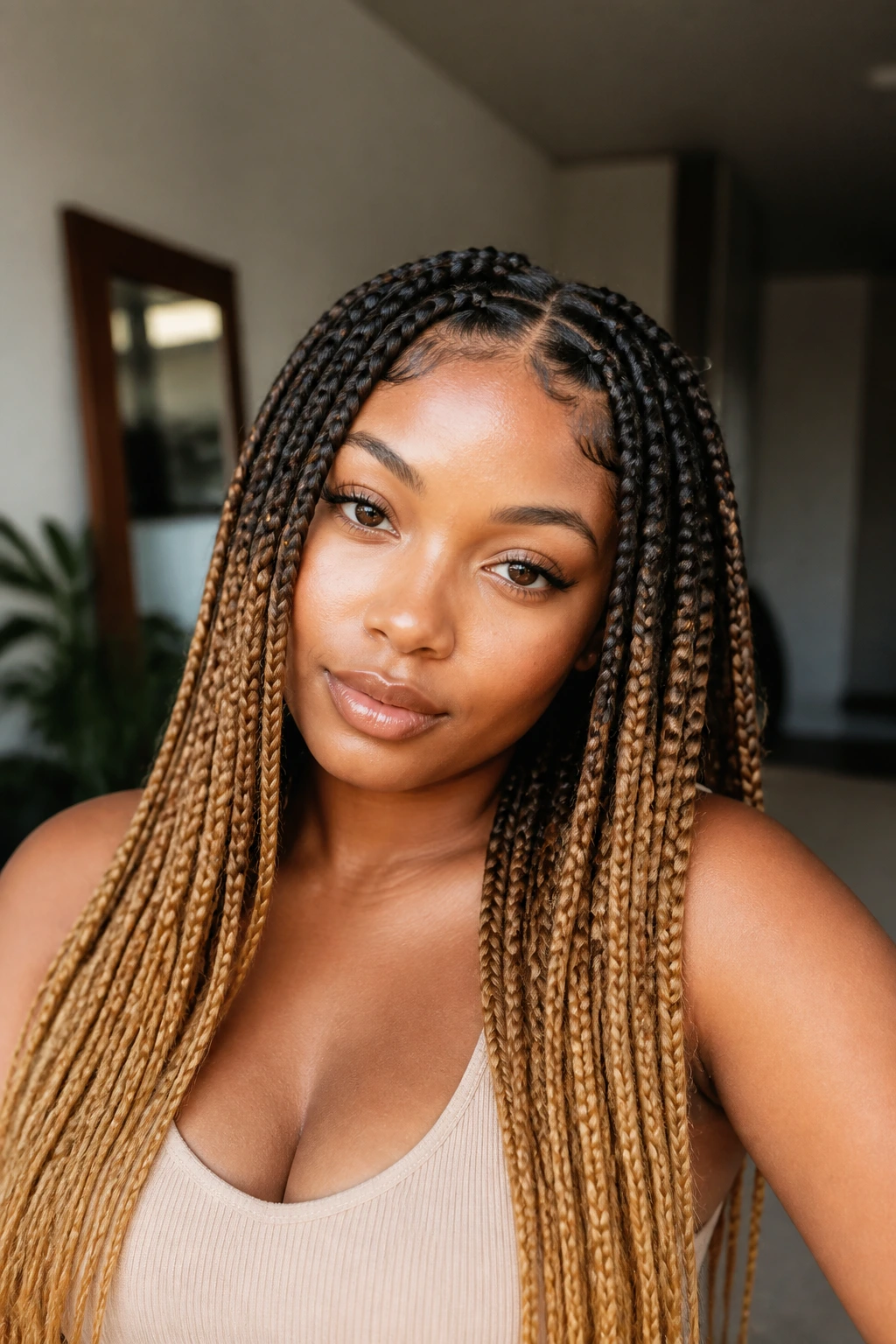
Ombre box braids fade from one shade to another, usually from darker roots into lighter ends. The fade makes the braid set feel softer than color-blocking because the eye isn’t catching a hard switch. It just glides from one tone to the next.
That smooth change works especially well on longer braids. There’s more length for the color to travel, which makes the effect easier to see.
Softer than a full dye look
Ombre is a smart move if you want color but do not want the whole head screaming for attention. It lets the roots stay grounded and the ends do the talking. Honey, copper, burgundy, and blonde all work, but the contrast should suit your skin tone and your wardrobe, not a photo on a feed.
Keep the finish clean. Ombre looks best when the braid ends are sealed evenly and the color shift is gradual enough to feel natural rather than striped. If the transition is too abrupt, the style loses that soft drop that makes ombre worth wearing.
19. Criss-Cross Part Box Braids
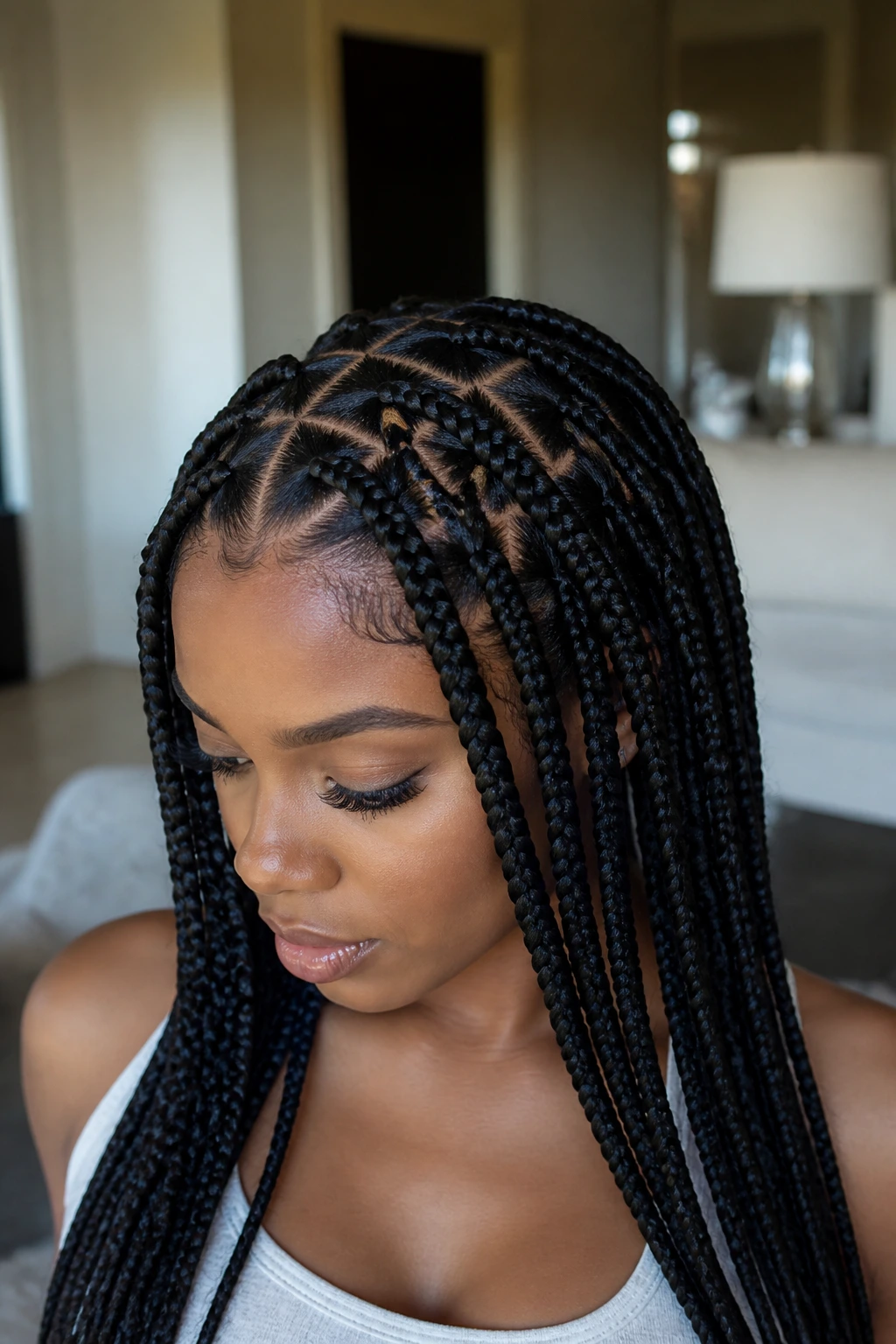
Criss-cross part box braids turn the scalp into part of the design. Instead of a regular grid, the parts cross and overlap in a pattern that looks deliberate the second you sit down. The braid lengths can stay simple because the parting is doing the decorative work.
This is a style for someone who likes the install itself to be the detail. You do not need heavy accessories after this. The scalp pattern is already busy in a good way.
A style that rewards a careful braider
Criss-cross parts take time, and they need a hand that can keep the lines clean. If the sections get messy, the pattern falls apart fast. But when the parts are even, this is one of the prettiest ways to make a braid set feel custom without adding curls or color.
It works best with medium or long lengths because the pattern shows first, then the movement follows. If you like a style that turns heads only when people look twice, this one has that effect.
20. Face-Framing Box Braids
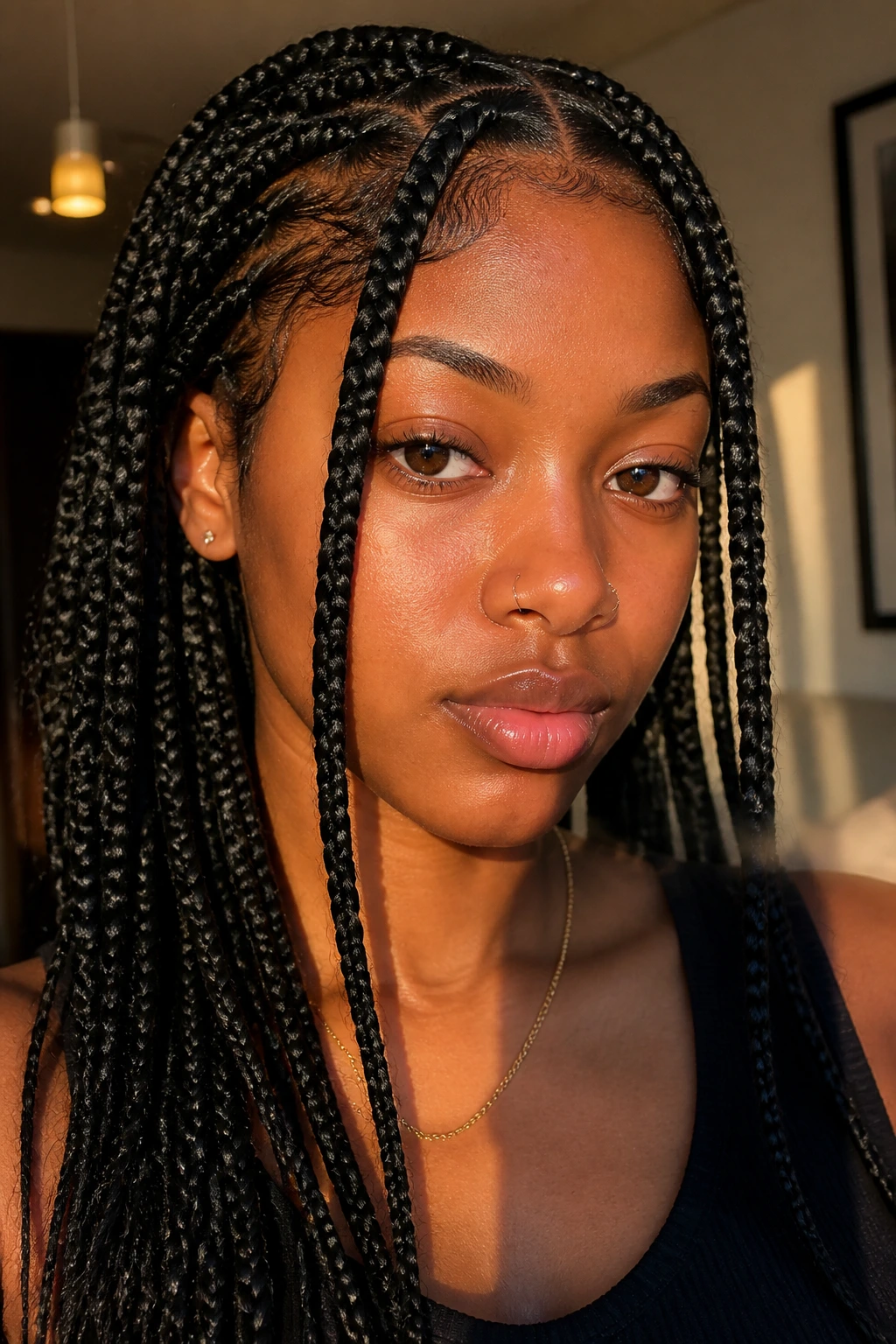
Face-framing box braids pull a few front pieces slightly shorter or leave a couple of braids to hang loosely around the cheeks. That tiny change can make a whole install feel softer. Long braids can sometimes swallow the face. These front pieces fix that.
Softens the front without changing the whole set
You do not have to commit to bangs or a full layered cut to get shape near the face. Two braids placed on either side can do enough work to break up the straight drop of the rest of the style. It’s the braid equivalent of a soft border.
This style is also useful if you like wearing your braids down but don’t want them to sit flat and severe. The face-framing pieces add a bit of motion. They also photograph better in real life because they keep the front from feeling too boxed in. That matters when the rest of the install is neat and long.
21. Crown Updo Box Braids
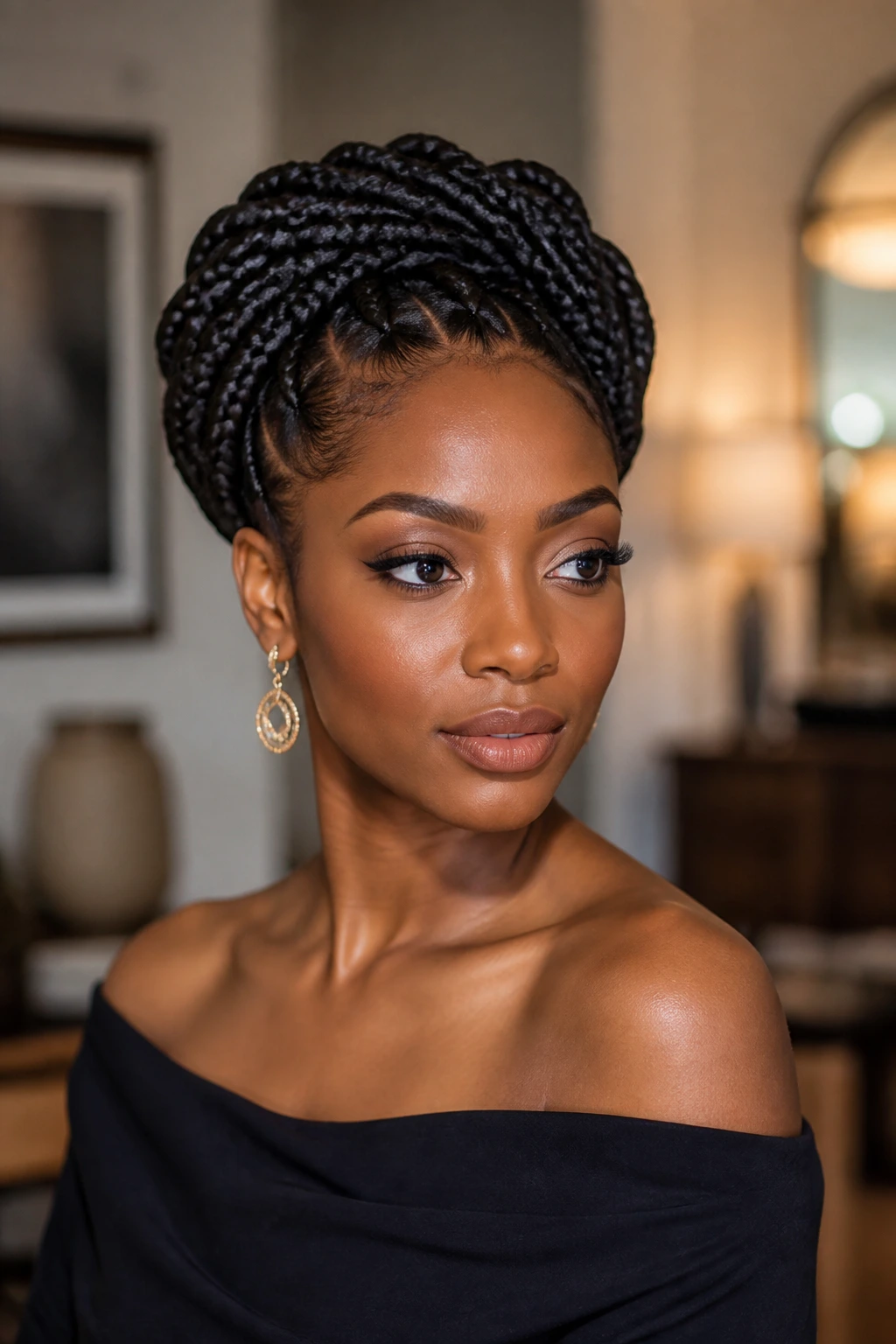
A crown updo wraps the braids around the head so the style sits like a halo or pinned circle. It looks special without needing a lot of extra decoration. The neck opens up, the shoulders show, and the braids become shape instead of length.
The style is especially useful when you want to protect the ends and keep the hair out of the way. It also shows off earrings in a way that down styles can’t.
When to choose it
This is a strong pick for dressier events or for days when you want your hair completely off your neck. The catch is pinning. The updo needs enough pins and enough braid flexibility to stay secure, but not so much that the head feels loaded with hardware. If the braids are too heavy, the crown can sag at the back.
Use the braids themselves to build the shape. Don’t force the style with tiny elastic bands. That’s where tension sneaks in. A good crown updo should sit comfortably and feel anchored, not locked.
22. Ribbon-Wrapped Box Braids
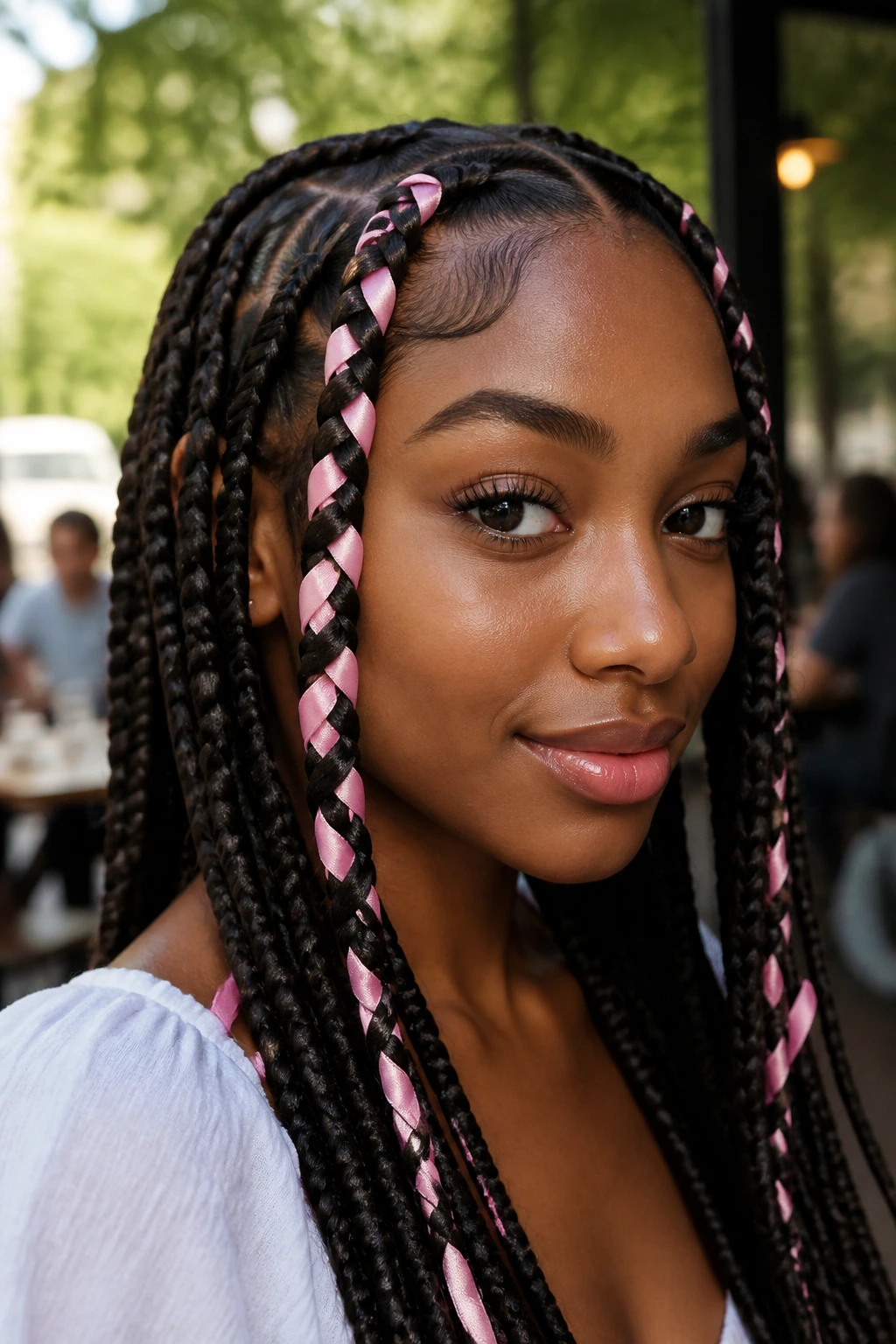
Ribbon-wrapped box braids bring a soft, almost old-school charm to the style. A satin or grosgrain ribbon can be woven through a few braids or tied around the base of a ponytail, and the effect is instant. The braids stay the same. The mood changes.
The ribbon should feel intentional, not like gift wrap. Choose one color, maybe two at most, and let it echo something else in the outfit.
A simple way to dress up the set
This is one of the easiest upgrades for a braid style because it does not depend on the install being dramatic. Even a plain medium set can look styled when a ribbon is threaded through a section near the face. Satin is kinder to the hair than rough fabric, so that’s the first choice if you’re wearing it for more than one day.
I like this most on half-up styles and low ponytails. The ribbon gives the braid base a clean finish and keeps the style from feeling plain. It also photographs like a detail someone actually thought about, which, frankly, is half the charm.
23. Asymmetrical Lob Box Braids
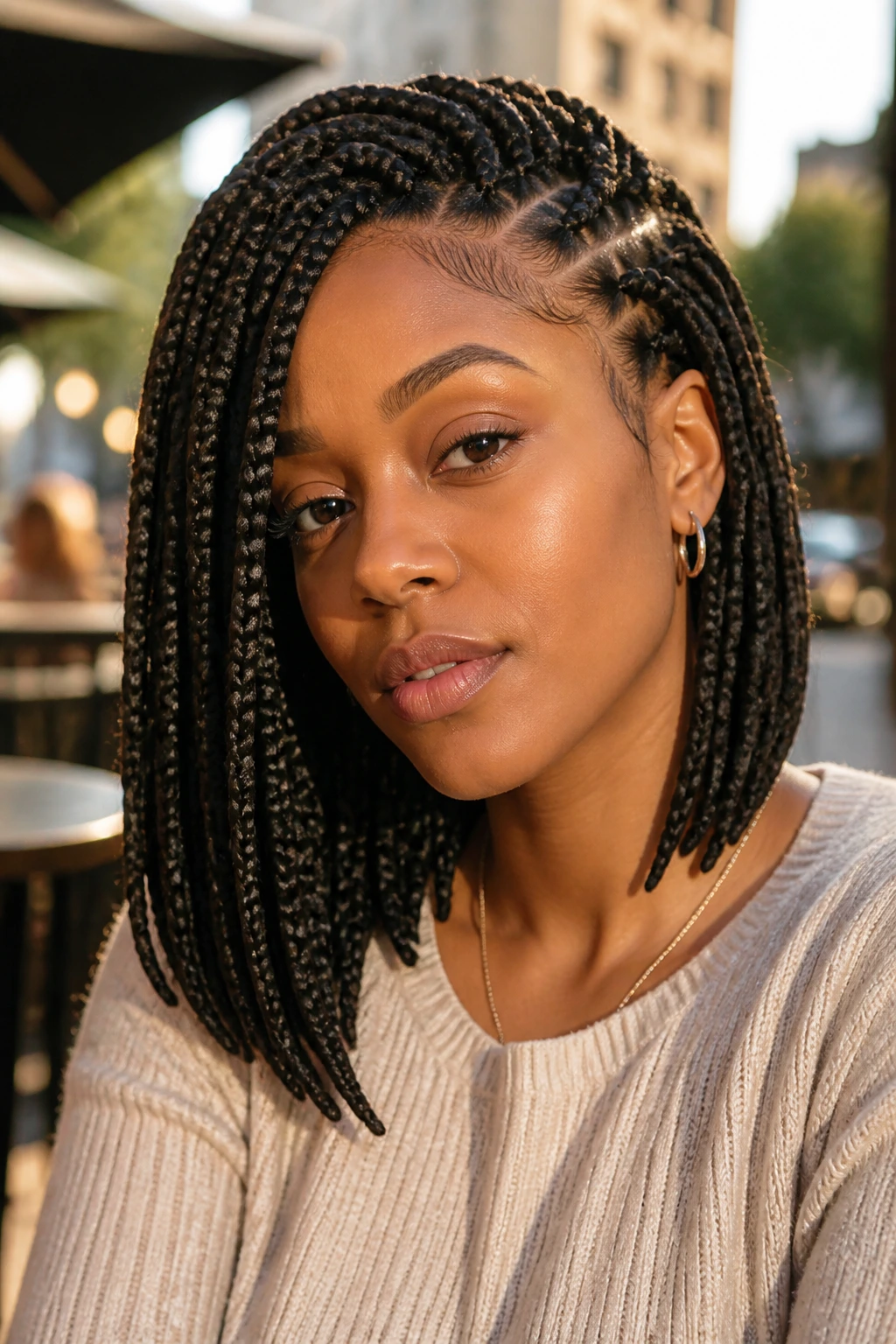
An asymmetrical lob gives you a braid cut that falls unevenly on purpose. One side can sit a little longer, or the front can angle downward more sharply on one side than the other. The result feels modern without trying too hard.
This style works because the eye keeps moving. There’s no hard stop at one level, so the braids feel lighter and more tailored.
Best when you want shape without excess length
A lob keeps the ends off the chest and away from the waist while still giving you enough braid to tuck, pin, or swing. The asymmetry adds attitude. It also helps if you want a braid style that doesn’t read as uniform or overly neat.
Ask for the front angle to match how you part your hair most often. If you’re always on the side, let the longer side do the visual work. If you like center parts, keep the asymmetry subtle so it doesn’t fight the line down the middle.
24. Face-Framing Feed-In Box Braids
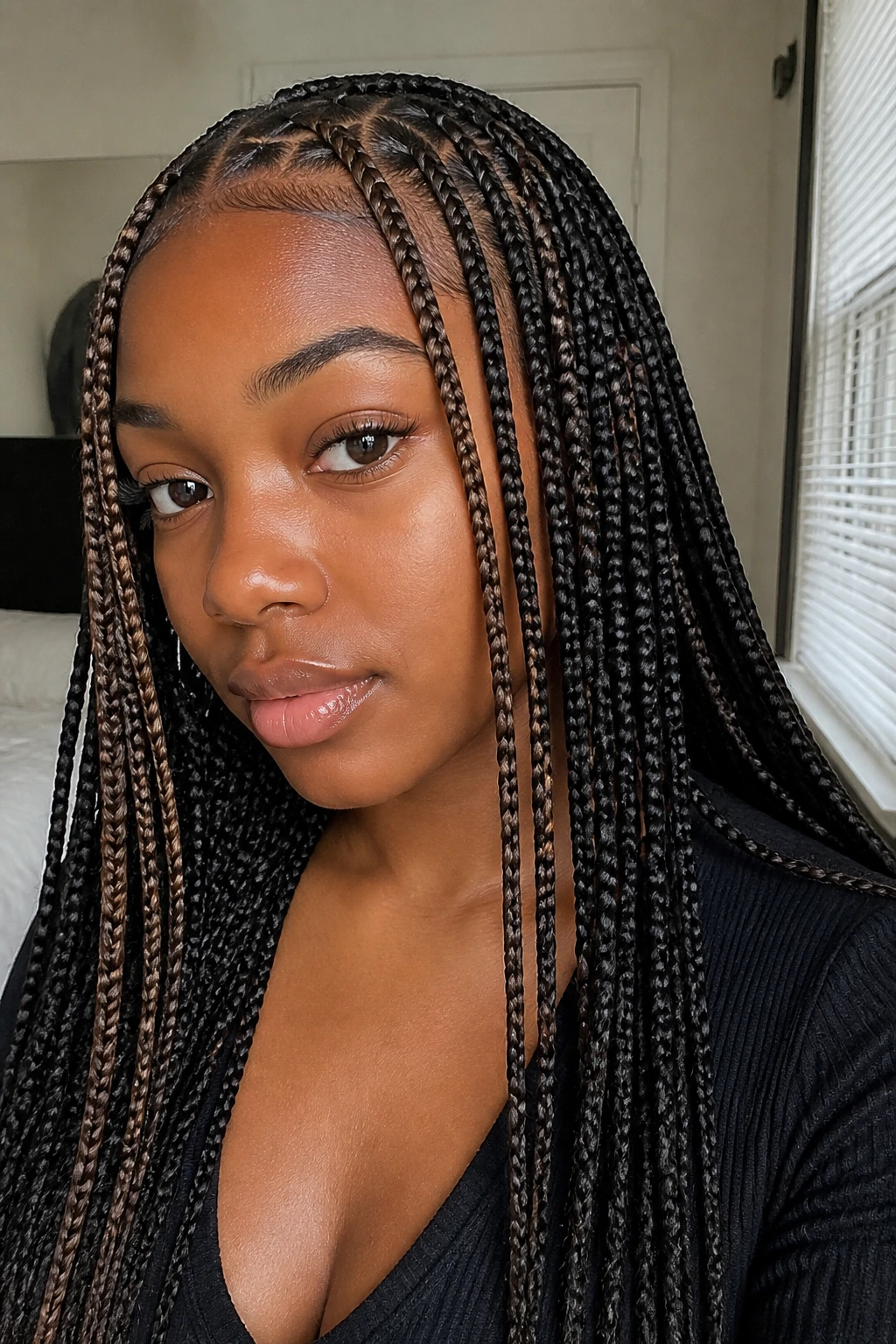
Face-framing feed-in box braids blend a lighter, slimmer start at the front with thicker braid lengths through the rest of the head. The feed-in technique gives the front rows a softer entrance, which matters if your hairline likes less pressure. It also keeps the style from looking too dense near the temples.
This is a good move when you want the front to feel gentle but the overall style to still have body. The braids around the face can stay finer and more detailed, while the rest of the head carries the fuller shape.
A clean way to soften the edges
Feed-in fronts work especially well if you wear braids in buns or ponytails a lot. The flatter start makes those styles easier to lay down. It also helps if you like little swoops or side pieces around the hairline. Just don’t overwork the baby hairs to the point that the style starts looking overstyled. The braid pattern should stay the star.
25. Shoulder-Grazing Box Braids
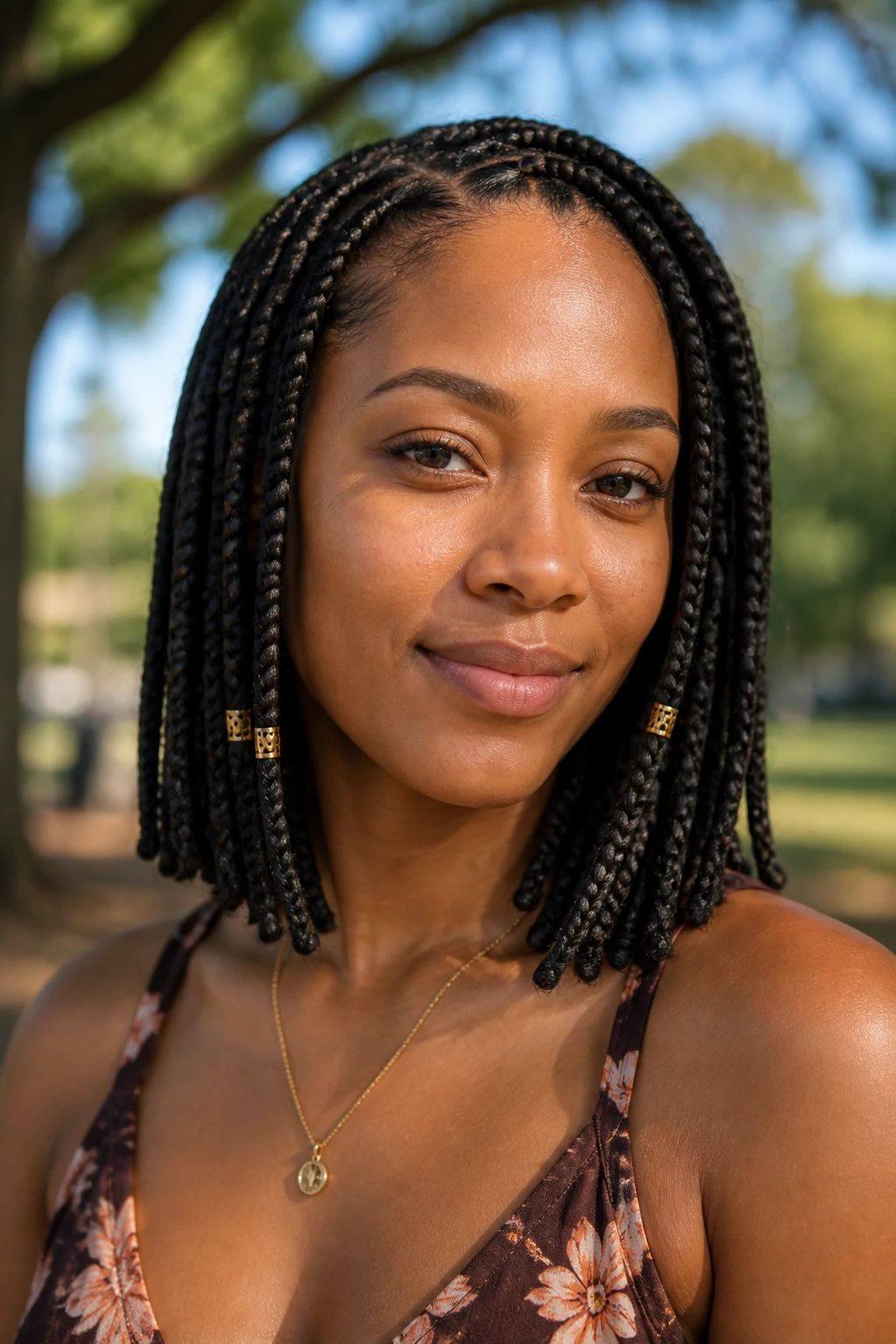
Shoulder-grazing box braids sit right in that useful middle zone: long enough to feel full, short enough to stay manageable. They brush the shoulders without getting tangled in every zipper or scarf. That alone makes them worth considering.
The length also gives the braids a nice bounce. They don’t drag. They don’t disappear. They just sit in a clean band around the upper body.
Why this length wears well
If you want a style you can throw into a bun one day and wear down the next without getting annoyed, shoulder-grazing braids are hard to beat. The lighter weight makes the roots easier to live with, and the length still gives you shape around the face and neck. This is one of the most practical box braid styles in the whole set.
The key is proportion. Too short and the braids lose that full, flowing feel. Too long and they start competing with the shoulders instead of resting on them. When they land right, they look neat from every angle.
26. Tapered Box Braids
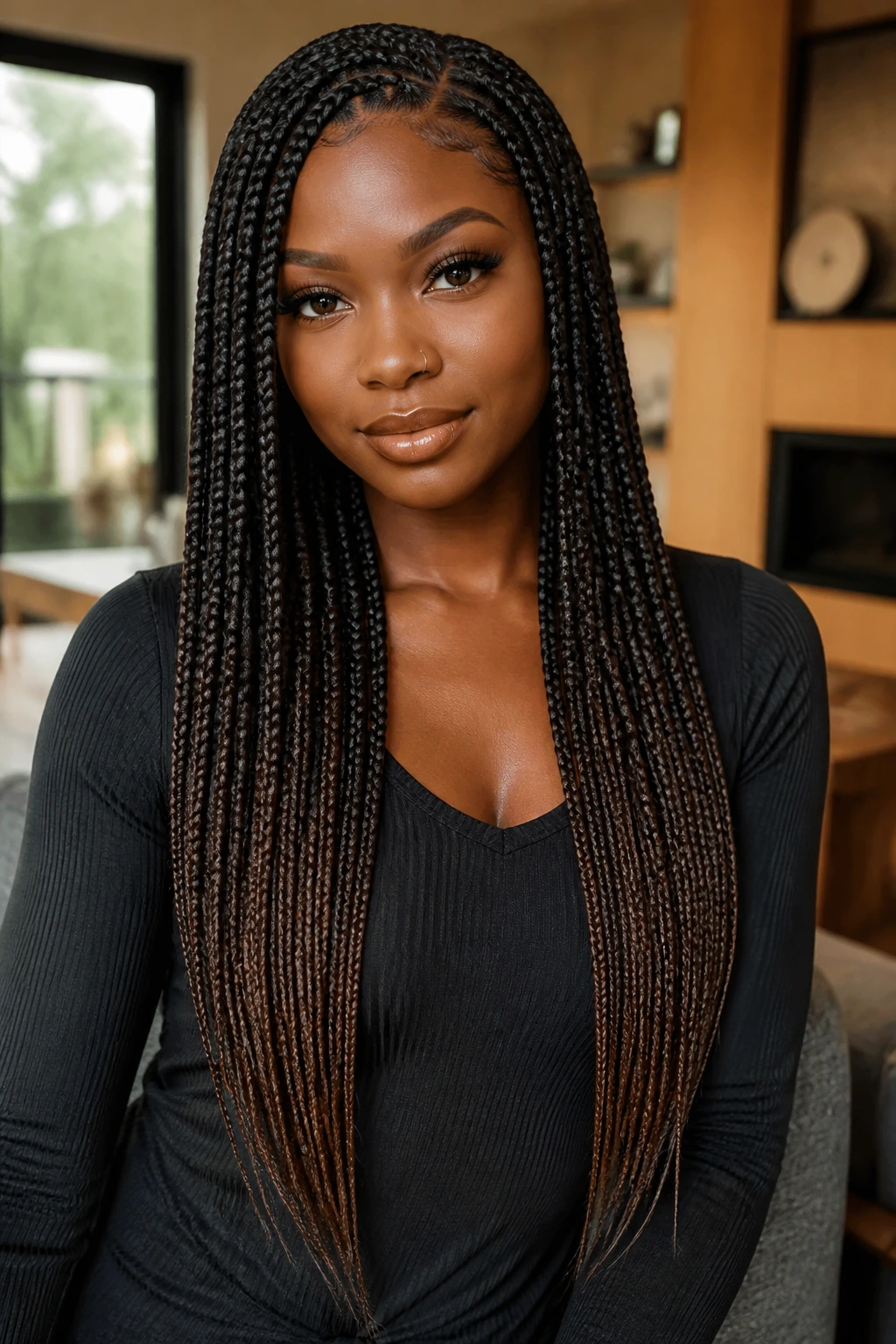
Tapered box braids narrow toward the ends so the shape feels more tailored and less blunt. Instead of every braid ending at the same width, the bottom gets a little slimmer, which makes the overall style read lighter. It’s a small shift, but it changes the silhouette a lot.
The taper also helps if you want braids that feel less blocky at the bottom. That’s a useful fix when the head is full but you do not want the ends to look heavy.
A good option for softer movement
Tapered ends make the braids swing more easily. They also lower the visual weight of the style, which helps if you’re wearing medium or long lengths and don’t want the bottom edge to feel blunt. Ask for the taper to be even, though. Uneven thinning can make the ends look ragged rather than shaped.
This style works well with side parts, layers, and ombre color because the eye gets a smooth line to follow. If you want the braid set to feel refined, this is a smart finishing choice.
27. Top Knot Box Braids
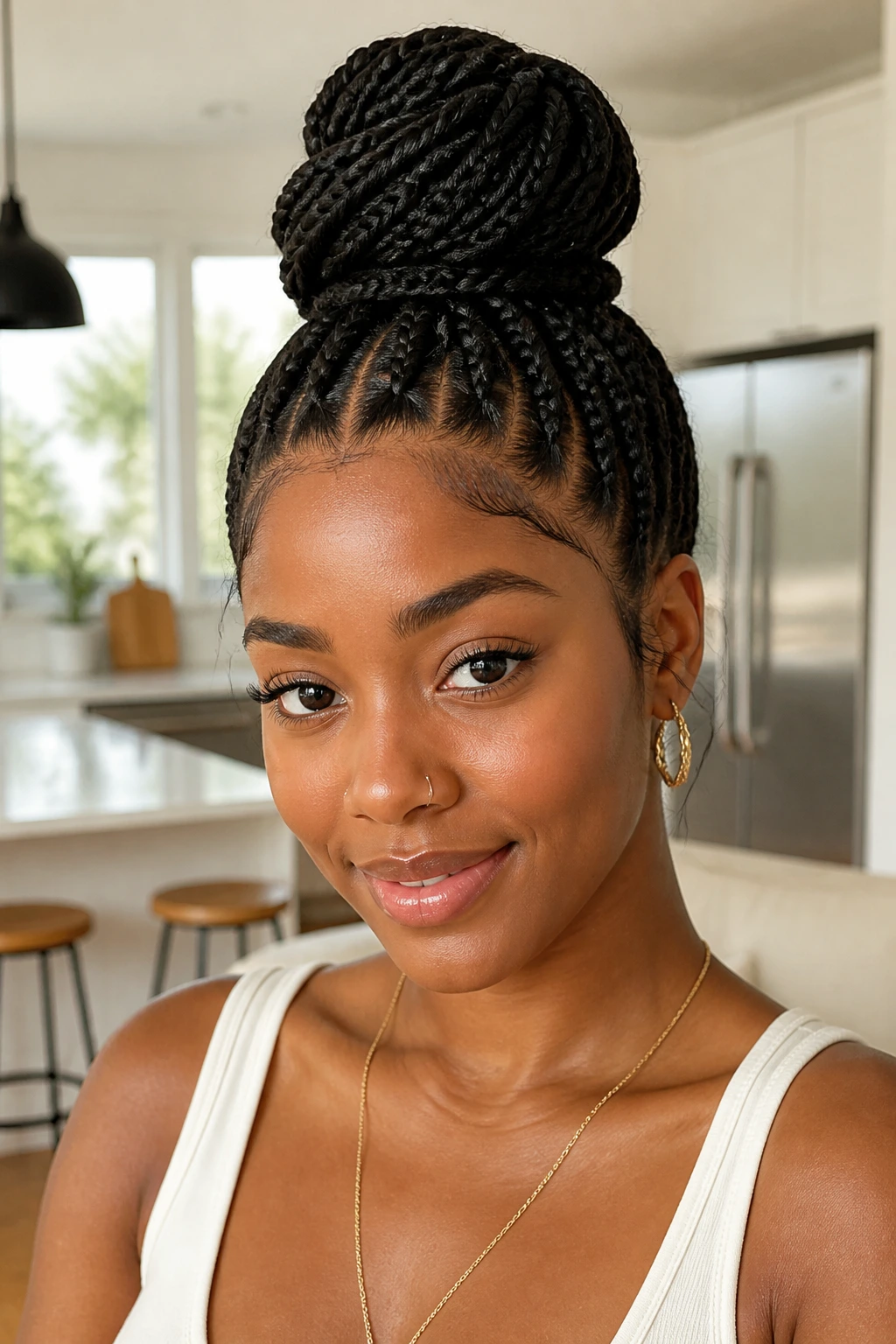
A top knot pulls all the braids up and stacks them at the crown, where they form a clean, contained shape. It’s strong, simple, and fast to recognize. The style keeps the neck open and lets the braids act like texture instead of length.
Why it feels clean
A top knot works because it uses the braids’ own density to create shape. You don’t need a lot of extra pinning if the base is secure. The result is a knot that looks neat from the front and stays out of the way. If you want a style that can get you through a hot, busy day without fighting your hair, this is one of the easiest options.
Keep the knot high but not pulled too tight. A top knot that yanks at the front rows loses the whole point. It should sit up with enough grip to hold and enough softness to avoid that stretched look around the temples.
28. Goddess Box Braids
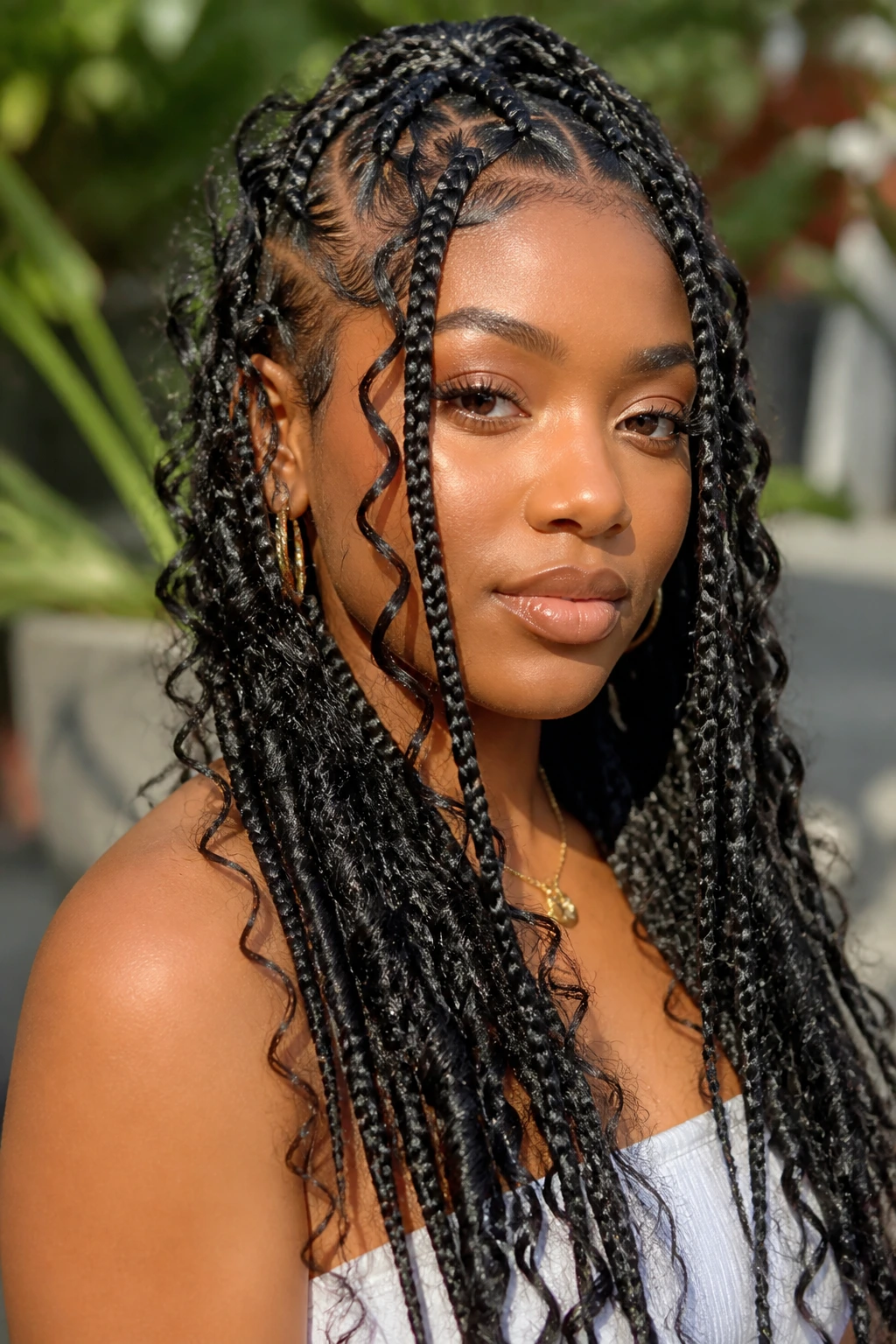
Goddess box braids mix the polish of classic braids with loose curly pieces throughout the set. The curls break up the braid line, add movement, and make the style feel softer around the face and ends. It’s a style with texture on top of texture.
This is one of the most balanced ways to do a more decorative braid set. The braids stay structured, but the curls keep them from feeling too severe.
Where this style shines
Goddess braids are especially good if you want something that looks styled even after a few days. The curls give the eye more to look at, which helps the braids stay interesting as the roots grow out. They do ask for a little more care at night, though. You need to protect the curls so they don’t mat into themselves.
If you like boho braids but want a more controlled finish, this is the softer cousin. The install looks a little dressier, a little more deliberate, and a little less like you just left the chair with a standard braid set.
How to Choose the Right Braid Size and Length
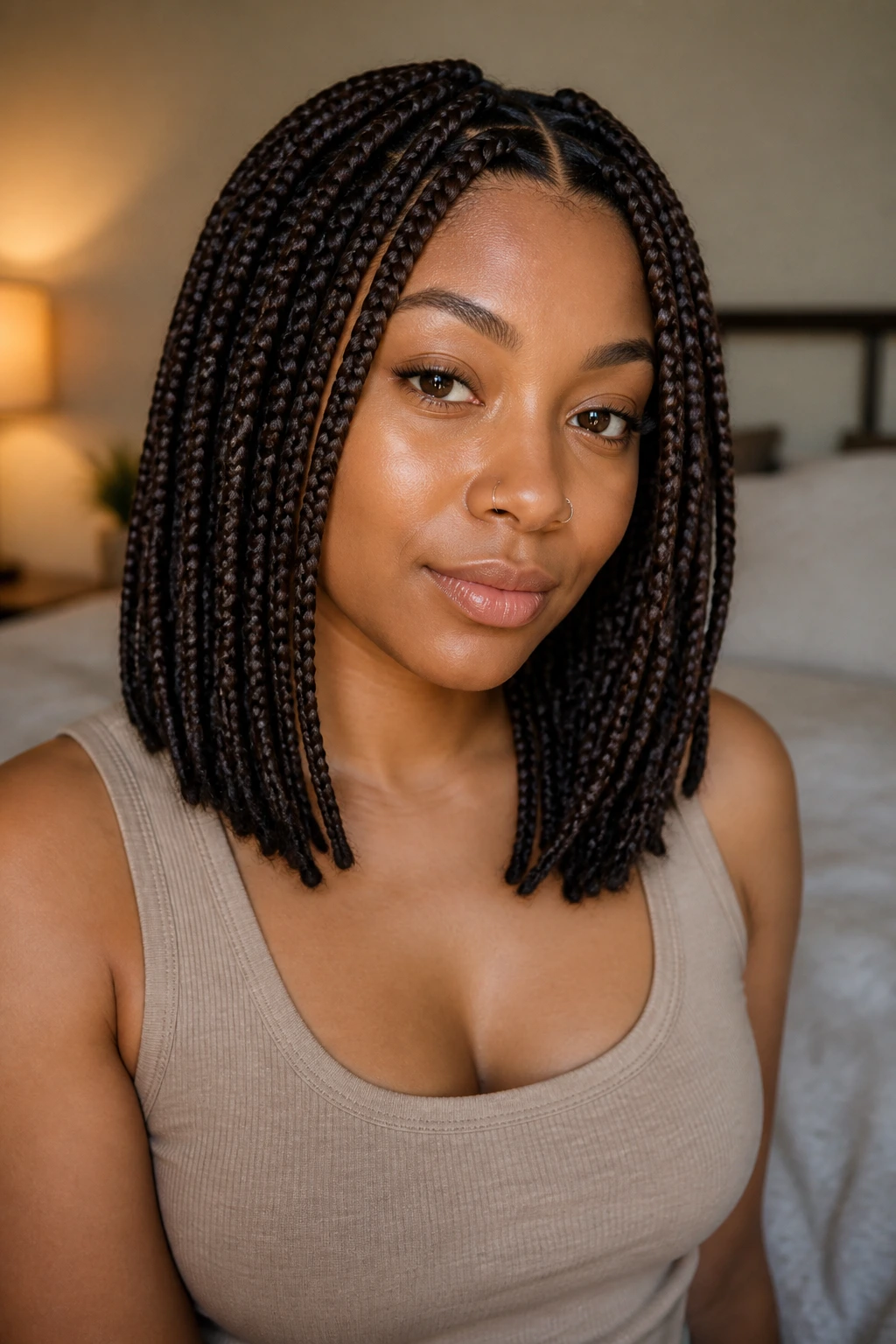
The smartest braid choice is not the prettiest one in isolation. It’s the one your scalp can live with, the one your neck can carry, and the one you can actually maintain for the amount of time you plan to wear it. That sounds boring until you’ve had braids that looked good on day one and annoyed you by day four.
Start with the tension, not the photo
If your scalp is tender, don’t start with micro braids or a super-tight high ponytail. Start with medium knotless or shoulder-length braids and see how your head handles the weight. The style should feel secure, not sharp. If it stings when you blink, that is too tight.
Match the length to your routine
Waist-length braids look dramatic, but they take more handling. Shoulder-grazing braids and bobs are easier to wash, dry, and tuck away. If you wear a lot of scarves, hoodies, or high collars, shorter lengths save you some daily frustration.
Don’t ignore the ends
Straight ends are neat. Curled ends, tapered ends, and boho finishes bring softness. If your style tends to look severe, that finishing choice matters more than you’d think. A tiny change at the ends can take a braid set from stiff to lived-in.
Tools That Make the Install Smoother
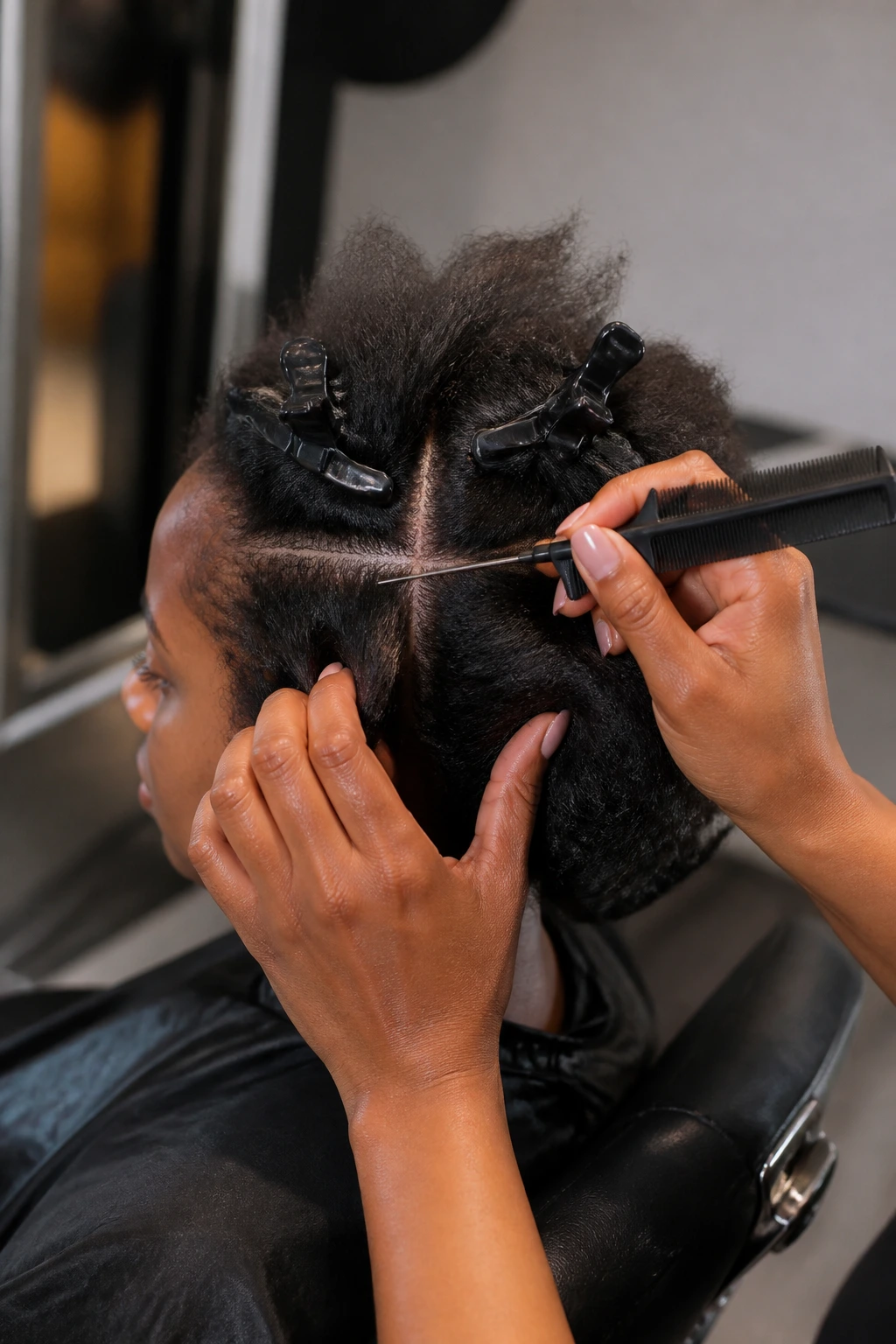
-
Rat-tail comb: Clean parting starts here. The pointed end helps make sharp squares, triangles, and criss-cross lines.
-
Duckbill or sectioning clips: These keep the rest of the hair out of the way while the braider works through each section. Fewer loose pieces means cleaner parts.
-
Pre-stretched braiding hair: This saves time and gives the ends a softer finish than hair that still has blunt factory thickness.
-
Light braiding mousse: A thin layer helps tame flyaways and gives the finished style a smoother look without weighing the braids down.
-
Edge brush: Handy for smoothing the front after install or after a refresh. Use it lightly, not aggressively.
-
Small spray bottle: A little water or a diluted leave-in mix helps refresh the scalp and keep the hair from feeling dry.
-
Satin bonnet or scarf: Night protection matters more than most people want to admit. Cotton pillowcases eat the finish of a braid style fast.
-
Hair ties and snag-free scrunchies: These are better for buns and ponytails than thin elastic bands that slice into the braids.
-
Hair scissors: Useful for trimming stray synthetic fibers or evening out the ends. Keep them sharp and clean.
How to Wear Box Braids Without Letting the Outfit Fight the Hair
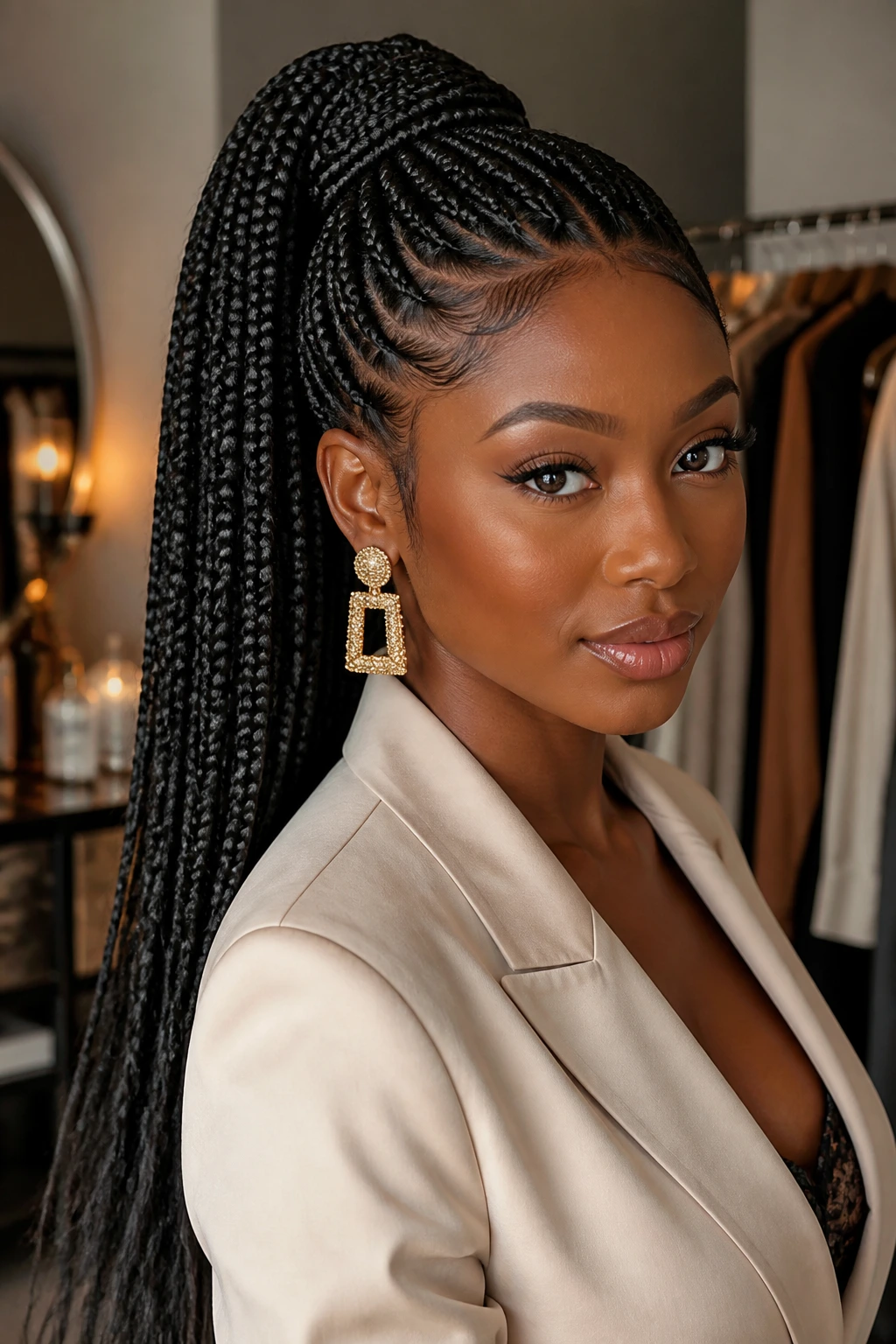
Everyday: Leave the braids down with a center part, side part, or one tucked behind the ear. That keeps the shape visible and lets the length do the work without needing a lot of styling.
Dressy: Pull the hair into a high ponytail, top knot, low bun, or crown updo. These styles open the face and show earrings, which helps the braids feel intentional instead of just left down by default.
Accessories: Pick one lane at a time. Cuffs, beads, ribbon, and scarves all work, but stacking all of them at once can make the style look busy. One strong accent is usually enough.
Outfit balance: If the braids are long and full, a clean neckline or simple earrings can keep the look from feeling crowded. If the braids are short or bobbed, a larger hoop or a more structured top gives the style something to play against.
How to Keep Box Braids Fresh Without Overhandling Them
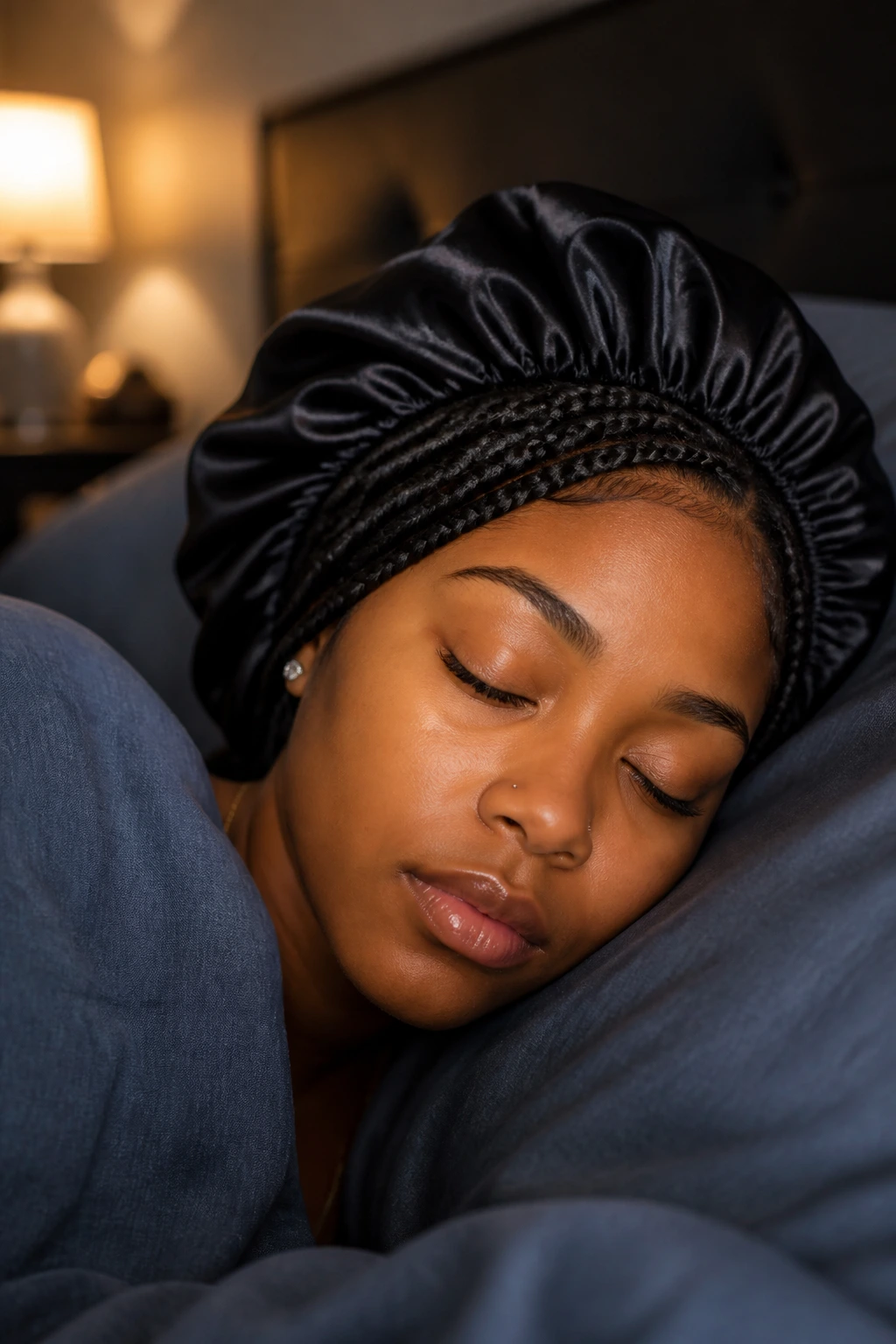
Box braids stay prettier when you leave them alone more than you think you should. That’s not laziness. That’s maintenance. The roots need to stay clean, the scalp needs air, and the braids need protection at night so the surface doesn’t rough up early.
Night care matters most
Wrap the hair with a satin scarf or sleep in a bonnet every night. If the braids are long, a loose pineapple at the crown can help keep them from tangling under your head. Don’t sleep on cotton unless you want frizz and dry ends for no good reason.
Keep the scalp clean, not soaked
A light scalp spray or diluted cleanser can help between wash days, especially if your roots start to feel itchy or dusty. Heavy oils are a bad habit here. They sit on the scalp and collect buildup on the braid bases. If you want shine, use less than you think you need.
Wash carefully and dry fully
Most braid sets can be washed every one to two weeks if your scalp needs it. Use diluted shampoo at the roots, massage gently with the pads of your fingers, and rinse well. Then dry the braids all the way through. Damp braids tucked under a scarf are a fast path to a sour smell nobody wants.
Know when the style is done
Box braids usually look best for a few weeks, not forever. Once the new growth, buildup, and frizz start making the parts disappear, the style has done its job. Pull them out before the roots start matting. That’s the difference between good maintenance and a rough take-down.
Common Mistakes That Make Box Braids Look Tired Fast
-
Choosing braids that are too heavy for your hairline: If the first sign is soreness at the temples or a pulling feeling behind the ears, the install is too much. Ask for fewer sections, less added hair, or a shorter length before the tension becomes a problem.
-
Starting with hair that isn’t fully clean or dry: Product, sweat, and dampness get trapped under braids and show up later as itch, smell, or buildup. Wash and dry the hair all the way before the braiding session, even if it takes extra time.
-
Using too much oil or pomade: Heavy products collect at the roots and make the scalp look dusty faster. A small amount goes farther than people expect, and light sprays usually keep the style looking fresher.
-
Sleeping without protection: One night on cotton can rough up the ends and fuzz the front rows. A satin bonnet or scarf is not optional if you want the style to stay neat.
-
Leaving the braids in too long: Once the roots start locking together and the hairline looks stressed, the style is past its best window. The hair does not magically get healthier by staying in longer.
-
Pulling the braids into the same tight ponytail every day: That can create weak spots at the front and make the edges look thinner over time. Rotate between low, high, and half-up styles so one area isn’t taking all the strain.
Variations and Adaptations to Try
Soft Knotless Switch: If classic box braids feel too firm at the root, ask for knotless braids with the same length and parting. You keep the box braid shape but lose the bulky knot at the scalp.
Color Without Commitment: Use pre-colored braiding hair in burgundy, honey, copper, or blonde pieces instead of dyeing your natural hair. This is the cleanest way to change the mood without changing the base.
Curled-End Update: Swap straight sealed ends for curls on the last few inches. The style gets softer, lighter-looking, and easier to dress up.
Short-Length Reset: Take the same braid idea and cut it to bob or collarbone length. That move lowers the weight, speeds up drying, and makes maintenance easier if you’re tired of long braids.
Accessory-Heavy Front Rows: Keep the back plain and add cuffs, beads, or ribbon only near the face. The style stays neat but gets enough detail to feel intentional.
Low-Tension Everyday Set: Choose medium parts, medium braids, and shoulder-grazing length. This is the practical version of box braids for people who want the look without a lot of strain.
Frequently Asked Questions
How long do box braids usually last?
Most box braid installs look best for about four to eight weeks, depending on braid size, growth rate, and how well you maintain the scalp. Smaller braids and knotless installs often stay neat a little longer, but once the roots start matting, it’s time to remove them.
Are knotless braids better than classic box braids?
Knotless braids usually feel lighter at the scalp because they don’t start with a hard knot. That makes them a strong choice if your hairline gets tender or if you wear your braids up often. Classic box braids still have a place when you want a fuller, more defined root.
Can you get box braids with short hair?
Yes, as long as the braider can secure the natural hair safely before adding braid hair. Very short hair may need smaller sections or a knotless approach so the base stays stable. The style should never be forced if the hair is too short to hold it well.
What if my scalp feels tight after the install?
That is a sign to speak up fast, not something to “wait out.” Mild tension can happen, but sharp pain, throbbing, or bumps along the hairline mean the braids are too tight and need adjustment.
How do I keep the braids from frizzing so quickly?
Sleep in a satin bonnet, avoid heavy oils, and don’t keep tugging the hair into the same tight style every day. A light mousse on the surface can help smooth flyaways, but the real work happens at night.
Can I wash box braids?
Yes, and you should if the scalp feels dirty or itchy. Use diluted shampoo, focus on the roots, and rinse well. The key is drying completely afterward so moisture doesn’t get trapped under the braids.
Which braid size is easiest to live with?
Medium braids usually give the best mix of style and comfort. Jumbo braids install faster, but they can feel bulkier. Micro braids offer more styling options, but they take longer to install and remove.
Do beads or cuffs make the braids heavier?
They can, especially if you pile them on every braid. A few placed near the face or at the ends of select braids usually add enough detail without turning the style into a weight issue.
What’s the best style if I want less neck strain?
Shoulder-grazing braids, a bob, or medium knotless braids are usually easier on the neck than extra-long sets. If you still want length, layering can reduce the feeling of a heavy block of hair.
The Styles That Earn Their Place
The best box braid styles for Black women are the ones that fit the head first and the trend second. Some days that means a clean knotless middle-part set that sits flat and behaves. Other days it means cuffs, curls, or a bob that stays off your shoulders and looks sharper for it.
What matters most is the shape you can actually wear. A braid style should feel like it belongs on your head, not like you’re managing a costume. Get the parting right, keep the tension sane, and choose the length that matches your life. The rest is style — and that part can be as quiet or as bold as you want.
