



A braid can change the whole mood of a face in a way flat-ironing never will. One minute the hair feels loose and uncommitted; the next, it’s neat at the hairline, sculpted at the part, and carrying a little more attitude than it had ten minutes ago. That’s the real appeal of braid hairstyles for Black women: they’re not one look. They’re a whole language.
What I love about braids is how much they can do without shouting about it. A clean set of knotless box braids can make a plain T-shirt look intentional. Feed-ins can sharpen a face that looks tired by Friday afternoon. Jumbo braids have weight, movement, and that easy kind of confidence that comes from knowing your hair is not going anywhere for a while. And then there’s the practical side, which matters just as much: the right braid style can tuck away fragile ends, reduce daily manipulation, and buy you time on mornings when you’d rather be anywhere else.
There’s a catch, though, and it’s a big one. Braids are only protective when they’re installed with enough care to respect the scalp and the hairline. Tight bases, heavy extensions, and too much product can turn a beautiful style into an itchy, pulling mess. If you’ve ever taken down a style and found tender spots around your edges, you already know the difference between a braid that was designed well and one that just looked good on day one. The styles below cover the fun part, yes, but also the part that keeps the style wearable.
Why These Braid Looks Earn Their Keep
- They solve real mornings: A good braid style cuts down the daily back-and-forth of detangling, twisting, and restyling, which is worth more than people admit.
- They change the shape of the face fast: A center part, side swoop, or high ponytail can make the same braid pattern feel sharper, softer, or more dramatic.
- They give your ends a break: Keeping the ends tucked away matters when the goal is length retention, not just a pretty picture.
- They scale up or down easily: The same braid family can be worn tiny and sleek, waist-length and full, or cropped into a bob that feels lighter on the neck.
- They work with accessories instead of fighting them: Beads, cuffs, thread, rings, and wraps don’t need much convincing once the braid pattern is clean.
- They can look polished without heat: That’s a big deal when you want shape and style without leaning on hot tools every week.
1. Knotless Box Braids
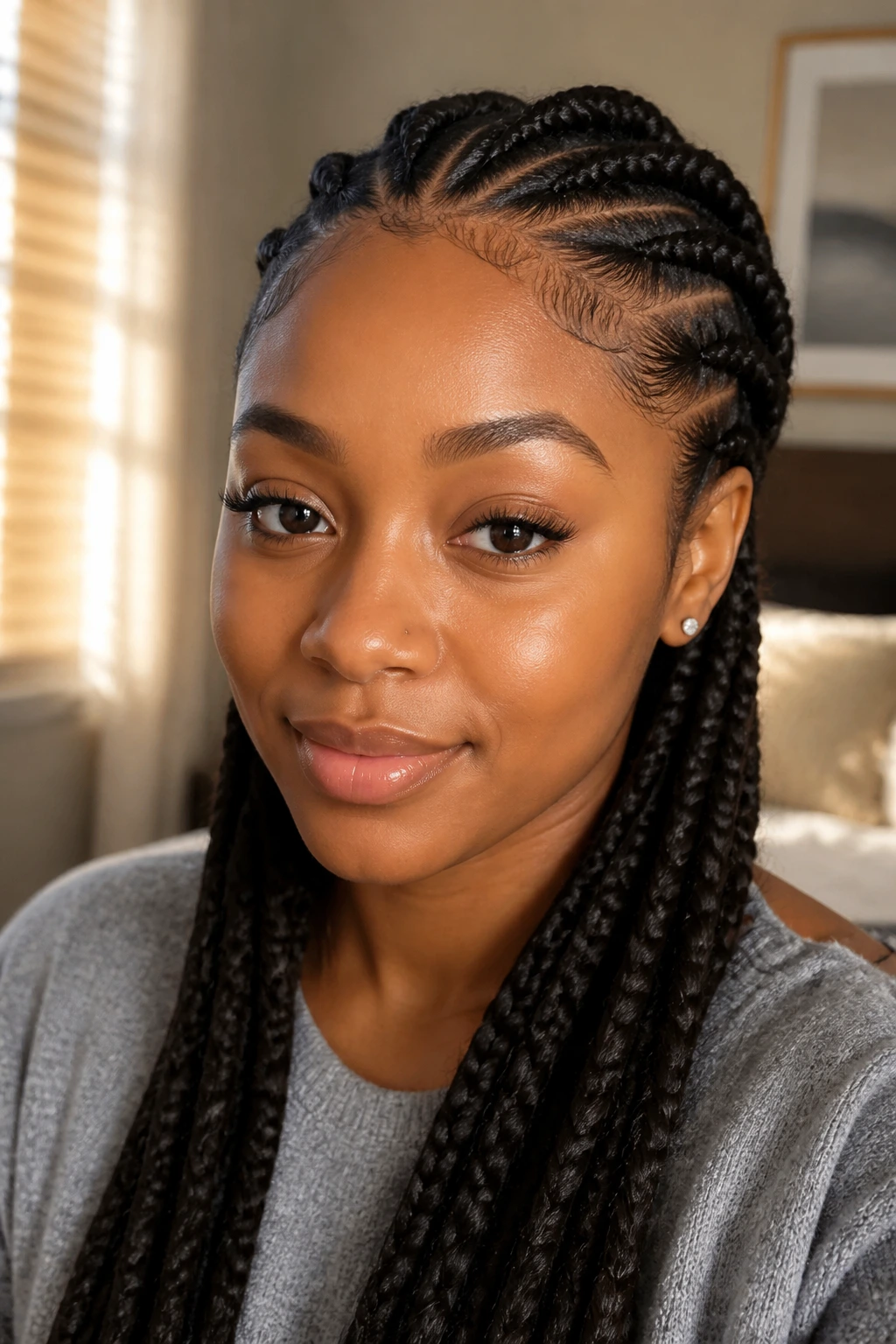
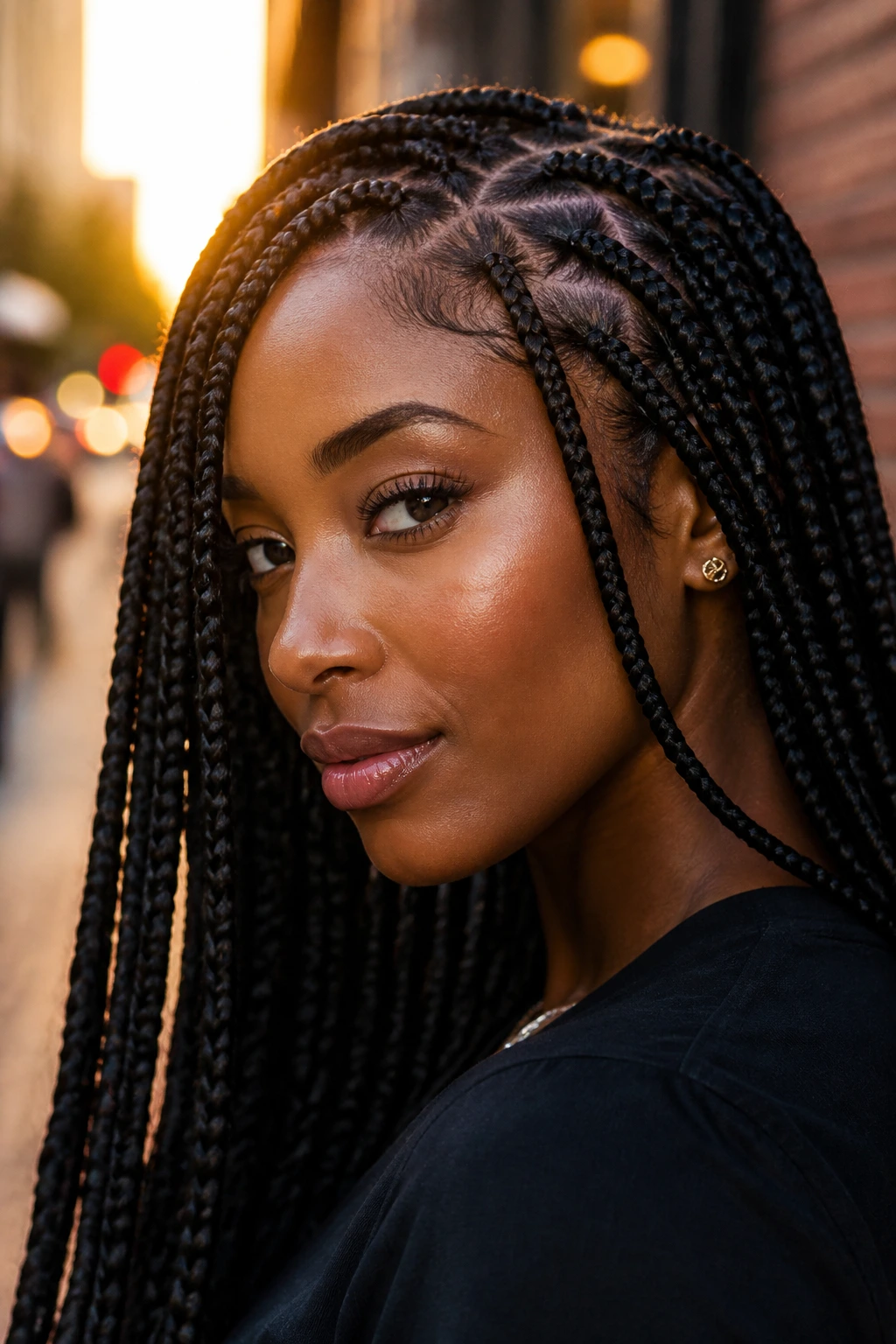
Knotless box braids sit flatter at the root, and you can see the difference right away. Instead of that little knot where the extension hair begins, the braid feeds in gradually, so the scalp looks calmer and the whole style moves with less stiffness. That softer start is why so many people reach for knotless when their edges have been through enough already.
What they’re best at is balance. You still get the length and rhythm of classic box braids, but the installation tends to feel gentler, especially if the parts aren’t too tiny and the extensions aren’t overloaded. Medium to long knotless braids are the sweet spot for most people. They hang cleanly, swing well, and don’t feel like they’re dragging the front of the head downward.
2. Classic Box Braids
Classic box braids are the style people think of first, and for good reason. The look is crisp, the sections are clear, and the braid has that slightly structured feel that never really goes out of circulation. There’s a reason they show up in old photos, family albums, and endless salon chairs. They hold shape.
The little knot at the root is part of the look here, so this style works best when the installation is neat enough to make that base intentional rather than bulky. If you like a braid that keeps its shape for weeks and looks especially clean in a ponytail or half-up style, this is the one to start with. Medium-length classic braids are easier on the neck than waist-length ones, and they still give you plenty of styling room.
3. Jumbo Box Braids
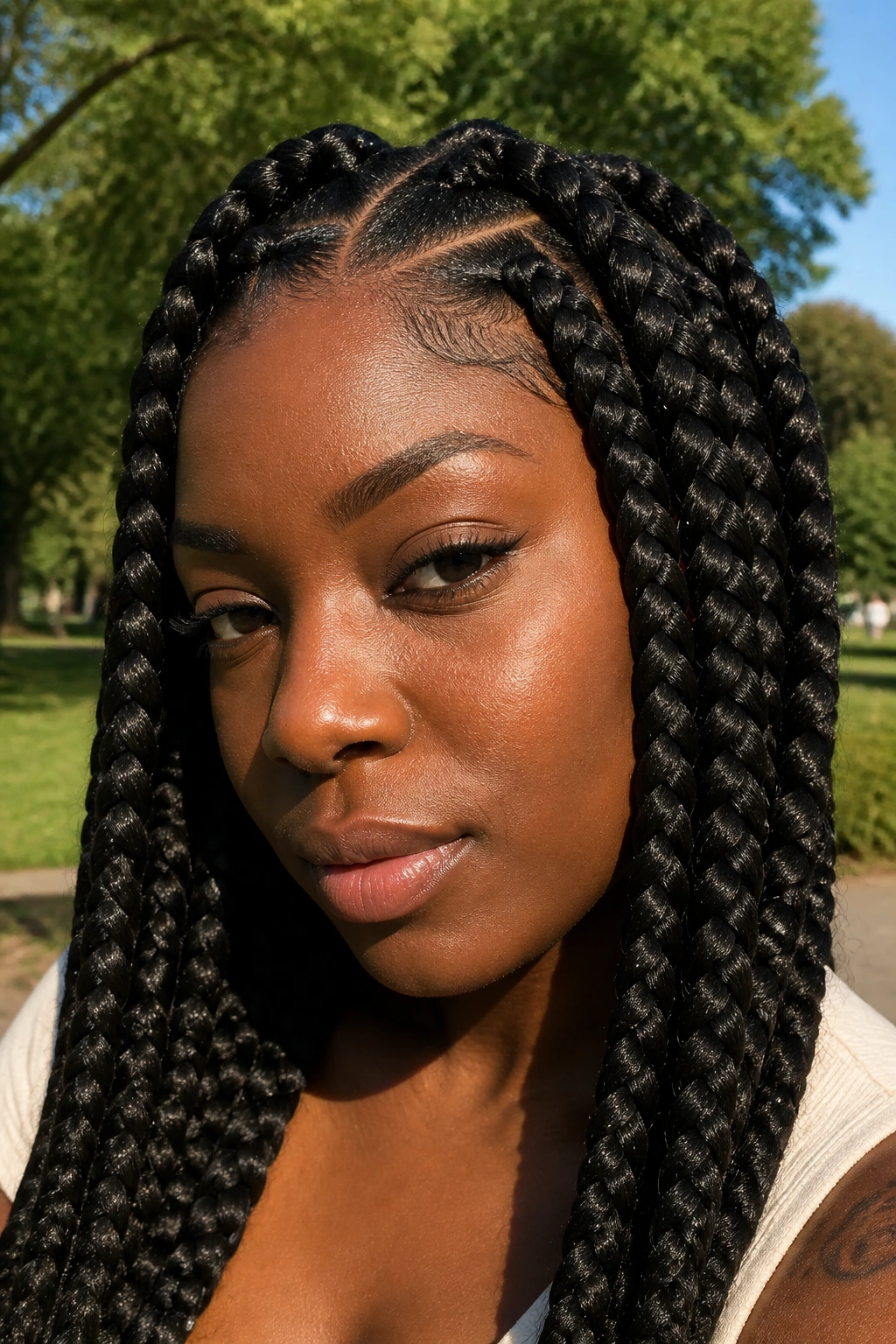
Jumbo box braids make a statement before you even move. They’re thicker, quicker to install than smaller braids, and have a lot of visual weight, which means the pattern itself does half the work. You don’t need a complicated parting design when each braid is chunky enough to stand on its own.
I like jumbo braids when somebody wants impact without a marathon chair session. They also read well on round or oval faces because the larger sections frame the face in a clean, bold way. The tradeoff is tension. Heavy jumbo braids can tug if the sections are too dense or the added hair is too much, so this style needs a light hand at the roots and a realistic plan for wear time.
4. Small Box Braids
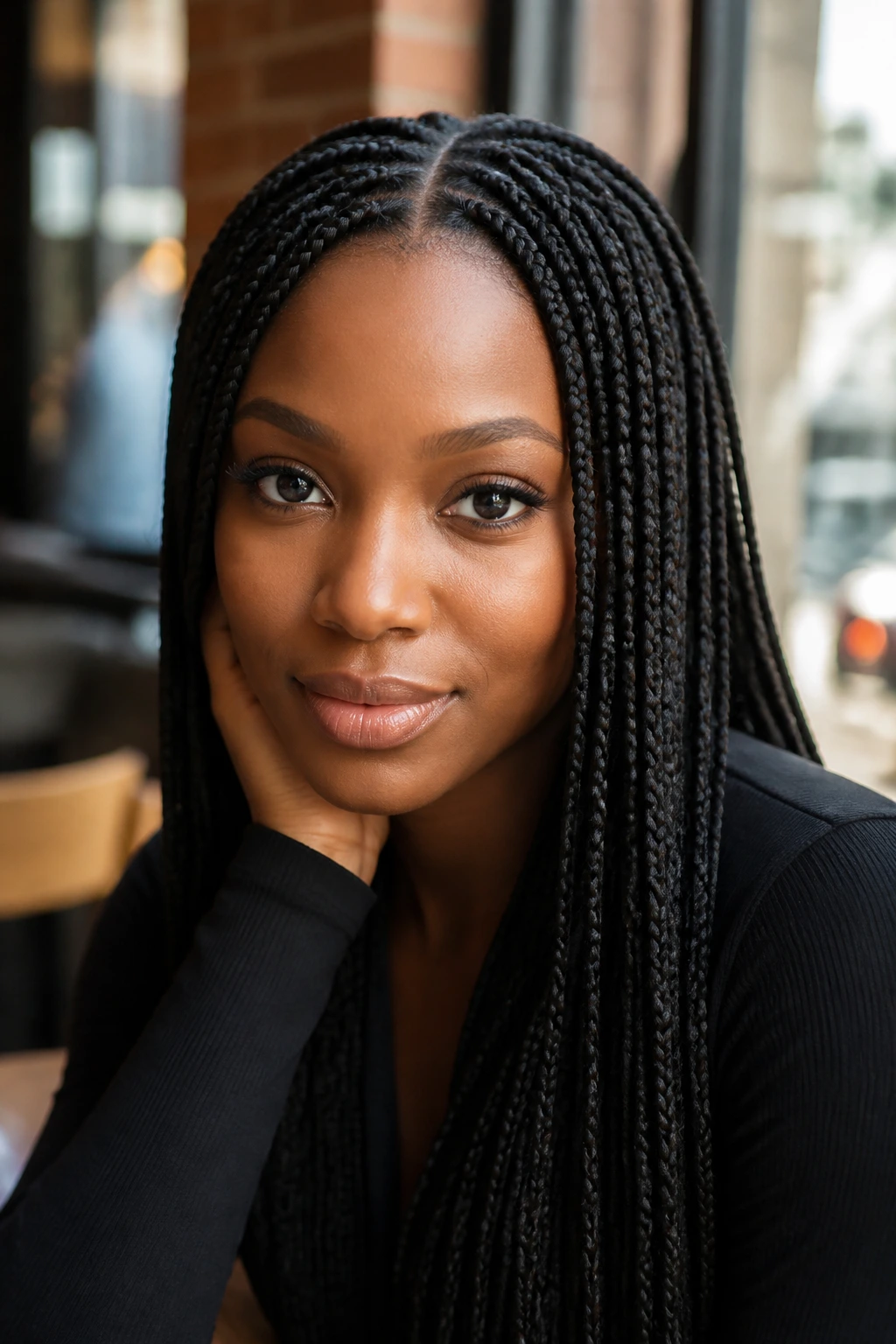
Small box braids have a different kind of energy. They’re quieter at first glance, but the detail shows up once you get close—the clean grid, the slimmer plaits, the way the whole head falls in a more fluid sheet than a chunky set. They take longer to install, no question, but the finish is smooth and versatile.
This style is for people who like options. Small braids can be pulled into buns, side parts, high ponytails, and tucked styles without looking bulky. They also tend to age in a graceful way, because the smaller size softens the look of new growth. If you’re willing to sit longer in the chair, you get a braid style that keeps giving back when you change it up.
5. Micro Braids
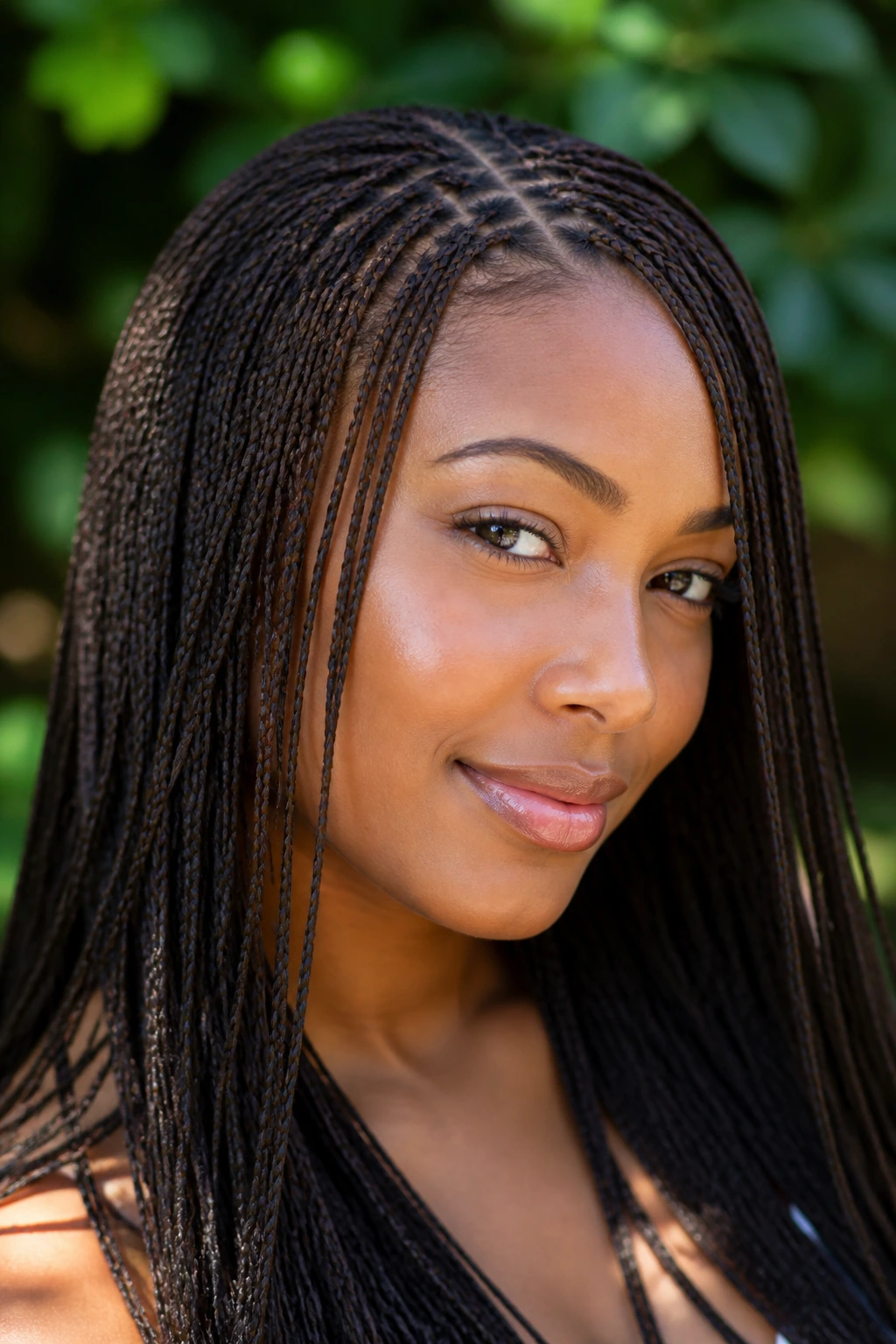
Micro braids are tiny, detailed, and a little bit demanding. They’re not the first style I’d hand someone who hates long installs or heavy maintenance, but they do give you incredible movement. The hair falls almost like threads, which makes the style feel lighter and more flexible than thicker braids.
What makes micro braids worth the trouble is styling range. They can be worn loose, pinned, gathered into low knots, or tucked under scarves with barely any bulk. The warning label is tension and patience. Because the sections are so small, the scalp has to be treated with care, and the install has to be slow enough to keep the base from pulling. If you go this route, be honest about how much handling your hair can take.
6. Triangle-Part Braids
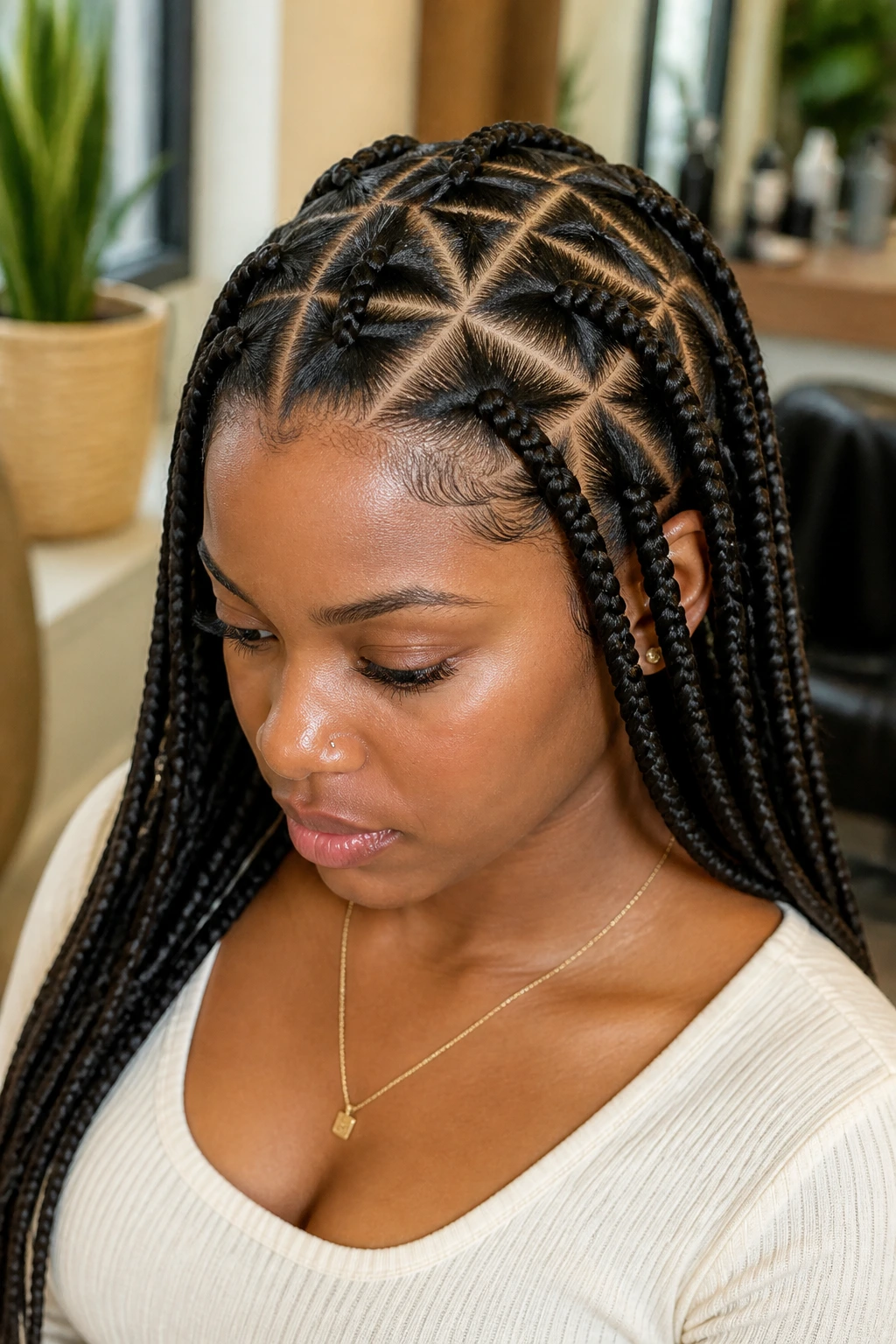
Triangle-part braids change the whole mood of a set without changing the braid itself. The sections aren’t squared off; they’re cut into sharp, geometric triangles that give the scalp pattern a more designed, less expected look. It’s one of those details that people notice even if they can’t name it.
This is the style I pick when a basic box braid set feels too familiar. Triangle parts look especially good with medium braids, because the shape of each section shows clearly without being crowded by too much hair. You can wear them straight down and let the parting do the talking, or add cuffs and let the geometry stay visible near the front. The style shines when the parts are clean and the sections are consistent. Sloppy triangles look sloppy fast.
7. Feed-In Cornrows
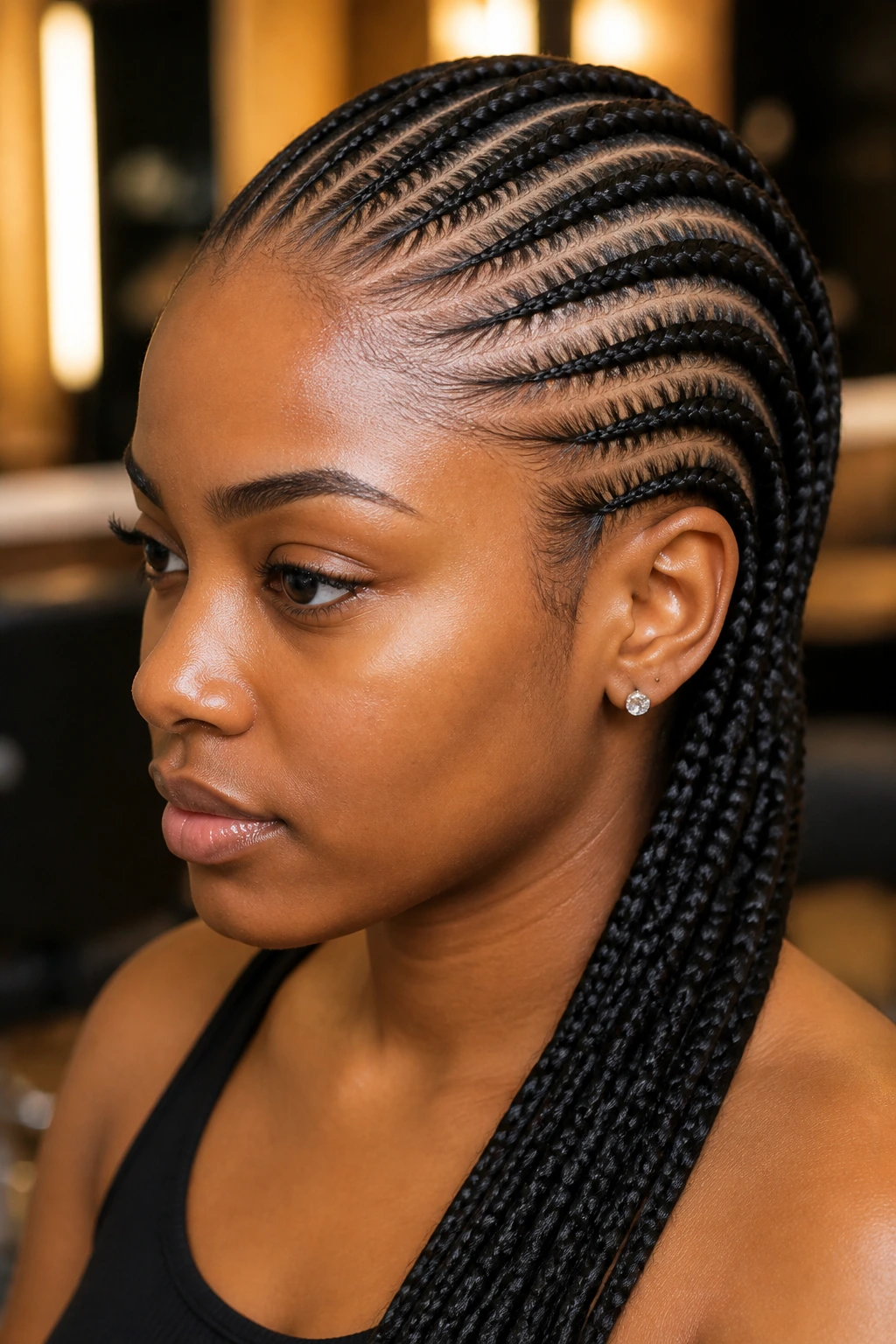
Feed-in cornrows are sleek at the scalp and build gradually, which gives them that smooth, laid-down finish people love when they want their hair close to the head. The feed-in method keeps the base from looking chunky, and that makes the whole style feel refined instead of bulky. It’s a smart option when you want braids that sit flat and stay neat around the forehead.
These braids are excellent for low-maintenance styling that still looks deliberate. They can be worn straight back, curved, or pulled into a ponytail, and they’re easy to pair with earrings or a strong lip because the hair stays close to the face. If your main concern is tension, ask for a soft base and a gentle grip at the roots. A feed-in braid should feel secure, not like it’s holding on for dear life.
8. Straight-Back Cornrows
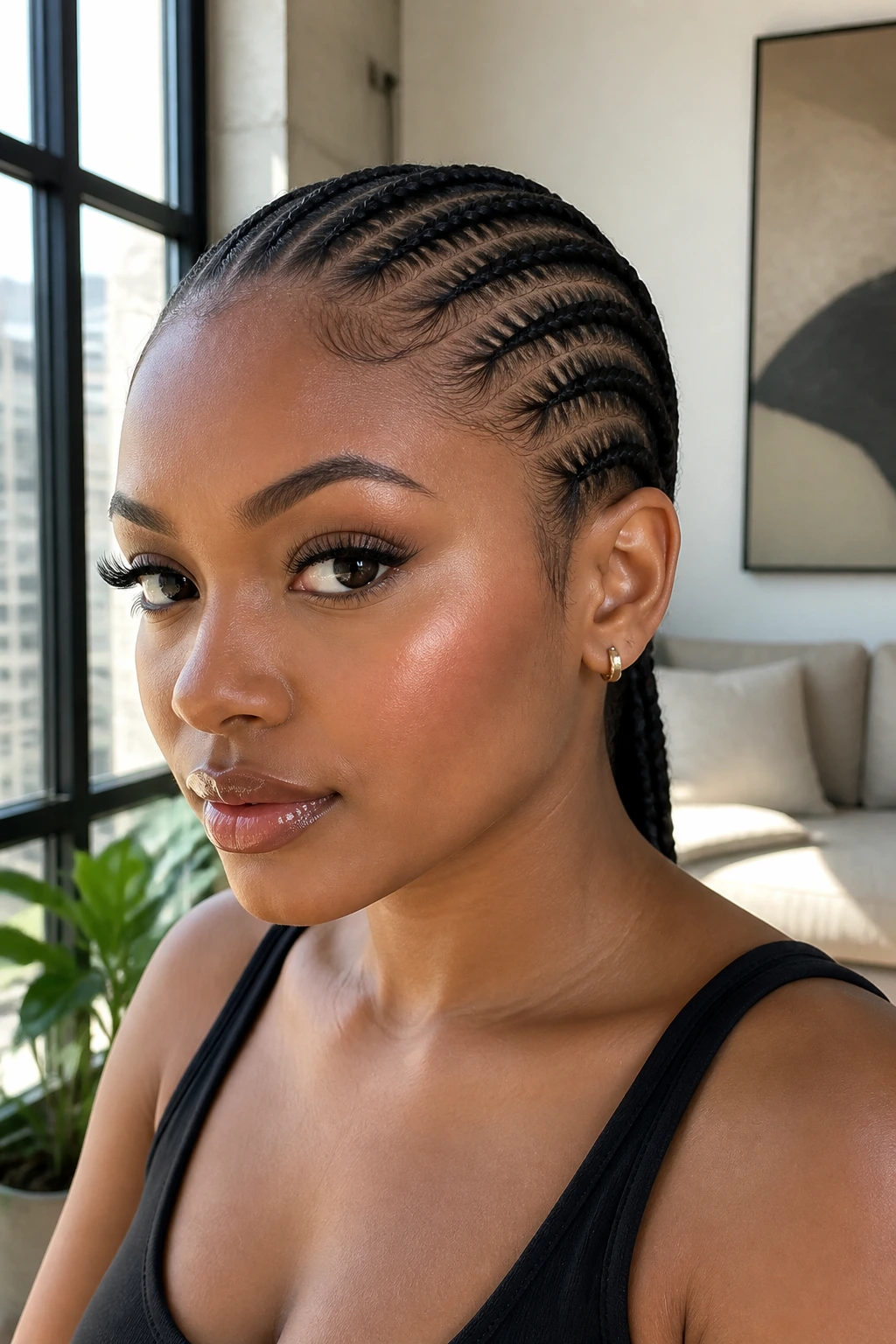
Straight-back cornrows are direct, tidy, and a little bit stern in the best way. They create a clean row pattern from front to nape, which gives the style a no-fuss look that works with everything from gym clothes to a blazer. There’s no hiding the parting here, so neatness matters more than anything else.
The beauty of straight-backs is their practicality. They lay flat under hats, pair well with wigs and wraps when you need a break, and keep the scalp easy to access. If you want a cornrow style that doesn’t ask for much attention but still looks crisp, this is the dependable choice. Keep the parts even, keep the tension light at the front, and don’t drown the scalp in product. That last part ruins more cornrows than bad technique does.
9. Stitch Braids
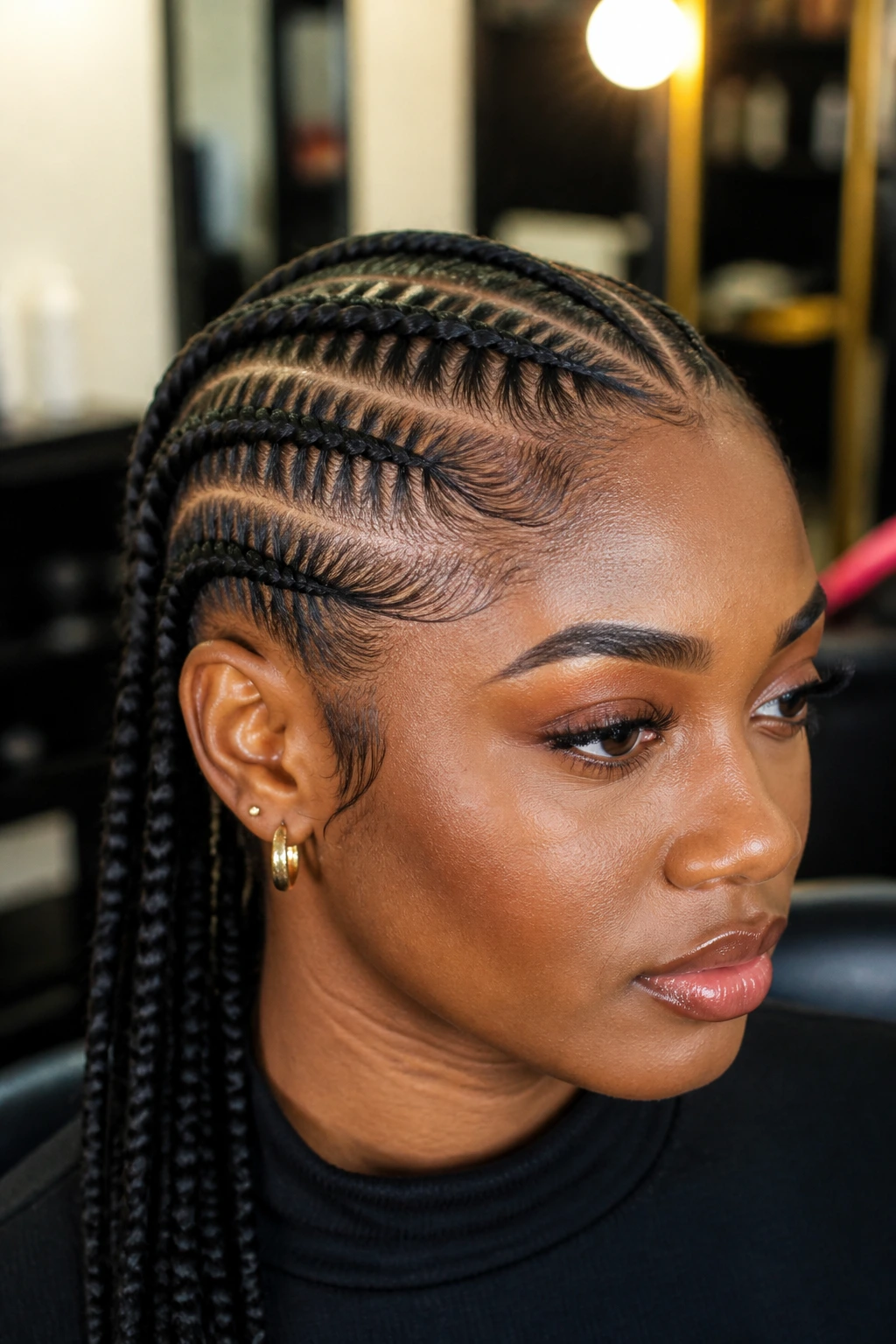
Stitch braids get their name from the sharp, segmented look along the scalp. The rows are clean and defined, almost like someone drew them with a ruler and a steady hand. They have a sharper finish than standard cornrows, and that’s exactly why they stand out.
This style is one of the best options when you want the braid pattern to be part of the design instead of hidden by length. Stitch braids can be worn straight back, curved into side patterns, or gathered at the crown for a more dramatic finish. The trick is patience. If the sections are uneven or the hair keeps slipping, the stitch pattern loses its edge. Use enough gel to control flyaways, but not so much that the scalp turns shiny and sticky before lunch.
10. Zig-Zag Part Braids
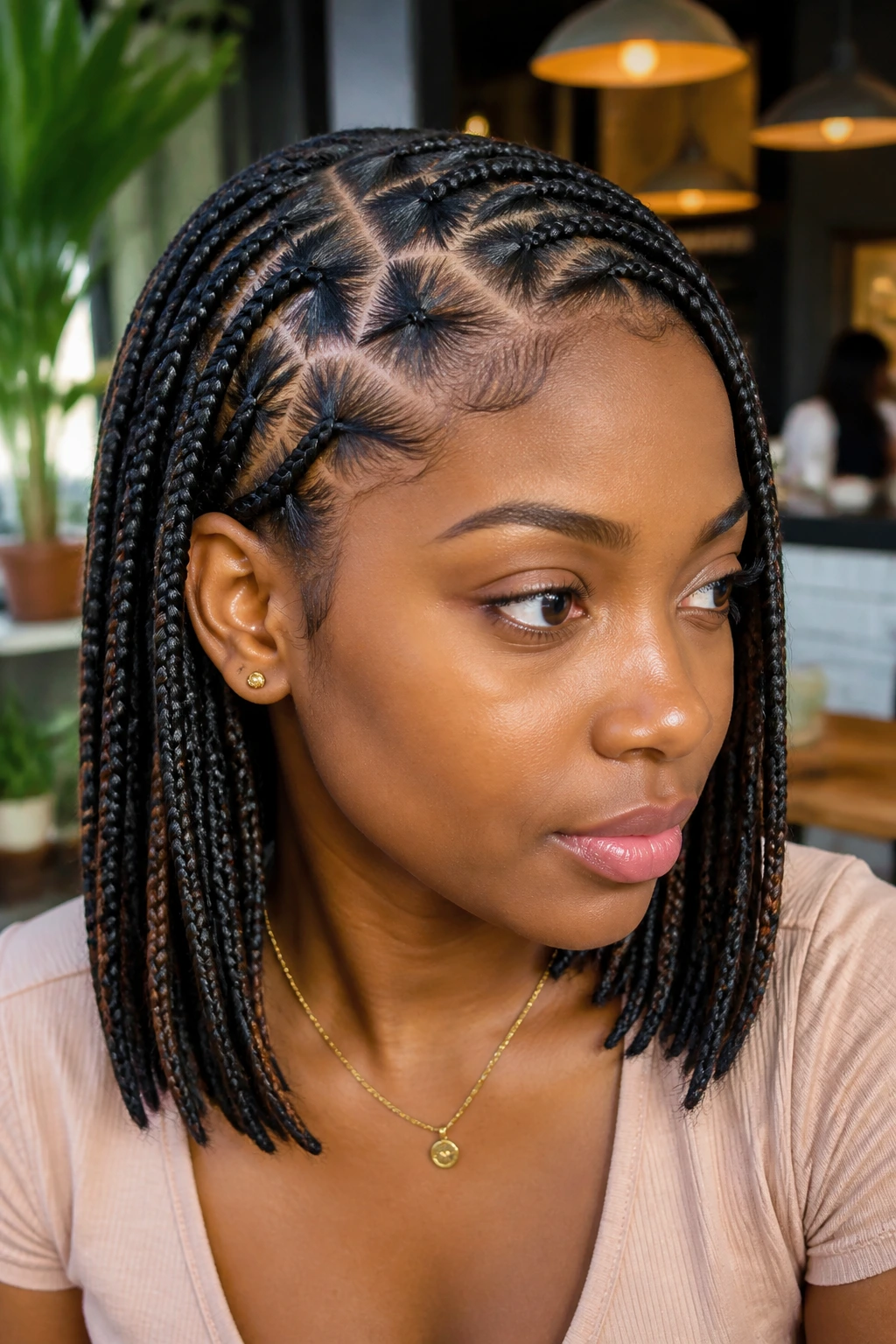
Zig-zag part braids bring a little movement before the braiding even starts. The parting snakes across the scalp instead of moving in a straight line, which gives the whole style an energetic look. It’s playful, but not childish. There’s a difference.
I like zig-zag parts when a client or reader wants something that feels creative without leaning on color or accessories. The braids themselves can be simple box braids or feed-ins; the parting does the heavy lifting. This works especially well on styles that stay close to the head, because the part pattern stays visible longer. Clean sectioning matters here more than anywhere else. A wobbly zig-zag reads as a mistake. A crisp one reads as design.
11. Diagonal Feed-In Braids
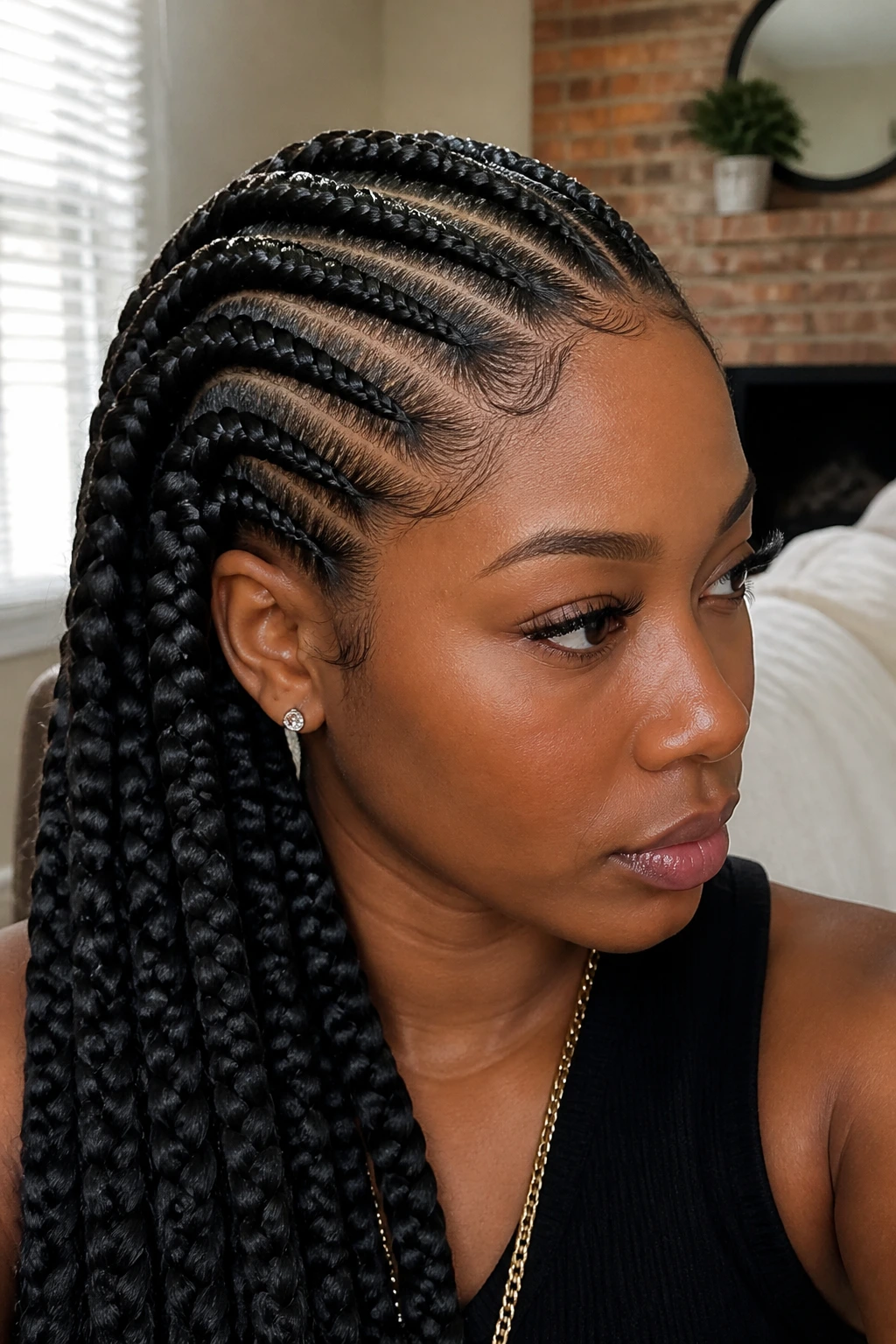
Diagonal feed-in braids move across the head at an angle, which makes the shape feel more dynamic than straight-back rows. That diagonal sweep is useful when you want to pull attention upward or across the face instead of down the length of the hair. It’s a subtle thing, but subtle is often the whole point.
These braids are especially good for people who feel like straight parts flatten their features. The diagonal line creates motion, and motion softens a style that might otherwise feel too rigid. They also give you a nice base for buns, ponytails, and side-swept finishes. If you want the style to last visually, ask for the angles to be consistent from front to back. Mixed angles turn elegant into messy in a hurry.
12. Fulani Braids
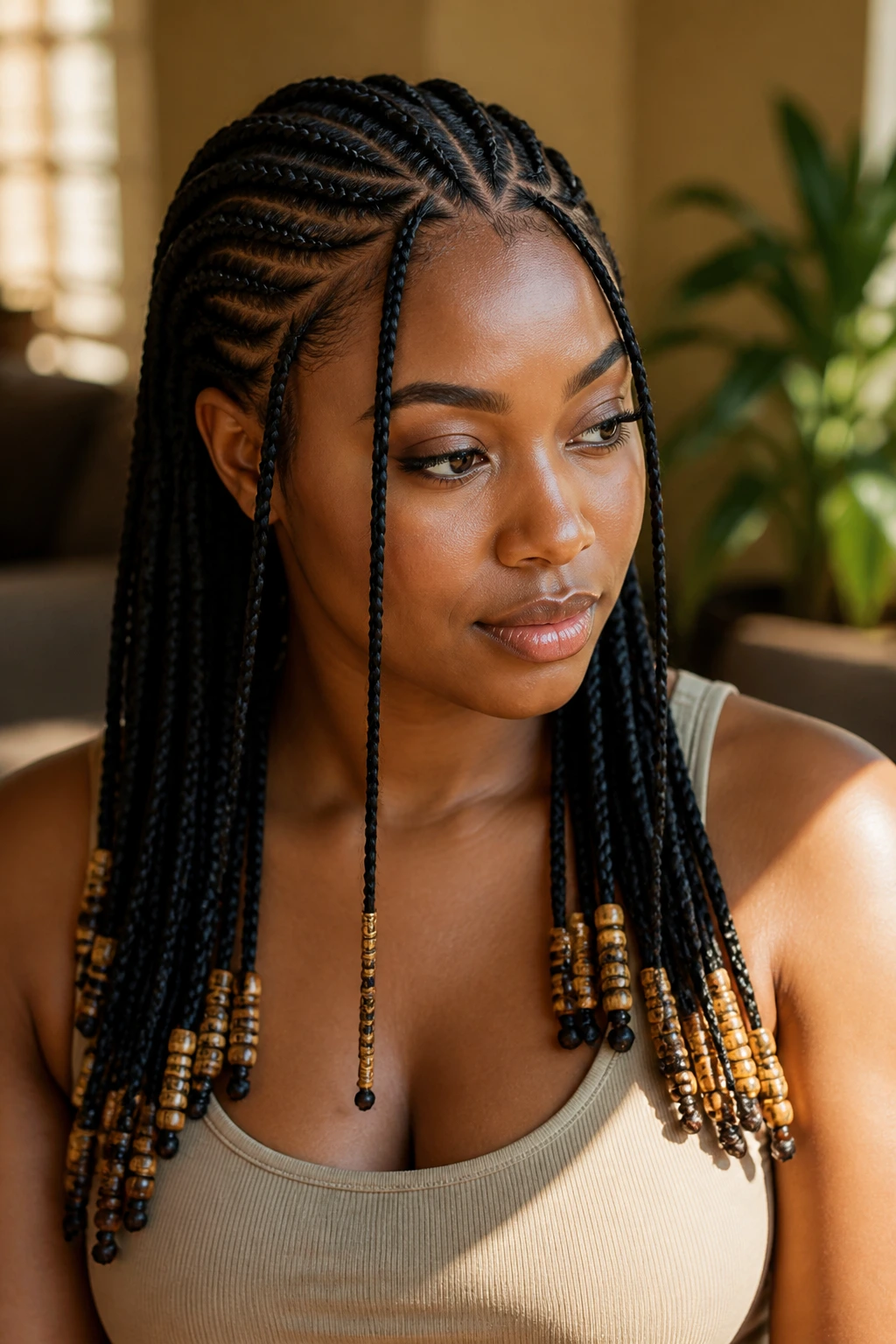
Fulani braids are one of those styles that carry both structure and ornament. Usually you’ll see a central braid or row with braids flowing outward, often paired with a braid down the middle, beads, cuffs, or side details that pull the eye in several directions at once. The result feels balanced but never boring.
What makes Fulani braids so useful is the way they frame the face. The front pieces can soften the forehead, the middle part can create symmetry, and the side braids can be styled to show off jewelry or hair accessories. They’re a strong choice when you want tradition, detail, and polish in the same look. Keep the front pieces light if your scalp is sensitive. The prettiest Fulani set in the world won’t matter if it throbs by day two.
13. Tribal Braids
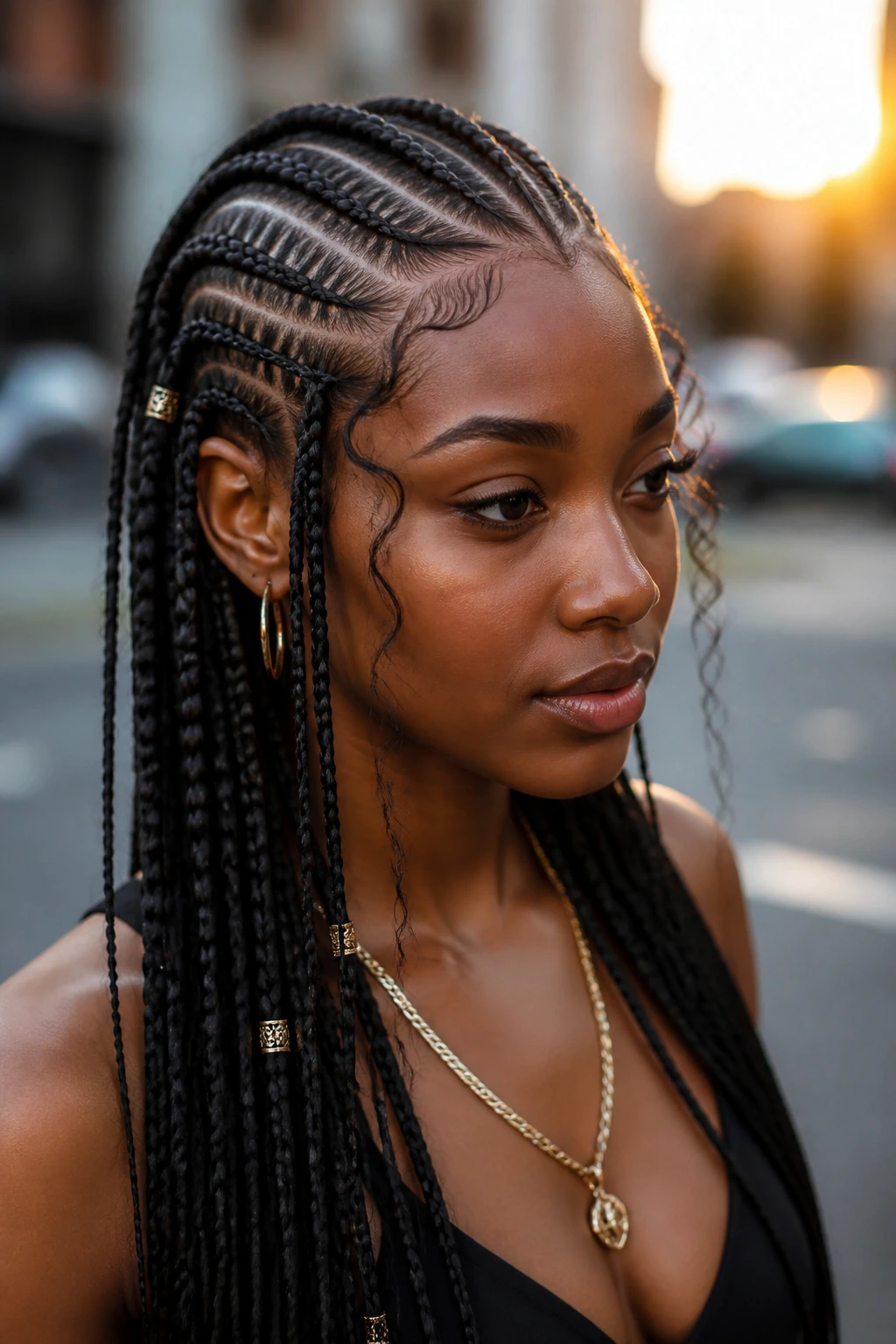
Tribal braids give you room to mix patterns, sizes, and directions without losing the sense that the style has a plan. They often combine feed-ins, cornrows, and loose braids with decorative parts or accessories, which makes them feel layered rather than simple. That layered quality is the whole charm.
They’re a good fit for anyone who likes styles with personality. You can go bold with thick and thin braids in one set, or keep the pattern cleaner and let the parting do the talking. Tribal braids also work well when you want a style that can shift from casual to dressed up just by adding cuffs or threading in color. The key is consistency of tension. Too many competing sizes on one head can look chaotic if the sections aren’t controlled.
14. Lemonade Braids
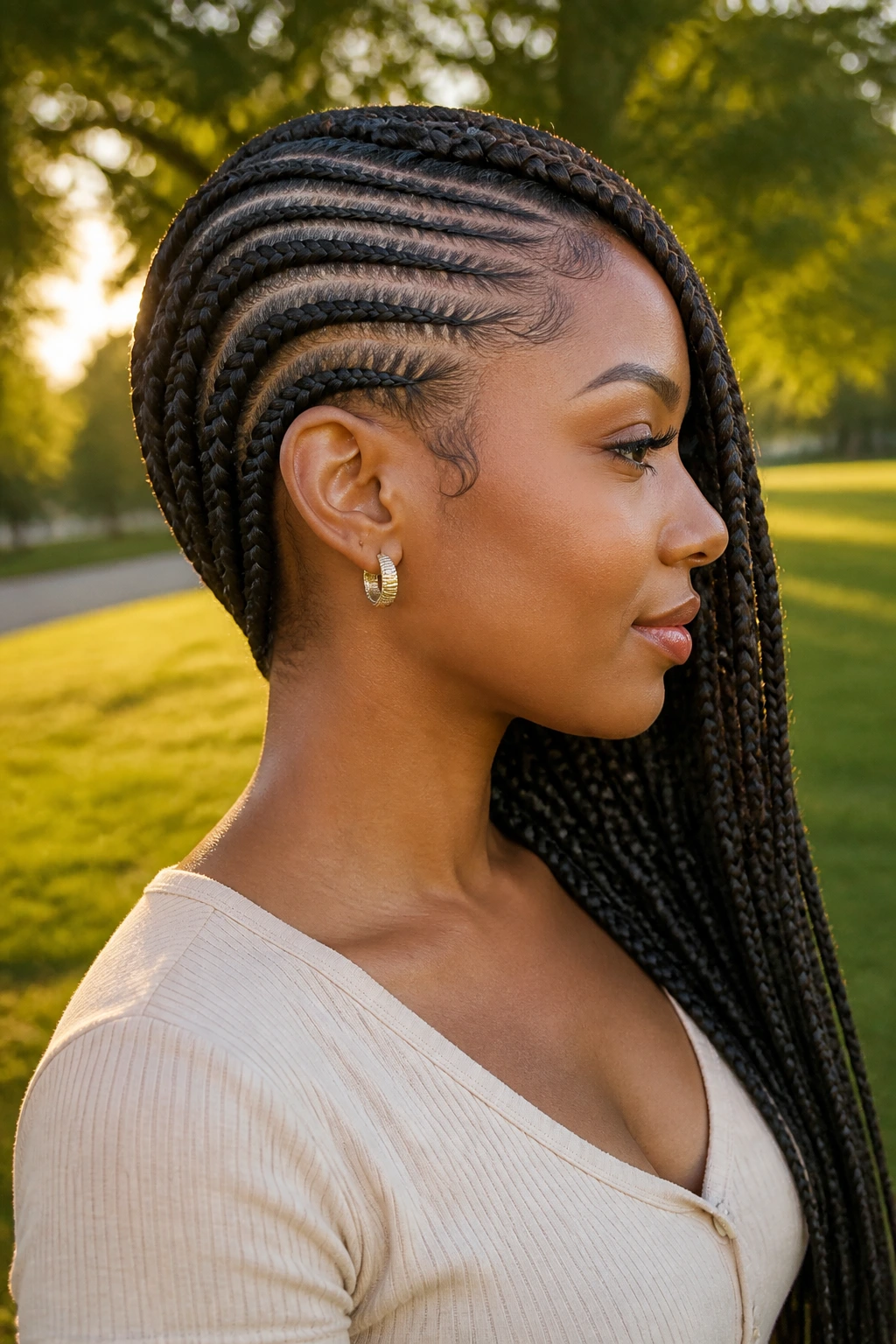
Lemonade braids sweep to one side, and that side part changes everything. The style has movement built into it before you even add length, which is why it can feel so sharp and face-framing. It’s the braid version of a strong profile angle.
These braids are especially good if you want the hair to fall away from one side of the face, leaving room for earrings, glasses, or a full brow line. They can be slim and sleek or a little thicker and more dramatic, depending on how much volume you want. Lemonade braids do need a careful part and a deliberate direction, because once the angle is off, the whole look feels sloppy. When they’re right, though, they have a clean, intentional swing that’s hard to beat.
15. Ghana Braids
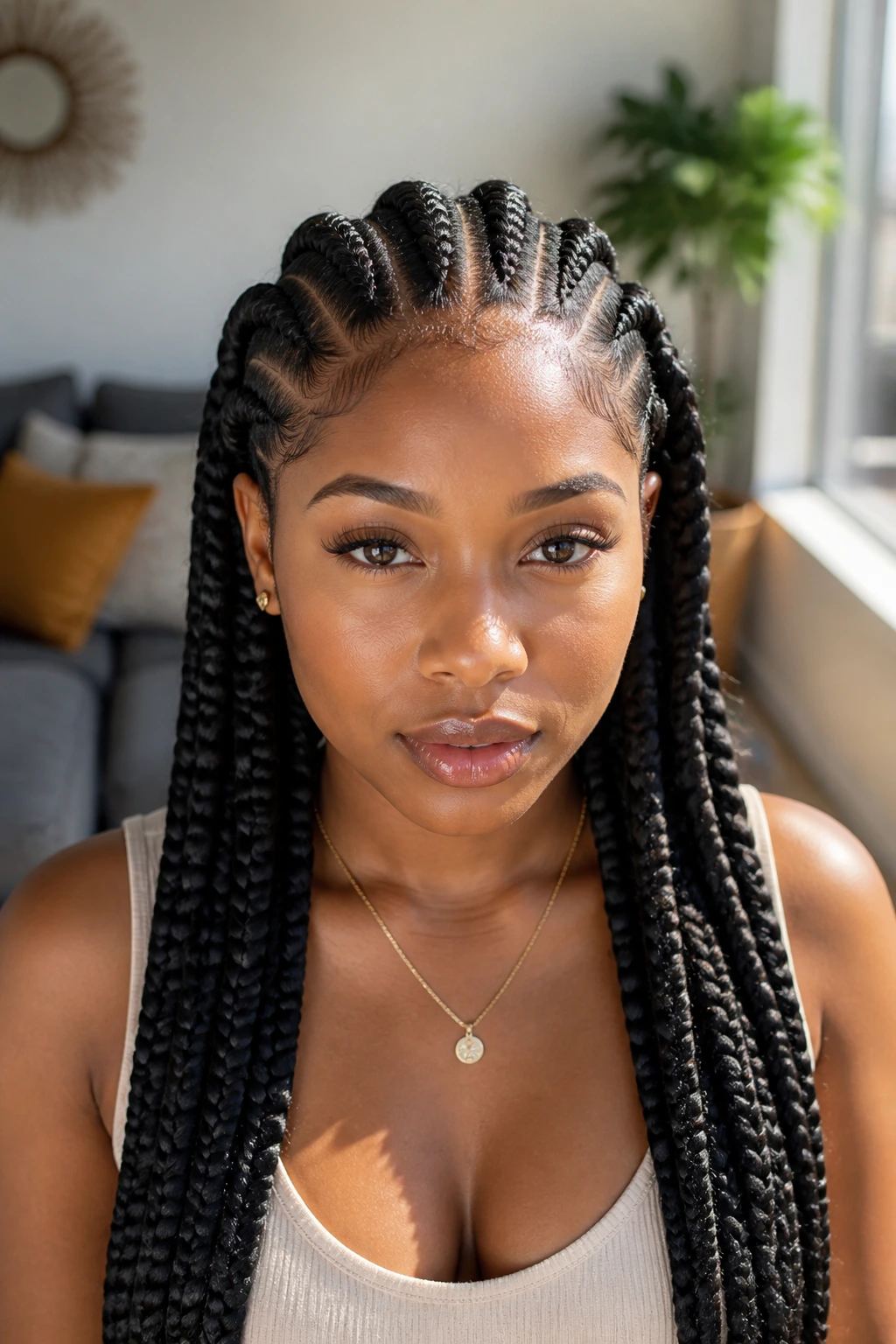
Ghana braids are thicker feed-in braids that begin slim and grow fuller as they move back through the scalp. That gradual build creates a strong visual line, and the finished style usually looks polished without needing extra decoration. They’re close cousins to cornrows, but with more body.
I reach for Ghana braids when the goal is a protective style that still feels strong and sculpted. They work well in straight-back rows, curved designs, or side patterns, and they can be gathered into a bun or ponytail if you want a change later. Because they’re bulkier than finer cornrows, the sections need to be clean or the pattern gets lost. A good Ghana braid should sit like architecture, not like a pile of hair.
16. Goddess Braids
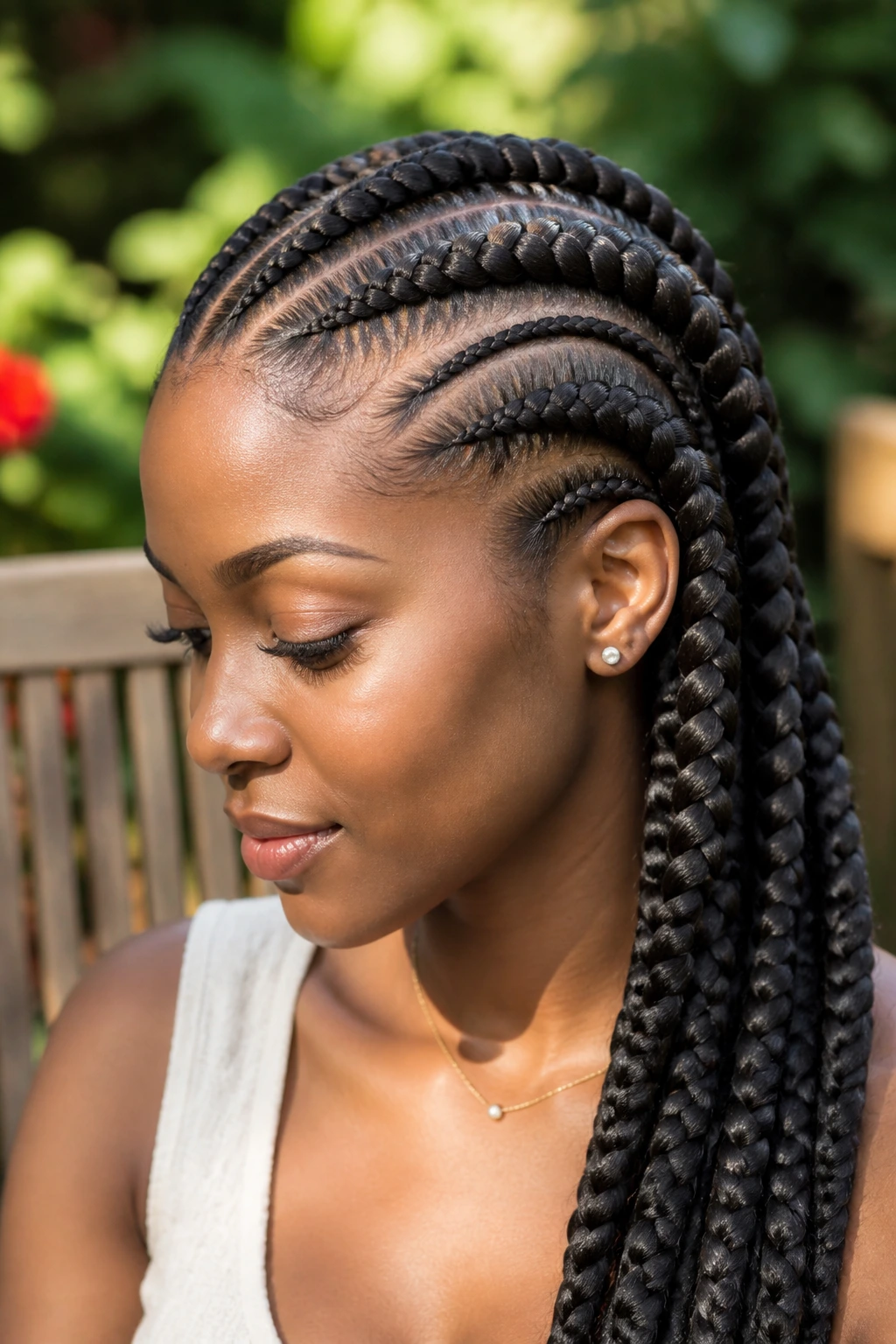
Goddess braids are thicker, softer braids that usually sit close to the scalp and give off a more romantic finish than standard cornrows. They feel generous in shape, and when they’re done well, they create elegant lines without looking severe. That softness is why I keep coming back to them.
They’re a smart choice for formal events, but they’re not limited to that. Goddess braids can be worn into buns, side sweeps, or crown shapes, and the thicker plait gives them a little visual weight that photographs cleanly. If you want a style that reads polished but not hard-edged, this is one of the easiest options to love. Ask for even tension, though. Thick braids can still pull if they’re installed too tightly at the front.
17. Boho Braids
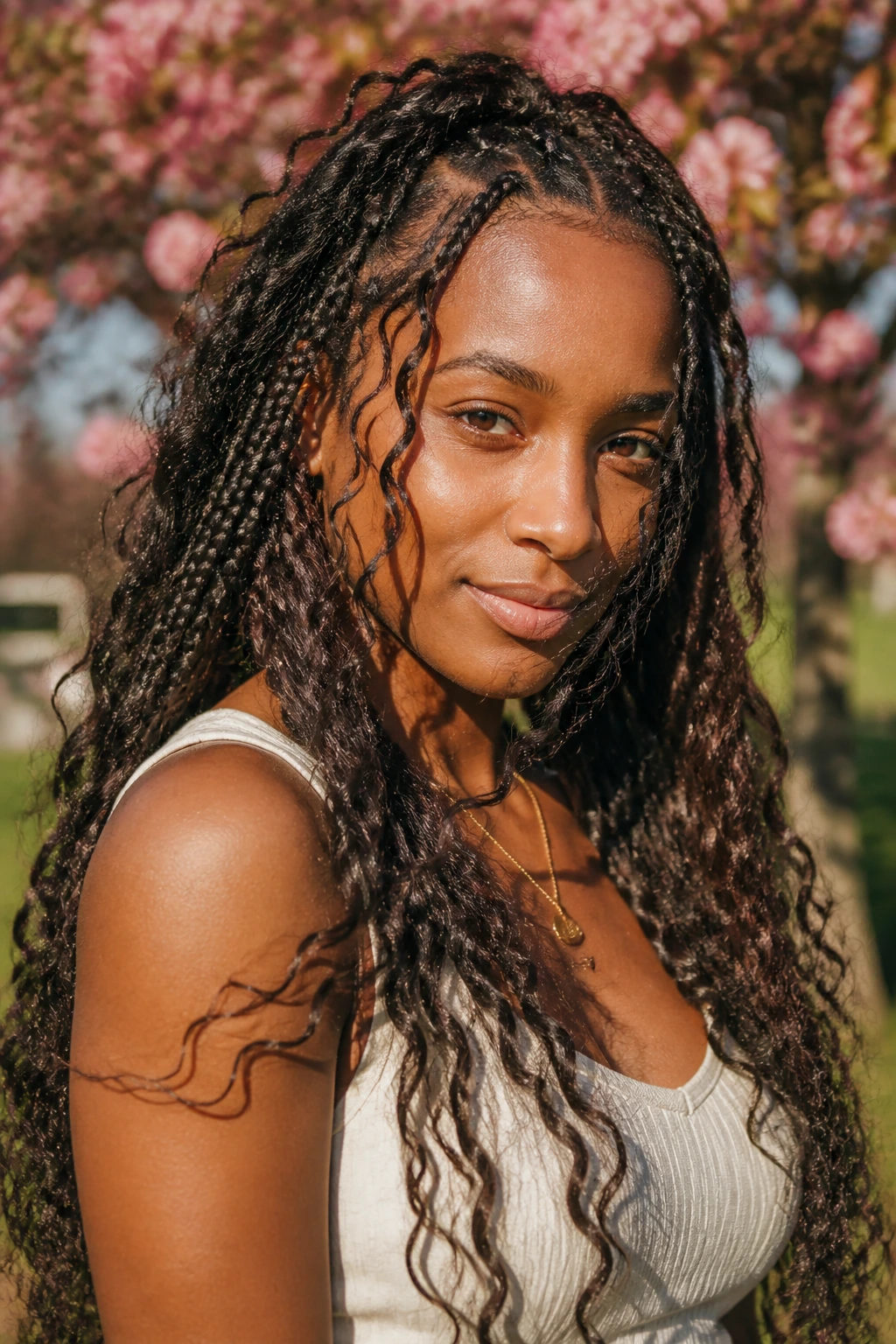
Boho braids loosen the rules on purpose. You still have braids, but there’s softness in the form of curly pieces left out, wispy ends, or a slightly undone finish that makes the style feel more lived-in. It’s the braid look for someone who likes movement over perfection.
What works here is contrast. The braid gives structure; the curly pieces break up the line and keep the hair from looking too rigid or boxy. Boho braids can be done with knotless bases, box braid shapes, or even long feed-ins with loose human hair mixed in. If you choose this style, know that the curly pieces need more care than the braids do. They frizz faster, tangle easier, and need a little refreshing now and then.
18. French Curl Braids
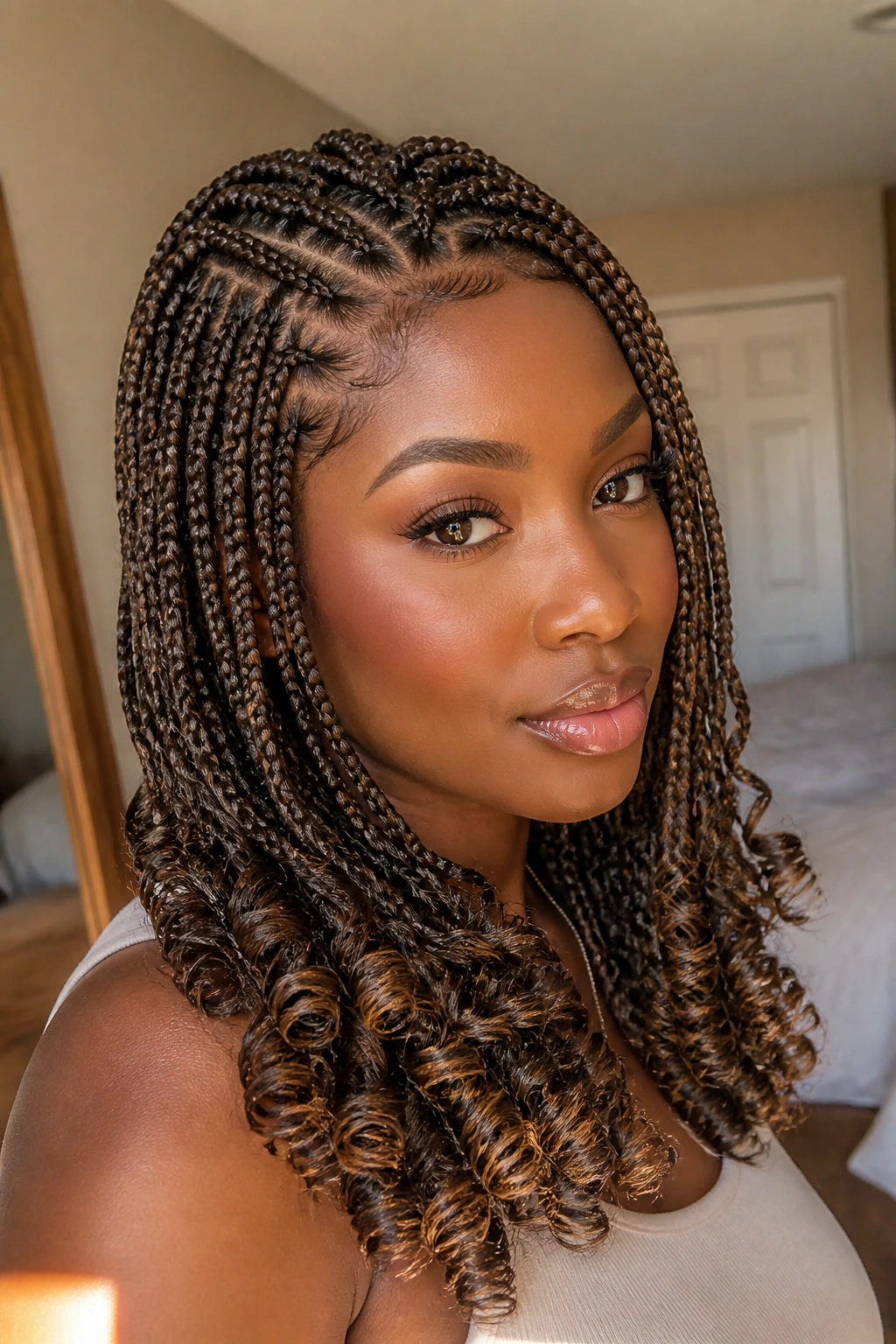
French curl braids have a soft, swishy finish that changes the feel of the whole style. Instead of blunt ends or tightly sealed braid tips, you get spiraled or curled ends that move with a lot more bounce. The look feels polished, but not stiff. That’s the appeal.
They’re a good choice when you want length without the heavy visual block of straight synthetic ends. French curl braids can soften a strong face shape and give the style a little romantic motion when you walk. They do need careful handling, though, because the curls at the ends can fray if you rough them up too much while sleeping. A satin wrap helps. So does not fidgeting with the ends every time you sit down.
19. Braided Bob
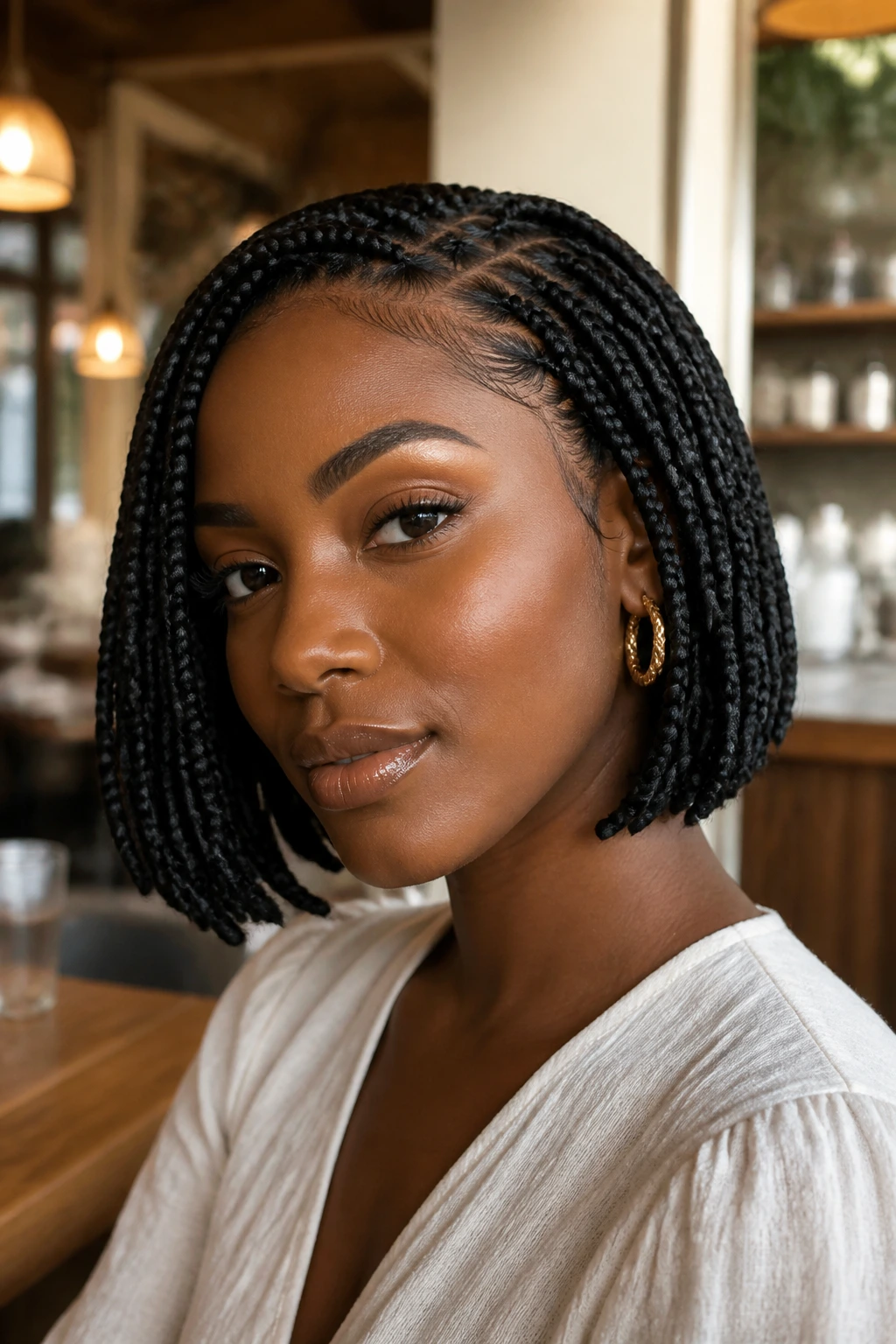
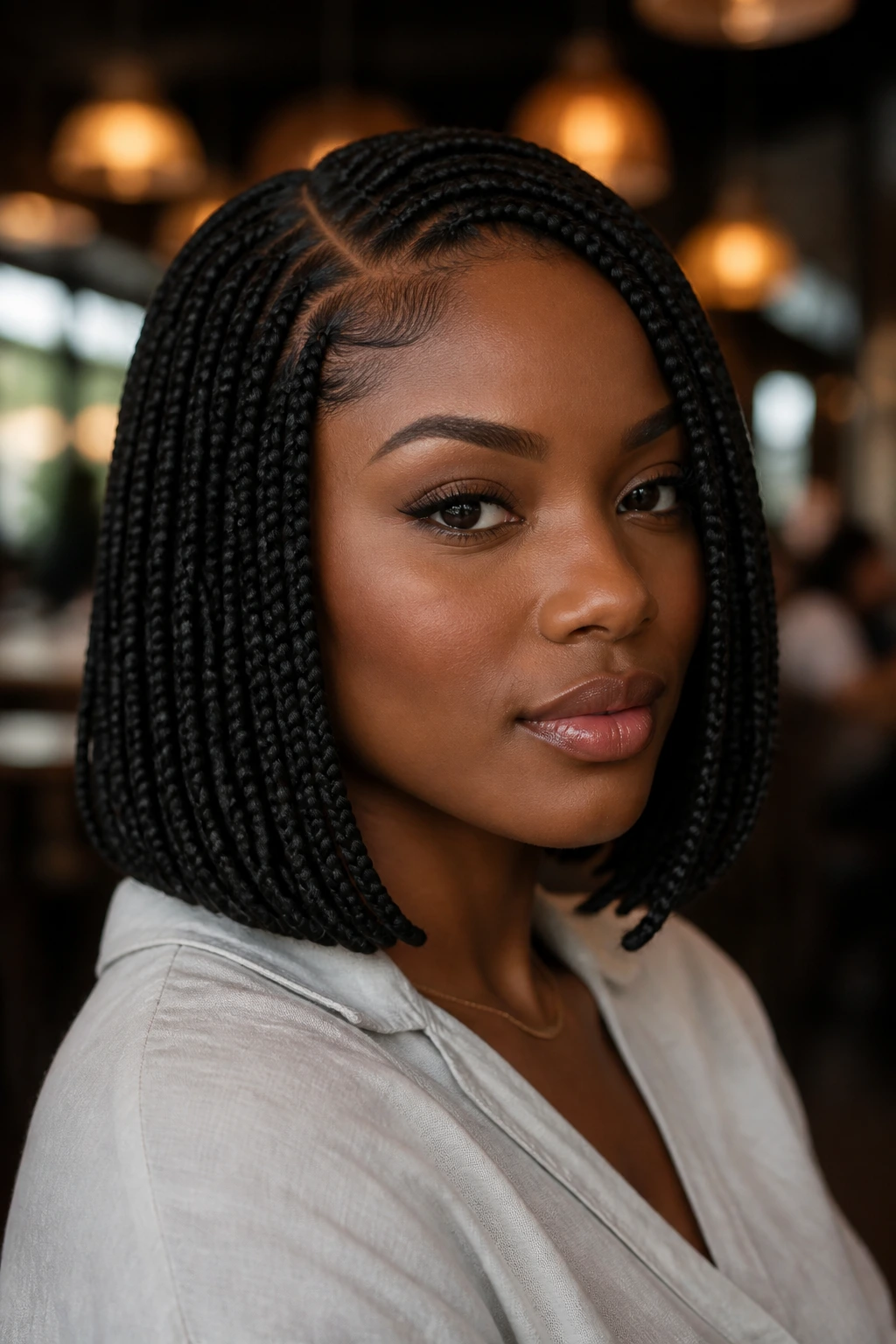
A braided bob gives you all the structure of braids with less weight around the shoulders and neck. The shorter length changes the feel immediately. Everything looks lighter, cleaner, and easier to live with if you don’t want hair brushing your collar all day. It’s one of the most practical braid cuts there is.
The bob works beautifully with box braids, knotless braids, or even micro braids, as long as the ends are trimmed to sit where you want them. It can be blunt, layered, or slightly angled for more movement. If you want a braid style that looks put together without dominating your outfit, this is a strong pick. The shorter length also makes sleeping easier. No wrestling with a long braid tail at 2 a.m.
20. Shoulder-Length Braids
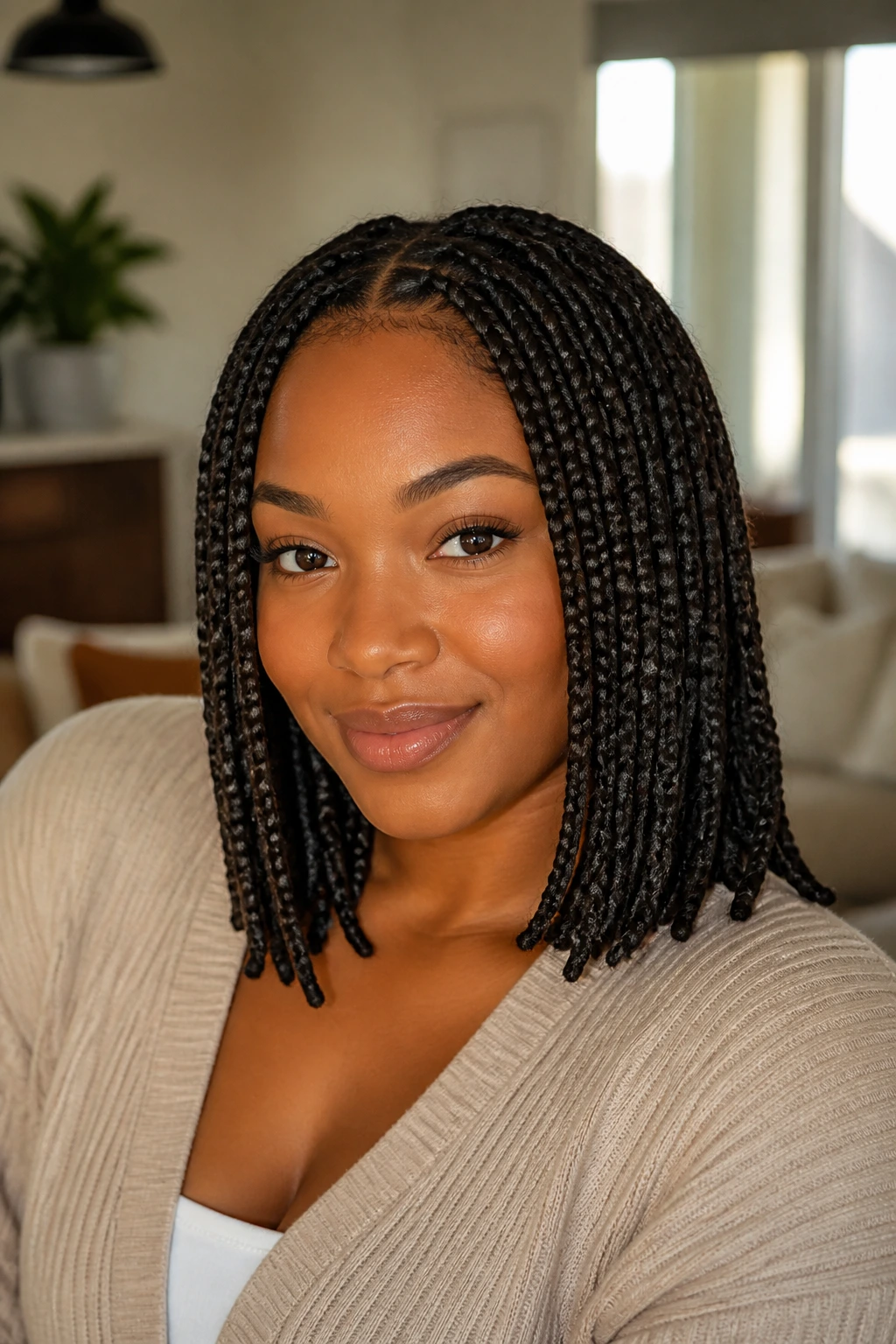
Shoulder-length braids sit in a very useful middle zone. They’re long enough to feel styled, short enough to stay manageable, and they don’t spend all day getting caught under bags, jackets, or seat belts. That makes them one of the easiest braid lengths to wear for real life.
This length is especially nice if you want a style that frames the face but doesn’t overpower it. It works with box braids, knotless braids, and even curled ends, and it tends to be easier on the neck than longer versions. If you’re torn between a short bob and waist-length drama, shoulder-length braids are the compromise that doesn’t feel like one. They give you movement without the weight.
21. Waist-Length Braids
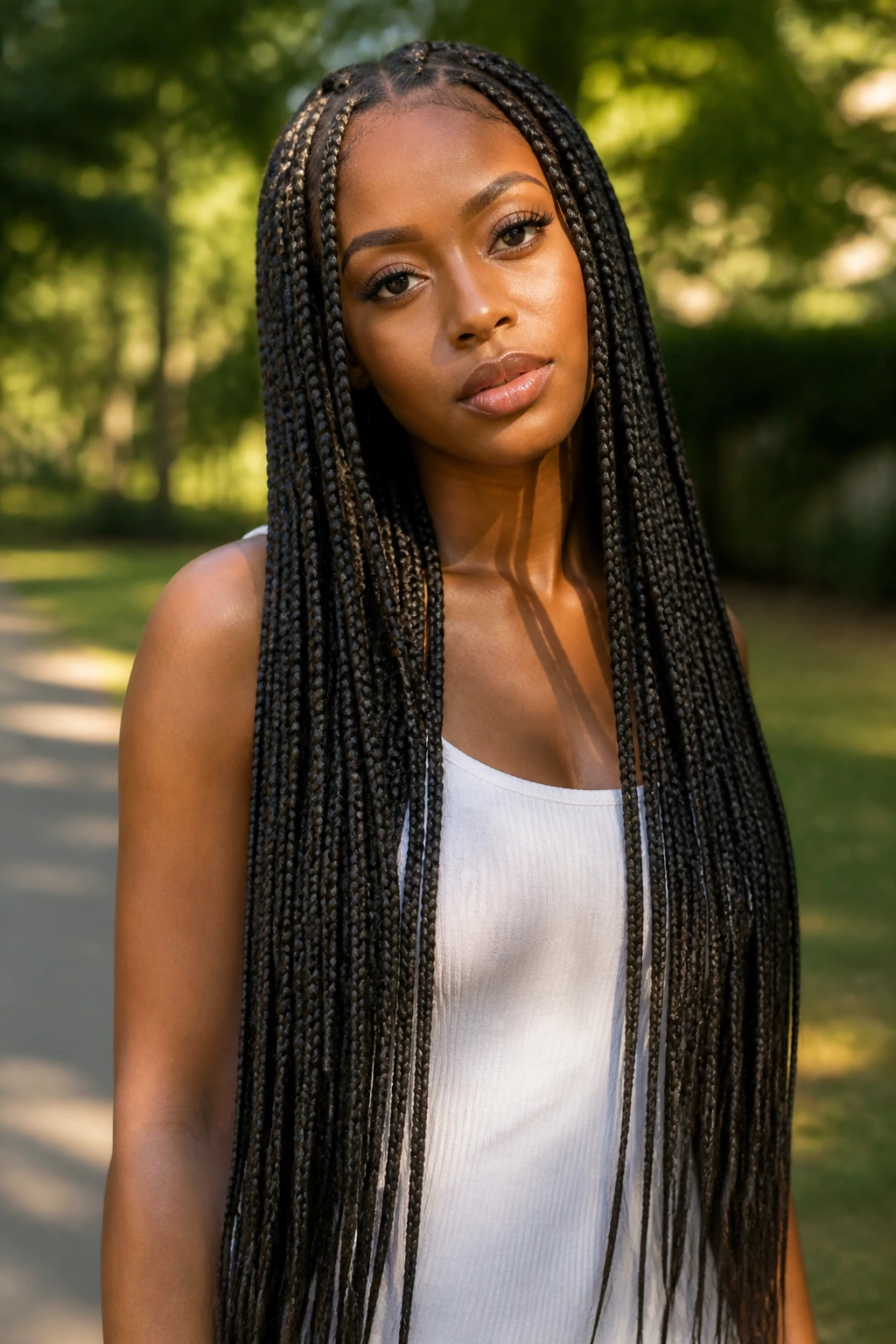
Waist-length braids have presence. They swing, they swish, and they make even a simple outfit look considered. That said, length comes with responsibility. More hair means more weight, and more weight means the installation has to be careful if you don’t want a sore scalp.
These are the braids people choose when they want maximum styling options—over-the-shoulder drapes, high ponytails, wrapped buns, low plaits down the back. They’re beautiful when maintained, but they do ask for more attention at the roots and more effort at bedtime. If you wear waist-length braids, plan on tying them down properly and keeping the ends from tangling against coats and scarves.
22. Braided Ponytail
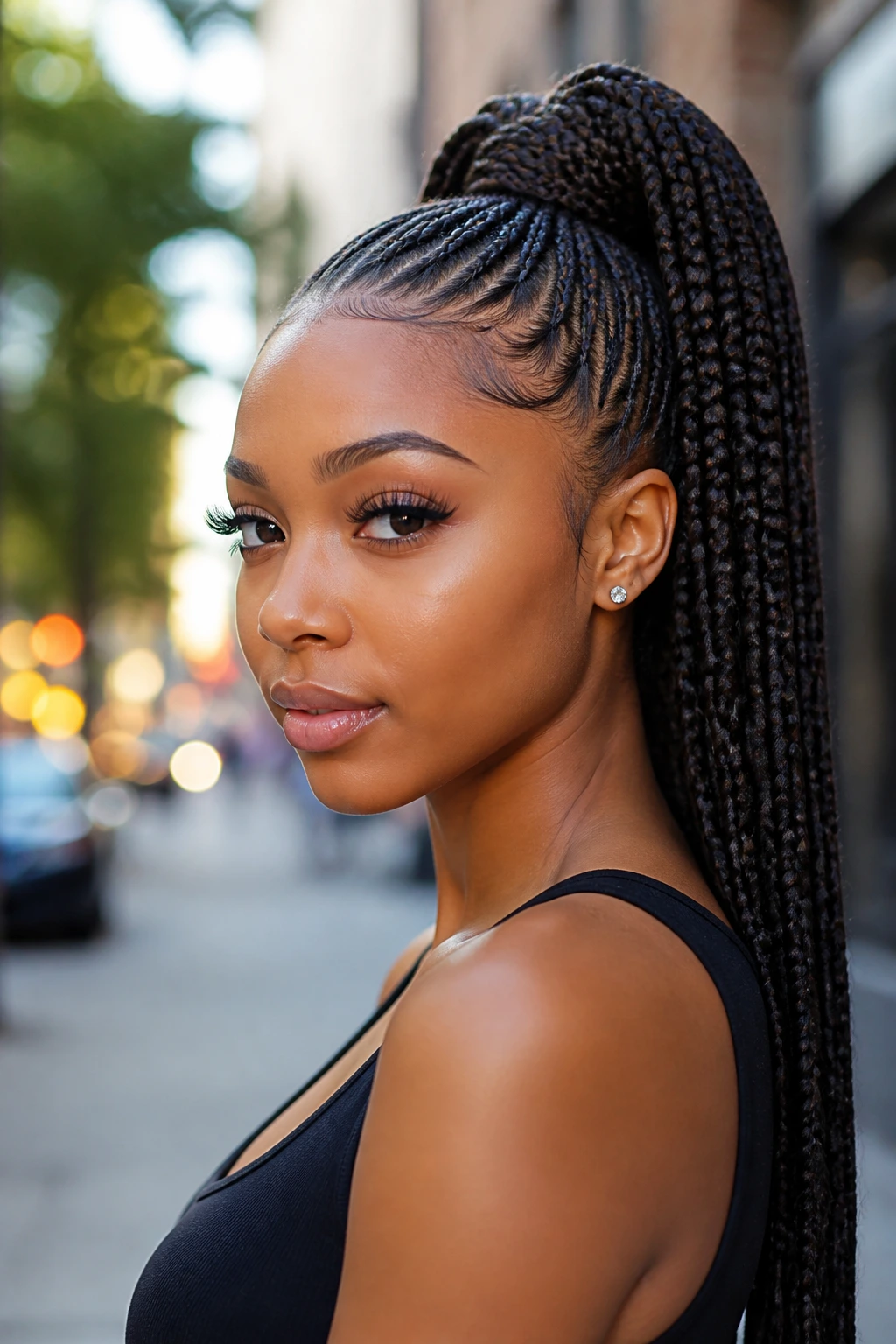
A braided ponytail takes the braid out of the loose-hair category and puts it into something sharper. The hair is gathered high, mid-height, or low, and the base of the ponytail becomes the focal point. That shift makes the face look more open and the whole style feel more athletic or dressed up, depending on how you finish it.
I like this style when you want impact without committing to a full down-do. It works with feed-ins, knotless braids, or even straight-back cornrows feeding into a gathered tail. The trick is keeping the base smooth and secure without a bump under the ponytail holder. If the pony sits too low, the style loses energy. Too high, and it can feel like it’s trying too hard. Mid-height usually lands best.
23. High Braided Bun
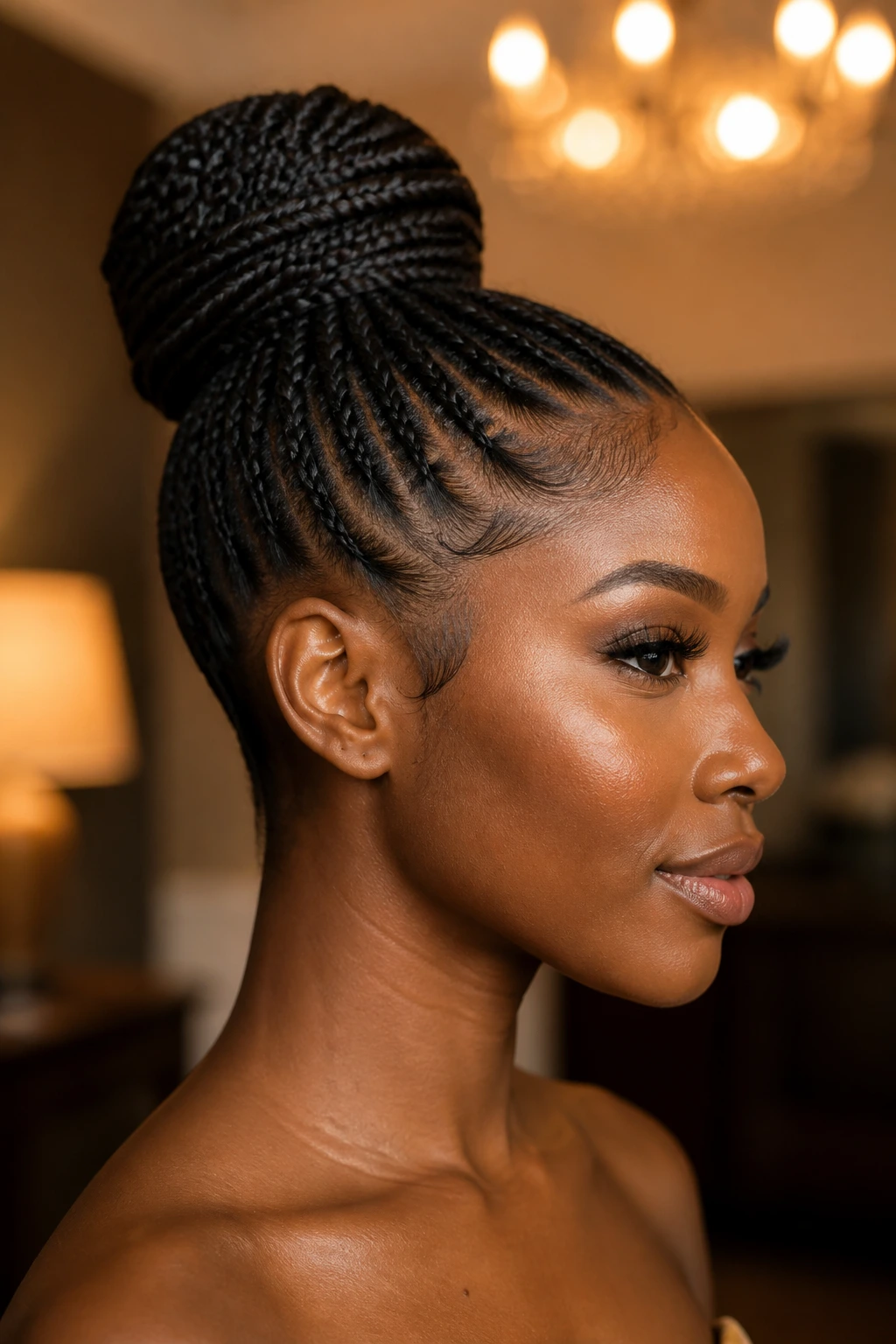
A high braided bun pulls everything up and away from the neck, which is a gift on long days. It’s tidy, a little regal, and very good at making a style look intentional even when the rest of your outfit is basic. You can build it from braids that are already installed or gather loose braids into the bun shape later.
This is one of the more useful braid styles for formal settings, heat, or simply getting hair off your shoulders. It also shows off the jawline and earrings in a way loose braids can’t. The key is weight management. If the bun is too massive, it starts to wobble and pull. Keep the base tight enough to hold but not so tight that the hairline feels punished by the end of the day.
24. Low Braided Bun
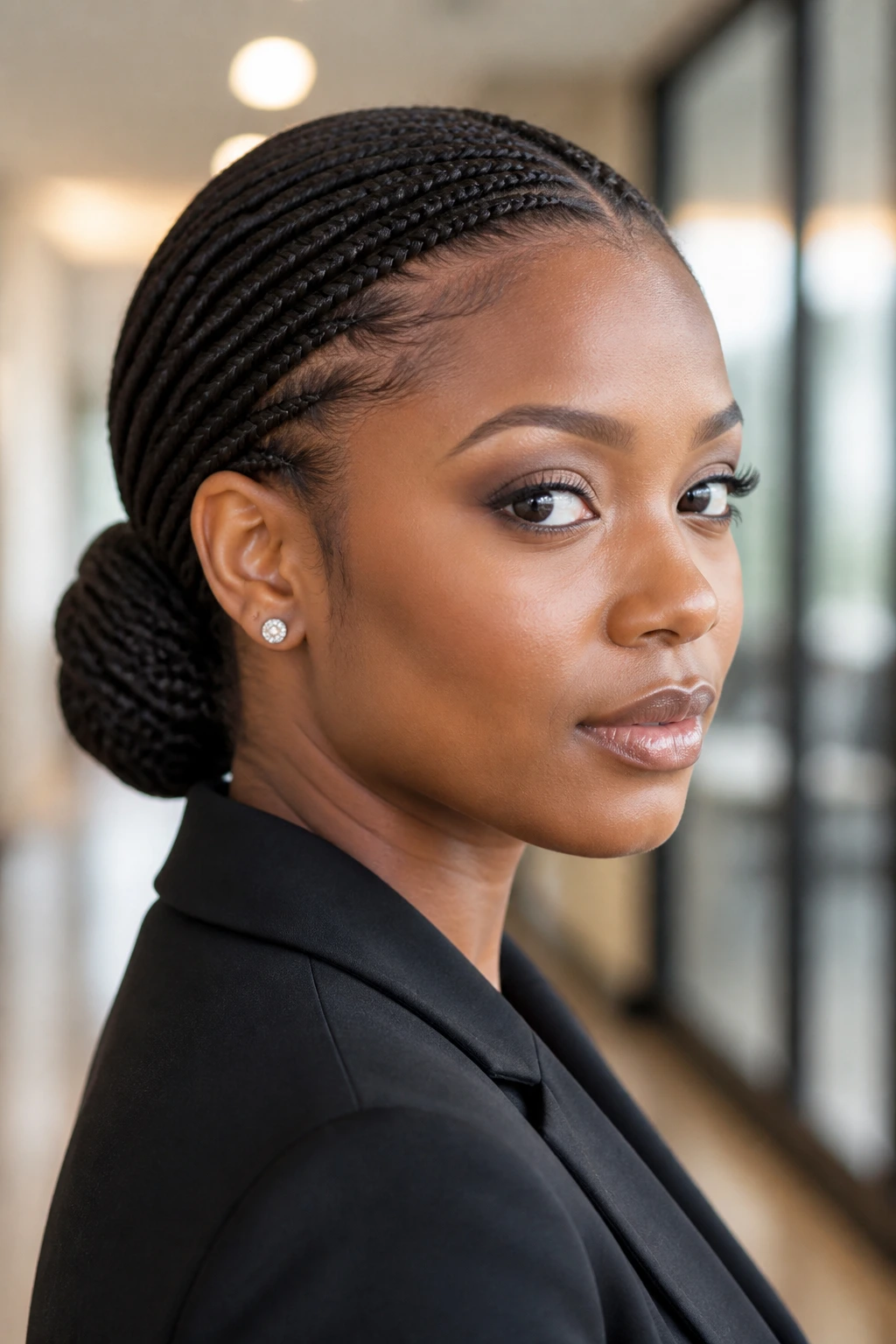
Low braided buns are calmer than high ones. They sit at the nape, which makes them feel classic and understated without going plain. There’s a nice, quiet structure to them. Nothing is fighting for attention, but the shape still looks thoughtful.
This is a strong option for office wear, weddings, or anytime you want the braids to stay out of the way while still reading polished. Low buns also work well when the style is made from feed-ins or medium braids, because the hair can gather smoothly without a huge lump at the crown. If the style starts to frizz, the bun can still look good because the nape does most of the visual work. It’s forgiving in a useful way.
25. Half-Up Half-Down Braids
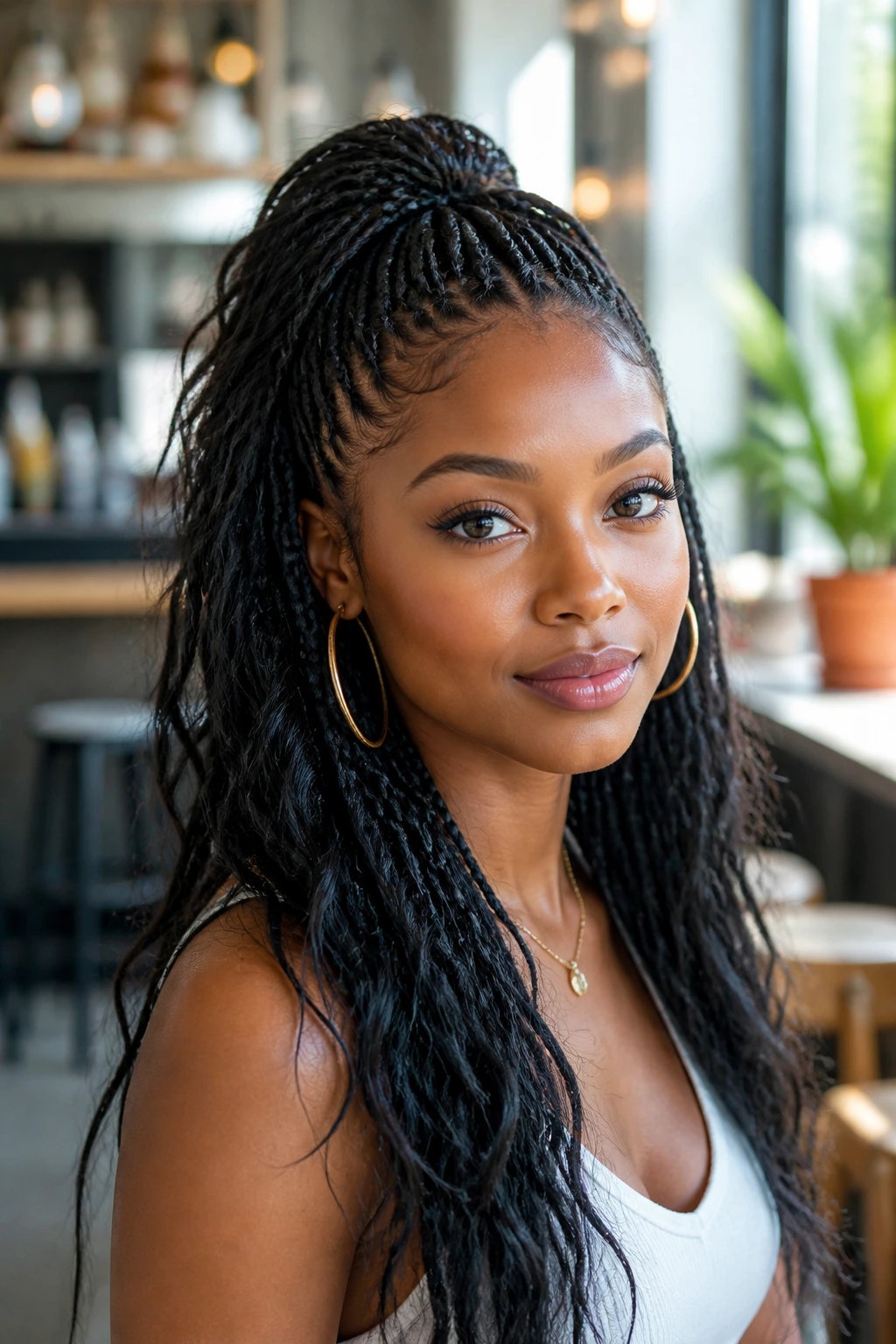
Half-up half-down braids give you two moods in one style. The top section is lifted, which clears the face and shows off the parting, while the rest hangs loose for movement. It’s one of the best ways to keep long braids from feeling heavy around the eyes without giving up the length entirely.
This style works especially well with knotless braids, boho braids, or French curl ends because the loose portion still has movement after the top is pinned back. It also gives you a natural place for accessories—a wrapped top knot, a scarf tie, or a few cuffs near the front. If your hair tends to feel flat when worn all the way down, this layout fixes that fast. It creates shape at the crown and softness below.
26. Side-Swept Braids
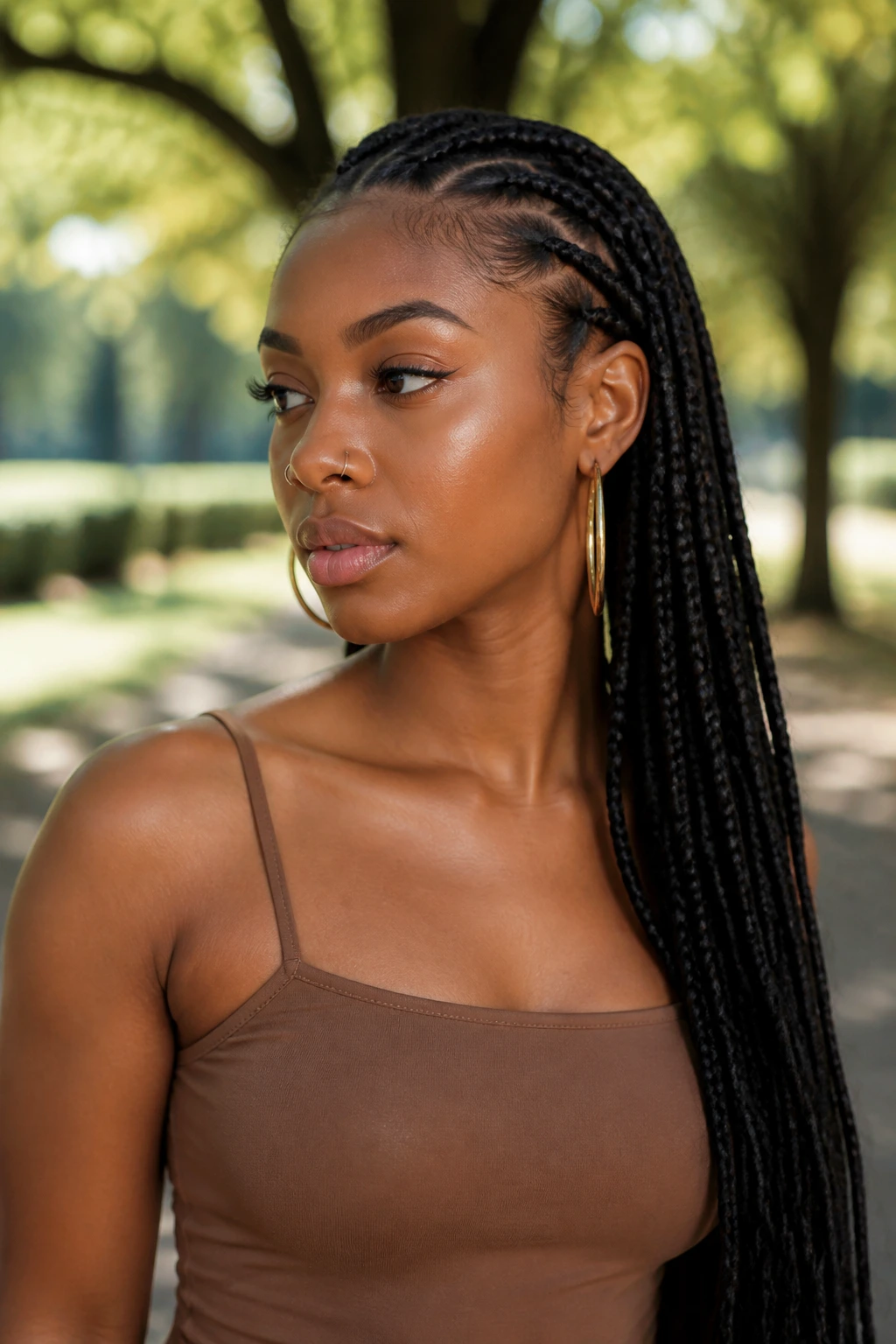
Side-swept braids fall across one shoulder or one side of the chest, and that simple shift changes the whole line of the body. The style feels softer than straight-down braids and more relaxed than a tight ponytail. It also creates an easy frame around the face, especially if the front sections are shaped carefully.
I like side-swept braids when the outfit has a strong neckline or one shoulder is bare. The hair becomes part of the clothing line, not an afterthought. The style works with long braids, medium braids, or even a braid set that’s been gathered and pinned over. If you wear it often, watch the side where the hair rests. That side can frizz faster from friction against clothes and seat backs.
27. Crown Braid
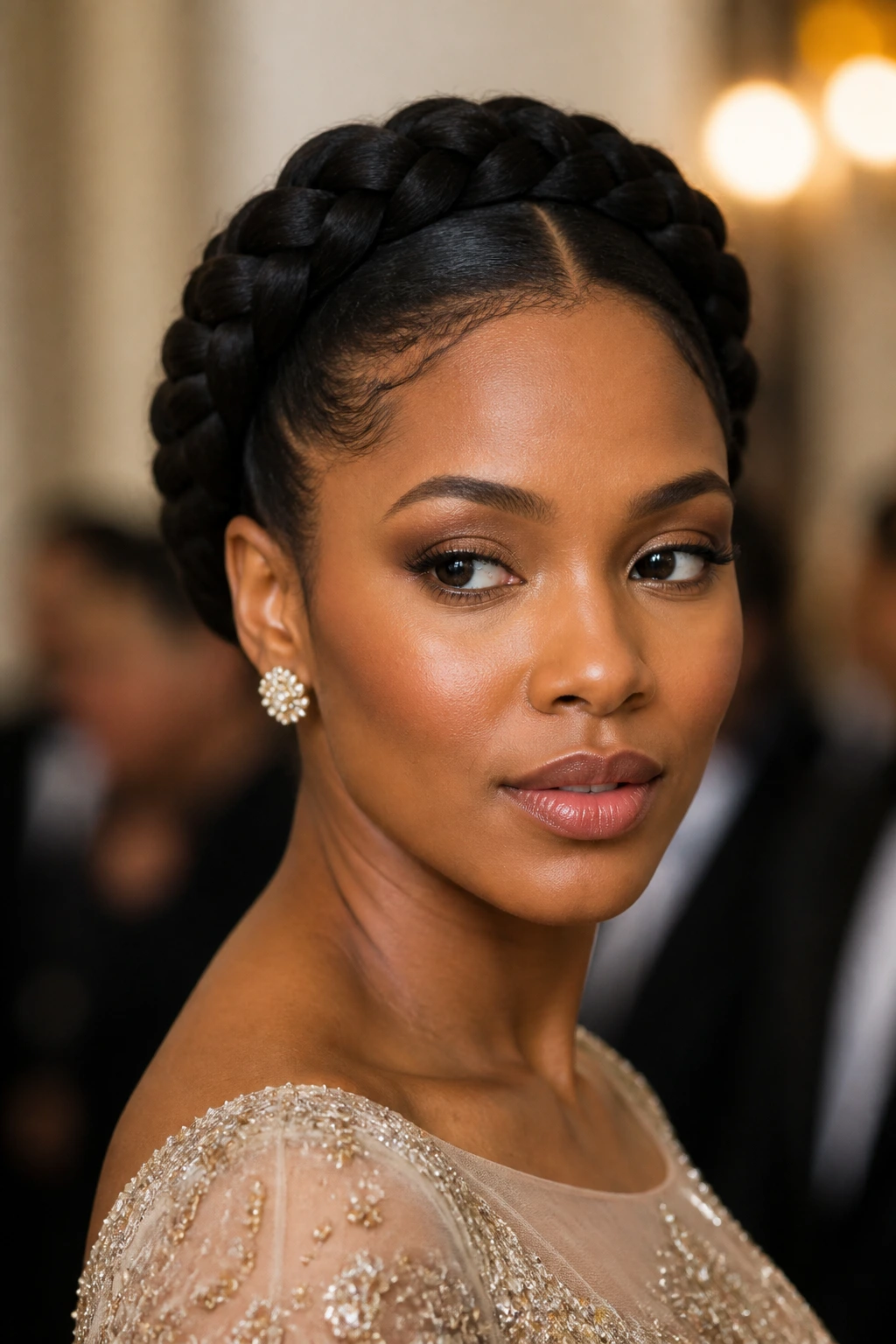
A crown braid wraps the braid around the head so it sits like a band or halo, lifting the hair off the face and giving the style an almost sculpted feel. It’s one of the most elegant shapes in the braid family because it turns the braid itself into the frame.
This style is useful when you want a braid look that reads clean from every angle. It’s especially nice for formal events, but it also works on days when you just want your hair completely out of the way without resorting to a plain bun. The crown braid depends on even tension and decent length, since the braid has to travel around the head. If the sections are too chunky or the braid too heavy, the crown loses its line.
28. Braided Halo
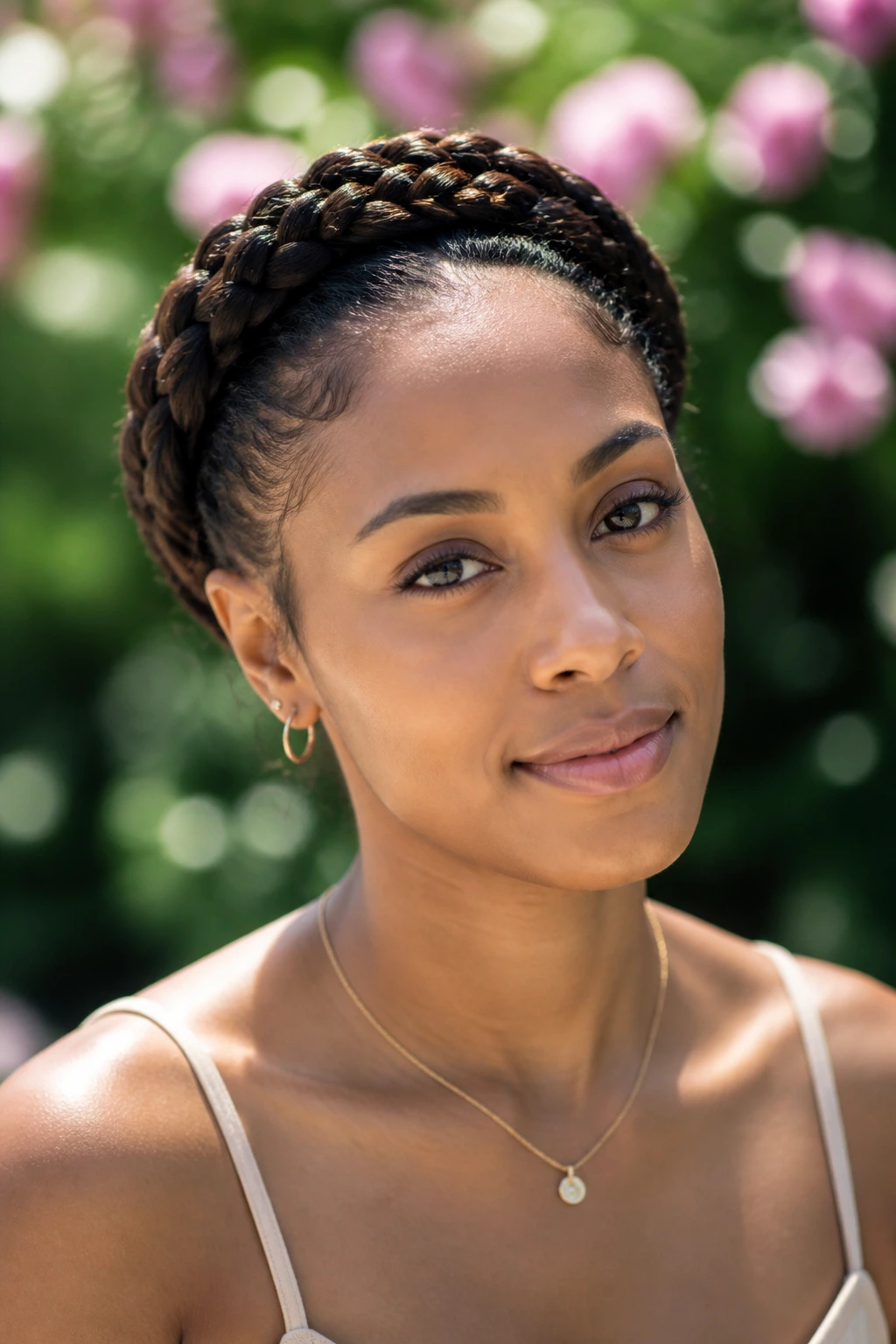
A braided halo is close to a crown braid, but softer in mood. Instead of a firm band-like wrap, the braid circles the head with a more ethereal, floating effect. It sits beautifully with softer edges, a natural brow, and minimal accessories.
This style is one I’d choose for occasions where you want your hair to look arranged, not overworked. It keeps the face clear and the neck free, and it can be done from your own hair or with added braid length depending on the look you want. Because halo braids sit high and wrap around the head, they need secure pinning and a calm hand at the nape. If the back is bumpy, the whole illusion falls apart. Clean anchors matter.
29. Braided Faux Hawk
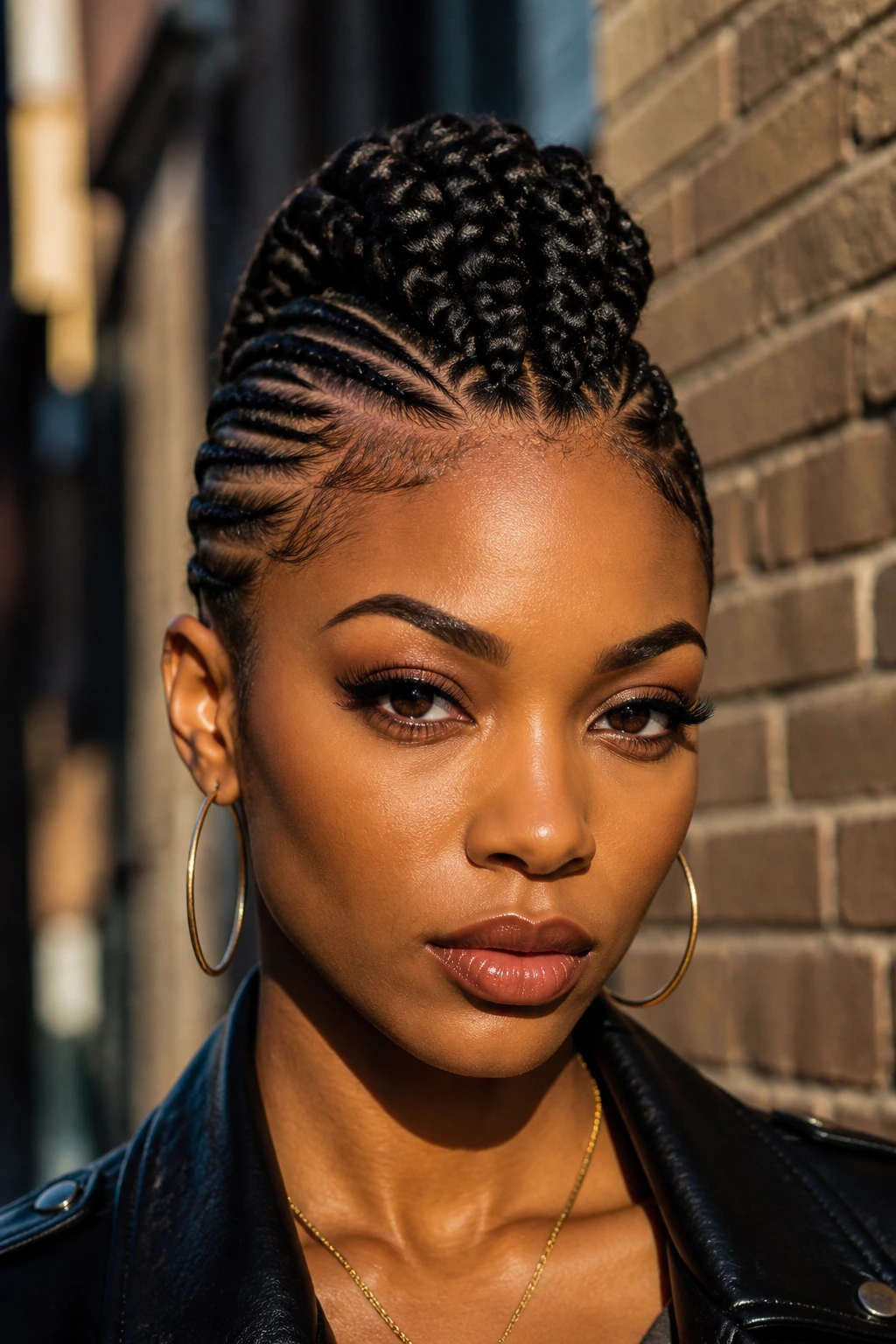
A braided faux hawk puts the volume right down the center of the head and keeps the sides sleeker, which creates a strong shape without shaving anything off. The effect is bold, but not loud for the sake of being loud. It’s all about silhouette.
This style suits people who like a little edge in their braid looks. You can build it with cornrows feeding toward the middle, then stack the central section into a puff, ponytail, or braid bundle. It’s a good fit when you want drama at the crown and a cleaner outline at the temples. The one thing this style can’t hide is sloppy side tension. The edges and side braids need to be neat, or the faux hawk looks more accidental than styled.
30. Double Pigtail Braids
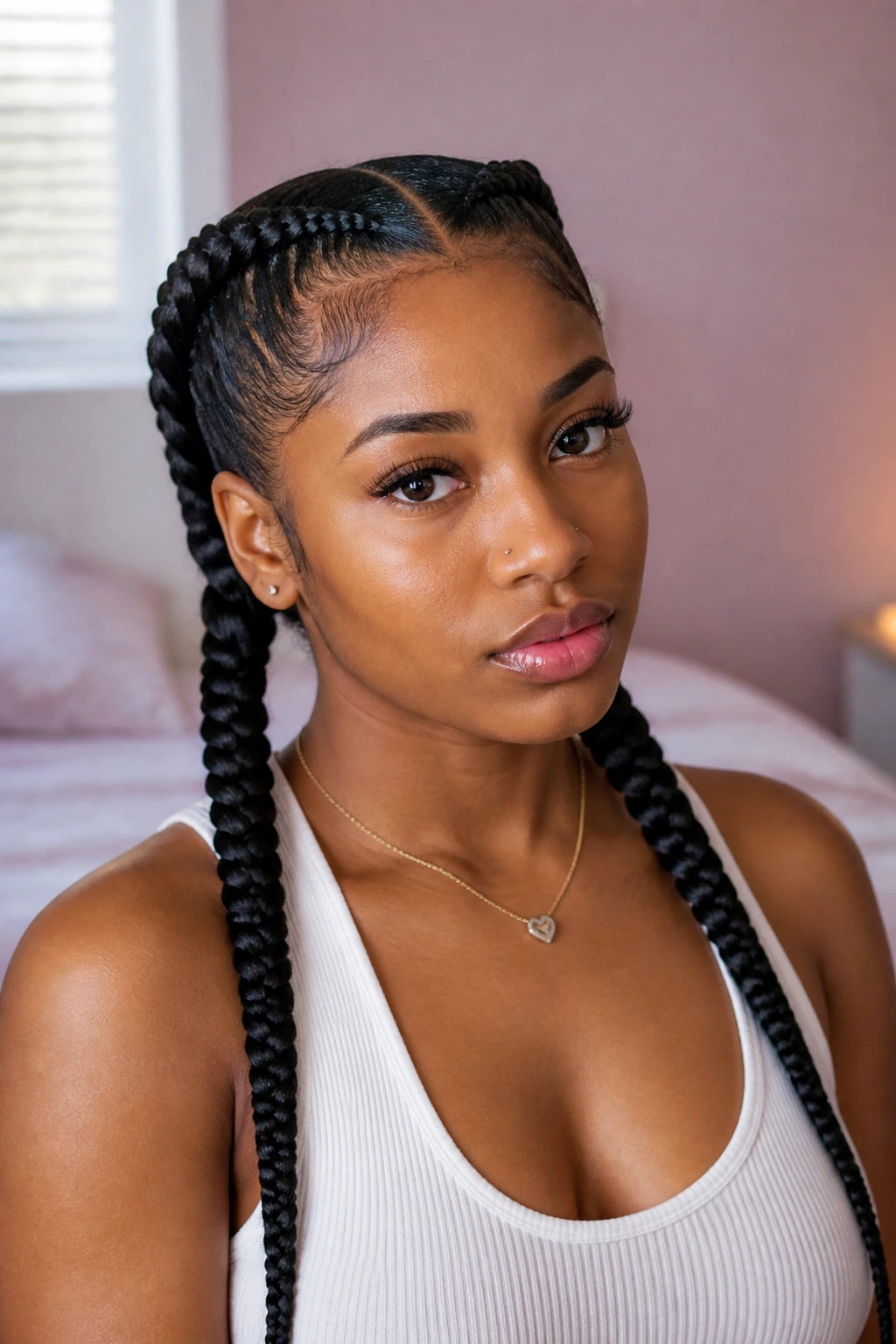
Double pigtail braids have a playful streak, but they’re not childish unless you make them that way. With neat parting, clean bases, and the right length, they can look fresh and stylish rather than cute in a school-uniform sort of way. The symmetry is the real appeal.
They’re useful when you want balance around the face and less weight pulling from one side of the head. Pigtail braids can be installed with box braid sections, feed-ins, or even braided ponytails at the back. They’re especially good when you want a style that’s easy to pin, wrap, or move around between workouts and day-to-day errands. If you choose this style, keep the part exact. Uneven symmetry is hard to ignore.
31. Braids with Beads
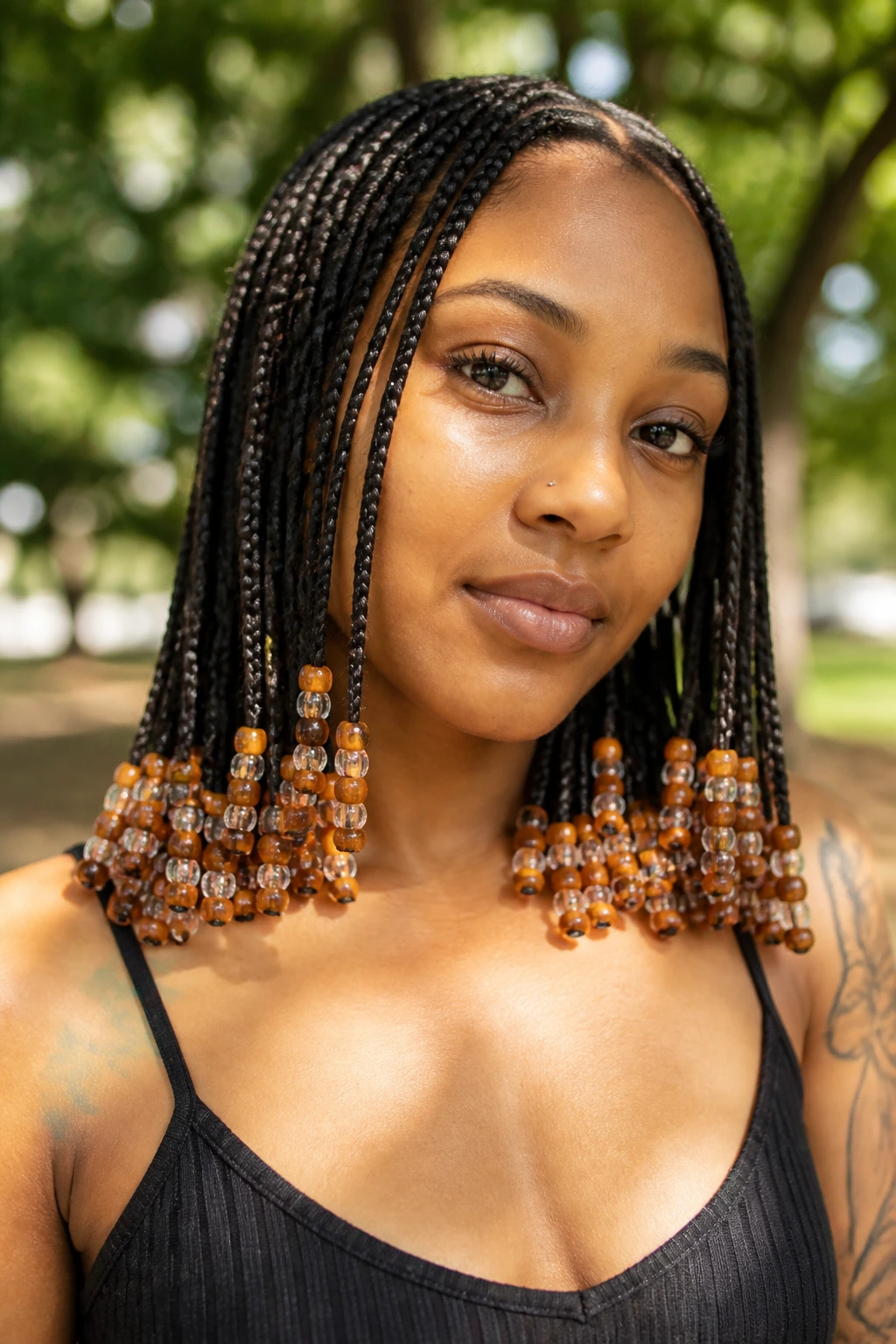
Braids with beads bring sound, movement, and a little nostalgia into the mix. The beads weight the ends, which changes how the braids swing and sit, and they turn even a simple braid set into something with personality. Some people use clear beads, some go for wooden ones, and some choose bright colors that do all the talking.
The style works best when the braid base is neat and the bead placement feels deliberate. Too many beads can make the ends clatter and pull; too few can look like an afterthought. I like this look on medium braids and child-to-adult transitional styles because it reads joyful without needing a complicated pattern. If you’re going to use beads, check the weight. A few too many can make a lovely style annoying by day three.
32. Braids with Cuffs
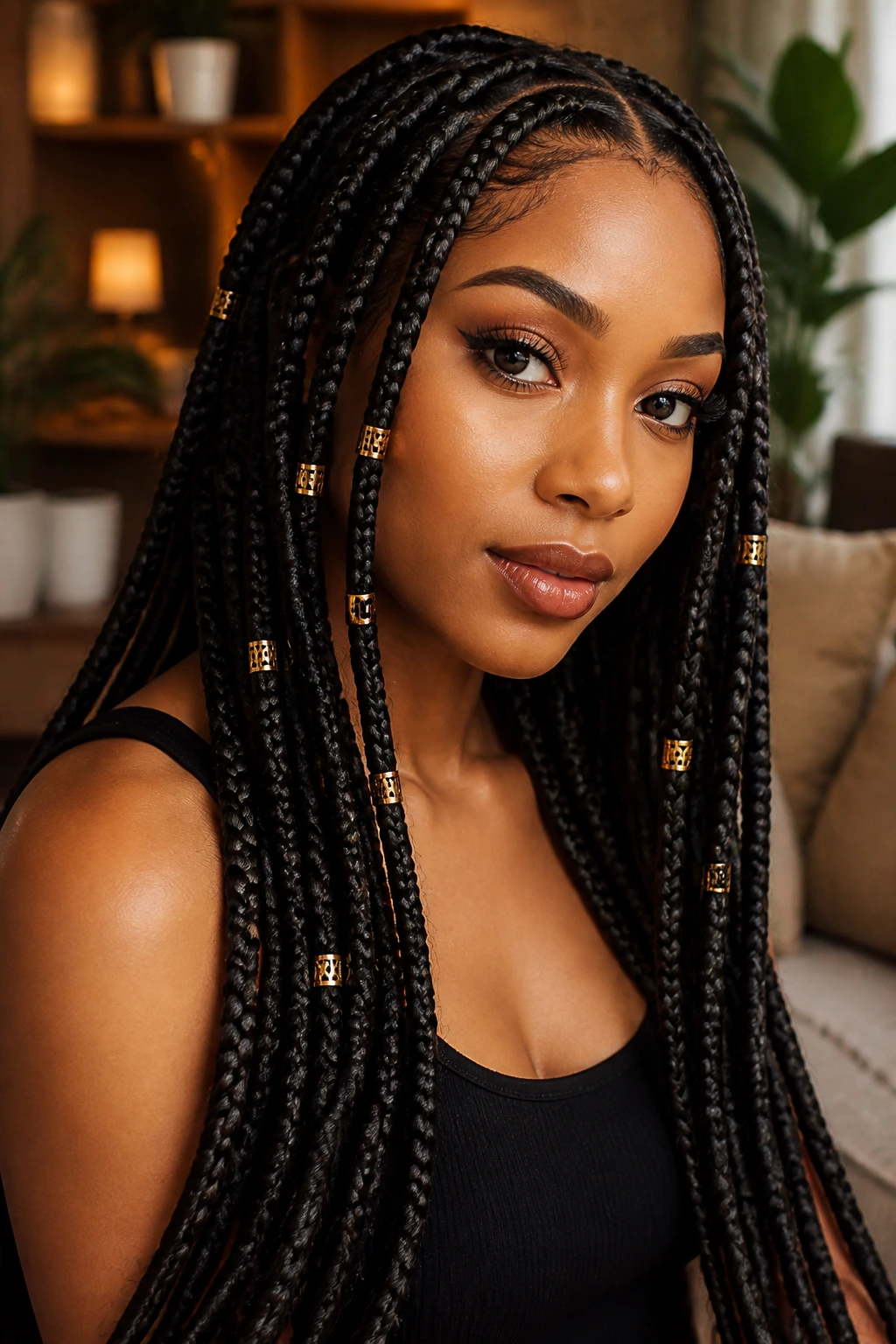
Braids with cuffs are the cleanest way to dress up a braid set without changing the braid itself. The cuffs catch the light, break up long lengths, and give the hair a metallic rhythm that looks good against dark braiding hair. That tiny bit of shine can do a lot.
This style is especially useful for plain box braids, knotless sets, or long feed-ins that need a little punctuation. You can place cuffs near the front, scatter them along the length, or cluster them at the ends if you want a more intentional finish. The trick is restraint. Too many cuffs start to feel busy, and busy is not the same thing as styled. A few placed with a plan usually look sharper than a full head of metal.
33. Criss-Cross Cornrows
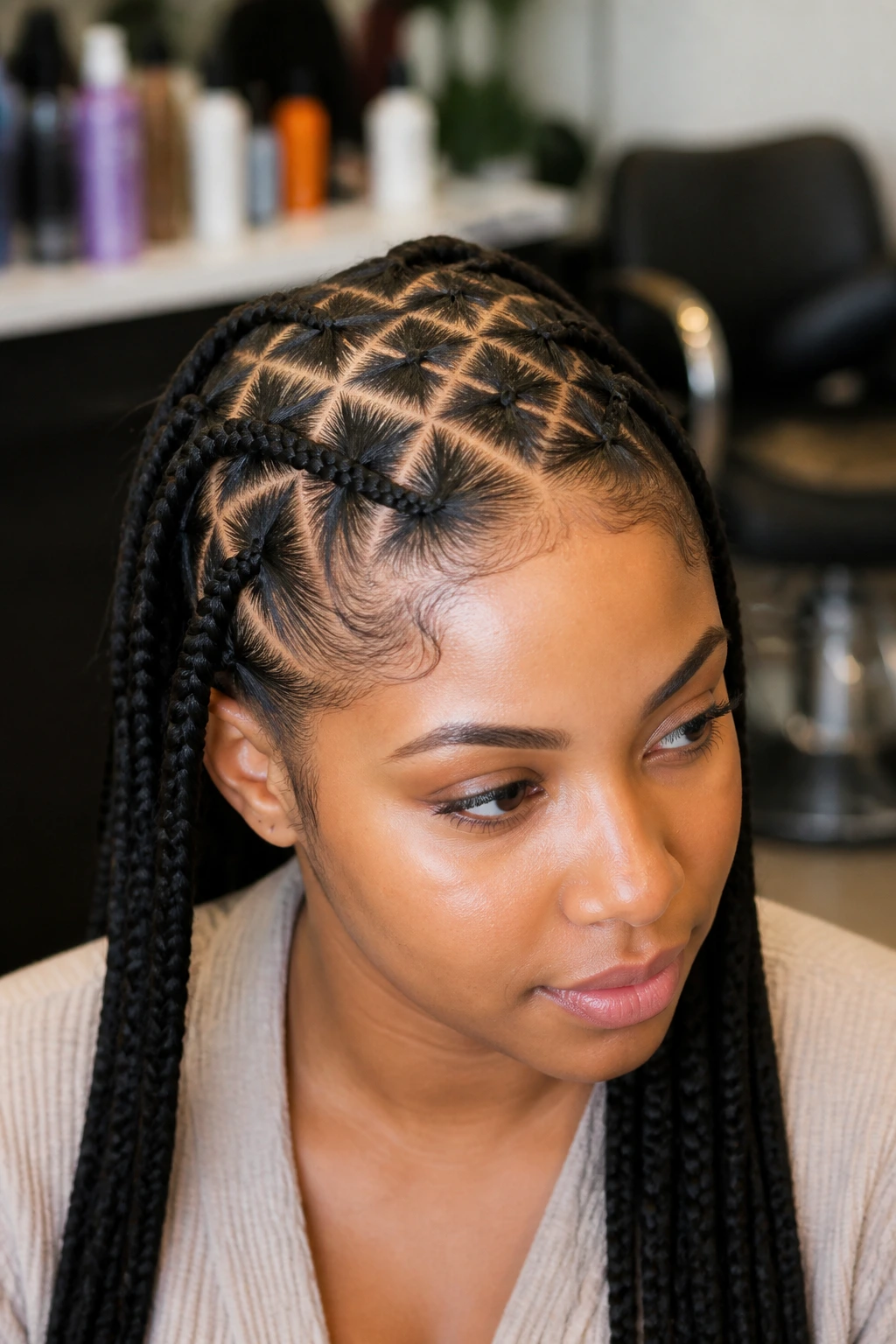
Criss-cross cornrows are one of the more graphic braid patterns you can wear. The braids overlap and intersect in a way that creates a built-in design on the scalp, so the style already feels finished before you add any length. It has a little bit of puzzle-box energy to it.
This look is a strong pick when you want the parting to carry the style instead of long braids doing all the work. It pairs well with buns, ponytails, or loose ends because the pattern itself stays visible around the front and crown. Criss-cross layouts need patience and a steady hand. If the sections don’t line up cleanly, the pattern looks busy instead of sharp. But when the lines are right, the style has a crisp, custom feel that stands apart from standard row braids.
Why Braided Styles Work So Well on Natural Hair
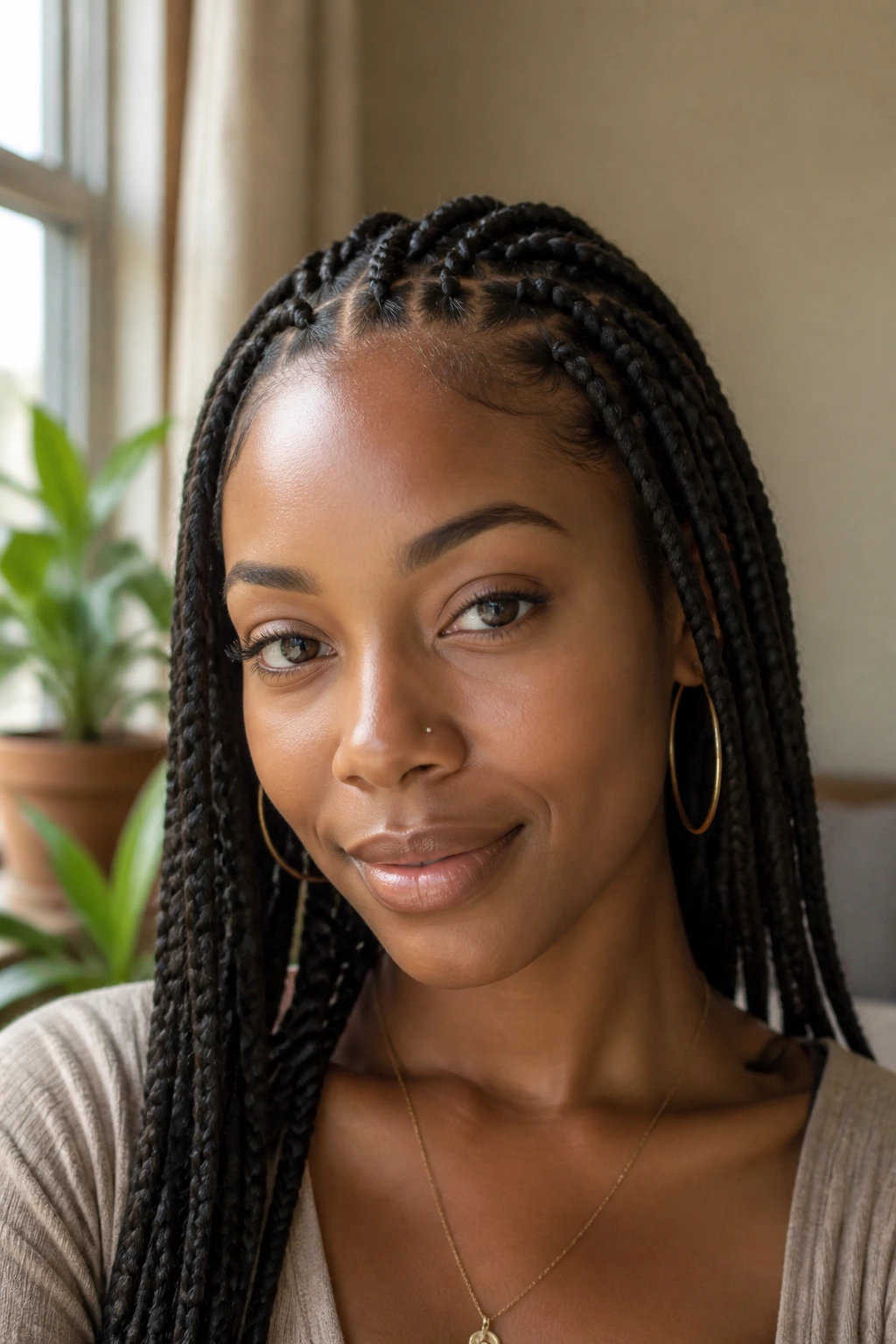
Braids keep coming back because they solve two problems at once: hair care and presentation. The hair is tucked away, which means less combing, less friction, and less daily tugging at the strands. At the same time, the style itself becomes the visual statement, so you’re not stuck choosing between practicality and looking put together. That balance is hard to beat.
There’s also a structural reason they work. Textured hair often does better when the ends are protected and the roots aren’t being manipulated every single day. Braids can help with that, but only if the installation respects the scalp. Tight first rows, heavy extensions, and overpacked product defeat the point fast. A braid should feel anchored, not strained.
And then there’s the range. A braid set can be sleek, playful, formal, angular, soft, loud, minimal, or deeply traditional. That range is why the style never feels stuck in one lane. You can wear the same family of braids to a job interview, a wedding, a gym session, or a Sunday dinner. The silhouette changes. The foundation stays solid.
Essential Tools for Braiding and Maintenance
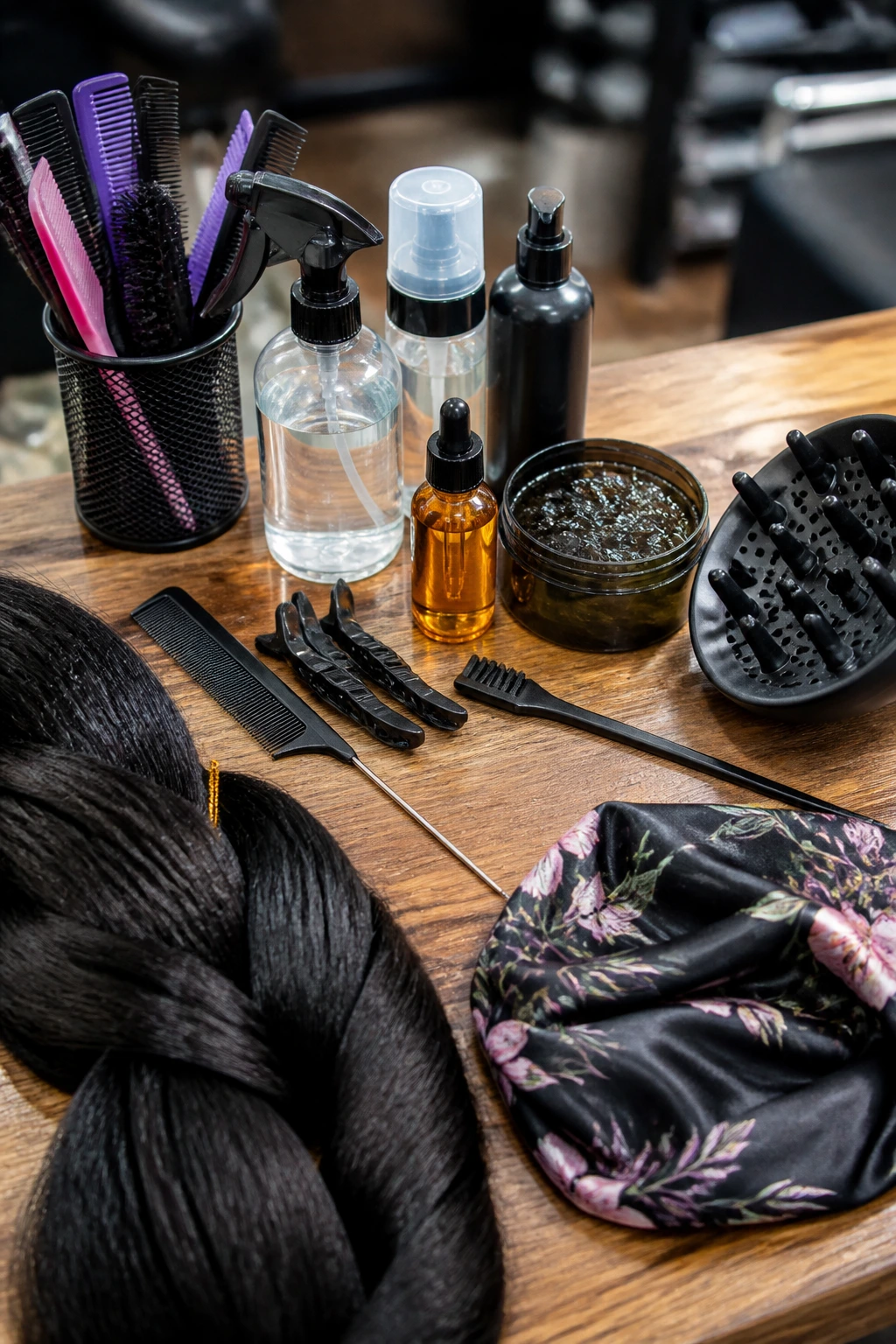
- Rat-tail comb: Clean parts start here, and the pointed end is better than trying to wing it with your fingers.
- Sectioning clips: These keep the rest of the hair out of the way while you work, which matters more as the style gets smaller.
- Braiding hair: Pre-stretched synthetic hair is a time-saver for most box braid and feed-in styles; use lighter packs if your scalp gets sore easily.
- Mousse or braid foam: A light finish helps lay flyaways down and gives the braid surface a smoother look.
- Edge brush: Handy for smoothing the hairline without overloading it with gel.
- Lightweight gel or edge control: Use sparingly at the roots, not as a helmet.
- Spray bottle: Water or a very light leave-in mist helps with moisture during prep and maintenance.
- Hair oil or scalp serum: A small amount at the parts can help dry scalps, but don’t drench the braids.
- Satin scarf or bonnet: Non-negotiable if you want the braid surface to stay neat overnight.
- Blow dryer with comb attachment: Optional, but useful for stretching natural hair before install so the braids lie cleaner.
- Small scissors: For trimming extension hair or snipping stray fibers, if needed.
Smart Shopping for Hair, Hair Extensions, and Accessories
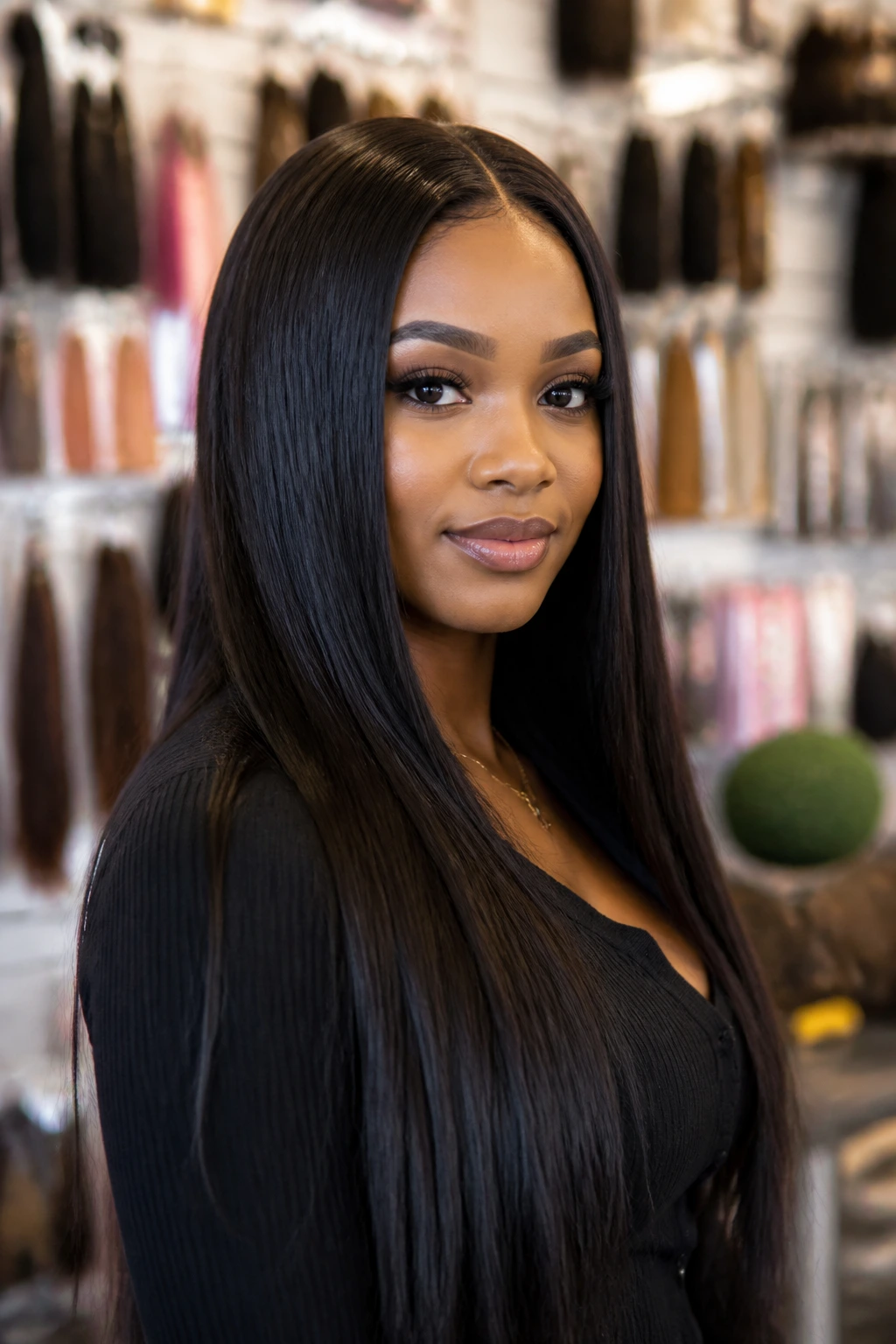
The best braid styles start before the chair does. If you’re buying extension hair, check whether it’s pre-stretched, soft on the fingers, and light enough that it won’t turn a medium braid into a neck workout. Some synthetic hair feels wiry out of the pack and gets better once it’s handled, but if it’s stiff and scratchy in the bag, it’s not going to magically become silky later.
Think about length the same way. Waist-length braids look gorgeous, but they also add weight, take longer to install, and tangle more at the ends. Shoulder-length or bob-length versions can look cleaner if your scalp prefers less load. For styles with curled ends or boho pieces, choose extension hair that matches the texture you want to see when the braids move. Straight synthetic ends and soft curls tell different stories.
Accessories deserve the same care. Beads should sit securely without being so heavy they drag on the braid. Cuffs should open and close smoothly so they don’t snag. Thread wrap, shells, and rings should enhance the braid pattern, not bury it. I’d rather see three well-placed cuffs than a whole head full of hardware fighting the braid underneath.
For prep, start with clean, detangled hair and decide whether you want it stretched first. A blow-dry on low heat or a gentle banding method can make the parts cleaner and the install smoother. And please don’t overdo the grease. A soft scalp is one thing. A slick, oily base under braids is another.
How to Wear These Braids With Outfits, Faces, and Events
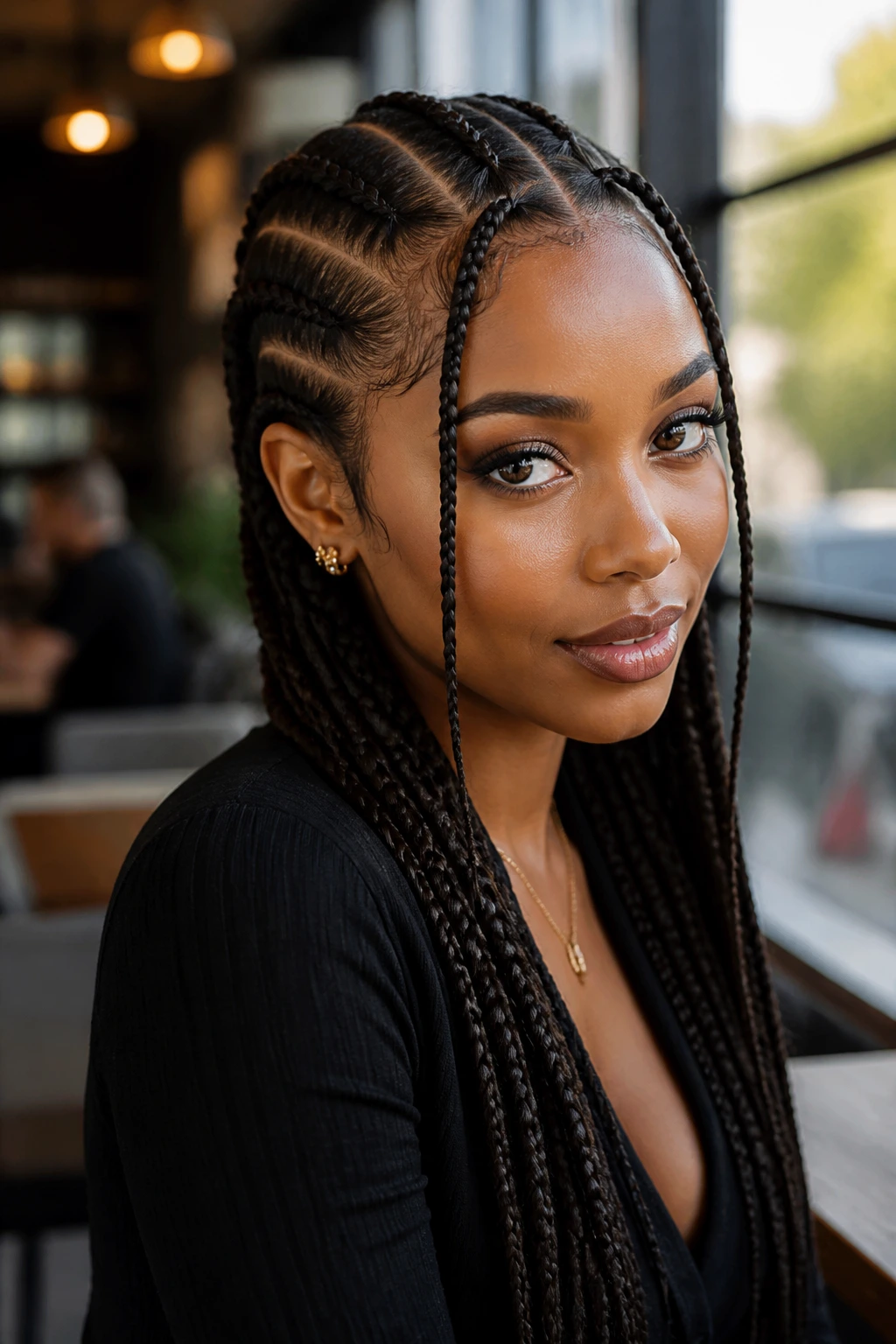
Presentation: Braids change the line of the face, so the parting matters as much as the length. A middle part sharpens symmetry, a deep side part softens the forehead, and a pulled-back style clears space around the eyes and cheekbones. If the braid pattern is detailed, wear it down and let the scalp work show. If the style is long and heavy, pull it up and give the neck a break.
Outfit Pairings: Long braids love open necklines, high collars, and oversized earrings because they create contrast without fighting the hair. Shorter braids and braided bobs sit well with crew necks, structured jackets, and sharp earrings. A braided bun looks clean with tailoring. A side-swept set looks good with softer drape and one-shoulder tops. Hair and clothing should not compete. They should speak the same volume.
Scale: Match the braid size to the rest of the style. Jumbo braids carry bold outfits well. Small braids disappear into a busier look and let clothing take over. If your face is easily overwhelmed by volume, keep the braids medium and the parting precise.
Accessories: Gold cuffs, shell pieces, wrap thread, and beads can all be used sparingly or in clusters. The trick is choosing one main accent and repeating it with restraint. Too many competing finishes turn a braid style into clutter.
Additional Styling Ideas and Personal Touches
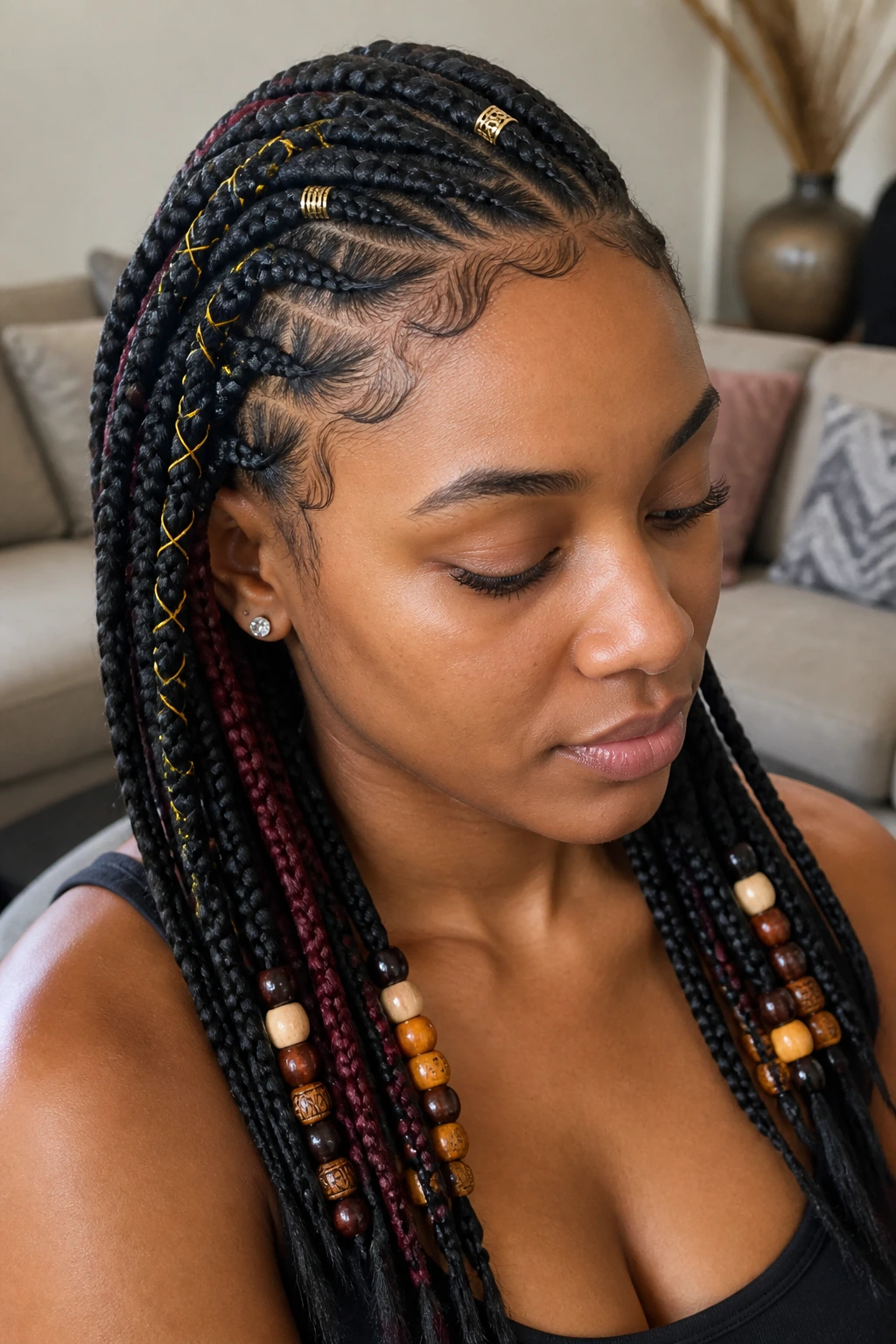
Color Shift: Warm brown, honey blonde, copper, burgundy, and jet black each change the mood of braids without changing the install. If you want dimension, ask for a mix of two shades that sit close together. The braid pattern will show more clearly than a single flat color.
Accessory Mood: Put cuffs near the front if you want the face framed. Add beads toward the ends if you want movement. Use thread or wrap pieces when you want the style to feel more handcrafted. Little changes matter more than people think.
Softness: A light mousse and a satin wrap can turn a braids style from frizzy to polished overnight. If the ends are curled, keep your hands out of them. They frizz faster than the braid body, and that’s part of the look only if you let it be.
Make-It-Yours: If your scalp is tender, choose knotless or feed-in versions. If you like a bigger silhouette, go for jumbo or waist-length. If you want less weight, choose a bob or shoulder length. If you want more face framing, ask for side parts, diagonal rows, or loose front pieces.
Maintenance, Refreshing, and How Long Braids Last
The first day matters. If the braids feel tight enough to throb, don’t wait for it to “settle.” That soreness is not a rite of passage. It’s a warning. A good braid should feel secure, maybe a little snug for a few hours, but not painful at the hairline or behind the ears.
Most braid styles stay in their sweet spot for about 4 to 6 weeks, though smaller styles can hold a bit longer if the scalp stays calm and the build-up stays low. The limit is usually tension and new growth, not some magical number on the calendar. Once the roots start matting or the edges look stressed, it’s time to remove them.
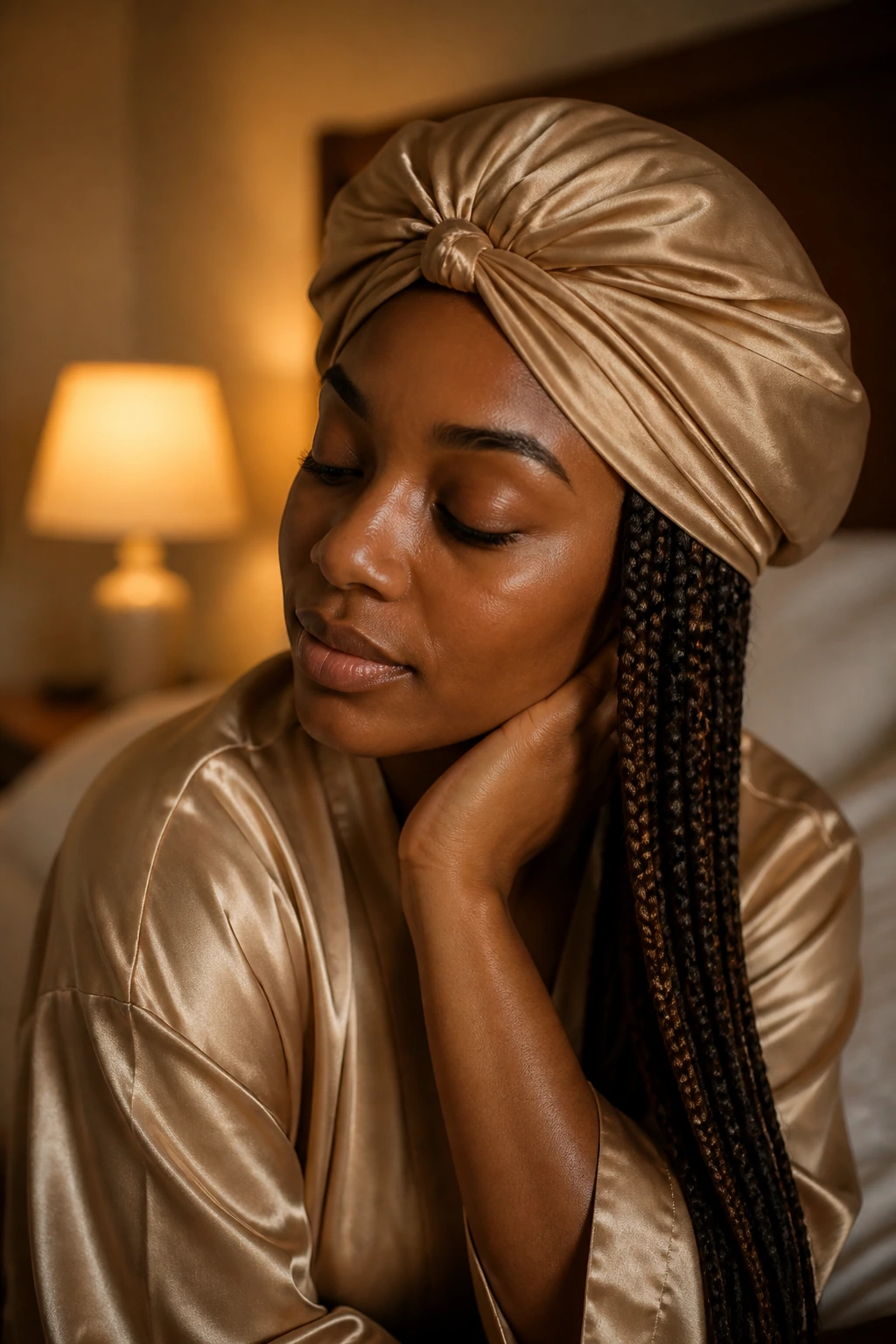
At night, wrap the hair in a satin scarf or use a bonnet that actually fits the length. Long braids need to be gathered loosely so they don’t knot at the nape. Every few days, refresh the scalp with a light spray and use a small amount of mousse on the braid surface if flyaways start lifting. If you wash braids, keep the shampoo diluted and rinse well so residue doesn’t live in the roots.
If the style has loose curly pieces or French curl ends, treat them gently. They need more care than the braid body. And if a braid starts itching in one spot, check the section. It could be product, dryness, or a base that needs attention. Sometimes it’s all three.
Variations and Adaptations to Try
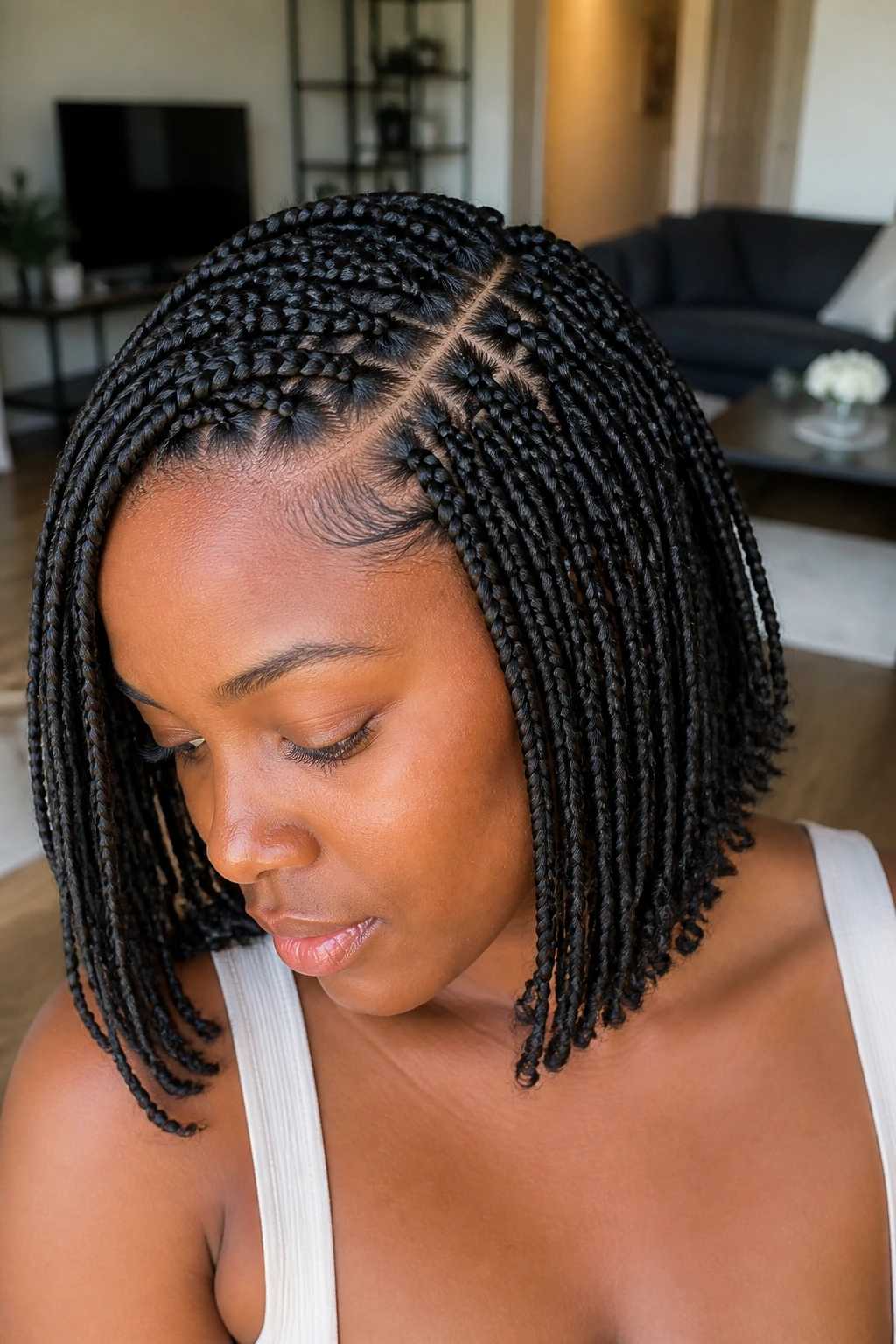
Tension-Friendly Braids: Choose knotless, medium sections, and shoulder-length ends. This version keeps the style wearable if your scalp hates heavy installs or if you’re trying to protect a tender hairline.
Color-Block Braids: Add one lighter shade through the front pieces or alternate two close tones throughout the set. The result has depth without making the whole head look busy.
Short-Length Edit: Turn any box braid, feed-in, or cornrow style into a bob. Shorter braids feel lighter on the neck and are easier to sleep in, which matters more than people admit.
Soft-Curl Finish: Swap blunt ends for boho curls or French curl ends. The movement changes the whole tone of the style and softens sharper braid patterns.
Kid-Friendly Braids: Use larger sections, fewer hours in the chair, and lighter accessories like a few beads instead of a full load of metal. Comfort matters more than complexity here.
Formal Event Version: Pull the braids into a low bun, crown shape, or braided ponytail and keep the accessories minimal. A clean structure with one polished finish point usually looks better than a busy head full of extras.
Common Mistakes That Make Braids Look or Feel Off
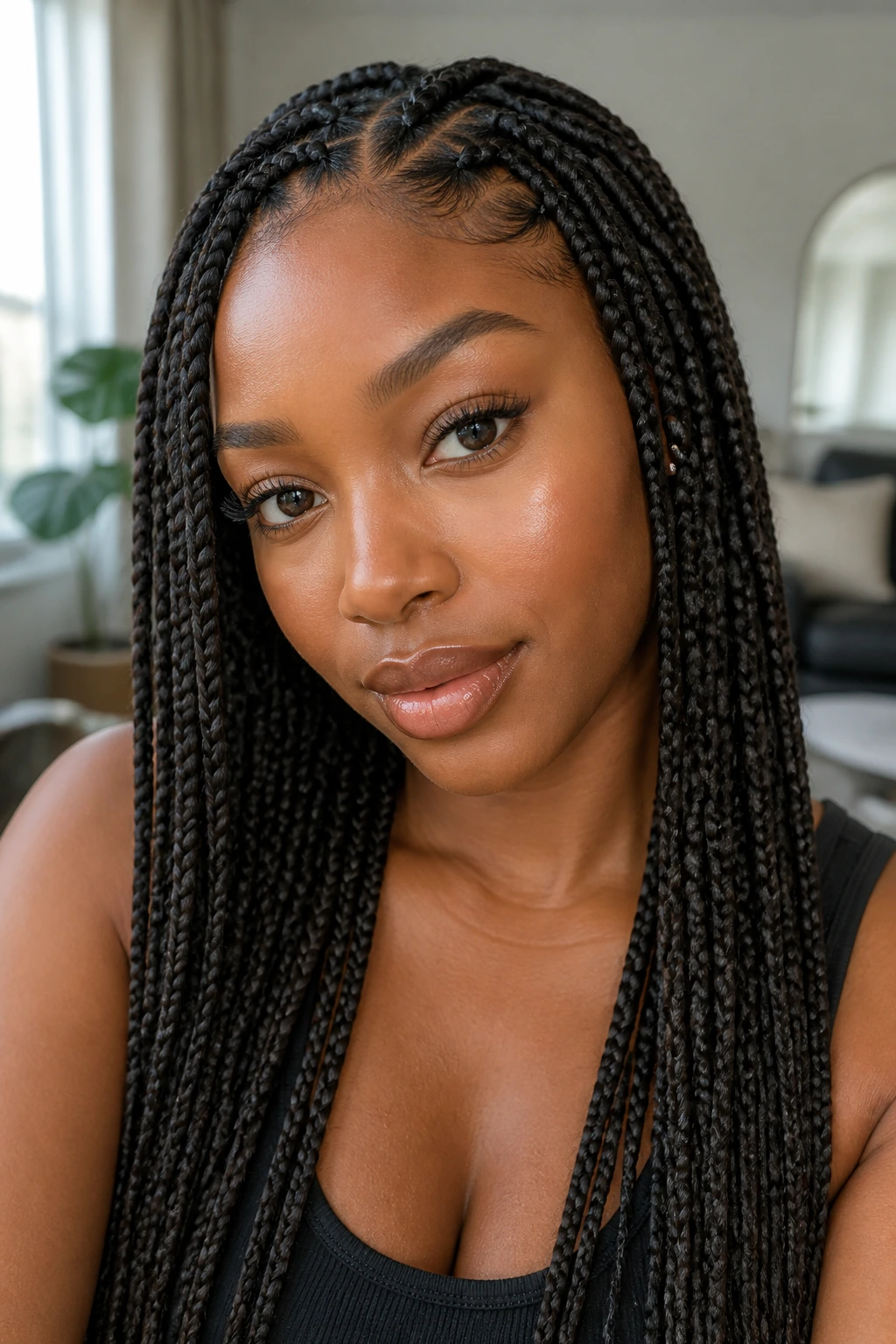
- Too much tension at the hairline: If the scalp burns, the edges feel pulled, or the first rows lift the skin, the braids are too tight. Ask for a softer grip and wider front sections next time.
- Overloading the hair with product: Heavy grease, thick edge control, and sticky gels cause buildup and itching. Use just enough to smooth, not enough to seal the scalp under a film.
- Choosing braid size without thinking about weight: Jumbo braids and long lengths can strain fine or fragile hair. Lighter sections or shorter lengths often look cleaner and feel better.
- Skipping bedtime care: No scarf, no bonnet, and no loose wrapping means frizz, lint, and rough ends by morning. A satin layer keeps the style looking fresh much longer.
- Leaving braids in too long: Once the roots mat and the scalp starts staying sore, the style has crossed the line. Take them down before removal turns into a detangling job from hell.
- Ignoring prep: Braiding onto tangled, dusty, or heavily product-coated hair makes the install rough and the finish uneven. Clean, stretched, detangled hair behaves better from the first row to the last.
Frequently Asked Questions
Which braid style is easiest on the scalp?
Knotless braids and medium feed-ins are usually gentler because the weight builds gradually instead of landing in one hard spot. The install still has to be careful, though. A knotless braid done too tightly is still too tight.
How long do braid hairstyles for Black women usually last?
Most styles stay neat for about 4 to 6 weeks, with smaller braids sometimes stretching a little longer if the scalp stays healthy and the roots don’t mat. Longevity depends more on tension, size, and maintenance than on the style name alone.
Can I wash my hair while it’s braided?
Yes, and sometimes you should. A diluted shampoo or scalp rinse can help remove buildup, but rinse thoroughly and dry the roots well so moisture doesn’t sit under the braids. Damp braids left alone too long can start to smell off.
What braid style works best if I want less weight?
A braided bob, shoulder-length braids, or smaller feed-in cornrows usually feel lighter than waist-length sets. If you want length without the drag, ask for thinner extension hair and stop a few inches above the collarbone.
Are beads and cuffs bad for the hair?
Not if they’re used with some restraint. The problem is weight and snagging, not the accessory itself. A few well-placed beads or cuffs are fine; a whole head loaded down with heavy hardware can tug where you don’t want tugging.
What should I do if my braids feel tight on day one?
Speak up right away. Tight braids do not “loosen into comfort” in a healthy way if they’re already pulling the scalp. If you feel throbbing, burning, or sharp tenderness, the style needs to be adjusted.
Can I get braids if my hair is short?
Yes, but the braid type matters. Feed-ins, small cornrows, and knotless styles can work well on shorter hair when the stylist uses the right amount of added hair and keeps the base secure. The shorter the natural hair, the more careful the prep has to be.
Do braids help hair grow?
Braids do not make hair grow faster. What they can do is help you keep the length you already grow by reducing daily friction, heat, and overhandling. That’s the part that matters.
How do I keep braids from itching?
Start with a clean scalp and don’t drown the roots in heavy products. A light scalp spray, proper drying after washing, and a satin wrap at night usually help more than thick grease ever will.
A Style Worth Returning To
Braids work because they’re practical without looking practical in the dull sense. They can be sharp, soft, loud, minimal, traditional, or sleek, and the difference usually comes down to parting, tension, and length rather than the braid itself. That’s what makes the style so durable. It’s not one signature look. It’s a whole set of choices.
If you pick the braid style that matches your scalp, your schedule, and the way you actually wear clothes, the result feels better than a pretty photo. It feels livable. And that’s the version worth keeping: clean at the roots, kind to the hairline, and interesting enough that you don’t get bored halfway through the wear.
