



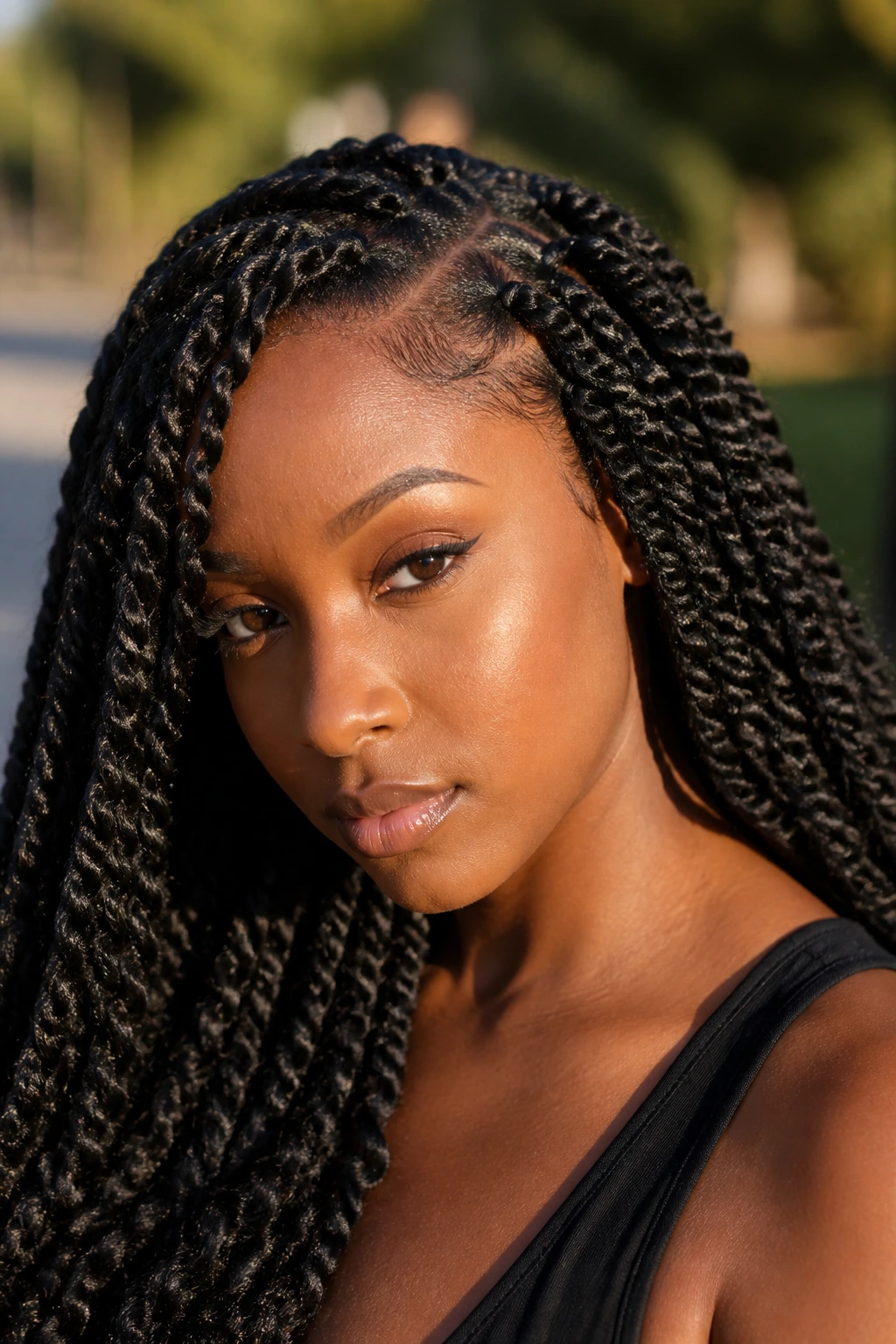
Passion twist styles have a very specific kind of charm: they can look soft and airy from across a room, then reveal all their detail when you’re close enough to see the ropey texture and the clean parting. That mix is why people keep coming back to them. They don’t sit flat and stiff the way some protective styles can after a long day. They move.
The trick is that passion twists are not one look. Length changes the mood. Parting changes the mood. Add curls, cuffs, a scarf, a color shift, or a blunt cut, and the whole style reads differently. A shoulder-length set can feel neat and practical. Waist-grazing twists feel dramatic, a little indulgent, and honestly hard to ignore.
I like passion twists best when the style has a clear point of view. The hair should look touched, not overworked. The roots should be clean, not puffy. The finish should match your real life, whether that means a gym bag, a work badge, a dinner reservation, or all three in the same week. The styles below lean into that idea from every angle.
Why These Passion Twist Styles Earn Their Spot
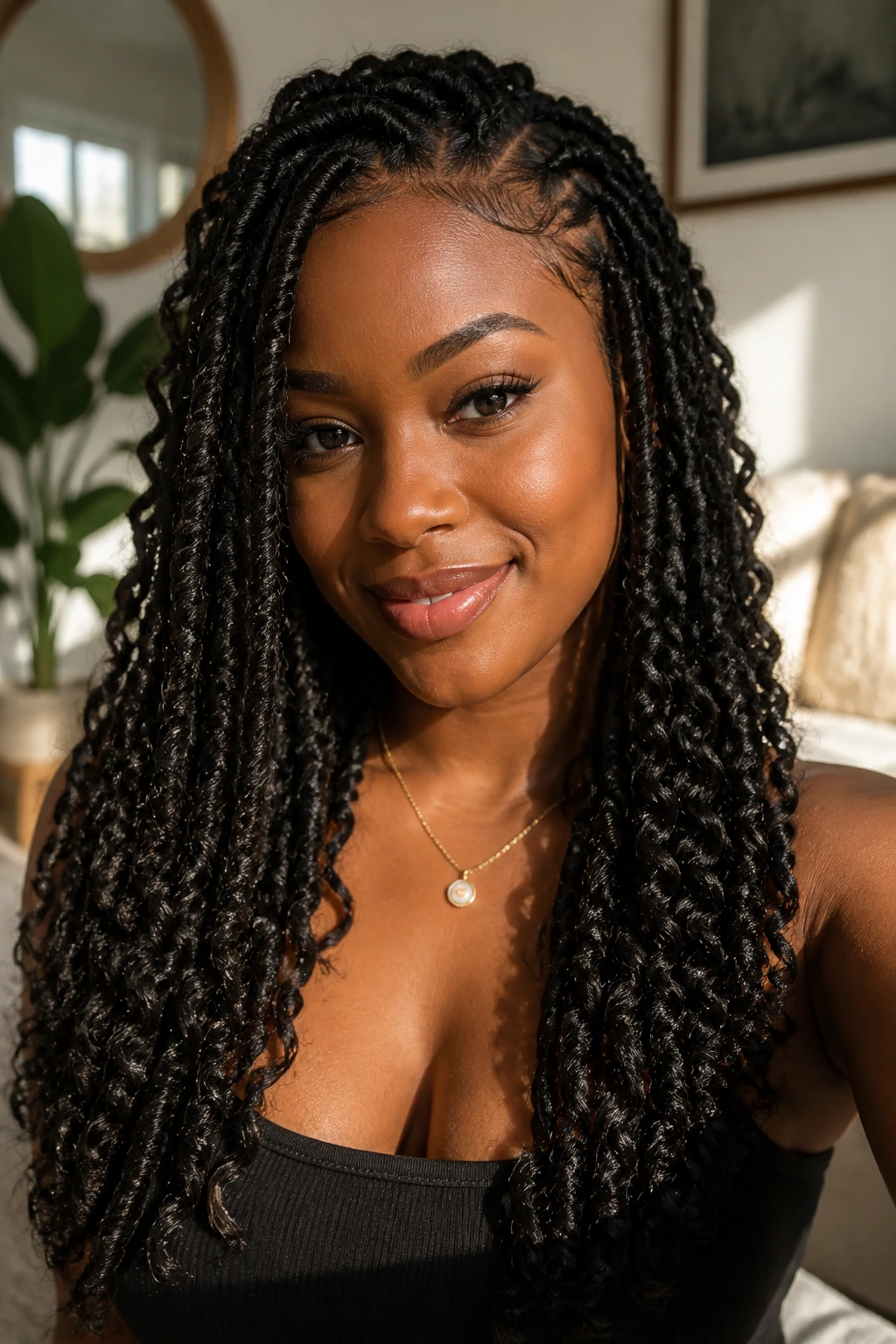
Soft movement: The texture gives you swing and shape without needing a perfect curl pattern every morning.
Low-drama upkeep: Most of these looks need mousse, a satin wrap, and a quick refresh at the edges—not a full restyle.
Length you can live with: From chin-length cuts to waist-grazing pieces, there’s a version here that won’t fight your daily routine.
Accessory friendly: Gold cuffs, scarves, beads, and clips sit well on twist hair because the surface has grip.
Face-framing options: Side parts, bangs, and layers can change the whole look without changing the core install.
Protective style value: When the foundation is sectioned cleanly and the twists aren’t pulled too tight, these styles keep your ends tucked away and out of your hands.
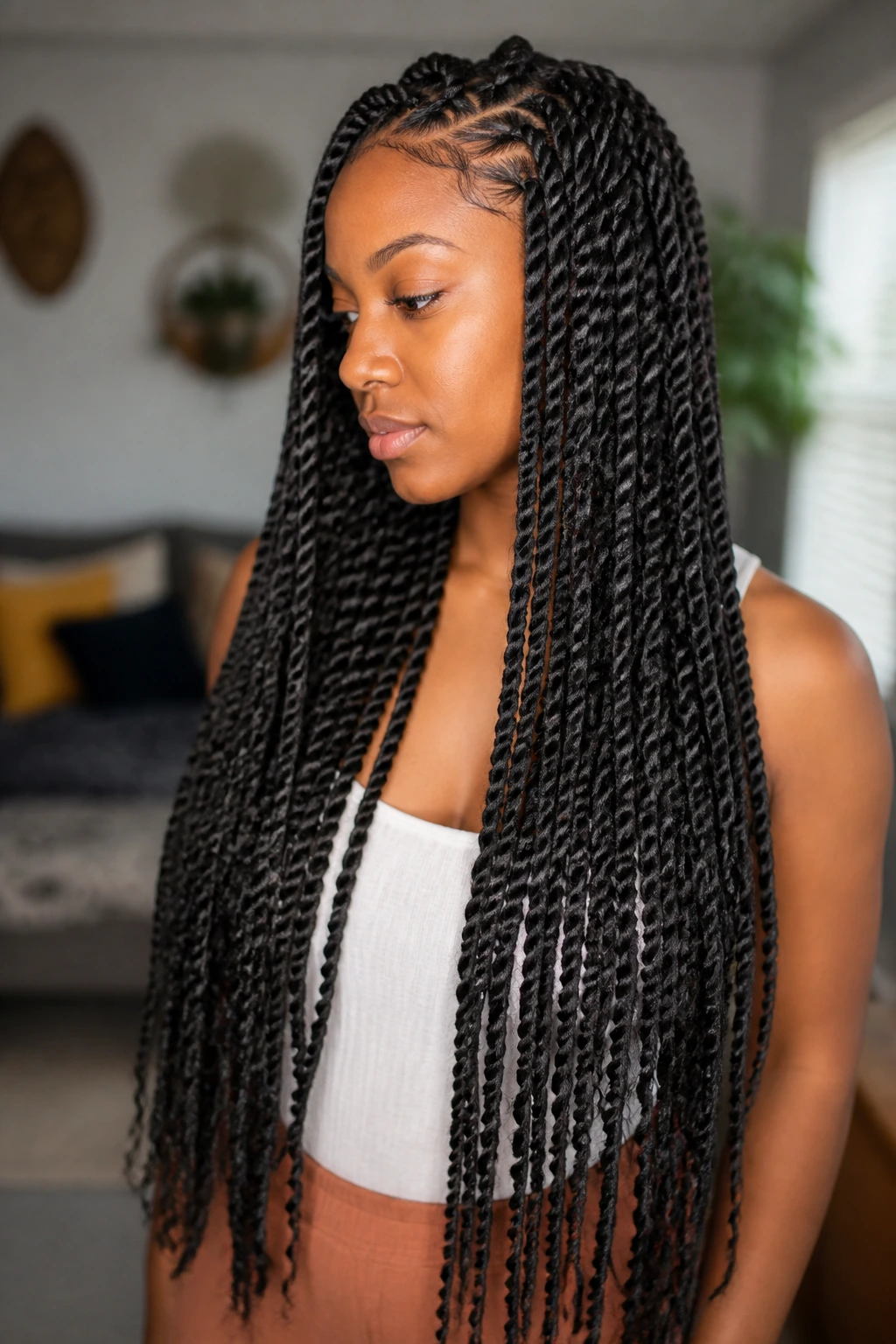
1. Waist-Length Classic Passion Twists
Waist-length passion twists are the version most people picture first, and for good reason. They give you that long, ropey movement that sways when you turn your head, but the texture keeps them from looking flat or heavy the way straight extensions sometimes can. I like this length when the parts are medium-sized and the ends are slightly tapered rather than blunt.
Why this length works
Long twists need enough room to move, and waist length gives the hair that floating, curtain-like effect. The style looks especially clean when the roots are neat and the twist size stays consistent from front to back. If the sections wander too much, the length starts to look messy instead of polished.
A set like this is not the lightest option, so the installation matters. Keep the base snug, not tight, and ask for slightly fewer twists around the hairline if your edges are sensitive. You want the shape. You do not want the headache.
Best for
- People who want a fuller silhouette without adding a lot of volume at the crown.
- Longer necklines and simple outfits, because the hair already does a lot of the work.
- Anyone who likes wearing twists down most days and only pinning them up when needed.
A waist-length set also makes a strong case for a clean middle part. It gives the long pieces somewhere to fall, and it keeps the style from looking like one big curtain. If you wear them with large hoops and a plain tee, the whole look lands fast. No extra effort needed.
2. Shoulder-Length Everyday Twists
Shoulder-length passion twists are the pair I’d hand to someone who wants the style without the bulk. They sit above coat collars, tuck behind the ears without drama, and don’t spend the whole day brushing your shoulders in a way that gets annoying by lunchtime. That sounds small. It isn’t.
The shorter length also lets the texture show up more clearly. Instead of being swallowed by length, each twist reads as its own little rope, which is nice if you want the style to look deliberate and tidy. I think this length is underrated for work settings because it doesn’t need a lot of adjusting.
How to keep them looking neat
Start with clean, even sections and keep the ends lightly sealed so they don’t unravel at the same pace. A light mousse on day one helps the twists set into their shape. After that, a satin scarf overnight keeps the front from puffing up first.
This is also one of the easiest versions to wear half-up. Grab the top layer, clip it back, and you’ve got more face room without losing the shape of the style. Shorter twists can feel plain on a hanger. On a person, they tend to look sharp.
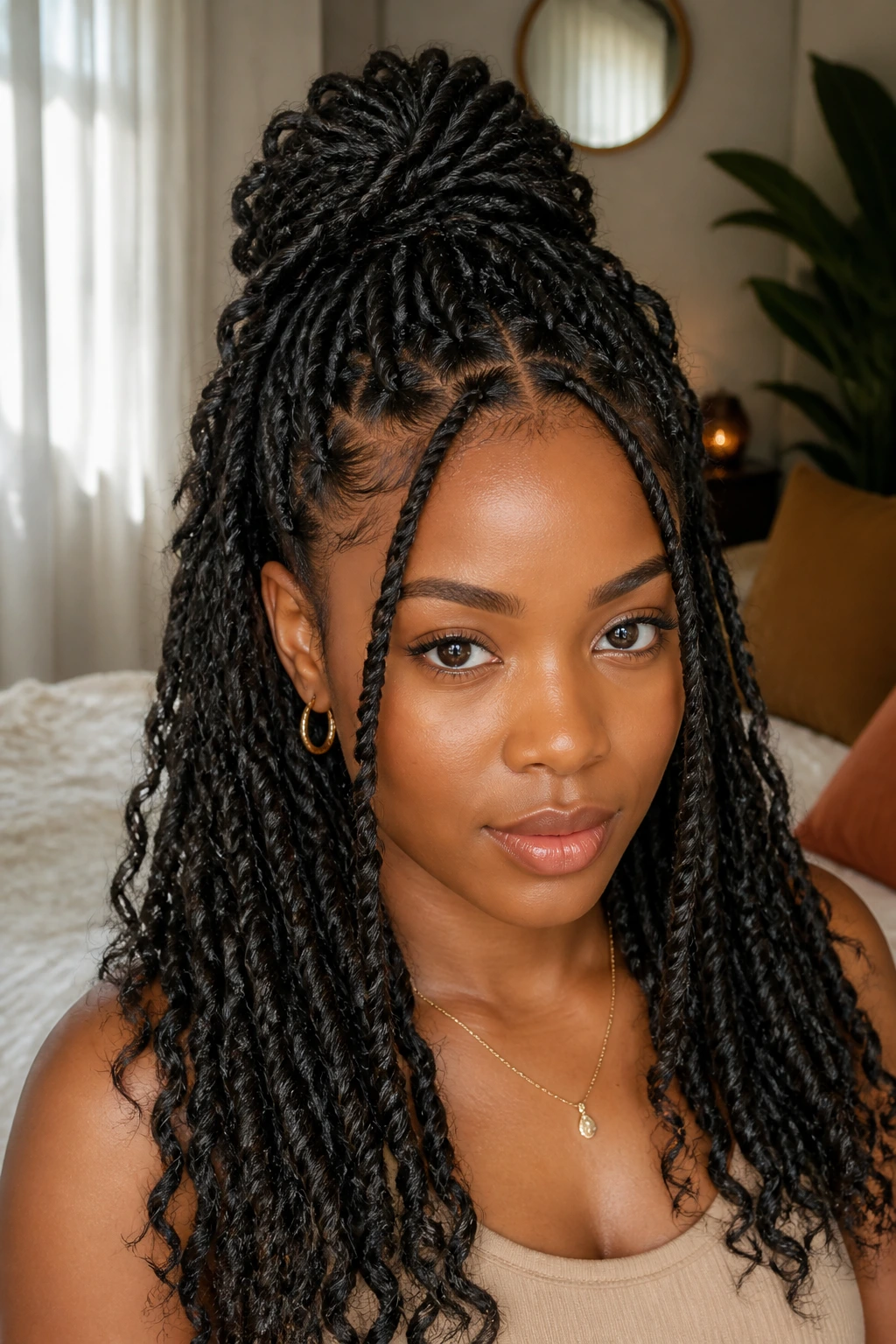
3. Half-Up, Half-Down with a High Crown
Half-up, half-down passion twists hit that sweet spot between loose and pulled together. The top section gives you height, the back keeps the swing, and the whole shape makes the face look lifted without pinning every strand out of the way. It’s one of those styles that looks like you planned your outfit around your hair, even if you didn’t.
The best version starts with a clean front section. Pull the top half high enough to show the parting at the hairline, then leave enough twists down below so the style still feels full. If the pony sits too low, the effect gets sleepy. If it sits too high, the back can look thin.
What makes it work
A good half-up style needs balance. Use 2 to 4 twists from each side of the front to frame the face, then gather the rest with a snag-free band or a wrapped piece of hair. The band should hold without making a dent that lasts all afternoon.
I like this look when the ends are curled or lightly dipped, because the movement at the top and bottom keeps the style from feeling too rigid. It’s also one of the easiest ways to show off earrings. Which matters more than people admit.
4. Deep Side-Part Passion Twists
A deep side part changes the entire temperature of passion twists. Same hair. Different attitude. The part gives you a strong front sweep that softens one side of the face, and the twists fall in a way that feels a little more deliberate than a center part.
The key is not making the part too wide. A deep side part should still look like the scalp has room to breathe. If the front section is too heavy, the style starts to collapse over one eye and lose its shape. You want a clean diagonal line, not a curtain glued to the forehead.
How to wear it
Brush the front section lightly across the forehead, then pin one side behind the ear or let it fall forward if you want more drama. A small amount of mousse at the root helps the part lie flat without turning crunchy. The finish should look soft, not shellacked.
This style works especially well with shoulder-length and mid-back twists because the side sweep adds structure to longer hair. On very long sets, it can keep the whole look from feeling too symmetrical. That asymmetry is the point. It looks more relaxed, but in a controlled way.
5. Jumbo Passion Twists
Jumbo passion twists are for the days when you want the texture without spending half your life in the chair. Bigger sections mean faster installation, fewer strands to manage, and a style that reads fuller from a distance. It’s not subtle. That’s the appeal.
The tradeoff is that jumbo twists need neat parting and a careful hand at the roots. When the sections are too different in size, the style can start looking lopsided fast. Big twists also expose any unevenness more easily, so the base has to be clean. Messy parting shows up immediately.
Why people choose them
- Faster to install than small or micro twists.
- Easier to fluff lightly for more volume.
- Lighter in total count, which can help if your scalp gets tired fast.
I think jumbo twists look best when they’re worn down or gathered into a loose half-up style. A tight bun can make them feel chunky in the wrong way. But down the back? They’ve got a nice, ropey presence. The kind that does not need much else.
6. Micro Passion Twists
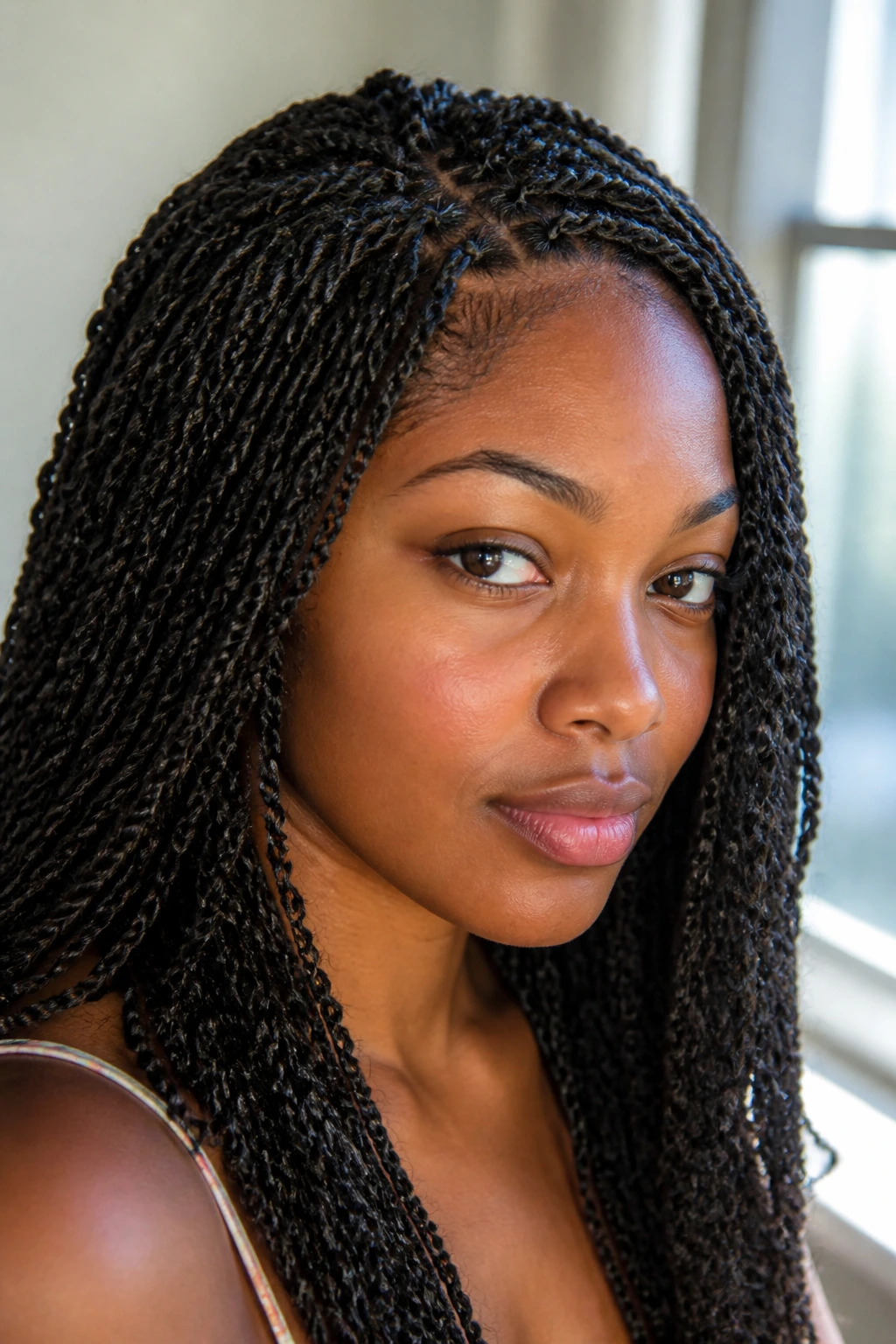
Micro passion twists are the opposite mood. Tiny sections, lots of movement, and a denser look that can feel almost feathery when the hair is installed cleanly. They take time. A lot of time. But the payoff is a style that can look delicate, almost woven.
These work especially well if you like your hair to read soft and layered instead of big and bold. The smaller size also gives you more styling options later, because the twists can be tucked, pinned, and swept more easily without fighting their own bulk. They’re fussy in the chair and flexible after that.
What to watch for
The temptation with micro twists is to pull too tight because the sections are so small. Don’t. A tight base on tiny pieces can make the scalp feel sore for days, and the style loses its comfort fast. Ask for tension that holds shape without digging in.
I’d also keep the ends a touch lighter on micro twists. A very blunt finish can make them look stiff. A softer, slightly tapered end keeps the whole style moving when you walk.
7. Boho Passion Twists with Loose Curls
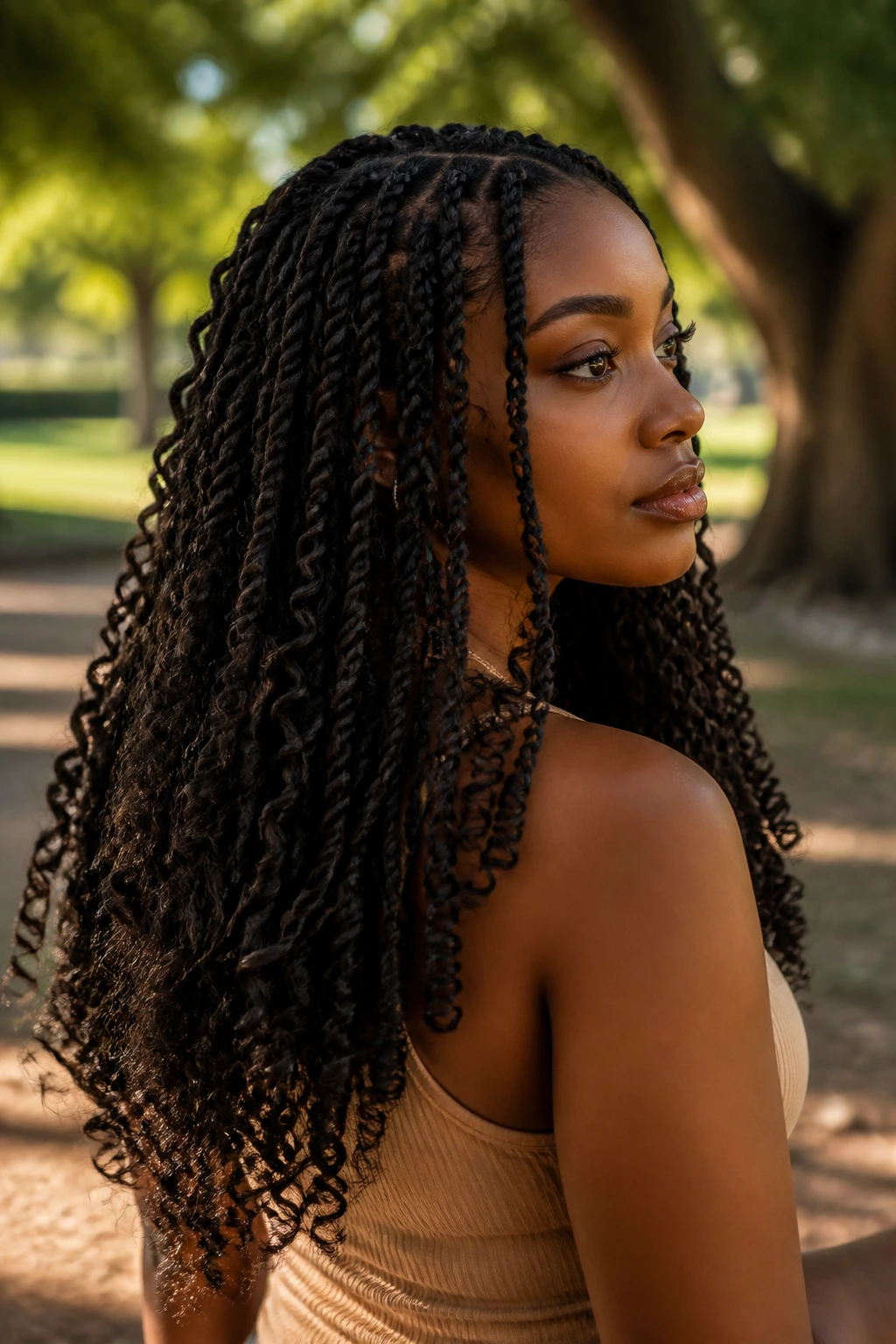
Boho passion twists are what happens when the twists get a little less formal and a lot more playful. Loose curls are added through the lengths or left to peek out from the ends, and the whole style starts to feel airy, lived-in, and a bit vacation-ready. It’s intentionally imperfect. That’s the charm.
The trick is to keep the curly pieces intentional, not random. You want enough curl to break up the rope texture, but not so much that the style turns fuzzy by day two. Pick one curl pattern and repeat it throughout the head so the eye gets a clear rhythm.
Why this version stands out
The added curls soften the edges of the twists, which makes the style look fuller even when the parting is simple. If your face shape benefits from a little movement near the cheekbones, this is one of the easiest styles to use.
A light mousse refresh every few days keeps the curls from going dull. And if you like a little frizz, boho twists forgive it better than a sleek style ever will. They are meant to look touched, not pressed into place.
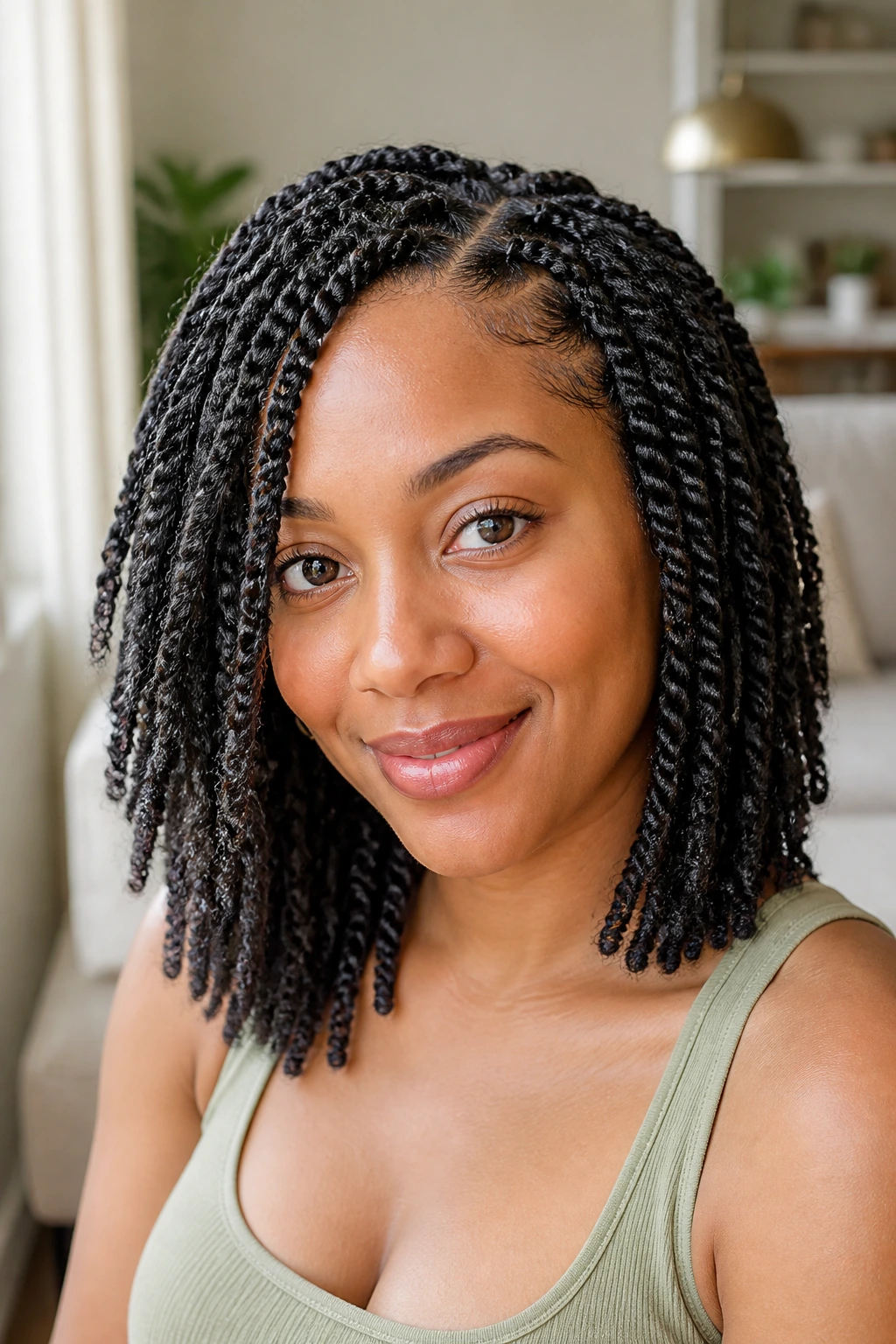
8. Chin-Length Passion Twist Bob
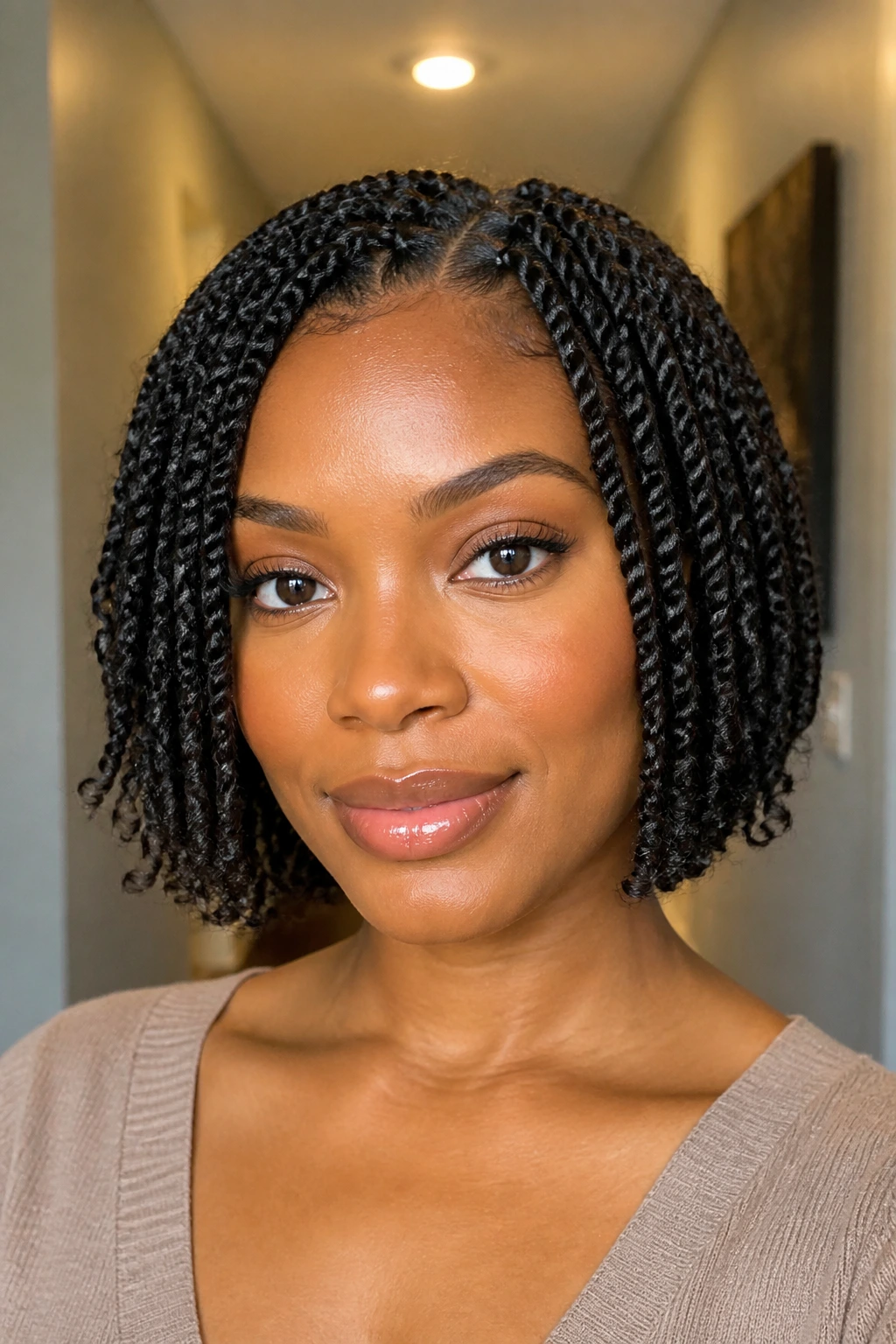
A chin-length bob made with passion twists has a clean, modern line that feels crisp without looking severe. It frames the jaw, shows the neckline, and keeps the style light enough that you forget about it until you catch yourself in a mirror. Then you remember. It’s a good cut.
The bob shape works best when the ends are shaped on purpose. A blunt line can look powerful, but a tiny bit of layering at the bottom keeps the silhouette from turning boxy. If you want the hair to curve inward a little, ask for the ends to sit just below the chin rather than dead on it.
This is the one I’d recommend for anyone who wants lower maintenance and less tangling. Shorter twists spend less time rubbing against jackets, seatbacks, and tote bags. That sounds boring. It isn’t. It saves you from a lot of small frustrations.
9. Passion Twists with Curly Bangs
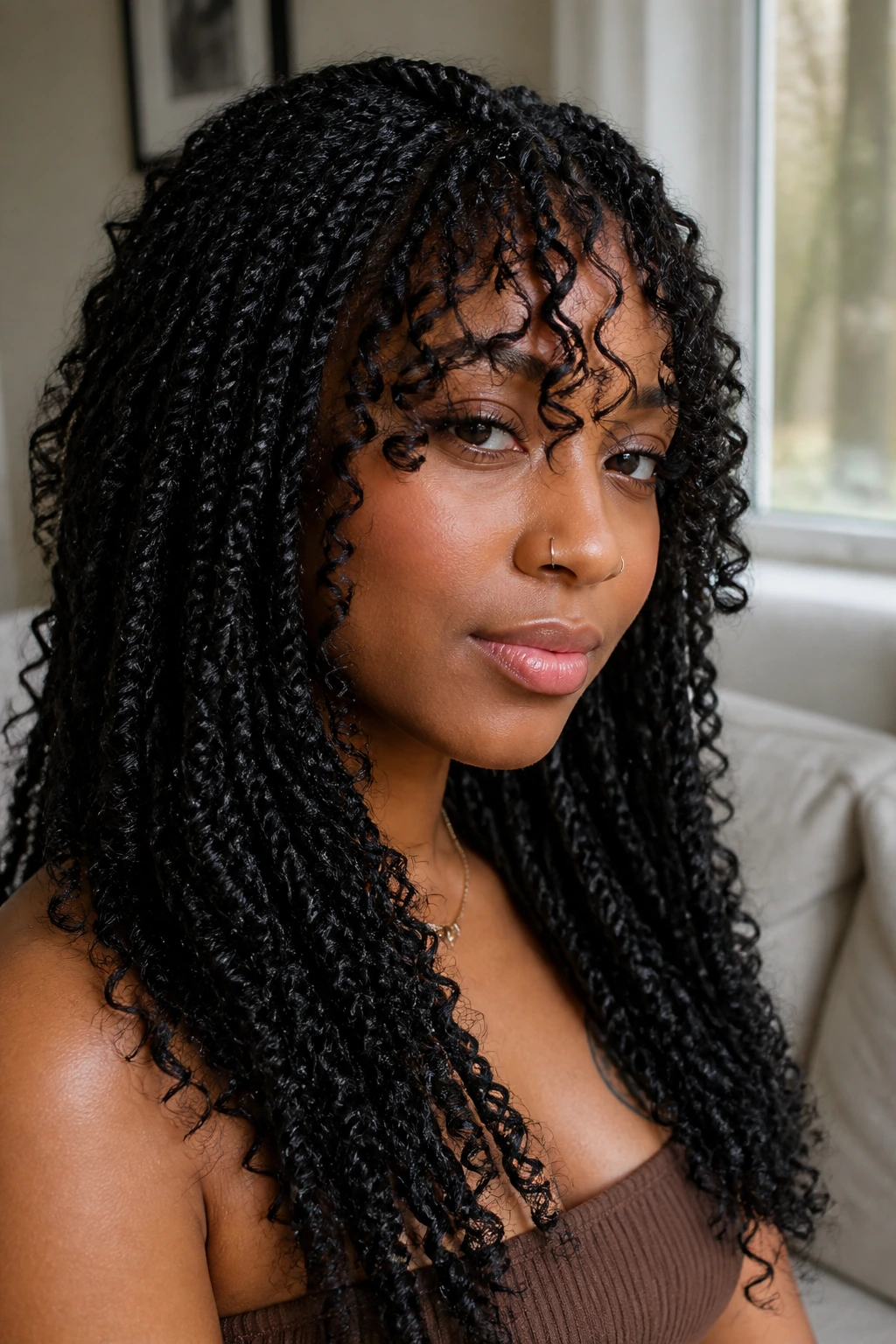
Curly bangs on passion twists give the style a softer front edge right away. Instead of all the movement living in the lengths, the fringe brings some action to the face and keeps the look from feeling too long or too pulled back. It’s a nice fix when you want personality without a full cut.
The bangs should sit loose enough to move. Too much product at the front makes them stick in place, and then they lose the whole point. A few shorter twists or curly pieces can frame the forehead without covering it entirely. Leave space. The face needs it.
Best pairing
This style pairs well with shoulder-length or mid-back twists, because the bangs do a lot of the visual work up top. A middle part can feel too strict here, so I usually like a soft side part or a slight off-center placement.
If your forehead is on the shorter side, keep the bangs wispy. If you want more coverage, go denser but keep the edges airy. There’s a narrow line between playful and crowded.
10. Faux-Loc Passion Twist Hybrid
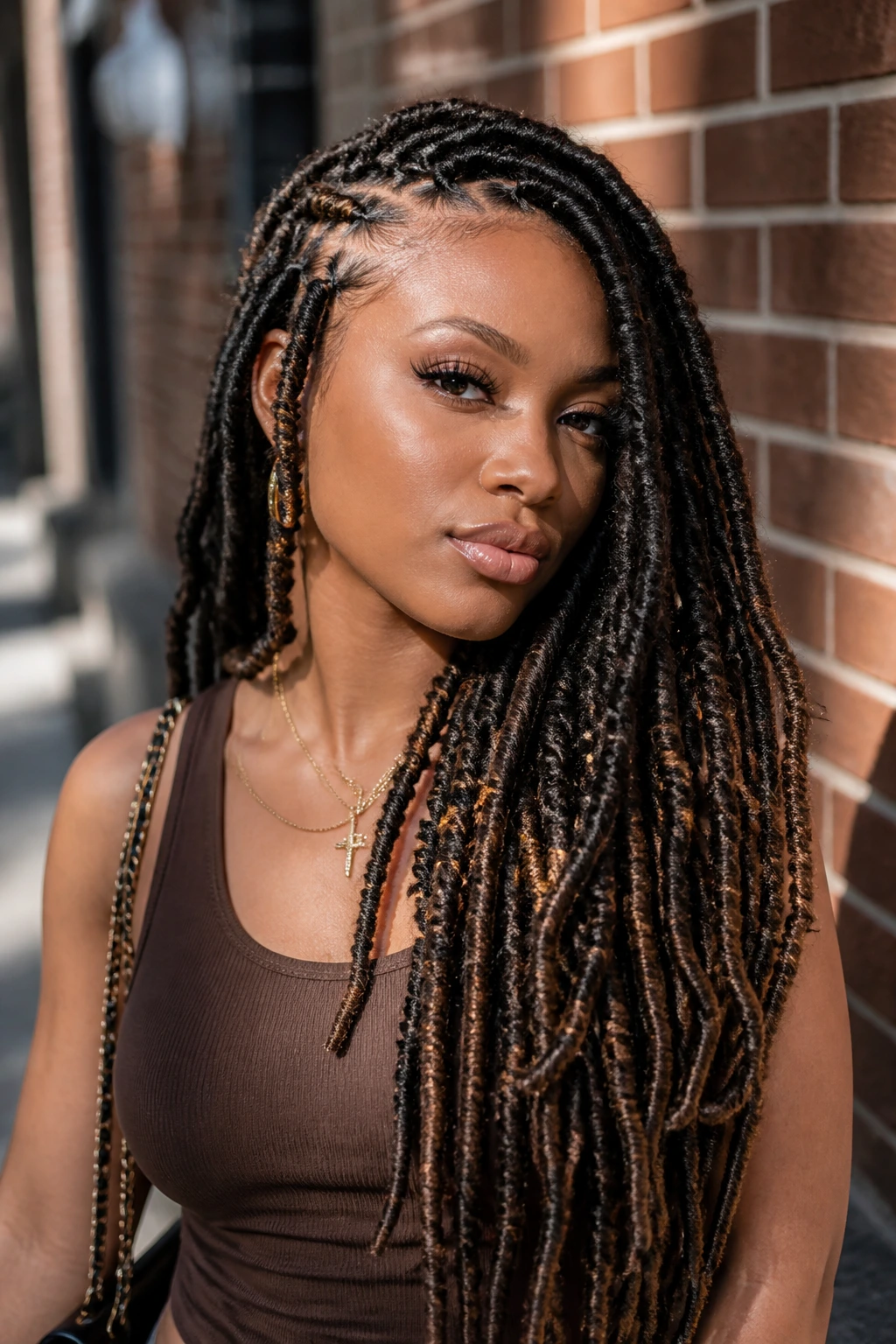
A faux-loc and passion twist hybrid gives you a rougher, more textured look that sits somewhere between ropey twist softness and loc-like structure. I like this style when someone wants the general silhouette of twists but wants the finish to feel a little more rugged and less fluffy.
The roots stay neat, then the body either gets wrapped more tightly or finished with a loc-inspired twist at the ends. That extra structure changes the whole mood. The style looks grounded. A bit heavier. Less airy, more earthy.
Where it makes sense
- If you like texture but not too much bounce.
- If you want the style to hold a shape for a longer stretch of wear.
- If you prefer a more angular, less romantic finish.
Because the style has more visual weight, it can look especially good in medium to long lengths. The added density gives the hair presence, but it also means the install should be balanced. A crowded crown on a hybrid style looks bulky in a hurry, and the line between full and overloaded is smaller than people think.
11. Triangle-Part Passion Twists
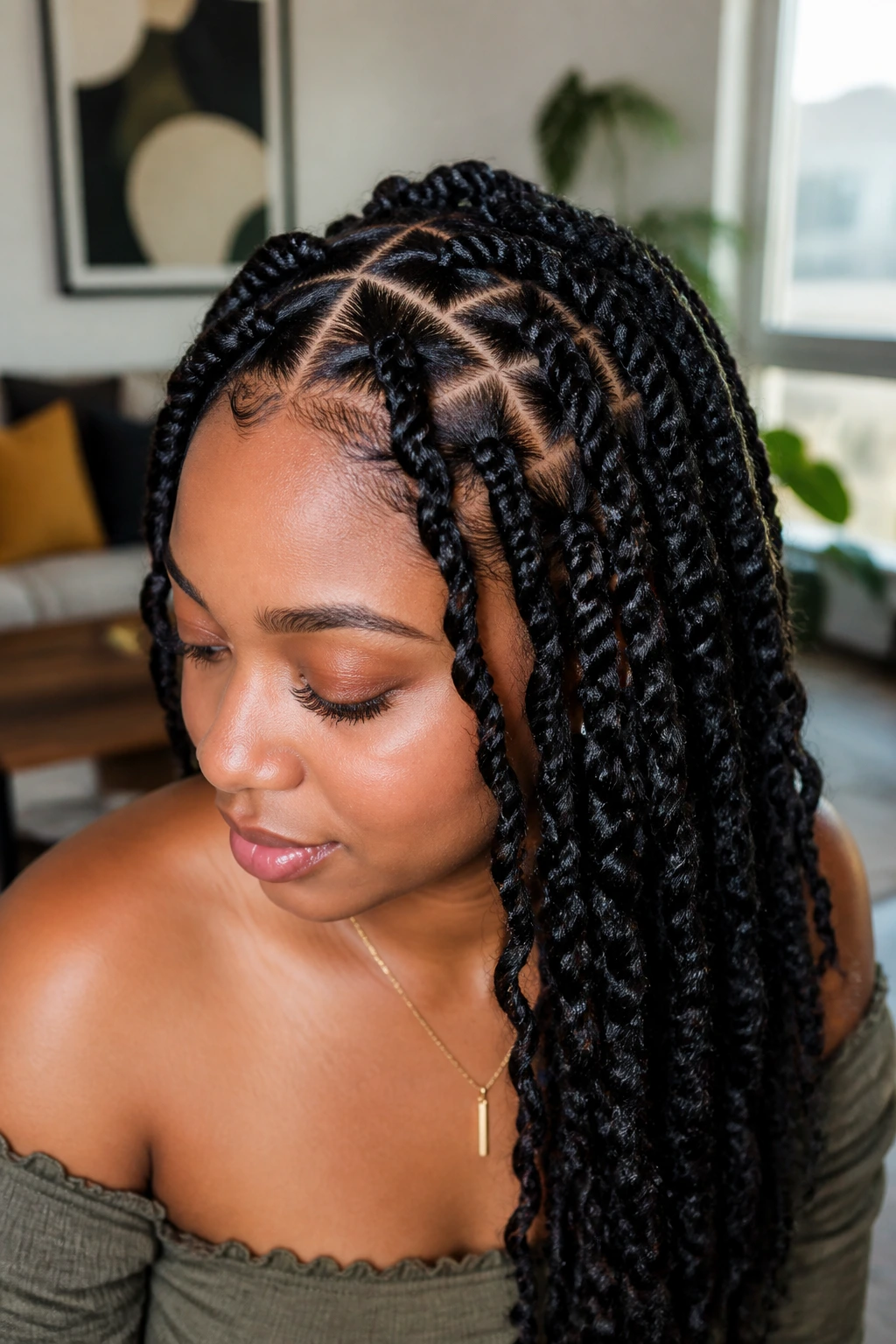
Triangle parts are for the person who wants the scalp pattern to be part of the design, not just the plumbing under the hair. The triangular sections create a geometric rhythm that makes even a simple set of passion twists look sharper and more intentional. It’s a small change with a big visual return.
What I like about triangle parts is that they keep the style from looking too grid-like. Box parts can be clean, but triangle parts feel more organic, especially once the twists start to settle and move. The parting still reads neat, just less expected.
What to keep in mind
This style needs consistent sizing more than anything else. If one triangle is much bigger than the rest, the pattern becomes uneven fast. The scalp lines are part of the style here, so precision matters. You will see it every day.
Triangle-part passion twists work well in medium and smaller sizes because the shape shows up best when there are enough pieces to repeat the pattern across the head. If you like detail and clean lines, this is one of the most satisfying ways to wear twists.
12. Burgundy Color-Block Passion Twists
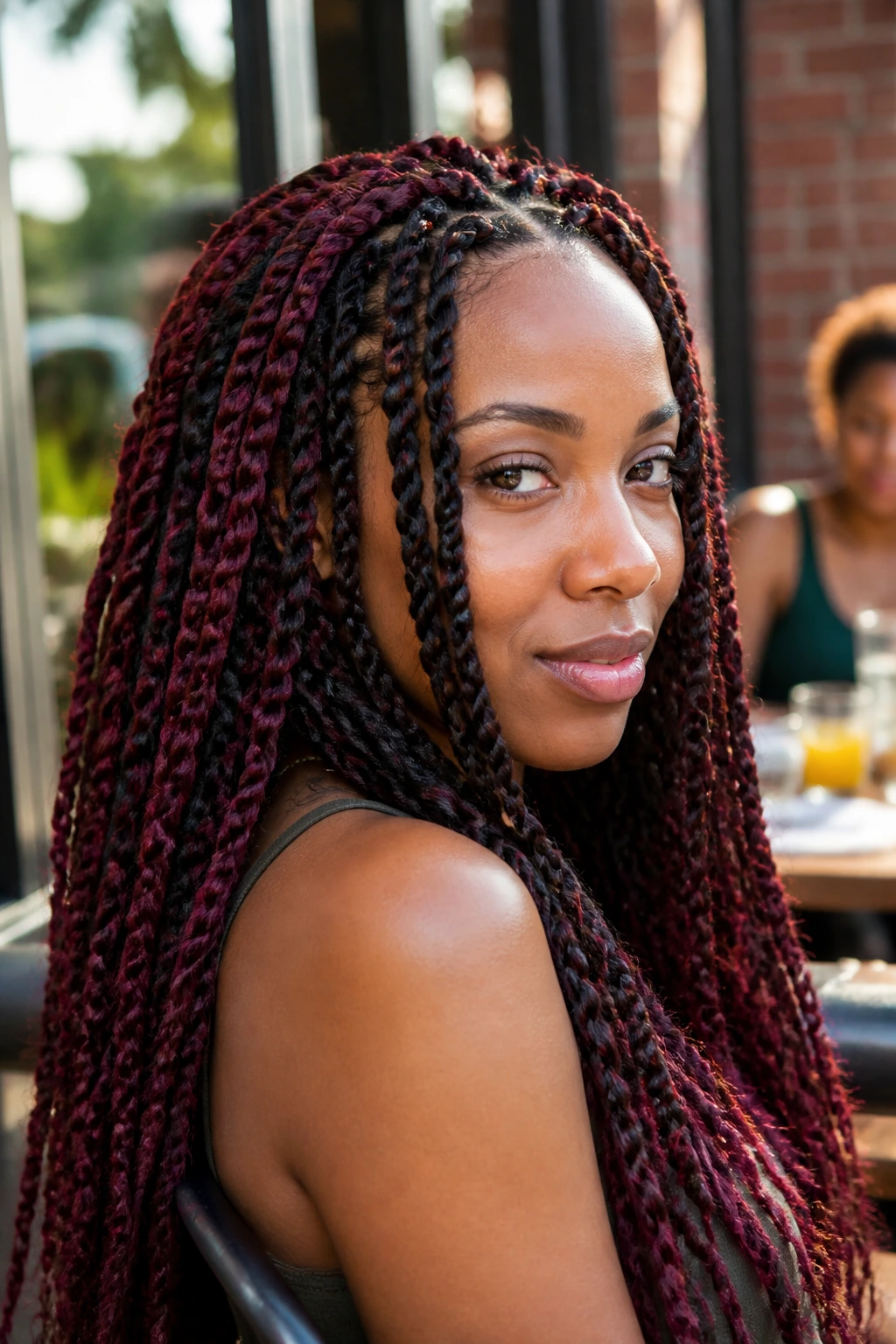
Burgundy color-block passion twists bring a little drama without going full neon. Dark roots fading into burgundy ends, or burgundy panels placed through the crown, give the style depth and warmth. The color catches light differently from black or brown hair, so the twists look thicker and more layered.
I prefer color-blocking over all-over color when someone wants contrast but still wants the style to feel grounded. A little burgundy at the front or ends gives you interest without making the whole head loud. The look lands faster when the color is placed where the eye naturally goes.
Best way to wear it
A middle part or a soft side part tends to show off the color shifts best. Keep accessories minimal here. Gold cuffs and burgundy hair can fight each other if you pile on both at once.
If you’re choosing between a red-brown and a wine tone, pick the one that matches your wardrobe most often. That sounds practical because it is. Hair color that works with your clothes gets worn more. Simple as that.
13. High Bun Passion Twists
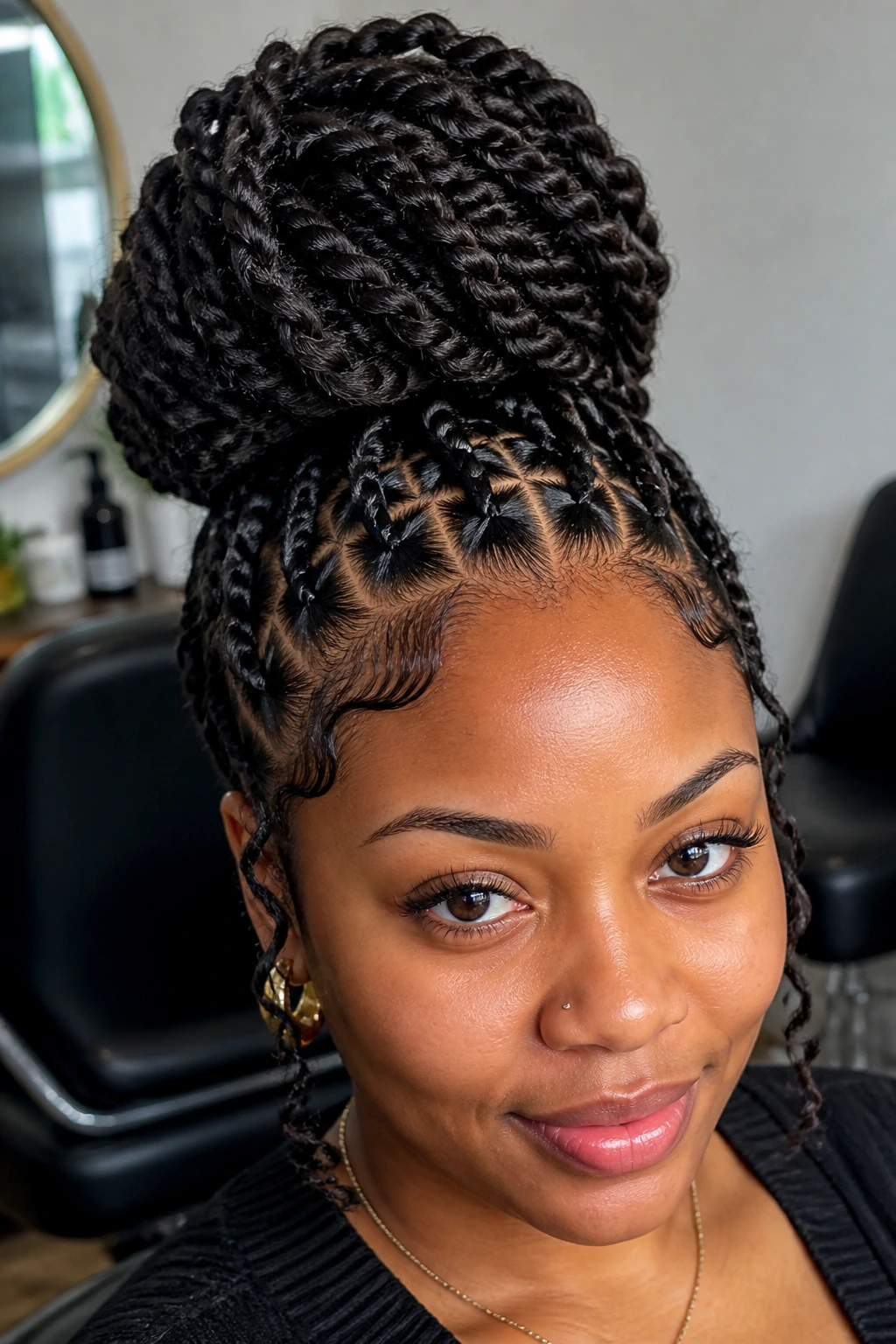
A high bun made from passion twists pulls the hair off the neck and turns the texture into shape. Instead of spreading the twists out, you stack them up, and the whole style gets a lifted, clean feel that works when you want your face and earrings to do some of the talking.
The bun should stay loose enough to keep the twists from looking crushed. If you squeeze every strand into one tight knot, the texture disappears. Better to gather the hair, wrap it once or twice, and pin the rest in place so the bun looks full from every angle. A little messy is fine. A little flat is not.
This is one of the few styles where longer twists and heavier hair can actually help, because the bun has enough material to look substantial. Just make sure the base is secure. A bun that starts leaning by midday is not a fun look.
14. Passion Twists with Beaded Ends
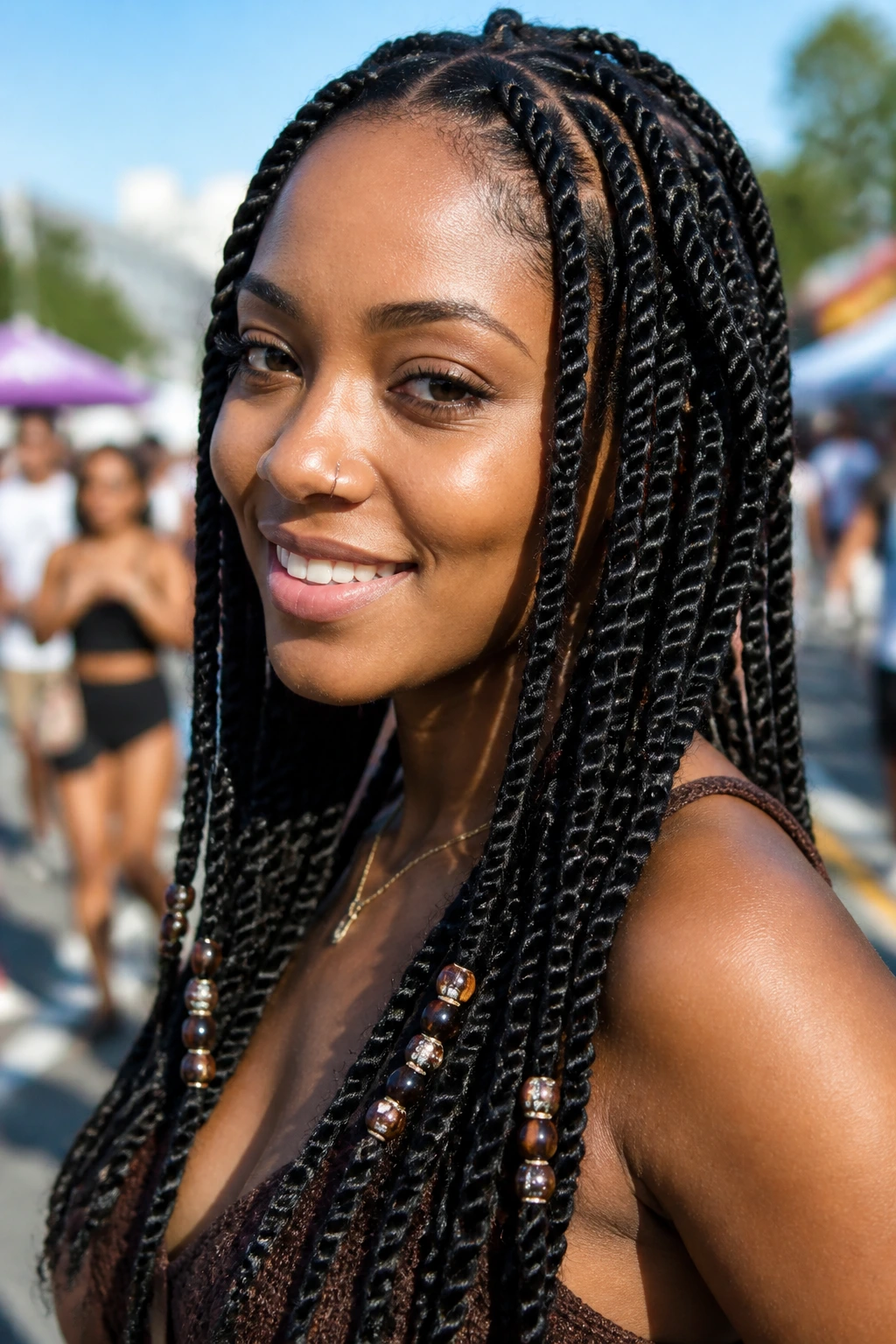
Beads on the ends of passion twists change the sound, the swing, and the mood all at once. It’s a small detail, but it gives the style a little weight and a little edge, especially when the beads are only placed on a few twists instead of all of them. Too many beads can tip it into costume territory. A few well-placed ones stay chic.
I like clear, wooden, or matte-finish beads because they don’t fight the texture. Shiny plastic beads can work too, but then the whole style needs to stay simple. The point is contrast, not clutter.
Quick placement notes
- Put beads near the bottom third of the twist so the hair still moves.
- Keep the front lighter than the back if you want the face to stay open.
- Use matching bead sizes for a cleaner finish.
This style makes a nice choice for festivals, trips, or any day you want the hair to do something extra without changing the base install. It’s playful in a way that still feels grown.
15. Side-Swept Passion Twists
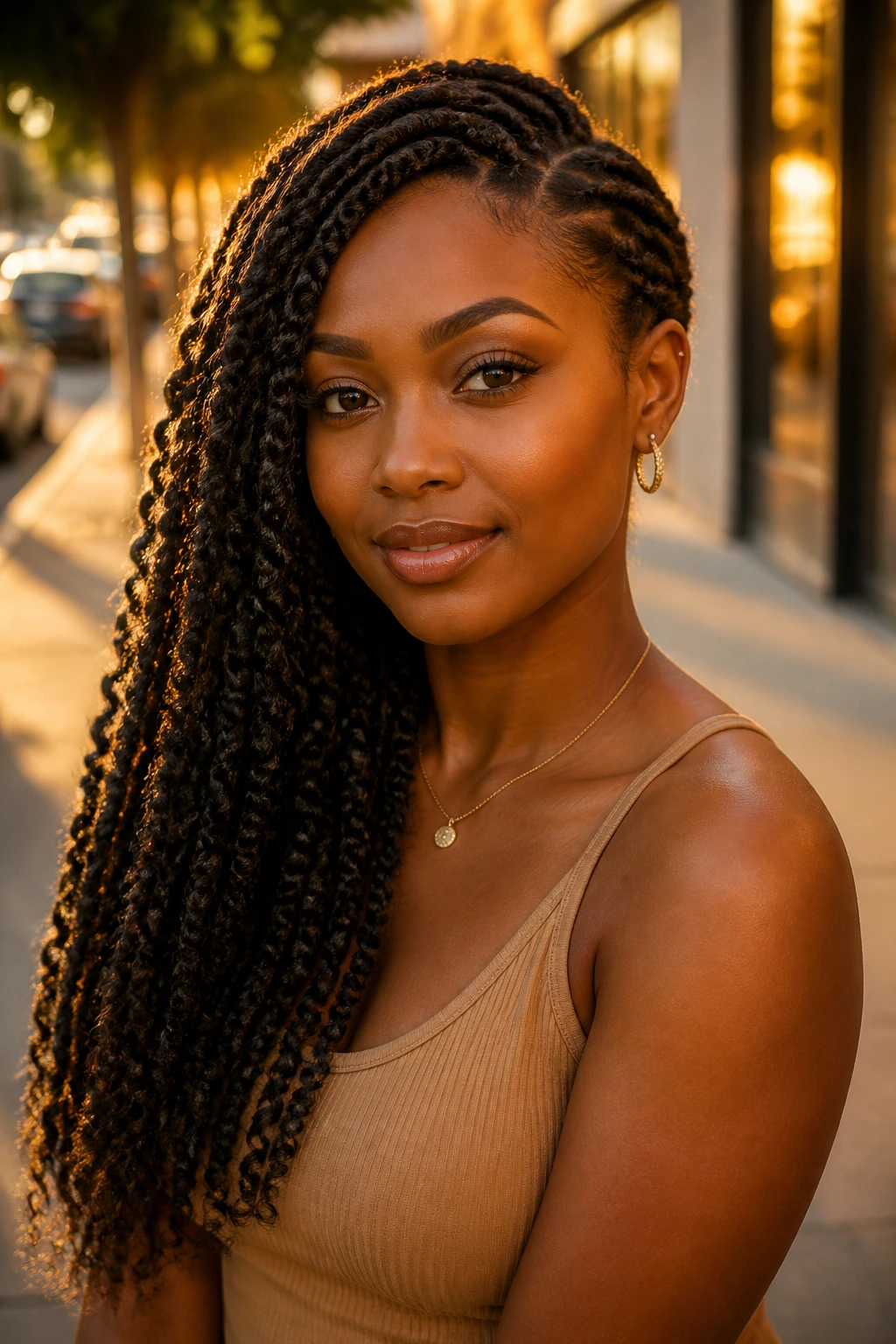
Side-swept passion twists give you drama without forcing the hair into a hard updo. All the movement falls over one shoulder, and the style creates a long diagonal line across the body. That line matters. It makes the twists feel more styled than simply worn down.
The best side-swept sets have a little grip at the roots on the opposite side so the hair stays where it’s placed. A soft pin at the nape usually does the job. I’d keep the sweep loose enough that the front still moves when you walk. Frozen hair is not the goal.
This look is especially good with long earrings, open necklines, and twists that have a bit of curl at the ends. It looks put together without asking for a full formal updo, which is a nice middle ground when you want polish but not stiffness.
16. Passion Twists with a Silk Scarf Wrap
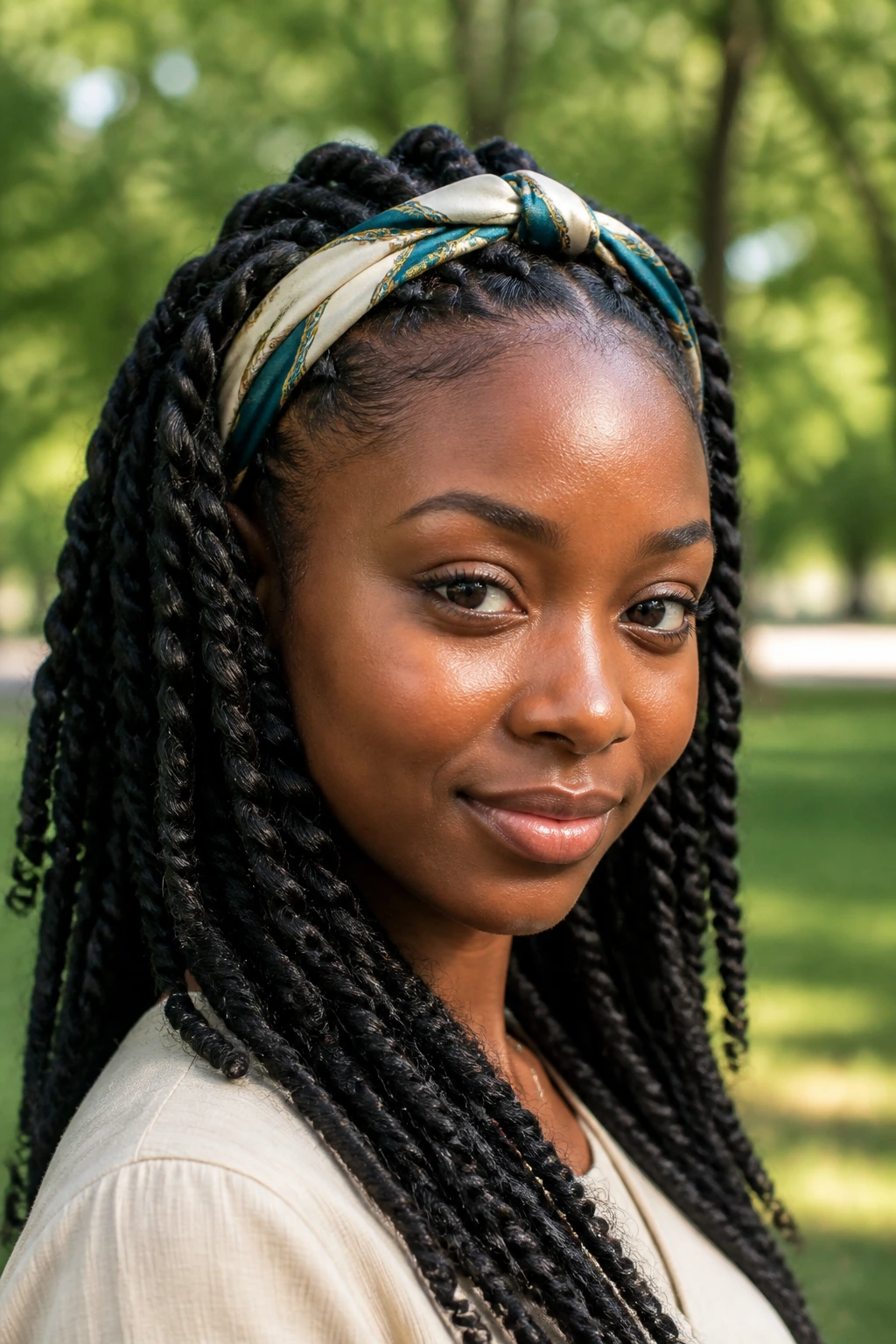
A silk scarf changes passion twists fast. Wrap it around the hairline, tie it at the crown, or fold it into a band that peeks through the front, and the whole style gets a little more intentional. The scarf can calm down a busy set of twists, especially if the roots need a reset but the rest of the hair still looks good.
The right scarf is not too bulky. Thin silk or satin folds better and sits closer to the head. Heavy fabric can push the twists around and create odd lumps at the front, which defeats the point. Keep the knot low-profile unless you want the scarf itself to be the main event.
Style note
This is one of the easiest ways to make an older set of twists feel fresh again. A scarf near the hairline hides frizz, protects the edges, and gives you a color note that can tie in with your clothes. I use that trick all the time when I want the hair to feel styled without adding more product.
17. Layered Mid-Back Passion Twists
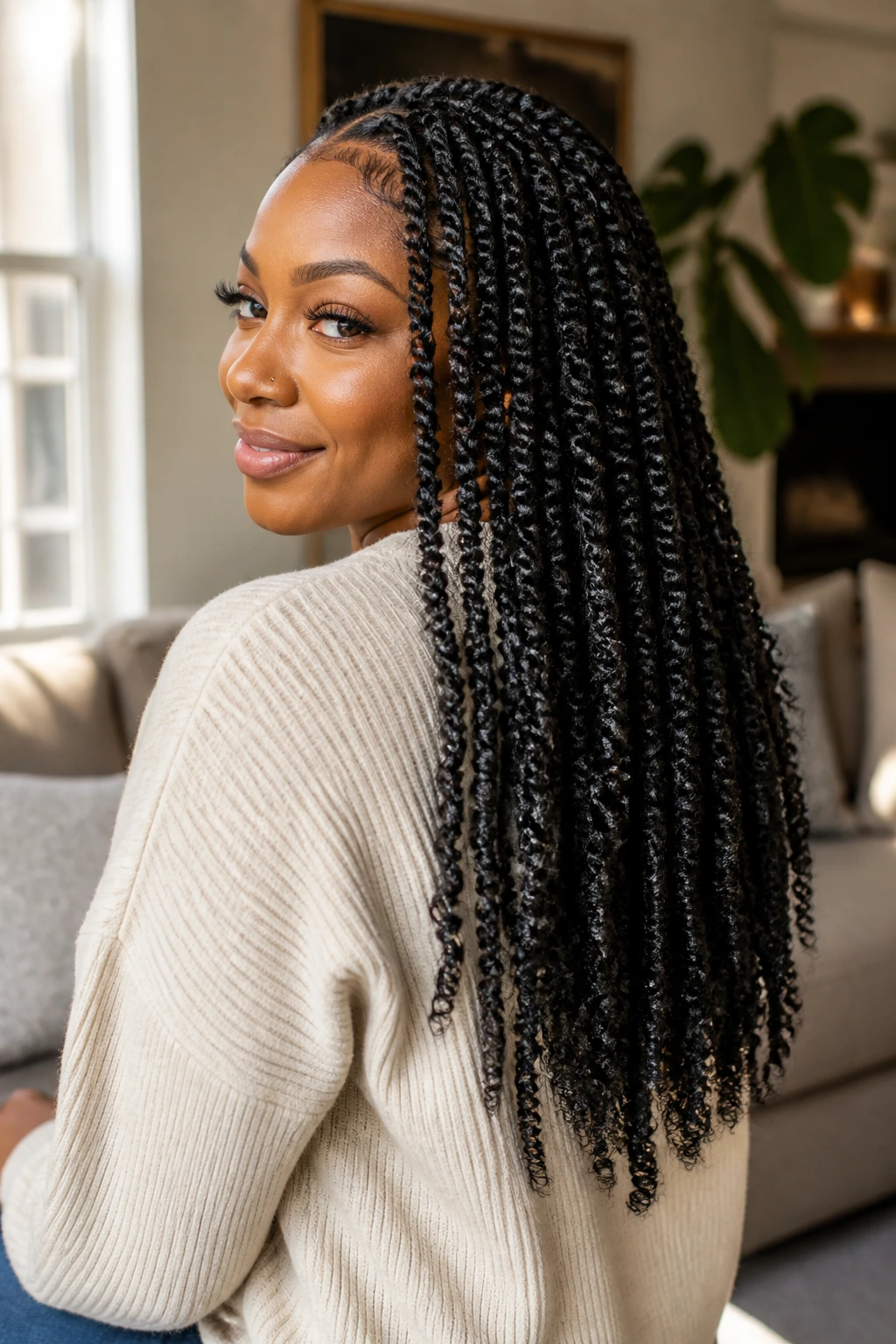
Layered mid-back twists are a smart middle ground between short and long. The lengths vary a little through the head, so the style moves more freely and doesn’t hang as one blunt sheet. That layer shift is subtle, but on twist hair it matters. You see it when the strands separate as you turn.
I like this shape because it keeps the style from getting too heavy in the back. If every piece is cut to the same point, mid-back twists can feel a little blocky. Layers break up that block and let the ends live with more movement.
This version works well when you want long-hair energy without waist-length maintenance. It’s also easier to tuck under a scarf or into a coat collar. Not glamorous, maybe. Very practical. And honestly, practical wins more often than people admit.
18. Low Puff Passion Twists
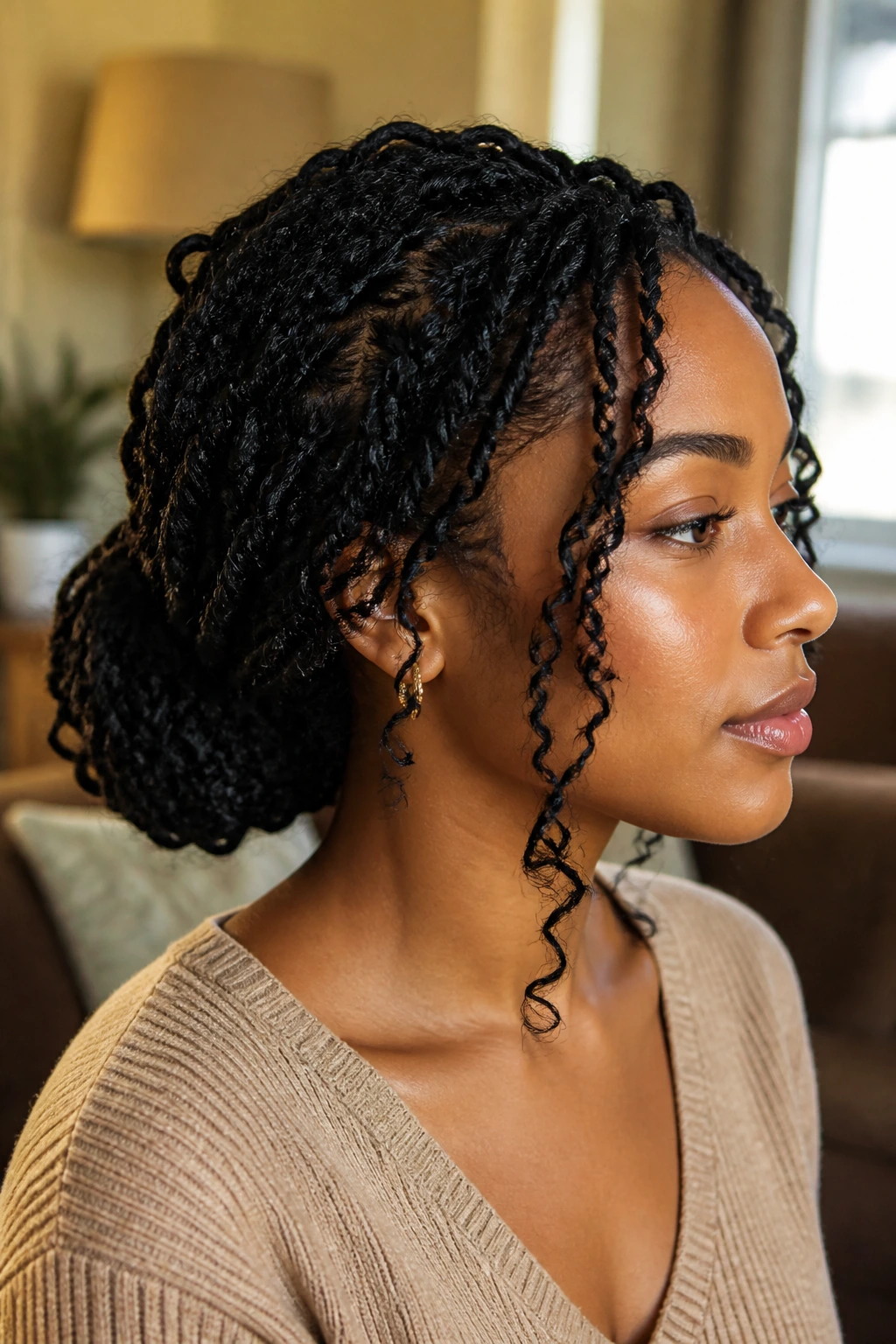
A low puff made from passion twists gives you a softer, more relaxed updo. Instead of pulling everything high, you gather the twists low at the nape or just above it, then let a few pieces loosen around the face. It keeps the hair secure without making the style feel severe.
The low puff looks best when the crown stays smooth. If the front is puffy or frizzy, the shape starts to drift. Use a light brush, a little mousse, and a soft band that won’t snag. The goal is a neat top with a full, rounded bottom.
Why it’s useful
This style is good for active days, long work shifts, and any moment when you want the hair off your shoulders but don’t want a tight bun. It also works well if your twists are slightly older and you want to tuck the lengths away without hiding the whole style.
19. Vacation-Soft Passion Twists
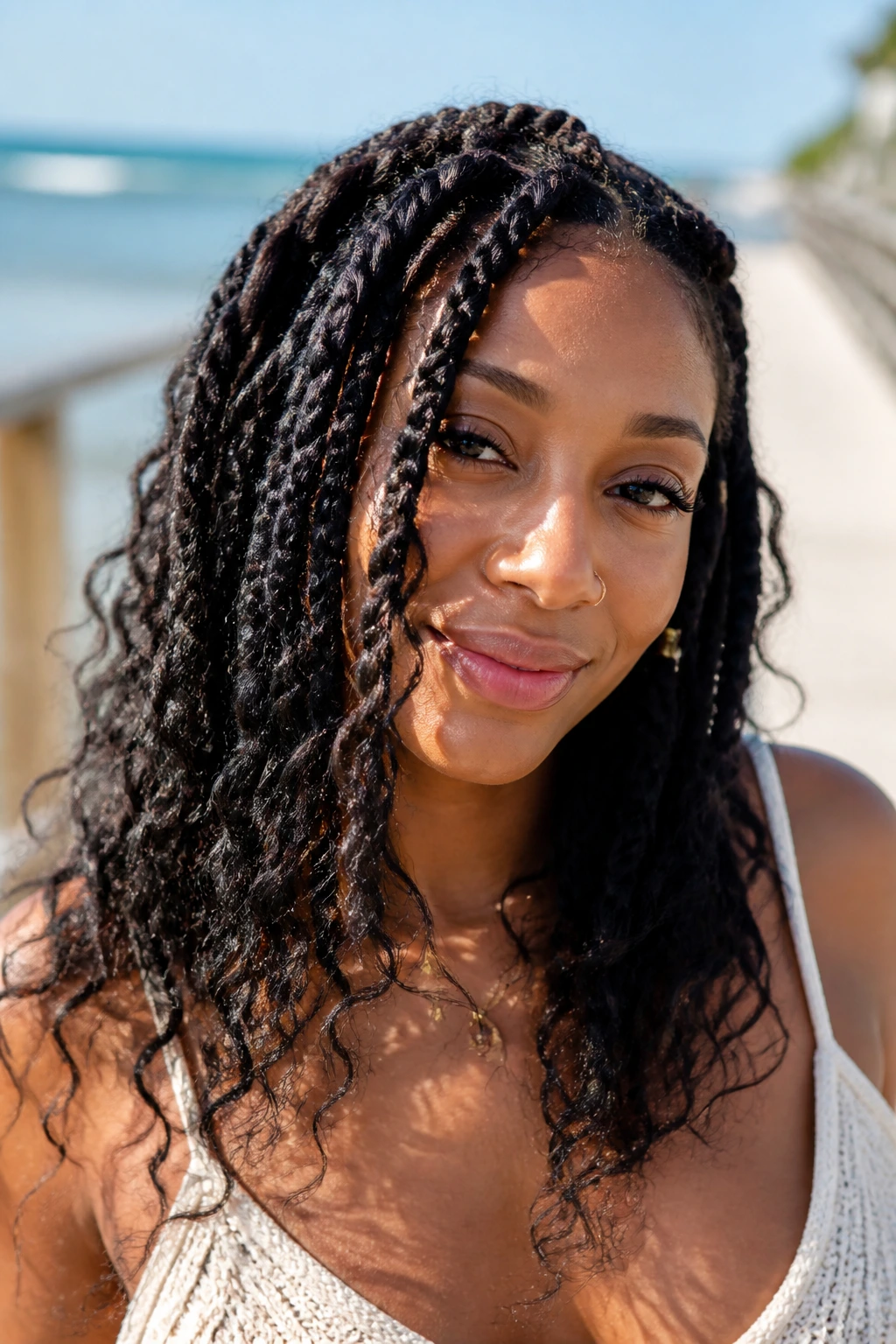
Vacation-soft passion twists lean into loose ends, airy texture, and a little frizz at the surface. They look like the style has been worn, moved in, and lived with rather than pressed into a sealed finish. I say that with affection. Not every style should look freshly flattened.
What makes this version special is the way the ends are treated. A slightly looser wrap or a softer curl at the bottom keeps the hair from looking too rigid. If you want the style to feel beachy, the ends need a little freedom. That’s the whole trick.
This look is easiest to wear when the install is not too dense. The lighter the sections, the easier it is for the twists to fall in soft, separated lines. If your hair tends to puff up in humidity, this is a friendlier style than one that depends on sharp edges.
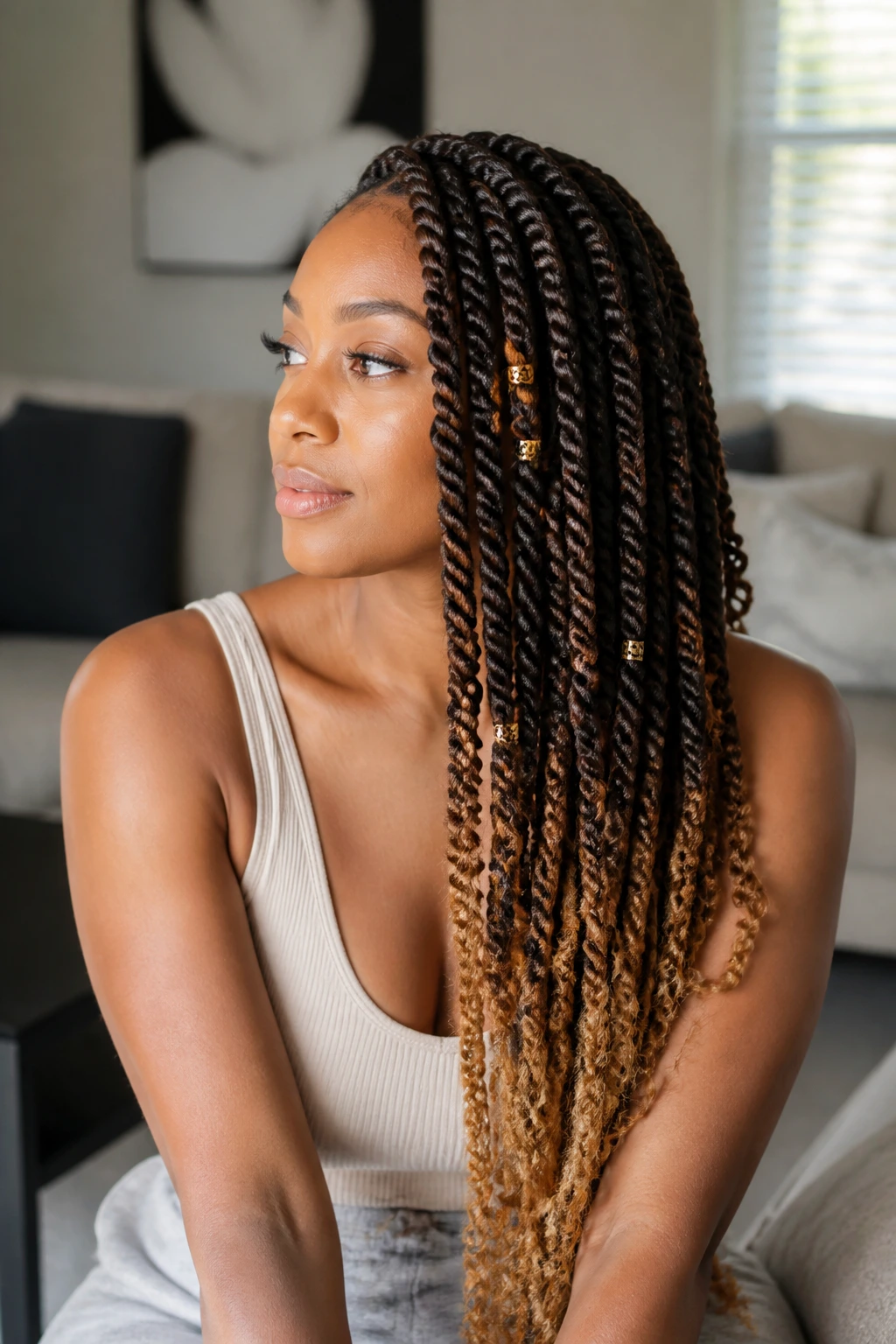
20. Ombre Passion Twists
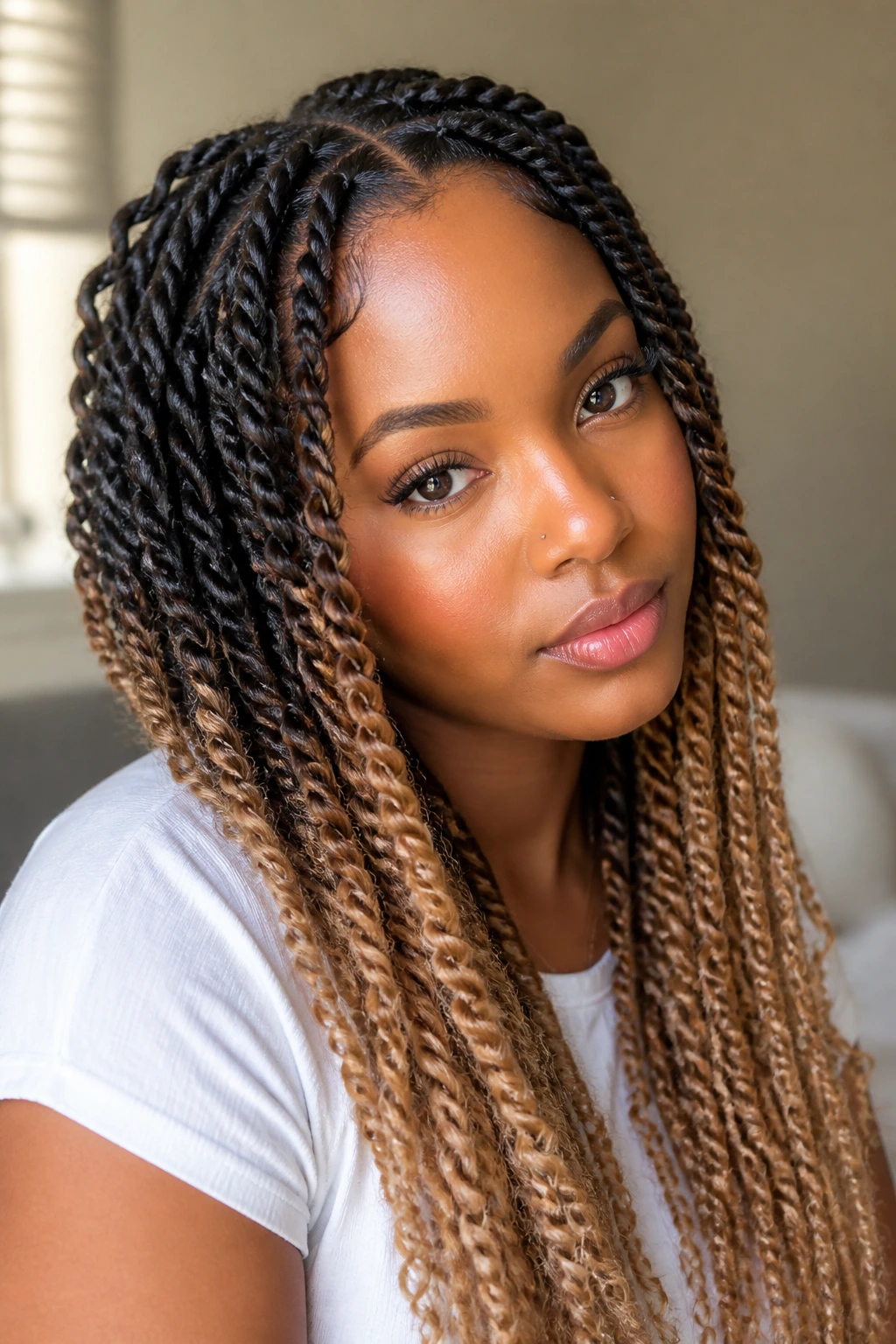
Ombre passion twists give you a gradual color shift that can be quiet or bold, depending on the shades you choose. Black into brown is soft. Black into honey blonde is louder. Either way, the fade creates depth that plain dark hair doesn’t always show on camera or in daylight.
I like ombre because it makes the twists read more dimensional. The eye follows the color transition down the length of each piece, and the twists look layered even when the install is simple. It’s an easy way to add interest without changing the cut or the parting.
If you go light at the ends, keep the root area close to your natural shade. That keeps the style grounded and gives the lighter pieces somewhere to land visually. A good ombre should feel like a transition, not a sharp stripe.
21. Face-Framing Layered Passion Twists
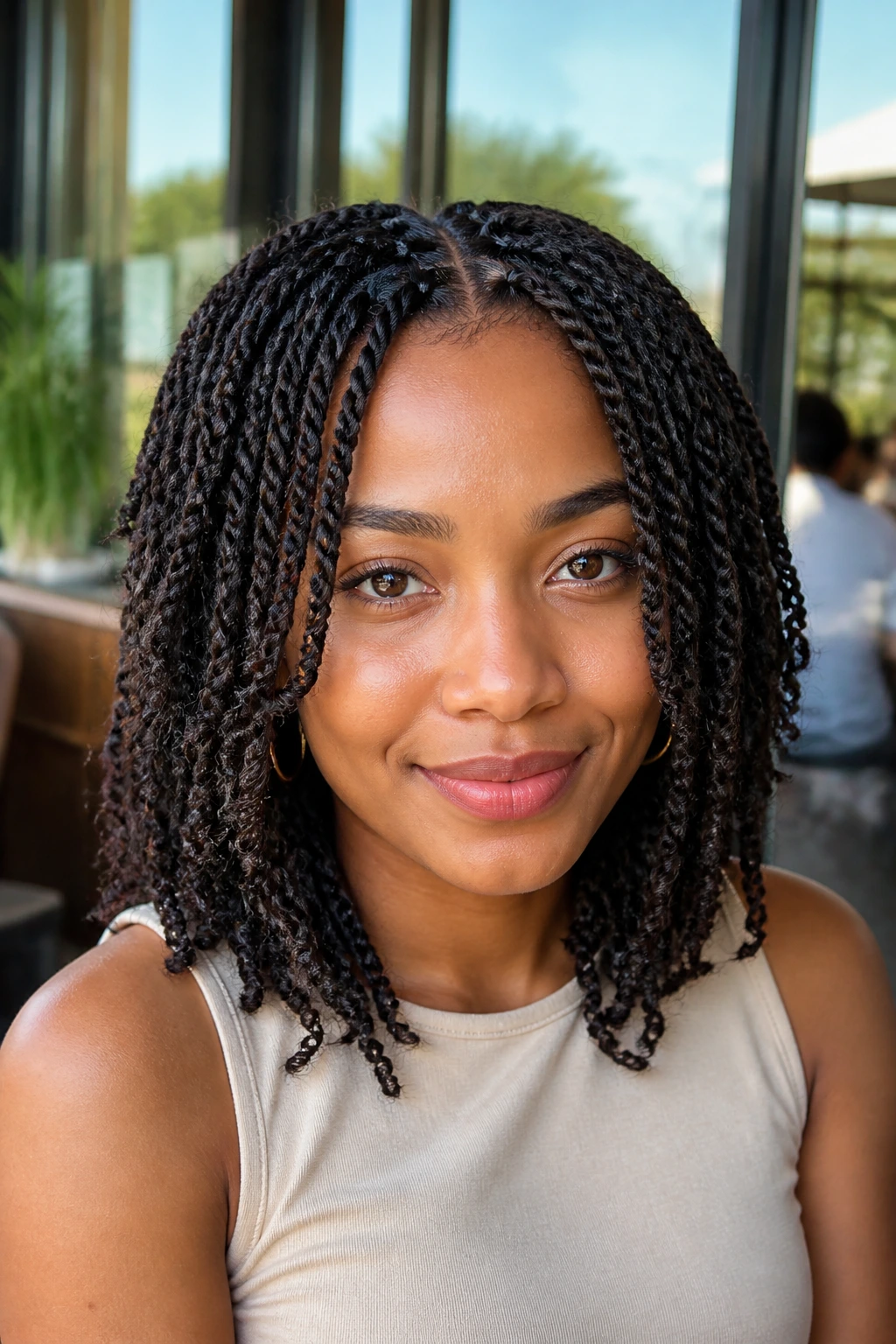
Face-framing layers are one of the smartest ways to make passion twists flatter the face without changing the whole install. Shorter pieces around the cheekbones, jawline, or chin soften the front and break up the weight of longer lengths in back. It’s a haircut effect, even when the hair is synthetic.
The best face-framing layers are subtle. You do not need dramatic chunks unless you want a very stylized look. A few shorter twists at the temples and front can pull attention upward and make the style feel lighter overall.
Useful pairing
This version works especially well with center parts, because the shorter front pieces create shape on both sides of the face. It also plays nicely with large earrings, since the front is doing enough work on its own. When a style gives you built-in framing, you can keep everything else cleaner.
22. Curved Cornrow Base Passion Twists
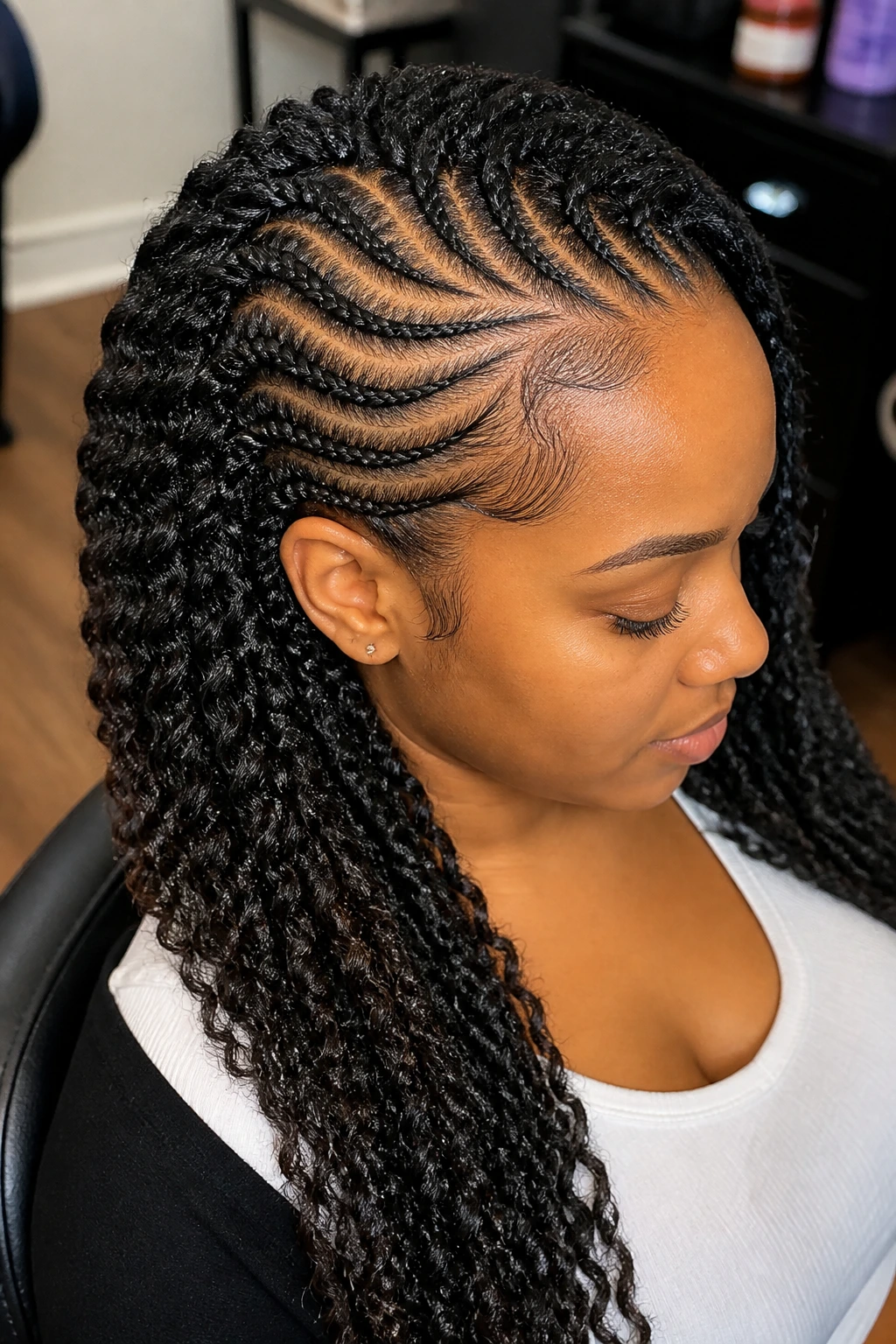
A curved cornrow base gives passion twists a foundation that feels designed instead of purely functional. The parts arc, bend, or swoop instead of moving in straight rows, and that little change makes the scalp pattern part of the look. It’s subtle until the hair is pulled into a bun or half-up style, then the pattern shows off.
This base is for someone who likes detail. It takes more planning than straight rows, but the payoff is a softer, more decorative scalp map. If you enjoy styles that look interesting even when they’re tied back, curved bases are worth asking for.
The important part is symmetry. The curves do not need to be identical, but they should echo each other. If one side swirls and the other side looks accidental, the style loses the point. Clean curves read as artful. Random ones do not.
23. Crochet Passion Twists
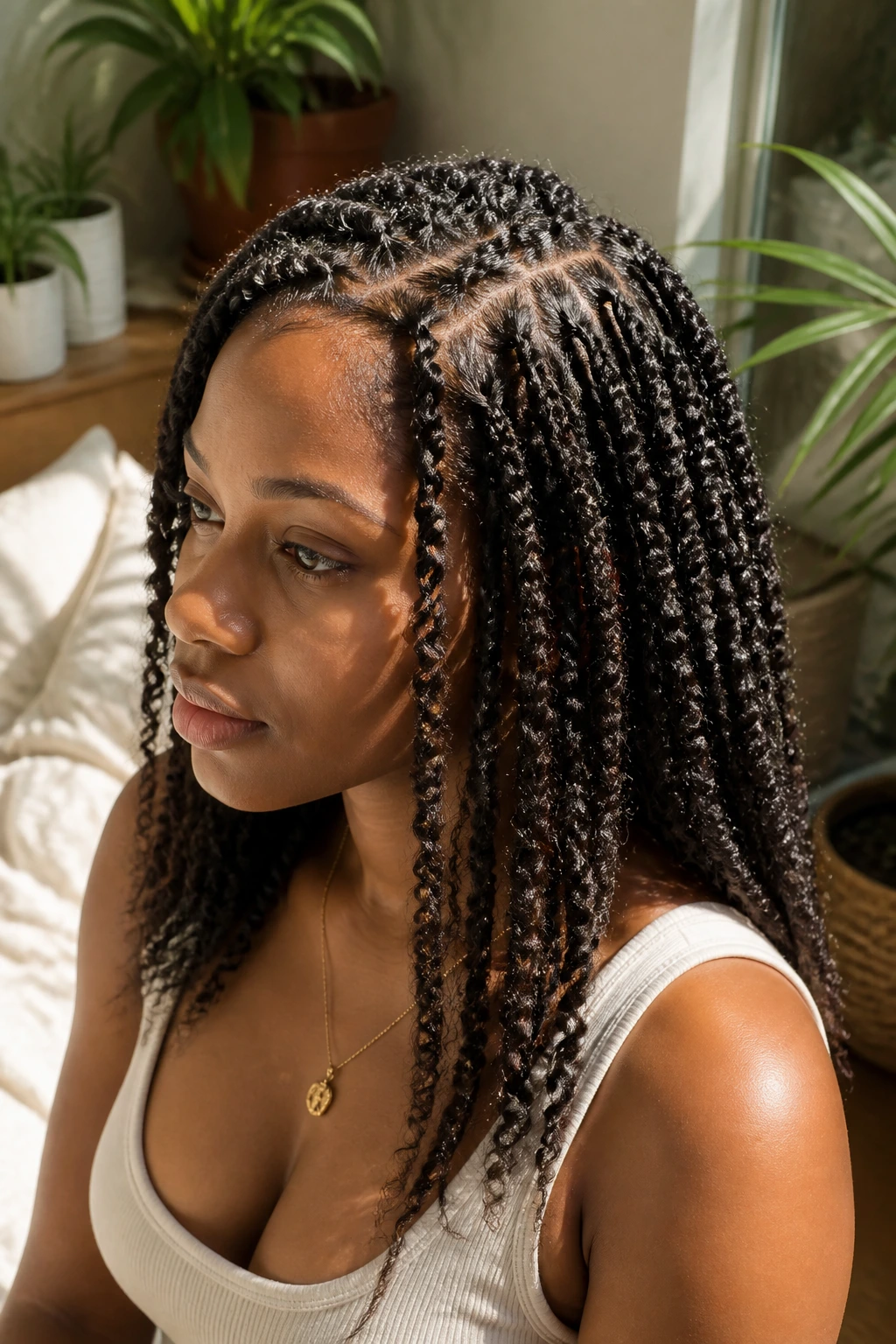
Crochet passion twists are the speed option, and speed can be a blessing when you want the look without sitting for hours. The pre-twisted hair is attached to cornrows with a crochet hook, which means the overall install can move faster than hand-twisted sections. You still get the texture. You just get it sooner.
The style looks best when the cornrow base is laid flat and the crocheted pieces are spaced evenly. If the foundation is bumpy, the hair sits strangely no matter how nice the twist pattern is. People forget that part. They focus on the visible twists and skip the base. Bad idea.
Where it shines
Crochet passion twists are useful for people who want to change styles more often or need a faster install before an event. They also work well if you’re cautious about tension, since the base can be lighter than a tight hand-twisted style. Just make sure the crochet points are secured well enough that the twists don’t migrate or loosen too quickly.
24. Knotless-Root Passion Twists
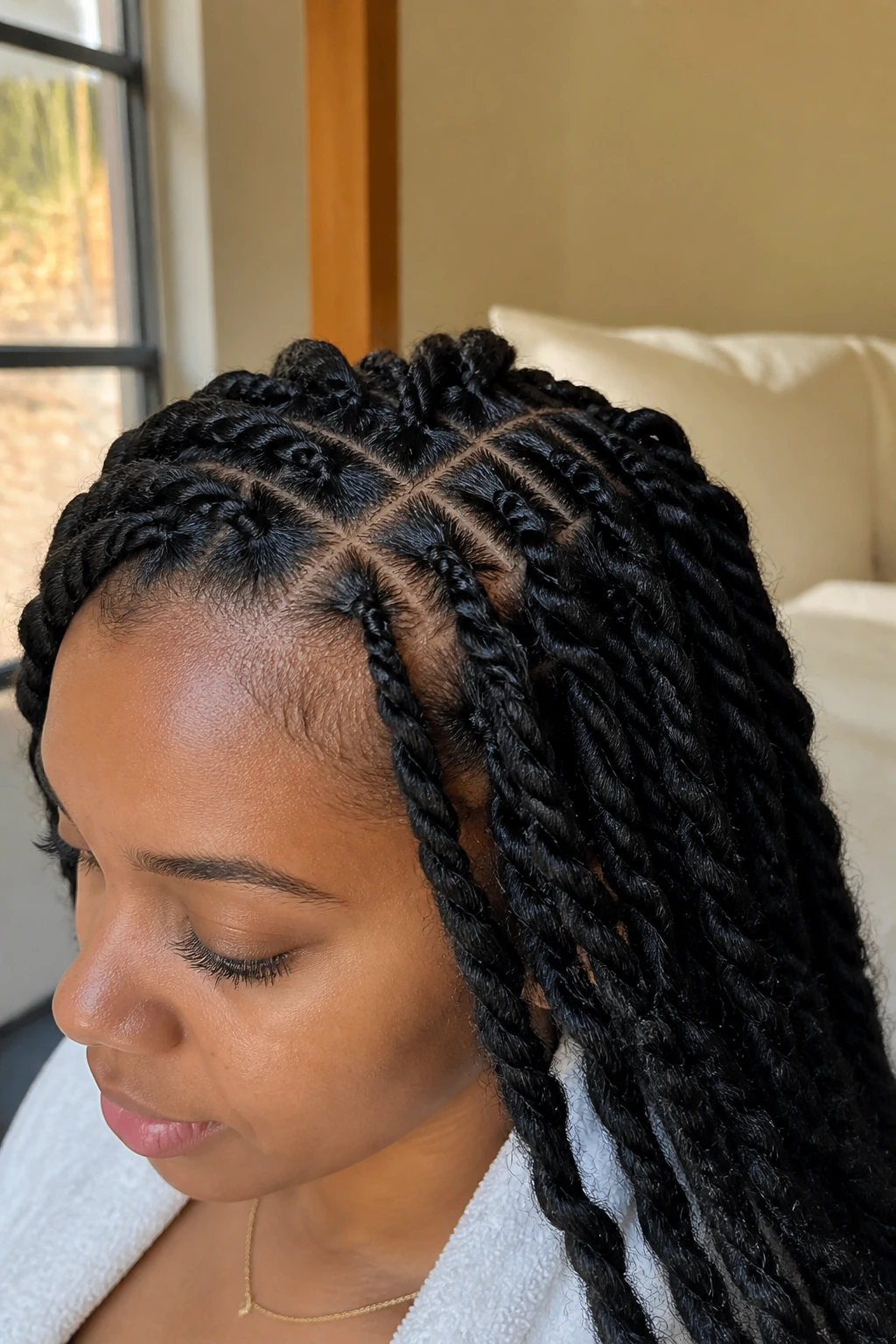
Knotless-root passion twists give you a softer start at the scalp, which can help the style feel less heavy at the base. The transition from natural hair to extension hair is more gradual, so the roots sit flatter and the finish looks less bulky. That’s the appeal. You get the twist without the obvious lump where it begins.
This version is especially useful if you want a cleaner hairline or if your scalp gets tired from bulky starts. The knotless effect keeps the first inch or so from shouting for attention. That makes the whole style feel lighter, even when the twists themselves are long.
I’d call this one a comfort-first choice that still looks polished. It’s not the flashiest idea in the collection, but it’s one of the easiest to live with. And that matters more than people think once you’re wearing the style for more than a few days.
25. Wet-Look Passion Twists
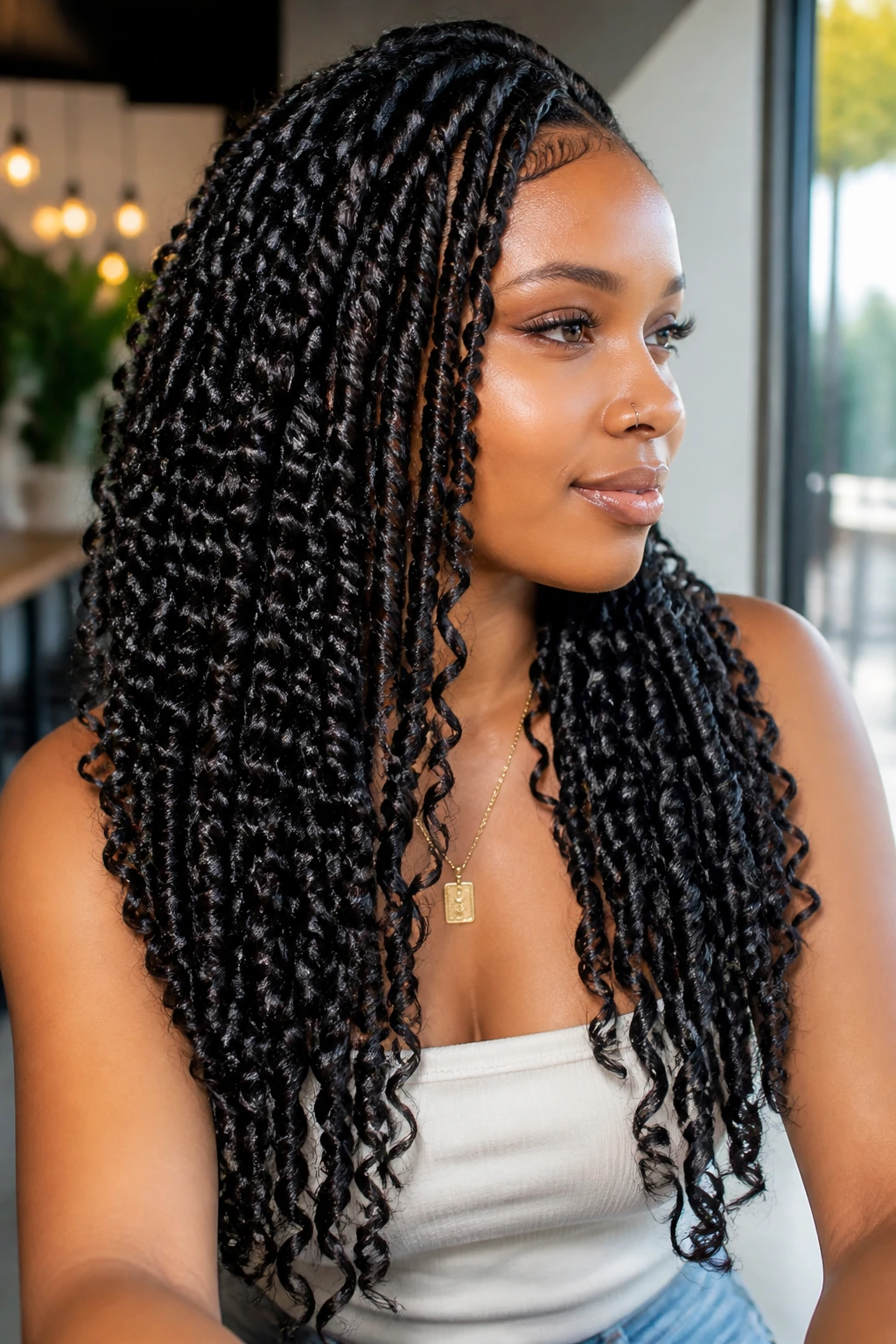
Wet-look passion twists have a glossy finish that makes the texture look freshly set, even when the hair is a few days in. The shine usually comes from a light mousse or setting foam, not thick gel, so the twists stay flexible instead of turning hard. That flexibility is the whole point.
The finish works best when you keep the sheen concentrated on the outer surface and not dripped through the entire length. Too much product can make the hair look greasy instead of polished. You want a controlled gloss, the kind that catches light without flattening the rope pattern.
This style looks especially good in medium to long lengths because the shine has more surface to travel across. It’s one of the few looks that can feel dressed up even when the outfit is just a tank top and jeans. Small effort. Strong result.
26. Gold Cuff Accent Passion Twists
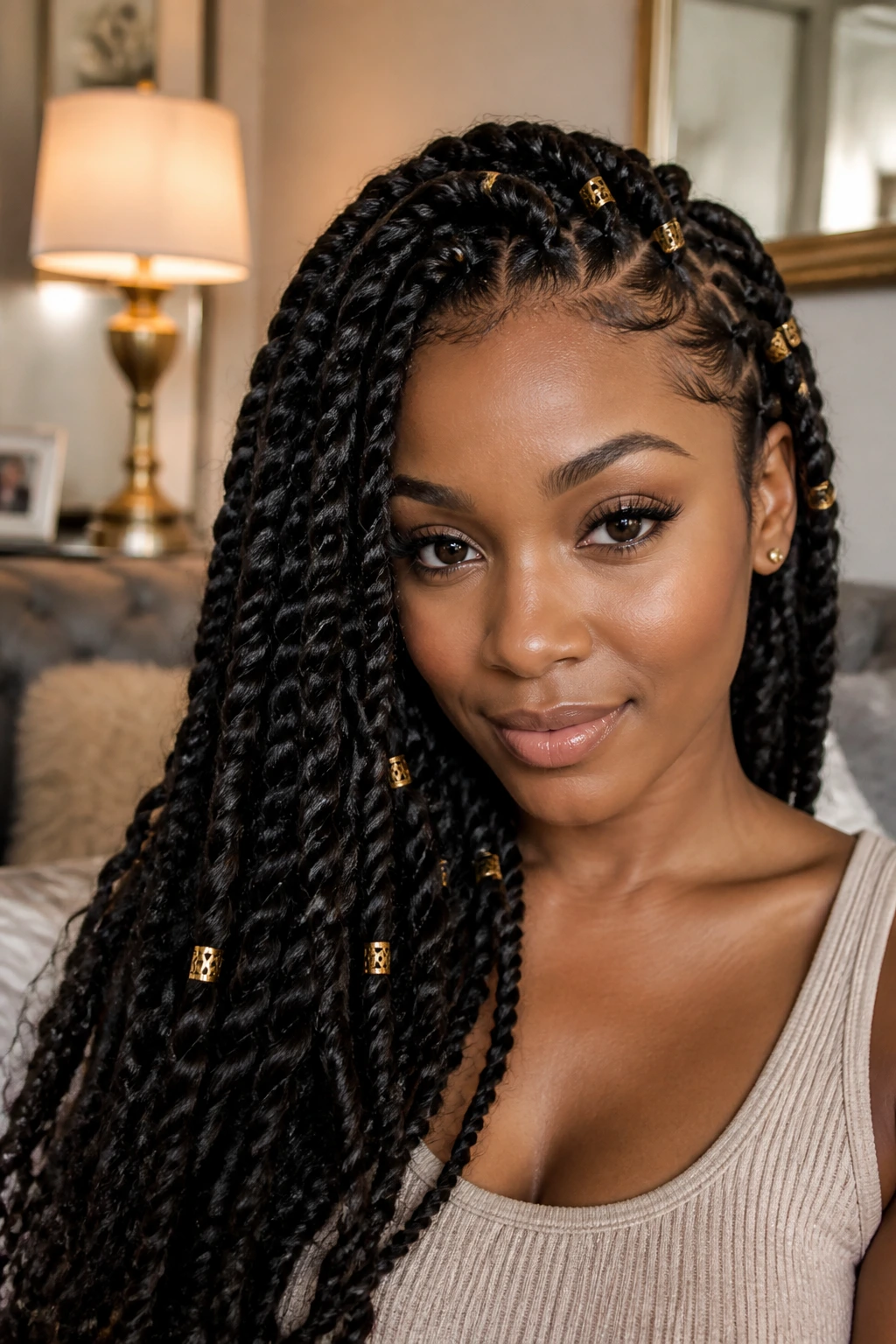
Gold cuffs are the easiest way to make passion twists feel finished without changing the install. A few cuffs placed near the front or around the crown can frame the face and break up a very plain set of twists. The trick is restraint. You do not need every twist decorated.
I like gold cuffs because they reflect light and sit neatly against dark or brown hair. They also work on colored twists, but then the placement matters even more. If the hair already has a lot going on, use fewer cuffs. Let them punctuate the style instead of crowding it.
Placement advice
- Put cuffs near the middle or lower third of a twist for visible movement.
- Use two or three accents near the front, then stop.
- Mix cuff sizes only if you want a more casual, mixed-metal feel.
This style is a fast fix for a plain set that needs a little life before a dinner, party, or photo day. No major restyle needed. Just a few clicks of metal and you’re done.
27. Two-Tone Blonde and Brown Passion Twists
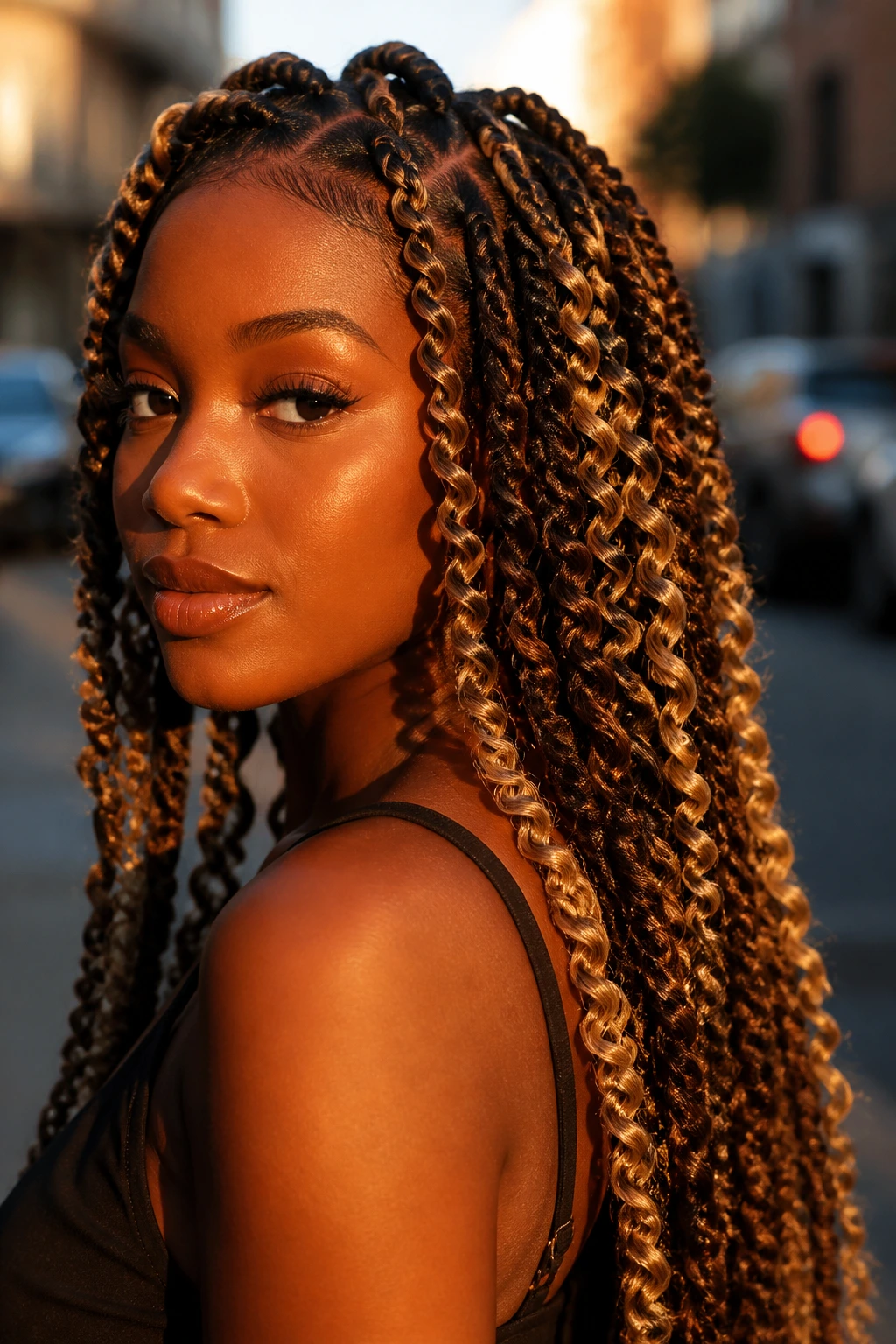
Two-tone blonde and brown passion twists give you contrast without pushing the whole head into one bright color family. Brown keeps the base grounded. Blonde adds lift. Together, they create a striped or blended effect that can make the twists read thicker and more textured than they really are.
The success of this look depends on placement. If the blonde pieces are scattered too randomly, the style can look patchy. Better to decide whether you want a blended fade, peekaboo streaks, or face-framing light pieces. One idea. Commit to it.
This is one of the most photo-friendly styles in the bunch because the color difference shows up immediately in light and shadow. It’s also surprisingly forgiving when the hair starts to soften with wear, since the color contrast keeps the shape interesting even if the twist surface gets a little fuzzy.
28. Waist-Grazing Statement Passion Twists
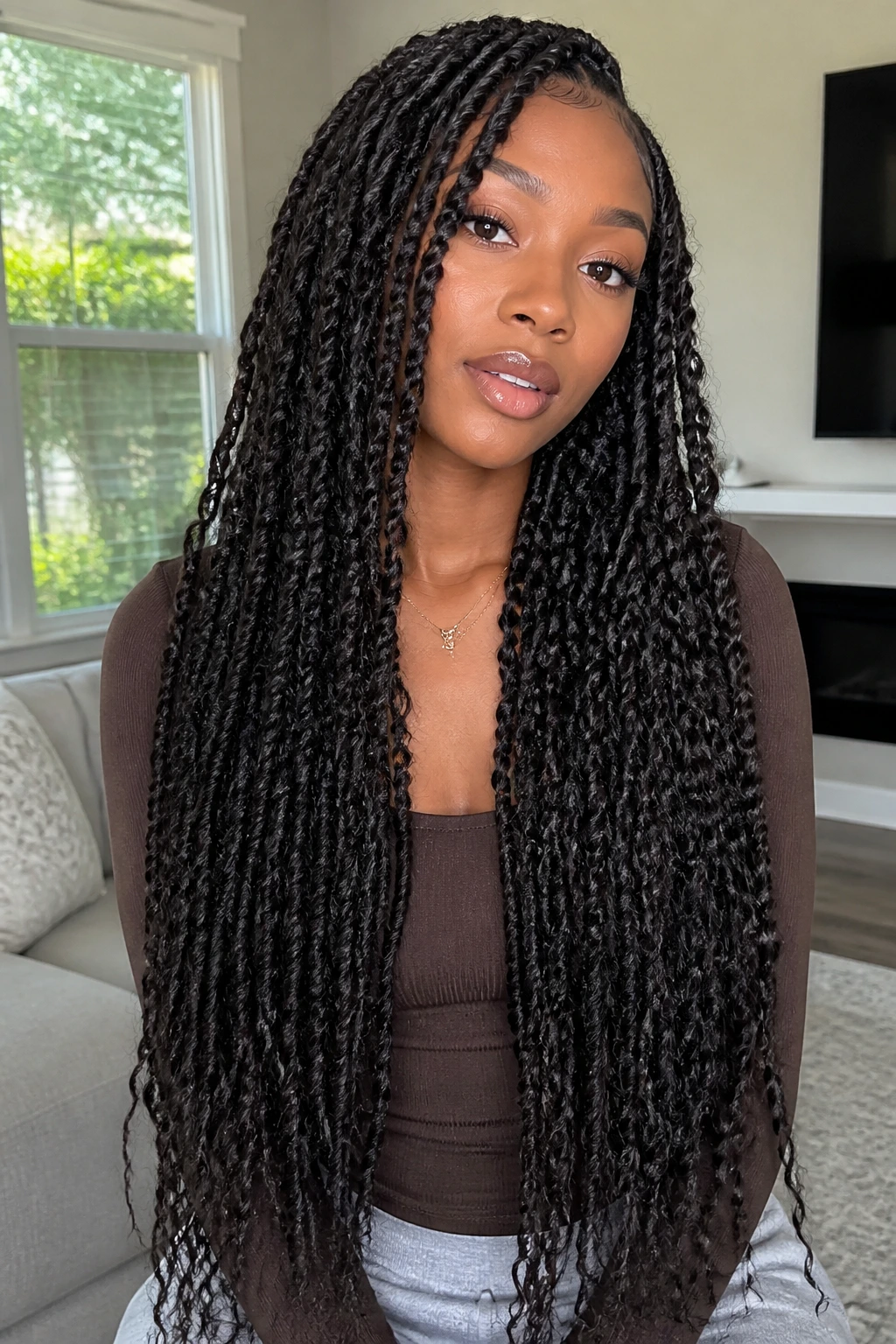
Waist-grazing passion twists are pure presence. They are long enough to brush the lower back, catch on a chair if you’re not paying attention, and swing with more force than shorter sets ever will. That can be annoying. It can also be gorgeous. Both things are true.
The style works best when the sections stay light and the roots are not overloaded. Long twists need balance. If the base is too heavy, the style pulls on the scalp and loses its clean line. If the sections are too tiny, the install turns into a marathon. There’s a middle lane, and that’s where this style lives.
I’d wear this version when I want the hair to be the main feature. It doesn’t need much else. A clean part, a soft sheen, and maybe one accessory at the front are enough. Anything more can crowd the length.
What Makes Passion Twists Stay Soft Instead of Stiff
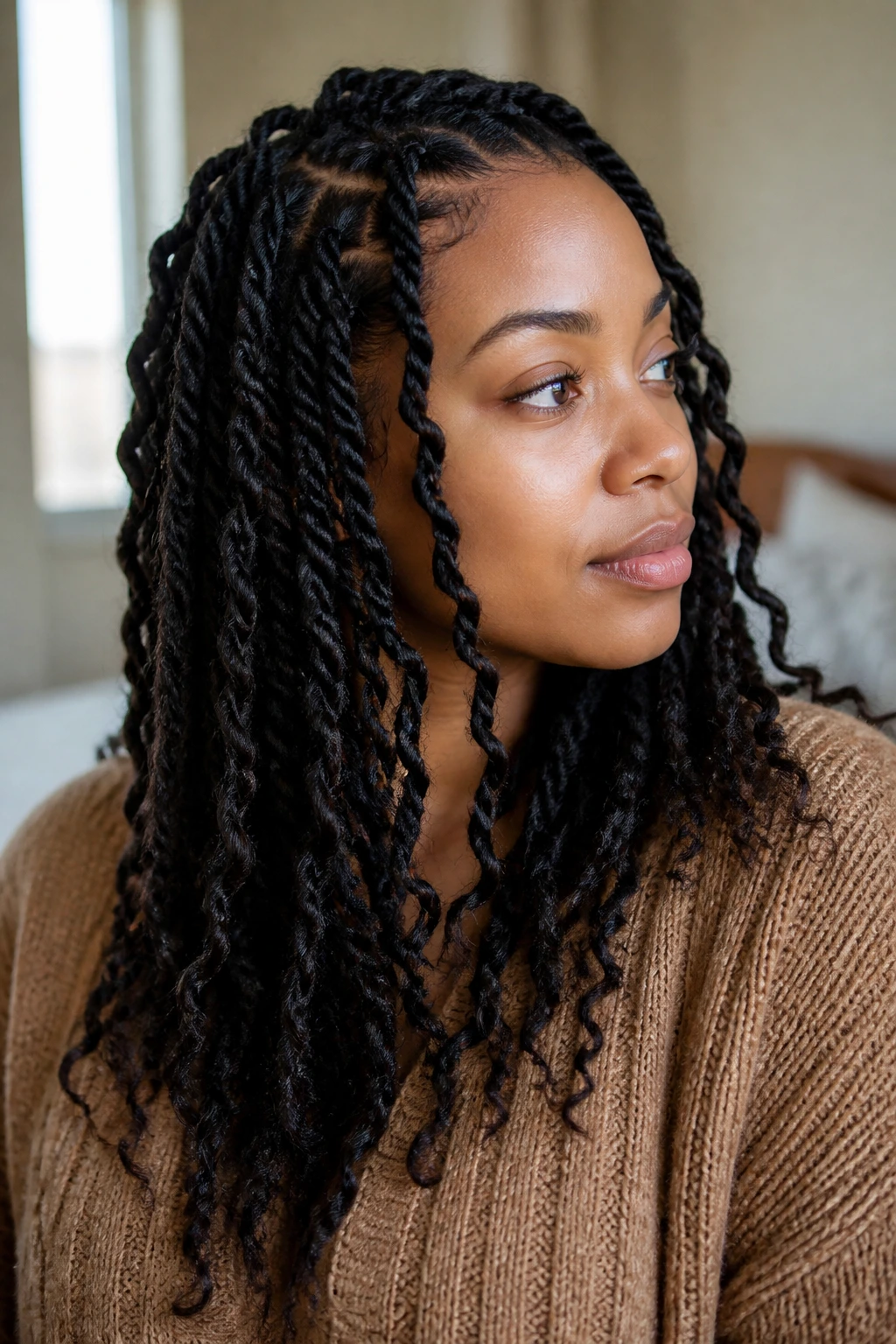
The softness comes from three things working together: the hair texture, the section size, and the way the twists are finished. If the extension hair has enough wave to it, the twist won’t look too manufactured. If the sections are even, the style settles in the same direction. And if the ends are left with a bit of movement instead of glued into place, the whole set feels lighter.
A lot of people think the finish is about shine alone. Not really. Shine helps, but only if the hair still has movement underneath it. Too much product can flatten the wave pattern and make the twists clump. I’d rather see a little frizz and motion than a helmet-like finish that lasts two days and then looks tired.
There’s also the matter of tension. A tight base might look crisp on day one, but it often stops feeling nice long before the style should. Clean parting matters. Gentle tension matters more. If you can run a finger along the root and it feels secure but not sore, that’s the sweet spot. Passion twists should feel worn, not fought with.
The Tools That Make These Styles Easier to Wear
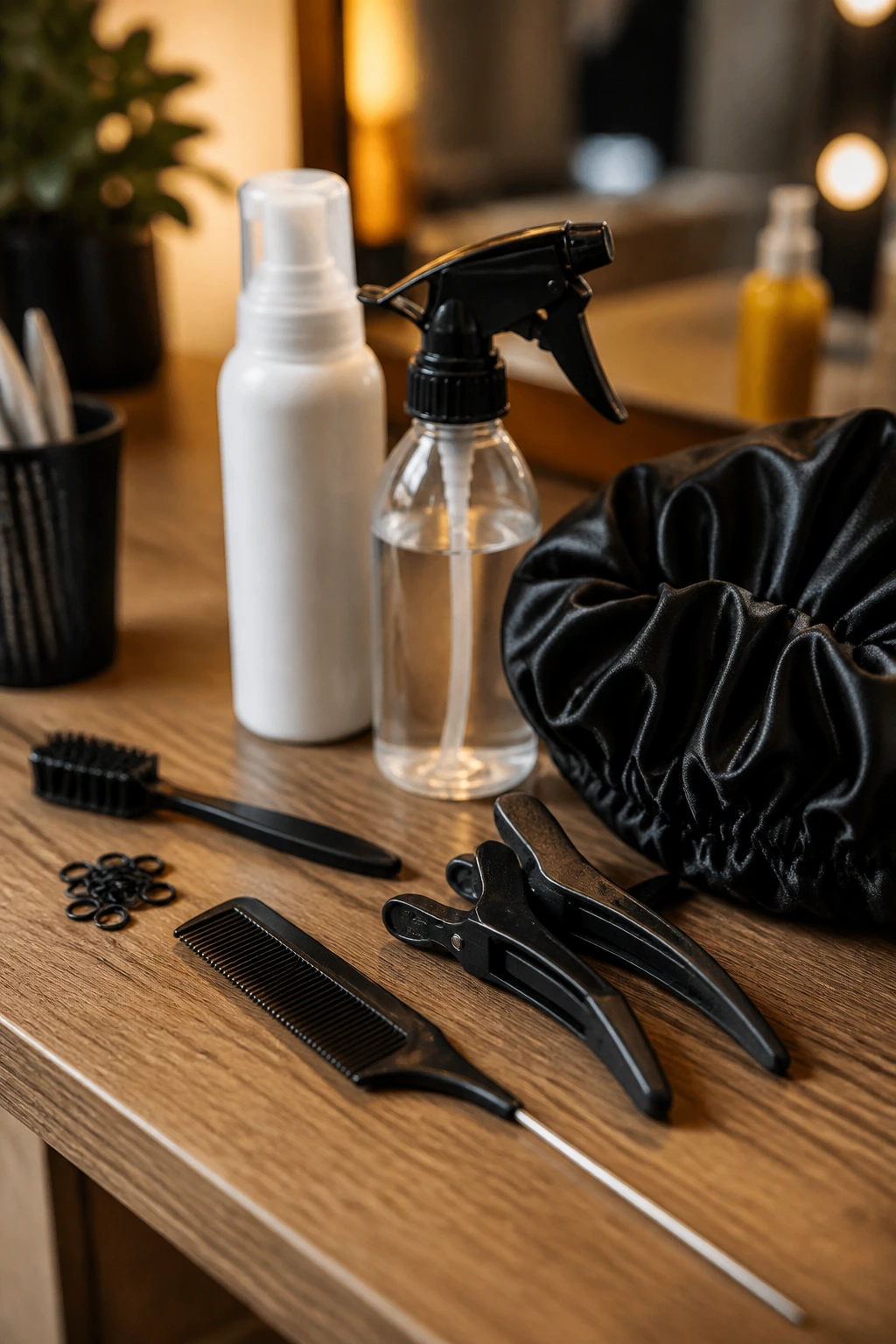
You do not need a drawer full of salon gadgets to keep passion twists looking good. A few practical tools do most of the work, and the best ones are the boring, useful kind.
- Rat-tail comb: Clean parts and sharp sections start here. A metal-tail comb is handy, but a sturdy plastic one works fine if it glides well.
- Duckbill clips: These keep the top layers out of the way during styling and help hold half-up sections without snagging.
- Light mousse or setting foam: Use this to settle frizz, shape the twists, and refresh older installs without weighing them down.
- Soft edge brush: Good for smoothing the hairline without scraping the skin raw.
- Satin bonnet or scarf: Night protection is not optional if you want the roots to stay calm and the ends to stay shaped.
- Spray bottle with water or leave-in mix: Useful for light refreshing, especially on boho or curled styles.
- Small elastics and snag-free bands: These matter for half-up looks, buns, and low puffs.
- Hair oil or scalp serum: Use sparingly at the part lines, not all over the twists. A little goes a long way.
- Beads, cuffs, or clips: Optional, but they’re the fastest way to change the mood of a set without redoing the whole head.
Choosing the Right Hair, Length, and Finish
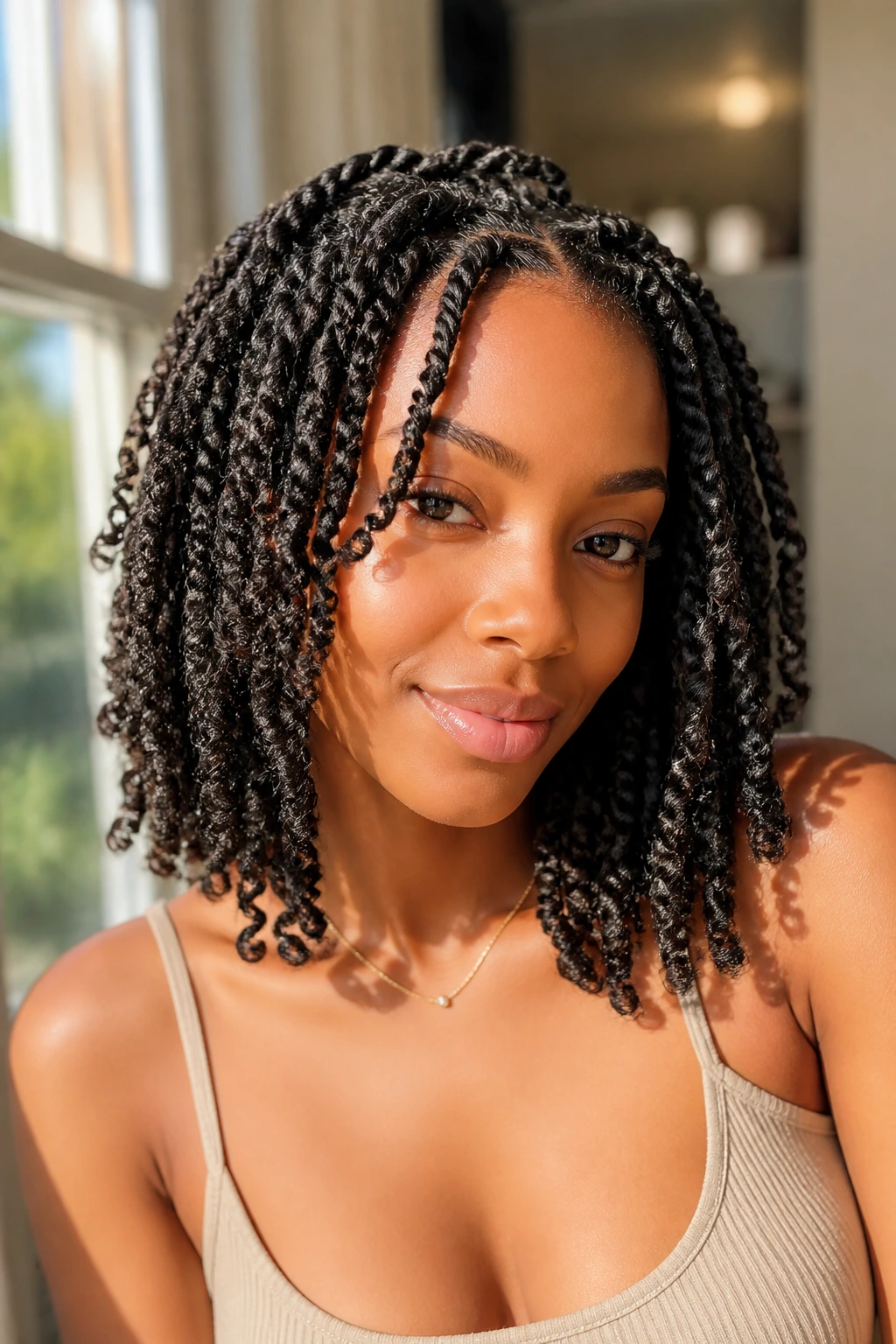
Shopping for passion twist hair is part texture test, part common sense. The hair should have enough slip to twist cleanly, but not so much shine that it looks plastic in daylight. Water-wave and passion-twist-specific hair usually work because they have that soft bend that helps the twist hold shape while still moving a little.
Length changes everything. Shoulder-length hair is easier to live with and easier to sleep on. Mid-back and waist-length sets give more styling options, but they also collect more friction from jackets, car seats, and tote straps. If you know you fidget with your hair a lot, shorter is kinder.
Color should match the rest of your life, not just a sample photo. If you wear mostly black, brown, cream, or denim, dark and warm tones tend to stay useful longer. If you like bold color, choose one accent shade and let the style breathe. And yes, buy an extra pack if your hair is dense or you want fuller ends. Running short halfway through a style is a miserable kind of shopping trip.
How to Wear, Part, and Dress Up These Styles
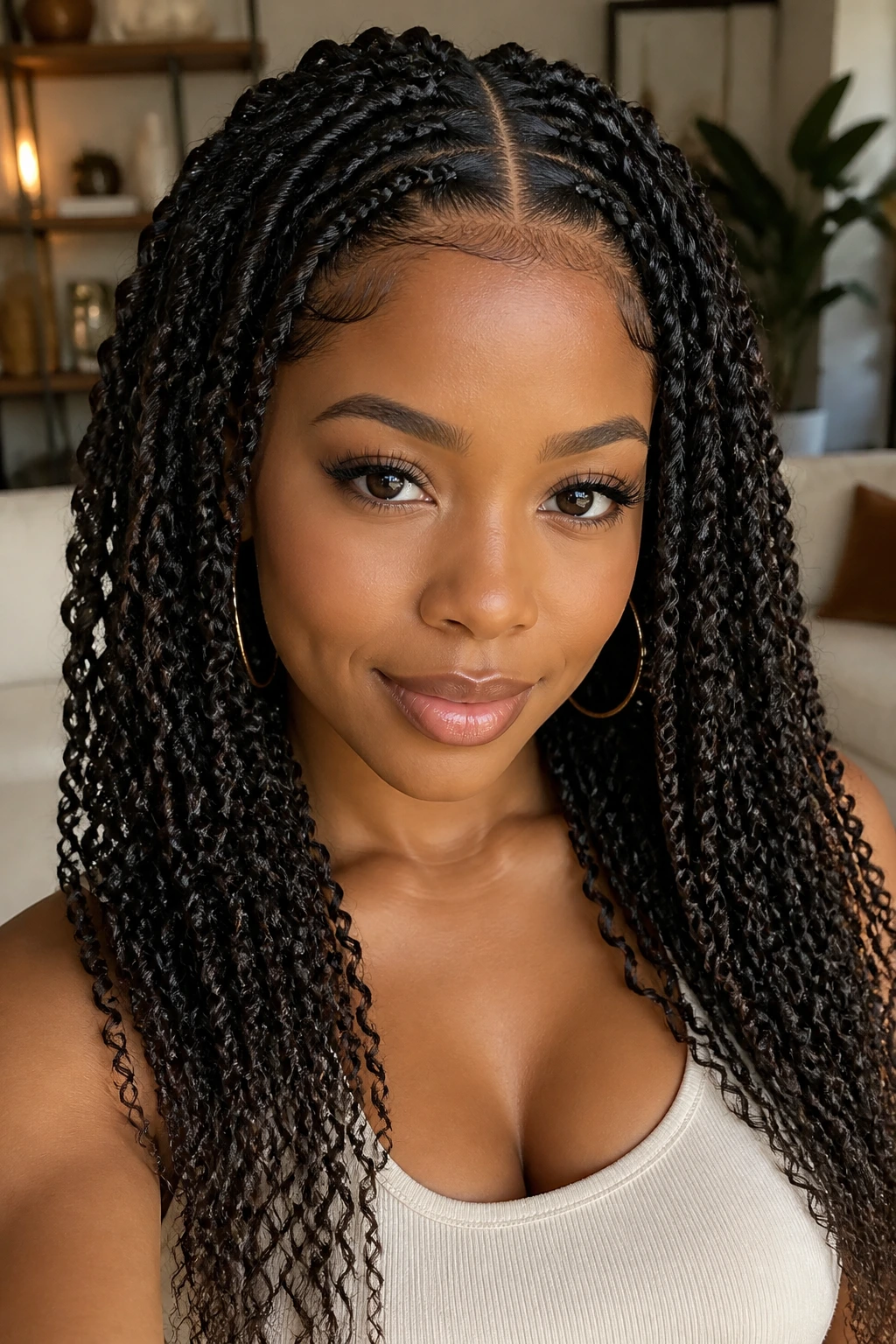
Presentation: Keep the front neat and let the lengths do the work. A clean part, a smoothed hairline, and a soft finish make almost every one of these styles look more intentional. If the roots are puffed out, the whole set reads tired fast.
Outfits: Waist-length and side-swept styles pair well with simple necklines, while bobs and shoulder-length cuts work nicely with collars, knits, and jackets. A high bun or scarf wrap looks best when the outfit already has a strong neckline or statement earrings. Let one thing lead.
Occasions: Smaller twists, triangle parts, and knotless-root styles feel work-friendly. Jumbo twists, boho curls, and gold cuff accents lean more casual or social. Long statement sets can go either way, depending on the finish. A smooth root and minimal accessories keep them from drifting into costume.
Accessories: Cuffs, scarves, clips, and beads all work, but the hair should not compete with every accessory at once. Pick one main accent. Two, if you’re being disciplined. More than that and the style starts to look overfed.
Small Changes That Make a Big Difference
Texture Boost: A light pass of mousse on damp palms can wake up older twists without drowning them in product. Work from mid-length to ends, then let the hair dry fully before touching it again.
Scalp Comfort: If your roots feel tight after install, don’t pile heavy oil on them. That tends to sit there and trap lint. A small amount of light serum at the part line is enough.
Photogenic Finish: Sweep the front pieces away from the face and tuck one side behind the ear. It creates shape quickly, and the earrings get room to show.
Make-It-Yours: Add curls for softness, cuffs for shine, a scarf for color, or a blunt cut for edge. One change is usually enough. The style has enough texture already.
Time-Saver: If you’re styling for the week, set aside ten minutes on day one to separate, smooth, and pin the pieces you know you’ll wear back later. That small prep step saves a lot of scrambling at the mirror.
Keeping Passion Twists Fresh Between Wash Days
Passion twists stay fresher when you protect the roots at night and avoid drowning the hair in product during the week. Satin or silk is your friend. Wrap the hair, pin the loose pieces if the style is long, and sleep on a satin pillowcase when you can. The less friction, the longer the finish holds.
If the roots start to puff, use a little mousse on the affected area and smooth it with your fingers or a soft brush. Don’t wet the whole head unless you mean to reset the style more deeply. A light mist around the perimeter is enough for most touch-ups.
Most sets can be worn for a few weeks before they start to look tired, but the exact lifespan depends on how tight they were installed, how much you sweat, and how often you pull them back. A shoulder-length set usually keeps its shape longer than waist-grazing twists because there’s less rubbing and less weight. If you plan to wash them, go gentle, focus on the scalp, and let the hair dry fully. Damp extensions tucked under a bonnet are a bad idea.
Easy Variations and Adaptations to Try
Low-Tension Version: Ask for looser roots, slightly larger sections, and shorter to mid-back length. This is the version I’d choose for a sensitive scalp or a first install.
Gym-Friendly Version: Go shoulder-length or bob-length, then keep a few claw clips and satin scrunchies nearby. The shorter shape is easier to tie back without stress.
Work-Ready Neutrals: Stick to black, brown, or deep chestnut hair with a clean middle or side part. That keeps the style calm and polished in settings where color gets less room.
Weekend Play Mode: Add curls, cuffs, a scarf, or a deep side sweep. One small change turns a basic install into a styling moment.
Kid-Friendly or Teen-Friendly Style: Choose medium sections, shorter lengths, and light accessories. Too much hair gets annoying fast, and nobody wants a style that turns into a tug-of-war.
Bold Color Story: Use ombre, burgundy, or two-tone pieces, but keep the parting clean and the accessories limited. Let the color carry the look.
Common Mistakes That Make Passion Twists Look Off
The first mistake is pulling the roots too tight. You can spot it by the way the scalp looks shiny, pinched, or sore in the first day or two. The fix is simple, though not always easy: ask for less tension and slightly larger sections around the hairline next time.
The second mistake is using too much product. Heavy mousse, thick gel, and greasy oils can leave white residue or make the twists collapse into each other. The hair should feel soft, not wet and sticky. A small amount goes further than people expect.
Third, don’t choose hair that’s too stiff for the look you want. If the extension hair feels rough and springy in a way that resists movement, the twists can end up looking rigid. Softer textured hair keeps the style loose and easier to refresh.
Another common issue is over-accessorizing. Beads, cuffs, scarves, and clips all have a place. All at once? That usually looks busy. Pick one accent that supports the twist pattern instead of fighting it.
And finally, skipping night care is a shortcut to frizz. The style does not need a spa routine. It does need a scarf, a bonnet, or both. Little things. Big difference.
Frequently Asked Questions About Passion Twist Styles
How long do passion twists usually last?
A well-installed set can last a few weeks with careful night wrapping and light upkeep. Smaller twists and shorter lengths often stay neater longer, while very long or boho styles may soften sooner because they move more and rub more.
How many packs of hair do you need?
That depends on twist size and length, but medium sets often need fewer packs than micro or waist-length styles. If your hair is dense or you want fuller ends, buy one extra pack so you don’t run short halfway through.
Can you wash passion twists?
Yes, but keep it gentle. Focus on the scalp, use diluted shampoo or a careful wash method, and let the hair dry fully. Heavy soaking without proper drying can leave the twists feeling heavy and dull.
Which passion twist style is easiest to maintain?
Shoulder-length, bob-length, and knotless-root versions are usually the easiest to live with. They put less weight on the scalp, tangle less at the ends, and take less time to refresh.
What if my twists start looking frizzy fast?
A light mousse refresh and a satin wrap at night usually help. If the frizz is from rough installation or too much product, you may need to leave it alone and stop adding more layers on top. More product often makes the problem louder.
Are passion twists better than box braids for softness?
Passion twists usually look softer because of the wavy extension texture and the way the twists move. Box braids can be cleaner and more structured, but they don’t usually have the same ropey swing.
Can short natural hair wear passion twists?
Yes, if the base has enough length and the install method matches the hair’s texture and strength. A knotless or crochet approach can help, but the foundation still has to be secure enough to hold the twist.
How do you stop the style from looking flat at the roots?
Keep the roots neat but not pressed into the scalp. A little lift at the part line, a clean section, and a light mousse refresh can help the style keep its shape without puffing out.
Final Thoughts
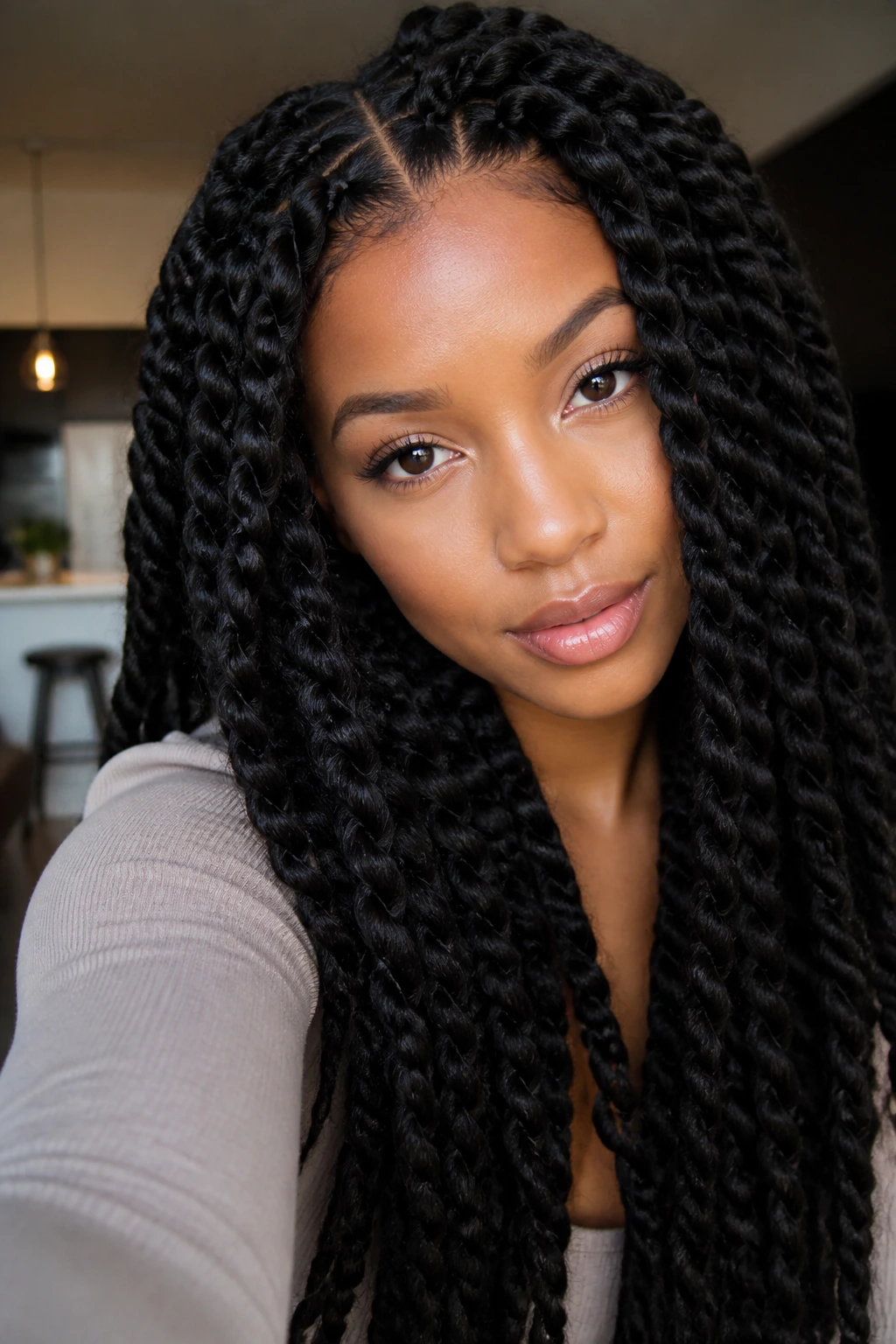
Passion twist styles work because they give you room to choose your own pace. You can wear them long or short, soft or structured, plain or dressed up. That flexibility is the real selling point, more than any single length or color. The style adapts fast, and when it’s done well, it looks like it belongs to your life instead of sitting on top of it.
The best sets are the ones that fit how you move. If you live in hoodies and work calls, a shoulder-length bob or knotless-root version makes sense. If you want drama and swing, go long and add a little color or accessory detail. Pick the version that you’ll actually wear, then let the twists do the rest.
