



Bob-length quick weave hairstyles live in that sweet spot where shape does most of the work. They sit close enough to the jaw to feel sharp and finished, but they still leave room for a curved side part, a tucked ear, a bend at the ends, or a little swing when you move your head. On the right install, the outline looks crisp without feeling severe.
That’s why bob length quick weave hairstyles keep showing up in salons, photo shoots, and real-life routines that do not leave much time for a full day of styling. A good quick weave bob gives you a clean silhouette fast, and the shorter length keeps the whole style lighter, cooler, and easier to maintain than longer sew-ins or layered installs that ask for more daily fuss. The trick is in the details: how the hair is molded, where the part sits, how much density you add, and whether the cut is blunt, angled, or softly layered.
I’m a fan of bobs that look deliberate from six feet away and even better up close. That means the ends should sit where they’re supposed to sit, not puff out like they changed their mind halfway through the day. It also means the quick weave needs enough structure to hold its line, especially around the nape and temples, where short styles can go sideways fast if the cut is lazy or the tracks are too bulky.
Why These Bob-Length Quick Weave Hairstyles Keep Getting Chosen
-
The silhouette does the heavy lifting: A bob frames the face before you add curls, shine, or color, which is why even a plain straight install can look finished with very little extra styling.
-
The length is forgiving in real life: Chin-grazing and jaw-length cuts hide small mistakes better than waist-length styles, and a 1/2-inch trim at the ends can fix a lot without touching the whole install.
-
They work with more hair textures than people think: Straight, yaki, body wave, and curly bundles all read differently at bob length, so you can match your natural texture or lean fully sleek.
-
The upkeep stays manageable: Shorter weave hair tangles less at the nape and usually needs fewer passes with a flat iron or curling wand to look fresh.
-
They give you room to change the mood: A middle part makes the same bob look minimal, a side part makes it feel more dramatic, and a flipped end changes the whole personality in ten minutes.
-
They wear well under real schedules: If you need a style that can survive humidity, wind, scarves, and the occasional rushed morning, a well-cut bob is one of the few styles that keeps its shape.
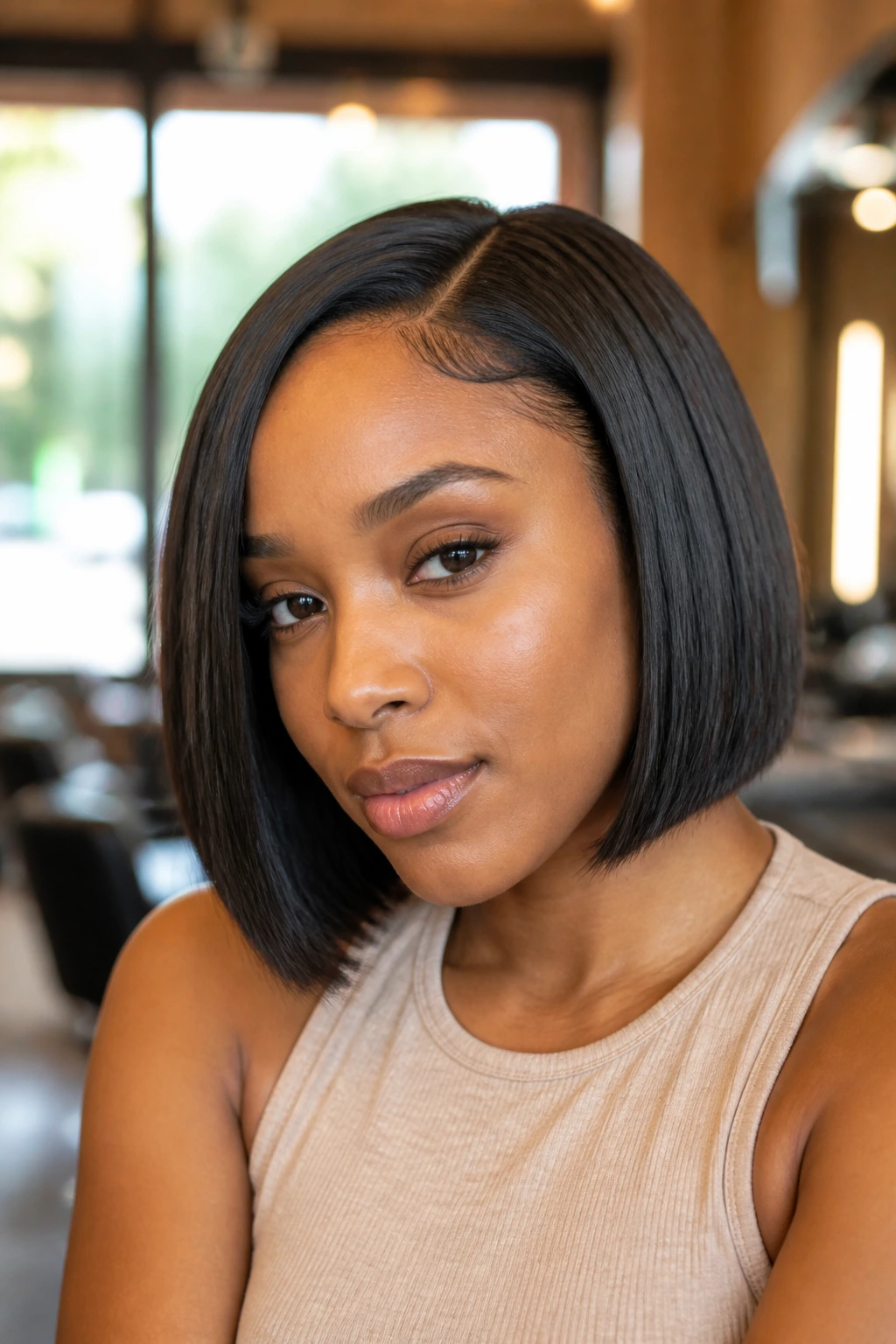
1. Sleek Center-Part Chin Bob
A center-part chin bob is the cleanest place to start because it strips everything down to line and shine. The shape lands right at the jaw, and that simple blunt edge does a lot of work without needing extra layers or curls to sell the style.
What makes it land
The middle part creates symmetry, which is especially useful if you want the face to look longer and the bob to feel modern rather than fussy. Ask for a 10- to 12-inch straight bundle setup if you want the final cut to sit at the chin after shaping, because the style always looks shorter once the ends are trimmed into line.
For this one, the install should be flat and tight at the crown. If the base puffs, the whole bob loses that glassy, salon-fresh look.
Quick note: this is the bob I reach for when I want the hair to look expensive without looking busy. It does not need drama. The cut is the drama.
2. Angled A-Line Bob
If you want a bob with a little attitude, start here. The front drapes longer than the back, and that slight slope gives the style a built-in curve that looks intentional from every angle.
The A-line shape is one of the best bob length quick weave hairstyles for anyone who likes structure. It works because the eye follows the line from short nape to longer front, which makes the face look lifted and the neck look longer. Use 10-, 12-, and 14-inch bundles if you want the front to have enough length for a real angle instead of a flat diagonal.
Best when you want movement
This style looks especially good with straight or lightly body-wave hair, because too much curl hides the line you’re paying for. Keep the back close and the front clean. If the cut gets choppy, the entire angle falls apart.
Pro tip: let the stylist trim the front after the hair is flat-ironed or pressed into its final shape. Cutting too early is how you end up with one side that reads shorter than the other.
3. Stacked Nape Bob
Ever see a bob that looks fuller in the back without being bulky? That’s the stacked nape shape doing its job.
This version shortens the layers near the nape and leaves more softness toward the crown, which creates a rounded back profile that feels polished and a little bit retro. It’s a smart option if you want body without giant curls or extra teasing. The style usually does best with yaki straight or light body-wave hair, because those textures hold shape and don’t slide flat by noon.
Who should pick it
If your own hair is thick or naturally dense, the stacked version helps the install sit closer to the head. If your hair is fine, it gives the illusion of fullness without requiring a mountain of bundles.
The back matters here. A lot. If the nape is cut too blunt and too long, the stack loses its lift and starts to look heavy instead of rounded.
4. Curly Bob with Leave-Out
A curly bob with leave-out has a softer, more natural edge than a straight install, and that matters when you want the style to feel easy rather than overly shaped. The curls sit around the face and brush the jaw, which makes the whole look feel lighter even when the hair is full.
The detail that matters
Choose human hair with a curl pattern that matches your own leave-out, or you’ll spend every morning trying to fake a blend that never fully settles. A 10- or 12-inch curly bundle usually lands best for bob length, because the curl will shrink after washing and styling.
The leave-out should be minimal. Keep it to the front hairline and part area if your goal is low tension and less daily heat. More leave-out gives you more blending work, and honestly, that gets old fast.
A good curly bob should look like the curls belong to the cut, not like they were added later.
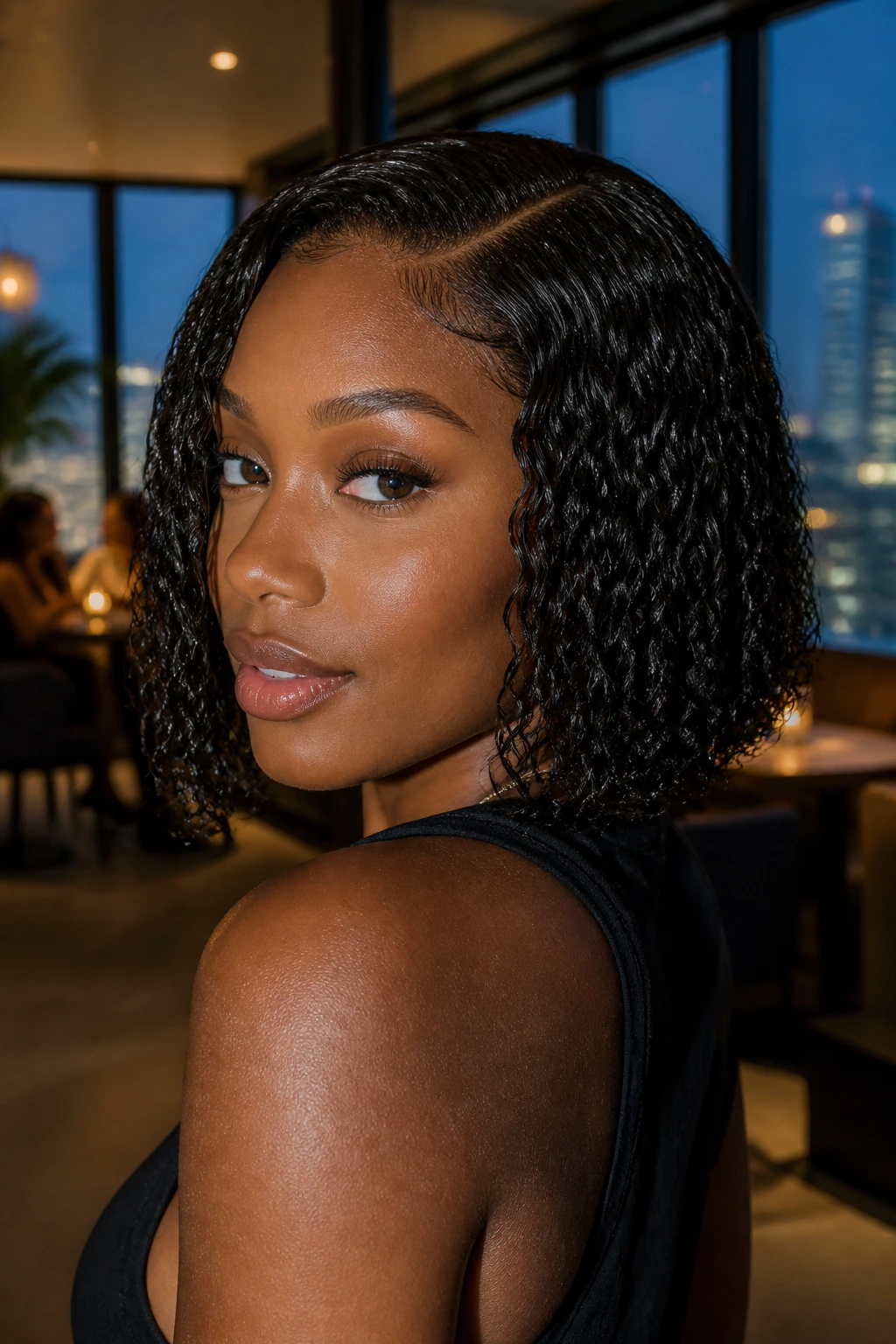
5. Wet-Look Curl Bob
This one is glossy, defined, and a little dramatic in the best way. The wet-look bob keeps the curl clumped together so the style reads sleek at the roots and shiny through the ends, almost like it was styled ten minutes ago even when it was not.
It works best with curl patterns that already have a tight wave or soft spiral. The strands need enough memory to hold that damp-looking finish without turning frizzy after an hour. Use a light mousse, a curl cream, and a small amount of shine serum; too much product makes the bob limp and sticky.
When to wear it
This is the bob for evenings, events, and days when you want a little more polish than a standard curly install. It also photographs well under indoor light because the defined curls catch shine in a way that straight hair sometimes does not.
Keep the perimeter neat. Wet-look styles lose their punch when the ends fray or the root area gets puffed up.
6. Deep Side-Part Glam Bob
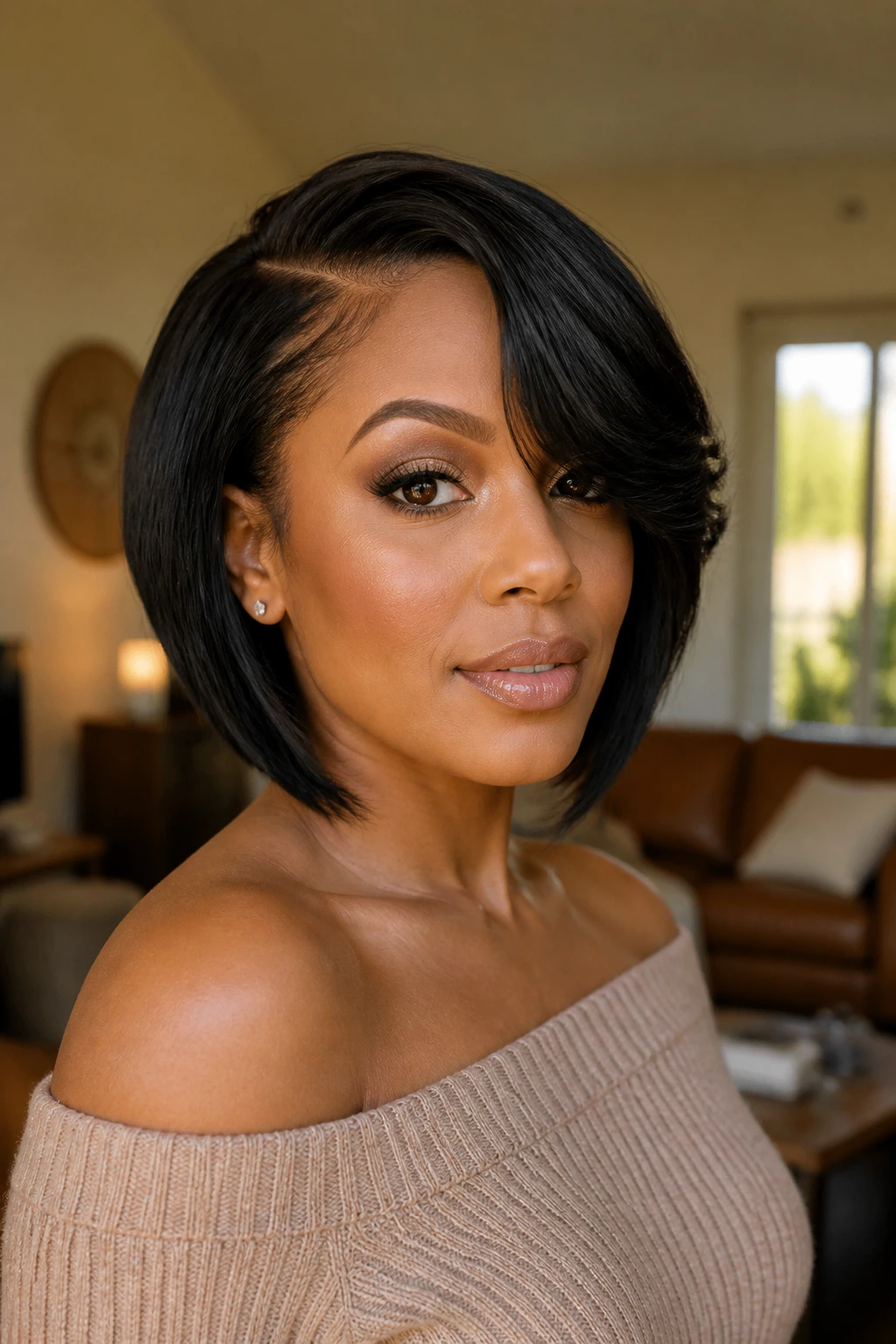
A deep side part changes everything. Same cut, different attitude.
This bob leans into volume at the top and a dramatic sweep across the forehead, which makes it a solid choice when you want the face to look narrower and the style to feel dressed up. The side part also gives you a natural place to pin the front if you want the bob to stay in position all day. Body wave or straight bundles work well, but the front needs enough length to sweep cleanly without collapsing.
Who it flatters
Round faces get extra length from the diagonal line of the part. Heart-shaped faces get balance from the fullness over the forehead. And if you have a busy day ahead, this is one of those styles that keeps looking intentional even after a scarf, a collar, and a little wind.
Do not bury the part under too much hair. The part is the point. If it disappears, the style turns into an ordinary side-swept bob instead of a glam one.
7. Flipped-End 90s Bob
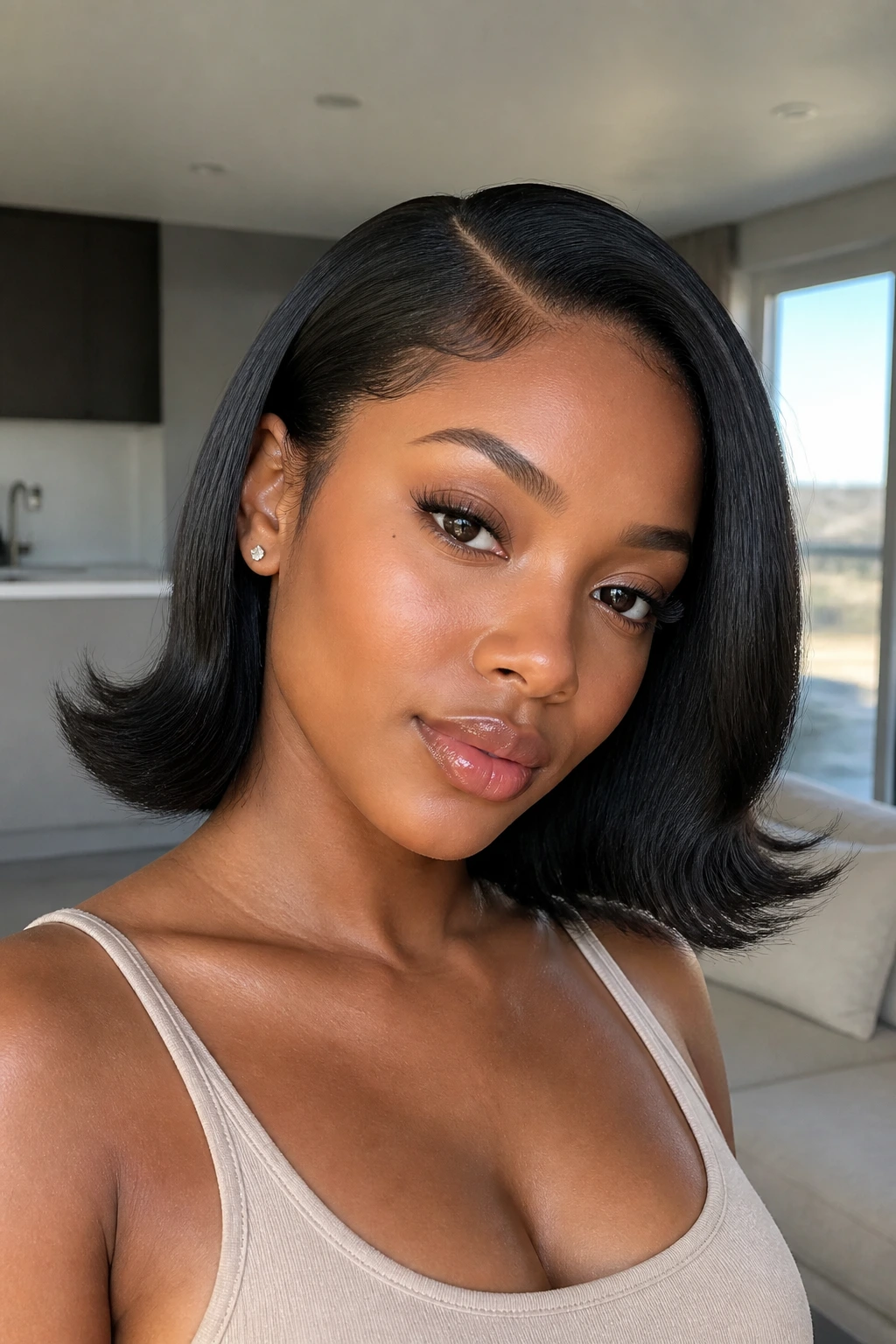
There’s something unapologetically fun about a bob with flipped-out ends. It has that old-school, polished-but-playful energy that reads clean in photos and even better in motion.
A flipped-end quick weave bob usually looks best in silky straight or yaki straight hair, because the ends need enough smoothness to bend outward cleanly with a flat iron or round brush. The actual flip should happen only at the last 1 to 2 inches of hair. If you curl too high, the shape turns fluffy instead of sharp.
Styling note
This bob is the easiest way to give a short weave personality without changing the cut. You can flip the ends slightly outward for a soft effect or exaggerate the flip for a more obvious retro feel.
The best part? It grows out well. As the bob loses a little crispness, the flip just looks softer rather than ruined.
8. Layered Feathered Bob
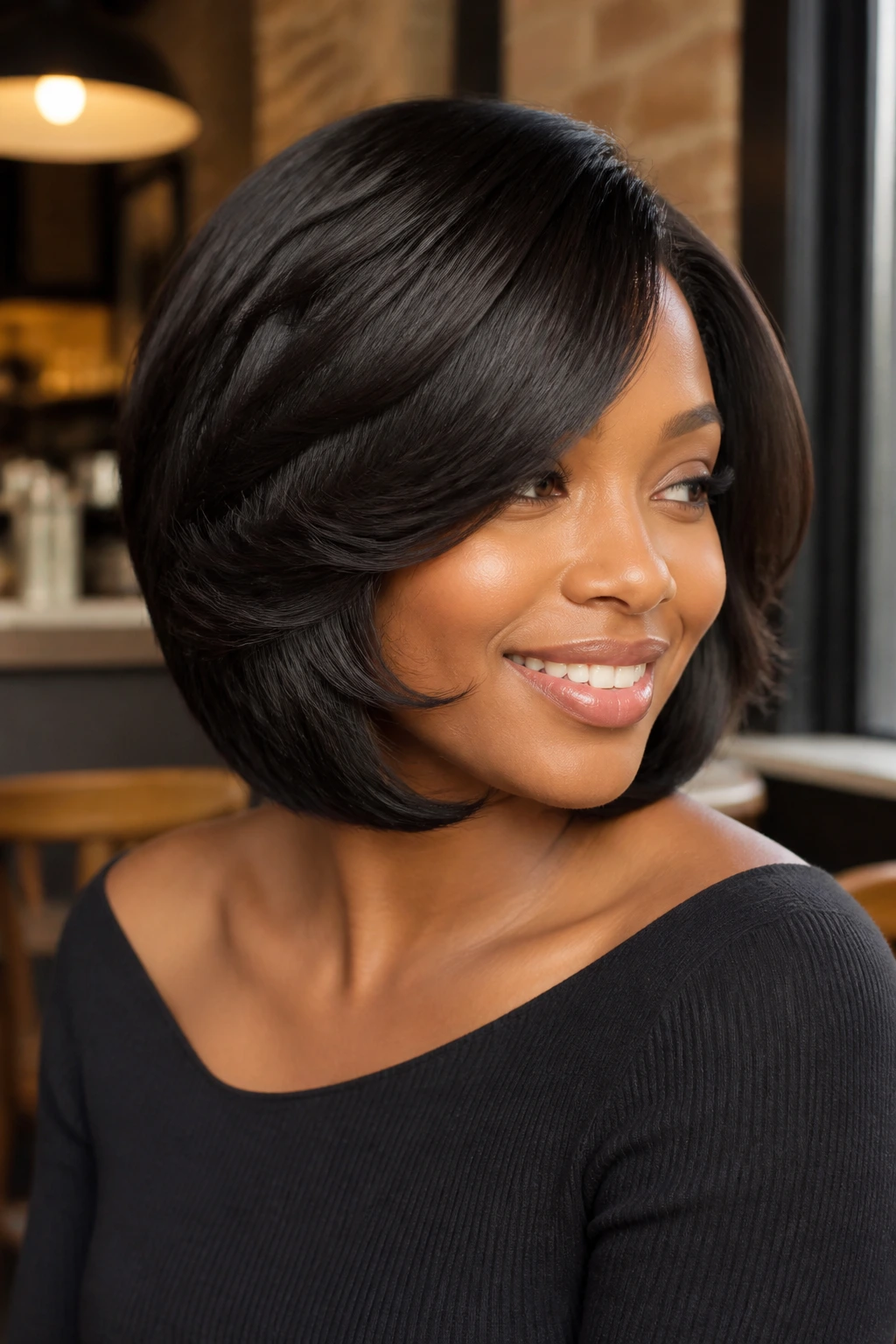
A feathered bob feels lighter around the face because the layers are cut to move, not sit stiffly. That makes it a strong option if you hate blunt ends but still want the bob to stay in the bob family.
This style usually starts with 12- to 14-inch hair, then gets shaped so the ends taper around the cheekbones and jaw. The layers should be visible when you turn your head, not so heavy that they disappear into the length. A little movement goes a long way here.
The part most people miss
Feathered bobs are only pretty when the layering is clean. If the ends are sliced in too many places, the style starts looking broken instead of airy. Ask for soft graduation, not choppy layers.
I like this one for people who wear glasses. The lighter face framing keeps the hair from crowding the frames, which is a small detail until you live with it every day.
9. Half-Up Bob with Crown Lift
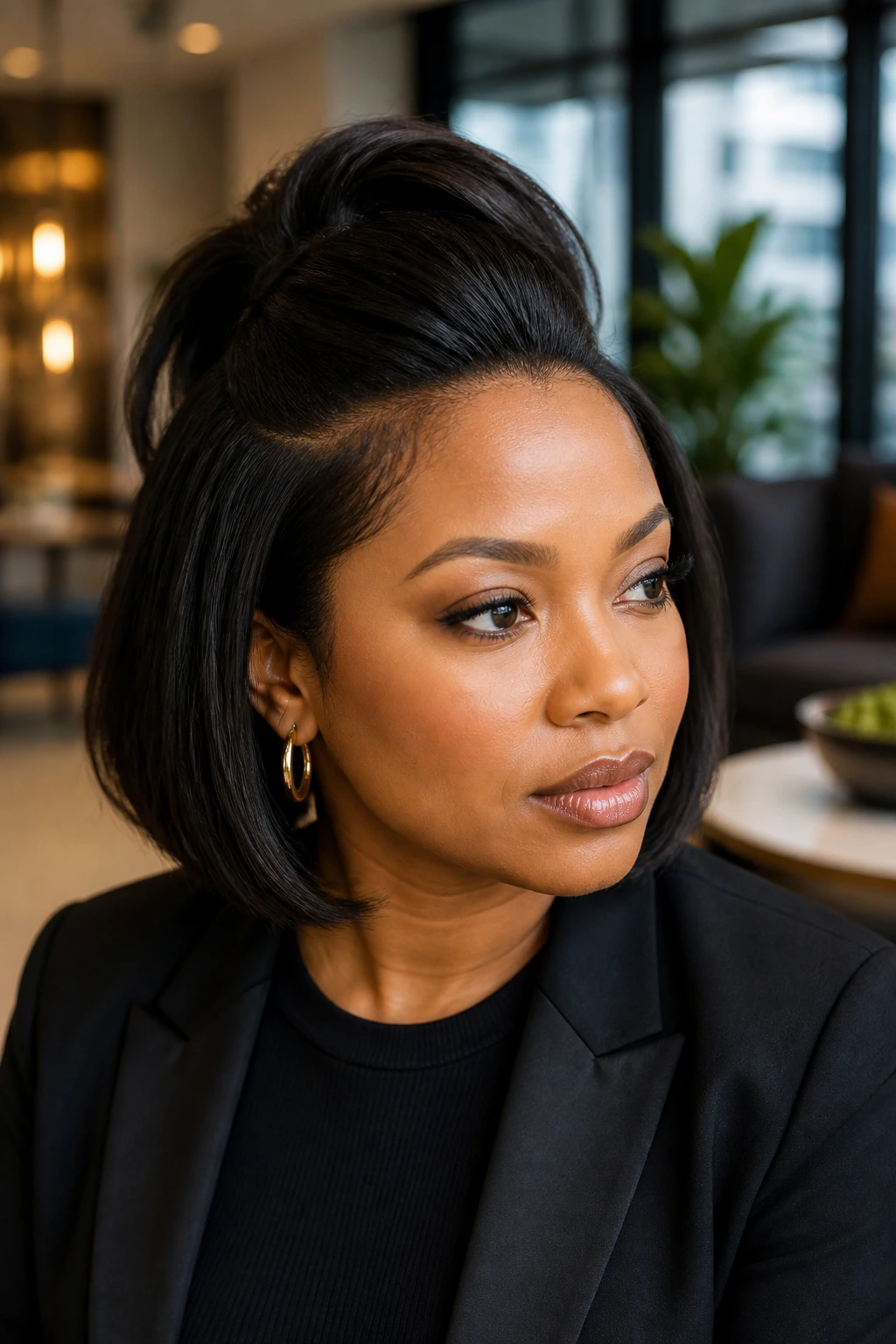
A half-up bob solves the one problem short installs sometimes have: they can feel too fixed. Pulling the top section up gives the style a little lift at the crown and keeps the bob from reading flat.
This works especially well on chin-length or slightly longer bobs because there’s enough hair to gather without exposing the tracks underneath. Use a closure or a very neat top leave-out if you want the top section to look polished when pulled up. A small claw clip, a flat barrette, or a wrapped elastic can all work, depending on how tidy you want the finish.
Best for
This is a good choice for long days, hot rooms, or mornings when you want the hair off your face but still want the bob shape at the sides and back. It also gives you room to show off earrings, which the average short bob does especially well.
Keep the half-up section small. If you grab too much hair, the bob loses its shape and starts looking like a compromise.
10. Tucked-Behind-Ear Office Bob
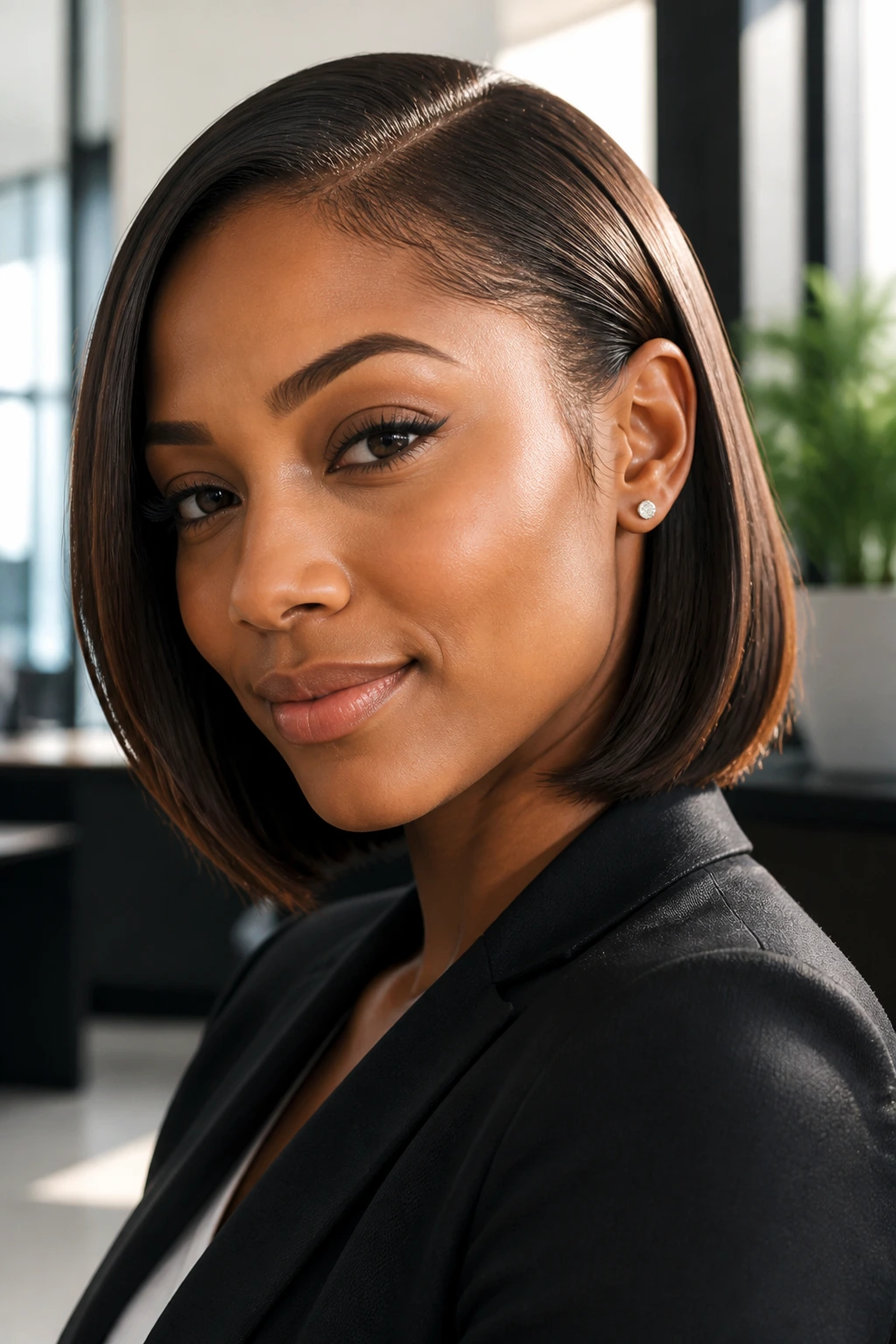
This is the quiet one. No drama, no obvious tricks, just a clean bob with one or both sides tucked behind the ear so the face stays open.
The style works because the ear tuck creates a small break in the silhouette, which makes the cut feel deliberate rather than heavy. It’s especially nice with glass-sheen straight hair or soft yaki texture, since the tuck exposes the line of the jaw and the curve of the cheek. You do not need much length for it to work, but you do need smooth roots.
A small but important detail
Keep a fine-tooth comb and a tiny bit of foam or edge control handy if the front wants to puff back out. A tuck only looks elegant when the front stays put.
This is the kind of style that makes a blazer look sharper and a T-shirt look cleaner. Simple. Strong. No extra noise.
11. Asymmetrical Long-Side Bob
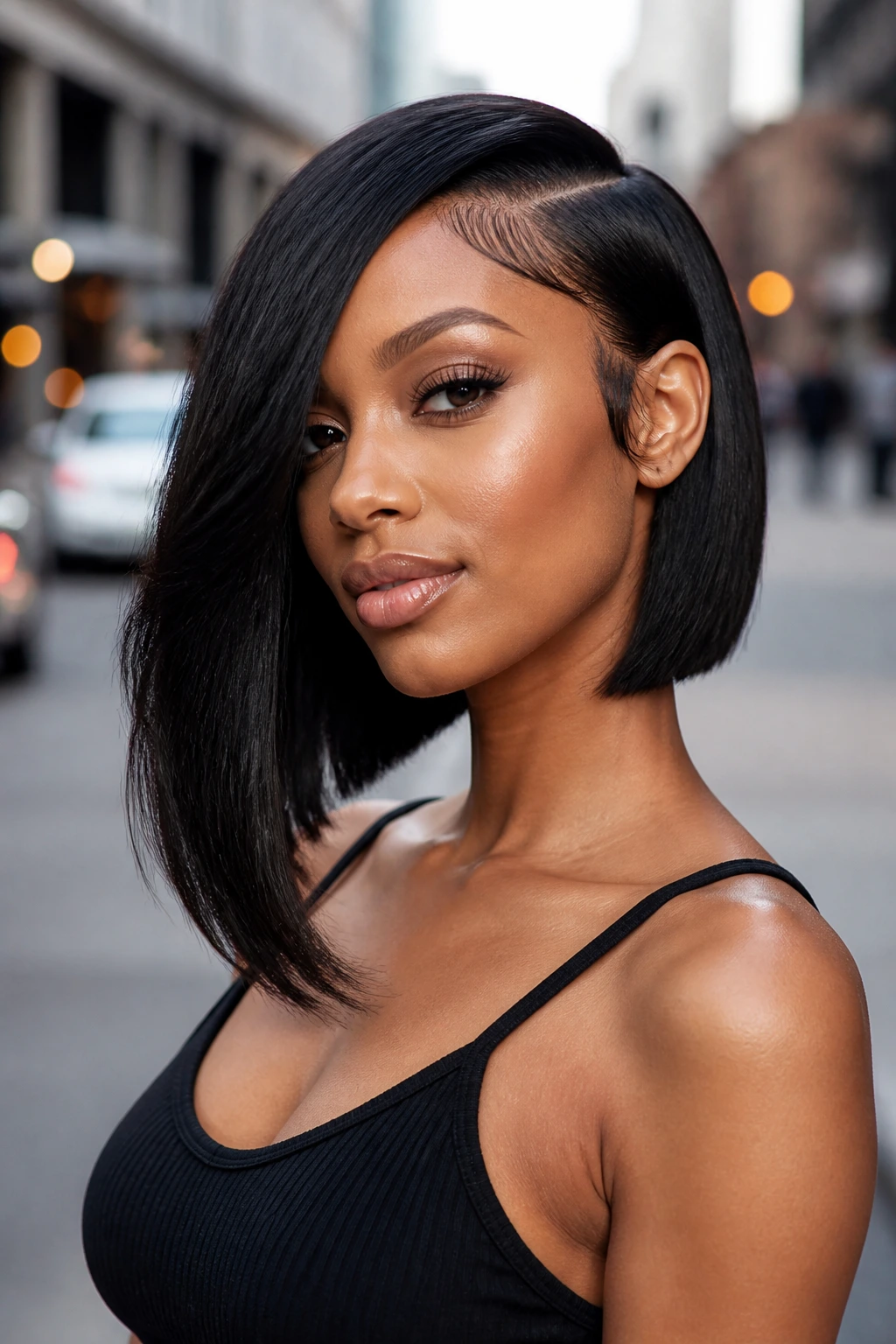
One side longer, one side shorter. That is the whole point, and that is why it works.
An asymmetrical bob gives you shape without needing a lot of height or curl. The longer side can skim the collarbone while the shorter side sits near the jaw, which gives the haircut a built-in tension that looks modern even on a very simple install. This is one of the better bob length quick weave hairstyles if you want something a little bolder than a classic blunt cut but not as dramatic as a stacked style.
Who should try it
If you like hair that shifts when you turn your head, this is your lane. It’s also smart for people who want one side to frame a favorite side of the face more than the other.
Do not make both sides almost the same length and call it asymmetrical. That tiny difference reads as accidental. The angle has to be visible.
12. Honey-Blonde Highlight Bob
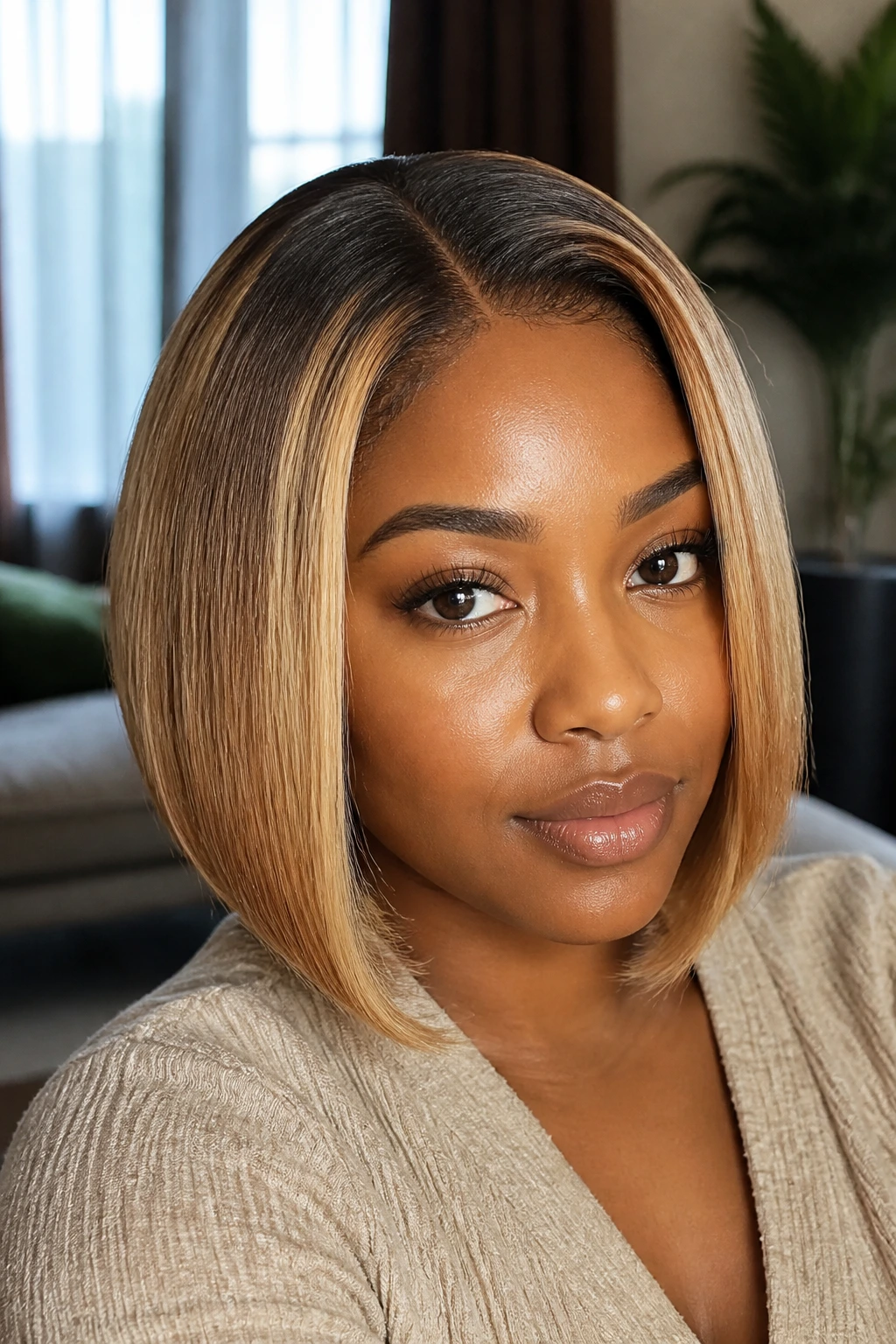
Color changes the mood of a bob faster than almost anything else. Honey-blonde highlights add warmth, especially around the face, and they soften a short cut that might otherwise feel severe.
This version looks best when the highlights are placed where light naturally lands: around the part, at the front edges, and through the top layers. If you’re using bundles, choose hair that already carries the tone you want or ask for pre-colored pieces, because trying to lighten dark hair after install can be a mess. Root shadow and face-framing ribbons help the style look blended instead of stripy.
Why it stands out
A bob doesn’t need full blonde to register. A few well-placed warm pieces do enough work on their own.
The key is balance. Too much blonde on a short cut can read noisy; too little and the color disappears once the hair is curled or tucked.
13. Copper-Red Statement Bob
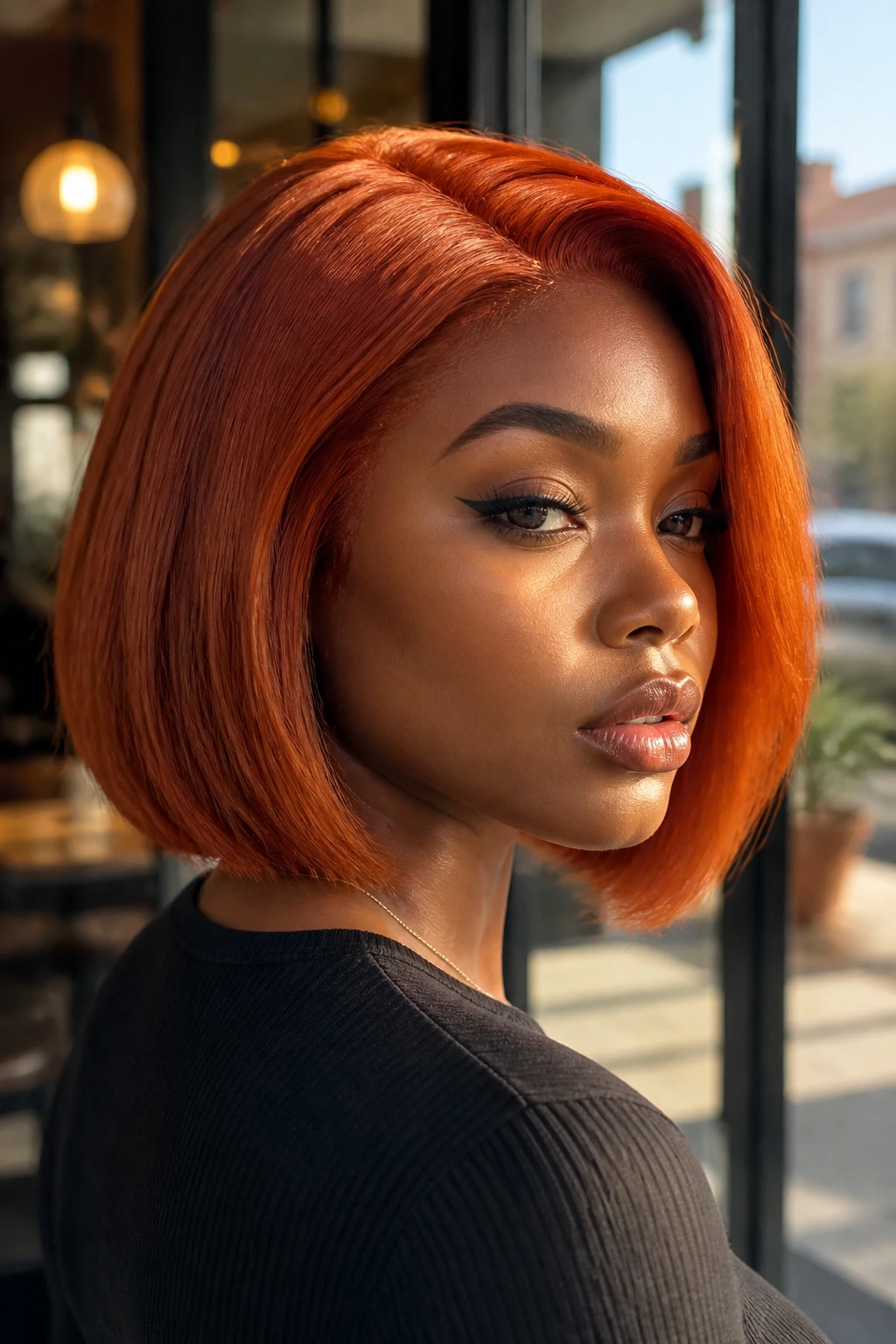
Copper on a bob has a completely different energy from copper on long hair. The shorter length makes the color look denser and more intentional, almost like lacquer.
This style works best when the cut is clean and the finish is smooth. Straight or lightly curved ends let the color speak without competing with too much texture. If you choose pre-colored bundles, look for a rich copper with brown undertones rather than a bright orange-red unless you want the color to shout. It will. Loudly.
A practical note
Red-toned hair fades faster than darker shades, so use sulfate-free shampoo and cool water when you wash or refresh the install. Hot water strips tone fast and leaves the color looking flat.
This is one of those styles that can carry a simple outfit. White tee, black dress, leather jacket. Done.
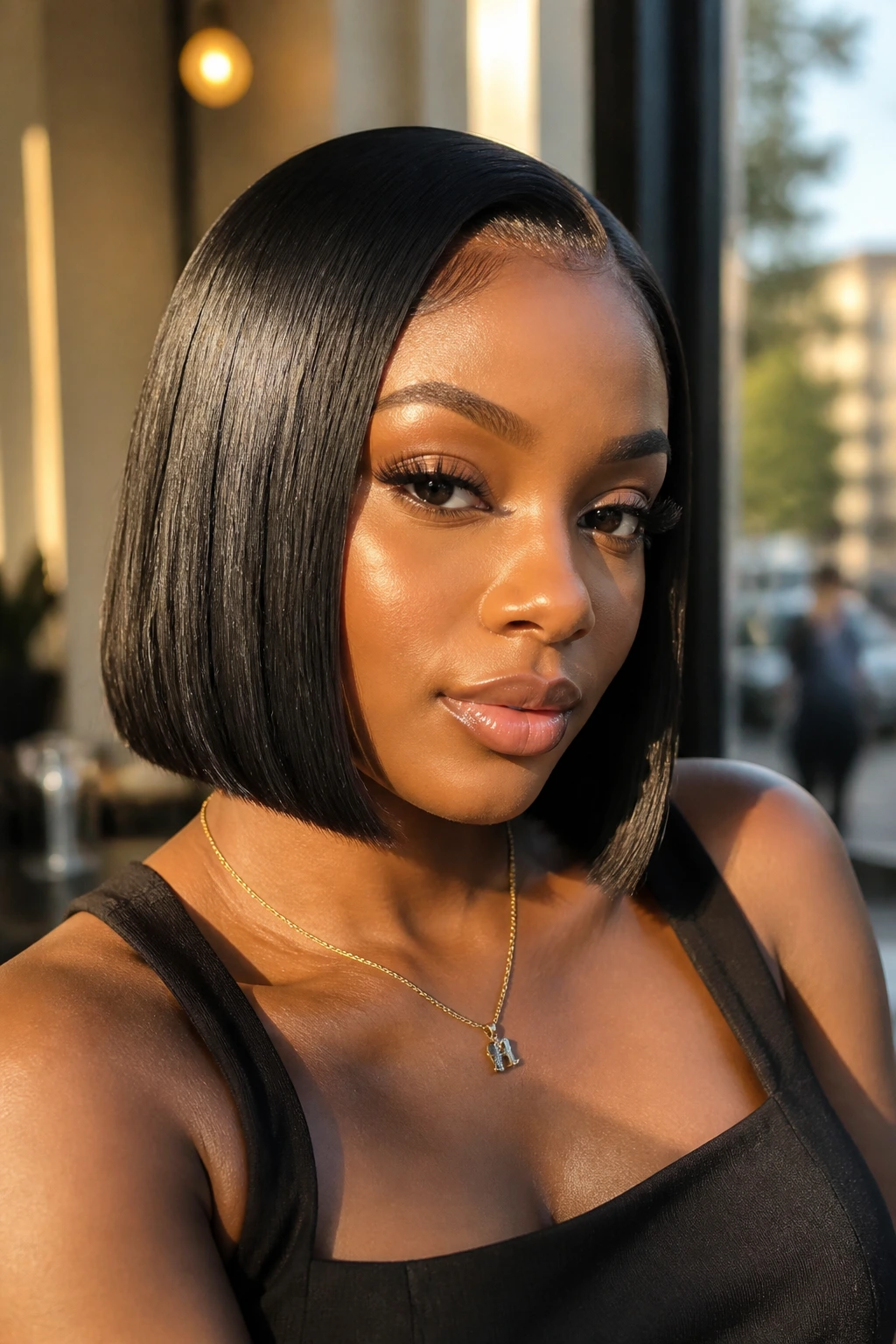
14. Jet-Black Glass Bob
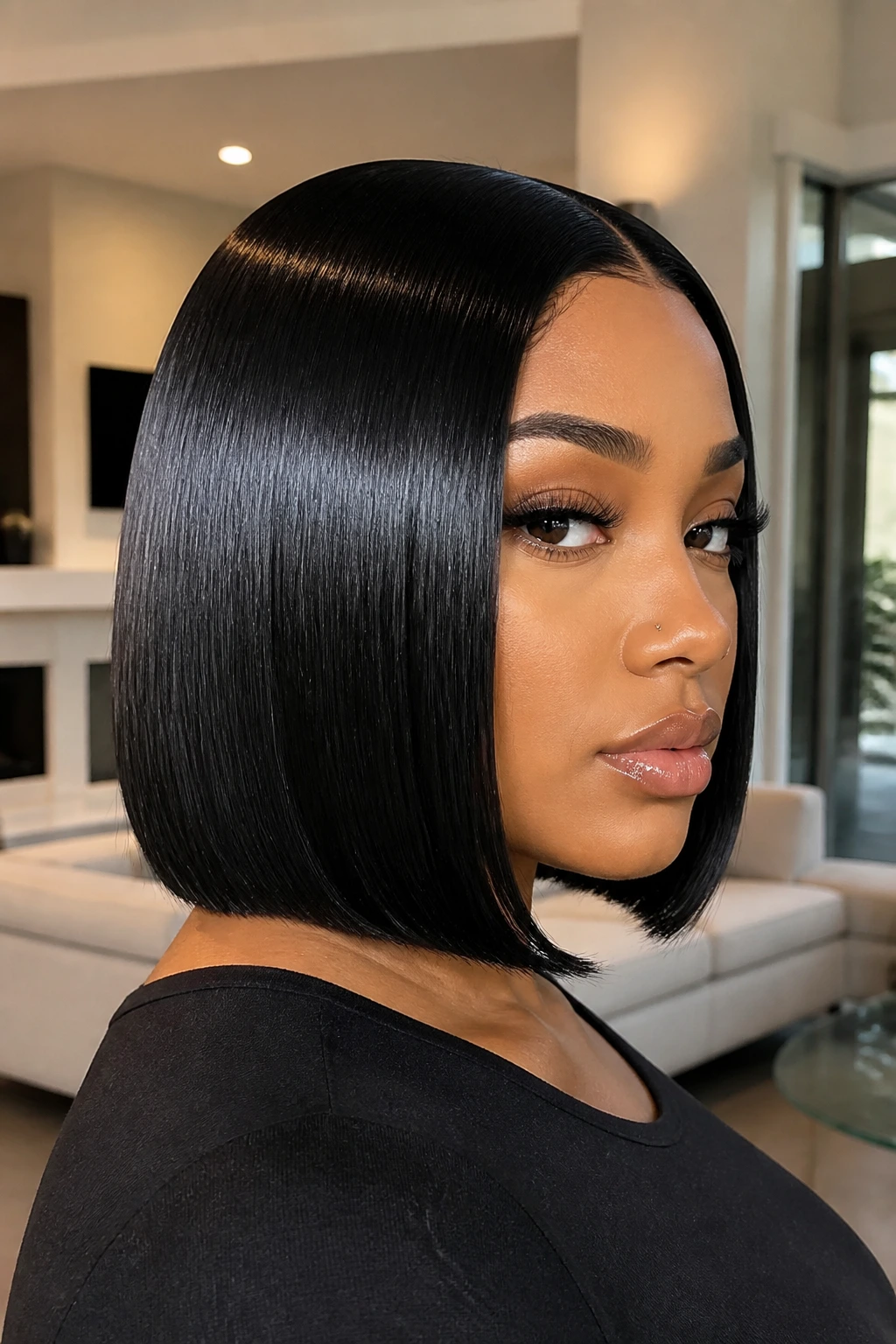
A jet-black bob with a glossy finish is one of the sharpest looks in the whole group. The darkness makes the cut edges look cleaner, and the shine turns the hair into a reflective surface instead of just a style.
The hair should be pressed smooth, wrapped flat at night, and finished with a small amount of serum or lightweight shine spray. Too much product will make the roots greasy. Too little and the style loses that mirrored surface. You want the hair to look sleek, not wet.
Why it works
Black hair hides track shadows better than lighter shades, which is one reason this style can look especially neat when installed well. It also photographs with more contrast, so the cut line shows up clearly.
If you like minimalism, this is probably your bob. There’s nowhere for sloppy work to hide, which is exactly why the good versions look so good.
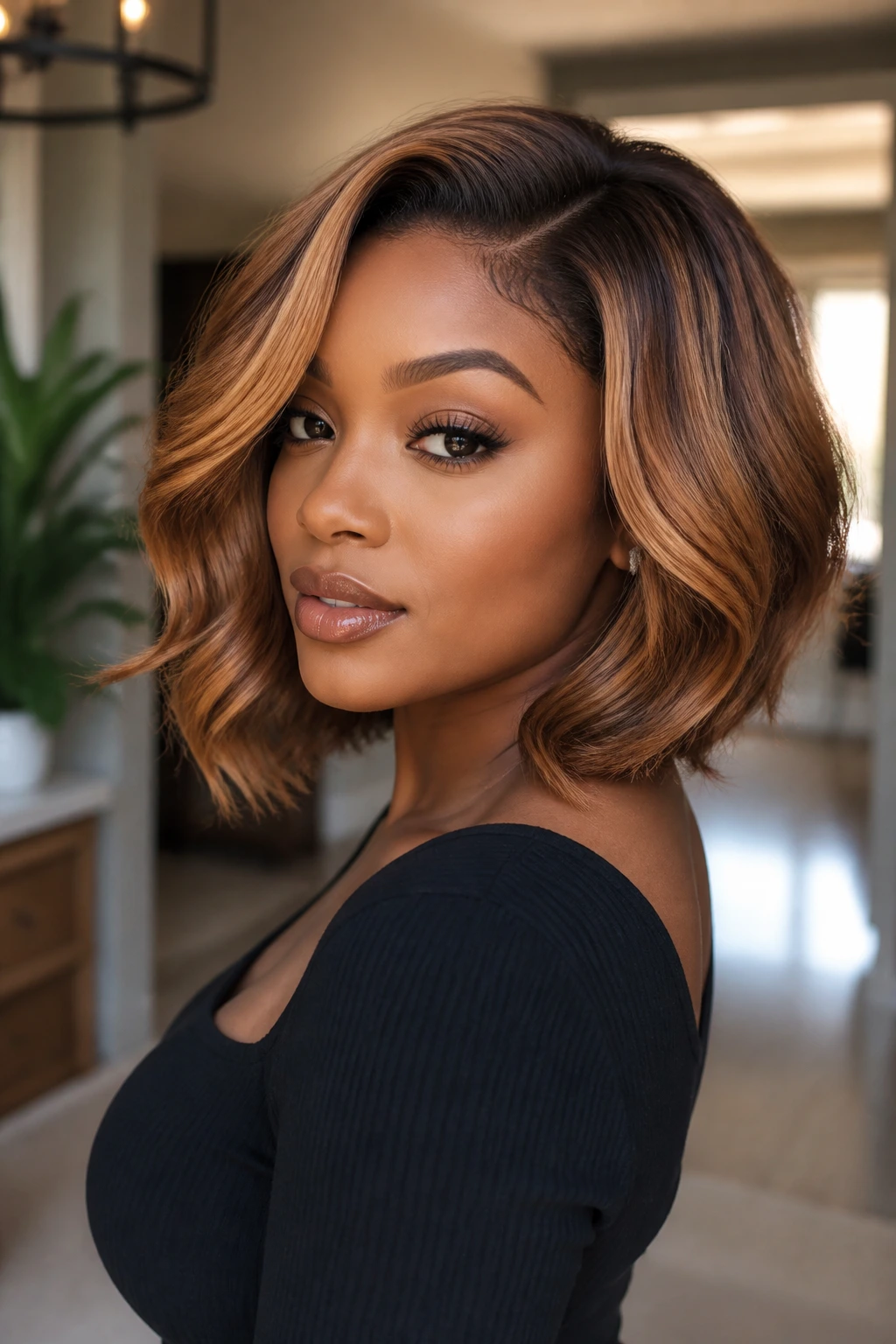
15. Caramel Balayage Bob
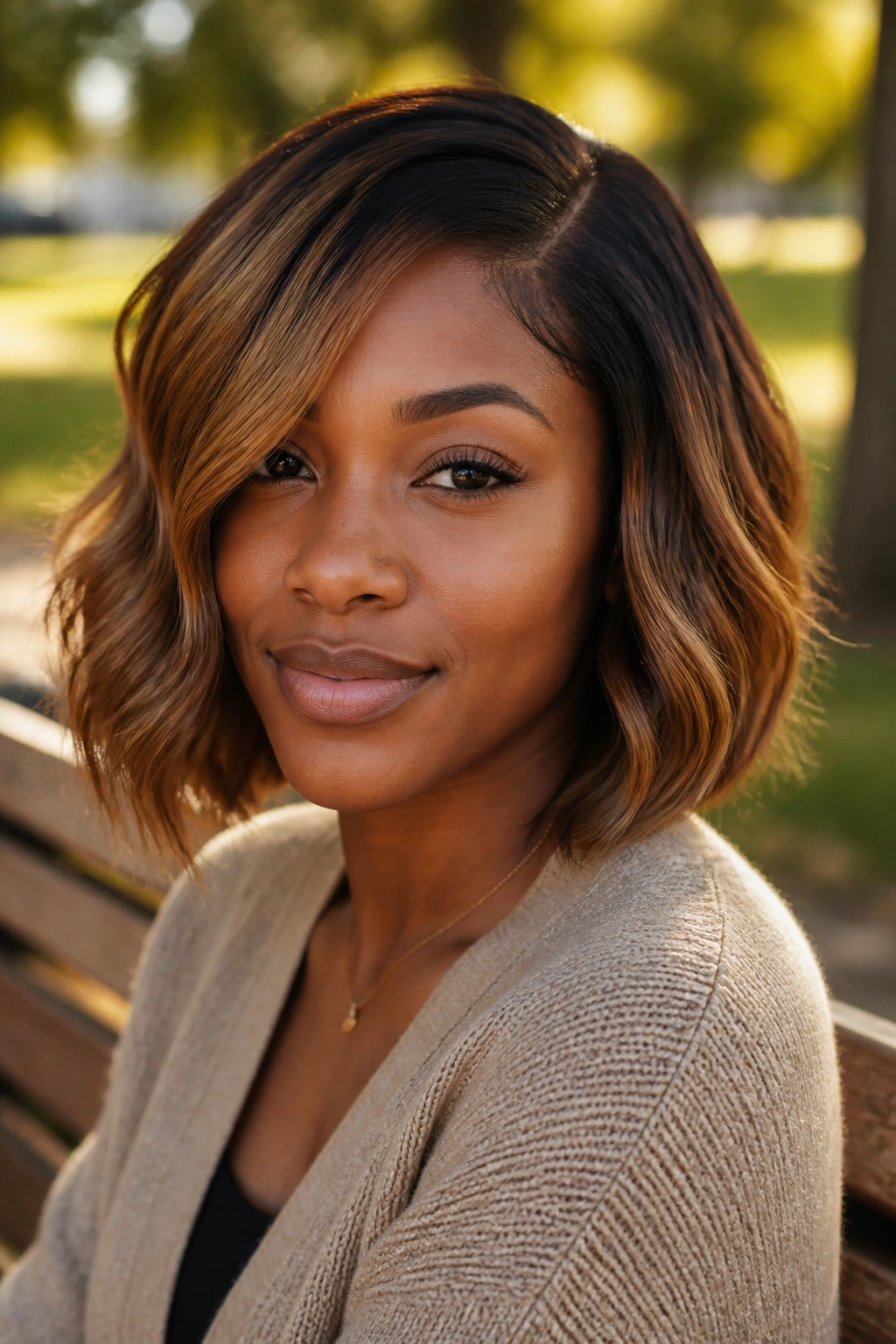
Caramel balayage on a bob adds depth without making the whole style feel busy. The lighter pieces sit through the mid-lengths and ends, so the cut keeps its shape while the color creates movement.
This is a smart pick if you want dimension but don’t want the maintenance of full blonde. The transition from deeper root to caramel ends also helps the bob look fuller, especially when the install is blunt and a little curved under at the ends. Body wave or soft straight bundles show off the color blend best because they catch light in uneven ways.
Keep this in mind
The color should look melted, not striped. If the highlights jump too hard from dark to light, the style starts looking patchy instead of blended.
A bob like this is easy to wear with makeup or without it. The color does part of the styling for you.
16. Curtain-Bang Bob
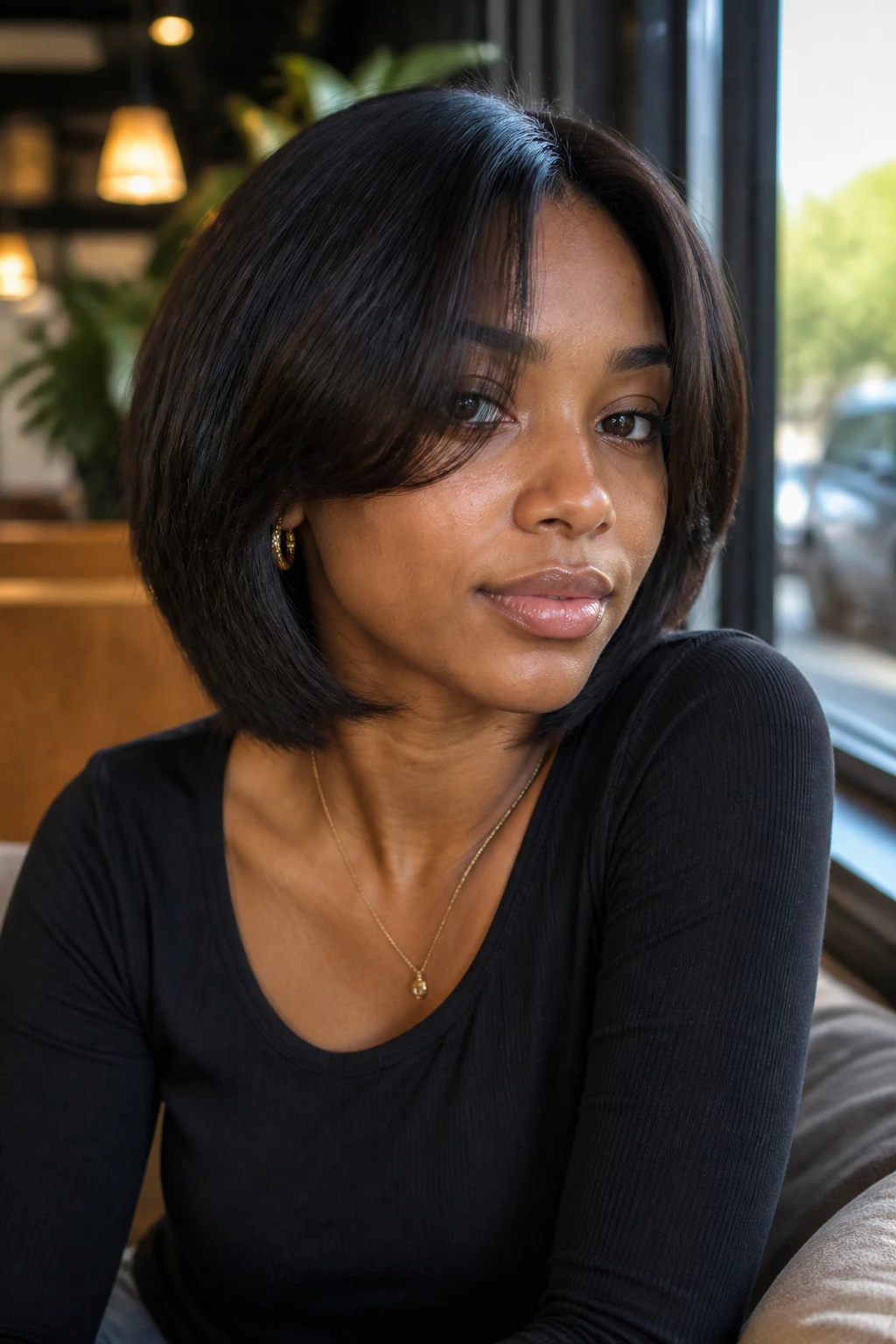
Curtain bangs on a bob give the whole look a softer front, and that soft front can matter more than people expect. A short weave with curtain bangs frames the eyes, hides a high forehead if that’s your thing, and breaks up a blunt perimeter nicely.
The bangs should be long enough to split and sweep, not cut into a hard fringe that sits like a wall. For the best result, the front sections need a little movement, which means straight or loose wave hair usually behaves better than very tight curls here.
Best part
Curtain bangs let you change the mood of the style with a comb and a little heat. Wear them open for a casual effect, or let them fall forward for more face coverage.
If the bangs feel too thick on day one, they were cut too heavy. Thin them carefully. Curtain bangs should float.
17. Side-Swoop Bob
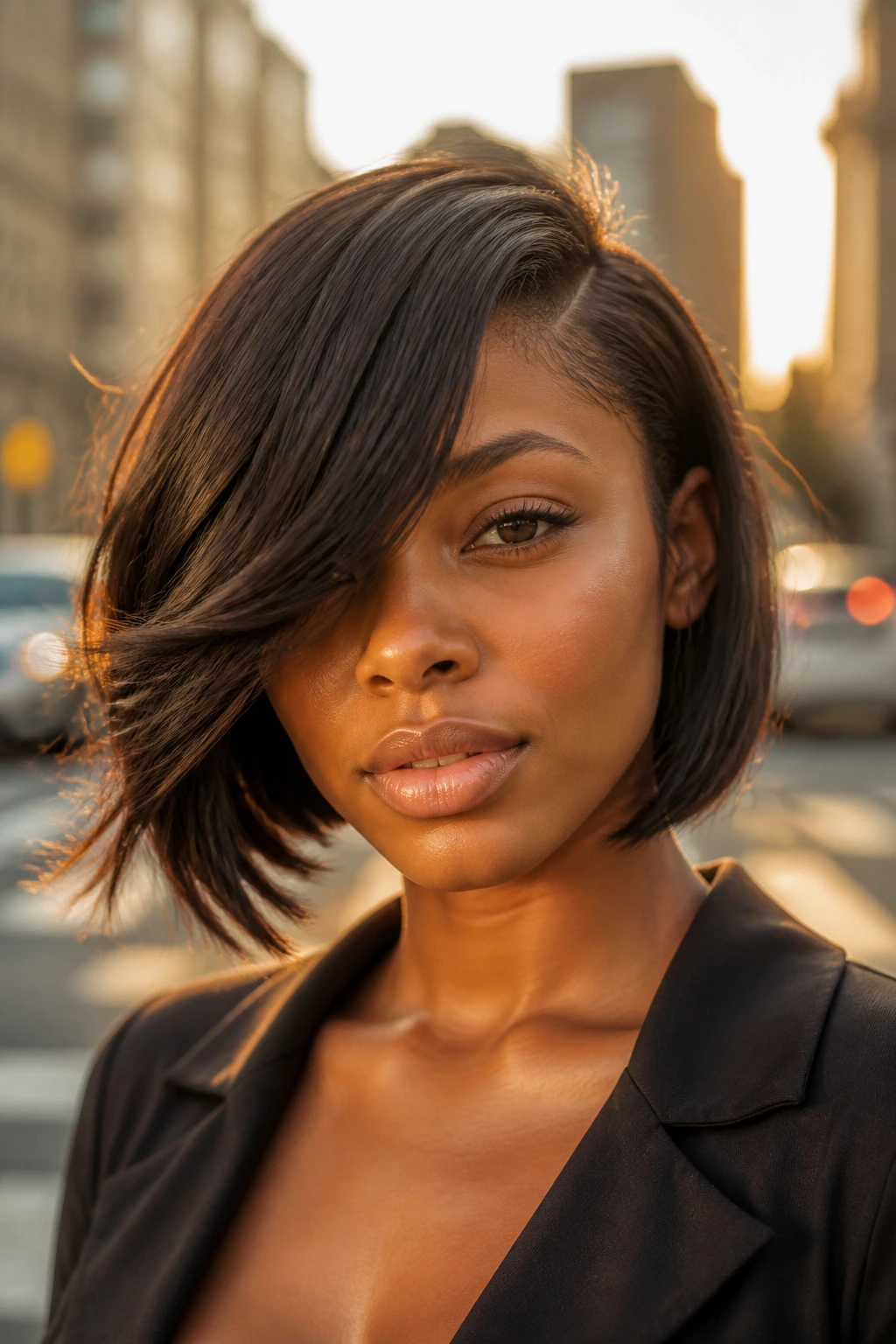
This is the bob for anyone who likes a little theatrical movement at the front. The swoop creates a strong diagonal across the face, which can sharpen the cheekbones and make the install feel fuller without adding extra length.
The front section should be long enough to sweep cleanly across the forehead and tuck behind one ear if needed. A light mousse, wrap foam, and a flat iron pass on medium heat are usually enough to keep the swoop in place. Heavy product can make the front collapse, and then the whole look loses its shape.
A stylist’s reality check
A good side swoop needs direction. If the front is cut too short or too blunt, you end up fighting it every morning.
I like this style for events, but it works on regular days too, especially if you like hair that moves when you move.
18. Bouncy Barrel-Curl Bob
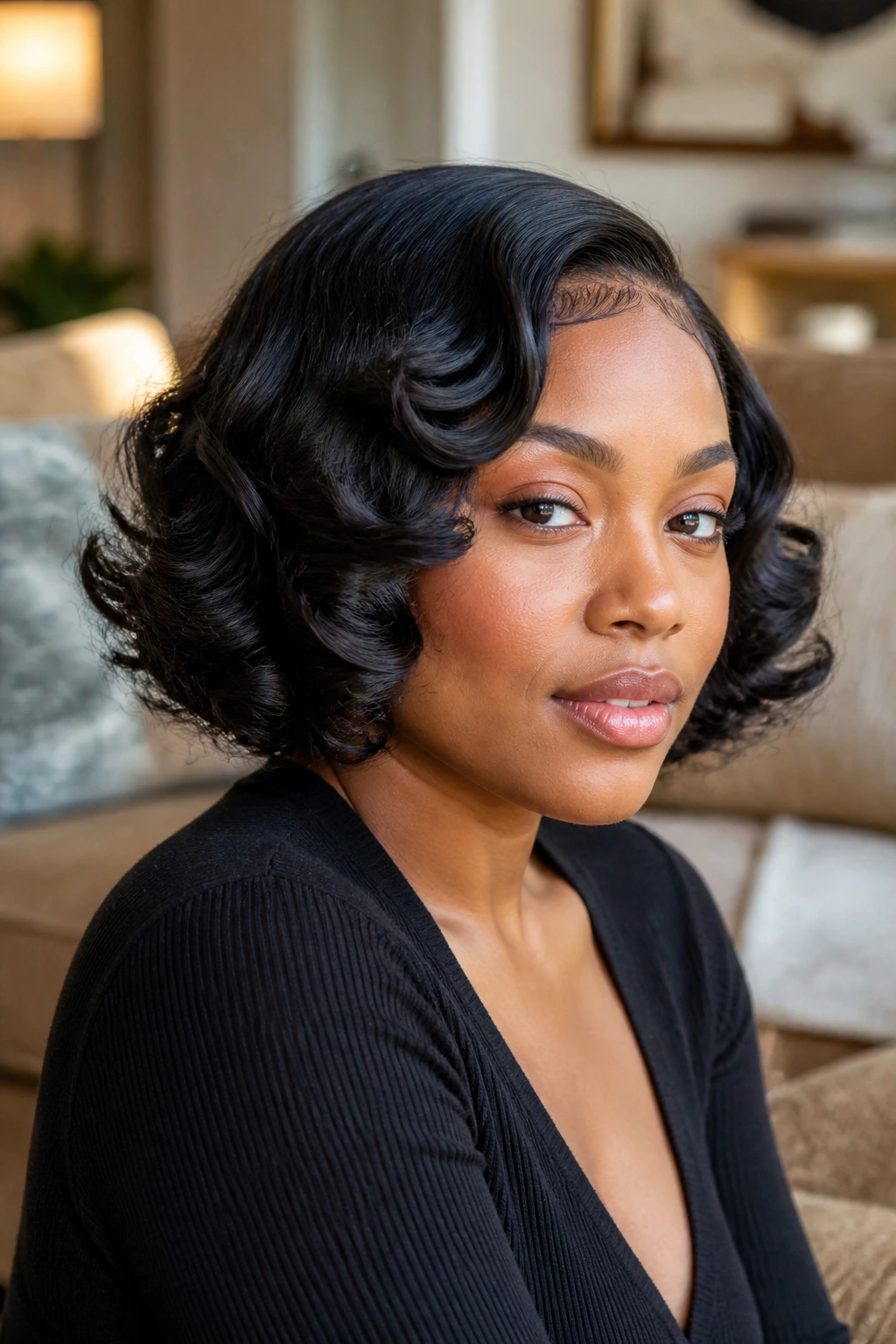
Barrel curls change the texture of a bob in the fastest possible way. Instead of sharp angles or glassy straight lines, you get rounded, soft movement that feels fuller and more playful.
The curls should be set on medium barrels or large flexi rods so they keep the bob shape instead of turning it into a full-on curl halo. Let the curls cool completely before you separate them. That part matters more than the curling itself. If you touch them too soon, they fall flat or frizz at the ends.
How it wears
This style is ideal when you want a little extra body around the jaw and neck. It also gives a short install a nicer silhouette from the side, because the curls keep the outline soft instead of straight-up geometric.
A quick weave bob like this usually looks best when the curl pattern is loose enough to still show the cut underneath.
19. Finger-Wave Inspired Bob
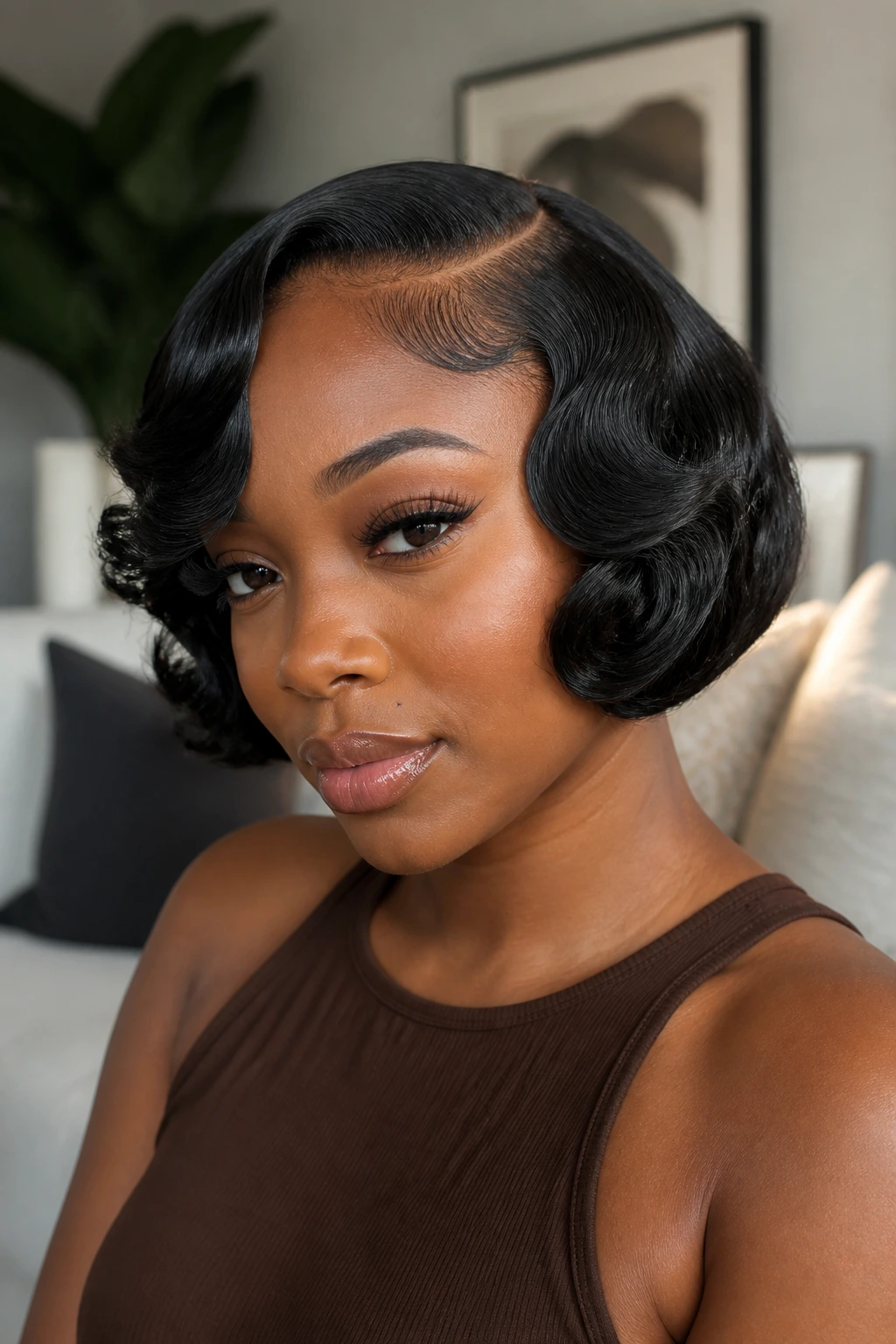
A finger-wave-inspired bob has a vintage feel, but it doesn’t have to look costume-like. The wave pattern adds structure around the front and sides, and that controlled shape can be striking on a short install.
This style works best when the hair is smooth and the part is precise. You can mimic the wave shape with molding foam, setting lotion, and careful pinning, then finish with a soft hold spray once it’s dry. The hair should look sculpted, not crunchy. There’s a difference, and the wrong product makes that difference painfully obvious.
Where it shines
Use this when you want your bob to feel dressed up without leaning on curls or color. It’s also a nice choice for photos, formal events, or evenings where you want the hair to look as planned as the outfit.
The wave pattern should follow the head shape. If the curves fight the natural contour, the style starts to look forced.
20. Soft Yaki Straight Bob
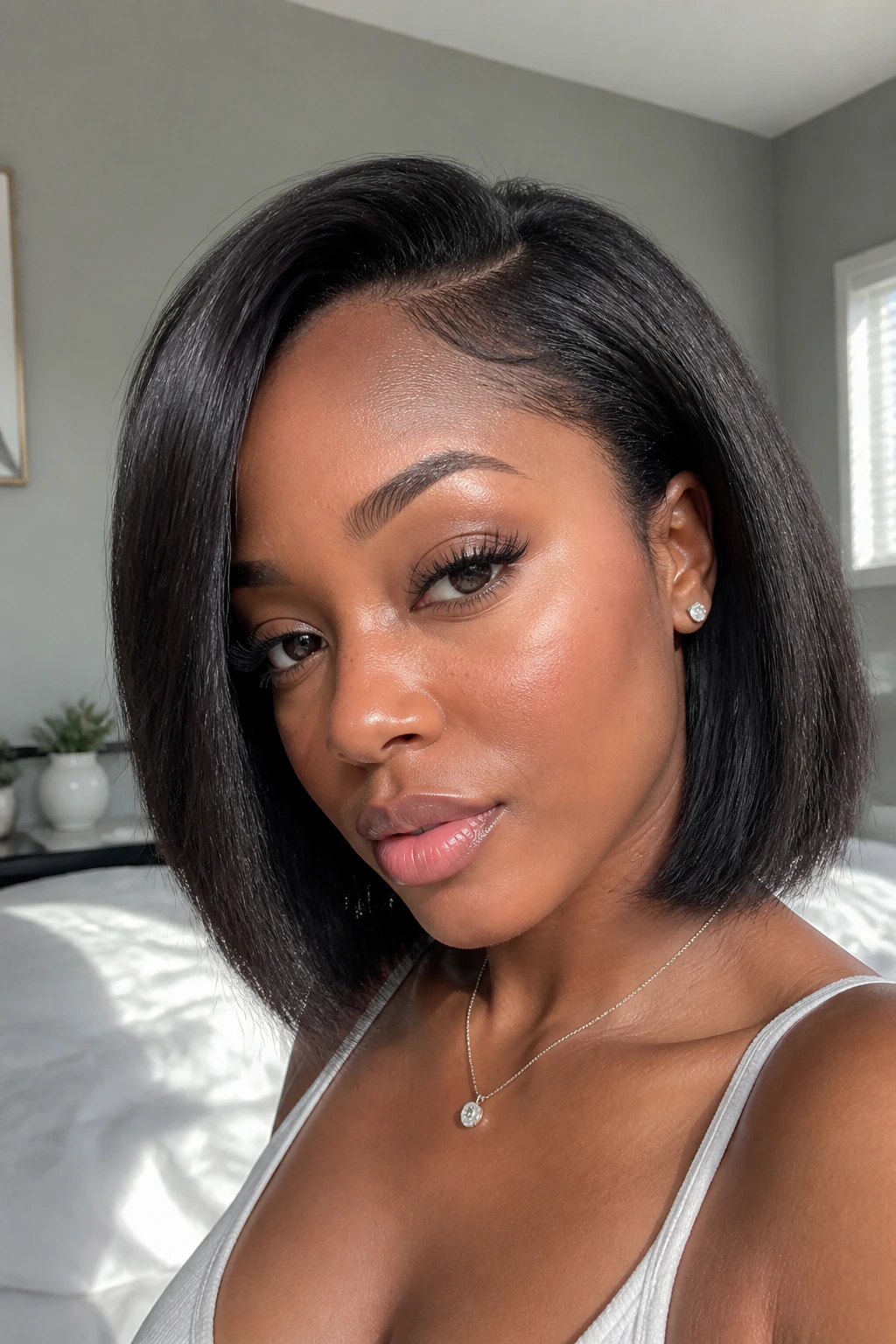
Yaki straight hair gives a bob a more textured, natural-looking finish than ultra-silky bundles. That matters if you want the style to read less “freshly pressed wig” and more “clean blowout with shape.”
This is one of the most wearable bob-length quick weave hairstyles because the texture hides a little puff, a little humidity, and a little day-two life. It also blends nicely with natural hair textures that are not pin-straight. If you’re deciding between silky and yaki, I usually lean yaki for everyday wear because it forgives more.
Best use
The style is ideal when you want straight hair but don’t want it to look slippery. It gives a small amount of grip, which helps the cut sit where it should.
Keep the finish light. A huge dose of oil will flatten the texture and turn it stringy.
21. Tousled Beach-Wave Bob
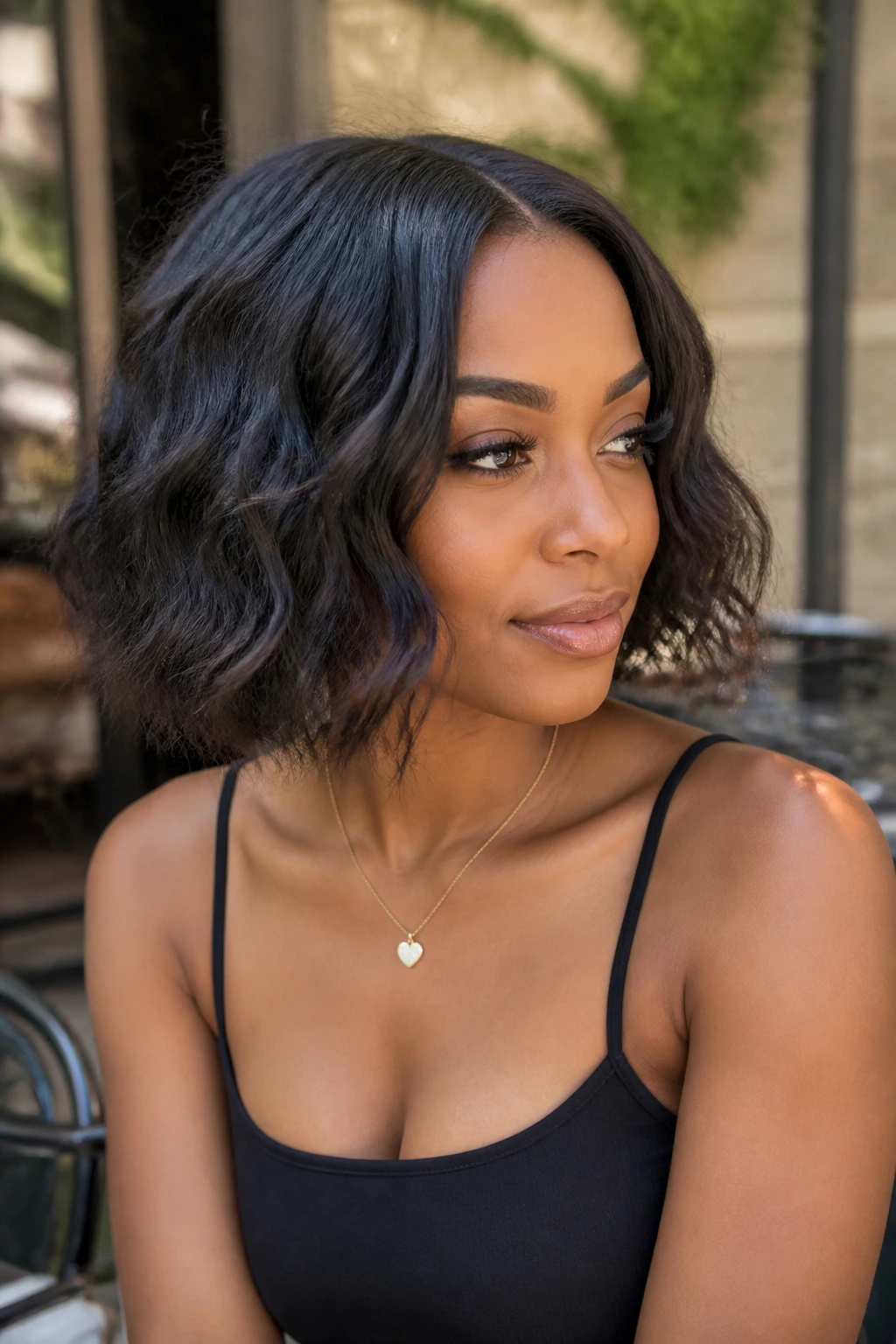
A tousled bob sits somewhere between polished and relaxed, and that middle ground is why people keep wearing it. The waves are loose enough to move, but they still give the style shape around the jaw and collarbone.
Use a wand curl or flat-iron wave technique on 1-inch sections, then break the curls apart with your fingers once they cool. A little texture spray helps, but don’t overdo it or the ends start looking dry and rough. The bob should feel soft, not sandy.
Who it suits
This works well if you like hair that looks a little less structured on purpose. It also pairs nicely with casual outfits, linen, denim, and layered jewelry because the bob itself already carries enough motion.
The danger here is turning “tousled” into “unfinished.” Those are not the same thing.
22. Pixie-Bob Hybrid with a Tapered Nape
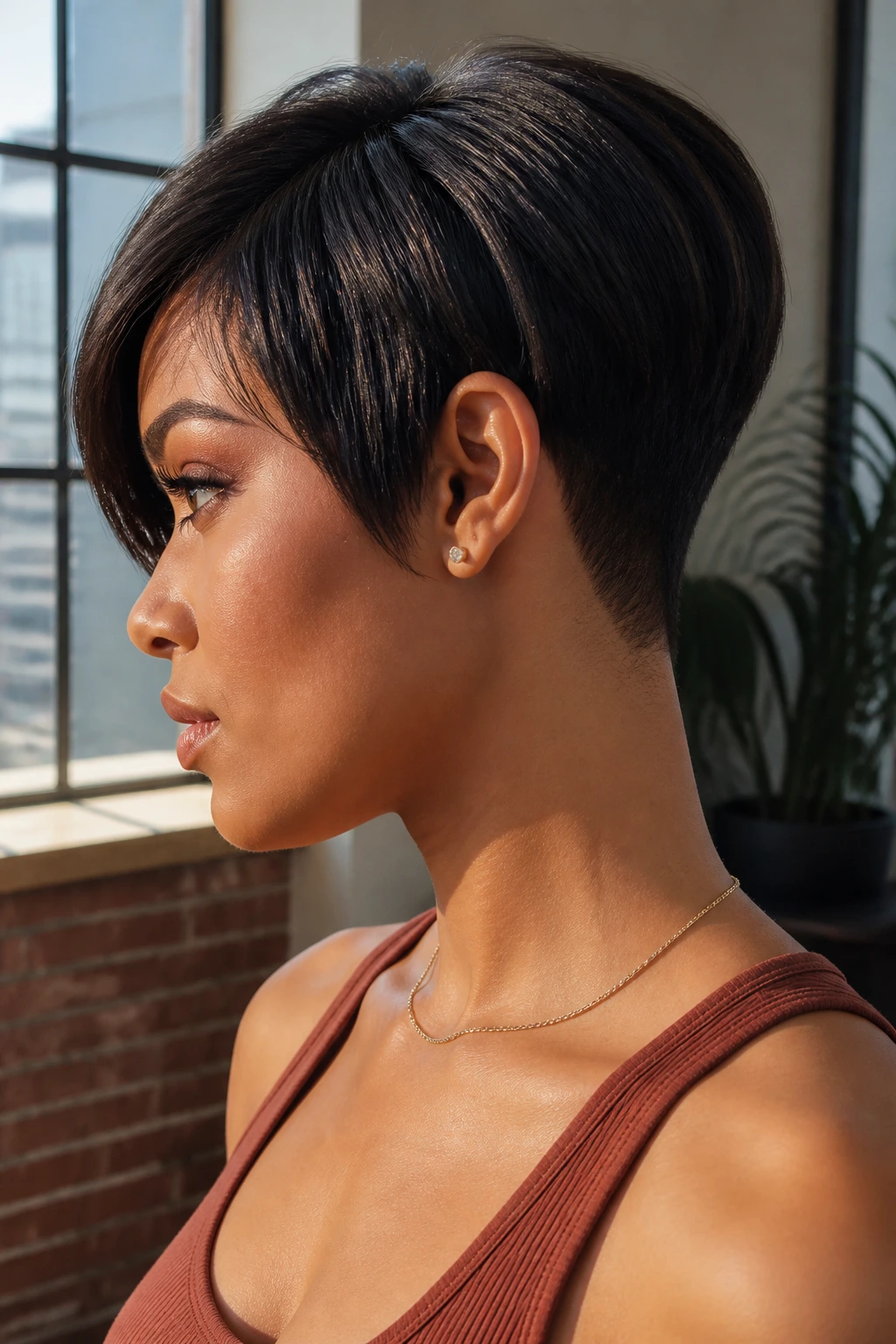
This one cuts the length down just enough to feel sharp while still keeping the bob identity. The nape stays snug, the sides stay close to the jaw, and the front holds a little more length so the whole thing reads like a short bob with a tailored edge.
It’s a smart pick if you want something low-maintenance and light on the neck. A shorter bundle plan—often 8 to 10 inches in the back and 10 to 12 inches near the front—helps the cut sit cleanly without extra bulk. The shape should taper, not pile up.
Small detail, big payoff
The pixie-bob hybrid looks best when the perimeter is crisp. If the nape gets fluffy, the whole cut loses the sharp little profile that makes it work.
This is the style I’d hand to someone who wants short hair energy without giving up the bob completely. It has edge. It also behaves.
Why Bob-Length Quick Weaves Work So Well on Real Hair
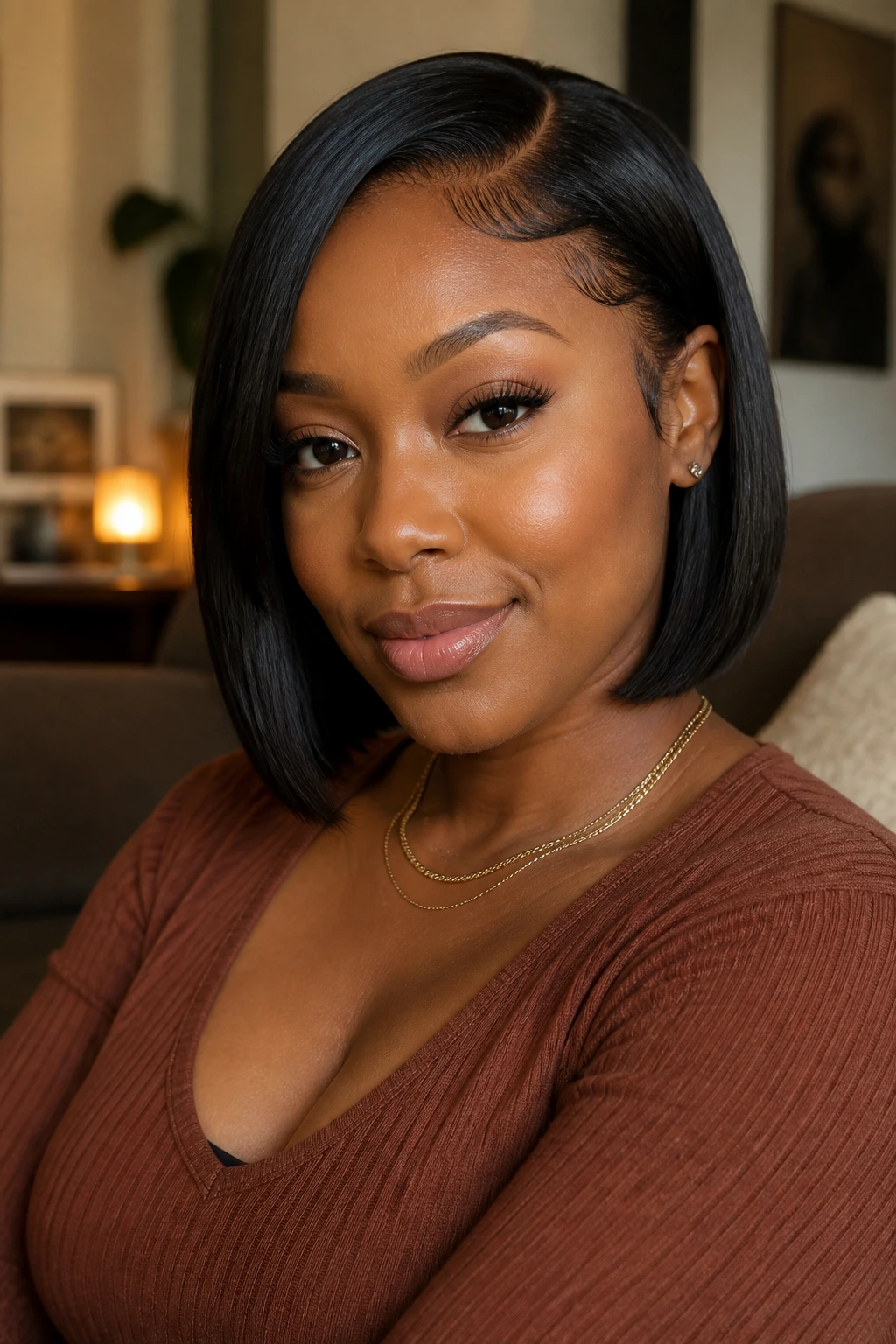
A bob does a lot with a little. That sounds obvious, but it’s exactly why these styles work so often in real life. Shorter length means fewer tangles, lighter weight, and less time spent fighting with the ends every morning. If you’ve ever watched a longer weave swell up at the shoulders by mid-afternoon, you already understand the appeal.
The other advantage is shape. A bob gives the stylist a small canvas, which sounds limiting until you see how many directions it can go: blunt, angled, stacked, curly, flipped, waved, side-swept, tucked. The cut carries the style. That means you don’t have to buy the longest bundles in the shop just to get a finished look.
There’s also a practical side people skip over. Quick weaves sit close to the head, so the mold, the part, the density, and the perimeter all matter more than random volume. If the base is flat and the cut is clean, the style can look expensive with surprisingly little hair. If the base is bulky, the bob will tell on you immediately.
Essential Tools for a Clean Quick Weave Bob
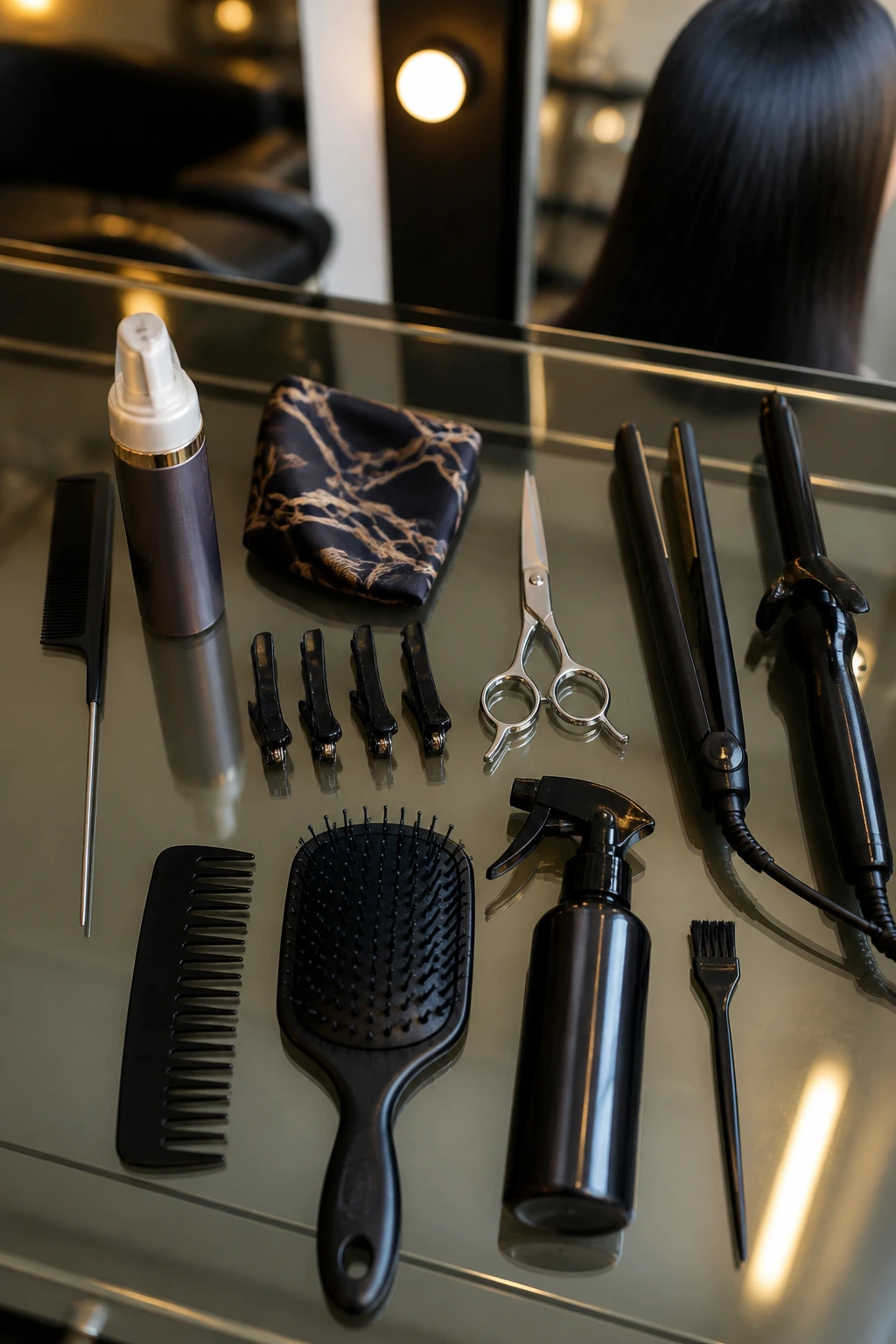
- Rattail comb: For clean parts, sectioning, and smoothing the mold before the install.
- Wrap mousse or molding foam: Helps the hair lay flat and keeps the base neat under the weave.
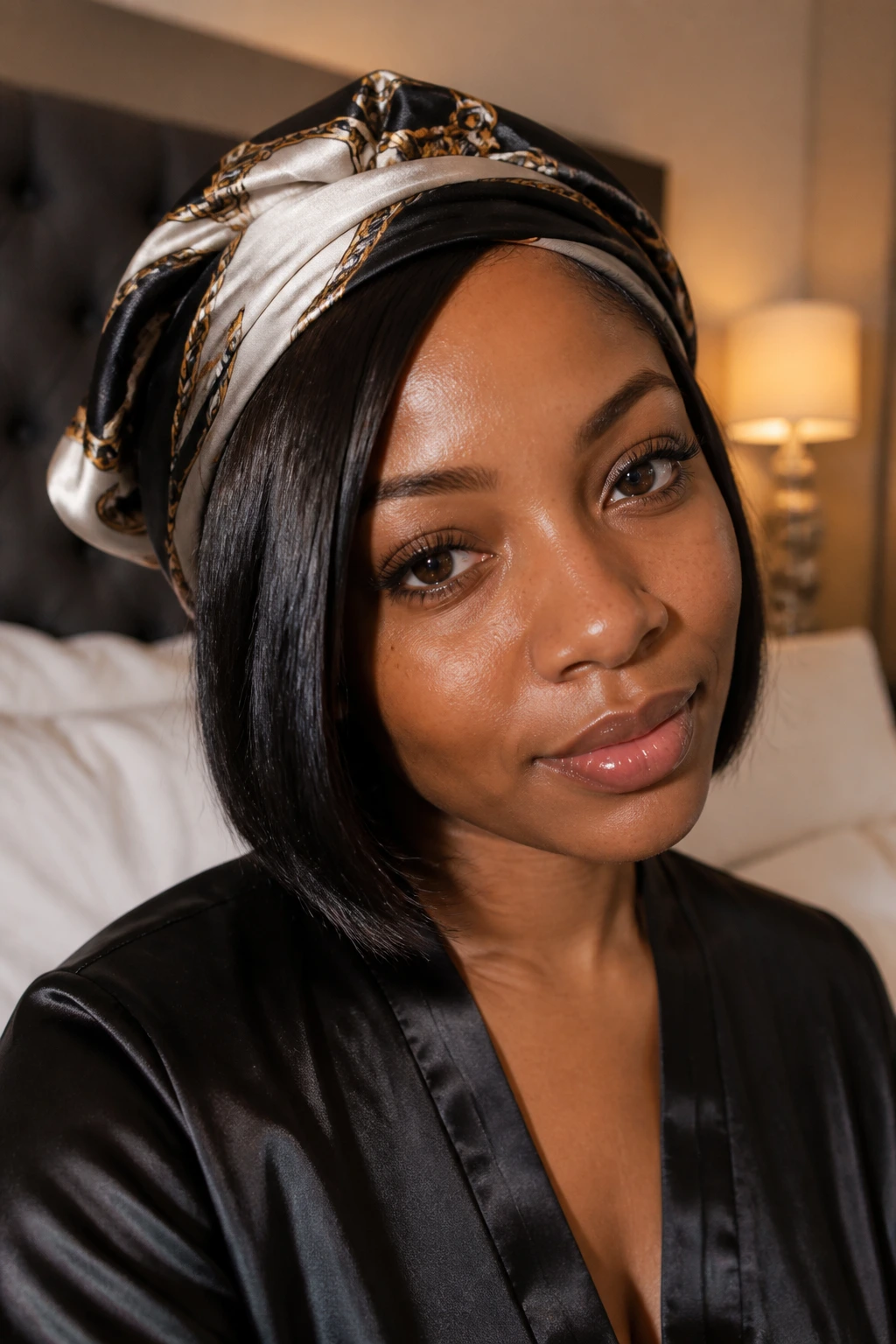
- Silk or satin scarf: Keeps the bob pressed down at night and helps the ends stay smooth.
- Duckbill clips: Useful for holding sections while you shape the cut or curl the hair.
- Sharp hair shears: A blunt, cheap pair will chew the ends and ruin the line of the bob.
- Flat iron with adjustable heat: Let it run hot enough for the hair type without scorching the fibers.
- Curling wand or marcel iron: Handy for flipped ends, barrel curls, and soft waves.
- Wide-tooth comb and paddle brush: The comb separates curls without pulling; the brush helps smooth straight styles.
- Heat protectant spray: Non-negotiable for human hair that will be curled or flat-ironed.
- Edge brush: Use it lightly. A heavy hand around the hairline makes the style look stiff fast.
Smart Hair-Buying and Bundle Tips
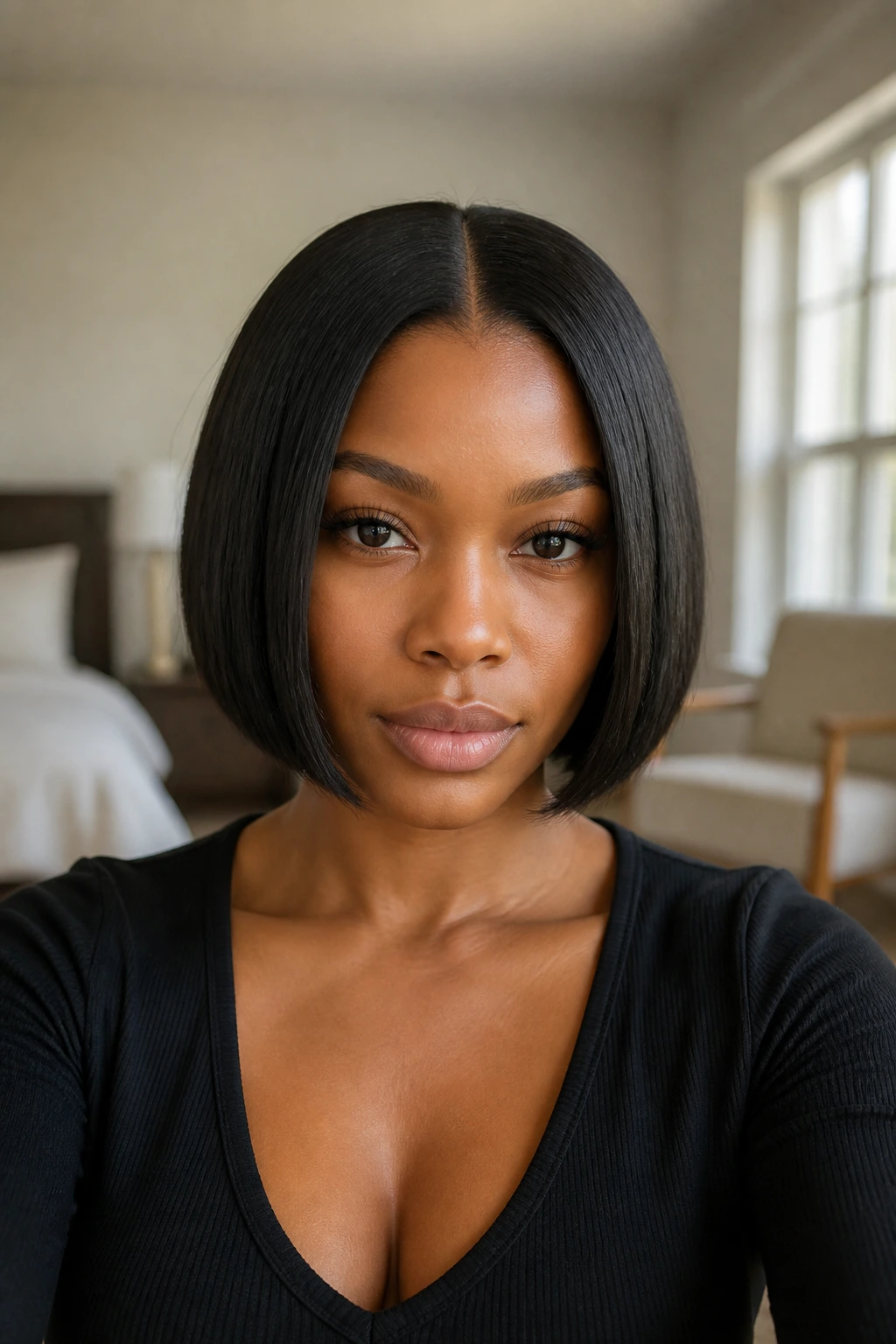
The biggest mistake people make when buying hair for bob length quick weave hairstyles is ordering it too long. Long bundles are not automatically better here. They often just mean more cutting, more waste, and a higher chance the final shape turns thin at the ends once the stylist trims it down.
For a chin-length blunt bob, start thinking in the 10- to 12-inch range. For an angled or layered bob, 12 to 14 inches gives you enough length to sculpt the front without exposing the cap. If you want curls or waves, remember that texture shortens the apparent length fast. A 12-inch curl can wear like a 9-inch style once it’s set.
Hair texture matters too. Yaki straight is a safe bet for everyday wear because it blends well and holds shape. Silky straight gives you that glassy finish, but it also shows every bump if the mold is sloppy. Body wave is a strong middle ground when you want movement without a full curl pattern. For curly bobs, buy hair with a curl pattern that you can refresh without fighting it every morning.
One more thing people ignore: density. A bob usually looks cleaner with fewer bundles than a long style. If the install gets too thick, the sides puff out and the neck loses that close, tailored line that makes the cut work. Three bundles is often too much for a short bob unless the hair is very fine or the look is intentionally full.
How to Wear These Styles in Real Life
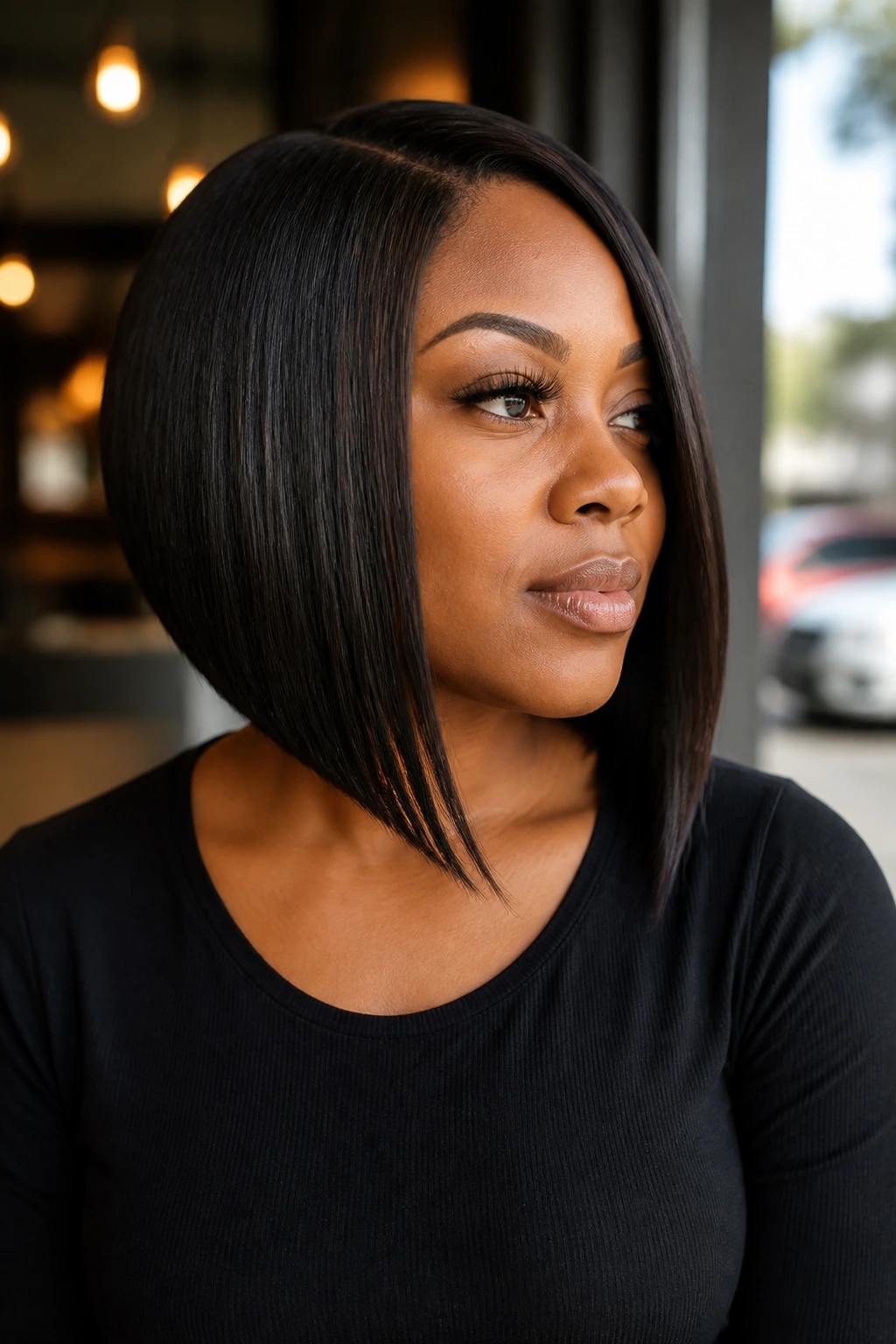
Face Shape:
A chin-length blunt bob softens a square jaw, while an angled bob stretches rounder faces by drawing the eye downward. If you have a longer face, a side-parted or softly layered bob can stop the silhouette from feeling too vertical.
Parting:
Middle parts feel crisp and modern, but they are not always the friendliest choice if the crown sits flat or the forehead needs a little softness. Side parts add movement and width near the temple, and off-center parts are the easiest compromise when you want the look without committing to one side.
Occasion:
For work or daytime errands, a sleek straight bob or tucked-behind-ear version keeps things tidy. For dinners, parties, or photos, side-swept, flipped-end, or highlighted bobs carry more presence without needing a ton of styling time.
Outfit Mood:
Structured jackets, hoops, and sharp collars love a blunt bob. Soft knits, satin tops, and casual layers do better with waves, curls, or curtain bangs. The cut changes the outfit more than people expect, so it’s worth thinking about the pair as one look, not two separate decisions.
Extra Styling Touches That Make a Bob Look Intentional
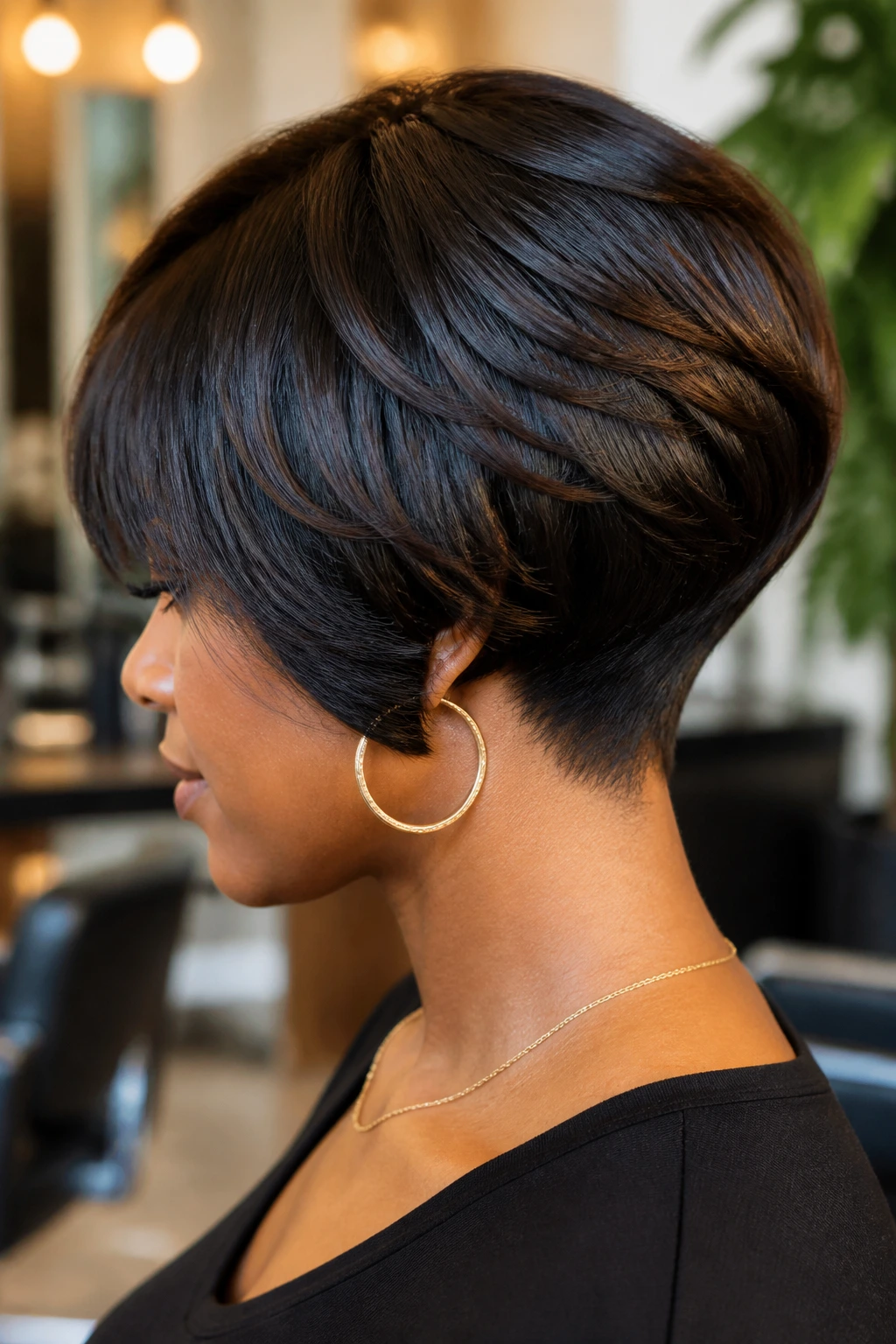
Texture Boost:
A tiny bend at the ends or a loose wave through the mids can save a straight bob from looking too rigid. Use a 1-inch curling wand and curl only the bottom third of the strand if you want subtle movement.
Shine Control:
Glossy hair is good. Greasy hair is not. Put serum on the palms first, then smooth it over the outer layer only, keeping the roots and part as clean as possible.
Color Lift:
Face-framing highlights, a soft root shadow, or a warm caramel rinse can pull a bob forward without changing the cut. Short styles show color fast, so even one tone shift can change the mood of the whole install.
Edge Work:
Keep edges soft, not stamped on. A light swoop at the temple can finish the look, but overdone baby hairs fight with the clean outline of a bob and make the hairline look crowded.
Make-It-Yours:
If you want low-maintenance, choose a closure bob with minimal leave-out. If you want more natural movement, leave a small front section for blending. If you want drama, lean into a side part or bold color and keep the rest of the style simple.
Common Mistakes That Ruin a Quick Weave Bob
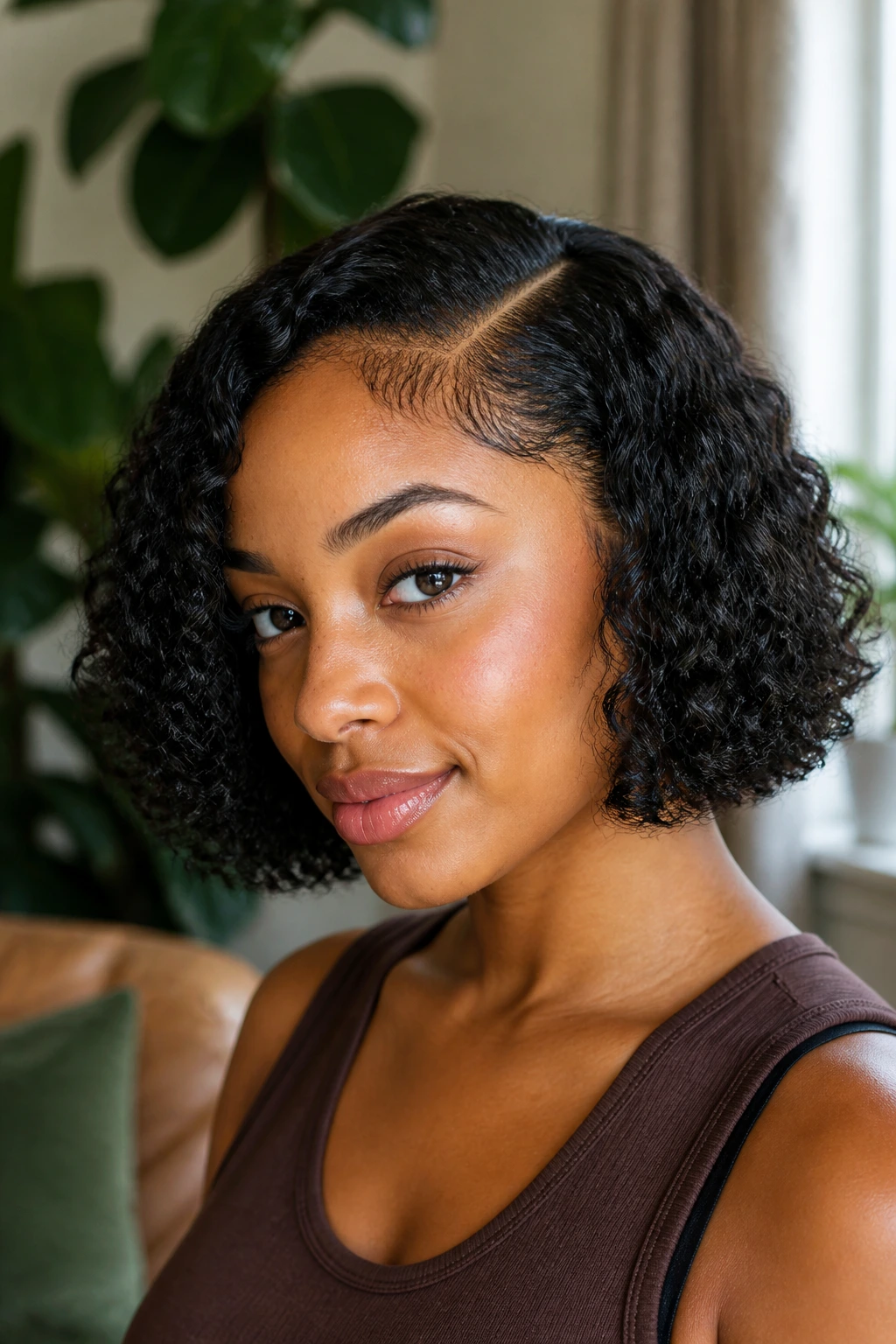
-
Buying hair that’s too long: The style ends up bulky because the stylist has to remove too much length to make it bob-shaped. Fix it by shopping shorter than you think you need and adding length only where the front requires it.
-
Skipping the mold: If the base isn’t pressed flat before the tracks go on, the bob sits lumpy at the crown and flares at the nape. A good wrap and dry-down are not optional.
-
Using too much glue near the hairline: The perimeter gets thick, the install lifts, and the style starts itching sooner than it should. Thin, even layers are safer and easier to remove.
-
Cutting before the hair settles: Freshly installed hair often moves a little once it’s flat-ironed, curled, or wrapped overnight. Trim too soon and the bob can end up crooked or shorter than planned.
-
Forgetting the nape: The back is where short styles show their age first. If the neck area gets puffy, use a scarf, light heat, or a careful trim instead of piling on serum.
-
Overloading the style with product: Too much mousse, spray, or oil makes the bob collapse. The hair should move, not sit in a coated shell.
Variations and Adaptations to Try
The Low-Density Everyday Bob:
Use fewer bundles, keep the length between 10 and 12 inches, and choose yaki straight hair for a lighter feel. This version is easier to dry, faster to refresh, and less likely to puff out at the sides.
The Full-Closure Bob:
A 4×4 or 5×5 closure gives you a neat part without much leave-out, which is useful if you want protection and less daily blending. It also makes the bob easier to maintain because the part stays in place after wrapping.
The Soft-Color Bob:
Add caramel, honey, or auburn accents instead of full-head color. Short hair shows dimension quickly, so a few strategic highlights can do more than a heavy dye job.
The Event-Ready Glam Bob:
Lean into a deep side part, a sleek finish, and either a flip or a soft wave at the ends. This version is for evenings, pictures, and any moment when the bob needs to feel a little more dressed up.
The Natural-Texture Bob:
Choose body wave or curly bundles that echo your own texture and let the install sit a bit softer around the face. It looks less rigid, and it blends well when you want the style to feel closer to your natural hair pattern.
The Short-Snug Bob:
Go shorter at the nape and keep the sides close to the jaw for a tailored, almost cropped finish. This works best when you want lightness and sharp lines instead of fullness.
Make-Ahead, Maintenance, and Nighttime Care
A quick weave bob usually wears best when you treat it like a style that needs respect, not constant correction. Most installs hold their shape for about 2 to 4 weeks when the base is secure and the nightly wrap is consistent. Push it longer than that and the perimeter starts to fray, the part loosens, and the ends lose their sharpness.
At night, use a silk scarf or bonnet and wrap the hair flat if the style is straight or flipped. For curls or waves, pin the hair in large sections or use a loose wrap so you do not crush the shape. If the ends start to pop up, a quick pass with a warm flat iron or a satin wrap overnight usually fixes the issue better than adding more product.
For refresh days, focus on the parts that show first: the top, the sides, and the nape. A little mousse at the crown and a light comb-through at the ends can bring the style back without starting over. If the bob is curly, a water bottle with a small amount of leave-in works better than heavy oils. Heavy oils just sit there and make the curls stringy.
If you used glue, removal matters. Do not peel tracks off the cap in a rush. Use the right remover, go slowly, and protect the edges. A neat removal saves your next install from having to fight damaged hairline areas.
Frequently Asked Questions
How many bundles do I need for a bob quick weave?
Most bob installs need 2 to 3 bundles, depending on the texture and fullness you want. A blunt straight bob often looks cleaner with fewer bundles, while curly or layered versions may need a little more hair to keep the shape balanced.
Is a quick weave bob protective?
It can be, but only if the install is done carefully and removed on time. A snug base, minimal leave-out, and clean removal matter more than the style name itself. Heavy glue and too much tension at the hairline are what cause trouble.
What hair texture looks most natural in a bob?
Yaki straight is usually the easiest match for everyday wear because it has a little grip and doesn’t look overly shiny. If your own hair is very smooth, silky straight can work too. For a softer look, body wave or loose curl blends well without a hard edge.
Can I do a quick weave bob without a closure?
Yes, but the leave-out has to blend cleanly and stay healthy under heat. If you want less daily styling and less tension around the part, a closure bob is easier to live with.
How long does a quick weave bob last?
A well-done style usually lasts 2 to 4 weeks before it needs removal or a full refresh. How long it stays neat depends on the install, your nightly wrap, and how much heat or product you use.
Can I flat iron or curl the hair?
If the hair is human hair and heat-safe, yes. Keep the iron on the lower end that still smooths the strand, and use heat protectant every time. Synthetic hair can be trickier, so check the fiber before you touch it with heat.
Why does my bob flip up at the ends?
That usually happens when the ends were cut too blunt, the hair is too dry, or the nape is too bulky. A small trim, a light serum, and a better wrap at night can calm it down. Sometimes the fix is also in the bundle choice—yaki and body wave tend to behave better than very slick hair.
What’s the easiest bob style for a beginner to wear?
A sleek center-part bob or a soft side-part straight bob is usually the least complicated. They need less daily styling than curls, bangs, or heavy layering, and they show shape even when the hair is just wrapped and brushed.
The Bob That Earns Its Place
The best thing about bob-length quick weave hairstyles is that they do not waste your time. They can be blunt and polished, soft and curly, sharply angled, or quietly tucked behind the ear, and the whole point is that the shape still reads from across the room. That is rare. A lot of styles need constant fixing to look finished; a good bob usually looks like it knows what it’s doing.
What I like most is how much control you get from a short cut. You can push it sleek, add a bend, change the part, or build in color without dragging the whole look into high-maintenance territory. If the install is clean and the ends are cut with purpose, the style works hard for you.
Pick the shape that matches your daily routine, then keep the mold flat, the ends neat, and the nighttime wrap in place. That combination does more for a quick weave bob than any amount of extra product ever will.
