



Box braids on medium-length hair hit a sweet spot that long braids never quite manage. They still swing when you turn your head, but they do not drag at your collarbones like a heavy curtain by day three. That matters more than people admit. A set that lands around the shoulders can look polished in the mirror and still feel light enough to live in.
The other reason this length works so well is control. You can show off clean parts, color, beads, cuffs, curls, and a neat finish without the style swallowing your face. Medium-length box braid styles for medium length hair also give you a better shot at a balanced shape: enough length to play with, not so much that the whole look turns into a chore every time you wash, tie up, or sleep on it.
And if you’ve ever had braids that felt either too short to do anything with or too long to keep tidy, you already know why this middle ground matters. It’s the length where the details show. The parting. The ends. The way the braids sit at the nape when you pull them back half an inch. That is where the good looks live.
Why This Collection Keeps Working
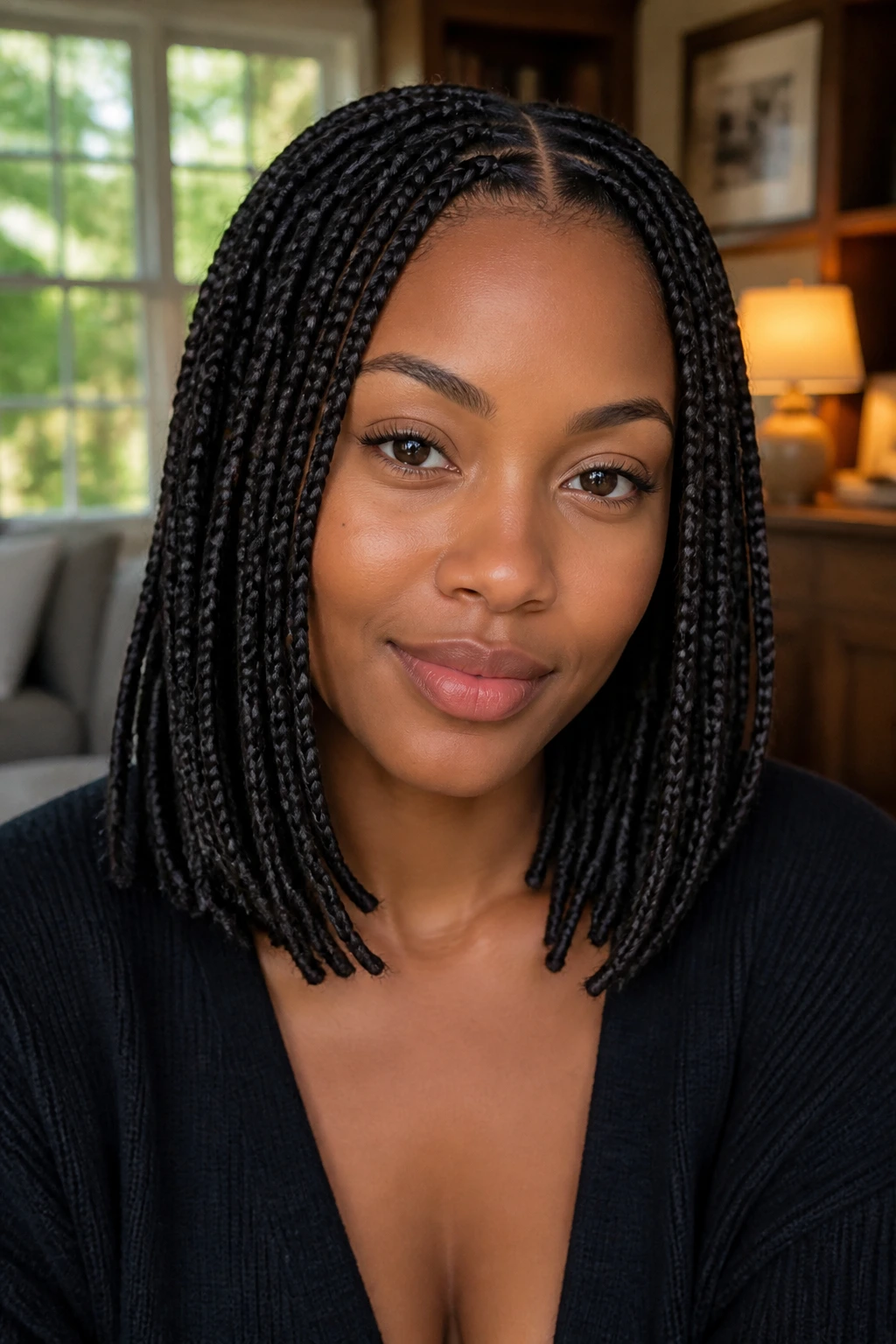
- The length stays manageable: Medium-length braids sit close enough to the shoulders that they do not swing into every spoon, zipper, or seatbelt buckle.
- The styling range is wide: The same braid set can go down, up, to the side, or into a bun without looking like a compromise.
- The scalp is easier to reach: Part lines and roots stay accessible for oiling, misting, and quick refreshes.
- The shape reads clearly: Accessories, color, and parting designs show up better when the braids are not buried in extra inches.
- The weight is usually kinder: Less length often means less drag on the edges and neck, especially if the braids are medium-sized rather than jumbo.
- The finish looks intentional fast: A shoulder-skimming set can look styled even when you have only added mousse, cuffs, or a sharp side part.
1. Shoulder-Skimming Classic Box Braids
These are the braids I always think of first when someone says medium-length hair. The ends land near the shoulders, so the whole look feels tidy, practical, and easy to read from across a room. No extra drama. No heavy tail brushing the ribs.
Why It Works
The classic shape gives you clean parting, visible texture, and enough movement to keep the braids from looking stiff. Medium size works best here: parts around 1/2 inch to 3/4 inch keep the set full without making the roots feel crowded.
- Best parting: Straight rows or slightly staggered rectangles.
- Best braid size: Medium, not tiny.
- Best finish: A light mousse at the ends and a little oil on the scalp.
- Best mood: Everyday, office-safe, or low-key polished.
Small tip: Ask for the ends to be cut or dipped to the same landing point. That little line at the bottom makes the whole set look deliberate.
2. Middle-Part Mirror Rows
A middle part makes medium-length box braids look sharper than any heavy accessory can. It creates a clean line that cuts the style in half and gives the face a very balanced frame. If your features are already symmetrical, this is a good way to let that show. If they are not, the part can make the whole look feel calmer.
The key is neatness at the crown. A sloppy middle part is impossible to hide because the eye goes straight there. I like this style best when the first two rows are tight enough to lie flat, then the rest of the braids fall with a little movement at the collarbone.
How to Wear It
Keep the edges simple. A clean part, a satin scarf at night, and maybe one cuff on each side is enough. Let the braid texture do the work.
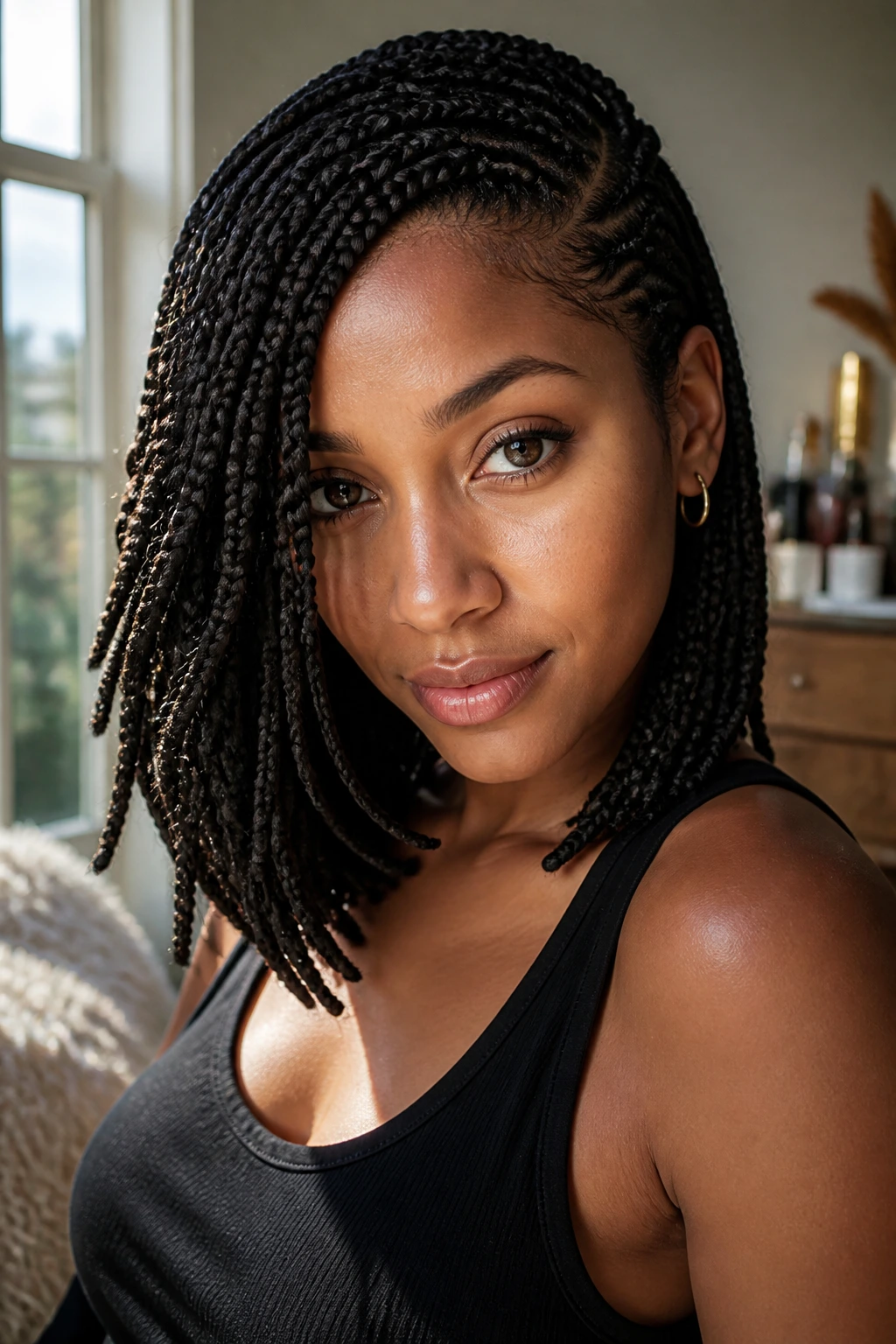
3. Deep Side-Part Swing
Why do side parts look so good on this length? Because the braids fall into the shoulder line instead of fighting it. A deep side part adds a soft diagonal, and that diagonal makes medium-length braids feel looser and a little more dramatic without adding extra hair.
The style works especially well if you like one side tucked behind the ear and the other side left full. It also helps if your braids are a touch thicker than usual, because the sweep gives the set room to breathe. Keep the part clean and the front section slightly heavier. That imbalance is the point.
What to Watch For
If the side part is too shallow, the look loses its shape. If it is too deep, the braid mass can slide forward all day. Aim for a part that lands just past the outer arch of one eyebrow.
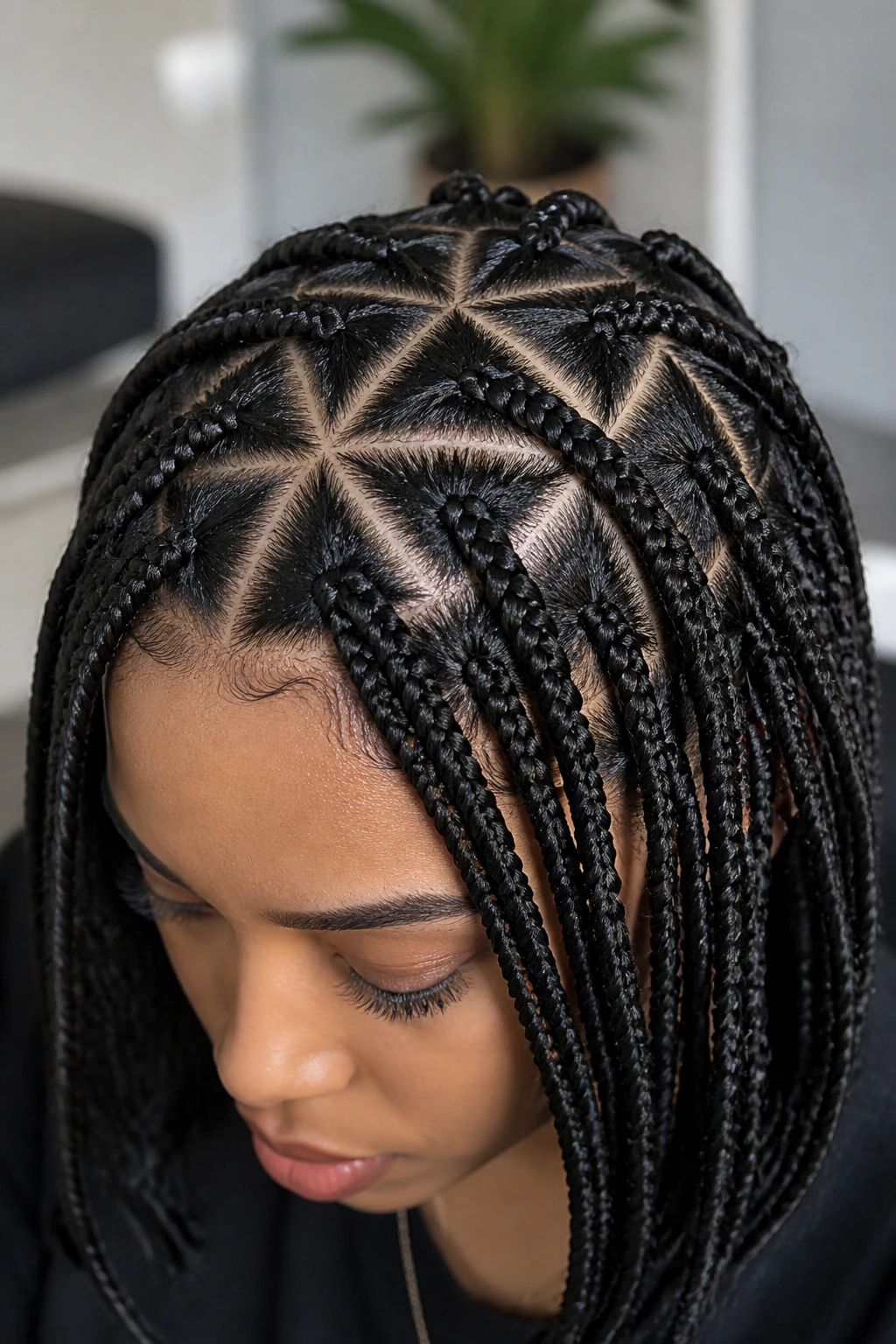
4. Triangle-Part Texture
Triangle parts make even simple box braids look custom. The geometry is the whole trick. Square parts are classic, yes, but triangles break the grid in a way that catches the light at different angles and gives the scalp a more decorative look.
This is one of those styles that works best when you want the parting to be visible. Medium-length hair is the right canvas because the part pattern can still be seen after the braids settle. On longer braids, the details often get buried under weight. Here, they stay in sight.
- Style note: Triangle parts look best with medium-small braids.
- Vibe: A little sharper, a little more styled.
- Best with: Gold cuffs, clear beads, or plain ends.
- Avoid: Overloading the hair with too many accessories. The parting already does enough.
5. Knotless Shoulder-Length Braids for Medium Length Hair
Knotless braids are one of the few styles I’ll call genuinely easier on the head. The braid starts with your natural hair and gradually feeds in extension hair, which softens the root and cuts down on that stiff, heavy bump at the scalp. On medium-length hair, the result sits close and neat without feeling bulky.
This version is especially useful if you wear braids often or your scalp is touchy around the hairline. It also gives a softer fall around the face, which keeps the length from feeling boxy. The finish is smooth, almost slippery-looking near the base, and that contrast against the braided body is part of the appeal.
Best for
Anyone who wants the look of medium-length box braids without the hard-edged root knot. It is the style I’d choose if comfort matters more than a super rigid shape.
6. Jumbo Box Braids With Curly Ends
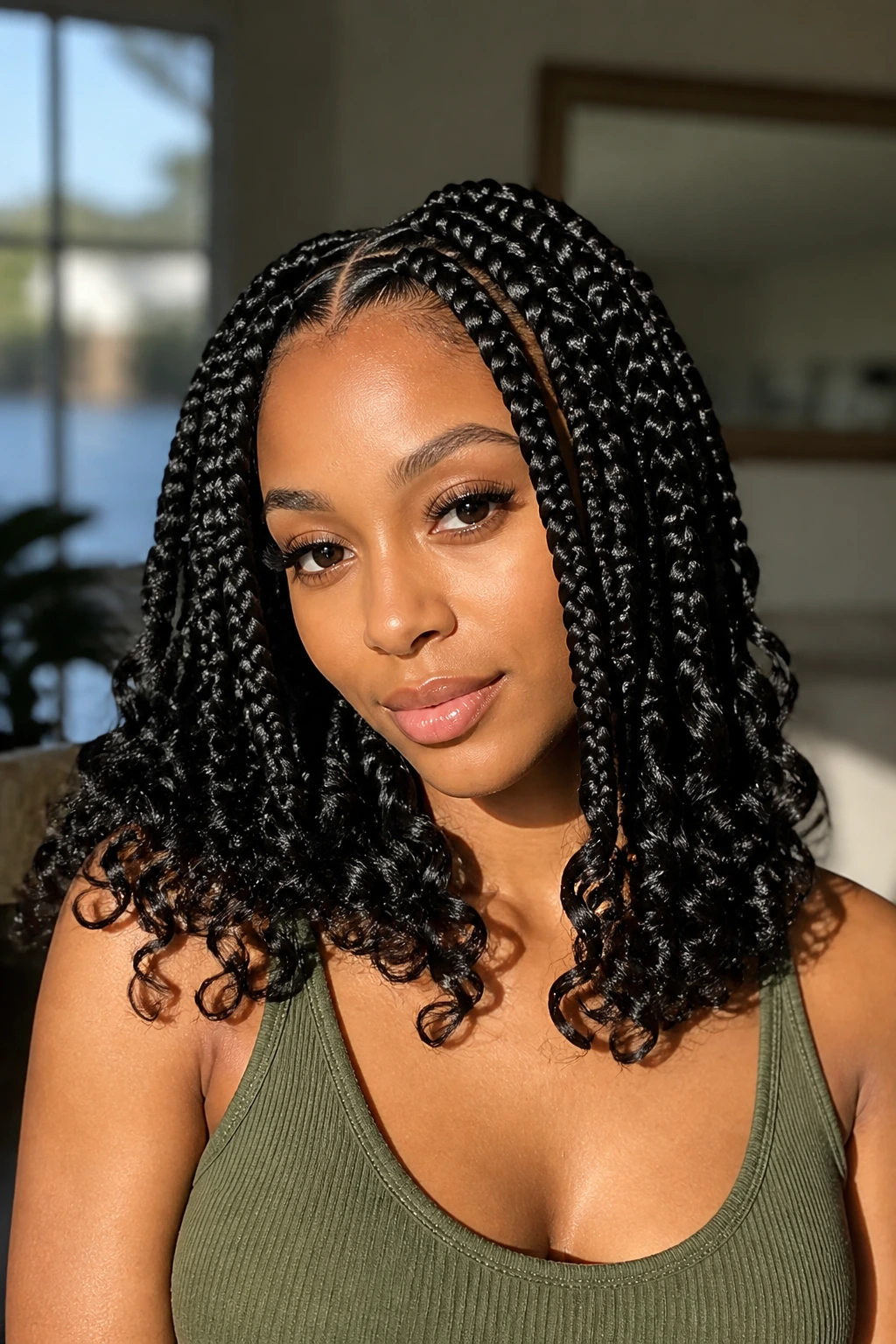
Big braids and curled ends are a nice shortcut when you want texture without a long installation. The larger braid size means fewer parts, less time in the chair, and more visual weight at the ends, where the curls soften the whole look. On medium-length hair, that curl at the bottom keeps the set from feeling blunt or boxy.
The braid body should be smooth and clean, then the last few inches can be wrapped, rod-set, or curled after the braid is finished. A little frizz at the curl is fine. Actually, it helps. Too polished and the ends start to look plastic.
Quick details
- Ask for a braid size that can hold the curl without unraveling.
- Keep the roots neat so the top does not look overloaded.
- Use mousse, then pin the curls in shape while they cool.
7. Half-Up, Half-Down Box Braids
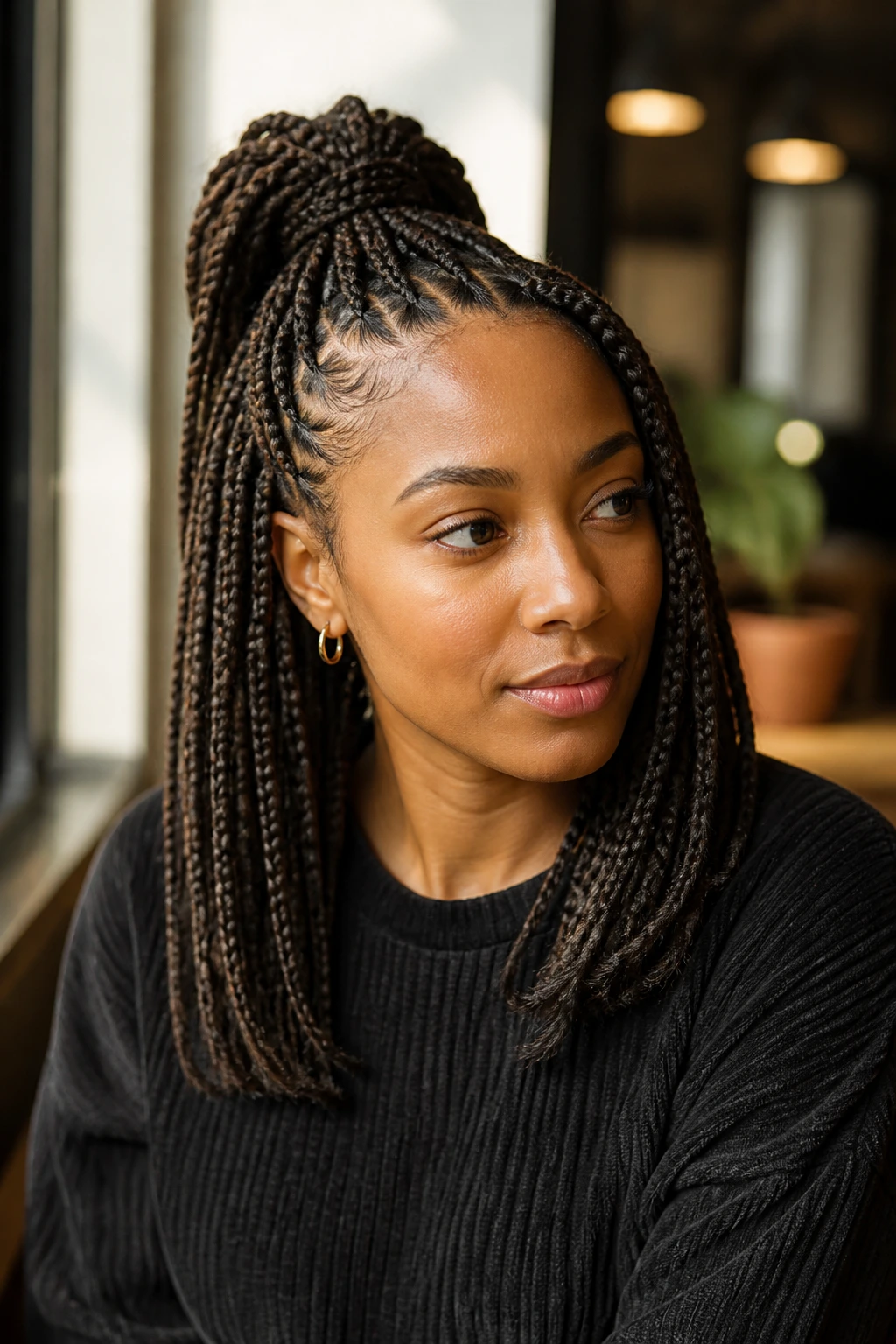
Half-up styles are where medium-length braids start showing off. Pulling the top section away from the face gives you lift at the crown and leaves enough braid length hanging to keep movement in the back. It is a simple change, but it changes the whole energy of the set.
I like this look when the braids are medium-small and the top section is gathered high enough to show the parting rows underneath. A scrunchie or small claw clip works, but a wrapped braid at the base looks cleaner. The trick is not to over-tighten the top. Pull it snug, not strained.
How It Reads
From the front, it frames the face. From the side, it gives a little volume. From the back, the hanging braids keep the style from looking unfinished.
8. High Braided Ponytail
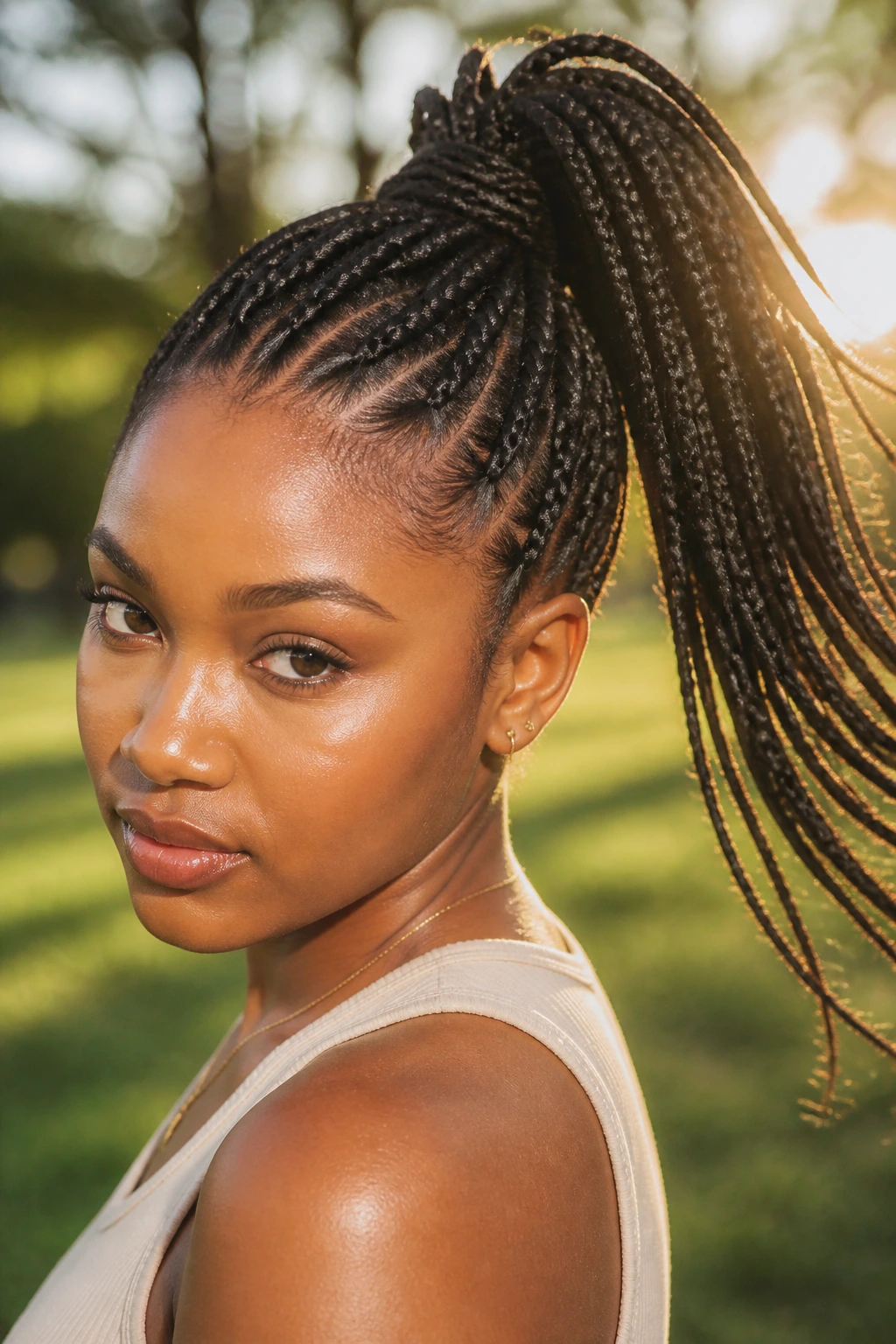
A high ponytail on medium-length box braids has a very specific bounce. The braid ends swing higher than you expect, and that movement makes the style feel energetic rather than severe. It also pulls the braids off the neck, which is a small mercy when the weather is warm or you are moving all day.
The best version starts with a smooth base. If the roots are fuzzy or the pony is lopsided, the eye goes straight there. Wrap one braid around the elastic to hide it, then let the tail fall with a little curve instead of forcing it straight down. That curve looks better in motion.
What makes it work
The ponytail should sit high enough to lift the braid weight, but not so high that the front rows look stretched. If the scalp starts to pull, the style is too tight.
9. Low Braided Bun
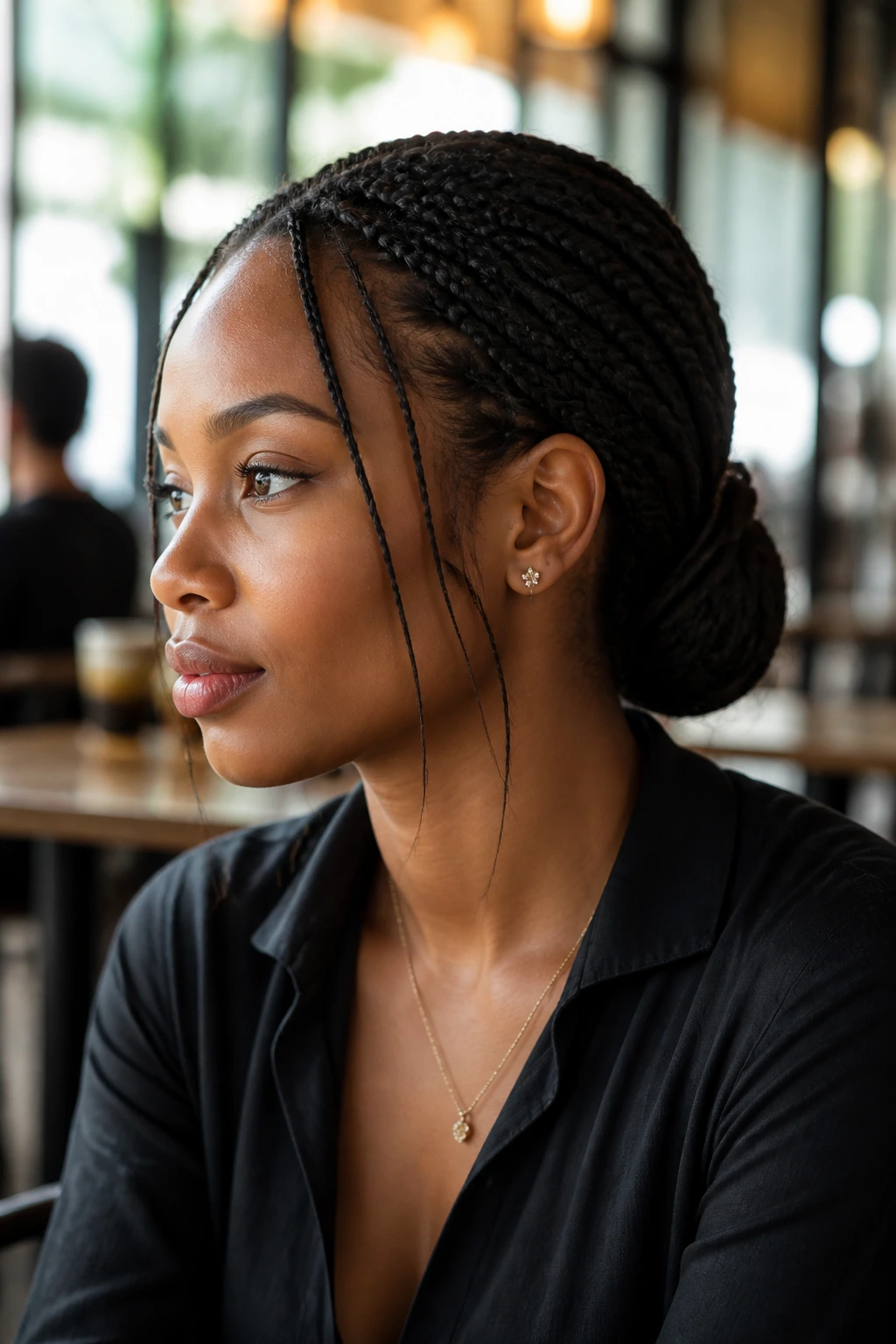
A low bun takes the same braids and makes them look instantly more composed. Medium-length hair is actually ideal here because the braids are long enough to coil, but not so long that the bun becomes a heavy knot at the nape. The shape stays neat.
I like a low bun when the ends are tucked and pinned flat so nothing pokes out. If a few braids arc around the bun, even better. It softens the line against the neck and keeps the style from looking too formal. Add one cuff or one silk wrap if you want a finish, but do not pile on both unless you want the bun to do all the talking.
10. Side-Swept Cascade
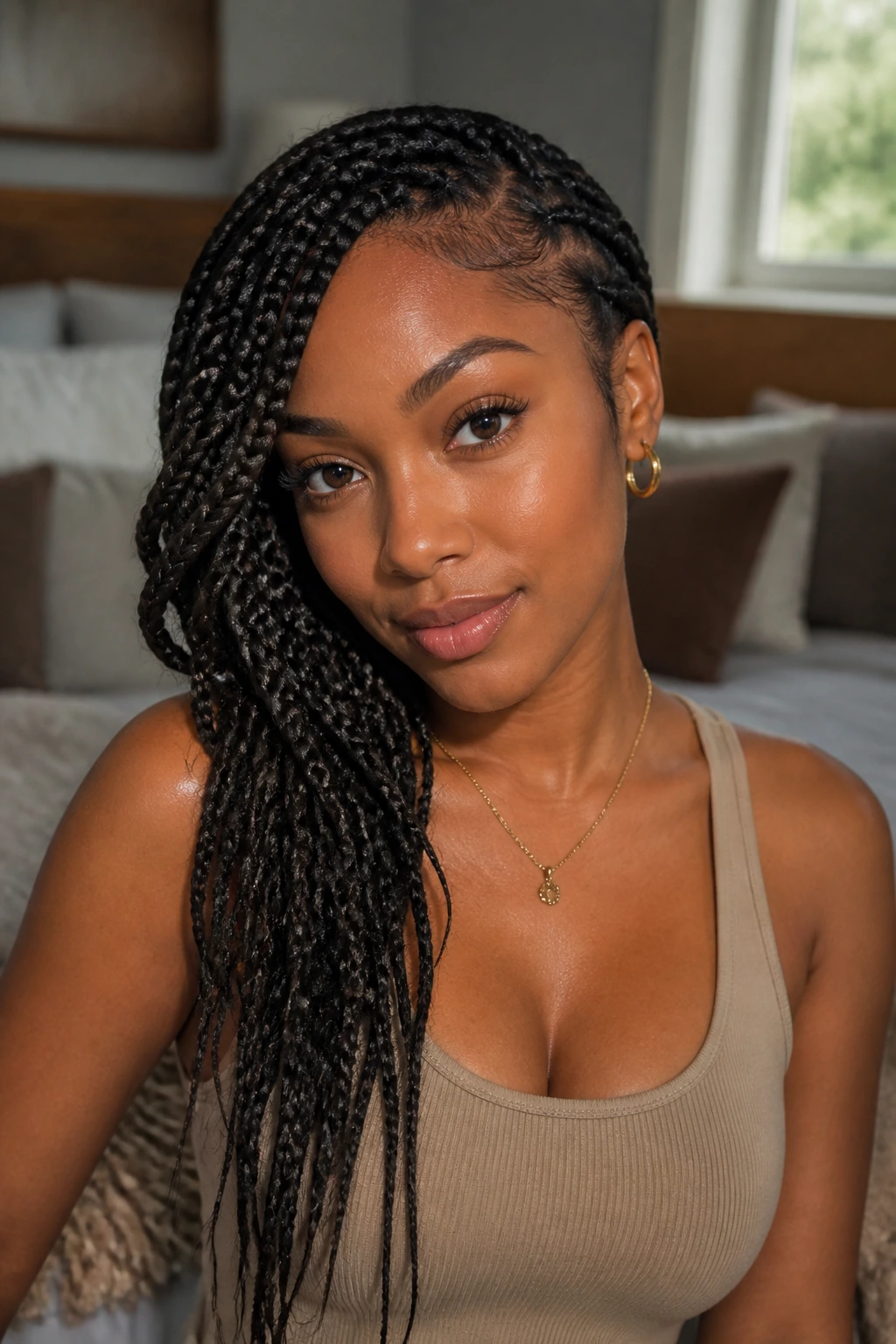
Imagine all the braids swept over one shoulder and left to spill there in a thick, controlled sheet. That is the side-swept cascade. On medium-length hair, it works because the length is enough to drape, but not enough to swallow the shoulder line completely.
This is a good style when you want the hair to feel a little romantic without going soft in a flimsy way. Keep the opposite side smooth and pinned, then let the braid mass sit forward. A small curl at the ends makes the line friendlier. Straight ends can work too, but they read sharper.
Small caution
If your braids are very heavy, the cascade can strain one side of the neck. Shift the part or pin the top section occasionally so the weight does not sit in one place all day.
11. Beaded Ends and Front Cornrows
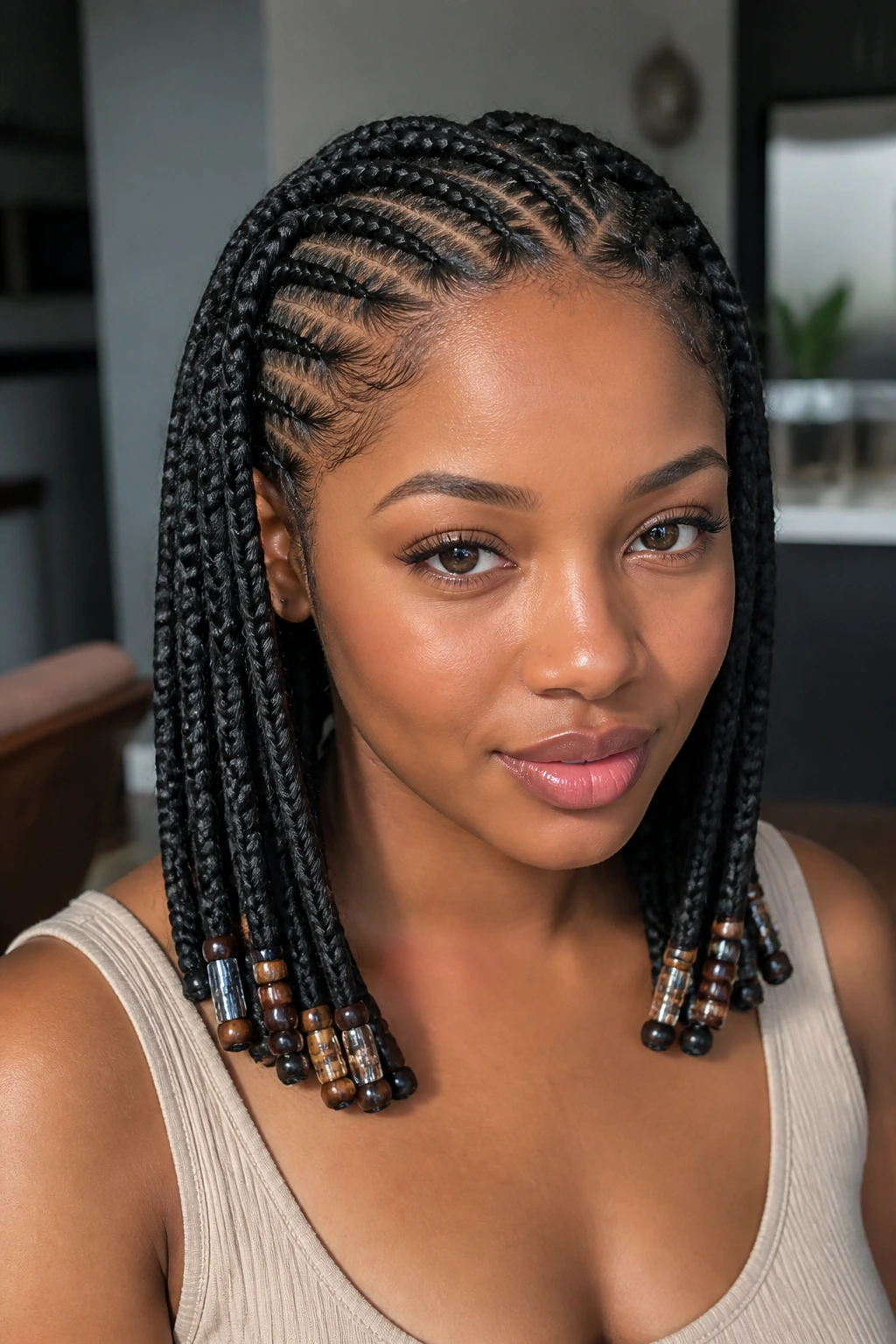
Beads are not subtle. That is part of the fun. On medium-length box braids, beadwork gives the ends a little sound and movement, especially when the braids hit the jawline or collarbone. Pair that with a few front cornrows feeding into box braids, and the style gets a clean frame at the hairline.
This look suits people who want the front to feel precise while the rest stays loose. Clear beads make the ends look crisp; wooden beads feel warmer and heavier. Use them sparingly if the braids are already dense. Too many beads at once can pull the ends into a clunky shape.
How to use it
Place beads at the last inch or two of the braid so they do not weigh down the whole strand. A little spacing keeps the rhythm visible.
12. Gold-Cuff Accent Braids
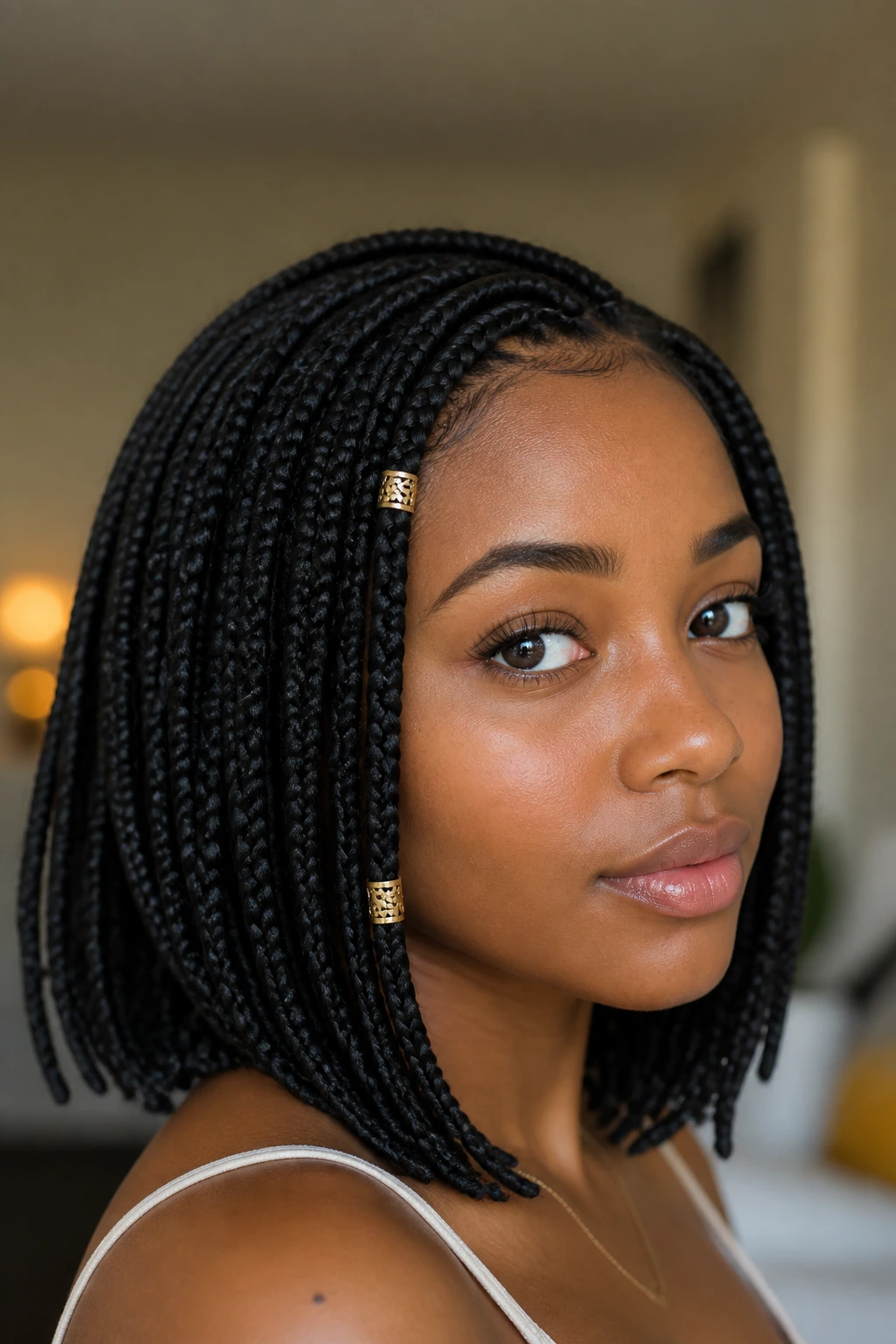
Gold cuffs work best when they are not everywhere. One cuff on a braid near the temple, another on a braid by the jaw, maybe a third where the parting opens up — that is enough. Medium-length hair gives the cuffs room to show without getting buried in extra length.
This style is less about changing the braid shape and more about giving the set a metallic pulse. The shine catches the eye, especially when the braids move and the cuffs shift slightly. I like it with medium-sized braids in dark hair because the metal stands out more clearly, but it can work on lighter tones too. Keep the rest of the style clean. The cuffs should feel like punctuation, not wallpaper.
13. Boho Box Braids With Loose Curls
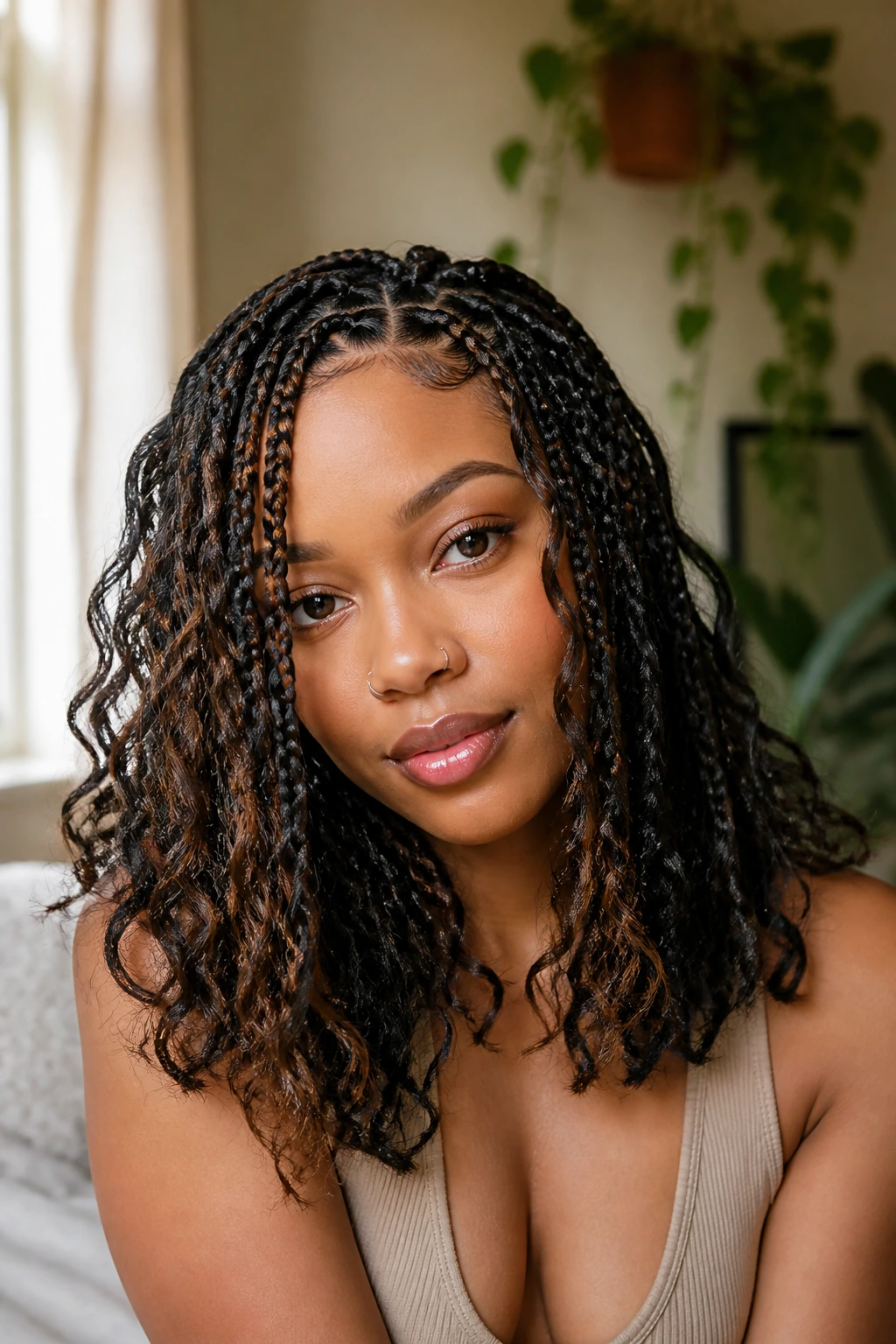
Boho braids bring in loose curly pieces between the box braids, and that softer texture changes everything. The style feels a little airier, a little less rigid. On medium-length hair, the curls break up the braid body just enough to keep the look from going flat.
This is one of the few styles where a tiny bit of mess actually helps. The curls do not need to be perfect. They should look touched, not shellacked. I like this best when the braids themselves are medium-sized and the curls are concentrated around the face and ends. Too many curls can make the style lose its braid structure.
Best when
You want movement and softness more than a sharp, straight-down finish.
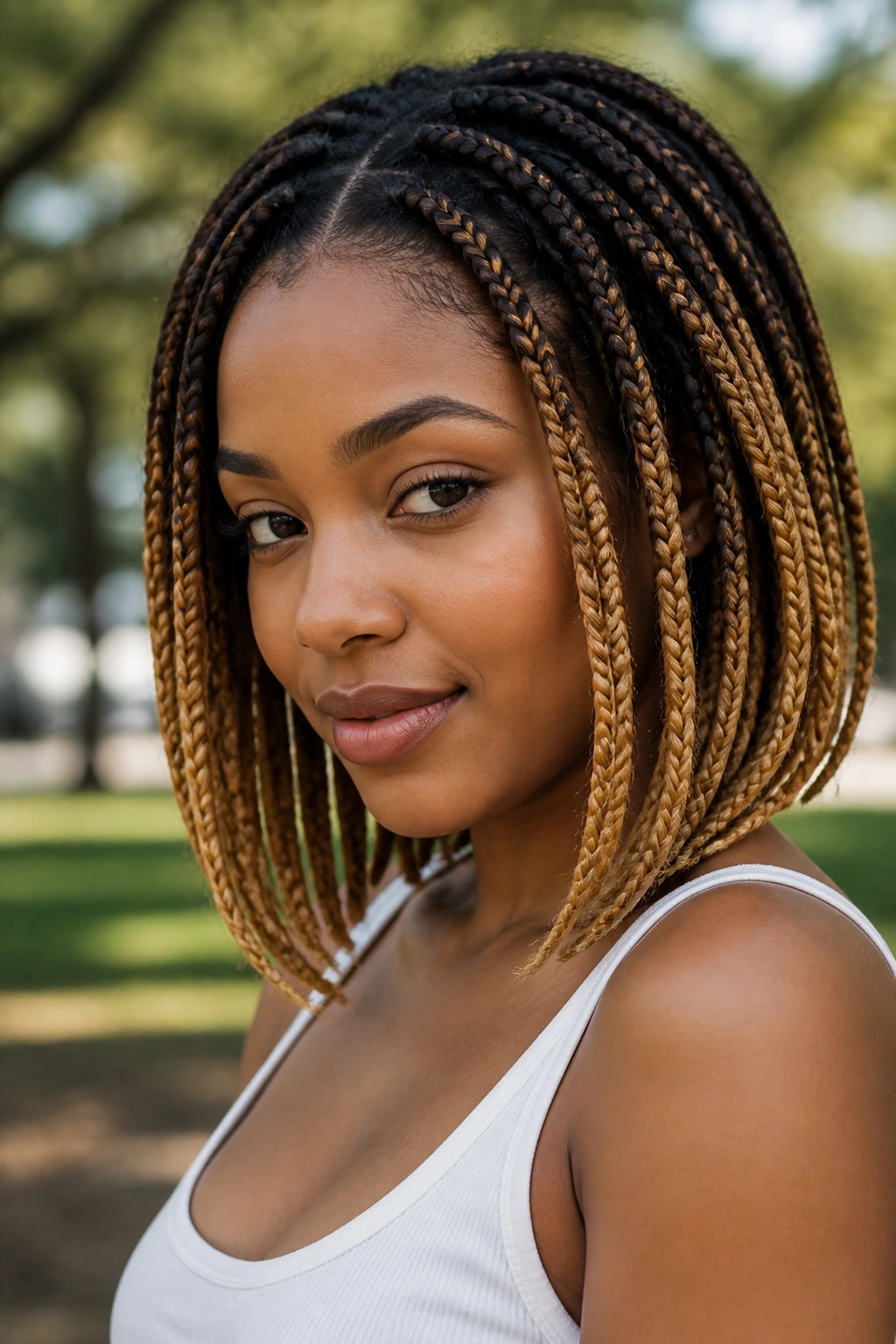
14. Honey Blonde Ombre Braids
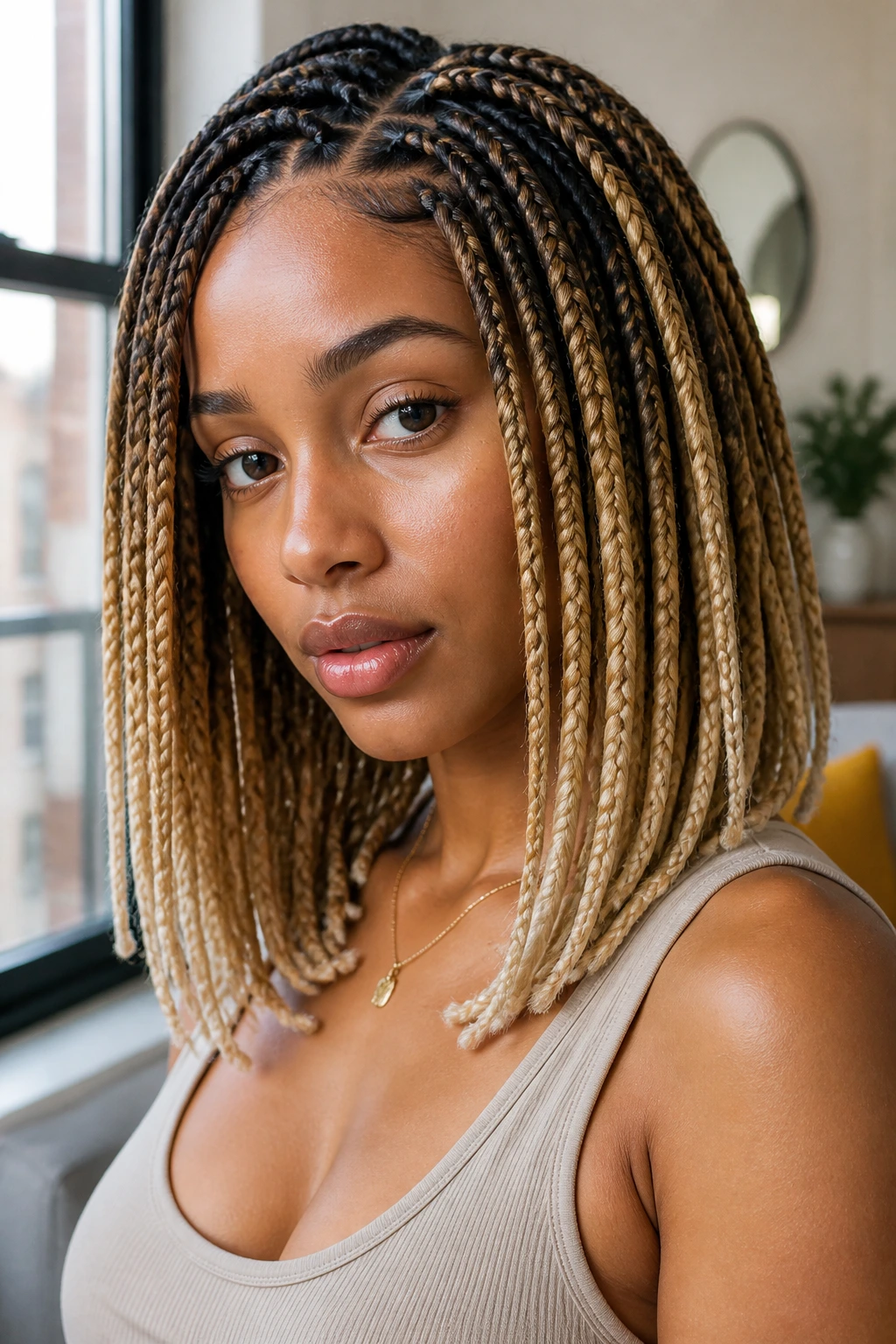
Color changes make medium-length braids read differently even when the structure stays the same. Honey blonde ombre gives you darker roots and lighter ends, which makes the braid pattern pop and keeps the style from feeling too heavy at the bottom.
The shift works best when it is gradual. A hard line from dark to light can look chunky in a braid set. A smooth fade, though, gives depth. On medium-length hair, the lighter ends sit close enough to the shoulders that they brighten the whole face. It is a very easy way to make simple braids feel finished.
Tip
If your skin tone runs warm, honey and caramel tones look especially clean. Cooler blondes can work too, but they change the mood fast.
15. Auburn and Copper Braids
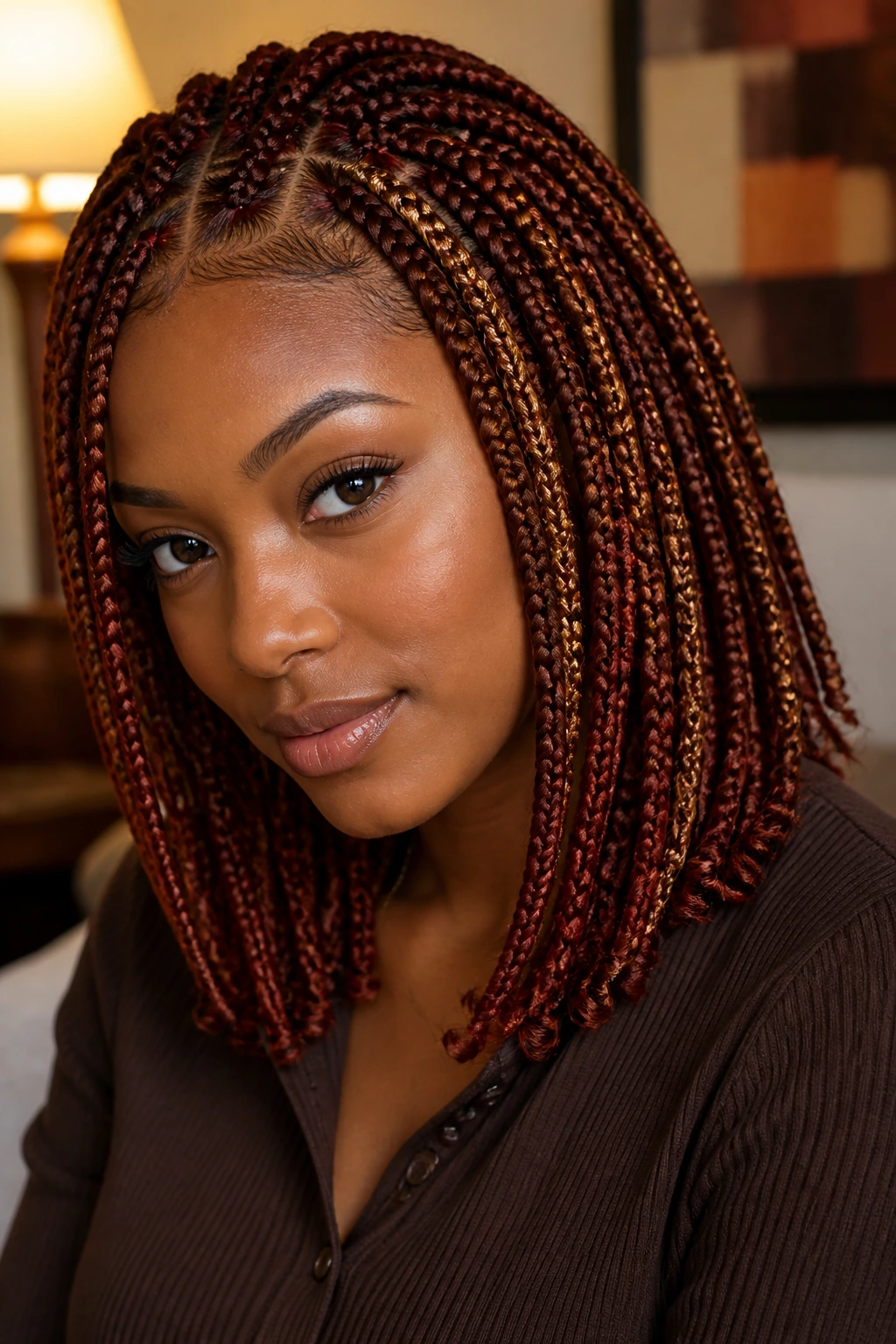
There is something about auburn braids that feels richer than a bright red and less obvious than blonde. Copper threads through the set and gives the hair a warm, almost burnished look. On medium-length braids, that color shows up without taking over.
I like this choice when the braid size is medium-small and the parts are neat. Warm color plus clean parting is a strong combination. It reads polished, not loud. If you want the color to stay dimensional, mix two shades that sit close together rather than choosing one flat red tone. The braid texture does the rest.
16. Crisscross Part Box Braids
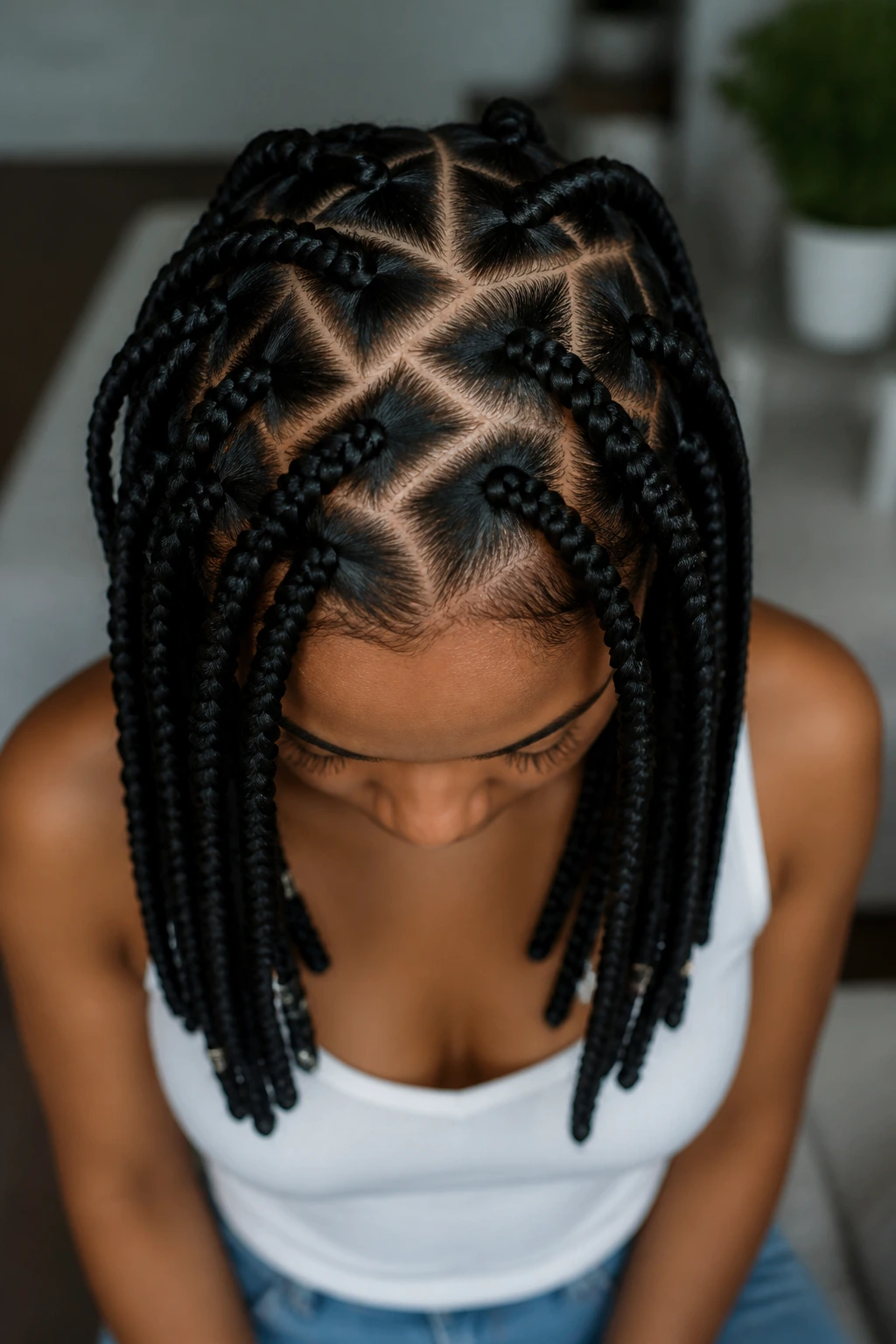
Crisscross parting is for the people who want the scalp to do some of the styling. The part lines cross over each other in a pattern that looks more engineered than a standard grid, and medium-length hair shows that detail beautifully because the style does not get lost under extra weight.
This one is all about the view from above. From the front, it can still look simple. From the top, it suddenly gets interesting. Use medium braids so the part lines remain visible. Tiny braids can crowd the design, while jumbo braids can hide it. A smooth root and a tidy section map make the whole thing sing.
17. Zigzag Part Braids
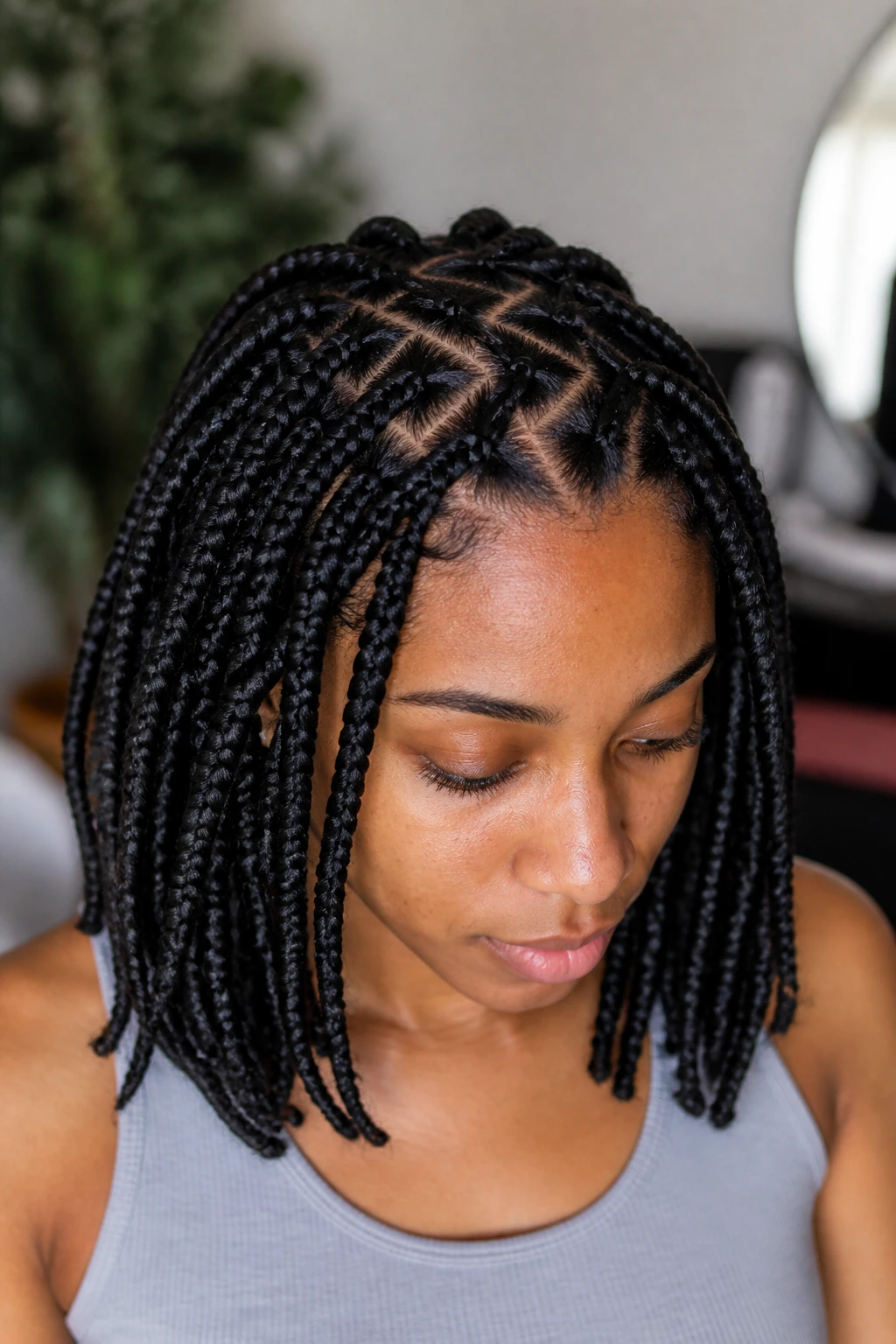
Zigzag parts add a little motion before the hair even starts moving. That’s the whole charm. The parting line breaks the straight grid, so the set looks playful even when the braids themselves are plain.
This is a smart option if you want a detail that shows in photos and still works when the braids are down. Medium-length hair helps because the zigzag can be seen near the roots instead of disappearing into a long curtain of hair. Keep the rest of the style simple. A busy part with busy accessories can start to feel crowded fast.
Best use
Let the parting be the statement. Skip the heavy cuffs and give the zigzag some room.
18. Heart-Part Statement Braids
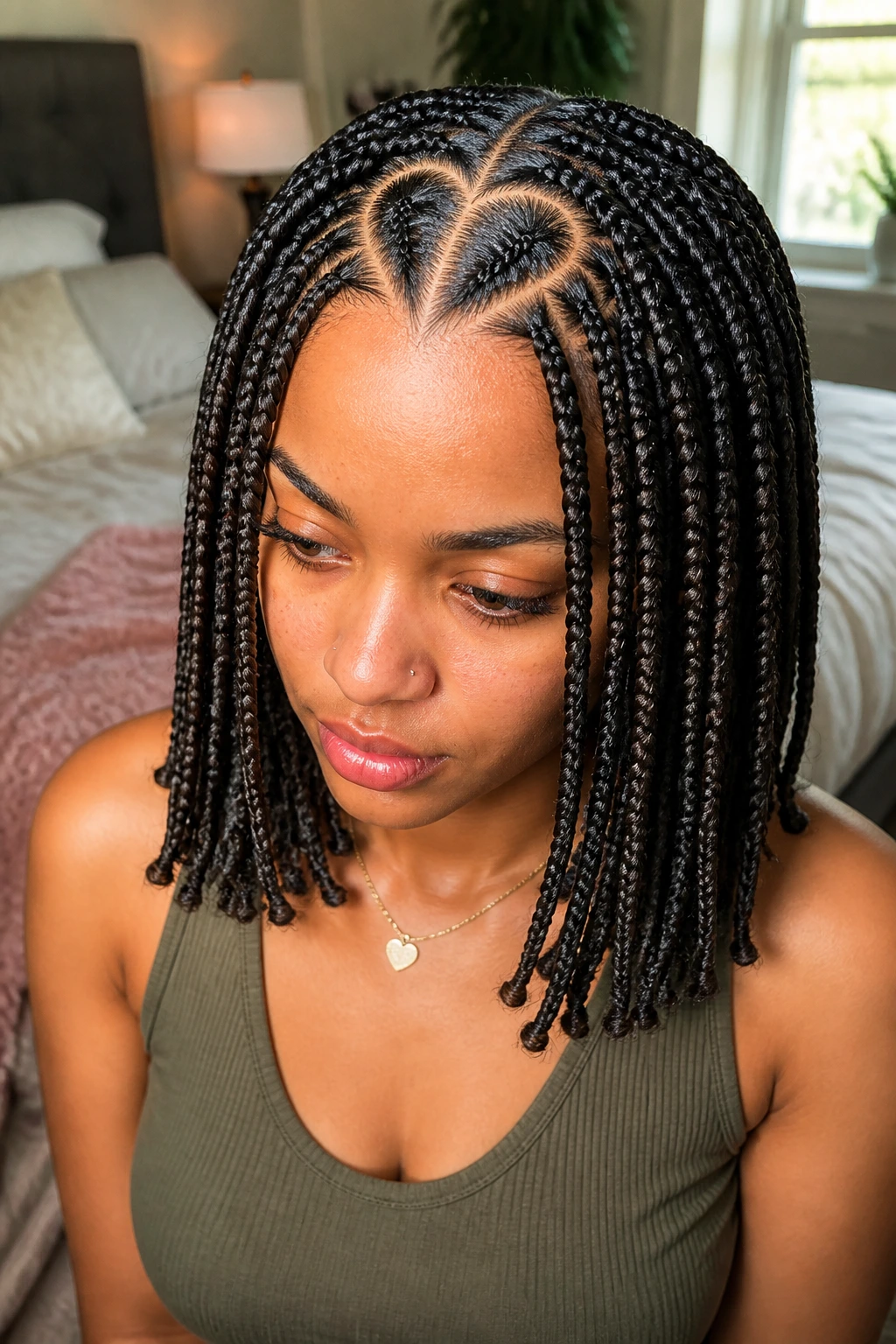
A heart part is exactly what it sounds like, and yes, it can walk the line between sweet and sharp if it is done cleanly. On medium-length box braids, the shape sits right at the crown where the eye lands first, so it becomes the detail people remember.
This style needs a steady hand and a clear part map. The heart should be readable from a few feet away, not only from a salon chair. It works nicely with a middle section or with two mirrored side sections leading into the design. If you want one dramatic braid set, this is a strong place to put the drama.
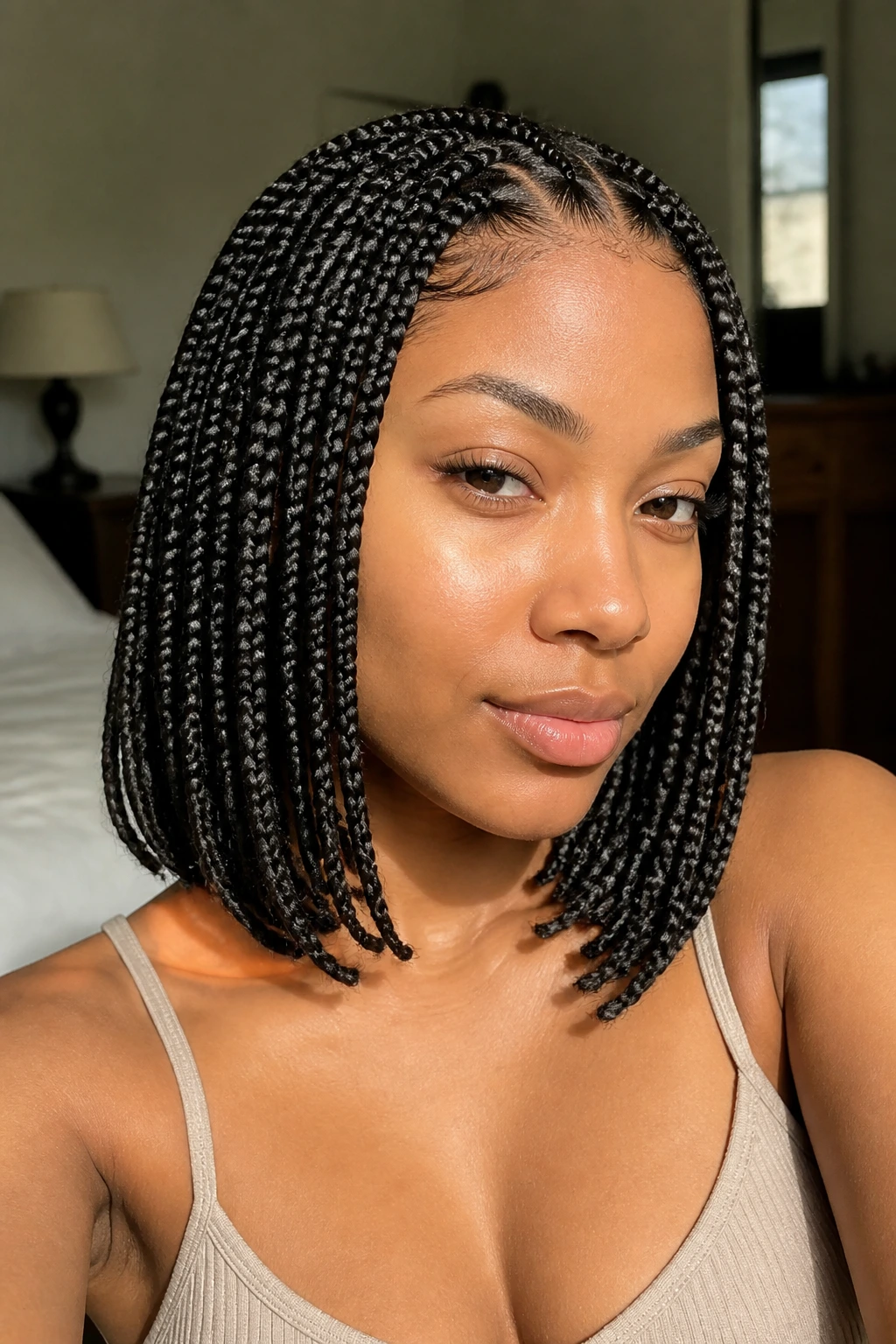
19. Blunt Bob Box Braids for Medium Length Hair
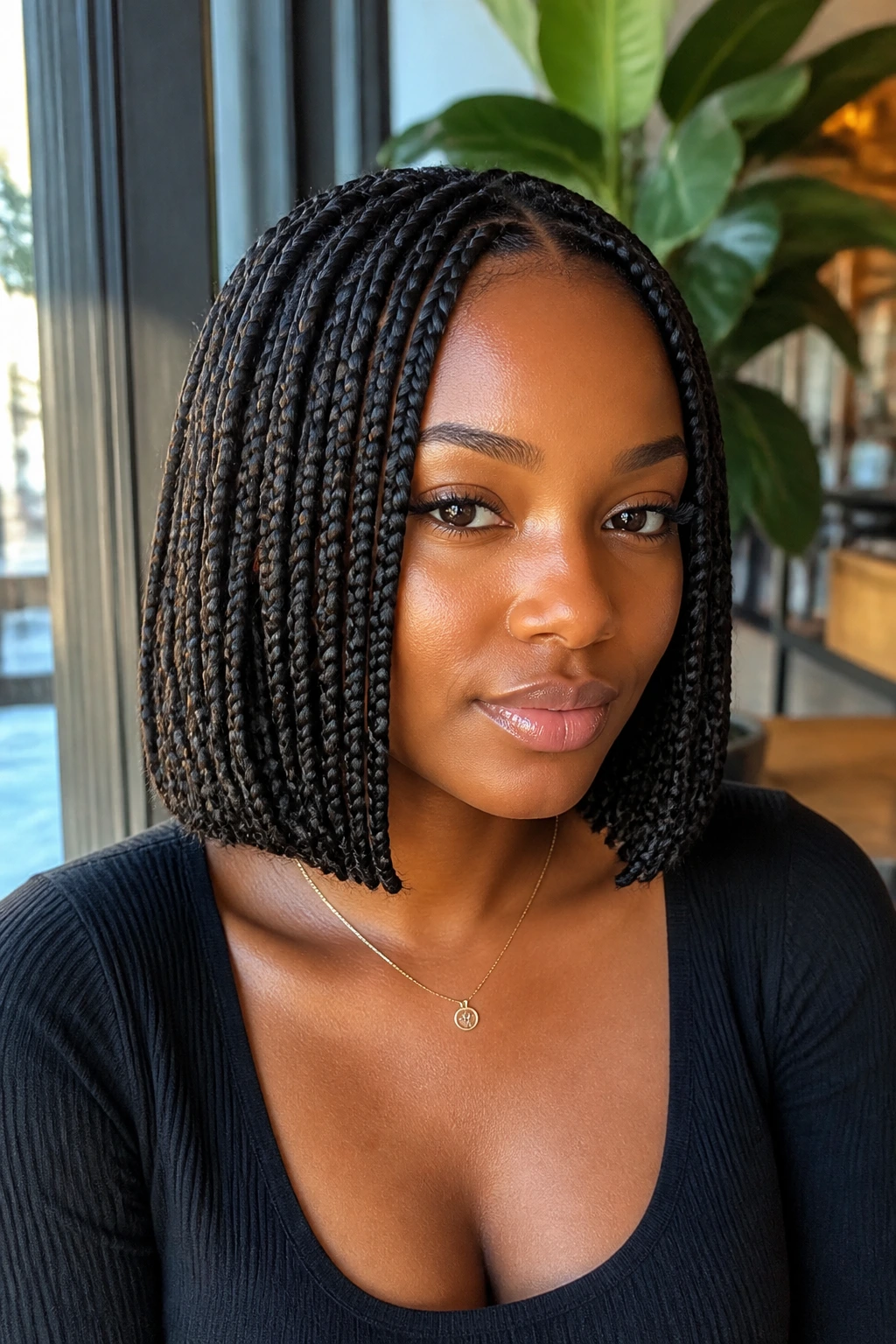
A blunt bob made of box braids is tidy in the best way. Every end lands at nearly the same point, which gives the style a square, compact shape that sits close to the jaw and shoulders. For medium-length hair, that blunt edge is useful because it keeps the braids from looking too scattered.
I prefer this style with a dense braid count and clean edges. The line at the bottom needs to stay readable. If some ends are wildly longer than others, the bob loses its shape. This is the braid version of a sharp haircut. It depends on the cut line, even though the cut is made with the braids themselves.
Quick note
A blunt bob looks best when the front rows are a touch longer than the back. That tiny difference keeps the face from looking boxed in.
20. Layered Box Braids
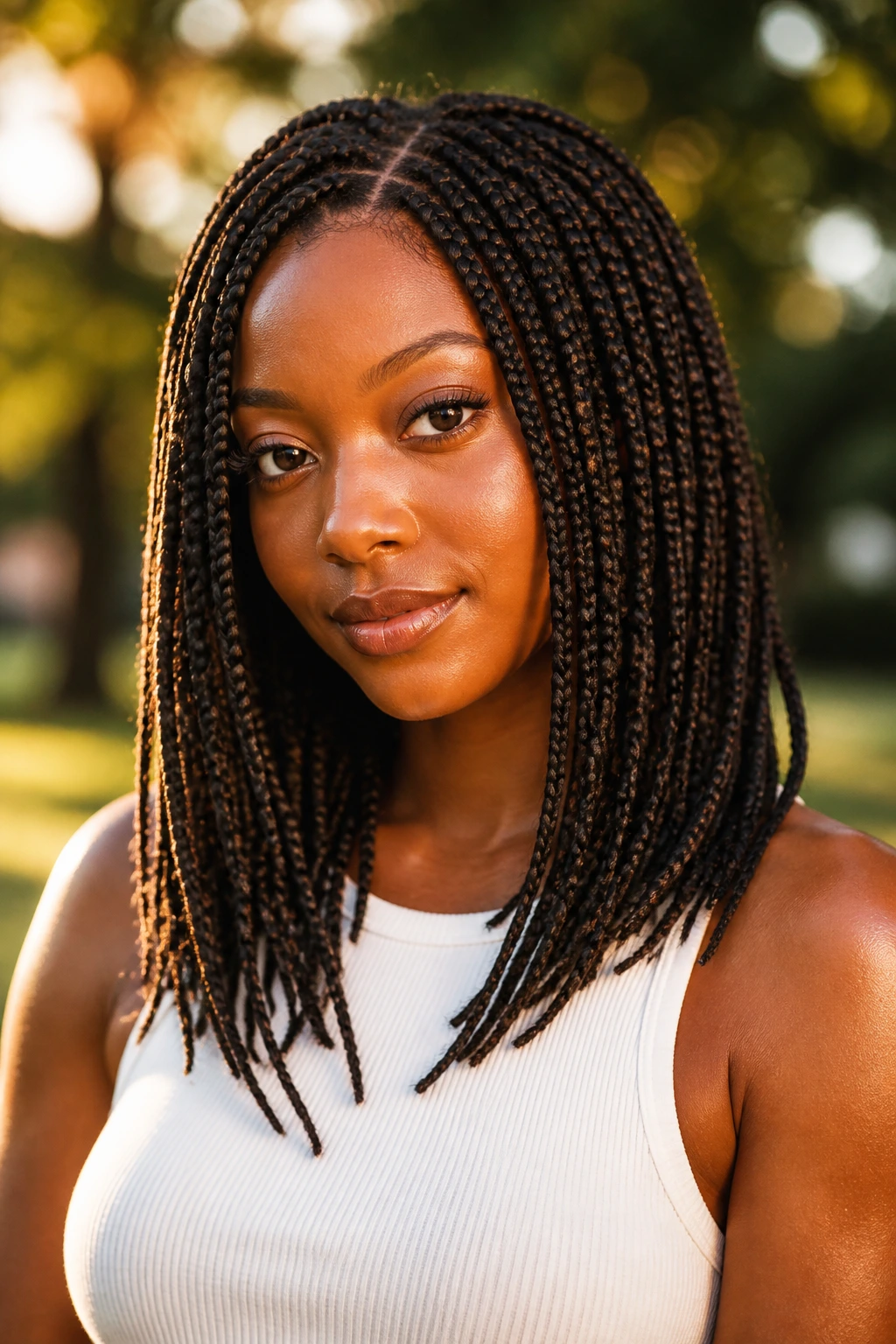
Layering gives box braids a little more swing. Some strands fall slightly longer, some sit a bit higher, and the shape stops looking like a single flat block. On medium-length hair, the layers are easy to see because the ends are close enough to the body to separate naturally.
This style is underrated. People often think layering only matters in loose hair, but braids benefit too. The difference is subtle until you turn your head, then the lower pieces move out of sync and the whole style feels lighter. If you like a touch of shape without obvious asymmetry, this is a good lane.
How to wear it
Use layers when you want movement. Use a blunt line when you want the braid set to look more graphic.
21. Curled-In Ends
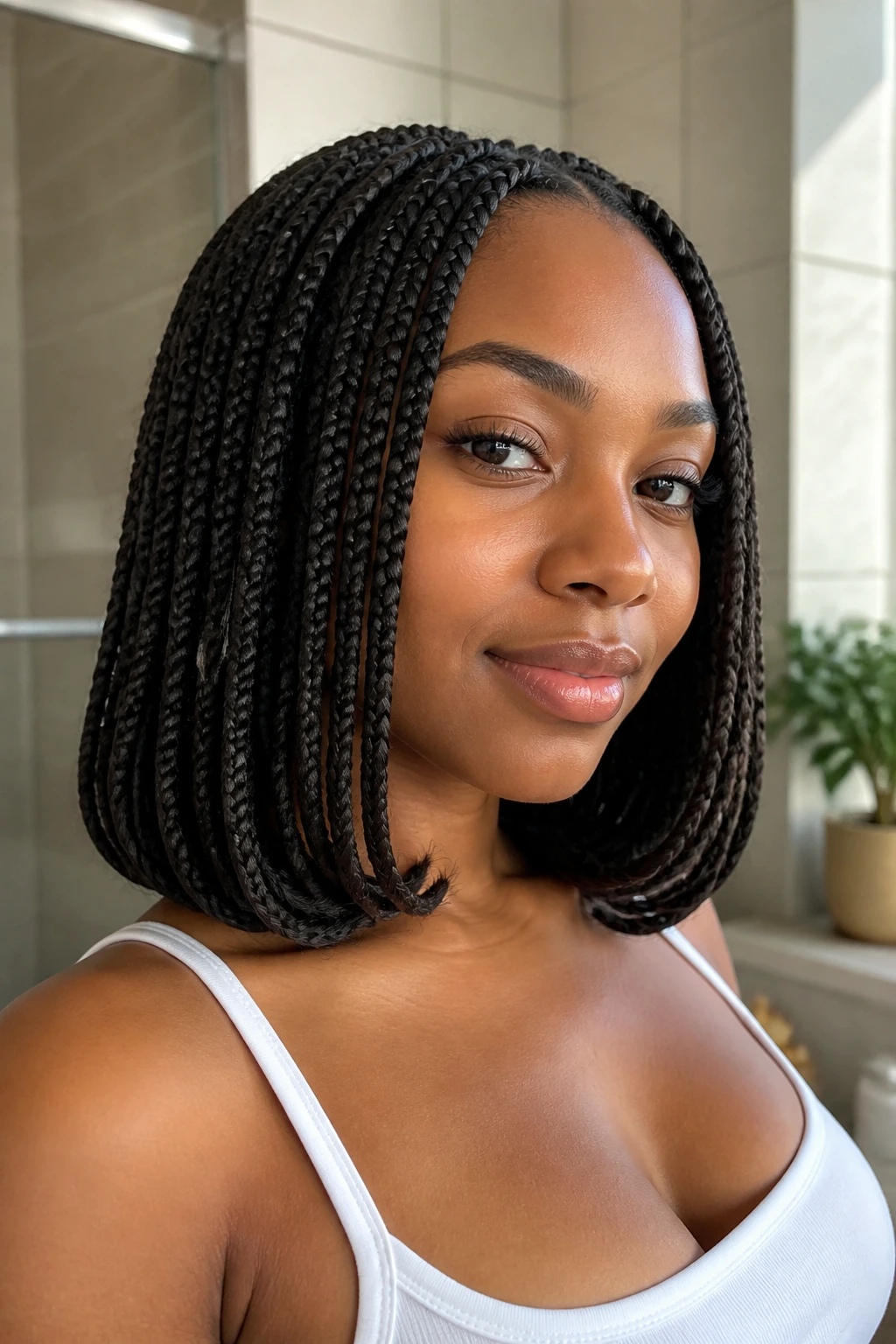
Curled-in ends give medium-length box braids a softer landing. Instead of hanging straight, the tips bend inward a little, which makes the whole set feel rounded and calmer. It also helps if you do not love the blunt look that braids can have once they hit shoulder length.
The curled-in finish works especially well on medium-small braids. Too much thickness at the ends can make the curl look stiff. A set rod, hot water set, or flexi rods can all do the job depending on the hair used. The goal is a soft inward turn, not a tight spiral.
22. Flipped-Out Ends
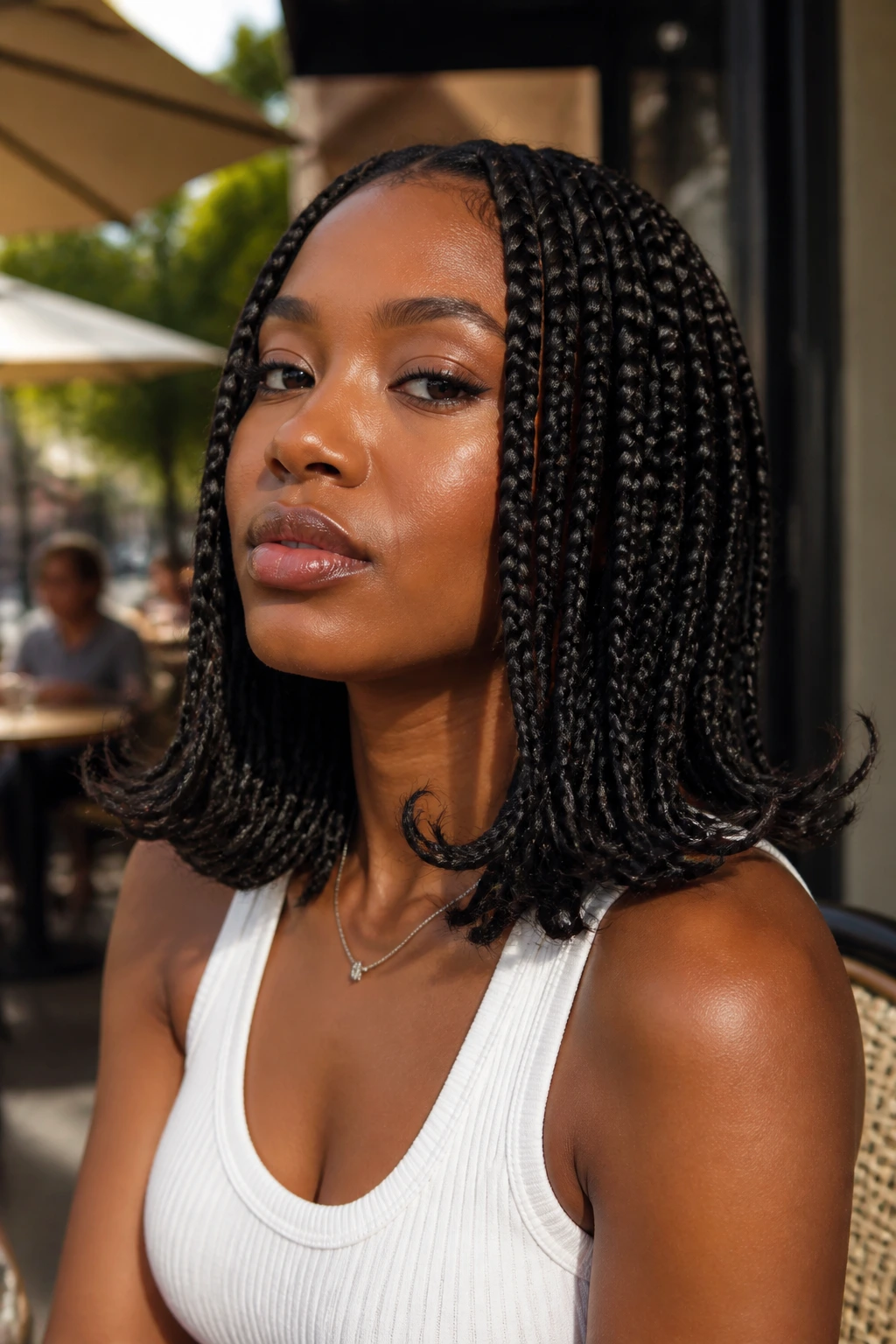
Flipped-out ends are the opposite mood. They kick outward at the tips and give the braids a little retro shape, almost like a playful haircut translated into braids. Medium-length hair is one of the best lengths for this because the flip lands right where people notice it.
This style looks best when the rest of the braid set stays smooth. If the parts are too messy or the braids are frizzy near the roots, the flip loses its effect. The little outward bend should feel like a finishing move, not a rescue job. A clean flip can make plain braids look much more styled than you would expect.
23. Wrapped Ponytail
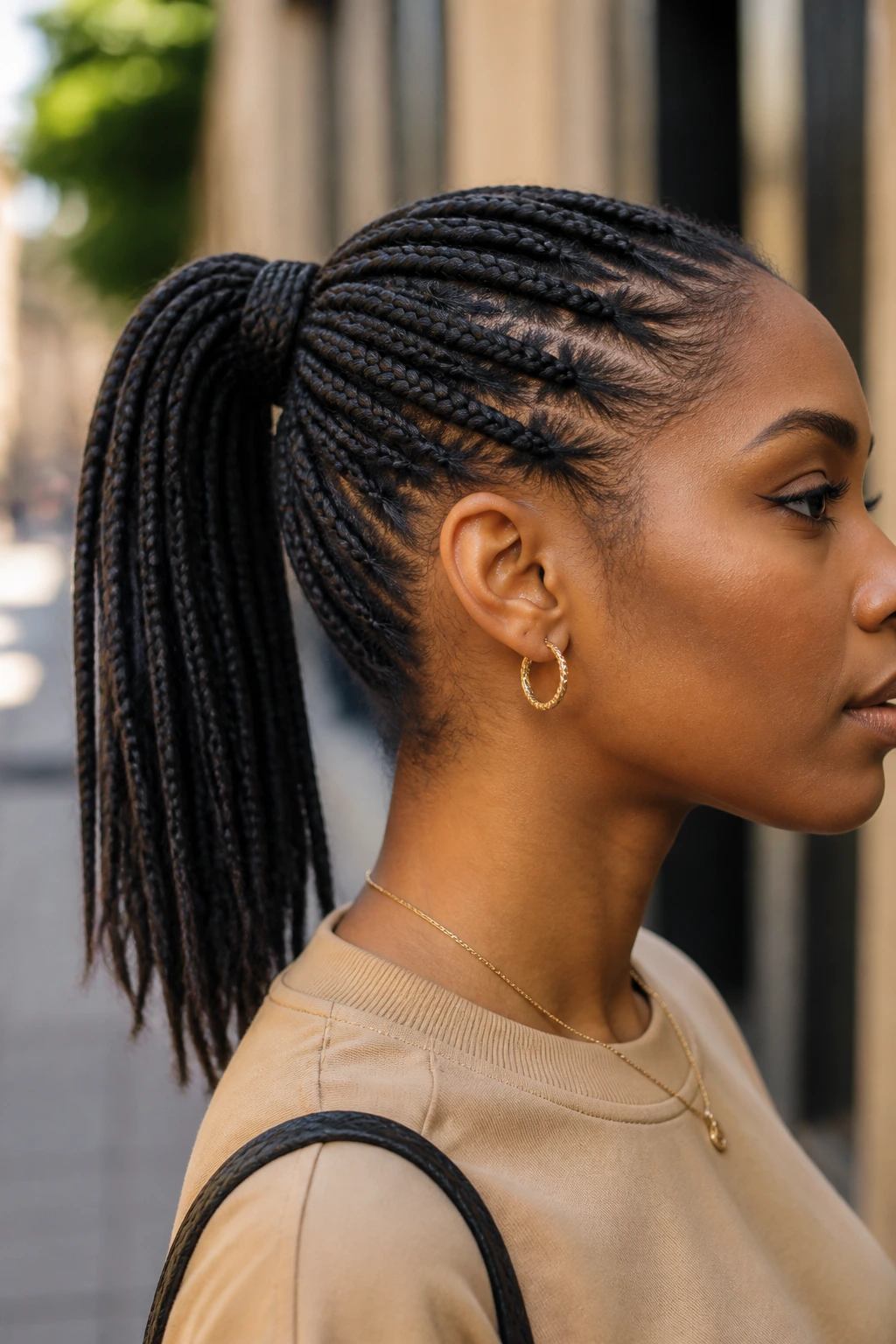
A wrapped ponytail hides the elastic with one braid wound around the base, which makes the whole style look cleaner. On medium-length hair, the ponytail usually sits with enough weight to feel full, but not so much that it pulls down hard.
I like this style because it handles daily life well. It stays out of the face, the base looks finished, and the tail still moves. If the braids are medium-sized, the wrap around the elastic looks tidy and secure. Leave the tail a little loose rather than over-brushing it. Some separation at the ends keeps the ponytail from looking like a single rope.
24. Scarf-Tied Box Braids
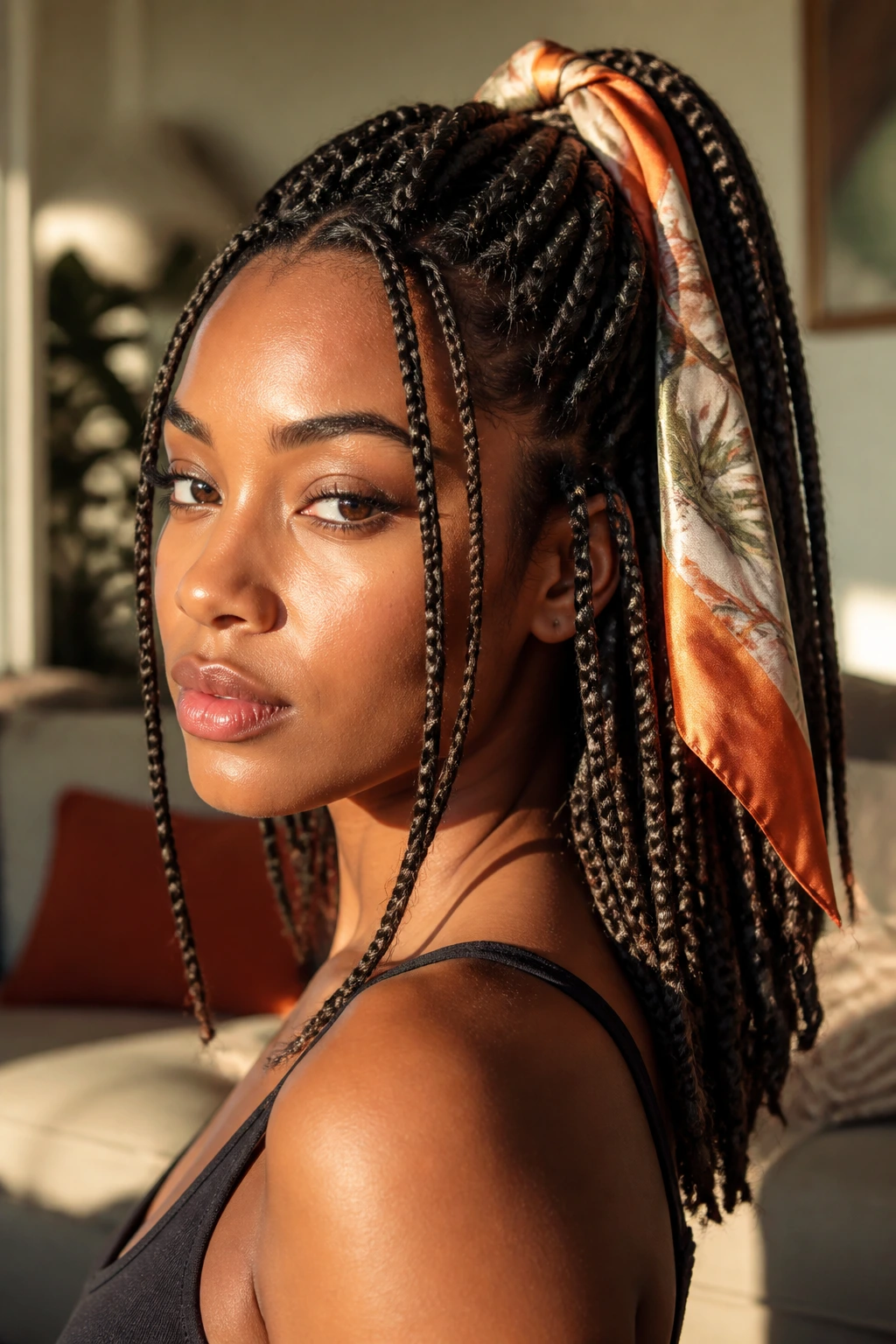
A scarf changes the entire tone of a braid set. Tie one around the ponytail base, fold it into a headband, or wrap it close to the crown, and medium-length braids suddenly feel styled on purpose instead of merely worn.
Silk or satin is the safest choice if you want to protect the hairline. Cotton looks nice, but it can snag and dry out the front faster. Patterned scarves work well when the braids are plain. If the braids already have color, keep the scarf simple so the head does not get too busy.
Best move
Match the scarf to one color already in the braids. That trick makes the whole style feel connected.
25. Side Bang Braids
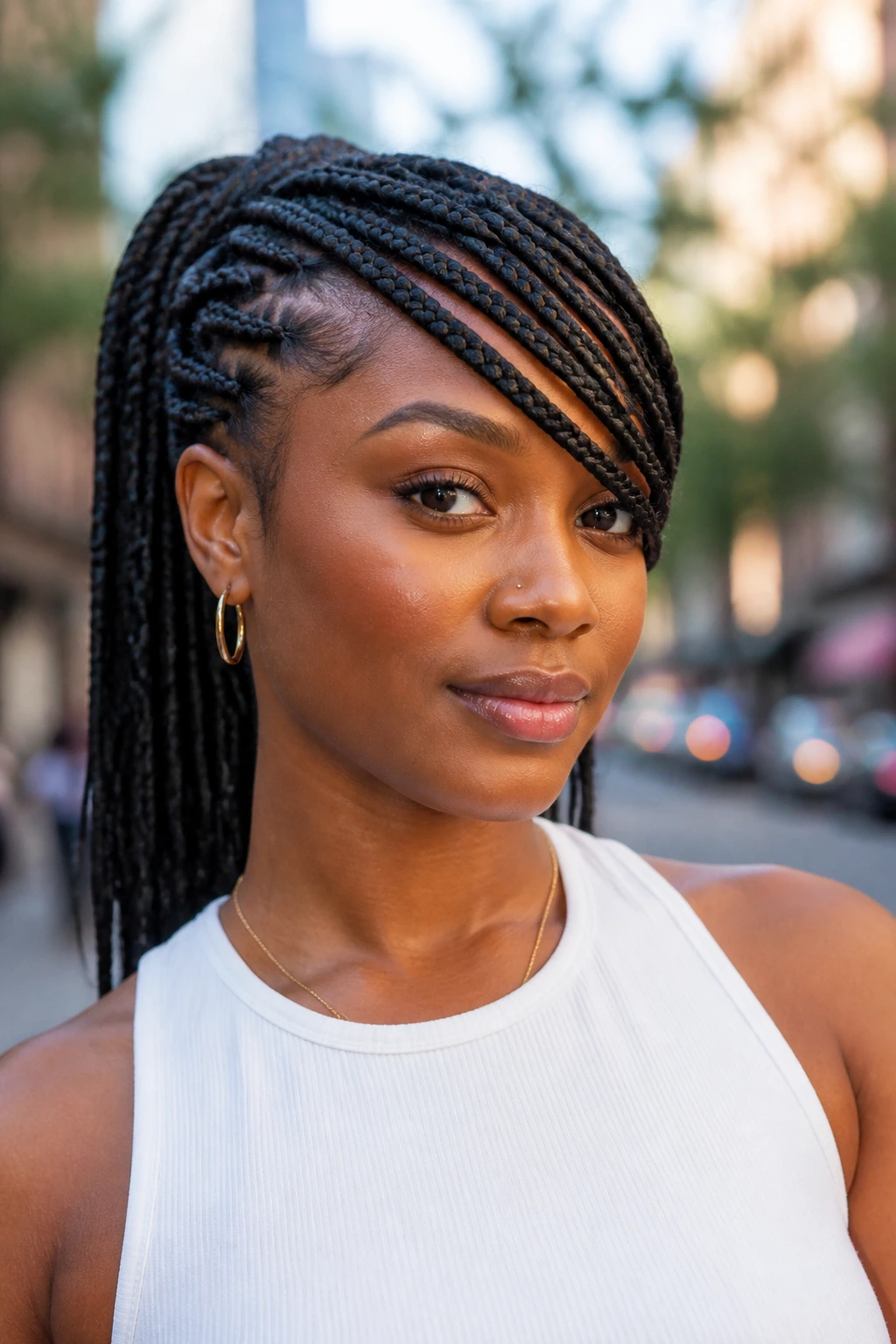
Side bangs in braid form are just braids that are angled forward and cut the face from one side. It sounds simple because it is simple. But simple can be very good when the braids are medium-length and you want something that softens the forehead without hiding the whole face.
This works best with slightly smaller braids near the front so the bang area falls smoothly. If the front pieces are too thick, they can look clunky when swept over. Keep the rest of the braids pulled back just enough to let the side bang do its job. It is a nice answer when you want a face frame without a full curtain.
26. Face-Framing Tendrils
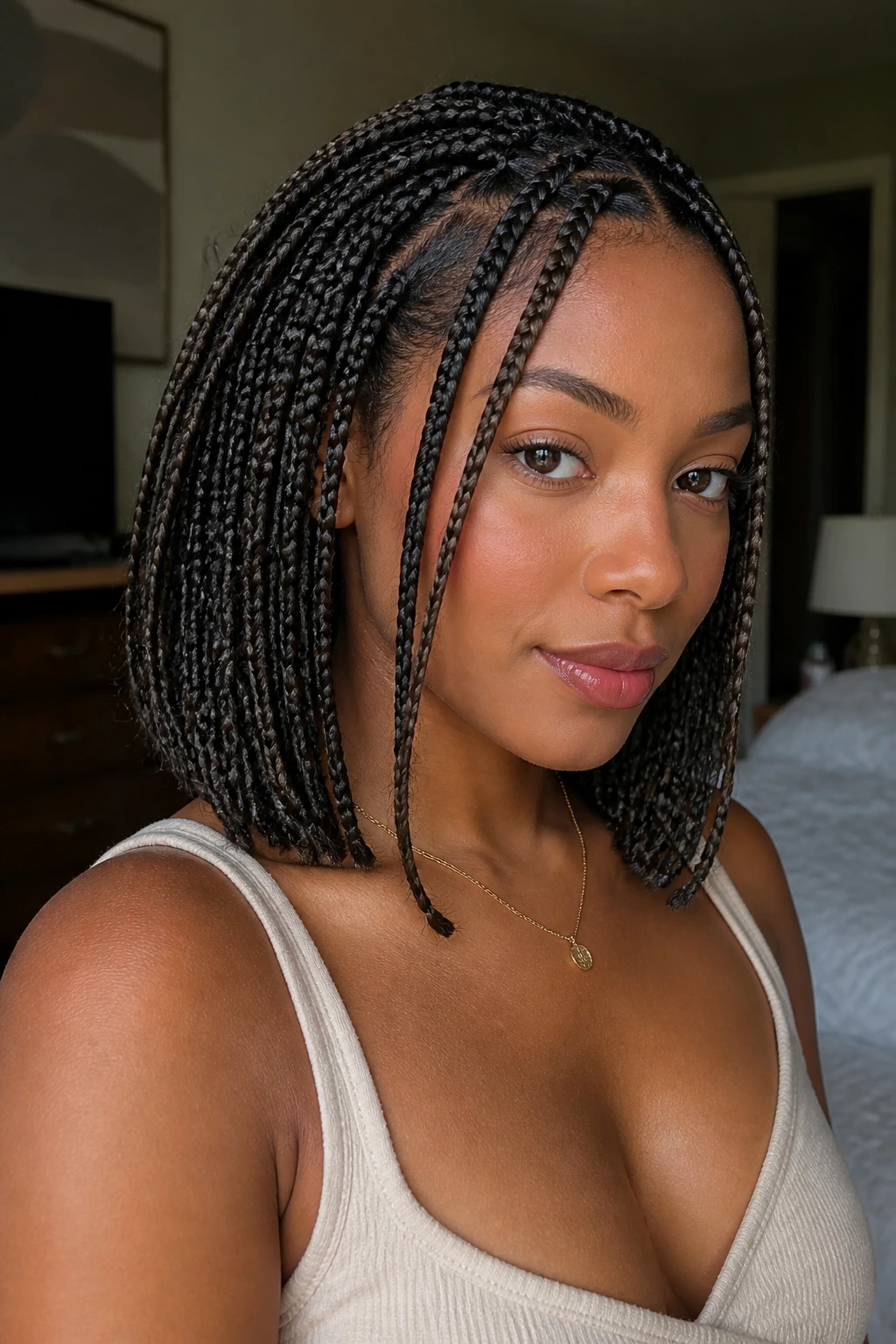
A few loose braids around the face can change the whole read of the style. The tendrils soften the jawline, break up the front, and stop the braid set from looking too severe. Medium-length hair is ideal because the loose pieces still land at a flattering point near the cheeks or collarbone.
This is a quiet style move, not a loud one. Leave two or three front braids slightly shorter or looser, then let them fall naturally. You do not need symmetry here. A tiny imbalance often looks better than a perfect mirror. If the rest of the braids are clean and the parting is neat, these loose front pieces feel intentional, not forgotten.
27. Goddess-Style Mix-In Braids
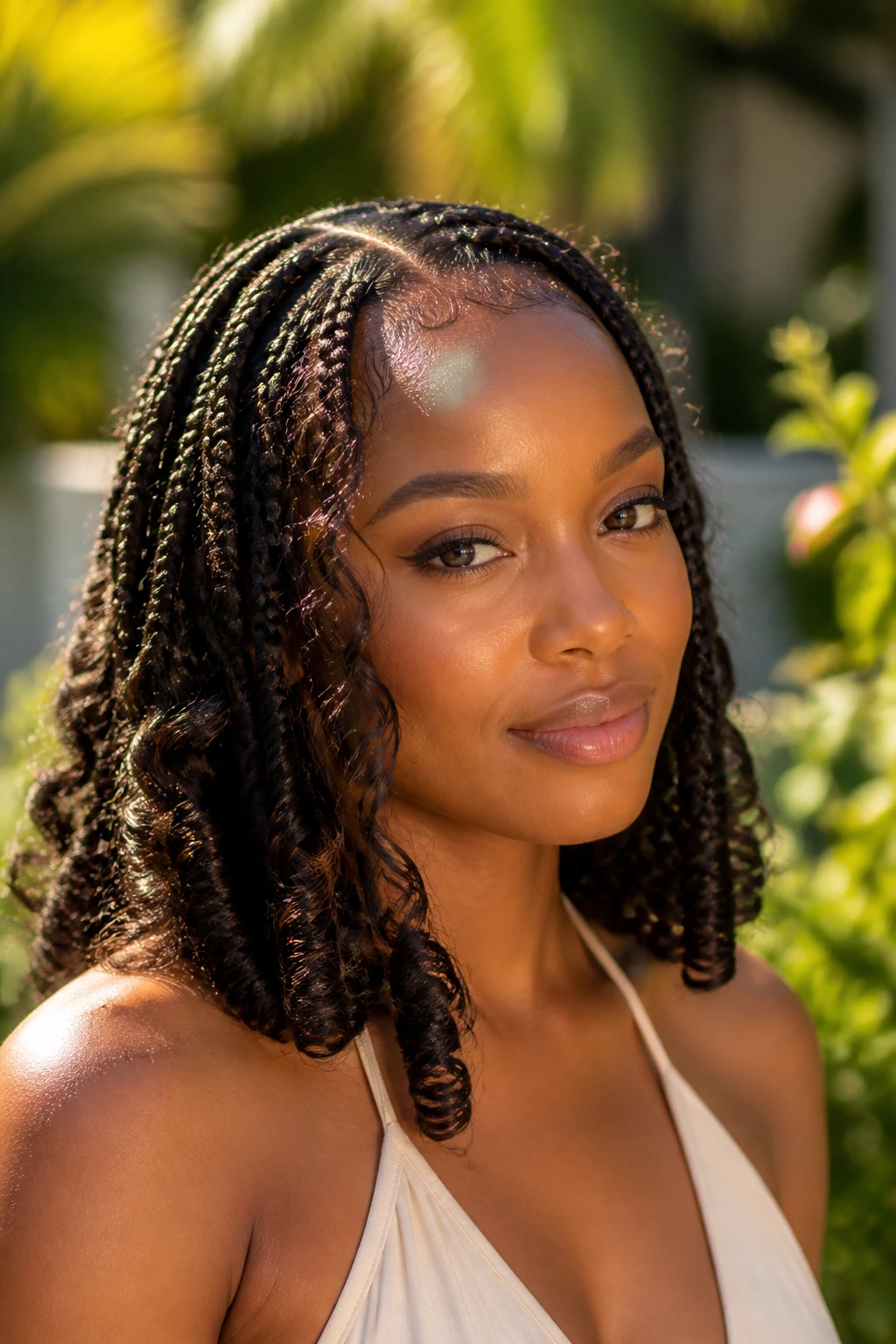
Goddess braids mix in loose curly pieces, but the texture is a little more controlled than boho braids. Think of it as braid structure first, softness second. On medium-length hair, that gives you movement without losing the braid pattern.
I like this when the loose pieces are clustered around the front and the ends. That keeps the style from puffing out too much around the middle. The curls should look like they belong to the set, not like they were dropped in at random. A little shine helps here because the contrast between braided sections and soft curls is what makes the style work.
Use it when
You want a softer edge without giving up the clean box braid base.
28. Two-Tone Peekaboo Braids
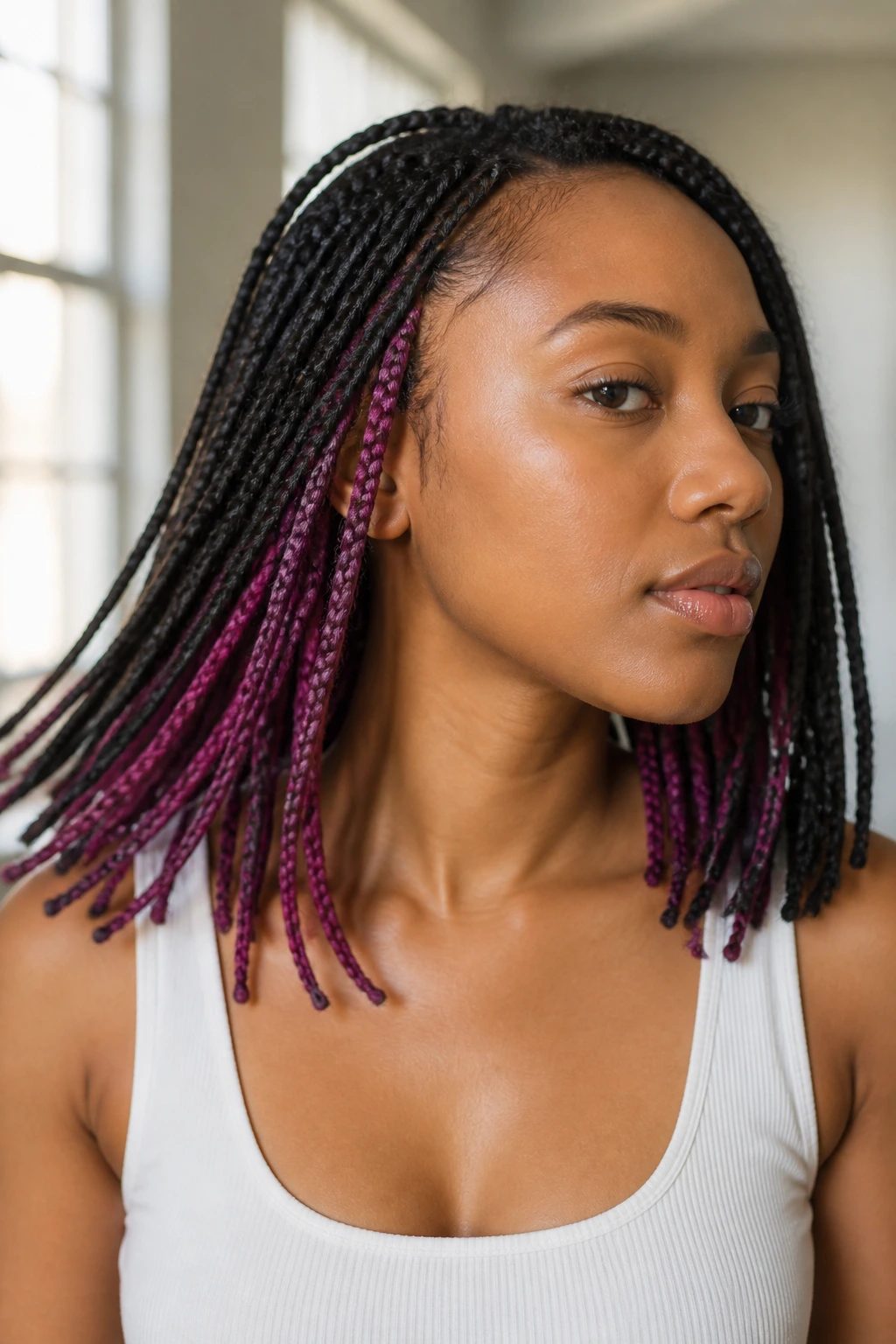
Peekaboo color is one of my favorite ways to make braids feel personal without turning the whole head into one color block. The top layer stays neutral, while the hidden braids underneath flash a second shade when you move, part, or tuck the hair behind the ear.
Medium-length hair is a nice fit because the hidden color shows up at the shoulders and near the nape. That is where it surprises people. If you go too bright on both layers, the effect gets noisy. Keep one shade quieter and let the other do the talking. A plum underlayer, a honey underlayer, even a red underlayer — all of them work if the top stays calm.
29. Braided Crown Bun
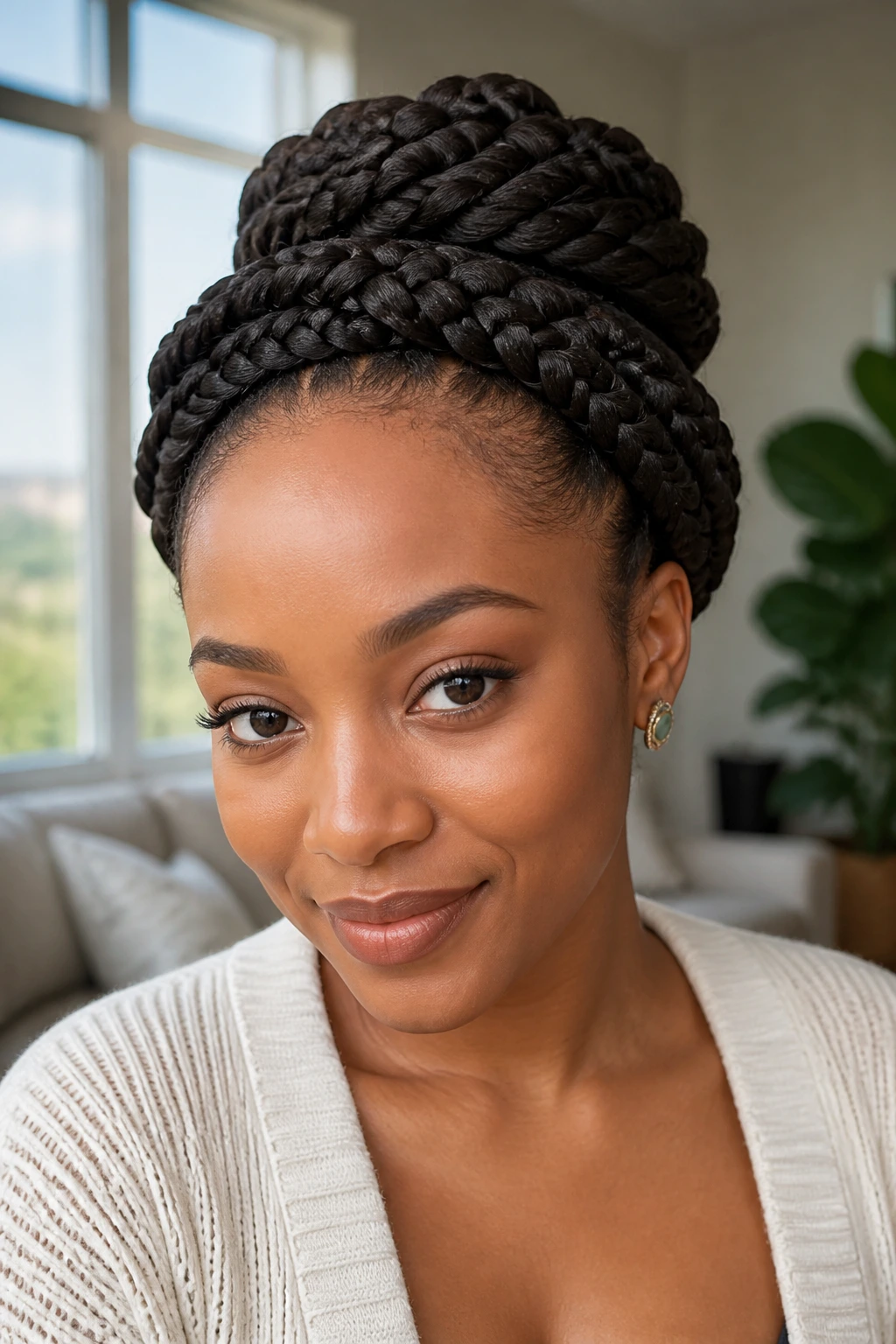
The braided crown bun wraps the braids around the head and gathers the ends into a bun that sits like a halo or a low crown. On medium-length hair, this style can look surprisingly substantial because the braid thickness creates volume without extra length.
What I like here is how the shape lifts the face. It also keeps the neck clear, which matters more than people think once the day gets long. The bun should not sit too far back or it starts to look like an afterthought. Keep it centered and smooth. A few tucked ends are fine. They read as texture, not sloppiness.
30. Space Buns
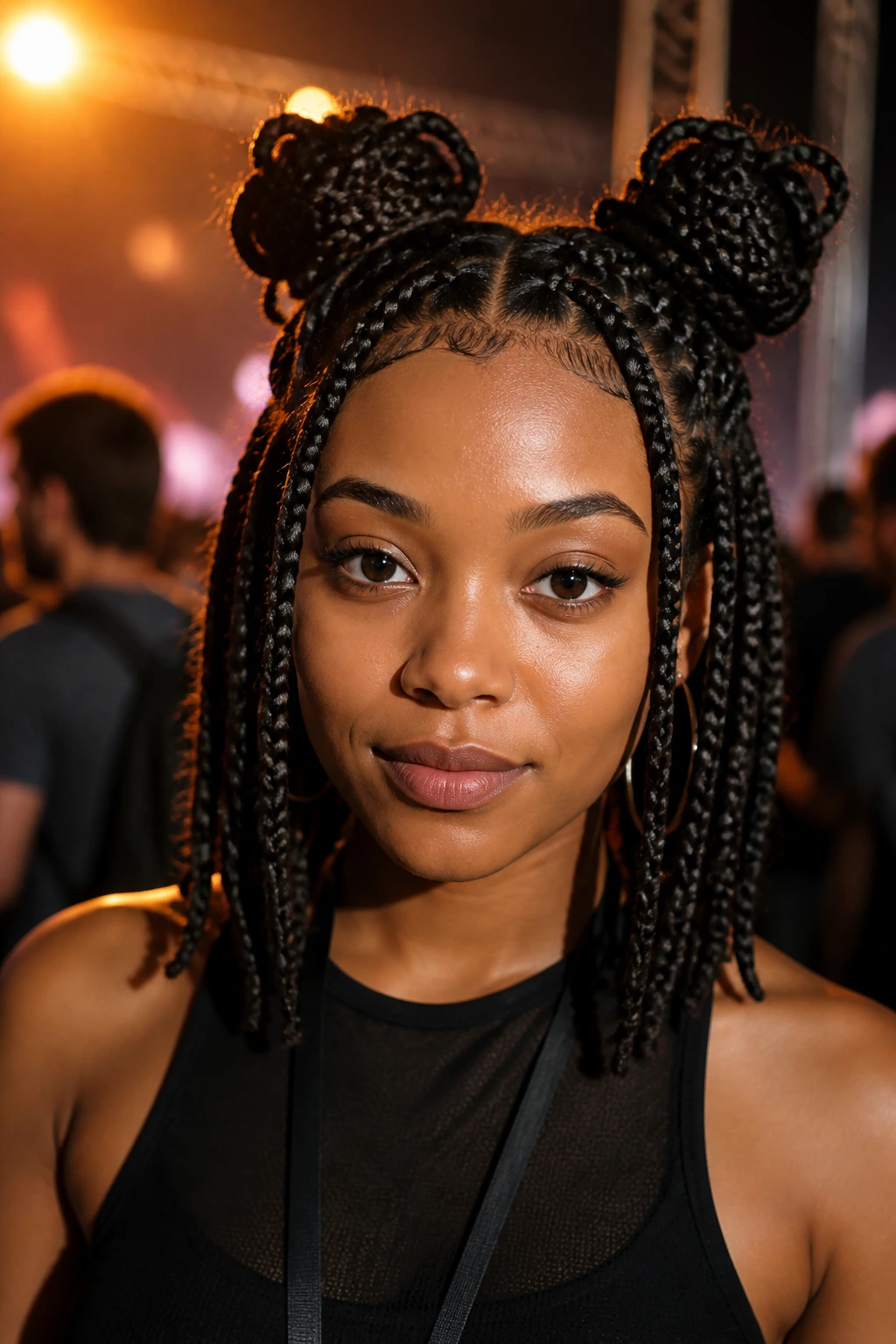
Space buns with box braids are pure fun, but they can still look neat if the sections are clean and the buns sit evenly. Medium-length hair makes the buns compact enough to stay lifted without wobbling all day.
I prefer smaller buns with the rest of the braids left hanging rather than two huge puffs. That balance keeps the style from getting top-heavy. A middle part helps the symmetry, but a slight offset can be nice if you want the look to feel less costume-like. The key is placement. If the buns are too low, the style loses its shape.
Best for
Concerts, weekends, and any day when you want the braids to look a little less serious.
31. Low Side Bun
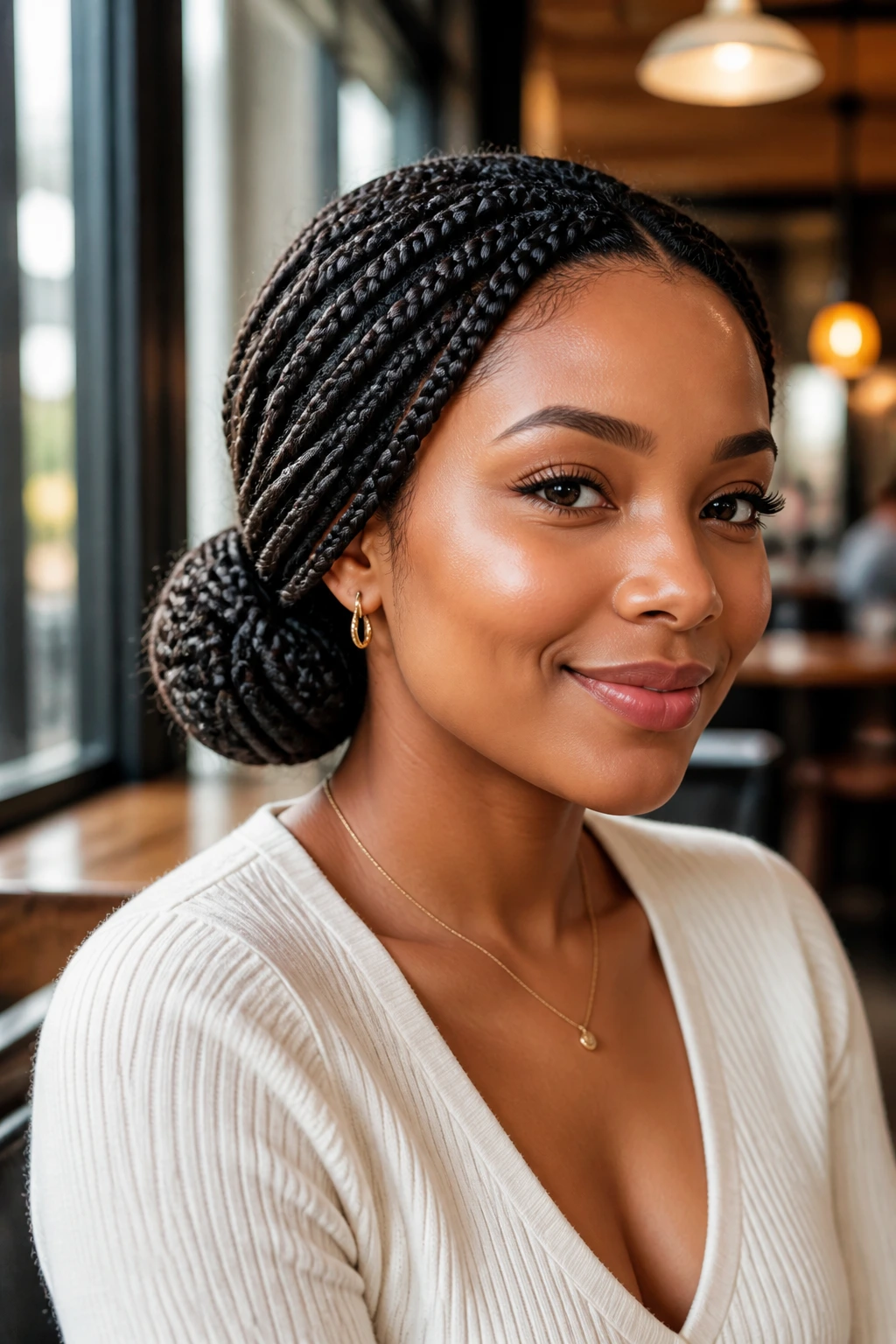
A low side bun moves the whole style off-center and tucks it near one ear or just behind the jaw. It feels softer than a centered bun and a little more relaxed than a strict chignon. Medium-length braids work well because they can coil enough to form a bun without creating a heavy lump.
This style looks best when one side is smoothed down and the bun itself is tight enough to keep its shape. A side bun can fall apart visually if the braids are too loose at the base. I like a single cuff or barrette here, not both. The asymmetry already gives the style enough personality.
32. Top Knot With Hanging Braids
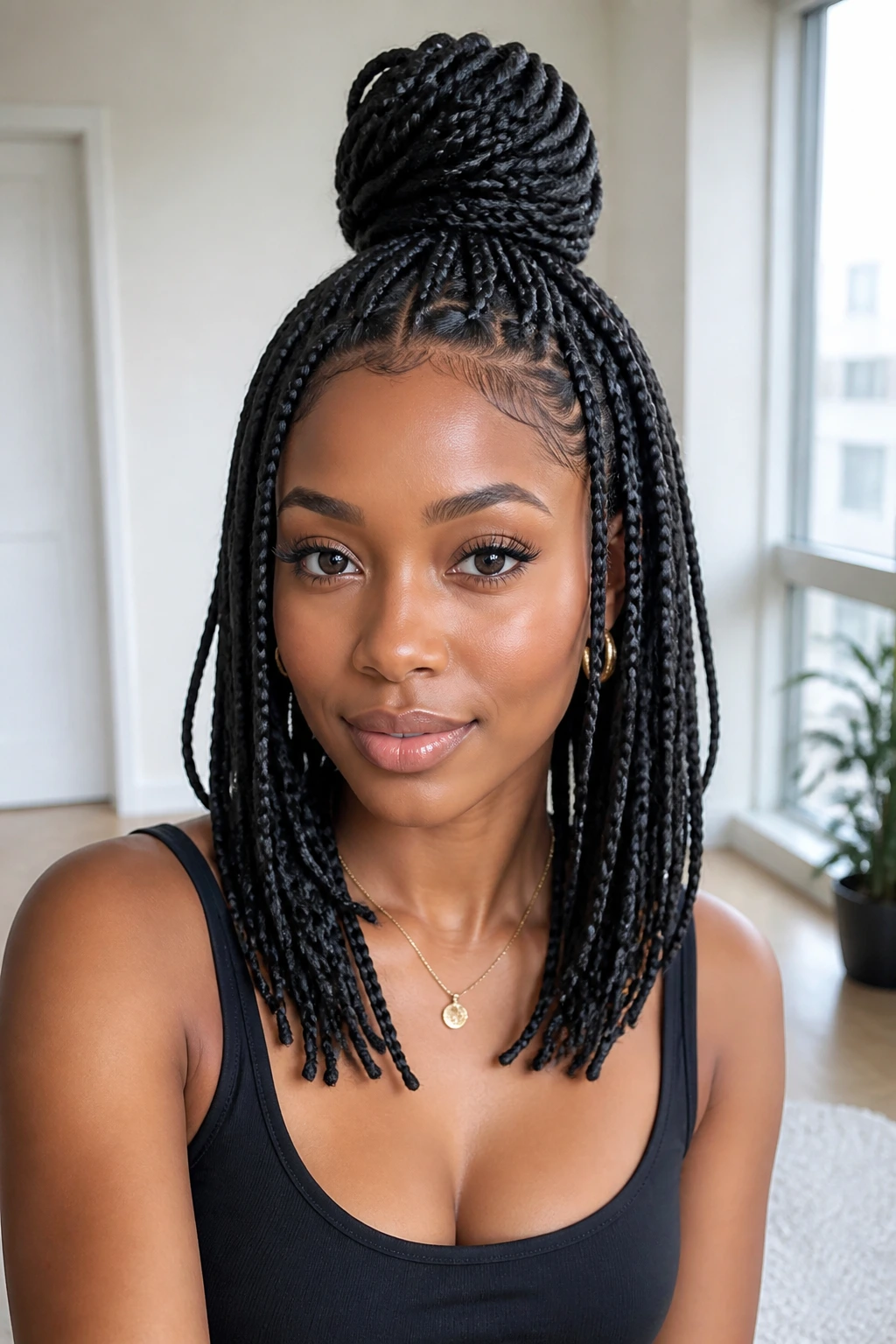
This is the cousin of the high ponytail, but the top knot changes the mood. Part of the braid set gets gathered high and twisted into a knot, while the rest hangs free. On medium-length hair, that contrast feels especially sharp because the free braids still have enough length to move.
It is one of the most practical styles in the whole group. The knot gets the hair off your face, the hanging braids keep the style from looking too severe, and the shape works for errands or a night out. If the knot is too bulky, the top starts to look heavy, so keep it neat and pin it flat.
33. Festival Braids With Shells and Cuffs
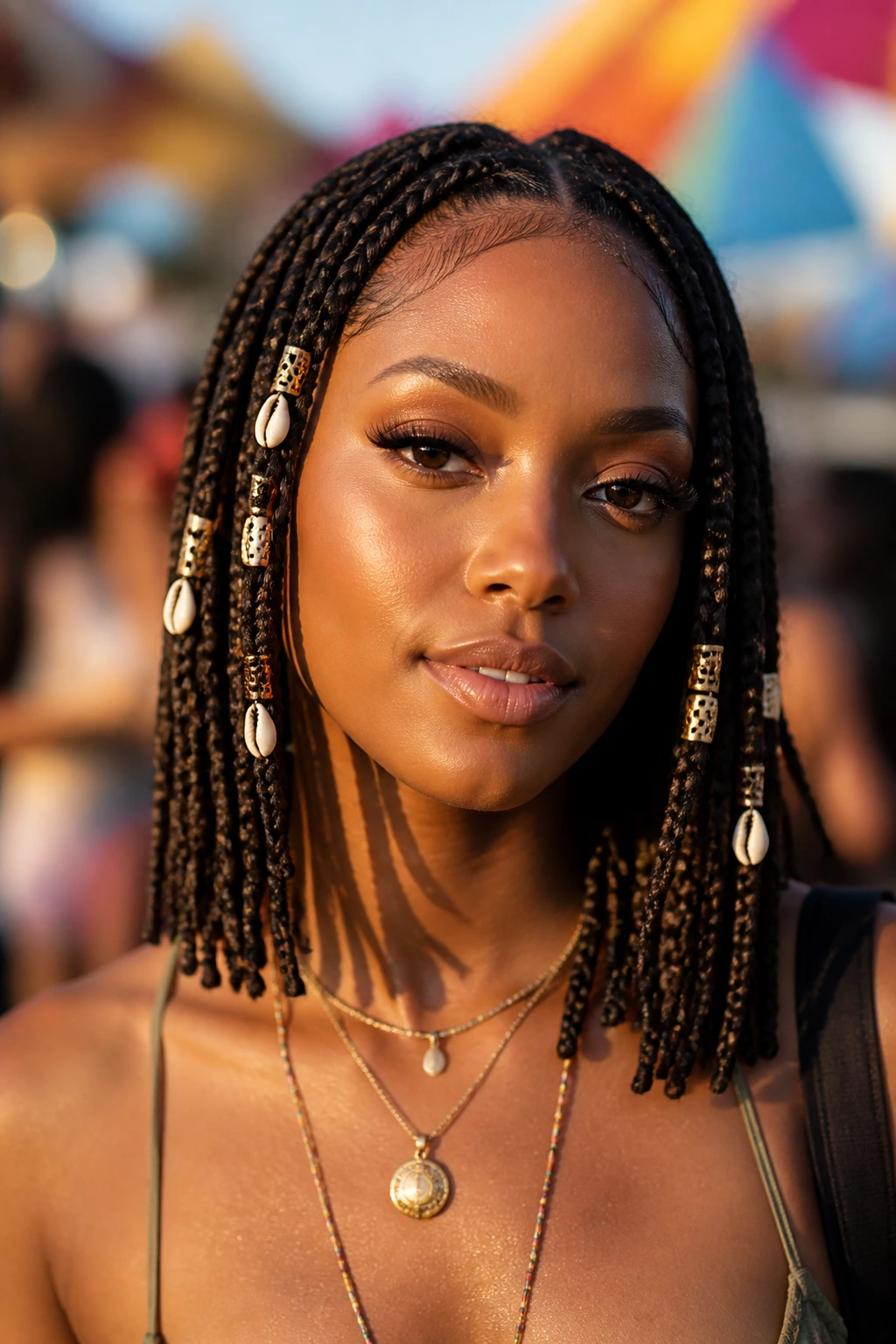
Shells, cuffs, thread wraps, tiny rings — this is where box braids stop being plain and start looking dressed. Medium-length hair is a perfect stage for these details because the accessories show up in a clear, readable way. Long braids sometimes hide the accents. Not here.
You do not need to cover every braid. In fact, that can get noisy fast. Choose a few anchor points: one around the front, one near the temple, one near the ends. That spacing keeps the eye moving. If the hair already has color, keep the accessories in one metal tone so the set does not become cluttered.
34. Minimalist Office Braids for Medium Length Hair
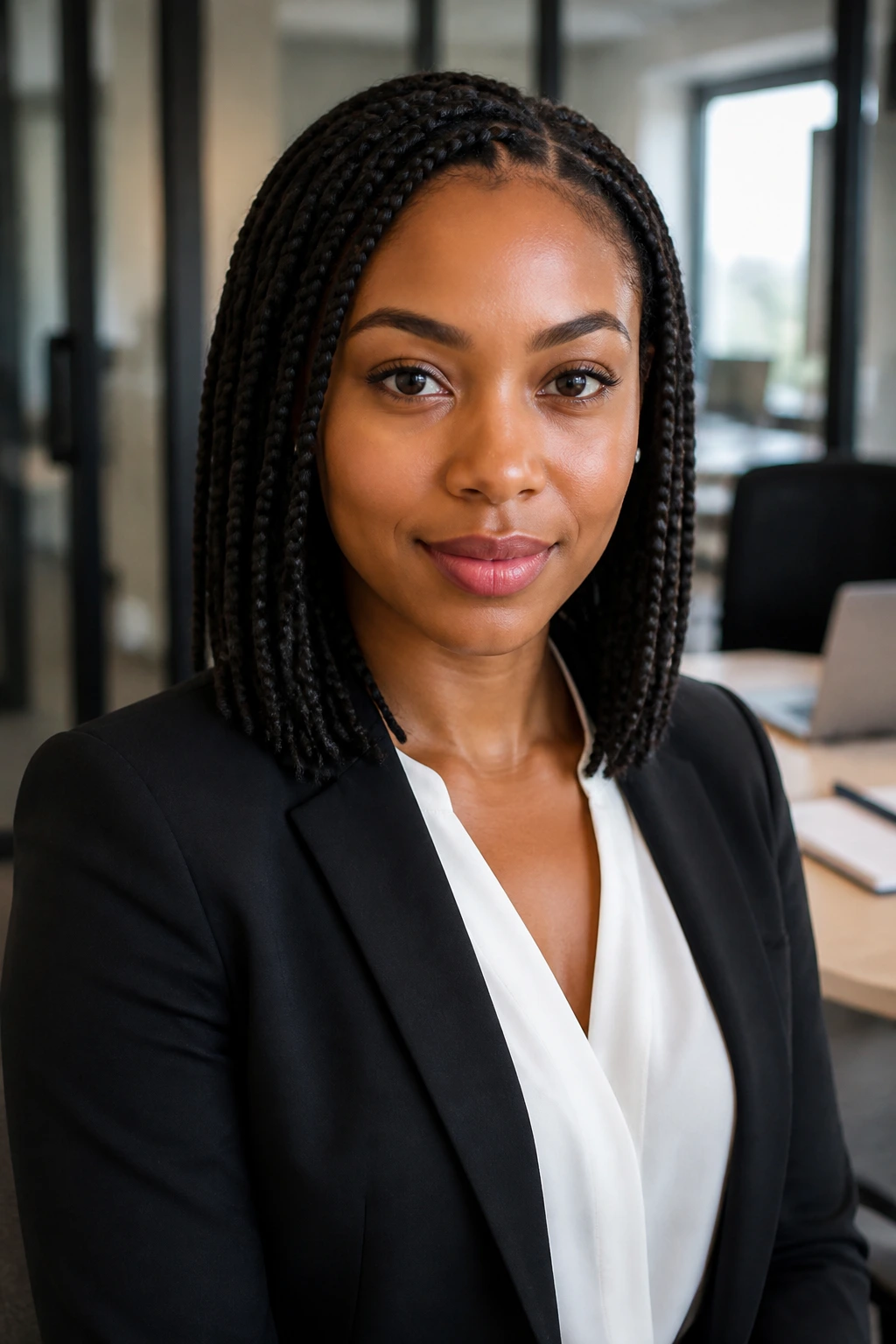
Clean, medium-size braids with plain parts and zero fuss can look more polished than a set full of extras. This style is all about order. The rows are neat, the ends are even, and the silhouette sits close to the head without any stray decoration fighting for attention.
It is the braid set I would choose for a week when I want the hair to stay out of the way and still look intentional. A middle part or shallow side part both work. Keep the edges smooth, skip the heavy beads, and let the finish stay matte-to-soft-shine instead of glossy. That restrained look has its own kind of presence.
Small rule
If you wear jewelry, keep it simple. The hair is already doing enough.
35. Satin-Sleek Off-Face Braids
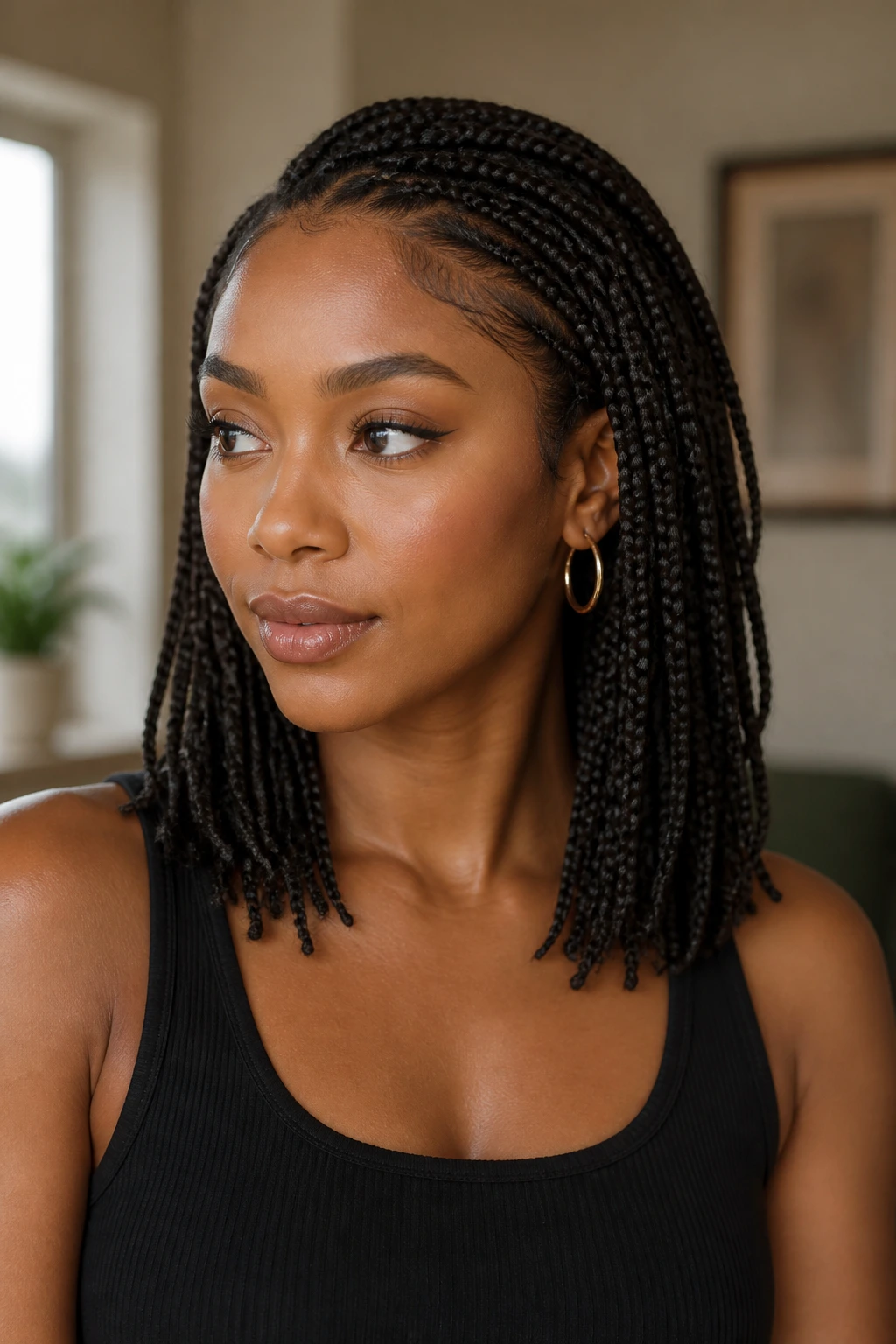
This style is all about a smooth front and a clean sweep away from the face. The braids are pulled back or tucked behind the ears, then set with mousse or a light edge product so the hairline stays calm. On medium-length braids, the off-face shape leaves the ends free to move and keeps the crown neat.
I like this on days when the hair needs to look controlled without being trapped in a bun. It is a tidy, sharp style, but not stiff. The braids still swing at the shoulders. The front just stays put. Use this if you hate touching your hair every ten minutes. It solves that problem with less effort than people expect.
36. Front Feed-In Rows Into Box Braids
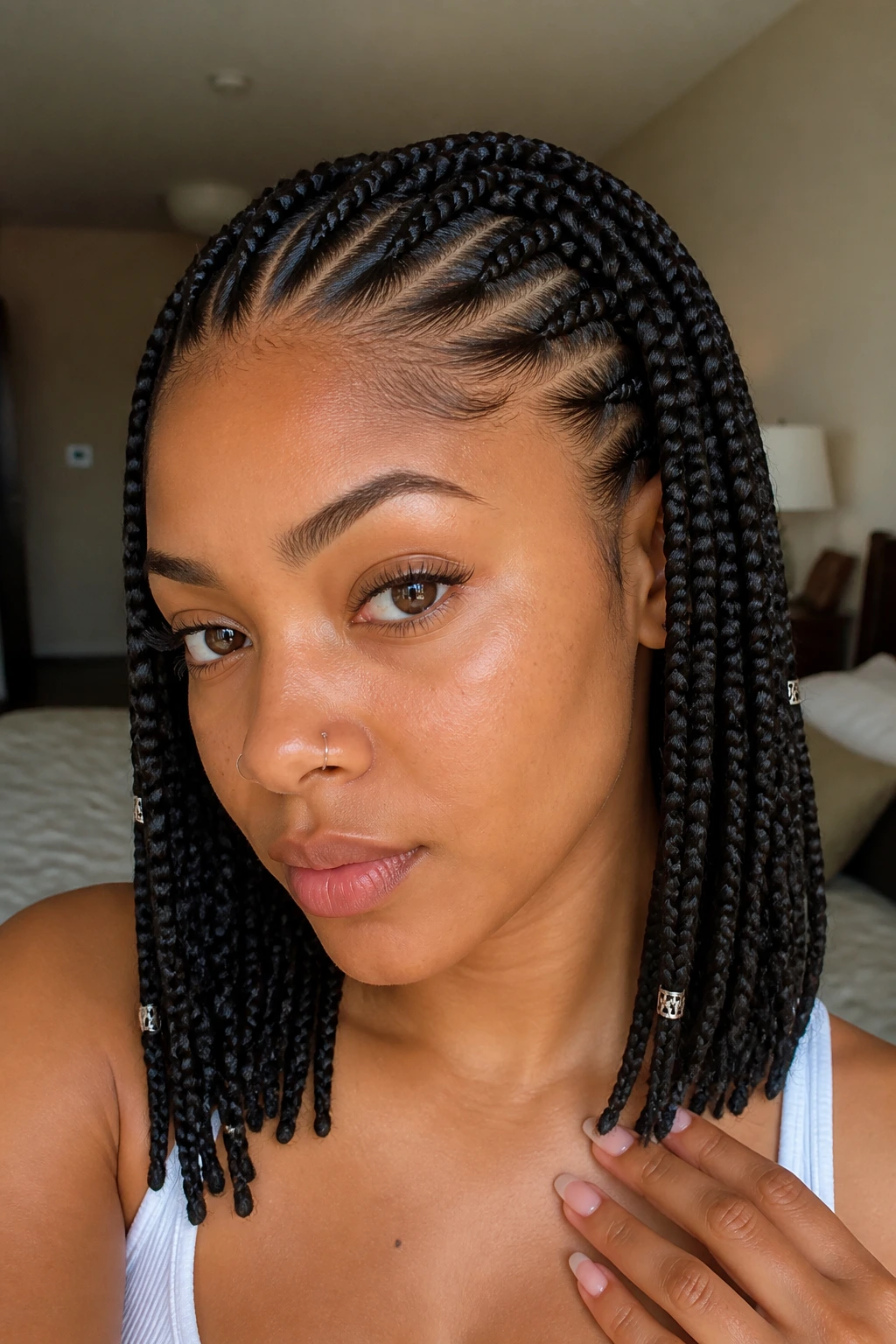
A few feed-in rows at the front can give the style a sculpted start before the box braids take over. That front section lies flatter, follows the head shape, and creates a smooth transition into the rest of the set. On medium-length hair, the effect is especially clear because there is less length hiding the transition.
This look works well when you want the hairline to feel refined and the rest of the style to stay classic. It is a subtle detail, but it changes the whole front view. Keep the rows crisp and let them end at a point that feels natural, not overdone. Too many feed-in sections can crowd the crown. Two or three is often enough.
37. Chunky-and-Skinny Mixed Box Braids
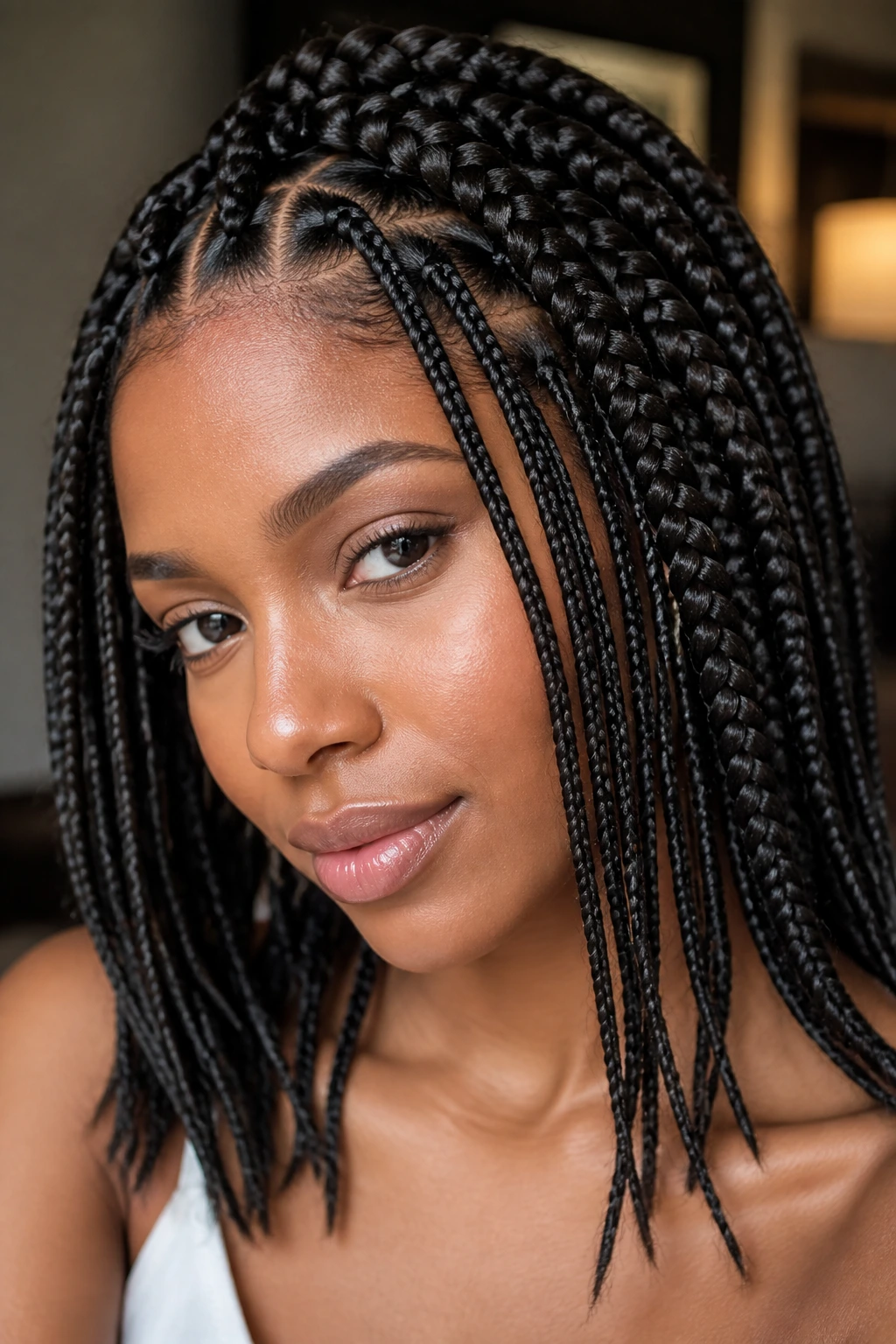
Mixing braid sizes is a clever way to keep medium-length hair from looking too uniform. Chunky pieces add weight and speed, while the slimmer braids around the face and crown give the style some line and detail. Together, they create a set that feels less stamped and more personal.
This style is especially good if your hair density varies in different areas or if you want one side of the head to feel fuller than the other. The trick is balance, not exact symmetry. Keep the size changes intentional. If the thickness jumps around randomly, the style starts to feel unfinished. If it shifts in planned sections, it looks like design.
38. Tapered Ends With a Clean Finish
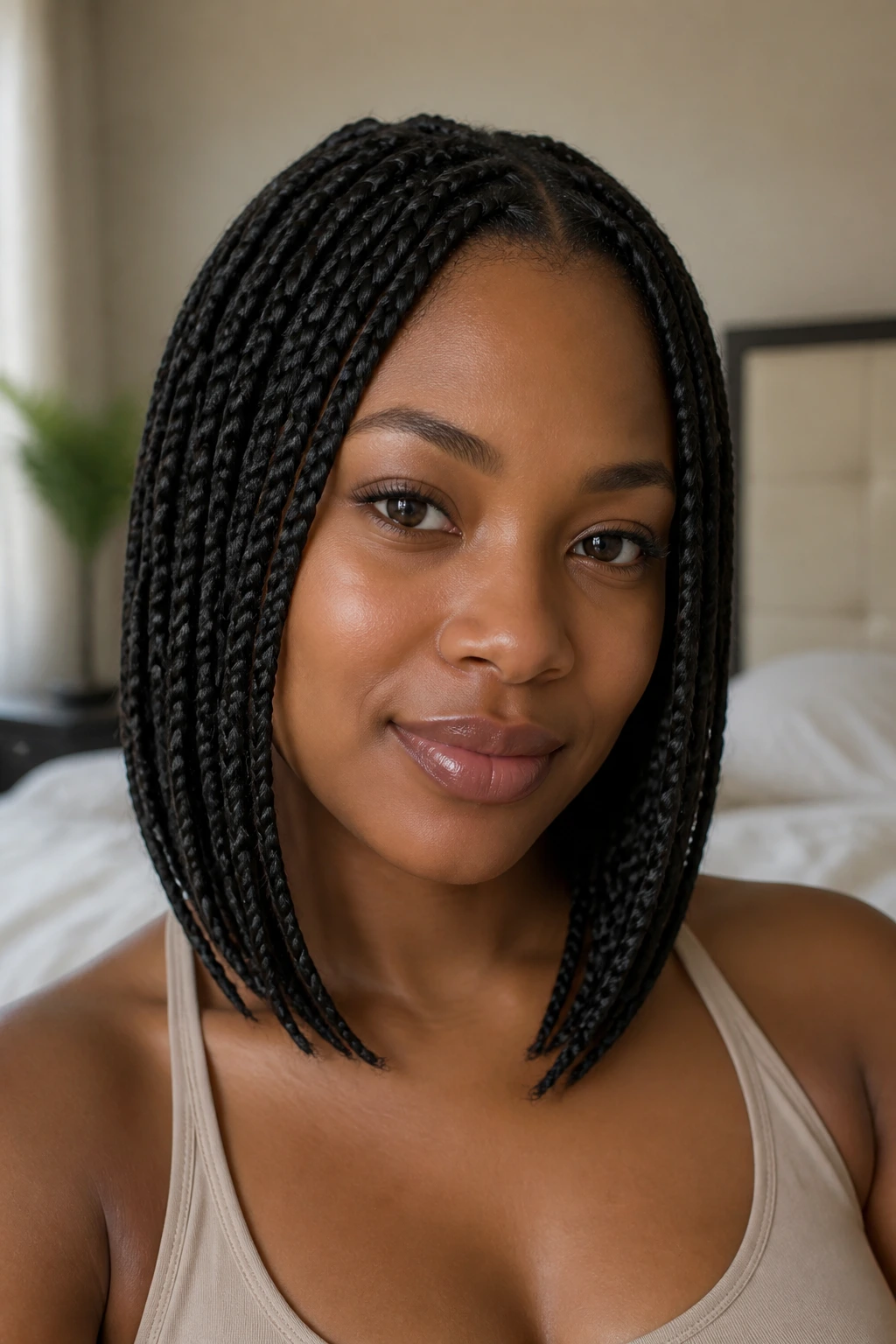
Tapered ends give the braid set a neater drop than a blunt cut. The ends narrow slightly, which softens the bottom line and keeps the hair from looking boxy at shoulder length. On medium-length braids, that taper makes the shape feel lighter right away.
I like this finish when the rest of the style is minimal. Clean parts, medium braids, no extra drama, just a smooth fall that ends in a softer point. It is an understated move, but it changes the whole read of the set. The braids look finished without shouting about it. And honestly, that is often the smartest choice.
Why Medium-Length Box Braids Feel So Wearable
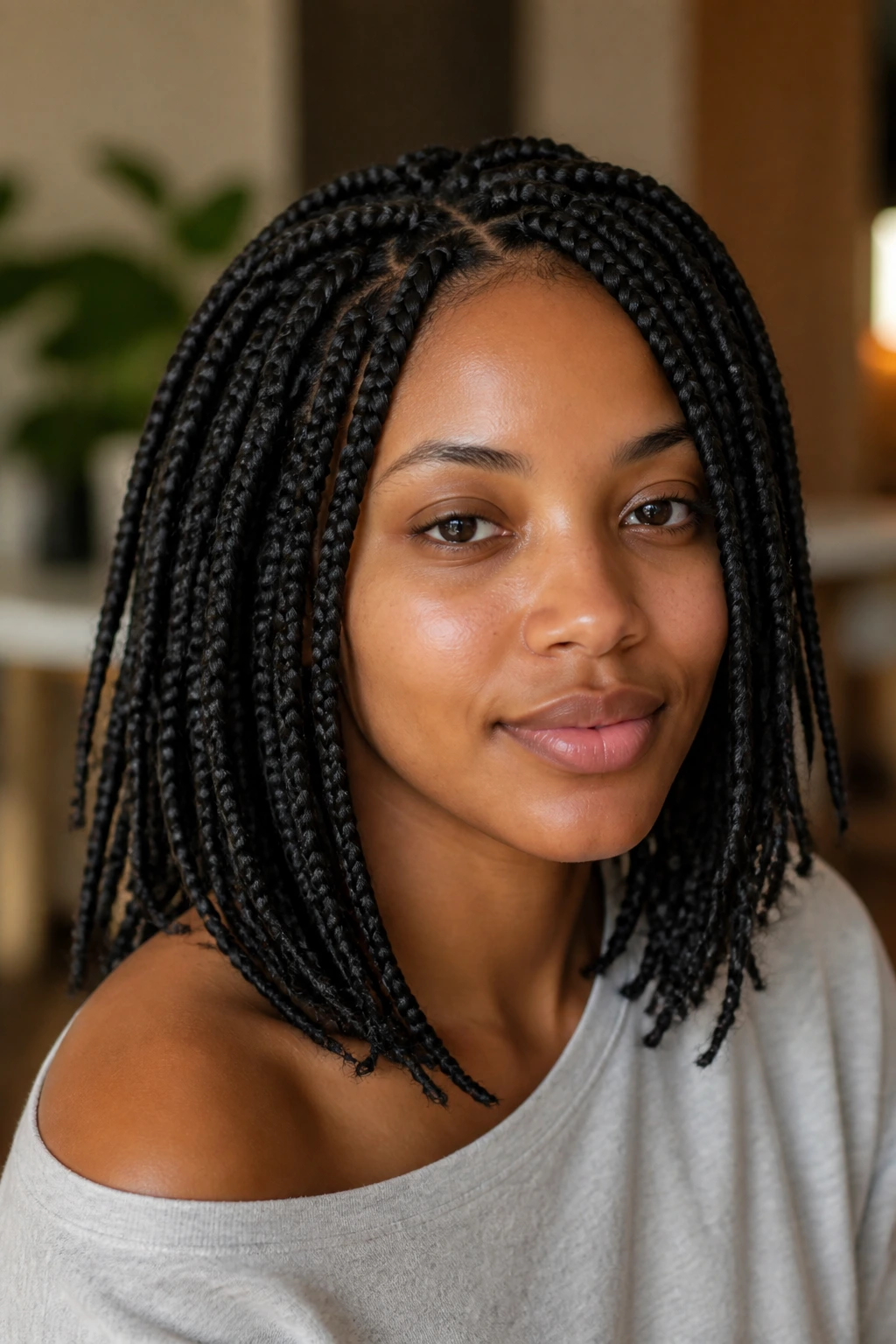
Medium-length box braids sit in the part of the styling spectrum where comfort and shape finally stop fighting each other. The braids are long enough to pull into a bun, ponytail, or side sweep, but short enough that they do not swing with every step like a heavy rope. That makes a difference on the neck, on the shoulders, and on your patience.
The other advantage is maintenance. With this length, you can reach the scalp without wrestling with a long tail of hair. A little oil at the roots, a light mist on the braids, and a wrap at night are usually enough to keep things looking intentional. You still have to care for them. Braids are not magic. But the routine is easier to keep up with when the hair lands around the collarbone instead of halfway down the back.
There is also a styling benefit that people understate. Medium-length braids keep the parting and accessories visible. If you spend time on triangle parts, gold cuffs, color, or a clean middle line, this length lets those details stay in view. That is why these styles keep circulating. They do not hide the work.
Essential Equipment for These Styles
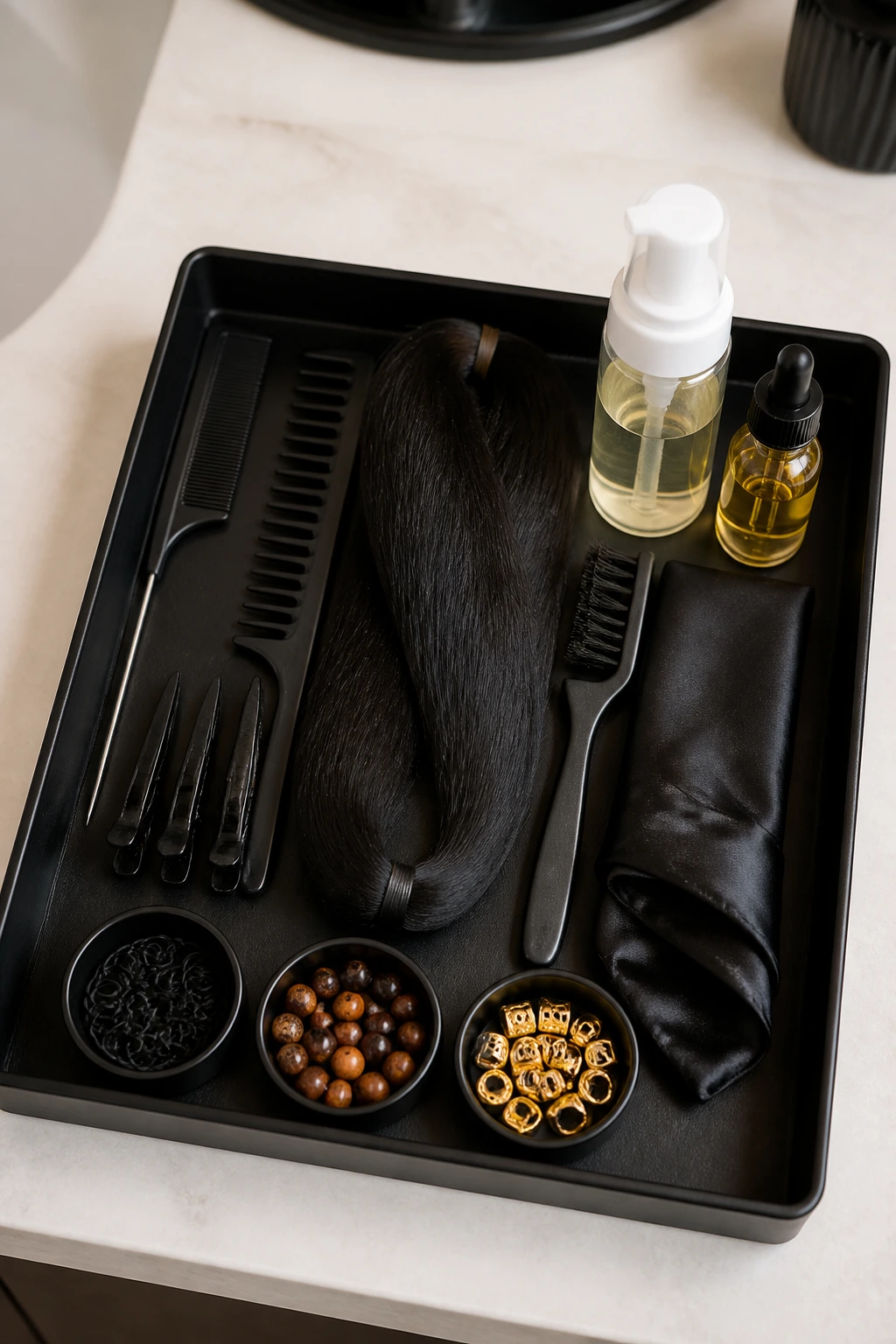
- Rat-tail comb: Clean parting starts here, especially for middle parts, triangles, and zigzags.
- Wide-tooth comb: Handy for detangling and sectioning before the install.
- Hair clips or duckbill clips: These keep sections out of the way while you braid.
- Pre-stretched braiding hair: Saves time and gives the ends a smoother finish.
- Braiding mousse: Helps lay down frizz and sets the braid body.
- Light scalp oil or braid spray: Use this on the parts, not in heavy puddles.
- Edge brush: Useful if you want the front to look neat without looking painted on.
- Satin scarf or bonnet: Night protection matters if you want the style to stay crisp.
- Small elastic bands: Good for ponytails, buns, and half-up styles.
- Beads, cuffs, or thread wraps: Optional, but they make the plain styles feel finished.
- Hand mirror: Helps check the back rows and bun placement.
- Lid or tray for accessories: Tiny cuffs disappear fast if you set them down on a bathroom counter.
Smart Shopping and Hair Prep Tips
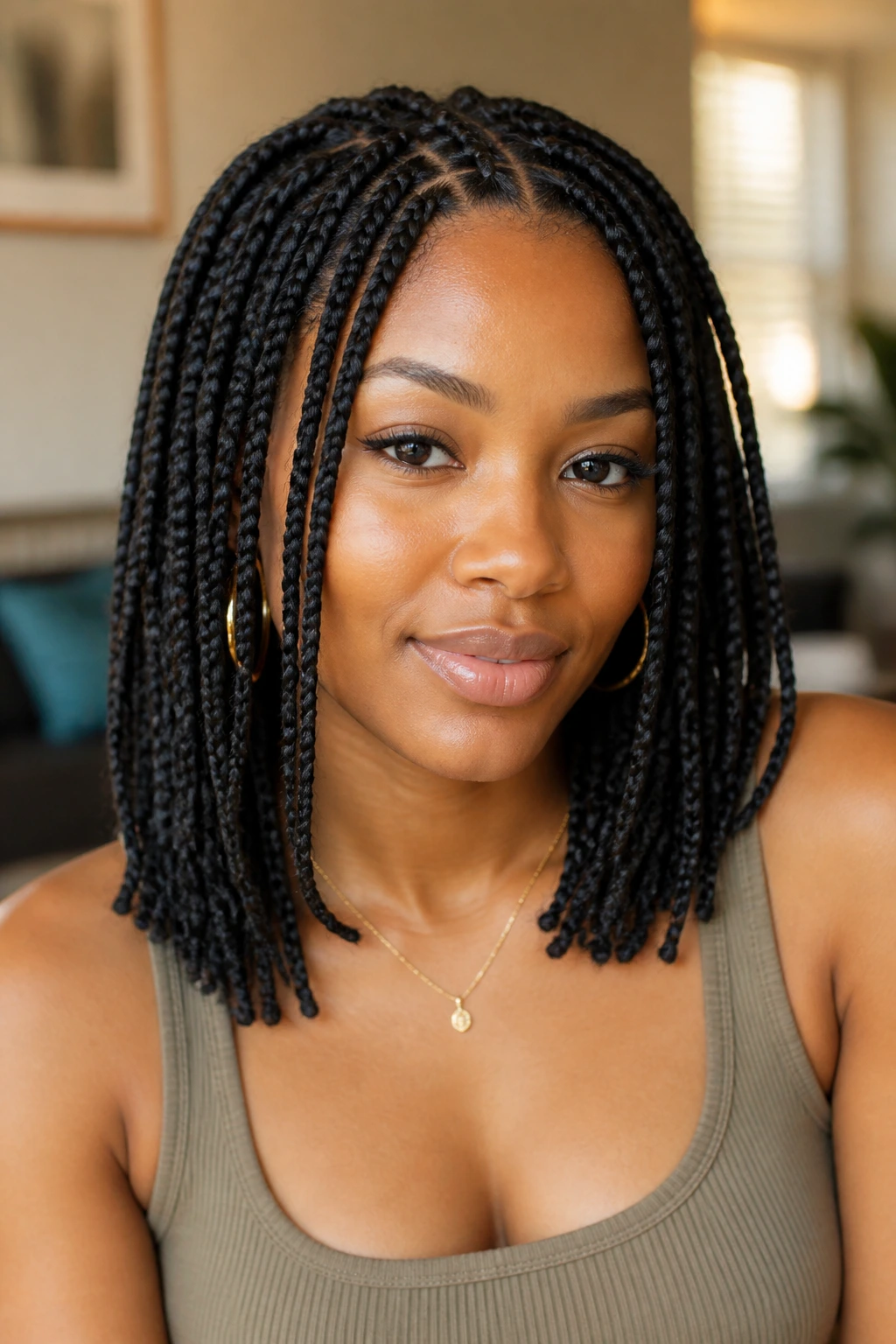
The braid style is only half the job. The other half is choosing the right hair and giving your own hair a clean base before the install. If your hair is dusty, product-heavy, or still damp, the braids will not sit right. They may smell off later too, which is a nuisance nobody needs. Start with a wash, a thorough dry, and a light detangle so the sections stay smooth.
For extension hair, pre-stretched synthetic braiding hair is usually the easiest place to begin. It saves you from doing extra prep and gives the ends a softer fall. If you want more polish, match the extension shade to the darkest part of your natural hair at the root. If you want dimension, blend two close shades rather than jumping from black to bright blonde in one move.
Braid size should follow hair density and scalp comfort, not just the photo you liked. If your hair is fine or your edges are delicate, medium or medium-small sections usually sit better than jumbo pieces. If your hair is dense, you can often carry a fuller braid without strain, but the parts still need to be neat. Rough sections show up later. Braids are honest that way.
How to Wear These Styles Without Making Them Feel Repetitive
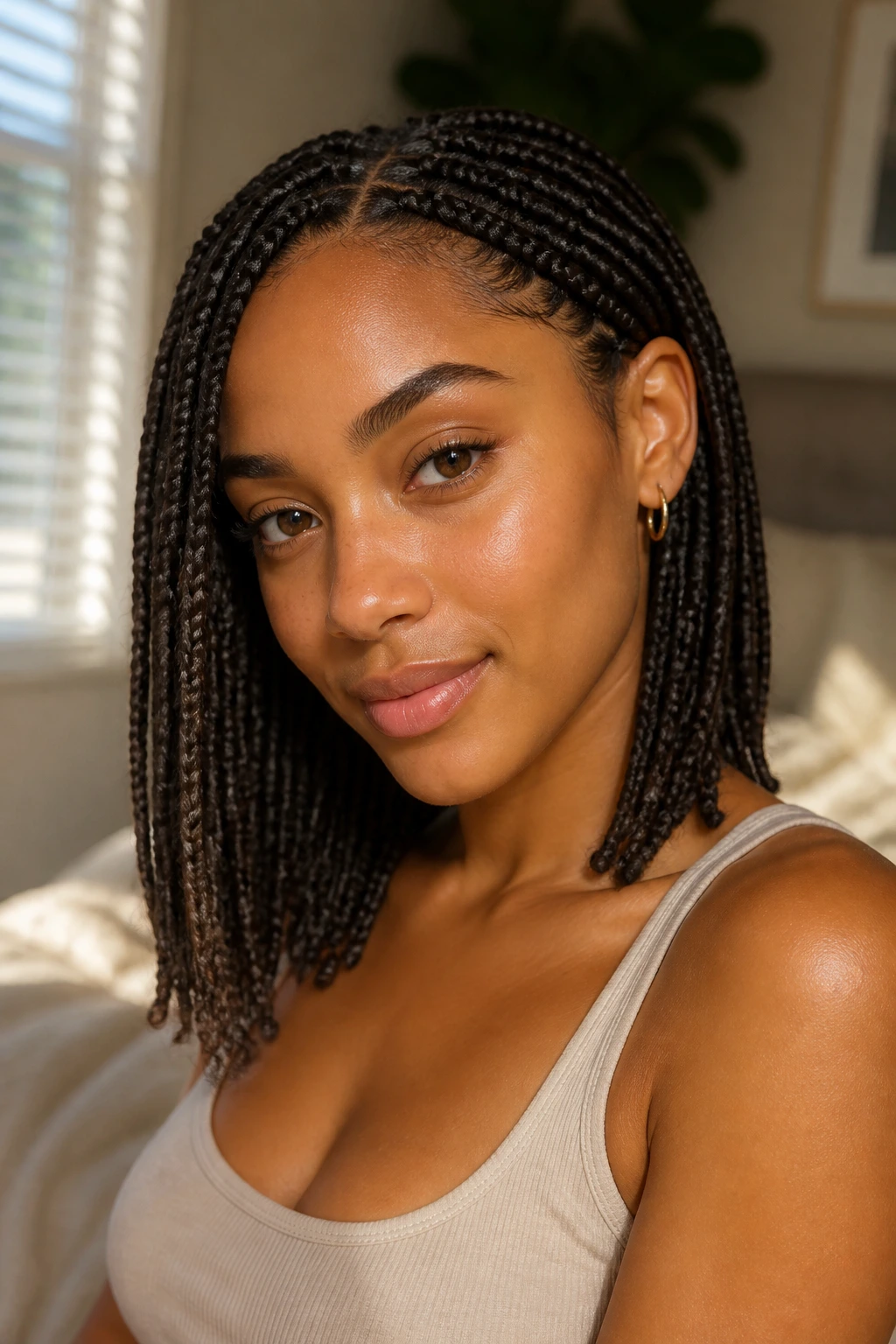
Presentation: Keep the silhouette in mind first. A clean middle part reads sleek, a side sweep reads softer, and a bun or ponytail changes the shape fast enough to make the same braid set feel new again.
Accessories: Pick one accent and stick with it. Gold cuffs, beads, scarves, and thread all work, but they look best when they are used with a little restraint. One bold piece near the face does more than ten scattered ones near the ends.
Rotation: Switch the placement, not the braids. Wear them down for two days, half-up for one day, then into a low bun or side pony. That keeps tension from building in the same spot.
Face framing: If the style feels heavy, pull out a braid or two near the temples or tuck one side behind the ear. Small changes matter more here than people expect.
Additional Tips and Finish Ideas
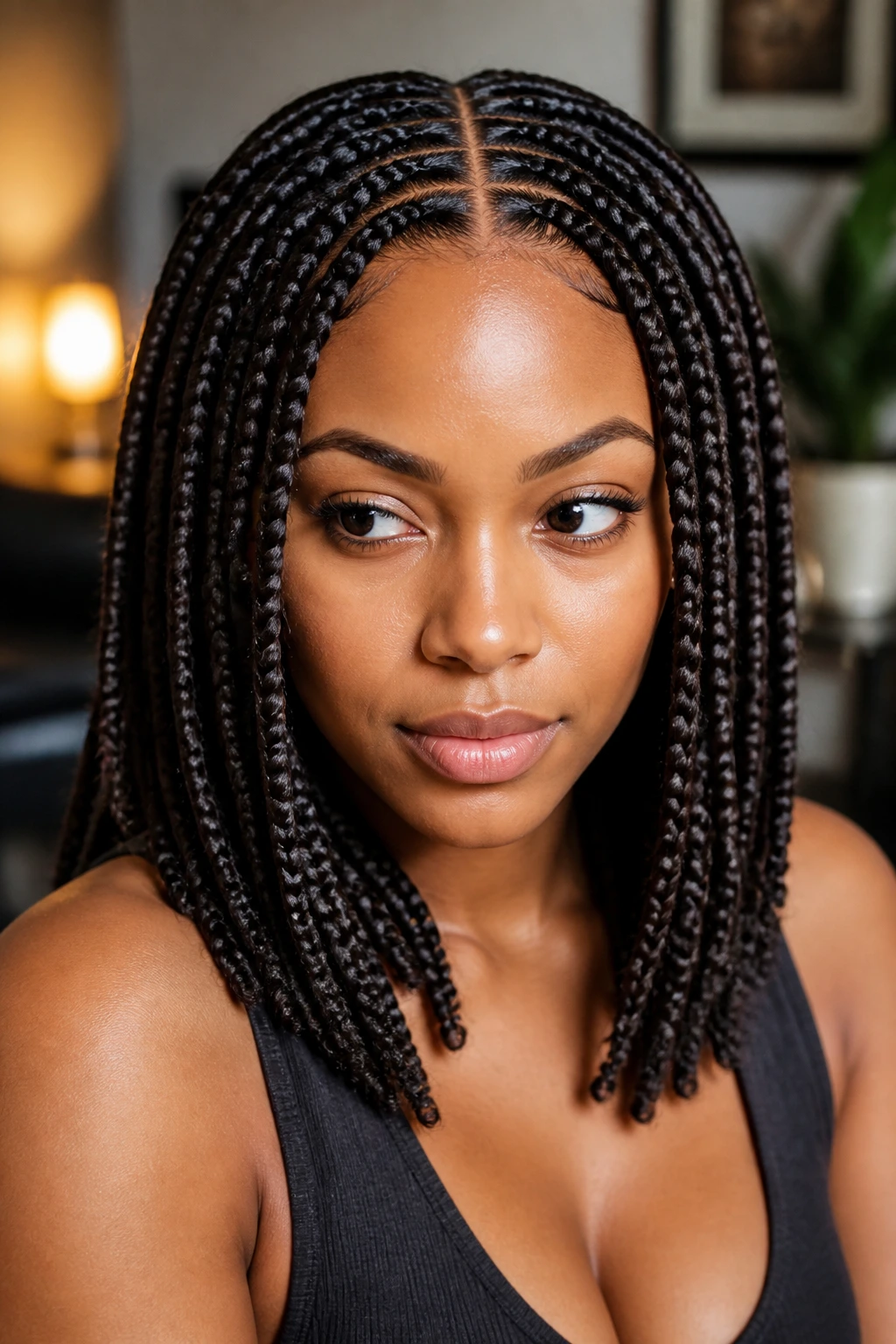
Flavor Enhancement: A tiny bit of mousse at the braid body and a touch of oil on the scalp parts give the style a cleaner finish than a heavy shine spray ever will. Less product, better control.
Customization: Mix braid sizes in different zones if your hair density is uneven. Smaller braids at the front and medium ones toward the back can balance the shape without making the set look random.
Serving Suggestions: That sounds funny for hair, but the same idea applies — finish the style with one visible detail. A scarf knot, a single cuff at the temple, or a soft curl at the ends is enough.
Make-It-Yours: If you prefer low-maintenance looks, go with blunt or tapered ends and skip the extras. If you love detail, choose parting patterns, two-tone color, or beads and let the braids stay plain.
Make-Ahead, Maintenance, and Removal Guidance
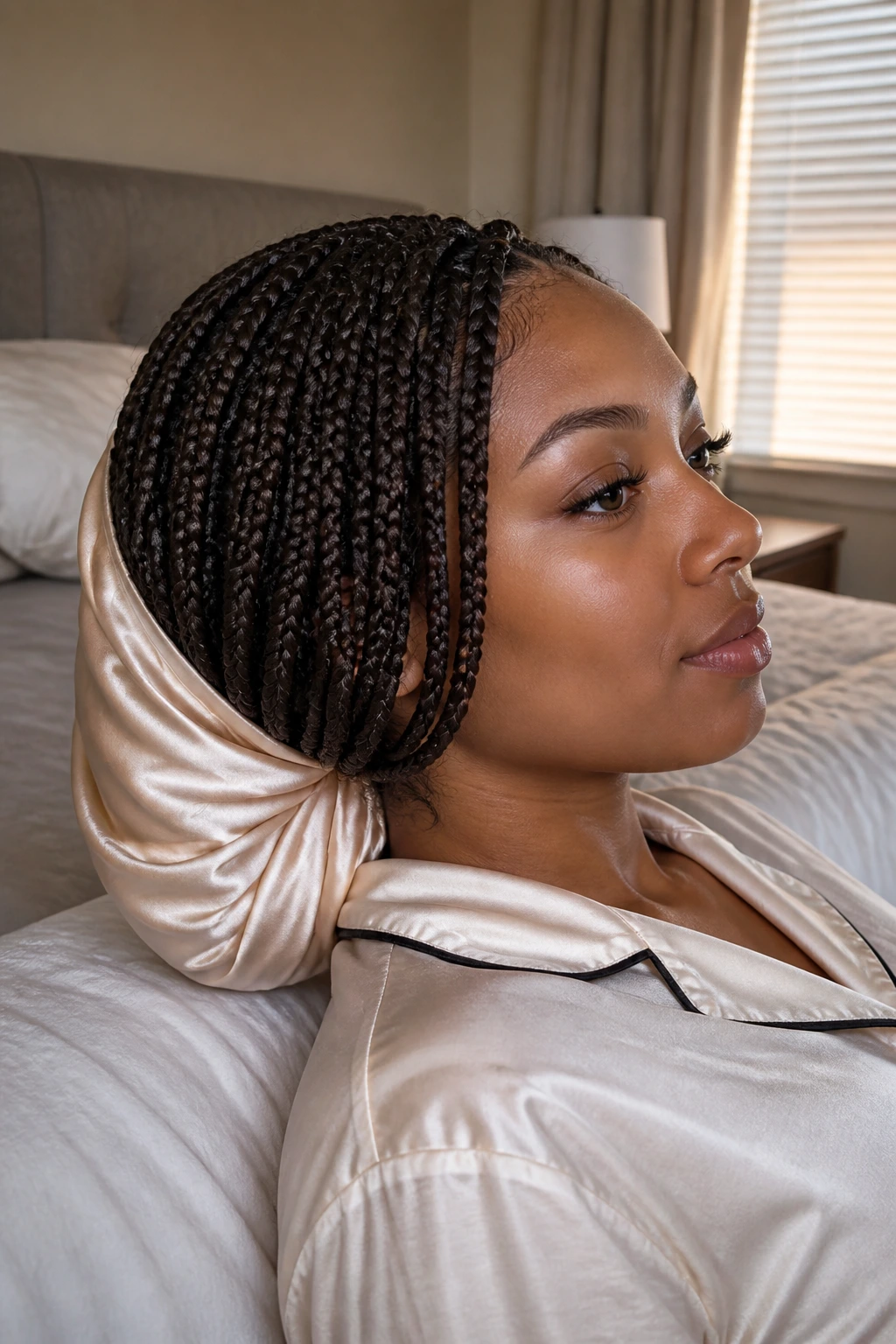
Medium-length box braids can usually stay neat for a good stretch if you protect the roots and do not overload them with product. At night, wrap the hair with a satin scarf or bonnet. In the morning, smooth the surface lightly with mousse or a small amount of braid spray if the frizz is getting fuzzy. Do not soak the braids. Wet roots and too much oil together can make the scalp feel grimy fast.
For daily care, the parts are the place to focus. A clean, small amount of scalp oil once or twice a week is enough for most people. If your scalp gets itchy sooner, use a lighter spray instead of pouring oil straight onto the roots. Braids should feel clean, not slick.
Removal takes patience. Cut the extensions below your natural hair first, then unravel gently from the ends upward. Do not rush this part. A few extra minutes spent separating strands can save you from breakage. Once the braids are out, wash, deep condition, and give your scalp a break before reinstalling anything. That pause matters.
Variations and Adaptations to Try
Soft Everyday Set: Stick with medium parts, plain ends, and no accessories. This version works best when you want the braids to fade into your routine instead of calling attention to themselves.
Bold Color Mix: Blend two close shades — black and brown, brown and auburn, or dark roots with honey tips. The mixed tones make the braid pattern more visible and give medium-length hair extra depth.
Protective Comfort Build: Use knotless roots, medium-sized sections, and lighter extension hair. If your scalp tends to ache, this is the version that usually sits best without constant adjustment.
Dressy Finish: Add cuffs near the front, a wrapped ponytail, or a low bun. One clean detail is enough to turn the set into something more formal without making it stiff.
Weekend Play Version: Try beads, a scarf, or space buns. The point here is movement and personality. The braids can handle it.
Common Mistakes That Make Braids Look Off
The first mistake is starting too tight. If the scalp hurts on day one, that is not a sign of a good install. It is a warning. Tight braids can pull at the edges and make the whole style harder to wear. The fix is simple: ask for less tension at the front rows and around the hairline.
Another problem is ignoring the ends. Medium-length braids live or die by the finish line. If the ends are uneven, frayed, or all cut at different points without intent, the shape looks sloppy. Decide early whether you want blunt, curled, tapered, or beaded ends, then commit.
People also overload the style with accessories. A few beads or cuffs are enough. Once every braid has something attached, the eye has nowhere to rest and the braid pattern disappears. Keep one focal point and let the rest breathe.
Frequently Asked Questions
How long do medium-length box braids usually last?
A well-installed set can stay neat for weeks if you protect the hair at night and keep the scalp clean. The actual wear time depends on your hair growth, your edges, and how much frizz you mind. Once the roots start matting or the scalp feels sore, it is time to take them out.
How many packs of braiding hair do I need?
That depends on braid size and fullness. Medium-small braids usually need more packs than jumbo ones, and knotless styles often use extension hair differently from classic box braids. A stylist can estimate by part size, but it is smart to bring one extra pack just in case.
Can medium-length hair hold jumbo box braids?
Yes, but the roots need to be comfortable enough to carry the weight. If your hair is fine or your scalp is sensitive, medium-sized braids usually sit better and move more naturally. Jumbo braids work best when the sections are neat and not overloaded.
What if the braids start to itch?
A little itch can happen, especially in the first few days. If it turns into burning, tenderness, or sharp pulling, the style is too tight or the scalp is irritated. A light braid spray may help, but don’t keep layering product on top of a problem. Fix the source.
Do knotless braids look better on medium-length hair?
They often do because the softer root suits the length well. The transition from your natural hair to the extension hair feels smoother, and the braid set can move without that hard, stiff base. If comfort matters, knotless is a smart choice.
Can I style these braids for work without making them boring?
Yes. A middle part, low bun, side sweep, or wrapped ponytail can make the same braid set look neat and professional without changing the braids themselves. One cuff or a simple scarf can still add a little personality.
Should I cut the ends before or after the install?
Usually after, once you know the style’s final shape. That way the bottom line can be trimmed evenly or curled in a way that matches the full set. Cutting too early can leave you guessing.
What is the easiest way to refresh frizz?
A small amount of mousse worked lightly over the braid body, then tied down with a satin scarf for a short while, usually helps more than spraying on more oil. Heavy product makes braids limp. Light product keeps them looking crisp.
The Styles You’ll Keep Reaching For
Medium-length box braids are not a compromise. They are the range where the braid itself, the parting, the color, and the shape all have room to show up without turning into a maintenance project. That is why the shoulder-skimming classics work so well, and why the buns, ponytails, side sweeps, and parted designs keep finding their way back into the conversation.
What matters most is picking the version that fits how you actually live. If you want clean and quiet, keep the parts sharp and the ends plain. If you want a little movement, lean into curls, color, or a side sweep. Either way, medium-length braids give you enough length to play with and enough control to keep the style from getting away from you.
A good braid set should make your morning easier, not louder. These styles do that, and they do it without giving up shape.
