



A bridal pixie cut can make a veil look sharper, not softer. The short shape gives you clean lines around the face, room for earrings that matter, and a neckline that doesn’t disappear under hair. When the cut is shaped well, short hair feels deliberate; when it isn’t, it looks like you ran out of time.
That difference comes down to tiny things: a side part moved half an inch, a bit of lift at the crown, a temple piece tucked with one hidden pin, or a comb that sits just above the ear instead of fighting it. Pixie cuts for brides with short hair do not need fake bulk or a helmet of spray. They need a shape that knows where to stop.
Some brides want polished and glossy. Others want soft, piecey, a little undone. Both can read formal if the detail is there, and that’s where the fun starts—because a pixie on a wedding day can look expensive without looking fussy. The trick is choosing the version that works with the dress, the jewelry, and your own hair texture.
Why These Bridal Pixie Ideas Work So Well
-
They frame the face fast: A pixie puts the eyes, cheekbones, and jawline right in the spotlight, which is useful when the dress has a clean neckline or a lot of detail near the shoulders.
-
They make accessories count: A pearl pin, comb, or slim headband can do a lot more on short hair than it ever could on long layers. There’s nowhere for it to disappear.
-
They hold up in real movement: Short hair usually shifts less under dancing, hugging, and warm air. You can still lose shape, sure, but you won’t be fighting long pieces all night.
-
They work with different textures: Straight, wavy, curly, and coily pixies all have bridal versions. The finish changes, not the opportunity.
-
They photograph cleanly: A strong outline around the ears, nape, and side part keeps the shape readable from the front, which matters when the camera is catching faces at odd angles.
What Makes a Bridal Pixie Look Finished Instead of Casual
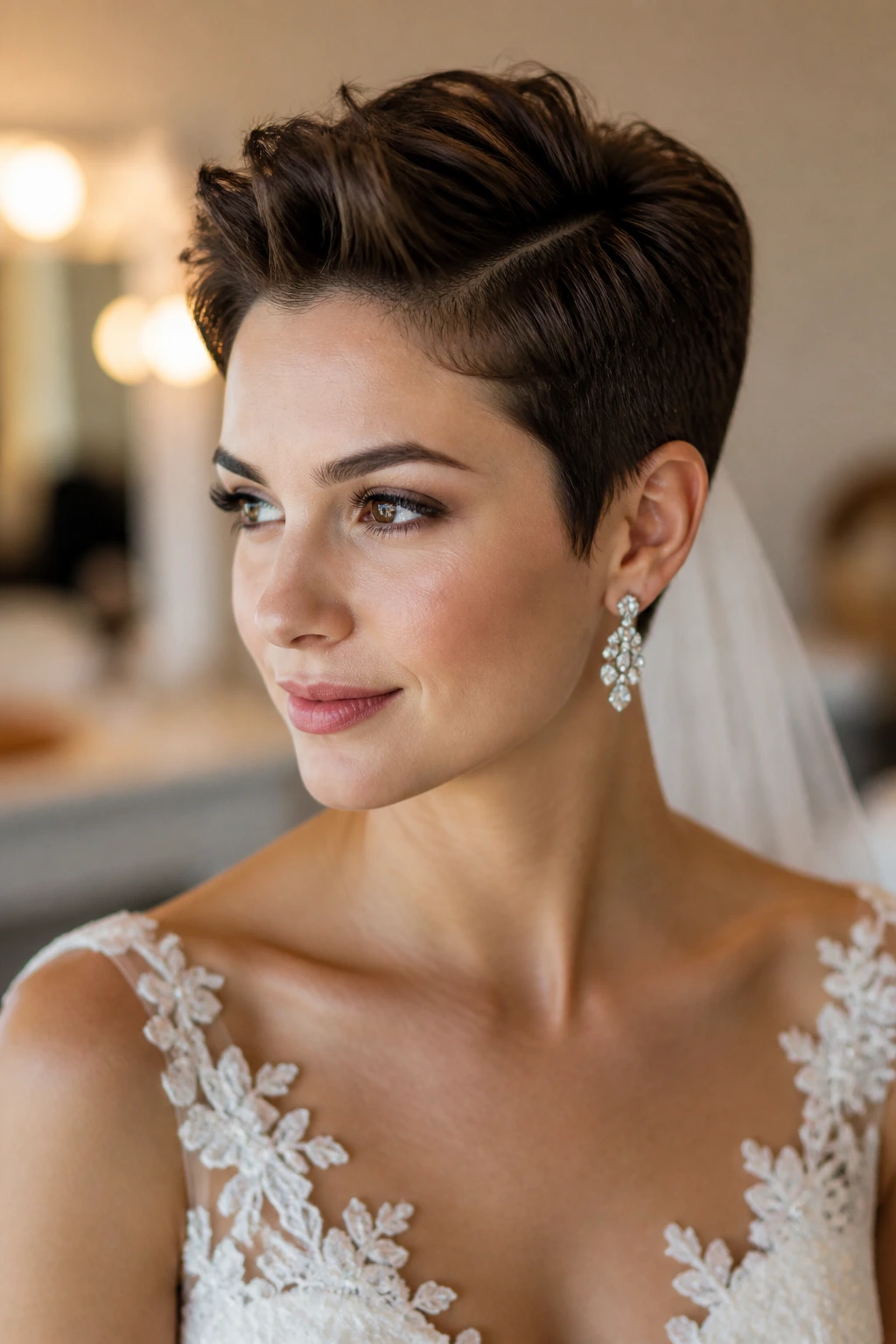
A bridal pixie is not really about length. It’s about control. The same crop that reads like a rushed salon visit on a Tuesday can look carefully styled on a wedding day if the crown, part line, and edges are handled with intent.
Crown Lift Changes the Whole Mood
A little lift at the crown gives the style air. Too much and it turns into a 1980s helmet. Too little and the hair sits flat against the skull, which is the fastest way to make a short style feel unfinished. The sweet spot is usually a soft root lift, then a smooth transition into the side and back.
The Part Line Does Most of the Work
A center part makes some pixies look stark. A deep side part softens the face and gives you a place to tuck a clip, pin, or tiny comb. Even a part shifted by half an inch can change the whole read of the style. Tiny move. Big effect.
Accessories Should Obey the Cut
If the hair is heavily adorned, the cut disappears. If the accessory is too small, it looks accidental. The best bridal pixie styles use one focal point—pearl comb, crystal pin, floral cluster, slim headband—and leave the rest of the shape clean enough to breathe.
Texture Has to Match the Dress
A satin column dress likes a sleek finish. A lace gown often looks better with some bend and softness around the hairline. A structured neckline can handle sharper edges and a more sculpted pixie. The dress doesn’t dictate the hair, but it does tell you which direction makes the whole thing feel coherent.
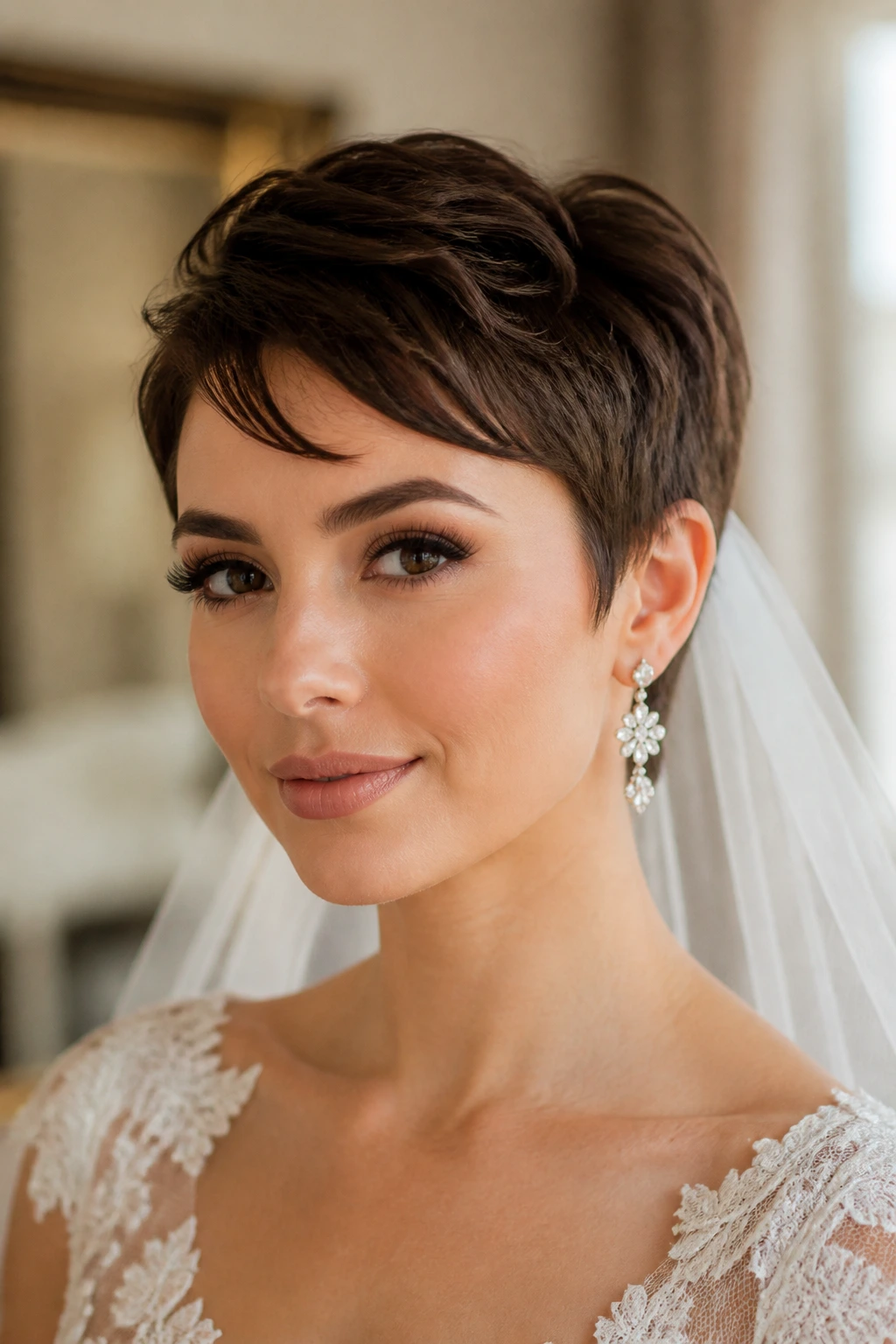
1. Pearl-Swept Side-Part Pixie
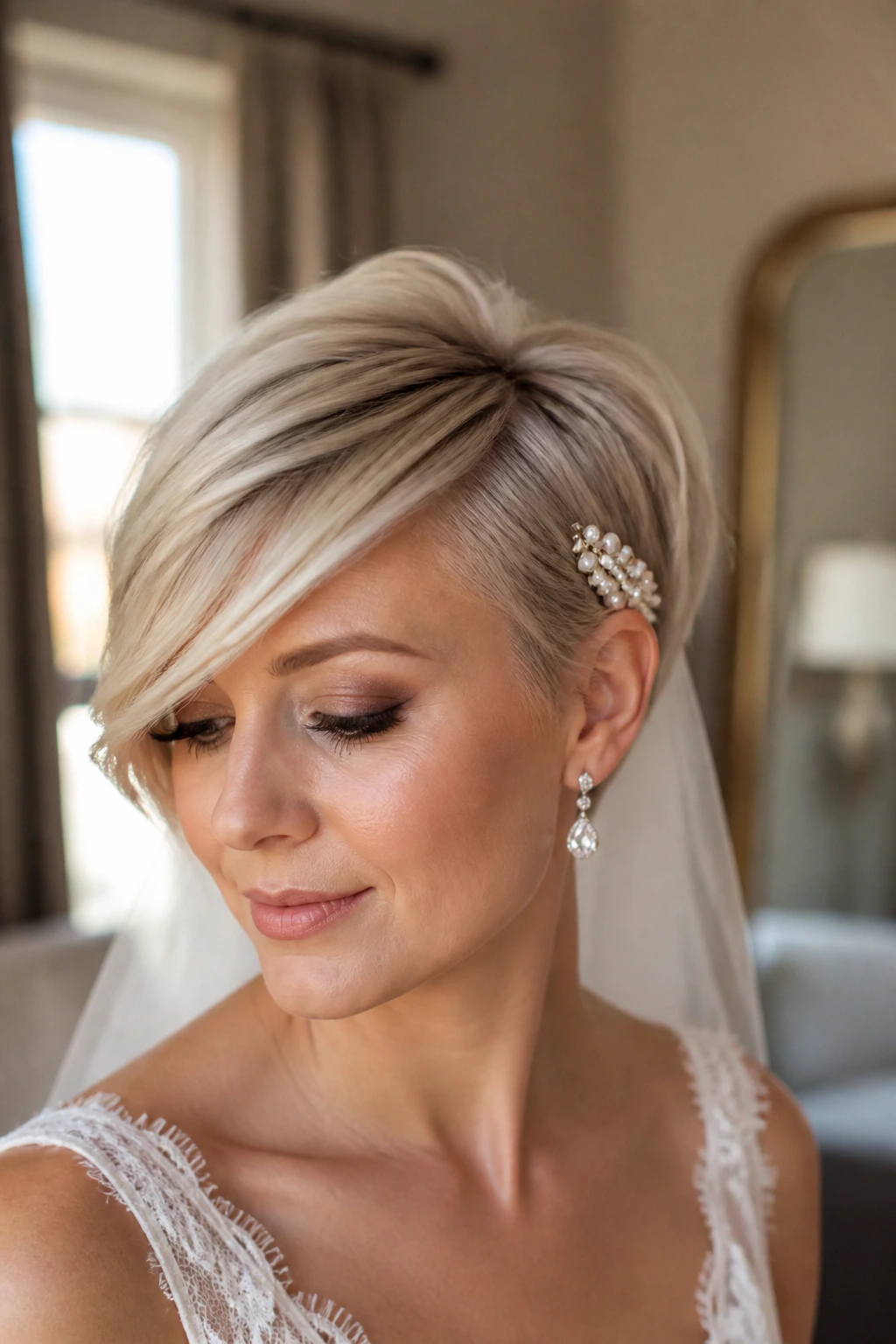
A deep side part and a single pearl comb can make a cropped cut look as dressed up as any updo. The longer front section slides across the forehead, then tucks just enough at the temple to show one earring and one clean cheekbone line. It is the sort of bridal pixie that looks calm in photos, even if the room is chaos.
This shape works best when the top has a little bend—not stiff curl, not poker-straight flatness. Ask for soft root lift at the crown and a gentle bevel around the ear so the hair follows the head instead of flaring out. If your dress has a bateau, square, or one-shoulder neckline, this cut keeps the attention on the face without competing with the fabric.
Best detail: place the comb where the side part begins, not at the widest point of the temple. That tiny shift keeps the accessory visible from the front and stops it from sliding.
2. Soft Finger-Wave Pixie
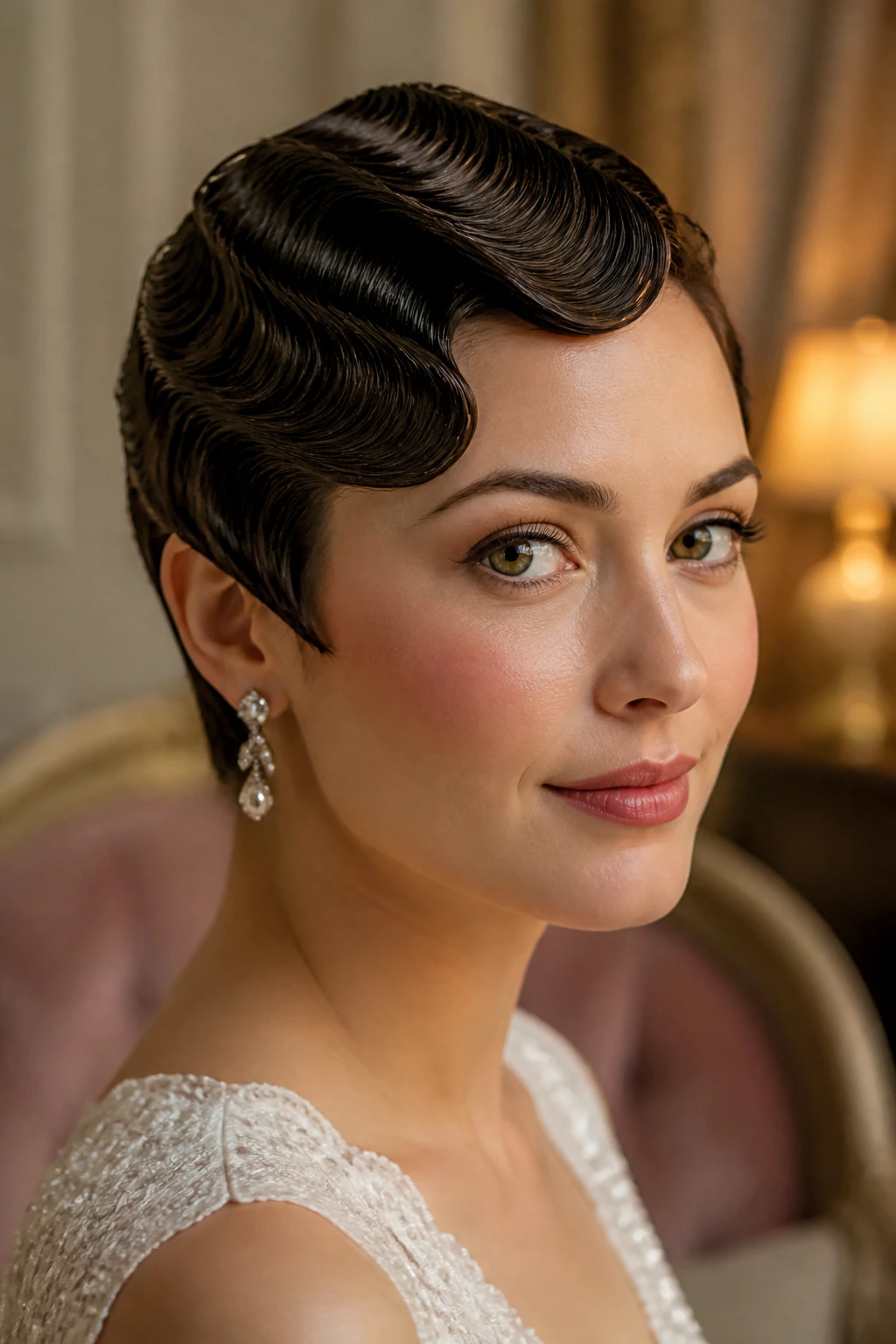
Finger waves on short hair do something slightly magic: they turn a neat crop into a full bridal moment without adding bulk. The waves hug the head in glossy, curved lines, which makes them a strong choice for satin, crepe, or anything with a clean architectural feel. There’s a quiet drama to them. No shouting.
Best match for vintage-leaning gowns
This style loves pearl earrings, an off-center veil, or a slim forehead chain if the rest of the outfit stays simple. It can feel old-Hollywood fast, so keep the makeup polished and let the hair do the talking.
- Works well on fine to medium hair that can hold a molded shape.
- Looks best with a soft side part and a smooth nape.
- Needs a strong setting lotion or mousse before the wave pattern is formed.
A good finger-wave pixie should look sculpted, not wet in the wrong way. If the hairline around the ears has a few soft ends left out, the whole style feels less costume and more bride.
3. Crown-Lift Pixie
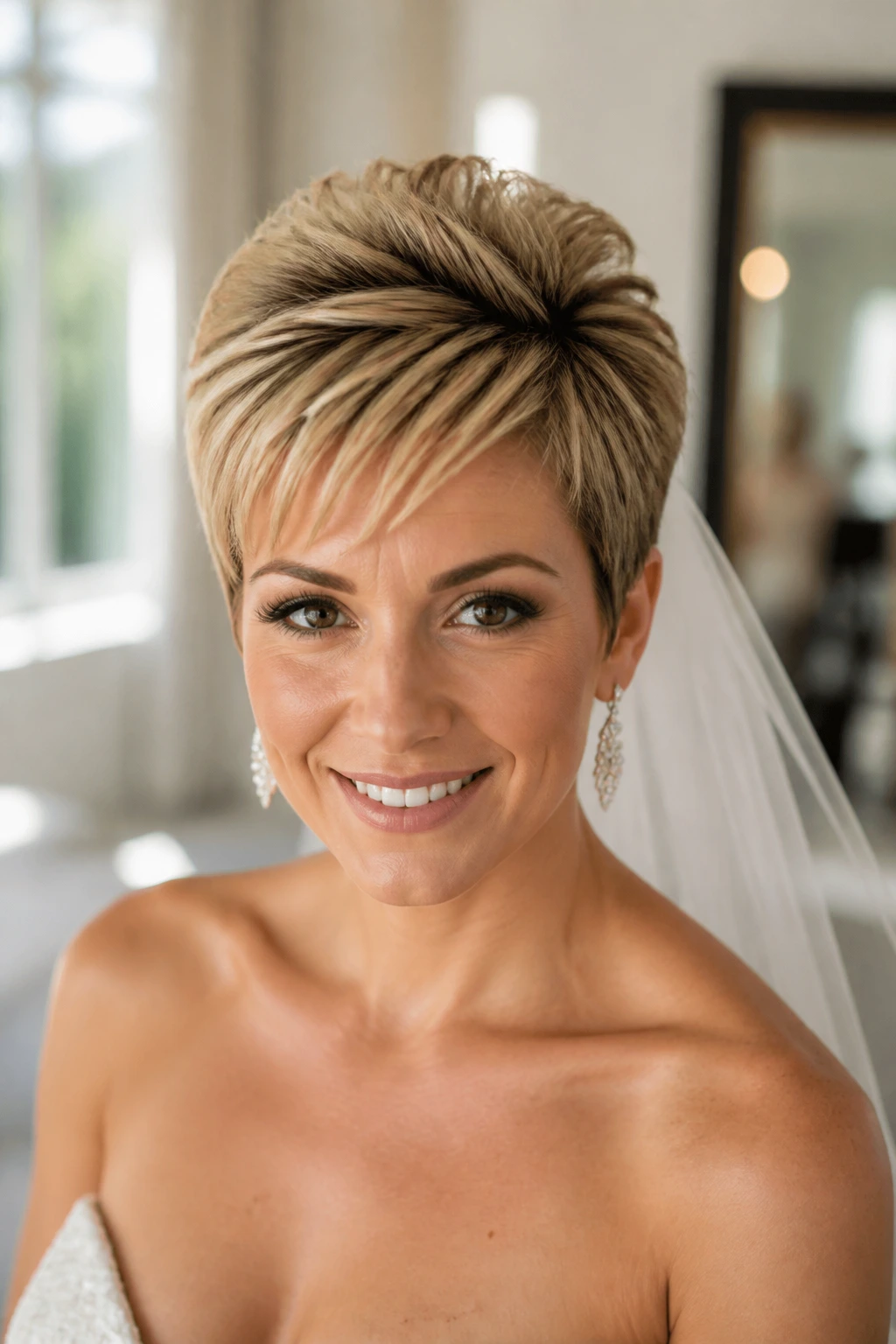
A crown-lift pixie is the answer when you want short hair to read taller, cleaner, and a little more formal. The lift sits right at the top of the head, then falls into a tidy front fringe or side sweep. From the front, it adds shape without turning the cut into a pompadour. That’s the trick.
It works especially well with strapless dresses, halter necklines, and gowns that leave room around the collarbone. The extra height draws the eye upward, which helps balance strong earrings or a statement necklace. It also gives a veil comb a better anchor point if you want one.
Use a root spray at the crown and dry the section upward with a small round brush. Don’t over-round the top; you want height, not a dome. If your hair is fine, this one can be a lifesaver. If it is thick, the lift should be controlled, not stuffed with product.
4. Tucked-Behind-Ear Sleek Pixie
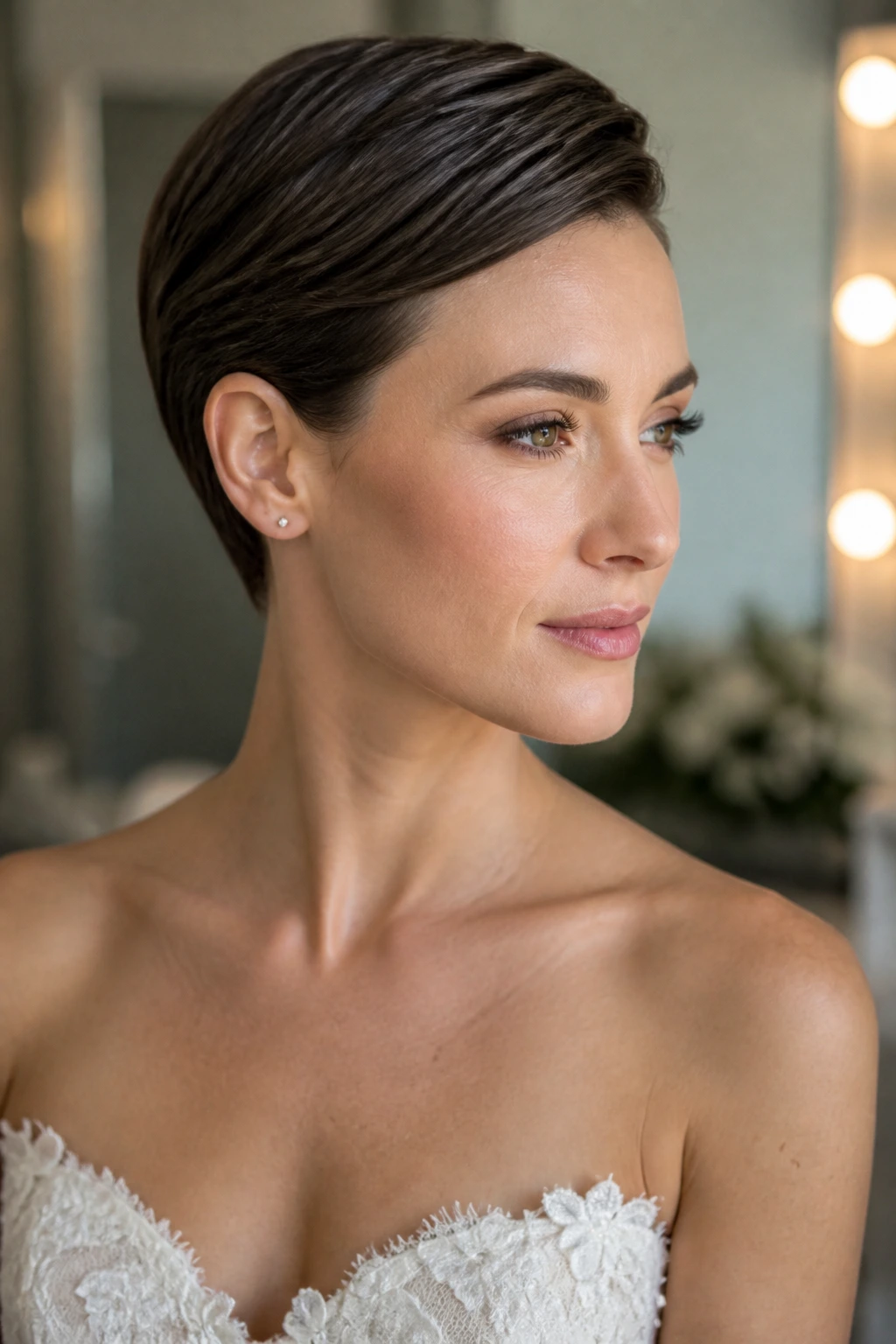
This is the clean one. The kind of pixie that lets a sharp earring, a structured gown, and a strong jawline do their work without interruption. One side is tucked completely behind the ear, the other stays smooth and close to the head. No loose drama. No fussy movement.
The key is restraint. Ask for a little extra length at the front so the tuck feels intentional rather than accidental. Then smooth the surface with a lightweight cream or a tiny bit of shine balm, keeping the product away from the roots so the style doesn’t collapse. If the dress has beadwork near the neckline, this shape keeps the focus there without competing.
It suits brides who like crisp lines and minimal jewelry. It also handles big bouquets well because the hair doesn’t add clutter near the face. Clean can be powerful. People forget that.
5. Curly Halo Pixie
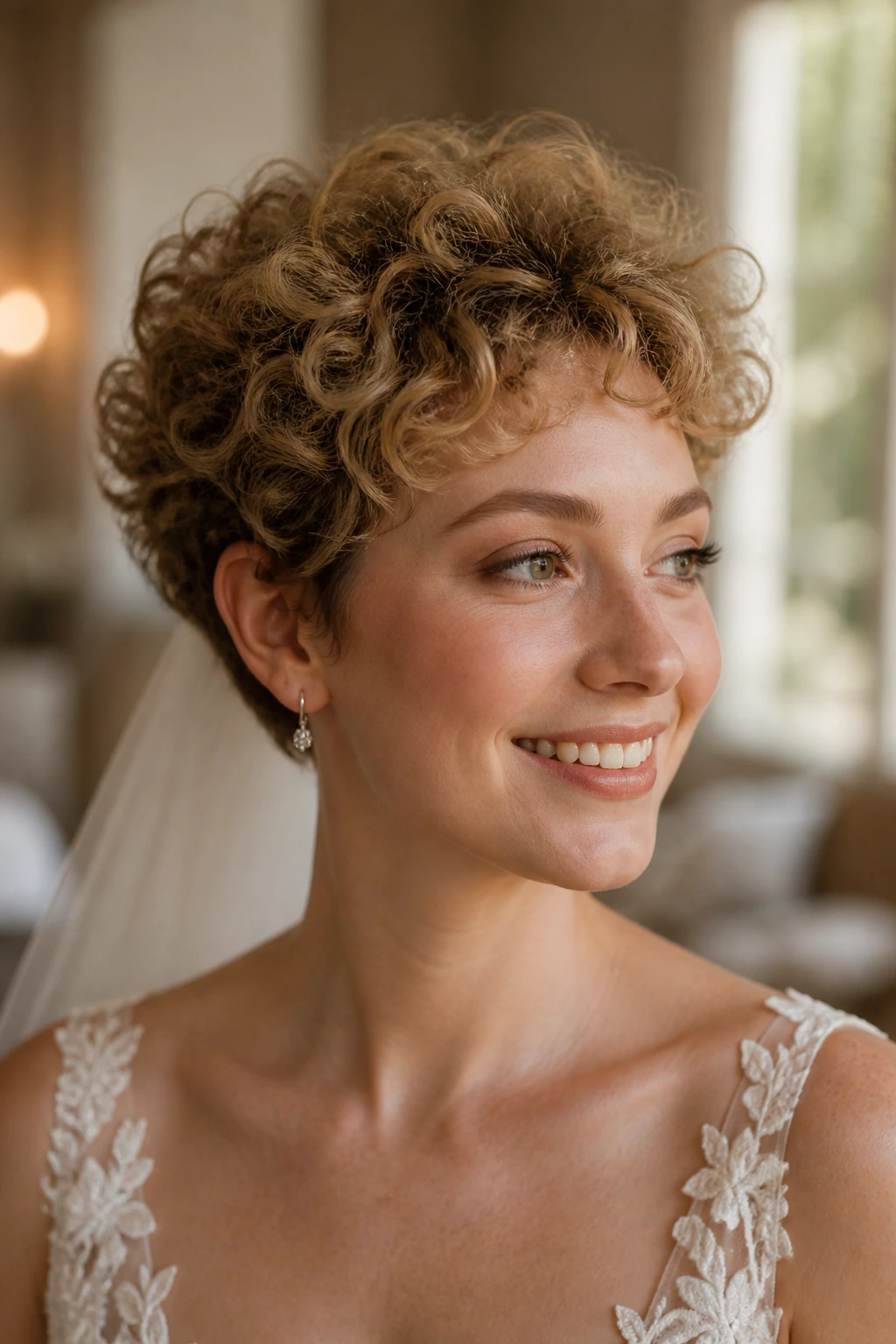
A curly halo pixie lets natural texture do the formal work, and I think that’s one of the best bridal moves there is. Instead of flattening curls into submission, this style defines them and lets them sit softly around the head like a small cloud of shape. The outline is rounded, but the detail stays visible.
The secret is to style the curls in clumps that make sense, not separate every coil into tiny pieces. Too much separation can look dry and fussy. A good curl cream, a diffuser on low heat, and a light hands-off finish usually do more than a heavy styling routine ever could.
This cut is gorgeous with floral pins, thin gold accessories, or a simple veil placed slightly back from the hairline. If your curls shrink a lot, ask your stylist to leave enough length on top so the shape doesn’t disappear once it dries. Short curly hair can be bridal. It just needs room to breathe.
6. Micro-Fringe Editorial Pixie
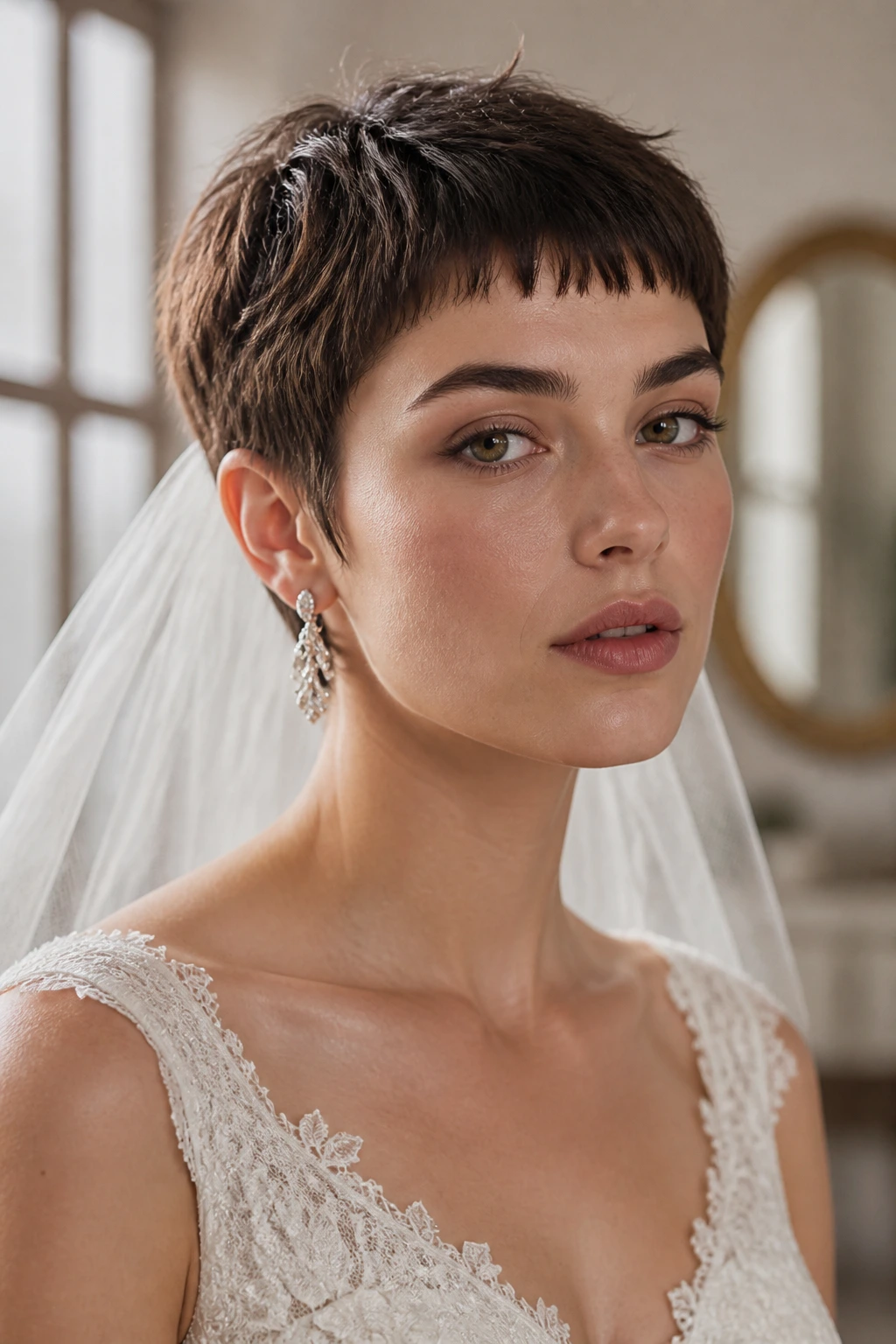
A micro fringe changes the whole tone of a pixie. It pushes the look from sweet to fashion-forward in one move, and on the right bride, that’s a strong choice. The fringe should sit short enough to feel deliberate but not so short that it fights the brows.
This is the haircut for someone who wants the dress, makeup, and hair to feel like they belong in the same sharp frame. It works best with minimal accessories—maybe one tiny crystal pin or nothing at all. The line of the fringe already carries the drama.
Keep the rest of the cut close and neat so the fringe remains the focal point. A little texture through the crown helps keep the style from reading severe. If your face is longer, this cut can bring balance. If your forehead is already short, ask for a softer edge instead of a blunt chop.
7. Asymmetrical Glam Pixie
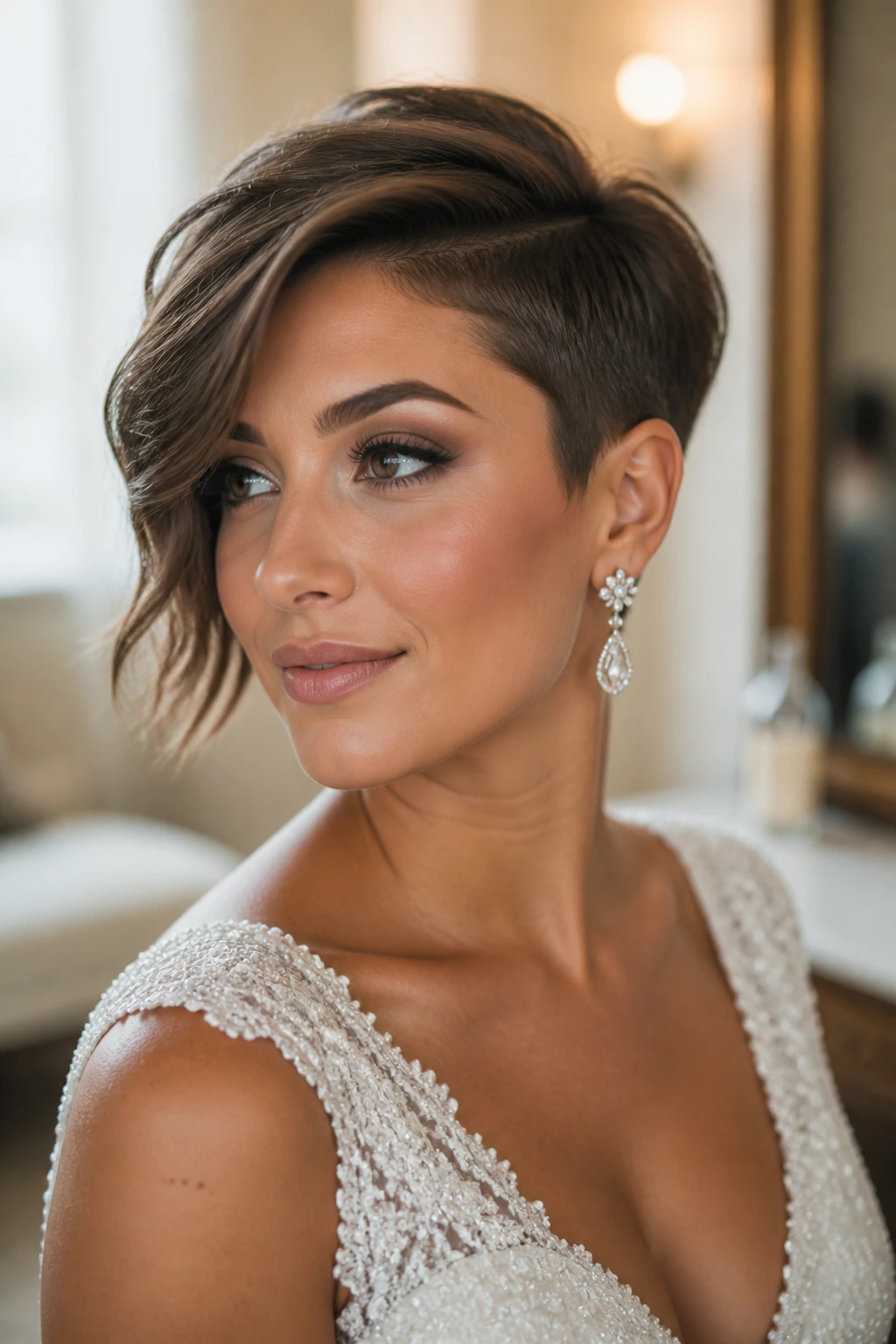
One side a little longer. One side a little cleaner. That’s the whole charm of an asymmetrical bridal pixie, and it works because it looks intentional from every angle. The longer side can sweep toward the cheek, slide over one eye, or rest near the earring, while the shorter side keeps the outline crisp.
This cut suits modern gowns, especially dresses with one-shoulder straps or asymmetric necklines. The hair echoes the shape of the dress instead of pretending the dress isn’t there. That visual echo matters more than people think.
A side part deepens the effect, and a shine spray on the longer side keeps the shape readable in photos. If you like a little edge but still want the face open, this is a strong middle ground. Not severe. Not soft. Just sharp enough.
8. Jeweled Headband Pixie
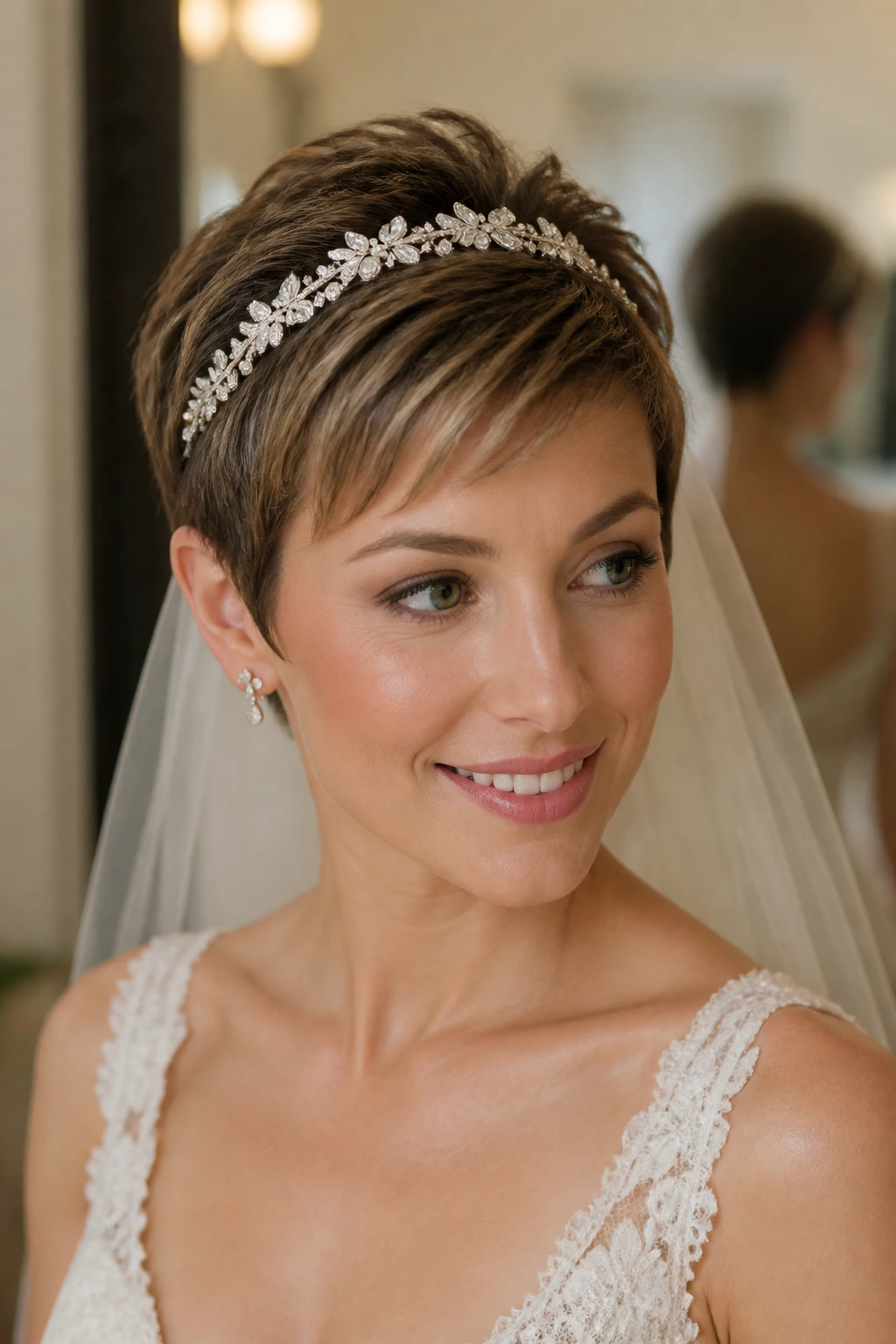
A jeweled headband turns a pixie into a bridal statement with almost no effort, which is why I trust it more than a lot of other accessories. The band creates a clear line across the head, so the haircut underneath can stay simple, neat, and close to the scalp. You get polish without clutter.
This works especially well if the pixie has a little bend at the front and smooth sides. A headband that sits too high can feel like it’s floating. One that sits just behind the hairline looks like part of the design. That’s the sweet spot.
Keep the rest of the jewelry modest if the band is ornate. The headband and the earrings can argue if you let them. If your dress already has sparkle at the neckline, choose a thinner band with smaller stones or pearl details so the whole outfit doesn’t start to feel crowded.
9. Tapered Nape Pixie
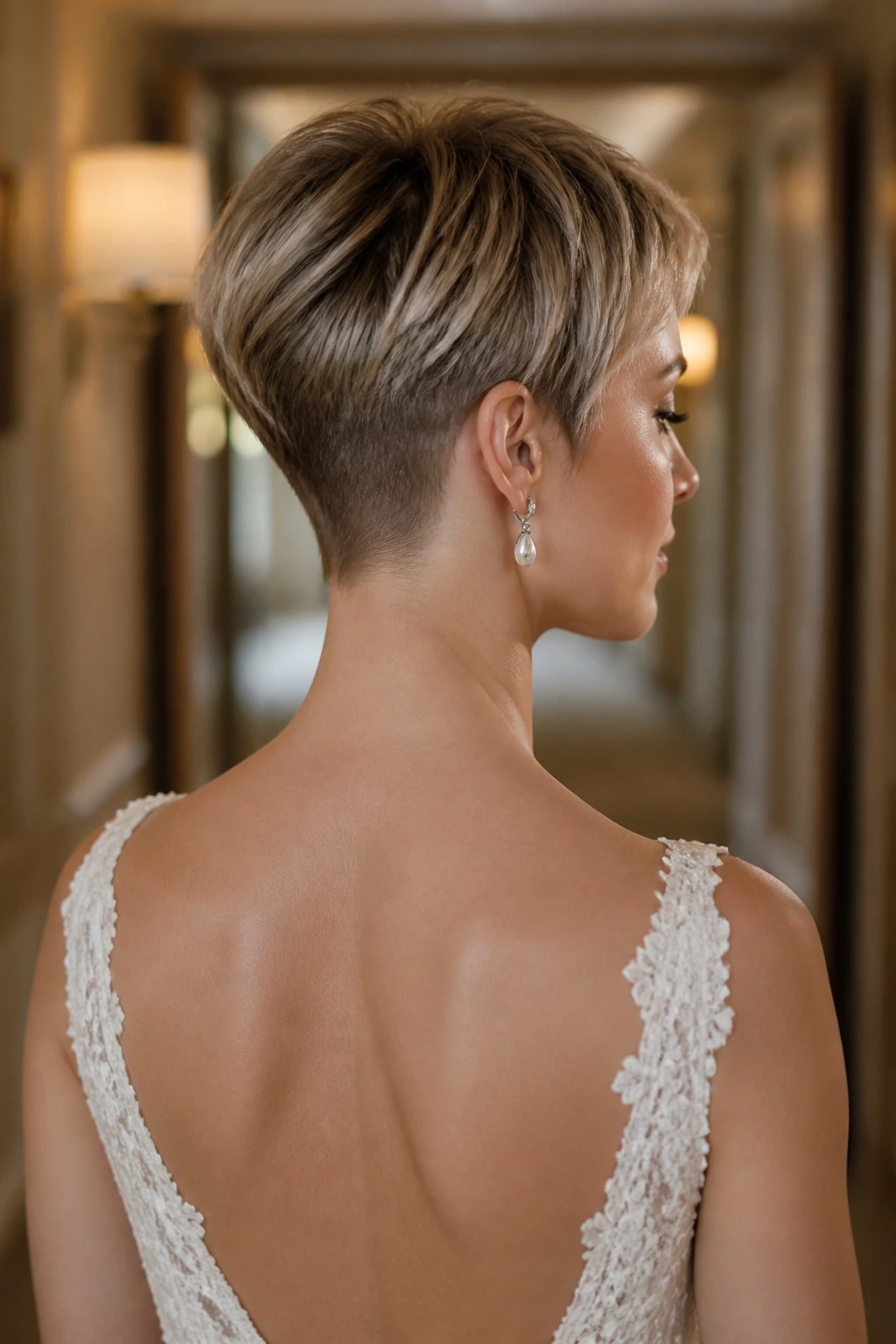
A tapered nape gives a bridal pixie a clean finish from behind, and that matters more than most people realize. Guests see the back of your head when you walk down the aisle, hug people, and turn toward the photographer. A neat taper means the style looks deliberate from every angle, not only the front.
The top can stay soft and touchable while the back stays closely trimmed into the neck. That contrast is what makes the silhouette feel fresh. It also keeps the neckline of the dress visible, which is useful if the gown has buttons, lace, or a cutout at the back.
This one is a favorite for brides who don’t want extra accessories competing with the dress. The haircut itself becomes the detail. If your hair grows fast, get the taper cleaned up close to the wedding date so the nape doesn’t blur into the shape. Small trim. Big payoff.
10. Wet-Look Pixie
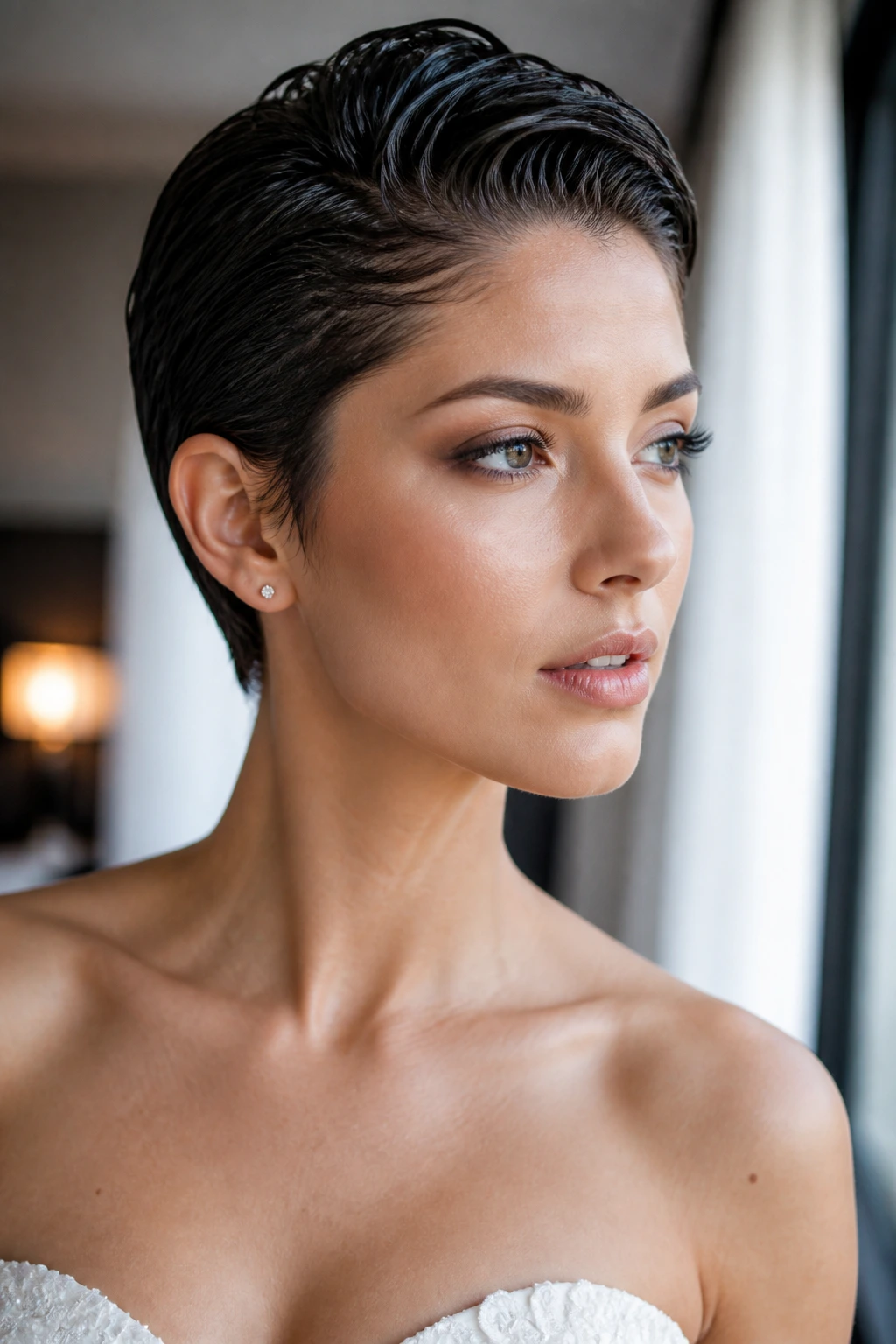
The wet-look pixie is not for everyone, and that’s exactly why it works. It has that slick, editorial surface that makes short hair feel purposeful and expensive-looking without needing much ornament. The finish is glossy, but the shape has to stay visible. If it turns into a flat cap, you’ve gone too far.
I like this style with minimalist gowns, sharp tailoring, and clean jewelry. It reads strongest when the hair is smoothed back from the face or held in a tight side sweep. A little light around the cheekbones and brows helps because the style exposes the face rather than hiding it.
Use a gel or gloss cream sparingly—more than you think, then back off. Apply from the mid-lengths outward, not from the roots all over, or the crown will sink. It’s a slick style, yes, but it should still look like hair, not lacquer.
11. Tousled Romantic Pixie
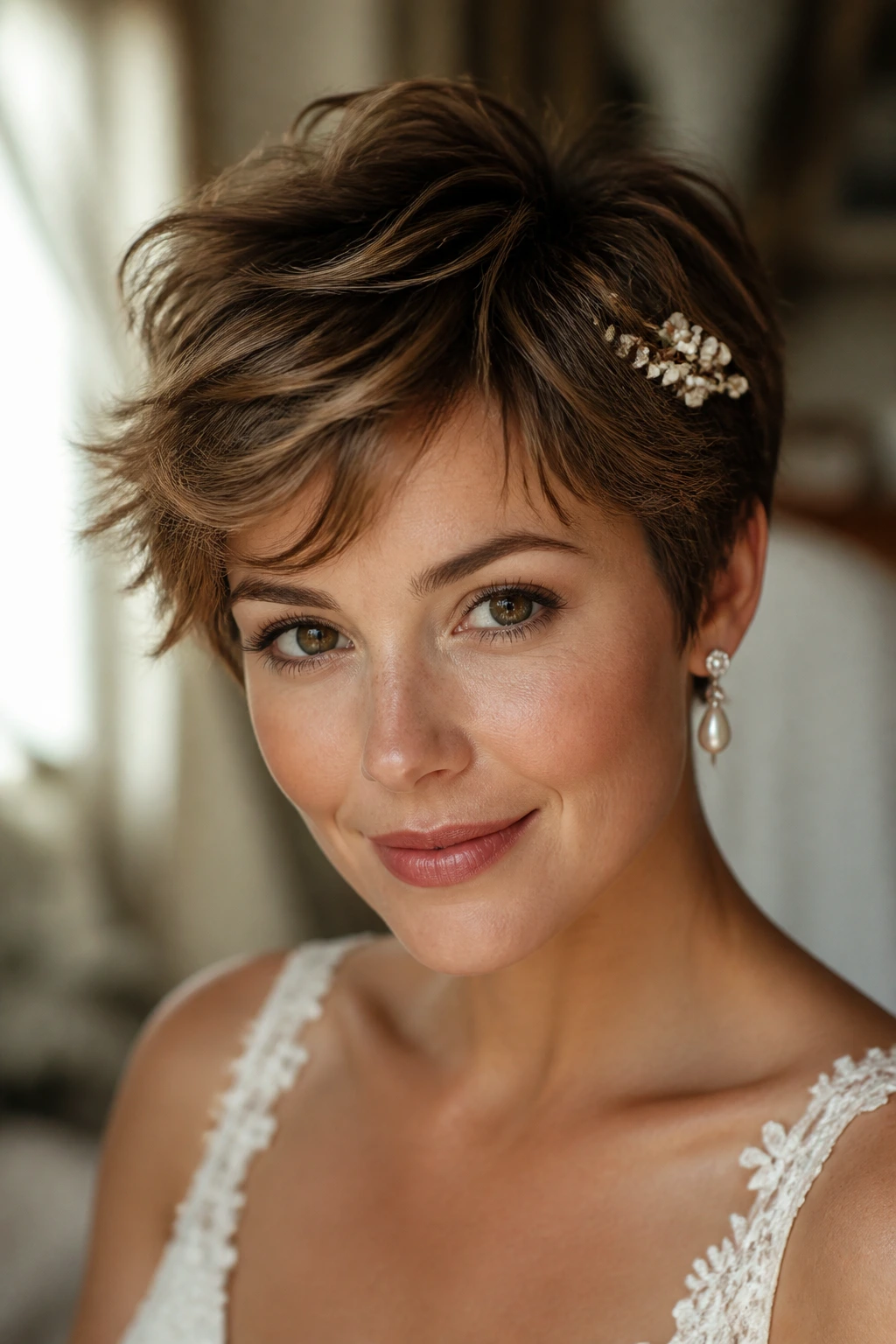
A tousled romantic pixie is the softest thing in this list, and that softness is the point. The top has a bit of separation, the ends are loose, and the side pieces fall in a way that feels touched rather than sculpted. It’s a useful style for brides who want short hair to feel warm, not rigid.
This works beautifully with lace, chiffon, or dresses that have movement built into the fabric. The hair should echo that texture. A little matte paste at the ends and a small amount of root lift keep the style from getting puffy or shapeless. You want pieces, not fuzz.
It’s a forgiving option if your hair has natural wave, too. Let the wave do some of the work. A tiny floral pin near the temple can dress it up fast, but you do not need much. The charm is in how easy it looks, even when it took planning.
12. Braided Temple Pixie
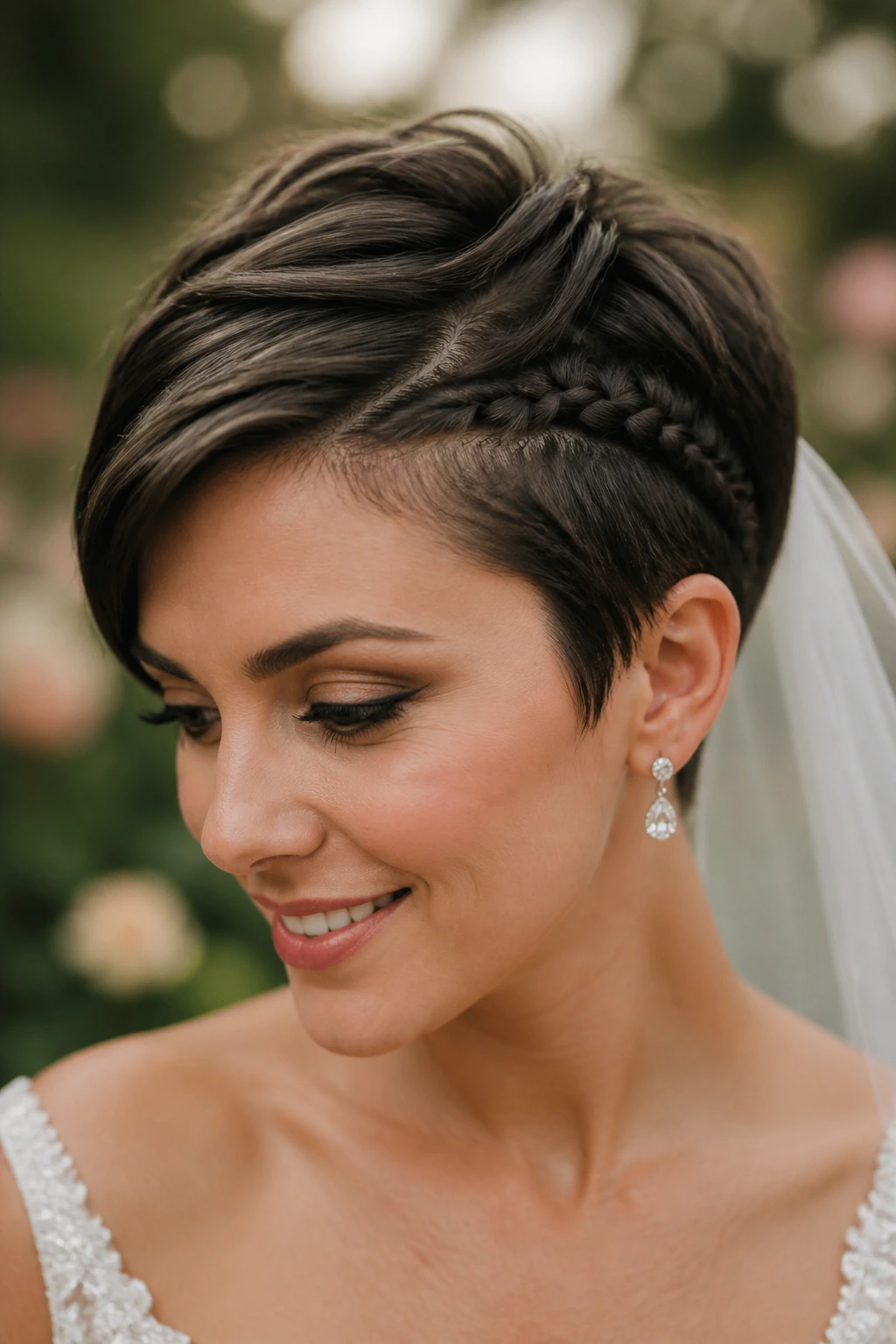
A tiny braid at the temple can make a pixie look custom, and I love it for brides who want one detail that feels personal. The braid doesn’t need to be long. Sometimes one narrow braid tucked into the side sweep is enough to change the whole silhouette.
This style works well if the rest of the cut stays smooth and the braid is the only extra texture near the face. It can be woven into a side part, pinned under a comb, or left to travel along the hairline. Either way, the braid acts like a tiny frame around the face.
It suits boho dresses, outdoor ceremonies, and brides who like a little softness without going full romantic. Keep the braid tight enough that it doesn’t unravel by cocktail hour. A light mist of spray on the braid before pinning helps. Tiny detail. Much better than overloading the whole head with decoration.
13. Old-Hollywood Pompadour Pixie
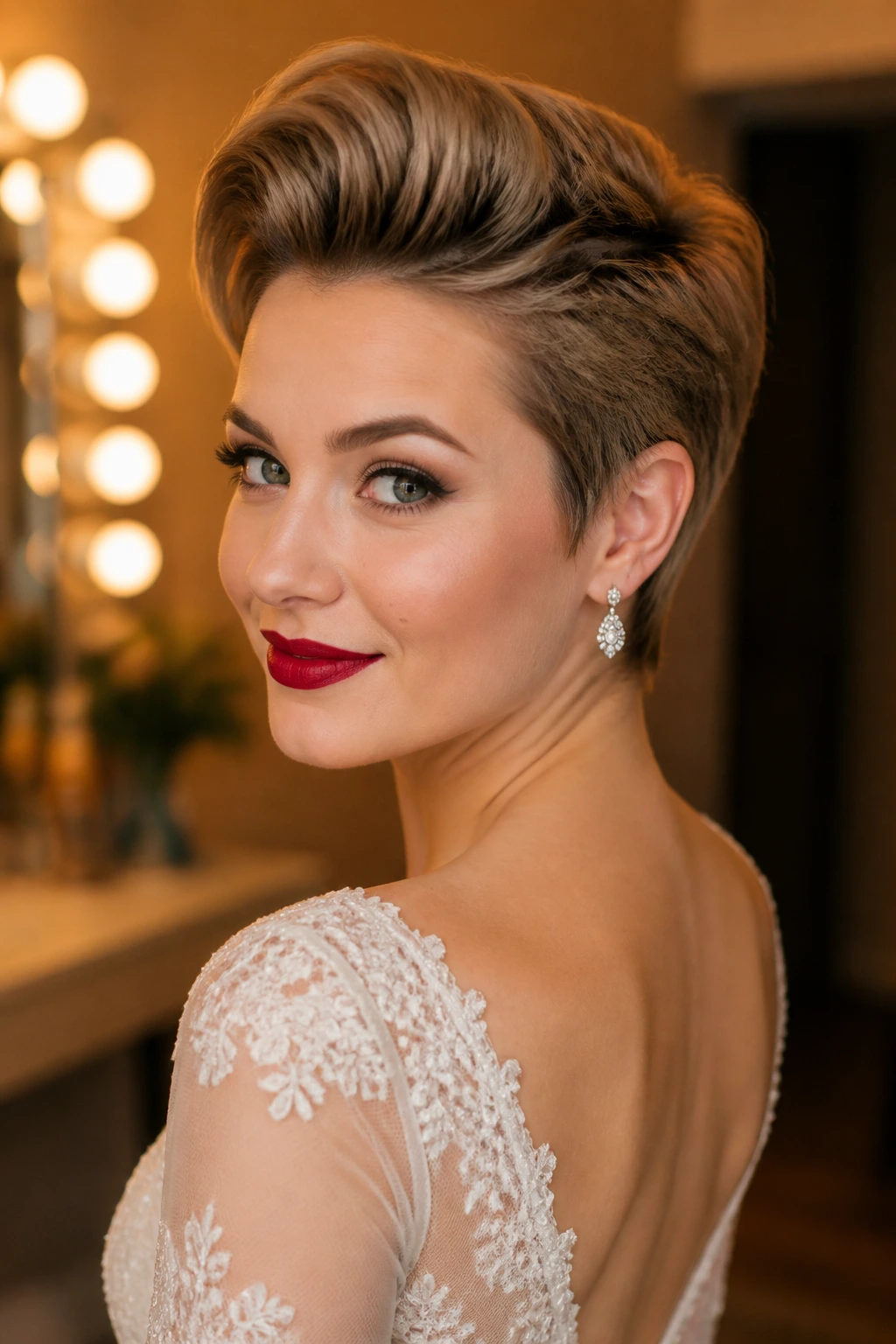
A pompadour on short hair is a bold move, and on a bride, it can be excellent. The front rises, rolls back, and creates that vintage sweep that feels both glamorous and a little self-aware. The cut does not have to be huge. It just needs enough front length to shape.
This style likes gowns with clean shoulders and strong lines. It also loves red lips and earrings that can hold their own. If the dress is already heavily detailed, the pompadour can start to feel crowded. Give it room. That’s the whole point.
A good pompadour pixie should be lifted at the front and smoothed at the sides, with the nape kept neat. Too much puff at the front makes the look top-heavy. Too little and you lose the glamour. This one is a balancing act, but when the shape lands, it lands hard.
14. Feathered Side-Layer Pixie
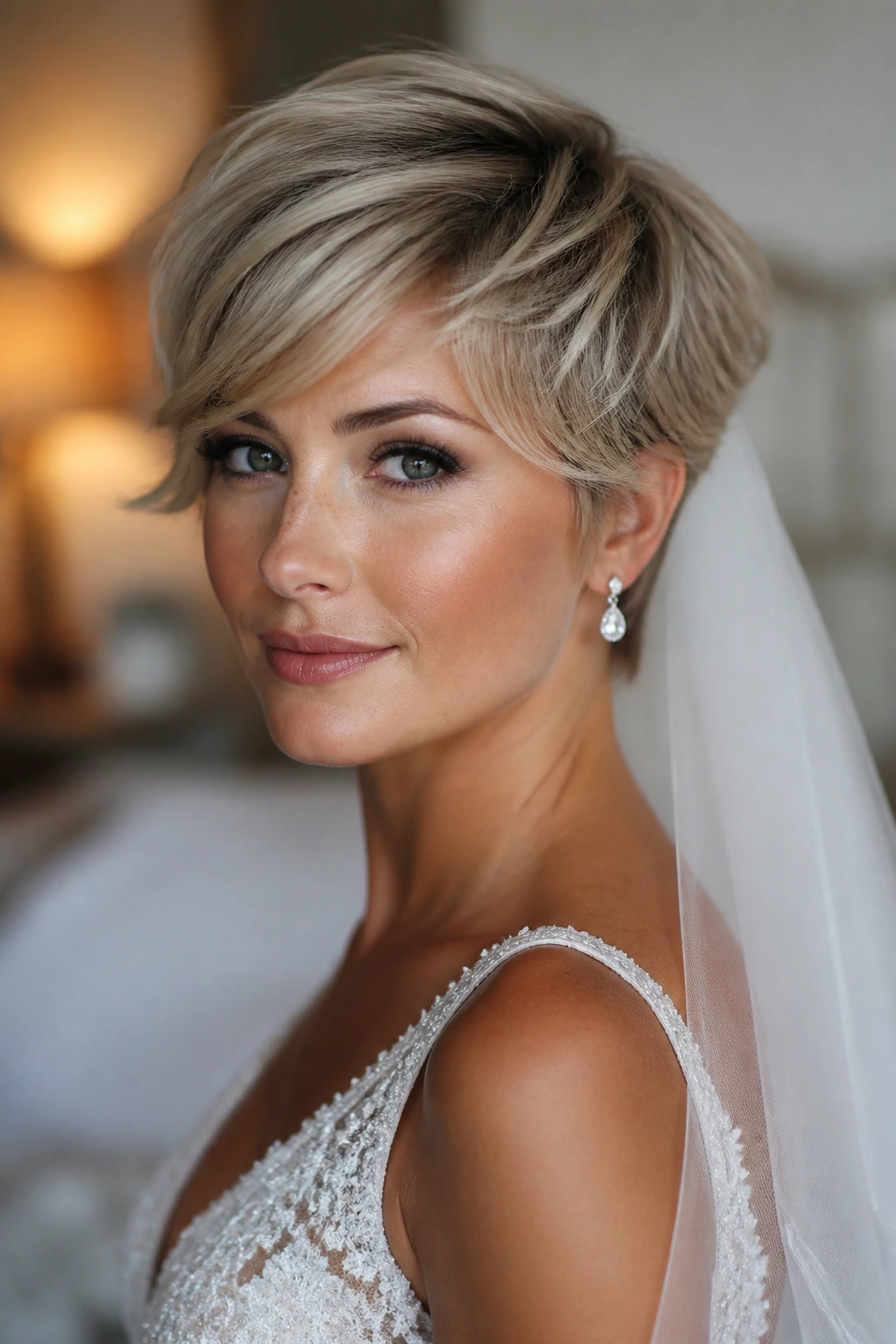
Feathering gives a pixie movement without adding bulk, which is why it works so well for bridal styling. The side layers are light and airy, brushing the cheek and temple in a way that softens the face. The finish is airy, not shaggy. There’s a difference.
It’s a good choice for brides who want softness but not obvious curls or waves. A feathered pixie can sit beautifully with a veil or a slim comb because the shape stays close enough to the head. It also plays well with soft makeup and gowns that have layered fabric.
Ask your stylist to keep the ends light around the ears and crown so the style doesn’t feel blocky. The whole point is to create movement that still looks intentional. If your hair is thick, feathering can remove some visual weight; if it is fine, it can add a bit of motion without making the cut look sparse.
15. Veil-Ready Sculpted Pixie
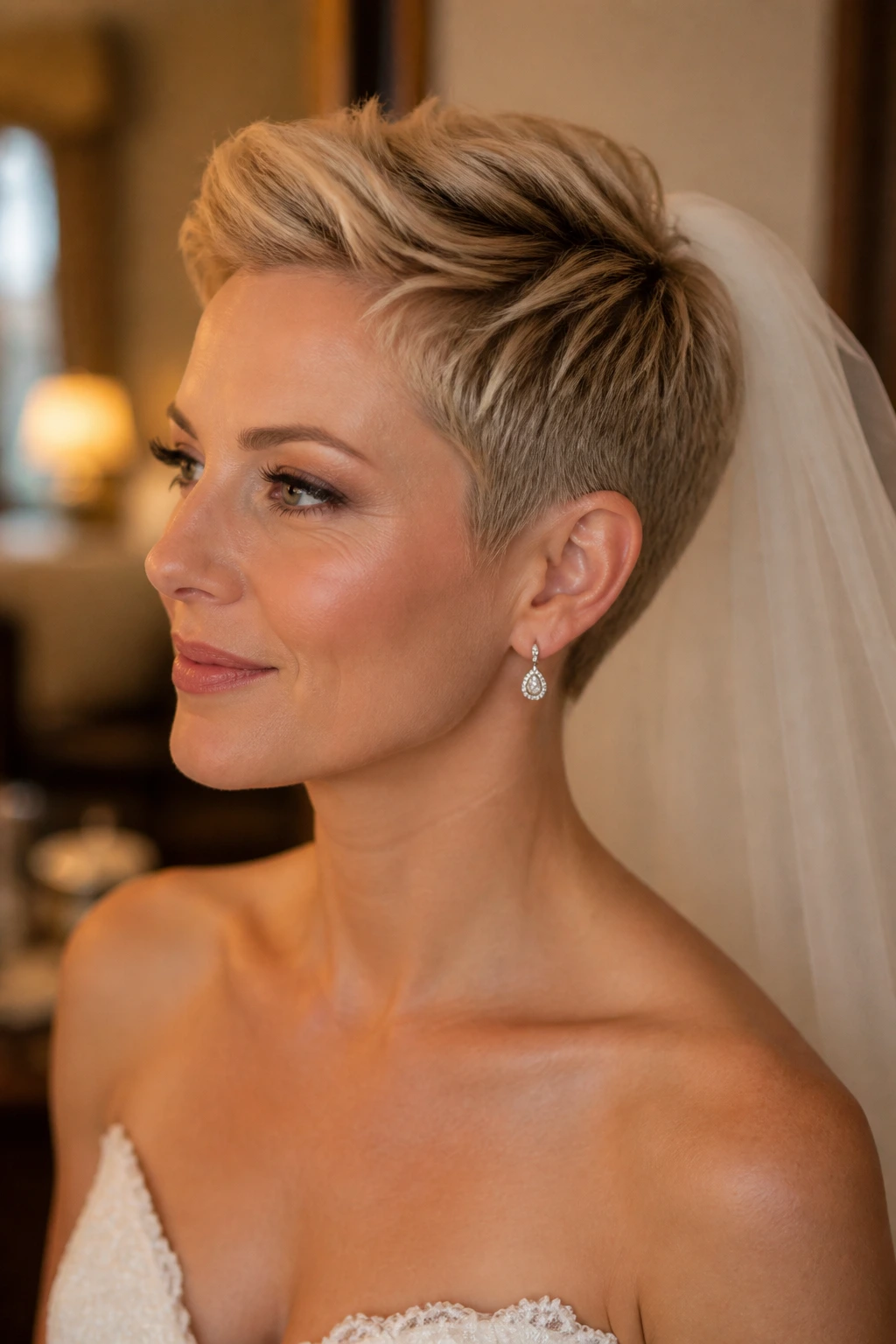
Some brides want the veil to be the star. Fair enough. A veil-ready sculpted pixie gives the accessory a clean anchor point while keeping the haircut itself polished and shaped. The sides stay controlled, the crown has enough structure to hold a comb, and the front is swept away from the face.
This is one of the safest options if you’re nervous about how a veil will sit on short hair. The cut gives the veil a stable base, and the rest of the style doesn’t fight it. If the veil is long or layered, this kind of structured pixie keeps the head from looking busy.
A stylist should think about where the veil comb lands before styling anything else. That placement affects the rest of the shape. If you skip the trial with the actual veil, you’re guessing. I wouldn’t.
16. Sparkle-Pin Side-Part Pixie
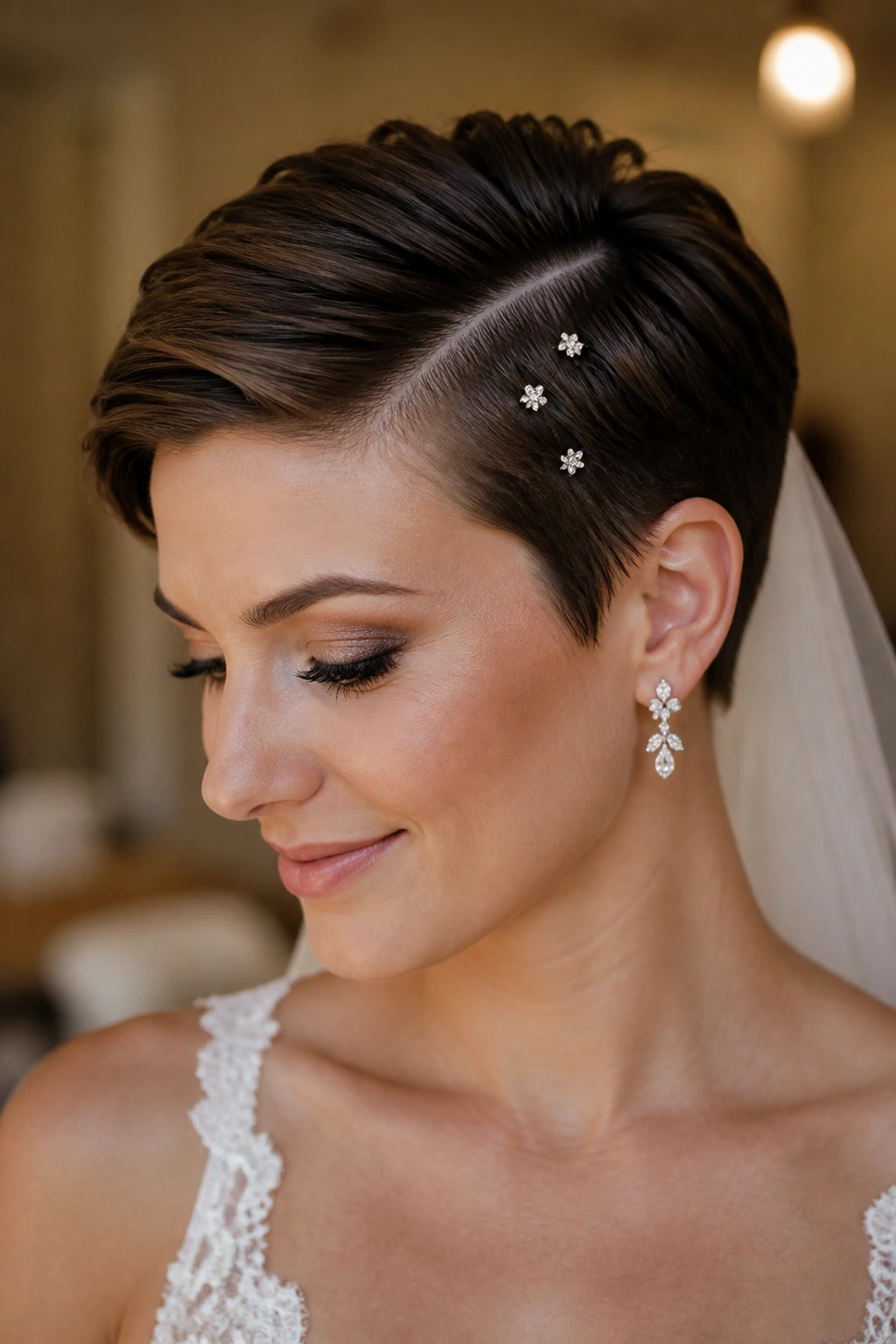
A few sparkle pins at the part line can turn a simple pixie into a wedding look fast. This style works because the pins become punctuation marks, not the whole sentence. The hair can stay smooth, side-swept, or softly lifted, while the pins add that little bit of shine.
It’s especially good for brides who want sparkle without a full headpiece. You can cluster the pins near the temple or scatter three in a short line along the part. Both work. The difference is mood: clustered feels bolder, scattered feels lighter.
Keep the rest of the accessories quiet. If the gown already has beadwork, use smaller pins with less shine. If the dress is plain, the pins can do more. That sort of give-and-take is what makes the whole look feel deliberate instead of assembled from leftovers.
17. Grown-Out Bridal Pixie
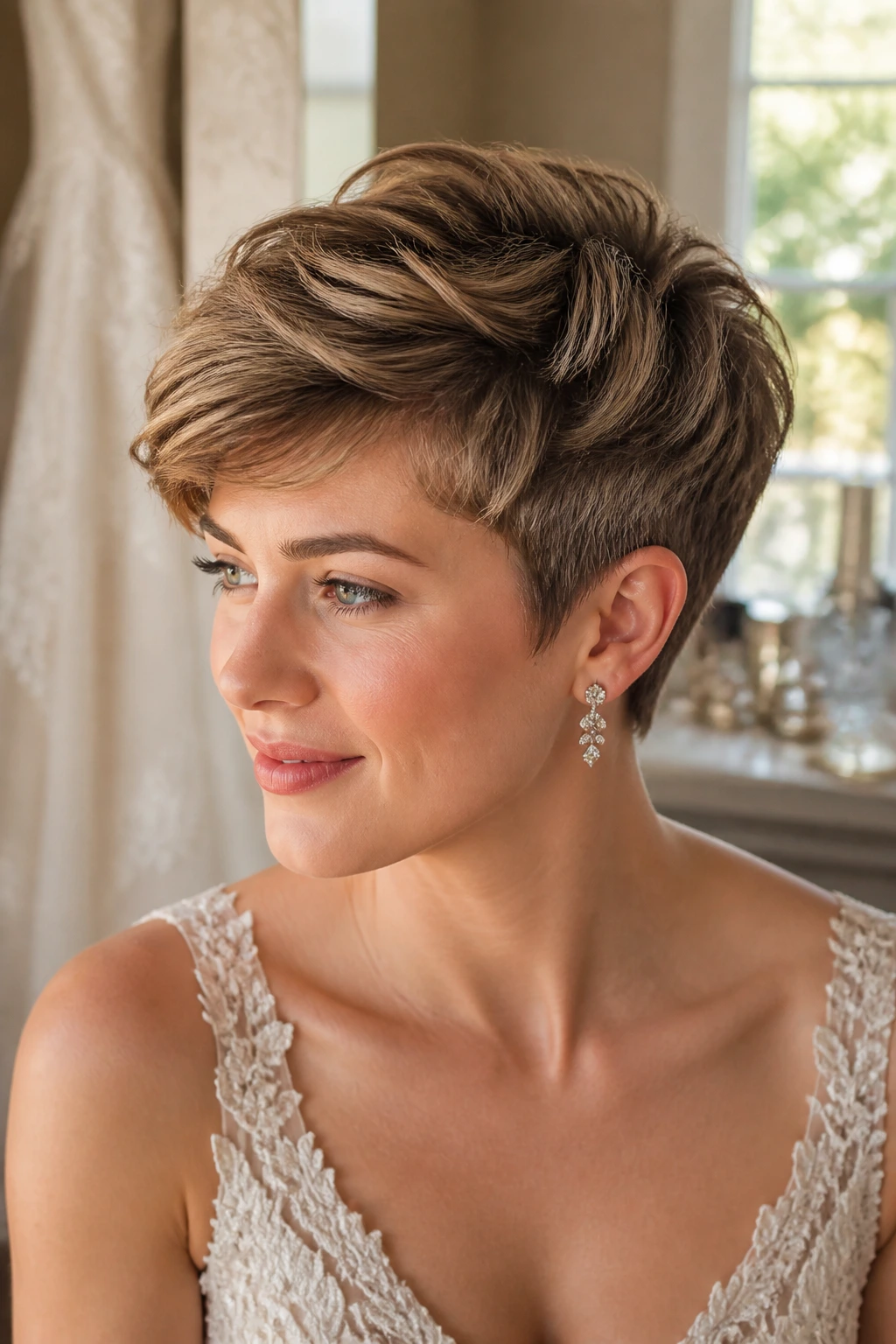
Not every bride wants a fresh cut a week before the ceremony. Sometimes the grown-out pixie is the smarter move. The extra length around the front, ears, and crown gives you more flexibility, which can help if you want a softer finish, a deeper side part, or a tiny accessory tucked into the shape.
This version feels relaxed but still polished when the edges are shaped. Ask for the neckline and sideburn area to stay neat so the grown-out length looks intentional, not neglected. The haircut should still have a line. Just a looser one.
It’s a good choice if your hair grows fast or if you’re trying to bridge the gap between a pixie and a bob without committing to either. The slightly longer top can also hold waves, bends, and twists better than a super-short crop. Sometimes the best bridal pixie is the one that leaves you options.
18. Pixie-Bob Hybrid
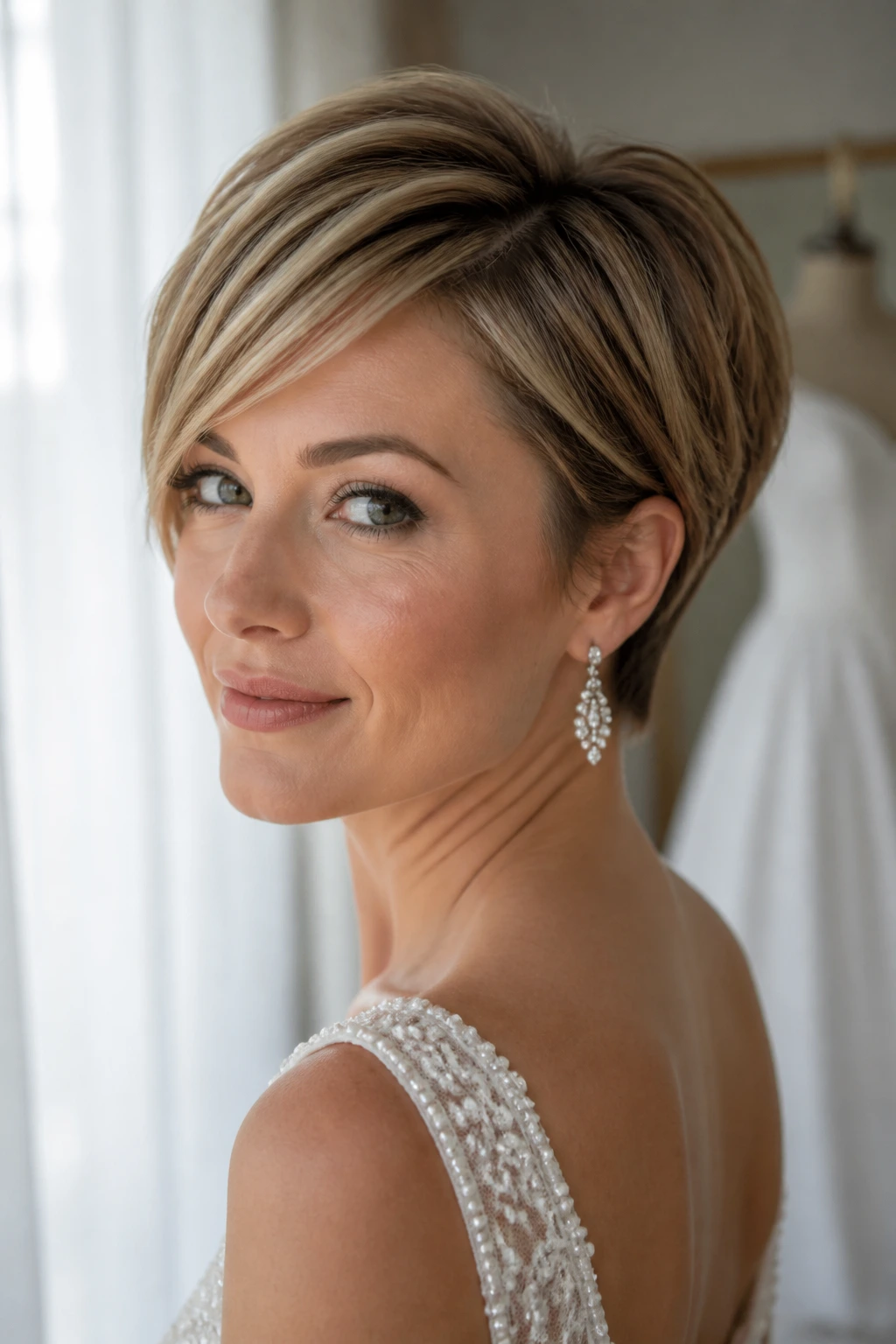
A pixie-bob hybrid lives in the space between crop and bob, and that extra length gives it a very usable bridal shape. The front can sweep a little longer, the back stays tidy, and the sides have enough movement to tuck or curve. If a classic pixie feels too small for your dress, this is a good bridge.
It’s a strong match for brides who want a softer silhouette around the jaw and neck. The extra length gives the look more drape, which can feel elegant with high necklines, soft sleeves, or gowns that already have a lot going on. You get structure without severity.
This one is especially useful if you want to test a short style before growing into a bob later. The transition doesn’t need to look awkward. In fact, on a wedding day, a pixie-bob hybrid can be the most forgiving shape in the room.
19. Floral-Accent Pixie
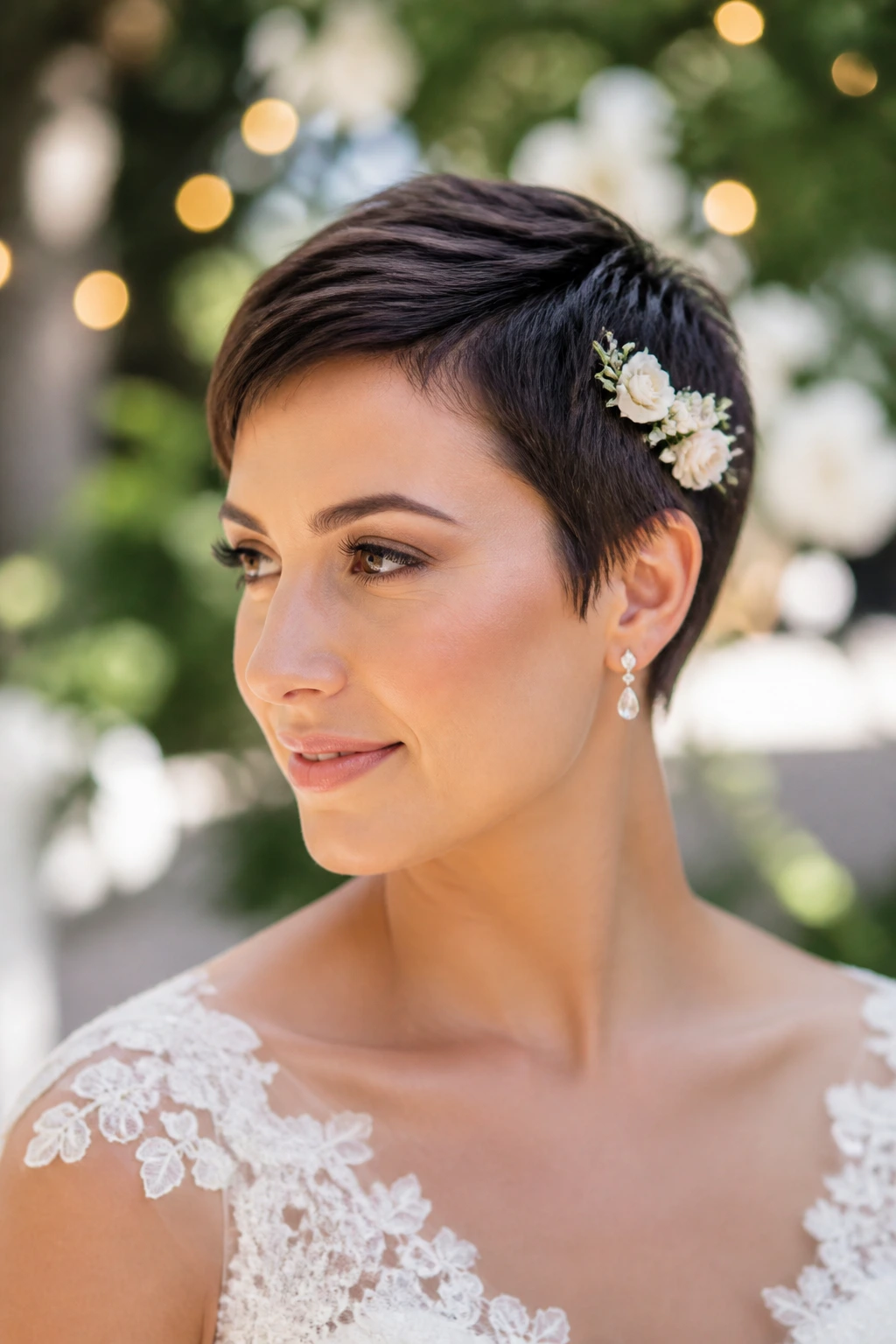
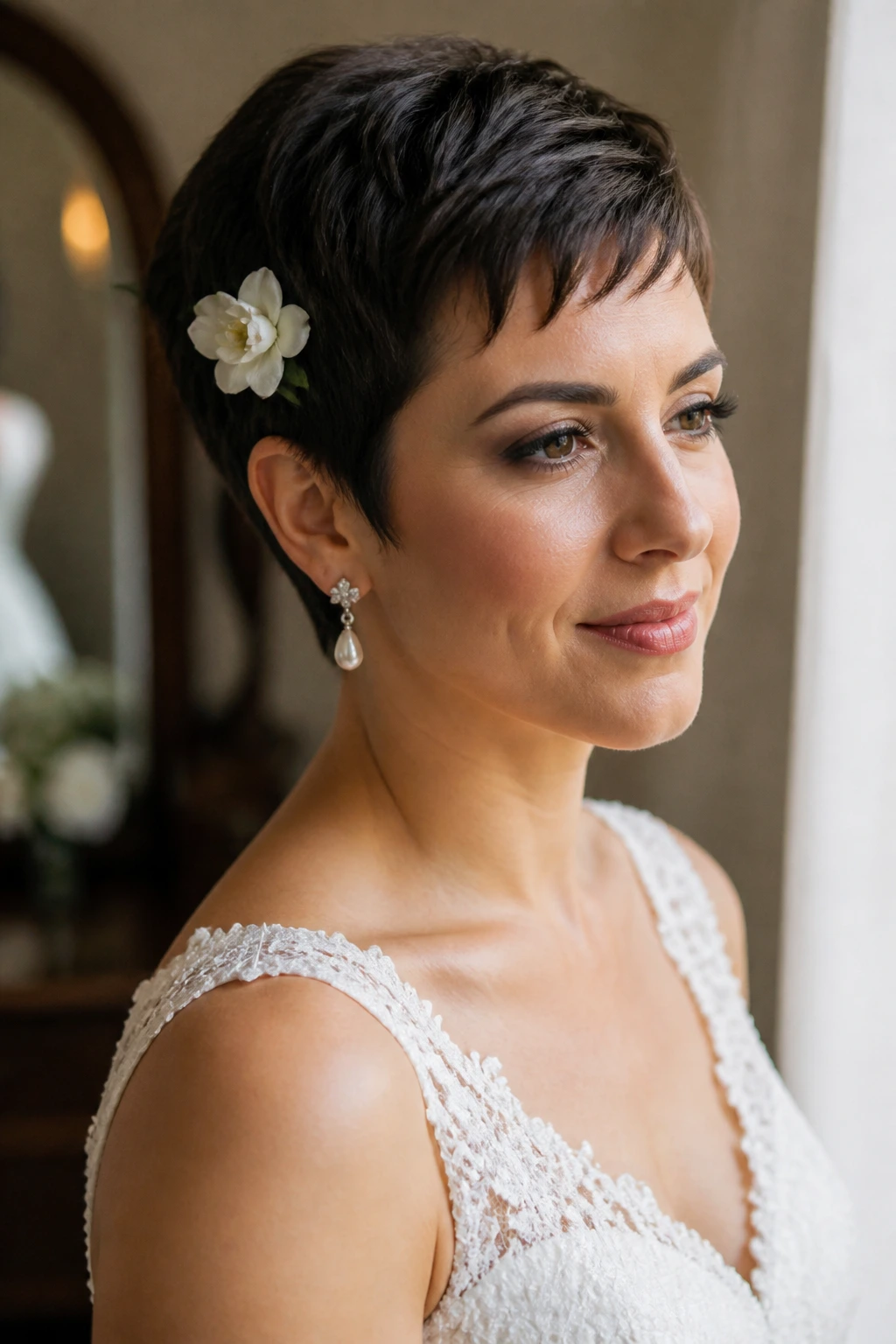
A floral accent on short hair can look sweet or cheap depending on the size and placement, and the difference is all about restraint. One small bloom, or a tiny cluster placed at the temple, usually looks better than a heavy spray of flowers. The pixie should still be the shape you notice first.
This style fits garden weddings, outdoor ceremonies, and softer gowns with movement. If the flowers are fresh, keep them small and secure them with hidden pins or a comb base. If they’re silk, choose ones with a good matte finish so they don’t look shiny under bright light.
The haircut underneath should stay simple. Smooth sides, a soft part, and just enough lift to keep the bloom visible. Floral accents are one of the few extras that can make short hair feel very bridal very fast, but only when the accessory doesn’t overwhelm the cut.
20. Shaggy Airy-Bang Pixie
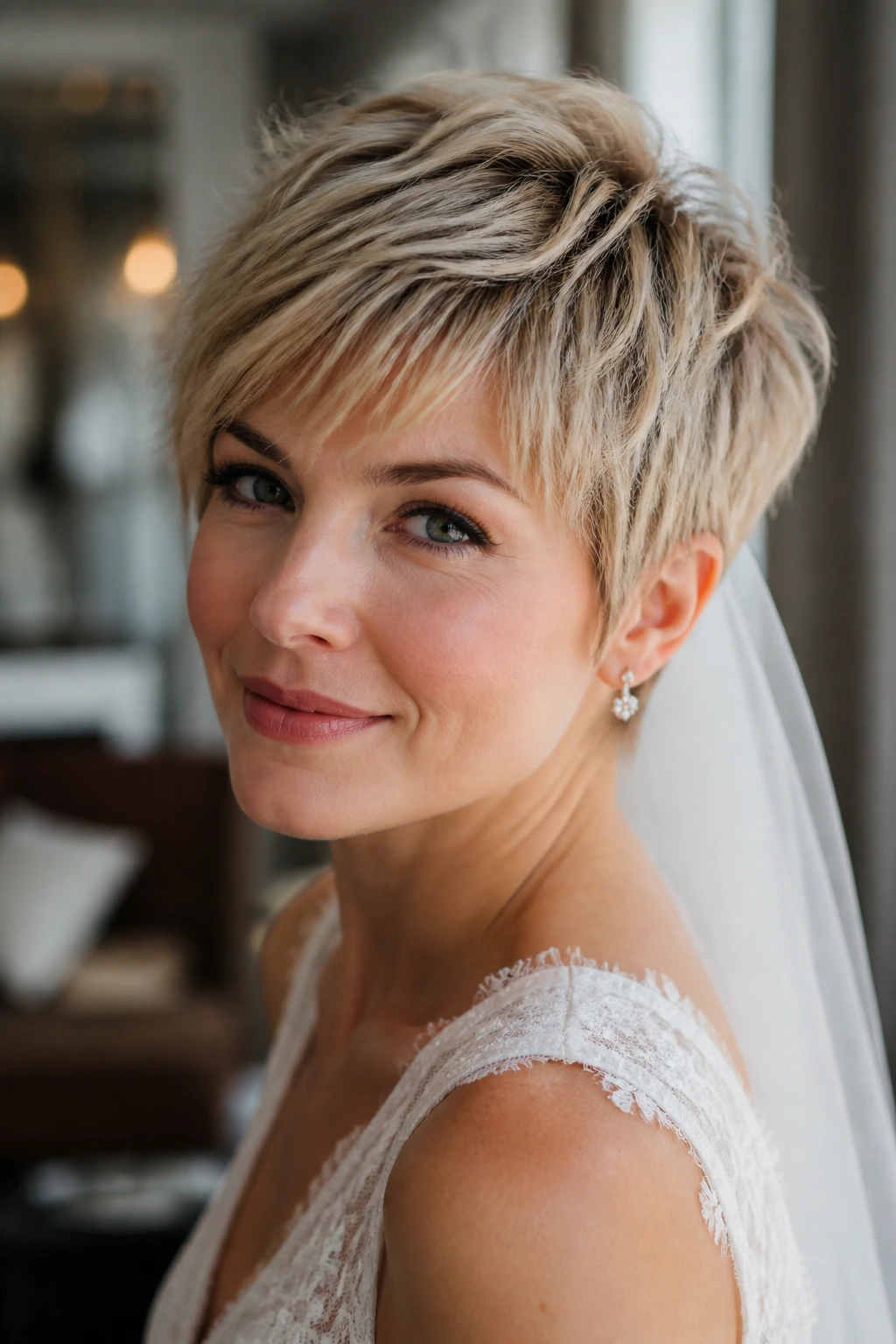
A shaggy pixie with airy bangs brings a little edge to bridal hair without going off the rails. The bangs sit soft and broken rather than blunt, which keeps the forehead line light. The rest of the cut has a bit of uneven texture, so it never feels over-set.
I like this on brides who don’t want their hair to look too formal. There’s a relaxed confidence to it. It works especially well with dresses that have texture—lace, tulle, embroidery, or anything with a little surface life.
The trick is to keep the shag controlled. Too much separation and the style starts to look like a regular everyday crop. A little texture spray, a small amount of paste, and careful shaping at the ends usually do the job. The result feels modern, not messy.
21. Retro-Flip Pixie
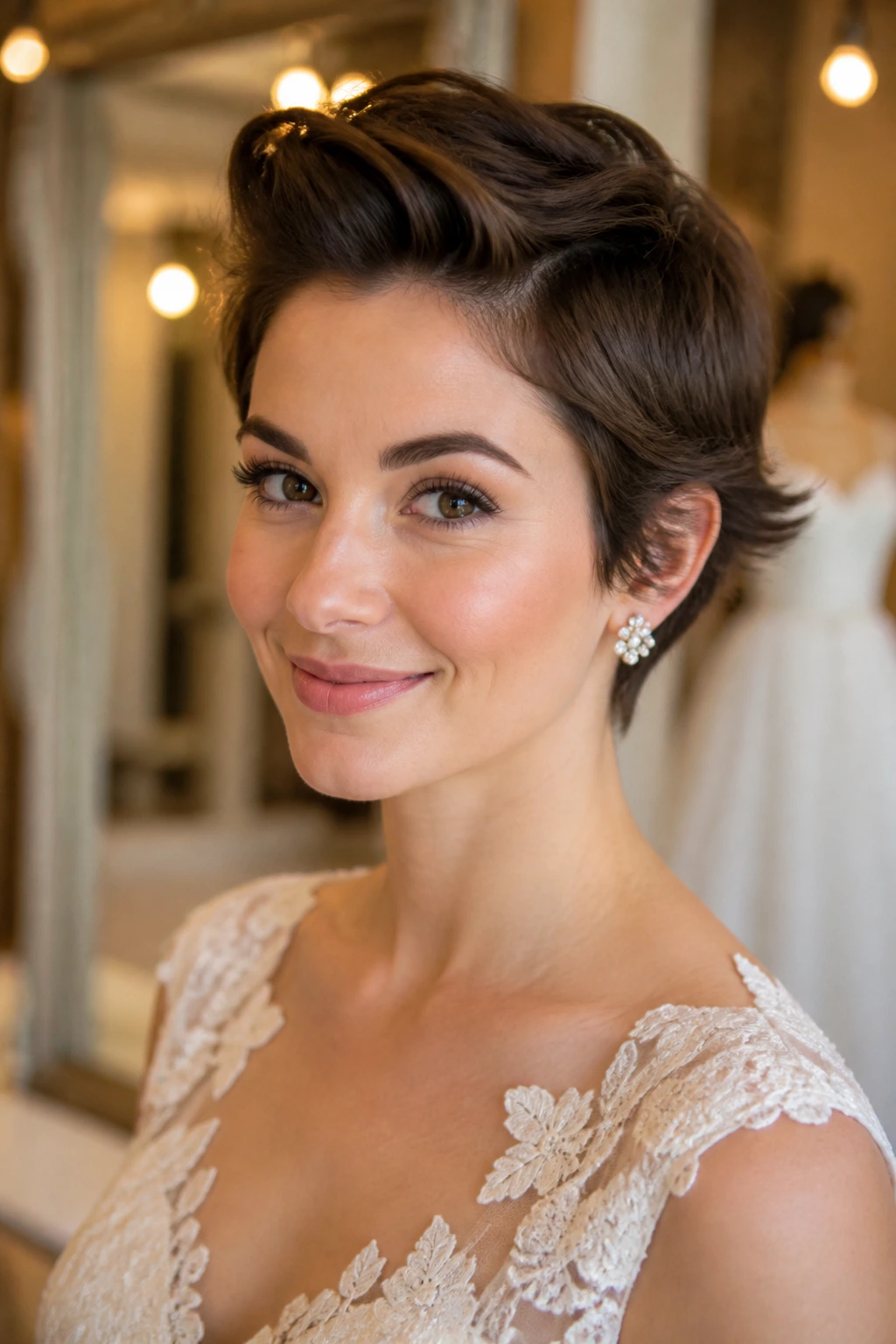
A slight flip at the ends can give a pixie a playful, retro edge. The front may sweep up or out a bit, and the side pieces turn just enough to catch the eye. It is not a hard curl. It is a gentle bend with attitude.
This shape is useful when you want the hair to feel light and lively rather than stiff. It can work with tea-length dresses, vintage silhouettes, or any gown that has a nod to the past without going full costume. The flip adds motion, which reads well in candid photos.
Keep the flip small. A large curl at the end can make the style feel dated fast. A brushed, controlled turn is better. If you’re pairing it with a veil, place the veil above the flip so the shape doesn’t get flattened.
22. Choppy Piecey Pixie
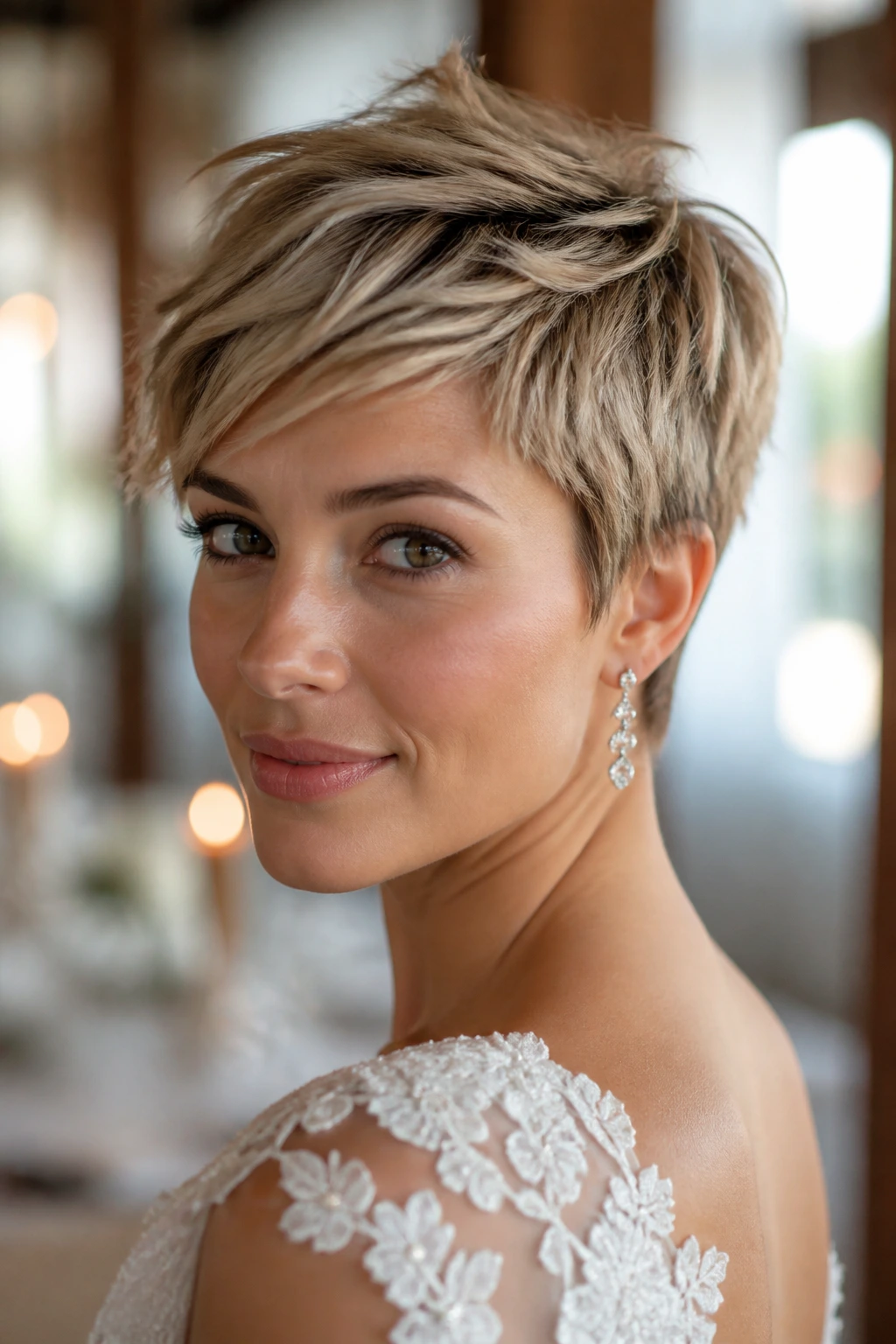
A choppy pixie is all about separation. The pieces sit in different directions, but they still belong to the same shape. On a bride, that can be very good if the cut is clean at the outline and slightly undone in the center. It gives the style life.
This look works well with modern dresses and minimal jewelry. It can also balance strong makeup because the hair does not become another flat surface. Keep the product matte or lightly satin, not glossy, so the texture stays visible.
The danger with choppy texture is overdoing it. Too much separation and the style starts to look dry. You want piecey, not crunchy. A tiny bit of cream on the fingertips, then a gentle pinch through the top layers, usually does more than a whole can of spray ever will.
23. Low-Profile Sleek Pixie
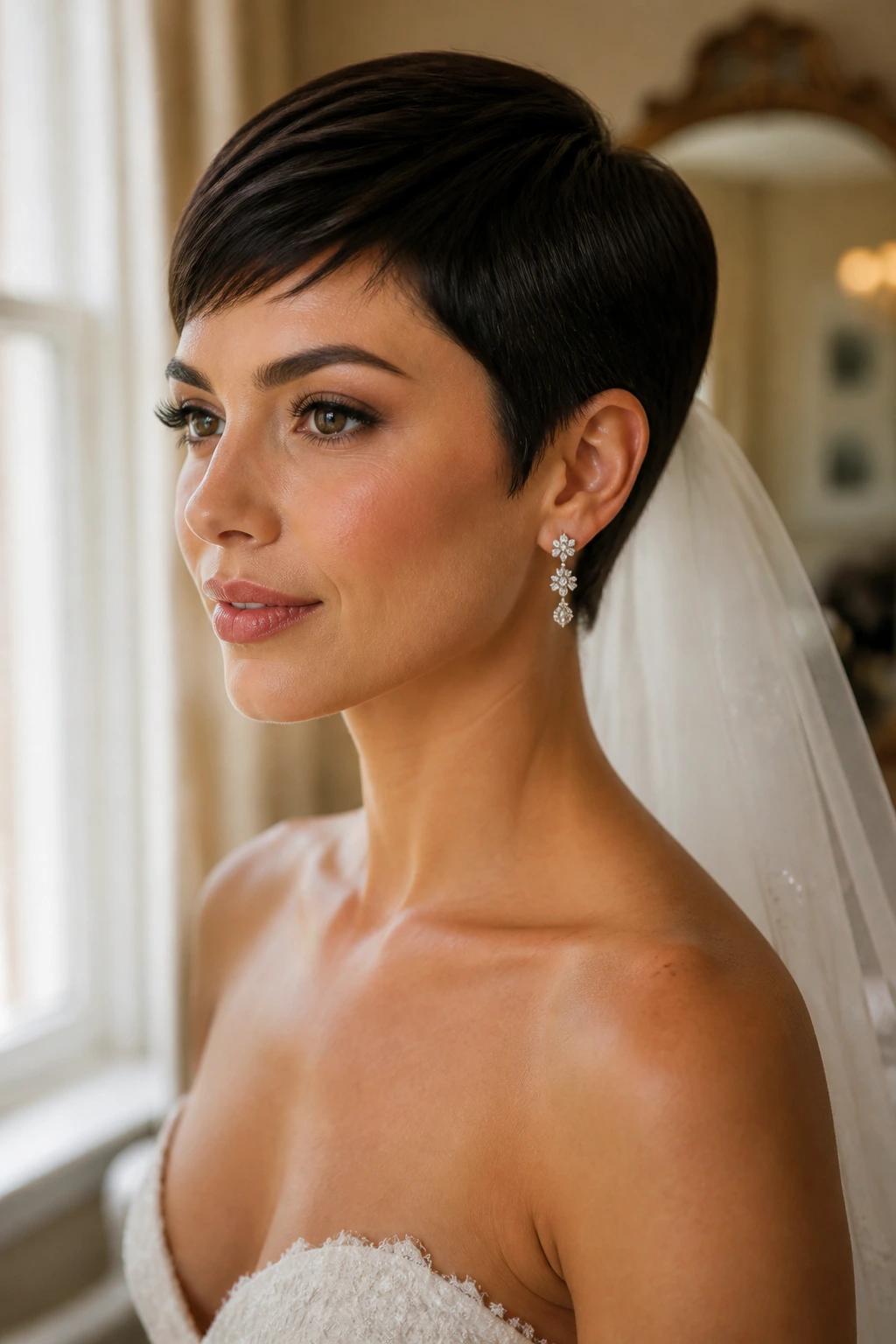
This one is for brides who like precision. The low-profile sleek pixie stays close to the head, with smooth sides and a polished outline that barely rises at the crown. It feels modern and quiet, which can be exactly what a busy gown or dramatic bouquet needs.
The style is strongest with strong accessories or a very clean dress line. Think sculpted neckline, bold earring, single cuff bracelet. The hair doesn’t steal focus. It supports everything else by staying beautifully contained.
If your hair tends to puff in humidity, a sleek finish can be tricky, but not impossible. A smoothing cream, careful blow-drying, and a lightweight hold spray help keep the edges neat. The result is calm and expensive-looking without being loud. That’s a good place to be.
24. Side-Swept Undercut Pixie
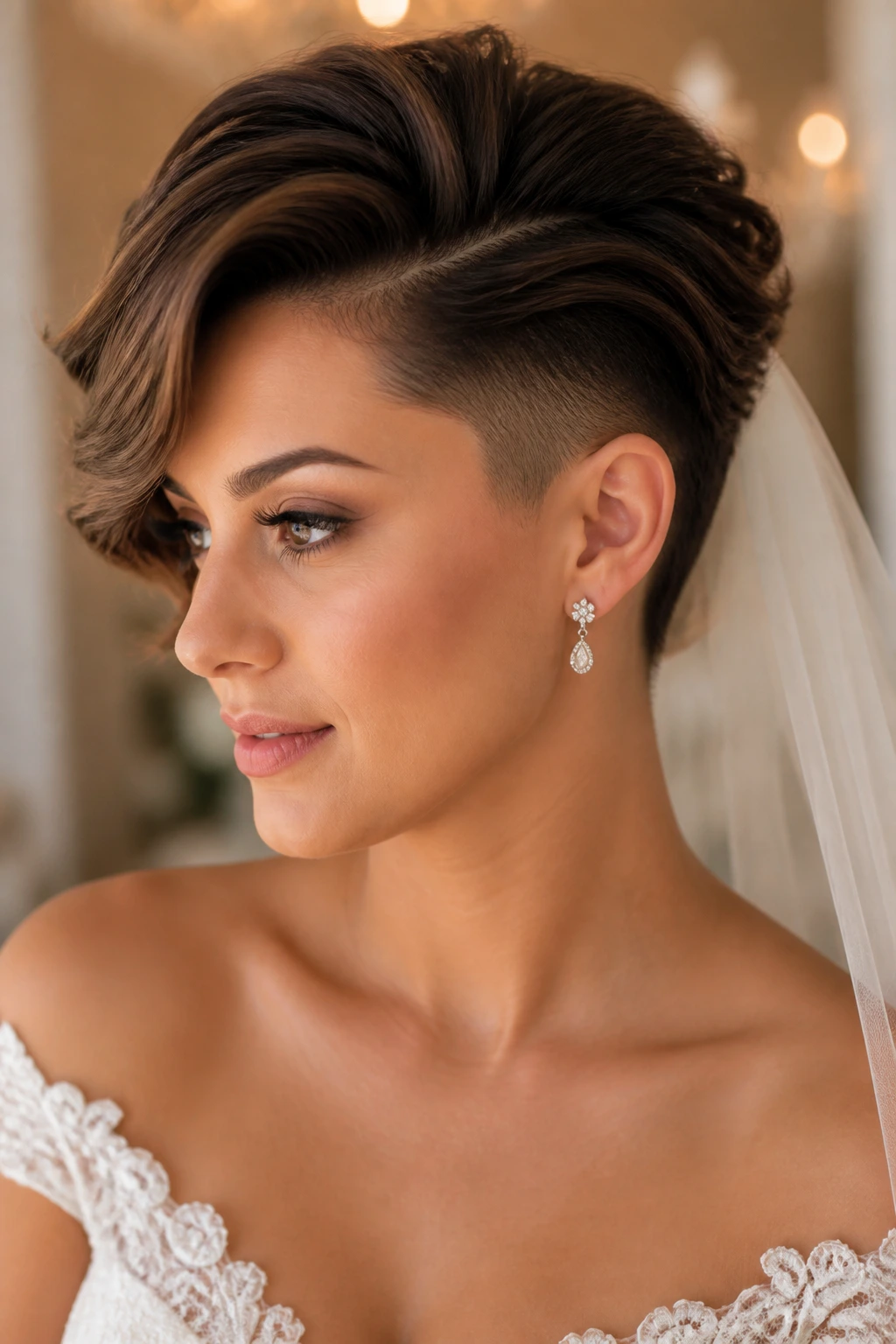
An undercut tucked beneath a soft side sweep gives you a little edge under a very bridal surface. The shorter sides keep the shape neat and close, while the top piece falls with enough length to look romantic. You get contrast. That contrast is the whole point.
This style works well for brides who like a modern silhouette but still want the hair to read elegant. It’s especially nice with asymmetrical dresses, strong shoulders, or earrings that need room. The undercut quietly removes bulk, so the top piece sits better.
Ask your stylist to keep the transition smooth between the undercut and the top. A harsh line can look too streetwear for a wedding, unless that is the actual mood you want. With a soft sweep and one accessory near the temple, this can be one of the smartest short-hair choices on the list.
25. Raked-Back Pixie
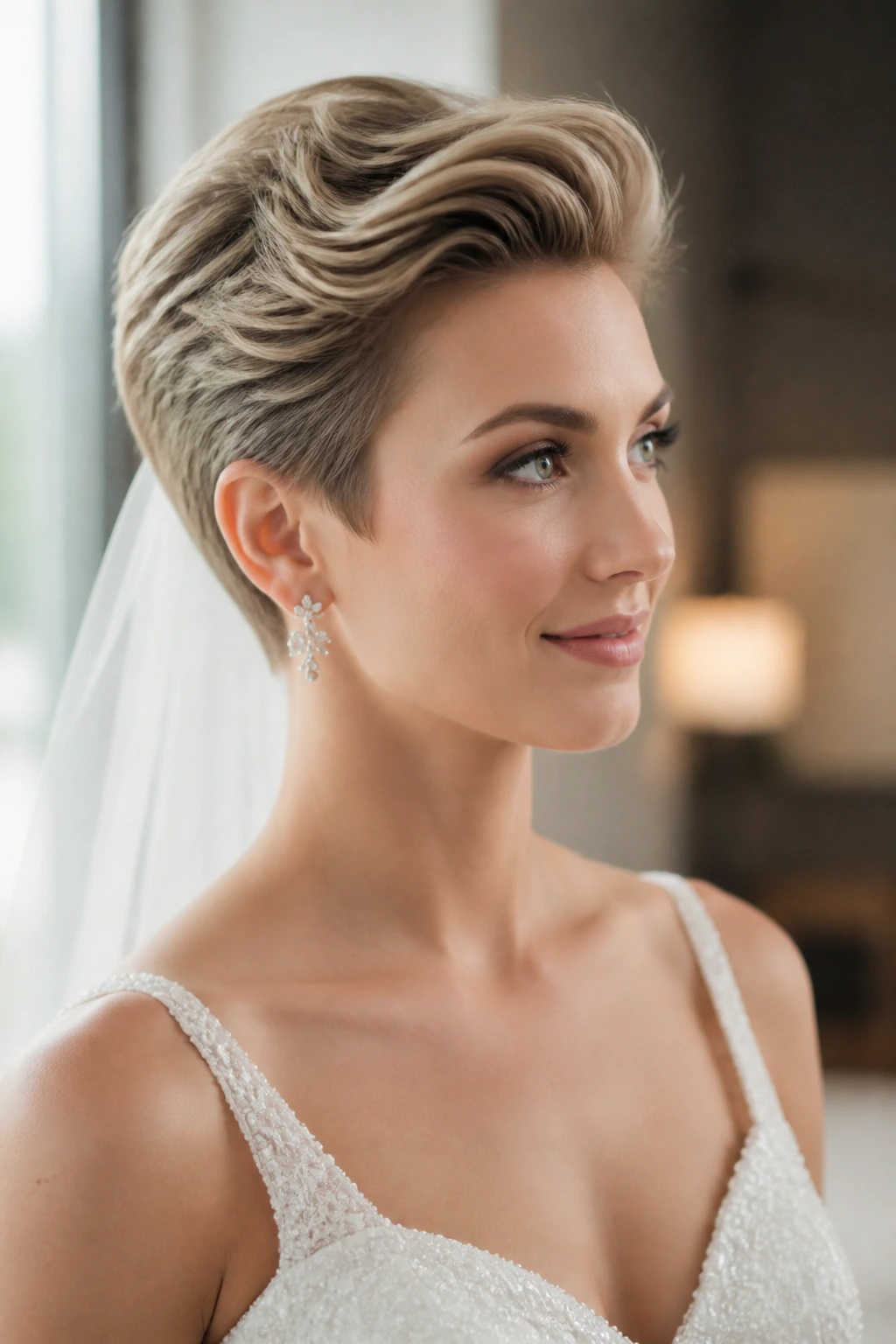
A raked-back pixie has a certain clean confidence to it. The hair is brushed away from the face, then held in a shape that shows the eyes, brows, and cheekbones clearly. It can look minimalist or glamorous depending on the finish.
This is a strong option for brides who plan to wear statement earrings or a detailed veil. The backward sweep keeps the face open, which helps the accessories work harder. It also gives a strong profile, which photographers tend to love from the side.
The style should not look slicked back in a harsh way unless that is your actual taste. A little texture through the top keeps it soft enough for a wedding setting. If the hair is fine, a root-lifting spray before drying helps keep the lift. If it’s thick, the shape may need more smoothing at the sides.
26. Soft Wave-Set Pixie
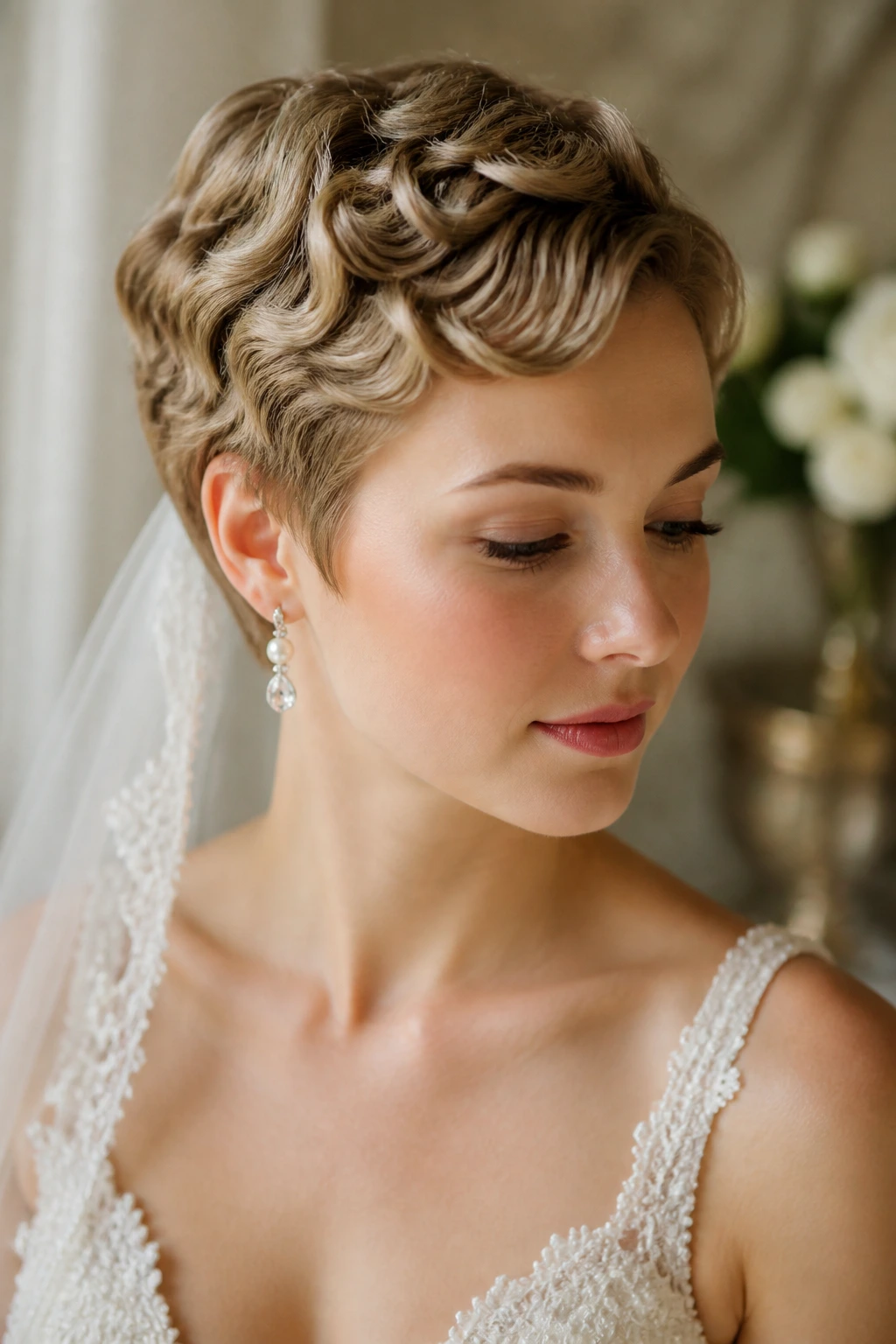
A wave-set pixie borrows from vintage setting patterns but can feel fresh when the waves stay loose and small. The curves sit close to the head, and the finish has that controlled softness that works well on short hair. It reads formal without becoming stiff.
I like this version for brides who want a polished look but don’t want the crispness of finger waves. The waves can be broader, gentler, and a little more forgiving around the hairline. That makes them easier to pair with lace, pearls, or a comb that sits just off-center.
The important thing is consistency. If one side is wave-set and the other is left plain, the asymmetry needs to be intentional. Done right, this style can sit all day and still look tidy by the first dance.
27. Statement-Earring Pixie
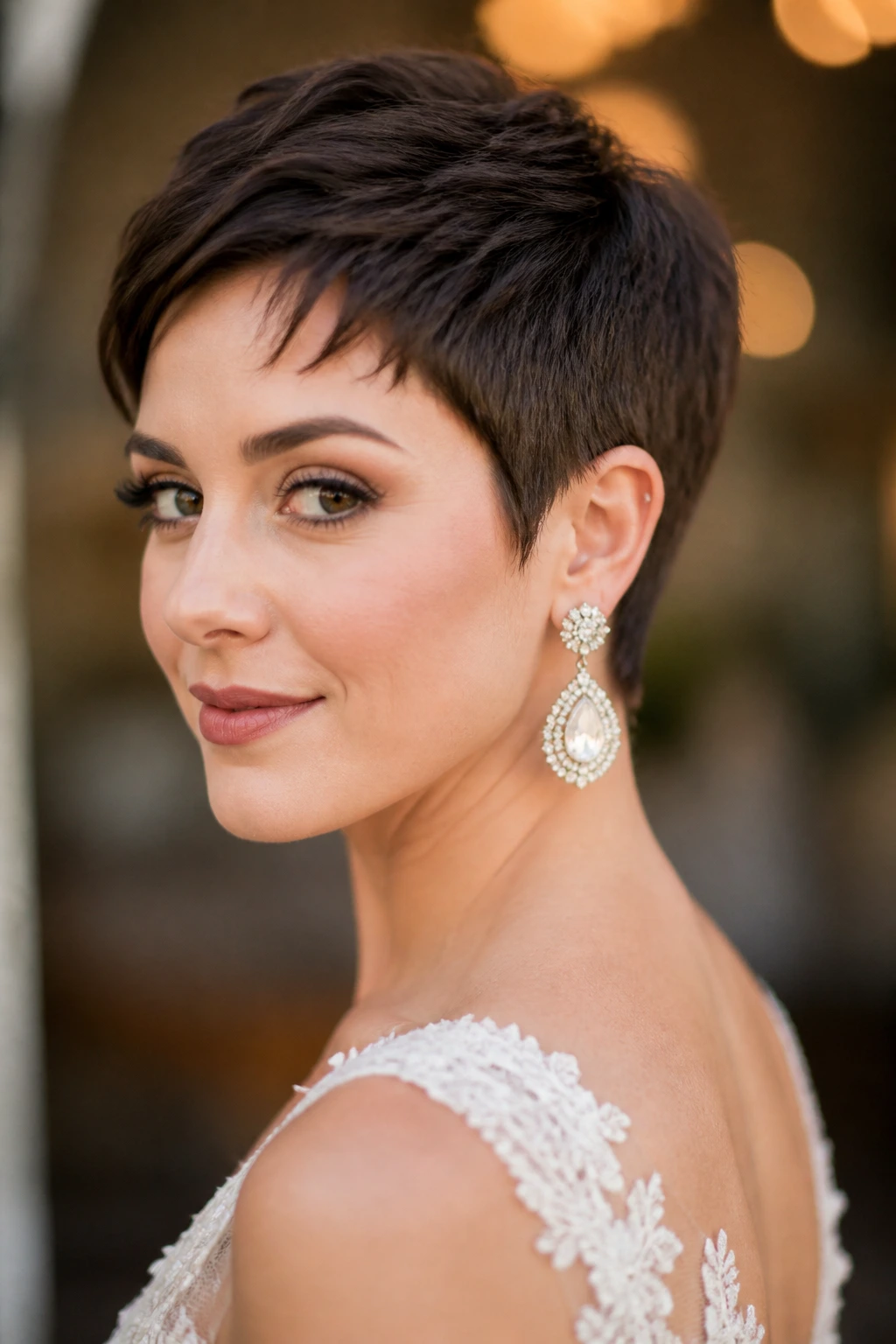
If you own earrings that deserve their own entrance, this is the pixie for you. The cut is shaped to keep the ears visible, usually with a neat tuck or a side sweep that opens the frame on both sides. The hairstyle becomes a background actor in the best possible sense.
This works best with simple necklines and makeup that lets the jewelry take a little space. The hair shouldn’t be so decorated that the earrings disappear. A sleek or softly textured finish both work; the real requirement is visibility.
The sideburns and temple area matter here. Keep them neat enough that the earrings sit cleanly, not hidden under stray pieces. A little sparkle at the hairline can be fine, but one statement area is enough. Earrings first. Hair second. That’s the order.
28. Mini-Bow Bridal Pixie
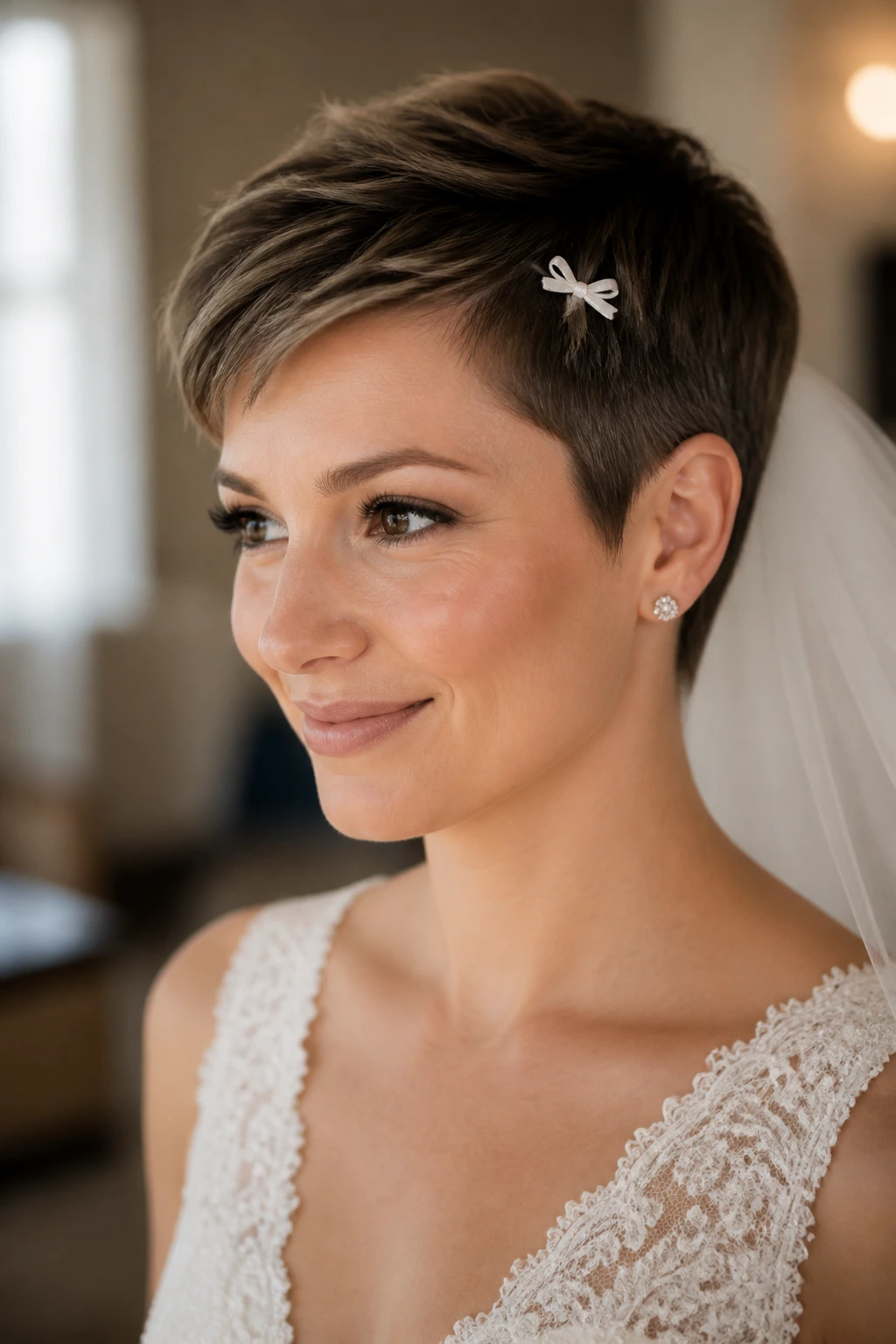
A tiny bow can be charming on short hair when the scale is right. The key is “tiny.” A mini bow pinned near the side part or just above the ear can soften a pixie and give it a bridal note without turning the whole style into a costume. Small size. Clear placement. That’s the whole game.
This style suits brides who like playful details, tea-length dresses, or a softer, less traditional mood. The bow can be satin, velvet, or a refined sheer ribbon depending on the gown. Keep the rest of the hair smooth or lightly textured so the bow stays the focal point.
A mini bow works best when the cut underneath is clean and the accessory is the only obvious ornament. Too many shiny pins next to it and the effect gets scattered. One bow. One story. That’s enough.
How to Make a Bridal Pixie Hold Through the Whole Day
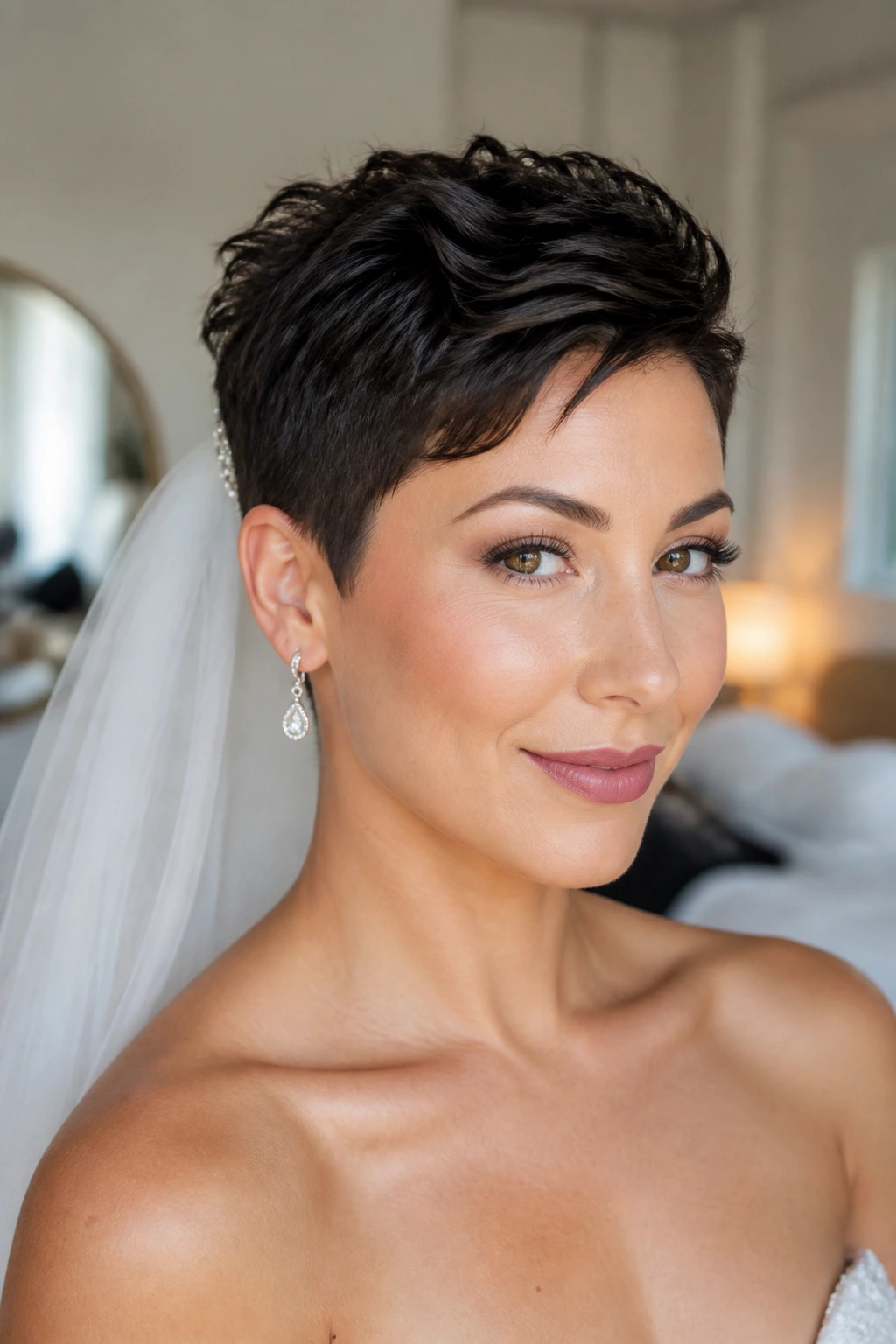
A bridal pixie usually needs less fuss than long hair, but that does not mean it can be winged. The shape has to be set before the ceremony starts, and it helps to think in terms of hold, movement, and the moments when hair goes flat.
Trial run: Wear the exact earrings, veil, or headpiece you plan to use. If the comb pulls the front down or the earring catches the side sweep, you want to know that before the wedding morning, not while someone is hunting for bobby pins. Take photos from the front, side, and slightly above eye level.
Product balance: Fine hair often needs mousse at the roots and a light powder or spray at the crown. Thick hair usually needs smoothing cream on the surface and a stronger pin strategy near the temple. Do not load every section with product. That’s how a pixie loses shape and looks sticky by the end of the reception.
Touch-up kit: Pack 4 to 6 bobby pins, a travel hairspray, a small comb, blotting papers, and one backup accessory pin if your look depends on a single piece. That kit fits in a tiny pouch and can save a style that starts to drift after the first round of dancing.
Common Styling Mistakes That Make Short Wedding Hair Look Off
The biggest mistake is overloading the hair with product. A bridal pixie should hold, yes, but if the surface looks oily or stiff, the shape starts to read older and flatter than it should. Use only enough product to control the hairline and keep the crown in place.
Another problem is accessory crowding. A veil, pearl pins, sparkles, flowers, and a jeweled headband all at once can make short hair look like it is trying too hard. Pick one focal point and let the cut support it. Short hair looks strongest when the eye can land somewhere.
Skipping the trim is a third one. A pixie that should have been cleaned up two weeks before the wedding can look fuzzy around the ears and neck on the day itself. The outline matters more than people expect. Even a tiny cleanup around the nape changes the entire silhouette.
And yes, washing the hair at the wrong time can make the style hard to build. Hair that is too clean sometimes slips apart; hair that is too dirty can weigh down the crown. The middle ground is often better for short wedding hair.
Ways to Personalize a Bridal Pixie Without Crowding It
Pearl Path: A narrow line of pearl pins along the part gives a pixie a classic bridal note without covering the whole head. It is the safest choice when the dress is already detailed.
Garden Accent: One small flower pinned at the temple changes the mood fast, especially on a soft curly or tousled pixie. Keep the bloom small and secure so it stays tidy through the ceremony.
Modern Minimal: A slick side part, one earring, and no visible accessory can be stronger than piling on extras. This works when the gown or makeup already carries the drama.
Vintage Shine: Finger waves or a wave-set finish with a single comb gives you retro polish without feeling costume-heavy. The hairline should stay neat so the accessory doesn’t float.
Soft Ribbon Line: A thin satin ribbon used as a mini bow or narrow band softens a short cut nicely. It works best when the rest of the styling is simple and the ribbon color echoes the dress or bouquet.
Essential Tools and Accessories for Bridal Pixie Styling
-
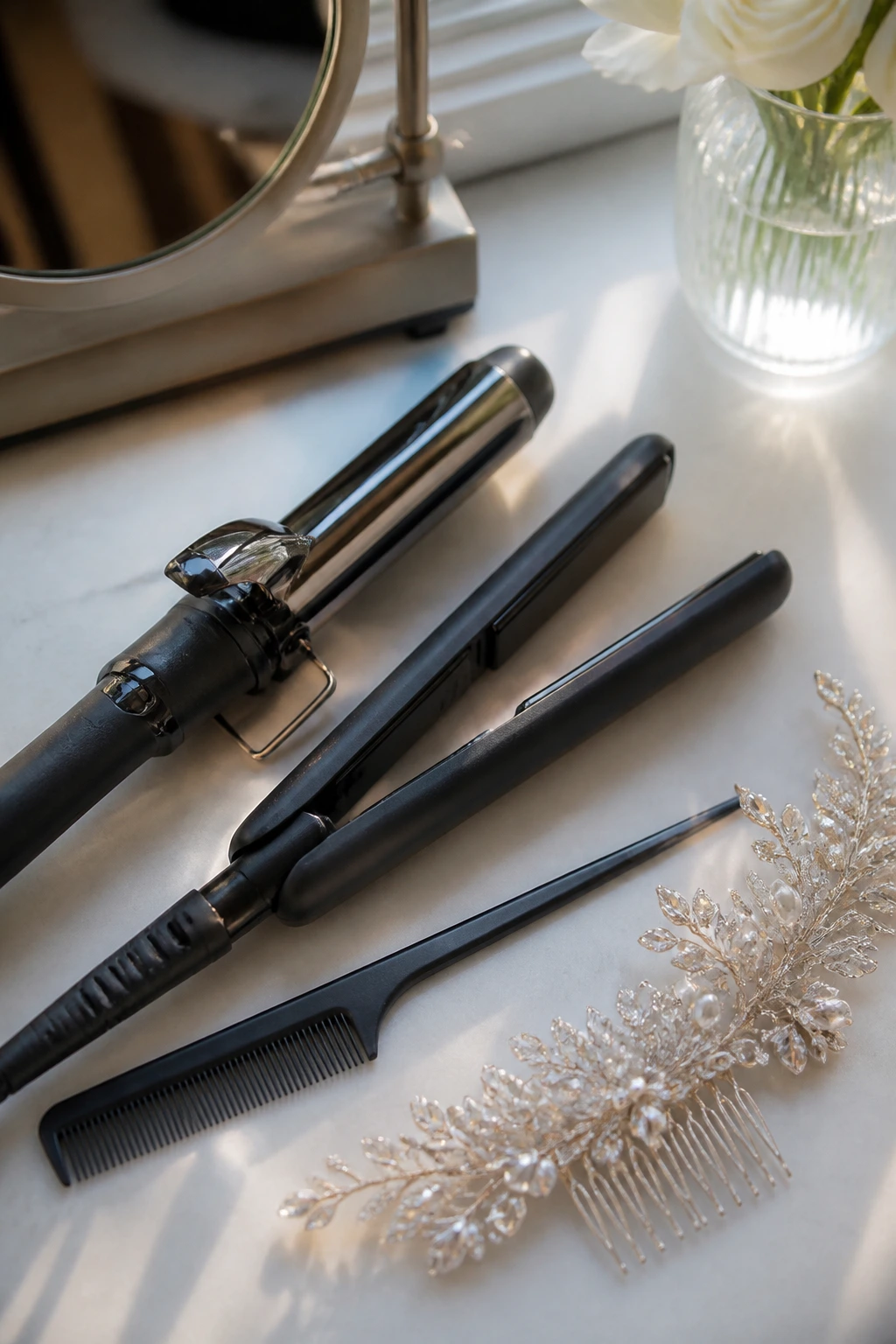
Tail comb: Clean part lines and precise sectioning matter more on short hair than on long hair, and this comb is the easiest way to get them.
-
1-inch curling iron or wand: Useful for soft bends, wave-set texture, and a little movement at the front without overcurling the whole crop.
-
Mini flat iron: Handy for smoothing the fringe, pressing the nape, or putting a slight turn into the side pieces.
-
Blow dryer with nozzle: Directs air where you want it, which helps the crown stay lifted and the sides stay controlled.
-
Root-lifting spray or mousse: Keeps the top from sinking flat before photos, dancing, and warm air get involved.
-
Light shine cream or serum: Adds polish on the surface without making the roots greasy.
-
Strong-hold hairspray: Best for the last set of details, especially around the temple, veil comb, or wave pattern.
-
Bobby pins and U-pins: Match them to the hair color if you can. On short hair, a mismatched pin can show fast.
-
Pearl comb, crystal pins, or slim headband: Choose one focal accessory and make it earn its place.
-
Hand mirror: Sounds boring. Isn’t. You need to see the back and sides before you leave the room.
How to Choose the Right Bridal Pixie for Your Dress and Face Shape
Start with the neckline. A high neck usually wants a sleeker, cleaner pixie so the hair doesn’t crowd the fabric. Strapless gowns can handle more lift, more texture, or a statement accessory. One-shoulder dresses tend to look best with a side sweep that echoes the line of the dress instead of fighting it.
Then look at texture. Fine hair often needs a style that builds shape through lifting and part placement, not through heavy curling. Thick hair can carry more sculpting, but it may need extra trimming at the sides and nape so it doesn’t puff out. Curly and coily pixies are strongest when they keep definition, not when they are brushed into submission.
Face shape matters less than people pretend, but some patterns are useful. If your face reads longer, a soft fringe or side sweep can shorten the vertical line. If it reads rounder, a bit of crown lift and a diagonal part can sharpen the look. If your jaw is strong, tucked sides and soft texture around the temple can keep the style balanced. None of that is law. It’s just a useful place to begin.
Wedding-Week Timing and Touch-Up Plan
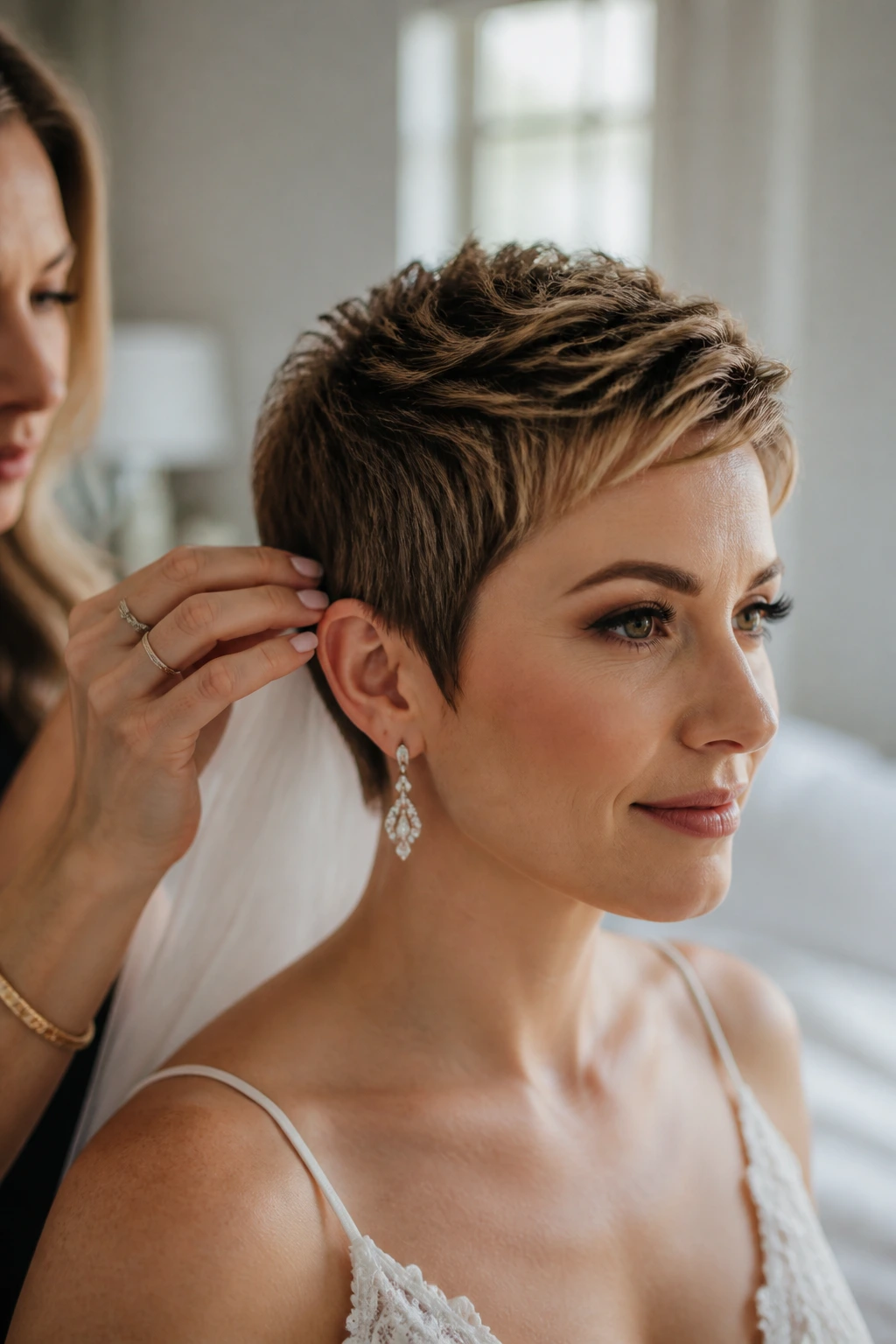
Two to four weeks before the wedding is the sweet window for a real trim. That gives the pixie time to settle without drifting too far from the shape you want. If you cut it the day before and hate the line, there’s no room to fix it.
A styling trial should happen with the dress neckline, veil, and earrings if possible. The exact pieces matter because the hair sits differently when a comb or necklace is pulling the eye one way. Take photos in natural light and indoor light. Short styles can look different in each, and you want to know the difference before the big day.
The wash timing depends on texture. Fine hair often behaves better with a wash the day before or a few hours before styling, while some thicker textures hold shape better with a little natural oil in the hair. Don’t chase a universal rule. Chase the finish that your own hair likes. If the style needs a tiny refresh before the reception, a mist of water on the fingers and a pinch of product can bring the front back to life without starting over.
After the ceremony, take out any heavy pins and combs before sleep. Clean the hair gently the next day, then condition the ends if the styling products ran strong. Short hair still needs maintenance. It just needs less of it.
Frequently Asked Questions About Pixie Cuts for Brides With Short Hair
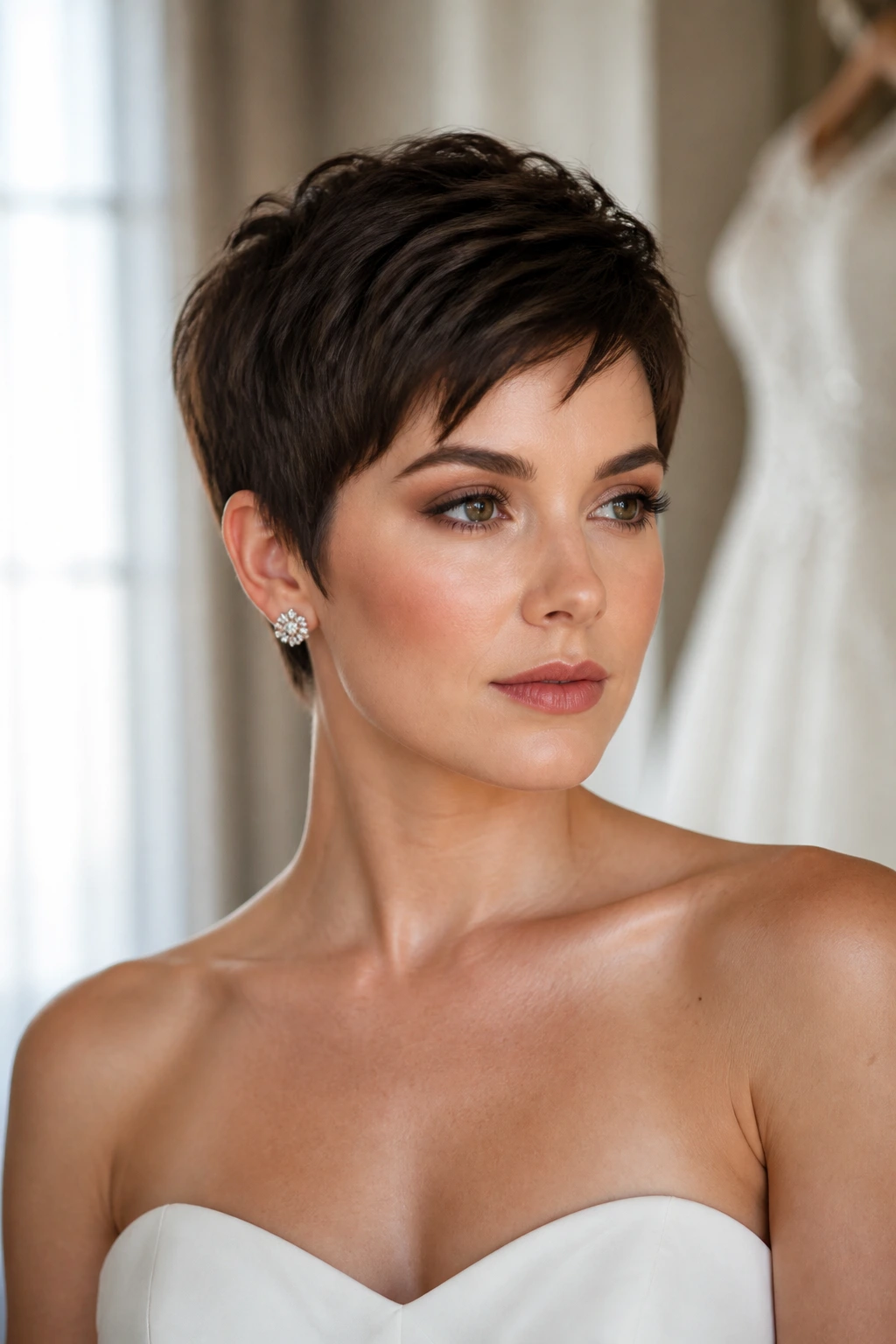
Can I wear a veil with a pixie cut?
Yes, and a pixie can hold a veil more cleanly than people expect. The trick is making sure the comb has enough hair to grip, which means the crown and top should be shaped with the veil placement in mind.
What if my hair is very fine?
Fine hair often does best with root lift, a bit of mousse, and a style that leans on shape rather than heavy curl. A deep side part or crown lift can make the cut look fuller without needing extra bulk.
Should I cut my hair right before the wedding?
Usually not. A fresh pixie trim two to four weeks before the ceremony gives the shape time to soften a little, which is often better for styling and photos.
Can curly pixie hair look formal enough for a wedding?
Absolutely. Defined curls with a clean outline, a neat nape, and one accessory can look more bridal than a lot of overworked styles. The shape has to stay tidy, though. Loose and fuzzy are not the same thing.
Do I need extensions to make a short style look bridal?
No. Extensions can help in some cases, but they are not required. A strong cut, good finishing products, and a well-placed accessory usually do more than extra hair that doesn’t match your texture.
Which accessories hold best on very short hair?
Combs, hairpins clustered into one area, and slim headbands tend to be safest. Heavy pieces can slide if the hair is too short or too silky, so the base and placement matter more than the sparkle.
What if my pixie goes flat by the reception?
Keep a tiny touch-up kit nearby and plan for a quick reset. A little dry texture spray at the crown, then a lift with the fingertips, usually brings the shape back faster than adding more hairspray.
The Short-Hair Style That Carries the Day
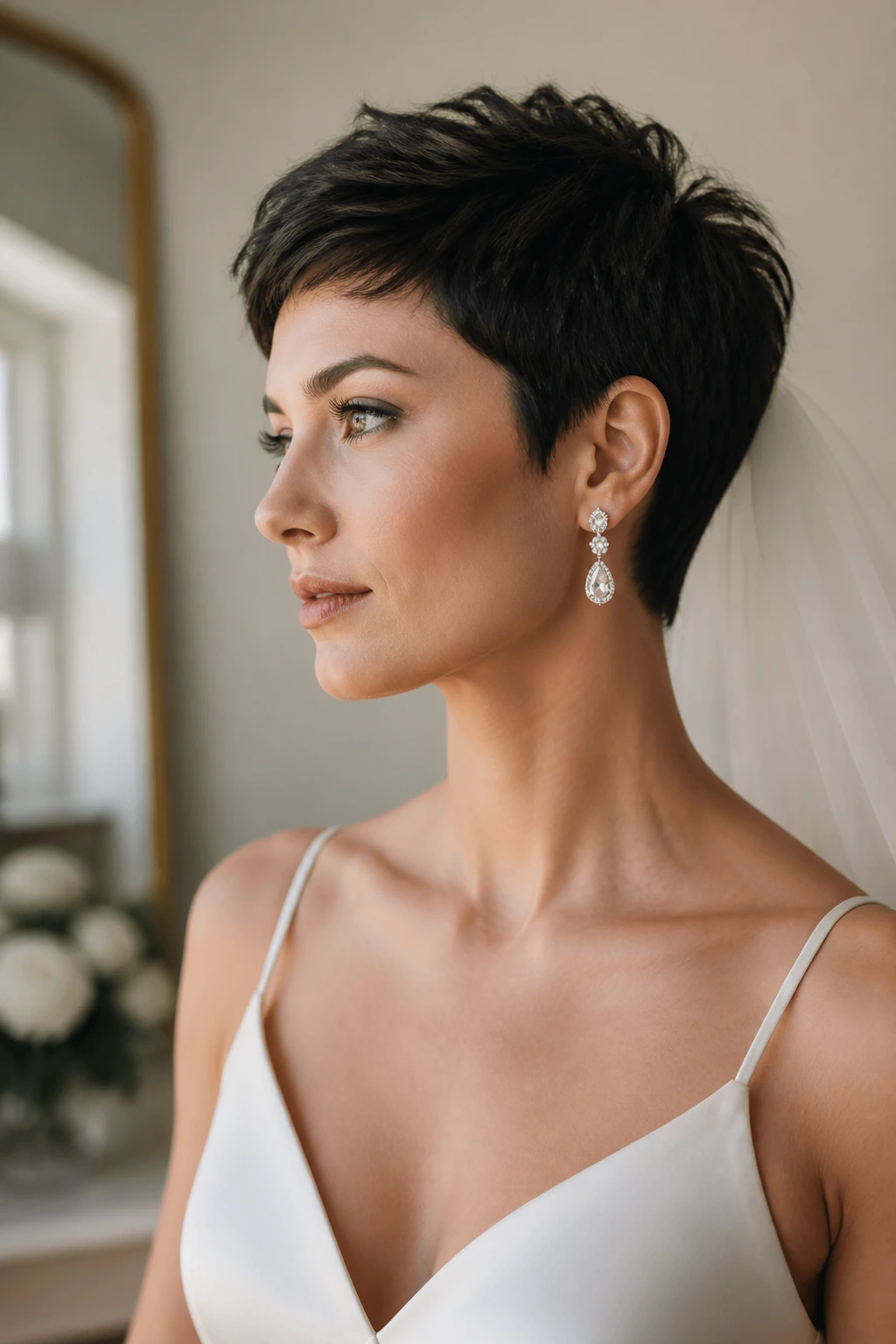
A bridal pixie does not need to imitate long hair to feel formal. It needs a clean outline, one clear focal point, and enough control at the crown and hairline that the shape still looks intentional after a few hugs and a few hours of moving around.
The strongest looks in this list all do the same quiet thing: they make the cut work with the dress instead of against it. That’s why a pearl comb, a tiny braid, a soft wave set, or a sharp side part can feel more polished than extra length ever would.
Pick the version that matches your gown, your texture, and your taste, then let the haircut do what it already knows how to do. A well-shaped pixie does not hide in the background. It shows up, holds its line, and lets the rest of the look breathe.
