



A bridal hairstyle can look perfect in the mirror and still fall apart the moment a veil catches the crown or humidity reaches the nape. Natural hair has its own rules, and when you work with them instead of fighting them, the result tends to look more alive, more personal, and frankly more expensive than the sprayed-to-death styles that sit there like helmets. That’s the sweet spot of natural hairstyles for brides: shape, movement, and enough structure to survive a long day without turning rigid.
Curls, coils, locs, twists, braids, tapered cuts — they all bring their own drama. The trick is choosing a silhouette that respects the hair’s texture instead of flattening it into submission. A great bridal style doesn’t erase shrinkage, density, or pattern. It uses them. And once you start thinking that way, the options open up fast.
I’m partial to looks that still feel like hair when you touch them. Soft at the edges. Secure at the base. Not overworked. The best wedding styles can sit under a veil, hold their shape through hugging, dancing, and a hundred photos, then still look good when the last bobby pin comes out. That’s where the interesting stuff begins.
Why Natural Bridal Hair Feels So Right on the Wedding Day
-
Texture reads from every angle: Defined curls, twists, and locs show up in photos in a way that stiff, brushed-out hair often doesn’t. The detail survives flash, distance, and movement.
-
The shape can do real work: A puff, bun, braid crown, or tucked updo gives the dress a partner, not a rival. You can build height, width, or softness where the outfit needs it.
-
Veils and pins have somewhere to live: Natural bridal styles with a stable base make accessory placement much easier. A comb slides into a low bun or cornrow base better than into a slippery pile of loose hair.
-
The style doesn’t have to fight shrinkage: When the hair is stretched, set, or pinned with intention, you’re not spending the morning trying to force it into a shape it doesn’t want.
-
Comfort matters more than people admit: A style that pulls too hard at the hairline starts collecting complaints by cocktail hour. The best bridal hair is the kind you can forget about for a while.
How to Choose the Right Shape for Your Hair, Dress, and Ceremony
Match the neckline first
A high neckline usually wants height at the crown or a clean shape at the nape. Strapless and off-the-shoulder dresses can handle a bigger puff, fuller curls, or a side-swept cascade. If the dress already has a lot going on near the shoulders, I’d keep the hair a little quieter and let the structure breathe.
Let the texture decide how much control you need
Loose curls, coils, and wave patterns usually look best when they keep some movement. Tighter textures can take more sculpting without losing the point of the style. Shorter cuts often do better with shape and placement — a jeweled clip, a side part, or a neatly pinned front — instead of trying to force length that isn’t there.
Think about the accessory before the final pin
Veils, floral combs, tiaras, and hair vines all change the silhouette. A low veil comb needs a flatter anchor. A crown wants room around the top. Heavy earrings often pair better with an updo or side-swept look so the whole thing doesn’t feel crowded. Plan the accessory, then build the hair around it.
Build in time for a real trial
Not a five-minute test in the bathroom. A real trial means moving your head, putting on a top with a similar neckline, and checking how the style sits after 20 or 30 minutes. If it feels tight in the chair, it’ll feel worse later.
1. Low Puff with Pearl Pins
A low puff is one of those styles that looks calm from the front and full from the side, which is exactly why I like it for brides. It keeps the crown low enough for a veil or headpiece, but the puff still gives you texture that reads in photos. A few pearl pins around the base turn it from “nice hair” into bridal hair without making it fussy.
It works best when the hair is stretched first, even if you’re keeping the curl pattern. Smooth the top, leave the puff soft, and don’t overbrush the body into a flat blob. That little cloud shape is the whole point.
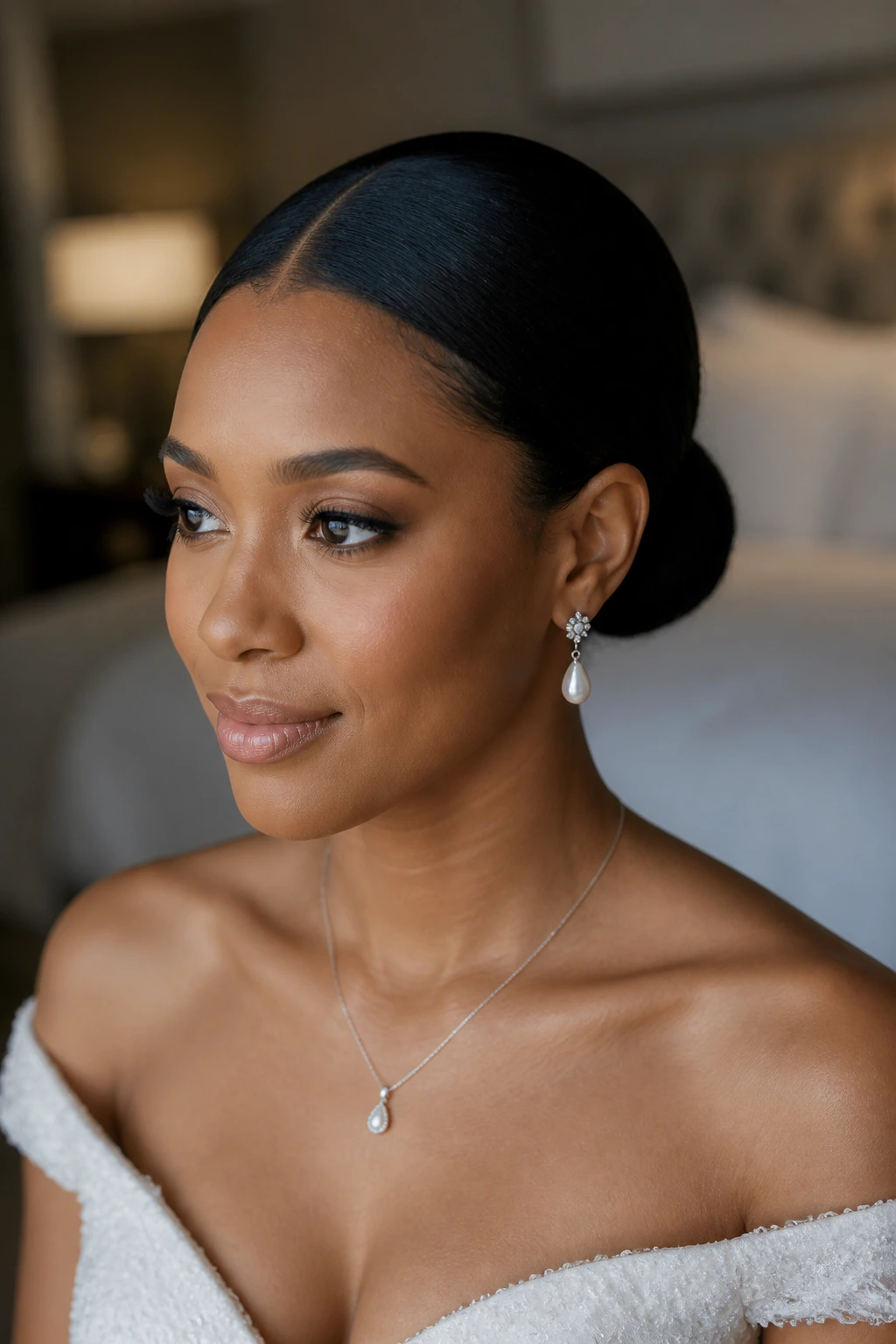
2. Sleek Middle-Part Bun
This one is all line and no nonsense, and that’s the charm. A middle-part bun gives the face a clean frame, keeps the neckline open, and lets earrings do their job. If your dress has detail near the shoulders or chest, this style keeps the attention exactly where it belongs.
The key is a smooth base with just enough grip to avoid flyaways fighting back all day. I like it best when the bun sits low and compact, not puffed up like an afterthought. Add shine, not grease.
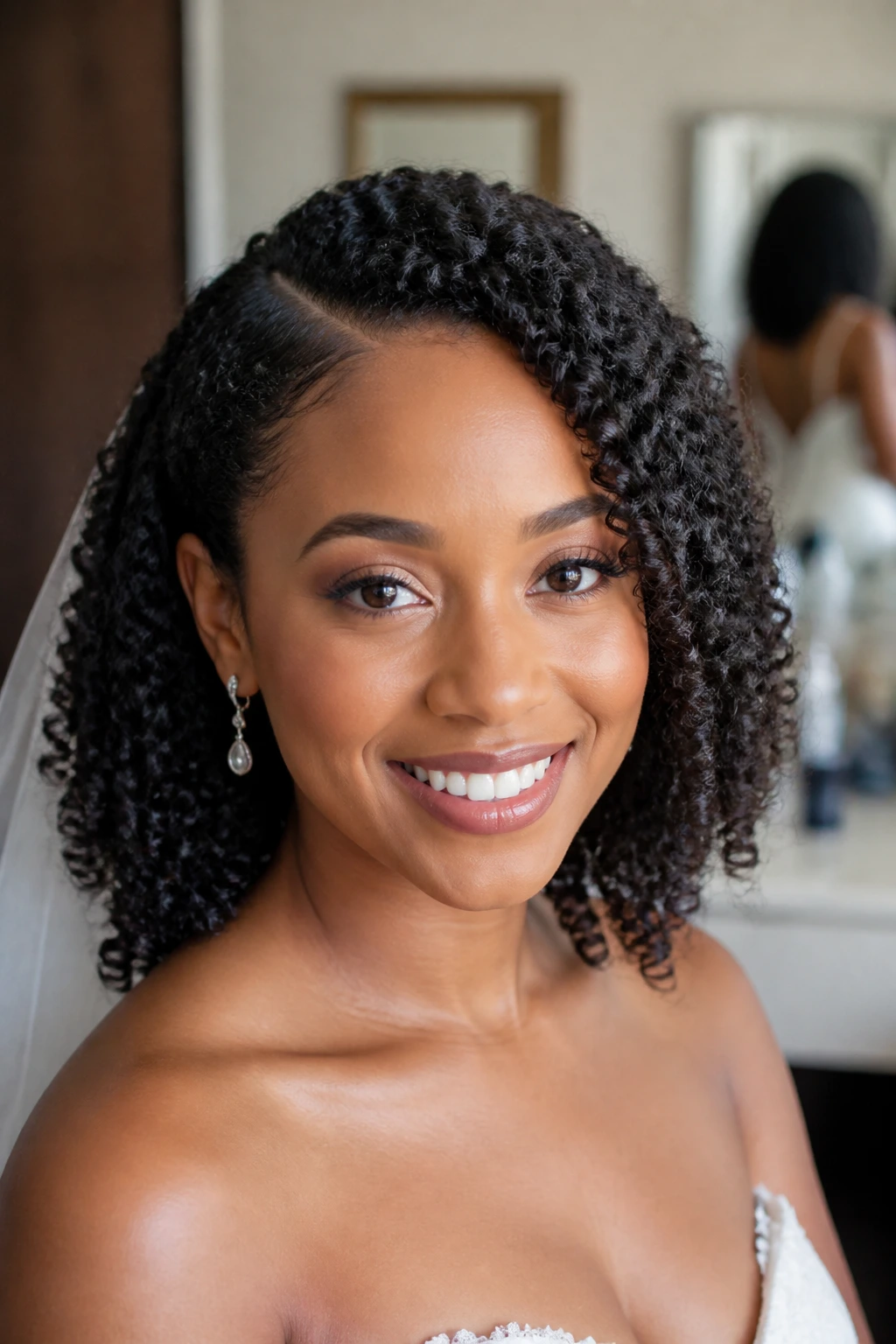
3. Defined Wash-and-Go with Side Part
If your curls are healthy, shaped, and you don’t want to hide them, a wash-and-go can be stunning on a bride. The side part breaks up the fullness and gives the style some direction, so it feels deliberate instead of casual. The curl pattern becomes the ornament.
Use a gel or cream that forms a soft cast, then let the hair dry fully before touching it. If the roots are even a little damp, the shape will collapse early. A diffuser helps, but patience matters more than heat.
4. Crown Braid with Loose Curls
A crown braid gives you structure around the face, then lets the rest of the hair drift softly below. It’s romantic without being sugary. I especially like it for brides who want something that looks detailed from the front but doesn’t feel heavy in the back.
Keep the braid snug enough to hold, but not so tight that it turns harsh at the hairline. The loose curls beneath should still move when you turn your head. That motion is what keeps the style from looking frozen.
5. Flat-Twisted Updo
Flat twists are one of the smartest ways to build a bridal updo on natural hair because they create clean lines without demanding a ton of length. The result can be sculpted, low, and polished, or a little more organic if you leave some texture visible in the twists.
This is a strong choice for brides who want protection and elegance in the same package. Pin the ends carefully, and keep the shape balanced — too much height can start to feel crowded, especially if the dress already has volume.
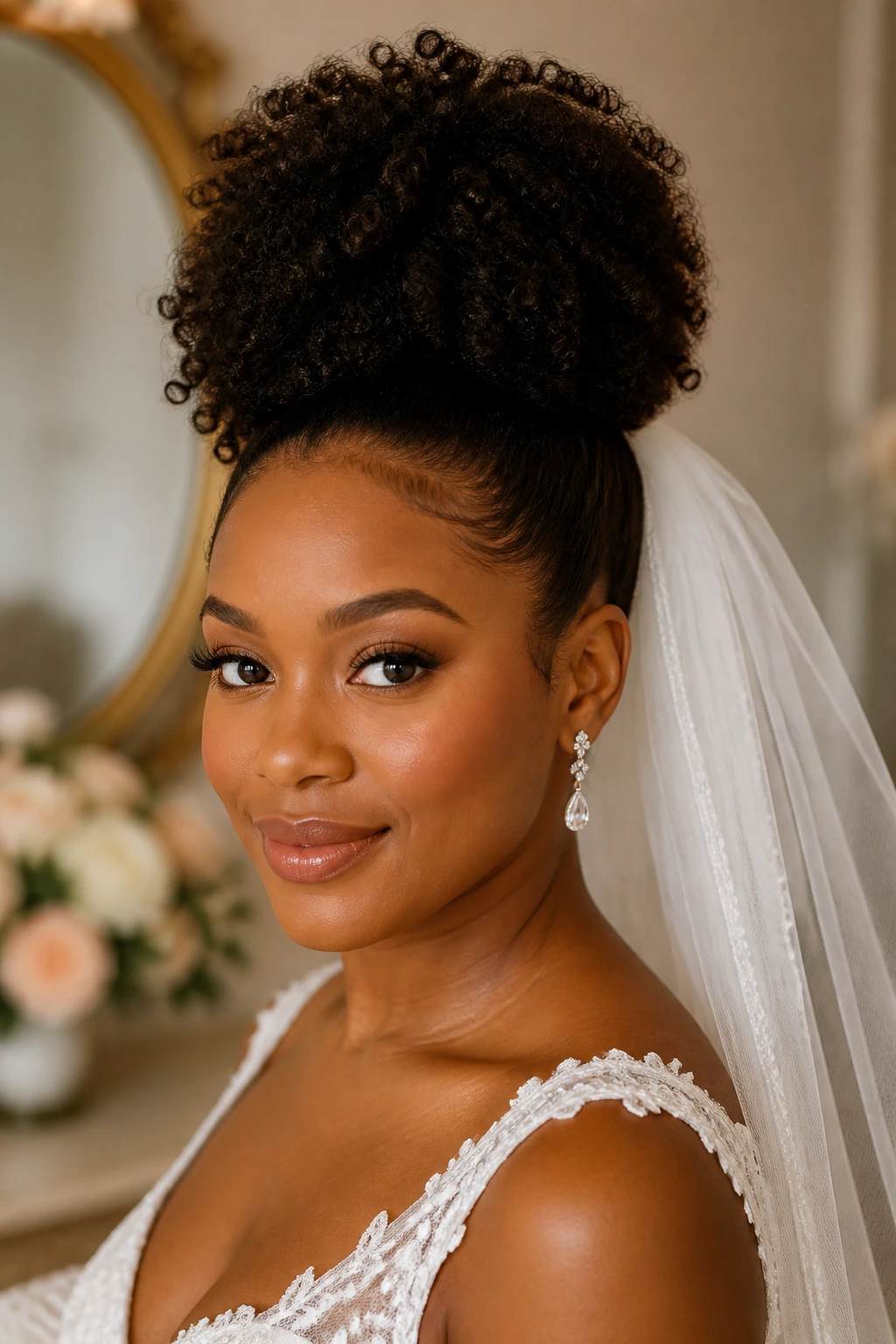
6. High Puff with Veil
A high puff brings instant lift. It also makes a veil look dramatic in the best way, because the puff creates a soft anchor at the crown instead of a flat base. For brides who want their curls to stay the center of the story, this one does the job.
The base needs to be secure, though. If the puff sits too loose, it will sag by the time you’re halfway through the reception line. Smooth the perimeter, stretch the body, and place the veil after the puff is fully shaped.
7. Twist-Out Halo with Floral Comb
A twist-out halo has that soft, rounded feel that works so well with flowers, pearls, or a delicate comb. The twist-out brings definition, then the halo shape wraps the head without hiding the texture. It’s a style that looks gentle, but it has enough structure to last.
Fluff it with your fingers or a pick at the roots, not a brush. A brush can destroy the shape fast. Tuck the floral comb just above the ear or near the temple, where it can catch the eye without swallowing the whole style.
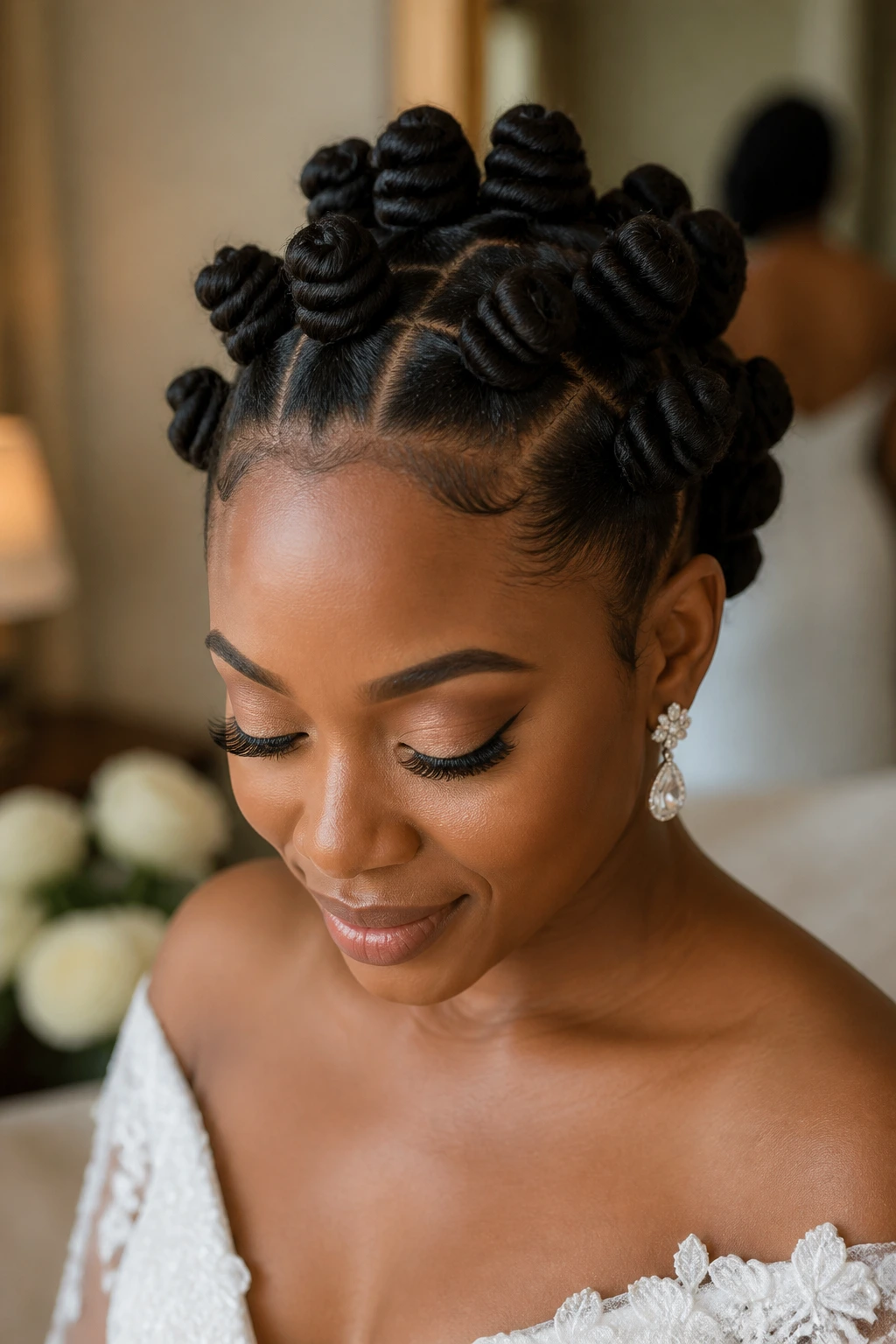
8. Bantu Knot Updo
Bantu knots don’t need to be oversized or theatrical to feel bridal. Even a neat, sculpted arrangement can look refined and modern, especially when the knots are placed with symmetry and the finish is smooth. There’s a nice balance of tradition and edge here.
This style also makes sense when you want the hair set the night before. The structure is already part of the look, so morning prep is lighter. Keep the parts clean and the edges tidy, but don’t polish the knots into something lifeless.
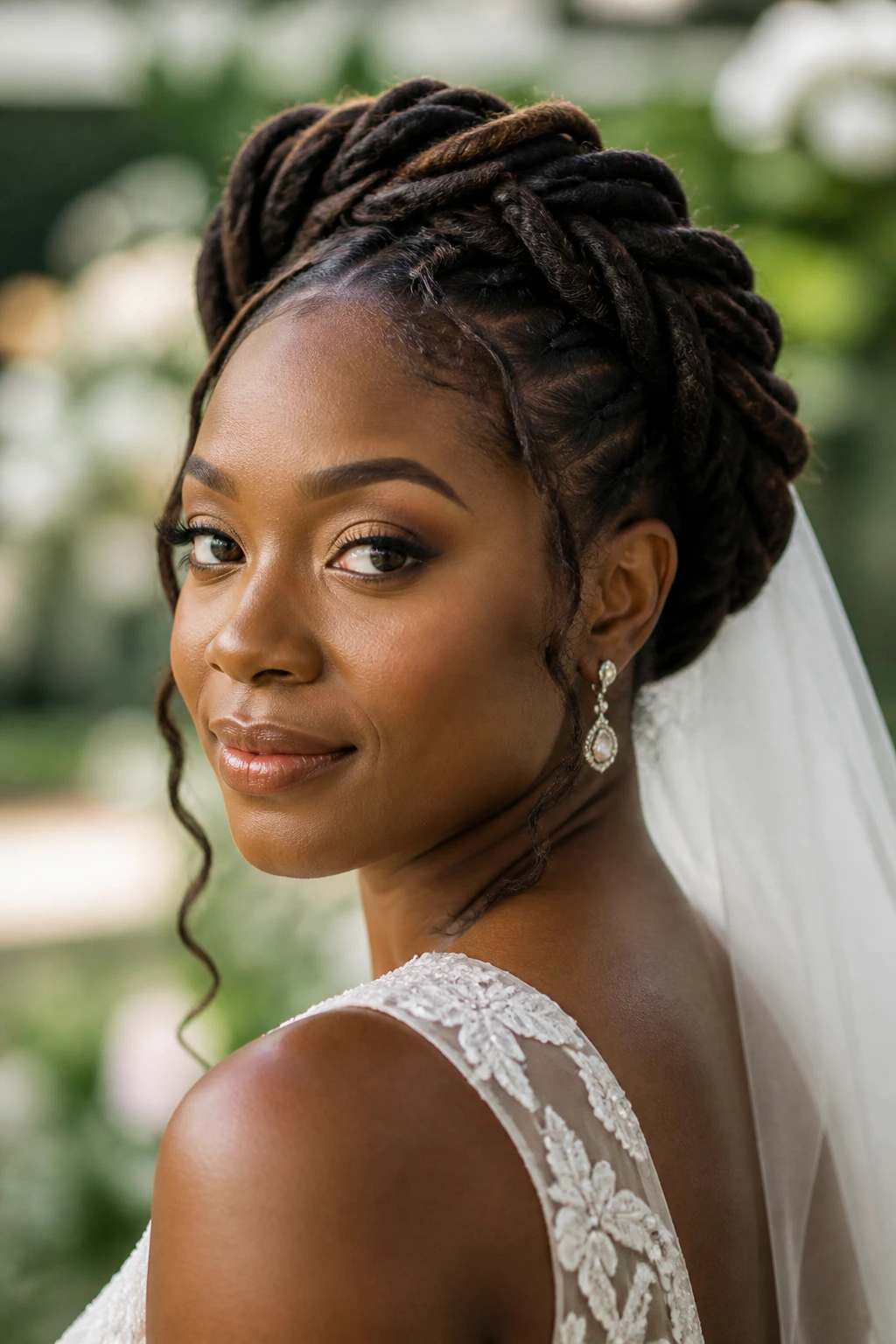
9. Braided Crown on Locs
Locs wear bridal crowns beautifully because the texture already gives the style depth. Wrapping them into a crown shape around the head makes the silhouette feel regal without trying too hard. It’s one of those looks that can be both strong and soft at the same time.
The main thing is balance. Locs have weight, so the crown needs enough anchor points to stay even around the head. Leave a few tendrils out if you want a gentler face frame; otherwise, keep the line clean and let the shape speak.
10. Rope-Twist Chignon
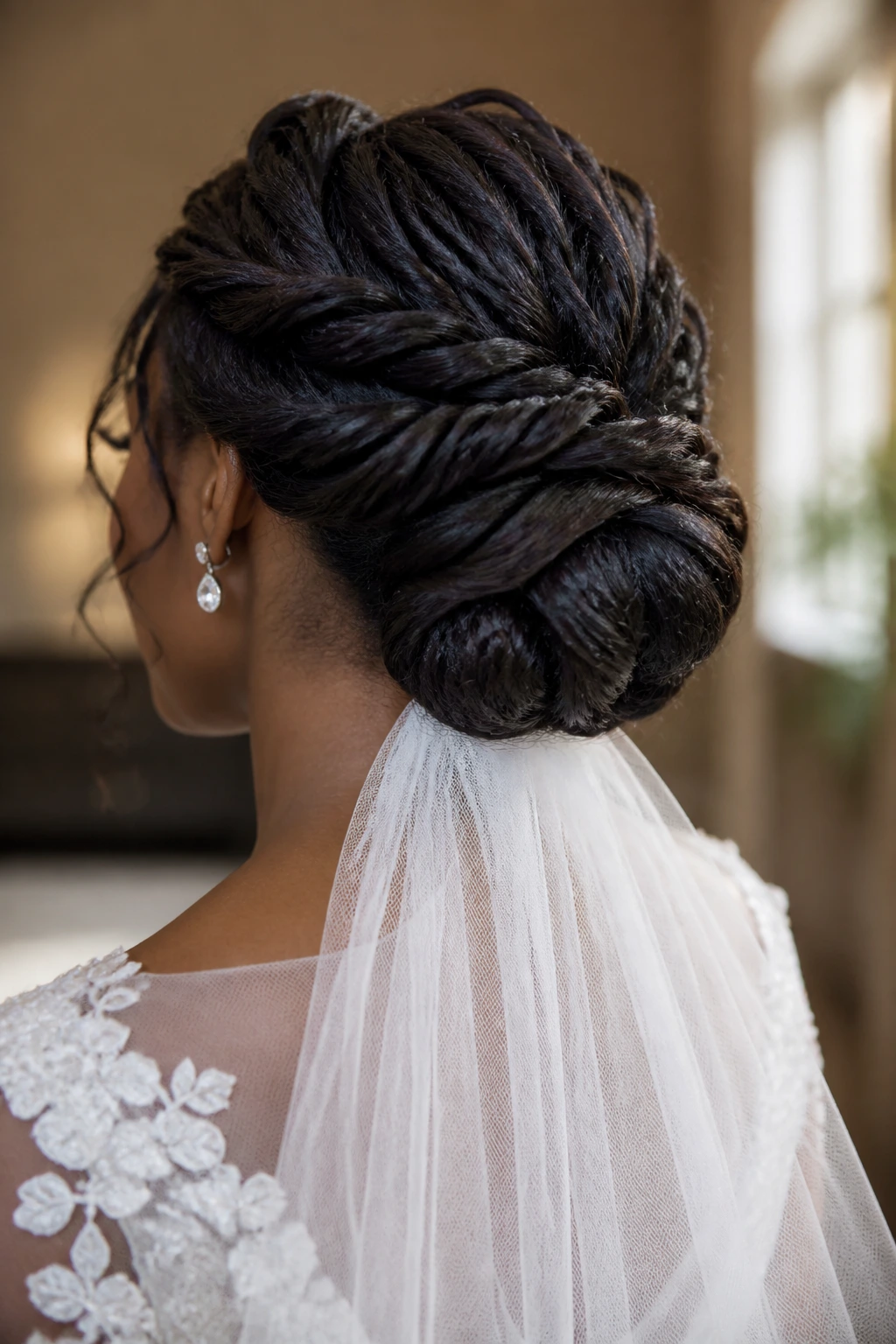
A rope-twist chignon looks neat at a glance, but it has more texture than a smooth bun. That twist pattern catches light in a subtle way, which makes it feel richer in photos. At the nape, it also sits comfortably under veils and collars.
I like this style for brides who want a low profile with a little visual interest. The twist should feel snug before you coil it, or the bun can unravel at the edges. A few hidden pins and a light mist of spray are usually enough.
11. Half-Up, Half-Down Curls with Braids
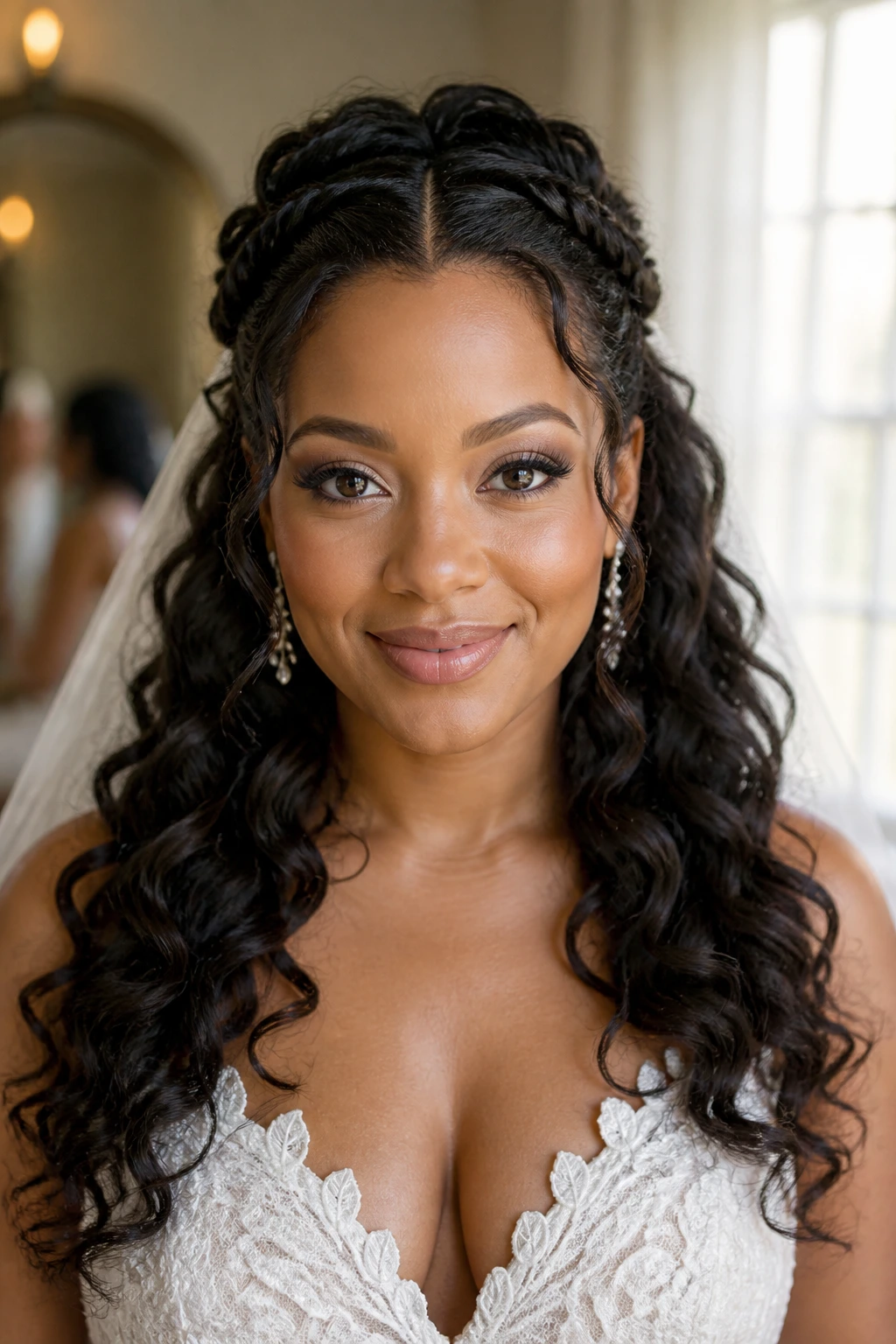
Half-up, half-down styles make a strong case for movement. The braids at the top keep the front controlled, while the back spills into curls that still feel like yours. It’s a good middle ground if you don’t want a full updo and don’t want hair on your neck all day.
The trick is not to overfill the top section. Too much volume up there can make the head look top-heavy. A few small braids or twists are enough to give shape without taking over the whole style.
12. Side-Swept Finger Waves on Natural Hair
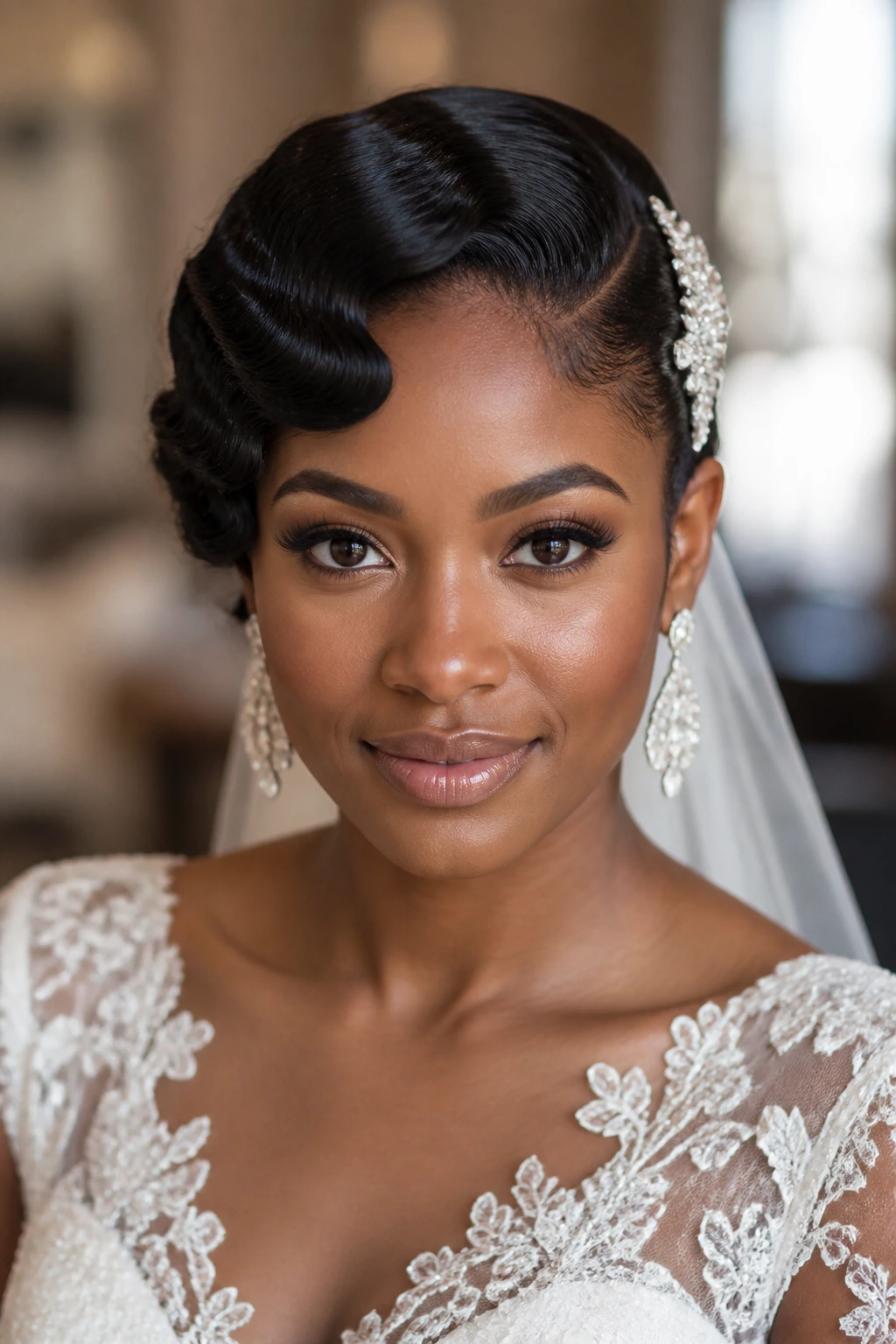
Not every natural bridal look needs a cloud of curls. On shorter or stretched hair, side-swept finger waves can look sharper and more intentional than a loose style that’s trying to imitate length. There’s a vintage polish here that still feels fresh when the waves are crisp.
This style needs set time. Use clips, setting lotion, and patience, then let the hair cool completely before touching it. If you rush the drying, the wave pattern softens in the wrong places and the whole shape loses its line.
13. Tapered Cut with Jeweled Clip
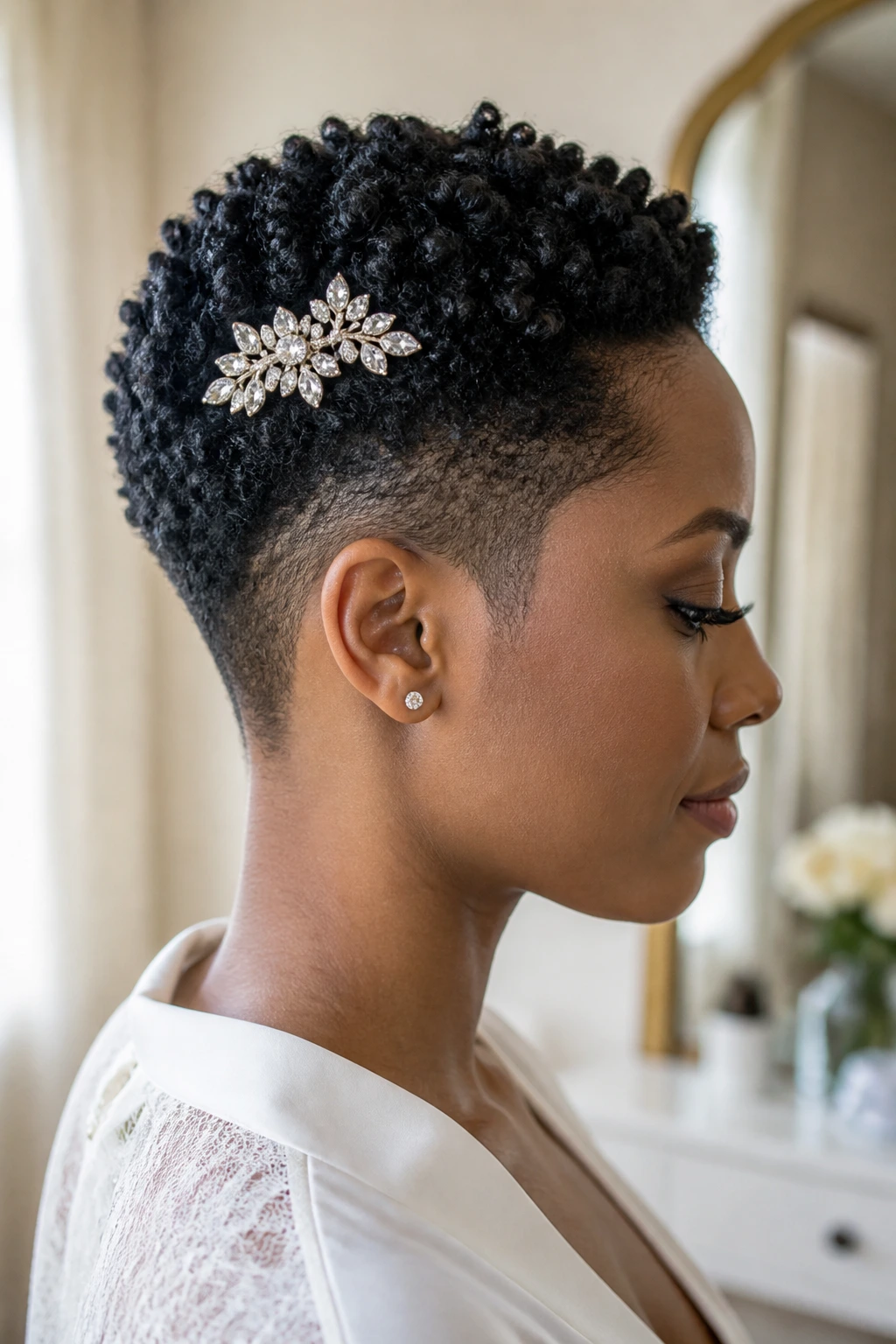
A tapered cut is the proof that bridal hair does not have to be long to feel dressed up. The cut itself brings the shape, and a jeweled clip can turn the side or crown into the focal point. It’s clean, sharp, and a little bit daring.
What I like most is that the style looks good from the front and the profile. Keep the sides neat and let the top keep its softness or coil pattern. One strong accessory is enough here — any more and the style starts to look crowded.
14. Loc Bob with Curled Ends
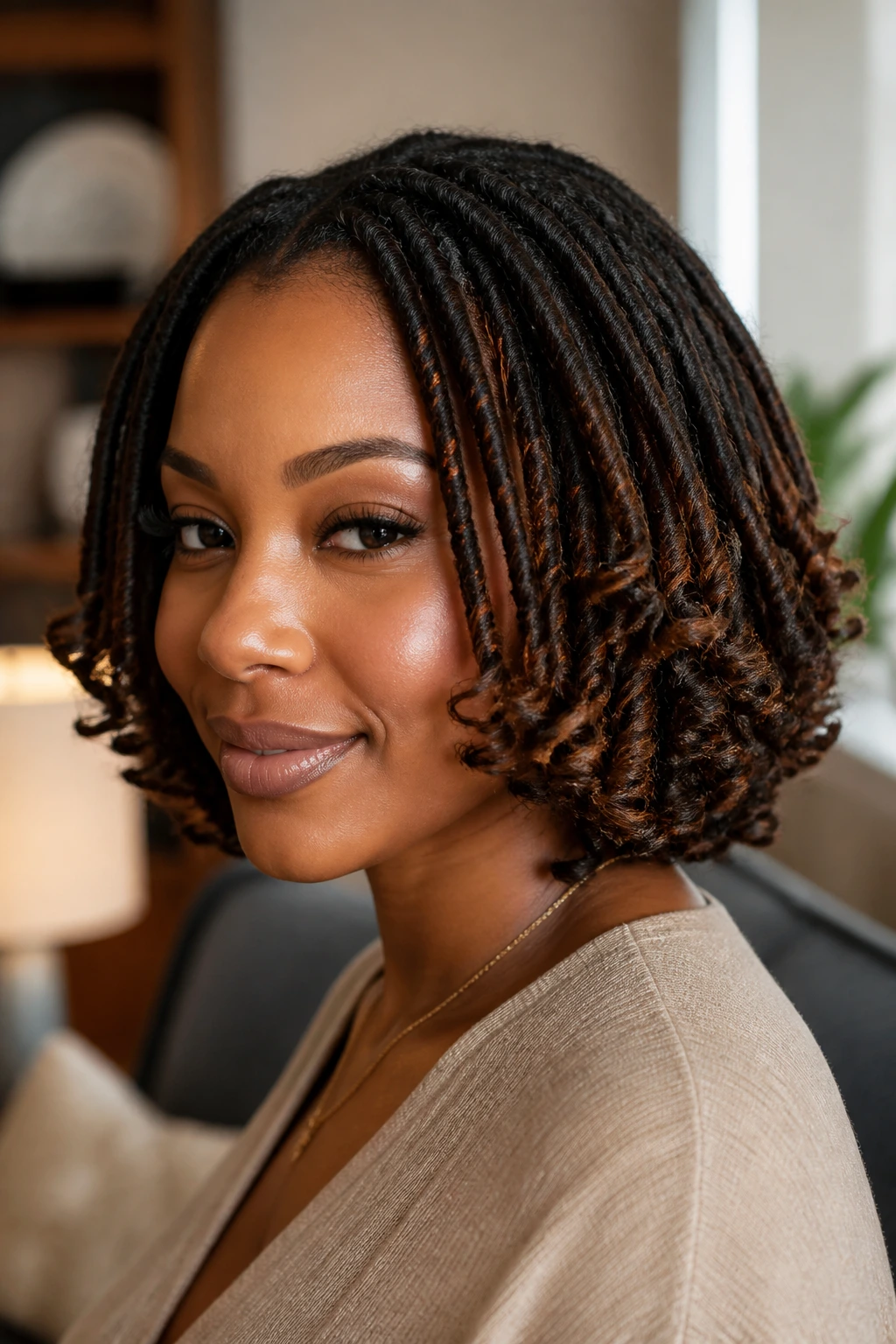
A loc bob has a lovely weight to it. When the ends are shaped with a soft curl or bend, the whole style gets movement without losing its clean outline. It’s especially useful if you want something shorter around the neck but still polished enough for a formal dress.
The neckline matters here. A bob sits right where the dress meets the shoulders, so the line has to be tidy. Tuck a few locs behind one ear or add a side pin if you want the face to open up a little more.
15. Low Braided Bun
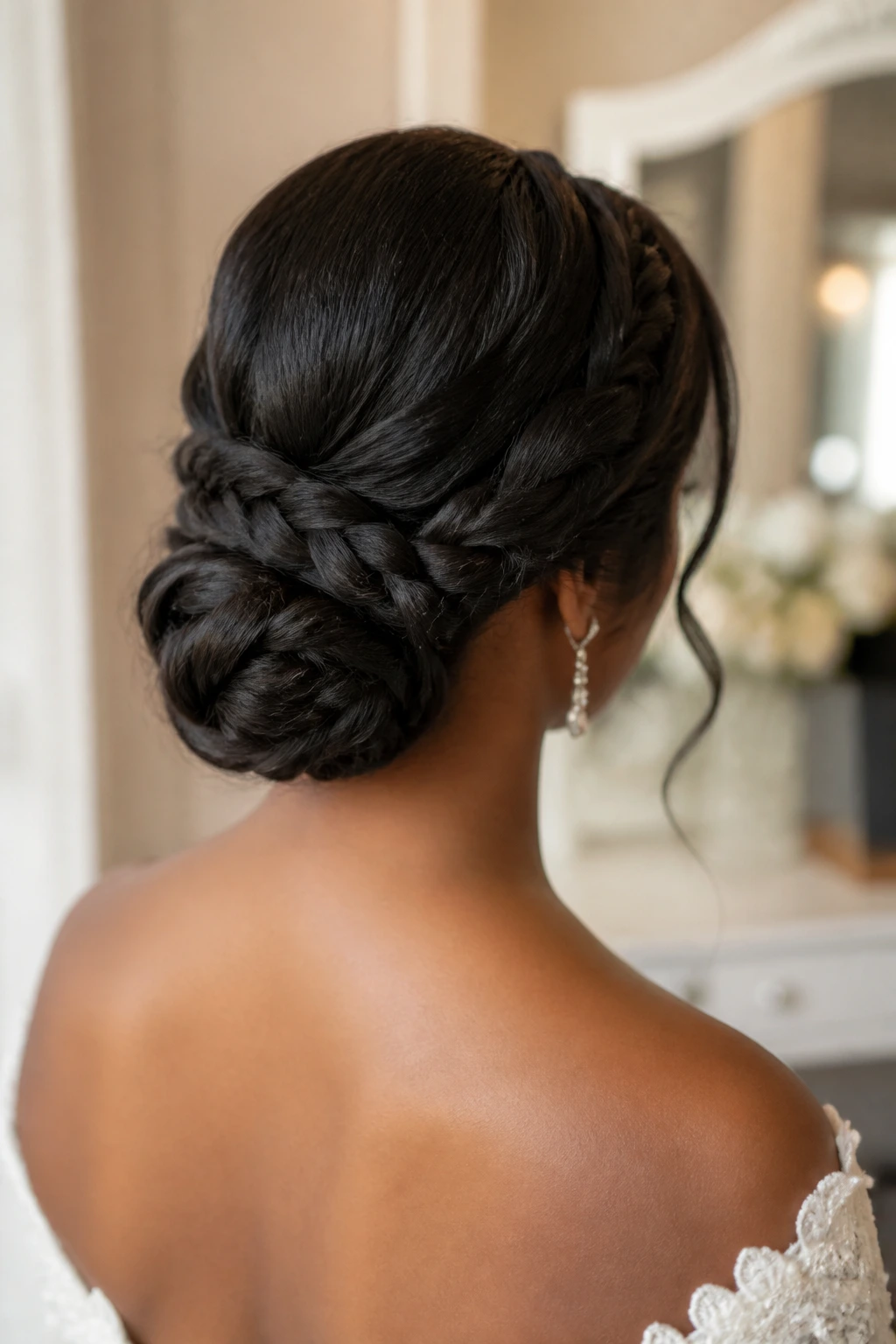
A low braided bun is one of the safest bets in the entire category, and I mean that as a compliment. It gives a stable anchor for a veil, stays neat through a long day, and doesn’t demand that every curl behave on command. The braid detail keeps it from feeling plain.
This style is strongest when the braid pattern is visible before it disappears into the bun. That little bit of texture keeps the back interesting. If you want extra softness, leave one slim piece near the temples and keep it controlled, not wispy.
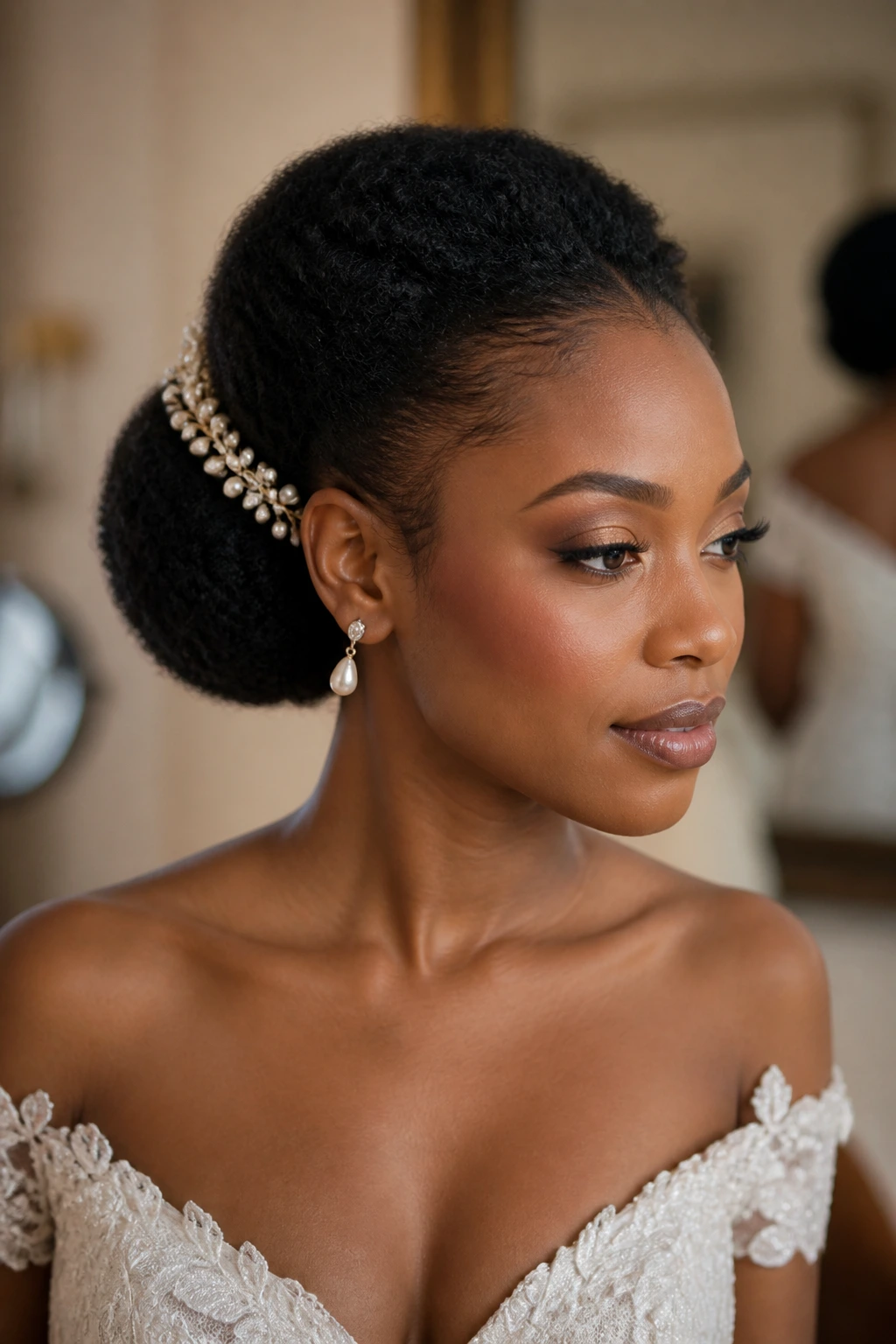
16. Afro with Statement Headband
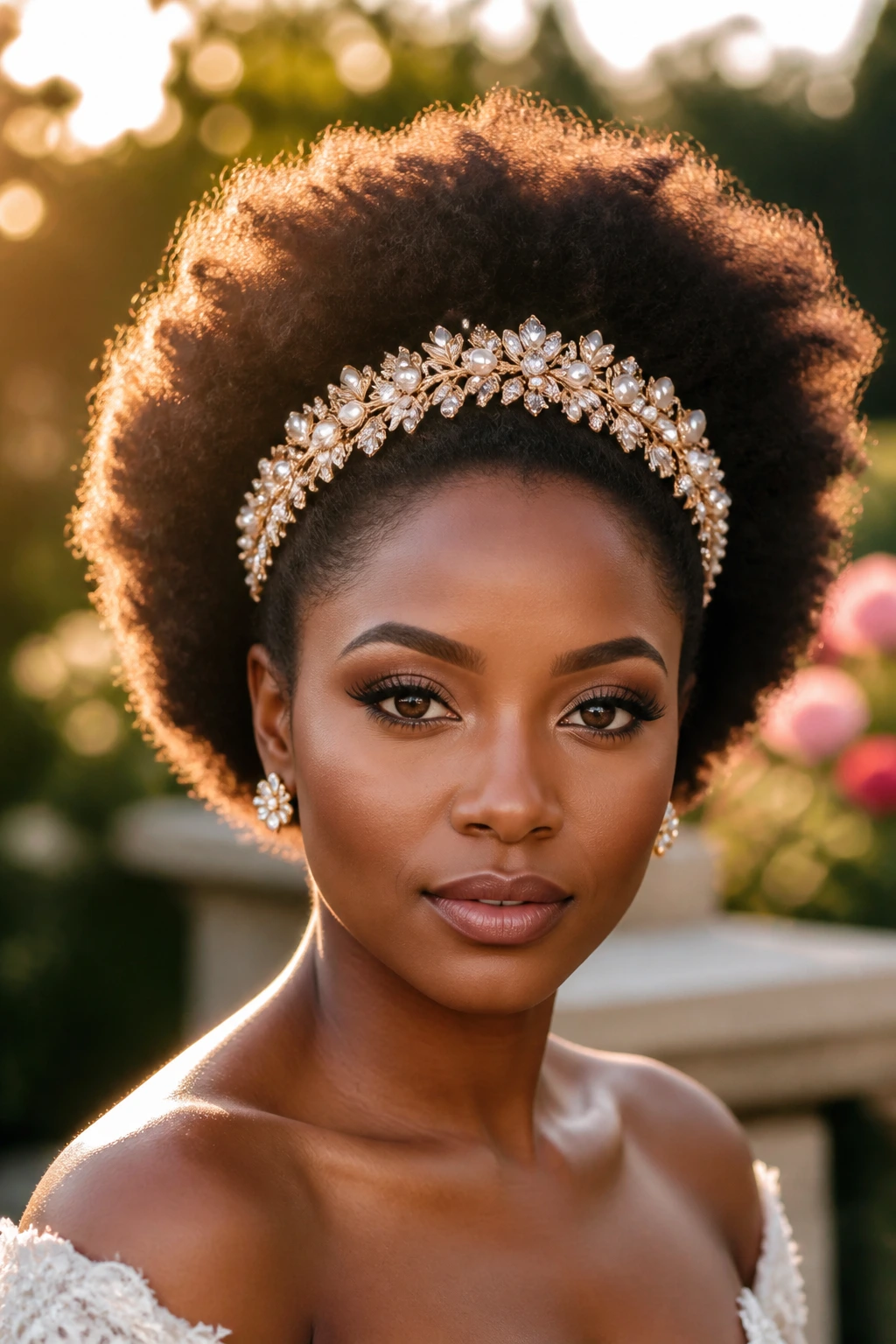
A shaped afro does all the talking by itself. Add a statement headband and the look becomes bridal without losing its natural edge. This is one of my favorite choices for brides who want their texture to be the main event, not an accessory to the dress.
The shape should be intentional, not just picked out to the moon. Rounded, even, and full where it counts. A headband with a little sparkle or satin finish can sit right at the crown and give the style a clear focal point.
17. High Braided Ponytail
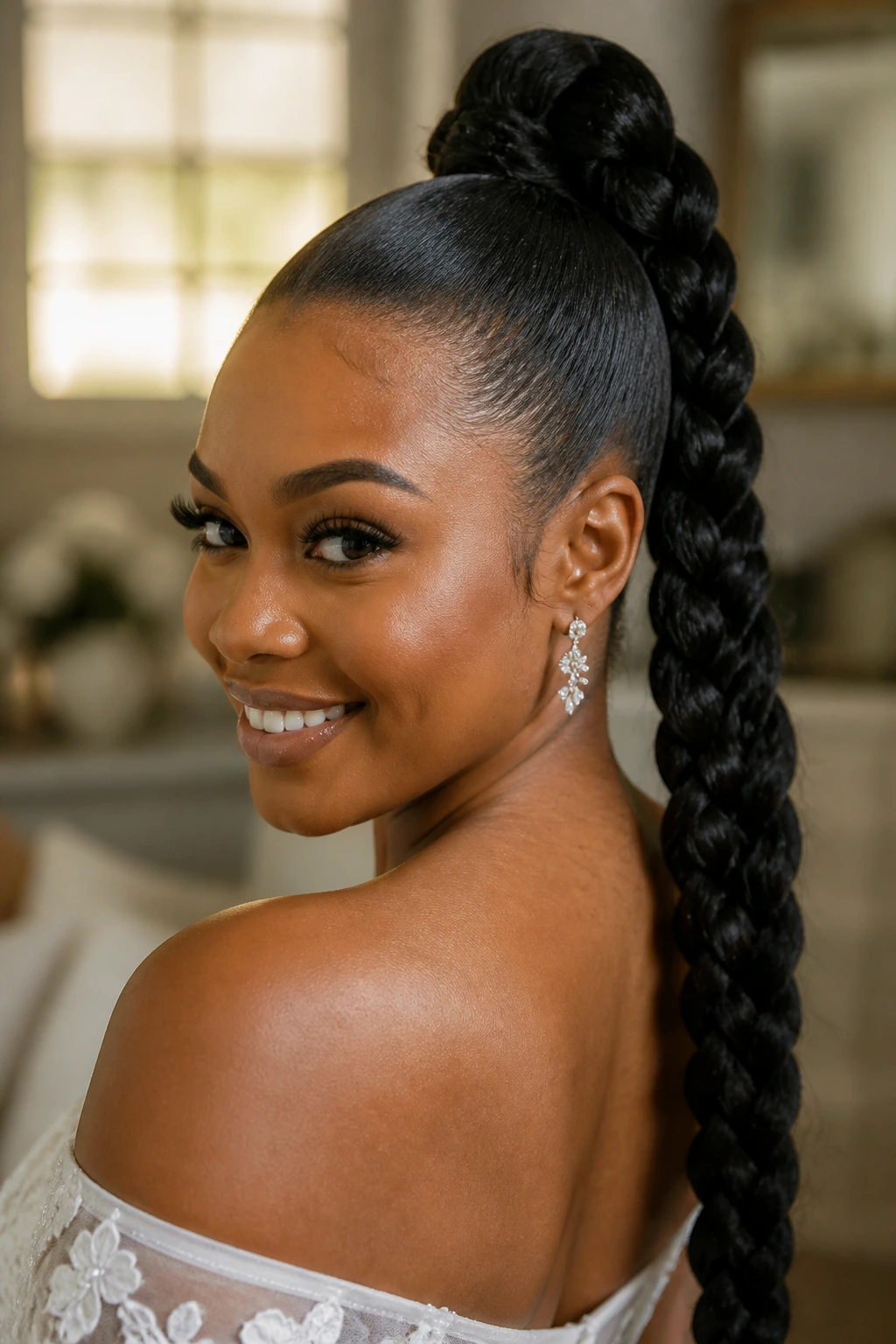
A high braided ponytail brings lift, length, and clean lines in one go. The base can be sleek or softly textured, but the braid itself gives the look enough drama to stand on its own. It’s a smart pick when you want the neck open and the face framed.
Keep the base smooth and tight enough to hold the pony’s weight. If the braid is long, pin the wrap around the base carefully so it doesn’t pull. This style looks best when the braid stays glossy and neat, not frayed at the ends.
18. Marley Twist Updo
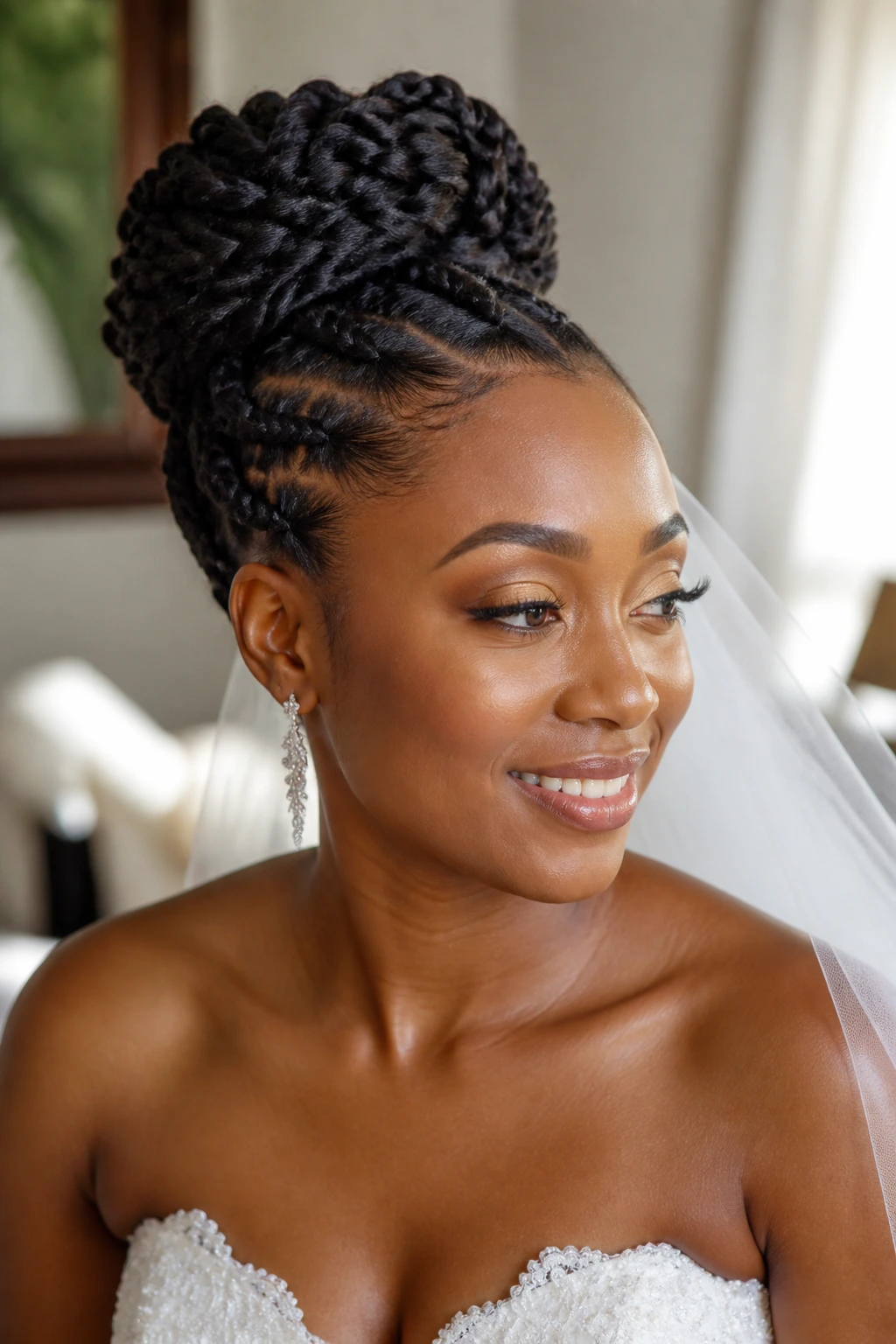
Marley twists give a bridal updo a plush, textured finish that regular pins alone can’t fake. Twisted into a bun, roll, or tucked shape, they create fullness without needing a ton of accessory work. The texture does the heavy lifting.
I like this style for brides who want volume but not loose hair everywhere. The twists hold shape well, which makes the whole thing feel stable. Keep the pins hidden and let the twist texture stay visible around the edges of the bun.
19. Faux Hawk with Pinned Sides
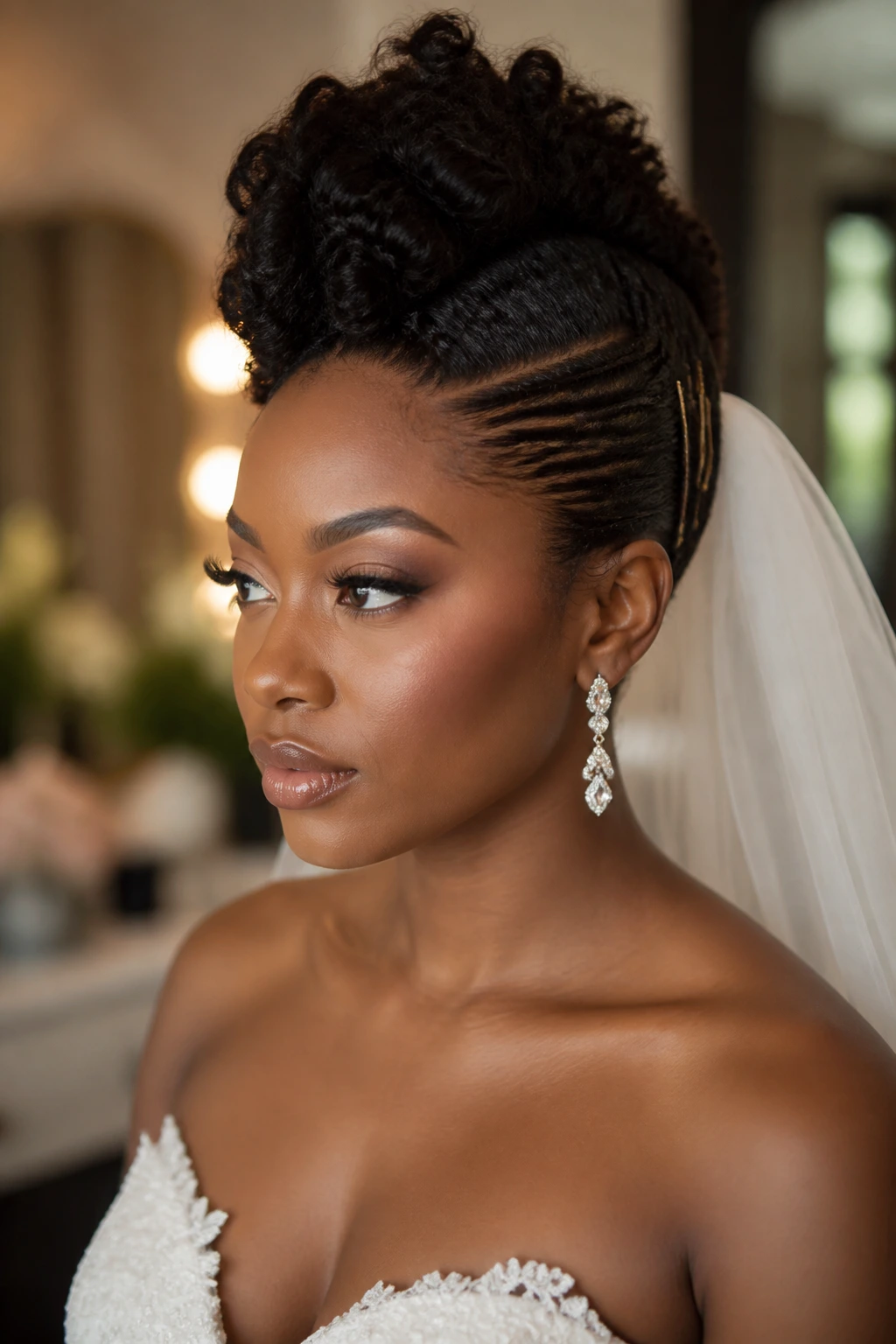
A faux hawk has a little attitude, and that can be a good thing on a wedding day. With the sides pinned down and the center ridge shaped up, the look feels modern, strong, and surprisingly elegant. It’s not soft in the usual bridal way, but it doesn’t need to be.
This is a solid option if you want the dress and jewelry to sit against a sharper hairstyle. The pinned sides should be secure enough that you’re not touching them every ten minutes. A bit of sculpting at the top keeps the ridge defined.
20. Deep Side-Part Curls with a Tuck
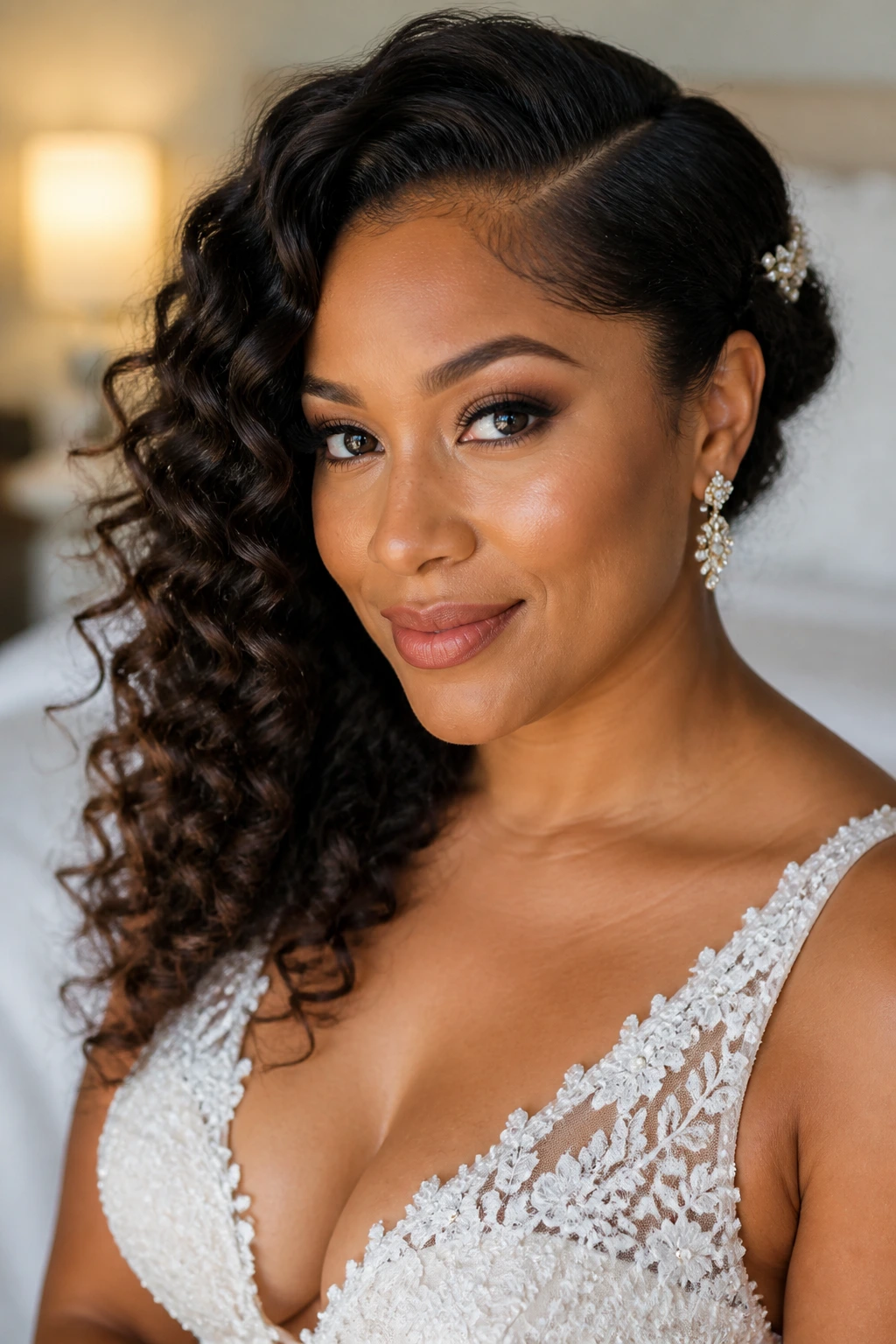
A deep side part changes the whole mood of curls. Suddenly the style feels deliberate, not just full. Tucking one side behind the ear or pinning it back also creates a clean line for earrings and gives the face more space.
The trick is to keep the tuck smooth while leaving the rest of the curls loose enough to move. If you flatten everything, you lose the romance. If you leave too much at the part, the style can feel unbalanced, so keep one side crisp and the other soft.
21. Box Braid Low Ponytail
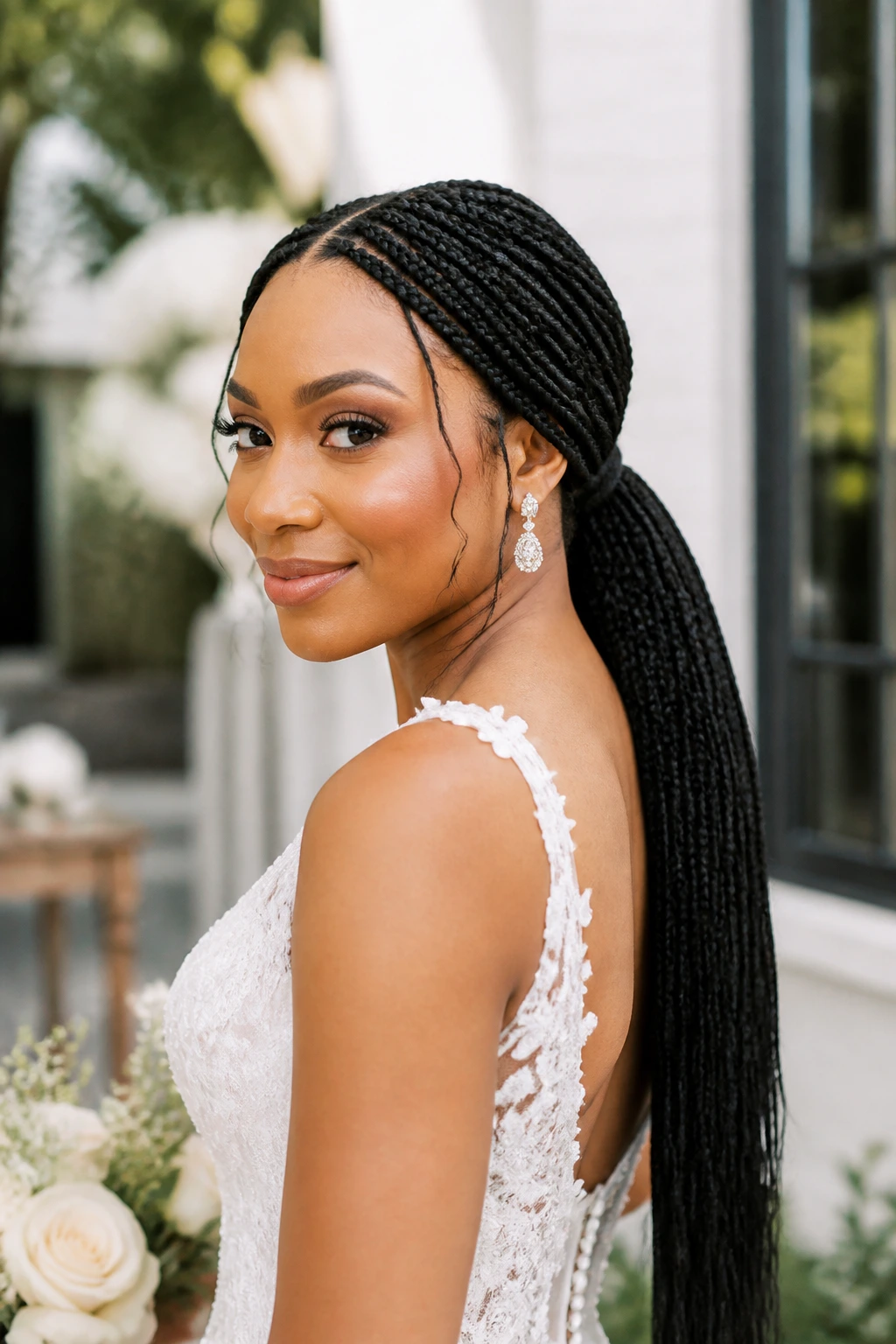
Box braids gathered into a low ponytail are neat, low-stress, and easy to read from every angle. The braid pattern gives the style texture before the ponytail even starts. It’s a practical choice for a long event because it stays together without a lot of fuss.
You can wrap the base with a braid, a strand of hair, or a decorative piece if you want it to feel more formal. Keep the ponytail low and centered for the cleanest line. If the braids are long, make sure the weight is distributed evenly.
22. Goddess Loc Updo
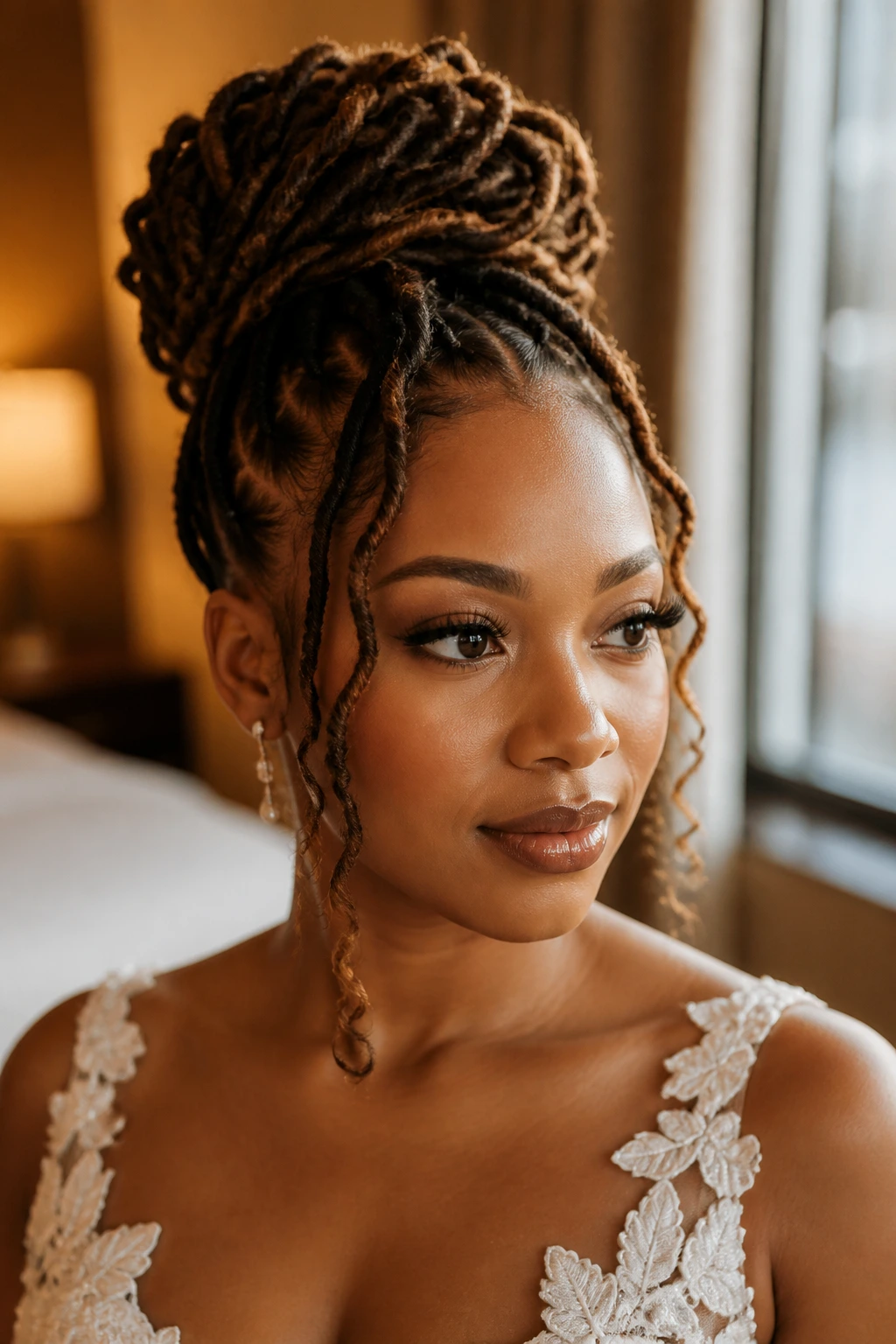
Goddess locs have enough softness built in that an updo can still feel airy. Pulling them into a bridal shape lets you show the face, the neck, and just enough texture around the edges to keep it warm. A few locs can be left loose around the temples for movement.
This style looks best when the sections are arranged with intention instead of simply piled up. Think balance, not volume for its own sake. A satin scarf overnight helps the shape stay smooth, which matters if the updo has layers.
23. Mini Twists in a Sculpted Bun
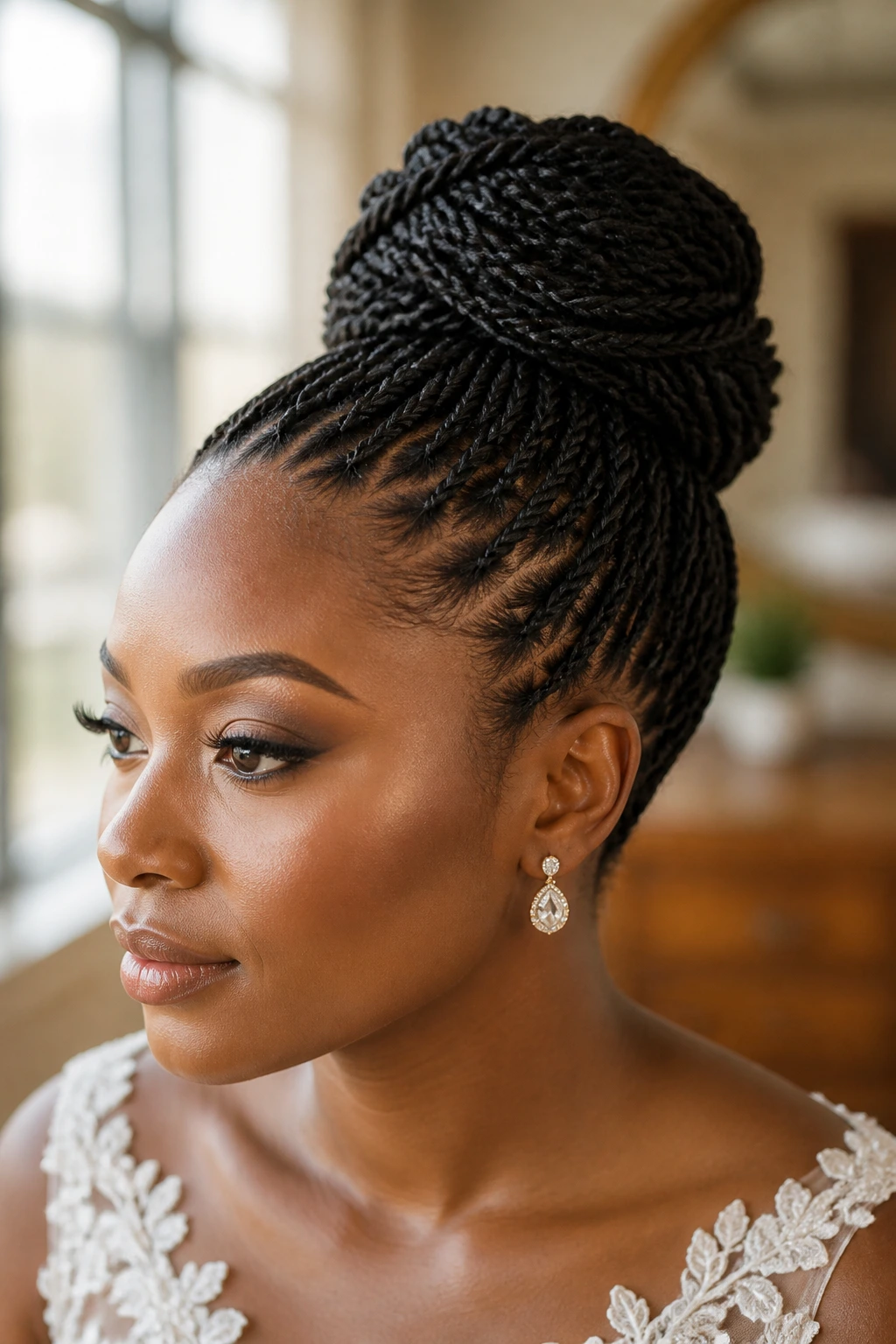
Mini twists give a bridal bun a finer, more detailed texture than larger twists do. The effect is tidy without looking flat, and the smaller sections make the bun read almost like woven fabric. It’s one of the most refined natural styles in the whole set.
This is a good option when you want neatness and longevity. Mini twists hold well, and a sculpted bun can survive a long morning without falling apart. Keep the ends tucked firmly so the bun keeps its clean shape instead of fuzzing out.
24. Cornrow Front with Fro Halo
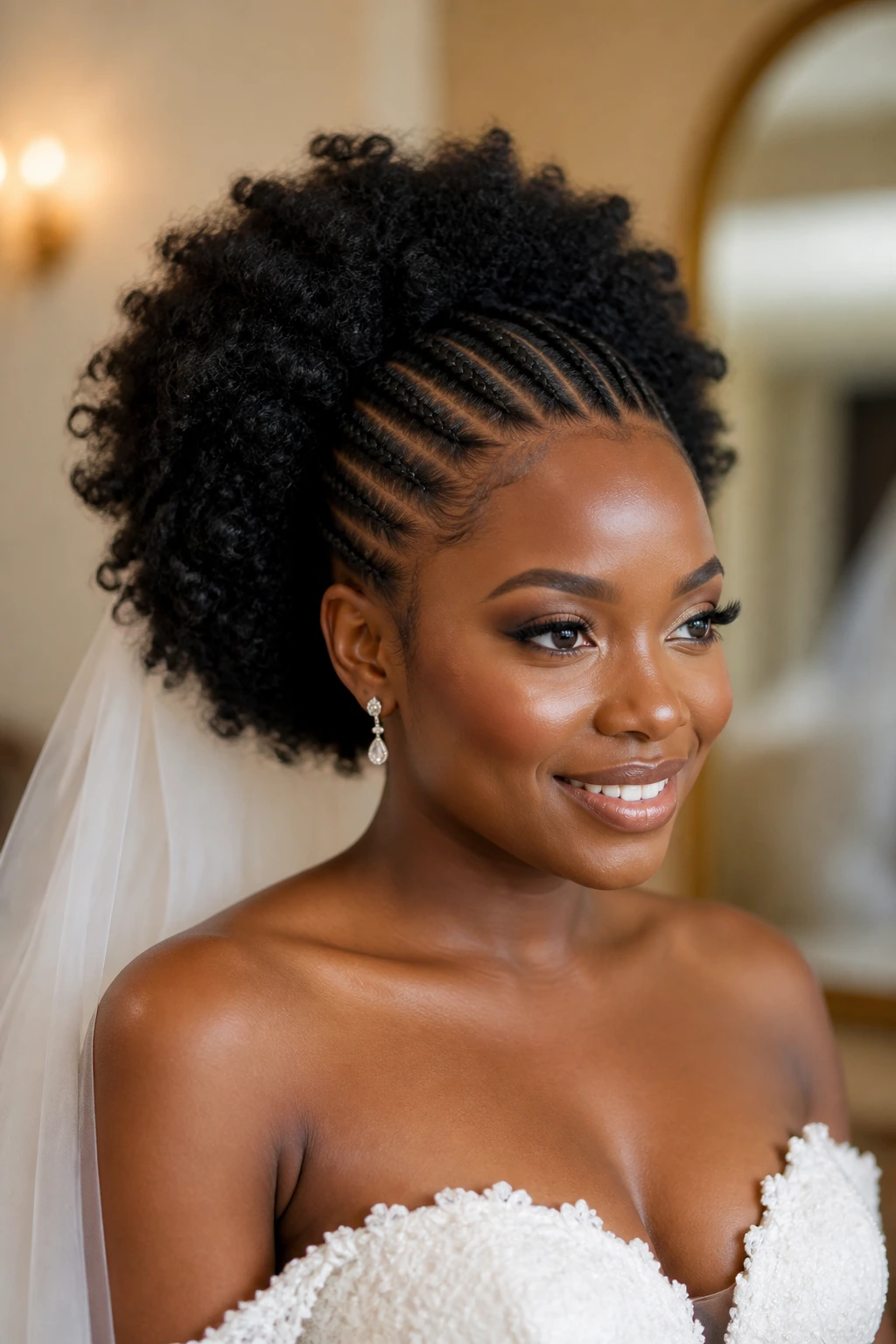
Cornrows at the front create a sharp frame, and a fro halo in the back keeps the style full and lively. That contrast is what makes it interesting. The front feels controlled; the back feels free.
This is a smart choice if you like structure near the hairline but don’t want to give up texture. Keep the cornrows even and close enough to the scalp to stay neat. Then let the halo breathe a little. A little lift at the roots is enough; you don’t need to force height everywhere.
25. High Bun with Wrapped Base
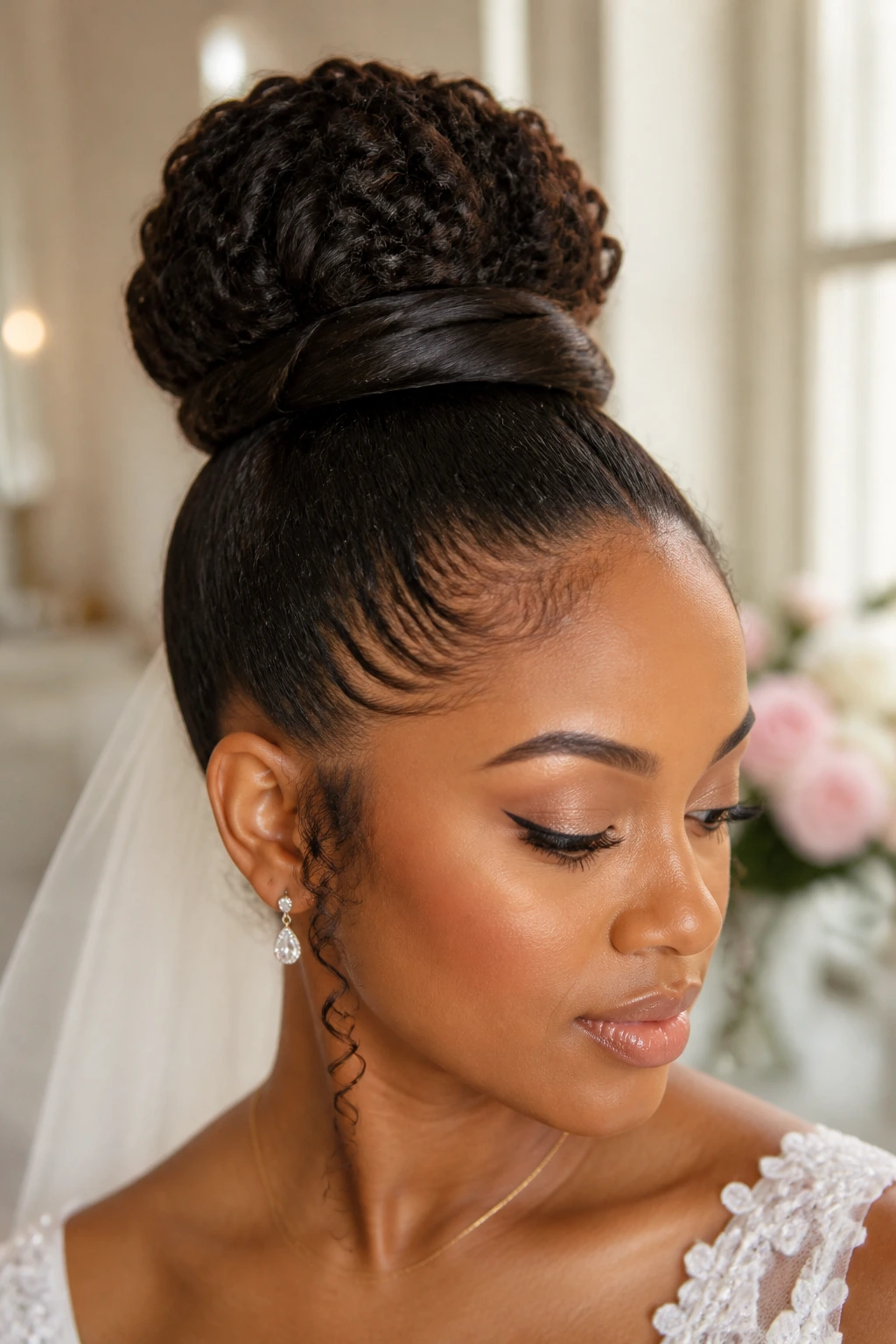
A high bun gives you that lifted bridal shape that works with many necklines. Wrapping the base with a braid, loc, or twist detail keeps the bun from looking like a plain knot at the top of the head. It makes the whole thing feel finished.
I like this style when the dress has a lot of structure below the shoulders. It creates vertical balance. Just make sure the bun isn’t so high that it starts fighting with a veil or headpiece — a little clearance at the crown goes a long way.
26. Curly Bob with Pin-Up Side
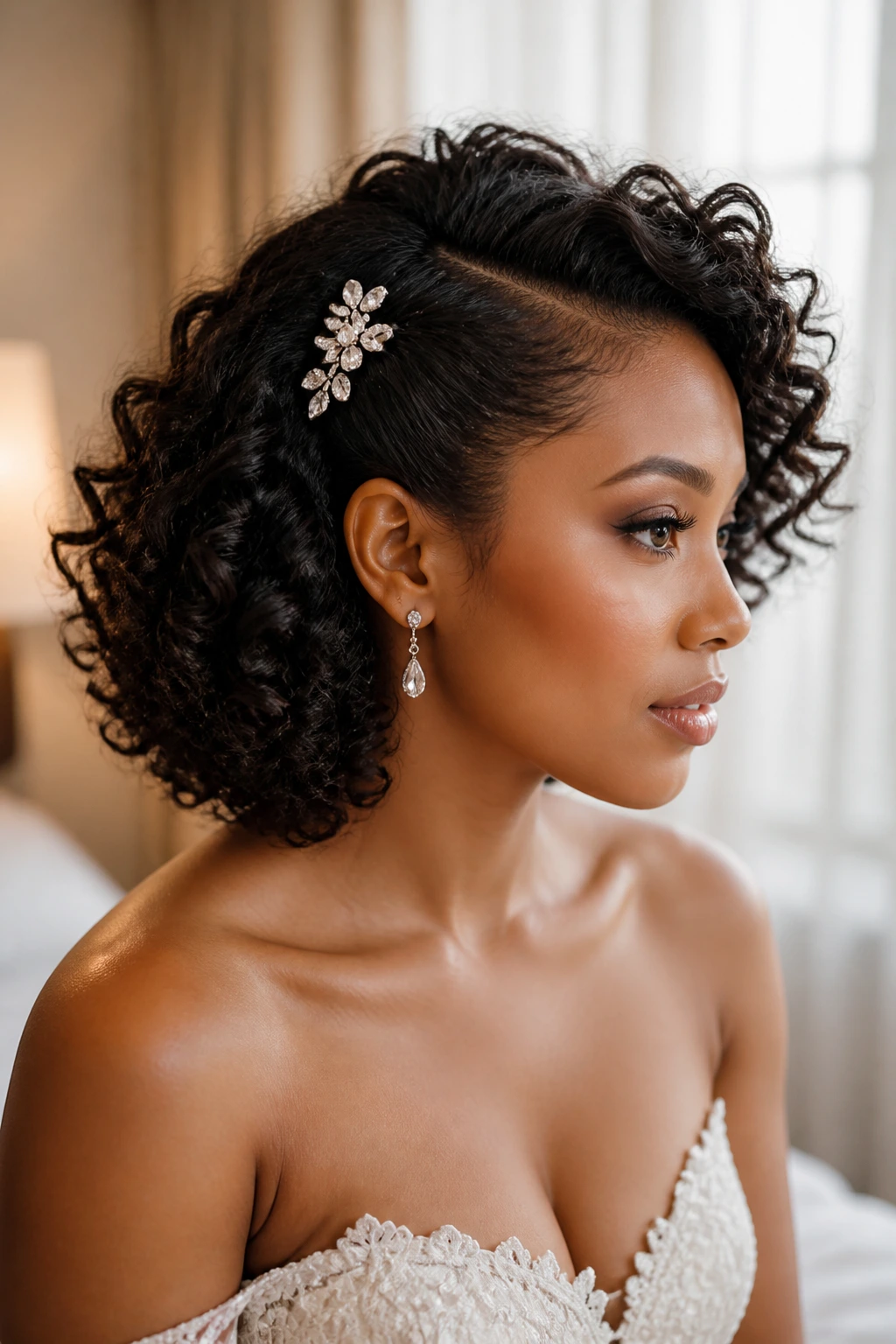
A curly bob doesn’t need much help to feel special. Pin one side back with a jeweled clip or comb, and the whole silhouette gets sharper without losing that soft, bouncy feeling around the jawline. It’s charming in a grown-up way.
This shape is especially nice for brides who want their face to stay open in photos. Keep the curls defined, not separated into frizz. A light curl cream and a side pin are usually enough; anything heavier can drag the bob down.
27. Knotless Braid Crown
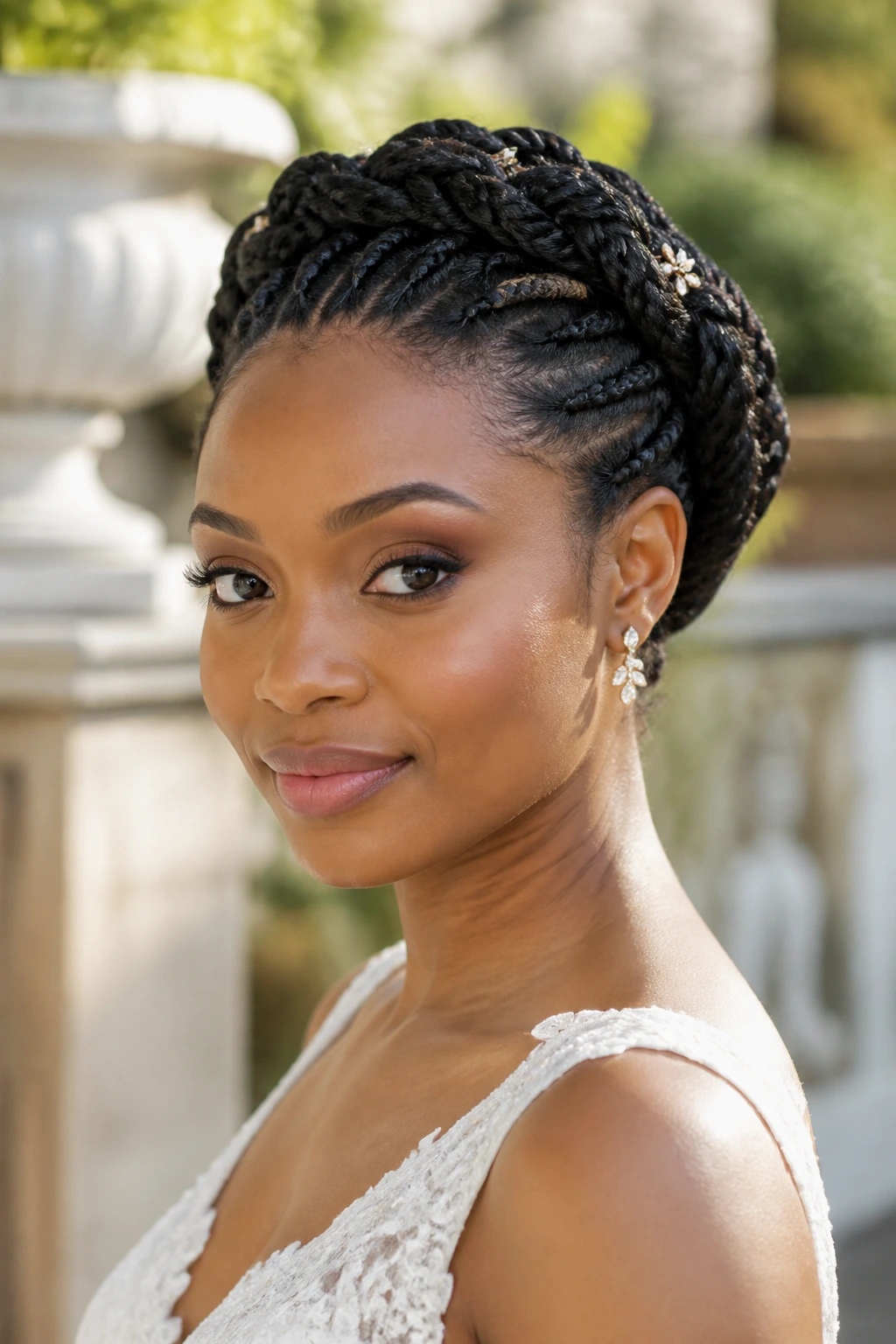
Knotless braids arranged into a crown shape have a smoother, lighter feel than a thicker braid style. They wrap around the head cleanly and can look polished without that heavy, crowded look at the hairline. The crown placement makes the face the center.
This style is strong when you want a secure base with room for an accessory or veil. I’d keep the crown line even and the ends tucked neatly so nothing competes with the shape. A few delicate pins can add sparkle without interrupting the braid pattern.
28. Shoulder-Length Curls with a Side Comb
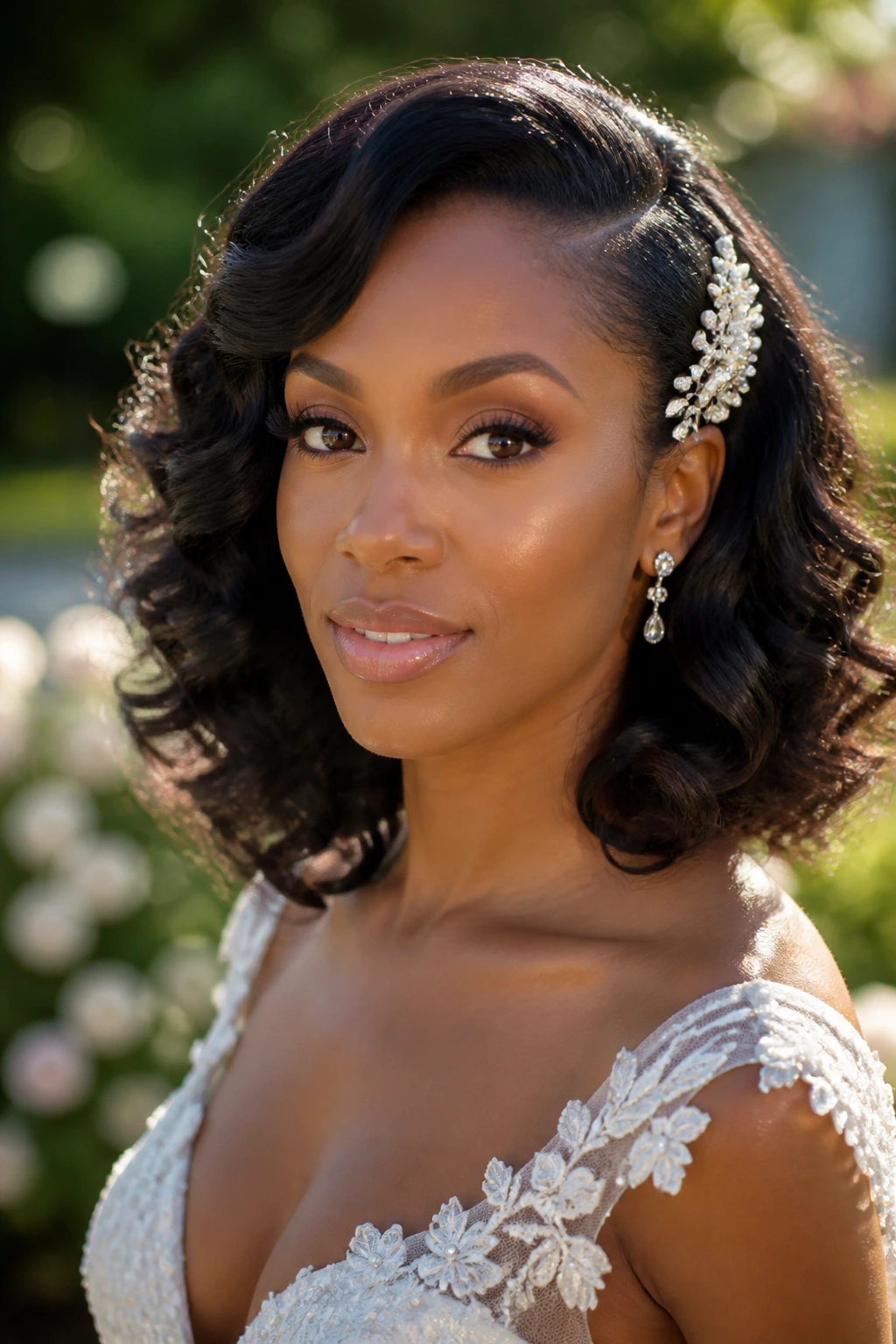
Shoulder-length curls are underrated for brides. They sit right in that zone where you still get movement, but the style doesn’t swallow the dress. Add a side comb, and the look becomes formal enough without losing the easy curl pattern.
This works best when the curls are grouped into larger clumps rather than brushed into a puff of texture. The side comb gives a little lift near the temple, which helps the style feel intentional. Keep the finish soft around the ends so the bob or lob keeps its shape.
29. Twist-and-Pin Gibson Tuck
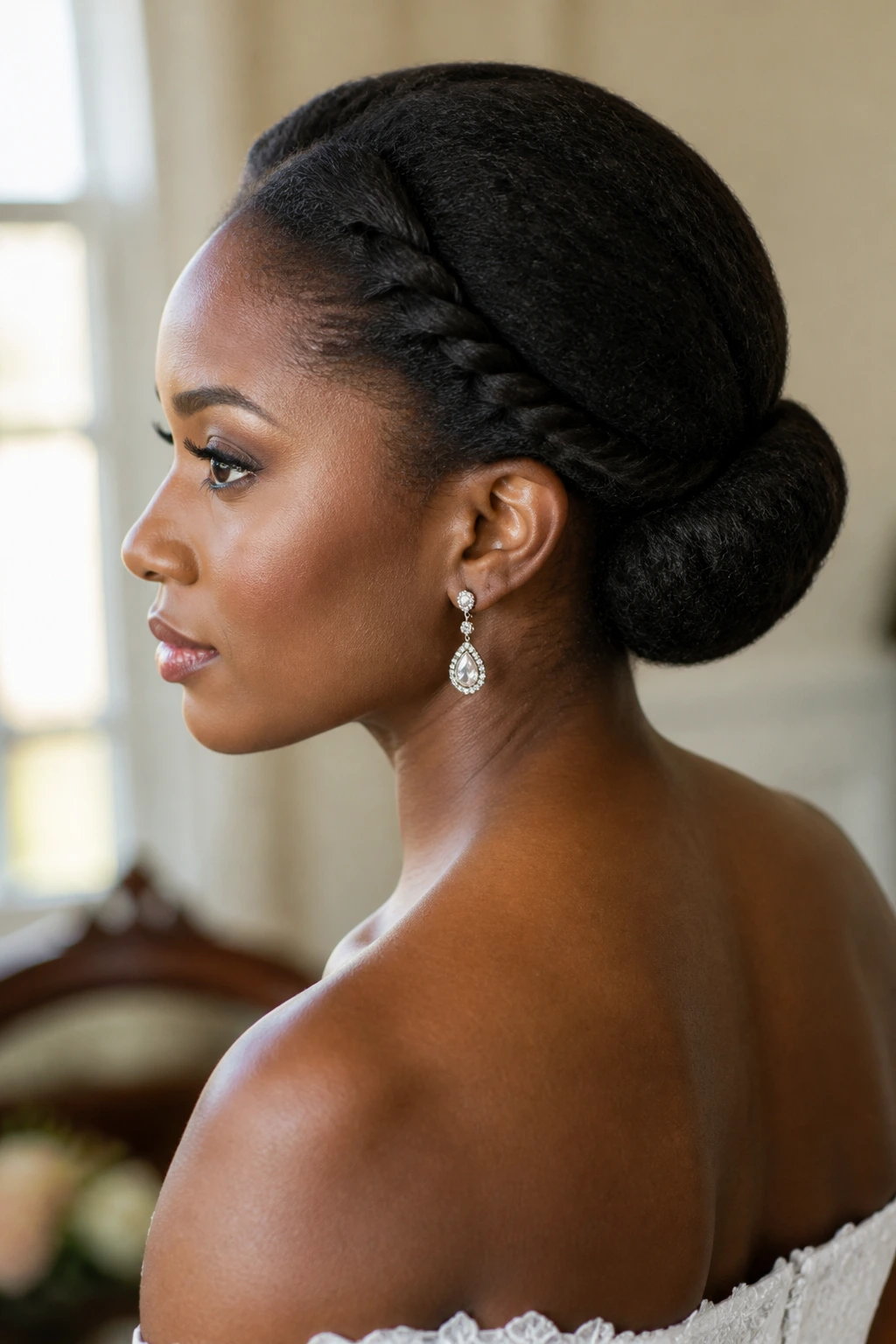
The Gibson tuck has old-school bones, but on natural hair it can feel modern and fresh. Twist the length, tuck it at the nape, and pin it into a low roll that sits close to the head. It’s elegant in a quiet way.
I like this for brides who want the neck and shoulders clear, especially with higher necklines. The tuck should stay smooth, not bulky. If the hair is thick, work in sections and pin each layer carefully so the roll doesn’t poke out by the reception.
30. Feed-In Braid Pony with Curls
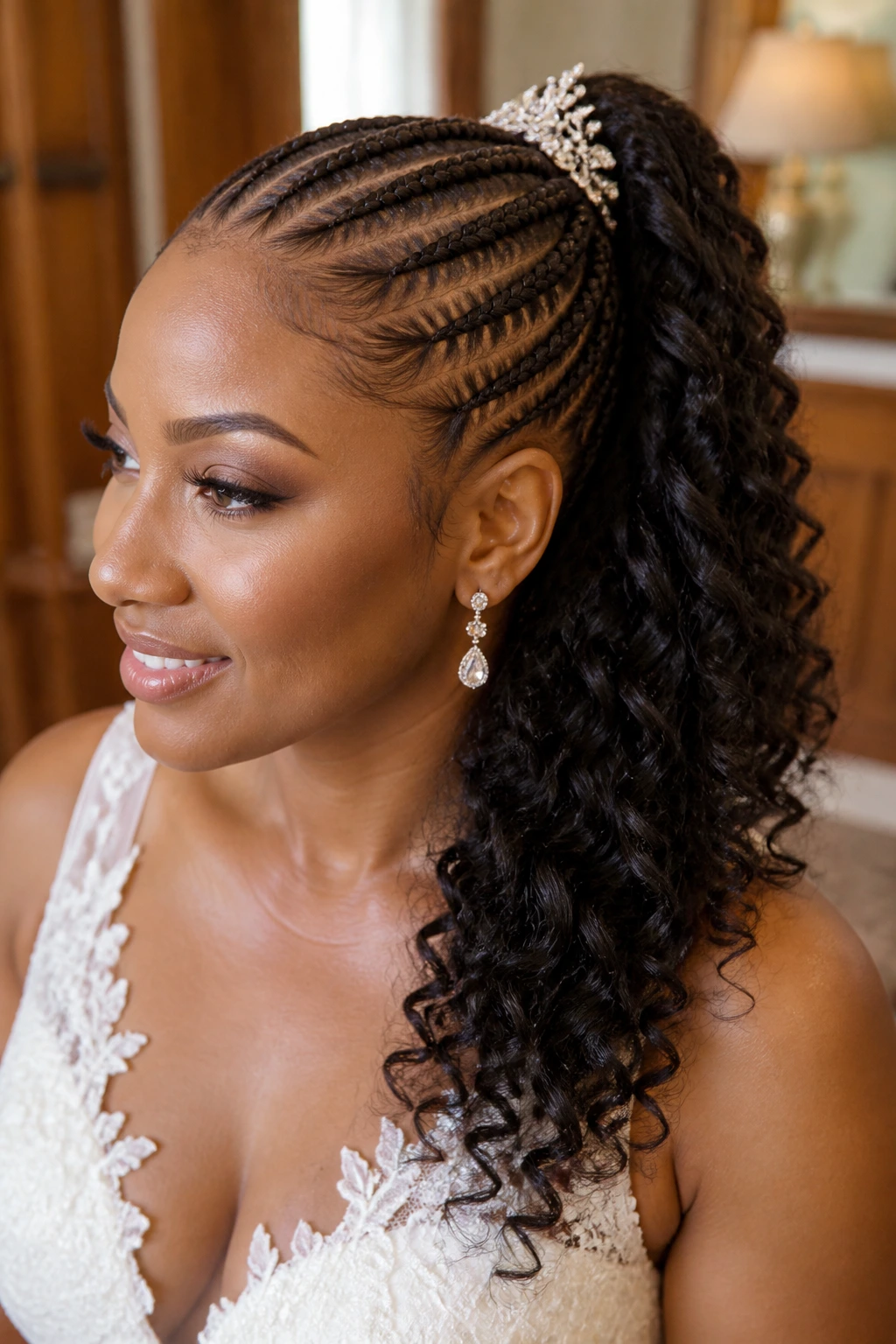
A feed-in braid ponytail gives you a smooth start at the scalp and plenty of movement at the end. Adding curls to the tail softens the braid and makes the whole style feel more bridal. It’s a good mix of precision and softness.
The feed-in part at the front should be neat and even, because that’s what the eye catches first. Once the braid reaches the ponytail, the curl pattern can take over. A little shine on the braid and a defined curl tail keep the contrast looking clean.
31. Tapered Fro with Decorative Pins
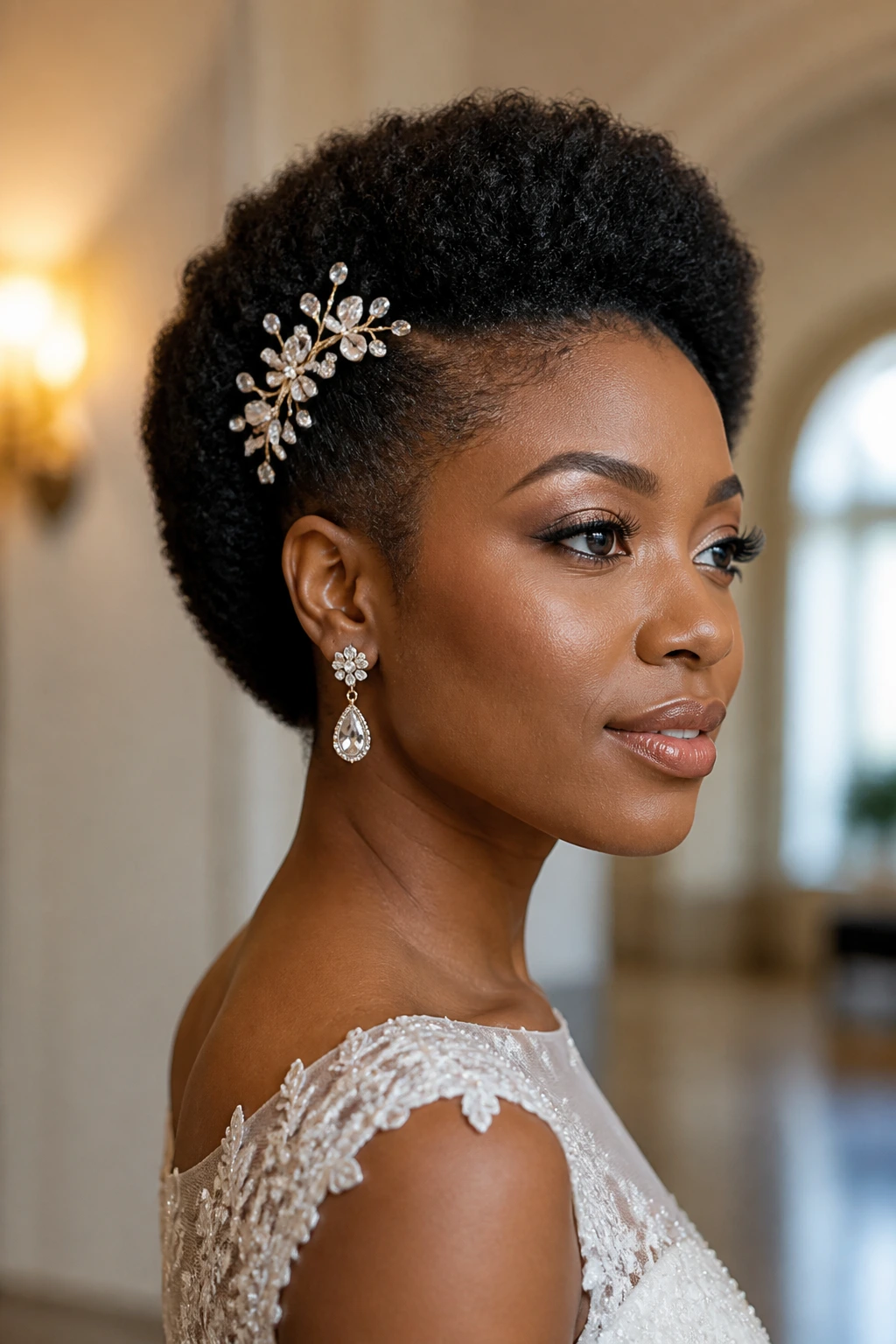
A tapered fro is already shaped by the cut, so you’re free to play with decoration instead of construction. A small cluster of pins near one temple or along the crown is enough to make it wedding-ready. I love that it doesn’t try to become something else.
The shape matters more than accessories here. Keep the sides neat and the top rounded in a way that complements the face. If the pins are too large or too many, they’ll steal the attention from the cut, which is the best part anyway.
32. Curly Half-Up Top Knot
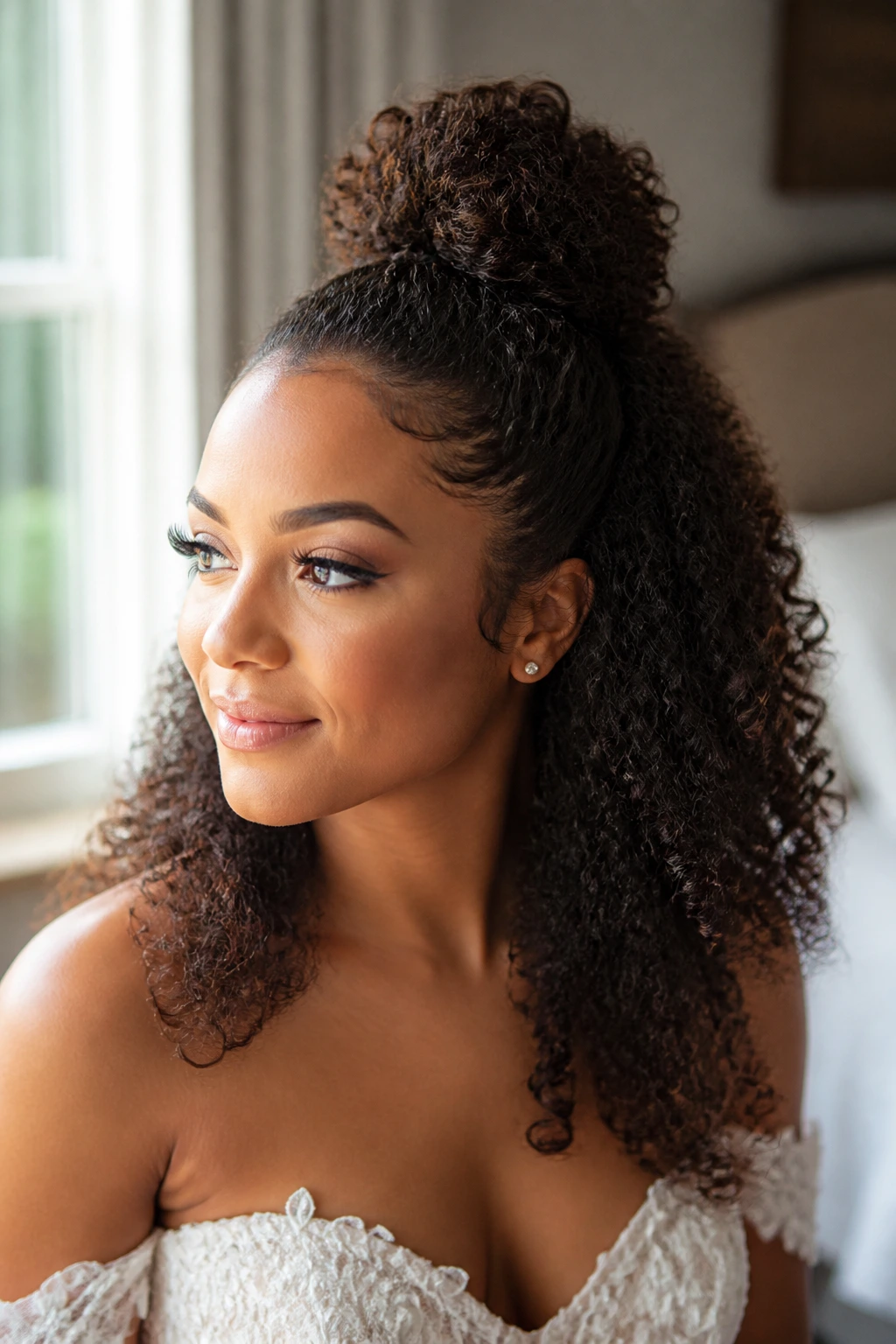
A curly half-up top knot gives you the lift of an updo without giving up the rest of your texture. It’s a nice fit when you want the front out of the face and the back still moving. The knot also gives you a clear place to anchor a small veil or comb.
Don’t make the top knot too tight or too high. The shape should look playful, not squeezed. Leave enough curl volume underneath so the bottom section feels full instead of like an afterthought.
33. Low Side Bun with Textured Tendrils
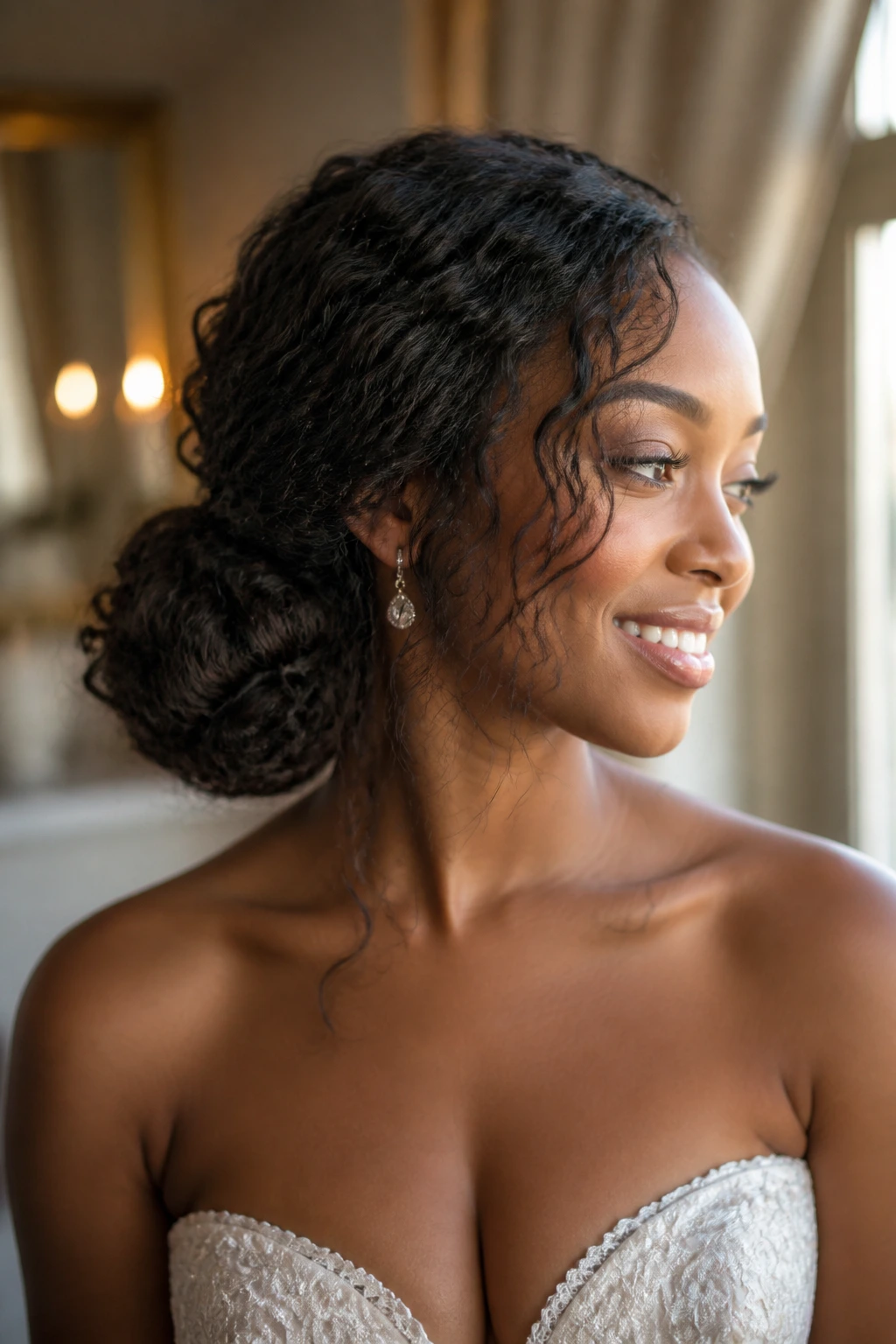
A low side bun has a little asymmetry, which instantly makes it feel softer than a centered style. The tendrils around the face bring the texture back into the picture and keep the look from feeling too sealed off. It’s romantic, but not precious.
This is a good choice if one shoulder or neckline detail deserves attention. The bun should sit low and slightly off-center, not so far over that it looks accidental. A couple of controlled tendrils are enough — too many and the whole thing starts to unravel visually.
34. Side-Part Loc Bun
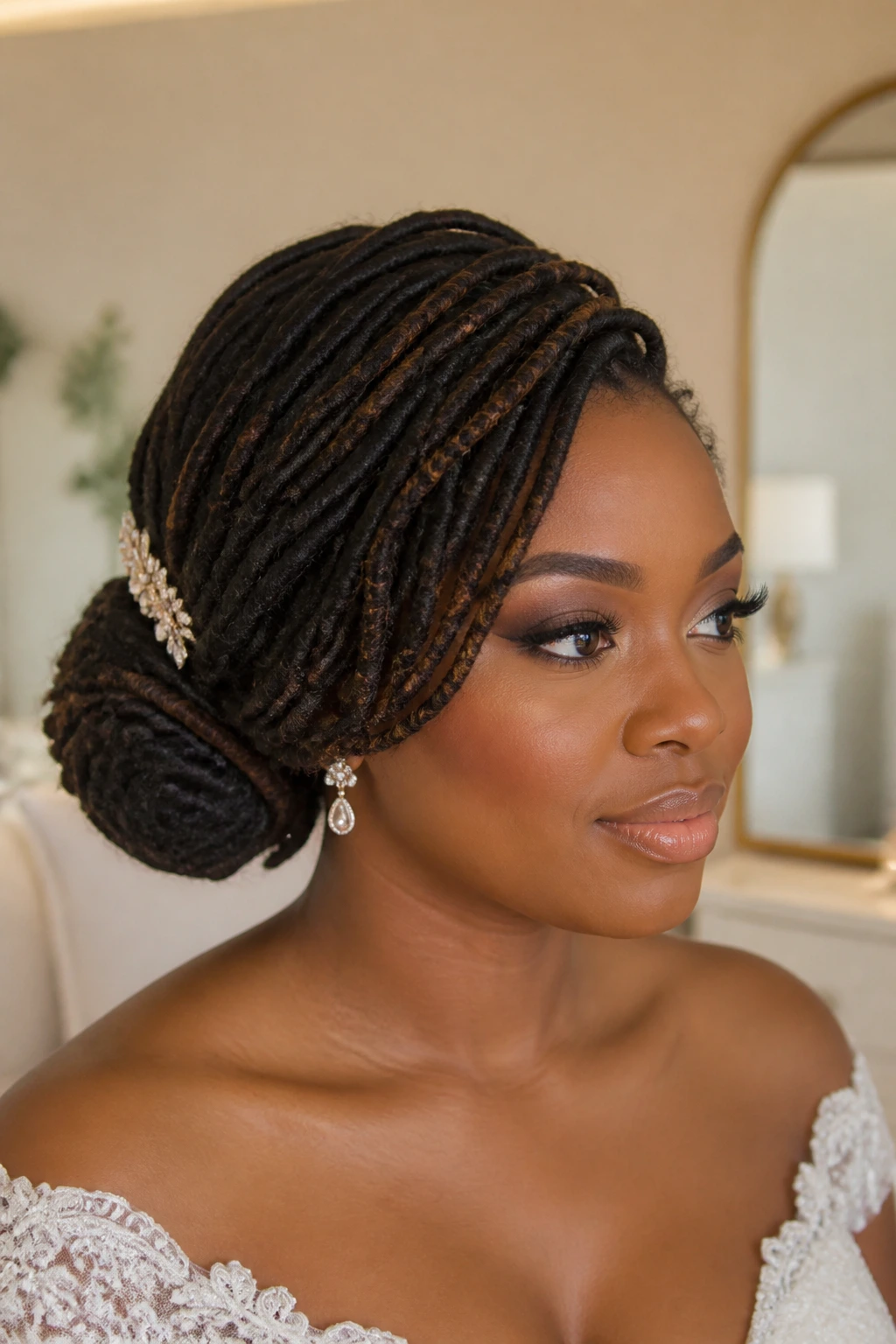
A side-part loc bun gives locs a clean bridal frame without hiding their shape. The off-center part softens the forehead line, and the bun at the nape keeps the style grounded. It feels formal, but still textured.
This style works especially well when the locs are medium to long and the bun can be built with real volume. Keep the part clean and the bun tucked tight enough to stay neat. If you want a touch of softness, leave one loc slightly loose near the cheek.
35. Cornrow Ponytail with Curly Tail
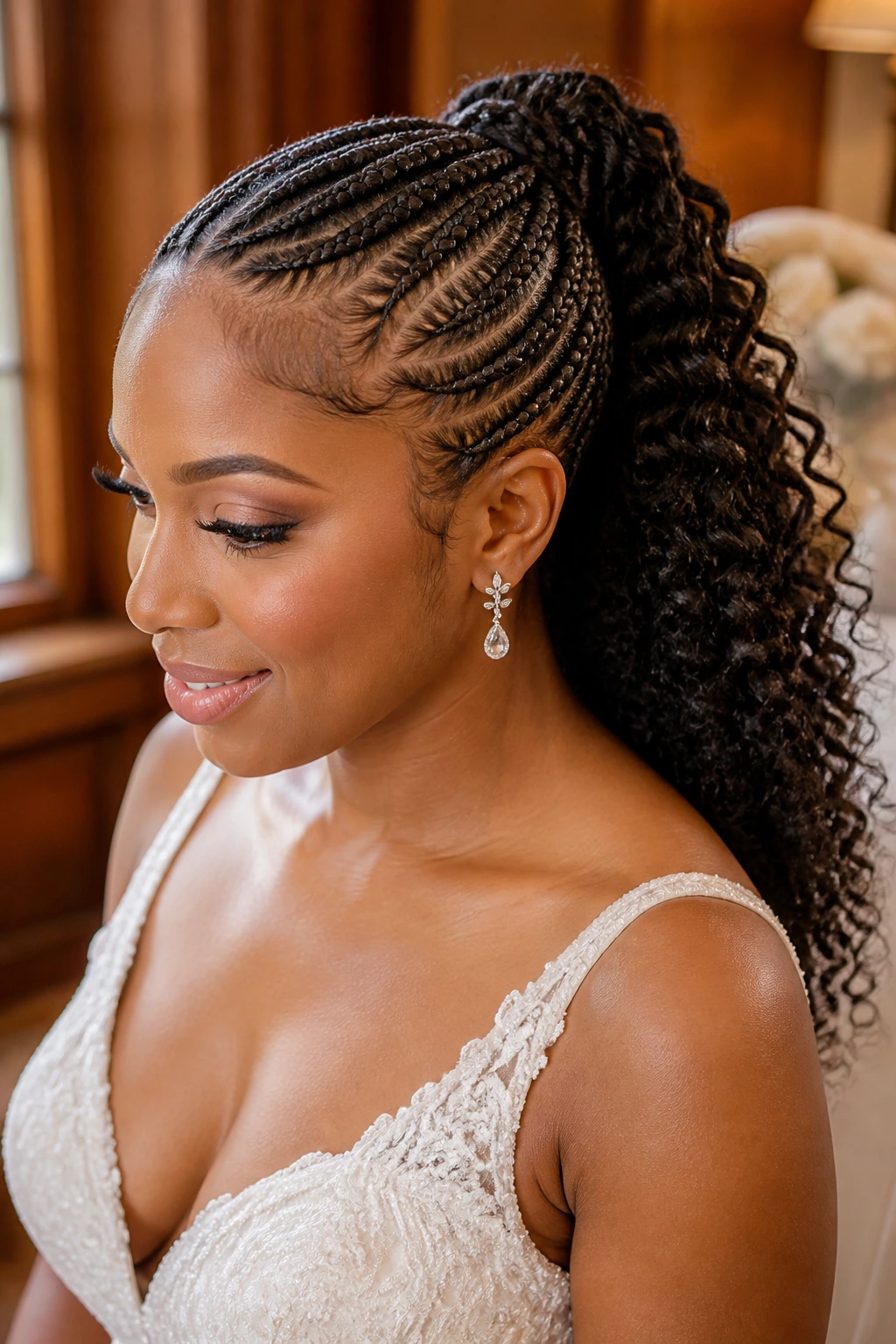
Cornrows at the scalp keep the base neat, and a curly tail gives the ponytail the softness brides often want. The mix of smooth and textured sections creates a strong visual rhythm. It’s clean at the root, lively at the end.
This style can lean sleek or full depending on how much curl you leave in the tail. The scalp design should be even and secure, because that’s the part people notice first. Once the ponytail drops into curls, let it move a little.
36. Roller-Set Waves Swept Back
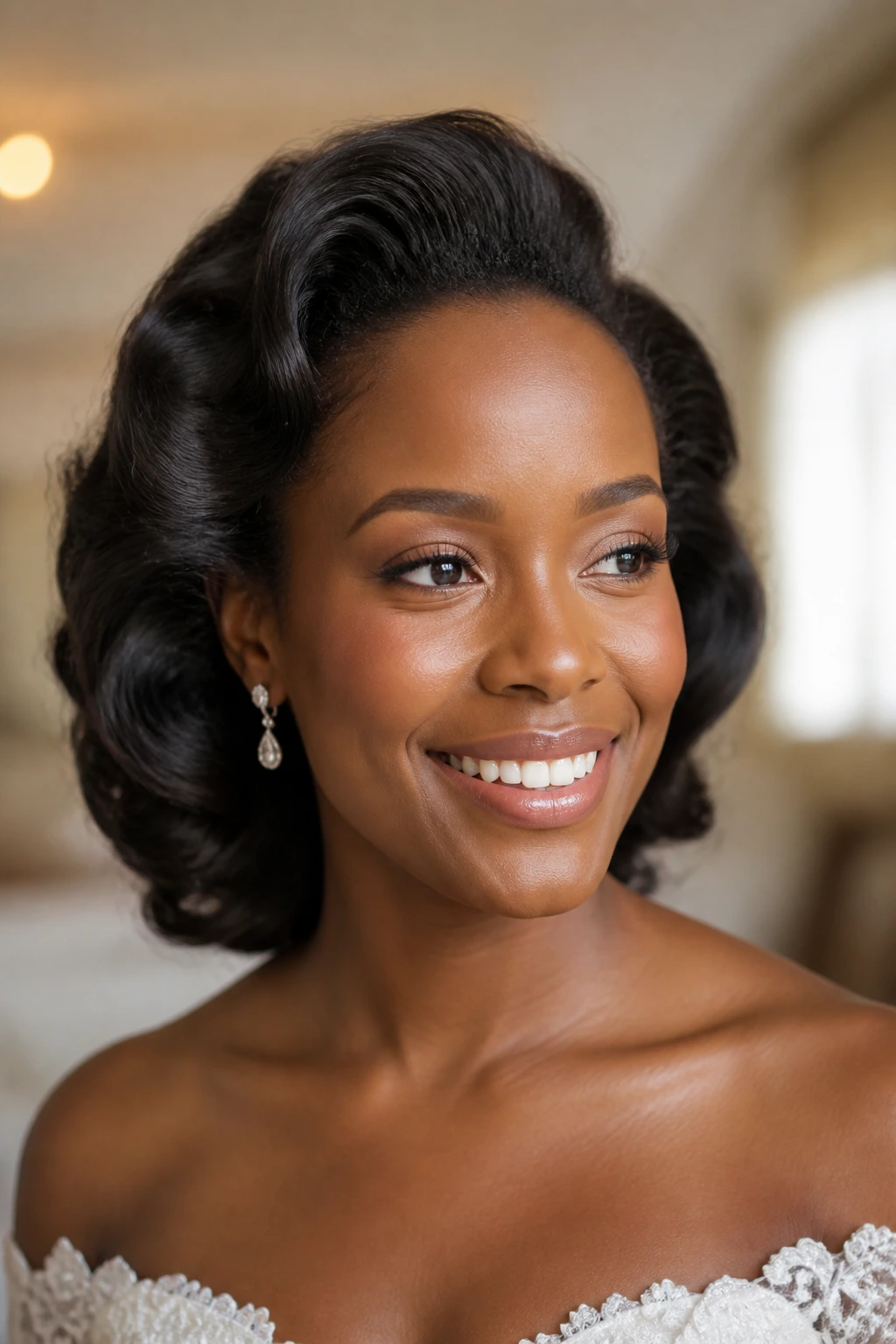
Roller-set waves have a certain ceremony to them. They give you soft bends and polished volume without the straightened look that sometimes feels too firm for natural hair brides. Sweeping them back opens the face and keeps the front elegant.
The set has to be dry all the way through before you brush it out. If the rollers come out too soon, the wave pattern dies halfway through the day. A little lift at the roots and a side sweep usually give enough shape without overworking it.
37. Sculpted Afro Puff with Braided Accent
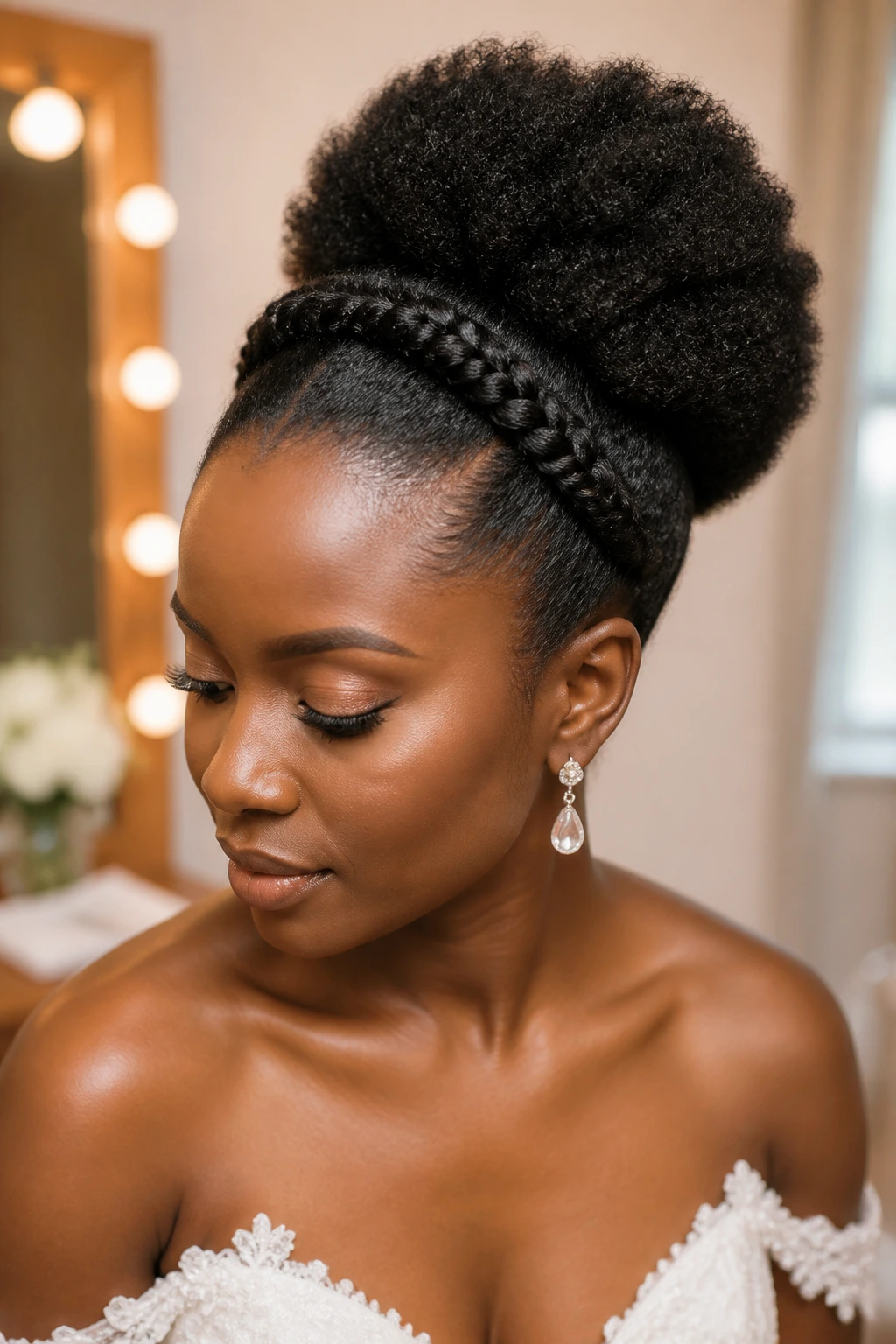
A sculpted afro puff can be lovely when you add one braided accent across the front or side. That single braid gives the puff a point of interest and keeps the look from feeling too round or too plain. It’s simple, but not boring.
The puff should be shaped with purpose, especially at the sides and back. The braid accent can be thin and clean, or a little thicker if you want it to stand out more. Either way, the combination feels balanced when the puff keeps its fullness.
38. Veil-Friendly Low Chignon with Twist Detail
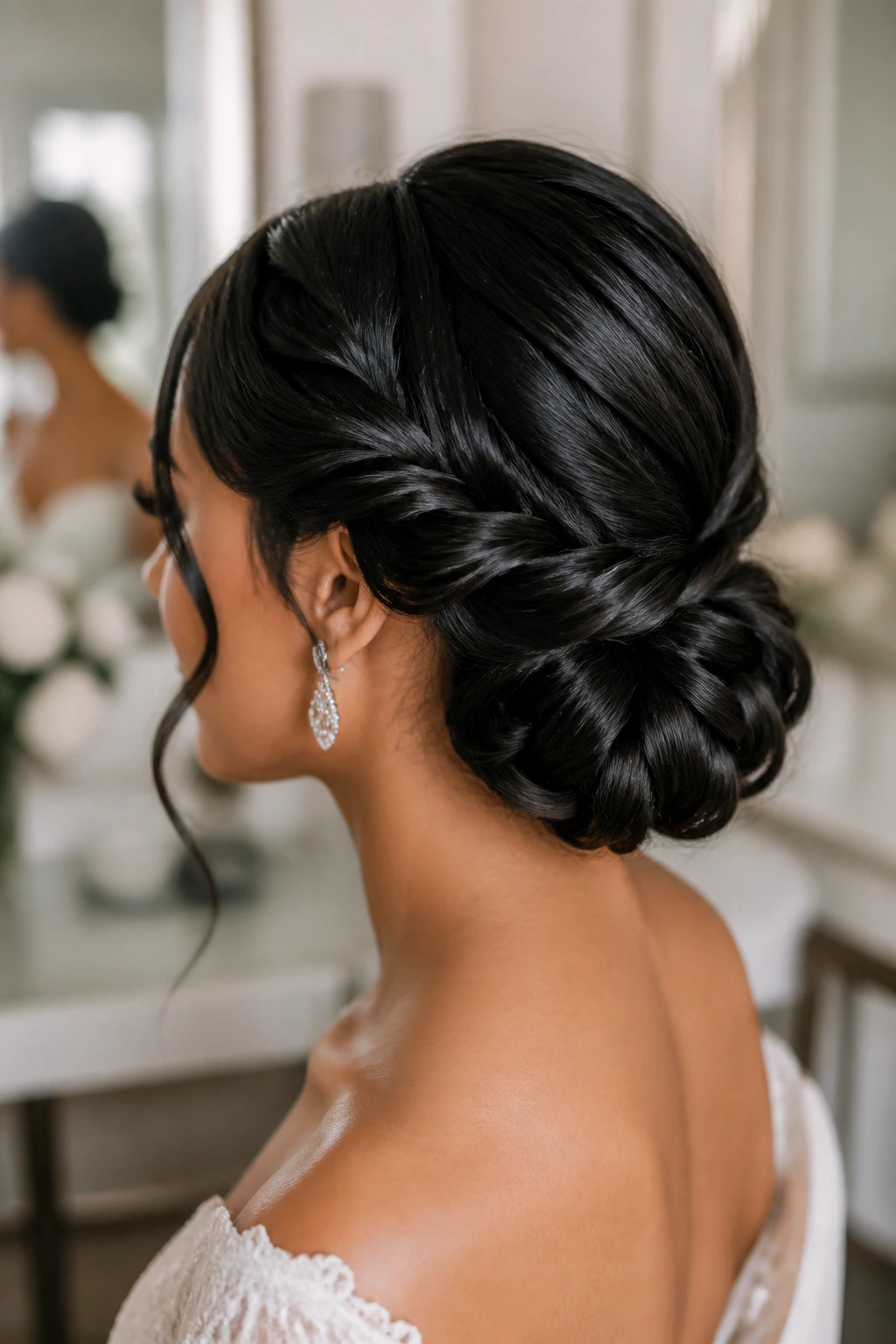
A low chignon is one of the easiest places to anchor a veil because the base sits flat and steady. Adding a twist detail keeps it from looking like a plain bun rolled up for duty. The result is tidy, elegant, and practical in the best sense.
This is the style I’d pick when the dress is detailed and the hair should stay in the background without disappearing. The chignon should rest low enough to avoid bumping the veil comb. A soft twist or braid woven into one side gives it enough texture to feel finished.
How to Keep the Shape Clean From Morning to Midnight
A bridal style lives or dies by the prep underneath it. Hair that’s fully dry holds pins better, frizzes less, and stays in place longer than hair that still feels warm or damp in the middle. If you’re working with curls or coils, stretch the hair first if the style needs smoothness; if you’re wearing a wash-and-go, define the curl pattern and let it set completely before you touch it.
I’m also a big believer in checking comfort before the ceremony starts. Put the style on, wear it for 20 minutes, move your head, bend, laugh, and take a few photos in real light. If the base pinches or the front feels too tight, fix it then. No one wants to discover a temple headache halfway through dinner.
Essential Tools for These Styles
-
Rat-tail comb: Clean parts and sectioning make a huge difference, especially for buns, braids, and side parts.
-
Edge brush: Use it lightly. It’s for smoothing the hairline, not scraping it into glue.
-
Bobby pins and hairpins: Stock more than you think you need. Fine pins work for detail; U-pins help with volume.
-
Strong but flexible hold spray: You want hold that sets the style without turning the hair crunchy.
-
Styling mousse or setting foam: Useful for twists, roller sets, finger waves, and any style that needs shape.
-
Hair oil or lightweight serum: A few drops add sheen to braids, locs, and polished buns.
-
Satin scarf or bonnet: Essential for the night before and the night after.
-
Blow dryer with diffuser: Helpful for curl definition and for drying the base before pinning.
-
Hair net: A quiet little hero for buns and chignons that need extra security.
-
Decorative pins, combs, or clips: Keep them lightweight if they’re going into natural hair; heavy ornaments slide more than people expect.
Smart Prep and Product Picks for Bridal Natural Hair
The best bridal styles usually start a day or two before the wedding, not at the last second with a prayer and a can of spray. Choose products based on the style you actually want. A sleek bun needs a smoother base, so a light gel or cream that lays the hair down helps. A puff, fro, or twist-out wants definition and moisture, so a richer leave-in or styling butter makes more sense.
Be careful with shine products. A little gloss can make braids and locs look rich under indoor light, but too much oil turns the hair slippery and weakens pins. That’s one of those mistakes that looks harmless in the mirror and annoying an hour later.
If your style depends on curl definition, set it fully the night before and resist the urge to keep touching it. Hands break the cast, loosen the curl clumps, and invite frizz. Leave the final fluffing until the end, and keep the touch-ups small.
How to Wear These Styles With Veils, Flowers, and Jewelry
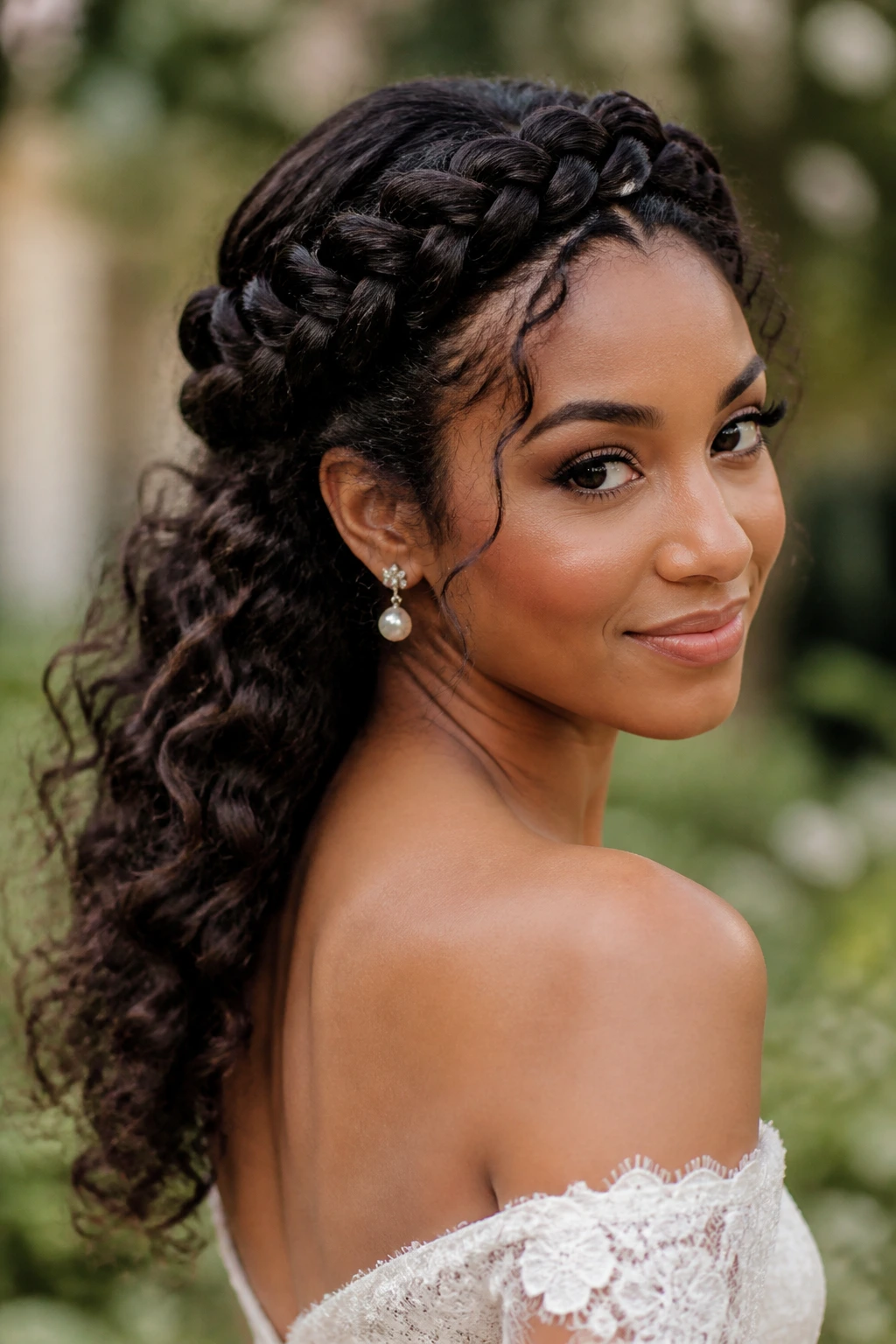
Presentation: Let the hair shape stay clear before you pile on accessories. A low bun can handle a comb or veil in the center; a crown braid or puff often looks better with smaller pins or flowers placed off to one side.
Accessories: Lightweight combs, slim floral pins, pearl clips, and thin headbands tend to sit better on natural textures than heavy crowns. If the accessory needs a lot of support, build a steadier base with braids, twists, or a tucked style first.
Placement: A veil comb usually wants a flat, secure anchor point at the back of the head or just below the crown. Headbands and tiaras look cleaner when the hairline is smooth but not flattened. Flowers can be tucked into bun edges, braid gaps, or the side of a puff without crowding the whole style.
Balance: If the earrings are large, keep the hair a little cleaner around the face. If the dress already has beading near the shoulders, a softer bun or tucked style usually feels better than a huge halo of curls.
Additional Tips and Finishers
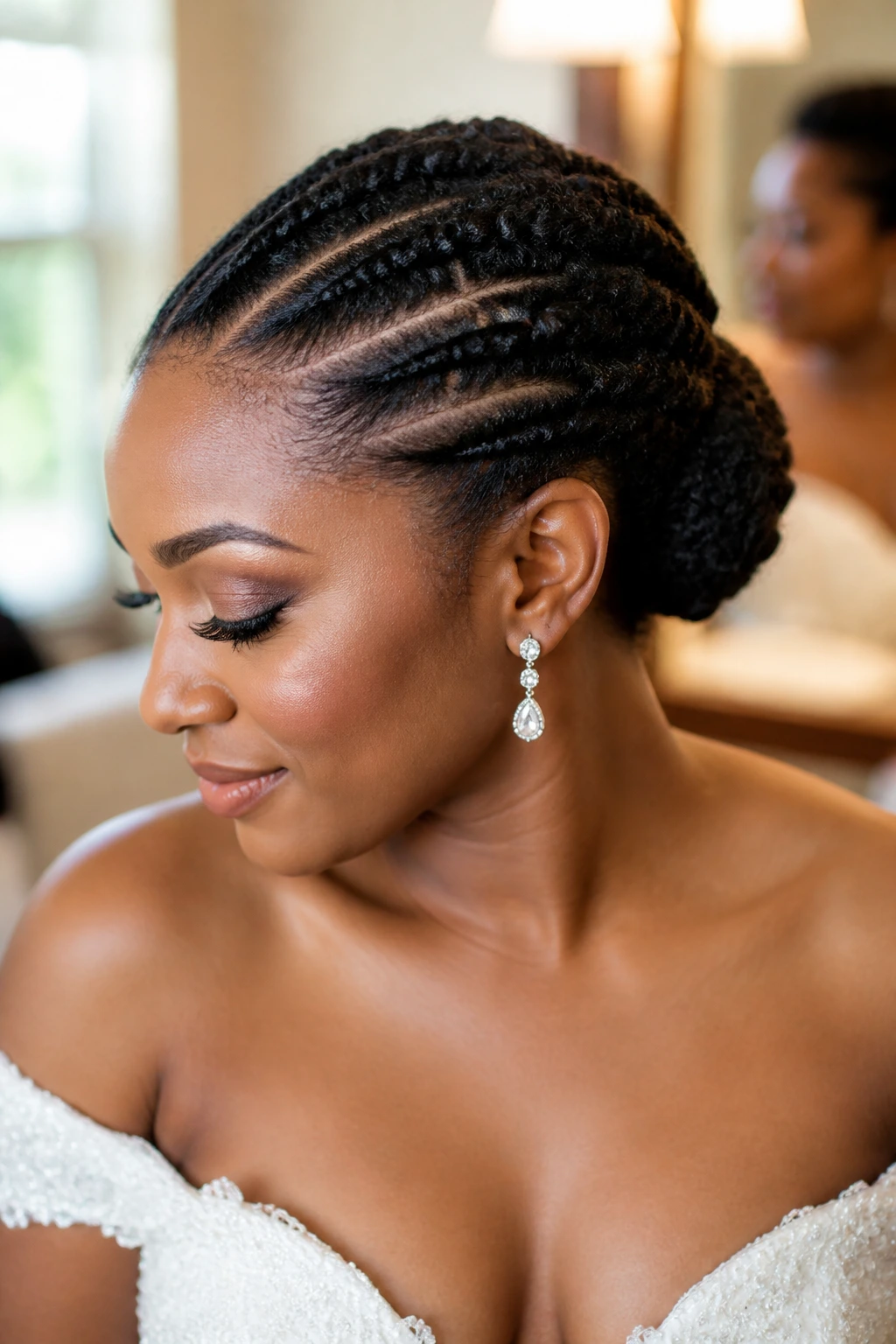
Texture Boost: If your style feels too flat after pinning, lift small sections at the roots with the tip of a comb instead of combing through the whole shape. That keeps the definition while adding the bit of fullness photos tend to flatten.
Humidity Shield: A light, flexible-hold spray around the perimeter can help keep curls and twists from puffing out at the edges. Don’t drown the style. A few passes is enough.
Fast Fix: Keep three things in your touch-up kit: a few pins, a travel edge brush, and a small satin scarf. That covers the most common wedding-day emergencies without turning the bathroom into a salon.
Make-It-Yours: If you love color or sparkle, add it where the eye naturally lands — at the side of a bun, across a braid, near a temple, or at the base of a puff. You do not need to cover the whole head for the style to feel special.
Common Mistakes to Avoid With Bridal Natural Hair
-
Starting with damp hair under pins: The style may feel secure at first, then swell or shift as it dries. Make sure the base is fully dry before the final pinning.
-
Using too much edge control or oil: The hairline turns slick, pins slide, and the style loses grip. Use small amounts and build only if needed.
-
Choosing a style that fights the accessory: A heavy veil on a loose puff or a giant crown on a crowded top knot can look awkward fast. Match the accessory to the base shape, not the other way around.
-
Forgetting shrinkage or length changes: Natural hair doesn’t always sit where you think it will. Stretch it, set it, or pin it with that shrinkage in mind so the final shape lands where you planned.
-
Overworking the curls after they set: Once the curl pattern or twist pattern is in place, leave it alone. Too much fluffing breaks definition and leads to frizz by the end of the event.
Variations and Alternatives to Try
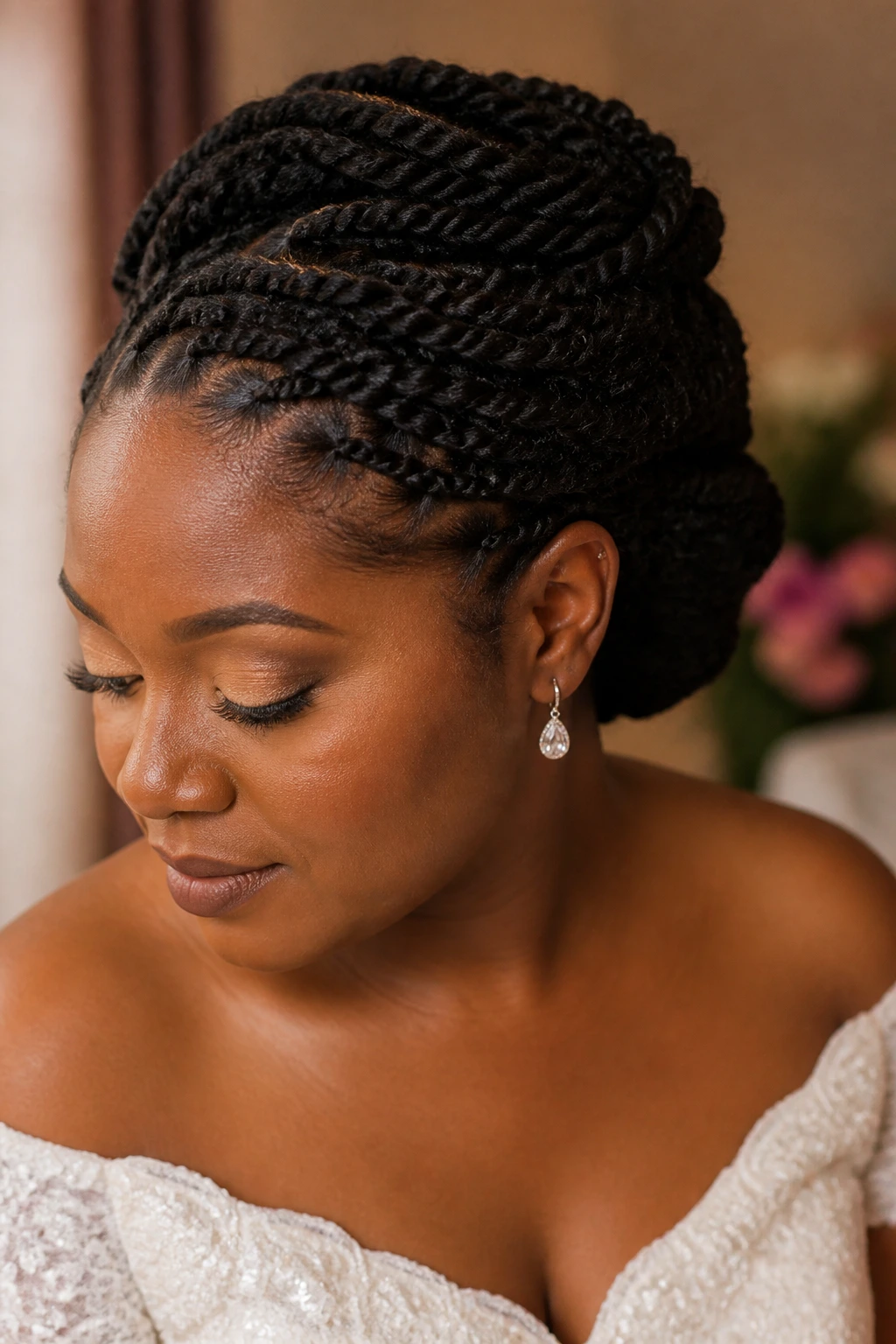
Soft Romance Edit: Loosen the edges of a bun, puff, or braid crown and add small florals or pearl pins. This version works well when the dress is simple and the hair needs a little softness rather than a sharp outline.
Sleek and Clean Edit: Choose a middle part, low bun, or cornrow base and keep the lines crisp. This version suits structured dresses, bold earrings, or brides who want the hair to stay disciplined from first look to last dance.
Protective-Style Edit: Build the look around twists, braids, or locs instead of trying to smooth everything into place. That keeps the hair safer, the morning easier, and the final shape more secure.
Short-Hair Statement Edit: Tapered cuts, finger waves, and side-pinned curls do more than people think. Add one strong accessory and keep the silhouette close to the head so the shape reads clearly.
Humidity-Smart Edit: Pick styles with tucked ends, pinned bases, or stretched texture rather than loose, brushed-out curls. That way the style still looks polished if the weather gets sticky or the ceremony runs long.
Accessory-Forward Edit: If you have a veil, crown, or floral comb you love, build the hairstyle around it. Keep the hair slightly quieter and let the accessory carry the sparkle.
Keeping the Style Fresh After the First Dance
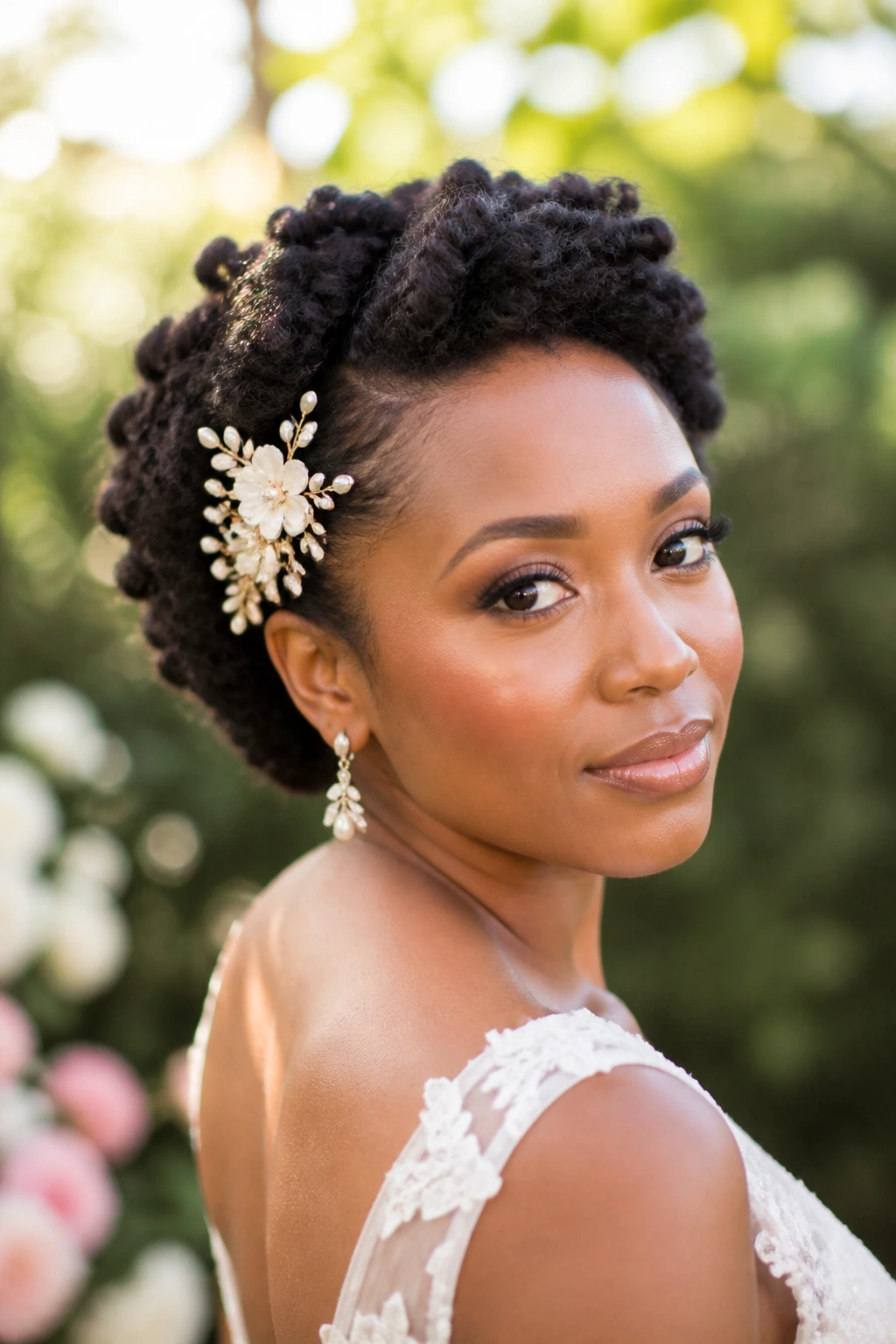
Most bridal natural styles do best when they’re protected the same night, not treated like they can fend for themselves. Wrap the hair with a satin scarf or use a bonnet with enough room for the style’s shape. For puff, bun, braid, and loc styles, that usually helps the look survive into the next day with only a few pin adjustments.
Loose curls and wash-and-go styles need a little more care. Sleep on a satin pillowcase, pineapple the hair only if the shape allows it, and mist the frizzy spots lightly in the morning instead of soaking the whole head. A tiny bit of leave-in on the hands goes farther than people think.
If you’re wearing the style for more than one event, plan the base to last. Braids, twisted updos, loc crowns, and tucked buns can often stay neat for several days with minimal refreshing. A curl-forward style usually needs more touch-up by day two or three, depending on density, product, and how much you touched it during the celebration.
Frequently Asked Questions
Which natural hairstyle is best if I need to wear a veil?
Low buns, tucked chignons, braided crowns, and flat-twist updos usually give the veil comb the most stable base. If the veil is heavy, skip anything too lofty at the crown and make sure the anchor area is fully pinned.
How far ahead should I do a bridal hair trial?
Long enough that you can adjust, but close enough that your hair texture still matches the plan. A trial a few weeks before the wedding is usually the sweet spot, especially if you’re deciding between stretched hair, curls, or a protective style.
Can I wear my natural hair down and still make it bridal?
Yes, if the shape is controlled. Side parts, defined curls, half-up styles, and finger waves can look formal without going into a full updo. The difference usually comes from finish, accessories, and how clean the front section is.
What if my hair is short?
Short hair has more options than people give it credit for. Tapered cuts, finger waves, side pins, jeweled clips, and shaped afros can all look intentional and elegant. You do not need extra length to look finished.
How do I keep curls from frizzing during the ceremony?
Set them fully, let them dry completely, and stop touching them. A light-hold spray can help at the edges, but the real fix is using a product that defines the curl pattern from the start and then leaving it alone.
Can I add extensions or hair pieces to a natural bridal style?
Absolutely. Braids, ponytails, buns, and loc styles often use added hair for shape or length. The key is making sure the added hair matches the texture and weight of the base so it doesn’t look bolted on.
What works best for a high-neck dress?
Styles that keep the neck open usually look strongest: low buns, tucked chignons, side buns, and neat updos. You can still keep texture, but avoid a style that crowds the shoulder line or hides the neckline detail.
How do I refresh the style after sleeping on it?
Use the smallest amount of moisture you can get away with. Smooth flyaways with a little cream on your fingertips, re-pin anything that shifted, and fluff only the section that needs it. A full reset usually creates more frizz than it solves.
A Bridal Style That Still Feels Like You
The best natural bridal hair doesn’t try to erase texture, shrinkage, or personality. It gives them a frame and a little discipline, then lets them do the part that flat ironed hair often can’t: look alive in motion. That’s why these styles hold up so well in real life, not just in the first five minutes of a posed photo.
If you’re choosing between a puff, a braid crown, a polished bun, or a curl-forward shape, pick the one that matches your hair’s own behavior and the dress’s strongest line. That’s where the good stuff lives. The style should feel like a finished version of you, not a costume that has to be carried all day.
