



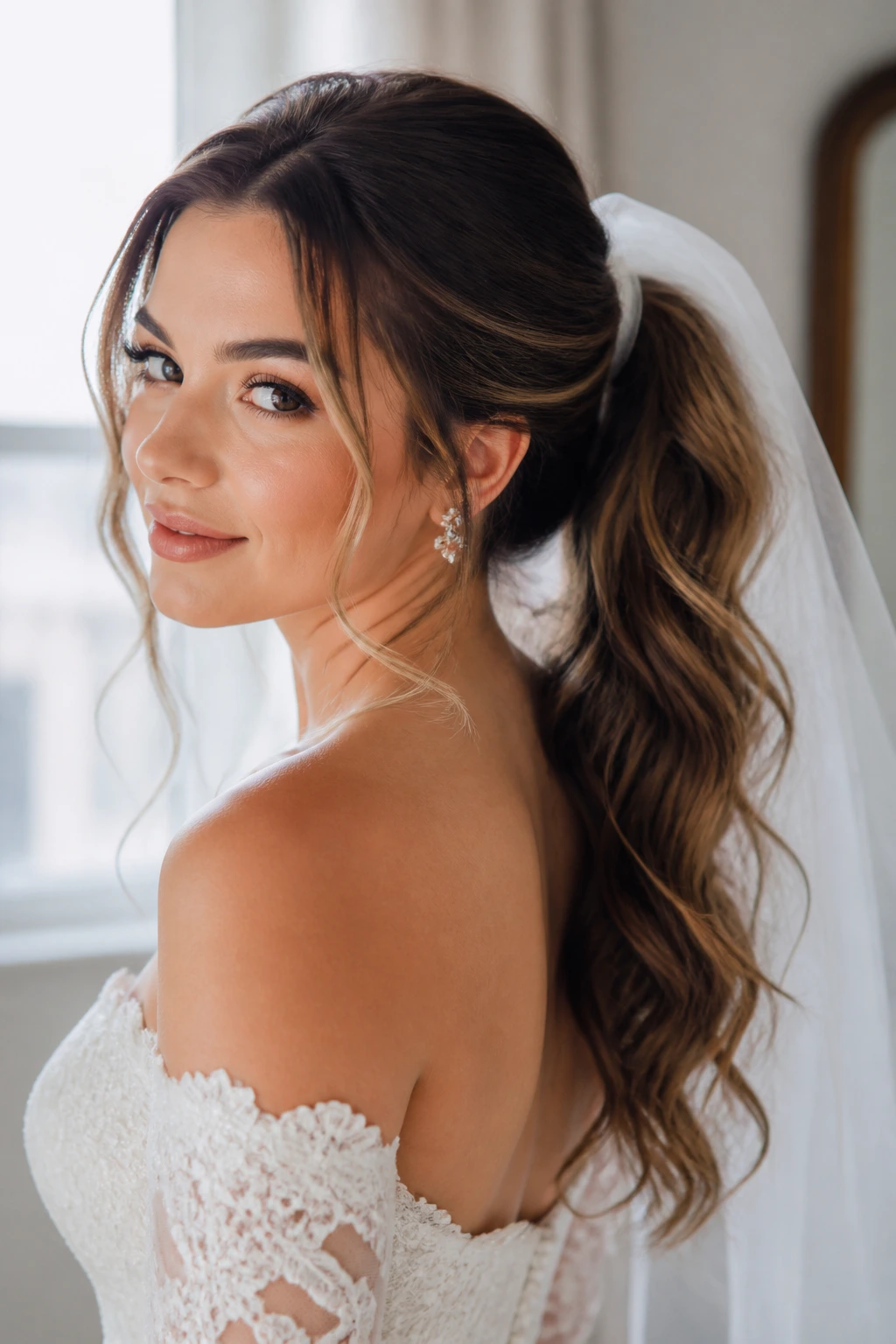
A bridal ponytail can look sharper than a bun, softer than a chignon, and a lot more alive than the stiff styles that tend to wilt by the time the dancing starts. Ponytail styles for brides have a way of solving problems that wedding hair often creates: they keep the neckline open, they make room for earrings, and they let a veil sit where it should instead of fighting the whole shape of the hairstyle. That’s not a small thing. It’s the difference between hair that merely stays up and hair that looks chosen.
The best versions don’t read as “pulled back.” They read as designed. A wrapped low ponytail against silk satin feels crisp and clean. A bubble ponytail with pearl ties brings movement and a little personality. A curly ponytail with face-framing pieces can soften a sharp jawline without hiding the face. The base matters more than people think, and so does the placement: an inch too high or too low changes the whole mood of the look.
I’ve always liked ponytails on brides because they move. A veil can lift, a curl can swing, a ribbon can trail, and the style still holds its shape. That balance between control and motion is what makes these looks feel special rather than safe. So let’s get into the versions that actually earn their place on a wedding mood board.
Why Bridal Ponytails Keep Showing Up on the Mood Board
-
They leave the neckline visible: A ponytail frames the collarbones, the back of the dress, and any beading or lace you paid for, instead of hiding them under hair.
-
They work with a veil instead of against it: A veil comb can sit above, below, or just behind the base, which gives you more control than most pinned-up styles.
-
They can look sleek or soft without changing the shape: The same ponytail silhouette can feel polished, romantic, boho, or modern depending on the finish.
-
They stay comfortable for long wear: There’s less pin pressure than in a full updo, which matters when you’re wearing the style for 10 hours or more.
-
They give earrings room to matter: A good ponytail lets chandelier earrings swing, or lets a tiny pearl drop sit quietly without competing with hair.
-
They adapt to straight, wavy, curly, coily, and locked hair: The construction changes, but the idea still works.
1. Sleek Low Ponytail with a Wrapped Base
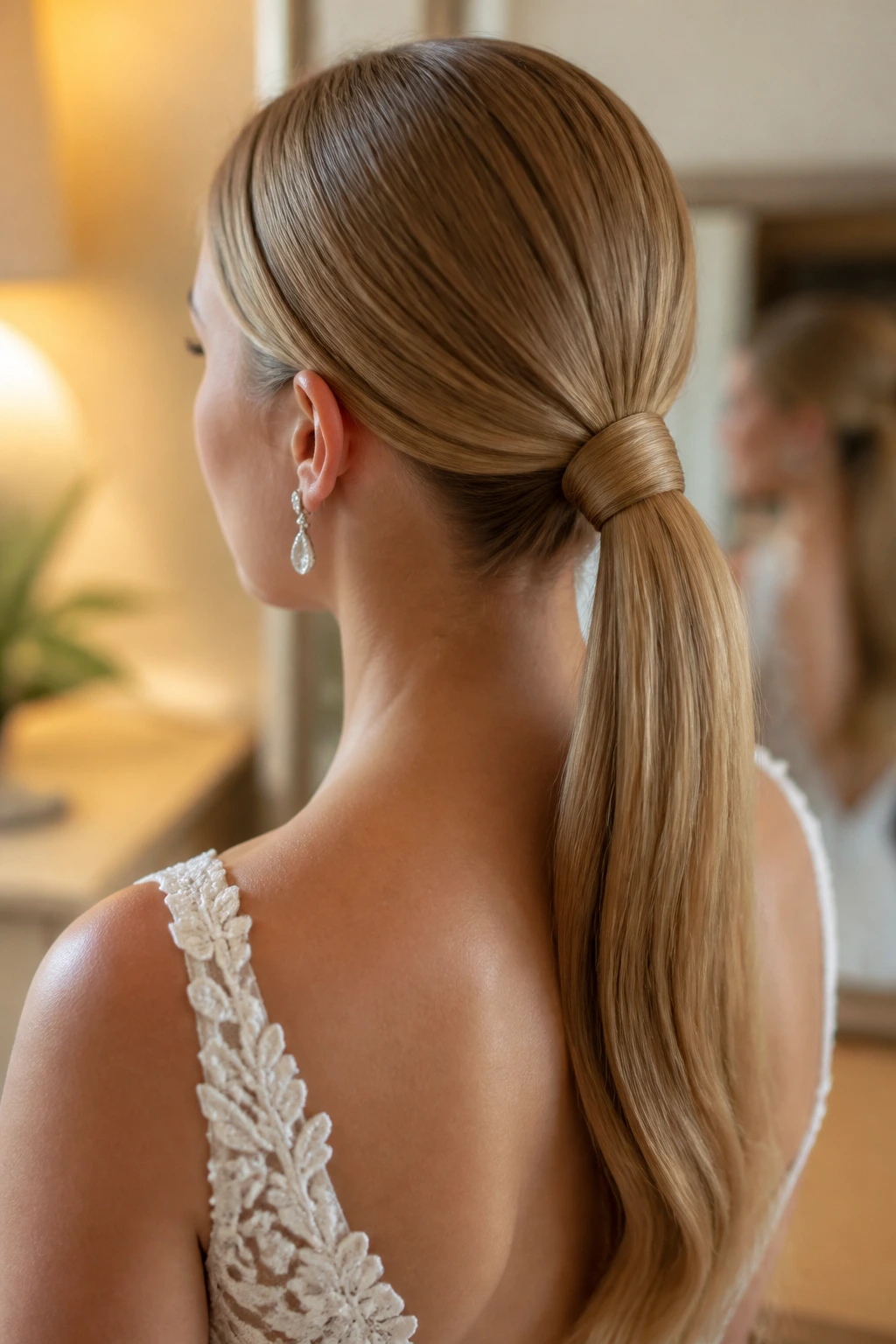
A sleek low ponytail is the quiet workhorse of bridal hair. It sits close to the nape, keeps the silhouette long, and lets the back of the gown stay visible, which is exactly what you want if the dress has a beautiful closure or a line of buttons. The wrapped base is the part that makes it look finished rather than gym-ready. One smooth section of hair hides the elastic, and that tiny detail does more than people expect.
Ask for a center part or a very soft side part, then smooth the crown until it lies flat without looking pasted down. The tail can stay straight for a crisp line or bend gently at the ends with a large barrel iron if you want a little movement. I like this look with satin, mikado, and any dress that has structure. It has backbone.
2. High Gloss Ponytail with Face-Framing Pieces
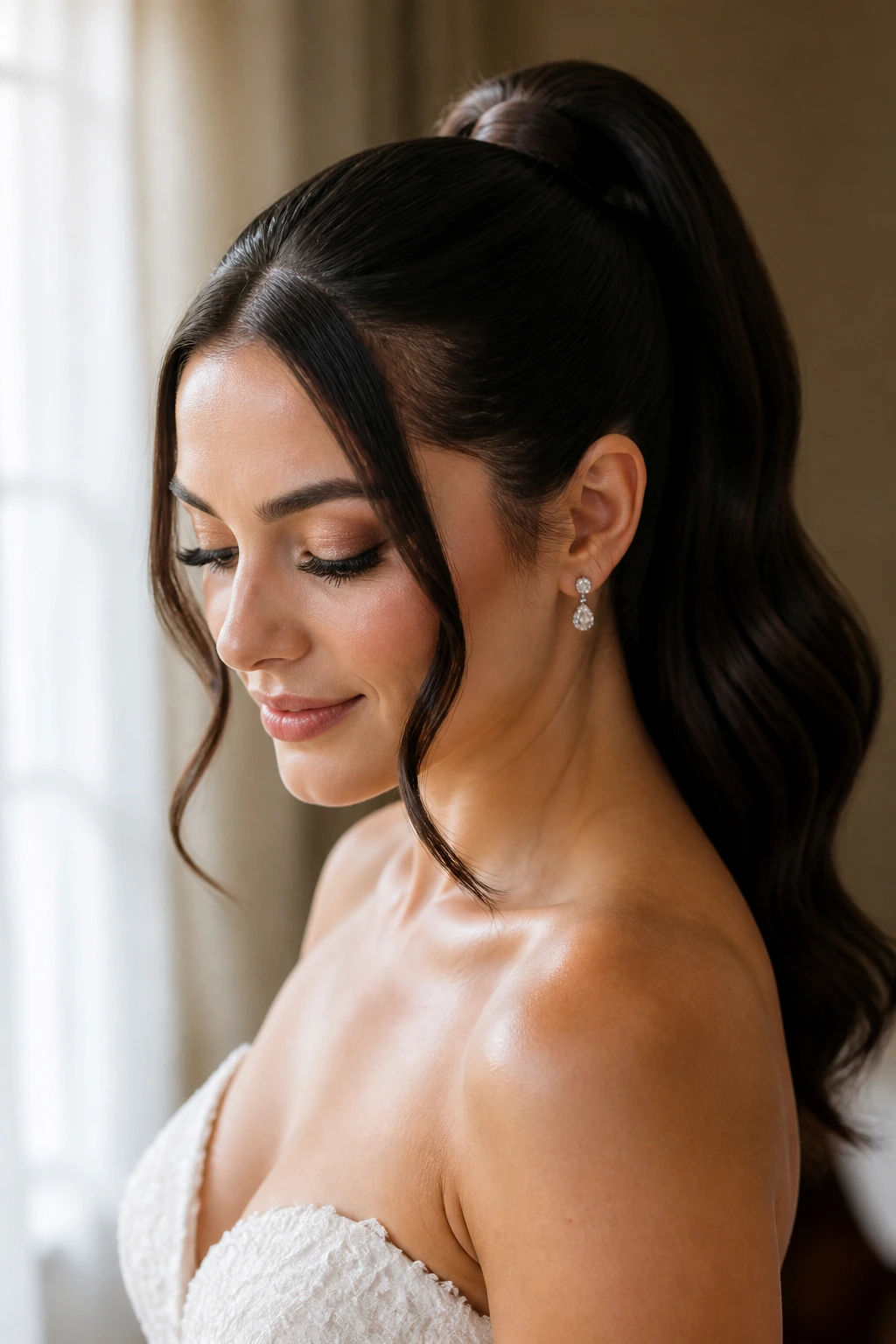
Want height without a mountain of teasing? This is the answer. A high gloss ponytail lifts the face, opens the shoulders, and gives the whole look a clean, confident edge. The face-framing pieces matter here. Keep them thin, curl them away from the cheekbone, and stop before they turn into curtain bangs that keep falling into your lipstick.
What Makes It Work
The ponytail sits higher than the crown, but not so high that it starts looking costume-like. A good stylist will build a little cushion at the roots so the base doesn’t look flat from the side. The result is a tail with movement and a top line that photographs well from every angle.
This one suits strapless gowns, square necklines, and dresses with a lot of texture up top. It also gives statement earrings room to show off. If your hair is fine, this is one of the better places to add clip-in pieces, because the height helps disguise the transition.
3. Bubble Ponytail with Pearl Ties
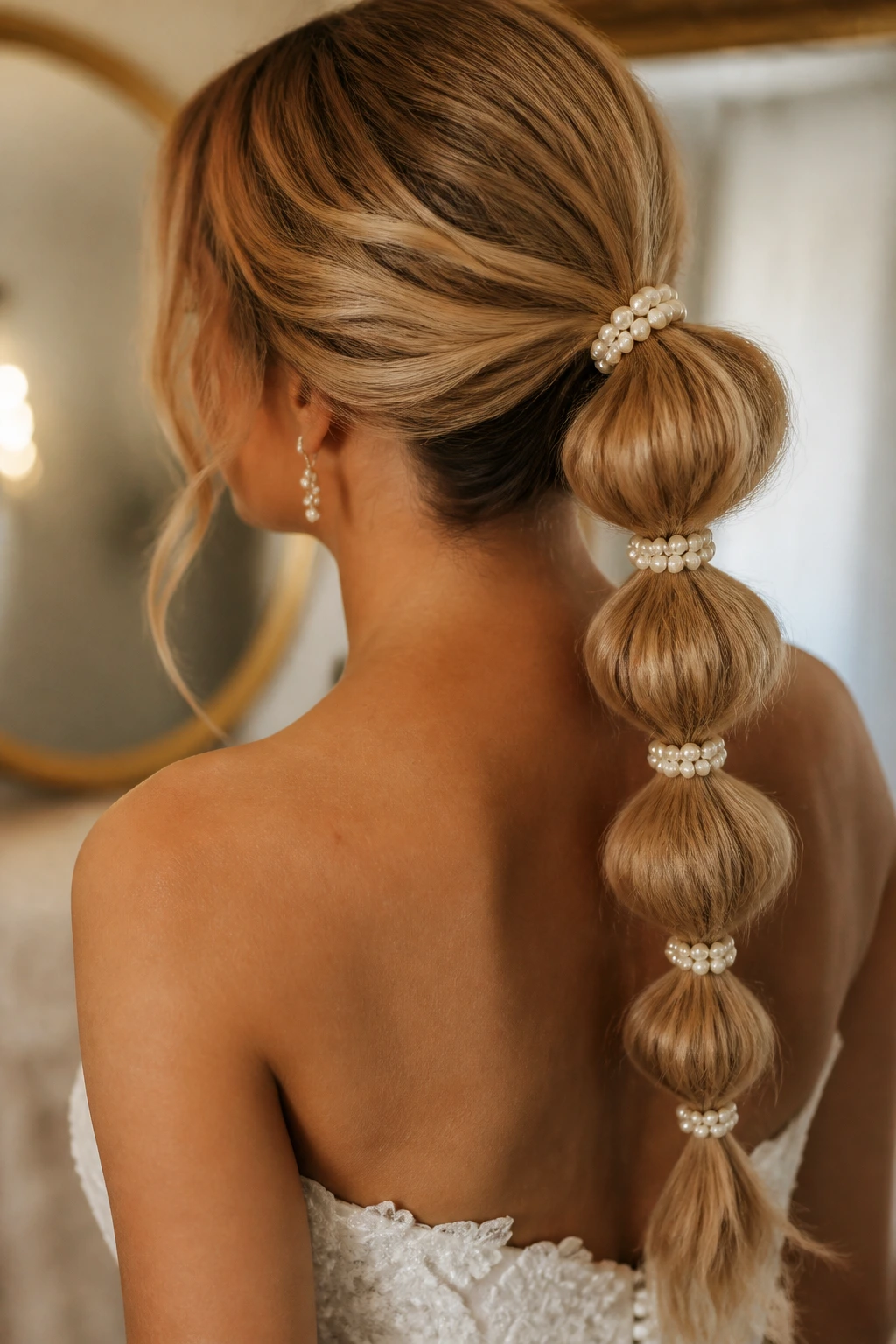
Bubble ponytails used to get dismissed as playful, which is exactly why I like them for brides. Tight spacing, smooth sections, and pearl ties turn the look from casual to formal fast. The trick is making the bubbles even, usually about 1½ to 2 inches apart depending on hair length. If the sections are sloppy, the whole style loses its shape. If they’re clean, it looks intentional and a little graphic.
This style has movement built in. Every section catches light a little differently, and the pearl ties give you a place to repeat the beadwork from the dress or veil. Keep the base sleek and the bubbles softly puffed; too much teasing inside each section makes the tail feel stiff. Best for brides who want something with structure but not a strict updo.
4. Braided Ponytail with Soft Waves
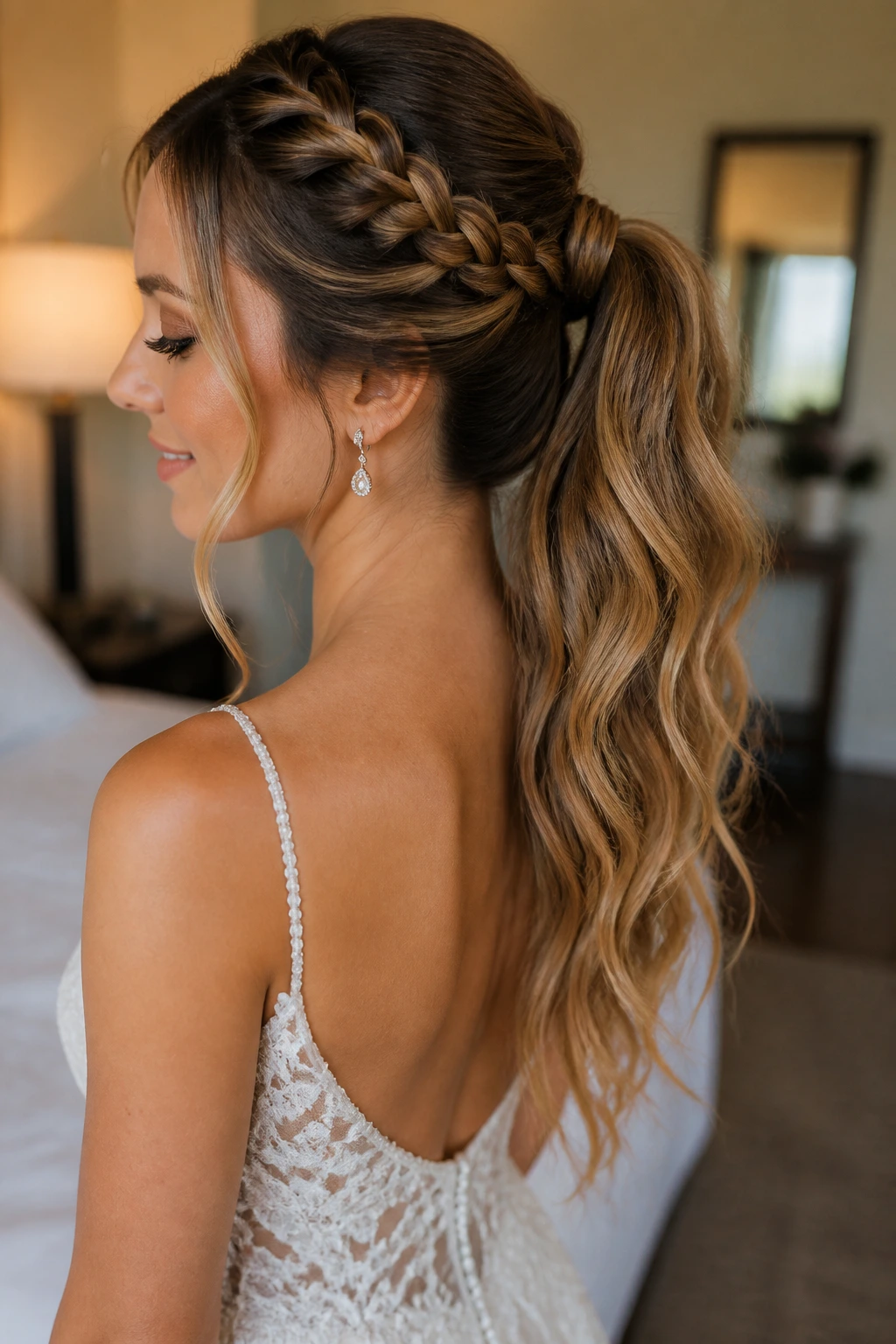
A braid gives a ponytail a spine. That’s the simplest way to think about it. Whether the braid starts at the crown or drops only through the tail, it adds grip, keeps the style from collapsing, and gives the eye something to follow. On wedding hair, that matters because braids hold detail in a way loose curls never quite do.
Why It Feels Different
This style works especially well when the dress has movement too — tulle, chiffon, soft lace, anything with a little drift to it. Let the braid stay slightly relaxed, then wave the ends of the tail so the finish doesn’t become too rigid. A few face-framing pieces are fine, but don’t overdo them. One good curl near each temple usually beats six wispy ones fighting each other.
5. Romantic Curled Low Ponytail
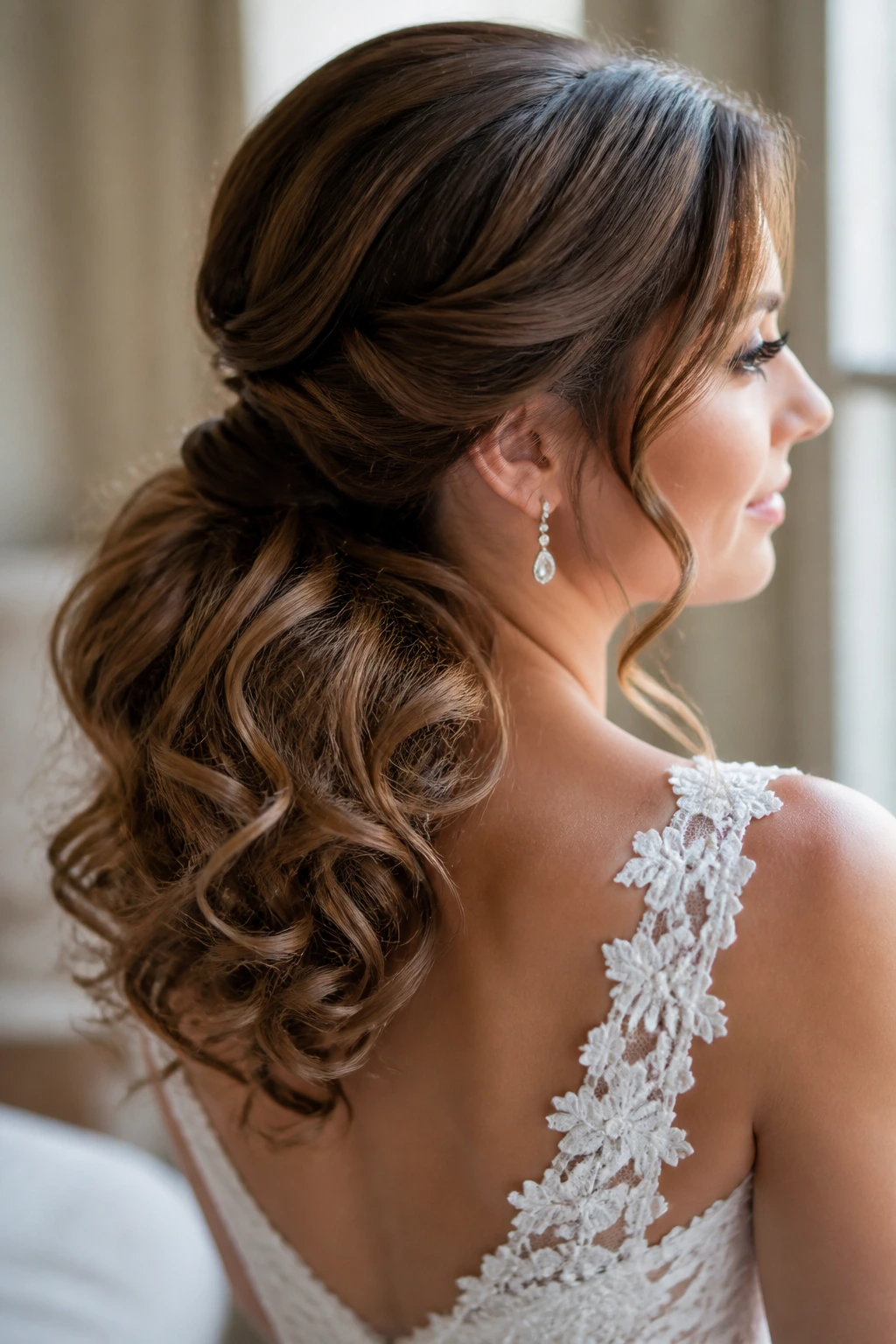
If a sleek ponytail feels too sharp, this is the softer cousin. The low placement keeps the style elegant, while the curls bring a little air and softness around the shoulders. I like this one when the dress has lace, applique, or a slightly vintage neckline, because the curls pick up those details instead of competing with them.
The real key is keeping the crown smooth before you curl the tail. If the top starts frizzy, the whole look goes fuzzy in photos. Use a medium barrel iron, set each curl, then break them apart with fingers only after they’ve cooled. That gives you those plush, separated waves that still look like hair, not a rolled set.
6. Side-Swept Ponytail with Vintage Volume
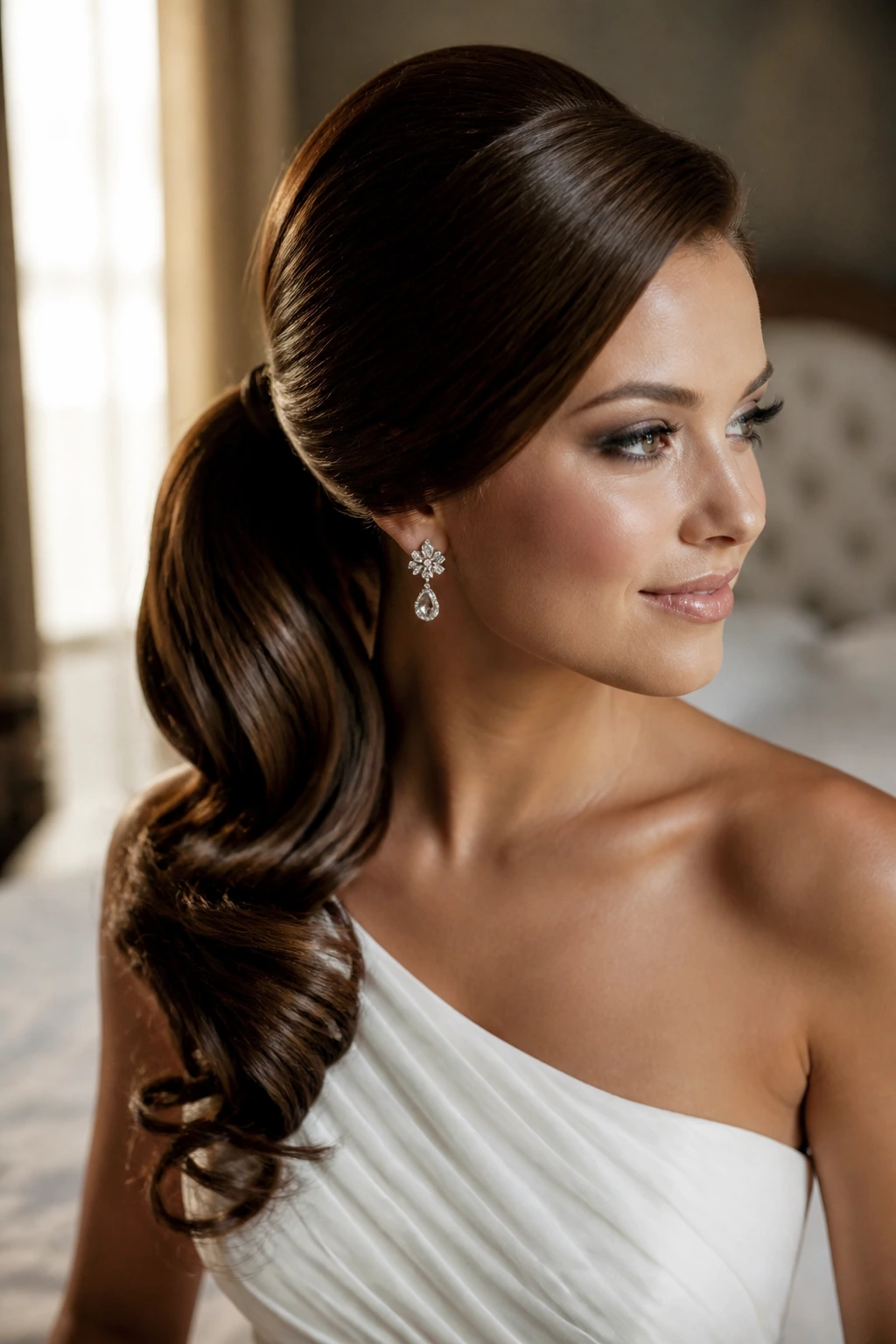
A side-swept ponytail has a little old-Hollywood swagger to it. The side part creates shape, and the volume at the front keeps the face from looking overly flat. It’s a smart choice when the dress already has a lot of symmetry and you want the hair to bring some curve back into the picture.
The pony itself sits low and slightly to one side, usually just behind the ear or a touch lower. That placement looks lovely with one-shoulder dresses and gowns that have heavy detail on one side. If you’re wearing a veil, ask for it to attach off the base rather than dead center. The asymmetry is the whole point.
7. Twisted Crown into a Low Ponytail
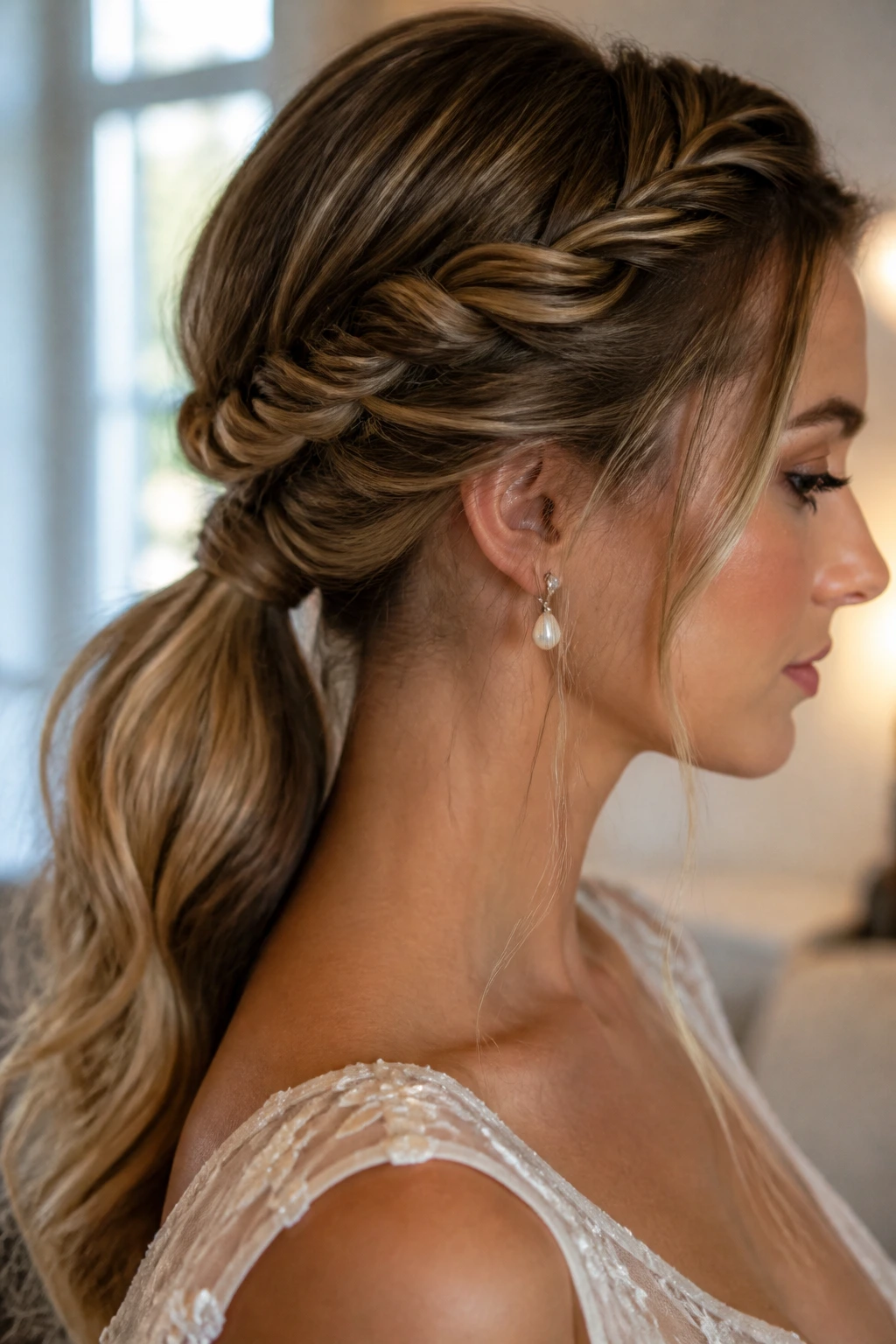
This is the ponytail for someone who wants the softness of an updo without the full pin-up feel. Hair is twisted back from the temples or just above the ears, then gathered into a low tail. The twist gives you visual interest near the face, and it also helps the front stay tidy if your hair tends to slip.
The best part is how it behaves in motion. The twists stay close to the head, while the tail does the swaying. That contrast looks especially good in profile. If your gown has an open back, this style gives enough detail to feel special, but it doesn’t crowd the dress. It’s one of those looks that seems simple until you look closely.
8. Ribbon-Tied Ponytail with a Satin Bow
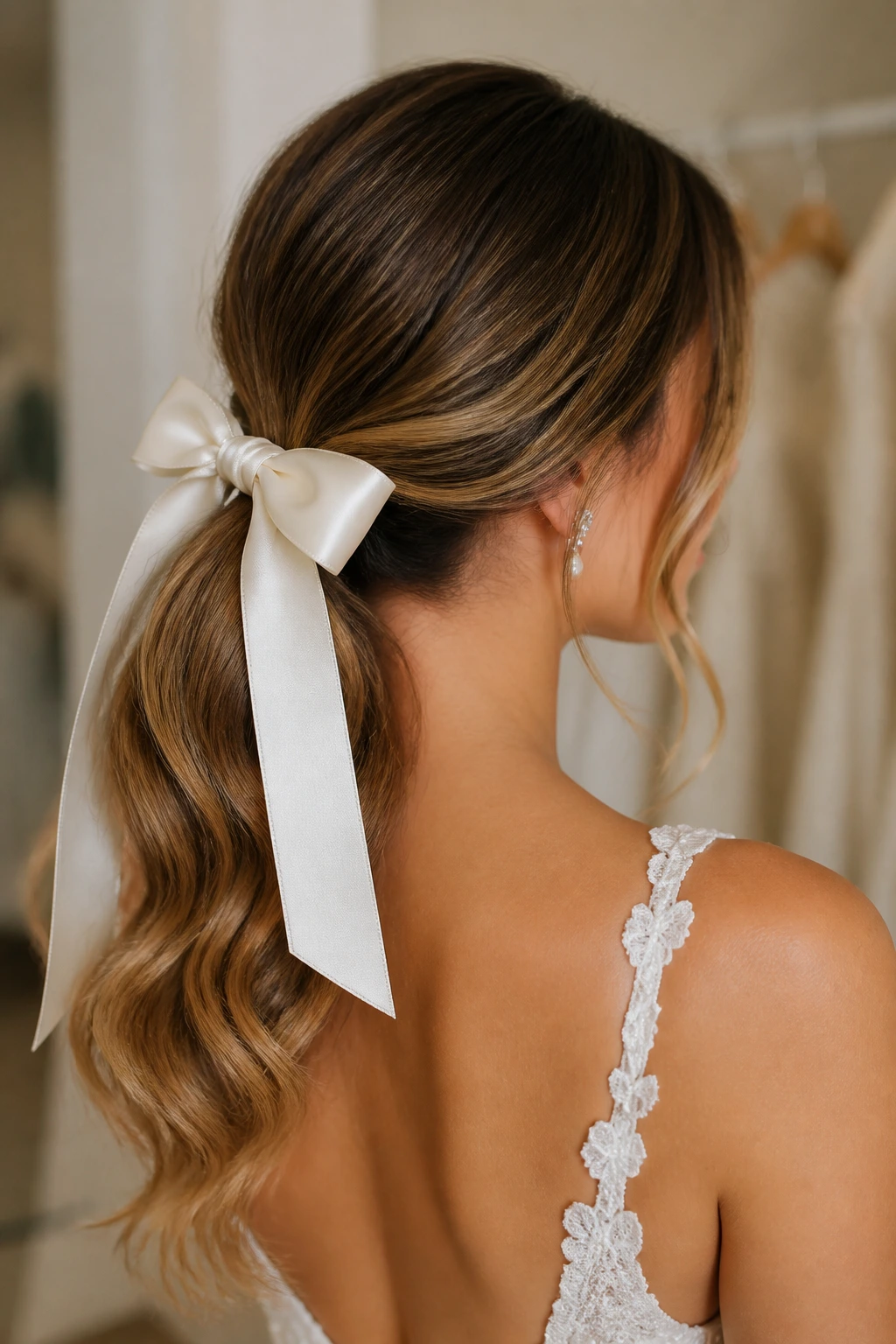
A ribbon does what a lot of jewelry can’t: it softens a ponytail instantly. Satin ribbon in ivory, blush, or a tone that matches the dress can turn a simple low tail into something that feels deliberate and romantic. The bow should not swallow the style. Keep it tidy, with tails that hang long enough to be seen but not so long they tangle in the bouquet.
Best With
- silk or satin gowns
- a soft side part
- pearl studs or small drops
- low or mid ponytail placement
The look leans feminine without becoming precious. If you want a little bit of drama, choose a ribbon with enough body to hold a clean bow shape. A limp ribbon can flatten the whole thing.
9. Minimalist Mid Ponytail with Mirror Shine
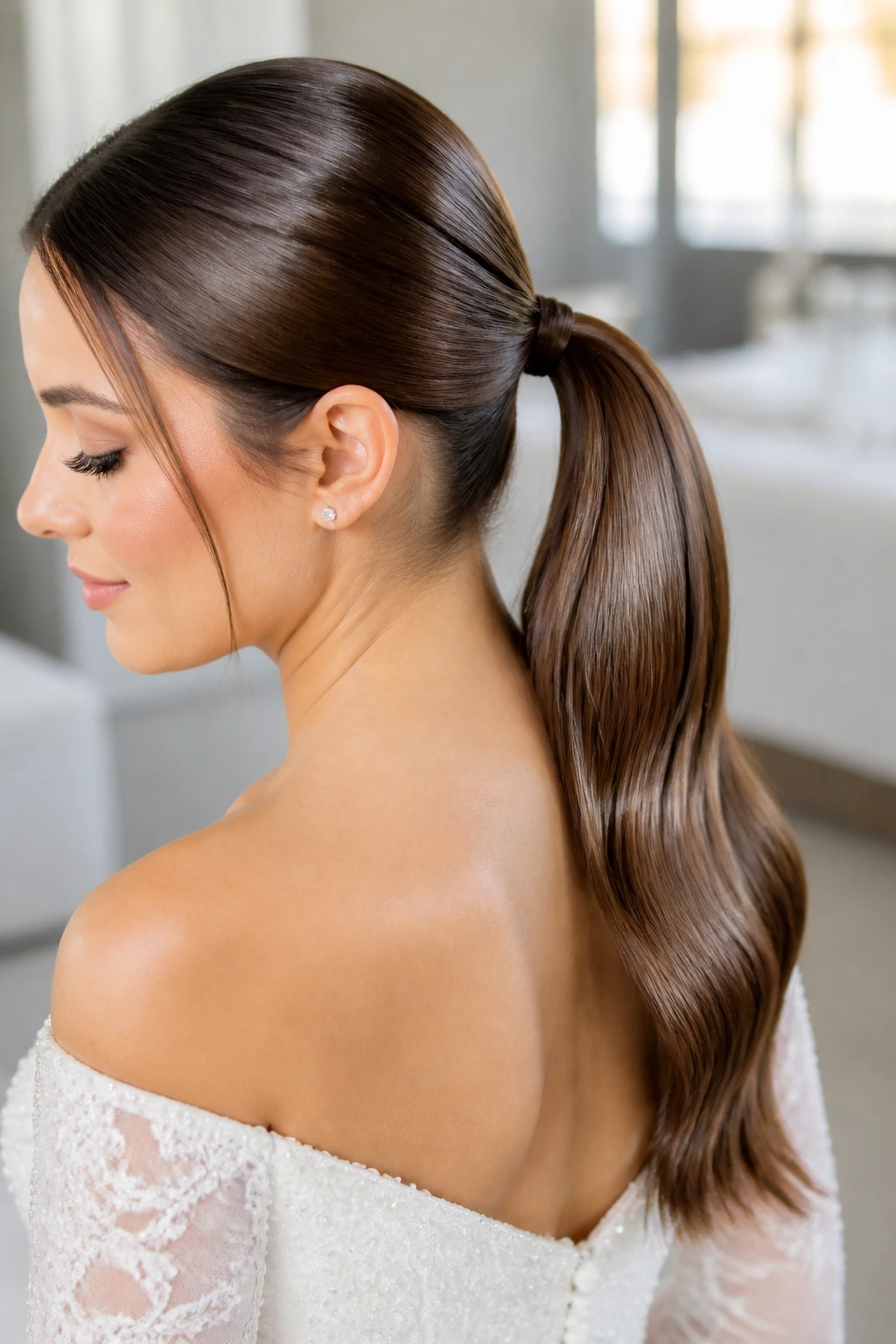
Not every bride wants ornament. Some want line, finish, and a shape that looks expensive because it is so spare. A mid ponytail hits that note well. It sits between the nape and crown, so it has more lift than a low tail but less energy than a high one. With a glossy finish, it looks modern in the calmest possible way.
The mirror shine matters here. Use a smoothing cream sparingly and then follow with a light shine spray from about 10 inches away. Too much product and the hair starts to look greasy in flash photography. Too little and the surface reads dry. The sweet spot is a smooth surface that still has movement in the tail.
10. Voluminous Curled Ponytail with Extensions
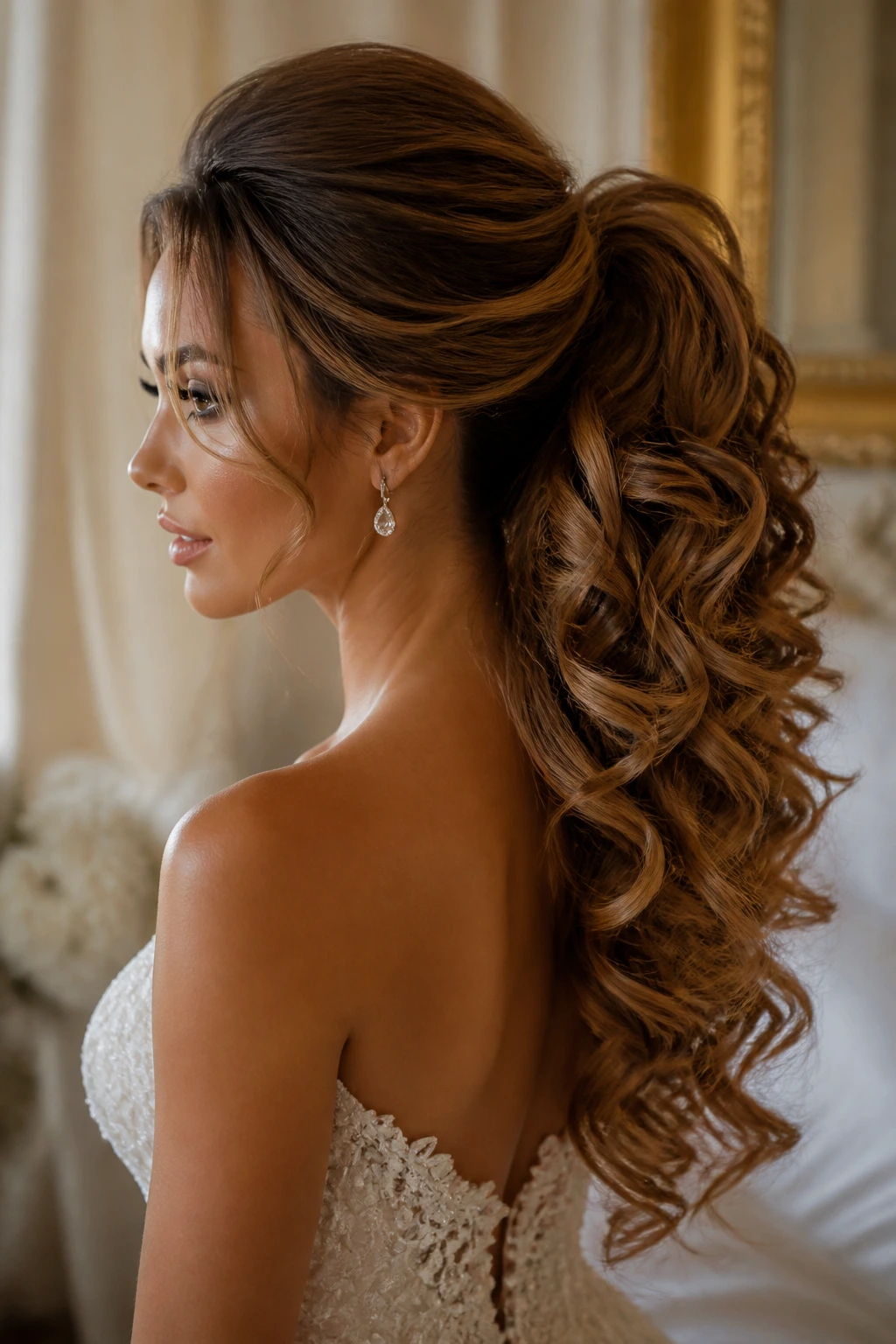
If the goal is a tail that looks full from every angle, extensions do the heavy lifting. This style is built on volume: a lifted crown, a thick tail, and curls that keep the shape from collapsing into one long rope. Clip-ins work well when they’re placed before the curl, not after. That way the whole ponytail takes the same texture.
The secret is choosing hair that’s a shade close to the mids and ends, not just the root color. That keeps the blend natural once the curls fall. This style suits brides who want the ponytail to feel substantial, especially if the dress has a long train or a dramatic back. It’s a big look. In the best way.
11. Fishtail-Braided Ponytail
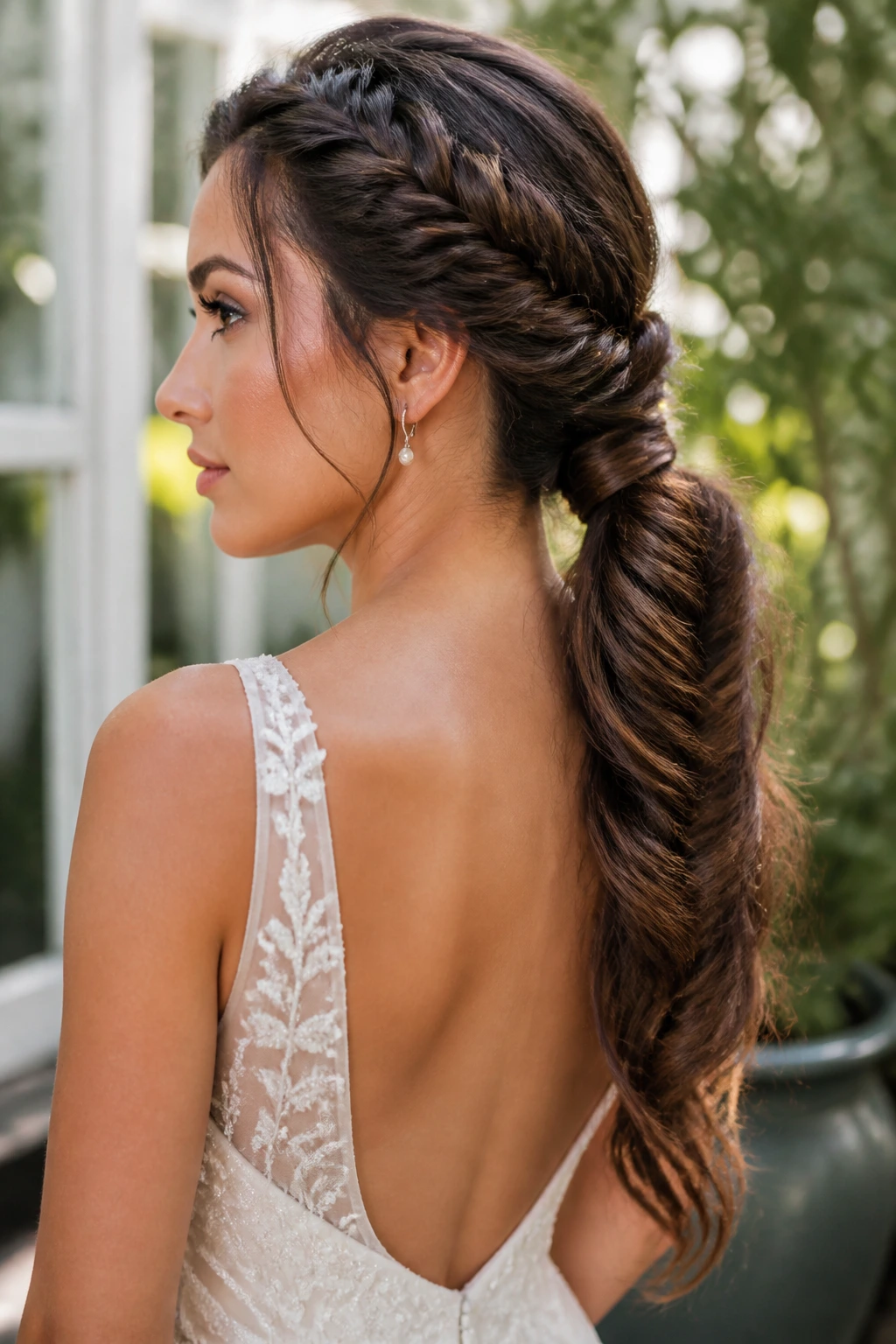
Why bother with a fishtail braid on a wedding day? Because it adds detail without clutter. A fishtail reads more intricate than a standard three-strand braid, and when it’s pulled into a ponytail, it gives the tail a woven, almost textile-like look. That can be gorgeous against a minimalist dress.
The braid should start clean and tighten gradually down the length of the ponytail. Don’t pancake it too aggressively; a little bit of width is enough. If you pull every stitch apart, it starts looking frayed instead of polished. This is one of those styles that rewards neat hands and a light touch.
12. Waterfall Braid into Ponytail
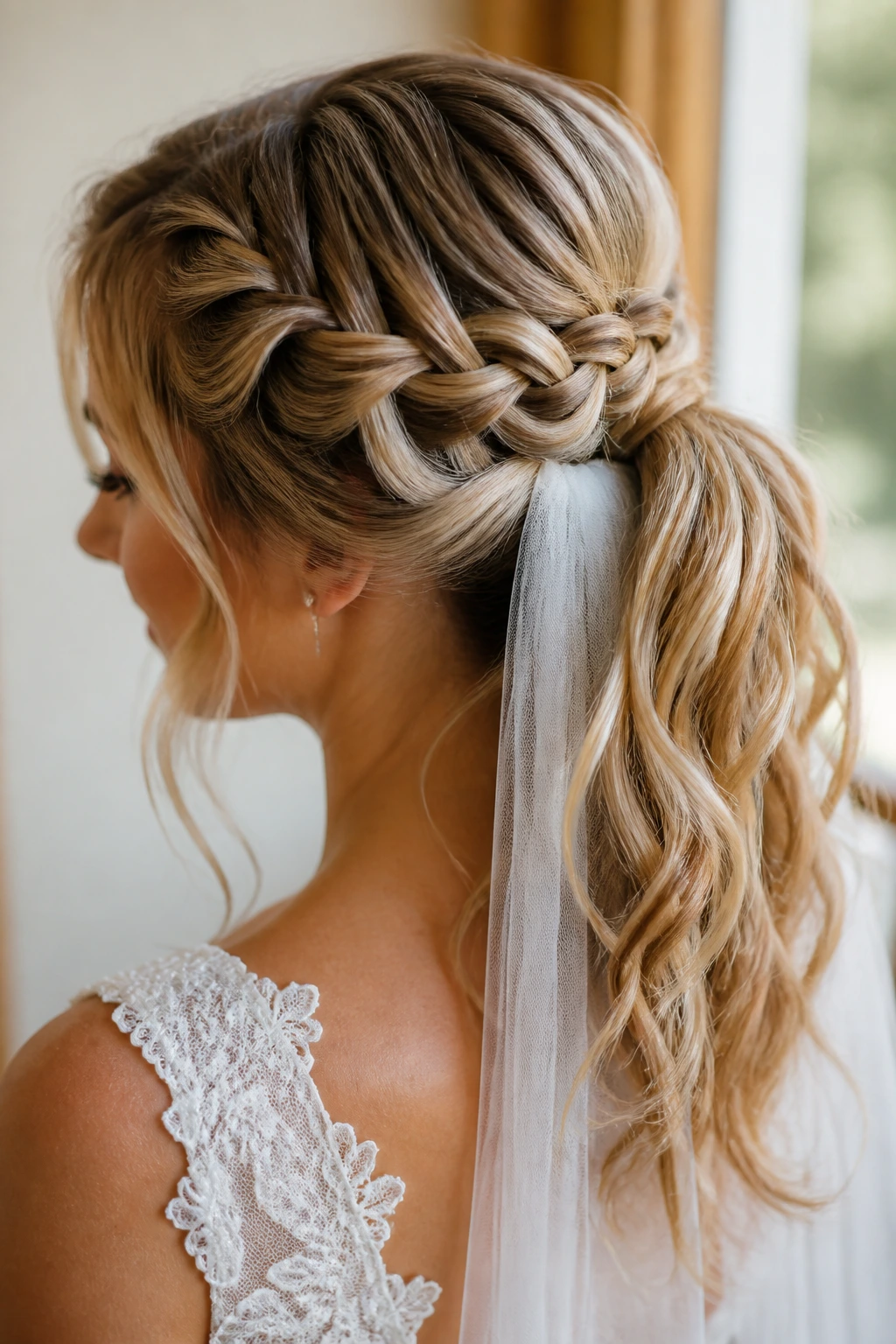
Waterfall braids can be fussy, and I won’t pretend otherwise. But when they’re done well, they give the front of the hairstyle movement before the ponytail even begins. Hair falls through the braid in soft sections, then gathers into a tail at the back. The effect feels airy and slightly unexpected.
This works best when the veil will be placed beneath the braid line or omitted entirely. The braid deserves to be seen. A few loose waves in the tail keep the look from feeling too engineered. If your dress is plain, this is a nice place to spend the detail budget.
13. Textured Boho Ponytail with Wispy Tendrils
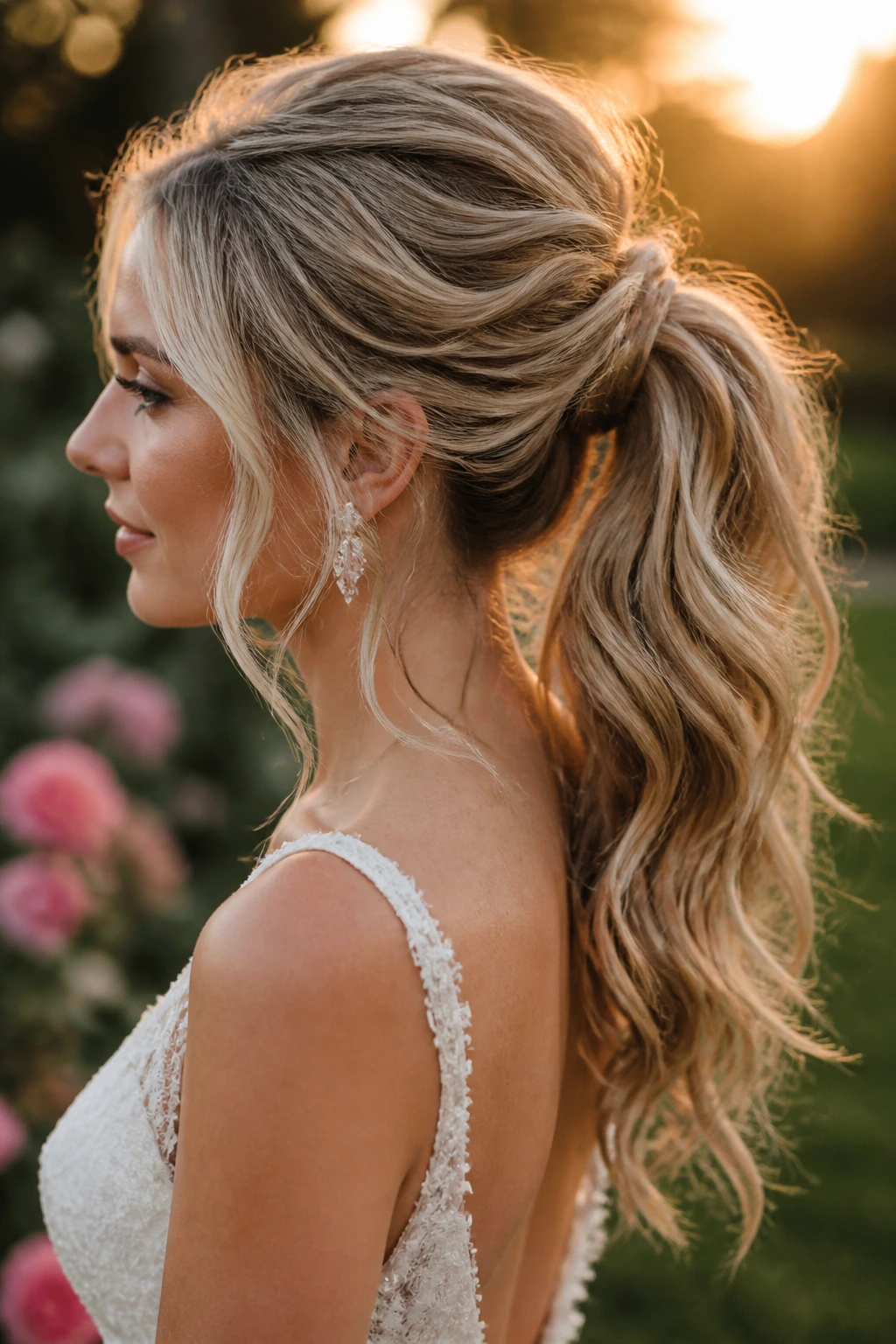
This is the ponytail that should feel touchable, not sprayed into a shell. Texture is the point. The crown is lightly lifted, the tail is waved or bent, and the face-framing tendrils are left soft enough to move but not so loose they look accidental. If the gown is floaty — chiffon, gauze, soft lace — this style sits naturally beside it.
The best boho ponytails never look overworked. A few pieces around the temples, a slightly imperfect part, and a tail with bends instead of hard curls are enough. If you’re using a texturizing spray, mist it into the mids and ends, not the roots. The roots need control; the tail needs shape.
14. Loc Ponytail with Gold Cuffs
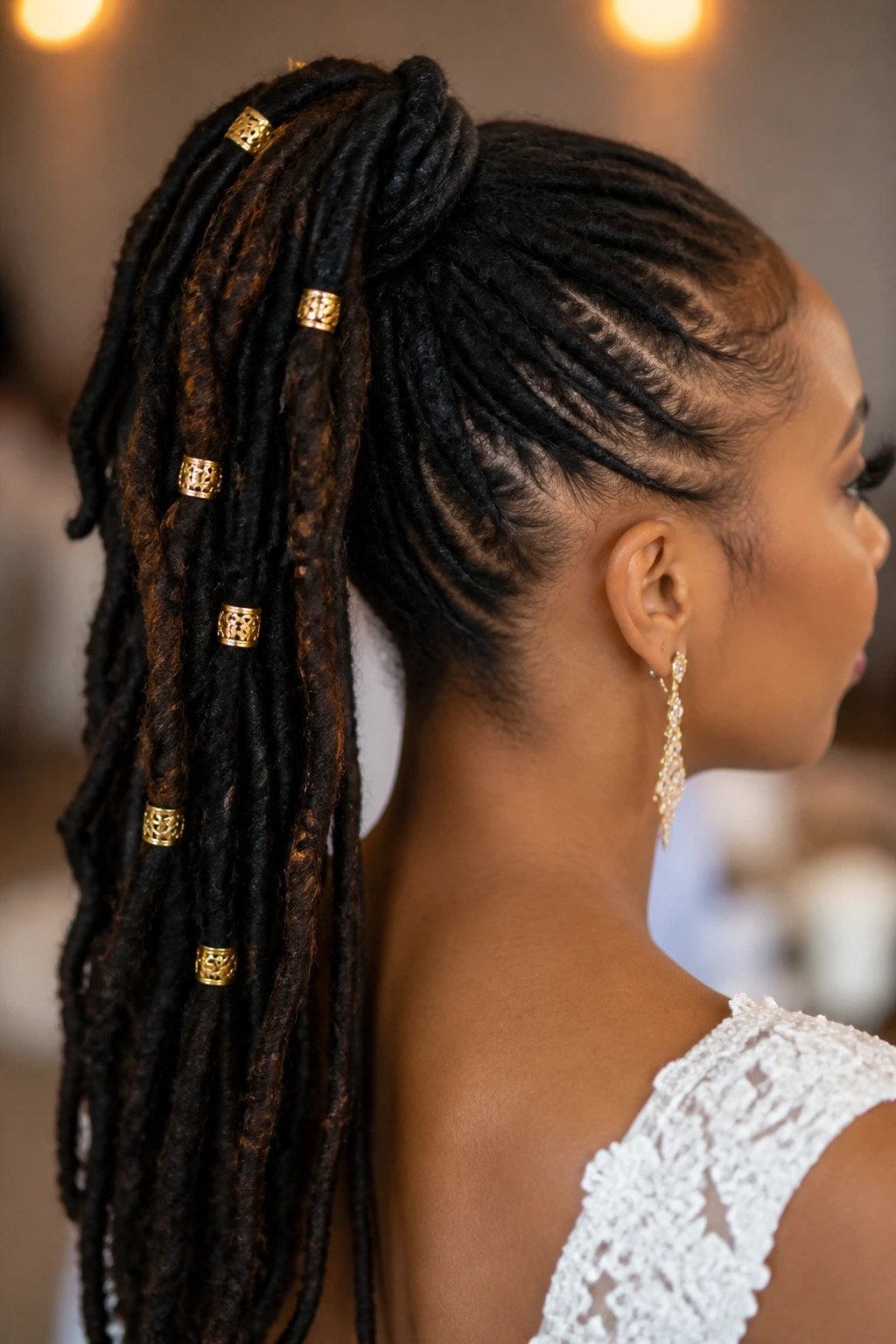
Locs make a gorgeous ponytail because the texture already has presence. You do not need to force them into something they’re not. Pull them into a high or low ponytail depending on the neckline, then add gold cuffs or wraps at a few intervals so the style catches the eye without crowding it.
A Few Details That Matter
- secure the base with a strong, matching band
- add cuffs where the locs already fall naturally, not in every section
- keep the hairline neat with a small amount of edge control, not a heavy layer
- choose cuff tones that repeat the jewelry or dress hardware
This style shines when the bride wants her own texture front and center. That confidence reads beautifully.
15. Natural Curly Ponytail with a Sculpted Edge
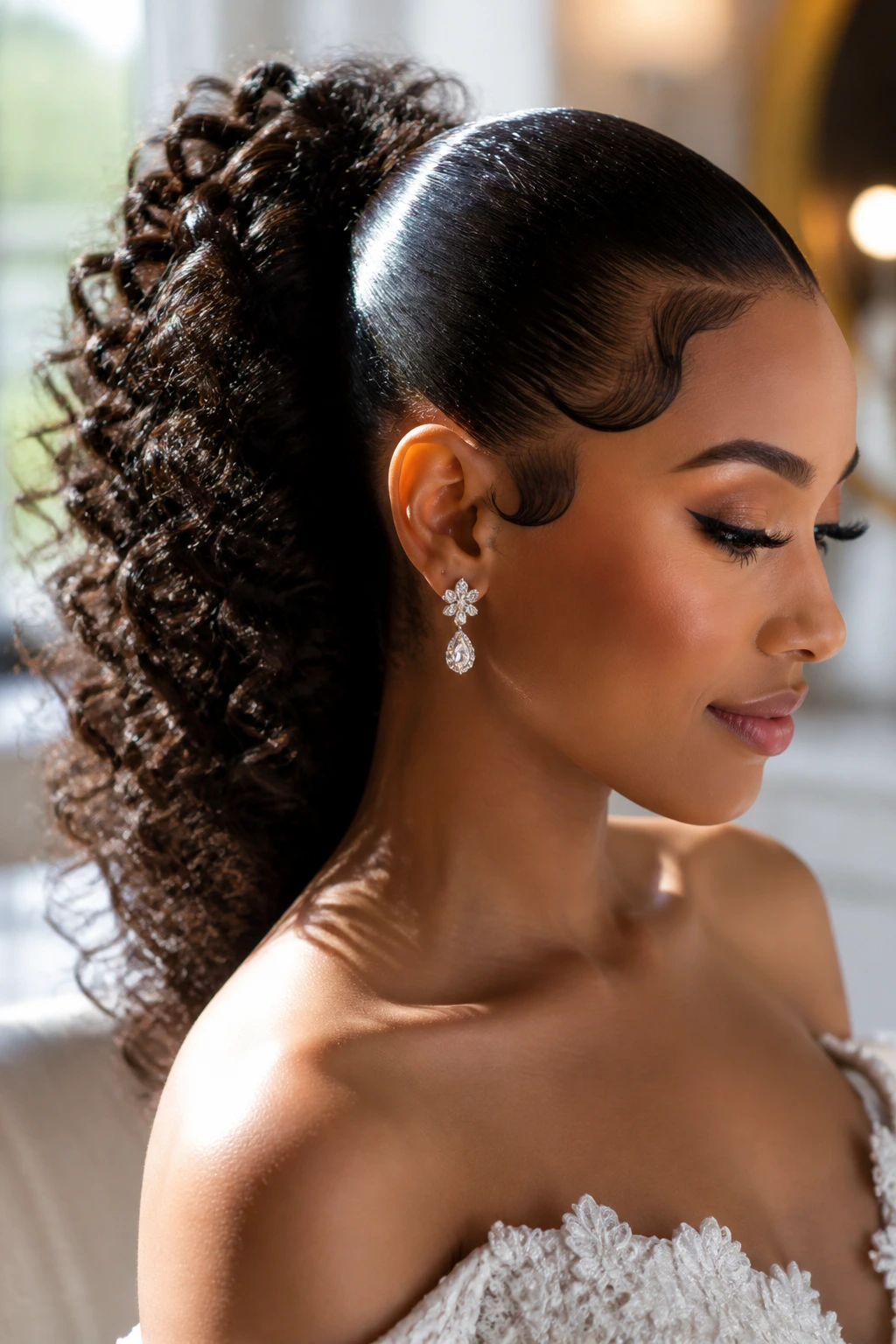
Natural curls can make a bridal ponytail look lush without losing the curl pattern itself. The trick is not flattening the roots to death. Keep the shape of the curls at the crown, gather them gently, and let the tail keep its coil or wave pattern. A sculpted edge along the hairline helps the whole look feel intentional.
I prefer this style with dresses that have clean lines. The hair brings the softness; the gown can stay sharp. If you want more definition, refresh the curls with a light mist of water and leave-in conditioner before styling. Do not drown them. You want bounce, not shrinkage.
16. Afro Puff Ponytail with a Jeweled Band
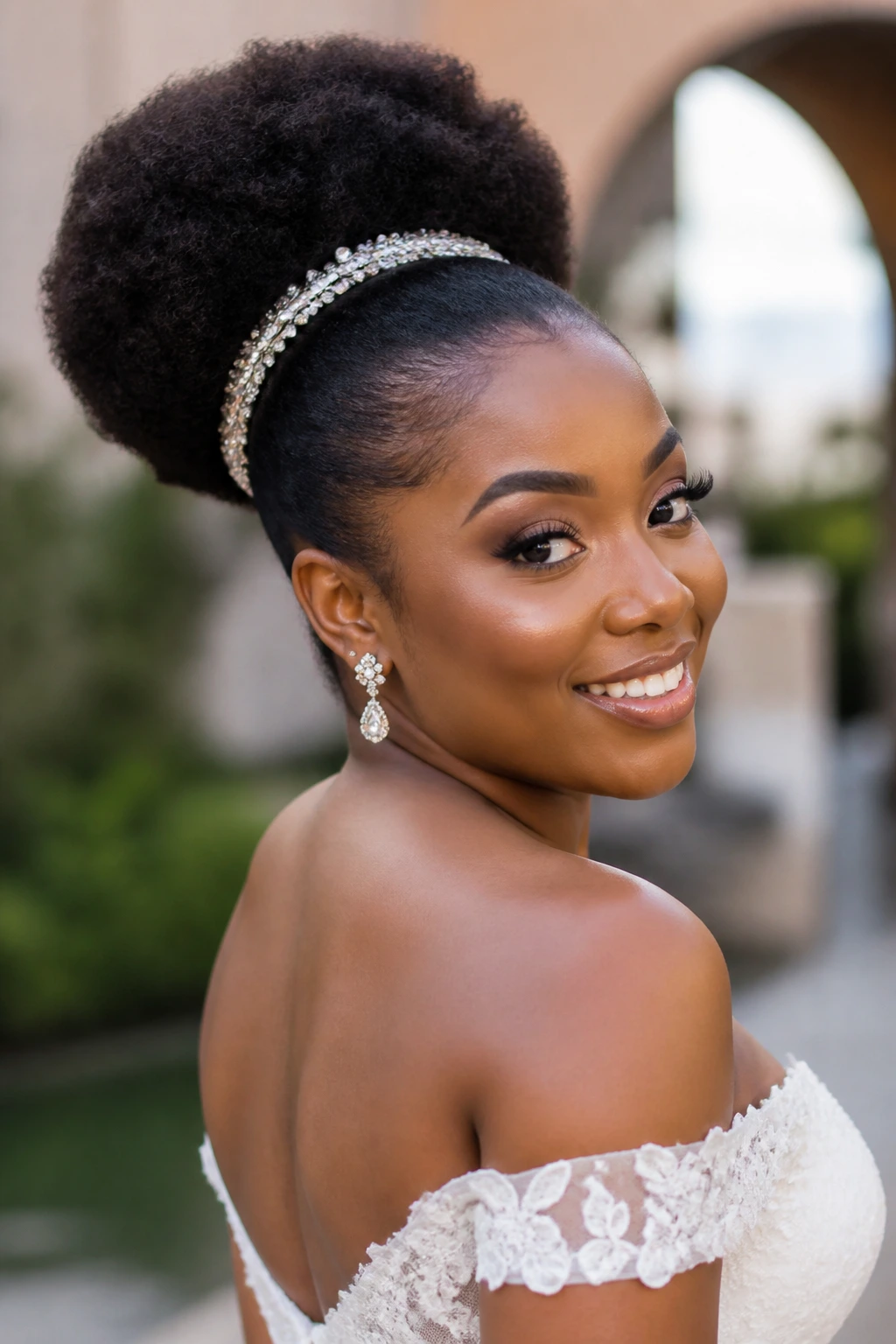
A puff ponytail can be elegant in a way that flat styles never quite reach. The volume becomes the silhouette. Add a jeweled band, and the whole look reads celebratory without losing its shape. The band should sit at the base or slightly above it, depending on the height of the puff.
This style is strong on its own, so the rest of the outfit can stay clean. A structured gown, a sleek neckline, and one sparkling accessory are enough. If you’re building the puff on stretched hair, make sure the gathering point is secure and comfortable. Nothing ruins a look faster than a base that feels too tight after twenty minutes.
17. French Twist into Ponytail
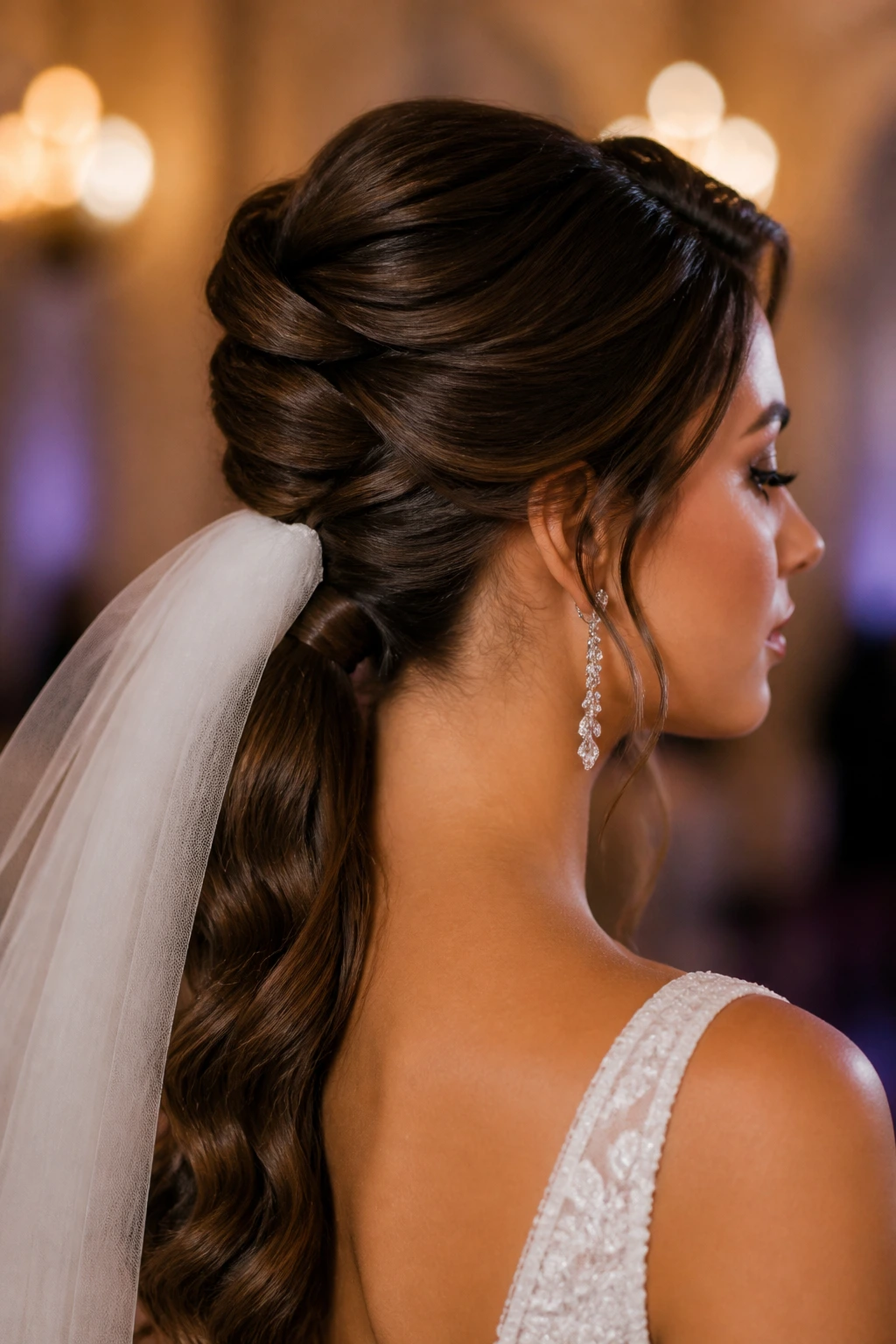
This hybrid style gives you the neatness of a twist and the movement of a ponytail. Hair is rolled or twisted upward at the back, then released into a tail below. The shape works beautifully with formal gowns because it has a little architecture at the crown and neck.
Who It Flatters
It’s especially good for brides who want something polished but not severe. The French-twist energy keeps the back looking tidy, while the ponytail softens the finish. A low veil can sit under the twist line, which is a nice detail if you don’t want the veil to compete with the tail.
18. Crisscross Wrapped Ponytail
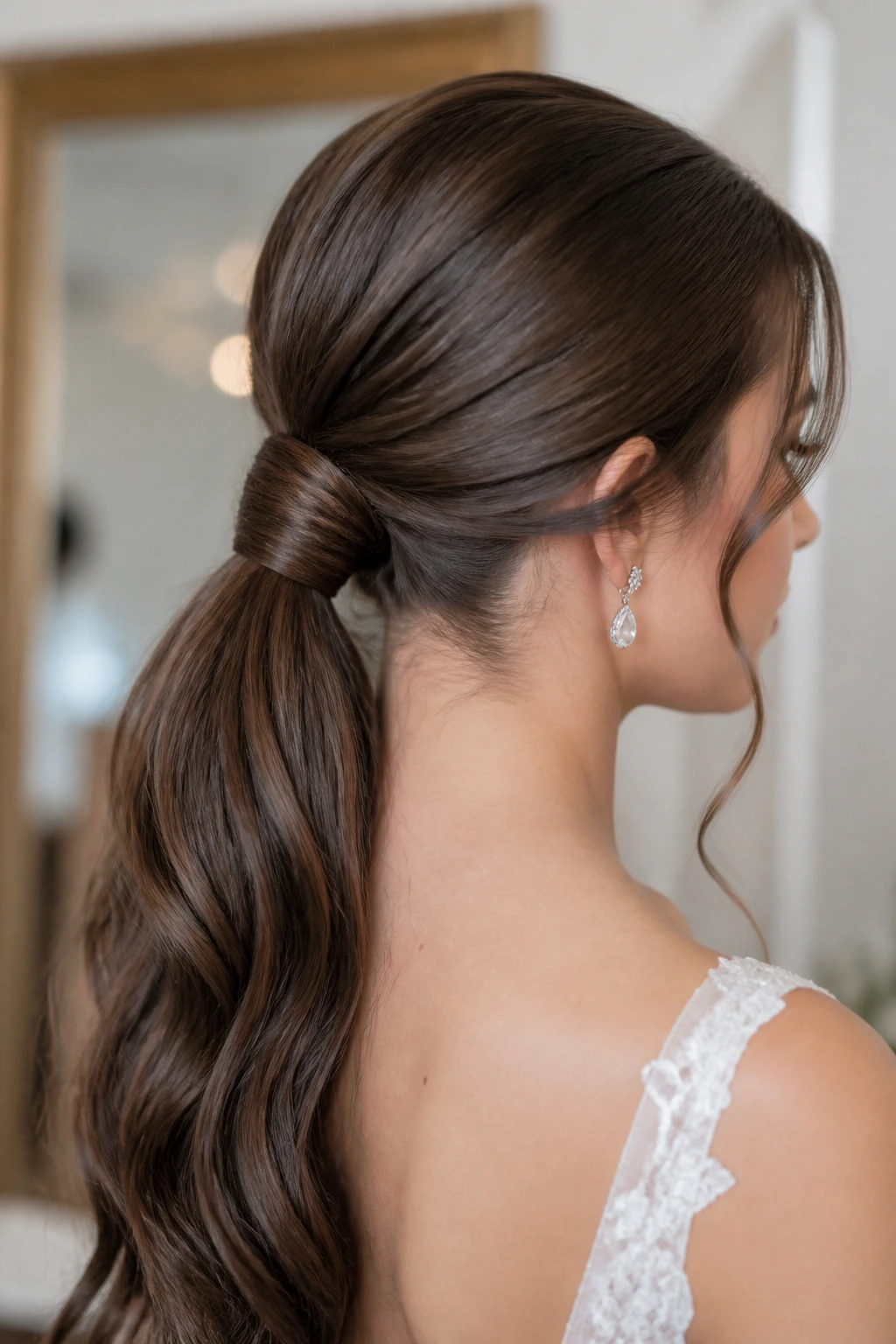
Crisscross wrapping is the sort of detail that looks like no one thought about it, even though someone absolutely did. Thin sections of hair are crossed over the base in neat lines, creating a little woven panel around the elastic. It’s cleaner than a simple wrap and reads a touch more architectural.
This look belongs with minimalist dresses, clean crepe, and sharp tailoring. The ponytail itself can stay straight or lightly curved. Just keep the wrapping tight and even. If the sections start to puff out, the clean line disappears.
19. Half-Up Ponytail with Cascading Curls
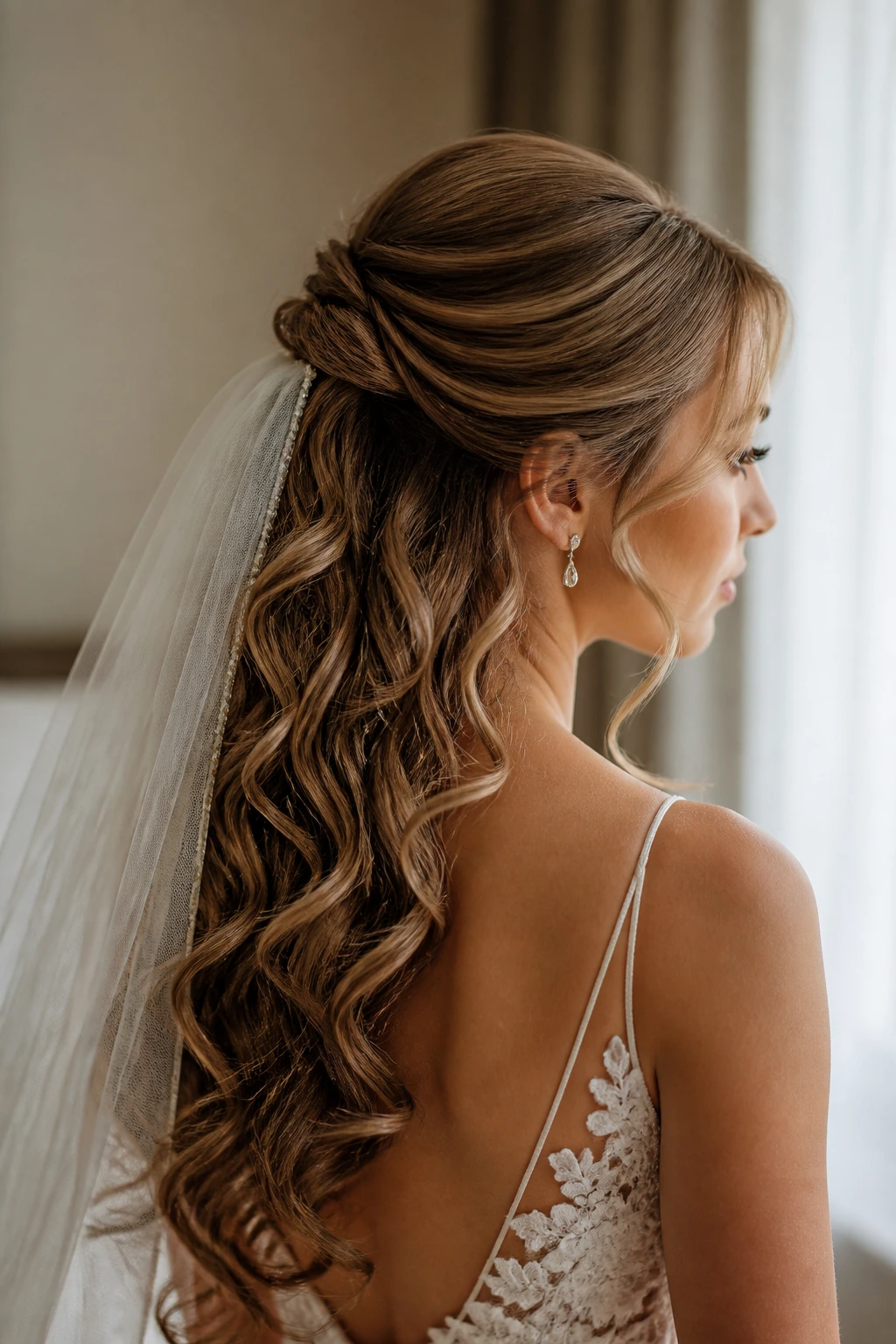
A half-up ponytail keeps the crown light while still letting the lengths do the dramatic work. It’s a good answer for brides who want hair away from the face but don’t want a full tail at the nape. The top section gives you a lifted silhouette, and the bottom curls keep everything from feeling too tidy.
This is one of the softer options in the whole bunch, which makes it useful for dresses with romantic necklines or less structure in the bodice. A veil can sit right under the half-up section, but test it early. The comb placement changes the balance more than you’d think.
20. Low Ponytail with a Jeweled Comb
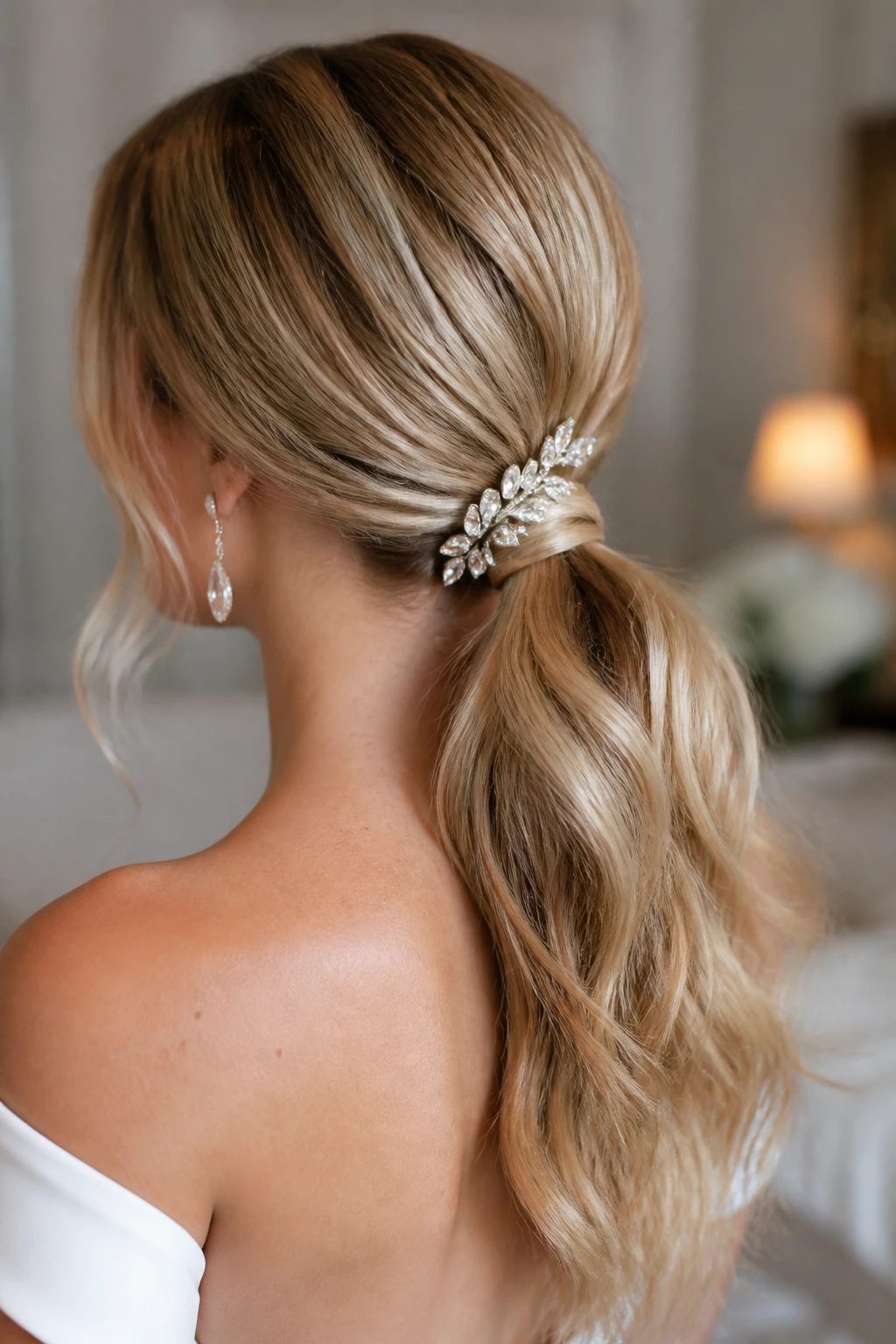
Sometimes the accessory is the star. A jeweled comb tucked into the base or just above it can turn a low ponytail into a bridal look without adding bulk. This works beautifully when the dress already has a lot going on and you need one polished, bright focal point rather than a second layer of decoration.
The Cleanest Version
Keep the ponytail smooth and the accessory placement slightly off-center if the comb has a strong shape. Symmetry isn’t mandatory here. In fact, a small shift can make the whole look feel more natural. This is one of the easiest ways to move from simple to formal without changing the ponytail itself.
21. High Ponytail with a Dramatic Veil Placement
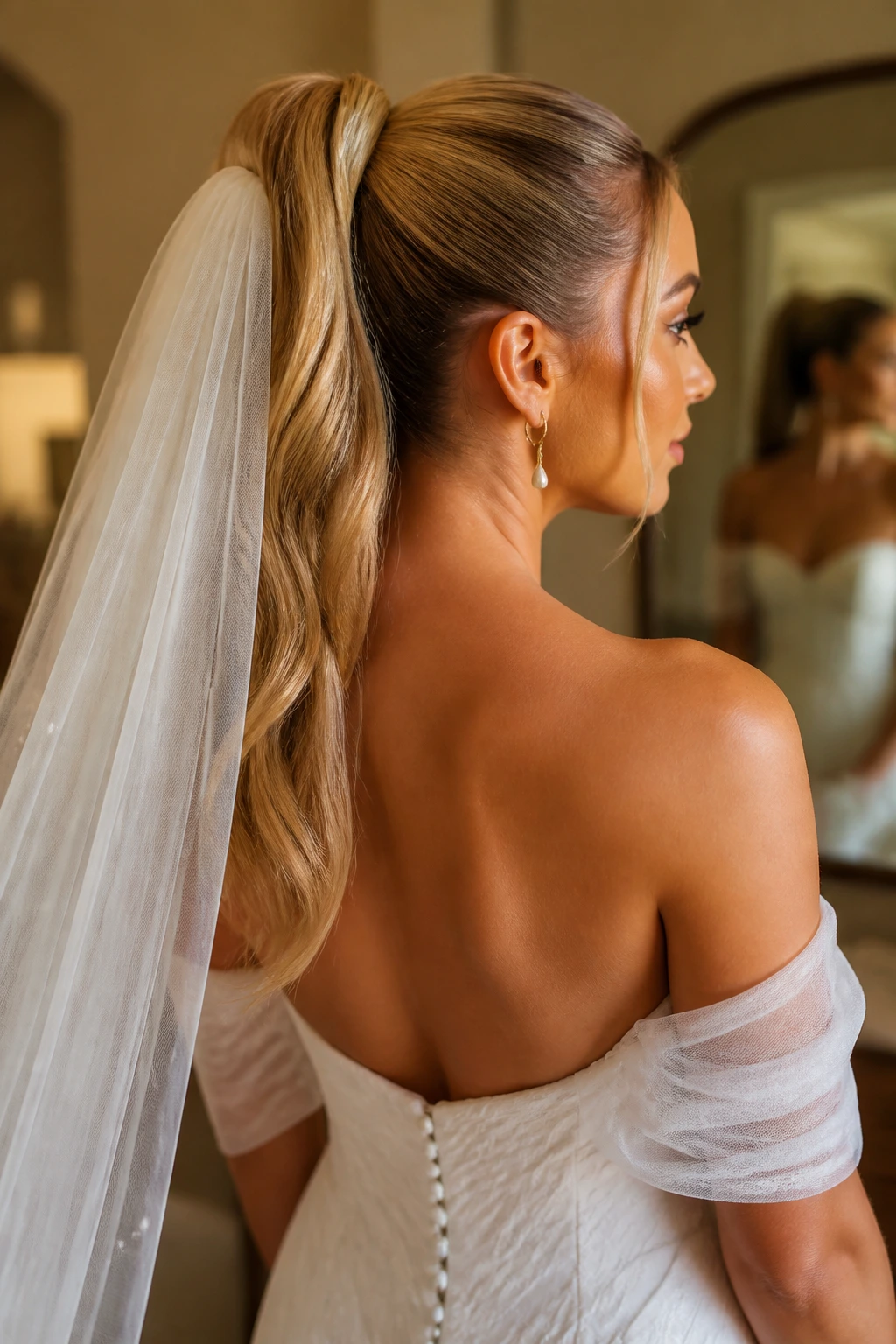
High ponytails and veils need choreography. If the veil sits too low, it fights the tail; if it sits too high, the whole shape starts to look crowded. The sweet spot is often just under the base or just above it, depending on the veil weight and the height of the ponytail.
A high ponytail gives the face lift and keeps the shoulders open, which is handy if the dress has a dramatic back or sculpted straps. The veil should attach after the hair is set, not before the final shape is decided. That sounds obvious. It isn’t always done that way.
22. Double-Bubble Ponytail
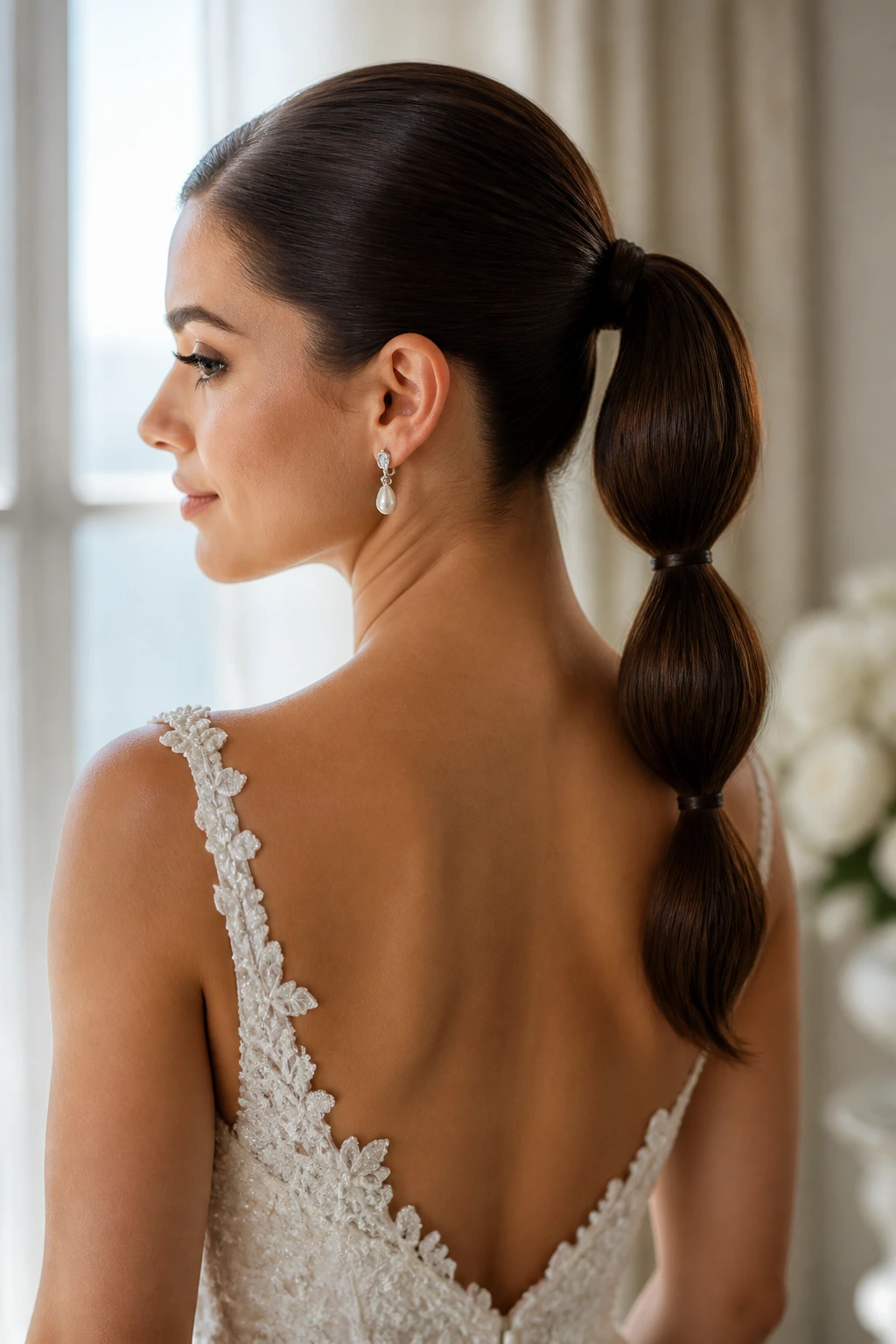
Two bubble sections can be enough. They’re playful, yes, but they can also look sharp if the spacing is controlled and the bubbles are gently rounded rather than puffed up wildly. This style has a sculptural feel, which is why I like it for brides who want something a little different without going into novelty territory.
The base should be sleek and the segments uniform. If the dress is minimalist, the bubbles give you the texture the gown doesn’t. If the dress is already ornate, keep the bubbles smaller so the hair doesn’t feel loud. The whole trick is balance, which is a word people overuse, but here it actually applies.
23. Knot-Tied Ponytail
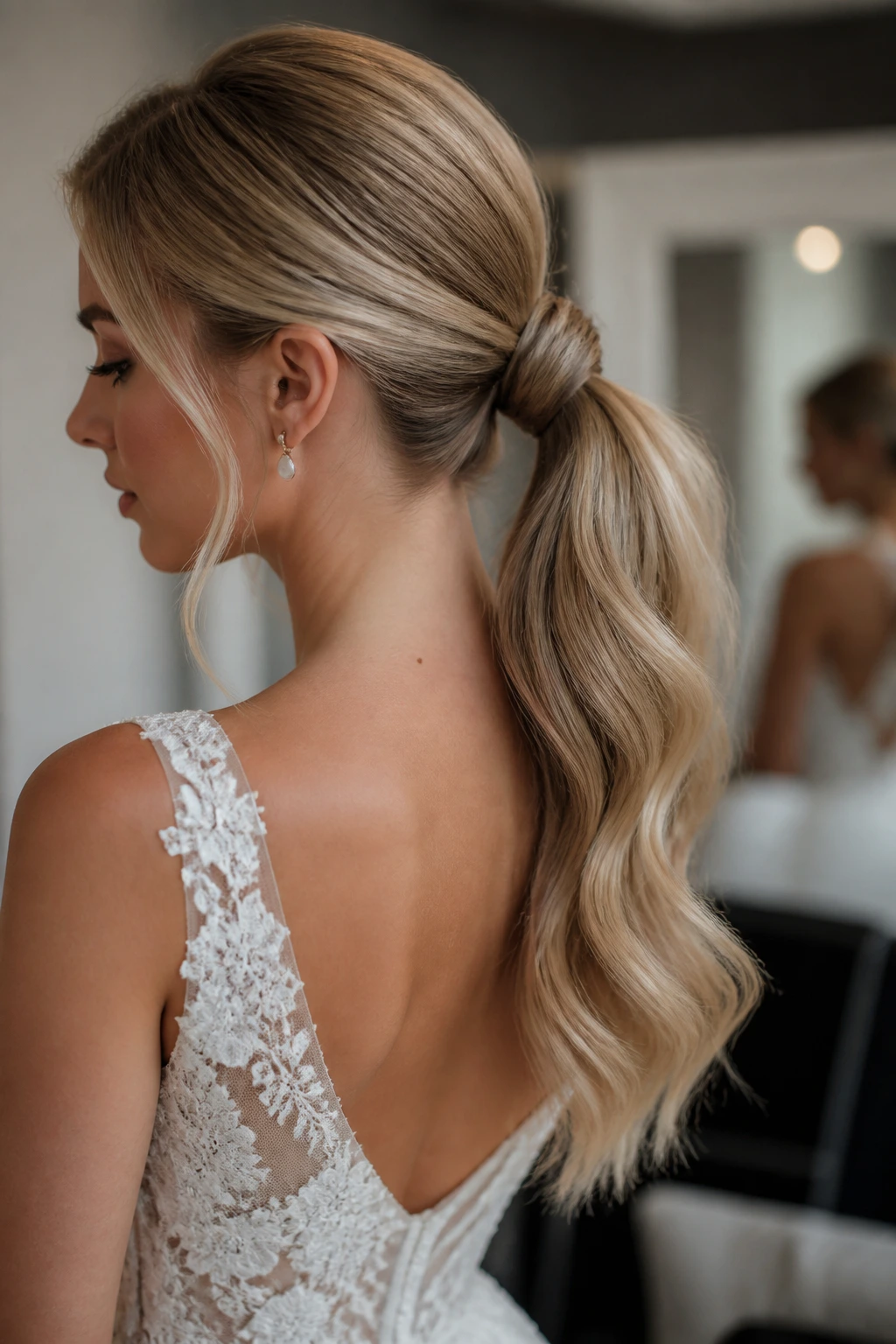
A knot-tied ponytail looks like you spent ages on it, even when the structure is simple. Hair is divided and crossed over itself near the base, forming a knot or knot-like tie that hides the elastic in a more interesting way than a wrap. It’s a good choice when you want a little texture without braids.
The knot should sit snug against the head, not puffed out like a topknot. Keep the tail smooth or softly waved. This style has a slight editorial feel, which works well with clean dresses and bold earrings. It feels thoughtful without being fussy.
24. Ponytail with a Braided Base and Long Tail
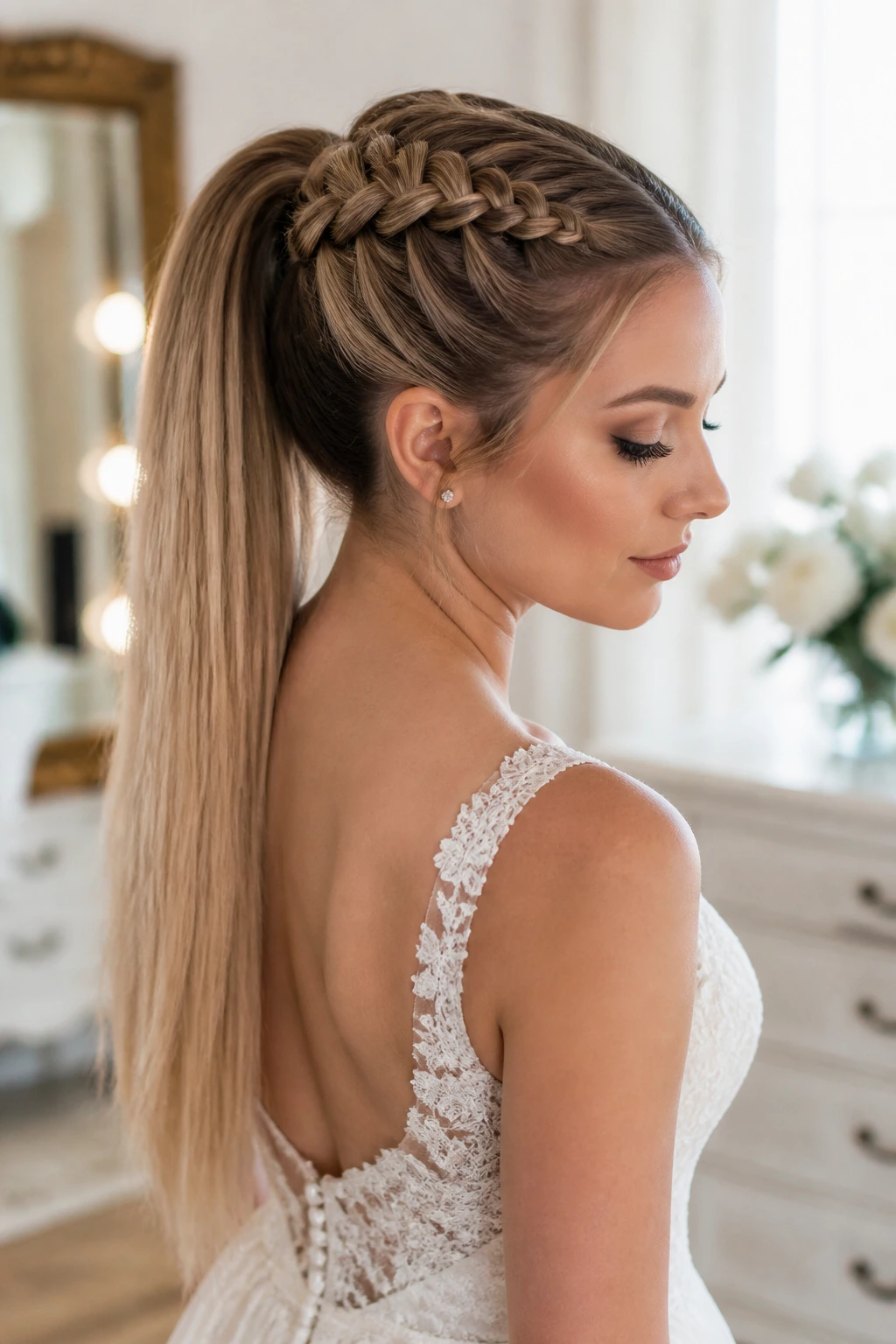
A braid at the base is useful for more than decoration. It keeps the ponytail anchored, hides small imperfections, and gives the eye a place to rest before it drops into the longer tail. If your hair is layered or fine at the crown, this is a smart way to make the whole style feel fuller.
The tail can stay straight for contrast or be curled lightly for softness. I prefer the braid to be visible from the front if the dress neckline is simple, because it creates a little structure near the face. With a more decorated gown, keep the braid narrow and let the tail do the talking.
25. Soft Waves with Tucked Side Parts Low Ponytail
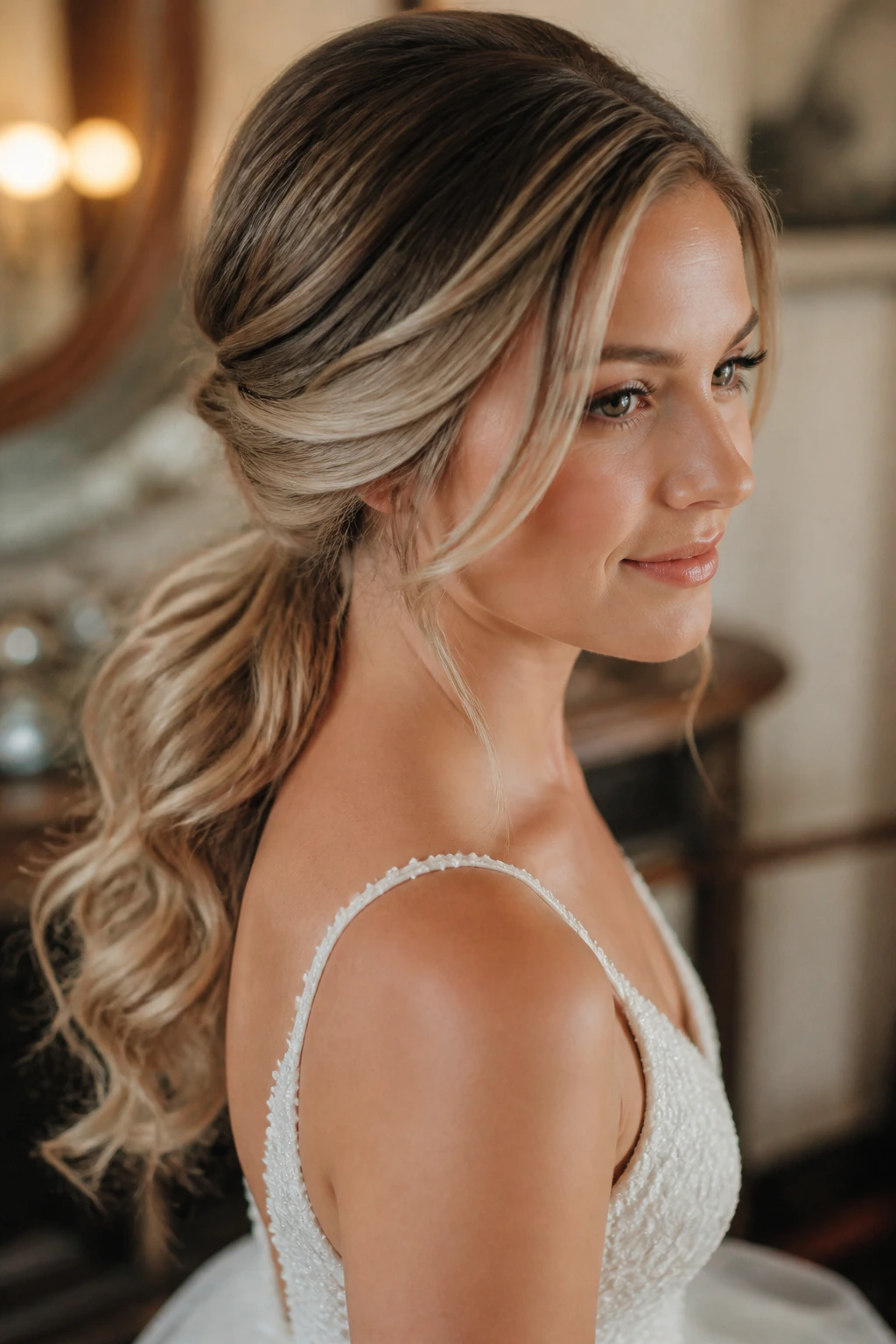
This version is about restraint. The side part is tucked softly, the low ponytail sits clean at the nape, and the tail is waved just enough to keep it from looking stiff. It’s the kind of style that looks calm in photos and still moves in real life.
The tucked side helps open the face without showing too much scalp at the hairline. That matters if the gown has a high neckline or if you want earrings to be seen but not overdone. A few loose face pieces can work here, but keep them light. Heavy front sections can drag the whole thing down.
26. Sleek Center-Part Ponytail with Earrings
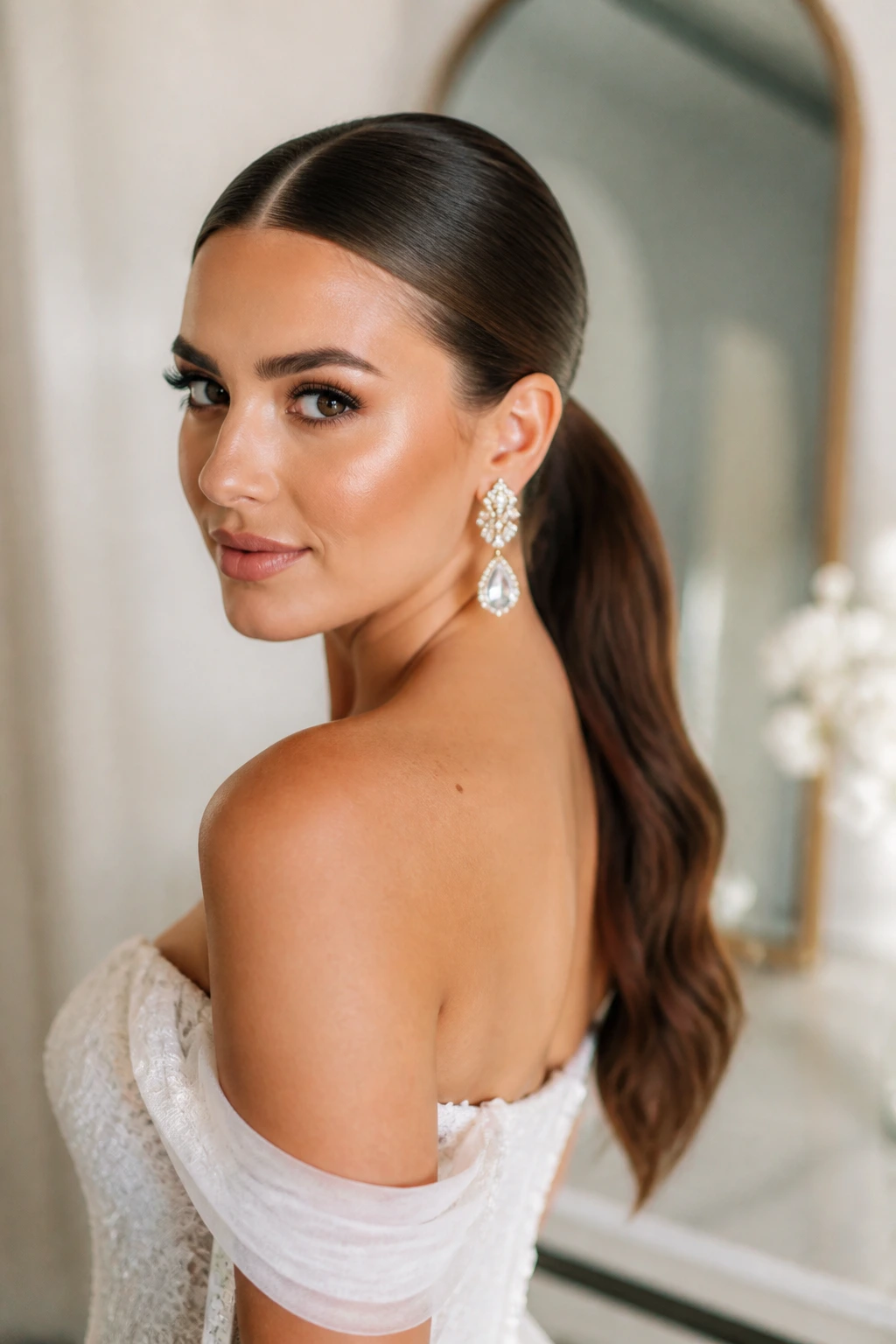
A center part and a sleek ponytail are a blunt, beautiful combination. The line down the middle gives the face symmetry, while the ponytail keeps the back clean. Add statement earrings, and you’ve got a look that feels crisp rather than embellished.
This style is best when the jewelry is doing some of the work. Large earrings, a bold neckline, or a strong veil can all live alongside it because the hair stays disciplined. The ponytail should sit low or mid-height, never squashed into the neck. The shape needs air.
27. Messy-Luxury Ponytail with Undone Texture
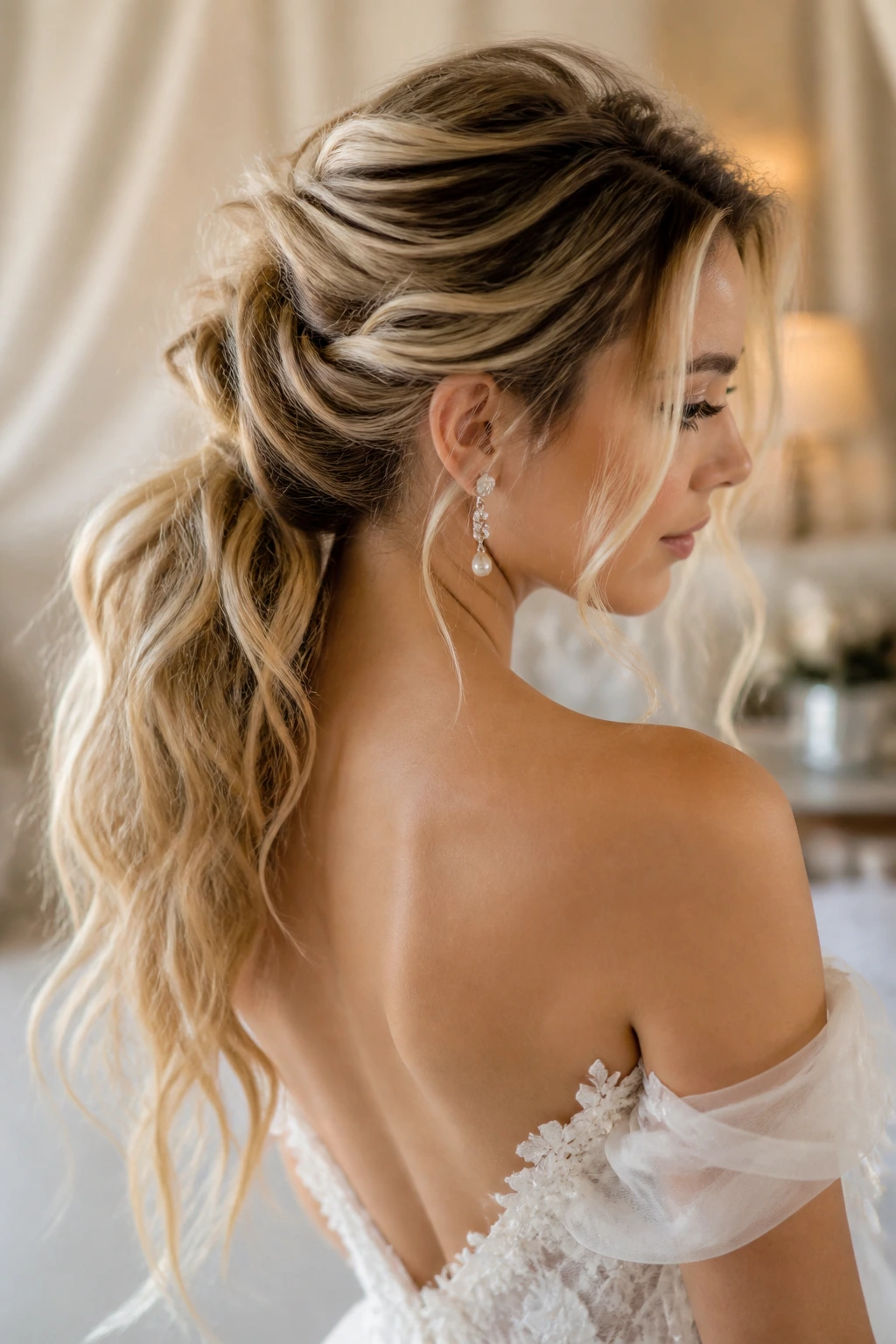
The phrase “messy” gets abused. Here, it means movement, not negligence. The crown is softly lifted, the tail has bends and loose sections, and the whole style feels lived-in in a controlled way. Think of it as polished texture rather than actual mess.
This works when the bride wants softness but not sweetness. It’s lovely with slip dresses, draped gowns, and fabrics that already have fluid lines. Keep the roots cleaner than you think you need to; that contrast between smooth top and airy tail is what makes the style hold together.
28. Ponytail with Fresh-Flower Accent
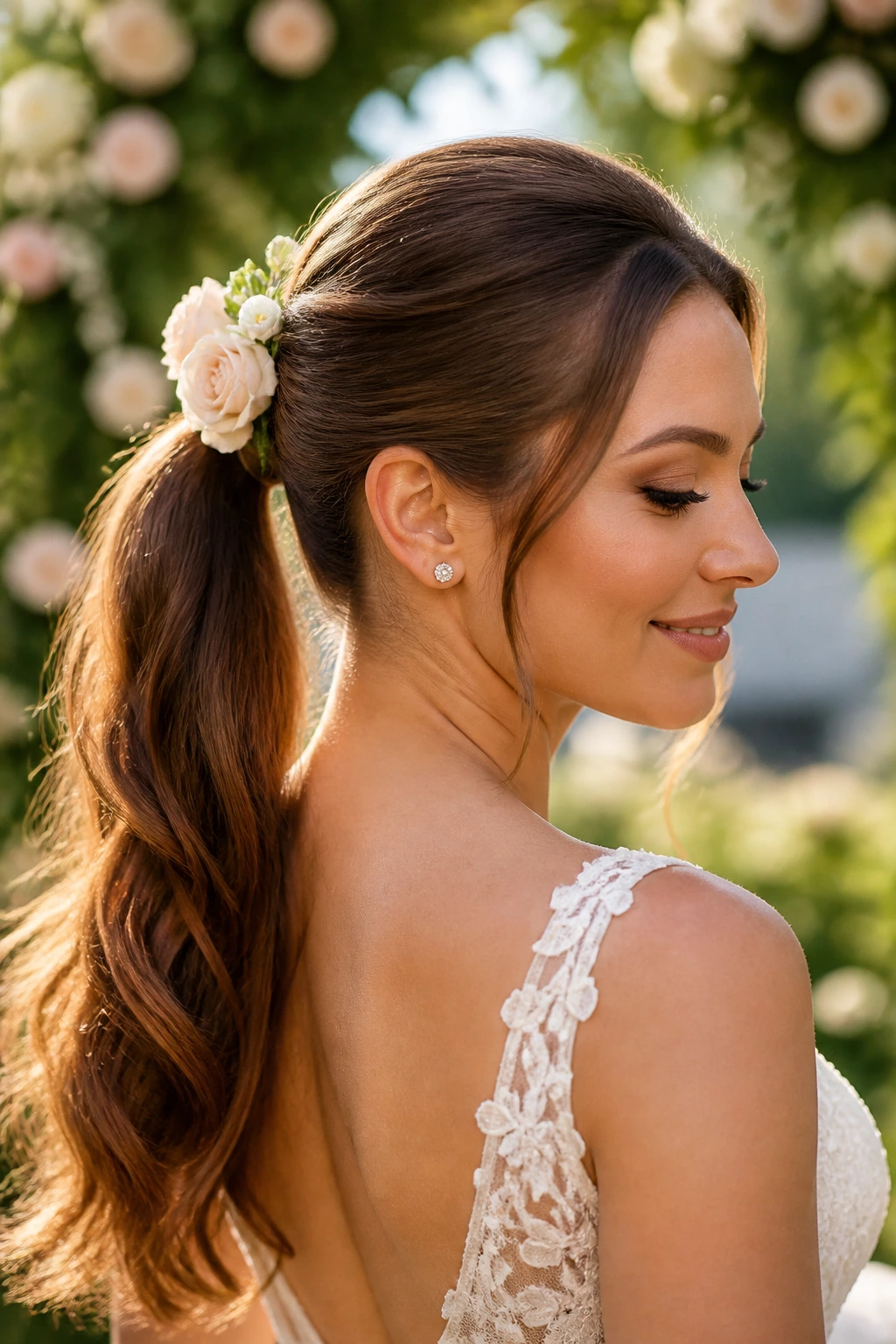
Fresh flowers don’t belong only in loose curls. A ponytail can carry them beautifully, especially if the flowers repeat the bouquet or table flowers. Tuck a small cluster at the base, or weave one bloom into the side if the hairstyle is lower and slightly romantic.
Best Flower Choices
- small roses
- spray roses
- orchids
- ranunculus
- waxflower for filler
Keep the stems short and secured well. A flower that droops halfway through the ceremony is not charming. The cleaner the ponytail base, the better the flowers look.
29. Old-Hollywood Ponytail with a Side Sweep
Old-Hollywood energy in a ponytail comes from one thing: side volume. The front sweeps softly across the forehead, the tail falls in structured waves, and the whole thing feels like it belongs near a velvet curtain and a bright lipstick. It’s glam, but not loud.
The wave in the front should be smooth and directional, not curled into a tight spiral. The tail can be low or mid-height depending on the dress, but it should stay glossy. This style is especially good when the necklace is minimal and the earrings are doing the work.
30. Sculpted Ponytail for Minimalist Gowns
A minimalist dress deserves hair with shape. Not clutter. A sculpted ponytail is about exactness: clean parting, controlled sides, a base that sits where it should, and a tail that falls with purpose. There’s no room for fuzzy edges here, which is exactly why it looks so strong.
If you like modern bridal lines, this is the one to watch. It pairs well with crepe, matte silk, and gowns that have sharp seams or dramatic back cuts. The sculpting can come from smooth wrapping, directional pins, or a subtle bend in the tail. Leave the decoration to the dress.
31. Gilded Ponytail with a Chain or Hair Vine
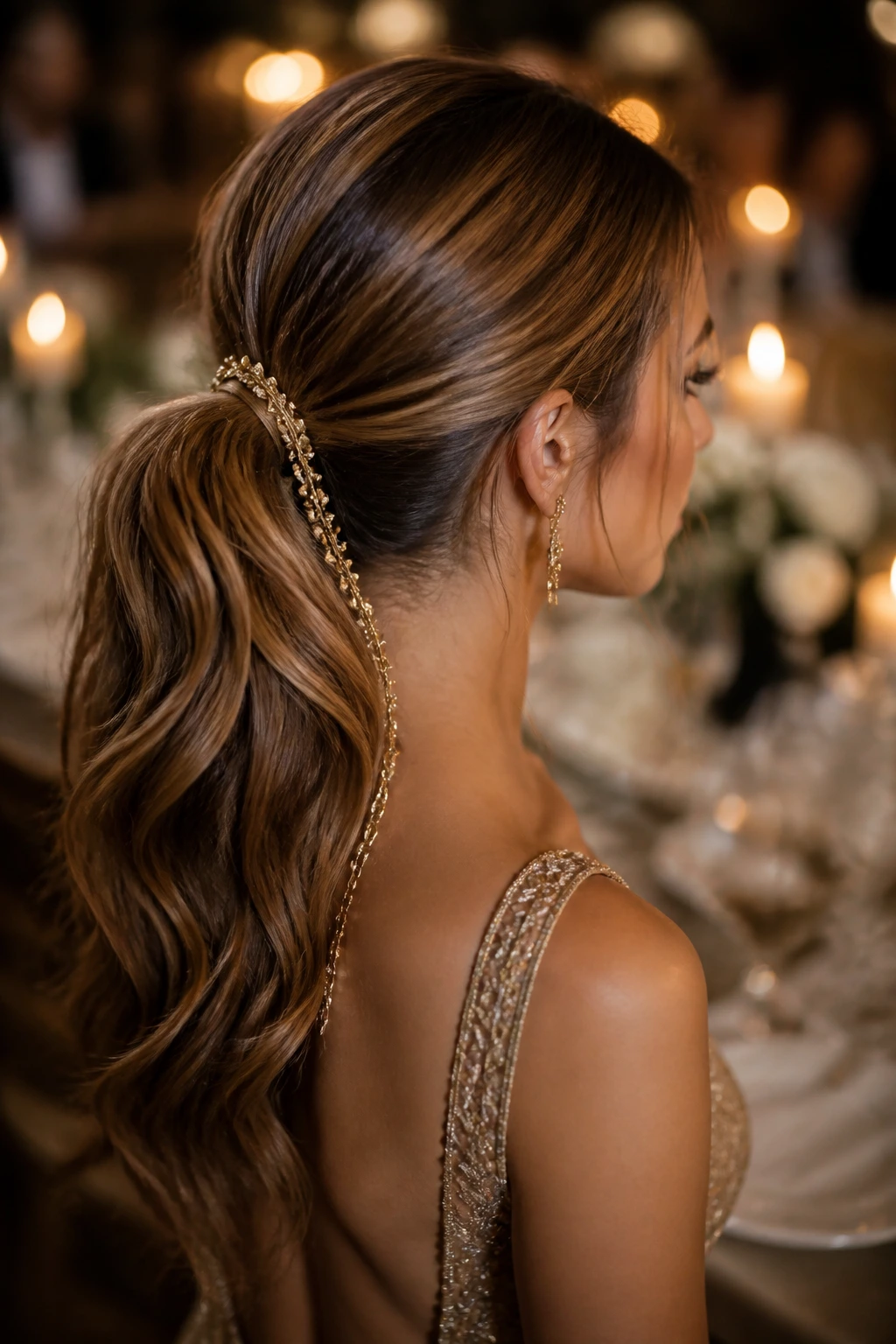
Metal details can change the temperature of a ponytail fast. A fine chain, a hair vine, or a slim gilded piece tucked into the base gives the style a little shine without tipping into heavy ornament. Keep the accent narrow and let it follow the shape of the ponytail rather than sitting on top of it like a crown.
This is the ponytail for brides who want a touch of sparkle but don’t want flowers, bows, or a full tiara. The metal should echo the jewelry tone — warm gold, soft silver, or rose-toned metal — so it doesn’t fight the rest of the look. Clean lines, one accent, done.
32. Short-Hair Ponytail Illusion with Extensions
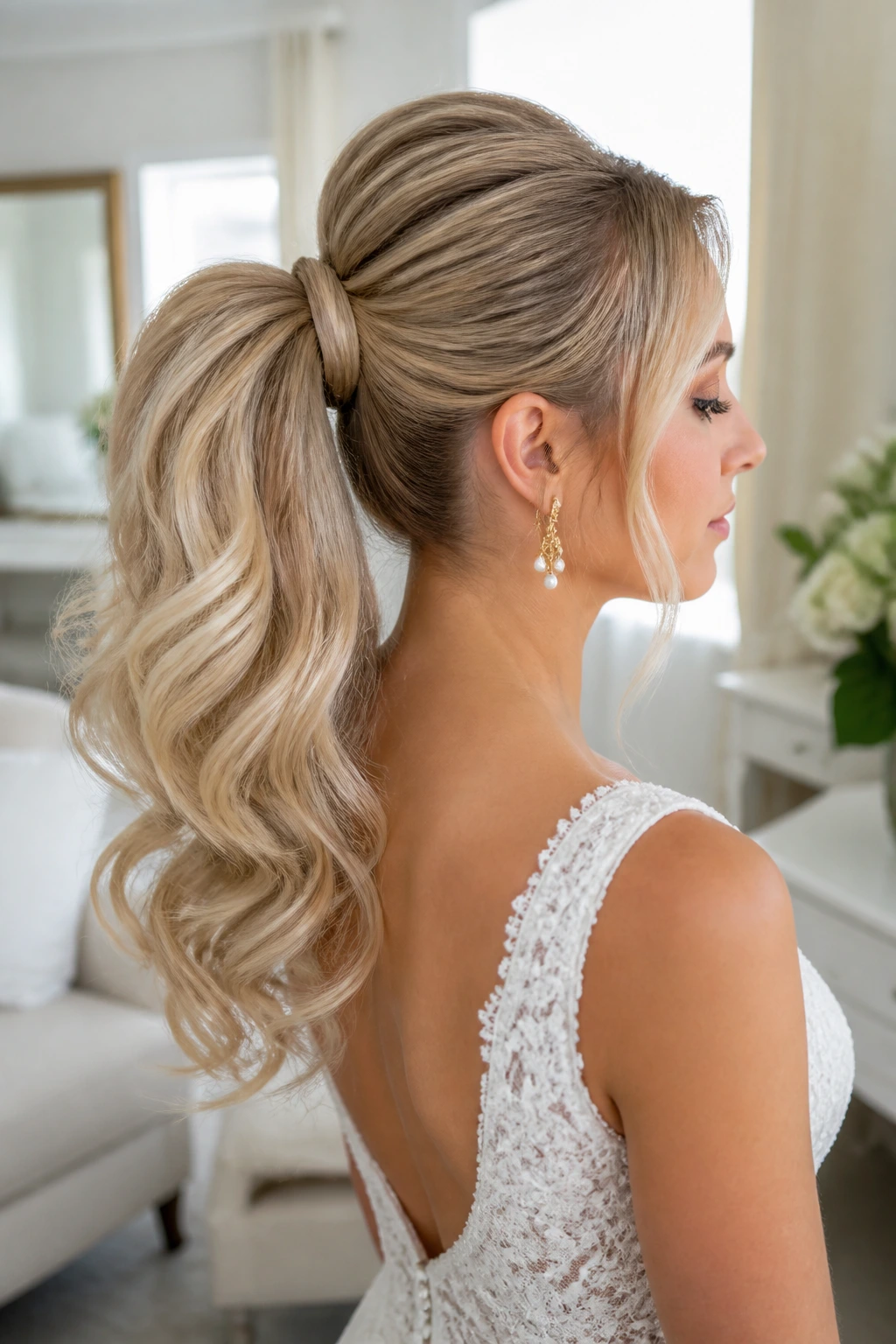
Fine hair can fake length. So can short hair when the construction is done well. Extensions are the backbone of this look, but the styling matters just as much. Build a small, secure base, add the pieces where they’ll disappear into the head shape, then curl or wave everything together so the transition disappears.
What to Ask For
- a ponytail attachment that matches your hair density
- extension length that sits at least a few inches beyond your target
- hidden anchors close to the base
- a blended curl pattern across real hair and added hair
This is a smart option for brides who want the drama of a tail without waiting for length that may not be there.
33. Pinned Faux Ponytail for Bob-Length Hair
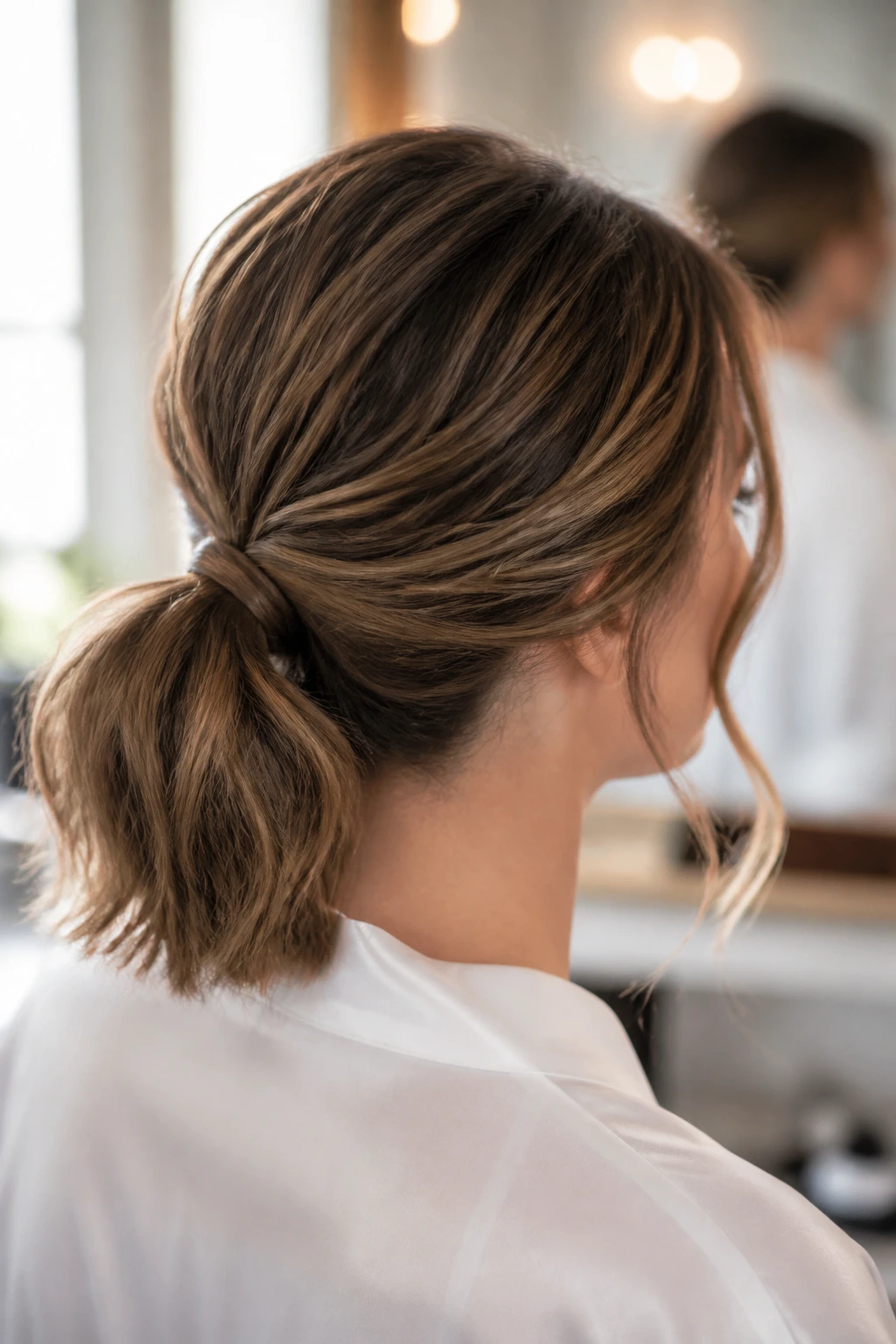
A bob can still wear a ponytail silhouette, and it doesn’t have to look like an obvious workaround. This style uses tucked sections, hidden pins, and a small gathered tail at the back to suggest a ponytail shape while keeping the shorter ends concealed. The result is neat, elegant, and practical for veils.
The best version keeps the outline soft rather than rigid. Let a few front pieces bend naturally, then smooth the rest so the back reads intentional. It’s especially useful if you love the idea of ponytail energy but your hair just doesn’t sit in a long tail on its own. No need to force it. The illusion is enough.
What Makes a Bridal Ponytail Hold Its Shape All Day
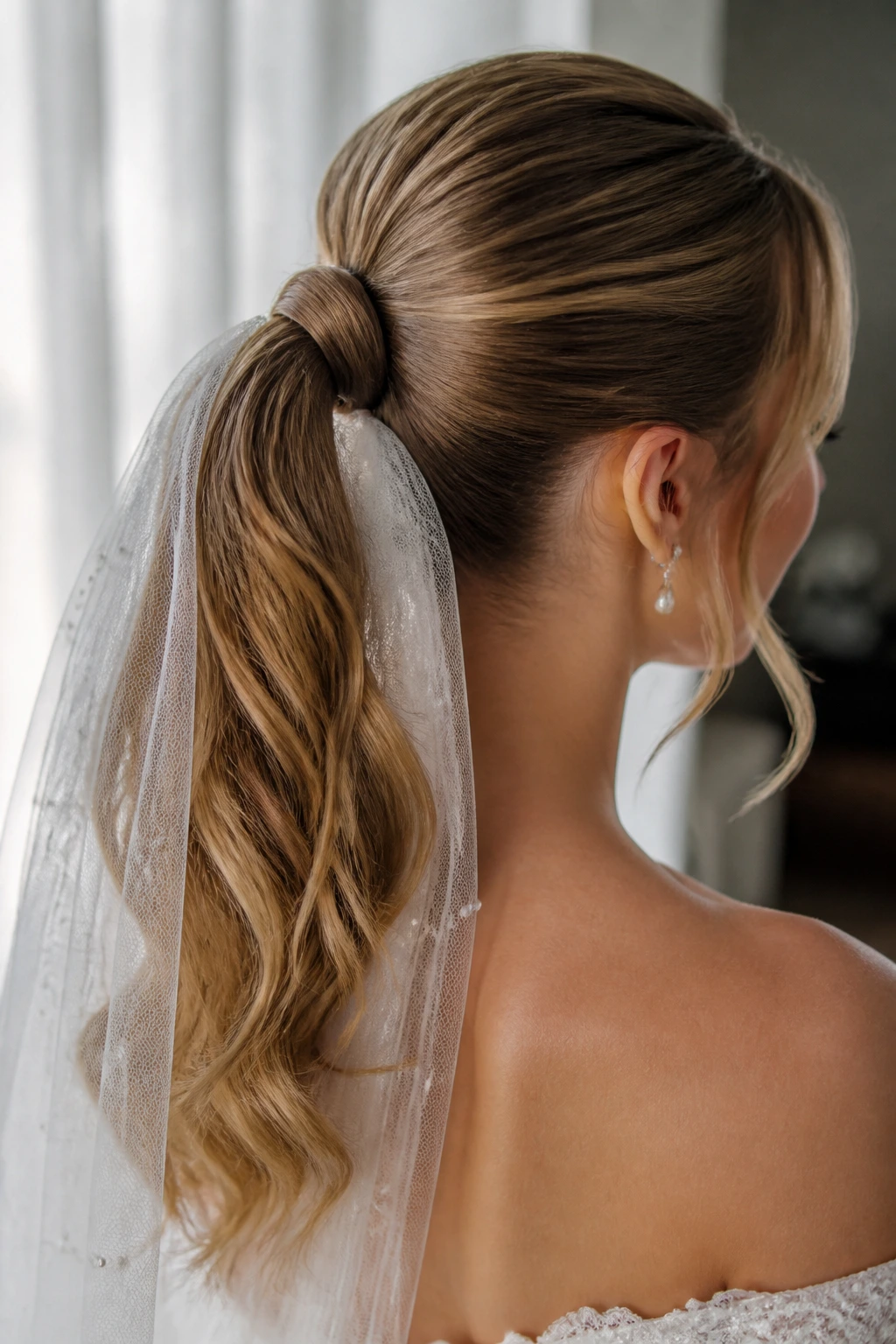
The base is the whole story. If the anchor point is weak, everything else — curls, ribbons, veils, pins — starts to slip, and no amount of extra spray saves it. A wedding ponytail needs tension at the roots, but not the kind that gives you a headache by cocktail hour. The balance sits in the middle: secure enough to move, soft enough to wear.
The second thing people miss is weight. A thick tail, especially one built with extensions, pulls more than a slim one. That means the support has to be set where the head can actually carry it. A low ponytail can feel stable because gravity helps. A high one asks more of the pins and the elastic, so the internal structure has to be better.
Veils, combs, and jewelry should be decided together. A ponytail that looks perfect on its own can get crowded once a veil comb lands too close to the base or a hair vine steals the line of the part. I like to think of bridal ponytails as small architecture. The shape is pretty, yes, but the hidden supports are what keep it standing.
The Base, the Tail, the Finish
- Base: smooth, secure, and placed with the neckline in mind
- Tail: shaped to match the dress and movement you want
- Finish: shiny, soft, or textured, but never accidental
Essential Tools for These Styles
-
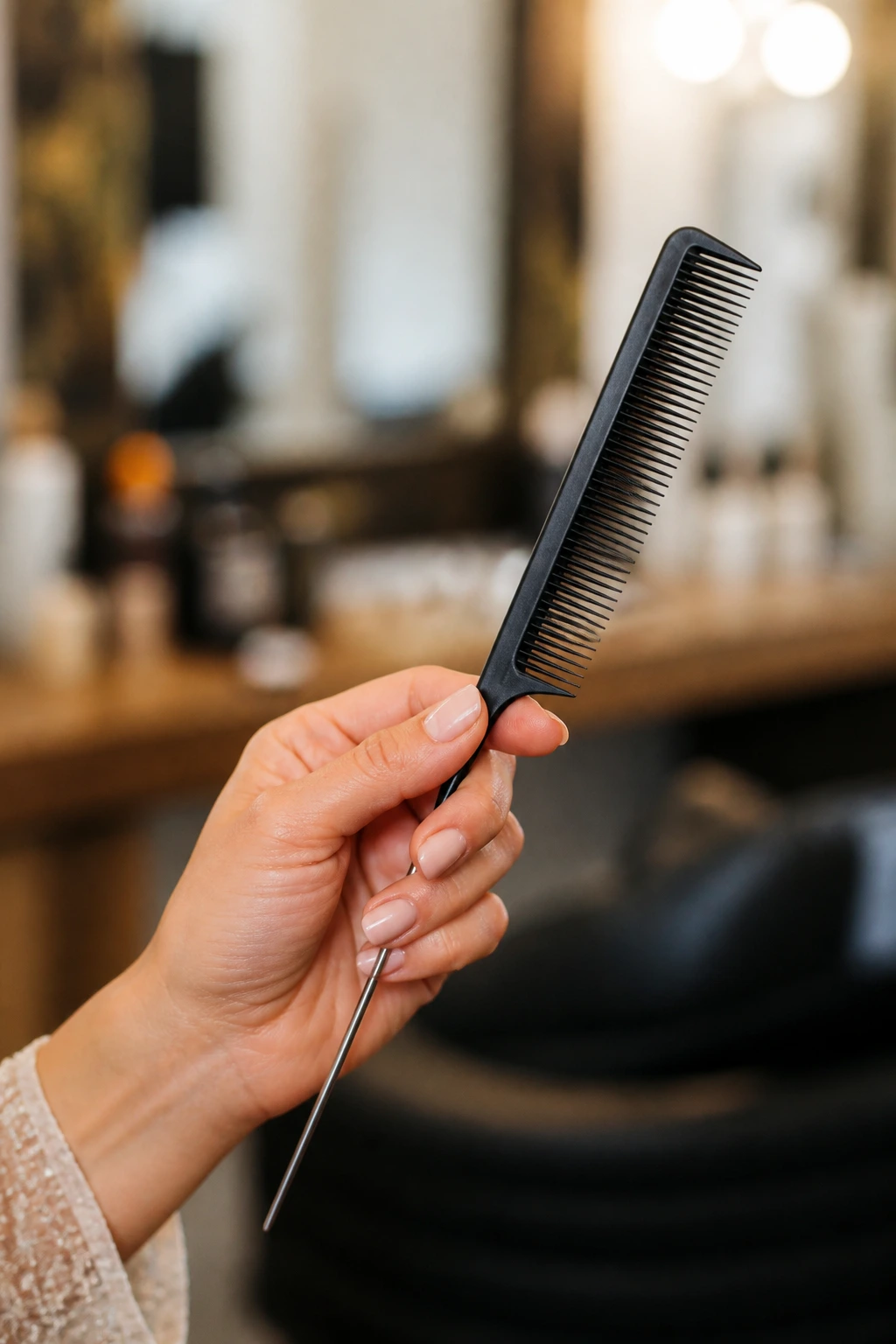
Rat-tail comb: for clean parts, sectioning, and smoothing the crown.
-
Boar-bristle brush: useful for sleek looks because it lays hair flatter without the harshness of a plastic brush.
-
Fine elastic bands in hair-matching colors: the little dark rings are hard to hide in photos; buy shades that disappear into your roots or tail.
-
Bobby pins and U-pins: you’ll need both for wrapping, anchoring, and locking in veil placement.
-
Light hold hairspray: enough to set the shape, not so much that the hair turns stiff.
-
Shine spray or serum: use sparingly; one mist too many and the hair starts to look greasy under flash.
-
Curling iron or wand: pick the barrel size based on the finish you want, usually 1 to 1¼ inches for bridal waves.
-
Flat iron: helpful for sleek crowns, ribbon styles, and cleaner edges.
-
Clip-in extensions or ponytail extension: especially useful for fuller tails, high styles, and short hair.
-
Texturizing spray: best for braids, boho looks, and styles that need grip.
-
Hair padding or a small ponytail insert: useful when you want a fuller base without using too much teasing.
-
Hair accessories tray or soft pouch: keeps combs, ribbons, and pins from disappearing in the dressing room.
Smart Hair-Prep and Accessory Choices
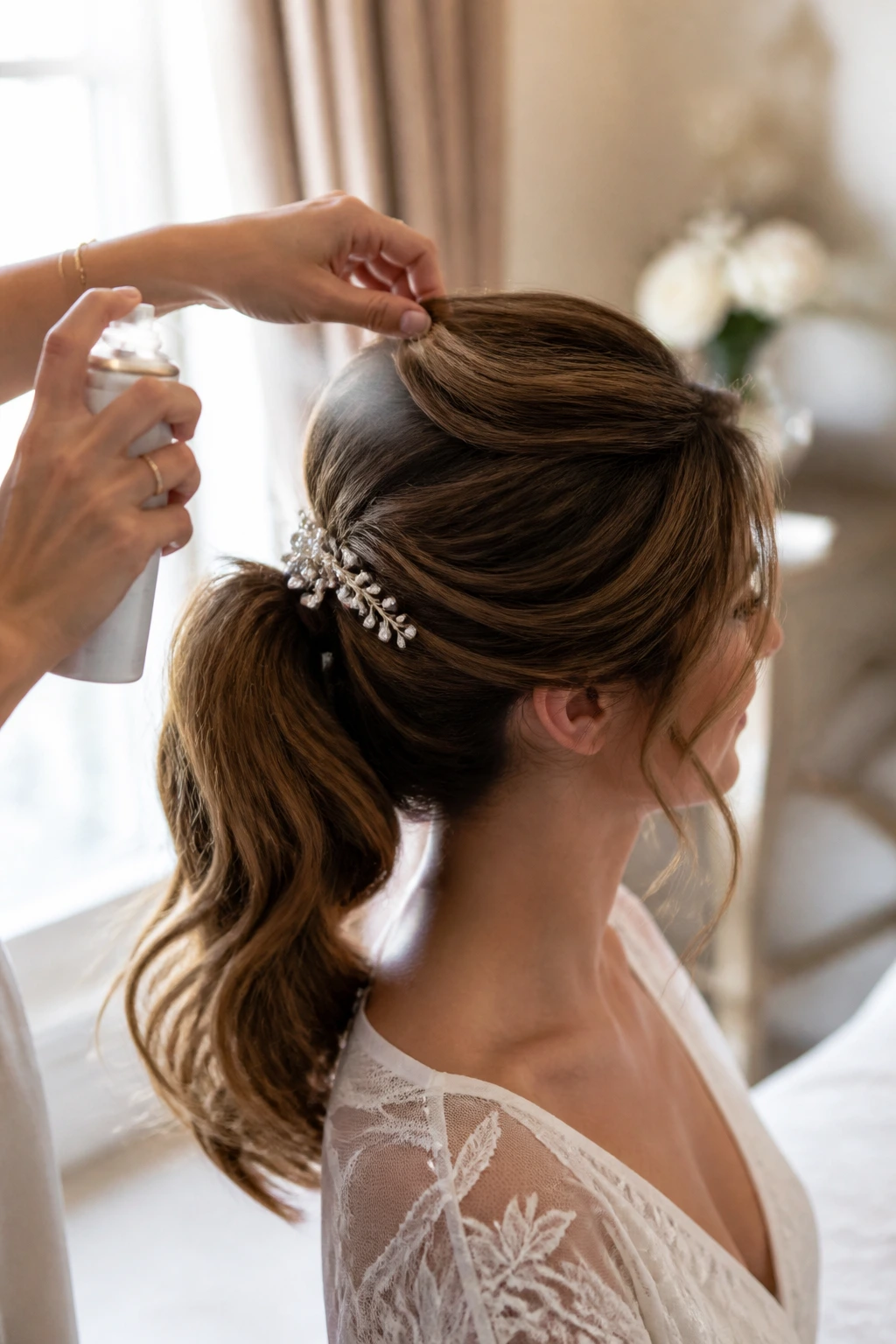
Hair prep changes the outcome more than the style name does. Fine hair usually behaves better when it’s washed the day before and given a bit of grip with mousse or dry shampoo at the roots. Coarser or curlier hair often needs more moisture and smoothing cream, but not so much that it collapses. If your hair is extremely slippery, a little texture at the roots is your friend. If it’s dry, go easy. Dry hair grabs product too quickly and can end up dull.
Extensions deserve care, too. Human hair blends more naturally when heat styling is part of the plan. If you only need the extra length and won’t be curling much, a good synthetic piece can still work, but test it first. I’d also size extensions a little longer than you think you need; curls always shorten the visible length more than people expect.
Accessories should repeat the rest of the outfit rather than fight it. If your dress has warm beading, choose gold-toned pins or a ribbon with a warmer ivory cast. If the jewelry is cool silver, a bright metallic comb can look sharper. And if you’re using flowers, buy them with enough time to trim the stems and test how they sit in the base. A flower that droops because the wire is too long ruins the whole effect.
How to Match a Ponytail to Your Dress, Veil, and Jewelry
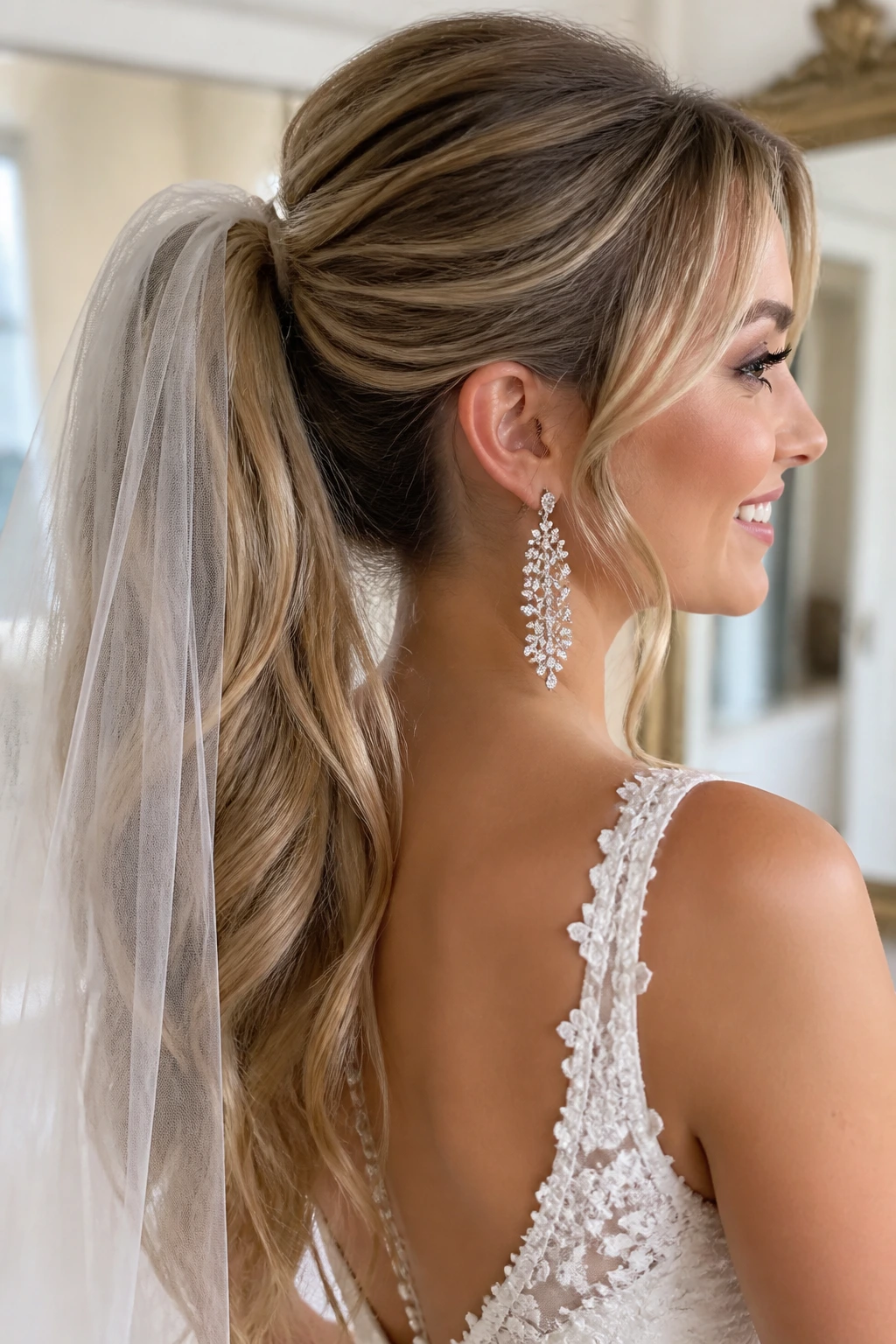
Neckline: A high ponytail tends to flatter strapless and straight-across necklines because it lifts the eye upward. Low ponytails, by contrast, are calmer beside high necks, illusion backs, and dresses with a lot of detail near the shoulders.
Veil placement: If the ponytail is low, the veil comb usually sits below or just behind the base. If the ponytail is high, the veil may need to anchor a touch lower so it doesn’t crowd the crown. Test this before the wedding day. The placement changes everything.
Jewelry: Big earrings pair well with cleaner ponytails — sleek center parts, glossy high tails, or low sculpted styles. Smaller jewelry can handle more texture, like braids, curls, ribbons, or flower accents.
Dress fabric: Satin and crepe like sharper hair. Lace, tulle, and chiffon can take softness and bend. When the dress is heavily beaded, keep the ponytail finish quieter so the eye has somewhere to rest.
Hair texture: Natural curls, coils, locs, and straight hair all work here. The trick is honoring the texture instead of flattening it into the same shape.
Additional Tips and Finishers
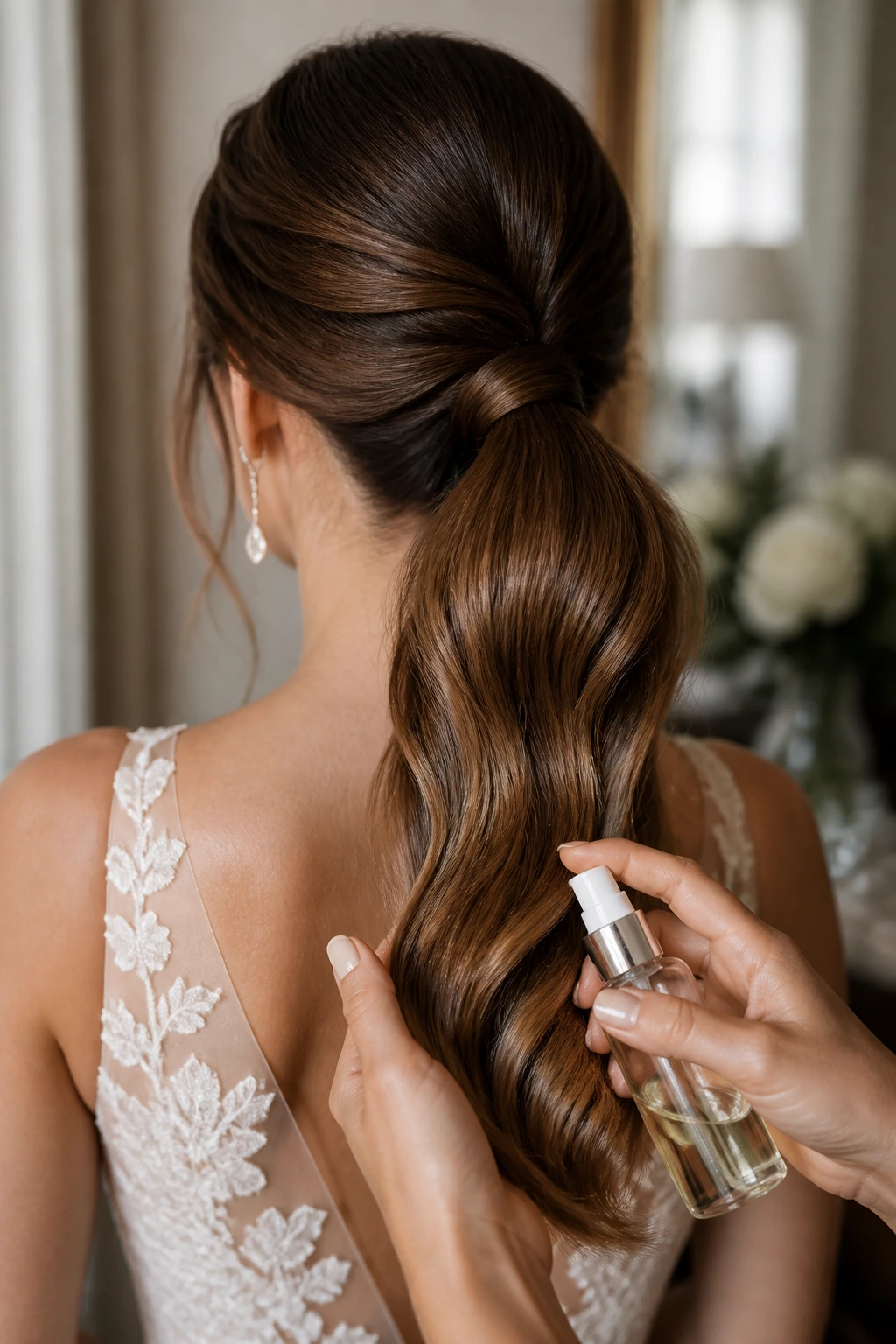
Shine without grease: Apply serum to the mids and ends first, then use the leftover product on the crown. That keeps the roots from turning shiny in a bad way.
Build the illusion of thickness: Backcomb a small hidden section near the base, then smooth the outside layer over it. The shape becomes fuller without looking puffy.
Keep the face soft: If the ponytail is sleek, leave one or two slim pieces near the temples. If the ponytail is textured, skip the extra face-framing hair and let the tail carry the softness.
Anchor the weight: For thick tails, use two elastics stacked close together and crisscross a few bobby pins under the base. The style sits better and won’t sag as the day goes on.
Make it your own: Swap pearls for ribbon, a floral sprig for a comb, or a braid for a twist. The best bridal ponytail is the one that repeats something from the dress or jewelry instead of fighting it.
Make-Ahead, Trial Run, and Touch-Up Guidance
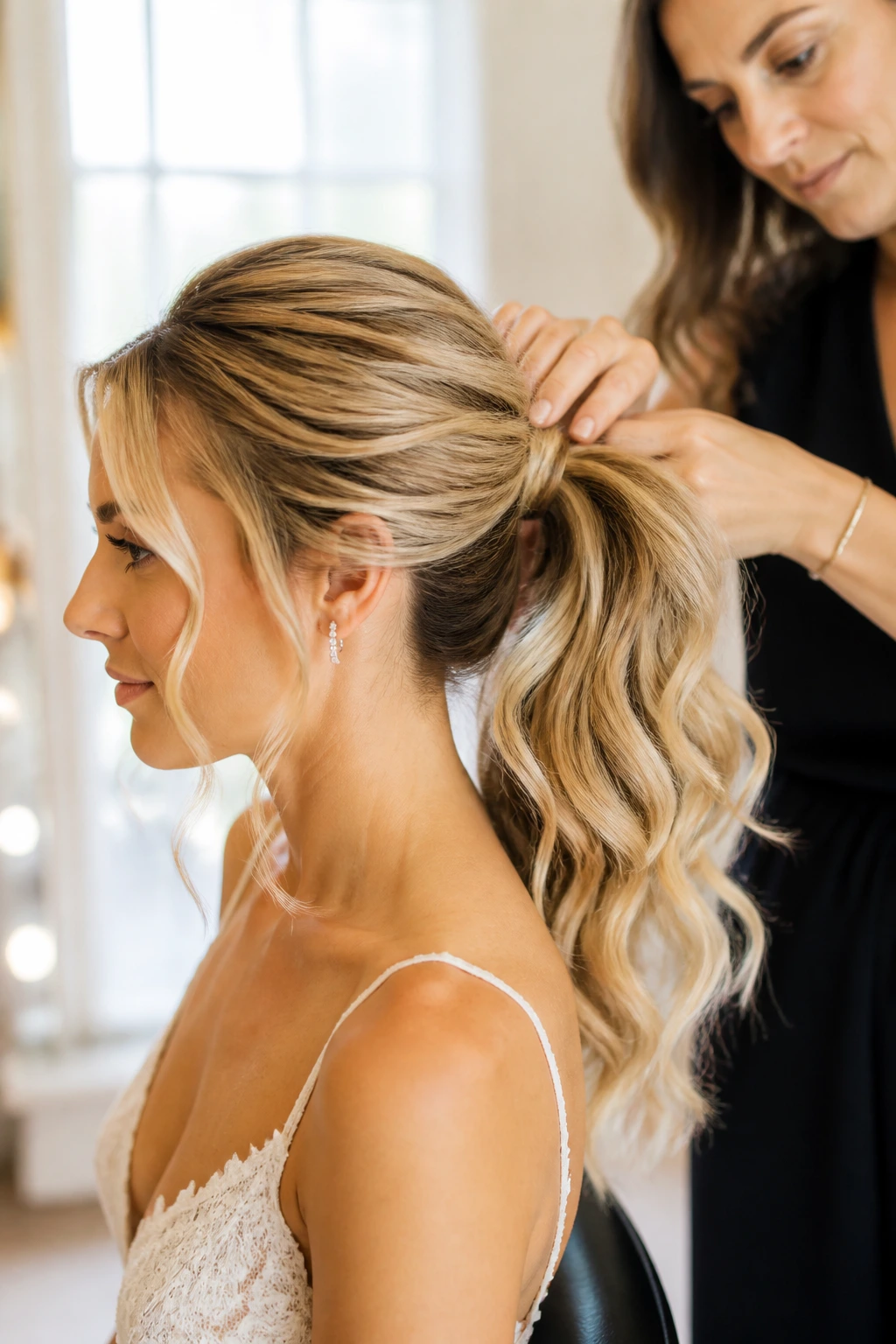
A bridal ponytail should not be improvised on the wedding morning. The trial run matters. Book it at least 2 to 4 weeks ahead, and bring every accessory you think you might use: veil, earrings, comb, flowers, ribbon, everything. If you need a trim or shape-up, do that about 1 to 2 weeks before, not the day before. Fresh cuts can move more than you want.
The day-before plan depends on your hair. Fine hair often behaves better with a wash the previous day and a bit of dry shampoo at the roots. Curly or coarse hair may need moisture and stretching the night before, then a refresh the morning of. Do not do a full wet wash if your hair needs time to settle; the shape usually improves once it has cooled and dried down properly.
Keep a small touch-up kit nearby: extra elastics, 6 to 10 bobby pins, a mini hairspray, a tiny brush or comb, and one product you know your hair likes. If the style uses curls, let them cool completely before you touch them. If the ponytail is sleek, keep a silk scarf or soft wrap handy while getting dressed so collars and makeup don’t rough up the finish.
Common Mistakes That Flatten a Bridal Ponytail
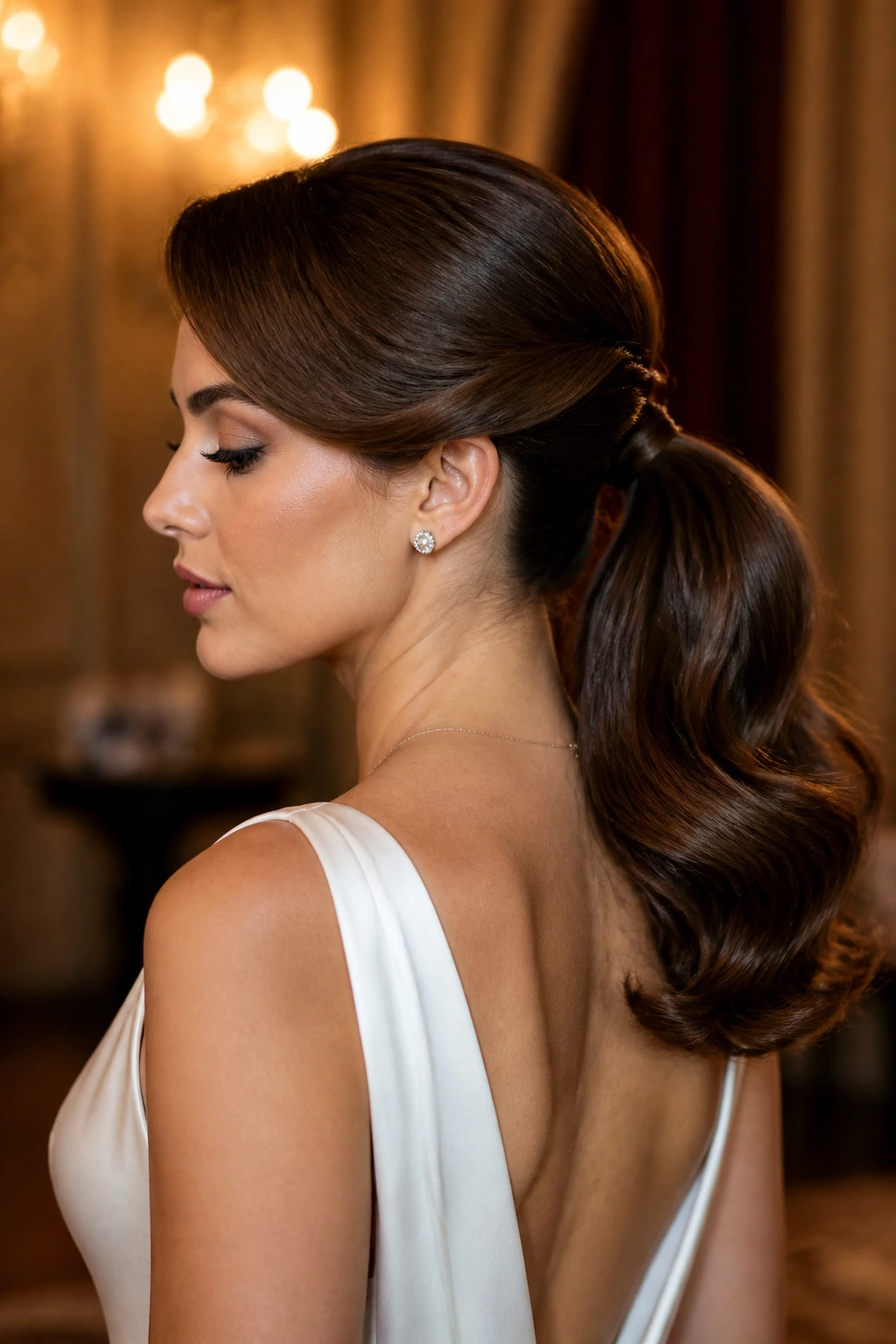
The first mistake is placing the ponytail based on habit instead of the dress. A low tail under a high neckline can disappear into fabric, while a high tail with a detailed back may block the best part of the gown. Fix that by trying the style on with the dress or a mock neckline, even if it’s just pinned in place during the trial.
Another one: too much product at the roots. The hair may look smooth for five minutes, then start separating or going flat around the face. Use product in layers, not in a single heavy swipe. If the crown looks greasy, wipe the brush, not the hair, and smooth again with a cleaner hand.
People also overload the tail with decoration. Pearls, flowers, ribbons, combs, and braid detail can all coexist, but not all at once. Pick one main detail and let everything else stay quiet.
Then there’s the veil problem. If the veil is an afterthought, the base usually suffers. Decide where the veil will sit before the ponytail is finished. That one choice saves a lot of frustration.
Frequently Asked Questions
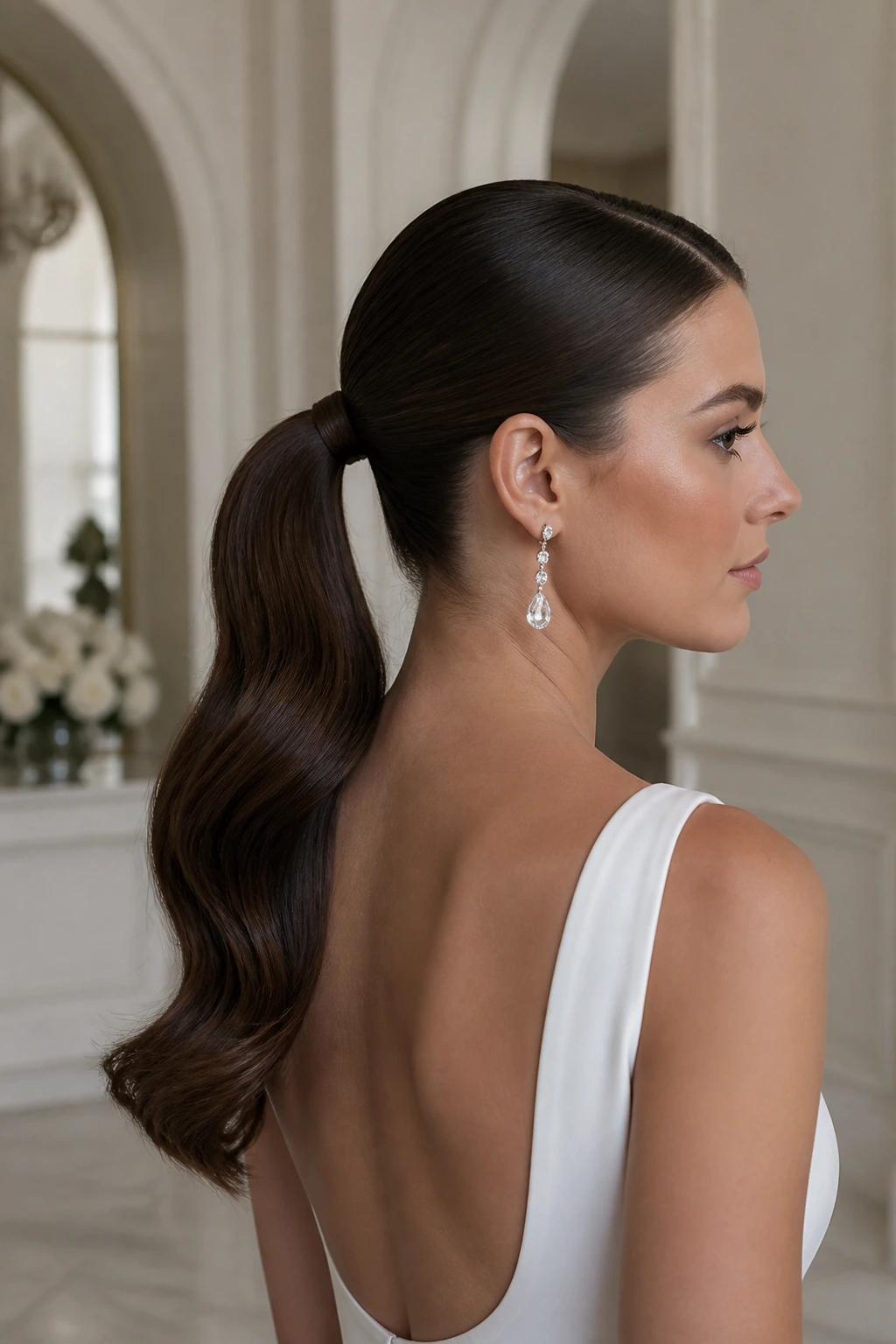
Can a ponytail look formal enough for a wedding?
Absolutely. Formality comes from finish, placement, and detail — not from whether the hair is up or down. A sleek low ponytail with a wrapped base can look far more intentional than a loose bun that’s been pinned in a hurry.
Can I wear a veil with a ponytail?
Yes, and the attachment point matters more than people expect. Low ponytails usually work best when the veil sits just below the base or slightly behind it. High ponytails need more testing because the comb can crowd the crown if it’s placed too high.
What if my hair is fine and limp?
Build texture before styling. A bit of mousse at the roots, dry shampoo at the crown, and clip-in support in the tail can change the whole result. A low or mid ponytail is usually easier to keep stable than a very high one.
Can natural curls or coils work with these looks?
They can, and they often look better when the texture is preserved instead of forced flat. A sculpted curl ponytail, afro puff, or wrapped low tail can feel far more personal than a style that fights the hair’s natural shape.
Do I need extensions for a bridal ponytail?
Not always, but they help if you want a fuller tail or a longer line. If your hair already has enough density, skip them and focus on shine and shape. If the tail looks thin once it’s curled, a few clip-ins can make it read richer.
How do I keep the ponytail from sliding during the day?
Use two points of support: a secure elastic and hidden pins around the base. If the hair is very silky, a little texture spray near the roots helps the style grip without turning it stiff. Loose styles usually fail because they’re too smooth, not because they’re too soft.
Can short hair still pull this off?
Yes, especially with hidden extensions or a faux ponytail build. A bob can be tucked and pinned into a small tail shape that still reads bridal. The key is not pretending the hair is longer than it is; it’s making the silhouette clean.
Which ponytail style is best for a minimalist dress?
A sleek center-part ponytail, a sculpted low tail, or a glossy mid-height version usually works best. Minimalist gowns like hair with exact lines and a controlled finish. Too much braid or flower detail can start to feel noisy beside a clean dress.
The Last Pin
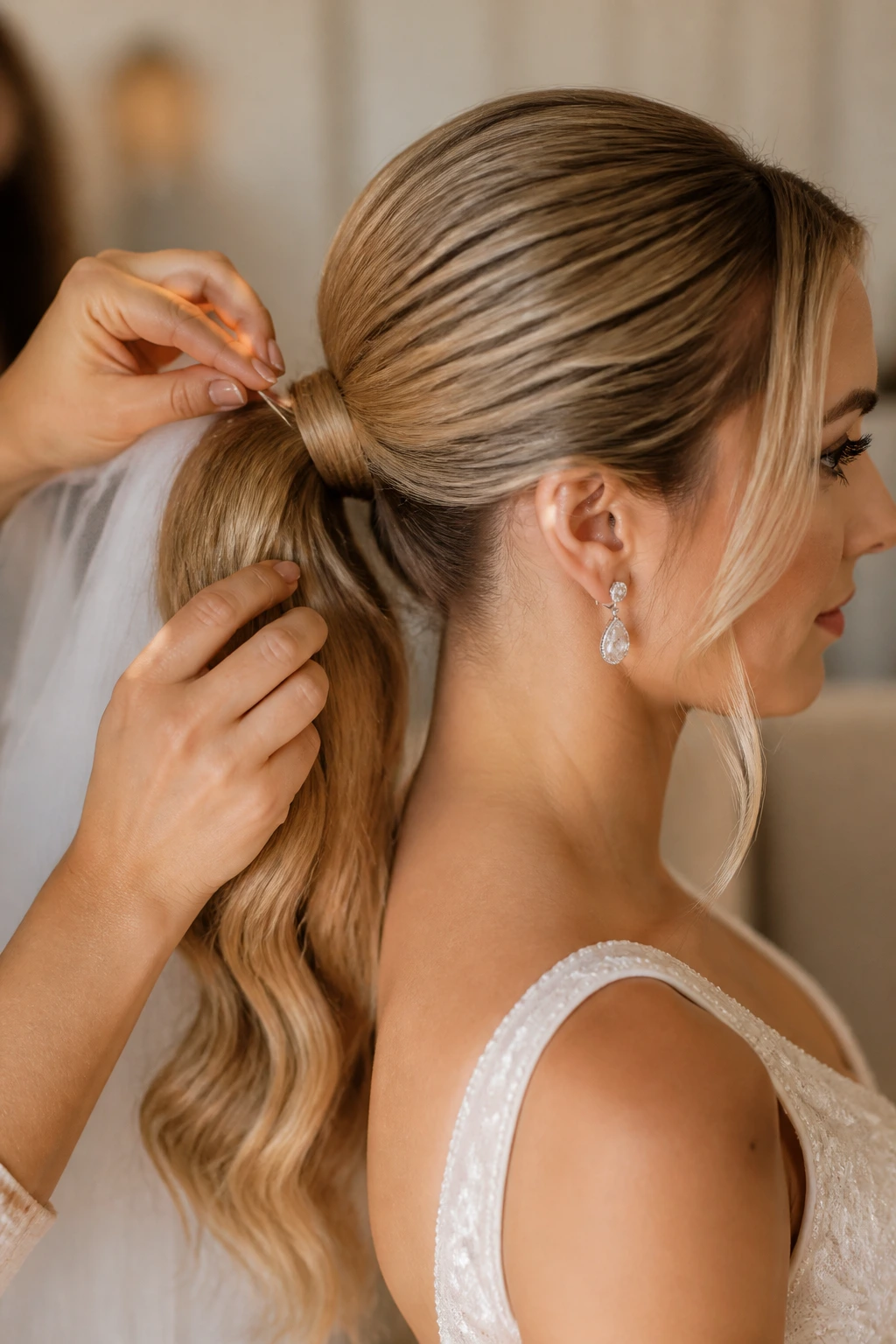
Bridal ponytails work because they do more than hold hair back. They shape the neck, frame the face, and leave room for the dress to stay visible — which is a much better job than most people give them credit for. Some are sleek and spare. Some are full of braid or curl or ribbon. The nice part is that the silhouette stays the same while the mood changes completely.
Pick the version that matches your neckline, your texture, and the amount of movement you want when you walk. Then make the base clean, the support strong, and the finish deliberate. That combination tends to hold up in photos, under a veil, and long after the first dance.
