



Curly hair gives a faux hawk something straight hair has to fake: built-in lift. The ridge doesn’t need much coaxing, the sides don’t need to be plastered flat, and the whole shape can look sharp without losing the spring that makes curls worth wearing in the first place.
The catch is that people often style a curly faux hawk like it’s a rigid, shaved-sides haircut. That’s where things go sideways. Curls want room to move. They also shrink, spring, and misbehave in ways that are annoying on a bad day and gorgeous on a good one. If you pin them like a helmet, they rebel. If you let them do whatever they want, the silhouette disappears. The sweet spot is somewhere in the middle — controlled, but not stiff.
That middle ground is exactly why faux hawk styles for curly hair can look so good. A little side control, a little crown height, a little texture left on purpose. Done right, the style reads clean from the front, textured from the side, and a little bit edgy without turning into costume hair. And yes, it can be soft enough for brunch, sharp enough for a night out, and practical enough for a day when you don’t want your curls bouncing in your lashes every five minutes.
Why Curly Hair Makes Faux Hawks Look Better
-
Natural lift does half the job: Curly hair already has root volume, so you’re not starting from zero the way you often are with pin-straight hair.
-
The ridge looks fuller with less teasing: A handful of curls stacked through the center gives the faux hawk a visible shape without backcombing the life out of it.
-
Pins grip better on textured hair: Day-two curls, a little dry shampoo, and a few hidden bobby pins usually hold better than silky-clean strands that keep sliding loose.
-
The sides don’t have to be bone-smooth: A small amount of texture on the temples keeps the style from looking overworked and makes the whole shape feel more natural.
-
Shrinkage works in your favor: What looks slightly too tall when wet often settles into a cleaner, tighter ridge once the curls dry.
-
You can go soft or severe: Curly faux hawks can lean polished, messy, romantic, or punk without changing the basic silhouette.
1. Classic Curly Crown Faux Hawk
The classic version is the one I keep coming back to when someone wants a faux hawk that still looks like their curls. You keep a strong center ridge, pin the sides back just enough to open the face, and leave the curl pattern visible instead of combing it into submission. It’s the cleanest starting point, and honestly, it’s the one most people should try first.
Why It Works
A classic curly crown faux hawk gives you height without forcing drama. That matters. The center strip can be gathered loosely from the temples back to the crown, then secured with 6 to 10 bobby pins crossed in X-shapes so the weight sits flat against the scalp. If your curls are tighter, a little water and curl cream on the outer layer helps the ridge stay defined without frizzing out into a cloud.
For extra control, twist the side sections back before pinning. It keeps the silhouette neat and stops random strands from poking out near the ears.
Best cue: the top should feel secure, but not tugged.
2. Pineapple Puff Faux Hawk
The pineapple puff version is for the days when your curls already have attitude and you want the style to lean into that instead of fighting it. The crown sits higher, the sides stay slicker, and the whole shape looks a little bolder than the classic version. It also happens to be one of the easiest faux hawks to build on second-day hair.
You get the best result when the top section is gathered loosely, not stretched tight. Keep the puff high enough to read as a ridge, then let the curls spill and pile rather than forcing them into a neat little knot. A soft edge brush at the temples and a pea-sized amount of gel can keep the sides tidy without making them crunchy.
This is the faux hawk I’d pick when I want height in under 10 minutes. Fast. Reliable. Very little fuss.
3. Braided Side Panel Faux Hawk
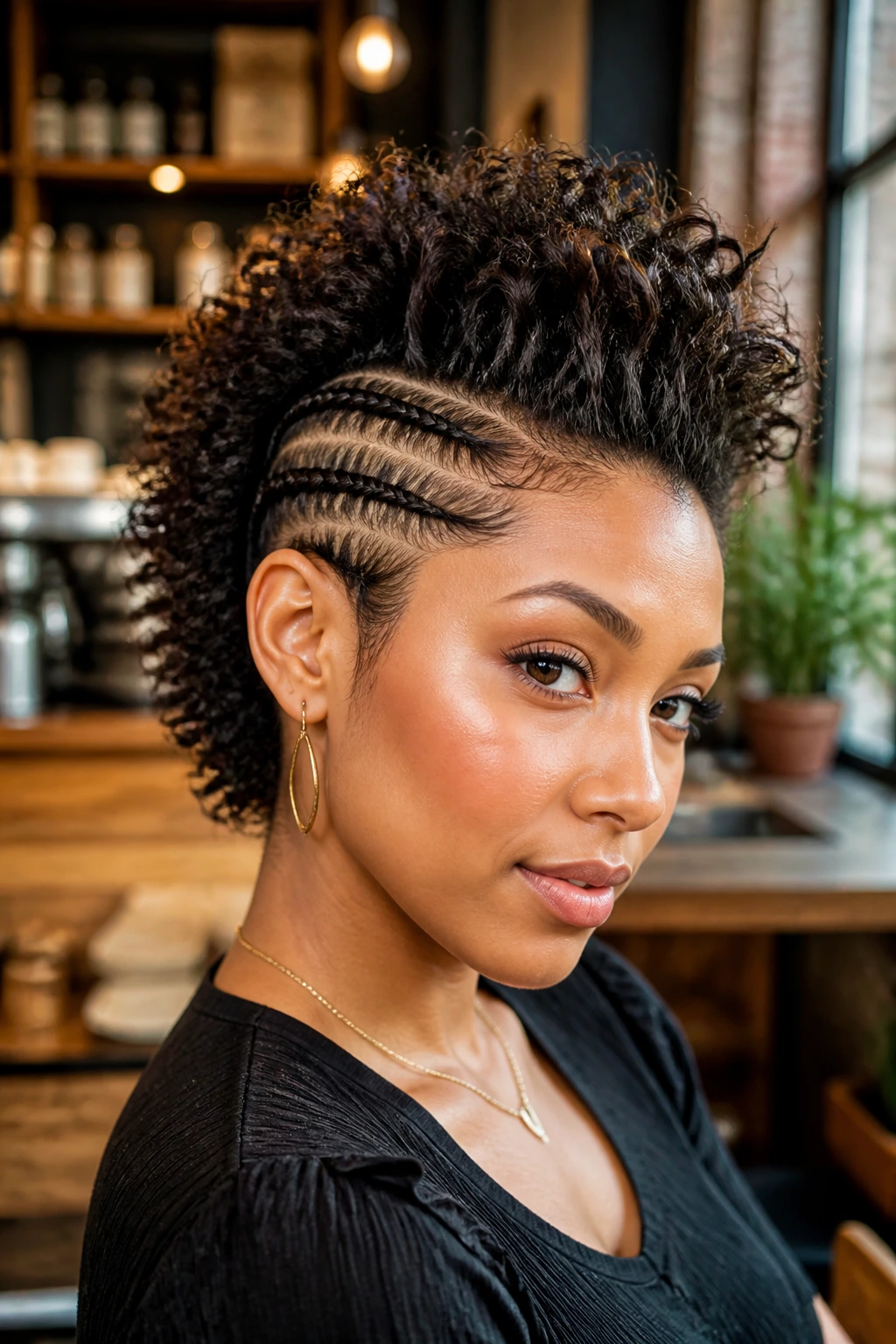
Why does this one hold so well? Because braids act like little guardrails. Once the side panels are braided back, the center ridge has room to stand up on its own instead of fighting loose temple curls all day.
What Makes It Different
The easiest version is a pair of narrow braids or cornrow-like twists running from the hairline toward the crown, with the middle section left curly and lifted. If your hair is dense, a 1-inch section on each side is enough to make the ridge feel deliberate. Thicker braids make the style read more structured; thinner braids keep it softer.
How to Use It
This is the best option when you want the faux hawk to stay put for hours and still look polished at the end of the day. Add a little mousse to the center section, diffuse for 5 to 8 minutes, and let the braids do the heavy lifting on the sides.
4. Half-Up Twist Faux Hawk
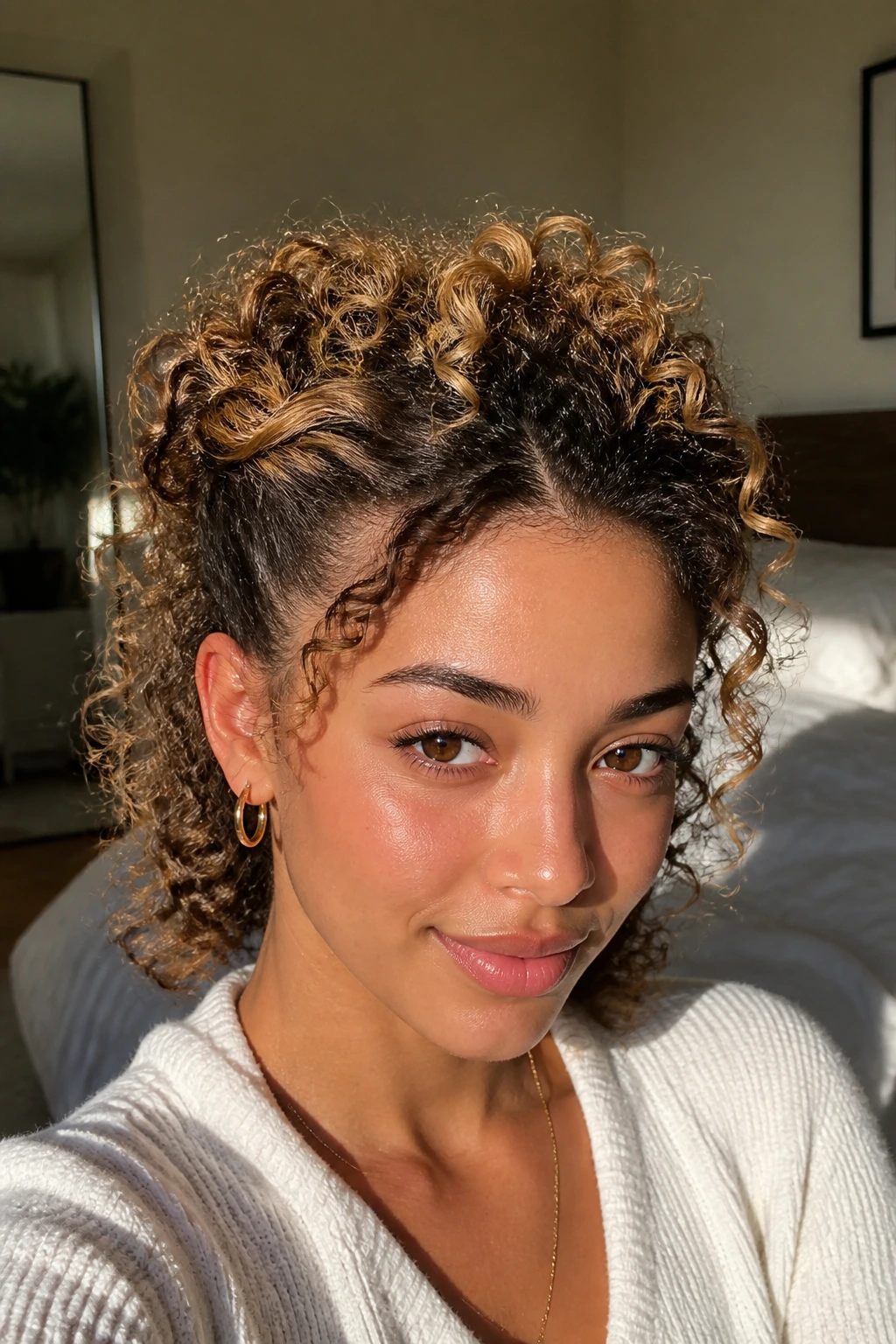
Picture this: two twisted side panels, a lifted crown, and curls left free through the middle so the style still feels airy. That’s the half-up twist faux hawk, and it’s one of the most flattering options for medium-length curls because it doesn’t eat all your length.
The trick is to twist back from the temples, not from the very front hairline, unless you want a more severe look. Starting slightly farther back leaves a little softness around the face. Pin each twist under the ridge instead of on top of it so the finished style doesn’t look bulky.
I like this version for curls that flatten at the root but still have nice shape through the mid-lengths. It gives the crown a lift without making the ends look overcontrolled.
5. Slicked Sides Curly Faux Hawk
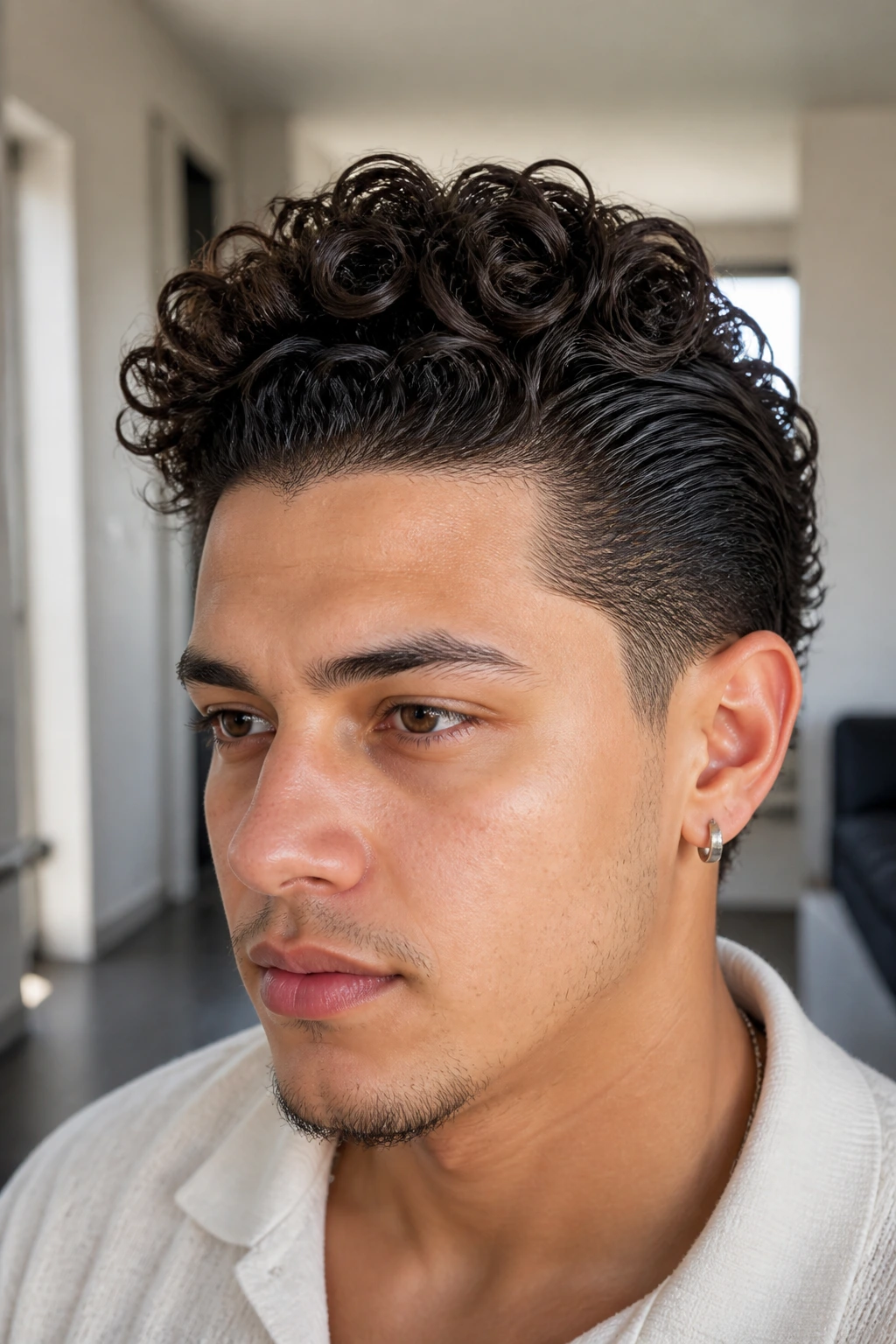
A slicked-sides faux hawk can go wrong fast if you overdo the product. Too much gel, and the hair turns shiny in the bad way — stiff, flaky, and strangely heavy. The version I trust uses a thin layer of gel on damp sides, brushed back in one smooth pass, with the curls left fuller and more natural through the center.
That contrast is the whole point. The sides are tight enough to frame the face, but not so flattened that the style loses shape. If your hairline is prone to frizz, a little edge control at the temples helps, but keep it light. You want control, not a shell.
This style works especially well for shorter curly hair because the sleek sides make the ridge look taller than it really is.
6. Loose Cloud Faux Hawk
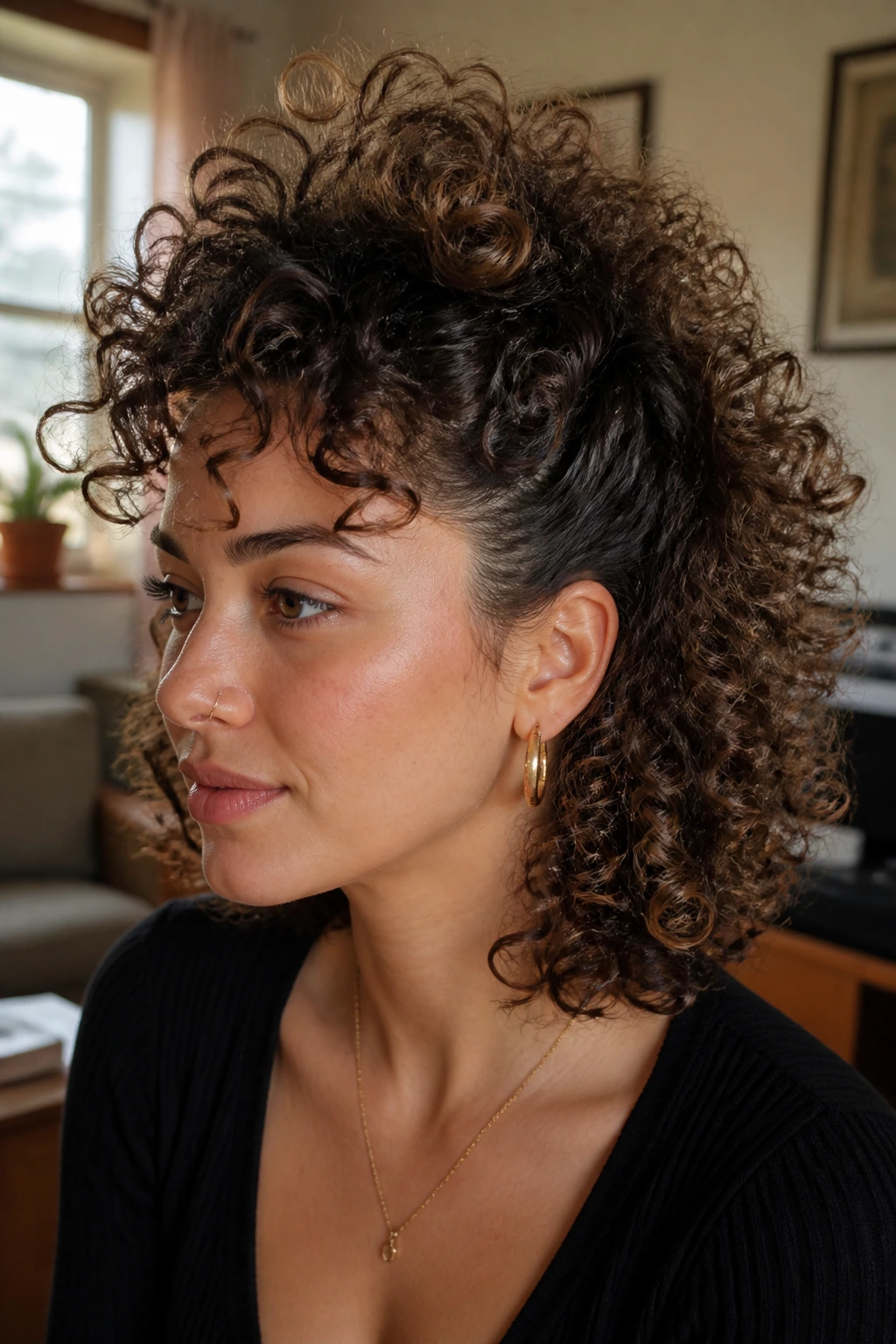
The loose cloud faux hawk is my favorite when someone says they want a faux hawk but do not want it to look “done.” You keep the middle section high, but you leave enough curl separation that the shape reads soft and a little floaty. It’s more cloud than spike. More texture than structure.
This version works best if you dry the roots with a diffuser upside down for a few minutes, then pin only the lower side sections back. Don’t stretch the curls too much. Let them bloom. That airy finish is what keeps the style from feeling heavy.
It’s a good match for shoulder-length curls and longer bouncy patterns that can swell too much when overstyled. If your hair tends to frizz in humidity, a light gel cream through the outer layer helps the shape stay visible.
7. Side-Cornrow Frohawk
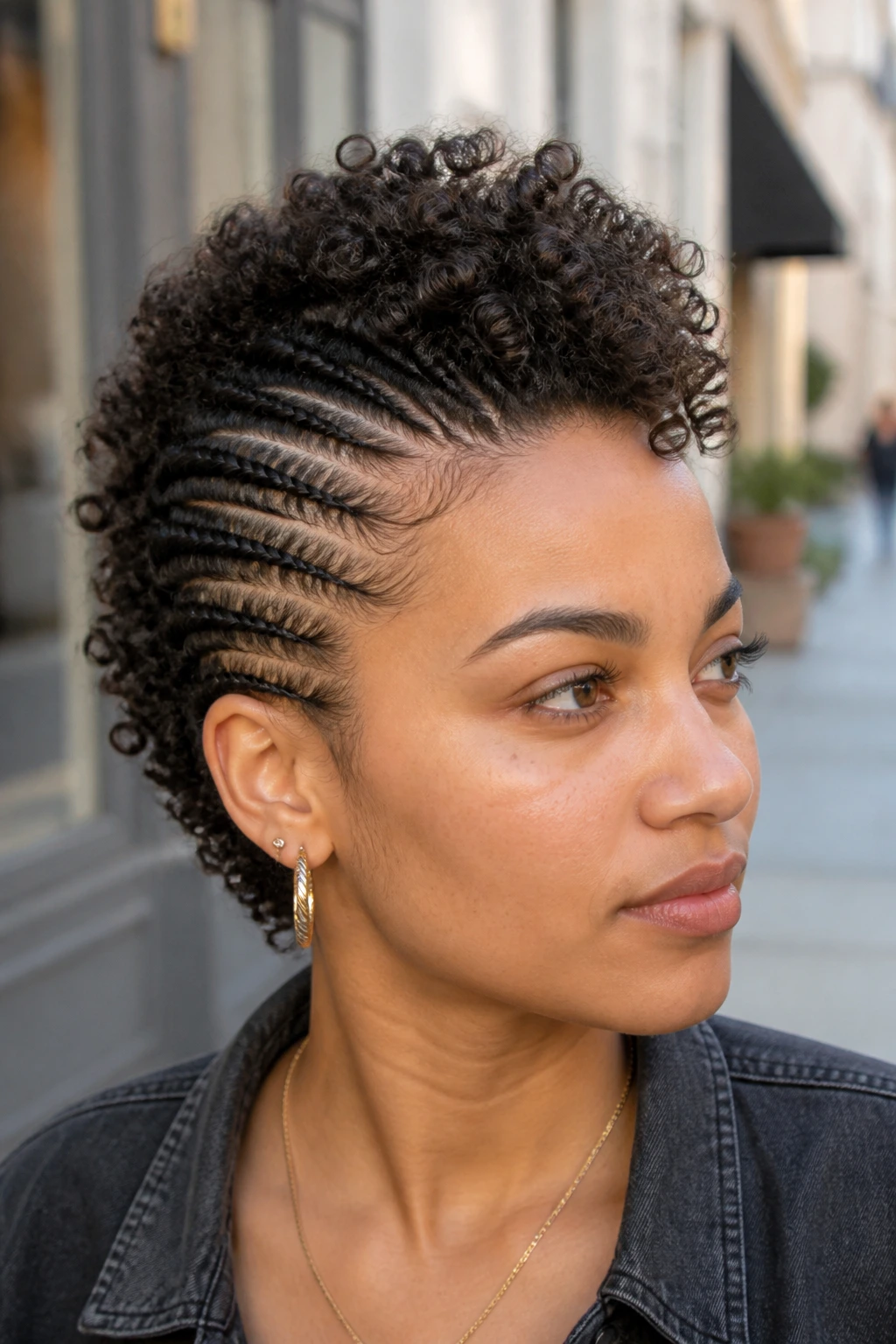
Side cornrows make a faux hawk feel locked in. Sharp. Intentional. There’s less guesswork because the braids carve the shape for you, and the curly center strip gets all the attention.
Why It Works for Tight Curls
With tighter curl patterns, side cornrows help manage shrinkage and keep the sides neat without loading them down with product. You can run 2 to 4 narrow cornrows from the front hairline toward the nape, then leave the central strip curly and lifted. The result is clean, but not flat.
What to Watch
If your scalp gets tender easily, don’t braid too tight. A frohawk should sit snug, not pull. A little scalp oil on the parts after styling keeps the look comfortable and stops the exposed rows from looking dry by day two.
8. Bantu Knot Accent Hawk
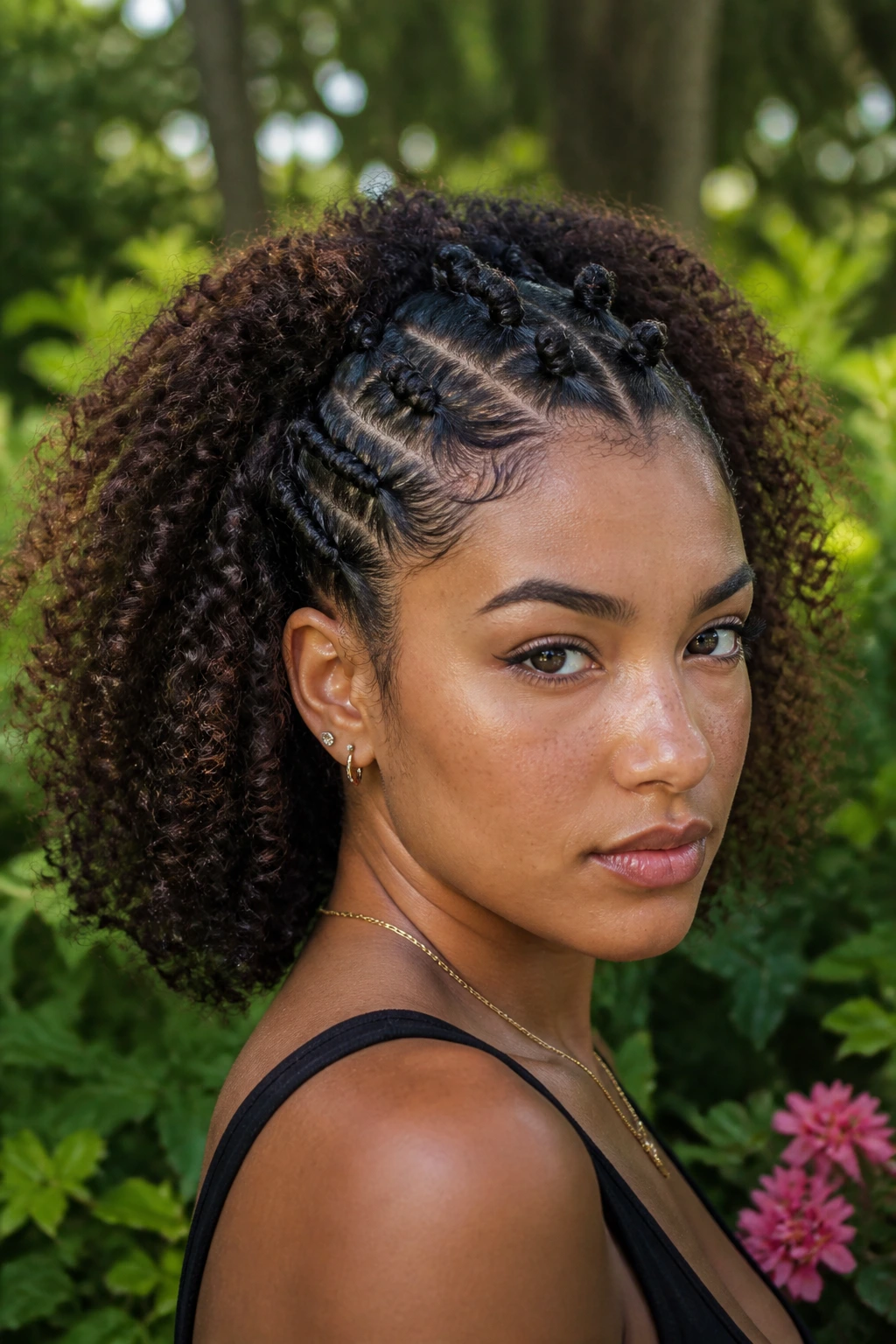
Bantu knots change the whole mood of a faux hawk. A row of small knots through the center or along one side gives the style shape, rhythm, and a little sculpture. It also helps on curls that need to be stretched before you want them pinned up.
The best version uses 3 to 7 tiny knots, depending on length. Keep them evenly sized so the ridge feels balanced, then let the remaining curls sit loose around them. You can wear the knots as the style, or take them down later for a crisper curl pattern. That’s the part I like most. Two looks, one prep.
A few jewel pins or cuffs near the knots can make the style feel special without cluttering it.
9. Mini-Claw-Clip Faux Hawk
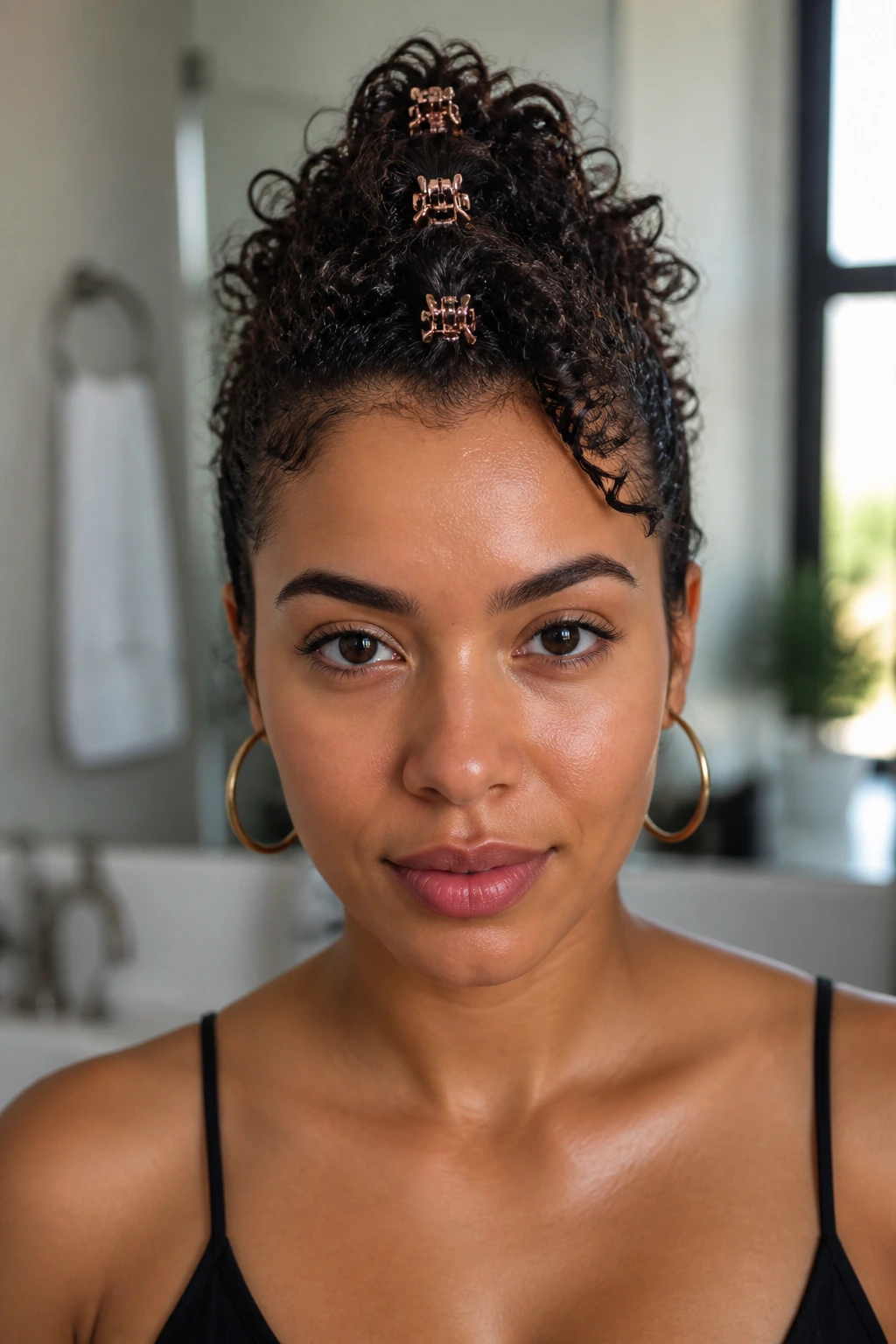
A mini-claw-clip faux hawk is the quick-change artist of this whole group. You can build it in minutes, fix it with one hand in a bathroom mirror, and take it out without leaving your scalp irritated by a dozen pins. Small clips are especially useful for curls that slip out of traditional pin setups.
Use 2 to 5 mini claw clips along the center line, starting at the crown and moving backward. Don’t stack them too close together; that’s how the ridge turns lumpy. Instead, let each clip hold a compact curl section, then fluff the curls around it once the shape is secure.
It’s not the most formal version here. Fine. But on busy mornings, it’s one of the smartest.
10. Rope-Braid Ridge Faux Hawk
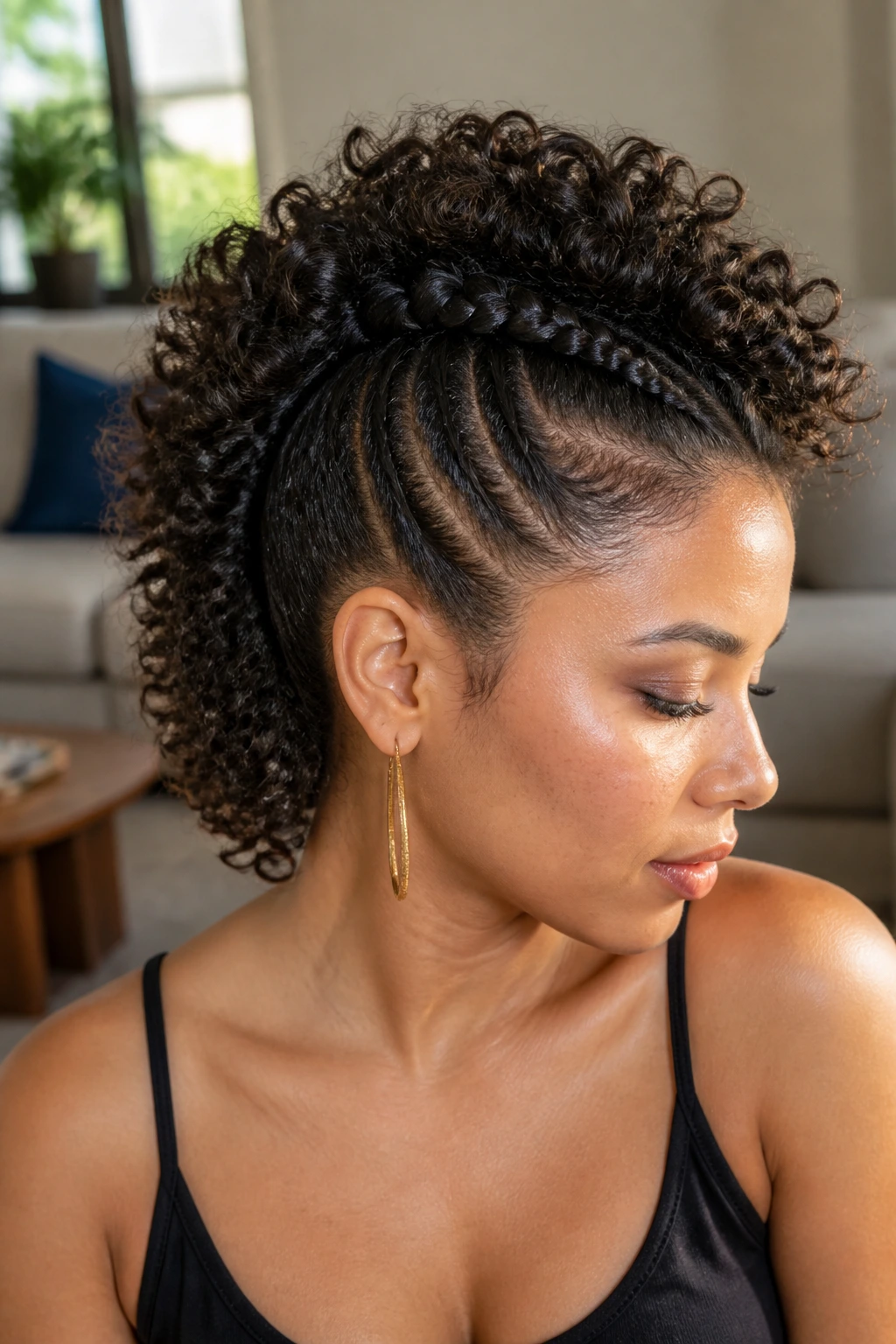
A rope-braid ridge gives the faux hawk a cleaner spine than loose twists do. The braid itself becomes the visual line, which means the rest of the curls can stay soft and full instead of fighting for attention. It’s a good choice if your hair has enough length to hold a twist without unraveling.
Keep the braid slightly loose at the root so it doesn’t look like a tight cord glued to the scalp. Secure the ends with a small elastic, then fan the braid a touch with your fingers to make it wider and more substantial. If the braid looks too neat, the style starts to feel stiff.
This one works especially well for formal settings because the shape is obvious from the front and clean from the side.
11. Wet-Look Night Hawk
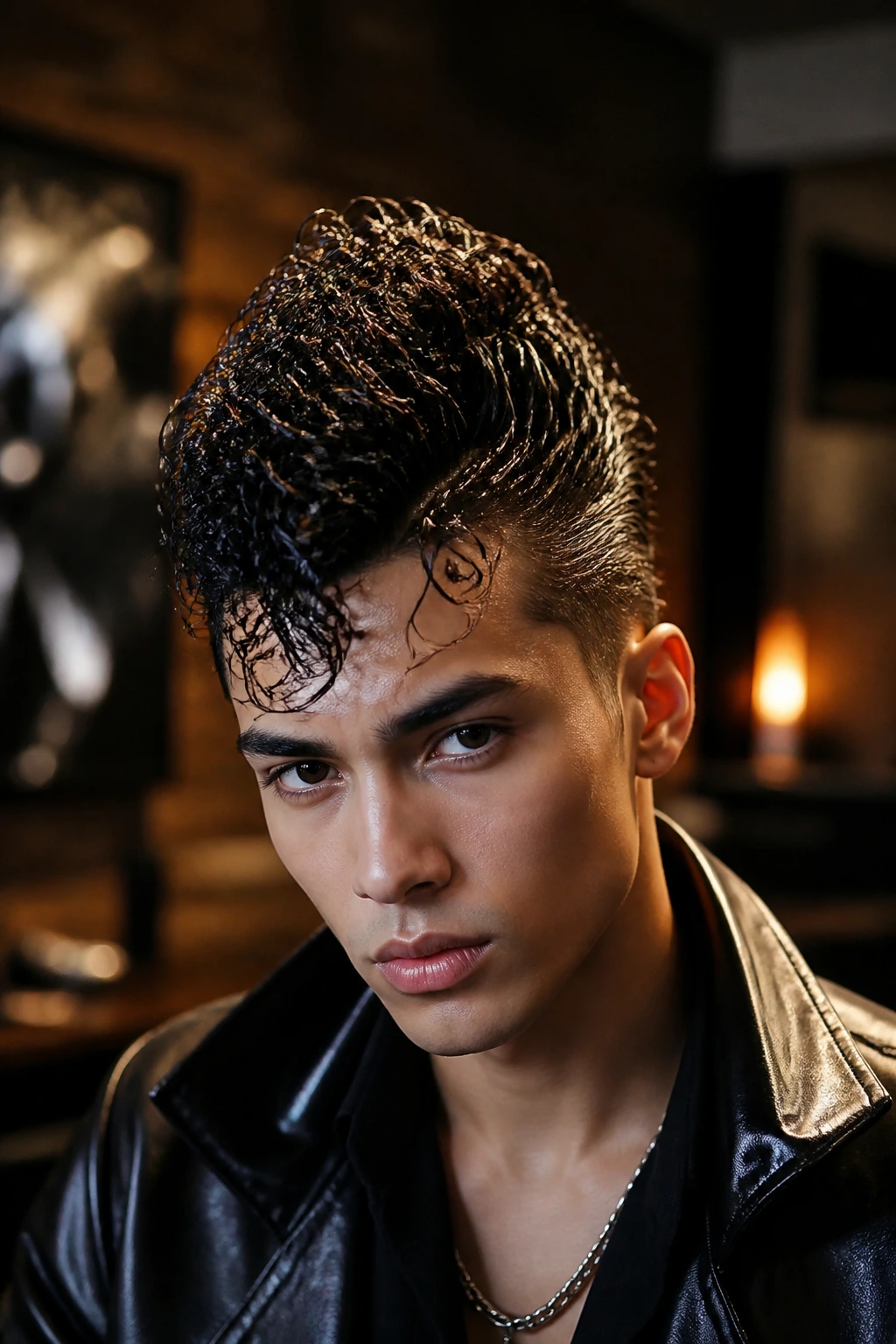
The wet-look faux hawk is not subtle. It’s glossy, tight at the sides, and dramatic in a way that’s hard to ignore. The key is applying gel to damp hair and shaping fast, before the curls begin to dry and puff out.
A lot of people ruin this style by stopping halfway. They slick the sides, but leave the center too dry, so the look feels disconnected. Instead, work the same product family through the ridge and use your fingers to sculpt the curls into one visible line. A shine spray at the end can help, but only after the gel has set.
If you want a sharp finish that reads well in low light, this is the one. Just don’t touch it too much once it’s set. Touching breaks the shell.
12. Curly Top-Knot Faux Hawk
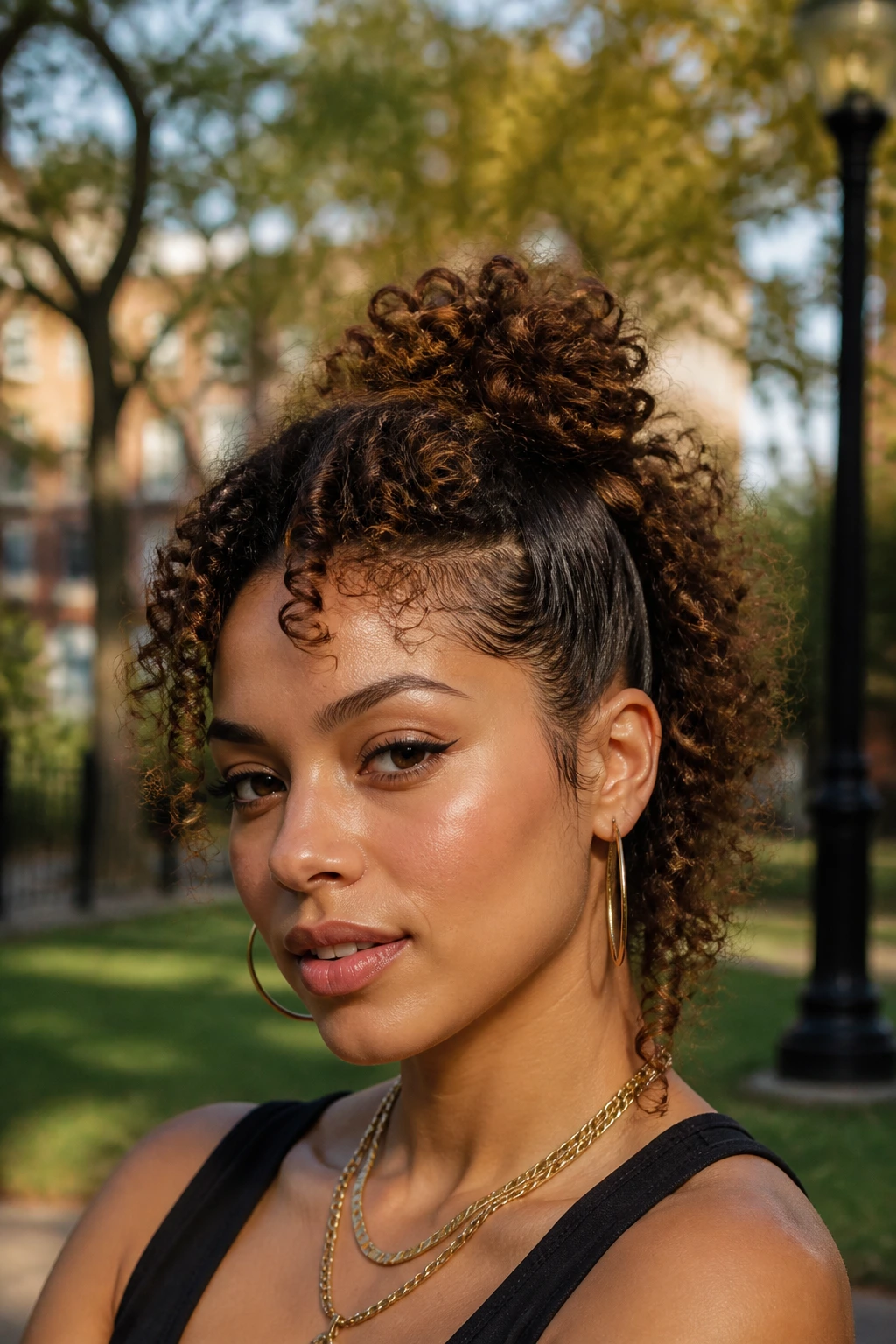
The curly top-knot faux hawk gives you height without making the whole style feel formal. You pull the center section up and slightly forward, then secure it into a knot or compact bun while the curls around it keep the shape soft. It’s one of the better choices for longer curls that need a break from hanging in your face.
The sides can be twisted, pinned, or brushed back with a little gel. What matters is keeping the top knot loose enough that the curl pattern still shows. If you cinch it too hard, the knot gets tiny and the faux hawk disappears.
I like this one on days when the weather is warm and you want your hair up, but not flat. It gives relief without sacrificing texture.
13. Tapered Temple Pullback Hawk
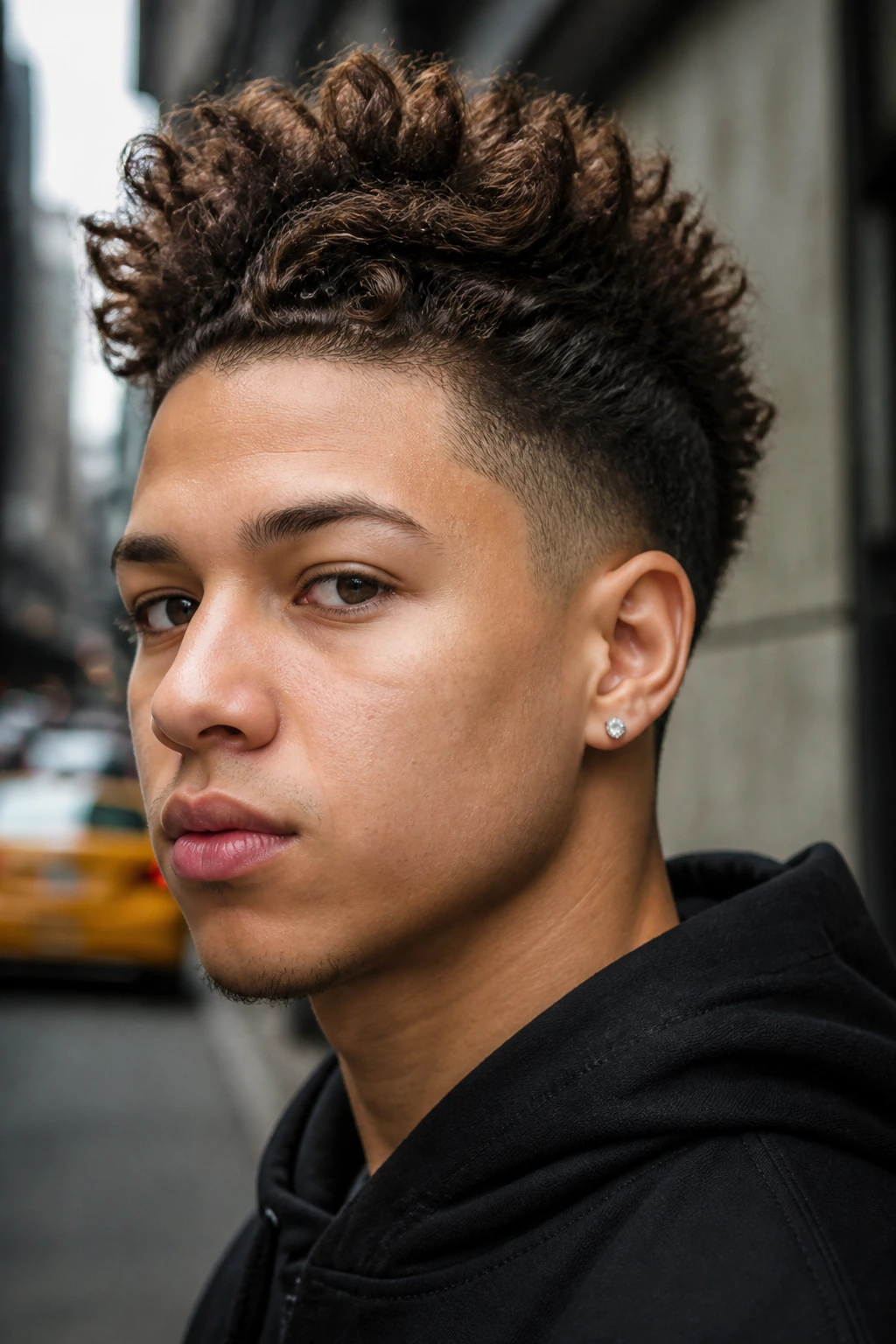
A tapered temple pullback faux hawk is all about cheekbone framing. The temples are smoothed back tightly, while the upper sections keep their curl and volume, creating a shape that narrows toward the ears and rises near the crown. It looks polished because the eye has a clean line to follow.
This style is especially useful for curly hair with a tapered cut or a naturally shorter side length. You don’t need much product — just enough to keep the temple hair directed backward. A tail comb helps here, because fingers often leave the front too loose.
The silhouette is a little more refined than the messier versions. Good when you want the faux hawk shape to read without screaming for attention.
14. Bubble Pony Faux Hawk
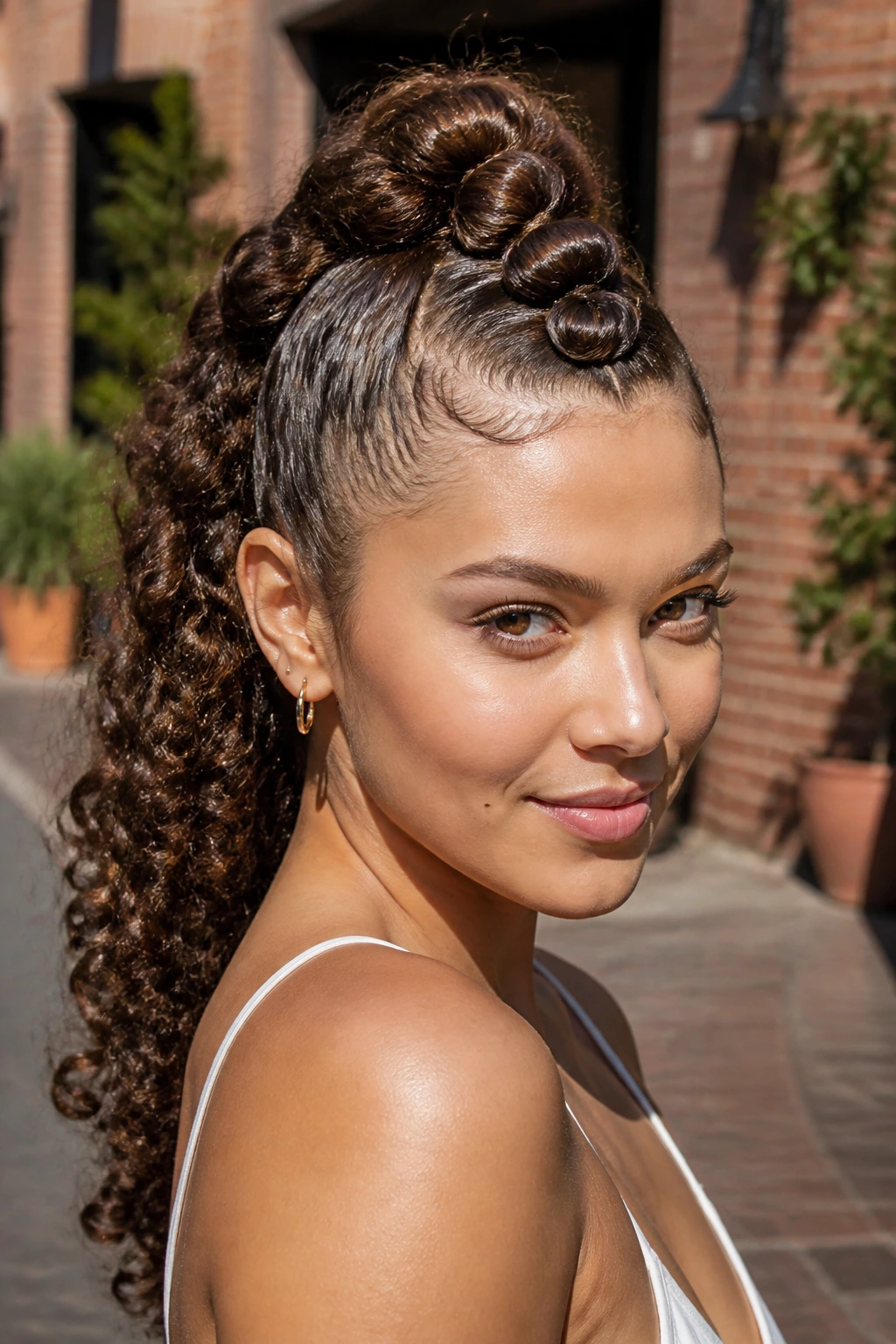
A bubble pony faux hawk takes the idea of a center ridge and turns it into a row of rounded sections. You secure the hair into one pony or a series of connected sections, then place small elastics every 2 to 3 inches and gently puff each section outward. The result is playful and clean at the same time.
The bubbles work best if you keep the hair slightly stretched before tying. If the curls are too tight, the bubbles shrink and lose their shape. A light mist of water and a bit of leave-in can help you smooth each section without flattening it.
This style is one of the easiest ways to make a faux hawk look intentional on longer curls that like to clump together.
15. Goddess Braid Hawk
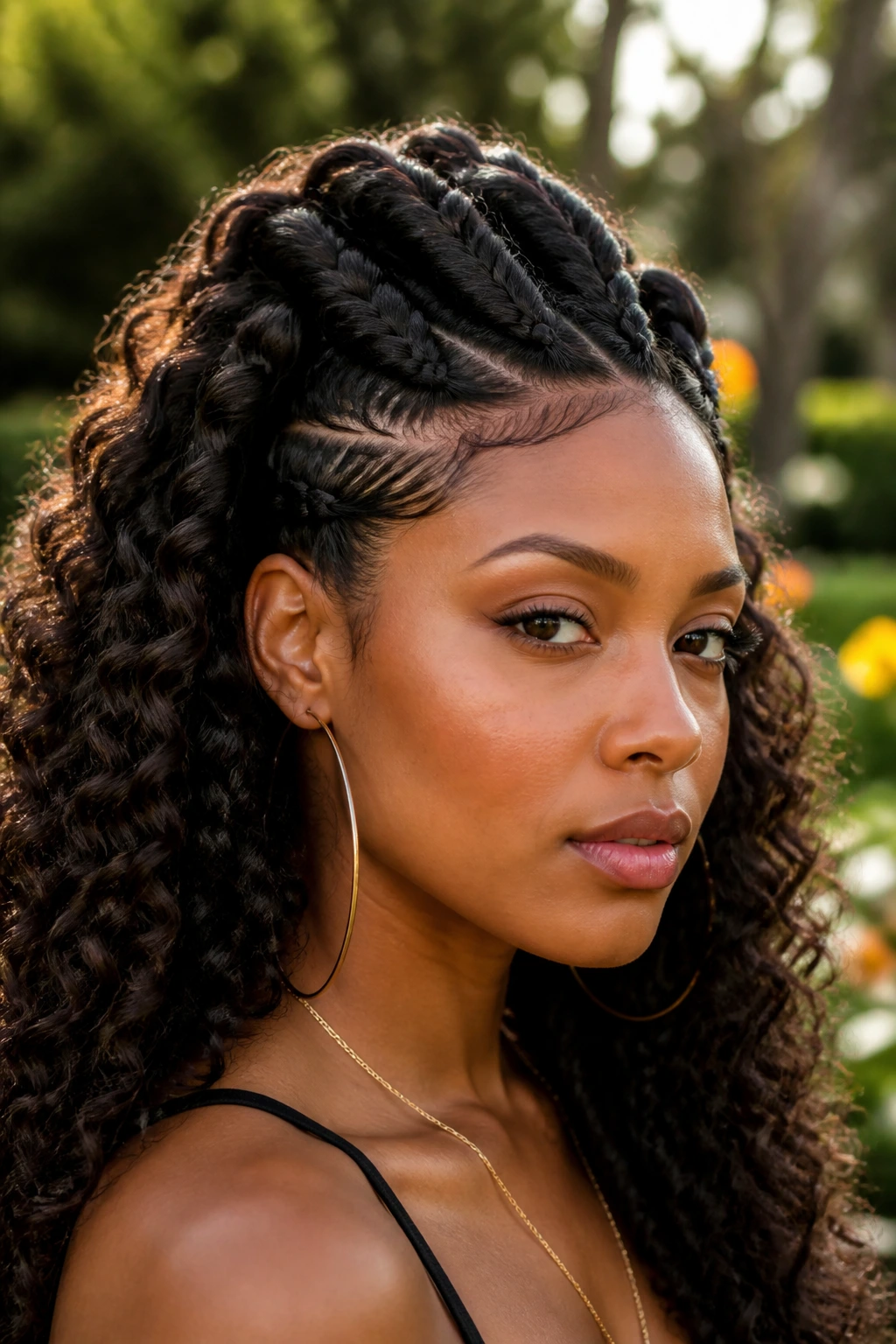
The goddess braid faux hawk has a little more softness than a regular braided hawk, which is why I reach for it when I want something romantic but still structured. Use one or two larger braids along the sides or through the middle, then let the remaining curls spill around them instead of trying to lock everything down.
The braid should look thick enough to matter. Thin braids disappear in curly hair unless they’re part of a bigger design. If you’re using extensions, keep the added hair close to your texture so the finished braid doesn’t feel bolted on.
This style is lovely for weddings, dinners, and any event where you want the curls to look dressed up without losing movement.
16. Short Curly Pixie Hawk
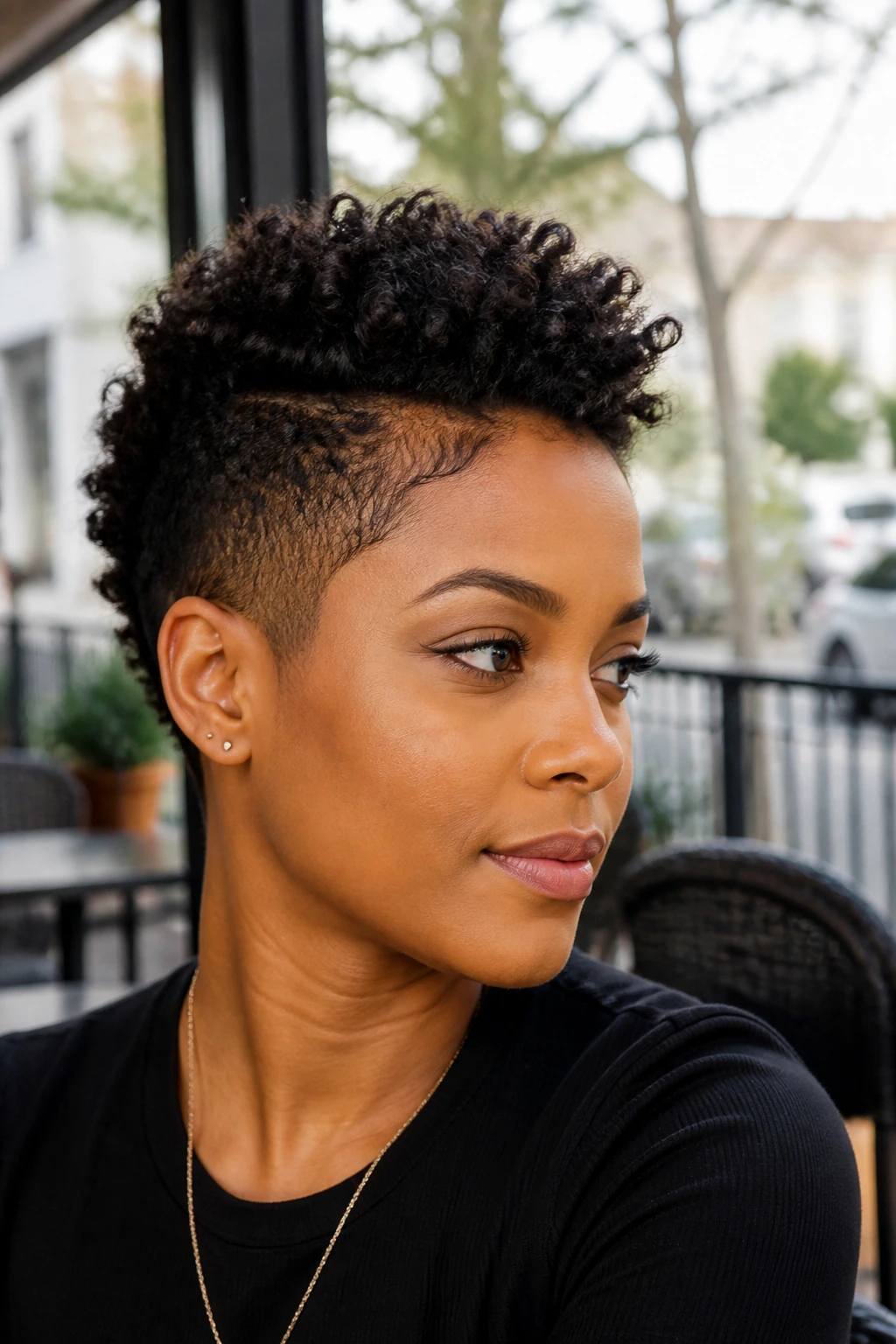
Short hair can absolutely pull off a faux hawk. In fact, a curly pixie hawk sometimes looks sharper than a long version because the shape is so direct. You’re working with less length, so the ridge comes from root lift, pin direction, and a little strategic finger-coiling.
The Short-Hair Advantage
If your curls are cropped around the sides, the faux hawk doesn’t need much help to show up. A touch of mousse at the crown, a diffuse dry, and a few small pins can create more height than you’d expect. The result feels clean and a little rebellious.
Best Use Case
This is the style for days when you want your haircut to do the talking. Keep the edges neat, leave the top piecey, and don’t chase perfection. Short curly faux hawks look better with a bit of uneven texture.
17. Scarf-Wrapped Faux Hawk
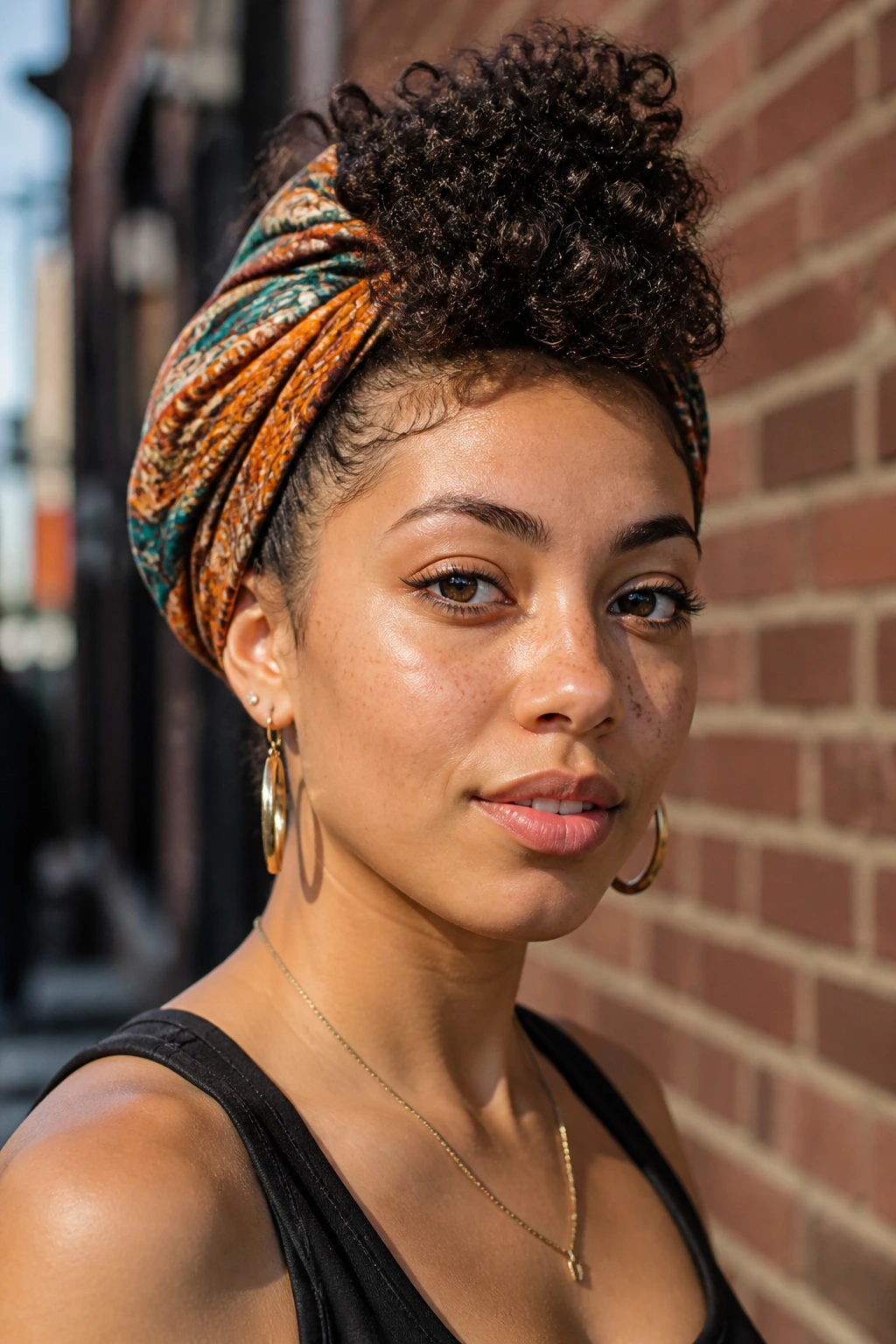
A scarf-wrapped faux hawk does two jobs at once: it secures the sides and adds a strong visual line. A narrow scarf, wrapped around the head and tied near the nape or crown, can keep pinned sections in place while letting the center ridge stay fluffy and visible.
The trick is choosing a scarf that slides less — cotton or a matte silk-blend tends to hold better than slick fabric. Wrap it snugly enough that it helps the shape, but not so tight that your curls get squashed. If you have volume at the crown, let the scarf sit slightly lower on the sides so it doesn’t flatten the ridge.
This is a good fix for travel days, humid afternoons, or any time you want the style to behave with minimal fuss.
18. Side-Roll Retro Hawk
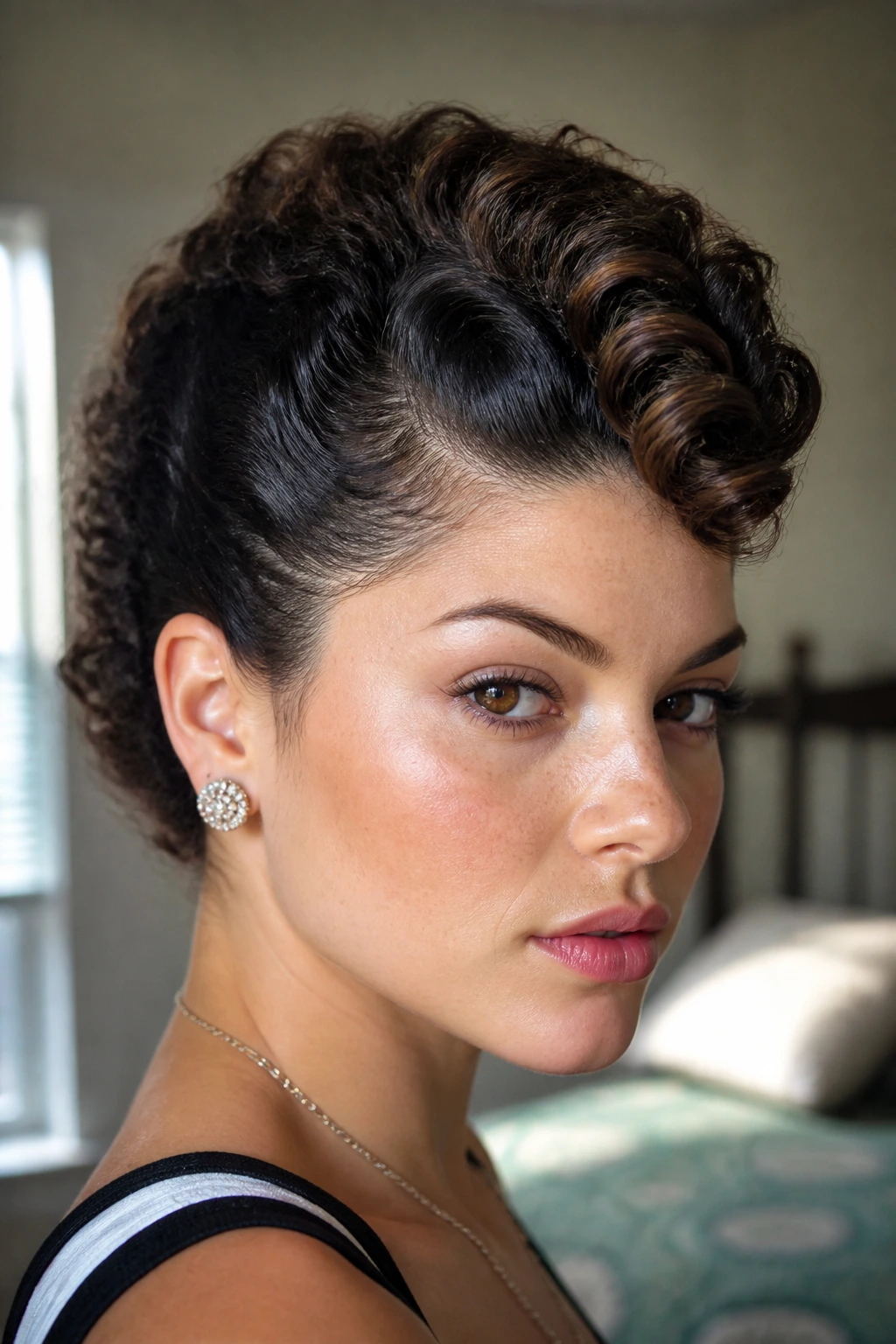
The side-roll faux hawk borrows from vintage styling and gives curly hair a neat, sculpted look. You roll or tuck the side sections inward toward the head, then pin them so the center section rises like a ridge between them. It feels a little polished, a little old-school, and that’s exactly why it stands out.
Use this version when you want the sides to look smooth without using a heavy gel finish. A light cream, a wide-tooth comb, and hidden pins usually do the job. If the rolls are too large, the head starts to look bulky, so keep them compact.
It’s a nice option for medium-length curls that need a shape with a bit of discipline.
19. Double Puff Curly Hawk
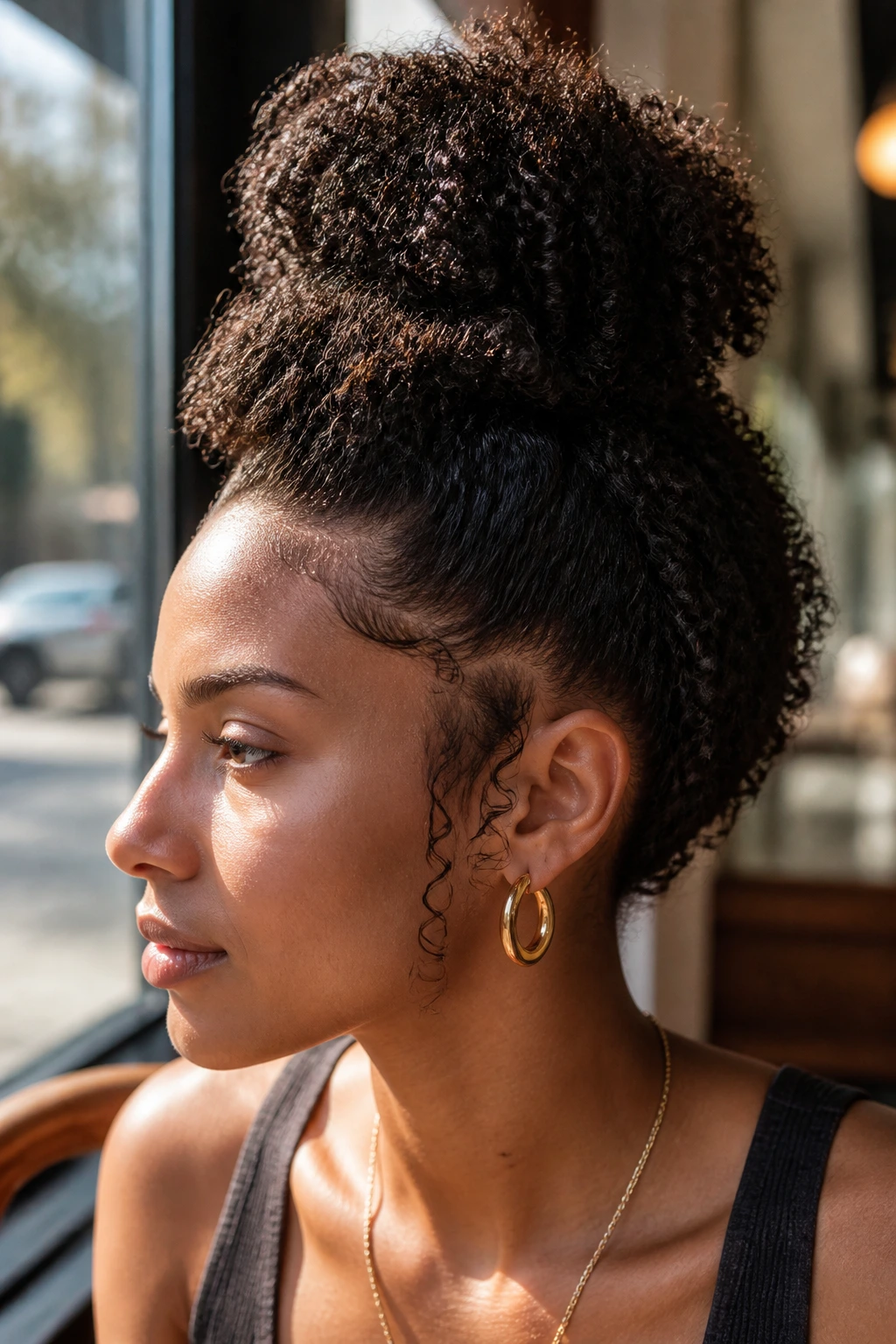
A double puff faux hawk sounds simple, but the shape can be surprisingly flattering. You create two stacked puffs — one toward the front, one toward the crown — and let them read as one continuous ridge from the hairline back. The style keeps the curls full while still giving the eye a clear centerline.
The important part is balance. If the front puff is too big, the style looks top-heavy. If the back puff is too small, the ridge disappears once you turn sideways. Small elastic ties and a couple of hidden pins help the two sections blend into one shape.
This is a smart choice for thick curls that need volume control without flattening.
20. Asymmetrical Sweep Faux Hawk
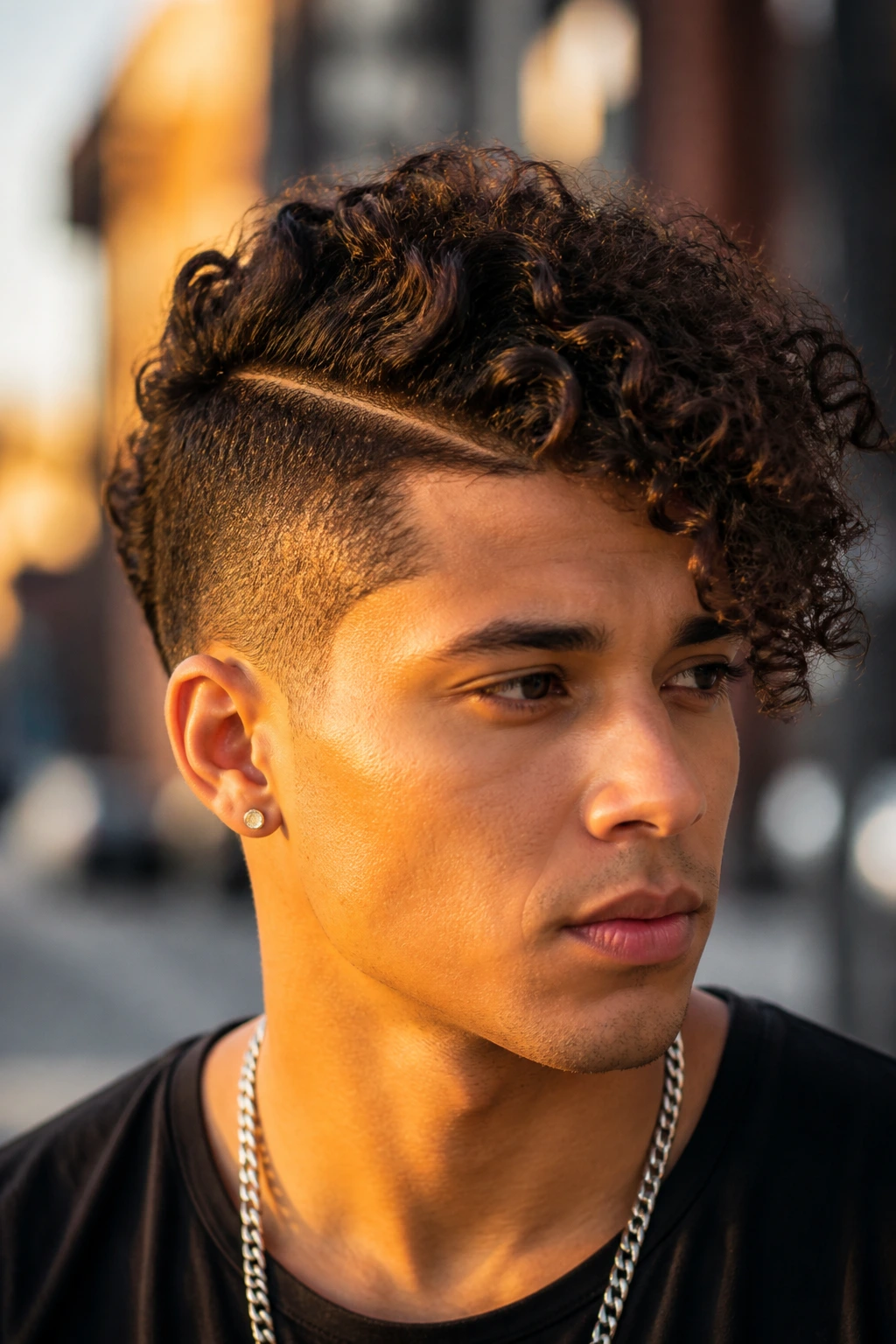
Why make both sides behave the same? The asymmetrical sweep faux hawk leans into one side, letting the ridge angle slightly instead of sitting perfectly centered. That little shift makes the style feel modern without demanding more work.
How It Changes the Look
A side part or diagonal sweep can help frame one eye and soften a strong jawline. Keep one side closer to the head, then let the ridge travel slightly toward the opposite temple. The shape is still clearly a faux hawk, but it has movement.
Who It Suits
This version suits curly hair that already falls naturally to one side. You’re not fighting the texture. You’re steering it. A couple of pins near the lower side and a diffuser on low heat are usually enough.
21. Faux Hawk with Curly Bangs
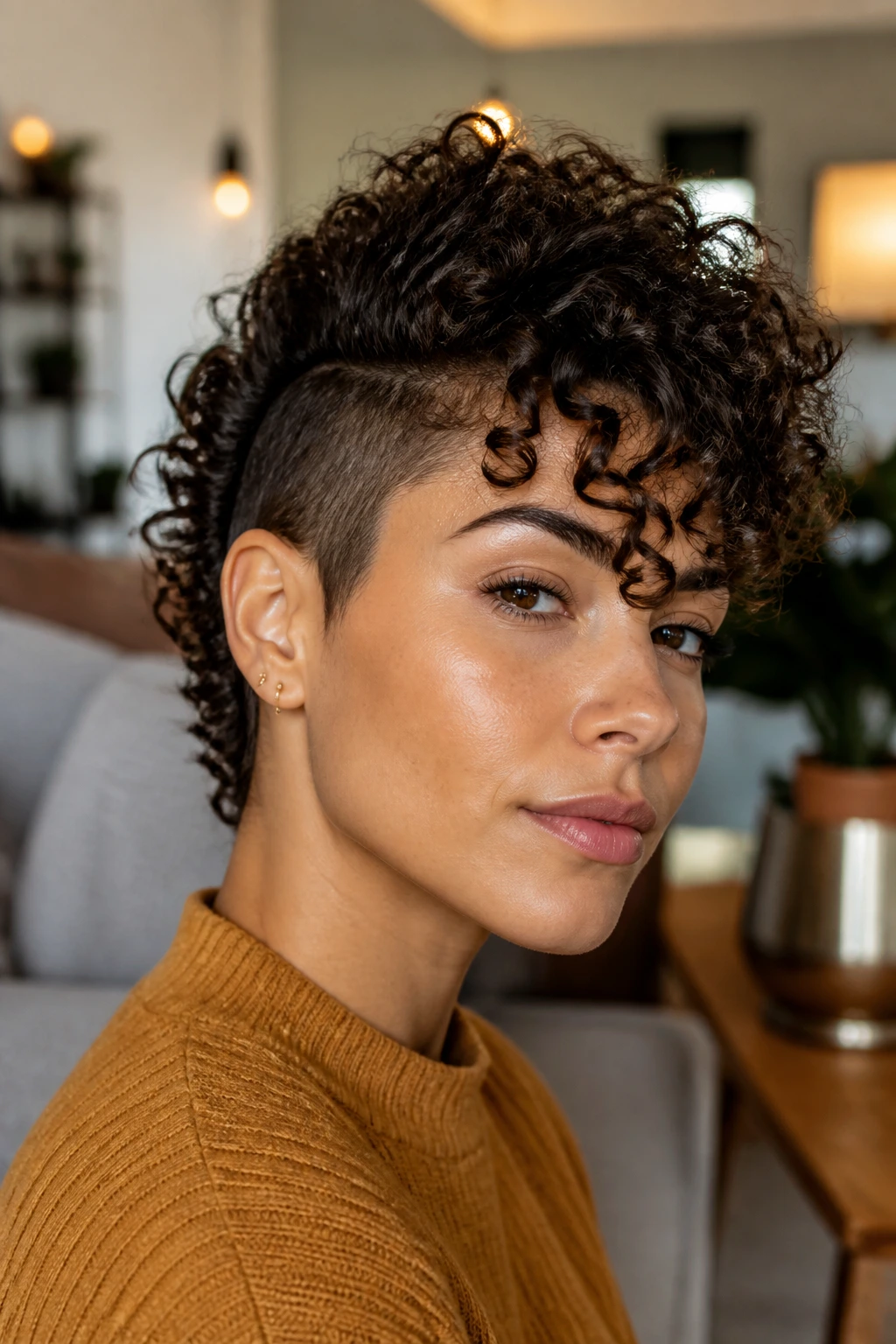
Curly bangs and a faux hawk can work together if you give each part a clear job. The fringe stays loose and soft, while the hair behind it rises into the hawk shape. That contrast keeps the look from turning too severe.
The bangs should be allowed to dry in their own pattern, not pulled into the ridge. If they’re too long, shape them with a tiny bit of cream and finger-coil the ends so they don’t disappear into the rest of the style. This is one of those details that changes everything in the mirror.
I like this version because it keeps the face open but not exposed. You still get edge, just with a softer front.
22. Half-Braided Crown Hawk
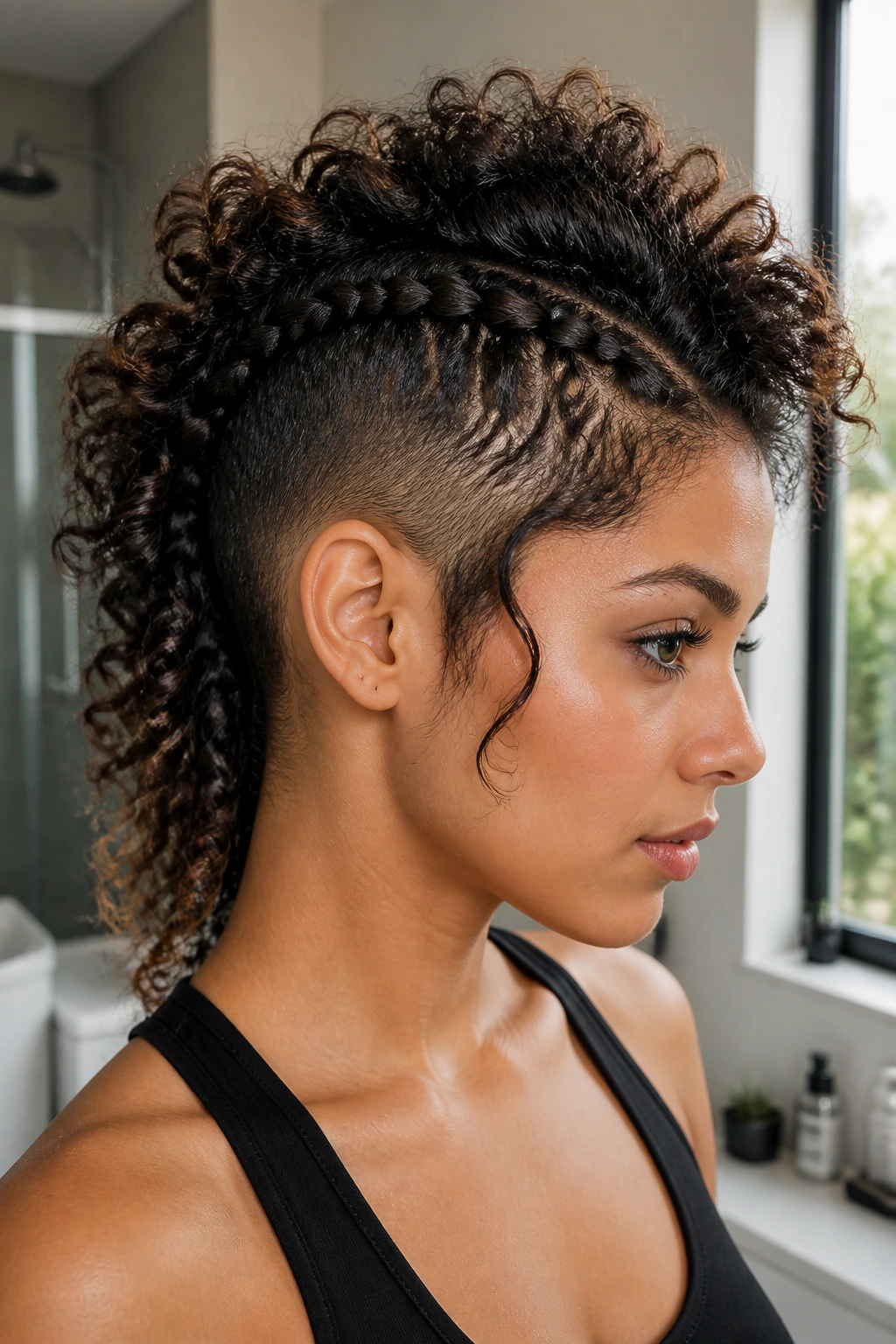
The half-braided crown faux hawk gives you a braid along the crown line and curls everywhere else. That makes the style feel organized without looking overbuilt. It’s a strong pick for longer curly hair because the braid helps control the top while the loose sections keep the movement.
You can braid just the middle strip or wrap a braid from one side toward the back. Either way, keep the braid close to the scalp so it acts like a guide, not a lump. Once the braid is secure, fluff the surrounding curls with your fingers so they don’t sit too flat.
This style has a nice balance of structure and ease. It looks like you planned it. It also doesn’t take forever.
23. Festival Clip-Stack Hawk
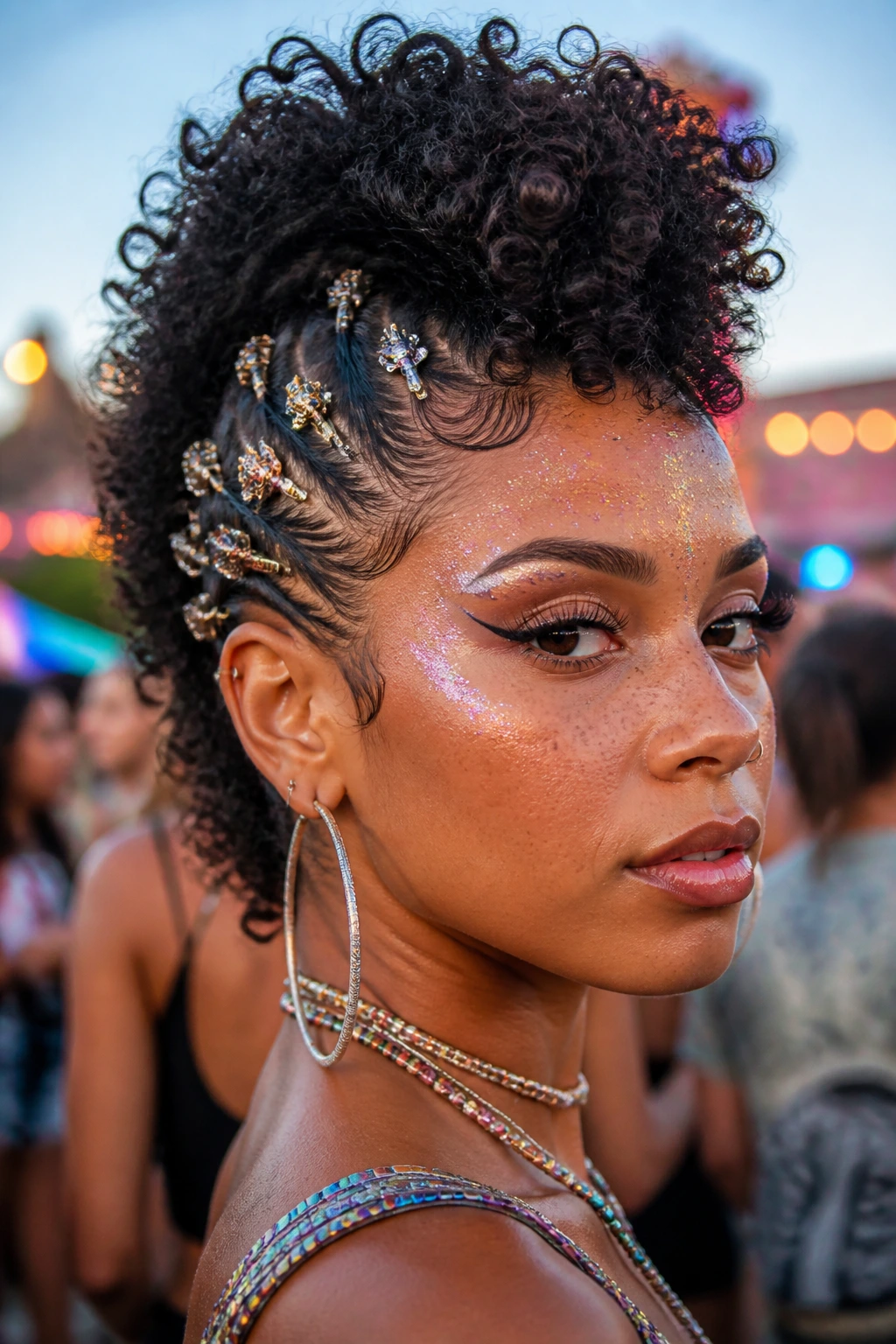
A festival clip-stack faux hawk is pure fun, and it knows it. You build the ridge with curls, then stack decorative clips, pins, or tiny barrettes along one or both sides to make the silhouette sparkle and move. It’s a style that benefits from a little messiness, which is rare and refreshing.
The clips should follow the curve of the hawk rather than sitting in a random line. If they’re scattered without shape, the whole look gets noisy. Pick 3 to 7 small accessories and keep the color story tight — gold, silver, pearls, or bright enamel, not all of them at once.
Good for concerts, street fairs, and any day when your hair gets to have a little personality.
24. Sculpted Retro Frohawk
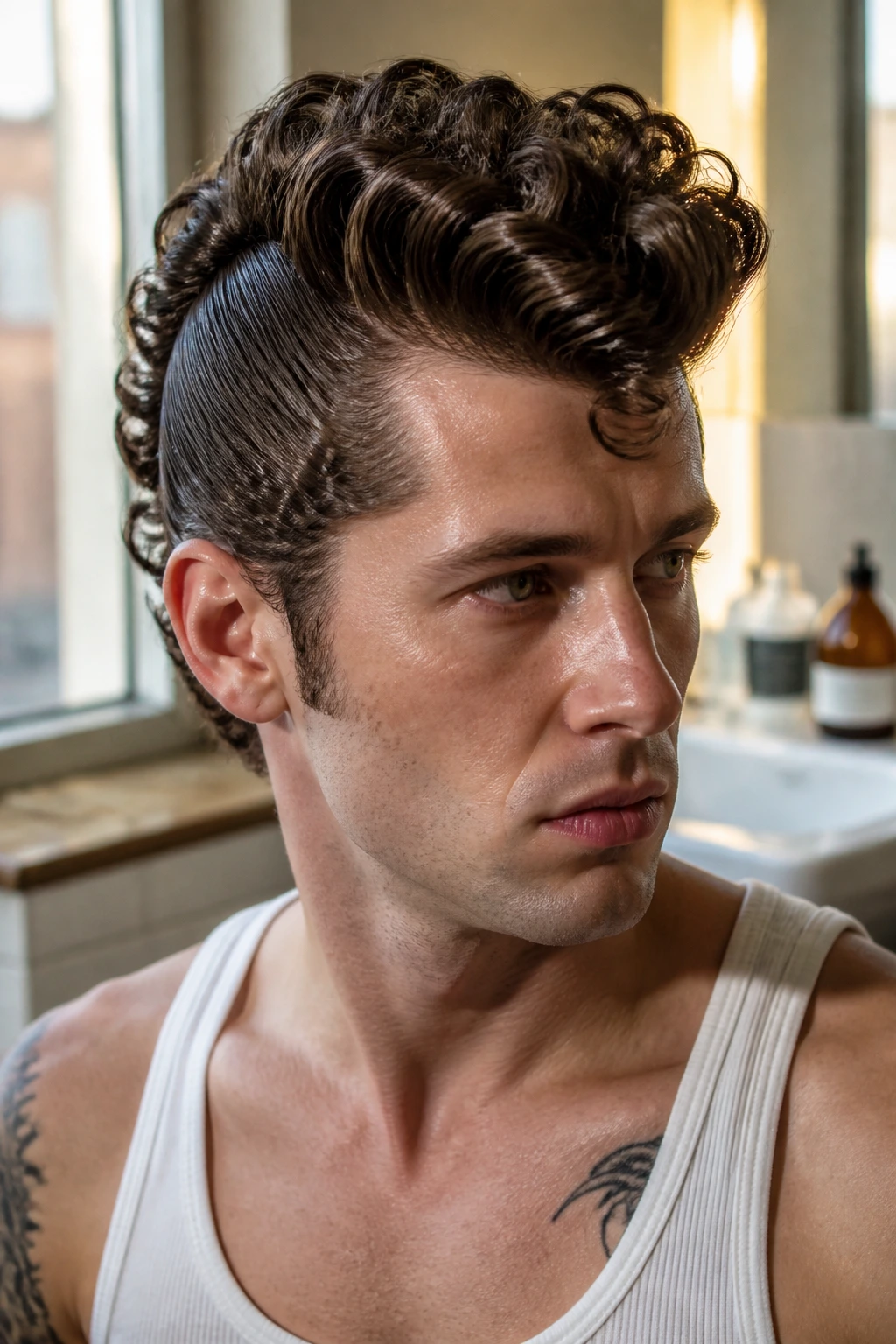
The sculpted retro frohawk is a sharper, more polished cousin to the loose curly hawk. The sides are brushed and pinned into smooth curves, the center ridge is defined, and the outline feels almost architectural. It’s one of the best options when you want a statement style that still respects natural texture.
This version works beautifully with stronger hold products, but only if you apply them in thin layers. Thick blobs of gel or cream make the shape collapse in uneven clumps. Use your comb to guide the hair, then press it into place with the palm of your hand. The finish should look shaped, not frozen.
If you like a cleaner, bolder silhouette, this is one of the strongest looks in the bunch.
25. Low-Key Office Faux Hawk
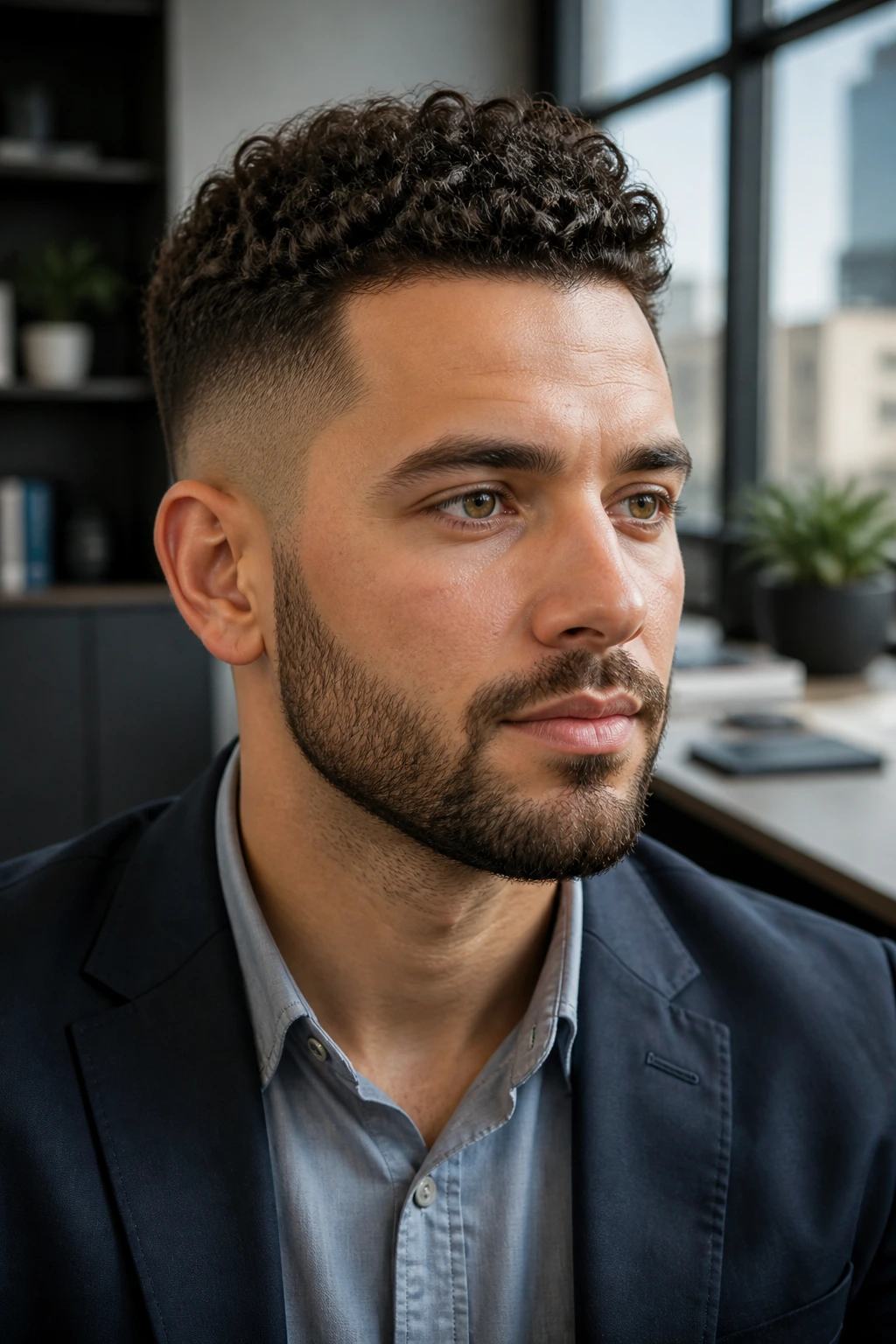
Not every faux hawk has to announce itself from across the room. The office version keeps the ridge low, the sides tidy, and the curl definition soft enough that the style reads professional without looking dull. It’s the one to wear when you need your hair off your face but still want some shape.
The crown should rise just enough to create a line, not a tower. Use 4 to 6 pins, keep the shine matte or lightly satin, and leave one or two curls around the front hairline if that softens the face. The point is neatness, not stiffness.
It’s a safe style for long meetings, short commutes, and days when you don’t want to think about your hair again.
26. High-Drama Evening Hawk
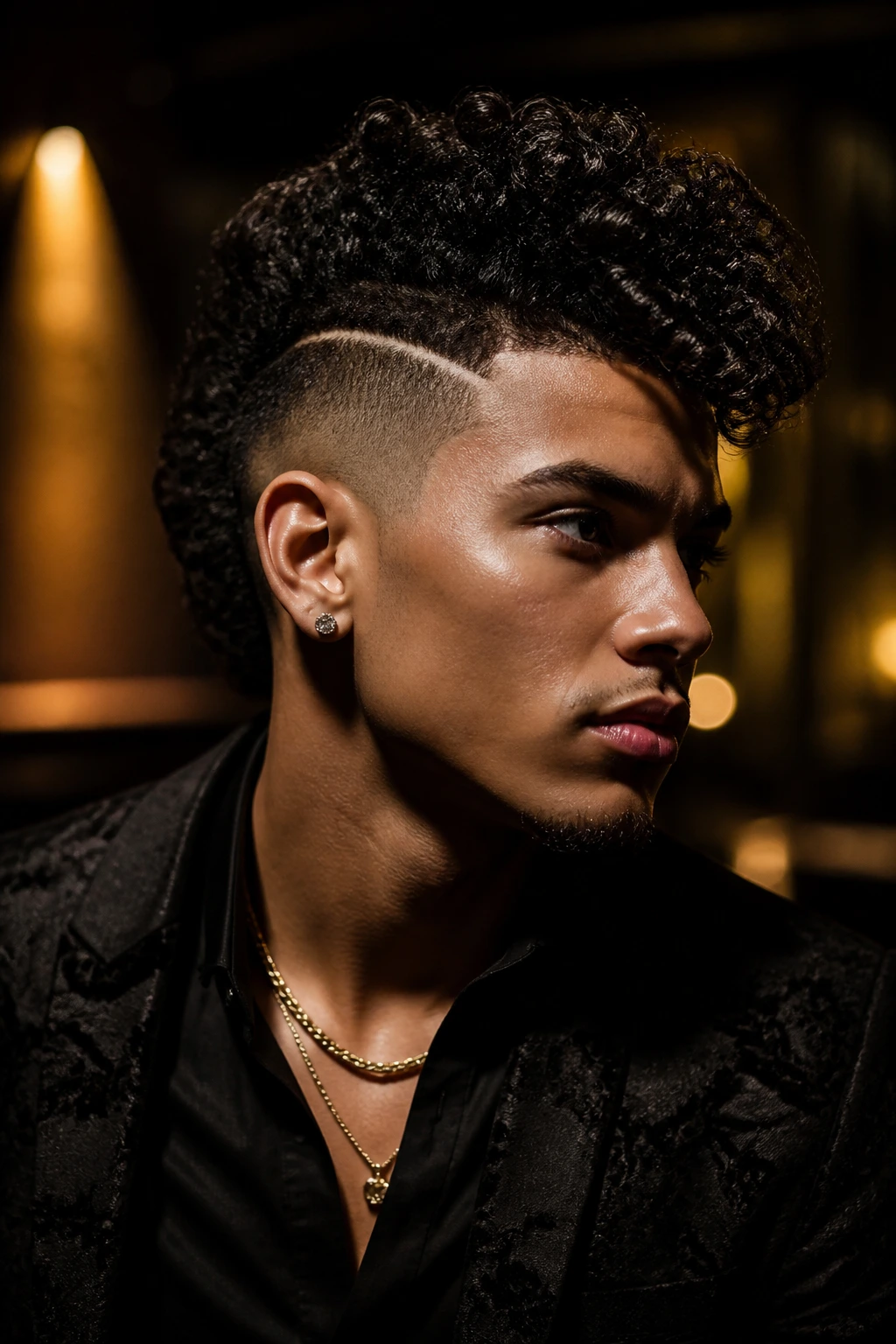
The evening faux hawk is where you stop pretending you don’t want attention. Bigger crown, more lift, sharper sides, maybe a glossy product at the front. The style should feel deliberate from every angle, and that usually means spending an extra 10 minutes on the crown shape alone.
Keep the base tight and the ridge tall. If the hair is long enough, pull the middle section upward before pinning so the top doesn’t sink after an hour. A few face-framing tendrils can soften the edge, but don’t let them take over the silhouette. That’s a different hairstyle.
This is the version I’d wear when the outfit is simple and the hair gets to do the talking.
27. Shoulder-Length Roll-Up Hawk
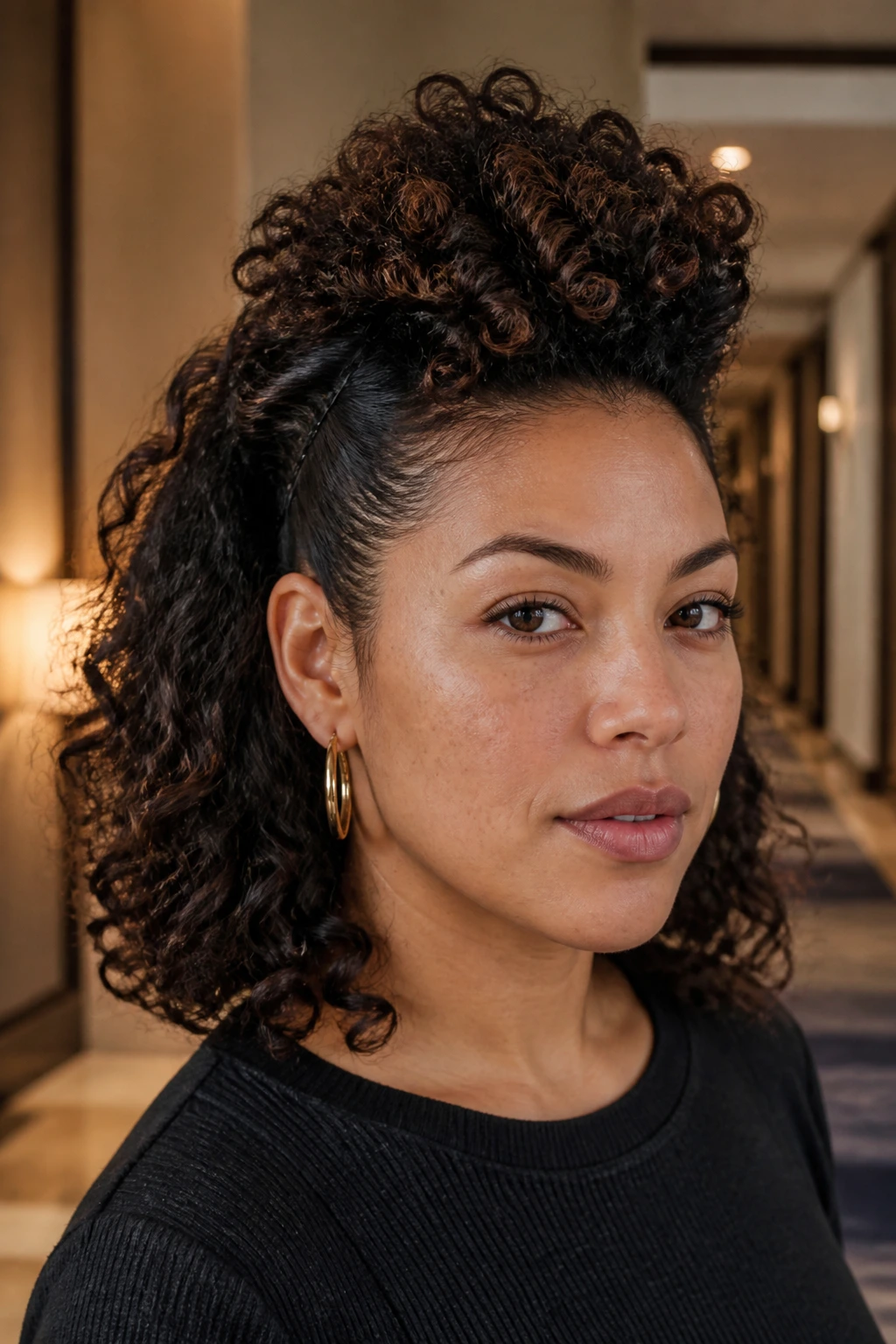
Shoulder-length curly hair sits in a sweet spot for faux hawks because it has enough length to roll, tuck, and pin without getting too heavy. The roll-up hawk uses that length well. You gather sections from the sides and lower crown, roll them upward, and pin them so the middle stays lifted.
The result is tidy from the side and full through the center. It also tends to survive longer than a looser style because the rolled sections anchor themselves better. If your hair is layered, tuck the shorter pieces carefully so they don’t spill out at the nape.
This is one of the more flattering options for medium curls that need shape but not a full updo.
28. Defined-Edge Frohawk
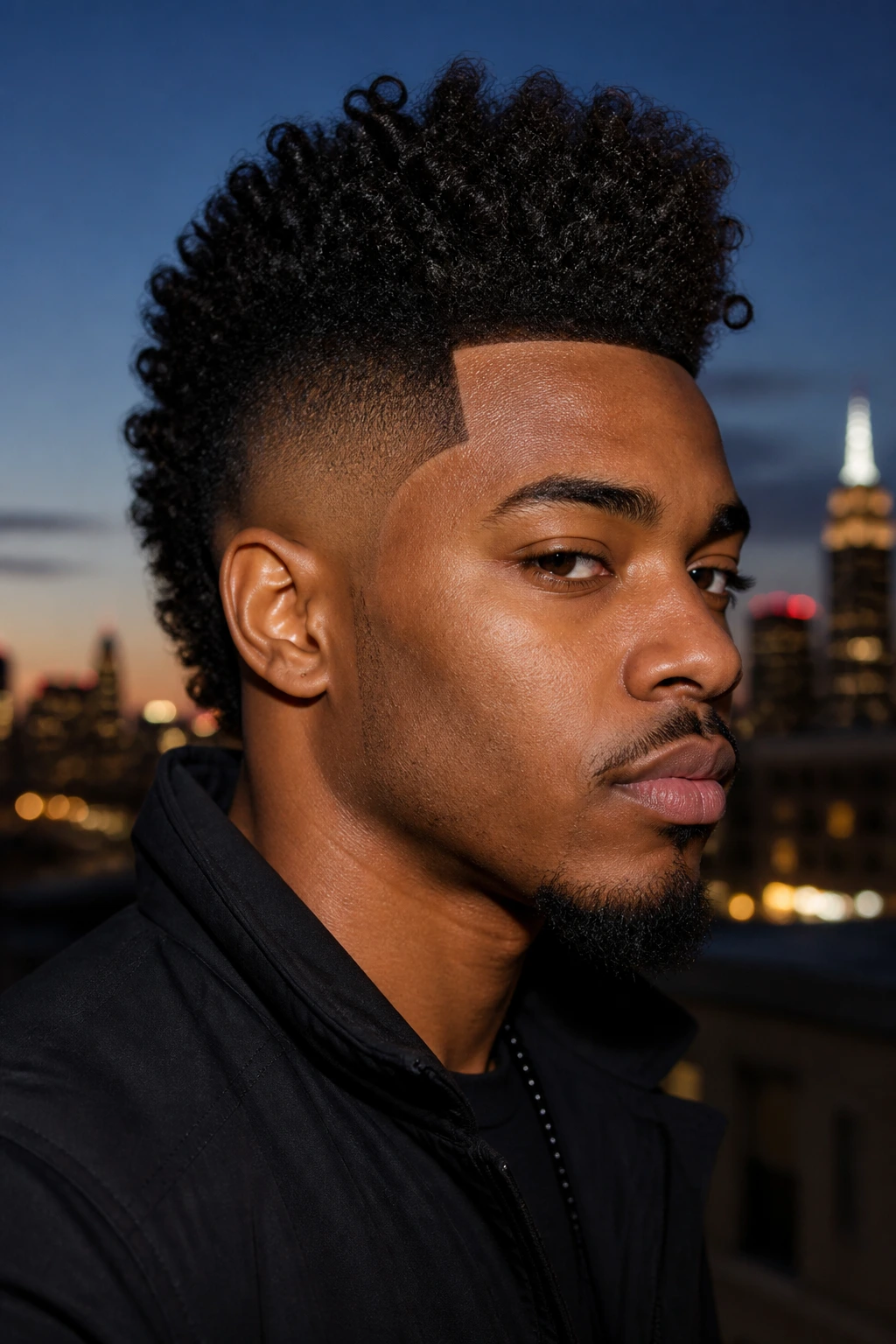
A defined-edge frohawk keeps the outline crisp and the texture intentional. You shape the sides with edge control or gel, use a brush to smooth the hairline, and let the center stay dense and textured. It’s less about softness and more about clear contrast.
This style shines on tighter coils because the natural texture creates a strong ridge once the sides are controlled. If you want the shape to read extra clean, use a rat-tail comb to draw the sections before pinning. Even a small amount of asymmetry shows up fast here, so spend the extra minute getting both sides even.
It’s a strong, direct look. No fluff needed.
29. Long Curly Face-Framer Hawk
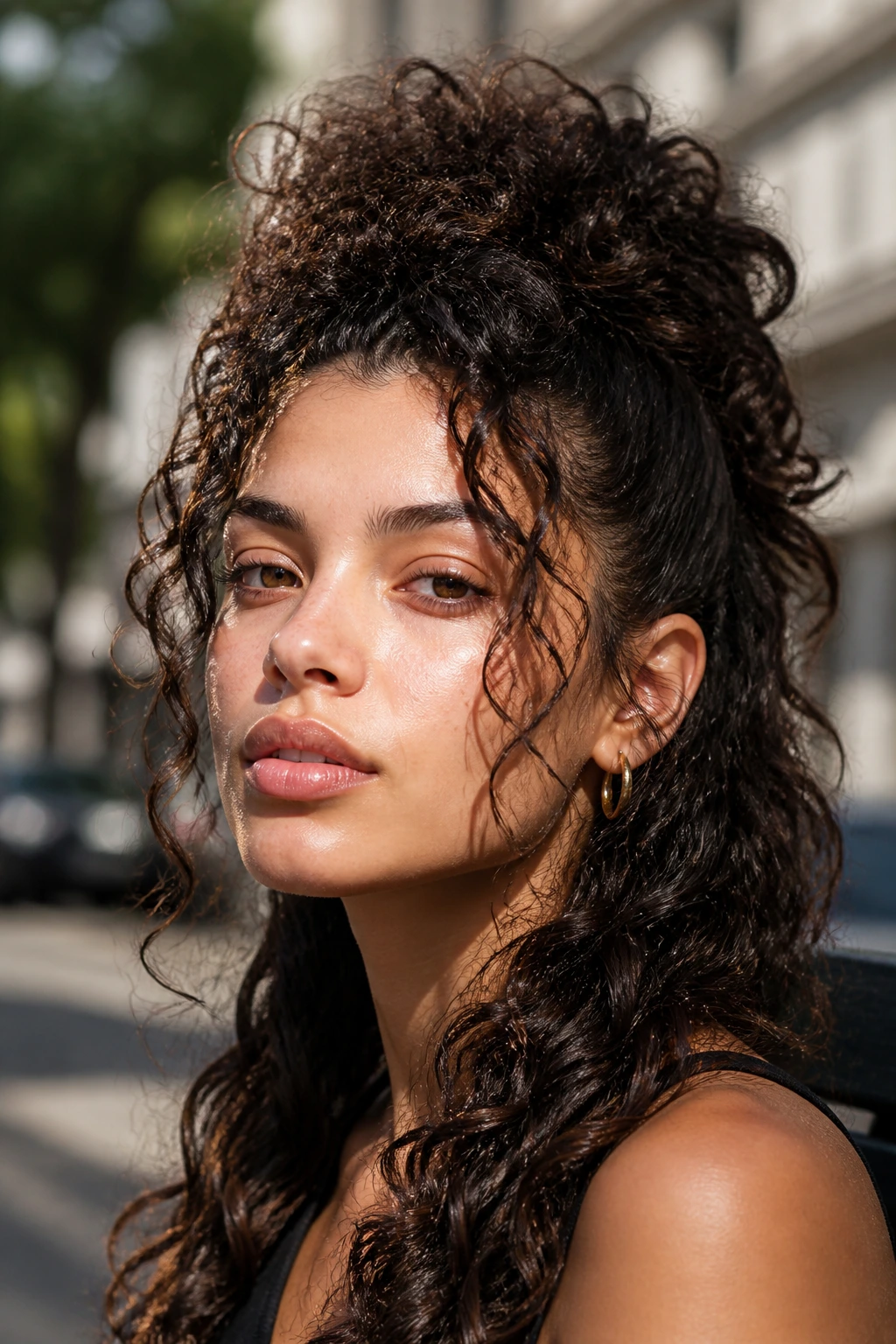
Long curls can drag a faux hawk down if you style them like short hair. This version solves that by leaving face-framing pieces loose while lifting only the middle and back sections into the hawk shape. The result is softer at the front, taller at the crown, and much easier to wear when the length is heavy.
The loose tendrils shouldn’t be random. Choose a few pieces near the cheekbones, define them with cream, and let the rest of the front stay controlled. That gives you shape without hiding the eyes or swallowing the jawline. If the ridge starts to droop, add one or two extra pins near the crown.
This is a good answer for anyone with longer curls who wants height without the full updo effect.
30. Accessory-Heavy Pearl Hawk
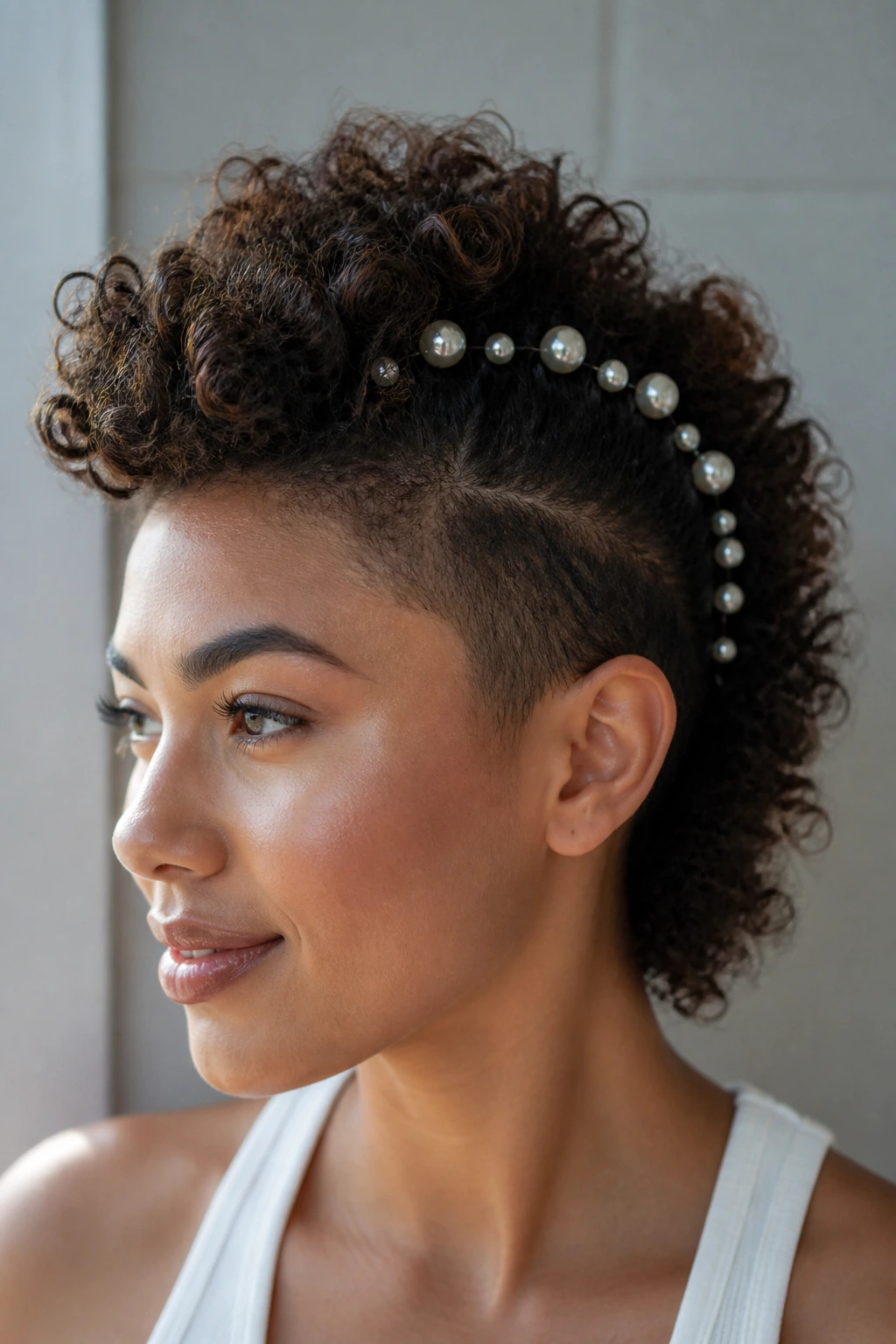
The accessory-heavy faux hawk is for days when the hair gets to be the jewelry. Pearl pins, metal cuffs, tiny clips, or even a narrow decorative comb can trace the ridge and make the style feel finished without adding bulk. The curls stay central; the accessories do the accent work.
Keep the placement deliberate. A single line of pins along one side of the hawk often looks cleaner than sprinkling accessories everywhere. If your hair is very textured, secure the style first, then add the decoration last so you’re not fighting the clips while you build the shape.
It’s a pretty good reminder that a faux hawk does not have to be severe to be interesting.
Why the Faux Hawk Shape Works So Well on Curly Texture
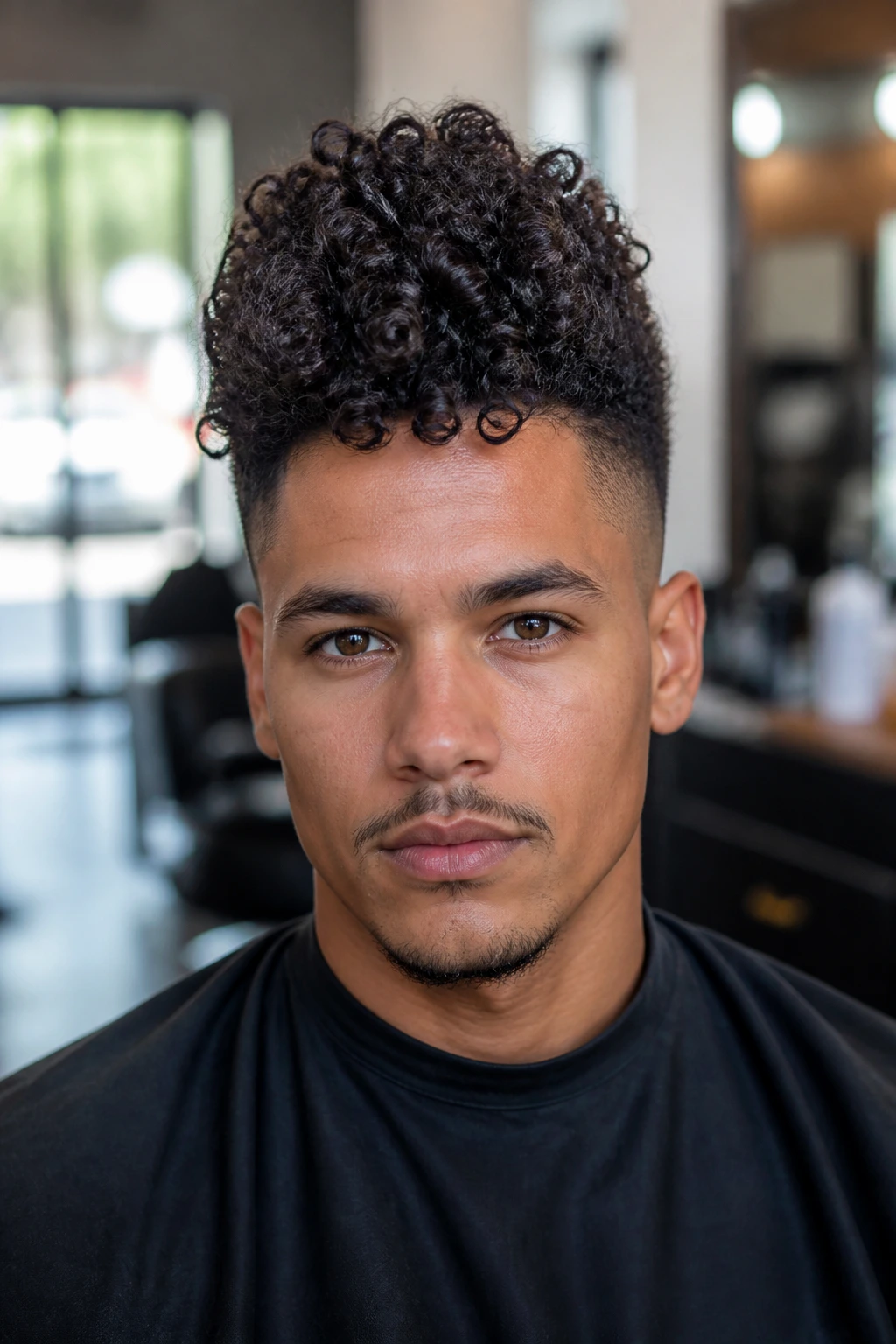
Curly hair gives the faux hawk a head start because the silhouette is already there before you even touch a pin. The job is not to invent height out of nowhere. The job is to organize what the curls are already doing and keep the sides from stealing the show.
Shrinkage Is Your Friend
That little bit of spring you usually complain about? It’s useful here. A ridge that feels too tall when the hair is damp often settles into the right shape once it dries, especially if you’ve set the roots with a diffuser and let the curls dry in place. Flat hair has to be persuaded to rise. Curly hair just needs a direction.
The Sides Don’t Need to Be Flat as Glass
People often over-smooth the sides until the style loses texture and starts looking pasted on. Leave a trace of curl or wave near the temple. It gives the faux hawk some life and keeps the profile from looking severe in a bad way.
Hold Matters More Than “Perfect” Finish
A curly faux hawk rarely survives on one product alone. You need a little root lift, a little pin support, and enough product to keep frizz from splitting the silhouette in two. That combination is what makes the style feel solid without making it stiff.
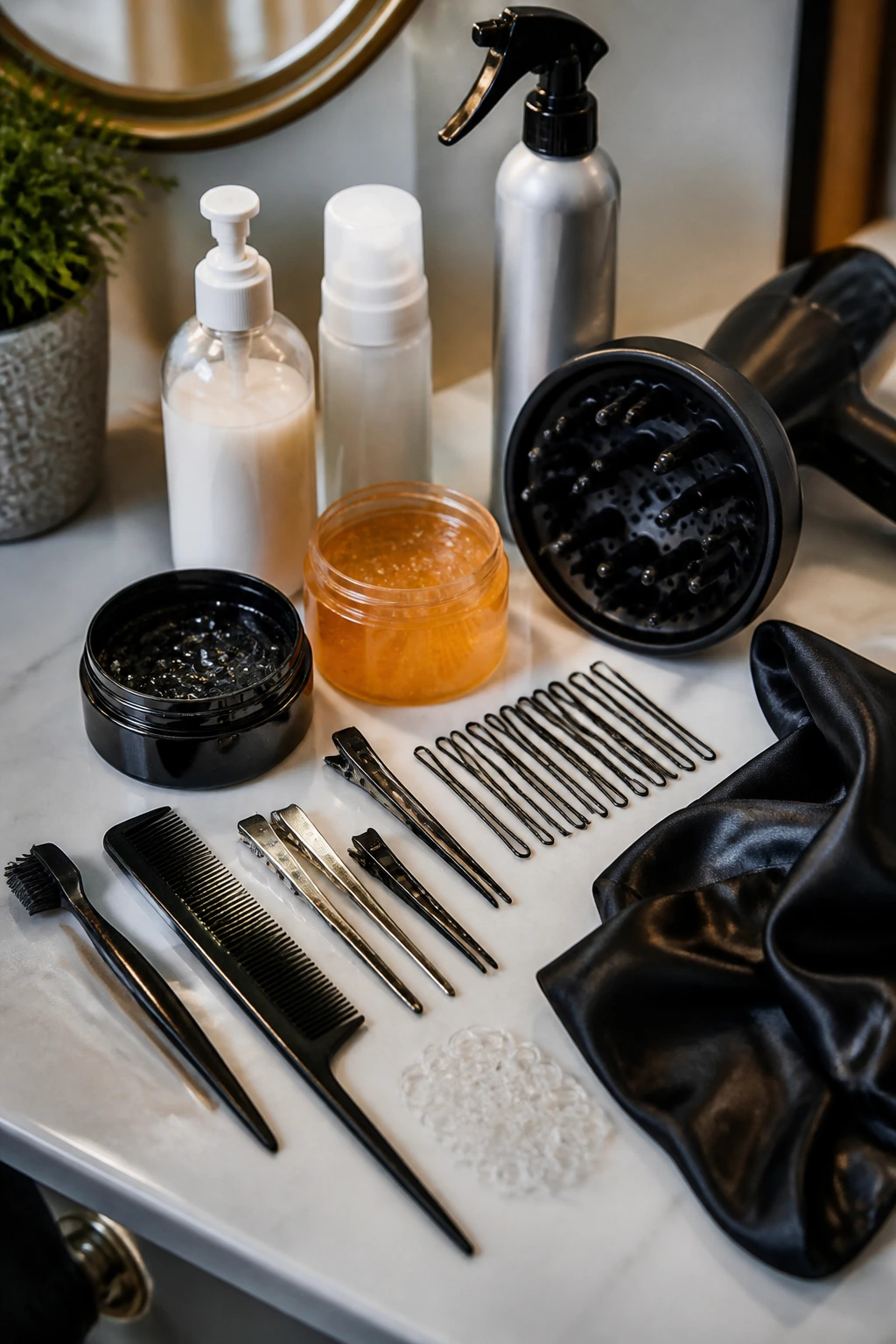
Must-Have Tools for Curly Faux Hawks
-
Bobby pins, 12 to 20: The workhorses of the style; crossed pins hold better than straight ones.
-
Duckbill clips: Great for holding sections while you shape the ridge and smooth the sides.
-
Tail comb: Helps part the hair cleanly and lift roots without shredding curls.
-
Wide-tooth comb: Useful for detangling before styling so you don’t create frizz at the last minute.
-
Edge brush: Keeps the hairline tidy, especially for sleeker versions.
-
Curl cream or leave-in: Gives the curls slip and definition before you pin.
-
Mousse: Good for airy volume when you don’t want the style to get heavy.
-
Strong-hold gel or edge control: Best for slicked sides and sharper faux hawks.
-
Diffuser attachment: Helps set the ridge without blowing the curls flat.
-
Satin scarf or bonnet: Keeps the style from getting crushed overnight.
-
Small clear elastics: Handy for bubble puffs, mini pony sections, and rope-braid variations.
-
Lightweight hairspray: Optional, but useful if your curls tend to loosen fast.
Product Choices and Prep That Make the Style Behave
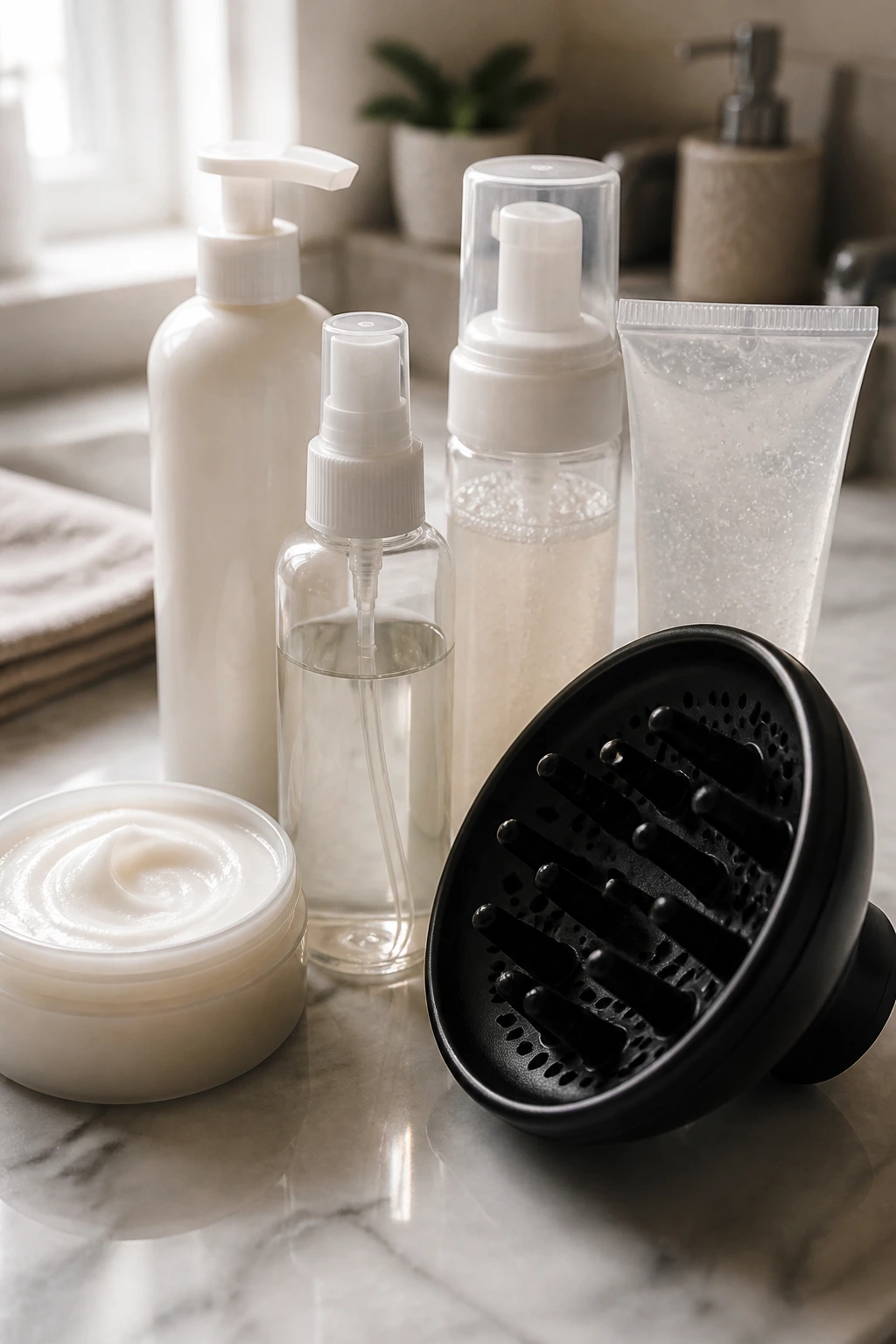
The best product mix depends on how much control your curls need. Soft, loose curls usually do well with a curl cream plus a little mousse at the roots. Tighter coils often hold better with a leave-in and a firmer gel on the side sections, because the smoother surface makes pinning easier. If your hair gets weighed down fast, skip heavy oils before styling. They can make pins slide.
Dry shampoo or texture spray can help if your hair is too clean and slippery. I know that sounds backwards, but hair that’s freshly washed often needs a little grit before it will hold a faux hawk shape. On the other hand, if your curls are dry and rough, mist them lightly with water before you start. Just enough to wake them up. Not enough to soak them.
Match your bobby pins to your hair color if you want them hidden. Match them to your accessories if you want them to show. That tiny choice changes how finished the style feels.
How to Wear a Faux Hawk Without Fighting the Outfit
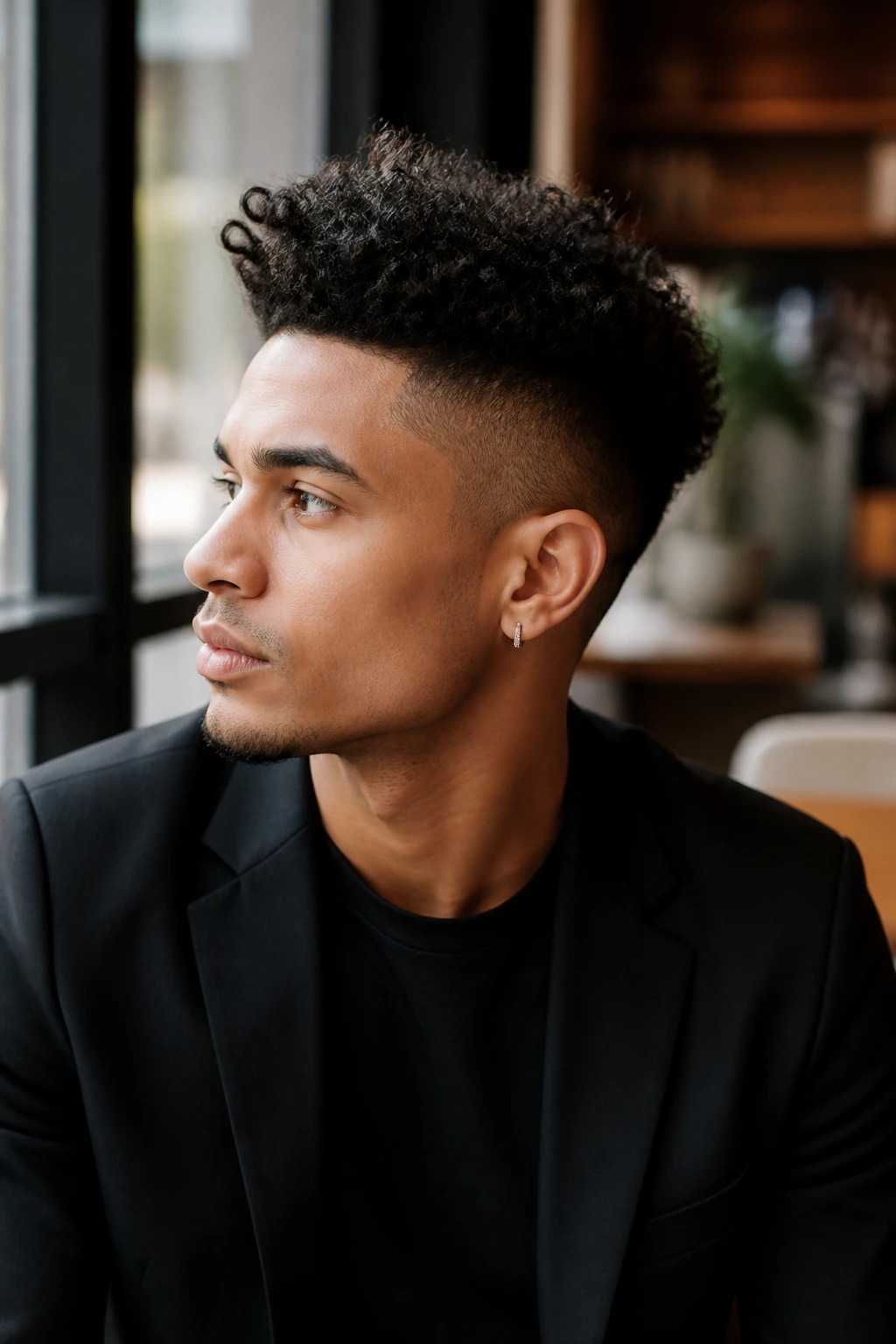
Workday: Keep the ridge low and clean, with minimal shine and 4 to 6 hidden pins. A softer shape reads polished without looking fussy, which is useful when you’re wearing structured clothes or glasses.
Night Out: Push the crown higher, leave a few curls looser near the temples, and add a touch of gloss spray on the outer layer. A faux hawk with movement looks better next to earrings, open necklines, and a sharper makeup look.
Everyday Errands: Use the smallest version that still gives you lift. Two twists, a few clips, and a quick fluff at the crown is enough.
Accessory Match: Hoops, cuffs, metallic pins, and slim headbands all work here. Avoid anything so wide that it crushes the ridge or steals the shape from the curls.
Practical Tips That Make the Style Last Longer
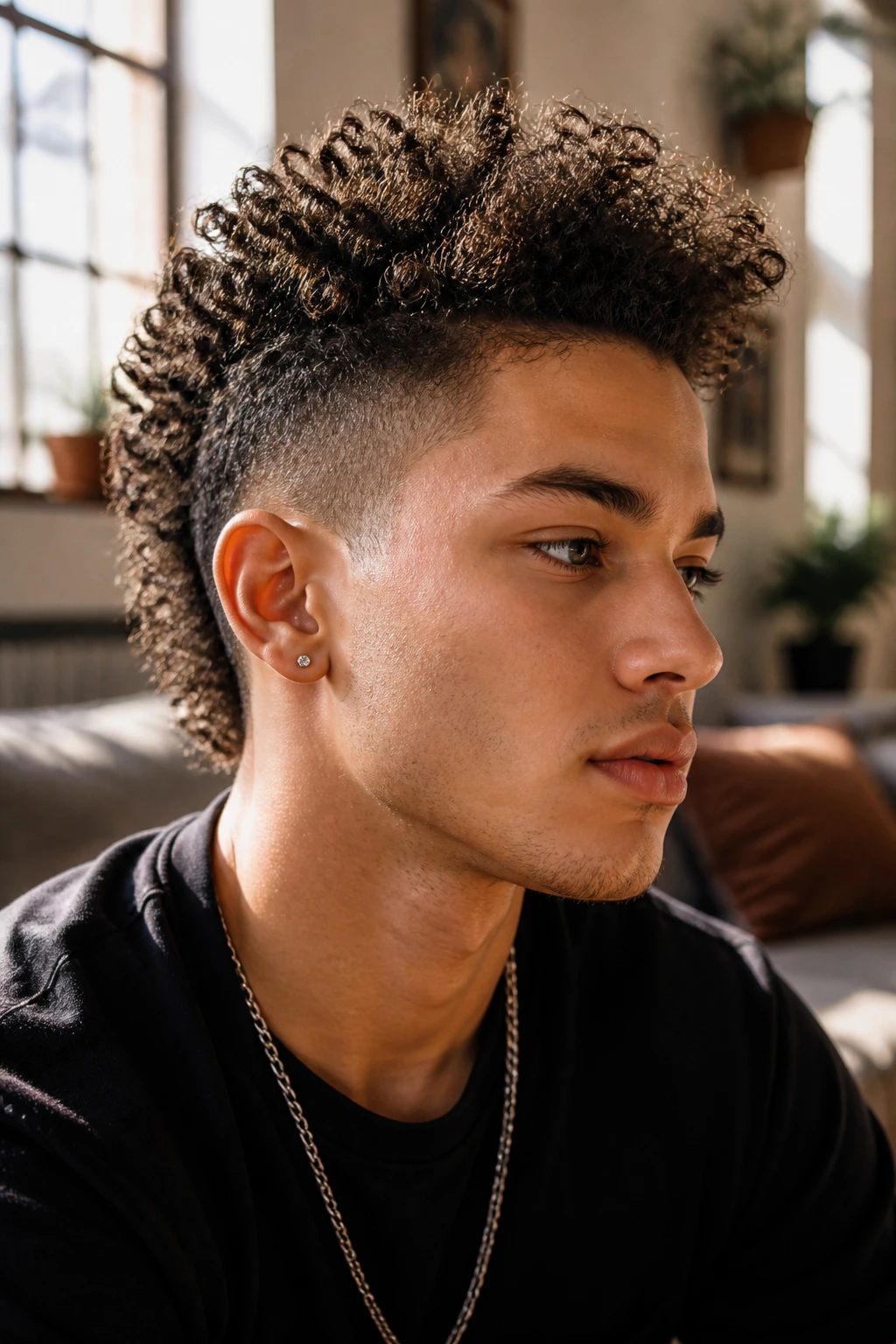
Root First: Build lift at the crown before you worry about the ends. If the roots sit flat, the whole faux hawk looks tired by lunch.
Pin in Layers: Don’t try to hold the entire side section with one pin. Use smaller pieces and cross the pins for a firmer grip. It takes a minute longer and saves you from constant slipping.
Let the Hair Set: If you diffuse, give the style a few minutes to cool before you touch it. Curls keep reshaping while they’re warm, which is exactly why a perfect finish can collapse in the car.
Use the Front Wisely: Leave one or two face-framing curls loose if you want softness. Pull everything back and the style can turn severe fast.
Common Faux Hawk Mistakes on Curly Hair
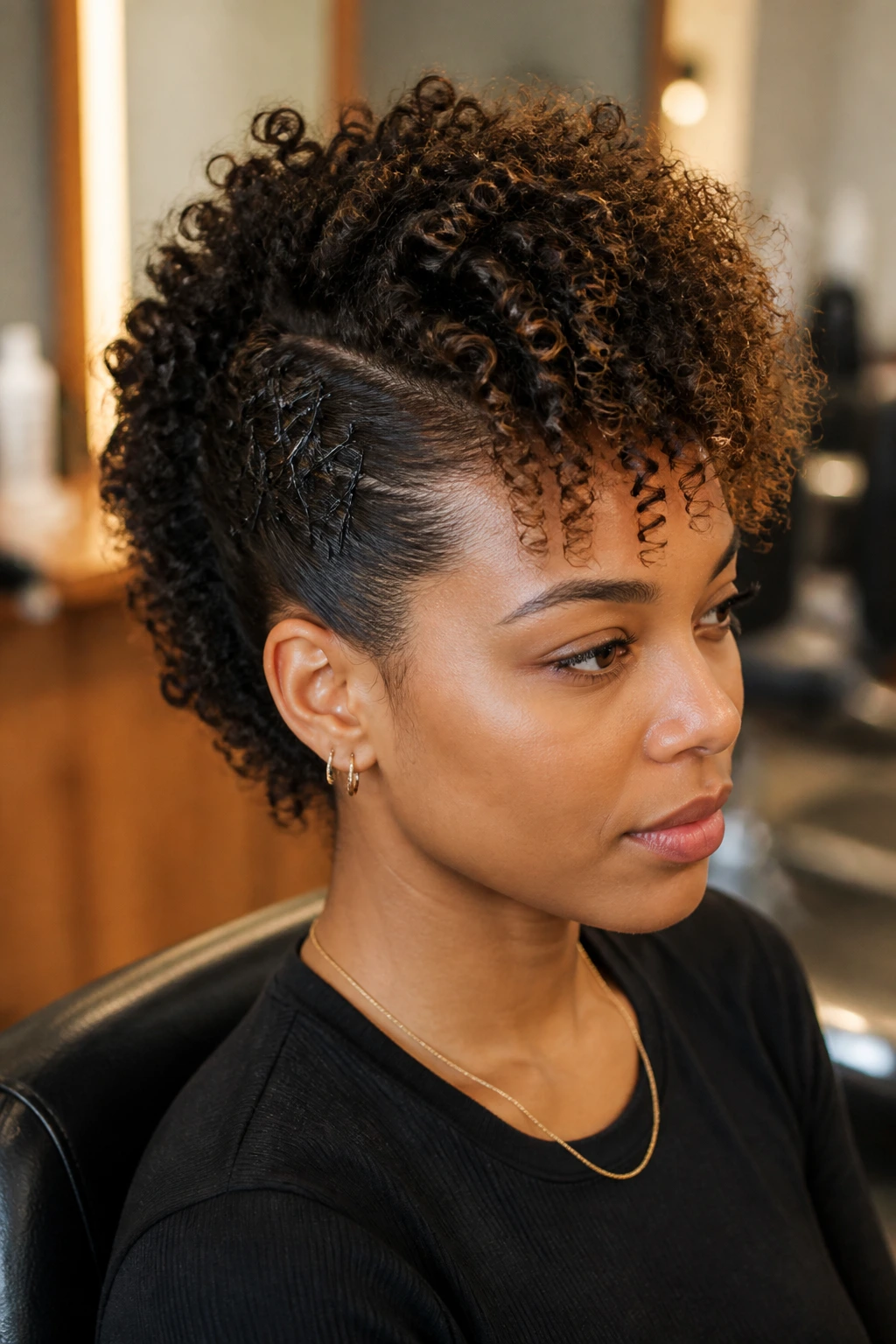
The first mistake is using too much heavy product near the roots. The hair gets slick, the pins slide, and the ridge droops within an hour. Use product where you need control — mostly through the sides and the outer layer — and keep the crown light.
Another problem is building the ridge with sections that are too large. Huge chunks collapse under their own weight. Smaller sections stack better and create a cleaner line.
A third one: skipping overnight protection. Curly faux hawks look great when they’re first finished, but a satin scarf or bonnet can be the difference between a shape you can refresh and a flattened mess the next morning. If the style has a lot of pins, remove only the obvious ones before sleeping and keep the rest secure.
Variations and Alternatives to Try

Soft Office Hawk: Keep the sides brushed back with minimal gel and lower the crown height by about a third. It still reads as a faux hawk, but it won’t fight a collared shirt or a work badge.
Braided Armor Hawk: Braid both sides tightly enough to stay in place, then let the center curls stay full. This version is useful when you want protection and shape at the same time.
Heat-Free Stretch Hawk: If your curls shrink hard, stretch them overnight with twists or banding, then style the faux hawk in the morning. The ridge will sit longer and look less compact.
Accessory Hawk: Swap the usual pins for pearl clips, metal cuffs, or slim barrettes placed along the ridge. Keep the number low so the style stays clean.
Night-Out Gloss Hawk: Use a stronger gel at the sides and a shine spray on the outer curls. The look is sharper and more reflective, which works well with dim lighting.
How to Keep the Shape Between Wash Days
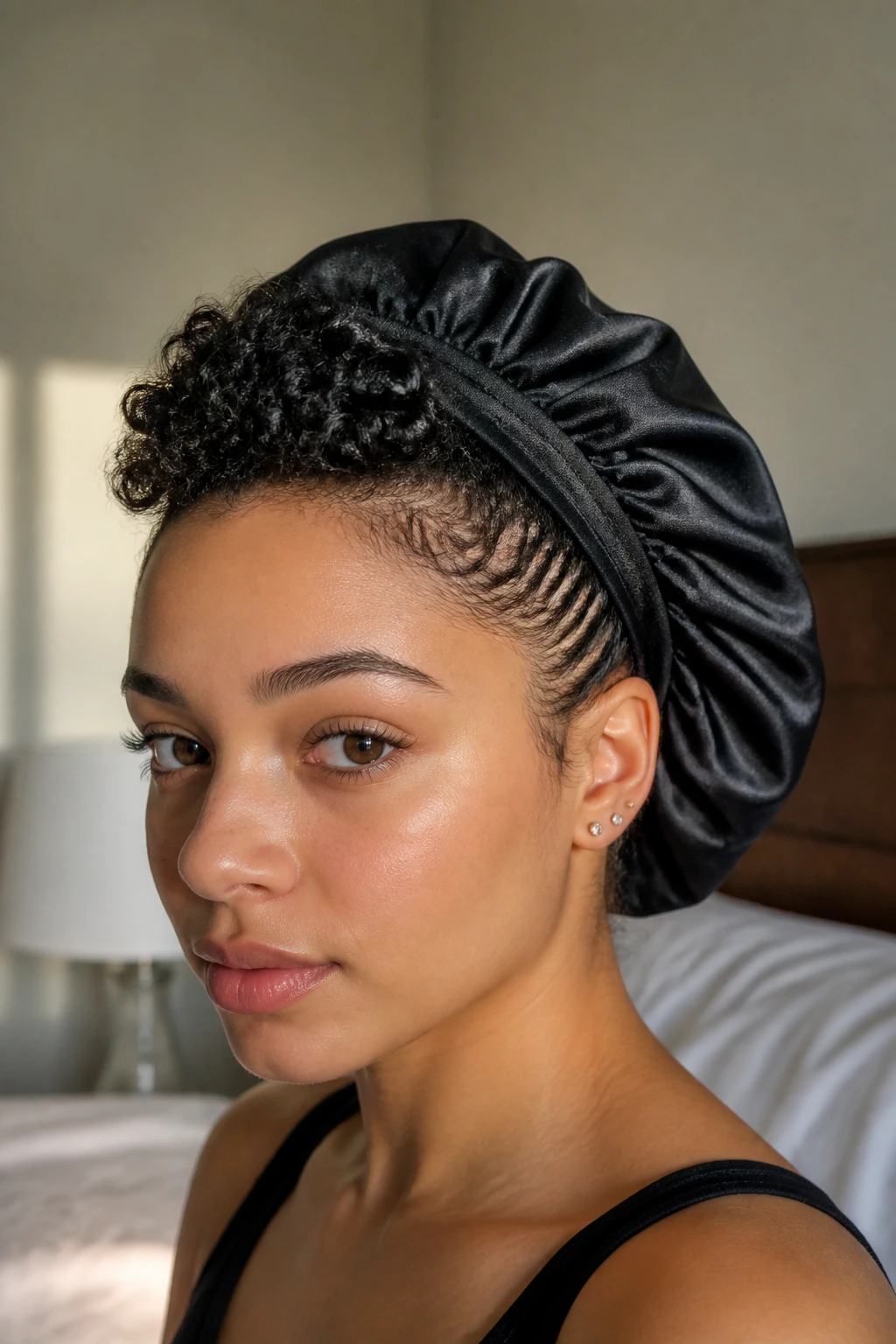
Most curly faux hawks hold best for one full day and part of a second, depending on how much product you used and how much you moved around. If you want to stretch the style, sleep with a satin bonnet or scarf and keep the ridge from getting crushed against the pillow. A loose wrap works fine if you don’t like bonnets.
In the morning, revive the shape with a light water mist and a quick finger fluff at the roots. If the sides have puffed out, smooth them with a tiny bit of cream or edge control, then add one or two fresh pins where the old ones loosened. Don’t pile on more gel unless the style is supposed to stay slick; otherwise, the buildup starts to look dirty before the hair actually is.
If you used a stronger hold product, wash it out within 1 to 2 days if your scalp feels stiff or itchy. Softer styles can usually be refreshed with a damp hands-and-product touch-up instead of a full wash.
Frequently Asked Questions
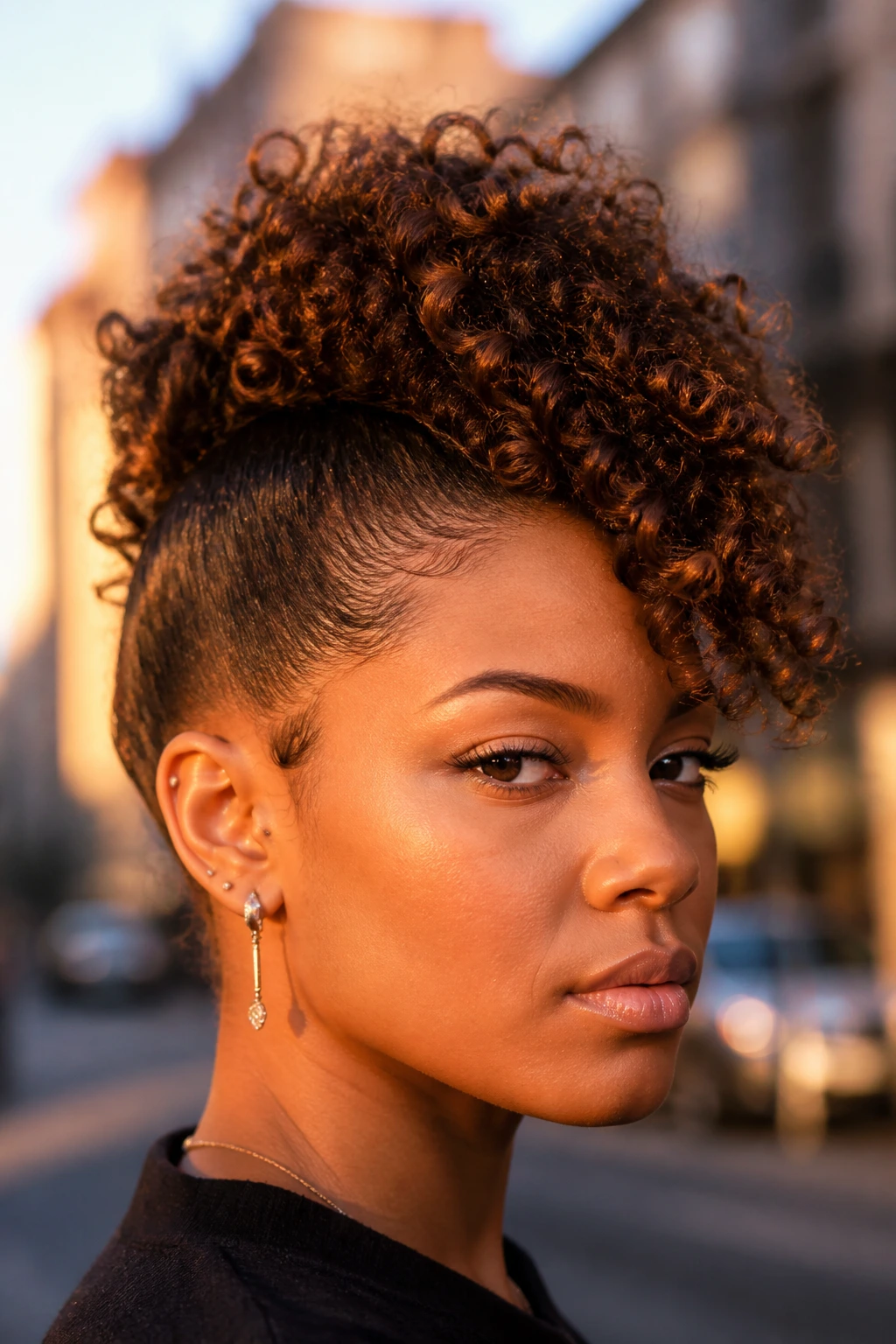
Can you do a faux hawk on short curly hair?
Yes, and short curls often make the shape look sharper. You’ll rely more on root lift, sectioning, and pins than on length, but the silhouette still reads clearly.
What curl types work best for faux hawk styles?
Most curl patterns can do it, from loose waves to tight coils. Loose curls give you airy volume, while tighter textures give you more body and a stronger ridge with less effort.
How many bobby pins do you need?
For a simple style, 6 to 8 usually does the job. Bigger or denser curls may need 12 or more, especially if you’re pinning both sides and shaping the crown.
Can I do this on second-day hair?
Absolutely. Second-day curls often grip better because they have a little less slip. If the roots feel too flat, mist them lightly and lift them with your fingers before pinning.
Why does my faux hawk fall flat after an hour?
Usually because the crown was built too low, the sides were too heavy, or the pins weren’t crossed tightly enough. Start with smaller sections and give the roots more lift before you secure anything.
How do I keep it from getting frizzy?
Use product on damp hair, let the style set fully, and avoid touching the outer curls once they dry. Frizz tends to show up fastest when the hair gets handled too much after shaping.
Is a faux hawk okay for formal events?
Yes, if you clean up the sides and make the ridge more deliberate. A smooth temple section, a polished crown, and a couple of hidden pins can make it look dressy fast.
What if my hair is very thick?
Work in smaller sections than you think you need. Thick hair needs more pins and more patience, but it also holds a faux hawk shape better once it’s set.
The Shape That Holds
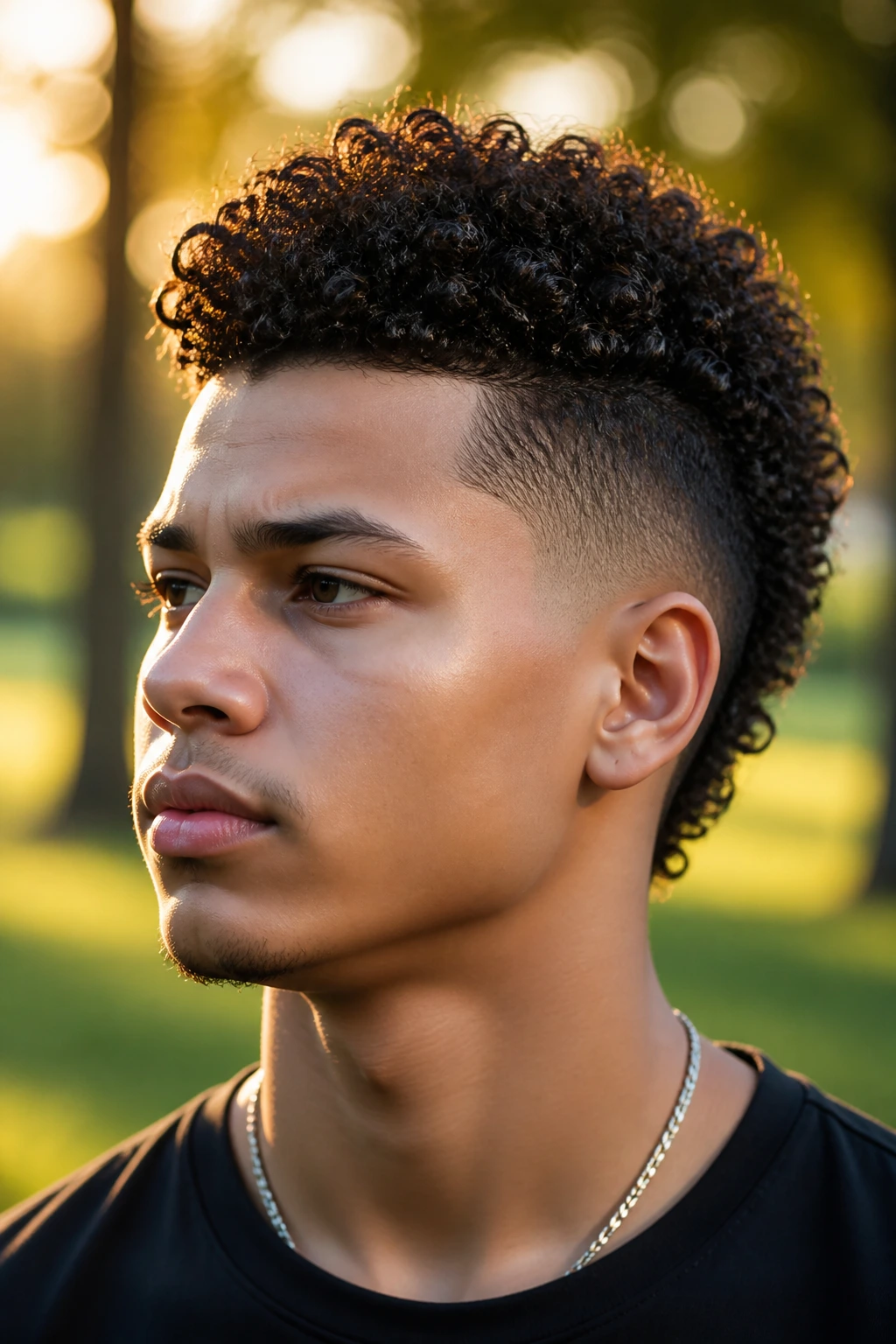
A good curly faux hawk does not fight your texture. It uses it. That’s the part people miss when they try to make the style too neat or too hard-edged. The best versions keep the center alive, keep the sides in check, and leave enough curl showing that the whole thing still feels like hair, not costume foam.
Once you know where the lift belongs and where the pins need to hide, the style gets easier every single time. You can go soft, sharp, braided, glossy, or loose — and the shape still makes sense. That’s the real appeal here, honestly. The curls do not have to be flattened to look intentional.
