



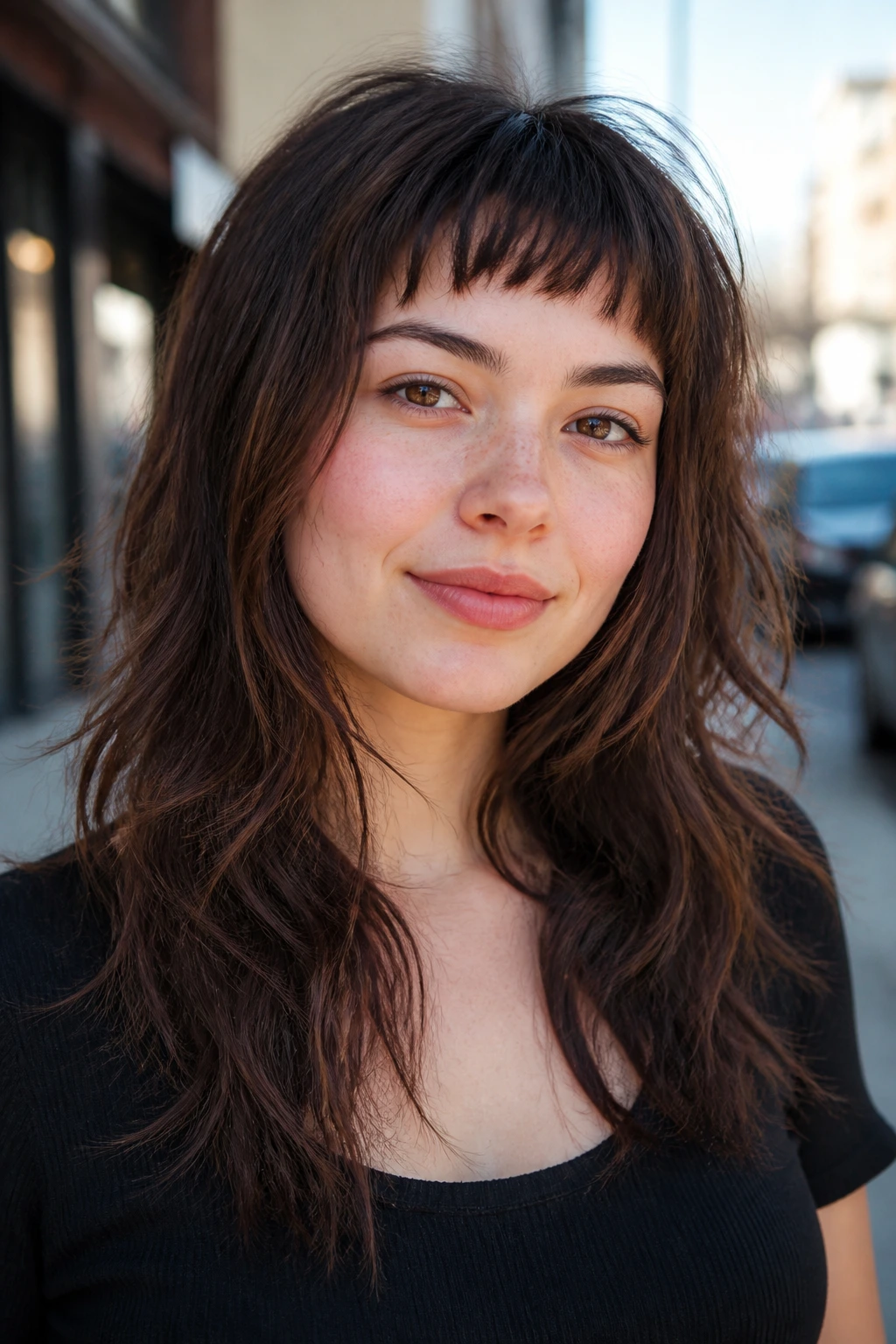
A long shag haircut with short bangs has a way of looking a little unruly in the chair and completely right once it moves. That’s the appeal. The length keeps the cut wearable, the layers keep it from hanging like a curtain, and the fringe—cut high, chopped, or softly feathered—changes the whole mood in one swipe of the scissors.
The part people underestimate is balance. Too much weight in the crown and the shape goes flat by noon. Too much thinning through the ends and the whole cut starts to fray instead of swing. The good versions of this haircut understand that tension and use it on purpose: length for versatility, texture for motion, and short bangs for a face frame that feels sharper than a standard fringe.
I’ve always liked this family of cuts because it rewards hair that wants to do its own thing. Waves bend into the layers. Straight hair gets some bite. Curls pick up shape instead of just bulk. And if the fringe sits a little higher than you expected on day one, that’s not a disaster—that’s usually the point.
Why This Collection Works on Real Hair
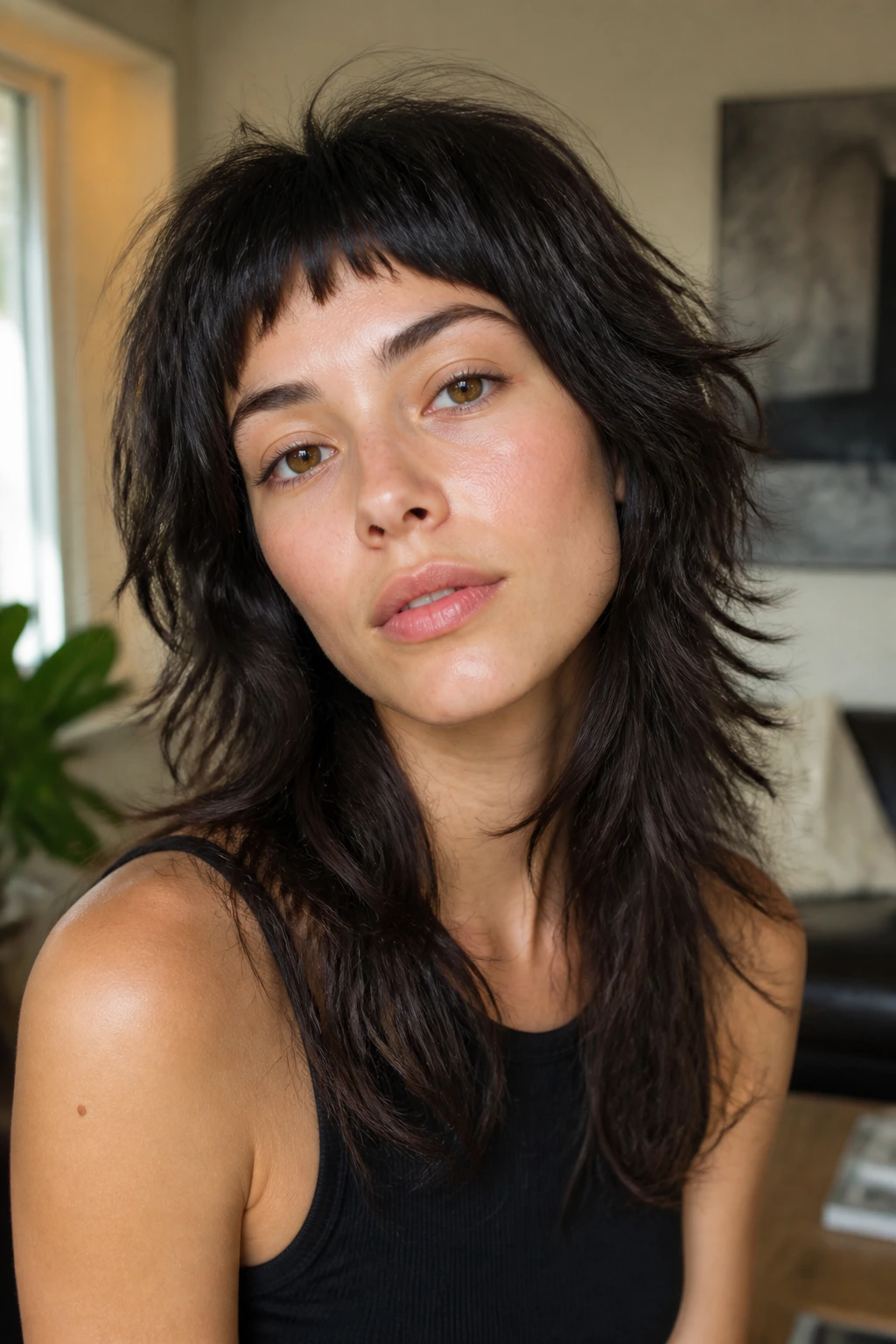
- The length stays useful: You still get ponytail, clip, and braid options, so the cut doesn’t lock you into one styling routine.
- Short bangs change the face fast: A fringe that lands above or at the brows opens the eyes and makes the cheekbones do more of the talking.
- The layers create movement instead of fluff: Good shag layers remove weight where long hair tends to sit heavy, especially around the crown and sides.
- Texture looks intentional here: Waves, bends, and even a bit of frizz read as part of the style instead of a problem to fix.
- The grow-out is kinder than people expect: Once the fringe softens, it usually turns into a lived-in bang rather than an awkward shelf.
- The same cut can feel edgy or soft: A razor finish gives you attitude; a softer scissor finish keeps the whole thing more romantic.
1. Soft Wolf Shag with Baby Bangs
This is the shag that walks into the room before you do. The crown is choppy, the long layers flick out instead of lying flat, and the baby bangs sit high enough to show off the brow line without swallowing the face. It has that slightly rebellious shape people like in photos, but the soft edges keep it from looking severe.
Why it works
The wolf-shag structure gives you volume at the top and movement through the lengths, which means the haircut keeps a bit of lift even when the hair is not freshly styled. Baby bangs add contrast, and that contrast is the whole trick here: the short fringe makes the long layers feel even longer.
Best on hair that naturally bends or waves. If your hair is pin-straight, the fringe can feel harsher than expected, so ask for point cutting at the edge instead of a blunt line.
Styling note
A small amount of mousse at the roots and a rough dry with fingers is usually enough. Let the ends do their own thing. They should look piecey, not polished.
2. Airy 70s Shag with Browline Fringe
Want the retro shape without turning the cut into a costume? This version keeps the long layers feathered and the fringe short enough to graze the brow line, so the whole thing feels lifted and light instead of heavy. It’s the kind of shag that looks best when the ends flip a little.
Why does this one keep working? Because the layers are spread out. The shortest bits live near the crown and face, while the perimeter stays long enough to swing. That spacing stops the haircut from turning too thick at the bottom.
What makes it different
A browline fringe sits close to the face without closing it off. You still see the forehead, the eyes stay open, and the hair has that soft, brushed-out 70s feel without a hard curtain across the top.
A round brush and a quick bend under the front pieces make a big difference here. If you push the fringe too straight, the cut loses some of its charm.
3. Razor-Cut Shag with Feathered Micro Bangs
A razor-cut shag has a different attitude from a scissor-cut shag. The ends look sliced, not stacked, and that thin, airy edge is exactly what keeps micro bangs from looking too blocky. This version has bite. It also has motion.
What to watch for
Razor work can be gorgeous on healthy hair, especially if the hair has enough density to show the shape. On fine or fragile hair, though, too much razor work can leave the ends fuzzy faster than you’d like. That’s the catch.
Micro bangs are the detail that makes this cut feel fashion-forward. They sit high, expose the brows, and create a hard little punctuation mark above all that length. If you like a haircut with a bit of attitude, this is one of the strongest versions in the whole set.
Keep the styling light. A matte texture spray and a small bend around the face is enough. Heavy cream will kill the feathered edges fast.
4. Curly Long Shag with Short Curly Bangs
Curly shags live or die by shrinkage. Cut well, this version makes curls stack in soft steps from the crown down to the ends, while the short bangs spring into place just above or at the brow line. Cut badly, and the fringe can jump up too far and sit like a shelf. That’s why curl-by-curl shaping matters here.
Best if your curls have bounce
The cut works especially well when the curls already form a clear S-shape or ringlet. You want enough curl pattern for the bangs to curl open, not compact into a dense puff at the forehead.
Ask for the fringe to be cut dry, or at least close to dry, so the stylist can see where the curls actually settle. Wet curls lie.
A diffuser helps, but the trick is not to blast the bangs first. Dry the crown and lengths until they’re about 80 percent set, then use the diffuser gently around the fringe so the shape stays soft.
5. Fine-Hair Shag with Wispy Bangs
Fine hair needs a careful shag, not a shredded one. Too many short layers and the whole cut starts to look thin at the ends, which is the last thing you want. The better version keeps the length in play and uses wispy bangs to add interest around the face without stealing density from the rest of the hair.
The fringe should feel light, almost see-through in places, so it doesn’t look heavy against a narrow face or fine texture. A little piecey separation is your friend here.
Why this cut earns its keep
The shorter fringe creates the illusion of more body at the front, while the long layers stop the haircut from collapsing into one flat shape. It also styles quickly. A lift at the roots, a soft bend in the front pieces, and a bit of dry texture spray can carry the whole look.
If your hair gets oily fast, keep the bangs a touch longer than you think. Very short wispy fringe shows grease sooner than people like to admit.
6. Thick-Hair Shag with Piecey Bangs
Thick hair can wear a shag beautifully, but only if the cut removes bulk in the right places. That means the crown gets enough air, the sides are broken up, and the bangs are chopped into separate pieces instead of one dense bar across the forehead. Piecey bangs are doing a lot of work here.
Why this one feels so wearable
The long length keeps the haircut grounded. Without that, thick hair can start to balloon. The shag shape reduces that weight, and the separated fringe stops the front from looking like a wall.
I like this version when someone wants movement but not a dramatic silhouette change. It’s a strong haircut, but it doesn’t scream for attention.
A texturizing spray or a tiny bit of paste on the fringe can help the pieces stay separated. Don’t overdo it. Thick hair can take product, but the bangs can turn stringy fast if you load them up.
7. Round-Face Shag with Arched Short Bangs
A round face usually benefits from a little vertical line, and arched short bangs give you exactly that. The center of the fringe sits slightly higher, while the sides dip a bit longer toward the temples. That small curve changes the way the eye reads the face.
What to ask for
Keep the shortest point of the fringe near the center and let it open out at the edges. You want the bangs to act like a frame, not a shelf.
The long layers should fall below the cheekbone and skim the jaw, because anything that ends right at the widest part of the face can make the roundness feel stronger. Not ideal.
This is one of those cuts that looks best with a little bend. A flat, straight finish makes the fringe feel more blunt than arched. A soft round brush pass through the front is usually enough.
8. Square-Jaw Shag with Broken Fringe
Square jaws like softness in the right places. A broken fringe does that job without getting precious about it. Instead of one solid line, the bangs are chopped into uneven bits that sit lightly across the forehead and then drift into the face-framing layers.
That broken edge matters. It keeps the cut from mirroring the jaw too closely, and that matters more than most people think.
The long shag underneath should stay fluid. Think movement around the mouth and collarbone, not stiff stair-steps. If the layers are too rigid, the whole haircut can feel boxy.
A small styling detail that helps
A quick finger-twist of the fringe while blow-drying gives the bangs a little separation. You don’t need much. Just enough to stop them from clumping into one flat strip.
9. French-Inspired Long Shag with Short Curtain Bangs

Short curtain bangs are a neat little compromise. They split down the middle, but because they’re cut shorter than classic curtain fringe, they show more forehead and give the face a cleaner opening. On a long shag, that makes the haircut feel airy rather than heavy.
This version has a softer mood than micro bangs and less edge than blunt bangs. It sits in the middle, which is why so many people can wear it.
Why it feels elegant without trying too hard
The front pieces sweep away from the center and fold into the long layers at the cheekbones. That shape is flattering on a lot of face types because it doesn’t trap the features. It just frames them.
I like this cut with hair that has a little natural bend. The fringe wants to separate and move, not stay pinned in a perfect split. A small round brush and a touch of light cream at the ends are enough.
10. Mullet-Leaning Shag with Choppy Bangs
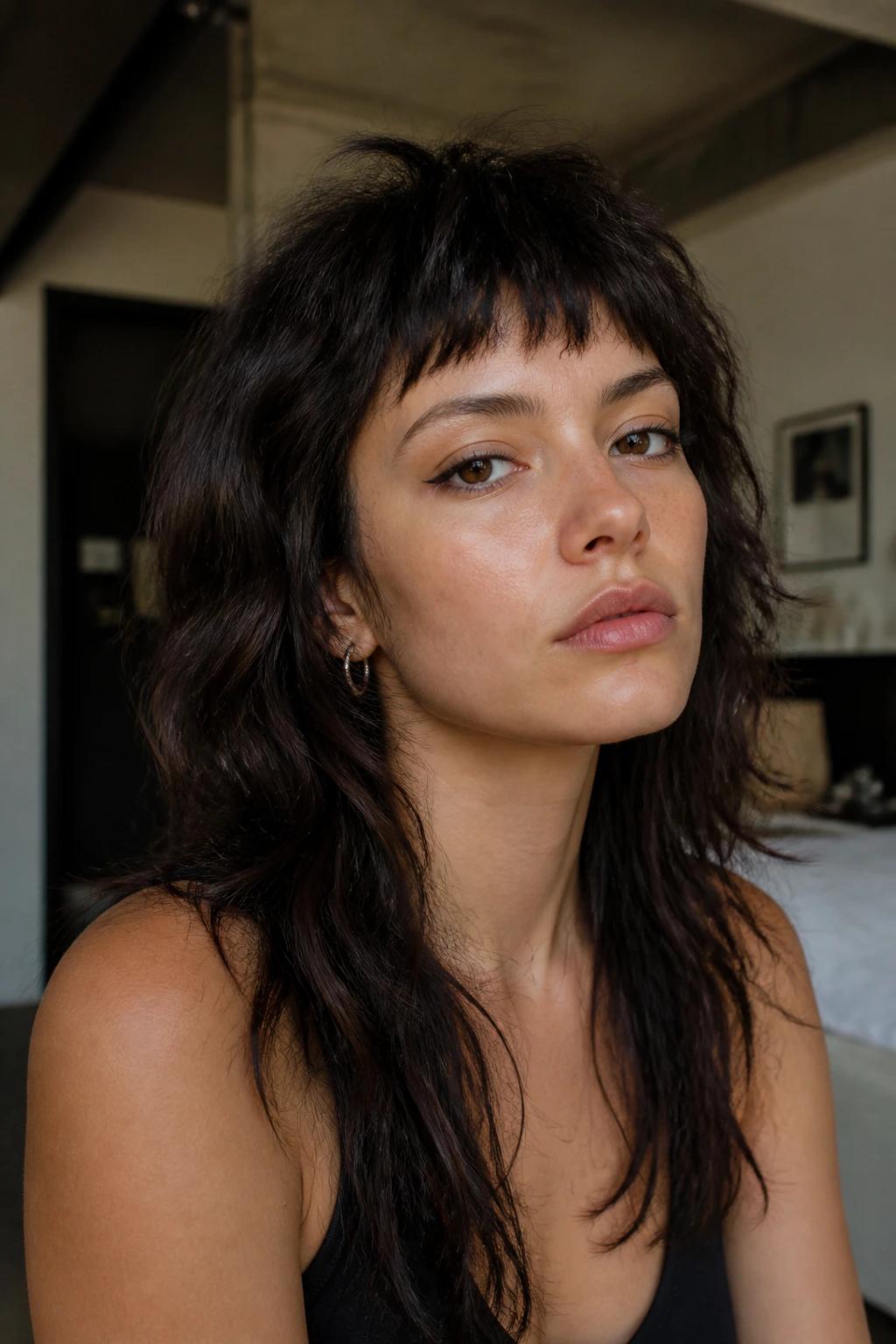
If you want the shag with more edge, this is the one that leans into it. The crown is a bit shorter, the back keeps its length, and the bangs are cut choppy enough to look deliberately uneven. It is not subtle. That’s the point.
Best for
People who like a haircut with personality and do not want a polite silhouette. This version looks especially good on thick hair, wavy hair, and anyone who likes to rough-dry and leave the mirror alone.
The choppy bang line keeps the front from feeling too sweet. It gives the haircut a little grit. Without it, the long back can slide into “just layers,” which is not what this cut wants.
A matte styling paste or a dry texture spray works better here than shine-heavy products. The finish should feel touchable and a little messy, not sleek.
11. Air-Dry Shag with Tapered Bangs

Some haircuts need a blowout to behave. This one should look good when you walk away from the mirror and let it do what it wants. The tapered bangs start fuller near the center, then narrow softly toward the temples, which helps them fall into place as the hair dries.
Why it works without much fuss
The layers are long enough to curve naturally, and the fringe is shaped to follow the head, not fight it. That makes the cut easier on mornings when there is no time for a brush.
A little leave-in conditioner or curl cream can help the ends separate in a clean way. Too much product, though, and the fringe can stick together and lose that tapered shape.
This is a nice option if you want the shag look but hate a high-maintenance front. It gives you texture without demanding a full styling session.
12. Straight-Hair Shag with Blunt Short Bangs
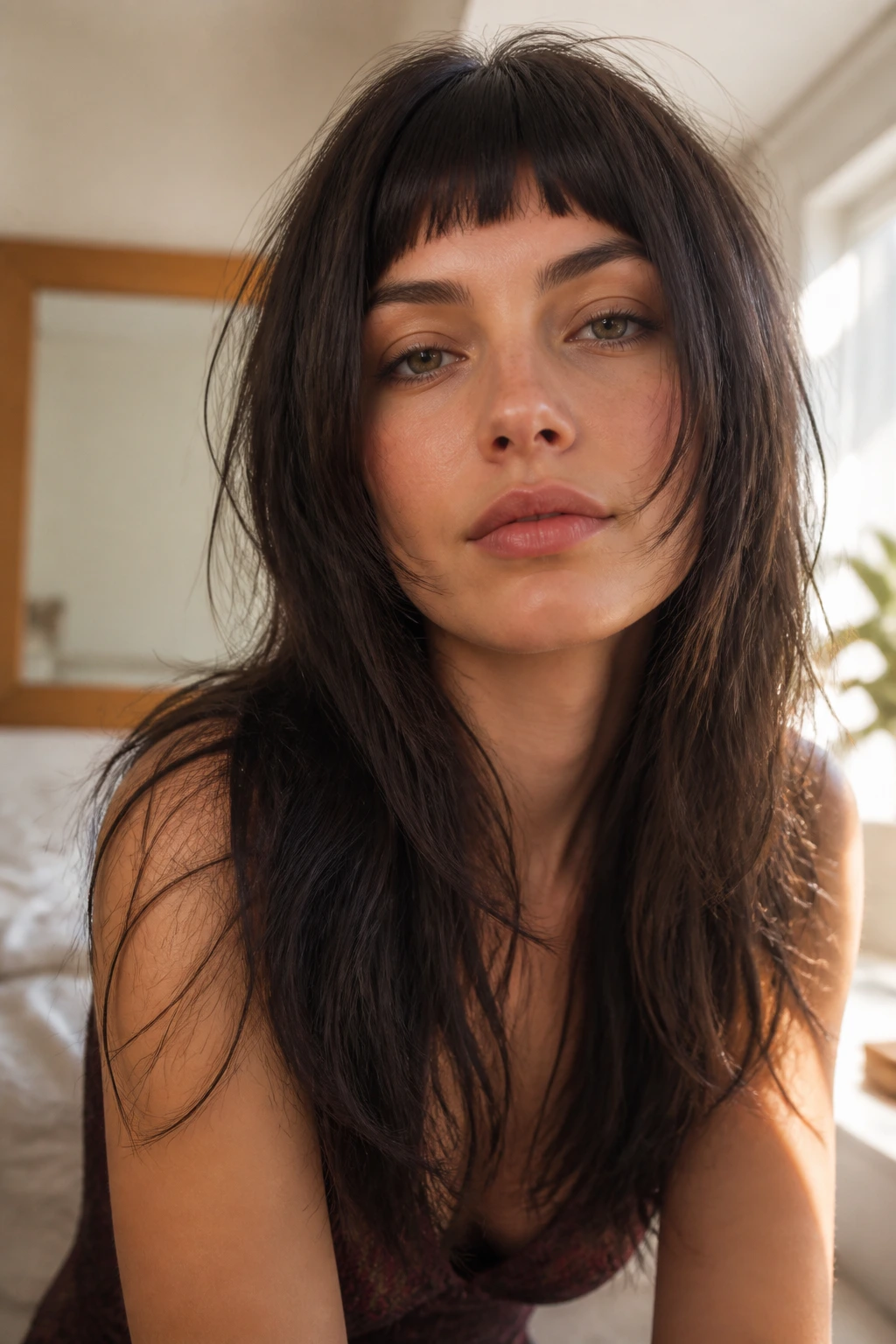
Straight hair can wear a shag, but the cut has to create the movement the texture won’t give you on its own. Blunt short bangs do part of that work by adding a hard line up front. Then the long layers soften the rest of the shape so the haircut doesn’t feel severe.
That contrast is what makes this version interesting. Straight hair can look plain if the layers are too polite. A blunt fringe fixes that fast.
The part that matters
Do not over-texturize the ends. Straight hair already shows every snip, and too much thinning can make the perimeter look wispy in a bad way. Keep the ends clean enough to hold their line.
A flat iron bend through the face-framing pieces can help the layers show. Just a soft twist. No need to turn the cut into a polished bob impersonation.
13. Glam Shag with Heavy Fringe and Soft Ends
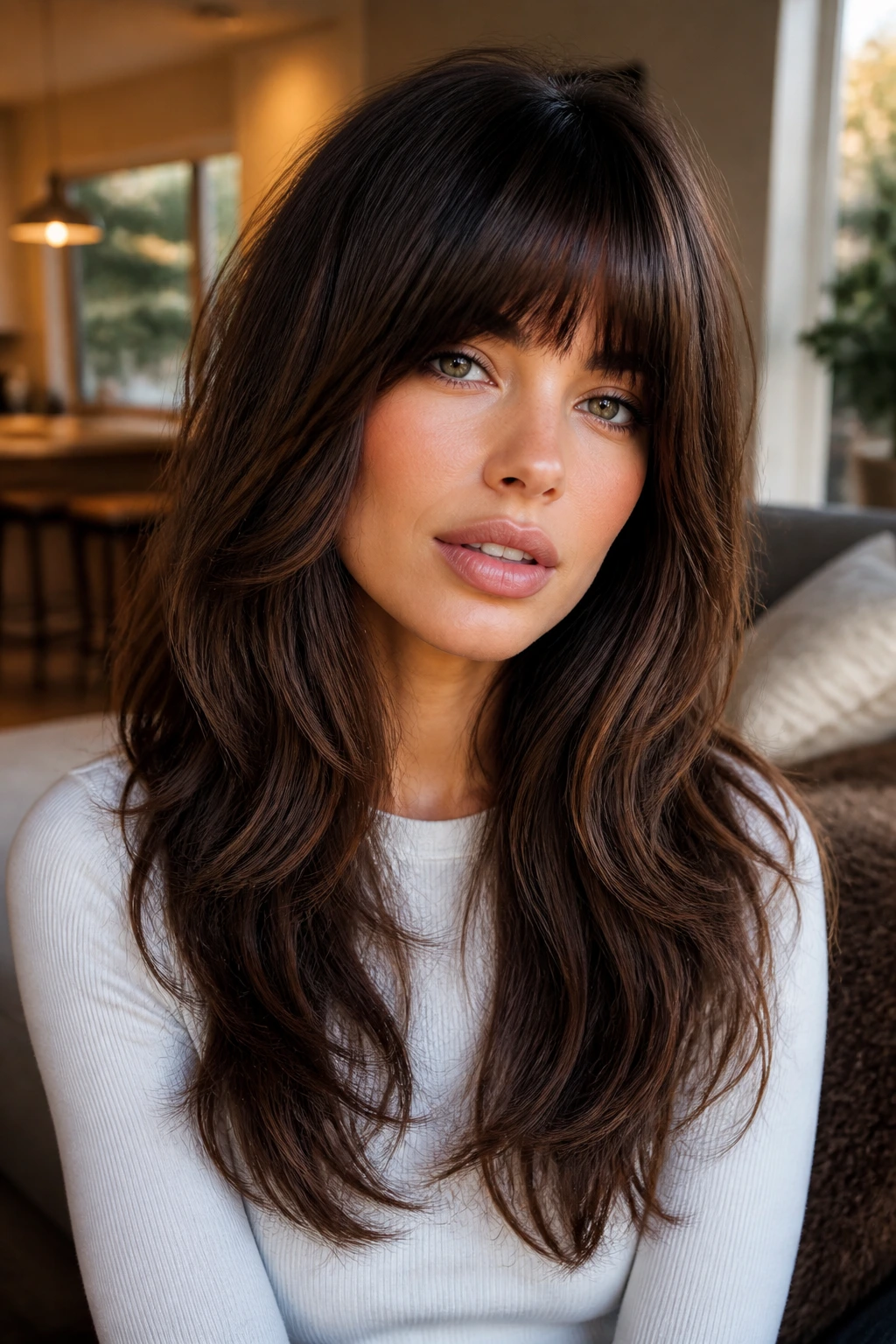
This is the shag for people who like a little drama but still want softness at the ends. The fringe is heavier, sitting close to the brows and reading almost like a full bang, while the lengths stay feathered and loose. The effect is glossy up front, easy through the rest.
It’s a useful shape when you want more hair around the face without losing the long line. The heavy fringe gives structure. The softened ends keep it from feeling stiff.
A round brush blowout makes this version shine. The bangs should curve slightly under, not stick straight out. The long layers can flip a little at the bottom, which keeps the cut from getting too perfect.
I’m partial to this one on medium to thick hair because it has enough body to hold the shape. Fine hair can wear it too, but the fringe usually needs a lighter touch.
14. Face-Framing Shag with Micro Bangs
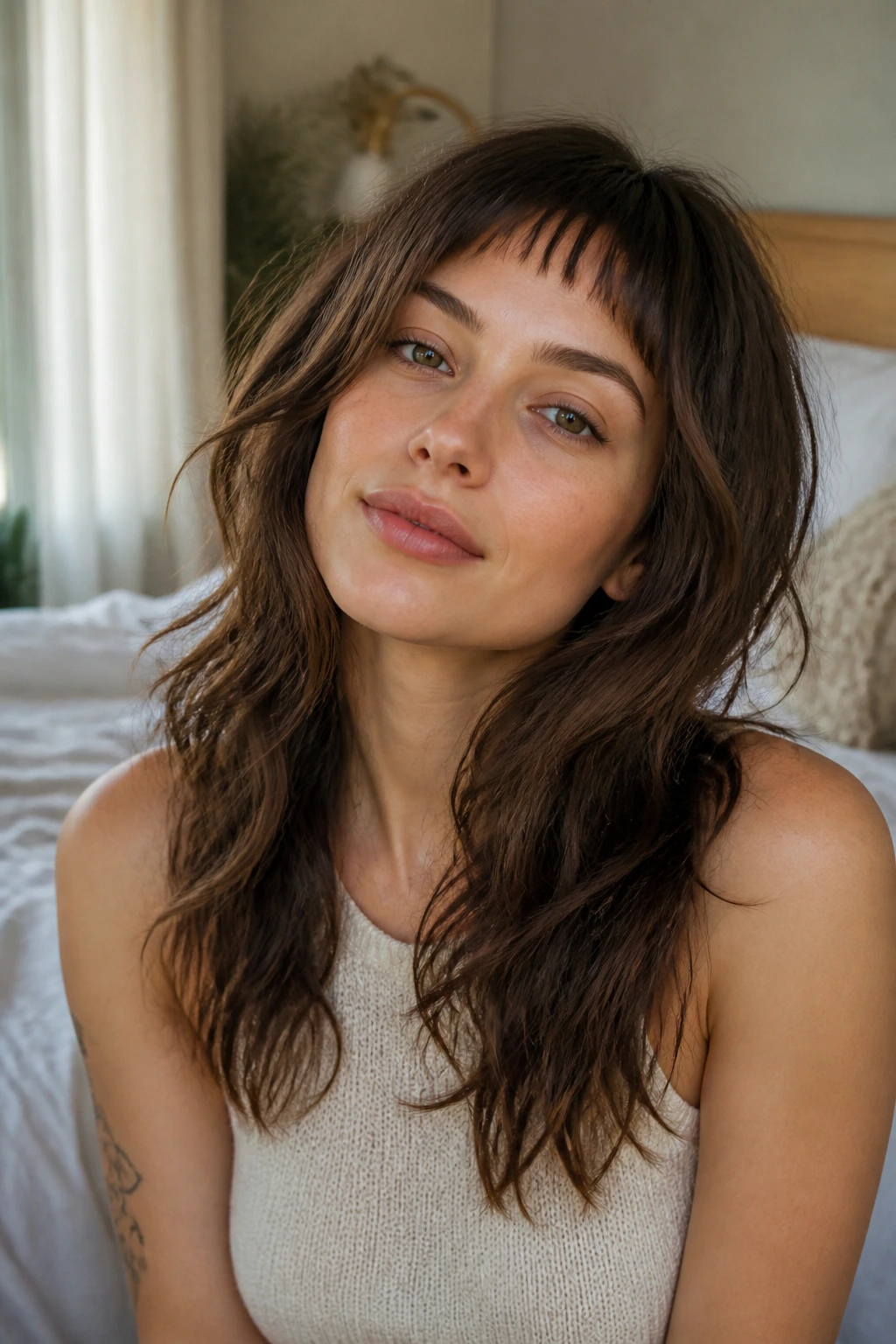
Micro bangs plus long face-framing layers is a strong contrast, and that’s exactly why it works. The fringe makes the front sharp and compact, then the long pieces open out below the cheekbones and soften the whole shape. The haircut feels deliberate from every angle.
Where it lands best
This cut is good if you want the eyes and brows to do more of the visual work. It can also be handy for longer faces because the short fringe visually shortens the forehead a bit.
The layers should start around the cheekbone or just below, then taper down into the length. If they start too high, you risk losing the clean contrast that makes the haircut interesting.
Wear it with a little wave through the lengths or a subtle bend at the ends. The difference between “fashion” and “random” is usually just a few seconds with a styling tool.
15. Beachy Boho Shag with Grown-Out Bangs
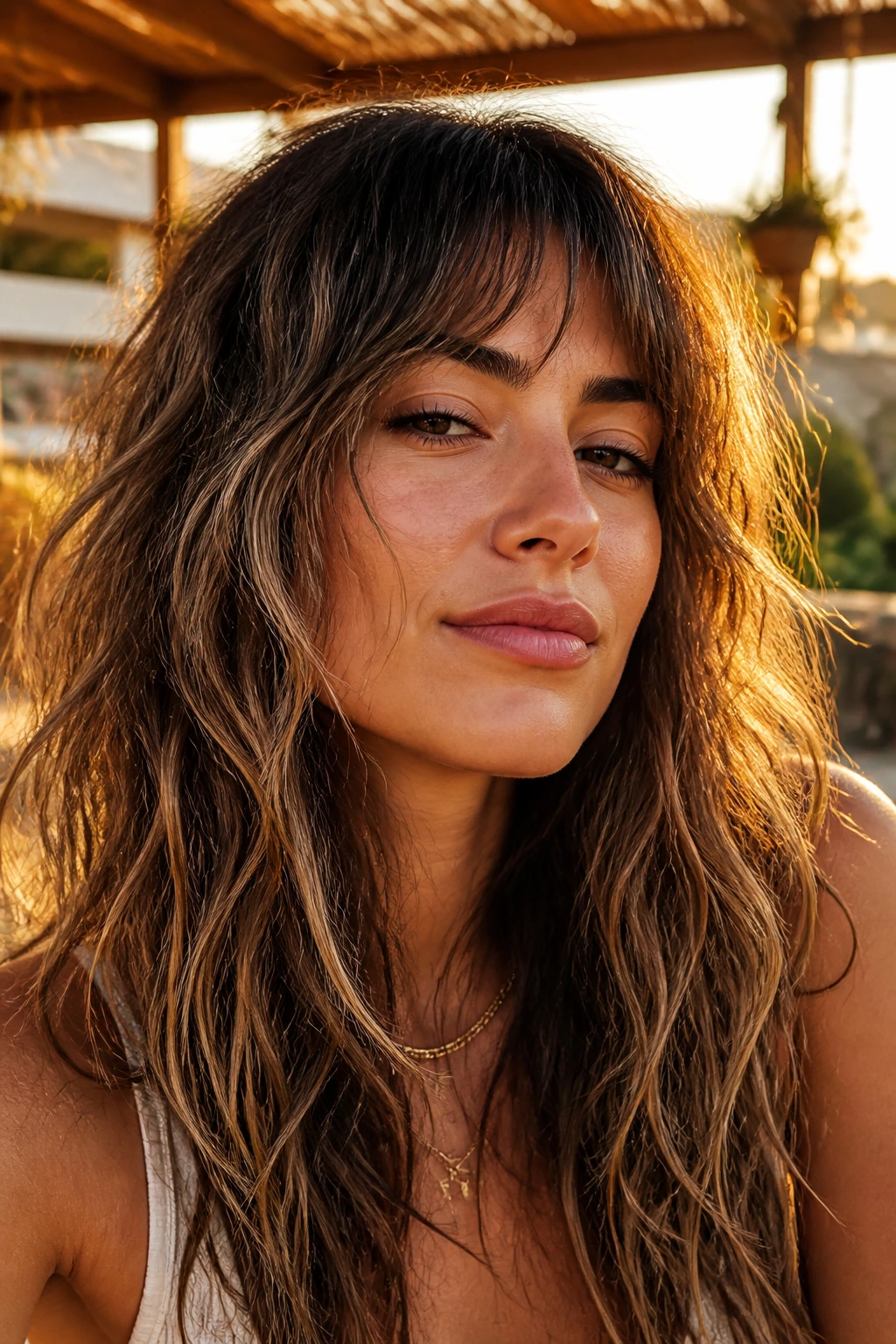
This is the version for someone who wants the shag shape but doesn’t want to fight the fringe every morning. The bangs are cut short enough to read as bangs, but they’re left a touch longer and softer so they can live a little past the brow line as they grow. It feels relaxed, not fussy.
The long layers do most of the texture work. The fringe just nudges the face into place.
A practical detail
Because the bangs are slightly grown out, they’re easier to tuck, sweep, or split if you need to. That makes this version especially useful for people who wear glasses or switch between air-dried and styled finishes.
A salt spray mist on damp hair can help the waves separate, but go light. Beachy does not mean crunchy. That’s a mistake people keep making.
16. Rounded Bottleneck Shag with Short Fringe
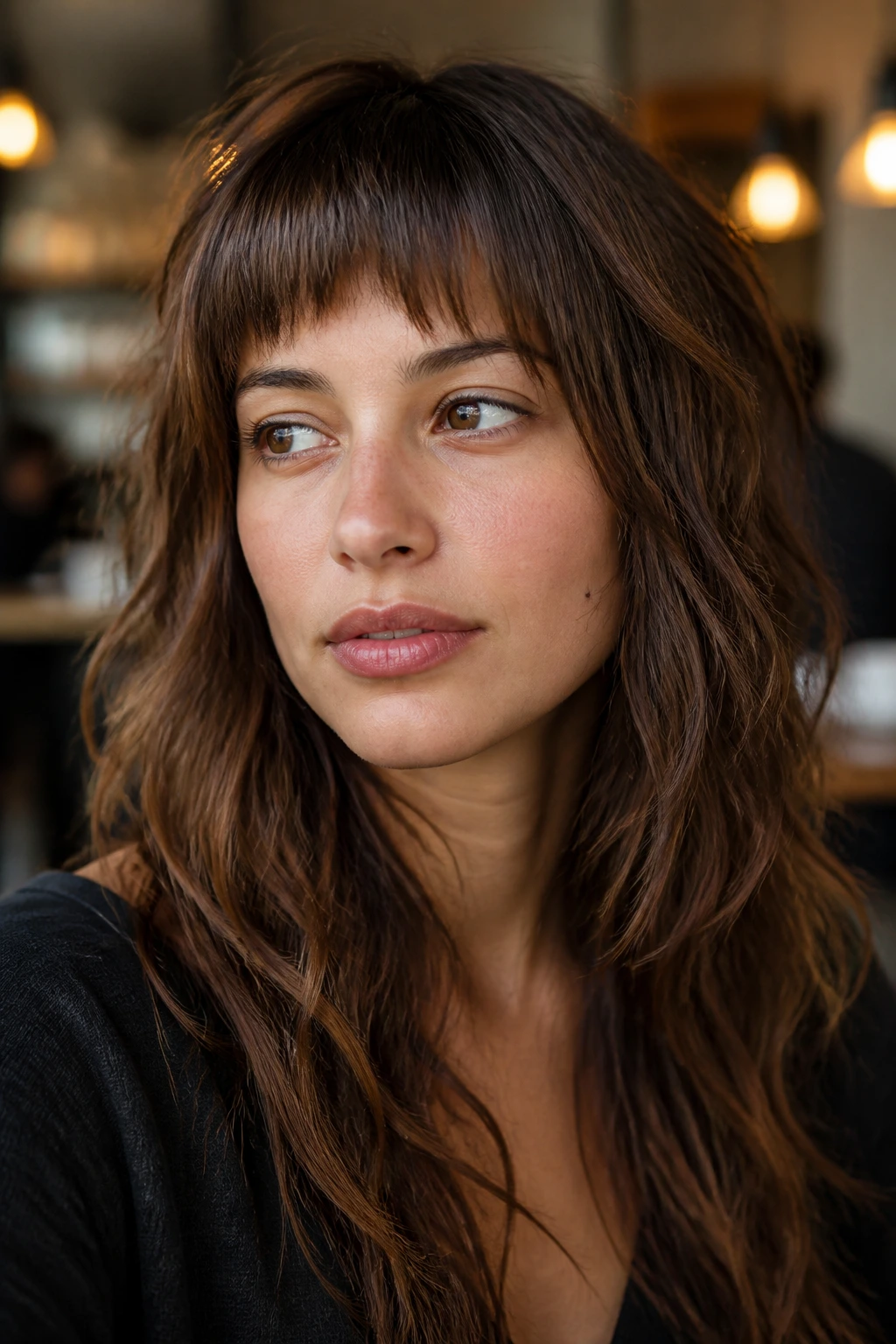
Bottleneck bangs have a nice trick: they’re shorter and denser in the center, then widen and soften toward the sides. On a long shag, that shape gives you a fringe that feels balanced without being too blunt. The curve is flattering because it opens the forehead in the middle and eases into the rest of the cut.
What makes it stand out
This version is softer than micro bangs and less predictable than a straight fringe. It has shape, but not hard edges.
The long shag underneath should stay broken and light through the ends. If the layers get too heavy, the fringe loses its effect and the whole haircut starts looking top-heavy.
I like this cut with a blow-dry brush or a round brush because the fringe needs a little polish to show its shape. Air-dried bottleneck bangs can work, but they are more likely to split in awkward places.
17. Waist-Length Shag with Internal Layers
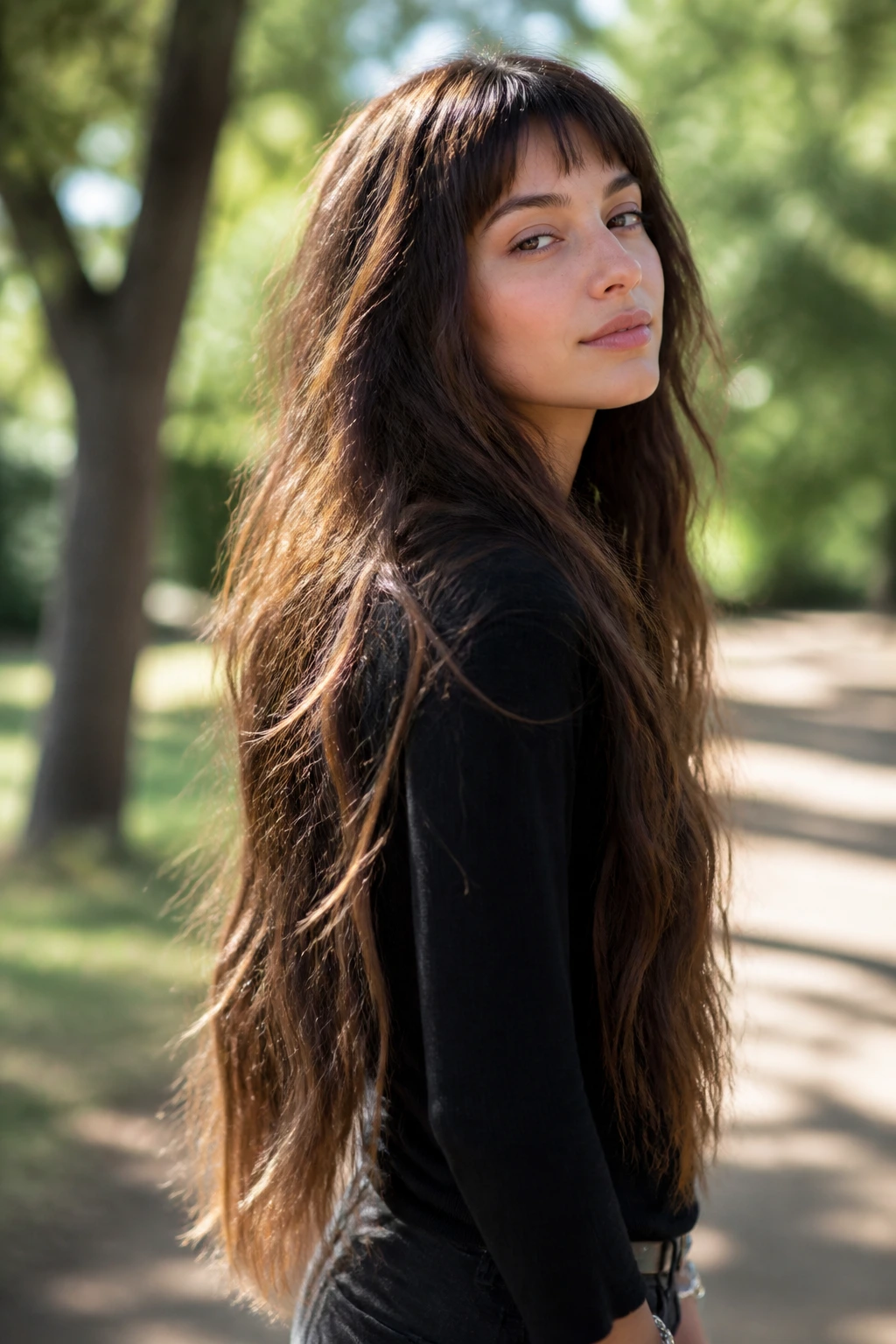
Keeping the length doesn’t mean skipping the shape. Internal layers are what make this waist-length cut feel like a shag instead of just long hair with a face frame. The layers live inside the mass, so the outline stays long and the movement happens beneath the surface.
That’s a smart choice if you are attached to length. Really attached.
Why it matters
The fringe gives the front a shorter, sharper edge, and the internal layers stop the rest of the hair from hanging like a sheet. The cut ends up with motion you can see when you walk, but the silhouette stays long enough to pull back easily.
This one needs a stylist who knows how to remove weight without carving too much into the perimeter. The wrong hand with the scissors can erase the whole point.
18. Side-Swept Shag with Short Bangs
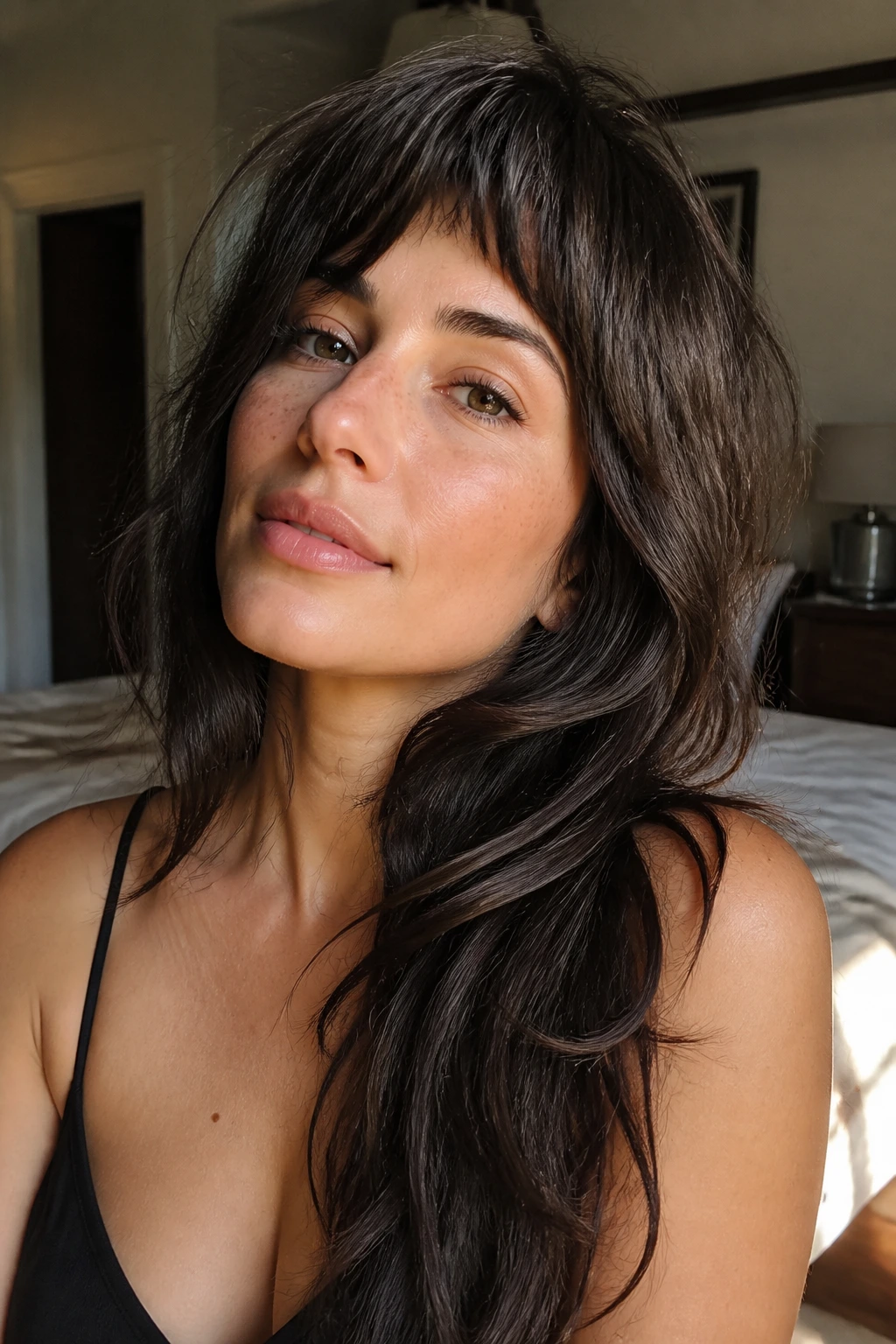
Short bangs do not have to sit dead center. A side-swept version gives the same short-fringe energy, but it shifts the visual line off to one side, which can soften a cowlick or ease a forehead that feels too open with a straight fringe.
A small thing with a big payoff
This version is especially helpful if your hair naturally parts unevenly. Fighting the part usually makes the cut look stubborn. Working with it looks better.
The long layers should follow the direction of the sweep so the whole haircut feels connected. If the fringe is swept left but the face frame falls straight down, the shape gets muddy.
A little root spray at the front and a quick directional blow-dry are usually enough. You don’t need to overwork it.
19. Invisible-Layer Shag with Feathered Fringe
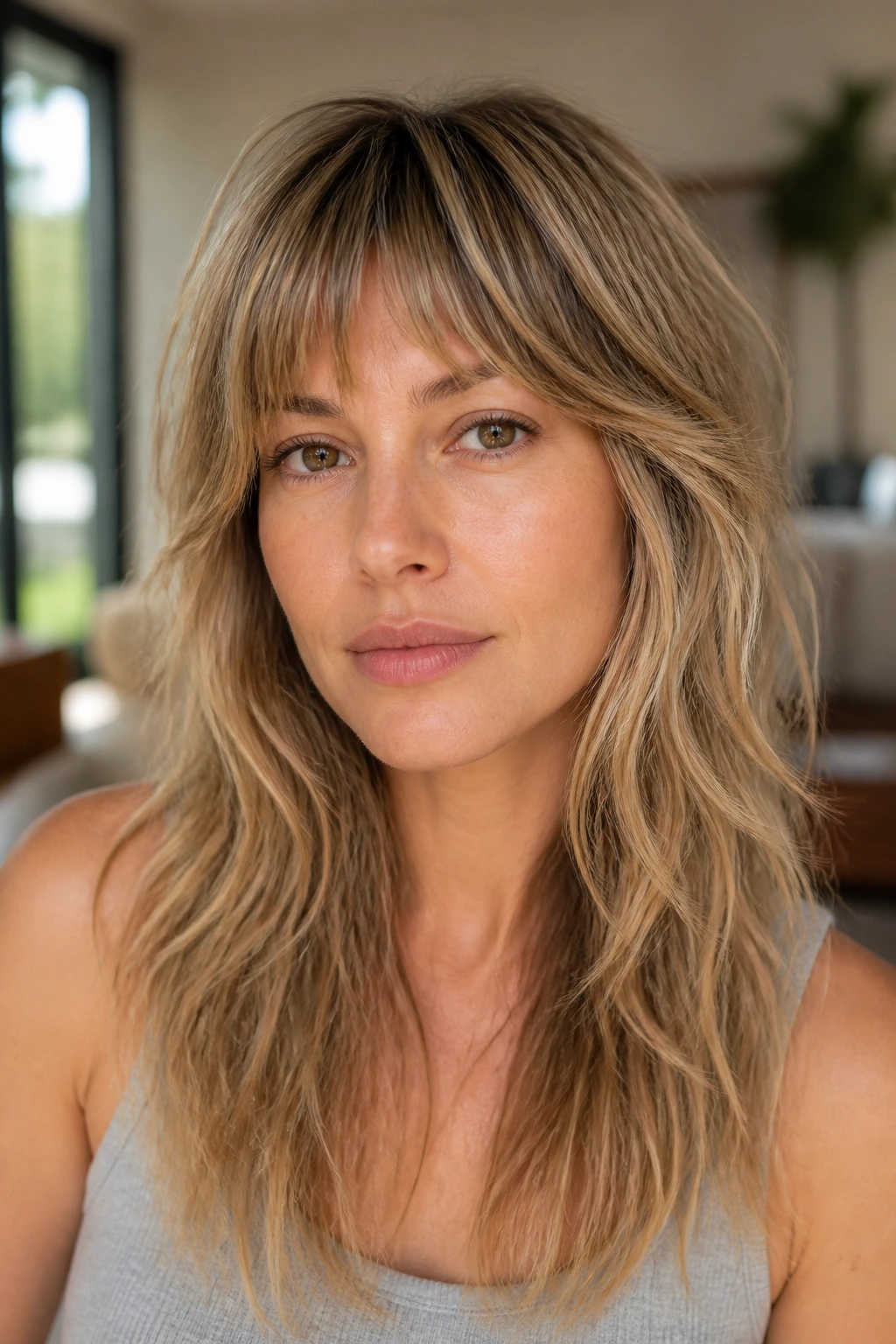
Invisible layers are for people who want movement without looking layered in an obvious way. The shape stays fuller through the outline, but the inside is broken up enough that the hair bends and shifts instead of hanging in one block. Pair that with a feathered fringe and the cut becomes very easy to wear.
The fringe here should feel light at the ends and softer toward the temple. No chunky edges. Just air.
Why this version is sneaky-good
It gives long hair motion without taking away the feeling of thickness. That’s hard to do, and it’s why this style works so well on people who hate seeing too many steps in the mirror.
A medium-hold texture spray helps the feathered pieces stay separate. A heavy serum will flatten the whole point of the cut.
20. Crown-Lift Shag with Disconnected Layers
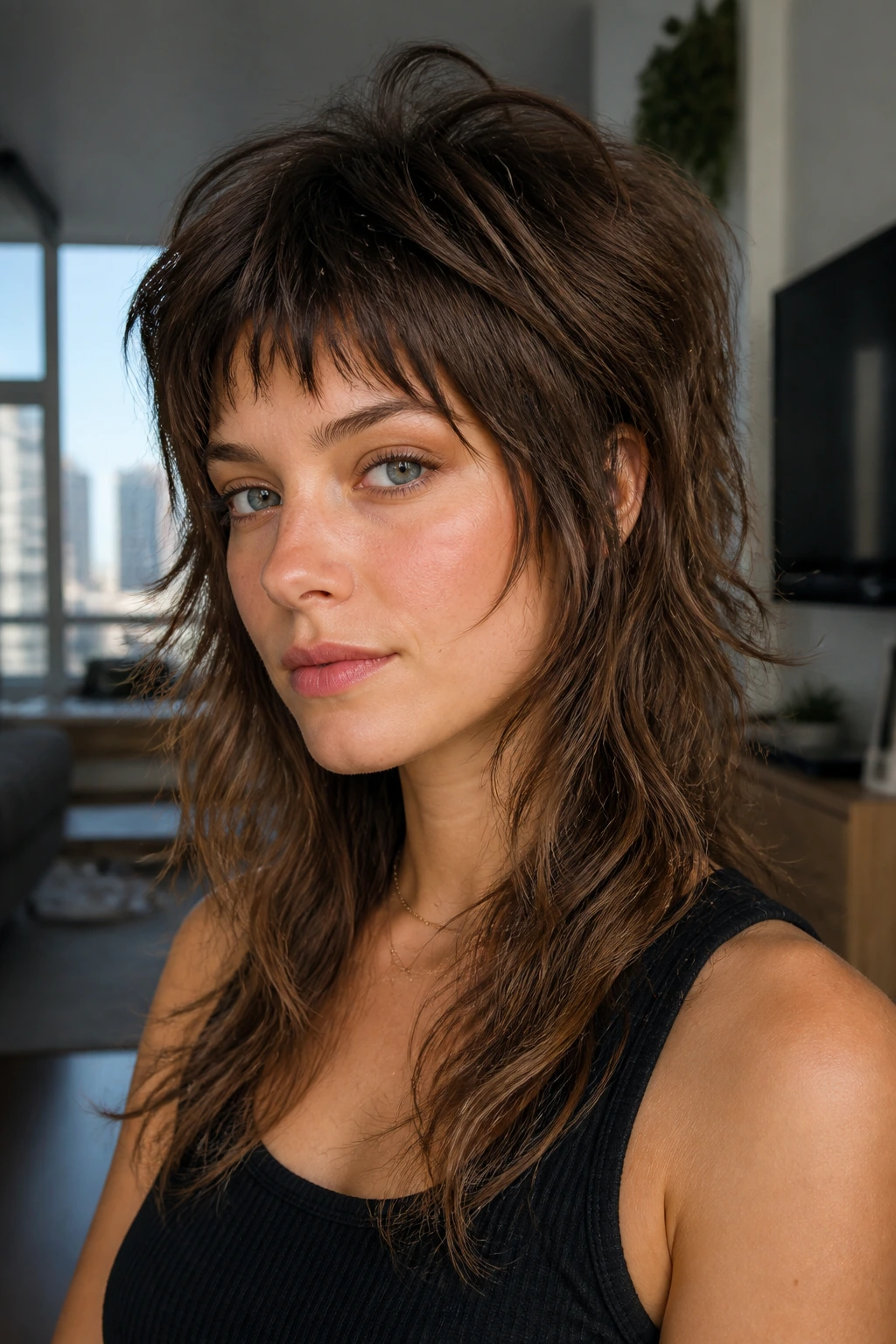
If your hair falls flat at the roots, a crown-lift shag gives the top more structure right where it needs it. The layers are a little more disconnected, which means the hair sits higher at the crown and then drops into longer lengths through the rest of the head.
This is a stronger, more fashion-forward shape. You can tell when it’s done right because the top has room to breathe.
What to expect
The short bangs support the lift by keeping the front open and light. The combination makes the face look framed without feeling crowded.
This cut does need some styling. A root-lifting mousse, a round brush, or a quick blast at the crown makes the difference between “intentional shag” and “my hair forgot what to do.”
21. Dense-Hair Shag with Razor Ends
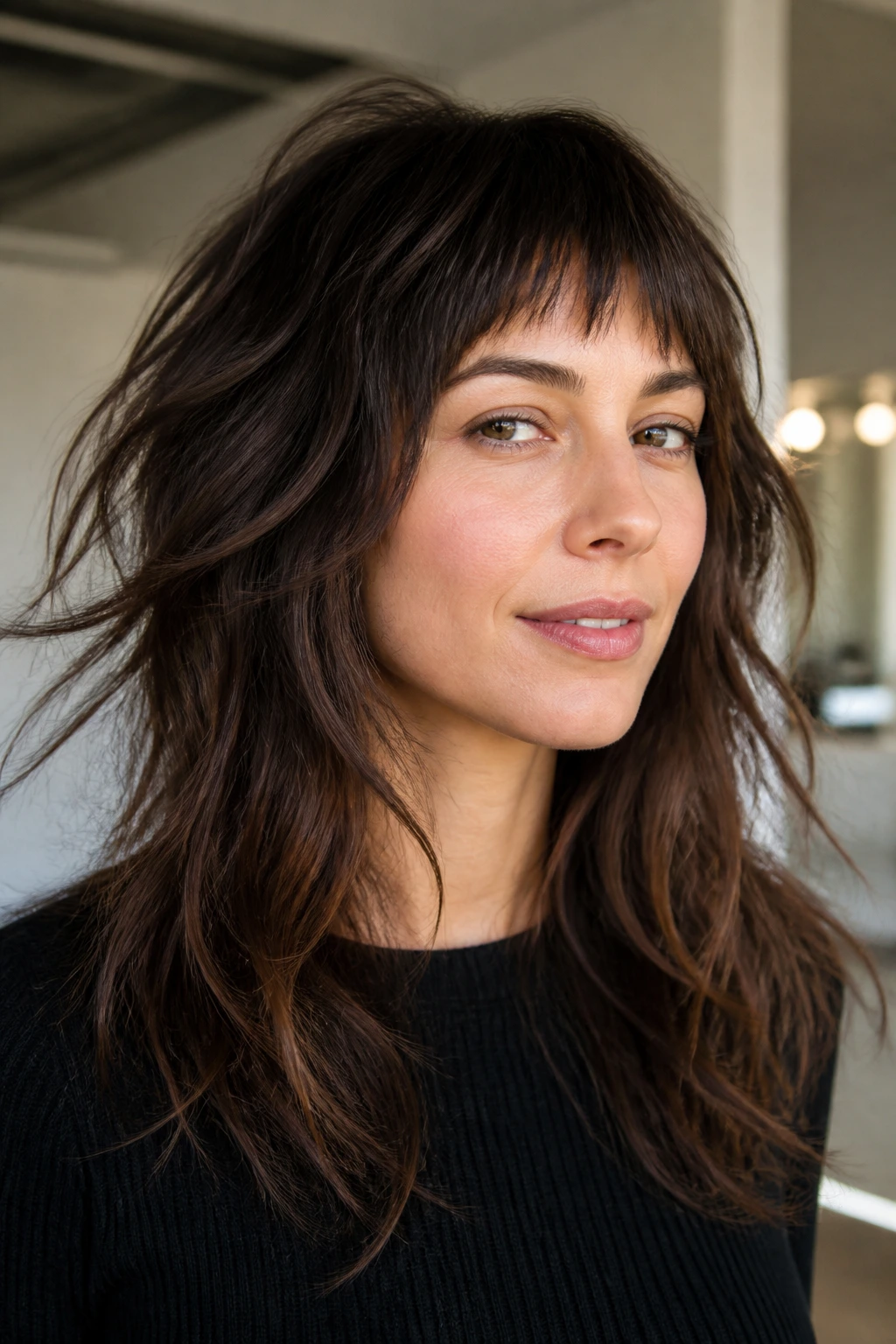
Dense hair can hide a good cut fast, so the shape has to earn its place. Razor ends help by taking the edge off the bulk and letting the long lengths move instead of sitting in one heavy mass. With short bangs on top, the whole thing feels lighter at the front and less blocky below.
The smart move
Use the razor where the hair needs release, not everywhere. If the crown gets too thinned out, the haircut loses its body and can start puffing in humid air.
This version works well when you want the shag to move but not frizz out into a halo. A little smoothing cream on the mids and ends keeps the texture separated without turning it limp.
22. Thin-Hair Shag with Short Fringe and Root Lift
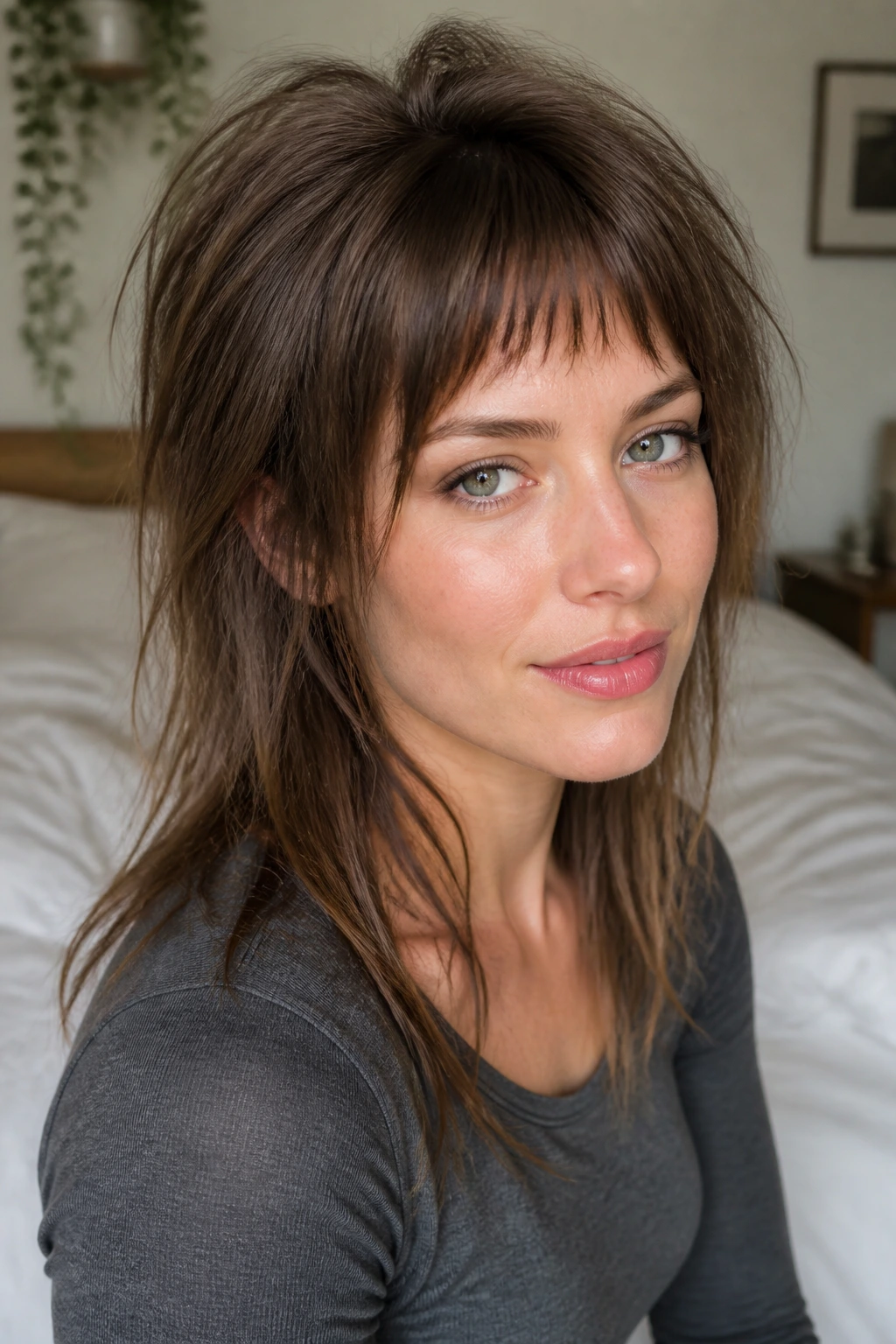
Thin hair can wear a shag, but the cut has to protect the illusion of fullness. That means fewer short layers, a softer fringe, and a plan for root lift. The short bangs help because they create a strong focal point up front, which makes the rest of the hair feel more present.
The key is not over-cutting the length. Keep some weight in the perimeter so the ends look deliberate instead of see-through.
What helps most
A root spray at the crown, blown in with a lift at the roots, gives this cut a firmer base. Dry shampoo can help on day two and day three, but it should support the shape, not replace it.
If the bangs separate too much, that is usually a sign the product was too heavy or the fringe was cut too sparse. A tiny round brush pass fixes more than people expect.
23. Curved-Bang Shag for High Foreheads
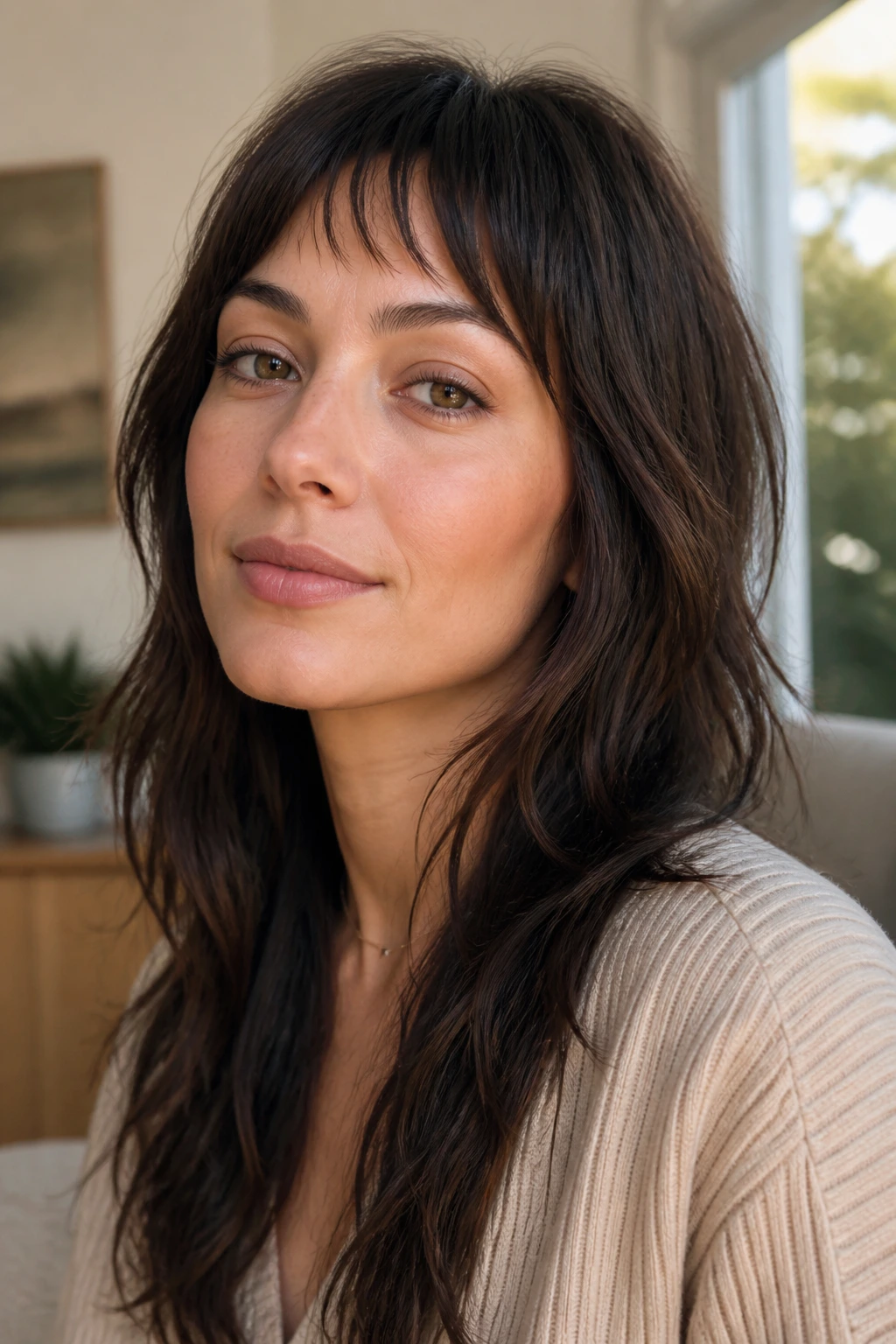
A high forehead does not need to be hidden, but a little curve in the fringe can make the balance easier. This shag uses short bangs that arc softly, then melt into long layers that sit around the temples and cheeks. It gives coverage without making the face look boxed in.
Why the curve matters
A straight, blunt short fringe can feel severe if the forehead is already long. The curve breaks that line, and the eye reads it as softer.
The long layers should start a little lower than the bangs, so the haircut moves from short to long in a visible gradient. That transition is what keeps the style from looking chopped off.
24. Big-Wave Shag with Micro Bangs
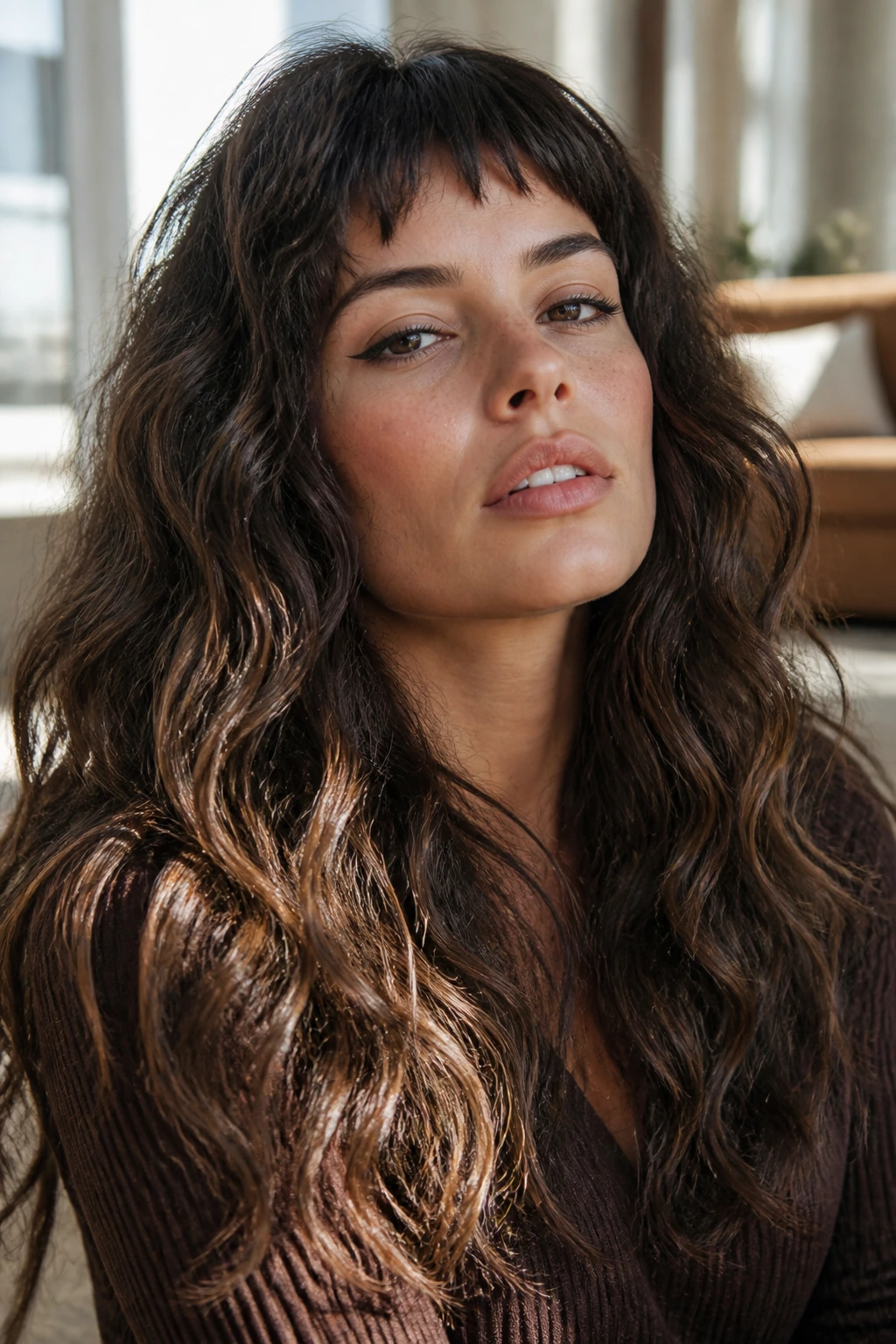
Big waves and micro bangs are an excellent mismatch, which is why they work. The waves bring softness and volume through the length, while the tiny fringe adds a sharp little punctuation at the top. The contrast keeps the style from drifting into full boho softness.
That contrast can be a little addictive once you see it in the mirror.
The length should stay loose and bouncy. If the waves are brushed too much, the cut loses the shape that makes it interesting. Use a diffuser or a large-barrel iron, then leave some bends imperfect. The micro bangs should stay neat while the rest of the hair gets to be a bit wild.
25. Highlighted Shag with Piecey Short Fringe
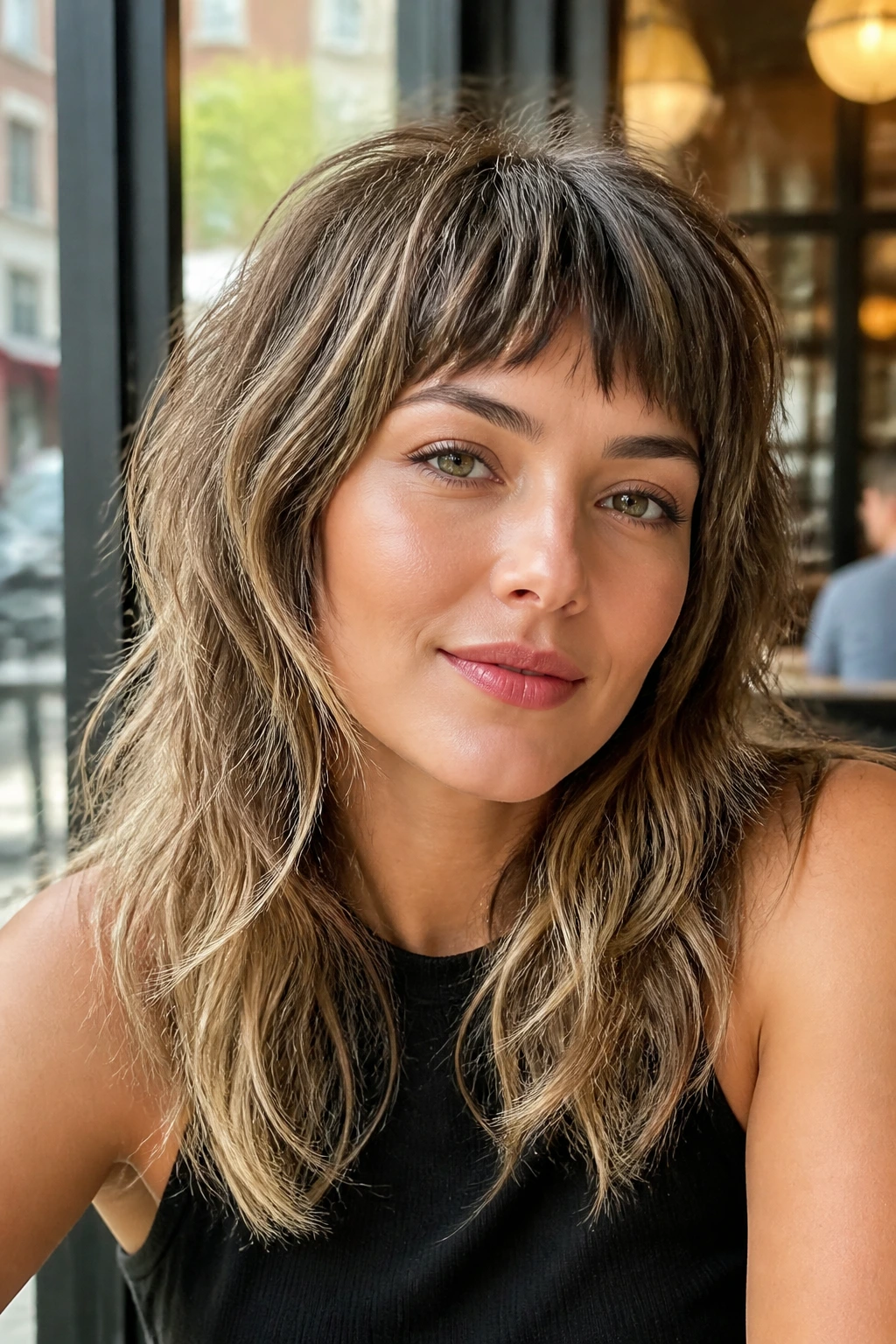
Color changes the way a shag reads. Subtle highlights around the face and through the layers make the texture easier to see, especially when the fringe is piecey and short. The haircut itself doesn’t need more drama when the color already does some of the talking.
Why this version pops
The pieces in the fringe catch the eye first, then the highlights pull your attention down the layers. That creates depth without requiring a radically different cut.
I like this one when the client wants movement but also wants the texture to show in photos and in daylight. The two things work together instead of competing.
Keep the fringe piecey, not stringy. A tiny amount of styling paste between the fingertips is usually enough to separate it.
26. Low-Maintenance Shag with Soft Layering

This is the version for people who want the shape but do not want a haircut that needs babysitting. The layers are soft, the fringe is short but not severe, and the whole cut is designed to look good with a quick rough dry. It’s a shag, but it’s not needy.
The outline stays long and wearable. The top gets enough movement to avoid flatness, but not so much that the cut needs a new styling ritual every morning.
Good if you’re busy
That does not mean boring. It means the haircut can air-dry without turning into a triangle, which is a more practical goal than people admit.
A light mousse and a dab of serum on the ends are usually enough. Anything heavier can flatten the fringe and erase the airy part of the cut.
27. Asymmetrical Fringe Shag

An asymmetrical fringe makes the haircut feel a little unexpected right away. One side sits slightly shorter or higher, and the other drifts longer toward the cheekbone. On a long shag, that unevenness adds energy without needing a huge structural change.
It’s a smart move if your hair has a stubborn part or a cowlick that refuses to behave. Sometimes the haircut should stop arguing with the growth pattern and start using it.
The long layers underneath should stay relatively balanced so the asymmetry lives in the front rather than taking over the whole head. That keeps the cut wearable instead of theatrical.
28. Rocker Shag with Short Bangs and Long Ends
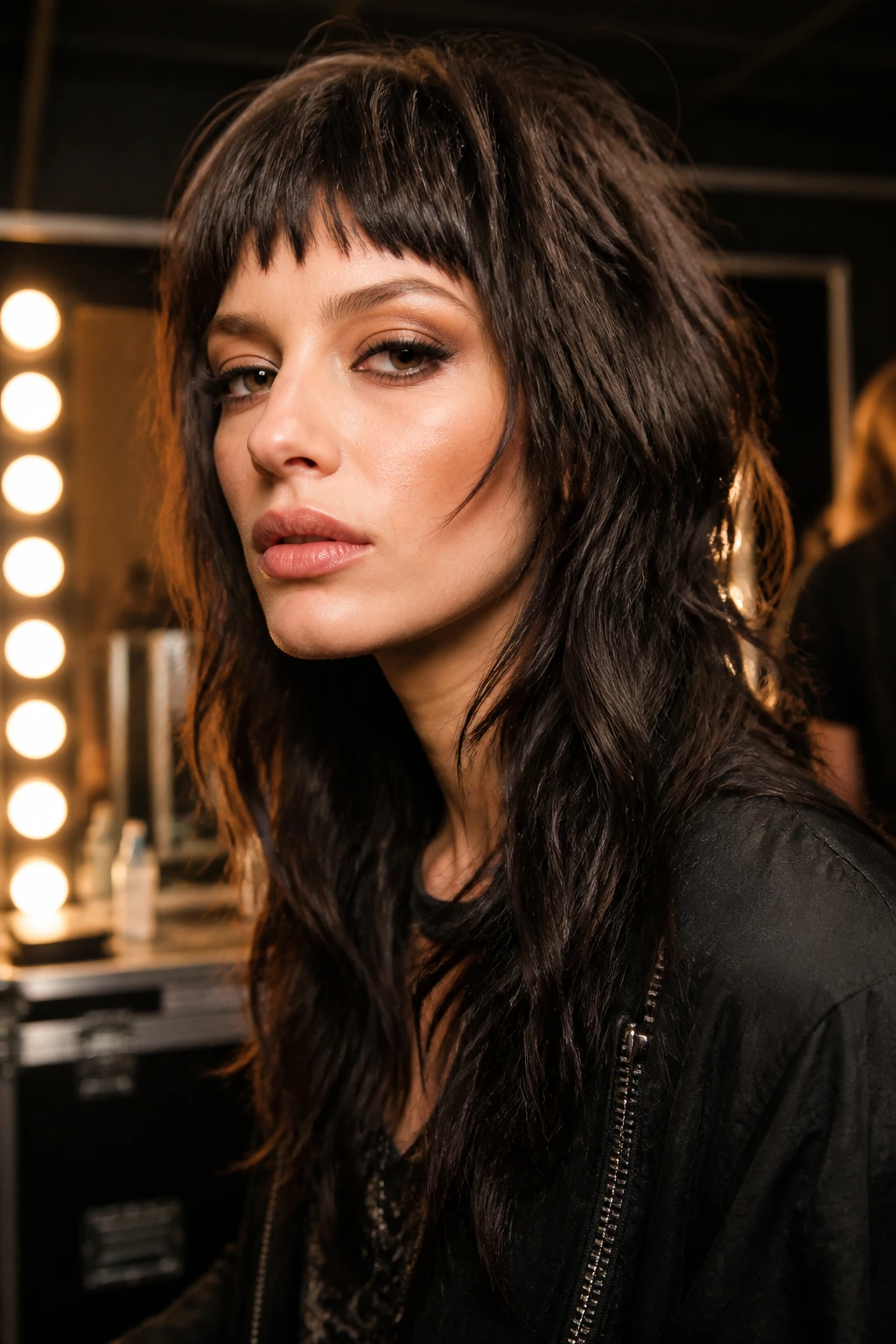
This is the one with a little swagger. The bangs are short enough to open the face, the crown has enough texture to feel lived-in, and the long ends keep the whole cut from getting too aggressive. It has a bit of stage presence, but it still works on a regular Tuesday.
What gives it attitude
The secret is in the contrast. Short fringe, long ends. Controlled top, loose bottom. That tension is what makes a rocker shag feel current instead of costume-y.
I’d wear this with rough-dried texture, a bit of bend around the face, and ends that look touched but not overworked. If the hair is too glossy, the shape loses some bite. If it’s too dry, it can go frizzy. You want the middle ground.
How a Long Shag Is Built Layer by Layer
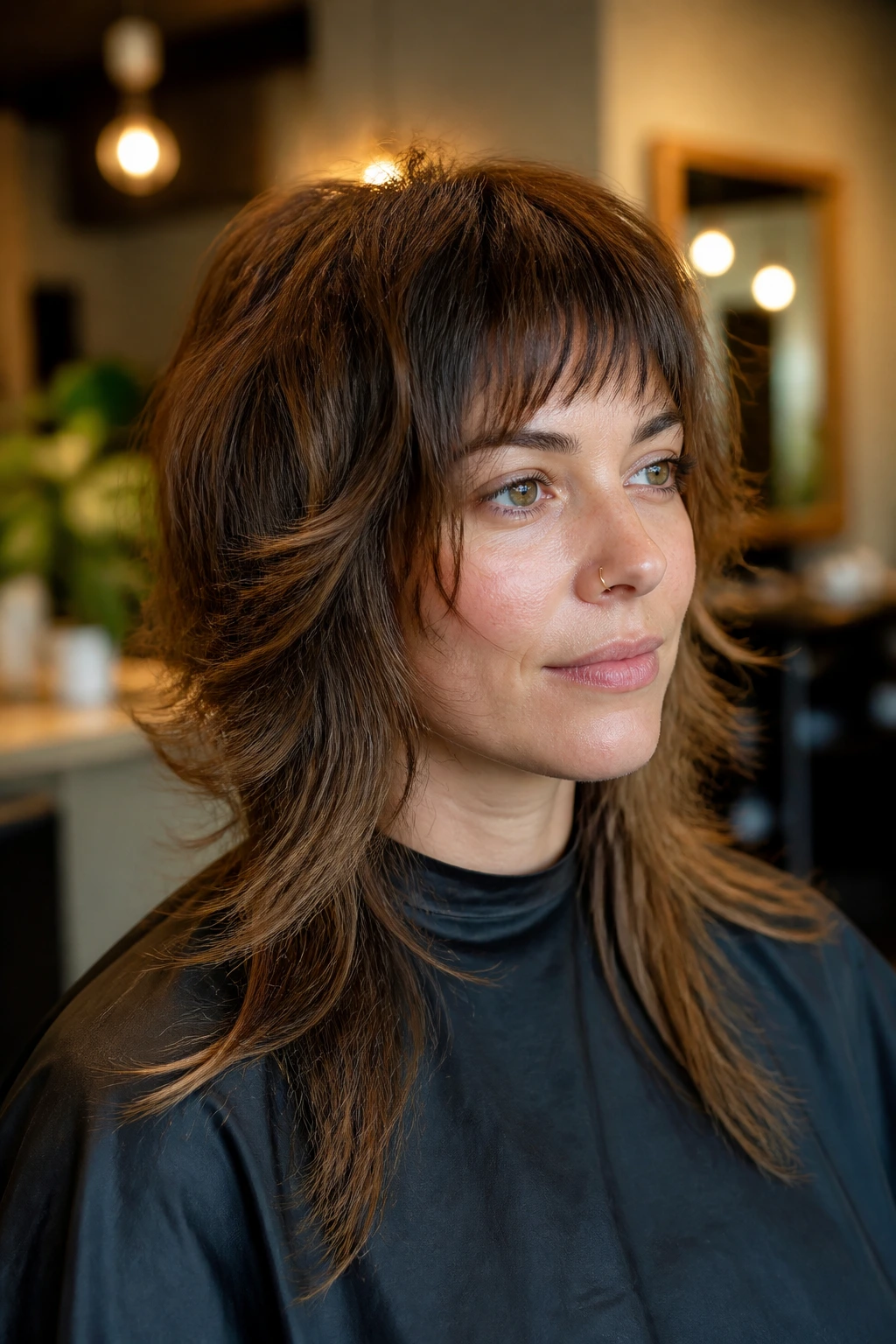
A good long shag does not happen by accident. The cut is built in sections, and each part has a job. The crown layers create lift, the face-framing pieces steer the eye, and the long perimeter keeps the whole thing wearable when the styling tool never comes out.
The short bangs are the most visible part, but they’re not the whole story. If the fringe is short and the rest of the cut is one blunt length, the haircut feels disconnected in a bad way. The better versions connect the fringe to the layers around the temples and cheekbones so the front and body of the cut talk to each other.
Point cutting, slide cutting, and light texturizing all do different jobs. Point cutting breaks the edge of the fringe so it doesn’t look like a ruler line. Slide cutting can release weight through thick sections. And texturizing shears, when used with care, can keep dense hair from swallowing the shape. Used badly, any of them can leave the ends ragged. That’s the part people skip over when they call shag haircuts “easy.”
The Tools You’ll Want Before the First Snip
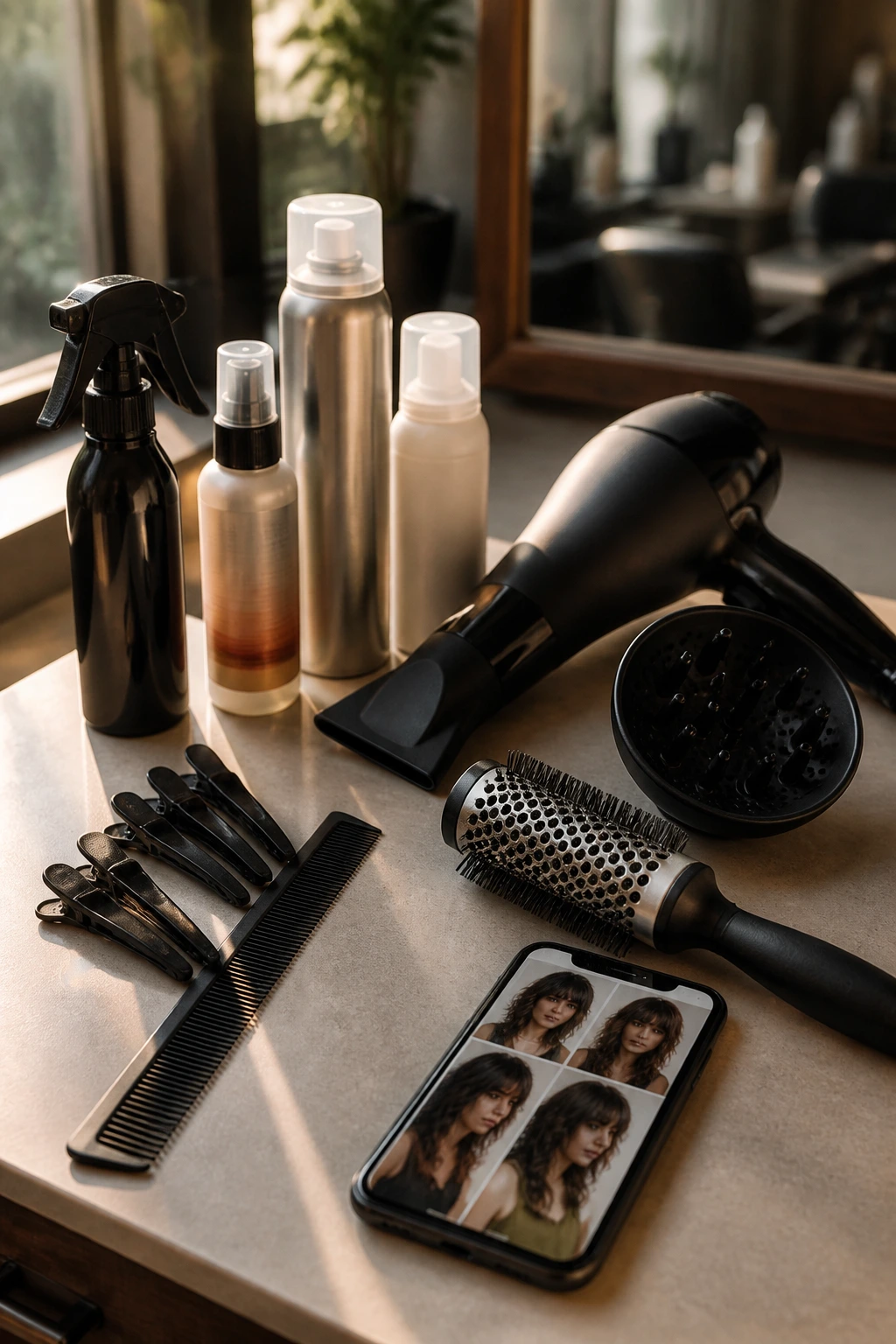
- Reference photos on your phone: Bring 2 or 3 shots, not 12. The stylist needs one clear shape, not a collage.
- Fine-tooth comb: Useful for sectioning the fringe and checking the symmetry of short bangs.
- Sectioning clips: These keep the top layers separated while the underside is cut.
- Blow dryer with a nozzle: Helps direct the fringe and crown instead of blasting everything apart.
- 1-inch to 1.5-inch round brush: Best for shaping short bangs and soft face-framing bends.
- Diffuser attachment: A must for curly and wavy shags if you want the layers to keep definition.
- Heat protectant: Especially useful if the fringe gets styled every day.
- Texturizing spray or dry shampoo: Gives the finished cut grip at the roots and separation through the ends.
- Light mousse: Helpful for air-dried or wavy versions that need a little shape at the crown.
How to Choose the Right Version for Your Hair
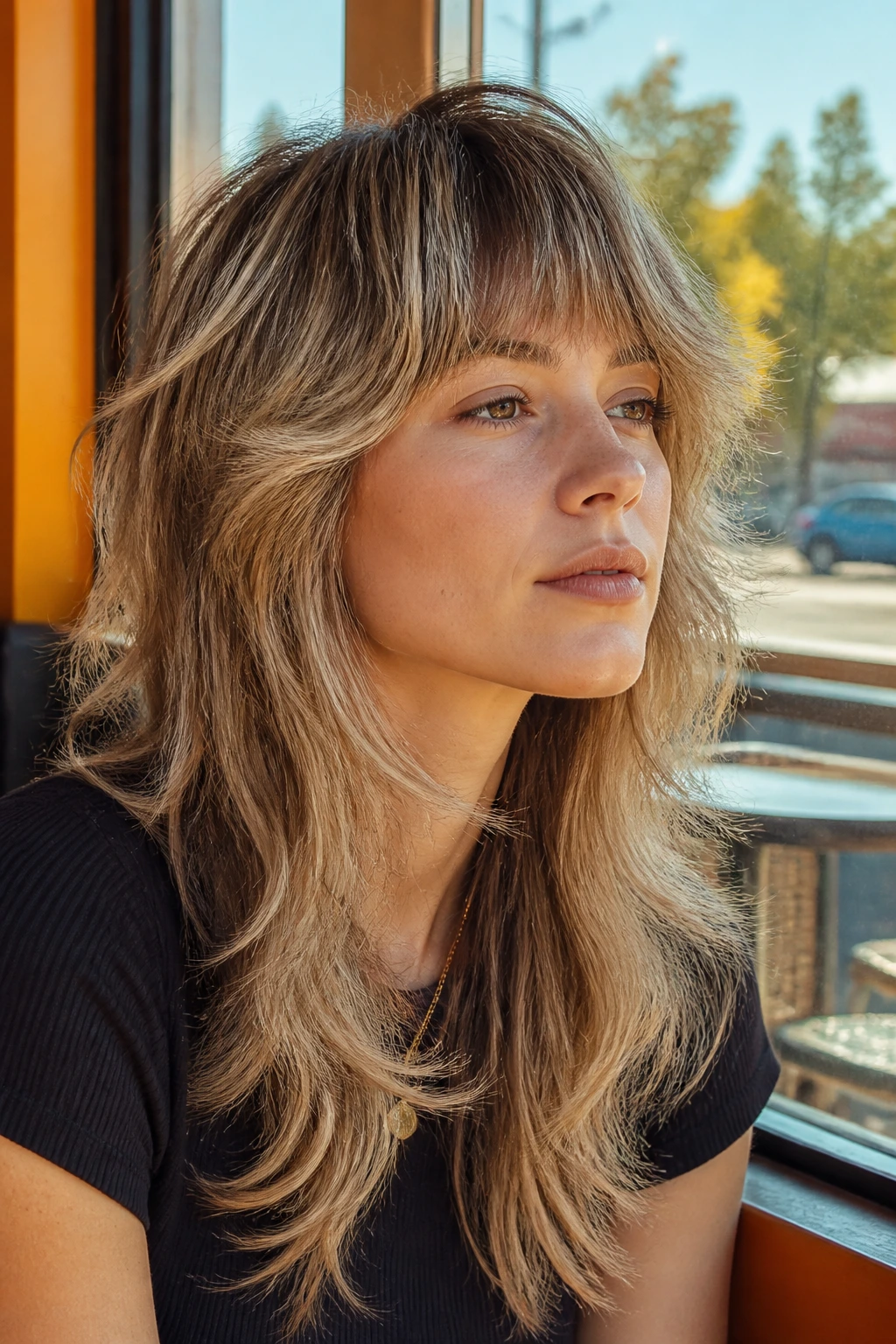
The cut you want on a mood board is not always the cut that will live well on your head. Density, curl pattern, cowlicks, and styling time matter more than vague face-shape advice, which tends to be oversold anyway.
If your hair is fine
Choose a version with softer layers and a fringe that is wispy rather than shredded. Keep some weight at the ends so the cut does not feel thin by midday.
If your hair is thick
You can handle more shape and more internal removal of bulk. Ask for layers that release weight around the crown and under the surface, not just at the outer edge.
If your hair is curly or wavy
Think about shrinkage first. Short bangs may need to be cut longer than expected so they land where you want once dry.
If your hair is straight
You’ll probably want a little more styling support. A bend through the layers makes the shag read as intentional instead of simply “layered.”
If you wear glasses
Keep the fringe a touch above the frame line or let it curve around the lenses. Bangs that sit exactly on the top of the frames spend half the day getting pushed around.
How to Wear the Finished Cut
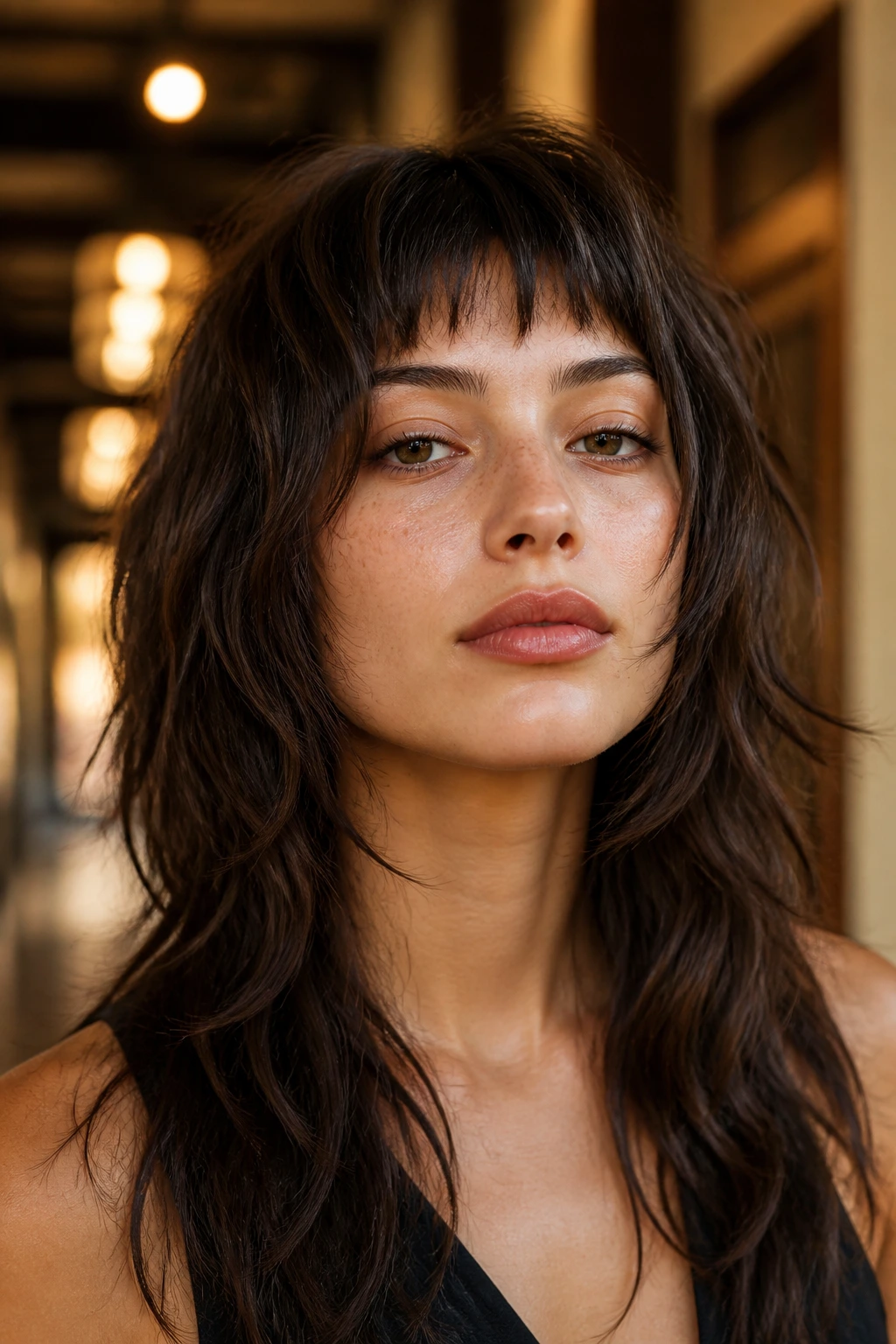
Presentation: The cut should read as long first and textured second. You want movement around the crown and cheeks, but the overall outline should still feel like long hair that has been given a shape, not chopped into pieces for no reason.
Accompaniments: A light mousse, a small round brush, a diffuser, and a texture spray cover most versions of this haircut. If you hate heat styling, a leave-in cream and a scrunching product are the better pair.
Portions: Fine hair usually wants less product and fewer layers. Thick hair can take a firmer fringe and more aggressive weight removal. If the fringe feels too heavy, trim tiny amounts rather than taking a big chunk off the front.
Beverage Pairing: Think of this as the style match. Short bangs usually look best with a neckline that stays open—crew necks, open collars, small hoops, or glasses that do not sit on the fringe. Anything bulky at the neck can fight the shape.
Styling Extras That Change the Mood
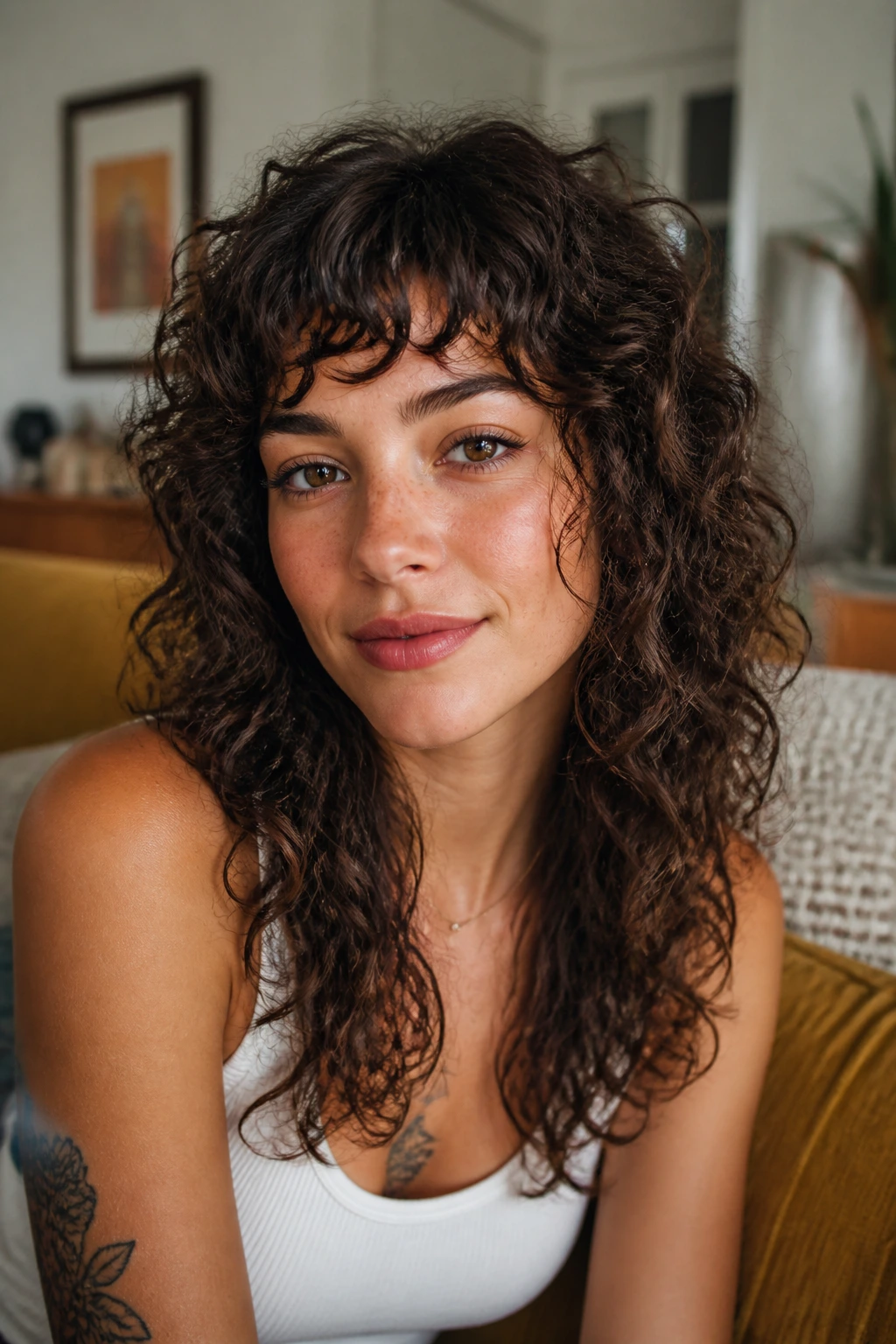
Texture Boost: A mist of texturizing spray at the roots and mids gives the haircut grip, but keep it off the fringe unless you want it to separate fast and stay there.
Shape Rescue: If the bangs split in the wrong place, dampen just the fringe and dry it side to side with a small brush. The rest of the hair can stay untouched. That one little fix saves a lot of bad hair days.
Customization: Want more edge? Ask for a shorter center on the fringe or a little more disconnect through the crown. Want softness? Keep the face pieces longer and let the bangs blur into the temples.
Make-It-Yours: For curly hair, cut the bangs with shrinkage in mind. For fine hair, keep the fringe lighter and the layers longer. For thick hair, weight removal should happen inside the haircut, not only at the perimeter.
Maintenance, Grow-Out, and Between-Cut Care
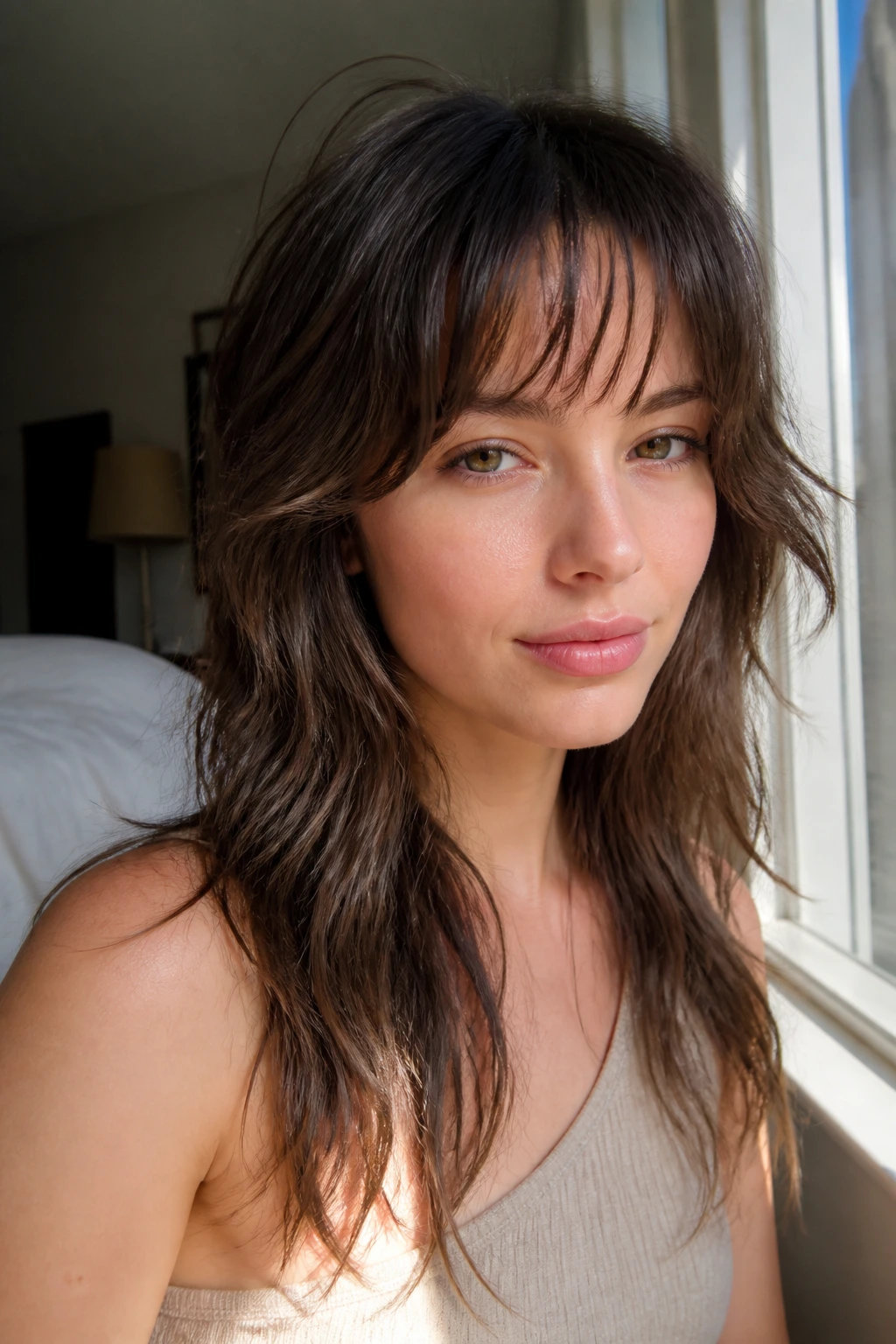
Short bangs are the part most likely to need attention first. Plan on a fringe trim every 3 to 5 weeks if you want the line to stay crisp, and every 6 to 8 weeks if you’re happy with a slightly softer look. The full shag shape usually wants a refresh every 8 to 12 weeks, depending on how much weight your hair holds.
At home, the goal is to keep the front from getting weird overnight. If you sleep with the bangs damp, they’ll bend in every direction except the one you want. Let them dry fully before bed, or clip them back loosely if they’re still a little moist. A silk pillowcase helps, but it won’t fix a fringe that was wet at midnight.
Dry shampoo can buy you a day or two, especially on the bangs and crown. Use it at the roots, wait a minute, then massage it in so you don’t end up with a powdery patch right in the front. If the ends start frizzing, that usually means the cut needs a trim more than it needs more product.
Common Mistakes to Avoid
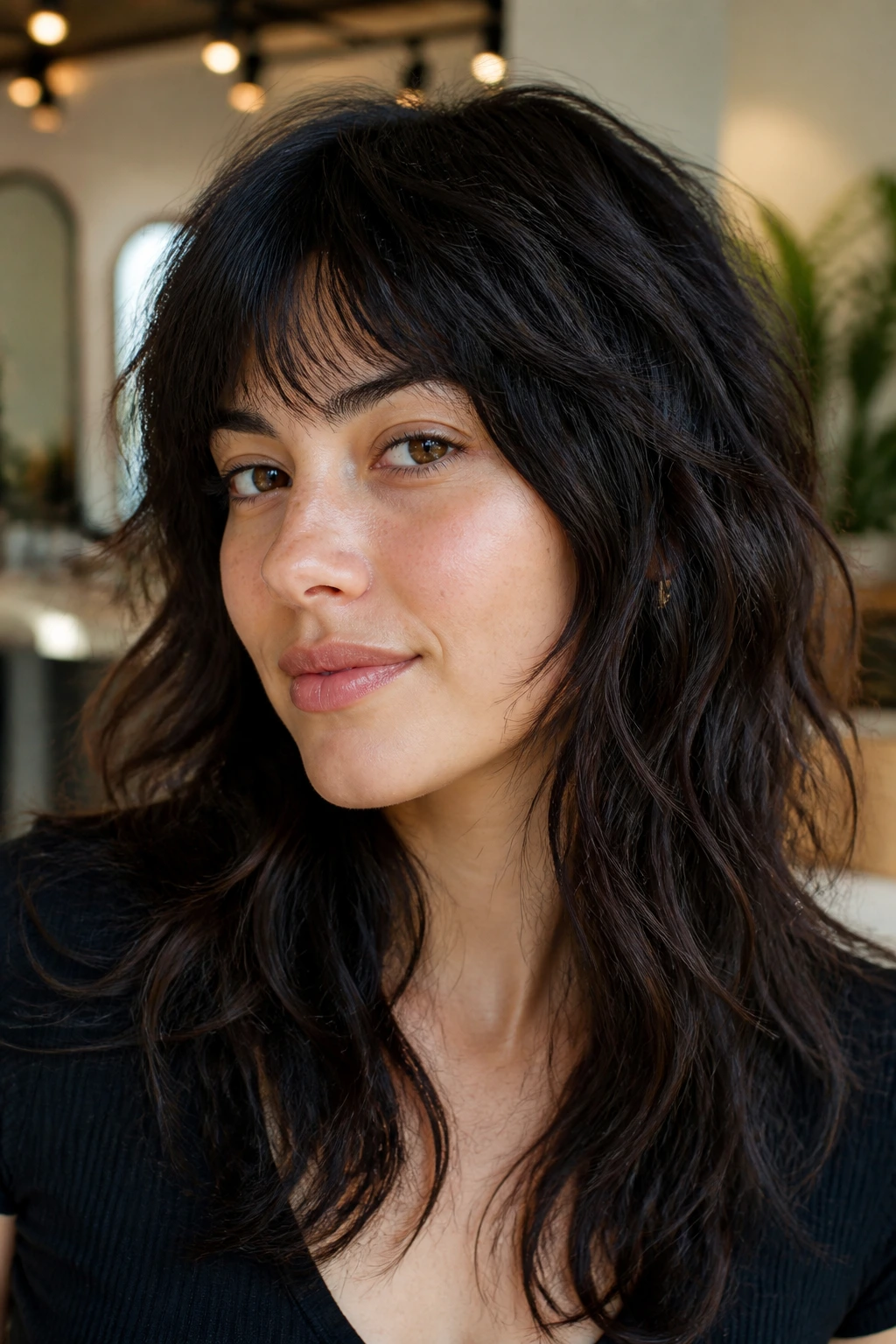
Cutting the bangs too short on day one: Short bangs almost always look shorter once they dry, especially on curly or cowlick-prone hair. The fix is simple: leave a little extra length in the first cut and refine in tiny steps.
Thinning the crown until it disappears: A shag needs movement, not scalp exposure. If the top starts looking see-through, the cut has gone too far. Ask for internal shaping instead of aggressive thinning.
Treating every shag like a wolf cut: They are related, but not the same. A wolf cut pushes harder on disconnect; a long shag can stay softer and more blended. If you want the length to feel elegant, keep the perimeter cleaner.
Using heavy cream on the fringe: Short bangs go limp fast under too much oil or cream. Use the tiniest amount, and keep richer product on the mids and ends.
Ignoring shrinkage and pattern: Curly hair, dense waves, and even some straight textures move more than you expect after a cut. If your stylist cuts while the hair is not in its natural state, the fringe can land nowhere useful.
Variations and Adaptations to Try

The Curl-First Shag: Cut the fringe and layers with the hair mostly dry, then shape each curl where it actually sits. This version is better when your texture is the whole point and you do not want the bangs to fight it.
The Fine-Hair Lifted Shag: Keep the length, soften the fringe, and use less aggressive layering through the crown. It gives the illusion of body without exposing the ends too much.
The Thick-Hair Airy Shag: Ask for internal weight removal, a broken fringe, and a cleaner perimeter. The goal is movement without the frizz halo that happens when thick hair is over-thinned.
The Glasses-Friendly Fringe: Keep the bangs slightly above the frame line or let them curve off to the sides. That keeps them from getting flattened every time you push your glasses up.
The Low-Styling Shag: Short bangs, long layers, minimal disconnect, and a shape that dries well with fingers alone. If you hate tools, this is the most realistic version.
The High-Drama Rocker Shag: Shorter crown, stronger texture, and a fringe that looks intentionally chopped. It has more attitude and needs more styling, but it has real presence.
Frequently Asked Questions
Will short bangs work on curly hair?
Yes, but they need to be cut with shrinkage in mind. Curly fringe often sits much shorter once dry, so the stylist should leave room for the curl to spring up instead of cutting it to the exact point you want.
How often do I need to trim the bangs?
If you want a crisp short fringe, plan on every 3 to 5 weeks. If you prefer a softer, grown-out look, you can stretch that longer and let the bangs blur a little into the face frame.
Can a long shag make fine hair look thinner?
It can if the layers are too aggressive. The safer version keeps weight in the ends, uses softer fringe, and avoids over-thinning the crown so the hair still looks full.
What’s the difference between a shag and a wolf cut?
A wolf cut usually pushes the crown shorter and the back more disconnected, with a rougher silhouette. A long shag can be softer, more blended, and easier to grow out without losing its shape.
What should I tell the stylist before cutting short bangs?
Say how short you want the fringe to sit when dry, not just when wet. Mention your styling routine, your cowlicks, whether you wear glasses, and how much of your forehead you want visible.
Can I style this cut without heat?
Absolutely, if the shape is cut for it. Air-dried versions work best when the layers are soft and the fringe is tapered or wispy rather than blunt and heavy.
What if my bangs separate in weird places?
That usually means the fringe is either too heavy with product or cut in a way that fights your growth pattern. A quick damp reset and side-to-side drying can fix a lot, but a stubborn split often means the fringe needs a tiny reshaping.
Is this cut hard to grow out?
Not if the perimeter stays long and the fringe isn’t cut too severe. The front usually softens into a face frame instead of turning into a harsh line, which is one of the reasons people keep returning to this shape.
A Cut That Keeps Its Shape
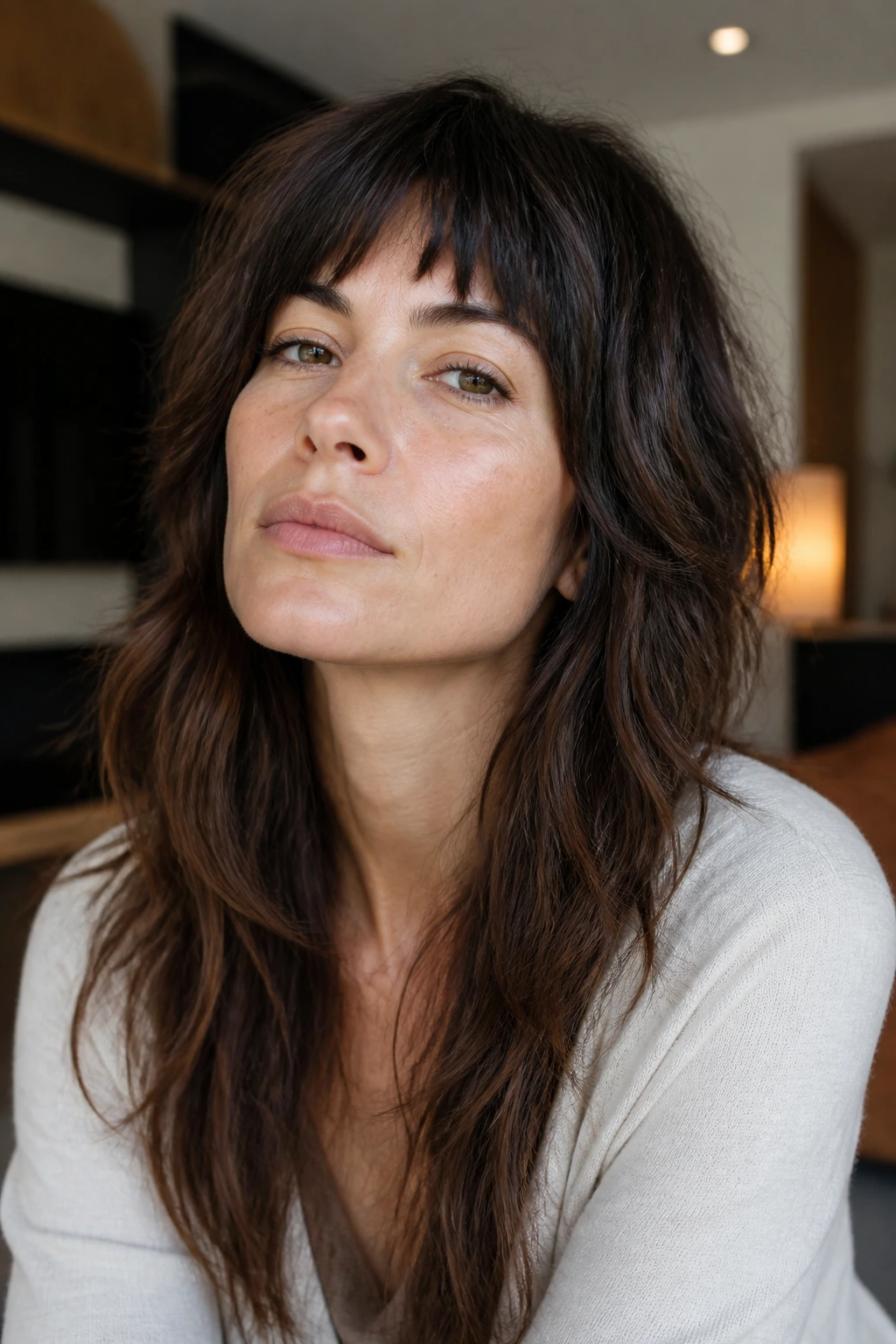
The best long shag haircuts with short bangs do one thing exceptionally well: they give you movement without sacrificing length. That sounds simple, but it’s a balancing act, and the details matter—how the crown is lifted, where the fringe lands, how much weight stays in the ends, and whether the whole thing fits your actual texture instead of a fantasy version of it.
That’s why this haircut keeps showing up in so many different forms. Soft, edgy, curly, straight, airy, heavy, lived-in, polished—it can swing in all of those directions if the structure is right. Get the fringe length and layering pattern right, and the cut will keep looking good even on the days you don’t feel like styling it at all.
