



Short hair loves a little attitude. Give it a narrow ridge through the center, press the sides close to the head, and the whole cut changes shape in a single morning. A faux hawk on a pixie, crop, or grown-out buzz doesn’t need a dramatic chop to read edgy; it just needs the right balance of height, control, and texture.
The nice part is that faux hawk styles for short hair don’t all do the same job. Some look soft and wearable, like they belong with a black blazer and hoop earrings. Others are spikier, wetter, sharper, or more playful. A few work because the hair is curly. A few work because the sides are clean. The common thread is the silhouette: lower at the temples, stronger through the middle, and never so fussy that it collapses the second you step outside.
If you’ve ever tried to build height on short hair and ended up with a sad little puff that flopped in ten minutes, you already know the problem. Short hair can be stubborn. It can be slippery, too fine, too thick, too curly, too everything. But when the shape is done right, the result looks intentional from the front, the side, and even in that annoying overhead mirror shot that tells the truth faster than any selfie ever will.
Why These Faux Hawk Styles Work on Short Hair
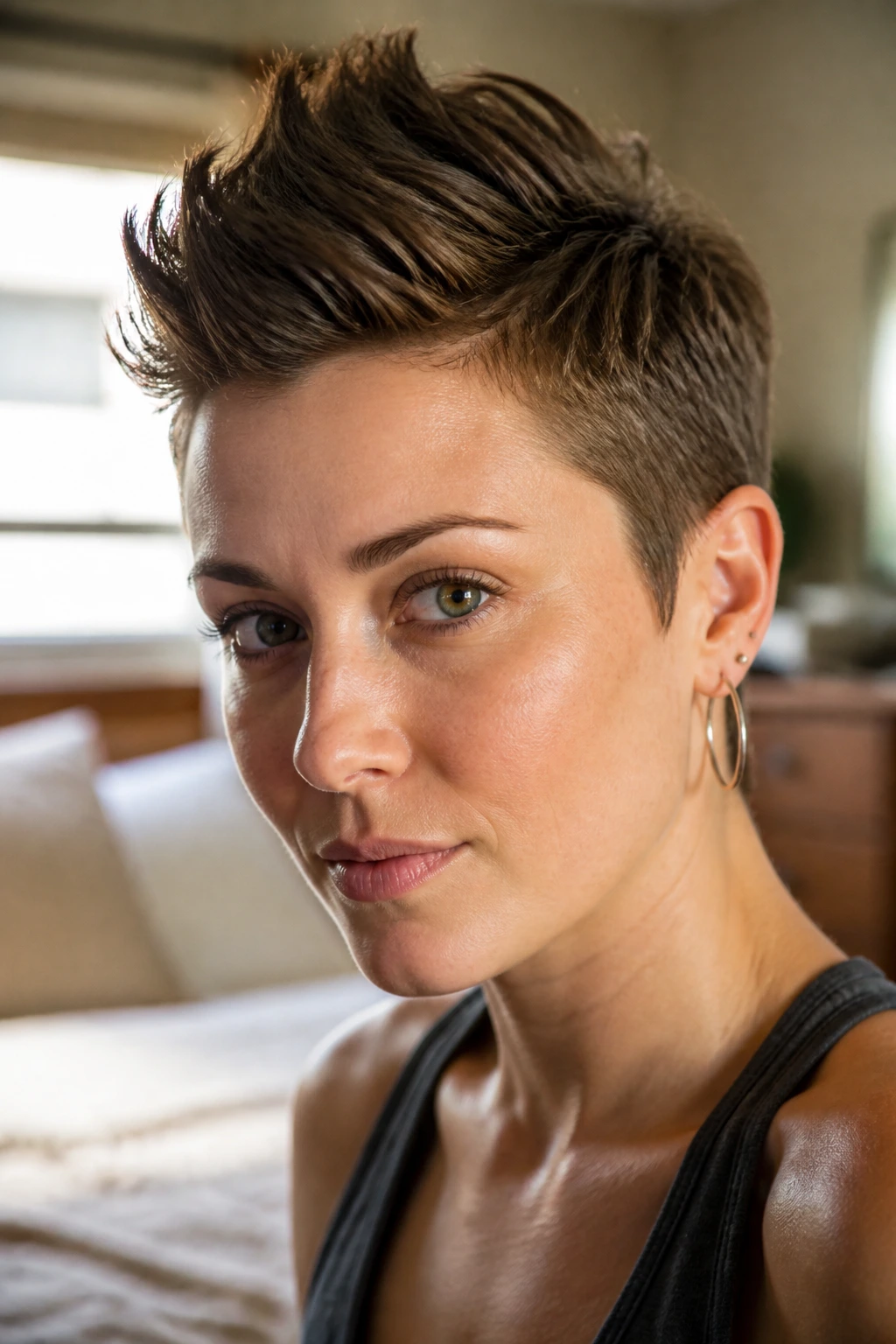
-
Fast shape, big payoff: Short hair only needs a small amount of lift—sometimes less than an inch at the crown—to read as a faux hawk, which is why the style can look dramatic without a lot of actual length.
-
Texture does half the work: A little roughness at the ends, a slight bend in the top layers, or a clean gel finish on the sides gives the style structure that straight, flat hair rarely gets on its own.
-
The sides stay manageable: You do not need a true mohawk cut or shaved strips to get the effect; a tight taper, tucked sides, or simply flattened temples can create the same visual line.
-
It plays well with awkward grow-out: Pixies, cropped bobs, and in-between cuts often have pieces that refuse to sit neatly. A faux hawk turns that problem into the style.
-
You can dress it up or rough it up: Matte paste makes it casual, gel makes it sharp, and a little mousse or cream can push it toward soft and polished without losing the center ridge.
-
Face framing is built in: The rise through the middle pulls the eye upward and away from the widest part of the face, which is why the shape can feel balancing even when the cut is tiny.
1. Soft Lift Faux Hawk
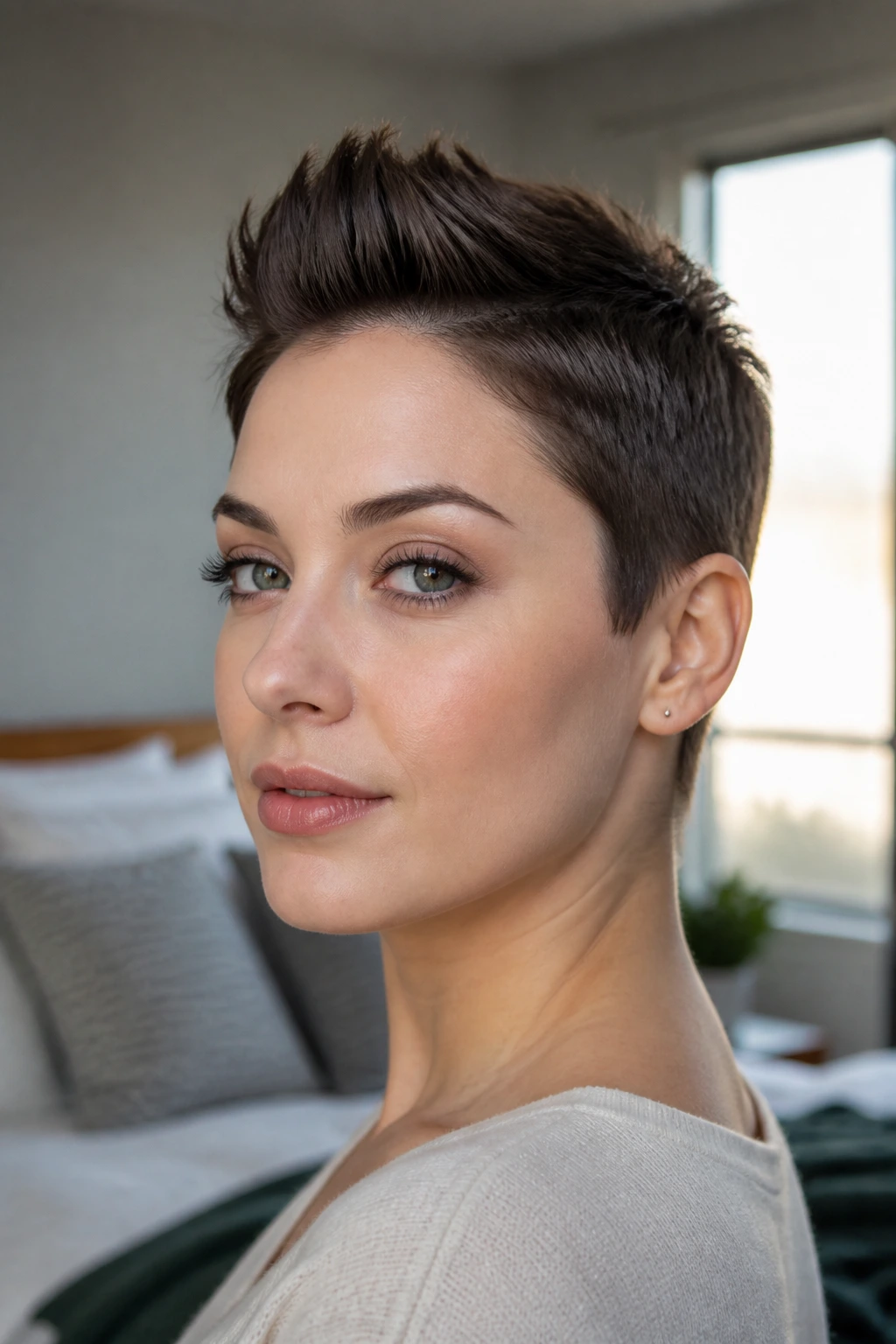
This is the version I’d hand to someone who wants the shape without the swagger being too loud. The center section gets lifted just enough to show movement, while the sides stay sleek and close. On short hair, that usually means a blow-dry with your fingers, a dab of matte cream, and a quick pinch at the crown so the top doesn’t look like one solid helmet.
The beauty of this style is that it reads clean from every angle. Nothing is hard or crunchy. The ridge is there, but it’s not shouting. If your hair is fine, this is one of the safest places to start because you can build a little body with mousse at the roots and stop before the whole thing gets stiff.
Best for a first faux hawk attempt
If your hair is between a pixie and a short crop, this is the one that will behave. You only need enough length on top to push forward and then upward, usually around 2 to 3 inches. A vent brush helps if the hair is stubborn, but fingers alone can work if you want a looser finish.
A soft lift also forgives a grow-out haircut. That matters. Short styles can get weird around the ears and nape when the appointment window stretches out, and this shape hides that mess better than a perfectly smooth cut ever could.
2. Matte Spiky Faux Hawk
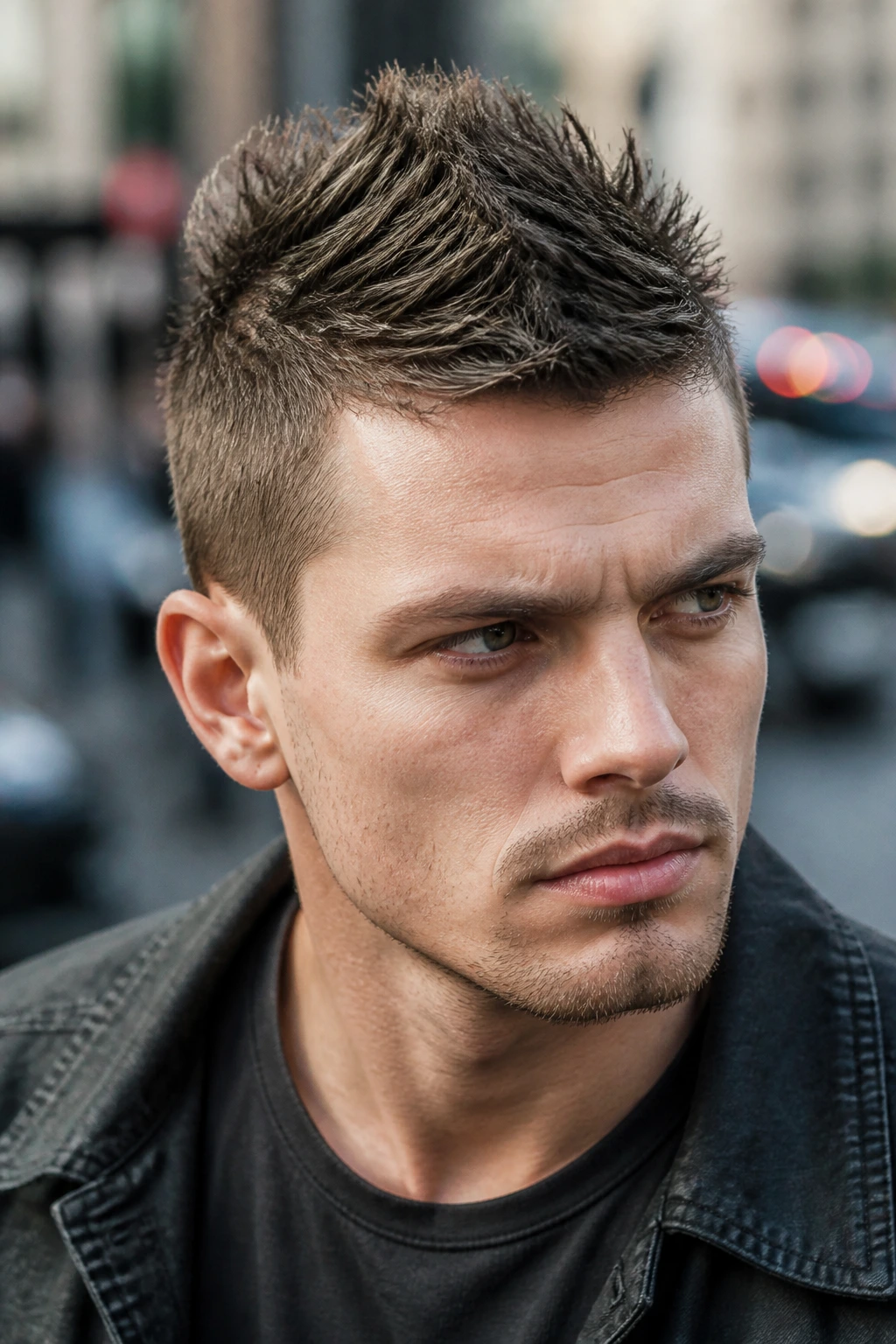
If you like a cut that looks deliberate by breakfast and still decent by dinner, this is the blunt instrument in the lineup. Matte paste gives the top a broken-up, piecey look, and that little bit of separation is what keeps it from sliding into generic spikes. The trick is to work from the crown forward, not just push everything straight up and hope for the best.
On thick, straight hair, this style is a small miracle. The natural weight of the strands helps the spikes hold shape instead of drooping. On fine hair, less product is better—too much paste and the ends clump into tiny ropes, which is not the same thing as texture.
-
What makes it work: short, separated points along the center ridge create the illusion of more height than you actually have.
-
Product choice: use a pea-sized amount of matte paste first, then add more only if the ends still fall flat.
-
Finish: press the sides down with your palms and keep the top slightly irregular.
My favorite detail: leave the front hairline a touch softer than the crown. That tiny difference keeps the look from turning cartoonish.
3. Curly Crown Faux Hawk
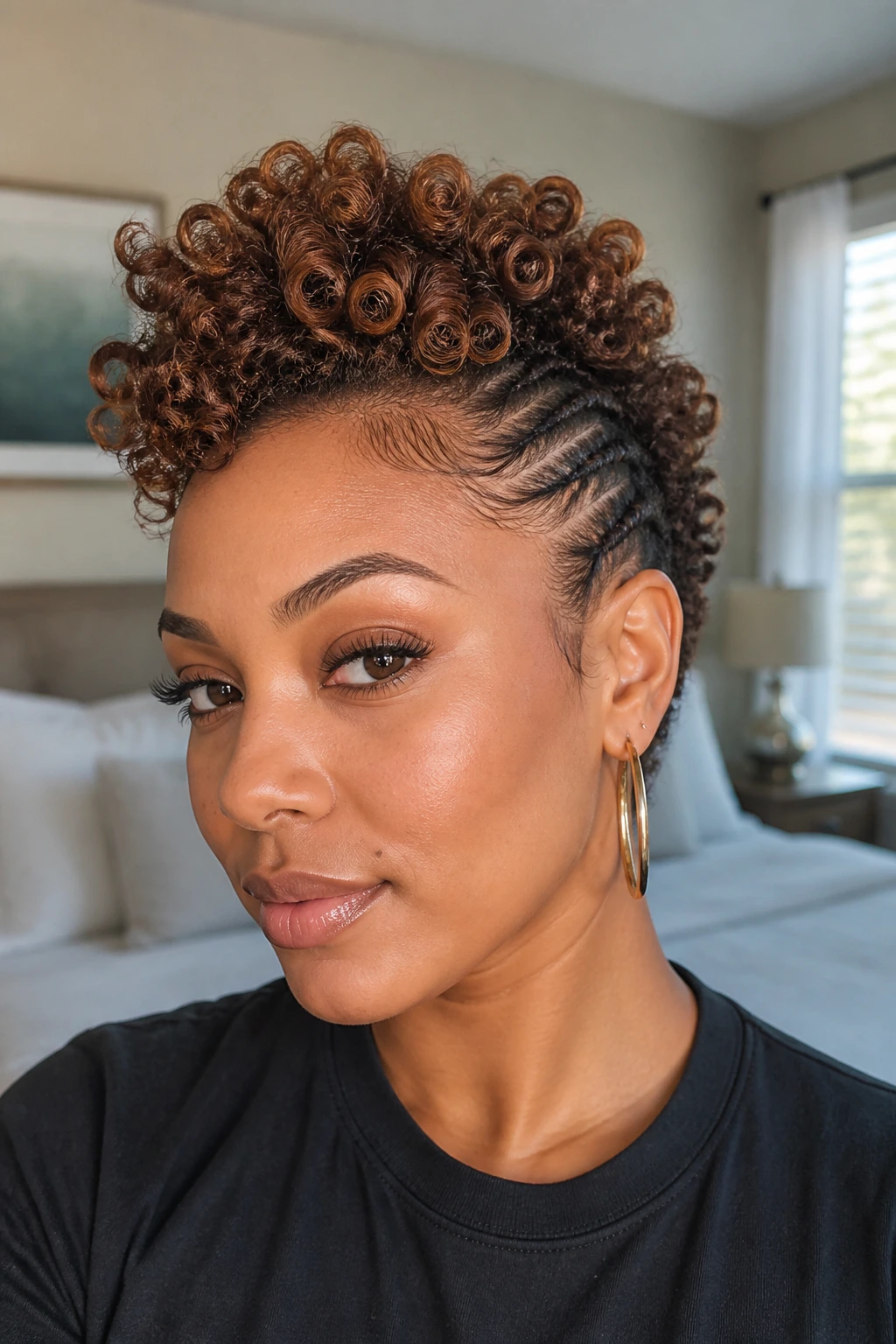
Can curls do a faux hawk on short hair? Absolutely. In fact, curls often make the shape easier because the texture already wants to stand away from the head. The move here is not to fight the curl pattern. It’s to gather it into a center ridge and let the curls keep their own shape.
Use a curl cream or a light gel on damp hair, then diffuse with your head tipped forward so the roots get a little lift. Once it’s dry, shape the top with your fingers and pin or smooth the sides back just enough to keep the outline tight. The result should look like a small crown of texture running down the center, not a stiff block.
How to keep curls from turning puffy
The mistake people make is scrunching too hard and then wondering why the top balloons outward. On short curls, the shape gets wide fast. Better to guide the curl clumps upward with wet hands, let them dry in place, and only separate them once the hair is fully set.
This version is especially good if your hair cuts between 3 and 4 inches on top. Any shorter and the curl may not have enough room to show off; any longer and you’ll want to section more carefully so the middle doesn’t spill into a shag.
4. Slick Side-Press Faux Hawk
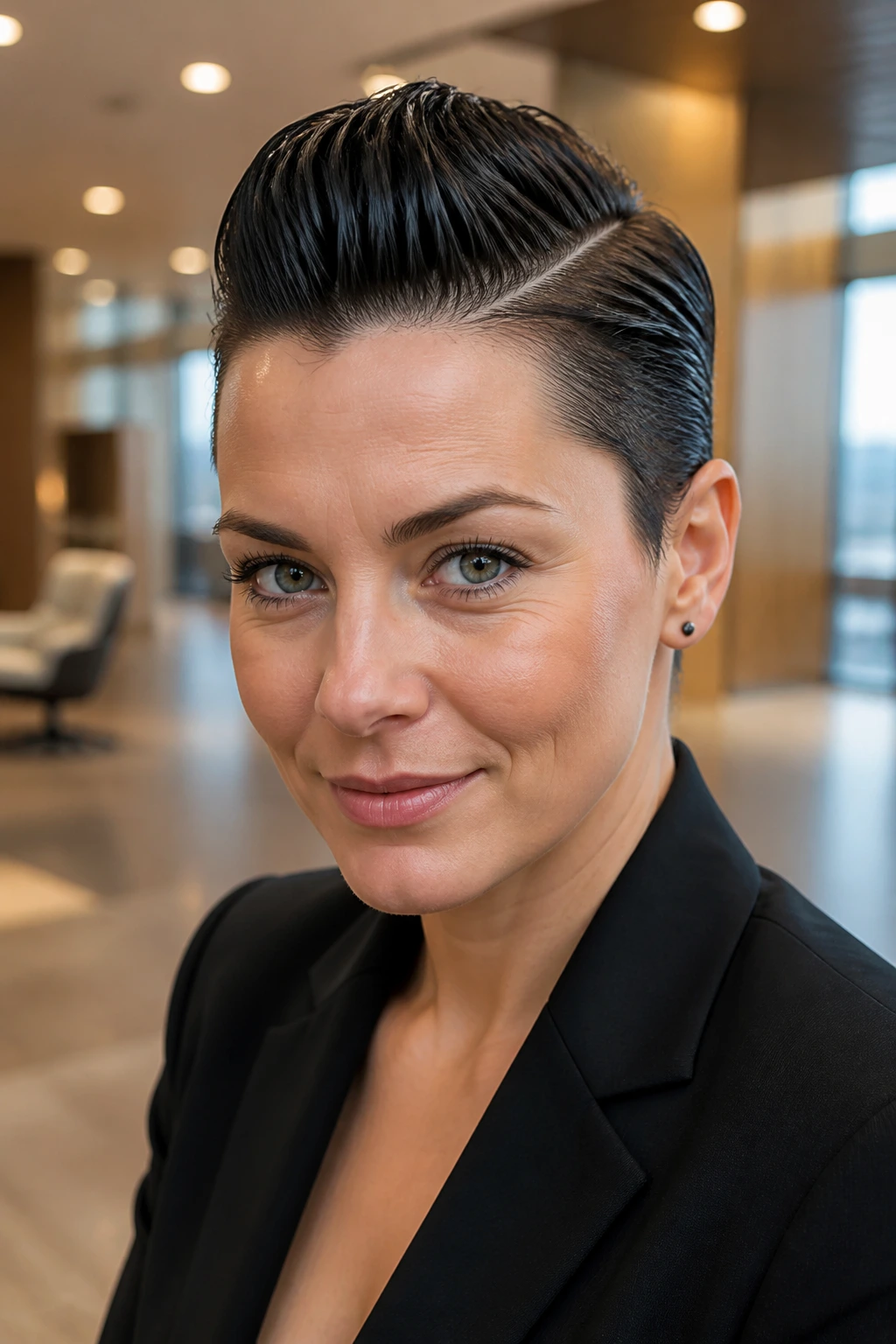
This one is for days when you want the silhouette to look sharpened, not shaggy. Slick the sides down with gel or pomade, comb the top toward the center, and use the teeth of a tail comb to build a clean line. The result has a little edge, but it also has discipline.
It works because the contrast is obvious. Smooth sides. Lifted middle. That’s the whole story, and it’s enough. If your hair tends to puff up at the temples, this style also behaves better than looser versions because the product acts like a boundary.
No fluff here. That’s the point.
A slick side-press faux hawk is especially strong on short hair with a strong jaw or sharp cheekbones, because the cut echoes those angles instead of competing with them. It can look formal if you keep the top neat, or more punk if you let the middle stay a little uneven. Same haircut. Different mood.
5. Textured Pixie Hawk
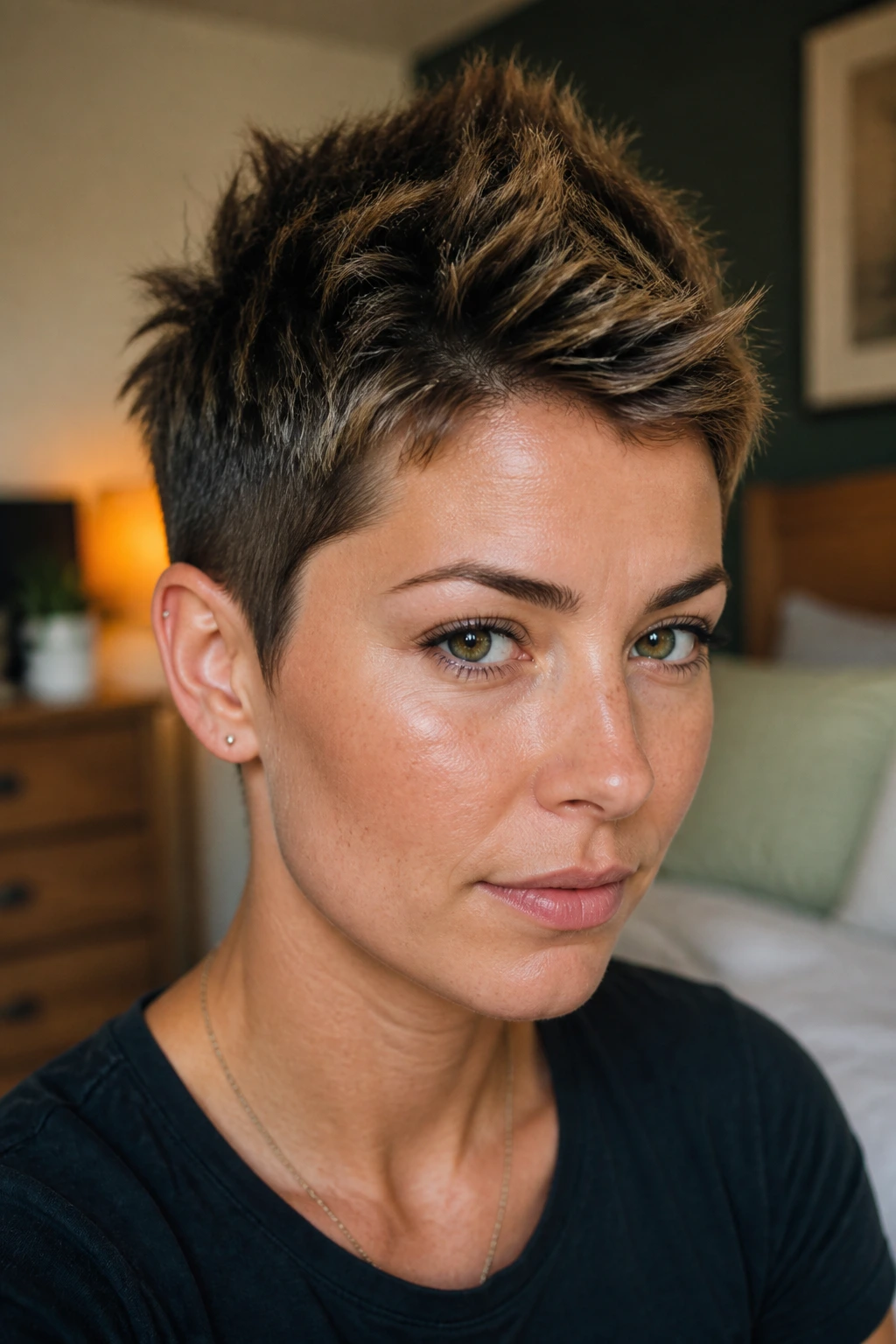
A pixie cut doesn’t need much persuasion to become a faux hawk. Most of the time, you already have the right proportions; you’re just changing the direction of the styling. Push the longer top layers forward and slightly upward, then rough up the ends with a dry texturizing spray or a tiny amount of paste.
The charm of this version is that it never looks too done. It has that slightly slept-on, slightly intentional thing that makes short hair interesting in the first place. If your pixie has uneven layers, even better. Those irregular lengths help the center ridge look natural instead of sculpted.
What to watch for
If the back of the pixie is too long and heavy, the silhouette gets muddy. Keep the nape lean and the sides controlled. That way, the eye reads the middle first, which is the whole job of a faux hawk.
This is the style I’d choose for a day when you want movement, not precision. It’s easy to refresh with a mist of water and a quick finger-comb. No mirror gymnastics required.
6. Wet-Look Faux Hawk
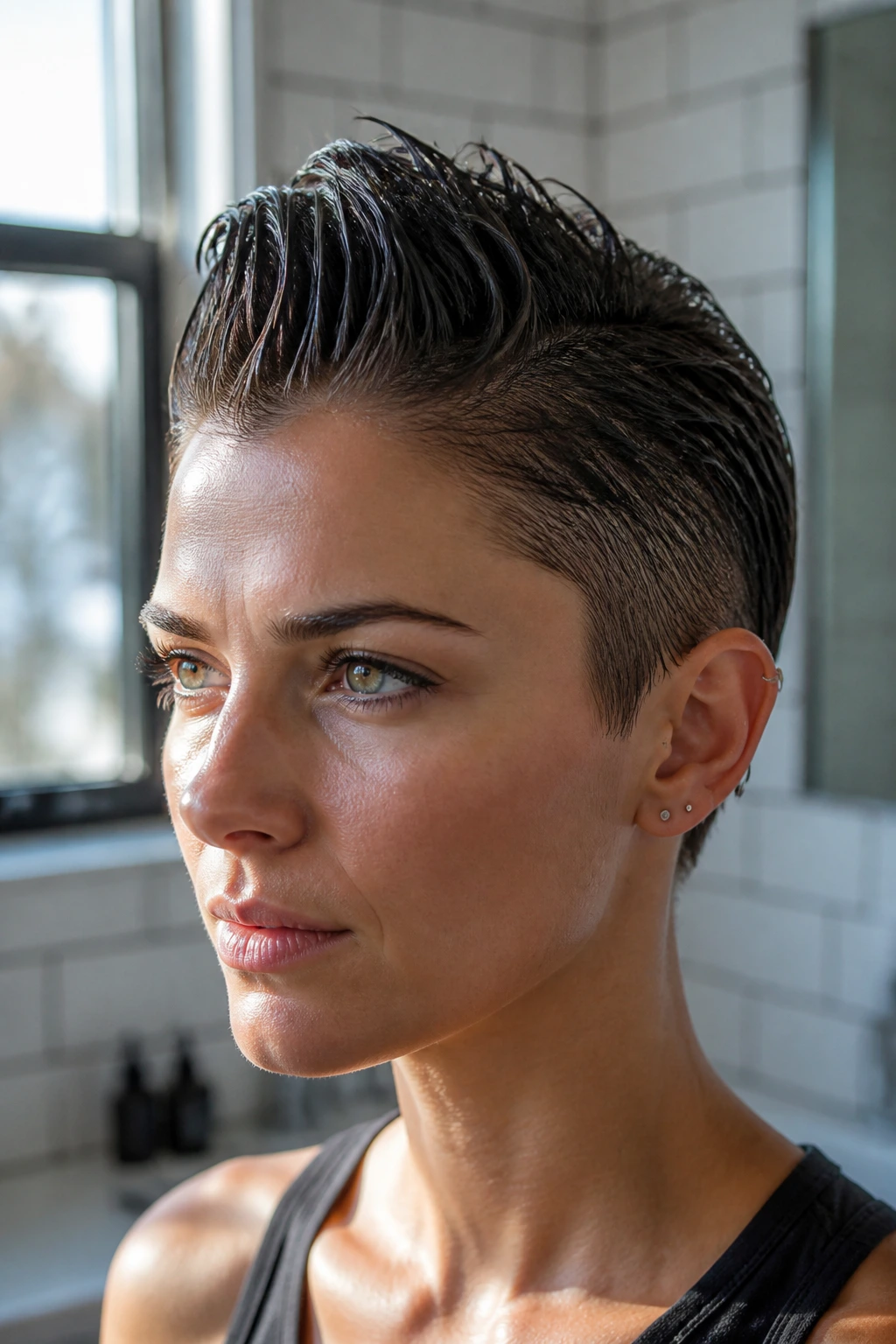
Wet-look styles can be a little dramatic, and I mean that in the good way. The shine gives the center ridge a polished line, while the sides look compressed and clean. On short hair, the effect is powerful because the whole shape sits close to the scalp, so every glossy curve catches the eye.
Use a strong gel on damp hair and comb the top toward the middle with a tail comb. Then stop. Don’t keep touching it. The shine works only if the surface stays smooth, and every extra pass with your hands tends to break the line and create frizz at the edges.
This style is sharpest when the hair is freshly washed or lightly dampened. Dry hair can resist the gel and leave you with weird flakes or uneven patches. If you want the look to last through an evening, a second, very thin coat of gel on the surface can help. Thin. Not sticky.
7. Braided Center Ridge Faux Hawk
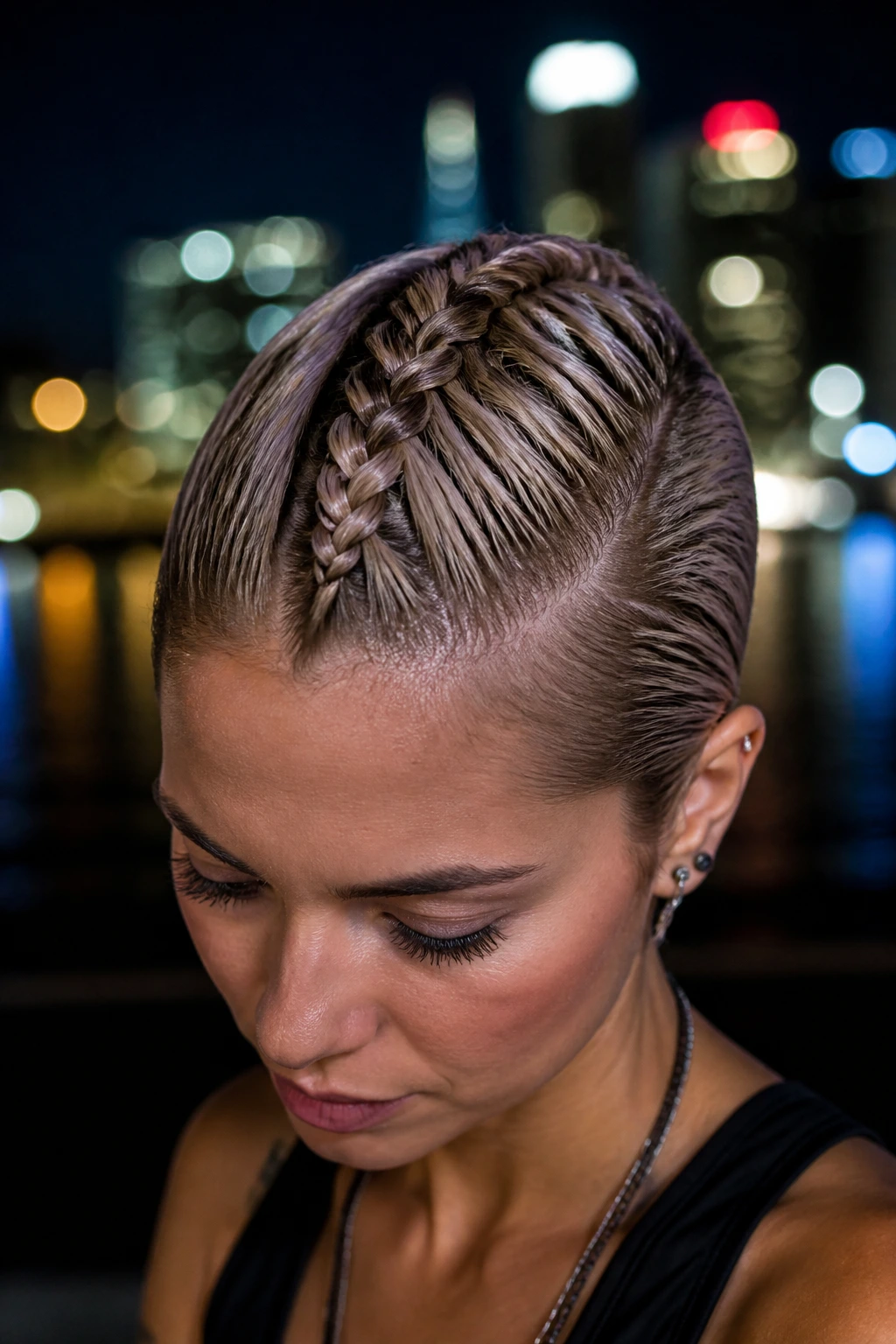
Short hair and braids do not always cooperate, so when they do, the result can be smarter than people expect. A tiny braid down the middle—French, Dutch, or even a quick three-strand braid if the length is limited—creates a built-in faux hawk line. The sides can stay smooth, tucked, or pinned flat.
This style works best when the top has at least a few inches to grab. If the strands are too short, the braid will look patchy. But on a cropped pixie or a grown-out undercut, it has just enough structure to stay put and enough texture to stand out from the rest of the head.
A braid like this is useful on second-day hair, too. A little grit makes the strands easier to hold, which means you don’t need as much product. I’d choose this one for festivals, nights out, or any time you want a faux hawk that looks hand-built rather than sprayed into place.
8. Taper-Fade Faux Hawk
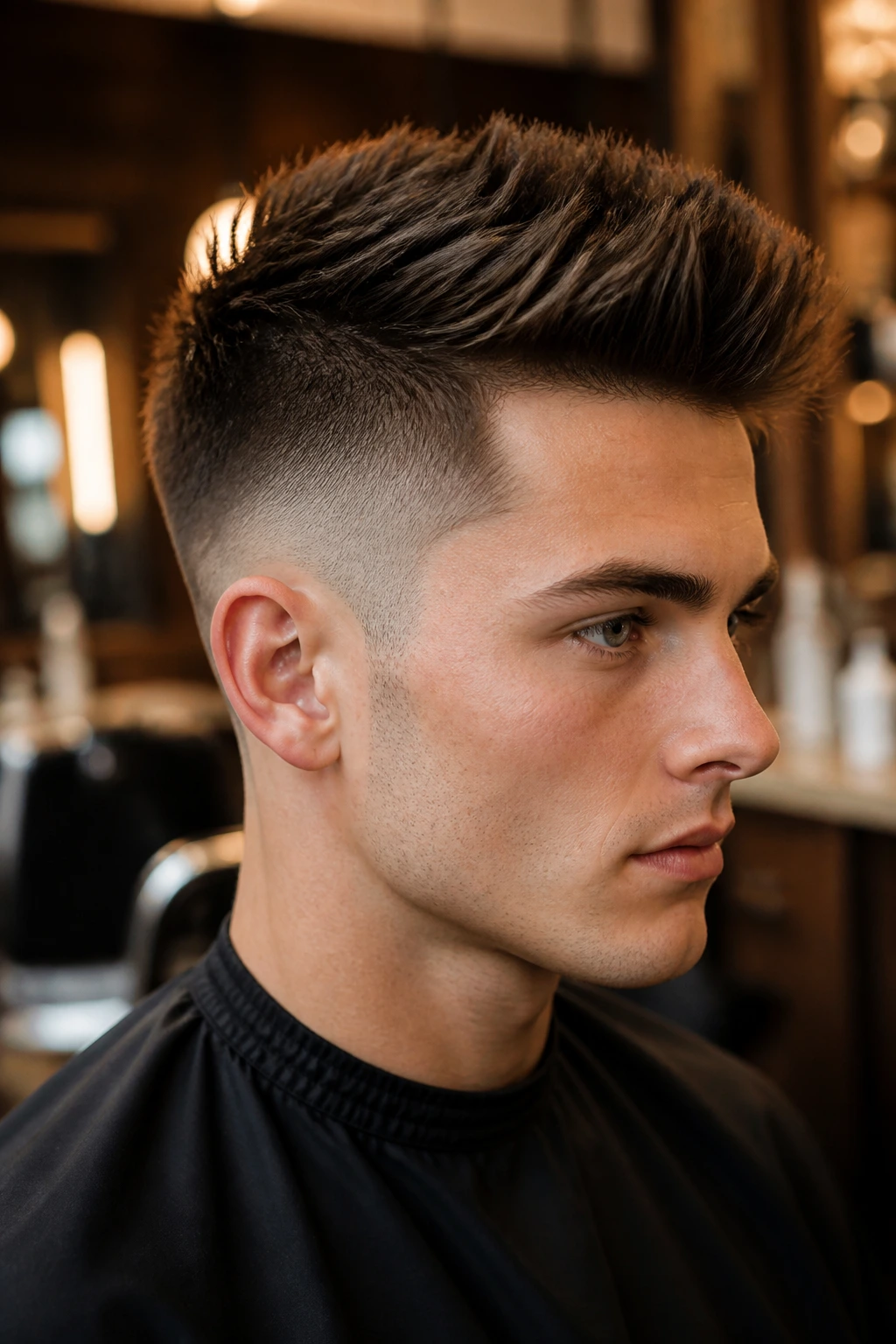
A taper fade changes everything. Really. The shape stops being just a style and starts looking like part of the haircut itself. Close sides make the top ridge look longer, even when the actual length stays modest, and that visual contrast is half the reason faux hawks look so good on short hair.
If you’re asking a barber for this, keep the taper gradual near the temples and nape so the top still has a chance to dominate. Too high a fade can make the style feel harsh, especially on smaller faces. Too soft, and the faux hawk loses its edge.
The styling here can stay simple. A matte paste or light pomade through the center, fingers lifting the crown, and the haircut does most of the talking. This is one of those styles where the cut and the styling have to agree. If they don’t, the ridge disappears fast.
9. Side-Swept Fringe Hawk
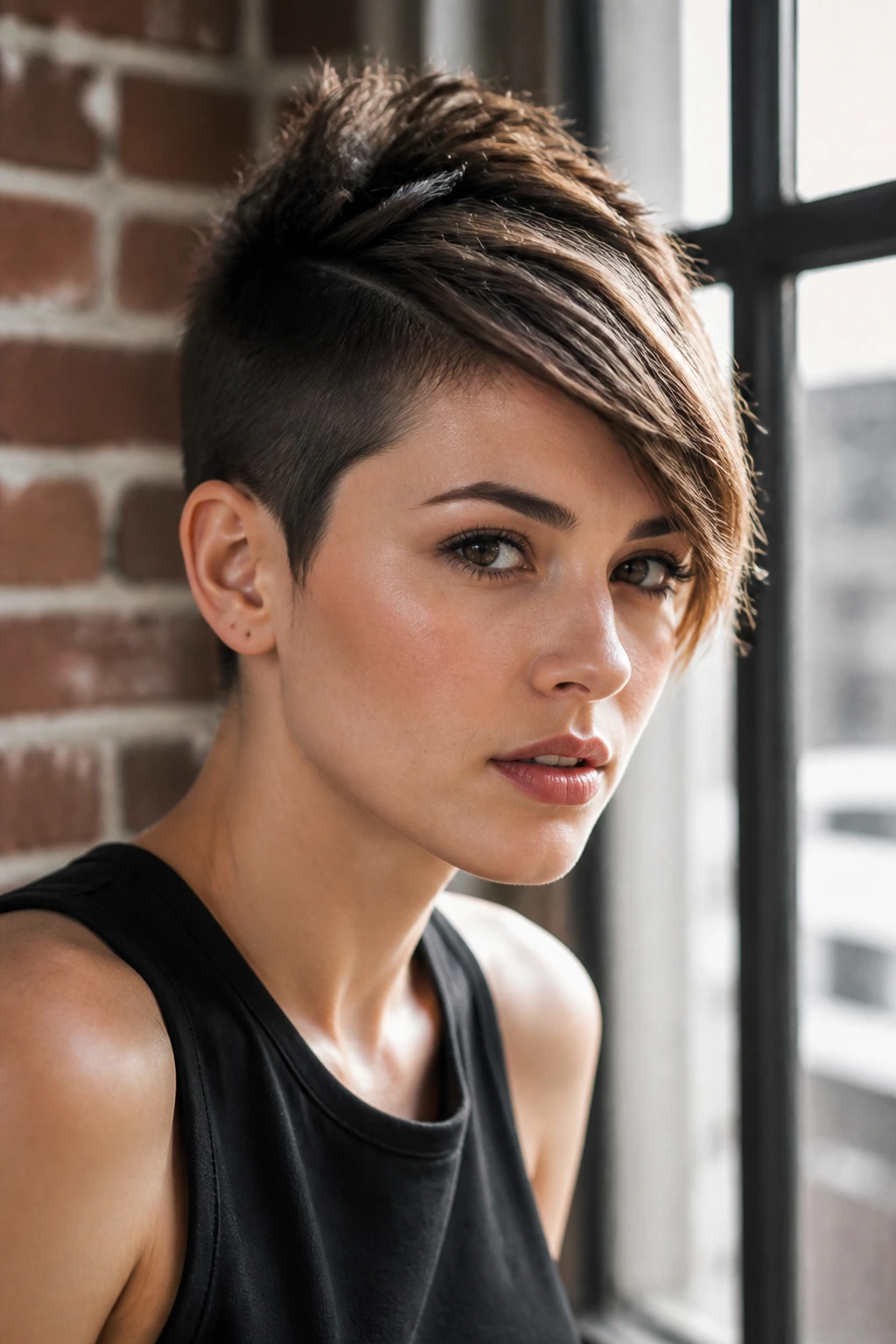
A side-swept fringe changes the mood immediately. Instead of pushing everything straight up, you sweep the front diagonally while keeping the center section elevated behind it. The result is softer and more directional, which makes this a smart choice if your face feels round and you want the eye to travel upward and off to the side.
This style is one of my favorites for short cuts that have bangs grown just past the eyebrow. That little extra length in front gives you options. You can keep the fringe loose, bend it with a round brush, or pin one side back and let the other side skim the forehead.
Why it feels less severe
The diagonal line breaks the mohawk shape just enough. You still get height. You still get that raised center silhouette. But the front doesn’t look boxed in, and that makes the whole style easier to wear in daylight.
Use a flexible hairspray at the end rather than a shell-like spray. You want movement when the head turns, not a rigid helmet moment.
10. Volumized Blowout Hawk
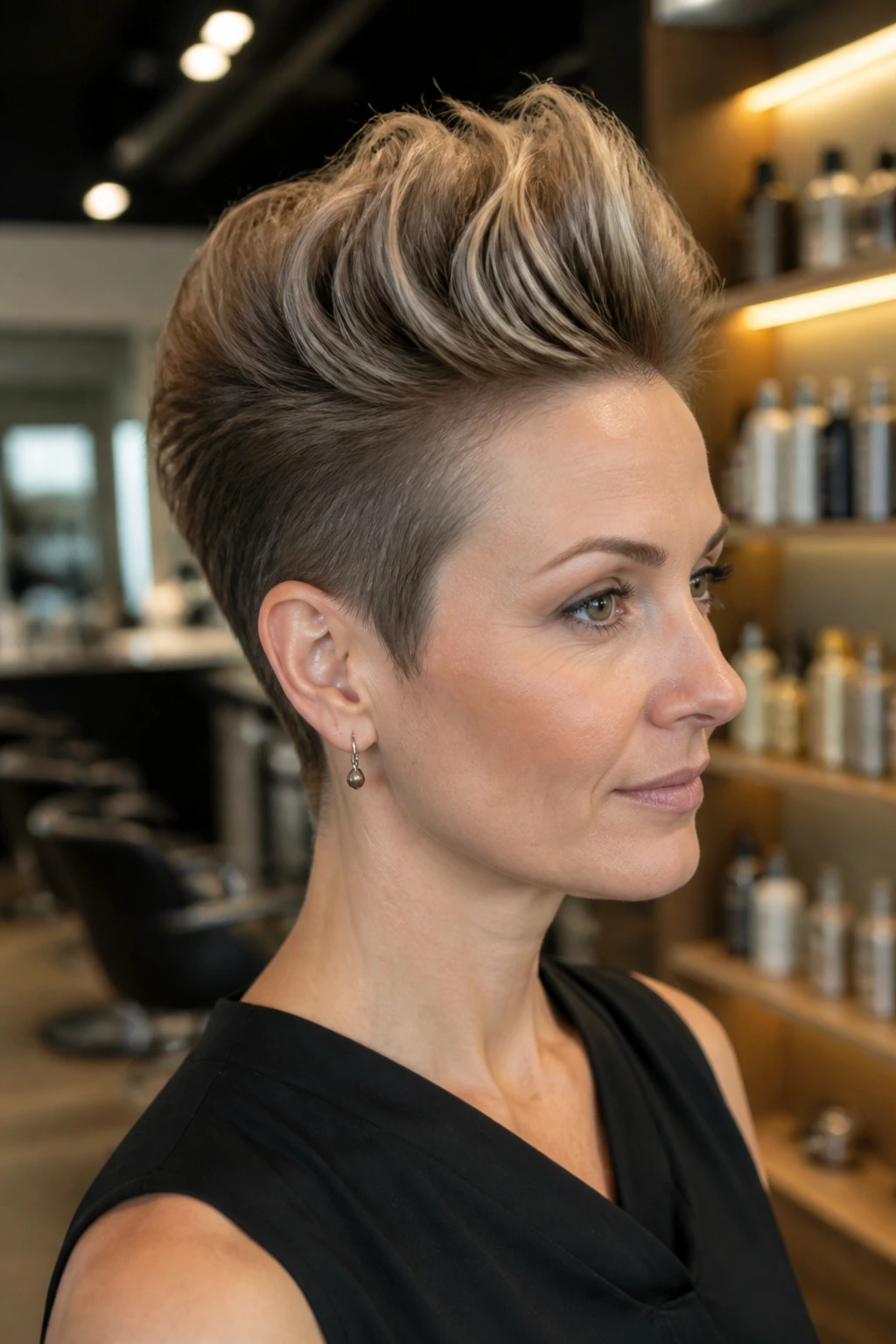
This is the version that looks like you actually worked for it. Start with mousse at the roots, then blow-dry the top upward with a round brush or vent brush, aiming the nozzle toward the roots so the hair lifts before it dries flat. The shape should feel airy at the crown and tucked tight at the sides.
Fine hair loves this style because the blowout gives it body before product ever enters the picture. Thick hair can use it too, but the sections need to be smaller and the brush work more deliberate. Short hair dries fast, which is a blessing and a curse. If you move too slowly, one side sets before the other side even starts.
I’d call this the most “salon” looking option in the whole list. It has height, but the height is cushioned by smooth volume instead of spikes. A little expensive-looking? Sure. That’s the point.
11. Coily Twist Faux Hawk
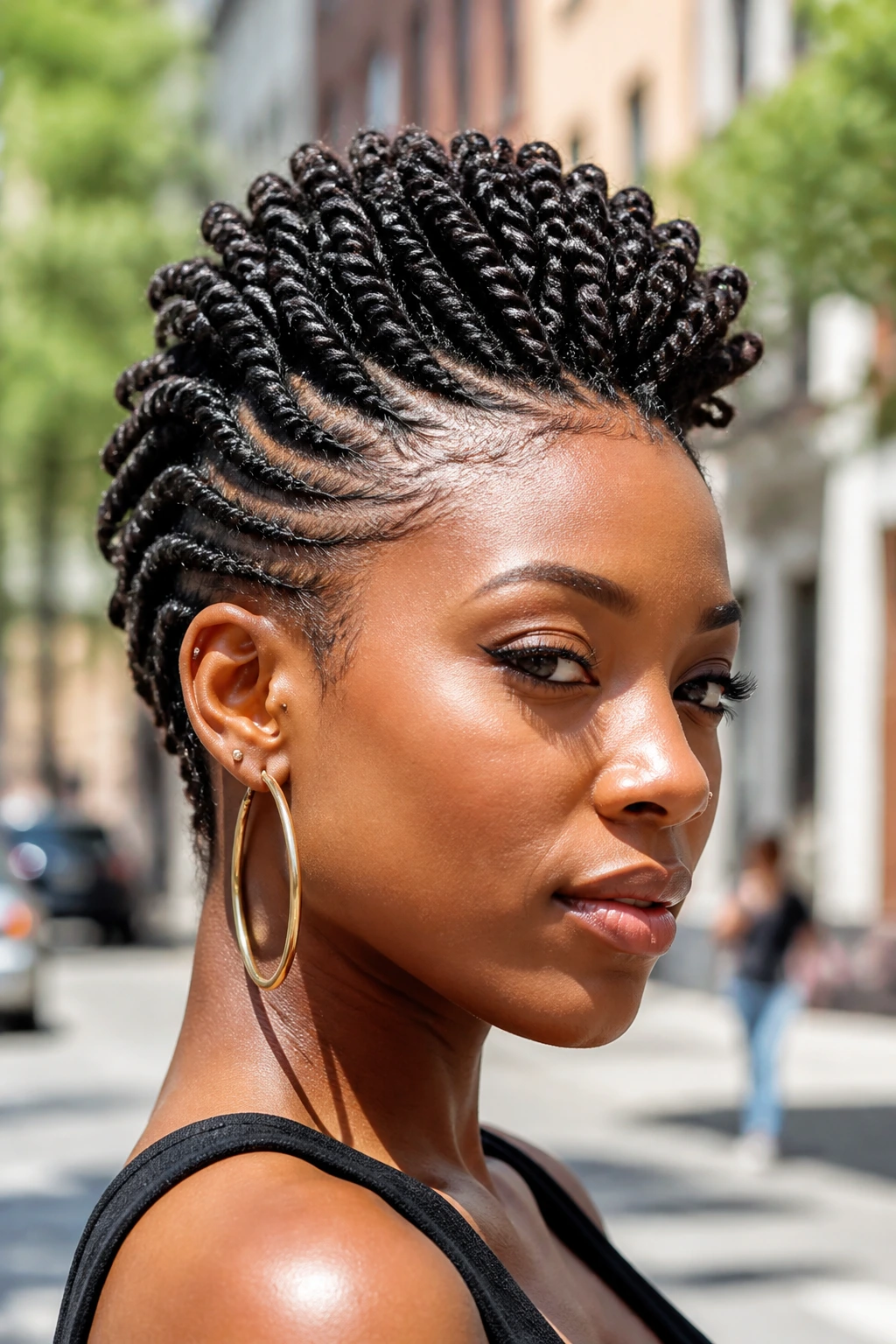
On coily or tightly textured hair, the faux hawk can live in the twist pattern itself. You can flat-twist the sides back, leave the center twists higher, or create a series of small twists that rise through the middle like a sculpted strip. Edge control around the hairline helps keep the outline crisp without making the style feel glued down.
The best part is that this shape doesn’t require the texture to change. It just directs it. That makes it kinder than a style that asks coils to behave like straight hair. If the hair is short enough that individual twists are small and dense, the result reads clean and bold at the same time.
A note on moisture
Coily hair needs some moisture to stay flexible, but too much product can weigh down the top. A leave-in cream under the twists, then a light hold product at the edges, tends to work better than layering heavy oils everywhere. The center ridge should still have bounce.
12. Messy Bedhead Hawk

Some styles are carefully built. This one looks like you threw it together, but in a flattering way. The bedhead faux hawk depends on loose separation, broken texture, and a slightly uneven center line that never settles into anything too neat. On short hair, that looseness can be a gift.
Sea salt spray or texturizing spray is the main move here. Spray, scrunch, lift with fingers, and stop before the hair starts getting crunchy. If the ends are a little uneven, even better. That irregularity gives the style its life.
-
Best for: cropped shags, pixies with choppy layers, and short hair that already has some rough texture.
-
Watch the crown: if the back gets too puffy, the hawk shape disappears into a triangle.
-
Finish: keep the sides flatter than the center so the silhouette still reads as a hawk, not a tousled puff.
This is the style for people who hate perfect hair. I’m with you.
13. Mini Pompadour Hawk
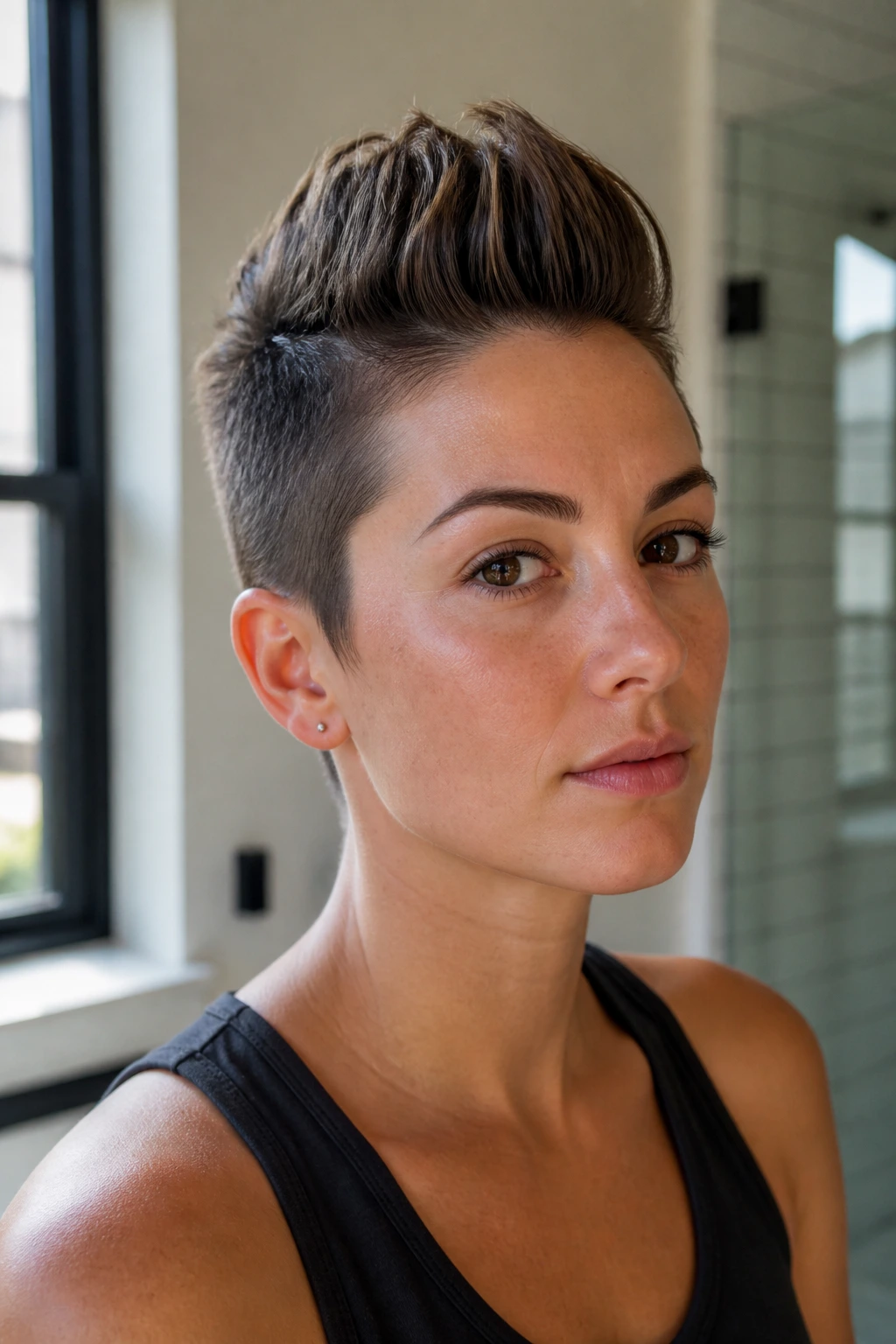
A pompadour and a faux hawk are cousins, and this style sits right between them. The front gets lifted higher than the crown, creating a little roll or wave at the hairline before it tapers back into the center ridge. Short hair can handle this shape better than most people think, especially if the front layers are long enough to bend backward.
The key is structure. A round brush helps build the front rise, and a medium-hold product keeps it from collapsing. You’re not trying to create a retro rockabilly shell here; you’re borrowing the lift and mixing it with a tighter, modern center shape.
This works nicely when the face is longer and you want the forehead to feel balanced. It also gives short hair a richer profile from the side, which is where a lot of faux hawks either shine or fall flat. The pompadour piece adds that missing side view.
14. Micro Mohawk with Crisp Edges
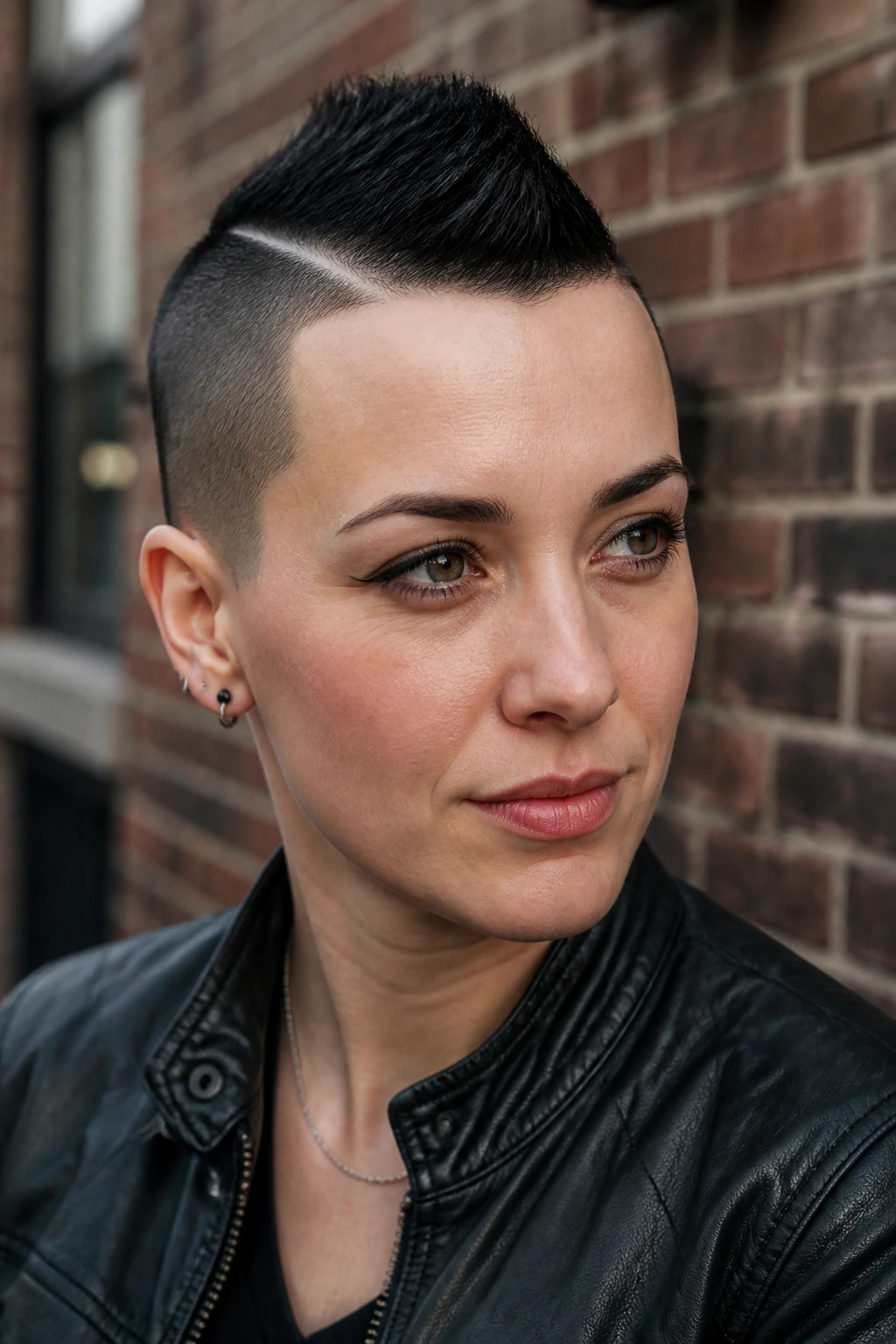
Not everyone wants softness. Some days, you want the line to be clean, the sides to be compressed, and the top to look almost architectural. That’s what a micro mohawk does. It keeps the center narrow and the edges sharp, which makes short hair look deliberate even when the actual length is tiny.
This style leans heavily on the cut. If the sides are faded or trimmed close, the top doesn’t need much product—just enough to stand up and keep its direction. A little gel at the roots, a pinch of paste at the tips, and a comb to define the edges are usually enough.
It’s a good choice for anyone who likes a bolder silhouette but doesn’t want much styling fuss. The shorter the hair, the cleaner the line needs to be. That’s the trade-off. In return, you get a shape that looks crisp all day and barely needs fixing.
15. Finger-Waved Faux Hawk
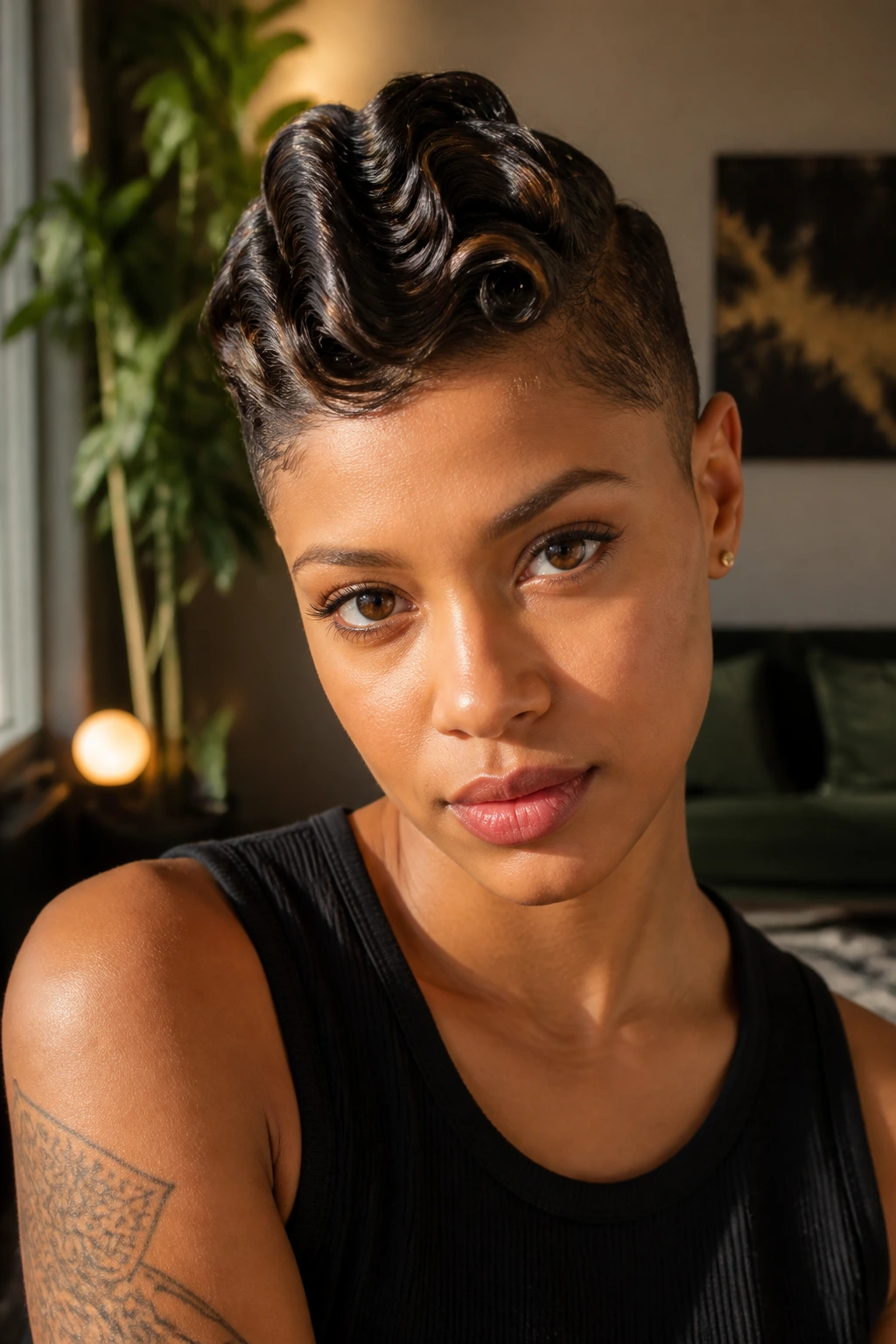
Finger waves are old-school, and that’s precisely why this style feels interesting. Instead of spiking the center upward, you guide the hair into soft S-shaped ridges that travel through the middle. On short hair, the effect is sculpted without being stiff, and it looks especially striking on straight or relaxed textures.
Use setting lotion or gel on damp hair and shape the waves with a comb and your fingers. It takes more patience than the looser styles, because each curve has to be placed before the hair dries. Once set, though, the result holds a strong line and gives short hair a polished, editorial feel.
This is one of the better faux hawk styles if you want something that doesn’t look like every other spiked crop in the room. It has history. It also has a little drama, which is rarely a bad thing.
16. Color-Pop Faux Hawk
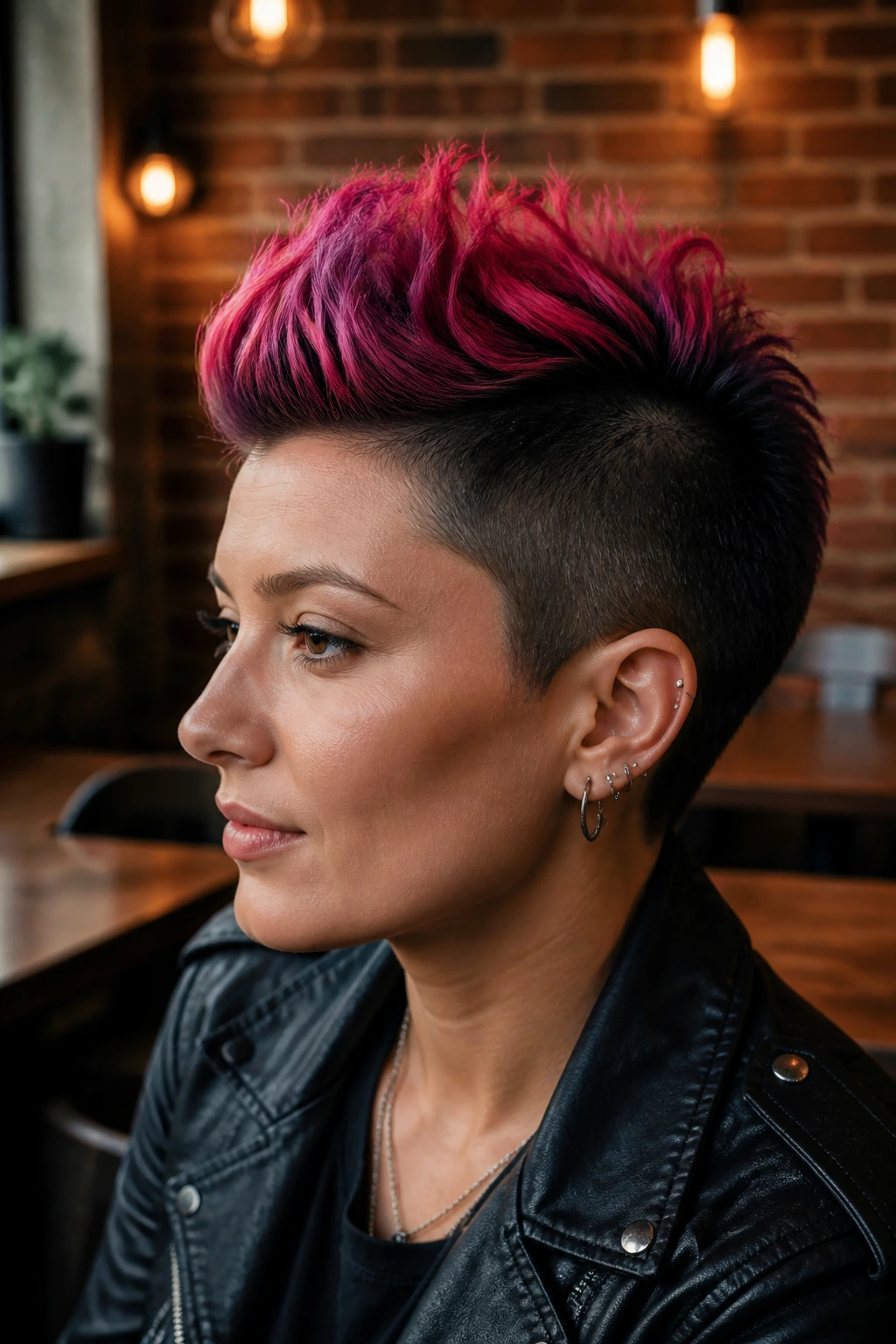
A faux hawk can rely on shape alone, but a little color makes the center ridge stand out even faster. That can mean a bright temporary wax on the top, a subtle pastel rinse, or even just high-contrast highlights that sit along the raised section. Short hair takes color well because the shape is compact and the pigment reads immediately.
If you’re using temporary color, apply it only where the hawk will sit. That keeps the sides dark or neutral and preserves the contrast. On short cuts, a tiny amount of color goes farther than people think. One strip of copper, violet, or electric red through the middle can do the job.
Where this style shines
This one is for people who want the haircut to feel playful instead of severe. The color softens the edge, even when the silhouette stays sharp. It also photographs in a way that plain black or brown hair sometimes doesn’t, because the center line becomes visually obvious.
17. Headband Faux Hawk
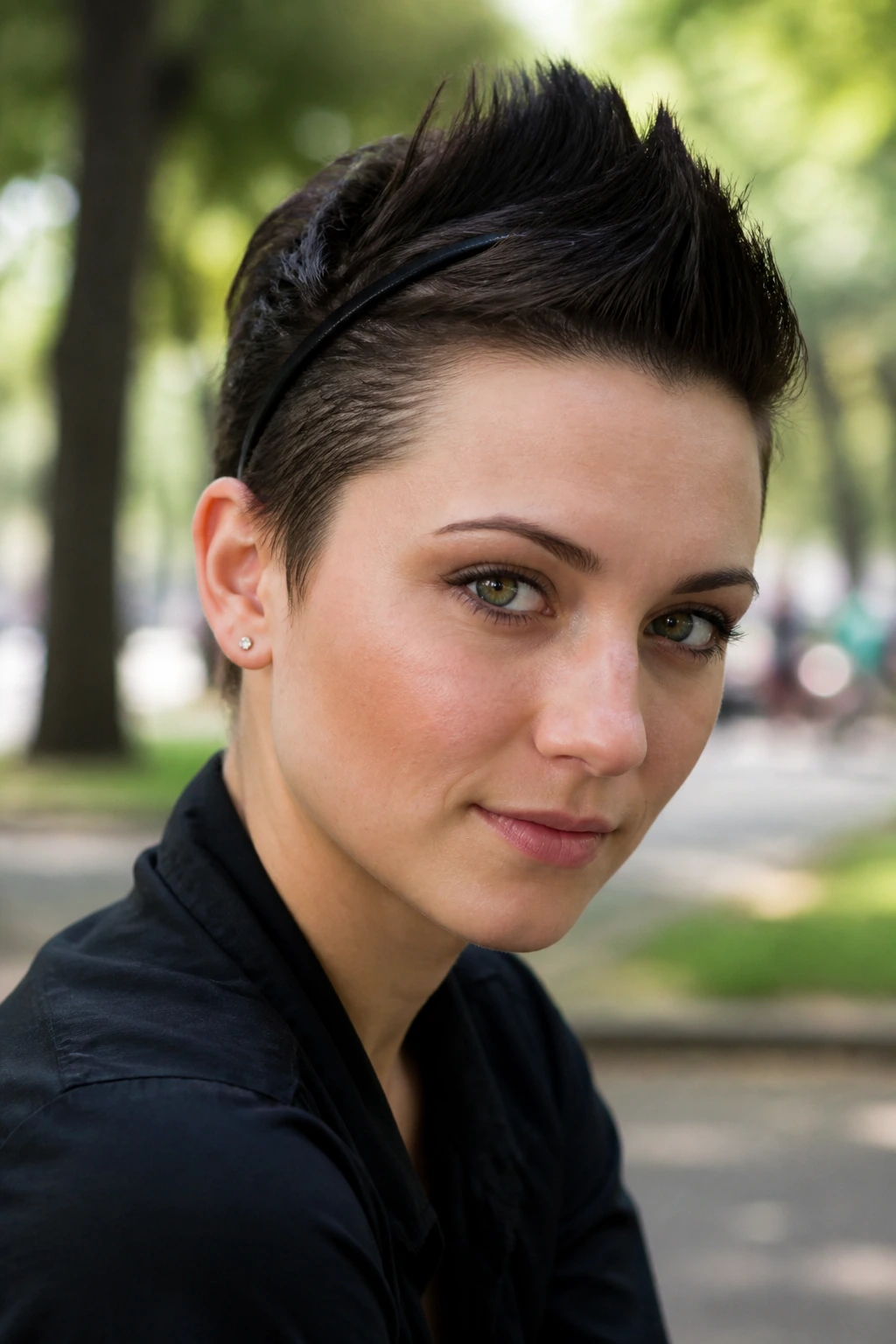
Sometimes the quickest answer is the one that saves your morning. A slim headband or stretchy band can flatten the sides while you finger-lift the top into a faux hawk shape. It’s especially handy on short hair that’s in the awkward in-between stage, where nothing wants to stay off the face for more than five minutes.
The band doesn’t need to look sporty. A thin black band, a satin strip, or even a textured accessory can hold the sides just enough to create the hawk outline. Once it’s in place, pinch the top upward with a little paste or mousse and let a few strands fall out on purpose. That mess is part of the charm.
I’d call this the lazy-smart option. It works when the hair is clean, dirty, humid, or on its third day after a wash. Not fancy. Very useful.
18. Undercut-Contrast Faux Hawk
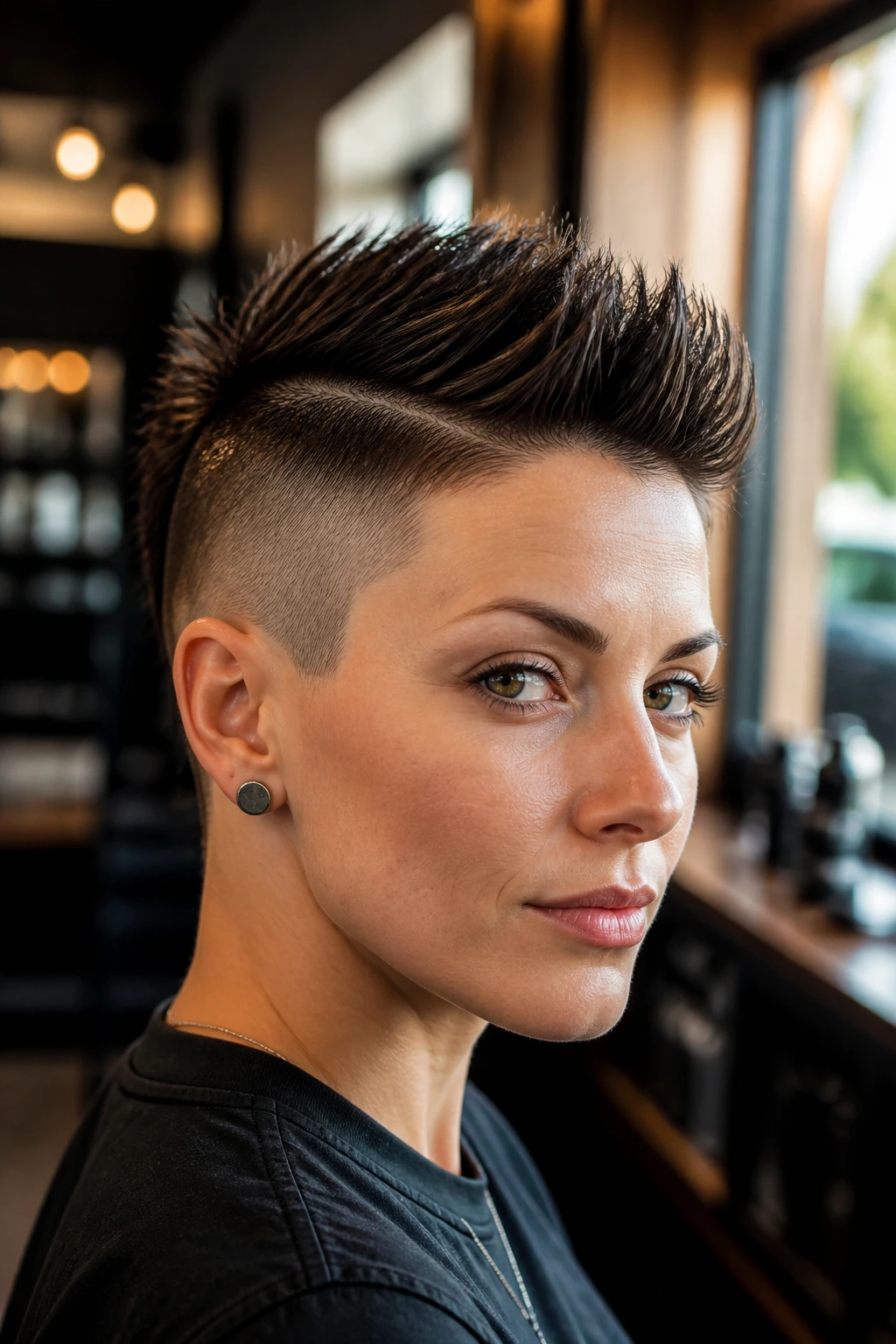
An undercut makes the faux hawk more obvious because the contrast is already built into the cut. The sides stay shorter, sometimes very short, while the top is left long enough to create a distinct strip of volume through the middle. The result is sharper than a taper and a little bolder than a classic pixie.
The style looks best when the top has enough length to show separation—usually around 3 inches or more, depending on texture. Push the hair upward and slightly back, then define the ends with paste or pomade. If the top is curly, the contrast gets even stronger because the texture rises naturally above the tighter sides.
This one is for people who want the faux hawk to announce itself from across a room. It’s not shy. And because the side contrast is already doing part of the work, you don’t need to pile on much product to get the effect.
19. Low-Key Office Faux Hawk
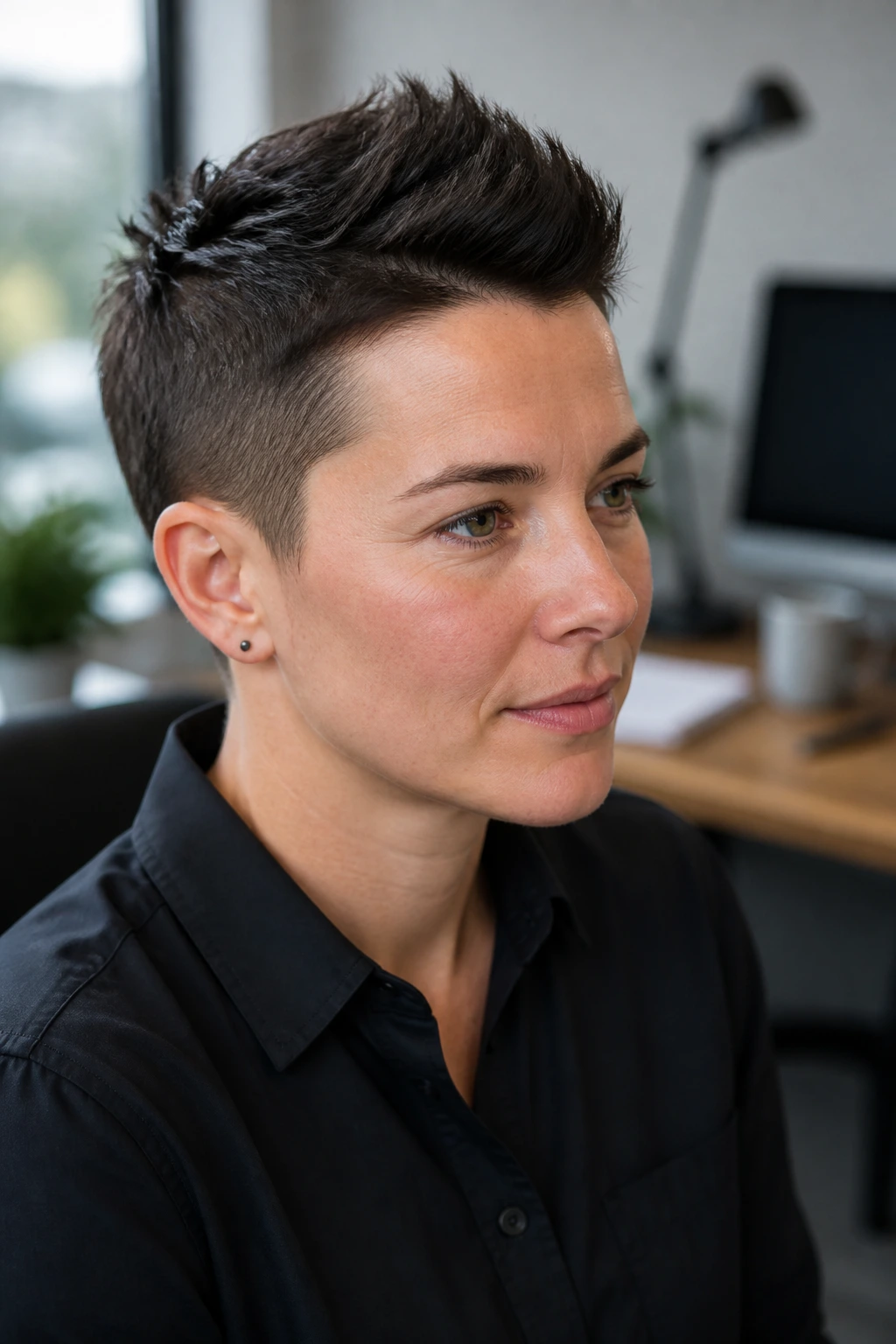
Not every faux hawk has to look like it’s headed to a concert. A low-key office version keeps the center ridge modest, the sides neat, and the finish matte or softly shiny. Think controlled lift, not showy height. Think tidy, not flat.
This is the style I’d recommend for short hair that needs to look professional but not boring. A pea-sized amount of styling cream or light paste, a quick blow-dry upward, and a side tuck at the temples are enough. You still get the mohawk-inspired shape, but it reads as polished from the first glance.
It’s also one of the easiest versions to wear all day. Because the height stays modest, it collapses less aggressively when you sit under overhead lights, wear a coat, or spend half the day touching your hair without meaning to. Happens to everyone.
Why Faux Hawk Styles for Short Hair Work So Well
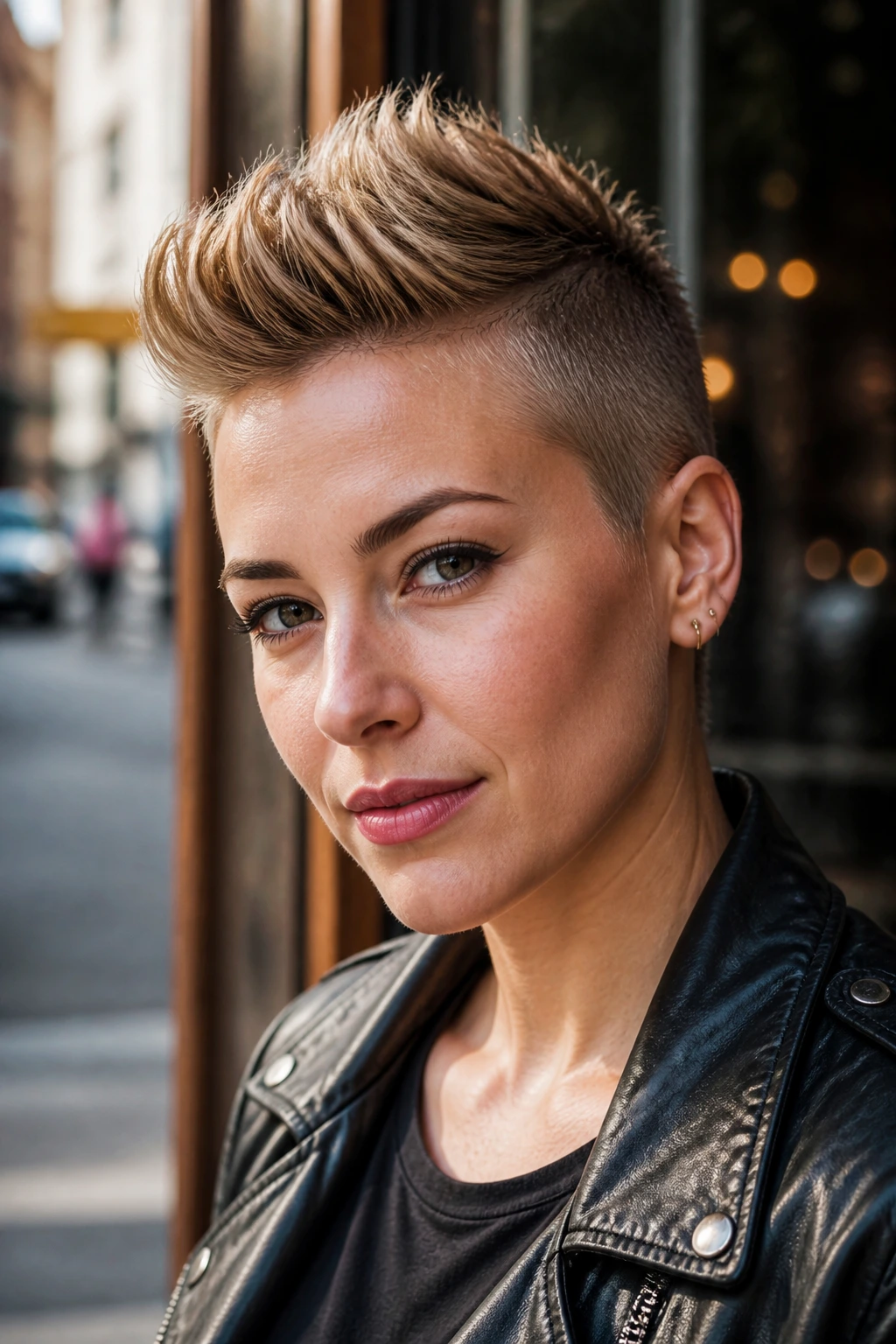
Short hair and a faux hawk get along because the cut has less weight to fight against. That sounds obvious, but the practical difference is huge. On longer hair, the center ridge has to stand up against gravity, humidity, and the hair’s own memory. On short hair, the shape can sit where you put it, which means the style keeps more of its personality after the first hour.
There’s also the matter of proportion. A tiny amount of height reads as a lot when the rest of the head is kept close. A half inch at the crown can look like a real lift. Two inches can feel dramatic. That’s why a faux hawk on a cropped cut can look sharper than the same style on shoulder-length hair, which often has too much swing and not enough control.
The sides do the heavy lifting
A clean temple line, a tucked ear, or a close fade changes the whole mood. The eye naturally follows contrast, so when the sides are compressed, the center stands out without needing an elaborate shape. That is why a faux hawk can look expensive, casual, edgy, or polished just by changing the finish.
Short hair also forgives experimentation. You can switch from matte to wet, soft to spiky, airy to controlled, and the haircut still holds the same basic structure. That flexibility is the reason this style keeps coming back. It doesn’t ask for a huge commitment. It gives you room to play.
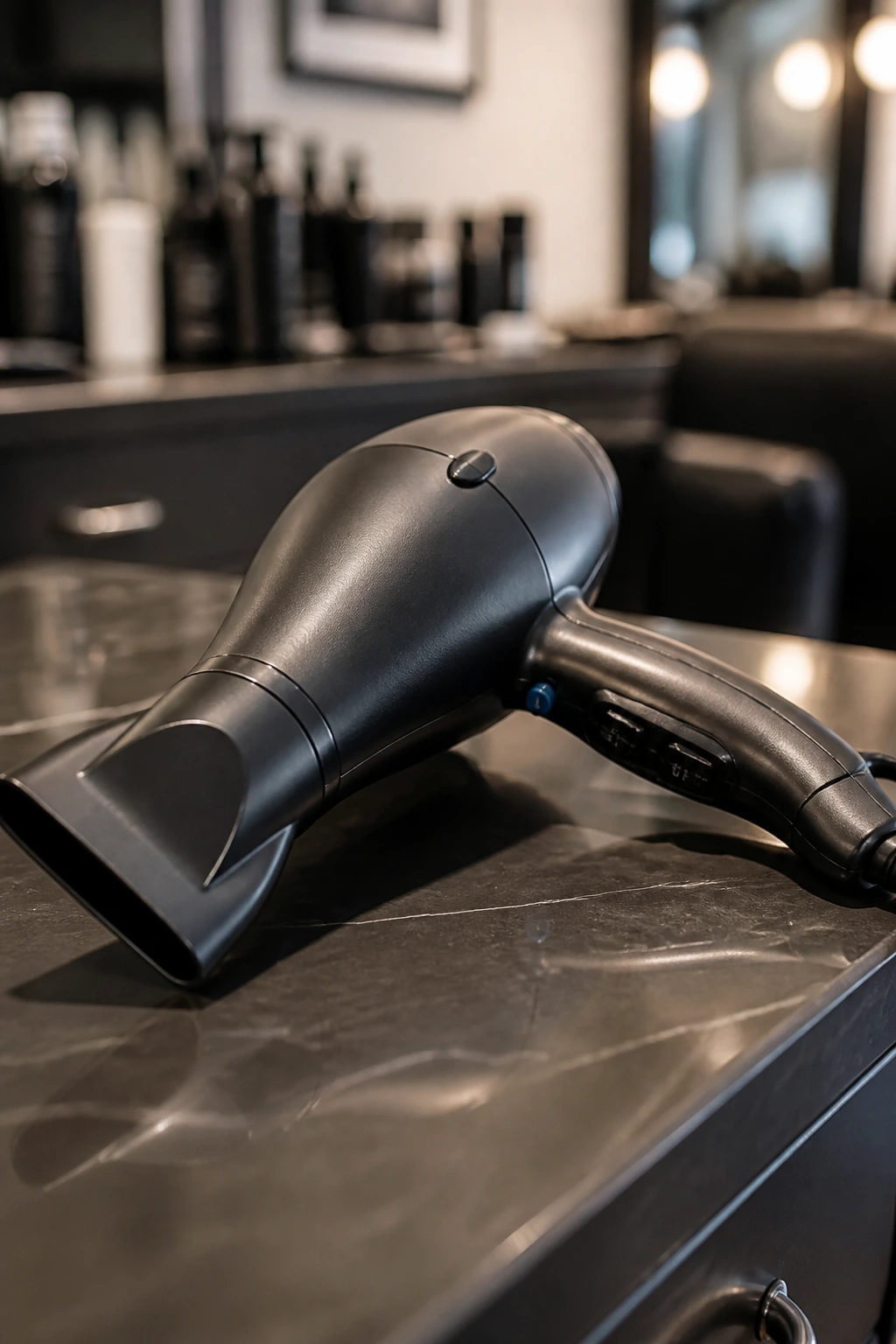
Essential Tools for a Short Faux Hawk
-
Blow dryer with a concentrator nozzle: Directs airflow where you need lift, especially at the crown and front.
-
Vent brush or small round brush: Helps shape the top while keeping short layers from snagging.
-
Tail comb: Useful for drawing clean center lines, smoothing the sides, and placing gel exactly where it belongs.
-
Matte paste or clay: Best for piecey, touchable texture on short straight or wavy hair.
-
Strong-hold gel: The right call for slick, wet, or crisp versions that need all-day control.
-
Mousse: Gives fine hair a light base of lift before blow-drying.
-
Texturizing spray or dry shampoo: Adds grip to clean hair and keeps the center from sliding flat.
-
Edge brush or soft toothbrush: Handy for smoothing baby hairs and cleaning up the hairline on polished looks.
-
Bobby pins or small clips: Useful for pinned sides, braid details, or hold while the hair cools.
-
Satin scarf or pillowcase: Keeps the shape from getting crushed overnight.
Product Choices That Change the Result
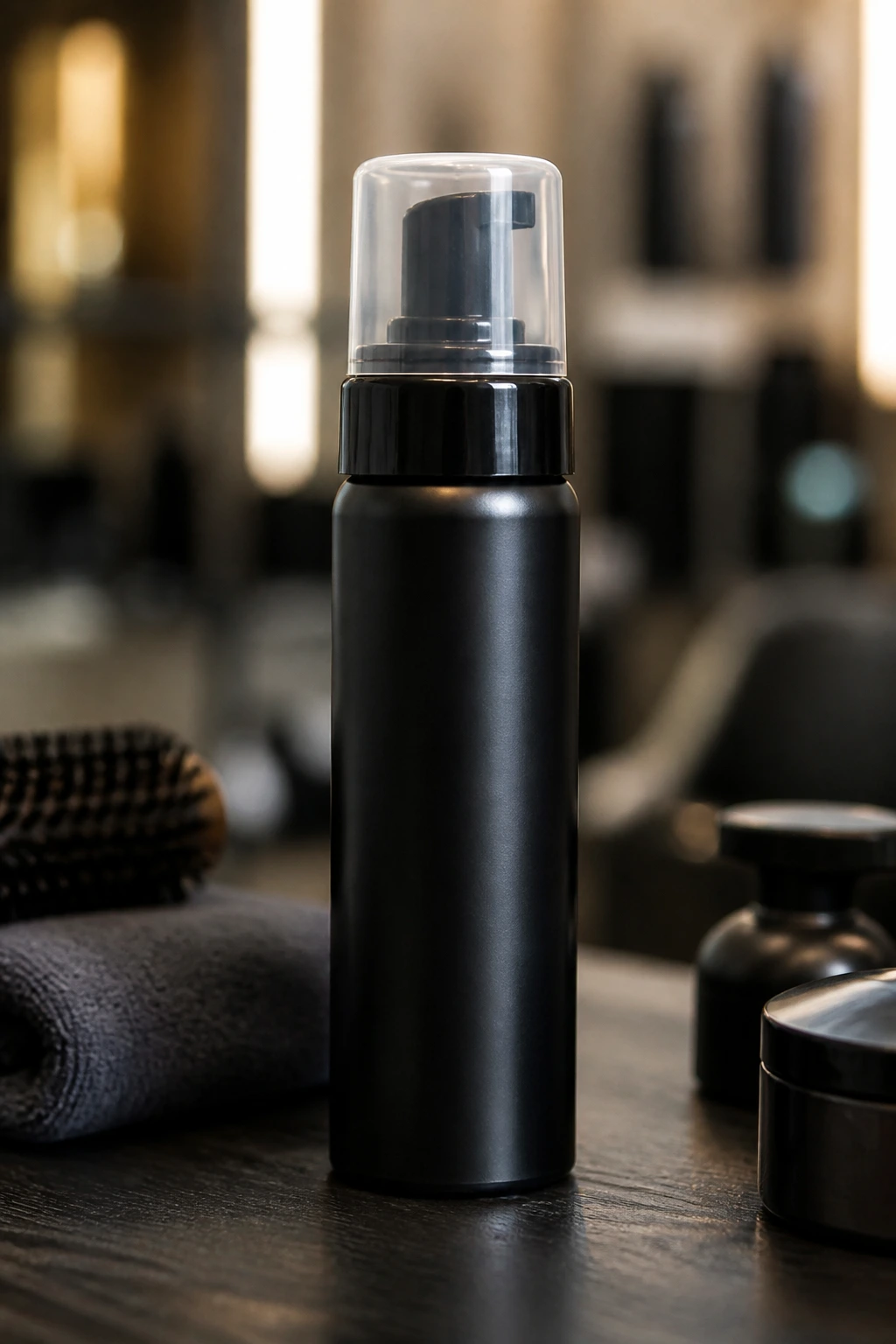
Hair product is not just a finishing touch here. It decides the whole personality of the style. A faux hawk on short hair can look airy, sticky, shiny, dry, soft, or hard depending on what you put in before you even start shaping.
Fine hair usually likes mousse at the roots and a light paste at the ends. Heavy waxes can drag the top down before it gets a chance to lift. If your strands are soft and slippery, a bit of dry shampoo at the root can create the grip you need without making the hair feel coated.
Thick hair often needs more control than volume. A medium-hold gel at the sides and a firm paste through the center can keep the shape from ballooning outward. Thick hair can look great in a faux hawk, but only if the sides are compressed enough to let the middle win.
Curly or coily hair behaves best with moisture first, hold second. Cream, leave-in conditioner, gel, edge control—those are the tools that help the texture keep its bend while still reading as a hawk. If you pile on dry paste too soon, the hair can frizz and lose the center line.
Straight hair often needs roughing up. Heat, a bit of texture spray, and a matte finish make the style hold better because straight strands can be almost too cooperative. They’ll lie down the second you stop watching them. Annoying, yes. Predictable, too.
How to Build Height Without Making the Hair Crunchy
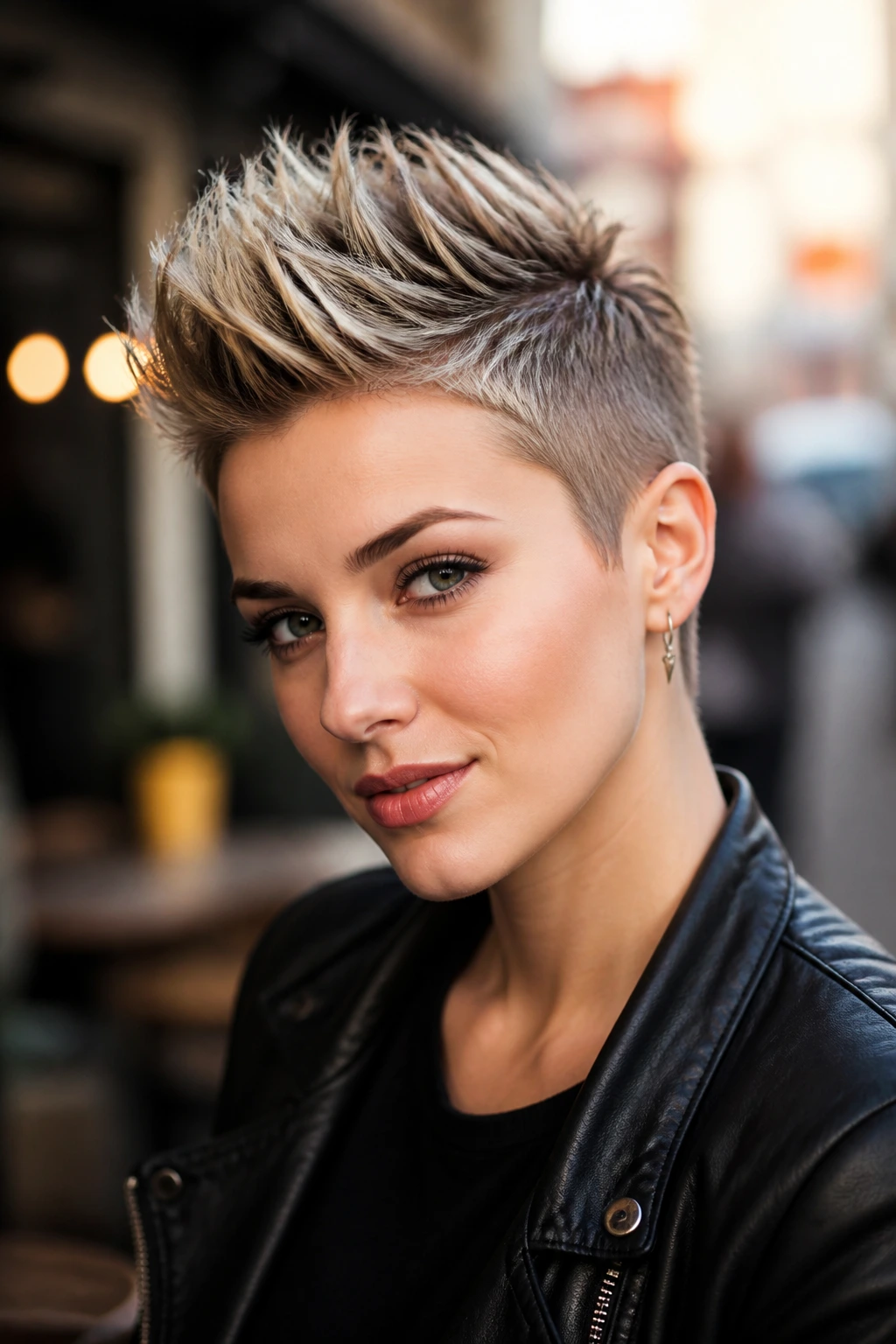
Start with hair that is damp, not dripping. That matters more than people think. If the hair is soaking wet, the product spreads too thin and the shape collapses while it dries. If it’s fully dry, the styling can turn patchy and uneven. Damp hair gives you a little working time.
Pre-dry the roots first. Aim the dryer upward at the center section before you add much product. A minute or two of root lift changes the whole base, and the hair will remember that shape better than you expect. For short hair, roots matter more than ends. The ends are just decoration.
Then work in layers. Put a small amount of product through the crown, shape it, and only add more if the top still drops. The mistake is loading the hair all at once and hoping the extra hold will save the style. It rarely does. It usually turns the hair sticky.
Finish with your fingers, not a brush. Brushes are useful for the first round, when you’re building the direction. Fingers are better at the end because they break the shape into pieces and keep it from looking overworked. If you want the faux hawk to last, let it cool in place for a minute before you touch it again. Sounds tiny. It isn’t.
Common Mistakes That Flatten the Look
-
Using too much product too early: The top goes limp, the sides get greasy, and the whole style starts to look heavy. Start with less than you think you need, then add a touch more only if the center will not stand up.
-
Building height on soaking-wet hair: Wet strands stretch, sag, and dry in the wrong place. Get the roots partly dry first so the shape has something to hold onto.
-
Ignoring the sides: A faux hawk is only as strong as the contrast around it. If the temples stay puffy or the nape kicks out, the center ridge loses its shape.
-
Making the ridge too wide: Short hair can’t support a broad center section without losing definition. Keep the top narrow enough that the eye can read it instantly.
-
Skipping the trim: Grown-out edges around the ears and neckline make the style look unfinished, even when the top is styled well. A tidy perimeter does more than most people realize.
-
Touching it every five minutes: Once the style is set, leave it alone. Constant re-shaping warms the product and breaks the line.
Variations and Adaptations to Try
Soft Everyday Hawk: Swap strong gel for a light styling cream and keep the height low. This version works when you want the silhouette without the edge.
Curly Crown Twist: Let curls or coils do the lifting, then pin the sides back with small clips or smooth them with edge control. Great for natural textures that need shape more than manipulation.
Wet Street-Style Hawk: Use a high-shine gel and a tail comb to make the center sleek and the sides tight. This one leans dramatic and looks strongest on freshly washed hair.
Braided Center Stripe: Add one narrow braid through the middle if the top is long enough to hold it. It gives the faux hawk an extra layer of structure and keeps the shape from feeling too plain.
Color-Accent Hawk: Add a temporary color wax, highlight, or tinted spray just on the ridge. Even a subtle change—bronze, copper, violet—makes the center line pop against the sides.
Tapered Minimalist Hawk: Keep the sides clean and the top short, then shape the front upward by less than an inch. This is the version for people who like precision more than drama.
Night Care and Next-Day Refresh
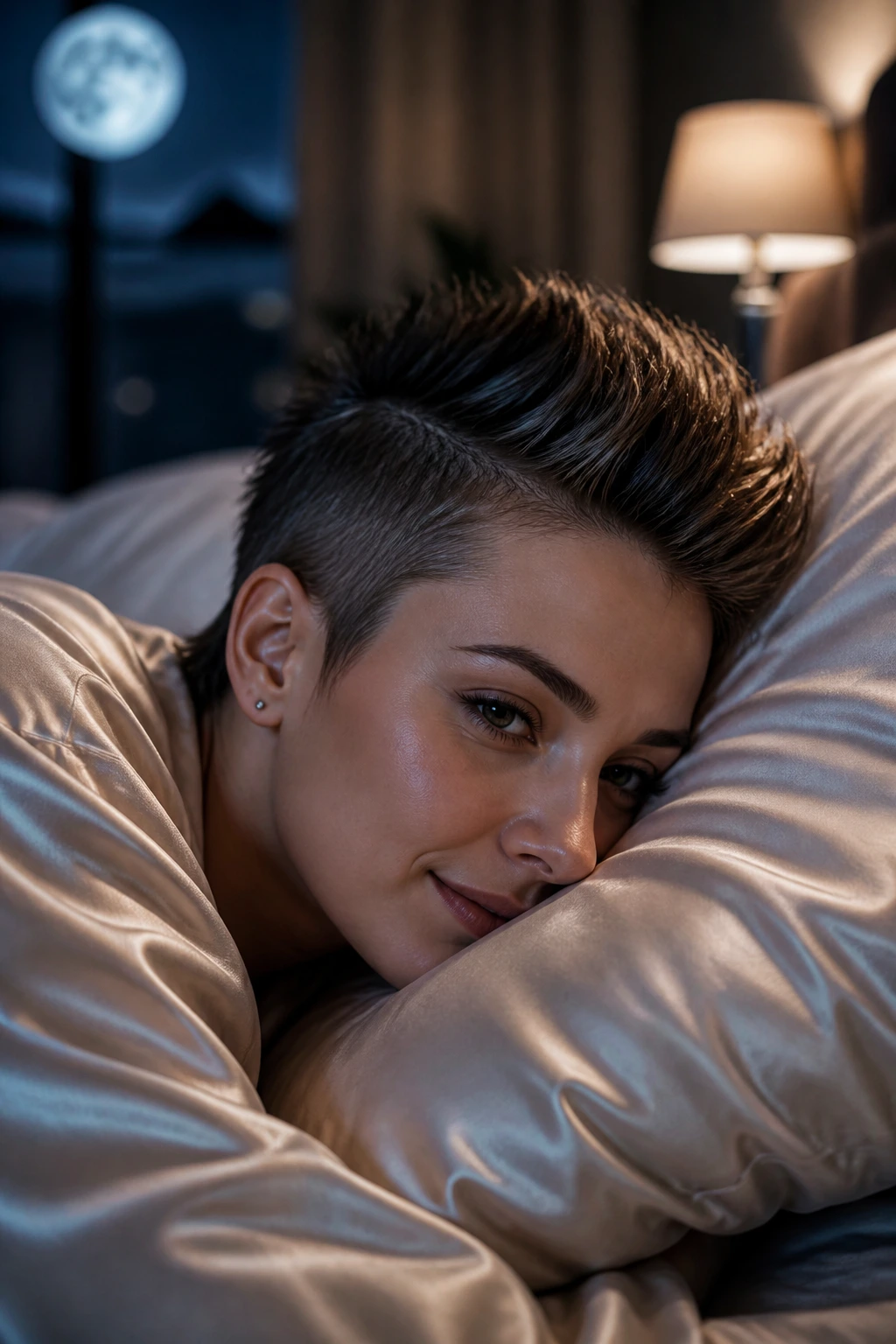
A faux hawk lasts better than a lot of short styles, but it still needs a little respect overnight. A satin pillowcase helps the sides stay smoother and keeps the center from getting roughed up by cotton. If your hair is very short, that alone can make the next morning easier.
For styles with more product, a loose clip at the crown can help the top keep its direction. Don’t clamp the hair flat. You’re just trying to stop the ridge from folding over in sleep. For curly or coily versions, a scarf or bonnet is often better than a pillowcase alone because it protects the texture and the edge detail.
The next-day refresh is usually simple. Mist the center lightly with water, warm the product between your palms, and lift the ridge back into shape with your fingers. If the sides have puffed out, use a tiny amount of paste or gel at the temples rather than coating the whole head again. A full re-do is rarely necessary.
If the style feels too flat the next morning, a dry shampoo at the roots can help. Just don’t bury the hair in powder. One or two short sprays at the crown, then finger-lift. That’s enough.
Frequently Asked Questions About Faux Hawk Styles for Short Hair
How much length do you need on top for a faux hawk?
Most short faux hawks work best with about 2 to 4 inches on top, depending on texture. Fine hair can fake more height with less length, while thick or curly hair usually needs a bit more room to bend upward cleanly.
Do you need shaved sides for a faux hawk?
No. Shaved sides give stronger contrast, but a close taper, tucked sides, or even well-smoothed temples can create the same shape. The key is the silhouette, not the clipper work.
What products work best on fine short hair?
Mousse at the roots, then a light paste or texture spray at the top usually beats heavy wax. Fine hair needs lift and grip without a thick coating that drags it down.
Can curly hair do a faux hawk without looking frizzy?
Yes, if you let the curl pattern stay intact and use moisture plus hold instead of over-brushing it. A diffuser, curl cream, and a little gel around the edges usually work better than trying to make the curls straight.
How do you stop the style from falling flat during the day?
Start with a dry or partly dry root, use less product than you think, and let the hair cool in the shape you want. Once the style is set, touching it over and over is the fastest way to flatten it.
Is a faux hawk professional enough for work?
A low-key version absolutely can be. Keep the height modest, the sides neat, and the finish matte or softly polished, and it reads more controlled than rebellious.
What if my short hair has layers that stick out everywhere?
That can actually help. Use the uneven pieces to create texture through the center, then smooth the perimeter so the hawk shape stays obvious. The mess is useful as long as it’s directed.
Can you wear a faux hawk on a grown-out pixie?
That’s one of the best lengths for it. Grown-out pixies often have enough top length for lift while the sides still sit close enough to create contrast.
The Shape I Keep Coming Back To
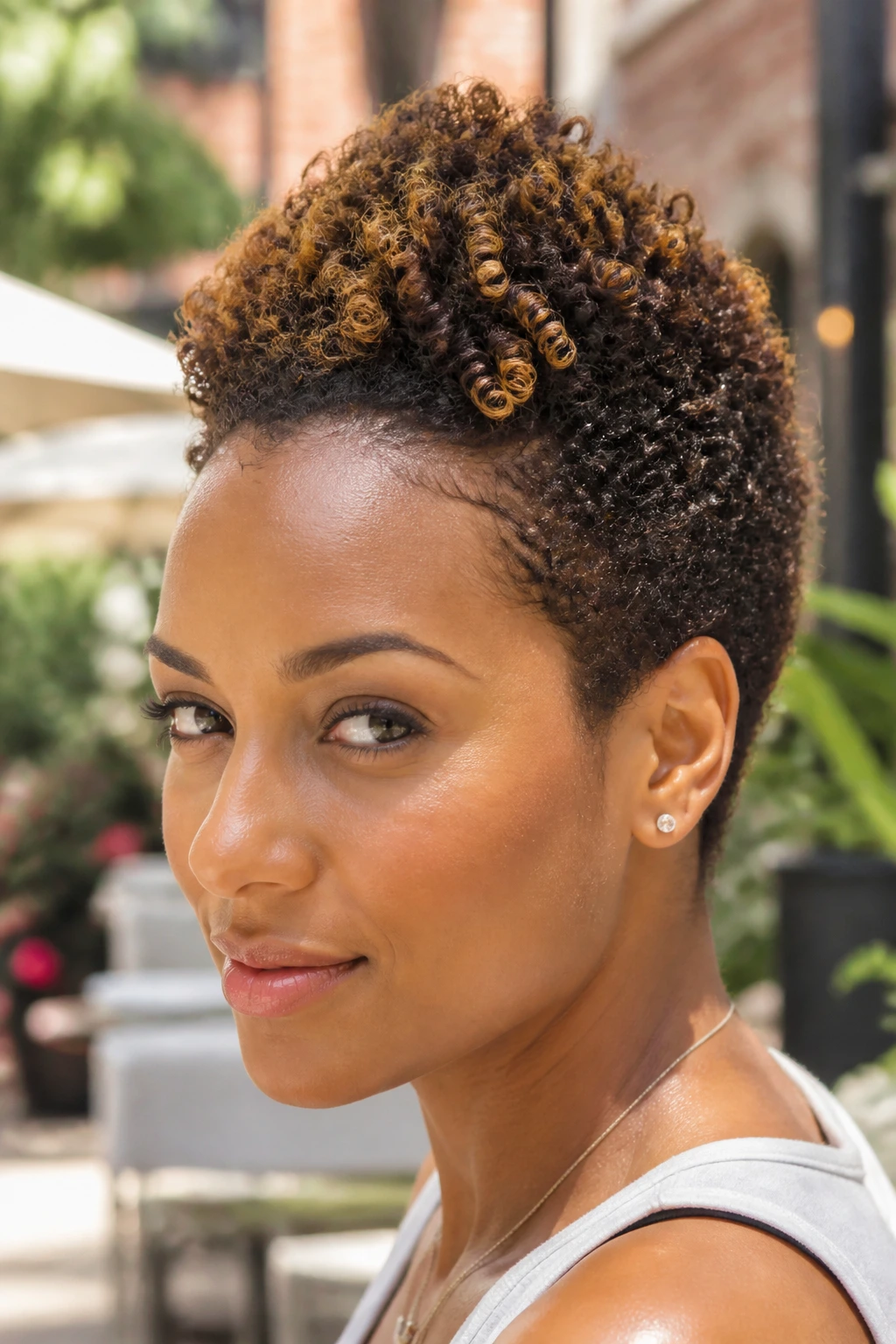
Short hair does not need to be boring to be wearable. A faux hawk gives it a line, a center, a reason to look intentional from every side. Some versions are soft enough for everyday wear. Others lean sharp, glossy, or a little wild. The nice part is that the cut doesn’t force you into one mood for long.
The strongest version is the one that fits your texture instead of fighting it. If your hair wants to spike, let it spike. If it wants to curl, guide the curl. If it sits flat until you blow-dry it with a nozzle pointed upward, use that. That’s the real trick with faux hawk styles for short hair: the shape works best when the styling respects the hair you already have.
