



Round faces do not need to be hidden; they need shape. The right curly haircut for a round face uses the curls like architecture: a little height at the crown, a little narrowing near the cheeks, and enough length or angle to keep the outline from turning into one big circle. That’s the whole game, really. The curls are already doing the expressive part. The cut has to give them somewhere smart to go.
The trap is easy to fall into. A cut that looks neat when the hair is wet can swell out into a soft mushroom once the curls dry, and that extra width tends to land right where a round face is already fullest. The fix is not to drag everything long and hope for the best. It’s to place the bulk in the right spots, leave weight where it helps, and trim away the parts that puff out at cheek level.
What I like about this topic is that the answer is not one haircut. It’s a set of shape decisions. Some people need a collarbone length that skims, some need a shag that breaks up the outline, and some look better with short sides and a taller top. Curls give you room to cheat a little. Use it.
Why These Cuts Work for Round Faces
- Height Beats Width: A little lift at the crown makes the face read longer, especially when the sides stay closer to the head.
- Cheekbone Control Matters: The strongest face-framing pieces usually start below the widest part of the cheek, not right on top of it.
- Shrinkage Changes Everything: A cut that lands at the jaw wet can jump to the cheekbone dry, so the final shape has to account for curl bounce.
- Layers Need a Job: Layers that remove bulk from the wrong spot create a puffed-out halo; layers placed with purpose carve shape.
- Asymmetry Helps Fast: A side part, longer front pieces, or a diagonal line breaks the circular feel without making the cut look forced.
- Texture Should Lead: Loose curls, tight coils, thick density, and fine strands all want different amounts of weight removed. One shape does not suit every head of curls.
1. Long Layers That Fall Past the Cheekbones
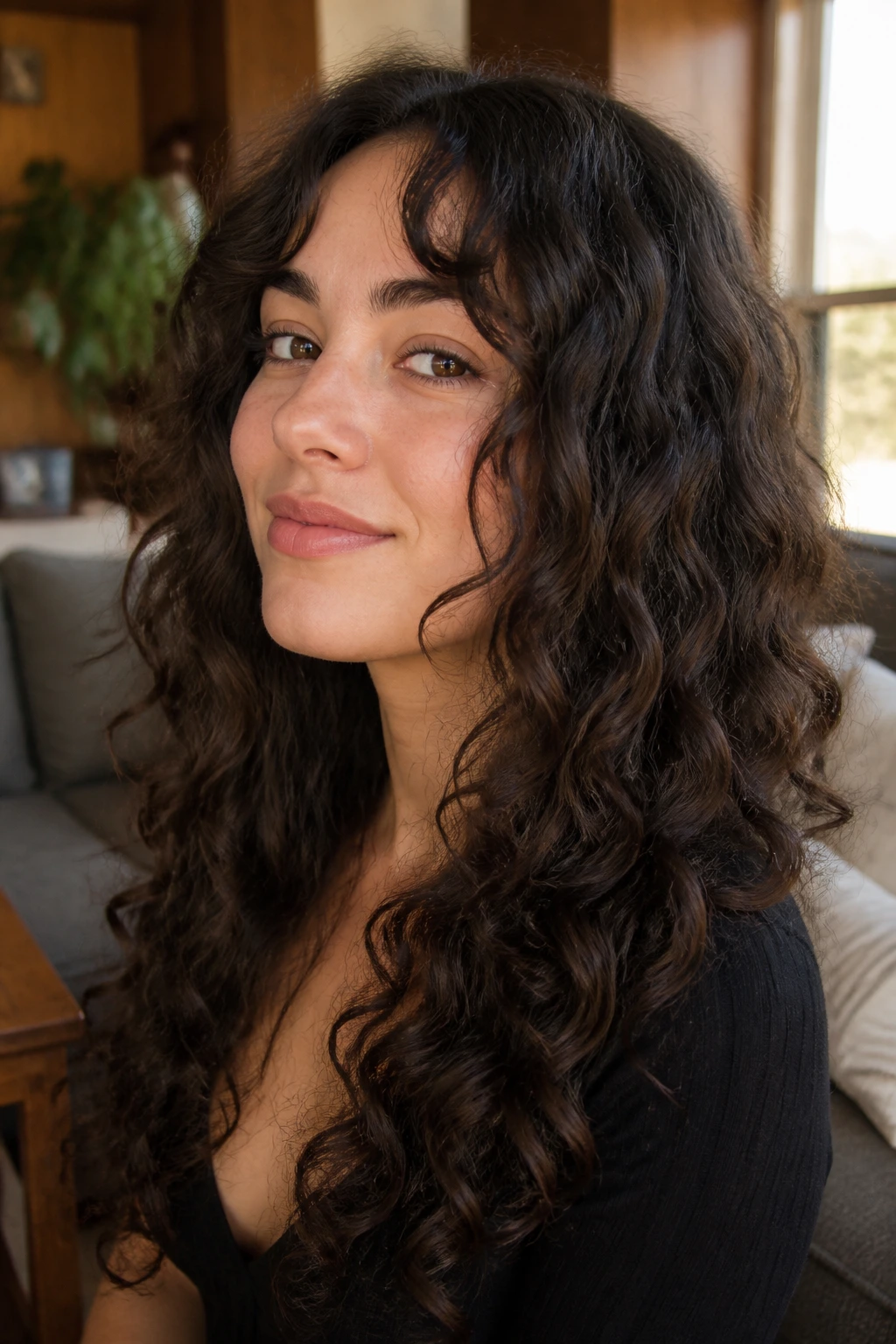
Long curls can work beautifully on a round face, but only if the layers start low enough to avoid bloating the sides. The safest place for the front pieces is usually below the cheekbone, often around the lip or chin, with the rest of the layers cascading down the length. That gives the eye a vertical line to follow instead of a wide one.
I’m a fan of this shape for people who like to wear their hair down and don’t want the haircut to fight their natural volume. The length helps the curls hang, and the lower layers keep the whole shape from turning into a triangle. Ask for a dry cut if your curls have a lot of spring. Wet hair lies. Curly hair tells the truth only after it dries.
Why it flatters round faces
The long front pieces pull the eye down along the face instead of stopping at the cheeks. That small shift matters more than people think. If the layers begin too high, the face can look even fuller.
This cut also handles grow-out well. A few months later, the shape still reads as deliberate because the lowest layers keep moving. If you like soft, romantic curls with some structure, this is one of the least fussy ways to get there.
2. Side-Swept Curtain Bangs with Shoulder-Length Curls

Curtain bangs are one of the few bang styles I trust on a round face when the curls are behaving. The key is length. The shortest point should usually land around the brow or just below it, then sweep out and down so the bangs split the forehead instead of cutting it into a wide band.
Shoulder length keeps the rest of the cut from feeling top-heavy. If the curls sit right at the shoulders, the outline stays soft but not boxy. This shape works especially well for wavy curls and looser ringlets that can bend without collapsing into a flat curtain.
What to ask for
- A center-ish part, not a hard off-center sweep.
- Bangs that reach beyond the cheekbone when dry.
- Light face framing that blends into the front curls instead of sitting as a separate section.
The best part? You can tuck the bangs behind the ears on lazy days and still keep the shape. No drama. No helmet effect. Just enough movement to make the face look a little longer.
3. The Collarbone Curly Lob
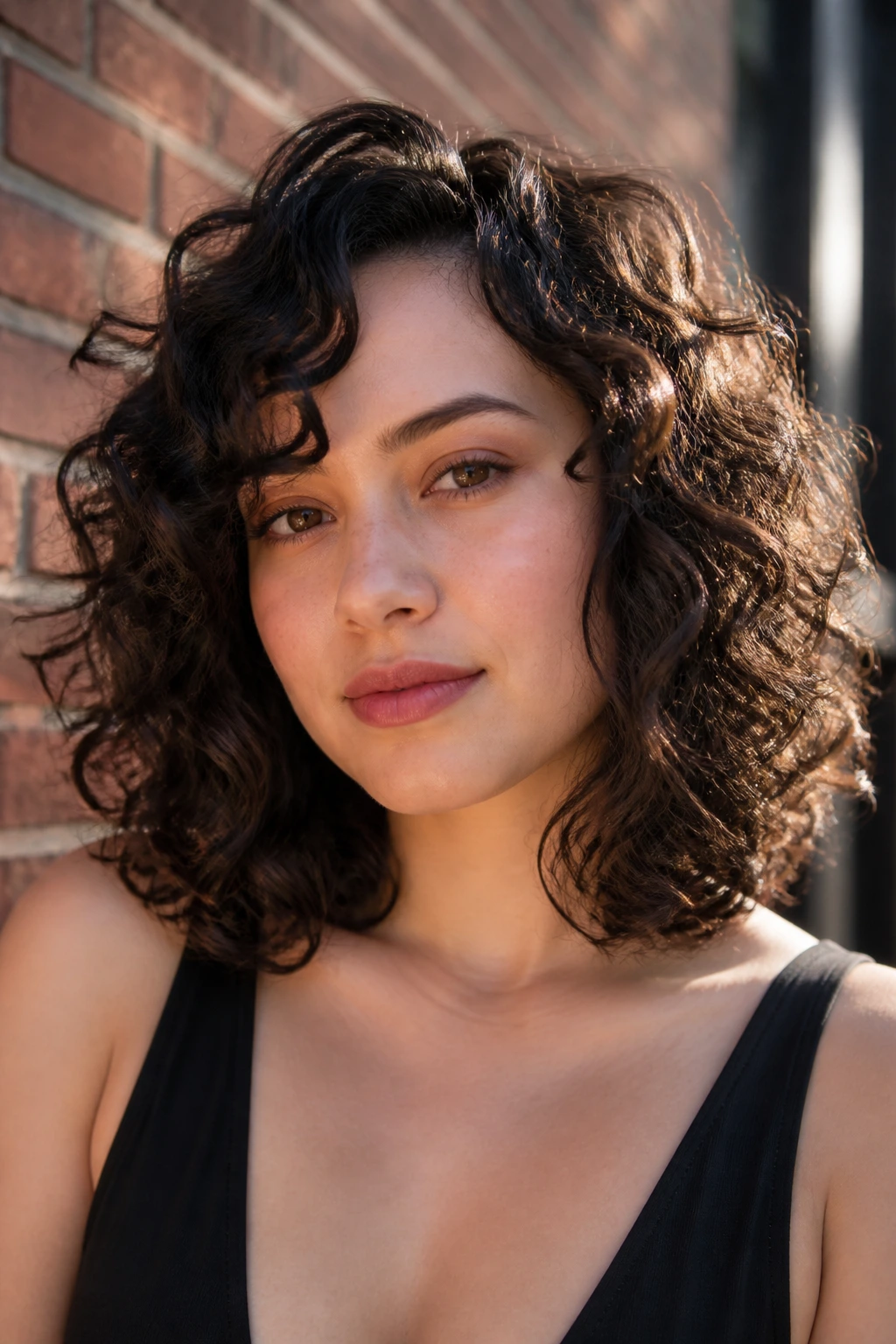
A collarbone lob is one of the safest bets for a round face because it lands below the widest point while still keeping enough shape around the face. The collarbone gives the hair a natural stopping place. Curls hit that bone, bounce, and settle in a way that looks intentional instead of chopped.
I prefer this length when the hair is medium to thick and the curl pattern has some spring. A lob that ends at the jaw can widen the face. A lob that falls a touch lower pulls the line down. That extra inch or two does more work than most people expect.
If you want the cut to feel current without losing softness, ask for internal layers rather than a blunt perimeter. The exterior can stay clean, while the inside removes the bulk that tends to puff at the sides. It’s a quiet fix, which is usually the good kind.
4. The Soft Curly Shag

A shag is not automatically wild. On a round face, the right shag can be the thing that finally stops the curls from spreading outward like a mushroom cap. The trick is to keep the crown fuller than the sides and let the front pieces fall in a broken, uneven way that nudges the eye downward.
This cut loves density. Thick curls can carry the layered texture without looking thin at the ends. Fine curls need more caution; too many short layers and the whole shape can fray. That’s where a stylist who understands curl pattern matters. The shag should feel airy, not shredded.
A soft shag also gives you a nice excuse to stop chasing symmetry. Good. Curls don’t owe anybody perfect balance.
5. A Rounded Curly Pixie with Height on Top
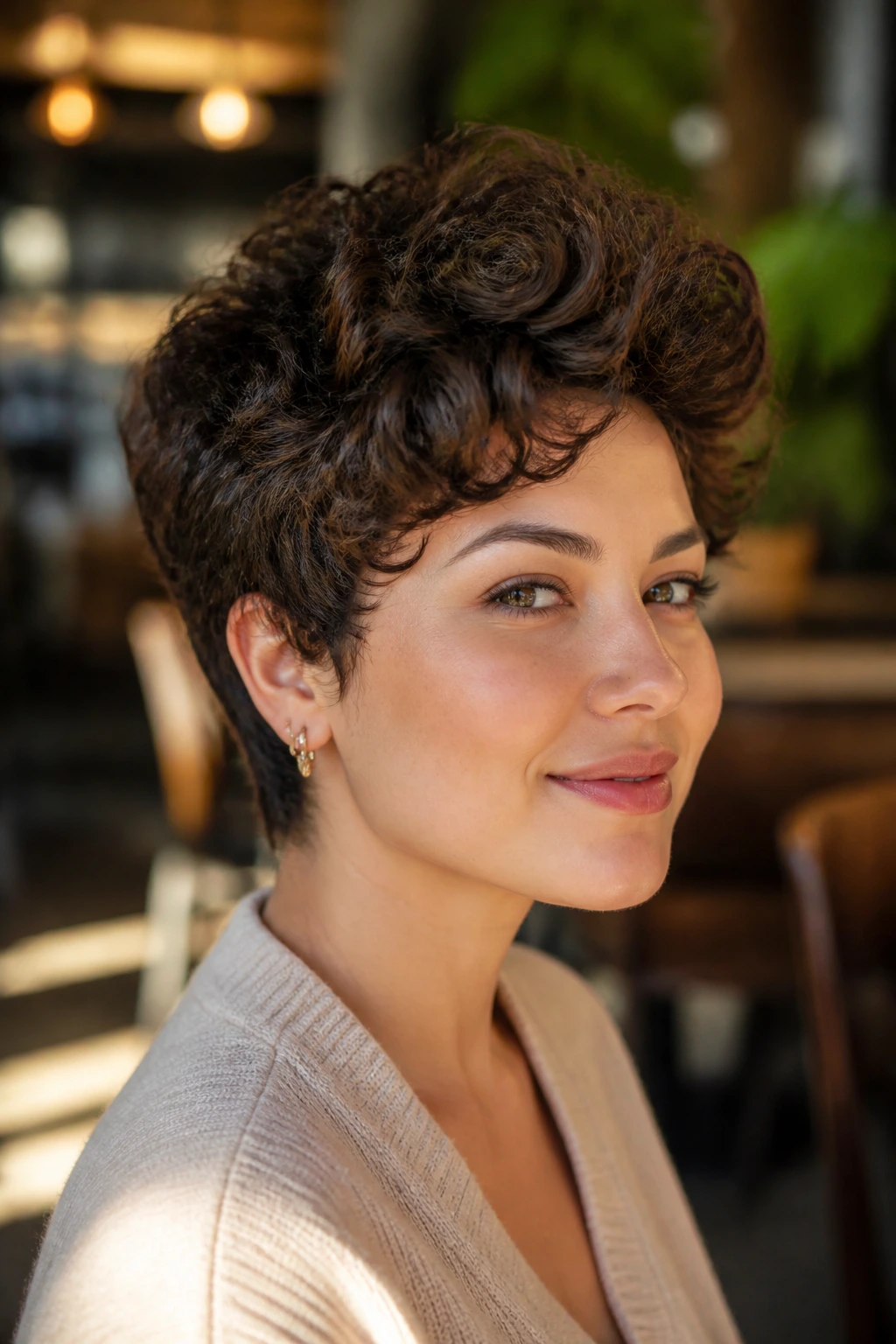
Short hair can work on a round face, but only when the top gets some lift. A curly pixie with height on the crown keeps the silhouette from spreading sideways. The sides and nape stay closer to the head, and the top does the visual stretching.
I like this on people who want their curls to look lively, not polished into submission. The shape should be narrow near the temples and fuller above the forehead. If the hairline is cut too evenly all around, the face can read wider. If the top is left too short, there’s nowhere for the curls to stand.
Ask for enough length on top to scrunch, twist, or diffuse upward. Three to four inches is often the difference between “cute” and “flat.”
6. The Tapered Cut with a High Crown
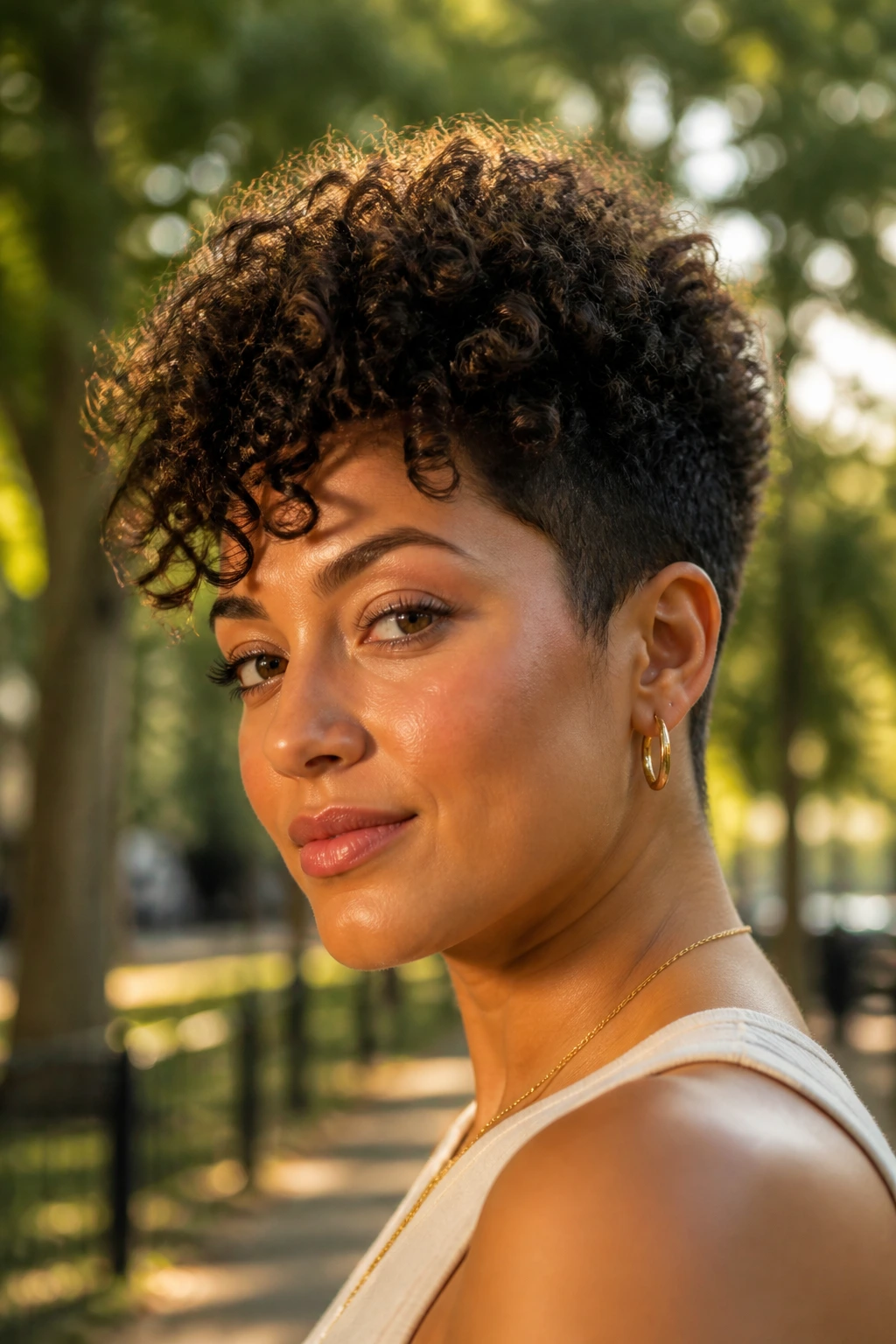
For coily textures, a tapered cut with a high crown is one of the smartest shapes around. The back and sides are kept tighter, while the top and upper front stay fuller. That pushes the silhouette upward and narrows the visual footprint around the cheeks.
This cut is especially good when the curls shrink a lot. A shape that seems modest when wet can bloom into a strong, lifted profile once it dries. The taper keeps the edges clean. The height keeps the face looking longer.
Best for
- Tight curls and coils with strong shrinkage
- Dense hair that gets bulky around the ears
- People who want a cut that looks sharp with minimal styling
The maintenance is a little more regular than longer cuts, but the payoff is real. A tapered shape can make a round face look more oval without pretending the hair is straighter than it is.
7. Face-Framing Waterfall Layers
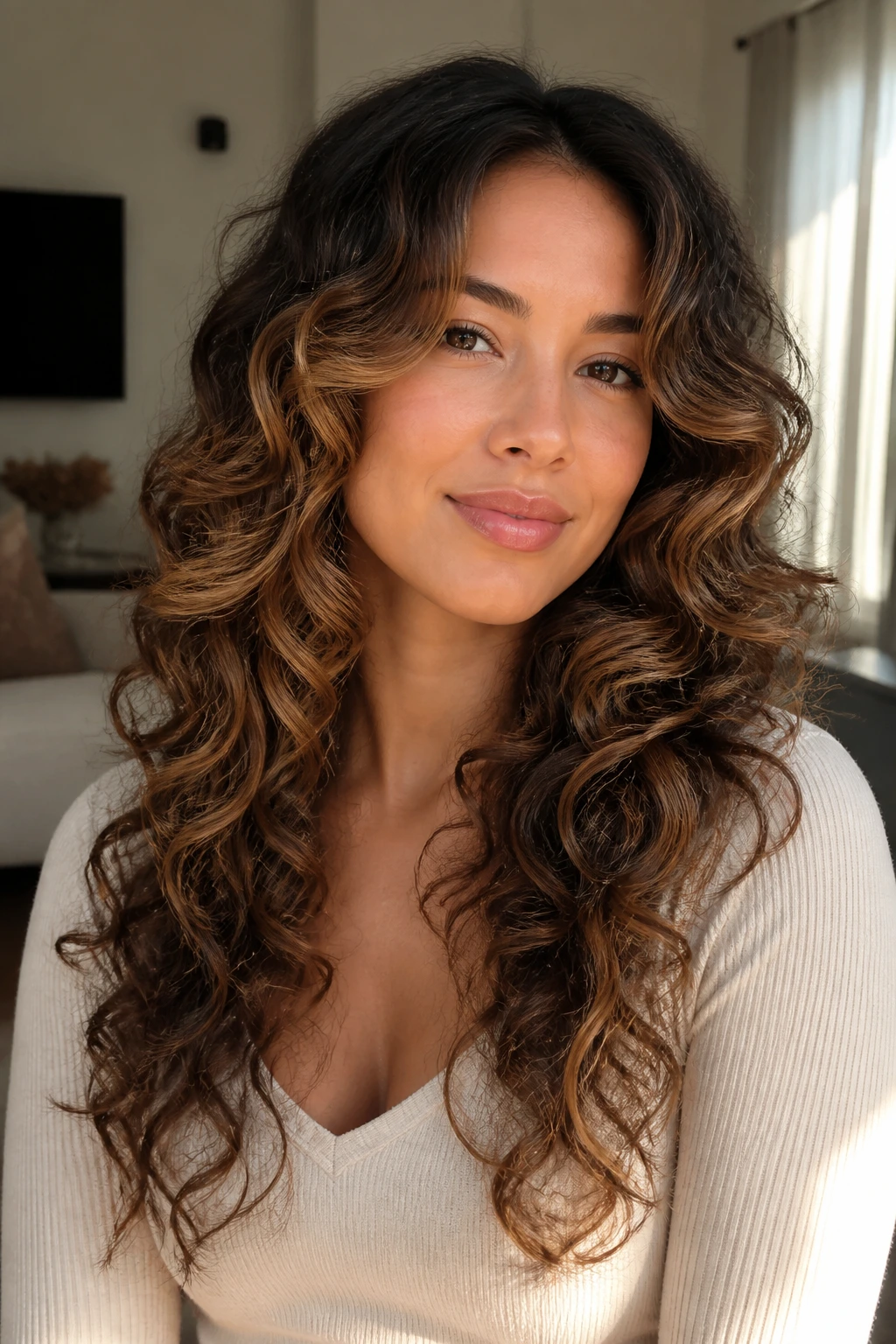
Waterfall layers are the ones that start in the front and disappear into the length like falling ribbons. On a round face, they work because they don’t stop at the cheek. They move past it. That’s the whole trick.
These layers are best when they begin around the mouth or chin, then blend down the front of the hair. They can be subtle or dramatic, but they should always create a downward sweep. If the front pieces are too short, they can create a shelf right where the face is widest. Not ideal.
I like this shape for long, loose curls that need some direction without losing softness. It’s one of those cuts that looks casual in the mirror and more deliberate in motion, which is the nice side effect of a good curl frame.
8. The Asymmetrical Curly Bob

An asymmetrical bob is a neat little trick for round faces because it breaks the circle. One side is slightly longer than the other, and that diagonal line cuts across the face in a way that feels sharp but not hard. Even a difference of one or two inches can change the whole silhouette.
This cut works best when the longer side skims the jawline or collarbone rather than stopping right at the cheeks. A side part usually helps, too. The deeper line shifts volume away from the center of the face and gives the curls a place to fall.
If you like a bob but hate the idea of looking boxy, this is one of the better answers. It has attitude. It also forgives uneven curl clumping far better than a blunt, perfectly even shape.
9. The Dry-Cut Deva Shape
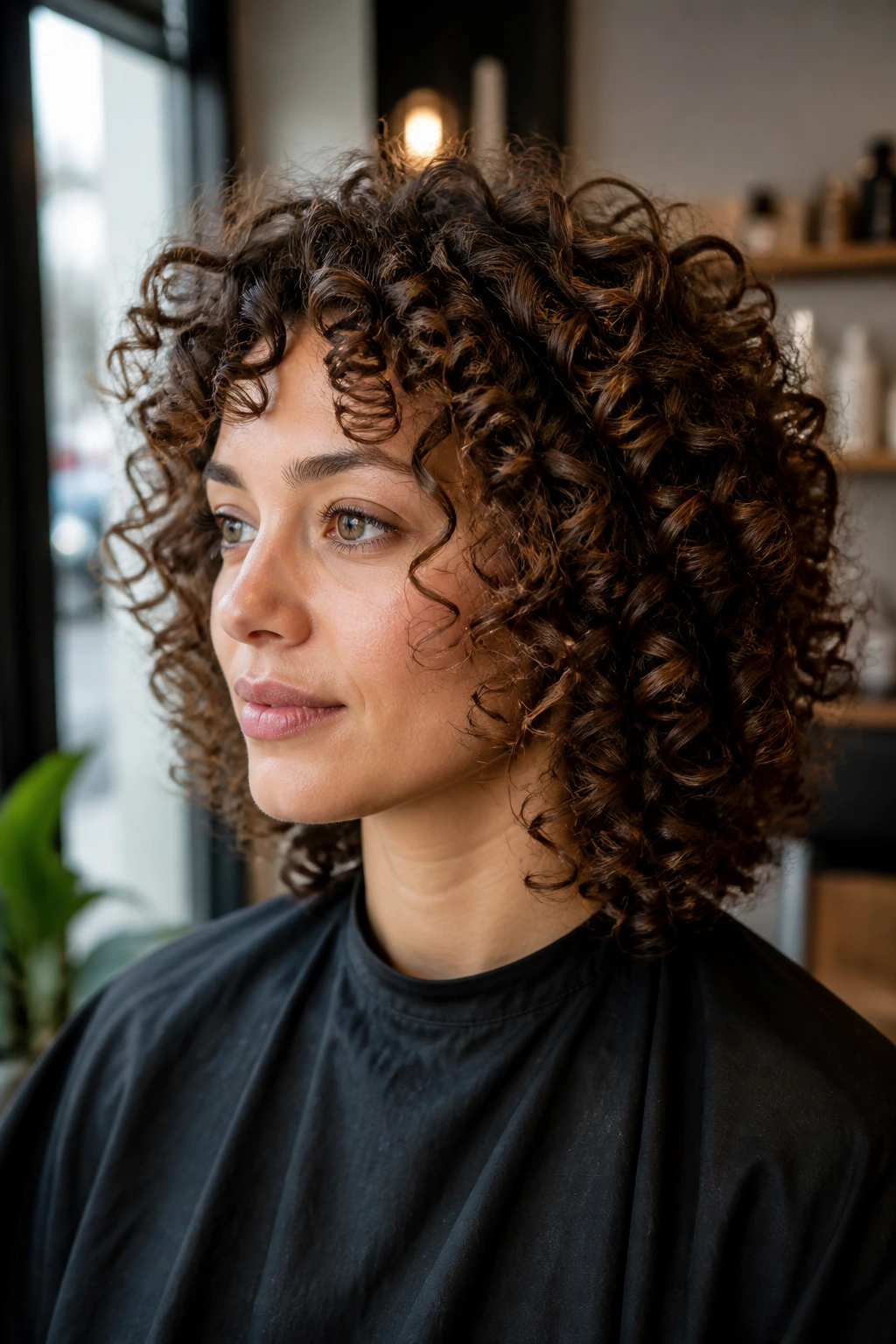
A Deva-style cut is built curl by curl, which is exactly why it can work so well on a round face. The stylist sees where each ringlet sits when it’s dry, then shapes around that natural fall. That means less guessing about shrinkage and less risk of a blunt line sitting across the widest part of the face.
The point is not to create perfect symmetry. The point is to respect the curl pattern while trimming the areas that add width where you do not want it. A good dry cut can remove bulk around the cheeks, leave lift at the crown, and keep the ends from looking heavy.
This is the style I’d trust if your curls grow in different directions or if your density changes from one side of your head to the other. That kind of texture needs observation, not a cookie-cutter shape.
10. Shoulder-Length Curls with an Off-Center Part

A slightly off-center part does more than people think. It nudges the volume off the middle of the face and creates a vertical line that feels softer than a hard side part. On round faces, that subtle shift can make the entire haircut look less symmetrical in the best way.
Shoulder length gives the curls enough weight to hang. If the cut is too short at this part, the volume can push outward instead of down. A few well-placed face-framing layers keep the front from feeling heavy.
This is the haircut for someone who wants a low-maintenance shape that still looks thought-out. It is not flashy. It just works, and sometimes that’s better than a cut with a big personality that needs perfect styling every morning.
11. The Soft-Wolf Curly Cut
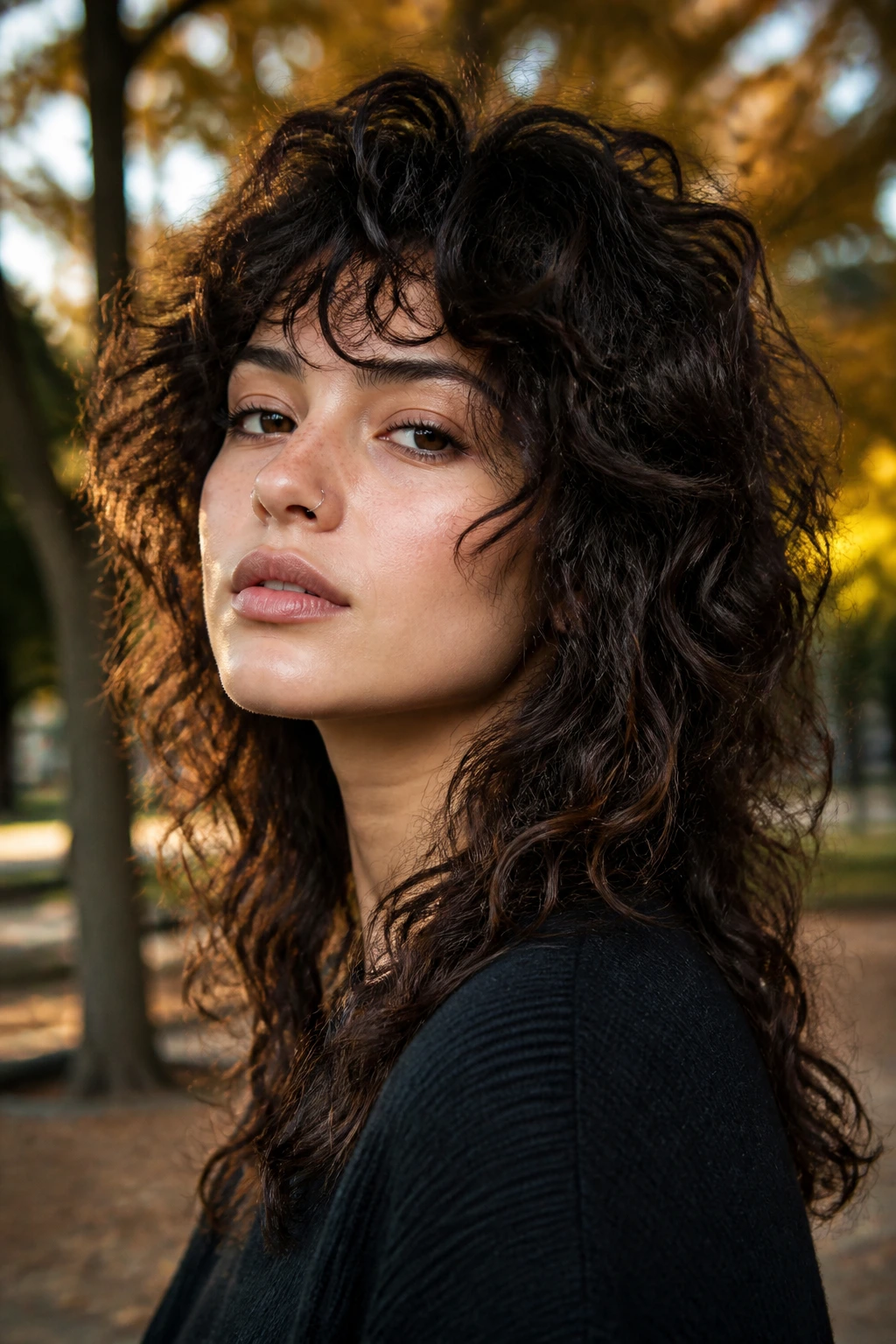
The wolf cut can be too much on a round face if it’s pushed into a harsh, mullet-heavy shape. The softer version is better. Keep the crown lifted, let the layers break up the outline, and avoid creating a bulky wall at the cheek level.
The good version of this cut feels shaggy but controlled. Shorter layers near the top add movement, while longer front pieces keep the face from looking wide. The outline should be broken, not choppy for the sake of being choppy.
I’d choose this when the curls are thick and a little unruly in the nicest possible sense. The shape actually benefits from some mess. If your hair wants to expand, you may as well give it a shape that uses that energy instead of fighting it.
12. The Chin-Length Curly Bob with a Side Fringe
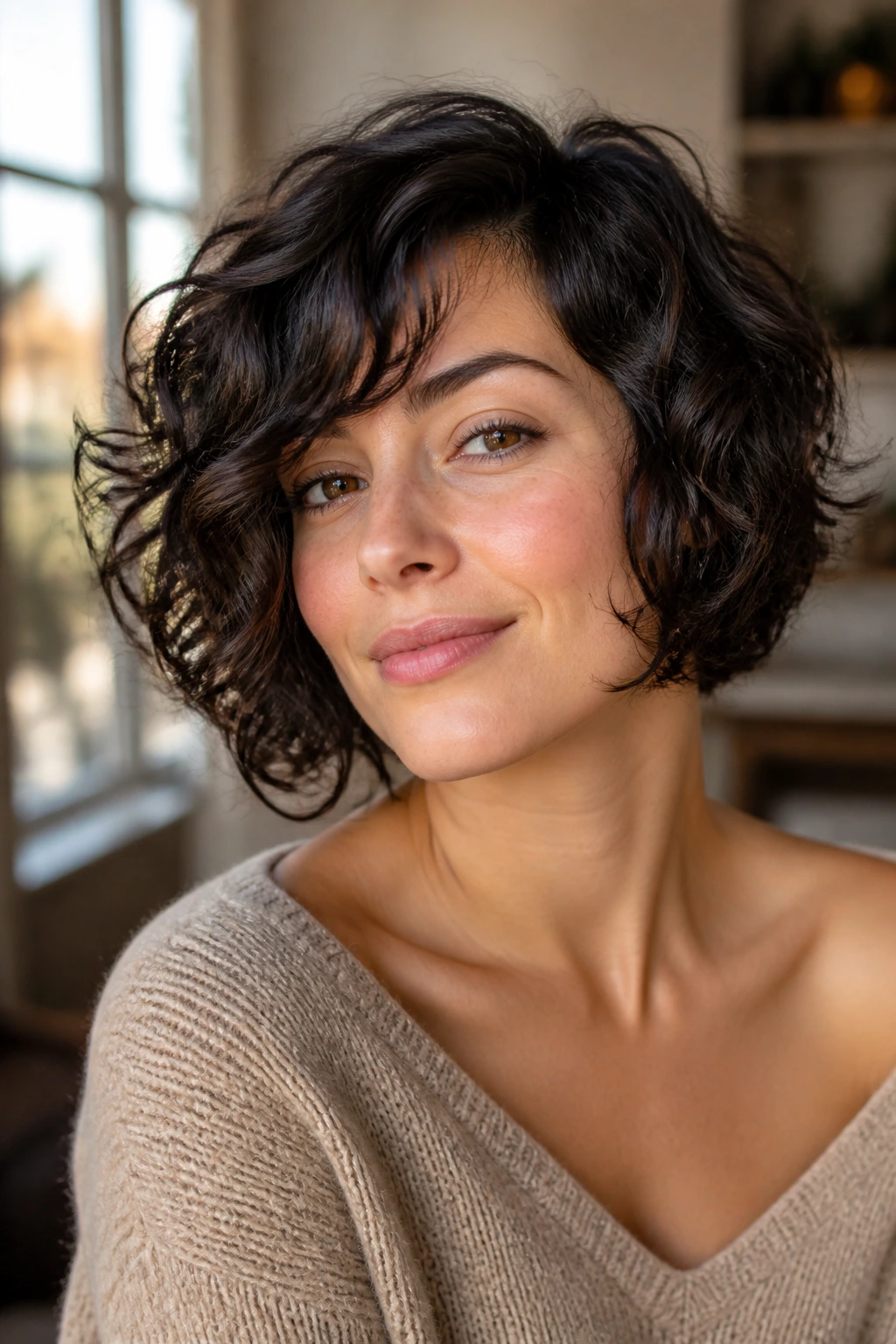
A chin-length bob is a risky one on a round face, but it can work if the shape is tilted and the fringe is handled with care. The danger is obvious: a straight bob that ends right at the jaw can widen the face. The fix is to keep one side a touch longer, add a side fringe, and let the front bend forward instead of out.
This is a good choice for looser curls that can tuck into shape without turning into a puff. The fringe should not sit flat across the forehead. It should sweep and break up, leaving some forehead visible. That keeps the look light.
I like this cut best when the person wants shorter hair and does not mind a bit of styling. It is not a lazy haircut. It does reward a good diffuser and a light hand with product.
13. Long Curls with Invisible Internal Layers
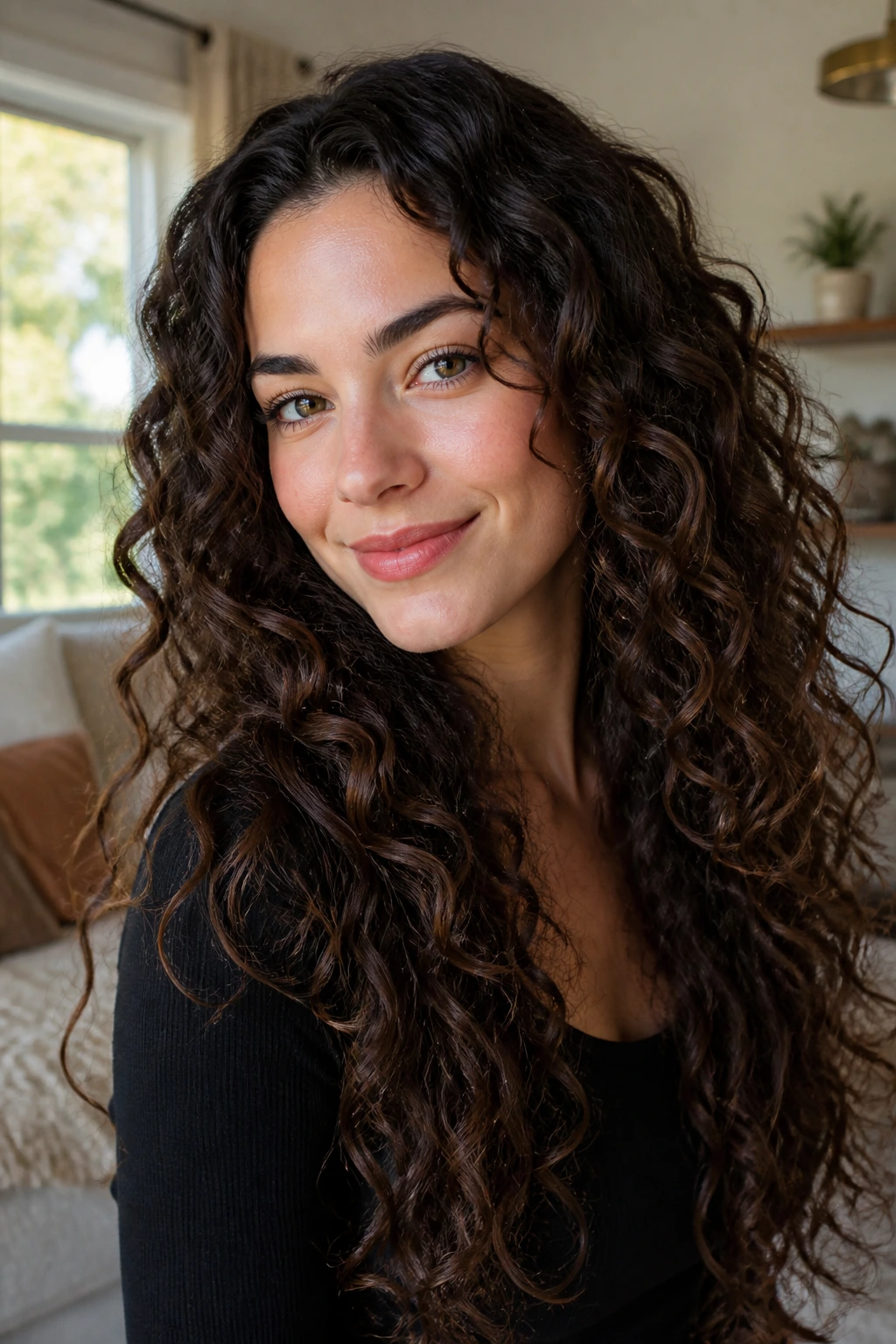
Invisible layers are exactly what they sound like: layers you feel more than you see. They remove weight inside the haircut so the outside stays smooth. On a round face, that matters because you can keep length and movement without turning the outline ragged.
This is a smart option for people who like the visual length of long hair but hate the way heavy ends can drag the curls outward. Internal layers help the curls stack better on themselves, which creates a slimmer line near the sides. The face looks longer because the hair follows a cleaner fall.
If you’ve ever had long curls that looked good from the back and bulky from the front, this is the fix I’d reach for first. It’s a quiet haircut, but the shape changes are real.
14. The Rounded Afro with Lift at the Top
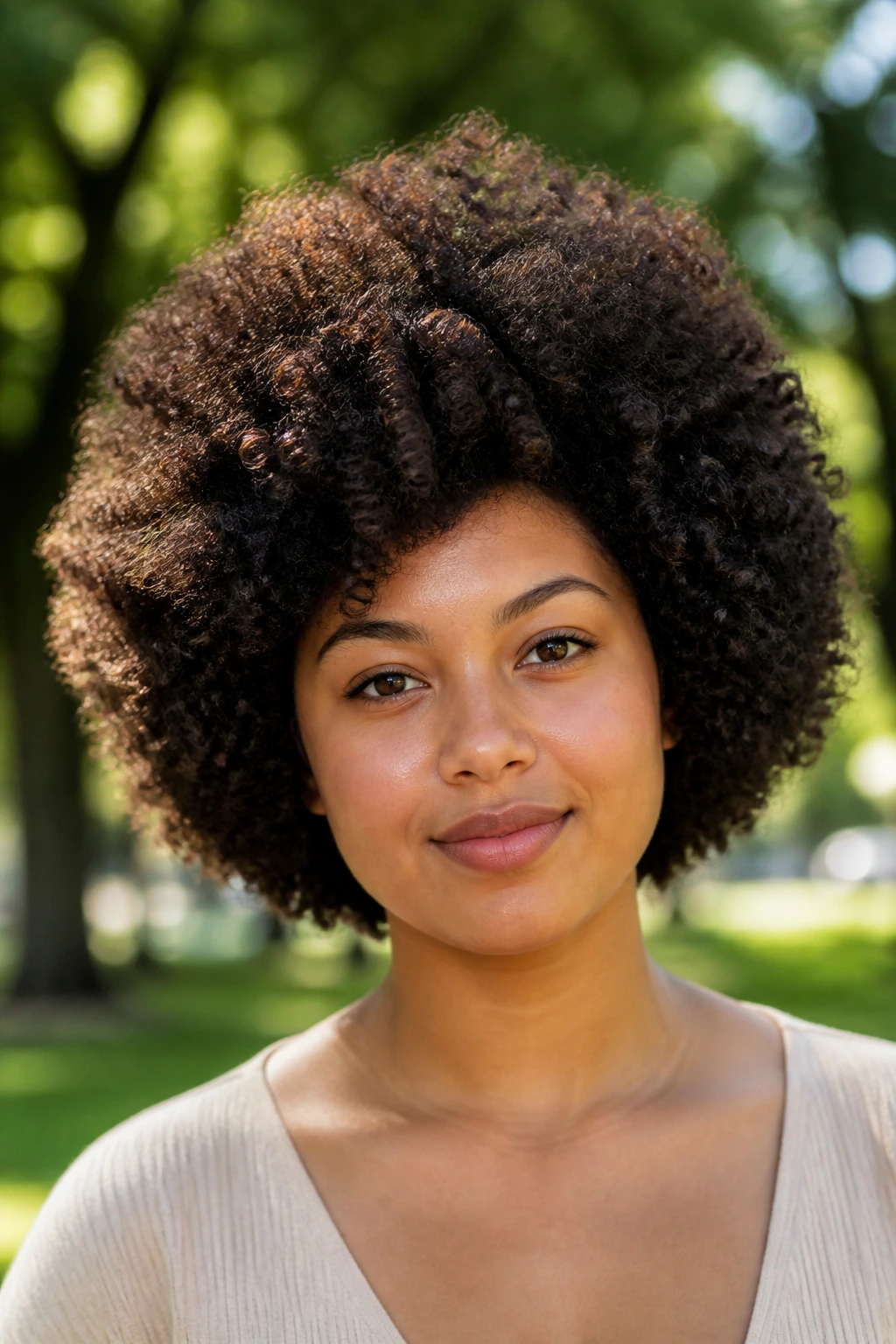
A rounded afro can absolutely flatter a round face if the width is controlled and the height is intentional. The mistake is making the shape equally wide all around. The better version leans upward, with the top and upper front carrying more presence than the sides.
This cut is gorgeous when it’s shaped like a soft dome with purpose, not a perfect ball. Tapering around the temples and sides keeps the face visible. Leaving more lift above the forehead adds that longer line round faces need.
The shape also wears beautifully with minimal fuss if the coil pattern is healthy and hydrated. A light pick at the roots, a bit of stretch at the crown, and the whole silhouette wakes up fast. Simple. Effective.
15. The Soft Curly Mullet

Yes, really. The soft curly mullet can work on a round face because the short-to-long shift breaks the width around the cheeks. The front and top stay lighter, while the back carries more length. That contrast creates a vertical read instead of a broad one.
The key word is soft. You want a gentle transition, not a hard retro wedge. The front should still frame the face, and the back should fall enough to keep the cut from feeling like a novelty. Curls make the whole thing less severe, which helps.
I’d choose this for someone who likes a little edge and does not want a haircut that blends into the crowd. It is one of the easiest ways to get shape without pushing every curl outward.
16. Collarbone Length with Internal Debulking
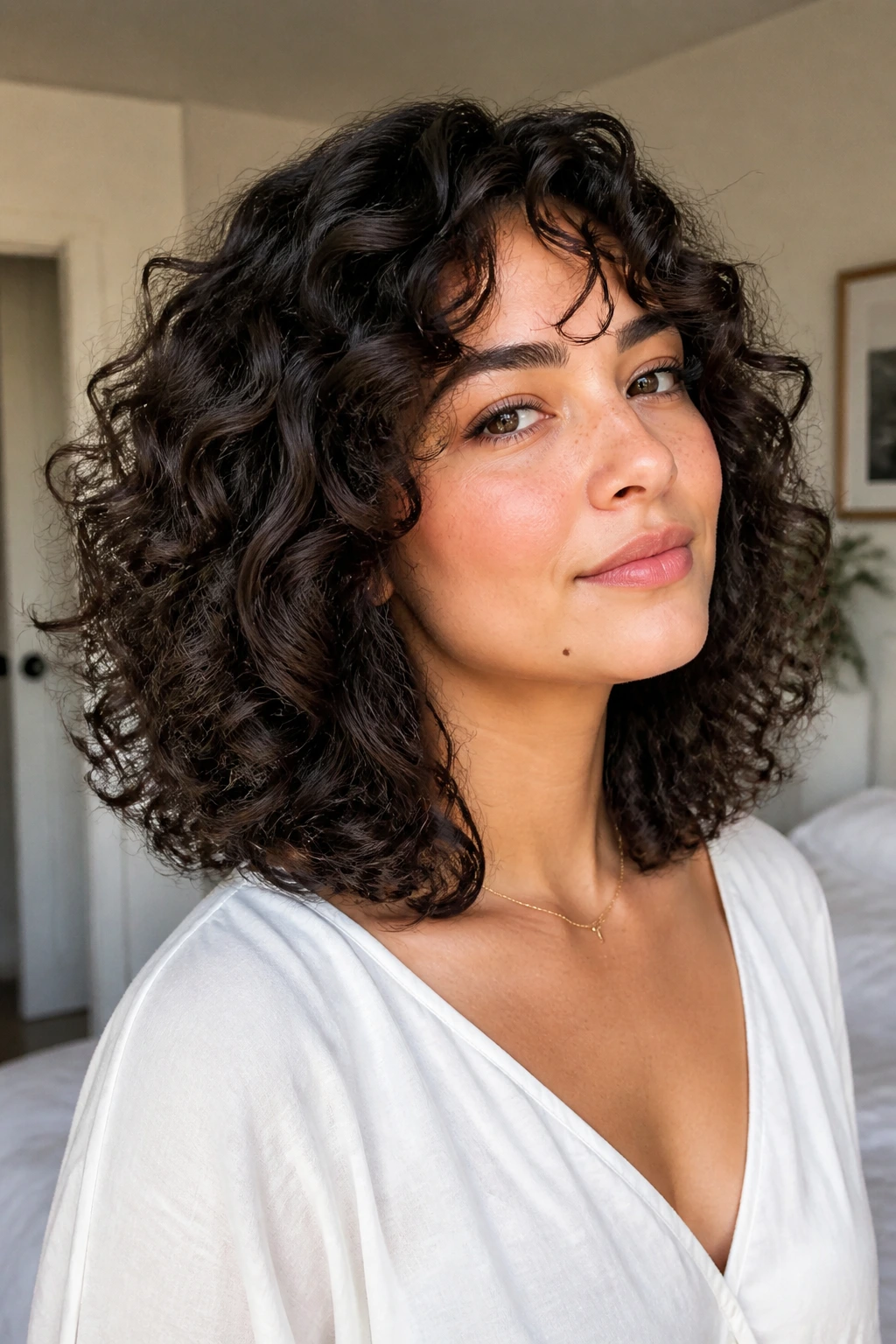
Sometimes the best answer is not more layers. It’s smarter layers. A collarbone cut with internal debulking keeps the outline soft while taking out the heavy underside that makes curls sit wide around the jaw and cheeks.
This works especially well for thick hair that expands in humidity. The outer shape can stay clean and full, while the hidden removal of bulk lets the curls stack more vertically. The result is less puff, more flow.
I prefer this cut when someone wants movement but not a shag. It’s a calmer, more polished shape. If your hair tends to overwhelm your face by the end of the day, this is one of the few cuts that can reduce that feeling without making the curls look thin.
17. Mid-Length Curls with Bottleneck Bangs
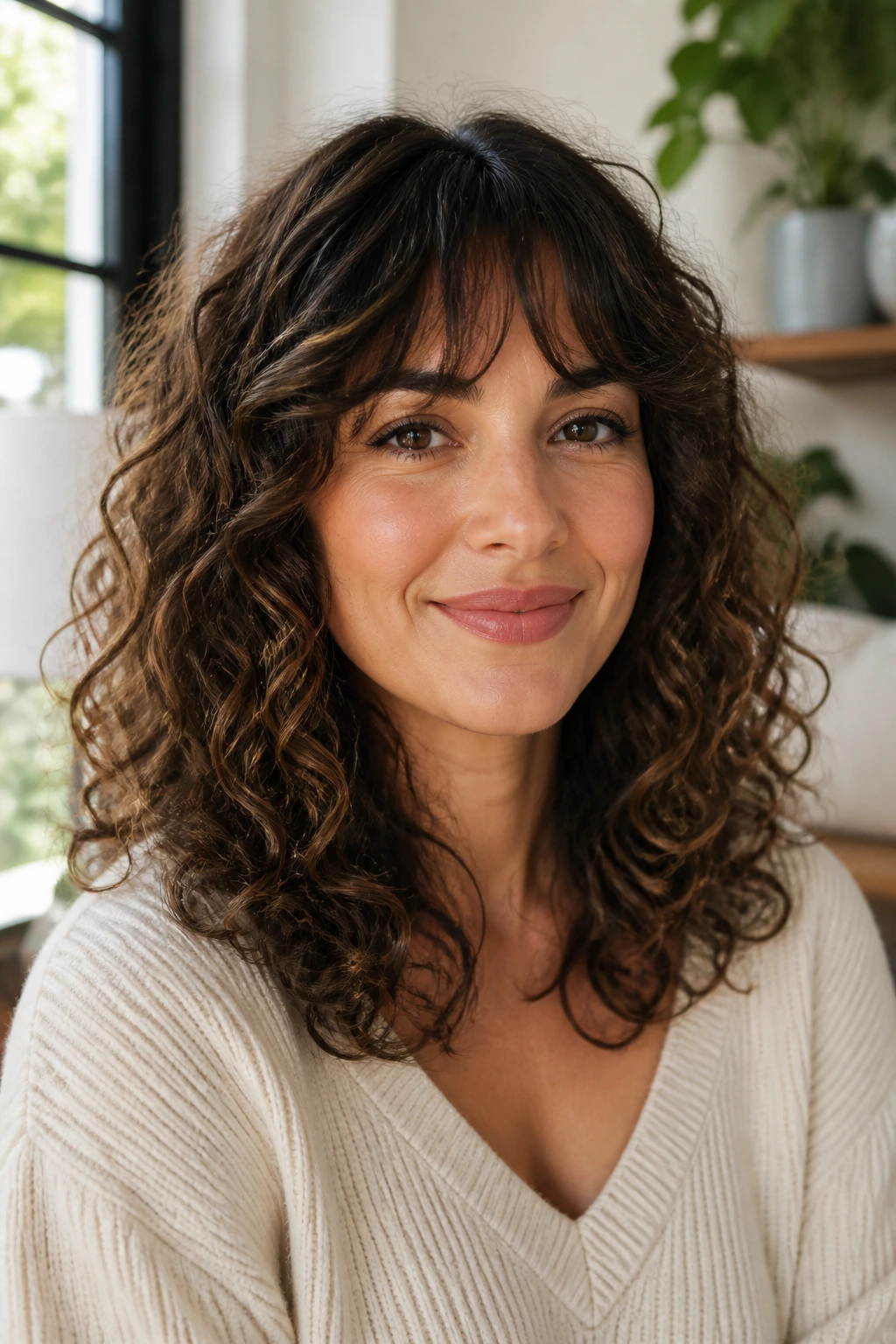
Bottleneck bangs are a smart middle ground for a round face because they stay narrow at the top and open out as they fall. That shape keeps the forehead from being swallowed by one solid fringe. It also draws the eye down the center before the curls open to the sides.
The rest of the cut should sit around mid-length, usually between the shoulders and collarbone. That balance keeps the bangs from feeling too heavy. If the fringe is too thick, the face can look shorter. If it’s too short, the whole thing can feel abrupt.
This is one of my favorite options for people who want bangs but hate the feeling of a blunt line across the face. Bottleneck bangs bend. That’s why they work.
18. Curly Hair with Angled Front Pieces
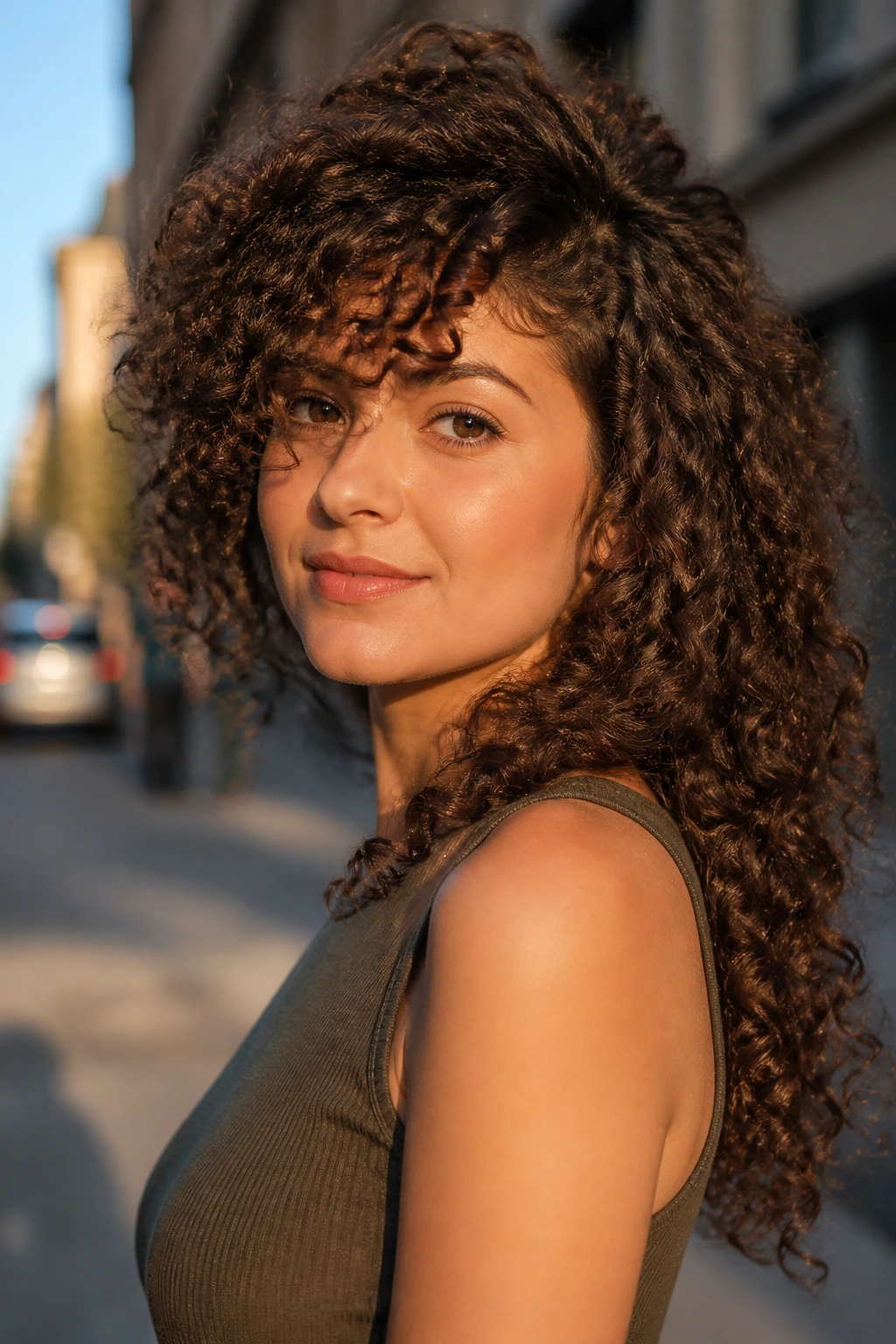
Angled front pieces create a diagonal path, and diagonal lines are your friend on a round face. The shortest front piece sits higher, then the hair lengthens toward the back. That slope makes the face look a touch longer and keeps the eye moving.
This cut can live at almost any length, from a bob to a long layer shape. What matters is the angle. A steep angle can feel dramatic; a soft one feels more wearable. I usually prefer the softer version because curls already bring plenty of movement.
If you want something that looks polished without being stiff, this is a solid choice. It gives you shape in the front and weight where the curls can still bounce in the back.
19. A High-Volume Crown Shape
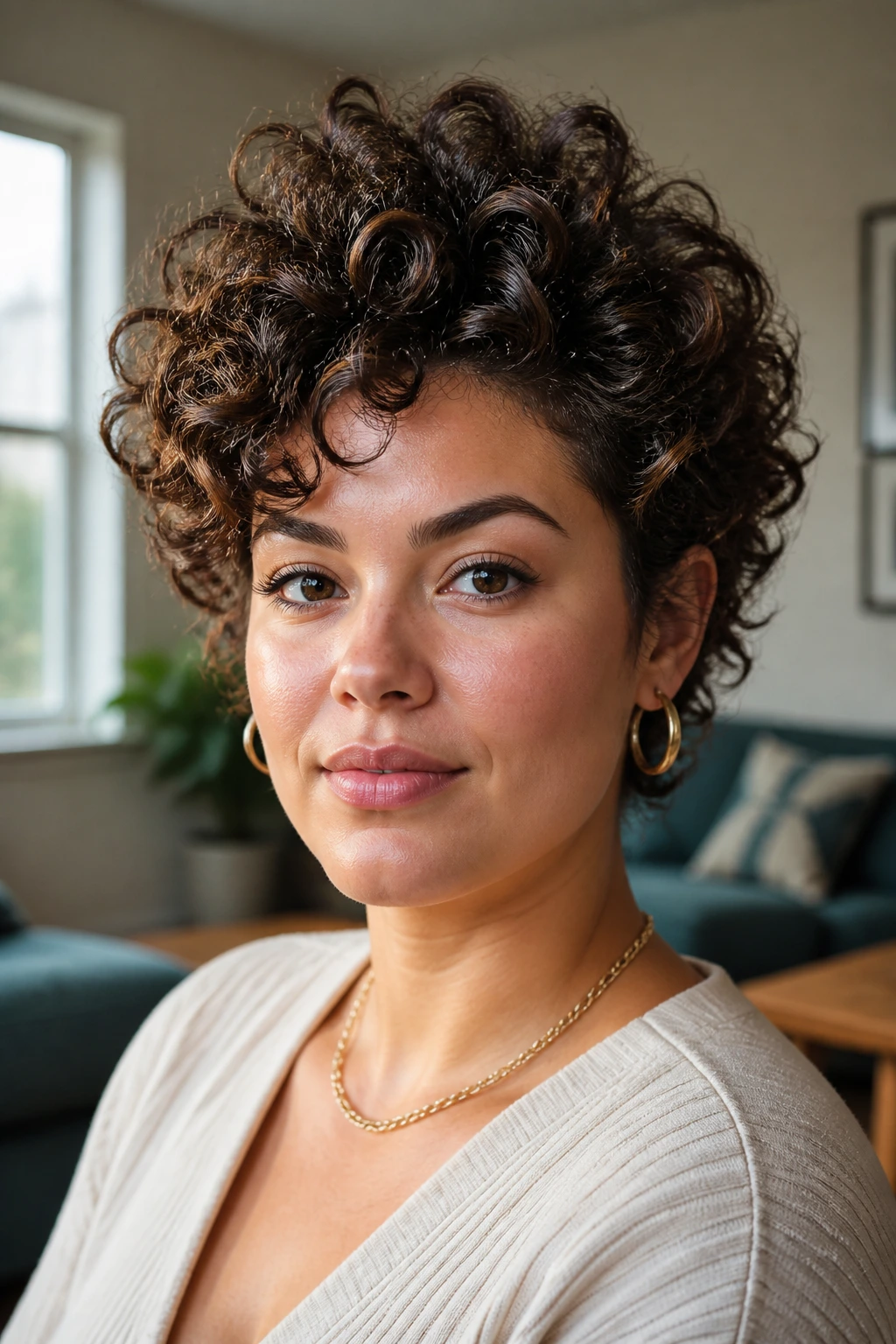
Some round faces do better with height than with length, and this cut leans into that. The crown stays full and lifted, while the sides are shaped narrower so the overall silhouette stretches upward. It can be done on short, medium, or longer hair.
This is especially useful if your hair naturally collapses flat at the roots. Once the crown goes flat, curls often spread sideways. A good crown shape fixes that by building root lift into the cut, not just the styling routine.
I like this best on hair with strong texture and a decent amount of density. The shape needs enough body to hold itself up. If it works, though, the effect is immediate. The face looks longer before you even finish diffusing.
20. Layered Curls with a Deep Side Sweep

A deep side sweep can be dramatic or subtle depending on where you place it. On a round face, the main benefit is that it shifts volume and gives the forehead a diagonal line. That’s useful because it interrupts the symmetry that can make the face feel wider.
Layering the hair to support that part matters. You need enough length on the heavier side so the curls can fall instead of jutting out. The sweep should look like it belongs to the cut, not like you’re forcing hair to one side and hoping for the best.
This style is a good answer for people who want a face-framing effect without bangs. It works with loose curls, coily textures, and everything in between if the part is placed with care.
21. The Curly French Bob

A French bob on a round face needs a little caution and a little nerve. The cut is shorter, but the curls keep it from feeling severe. The sweet spot is usually just below the cheekbone or around the mouth, with a soft edge and a bit of bend in the front.
If the bob lands too high, it can widen the face. If it has a blunt line with no movement, it can feel boxy. The curly version solves part of that by creating natural irregularity. Add a side part or a soft fringe and the shape becomes much friendlier.
I like this cut for someone who wants short hair with a little charm. It is not trying to be sleek. It is trying to look alive.
22. Triangle-Softening Layers for Dense Curls
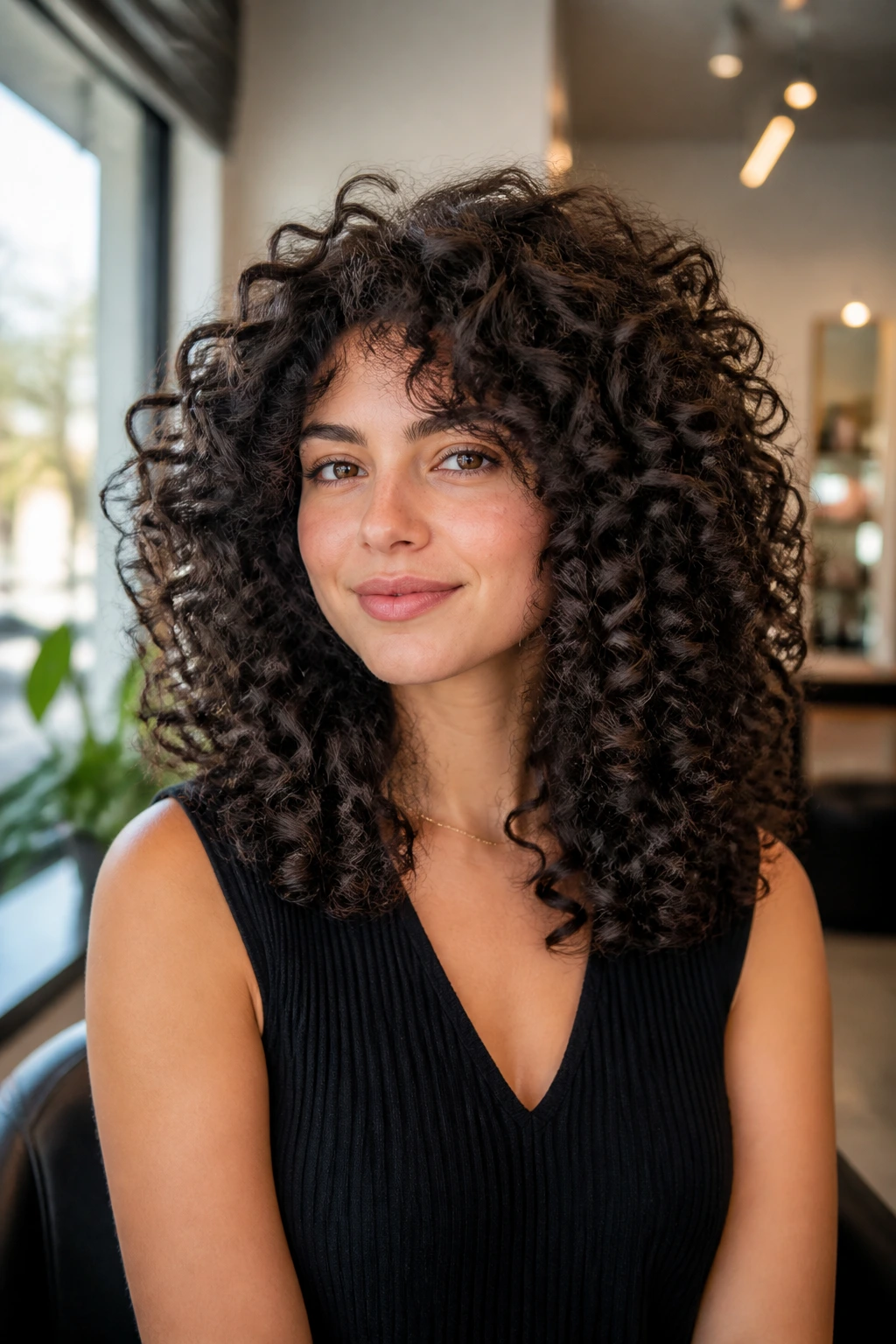
Dense curls often grow wider at the bottom, which can create that triangular shape nobody asks for. Round faces already carry fullness through the middle, so a bottom-heavy cut can be a bad match. Triangle-softening layers remove weight from the lower bulk and redistribute it higher up.
The cut should not be thinned to death. That’s the mistake. You want enough fullness to keep the hair from looking sparse at the ends, but you do want the interior shape to stop pushing outward. This is a balancing act, not a massacre.
If your curls balloon at the shoulders, this is one of the most practical fixes on the list. It restores shape without stripping away the texture that makes curly hair good in the first place.
23. Shoulder-Skimming Curls with a Long Fringe
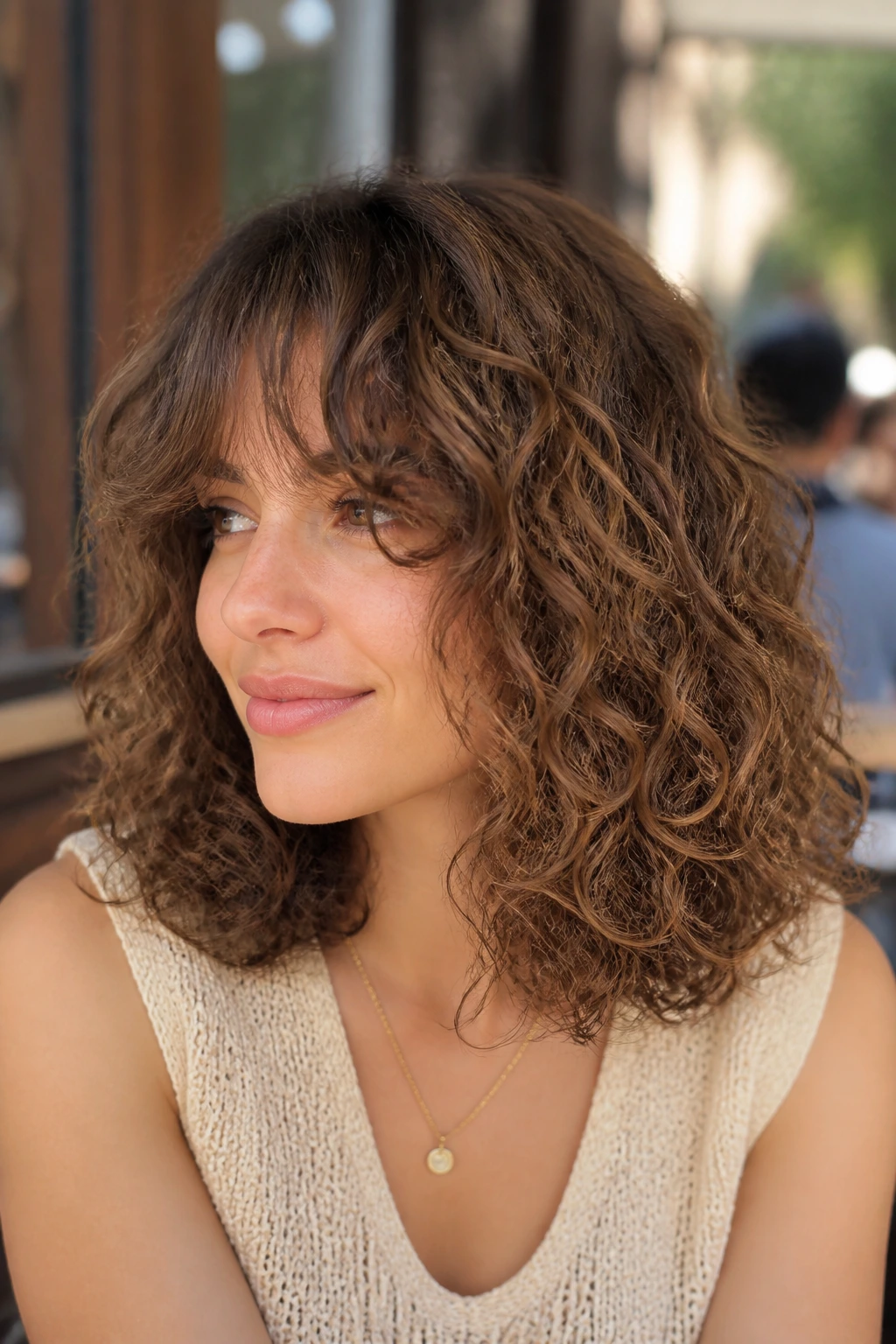
A long fringe can do a lot of useful work on a round face because it breaks the forehead line and keeps the curls from expanding around the temples. Shoulder-skimming length helps the rest of the hair stay below the fullest point of the face. Together, they create a long, soft outline.
The fringe should stay light and layered, not thick and heavy. Heavy bangs can close the face in fast. A long fringe that parts easily and mixes into the front curls feels much better. It also grows out without looking awkward, which I appreciate more than flashy haircuts that need babysitting.
This shape is a nice compromise for someone who wants fringe but not a full bang commitment. That’s a real category, by the way. Most people live there.
24. Face-Framing Ringlet Placement
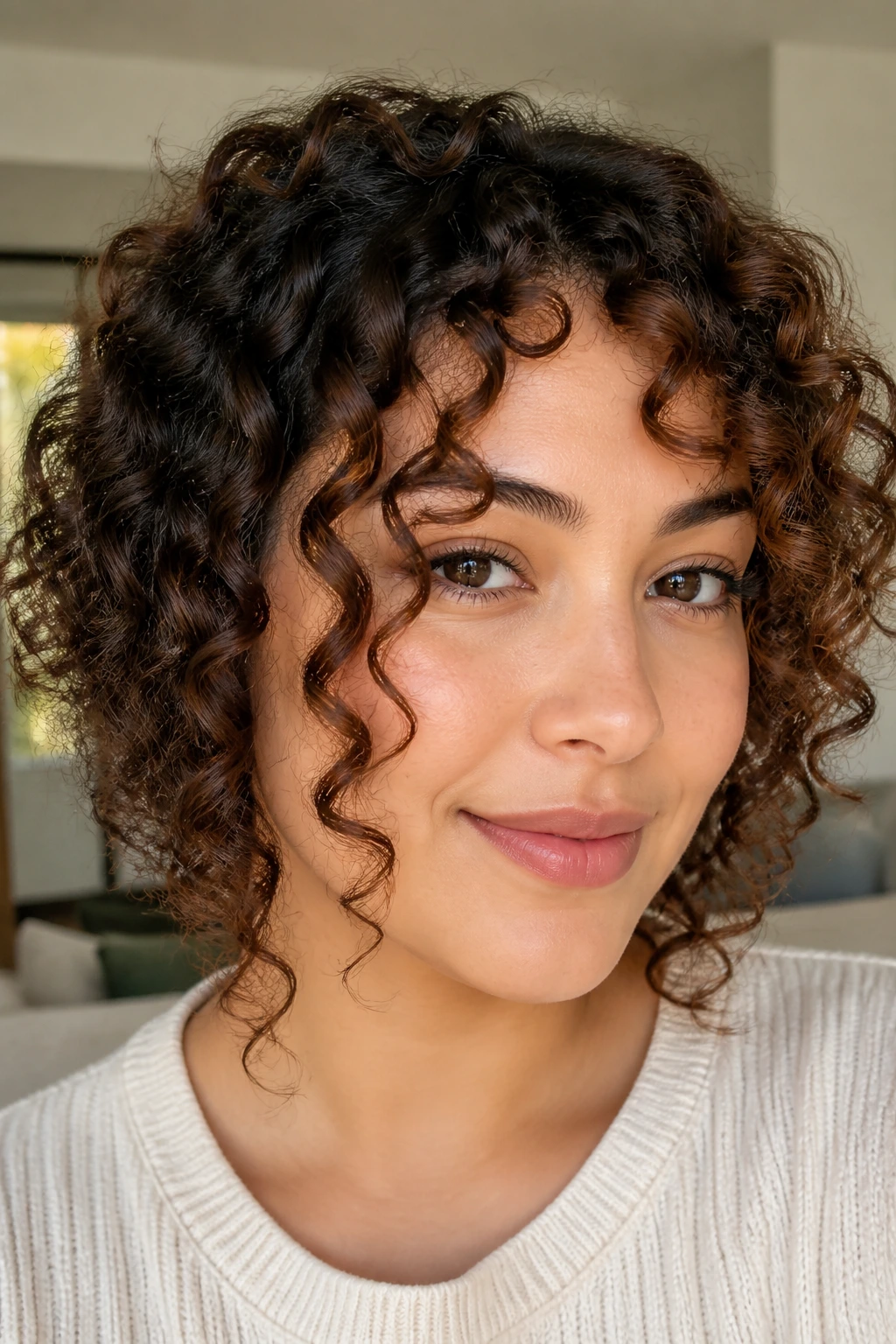
Some haircuts are not about one dramatic shape. They’re about where each front ringlet lands. That’s the case here. A face-framing ringlet cut uses the natural curl pattern to create vertical pieces around the cheek and jaw instead of one wide curtain.
This works best when the stylist cuts the front curls individually in their dry state. Each curl can be placed a little lower or a little higher depending on how it springs. The aim is to keep the face open while still adding softness around the edges.
I love this approach for people with strong ringlets who hate seeing their curls chopped into one blunt frame. The haircut looks personal because it is personal. No two front curls land the same way, and that is the point.
25. The Graduated Curly Bob
A graduated bob gets slightly shorter in the back and longer in the front, which helps a round face by creating movement that angles down and forward. It gives shape without making the cut feel harsh. The front pieces can sit at the jaw or just below it while the back stays neatly lifted.
This cut works better when the layers are subtle. Too much graduation and the shape can turn too angular. You want a gentle slope, not a sharp shelf. Curls do not need much help looking interesting, so the haircut should support them, not compete.
It’s a solid choice for someone who wants a bob that feels a little more tailored than a blunt one. The angle does the flattering work quietly.
26. The Stacked Curly Bob
A stacked bob builds volume in the back, which can be useful if the face needs lift rather than width. The rear layers are shorter and rounder, while the front keeps more length. That gives the head shape, but keeps the front from sitting too close to the cheeks.
I’d only use this one with a stylist who knows how to place stack carefully on curls. Too much stacking can make the crown puff and the sides flare. Done right, though, it creates a neat, lifted silhouette that looks clean from every angle.
This is the cut for someone who likes structure. It is not floppy. It has bones.
27. Long Curly Hair with a U-Shaped Back
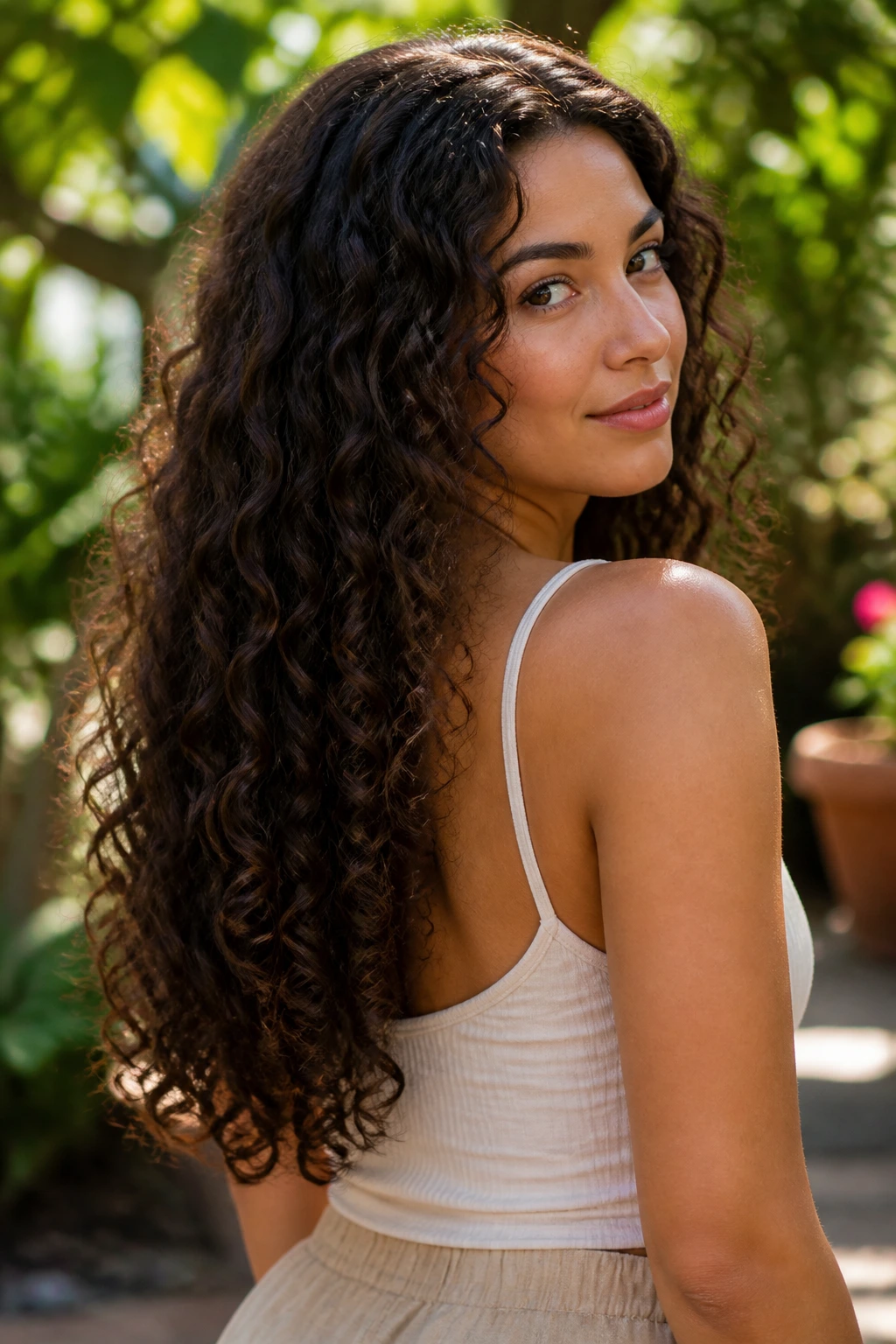
A U-shaped back keeps the center of the length slightly longer than the sides, which can be a useful trick on a round face. The eye follows the soft dip downward, and that helps the silhouette feel longer. The sides still have movement, but they do not end in a blunt wall.
This shape is especially nice on long hair that needs some order without losing softness. The front pieces can still be face-framing layers, while the back carries the longest point. That balance keeps the whole haircut from feeling flat.
If you like long curls but hate one-length heaviness, this is a practical middle path. It gives you shape without turning the cut into a full shag.
28. A Diagonal Part with Curly Layers
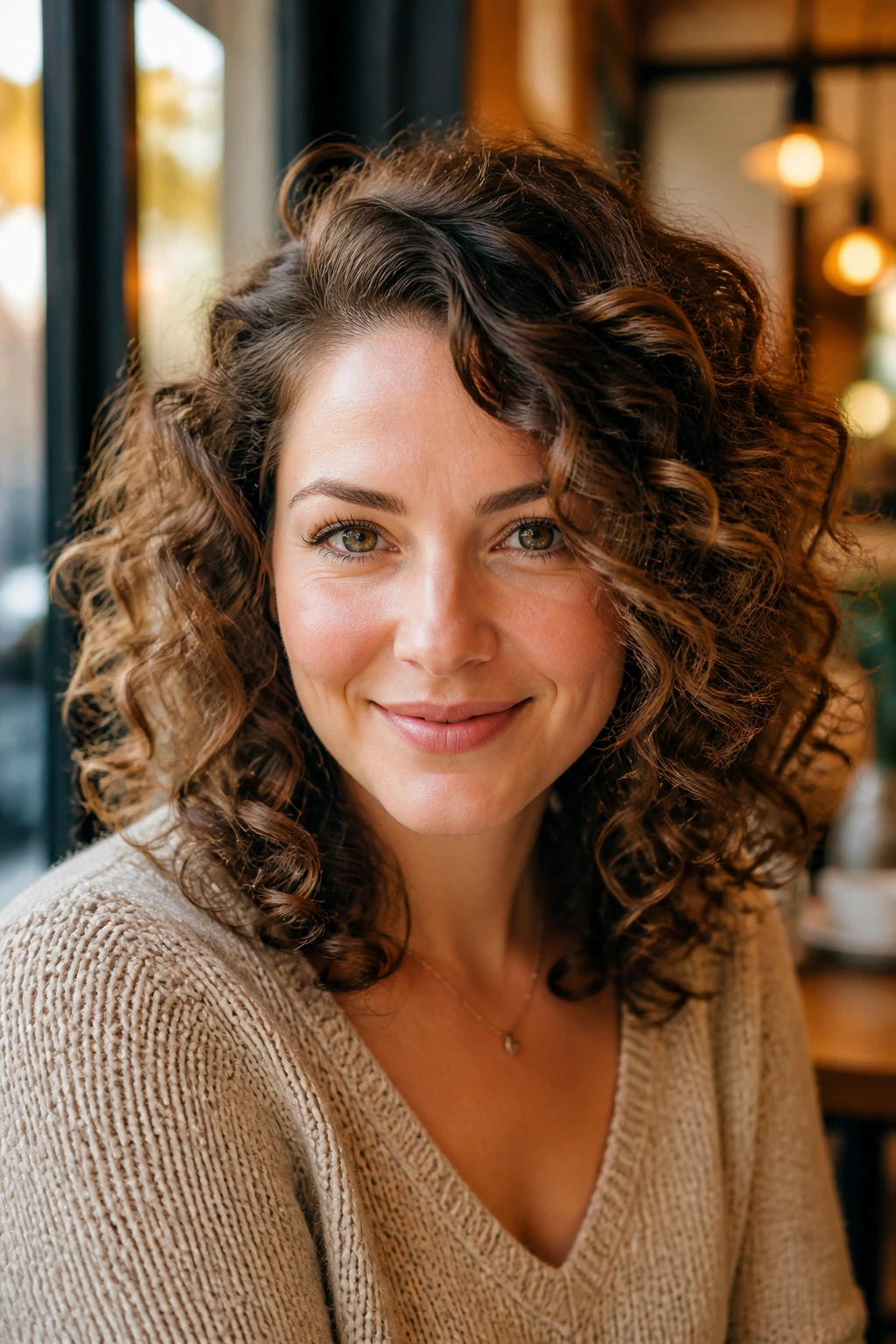
A diagonal part sounds small, but it changes the whole mood of a curl cut. The line itself pulls the eye across the forehead and off the widest part of the face. Paired with layers, it gives the haircut a moving, slightly asymmetrical feel.
This is one of those styling choices that becomes part of the cut. If you always wear a part in one place, have the stylist shape the layers around it. That keeps the curl fall intentional and stops one side from puffing out more than the other.
I like this option for people who want an easy change without a dramatic haircut. Sometimes moving the part by an inch or two gives more payoff than taking off three inches of hair.
29. Tapered Sides with a Full Crown
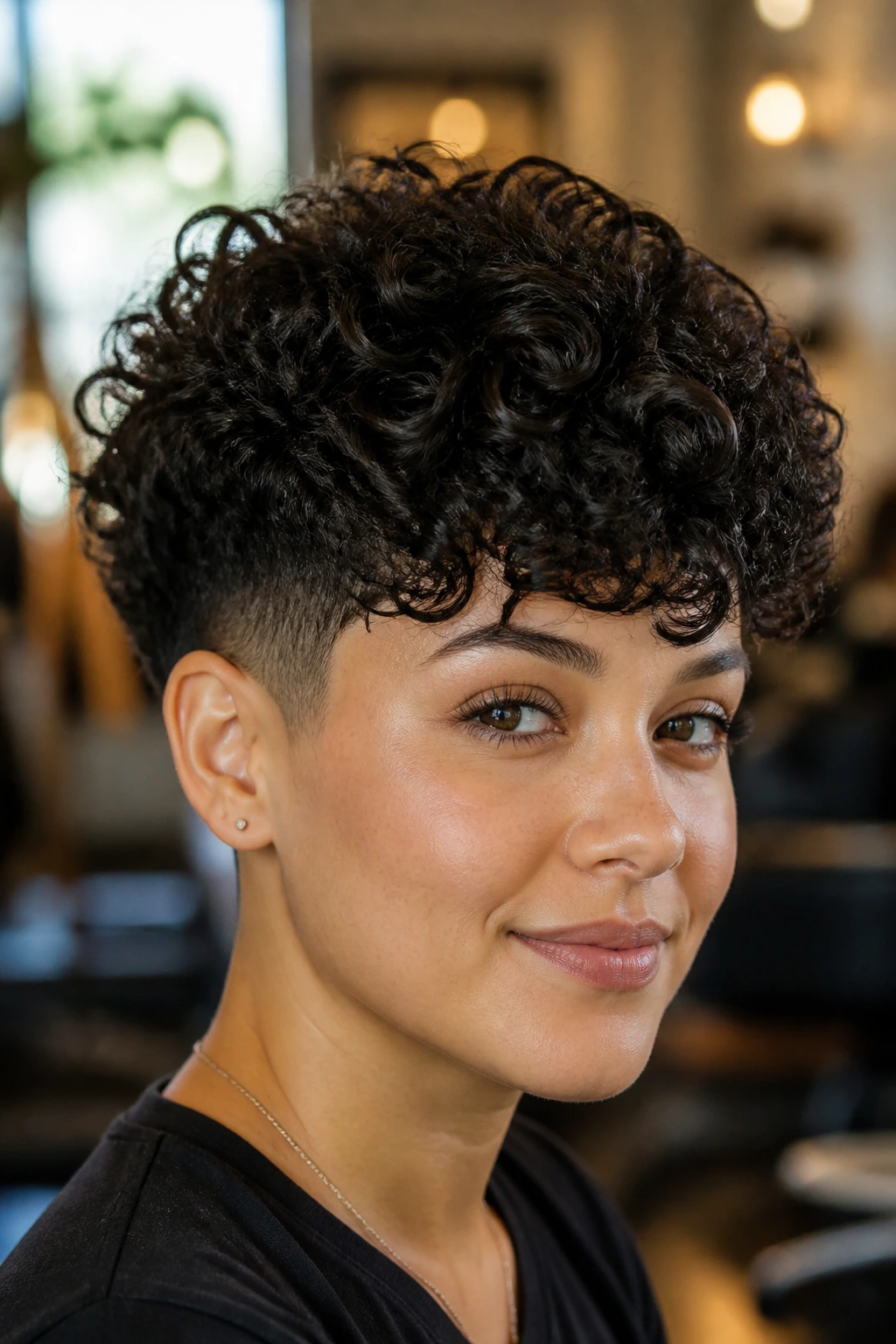
This shape is a close cousin of the tapered cut, but the emphasis is even more on the crown. The sides and lower back stay neat, while the top keeps fullness and curl definition. On a round face, that upward push can make the face look longer and the whole profile feel slimmer.
It’s a strong choice for thick coils and springy curls that naturally want to spread. The taper controls the edges. The crown gives you that lifted, airy look without sacrificing texture.
A lot of people are afraid this kind of shape will feel too short or too severe. It doesn’t have to. If the transition is soft and the top has enough length, the result can look lively instead of strict.
30. The Soft Halo Cut
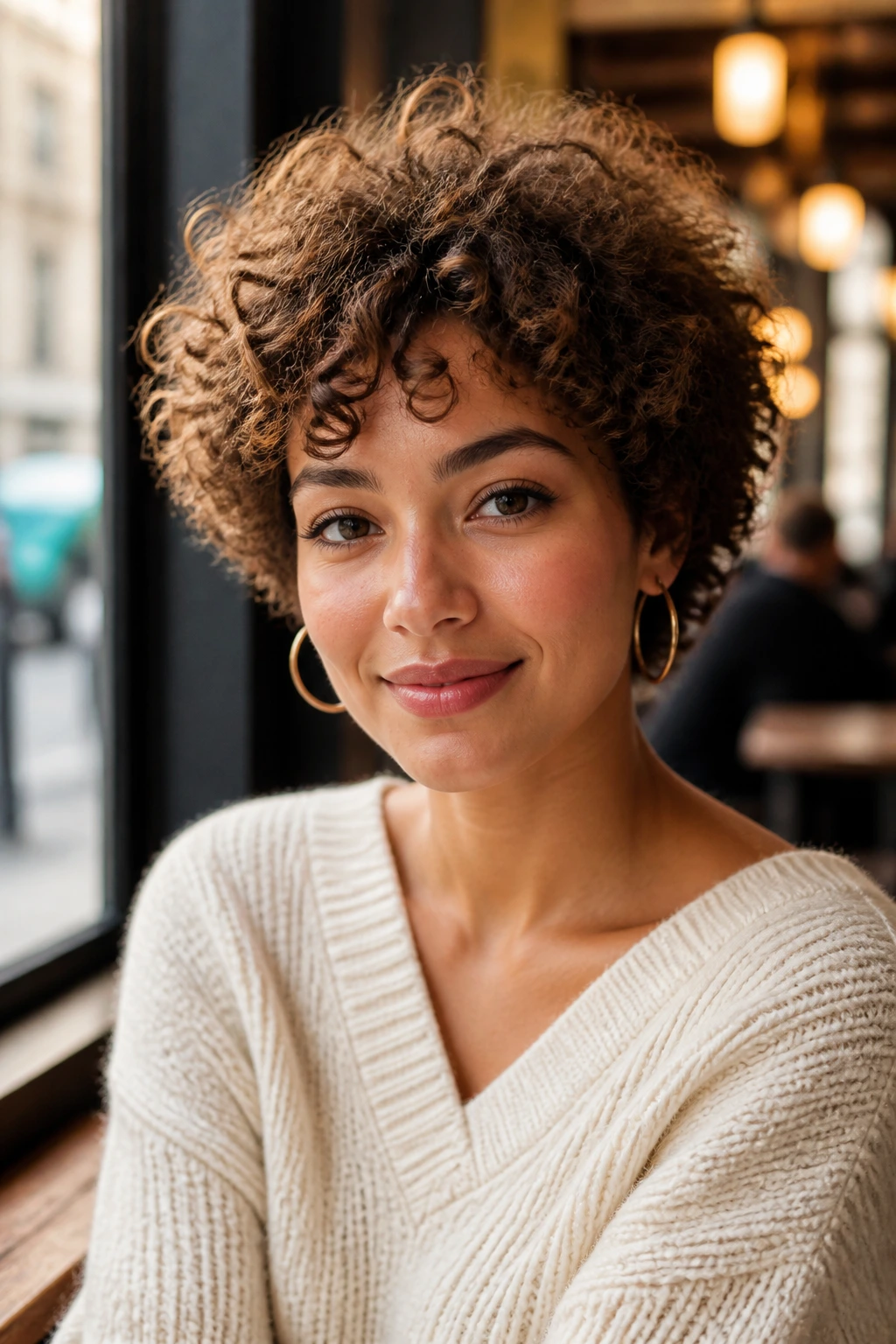
A halo cut can go wrong if it becomes too evenly round. The soft version is much better. It keeps the curls lifted near the top and gently shaped around the head, but avoids the fully circular outline that can echo a round face too closely.
The trick is to keep the sides close enough to the head and let the top and upper front carry more of the volume. That creates a halo effect without making the face look wider. Think soft arc, not perfect sphere.
This is a lovely option for natural texture that wants to feel airy. It works well when the curls are hydrated and defined, because the shape itself is simple. The curl pattern does the interesting part.
31. Micro-Layers Around the Face

Micro-layers are small, precise layers placed near the face to break up width without changing the entire haircut. They are subtle. That’s what makes them useful. A few tiny shifts around the cheek and jaw can soften a round face without making the rest of the hair look chopped up.
This is a good solution for people who like their length and only want a little shaping. The front curls are nudged into a softer fall, while the rest of the cut stays intact. It is one of the least disruptive ways to improve the silhouette.
If your hair is fine or you hate the look of obvious layers, this approach is worth asking about. The effect is modest but smart.
32. The Wash-and-Go Shape for Medium Curls
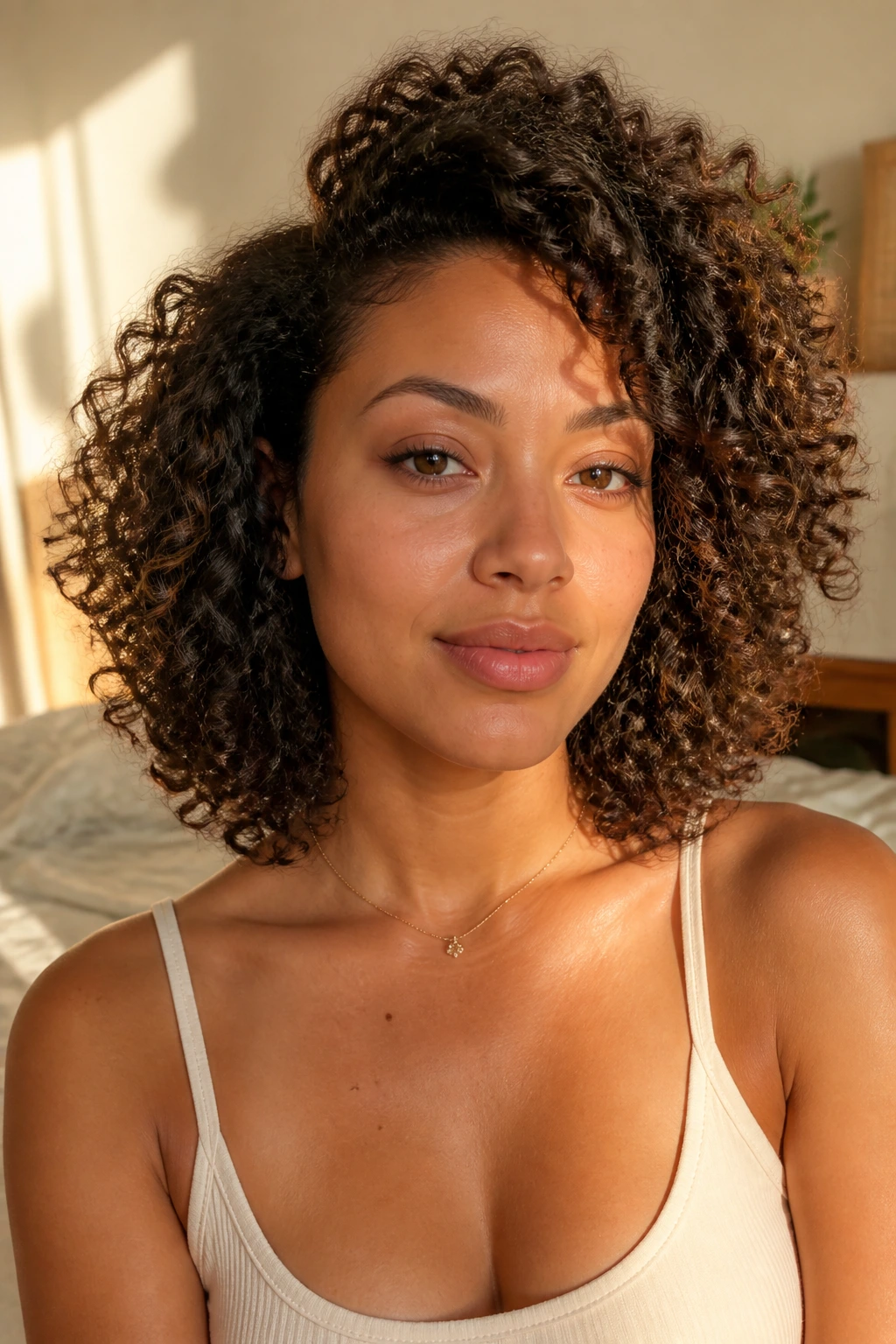
A true wash-and-go cut is built for the way medium curls dry on their own. On a round face, that means the haircut has to hold its shape even when you do almost nothing to it. The layers should support a natural lift at the crown and keep the widest curl clumps away from the cheeks.
This is the cut for someone who wants to scrunch, diffuse for a few minutes, and leave. No round brush. No elaborate sectioning. Just a shape that respects how the curls move when they’re left alone. If the haircut depends on constant styling, it is not a wash-and-go shape.
I like this option when the curl pattern is consistent and the density is medium. It gives you a reliable outline without demanding a full styling ritual every time the hair gets wet.
What a Good Curly Cut Needs to Do Before You Leave the Chair
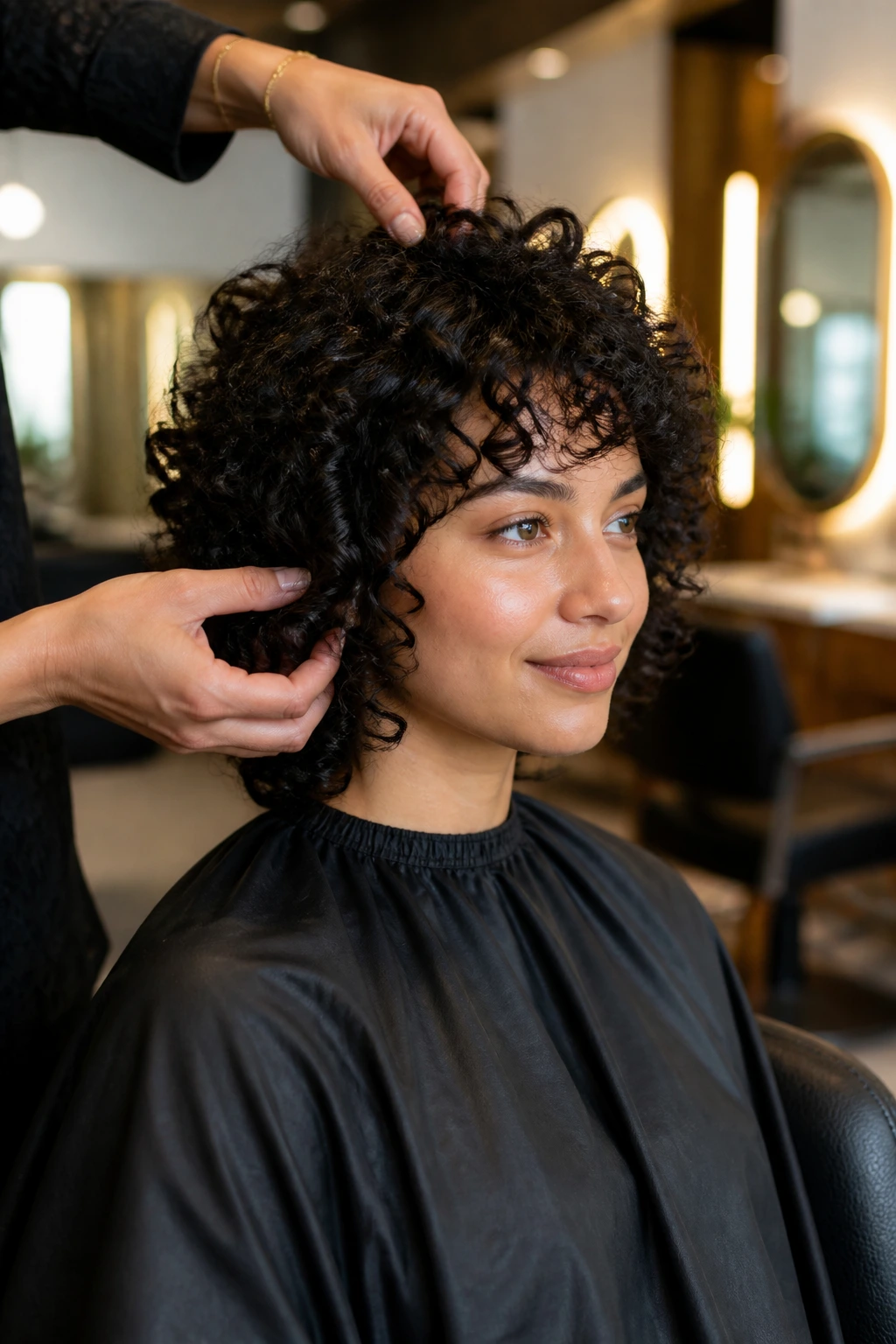
The smartest curly haircut for a round face starts with one honest question: where does your hair put its weight? Not where it looks strongest when wet. Where it actually sits once it dries. That answer changes everything.
A good stylist will talk about shrinkage, curl clumping, density, and where your hair tends to puff out around the sides. If nobody brings up those things, I’d be suspicious. Round faces are not hard to work with, but curls need placement. A cut that ignores placement is just a shape waiting to misbehave.
Bring a photo, but bring context too. Tell the stylist whether you wear a side part, how often you diffuse, and where your curls collapse first. Those details matter more than vague words like “soft” or “face-framing.” Soft can mean ten different things. A curl that lands below the cheekbone means one thing.
Essential Tools That Make the Shape Hold
- Diffuse attachment: Dries curls with lift at the roots instead of blasting the shape flat.
- Microfiber towel or cotton T-shirt: Cuts frizz and keeps curl clumps intact after washing.
- Wide-tooth comb: Helps detangle without stretching the curl pattern too much.
- Duckbill clips or sectioning clips: Useful for pinning the crown up while styling or air-drying.
- Curl cream: Gives slip and control, especially for layered cuts that need the curls to sit together.
- Light gel or mousse: Helps the shape stay vertical instead of puffing sideways.
- Handheld mirror: Lets you check the back shape, which matters more than people admit.
- Stylist reference photos: Not a tool in the drawer, but a useful one in the chair. Bring photos of the shape, not just the vibe.
How to Get the Most Out of Your Cut
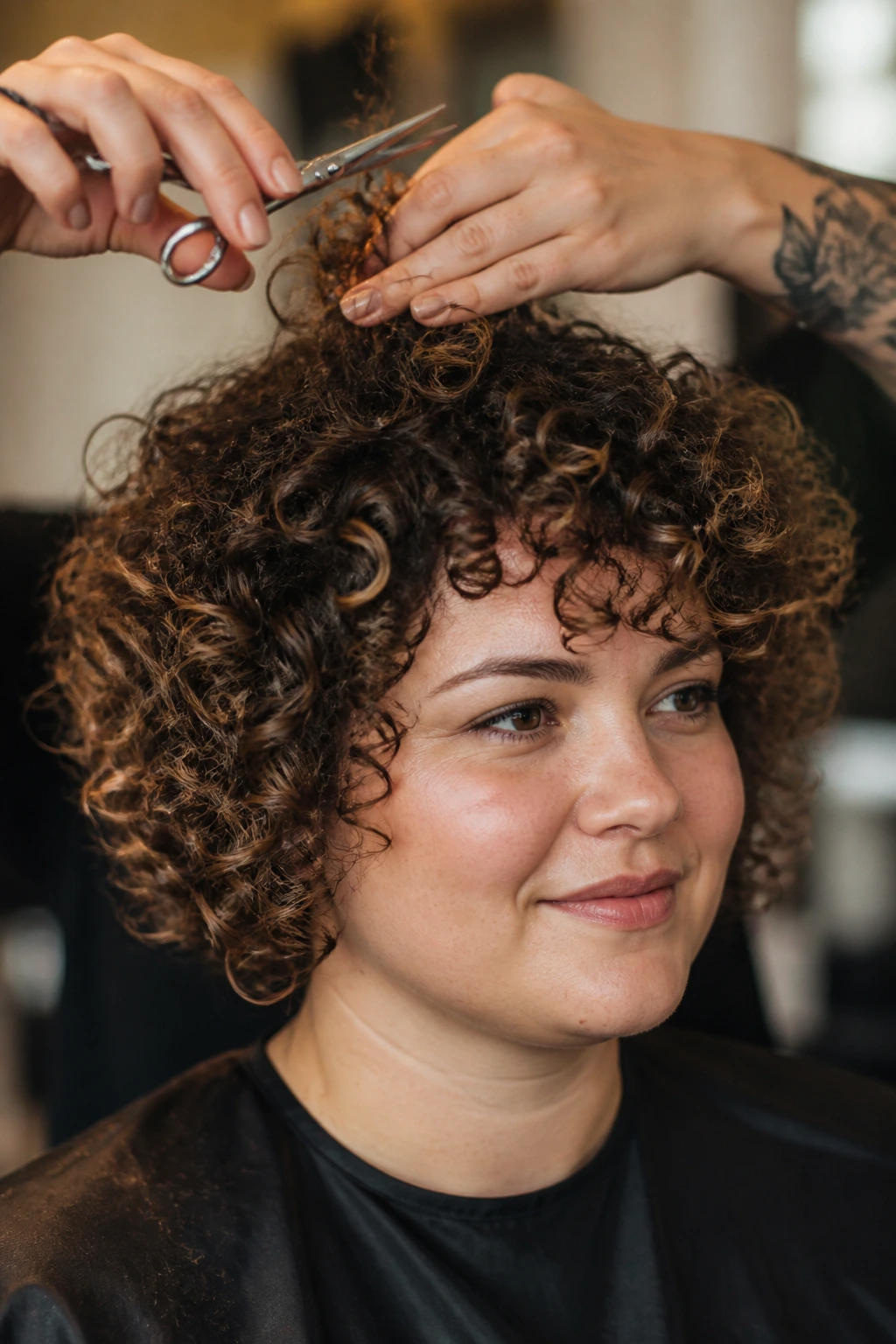
The first rule is boring, but it matters: cut your curls the way you actually wear them. If you never wear a center part, don’t ask for layers that only work with one. If you always air-dry, tell your stylist. If you diffuse, say that too. A haircut shaped for plopped hair and a haircut shaped for open-air drying can behave very differently.
I’d also be direct about shrinkage. If your curls bounce up two inches, say so. If they stretch under weight, say that instead. The more precise you are, the less likely the cut will land at the wrong spot on your face. A round face benefits from exact placement, not hopeful guessing.
Another useful move: ask where the shortest front piece will fall when dry. That one question prevents a lot of regret. If the answer is cheekbone and you know your hair puffs at cheekbone level, push for a lower starting point. Simple fix. Big difference.
Common Mistakes That Make Curly Haircuts Wider
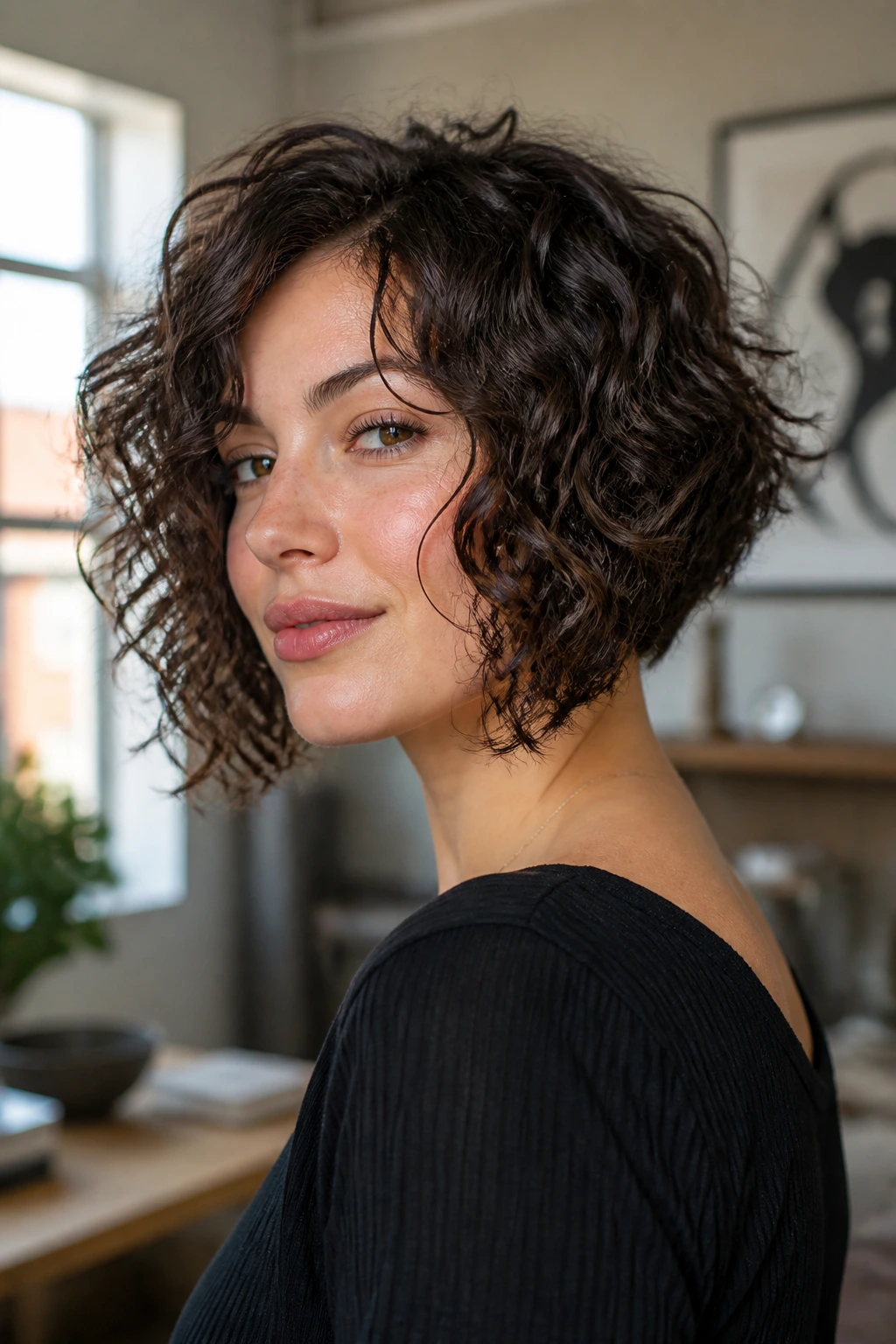
The most common mistake is stopping the front layers right at the cheekbone. That creates a shelf, and shelves widen round faces fast. The fix is to start those layers lower, then let them taper down into the rest of the cut.
Another problem is over-layering the top while leaving the sides bulky. That gives you frizz on the crown and width at the jaw, which is the wrong combination. If the ends are too heavy, ask for internal shaping instead of more obvious layers.
Cutting curls too wet is another trap. Wet curls lie down and pretend to be longer than they are. When they dry, the shape can jump up and sit right where you did not want it. A dry cut or a curl-by-curl check solves most of that.
And then there’s the blunt bob. A blunt line can look stylish on some faces, but on a round face with big curls it often lands like a wall. Better to soften the line with angle, length, or a little asymmetry.
Ways to Bend These Cuts to Different Curl Types
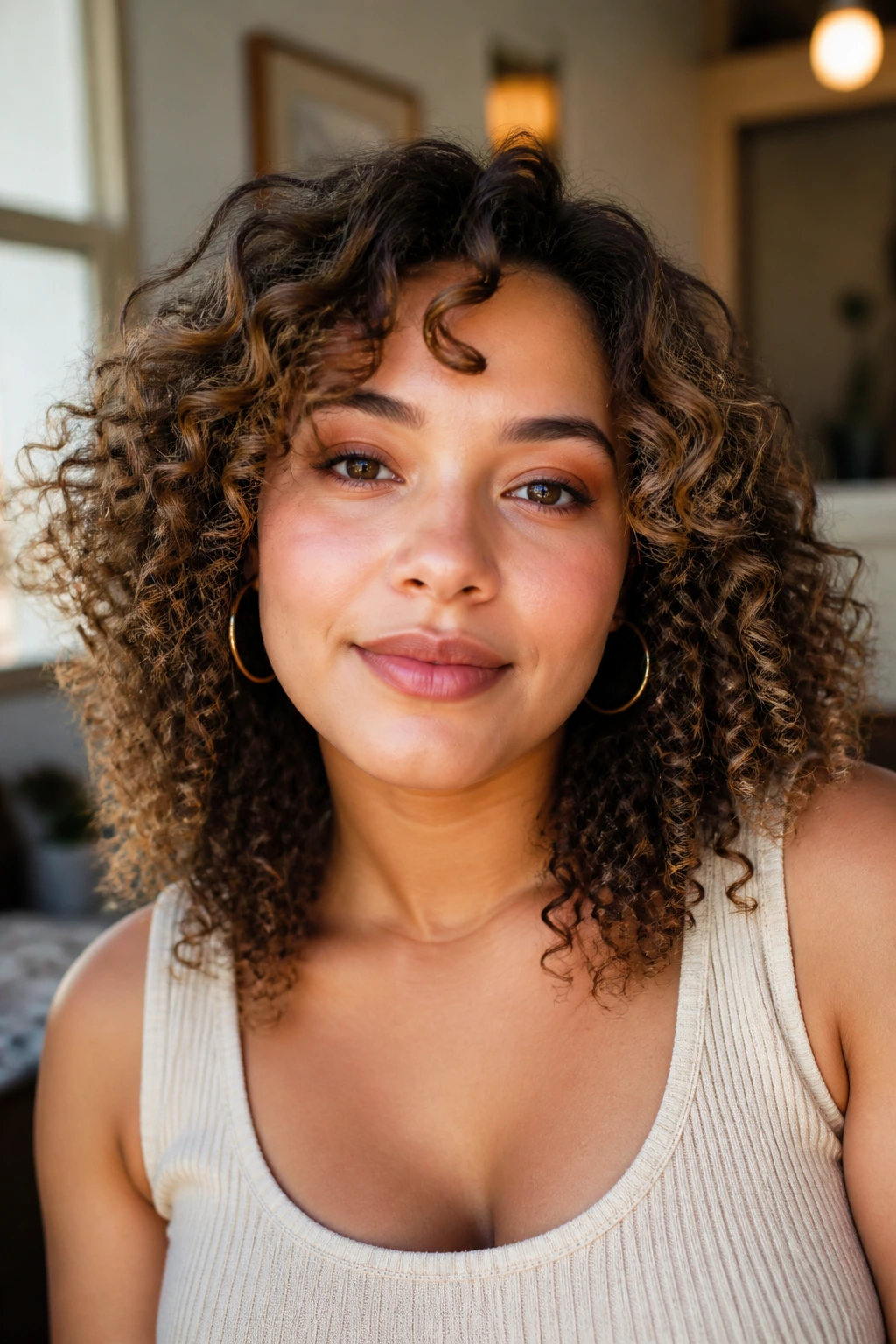
Loose Wave Version: Keep the layers longer and lighter. Waves do not need the same amount of shape removal that tight curls do, and too many short layers can make the ends look wispy.
Dense Curl Version: Use internal debulking and crown shaping. Dense hair can hold more structure, but it also needs the sides controlled so the face does not disappear inside the hair.
Coily Version: Taper the sides and leave lift at the top. Coils shrink more, so the cut should account for a shorter visible length when dry.
Fine Curl Version: Go easier on layers. Fine curls lose body fast if too much weight is removed, and a round face needs the cut to keep some outline.
Low-Maintenance Version: Choose shoulder length or collarbone length with a soft part. These shapes grow out without turning into a geometry problem every six weeks.
Questions People Ask Before They Sit in the Chair
Can curly hair and a round face wear bangs?
Yes, but the bang shape matters more than the bang idea. Curtain bangs, bottleneck bangs, and long side fringes usually work better than a blunt, straight-across fringe that stops right at the widest part of the face.
Is short curly hair a bad idea for round faces?
Not at all. Short works when the cut builds height on top and keeps the sides narrow enough to avoid spreading out at the cheeks. A tapered pixie or a lifted curly crop can be sharper than long hair.
Should I ask for layers or one length?
Most round faces do better with some layering, but not always heavy layering. The goal is shape, not chaos. Internal layers, face-framing layers, or a soft shag can add movement without making the silhouette wider.
Do I need a dry cut?
A dry cut is often the safest move with curls because it shows where the hair truly lands. That said, a stylist who understands curl shrinkage can work wet and still shape well. The key is skill, not the method alone.
What if my curls shrink a lot after the cut?
Tell the stylist before the first snip. If your curls have dramatic shrinkage, the visible length needs to be left longer than your goal. Otherwise the face-framing pieces can end up too short and too wide.
Can a center part work on a round face?
Yes, if the cut has enough vertical movement and the crown is not flat. A center part with long layers or lower face-framing can look elegant. The part alone is not the issue; the shape around it is.
How often should I trim a curly cut like this?
Most shapes need a trim every 8 to 12 weeks, though short pixies and bobs often need touch-ups sooner. The more structured the cut, the faster it loses its lines as it grows.
Will layers make my curls frizzy?
Poorly placed layers can. Good layers should remove bulk and improve movement, not leave ends hanging ragged. The difference usually comes down to whether the stylist respects the curl pattern and the density.
How to Keep the Shape Between Salon Visits
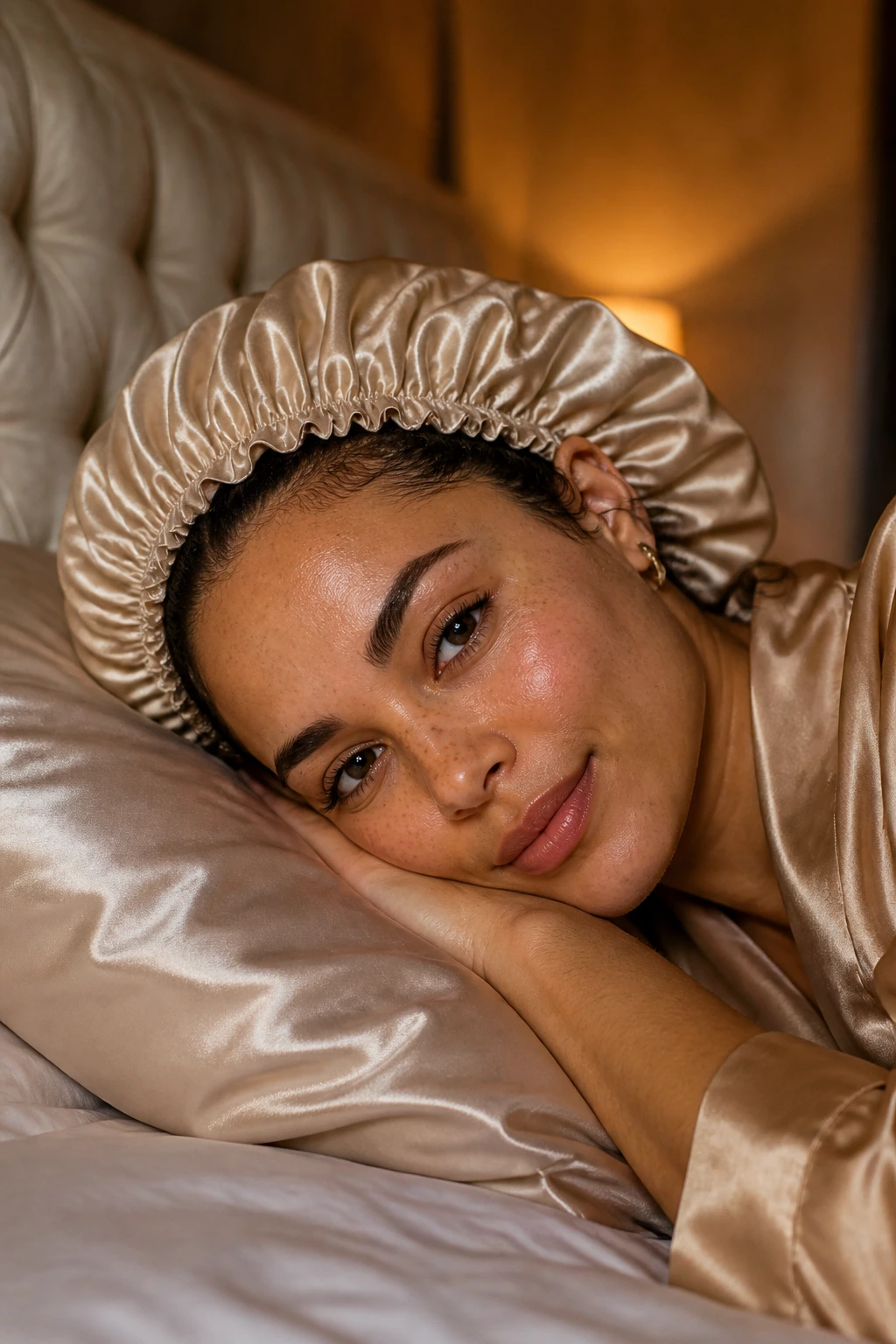
Curls do not stay frozen in place, so maintenance matters. The good news is that most round-face-friendly cuts do not need daily reconstruction. They need a few habits that keep the silhouette from spreading out. Sleep on a satin pillowcase or use a bonnet if your curls flatten overnight. A little friction control goes a long way.
For longer cuts, plan on a trim every 8 to 12 weeks. Shoulder-length shags and bobs often want shape-up visits closer to 8 weeks if the front pieces are doing the face-framing work. Pixies, tapered cuts, and stacked bobs usually need a neater cadence, sometimes every 4 to 6 weeks, because the proportions change fast.
On wash day, keep the styling light if the cut already has the right shape. Too much cream or butter can weigh the crown down and let the sides widen. Use enough product to define the curl, then stop. That’s the line most people miss. More product is not always more control.
If the haircut starts to feel wider, check the part before blaming the cut. A slight part shift can rescue the shape for another week or two. Also, refresh the root with a quick mist, a gentle lift at the crown, and a small amount of mousse or gel at the top. The goal is to keep the vertical line alive.
Extra Tweaks That Make the Shape Look Better
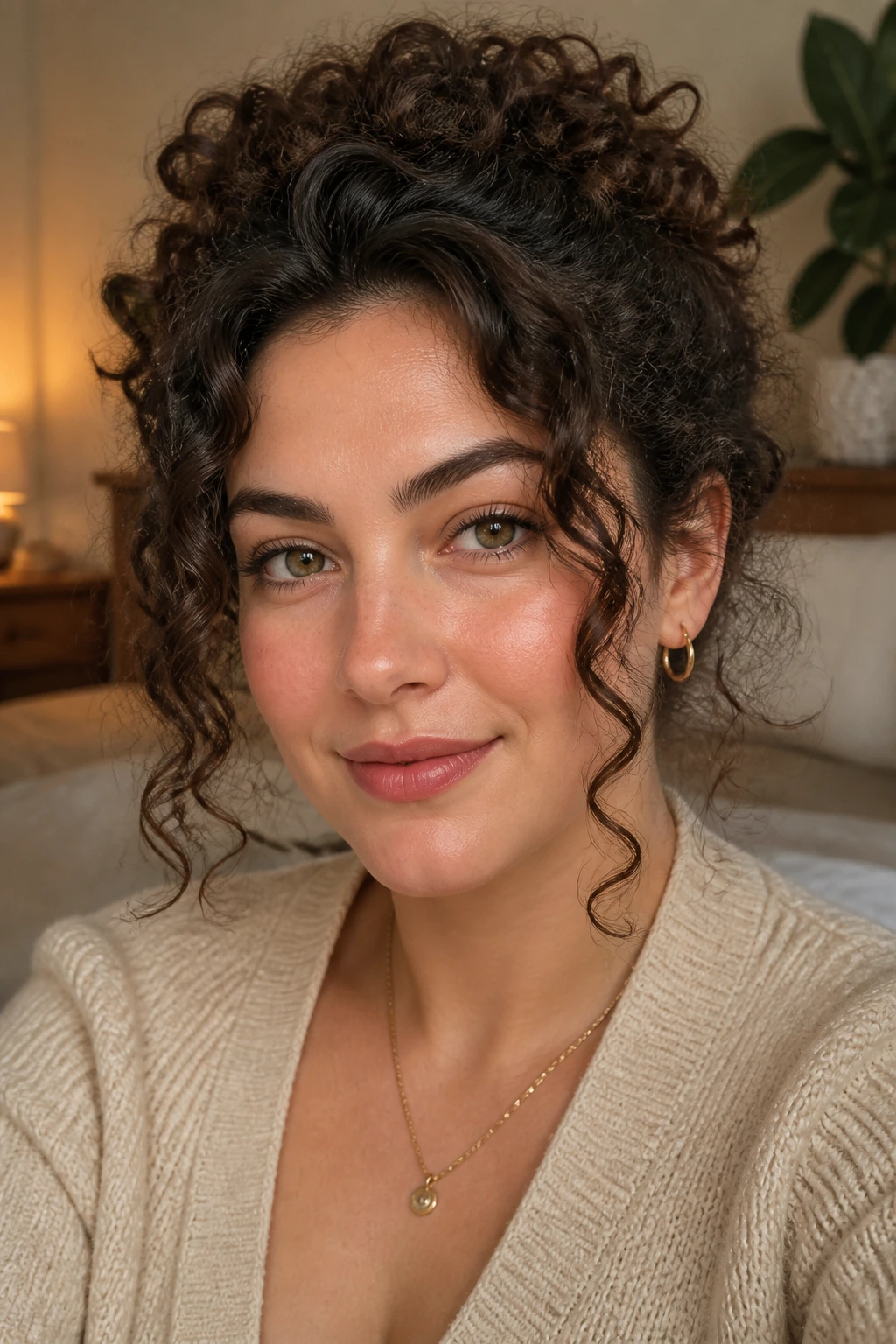
Face-Framing Placement: Ask for the shortest face-framing piece to land below the cheekbone whenever your curls have a lot of spring. That one move keeps the outline from stopping at the widest part of the face.
Root Lift: A little lift at the crown changes the whole cut. Clip the roots while drying or diffuse with the head tipped to the side for a few minutes to keep the top from going flat.
Parting Choice: Don’t lock yourself into one part unless it earns its keep. A side part can slim the face fast, but an off-center part can be softer and easier to wear daily.
Finish Level: A small amount of gel on the front pieces often keeps them from puffing out around the cheeks. You do not need a shell. You need shape memory.
Shine and Definition: A curl cream or light serum can help the layers read as clean instead of fuzzy. That matters on round faces because blurry edges tend to look wider than crisp, defined curl groups.
Why These Shapes Are Better Than a One-Size-Fits-All Cut
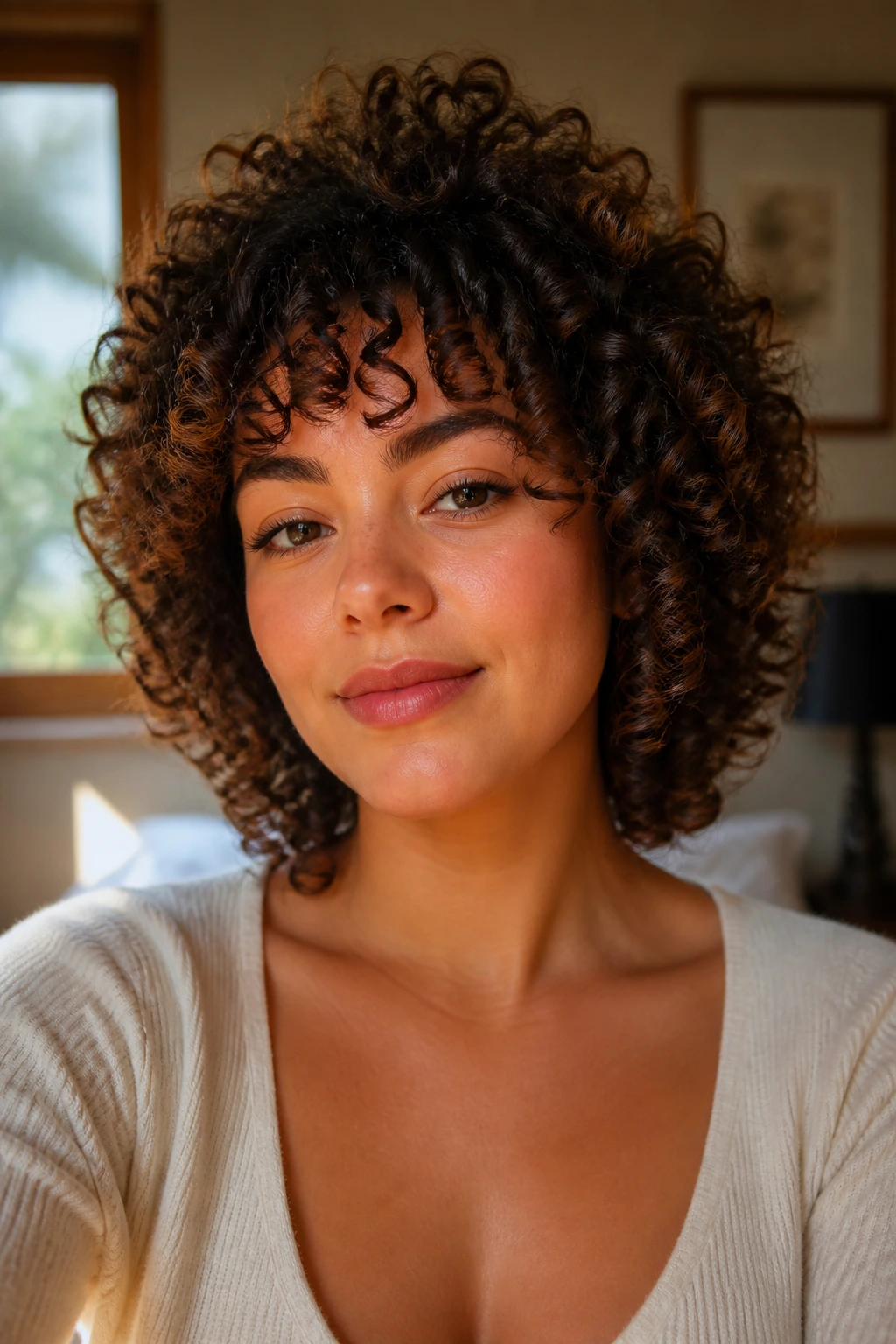
A round face does not need the same haircut every time. It needs a cut that answers the question the curls are asking. Where should the width go? Where should the lift live? Which pieces should fall past the cheek, and which should stay closer to the head?
That is why I trust shape over trend. A trending haircut that ignores your curl pattern will annoy you by day three. A quieter cut that respects your texture can look good for weeks. That is a better bargain, even if it sounds less exciting on paper.
Final Thoughts
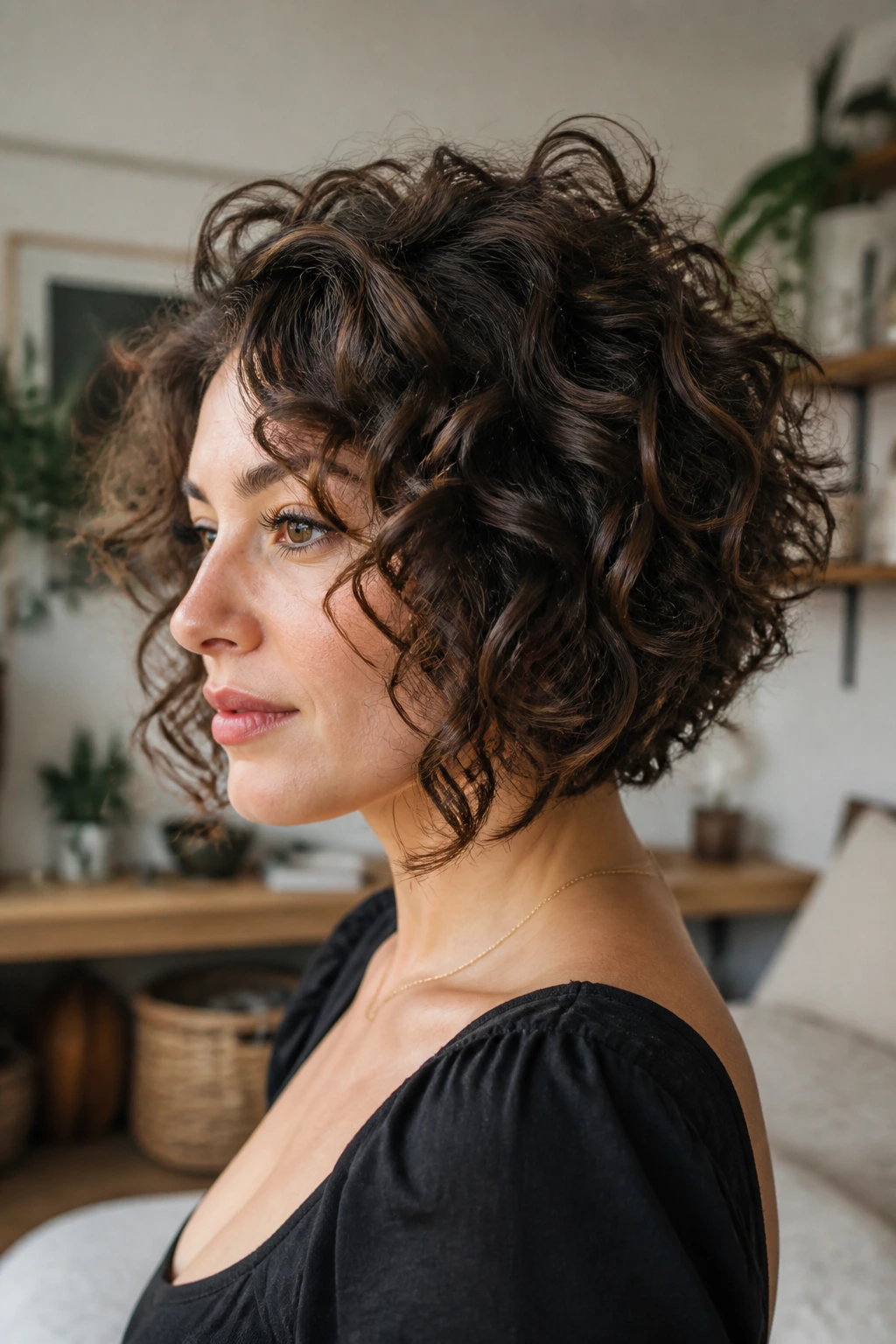
The best curly haircut for a round face is never about hiding the face. It’s about making the curls work with the face instead of against it. Height at the crown, movement below the cheeks, and a little asymmetry go a long way. So do clean lines that grow out in a civilized way.
If you keep one thing in mind, make it this: ask where the shortest pieces will land when the hair is dry. That question saves more bad haircuts than any trend ever will.
